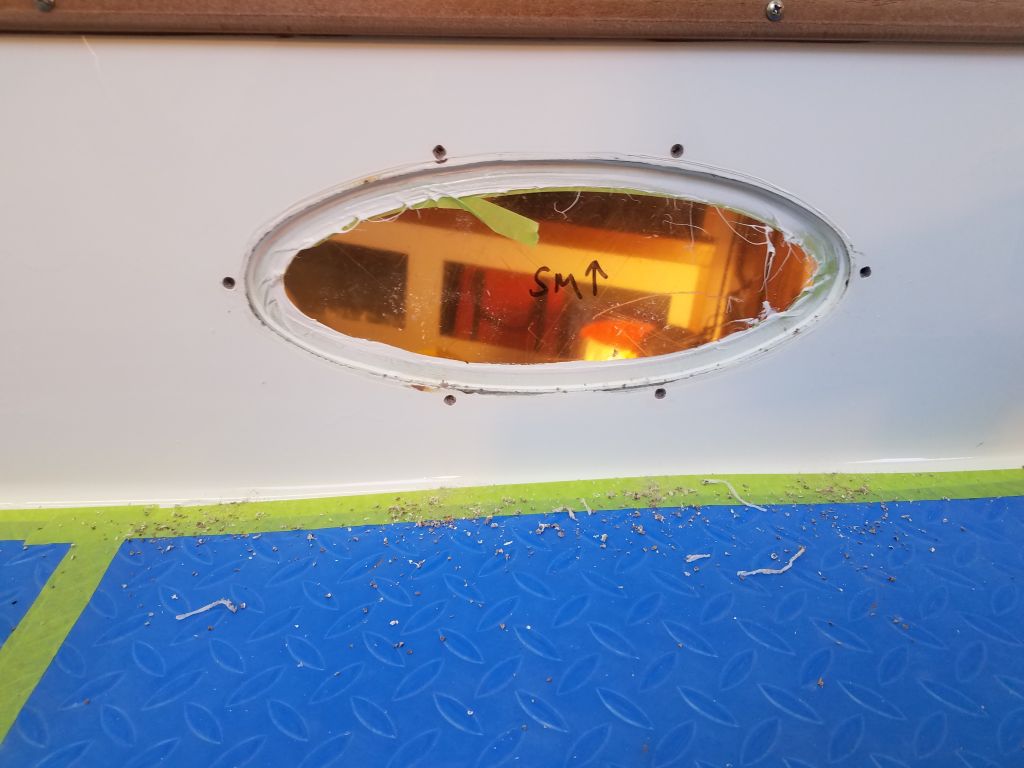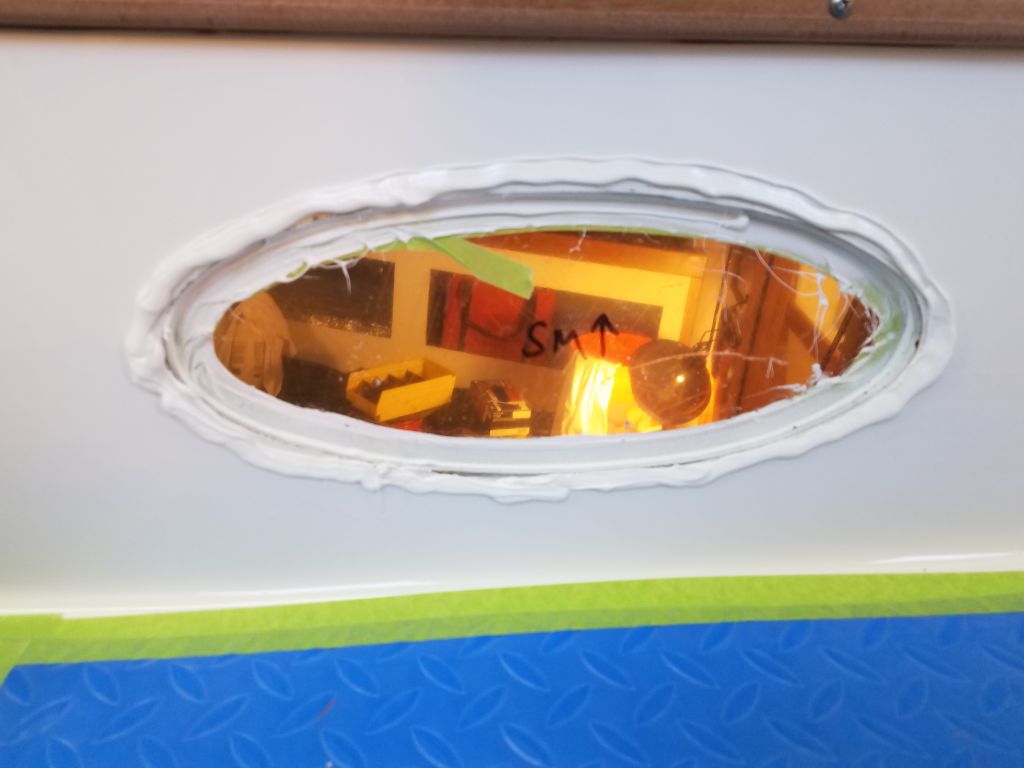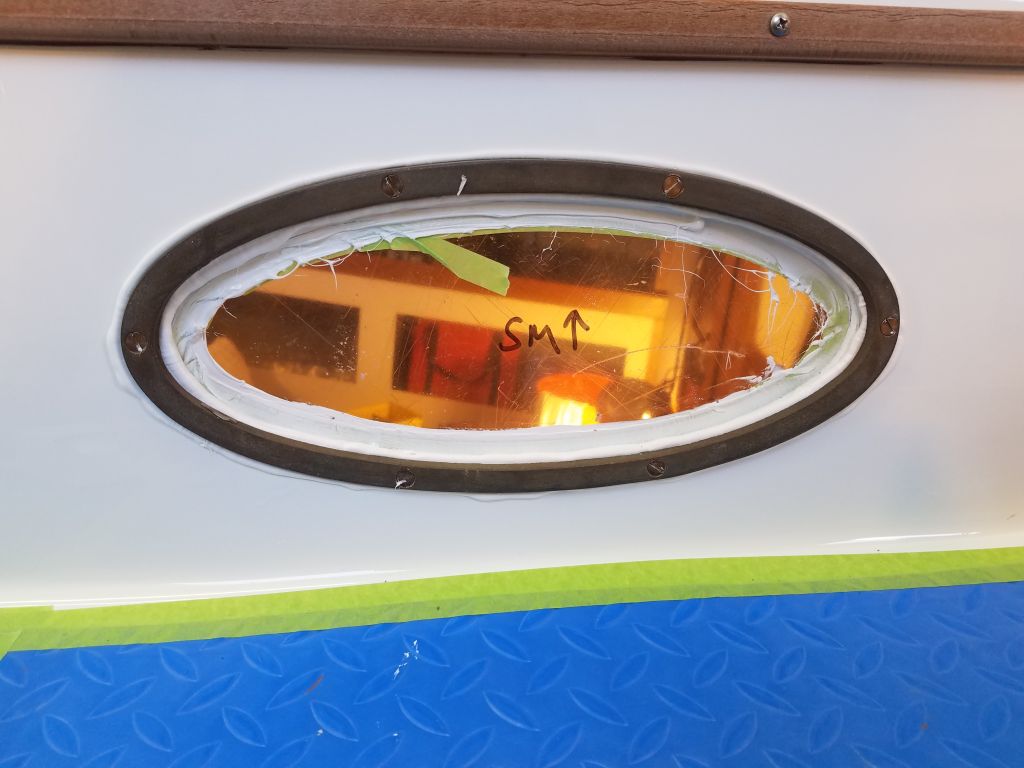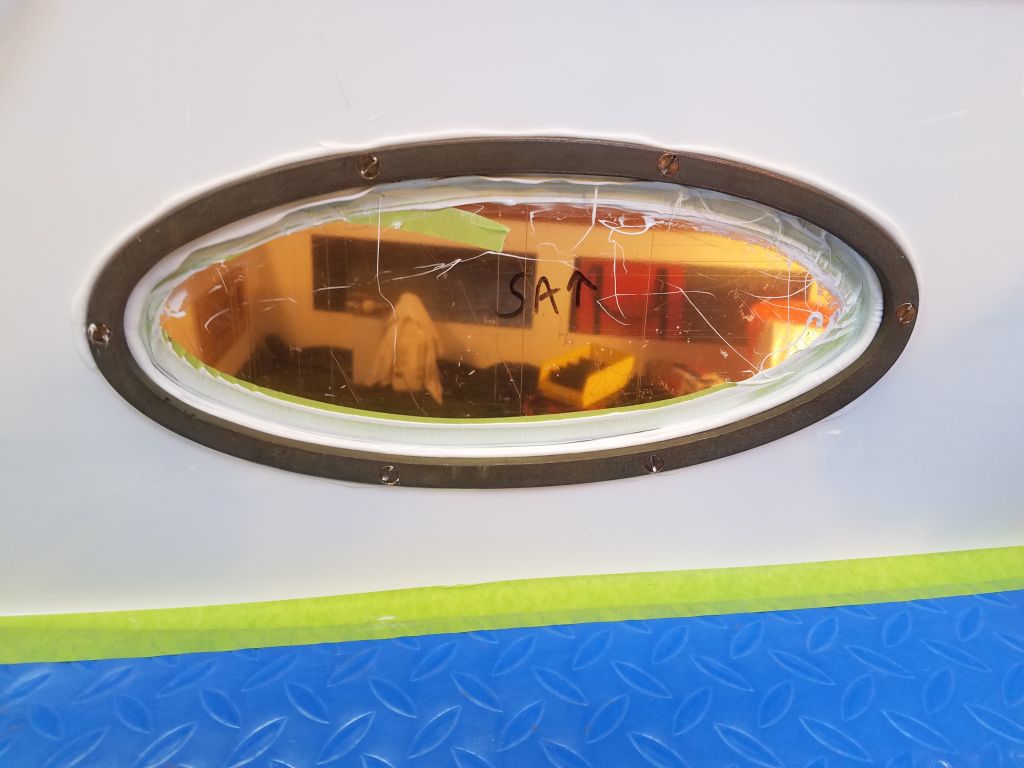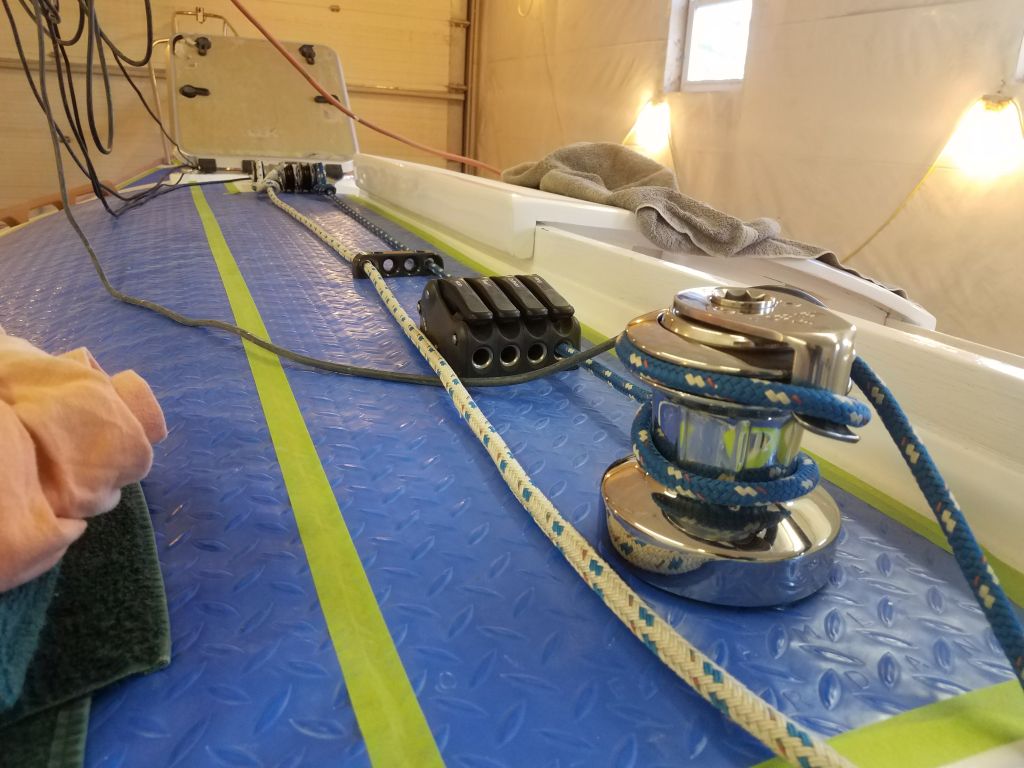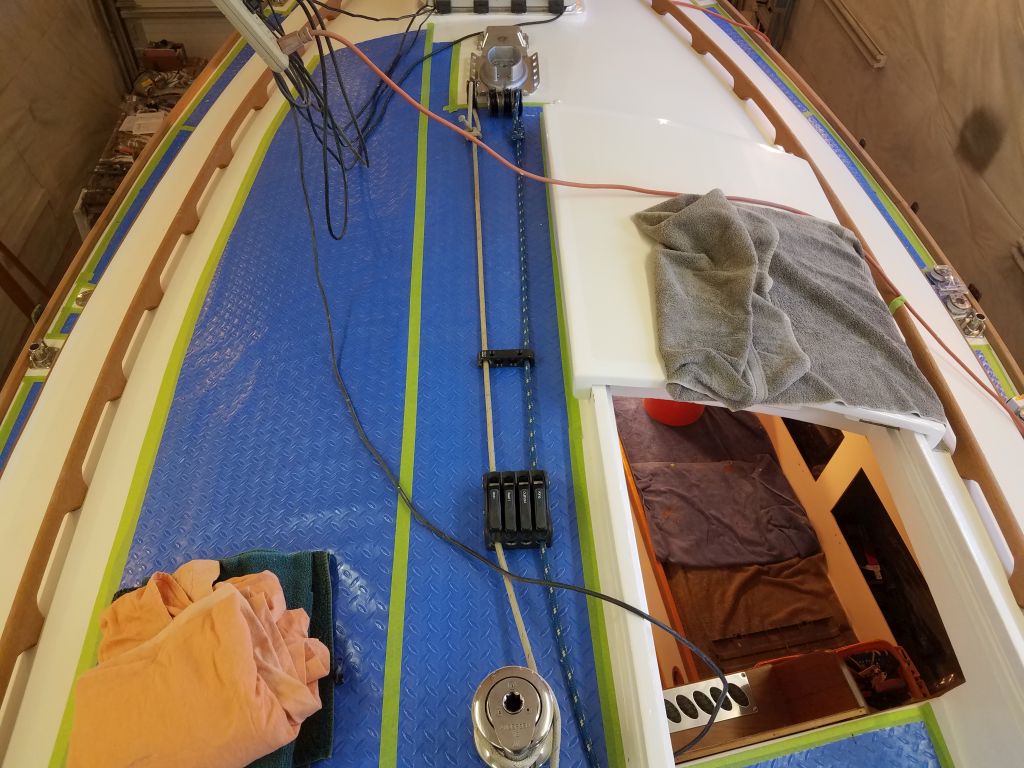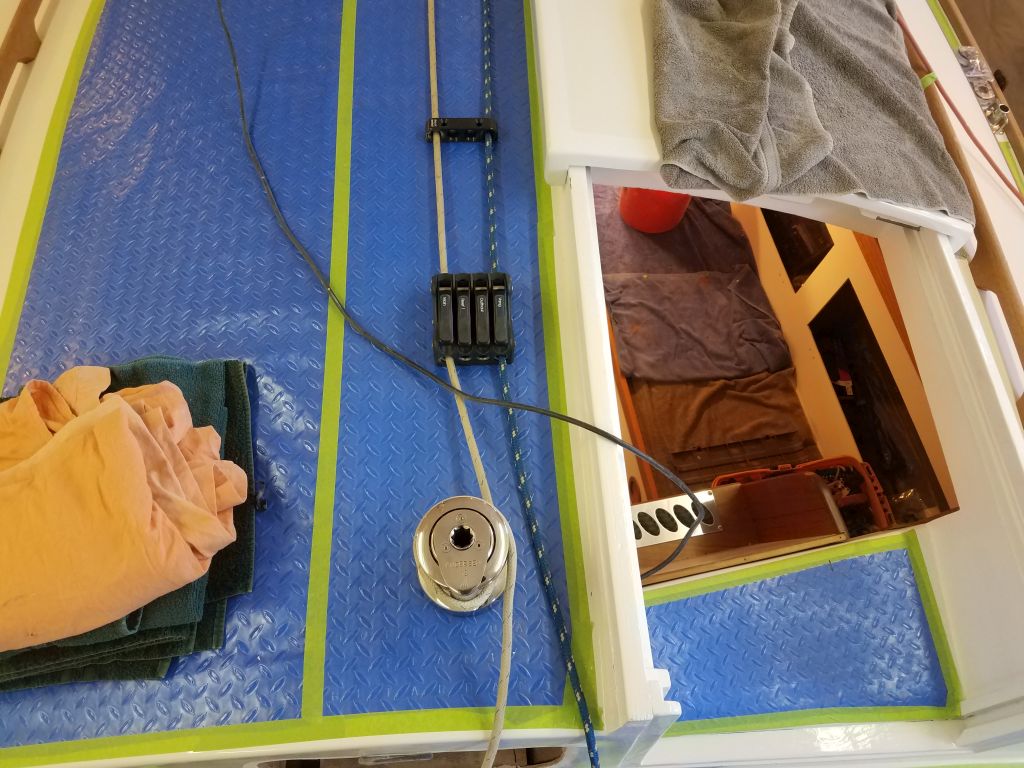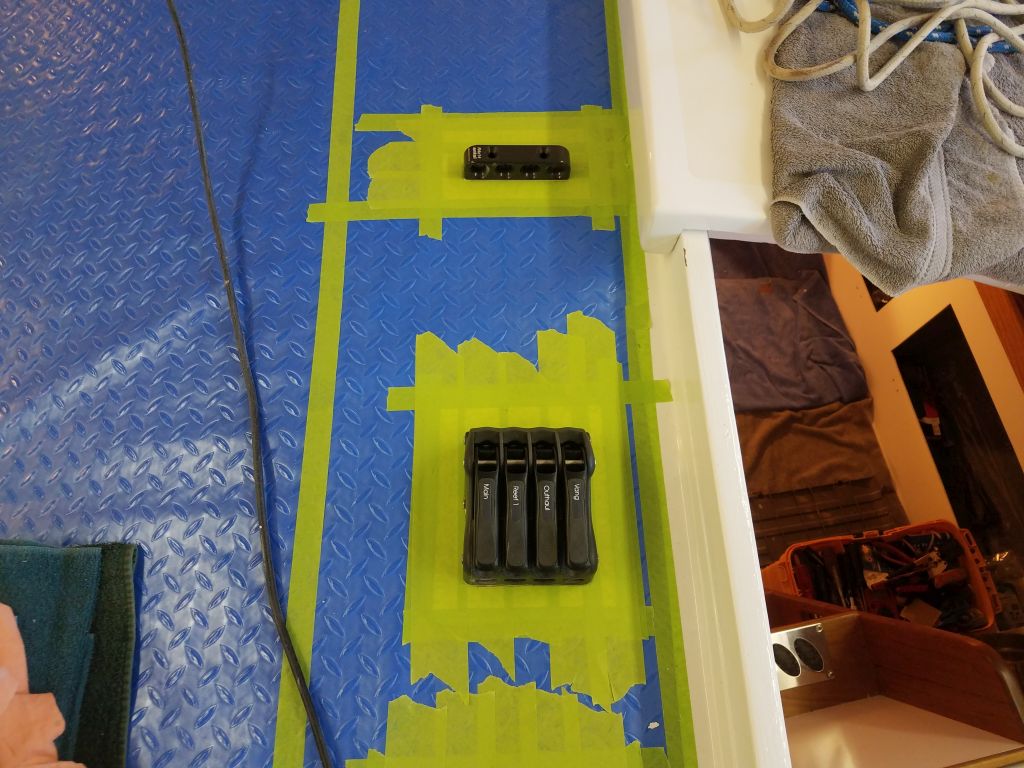

(page 86 of 165)

Scupper 228

Monday

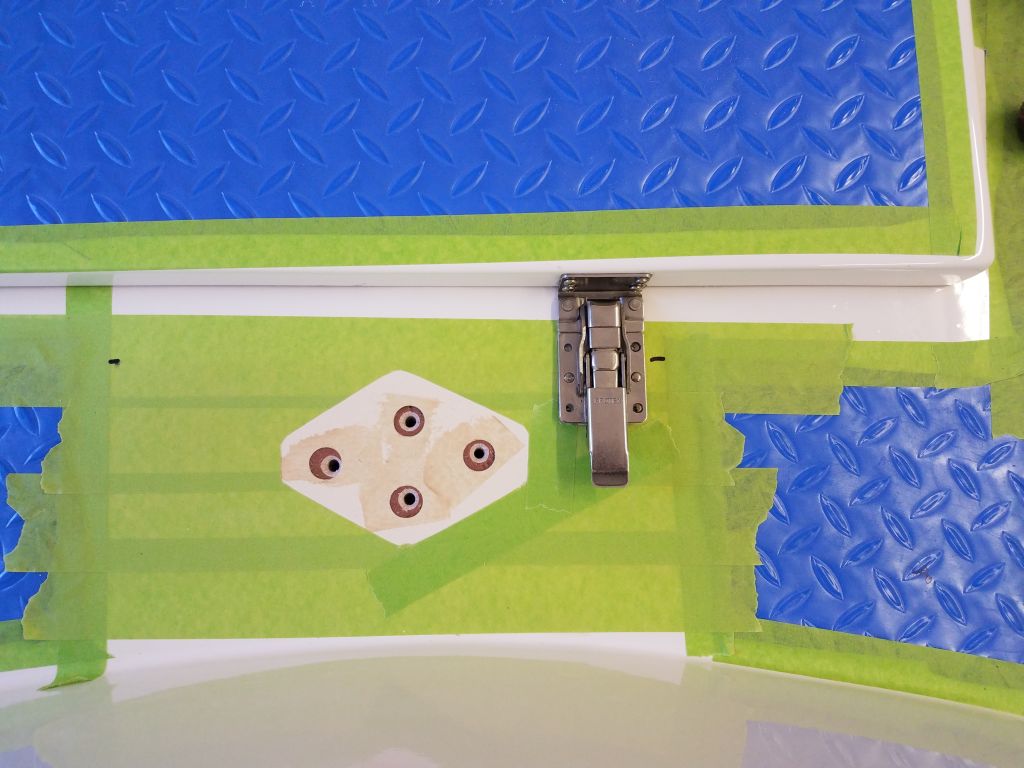
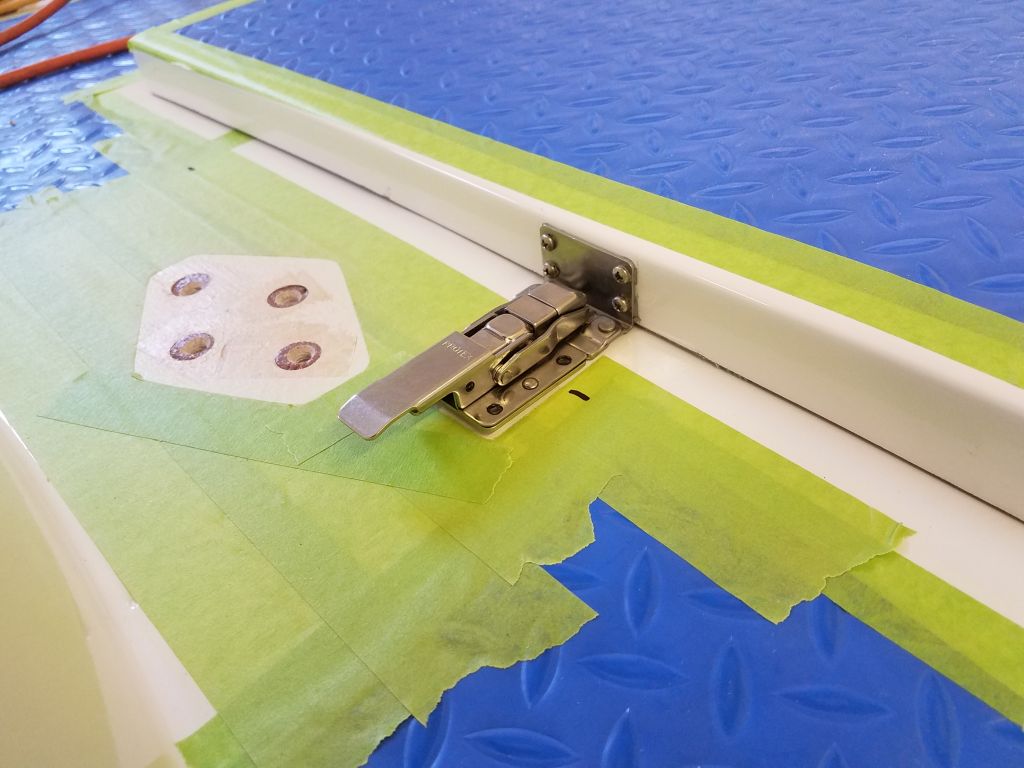
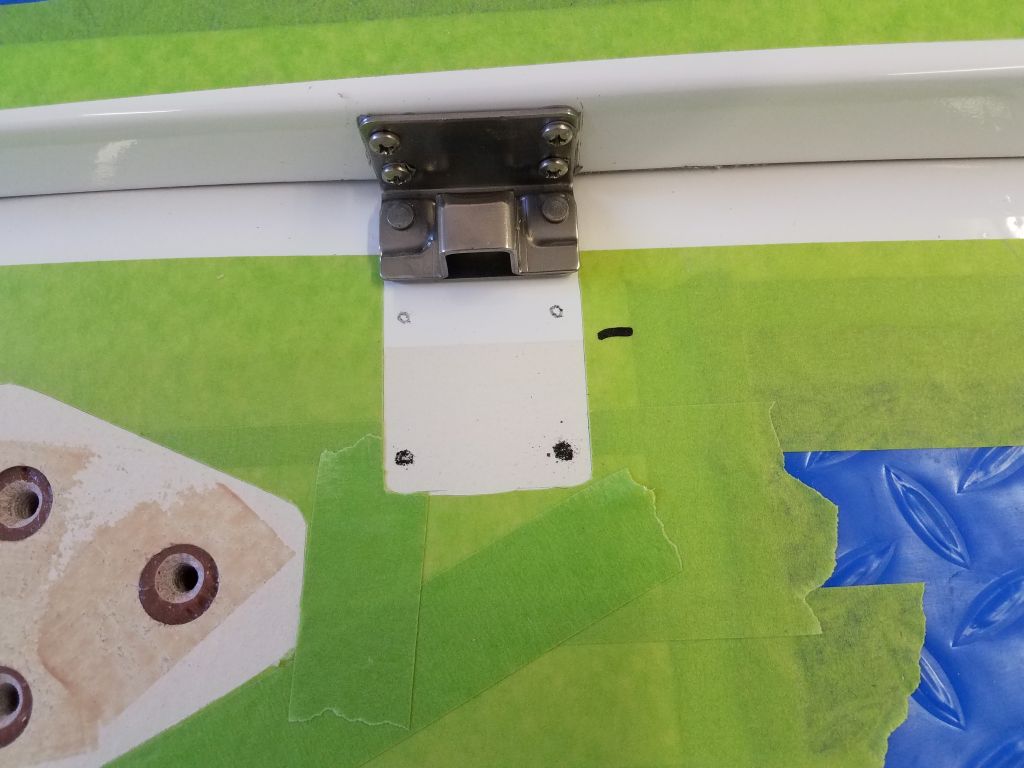
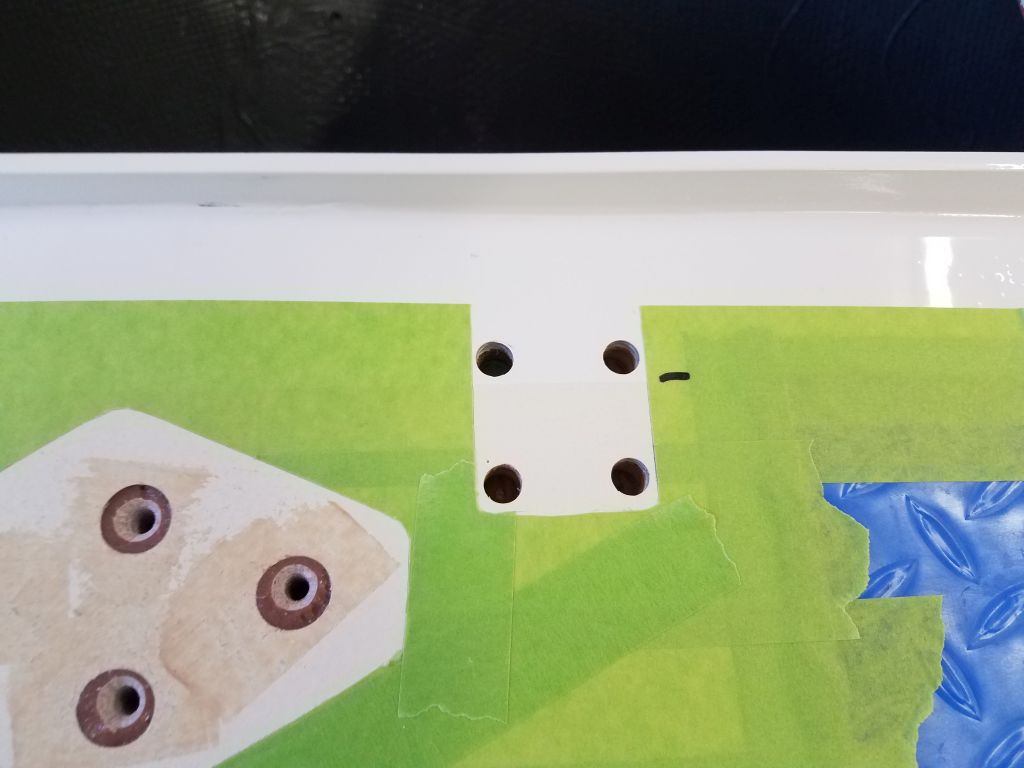
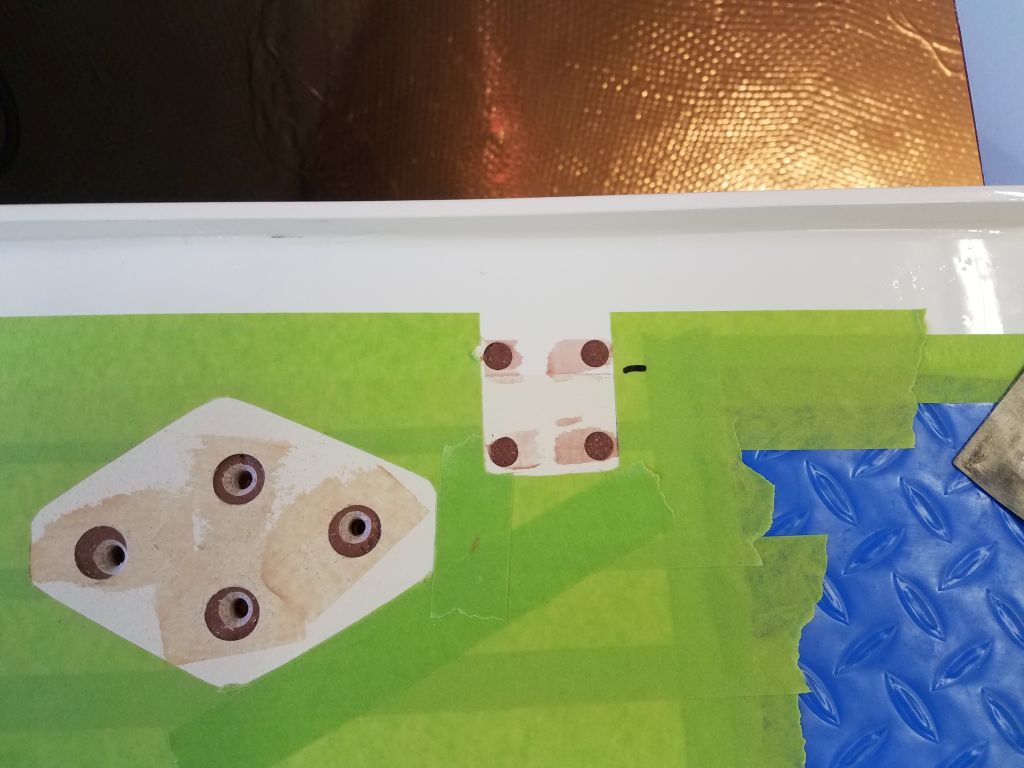
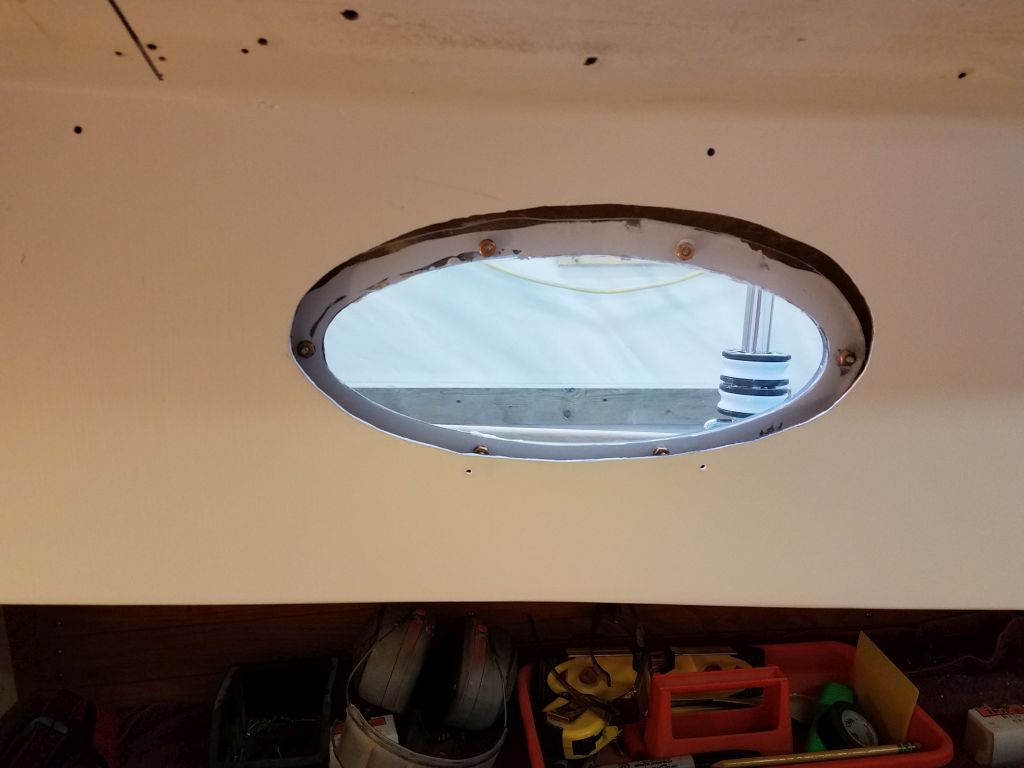
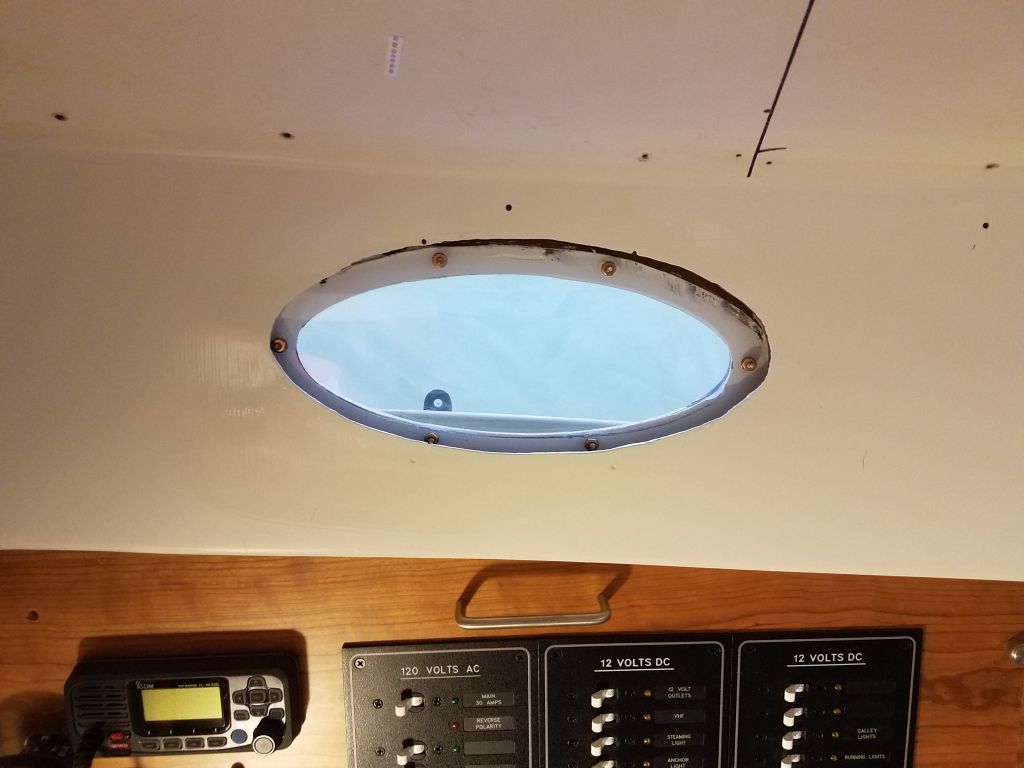
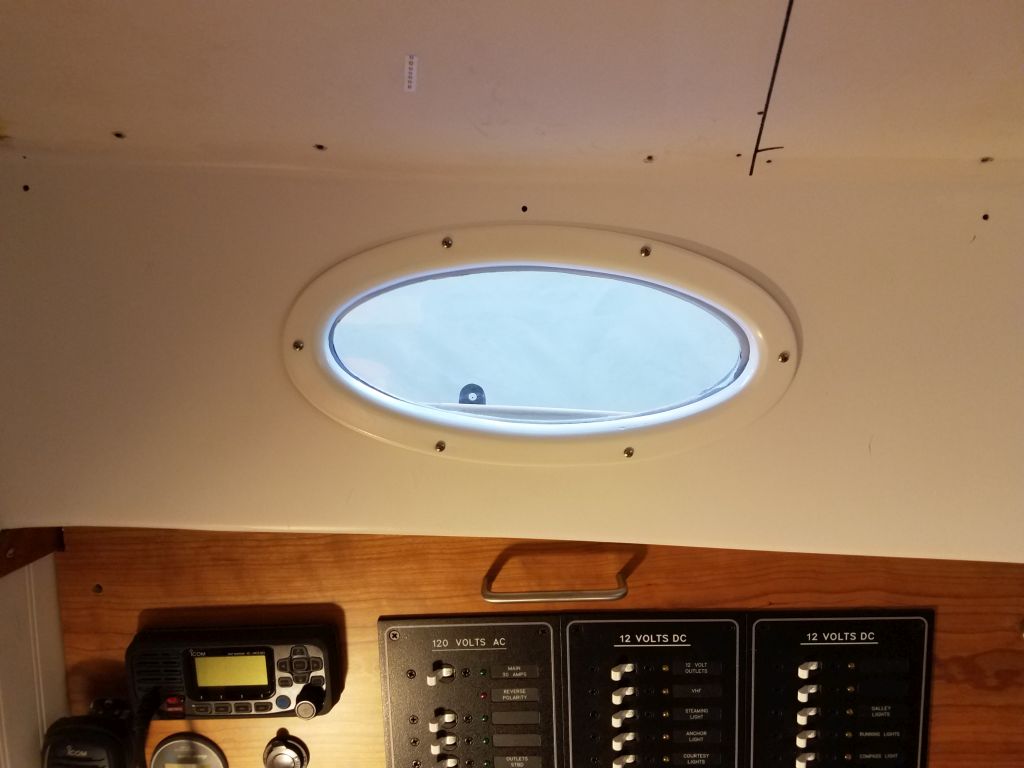
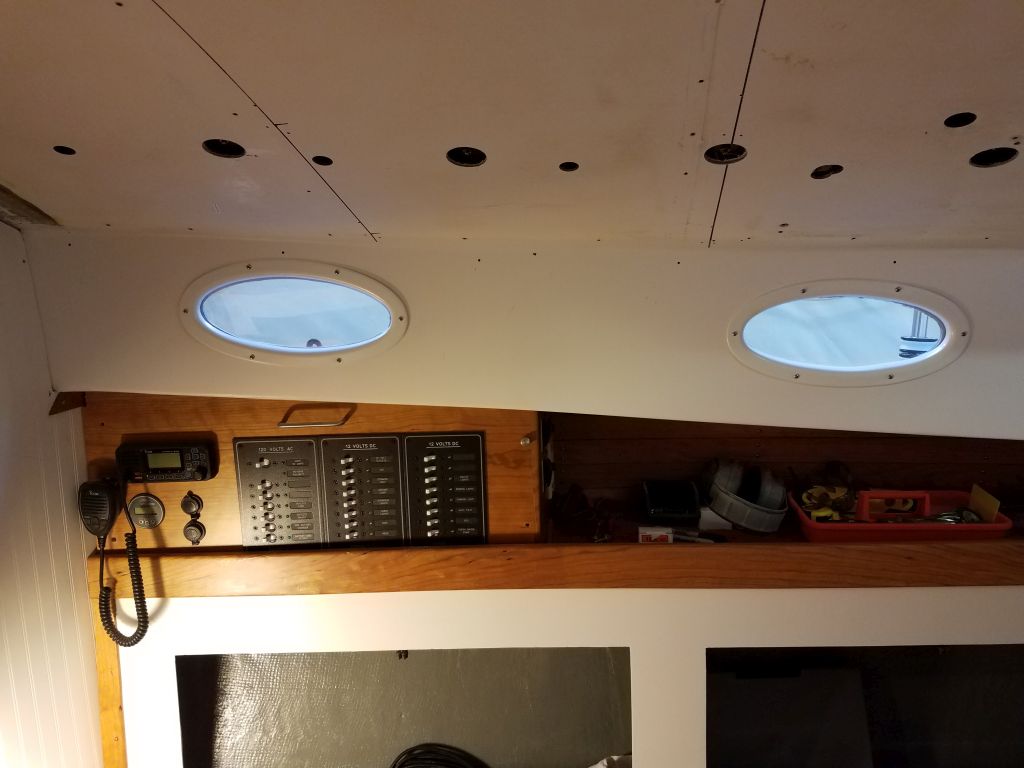
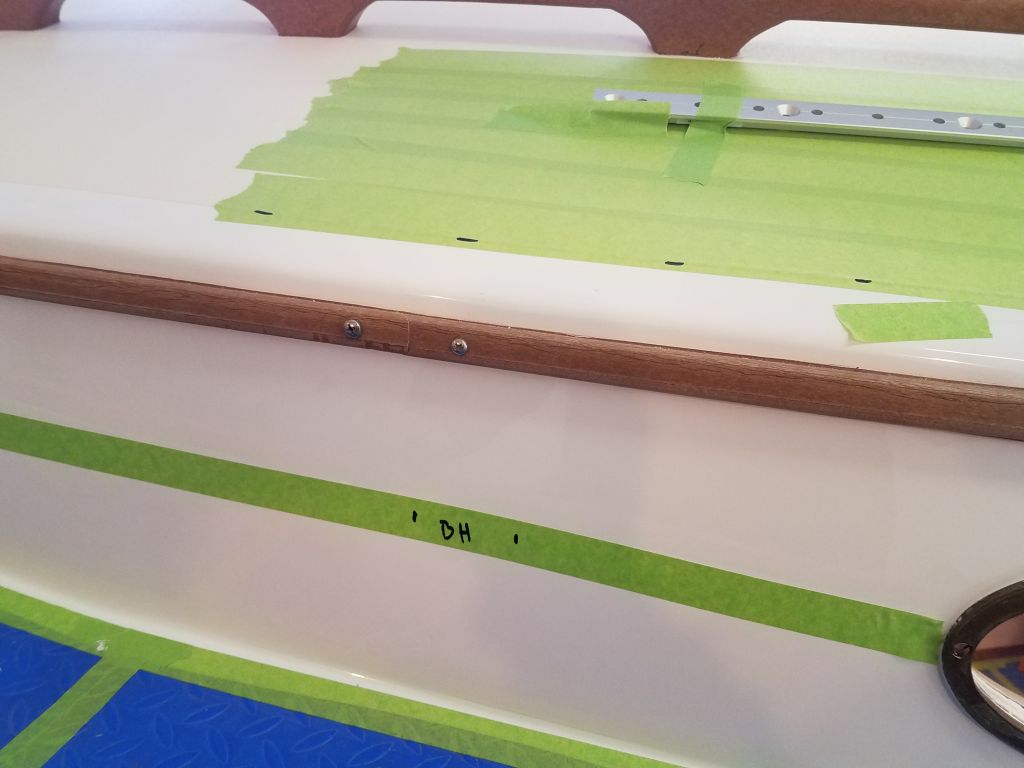
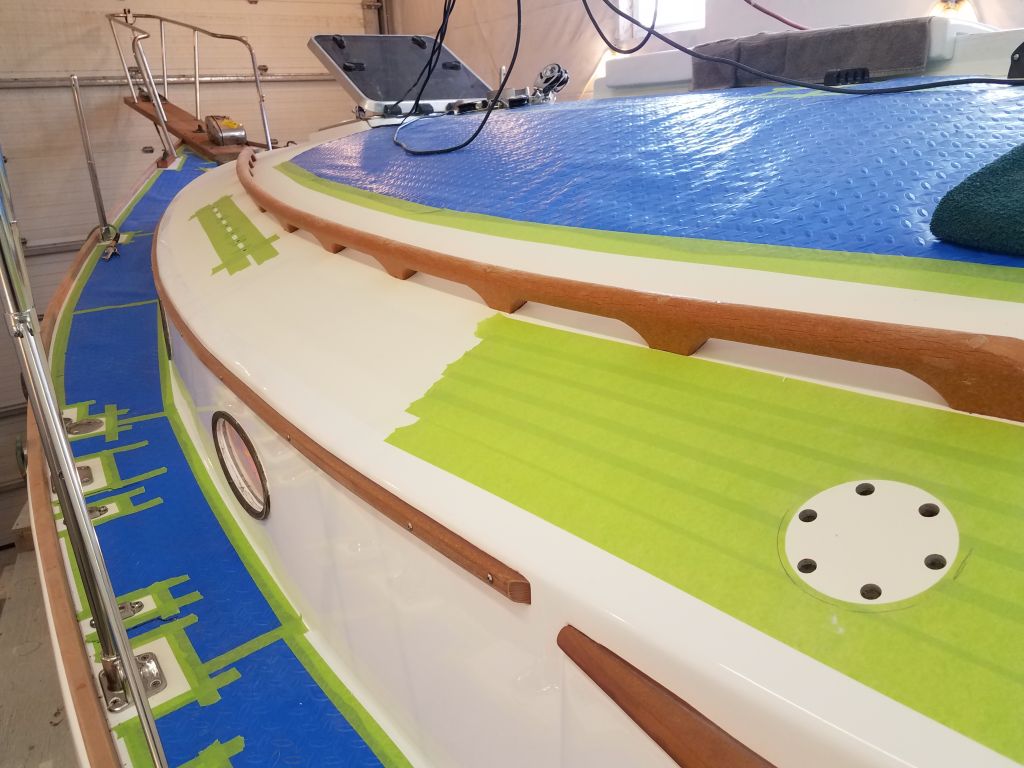
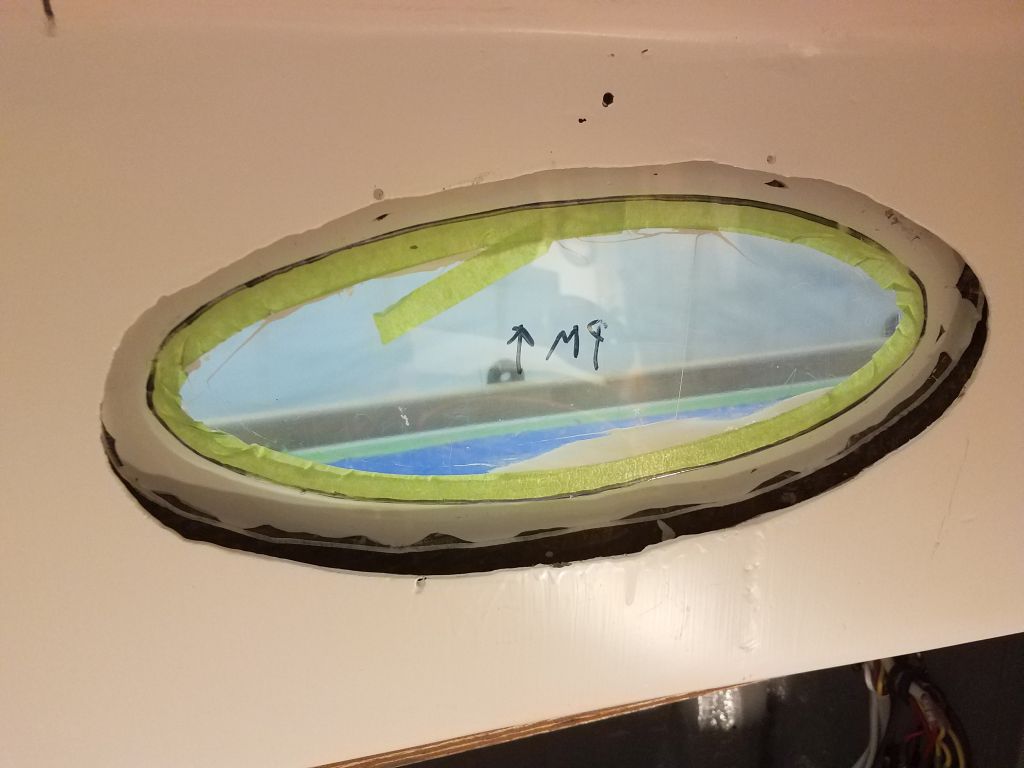
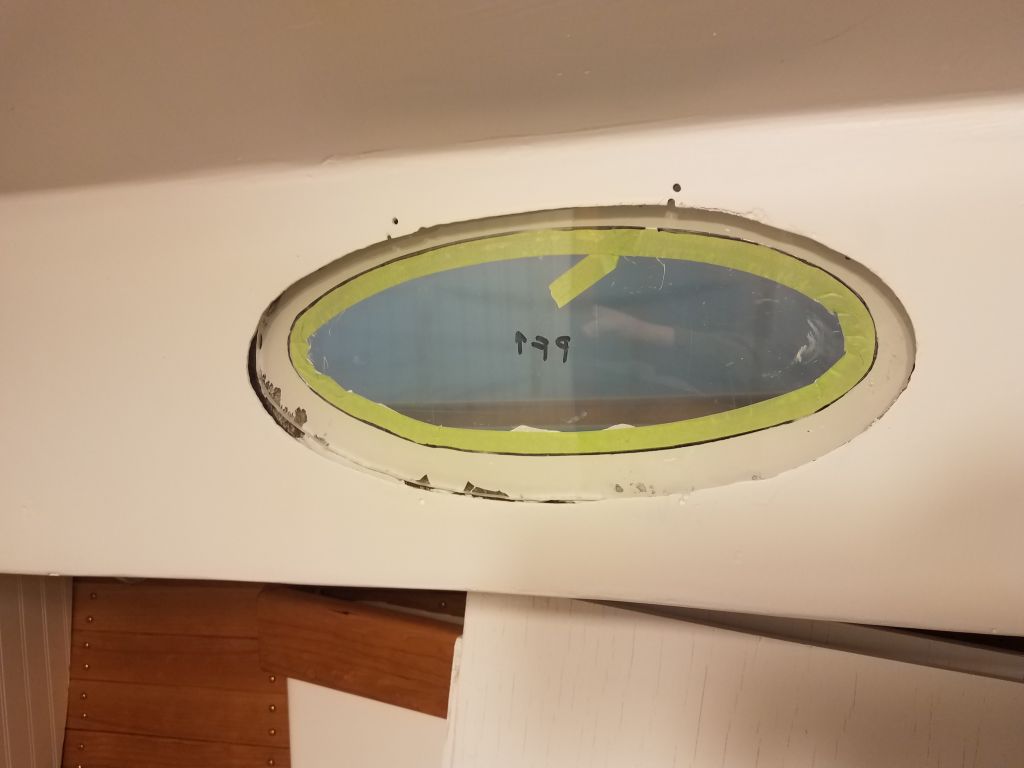
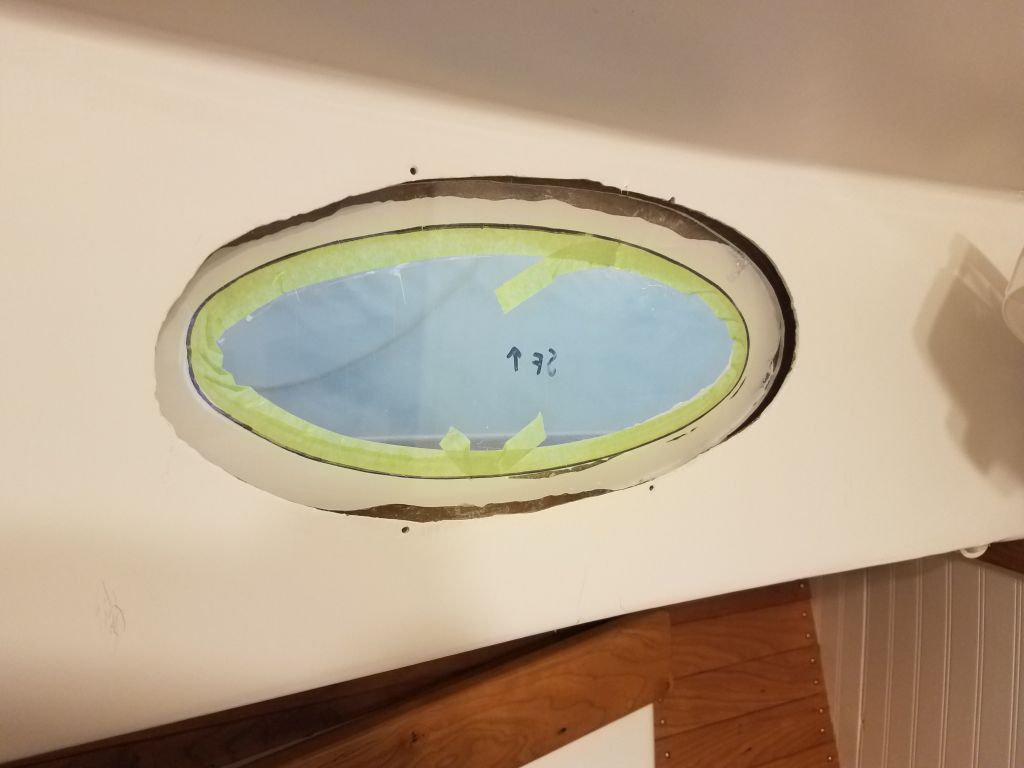
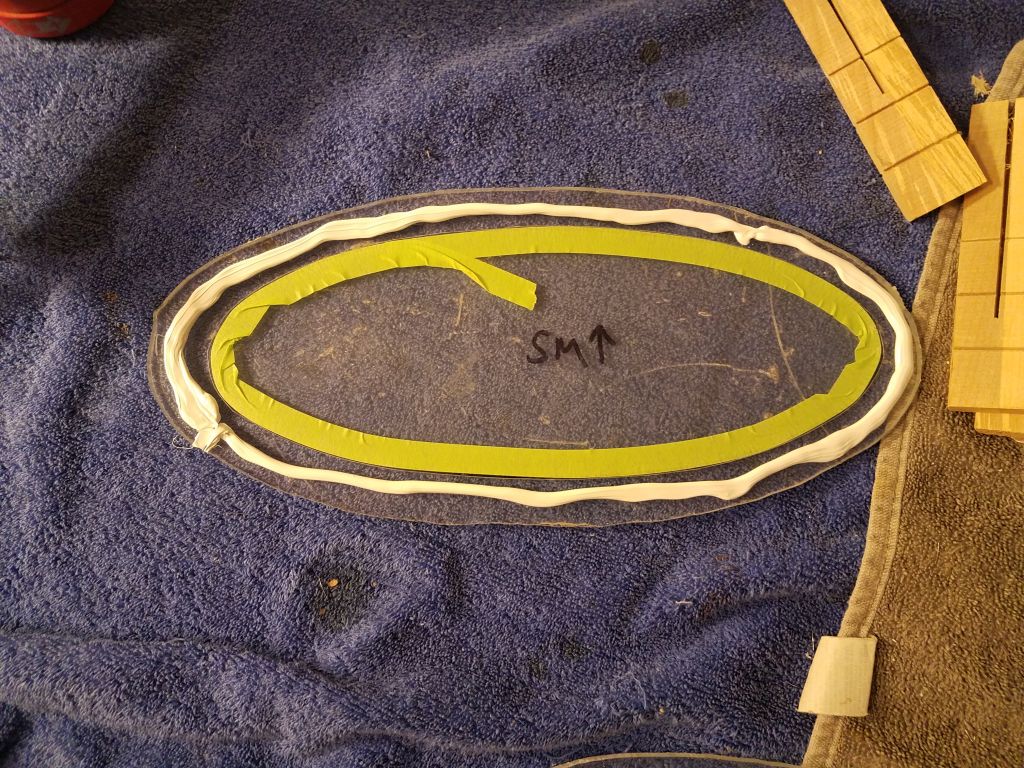
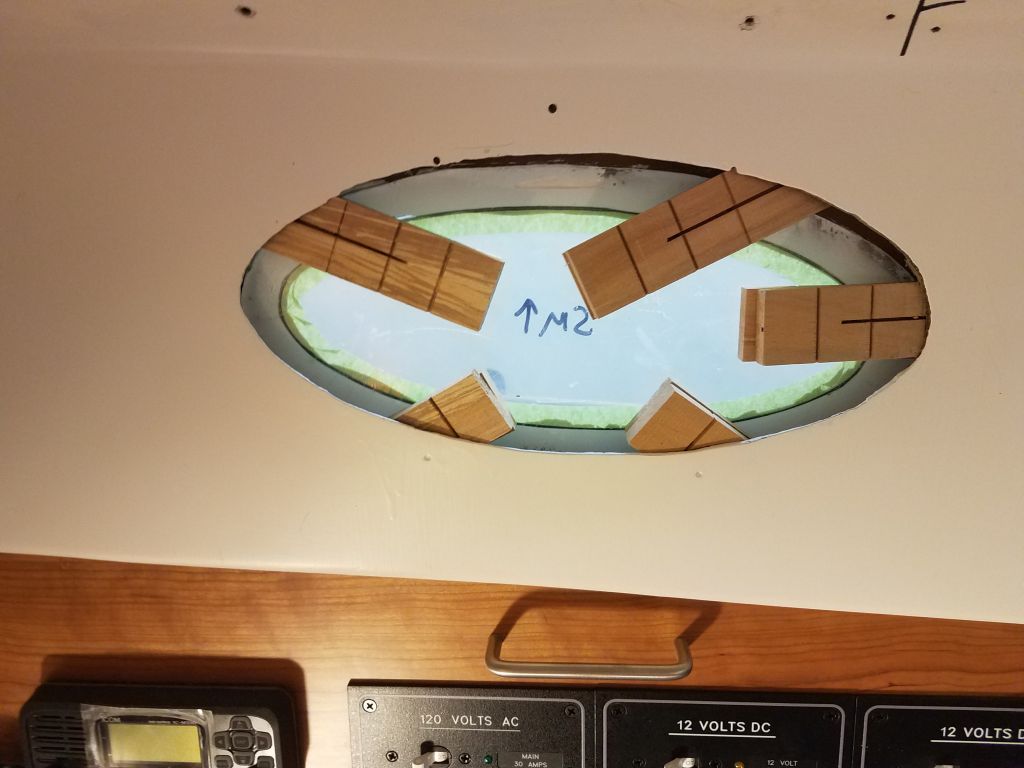
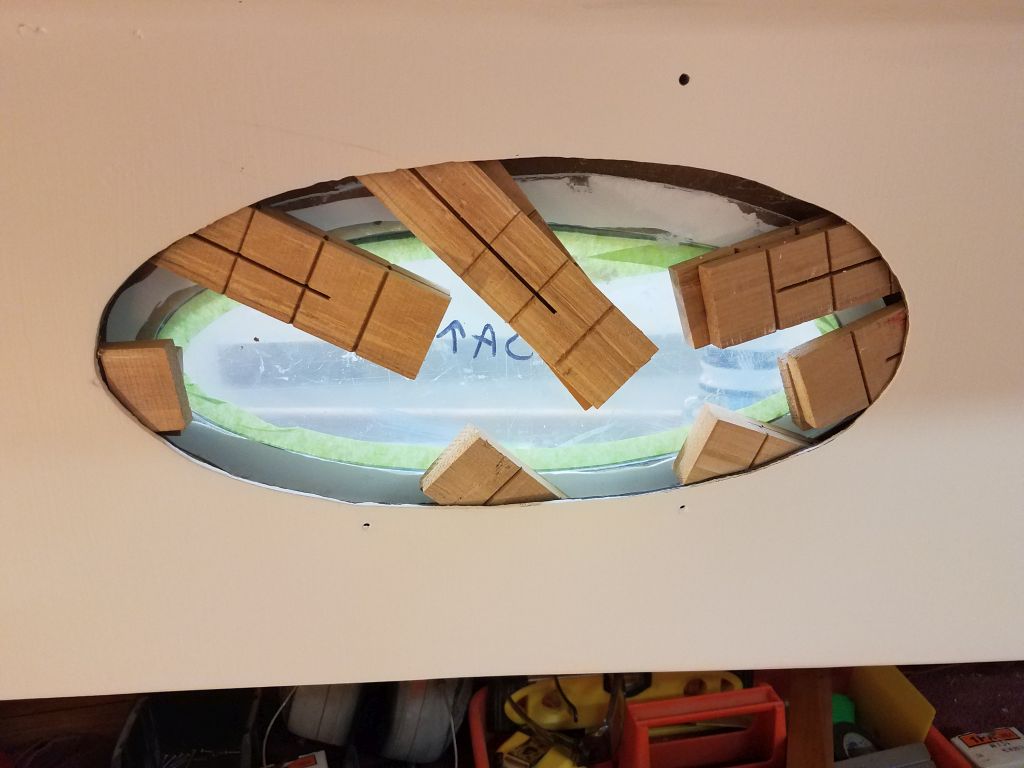
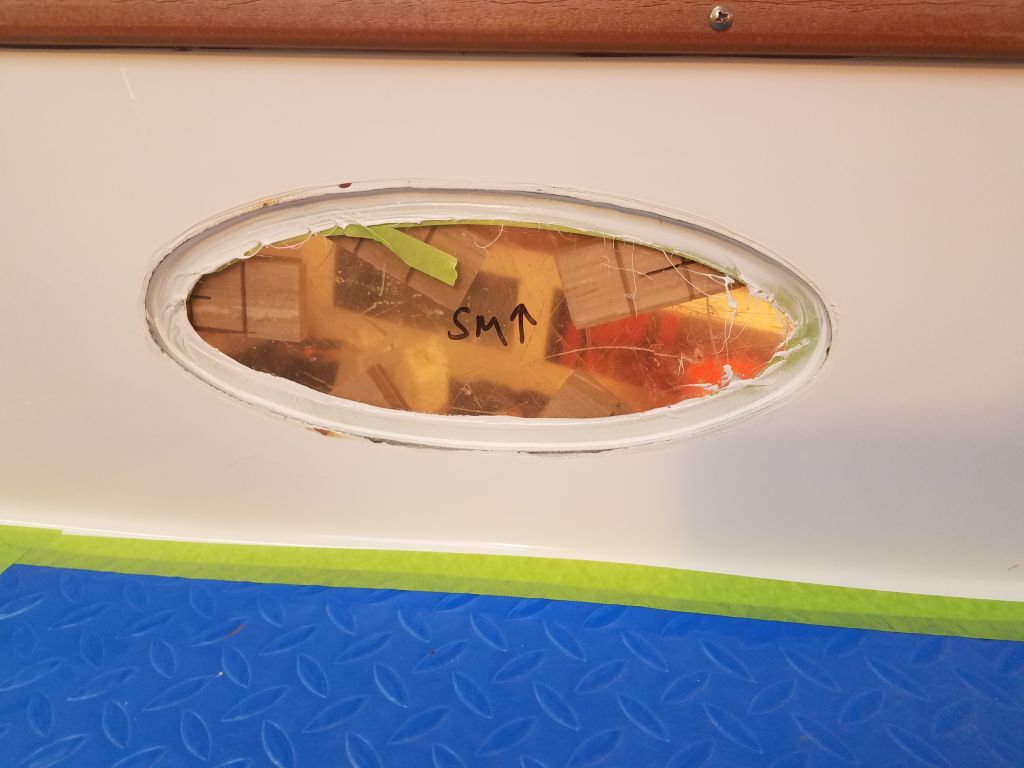
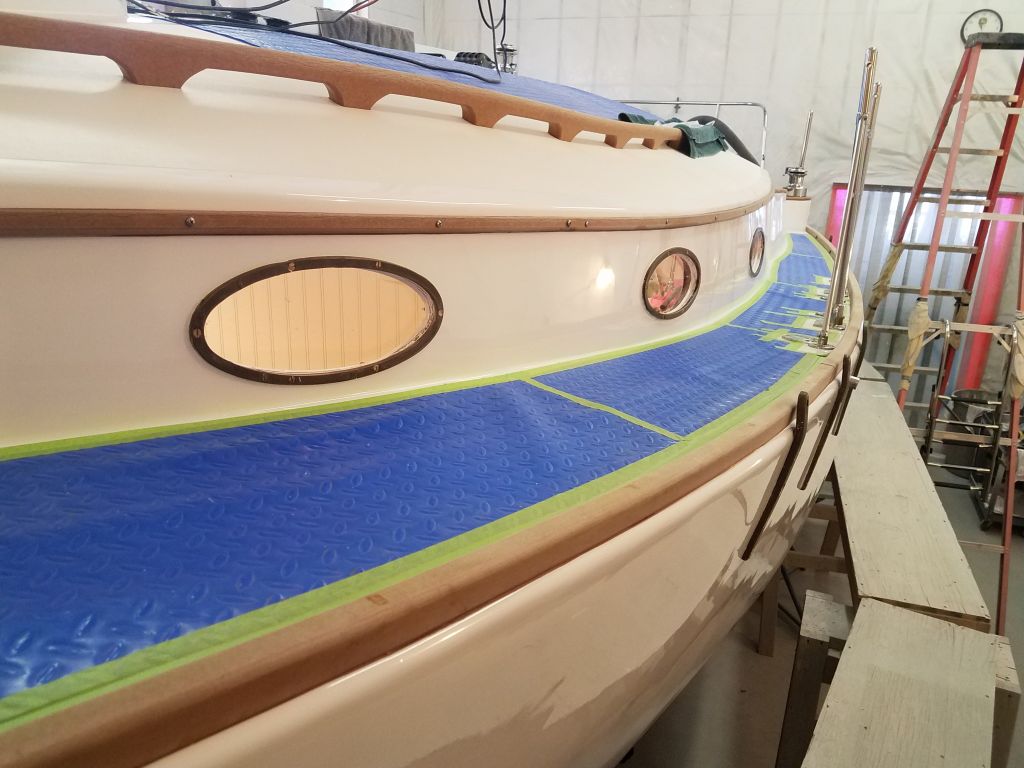
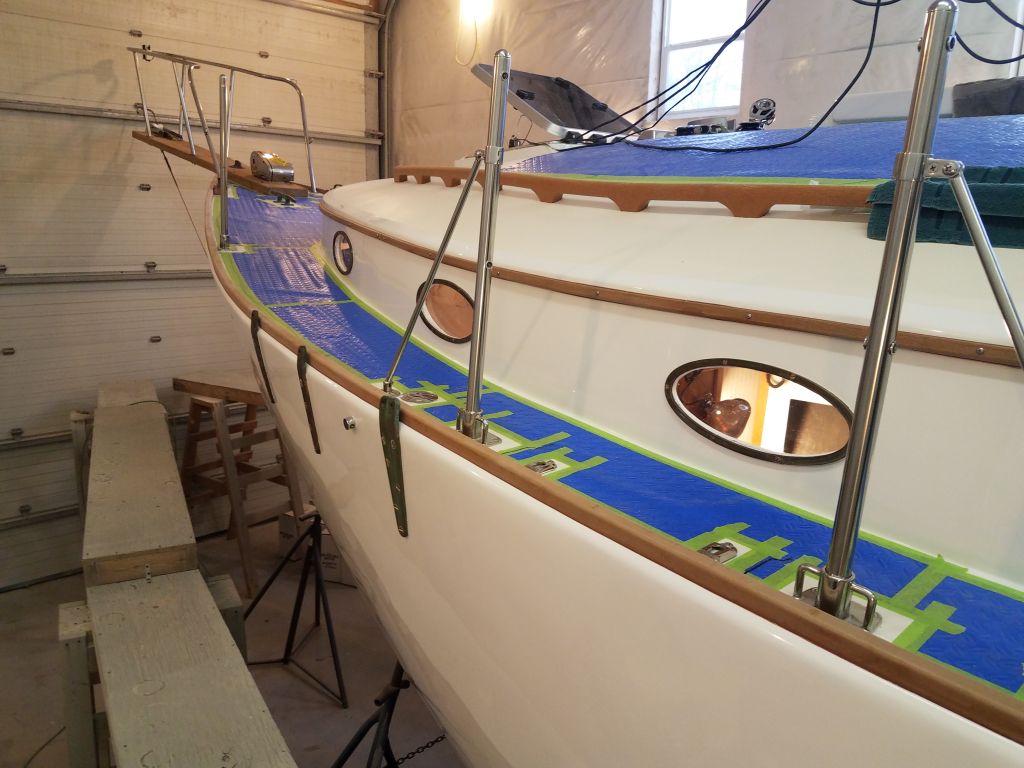
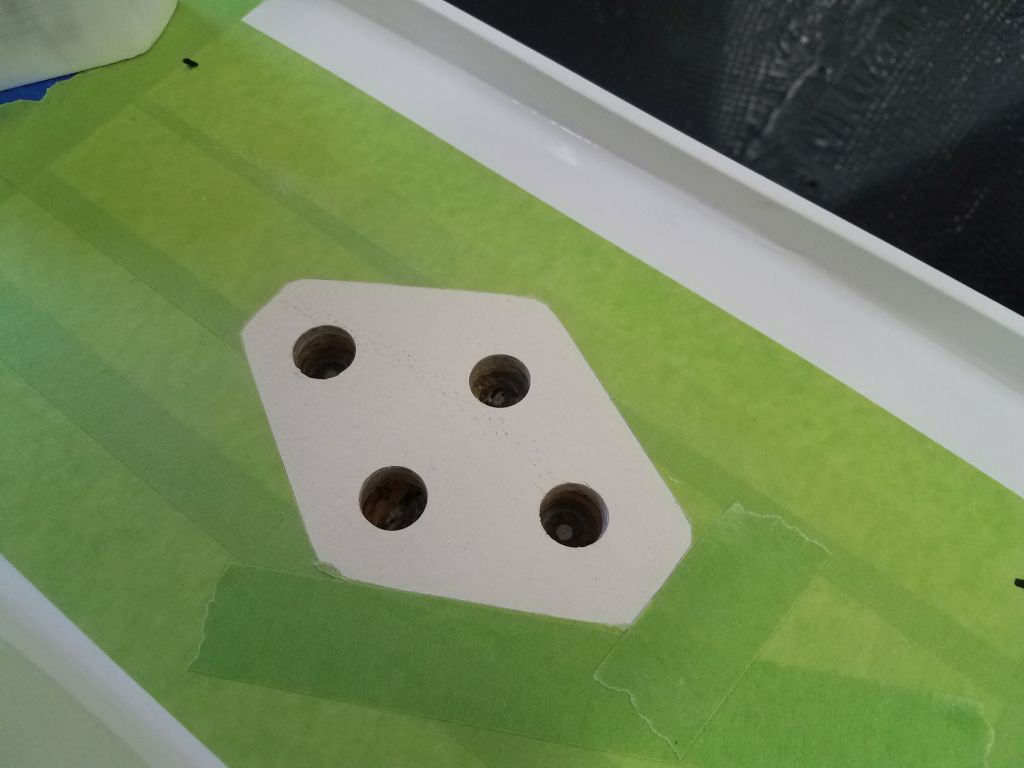
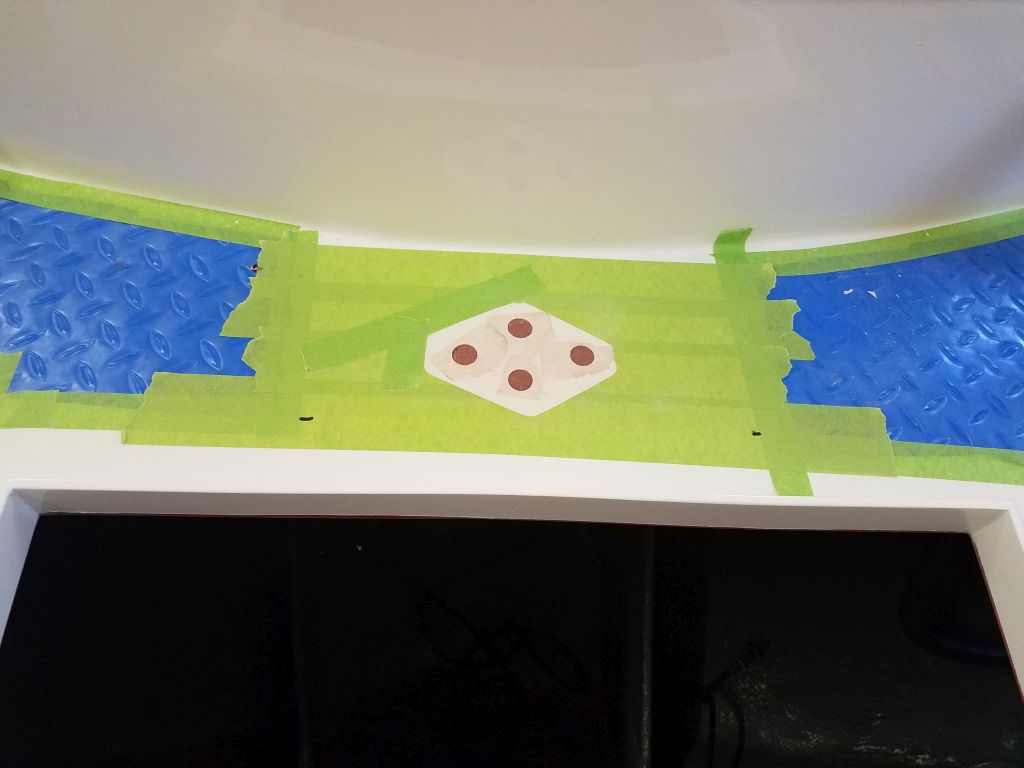
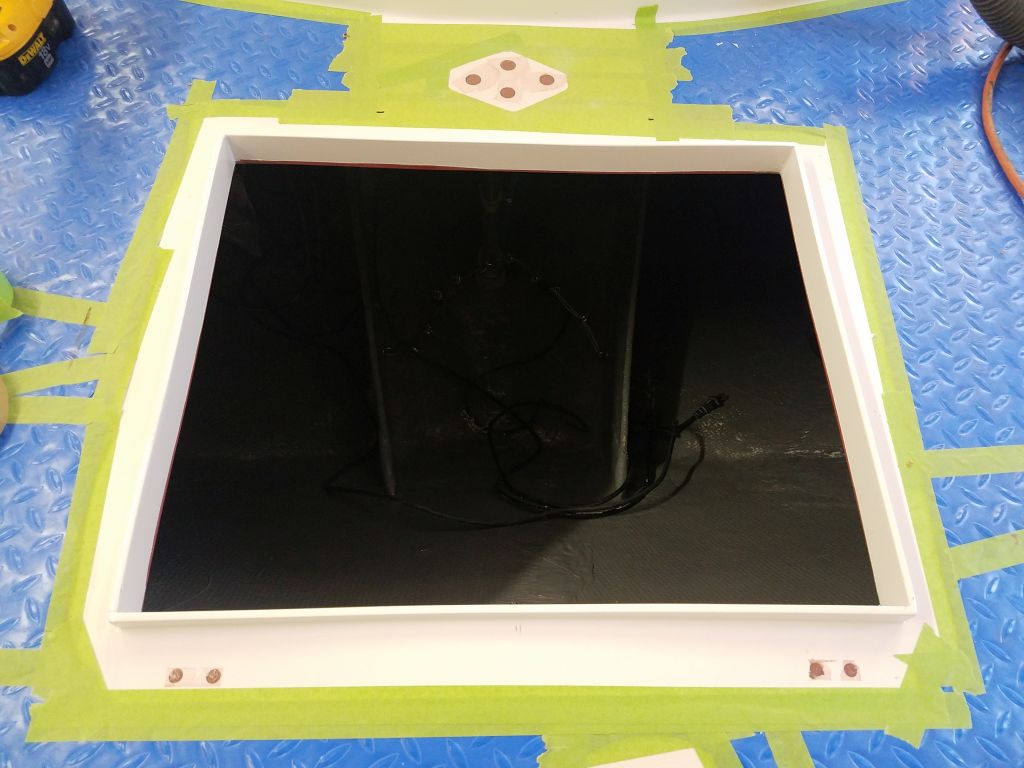
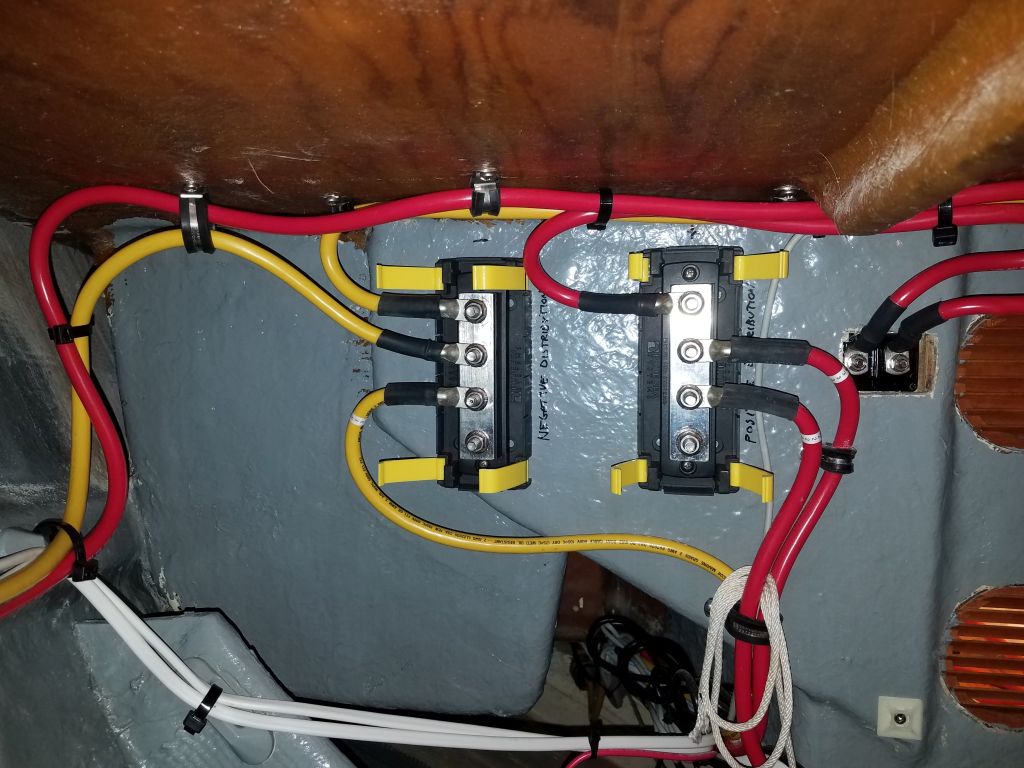
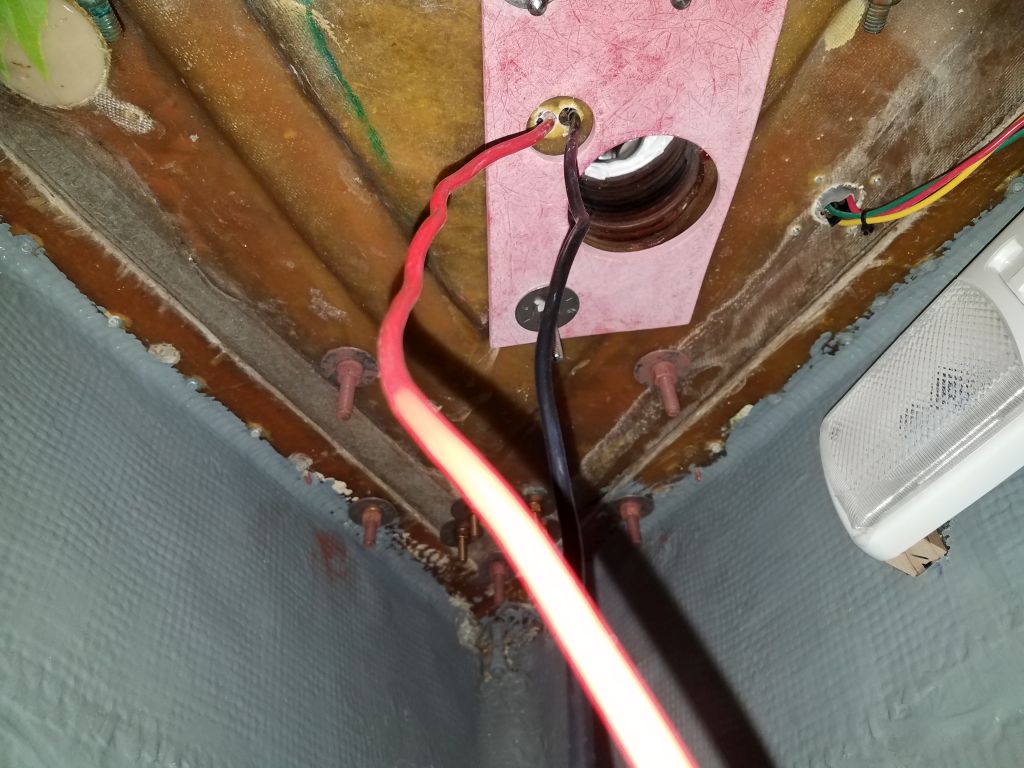
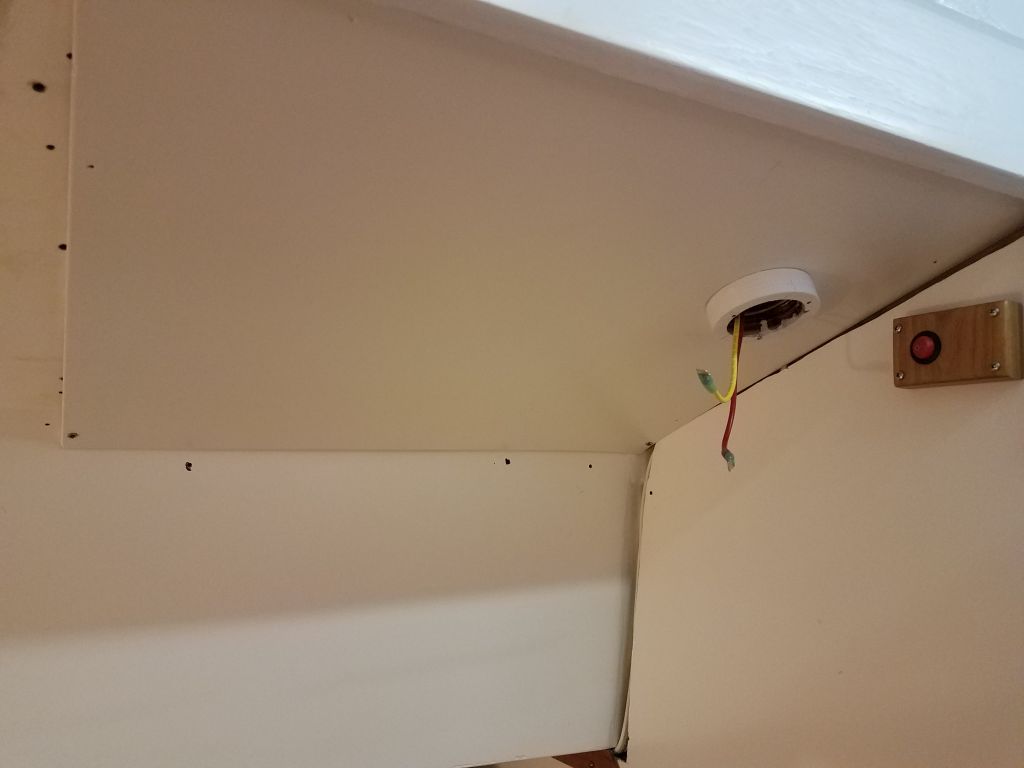
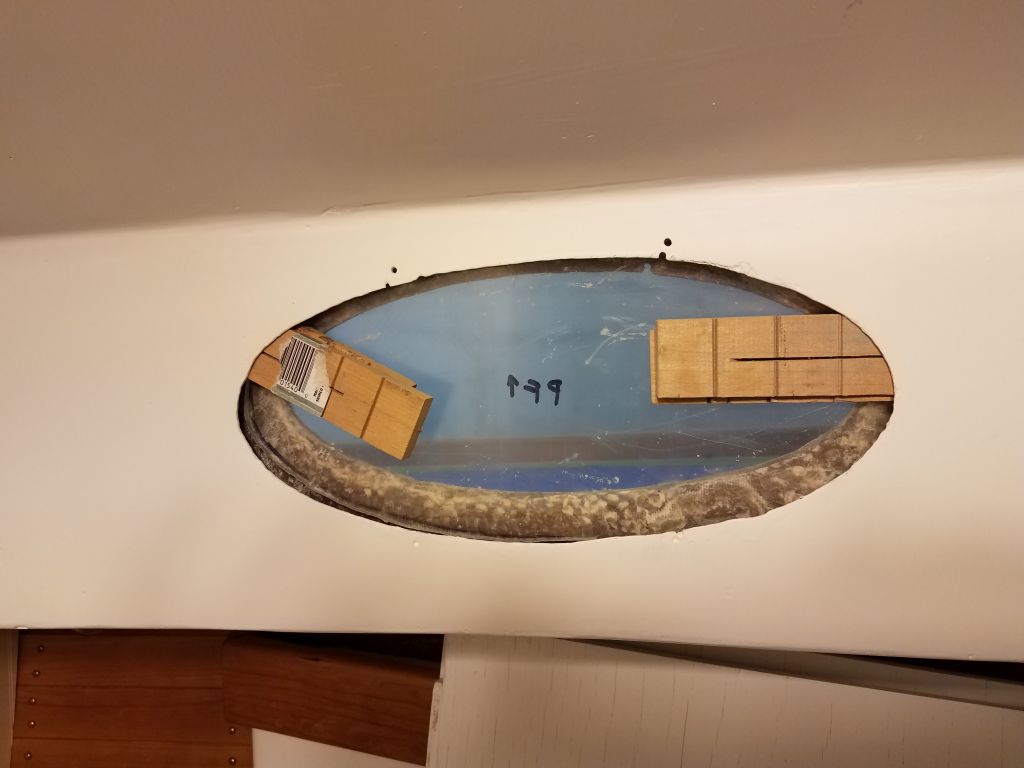
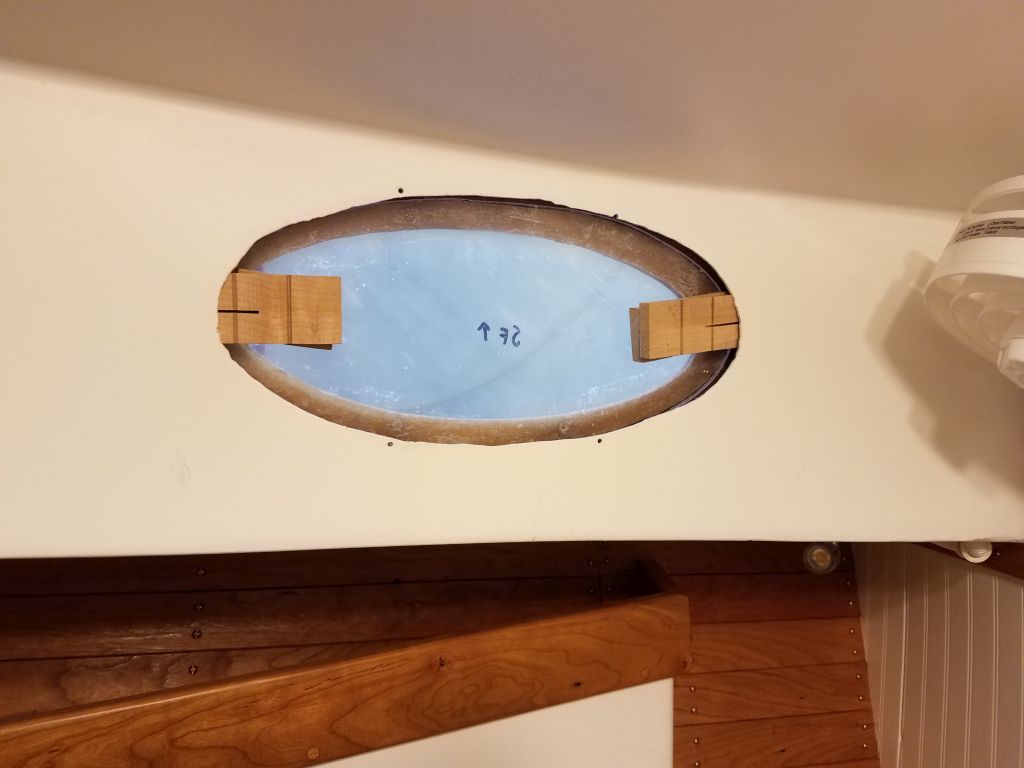
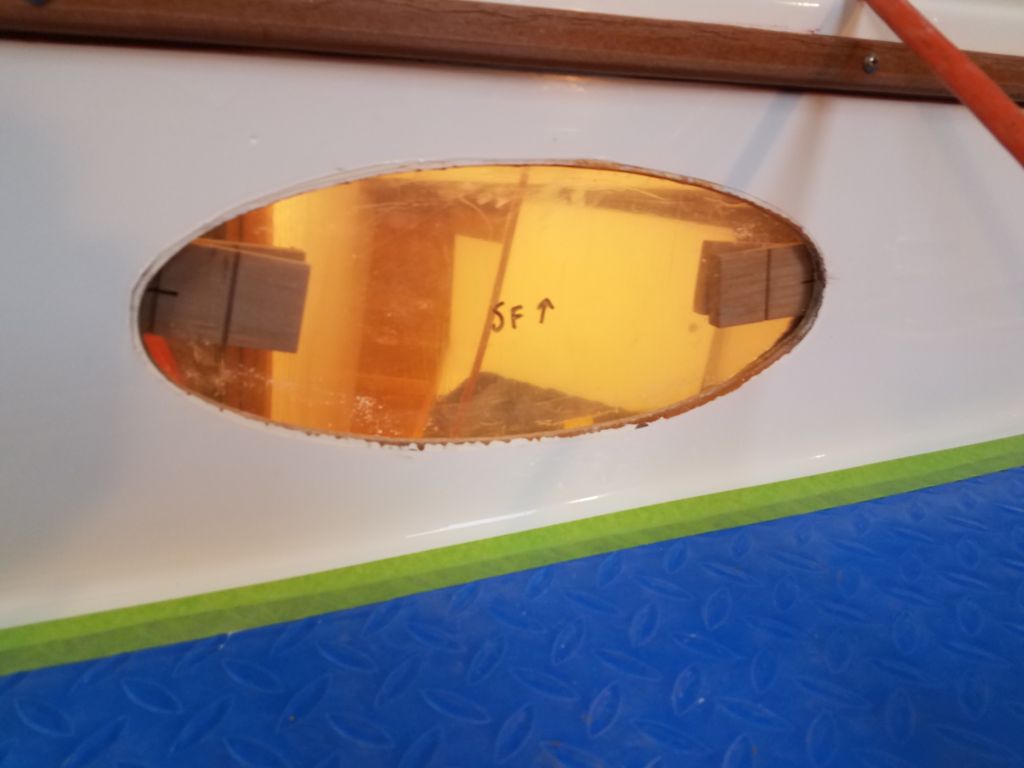
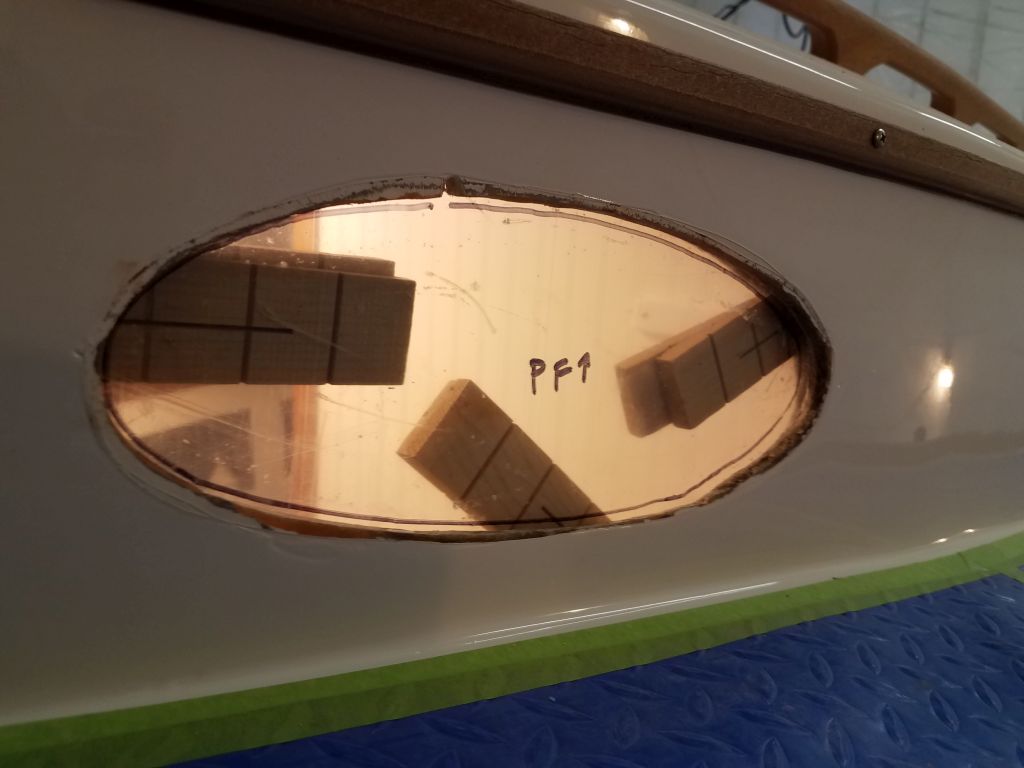
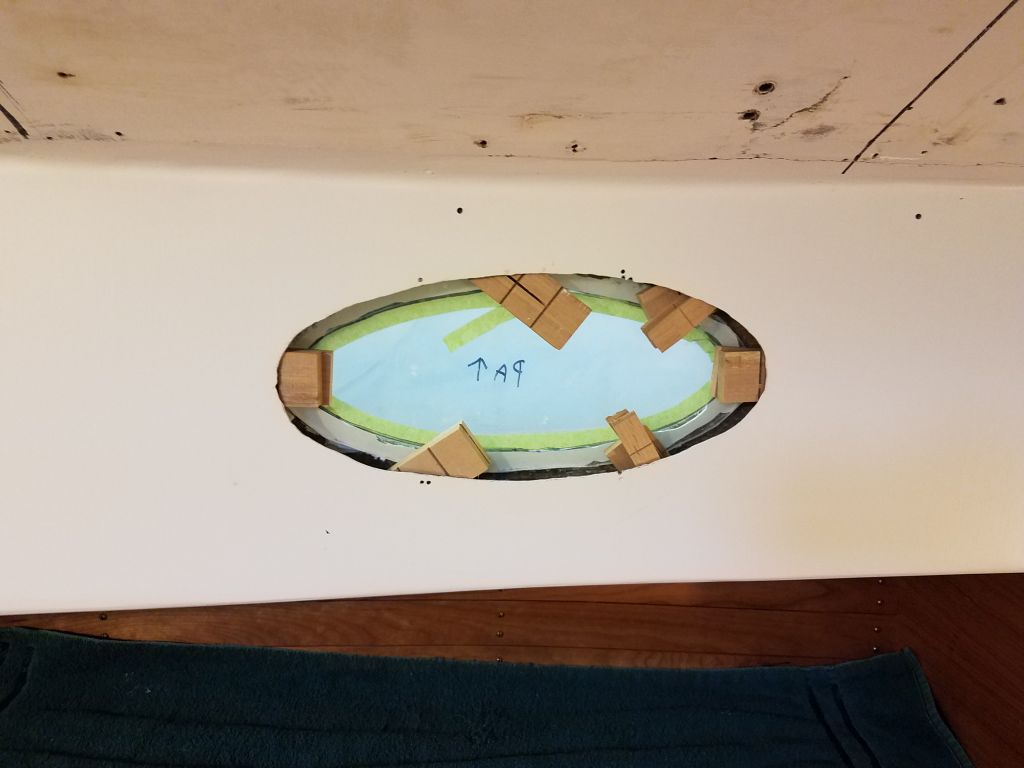
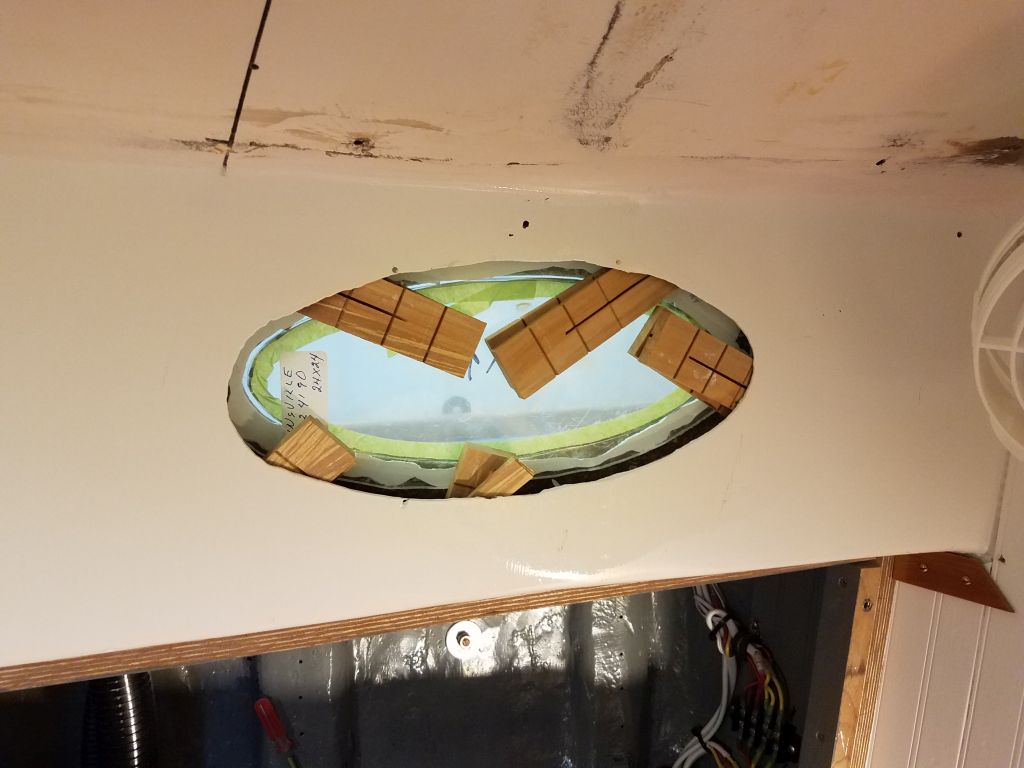
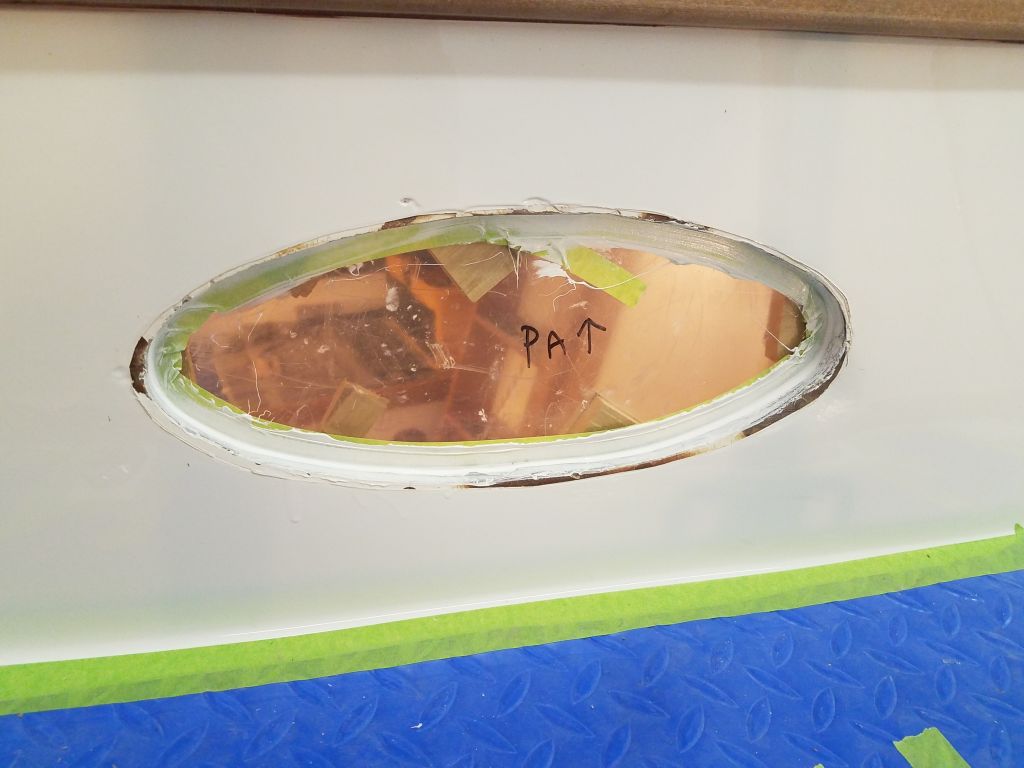
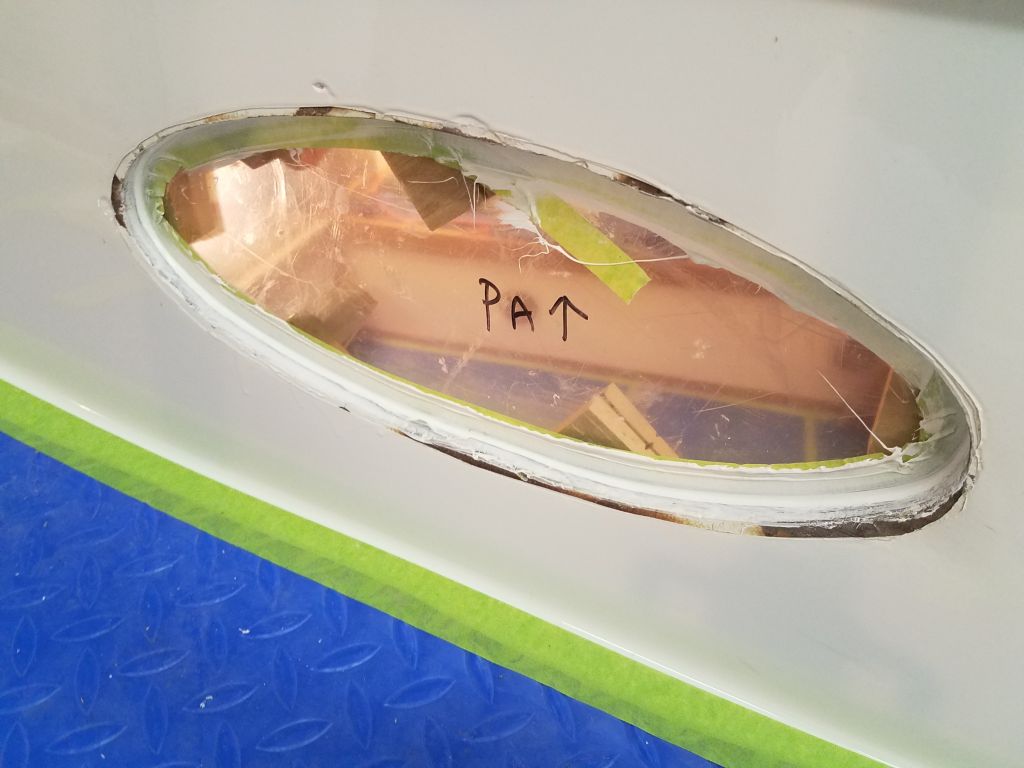
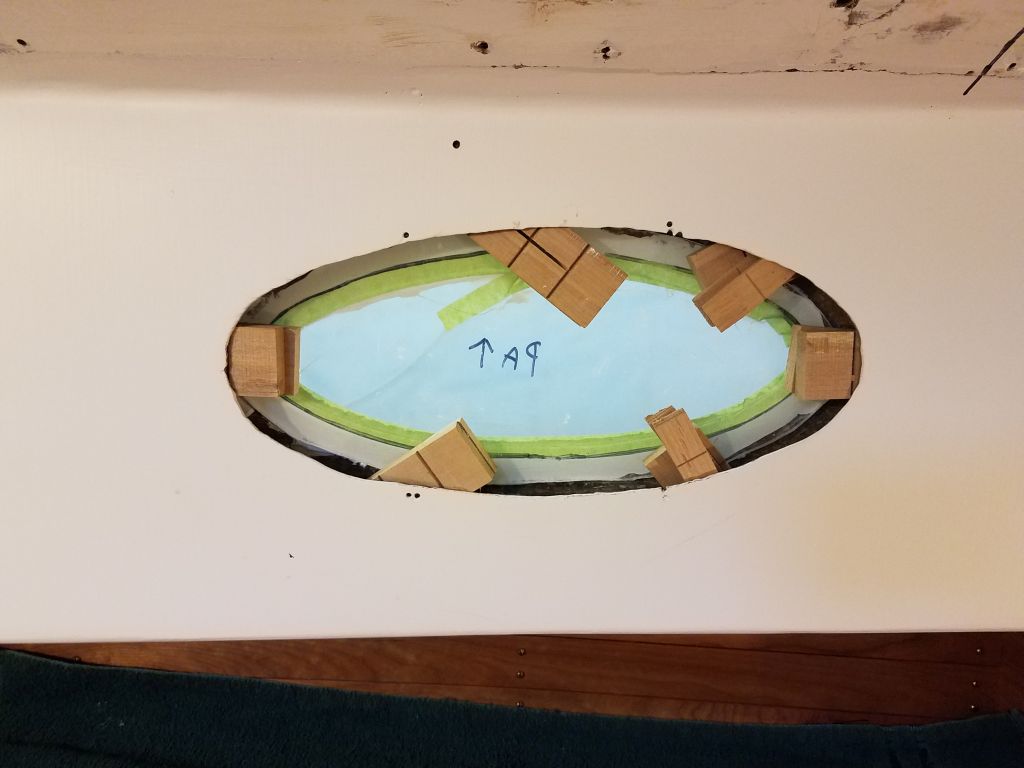
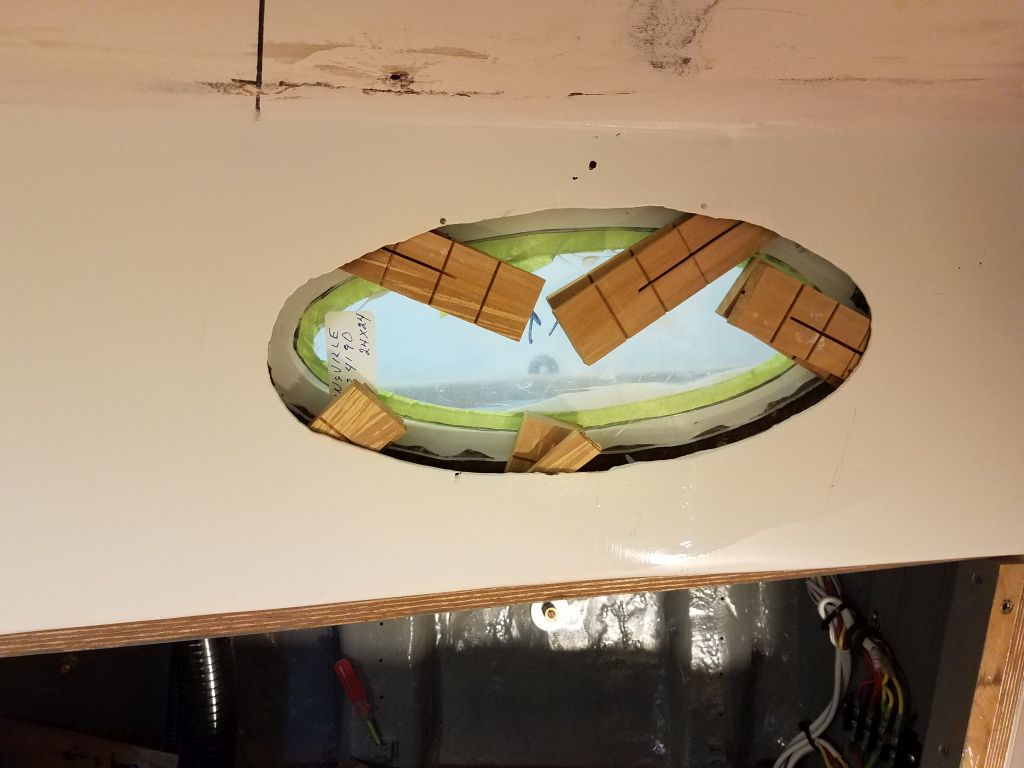
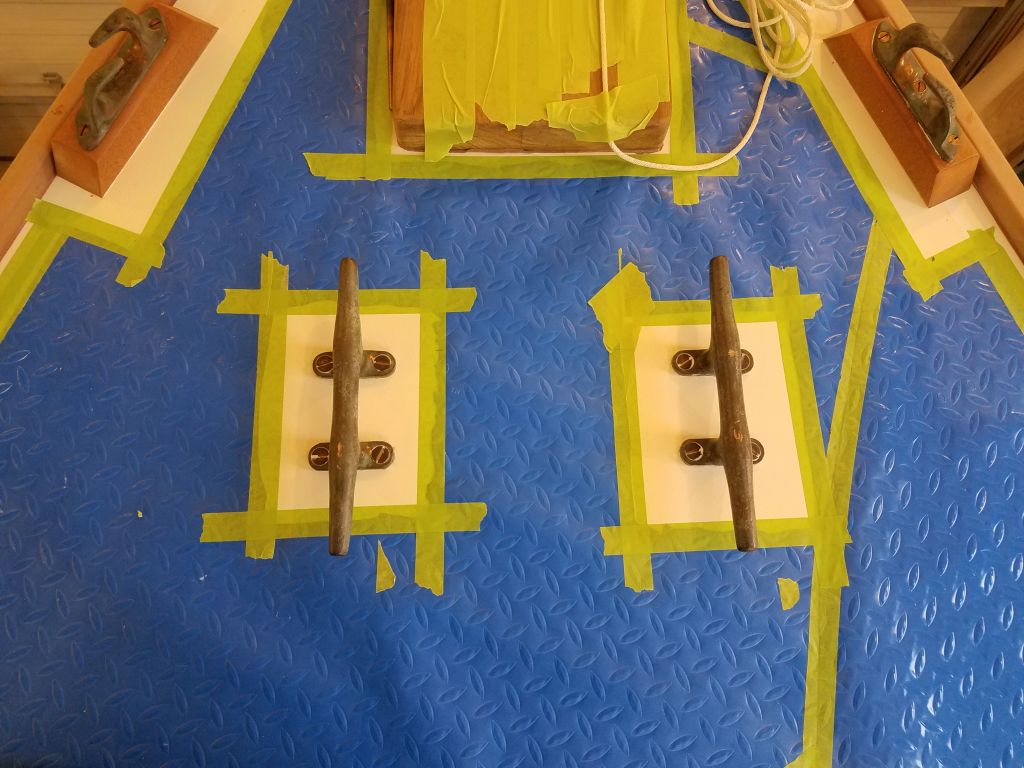
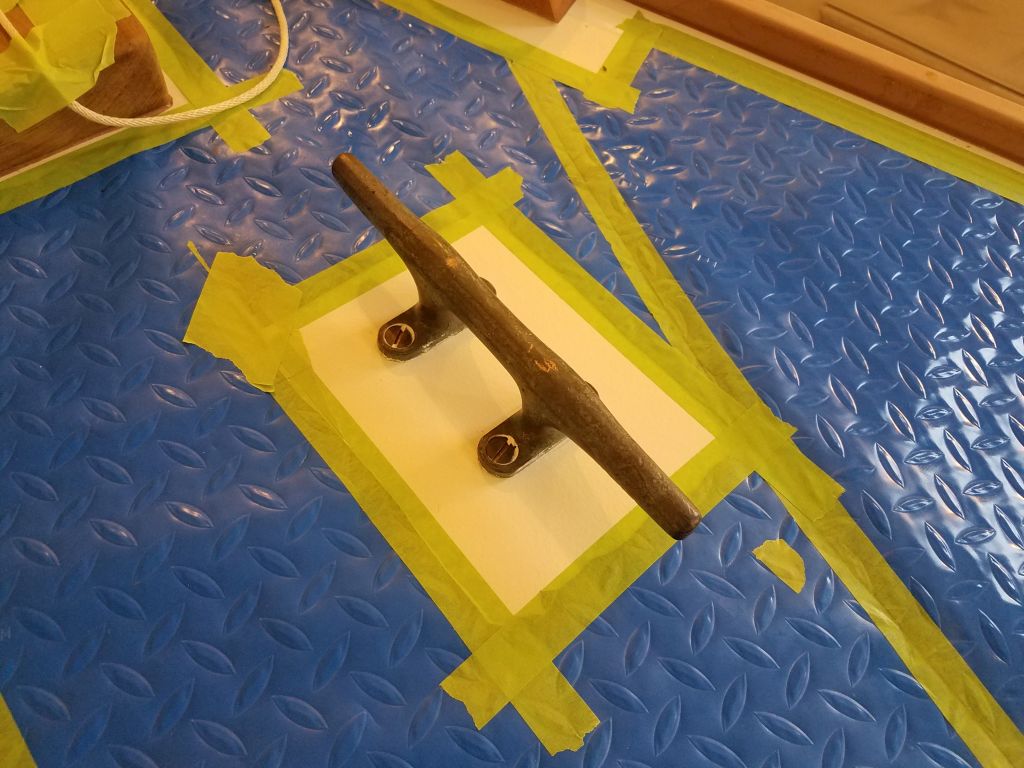
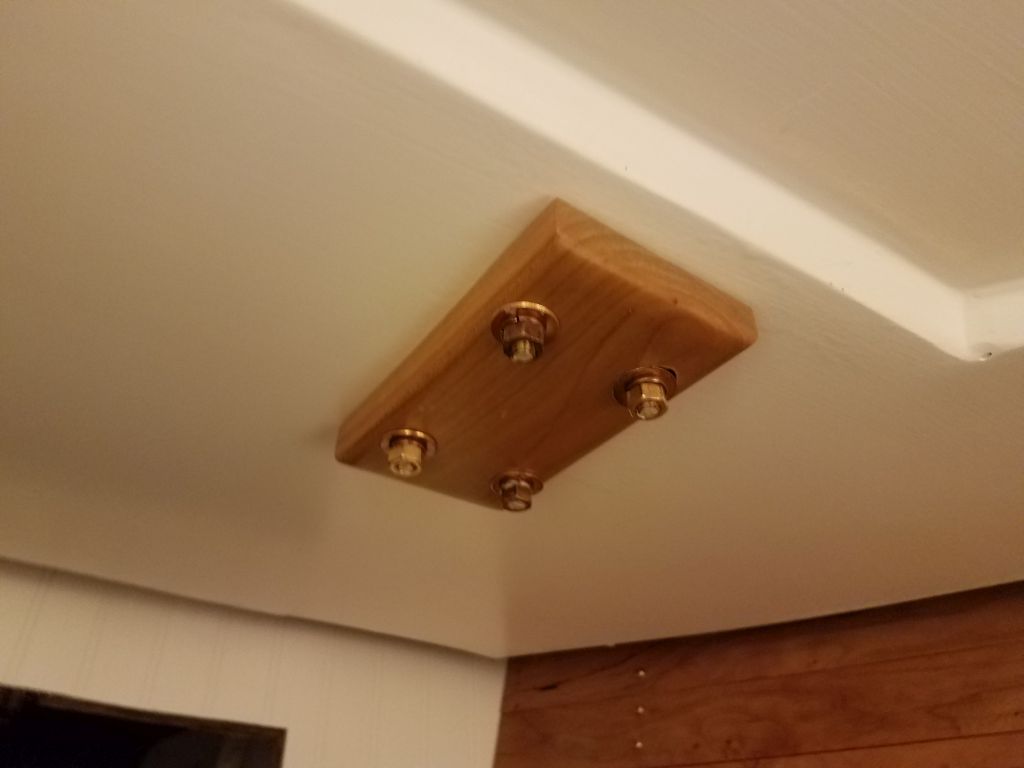
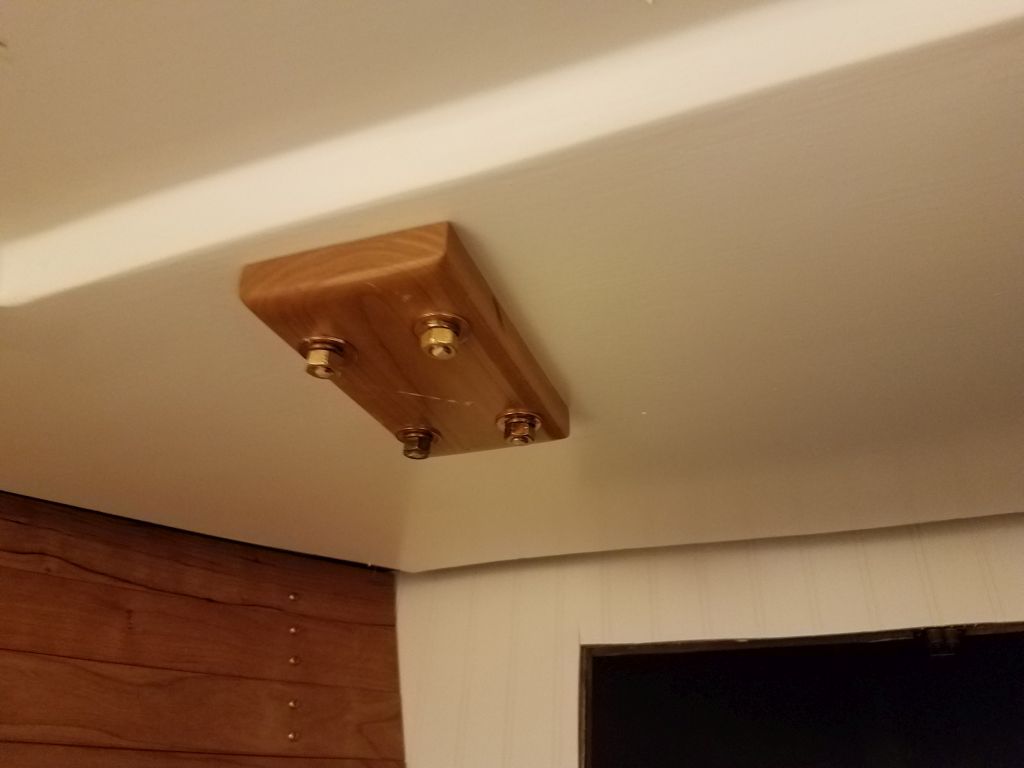
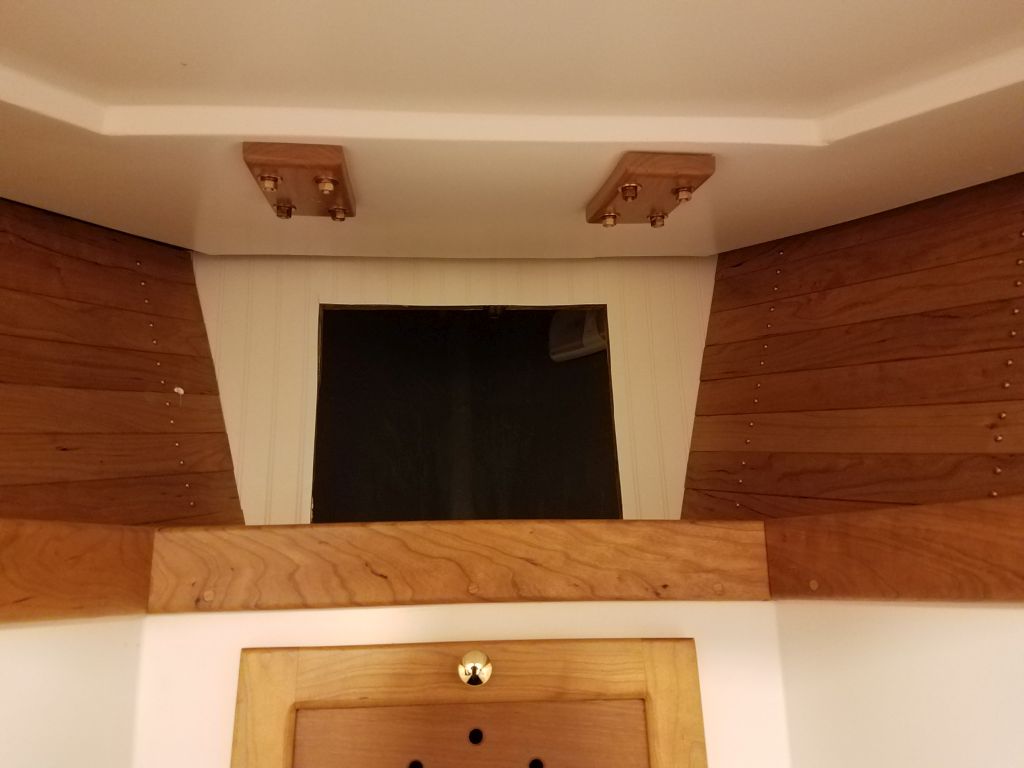
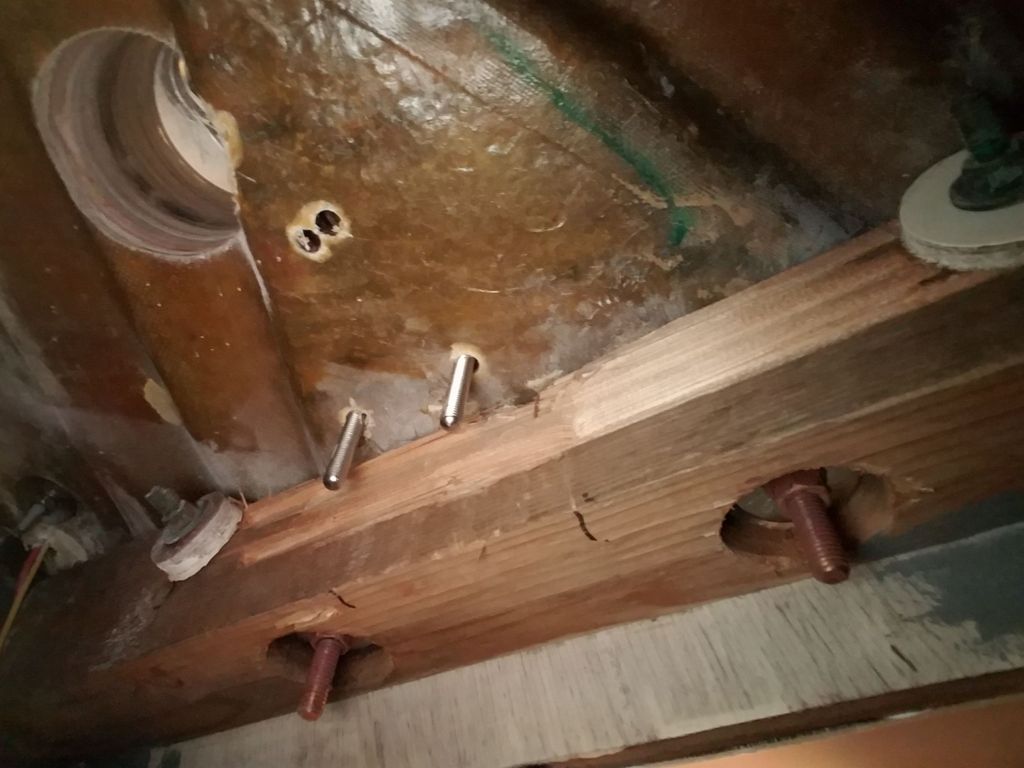
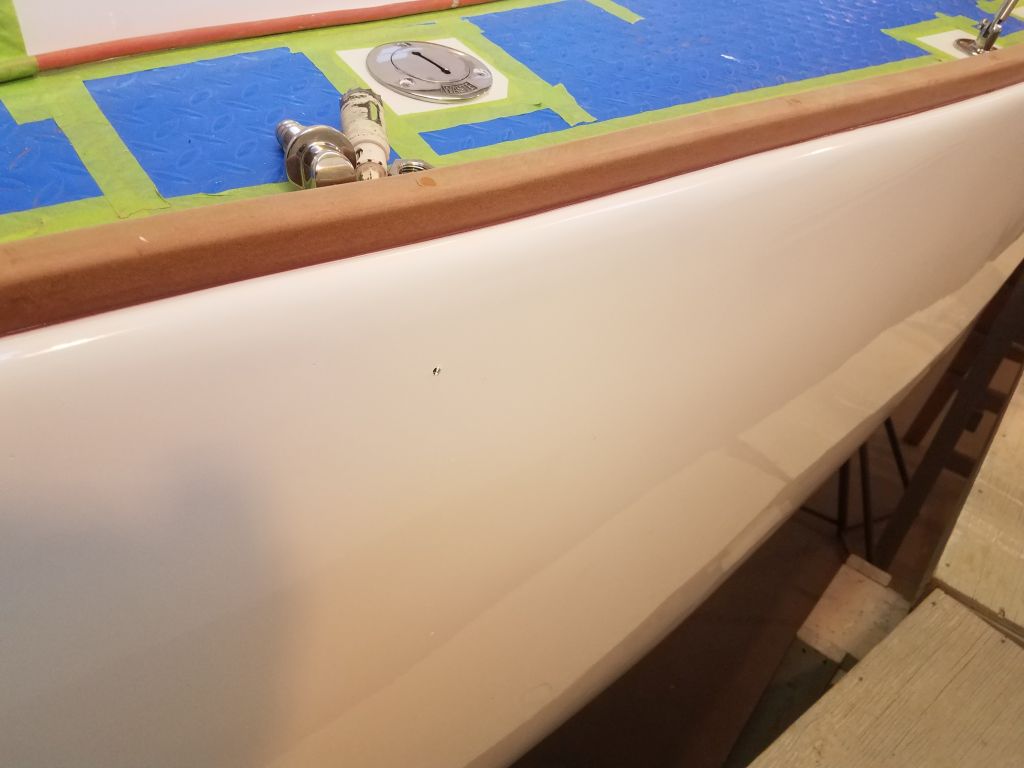
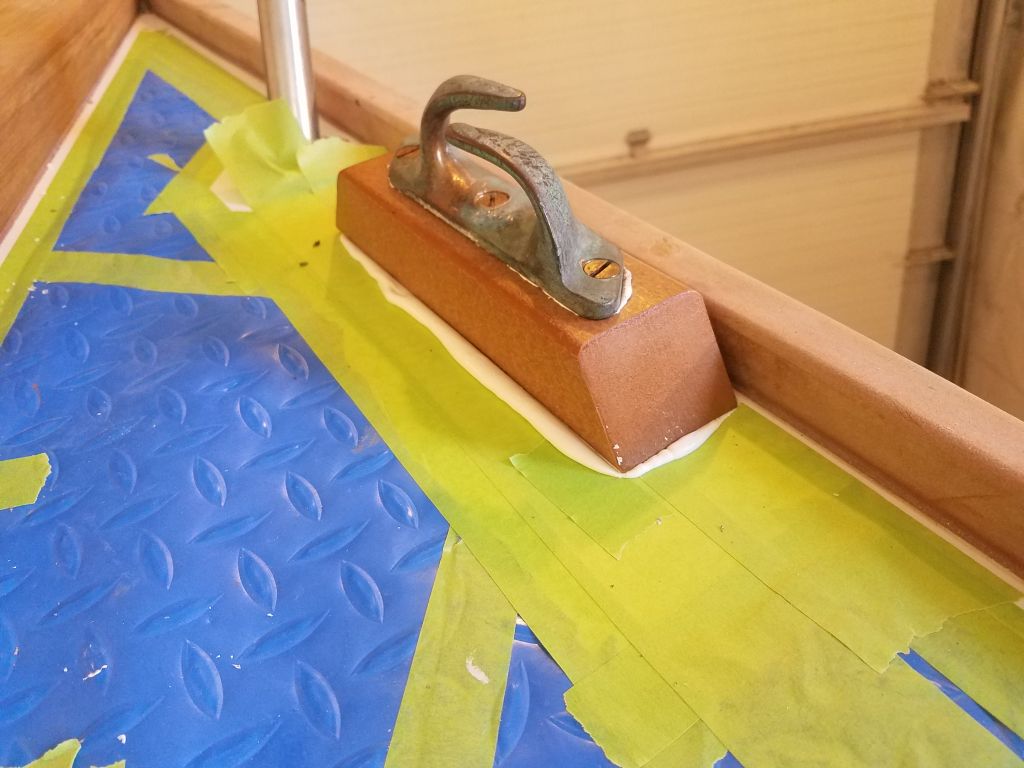
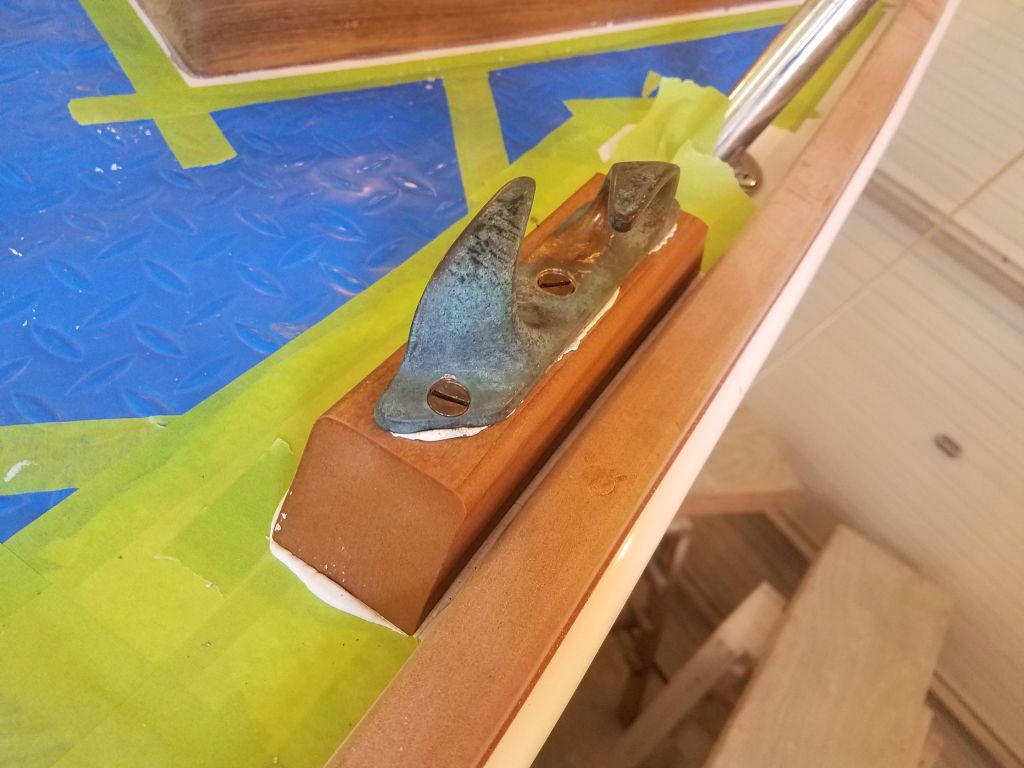
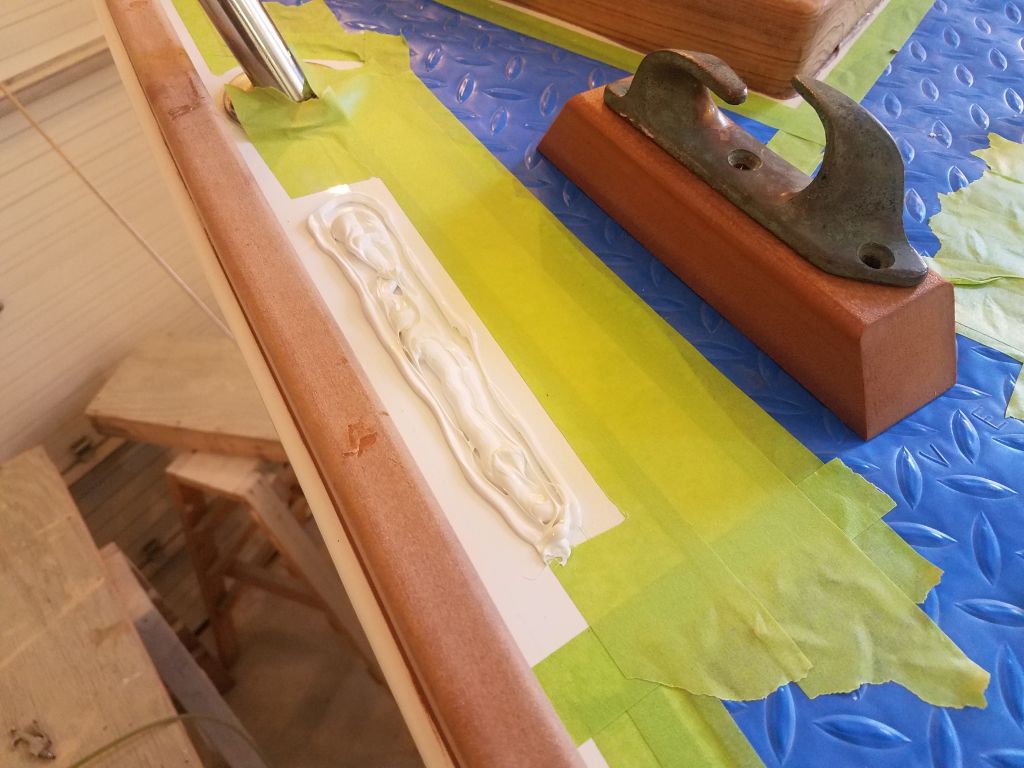
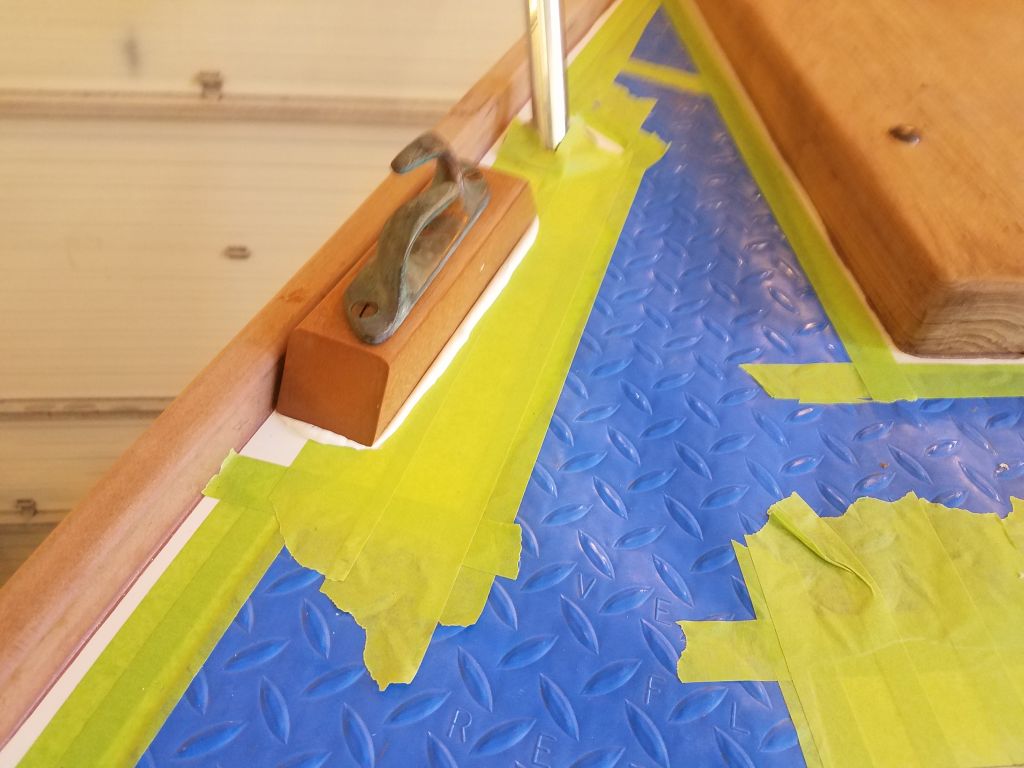
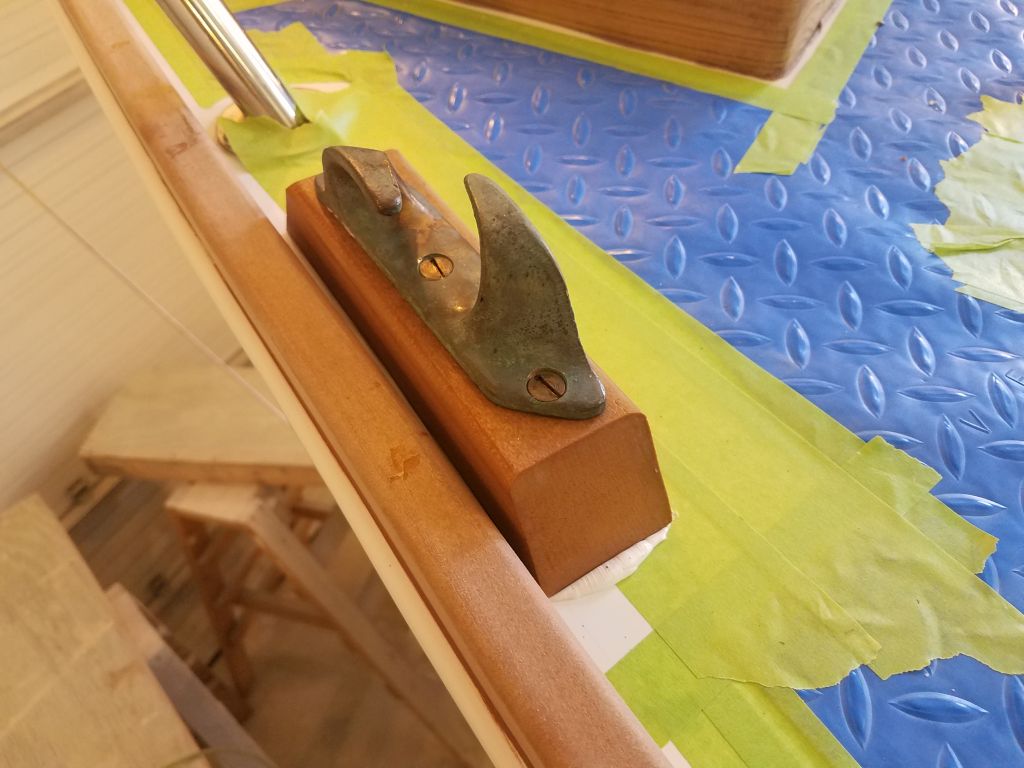
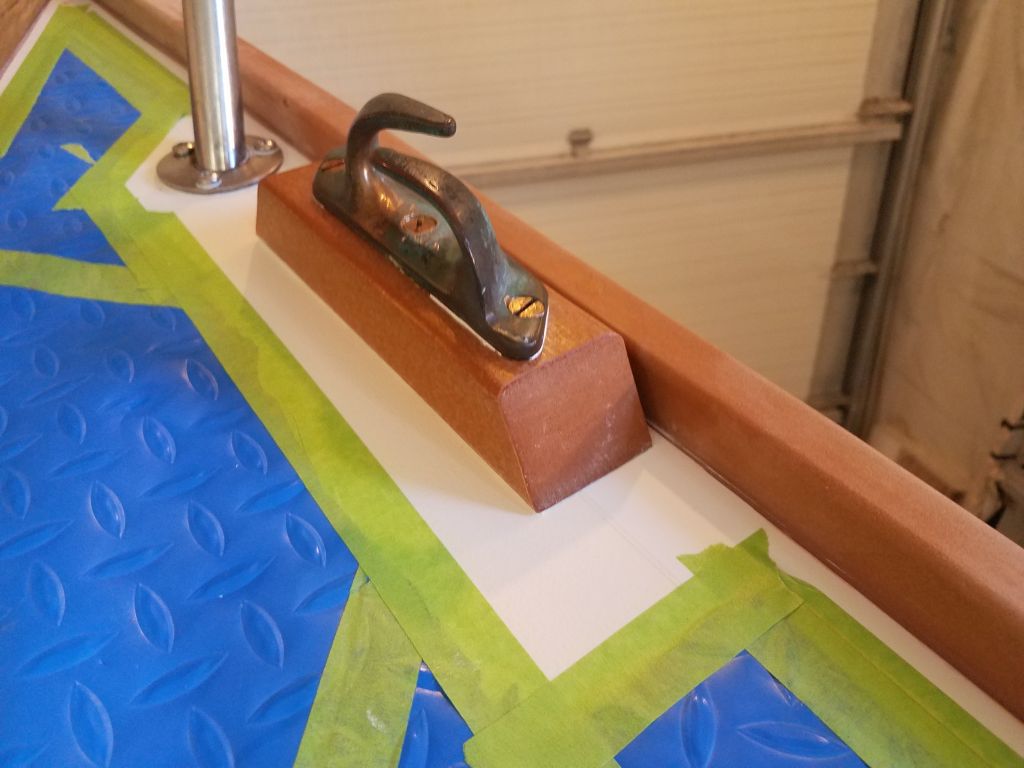
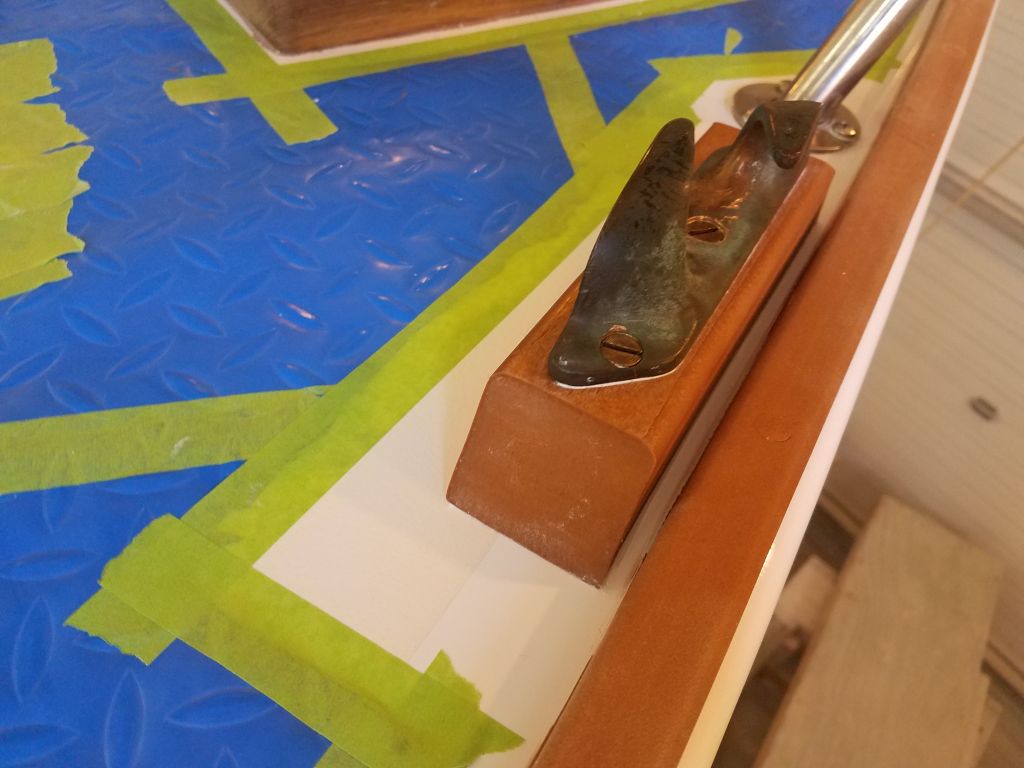
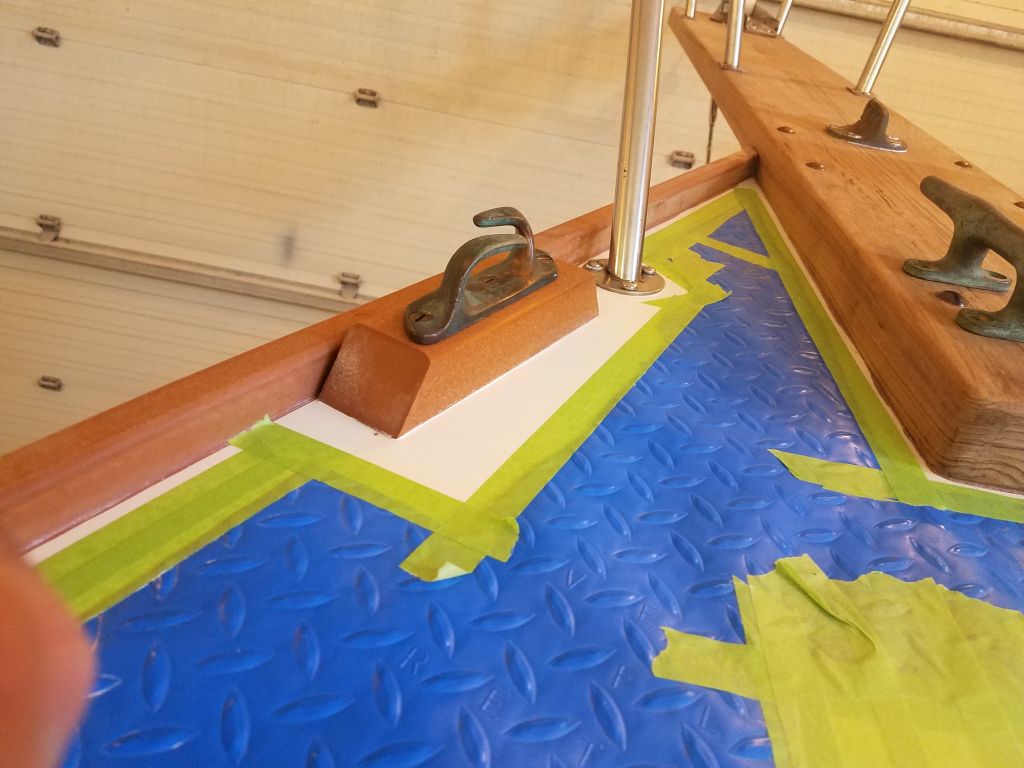
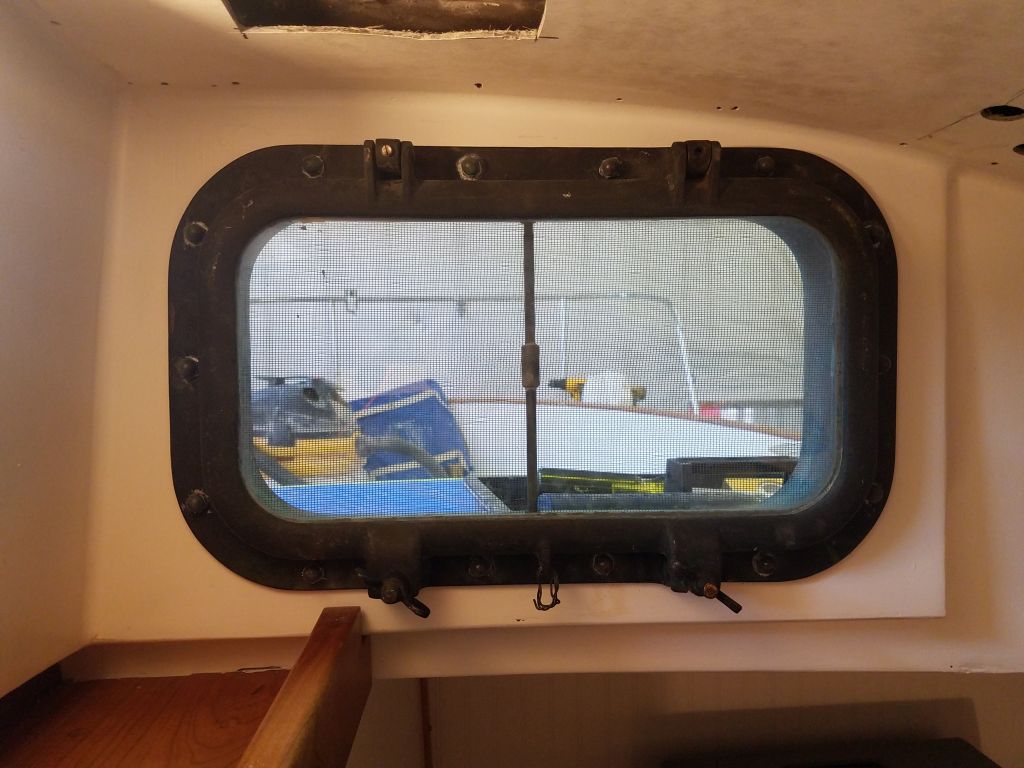
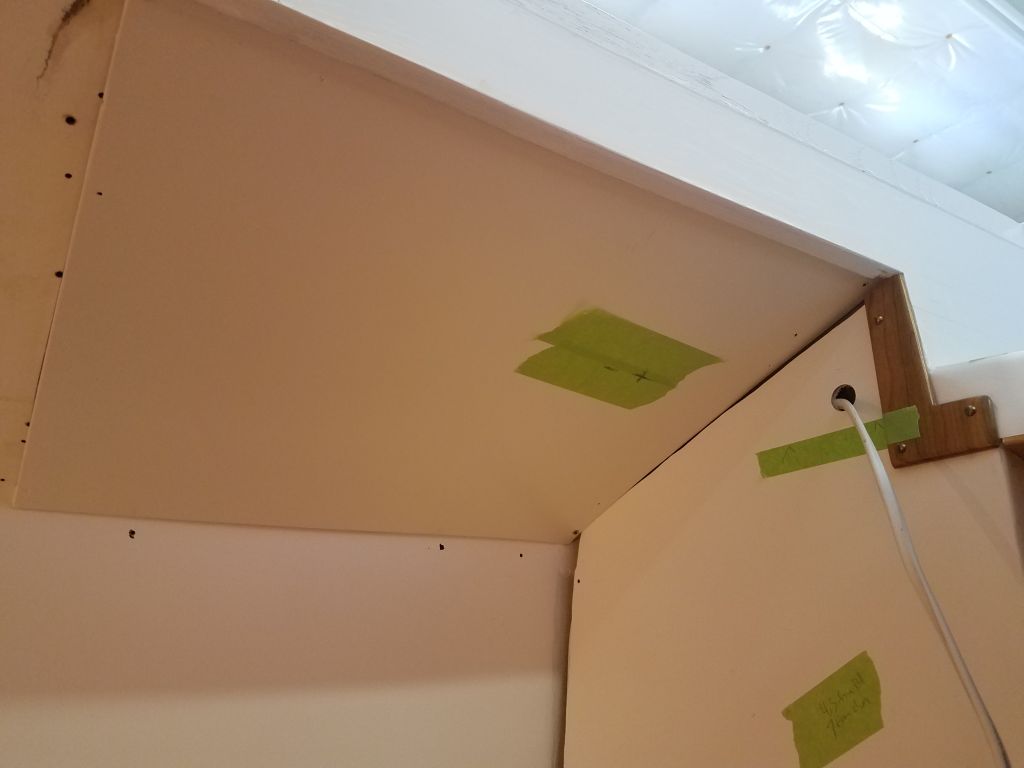
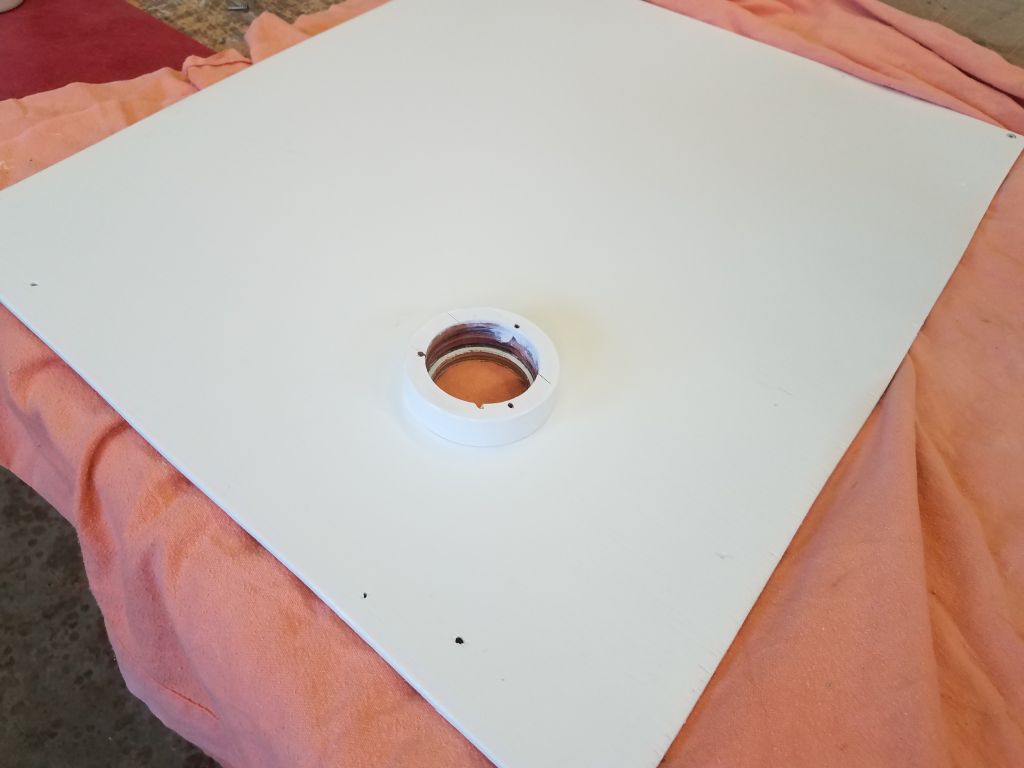
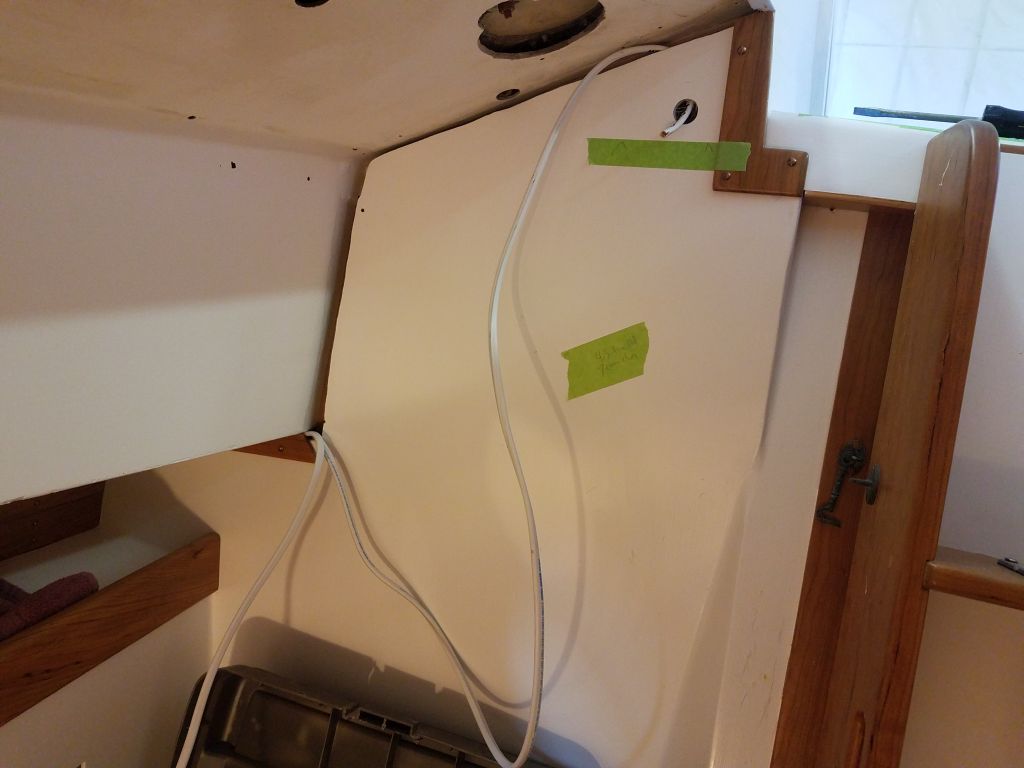
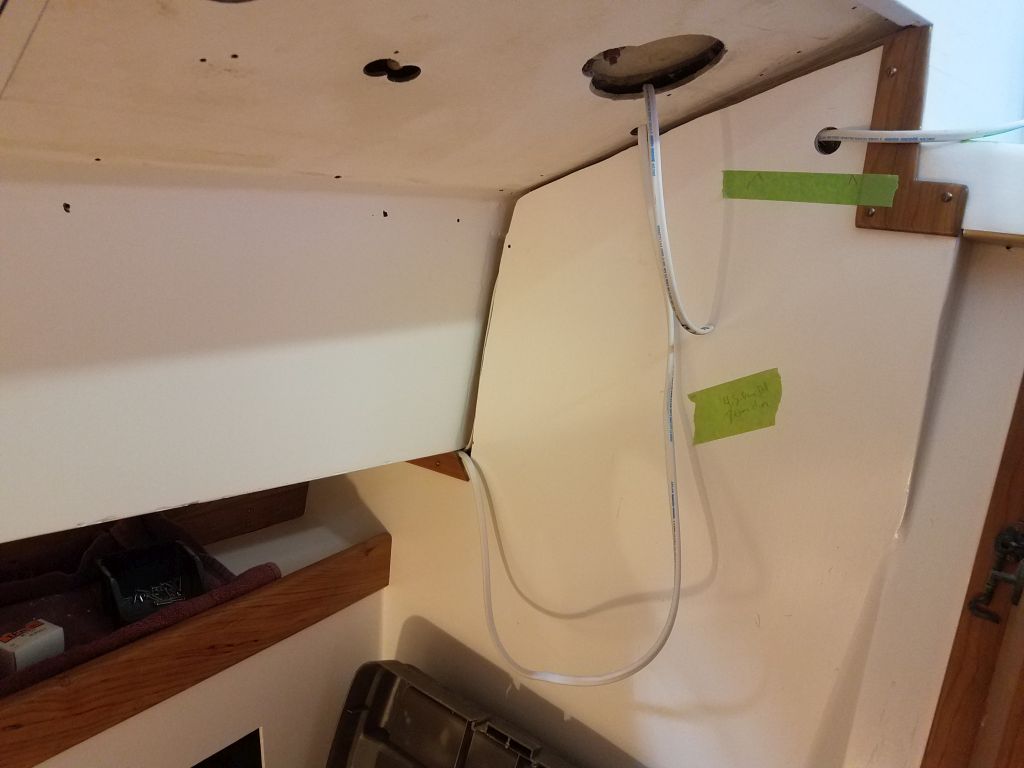
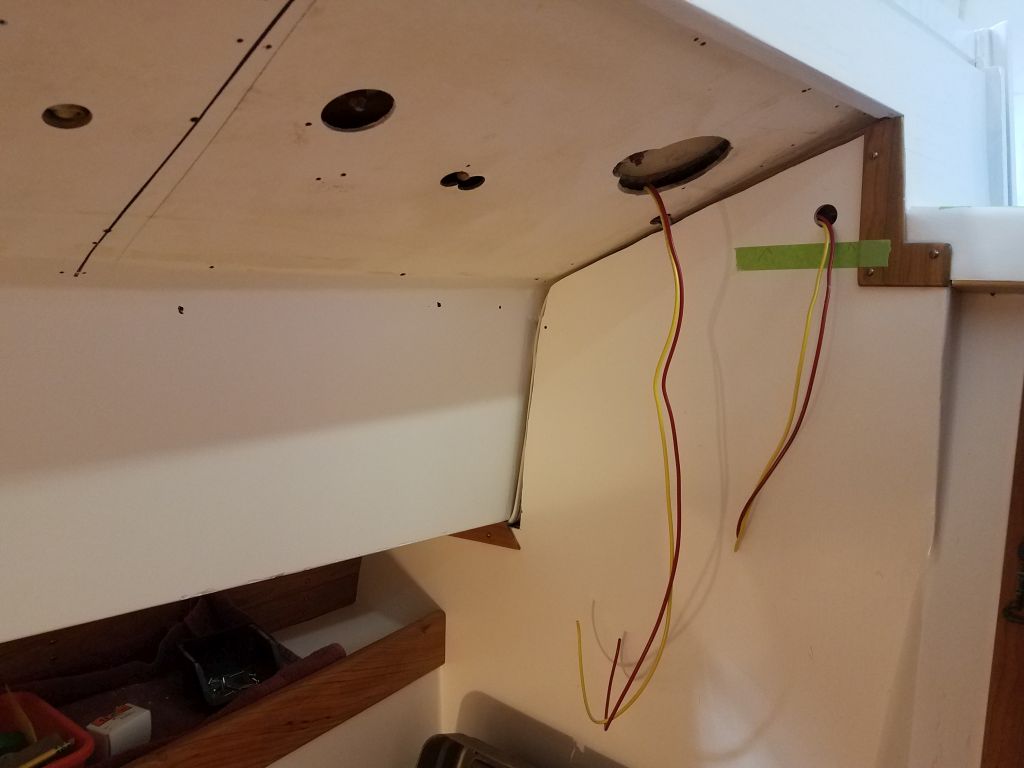
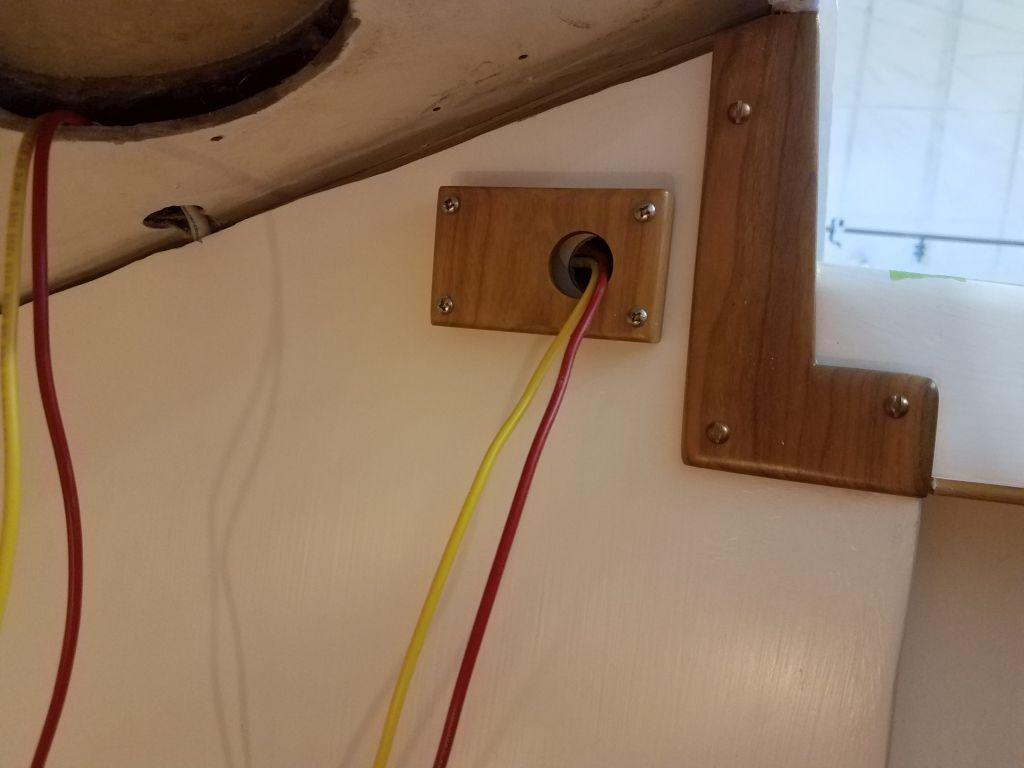
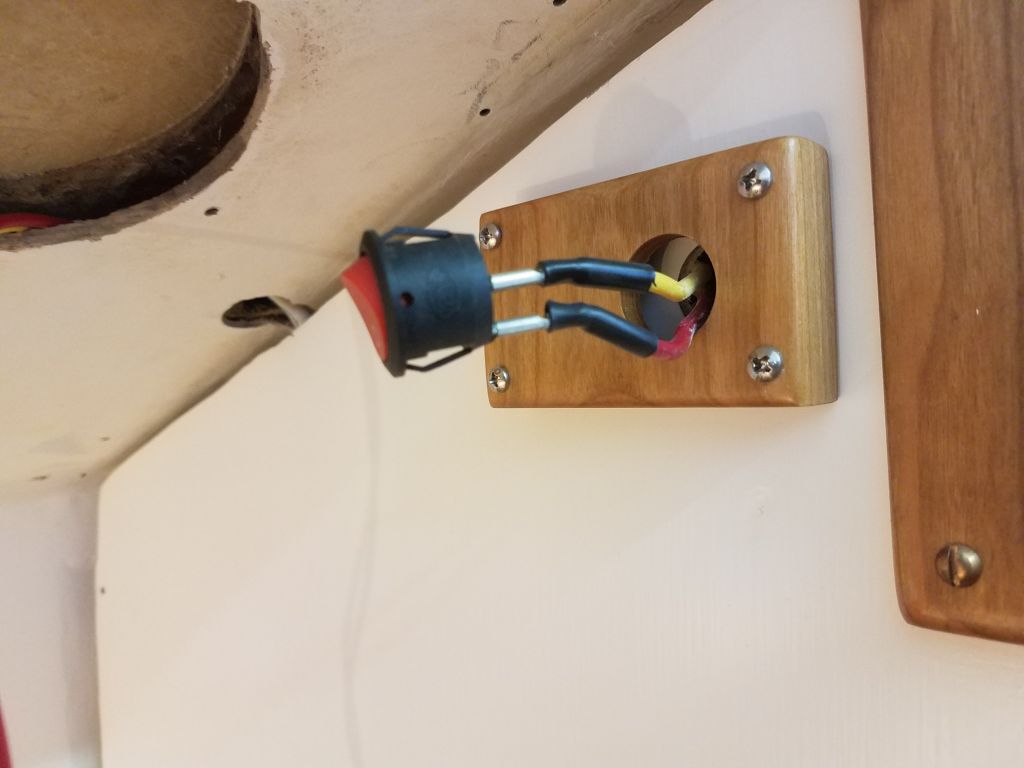
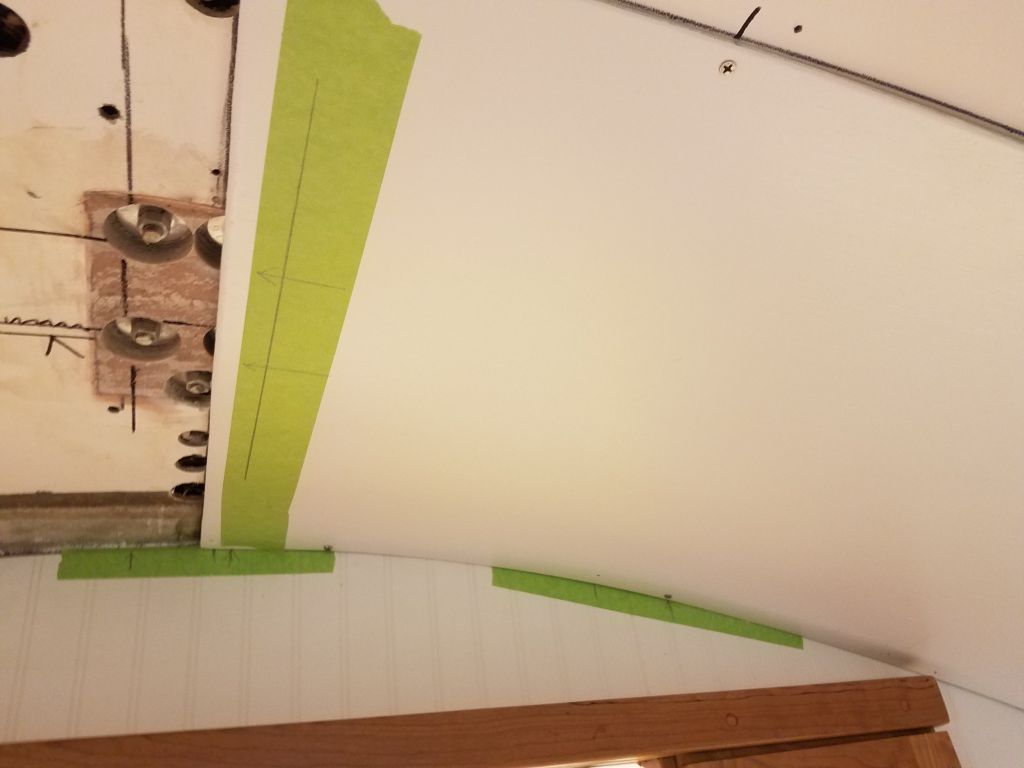
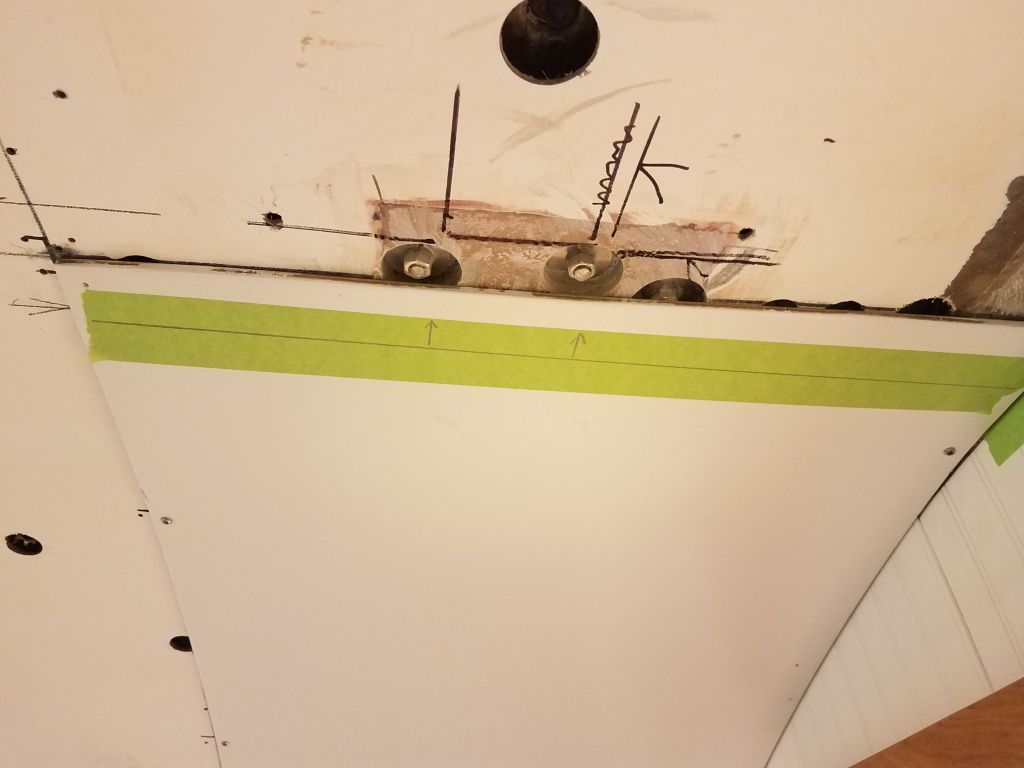
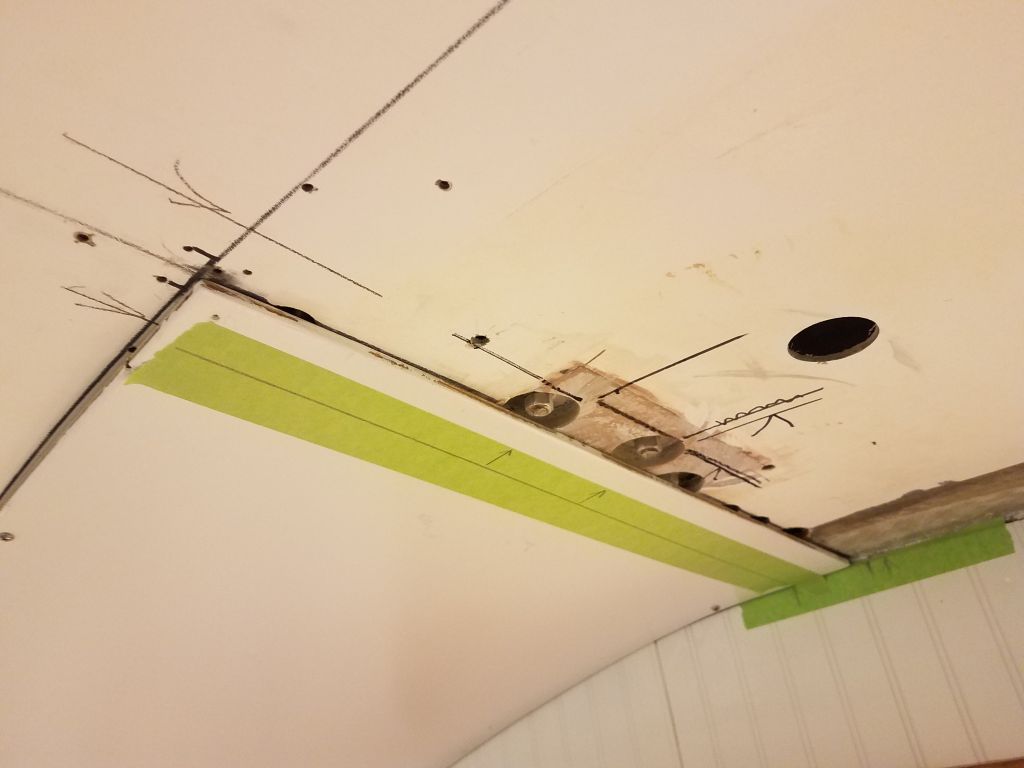
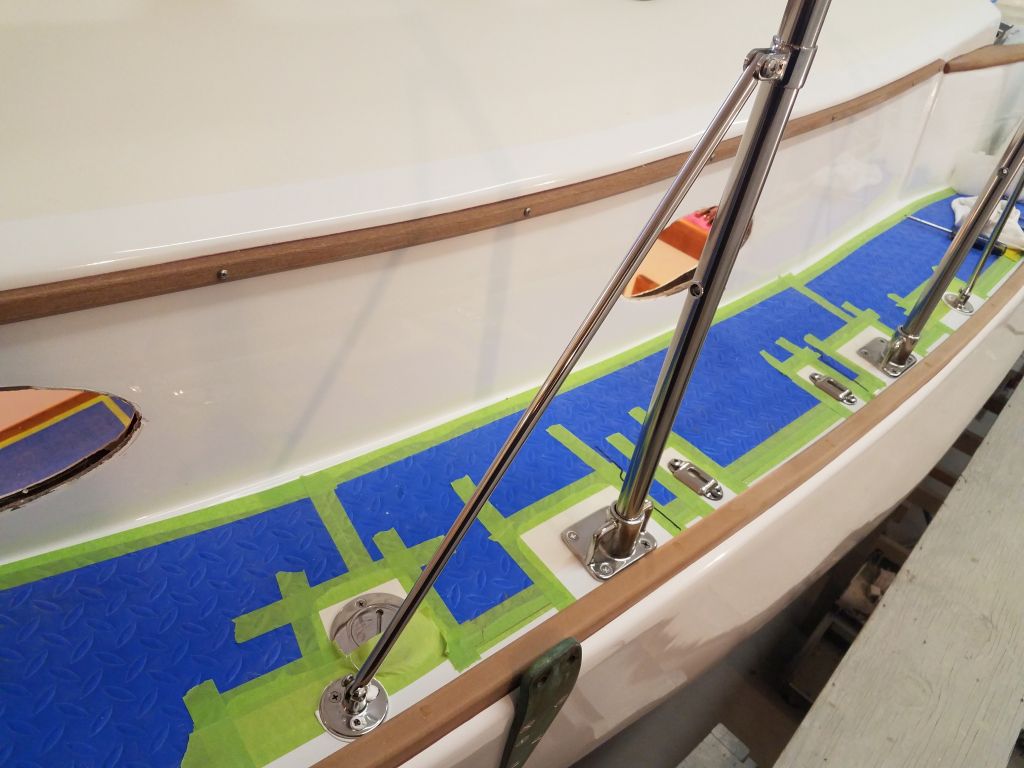
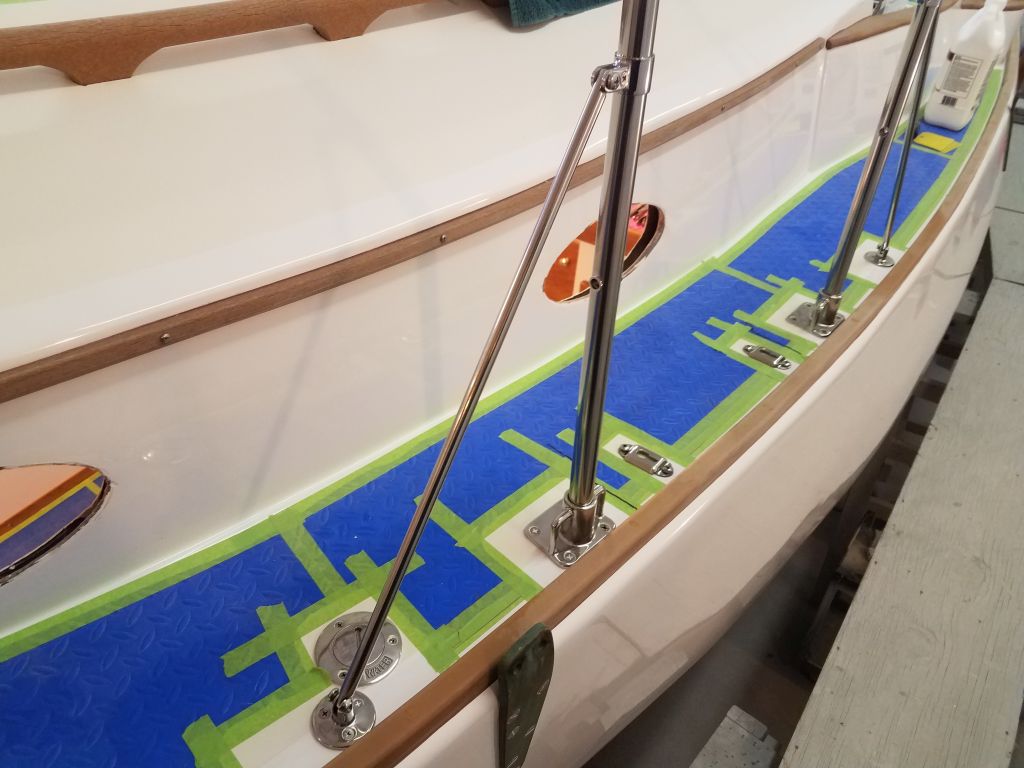
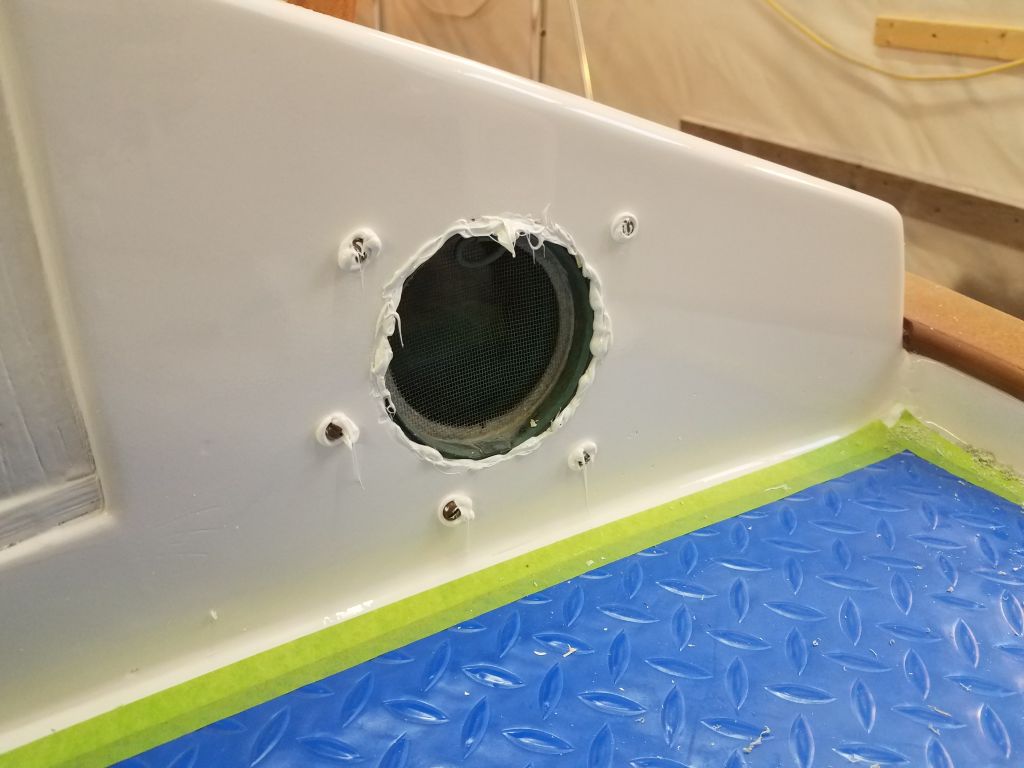
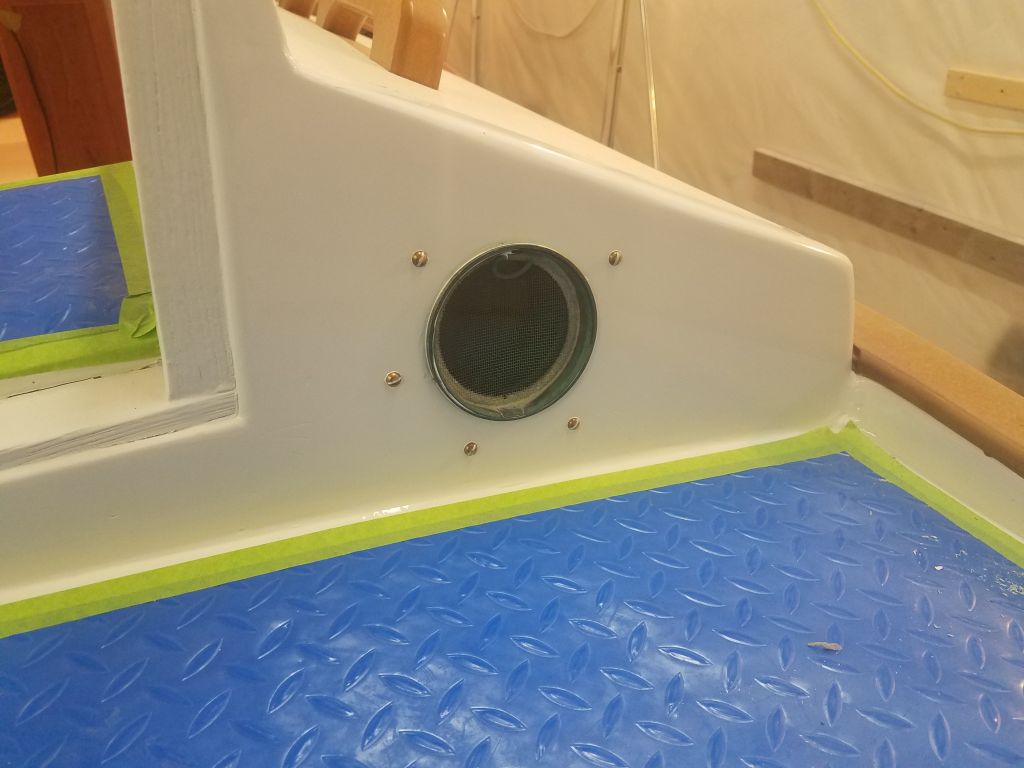
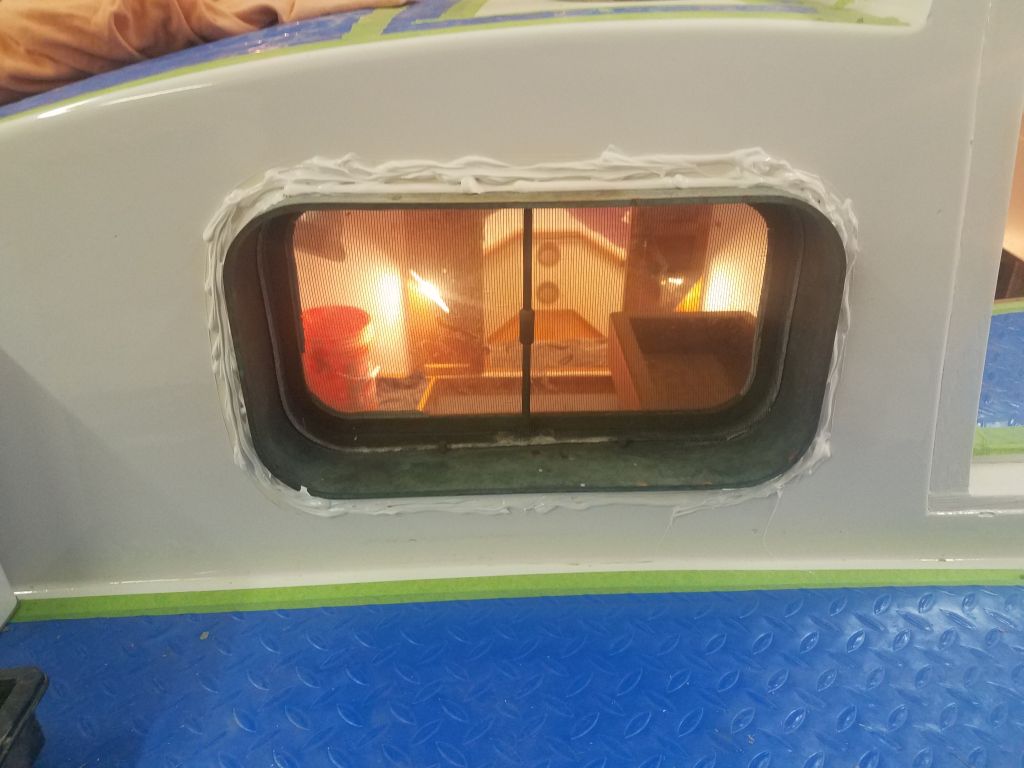
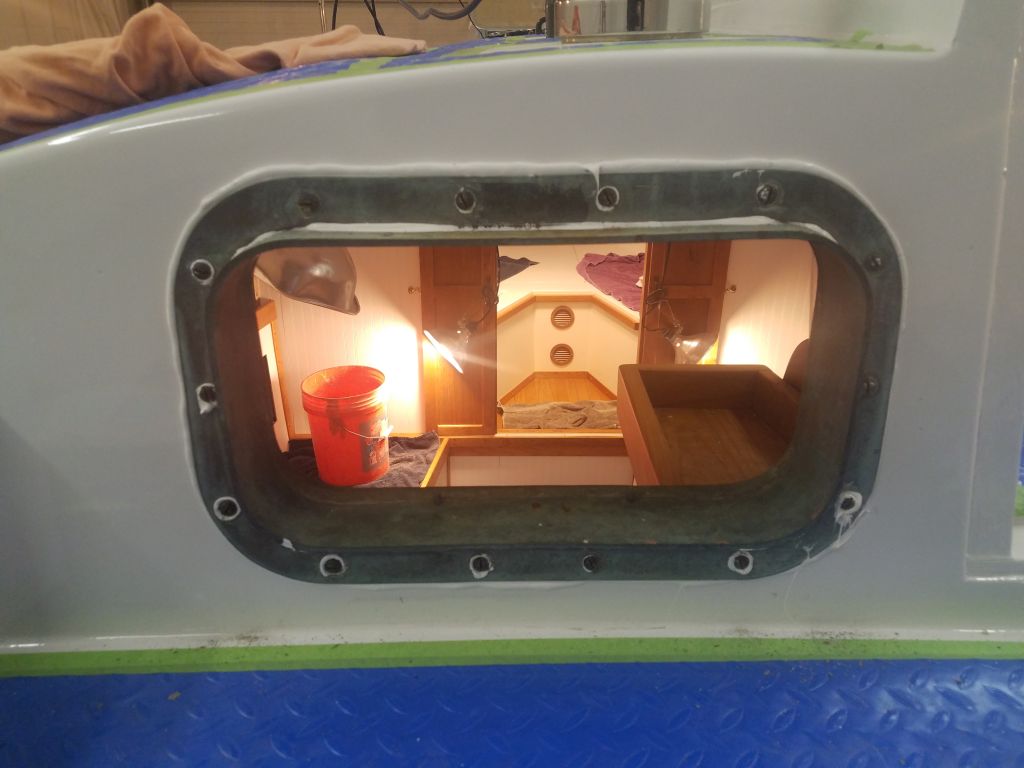
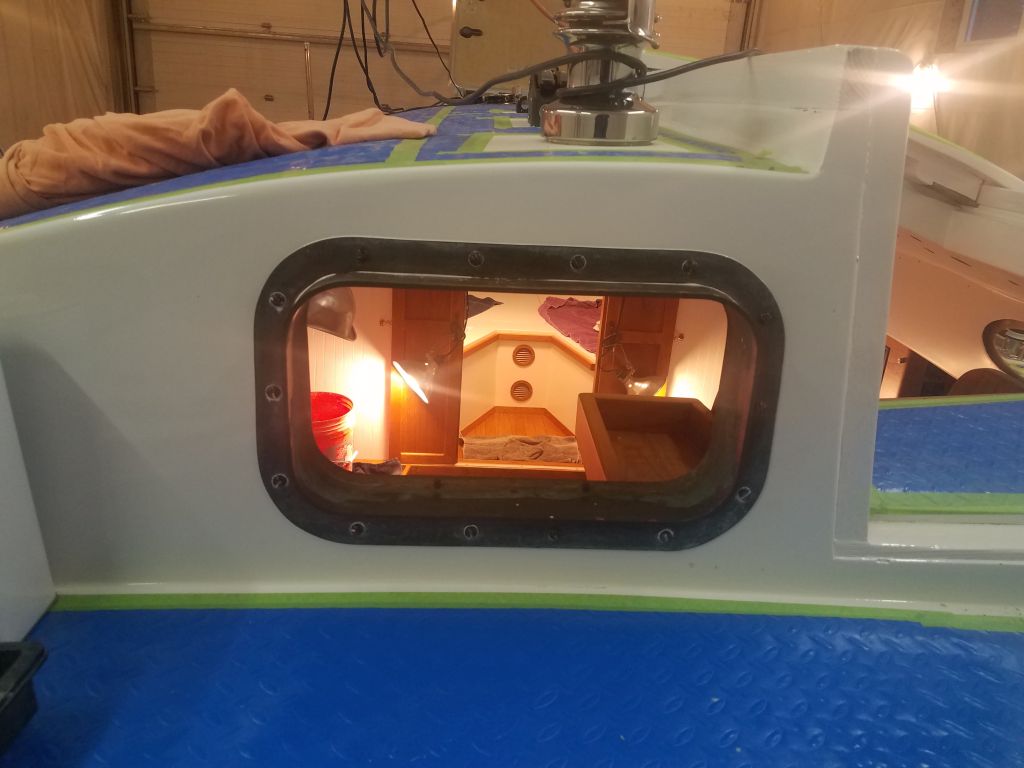
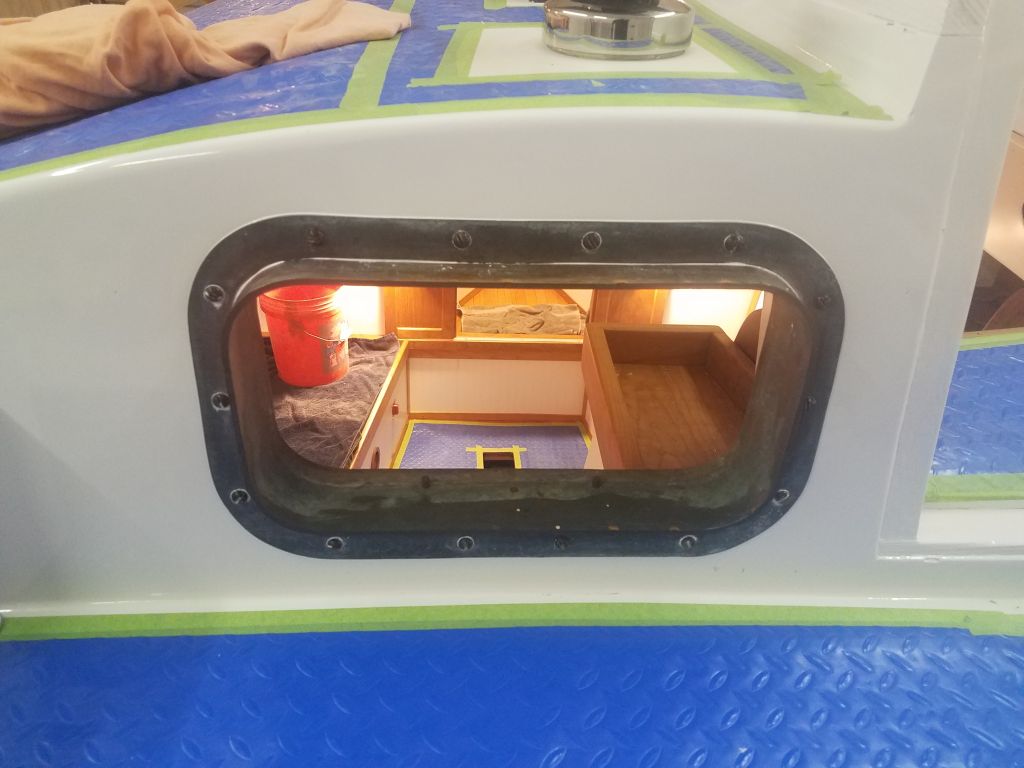
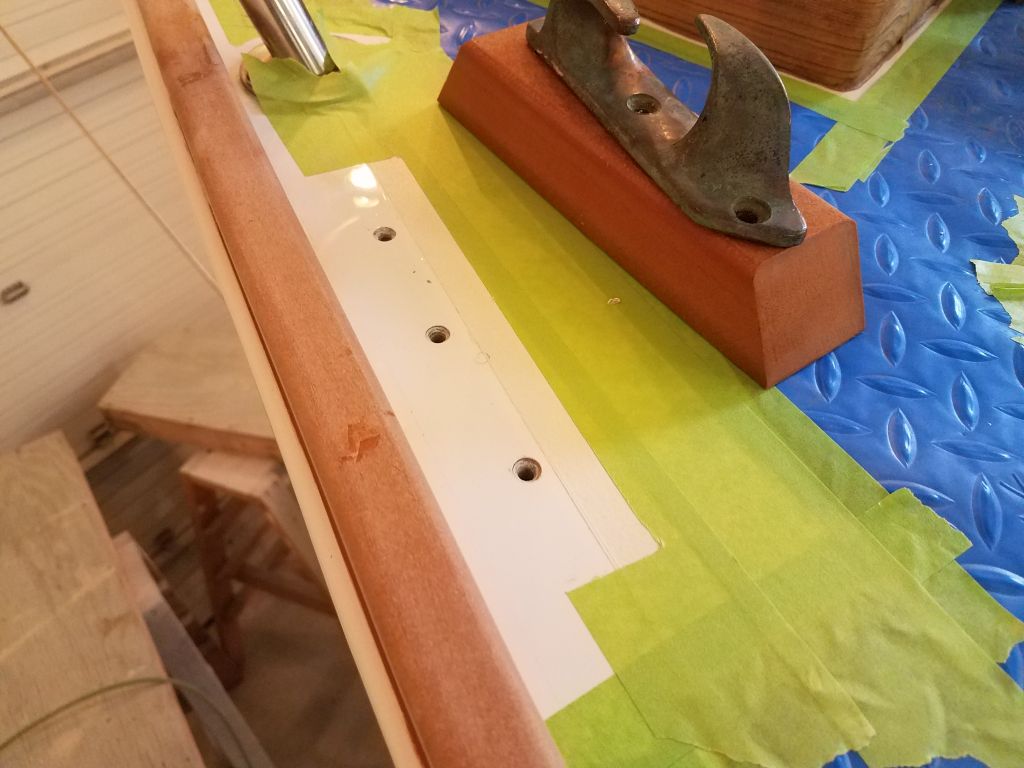
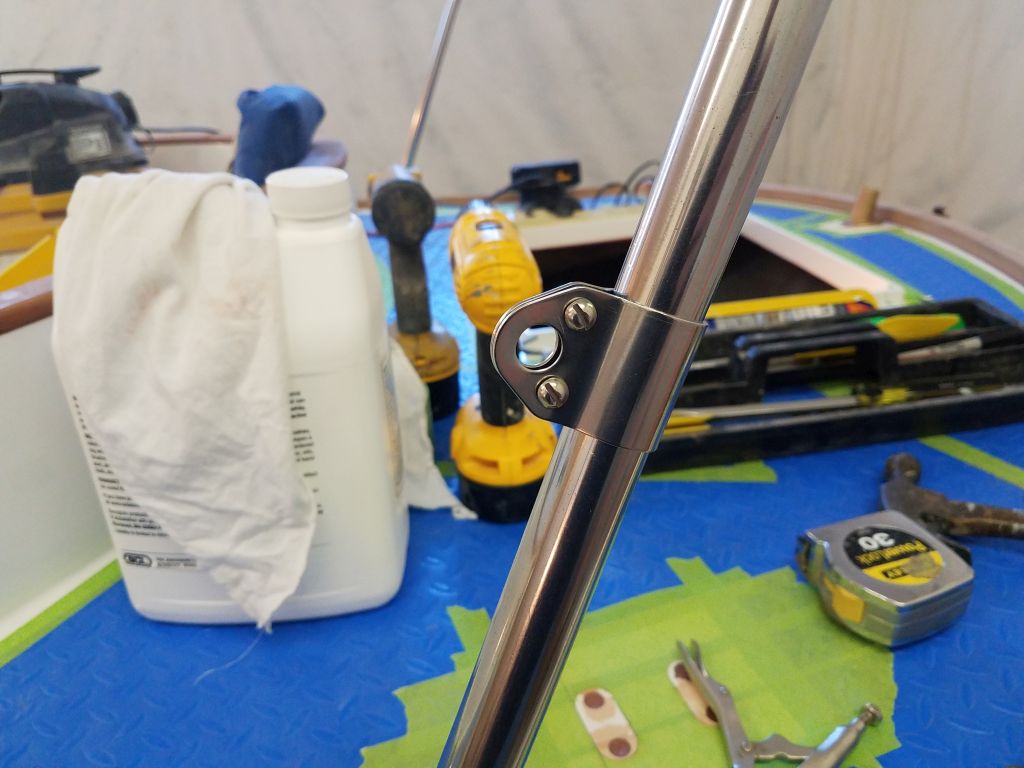
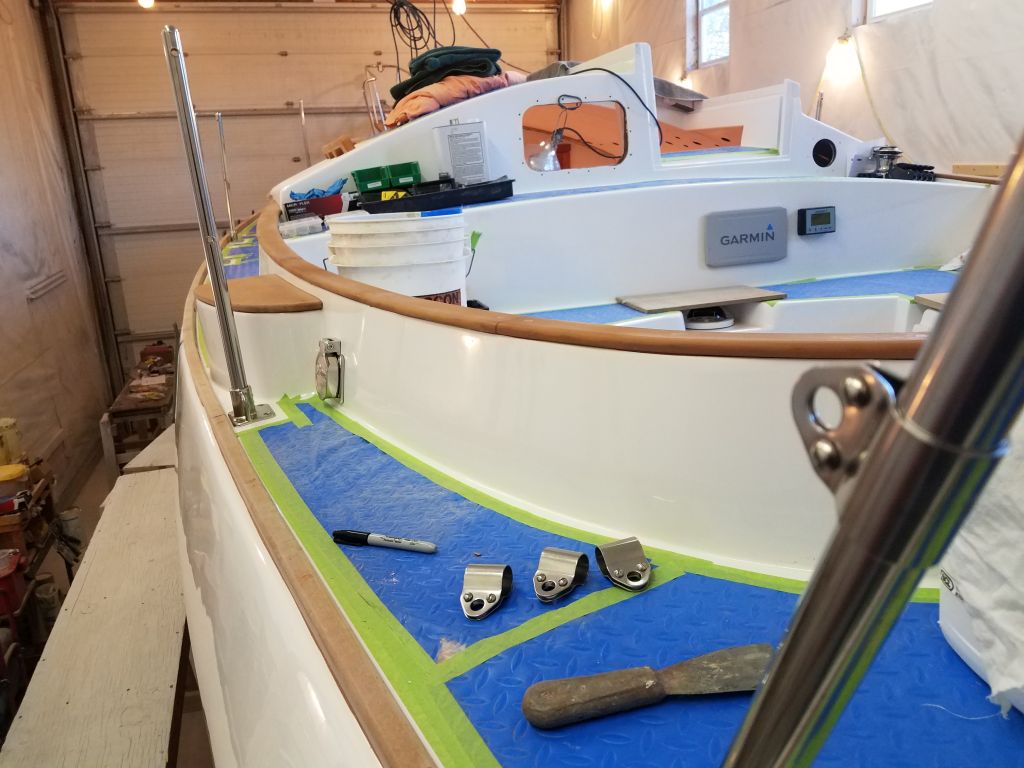
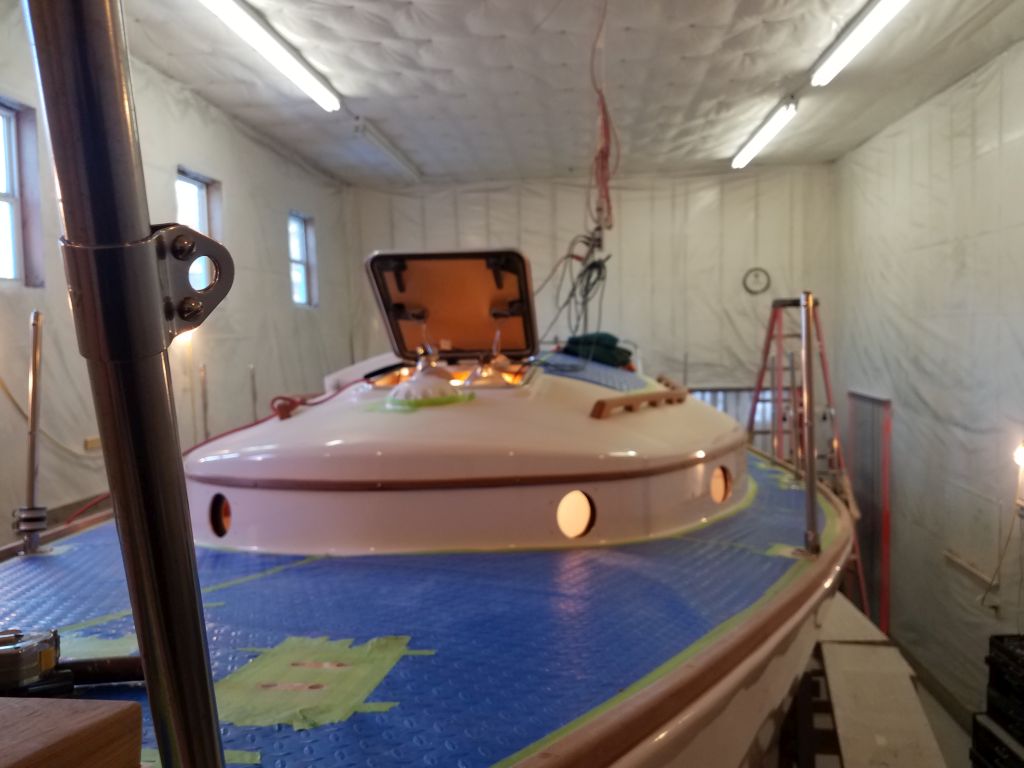
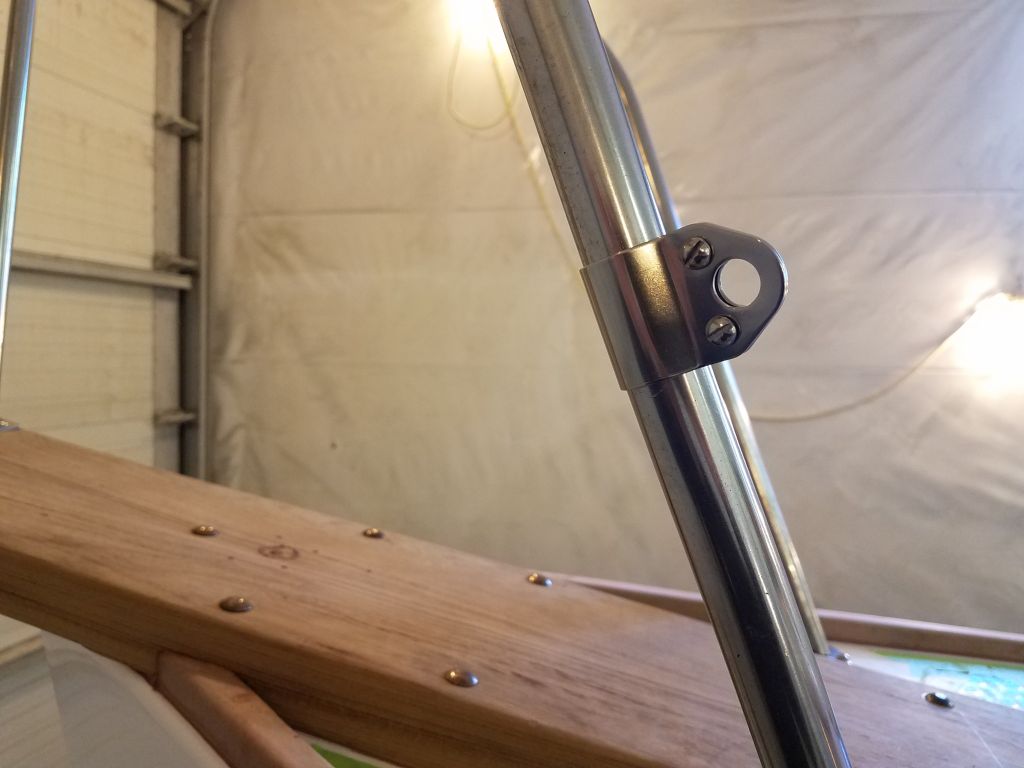
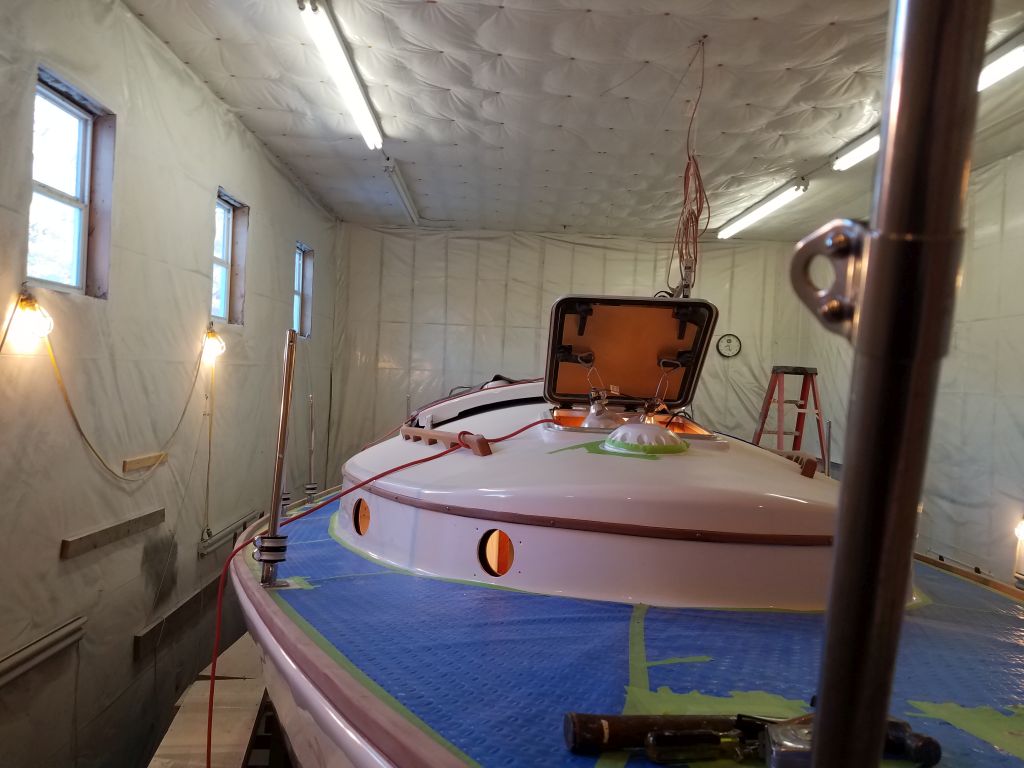
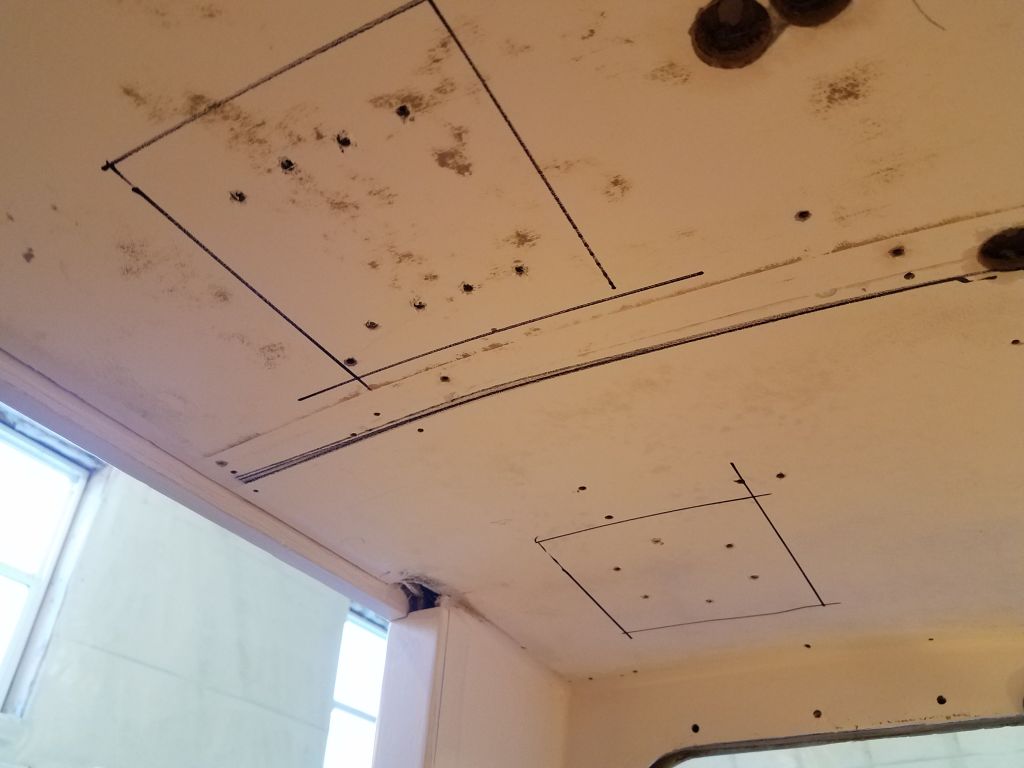
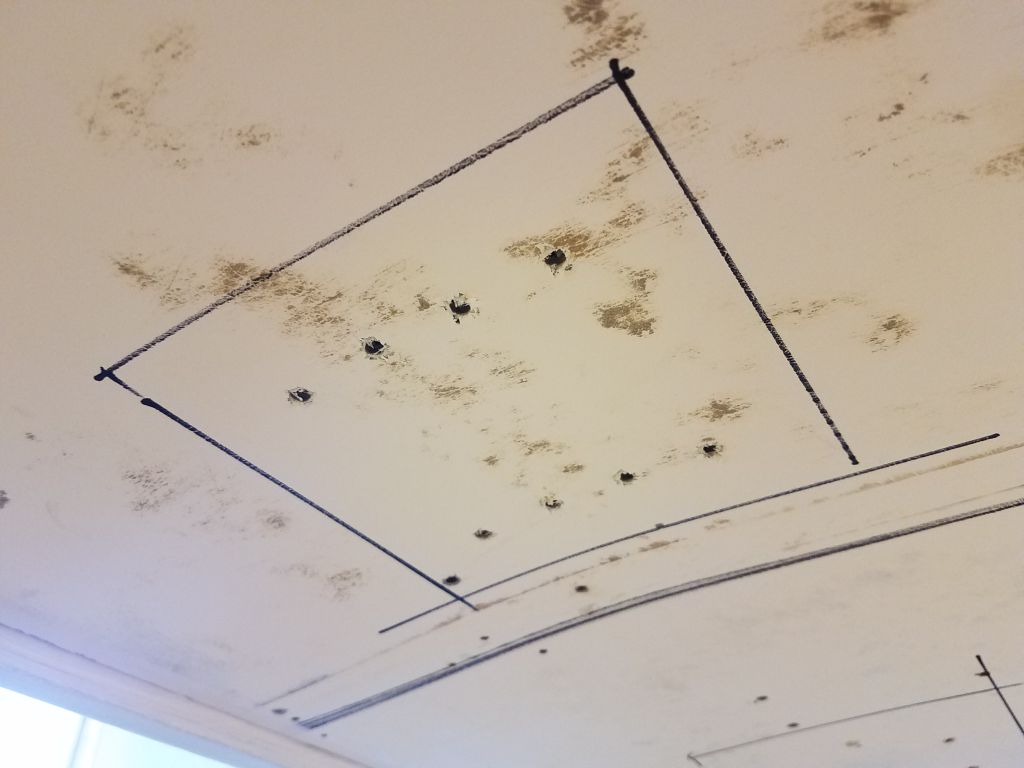
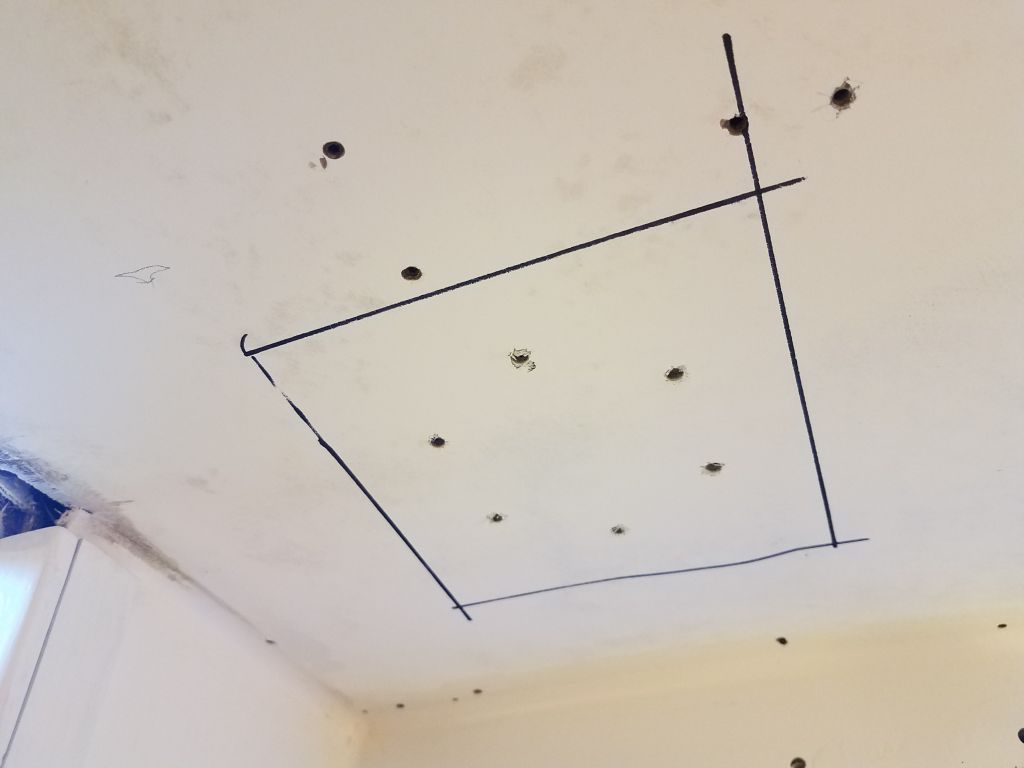
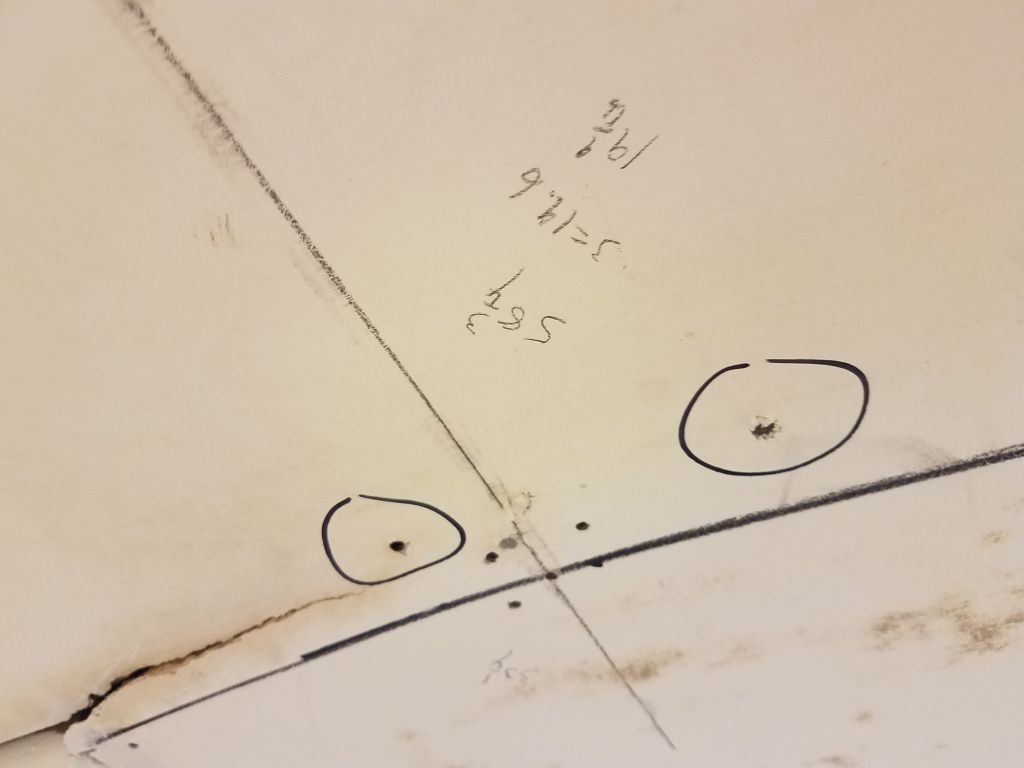
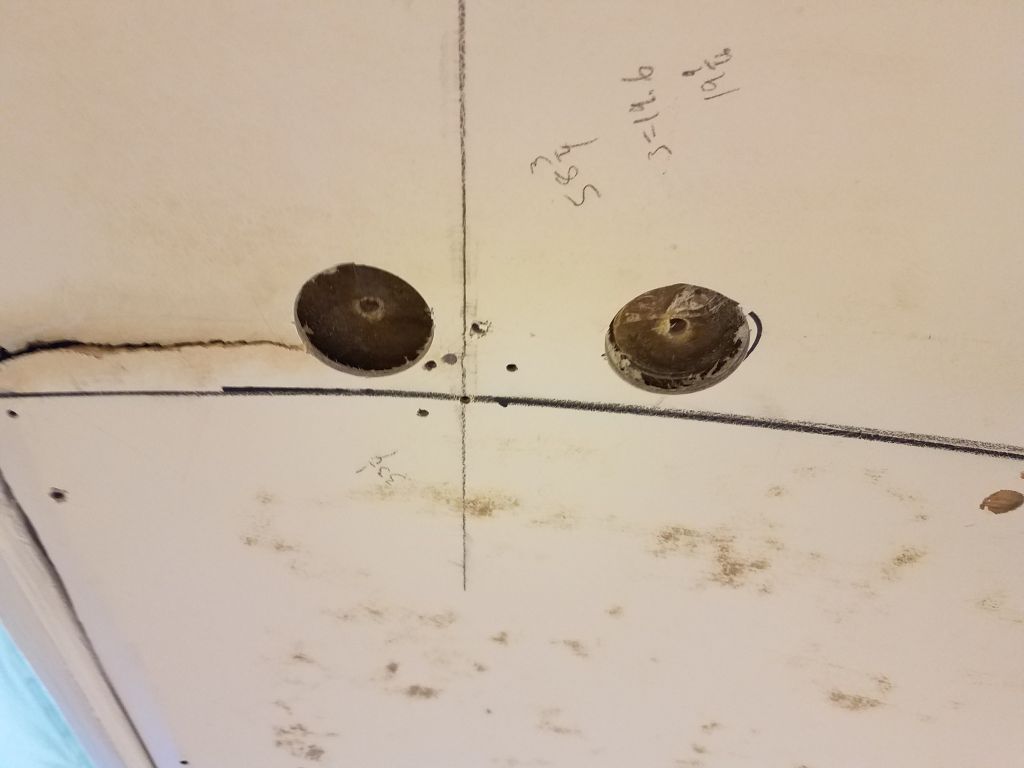
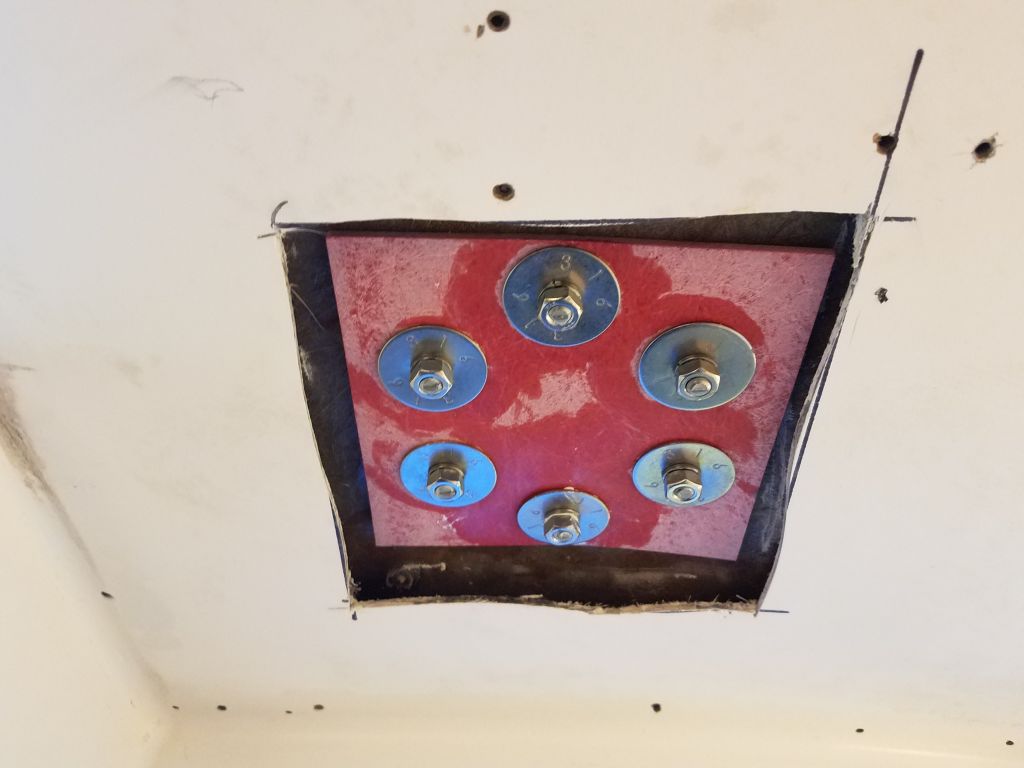
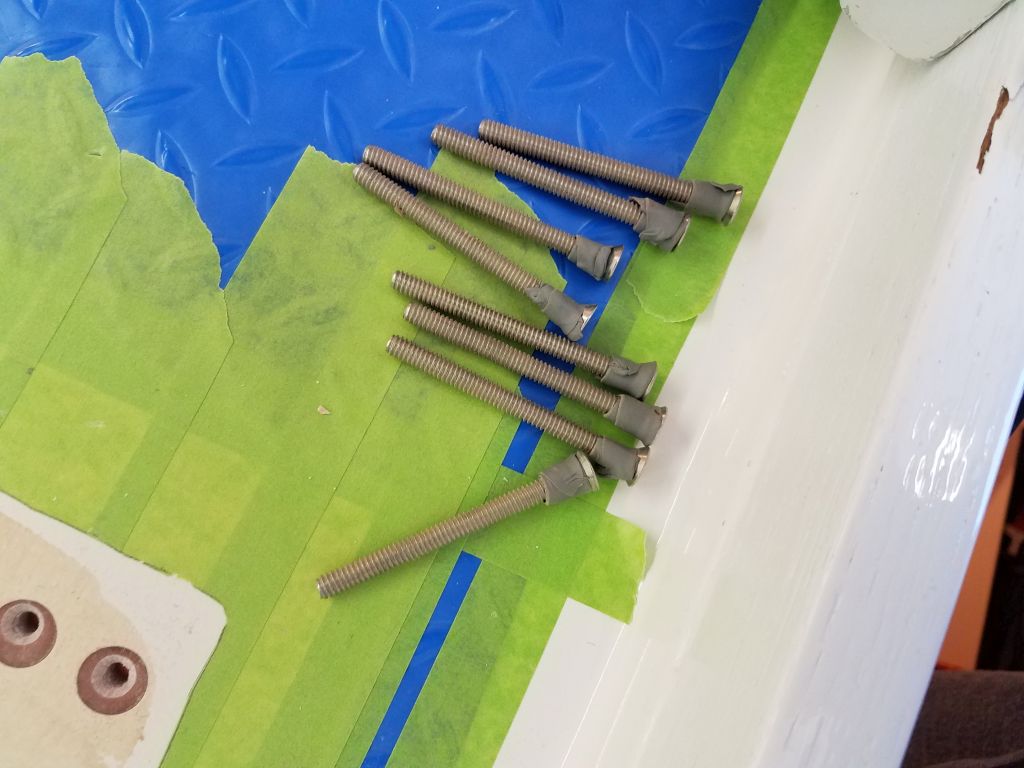
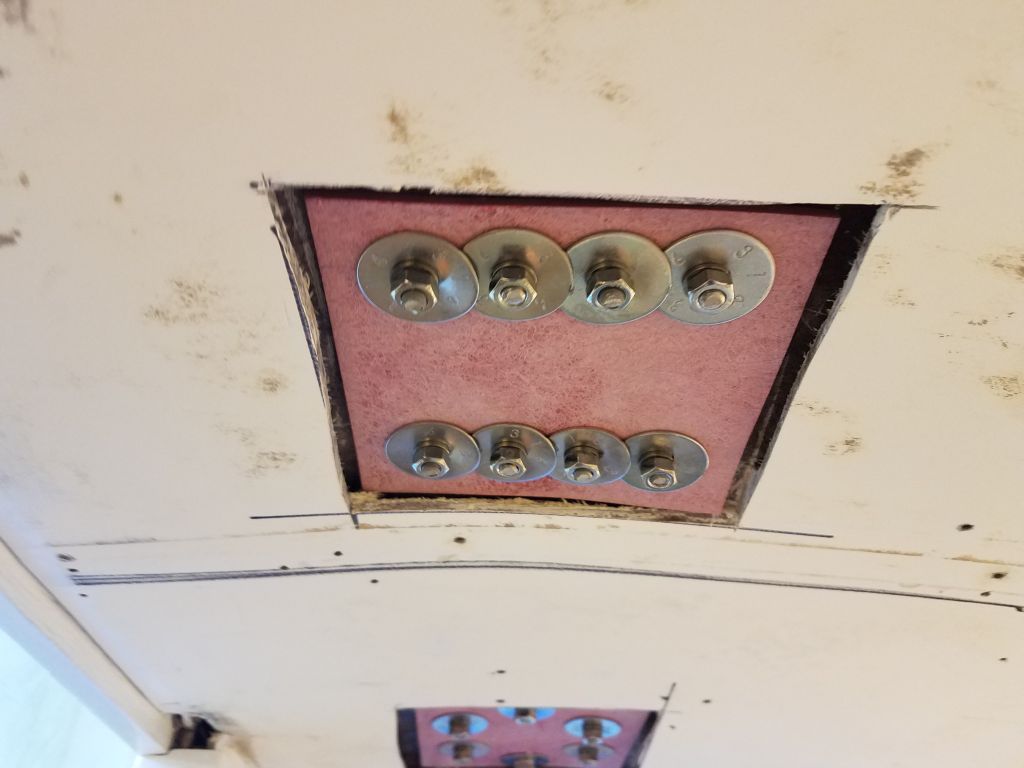
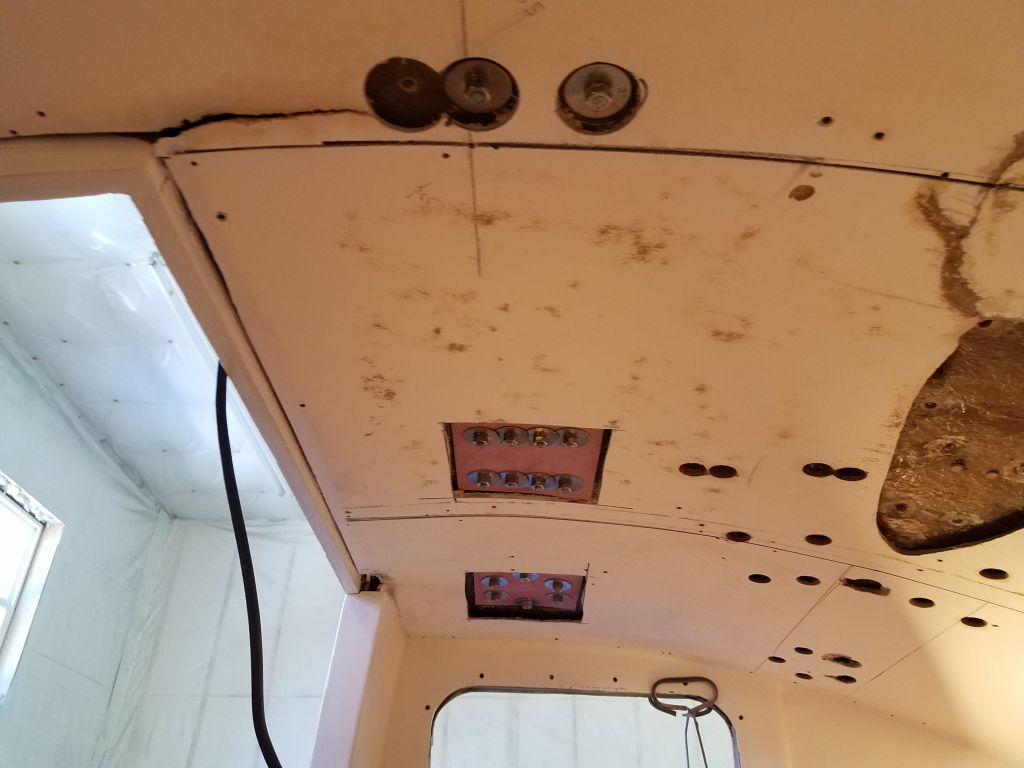
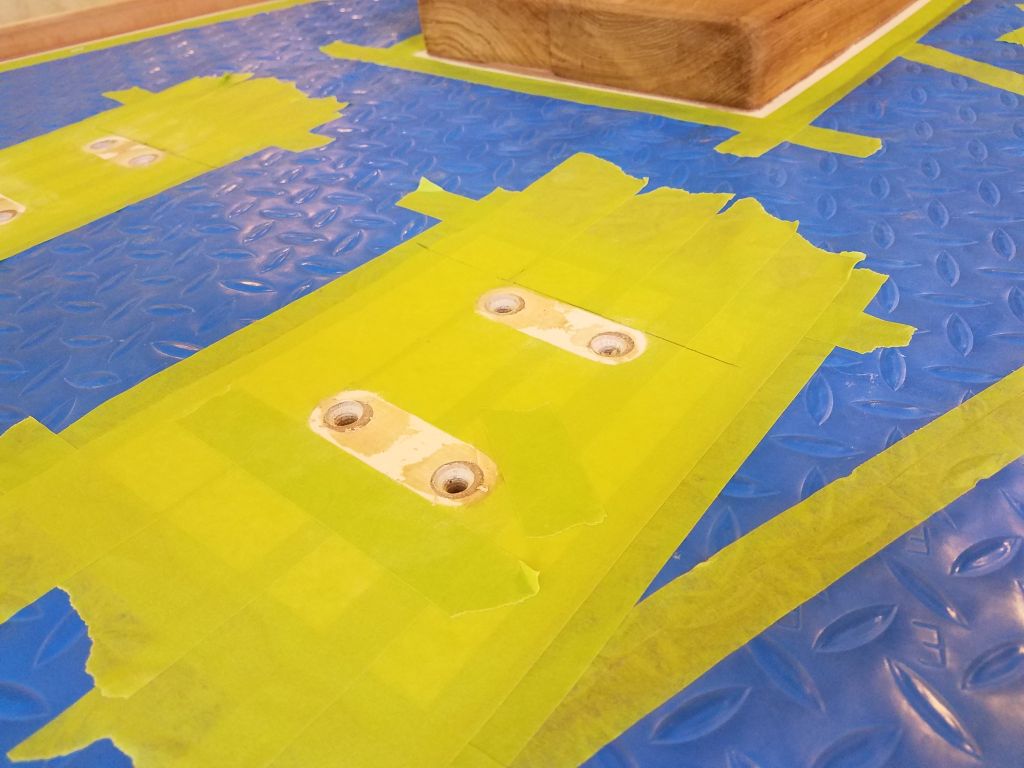
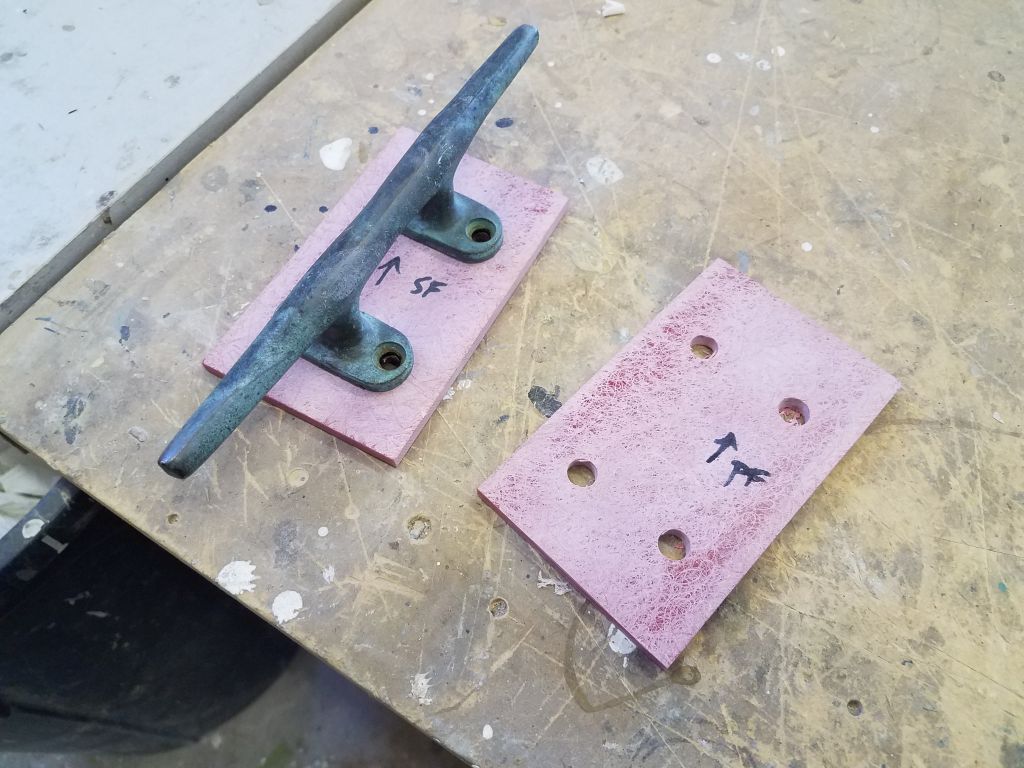
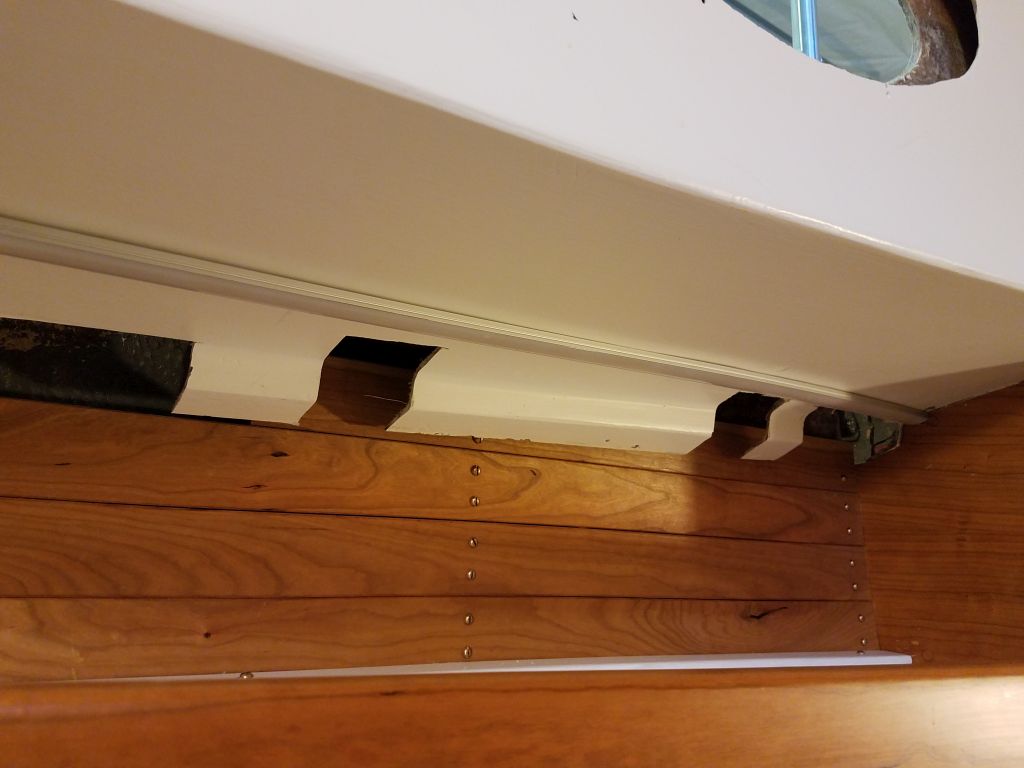
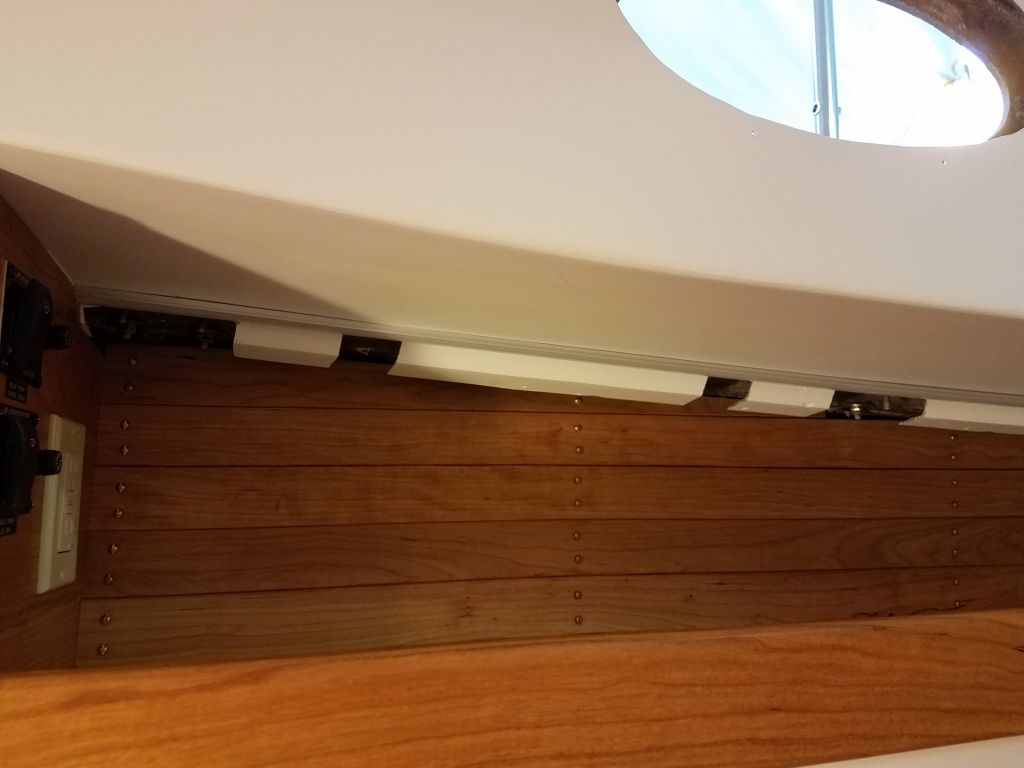
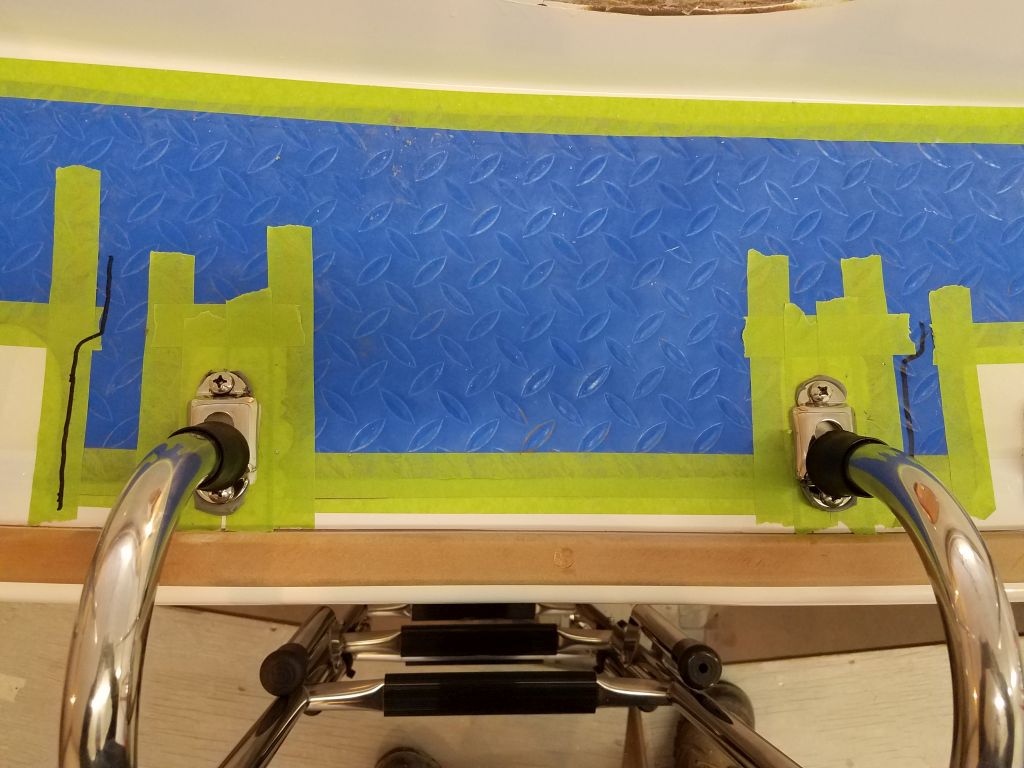
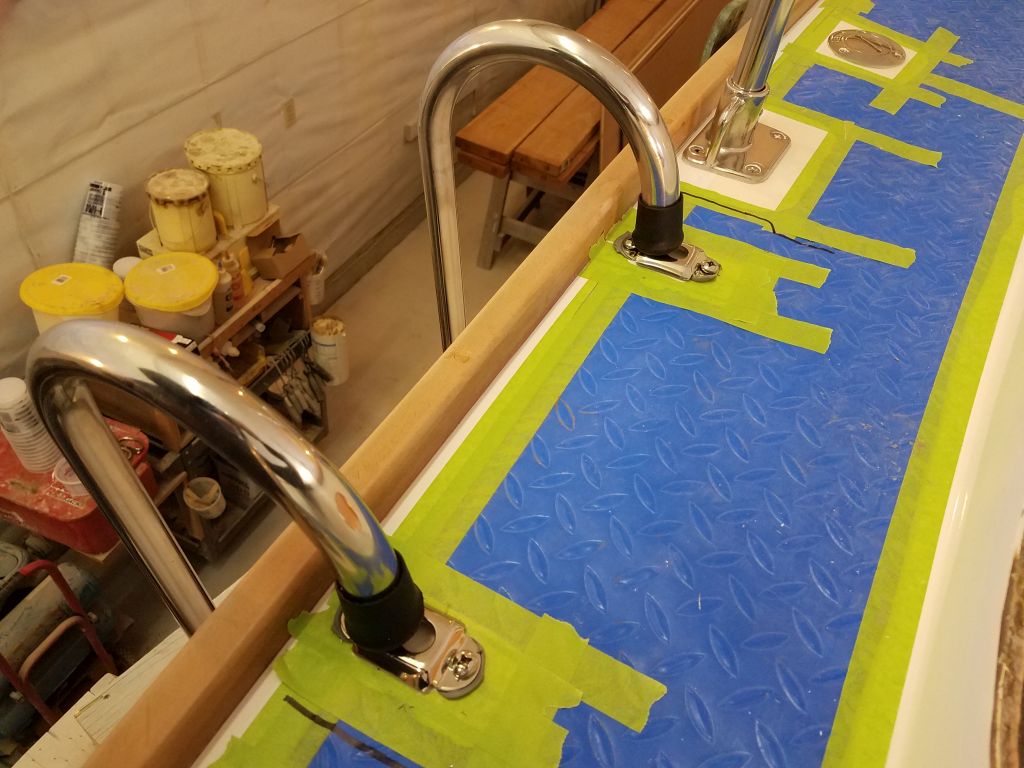
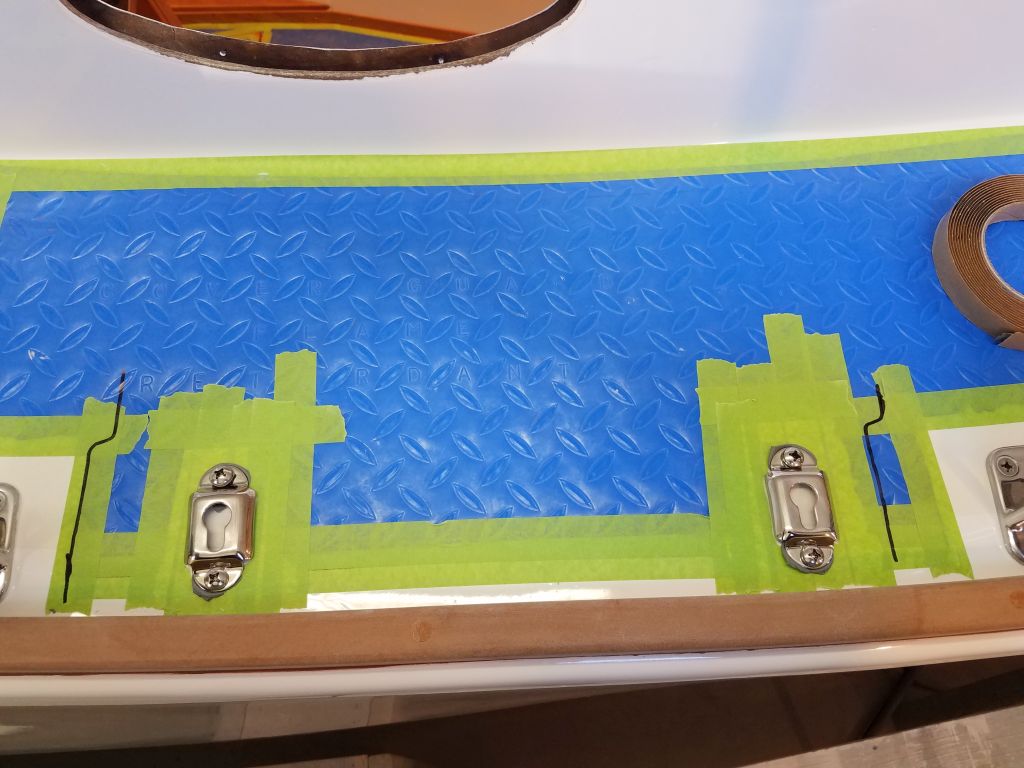
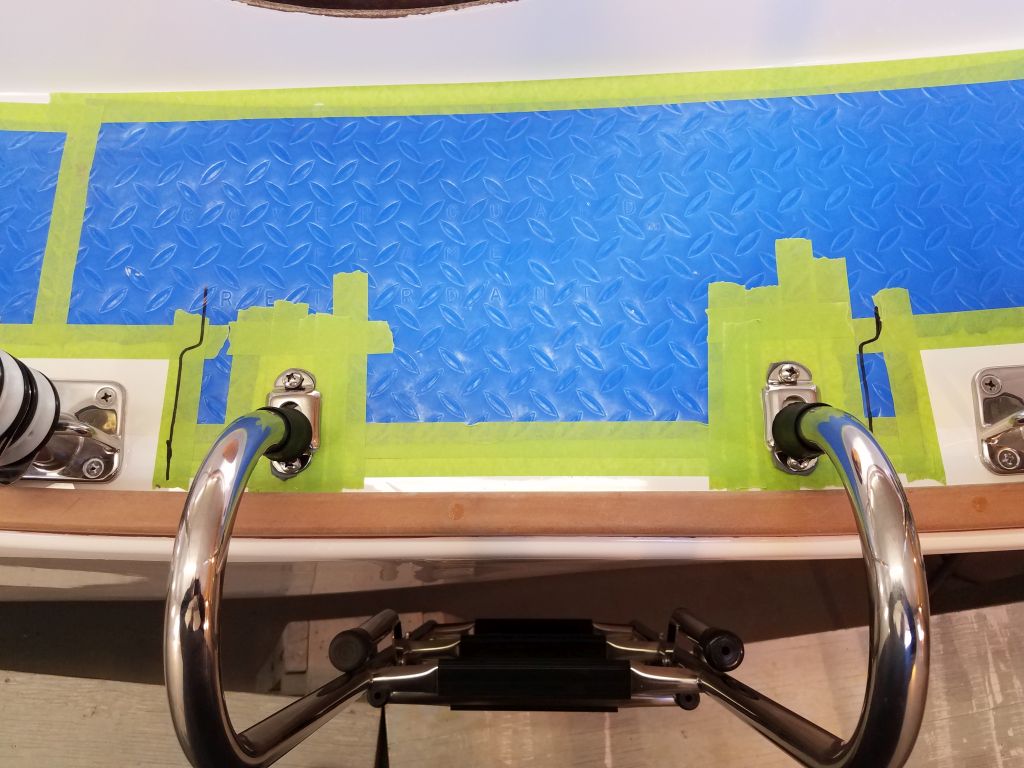
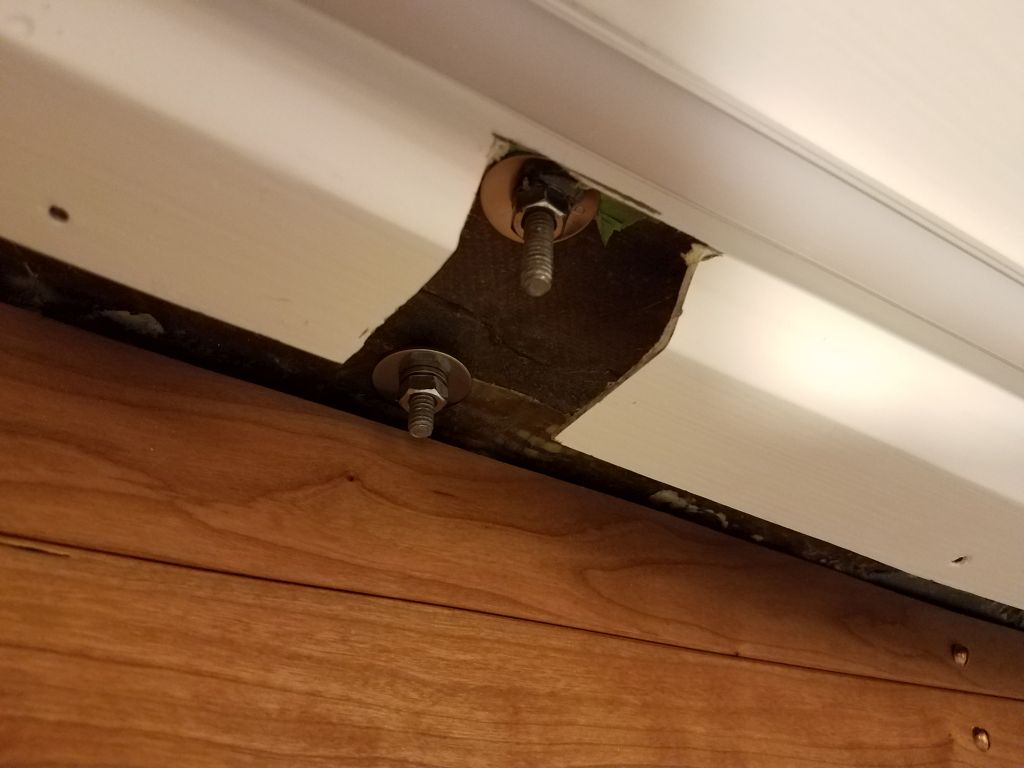
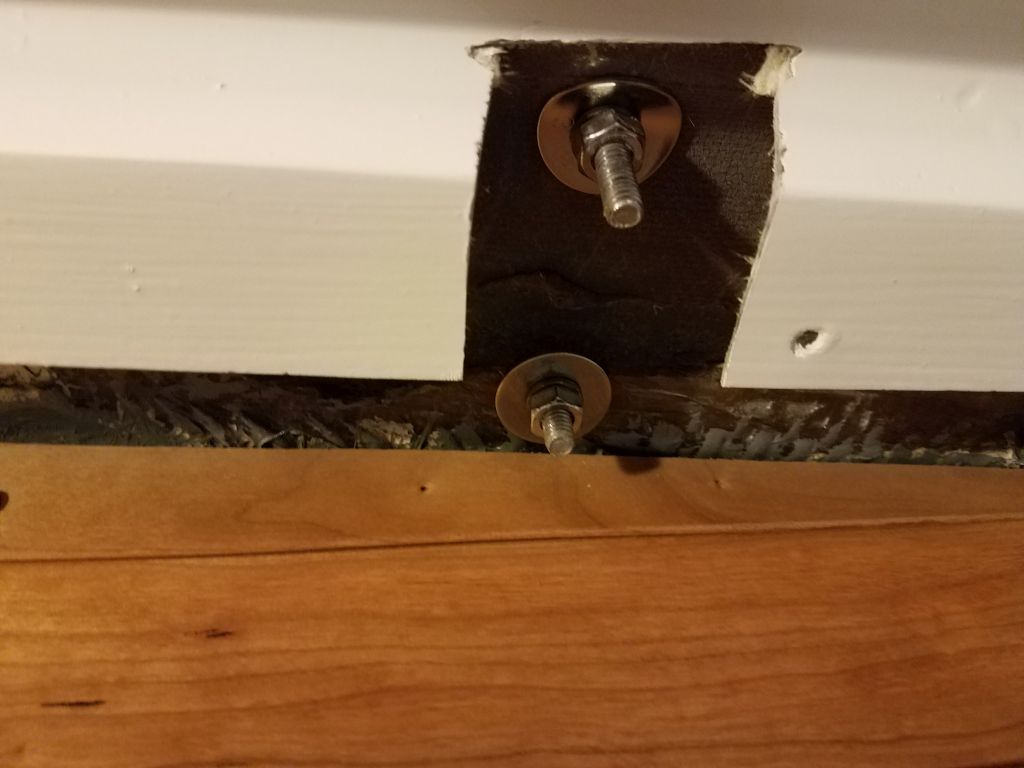
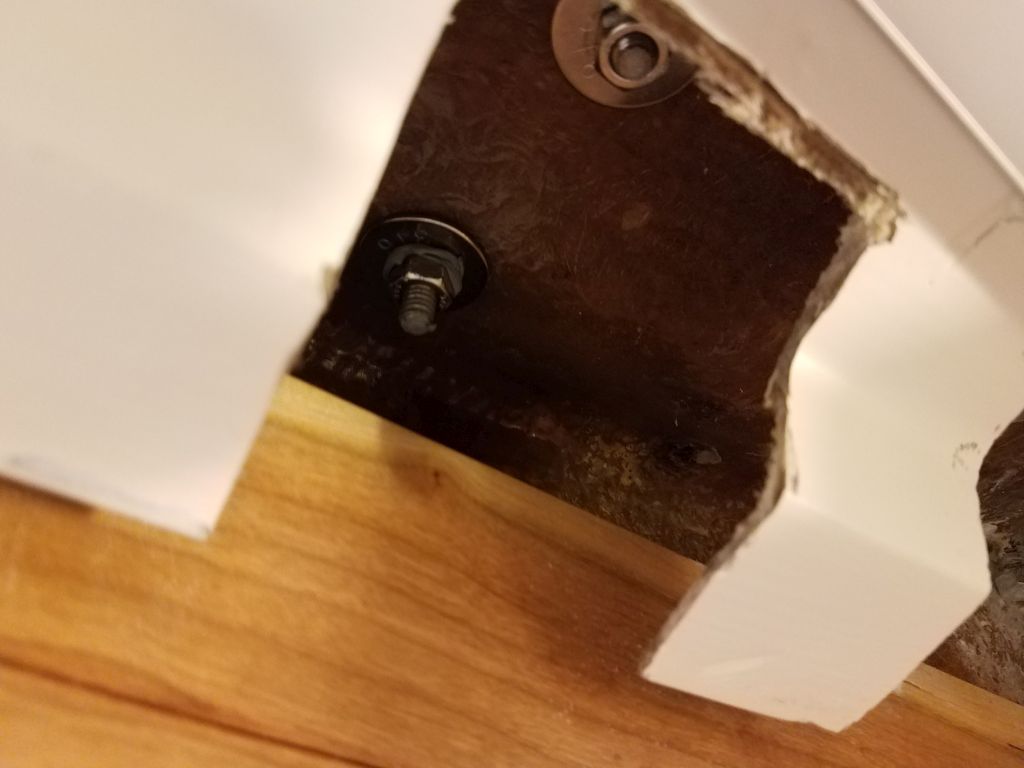
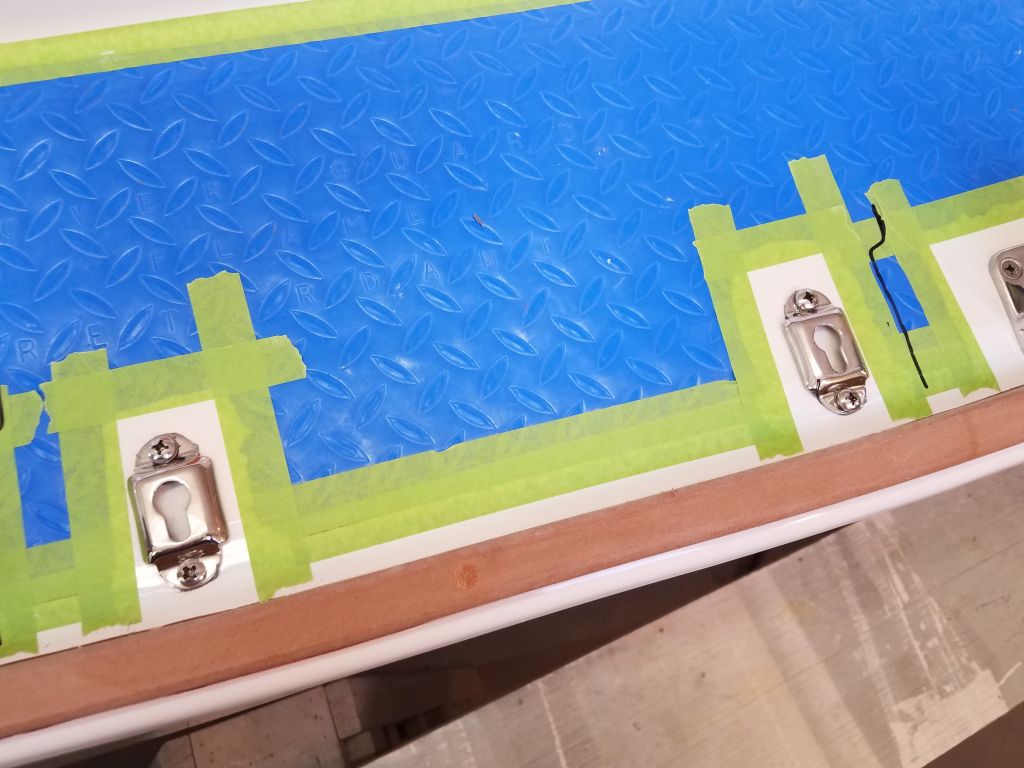
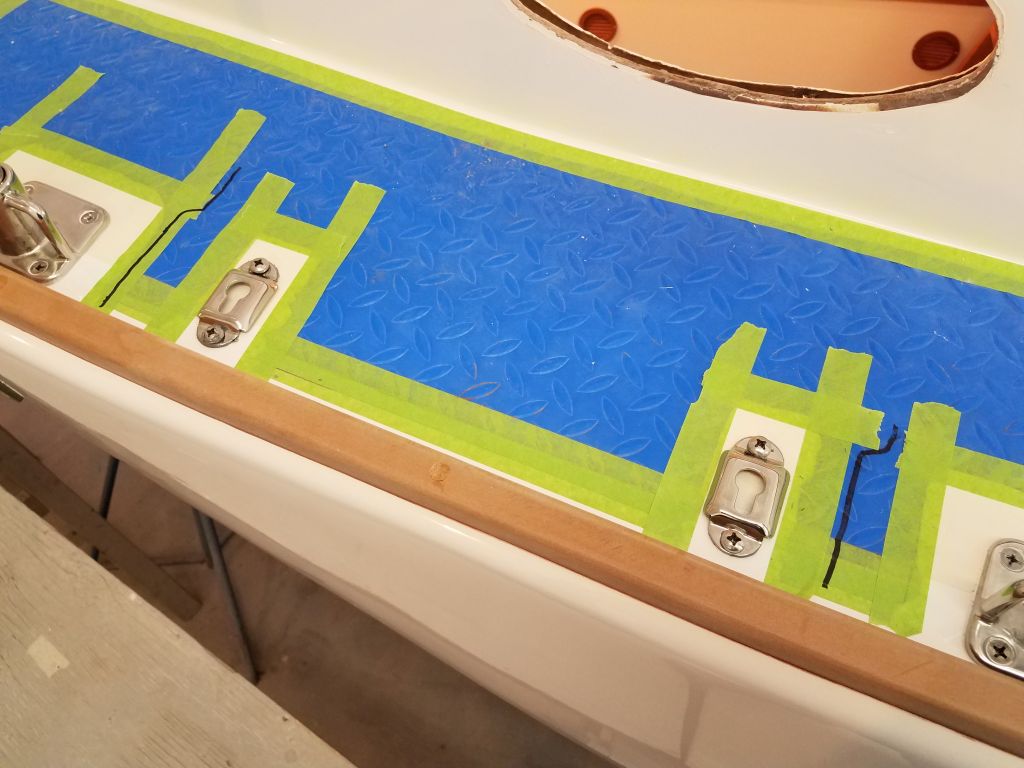
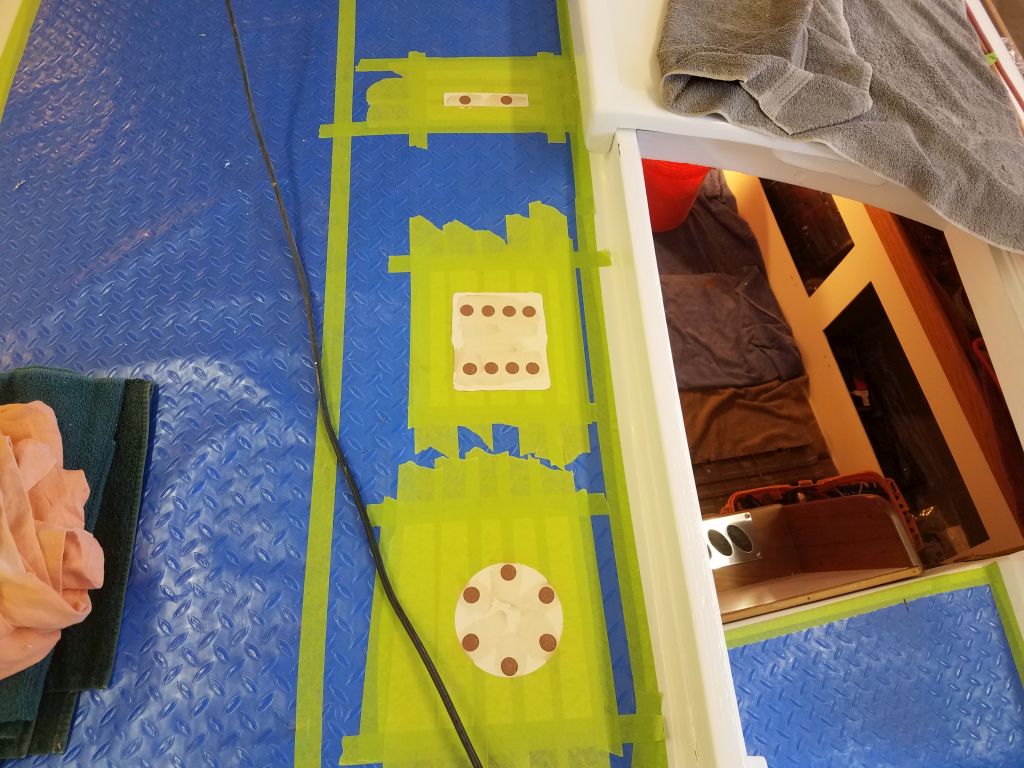
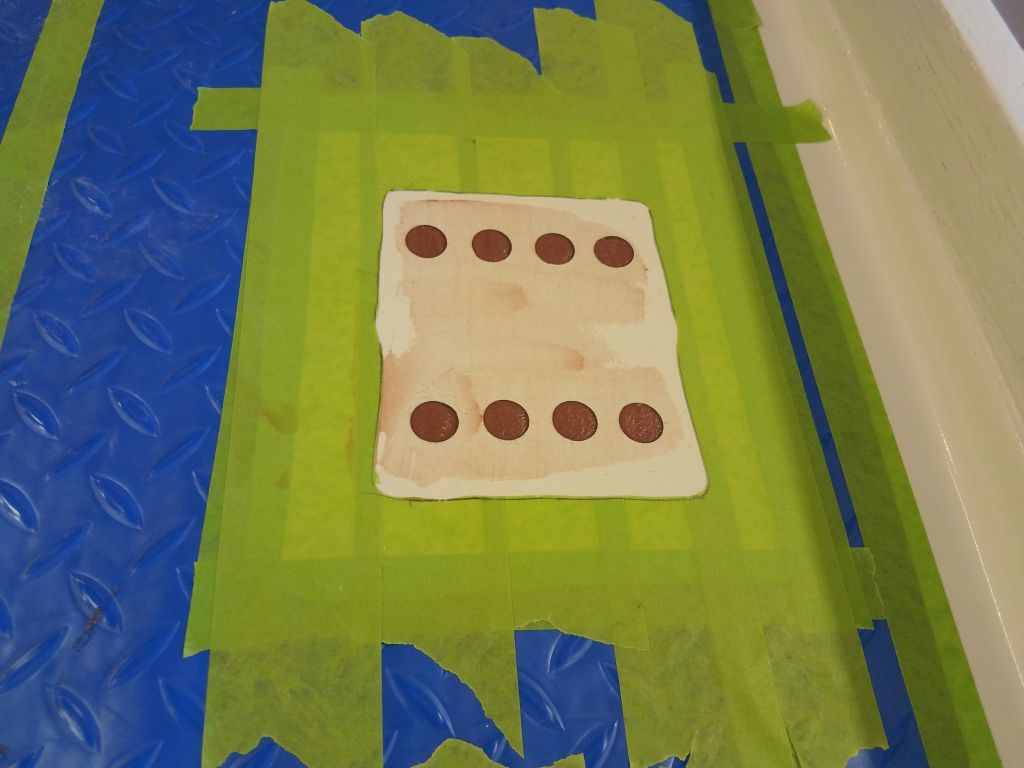
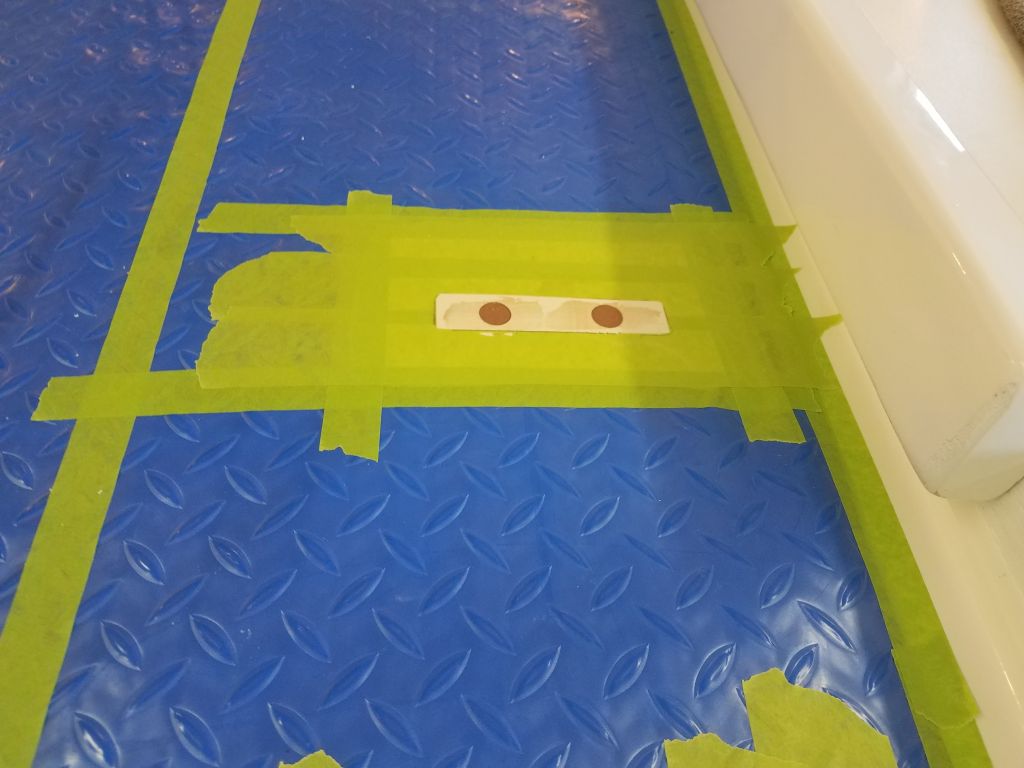
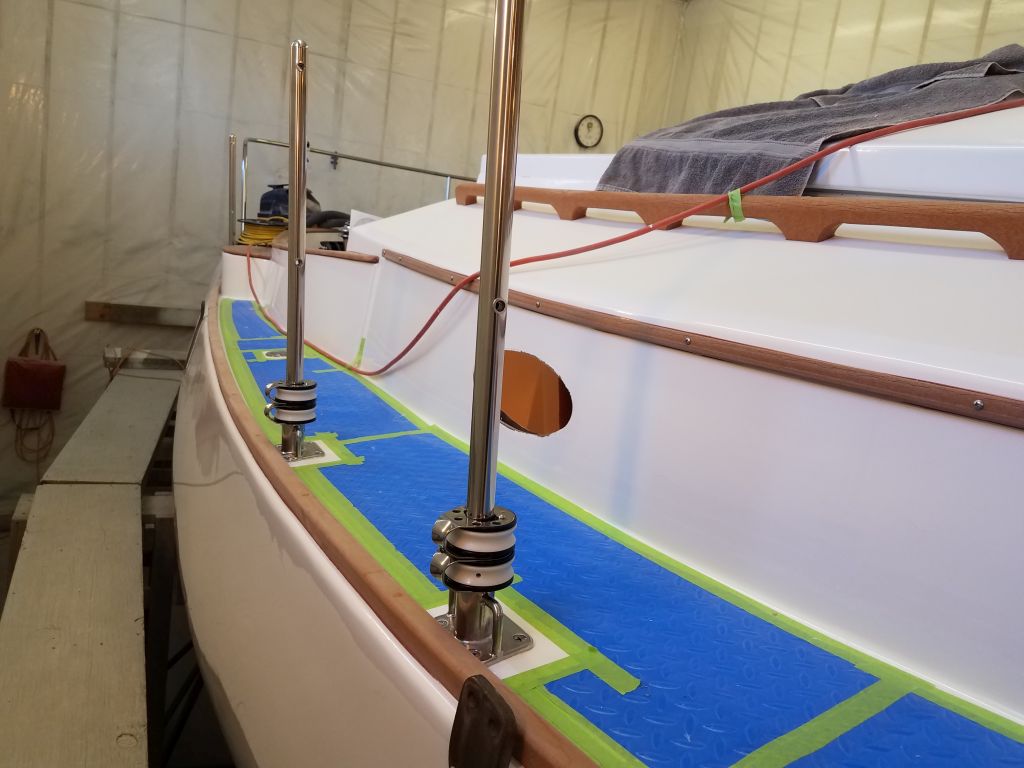
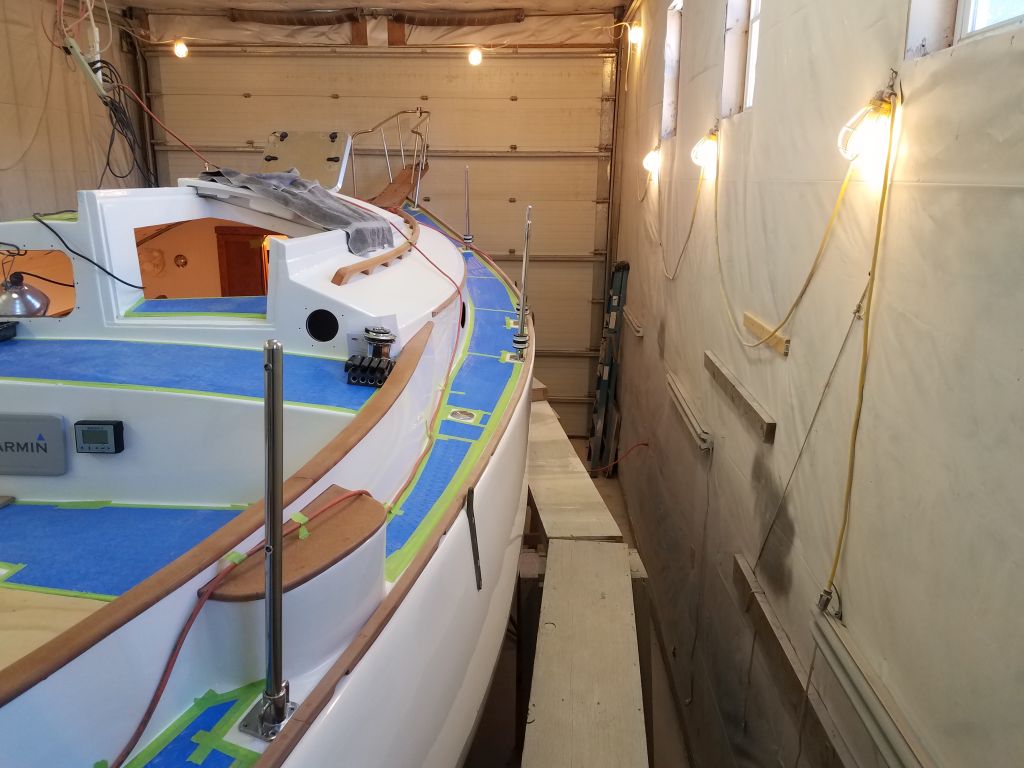
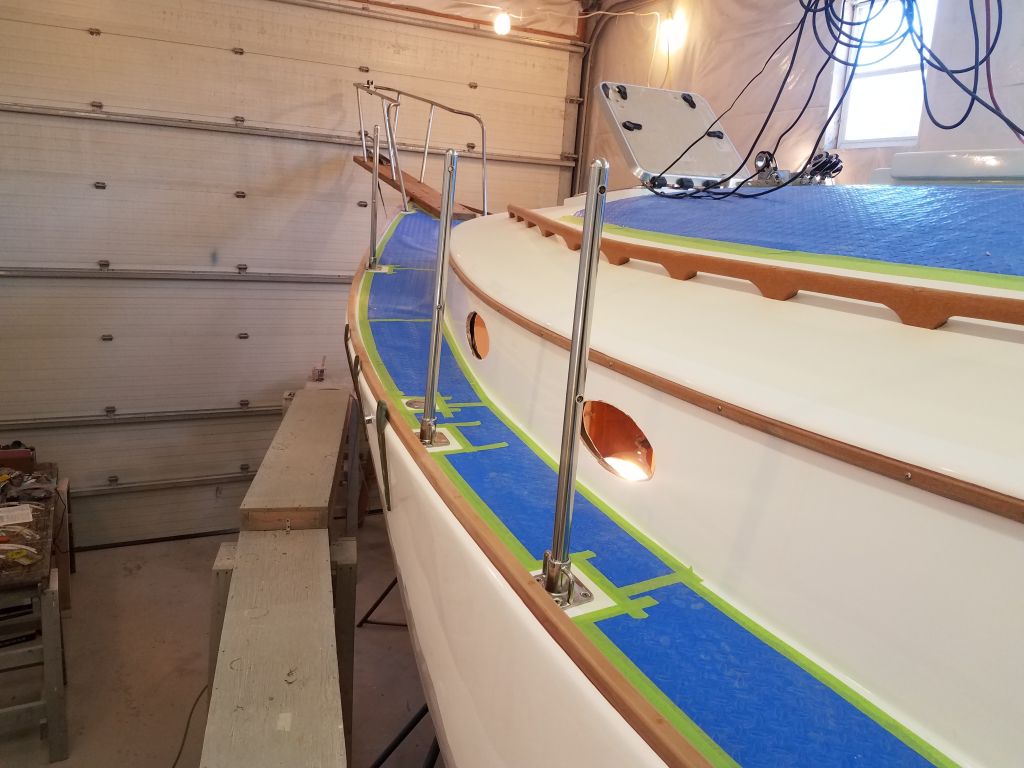
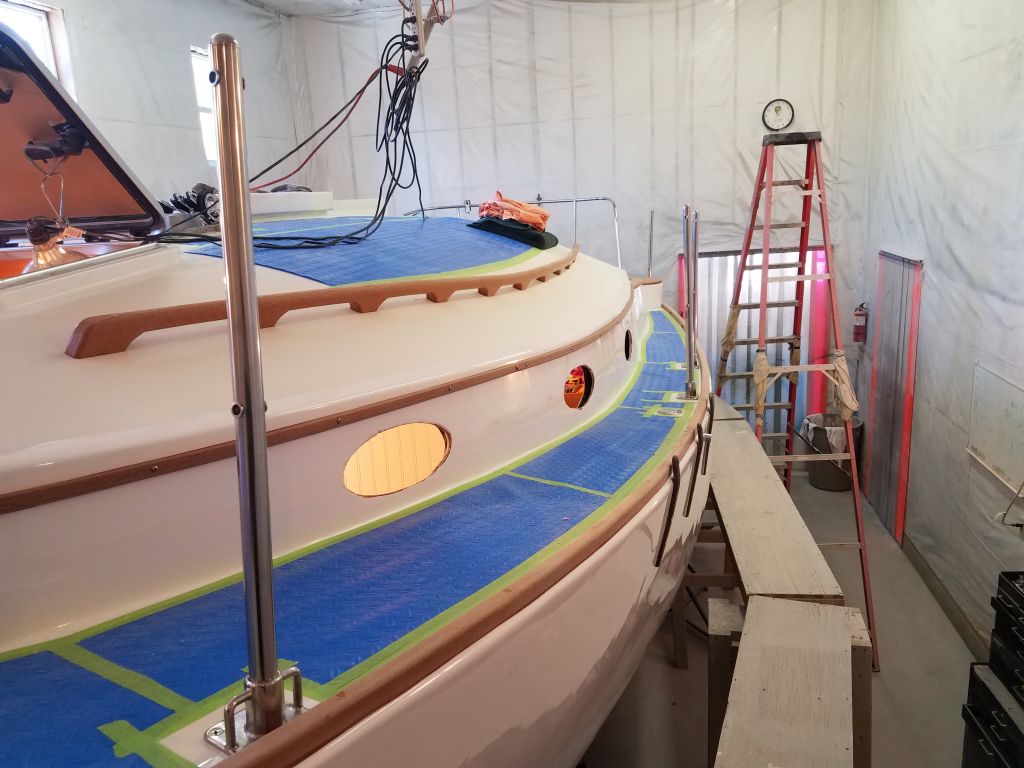
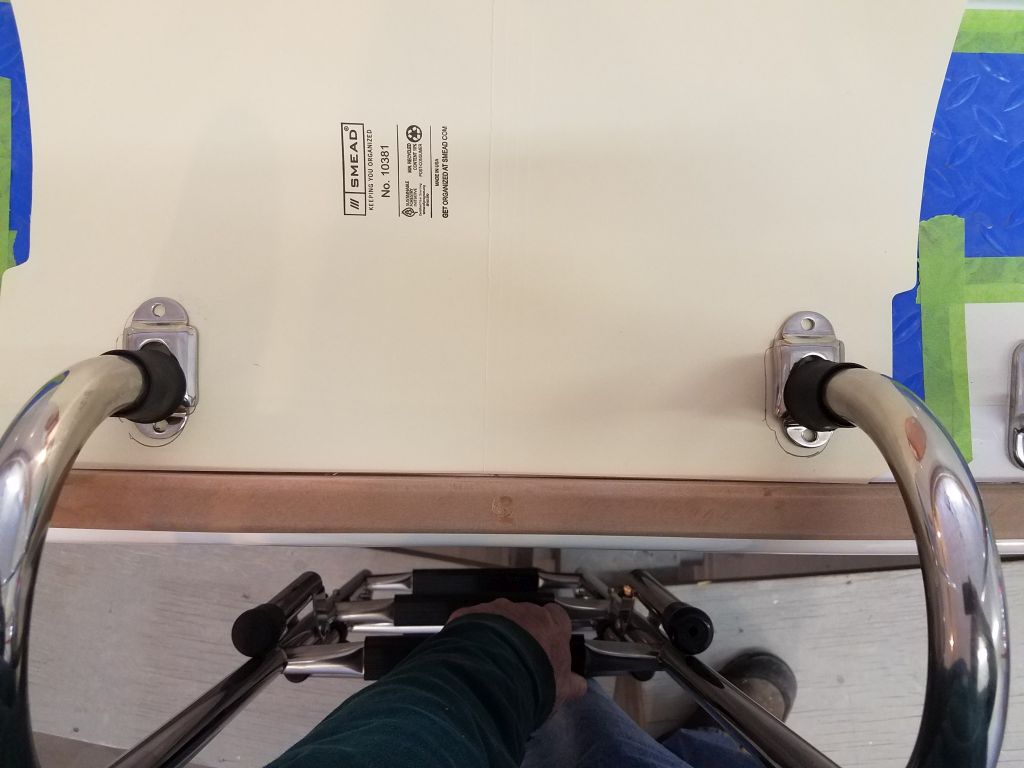
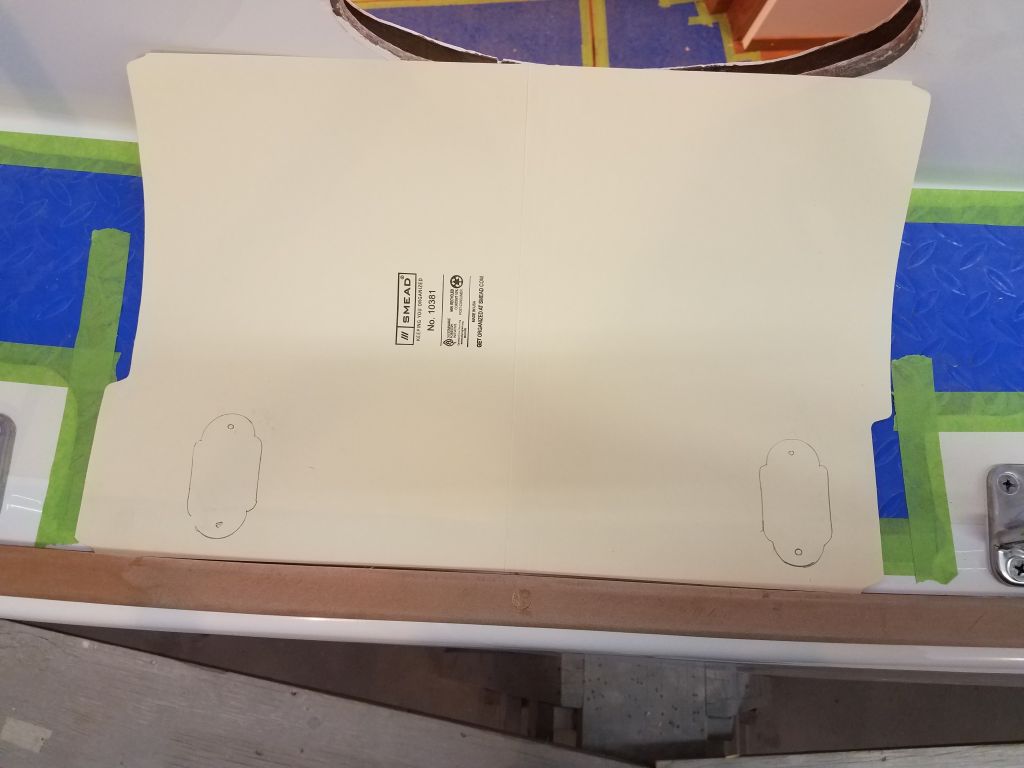
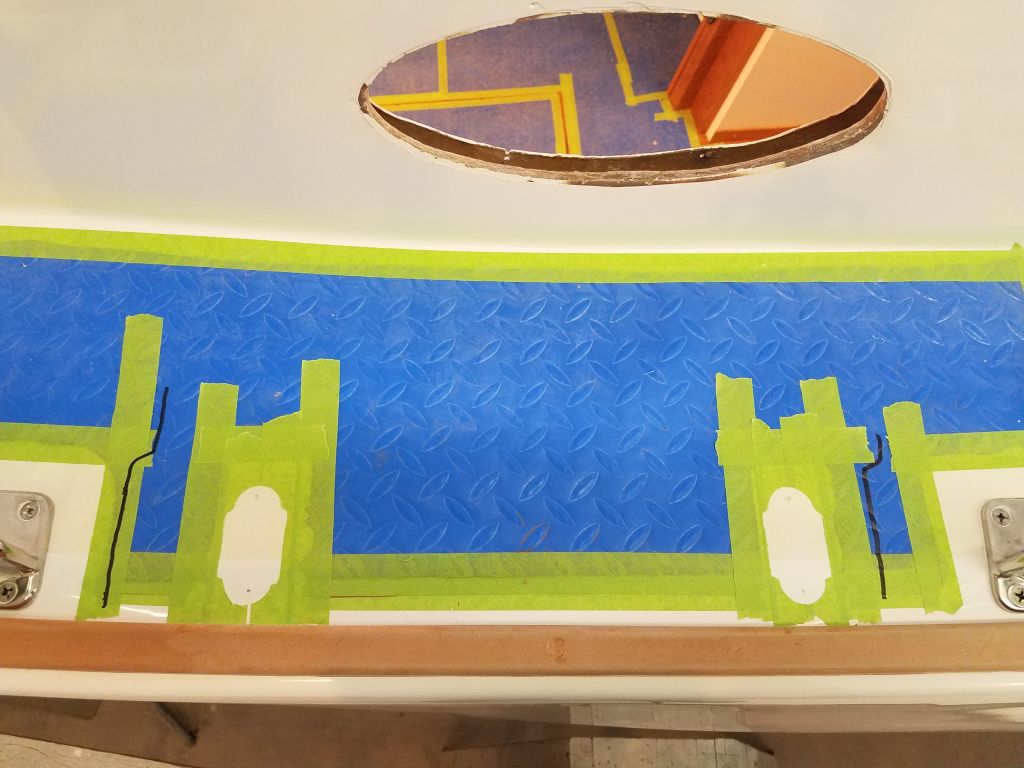
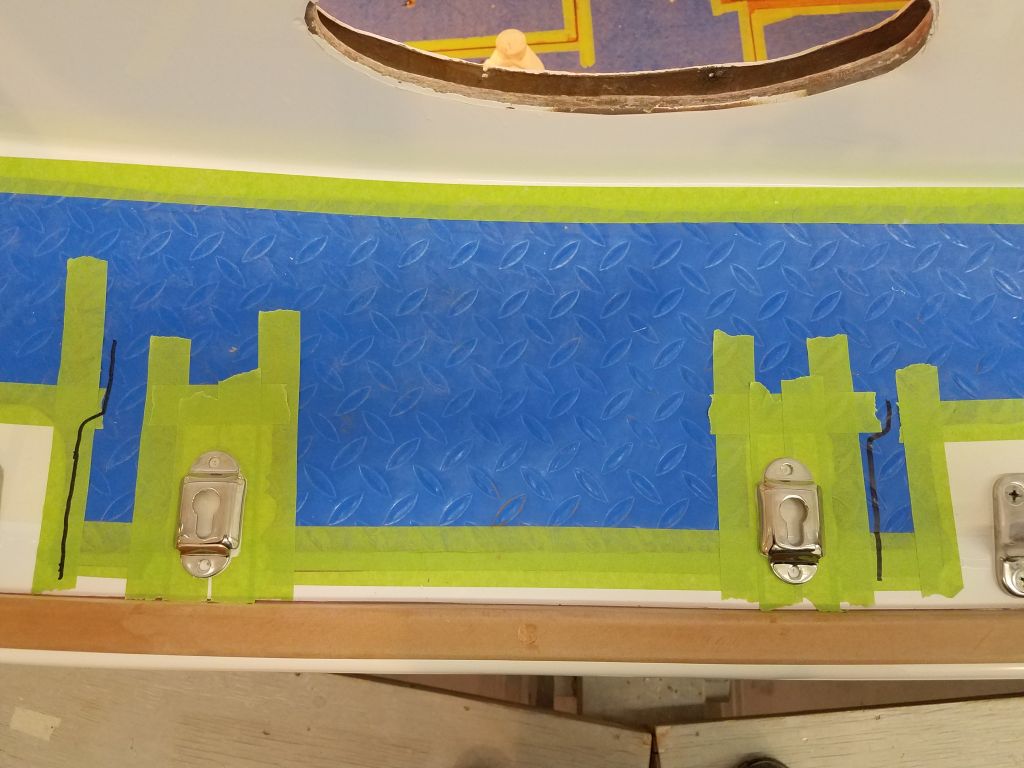
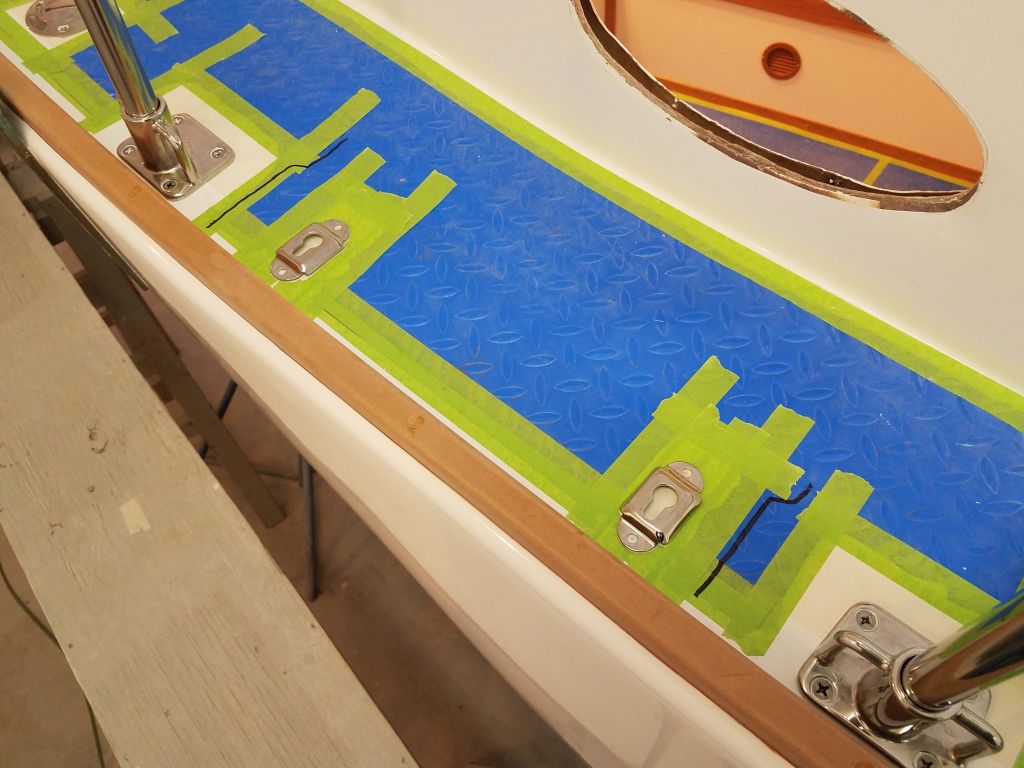
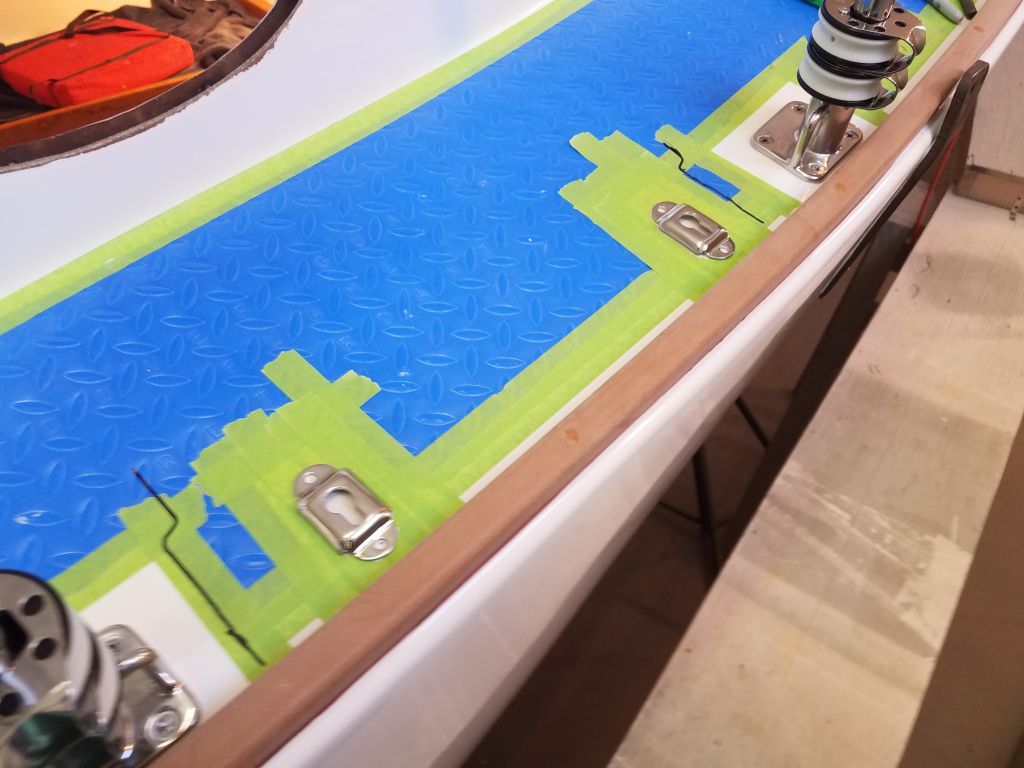
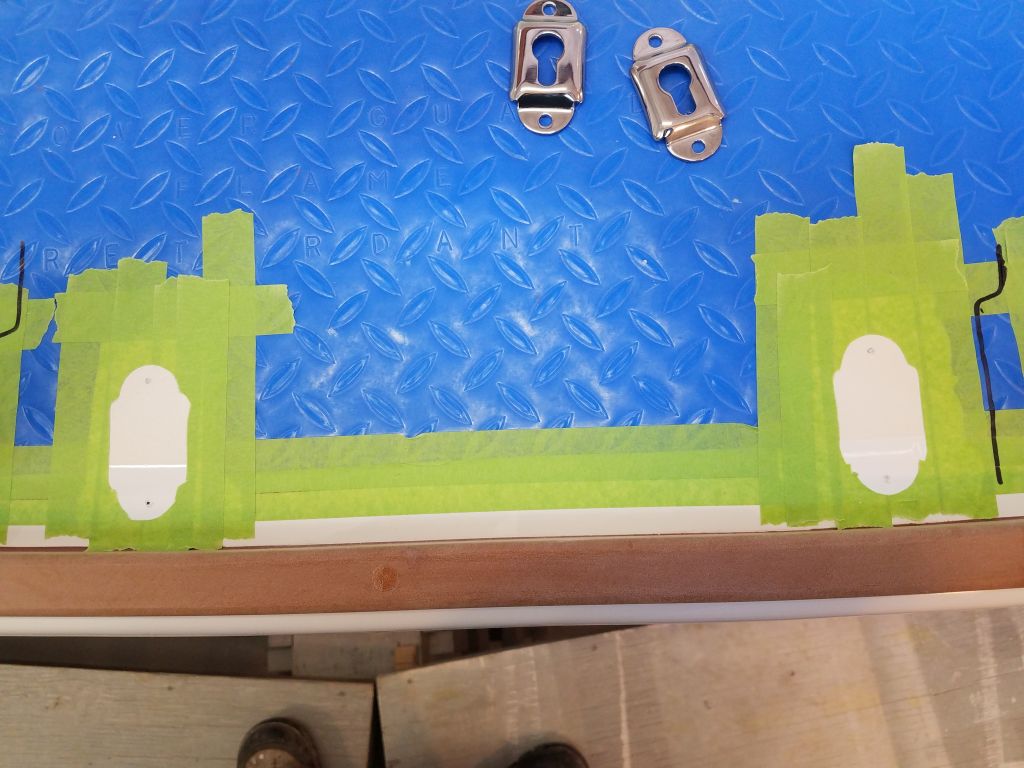
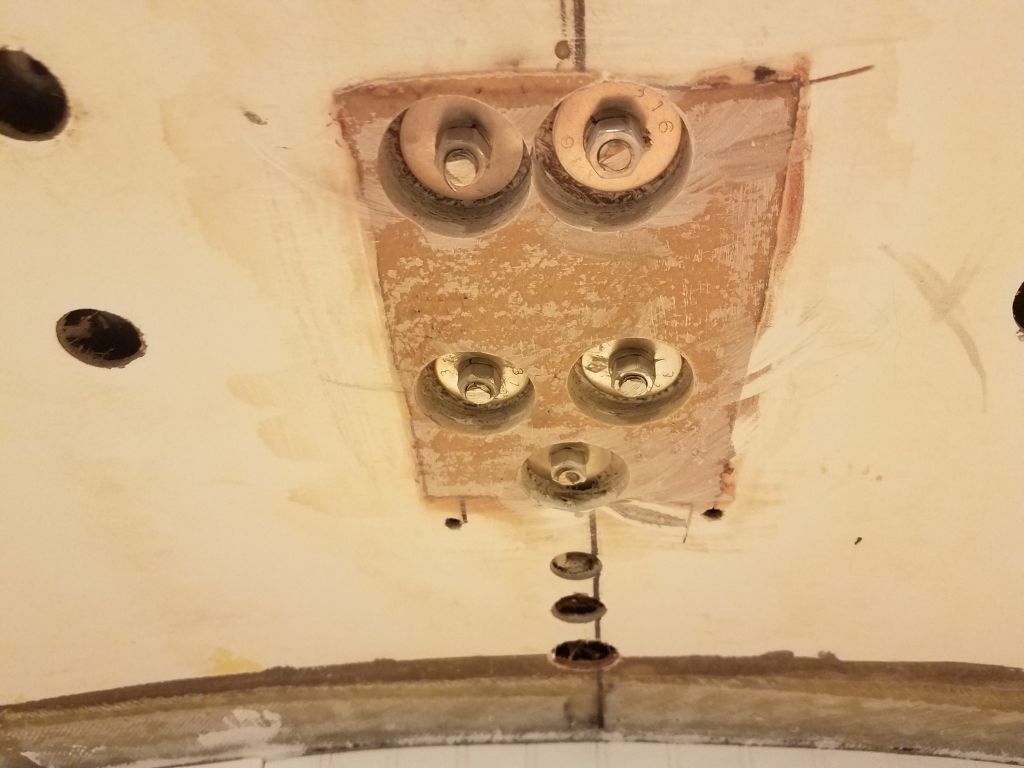
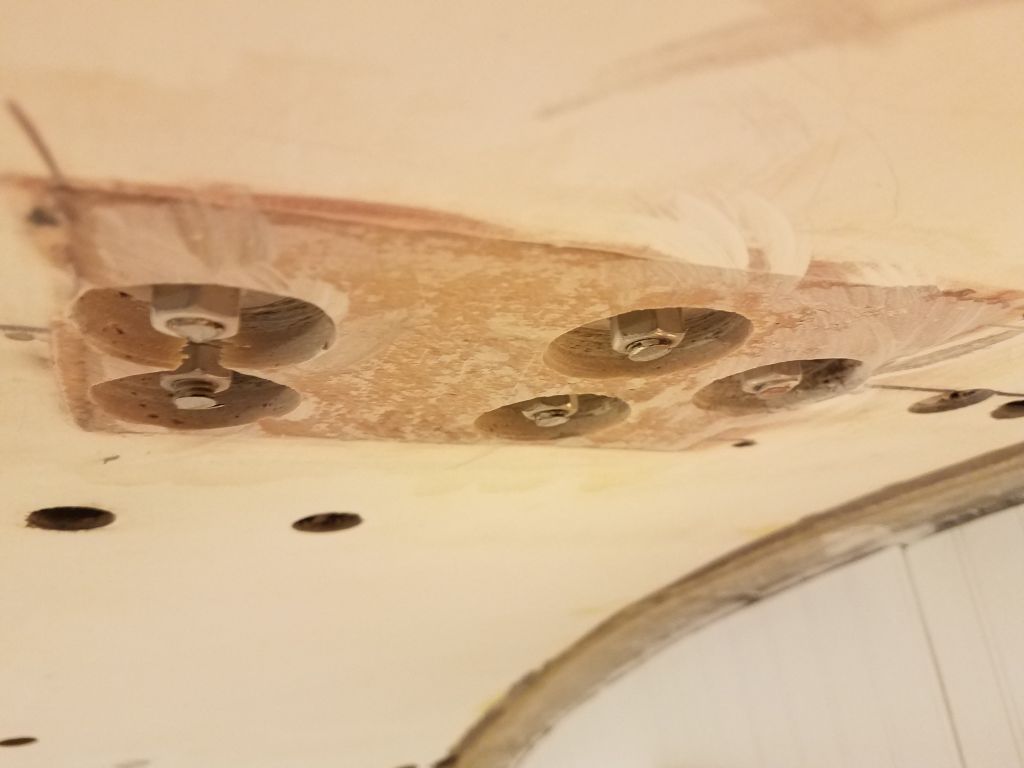
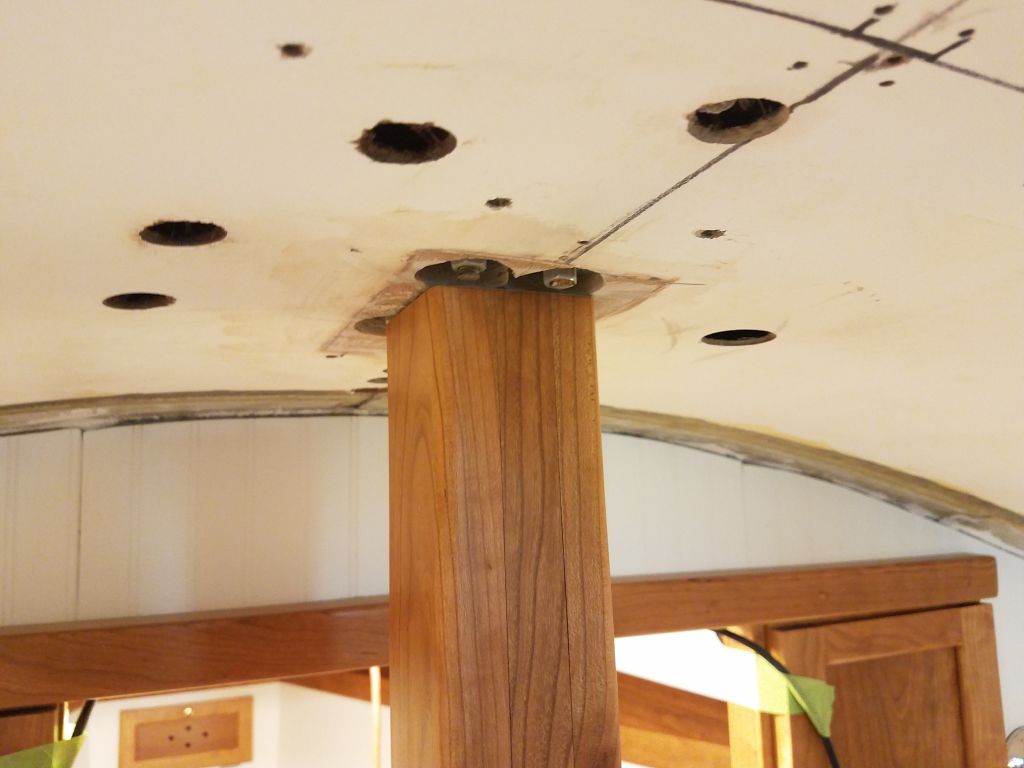
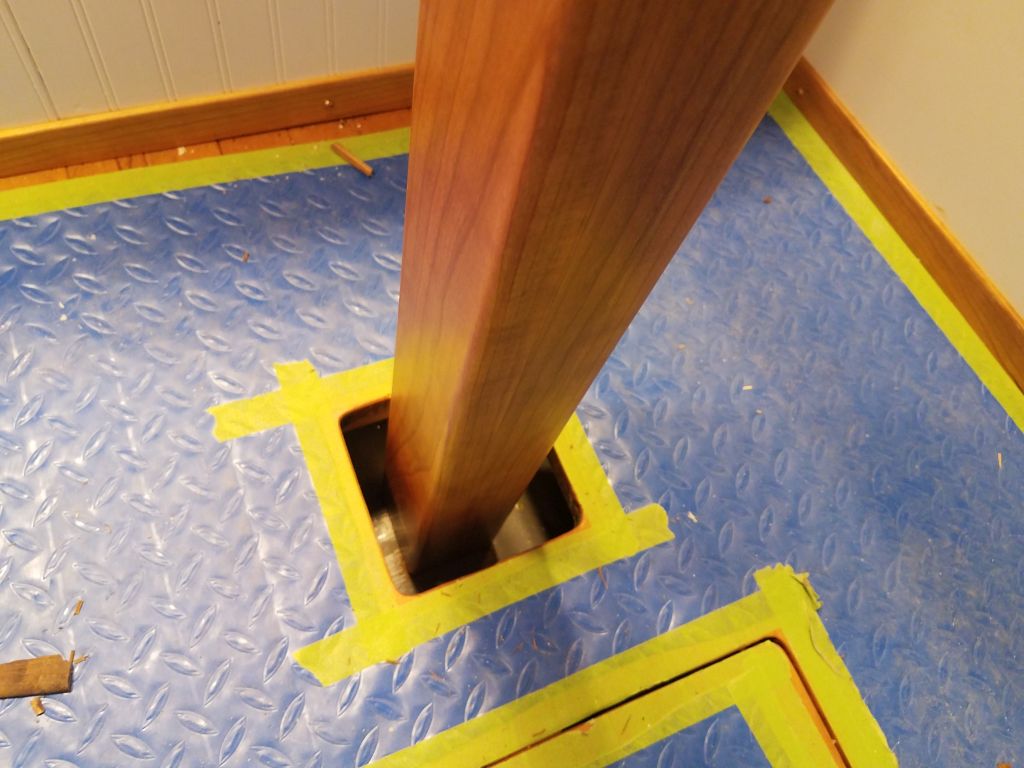
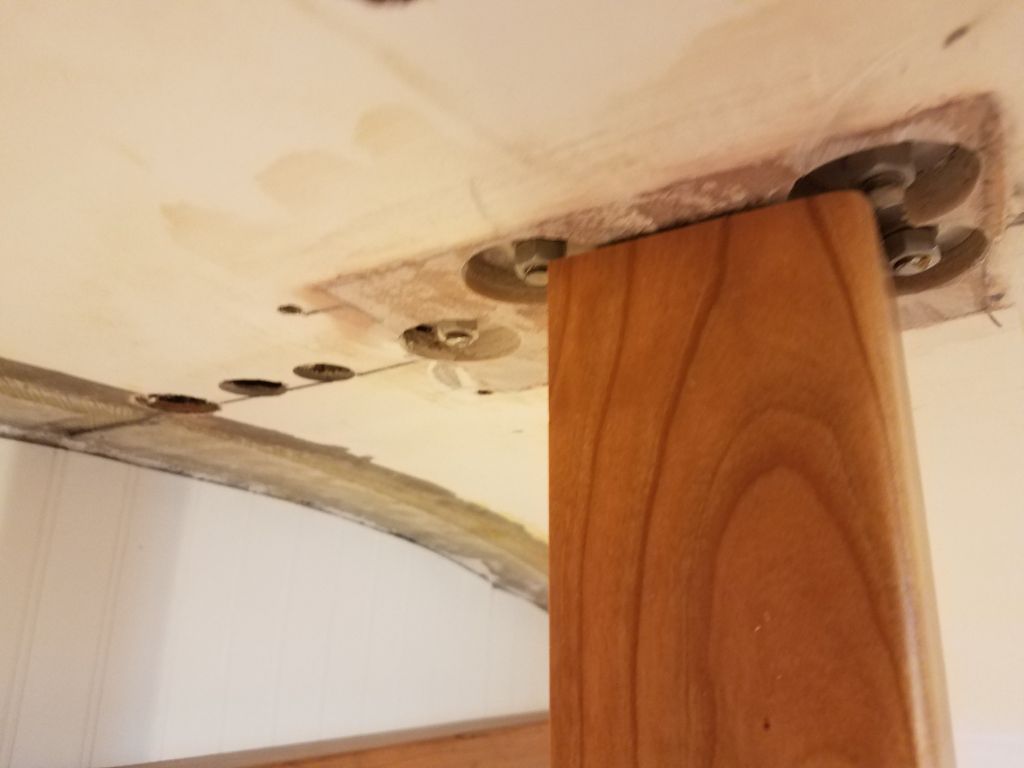
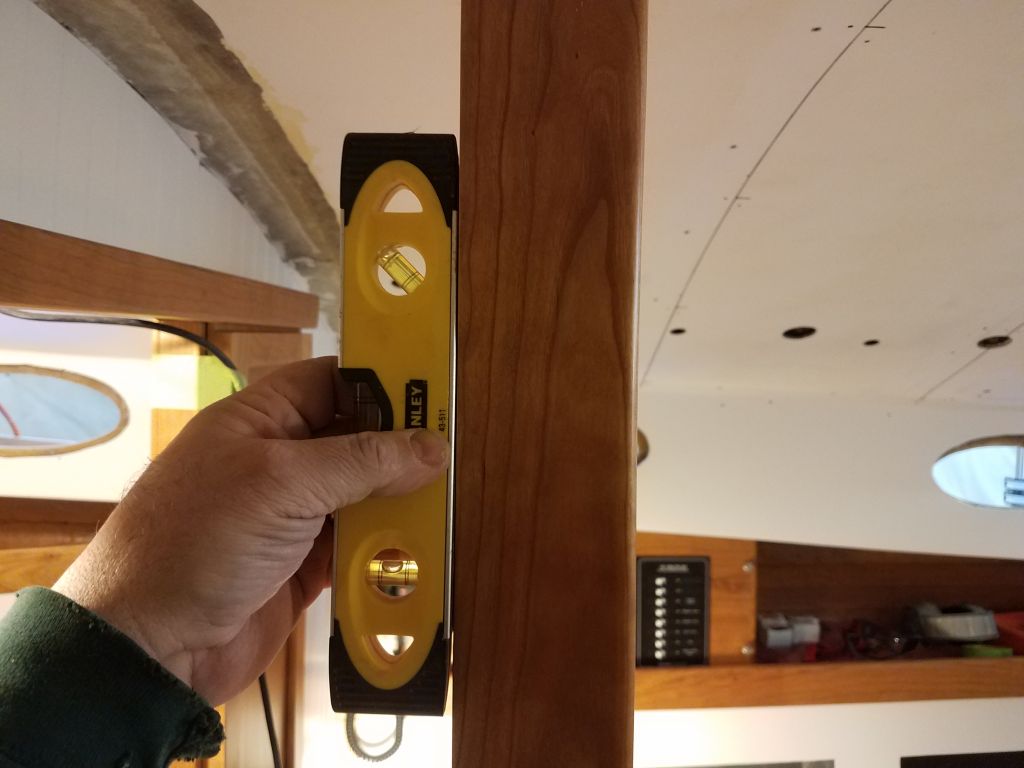
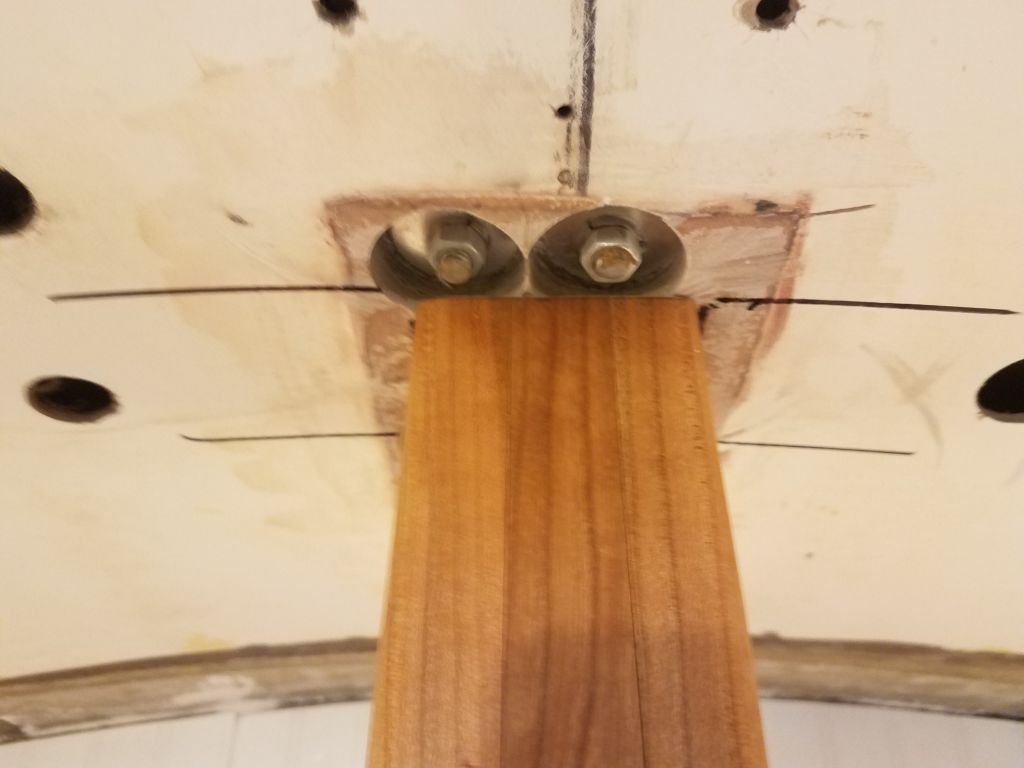
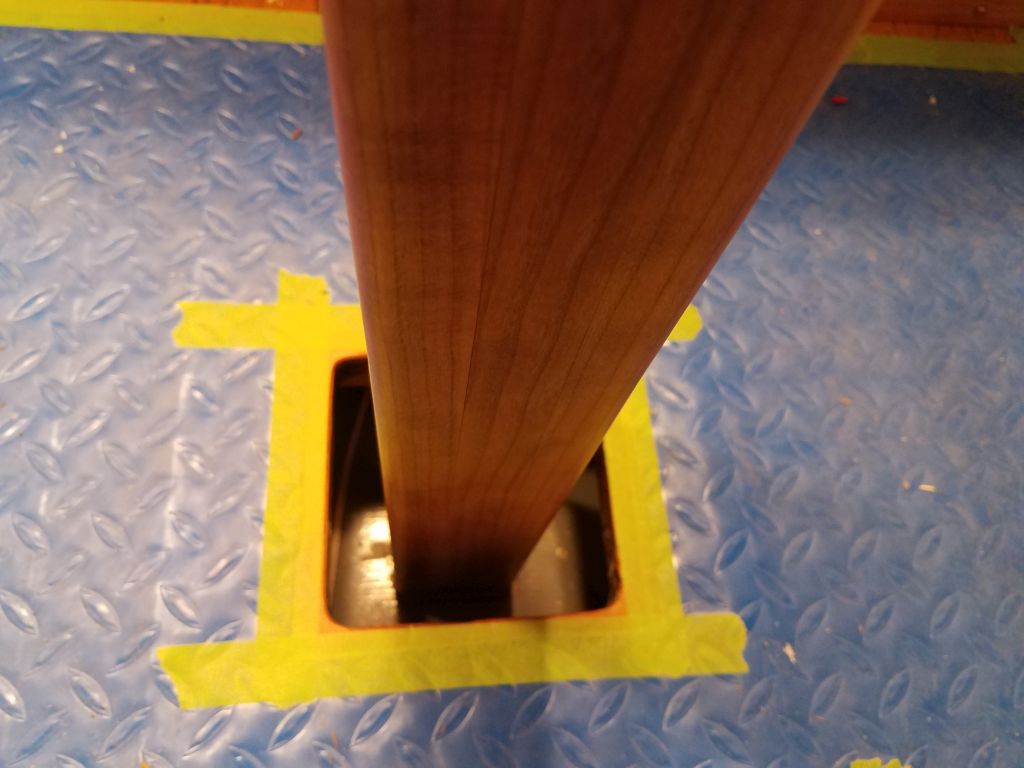
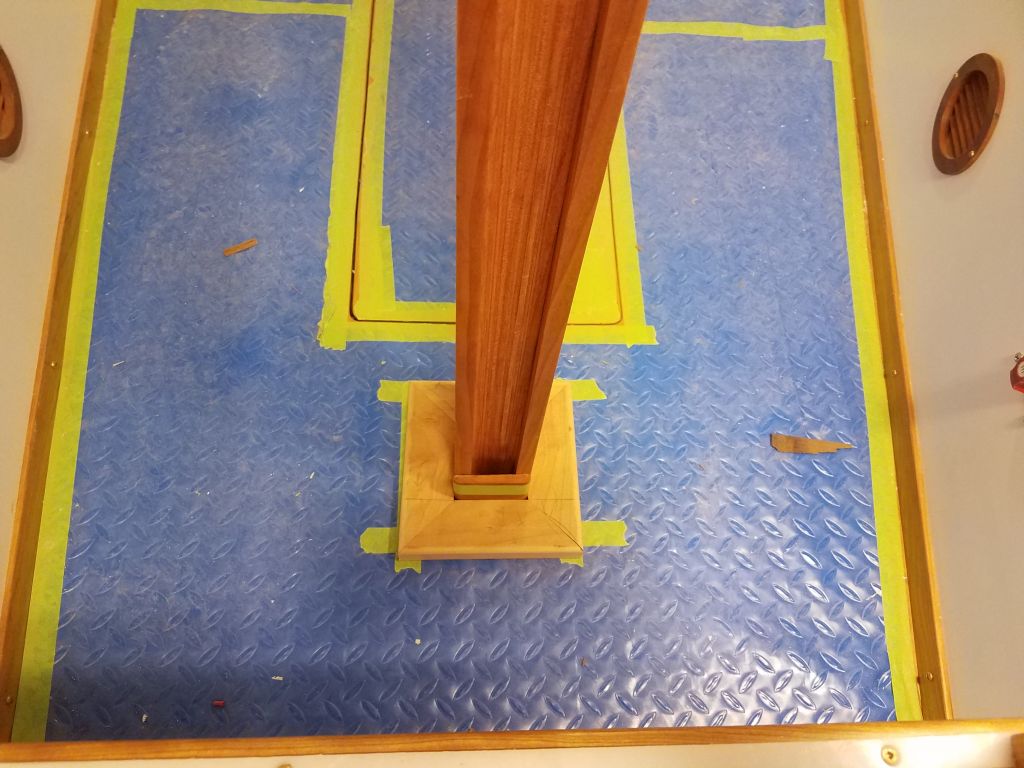
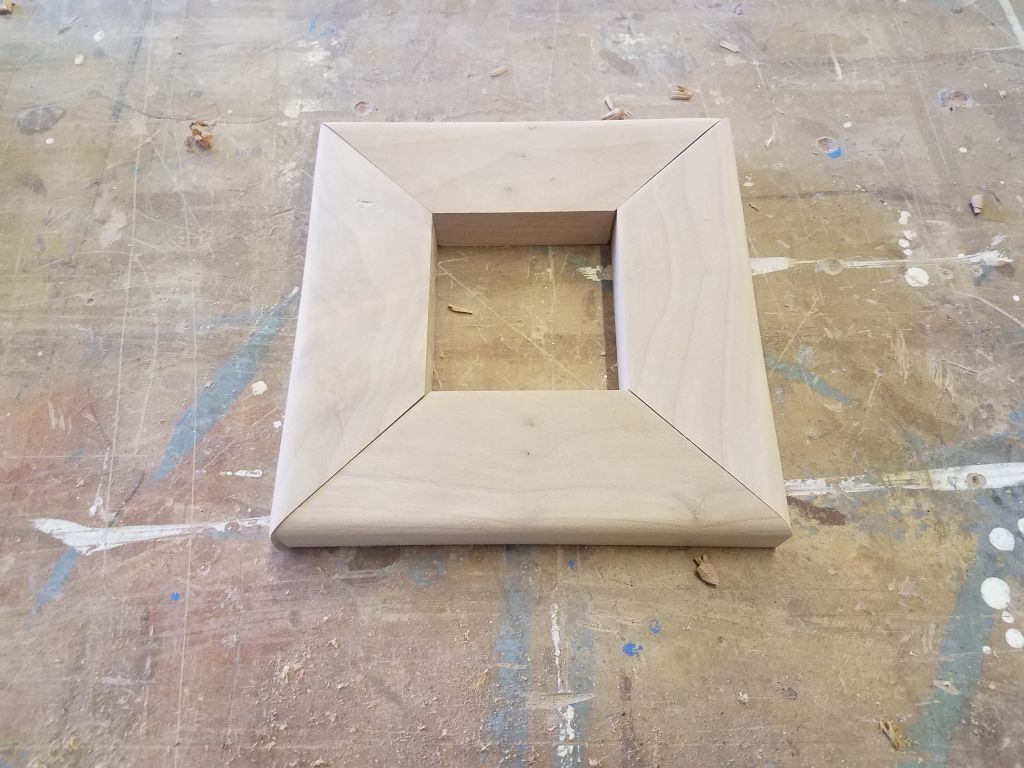
I now had on hand several of the new stanchion bases (still awaiting three), so I could get going on the installations.  In the cabin, at each of the six locations (three per side), I’d purposely drilled through the liner when I’d prepared the holes on deck, and this marked the locations of the stanchions in the cabin.  I needed to cut away the liner in these areas in order to access the underside of the deck for fastening.  At each spot, I marked off the cutout with masking tape and removed the liner within; later I planned to make cosmetic covers for these new openings.  Then, I protected the finished interior with plastic beneath each cutout to catch bits of sealant that would inevitably fall.

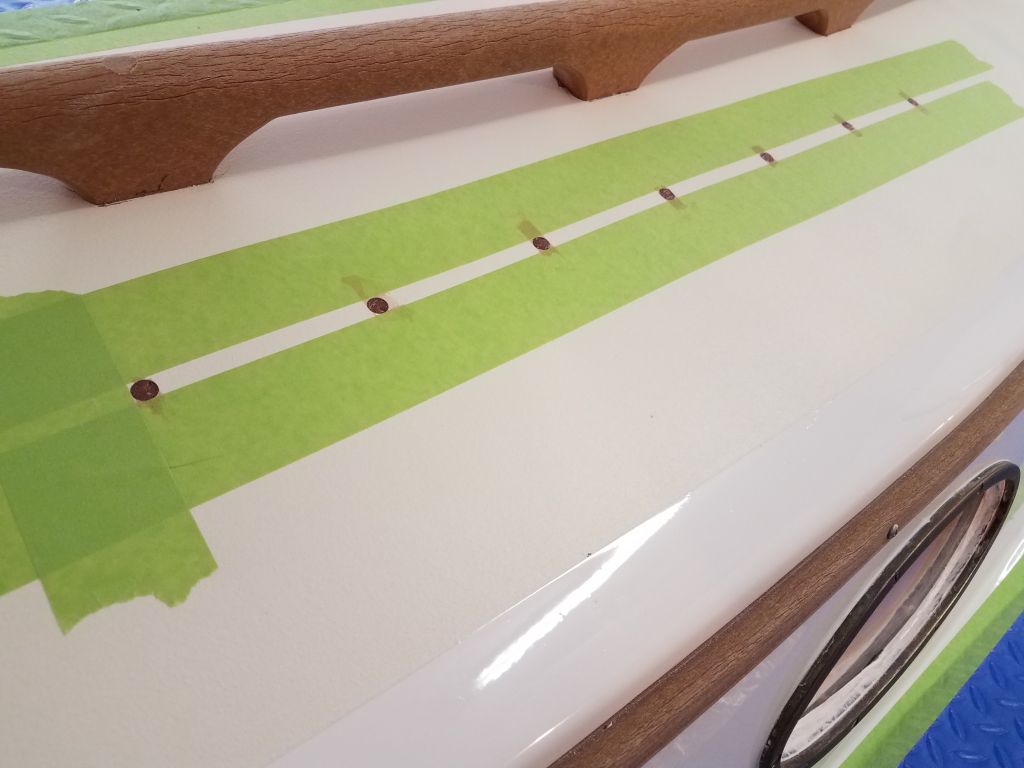
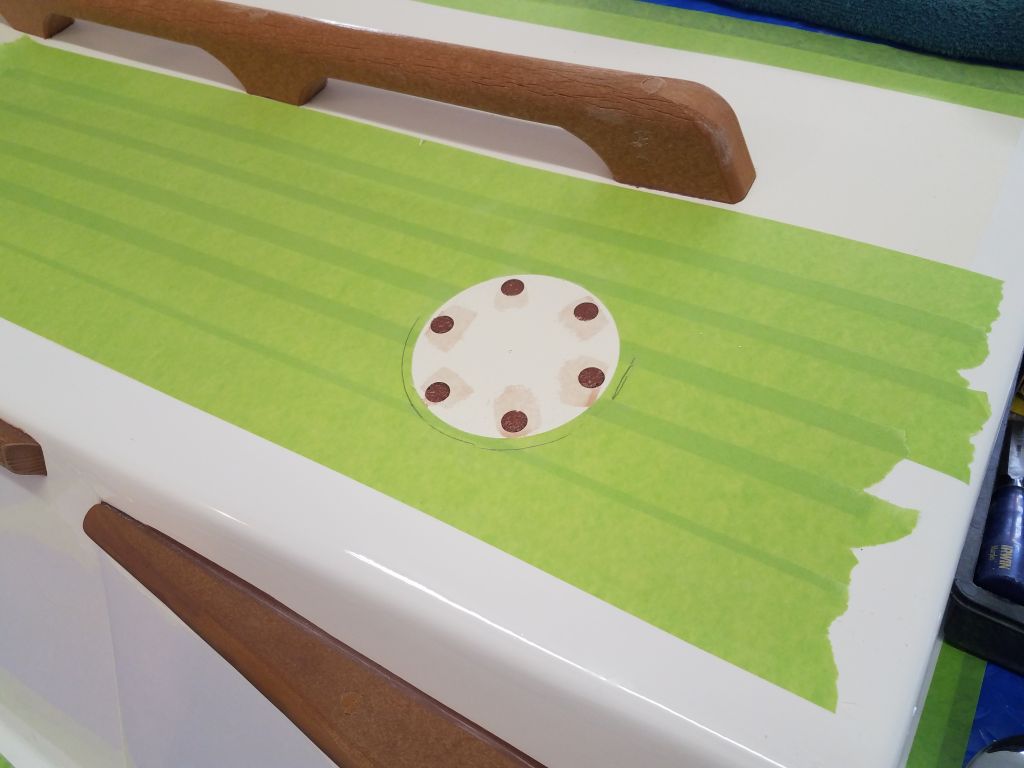
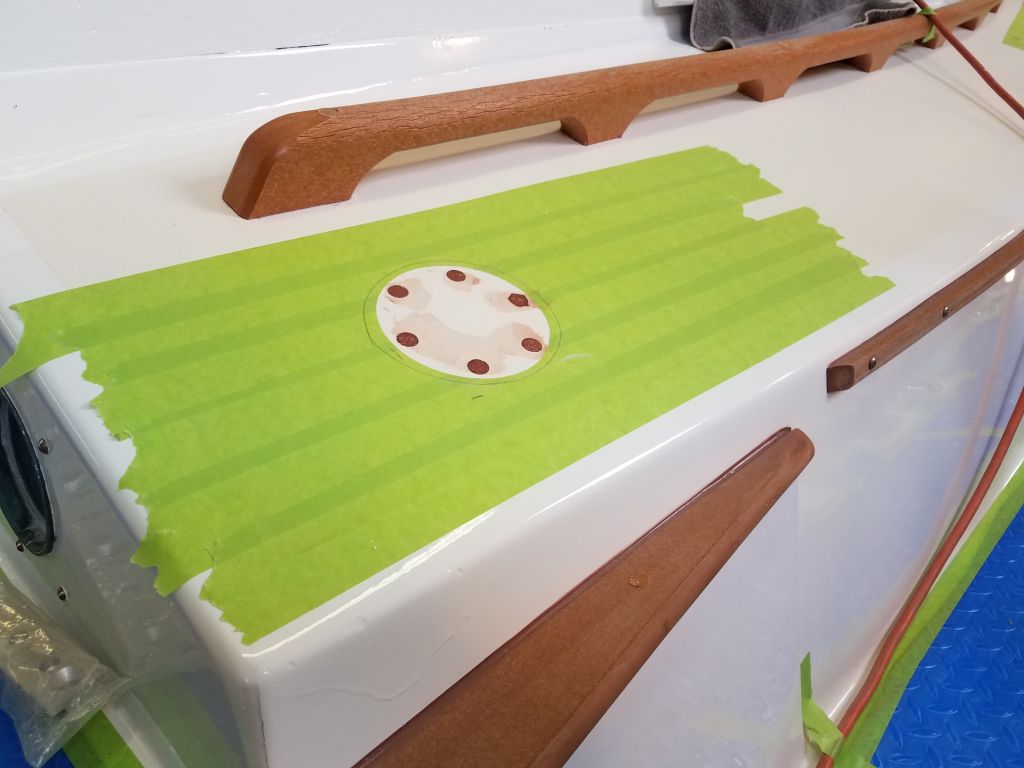
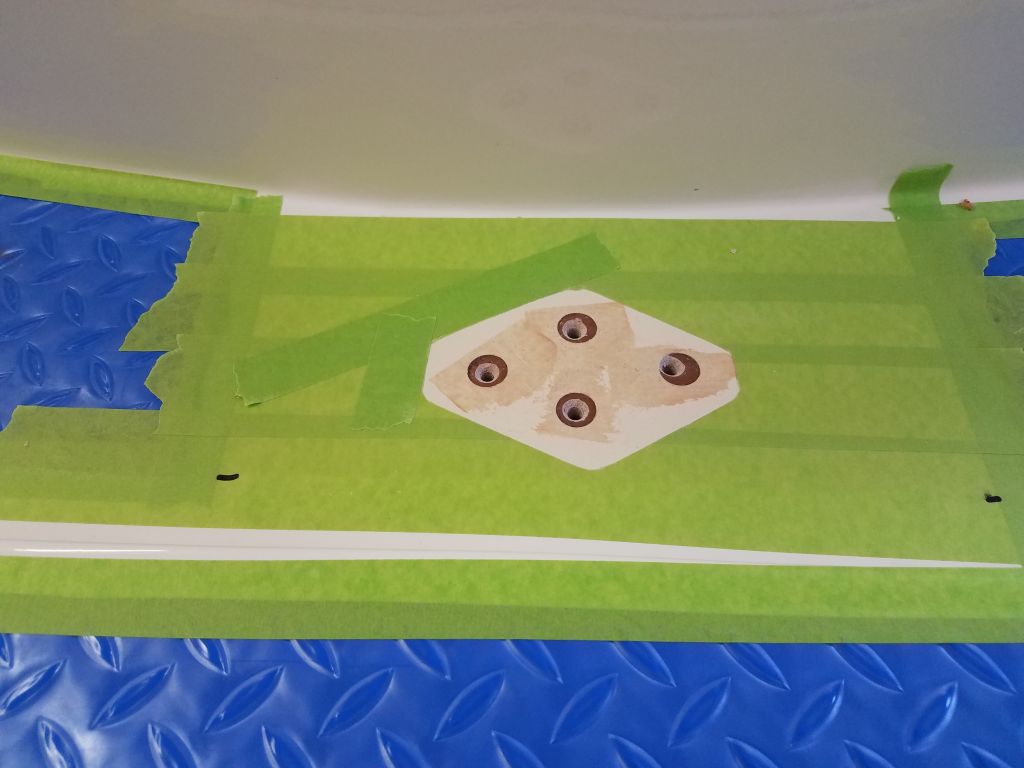
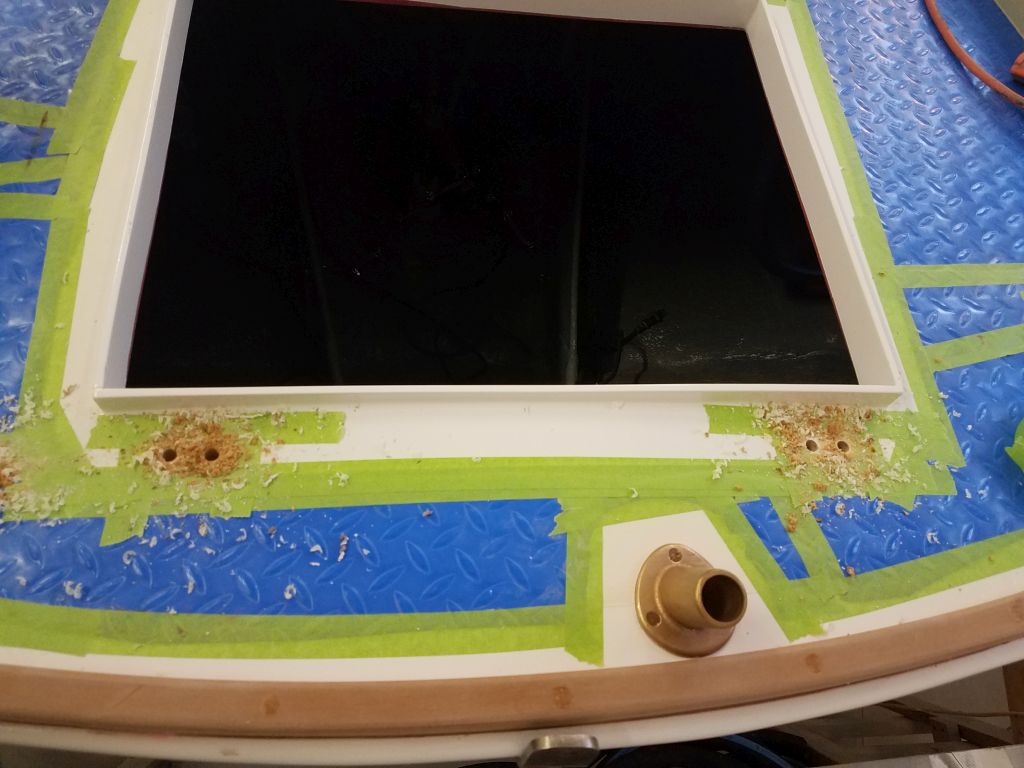
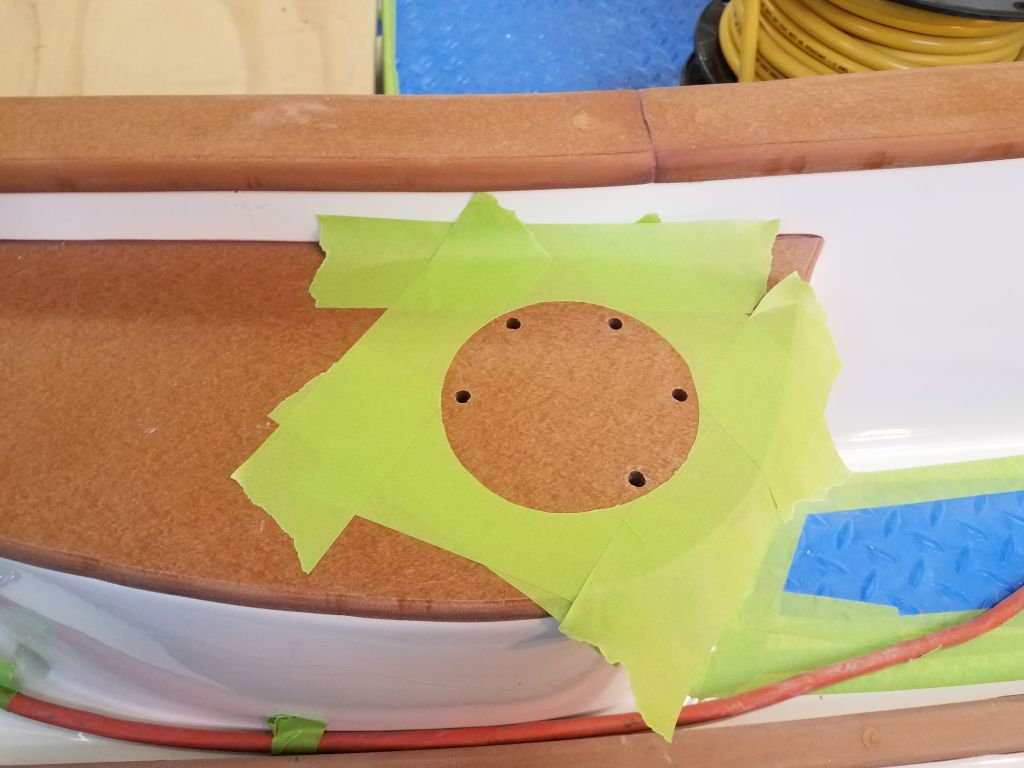
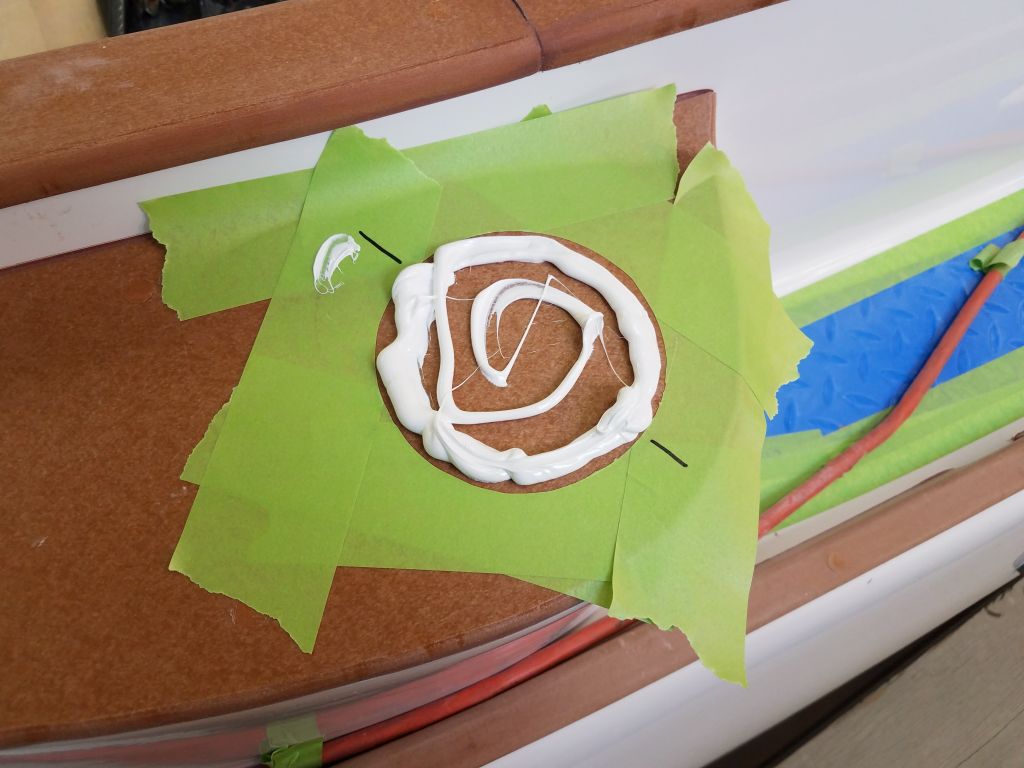
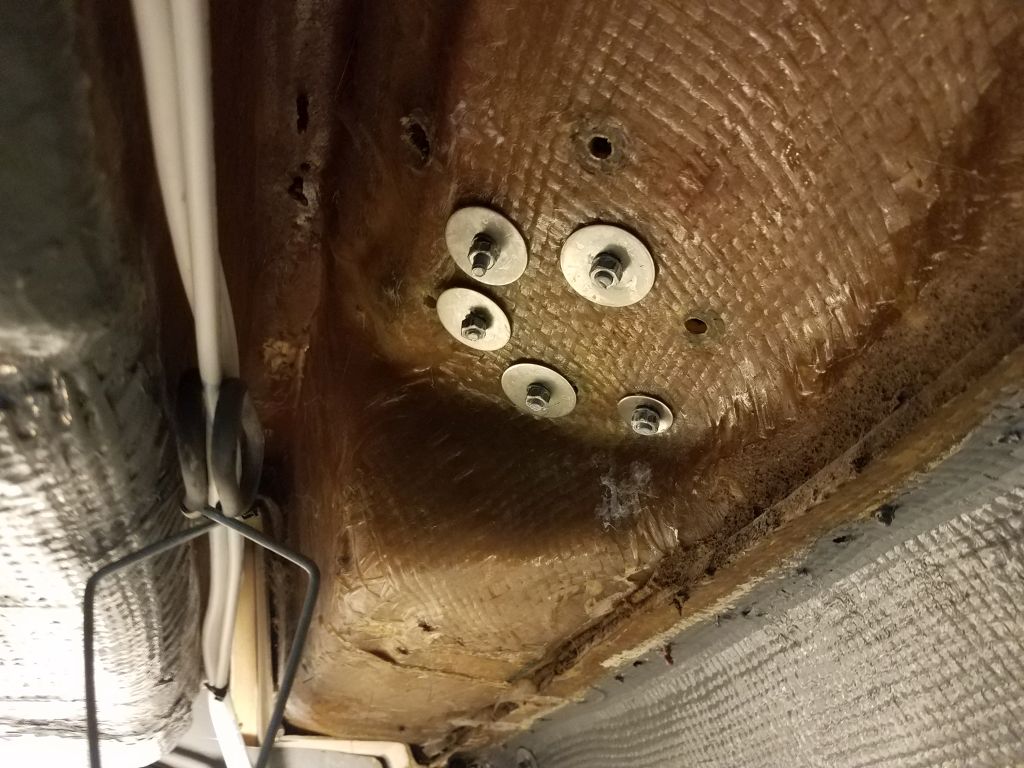
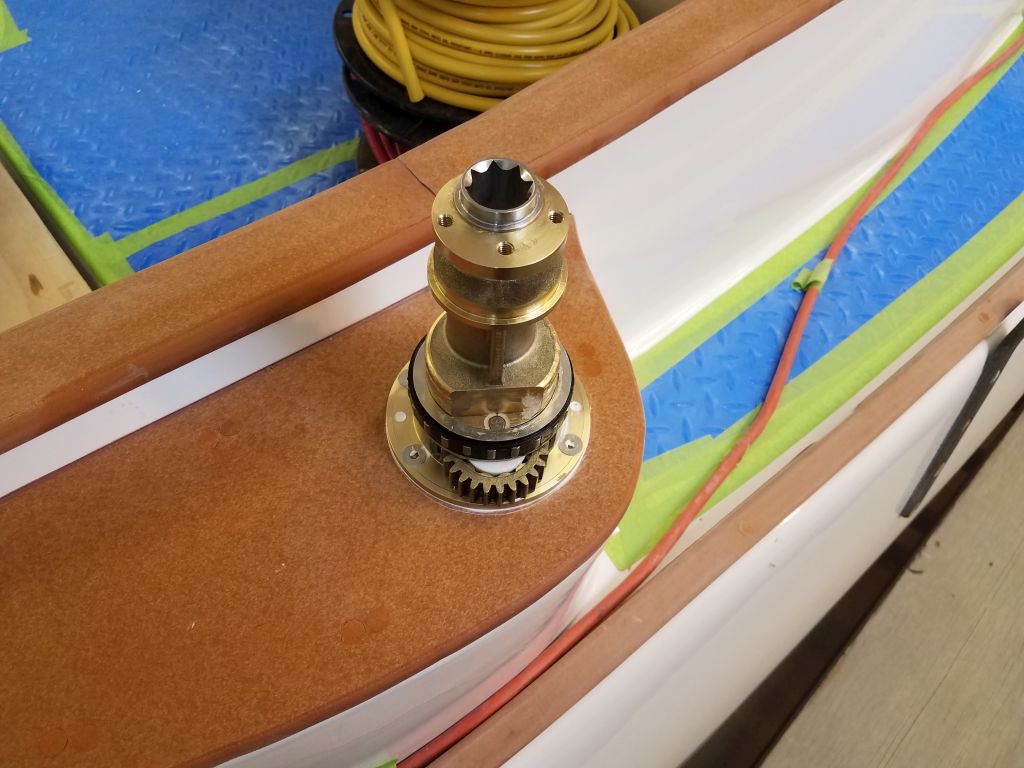
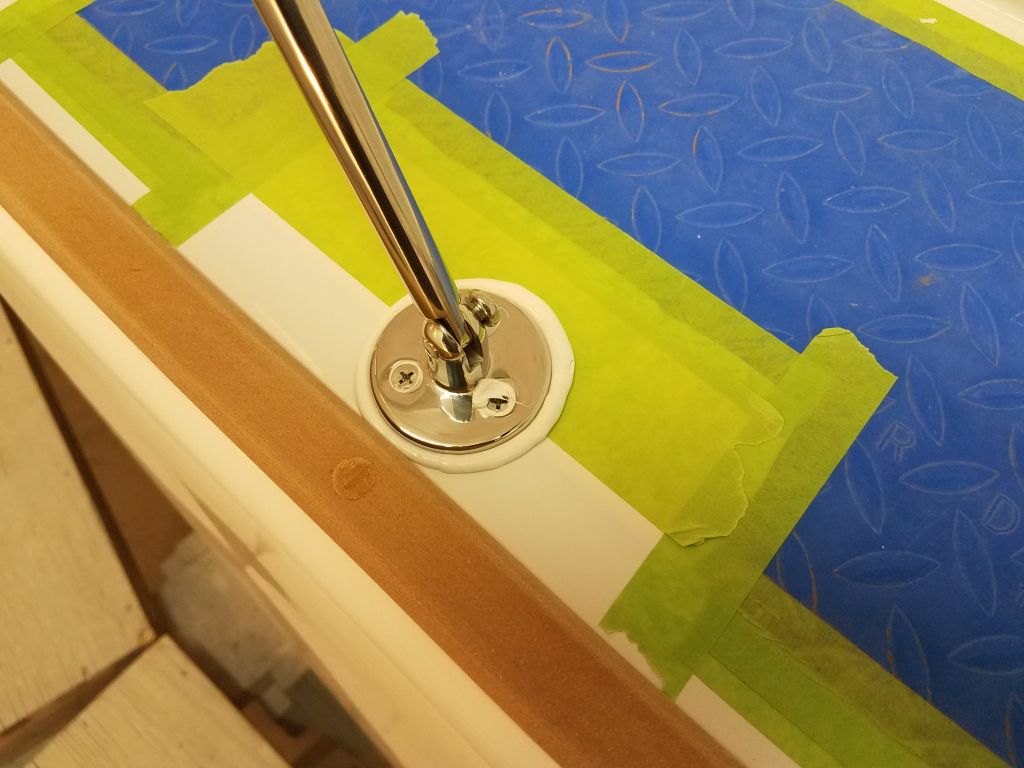
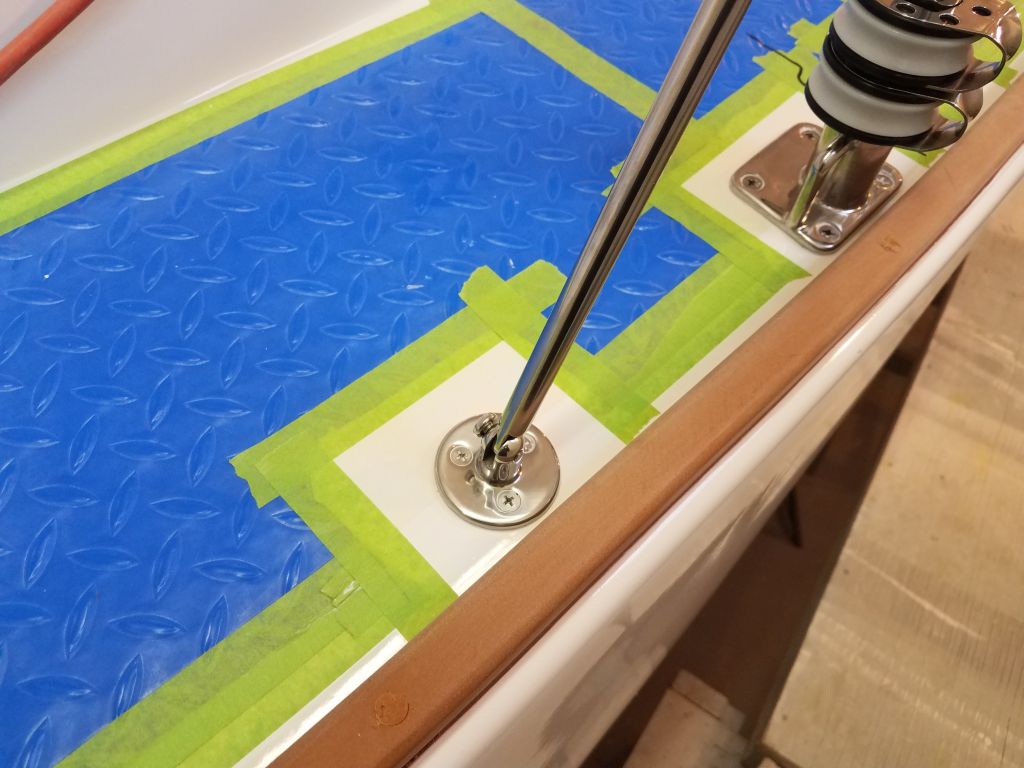
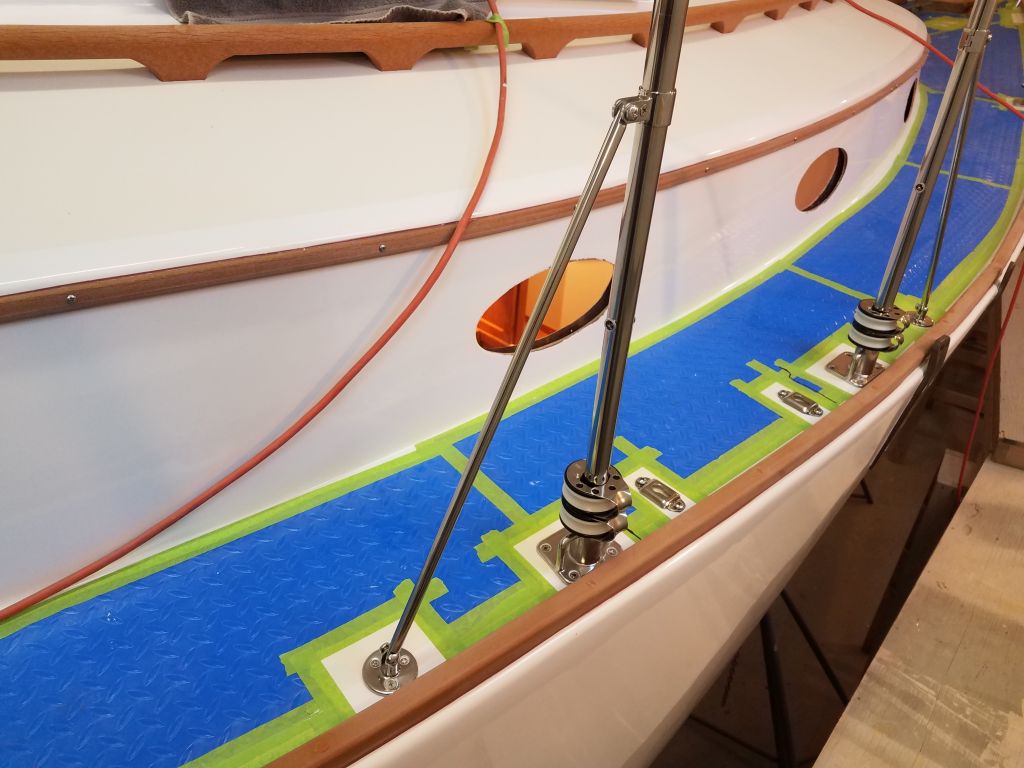
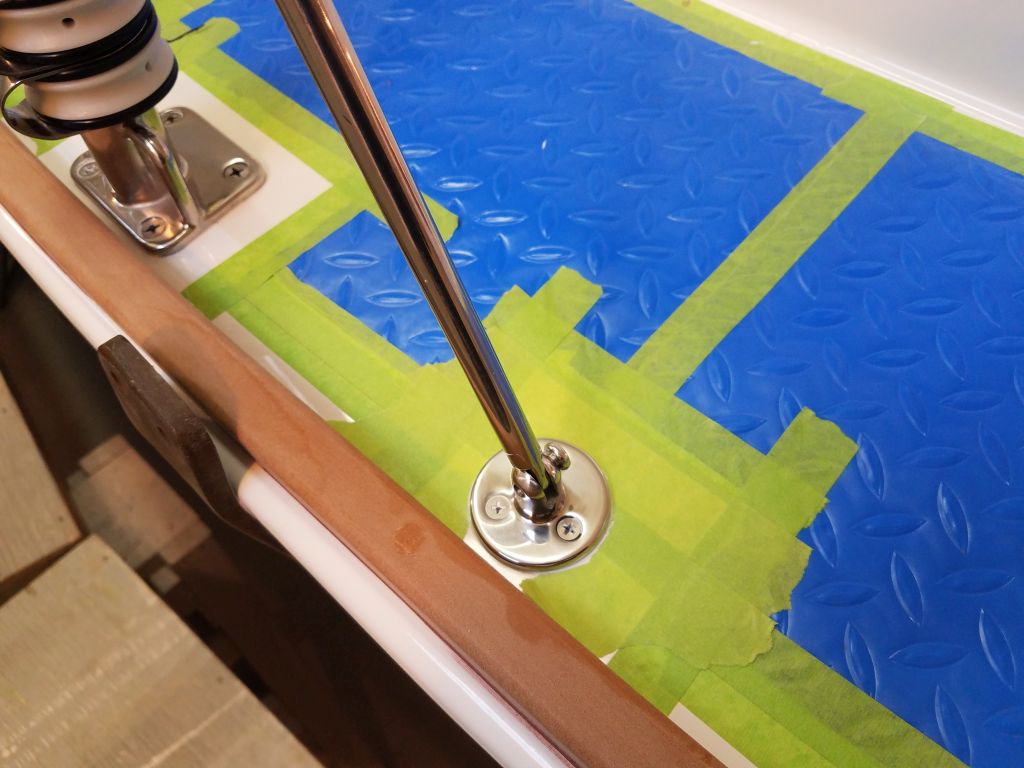
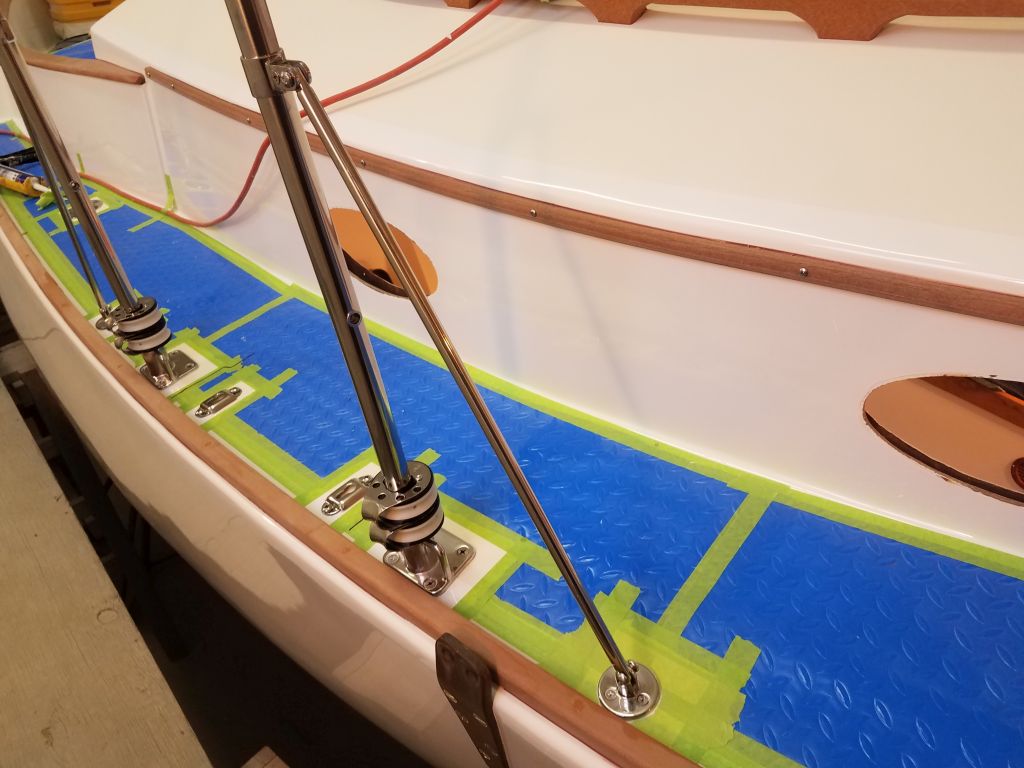
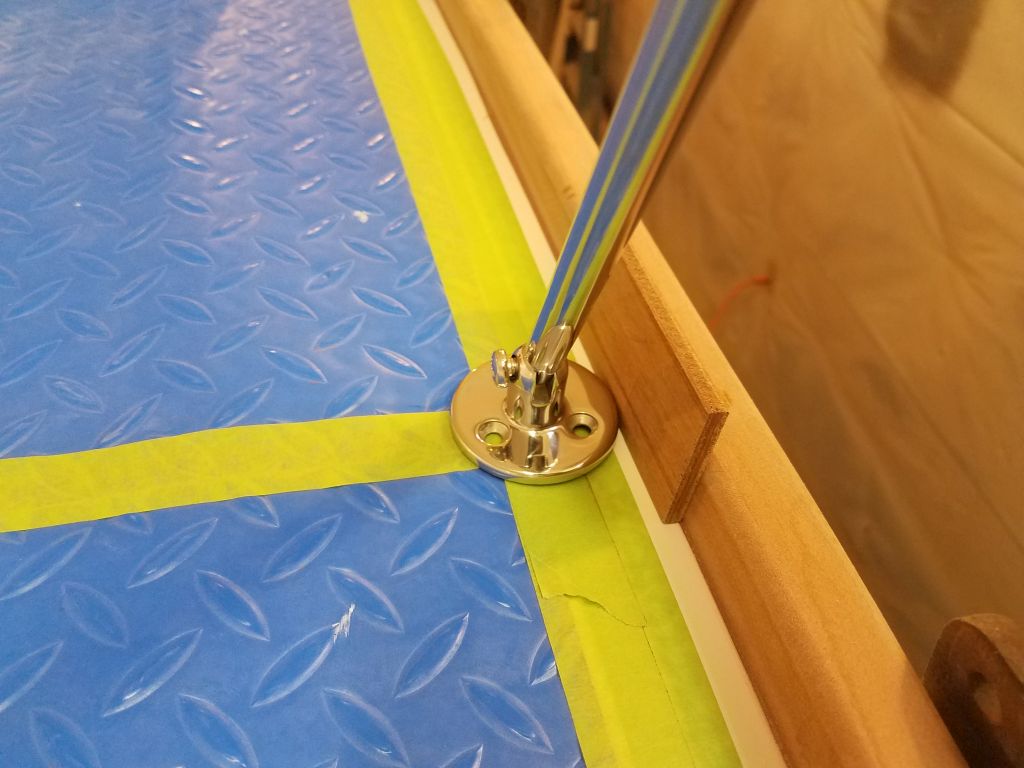
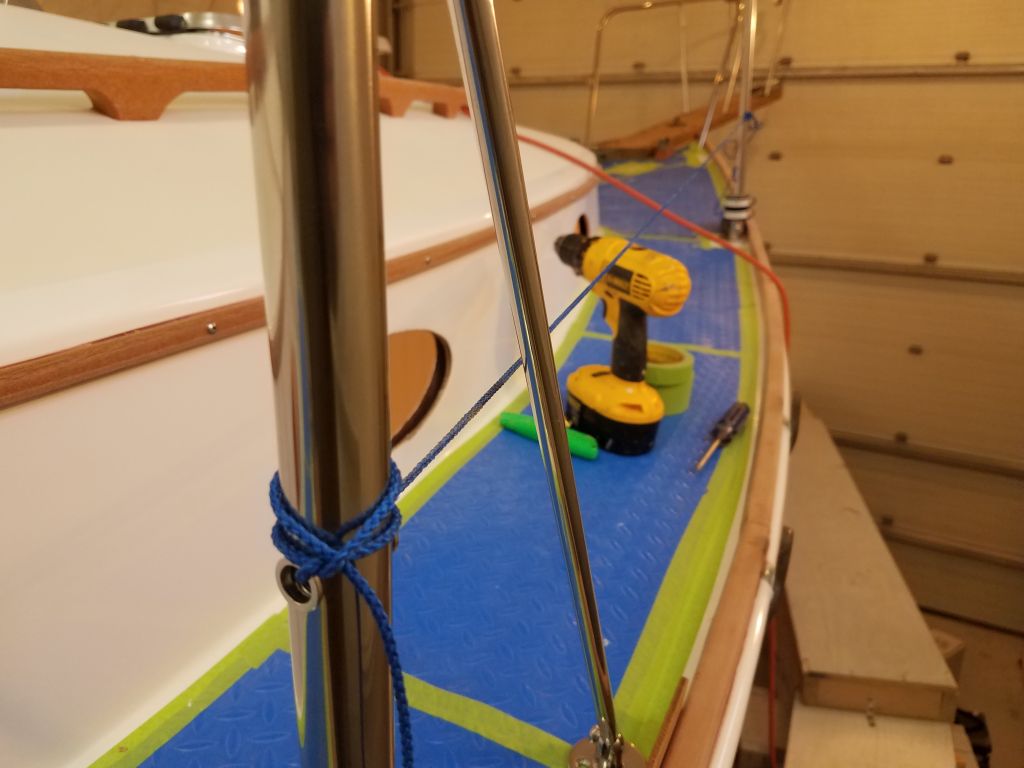
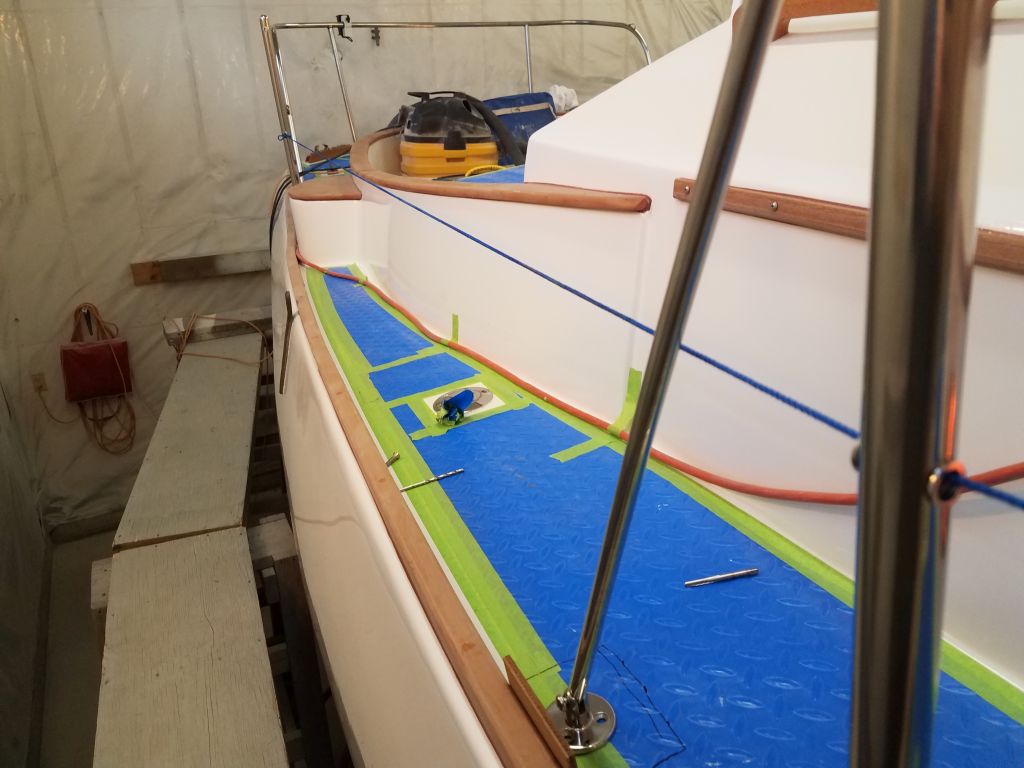
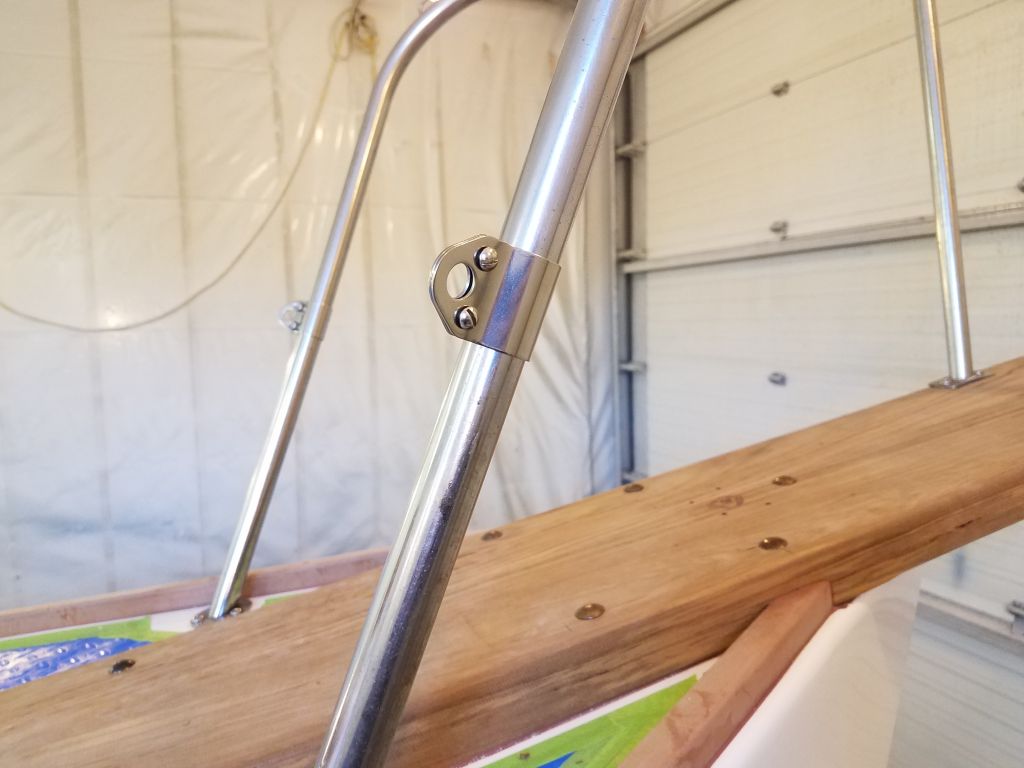
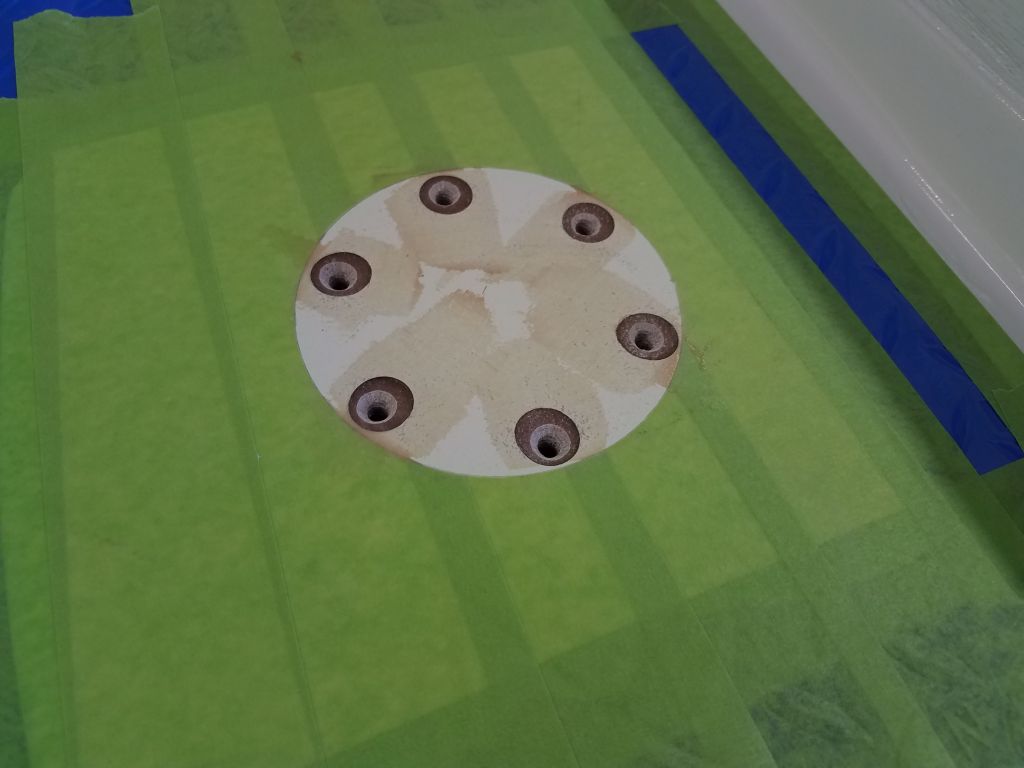
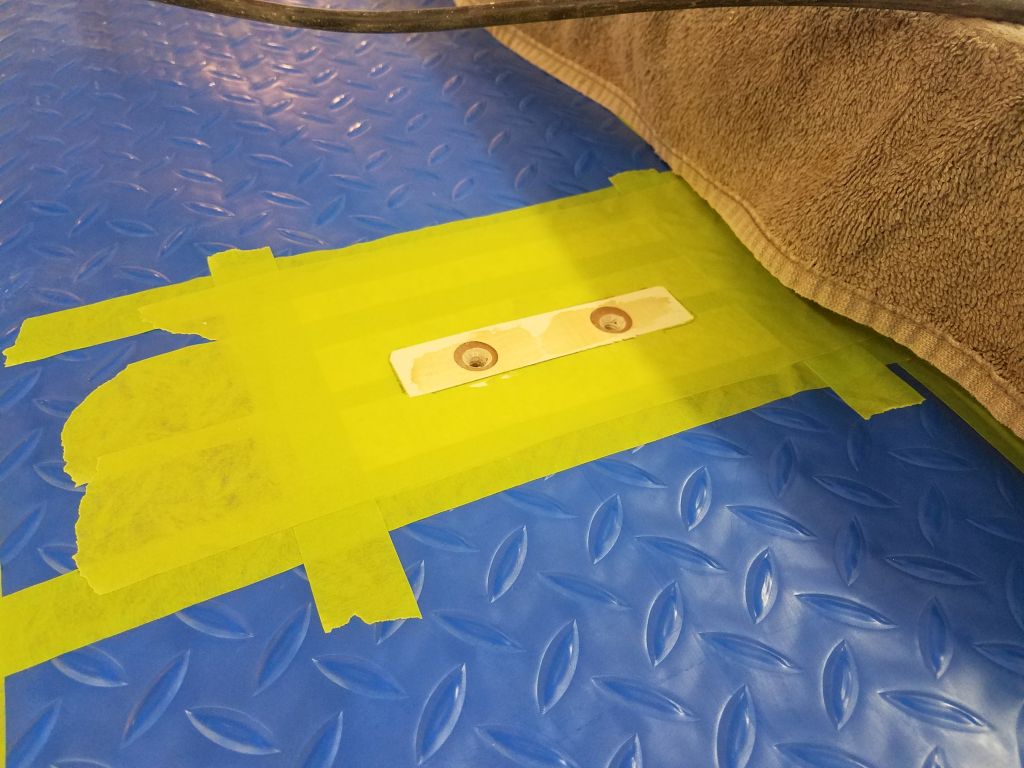
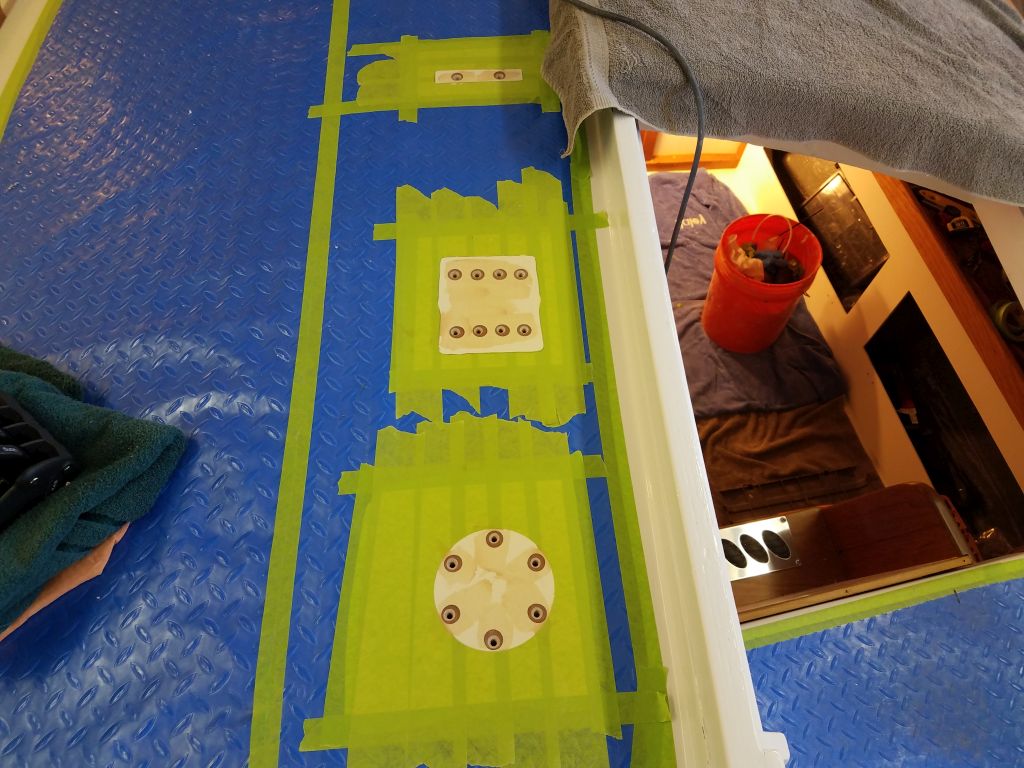
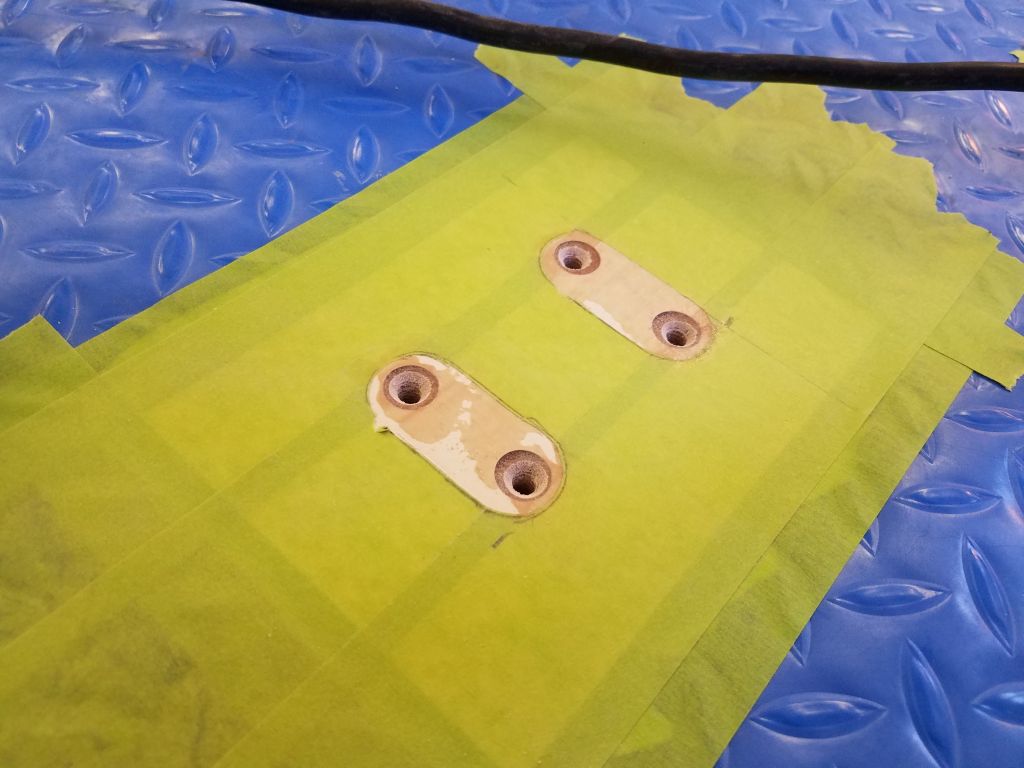
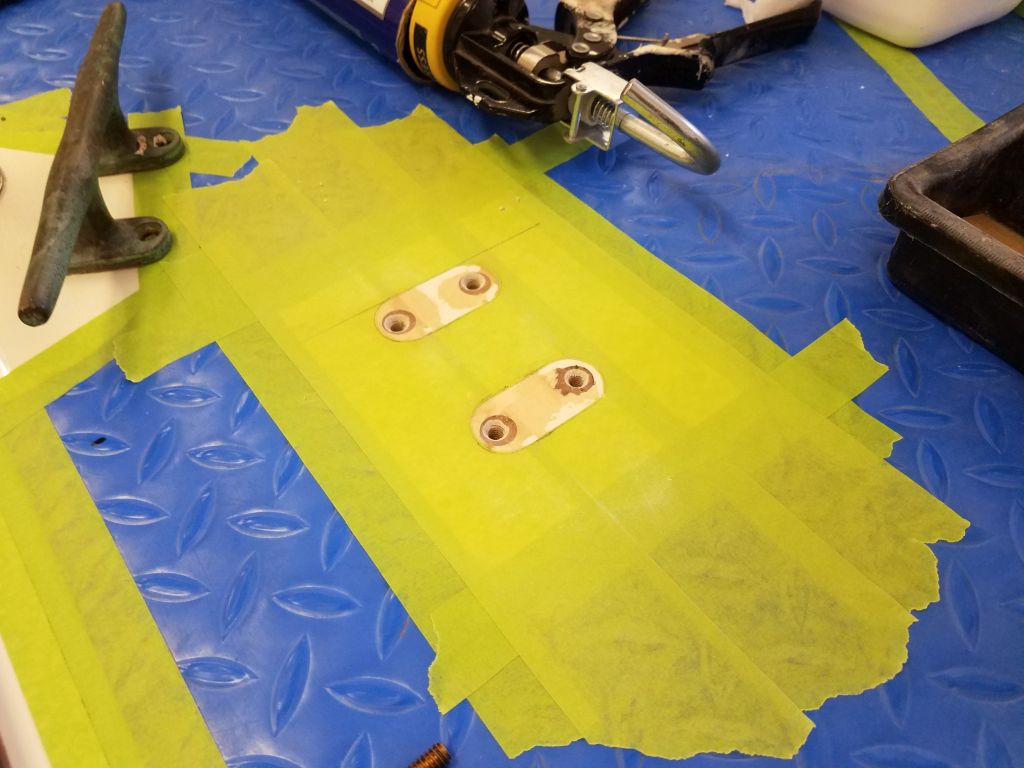
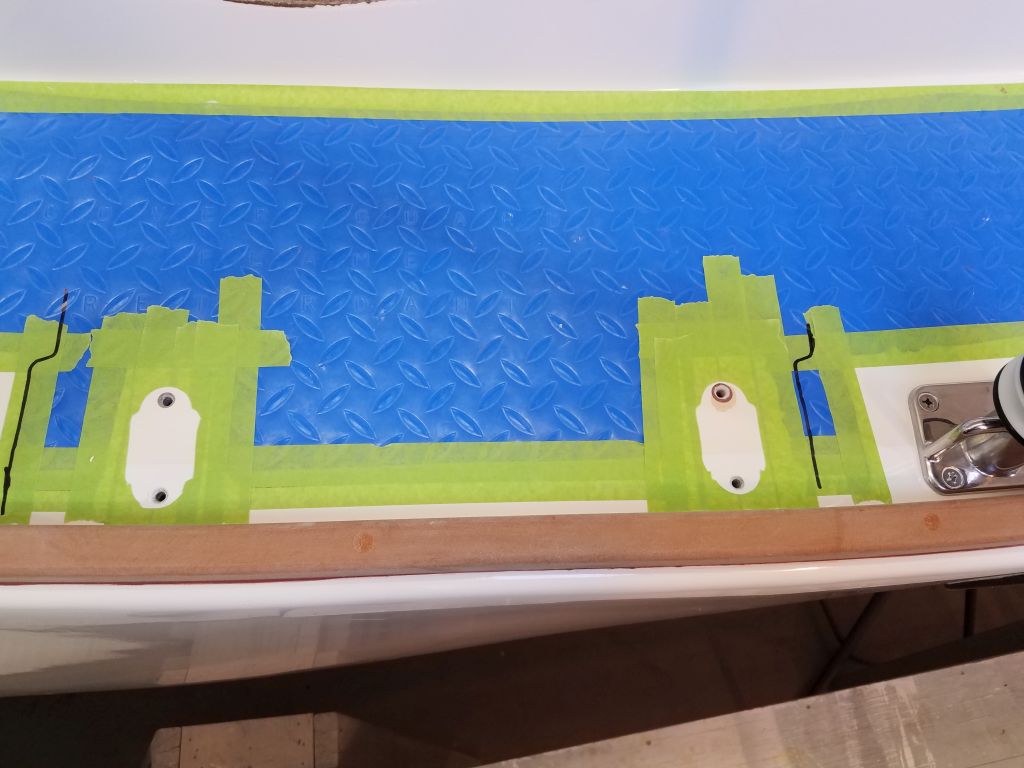
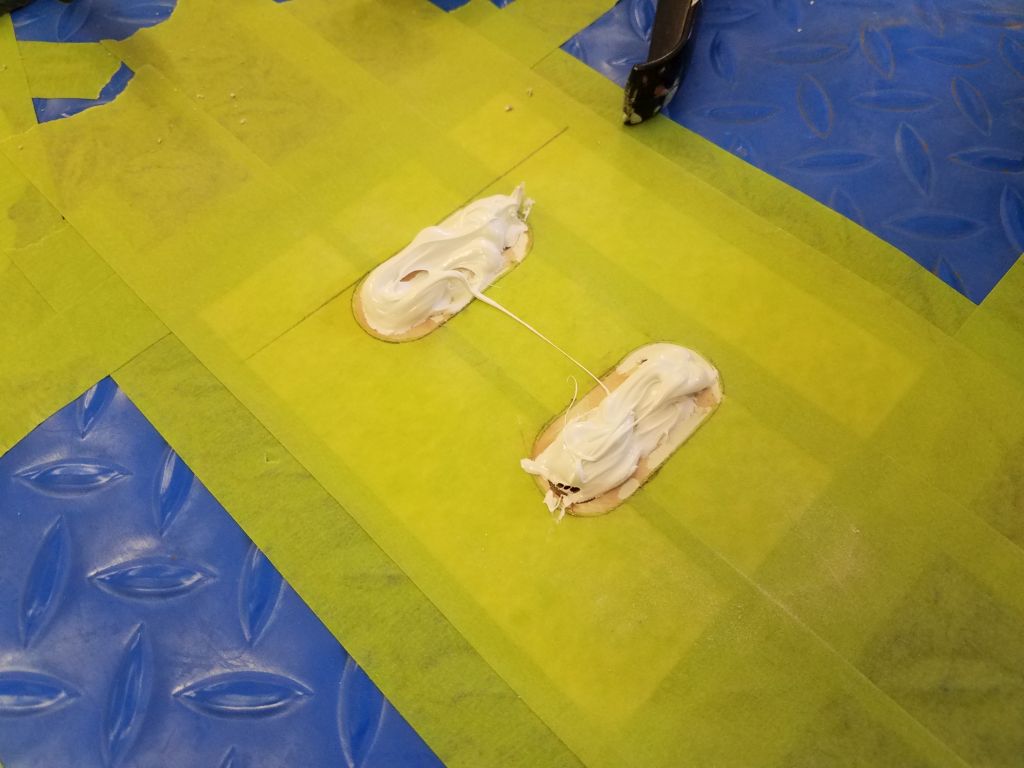
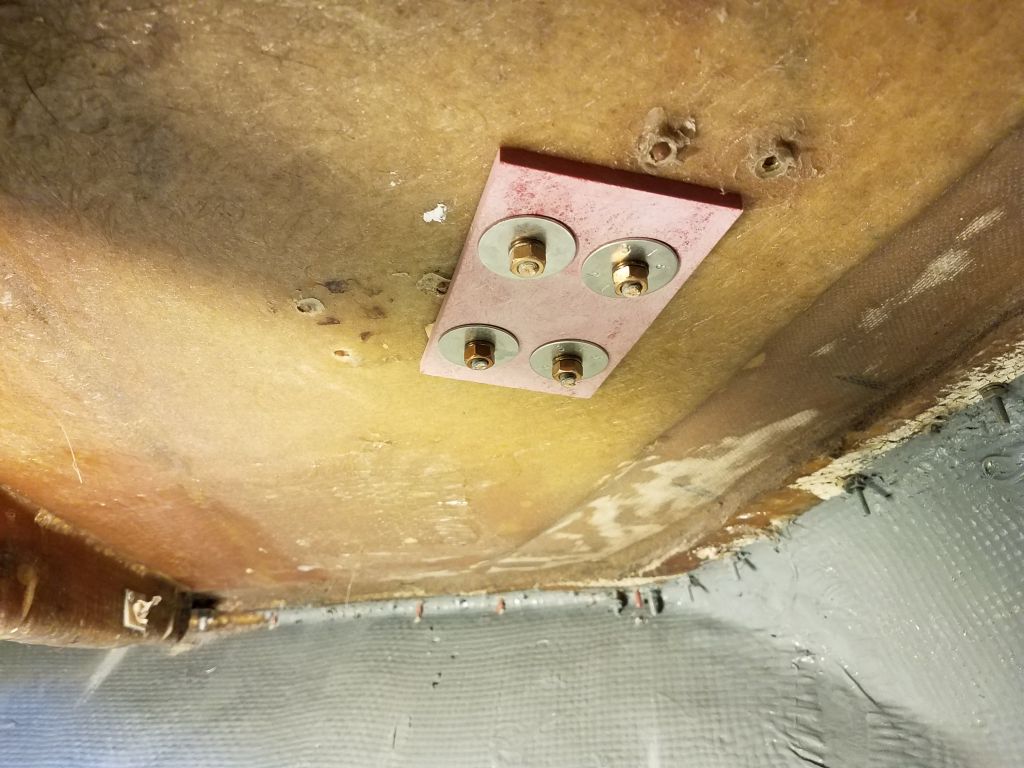
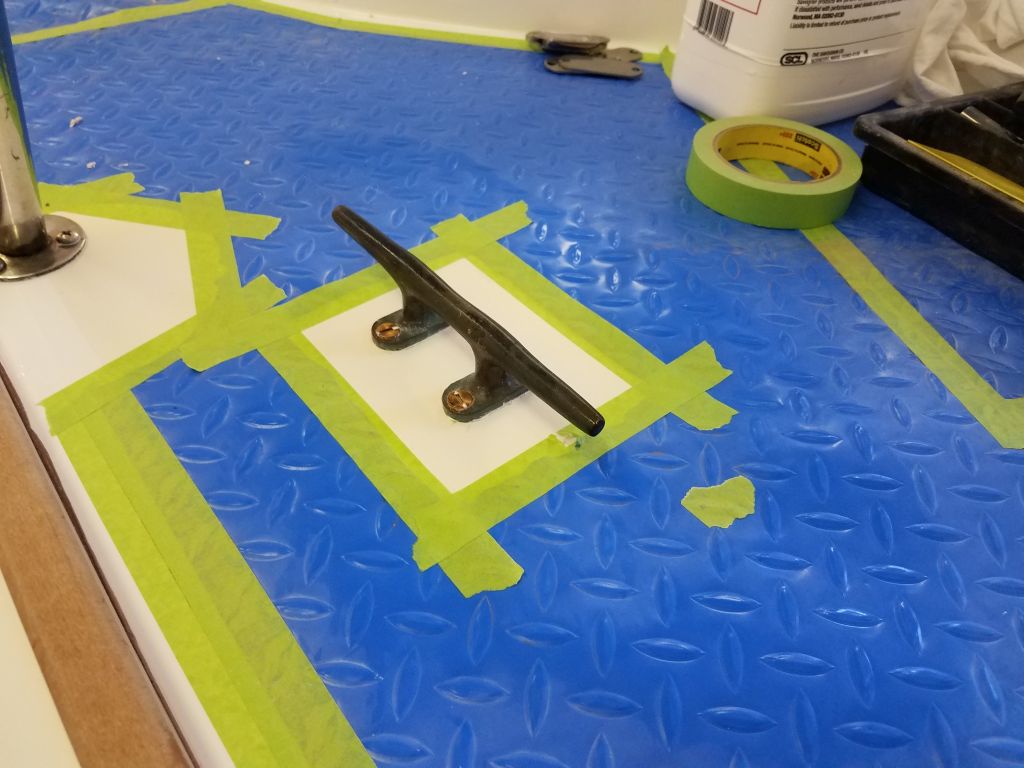
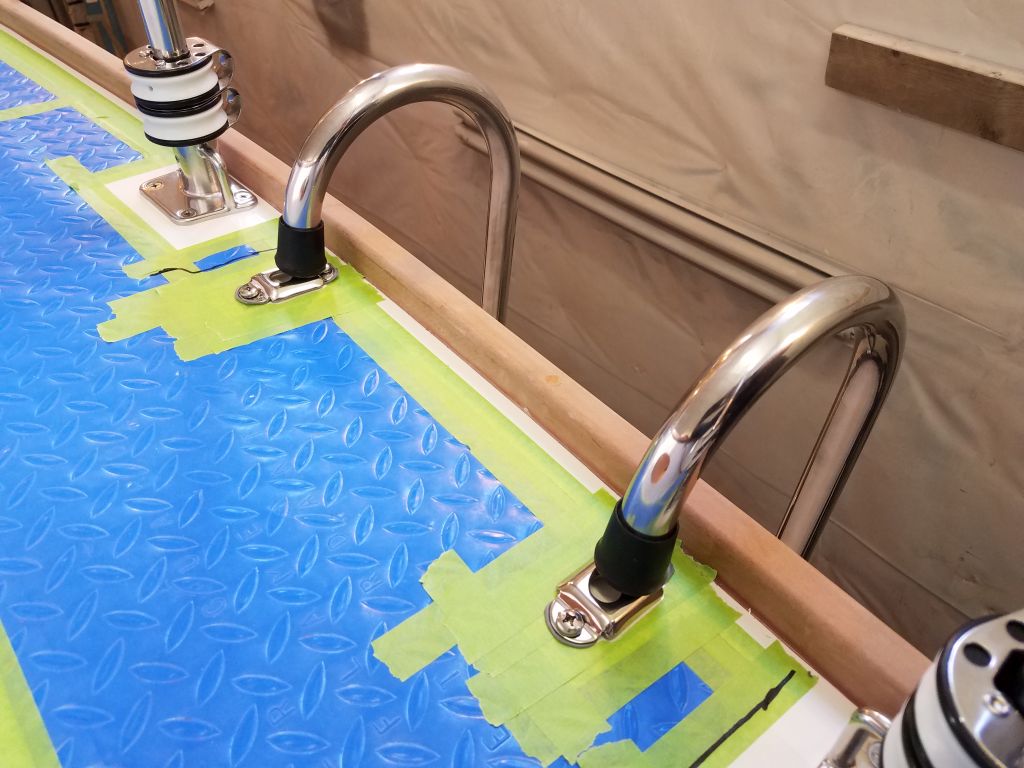
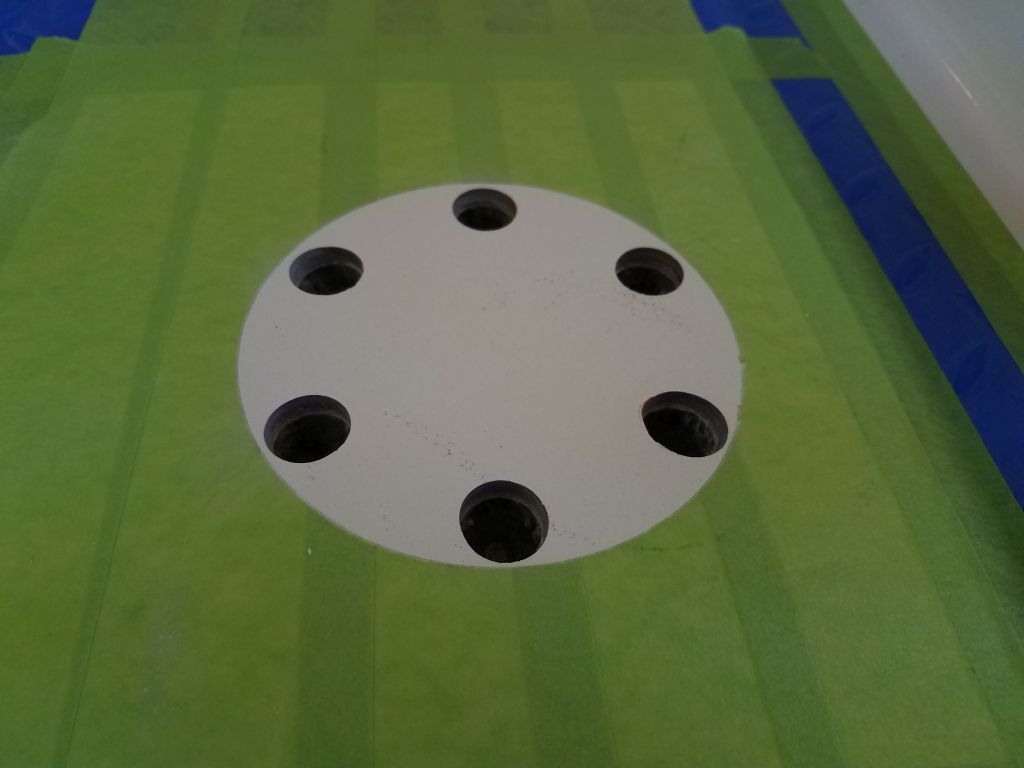
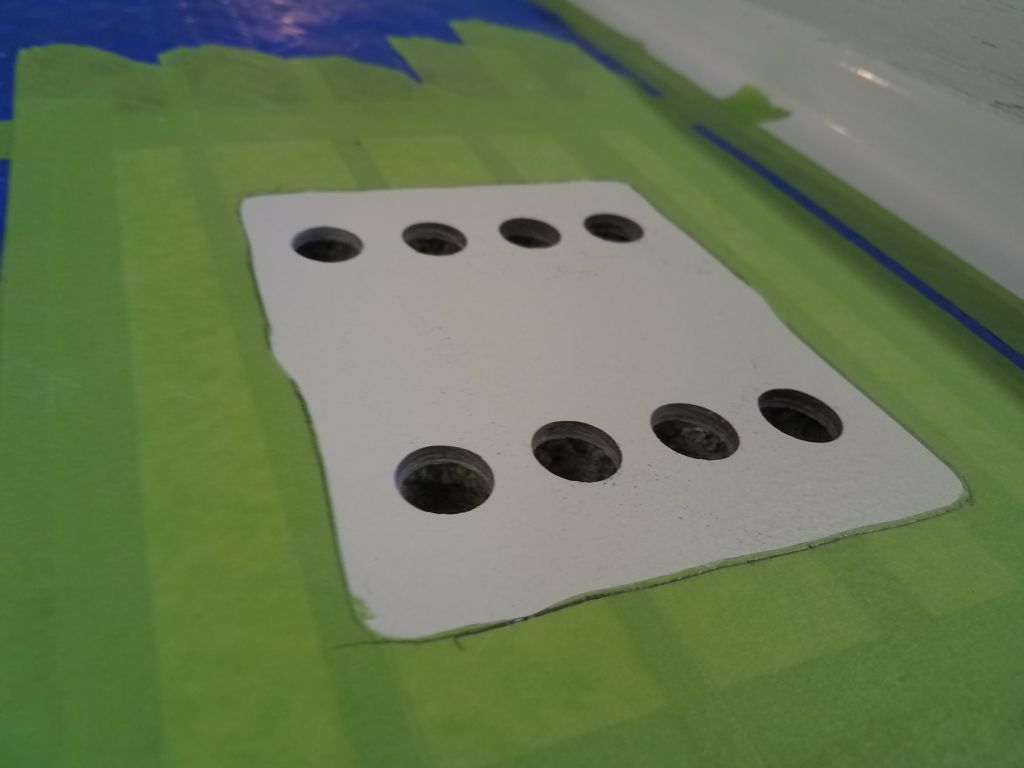
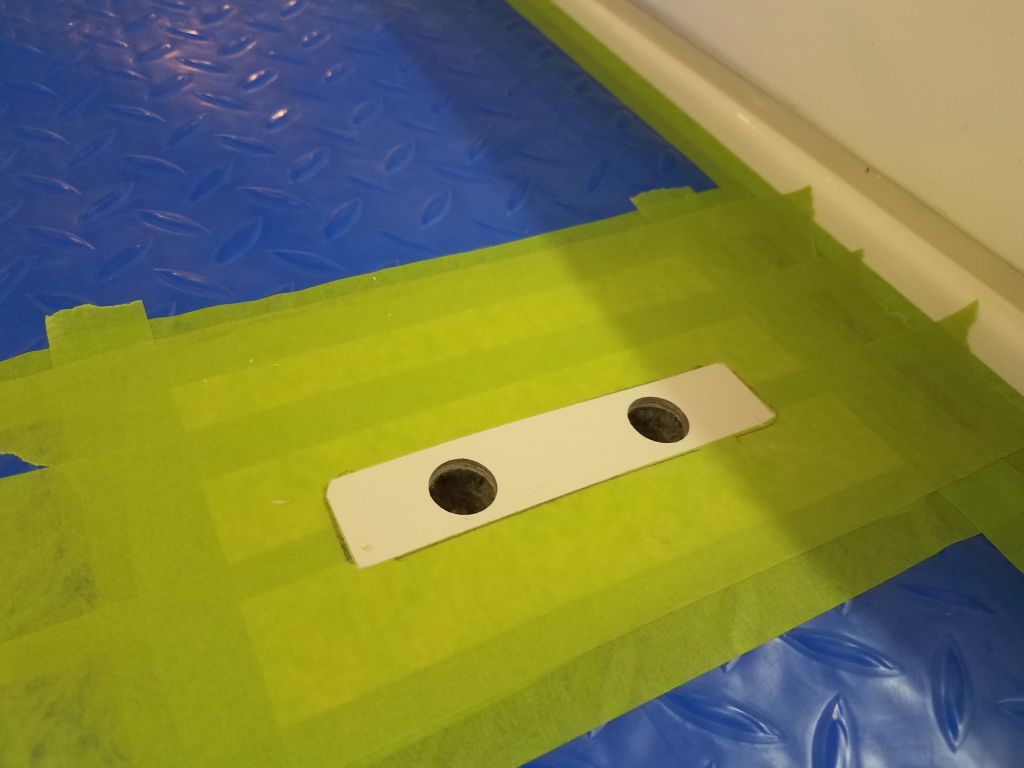
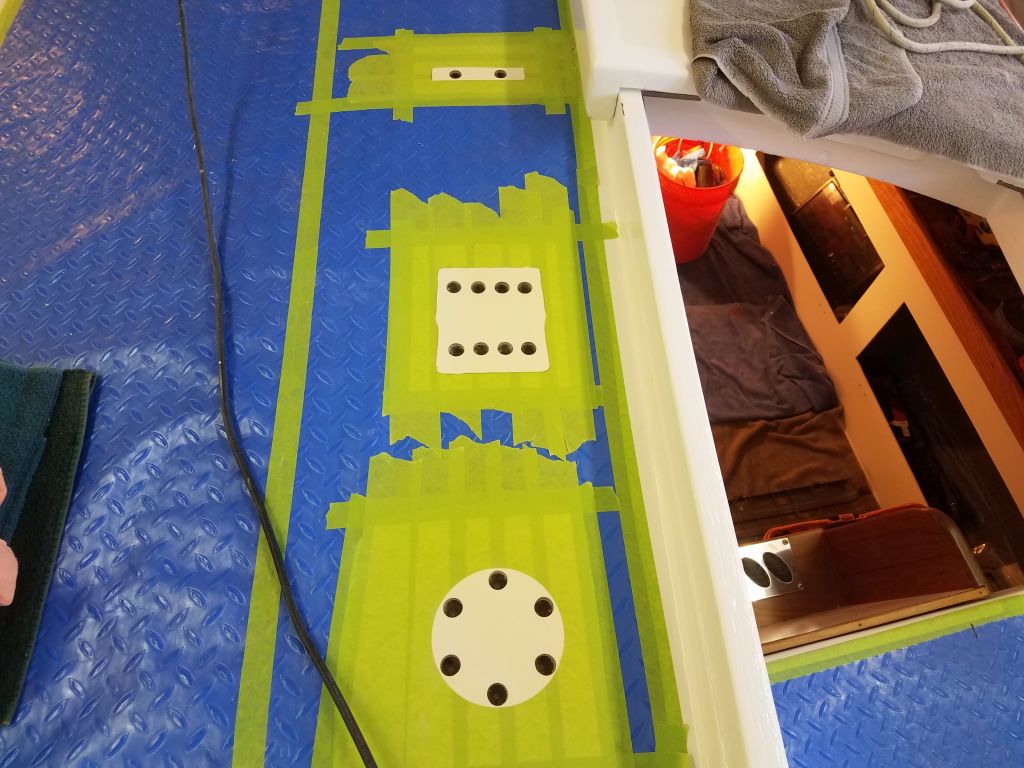
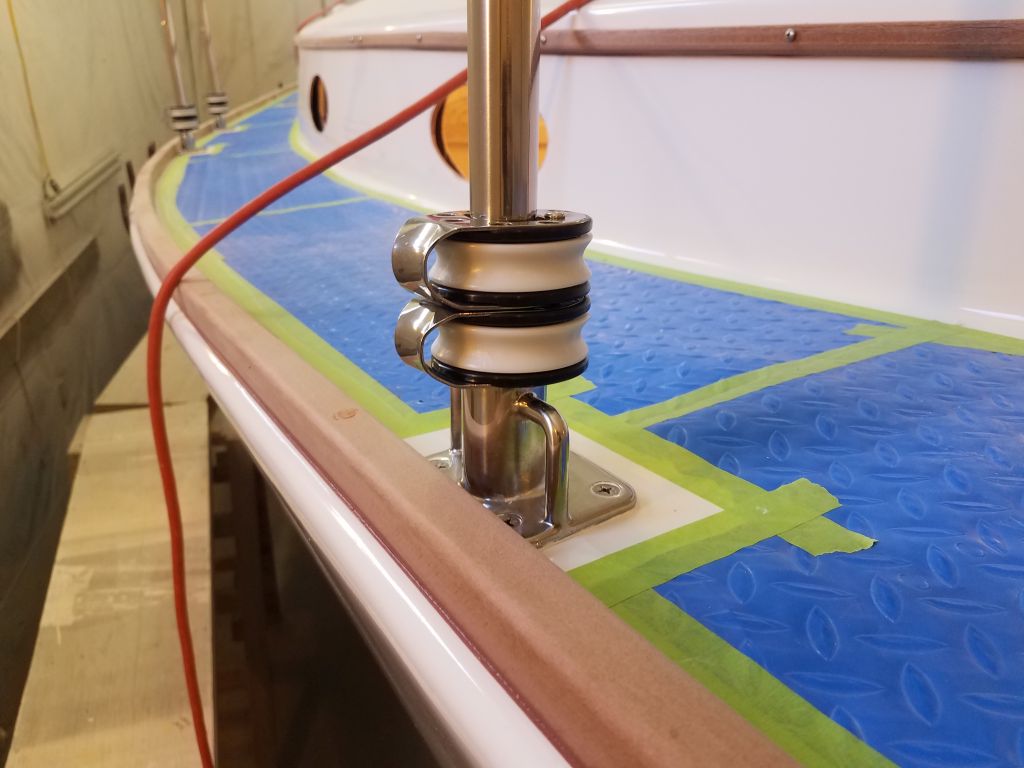
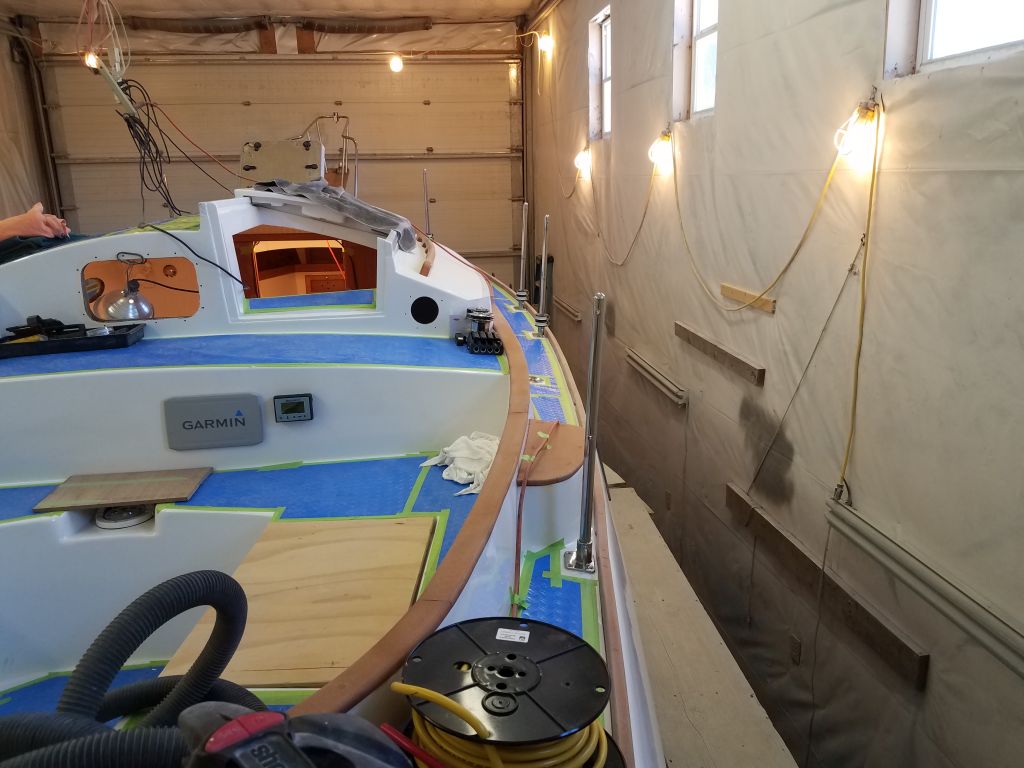
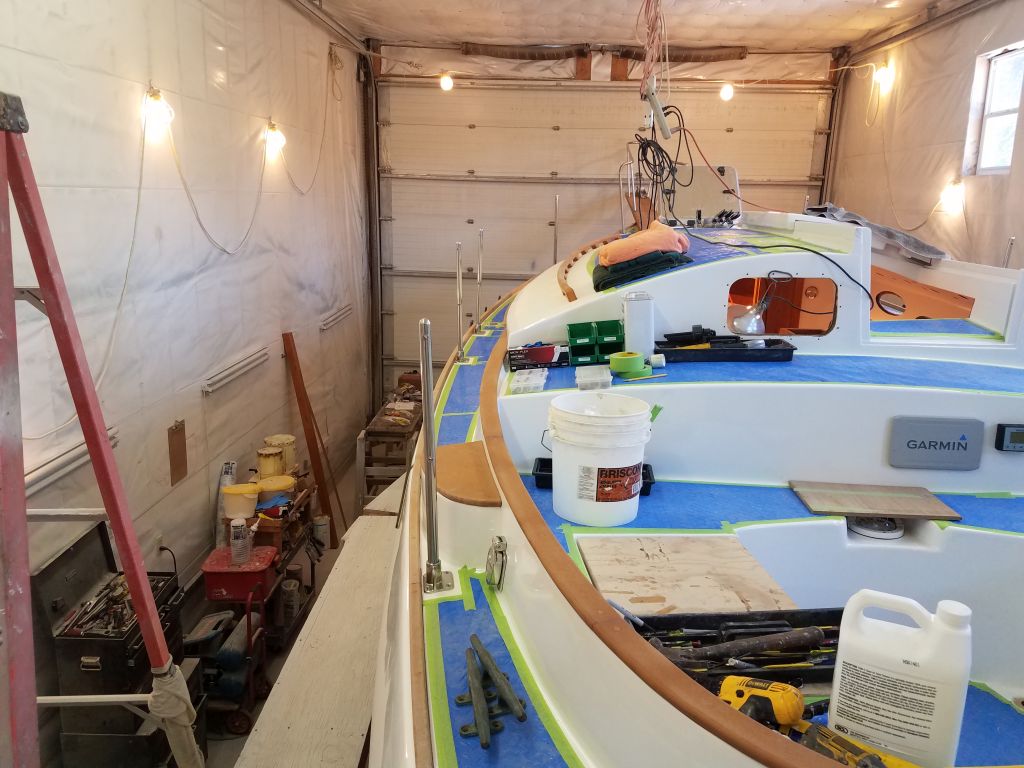
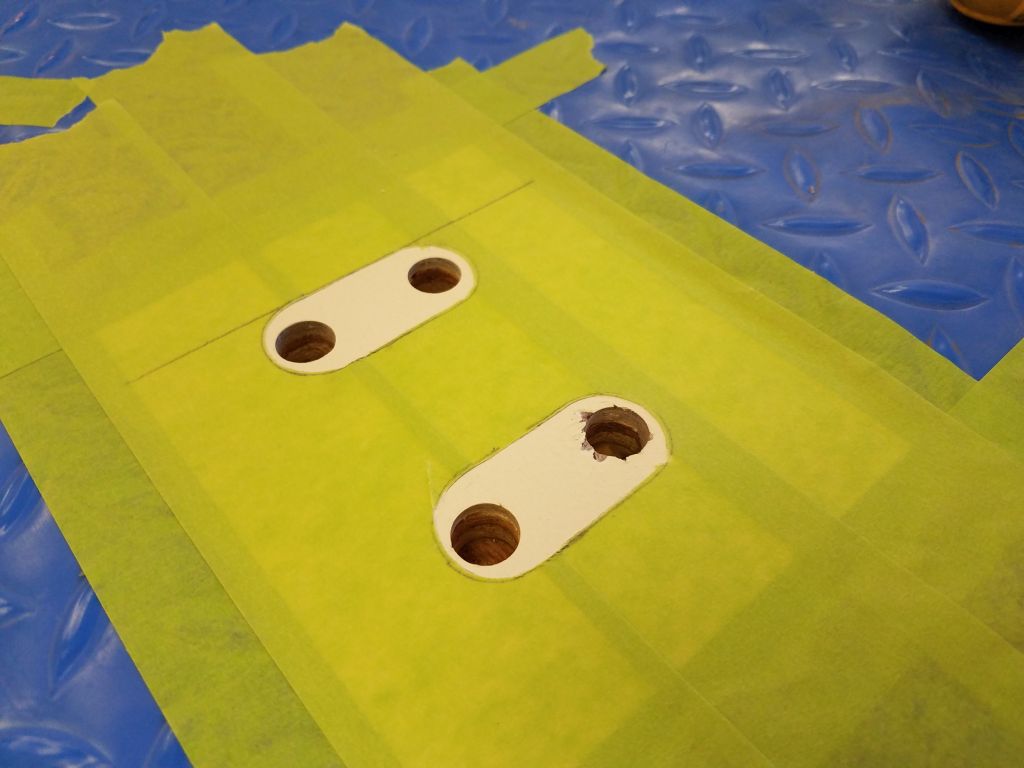
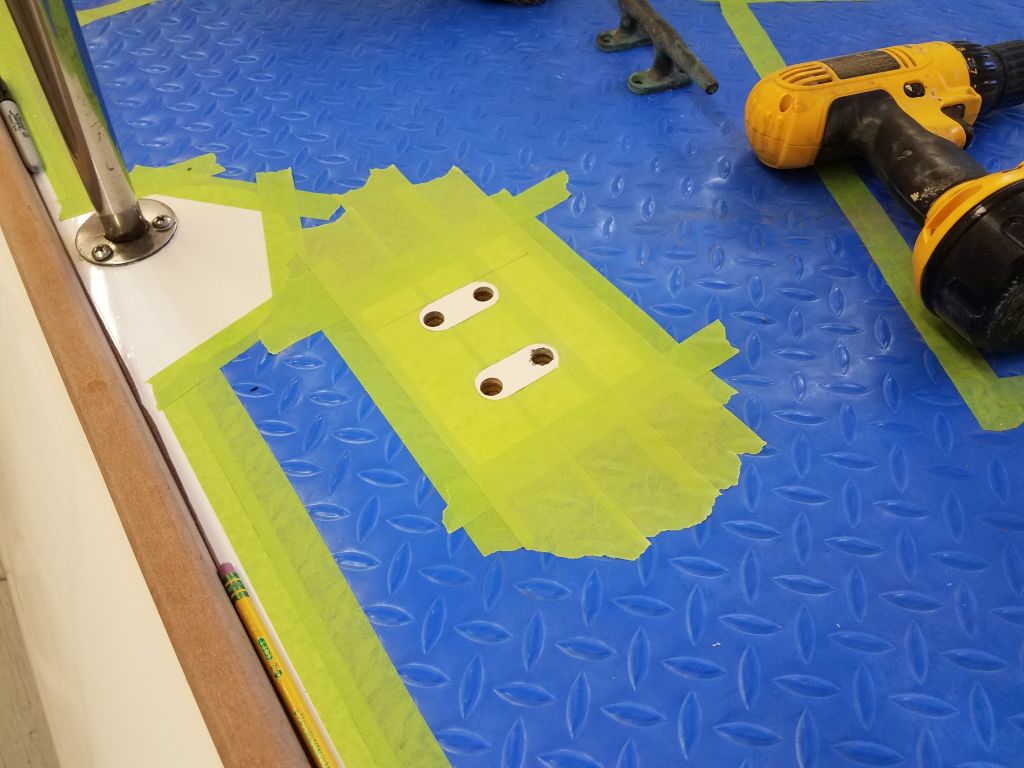
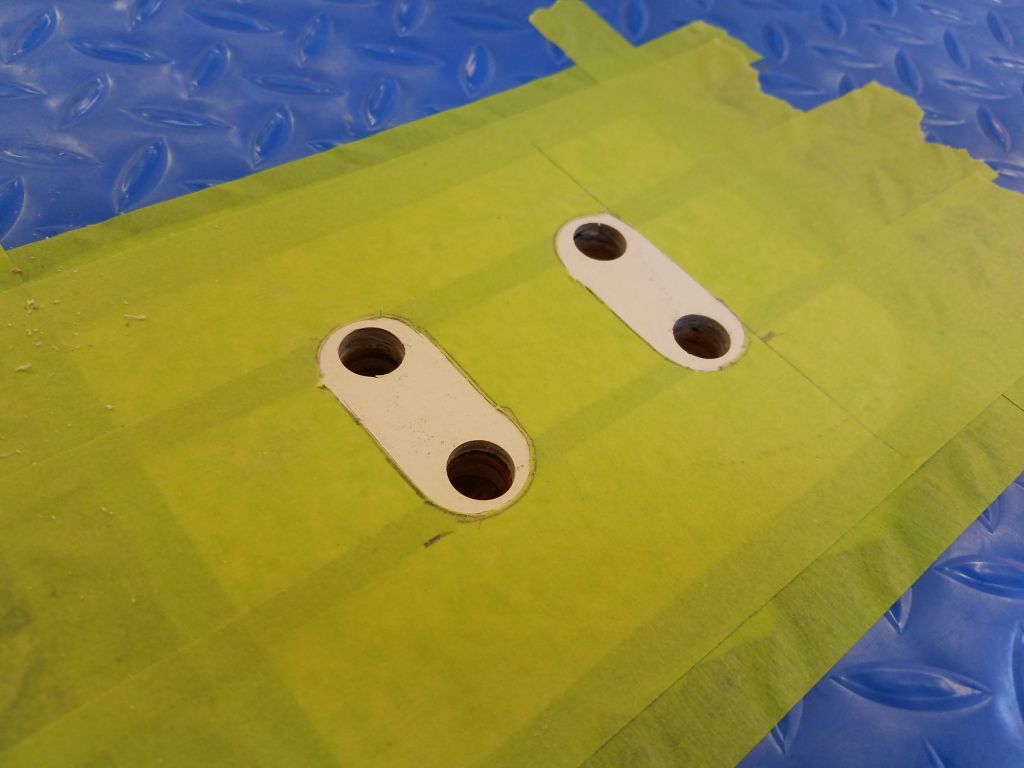
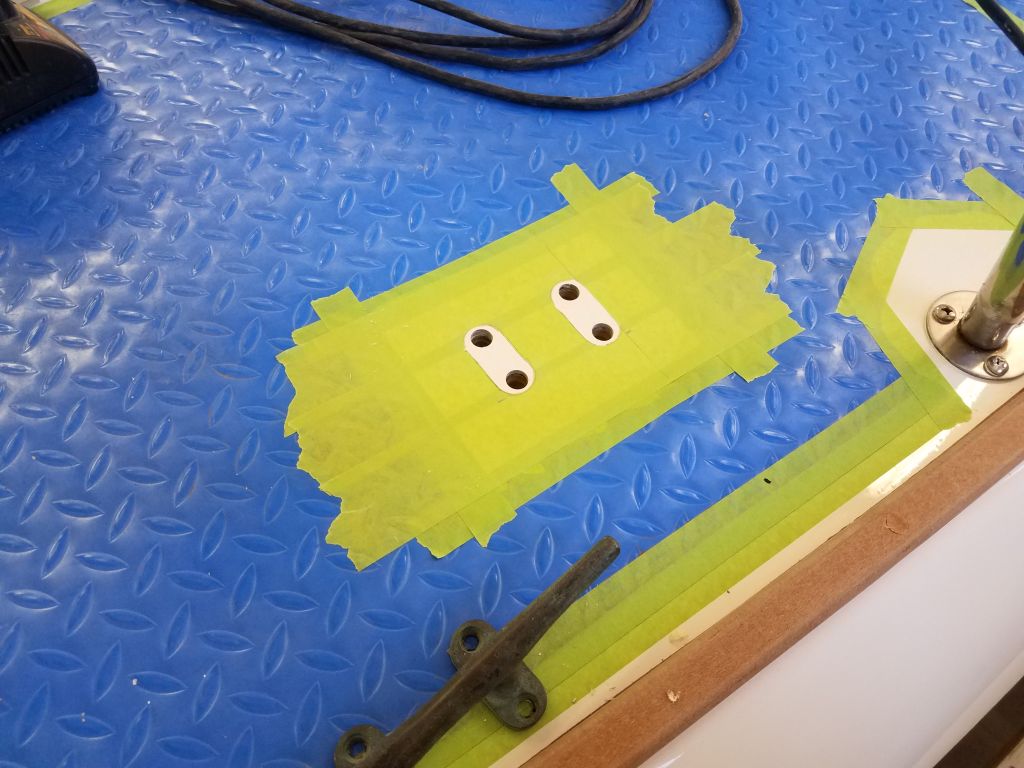
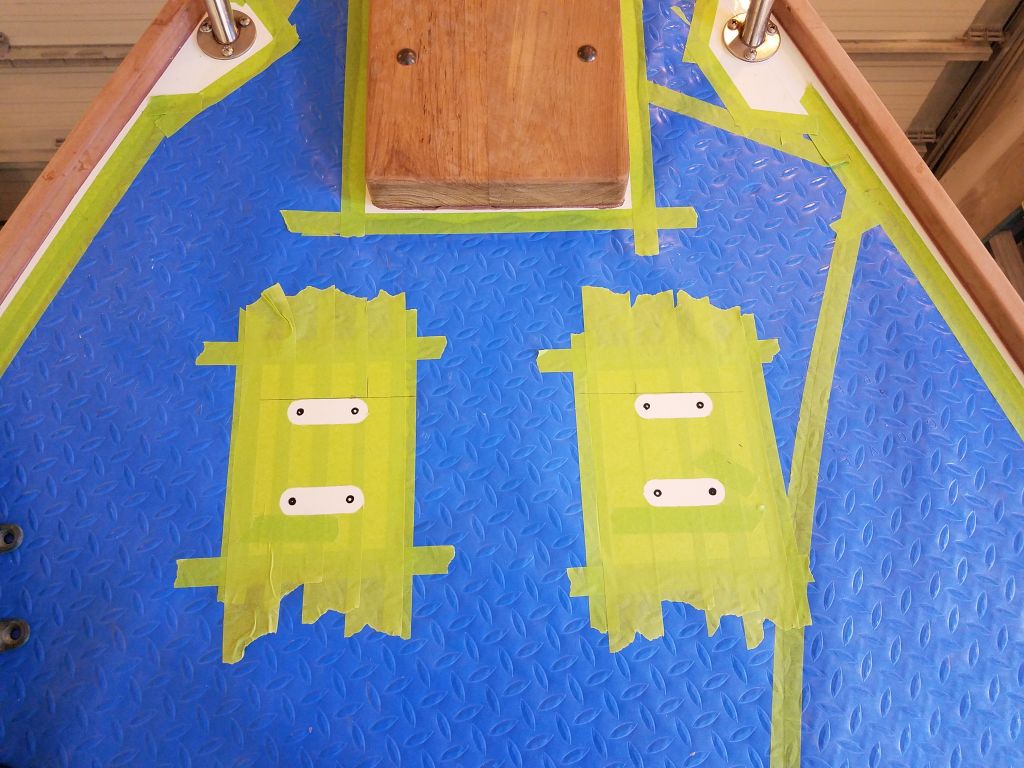
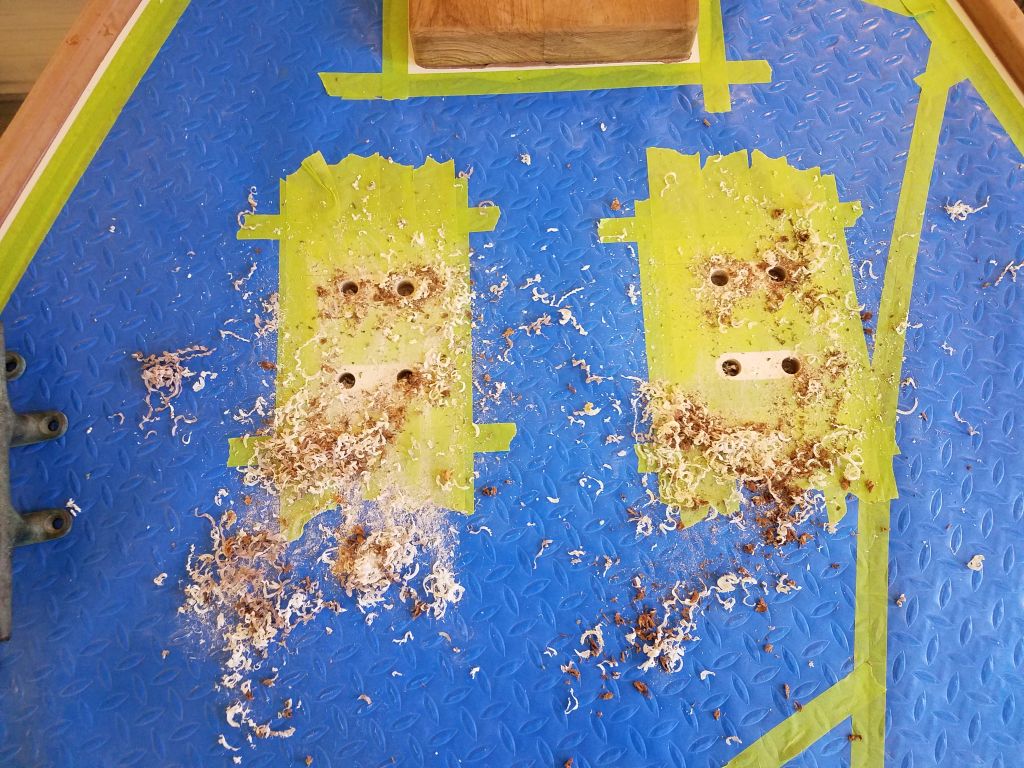
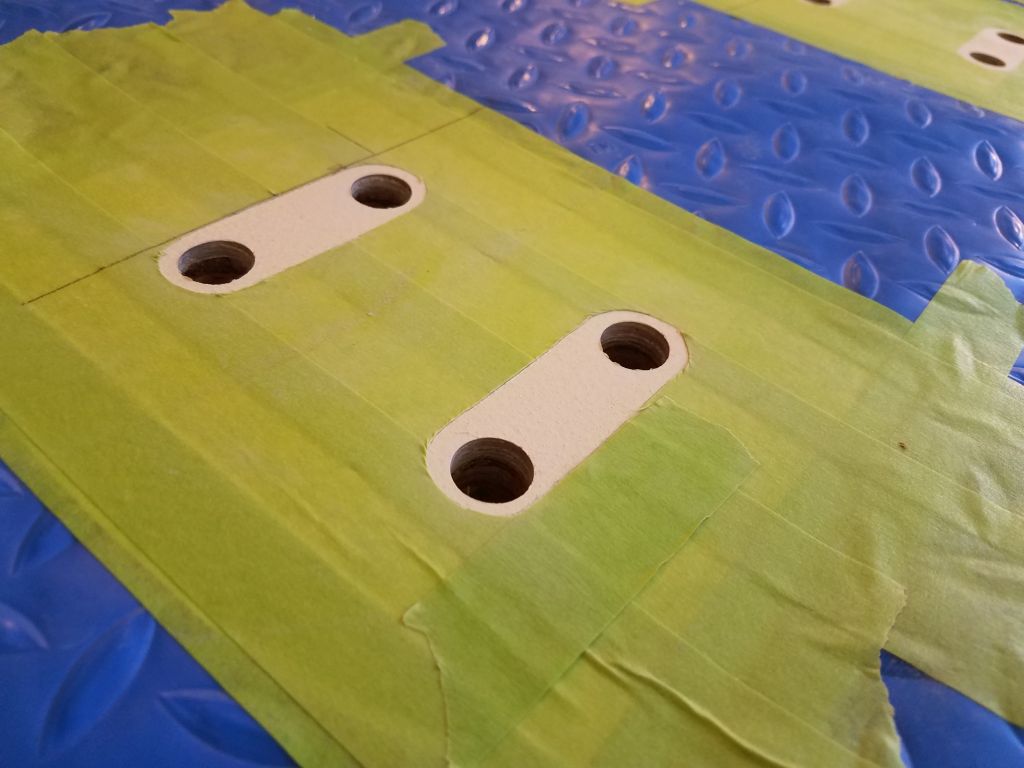
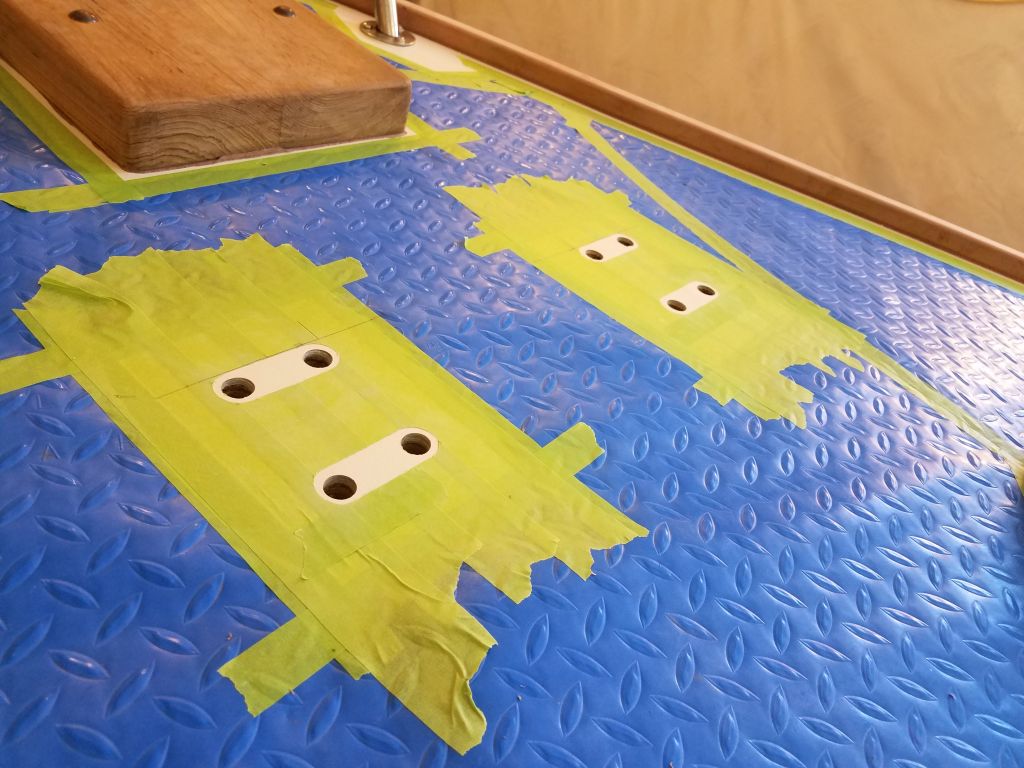
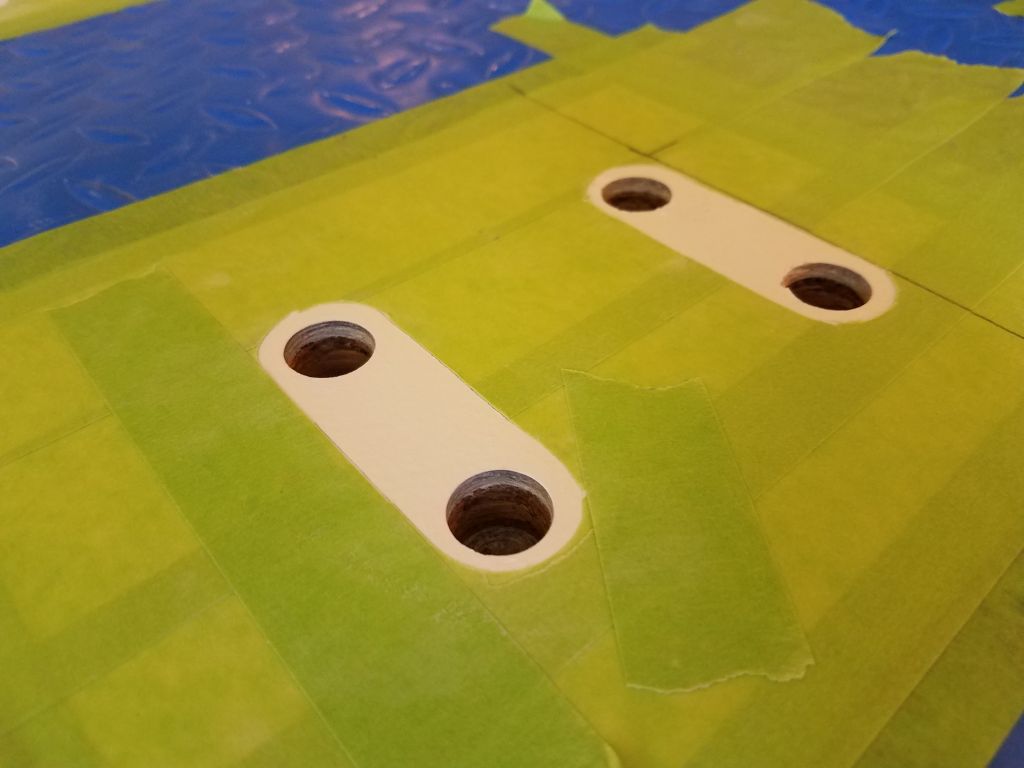
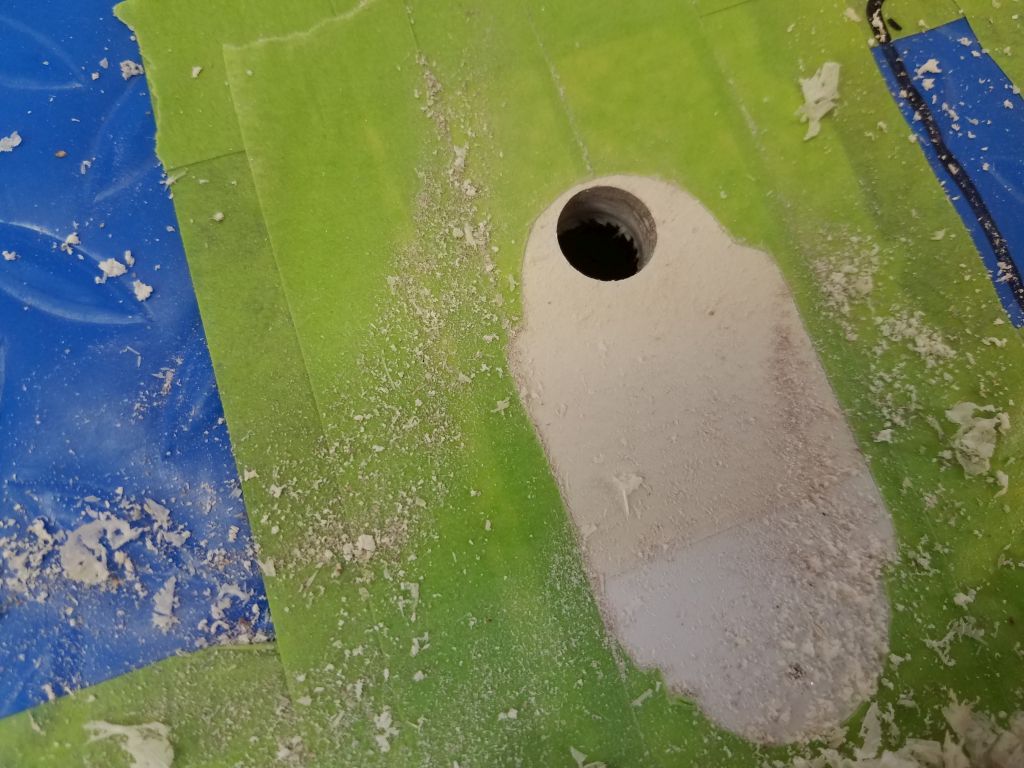
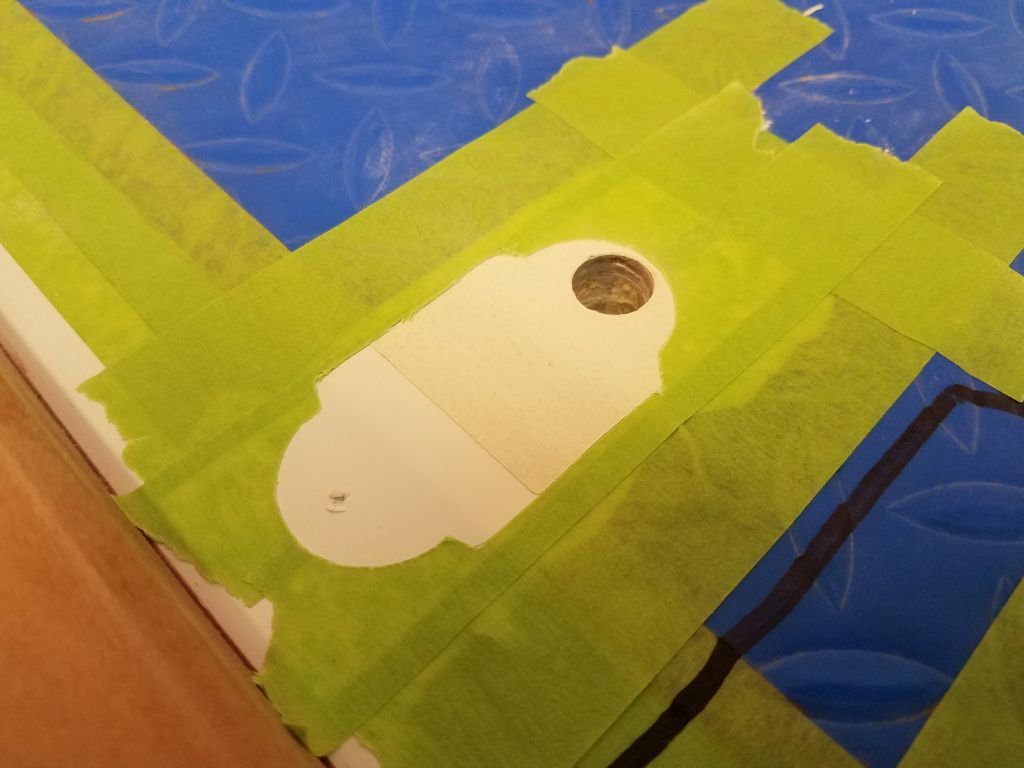
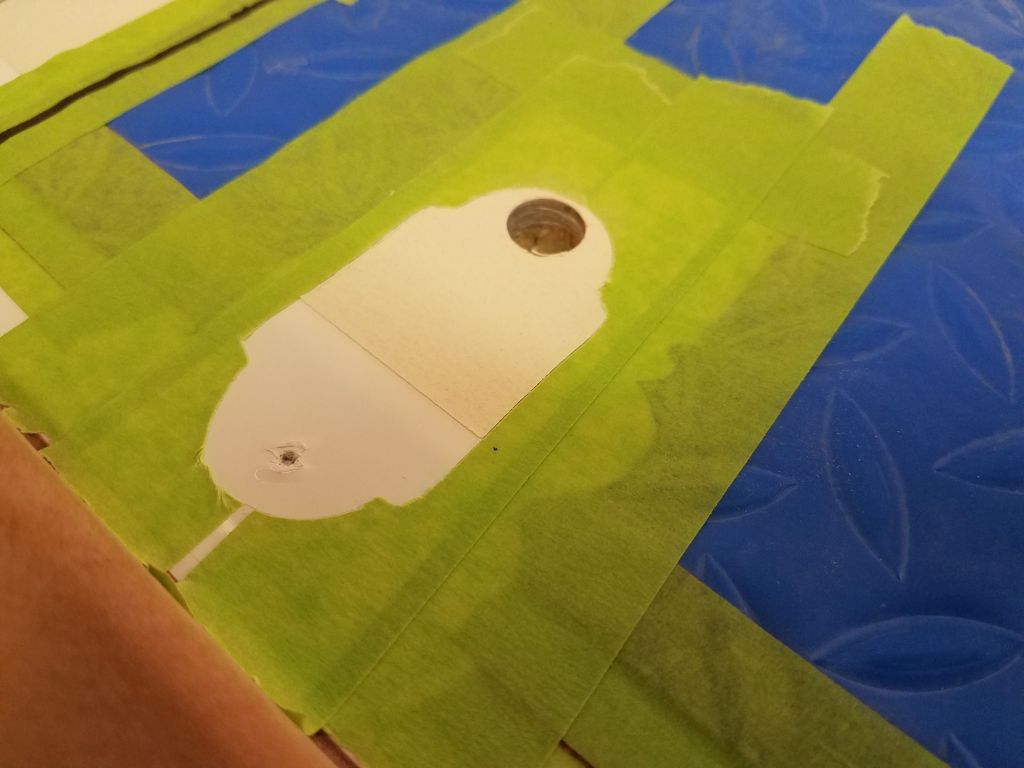
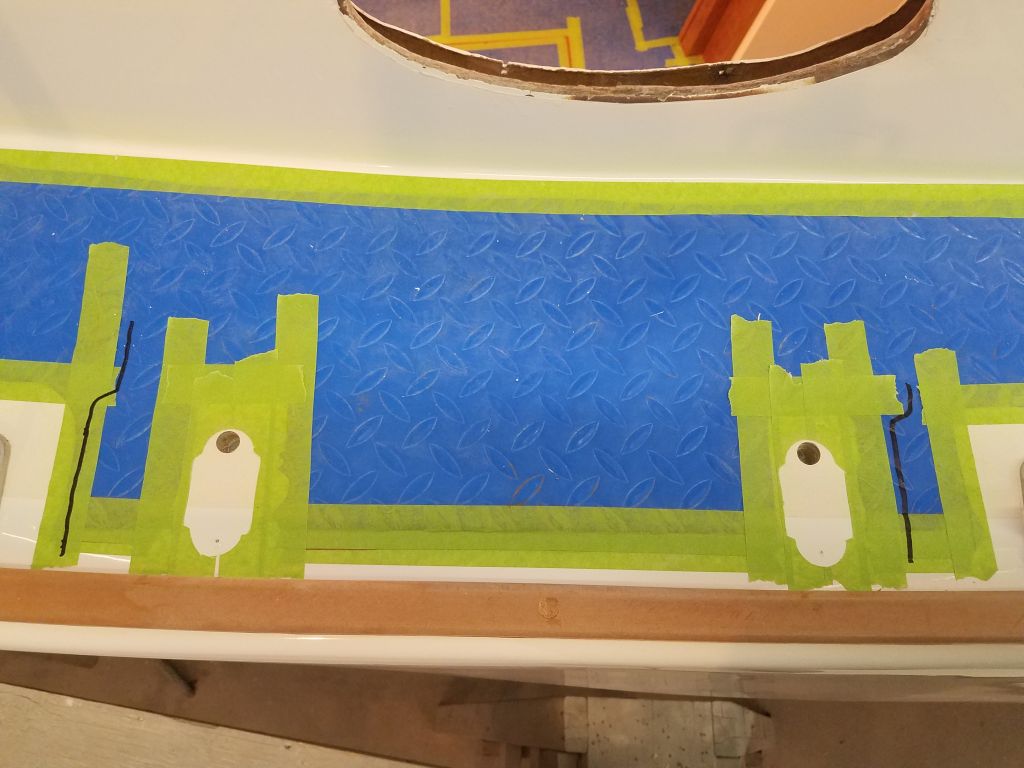
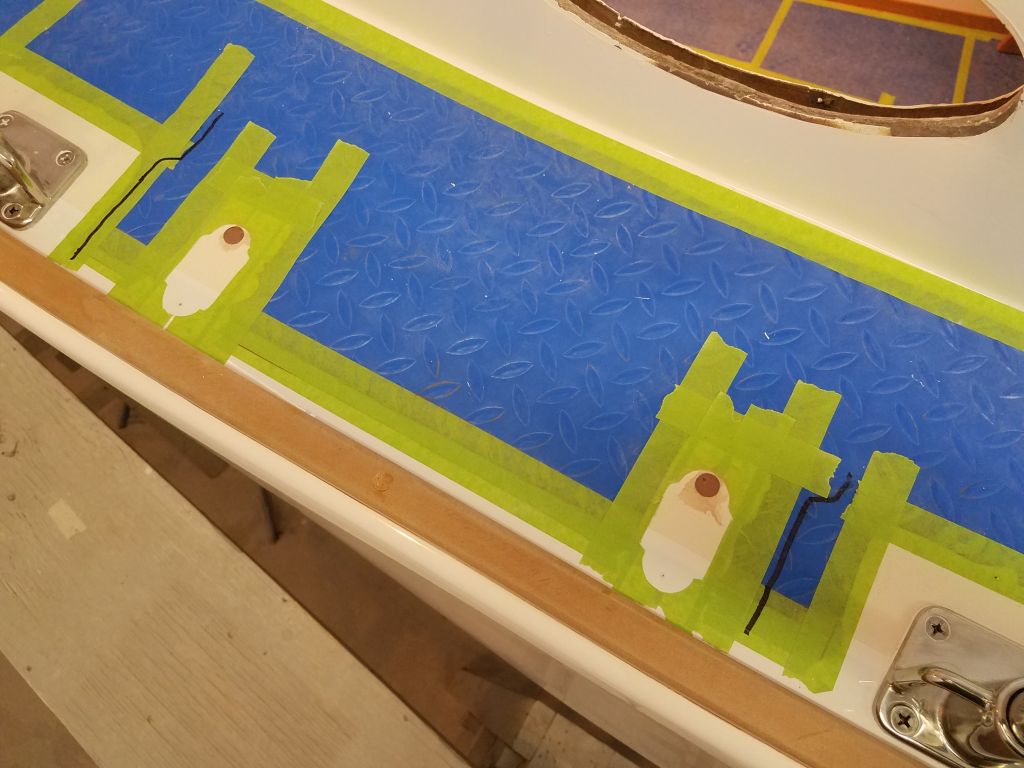
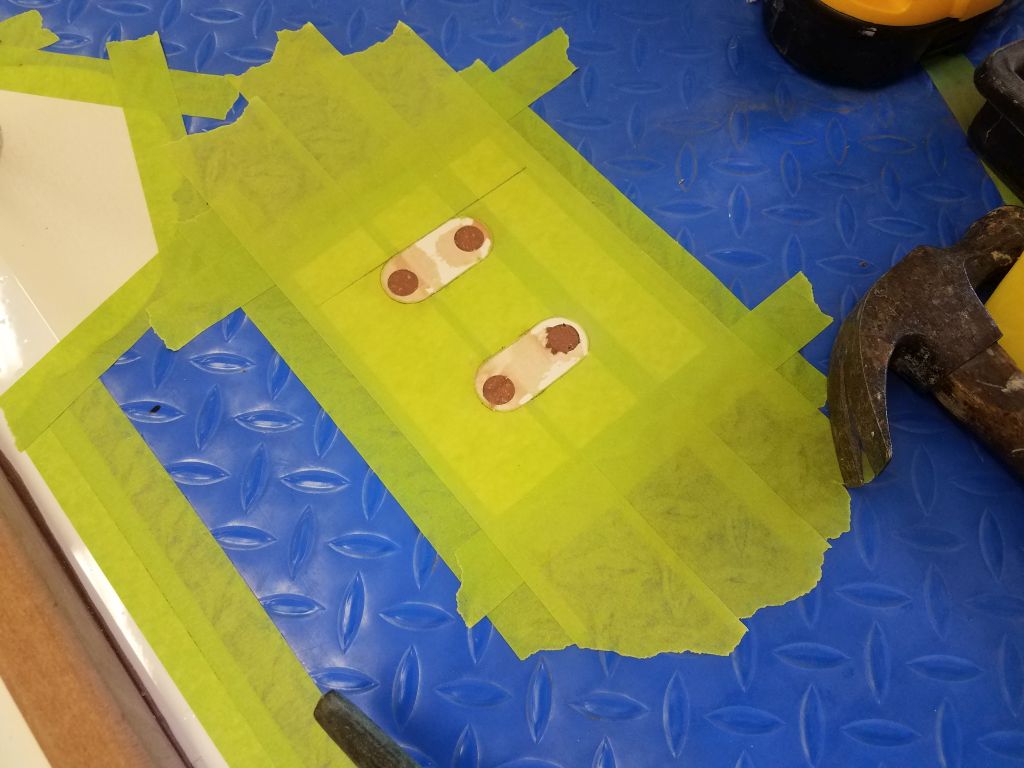
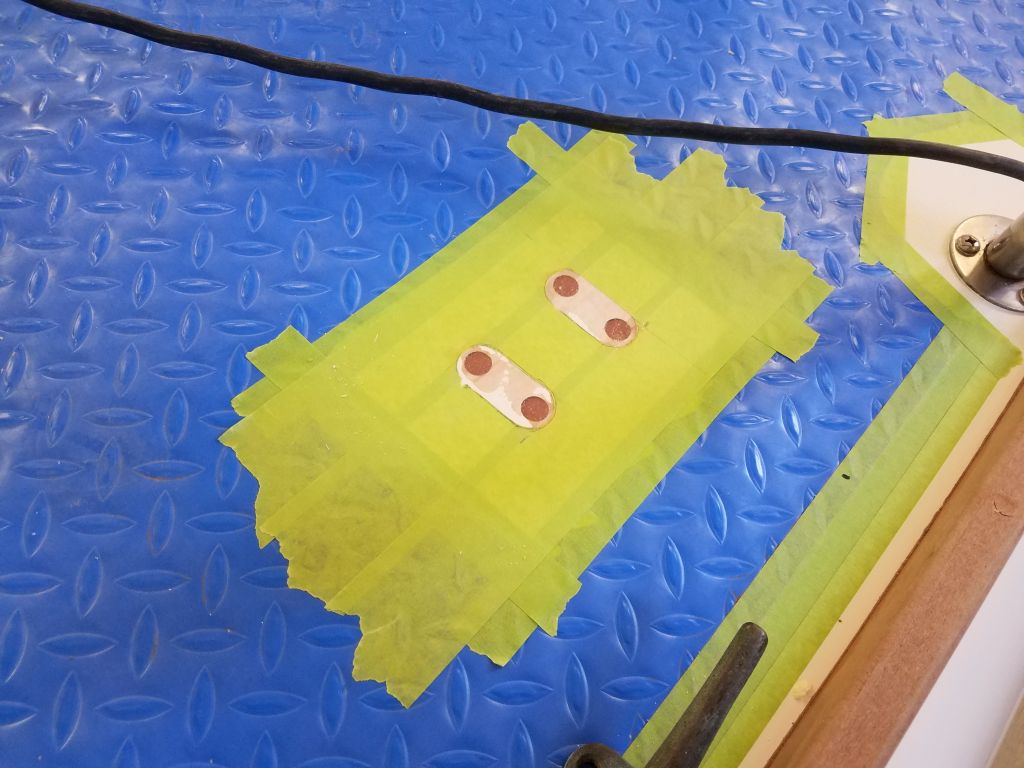
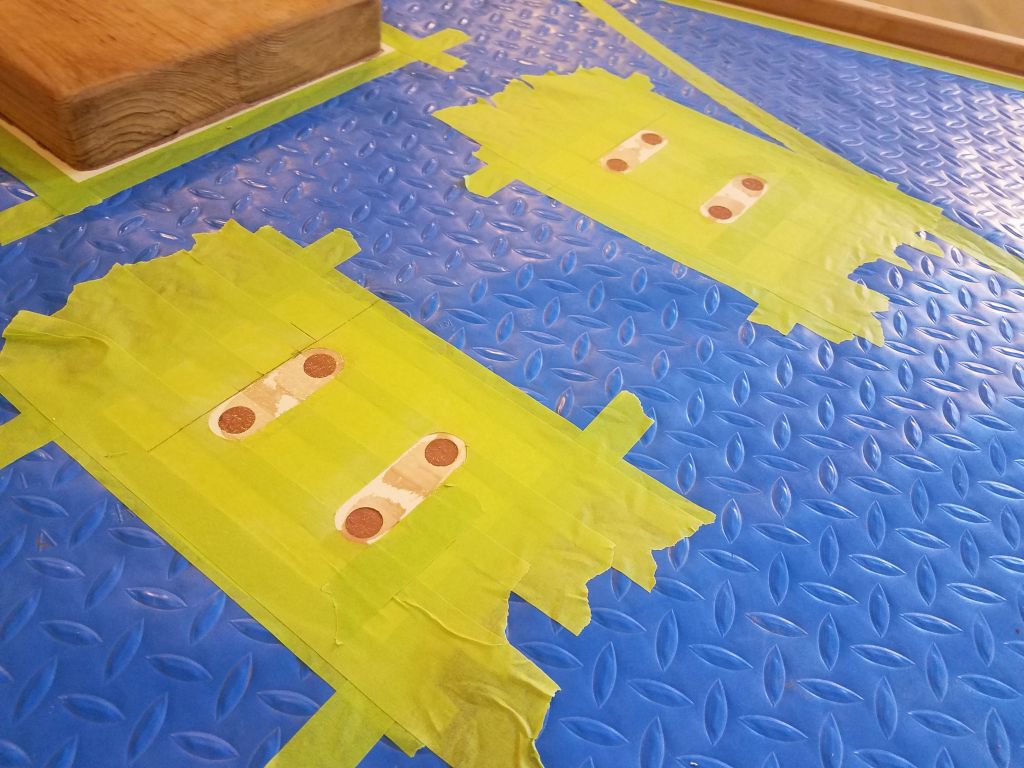
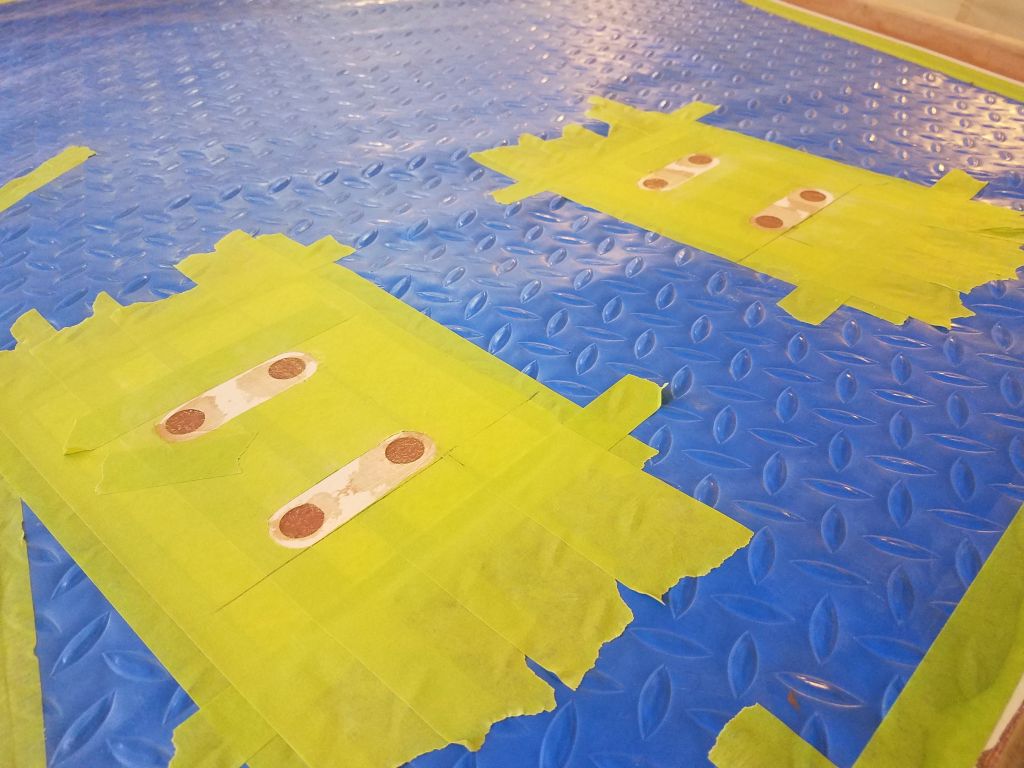
In deck, I finished preparing the fastener holes at the four stanchion locations where I’d had to overbore and epoxy-fill the inboard holes in the deck, so I went through the usual motions of drill/tap/countersink.  Then, beginning with the first three stanchions on the port side, which I’d decreed “most likely to be difficult” because of the way the port liner interacted with the deck and the generally sloppy old repair work I kept running into throughout the work on this side of the boat, I applied sealant and bolts from above, then went below to install large washers and nuts.

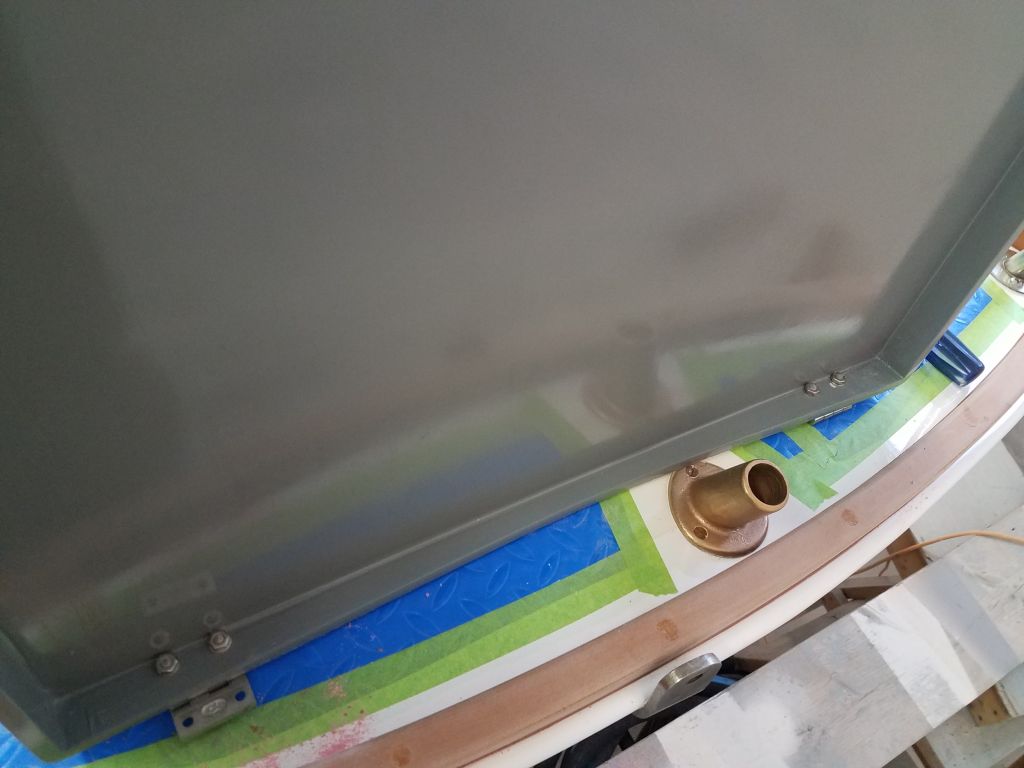
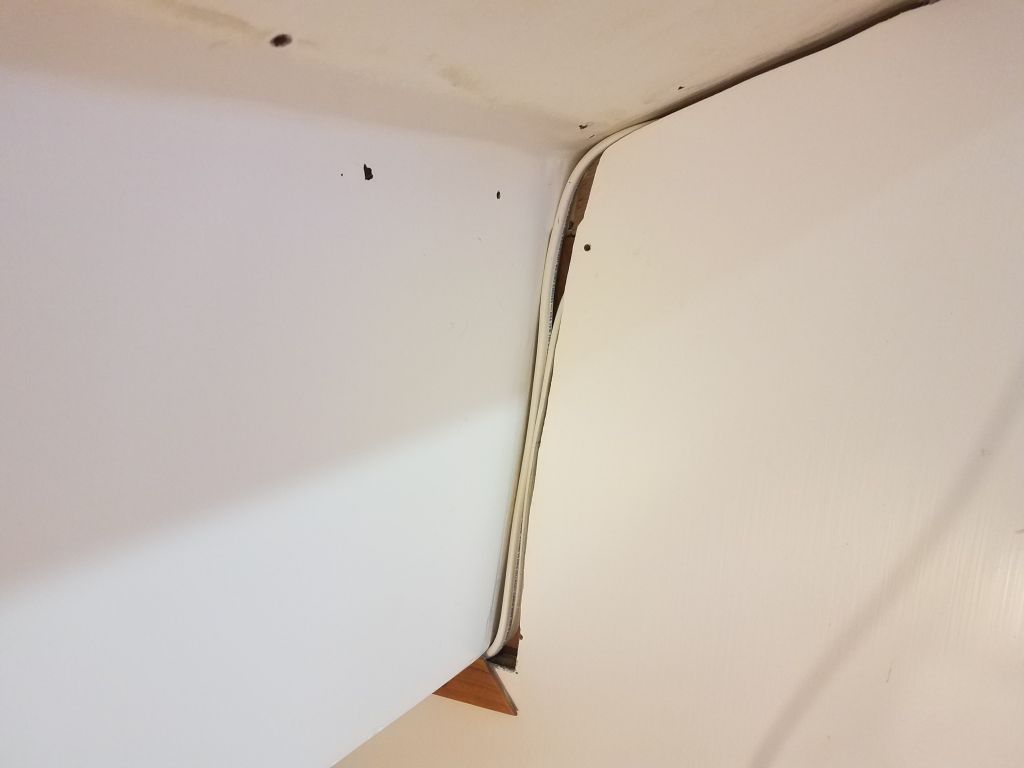
Indeed, access to these three bases was tough.  The space between the liner and the deck was quite wide, but the liner extended nearly to the hull on this side, and with the stanchions close to the edge of the hull, something about this combination made it next to impossible to get a hand in there easily, so starting the washers and nuts was something of a trial.  I had to open further a couple of the cuts I’d made in the liner so I could get to the innermost bolts at the two forwardmost locations, and at the foredeck location there was a mess of crusty, sloppy old fiberglass shards and related mess that I had to chisel out of the way so I could get washers in place, but eventually and at considerable length I successfully fastened all three of the bases on the port side (the fourth one, aft of the winch island, would come later), and cleaned up the excess sealant and tape on deck to complete the job.

On the starboard side, I chose to install the last two bases currently on hand at the new gate location, leaving the other two for installation later, once the final sets of bases arrived.  Access to the underside of the deck on this side was easier and cleaner for a couple reasons:  first, the liner here was pretty much firmly attached right beneath the deck, which made accessing the holes easier; and the starboard side had thankfully been spared whatever repair shop had done the dismal work on the port side.  Work on these two bases went much more quickly then theirs counterparts across the boat.

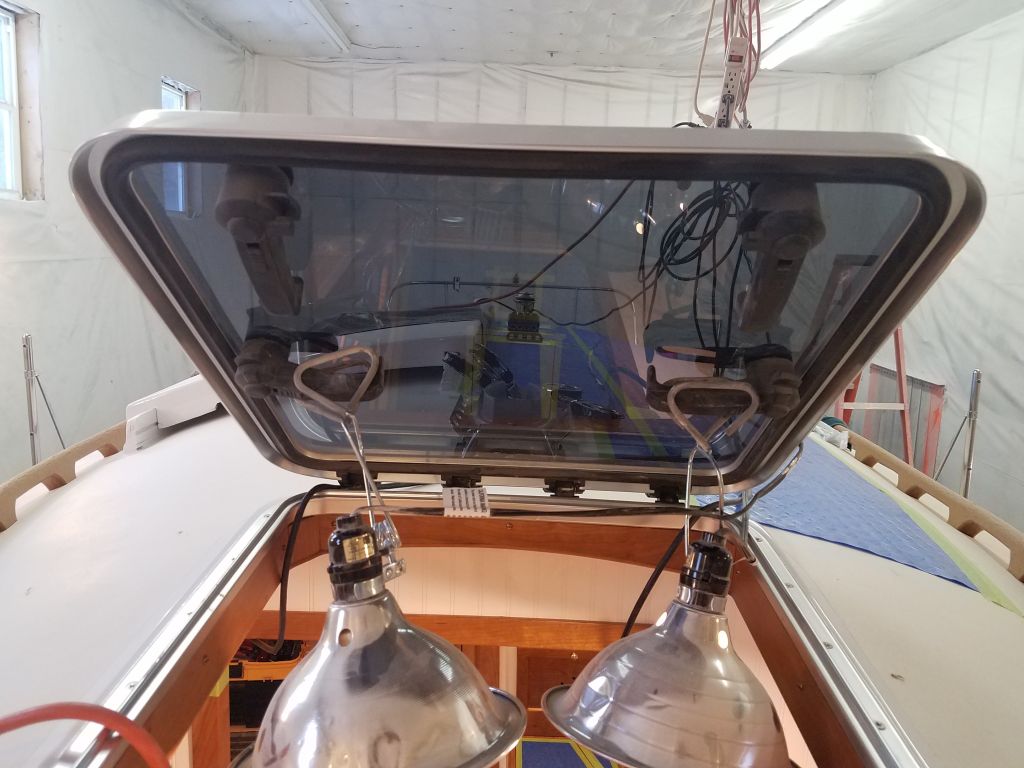
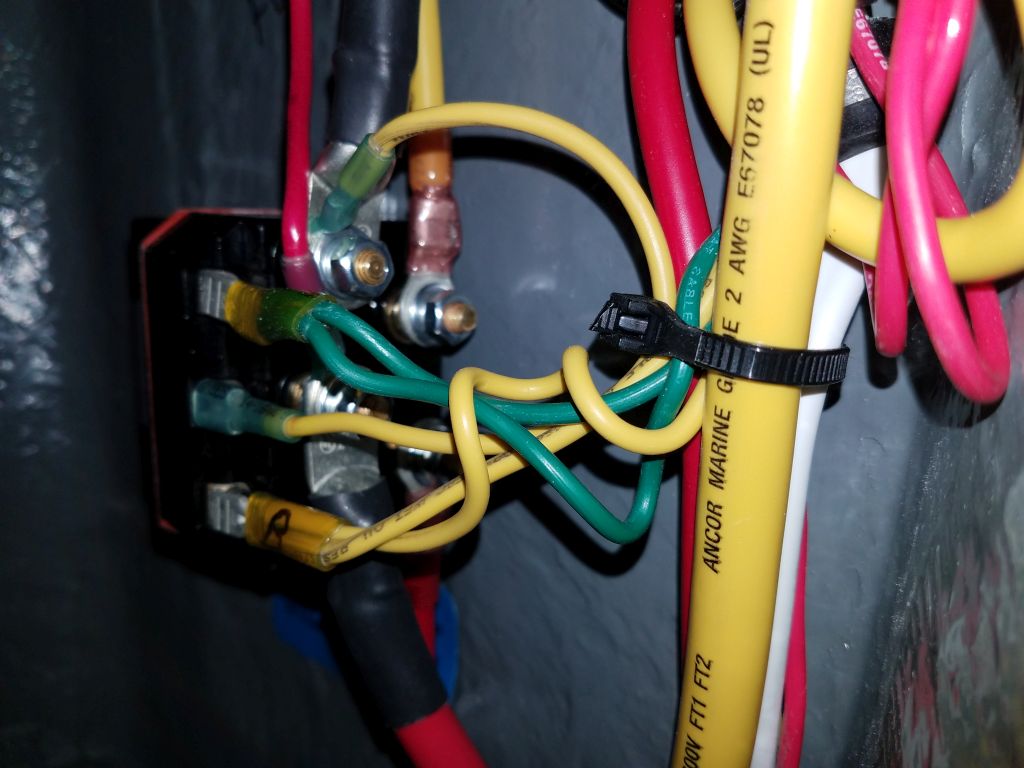
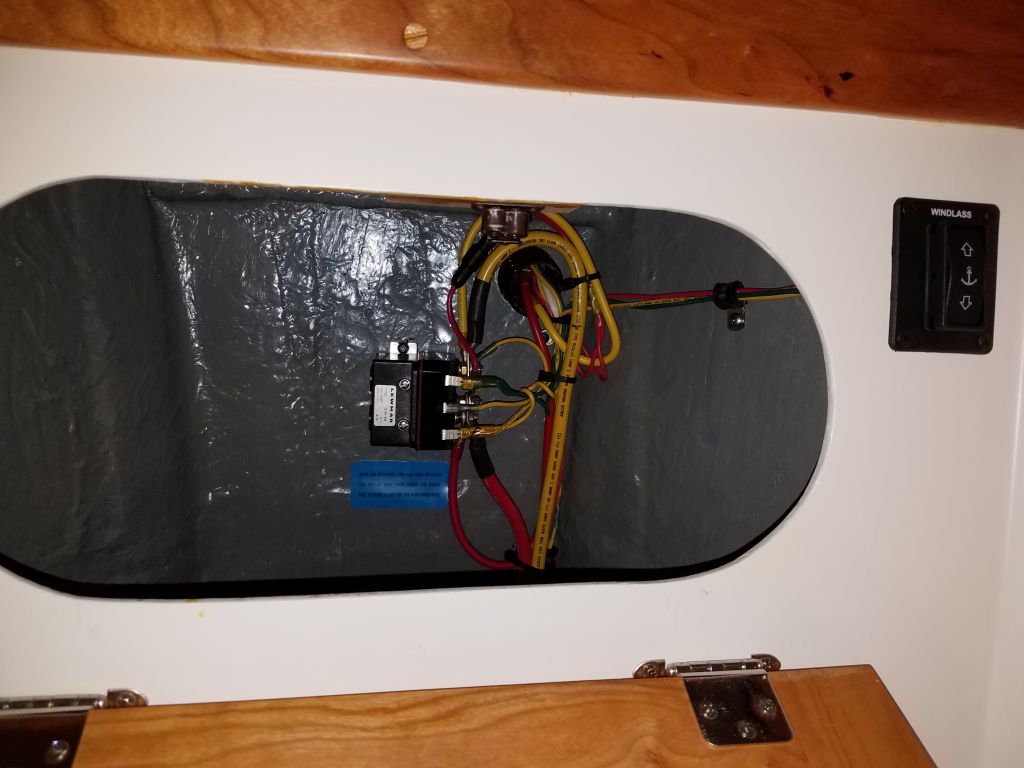
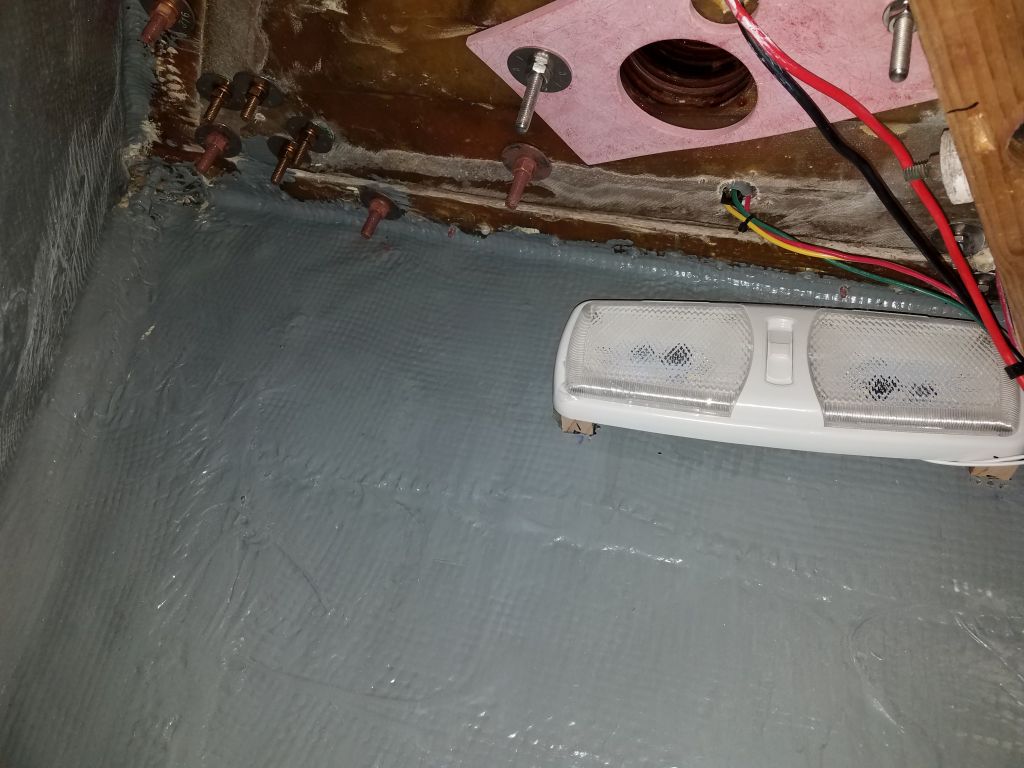
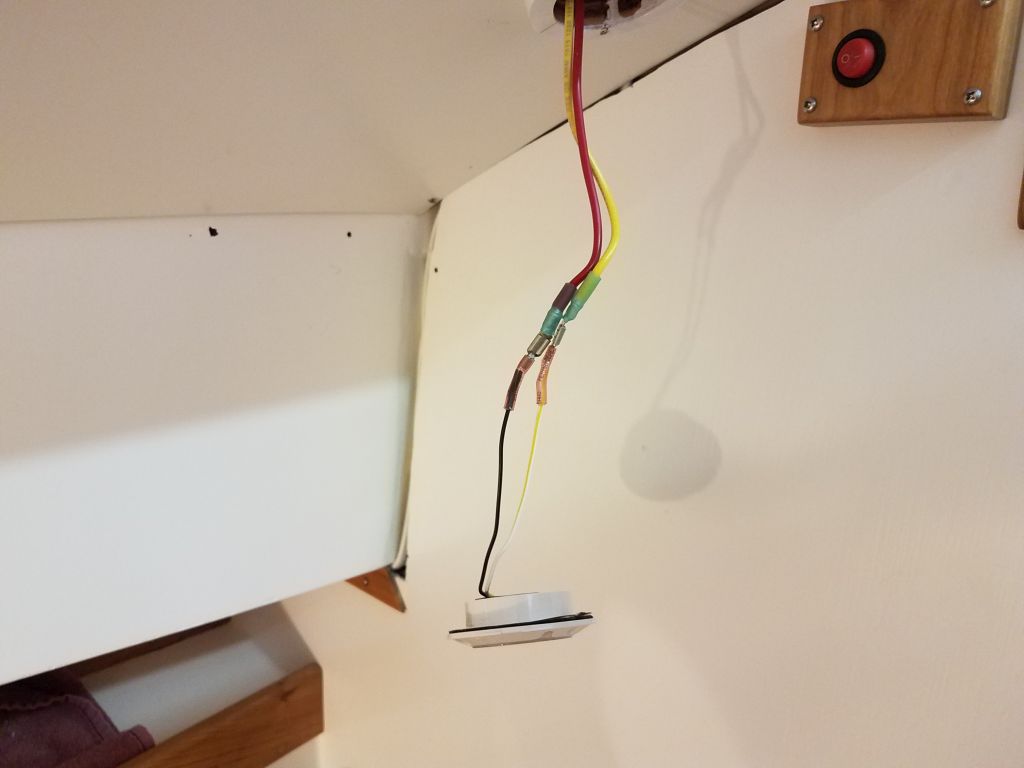
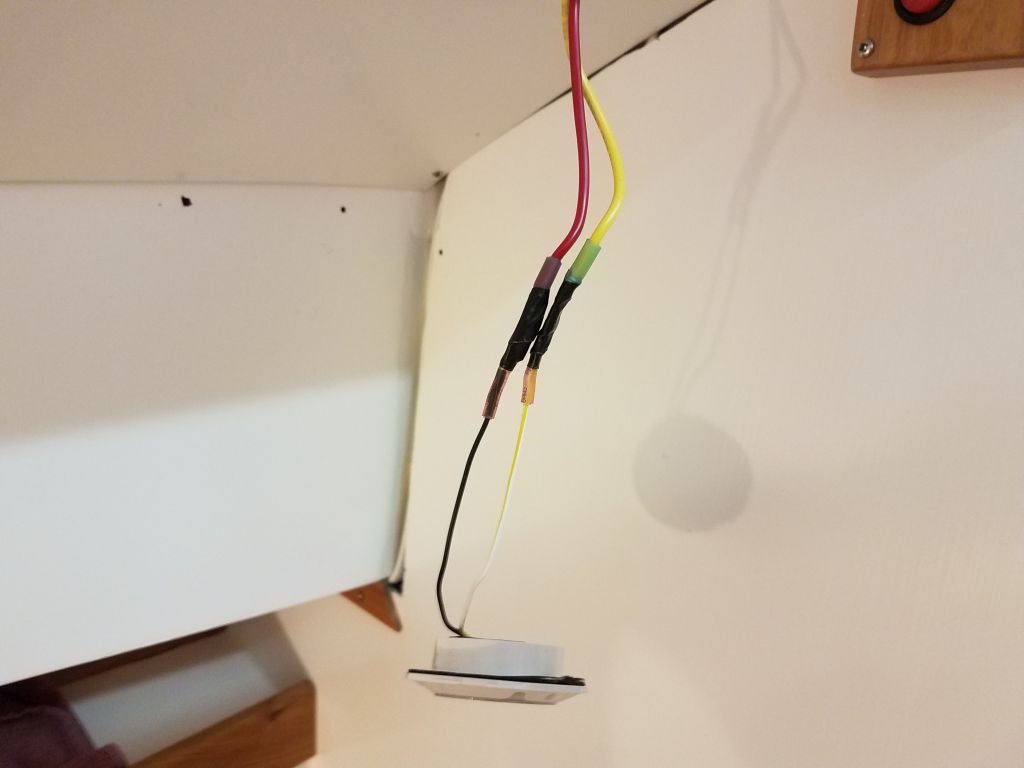
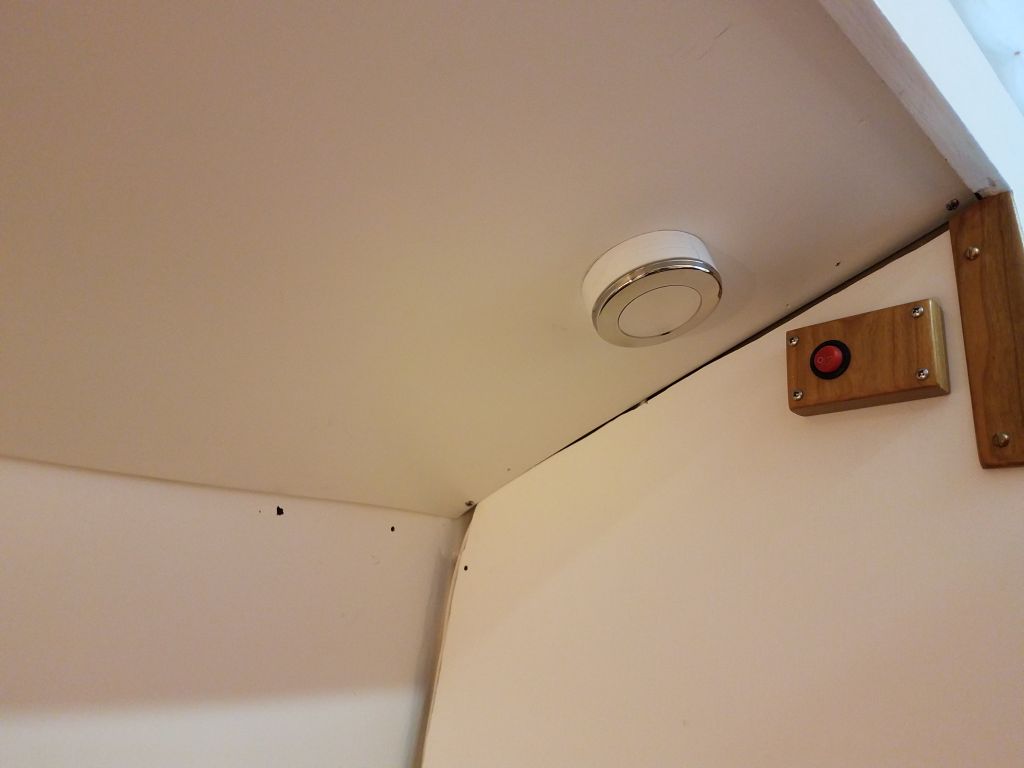
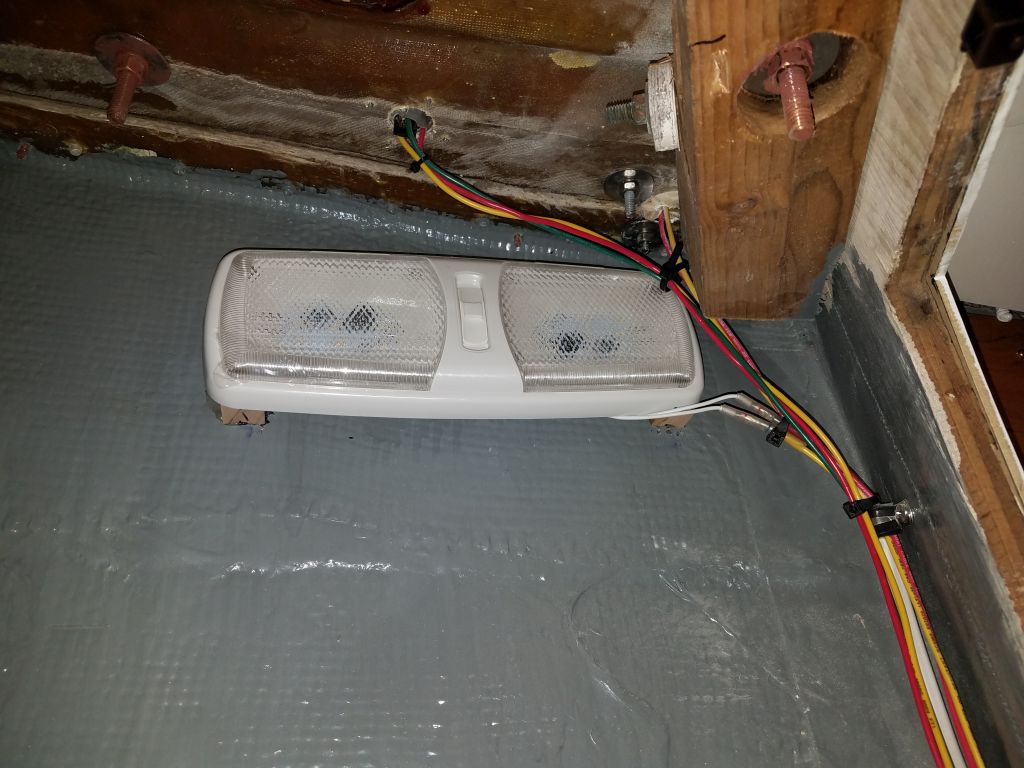
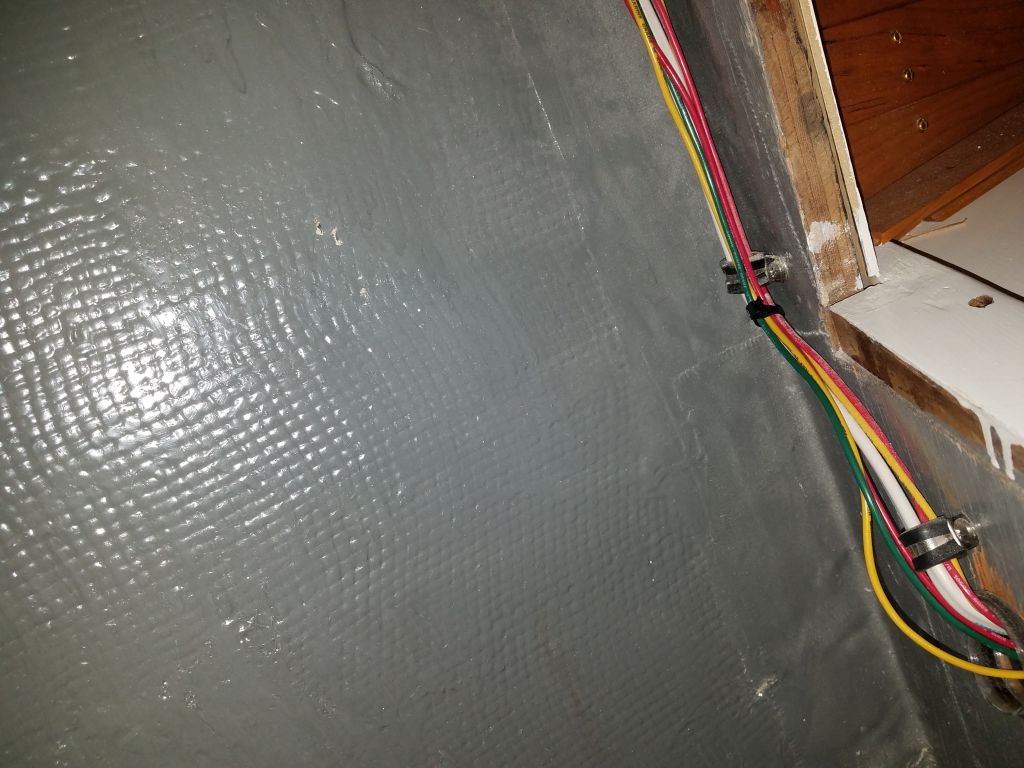
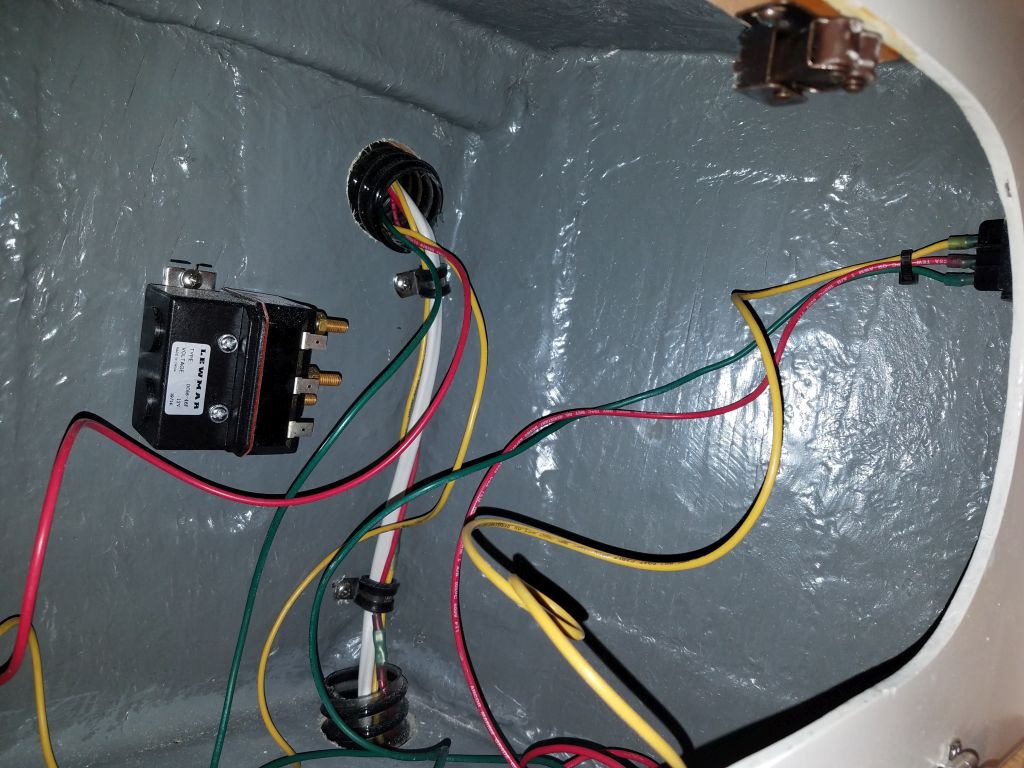
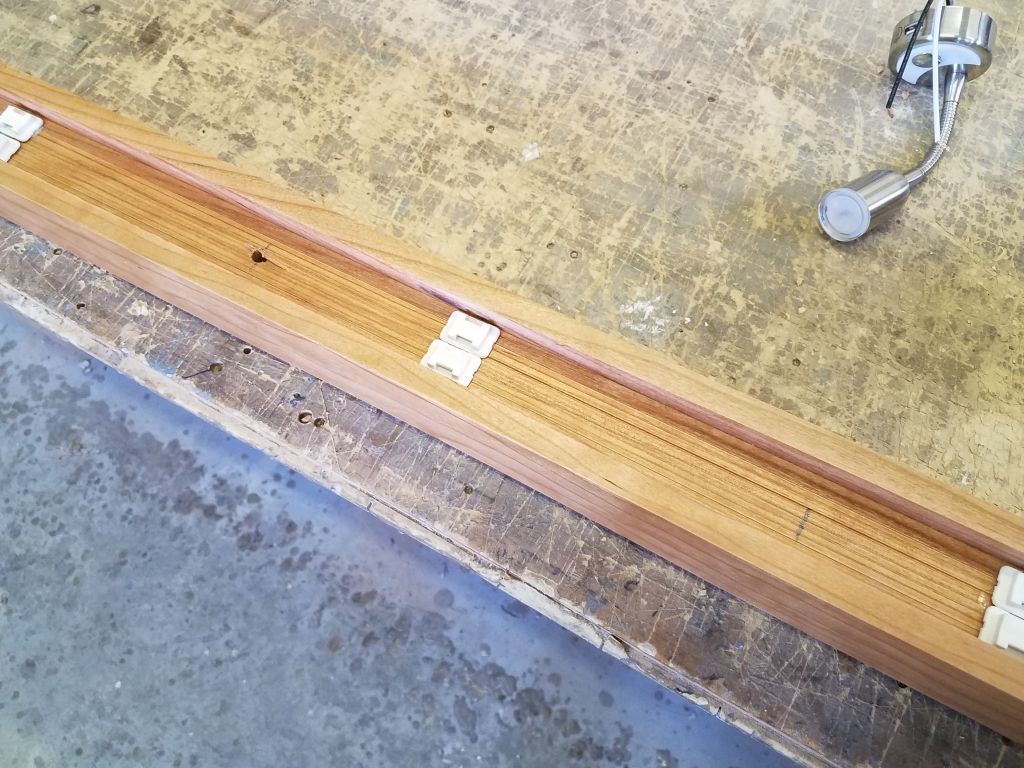
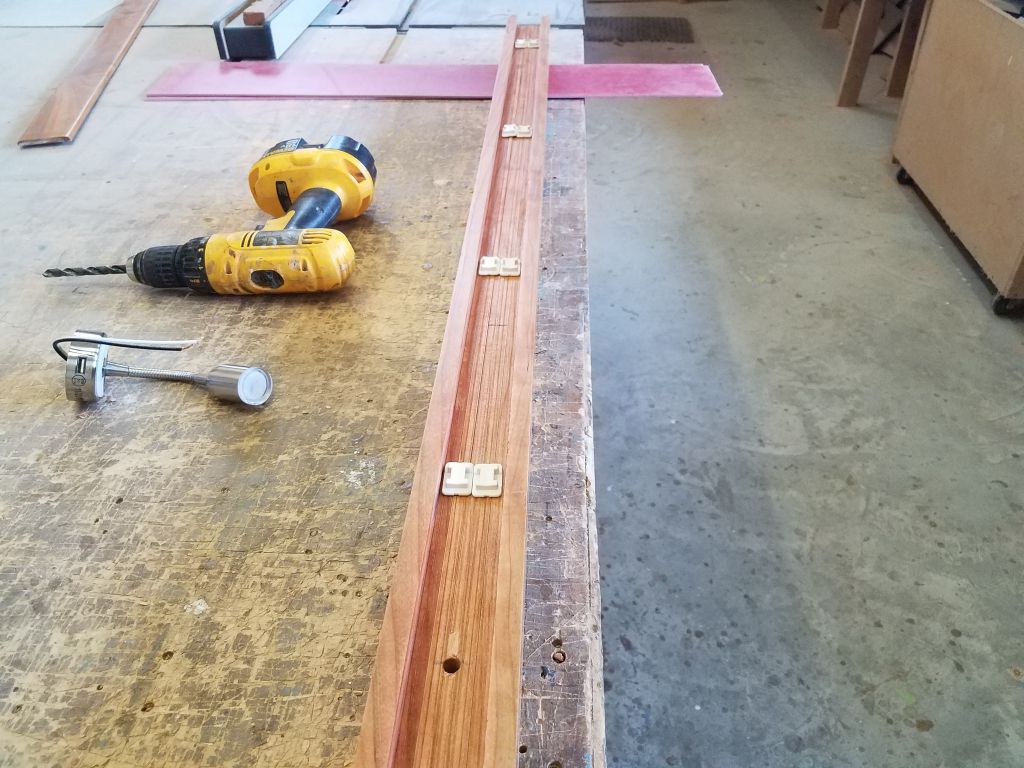
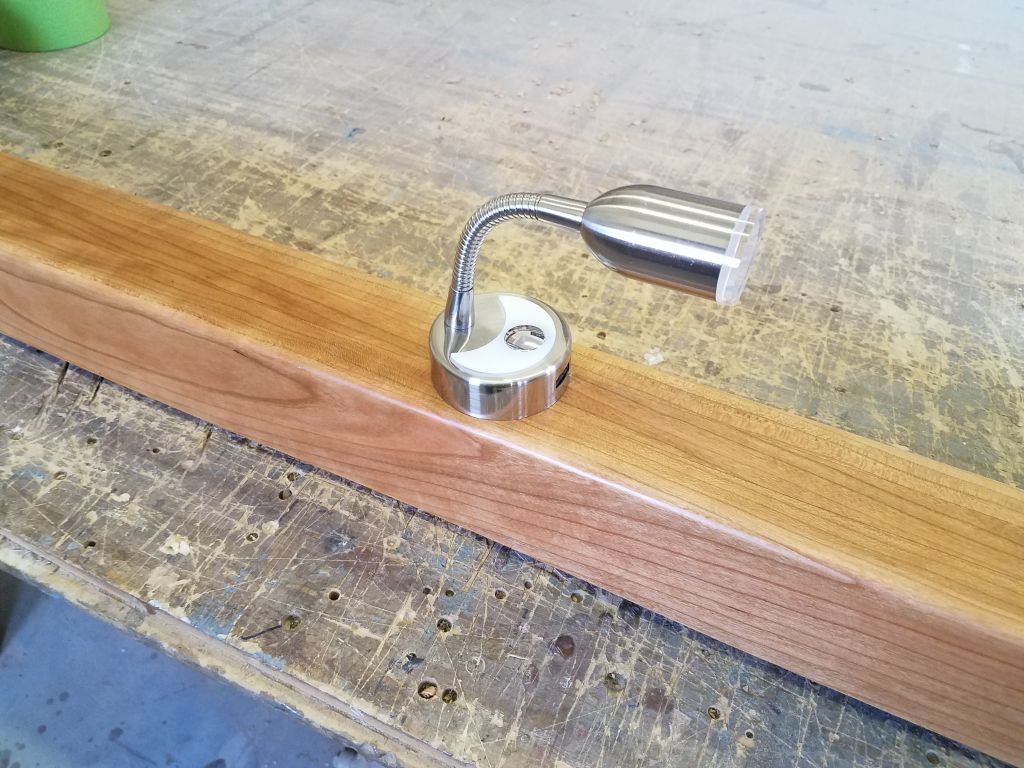
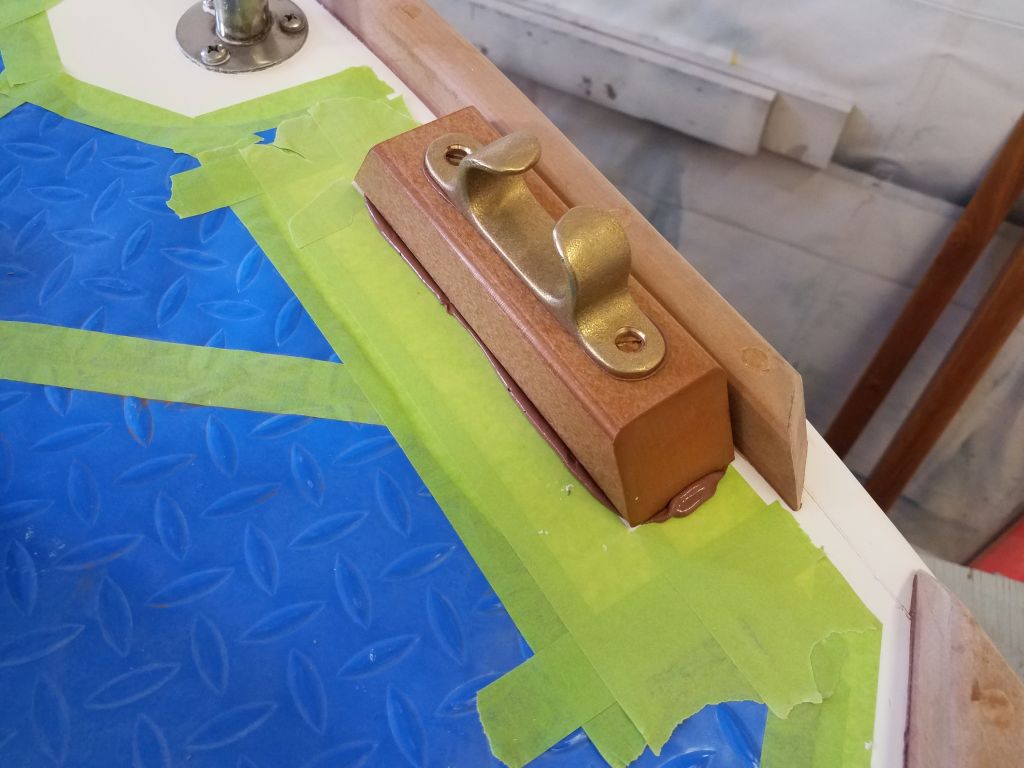
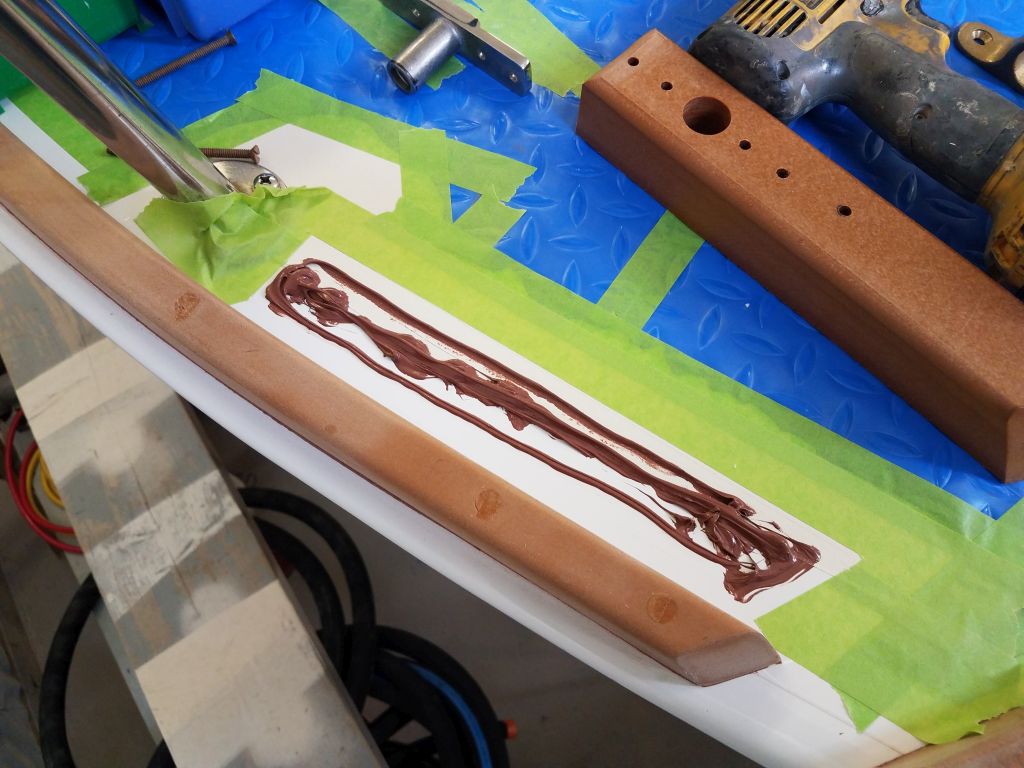
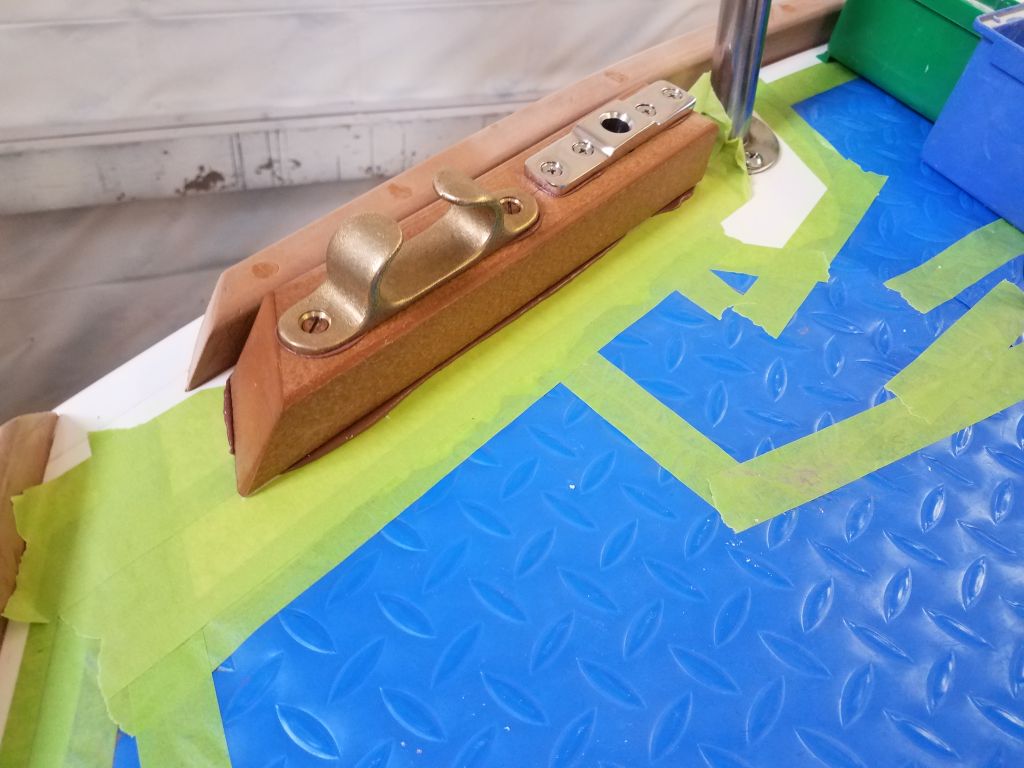
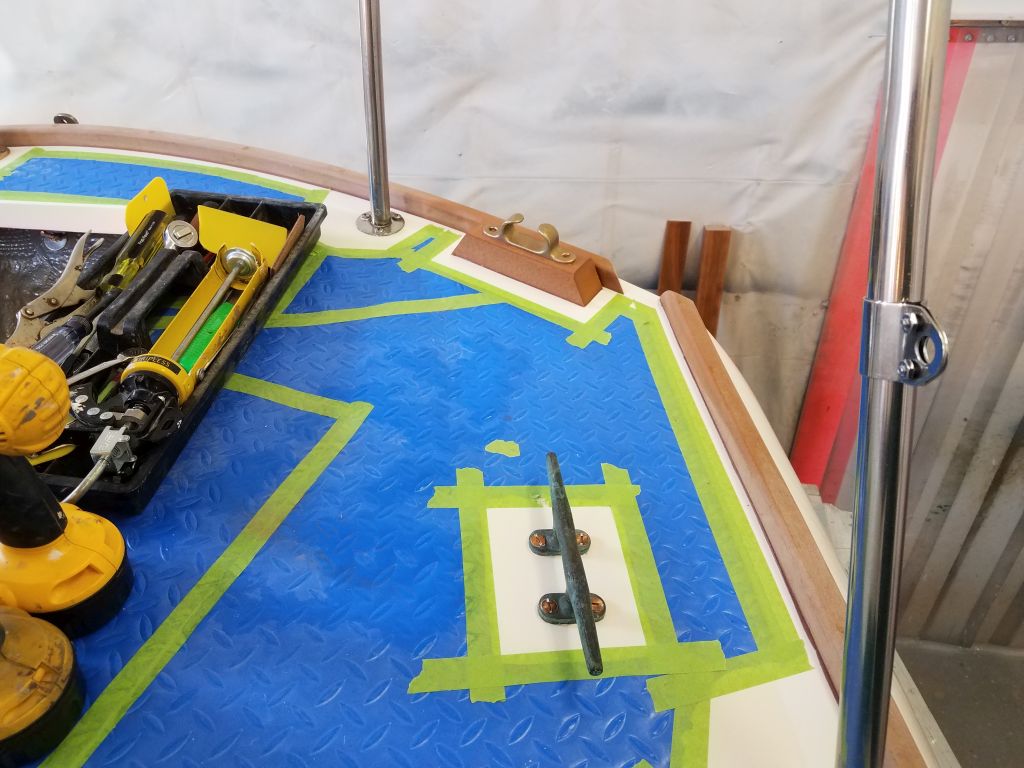
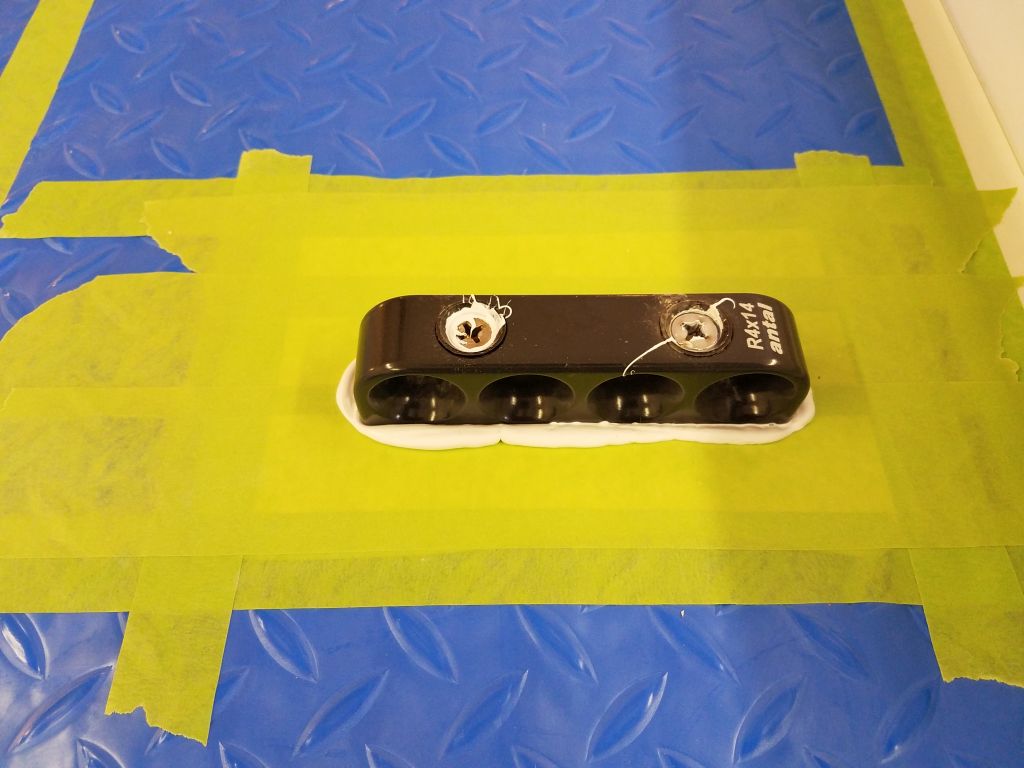
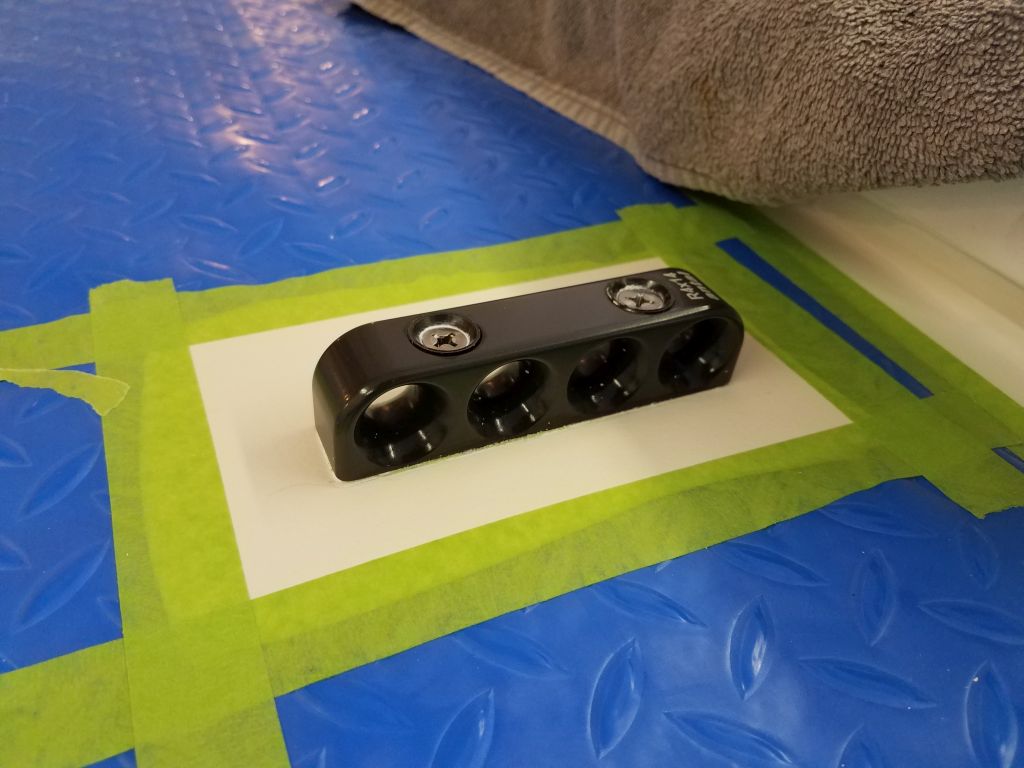
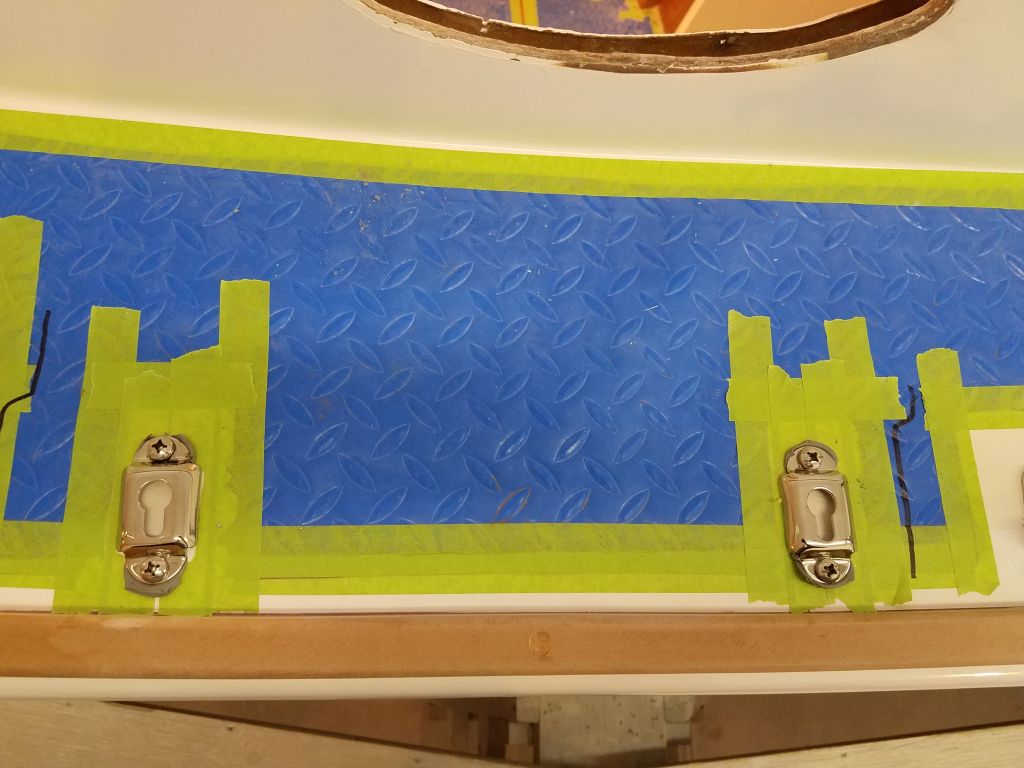
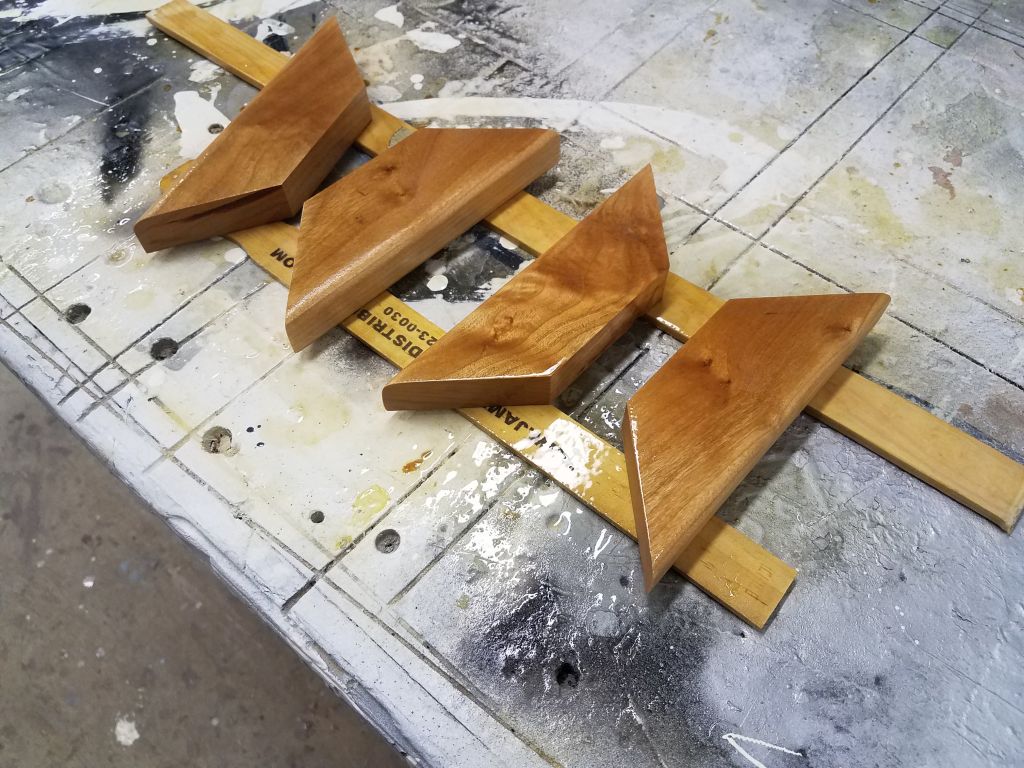
Finished with the stanchion bases for the moment, I took care of a couple small jobs before digging in for the afternoon session.  As I’d been working around the forward part of the boat, I’d been considering how and where to install the utility light we had for the chainlocker, given the tight space and even tighter access to said space, not to mention the need to keep things clear for the windlass installation and anchor rode, so eventually I thought it would be best to simply attach the light to the hull itself.  I pre-attached the light fixture to some wooden cleats made to fit, and then, after removing the paint in way of the cleats’ locations, secured the light to the hull with some of the acrylic adhesive I use on the wire mounts, which has proven to be strong and effective as long as it can grip wood or bare fiberglass.  I used masking tape to hold the light in place while the adhesive cured, and later was able to remove the tape, leaving the light firmly affixed.  Now I could finish up the wiring in the chainlocker as soon as time allowed.

After a consultation with the rigger about that headstay toggle below the furler, I elected not to try and remove the toggle, as it appeared there would be just enough room between the anchor roller and the headstay tang to maneuver in a cotter pin once the clevis was installed from the other side.  I confirmed this with a spare toggle I had lying around.  Plus, the rigger had warned me away from the idea of removing the complicated lower bolt on the furler assembly, which had been my own concern as well.

While I’d no doubt some poor rigger during the mast installation later would have choice words for me at the tight situation, needs must, and with only so much room and a lot going on, this was how it was.  Worst-case, the anchor roller would be easy to unbolt and remove temporarily should it be necessary, but at least there was clearance for the headstay  once the initial installation throes were over with.  I thought briefly of modifying the anchor roller to remove part of the side channel, but I didn’t have the tools or know-how to do that job well and wasn’t about to try.

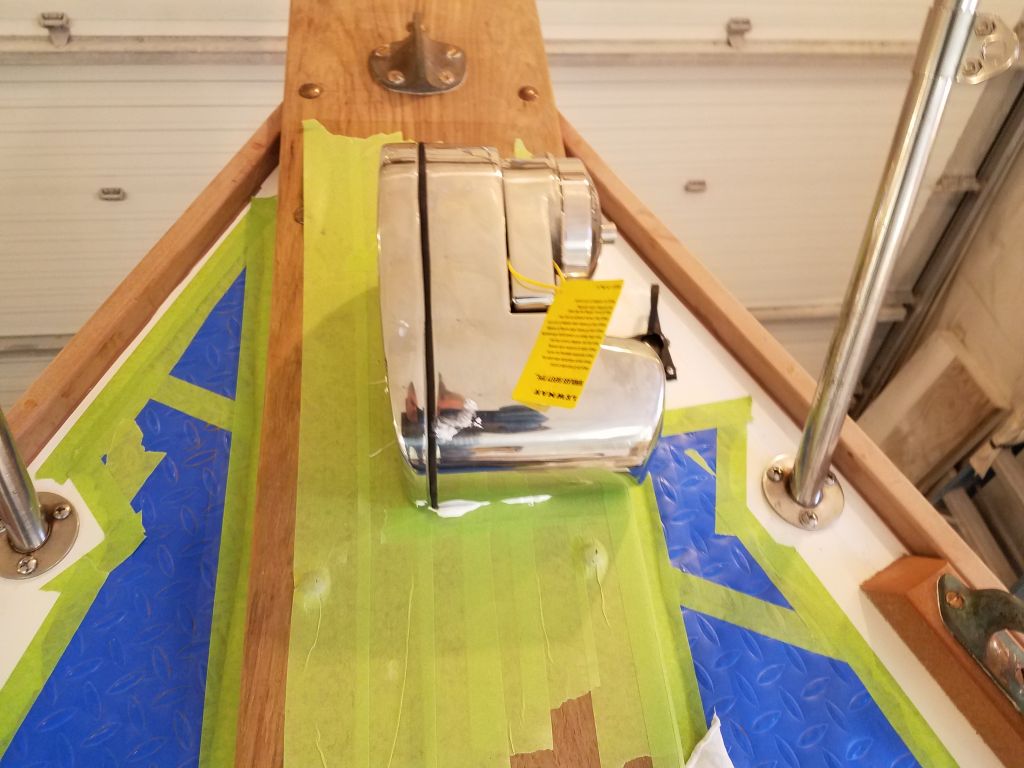
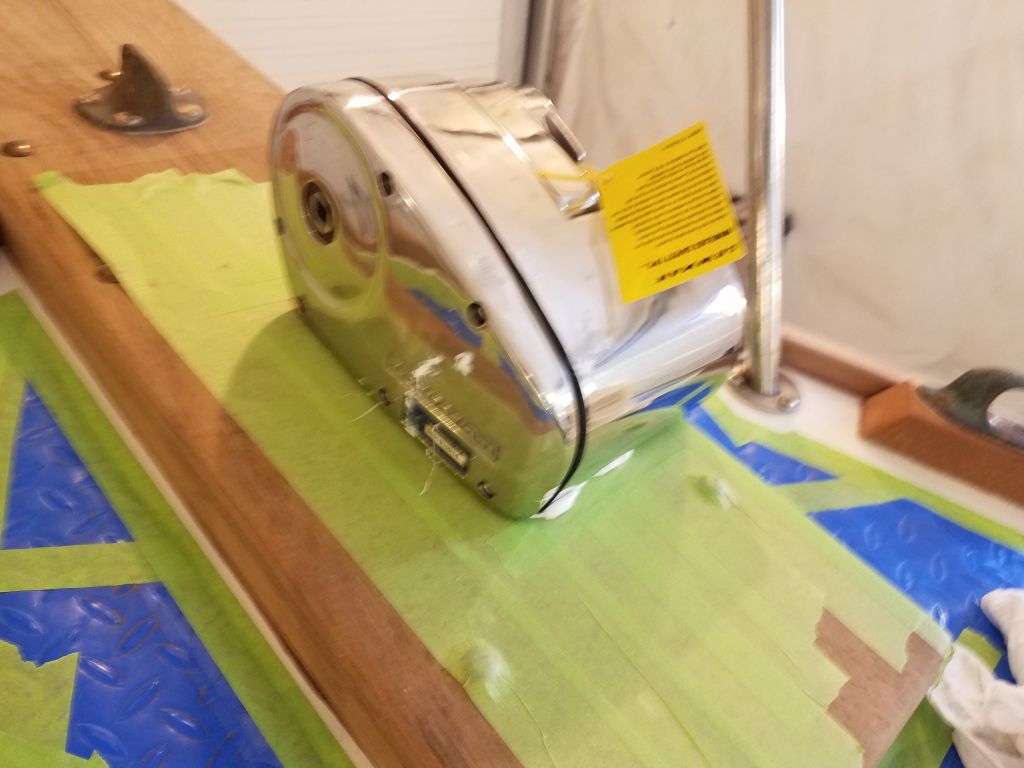
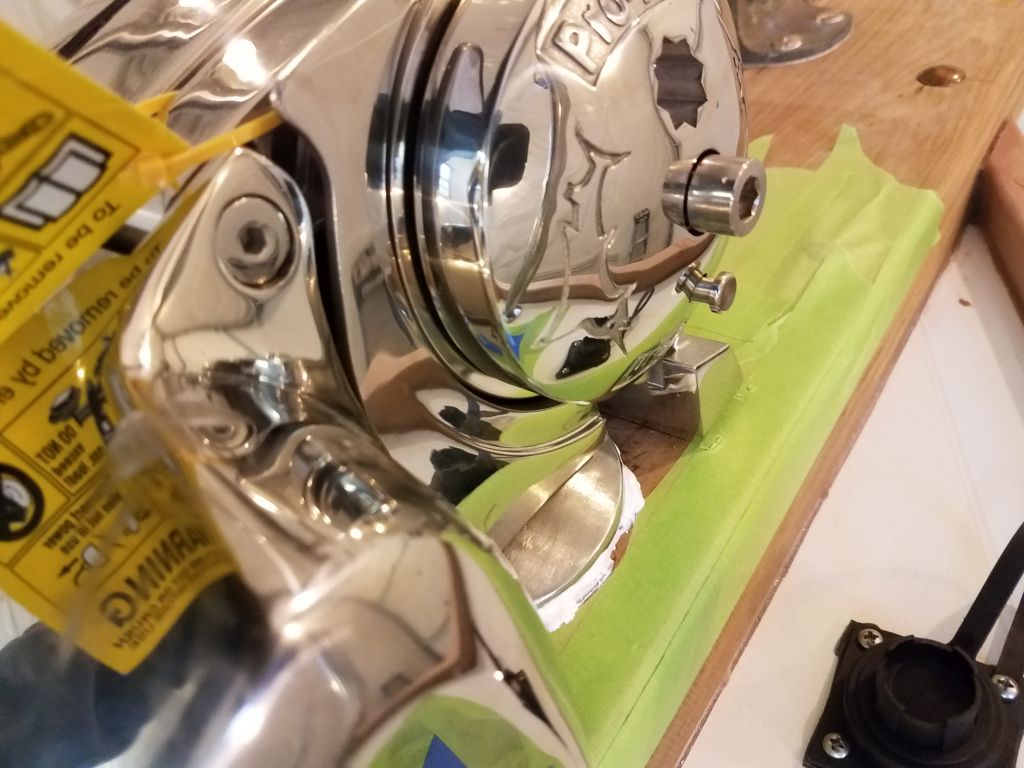
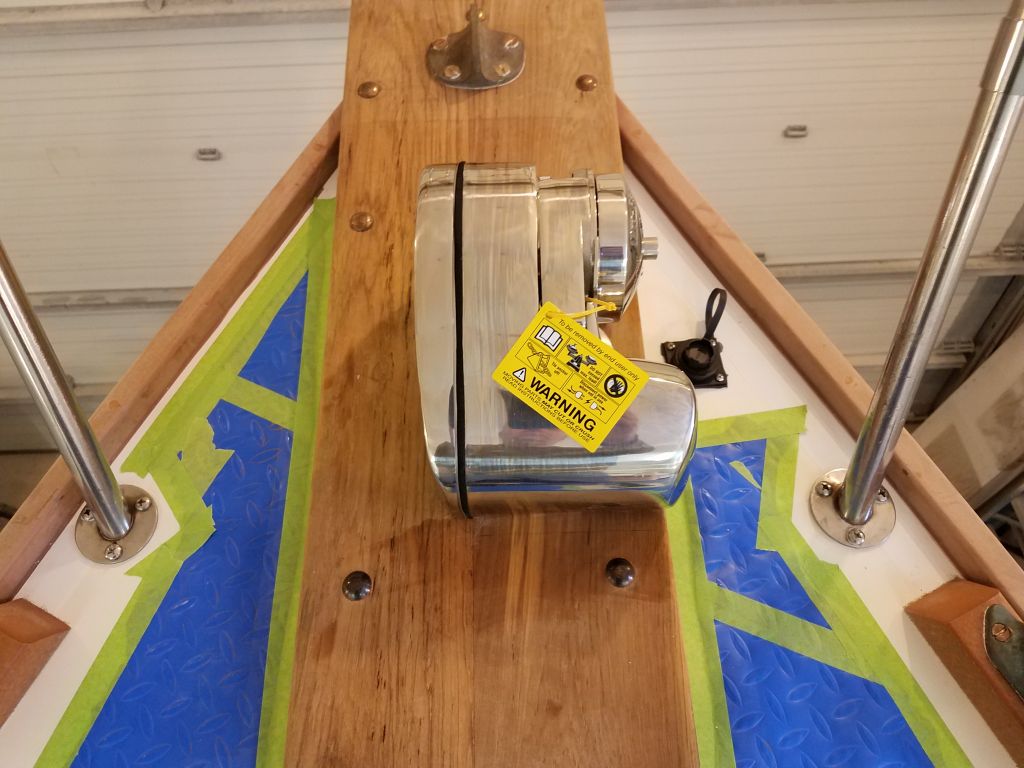
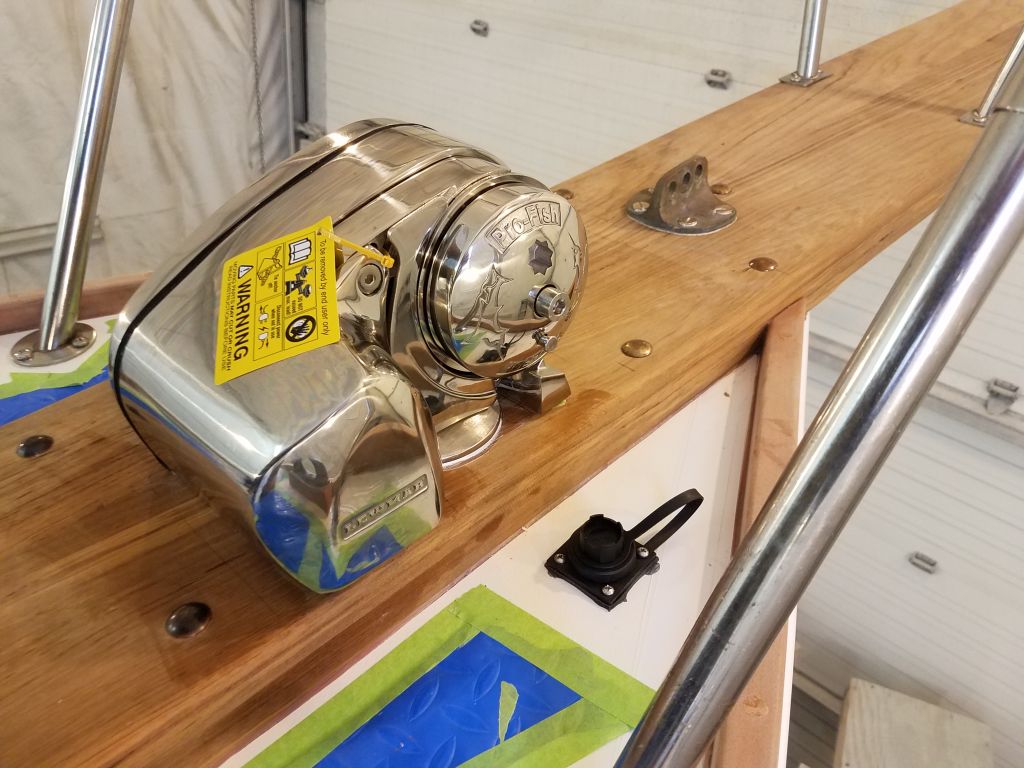
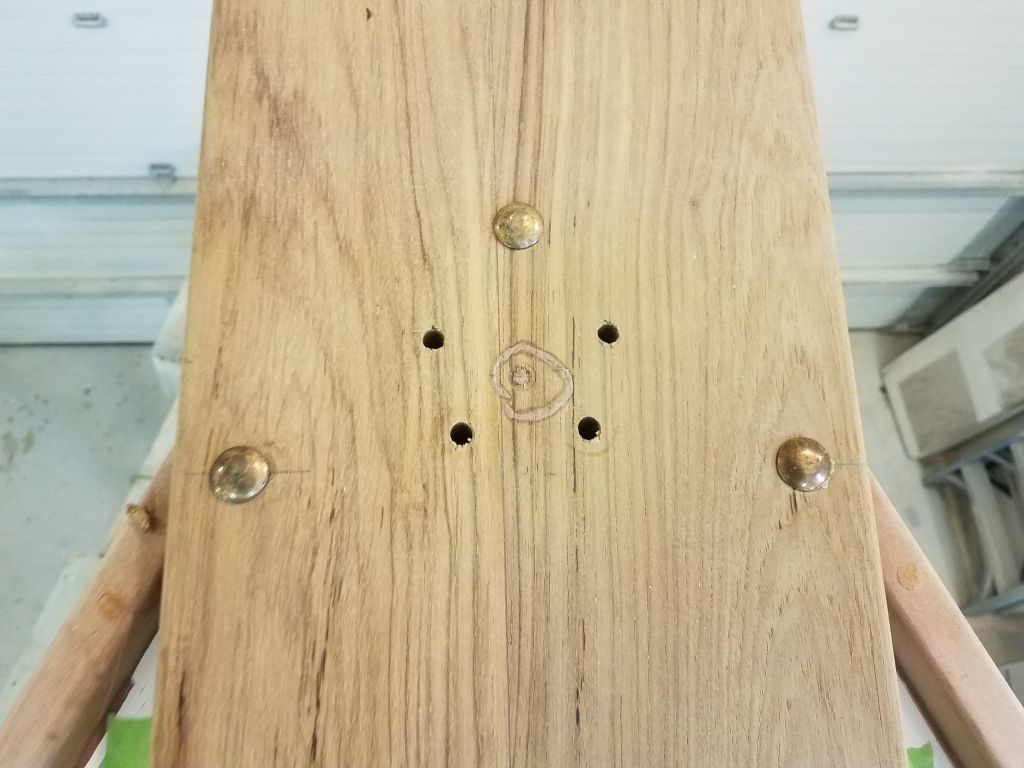
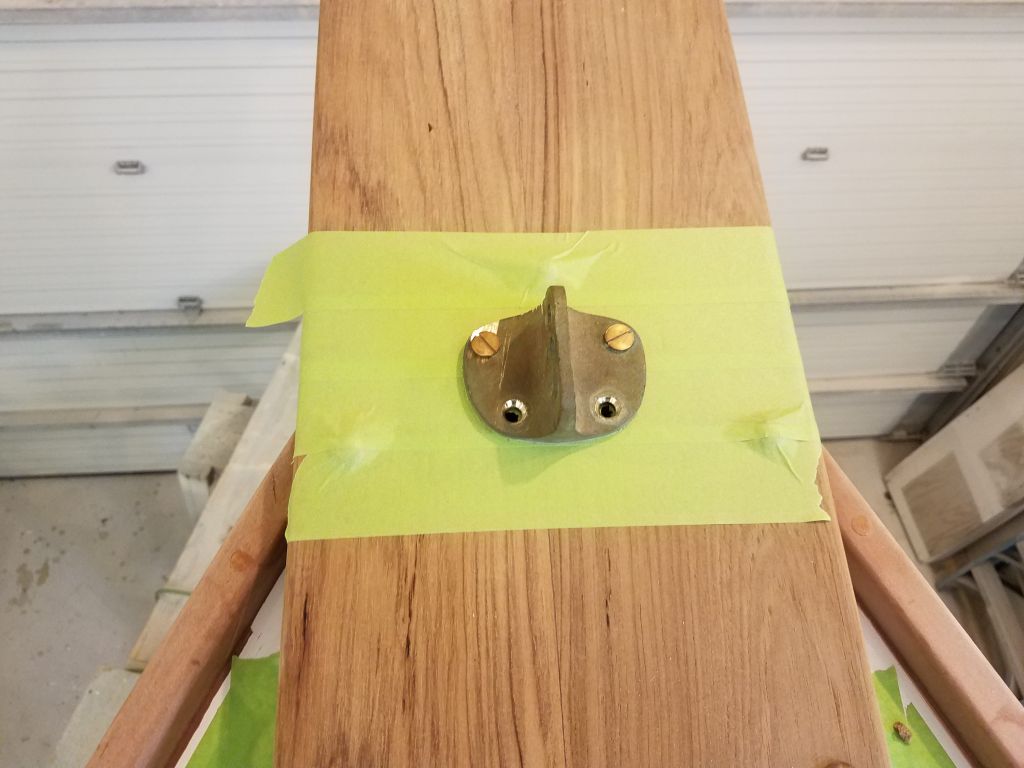
So with that issue behind me, I went ahead with final preparations for the roller installation, including drilling a 4th bolt hole closer to the forward end of the roller since it seemed like it would be helpful to secure both the roller and the little teak spacer beneath.  I drilled the holes through the platform, but found I didn’t have the right bolts on hand, so final installation would await their arrival soon.

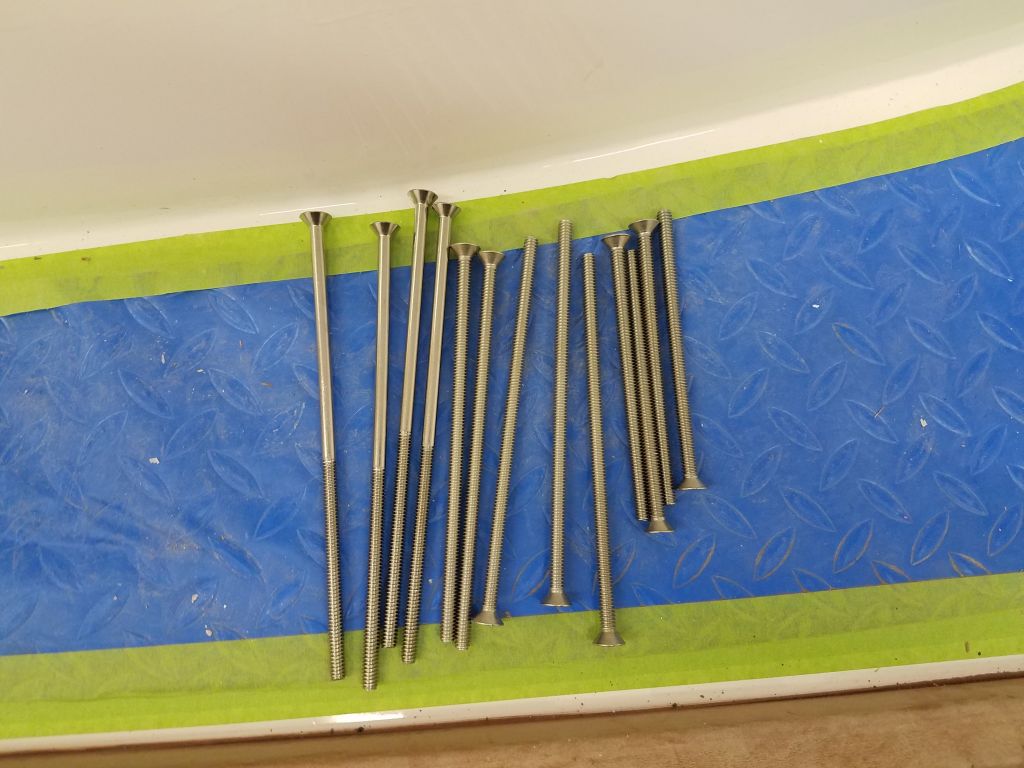
Next, I turned to the chainplates, which installation I’d frankly been postponing–intentionally or subconsciously–for quite some time.  I started with my favorite port side, but found on the first chainplate that the bolts I’d ordered for the job were a bit too short for the extra-thick hull over there.  I had enough longer bolts on hand to complete the first chainplate, but had to order more for the other two sets.  Once more, access issues made the inherently basic task take a pretty long time, but at least it was easier than the stanchions.

Leaving the port side for now, I double-checked the bolt length on the starboard chainplates–OK–and then installed the three main sets, plus the after chainplate just forward of the cockpit.  I used “bo-koo” sealant on all the installations, and installed them with large washers, lock washers, and nuts.

To finish up the day, I mixed up a small batch of epoxy-based primer and applied it to the new epoxy work securing the sanitation pump mount and around the depth transducer, where it would act as a tie-coat to prevent curing problems with the one-part gray bilge paint that would be the final finish in these areas.  I also applied a couple coats of the primer to the new mainsheet riser.  The primer would cure overnight and allow me to finish up the paint work in the immediate future.

Total time billed on this job today:  8.25 hours

0600 Weather Observation: 30°, mostly cloudy. Forecast for the day:  Partly sunny, 45°
Scupper 227

Friday

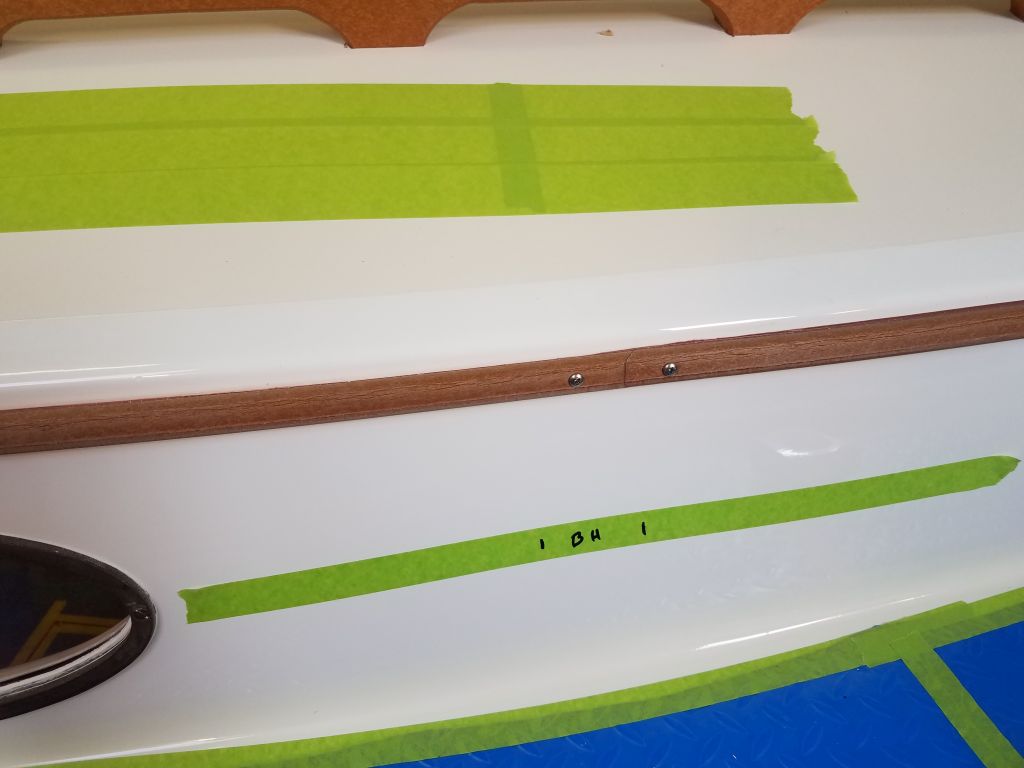
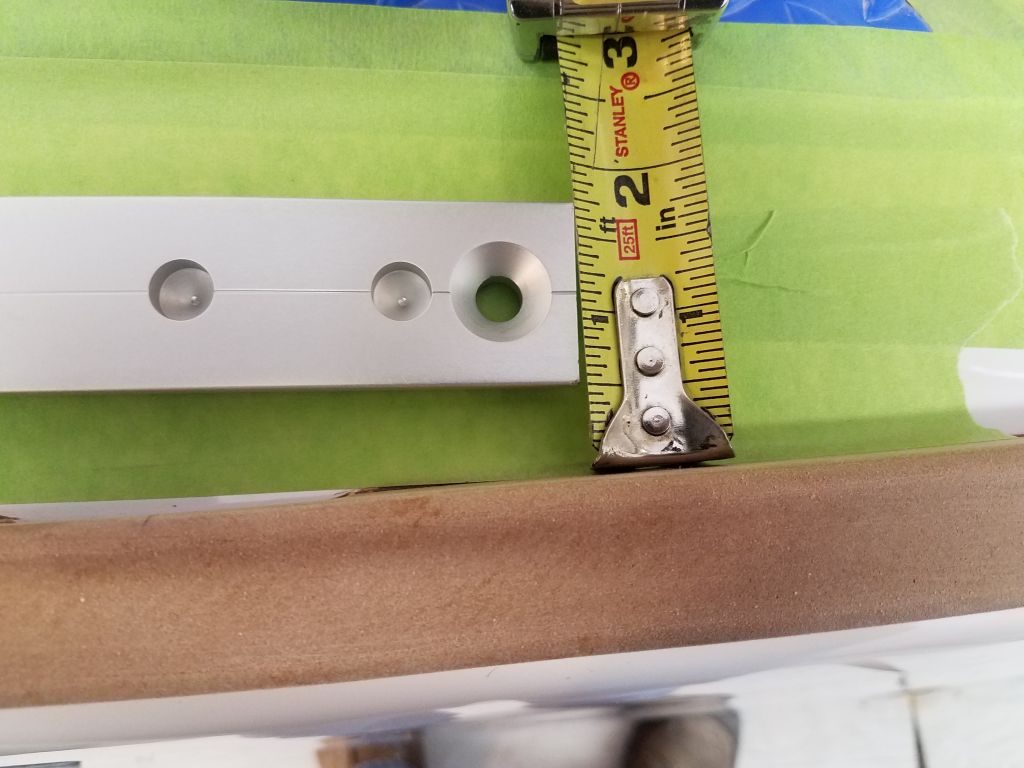
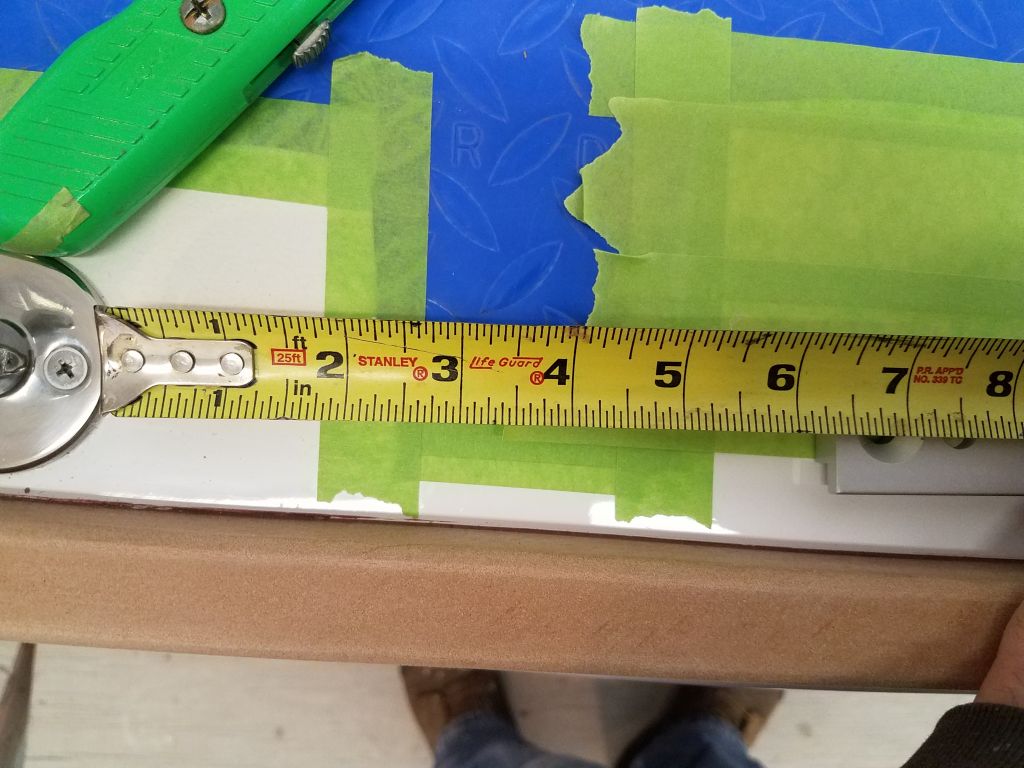
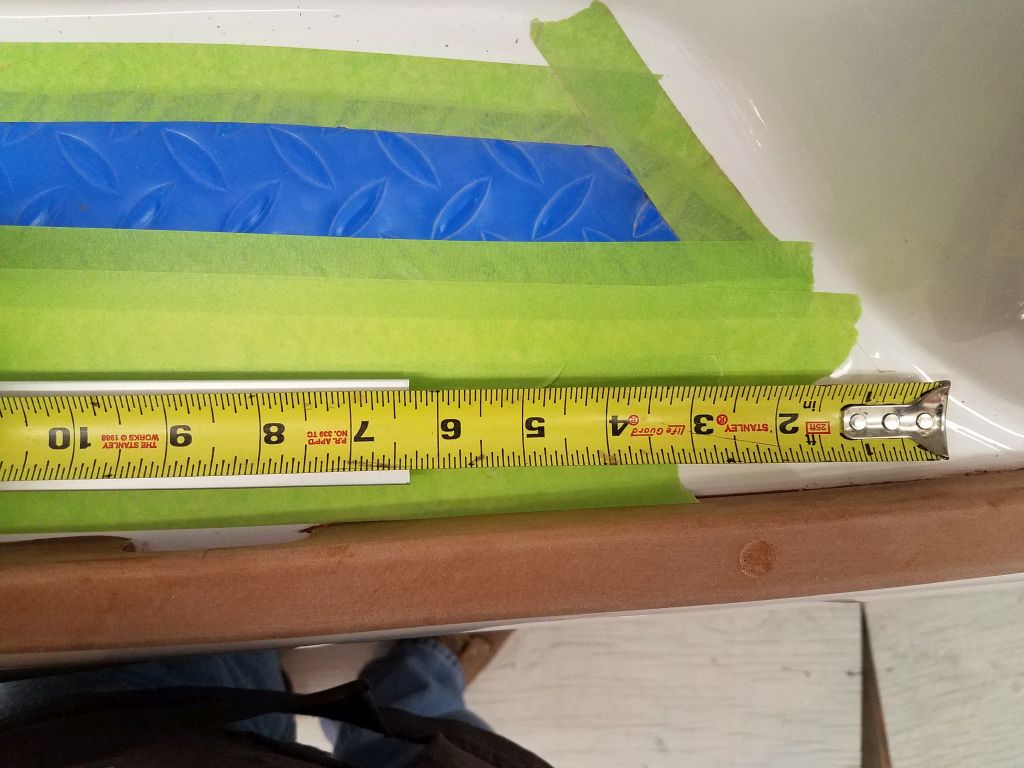
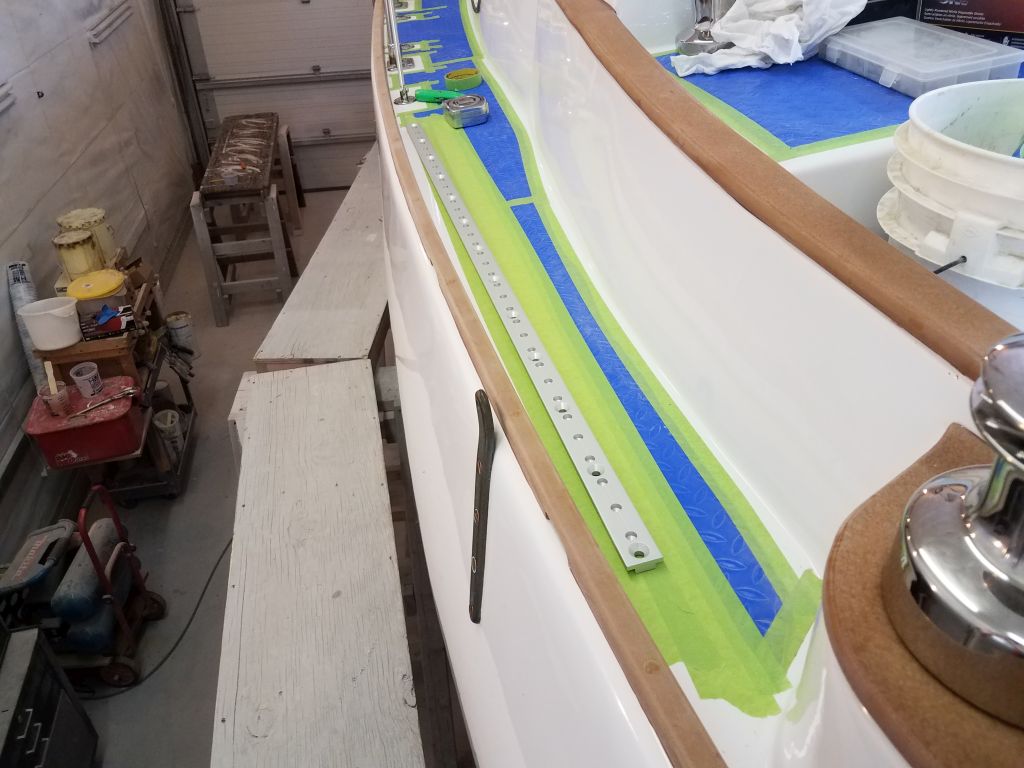
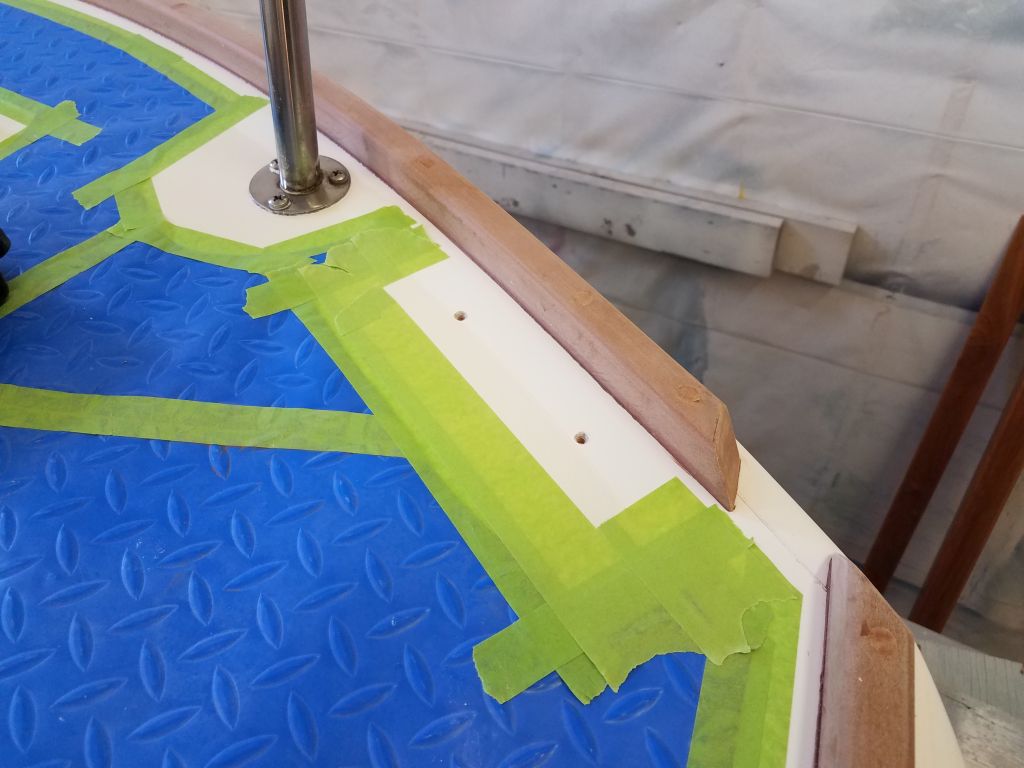
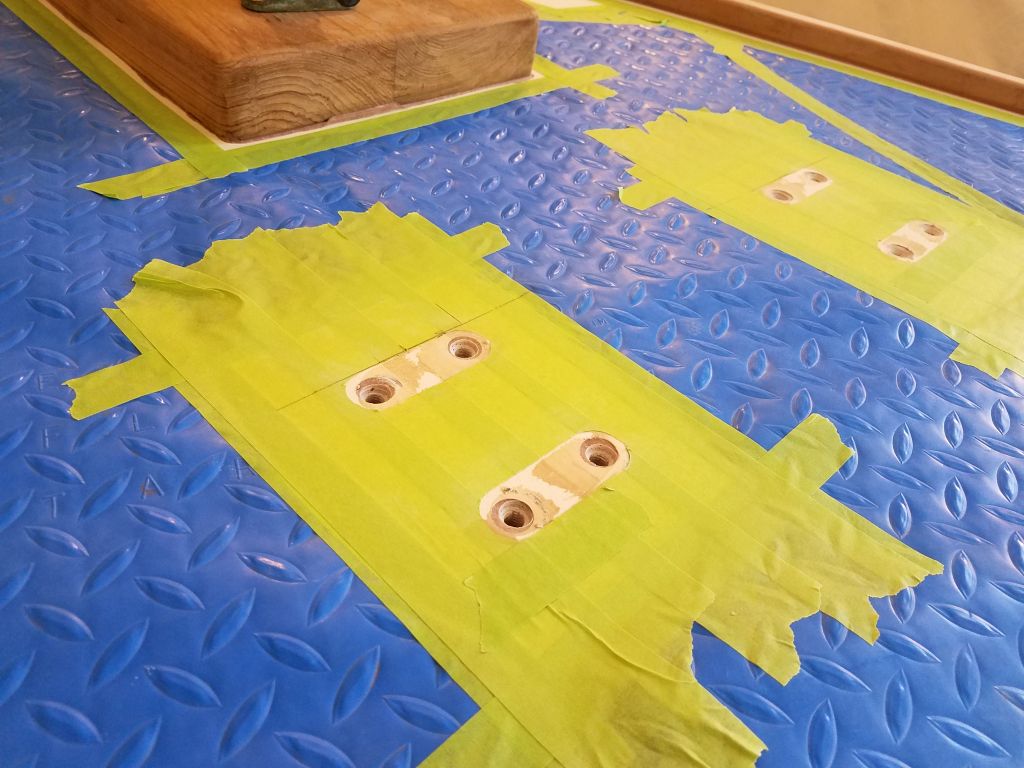
On hand I had two of the eight new stanchions and bases required, but this was enough for me to start the final layout and deck preparations.  Starting on the port side, where I’d done the initial new layout, I prepared the deck in way of each new stanchion base by cutting away the plastic deck cover and installing masking tape, before placing the stanchion base 1/4″ inboard of the toerails (using a wooden spacer) and, after confirming the stanchion placement and measurements, marked and drilled fastener holes, and removed masking tape beneath each footprint.  I made notations as to the stanchion’s measurements that I could refer to later when replicating the layout to starboard.

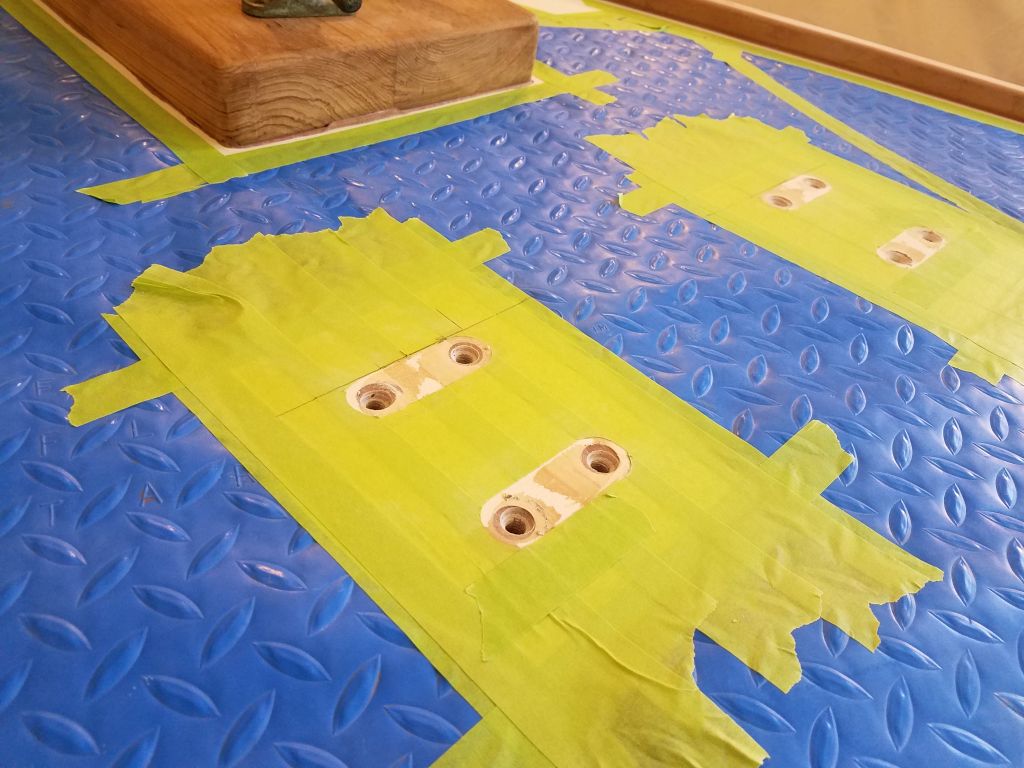
On the port side, the forward stanchion holes penetrated solid deck, with no core, so I could complete the hole preparation by tapping for machine screw threads and milling a countersink at deck level, but the inner sets of holes at the after three base locations on this side went into cored sections of the deck, so for those holes I drilled 1/2″ holes through the top skin and core to remove the core around the eventual fastener locations.

Next, I repeated the layout and prep process on the starboard side, using the measurements from the port side as a guide.  Here, with the original deck construction still in place, all three forward stanchion locations featured solid fiberglass at all four hole locations, and only the aftermost base (aft of the winch island) required overboring for the inner set of holes.

Finally, I filled all the overbored holes I’d prepared with a thickened epoxy mixture.  Now everything would be ready for final installation as soon as I received the additional new stanchions and bases.

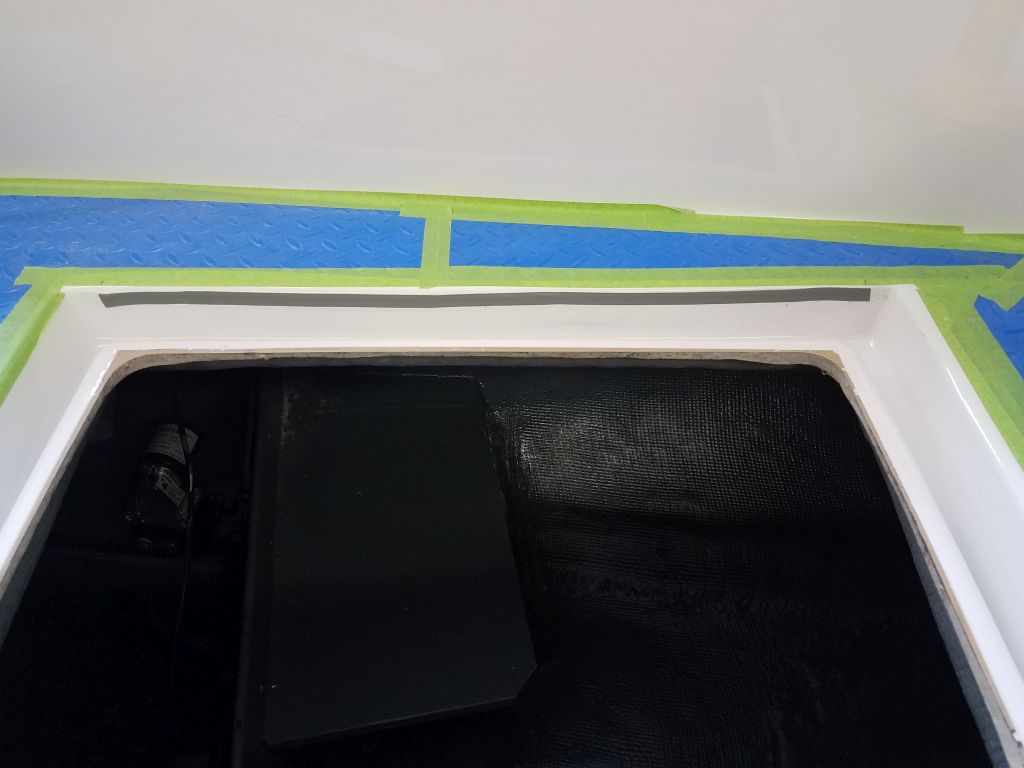
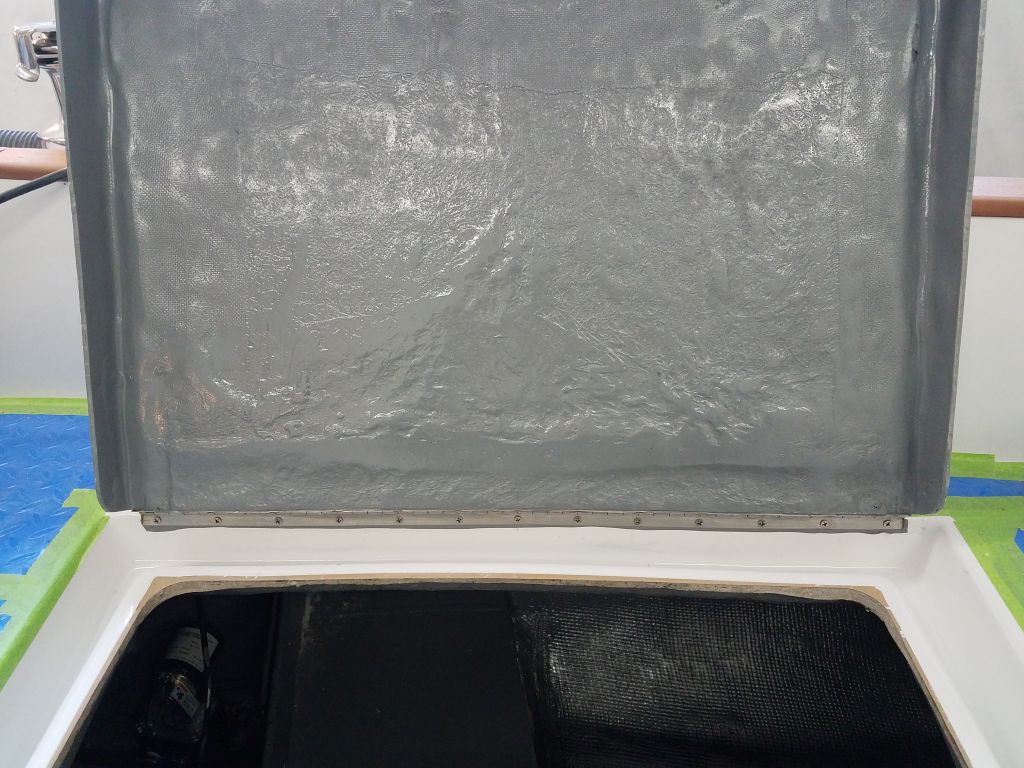
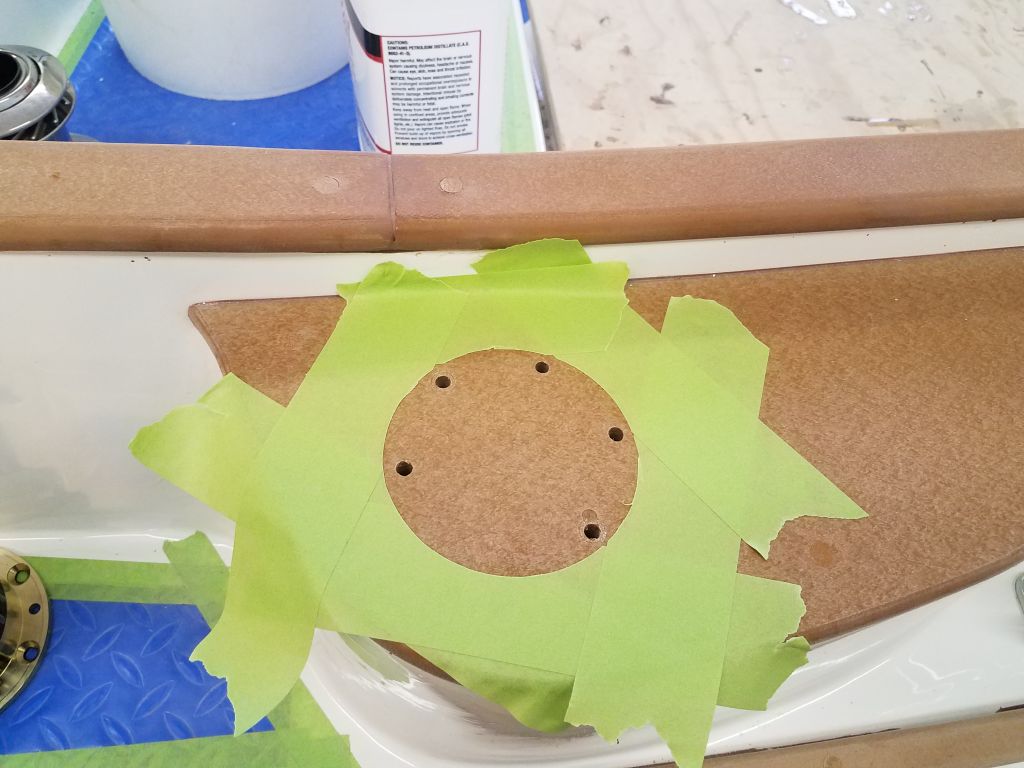
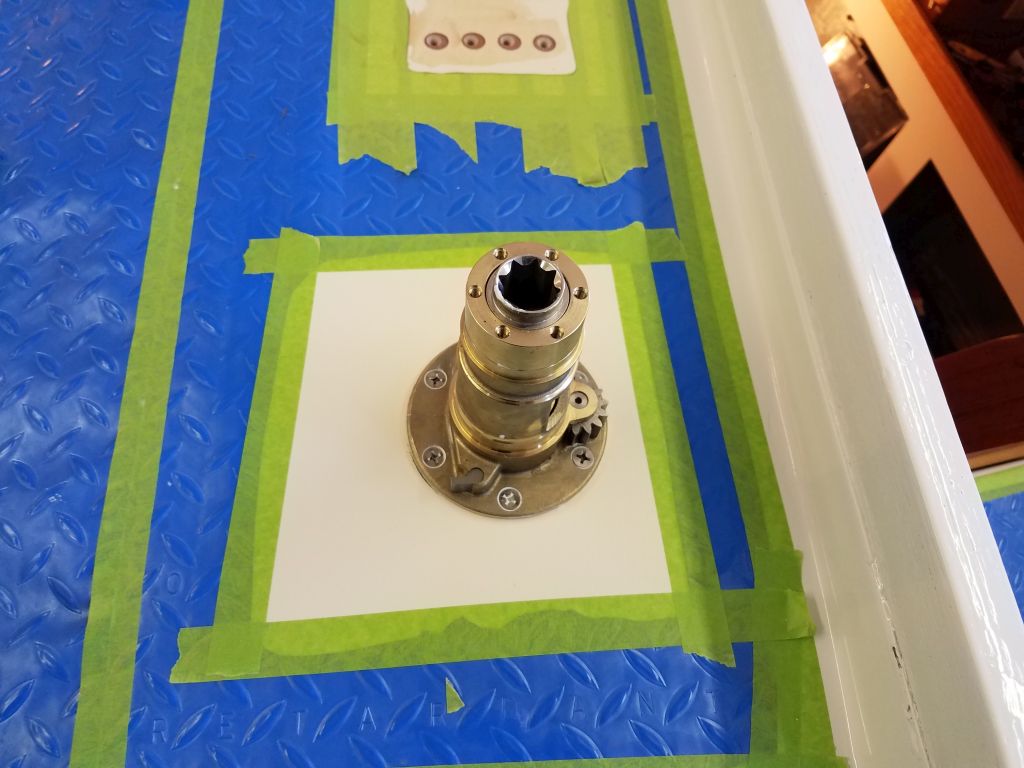
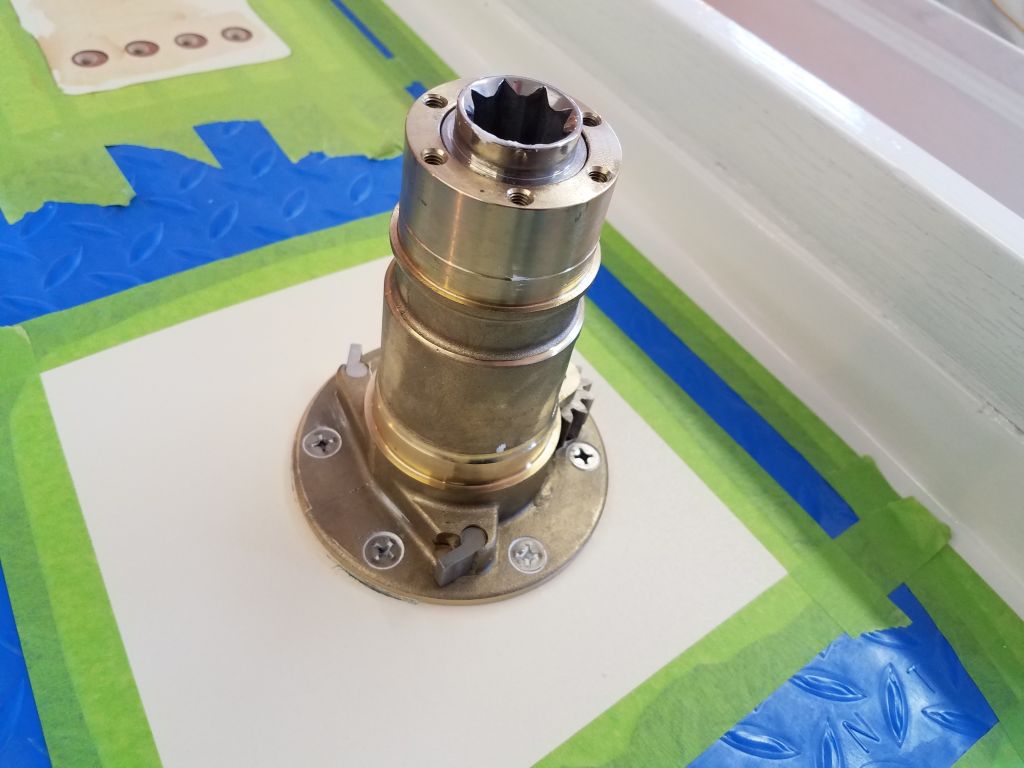
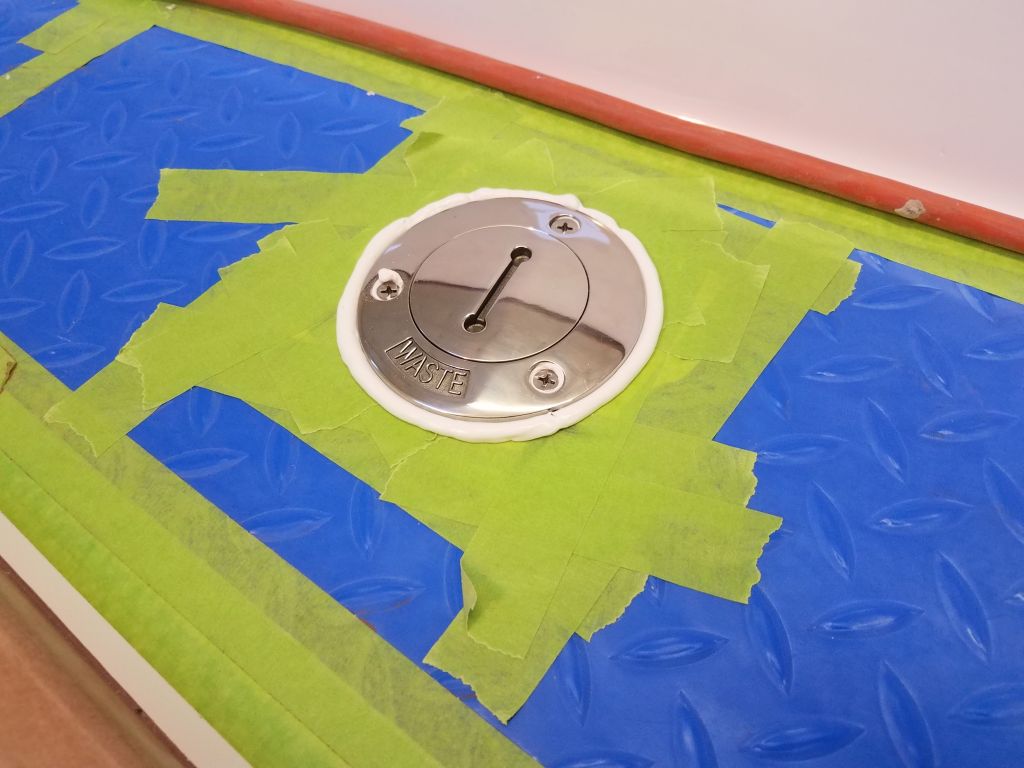
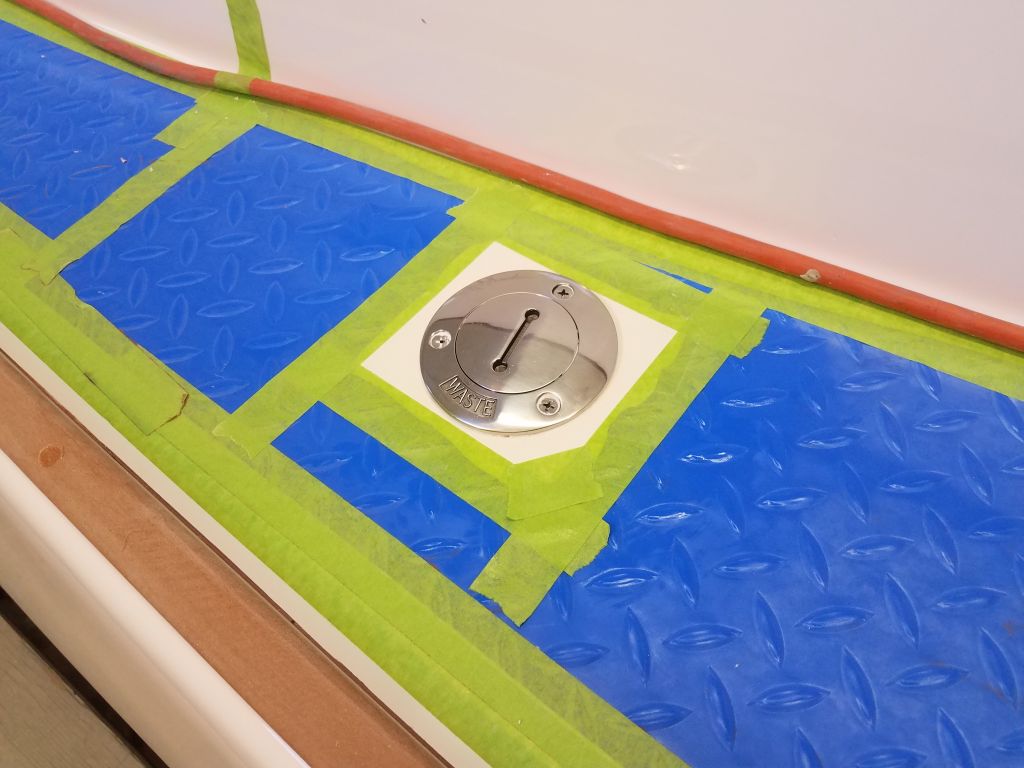
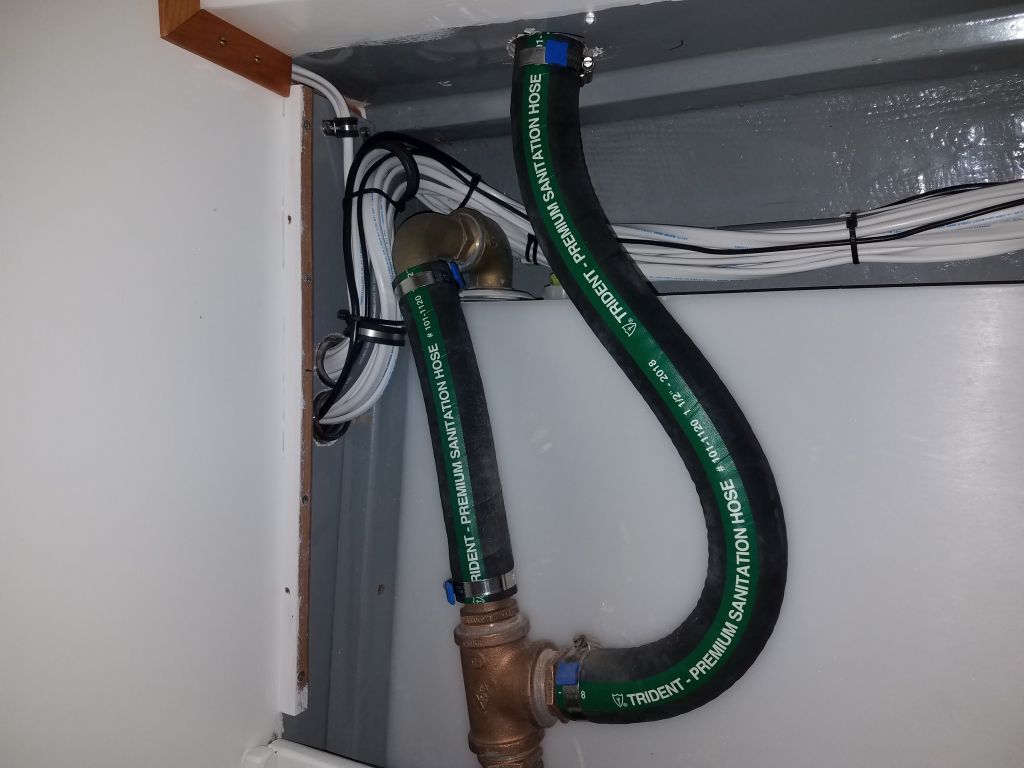
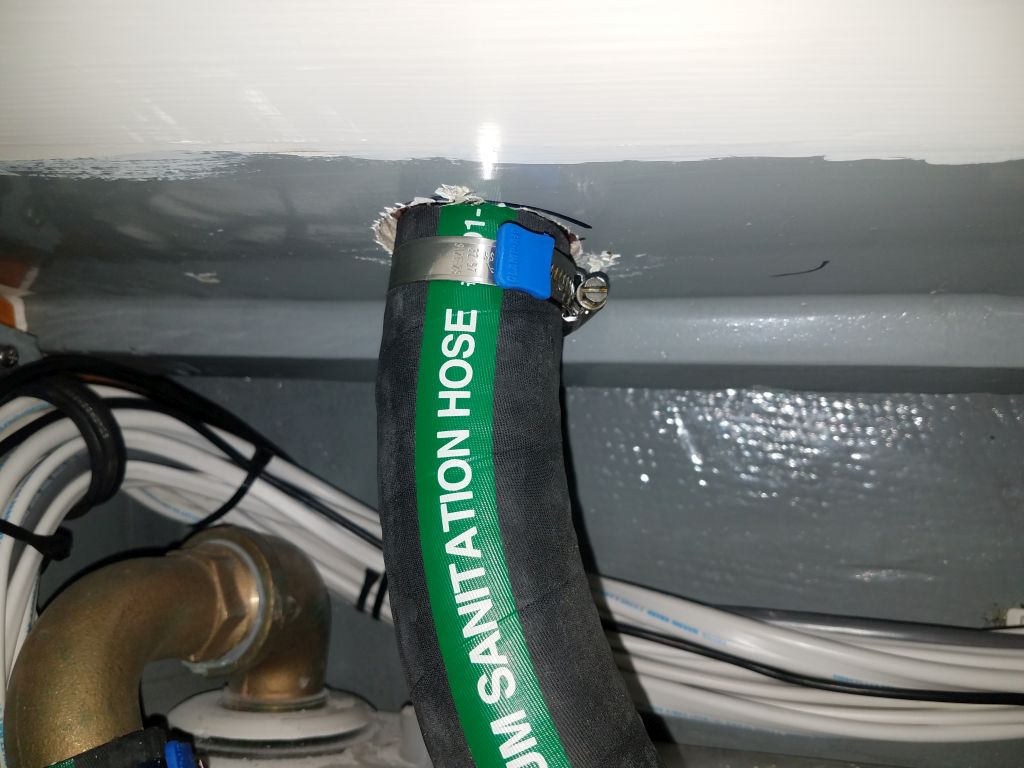
The head setup included the ability to pump the holding tank overboard in areas where it might be legal, and to this end I’d ordered a manual sanitation pump for the purpose.  This would have to be mounted to the hull inside the starboard settee lockers, nearby the through hull designated for this purpose, so I began with a quick dry fit to see where the pump should go.  As arrived from the factory, the intake and discharge ports were cocked at an angle to the axis of the pump, which wouldn’t work effectively in this situation, so to begin I repositioned the top of the pump–which included the ports–to a different alignment that would work better, a simple matter of removing the fixing screws, rotating the housing, and reattaching.  This new alignment would better allow the hoses to run freely between the holding tank locker, pump, and through hull.

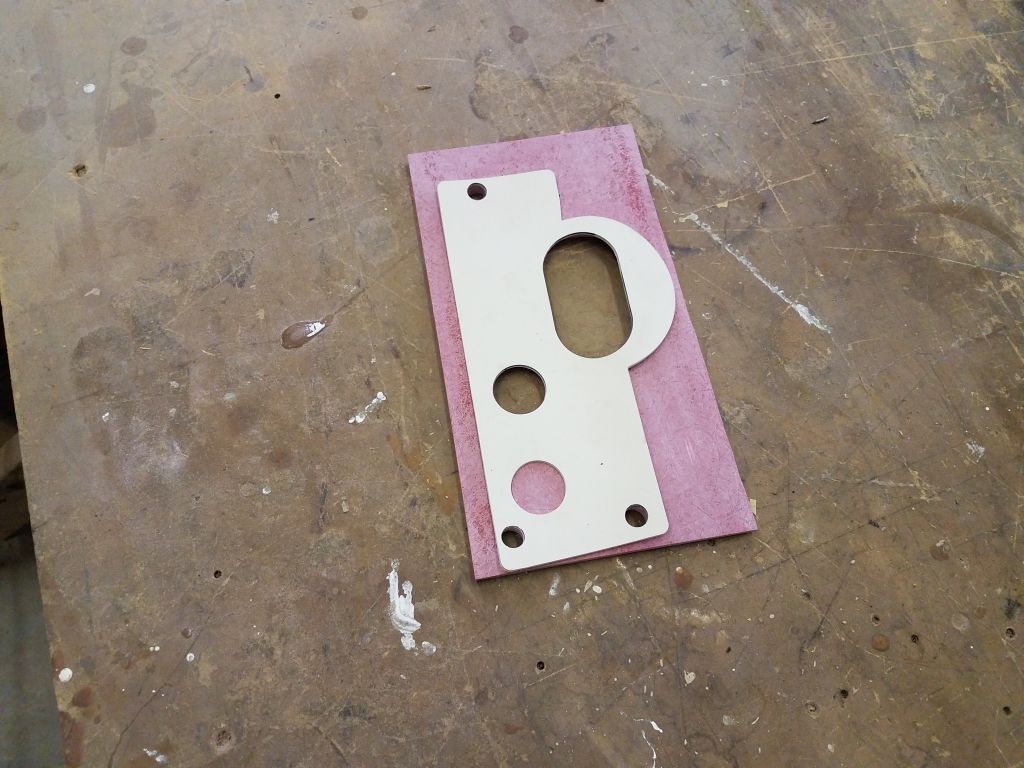
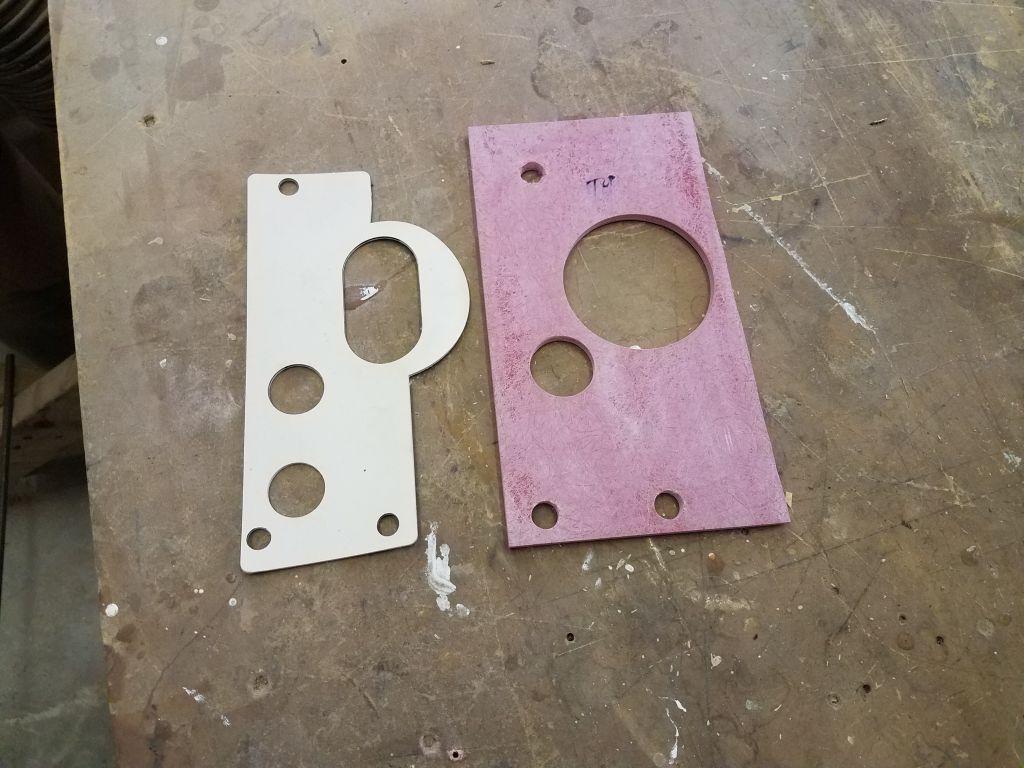
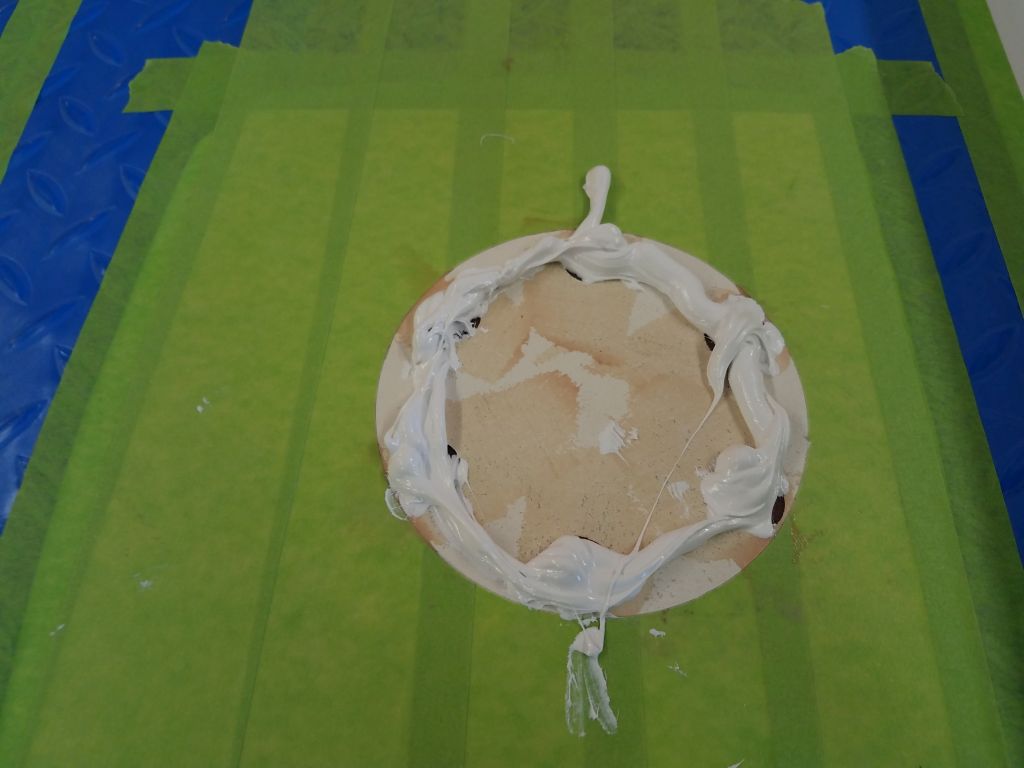
To mount the pump, I needed a base on the hull, so from some leftover 3/4″ prefab fiberglass I cut a base to fit the pump, and after smoothing the edges and predrilling/tapping for 1/4″ machine screw fasteners, and sanding away the paint in the locker, I epoxied the base in place on the hull.  Once the epoxy cured and I could paint the base, I’d install the pump with the fixing screws for which I’d prepared it, and run the hoses.

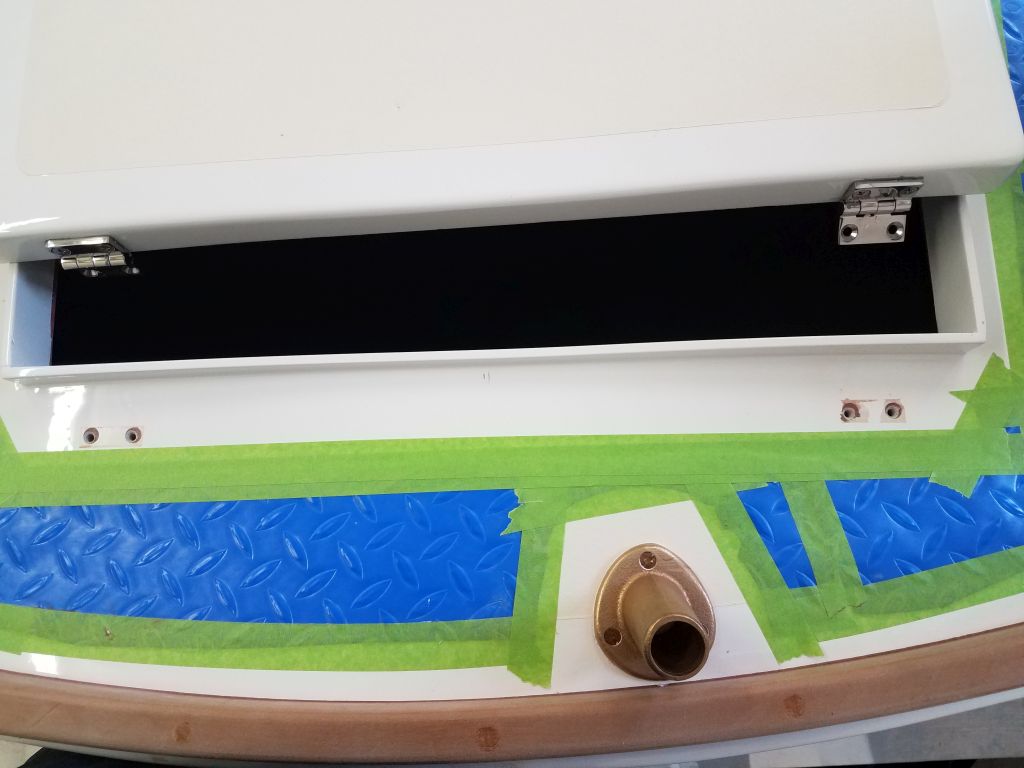
During the electrical work, one of the AC circuit breaker handles had broken off, so now I replaced the damaged breaker with a new one.  Afterwards, I installed the labels I’d ordered for the panel circuits and bilge pump switches.

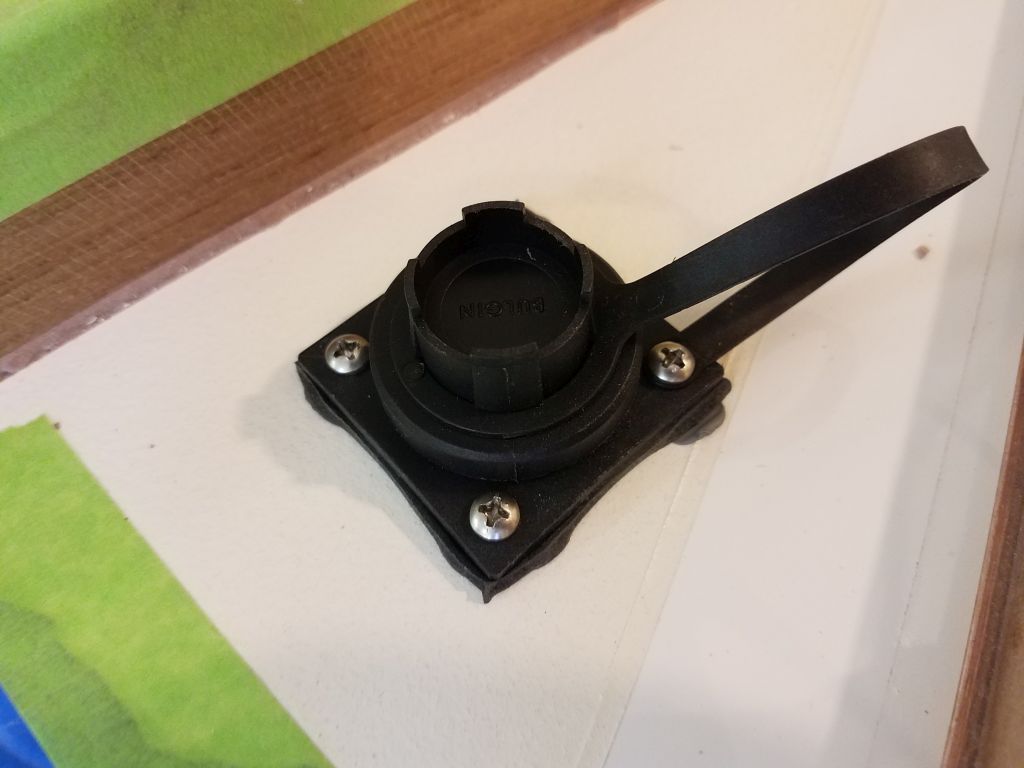
The day’s courier delivery brought me the Garmin transducer cable adapter I needed, so with that I completed the GPS and associated wiring, secured the excess cabling, and reinstalled the cosmetic cover panel in the head.

I’d had it lying around for some time, but now I finally got around to installing the new bronze tiller head on the rudder post.  I’d removed the tiller strap for the purpose, and kept it in the shop for the moment till I could start designing and building the new tiller sometime later in the project.

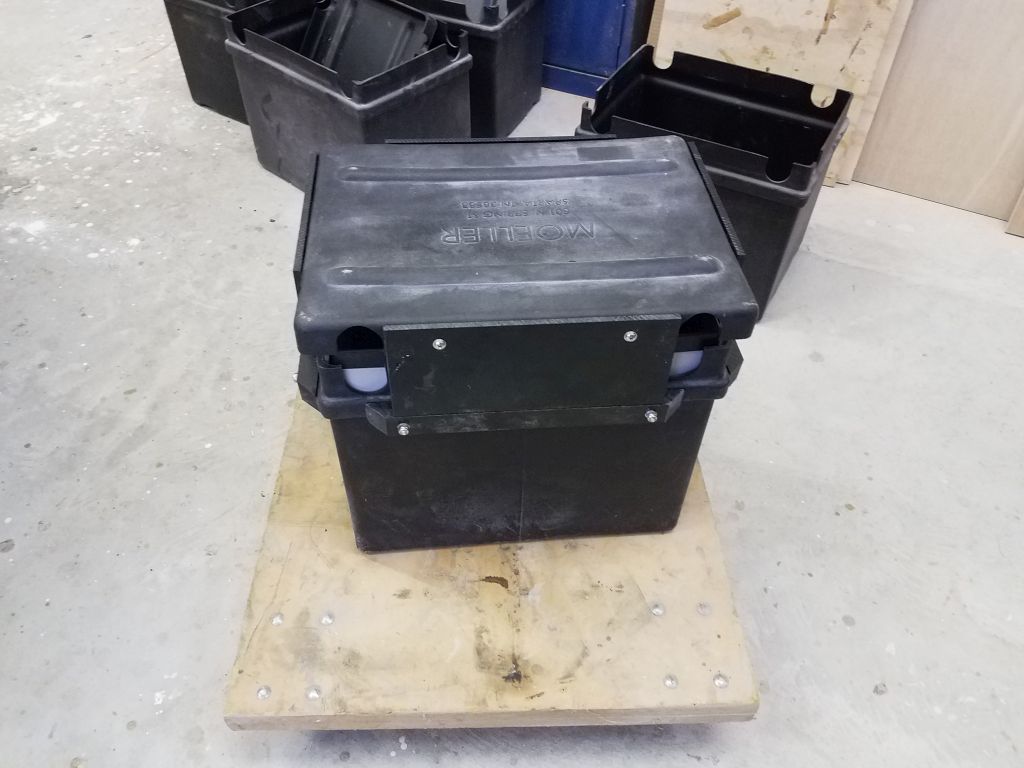
Earlier in the week, I’d ordered the anchor roller designed to fit the owner’s choice of Delta anchor, but I worried that the space on the bow platform was more limited than I’d originally anticipated, thanks to the pulpit bases intruding.  Because of this, I’d ordered three additional types of anchor rollers as a trial, hoping one of the smaller, narrower ones might work, but unfortunately all the smaller ones simply weren’t up to the task of the anchor at hand.

At issue with the Delta roller was the fact that the space between the headstay attachment point and the pulpit mount was narrower than the roller itself, and also there was a clearance issue (potential) between the headstay attachment and the side of the anchor roller.  But now that I’d discounted any of the other rollers as a possibility, I took another hard look at the situation, and realized that with a 1/4″ spacer beneath the roller, and cut to fit around the impediments, the roller would otherwise work as intended–provided I could pre-install the lower toggle on the new roller furling headstay assembly, since access to the clevis pin and/or cotter pin would be limited or impossible with the roller in place.  Otherwise, there was room for the toggle to fit, and with the 10″ raised height of the furler drum I’d requested, there would be no other access or clearance issues.

At first glance, it looked straightforward to remove the toggle from the headstay, but it turned out that the pin securing it and the headstay turnbuckle was more complicated than that, featuring a pair of nuts, spacers, and even a cotter pin inside the assembly.  What I thought would be a simple bolt removal turned out to be more than that, and after a quick failed attempt I regrouped and thought I would ask the riggers about it before I went ahead with the removal, as it seemed there might be a trick or two needed.

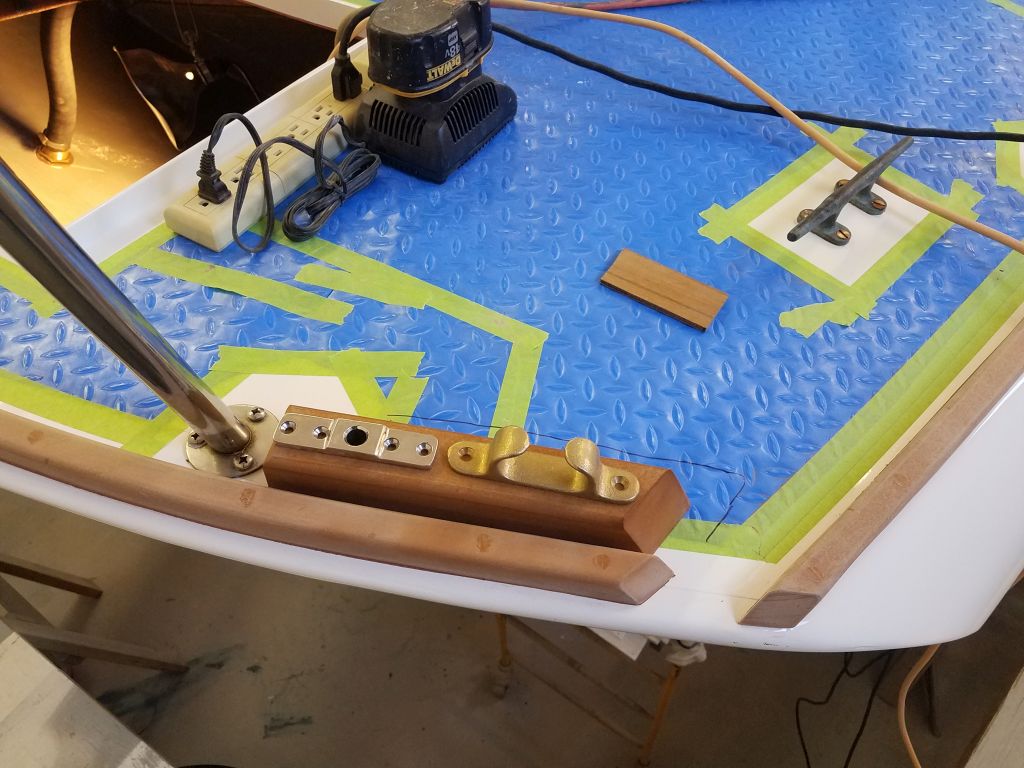
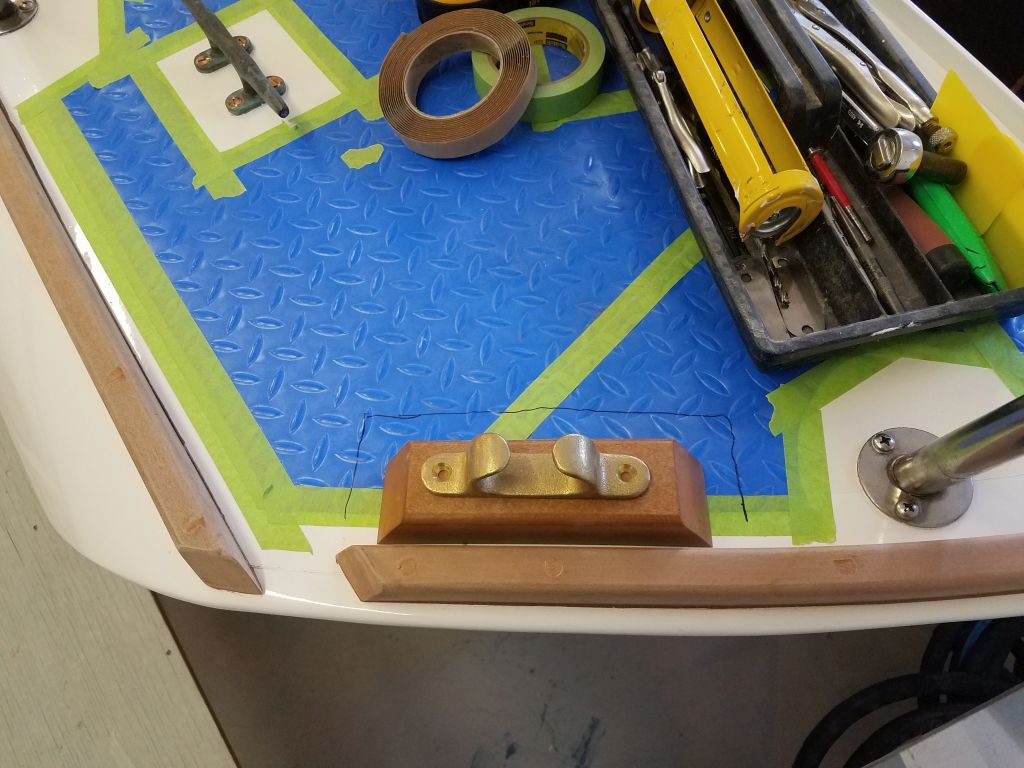
Still, one way or another I planned for this to be the way forward, so from some scrap teak I made a spacer to fit beneath the roller, with cutouts as needed to clear the two impediments, and with a dry fit I was pleased with the prospects, and the roller was right where I’d always figured it would be when imagining the windless installation.  I’d await final installation till I cleared up the toggle issue, but was glad I’d found a workable and practical solution to the tight quarters at the end of the bowsprit.

Total time billed on this job today:  7.5 hours

0600 Weather Observation:  20°, partly clear. Forecast for the day:  Partly sunny, 37°
Scupper 226

Thursday

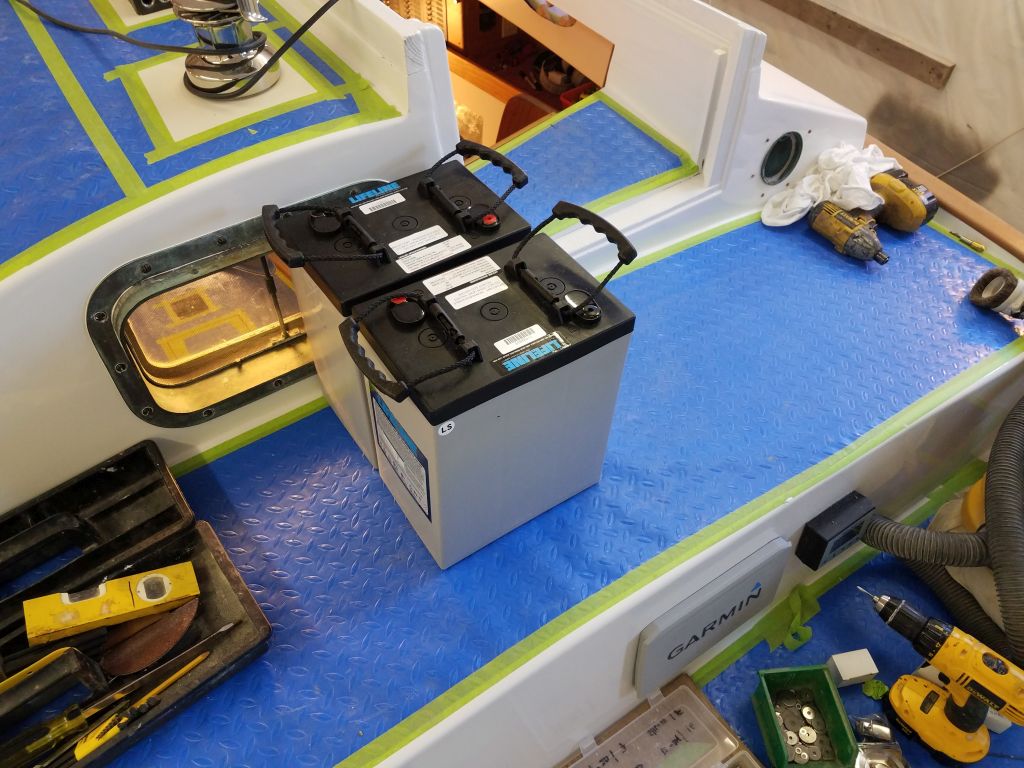
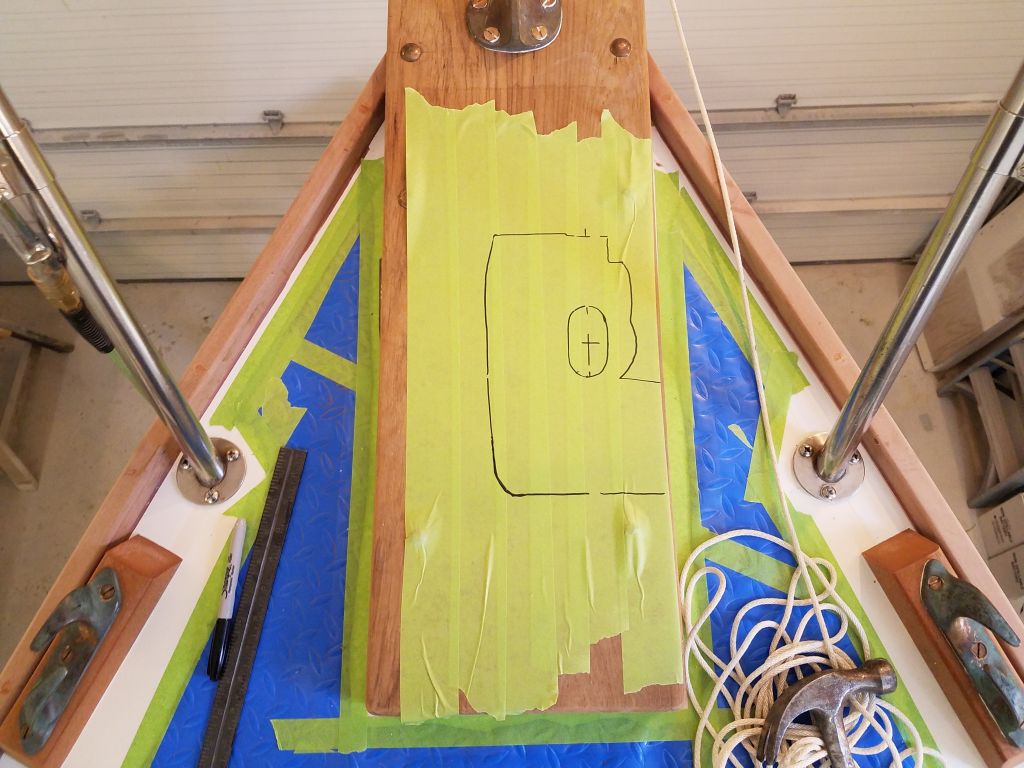
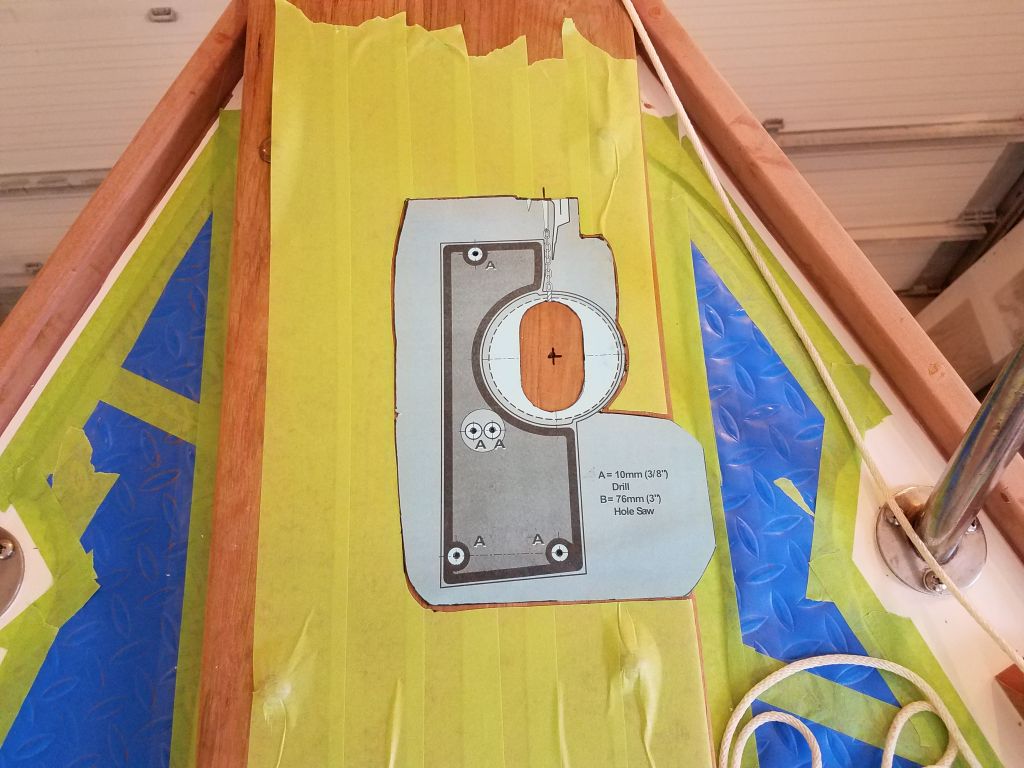
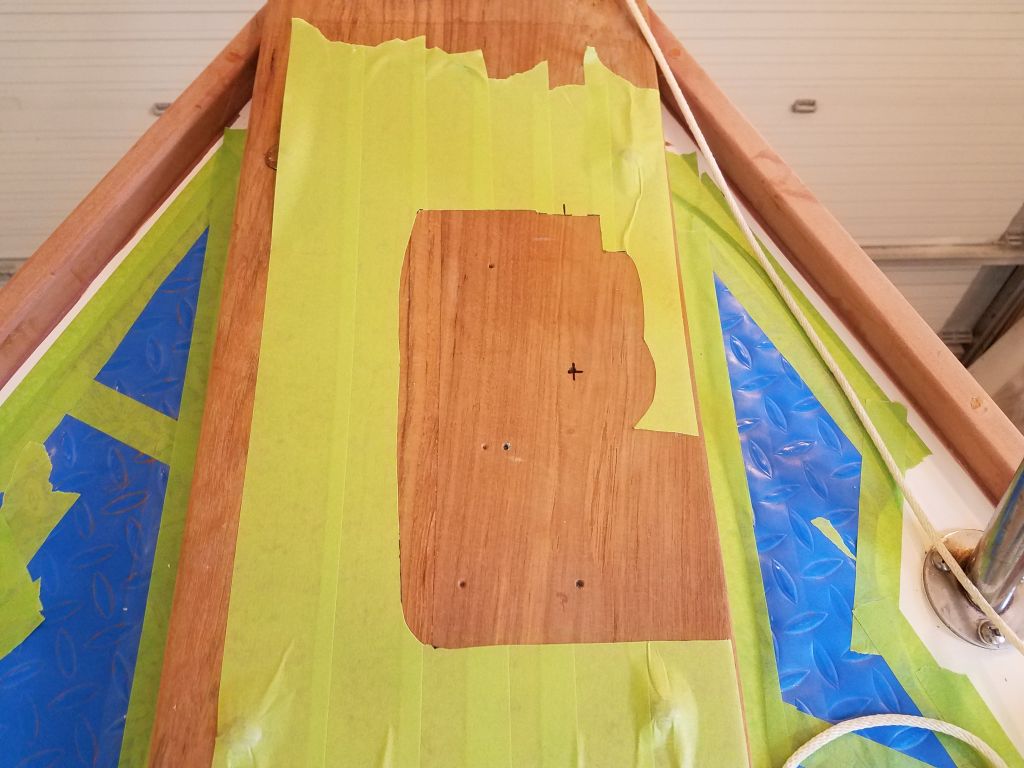
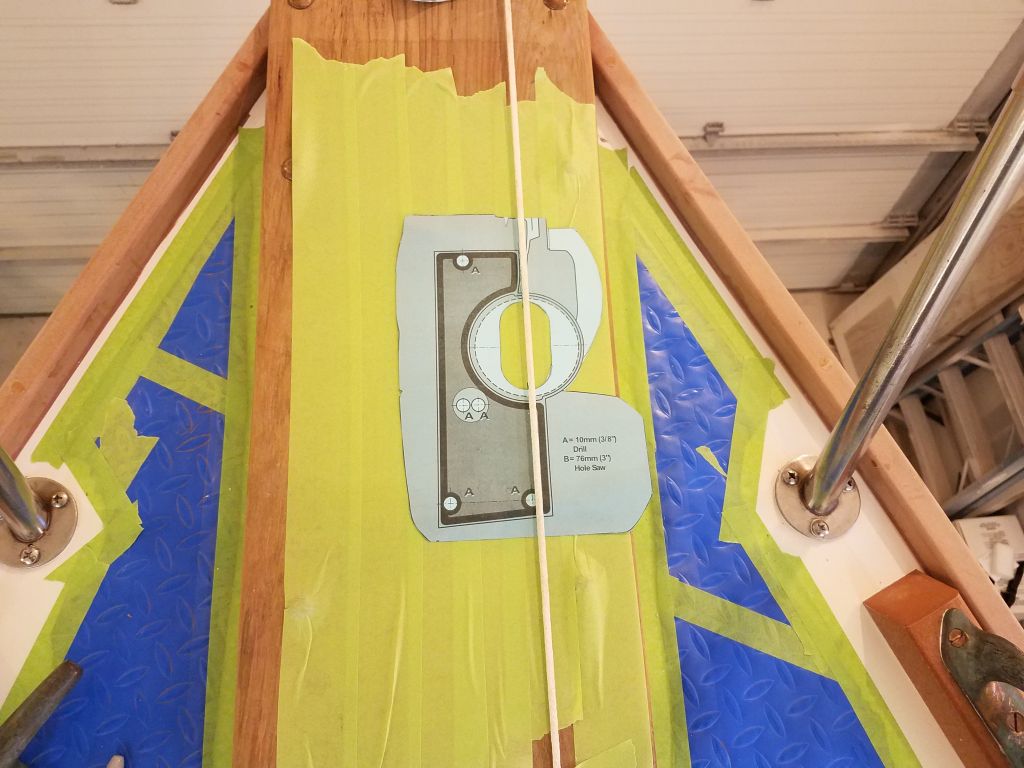
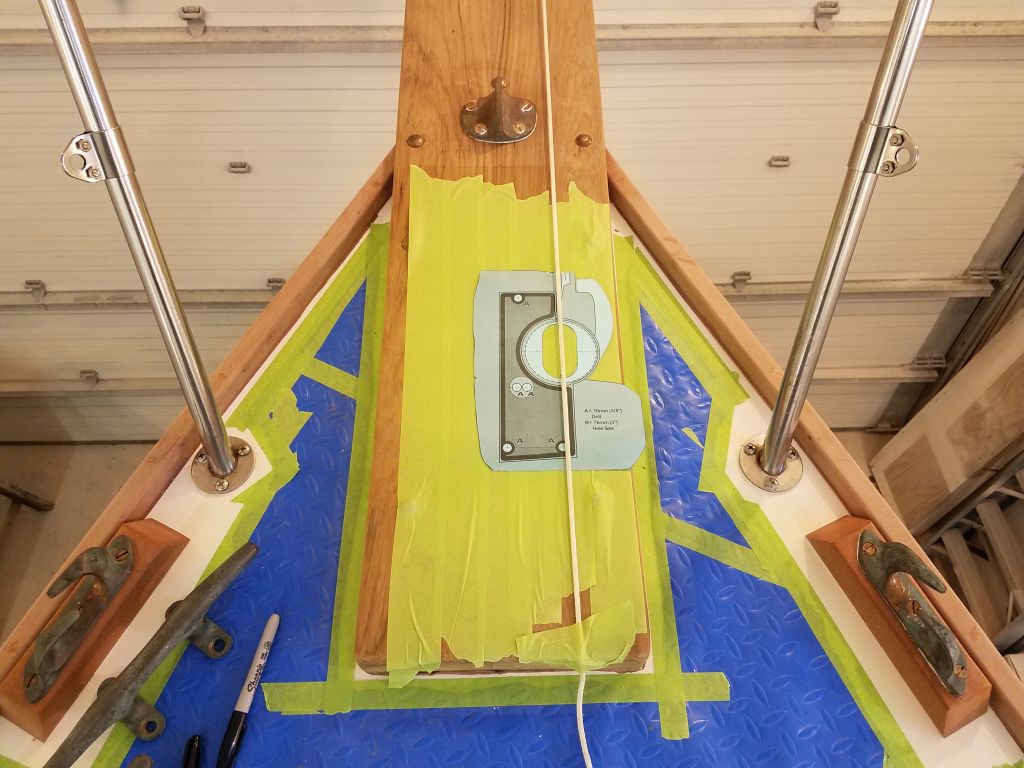
Using the supplied template, I located the new GPS display unit in the bridgedeck next to the electric motor monitor, set about 2″ to port from the existing installation.  After double-checking the position of the template for level and to ensure the cutout would end up where I wanted it from inside the boat (as there was limited space in the access opening), I drilled the four holes to demark the corners of the cutout, then removed the rest with a saw.

I dry-fit the display to check its fit:  all OK.  So after cleaning up and removing the masking tape, I proceeded with final installation.  I applied the foam gaskets to the back side of the display, and added bits of butyl tape at the screw locations (which weren’t covered by the gaskets) before installing the display with four bolts.

Inside, I set to work on the final connections, including the plug-in power wiring harness, which I connected to the circuit I’d run in earlier for this purpose.  The network backbone cable leading from the wind instrument network box in the bow required a T-connector and drop cable to connect to the display unit (these cables had been supplied with the wind instrument), but to my dismay I found that the depth  transducer cable featured a different pin pattern from the back of the display:  8 pins vs. 12 pins.    This was rather frustrating since the in-hull transducer the owner purchased along with the GPS was specifically sold as compatible with this display, and I might have had a thing or two to say about electronics companies before I regrouped and headed for my office to look at my manuals and online for a solution.

Fortunately, I found and ordered an adapter cable to solve the problem, but it certainly seemed an unnecessary and ridiculous requirement.   For now, I awaited final cleanup and securing of the cables till the new adapter arrived and I could connect the transducer to the back of the display, but to prepare I installed a few additional wire mounts for the purpose.

I needed to leave the shop for an appointment in a few minutes, but I had enough time before departure to finish up the masthead wind instrument bracket installation.  The bracket featured three bolt holes, the after two of which were wider than the masthead, so to begin I could bolt the bracket to my fiberglass plate at these locations, and from there I drilled and tapped two additional mounting holes through the top of the masthead casting itself to secure the whole bracket assembly.  I temporarily installed the anemometer for illustrative purposes.

Back at the shop in the afternoon, I turned to the manual bilge pump installation.  This was relatively simple, but somehow several aspects of the installation just fought me at various times, mainly aligning and securing the four blind bolt holes in the pump housing while juggling the fussy plastic outer cover, but eventually I prevailed.

With the pump mounted, I installed the suction and discharge hoses, running the suction into the bilge sump aft of the engine after securing a bronze strainer to the end.  I’d need to add a wire mount to the inside of the cockpit locker to finish securing the suction hose near the pump later.  The discharge line was short and sweet to the nearby through hull, and I secured the hose to a deck structural member above.

Total time billed on this job today:  6 hours

0600 Weather Observation:  5°, clear. Forecast for the day:  Mostly sunny, 38°

Stanchion Layout

Proposed stanchion layout 1/22/20

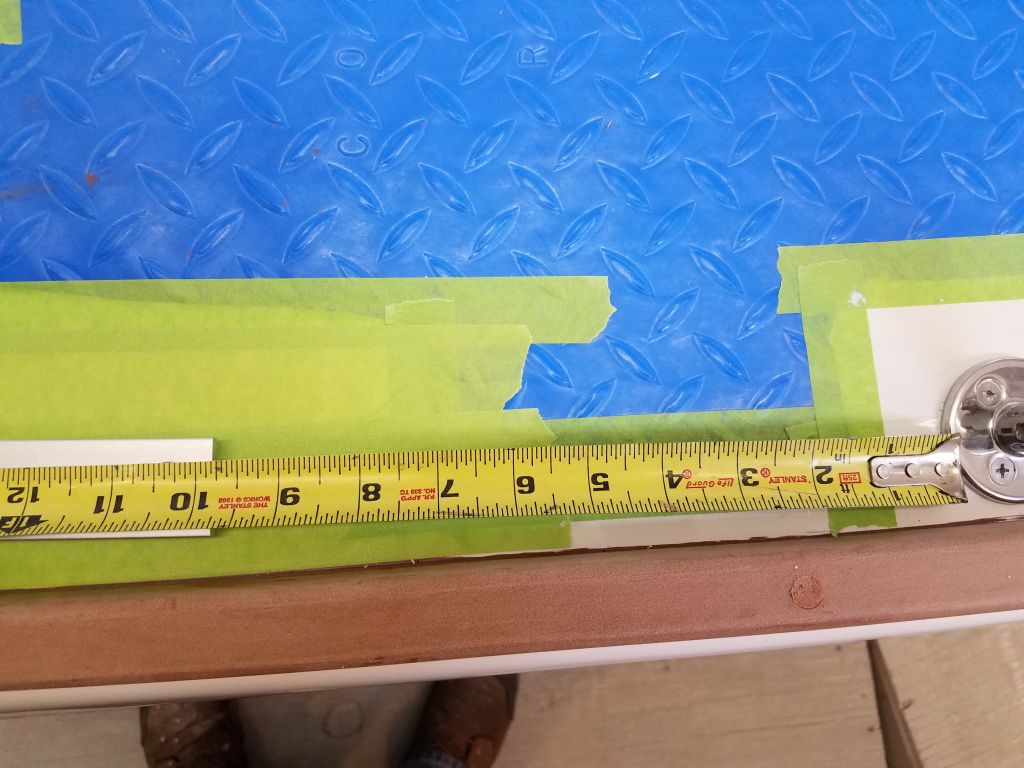
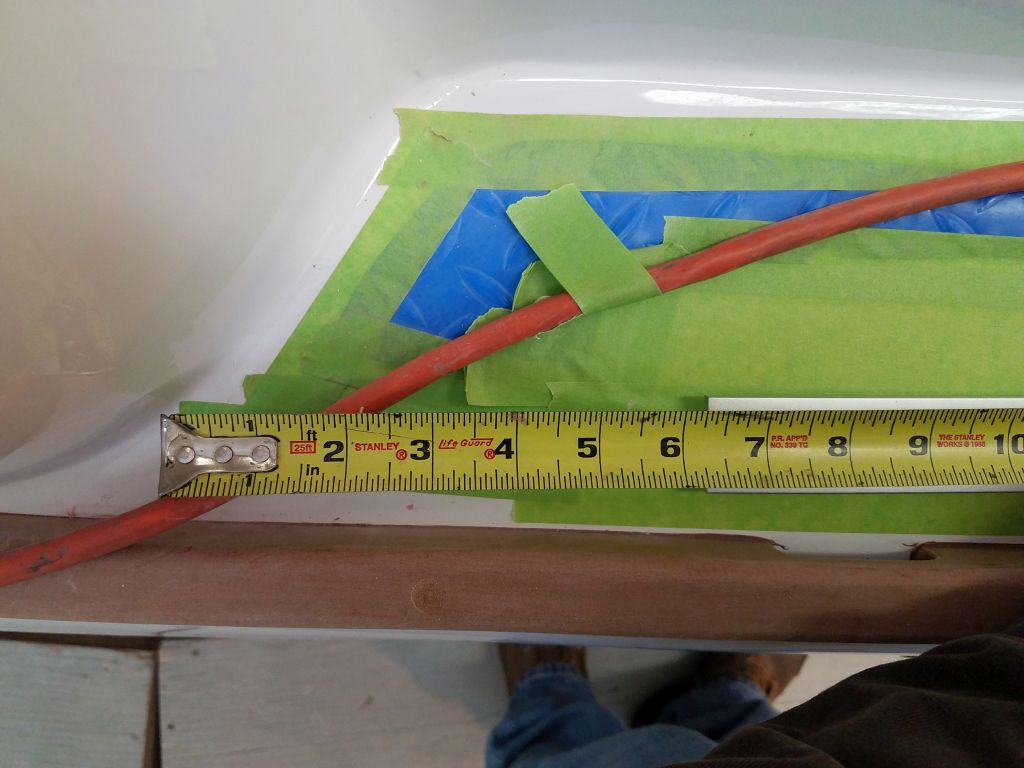
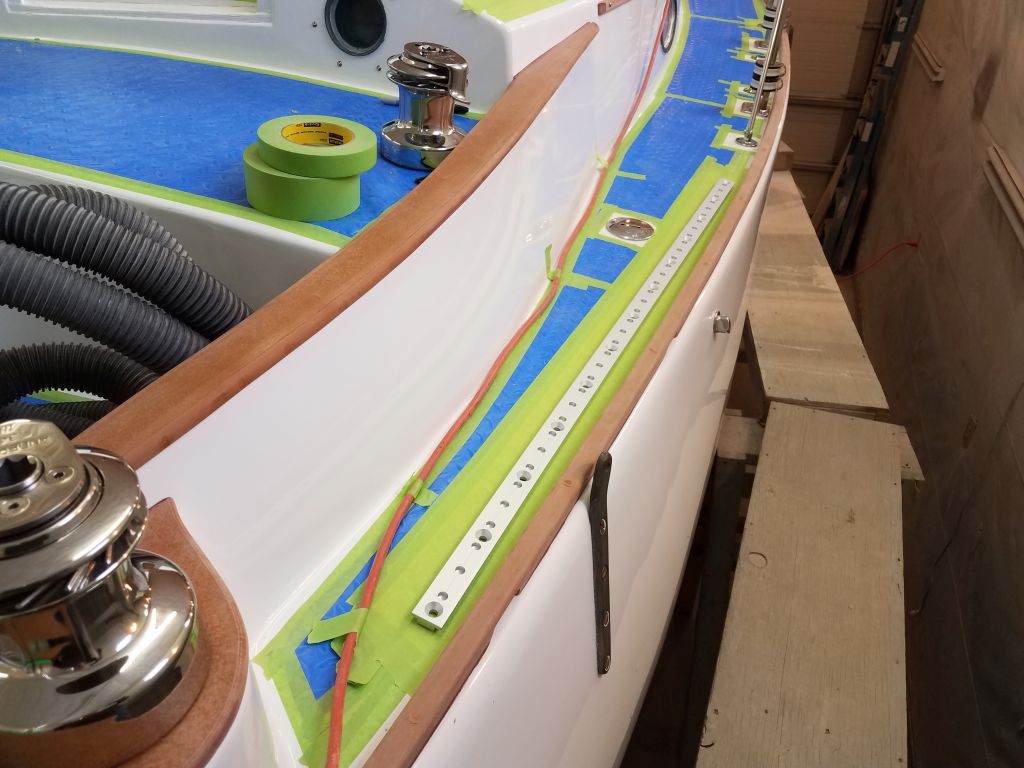
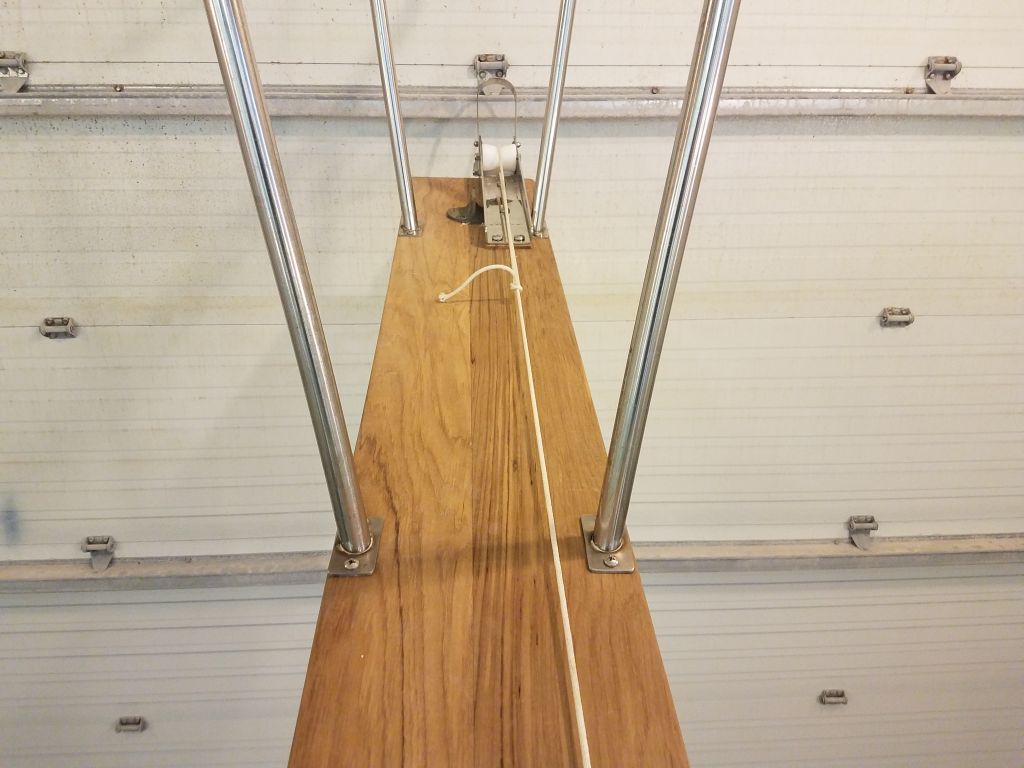
The premise of this layout was to include a 24″ gate opening roughly amidships, or just aft of the aftermost chainplate location.

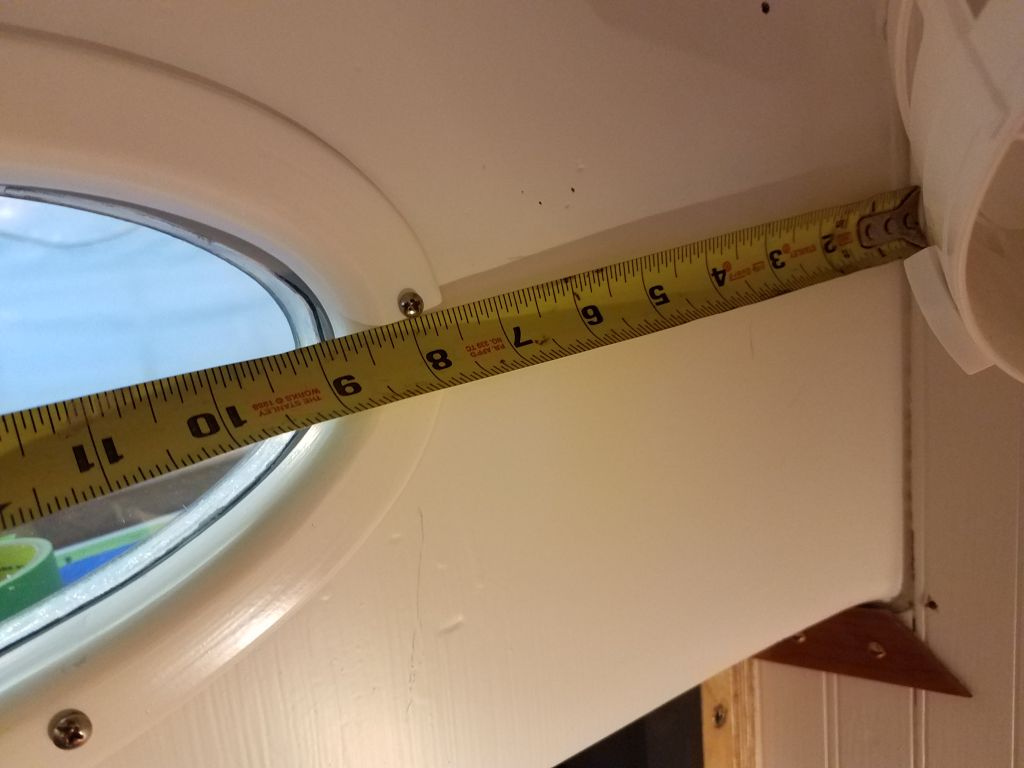
To begin, I adjusted the forward two sets of stanchions so that the length between their tops, and to the connection point on the pulpit, was equal.  I kept the second stanchion as close as practicable to the chainplates, while also taking into account the location of a small bulkhead inside the boat (defining the end of the port upper locker).

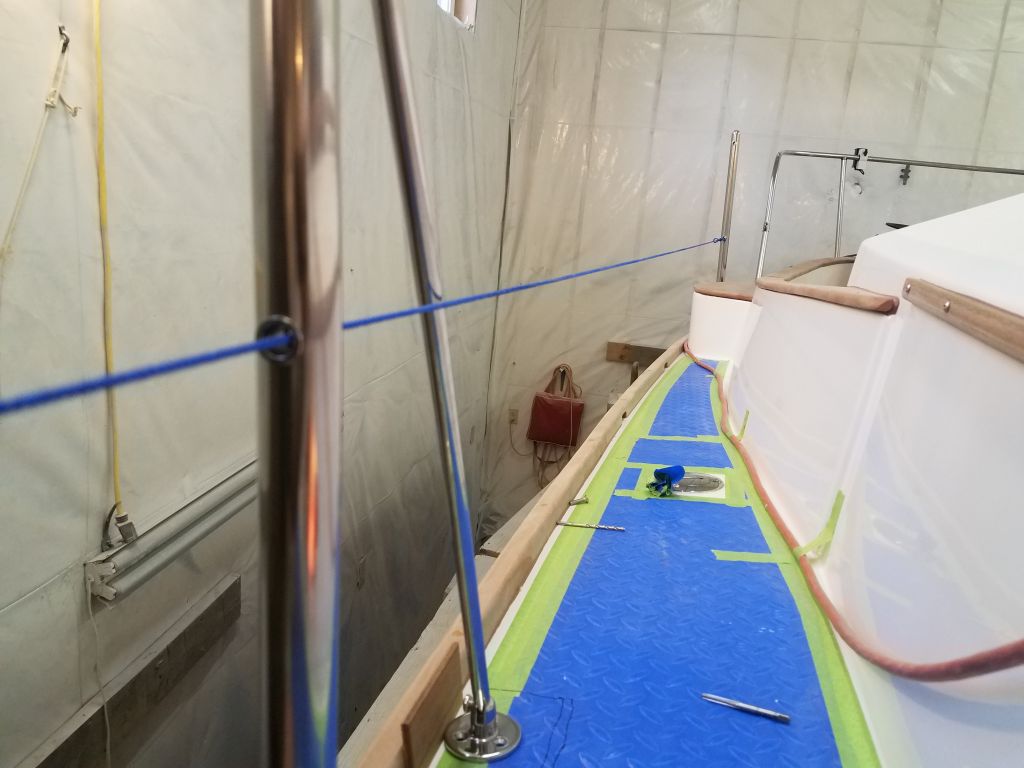
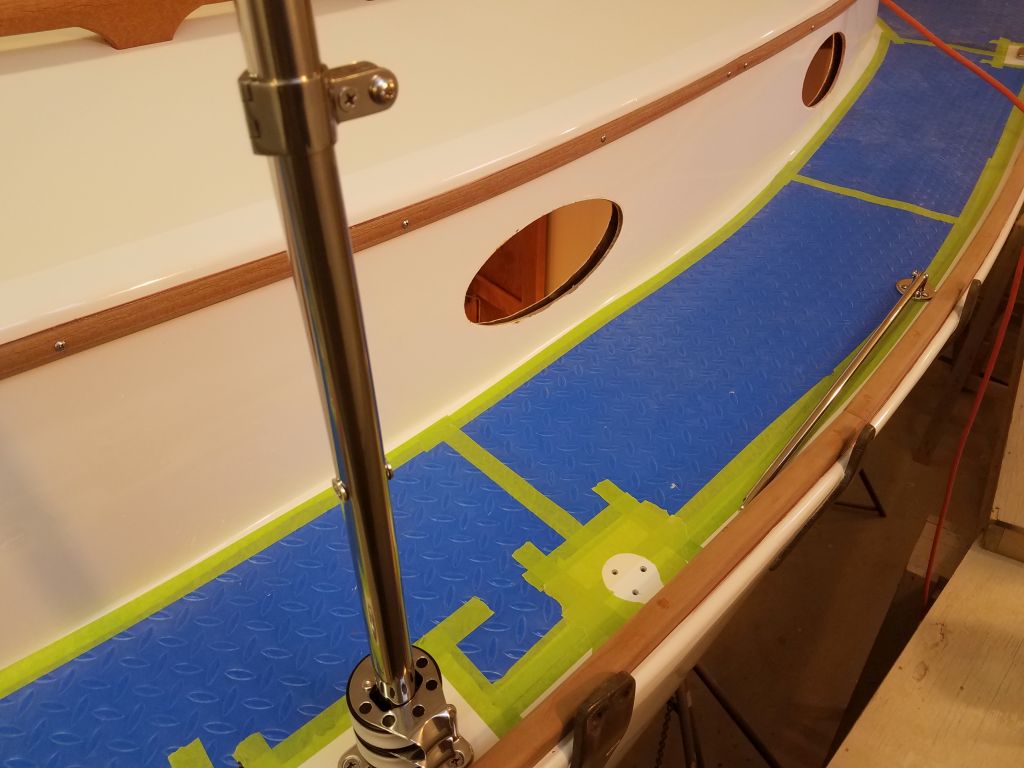
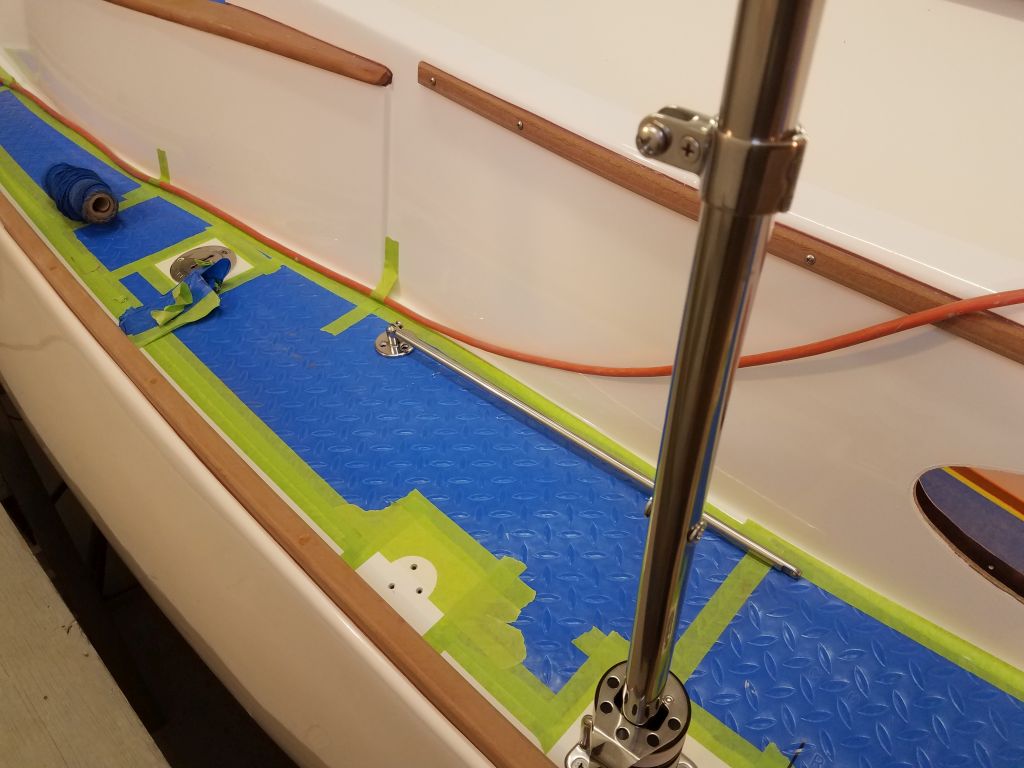
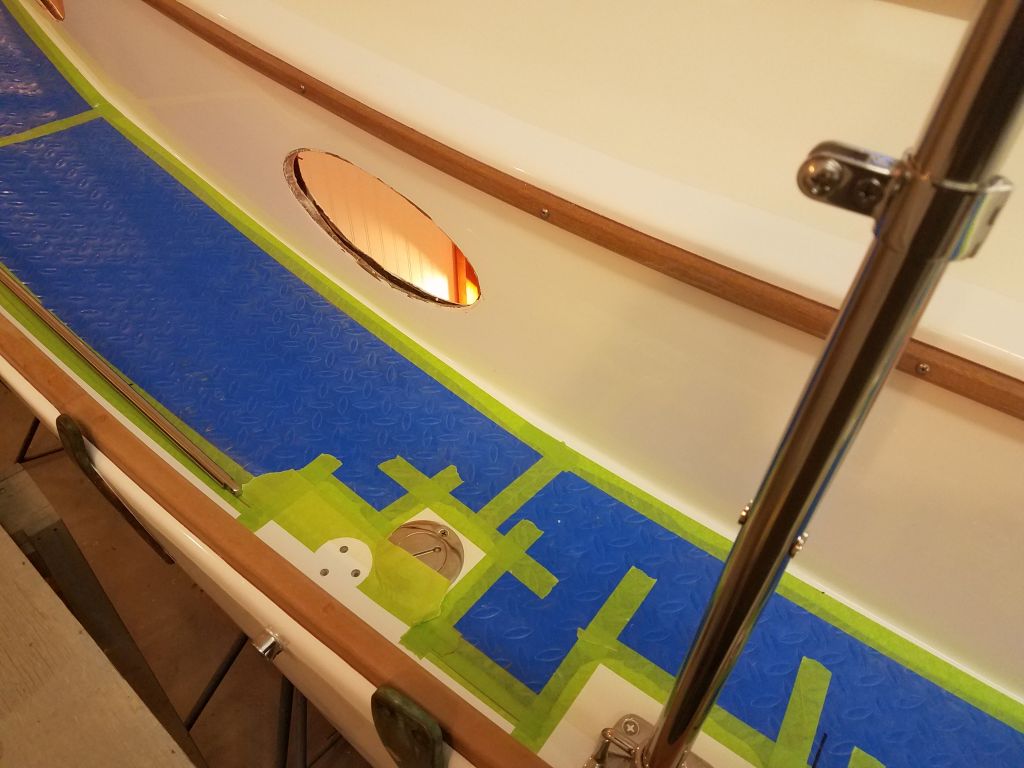
Then, I placed the third stanchion 24″ aft, to create a standard gate opening.  From there, I measured aft the same distance I had used forward, and this placed the fourth stanchion just aft of the winch island.  In my opinion, this is a good location for the stanchion since it keeps it more out of the way (the sidedeck is quite narrow forward of the winch island), and also leaves the deck forward of the winch clear for the jib sheet track installation.  Plus, the spacing interval remains consistent between the bow pulpit and each stanchion thereafter (other than the gate).

The spacing between the 4th stanchion and the stern pulpit is a bit shorter, but with the gate located where it is, and other considerations and conflicts, there is no way to make all the lengths exactly the same.  But this is the best place to have the inconsistent length in any event, visually and otherwise.

Note that I could, if necessary, adjust the gate position aft, but not forward without interfering with the stays.

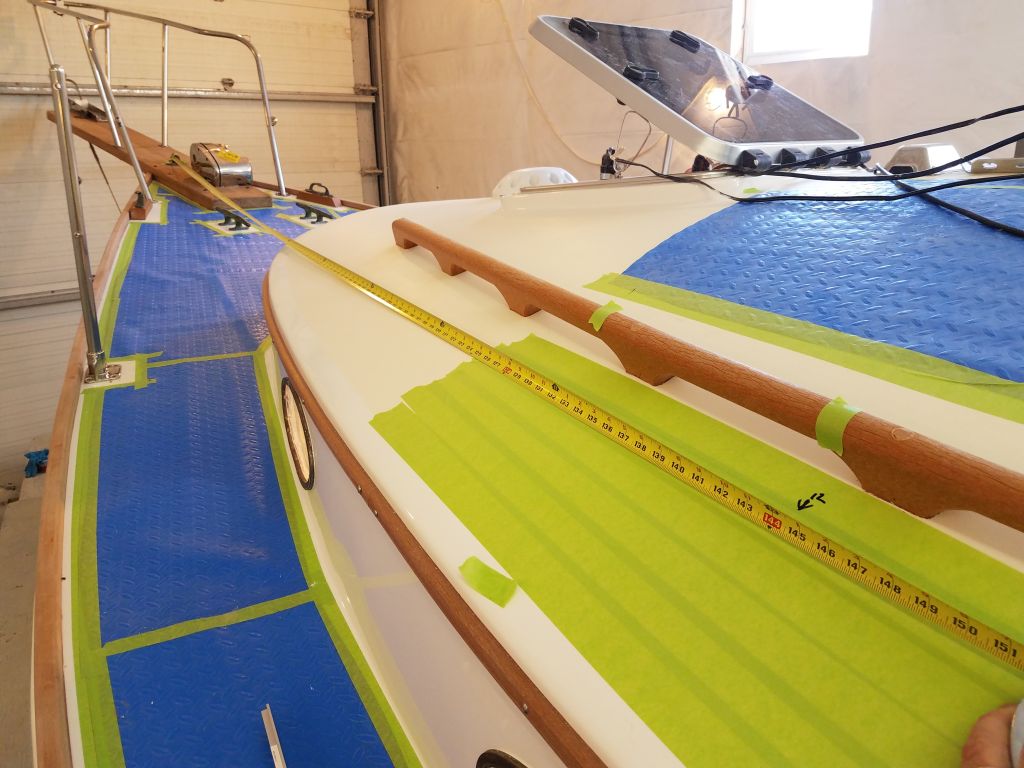
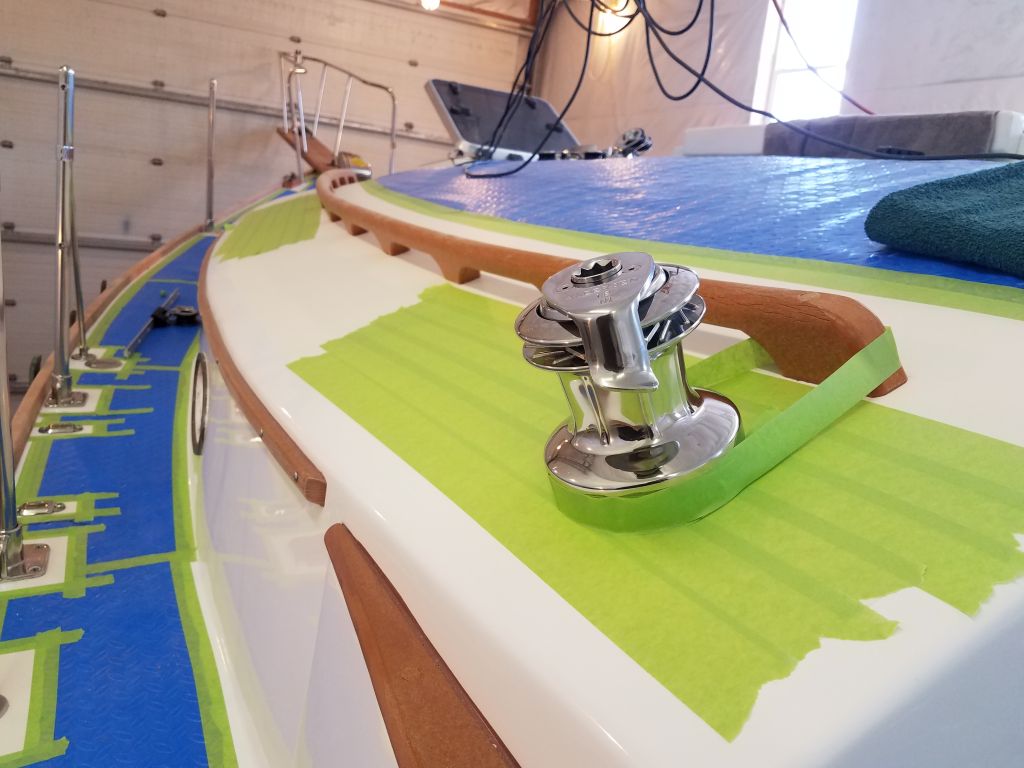
These photos show the layout from as many angles as possible.

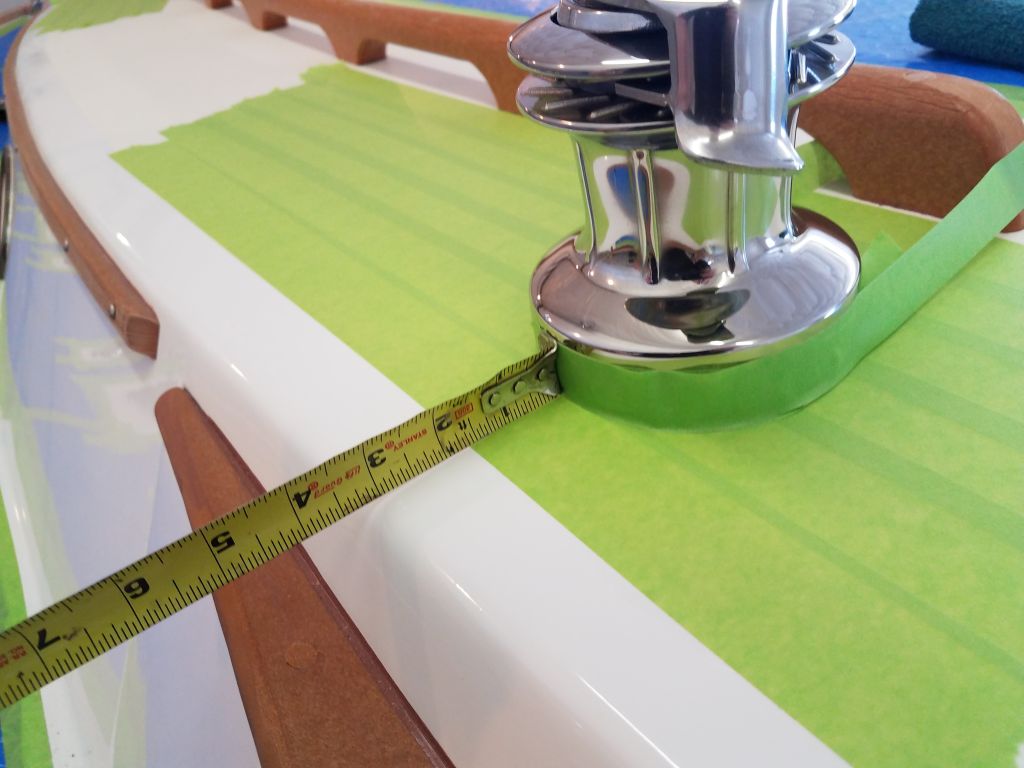
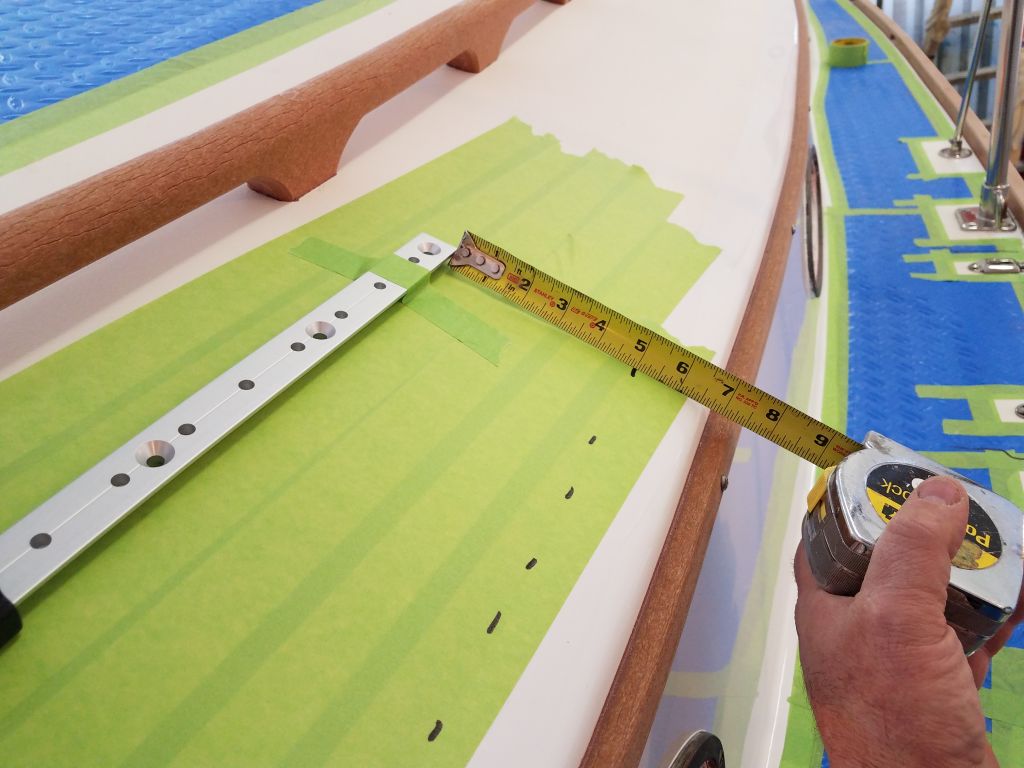
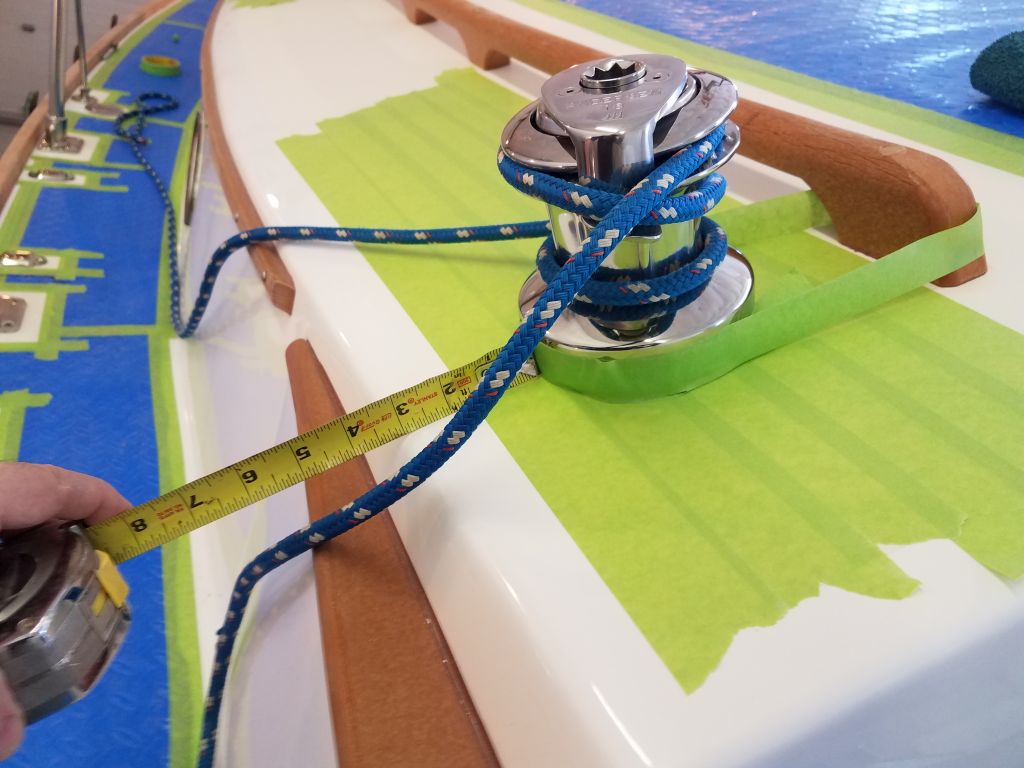
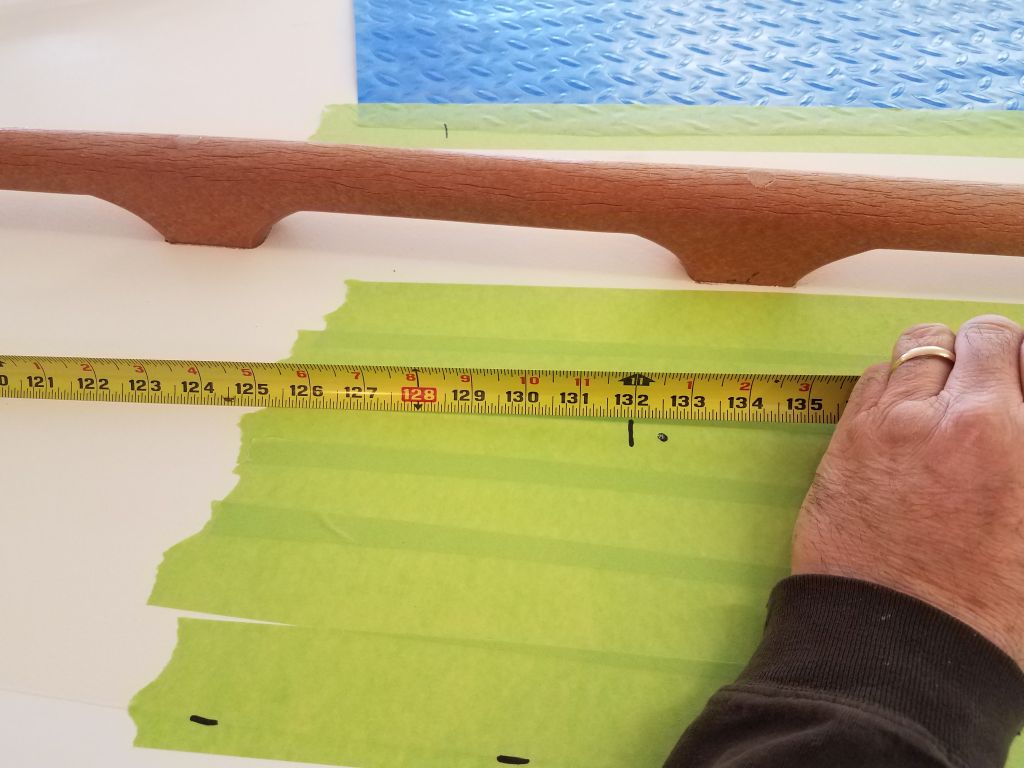
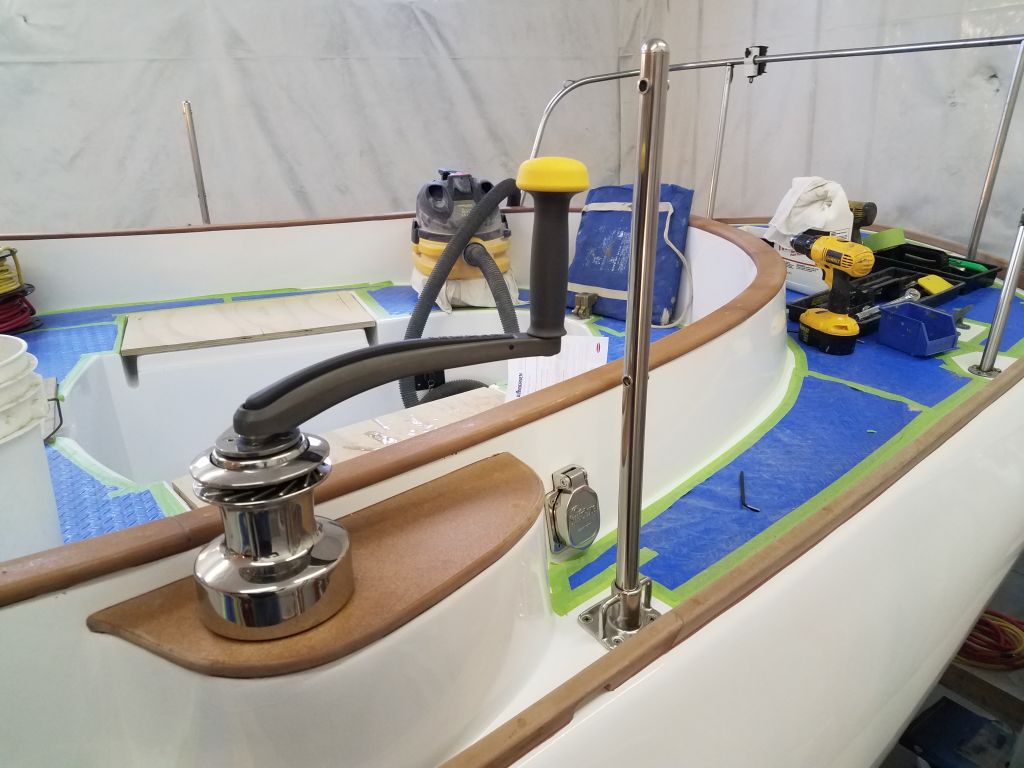
The placement of the 4th stanchion aft of the winch island also keeps the winch area clear for handle operation, with over 13″ between the winch location and the stanchion. There is still access to the shore power plug.

Were I to move the stanchion base forward of the winch island, I’d have to place it no further aft than shown here in order to allow winch handle operation (12″ or more).  This location also interferes with one of the toerail scupper locations, and would limit the options for placement of the jib sheet track.  All in all, for many reasons, the 4th stanchion works much better just aft of the winch island.

Scupper 225

Wednesday

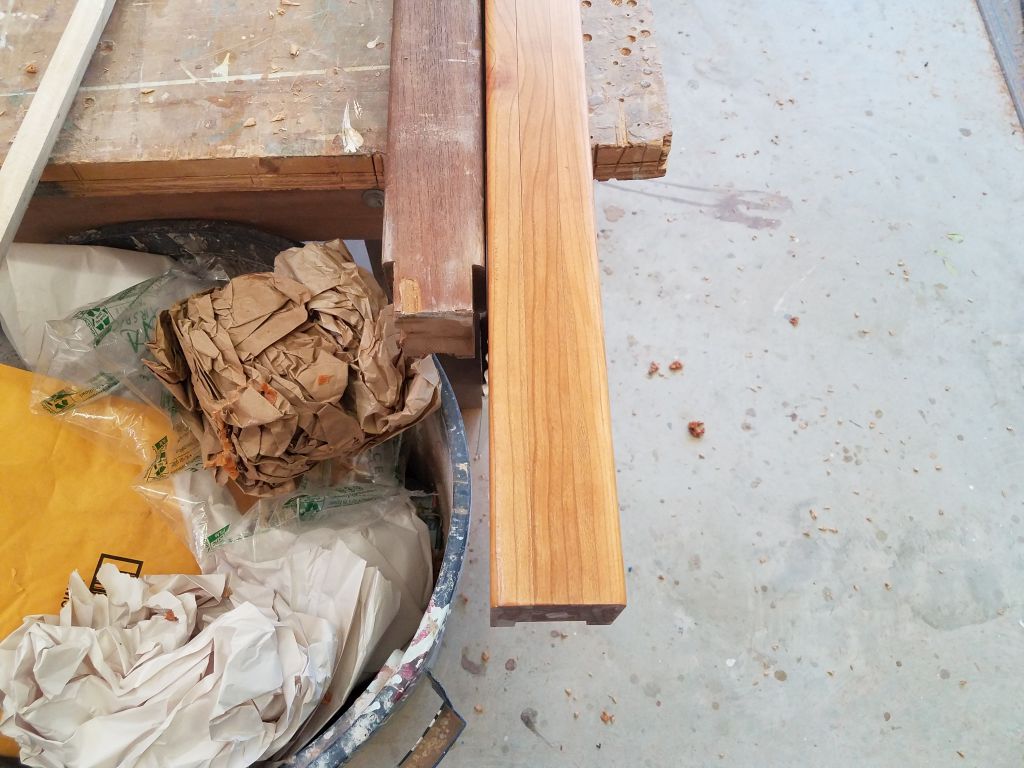
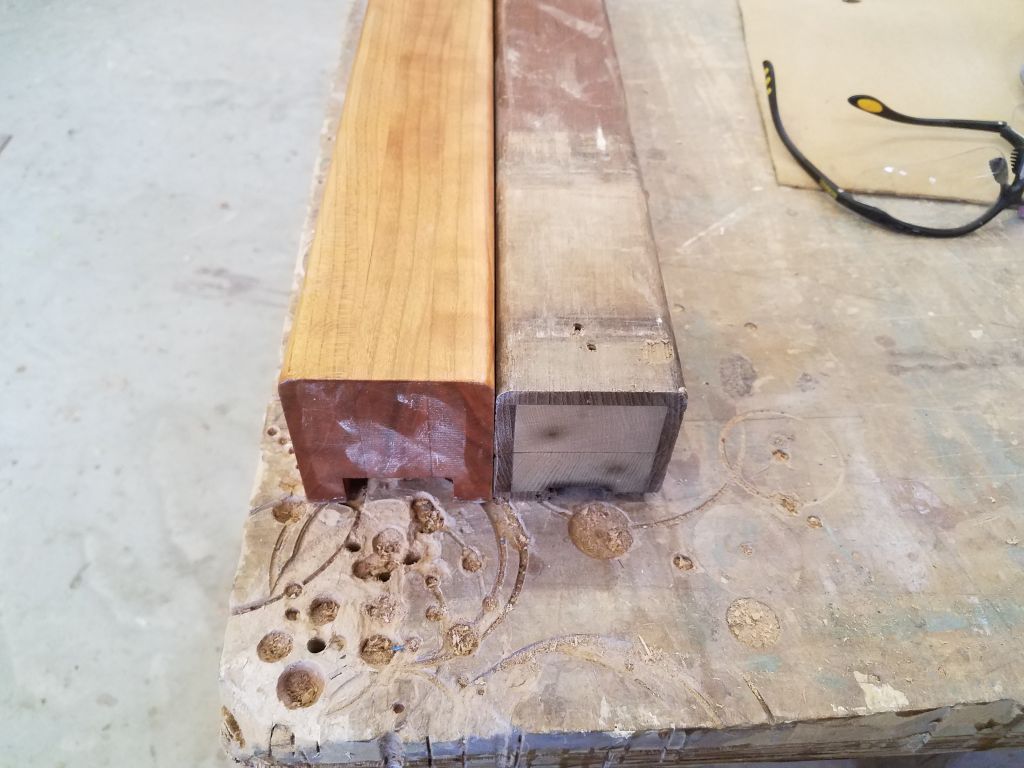
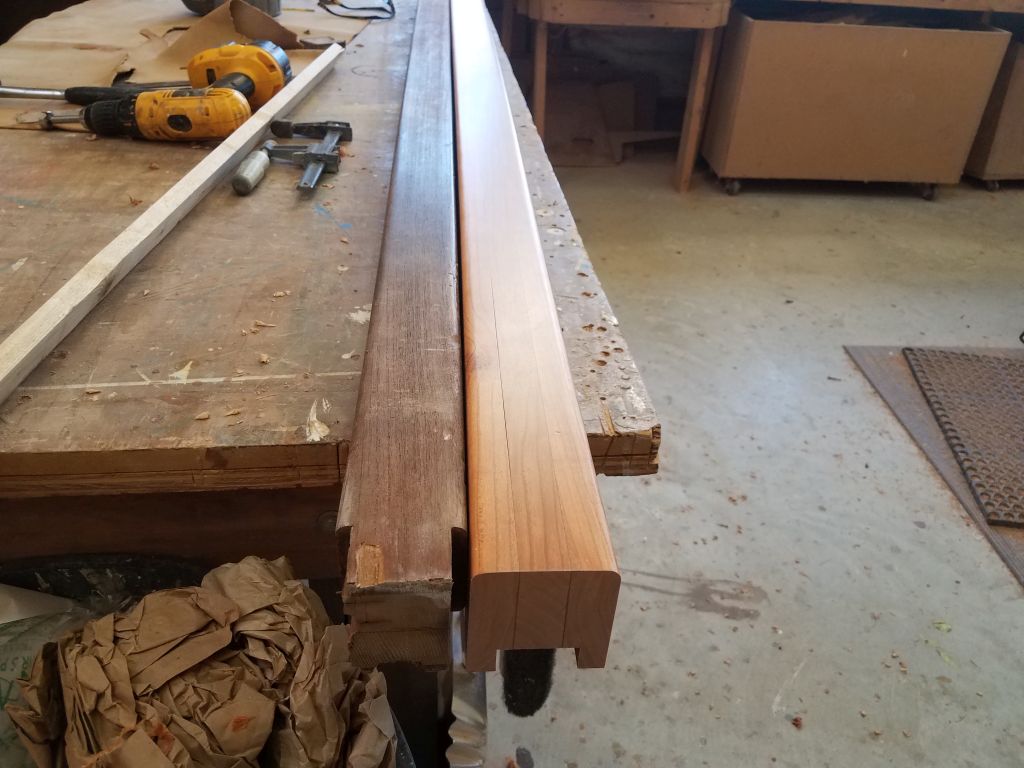
I spent a few minutes lightly sanding the new mainsheet riser block to remove excess fairing compound and otherwise prepare it for primer and paint.  At the same time, I sanded the spreaders with 80 grit paper to remove the excess fairing compound from the small second round, and also to continue the overall sanding process eventually leading up to primer.  There’d be one more round of sanding just before primer application, whenever that might be.

To finish up the pre-installation work on the stern pulpit, I secured the new wiring leading to the stern light, then polished the rails.

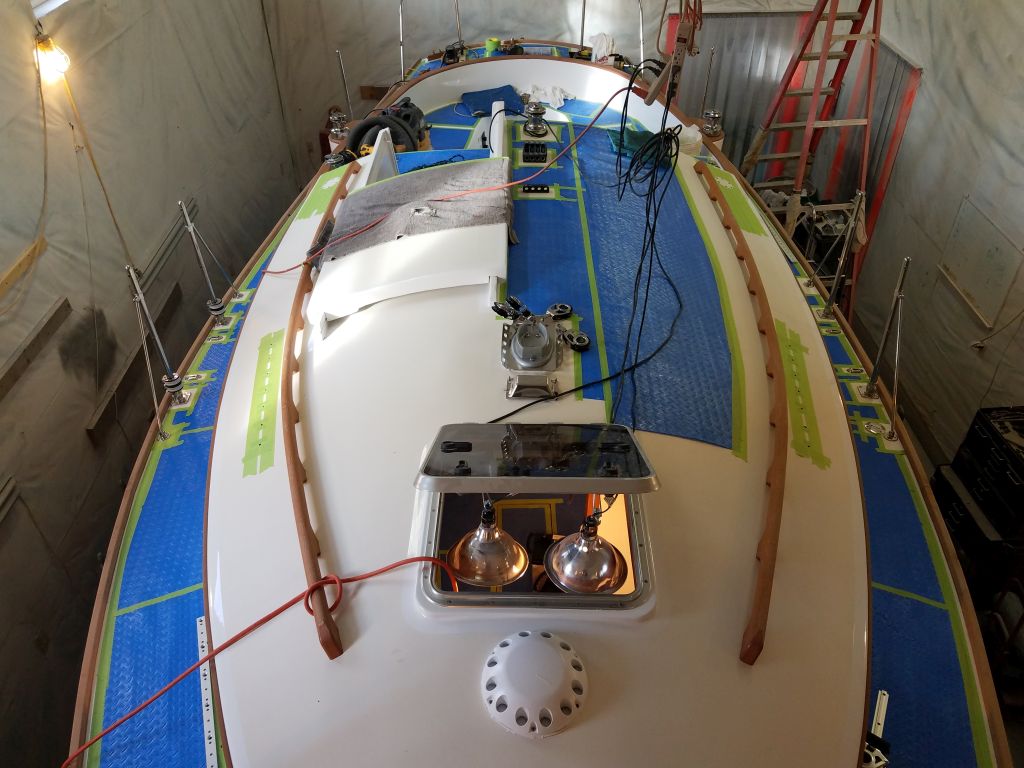
Up on deck, I laid out and aligned the pulpit where it needed to go, and prepared the deck in way of the four mounts by removing the plastic covering and covering each mounting location with masking tape.  Then, I temporarily dry-installed the pulpit with one machine screw in each base.  I would have done the complete installation now, but I had run out of 1/4″ nuts, which were due later in the day, so final installation would have to wait, but I needed the pulpit in place for my next task.

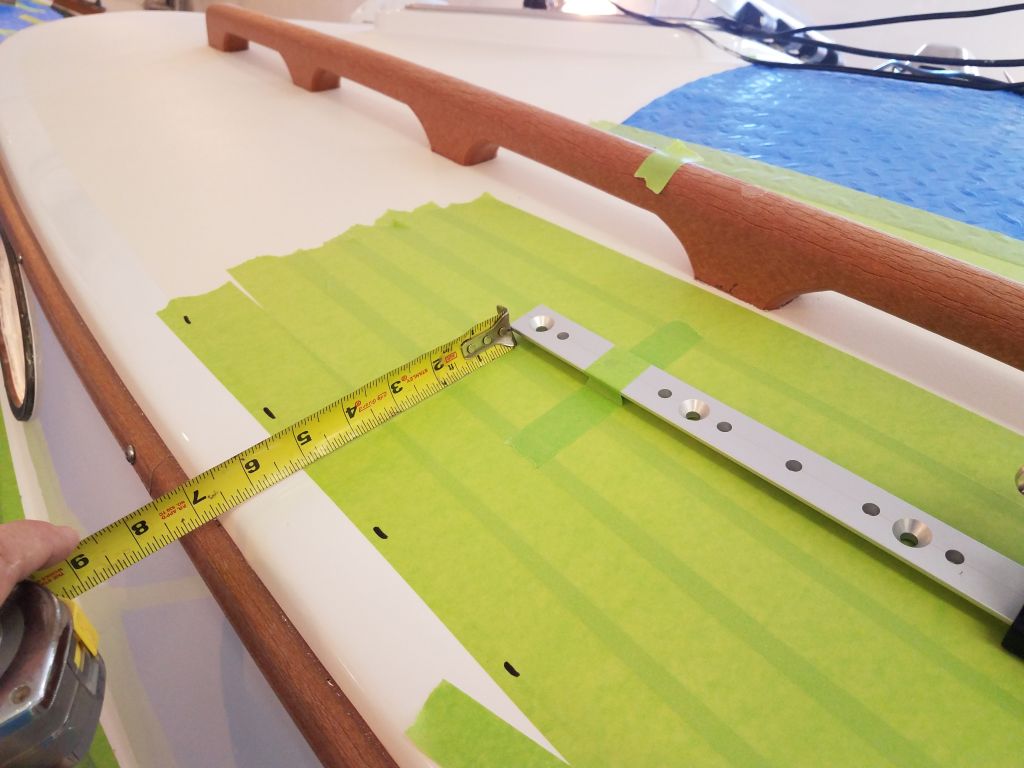
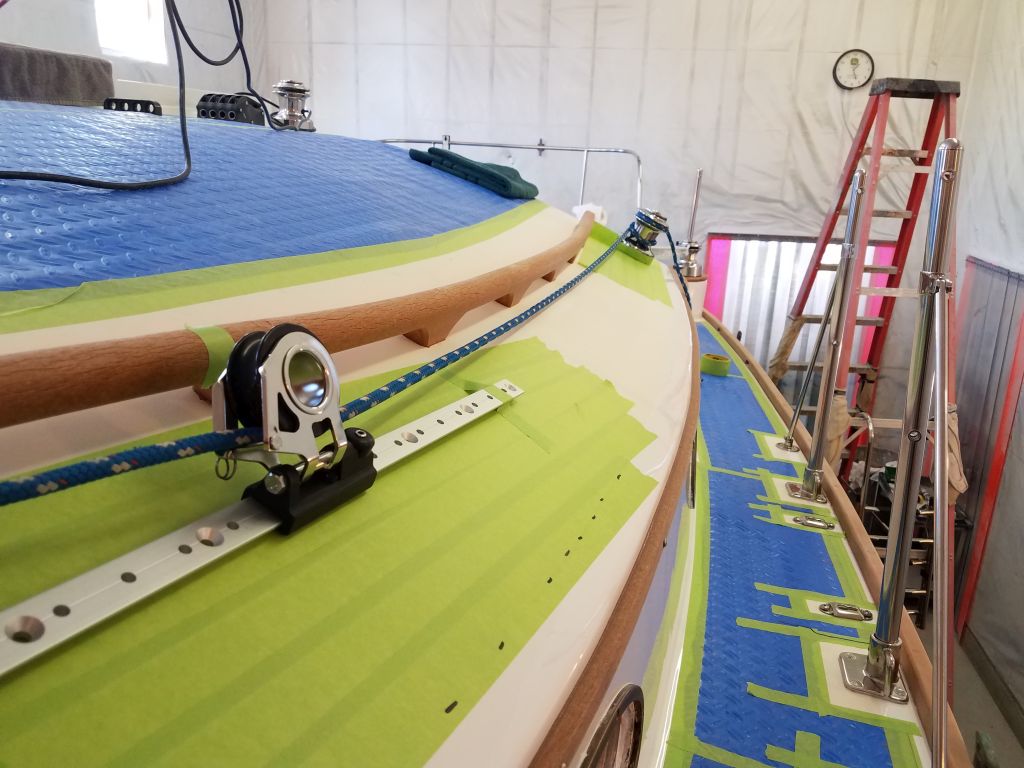
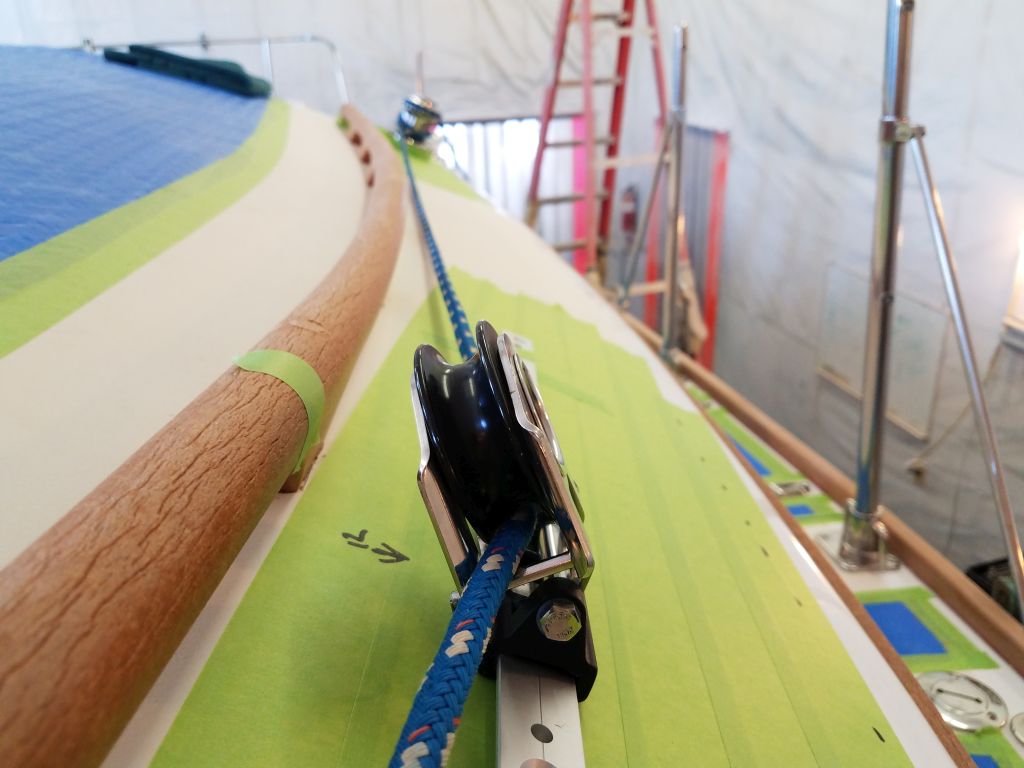
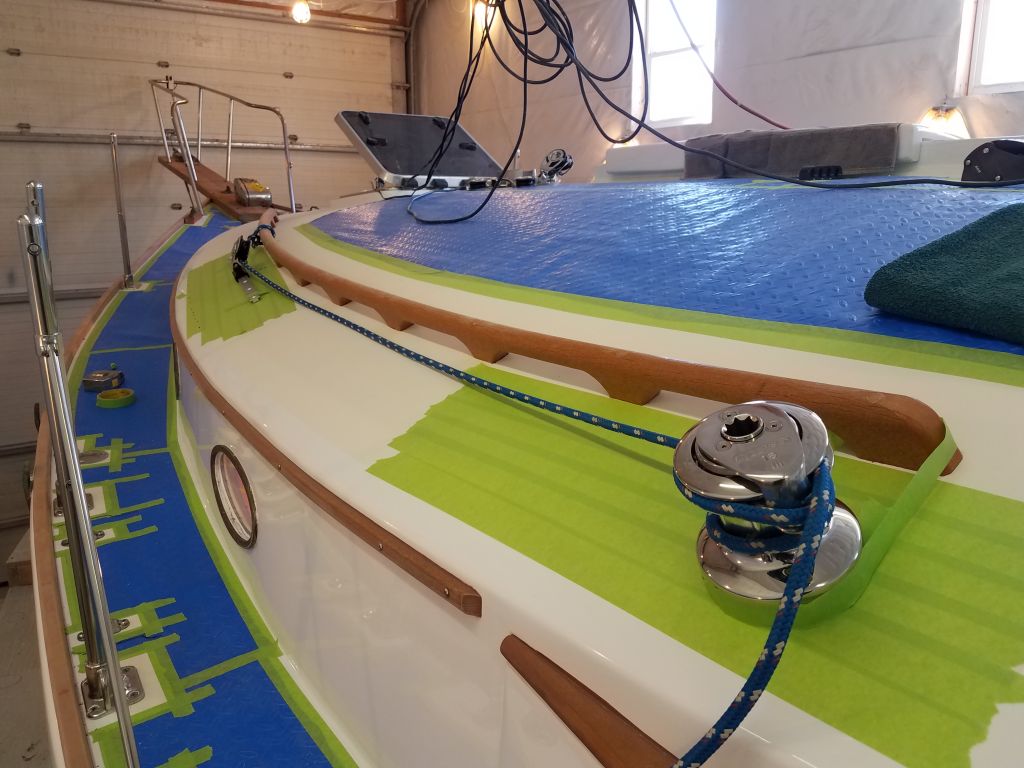
The next task was stanchion layout.  During an earlier conversation with the owner, we discussed stanchion placement, and he requested a new layout that incorporated a gate opening closer to amidships and away from the cockpit, which new layout would also require a 4th stanchion on each side, so to this end I worked for a while to determine how best to lay out the new arrangement.  The new gate was to go just aft of the last set of chainplates, so this was a relatively firm location I had to work around, though there was adjustment room as long as the stanchions didn’t interfere with the rigging.  The gate opening would be a standard 24″ wide space.

My other goals were to have the spacing between the stanchions be as even as possible, so, measuring from the bow pulpit connection to the forward stanchion, and henceforth from there, I made adjustments to the placement as needed, and this, along with other considerations, eventually placed the new 4th stanchion location just aft of the winch island, rather than forward, which worked well for several reasons, not the least of which was uncluttering the narrow sidedeck at the forward end of the cockpit coaming and leaving ample room for jib sheet tracks.

During the day, I sent the owner a brief, photo-heavy report on the new layout to get his thoughts and approval before I finalized the locations.  For now, I used four of the existing stanchions and bases for layout purposes, but because of the required addition of new stanchions, and because the owner hoped for double lifelines anyway, we elected to purchase eight new stanchions and bases and retire the originals.

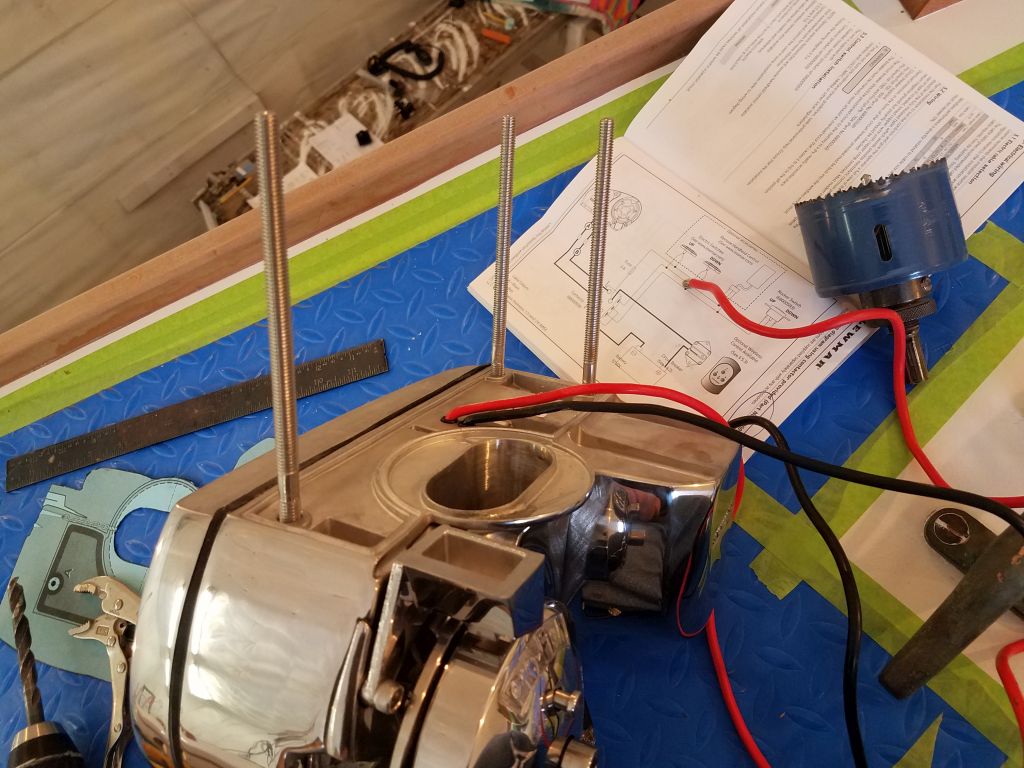
With the stanchion layout complete for now, I turned to the interior fan for the new forward vent.  This fan was designed to fit over the inside of the vent and provide forced circulation through the boat.  To operate the vent louver, the fan incorporated a hole through which an extended threaded rod and handle could fit and reach the inside of the louver assembly.  According to the directions, this was supposed to be ready to accept the threaded rod, but this was not the case.  I had to drill the center of the control and tap it for the M5 threads to match the rod, and it would have been easier to do this before the outer part of the vent was fully installed, but there you are.

Once I had the hole tapped properly, I had to measure for and then cut the threaded rod to the correct length, so I threaded on several nuts to help clean up the threads once I’d made the cut, which I then completed without incident.  From there, it was straightforward to make up the wiring connections and install the fan housing to the overhead  with four screws.

With my new supply of nuts on hand, I moved forward with the final installation of the stern pulpit.  At each base location I went through all the usual steps:  drill and tap for 1/4-20 machine screws; countersink; scribe and remove masking tape; apply sealant and secure with nuts, lockwashers, and fender washers.

Once I’d cleaned up the excess sealant above decks, I finished up the wiring to the new stern light.

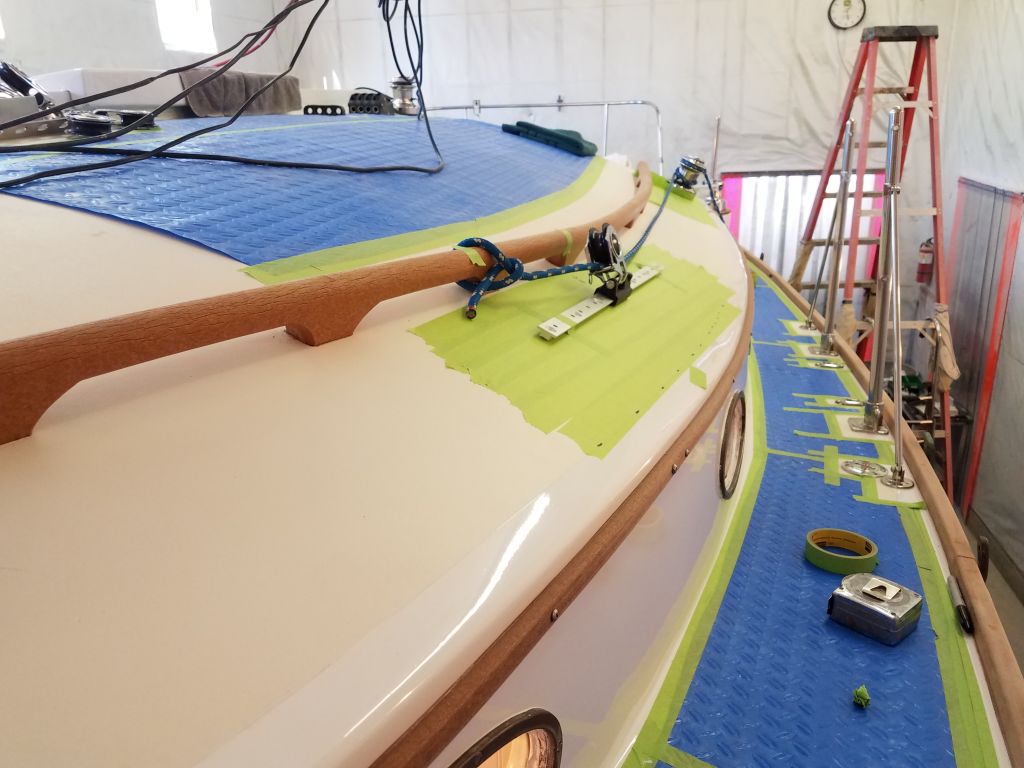
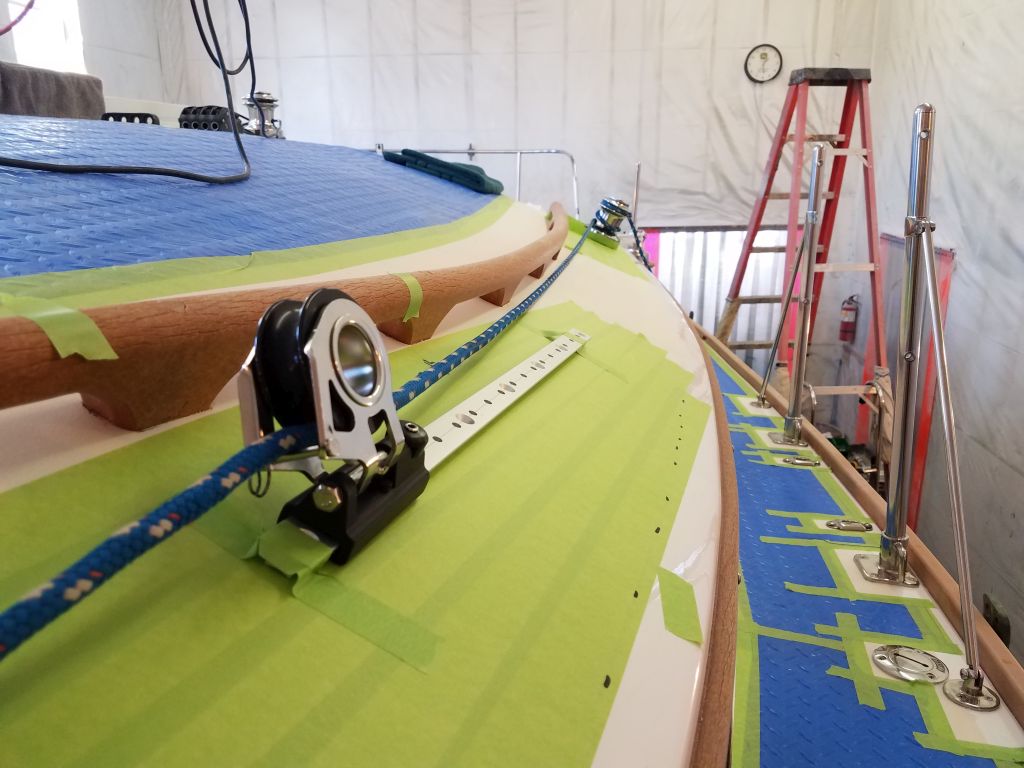
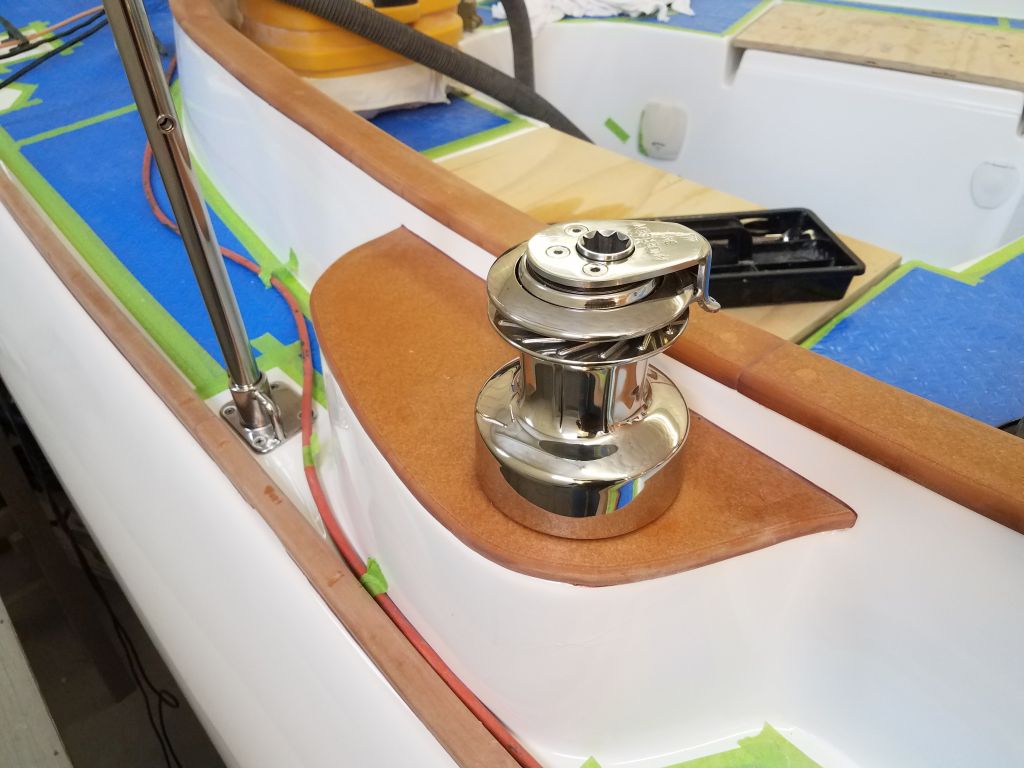
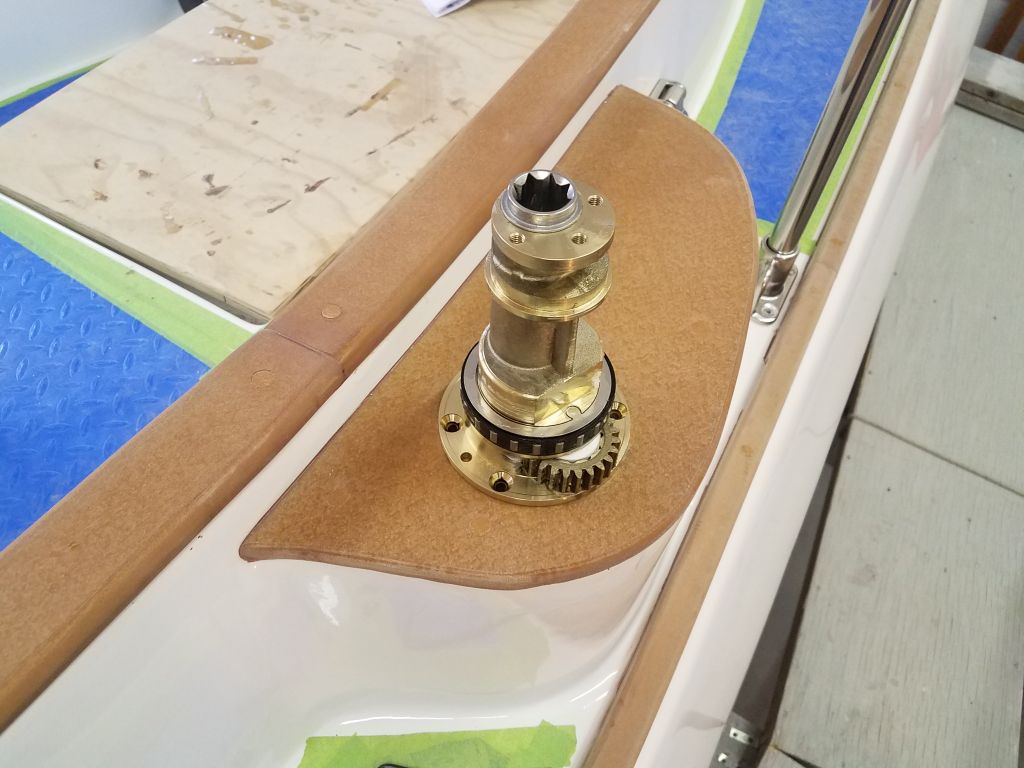
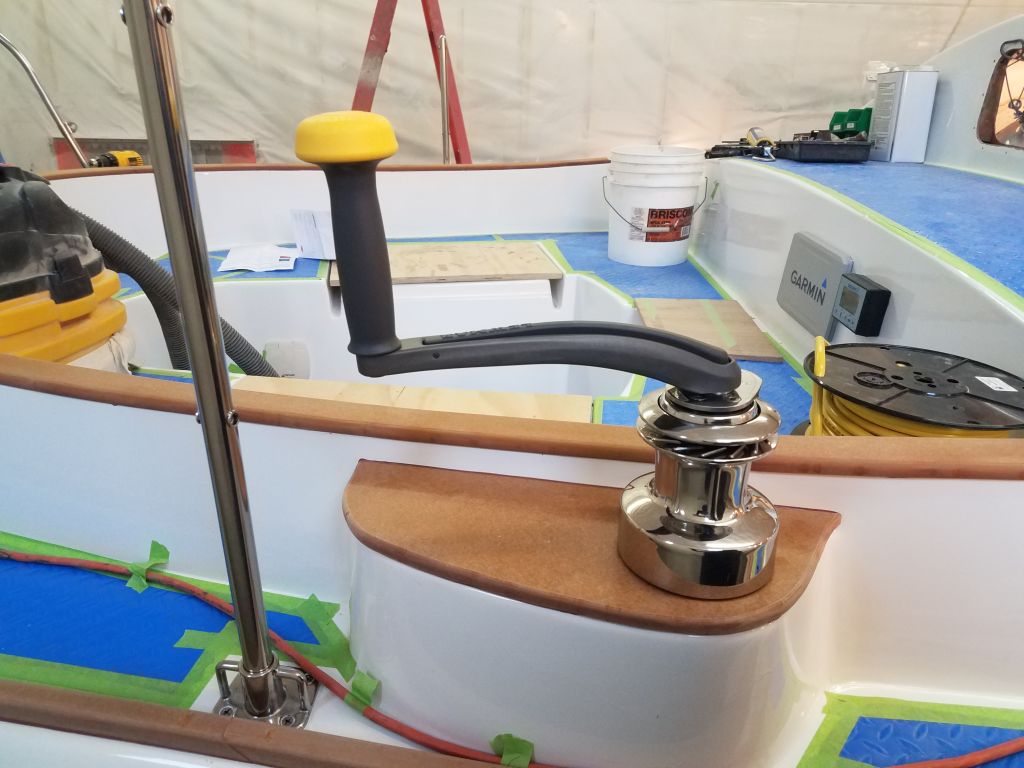
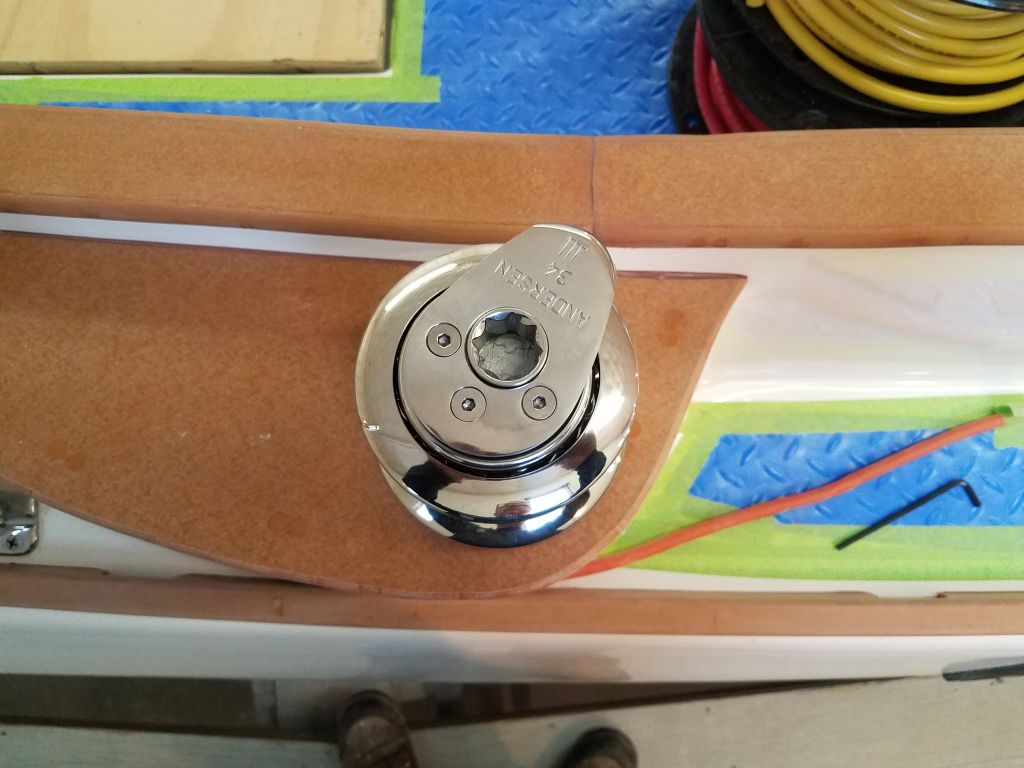
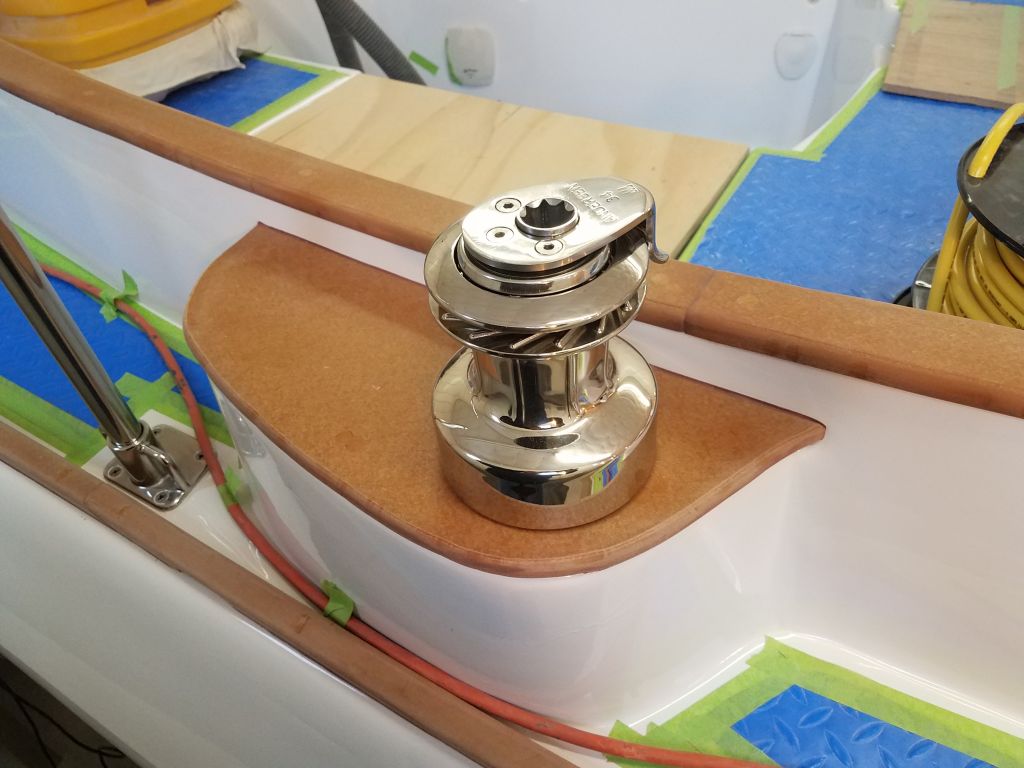
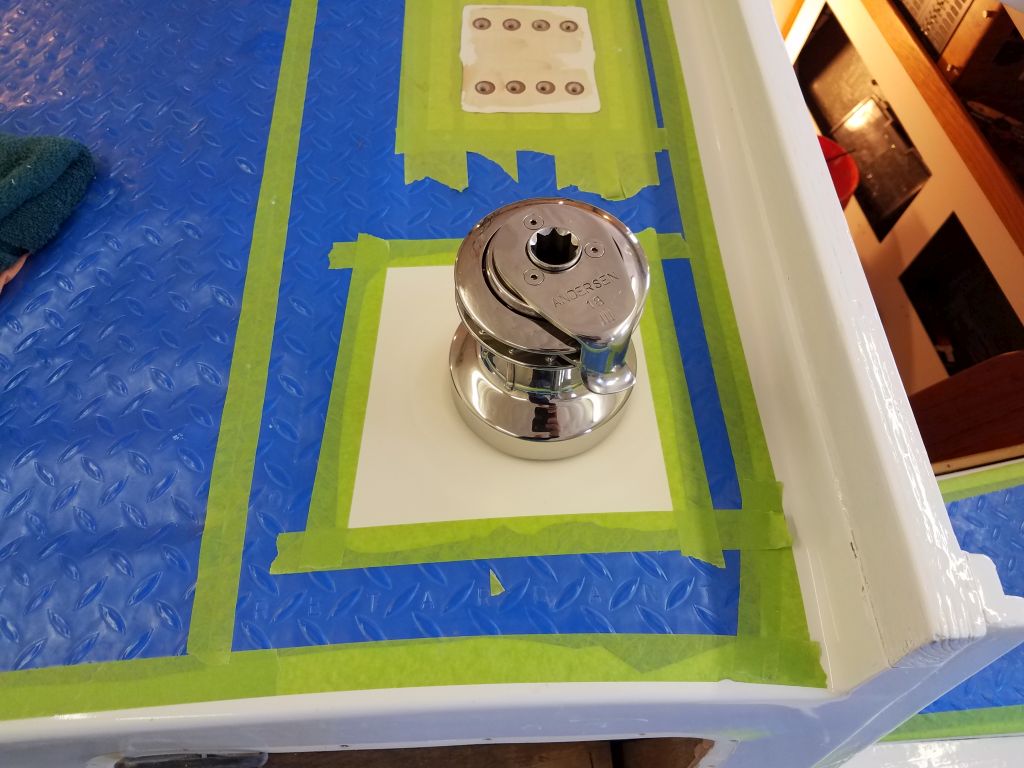
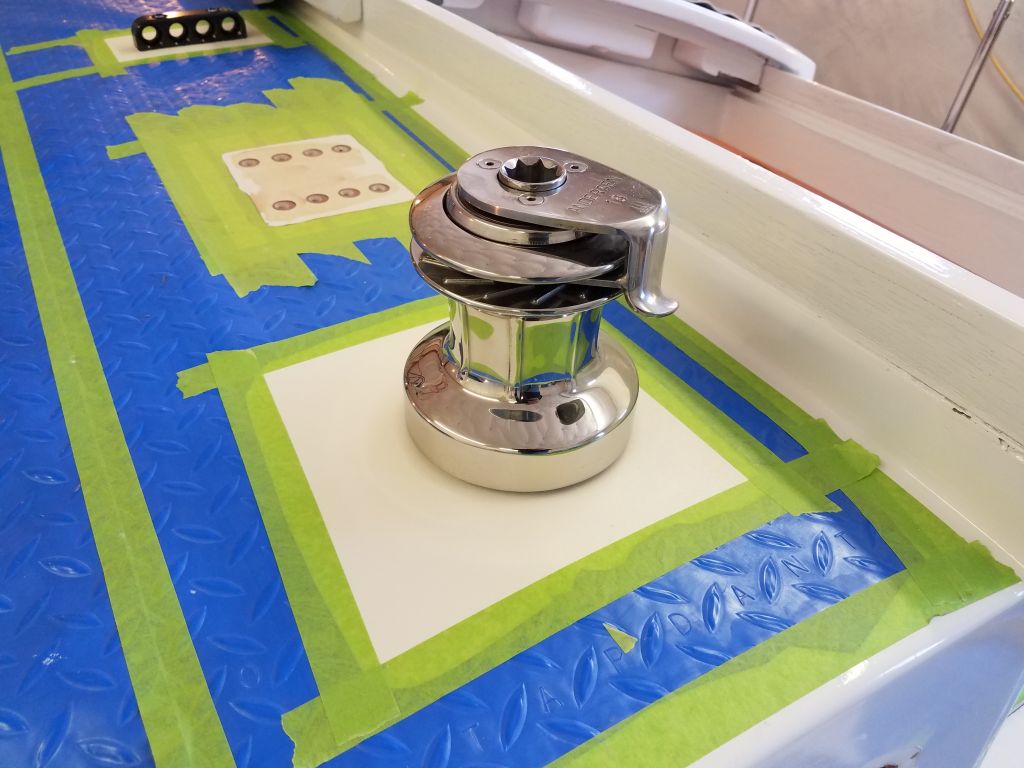
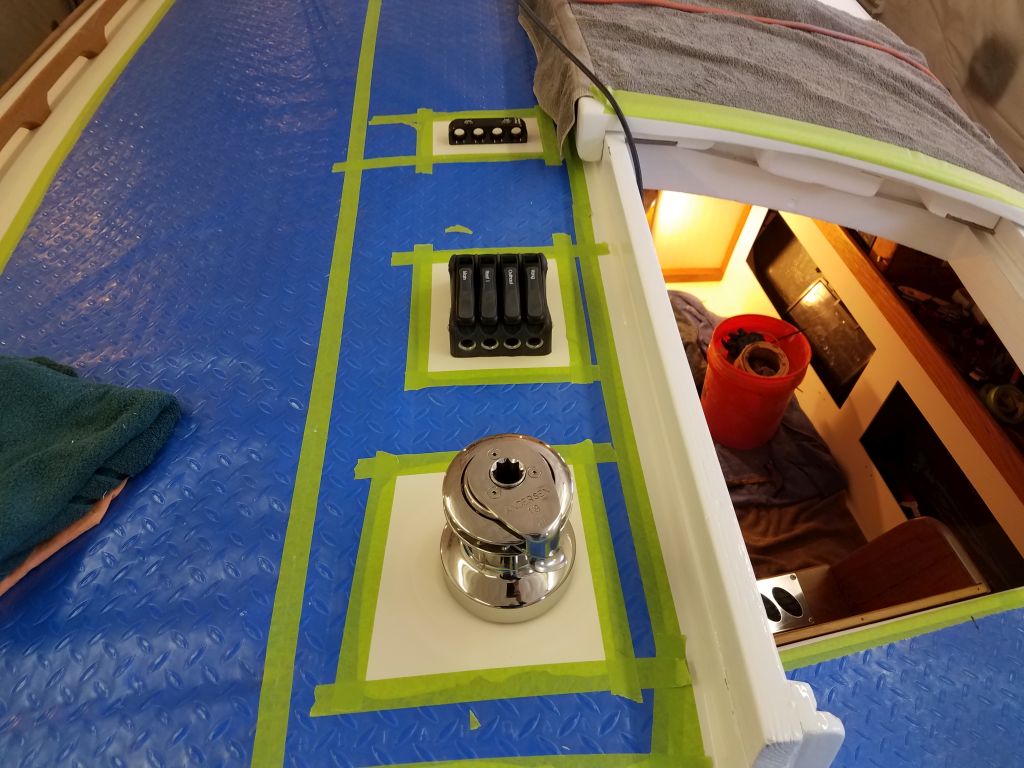
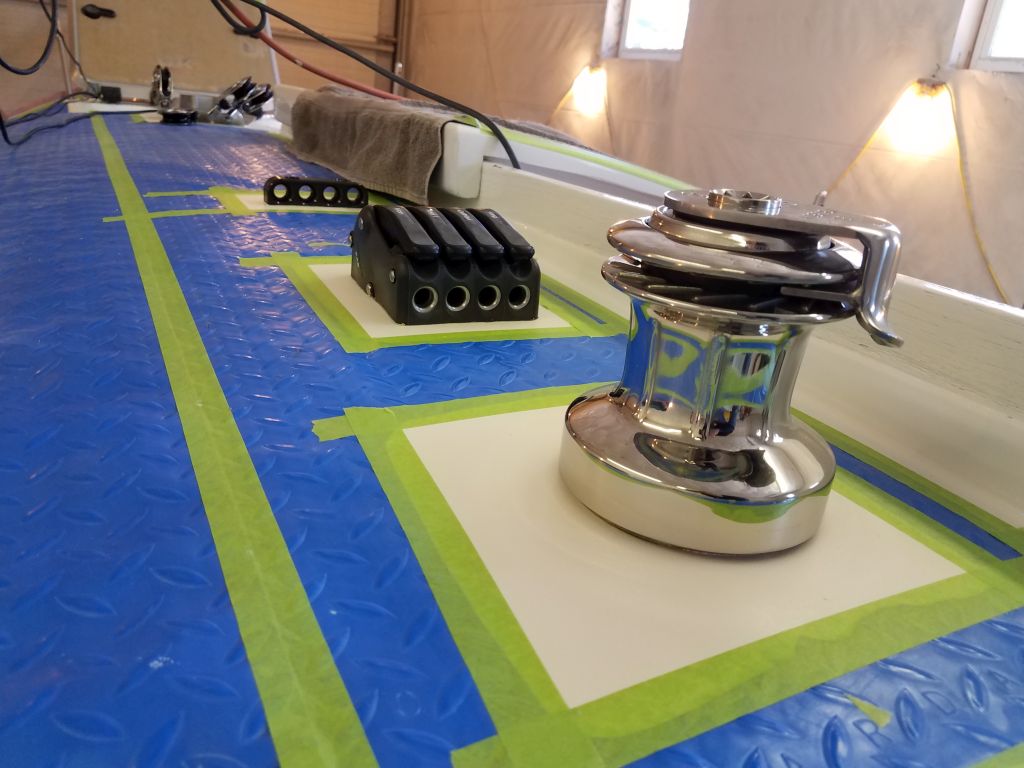
The owner had some questions about clearance at the winch island to properly operate the winches, and while I’d taken this into consideration initially, I just happened to have just received one of the new sheet winches, and took the opportunity to display the winch and an old handle I kept around to confirm the clearances with the proposed stanchion placement.

Since I’d be waiting a day or two for the new stanchions and bases to arrive, I used up the little bit of rest of the day preparing the template and getting the GPS display ready for installation in the bridgedeck, which I planned to do next time.

Total time billed on this job today:  8.25 hours

0600 Weather Observation:  9°, clear. Forecast for the day:  Sunny, 31°

Scupper 224

Tuesday

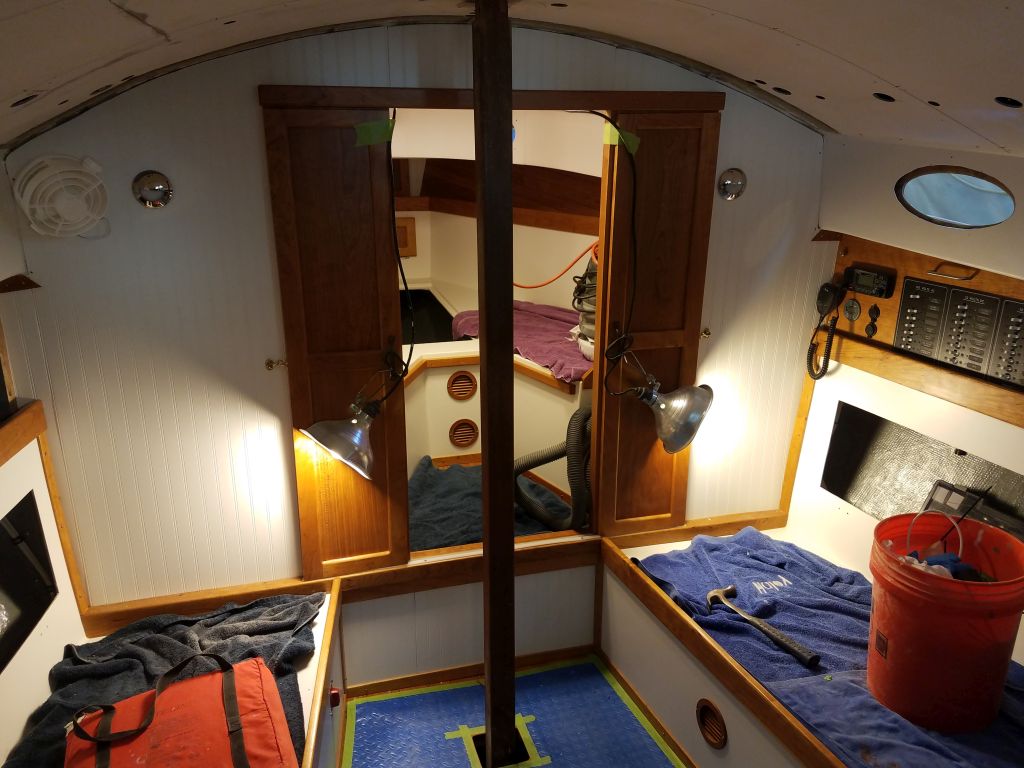
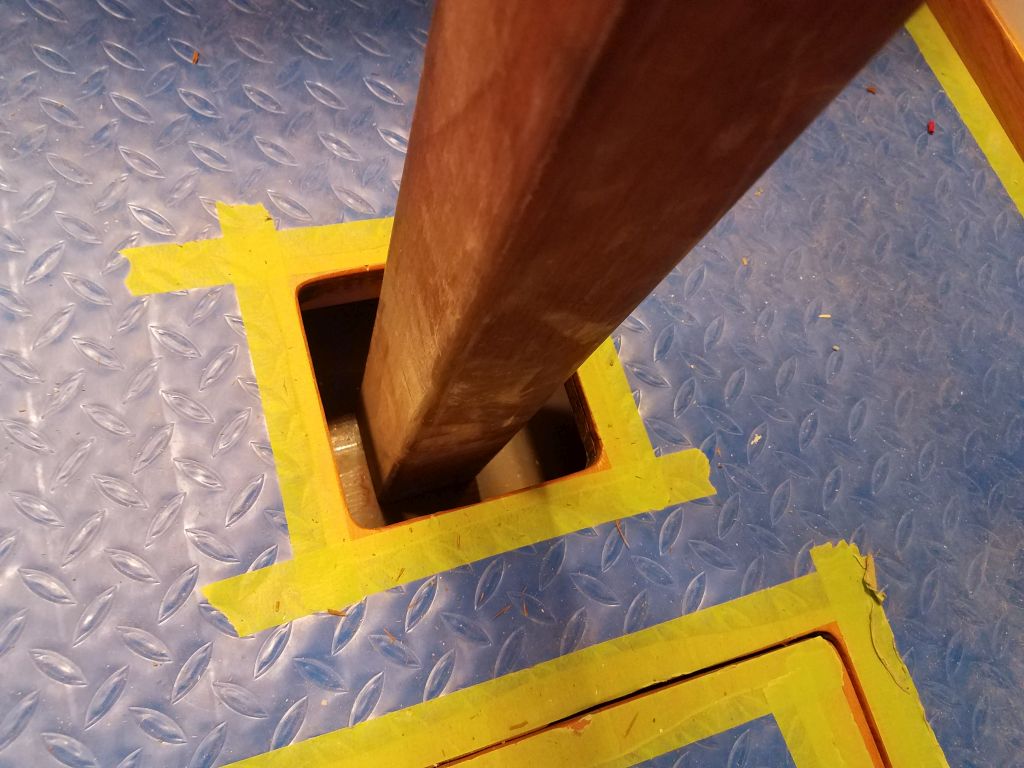
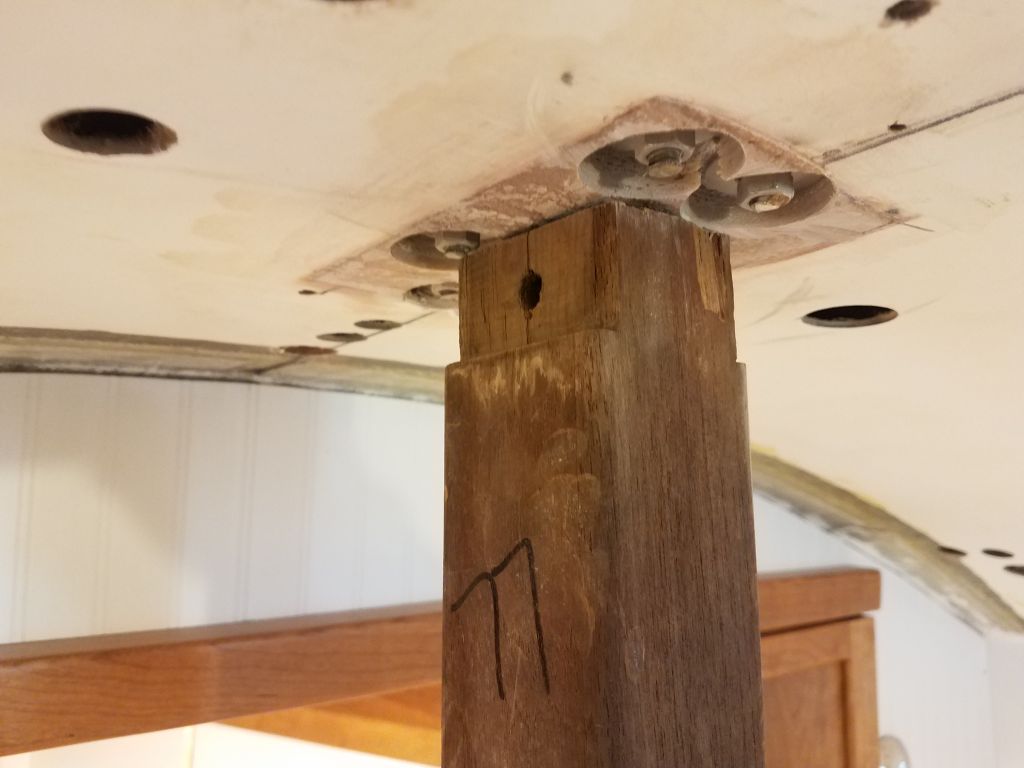
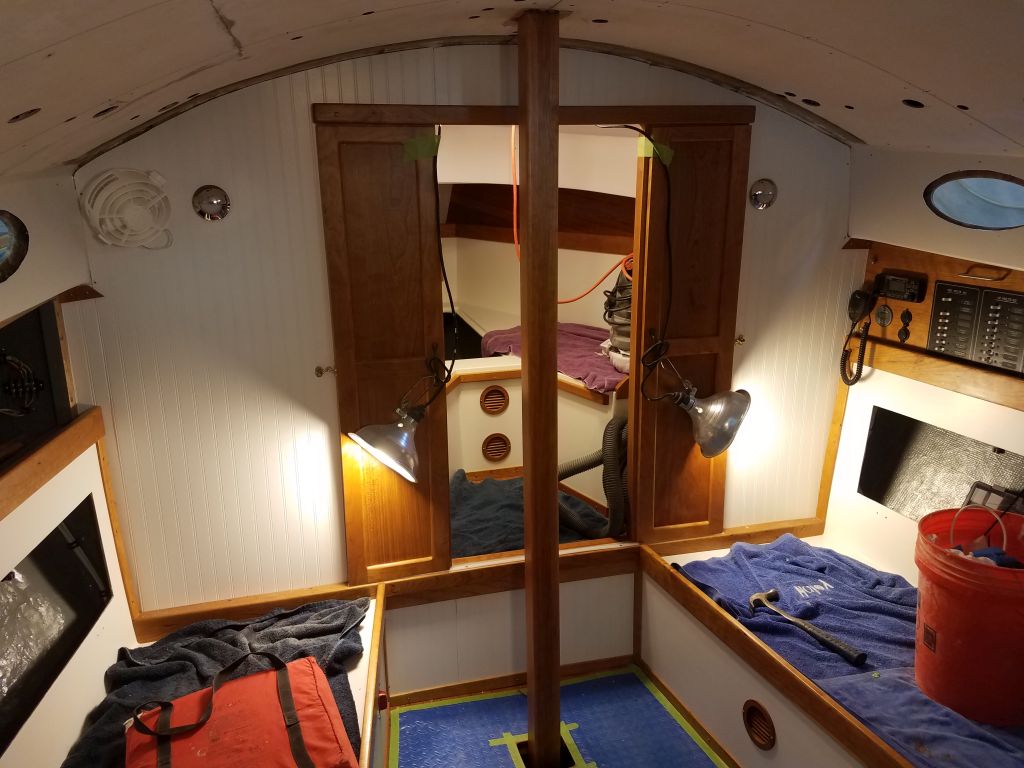
Now that the deck was ready for the final installation at the mast step, I began by carefully aligning the mast step plate, then marking the bolt holes on the deck.  Then, I drilled small pilot holes all the way through to the cabin so I could prepare the underside of the deck for the fasteners.

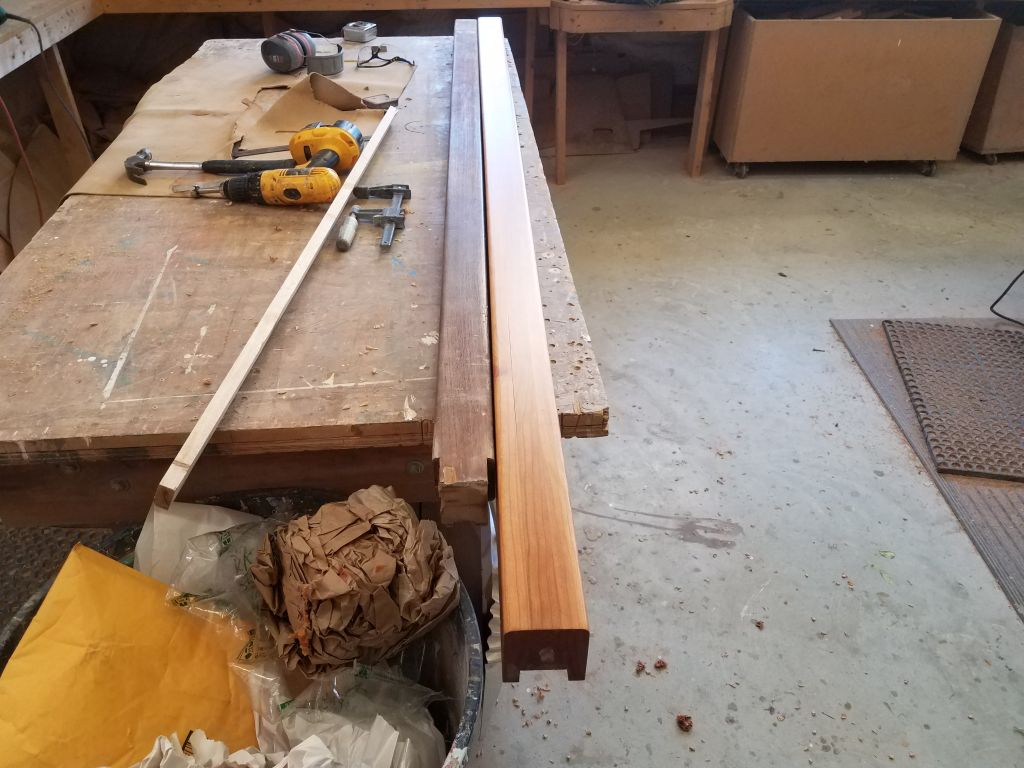
Faithful readers may recall that earlier, I’d prepared the underside of the deck beneath the mast step by removing a portion of the old cabin liner and previous installation iteration and filling the space with solid fiberglass and a bit of high-density filler, all the better to give the compression post a solid bearing.  Now, with the pilot holes marking the locations of the five mast step bolts, I had to mill recesses to accept the nuts and washers, which would maintain the generally flat surface for the compression post to bear beneath.  I used a 1-1/2″ Forstner drill bit to fit the 1-1/4″ fender washers I planned to use.  This process was difficult and created an unspeakable mess in the cabin and of the drill operator, but there was nothing for it to simply press on and get the job done.  Afterwards I had to clean the whole cabin to rid it of drill spoils and fine dust from the milling.

With the hole thusly prepared, I continued on deck with final preparations, including trimming the masking tape around the mast base and the wiring gland, and preparing all the fastener holes for both installations:  drilling/tapping/countersinking.

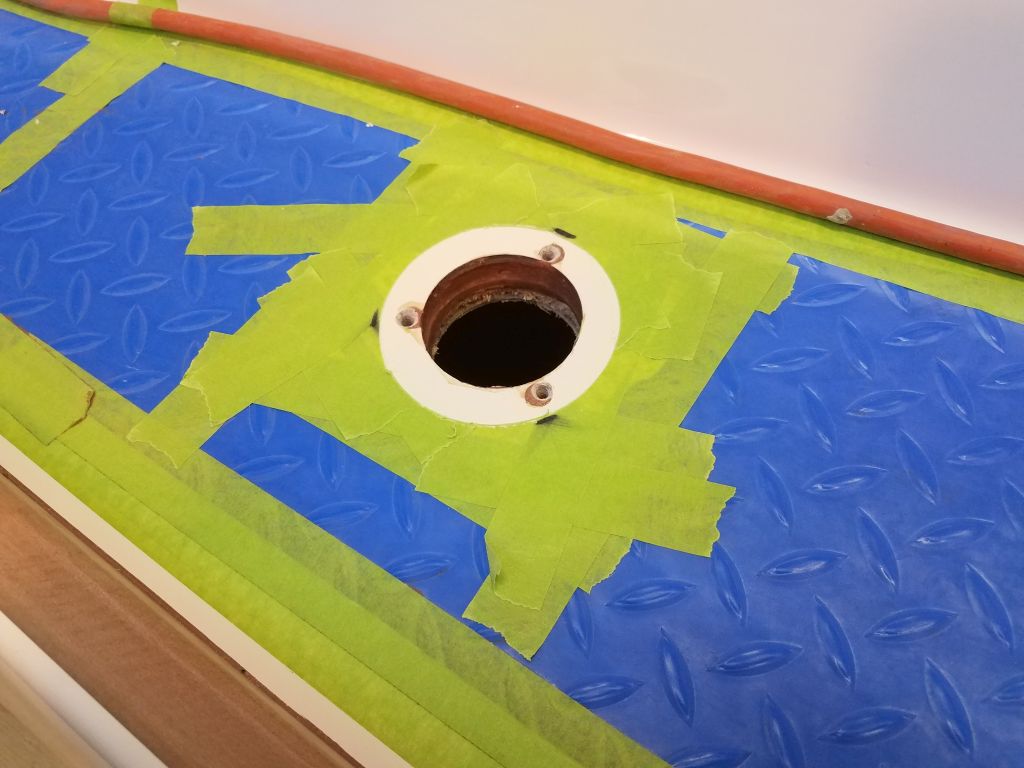
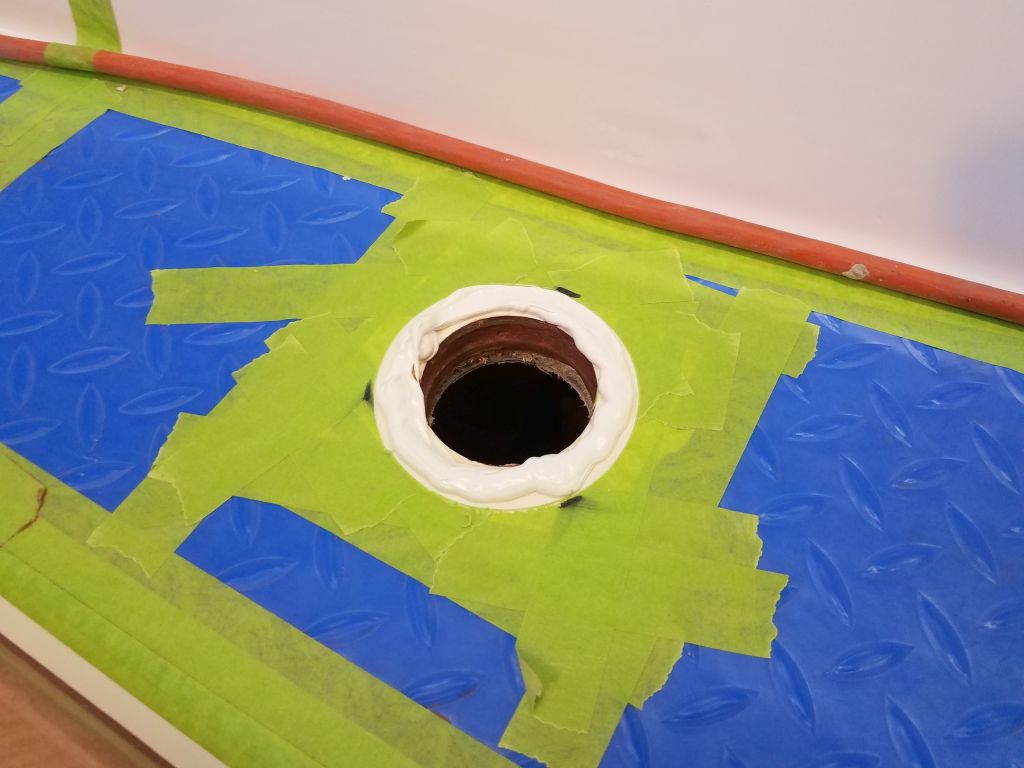
Next, I began with the installation of the wiring gland base, installing it with seven screws in a heavy bed of sealant and cleaning up the excess once complete.

I installed the mast step and its new base plate with plenty of sealant and 5/16″ machine screws, which I secured belowdecks with fender washers, lockwashers, and nuts.  Sometime later I’d return to trim the excess bolt length.

Afterwards, I cleaned up all around the area and removed the masking tape.

I finished up the wiring for the new bow light on the pulpit, and pulled through any excess wiring.  Then, I cleaned up the bases for installation, and polished the rail.

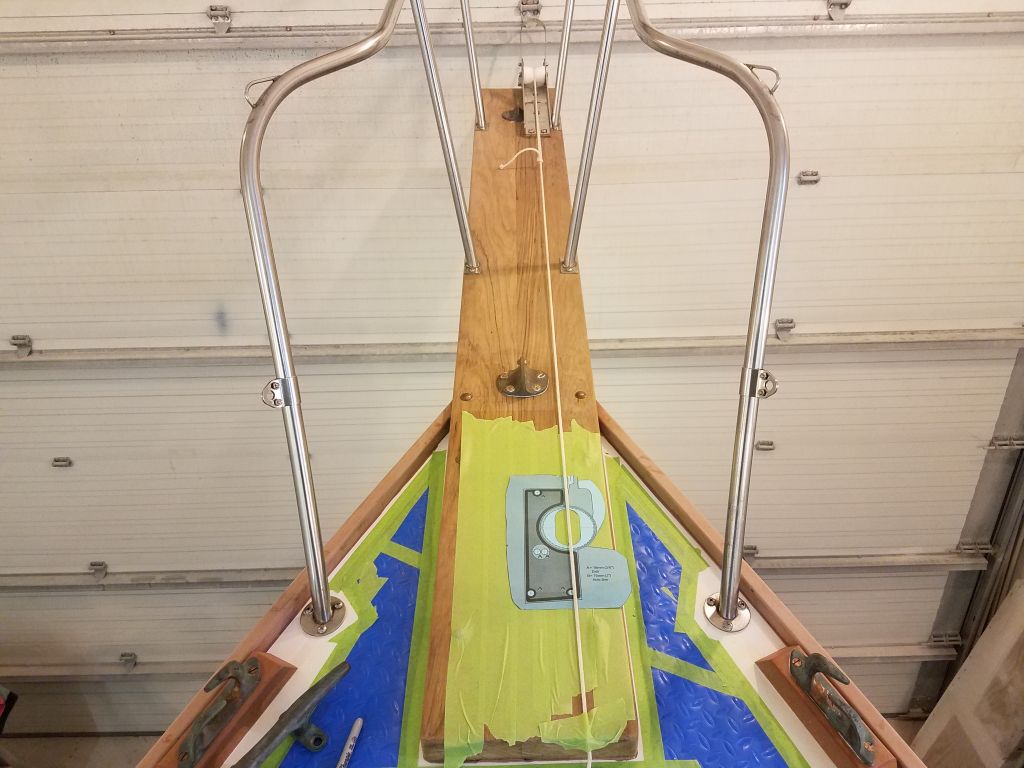
I dry-fit the rail on the bowsprit and foredeck, securing it to the bowsprit with some clamps to hold it in place since the angle made it want to slide aft.  Remembering the difficulties at the after mounting locations I’d experienced long before with access around the ends of the heavy wooden beam supporting the aft bolts on the bowsprit, I cheated the pulpit forward as far as I could, about an inch further forward than it had been, hoping to minimize clearance issues with the beam, which, in combination with the awkward access to the chainlocker, made reaching these areas exceedingly difficult.

To maintain enough room inside the pulpit for passage of anchor chain and rode, I kept the bases out towards the edges as far as possible.  Once I was satisified with the position, and also satisfied that I could work with the after mounts with the forward two sets pinned in place, I went ahead and bolted down the bases on the bowsprit.

Working from the foredeck, I positioned the after bases and drilled and tapped their fastener holes through the decks, and cut away the masking tape from beneath the bases.  I drilled a hole on the starboard side to accept the wiring from the running light.  These mounts were over solid portions of the deck, so I could proceed immediately with final installation.  Even with the pulpit moved forward, access to one of the three bolts on each side was exceedingly difficult thanks to that wooden beam in the locker.

After cleaning up the excess sealant, the bow pulpit installation was complete.

Next, I turned to the stern pulpit, and began by removing an old and decrepit outboard mount and horseshoe ring bracket.  Then, I repeated the general process for running new wires through the starboard aft pulpit base, which was straightforward in this case, and installed the new stern light nearby, bringing me to the end of the day, but I’d continue with the rail preparations and installation next time.

Total time billed on this job today:  8.5 hours

0600 Weather Observation:  -5°, clear. Forecast for the day:  Sunny, 20°

Scupper 223

Monday

To begin, I lightly sanded the fairing compound I’d applied to the mainsheet riser block, smoothing the surface and eventually rounding over the top edges and other corners for improved appearance.  Though the riser was in good shape now overall, there were some pinholes in the filler, so I applied additional fairing compound to fill these holes.

I sanded the filled areas on the spreaders, only to find that the filler in a couple of the screw holes had sunk during curing, so I applied additional fairing compound as needed to fill them smooth.

The little base for the wind transducer mount received several coats of silver spray paint to help it blend into the masthead.

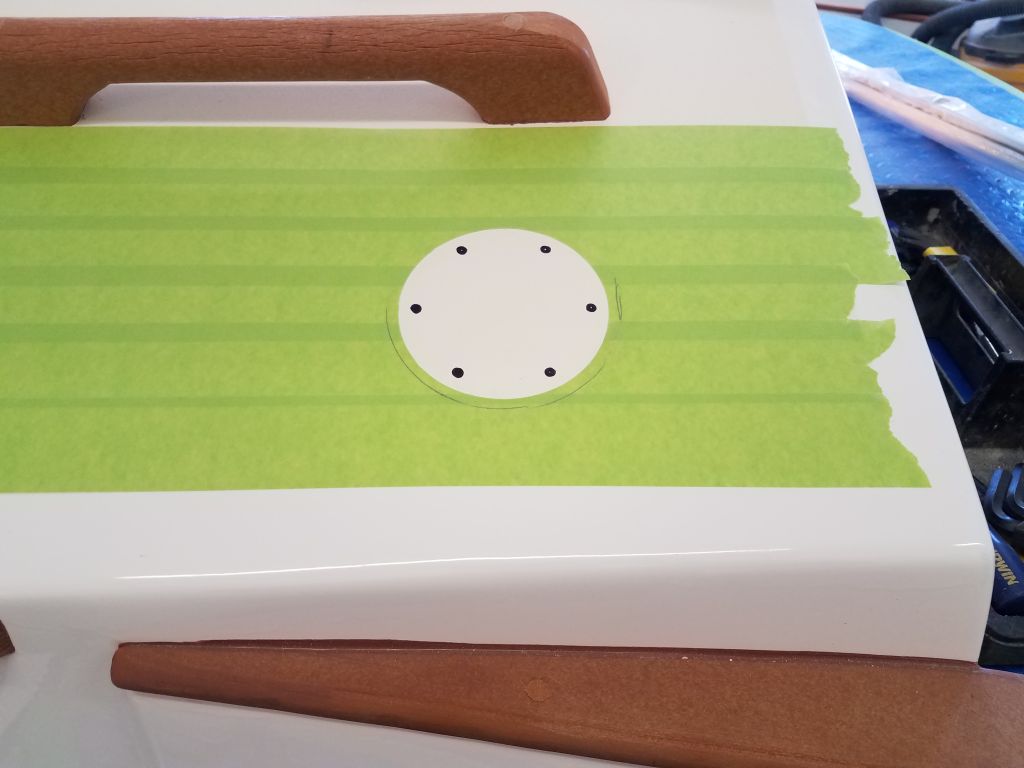
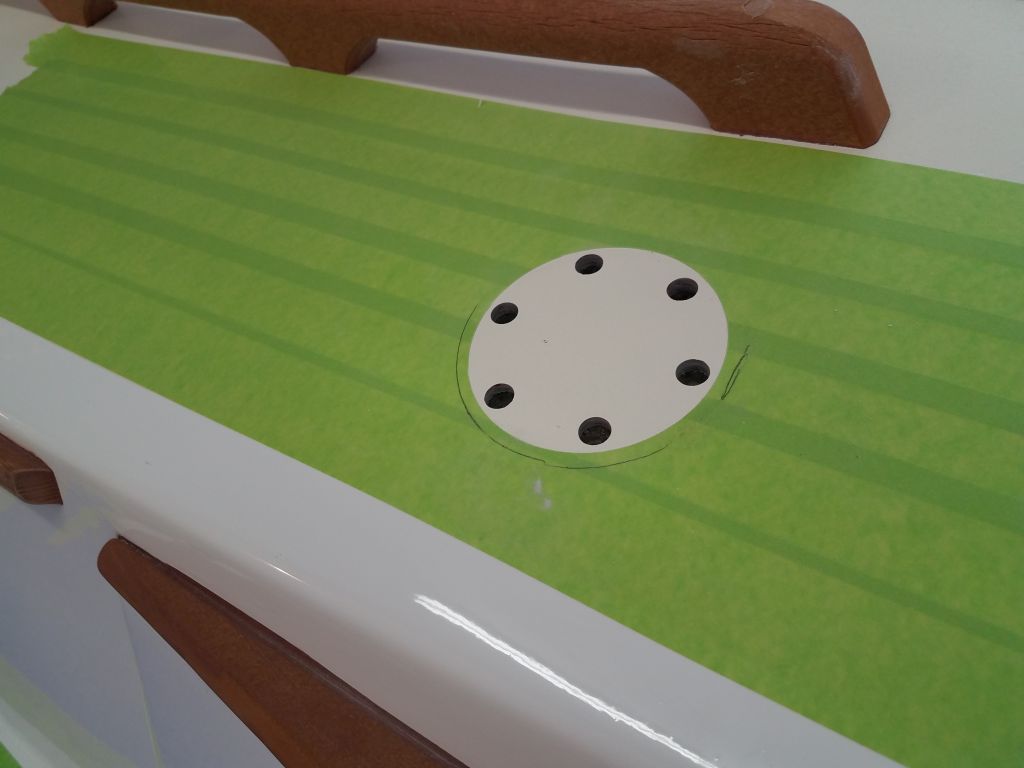
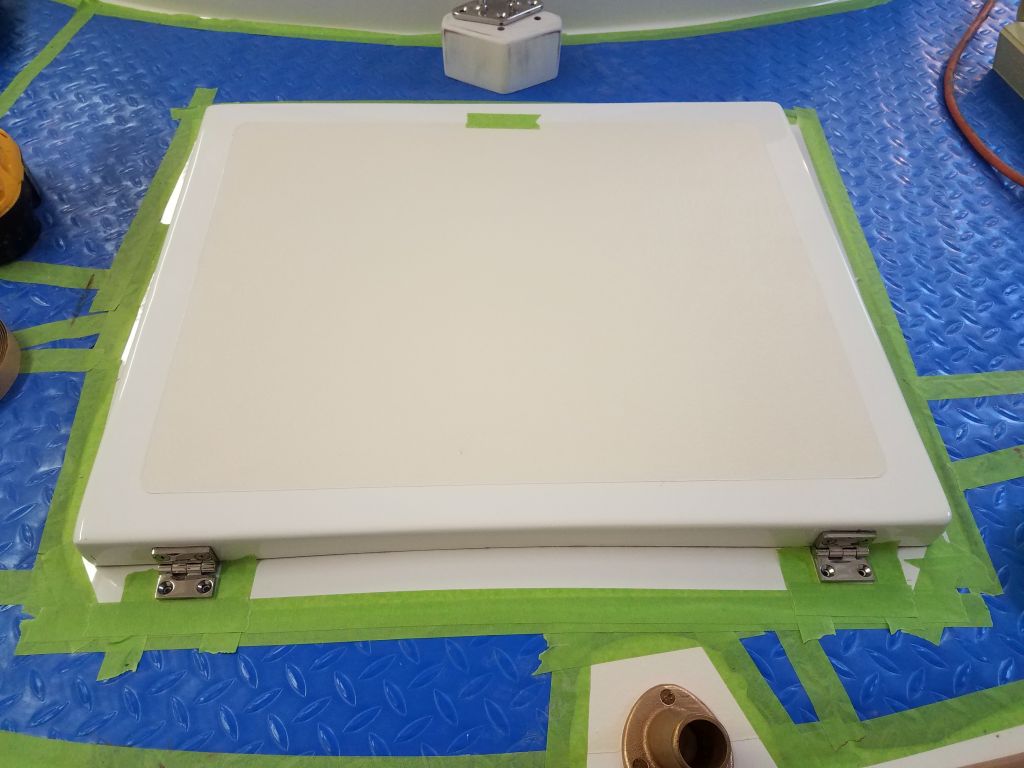
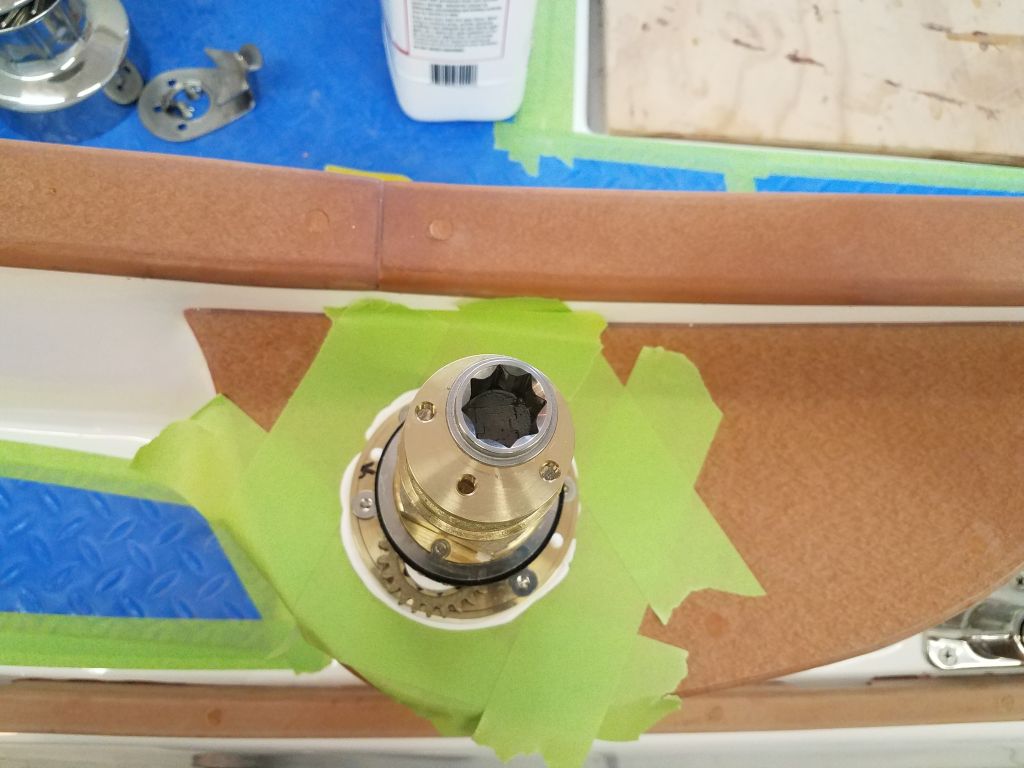
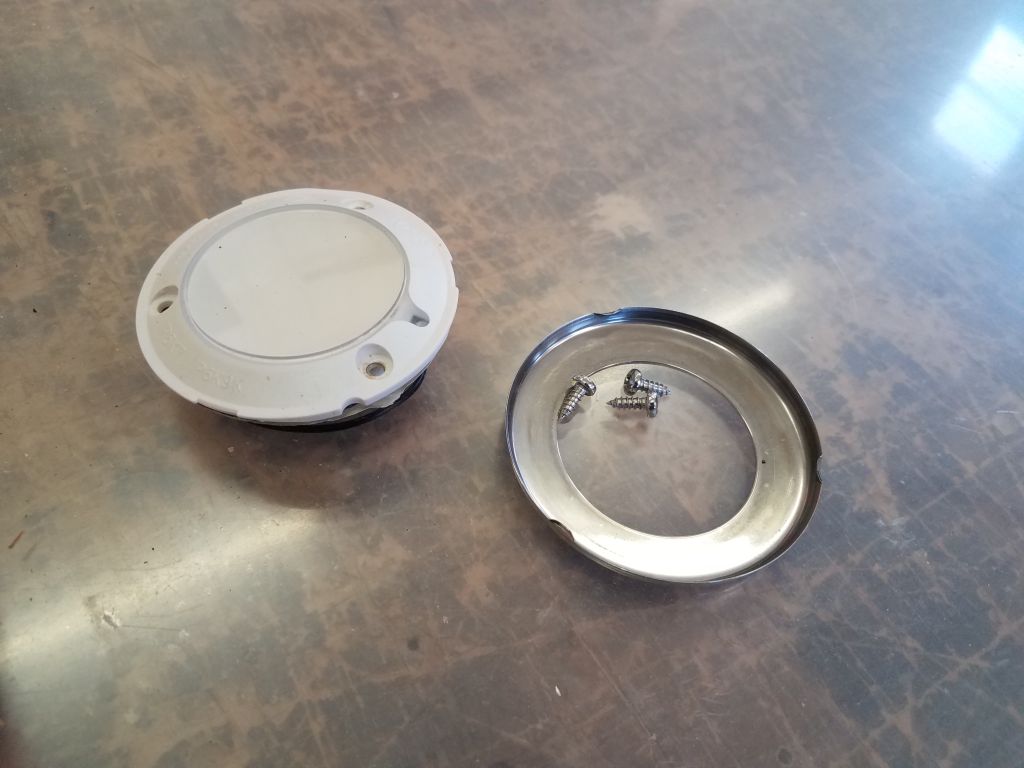
With those little odds and ends out of the way, I got back to work on the forward vent.  With all the deck holes now prepared properly, and after drilling and countersinking the latest screw holes for the outer part of the base, I could proceed with final installation, starting with the internal trim ring in the forward cabin.  Then, back on deck, I installed the inner vent housing in a bed of sealant, followed by the outer part of the base.  Before installing the base, I installed the supplied nuts in the hexagonal holes in the bottom of the base, and used little bits of butyl tape to hold them there; these would later secure the mushroom vent top itself.  Once these parts were secured, I cleaned up the excess sealant all around as needed, and installed some of the supplied yellow silicone gaskets on the inner parts.

Next, I installed the bright yellow floating balls around the inner housing, then covered it with the slotted vent assembly and finally the top of the inner housing.  Finally, I installed the mushroom vent cover itself to complete the on-deck part of the installation (later I’d need to wire up and install the fan below).  I’d removed the masking tape after installing the base units, but before securing the top, and I found that the act of installing the top squeezed out additional sealant around the base, so I chose to leave that for cleanup later after it had cured.

Moving on, I turned to the mast step and through-deck wiring gland.  Before deck painting, I’d marked the old mast step hole locations, so with these basic locators I lined up the mast step plate as needed, checking its position fore and aft and side to side to confirm placement.  Then, I marked as needed and drilled 5/8″ holes in the deck, thinking I needed to remove core, but I found solid fiberglass in all hole locations, which I must have known in the past, but it was nearly two years before that I’d done deck work, and, reviewing old photos, I found that the solid glass mast step area was part of a previous repair and not something I had done.  No wonder I didn’t remember.  In any event, solid fiberglass beneath the mast step was a good thing.

For this project, I chose a new kind of deck gland for the wire passage between the mast and the interior.  This particular gland featured a base with a large raised central hole, complete with smooth and contoured wire guides leading within, and a stainless steel cover that secured over the top, with foam-sealed wire exits on each side.  I lined the base up forward of the mast step where I thought it should go, and took a measurement from the forward mast step fastener hole to the center of the proposed wiring hole (5″), then, after drilling a pilot hole through the fastener hole into the cabin, went below to confirm that the 5″ measurement would work; it did.

Satisfied with the position of the wiring gland, I marked the screw holes and the center hole, then drilled through the deck as needed.  Here, I also found solid fiberglass all around, and after drilling into the deck beneath the three forward holes I stopped, leaving the after fastener locations untouched since there was no need.

After cleaning up, I filled the various holes I’d bored with a thickened epoxy mixture.

The day seemed to be going well, and I decided to go ahead and tackle the end connector on the wind instrument wiring from the masthead unit.  The ample size of the through-deck hole and location of the network box meant that I could pre-install this now, and the cable could be run with relative ease during mast stepping and commissioning.

Because of the tiny wires, and the comically small Allen wrench supplied with the connector for installing the wires, I dreaded this installation, but although the tininess was indeed fussier than I liked, in the end it all actually went quite smoothly and without issue, so apparently I picked the right day to do the job.

I measured out a generous length of the cable where it exited the mast, allowing for its passage down the compression post and forward to the network box, plus 50%-100% extra, then cut the cable and exposed the four wires within, stripping the ends as needed.  Then, I secured each wire in the appropriate position per the instructions, using the itty-bitty wrench to tighten the wire clamps in the small connector, and then assembled the connector parts.  Though I was pleased with the relative lack of drama, I should point out that the camera picks up details (like the writing on the terminals of the connector) that I couldn’t see myself during the installation.

Feeling like I was on a roll, I decided to tackle another job that was theoretically simple, but in practice might prove to be difficult or impossible:  wiring the bow pulpit for running lights.

In planning the electrical and lighting installations, and reviewing photos of the boat from her arrival here, I realized that there had been no running lights fitted–specifically no bow lights or stern light.  As I studied various lighting choices, along with the specifics of the deck layout particularly at the bow, I decided that I didn’t much care for any of the deck-mounted offerings, few as they were, as most LED lights seemed to be built for vertical mounts (often on welded plates on bow and stern rails).  Rail-mount lights have the advantage of being out of the way, as well as higher up and more visible at sea, so this seemed the way to go if possible.

There weren’t any welded mounts on the bow and stern rails here, but I did find some good rail clamps designed to be used with a particular type of LED fixture that I liked anyway for various other reasons, so I chose these for both the bi-color sidelight fixture and the stern light.  Now all I had to do was get wires through the insides of the pulpits.

I didn’t expect this to be much of an issue with the stern rail, but the bow pulpit, which extended over the bow platform, was much longer than usual, and wire snaking can be extraordinarily frustrating.  So I started with the bow pulpit, in my normal way of doing the most unsavory work first.  After drilling a hole in the bottom of the rail just off centerline to starboard (the side through which I planned to run the wires), I used a length of stiff household wire (solid strand) as a snake, and with surprisingly little fuss it was soon sticking out through the after rail base where I wanted it.

I tried and failed to pull through a length of 16/2 sheathed cable I had on hand for the purpose; although I got the cable started, there was too much friction between the tight hole in the rail, and I suppose the tight rail bends just after.  So instead, I switched to individual conductors, with the ends slightly staggered to avoid excess bulk, and after a bit I succeeded in pulling them through.  This pleased me greatly.

With the hard part done, next I installed the rail clamp and then the new LED bow fixture, leaving the final wiring connection for another time since I didn’t have my wiring stuff right handy.

I planned to repeat this process with the stern rail, and wire up both lights soon, but for now I finished up the day researching, specifying, and in some cases ordering some of the deck hardware needed in the coming days and weeks, as this would be my main focus for the immediate future.

Total time billed on this job today:  6.25 hours

0600 Weather Observation:  15°, clear.    Forecast for the day:  Sunny, 31°

Scupper 222

Friday

After replacing the bowsprit on the foredeck and aligning it properly with the forward bolts, I drilled down through the after two bolt locations to ream out the holes in the deck where I’d omitted the core and filled with epoxy.  Removing the bowsprit again–or at least moving it to the side–I finished up the new holes with my habitual small chamfer at deck level.

After cleaning up, I supported the bowsprit just above the deck with some scrap lumber, leaving it mostly aligned with its deck position but allowing me room beneath to apply the sealant, which I did next.  I applied heavy beads of the sealant (two full tubes) to the deck area, particularly around the bolt locations and the edges of the platform.  Then, I could remove the spacer, press the bowsprit into place, and install the bronze carriage bolts.

Down in the chainlocker, I installed fender washers, lock washers, and nuts at all bolt locations, and tightened them securely.  This was not fun and took a long time.  Access to the chainlocker was tight, and the stepped design of the forward part of the v-berth made this an awkward and uncomfortable proposition.  Installing the nuts and washers on the after pair of bolts, which led through the wooden beam forward of the bulkhead, was simple enough, but the forward sets were out of easy reach, and the opening so small that I could only fit my head and one shoulder through by lying on my back above the shelf and fiddle aft of the opening, and those bolts were at the maximum extent of my arm’s reach.  Needless to say, this was a job I was happy, at length, to have behind me.

With the bolts securely tightened from below, the bowsprit squooched nicely into the sealant, and also raised the platform just slightly above the support I’d built, which was good because I’d actually gone forward to check and remove the shim from beneath to ensure that the platform was not being artificially supported in a way that could affect how it sat on the deck.

Normally I would have liked to clean up the sealant from the nuts and bolts belowdecks, but given the challenge it had been to simply install them, I’d had more than enough of the contortionist act and they’d just have to live the way they were.  It’d be bad enough forcing my way back in there a little later to install the bolts for the inner forestay tang, so I reserved my well-being for that future requirement.

Back on deck, I cleaned up the excess sealant (I left a blob that had pressed up through my temporary bolt hole forward for removal once cured) and removed the masking tape, and then removed the forward support.  Afterwards, I installed the replacement bobstay I’d just received from the riggers.  The bowsprit was an important feature of this boat and it was nice to have it back in place after so long without one.

I continued with prepwork for the new forward air vent on the coachroof. Before continuing with the dry-fit and installation prep, I wanted to address some new wiring for a little interior fan unit that came with the vent to circulate air inside the boat regardless of wind conditions.  I had been thinking about how to run wiring to this new fan, which was in the middle of an otherwise blank area of the finished interior overhead in the forward cabin, and there was no immediately clear or acceptable way to run the wiring through a conduit.  Knowing there was a wide gap between the liner and the underside of the deck in this part of the boat, I hoped that perhaps I could get a snake through there, at least from the new vent location to one of the forward opening port openings, and at least minimize any exposed wiring.

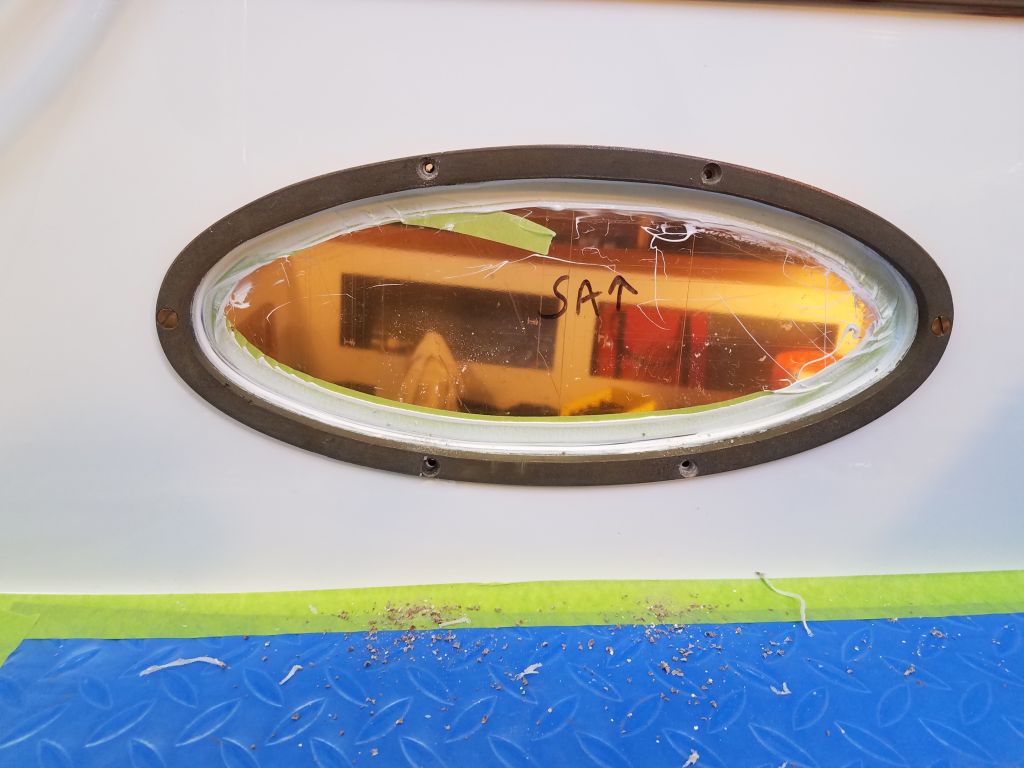
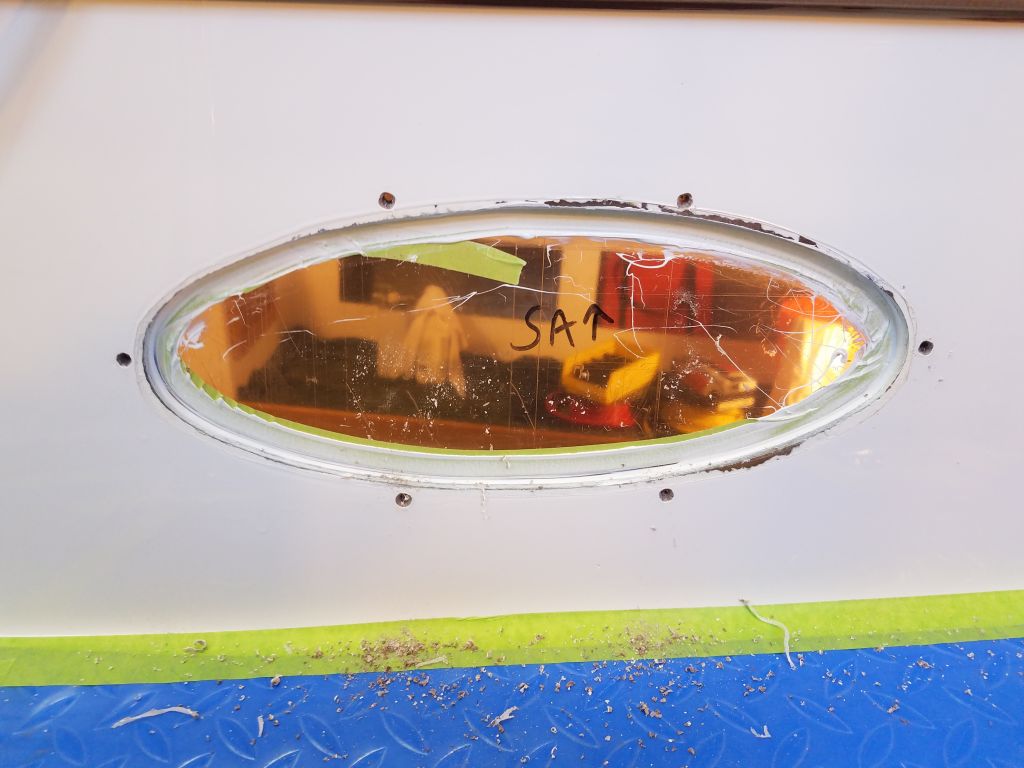
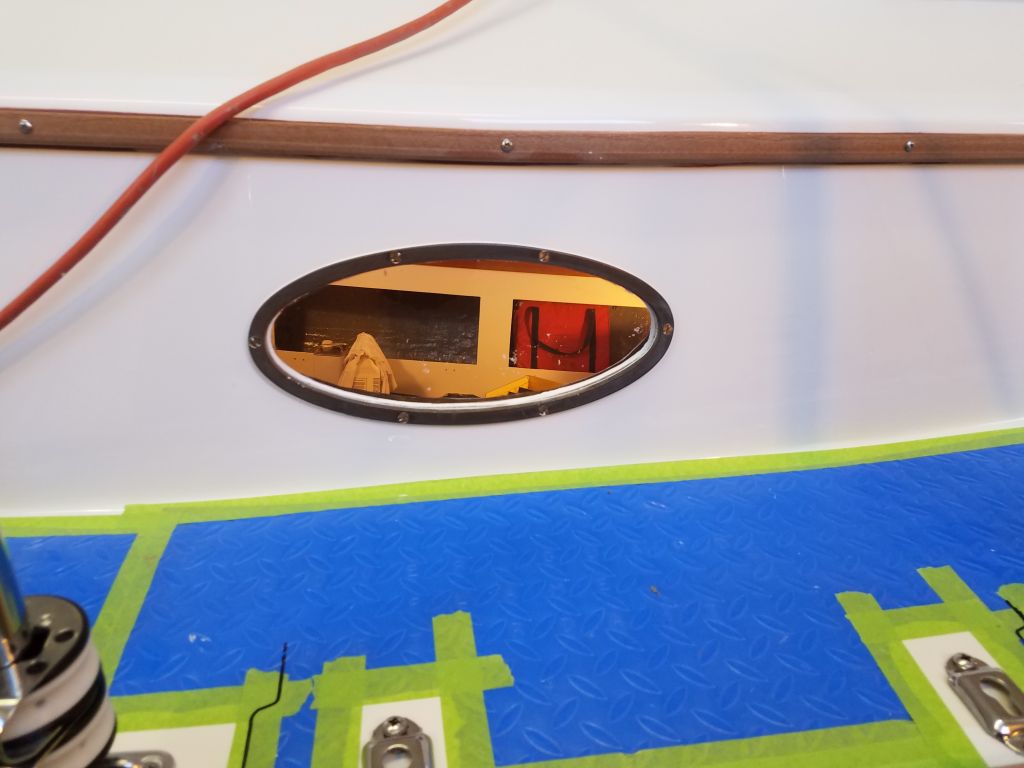
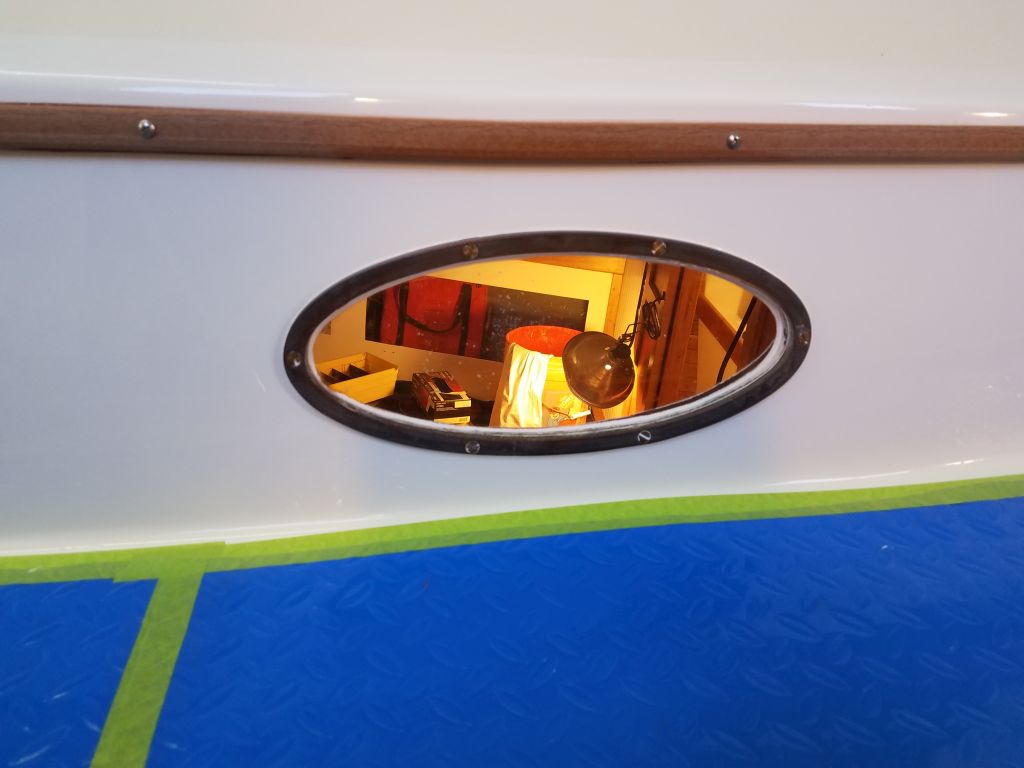
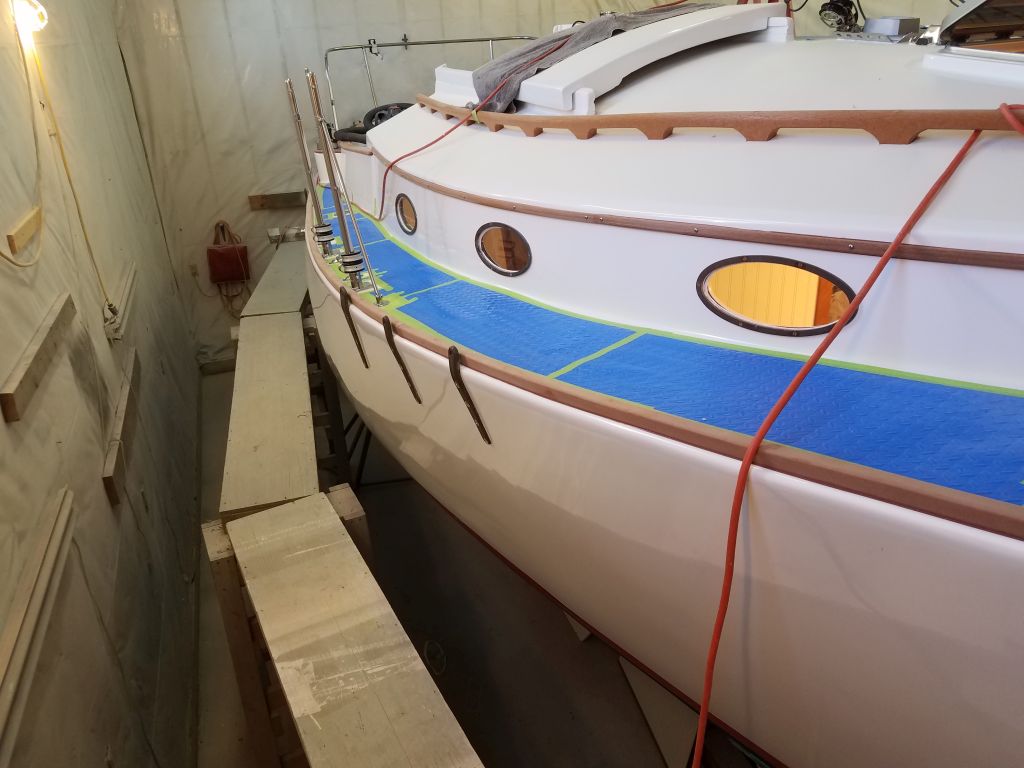
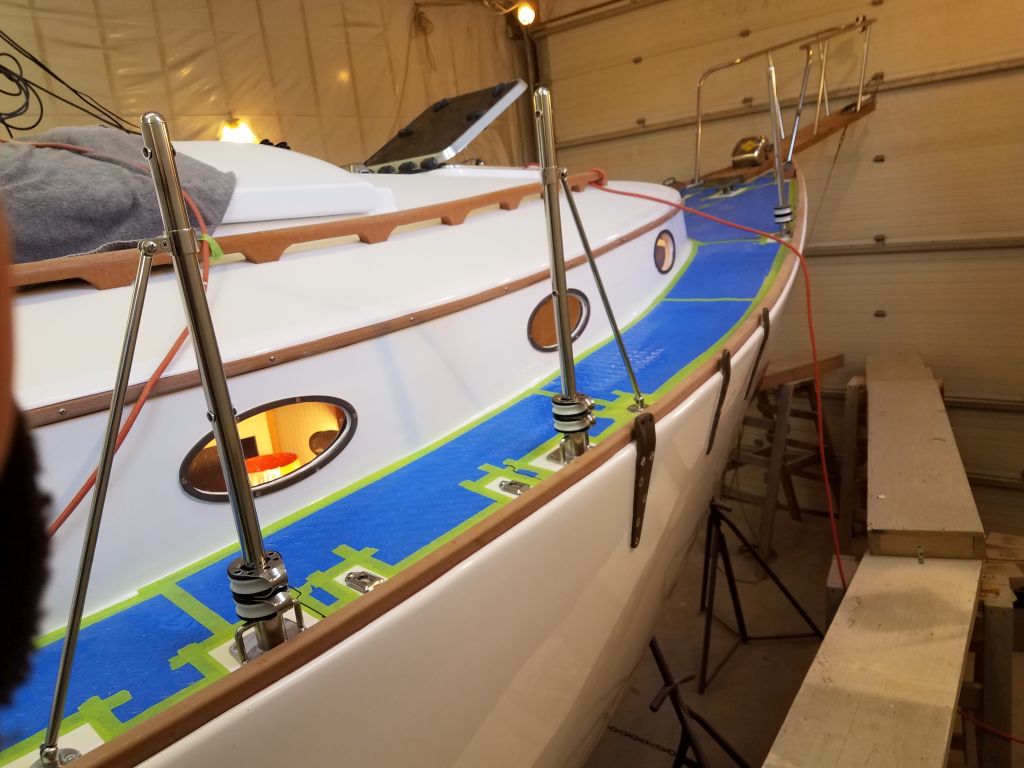
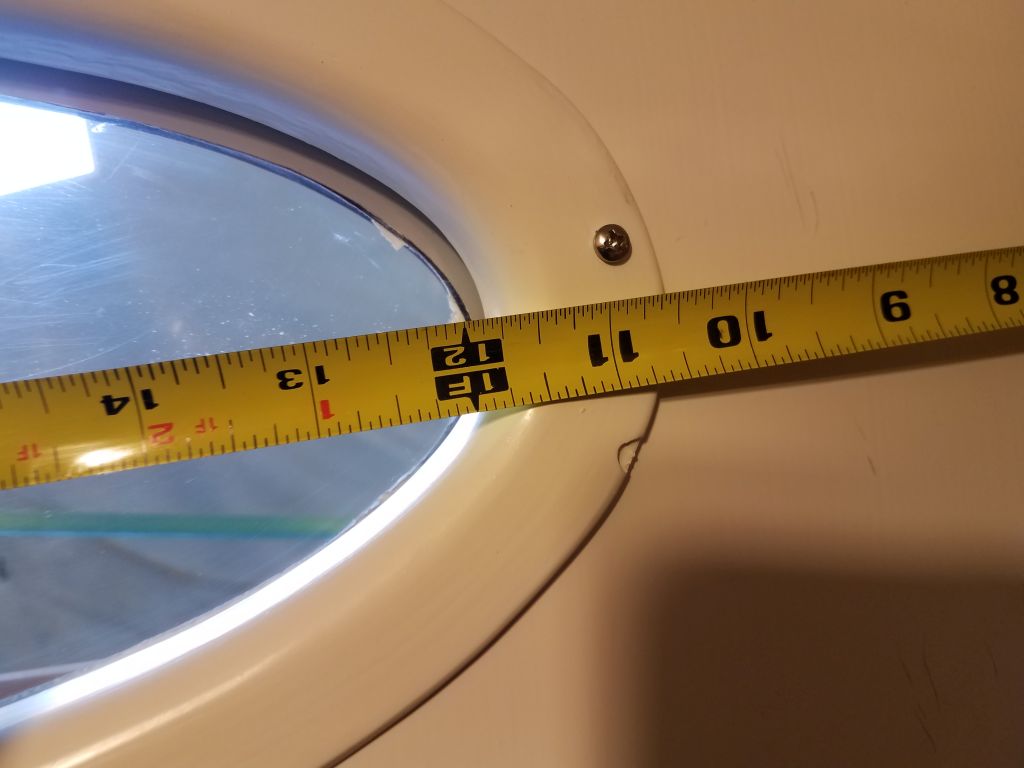
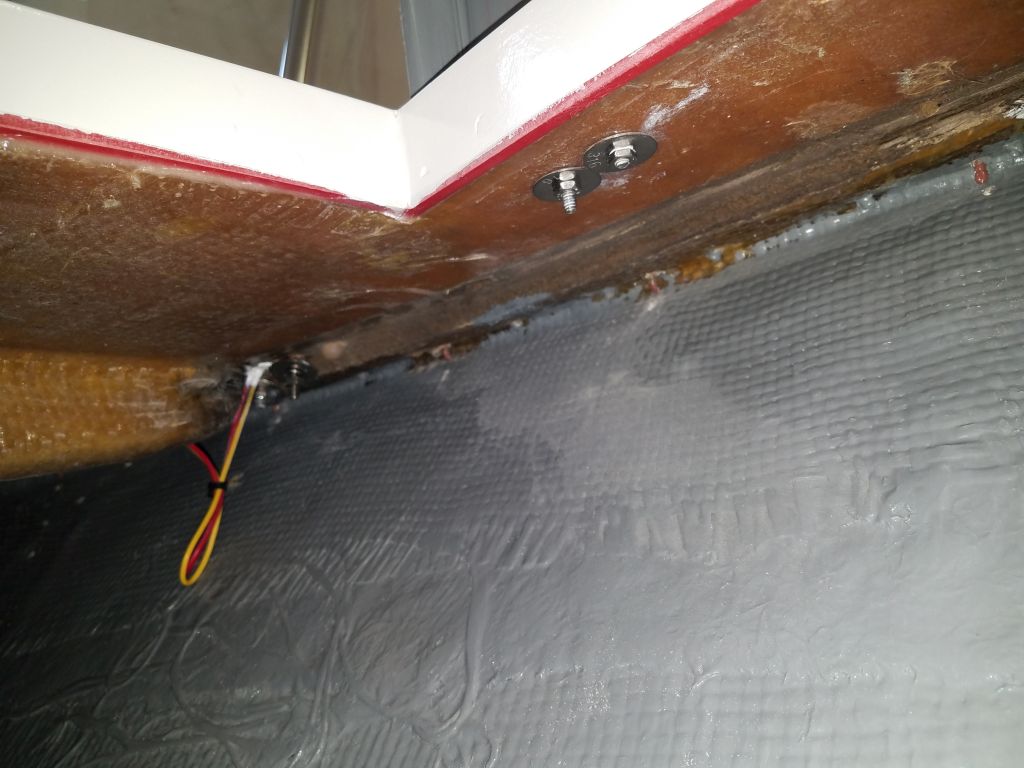
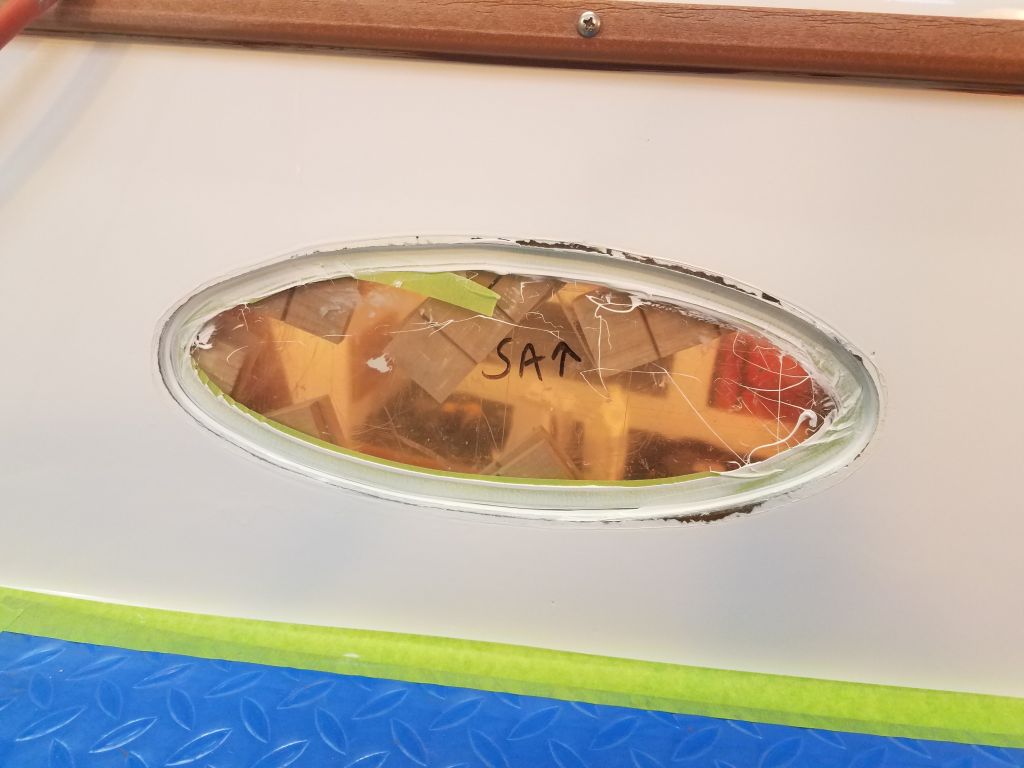
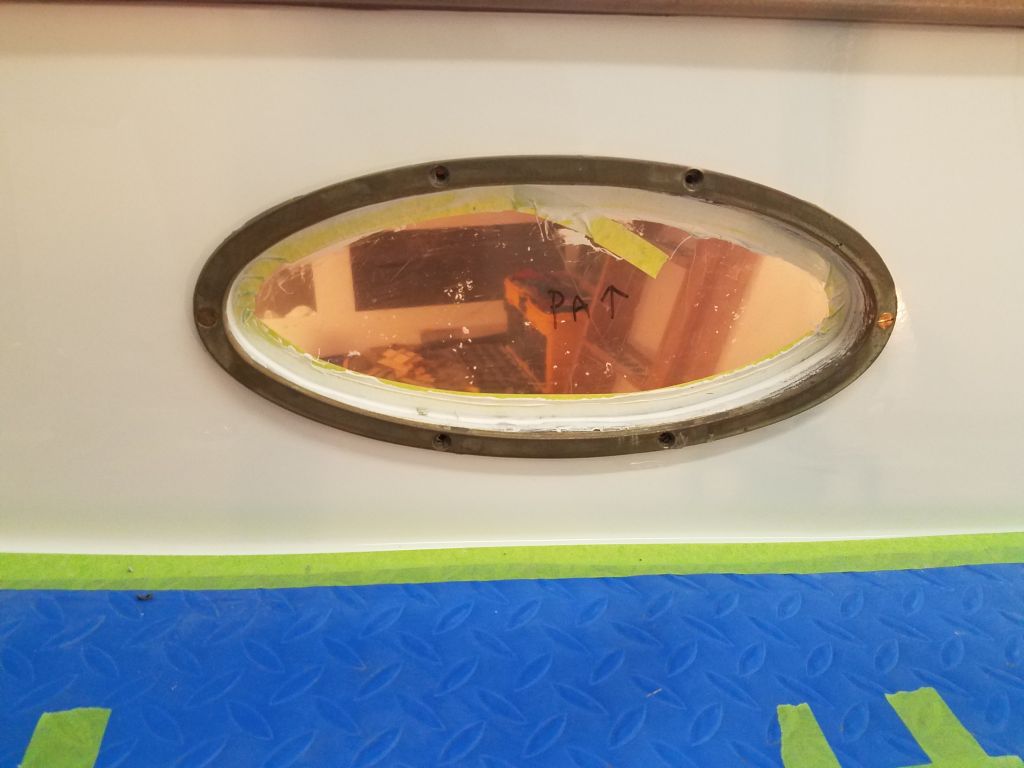
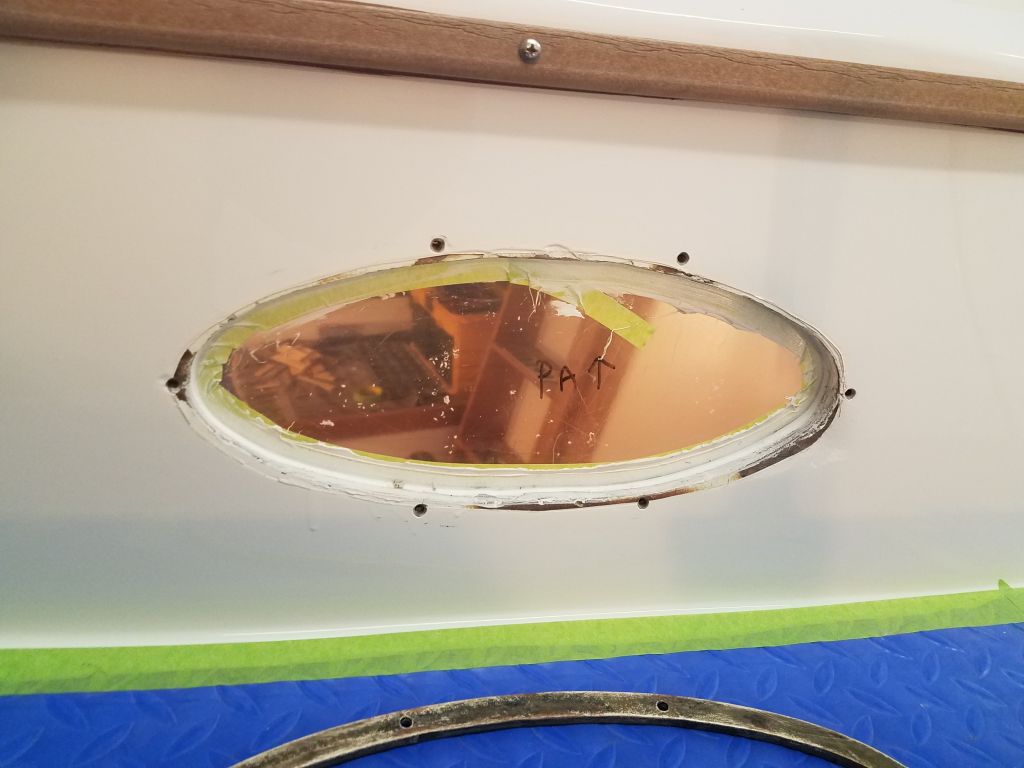
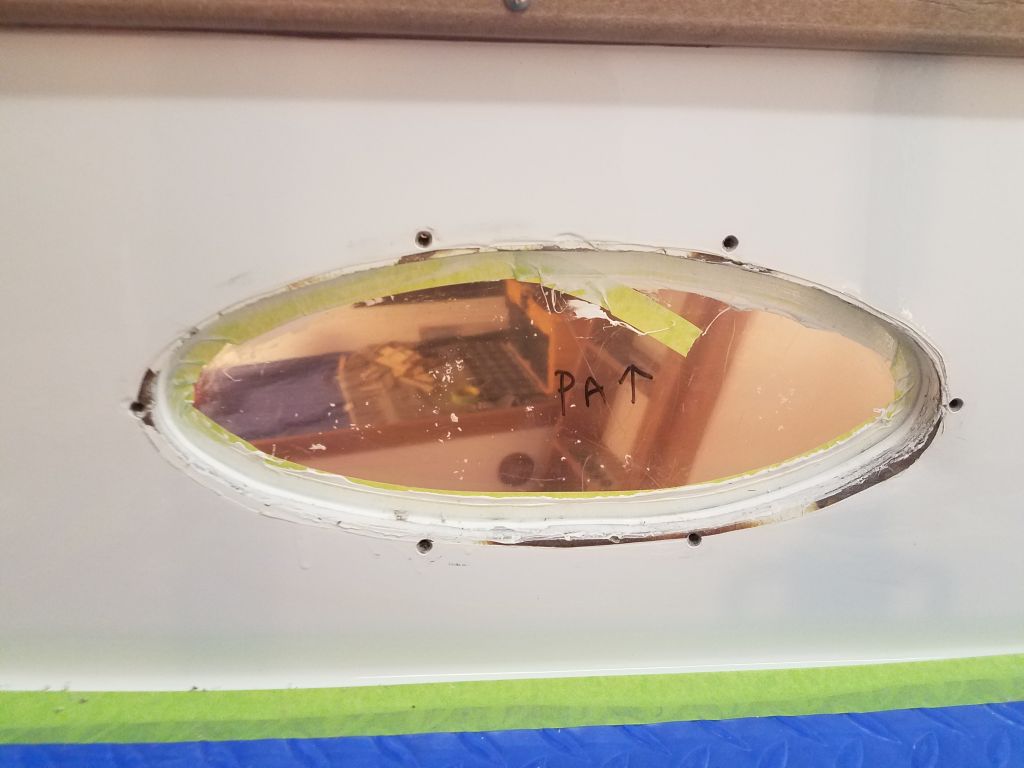
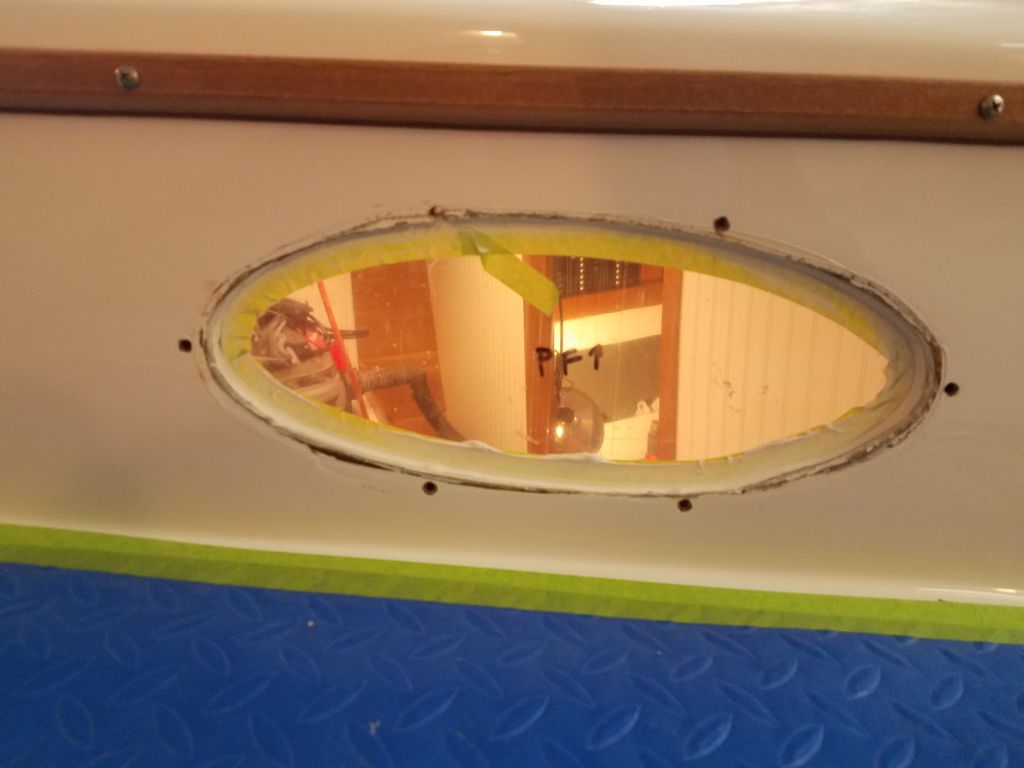
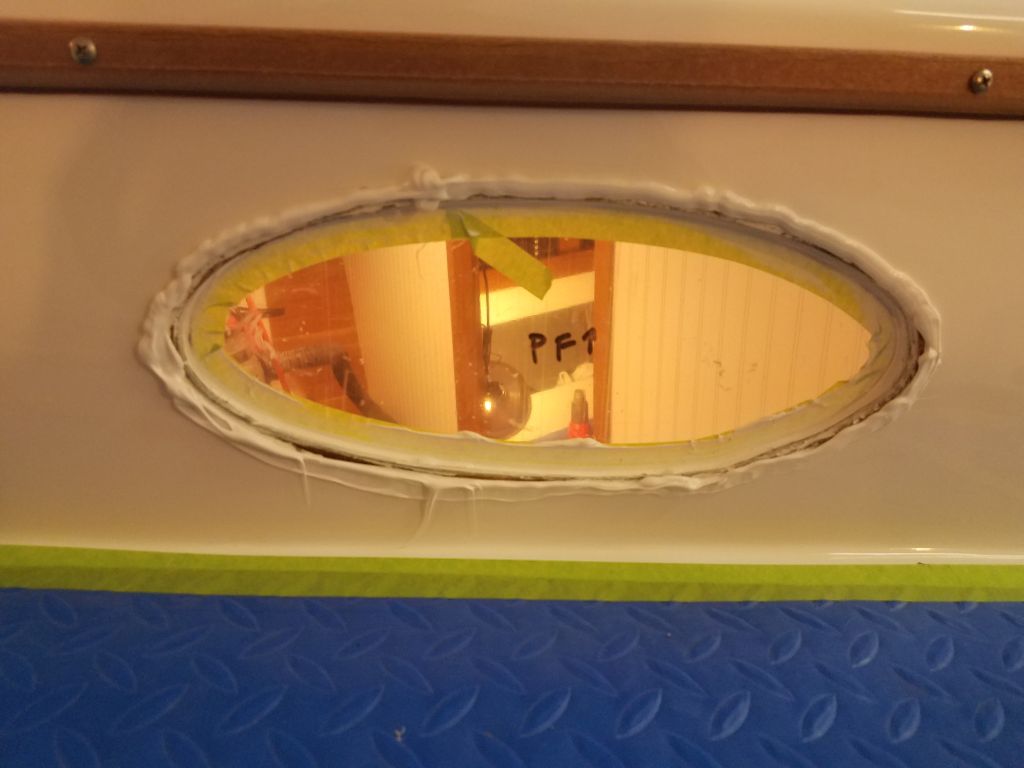
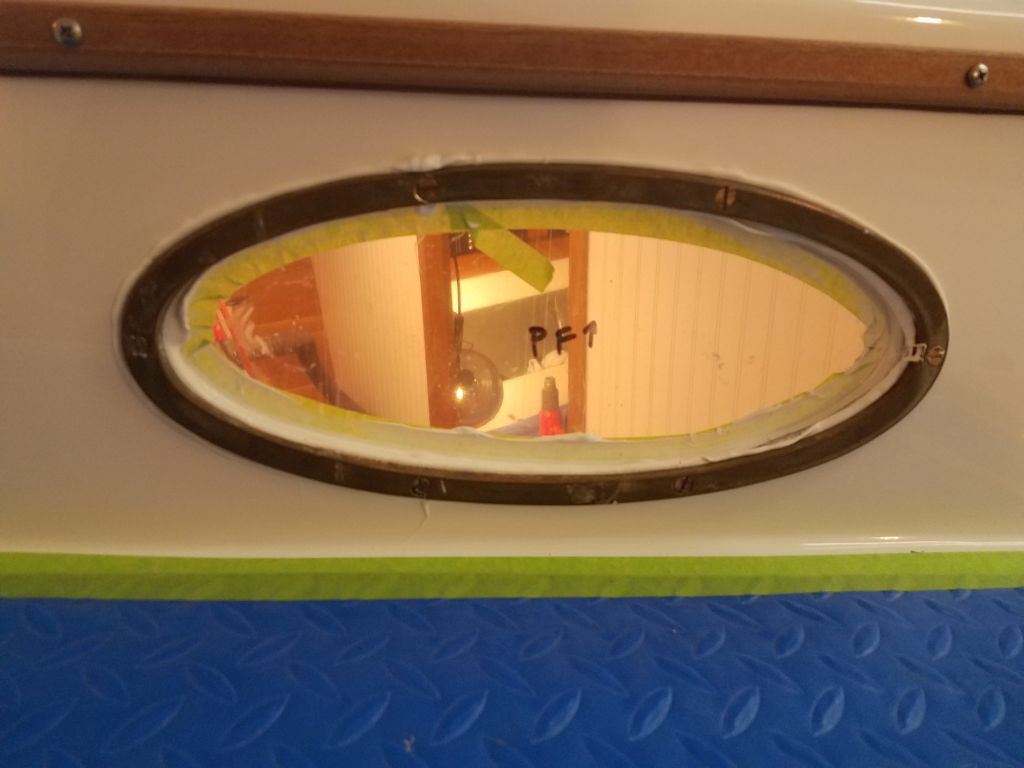
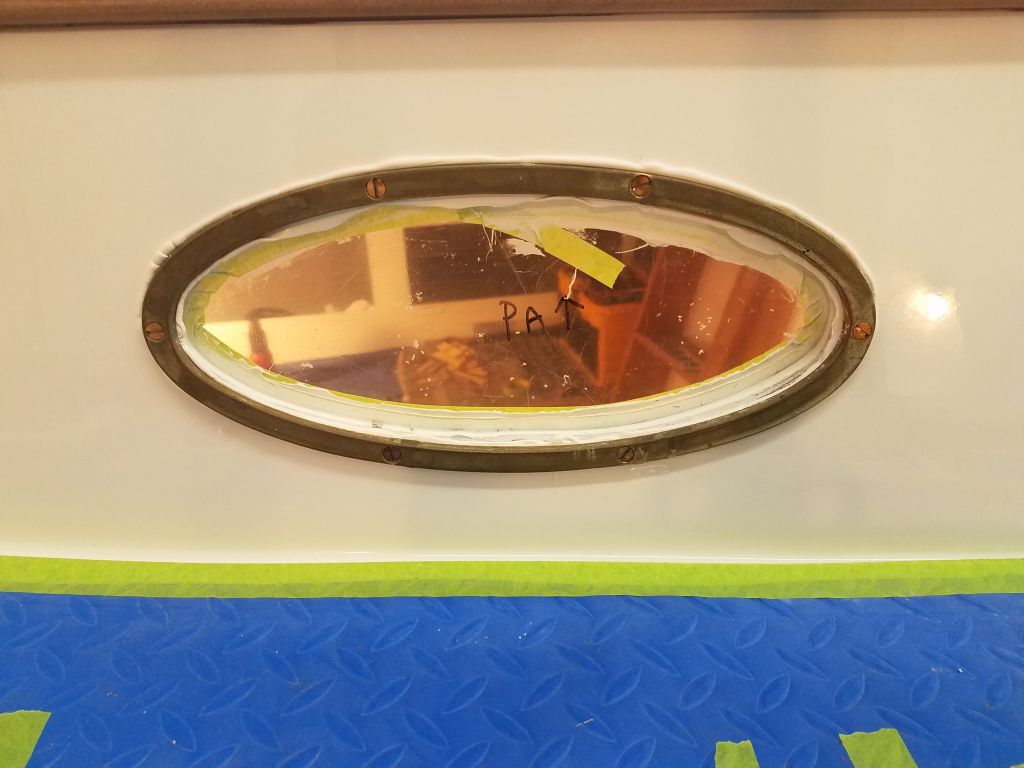
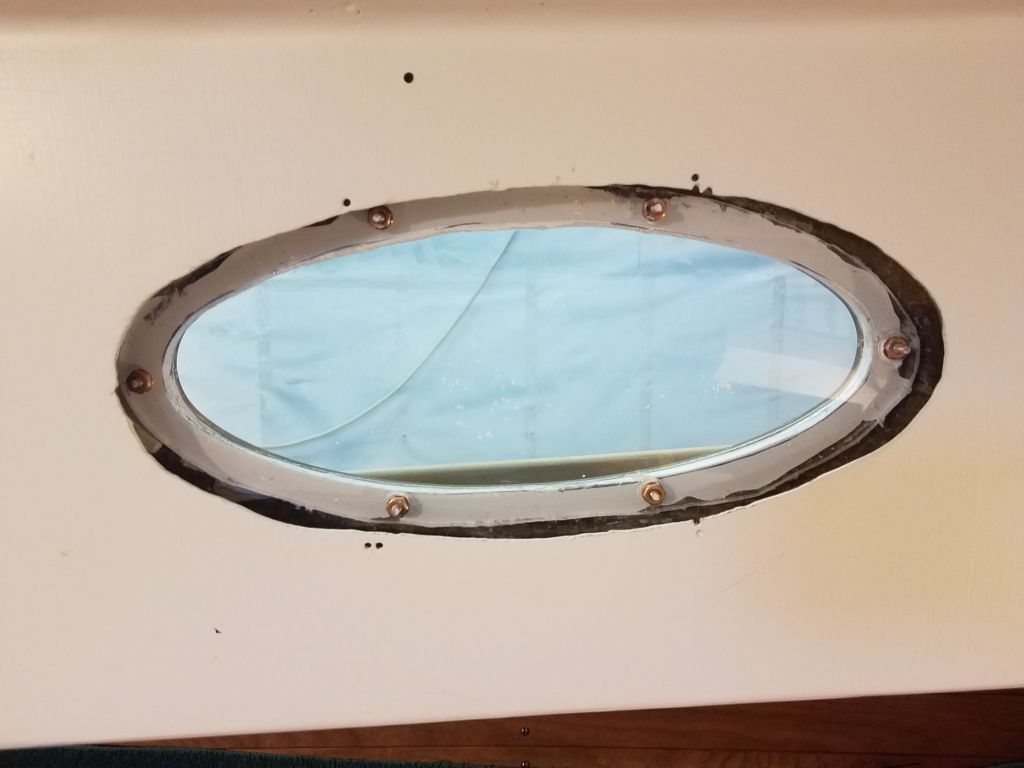
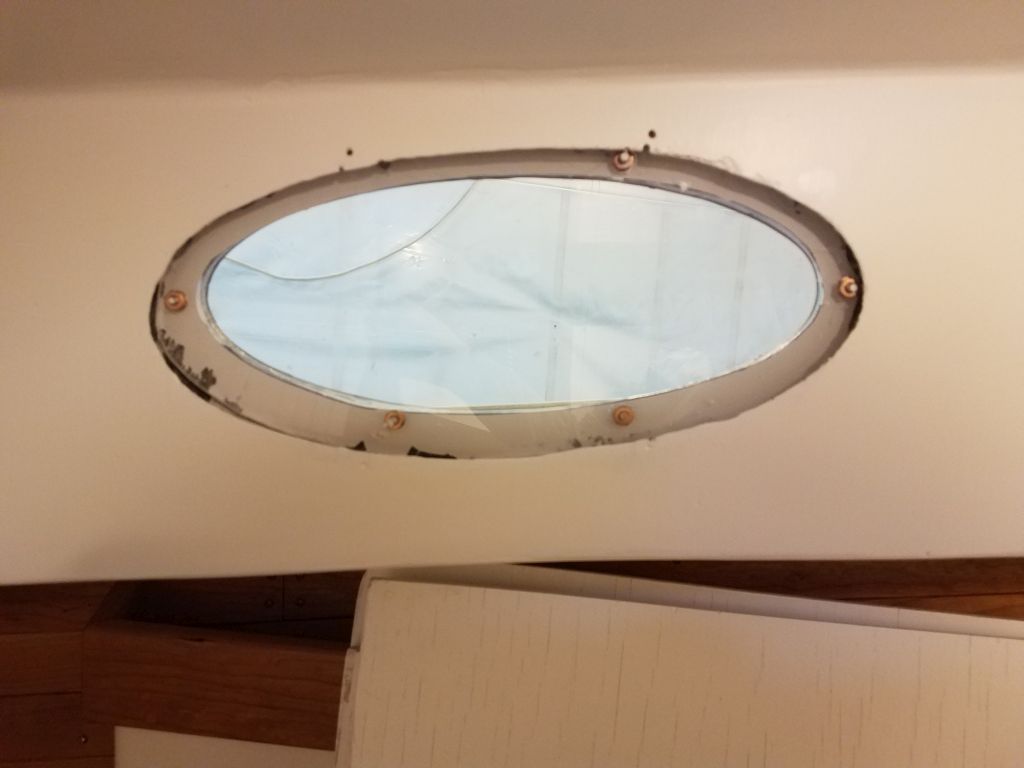
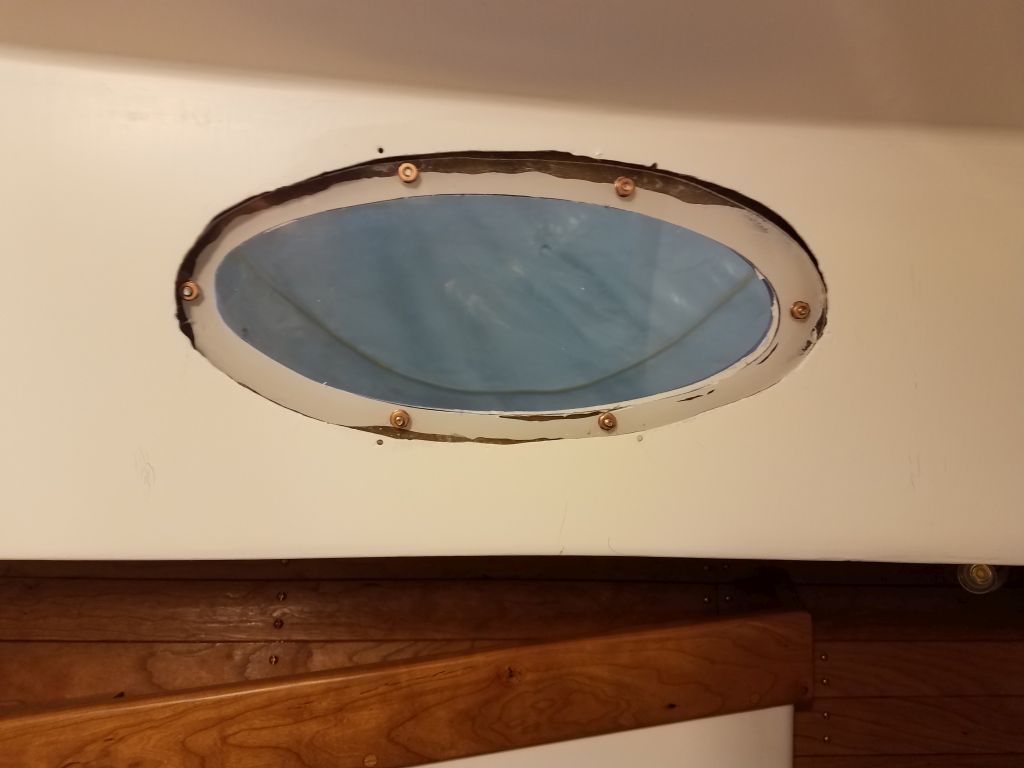
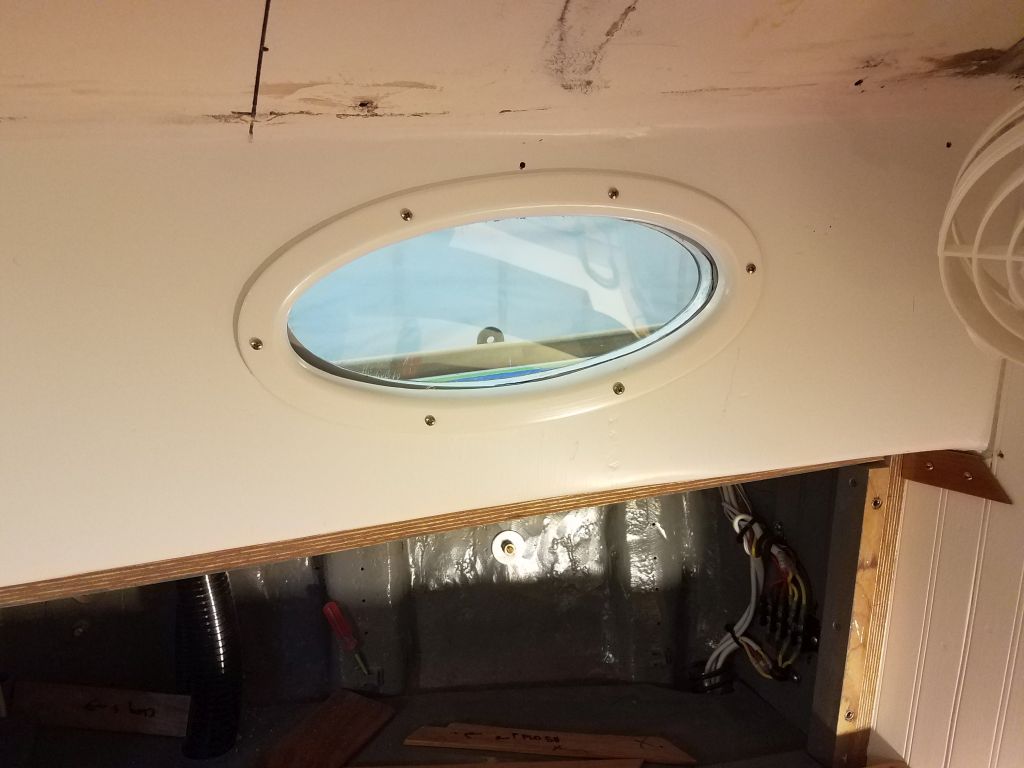
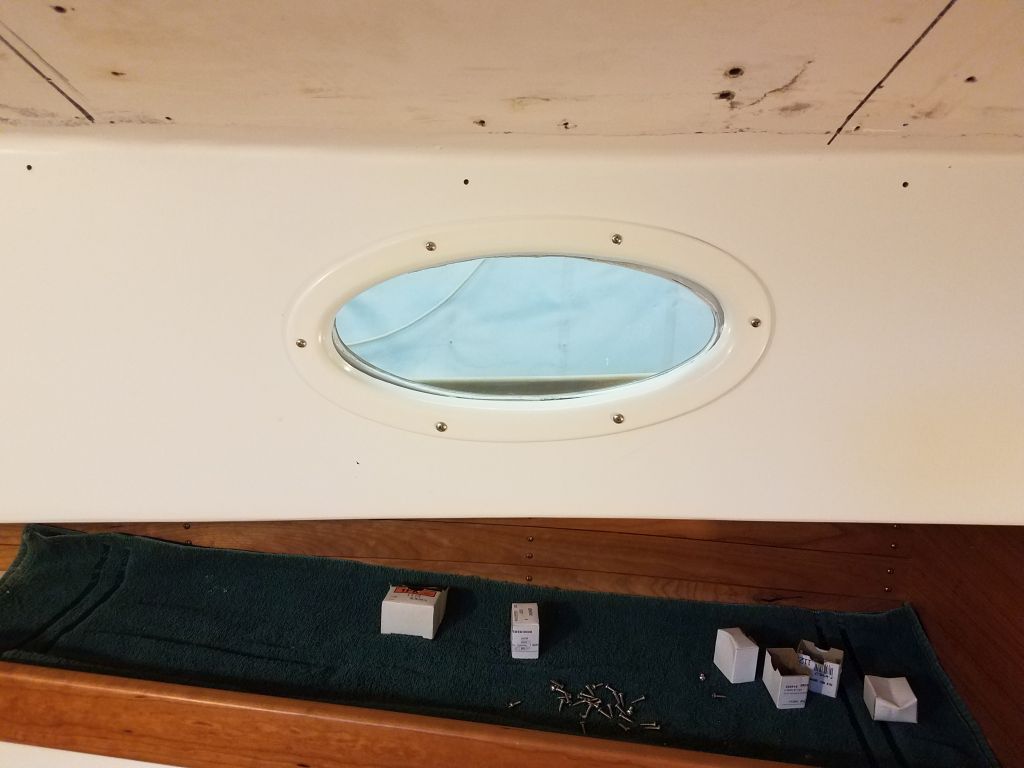
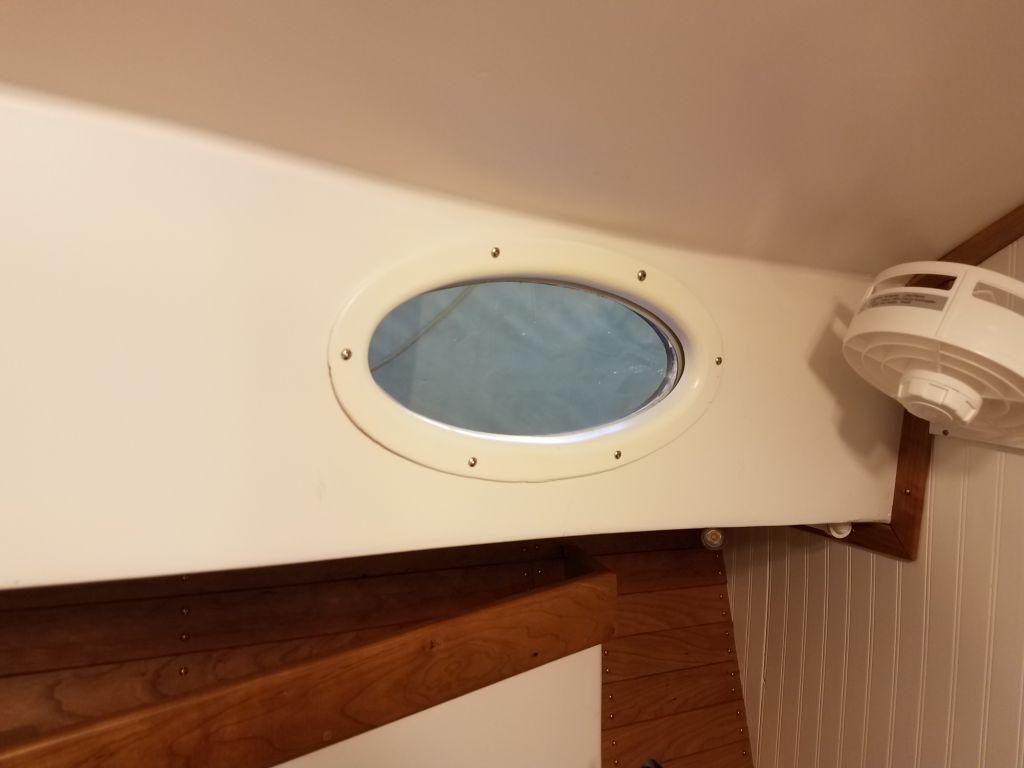
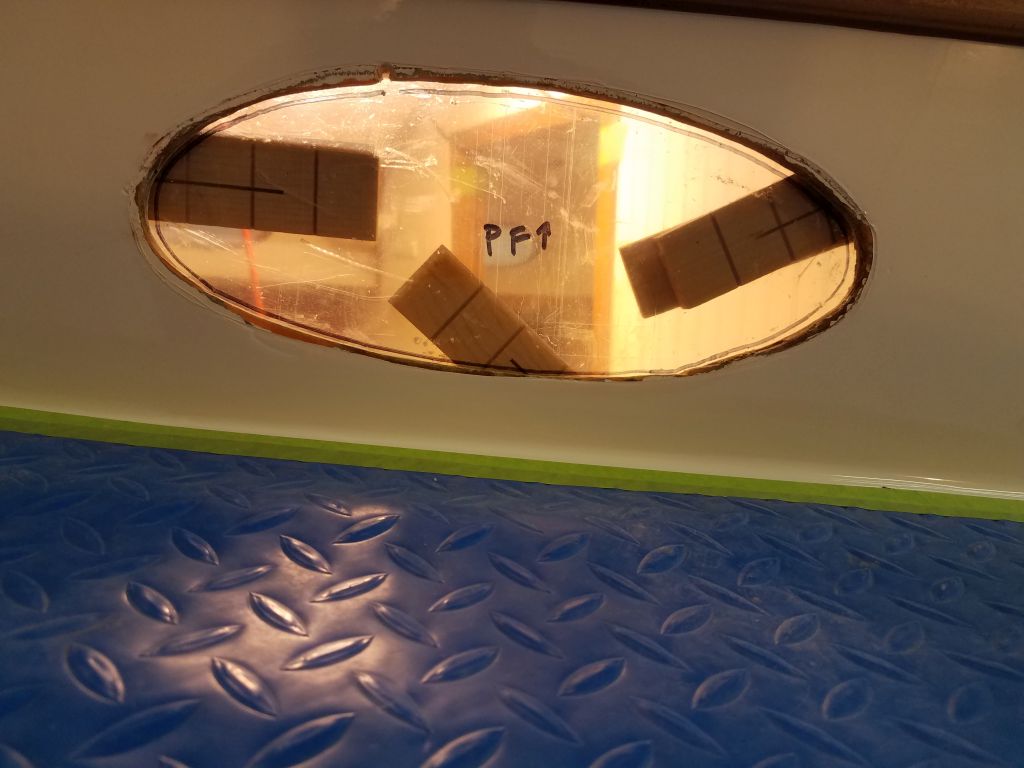
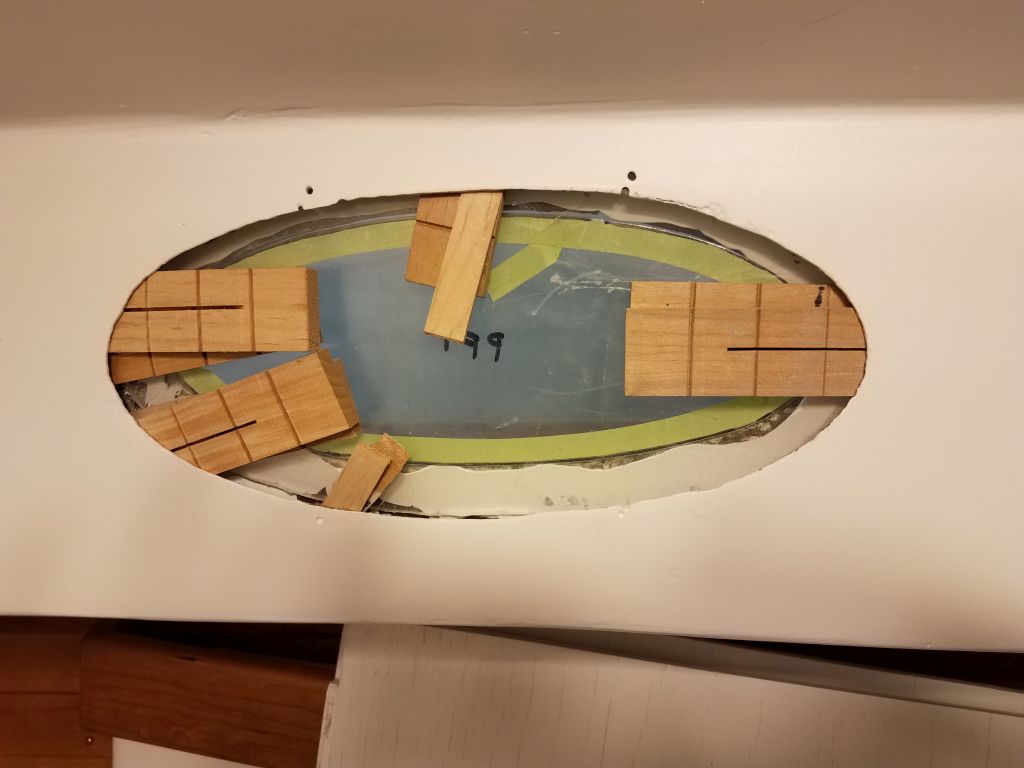
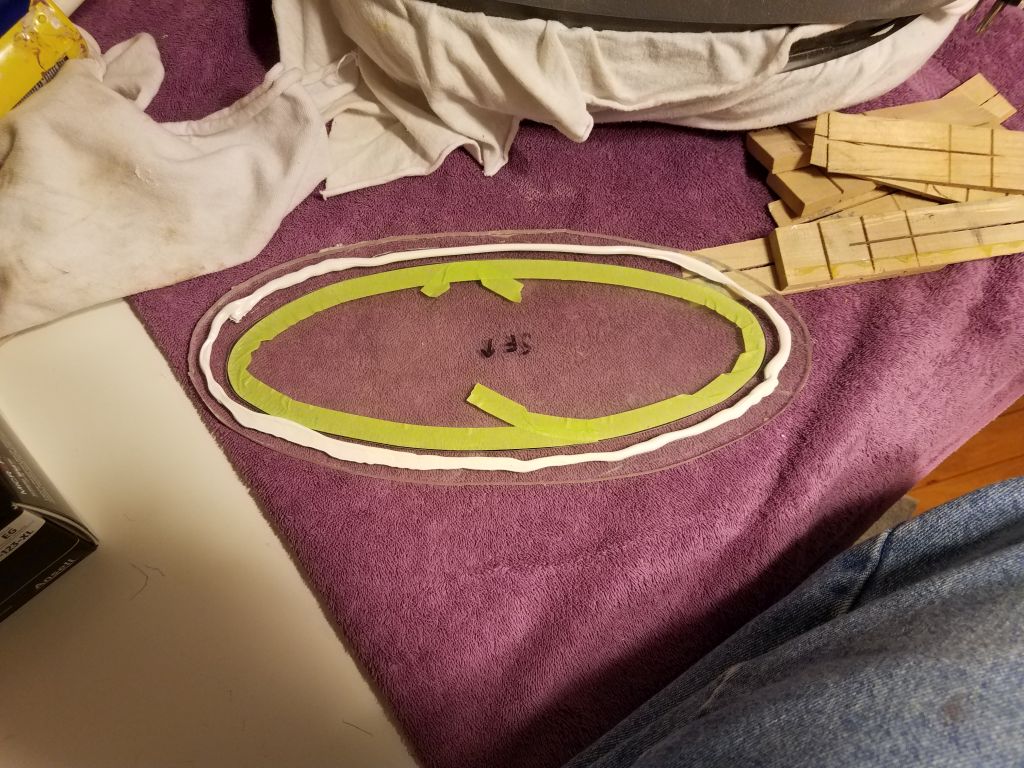
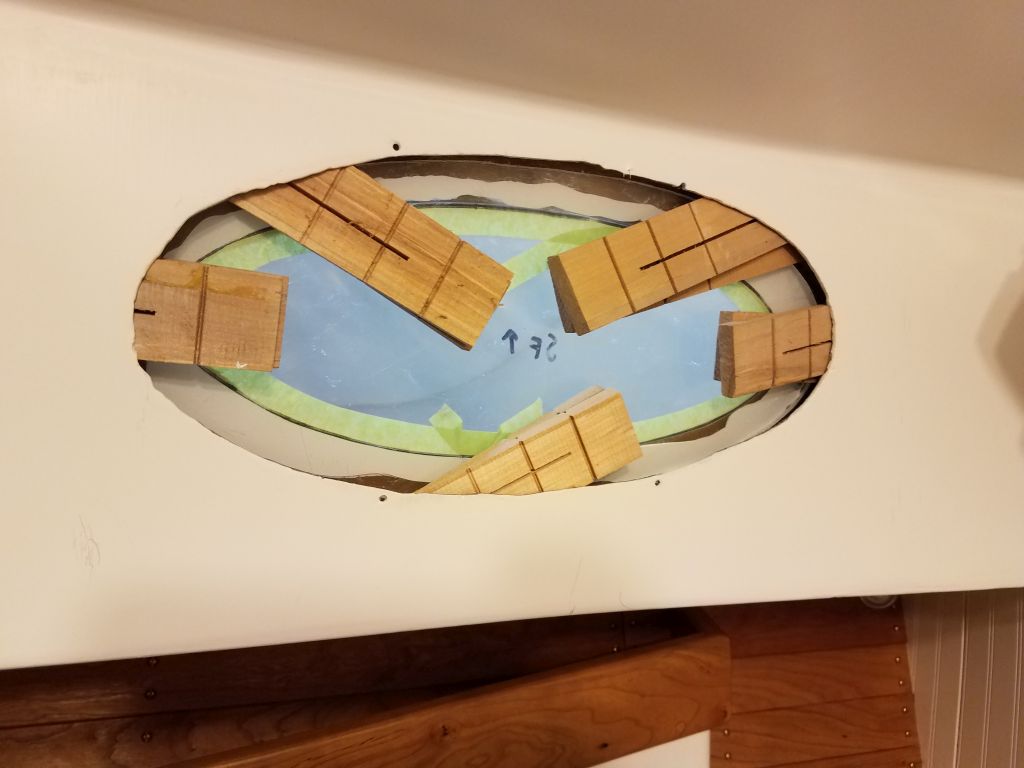
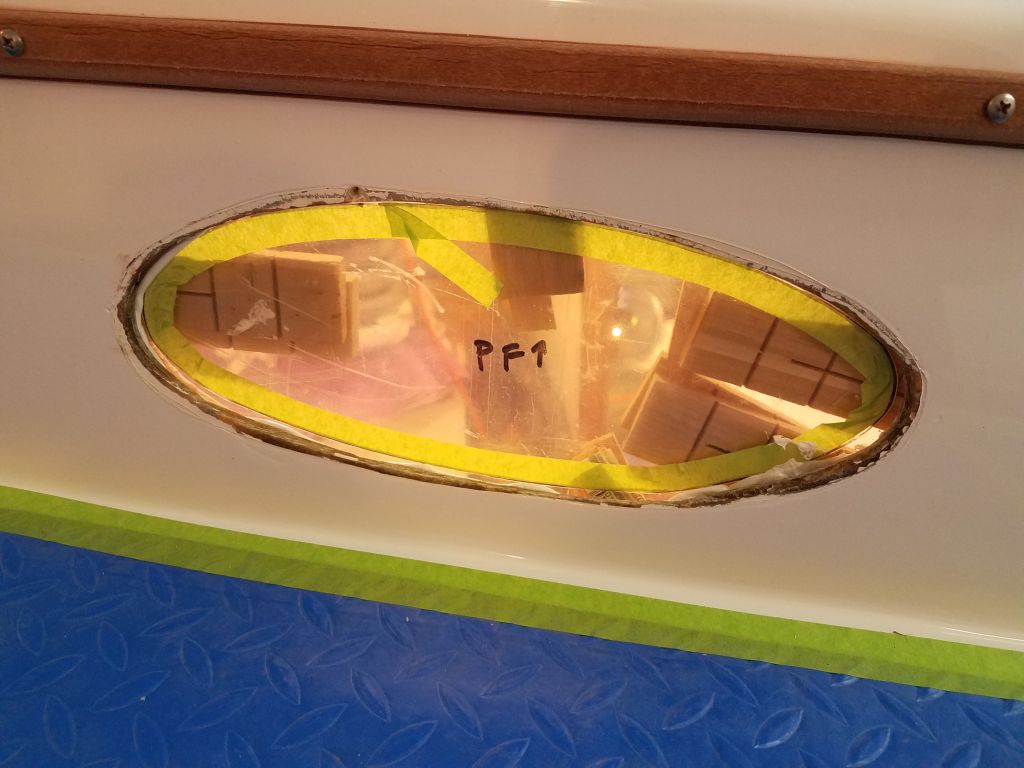
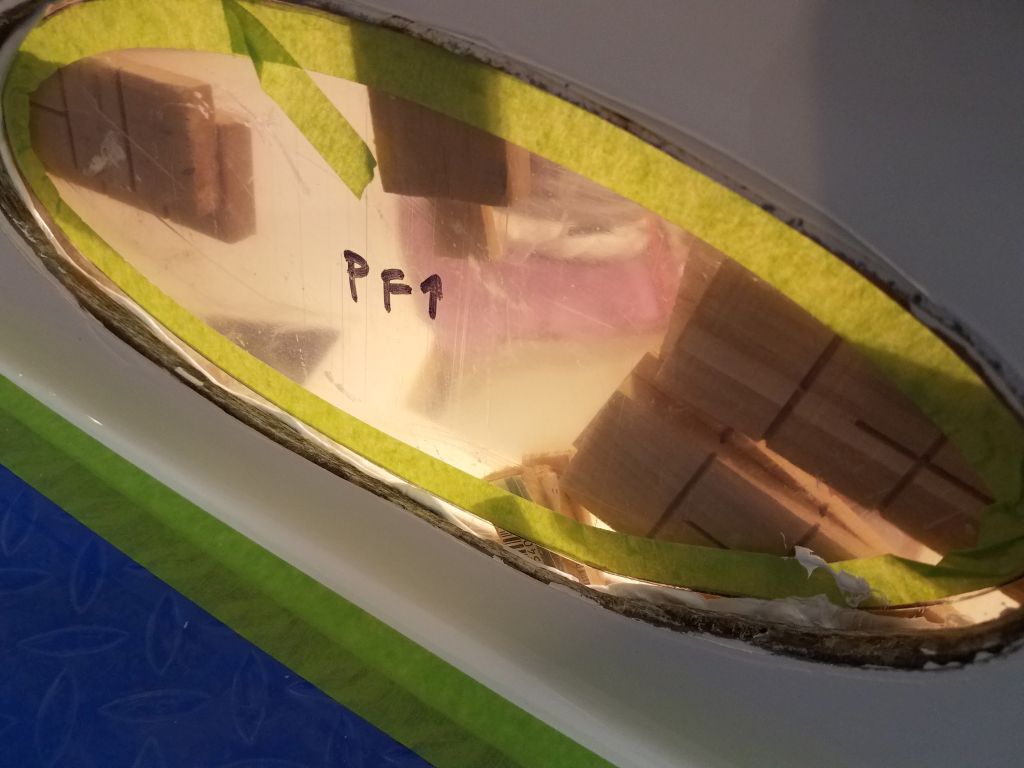
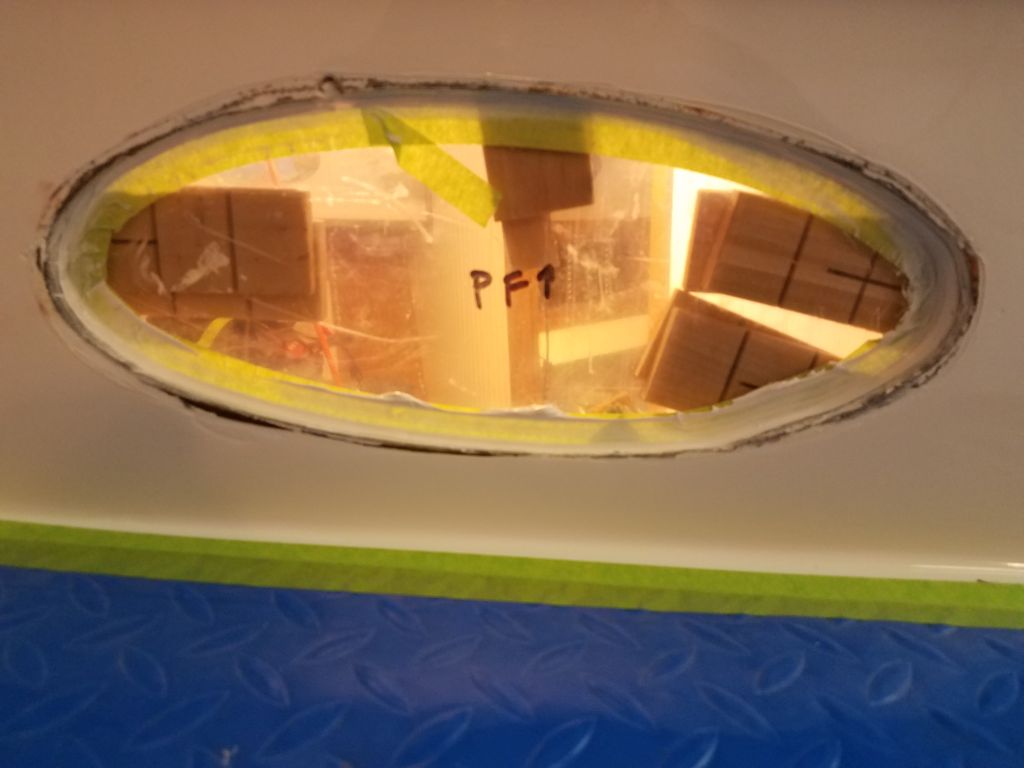
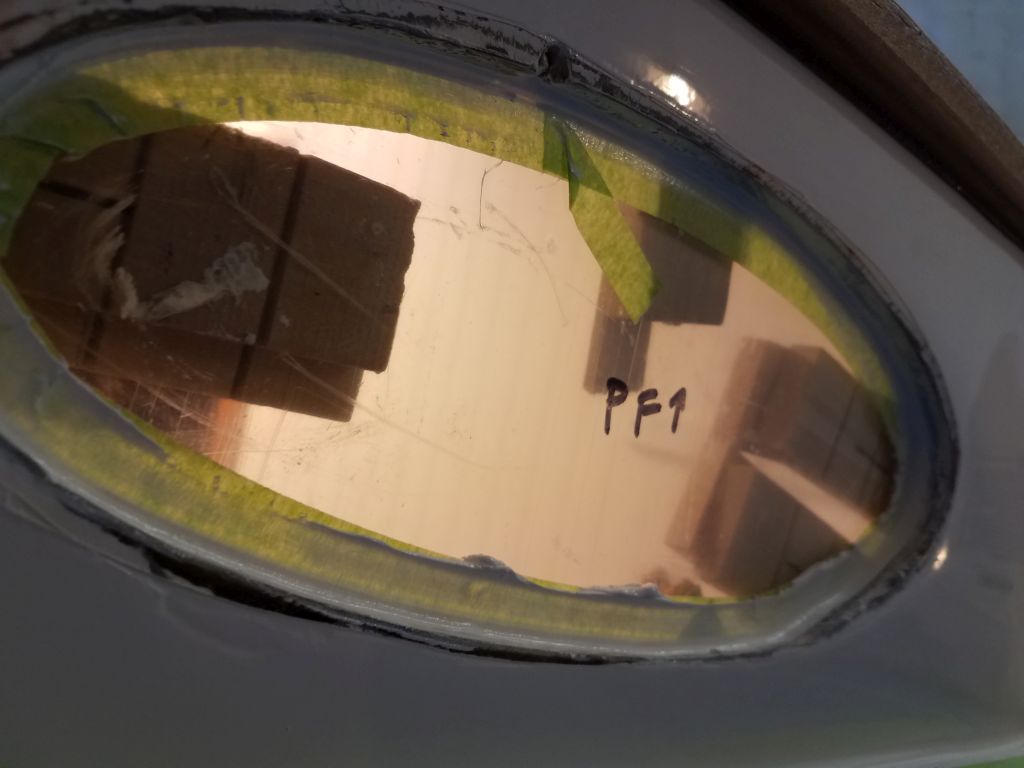
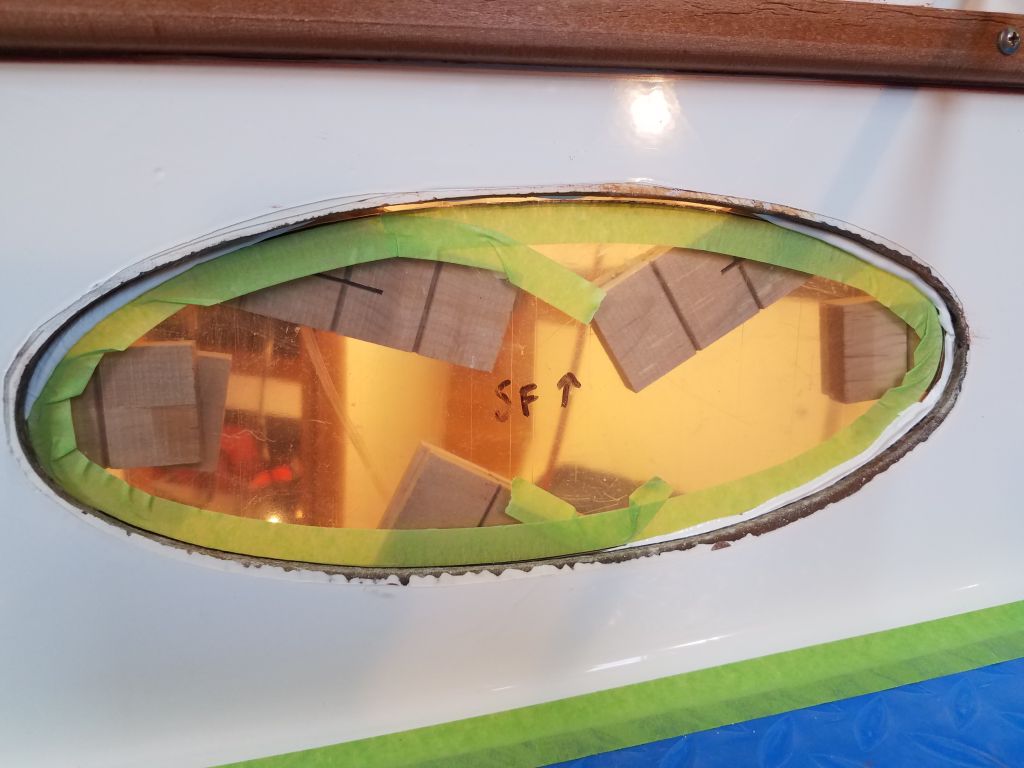
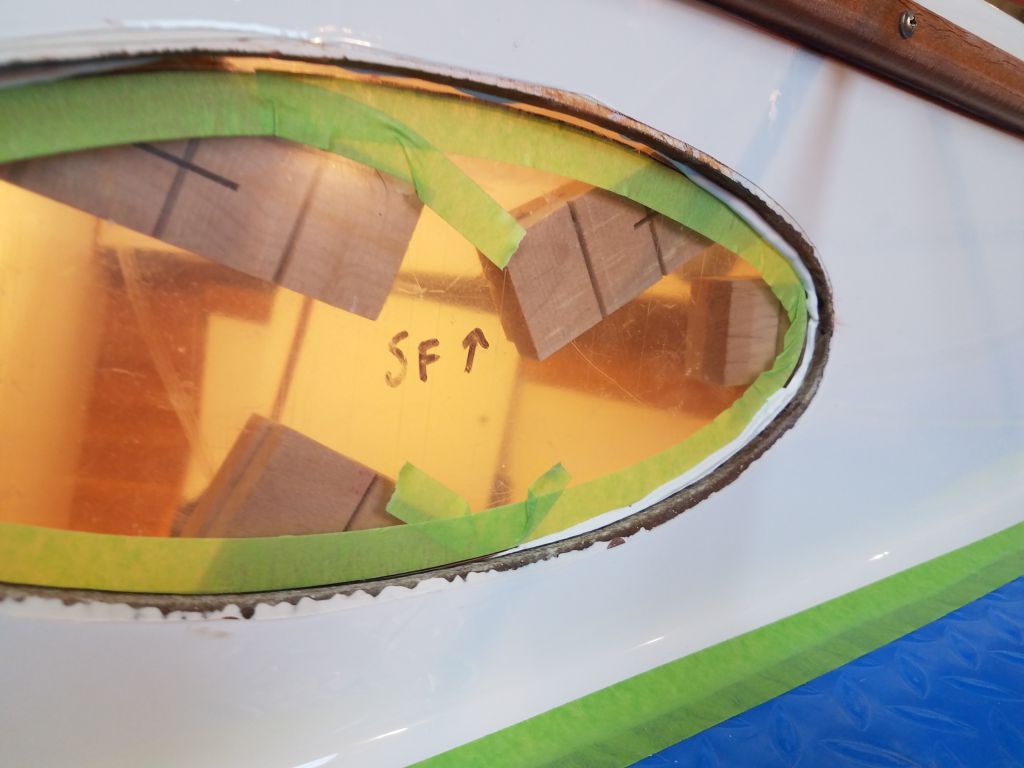
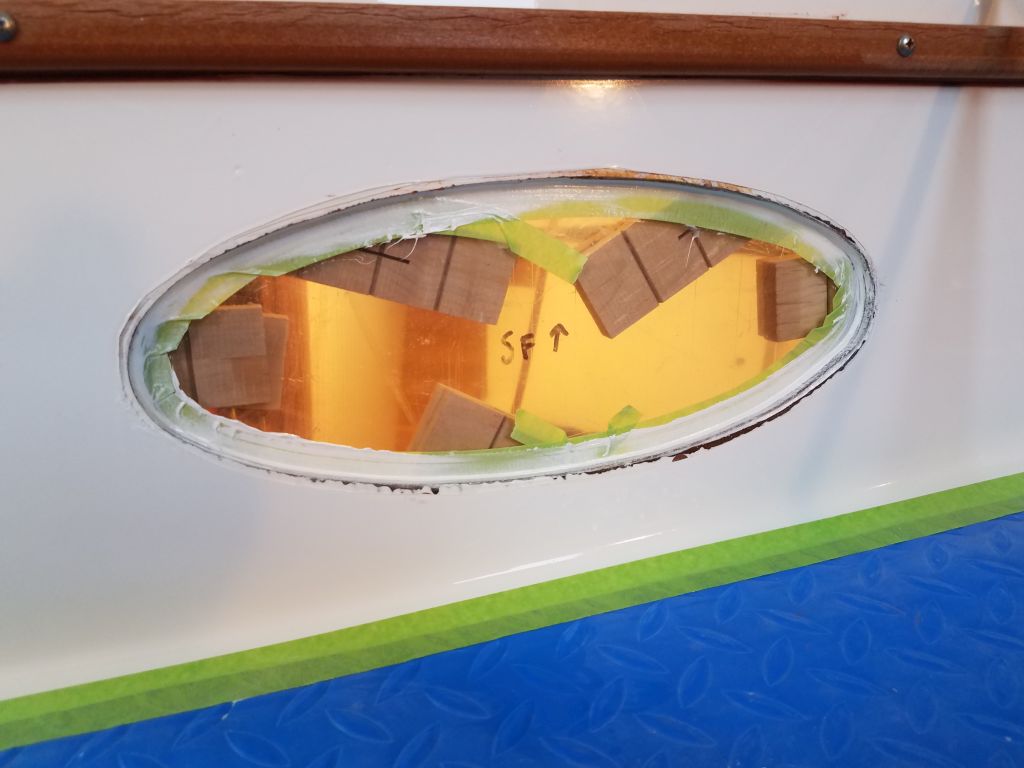
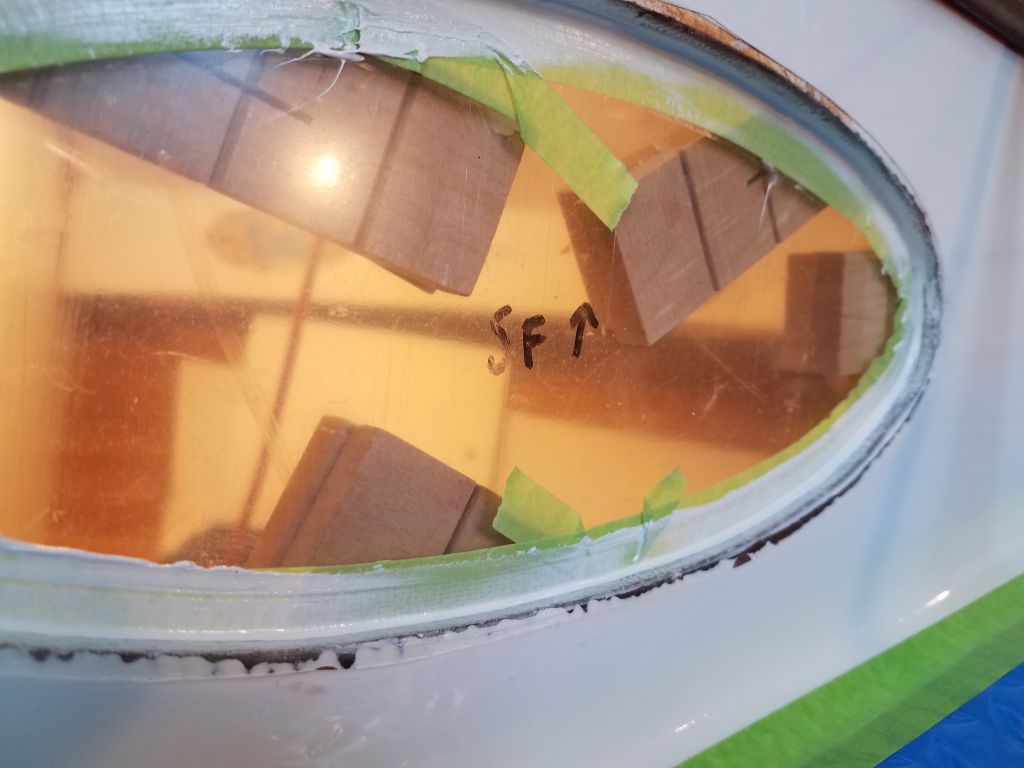
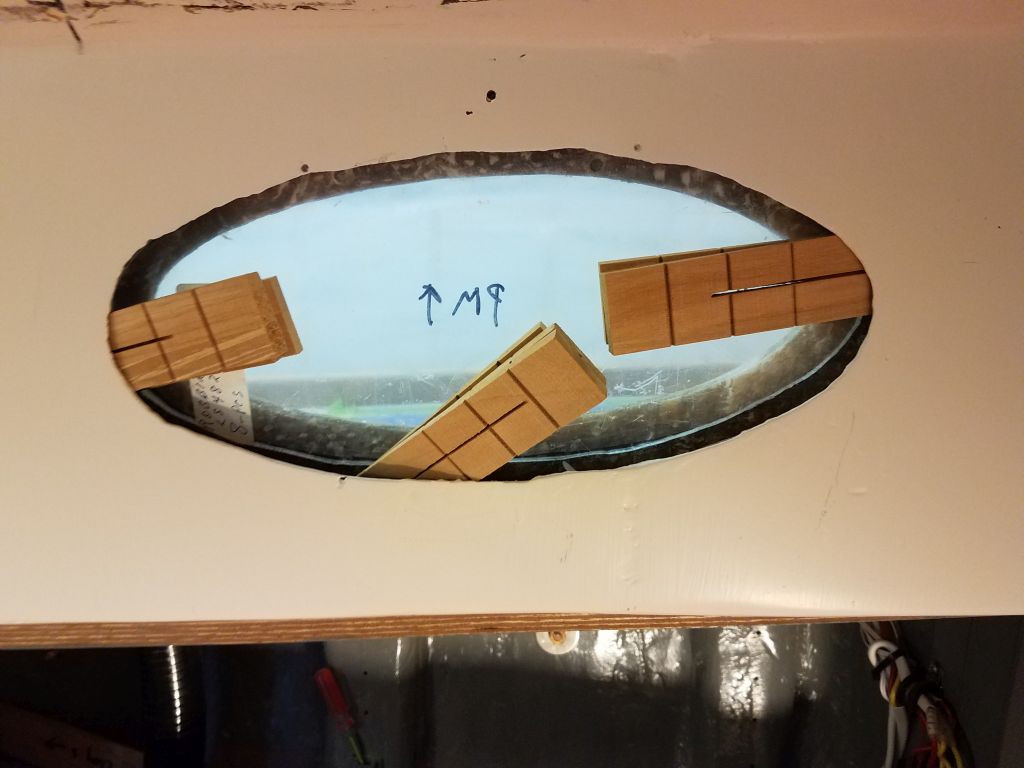
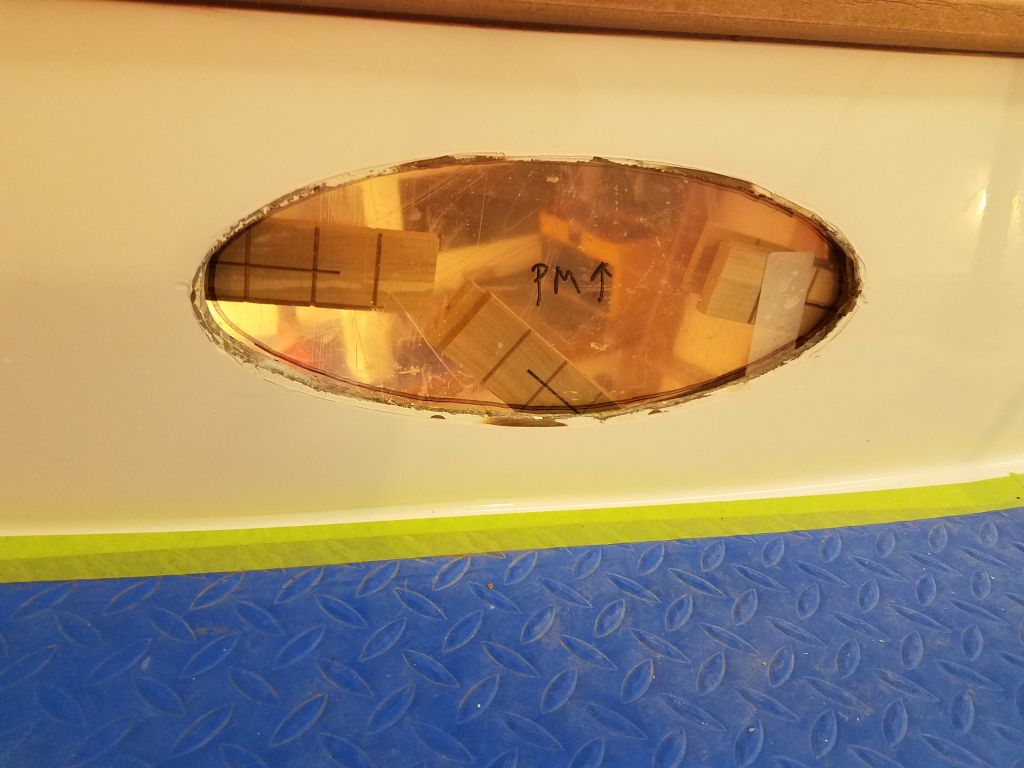
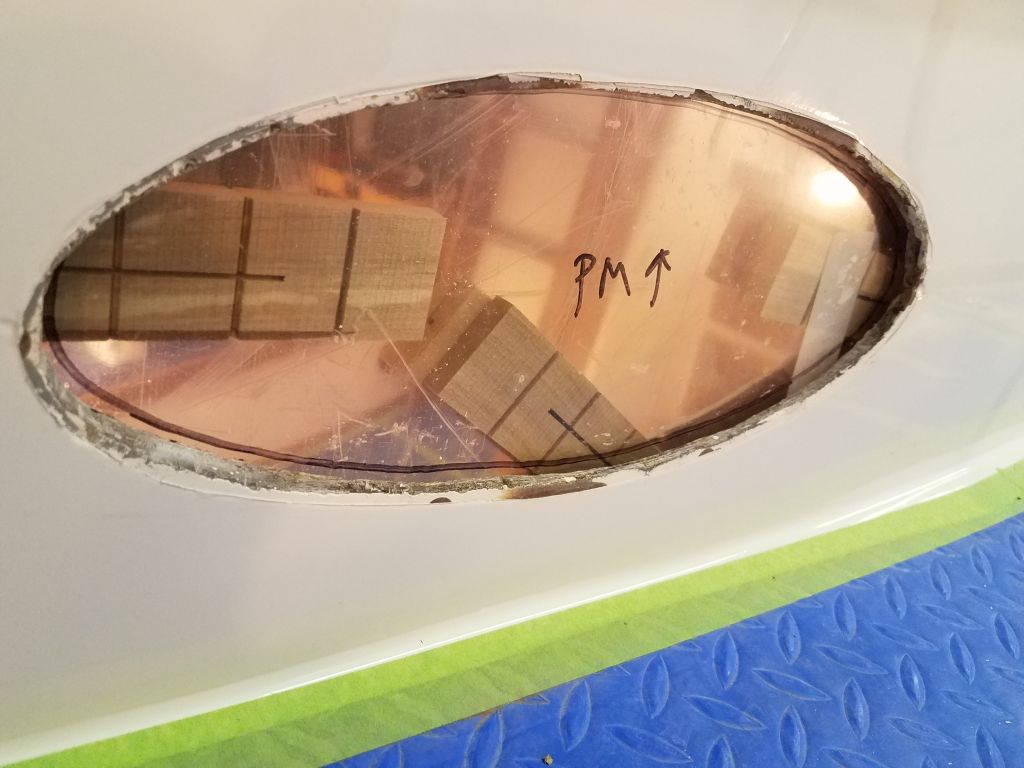
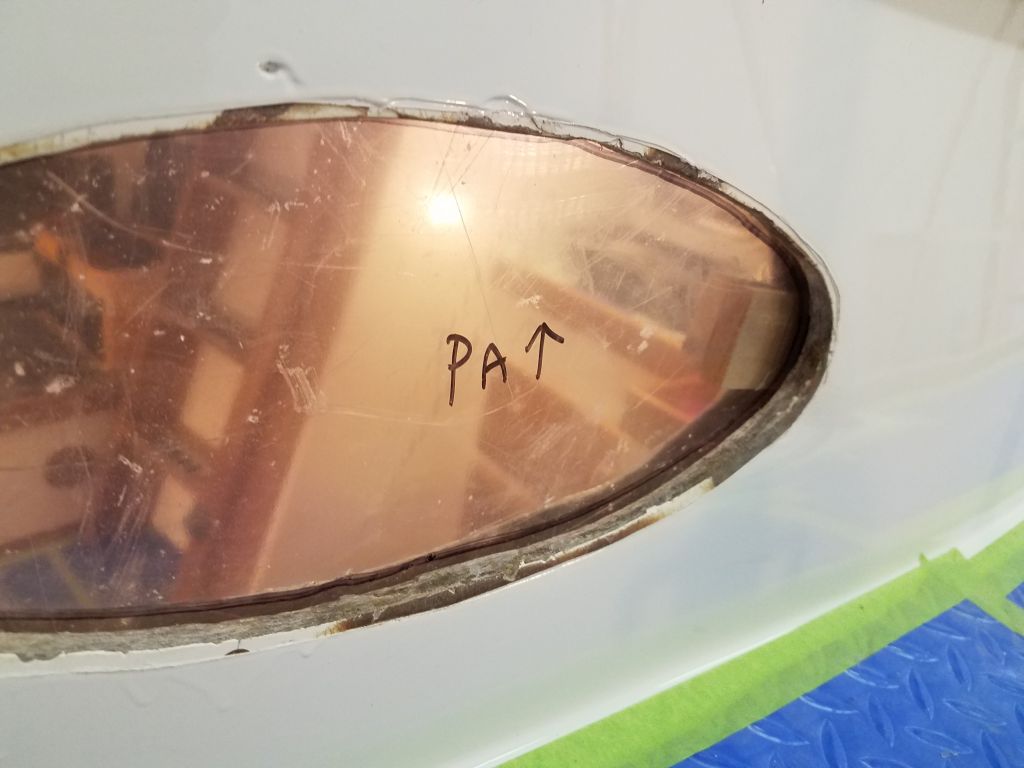
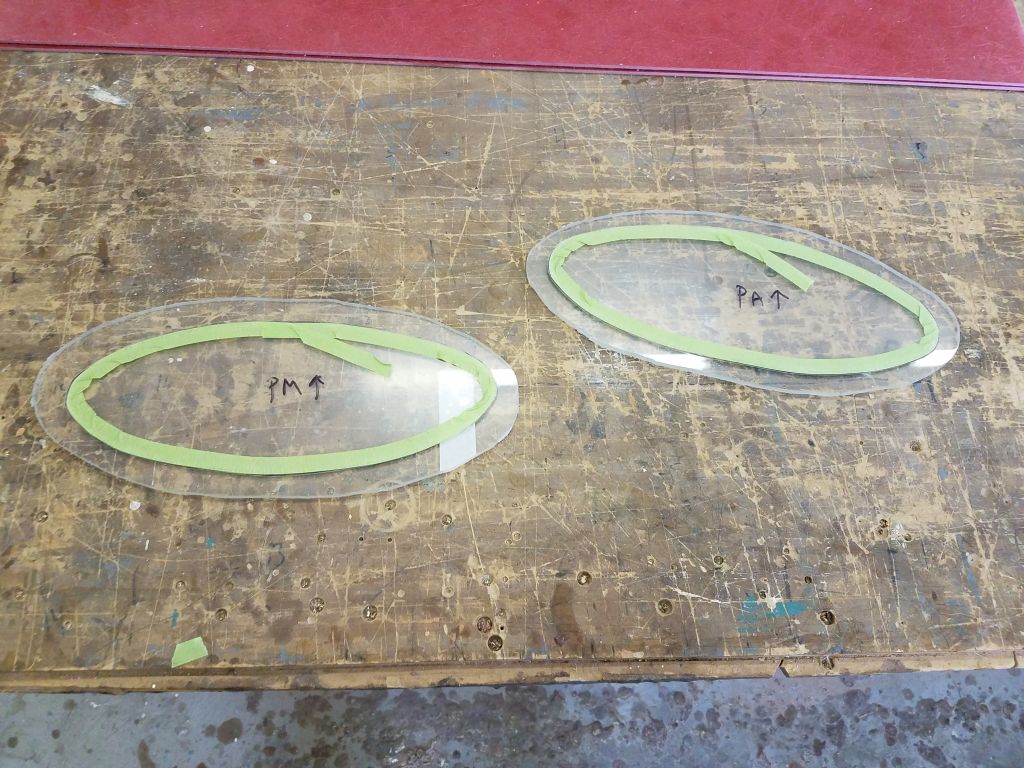
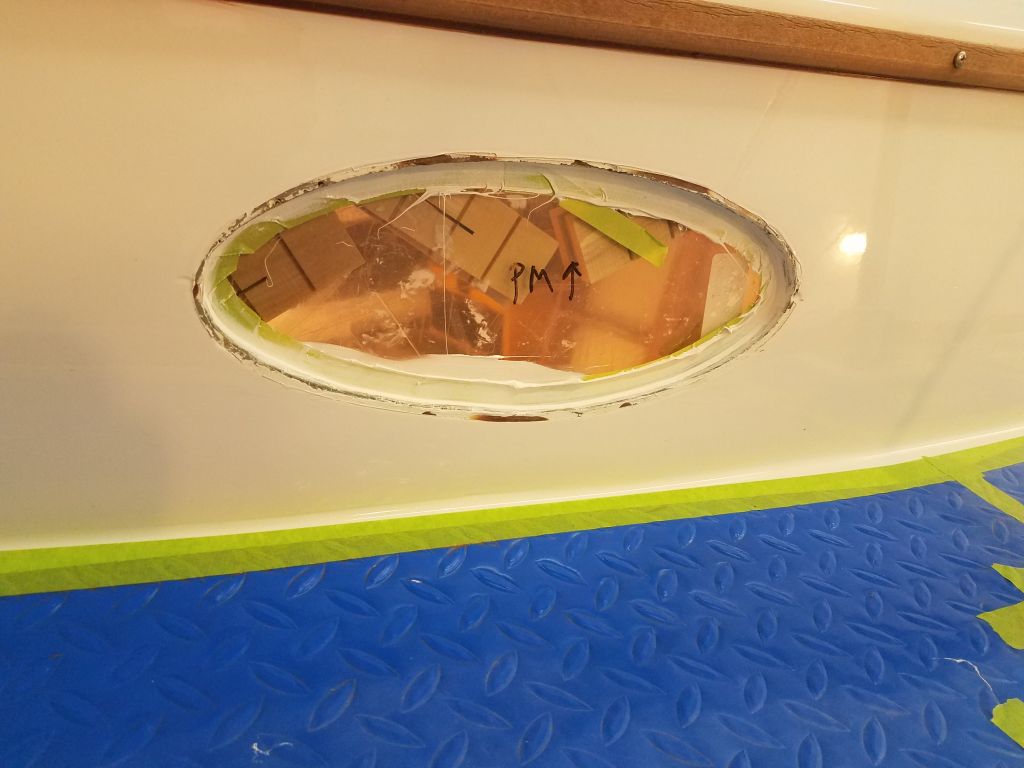
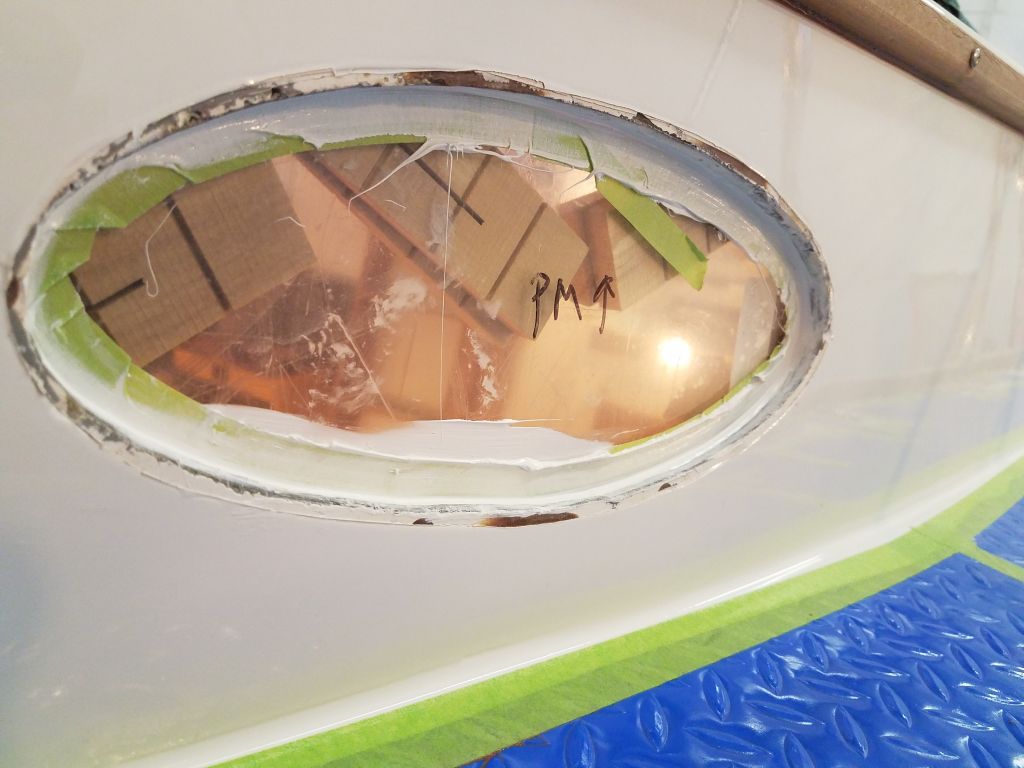
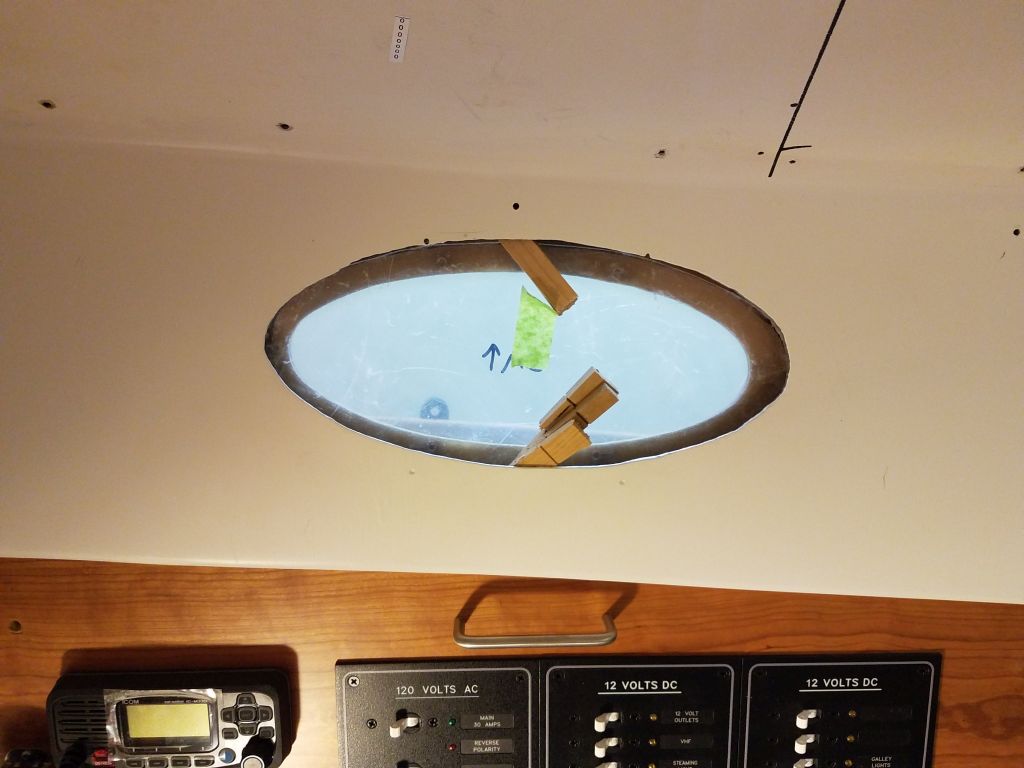
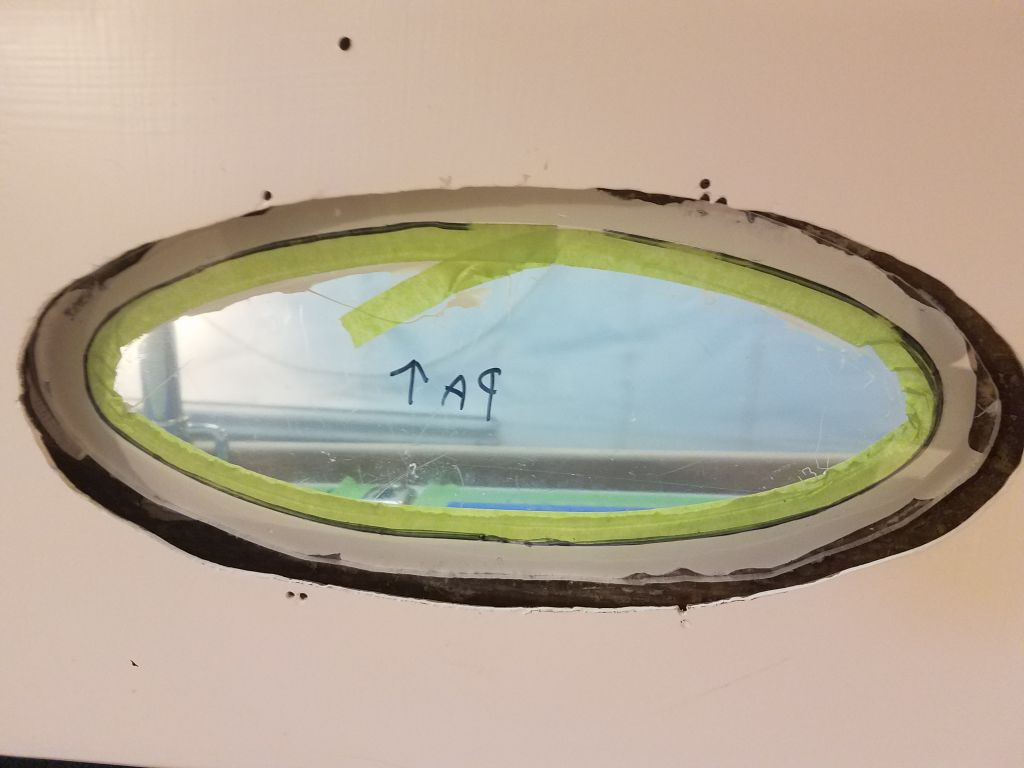
Using a stiff length of wire as a snake, I had a pretty easy time getting from the new vent opening to the starboard port opening at the forward end of the cabin trunk, but from there I had trouble trying to get the wire out beneath the sidedeck, which was my initial hope, since I kept running into (what must be) unseen gobs of adhesive holding the liner in place beneath the deck.  After multiple tries, and running out of the reasonable amount of time I’d allotted for what could be a fool’s errand, I quite by accident forced the wire out through the forward elliptical port on the starboard side, and this gave me the idea to lead the wire up into the liner from beneath the sidedeck just forward of the main bulkhead, which would reduce exposed wiring to just a short 12″ or so in an inconspicuous place.

I drilled a hole in the desired entrance/exit point in the liner, hoping against hope that this plan succeeded now that I was defacing the boat, and eventually got the stiff wire to snake through, after which there was much rejoicing.

Now it was quite straightforward to pull in the length of 14/2 wire I’d  just recently run into the forward cabin for this purpose (since I only received the vent from the owner a short while ago).  At the vent hole in the overhead, I drilled a wiring exit hole just forward, where it would be hidden by the fan to which it would also connect.  I erred a bit too close to the vent opening with this wiring exit, since the space was a little tight and I was concerned I might not be able to get the wire through if the hole was too far forward, but I had to make a slight modification to the inside vent housing to allow the wire free passage–not a concern since the fan unit would later cover this all anyway.

When I conceived of this idea a while back, I frankly never thought it would succeed, but I was greatly pleased with the results.  To finish things up, I installed some white flexible conduit and wire clamps to secure the little bit of exposed cable near the bulkhead.

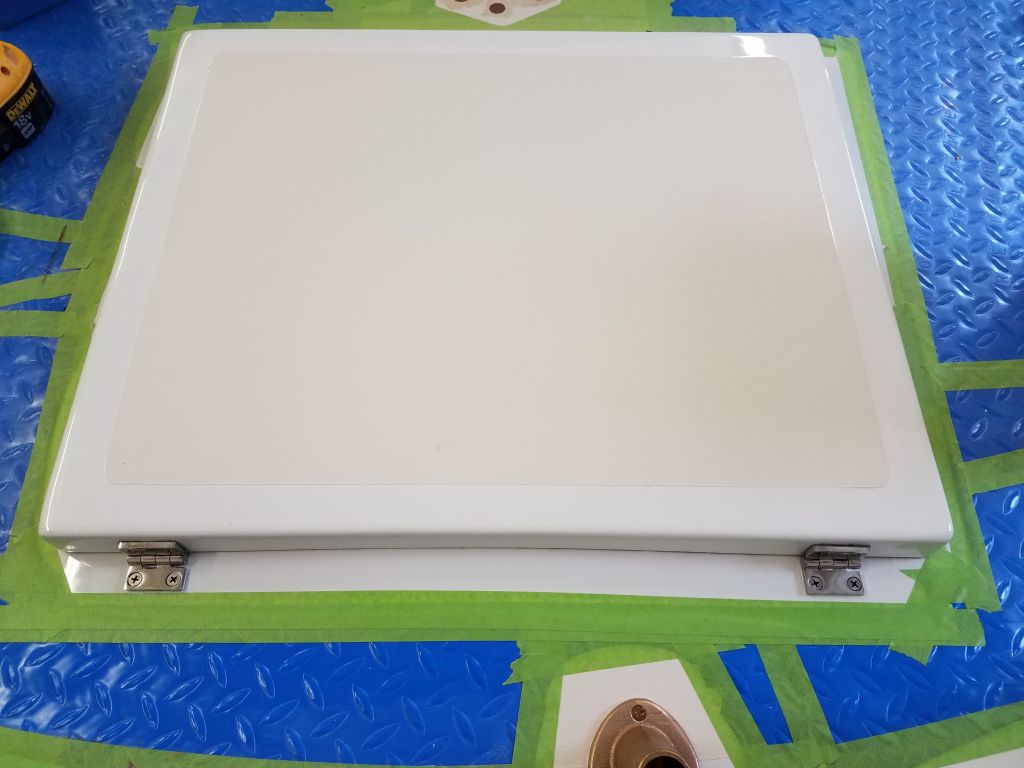
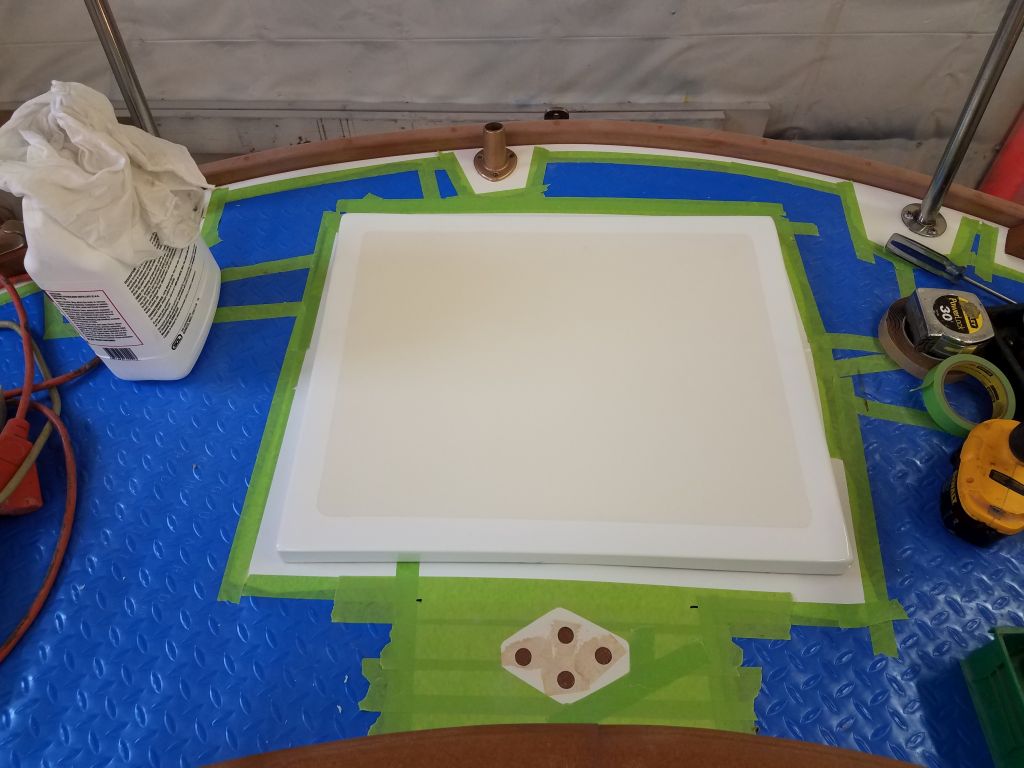
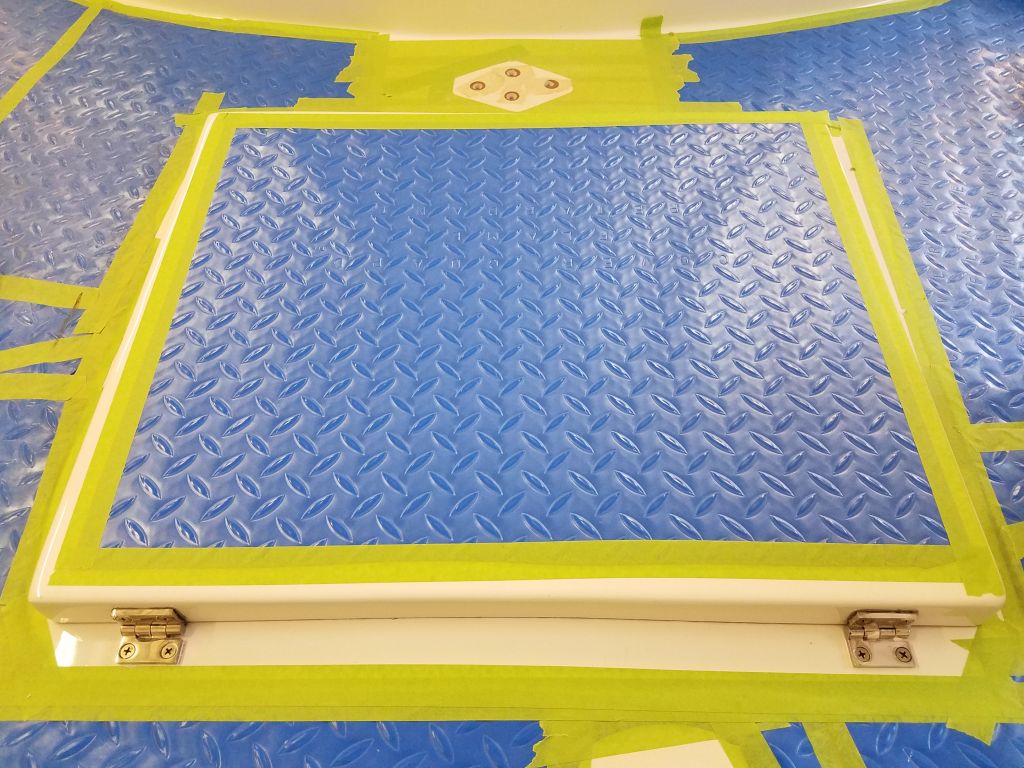
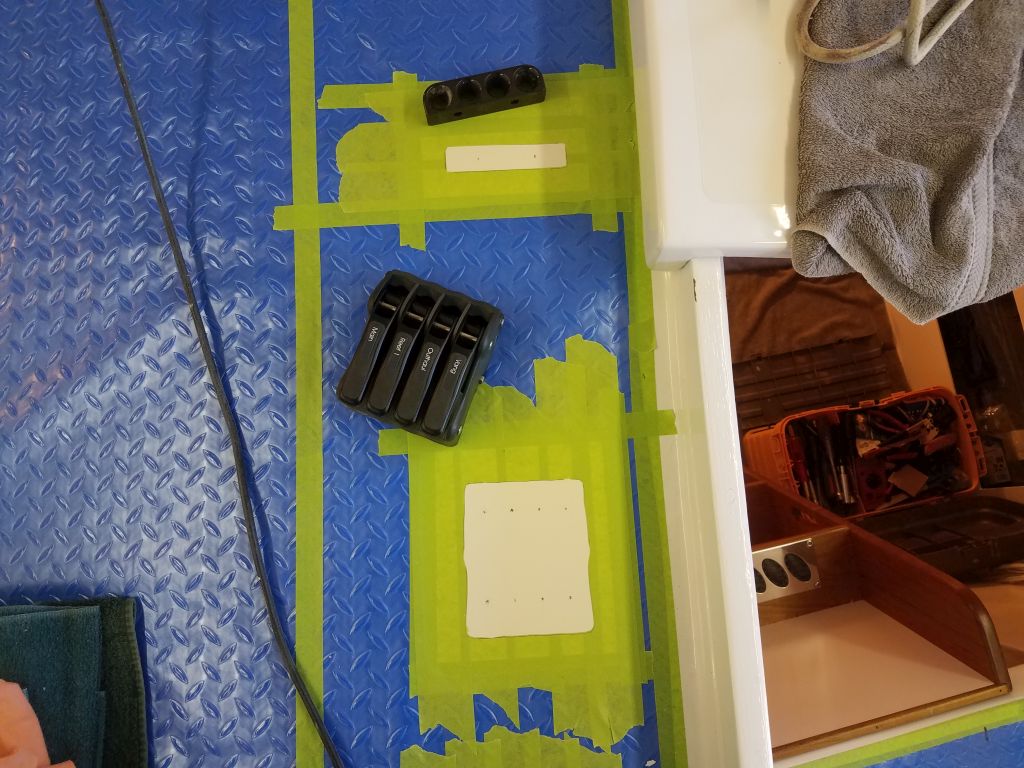
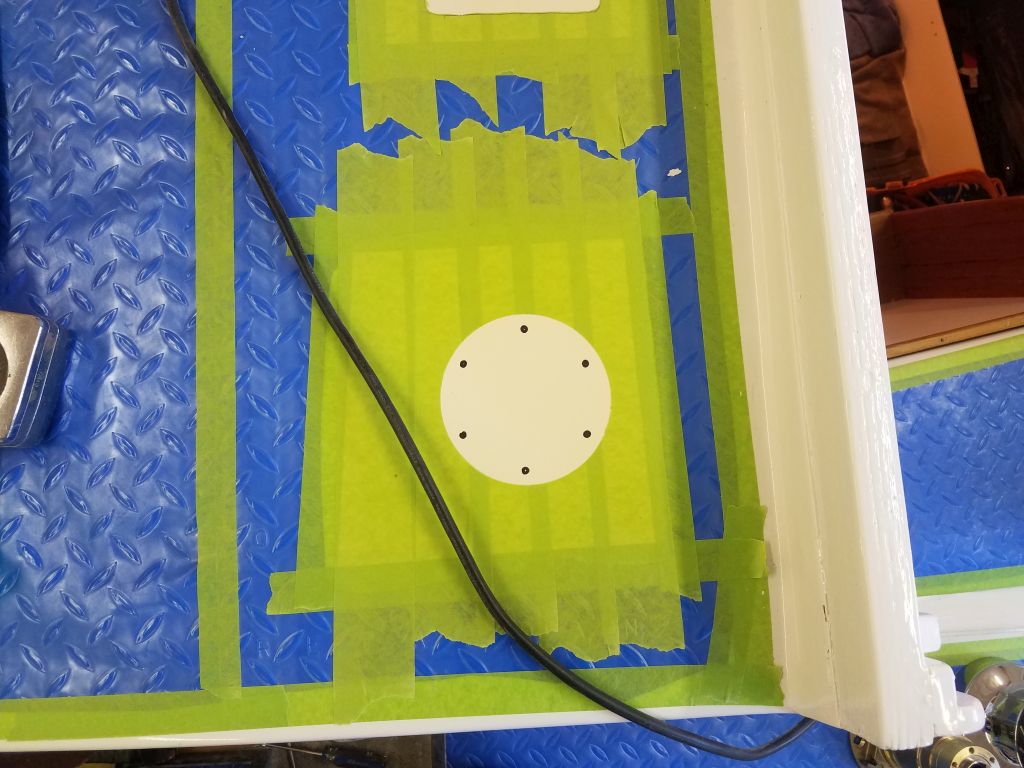
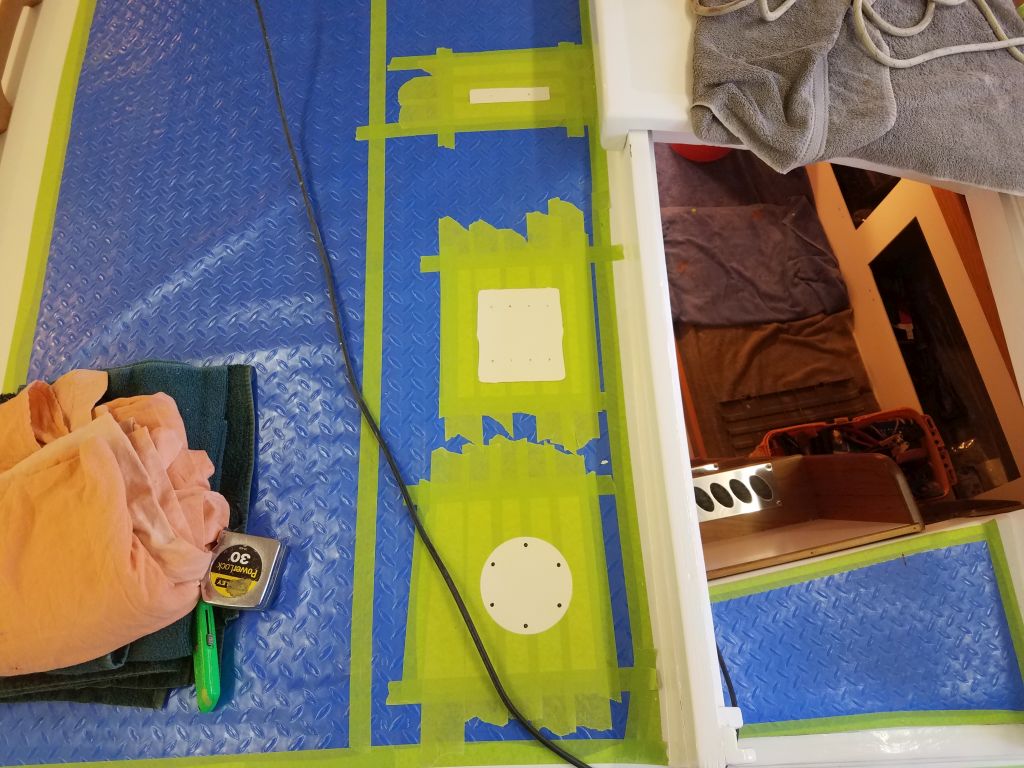
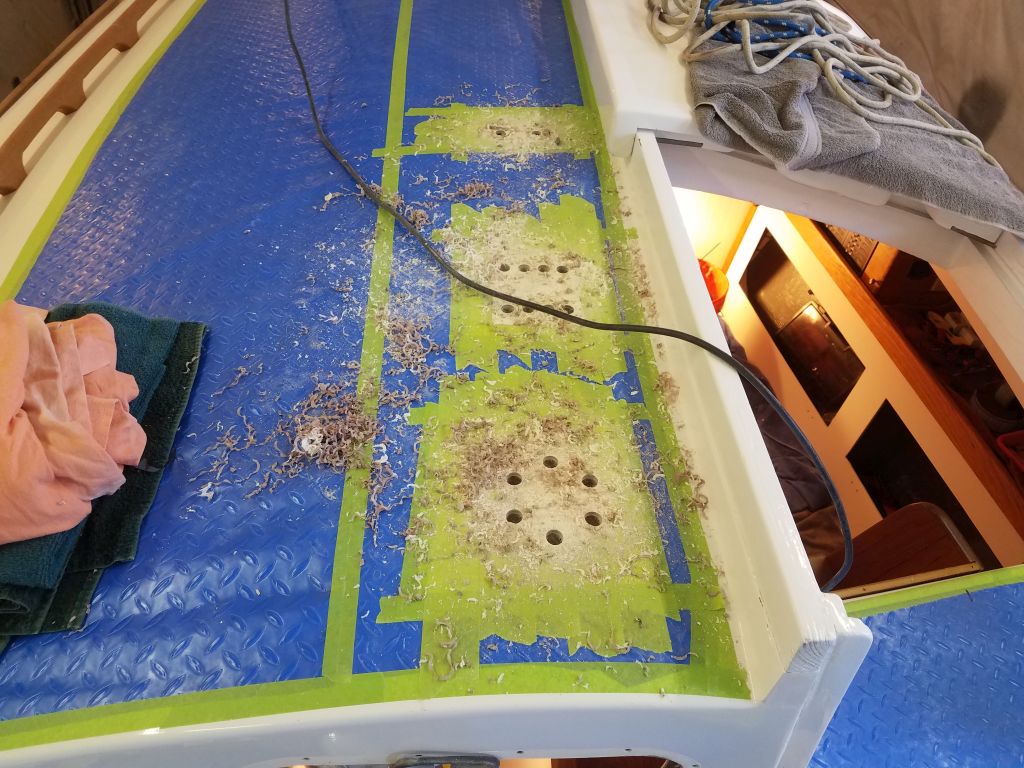
With that little bit of wiring complete (it had to be before I could move on with the final installation of the vent), and the first set of epoxy-filled holes on deck cured, I marked and drilled them for fasteners, and then temporarily installed the first portion of the vent.  Note that in the first series of photos, the little vent closure (the flat white disc in the center) is upside down, as this is how the assembly came out of the box, but later I realized this and inserted the closure the correct way, which might be seen in later photos.

I fitted over the large base for the vent housing, which was a tight fit around the smaller internal housing, then marked for its own screw holes and cut away the masking tape around its perimeter before overboring the holes and filling the resulting core voids with more epoxy.  It’s a lot of holes, but that’s how it is.  For illustrative purposes here, I have shown photos of the various components of this vent system in order, which includes a series of little balls (Schweddy balls?) that are designed to float up if water enters the vent, thus sealing off the air holes.  This is the kitsch of this particular vent, which the owner ordered (I was unfamiliar with it till now) and which arrived to me direct from Ukraine (Giuliani was not involved in this negotiation to the best of my knowledge).

With that bit of prepwork complete, I’d be able to do the final installation of this vent next time.

In the forward cabin, I took a few minutes to cut to length and install some painted wooden trim pieces over the exposed lighting and fan wiring on the bulkhead.  These were version 2.0 of the trims, as the first ones I’d made a while back were a bit too delicate to install, and I remade the trim in some spare moments over the past weeks.

I recently received back from the riggers the spreaders, one of which had been damaged somewhere in the boat’s checkered past and required repair to the butt end.  The new repair looked great, but the spreaders, still in their old paint coating, looked simply awful, and it seemed a good time to get going on the paint stripping so I could refinish these to match the mast.  So as with the spars, I used coarse sandpaper to remove all the old paint from the spreaders, and afterwards I filled with epoxy a couple old fastener holes and some previous scratches and dents that had become evident after stripping.  I’d finish up the sanding and primer prep later when I was ready to apply the primer.

Finally, I sanded the new mainsheet riser block, and applied a coat of fairing compound over the edges to bring them hopefully to their final contours before shaping and priming.

Total time billed on this job today:  7.5 hours

0600 Weather Observation:  5°, clear.  Forecast for the day:  Sunny, 15°

Scupper 221

Thursday

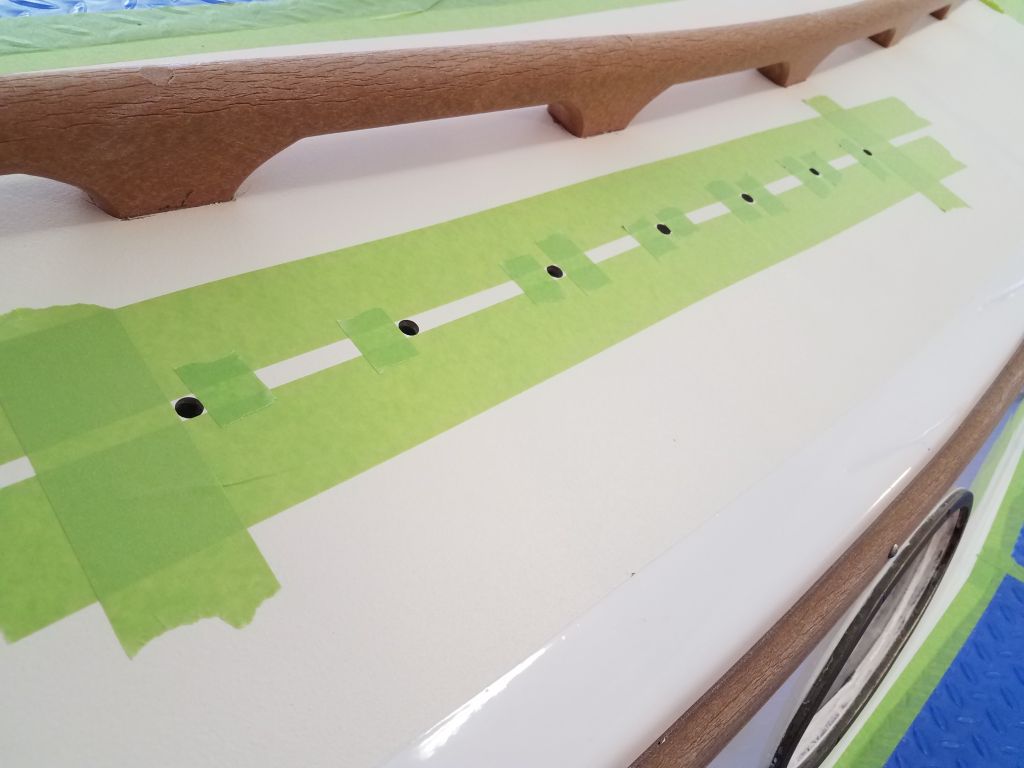
The new bow platform/bowsprit was complete and awaiting installation, and now was the time to begin.  Before getting into the physical aspects of the install, I did some prepwork down on the bench, where I transferred the locations of the headstay/bobstay chainplate assembly and the inner forestay chainplate.  I thought I might want some way to tie a line to the end of the bowsprit to help hold it during installation (I didn’t yet know how I was going to support it during installation), and it was more straightforward to do now anyway, so I went ahead with the installation of the headstay and bobstay fittings, securing them through the platform with new bronze bolts.  The inner forestay hardware would come later.

After double-checking for accuracy and orientation my plywood template I’d made of the area of the platform that fit over the hull, I used the template on deck to mark the ends of the toerails where I needed to cut them.  I’d left the toerails a bit long on purpose so I could trim them to fit closely against the bow platform.  I cut the rails with a handsaw, then tested the fit of the template once more, aligning it with the marker line I’d drawn on the deck covering during my earlier layout.

Now I could set the new platform in place on deck.  Easing the platform further out through the opening in the bow, till it became unstable, I determined that I needed to build a basic support beneath, as there was no clear means of hanging it with a line, so after some measurements down to the staging–the nearest and most convenient starting point for a support structure–I cut some wood to the proper dimensions and built a simple support at the right height to hold the bowsprit in place while I worked on the deck connection.  I’d intentionally kept the height of my new support a bit low, and once I slid the bowsprit out over it, I added a shim beneath to support the platform in its natural position as determined by the shape and angle of the foredeck.

The original bowsprit had been secured by a number of bolts, the after two of which passed through a heavy wooden beam bolted to the forward side of the chainlocker bulkhead.  I’d kept this beam in place, and now wanted to re-use the bolt holes to secure the new platform.  I’d filled all the holes on deck during that part of the project, but the old holes were still visible from beneath, and after checking to be sure the platform was in the right and final position, I drilled a temporary hole through the platform beneath the spot where the inner forestay hardware would later go (which would hide the temporary hole), and inserted a bolt as a pin to keep the bowsprit from shifting, as movement on the boat and staging tended to wiggle it a bit out of position at this early stage.  Then, once I was sure the platform was where it belonged, I drilled up from below, using the existing holes in the main beam as a guide, and through the deck and just a bit into the platform to mark the holes’ locations.

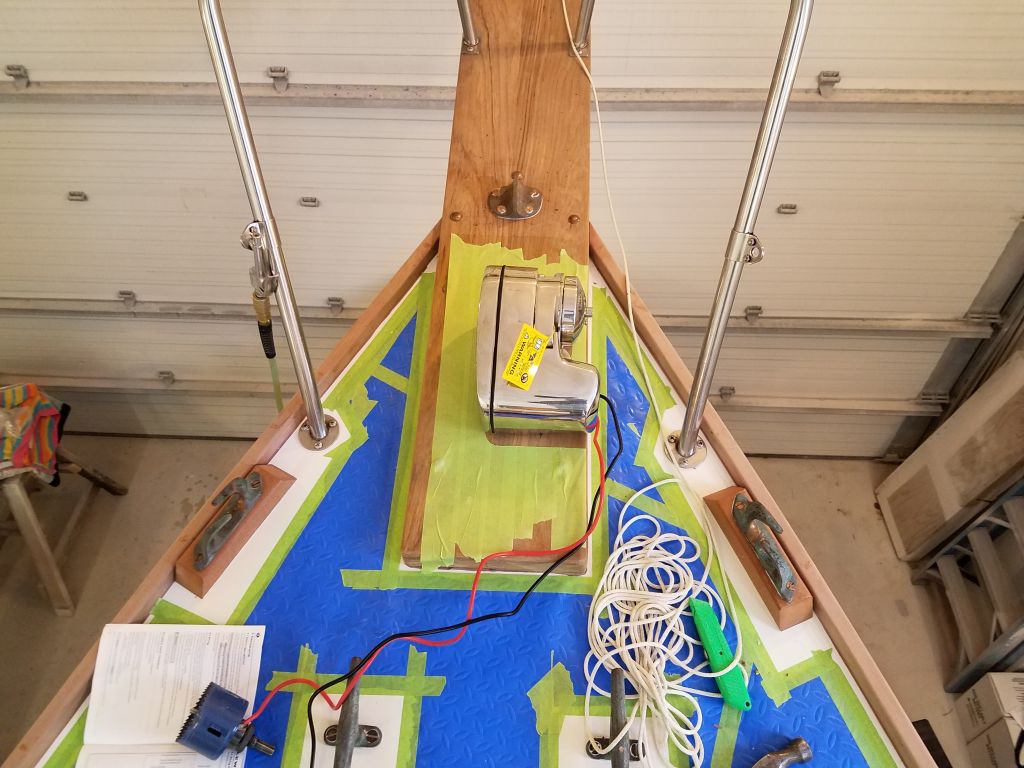
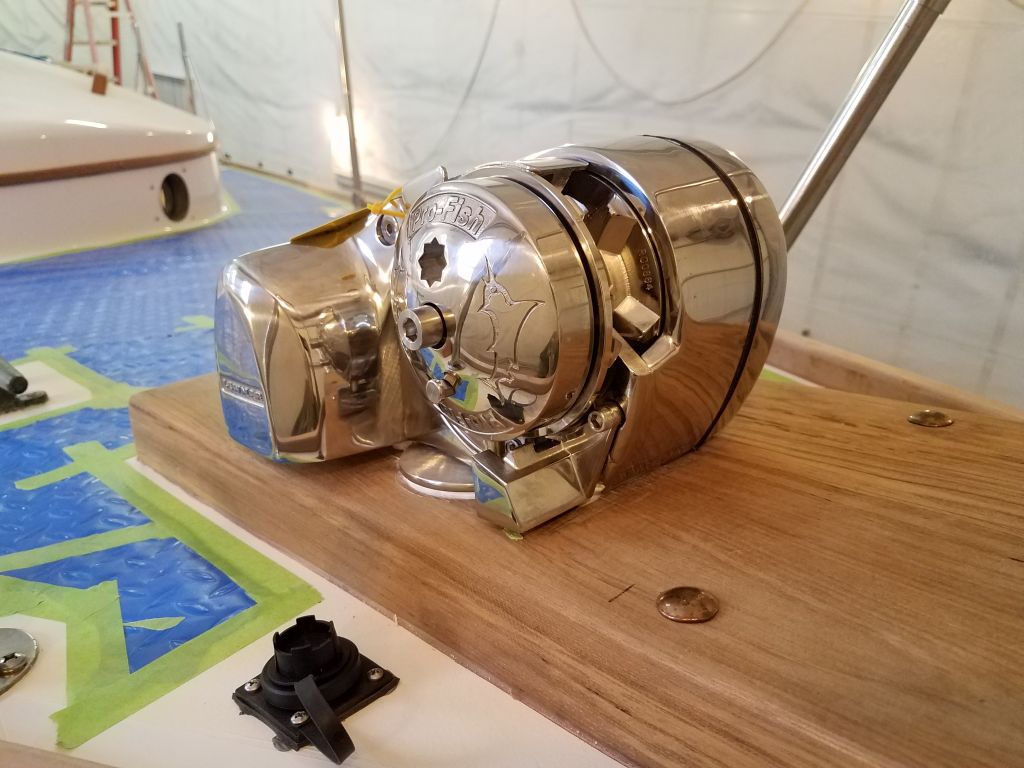
With those critical holes marked, now I could remove the platform again and, down on the bench, finish drilling the holes I’d just started, as well as lay out and drill a series of holes for additional bolts.  I used the bolt pattern on the old platform as a rough guide, but made sure to leave space for the anchor windlass, using a template supplied with the windlass that the owner had ordered, so there wouldn’t be some bolt in the way.  With the holes all drilled in the platform, and after cutting away the plastic deck covering and adding additional masking tape to the cutout so I could mark the edges of the platform during the next dry-fit, I replaced the platform and, after alignment, drilled for all the boltholes through the deck.

Only the after two bolt locations passed through any deck core; the forward five bolts passed through the solid portion of the deck and/or the original hull flange.  So after marking the deck tape where the platform landed, and also the underside of the platform where it met the hull, I again removed the platform, trimmed the tape as needed, and prepared the holes in the deck as needed.  This meant boring through the top skin and plywood core for the after two bolts, removing all the core down to the inner skin, and counterboring the remaining bolt holes in the usual way to prepare for eventual sealant.  Then, I filled the overbored aft holes with a thickened epoxy mixture, and also patched the single temporary bolt hole beneath the inner forestay.  That ended the work for now on the bowsprit.

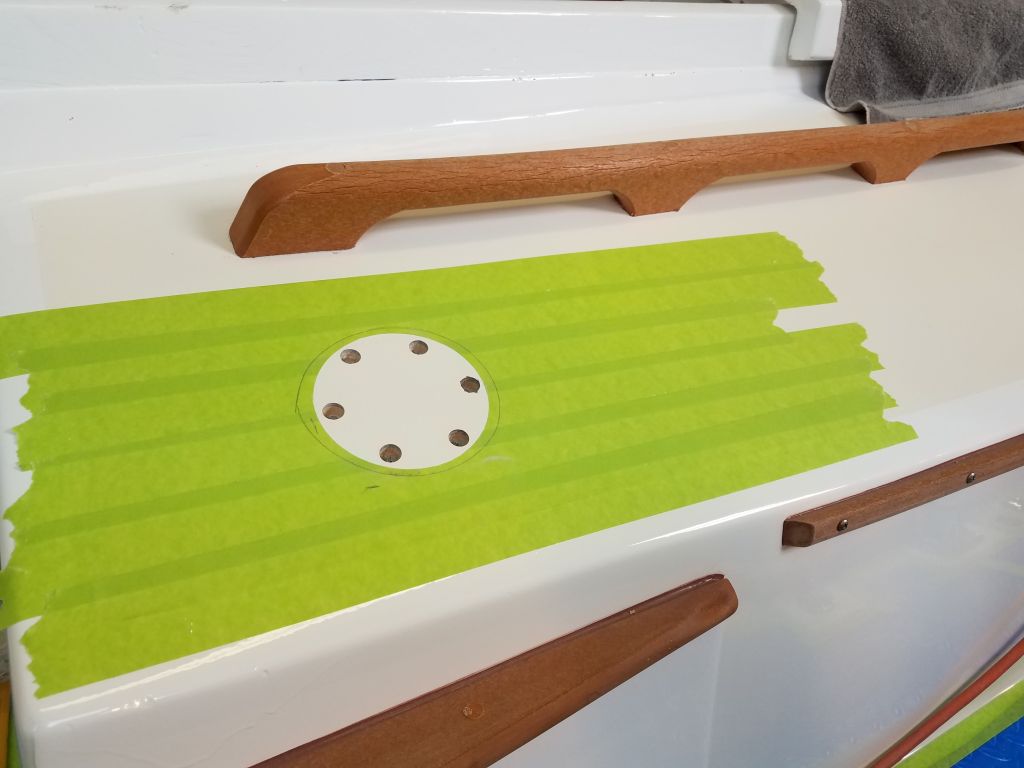
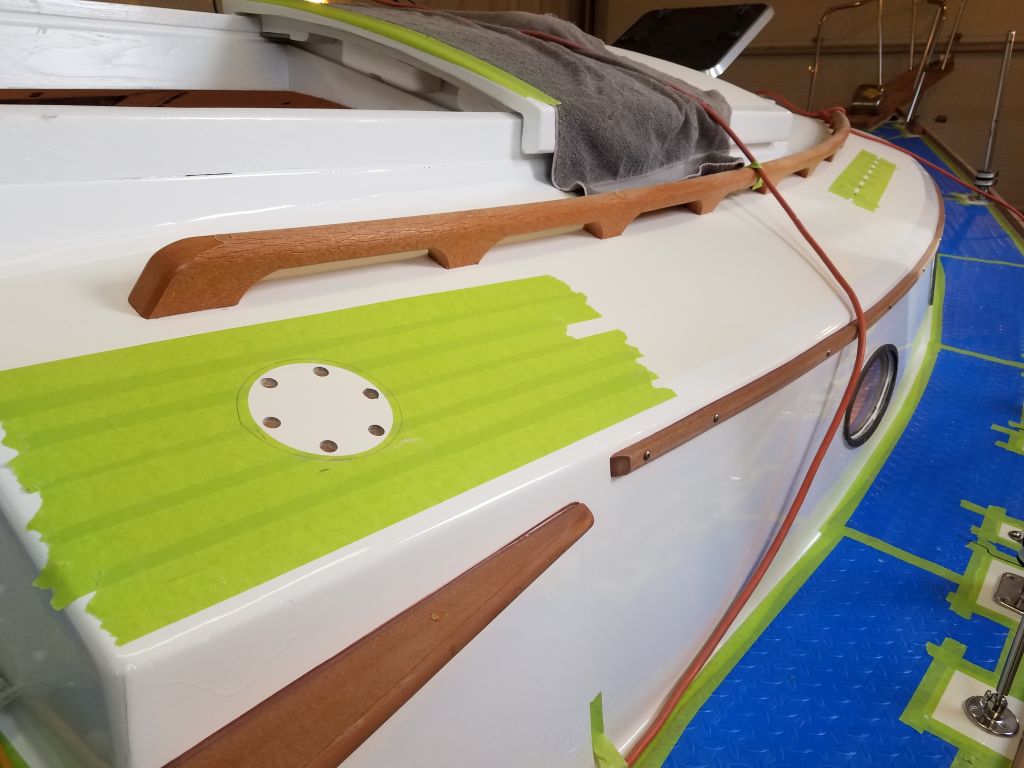
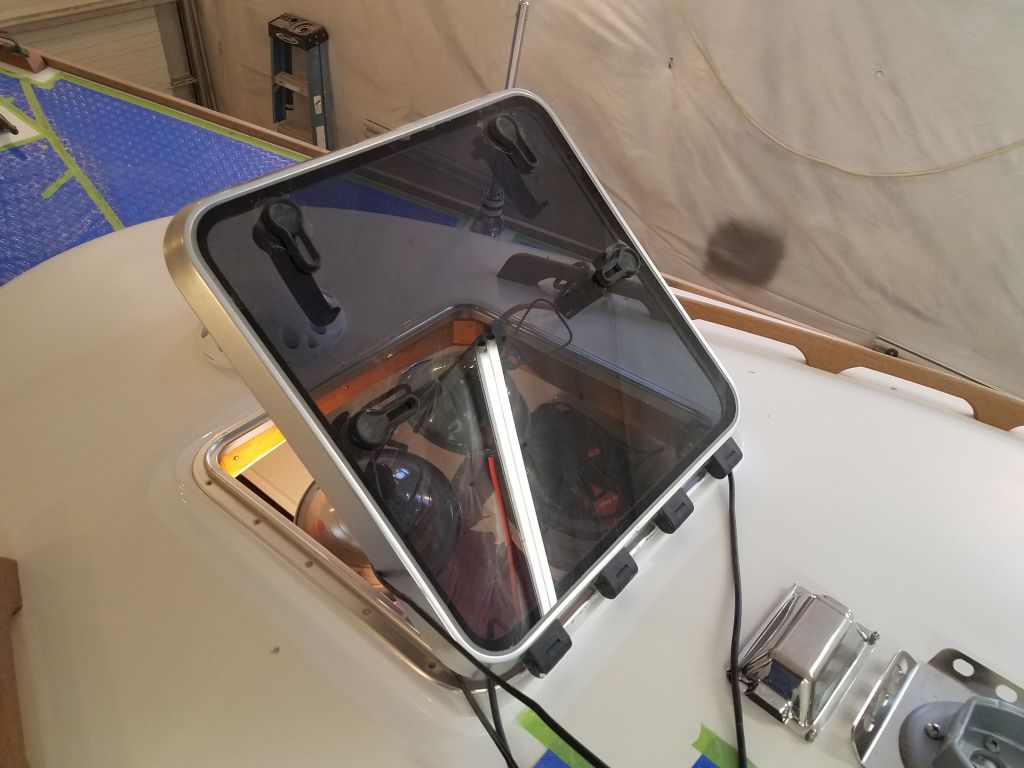
For passive ventilation inside the boat, in addition to the solar vent in the companionway hatch the owner also selected a purportedly waterproof mushroom-type vent that he asked I install in the coachroof just forward of the forward hatch.  This vent featured a unique design to prevent or limit the ingress of water, the details of which I haven’t covered here during these early installation steps, but bear with me over the coming days and the various pieces and parts and interesting design features will be revealed.

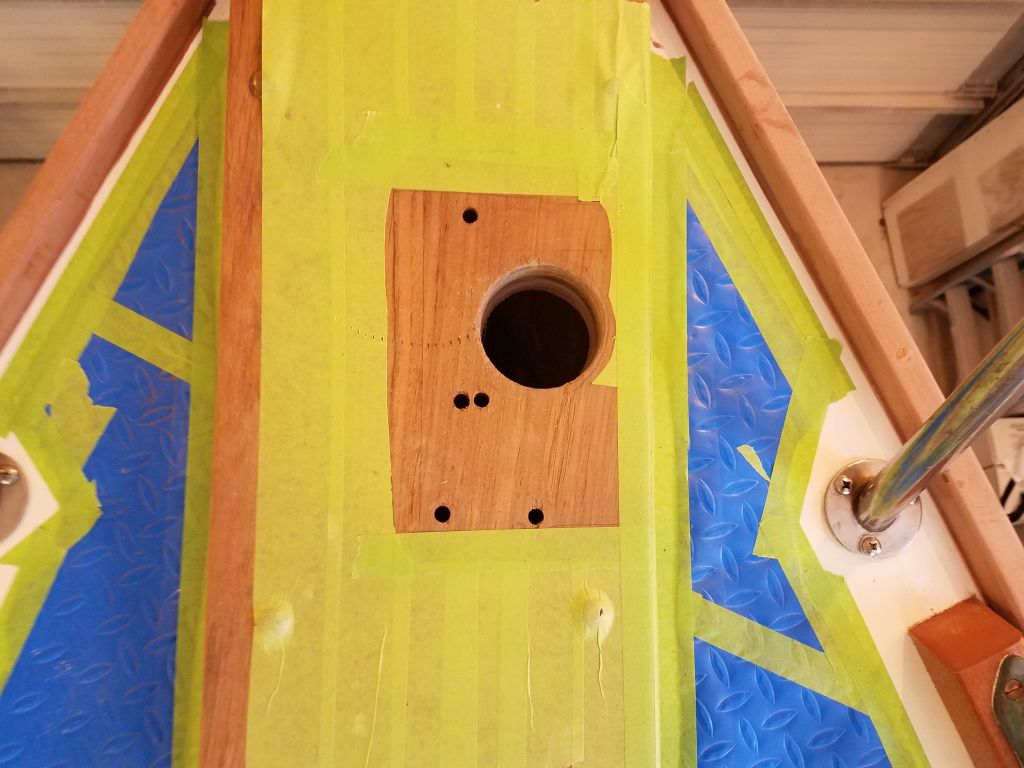
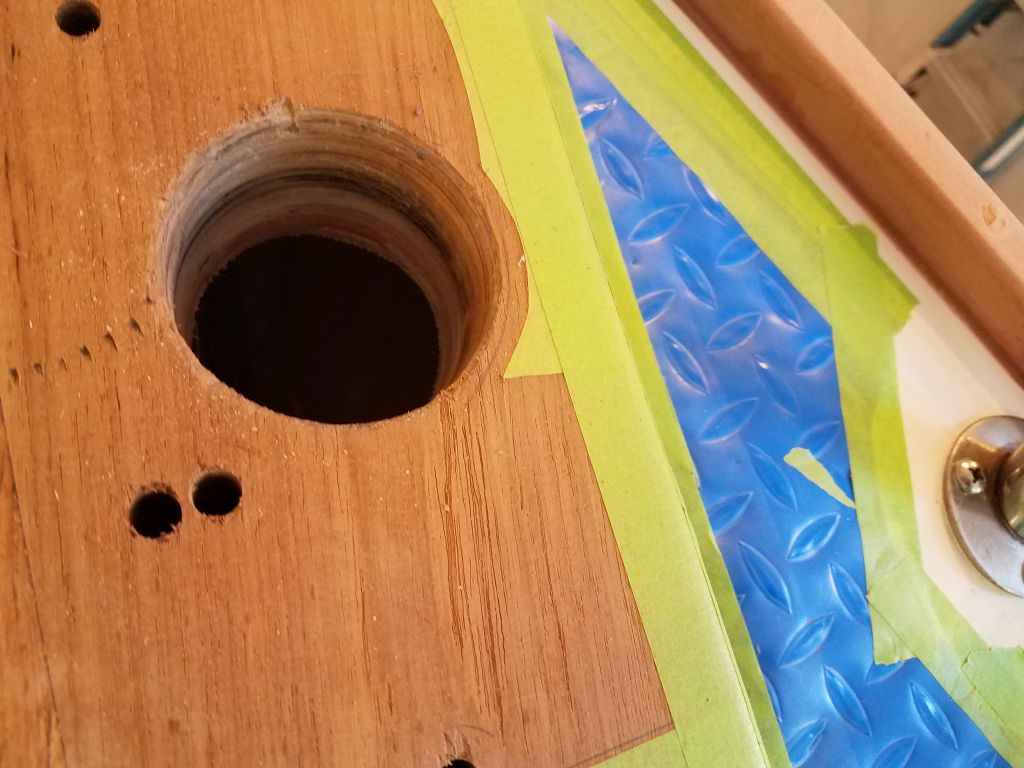
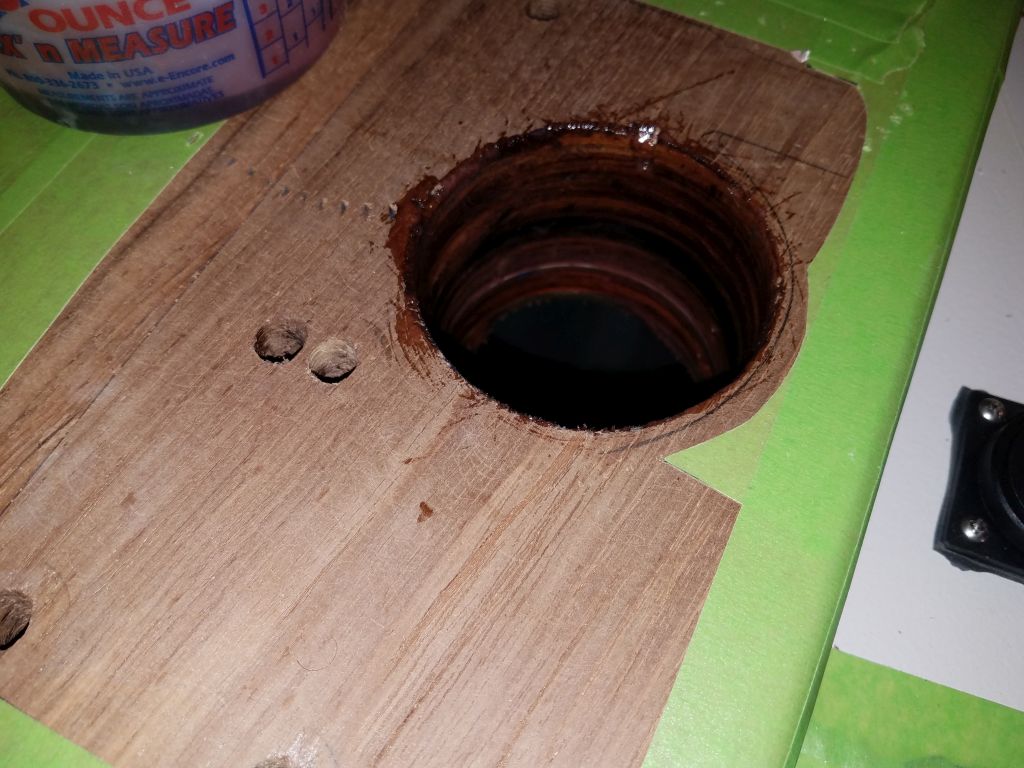
In any event, it was time to drill the large hole required for the vent, and after some layout using the large vent base (one part of about seven that fit together to complete the vent), I marked and drilled a 3-3/4″ hole through the deck, and, after starting the hole from above, through the cabin liner working from inside.  The core in the cutout was in good condition, and once the hole was finished I reamed out some of the core within the opening so I could fill it with epoxy a little later.

The first piece of the vent was a trim ring/sleeve that fit from beneath, and I had to dry-install this and cut it to length so it was flush with, or even a tiny bit below, the level of the deck.  I temporarily installed the trim ring from below with screws, as I needed it in place to align and mark the next part of the vent on deck.  I don’t have any pictures of this next piece for now, as I forgot, but I used it to mark the deck for its numerous fasteners, which holes I then opened up with a 3/8″ bit to remove the core from each fastener location.

In order to properly proceed with the vent installation, I’d need the first deck piece secured in place so I could align and then mark the deck for additional holes for the next piece of the vent assembly, so I went ahead and filled the initial bolt holes with epoxy, along with the reamed out area inside the vent hole, and could proceed with the next steps once the epoxy cured overnight.

With a little time left in the day, I turned to a couple small jobs, starting with a new fiberglass base to support the bracket for the anemometer masthead unit.  Using the plastic bracket as a guide, I cut a piece of prefab 1/4″ fiberglass to size.  I’d return to this soon to finish it up.

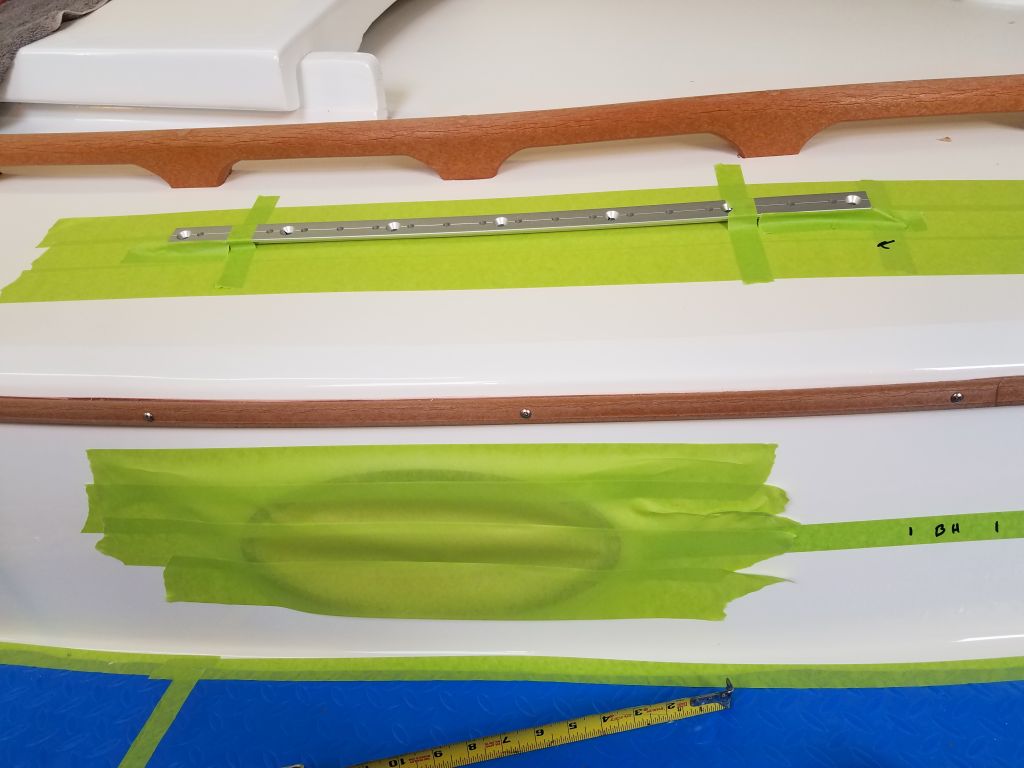
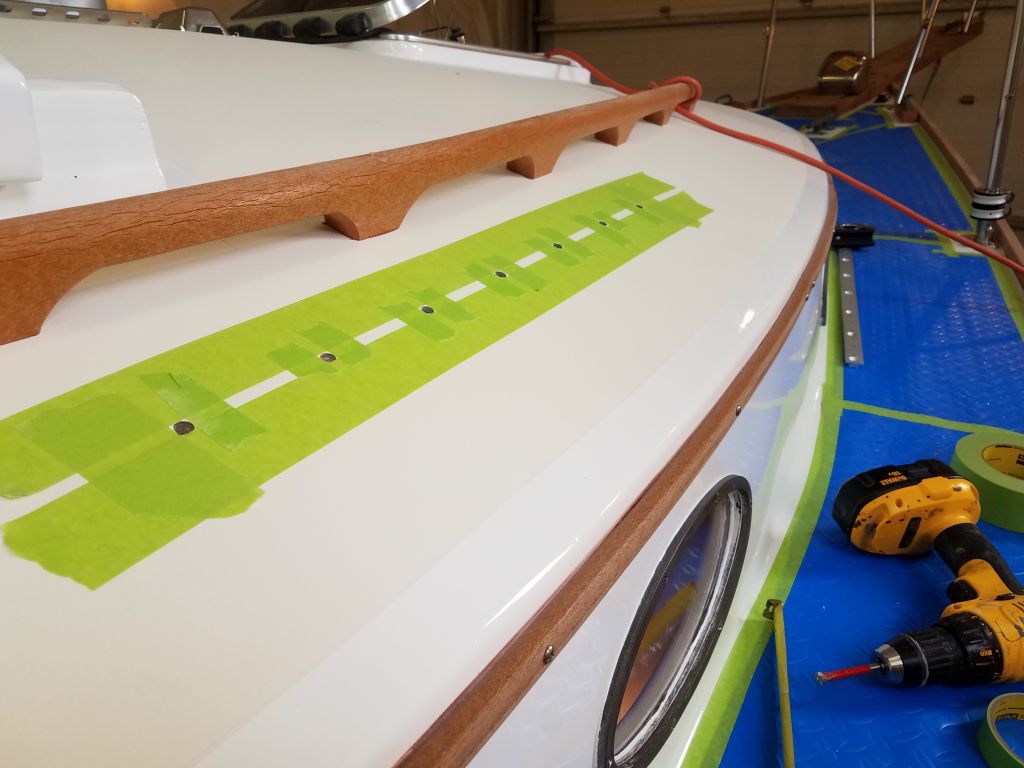
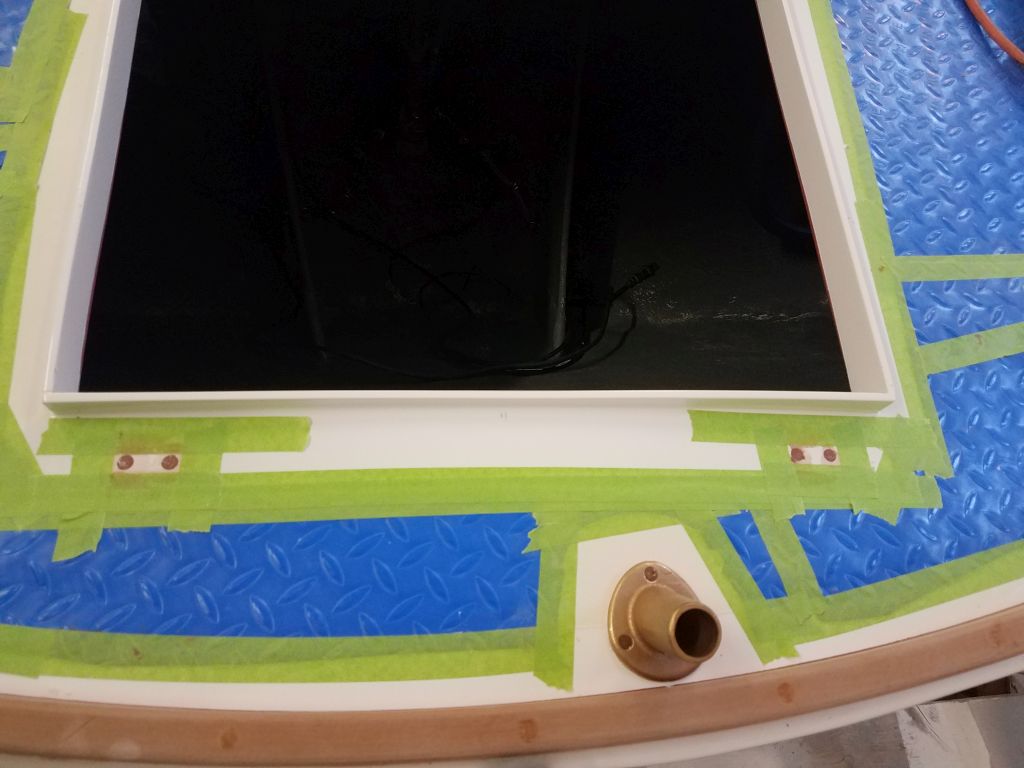
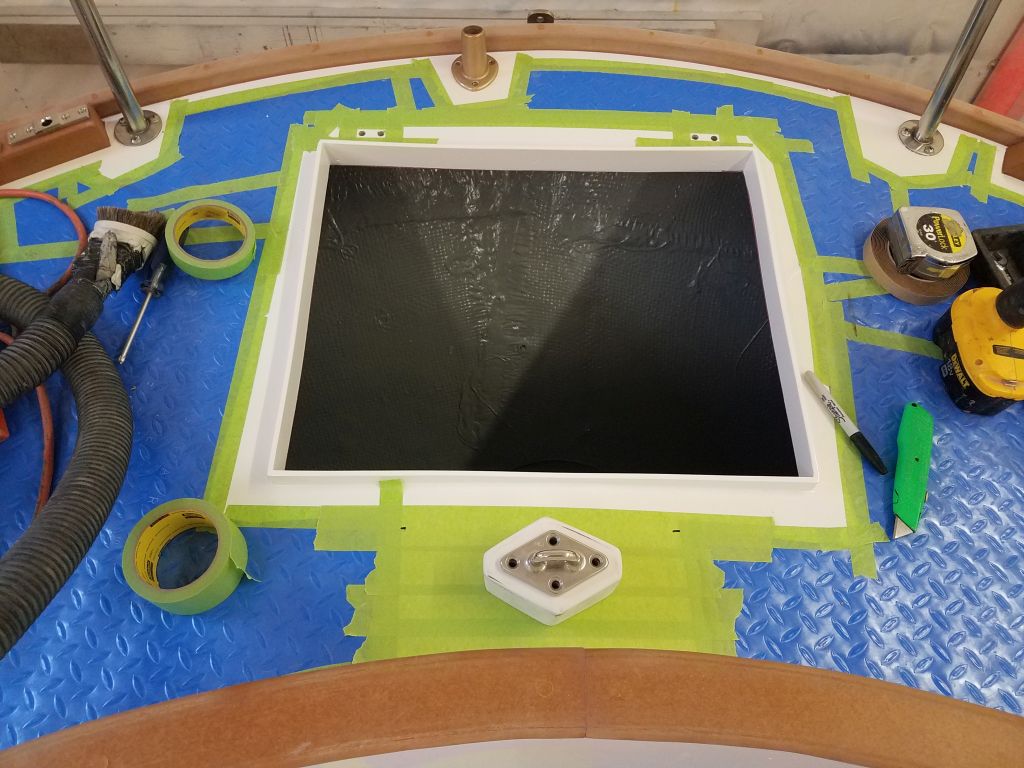
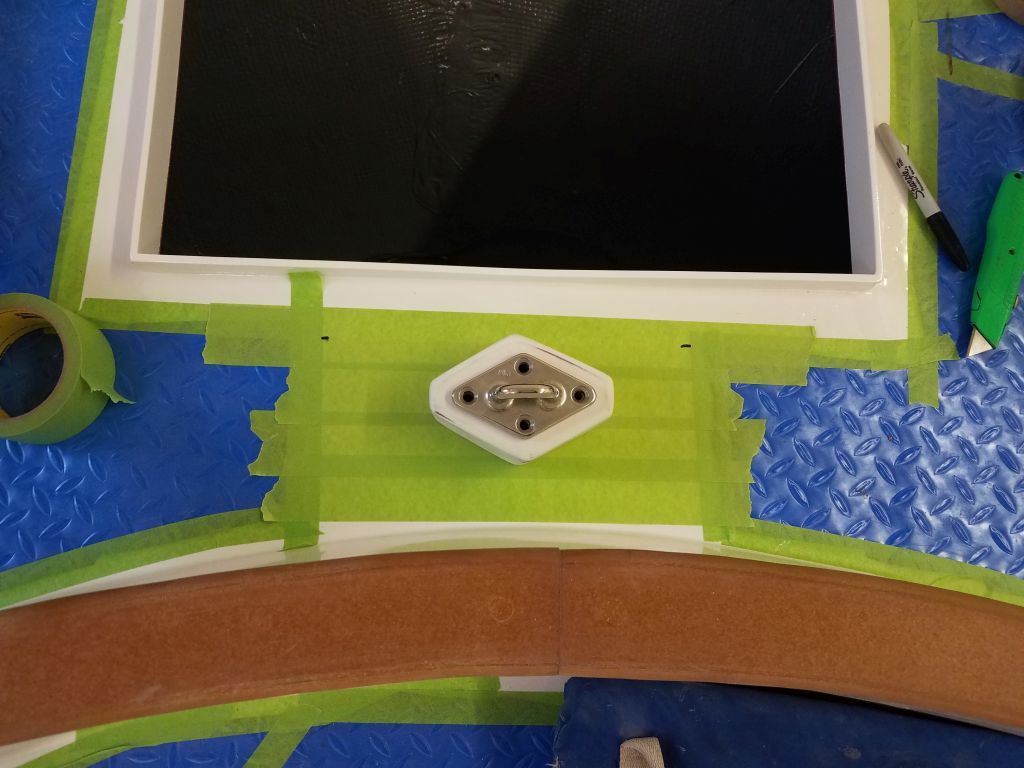
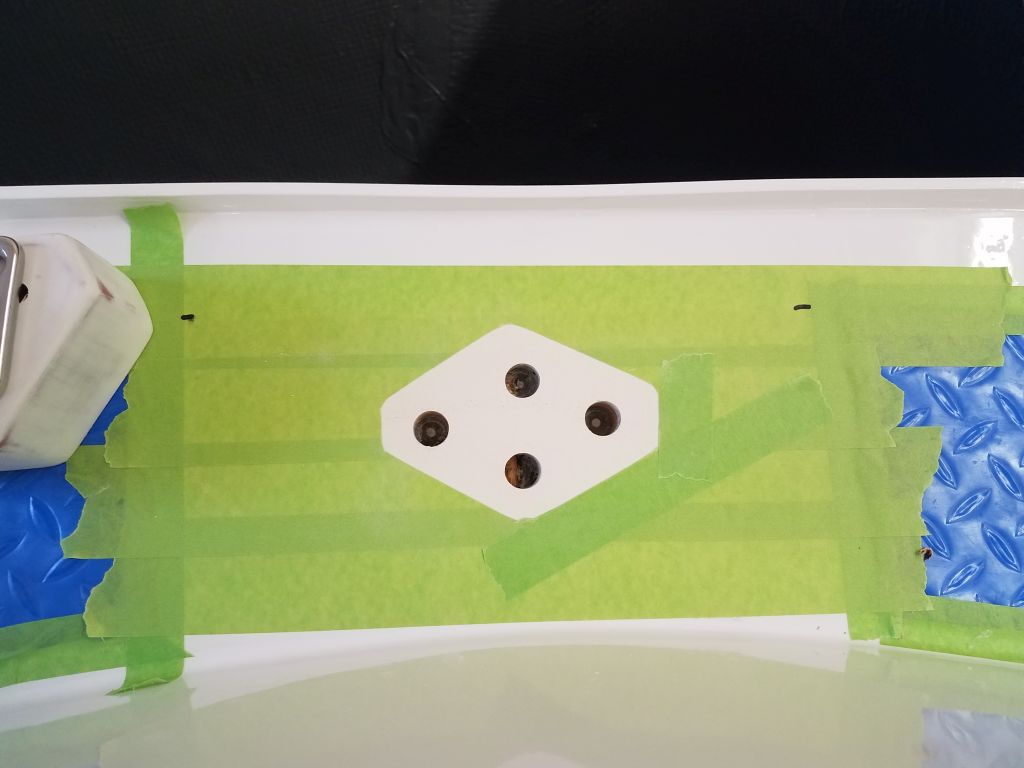
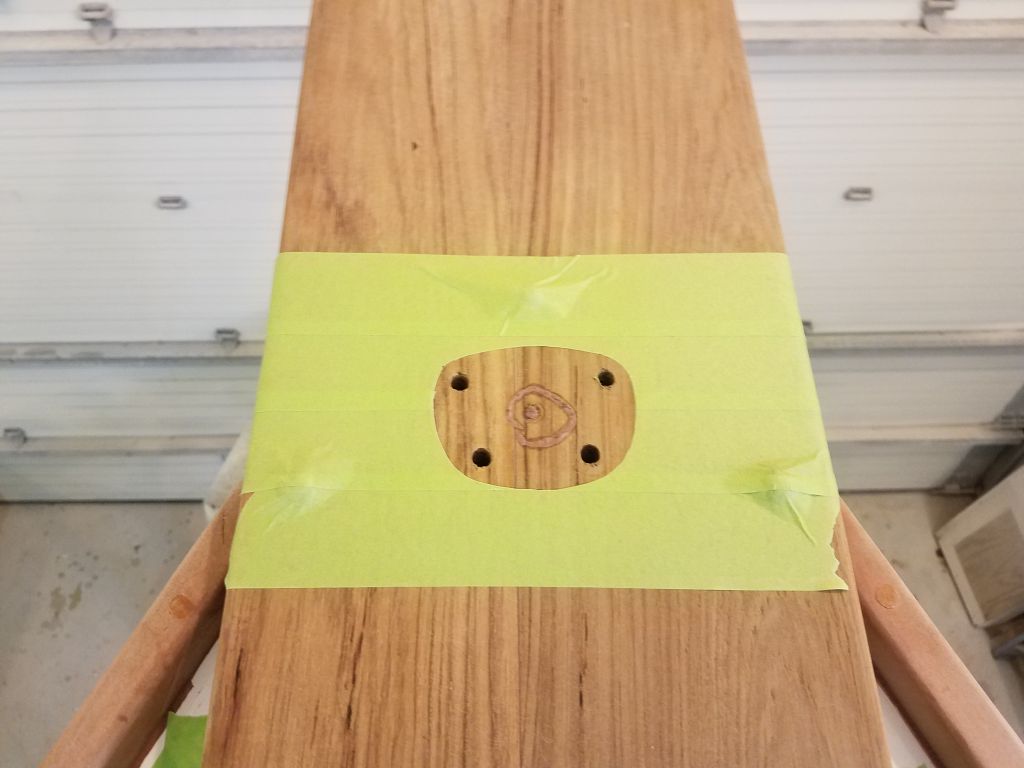
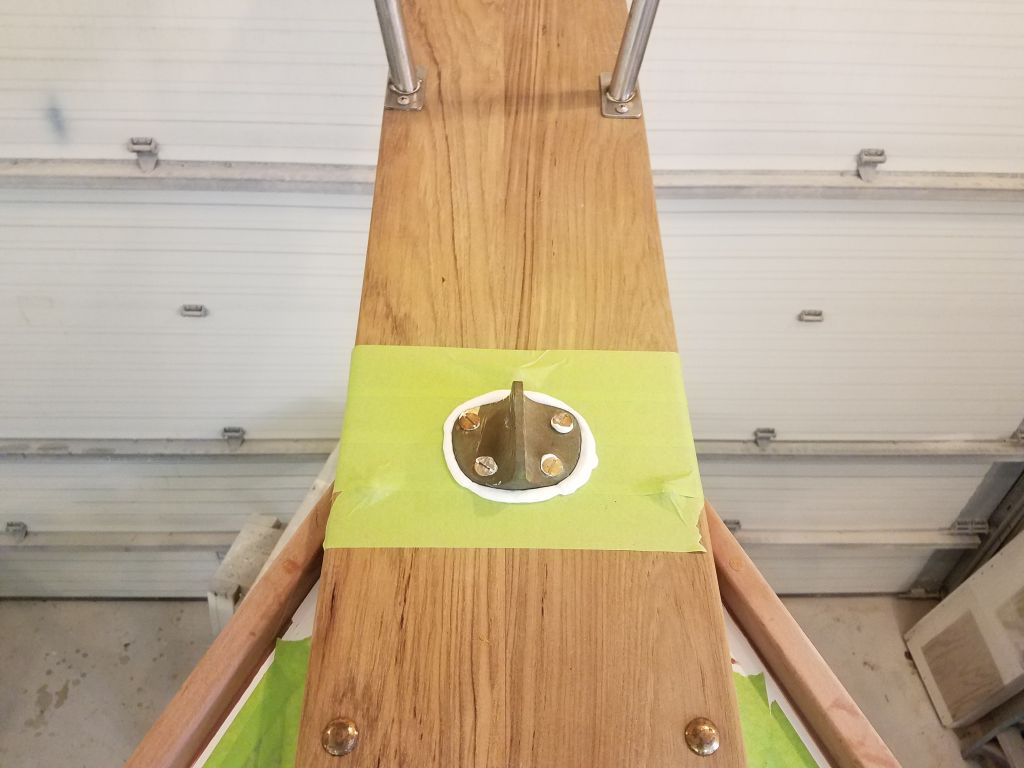
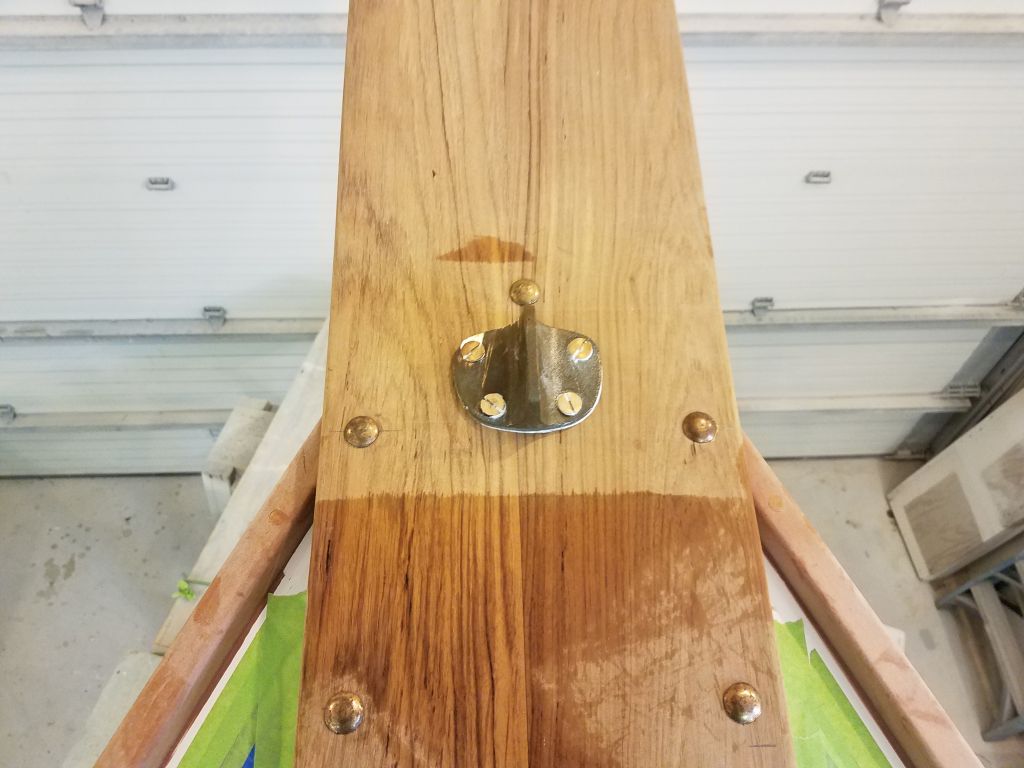
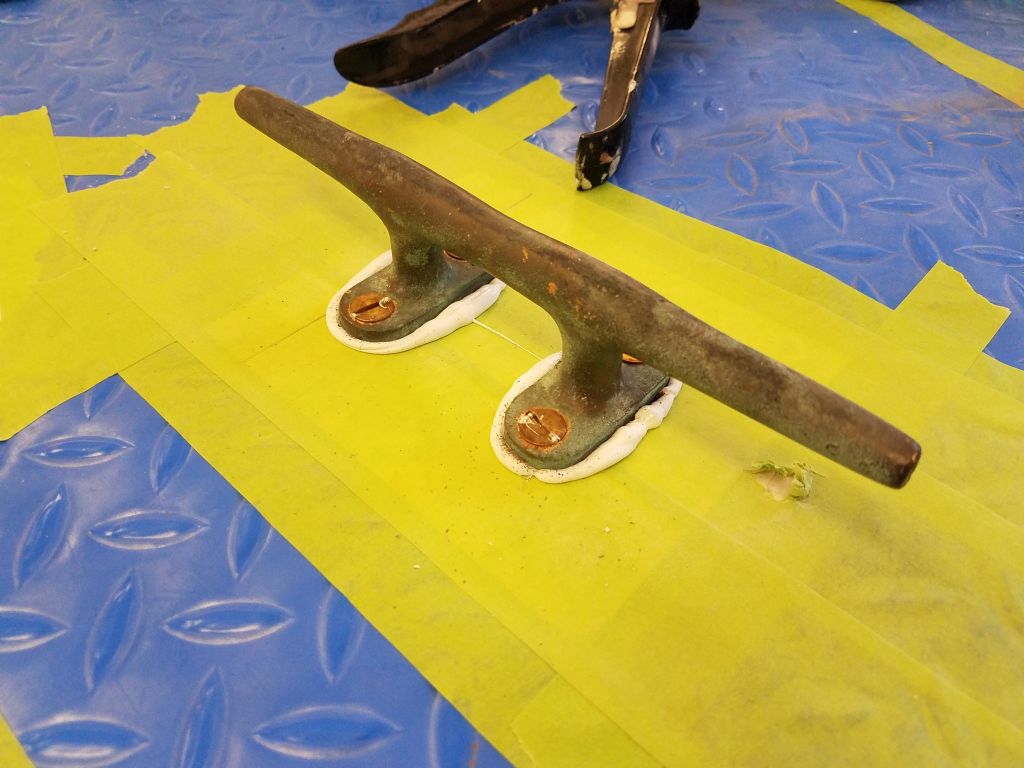
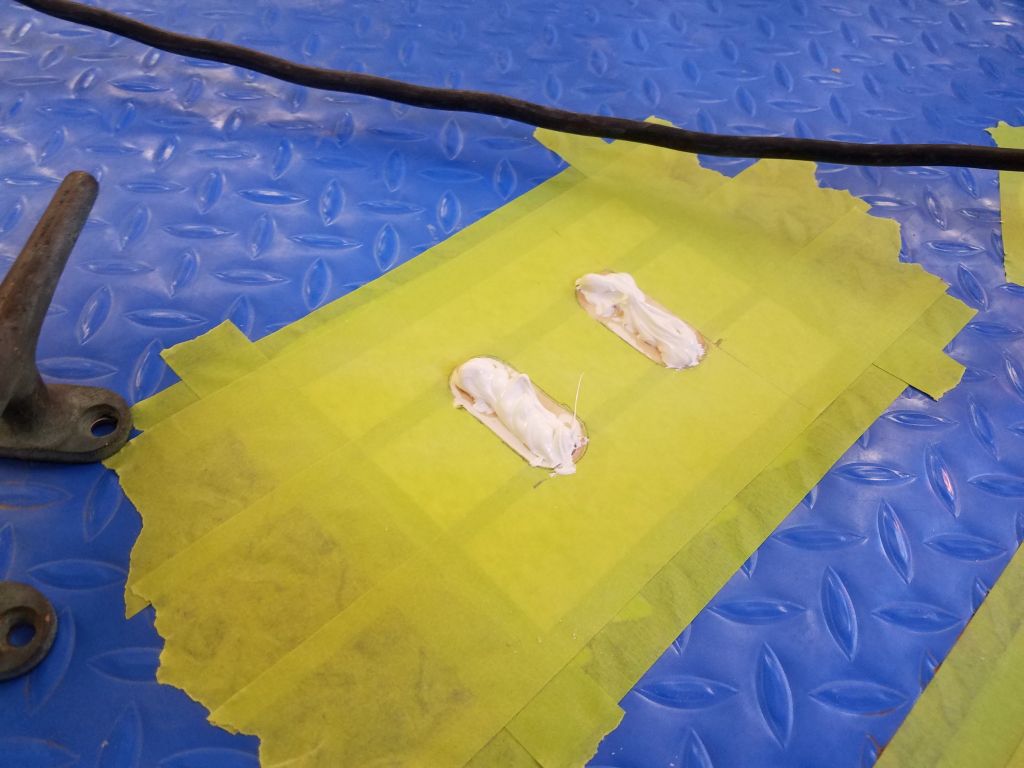
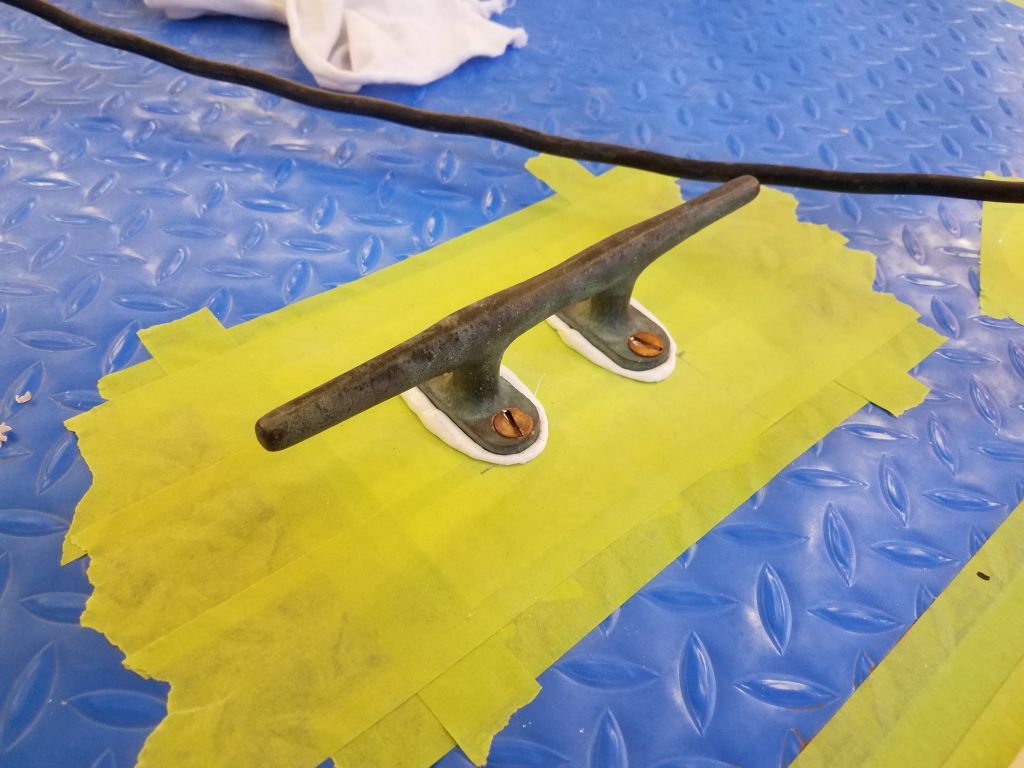
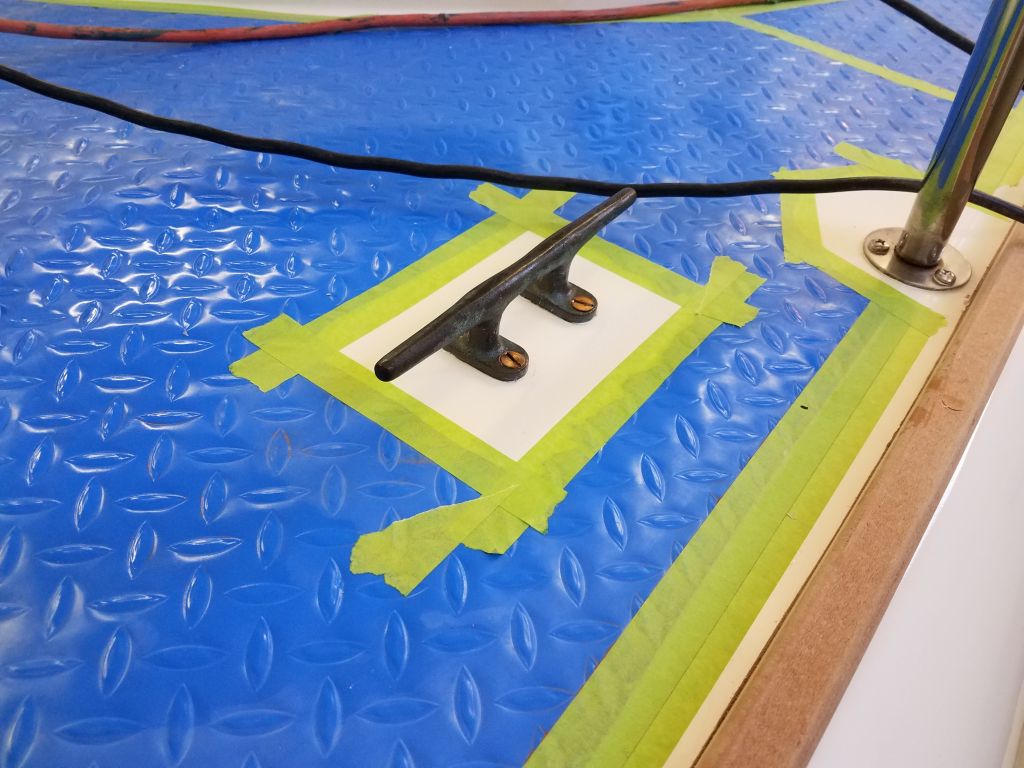
With a rigid boom vang on the way for superior sail twist control, and after various discussions on this subject, the owner elected, with my support, to forgo a traveler for the mainsheet, opting instead for a simple padeye to support the new and excellent tackle, which would mount to the deck aft of the cockpit coaming.  Because of the height of the coaming, it seemed important to raise the attachment point a bit to make reaching the mainsheet’s cam cleat easier.  For a while leading up to this, I considered installing the padeye to the top of the coaming, but access within was tight, and I wasn’t convinced that the coaming was up to the task without reinforcement; I also was unsure how the plastic wood trim would react to having the padeye mounted atop.  So after rejecting this thought some time ago, it meant that the padeye was once again relegated to the poop deck where it belonged.  To this end, I cut out three pieces of 3/4″ prefab fiberglass, each slightly larger than the padeye itself, and then glued them together with epoxy, using excess to start smoothing out the edges of the lamination.  I left this to cure overnight.

Total time billed on this job today:  7.5 hours

0600 Weather Observation:  31°, light snow. Forecast for the day:  Snow, 3-7″ predicted, 32°

Scupper 220

Wednesday

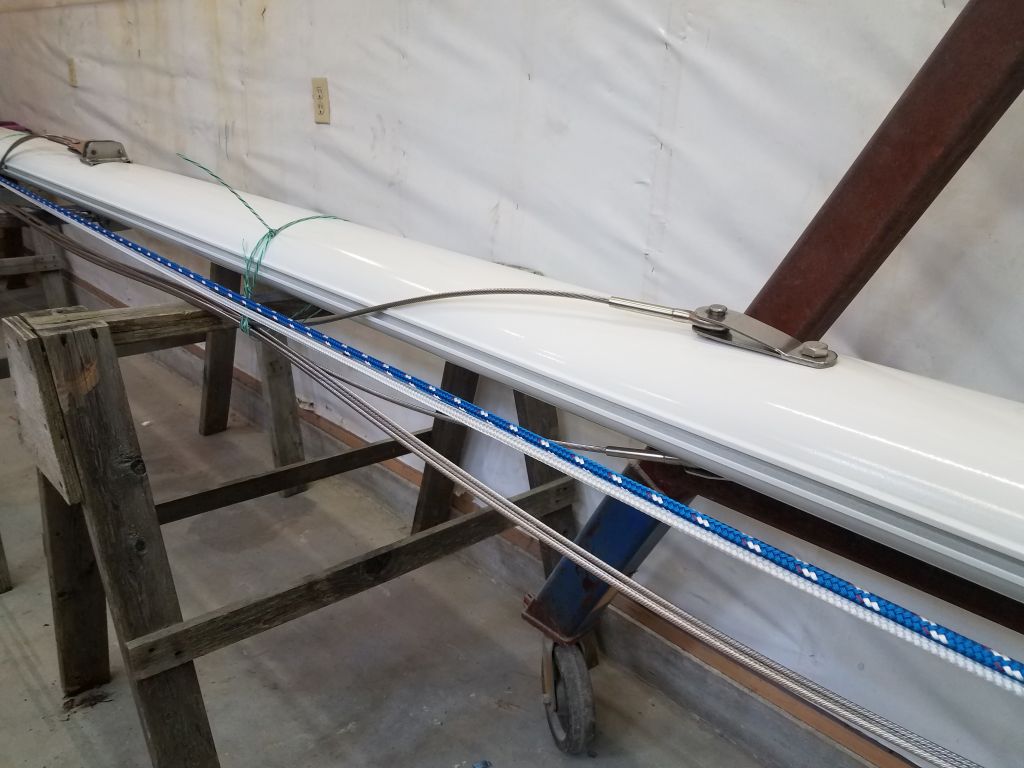
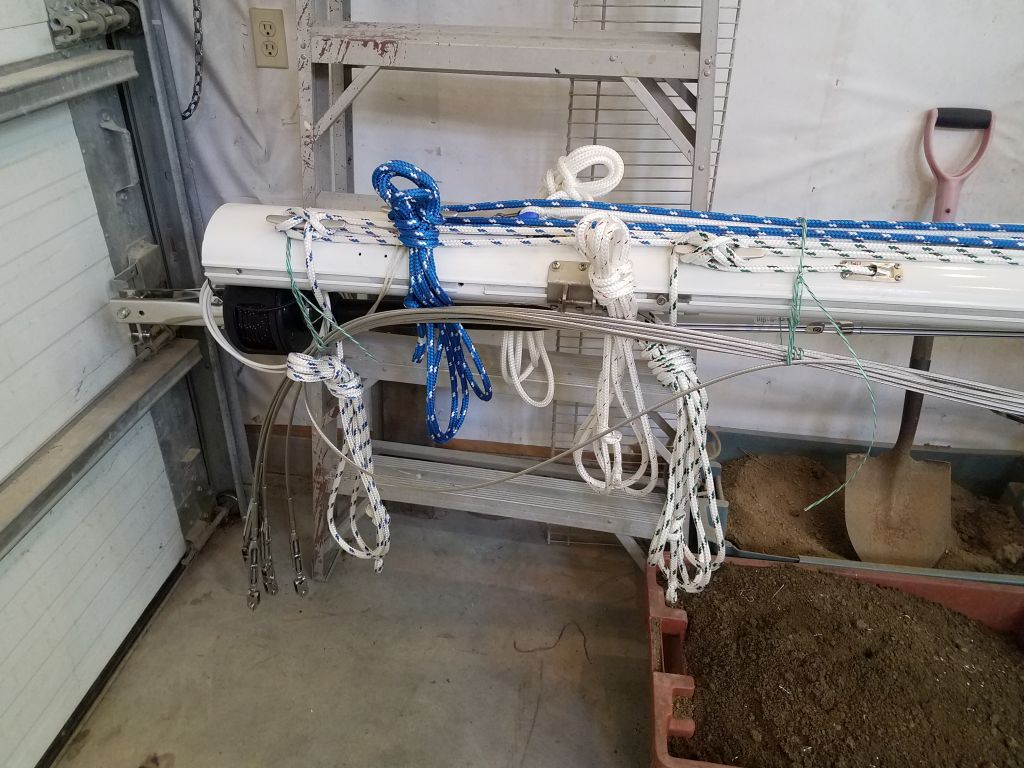
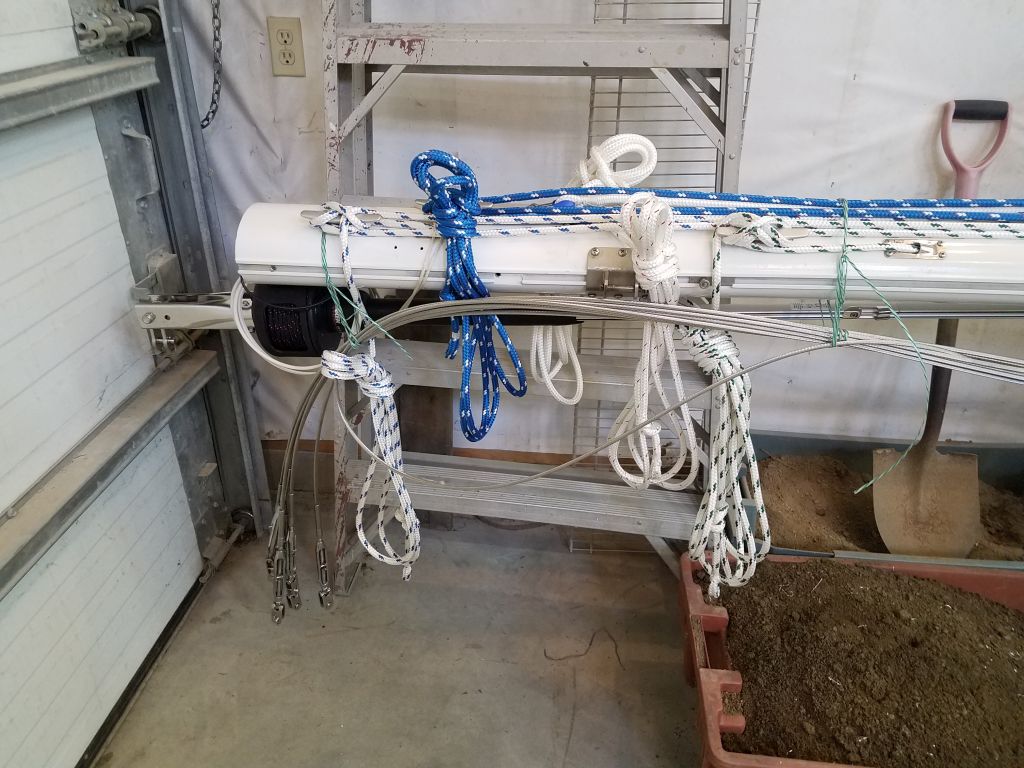
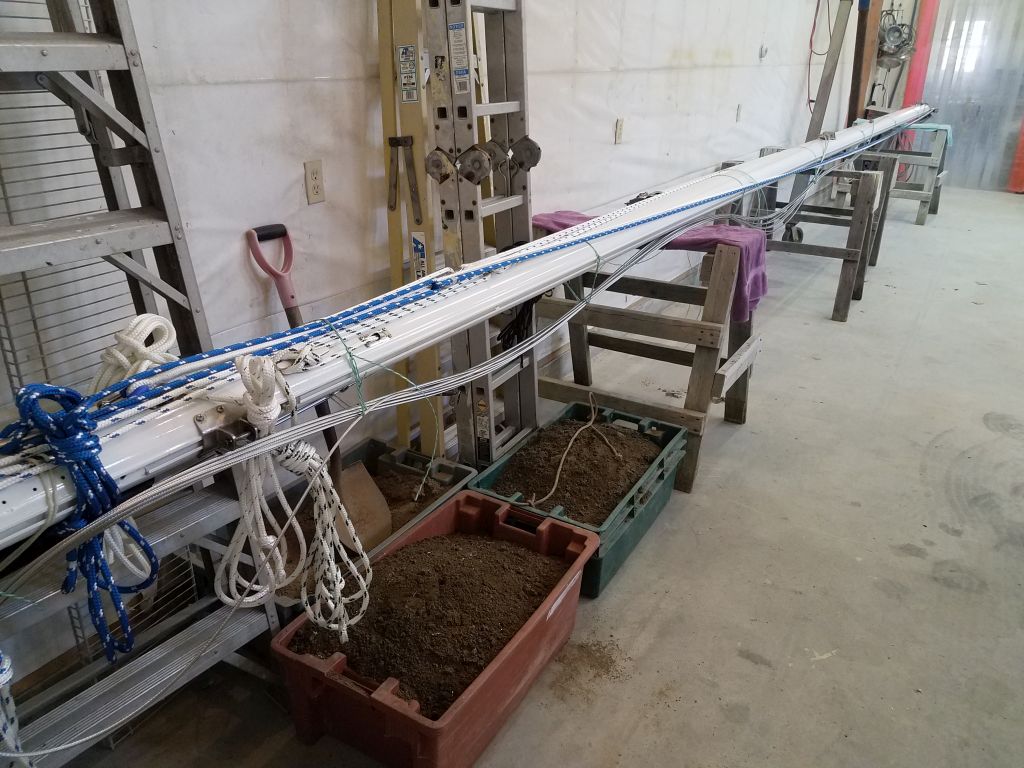
I got started by straightening out the mast wiring problem that had cropped up earlier, and at the top and bottom of the spar I secured the wire bundles with cushioned clamps flush-bolted through the aft side of the mast, inside the internal extruded track.

Next, I snaked through another wire  the relatively short distance from the base of the mast to the old wiring hole from the original steaming light.  From there, I could go ahead and install the new LED light fixture.

When I snaked through the wires earlier, I’d realized that the halyard messenger lines posed a problem, at least for getting my recalcitrant wire snake through the spar, and to make life easier on me, as well as prevent halyard twists and snags later, I’d removed the messenger lines at that time.  Now, I ran them back through for good.  One thing led to another, and with the messengers through I decided to install new cleats at the base of the mast for several of the lines.  The main halyard and various control lines were to lead aft to the cockpit, but the jib, staysail, and spinnaker halyards were to stay on the mast, and thus needed the cleats.  At the same time, I added a pair of small padeyes that the owner requested so he could connect wire leads over the side in a lightning storm.

At the masthead, I installed the bracket for a new VHF antenna, and made up the connector for the cable.  Meanwhile, at the mast base I cut to generous length the mast wires and VHF cable and made up the ends that would later pass through the deck for connection within the boat.  For now I left the wind transducer cable at full-length, though later I could install the supplied field connector after cutting the cable to a length suitable for connection to the included network box that I planned to install in the boat later in the day.

Continuing with the lighting and wiring, I installed a new anchor light at the masthead, using as a mount the long tube leftover from one of the old lights.  Then I could reinstall the masthead cap with new screws.  The bracket for the anemometer required a little platform wide enough to support the bolt pattern, so for now I held off on installing that particular piece.

With the mast work complete for now, I got to work in the boat to install the little network box that was required for connecting the wind instrument, and running a new cable (a network backbone) from the box aft to the cockpit area, where it would later interface with the GPS display unit.  Since the transducer wire from the anemometer had to connect to the network box, I chose a location as convenient as possible for that cable, which in this case meant in the technical area beneath the V-berth.  I led the cable through all the convoluted wire passages along the starboard side, through the head, and eventually into the engine room, where I could run the cable out the access panel near the electronics area.  The cable end, with its usual bulky connector, was a tight fit through some of the existing wire chases, but fortunately with some effort I managed to run it without needing any new openings.

I planned to measure lavishly for the transducer cable length required to lead from the mast, through the deck, down the compression post, and forward to the network box, and would later make up the network field connector to finish that wire as well, which would allow me to remove the substantial excess wire.  This promised to be a fussy little connector with tiny wires, and thus best left till some fresh early morning for me to attack, but since the deck fitting I planned to use for the cable runs would accommodate the connector easily, I thought it’d be good to make this end up now rather than leave it for commissioning.  To help with the cable run later, since the bilge between the mast step and the locker space beneath the V-berth was largely inaccessible, I led a messenger line from the bilge aft of the mast step forward into the technical area (I had a similar messenger already in place on the starboard side).

Total time billed on this job today:  8 hours

0600 Weather Observation:  25°, cloudy, dusting of snow overnight. Forecast for the day:  Gradually clearing, 41°

Older posts Newer posts