(page 104 of 165)

Dharma Rose 20

Thursday

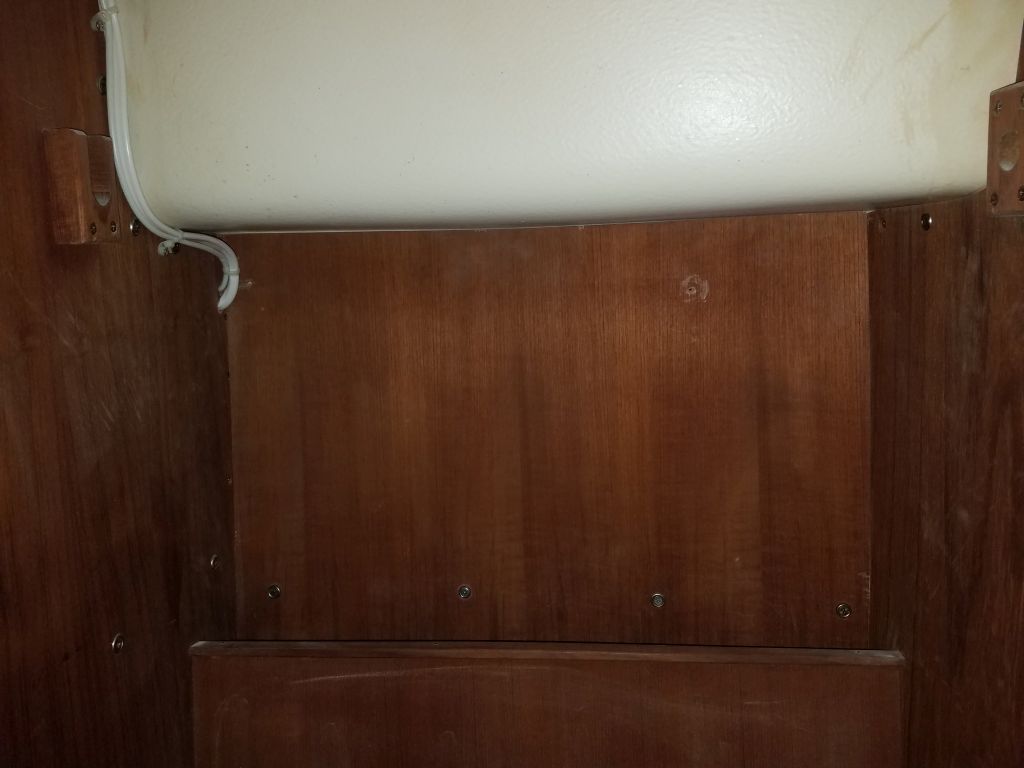
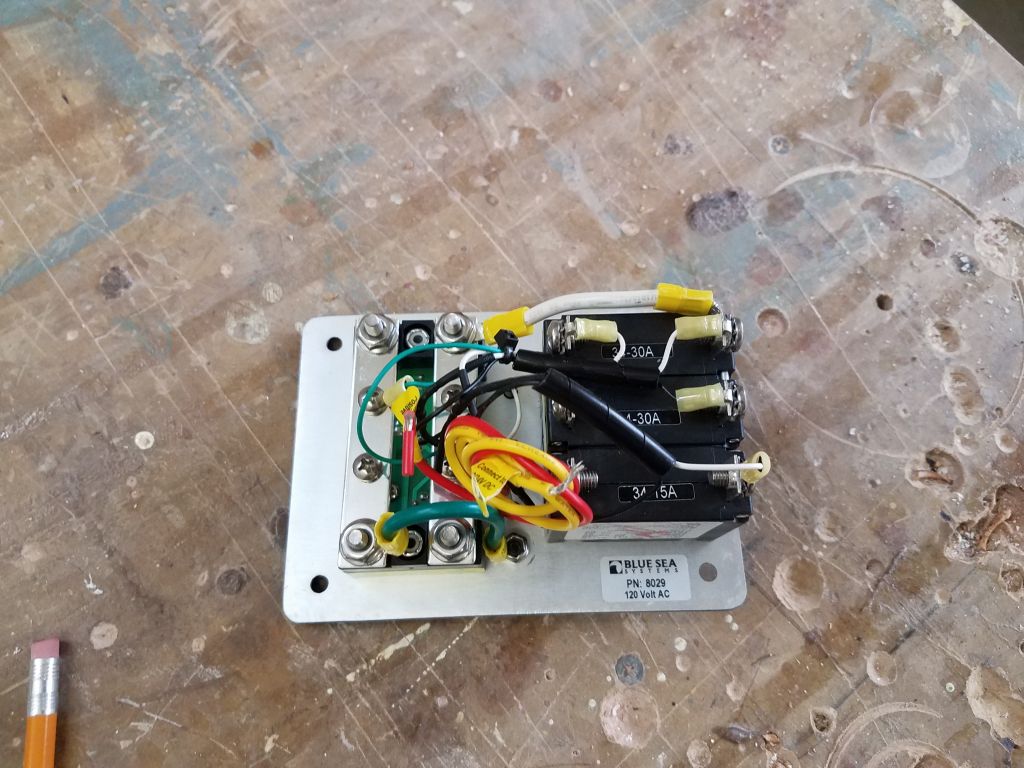
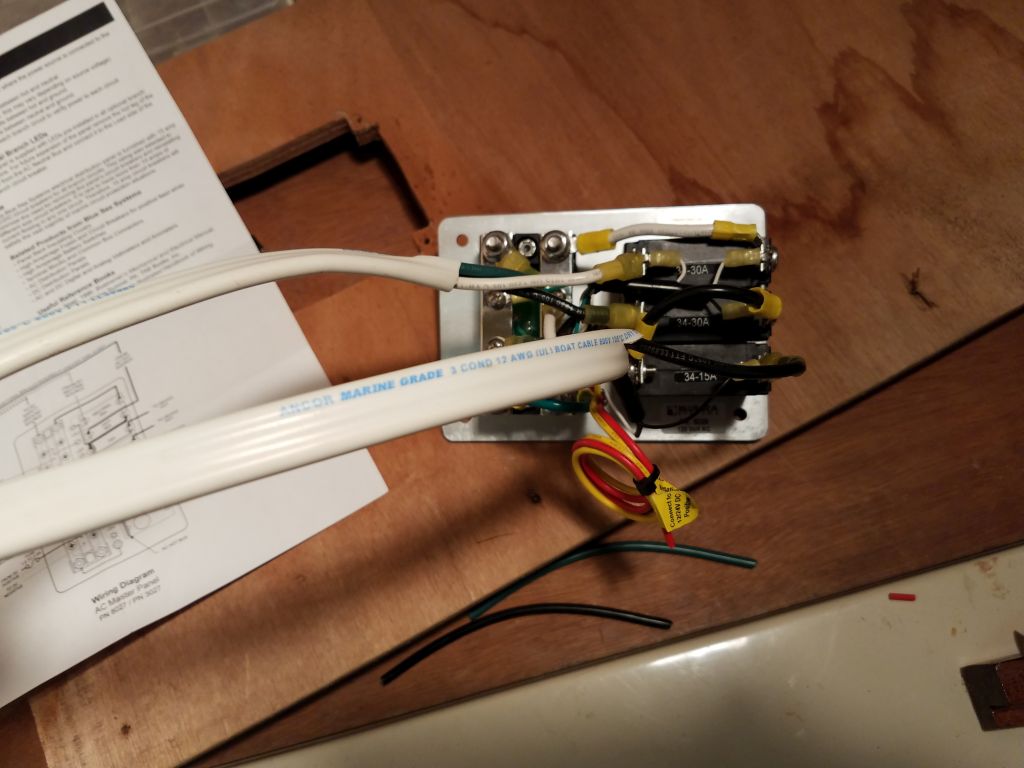
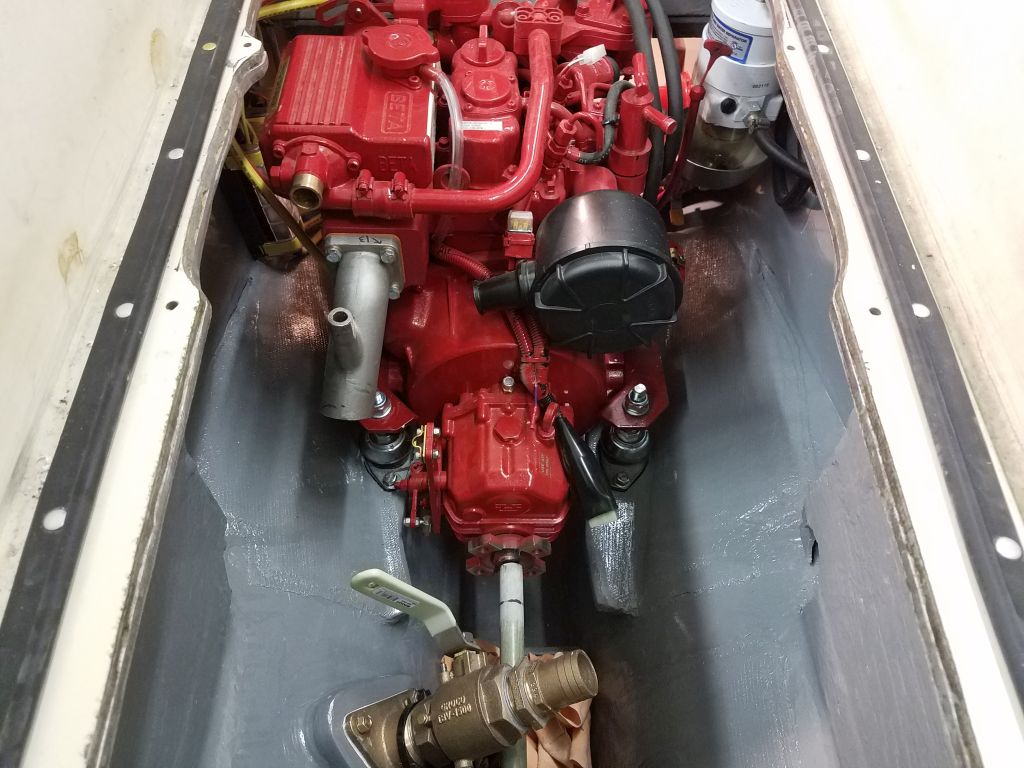
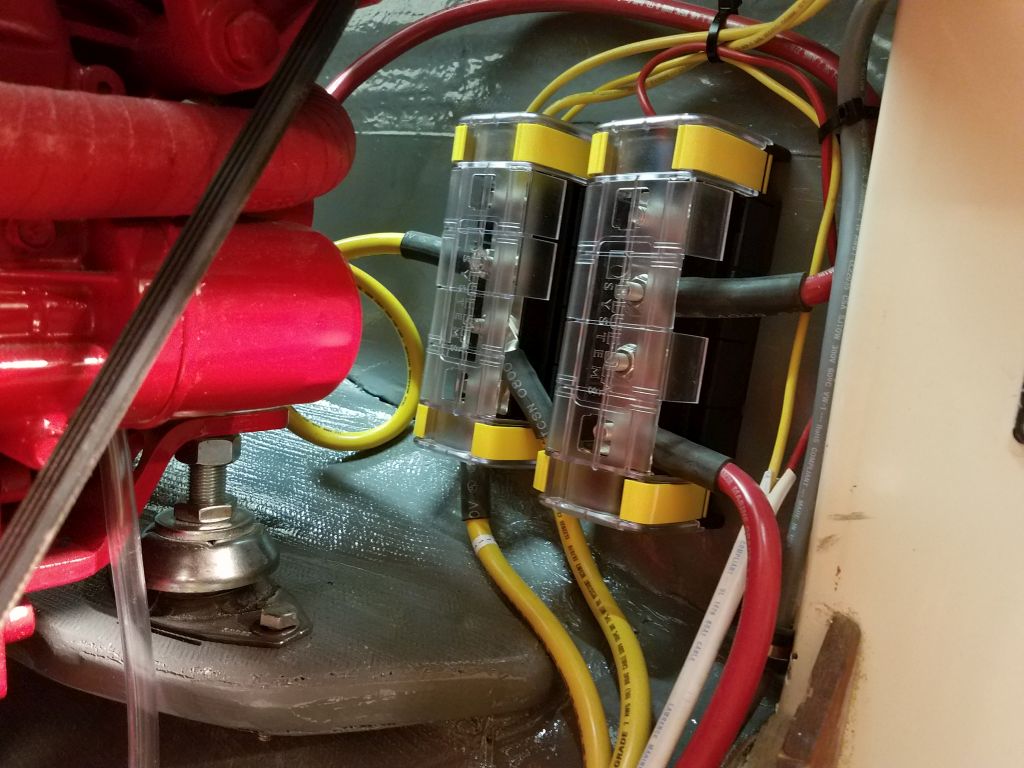
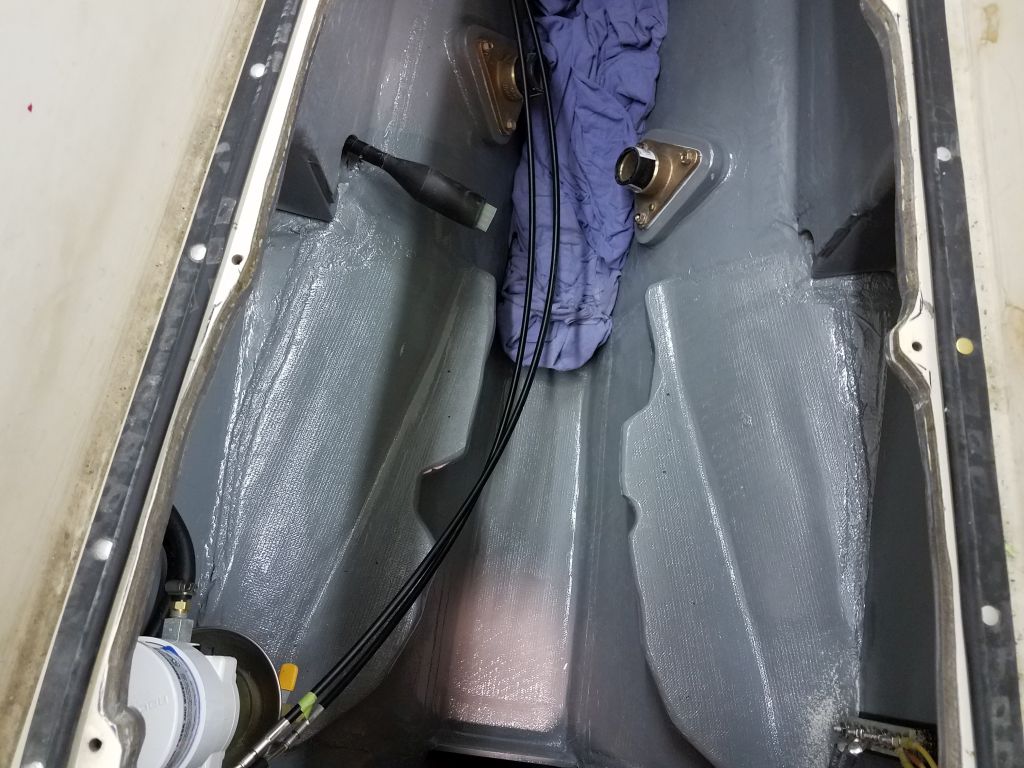
With some other commitments away from the shop, it was a short day, with just a few hours available, so I continued to pick away at my pre-installation list for the engine.  I planned to start to reassemble the fuel tank, but realized to be safe I should first run in the wiring harness assembly for the engine panel, which had to go through a tight space behind the fuel tank in order to run forward to the panel location in the cabin (which was the same location as the original engine panel).

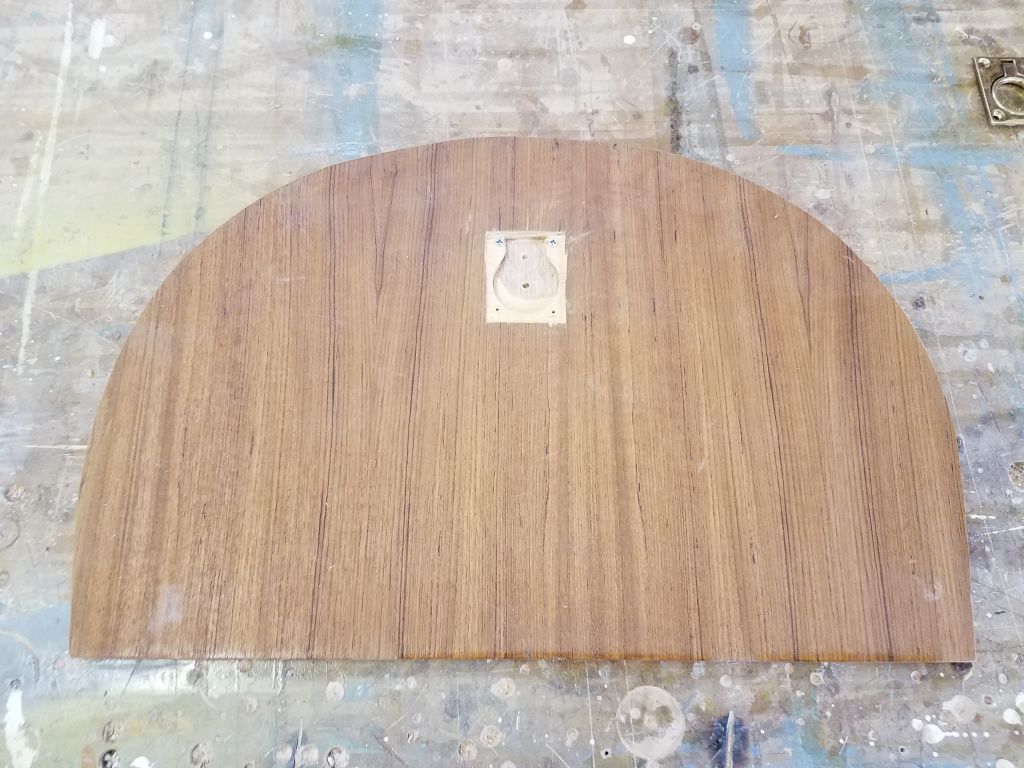
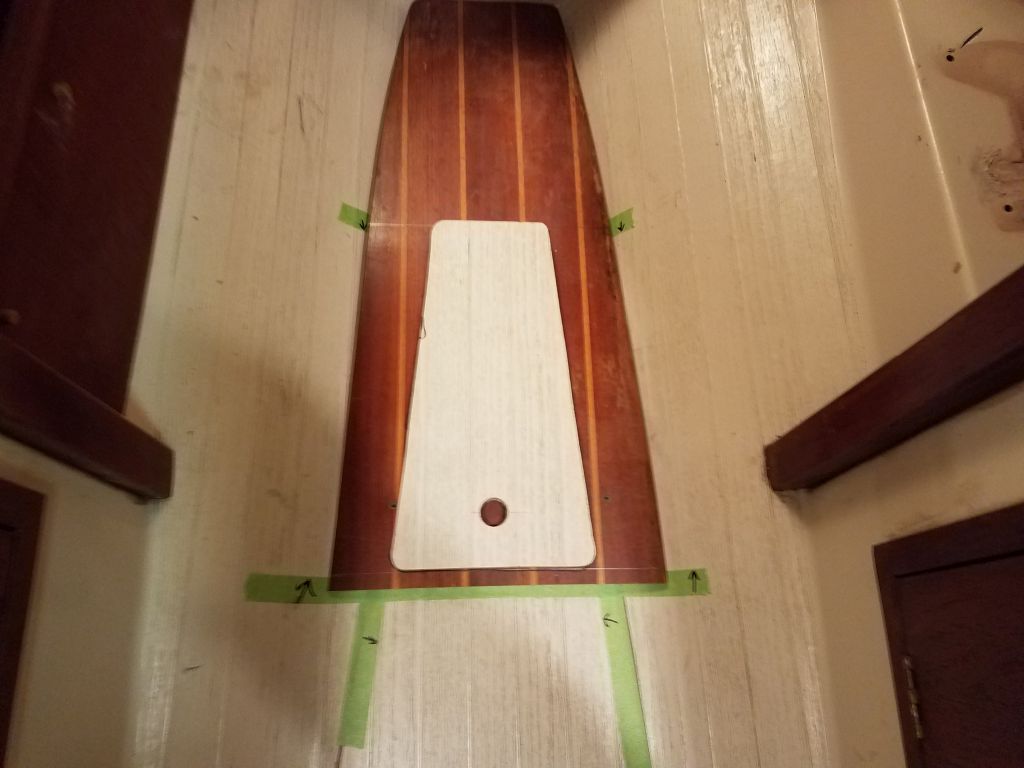
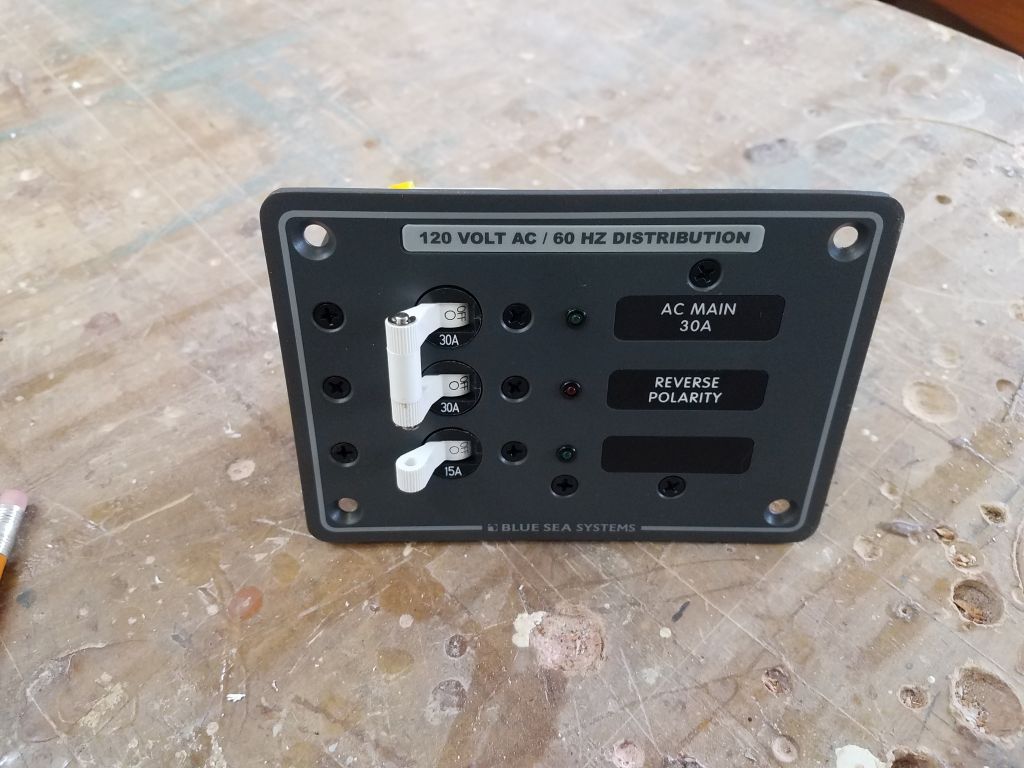
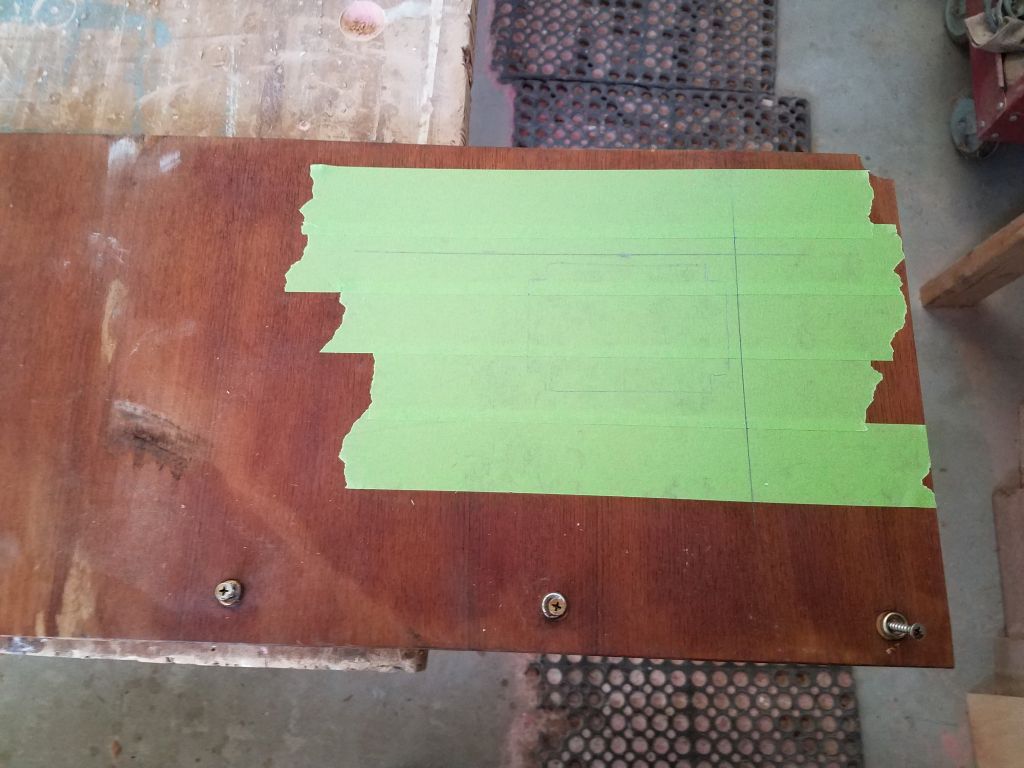
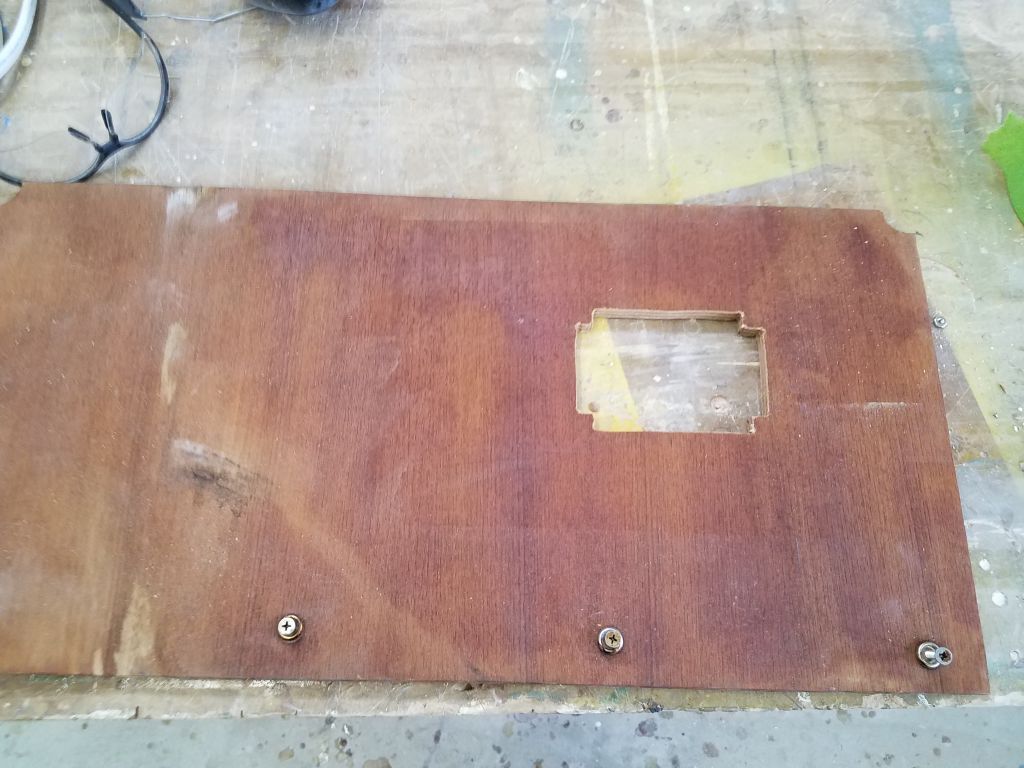
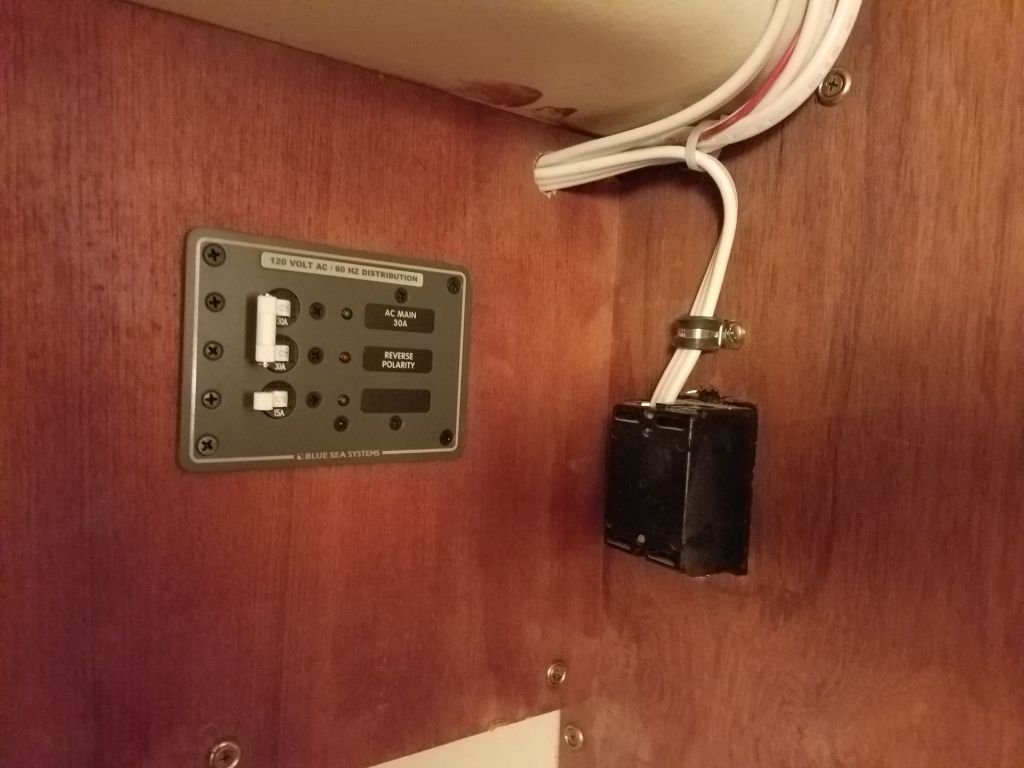
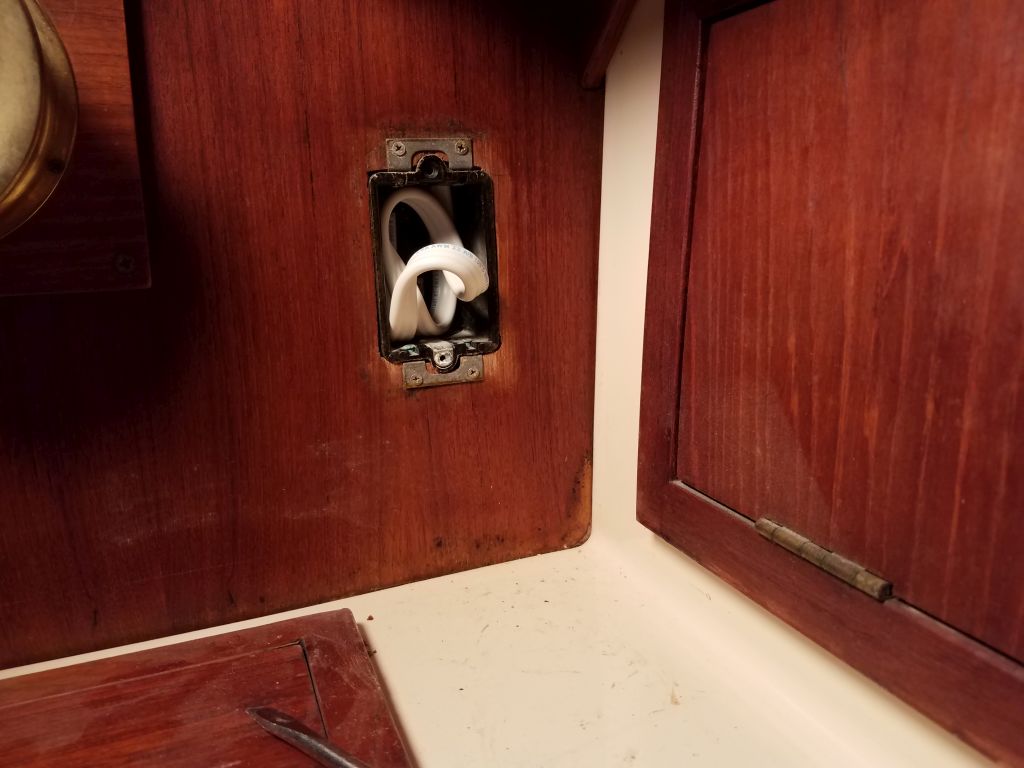
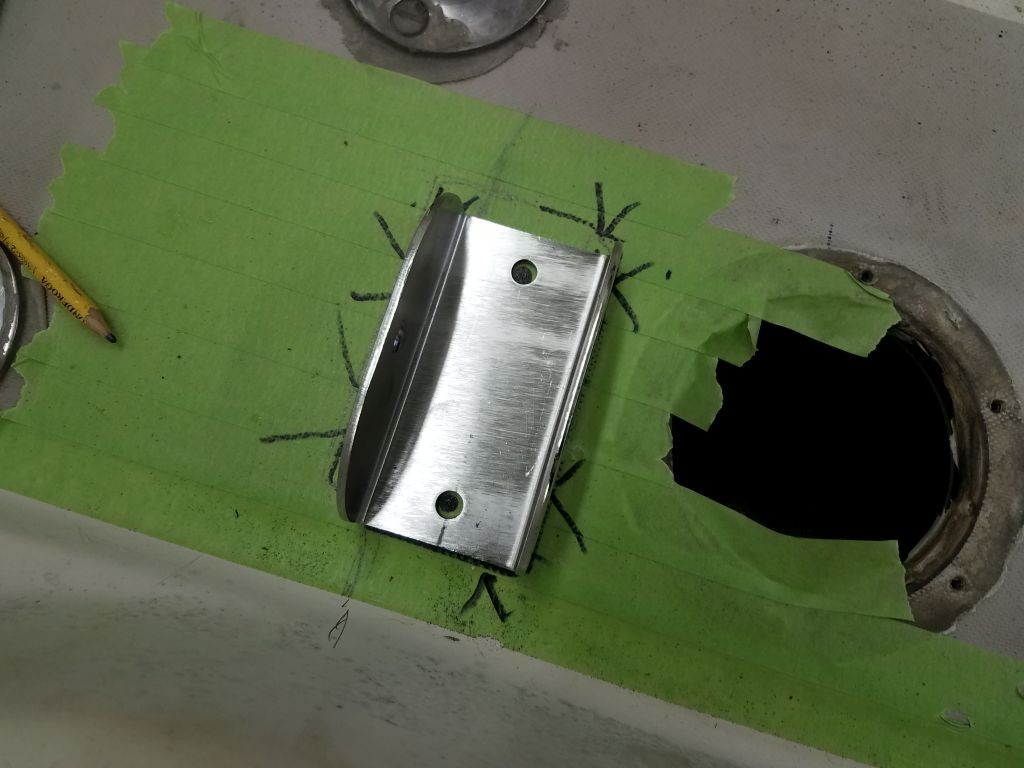
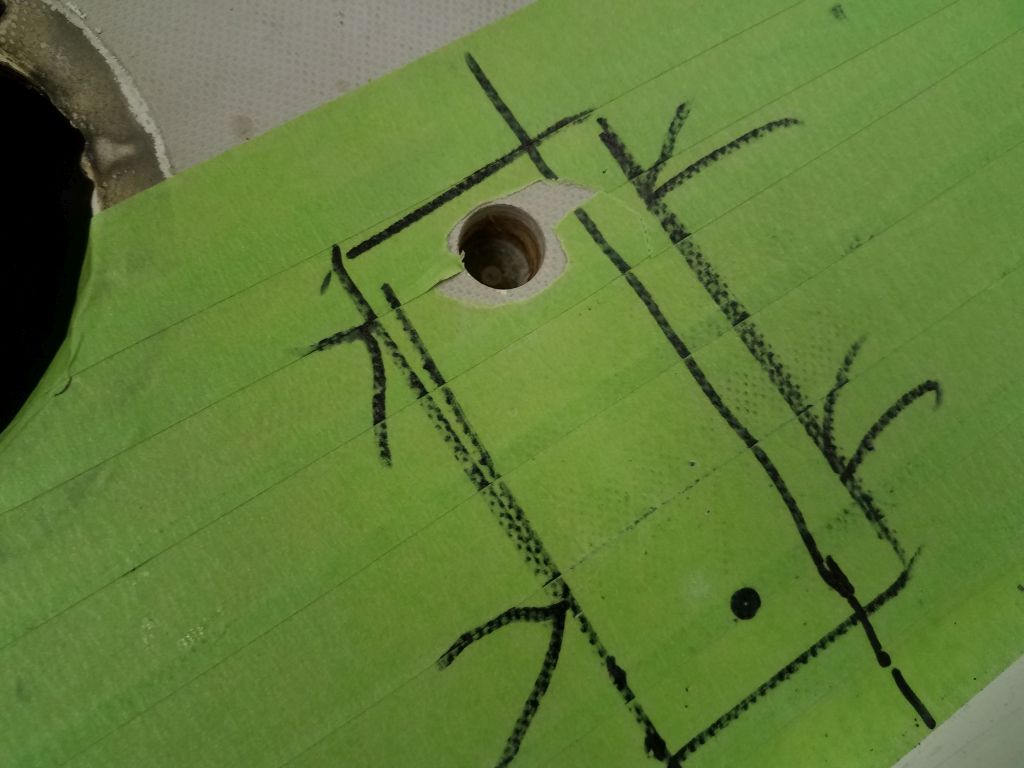
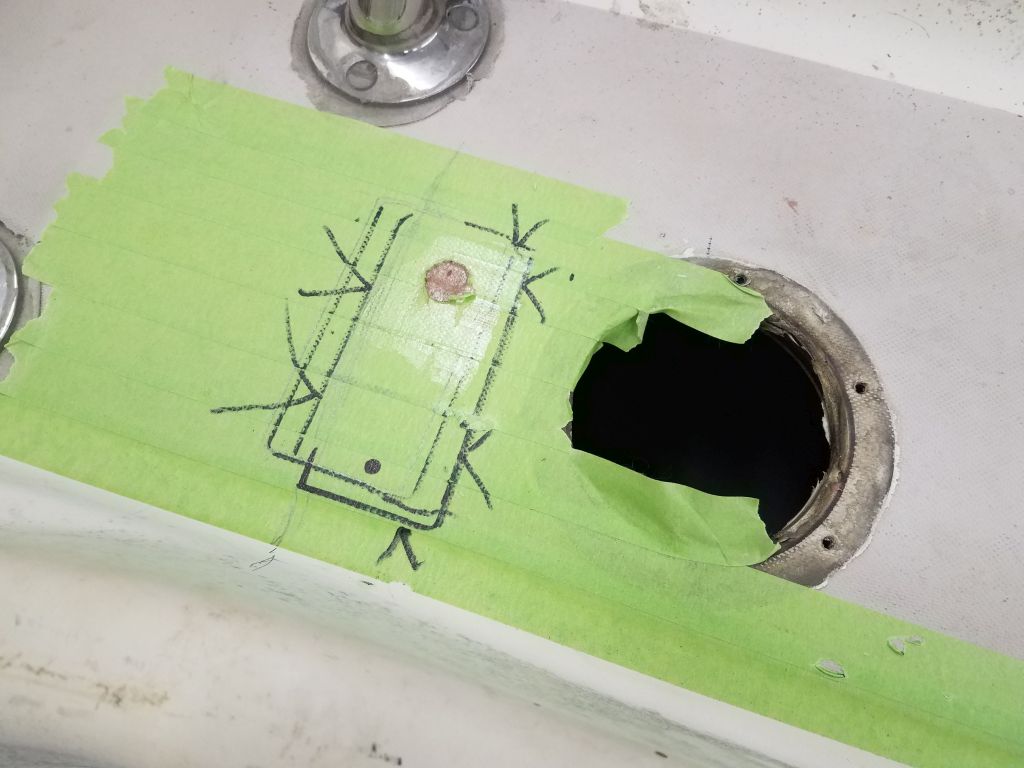
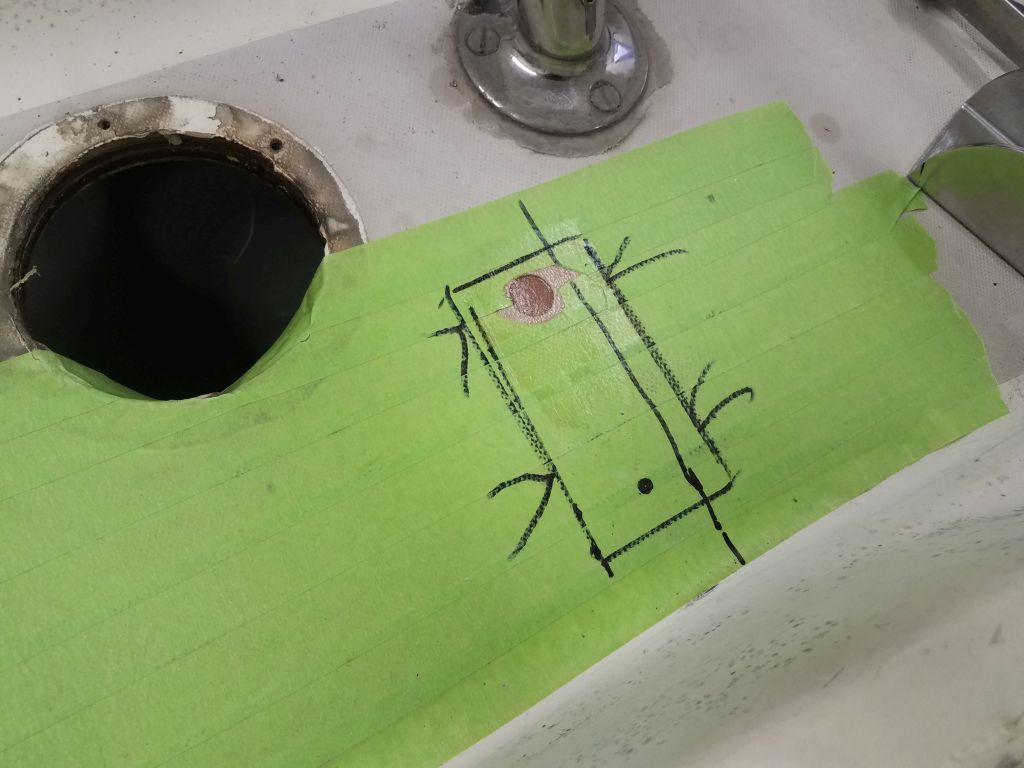
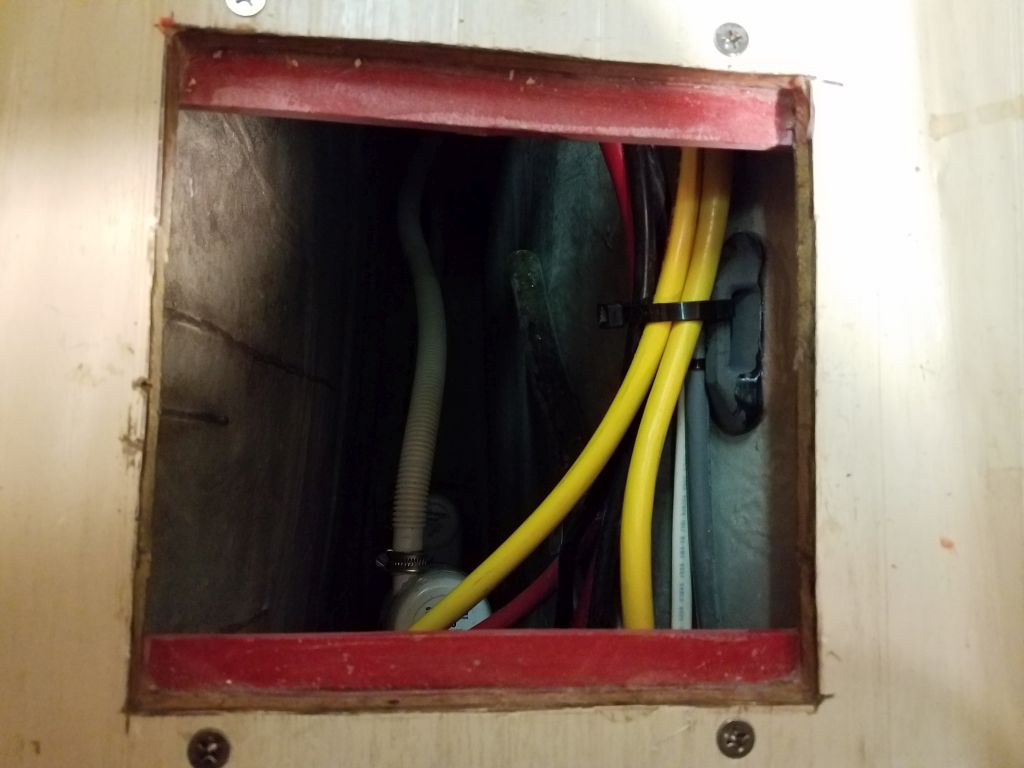
To begin, I used a template for the engine panel cutout to enlarge the opening left behind from the original panel.

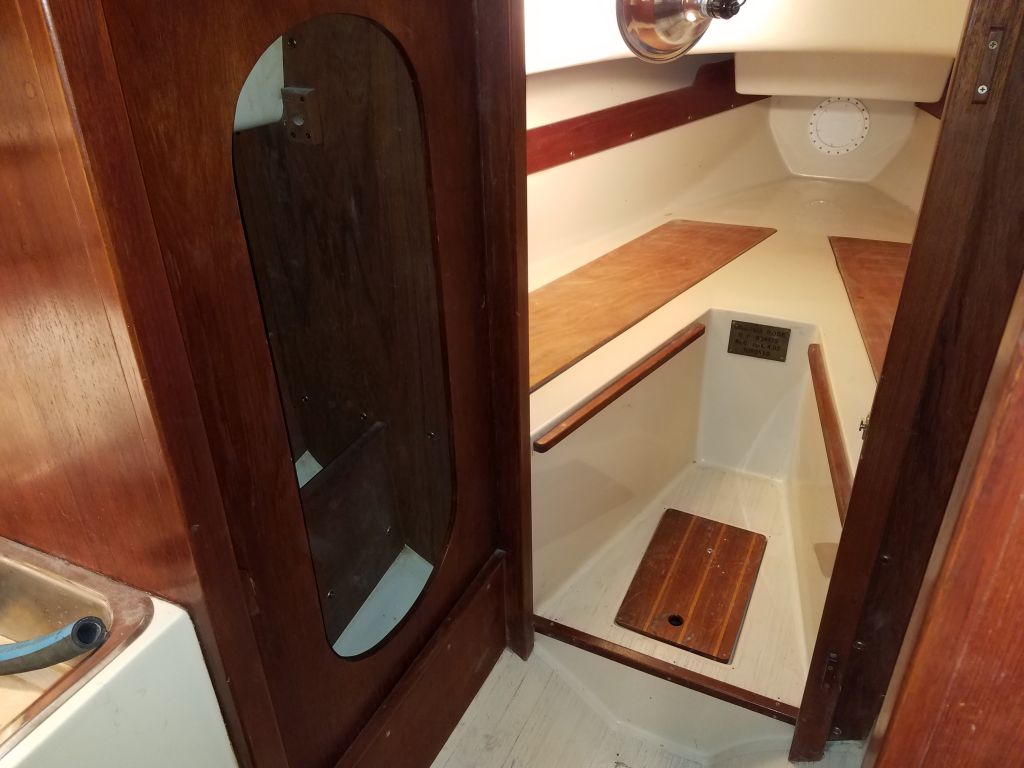
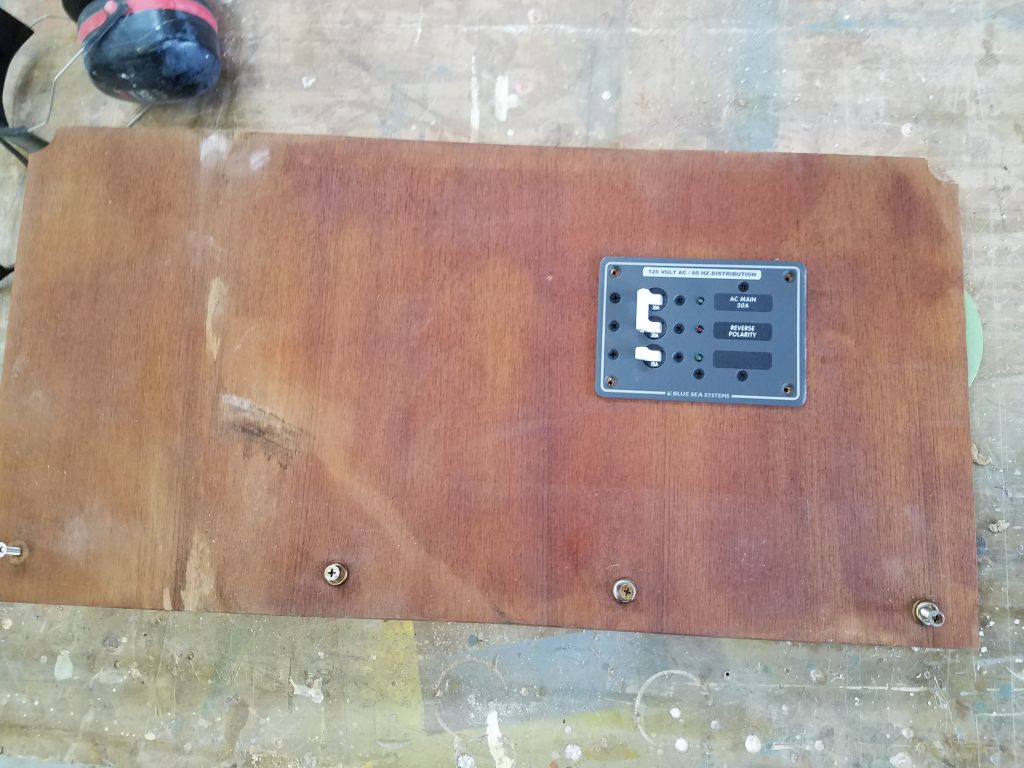
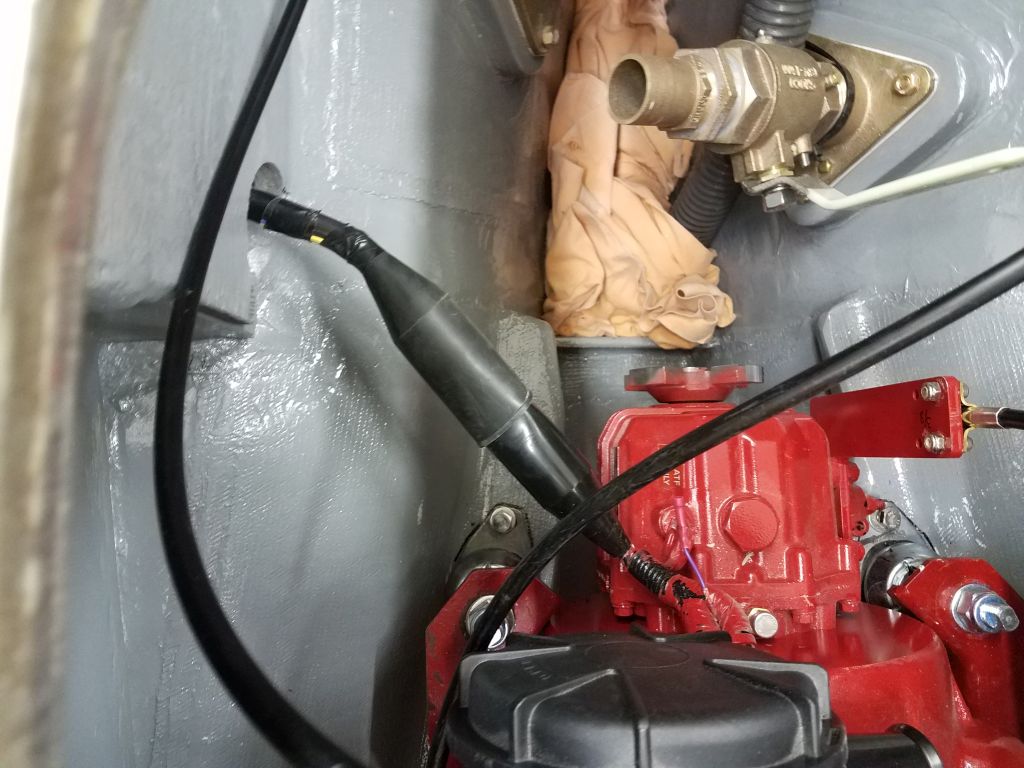
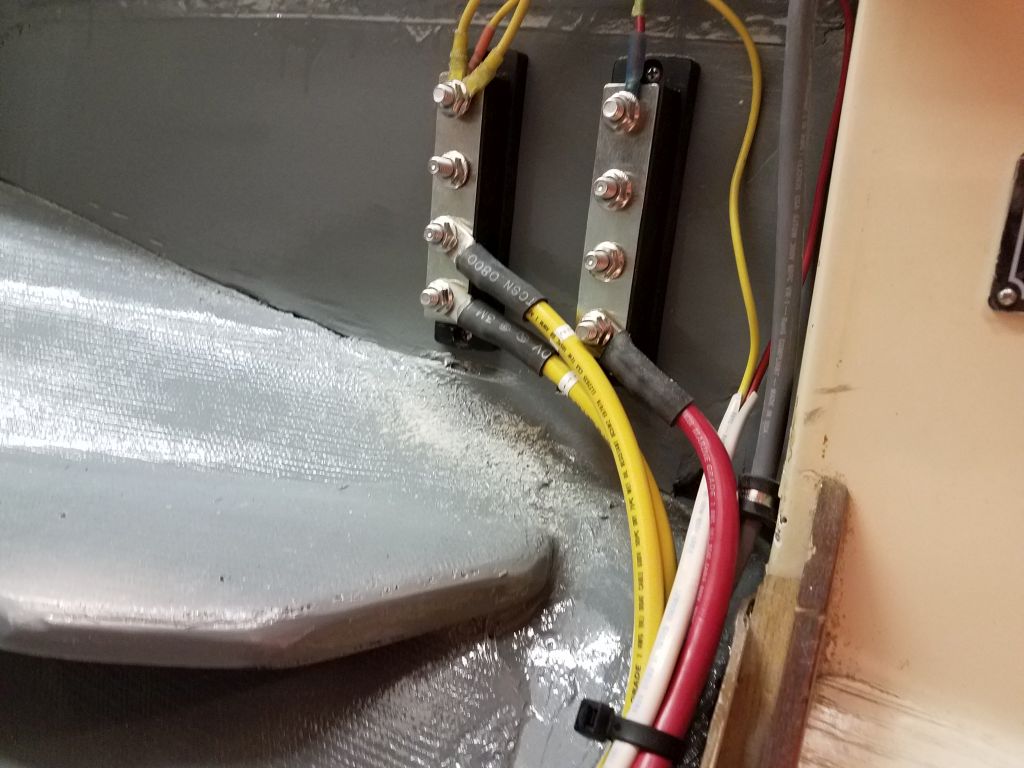
The plugs on the wiring harness were almost too large to fit through the opening running from the starboard cockpit locker (behind the fuel tank) and the cabin/interior liner, and in fact when I tried to pull the harness through from the cabin to the locker with a snake, the engine end of the cable wouldn’t fit through the opening.  I tried running the cable the other way, pushing the smaller panel plug end through from the cockpit locker, and this worked, though not without a micron to spare.  From there, it was a simple matter to connect the panel and install it with four black-coated stainless screws.  I left the remaining wiring harness loose in the cockpit locker for now, pending engine room paint.

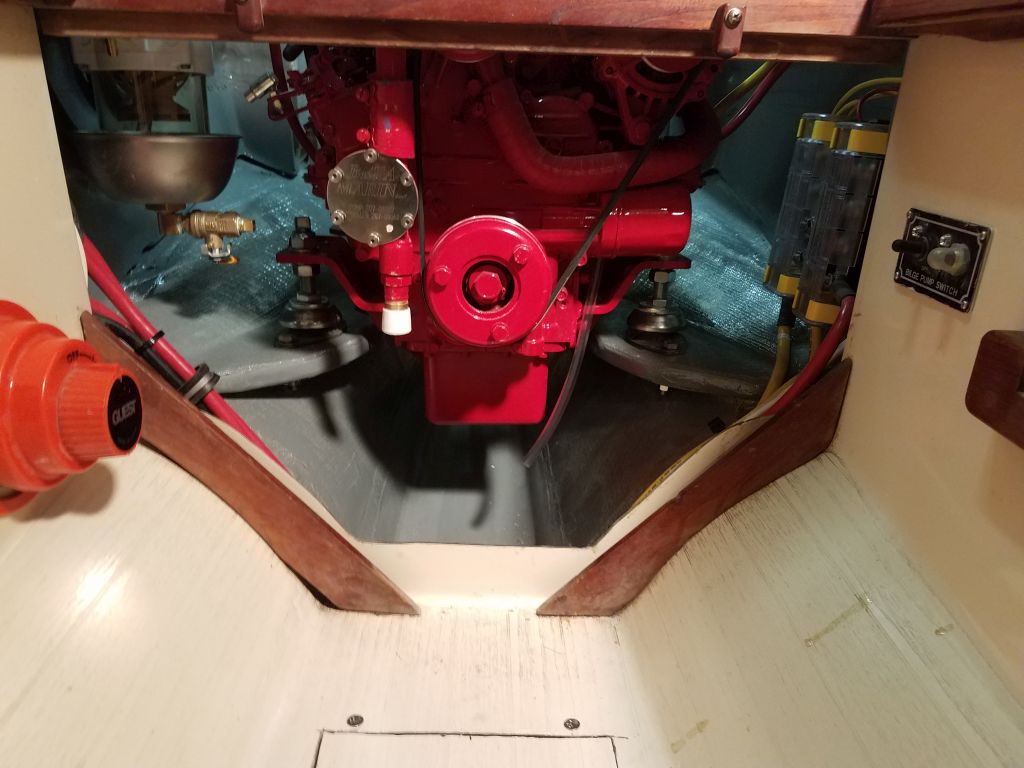
The owner and I had had a few discussions about the new engine drip pan and its potential removability, and eventually he decided he preferred the idea of making the pan permanent, more like the original, so to ensure I could keep moving forward on my plan to prime and paint the engine room before Christmas break, I worked on this for the brief remainder of the afternoon.

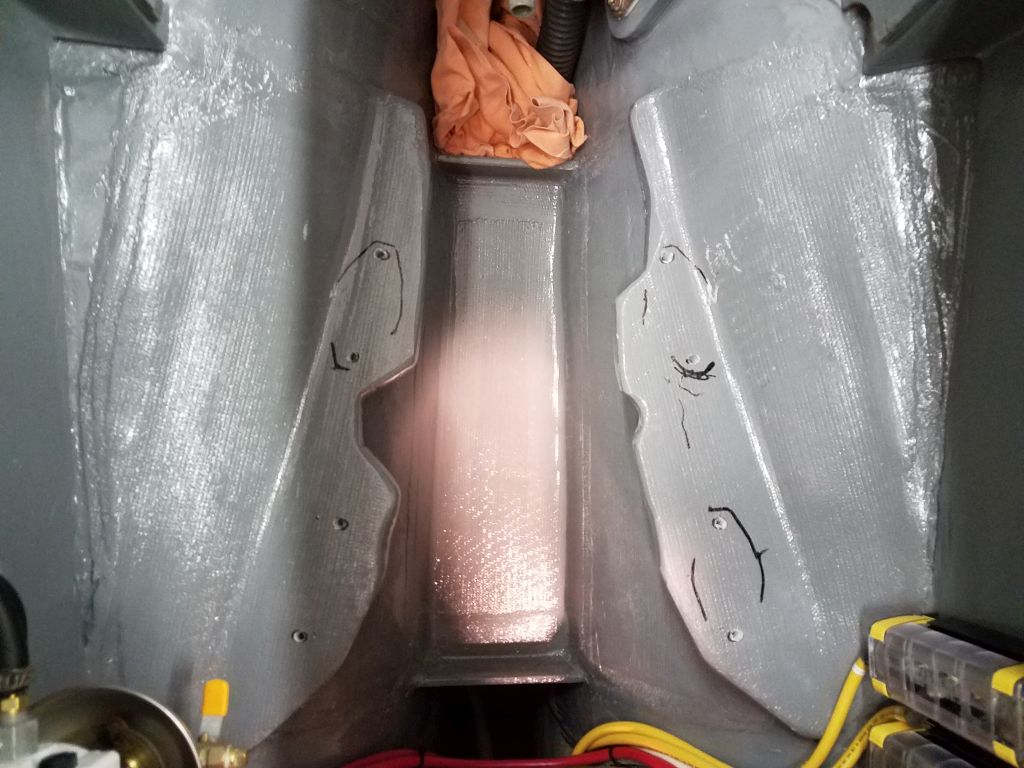
After cleaning up the area with a solvent wash, I installed the new pan, which was all ready in any event, and added nice epoxy fillets along the sides and up the ends.

While the fillets cured for a while, I prepared and cut two layers of fiberglass to tab over the pan and up the hull on each side, and added additional fiberglass to wrap up the ends of the pan.  Once everything was ready, I wet out and installed the new fiberglass in epoxy.

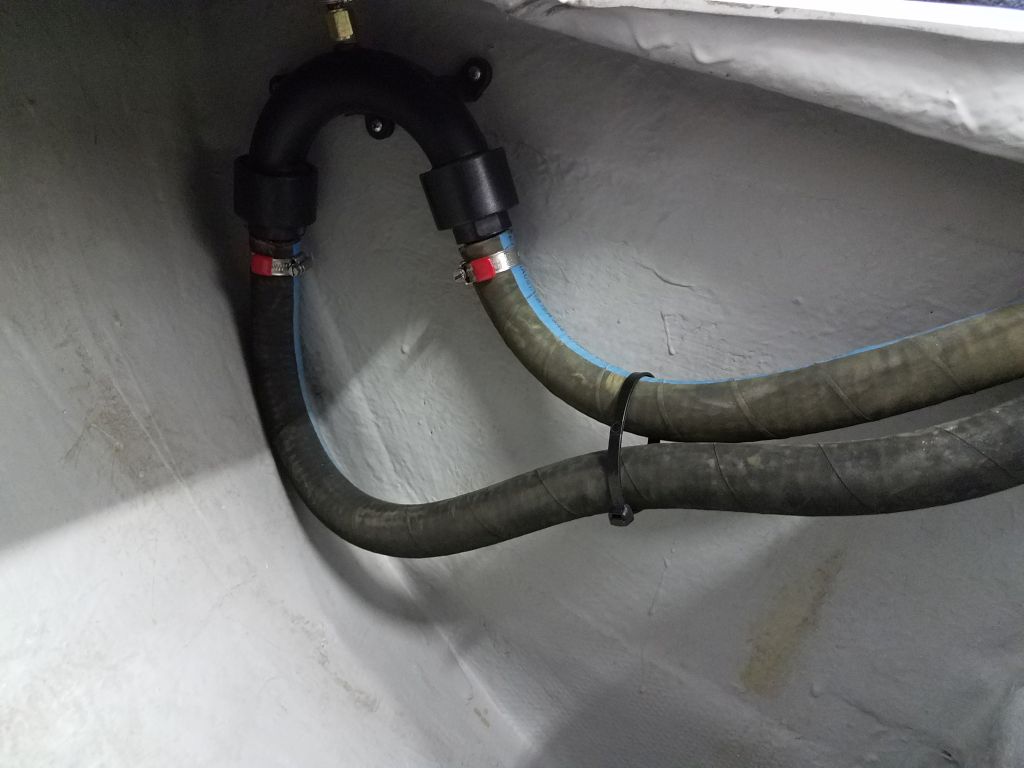
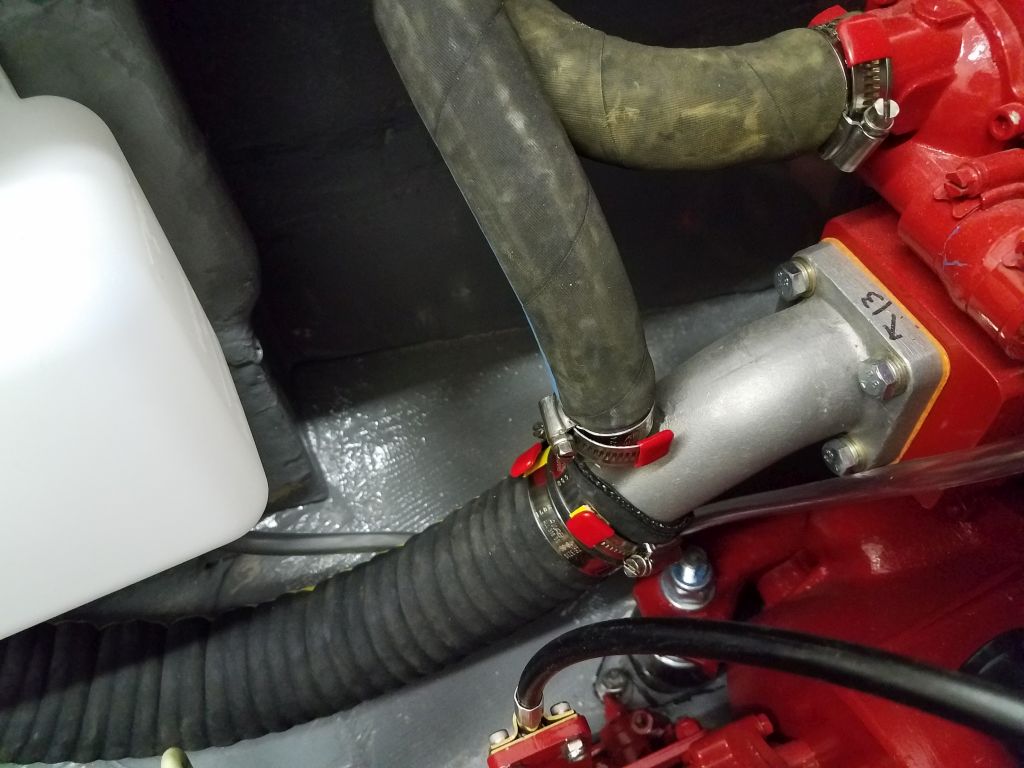
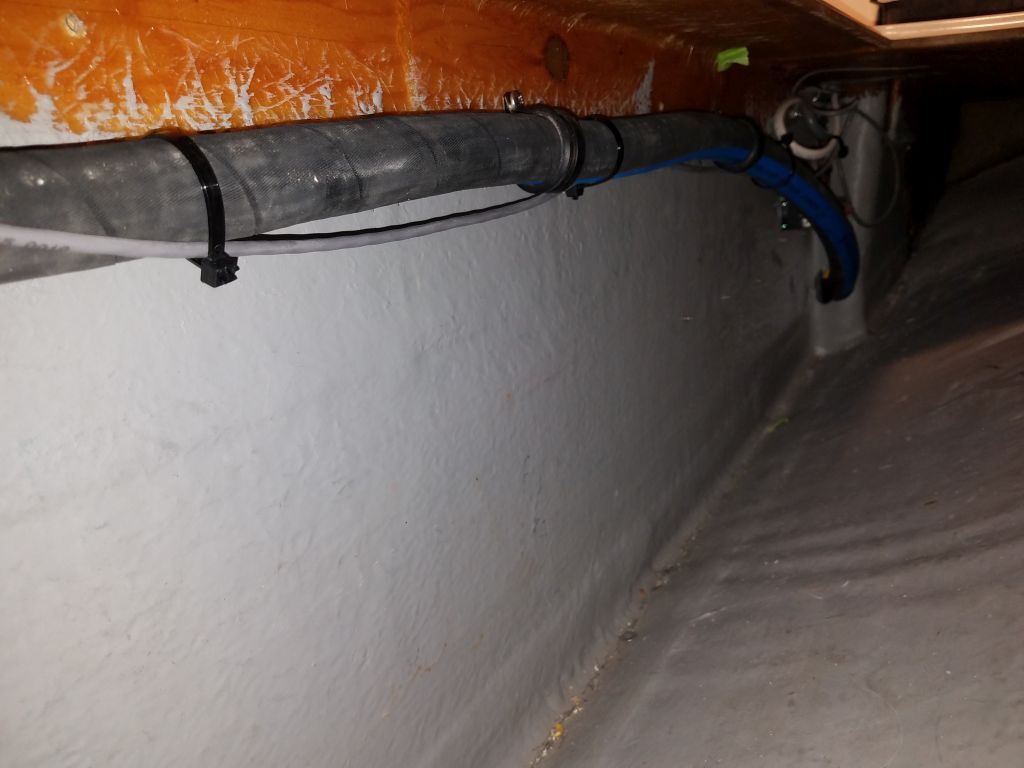
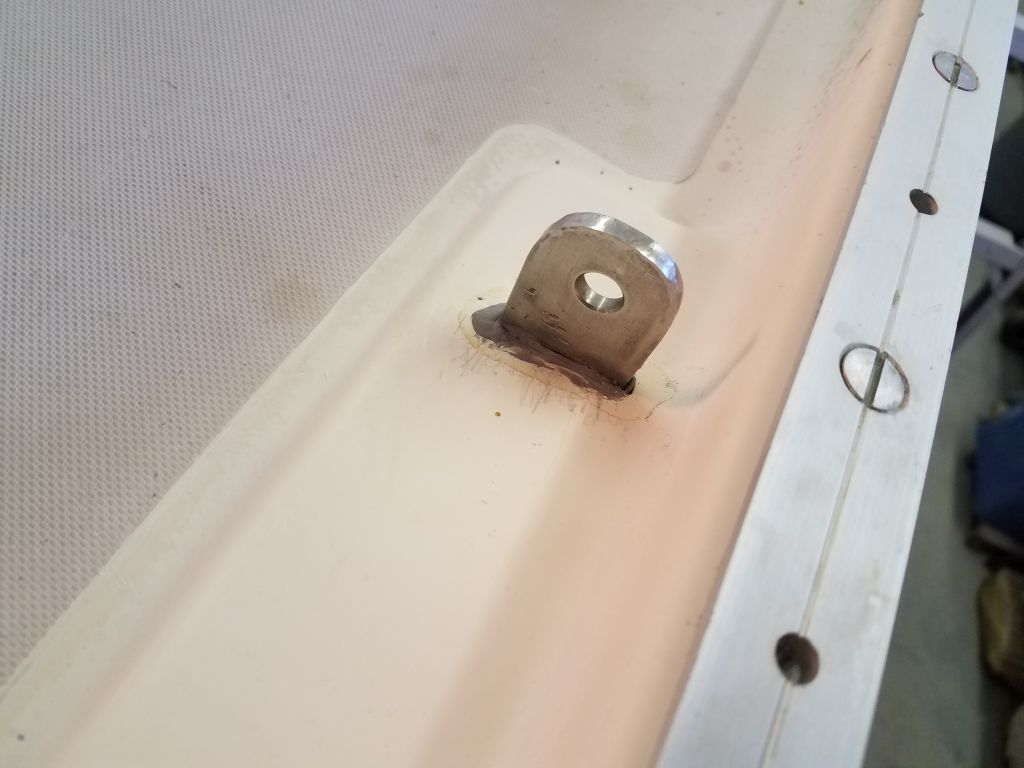
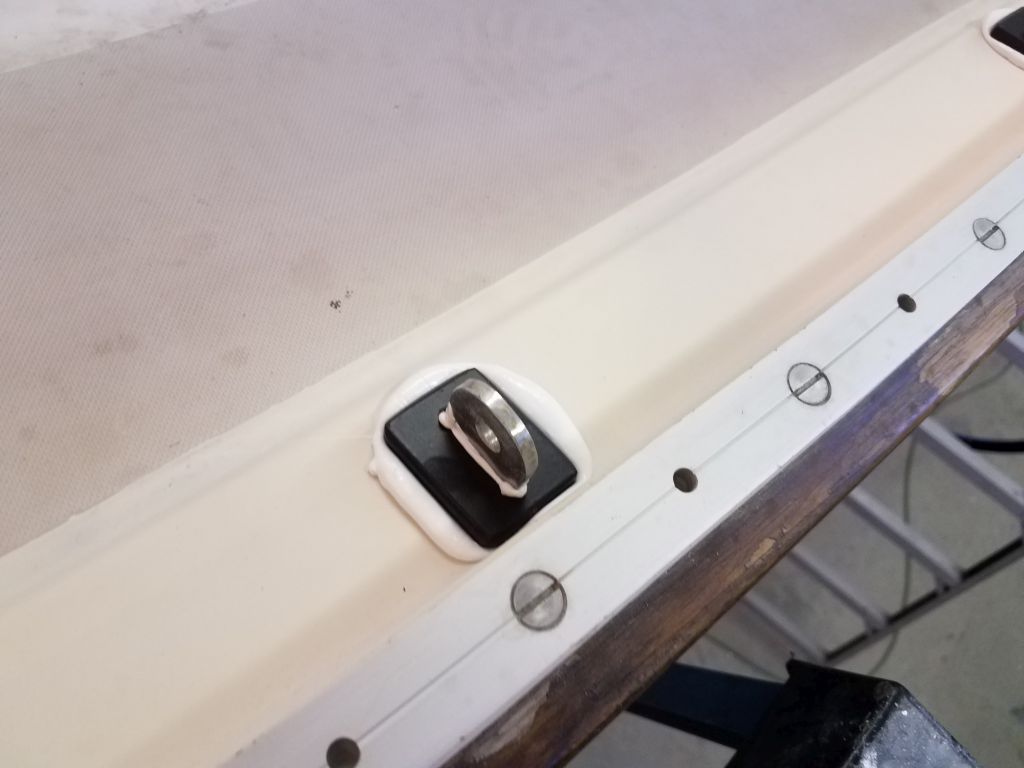
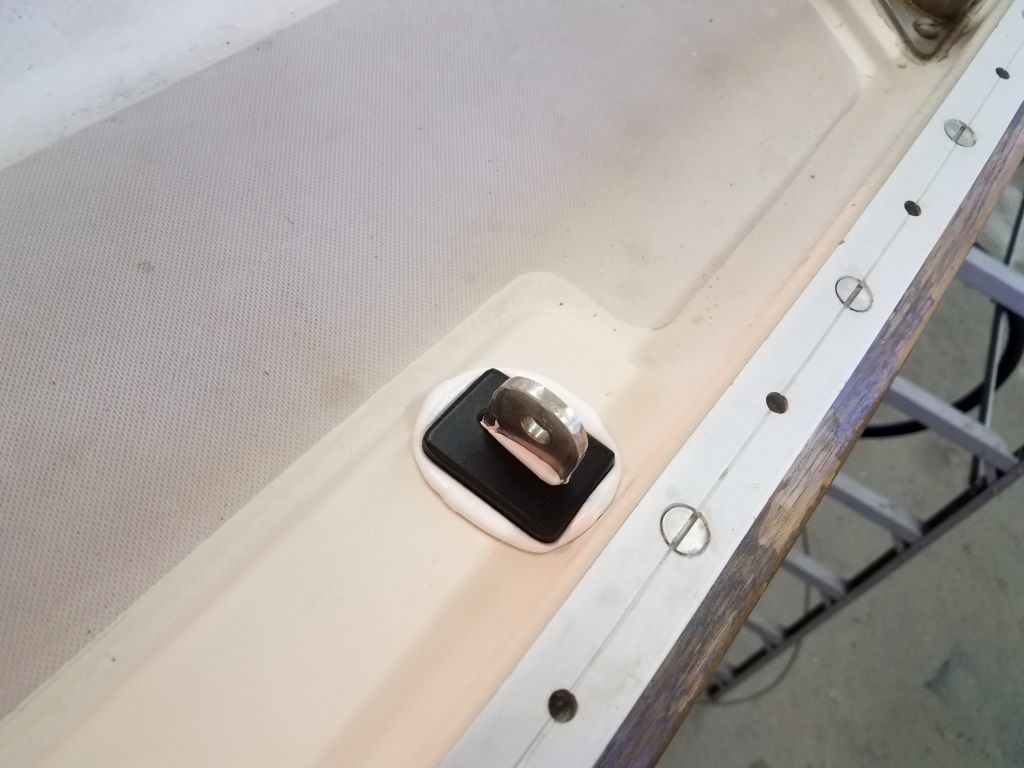
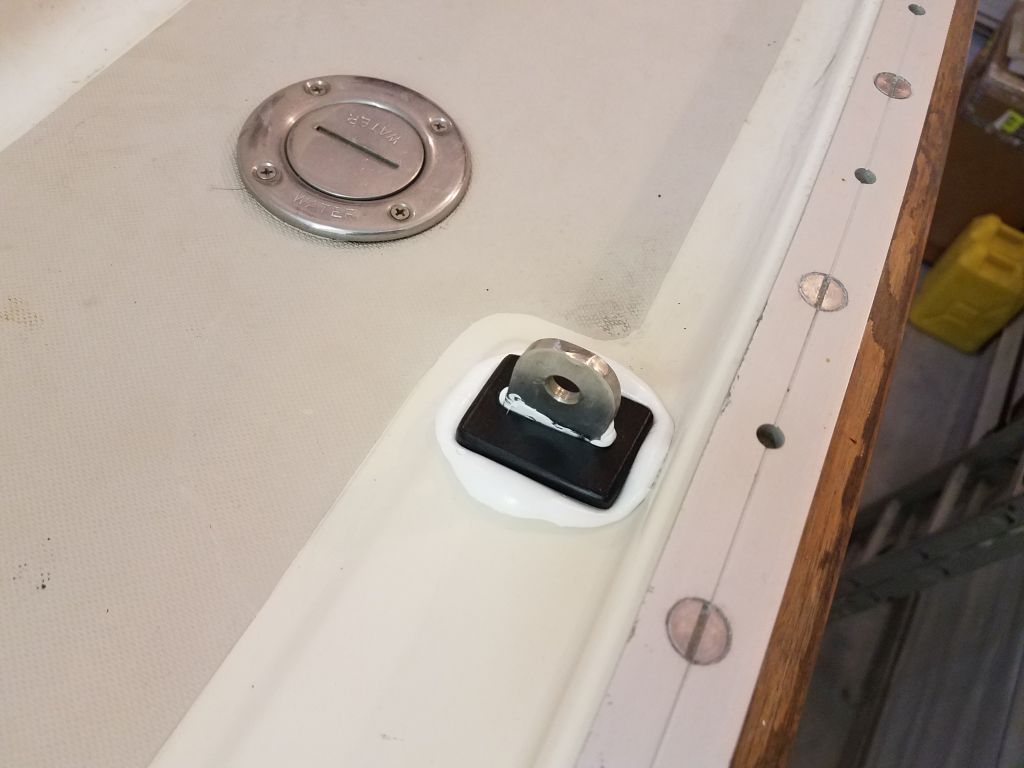
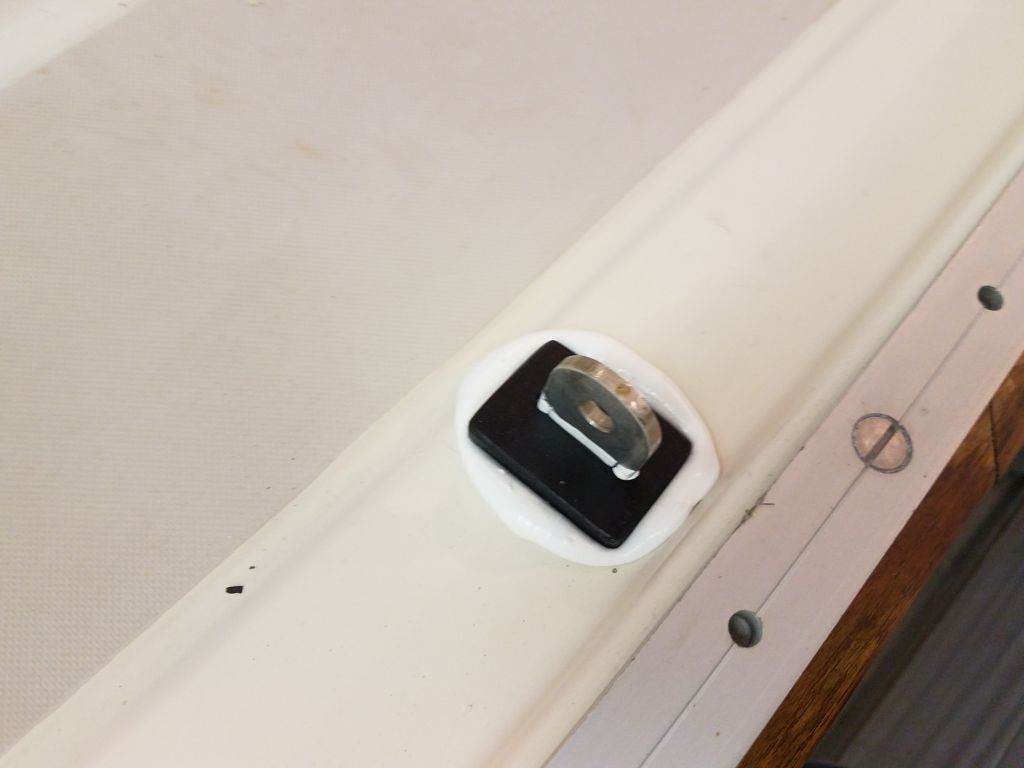
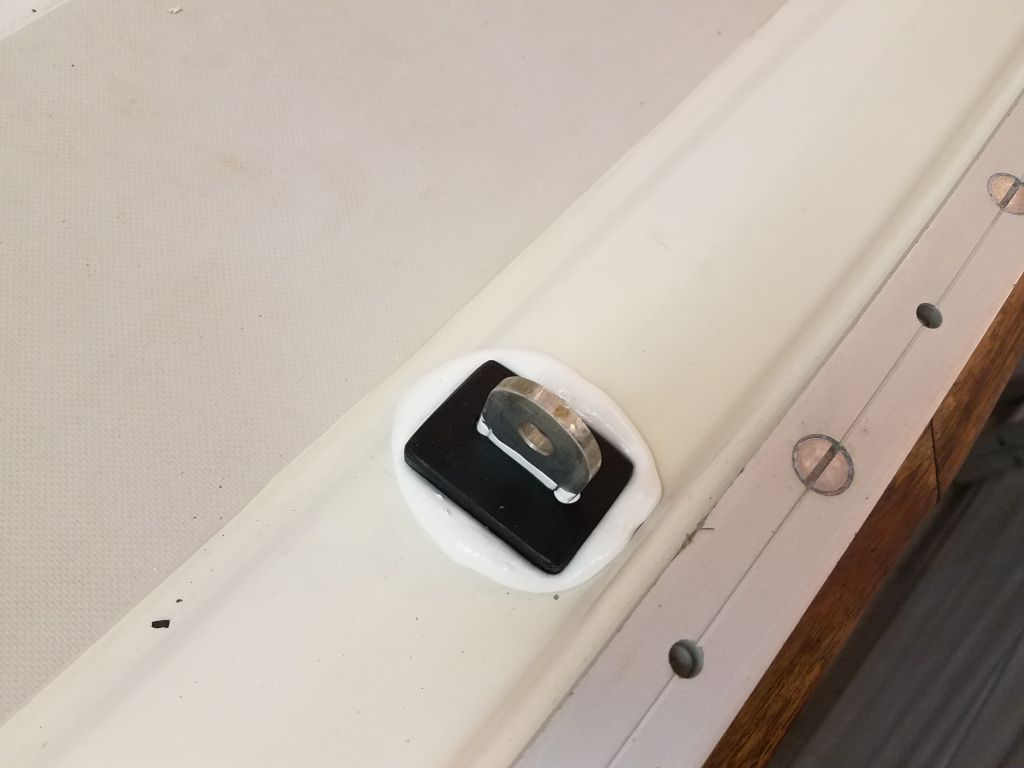
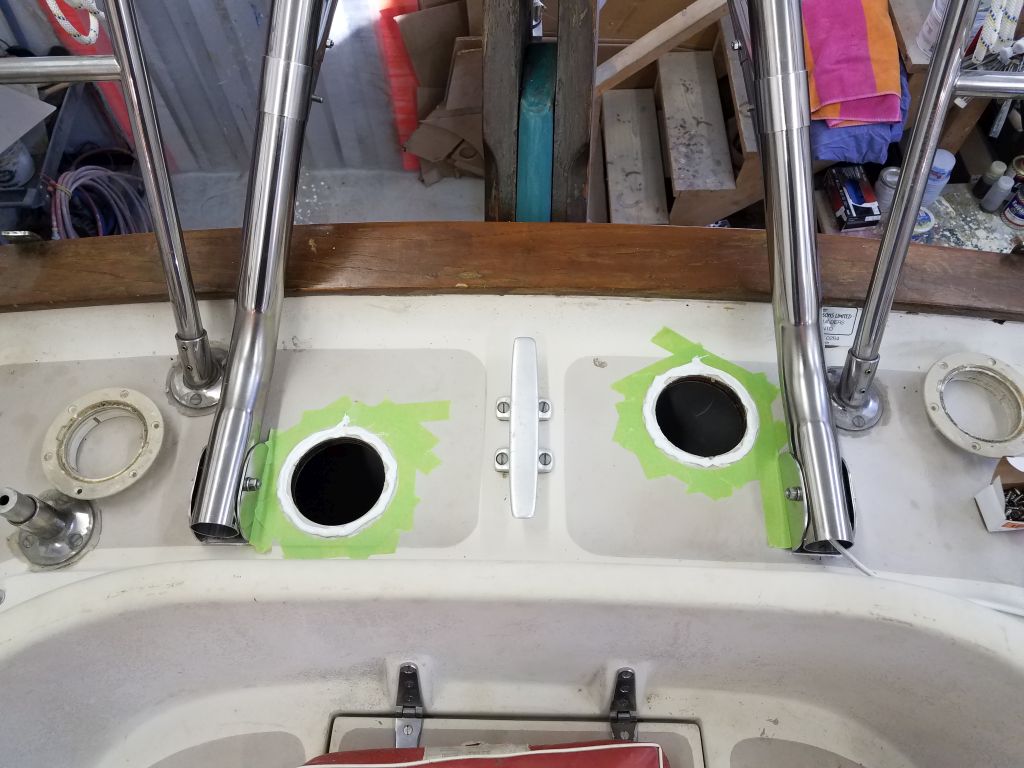
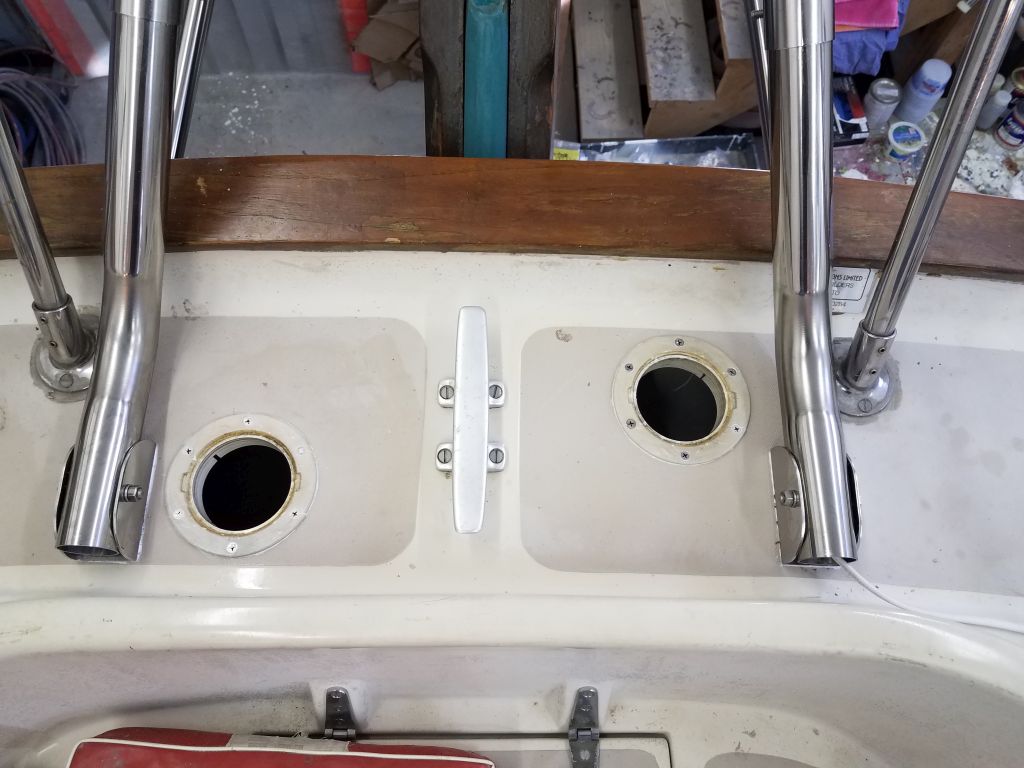
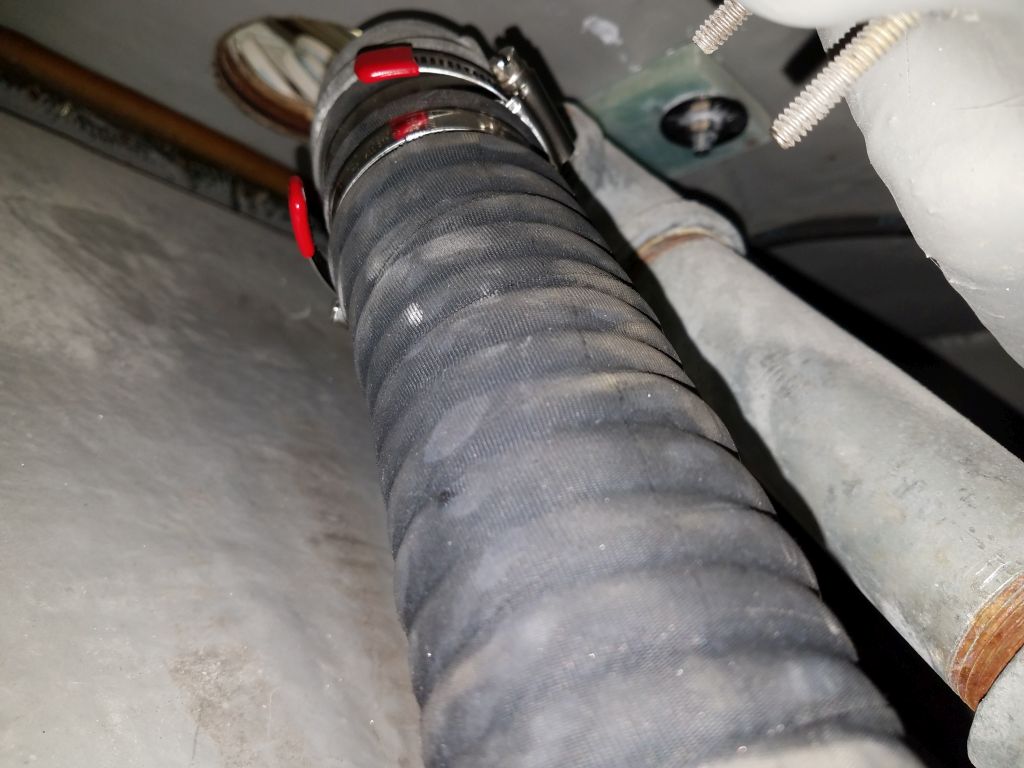
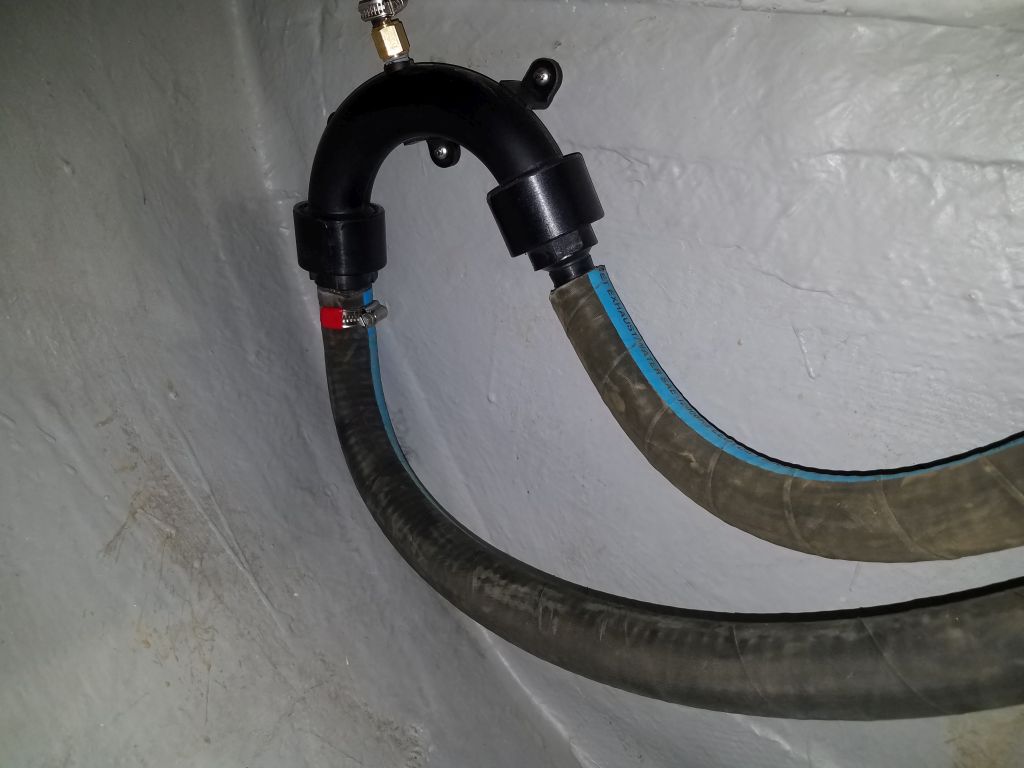
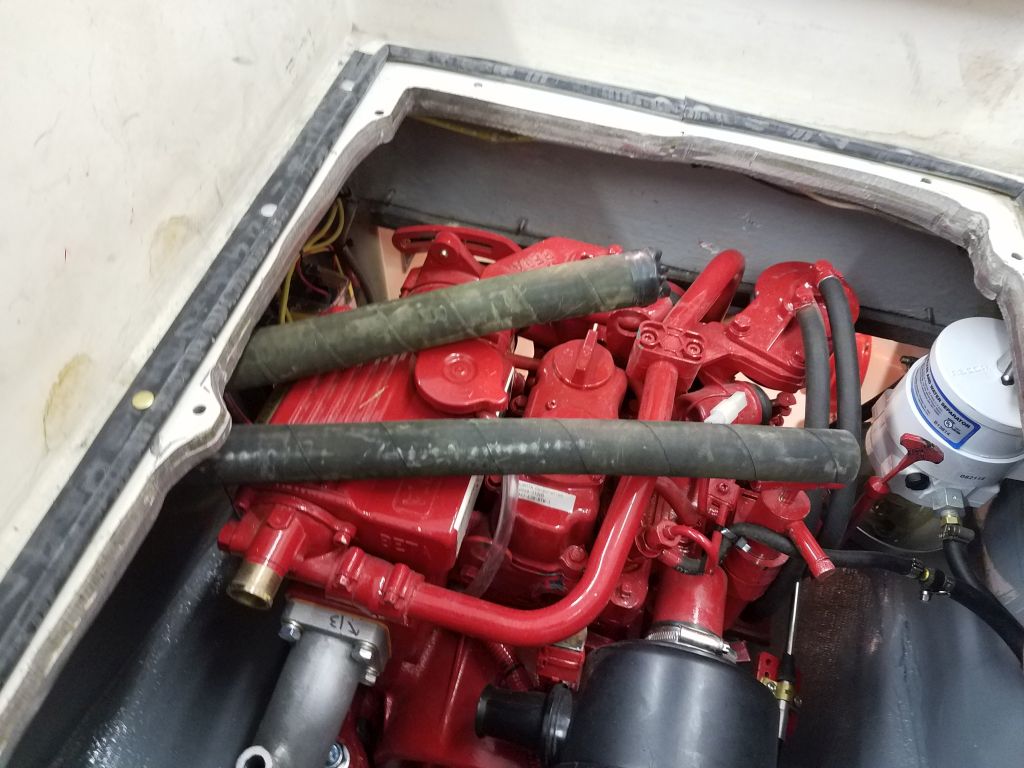
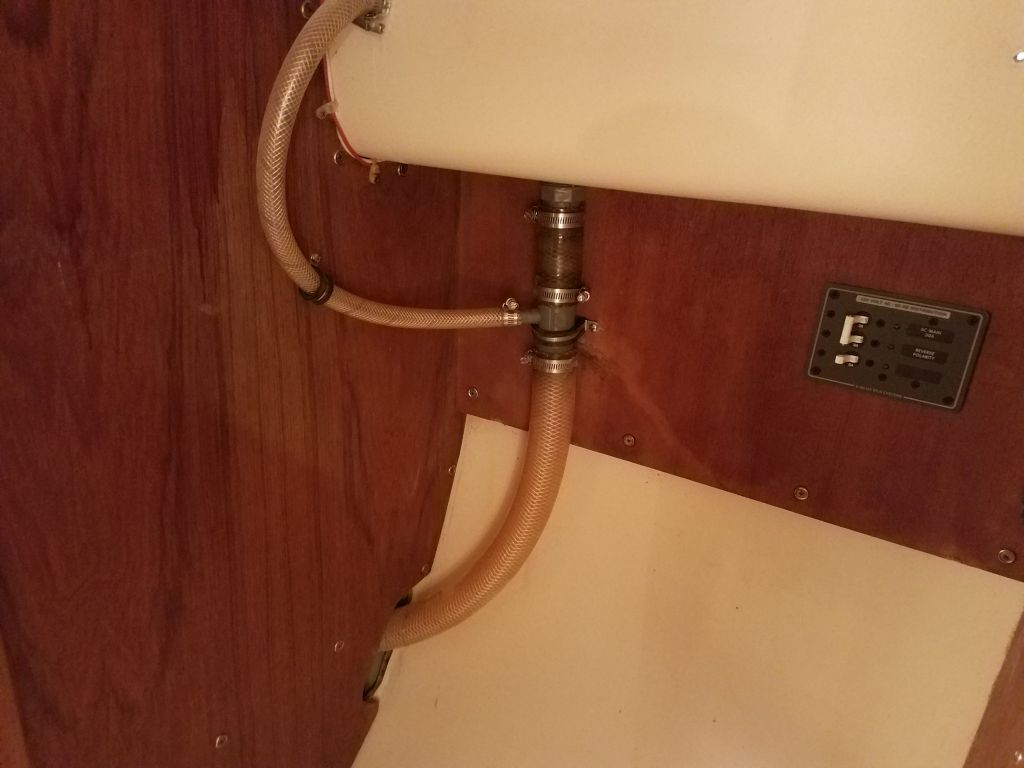
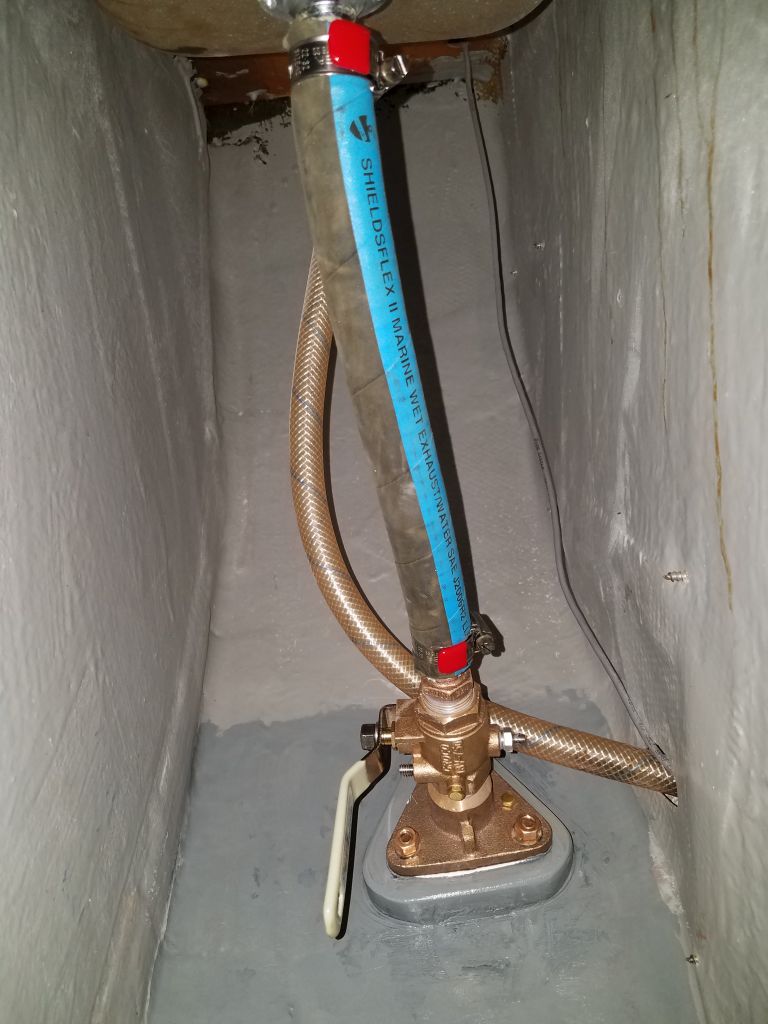
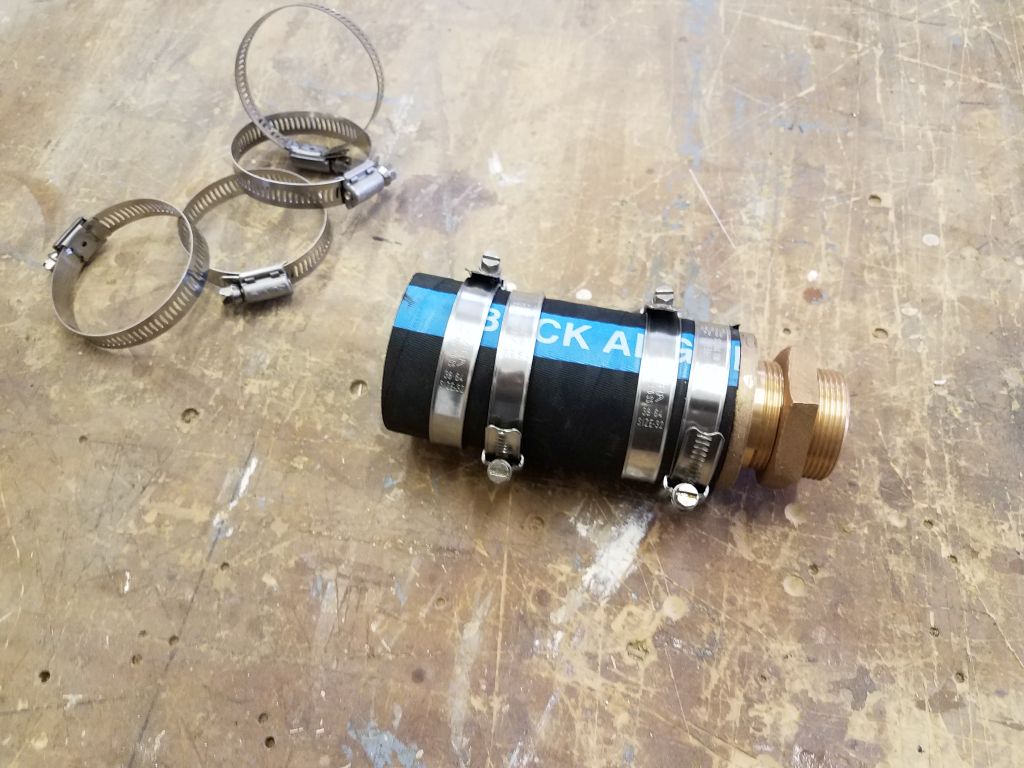
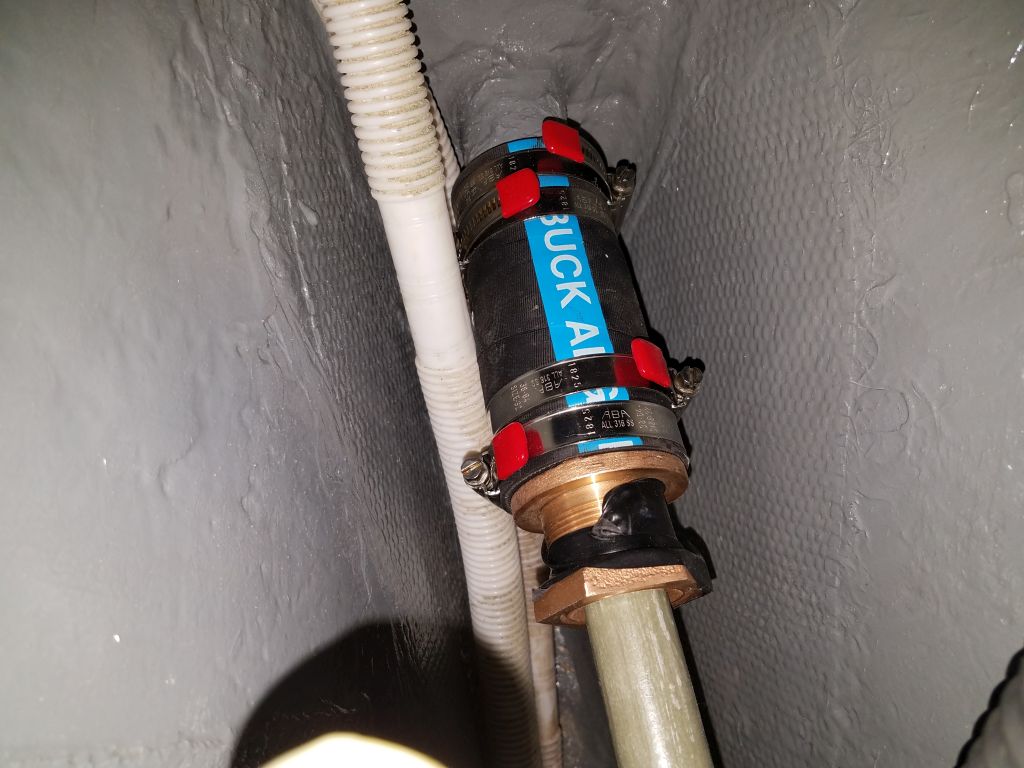
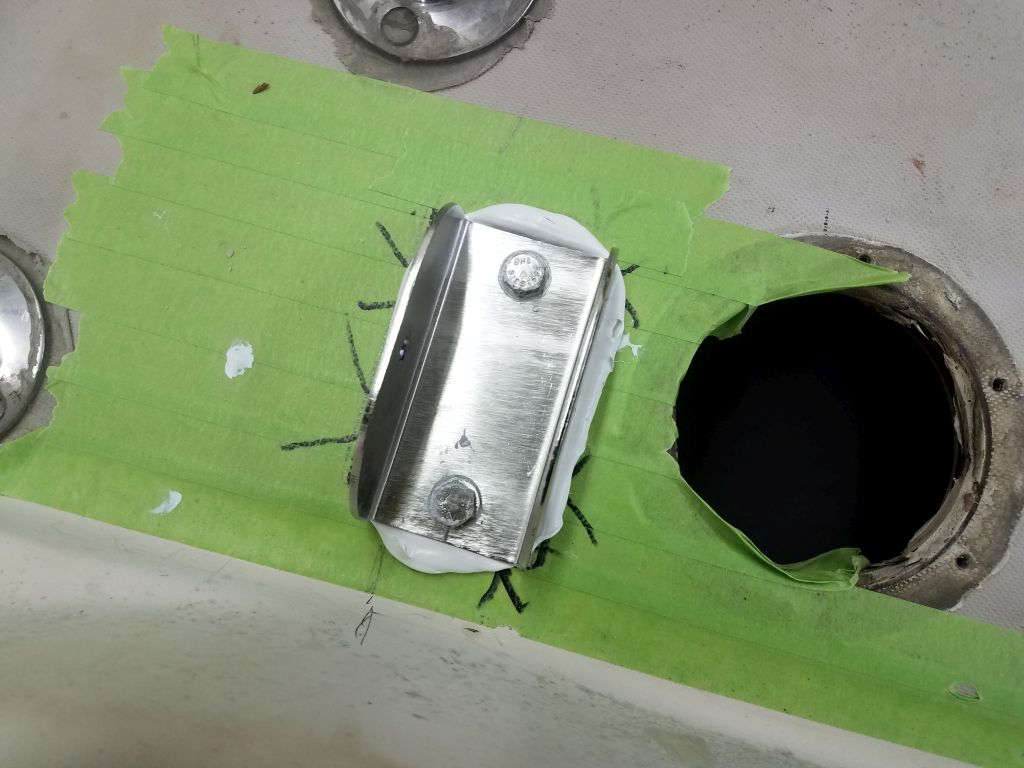
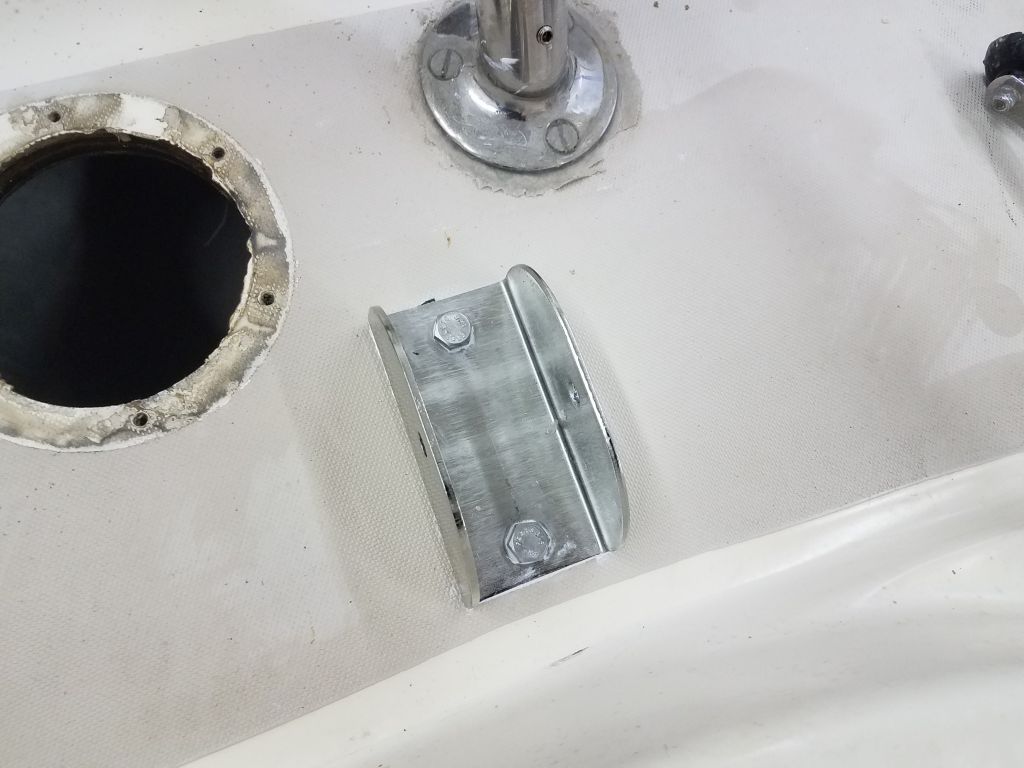
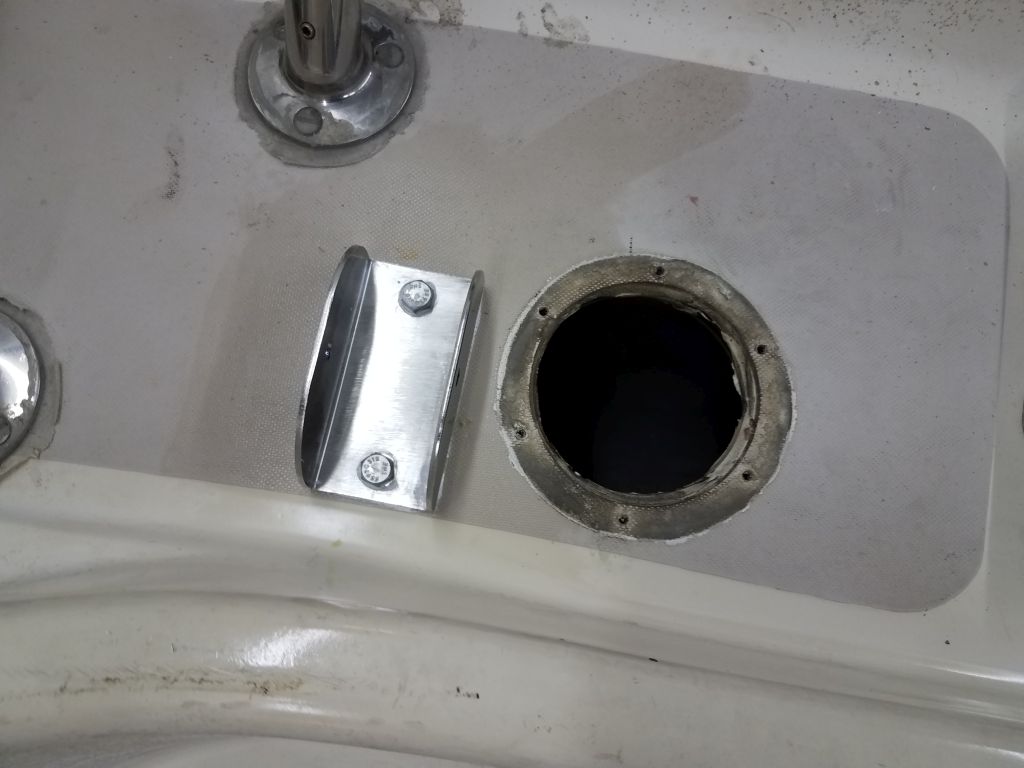
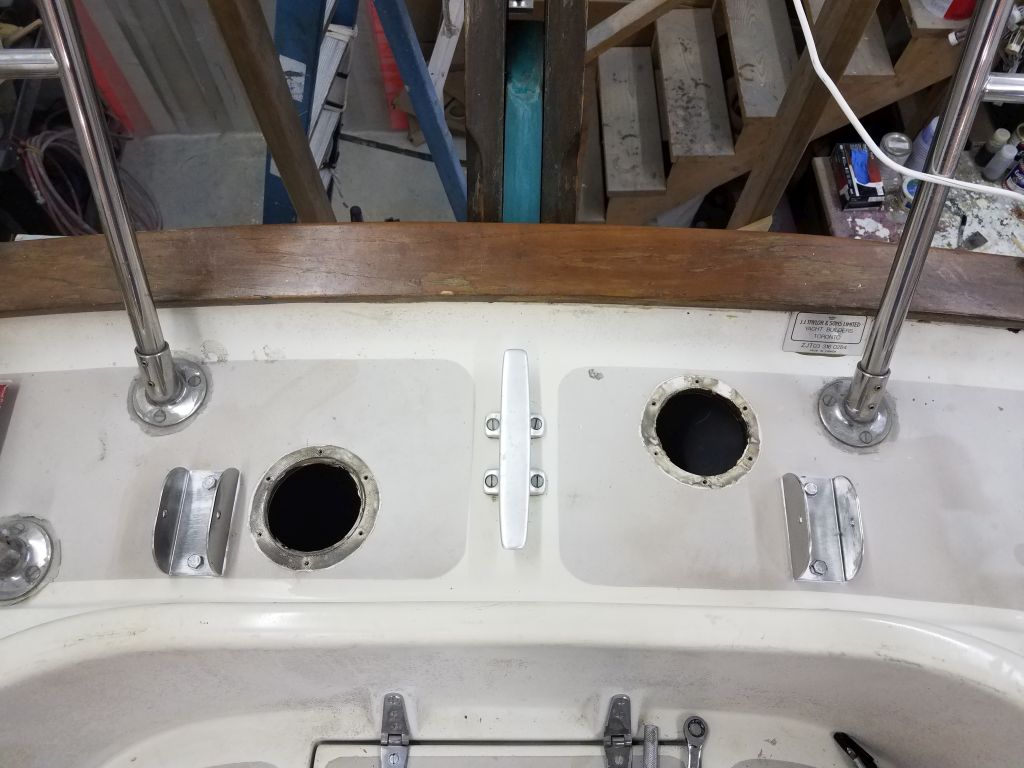
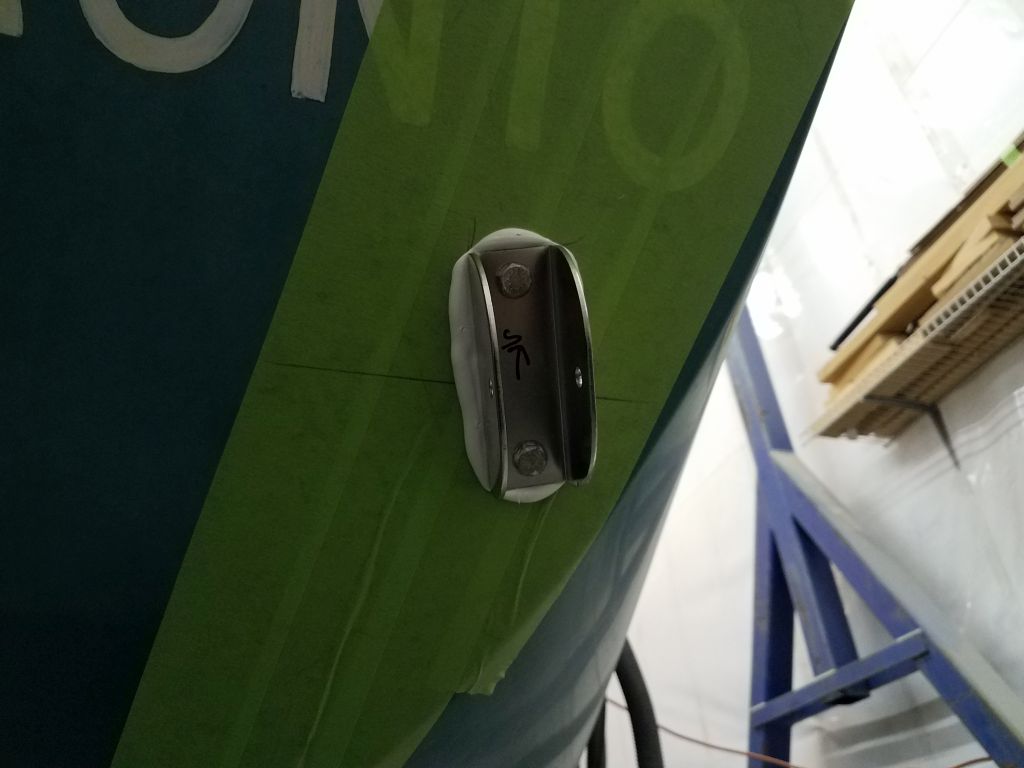
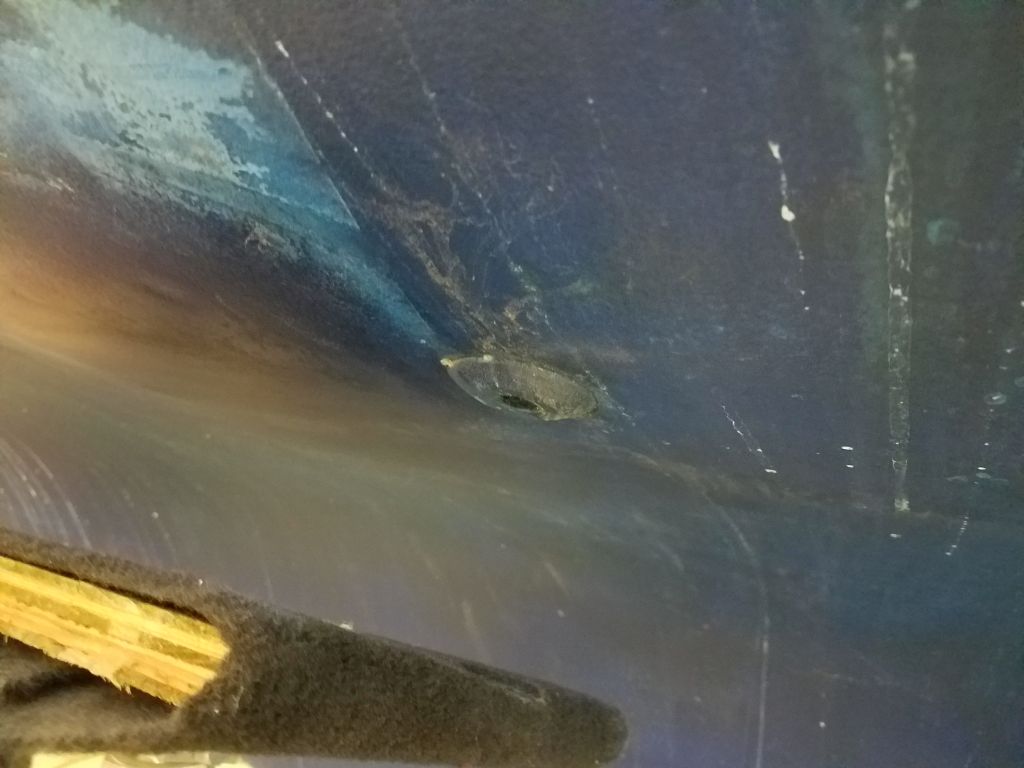
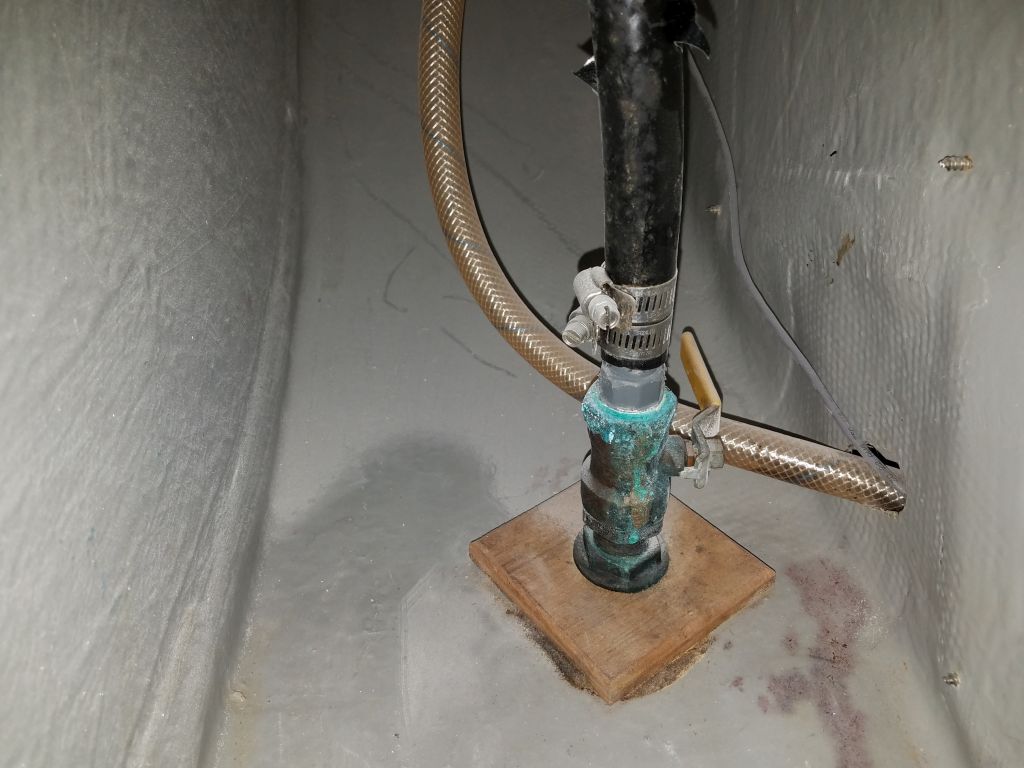
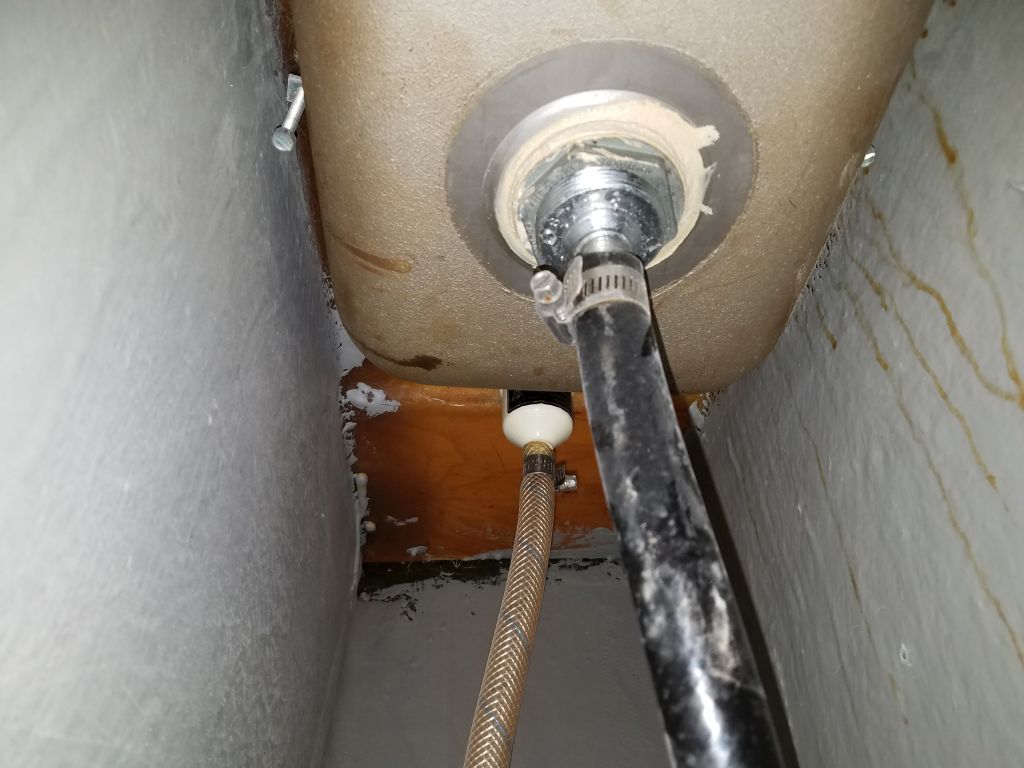
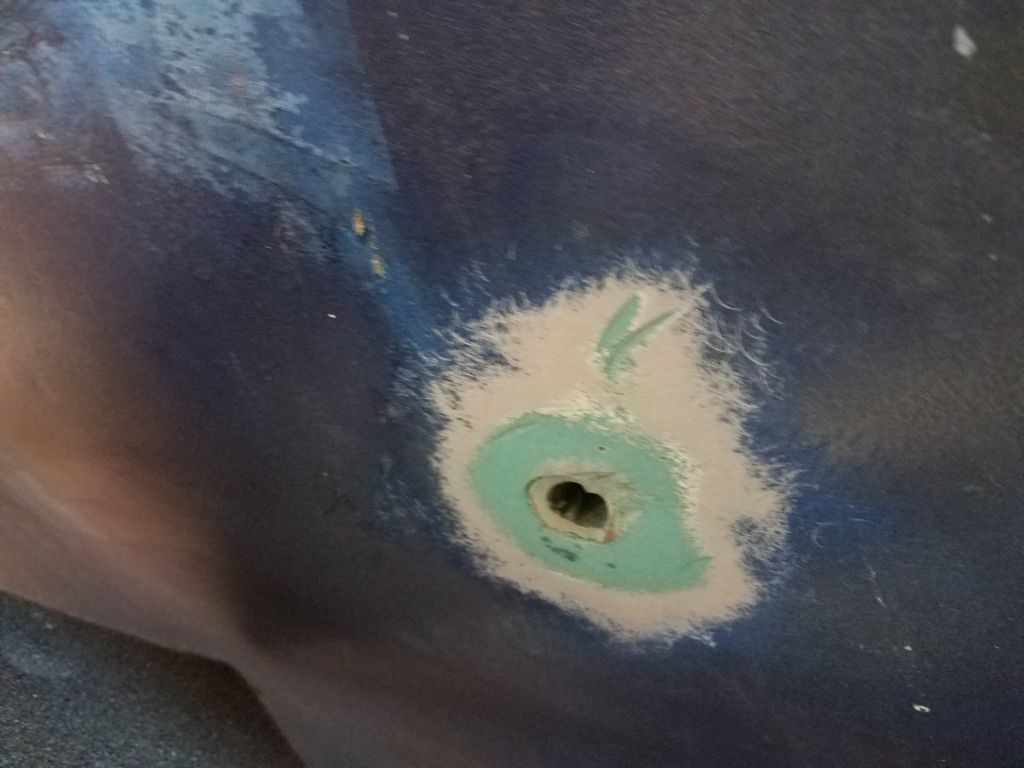
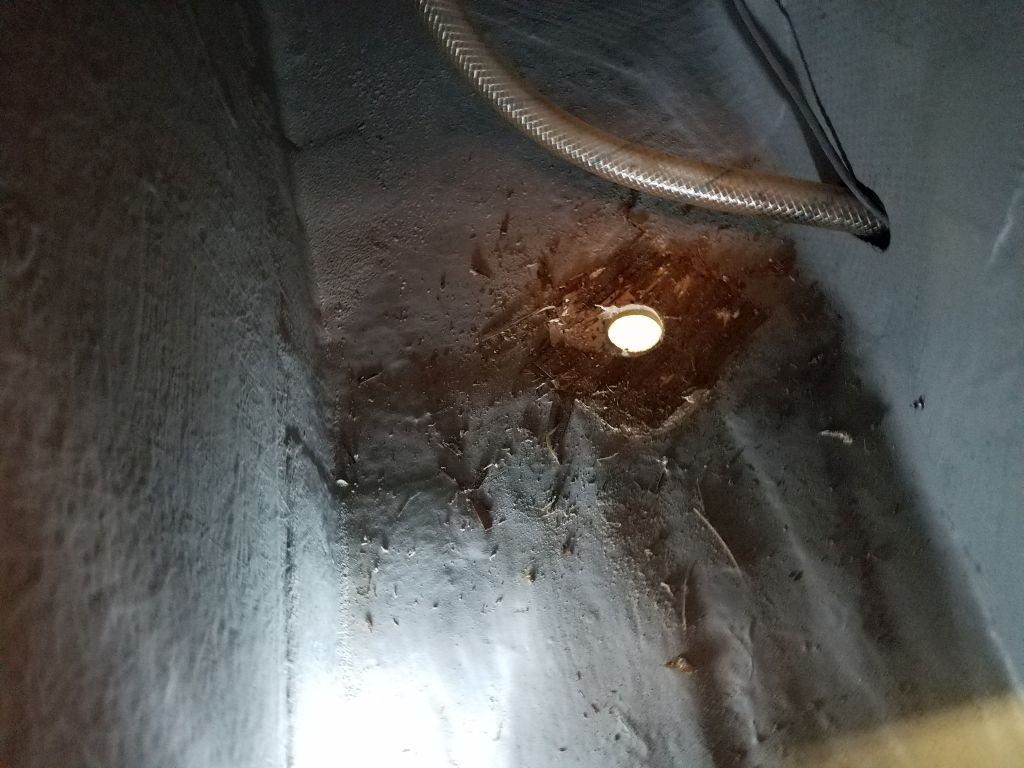
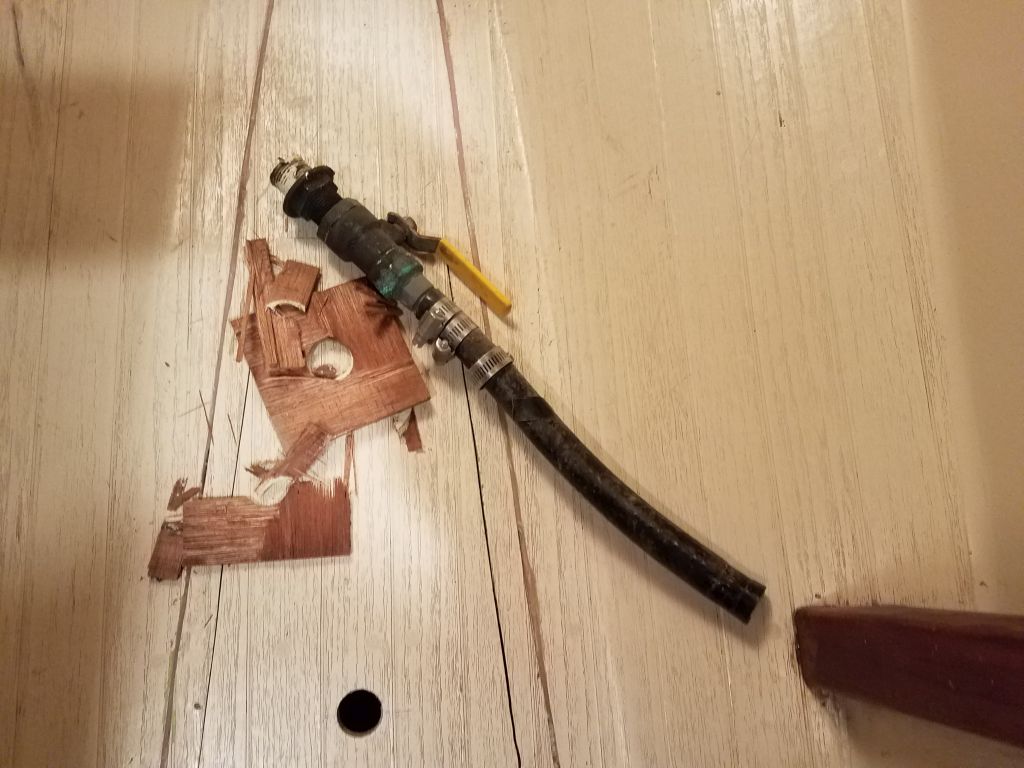
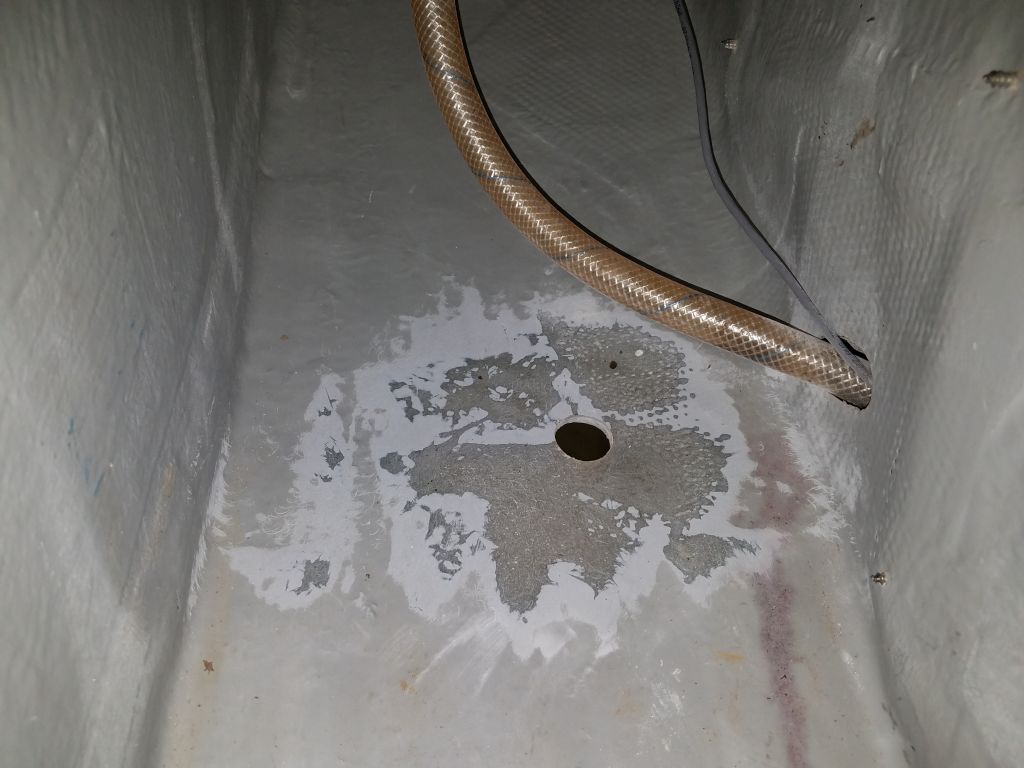
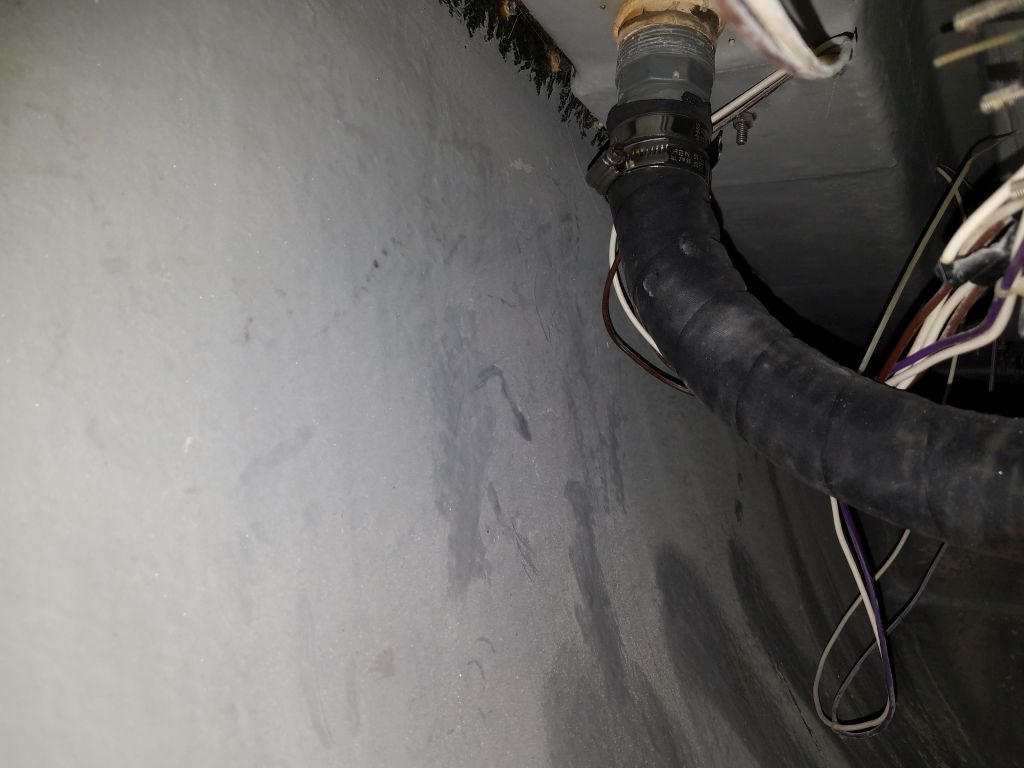
The owner also mentioned that one or both of the scupper drain fittings in the cockpit had appeared to leak.  Of course removal and rebedding of these fittings might not be as straightforward as one would hope, since the elbow fittings beneath the cockpit were installed before the deck was placed on the boat, so there was no room to spin these or any other elbows off the through hull threads.  Hoping to avoid the need to rebed,we decided to check first to see if the fitting (s) did leak.   I used a length of old hose to connect the two drains belowdecks, an easy way to plug them, and plugged the cockpit supper wells with butyl sealant so I could pour in some water to the channel and allow it to sit, and see if any leaks appeared.

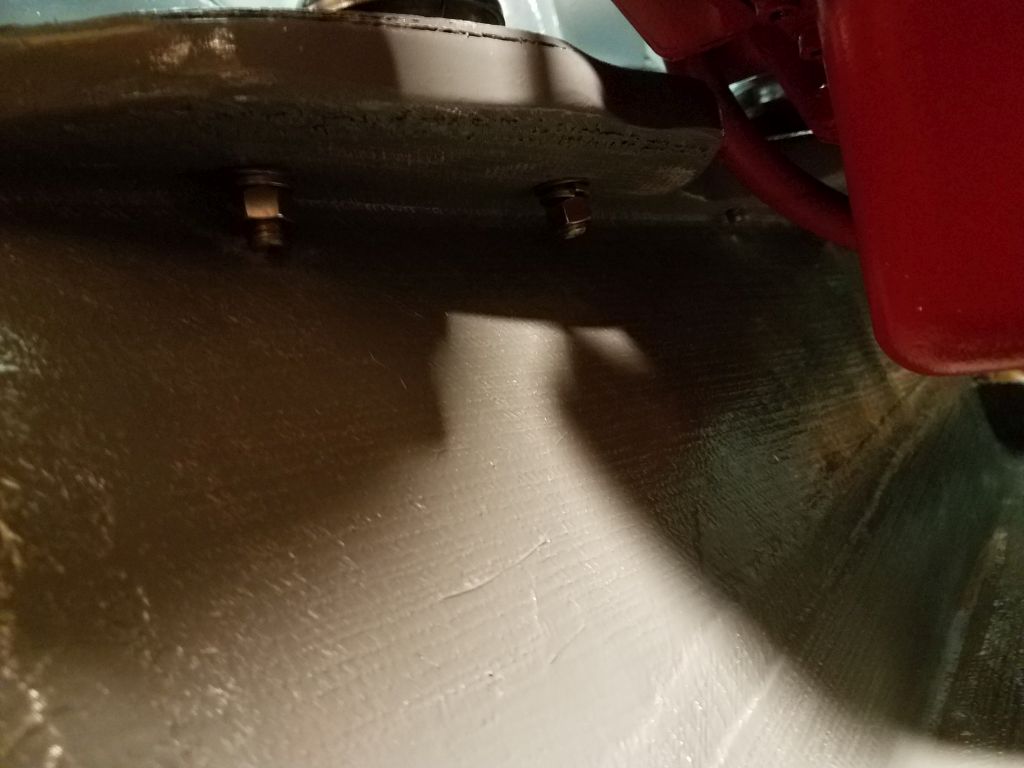
Unfortunately, before the end of business I noticed that the port fitting indeed had a slow leak into the engine room, so I’d make a plan to rebed it soon.  With luck, I could unscrew the fitting sufficiently to rebed without having to completely remove it and the elbow fitting.

Total time billed on this job today:  3 hours

0600 Weather Observation:  10°, clear.  Forecast for the day:  Sunny, 40s

Dharma Rose 19

Wednesday

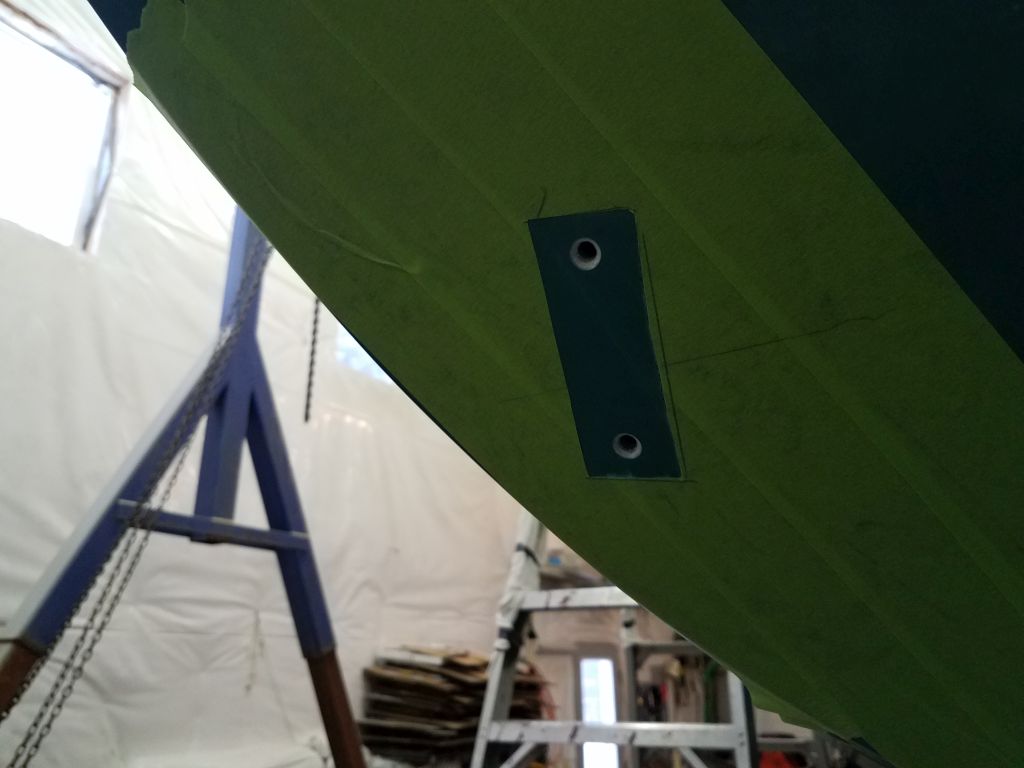
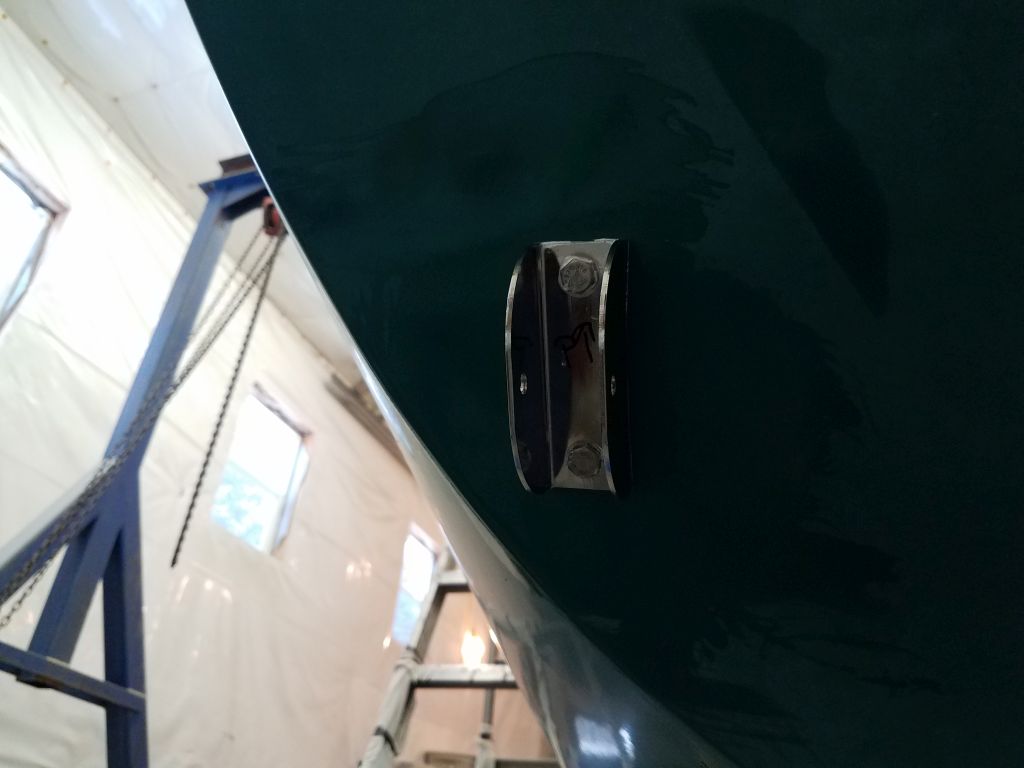
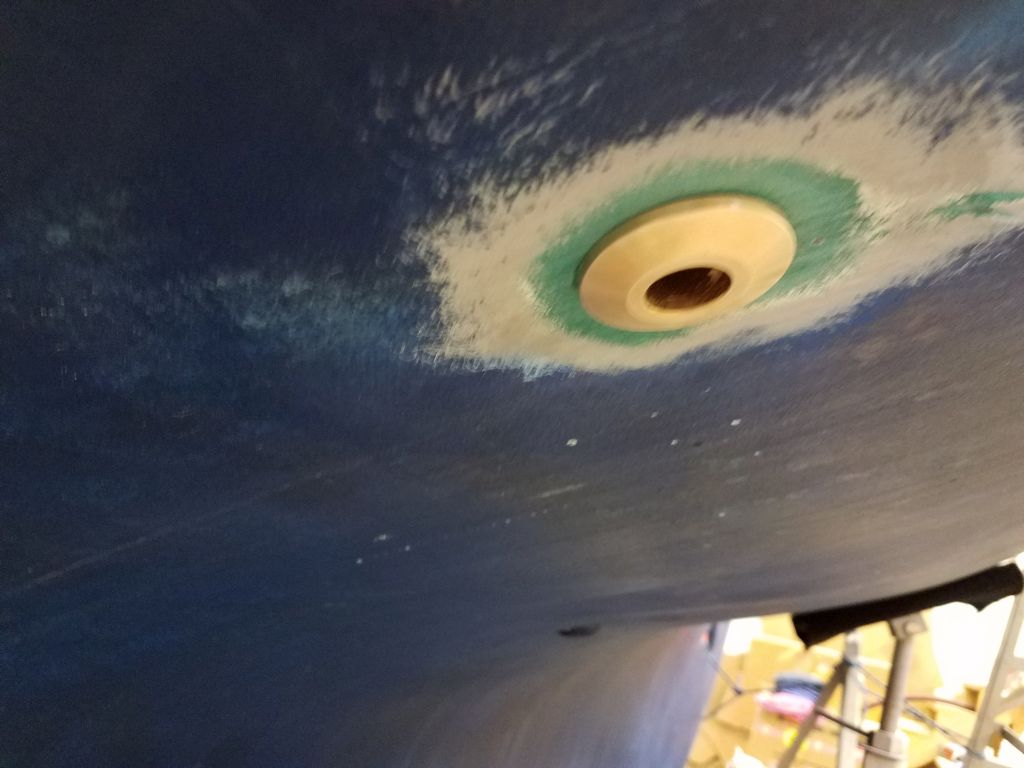
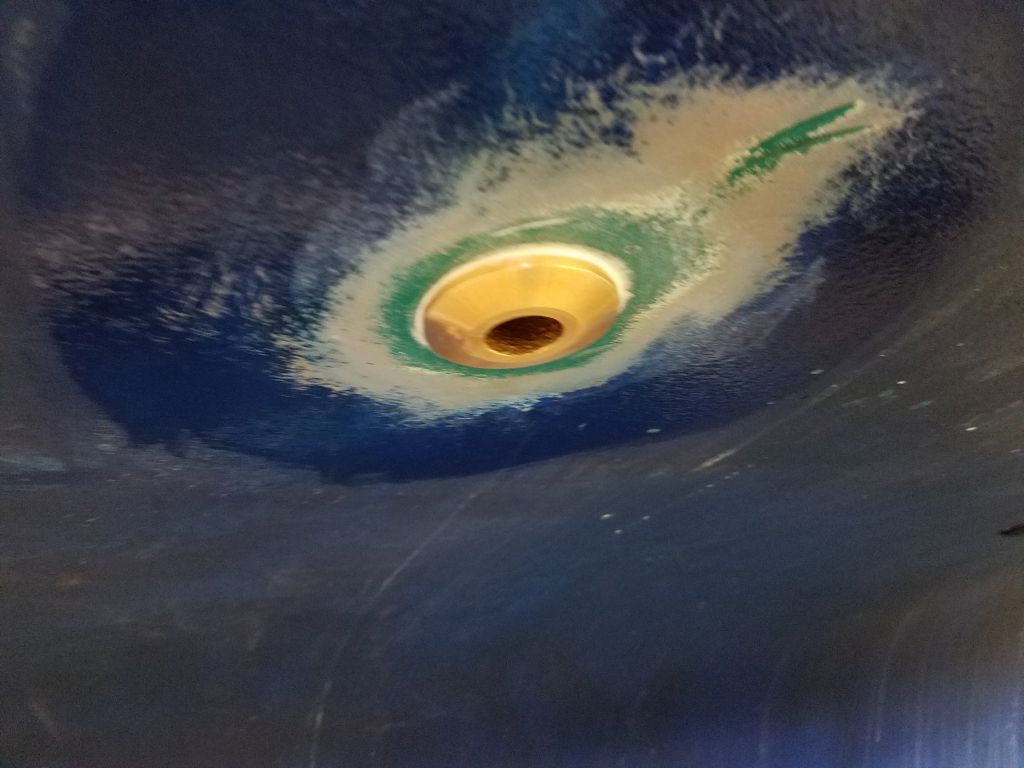
Now the starboard through hull pad was back to where I started earlier in the week, so it was time to move forward with the through hull installation.  After lightly sanding the new fillet, I drilled the hole through the hull, using the backing pad for alignment.

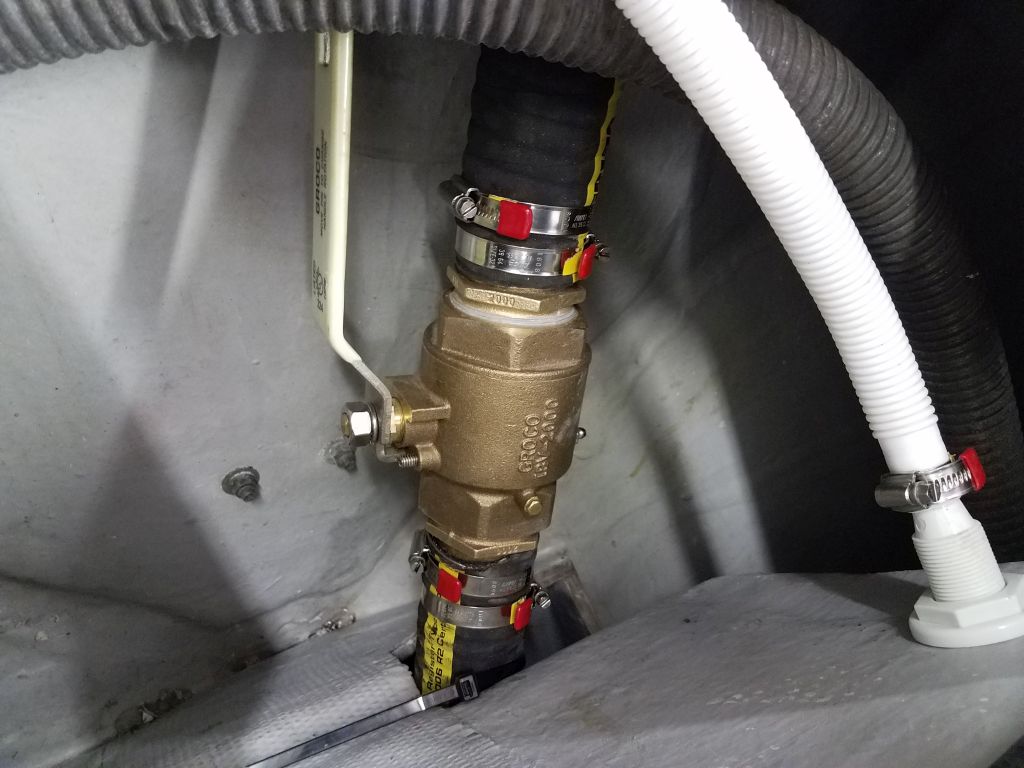
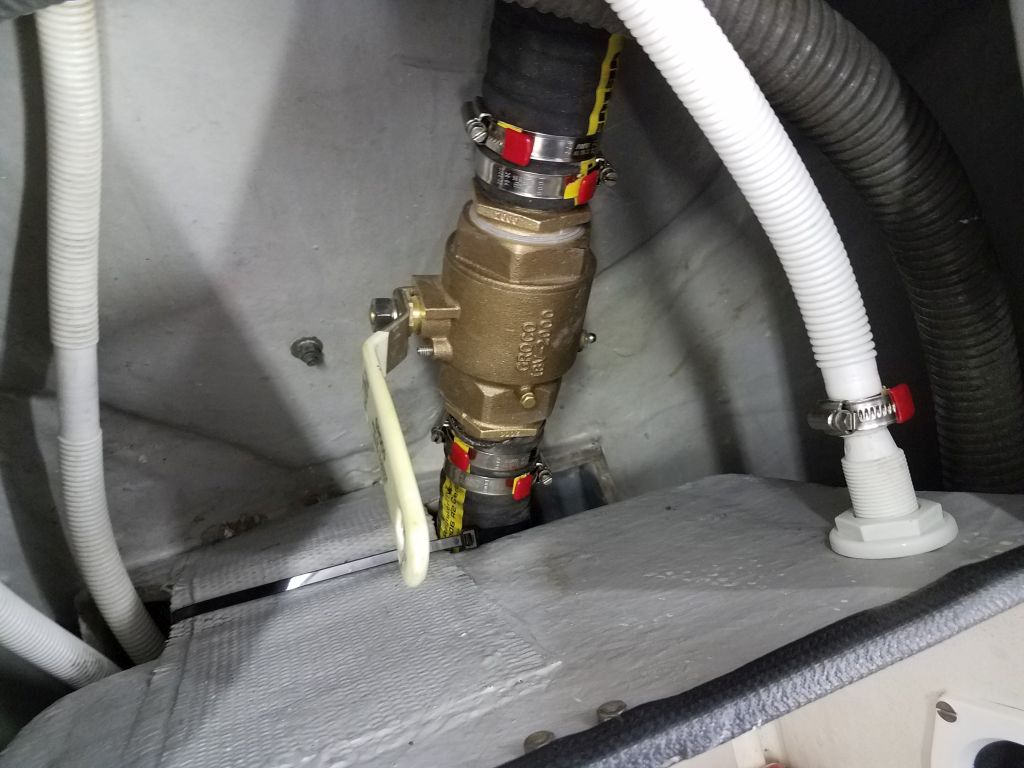
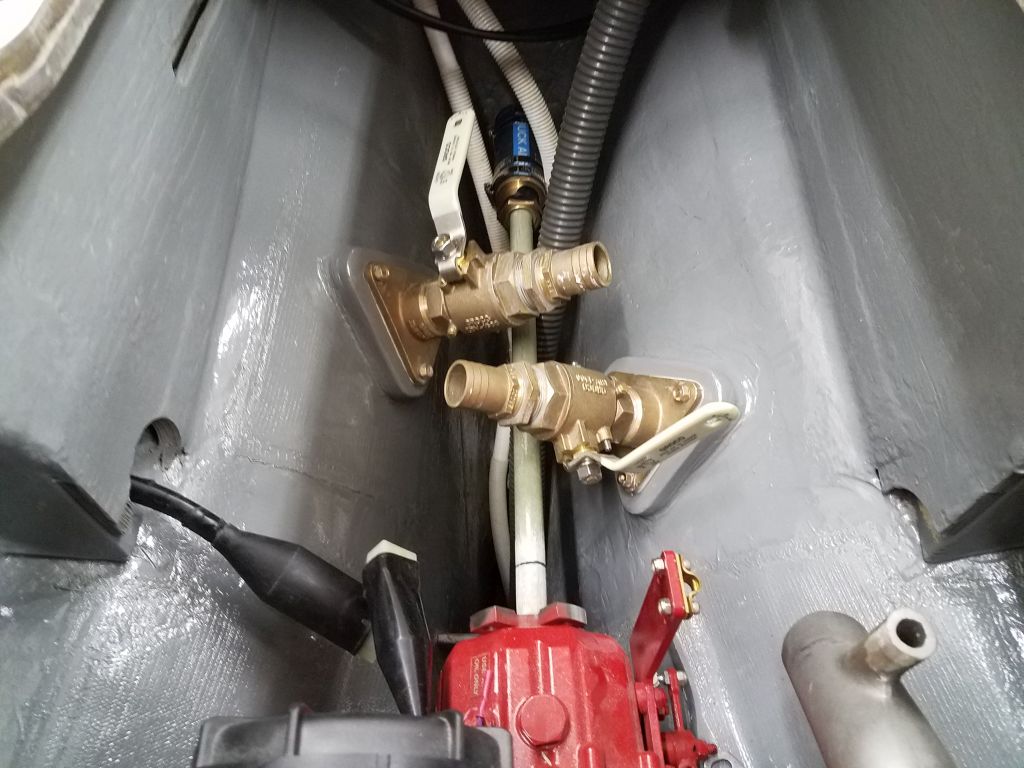
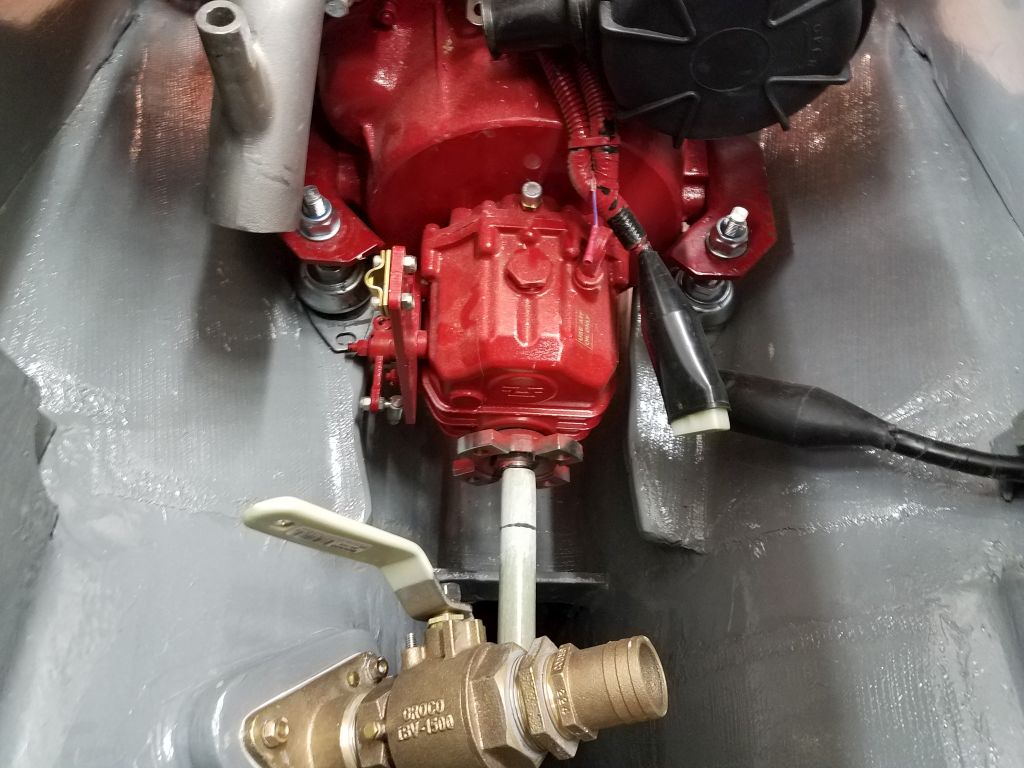
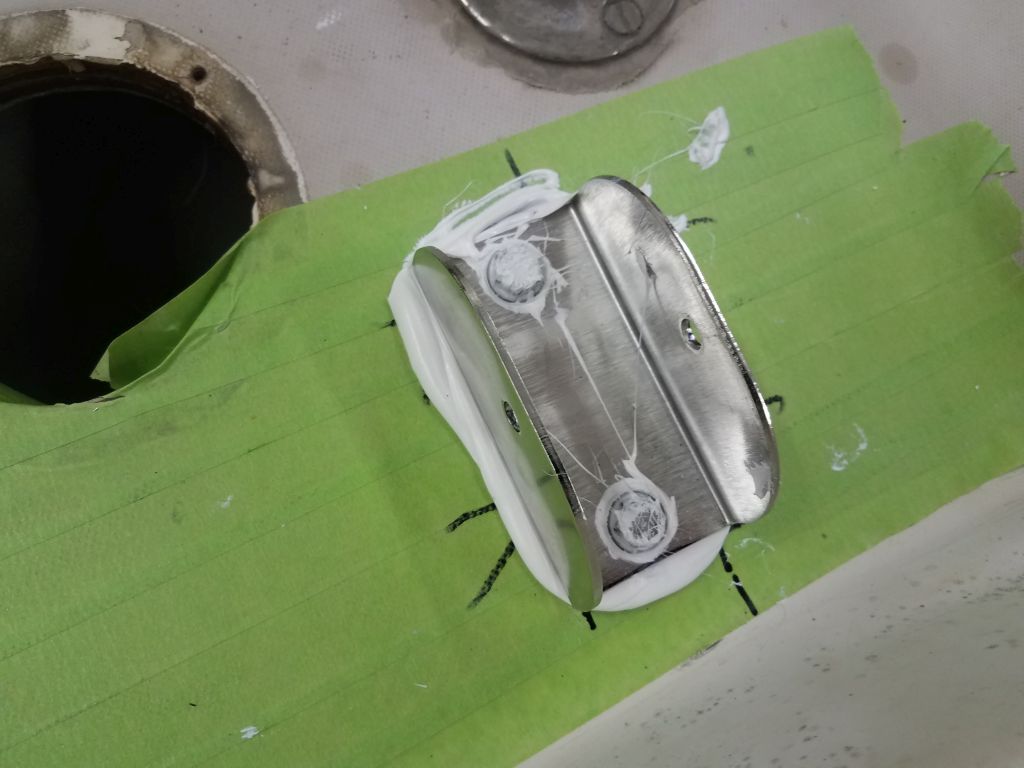
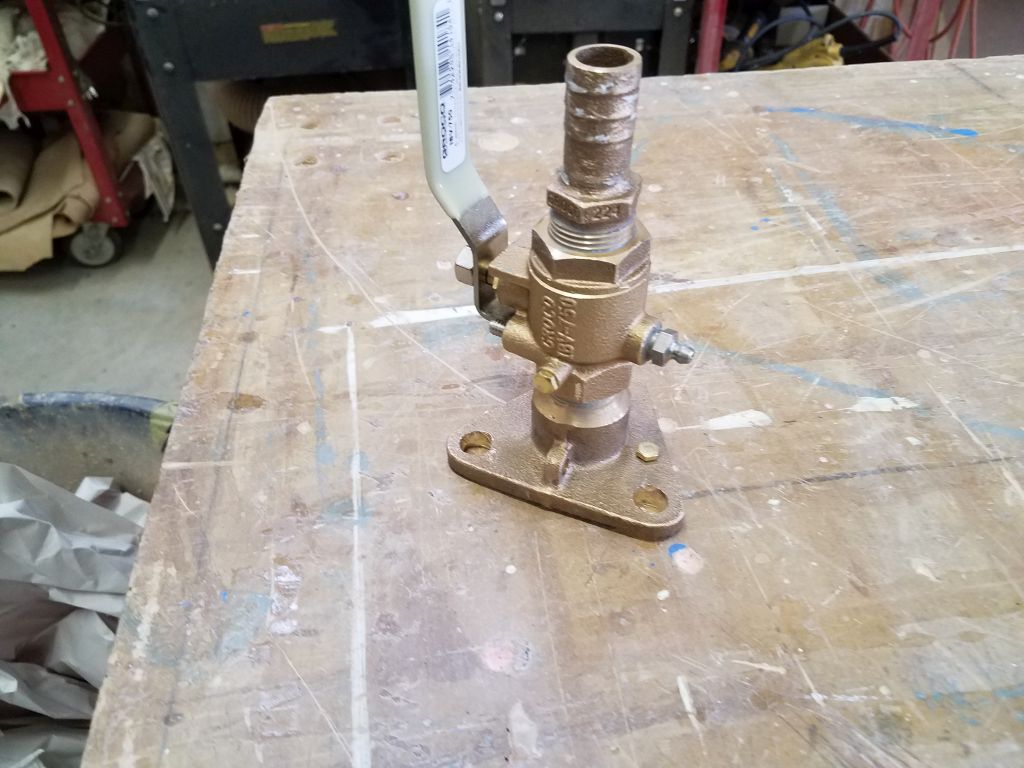
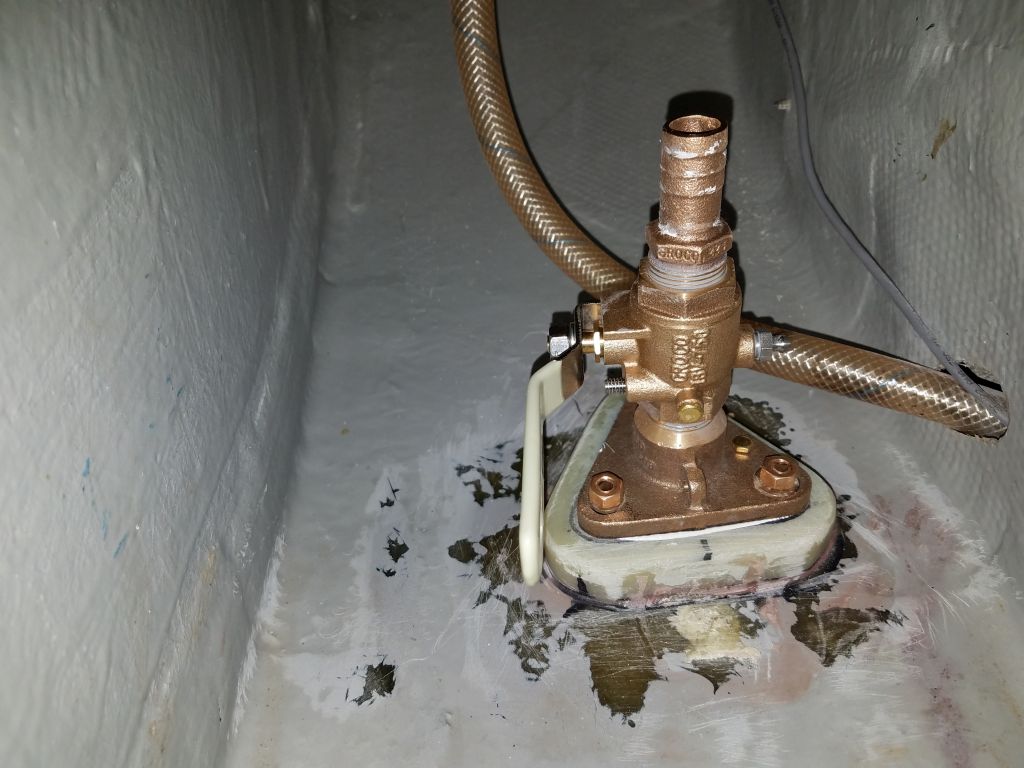
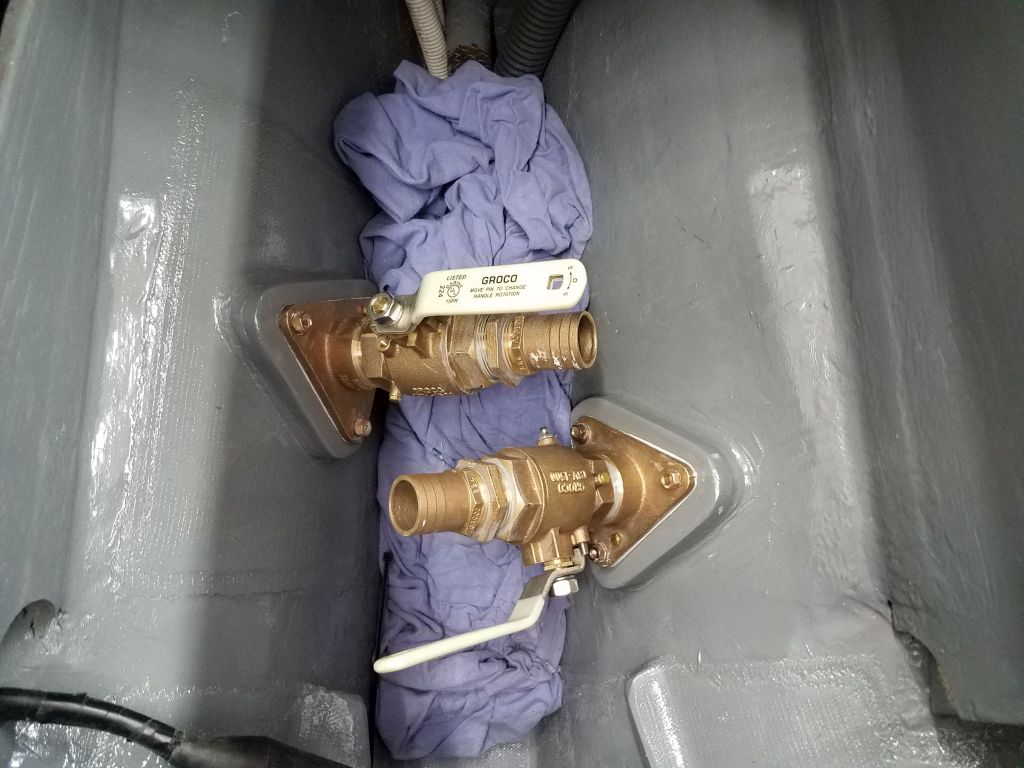
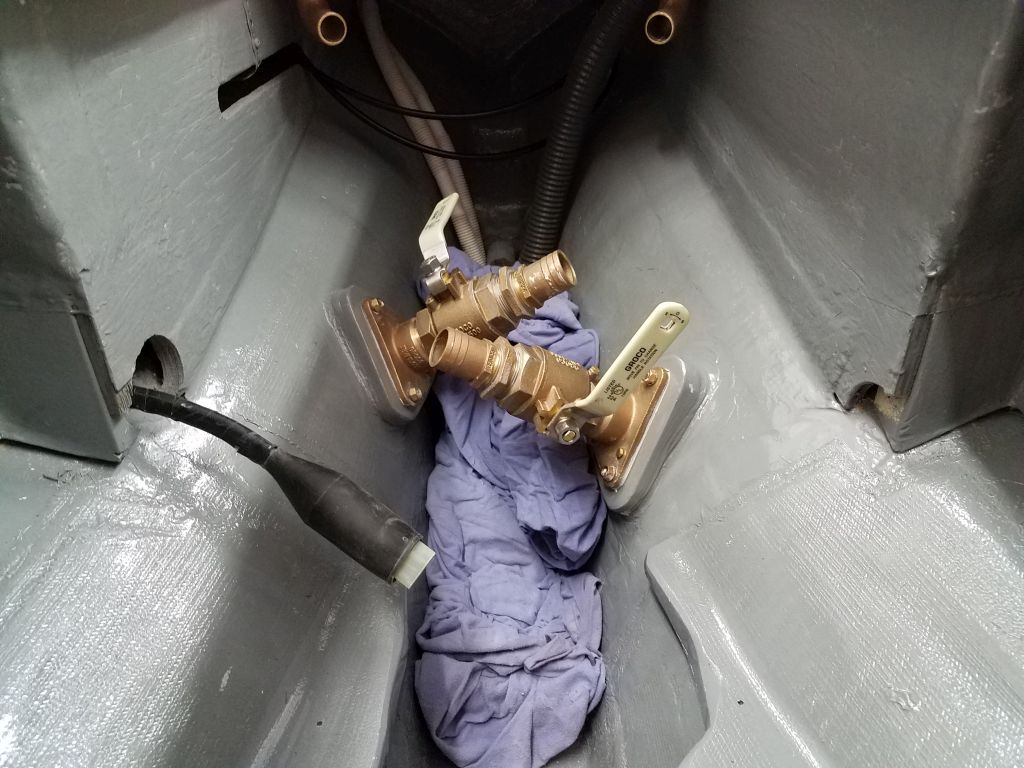
To begin, I dry-fit the flange bases and the rest of the hardware to ensure the proper fit inside–which was all good this time.  The valves and hose nipples would easily spin and and off without interfering with each other post-installation, so I didn’t have to worry about having all the hardware in place while I installed the critical bases.  During final installation, I’d align the valve handles so that both would operate fully without interference, unlike how they’re shown here.

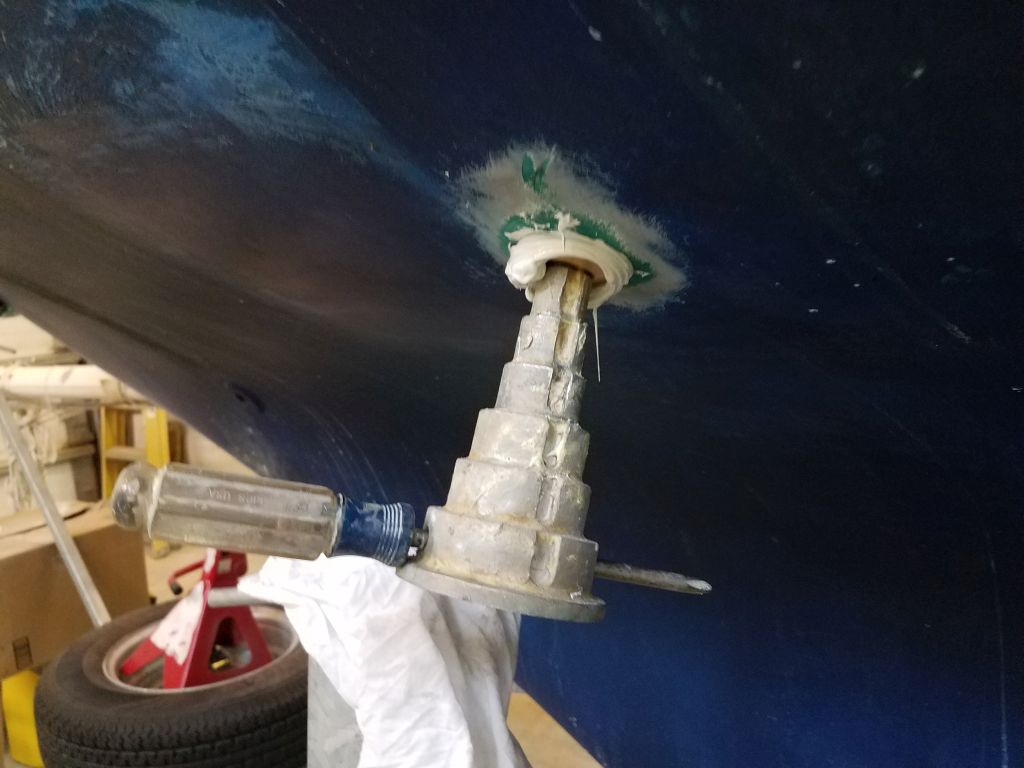
From outside, I threaded in the through hull fittings as far as they’d go, till they bottomed out in the flange base above, and then marked the threads where they entered the hull so I could cut off an appropriate length of threads.

I transferred the measurements generously to the top ends of the through hulls and cut off the excess with a grinder, cleaning up the threads using the original through hull nuts.  This meant that now I could thread the through hulls in tightly from outside.

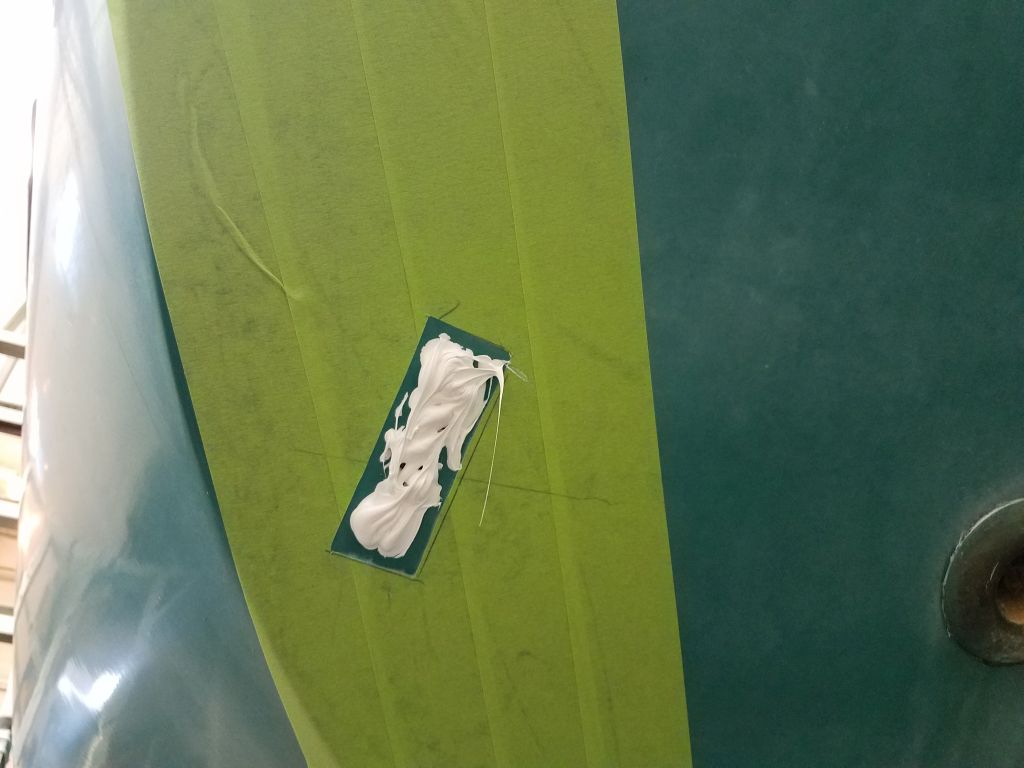
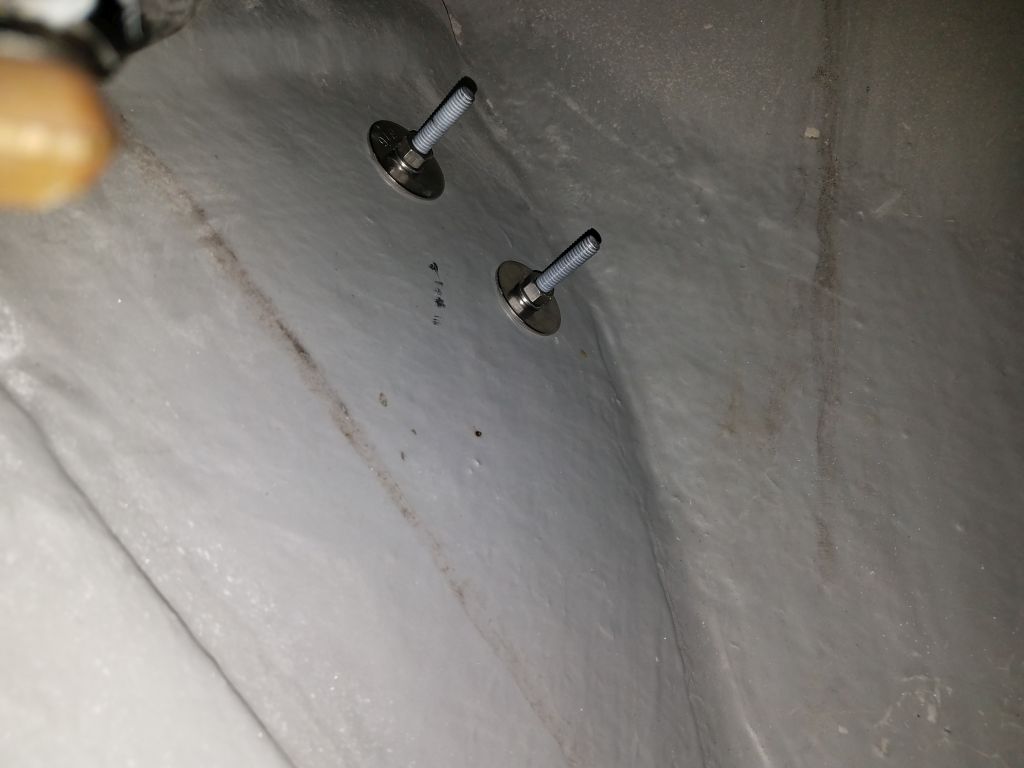
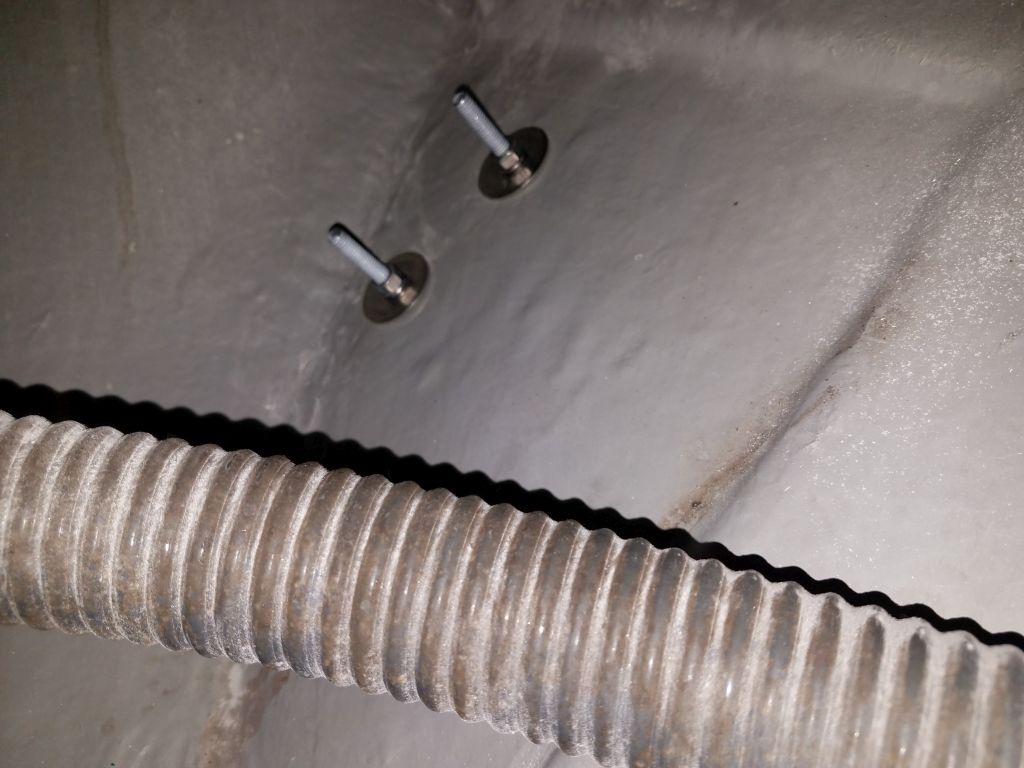
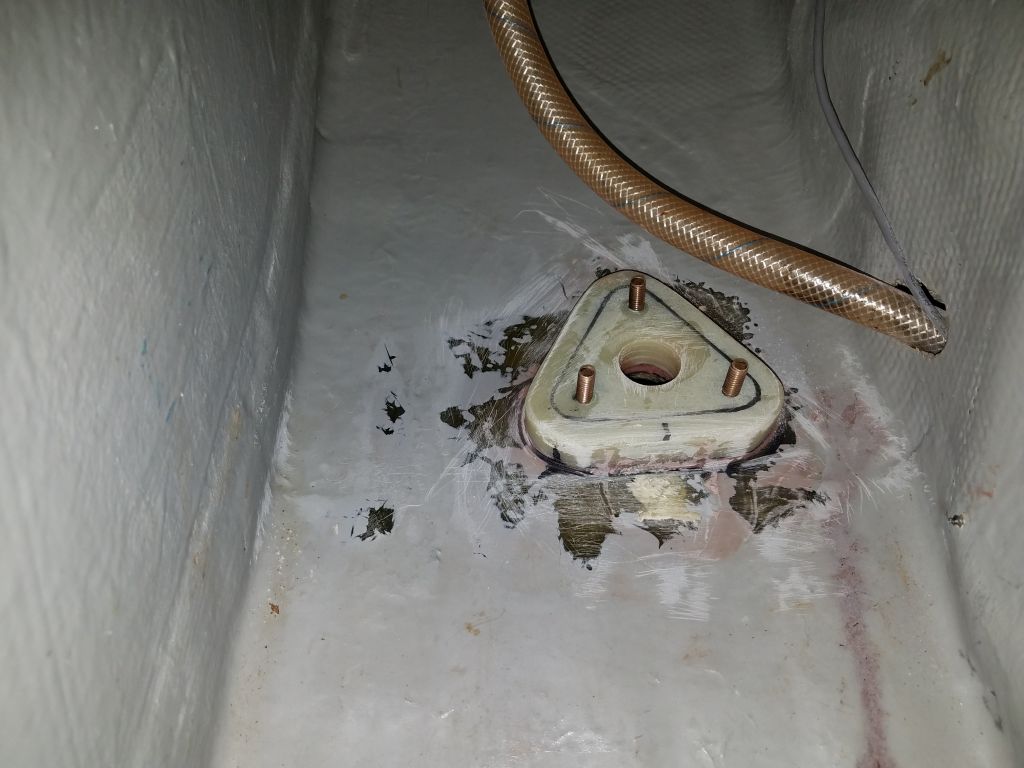
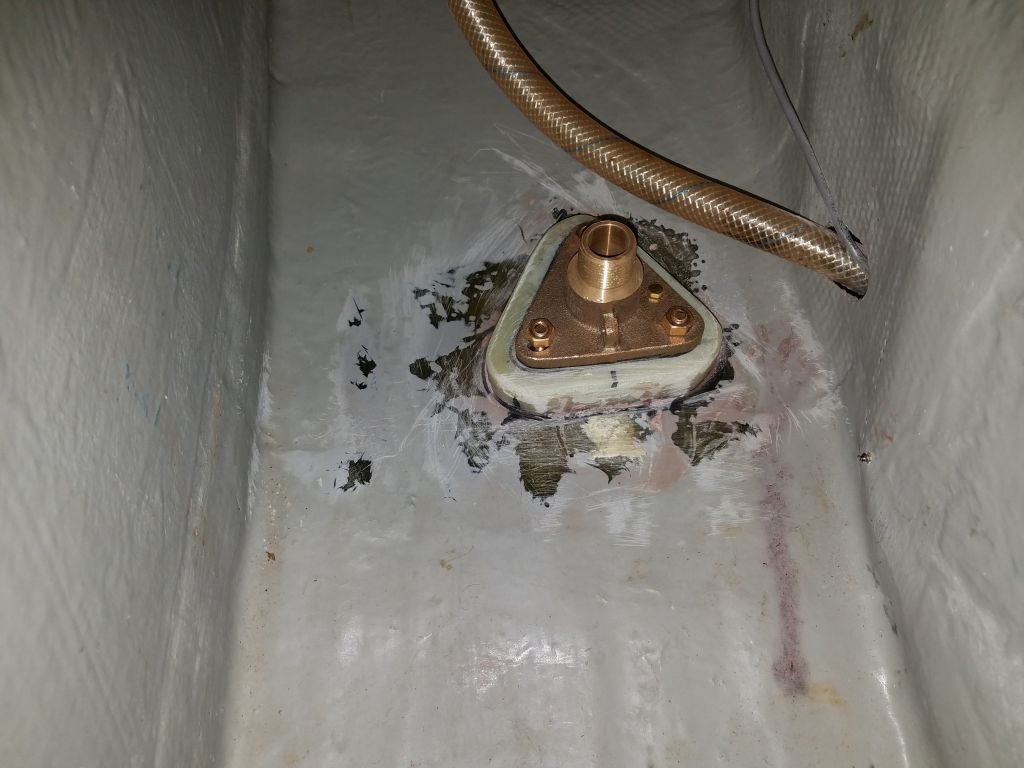
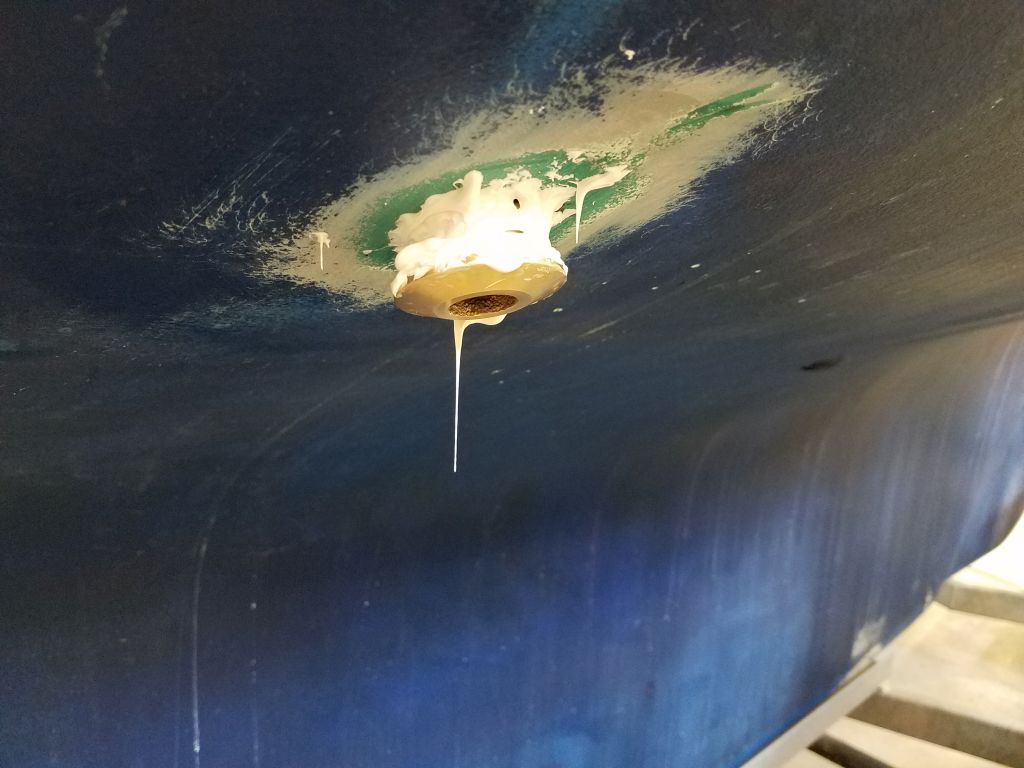
Satisfied with the fit, I disassembled everything and proceeded with the final installation.  Starting inside, I applied polyurethane sealant to the tops of the pads, and installed the flange bases hand-tight with the nuts to secure them.  Then, outside, I gooped up the through hull necks and heads heavily with the sealant and threaded them in tightly using a through hull tool, creating lavish squeezeout.  The starboard side gave me some fits when I had trouble starting the threads, but eventually I prevailed.

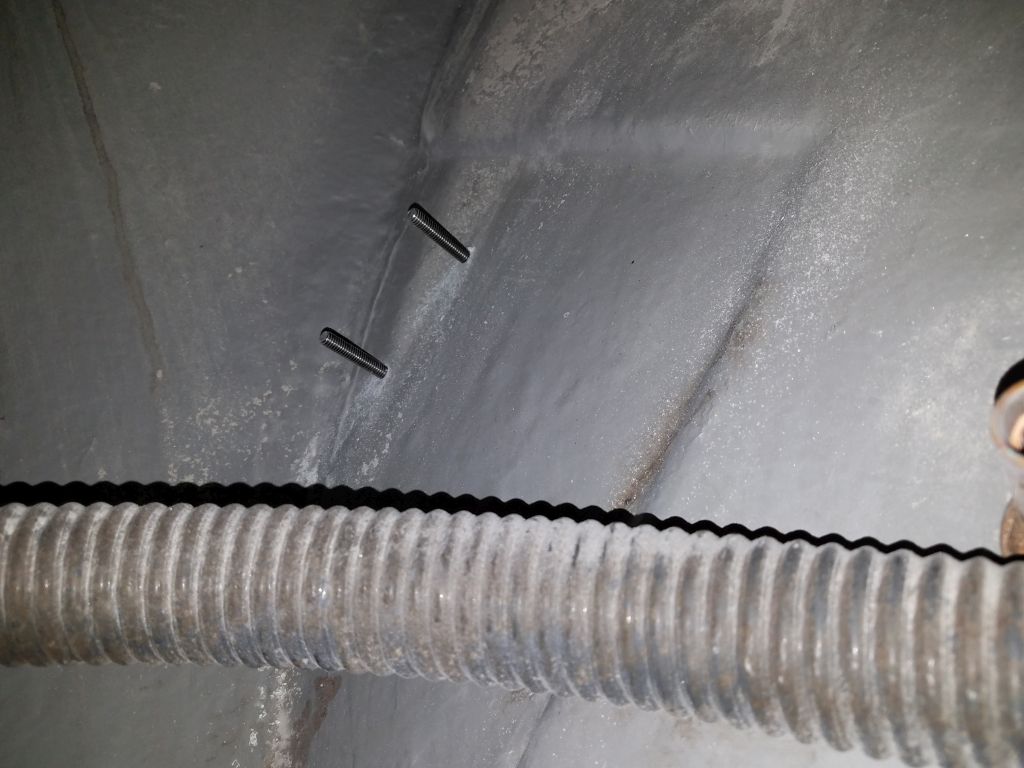
Inside once more, I added lockwashers to all the mounting studs and tightened the nuts securely, and cleaned up any excess sealant squeezeout inside and out.  I’d wait to install the valves and other hardware till after I’d painted the engine room in the near future.

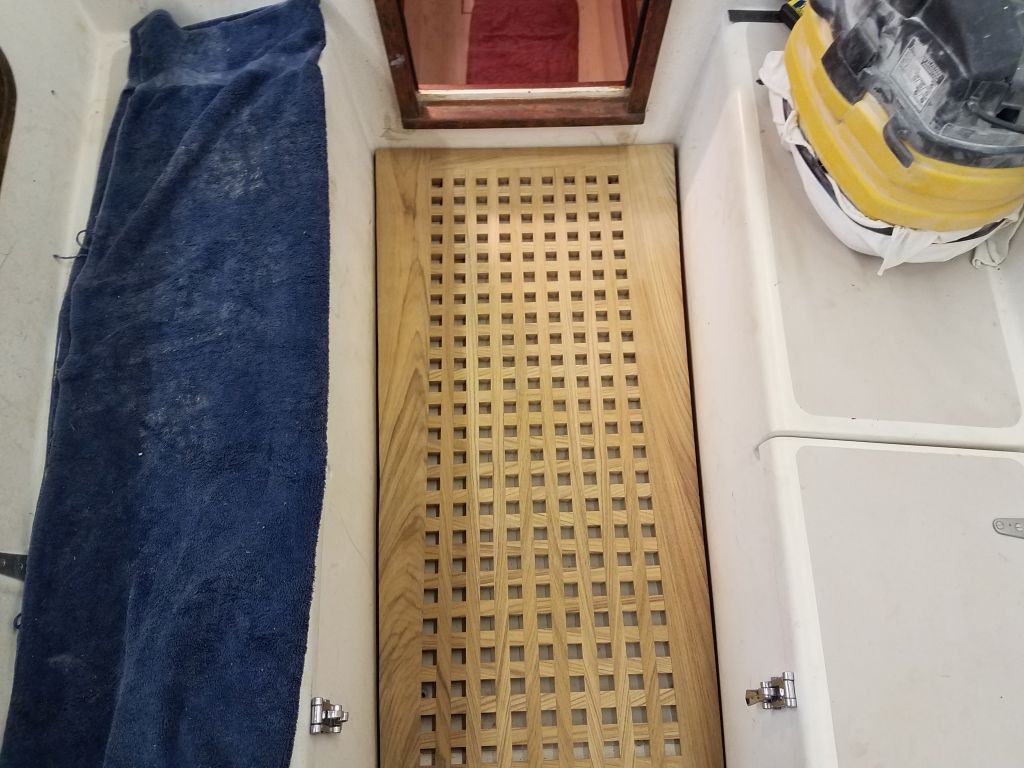
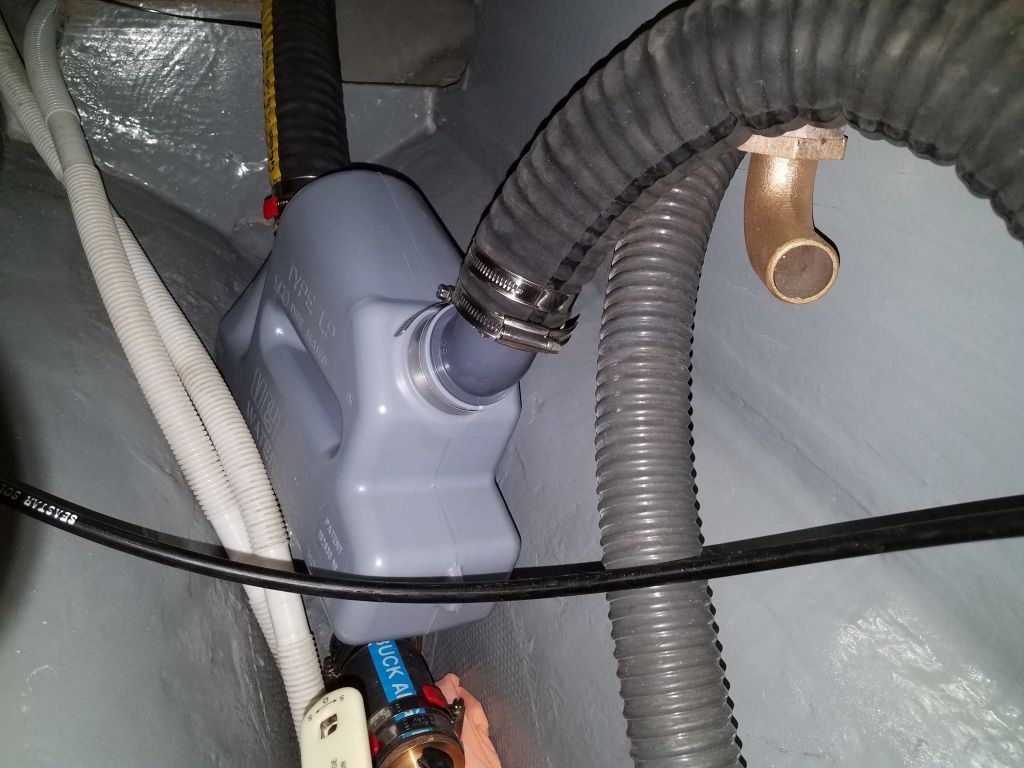
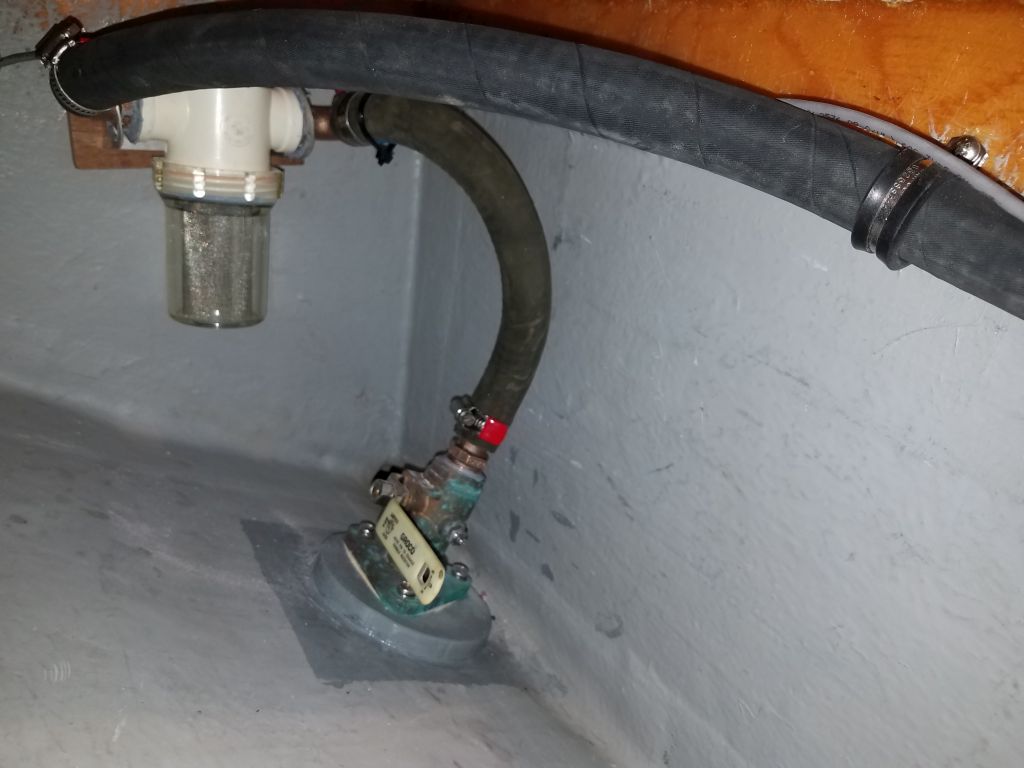
Later, I continued work on my final pre-engine install list, starting with the raw water filter that I’d removed earlier in the project.    To improve access for inspection and maintenance, at the owner’s request I added a simple screw-in deck place in the berth top above the filter location, which would greatly ease future connections and basic maintenance of the filter.  I changed the fittings on the filter to a larger 3/4″ size to accommodate the new hose (along with a new 3/4″ hose connector on the nearby through hull), and reinstalled the filter to the bulkhead as it had been when the boat arrived.  I’d do the hose runs later, once the engine was in place.

I located the new fuel filter at the forward end of the engine room, leaving ample room for servicing both ends of the filter.  This was a temporary installation only, as final installation would wait till I painted the engine room.

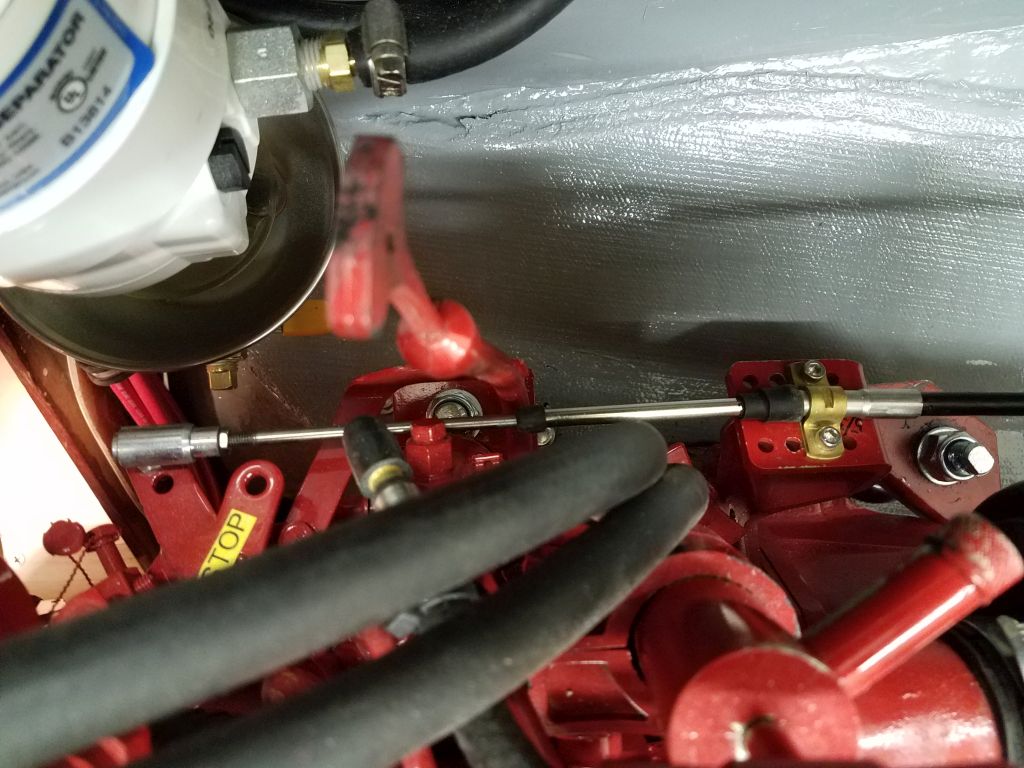
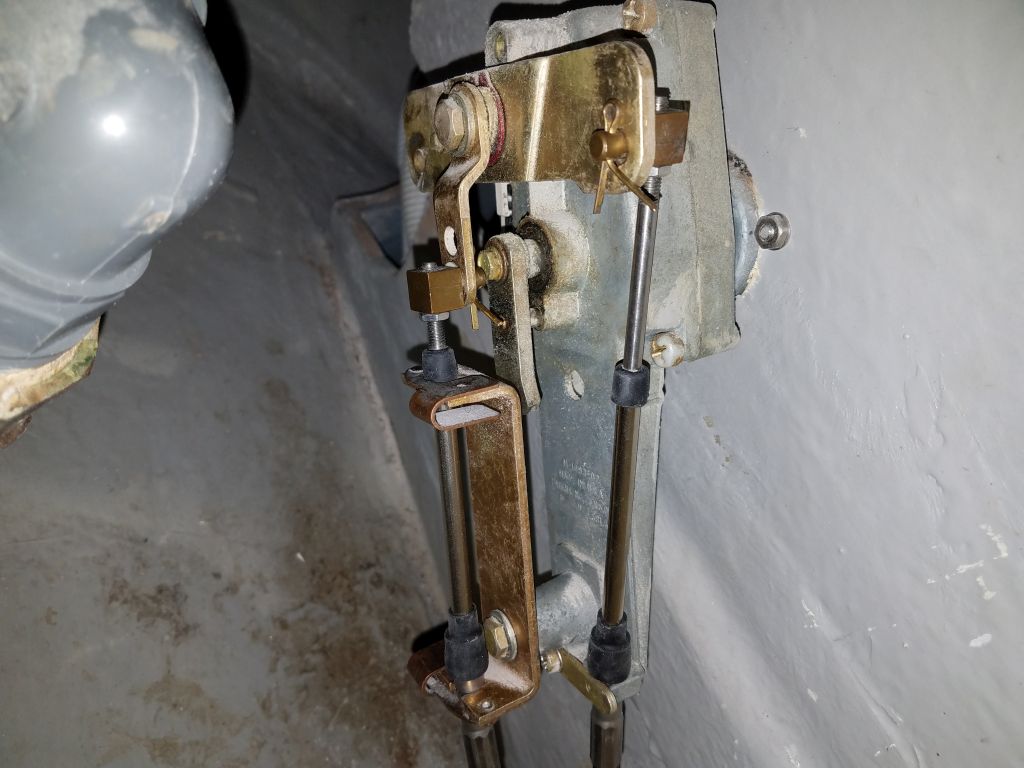
The old engine control cables were still in place, and I planned to replace them with new.  In addition, I’d need to change the gear lever position to accommodate the way the transmission lever on the new engine operated, so now I removed the two cables while access was as good as it could ever be in the tight space aft of the still-adrift fuel tank.  The control unit itself was in good condition, and I’d install new cables as soon as I could get measurements for their lengths.

Total time billed on this job today:  6.5 hours

0600 Weather Observation:  12°, mostly clear.  Forecast for the day:  Sunny, low 30s

Dharma Rose 18

Tuesday

With the engine still in place on the foundations after resting overnight, I made some final reference marks to determine where I needed additional cuts, mainly at the port aft end to improve clearance for the transmission shift lever.  Then, I removed the engine so I could make the cuts, before lowering the engine once again and repositioning it on the foundations.

The new cut at the aft end helped, but I found that I’d need to open up the cutout a bit at the forward end to allow full operation of the lever, so I noted the changes .  For now, the engine was sitting properly enough on the foundations that I could move on with some of the immediately-related work that I wanted to accomplish now.

Part of the engine block came within a whisker of contacting the edge of the foundations just aft of the forward mounts, so I made some marks there so I could slightly open the area later, once I’d removed the engine again.

Using the stand-in propeller shaft as a guide, I joggled the engine around a bit to get it positioned generally in the right spot so that the shaft lined up with the center of the transmission coupling.

To get a better sense of the rough engine alignment, as well as measure the final length of the propeller shaft, I temporarily installed the shaft coupling on the end of the fiberglass shaft, which required a bit of sanding so it would fit.  With the coupling in place and the shaft back in the boat, I lined it up with the transmission, and while the initial line-up was pretty good, the coupling faces were slightly off on one side, so I made some adjustments to the engine’s transverse and longitudinal positions, and slightly to the height of the aft mounts, which brought the coupling faces more tightly together, good enough that I felt like I could start to mark the shaft length, as well as the engine mount locations on the foundation.

After double-checking the shaft position in the coupling, and ensuring that the coupling was properly placed vis-a-vis the transmission coupling, I went outside to mark the shaft where it exited the Cutless bearing, and used my notes from the original setup to mark the end of the shaft 4-1/2″ aft of the stern tube, leaving about 1″ clearance forward of the rudder, as before.

Now I could remove the shaft and make the final measurements so I could order the new shaft soon.  The actual shaft length in this form came to 37-7/8″, and I’d need to make an allowance for the thickness of the flexible coupling that I’d install between the shaft and transmission couplings during the final installation.  I held the old shaft against the new mockup just as a reality check; if something was far off, I’d check the measurements again.  As expected, though, the lengths were close, but slightly different thanks to different engine lengths and positions.

This completed the initial round of engine fitting, and I removed the engine back down to the shop floor for storage till I was ready for the final installation.

Next, I used sanders to clean up and smooth over the various cuts I’d made in the engine foundations and around the engine hatch, and to further massage the cuts around the transmission lever, where I’d made additional marks to enlarge the cutout.  I used a small drill bit just to mark the centers of the engine mount holes that I’d marked, so that these locations would survive through the final engine room painting.  I didn’t want to drill the final bolt holes till I was positive of the engine position later.

While I was at it, I lightly sanded the patches (inside and out) over the starboard scupper through hull, as well as the new floor in the battery compartment in the cabin.

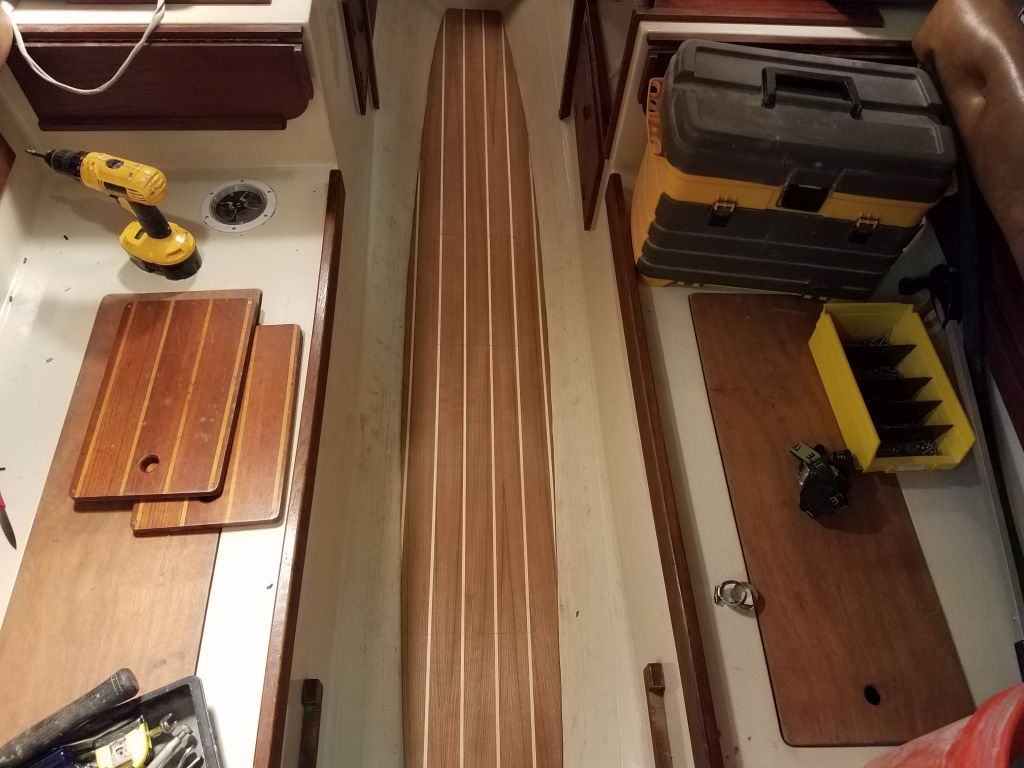
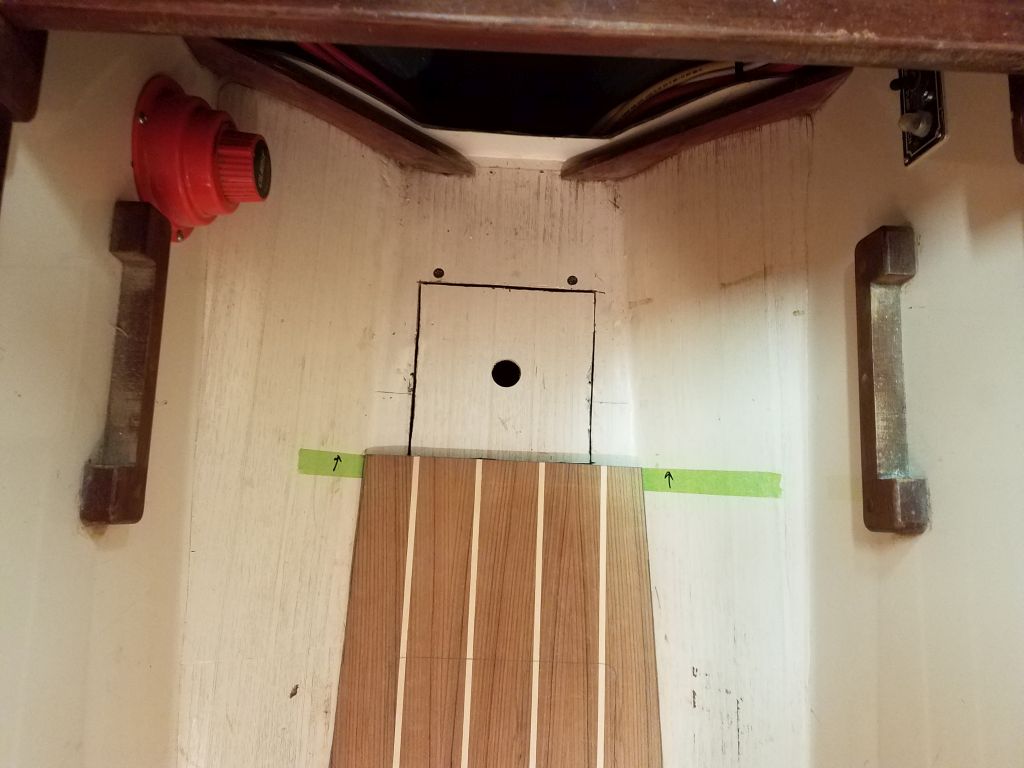
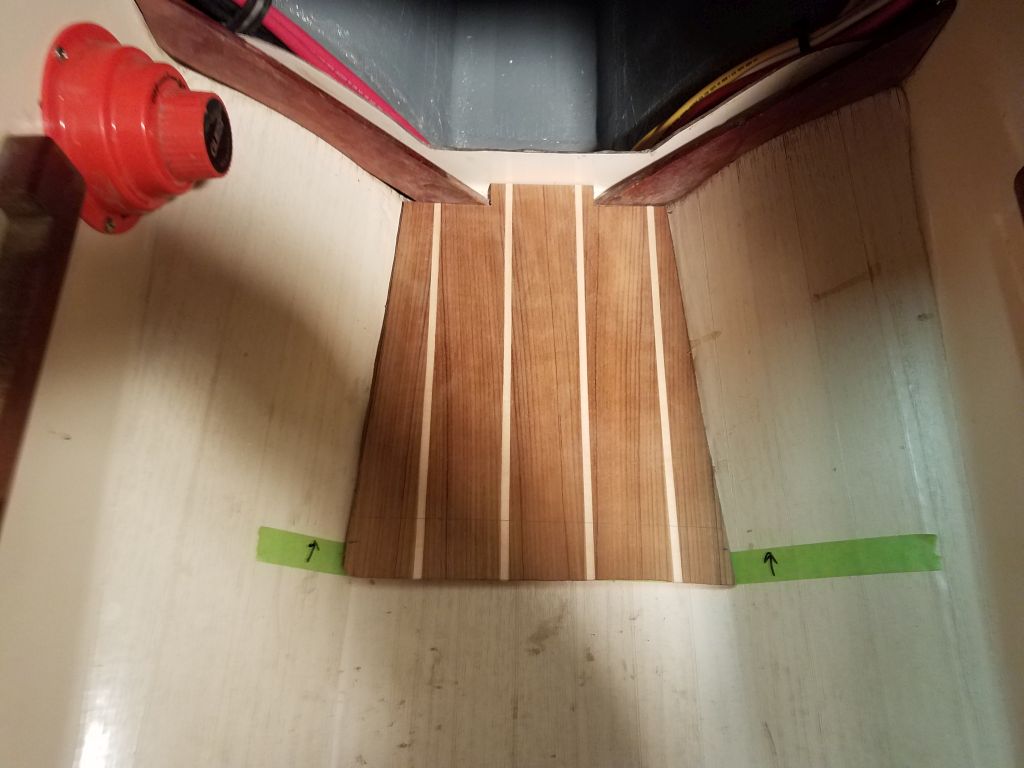
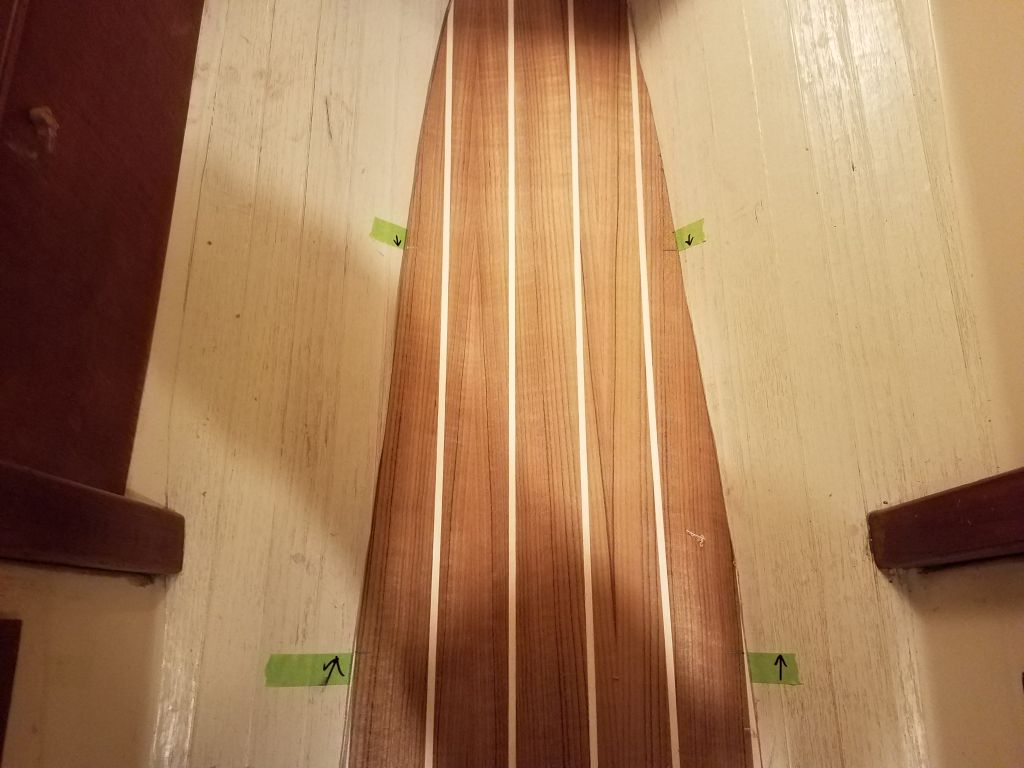
Meanwhile, inside the boat I unclamped the cabin sole and cleaned up all the masking tape, completing the work there for all intents and purposes.  

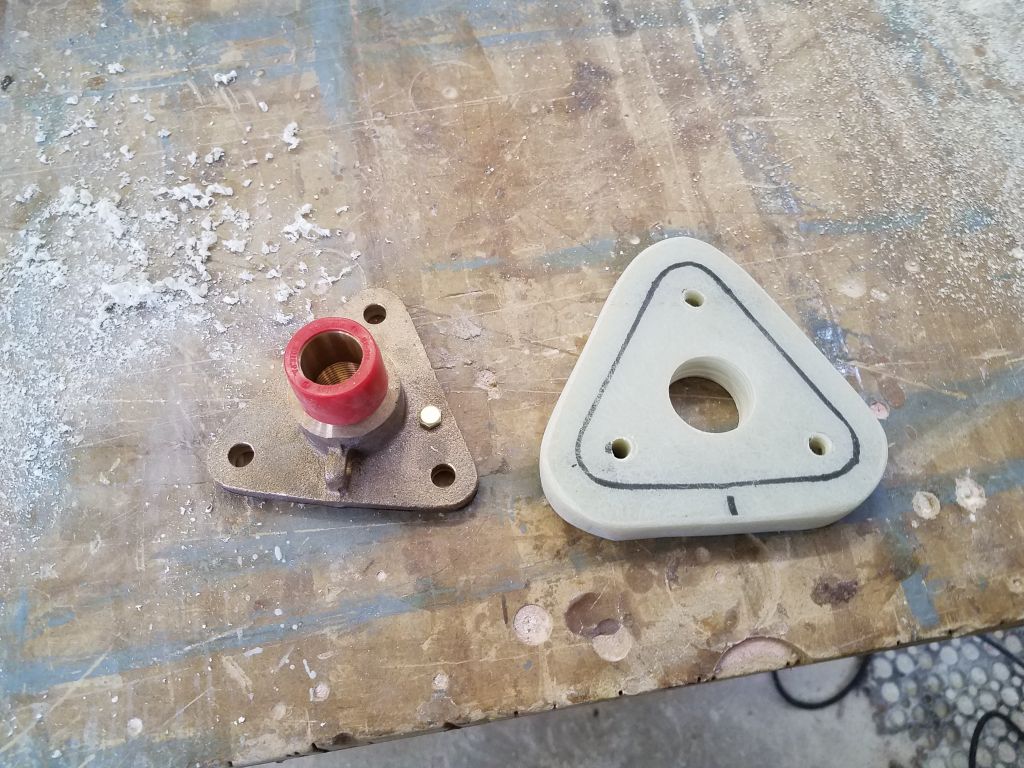
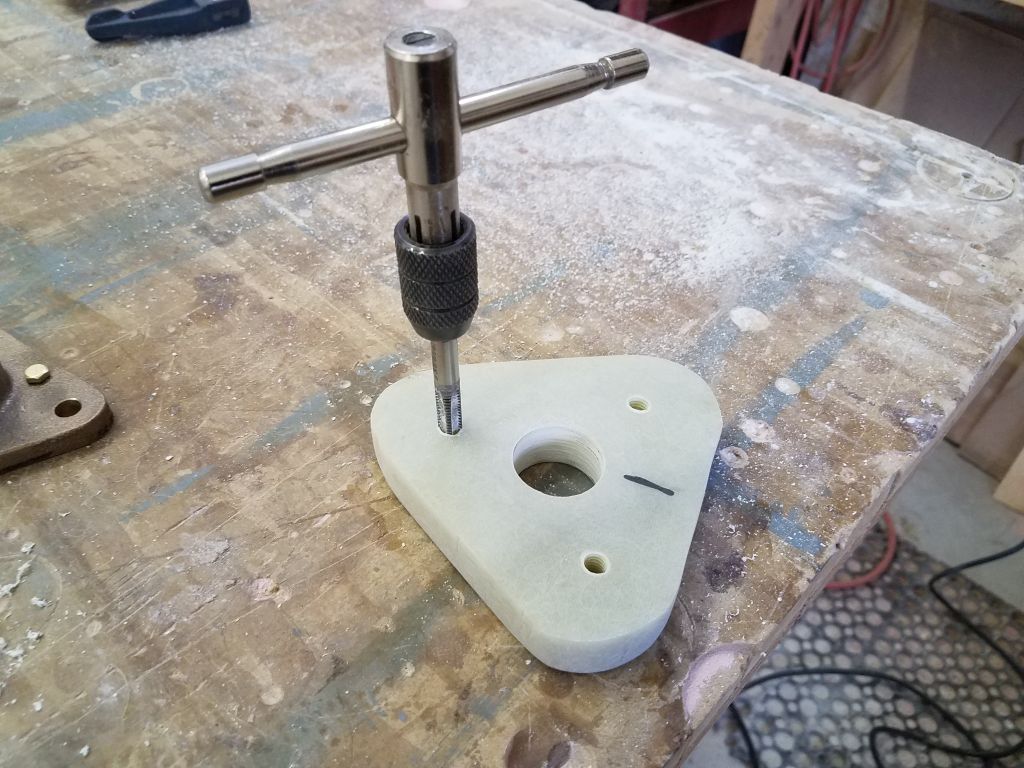
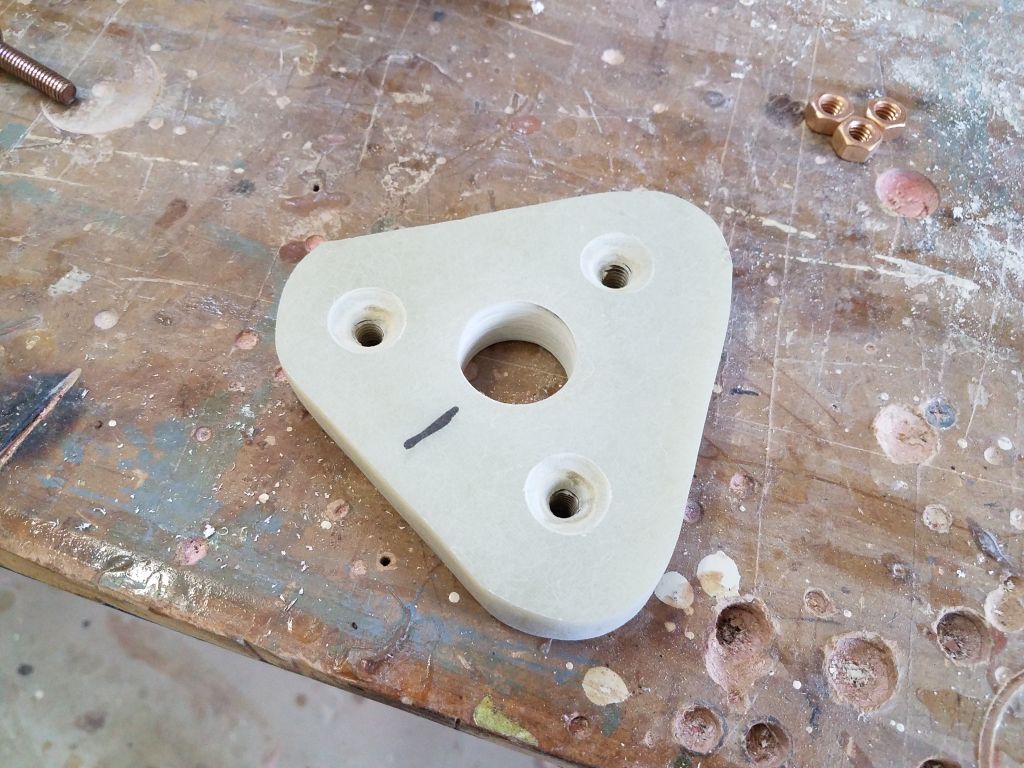
After cleaning up from the past couple days’ work in the engine room, I moved on with the through hull backing pad replacement.  After cleaning up the new pad, I laid out, drilled, and tapped the fastener holes for the mounting bolts from the underside of the pad, just as I’d done originally.

In the boat, I temporarily installed the port flange and valve, then, with the starboard side dry-assembled on the new pad, checked for clearance between the two valves and marked the hull accordingly for the new starboard pad.  Meanwhile, I applied a layer of fairing compound over the outside of the patch.  I’d wait to drill the new hole through the hull till the new pad was installed.

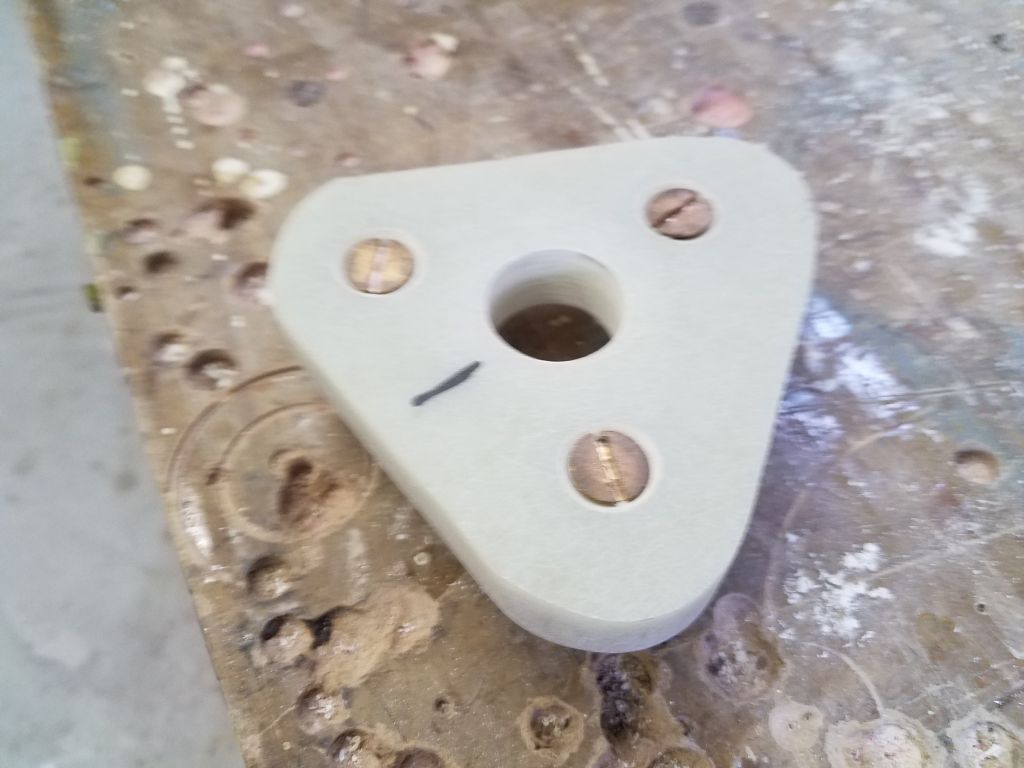
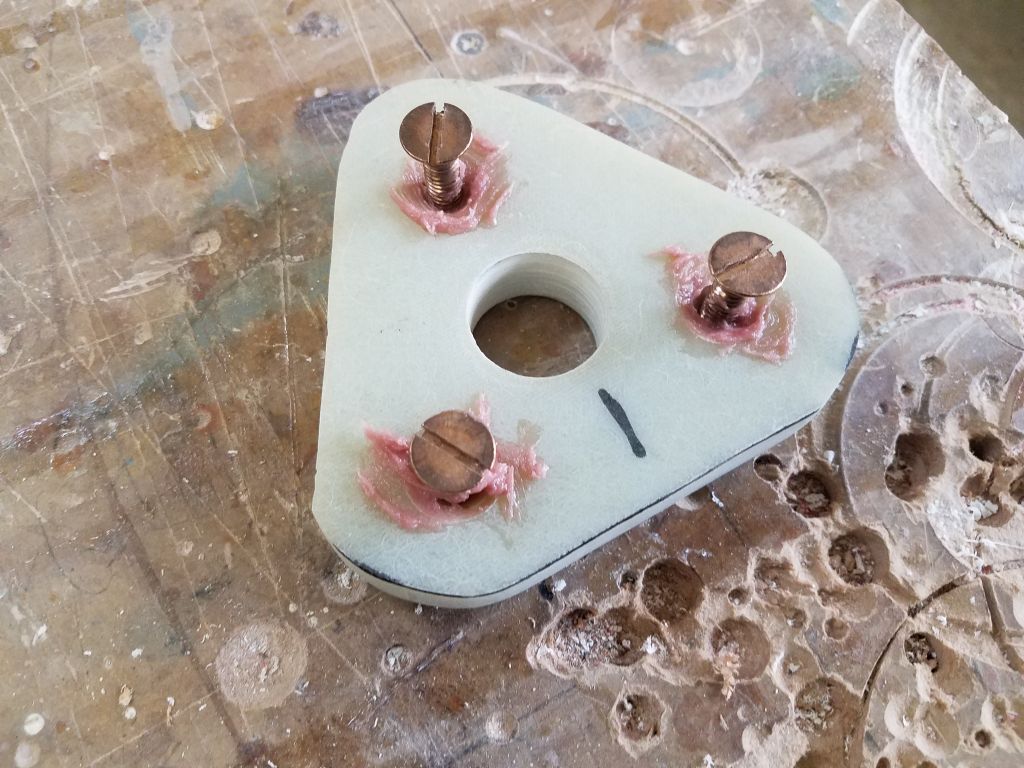
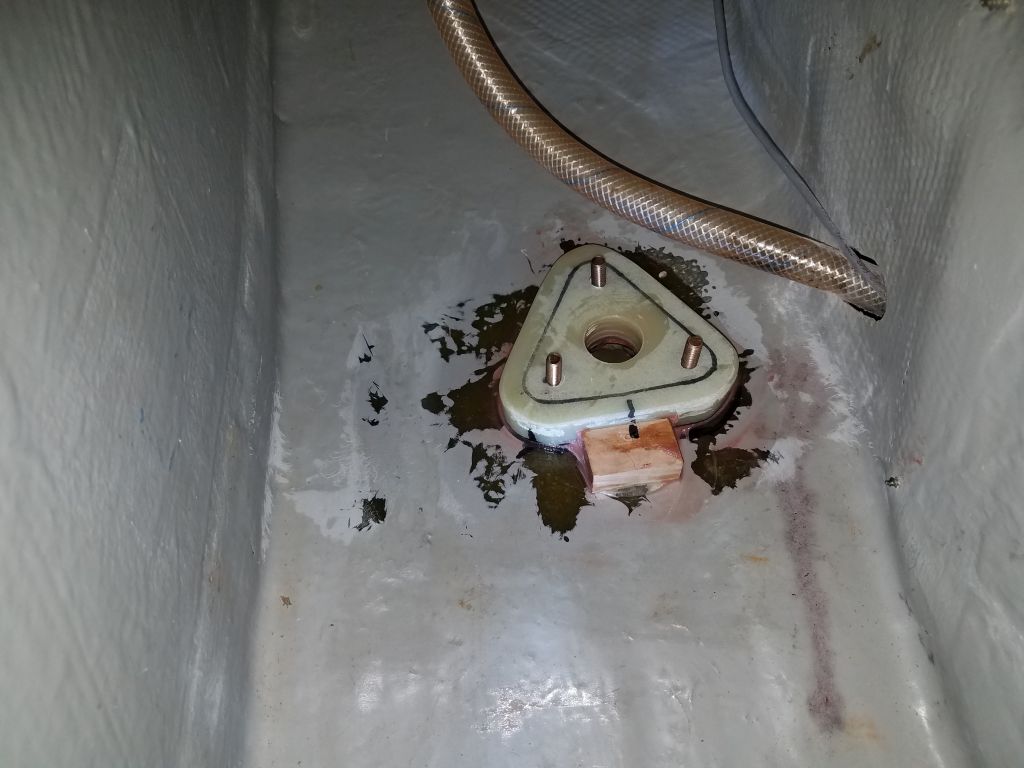
To install the new pad, I first loosened the three bronze bolts a bit, and added epoxy adhesive to the base of the threads to help hold them permanently in place.  Up in the boat, I installed a support block with hot glue, which would help hold the pad in place on the near-vertical hull, then installed the G-10 pad in thickened epoxy.  I left the new pad to cure overnight.

Total time billed on this job today:  5.25 hours (plus 1.25 hours not billed for the through hull rebuild)

0600 Weather Observation:  21°, cloudy.  Forecast for the day:  Slow clearing, windy, highs in the 20s

Dharma Rose 17

Monday

Over the weekend, I painted the new bilge area (formerly the waste tank) with gray bilge paint, completing the work within.

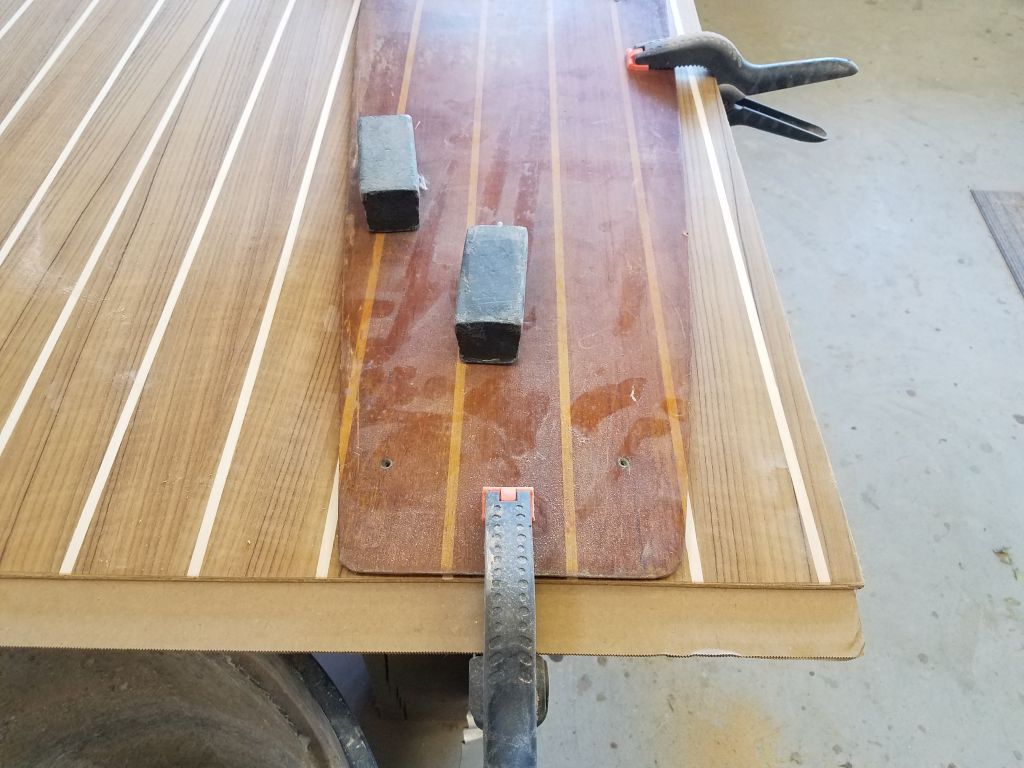
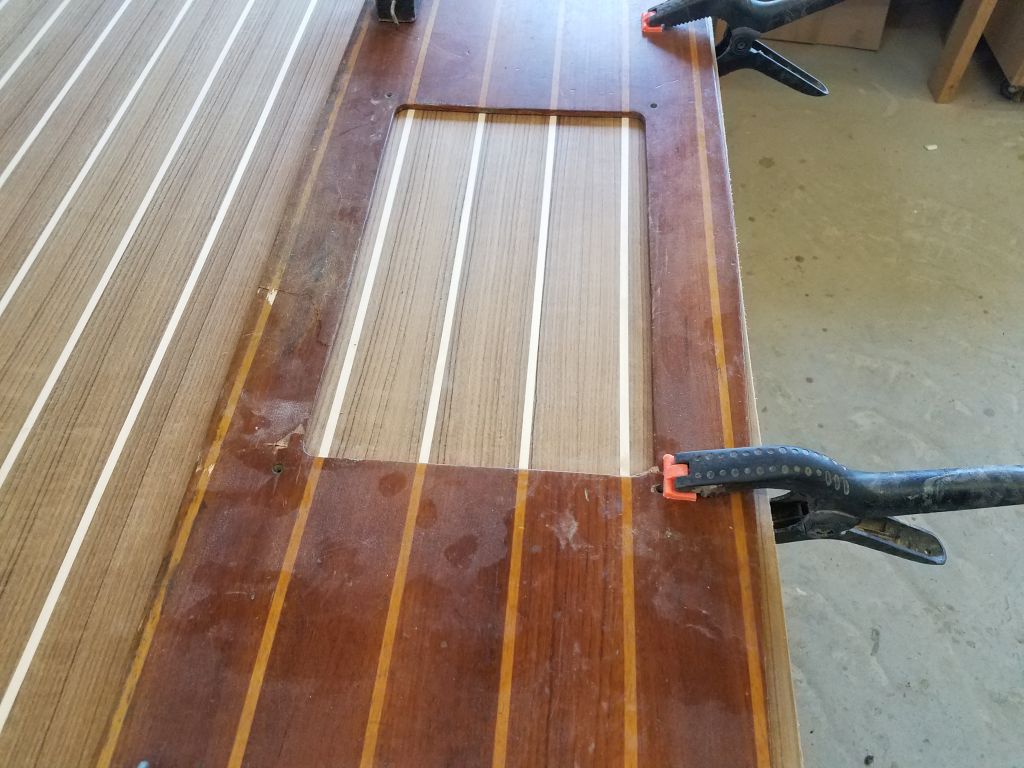
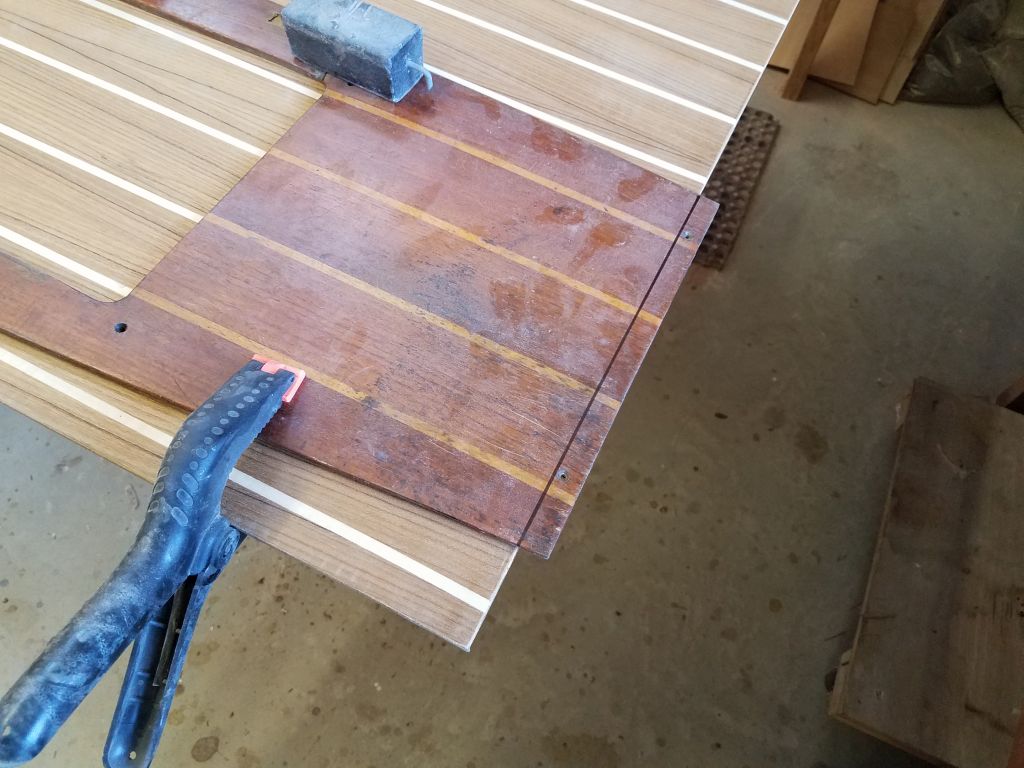
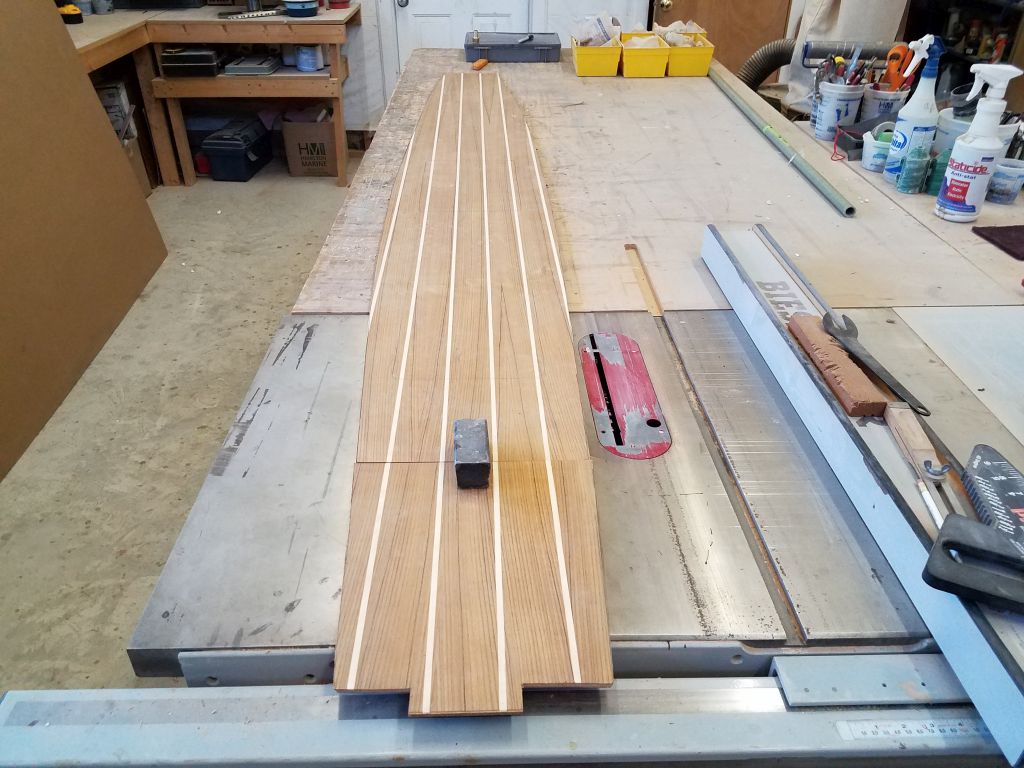
This meant that I could move forward to install the cabin sole, starting with a final test-fit.  Then, I made final preparations, including cleaning the bonding surfaces and masking off the edges of the opening, as well as the center section of the sole, to protect these from epoxy.  Finally, I installed the sole in a bed of thickened epoxy adhesive, clamping it well wherever possible and adding weights at the ends to help secure those areas I couldn’t directly clamp.  I filled the gap at the cut line with additional thickened epoxy as well.

While the sole adhesive was curing, I planned to spend the day in the engine room, starting with the scupper through hulls, which I was ready to install as I began to close in on the final work leading up to the engine installation itself.  I gathered the various pieces of each  through hull assembly, and prepared to go through the normal motions of through hull installation.

Inside the boat, I dry-fit the two flange bases on the pre-installed backing blocks and studs, intending to test-fit the threaded through hulls themselves and cut them to length.  First, though, I wanted to see if I’d be able to spin on the through hull valves after installing the flange base and through hull, or if I needed to pre-install the valves first, given the tight confines of the space and proximity of the two fittings across from one another.

Immediately, this highlighted a major problem:  The two valves didn’t clear one another sufficiently.  Well, the valves sort of did, but there was no way that the pipe-hose nipples would clear enough to allow a workable result.

I felt like kicking myself off the boat.  I knew the two locations were close, of course, but also knew they were slightly offset, intentionally, and that the old valves had fit.  But none of that mattered here, since in this case the two fittings interfered with one another in an ultimately catastrophic way. 

I should have checked before starting the install long ago whether the new fittings would clear one another, but I never had.  I foolishly assumed, without confirmation, that the new fittings would fit in the same locations.

Contemplating this unwanted turn of events, I considered my options.  First, of course, was to move one of the fittings.  Over the years, as I’d installed things like this, I’d often wondered what someone, say, 30 years in the future might have to say about my installation, and how difficult these installations might be to remove.  I never had any problem with the apparent permanence of what I considered a permanent installation, like a through hull, so had never worried about providing for its removal.  Now it looked like I might get a chance to try.

I really, really did not want to have to do that, so I considered if there was an alternative.  I thought of changing the hardware to 1-1/4″ valves, which would work with a full-flow tailpiece to accept 1-1/2″ hose and which I’d sometimes used in the past because the slightly reduced flow diameter of the 1-1/4″ valve meant the valve body itself was substantially smaller.  I thought that this might improve the clearance here enough to work, and was all set to order the new parts, but then I realized that the bolt pattern of the smaller flange base would also be smaller, and since I’d pre-installed the bolts in this case, there was no way to change the hardware either.  

This left me no option but to get on with it and remove one of the new pads I’d installed, and reposition the through hull sufficiently to allow the required clearance with the other side.

I chose the starboard side because it was positioned aft of the port fitting, and there was room to move it a bit aft; the port side would have had to move forward to increase clearance, and this would have brought it unnecessarily close to the engine foundations.

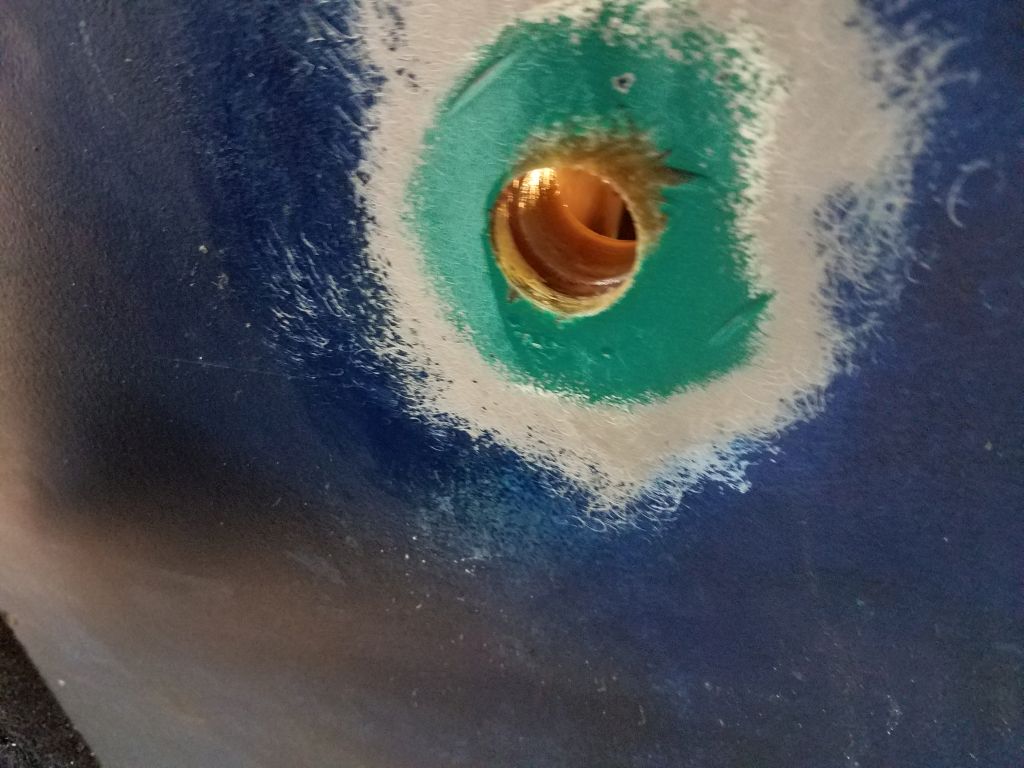
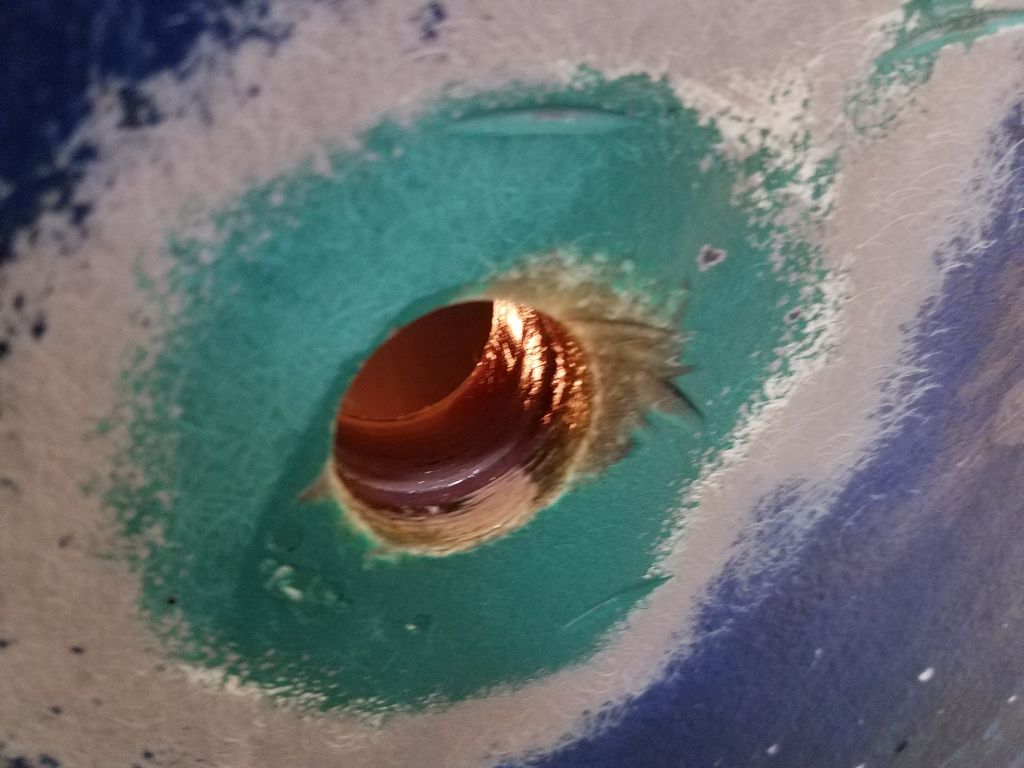
With grinder and cutoff wheel, and a reciprocating saw, I removed the “old” base as well as I could.  Access was, of course, difficult, between the tightness of the space (shoulder room), the steep curvature of the hull, and the proximity of the nearby longitudinal bulkhead, but with significant effort I got through the G-10, leaving just remnants of the epoxy adhesive that I could grind smooth once more.  I extended the ground area a bit aft to provide space for the necessary patch (to fill the old hole) and also for the new location.

With the miserable work in the engine room completed, I moved outside to prepare the exterior of the hole for patching in the usual way.

To patch the old hole, I masked over the opening from outside, then filled the hole with reinforced, thickened epoxy from inside, using some leftover epoxy to wet out the newly-ground area inside and make it ready for two layers of fiberglass over the whole area, including the after section where I planned to install the fitting when the repair was complete.

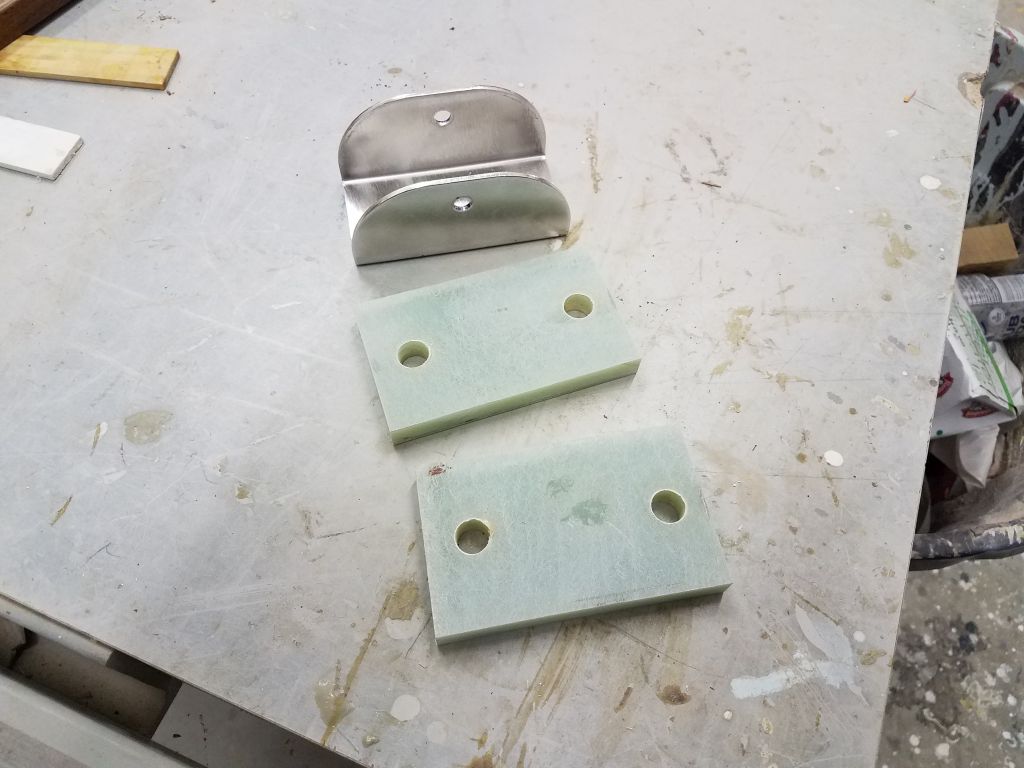
Meanwhile, I turned to building a replacement pad for the flange base.  Of course I found that my remaining supply of 3/4″ G-10 wasn’t wide enough to accommodate the size of the flange properly, so I had to make up a lamination from a piece of 1/2″ and 1/4″ G-10 to provide the requisite thickness.

A bit later in the day, the epoxy had cured enough to allow me to remove the masking tape from the outside and install three layers of fiberglass over the exterior, completing the basics of the original hole repair and getting me closer to starting the new re-installation.

Removing the old pad, patching the hull, and the other work took two hours, which I expunged from the day’s totals, and I suppose it all could have been a lot worse, though it was an exercise I didn’t plan to do again anytime soon.  Still ahead I’d need to reinstall the new G-10 base and relocate the through-hull hole, which would catch me up with where I’d started at the beginning of the day.

Moving on, I cleaned up the glue joints on the fiberglass drip pan assembly, and after a final test fit drilled and tapped for four screws that would eventually secure it to the cleats in the boat.  I’d finish up all the painting in the space before I installed it permanently, however.

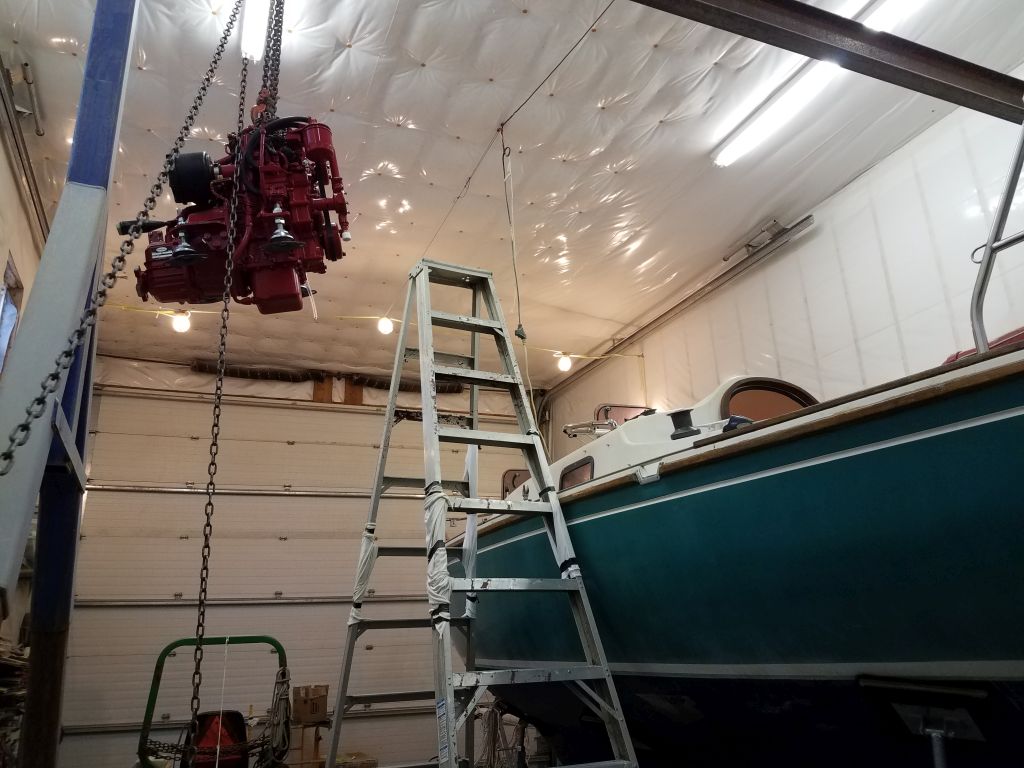
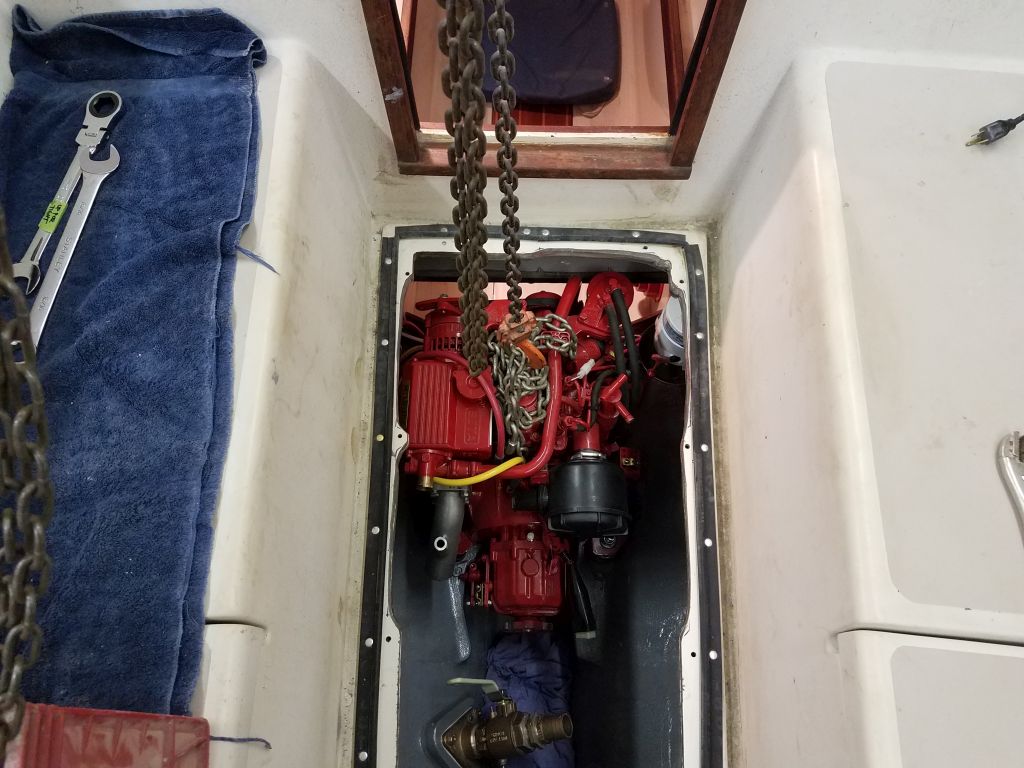
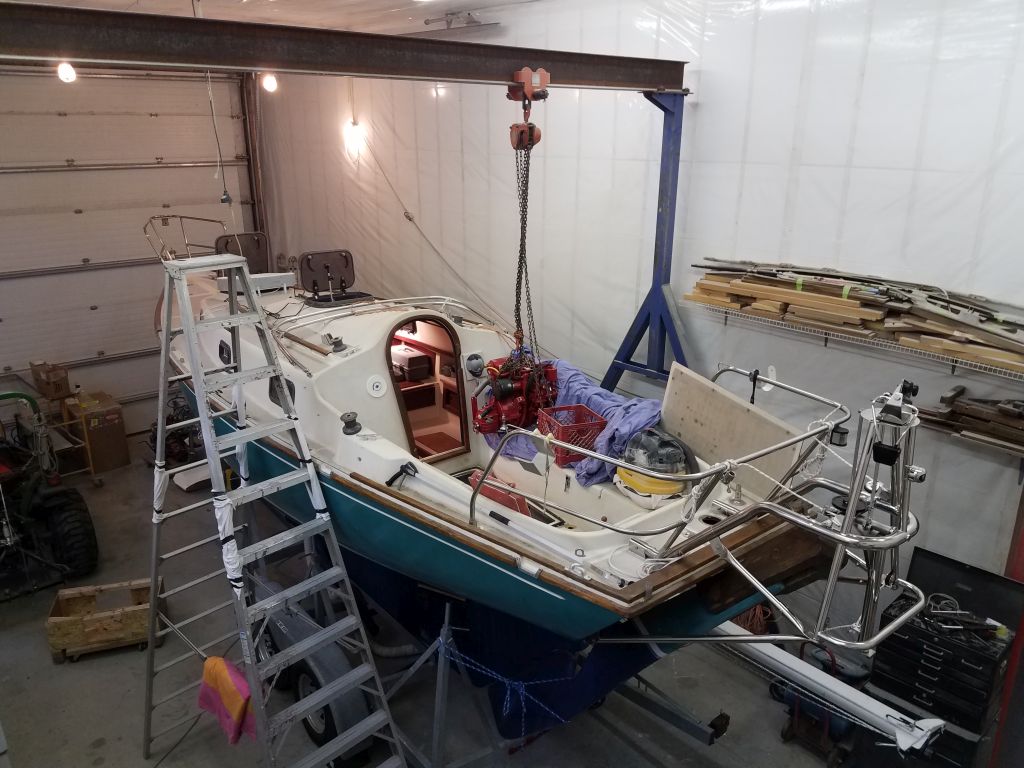
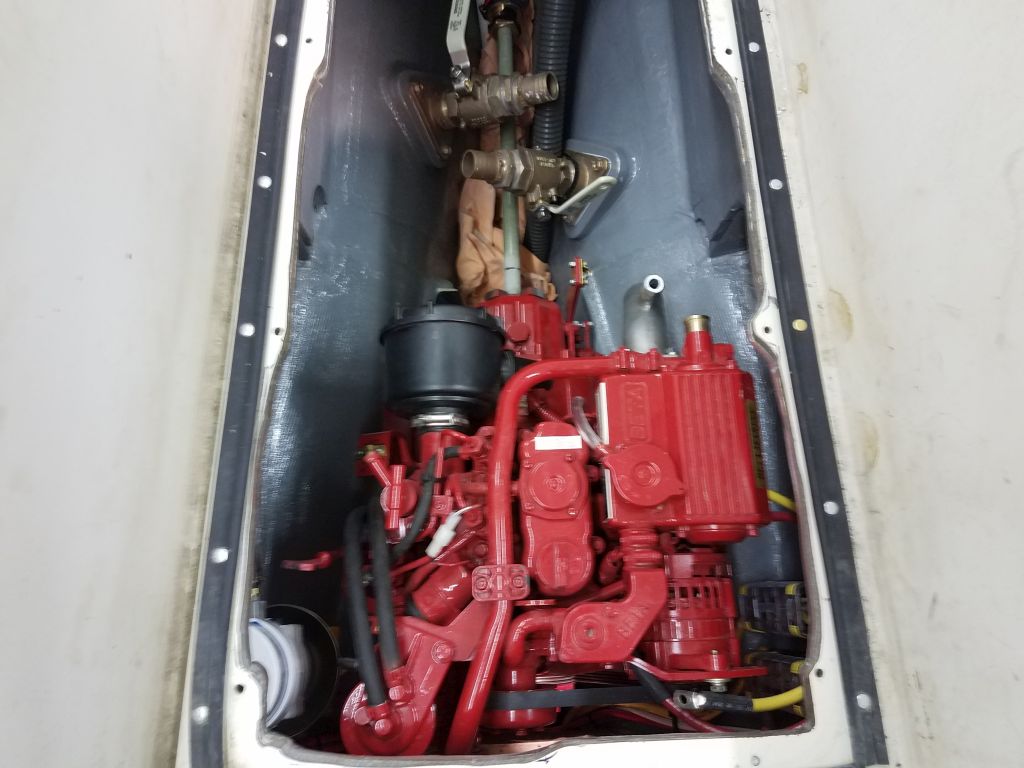
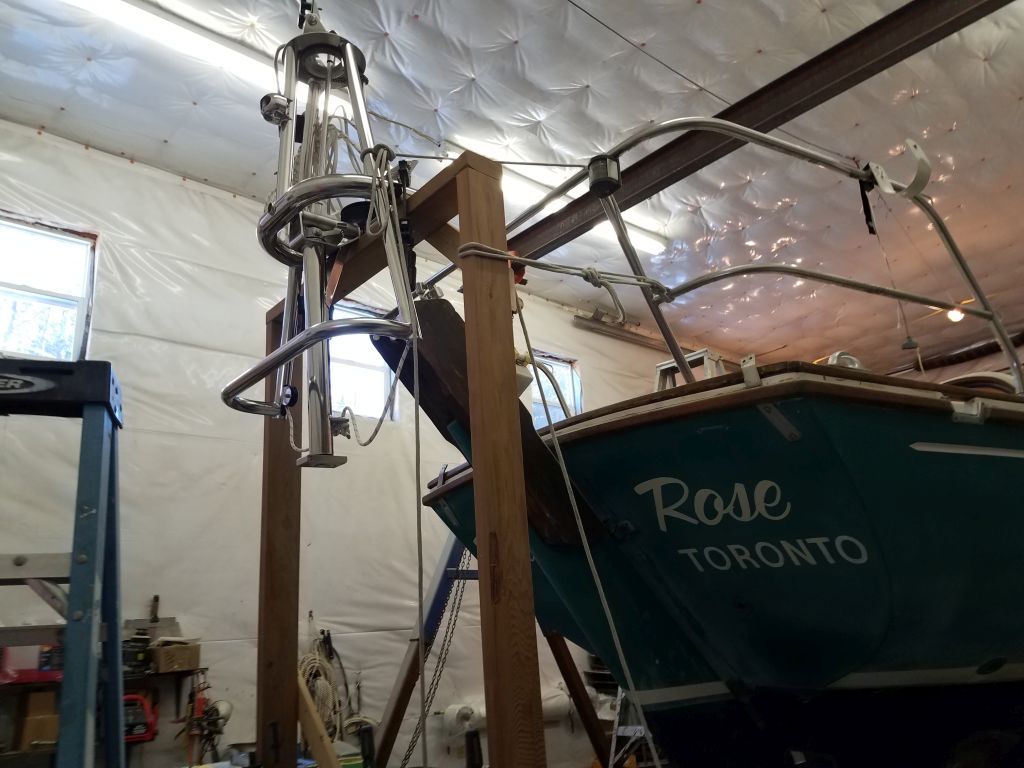
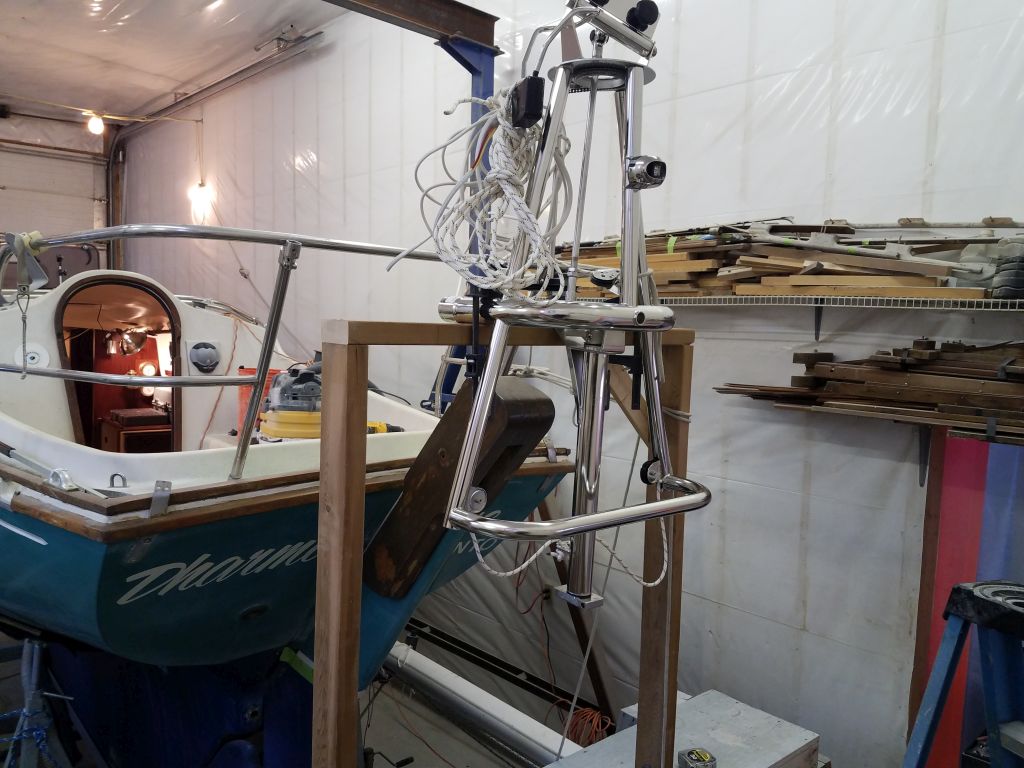
Next, I thought I’d test-fit the engine in the compartment.  I anticipated a need to slightly modify the deck opening, as well as possibly some modification to the engine foundations to fit the engine, and in neither way was I disappointed.

When I installed the flexible mounts on the engine after I had it up in the cockpit, I immediately noticed a potential clearance issue with the port after mount, which barely cleared the transmission lever at best, and not at all if the mounting base had to angle, which I thought it probably would in this installation.  This issue came to light because of the narrow 11-1/2″ mounting centers, for which the engine wasn’t really designed.  Whether this became a real issue or not would depend on the final height of the mount versus the protruding bolt on the transmission lever.  Right now, they were nearly level with one another, and I expected this was something I’d have to deal with, but first things first.

With the engine suspended over the opening, I noted where cuts were required to expand the opening for an easier fit for the engine, then made these cuts as required.  I’d come back later and clean up the cuts with a sander, but for now my goal was (at first) to set the engine in the boat so I could measure for and order the new propeller shaft, so I left the fancier work for later.

Making the cuts was slow going, as there were heavy layers of fiberglass plus an aluminum plate in the engine compartment surround.  I left all the existing bolt holes (which threaded into the aluminum plate) intact for reinstalling the cockpit sole/engine room cover later.  Once I enlarged the opening, lowering the engine posed no problems.

There were several clearance issues that immediately prevented the engine from lowering all the way to the foundations.  First, the oil pump hose, which ran out the starboard side of the engine from the oil sump and which frequently causes minor issues in tight installations in my experience, hit hard against the foundation (which angled inwards as it ran aft thanks to the requirements of the hull), so I made some marks there to cut out a section of the foundation and allow clearance.

Raising the engine out again, I cut out a chunk of the foundation in way of the oil hose, and lowered in the engine again.

Now there were several other clearance issues, all of which caused by the tight shape of the hull and narrowness of the foundations at the aft end.  There were places where the bell housing at the after end of the engine contacted the edge of the foundations, so I marked these as needed.  Also, there would be a need to cut out a large section at the very aft side to port, to allow the transmission lever clearance to operate (i.e. to be pushed down).  I made reference marks for that, but at least for now I could leave it be since it wasn’t preventing the engine from sitting where it needed to.

The oil hose now fit fairly well, but to avoid chafe I needed to open up the cutout just a bit more.

Meanwhile, I could check the basic engine alignment with a 1″ fiberglass tube that I used as a stand-in for the shaft.  Some continuing adjustments would be required to shift the engine slightly to port, but otherwise things looked pretty good.  Some of this adjustment would be possible once I’d made the newest clearance cuts in the foundation, so I lifted out the engine once more.

After finishing the new cuts, I lowered the engine in once more, and things were looking better and closer to where they needed to be.  But the clearance issues on the port side continued, not only the transmission lever (which I’d yet to cut out), but with that after port mount, which was likely to be an issue with the transmission, as well as with the curvature of the hull, which right now was preventing the engine from moving in the correct and required direction.

I let things stand there for now.  Though I had the engine nearly as far forward as it could go (the further forward, the better the clearances at the aft end), I thought I might be able to go just a bit further forward.  In any event, the day was done, and it was time to go clean up from the day’s snowstorm.

Total time billed on this job today:  5.5 hours (plus 2 hours not billed for the through hull re-work)

0600 Weather Observation:  32°, light snow, about 2″ down.  Forecast for the day:  Snow, a couple more inches, 32°

Dharma Rose 16

Friday

After additional research into alternatives, and a conference with the owner, we decided that, barring unforeseen circumstances, we would keep the existing fuel tank, which would save the additional work required to remove it.  Since the tank appeared to be in good condition, this seemed a realistic choice.

With this decision made, I strove to document the condition of the hidden areas of the tank as much as possible, just to be sure there wasn’t some unpleasant secret lurking beneath the tank.  I could move the tank about in the locker a fair bit, and was able to angle it in such a way as to get a number of photos blindly of the bottom and outboard side of the tank.  Without fanfare, here they all are.  These show no signs of worrisome problems and confirm the general impressions that the tank has substantial life remaining.

To gain better access inside the tank for further inspection and cleaning out, I removed the fuel gauge.

There were several ounces of fuel still in the tank that I’d not been able to remove, and I tried once again with my little primer bulb-based siphon/pump hose that I use, but I was unable to pump the fuel for whatever reason.    Later in the day, I had to run an errand for an unrelated task, and while I was out I found a little battery-operated pump with a rigid suction end that fit perfectly (and just barely) through the fill neck, and worked a charm to pull out the remaining fuel from the tank.  This also pulled out most of the minor debris that was in the fuel (all normal for a diesel tank), and by sloshing the fuel beforehand I’d confined all the debris to the low side for removal.  Afterwards, I was able to stuff in a couple rags and move them about to remove the last remnants of fuel and old debris, leaving a nice clean tank.

For now, I left the fittings off and the tank loose in the compartment, as I had some additional work to do in there where it’d be helpful to move the tank around for access.  I covered the openings with a rag for now.

I removed all the clamps from the new cleats at the cabin sole, and with the way clear I test-fit the sole piece, and made reference marks for the two end supports I wanted to install for the new forward hatch opening.  Back on the bench, I cut and installed more 1/4″ fiberglass cleats in epoxy.

I installed the new Cutless bearing after inspecting the stern tube and surrounding area.  With the bearing dry-fit, I marked the location of the two setscrews, then removed the bearing and used a drill to just score the brass surface at those marks, the better to accept the set screw points.  Then, I installed the bearing for real, securing the setscrews with a dab of sealant and covering over the heads with more sealant.

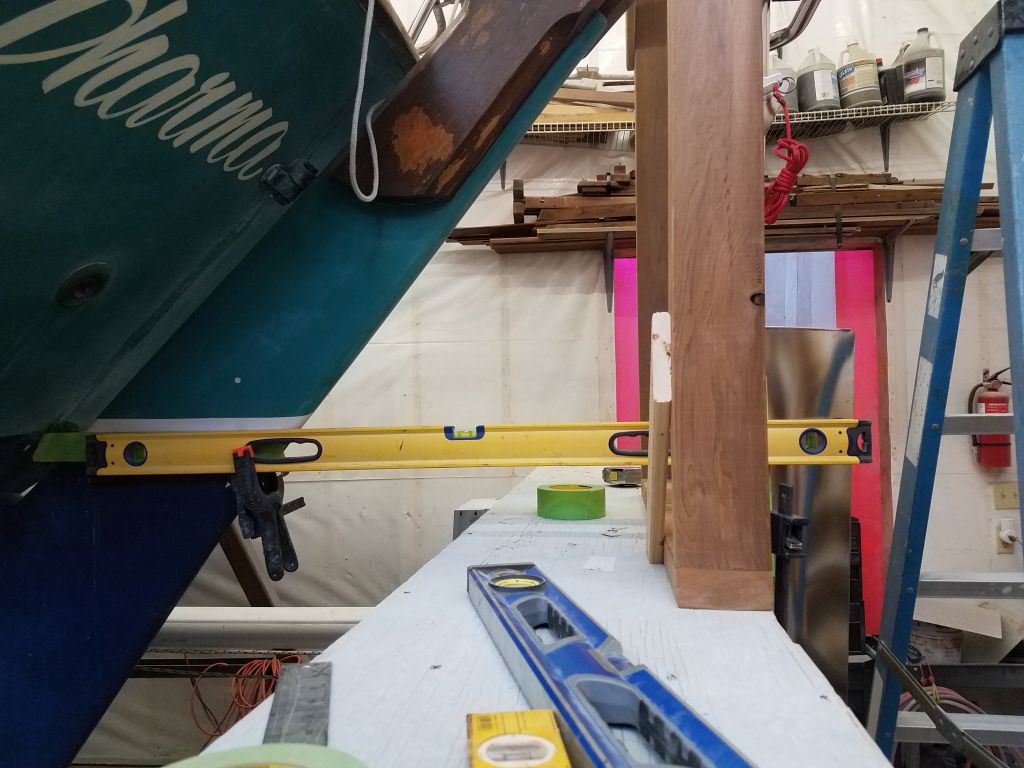
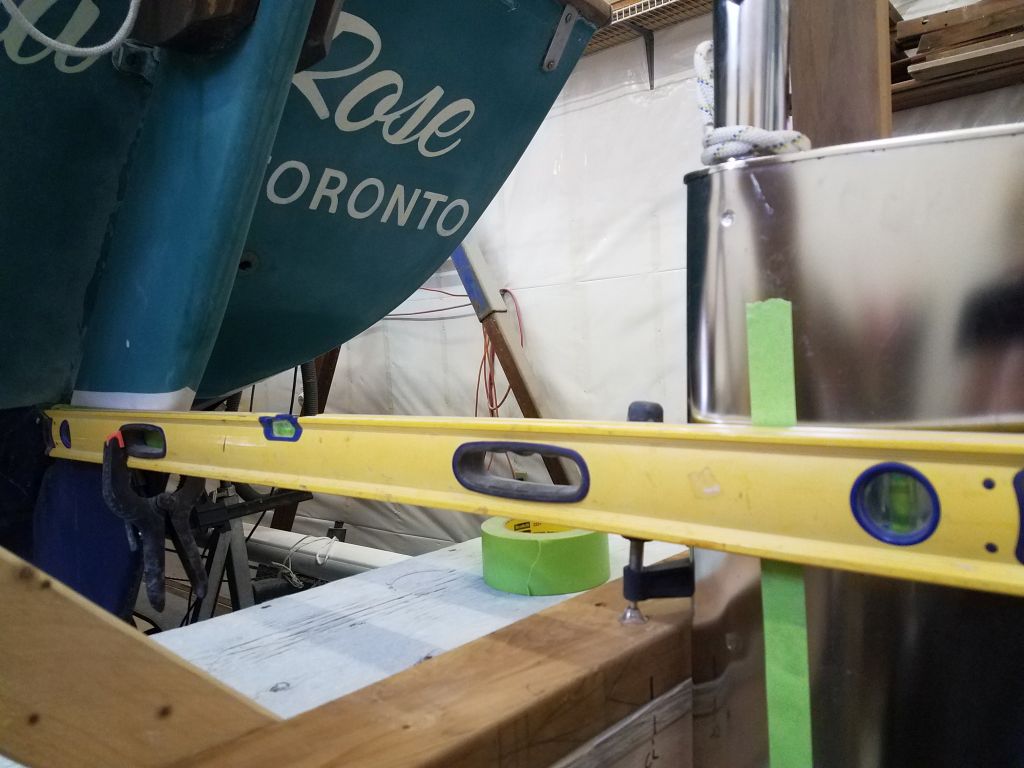
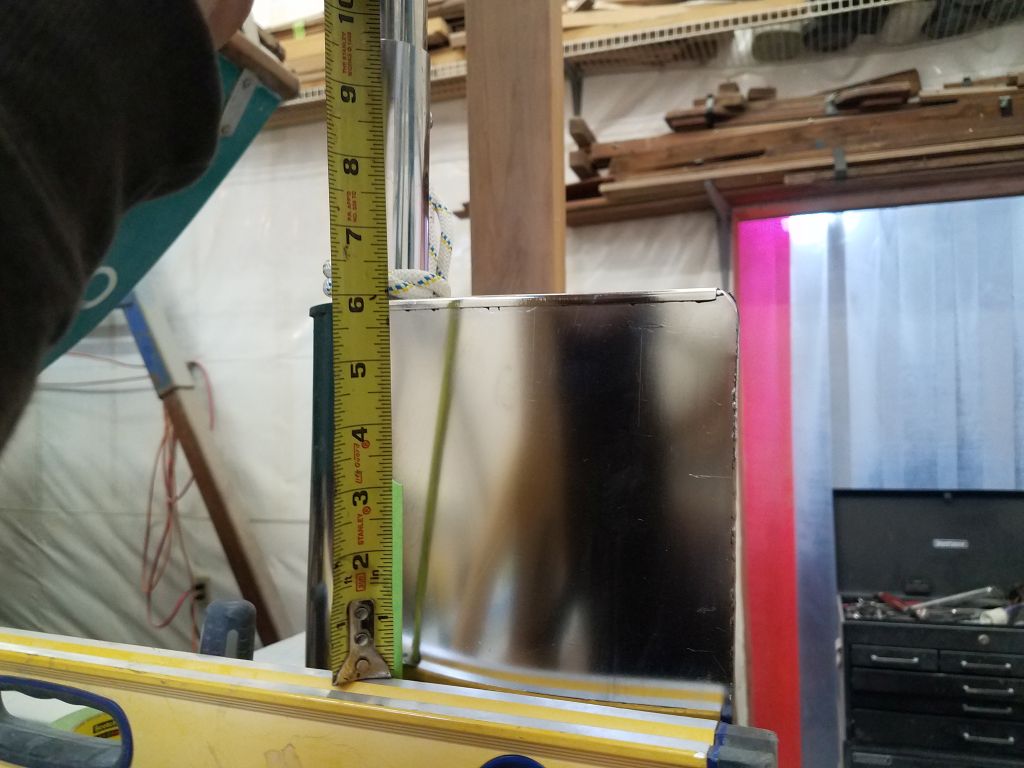
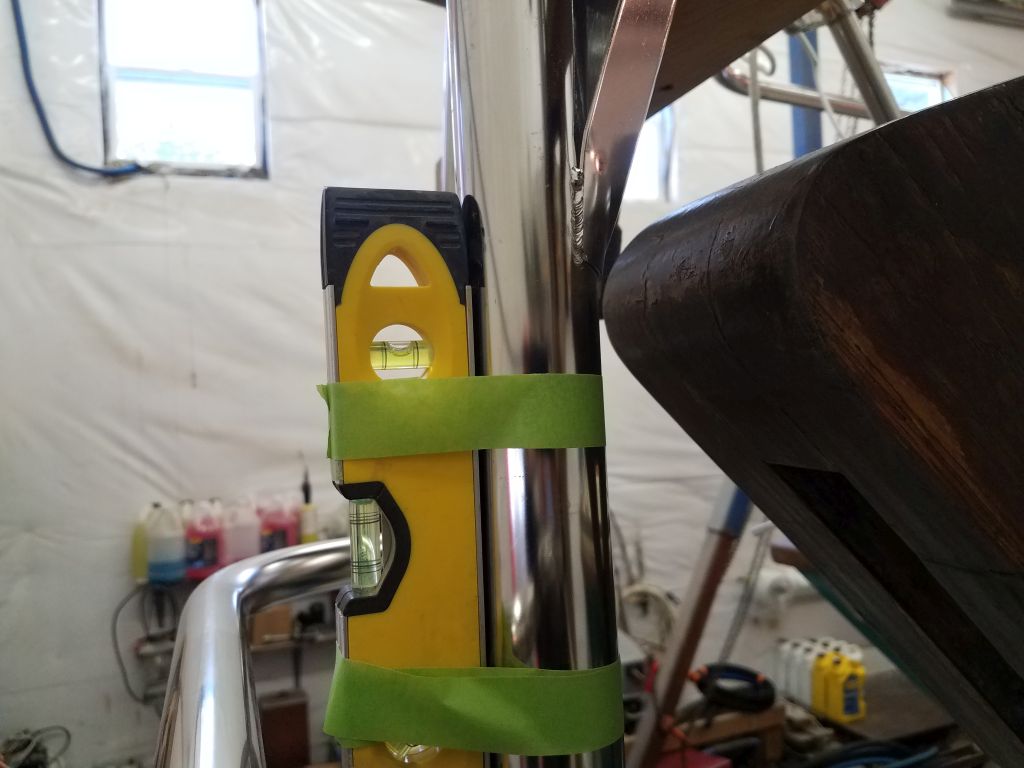
As a final check before I continued work in the engine room, all geared towards getting the engine in place in the near future, I set up the alignment string once more and adjusted the template and the feet to fit properly on the new foundations.

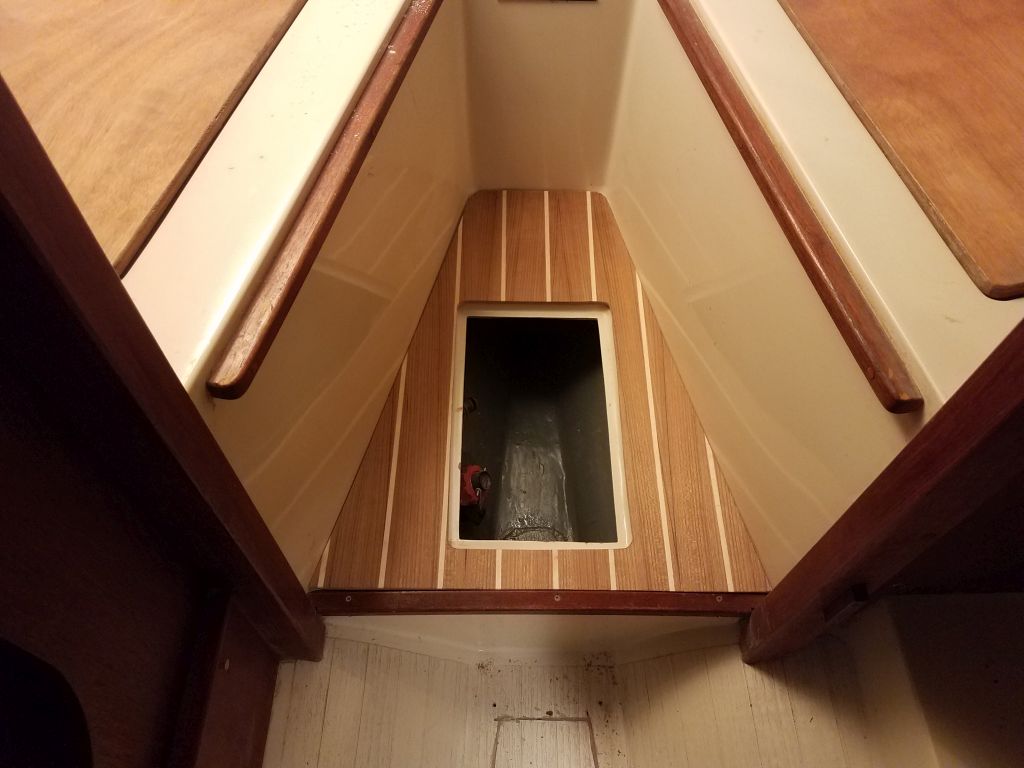
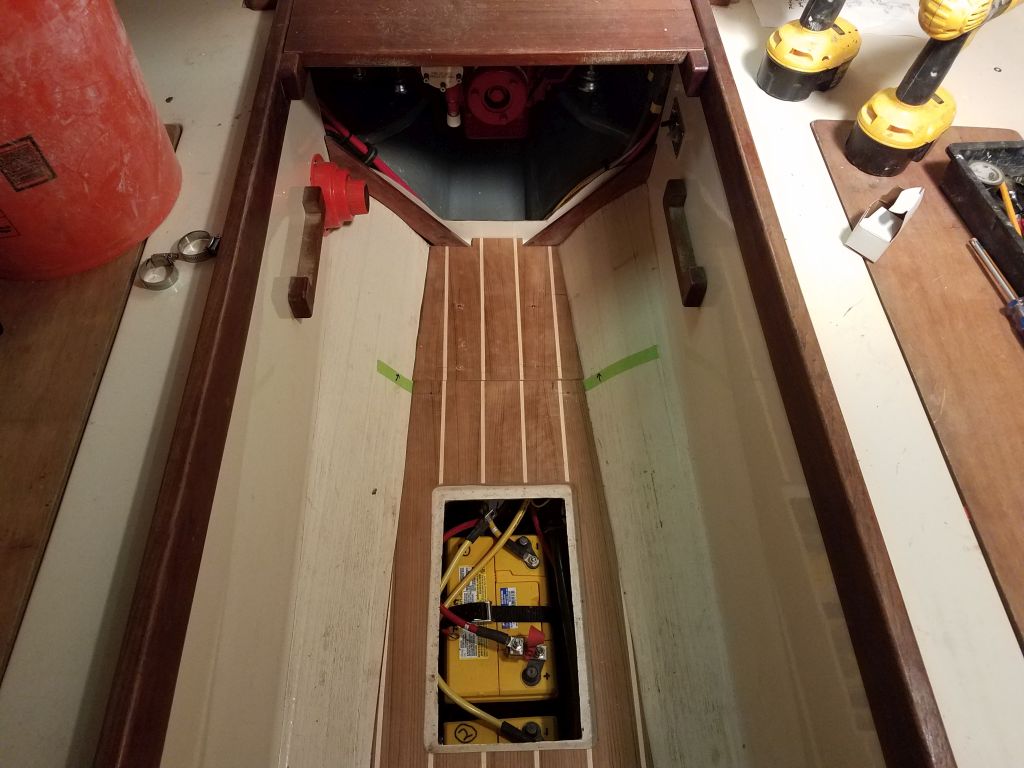
The owner mentioned off-handedly that he didn’t care for the old access port leading to the now-abandoned little section of the old waste tank beneath the battery platform, and, no time like the present, I went ahead and removed the inspection port, prepared the area, and installed a new 1/8″ fiberglass platform over the old hole, securing it with epoxy adhesive and a layer of fiberglass over the whole thing and up the sides of the compartment.

To round out the day, I applied a quick coat of epoxy-based primer over the new fiberglass in the bilge/waste tank area.  For unknown reasons, many paints won’t cure properly over new epoxy resin, and rather than wait some indeterminate length of time for the epoxy to fully cure, I now use this 2-part tie coat to prepare the surface for painting with bilge paint immediately.  I also applied the primer over the patches in the forward part of the boat (old waste through hulls and tank entry point).

Total time billed on this job today:  6.5 hours

0600 Weather Observation:  18°, clear.  Forecast for the day:  Mostly cloudy, 30s

Dharma Rose 15

Thursday

Starting once more in the old waste tank, I lightly sanded the new fiberglass over the raised floor at the aft end.  This completed the main structural work in this area.

Using the little templates I’d made earlier, I cut the end pieces for the engine drip pan, using some 3/8″ thick fiberglass.  After test-fitting as needed, I glued the ends to the bottom board with epoxy.

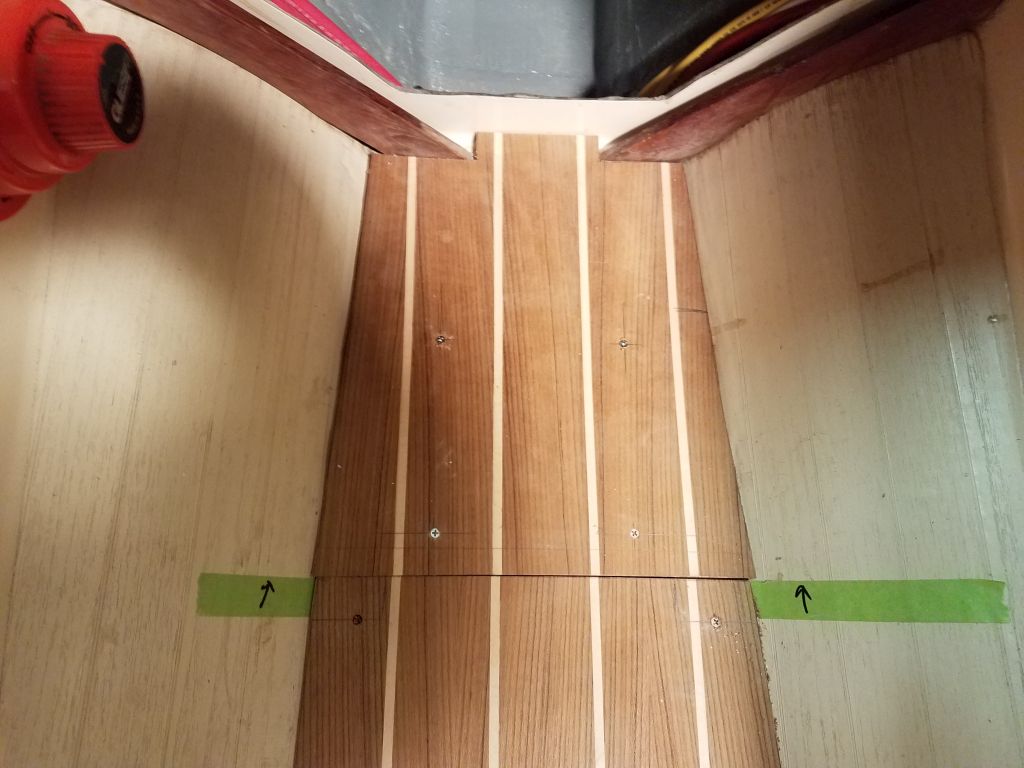
I was looking forward to putting the cabin sole back together and moving forward with other jobs on the boat, so my next step was to prepare 1/4″ fiberglass cleats to re-secure the sole section I’d cut out in order to access the old waste tank.  After cutting the cleats to length as required, I epoxied them to the underside around the edges of the cutout, clamping them in place while the epoxy cured.

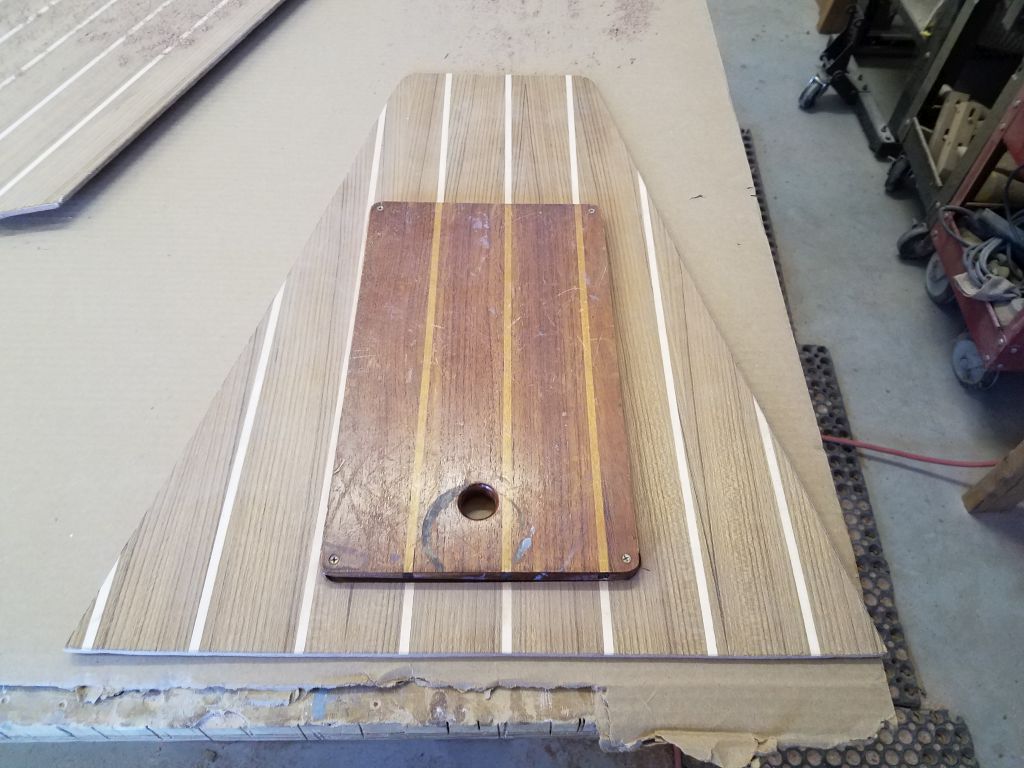
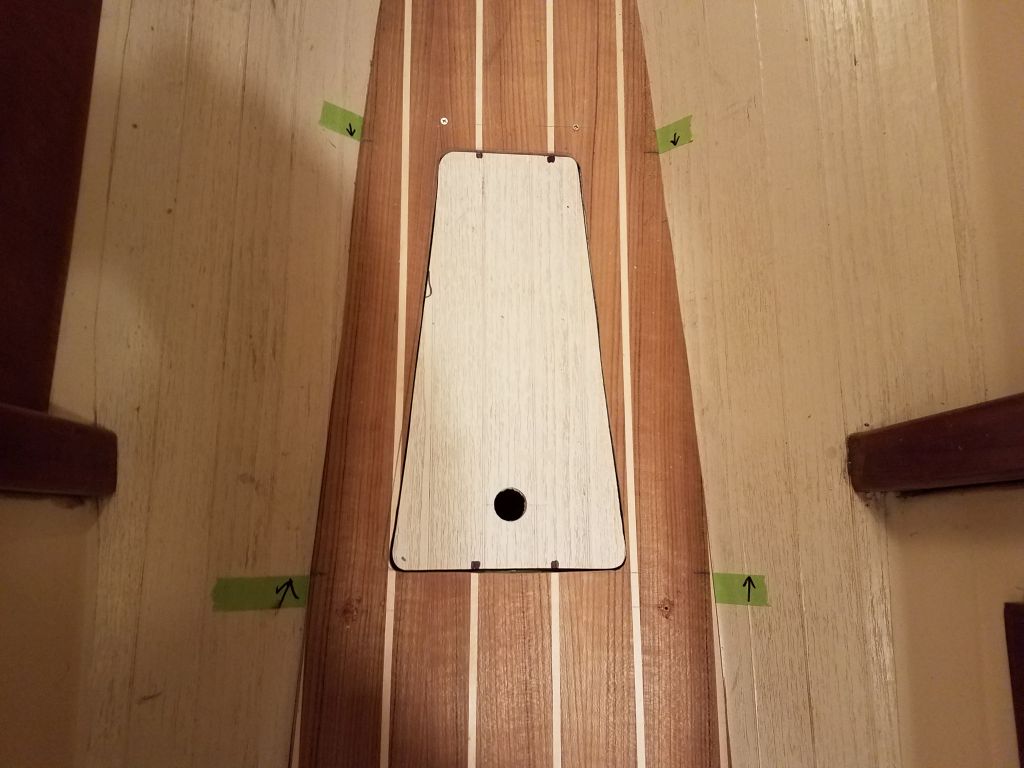
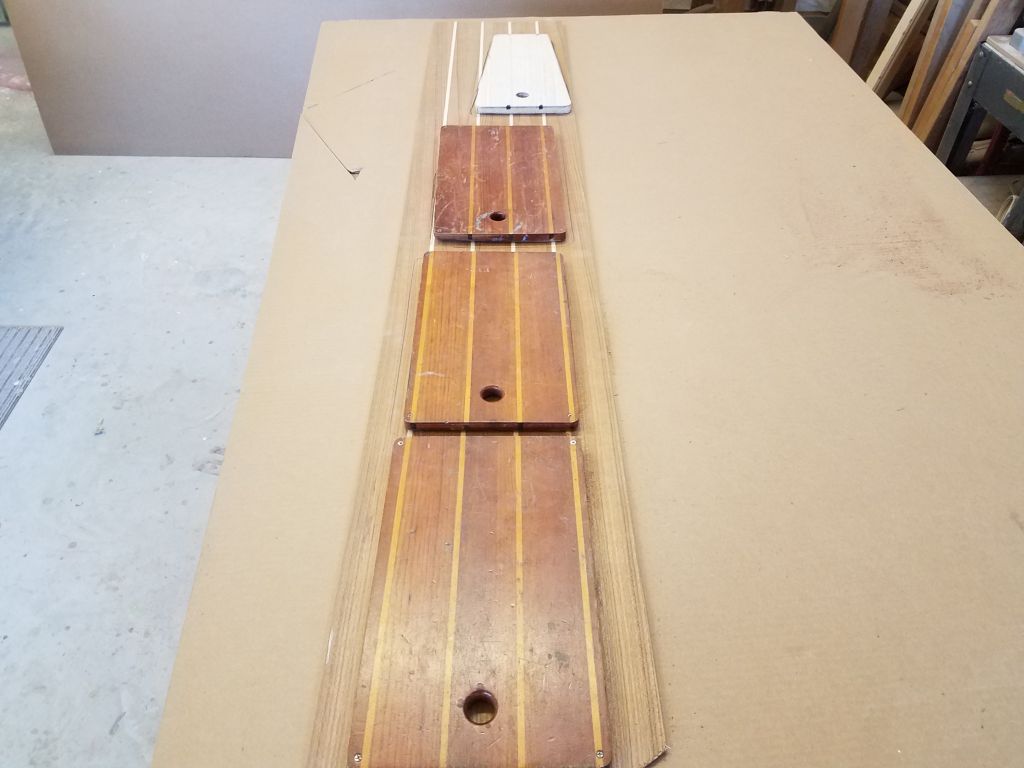
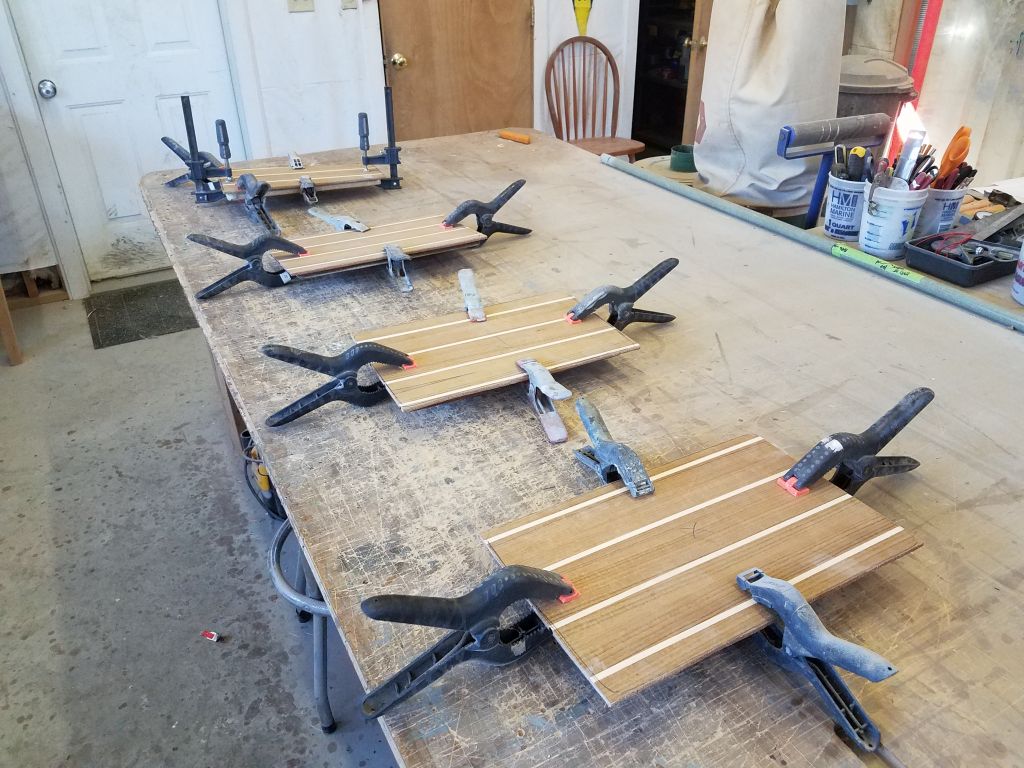
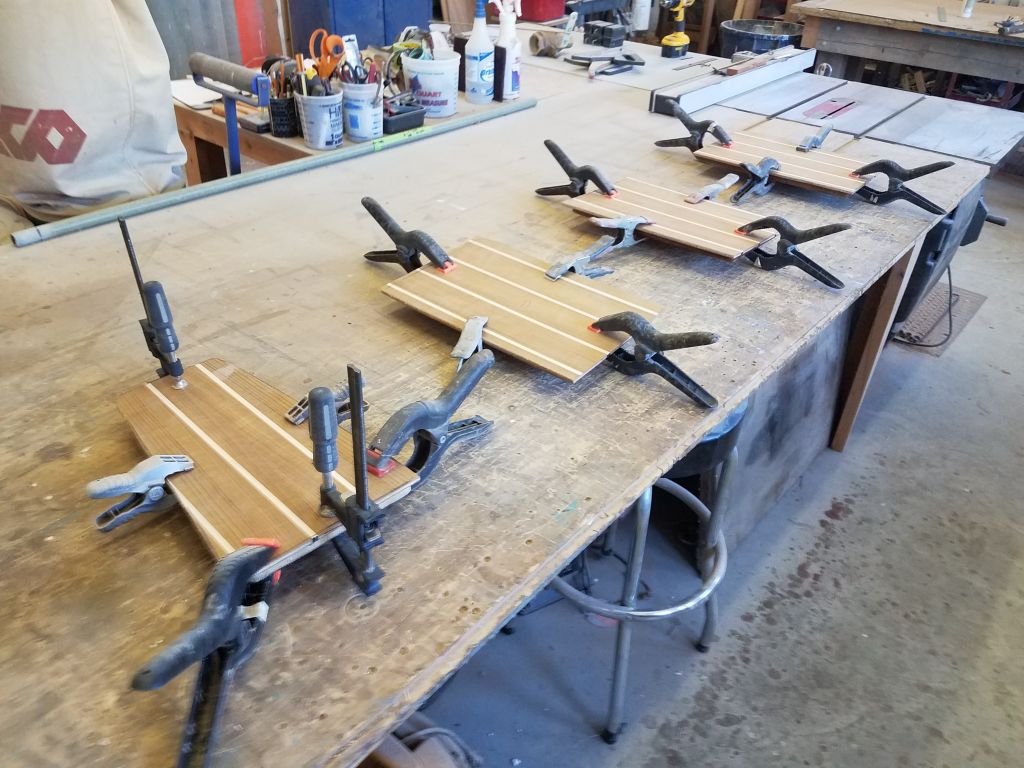
Meanwhile, I laid out an additional access hatch in the forward section of the sole.  I chose to locate the opening to take advantage of the cleats I’d just installed in the sole, so that the same cleats would in part support the lid to the new hatch, and sized and located the hatch to allow reasonable access to the space below.  Sometime later, there’d be a teak overlay over the sole and new hatches.

The original fuel tank, located in the starboard cockpit locker, looked reasonably good from above, but regardless of condition we wanted to remove the old fuel for a fresh start, and to better assess the condition of the tank and whether replacement was desired or required.  To gain access to the fuel, I removed the fill hose assembly from the tank,  and set up a siphon rig to drain the fuel into a pair of plastic diesel jugs, and while I baby sat the process I tried to take care of a few other tasks, and made a few steps towards installing the new Cutless bearing, but as the tank drained further I found I had to pay more attention and actually hand-pump a lot since the siphon action faltered.

With all but a few ounces of fuel removed successfully, I removed the remaining fuel fittings, and, reaching up in the tight space behind the tank, the top end of the fuel fill hose.  I removed the strap and a screw securing the tank to the platform, and tipped the tank in order to try and get rid of the last of the fuel inside, as well as start to get a sense of the tank’s condition.  Externally and where visible, the tank was in good condition, and though I couldn’t see the bottom (more on this shortly) I could move the tank enough to feel beneath it and determine there was no sign of rust there.

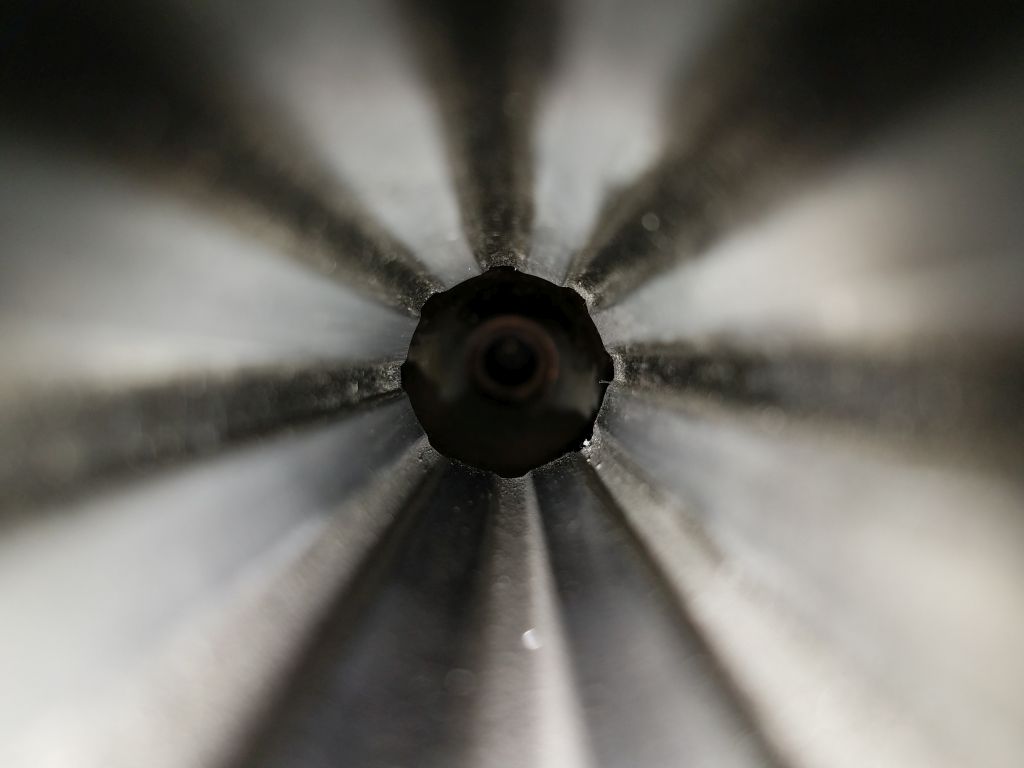
The tank was slightly larger than the opening above it, which I’d expected since I’d run into it on a similar project 10 years ago, and therefore I couldn’t remove it easily from the space without certain modifications.  For the moment, I held off on further attempts to remove the tank and concentrated on the inside, shining a light through the old vent hole and viewing the inside through the larger fill hole.  The inside of the tank looked quite clean, with just a bit of rust visible where it appeared the original internal tank coating had worn away, but my field of view was limited.

For the moment, the day was nearly done, and before I left for the day I wanted to send the owner the current info so we could start deciding the best course of action.  I thought the first thing I’d do next time was remove the fuel gauge from the tank to give me another small portal inside and help better assess the tank’s condition.

Total time billed on this job today:  7.5 hours

0600 Weather Observation:  0°, clear.  Forecast for the day:  Sunny, 20s
Dharma Rose 14

Wednesday

I got started by lightly sanding the new fiberglass in the repurposed waste tank/bilge area.

To raise the after end of the compartment and allow drainage through the dictated-by-circumstances drain location, I chose to install a flat platform at the proper height and extending forward till it died out against the angle of the ballast pig, which was higher at the forward end and angled aft naturally.  Because the prefab fiberglass panel I planned to use to construct the platform was 24″ in length, I chose this as my arbitrary distance forward, which worked out well in any event.  Starting with a piece of cardboard, then graduating to some 1/4″ pattern plywood, I made a reasonable pattern of the space, which featured lots of bumps and burbles along the sides to keep things interesting.  After various modifications, I achieved a satisfactory fit that was level side to side, and properly angled downwards towards the drain at the aft end.

I transferred the pattern to my 1/4″ laminate panel and massaged the fit as required.  At the aft end, I created a little dip in the panel right in front of the drain to allow the panel to slip just beneath the protruding drain pipe and promote drainage.  I tapered the base of the forward end to bring the panel face closer to the adjacent bilge and ease the transition there.

After final preparations to the bilge and the new panel, I installed the panel in thickened epoxy, using a mass of the epoxy at the aft end to seal and secure the panel there and around the drain tube, and forming lavish fillets along the panel edges where it met the hull at all sides.  At the forward end, I used a trowel to create a broad fillet that properly faired the main bilge surface in with the plane of the new floor.

I had to leave the shop for a while on an appointment, but when I returned I prepared and installed two layers of fiberglass over the new floor and extending up the sides of the bilge accordingly.  Not only would the new floor take care of the drainage issue, but in fact made the whole space better and more useful going forward, as it improved the character of the space and eliminated the worst of the undulations left over from the original construction of the ill-fated tank.

In the engine room, I lightly sanded up the tops of the new support cleats, then patterned and cut a 1/4″ fiberglass platform to form the base of the new drip pan.  At the ends, I made patterns for 2″ tall vertical pieces (no pictures) that would close off the pan once complete.  I’d cut and install the new ends next time.

Total time billed on this job today:  6.25 hours

0600 Weather Observation:  18°, clouds, spitting snow.  Forecast for the day:  Clearing, becoming windy and growing colder, 20s
Dharma Rose 13

Tuesday

The newly-opened waste tank, now becoming part of the bilge for future storage use, occupied most of my time during the day, starting with the usual round of water washing and light sanding to prepare the new fiberglass bulkheads fore and aft, as well as the new fillets and filler I’d applied in the rest of the space, for new work.  The owner and I discussed a plan to bring the after section of the new space up even with the drain pipe to ensure water flow out of the new space as needed, and I’d install that “false floor” a little later, but first I still needed to fiberglass the inside of the space.

After cleaning up, I measured and patterned new fiberglass to glass over the ballast keel cavity and completely close off and secure the space.  To allow continued access to the area so I could work, I broke the space into three sections, each just over 18″ long, and laid out and cut three layers of material, offsetting the seams by 6″ on each layer.  The first layers extended up past the level of the old tank top, stopping just short of the cabin sole, with each subsequent layer stepped back a couple inches.

I disassembled the stack of new fiberglass in reverse order of application, stacking it nearby so I could quickly access the next pieces I needed during installation.

Starting at the forward end and working my way aft, I spent the first part of the afternoon installing the three new layers of fiberglass in the bilge.  As needed, particularly in the forward section, I started with a spot application of thickened epoxy to fill some leftover low spots from the first round of filleting, just to make the surface as smooth as possible and encourage good bonding of the fiberglass to the substrate.  The nature of the space required that I work my way aft sequentially to remain clear of the fresh fiberglass, and the staggered layers I’d set up kept this workable and logical along the way, which kept me moving but otherwise posed no issues along the way.  Before installing the first layer in the aftermost of the three sections, I applied thickened epoxy over a few rougher spots, particularly to help smooth out and cover over some protruding cutoff steel studs leftover from the original construction and installation of the lead ballast pig.  The new fiberglass overlapped the tabbing securing the small bulkheads I’d installed earlier at the ends of the compartment.

I had a few tasks remaining in the engine room before I could finish up the space and think about painting it out, and now, with work in the forward bilge starting to wind down a bit, I could turn my attention back to the engine room, starting with the construction of a drip pan beneath the engine.  To maintain future access possibilities to the bilge beneath, I chose to make a semi-permanent, removable-if-necessary pan, which also happened to keep construction details simple.

To begin, I laid out the location for a pair of cleats along the hull to support the non-load bearing drip pan.  I used 1-1/2″ fiberglass angles to create the cleats, choosing the location more or less randomly an appropriate distance beneath the engine foundations (somewhere between 10″ and 12″).  I angled the cleats down at the forward end to promote ease of runoff collection and cleanup.  With the substrate prepared ahead of time, and layout lines in place, I secured the cleats to the hull with epoxy adhesive, using two dabs of hot glue to hold each cleat in place while the epoxy cured.

Total time billed on this job today:  7.5 hours

0600 Weather Observation:  4°, clear.  Forecast for the day:  Sunny, 20s
Dharma Rose 12

Monday

I removed the glue blocks from the scupper through hull pads, then, after a light sanding, applied a little more epoxy to clean up the fillets as needed, only for visual reasons.
I spent the rest of the day working on the abandoned waste tank, starting with making cardboard patterns of the forward and after ends, so I could close off the openings to the short remaining (and hidden) sections of the old tank fore and aft.  Once I had fine-tuned the patterns as needed, I cut out the shapes from 1/4″ fiberglass prefab sheeting, which I first sanded to remove the smooth factory finish.  (While I was at it, I also pre-sanded a number of other prefab sheets I planned to use soon on other parts of the project.)

At the aft end, I wanted to incorporate a drain into the new compartment.  This meant running a tube through the old section of the tank beneath the battery compartment and out into the deep bilge beyond, and this would require a hole at the aft end of the compartment.  At the moment, there was no access to the back side of this area given the existing hatches and openings, but the owner had expressed an interest in creating a new access hatch directly below the companionway, just forward of the engine room, to get into the forwardmost portion of the bilge there, which space was otherwise basically inaccessible.  As it happened, a hatch in this area was just what I needed to create the thru-drain, so I marked out a square opening of appropriate and about maximum dimensions and cut out the cabin sole with a thin blade.

With some measurements, I could determine roughly where the drain had to exit the bulkhead, so, using my new access hatch, I transferred the measurements and drilled a hole large enough for the 1″ diameter fiberglass tubing I planned to use for the drain. Running the pipe through the space and the new hole at the aft end, I found that I couldn’t get the pipe down to the very bottom of the newly-created space, as the inaccessible small area below the battery shelf still contained the original bottom of the old tank (other than what I’d removed from the forward end), and I saw no reason to take heroic efforts for this little drain, so I compromised by running the pipe  through the new little bulkhead as low as I could get it, which was slightly off to one side and an inch or so above the bottom.  There was no particular reason the new bilge space should collect water anyway, but at least the drain would prevent any serious water build-up.

Before lunch break, I installed epoxy fillets around the two new fiberglass bulkheads, to glue them in place, seal the edges, and provide a good clean basis for tabbing that would permanently secure them later.  I spread some of the epoxy around on the nearby hull to prepare it for the tabbing and smooth any inconsistencies in the old laminate.

First thing in the afternoon, I prepared two layers of tabbing for all the sides of each bulkhead, then wet out and installed the new tabbing in epoxy resin.  I added some light cloth around the mouth of the drain tube to help secure it and close off the opening, not worrying much about any material that protruded as I could sand it smooth later.

Grateful to have the ends of the new compartment closed off, I used the remaining part of the day to prepare the rest of the space for new glasswork by applying fillets and smoothing in new epoxy compound over the sides and bottom of the compartment as needed, sealing up the remaining concrete around the lead ballast keel and easing transitions between the various surfaces.  While I might need to clean up a few areas a second time, this application gave me the basis needed so I could hopefully get the glasswork done next time.

Finally, at the very end of the day, I prepared two fiberglass cleats that I epoxied below the cabin sole inside the new hatch opening, which would allow me to reinstall the hatch  over the opening.

Total time billed on this job today:  7.5 hours

0600 Weather Observation:  10°, clear.  Forecast for the day:  Sunny, 27°

Dharma Rose 11

Friday

I spent the first part of the day working once more on the space formerly known as the waste tank.  After the major dismantling, there remained a need to further clean up the space with solvent wash and additional sanding, mainly to prepare the surfaces for new work.  In the process, I found I could scrape and chip out more of the remaining concrete, and probably could have spent the rest of my days chipping here and there and making progress, but I chose a happy medium, leaving the material that resisted my immediate efforts and seeking mainly to achieve a reasonable clean and sound substrate.

While I was at it, I lightly sanded the interior patches over the abandoned waste system through hulls on the starboard side, and prepared the site leftover from the old waste tank inlet opening (located beneath the v-berth sole on centerline) for eventual patching.

After sanding the surfaces to the extent necessary for now, leaving them relatively clean and smooth, I thoroughly cleaned up the newly-opened space as well as the entire interior of the boat to remove the final residues of dust and debris from the work and allow me to reclaim the space as a habitable area conducive to continued work.

With lingering dampness around the remaining concrete at the edges and aft end of the space, I felt it prudent to leave things for now and let it continue to dry out for a couple days before proceeding with rebuilding and epoxy work.

Meanwhile, back outside I sanded the exterior patchwork over the waste tank through hulls, smoothing and bringing it flush with the adjacent surfaces, then, after cleaning, applied a coat of fairing compound over the patches.

I installed two layers of fiberglass over the abandoned waste tank inlet hole beneath the forward cabin sole.

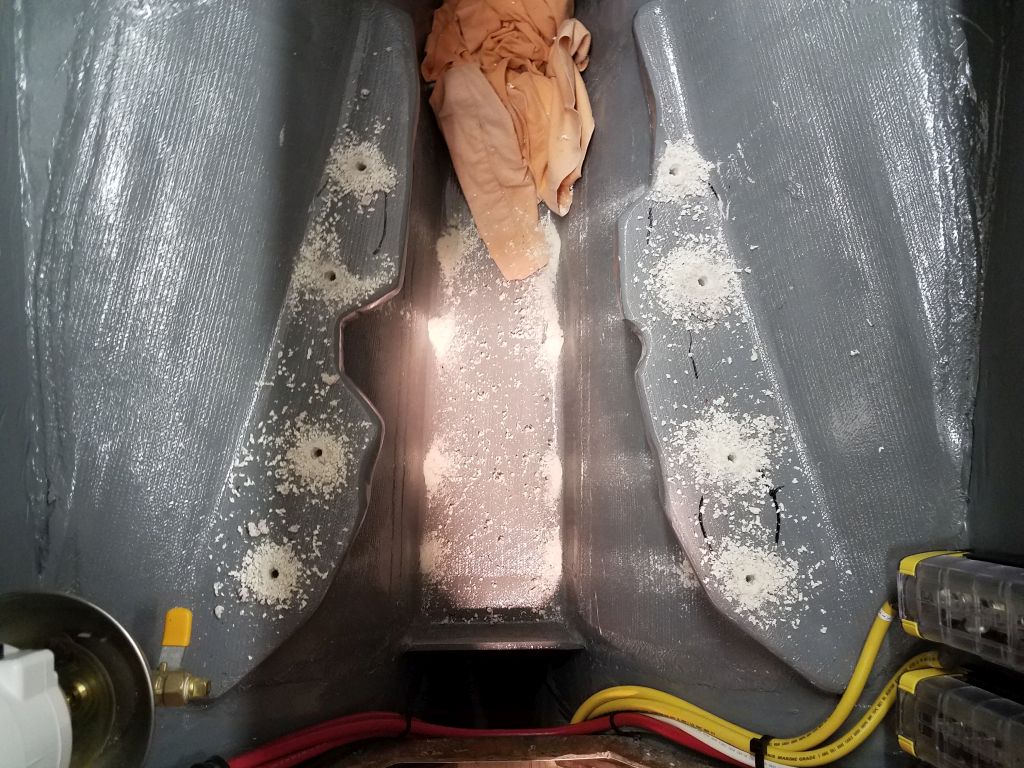
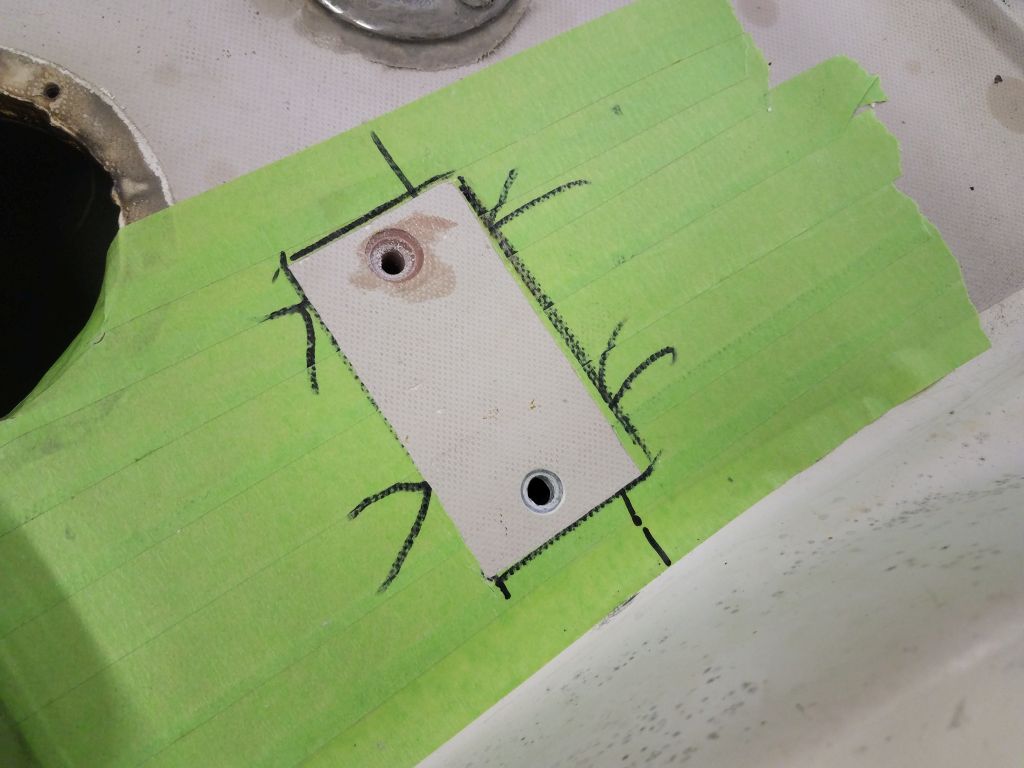
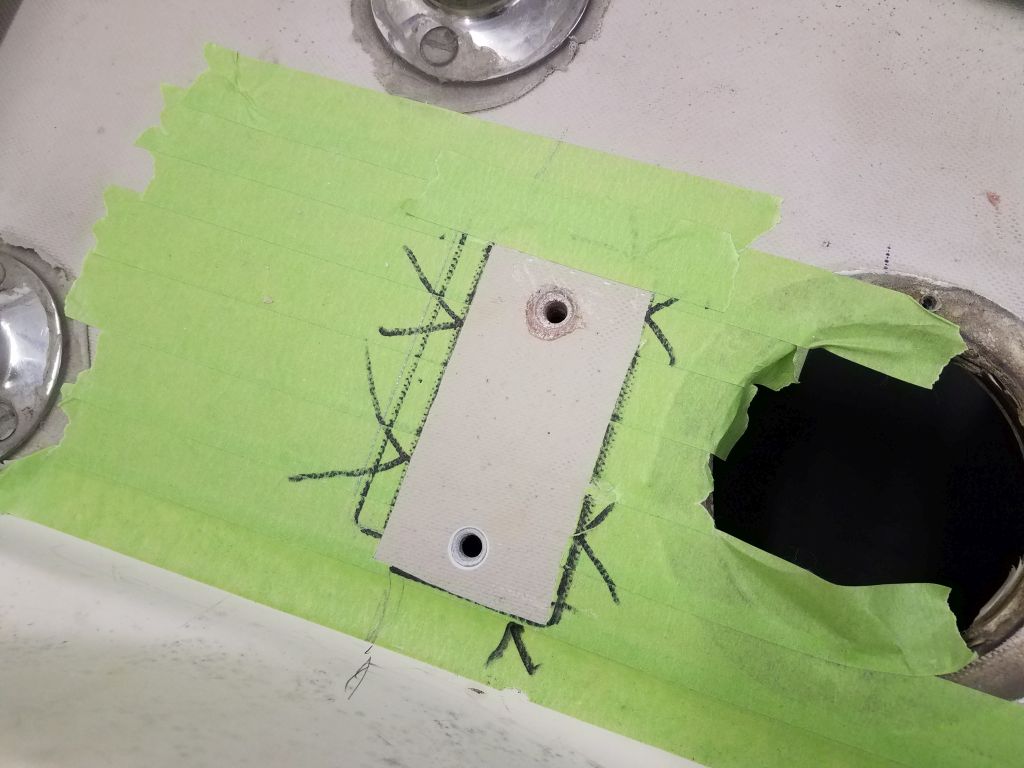
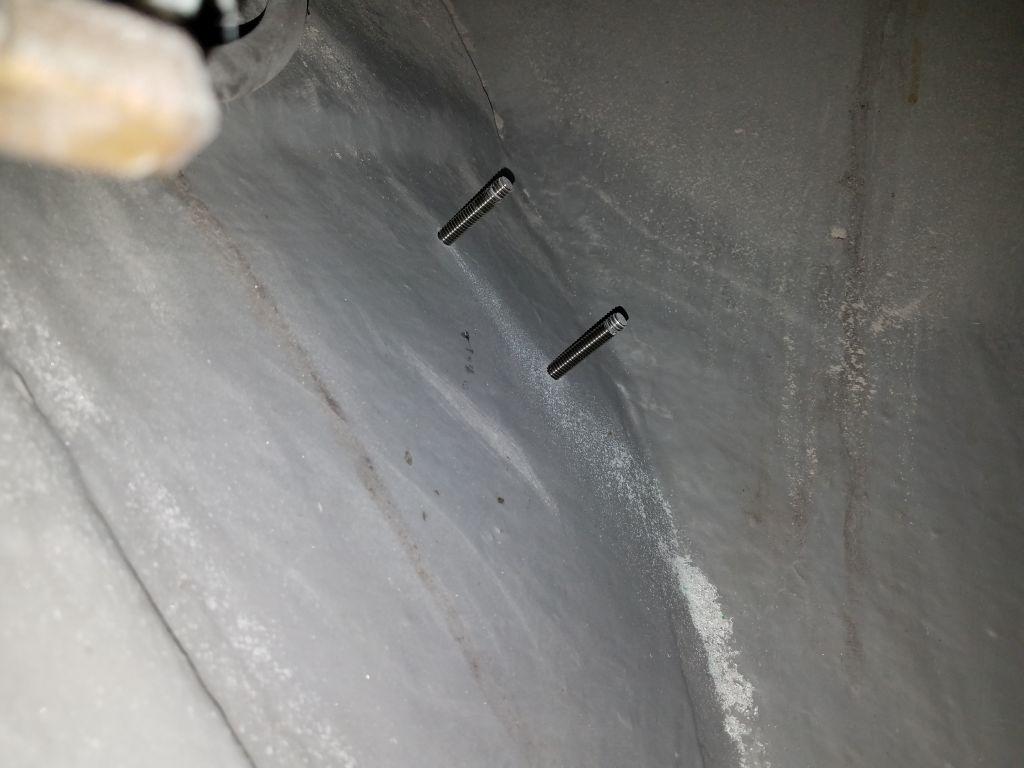
Now I prepared to install the backing pads for the cockpit scupper through hulls.  The hull was already prepared inside and out, so I solvent-washed the areas as needed and dry-fit the pads to check their fit and alignment with the existing through hull holes.  Since the hull here was nearly vertical, and the pads were heavy, I worried that they would slip while the adhesive was curing, so I carefully aligned each pad the way I wanted it, and aligned with the holes as needed, and hot-glued little support blocks beneath the pads to hold them in place.

I permanently installed the backing pads in heavy epoxy adhesive, which not only secured the pads but also made up the space between the tops of the pads and the hull to account for the curvature.  I cleaned up the excess adhesive and left the blocks to cure fully.

Not wanting to jiggle the boat unnecessarily  and possibly upset the positioning of the backing pads, I chose to spend the remaining afternoon working off the boat, preparing the engine and related parts for installation later.  There are several changes I liked to make to the basic engine to make it not only easier to install for me, but easier to work on going forward.

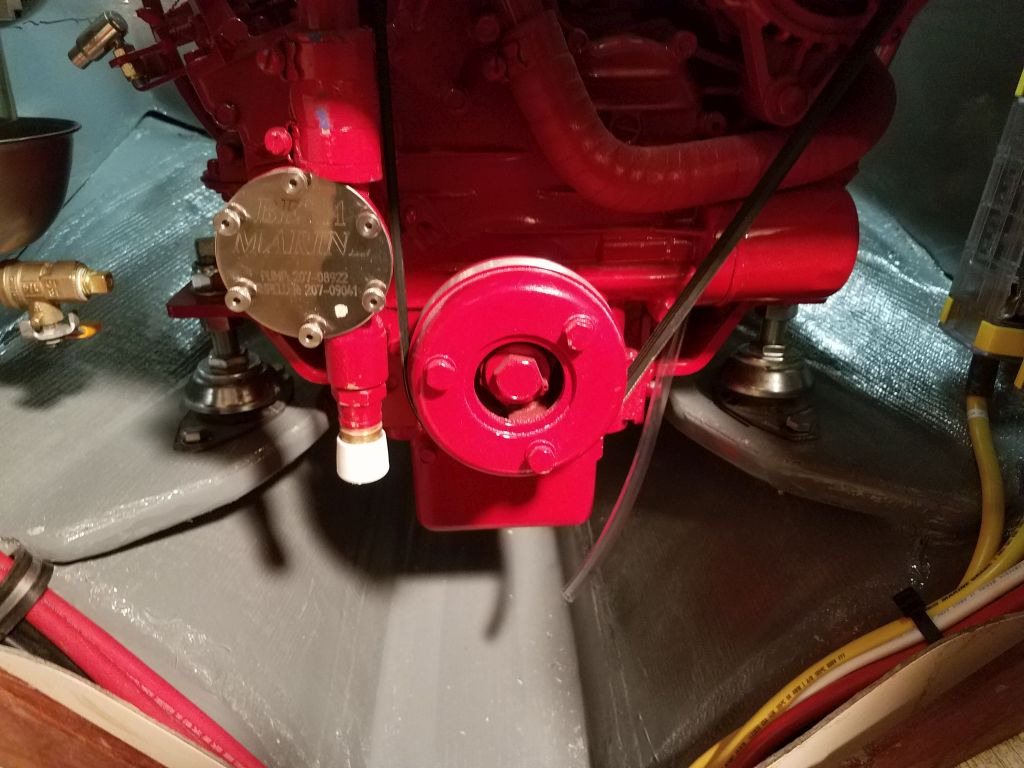
The cover plate for the raw water impeller was conveniently located on the front of the engine, a vast improvement over the designs of many other engines, but was secured with six tiny screws, making accessing the impeller in an emergency less convenient.  I did notice on this engine that the screws were a little different than in the past, now incorporating a hex head as well as screwdriver slot, which was definitely an improvement over the plain panhead screws that I’d seen on these covers in the past, but still I preferred fasteners that one could undo quickly by hand.  I replaced the original fasteners with knurled stainless steel ones.  These particular fasteners also had a 2.5mm Allen socket, so I included a T-handle wrench that could be used if needed to loosen the screws.  I’d secure that by the impeller once the engine was in the boat.

The fussy little clamps for the throttle and gear control cables frustrate me to no end regardless of what I do, but replacing the slotted fasteners with something a bit more positive always helped with installation.  I like socket-head fasteners (5/32″ in this case) instead of other kinds of screws, and replaced the four screws accordingly.  I also marked the wrench sizes nearby.

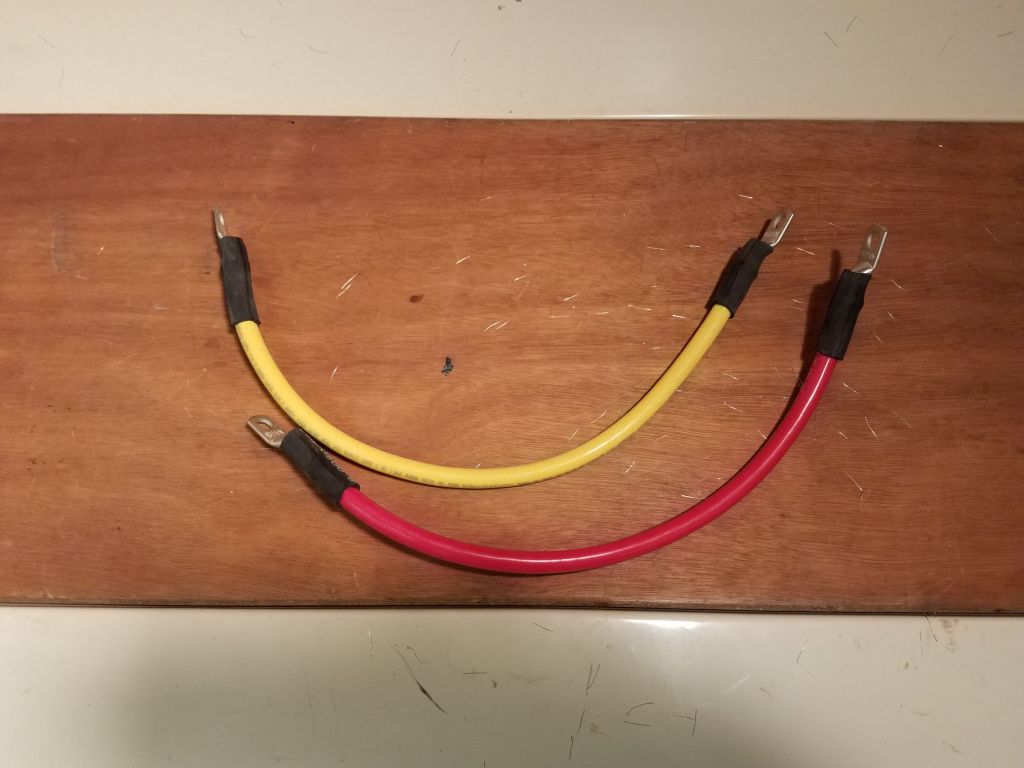
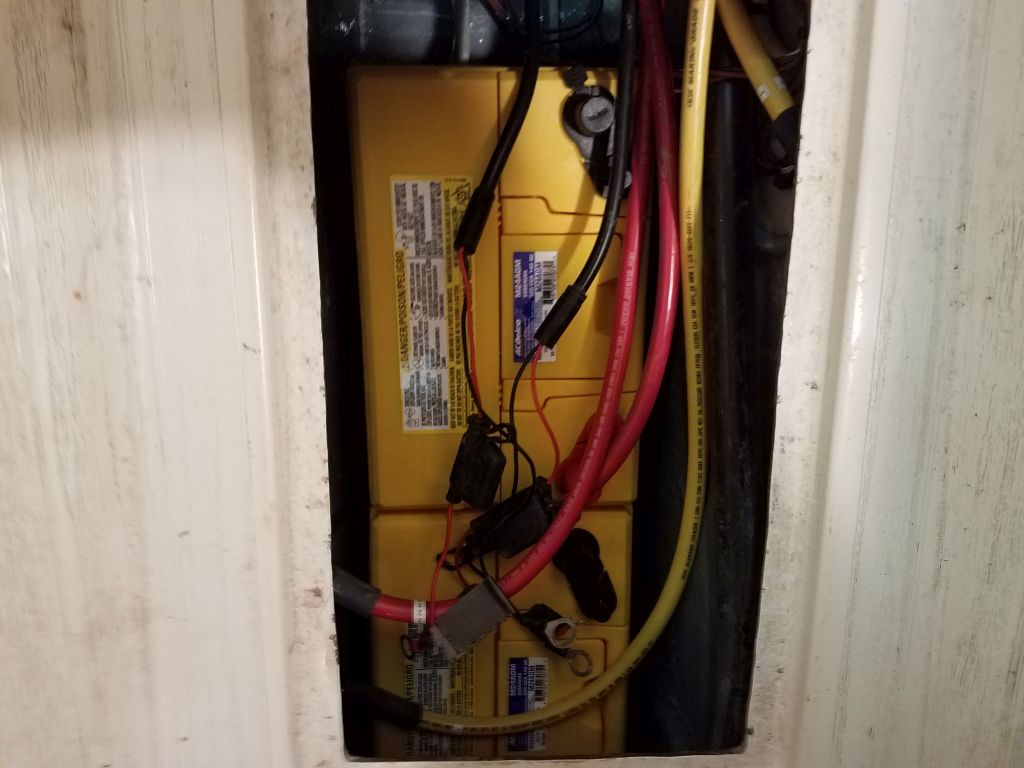
I loosened the fasteners where I’d later install the positive and negative battery cables, and marked wrench sizes on the engine nearby.  On this boat, where access to the side of the engine was tight and unnecessarily difficult once the engine was in place, I’d go so far as to pre-install the batter cables before dropping the engine into the boat, but that would come soon enough.

It sure would be nice if these two fasteners were the same size.

On previous installations, I’d found that the way the engine wiring harness plug came secured from the factory got in the way of clear access to that corner of the engine, so now I removed the cable clamp holding it below the throttle control cable bracket, releasing the harness so I could align it as I pleased and, more importantly, clearing access to the engine mount beneath.

A happy installer makes for an efficient installation and a happy owner.

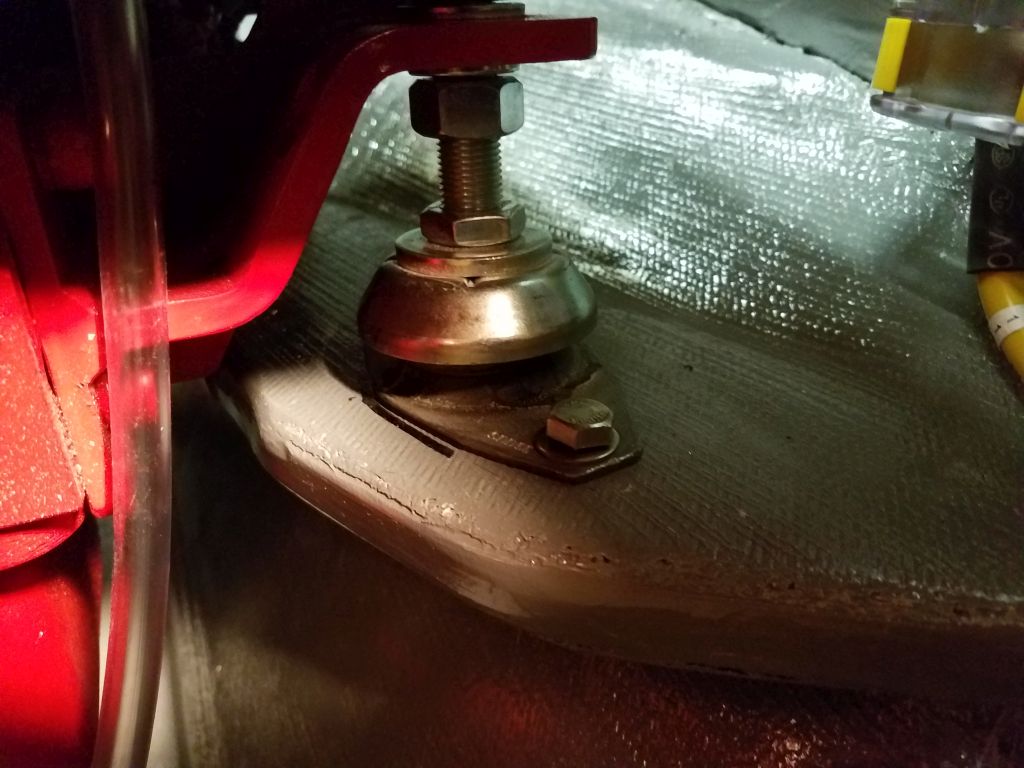
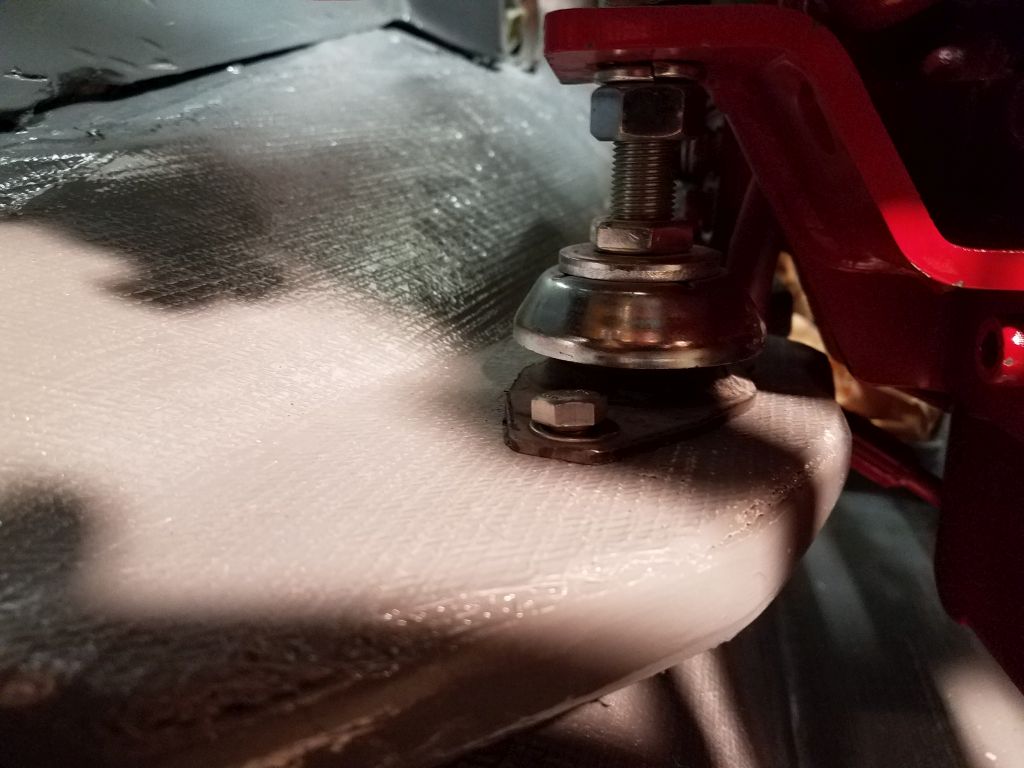
I received the narrow 11-1/2″ mounting center mounts for the aft side of the engine from my engine supplier, who had sent them at my request earlier in the week.  All I had to do was send back the 14″ original mounts from the engine.  Lifting the engine from its shipping crate with my crane, I unbolted the original mounts and installed the replacements in their stead.  These mounts would allow the engine to sit properly on the new foundations in the narrow hull.

During the layout of the foundations, and the adjustment of the after mounts to the narrower width, I noticed on the engine drawings that the narrow mount centers were slightly closer to the aft end of the engine (the reference point being the face of the transmission coupling), about 1/4″ further aft than the 14″ mounts.  This wasn’t a big change, but it was enough for me to note pending arrival of the actual mounts, and also enough that I didn’t want to rely on the template alone in order to physically mark and mount the flexible mounts before engine installation.  I’d marked and drilled the new holes in my template for the narrower aft mounts using the same transverse layout line that I’d originally used for the 14″ mounts, and only afterwards had I noticed the discrepancy on the drawing.  For shame.

Now, I could hold the old (14″) mount directly against the newly-installed 11-1/2″ mount and determine that indeed the new mounting center was just slightly aft of the original (on top here).  It’s always good to confirm measurements physically.

This wouldn’t affect anything I’d done, but I’d either wait to mark the bolting locations till I put the engine in the boat itself, or make another basic template with the correct centers first.

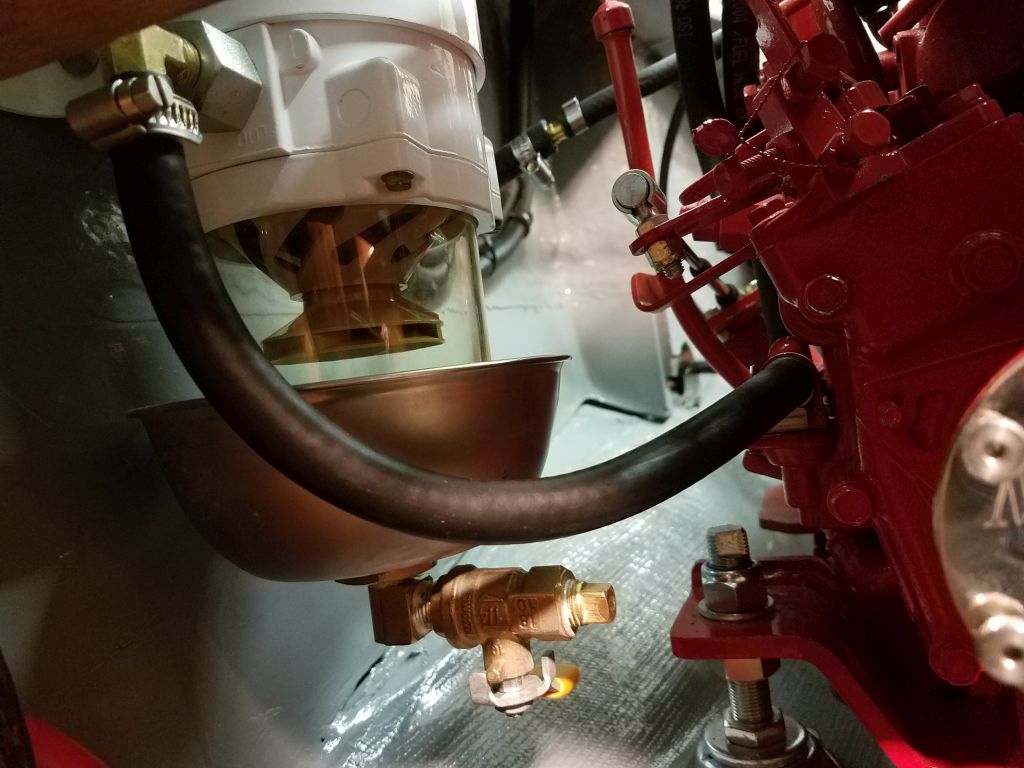
I specified my usual Racor fuel filter for this installation, and, as is my habit, I replaced the drain plug on the bottom of the metal bowl with a valve to make draining more convenient.  In this case, with tight space, I had to use a 90° elbow first to allow the valve to be oriented horizontally, since there wasn’t enough clearance otherwise.  To avoid leaks if the valve handle was operated inadvertently, I installed a plug at the end.

The ball valves I specified for the new scuppers arrived with an add-on zerk fitting to allow lubrication of the ball and help avoid unwanted stiffness over time–a good addition, I thought, particularly on little-operated valves like scupper drains since even good ball valves can become stuck if not well-used.  As directed, I replaced the bronze drain plugs on the two valves with the zerk fittings, which would allow the user to install waterproof grease at will.

Total time billed on this job today:  7.25 hours

0600 Weather Observation:  25°, snow shower.  Forecast for the day:  Clearing, around 30° but dropping in the afternoon

Older posts Newer posts