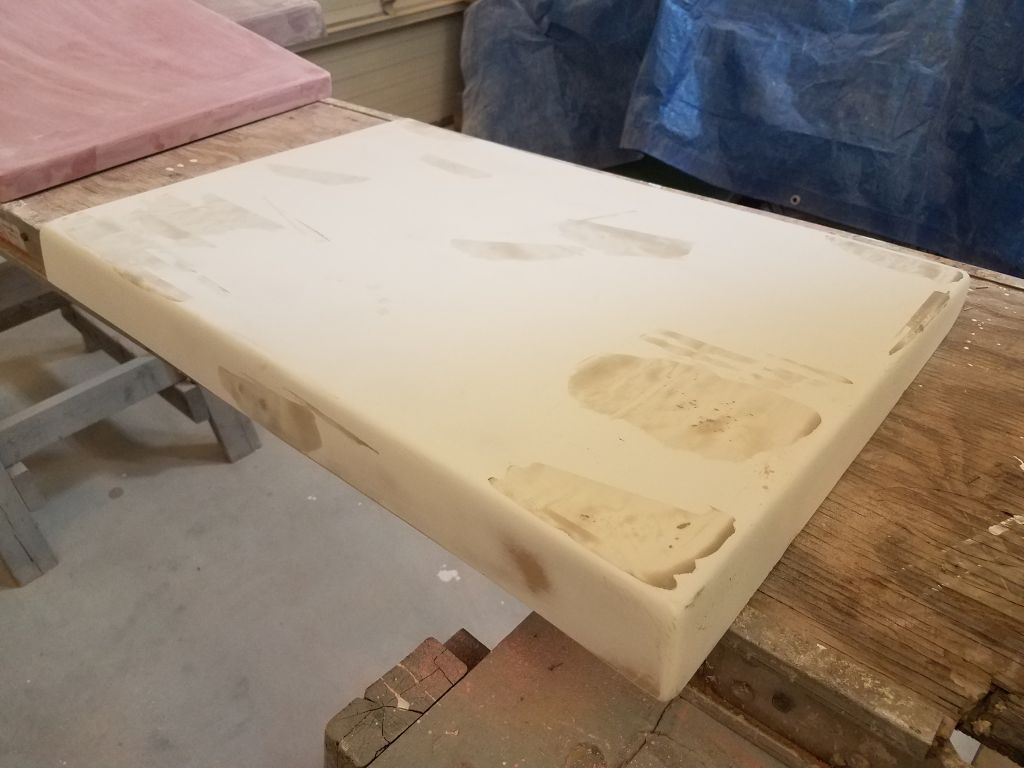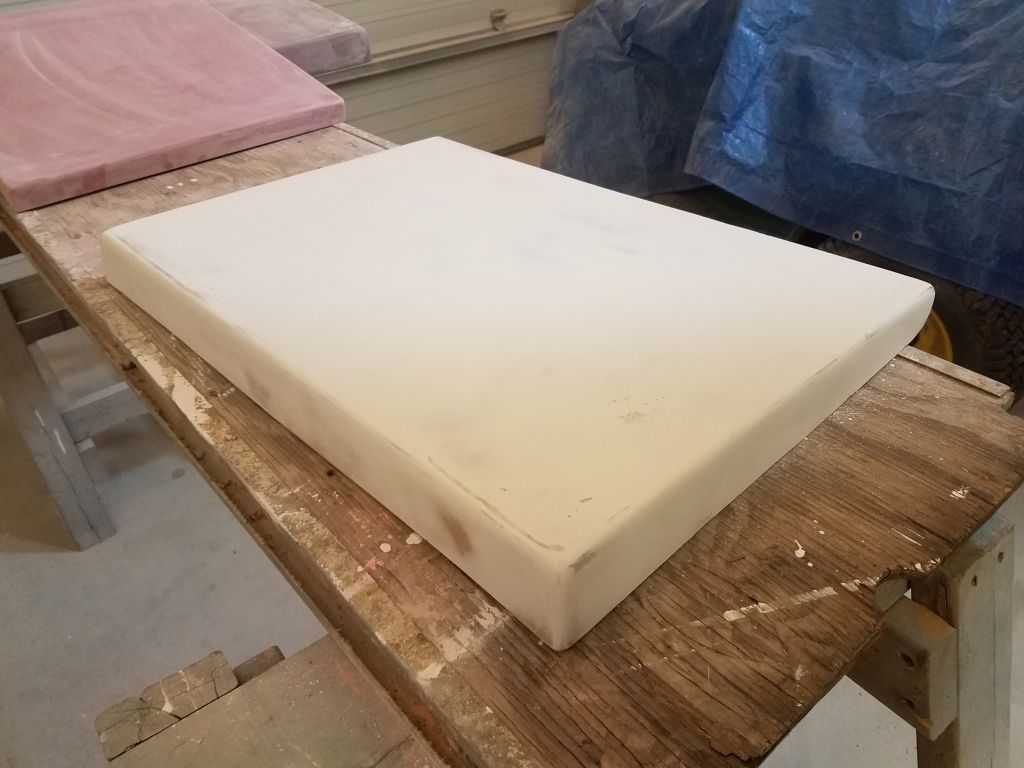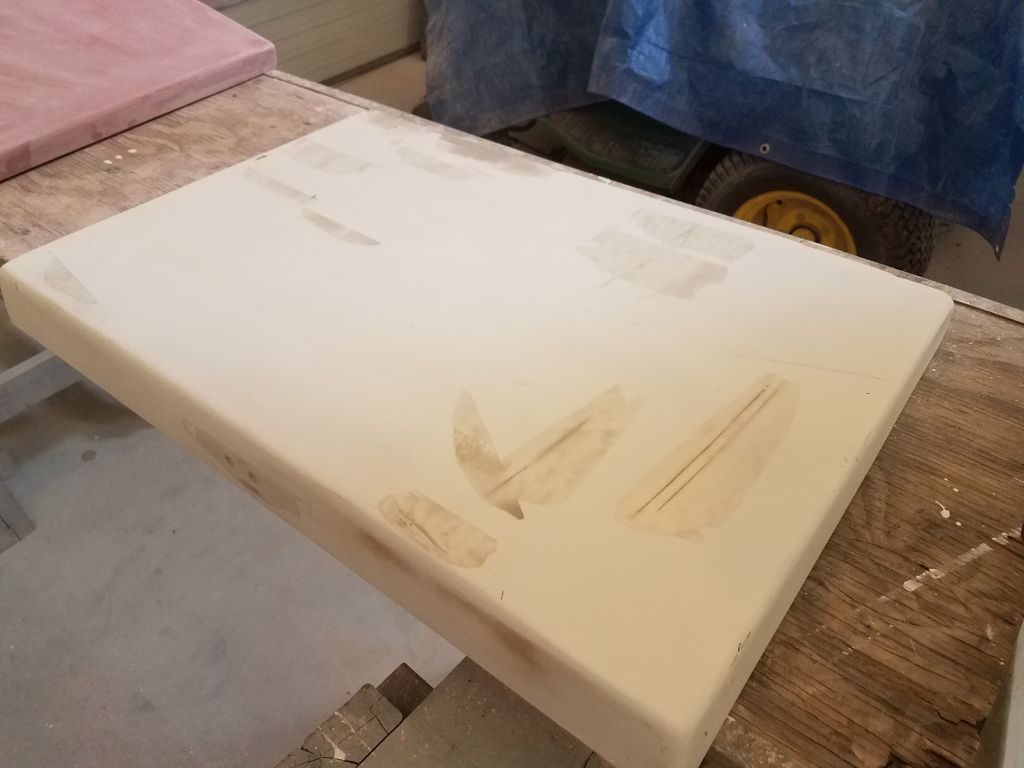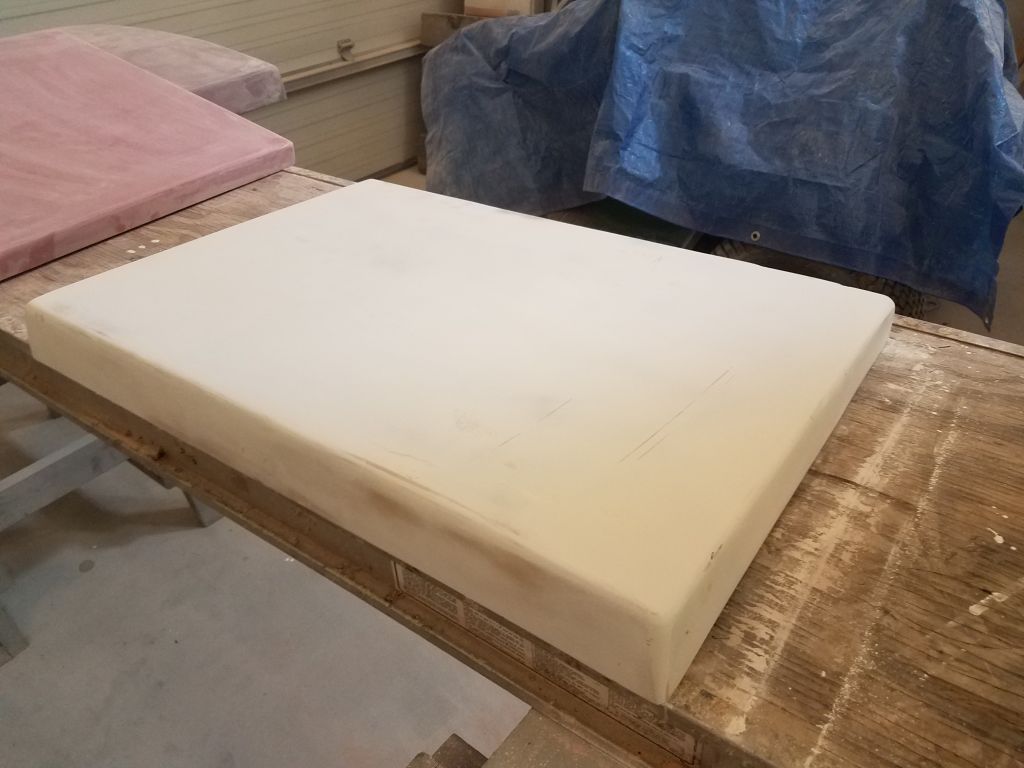

(page 97 of 165)

Scupper 119

Monday

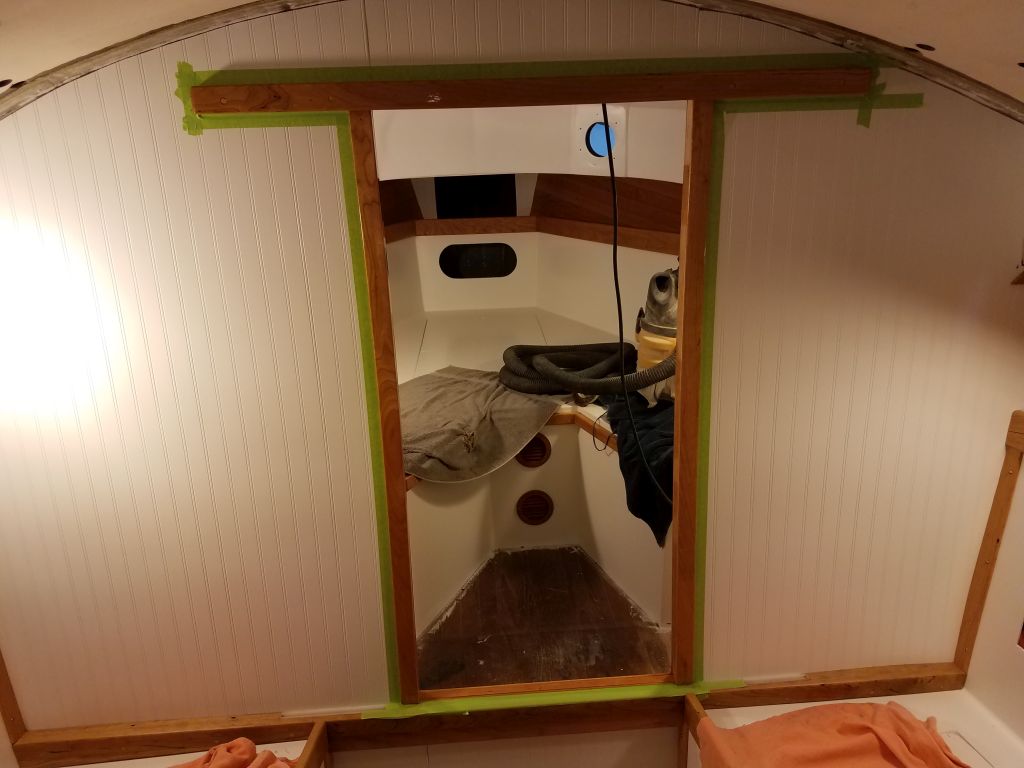
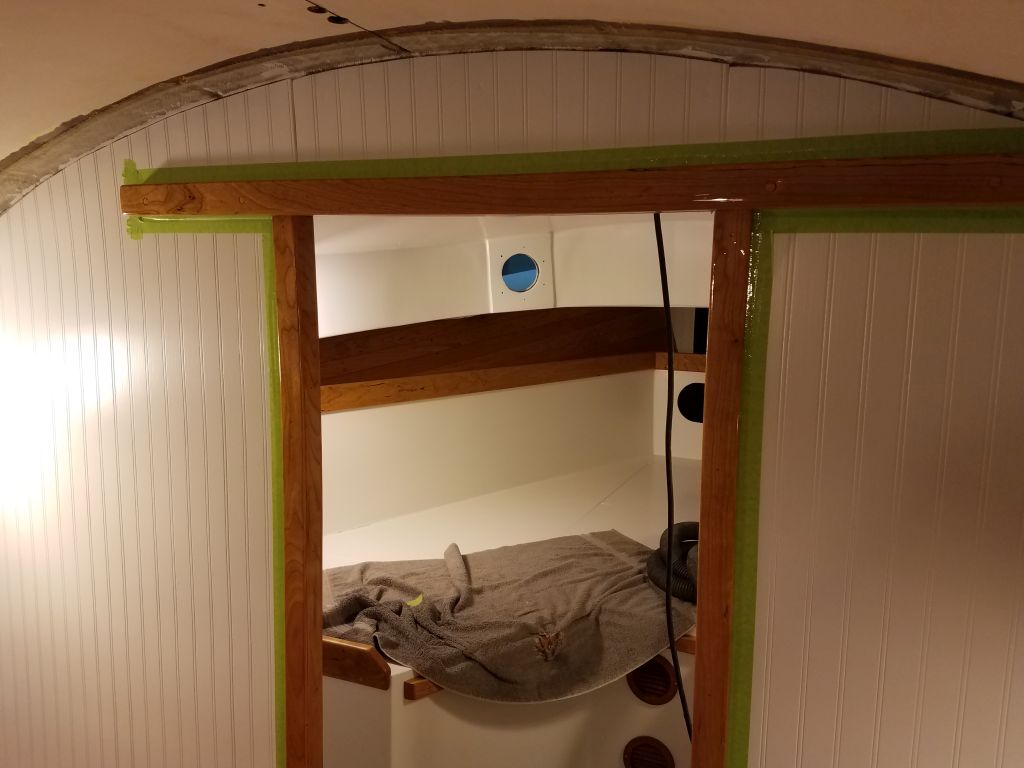
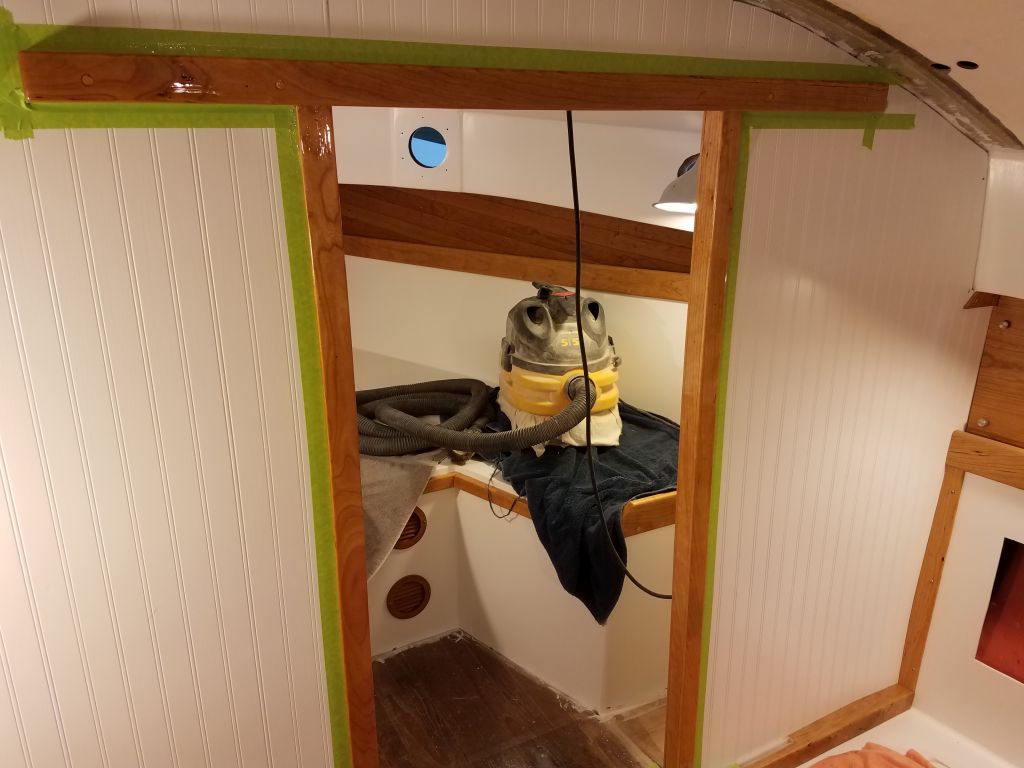
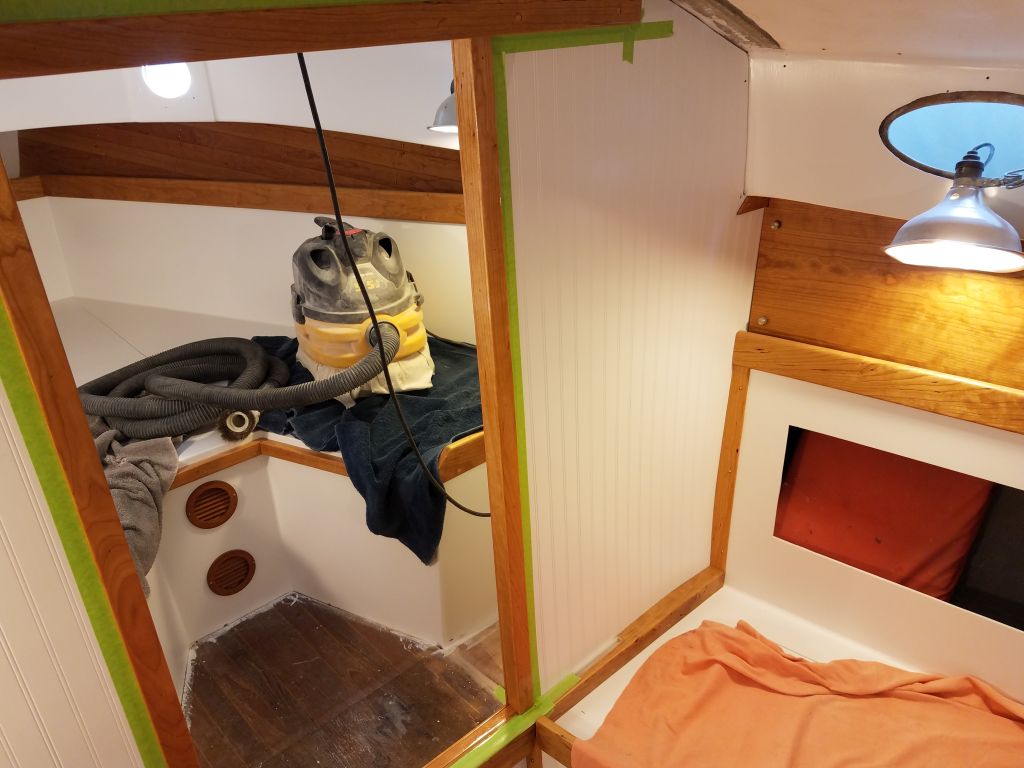
With the current round of varnish work complete, I spent the first part of the day removing all the masking tape.  Afterwards, I reinstalled all the small trim pieces, which I’d removed for varnishing.

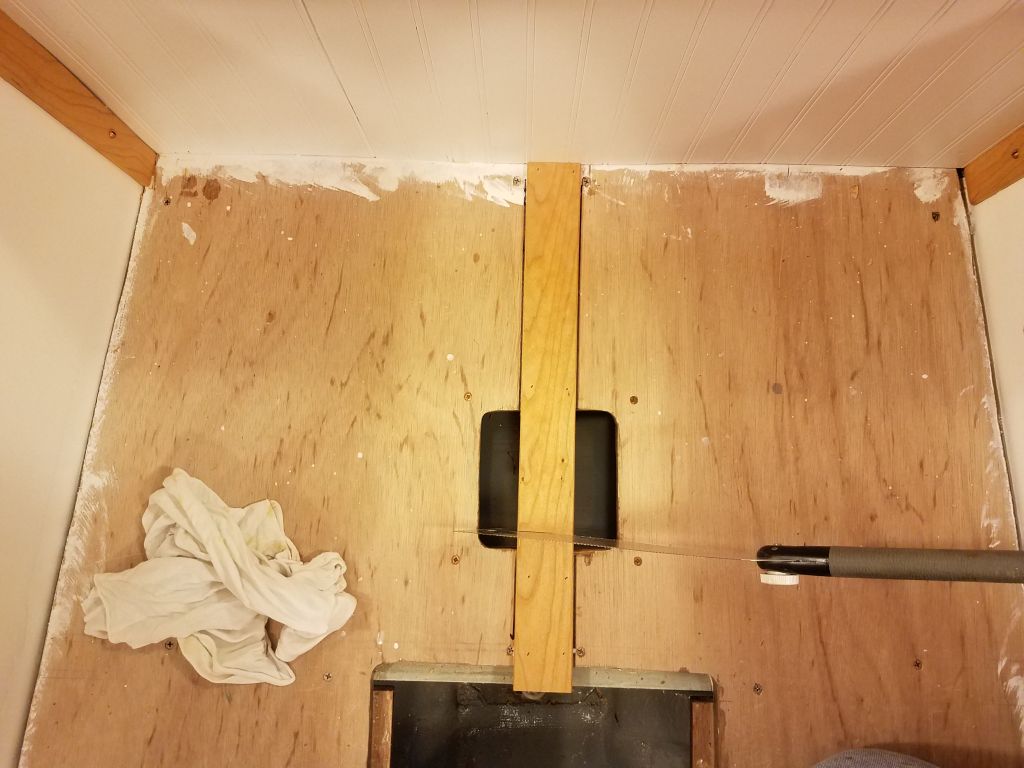
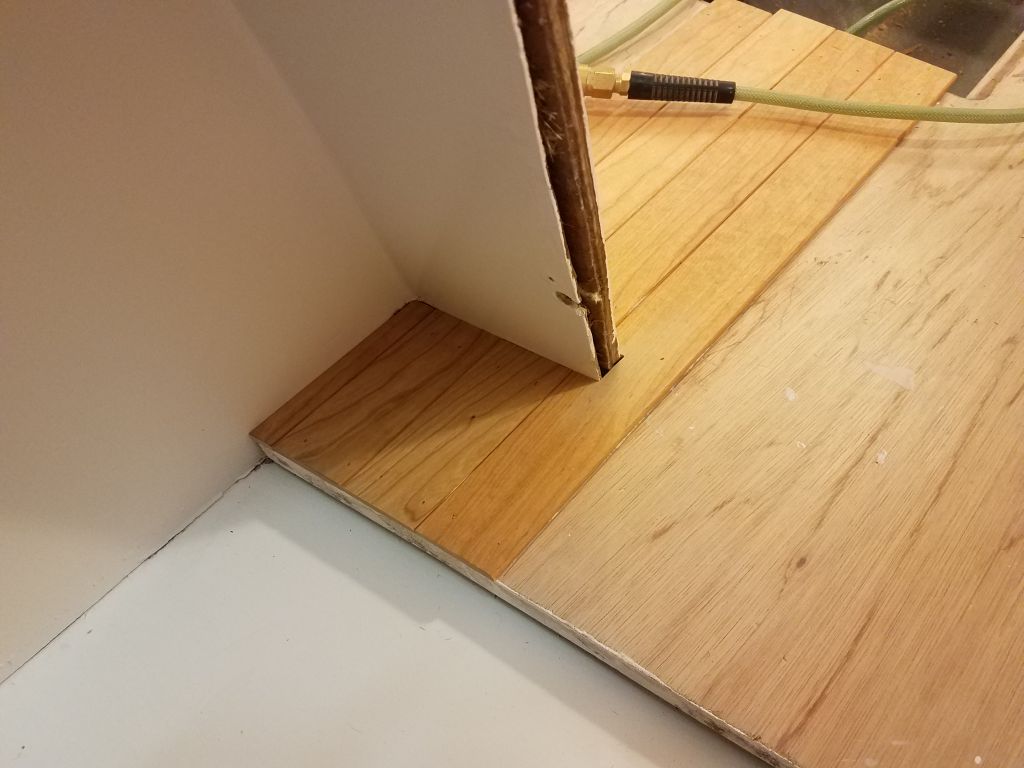
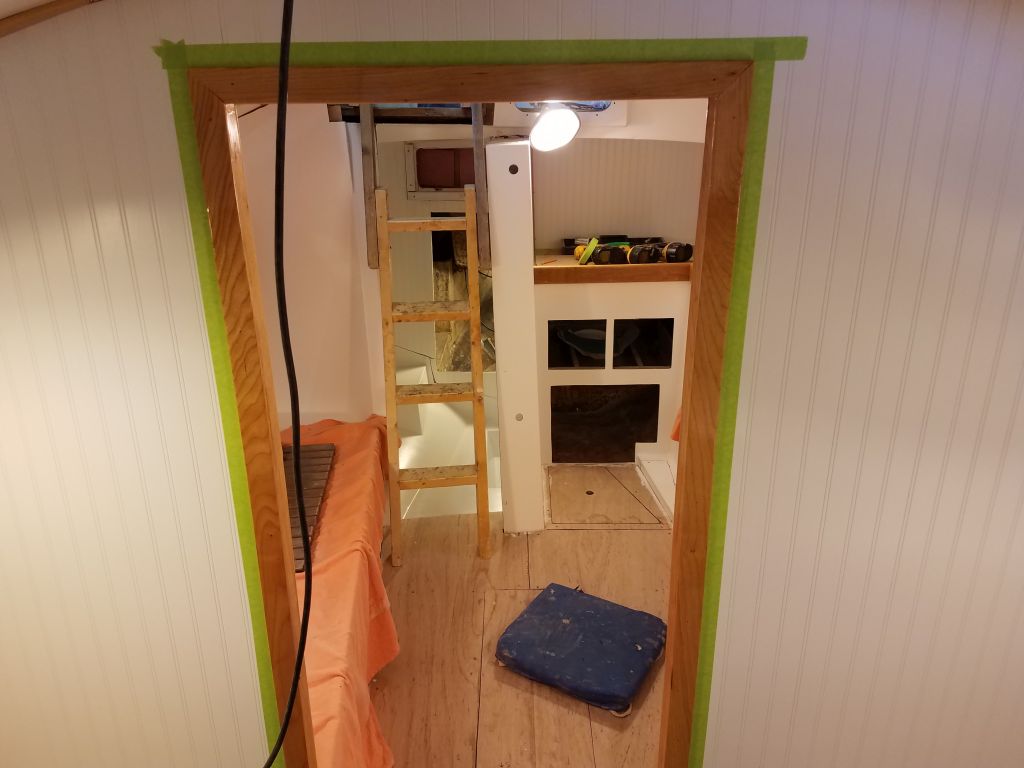
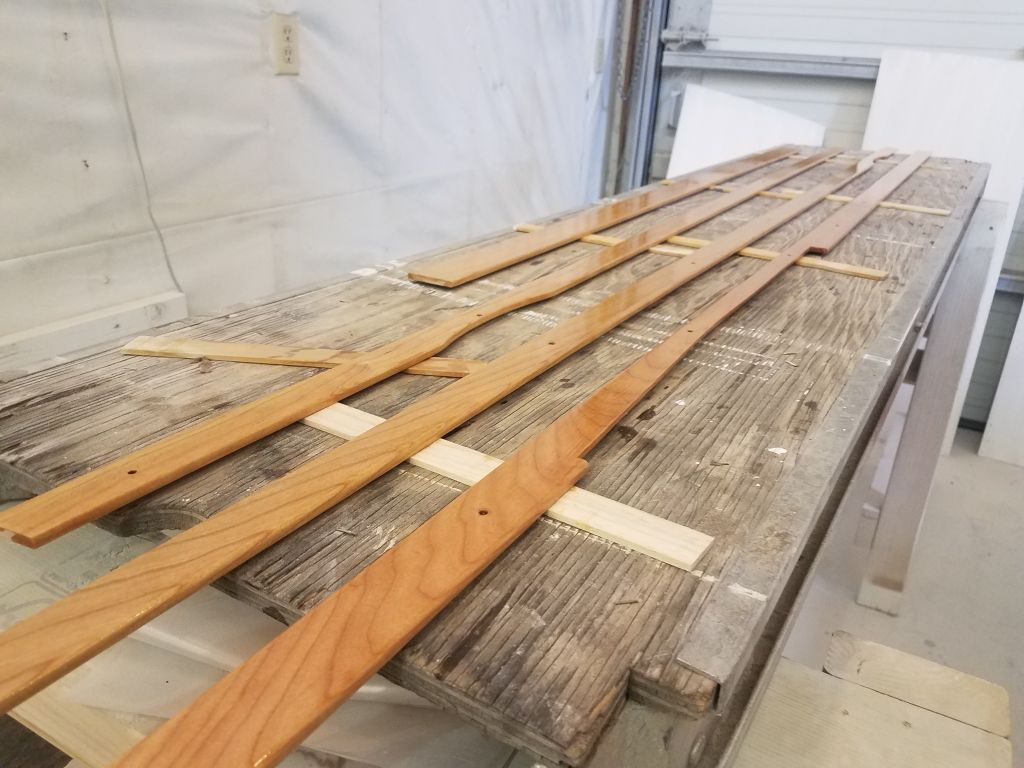
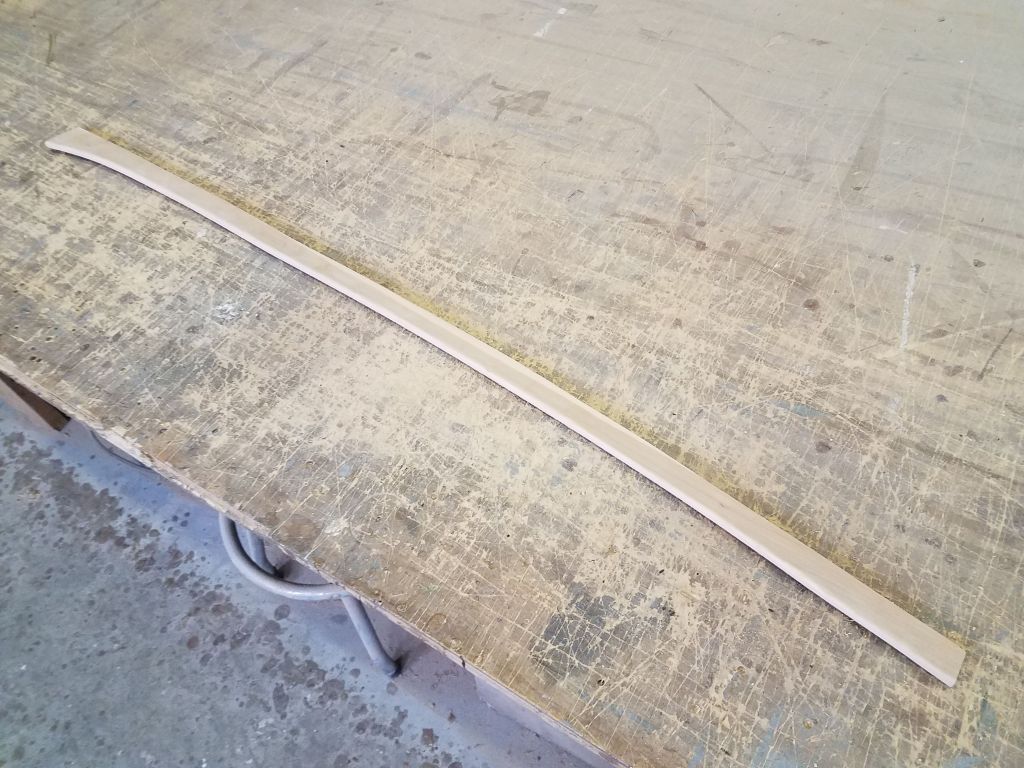
To complete the cuts on the side rails for the new companionway ladder, I took one of the rails up into the boat and set it in place, using a piece of 3/8″ plywood to hold the base off the existing sole an appropriate amount (1/4″ for the finished sole, plus 1/8″).  With the piece properly positioned, I used a straightedge to mark the height and angle at the top, where it met the companionway threshold.

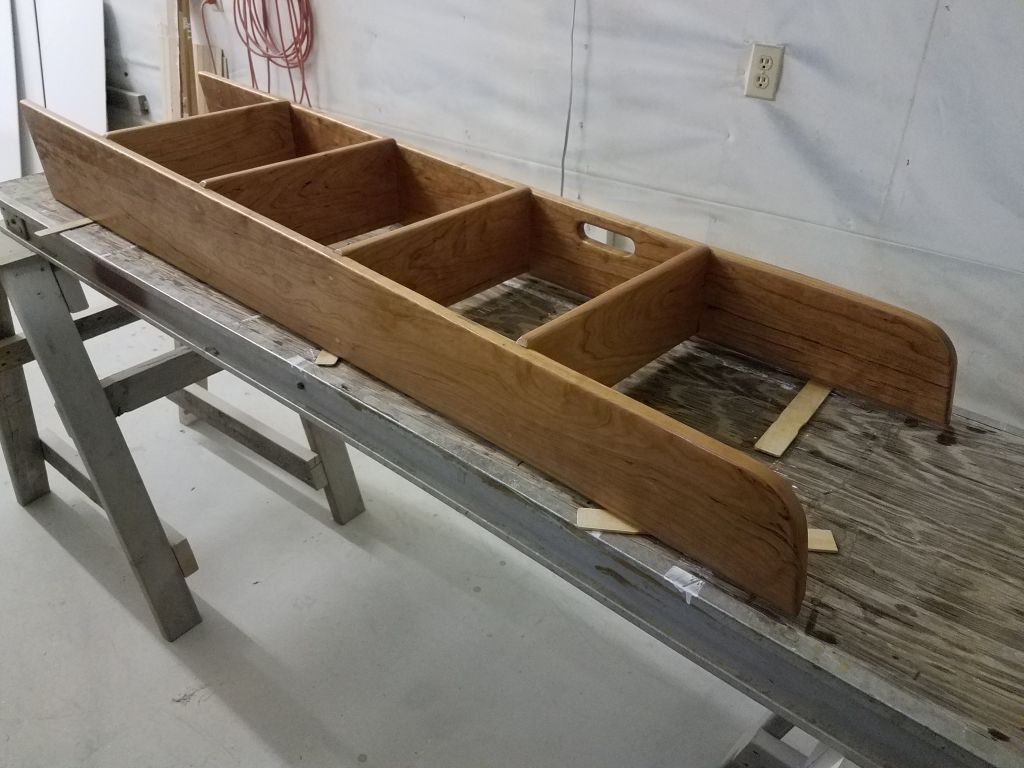
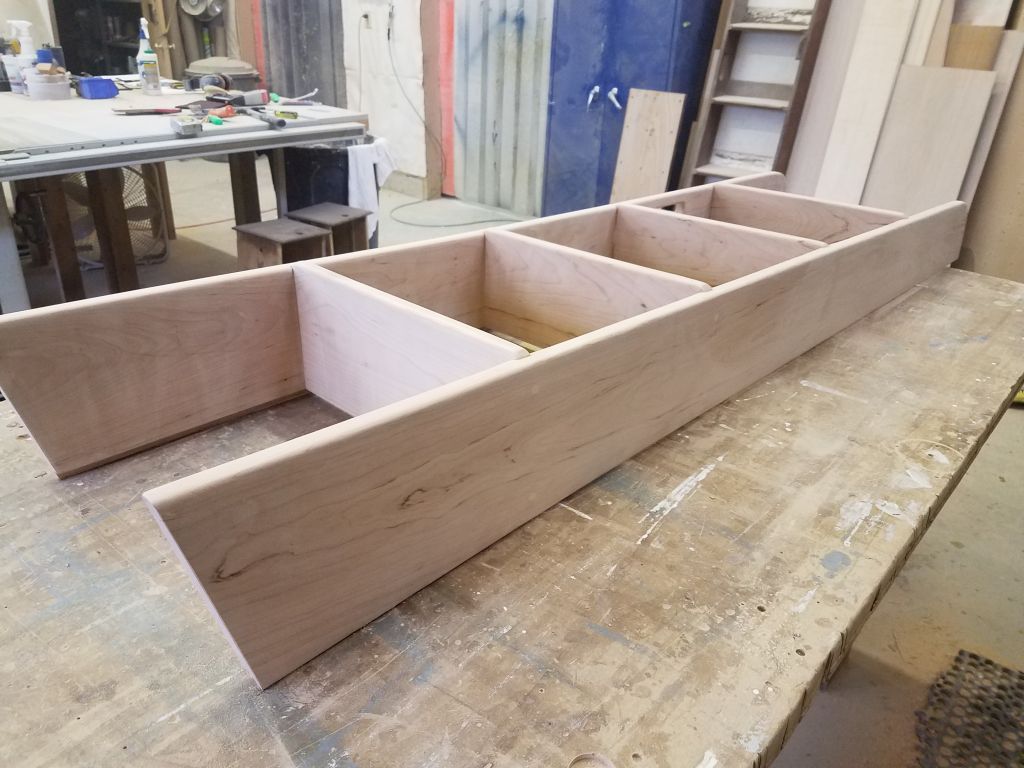
Back at the saw, I clamped both side pieces together and made the top cut.  Then, at the top I marked a rounded corner reminiscent of the original piece and cut and sanded the curve smooth before rounding the edges of the new cuts and sanding everything smooth once more.  The finished height of the new piece is slightly different than the original because the new cabin sole, with its thicker substrate and cherry veneer atop, would be slightly higher than the original sole, which was thinner to begin with, even with its finished veneer.

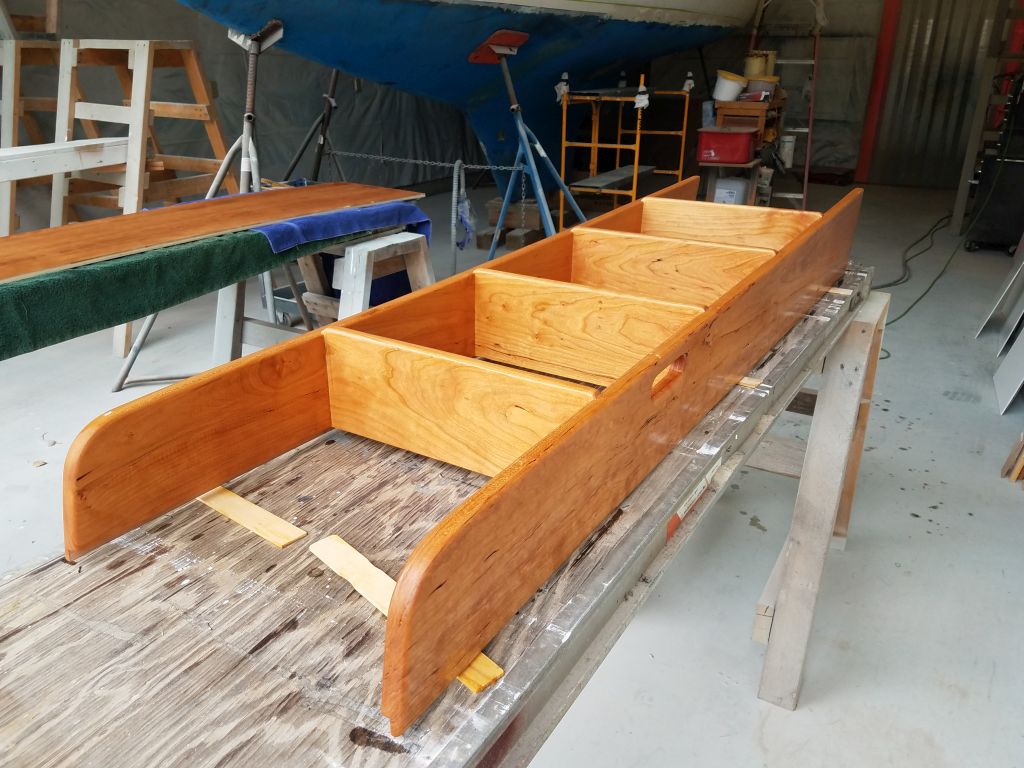
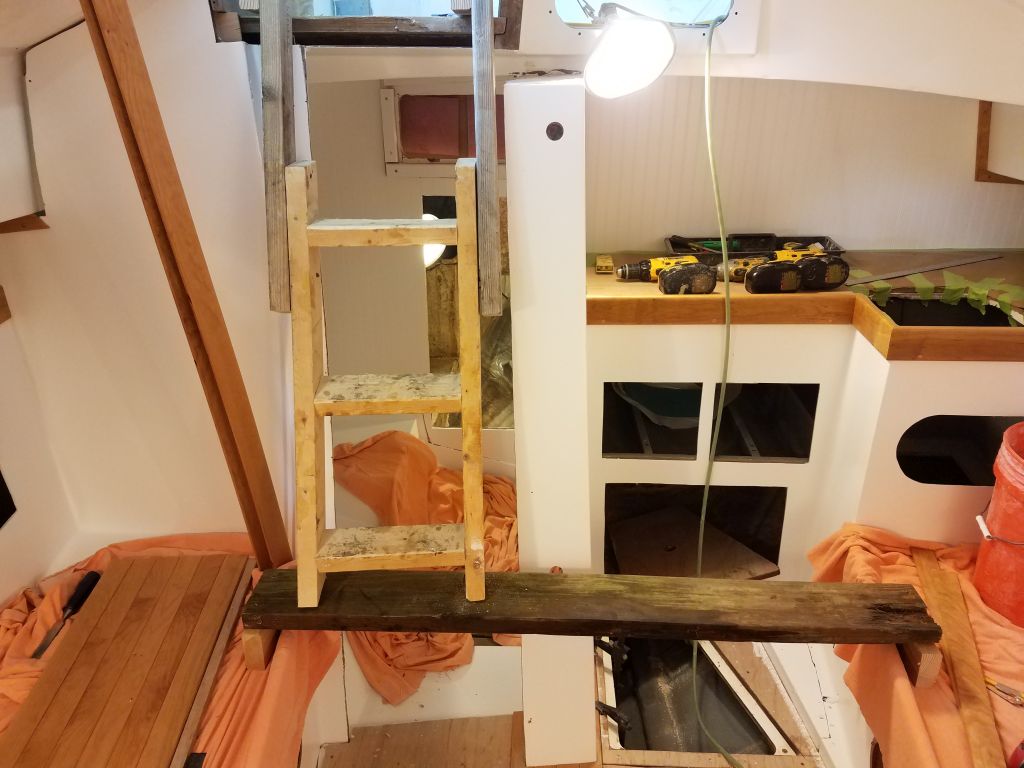
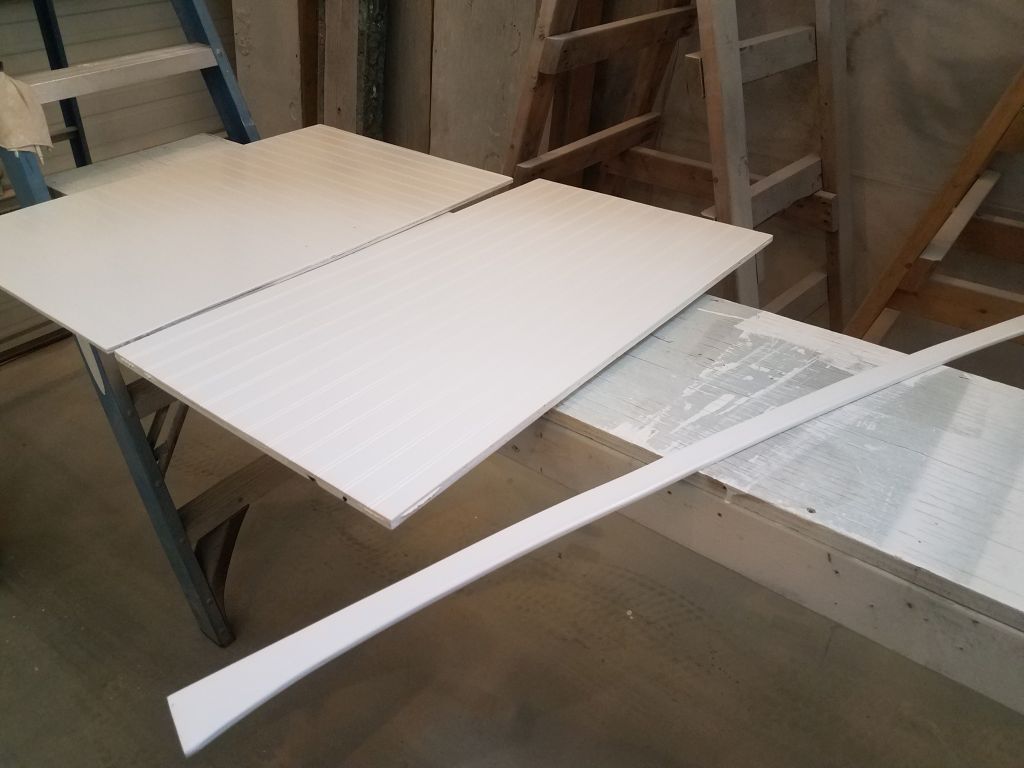
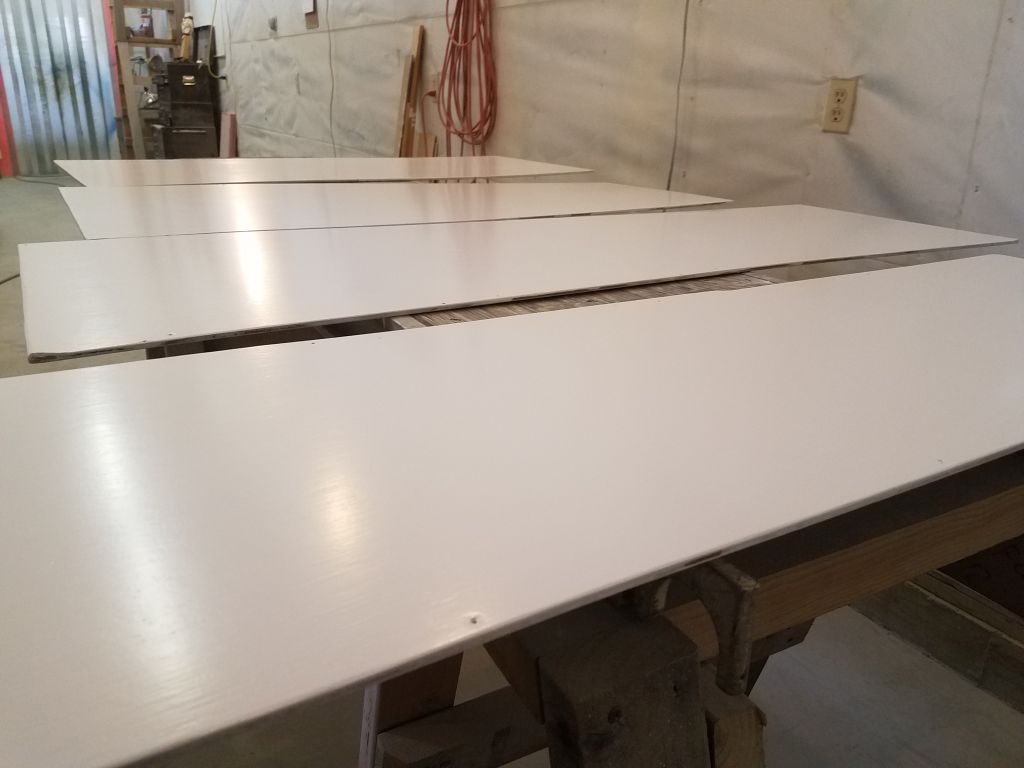
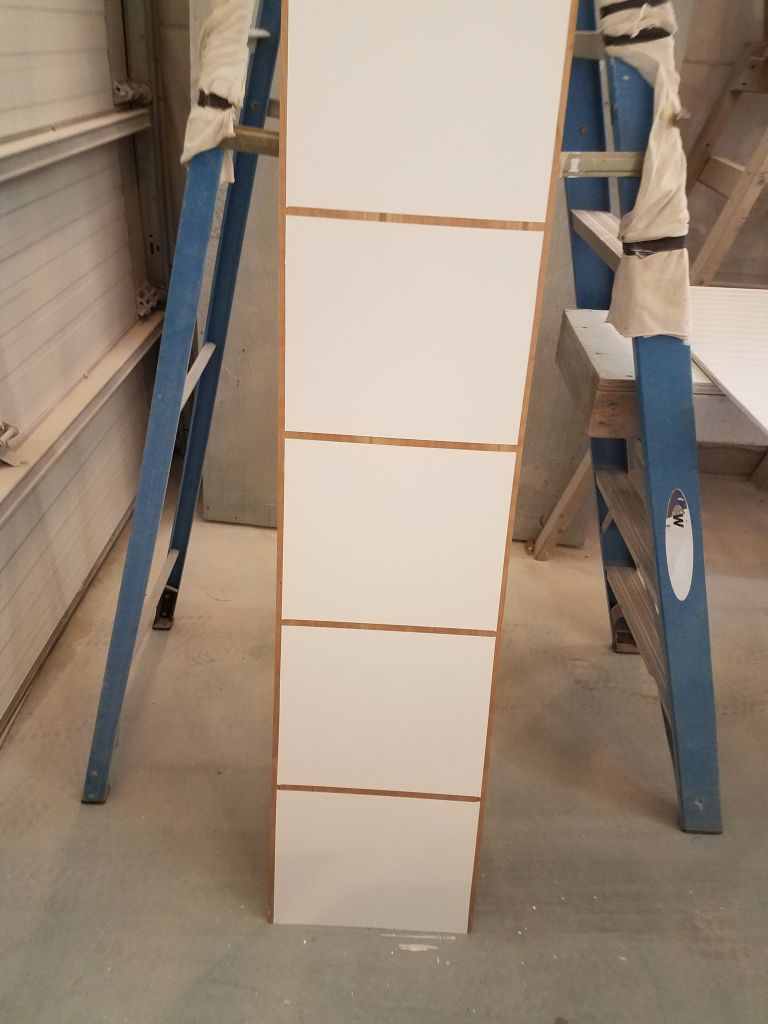
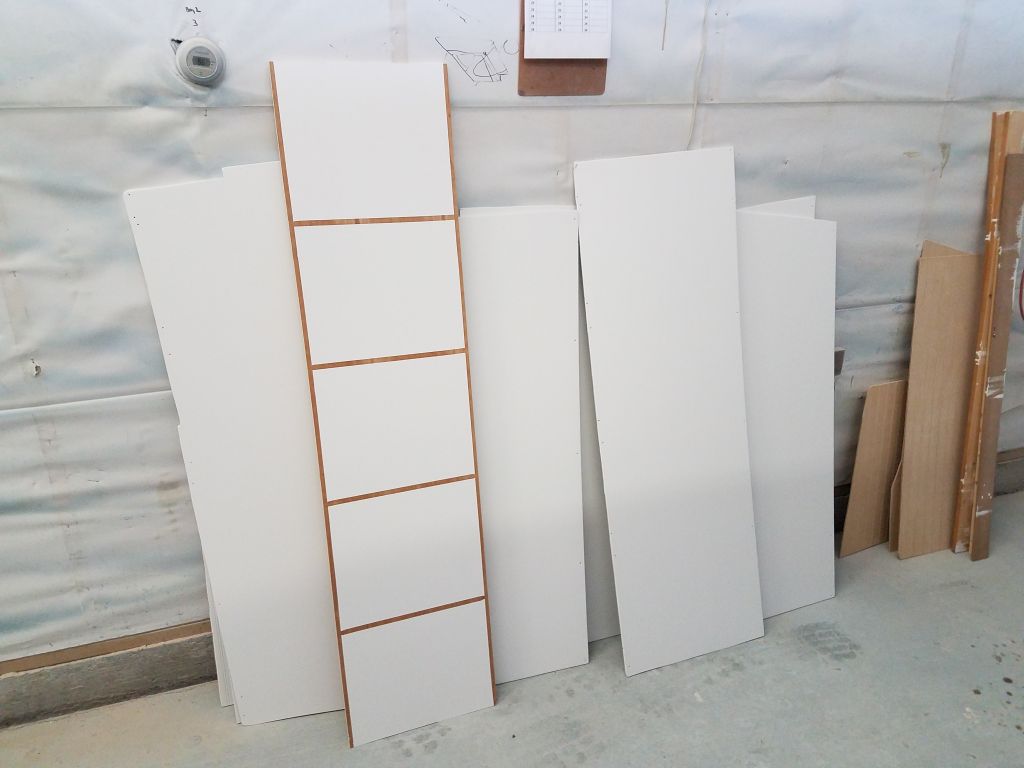
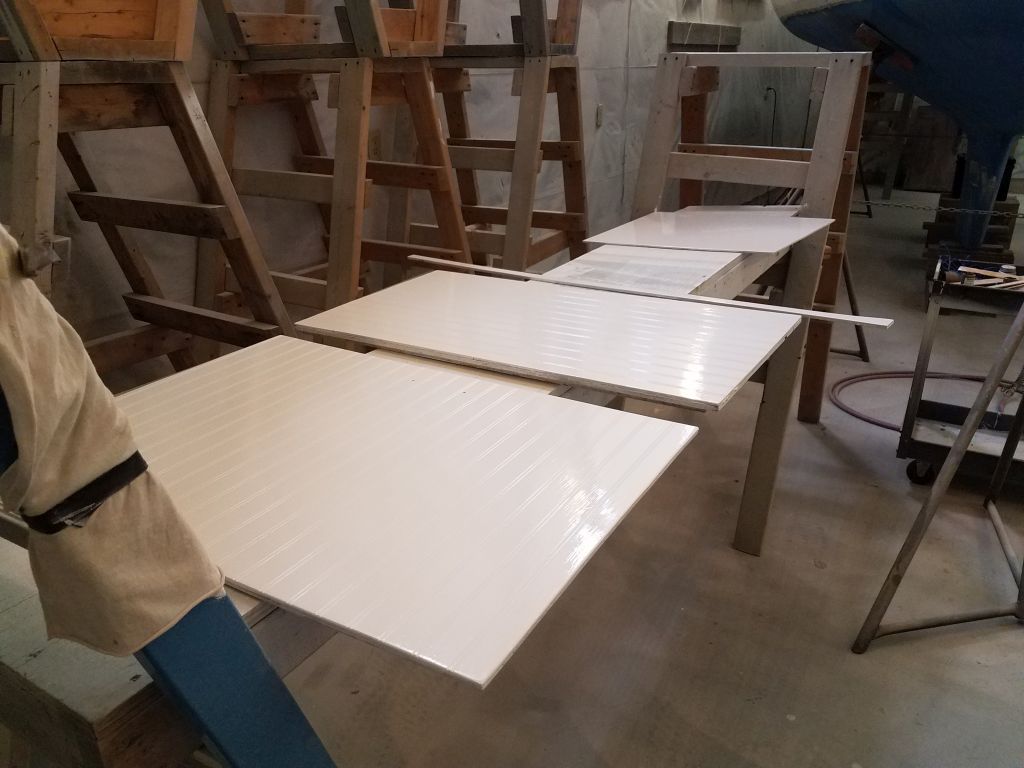
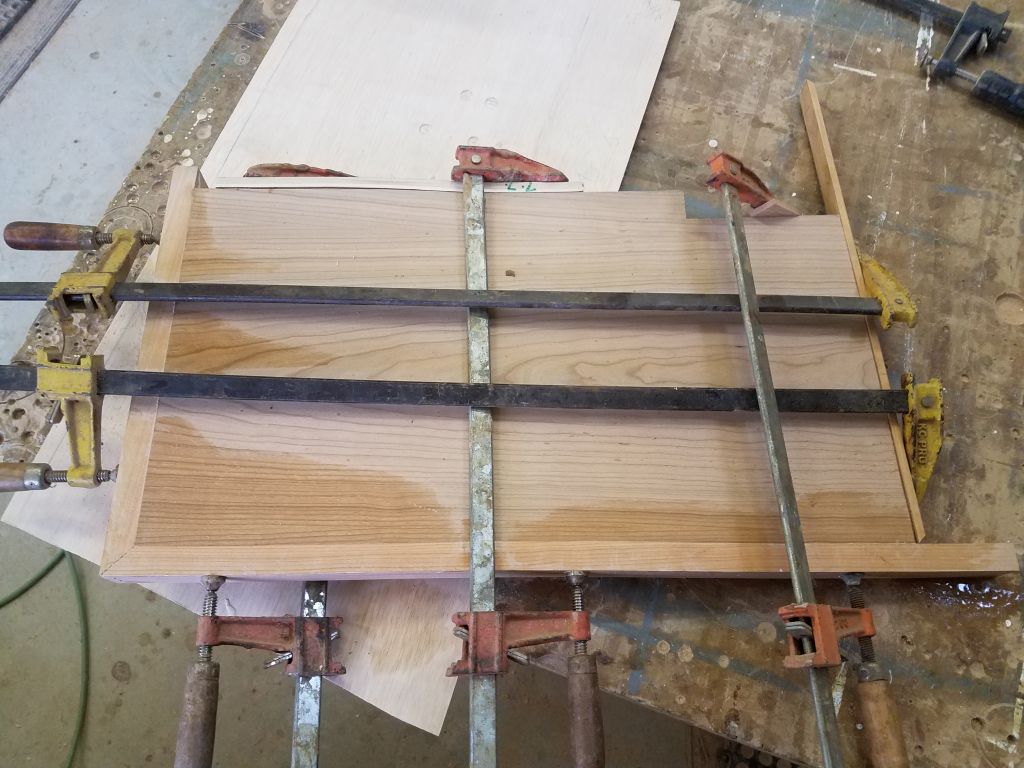
Now I could assemble the ladder permanently.   After solvent-washing the bonding areas as needed, I began by spreading waterproof glue on the bottom slots, and installing the lower step, aligning the back edge properly with the rabbet in the side rails and clamping it in place.  For the moment, I left off the back panel, since its absence made it easier to install, align, and glue the treads.  One step at a time, I glued and clamped in the treads, and once all four were in place, I inserted the back panel in the rabbets.  Because I didn’t want this panel permanently installed yet (I planned to paint it white to offset the treads and match the original appearance), I masked off the edge that sat in the rabbet, but the panel was important to ensure proper alignment of the whole unit while the glue set up.

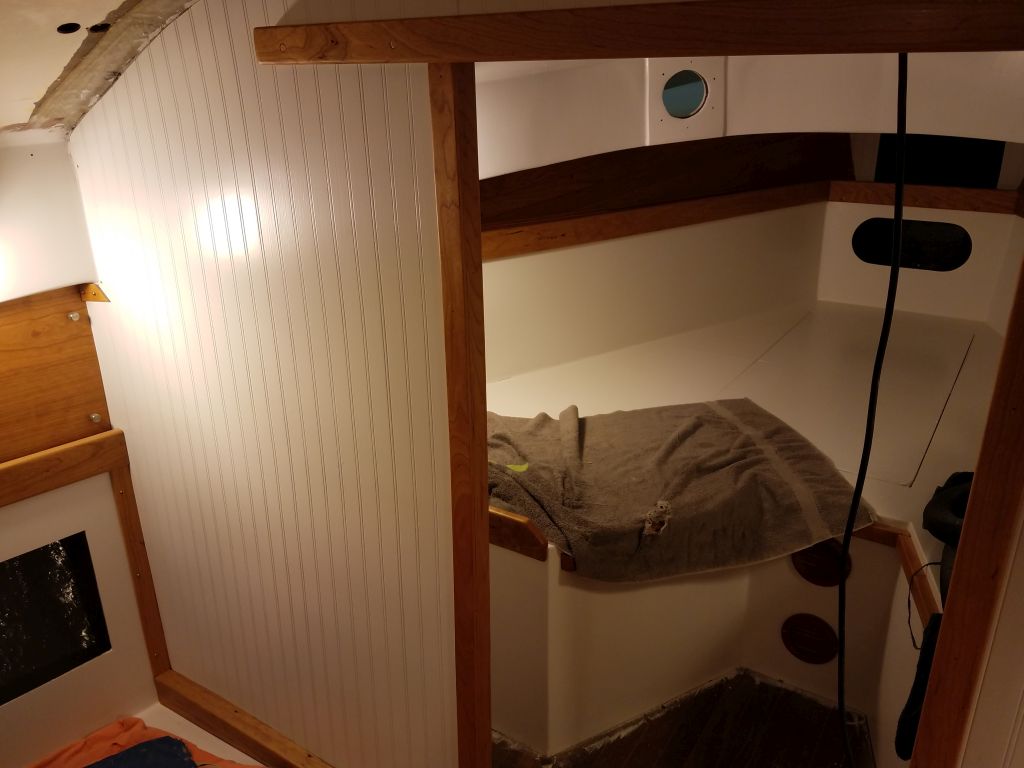
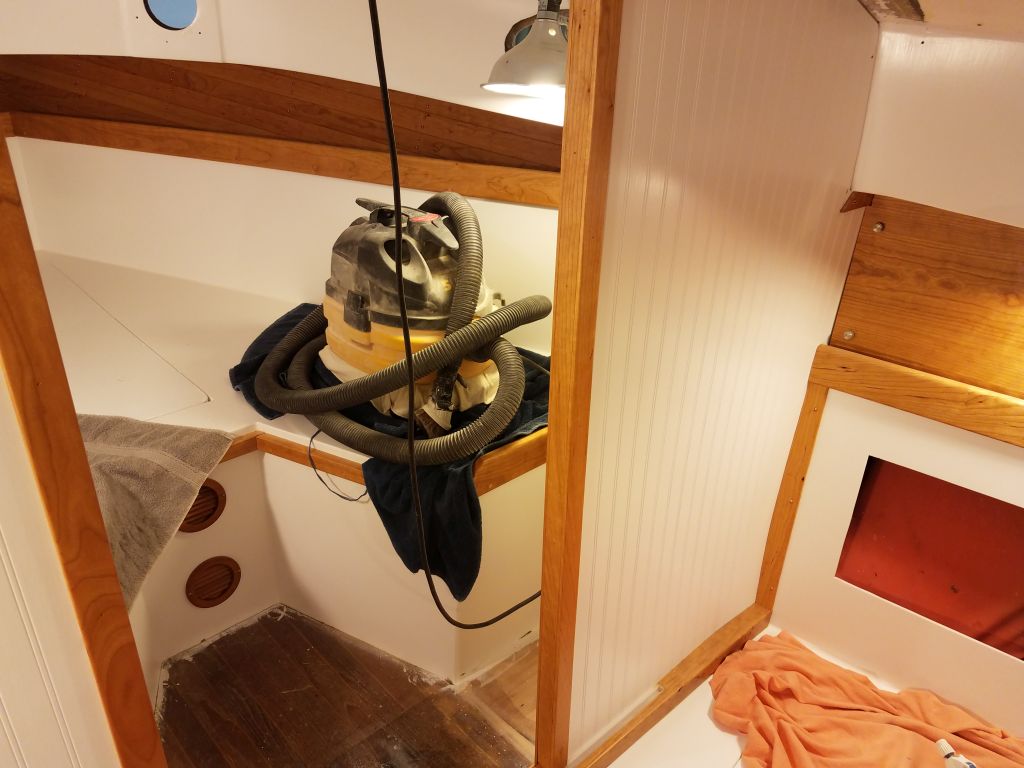
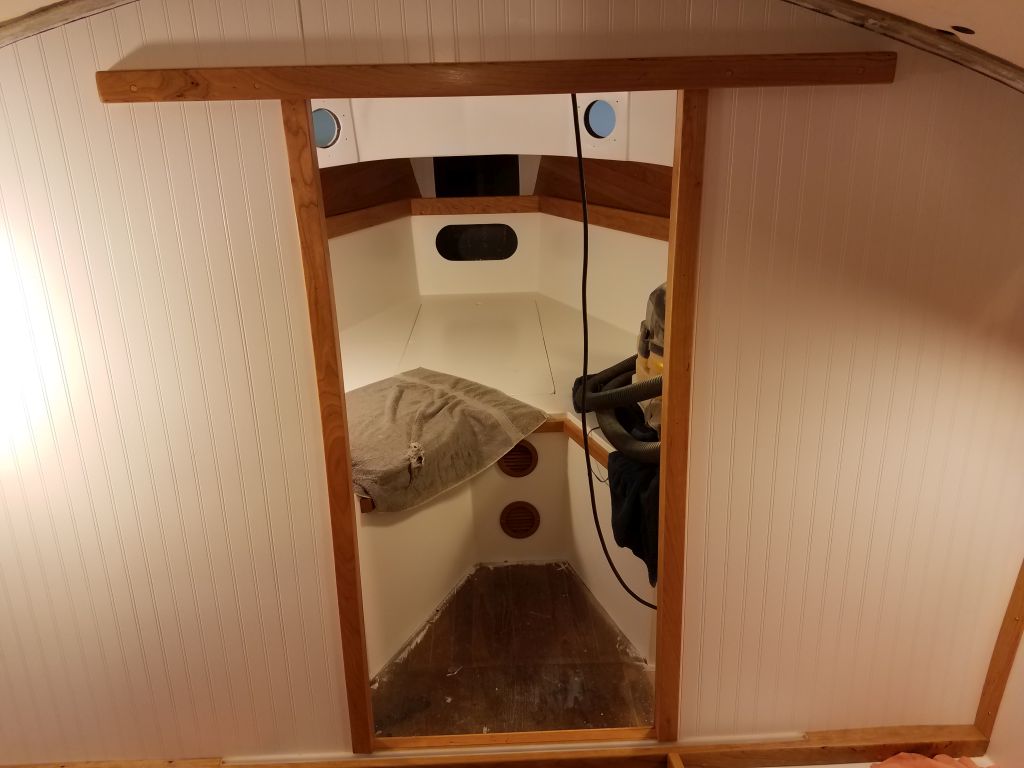
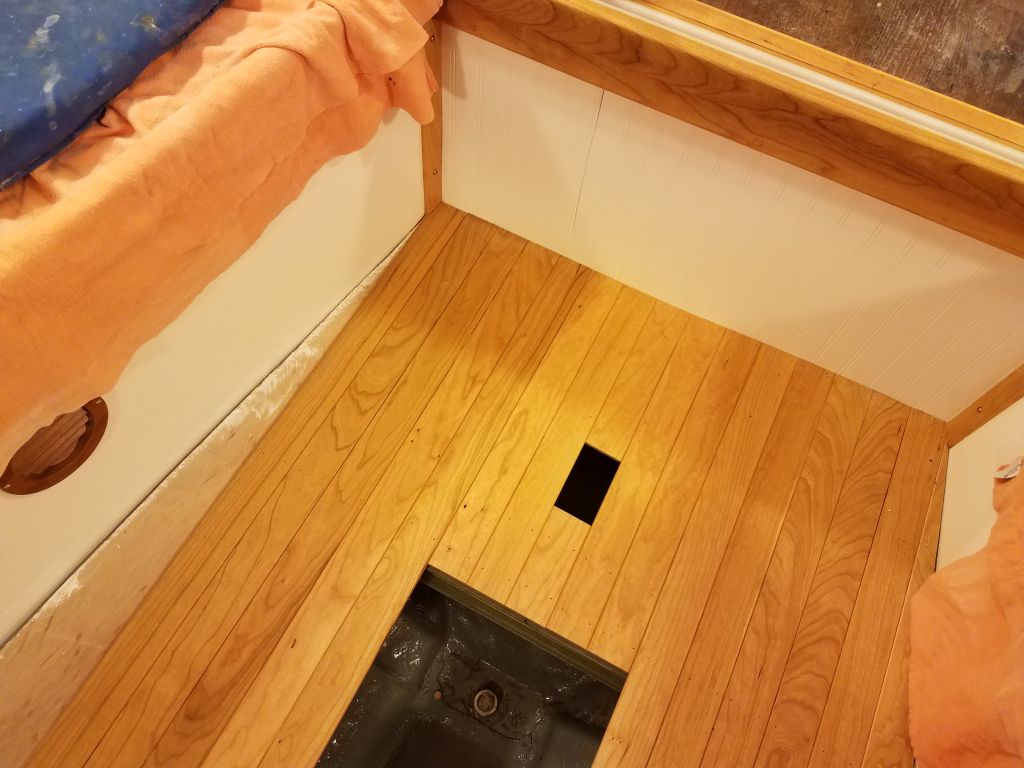
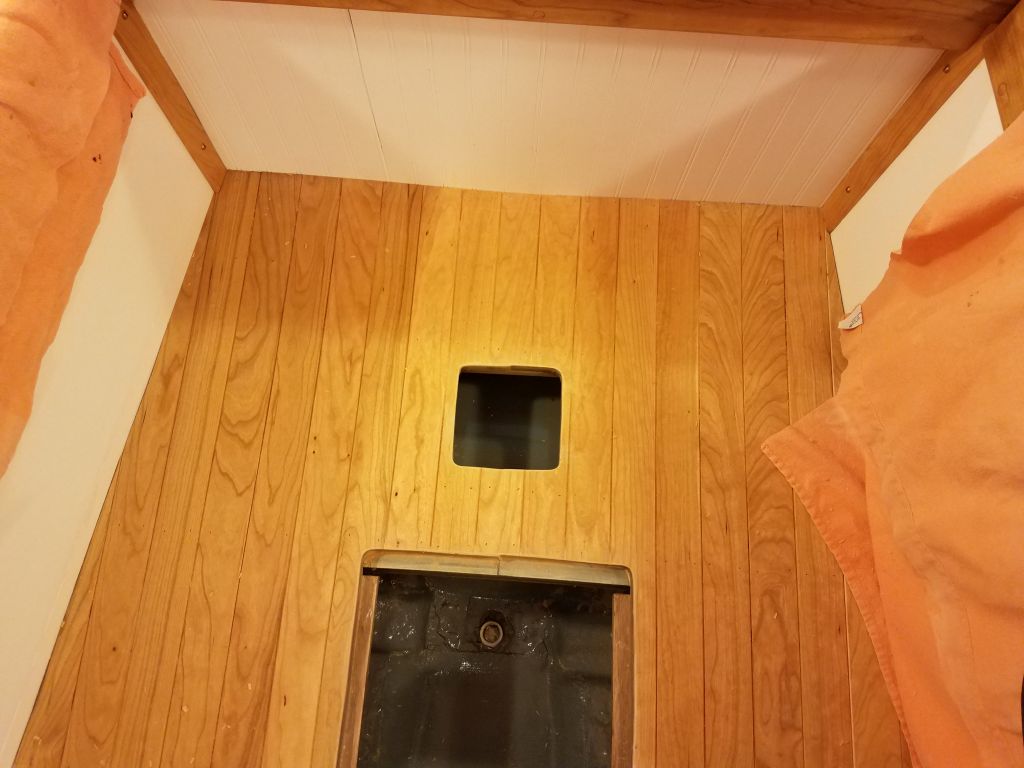
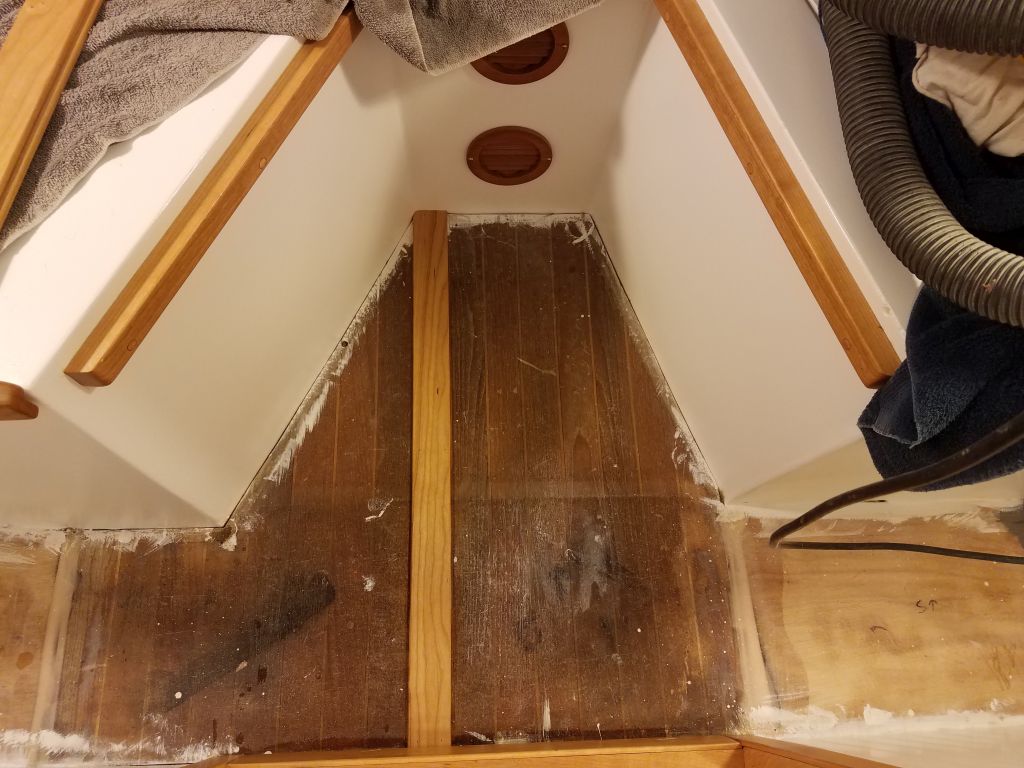
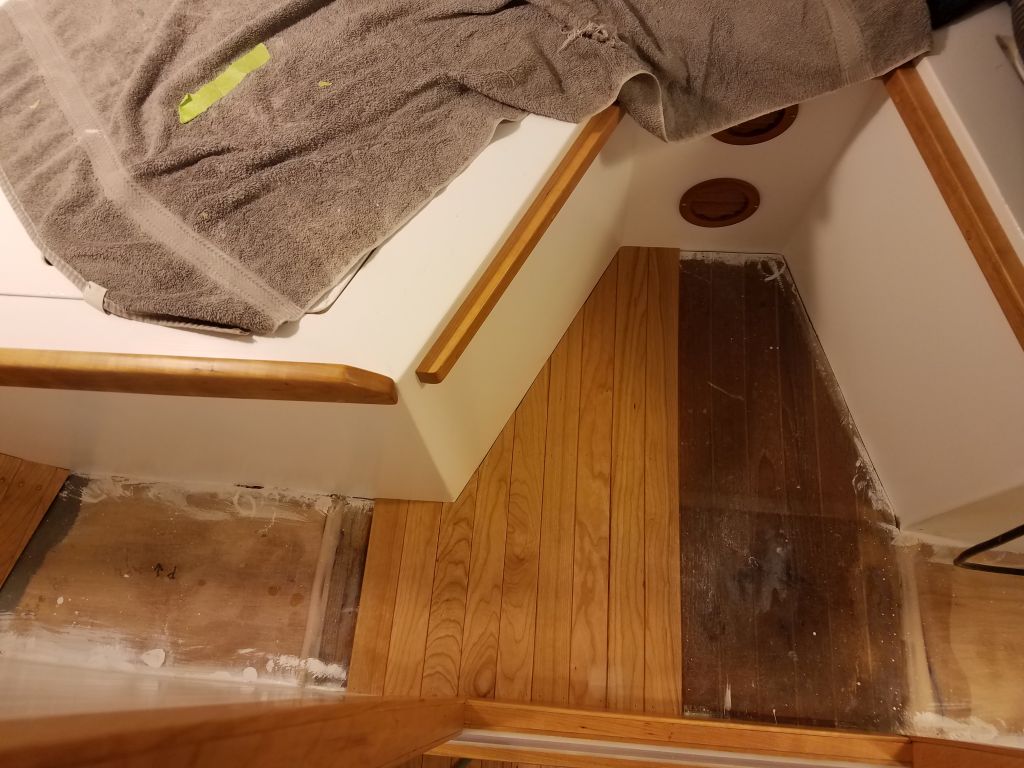
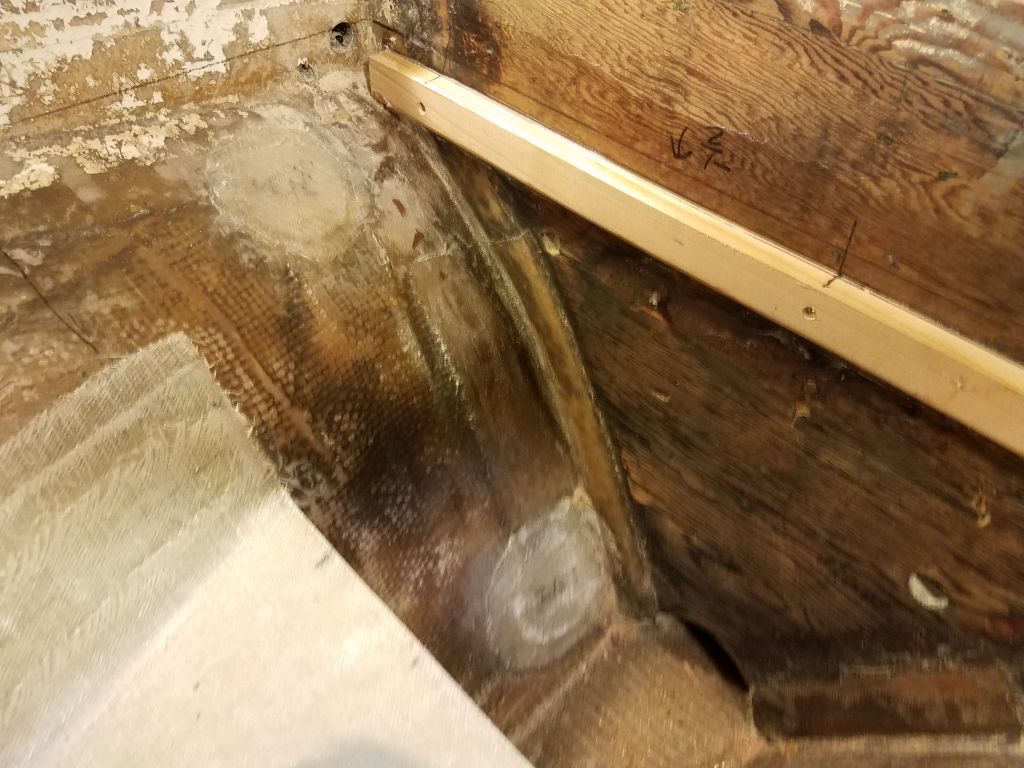
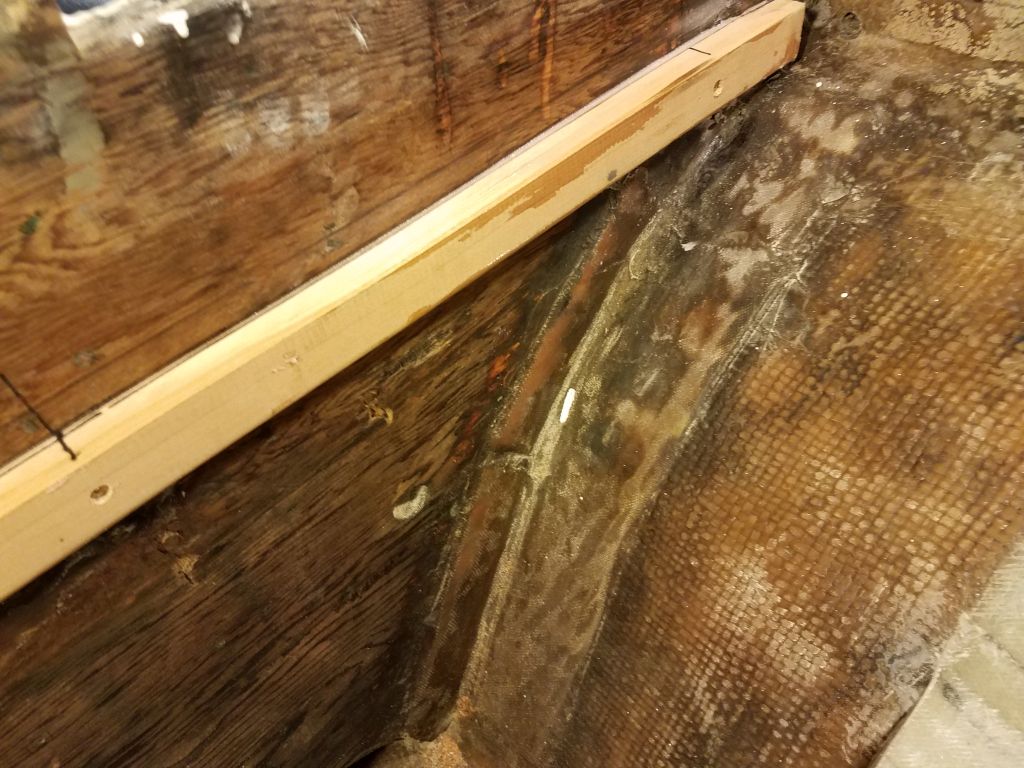
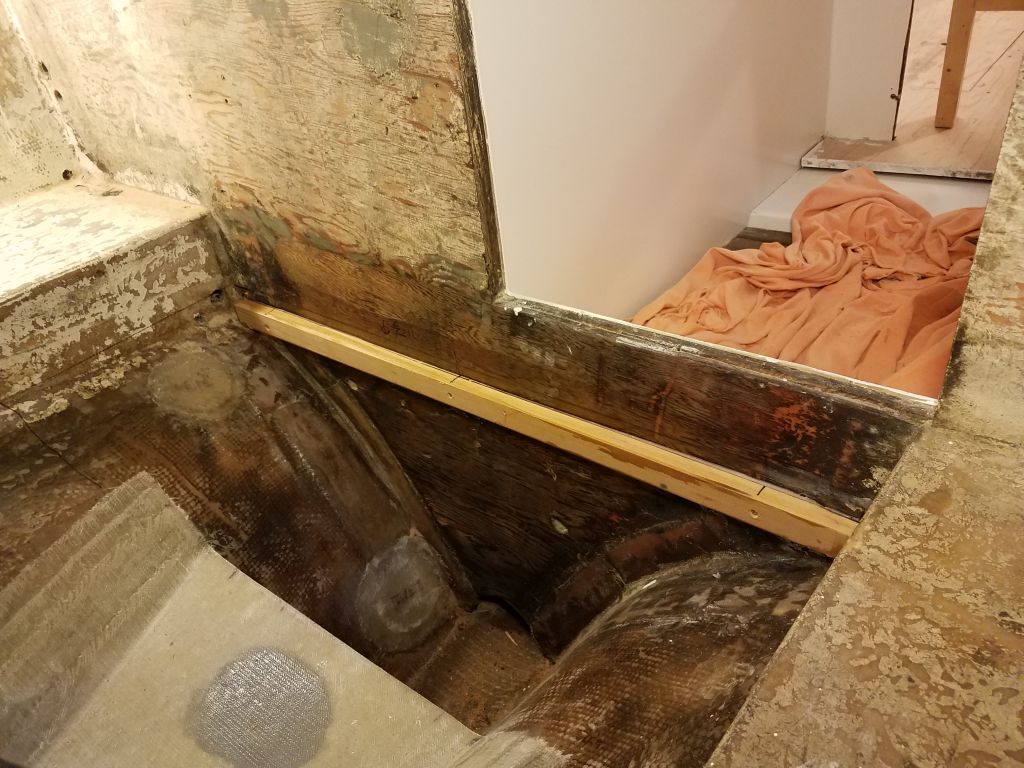
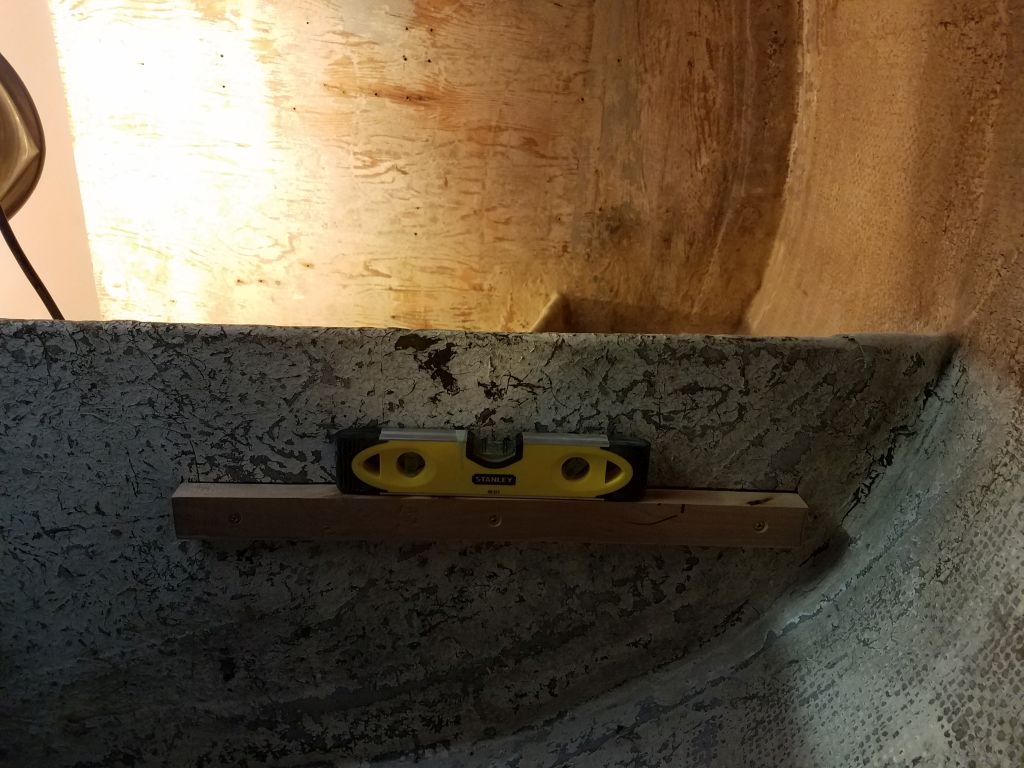
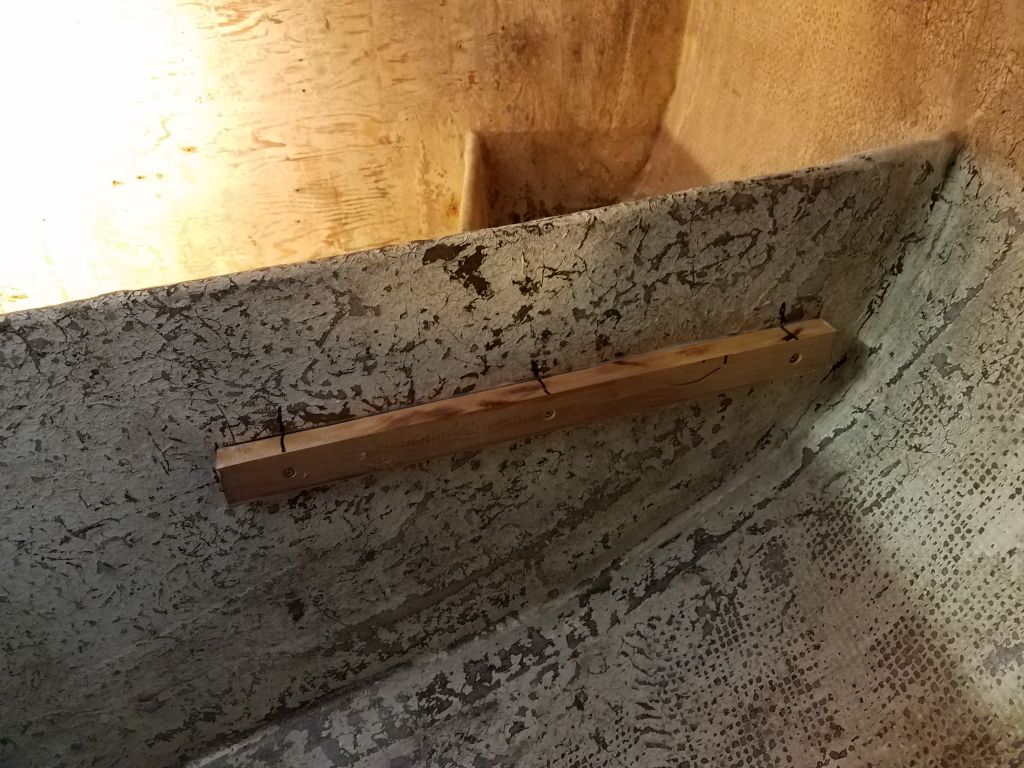
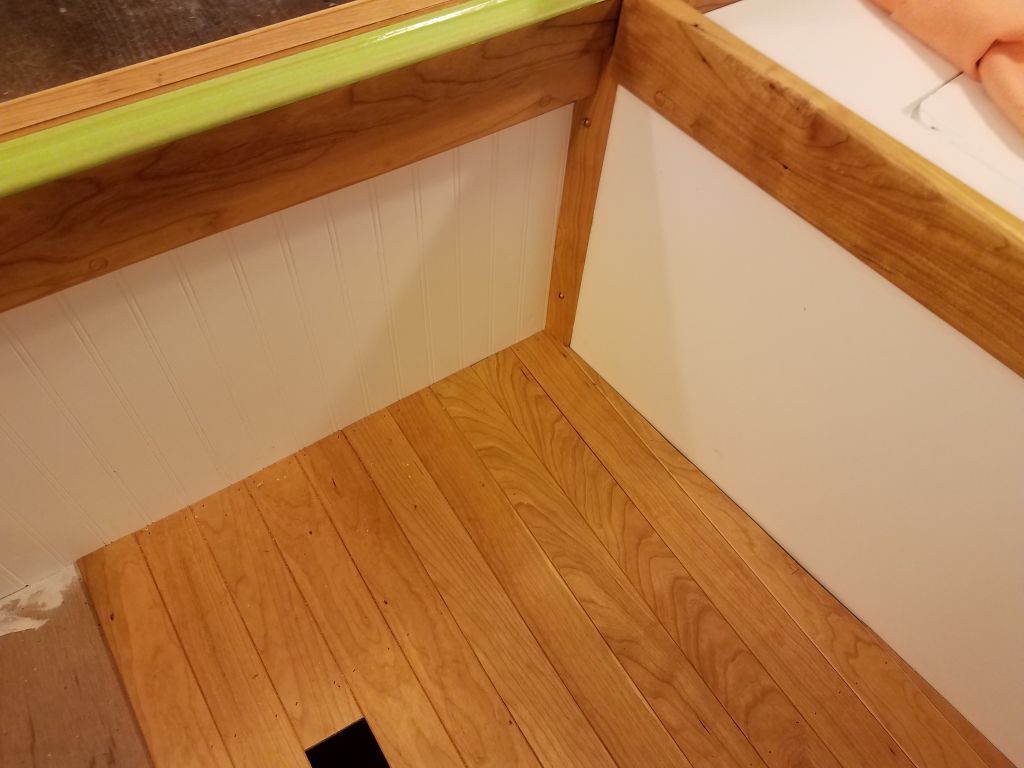
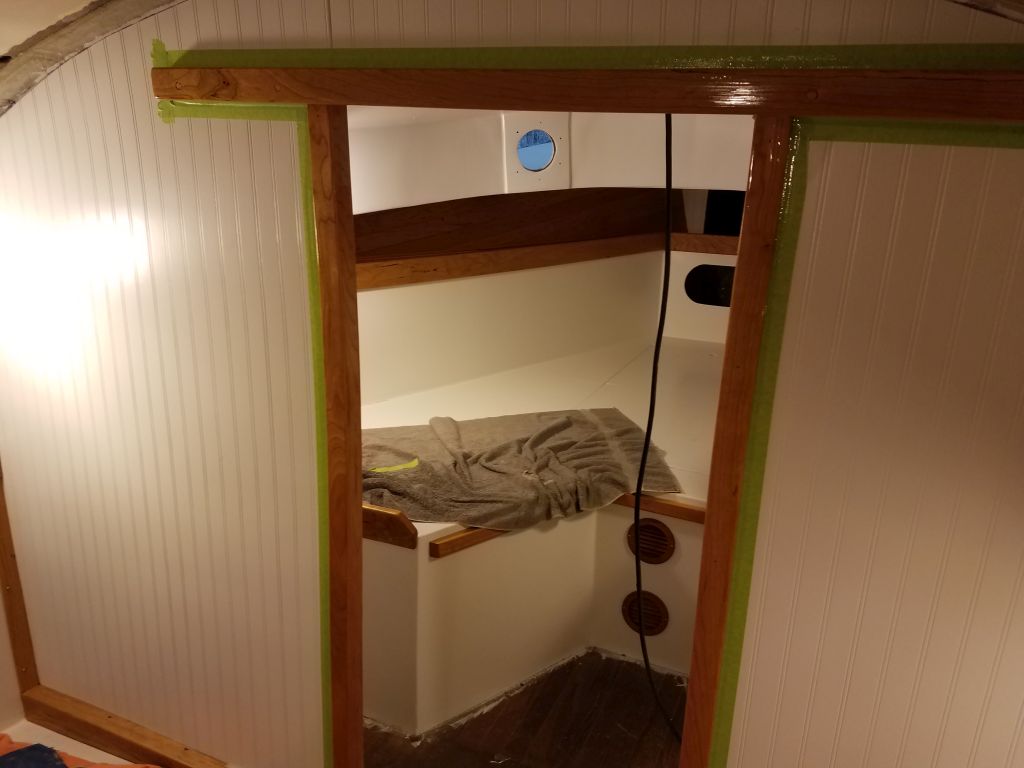
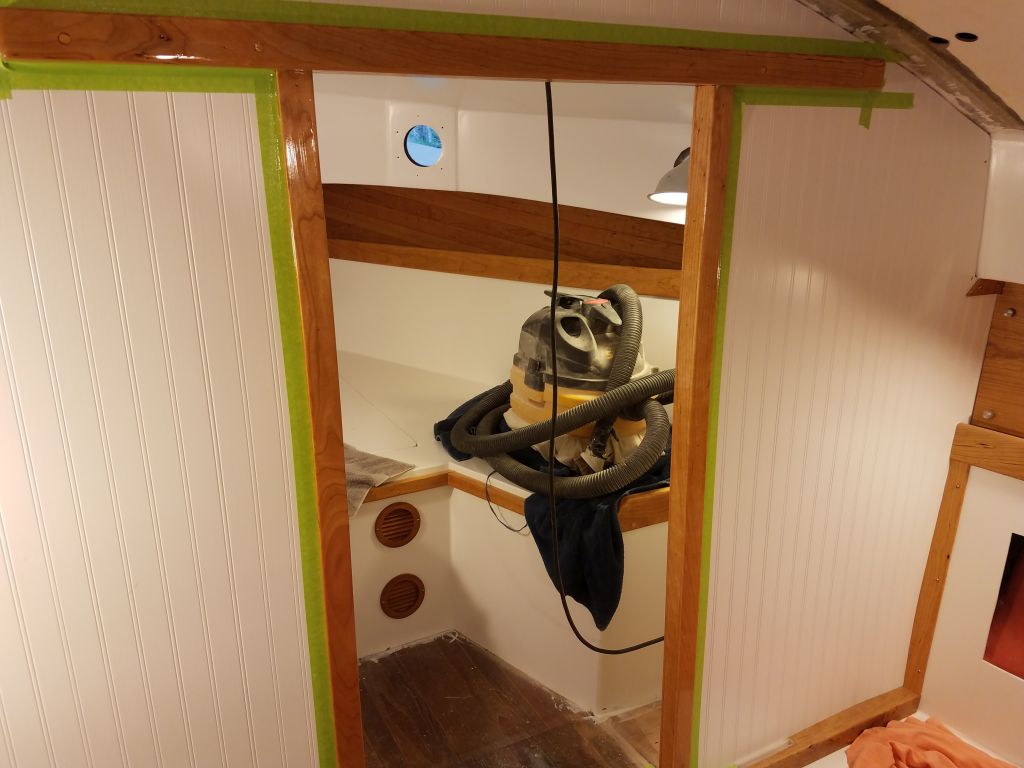
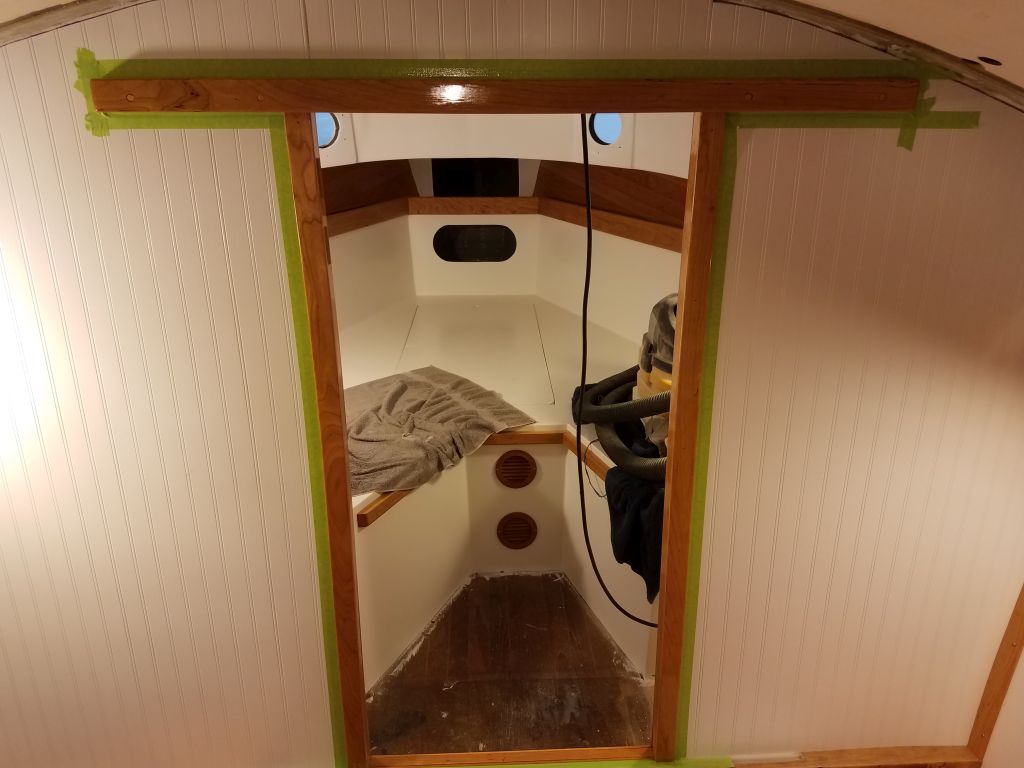
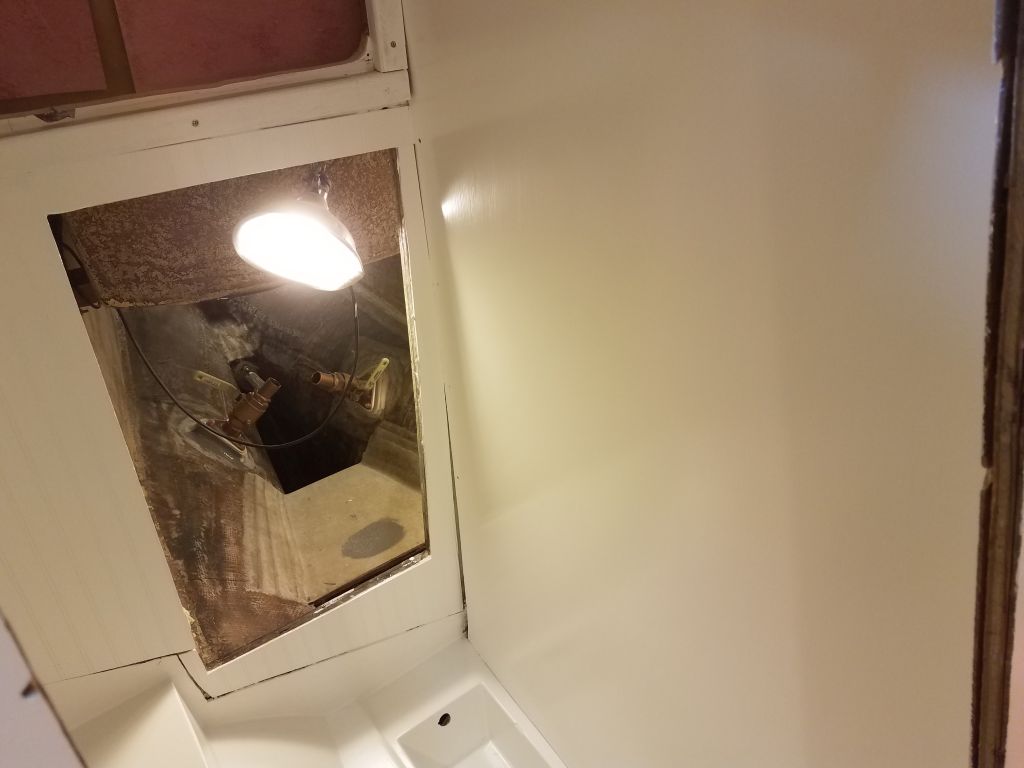
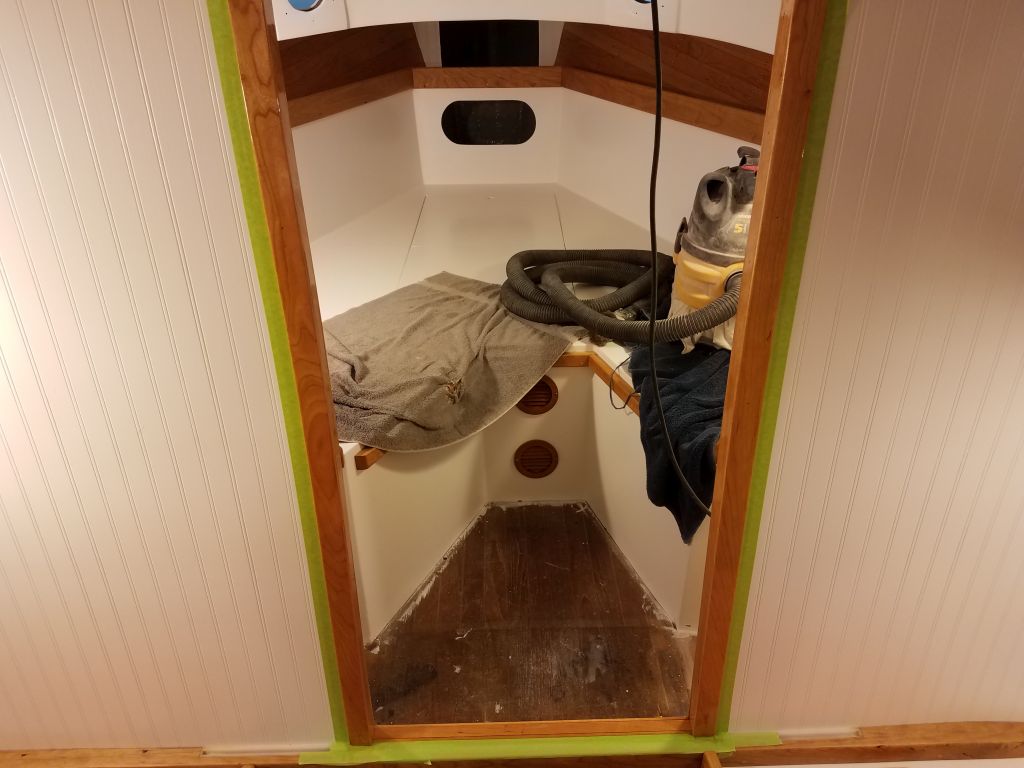
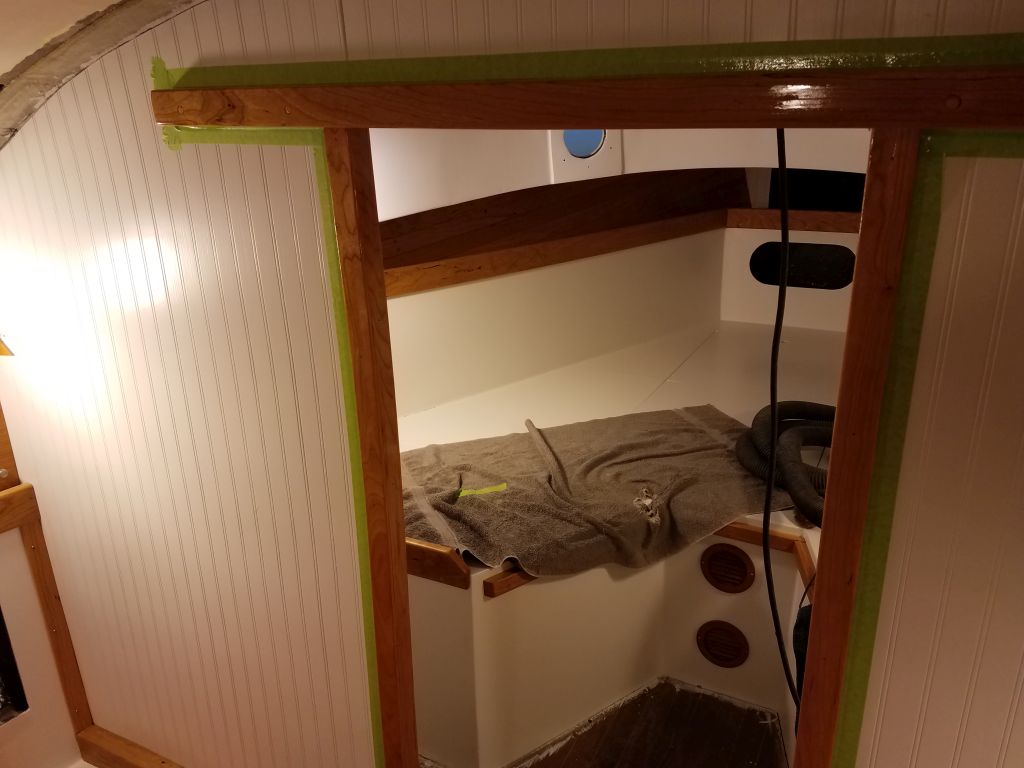
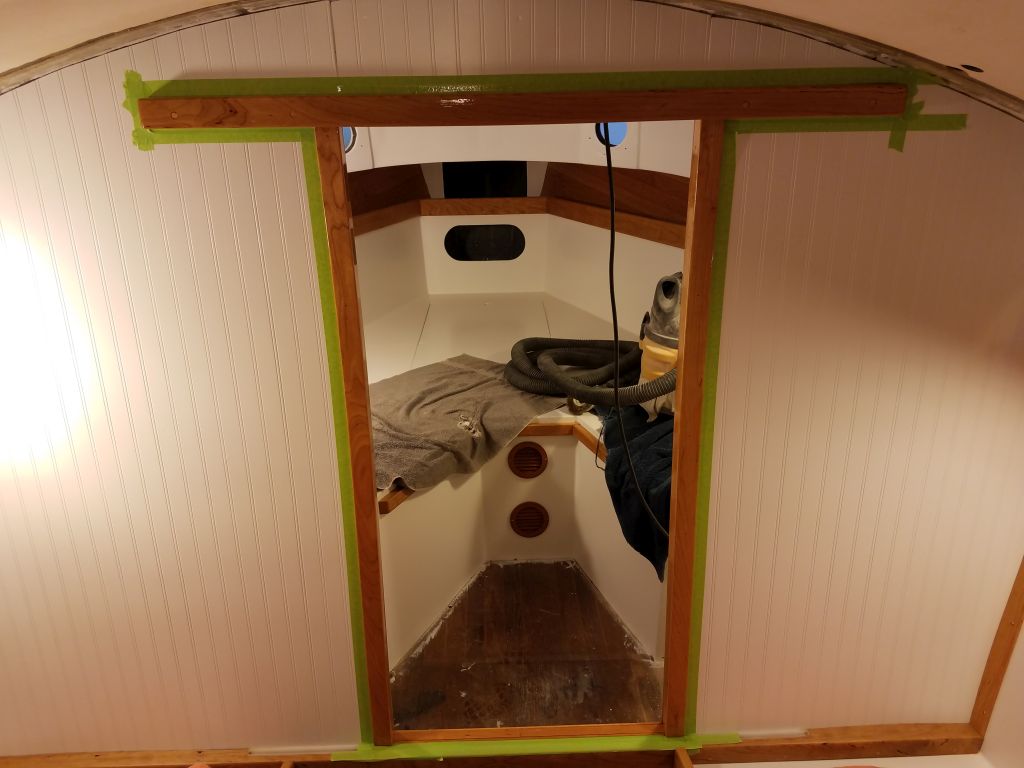
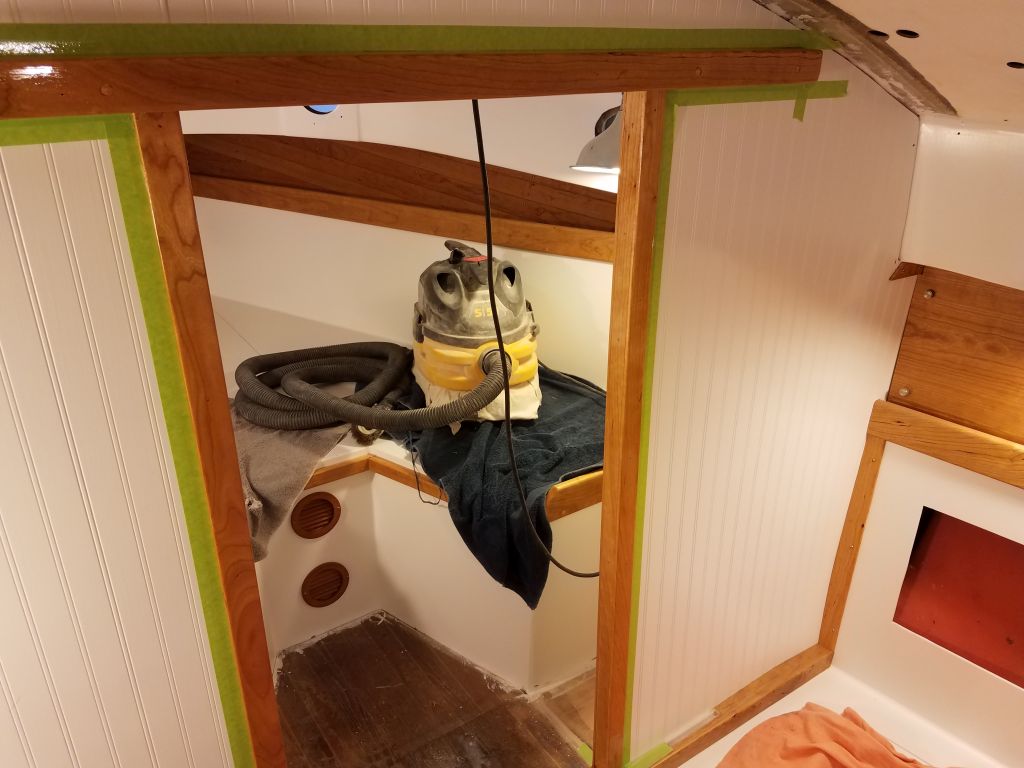
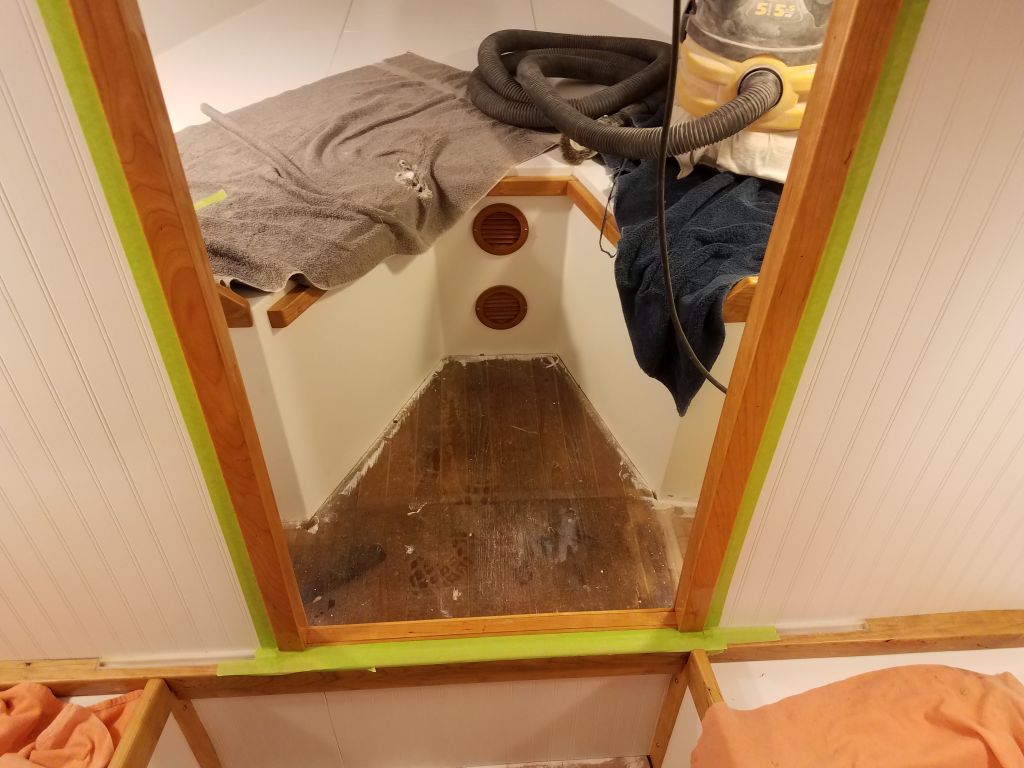
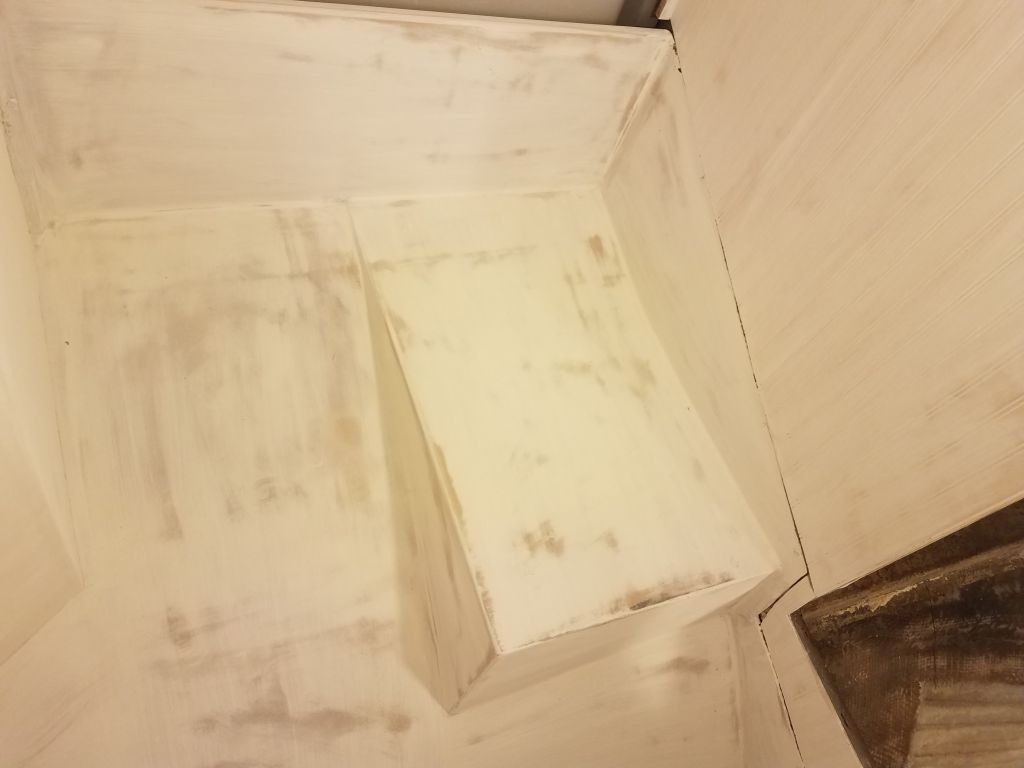
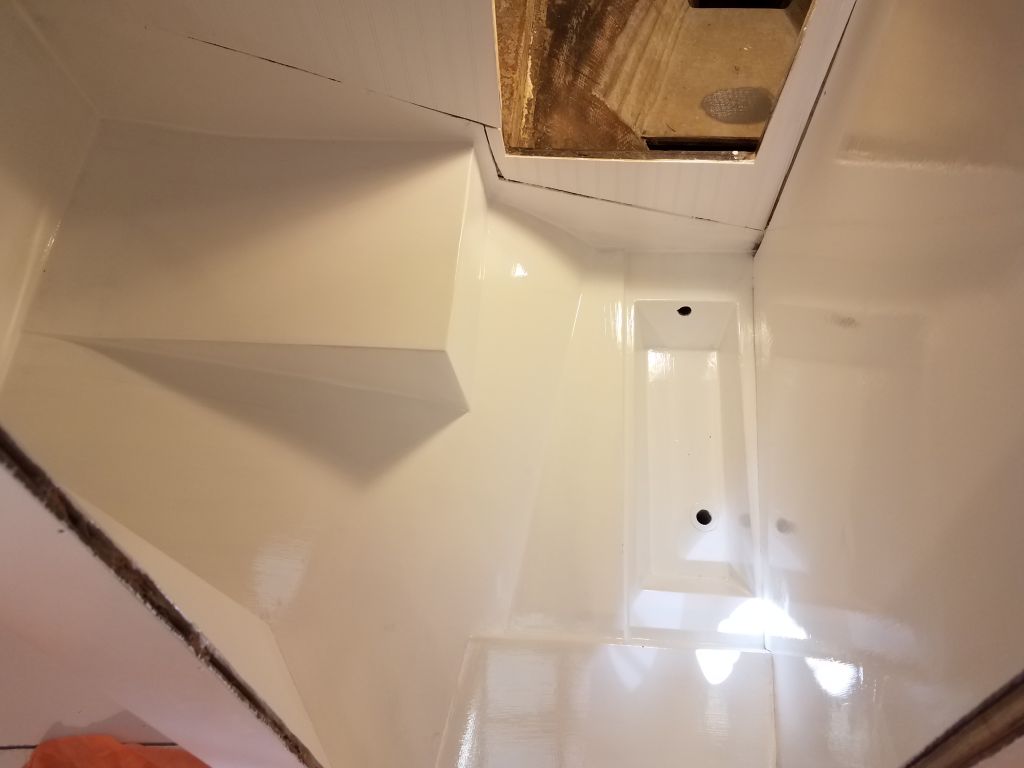
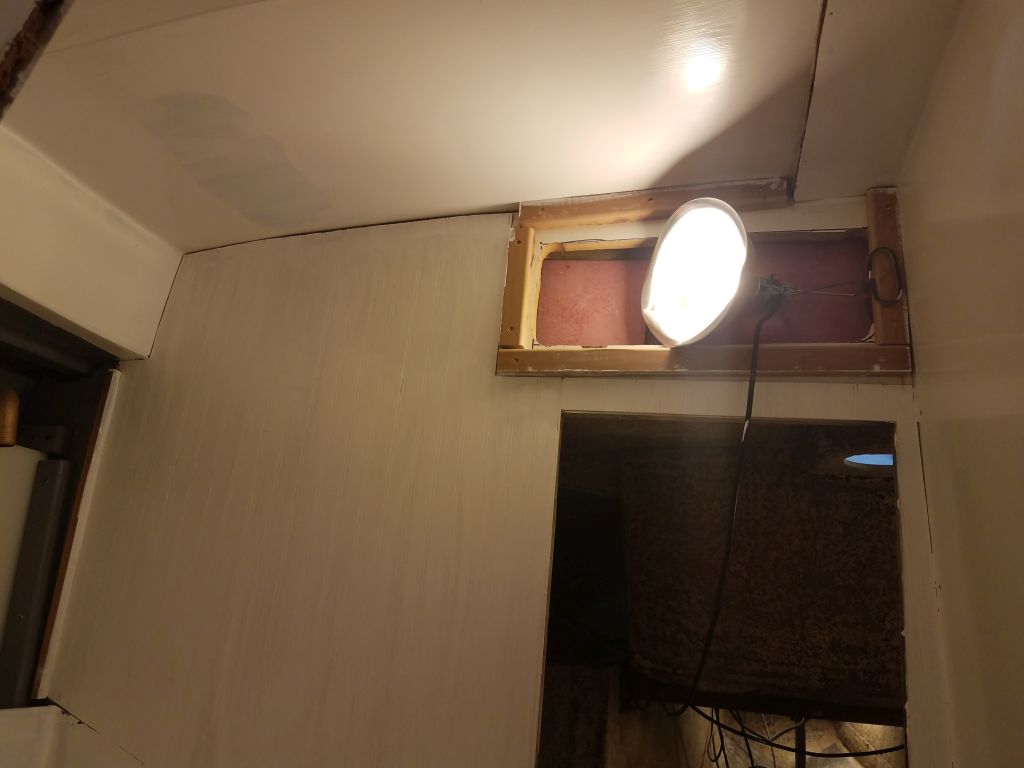
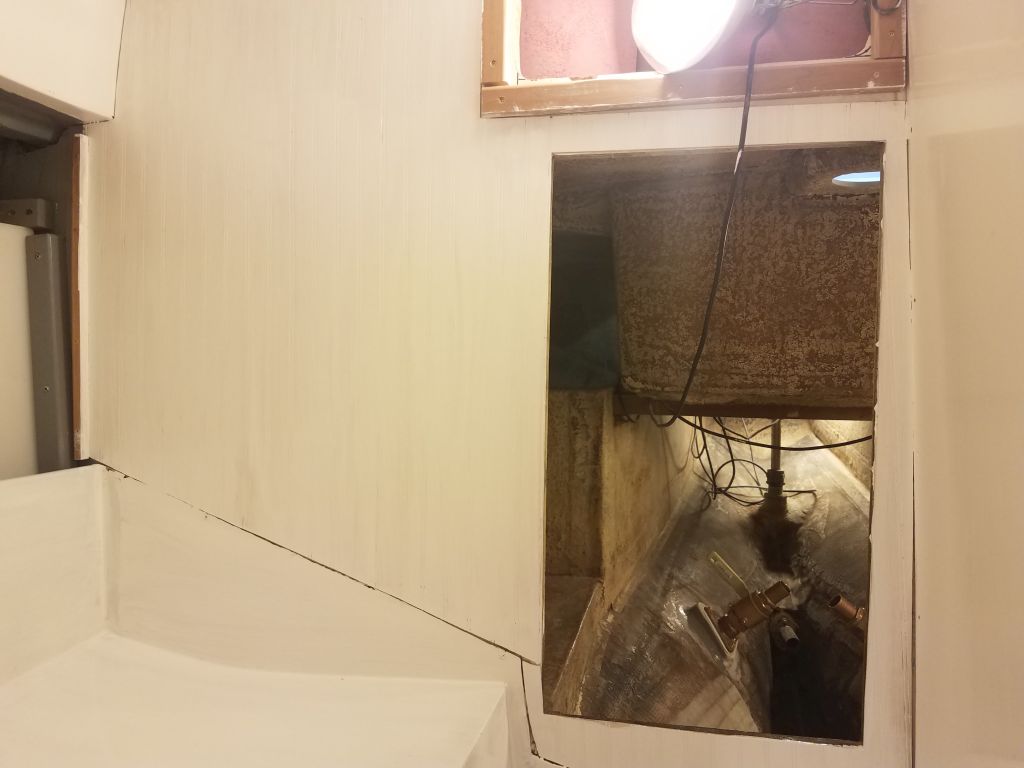
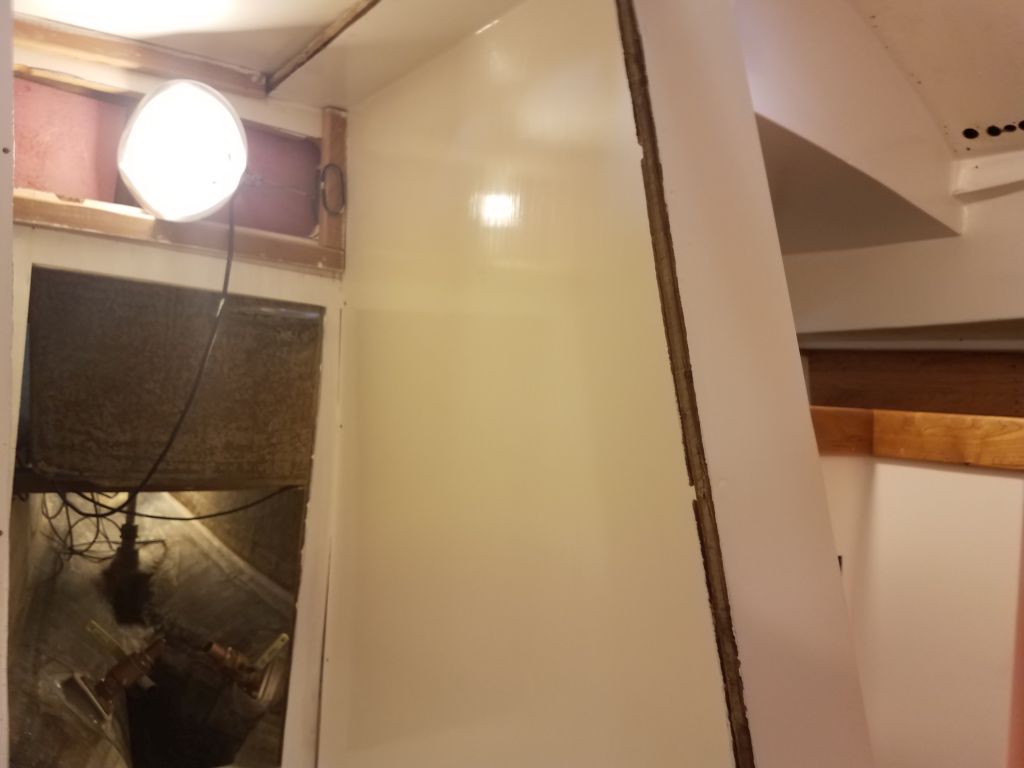
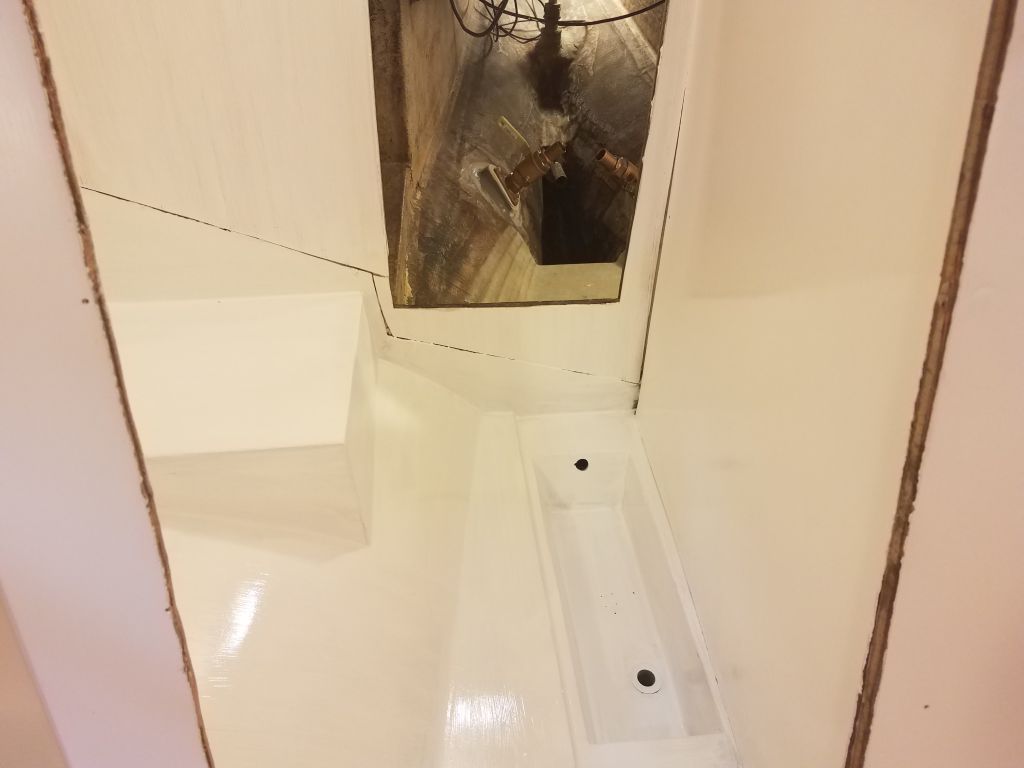
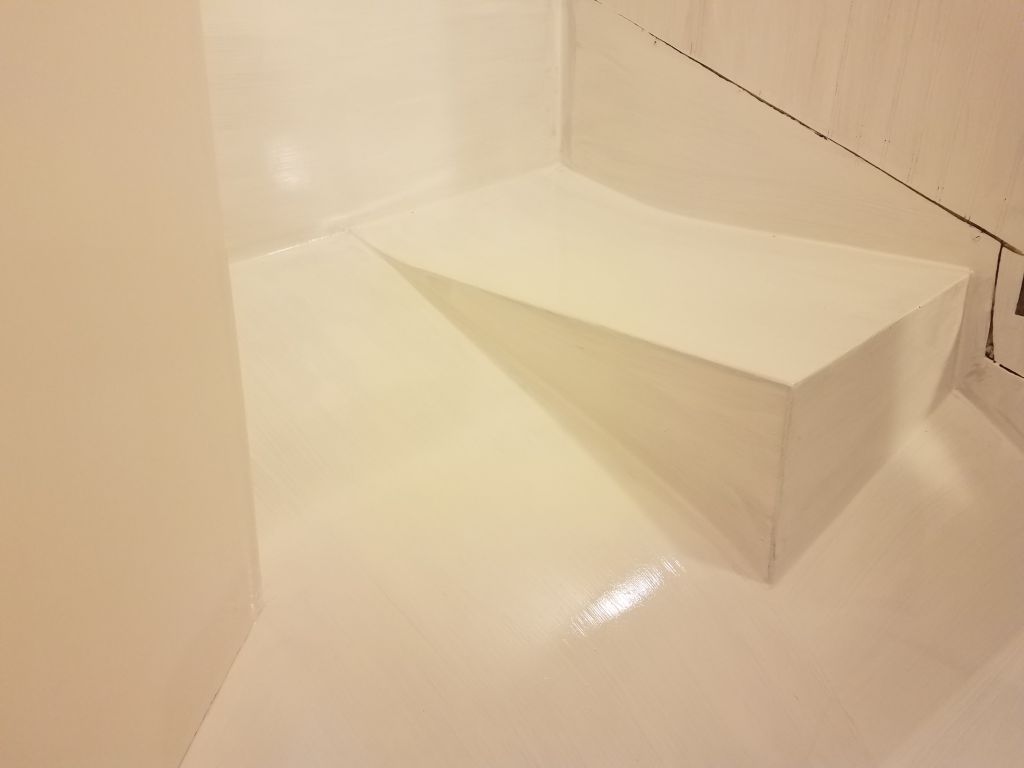
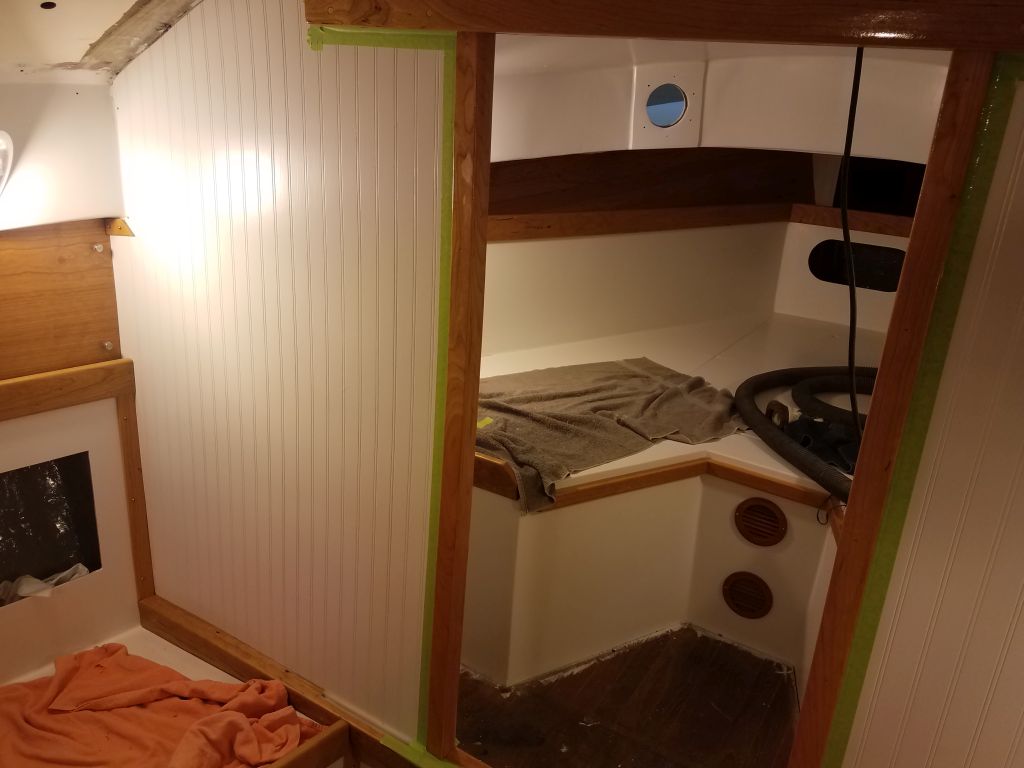
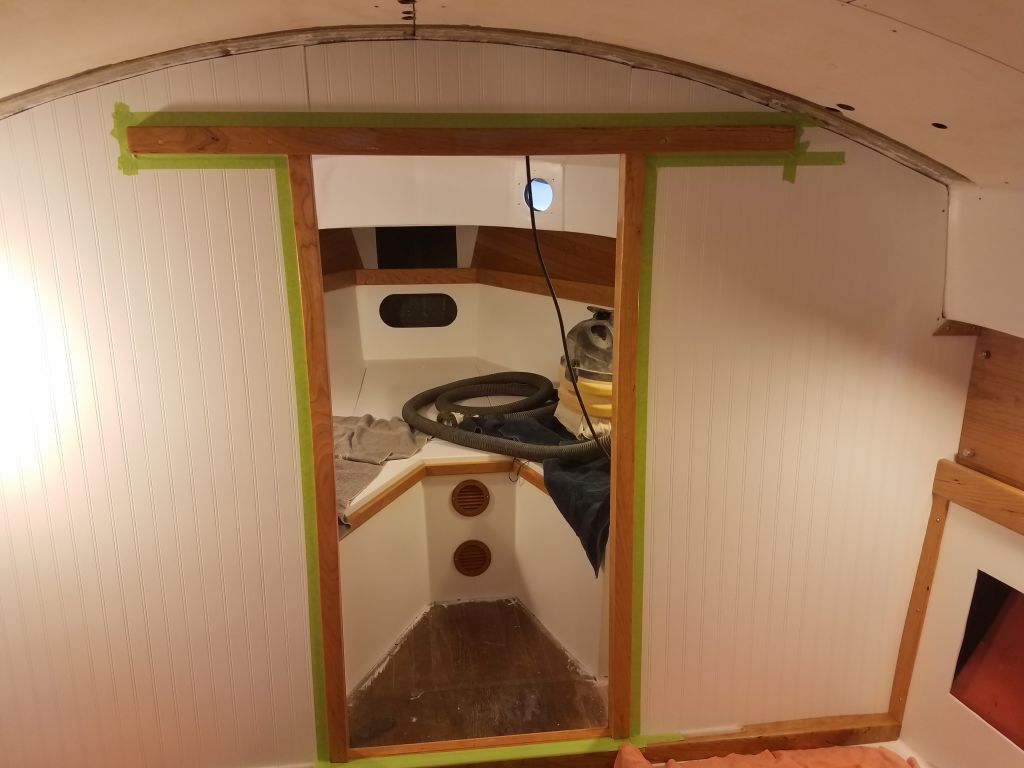
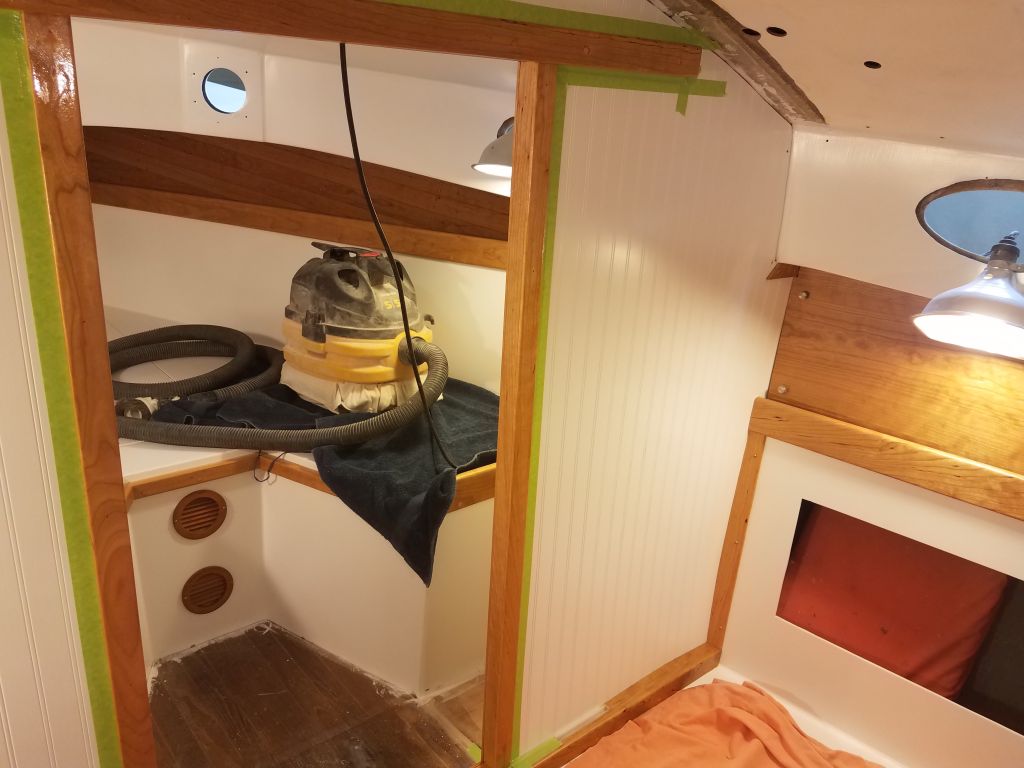
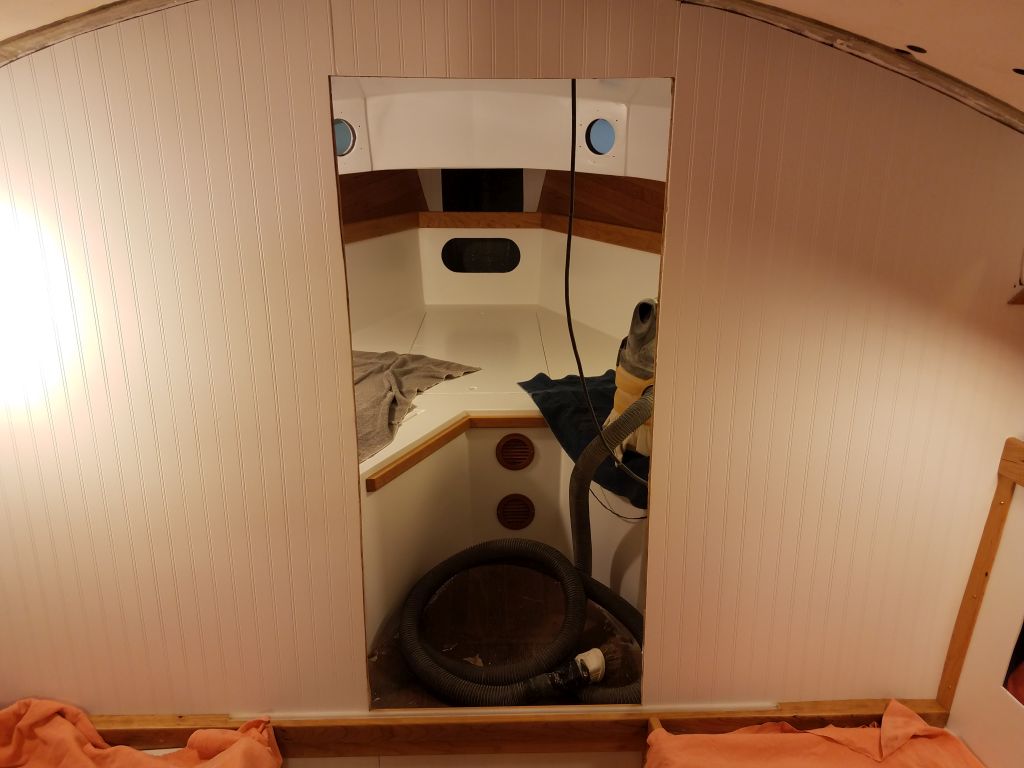
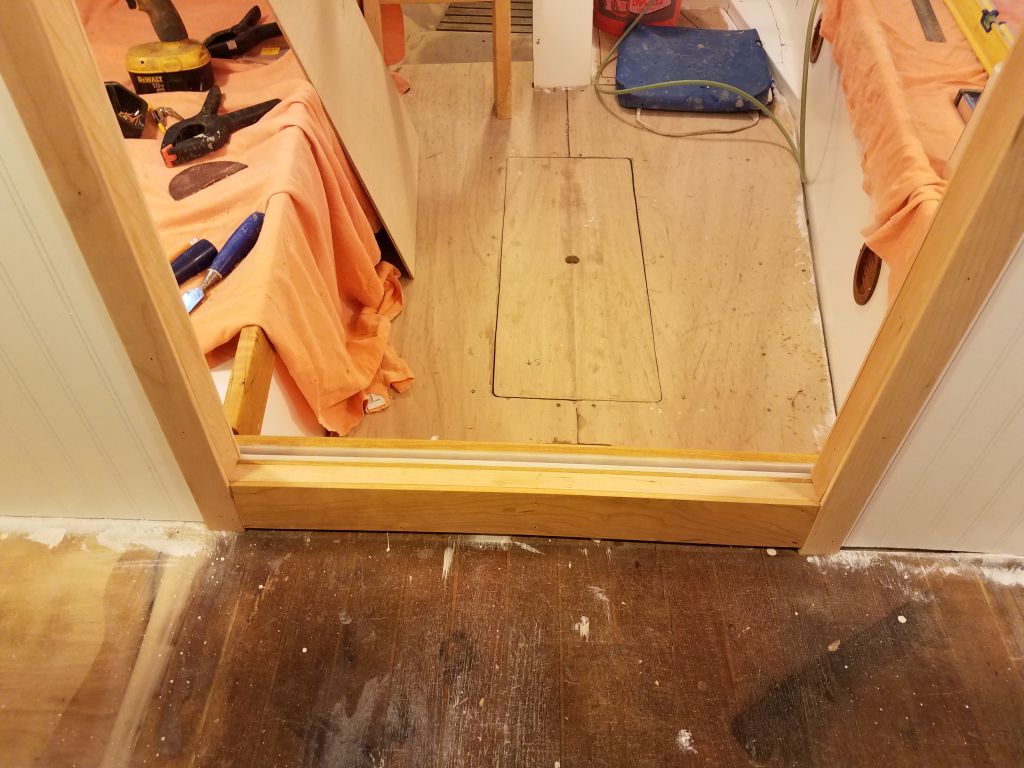
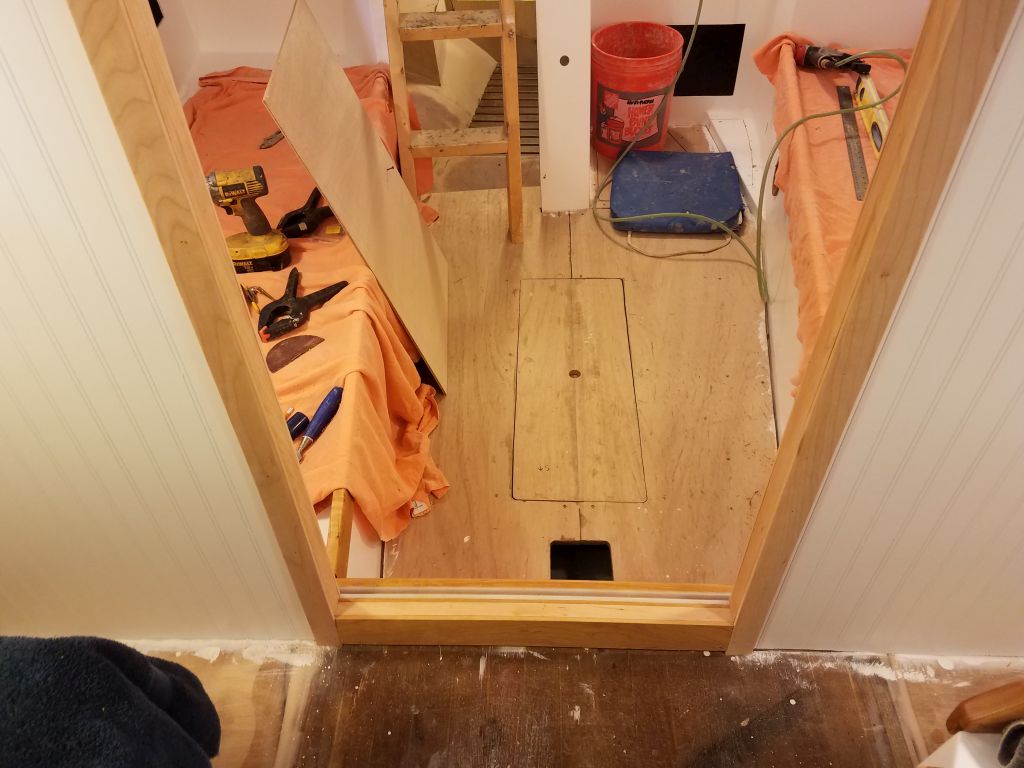
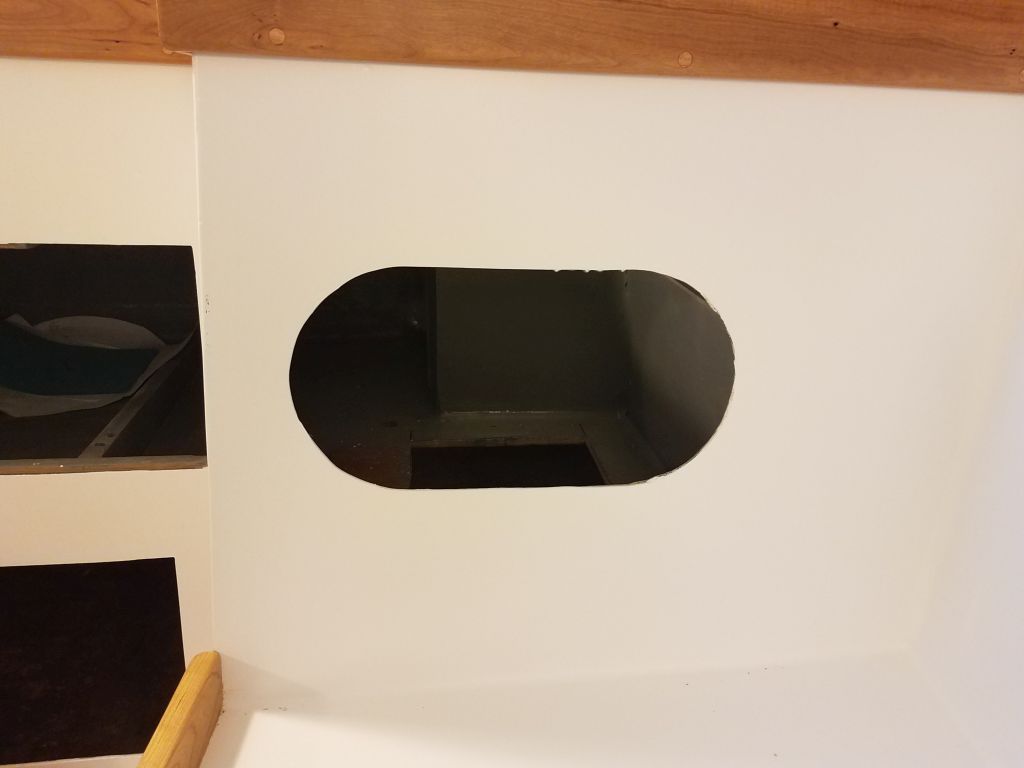
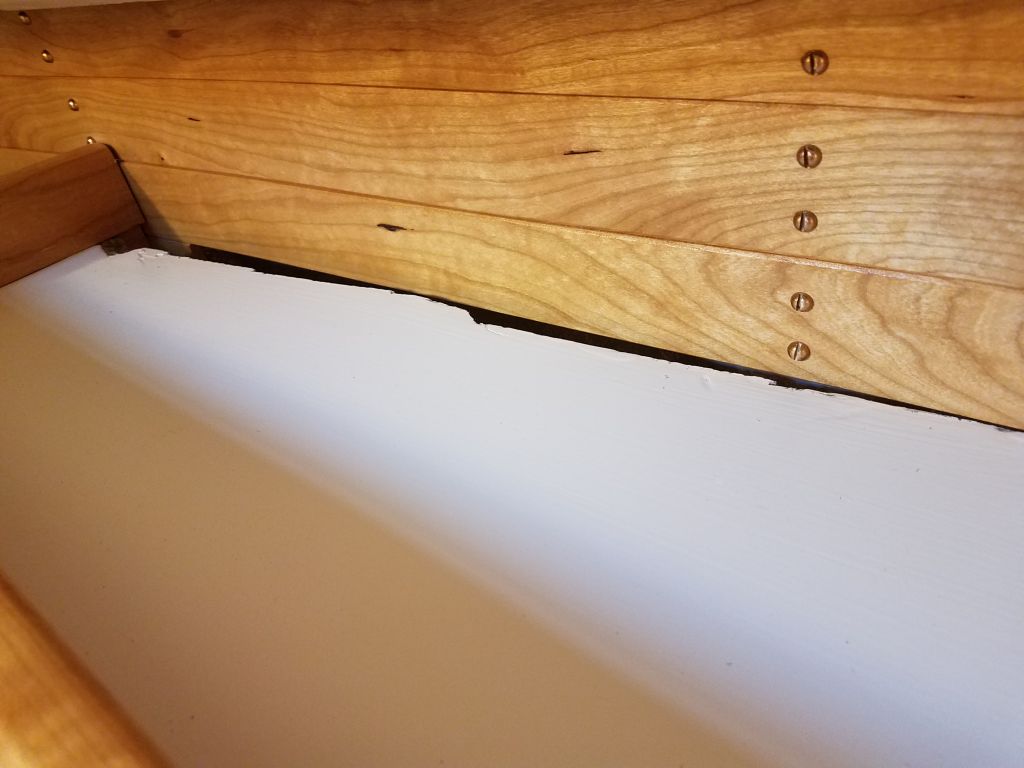
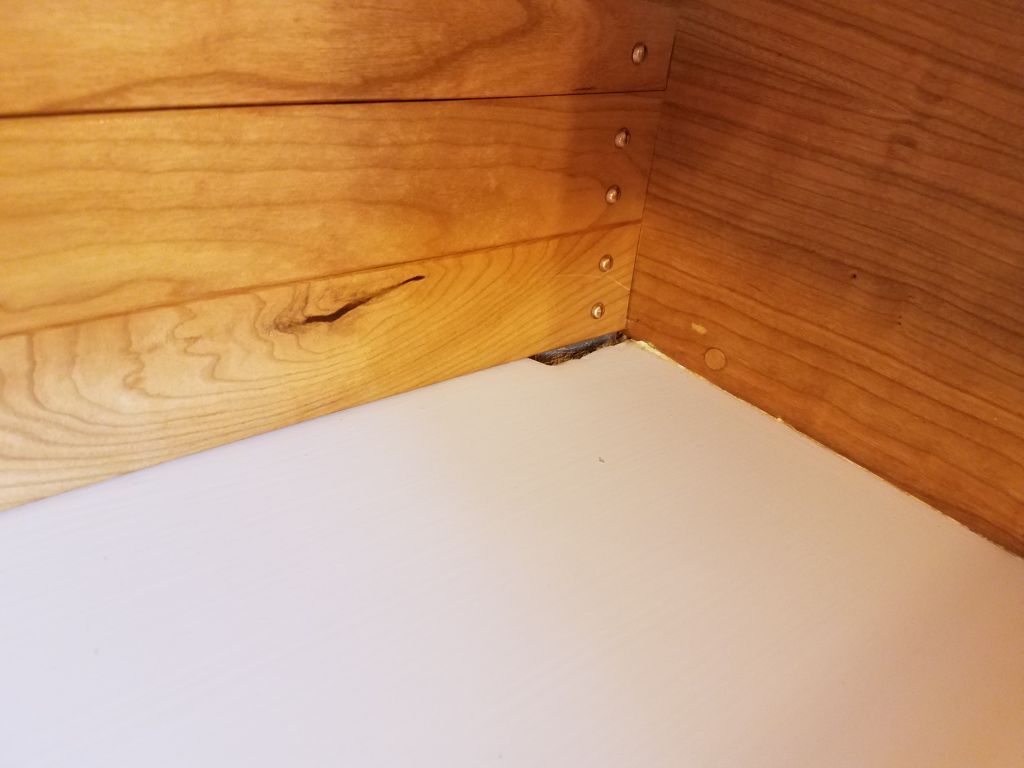
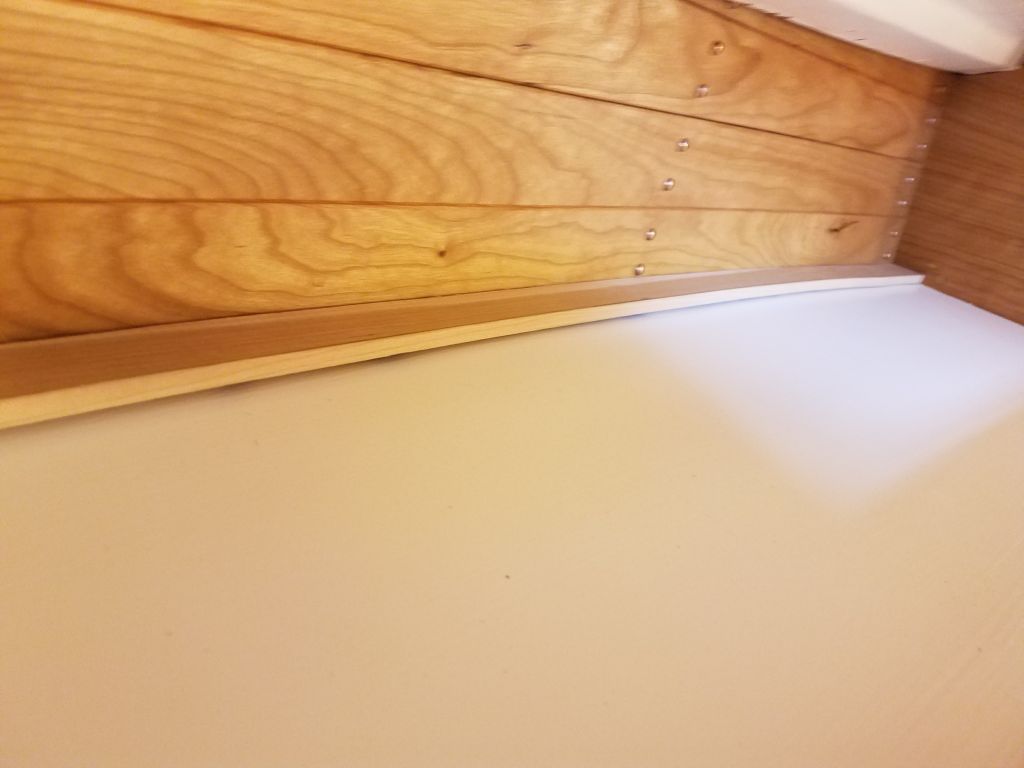
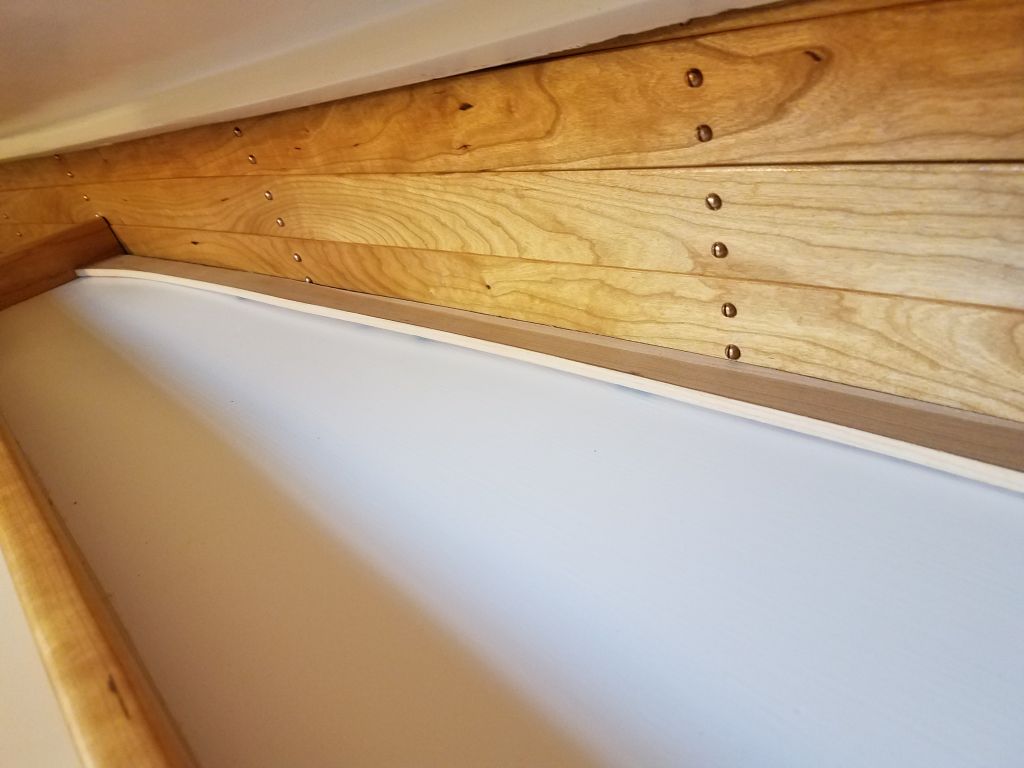
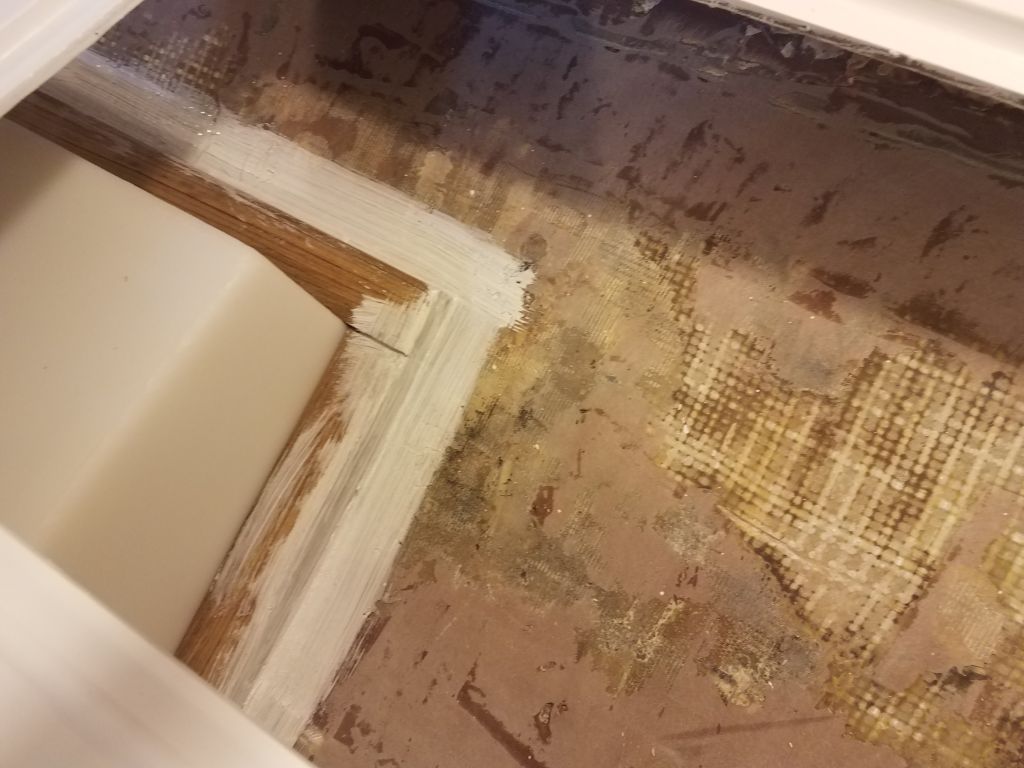
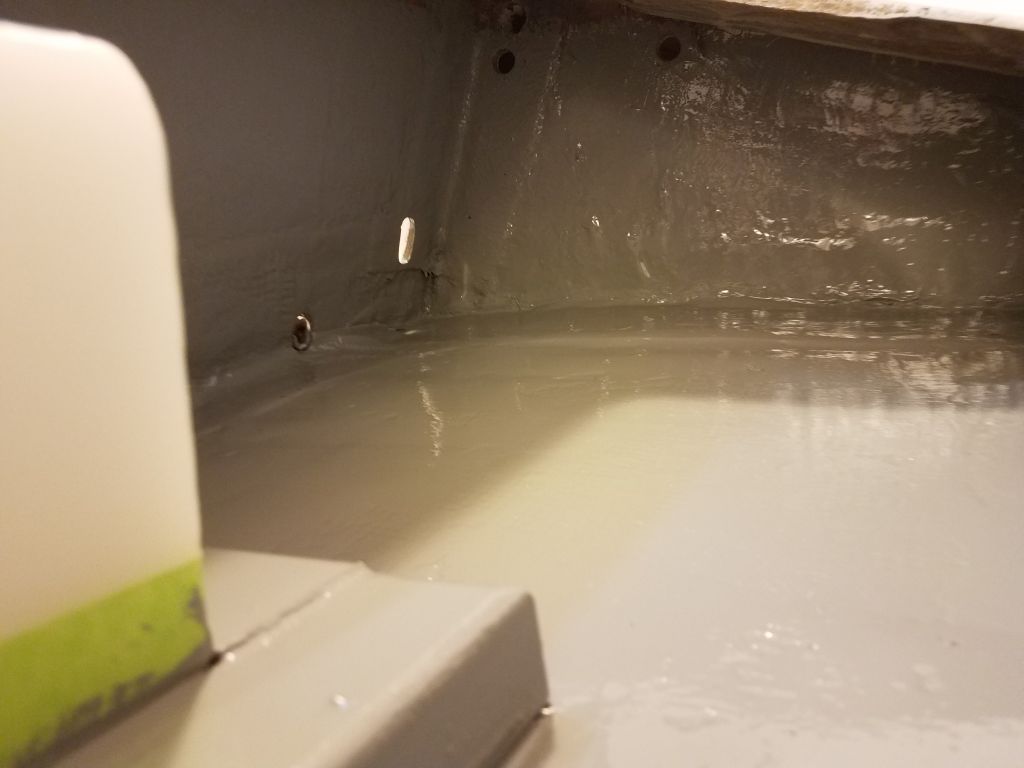
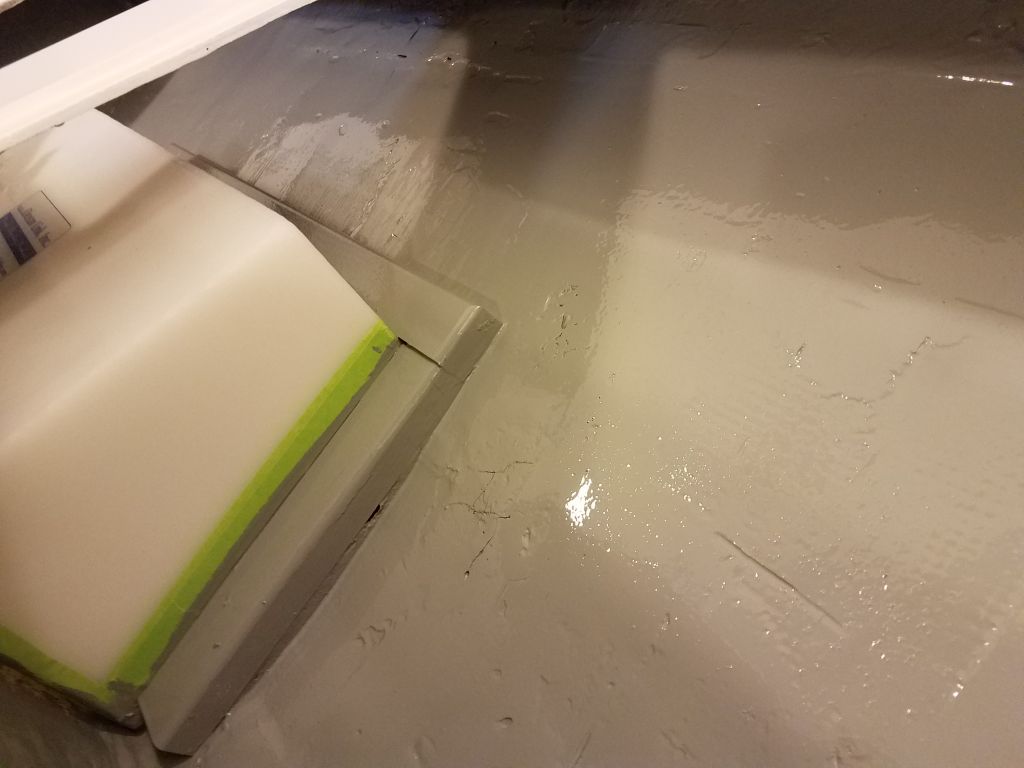
Leaving the companionway assembly to cure, I turned to the forward storage compartment beneath the v-berth.  Because it was handy to stand in this area when working on the trim and varnish in this area, I’d purposely left it unfinished for the duration, but with the bulk of the work now complete up there, it was time to wrap up the work in the locker.  After vacuuming and solvent-washing the whole space, including the far reaches at the aft end beneath the molded liner and cabin sole above, I installed a series of heavy wire tie mounts along the top edges of the space on both sides.  I’d use these later for supporting windlass cabling and whatever else was required, but I had to install them now since the adhesive used with the system didn’t stick well to paint.

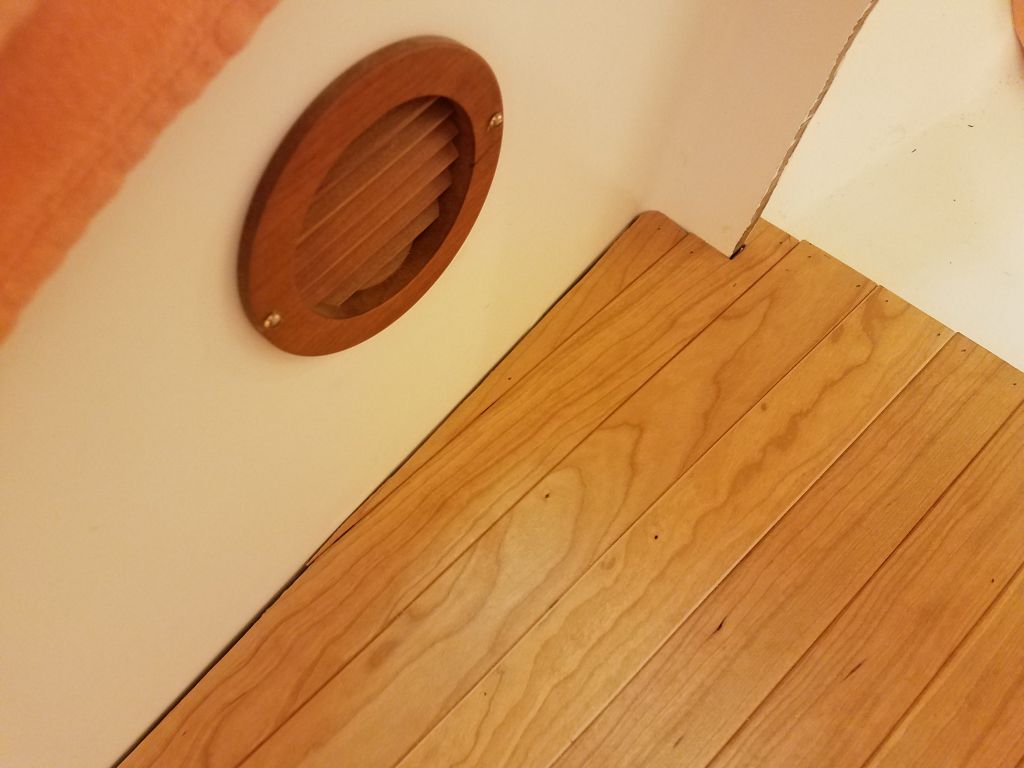
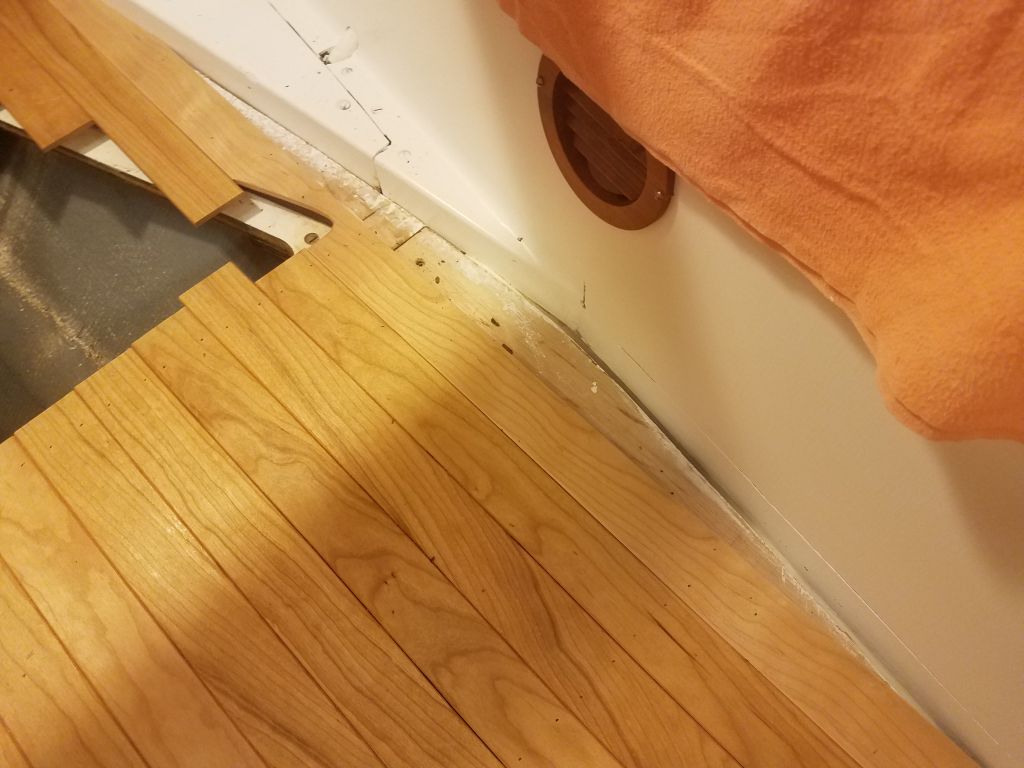
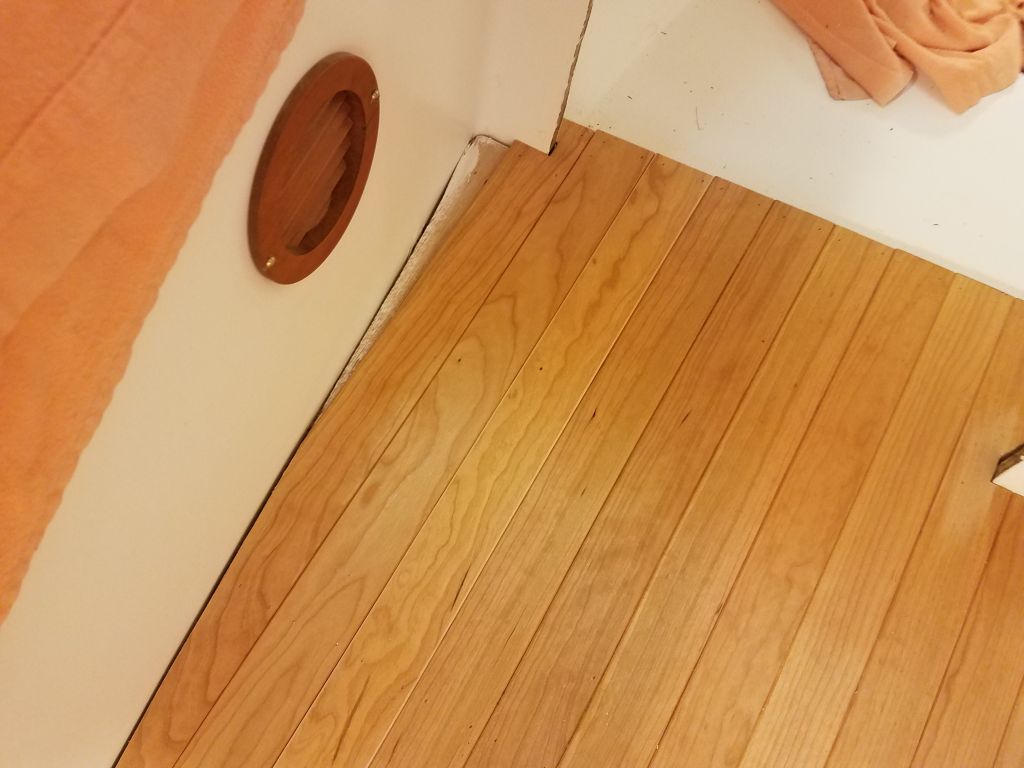
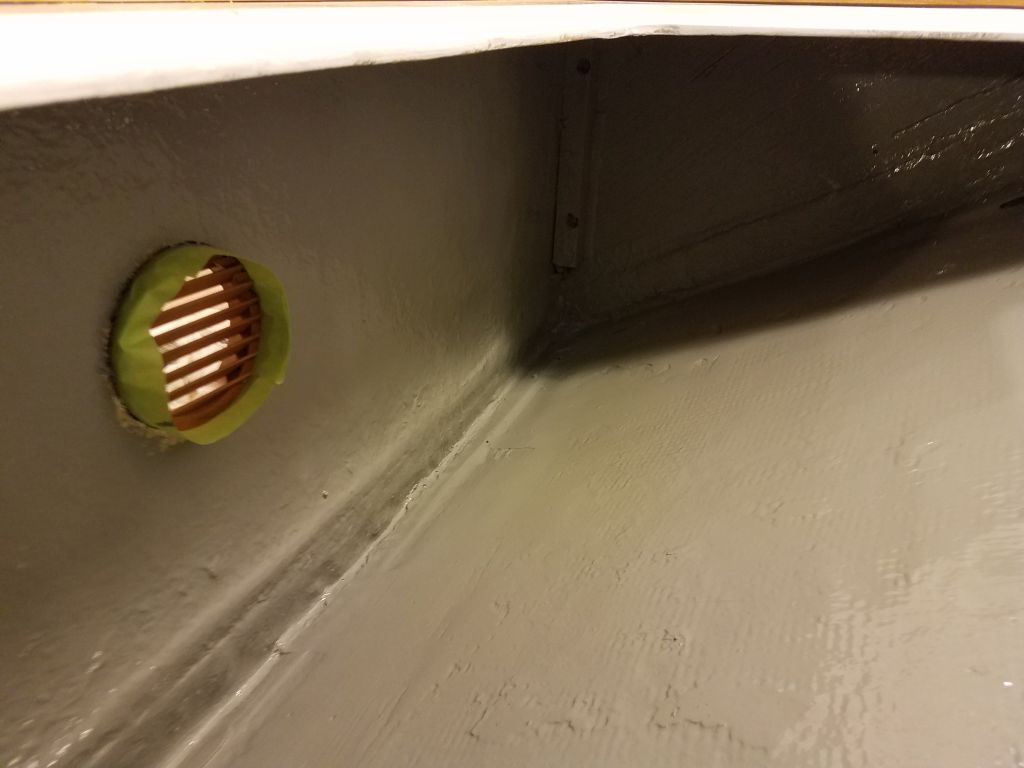
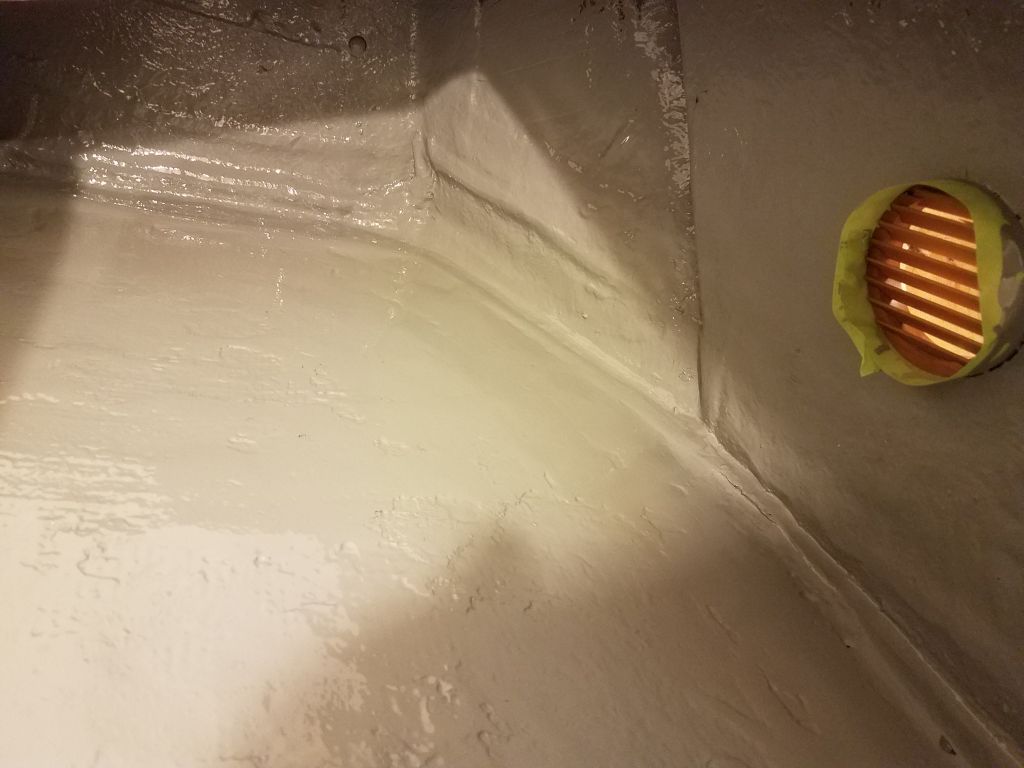
While I waited for that adhesive to cure, I installed the six round cherry vents in the settee and v-berth locker sides, where I’d cut holes previously.  I’d already finished these vents with varnish, and now installed them with small screws.

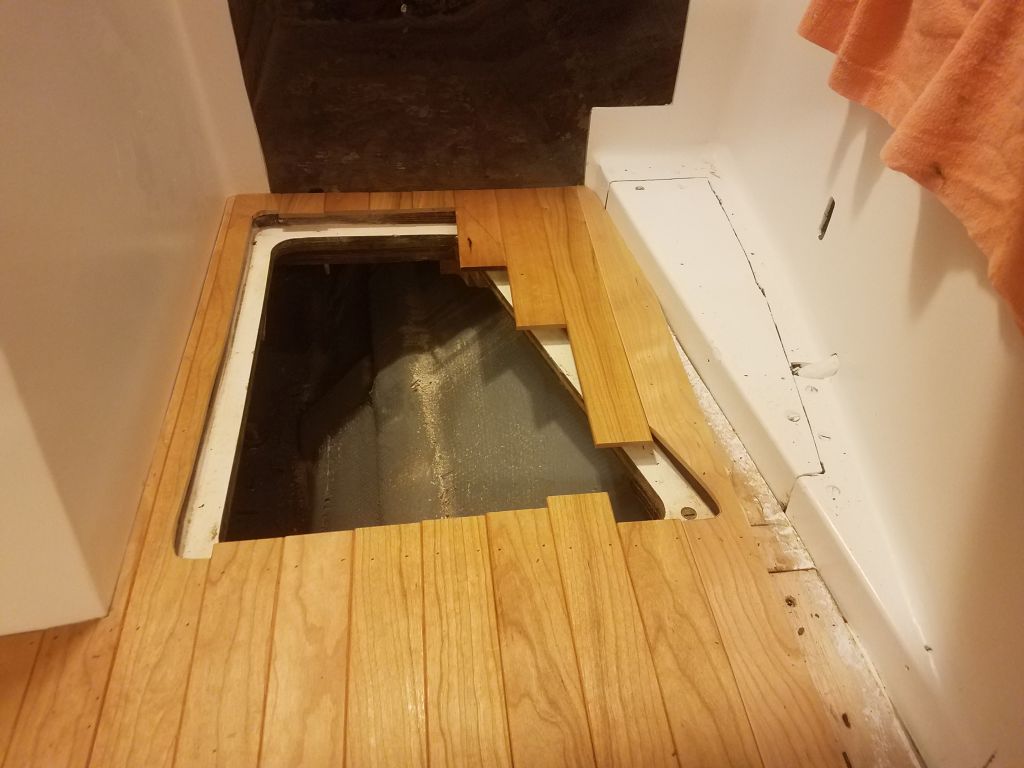
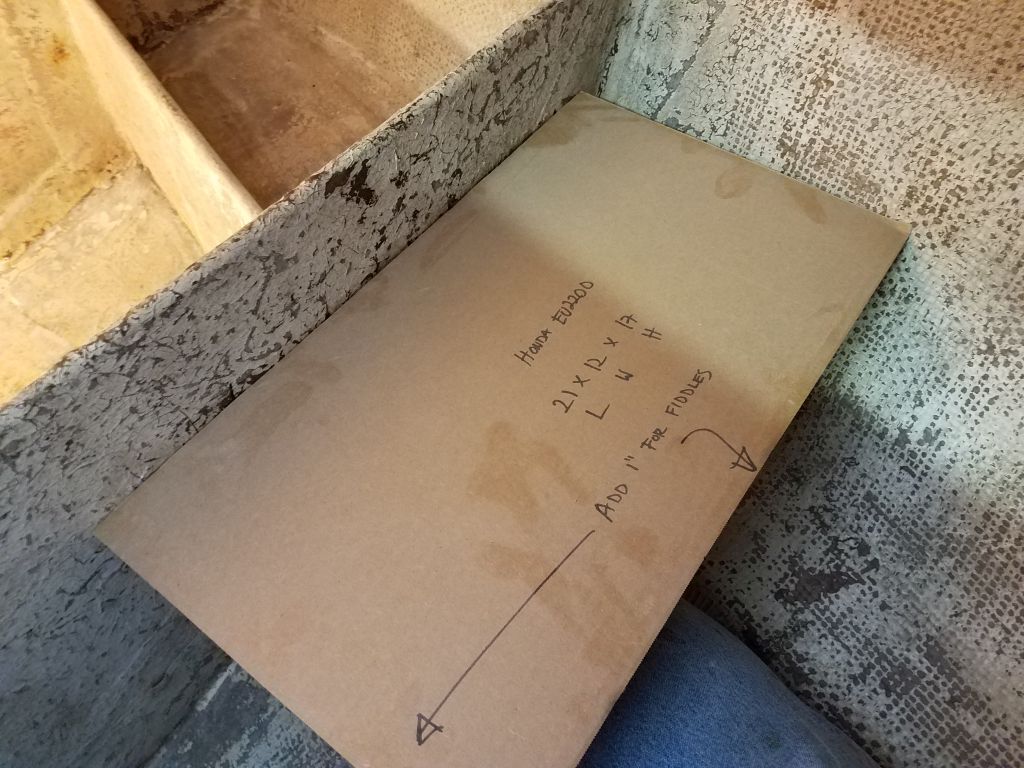
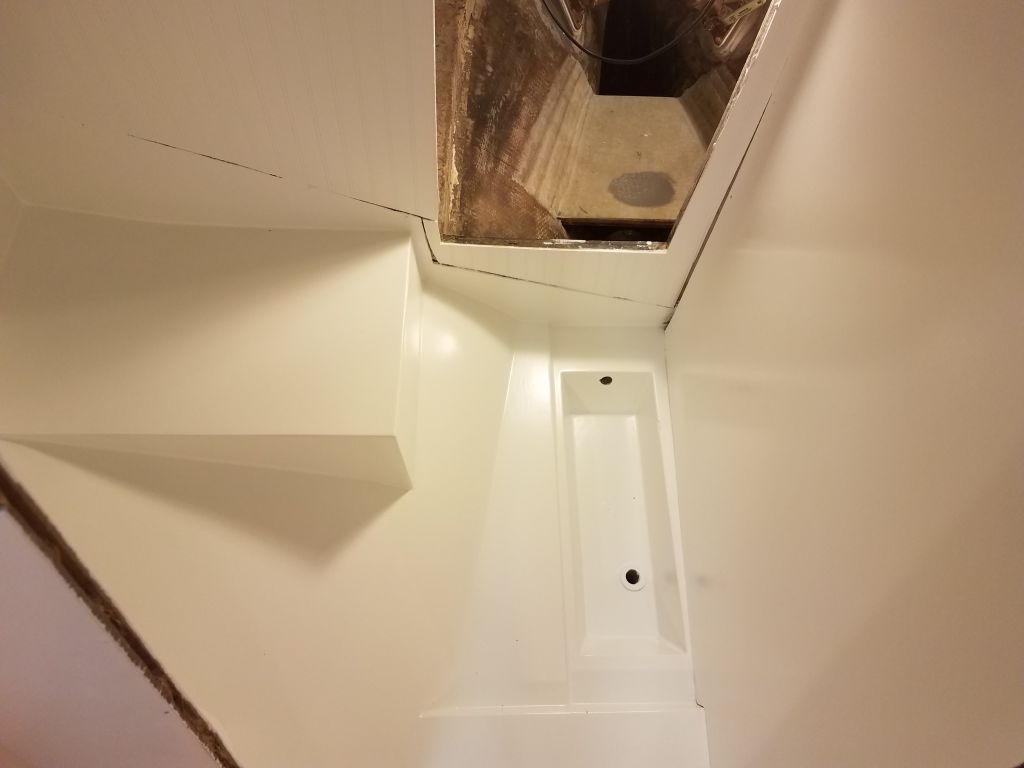
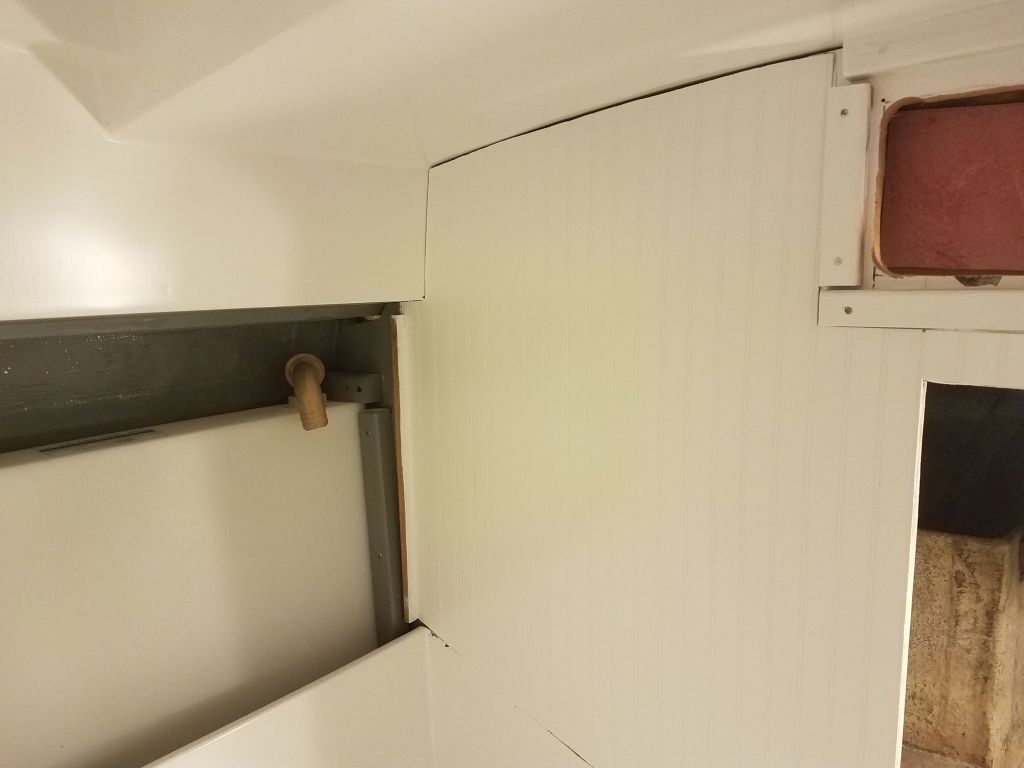
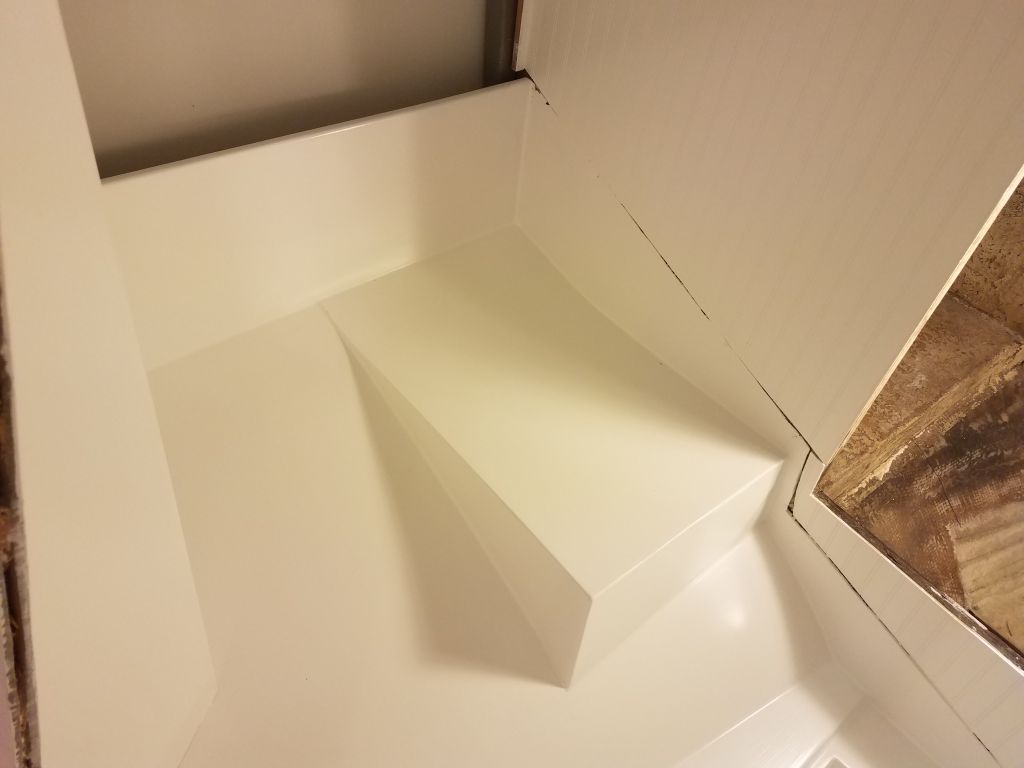
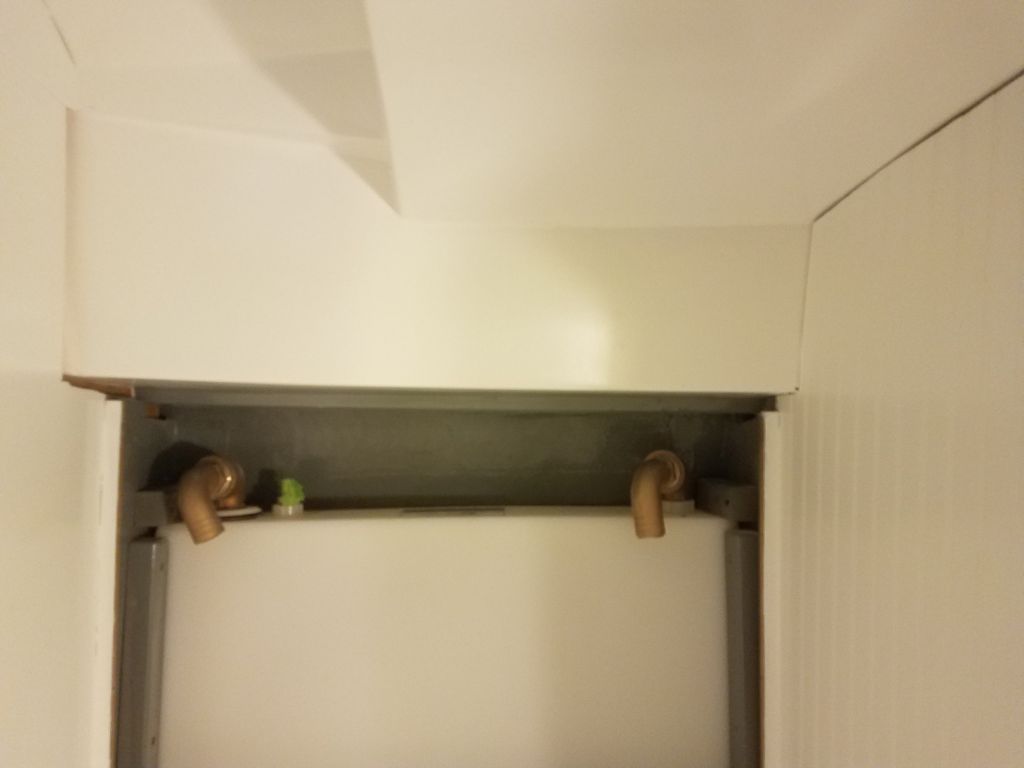
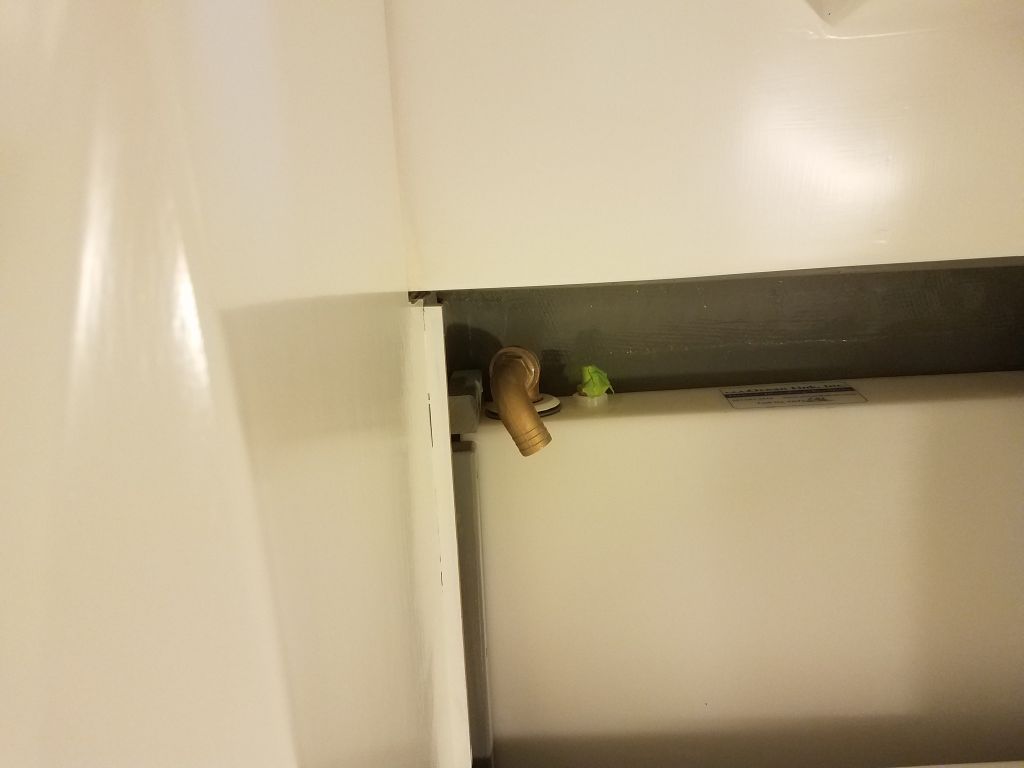
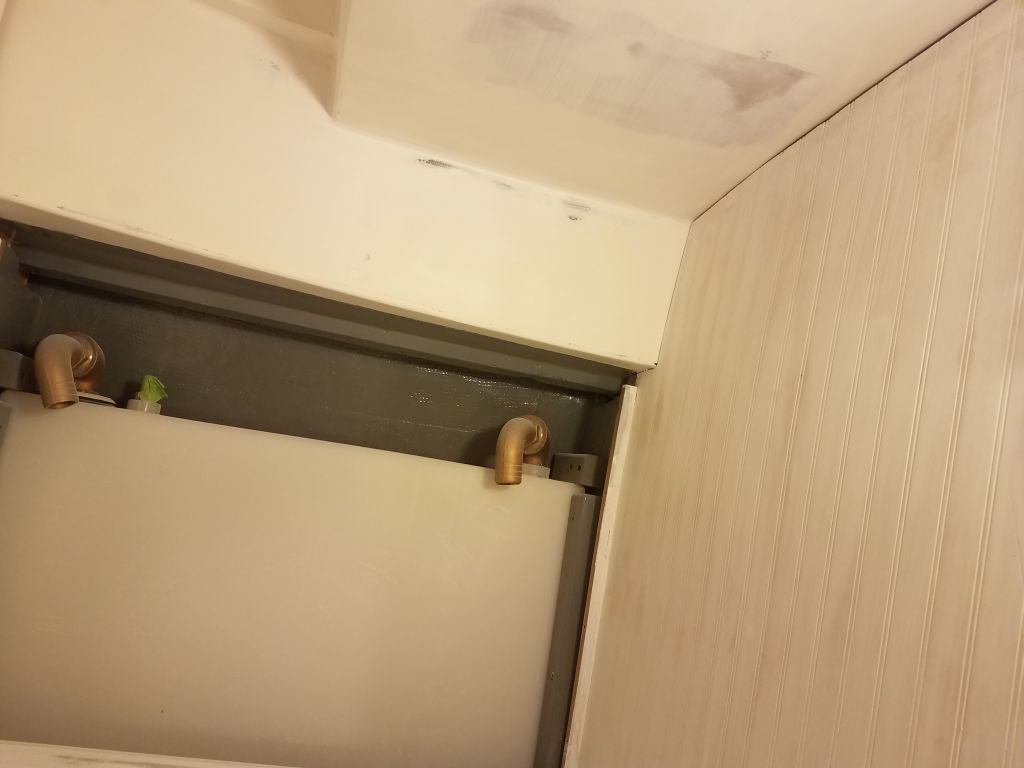
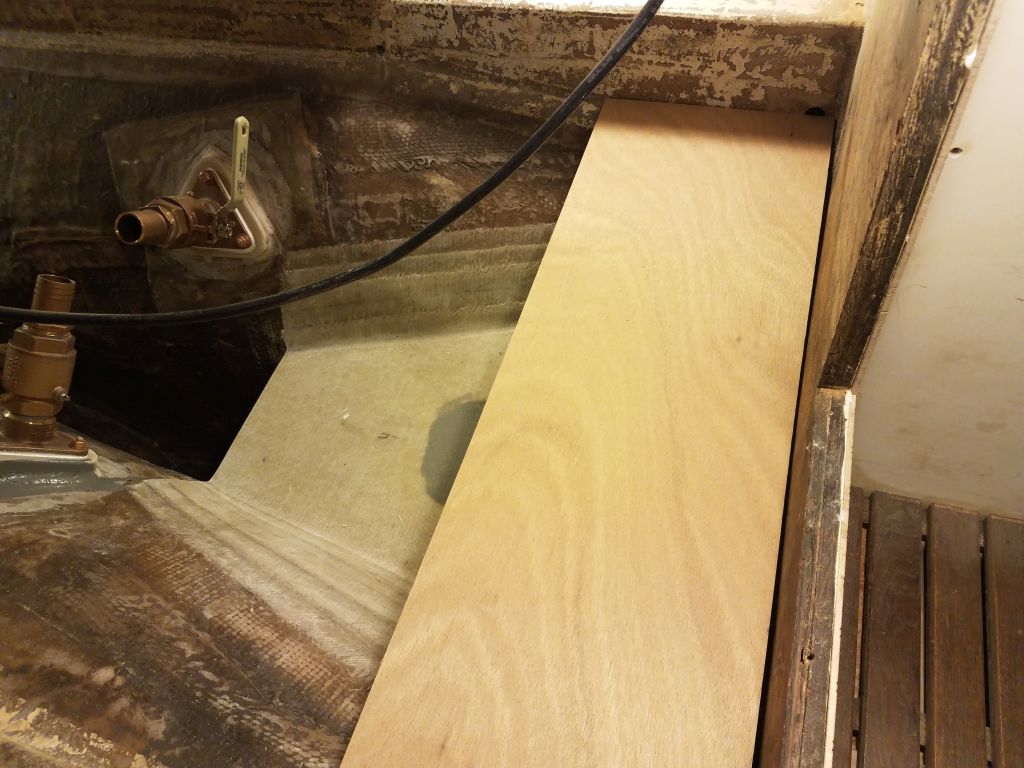
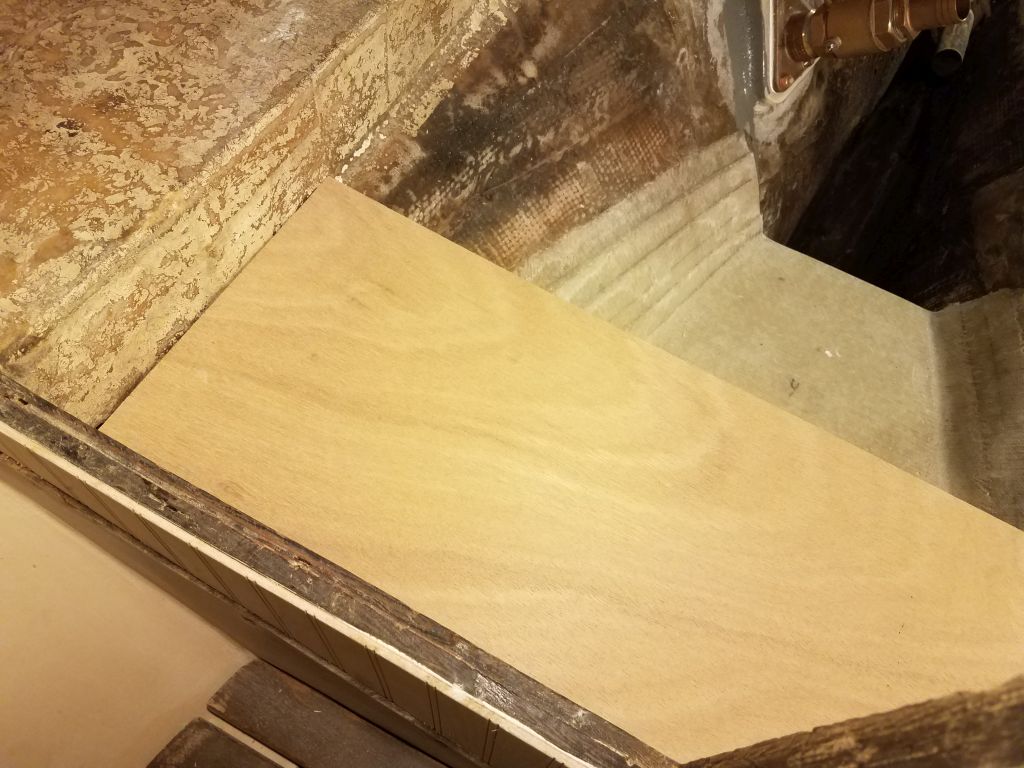
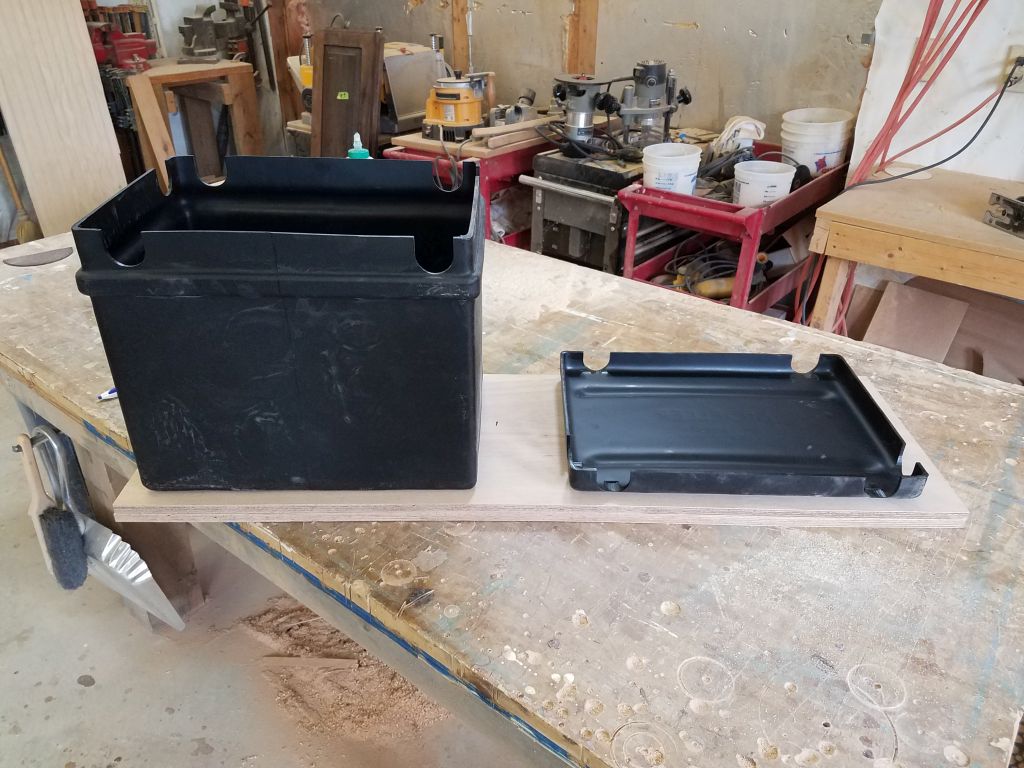
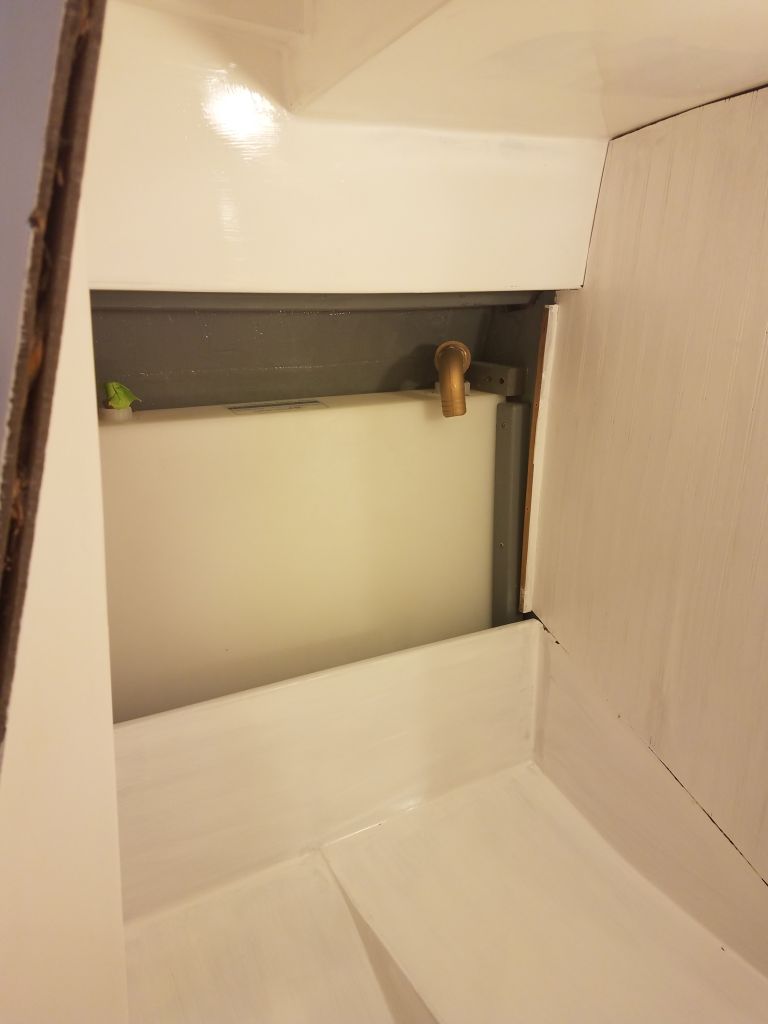
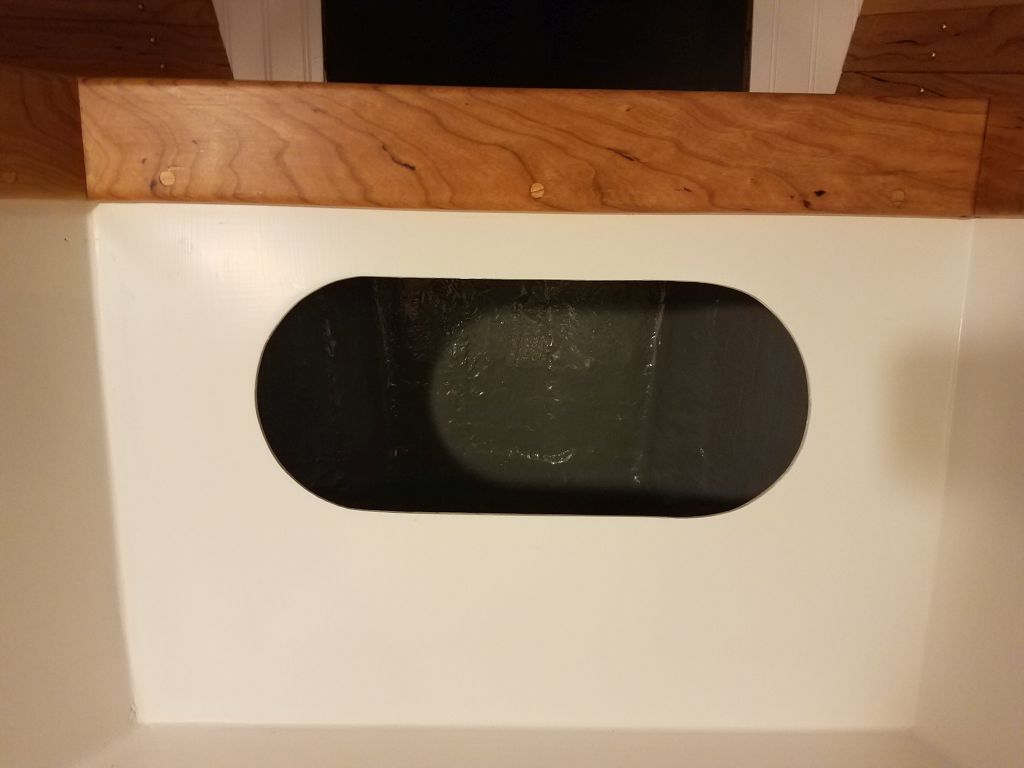
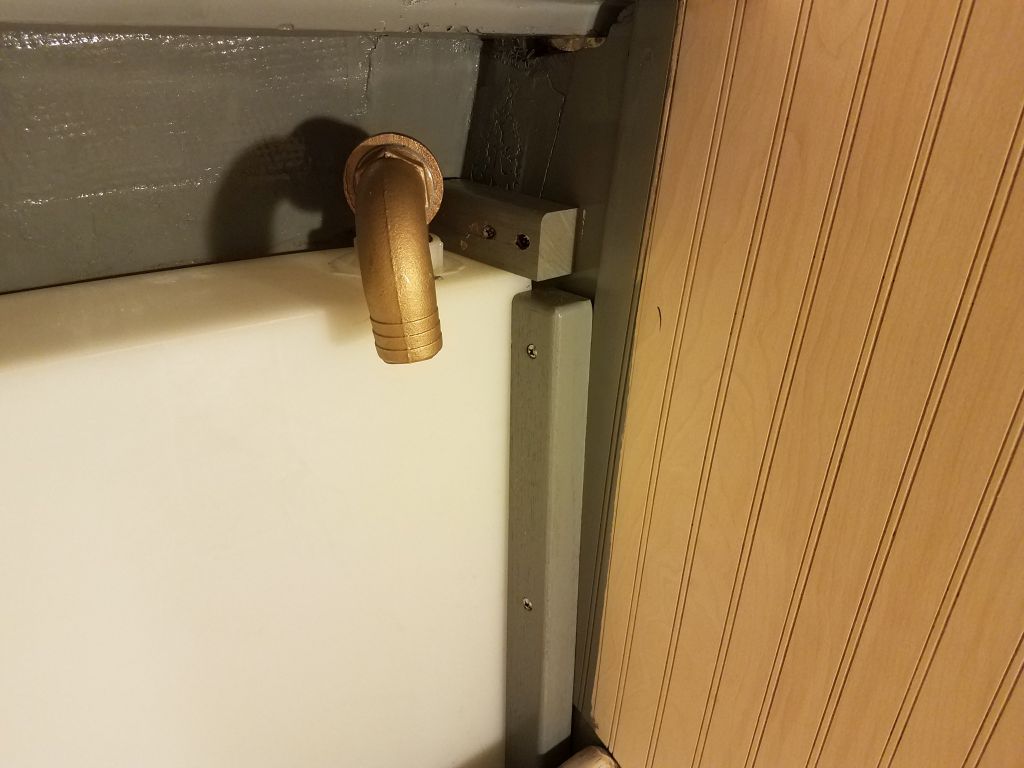
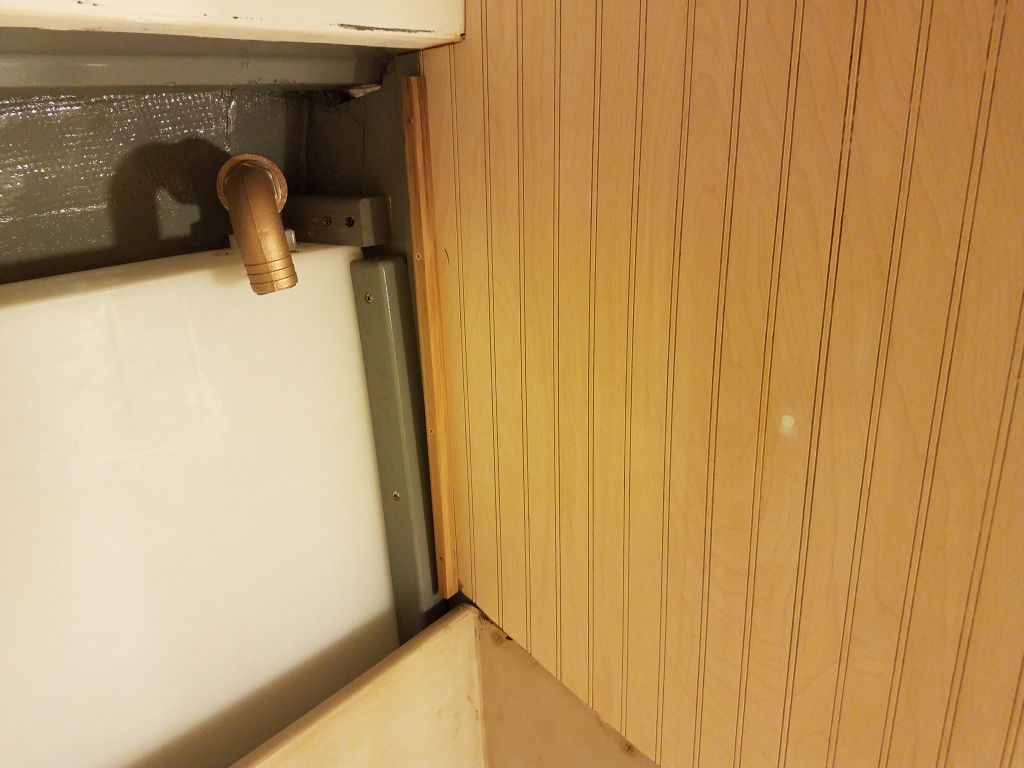
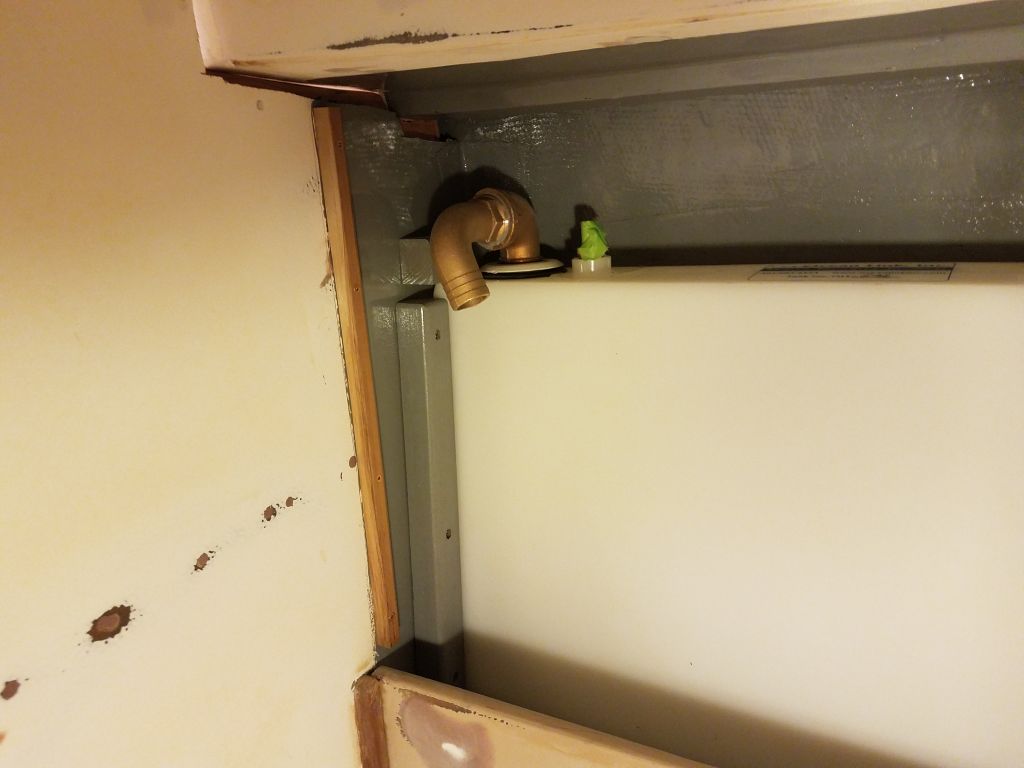
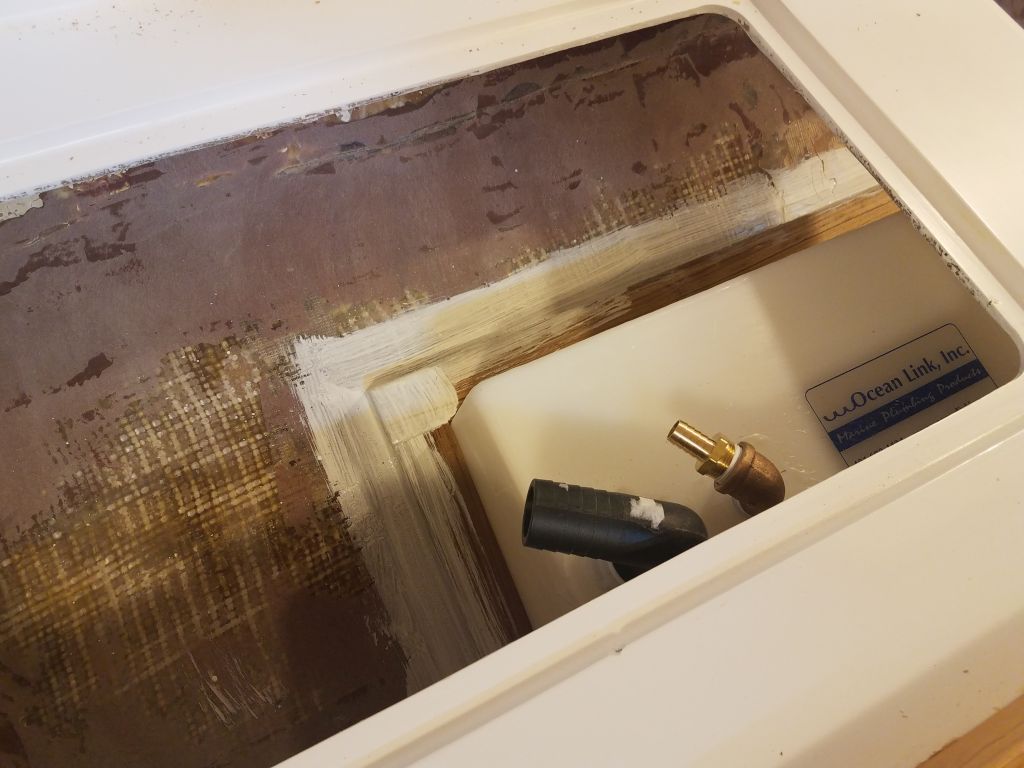
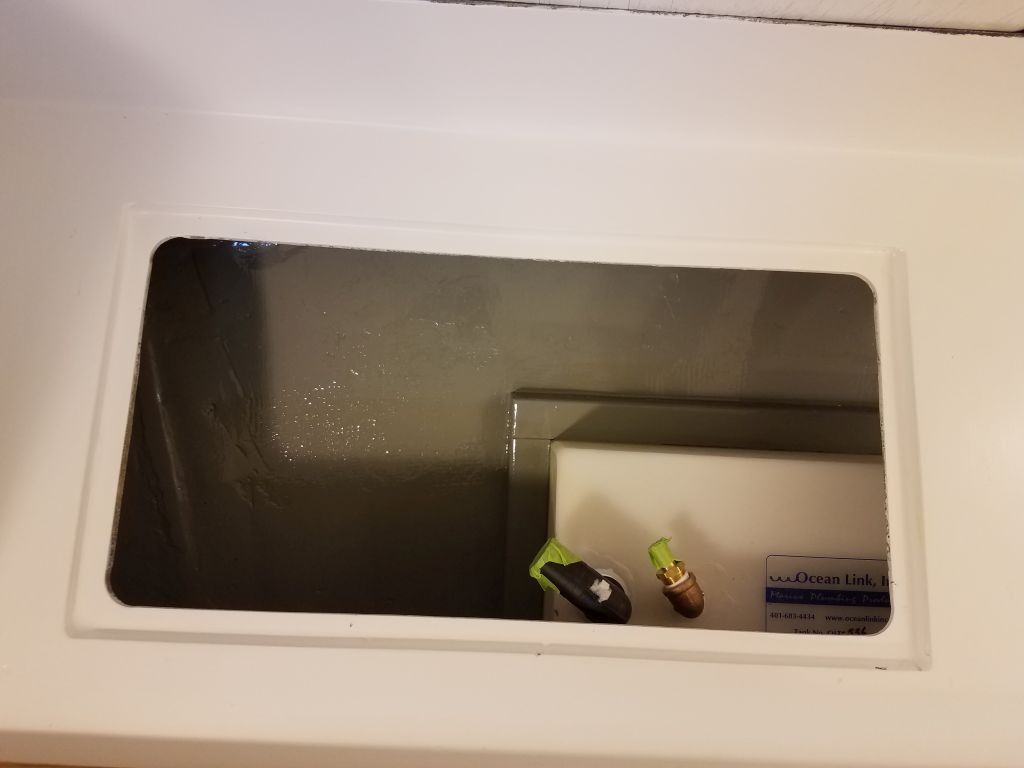
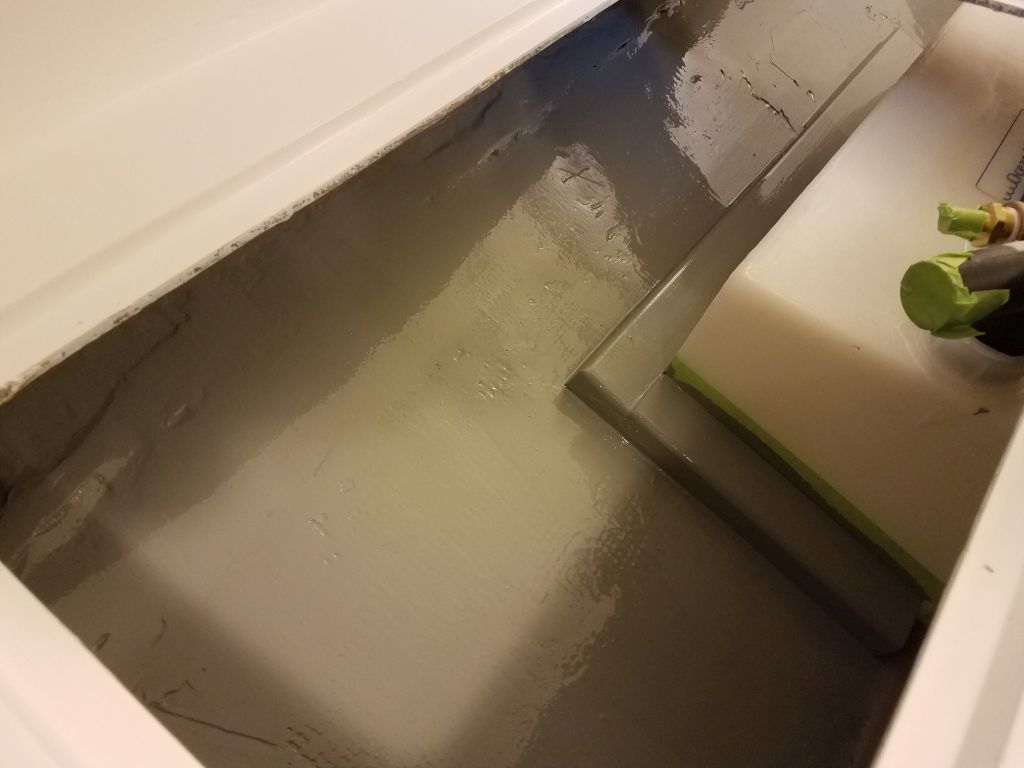
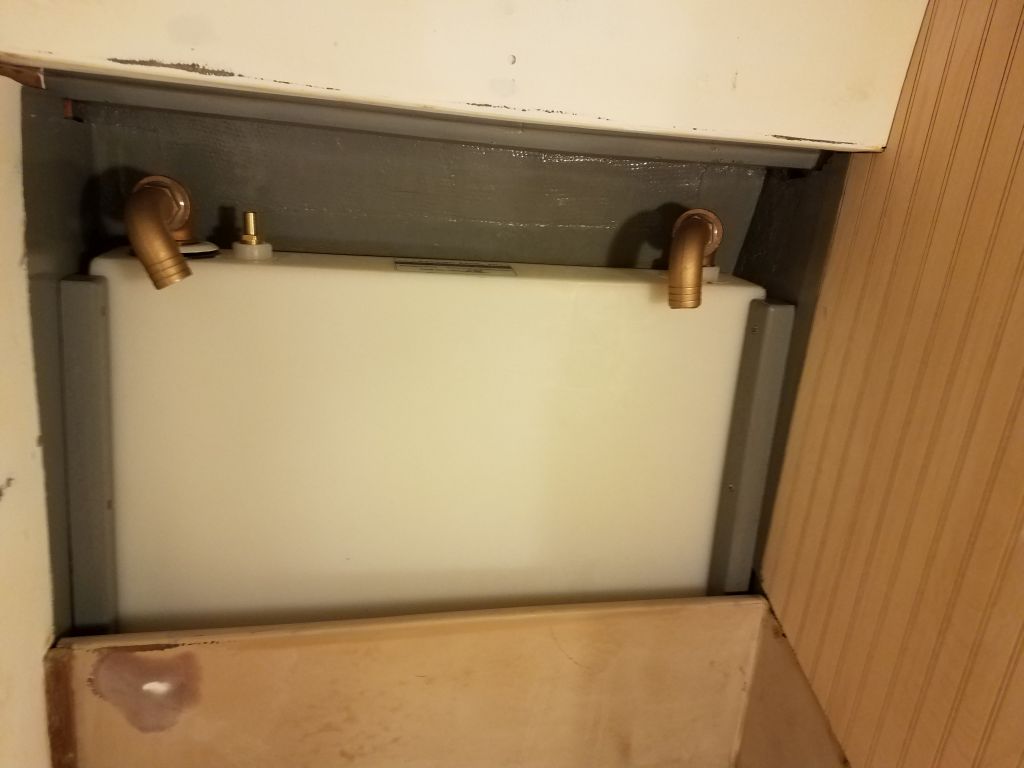
I’d had the new holding and water tanks on hand for a couple weeks, and with the recent flurry of trim and finishing work out of the way for now, it was time to get these tanks installed.  To that end, I’d ordered various fittings that I planned (hoped) to use for each tank, but when I set the holding tank in place on the platform I’d built, I quickly discovered that my original fittings configuration wasn’t going to work because of a lack of clearance; in my mind’s eye, there was more room above the tank than in reality, and my plan for the tank discharge wasn’t going to fit as I’d hoped.

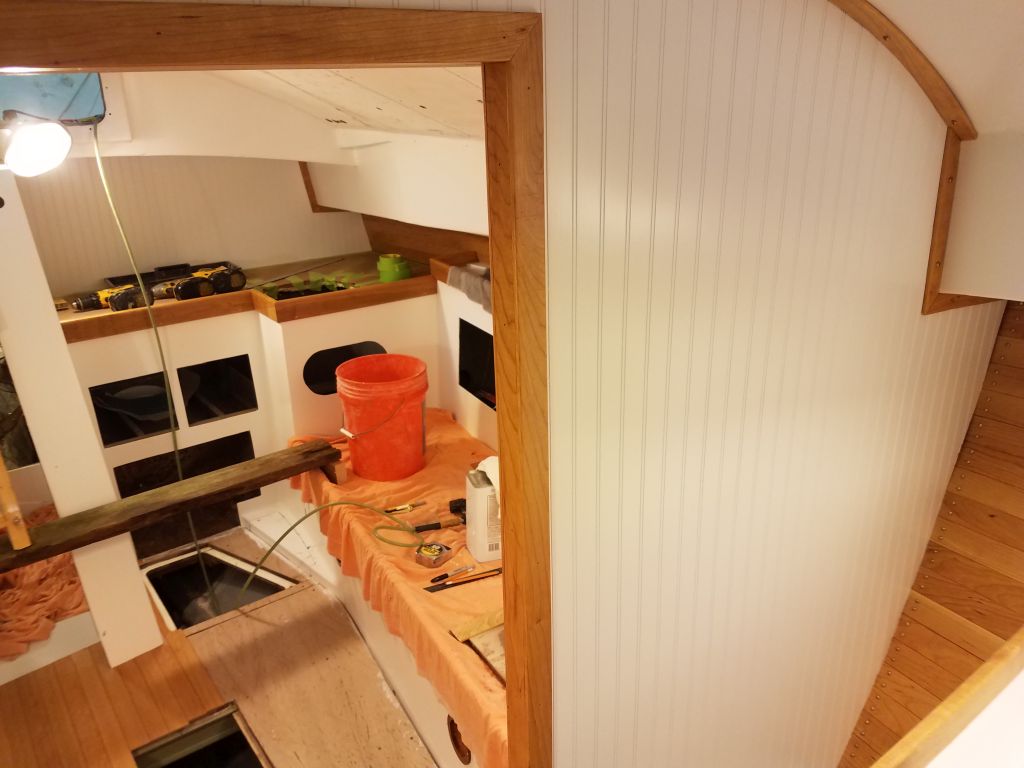
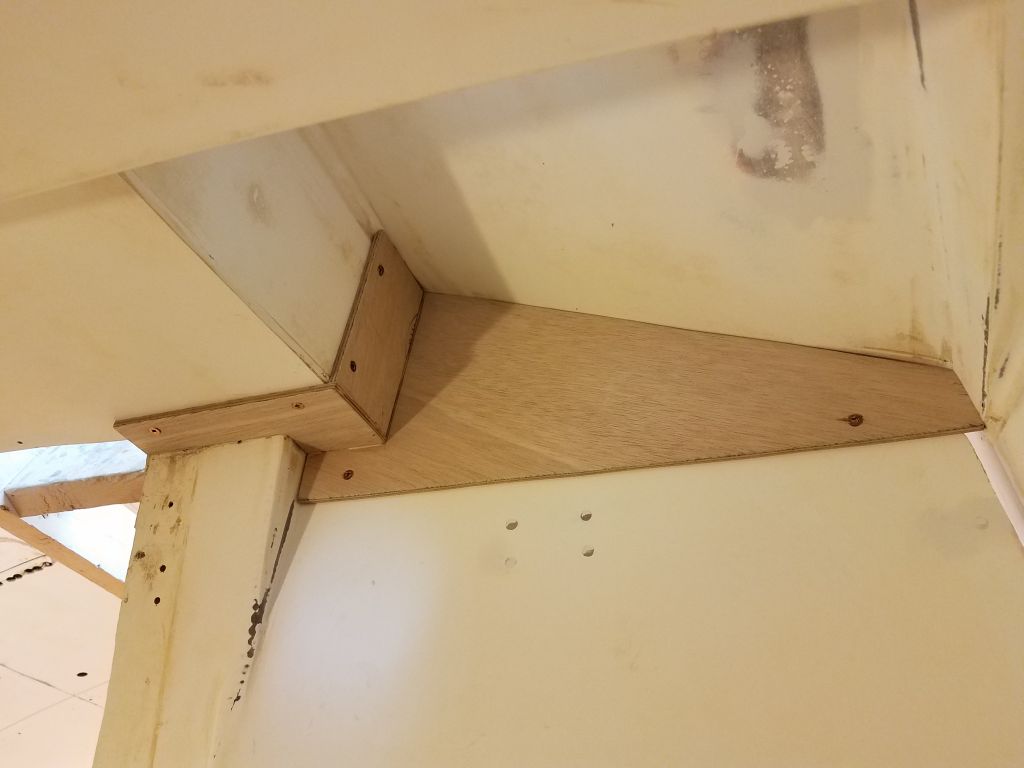
This didn’t pose a big problem; it just meant that I’d have to await further installation steps with this tank till I could get different fittings that would work at the discharge (i.e. forward, or left in this photo) end of the tank, since it was easier to spin on the various fittings while I could still move the tank around.  I ordered the required fittings and would continue the tank installation as soon as they arrived.

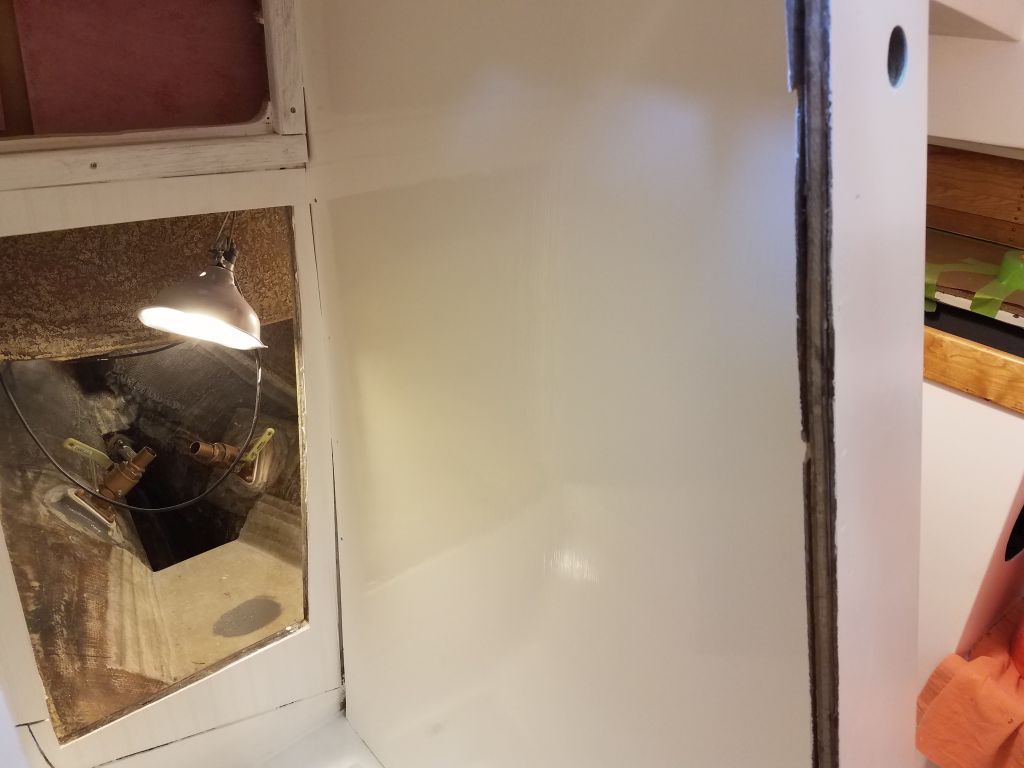
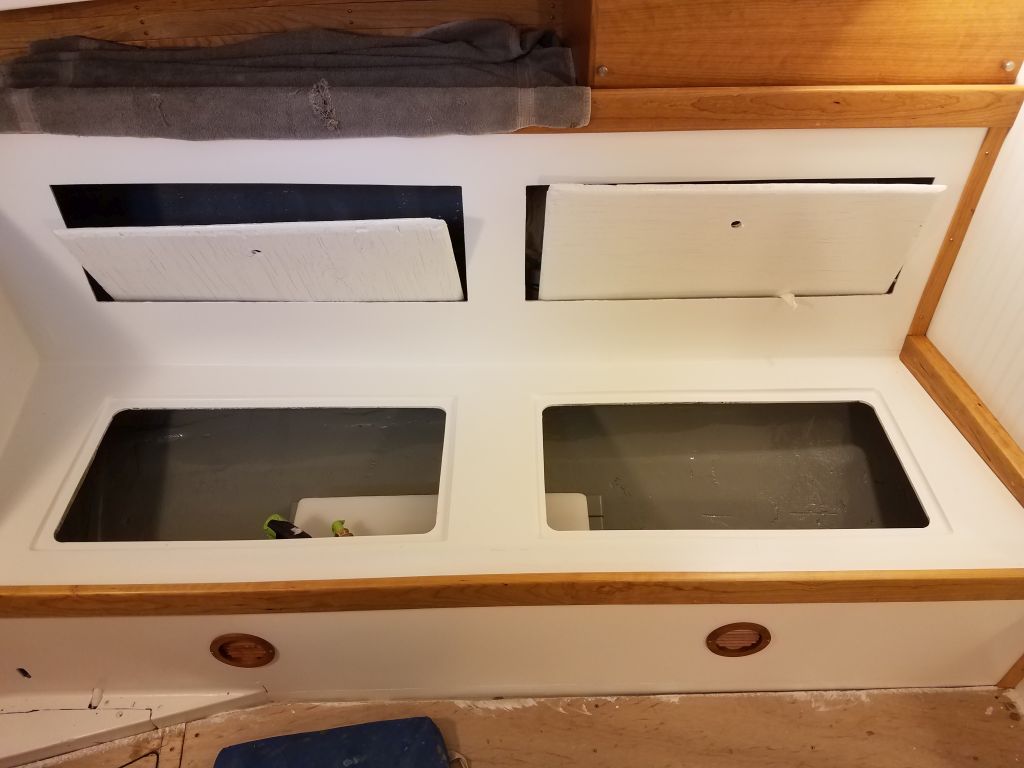
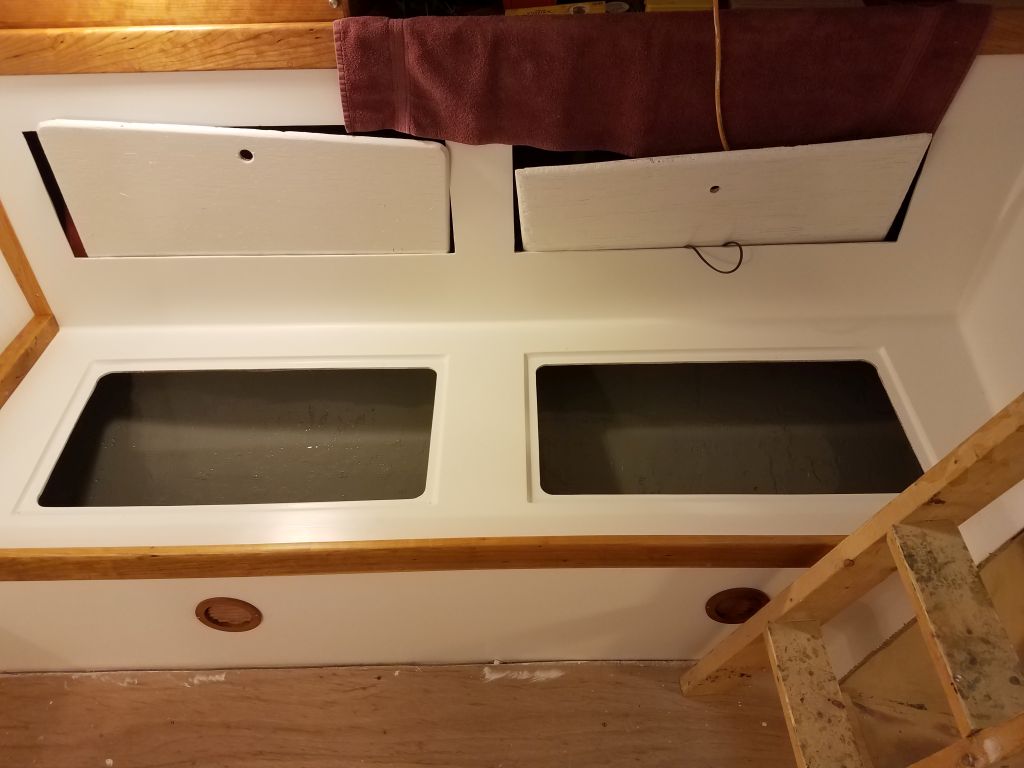
The smallish water tank planned for the space near the galley was an easy fit in the locker, and the fittings I’d planned for this tank worked as intended, so I moved on with final installation.  I’d originally planned to have the tank sit near the aft end of the after compartment beneath the settee, but the tank seemed to nestle perfectly into a spot a bit further forward, beneath the divider between the locker lids, and this also worked better because it improved vertical clearance for the tank inlet and vent, and also left the aft end of the space more open for better usage and access to a yet-to-be-installed foot pump near the galley.

To secure the tank, I cut cleats from leftover teak stock on hand, and after preparations epoxied the cleats in place around the tank base.  These cleats, along with the inside of the settee itself, would hold the tank in place in four directions, but to hold the tank firmly down against the hull I ordered a strap that I’d install later to secure the tank completely.

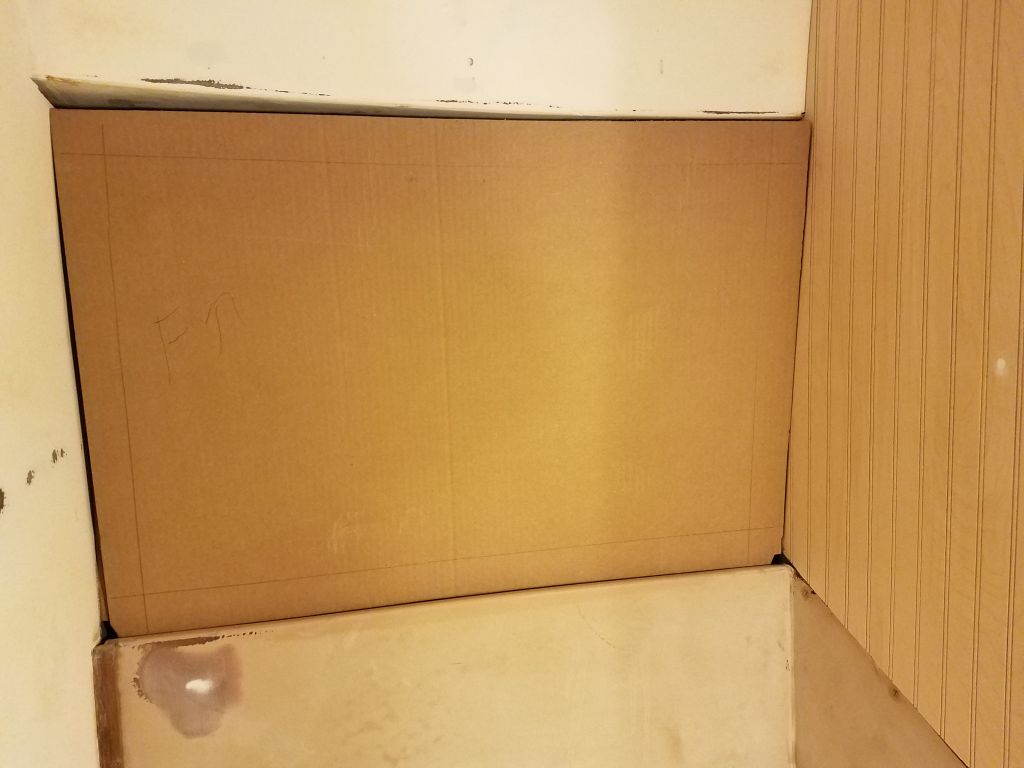
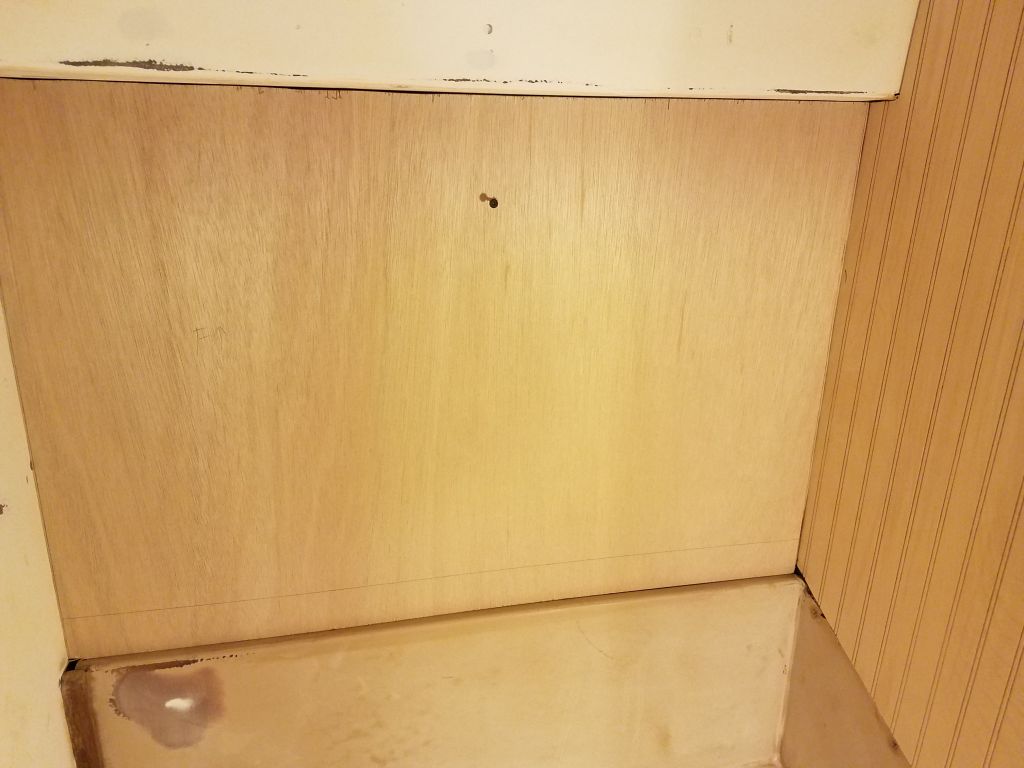
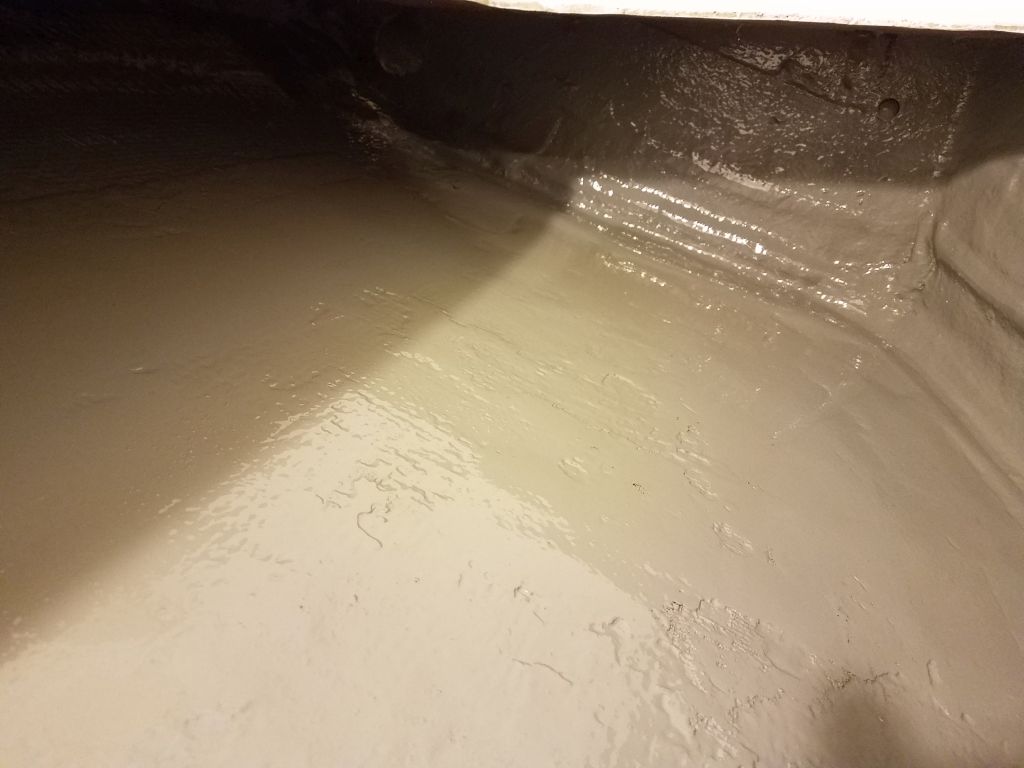
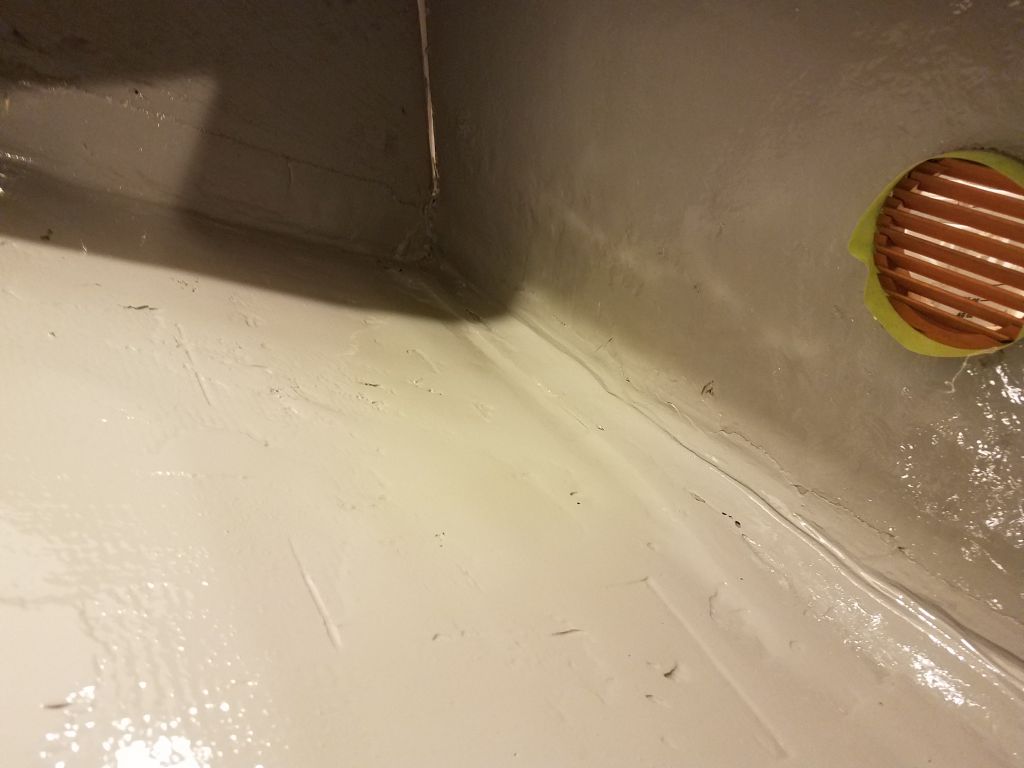
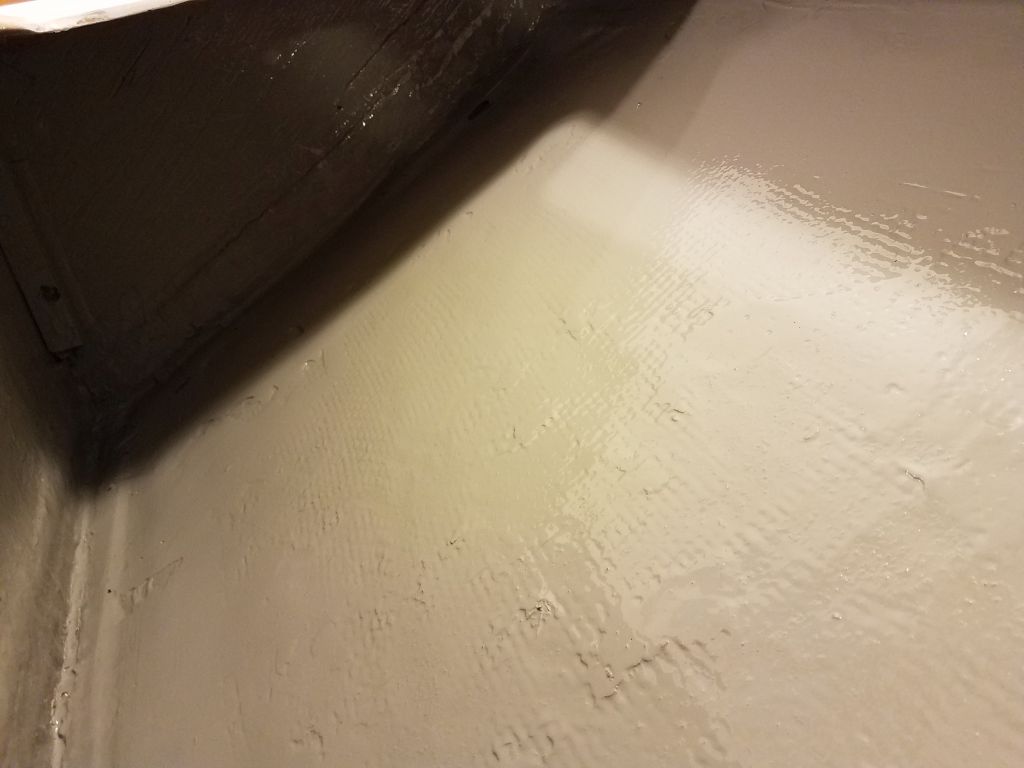
Now that the day was getting on, it was time to paint the forward locker; I’d left this task till late since the paint fumes from this paint are strong.

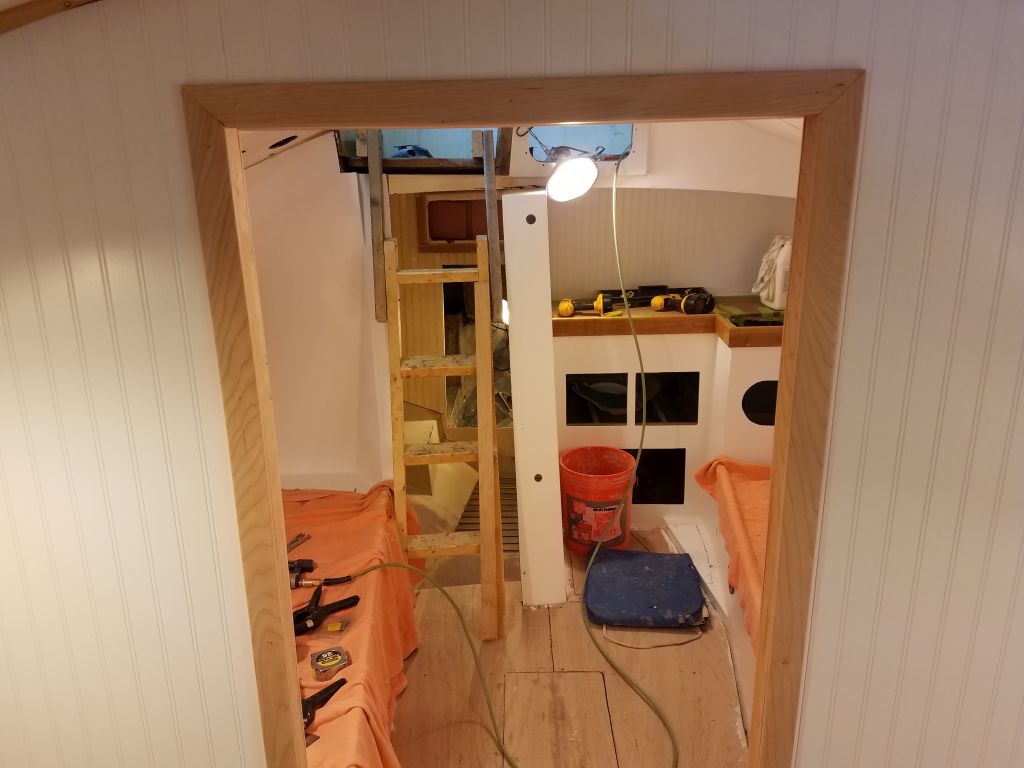
The companionway had been clamped for several hours now, and the glue was dry, so I unclamped the assembly and removed the back panel, then drilled for and installed four screws into each tread (two per side) to add strength to the whole thing.  Afterwards, I bunged all the screw holes.

Total time billed on this job today:   8.25 hours

0600 Weather observation:  32°, cloudy, light snow showers.  Forecast for the day:  Snow, 3-5″predicted, 34°


Scupper 118

Saturday

Because of unforeseen circumstances during the week that forced my absence from the shop, I’d fallen behind where I’d hoped to be, especially with the interior varnish, so I planned to make up some time and progress over the weekend.  With 4-5 good coats of gloss base varnish on all the trim, all that remained was a final coating of satin varnish to complete the work on the trim installed so far.

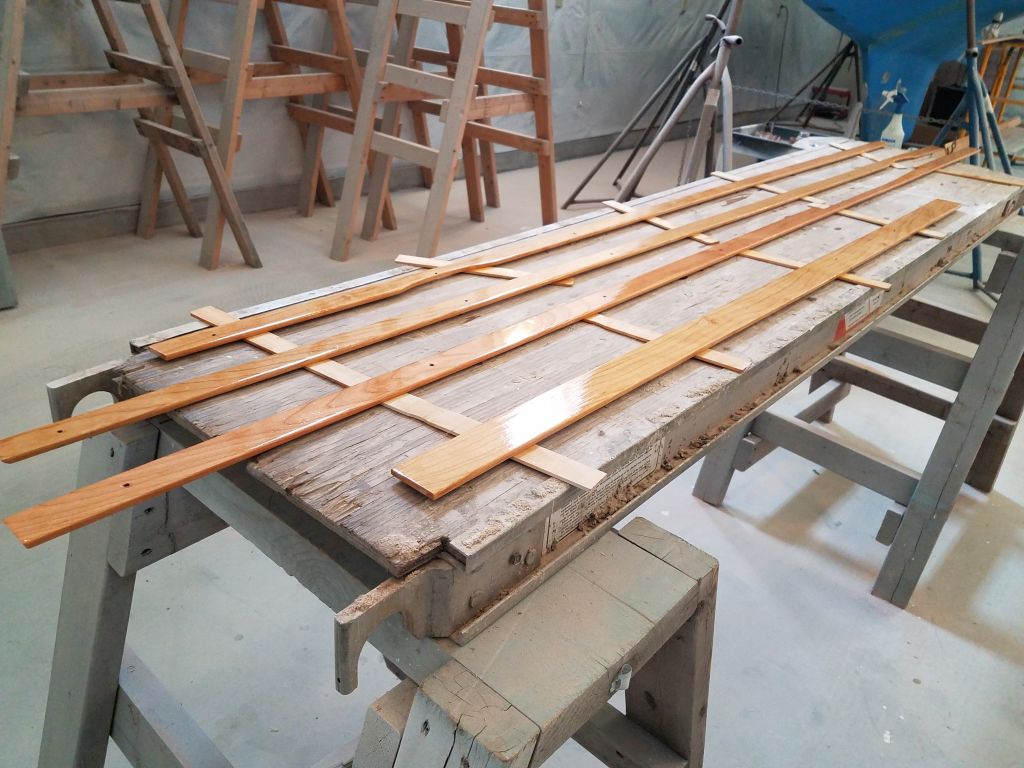
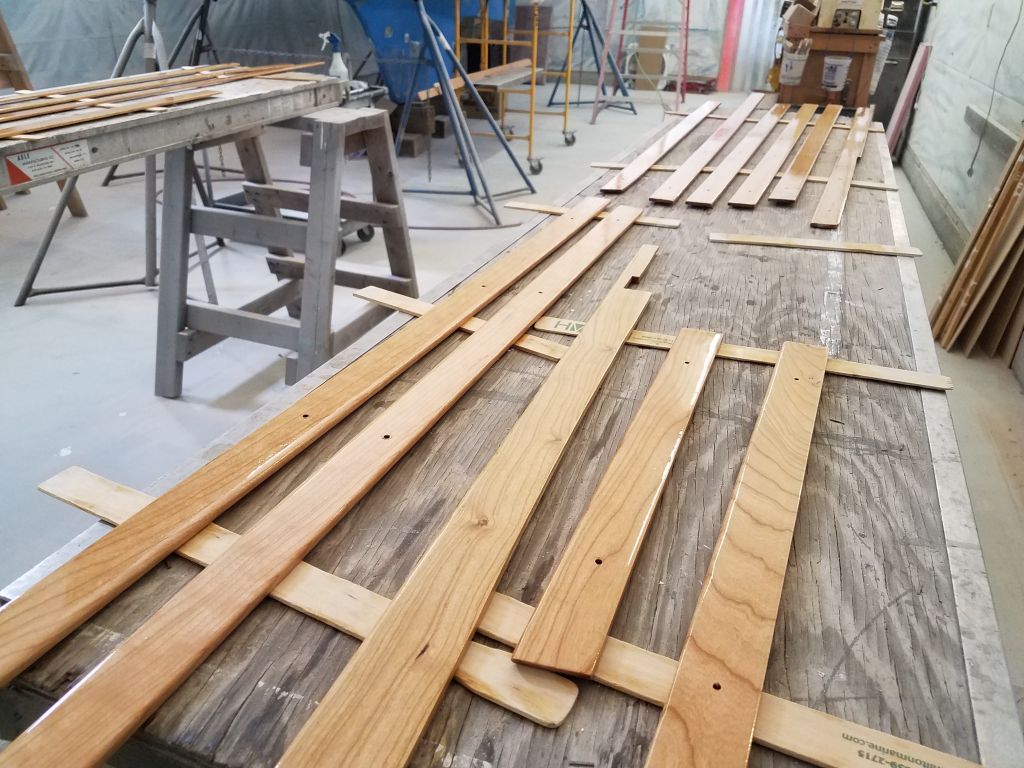
After the usual sanding and cleanup, I applied the satin finish.  Later, once the varnish had a chance to dry, I took photos of the results, which looked good, though I planned a careful final inspection before deeming the coating complete in these areas.

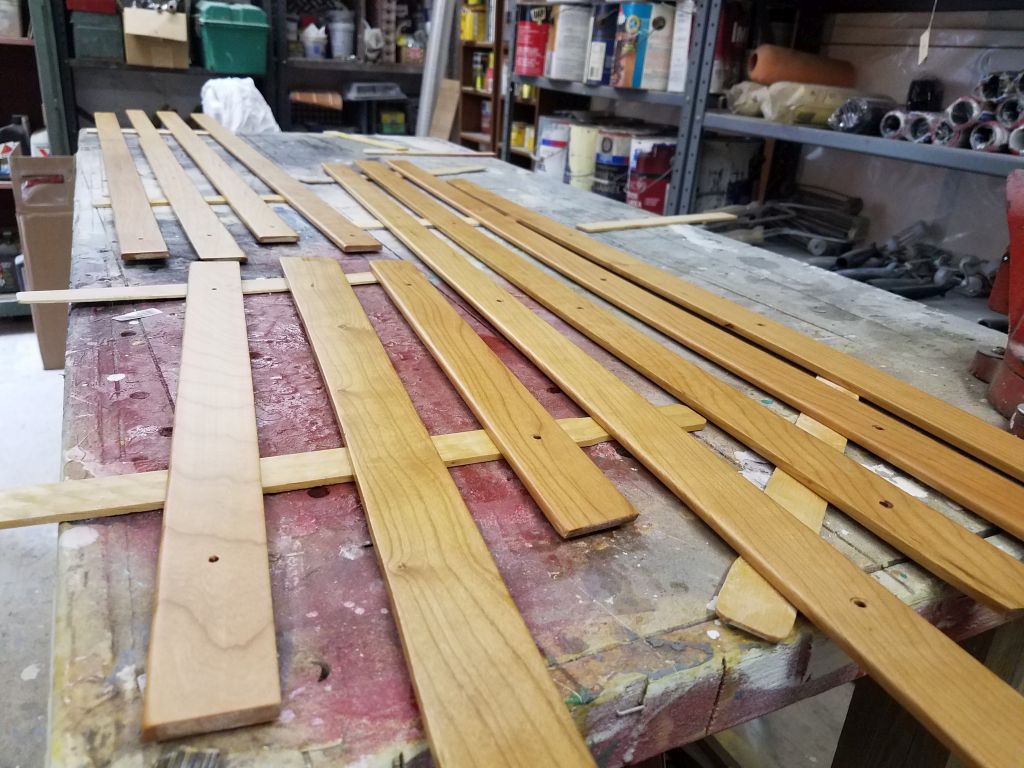
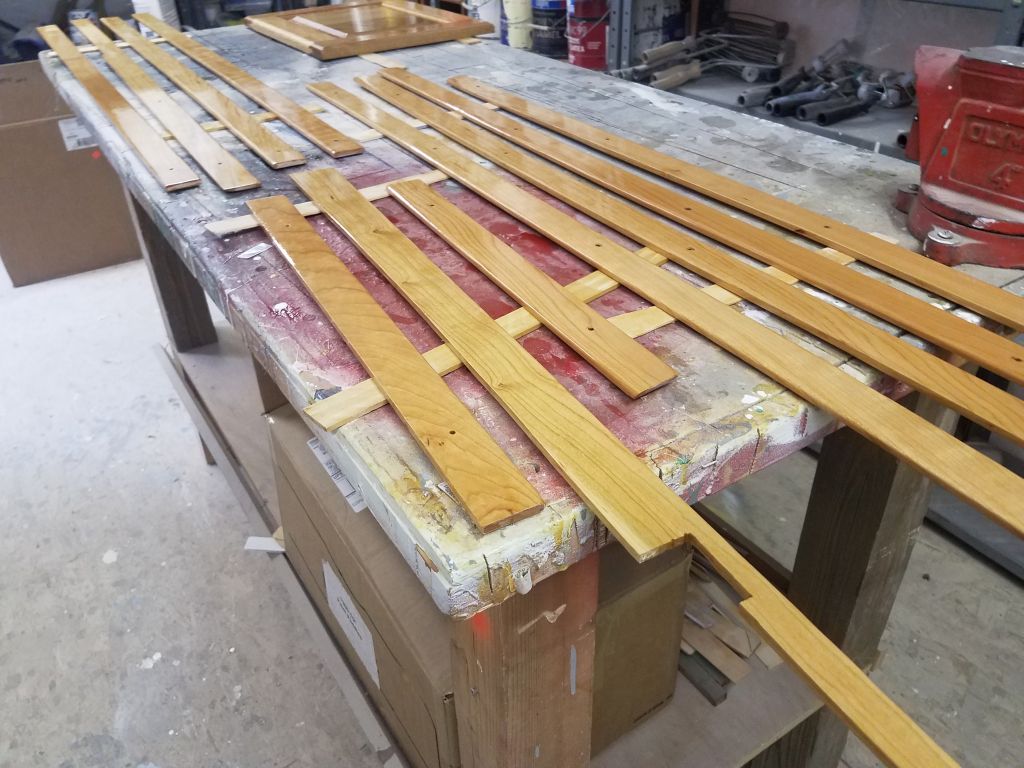
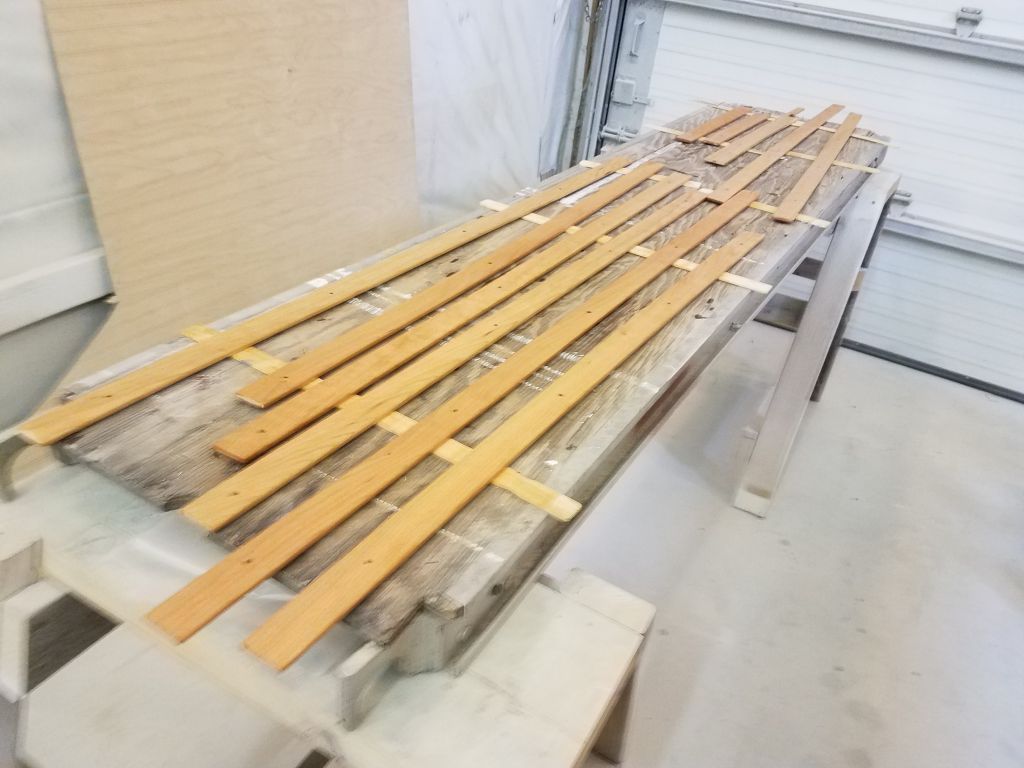
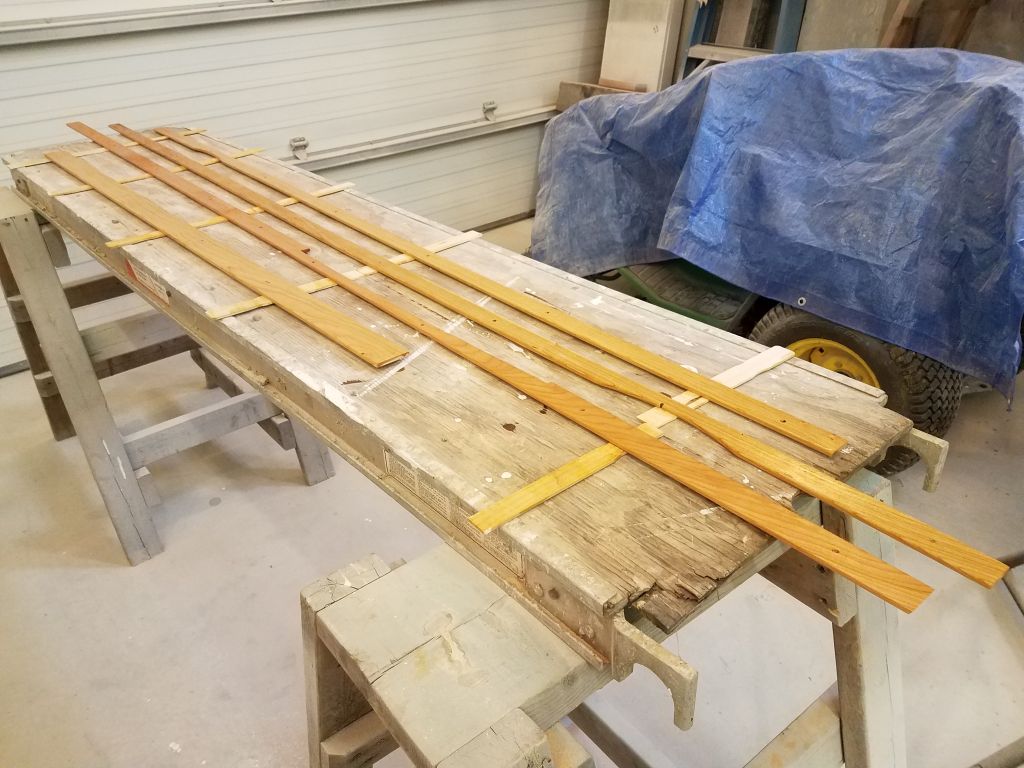
Now that I had all the basic pieces cut for the companionway ladder, I continued work on the new treads, trimming each to its final width (about 1/4″ deeper than the slots in each case, leaving a small overhang) and rounding the exposed outer edges for appearance and smoothness.

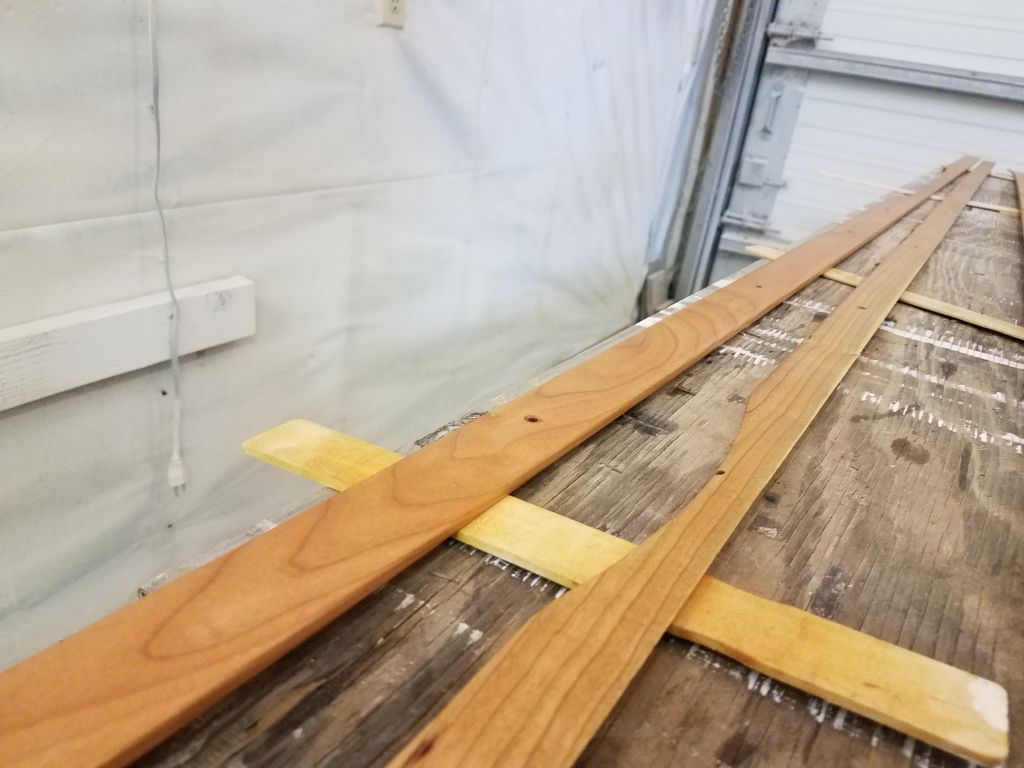
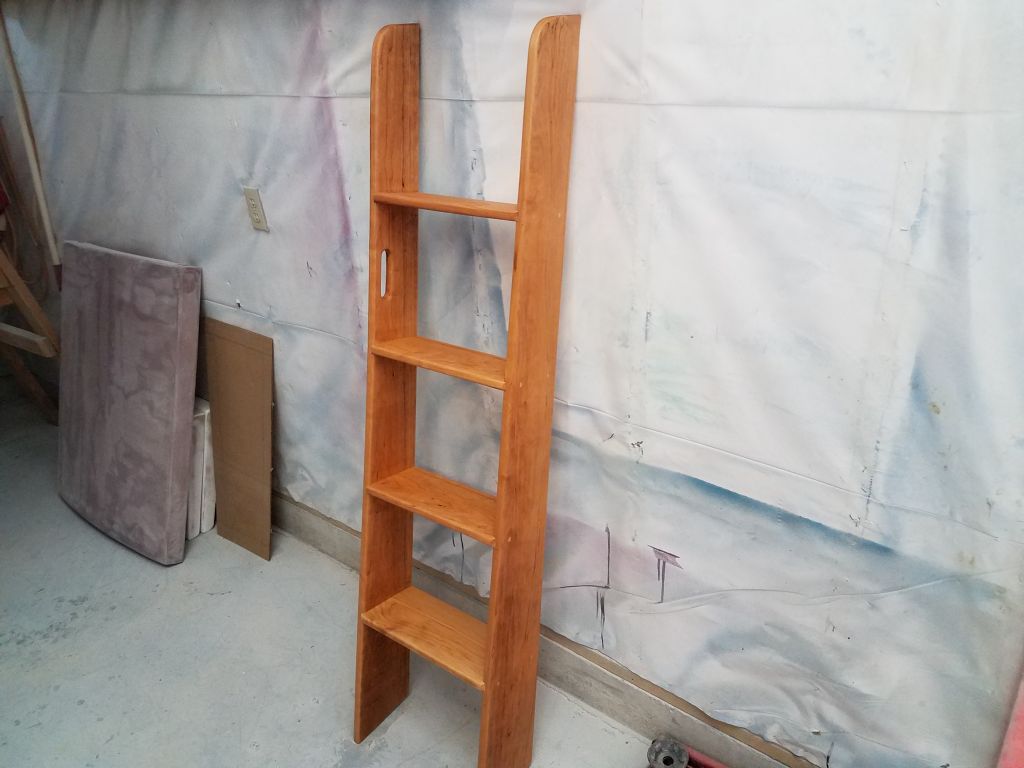
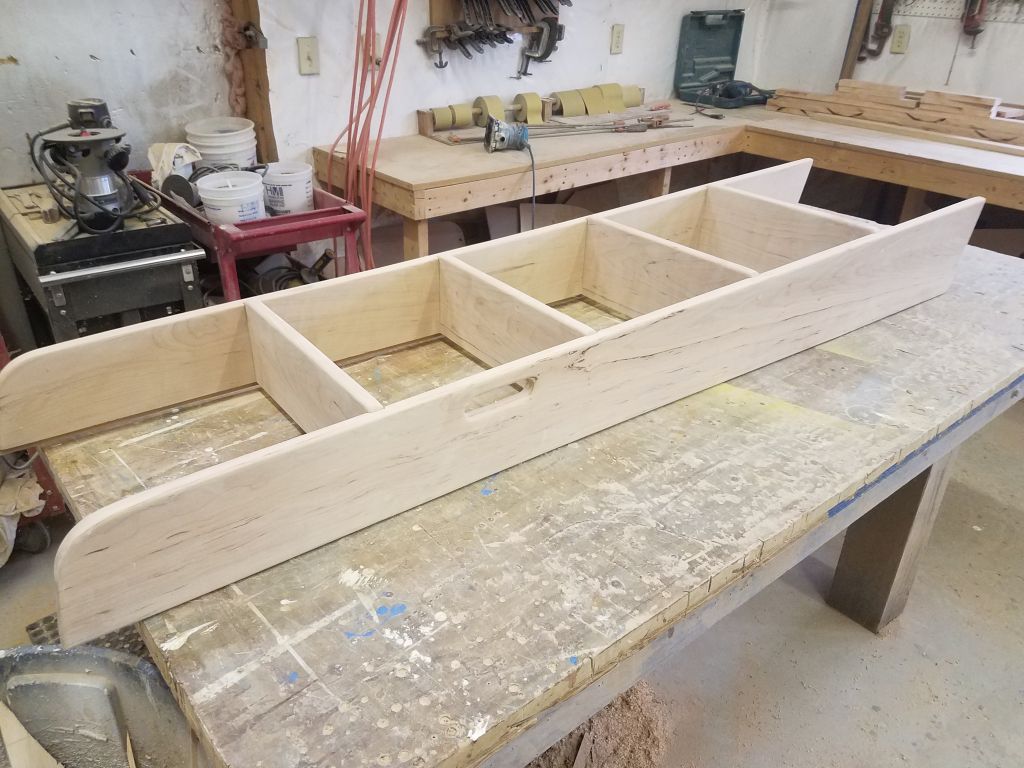
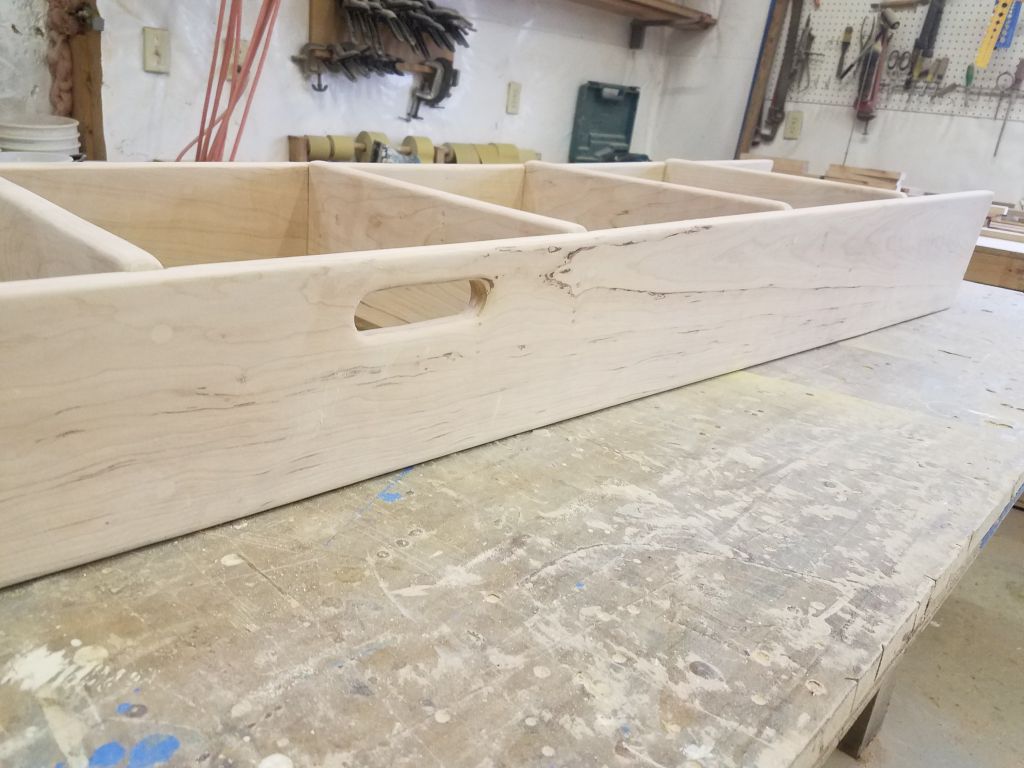
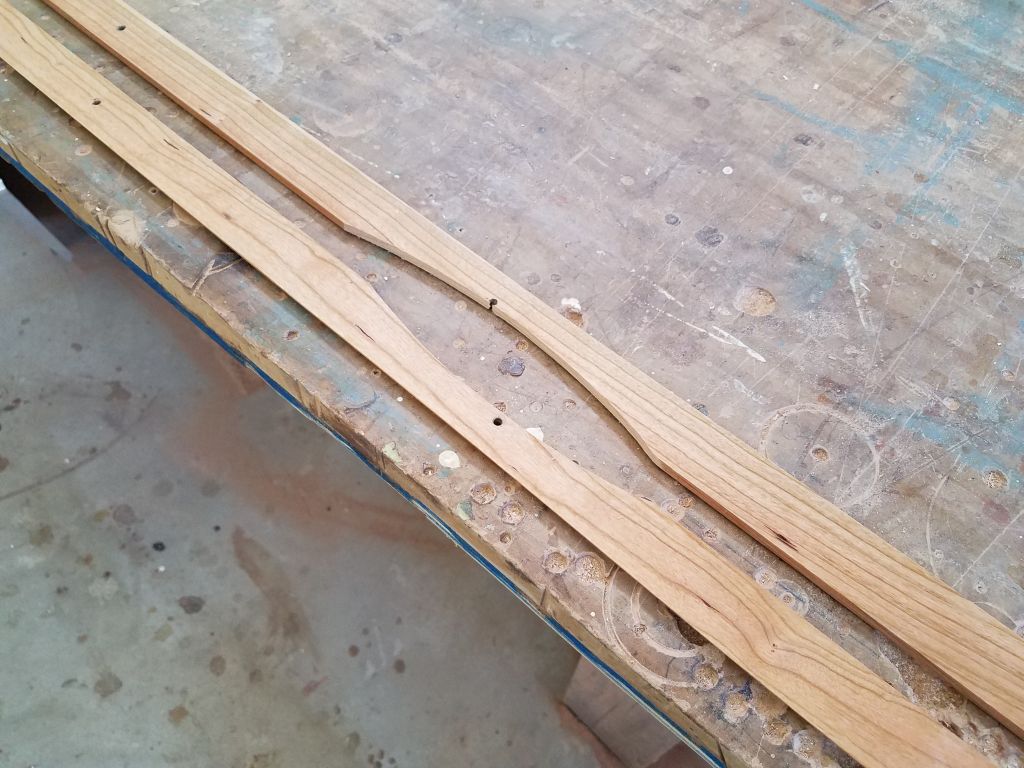
I cut the handhold slot in the outboard ladder rail with a drill bit and saw, and rounded the edges with a router before also easing the other exposed edges of the side rails accordingly, then sanded these parts smooth and clean as well, leaving them ready for final trimming (the side rails were still a few inches long at the top awaiting a final fitting) and ladder assembly next time.

Total time billed on this job today:  5 hours

0600 Weather observation:  34°, cloudy, a slushy coating of snow overnight.  Forecast for the day:  Gradual clearing, 50s

Scupper 117

Friday

With another limited day available, I focused first on the interior trim varnish, with another round of sanding to prepare for the fourth coat of gloss base varnish on all areas.

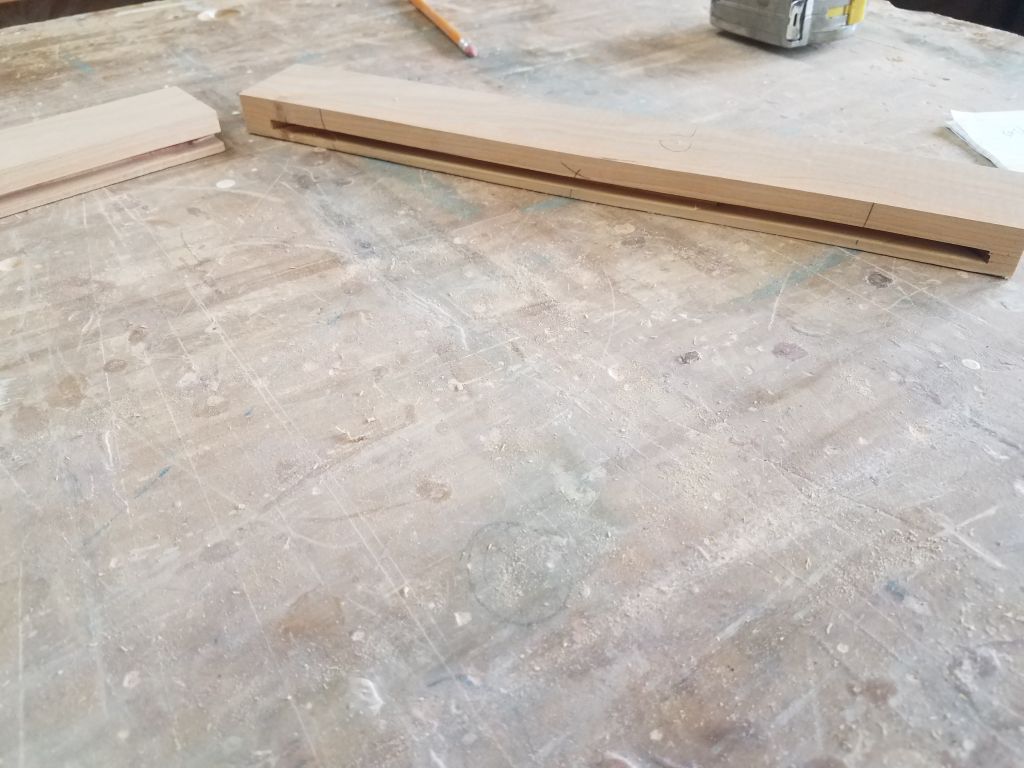
I was ready to commit to the ladder treads on the new companionway ladder, but before making the dado cuts in the side rails to accept the eventual treads, I used some scrap to simulate the tread at the angle I’d chosen, which was 90° to the back edge of the side rails and gave the treads a backwards angle for better grip.  Satisfied with the visuals, I committed and set up the table saw with a 3/4″ dado cutter and, after some testing on scrap to get the depth where I wanted it, carefully made the eight cuts required (four on each side).  

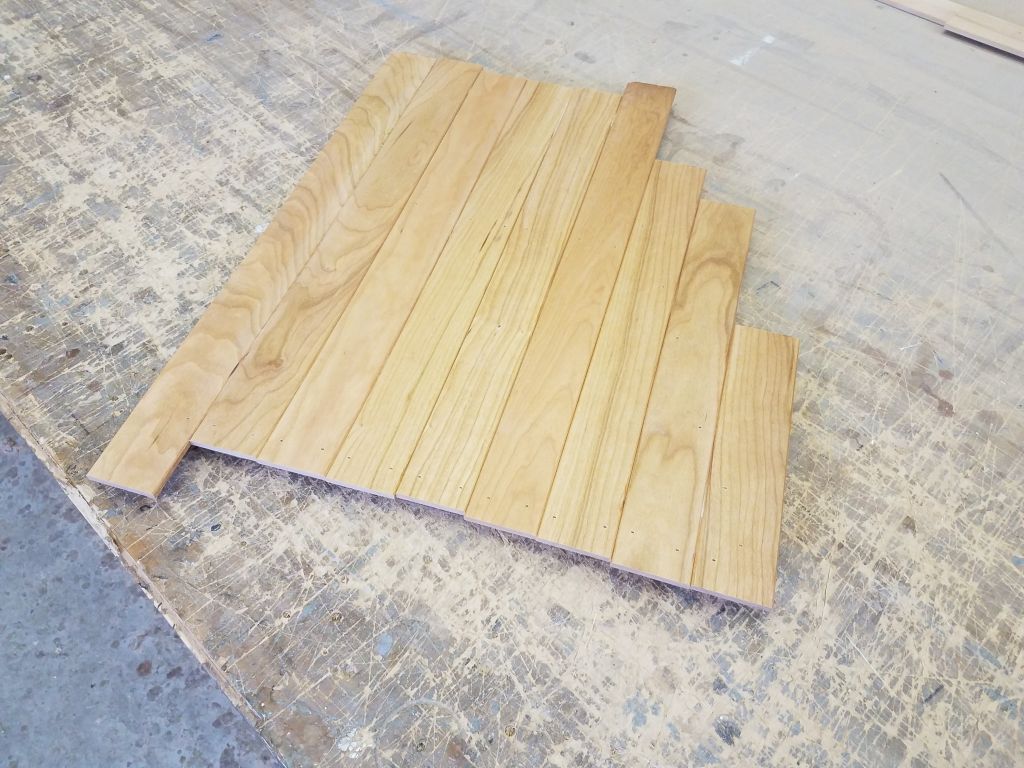
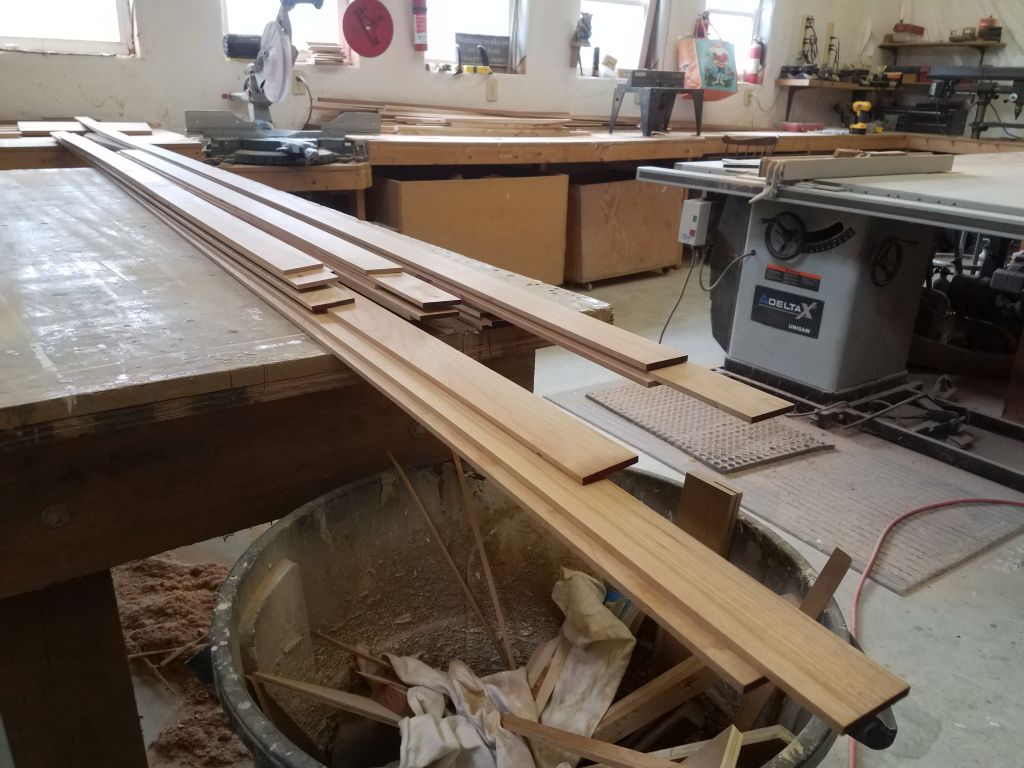
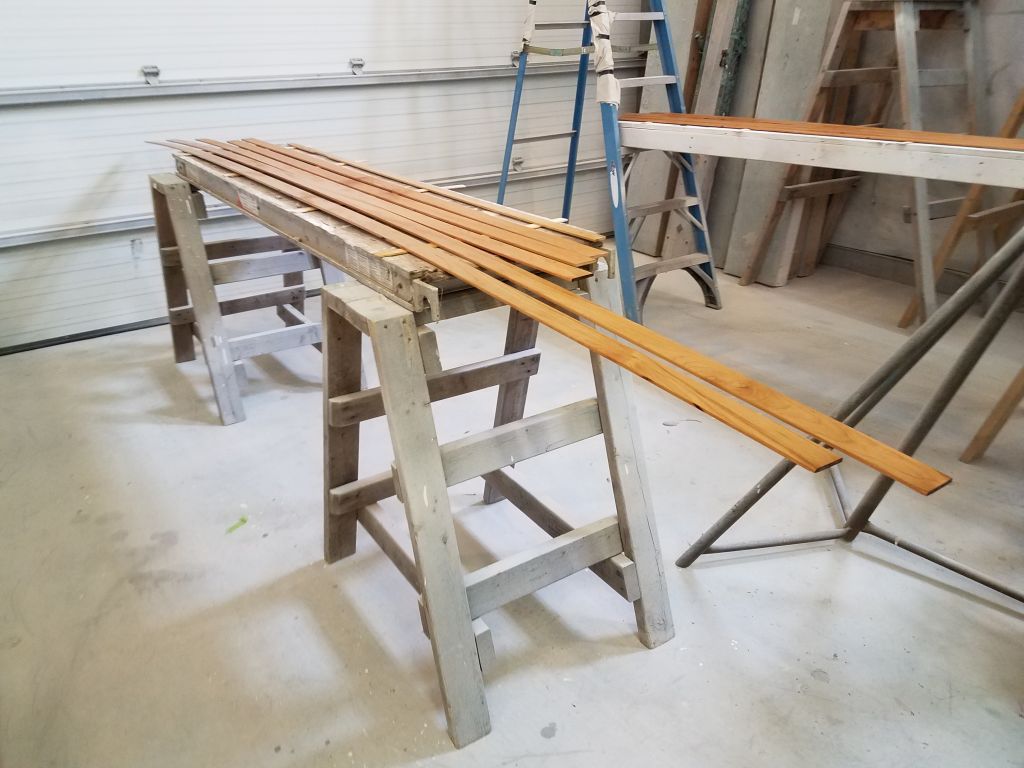
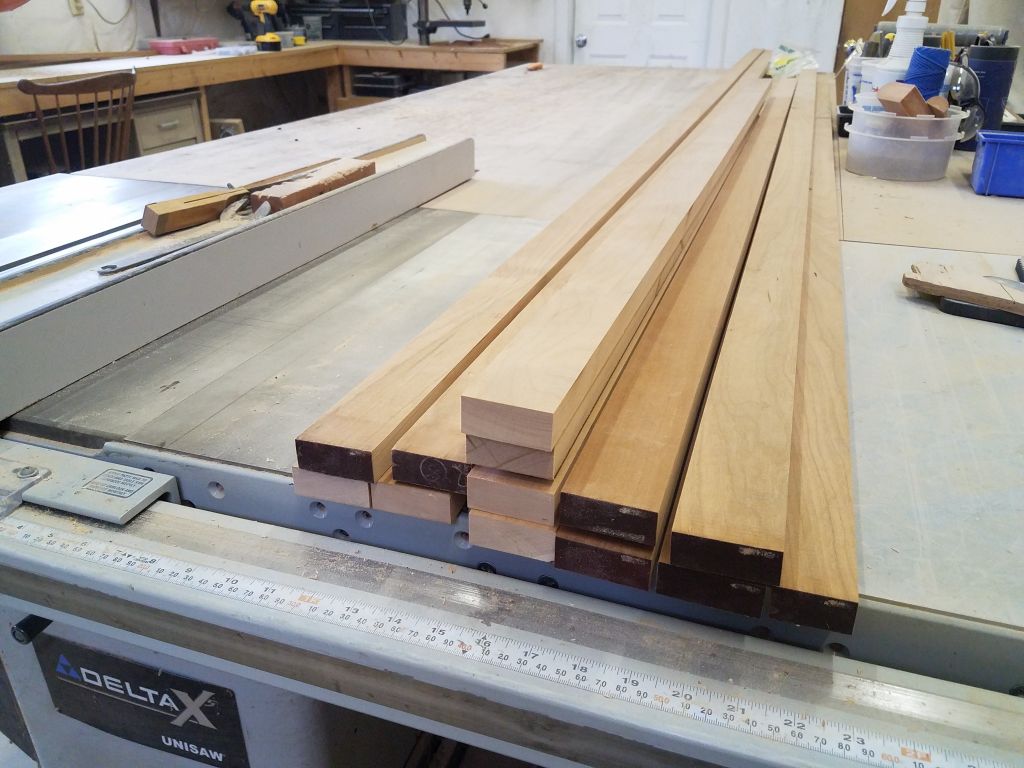
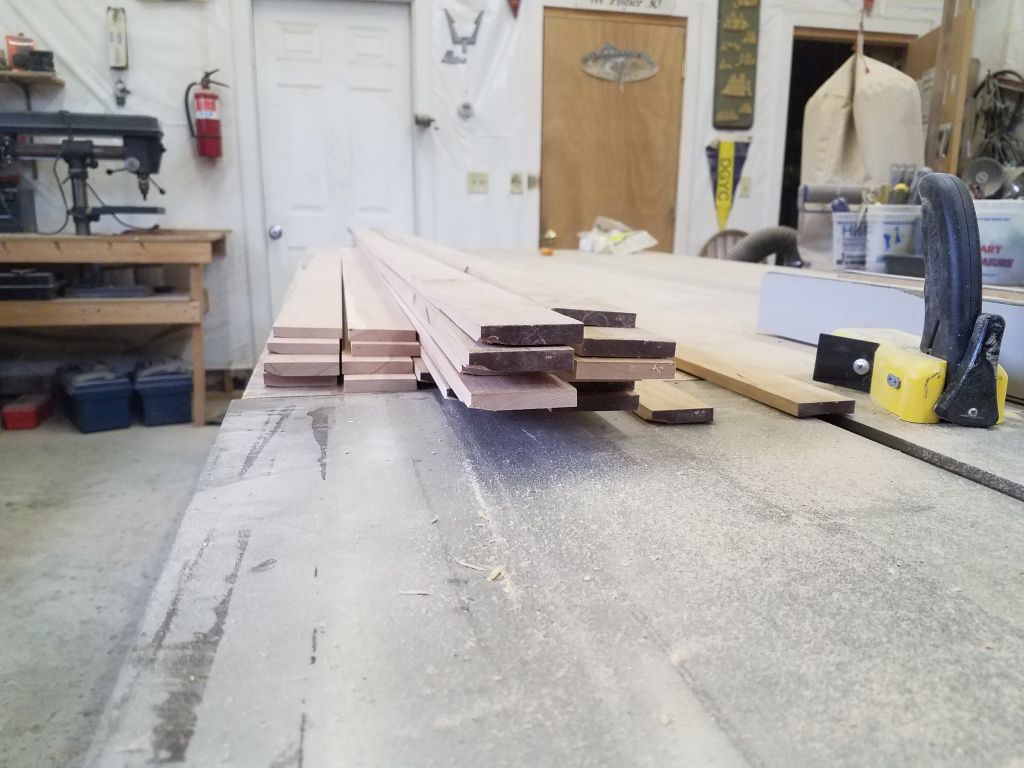
Next, I clamped up the side rails with the plywood back so I could work on the treads.   I selected some boards from which to cut the blanks for the treads, and milled four blanks into slightly over-length and over-width pieces for the task.  The stock itself was a bit thicker than 3/4″ (the thickness of my slots in the side rails), so I planed them all down to the proper dimension to fit snugly.  I used a scrap of the same material to determine the proper length to fit between the rails and in the slots.

Having determined the correct length, I cut all the blanks as needed and fit them in place, clamping up the assembly dry to check the fit and overall appearance of the new ladder.  The treads were still deeper than necessary, which I’d intended so I could  mark and trim them accordingly.  For the moment, I was out of time, but I marked the treads where they extended beyond the sides of the ladder, and would soon trim them and finish up related steps so I could think about assembling the ladder for good.

Total time billed on this job today:  4 hours

0600 Weather observation:  20°, clear.  Forecast for the day:  Increasing clouds, 42°

Scupper 116

Thursday

The various small trim pieces and panel fronts I’d treated with the satin varnish cured well, and to all appearances were complete.

For the remaining trim underway in the boat, I went through the usual processes of sanding, vacuuming, solvent wash, etc. before applying another round of gloss base varnish to all areas.  Unfortunately, this was all I had time for this day.

Total time billed on this job today:  2 hours

0600 Weather observation:  30°, clear,   Forecast for the day:  Sunny and windy, 42°

Scupper 115

Wednesday

I had to divide my time this week, with some unplanned personal obligations requiring my attention, but still very much wanted to keep the varnish work going, so I allotted at least enough time each day to continue the process.  After a morning away, I returned to the shop in the afternoon and, over the course of a few hours, lightly sanded all the ongoing brightwork, then cleaned up as usual and applied another coat of gloss base varnish to all areas, beginning with the ceilings.

Afterwards, I continued with the rest of the interior trim in place.

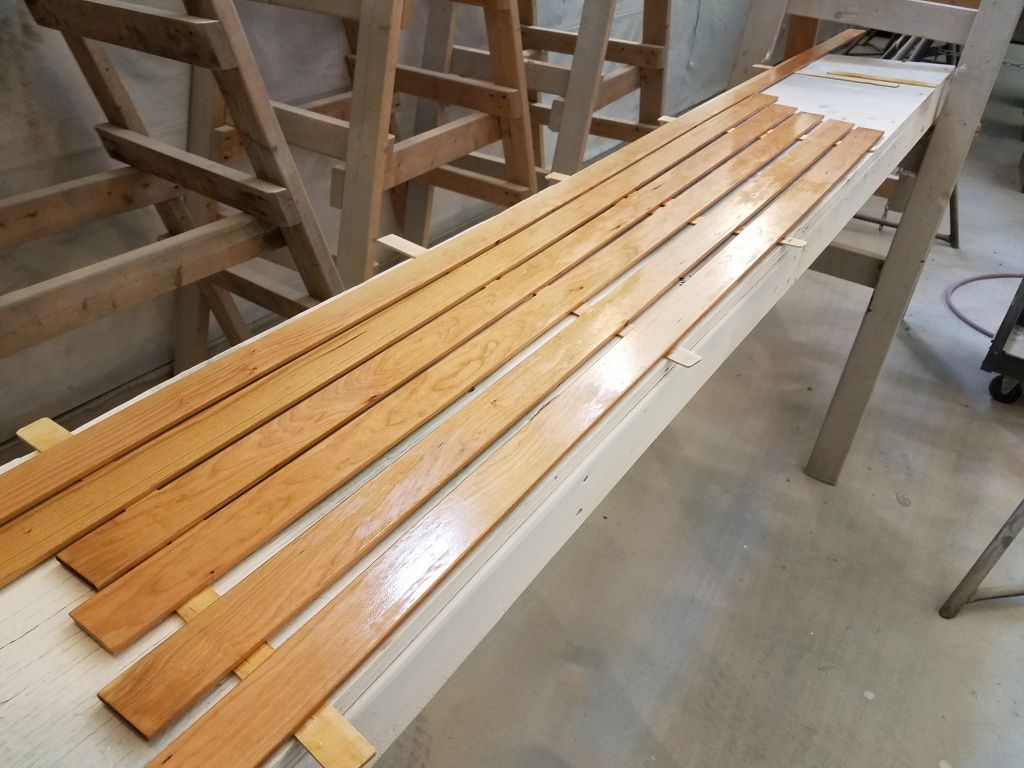
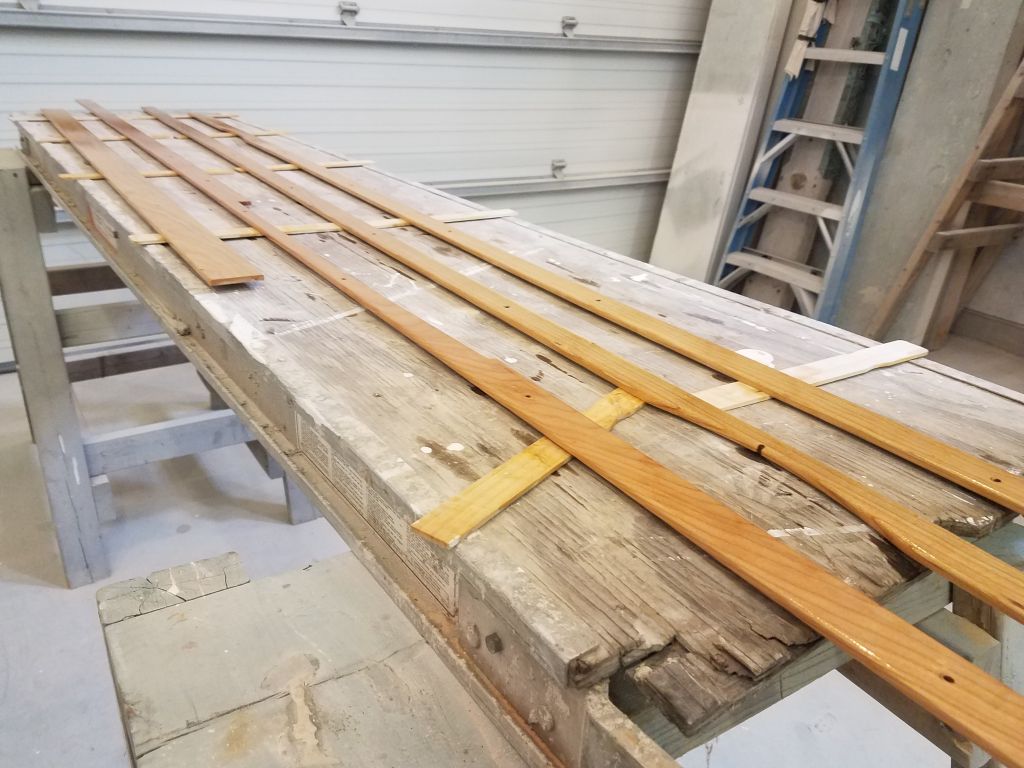
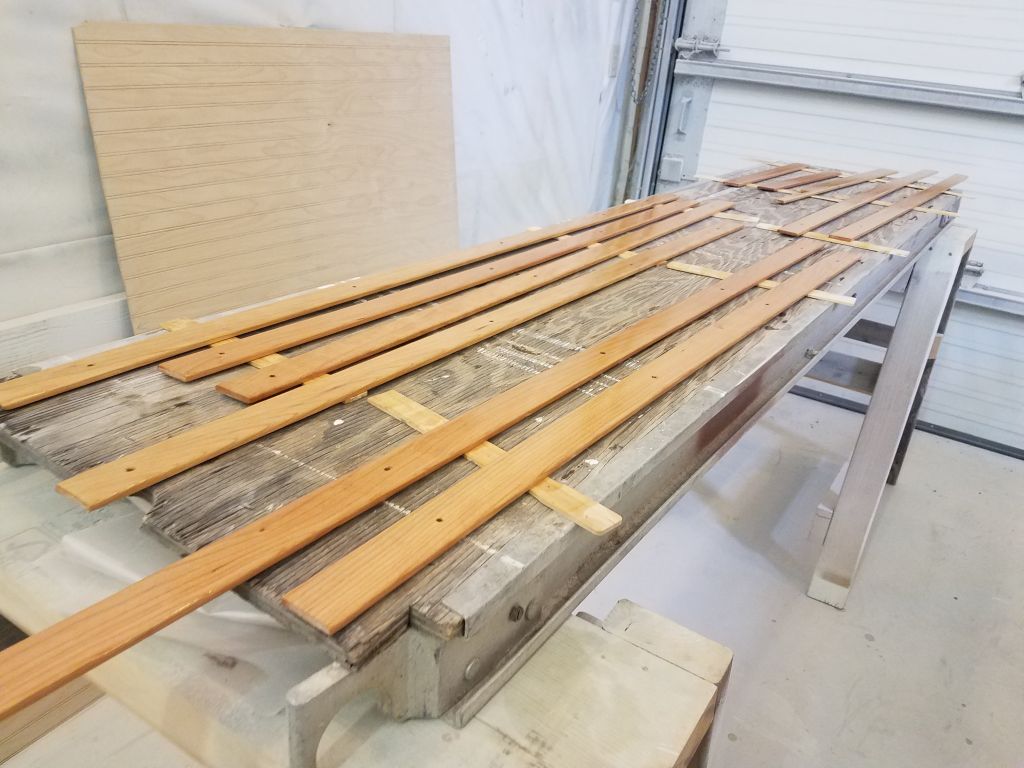
With five coats of gloss varnish on the small trim parts and locker door panels, this time I switched to the rubbed-effect satin varnish for what could be the final coat of finish.  When wet, as in the photo, it shows as glossy, but would dry to a delicate sheen.

Total time billed on this job today:  4 hours

0600 Weather observation:  32°, light rain and snow mix.   Forecast for the day:  Rain and snow, then all rain and showers, then ending and clearing after noon, high around 50°
Scupper 114

Tuesday

Normally, I’d leave interior varnish work till the end of the day, so I could work in and around and wherever, but since I wanted to be sure to get the base coats underway, and with the whole boat prepared for the purpose before I had to leave unexpectedly the day before, I chose to do the varnish work first thing, to ensure its completion, all the more so because I wasn’t sure how long it would take.

I began with the small trim pieces, electrical locker panel fronts, and the forward hatch frame, all of which had been underway for some time and were using more or less full-strength varnish at this point.  I say more or less because I find that in ambient shop temperatures (usually in the mid-50s), it’s beneficial to add a bit of reducer for flow purposes.

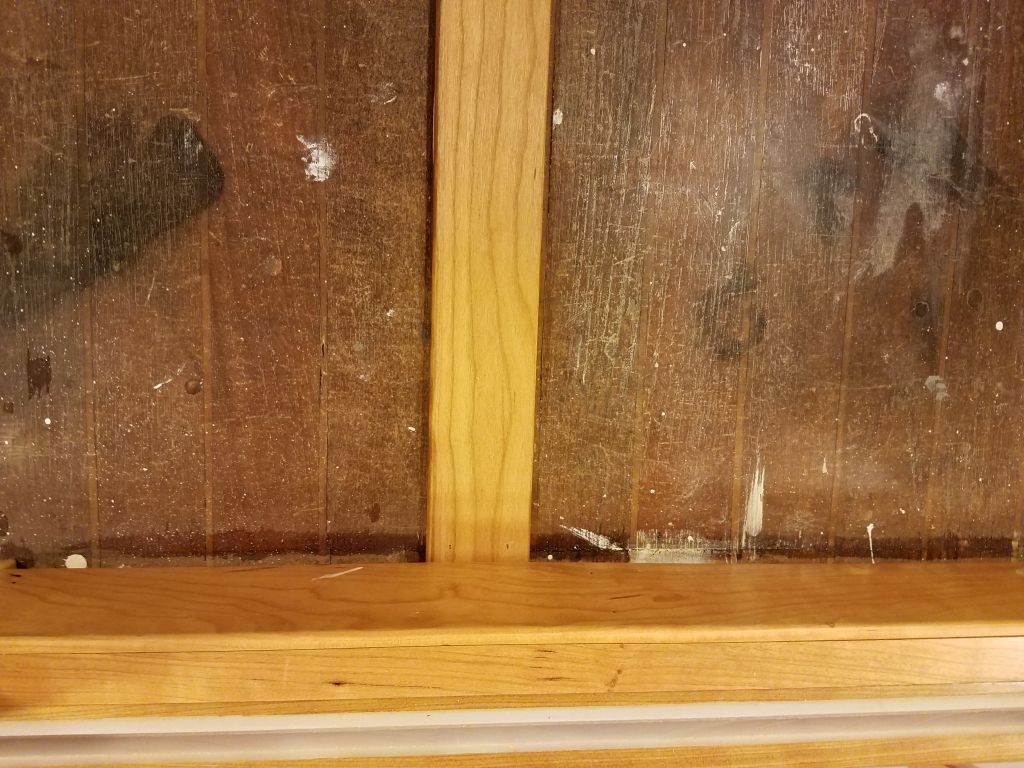
I like to use a wiping tung oil varnish finish for the ceilings, as it’s quick and neat to apply over the large areas with many fasteners, and cures to a satin finish virtually identical to that which I’d ultimately achieve on the other trim with the rubbed-effect satin product I’d finish with.   On the ceilings, I began with the first coat of the wiping varnish on the ceilings before moving on and applying the first coat of varnish to all the installed trim in the boat.  This was really the second coat on the trim, since all of it had already received a sealer coat before installation, but with the new bungs and light sanding, it effectively reverted to coat one for my purposes now.

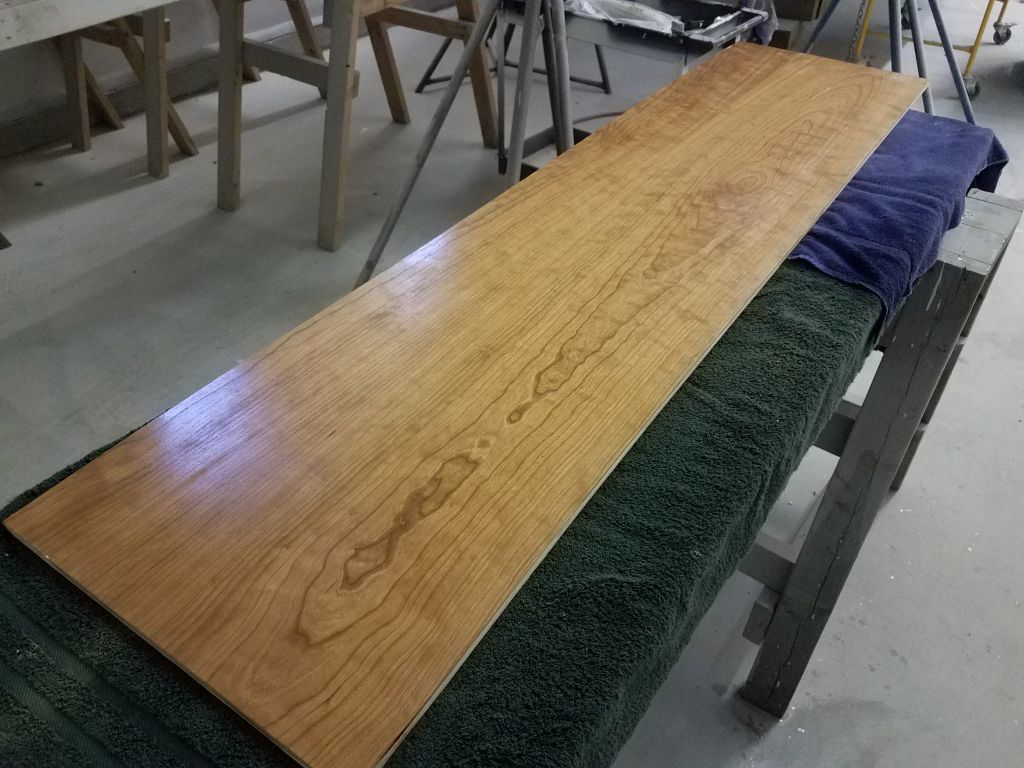
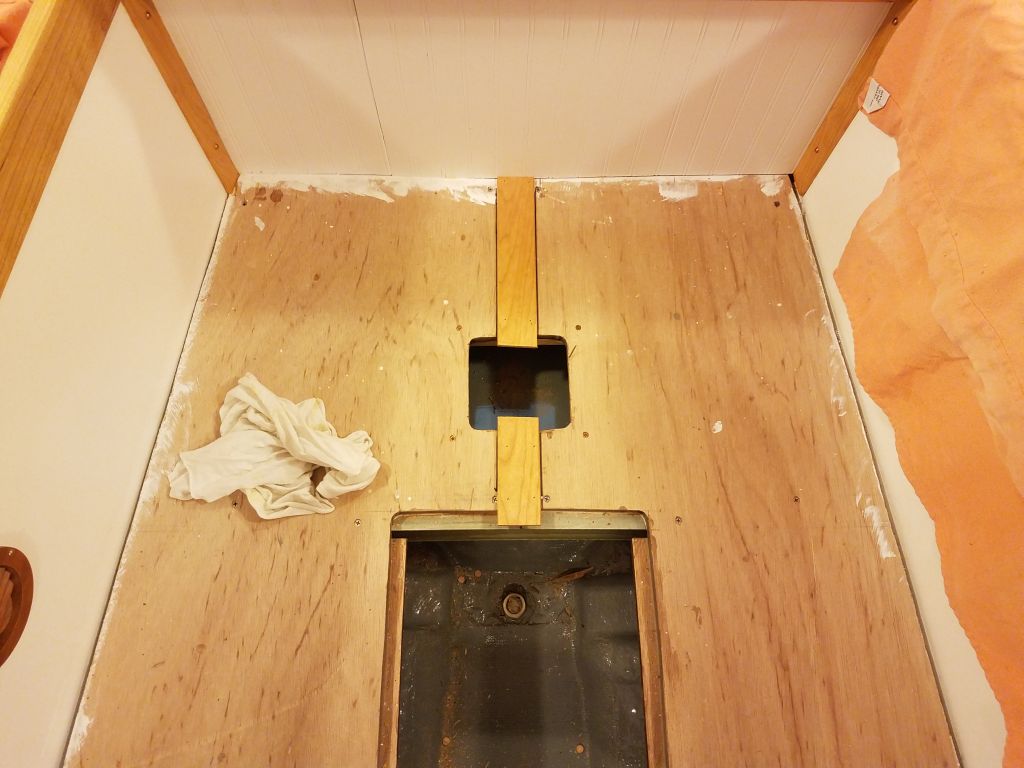
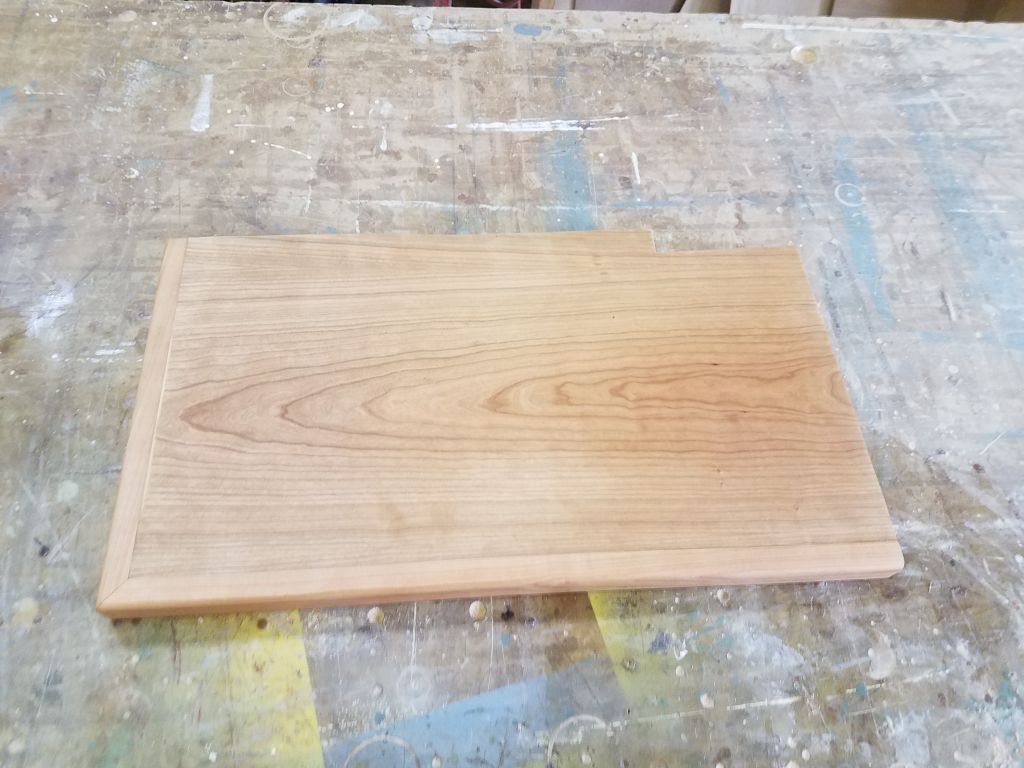
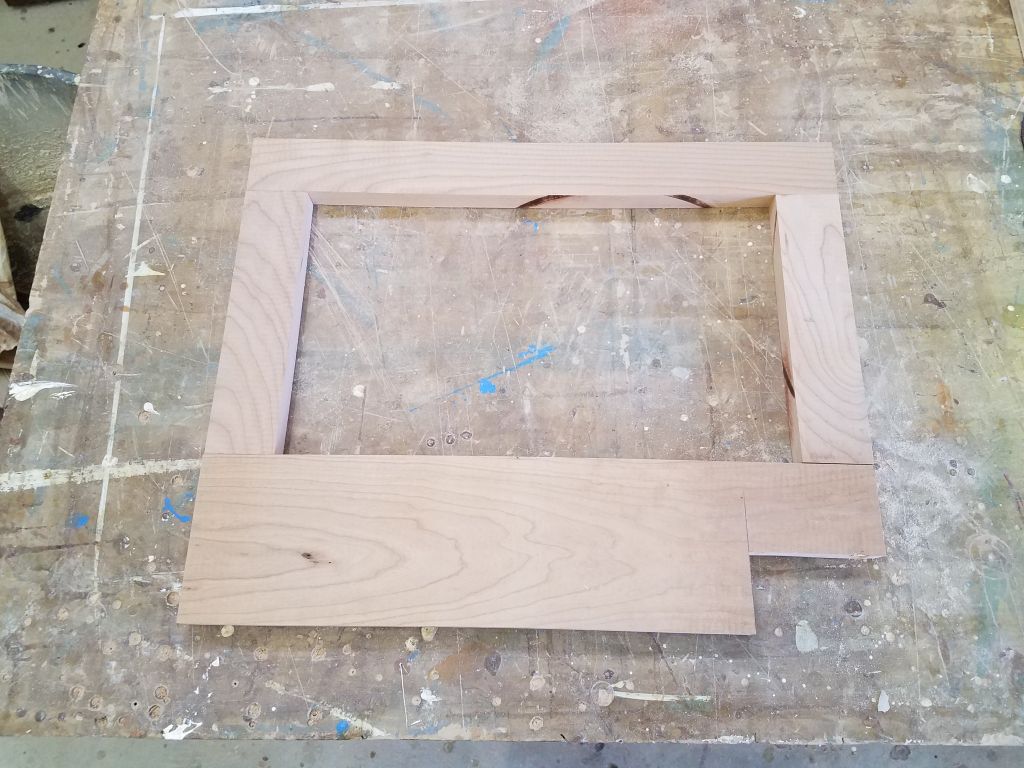
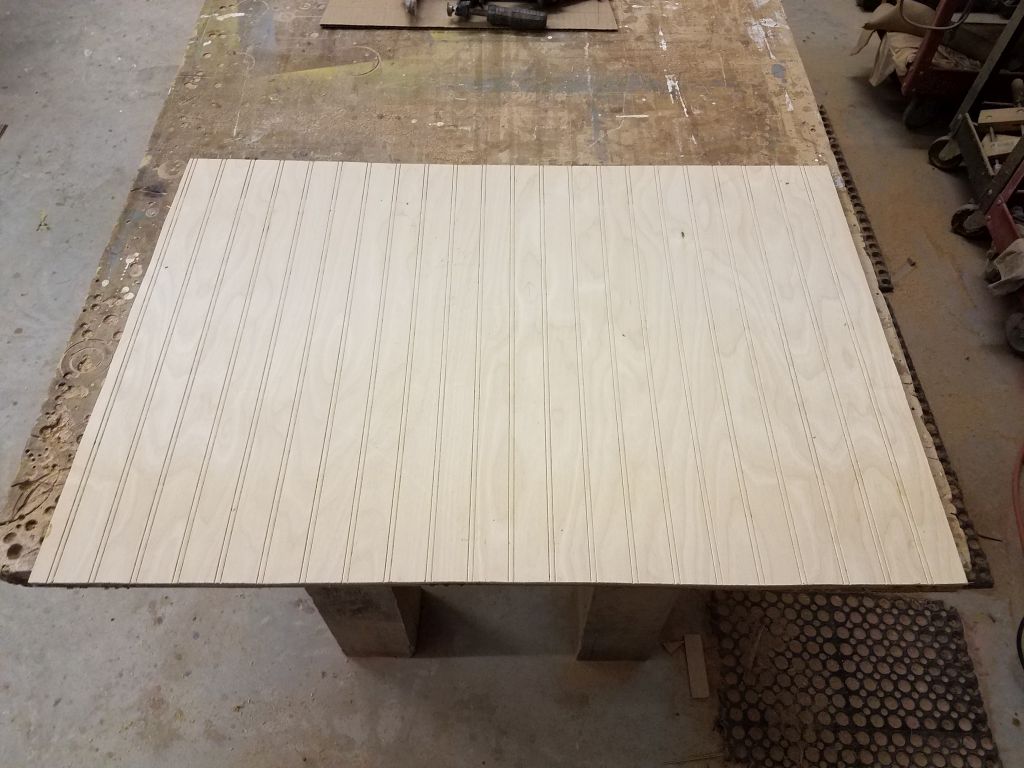
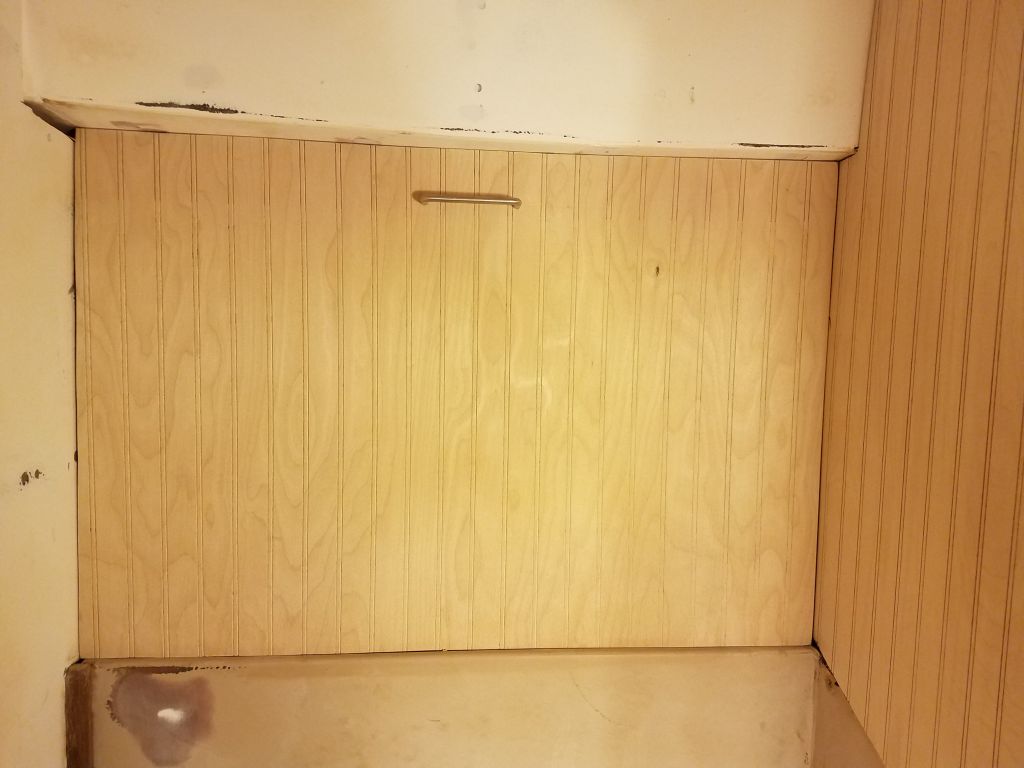
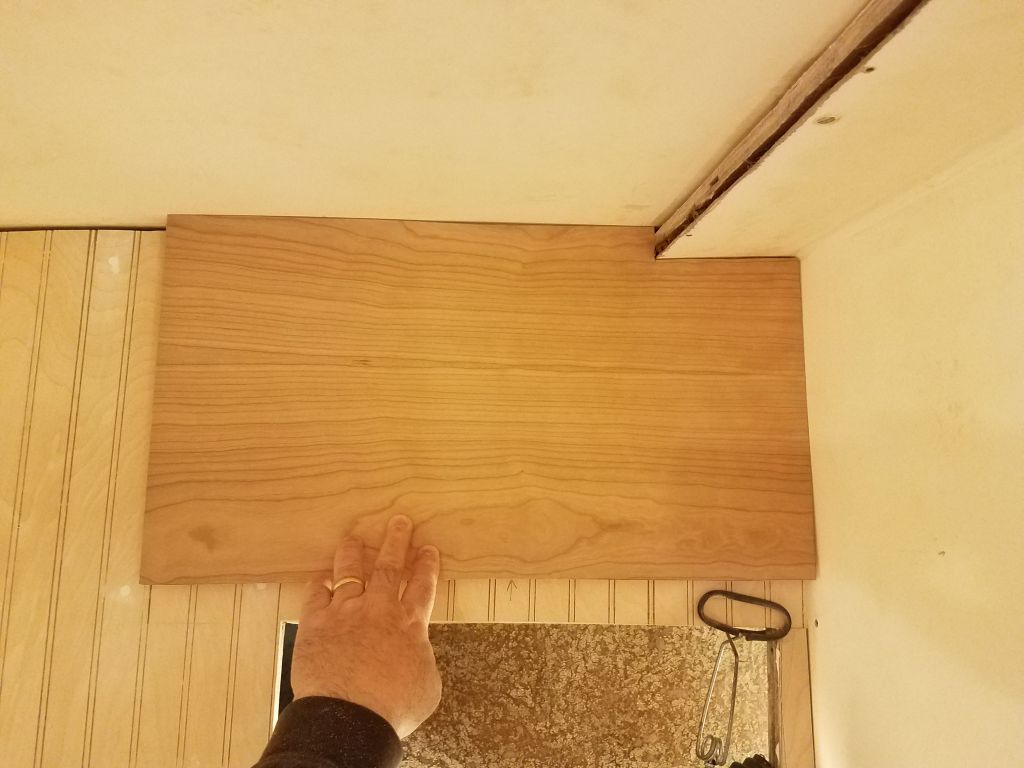
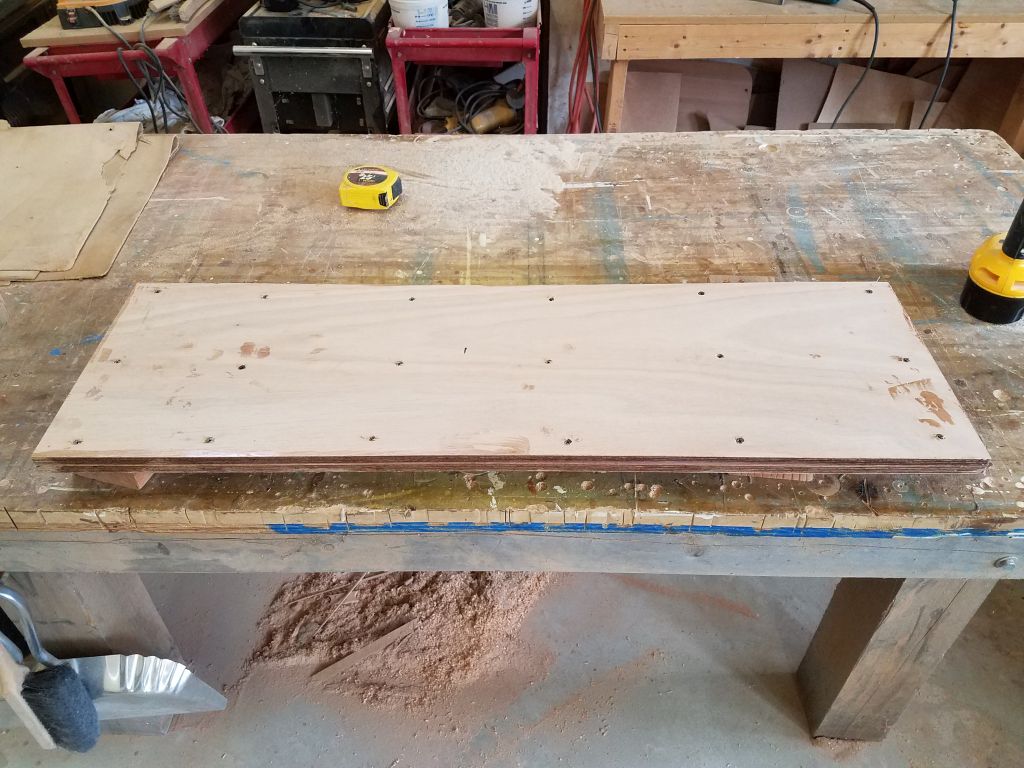
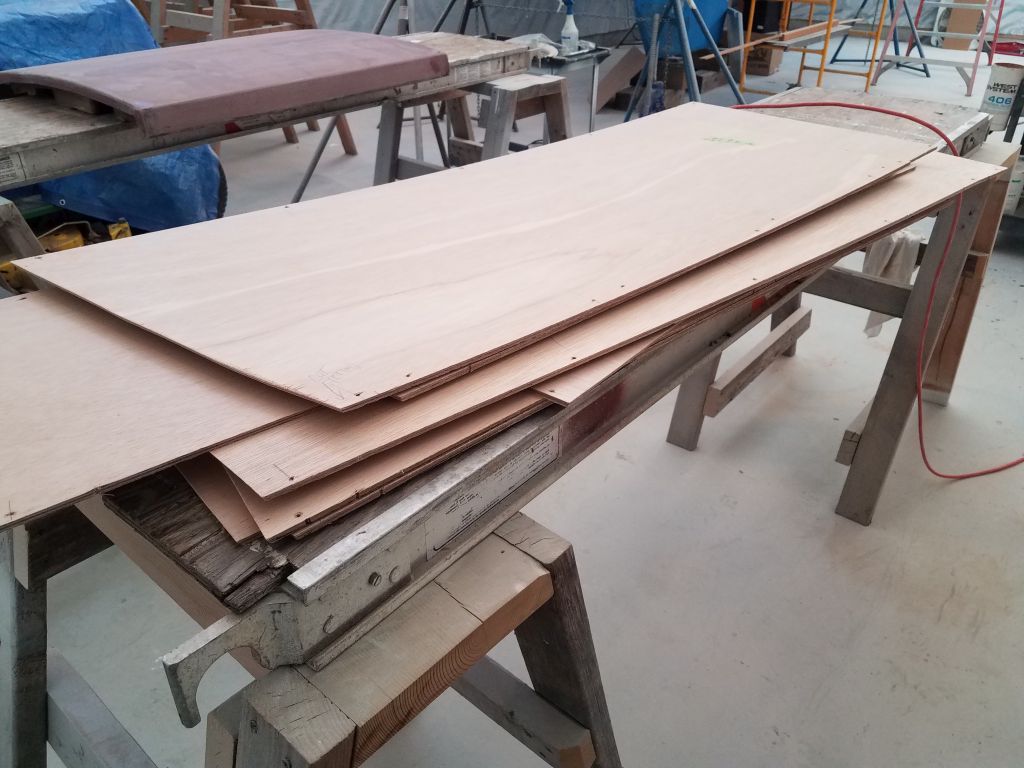
Knowing that the fresh varnish would ban me from the cabin for the rest of the day, before I started early in the morning I test-fit the plywood panel I’d previously cut for the companionway ladder/doorway assembly, as I planned to work on this down in the shop for the remainder of the day.  I’d sized the panel according to the original ladder assembly, but left it intentionally over-long for final trimming, so now, with the panel in place and set up at the proper angle, I made a few reference marks where the panel passed key parts of the boat since at the moment I wasn’t sure how the original ladder had worked (later I reviewed the photos of the original interior to help work this out).

The original ladder assembly had extended up even with the threshold of the companionway, which was one of the reference points I’d marked on my new panel, so with this and the original ladder as  guides, I eventually chose to trim the top of the panel straight and square about 3/4″ lower than that, leaving room to add solid trim at the top that would incorporate the ladder angle and cover the edge grain of the plywood.

During earlier discussions, the owner had requested a few small, but significant, changes to the ladder, including increasing the angle if possible, as well as providing back-angled treads for increased security.  Because the angle of the basic assembly was required to match that of the adjacent structures in the boat, which, like the original ladder, were sloped at 15°, the only way to practically change the ladder’s final angle was to add in the angle on the side rails of the ladder itself, increasing its width towards the bottom.  We were shooting for an increase to 20°, which had the effect of actually lessening the steepness of the ladder and would make the ascent and especially descent easier going forward.  This was a reasonable compromise between the fixed requirements of the existing structures and the desired ease of ingress and egress, while avoiding the ladder taking up too much space in the process.

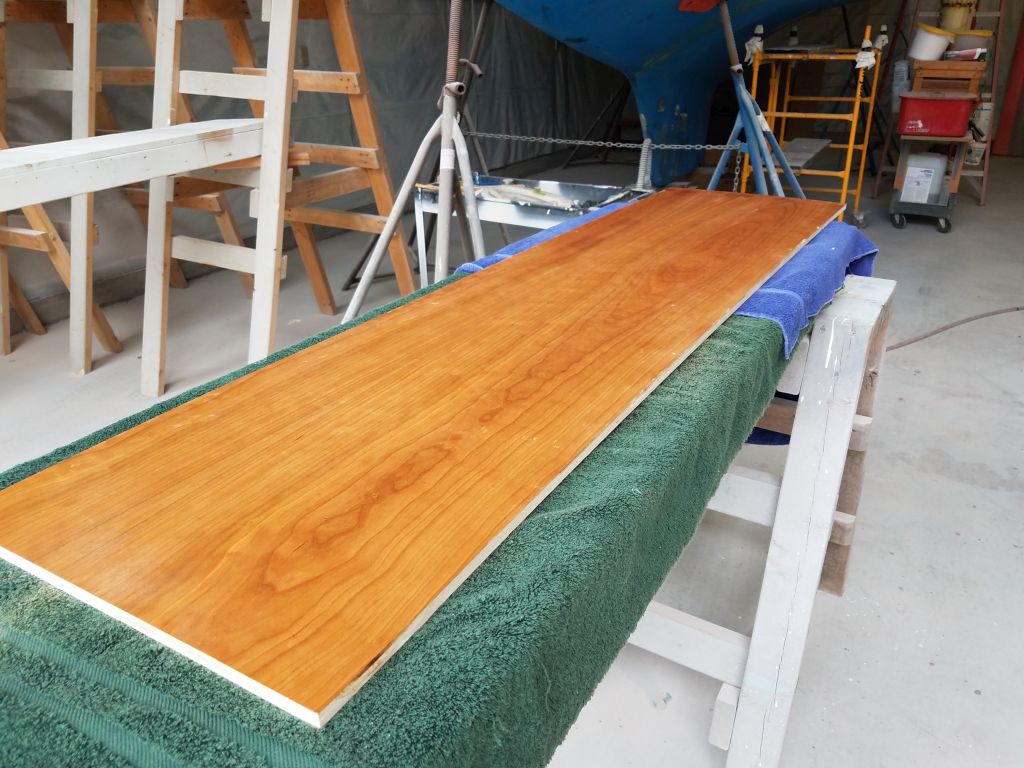
To this end, I spent some time laying out the new side rails on some pattern plywood, working within the known constraints of the cherry lumber I planned to use (much earlier, I’d set aside two wide, clear boards for this purpose) and with the desired improvements in the angle.  This ultimately increased the width of the rails (and the depth of the ladder) by 2″ at the bottom, while keeping the original dimension at the top.

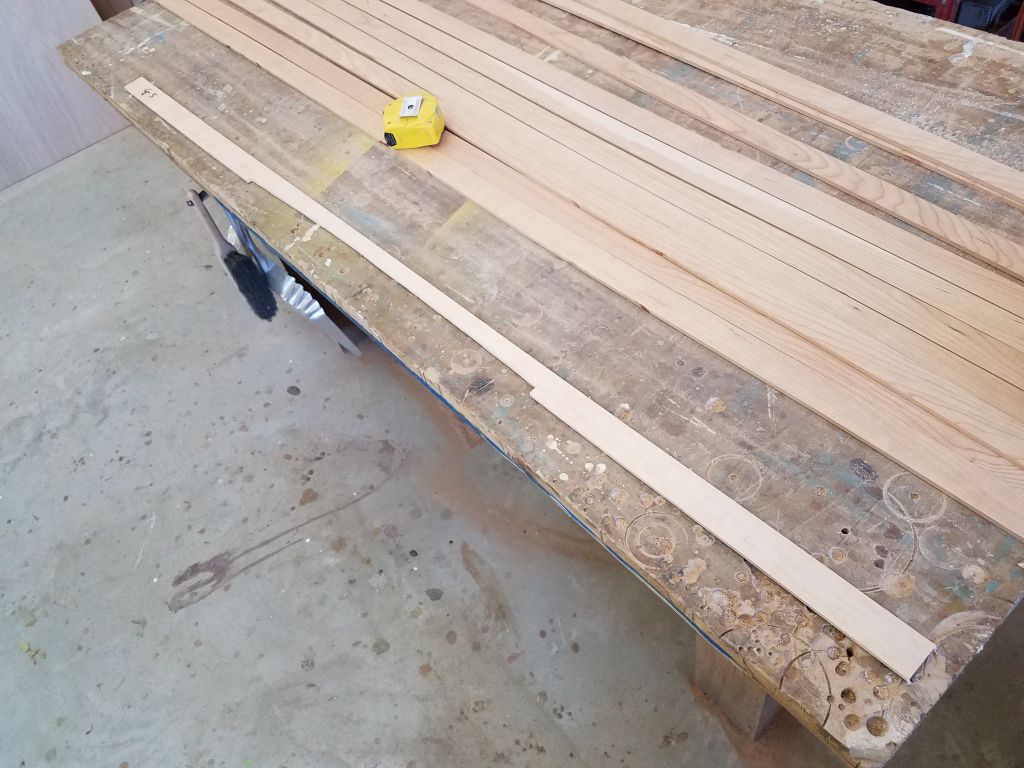
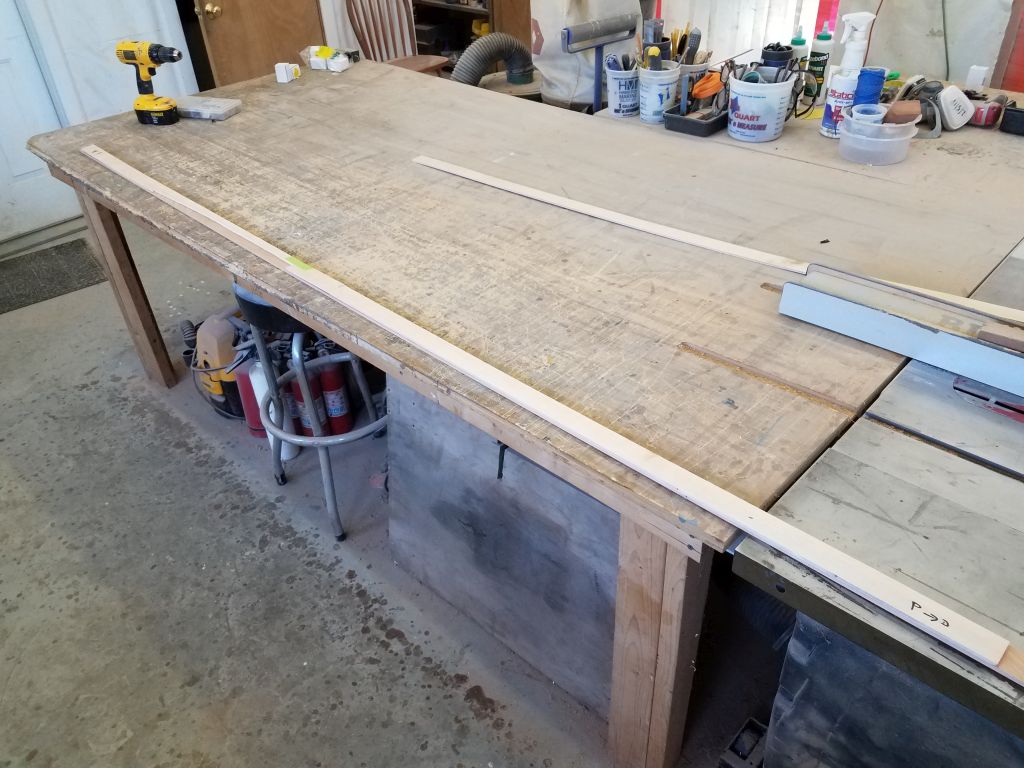
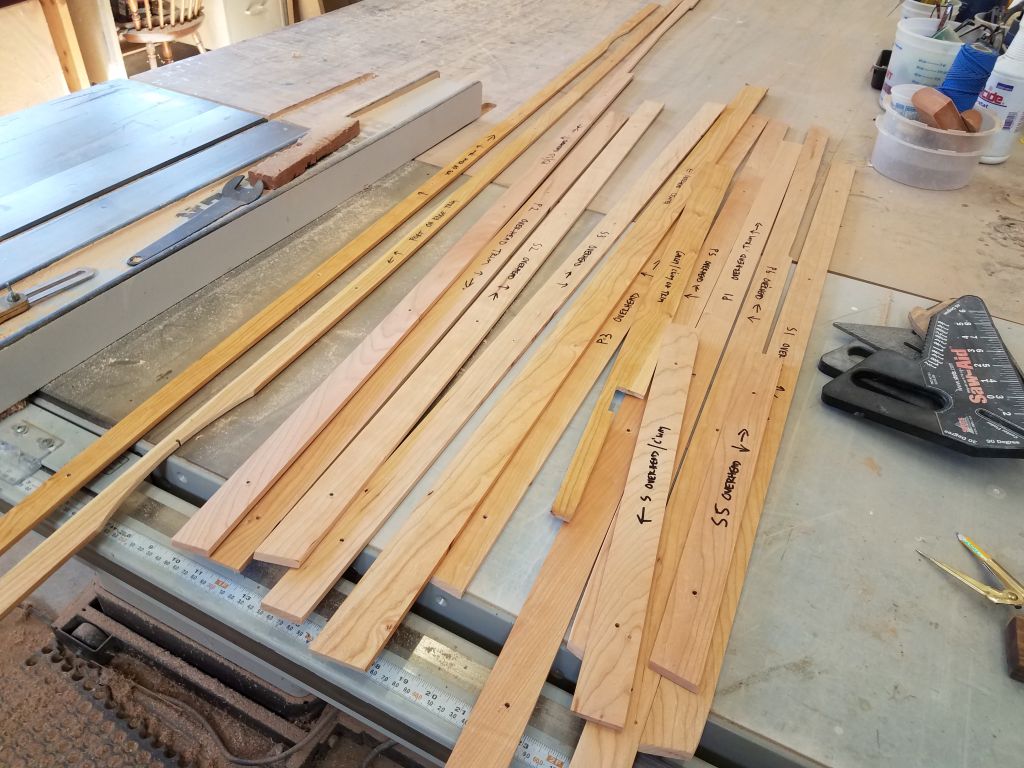
With a pattern in hand, I could trim the two side boards to the proper (but still over-length) length and then cut the new angled outer edge with a straightedge and a circular saw.  I cut the angle on the bottom sides of the boards, but left the tops untrimmed for now.

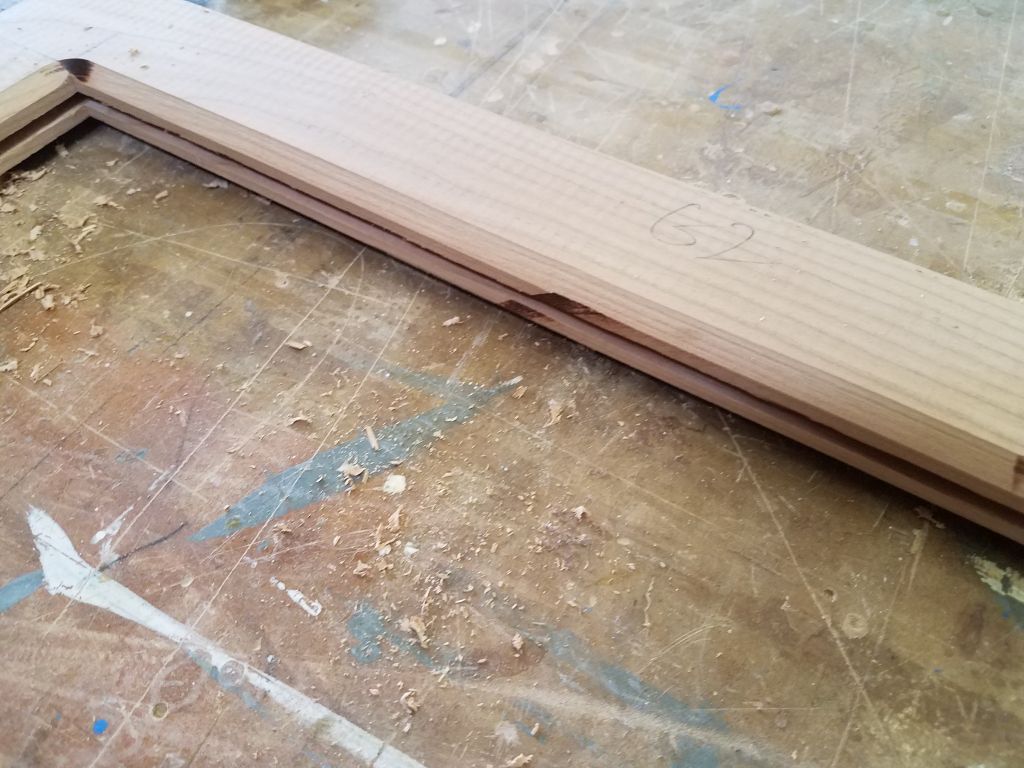
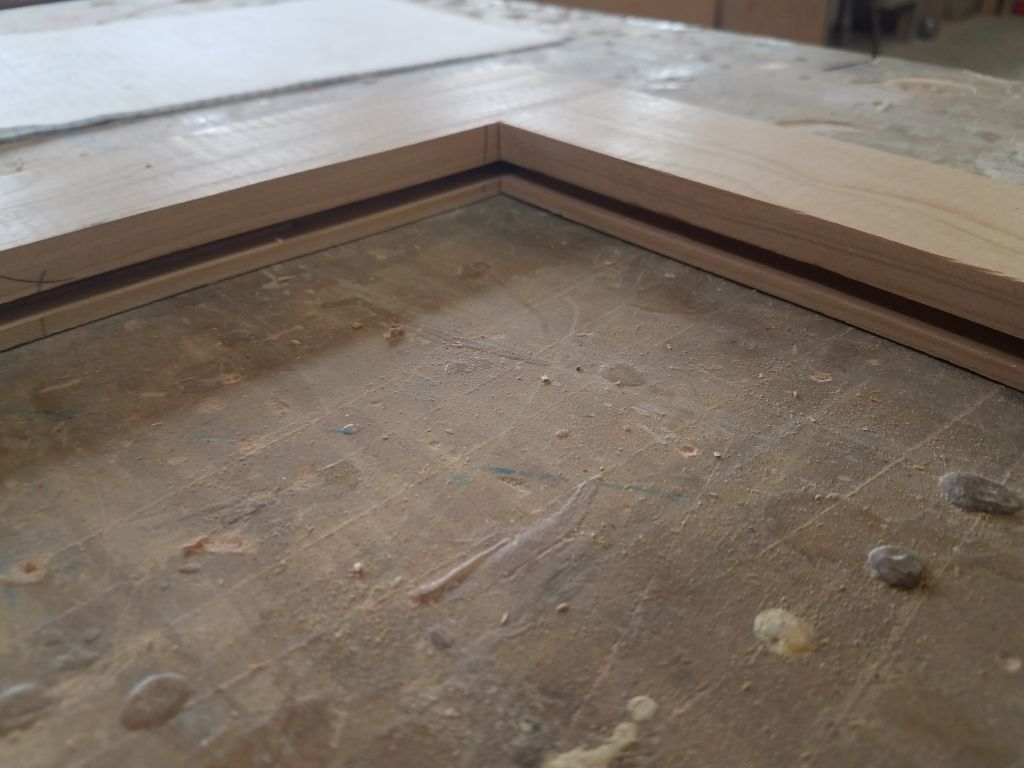
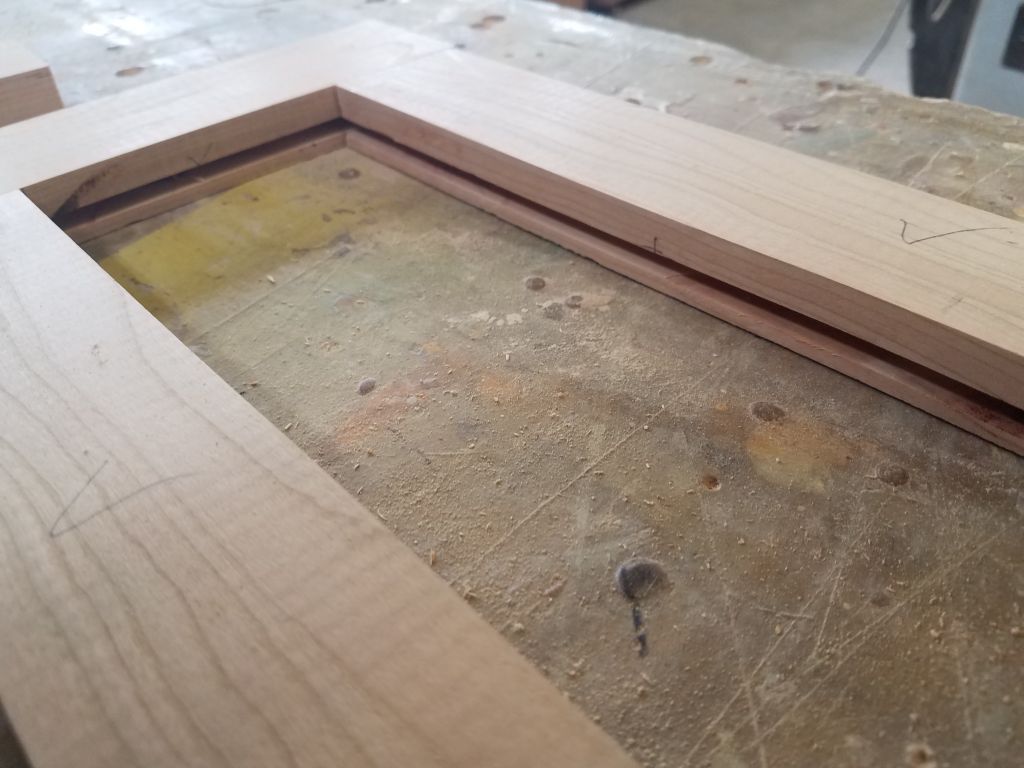
To cover the edges of the plywood back structure, and add strength to the whole assembly in its final construction, I laid out and cut rabbets on the back edges of both side rails, which would allow the 1/2″ plywood to sit flush within.  I trimmed the plywood as needed to keep the ladder’s overall width where it needed to be according to the original ladder.

Now I clamped the new side rails against the original ladder, and, taking some alignment and measurements from the old ladder, transferred the treads’ positions to the new rails.  I also transferred the position of the handle on the outboard side of the ladder, though later I moved the position closer to the edge of the new rail to match the offset of the original, as the new rail was an inch or so taller here now thanks to the improved angle.

With the treads’ basic positions now marked, I wanted to incorporate a new angle to the treads, so that they angled down slightly at their back sides; the old treads had been essentially level, which didn’t lend itself to footing as secure as it might be with an angle to help the foot have somewhere to go.  “Level”, in this case, meant parallel to the bottom of the ladder with its 15° angle, which I marked in a test portion of the board along with a few other options, including one where the new treads would actually be square to the back (straight) side of the ladder.  With the test ladder rail propped up against the bench at its final angle, I checked the layout lines to see how they looked in proper perspective, trying to choose which angle worked best for the new treads.  At the end of the day (figuratively and literally), I was leaning strongly towards the layout that was square to the backs of the rails, and went as far as to lay out the top edges of each tread location at this angle, but since time was out for the day it was a good opportunity to let the idea settle and mull the pros and cons before committing to the cuts required to support the treads in the side rails.
Total time billed on this job today:  8 hours

0600 Weather observation:  20°, clear. Forecast for the day:  Sunny, 47°
Scupper 113

Monday

My first task of the day was to lightly sand and varnish once more the small trim pieces I’d been working on.

My immediate focus was to prepare the new trim in the boat for its own varnish coats, so I spent most of the morning on that task, including removing excess bungs from the newest trim, lightly sanding all the bungs and trim, and masking off everything as needed.  I also permanently installed the fiddle on the now-complete plywood v-berth filler piece so I could complete the varnish on that trim as well.  With one coat possible per day, I hoped to finish up the varnish work during the course of the week and weekend.

I’d planned to apply the varnish right after lunch, wanting to ensure its completion but unsure how long it would take, but was called away unexpectedly and unable to return in time to complete the work I’d planned.

Total time billed on this job today:  4.5 hours

0600 Weather observation:  25°, clear.   Forecast for the day:  Sunny and windy, 37°

Scupper 112

Friday

After a light sanding and solvent-wash, I applied another coat of varnish to the various loose trim pieces and the forward hatch area.

The plywood v-berth filler base was nearly complete, and now I applied its final coat of semi-gloss white paint.

With these smaller tasks out of the way, I worked on completing the teak countertop, cutting and installing the various pieces remaining to fill in the wider section of the countertop.  I relieved the back side of the short pieces along the outer edge of the countertop to fit over the slightly-protruding original molding as needed, and when I’d reached the last plank–for which I’d set aside a wide plank for the purpose–I started with a plywood template to figure out the various cuts required at the outboard end, then transferred the shape to the final plank for an easy fitting.

The ceiling at the edge of the countertop was slightly angled, and thus left a wider space at the forward end than at the after end.  With the countertop now in place, I made some measurements to determine how much additional material was required, then removed the lower ceiling board and, down in the shop, edge-glued another ceiling plank to the lower edge, leaving this assembly in the clamps for a while while I worked on other things.

While that was gluing up, I worked on the galley fiddles.  All three pieces of the fiddle had to coordinate exactly with the others for a proper fit, so  there was a lot of test-cutting and careful sneaking up on the final lengths and angle cuts, but once there, all three pieces were complete at once.

By now, the ceiling glue-up had cured sufficiently for me to mark the new lower  piece according to my measurements and cut out the new wedge.  Afterwards, I reinstalled the slightly-expanded piece to complete the ceiling at the countertop.

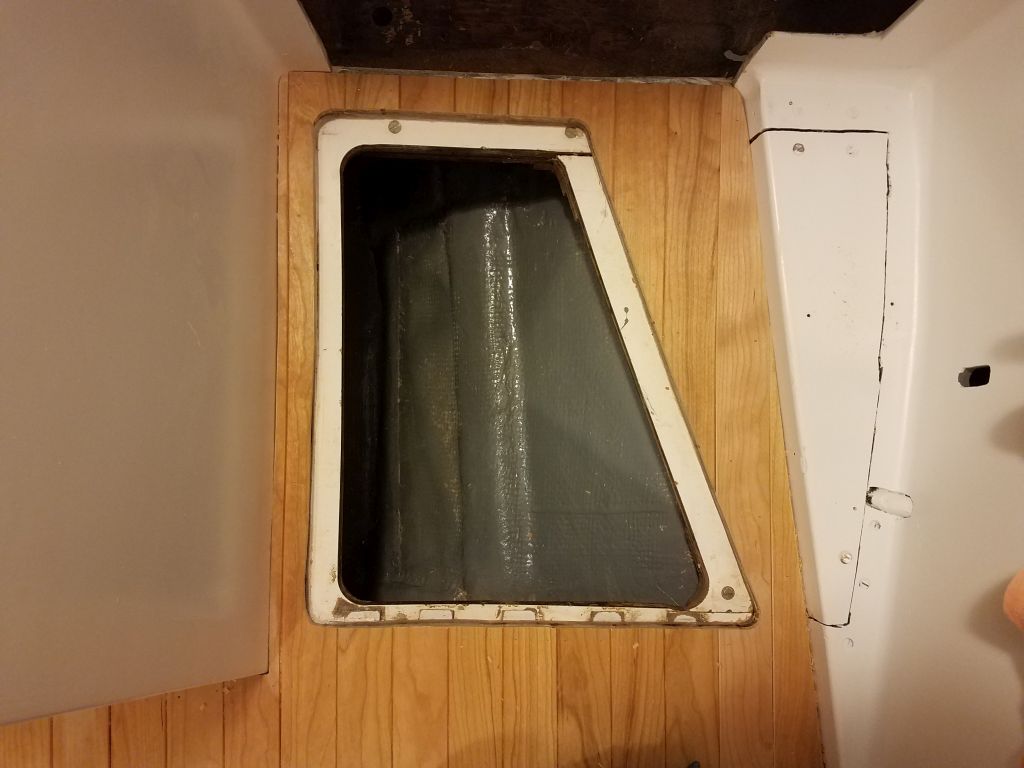
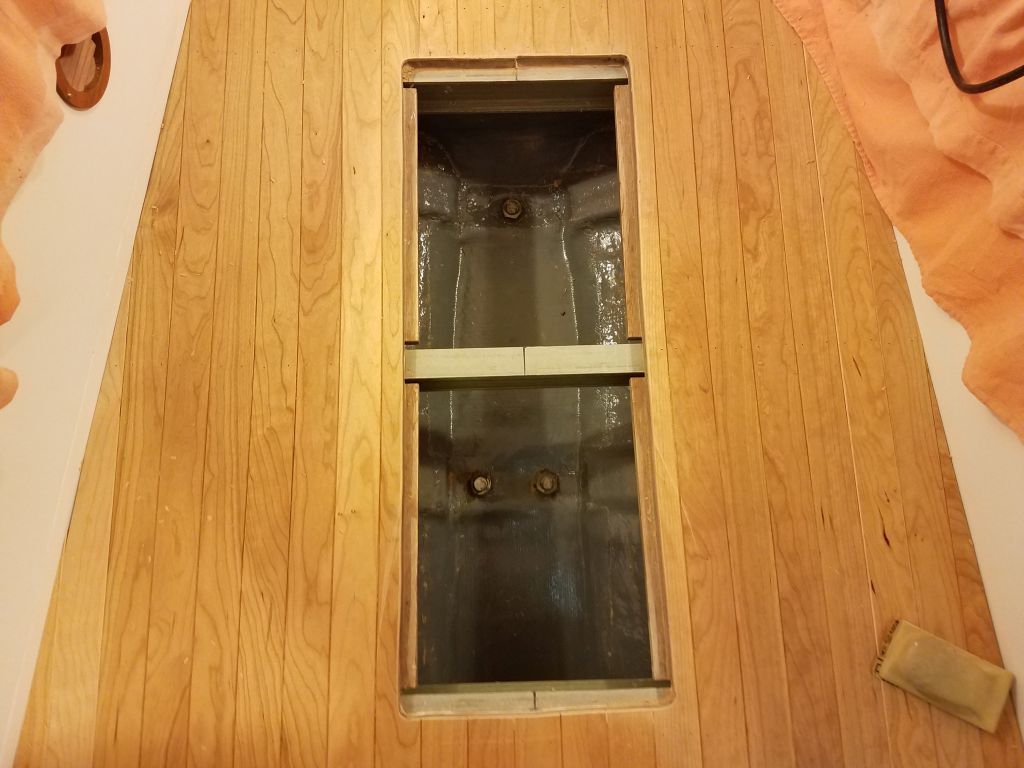
The day’s UPS delivery brought me a router bit I needed to trim the various openings in the countertop.  With minimal clearance within the openings, thanks to the support cleats and other factors, normal flush-trim bits, which incorporate a bearing at their lower end, wouldn’t fit here, but I found a small pilot flush-trim bit that used just a solid bearing surface beneath the cutting edge, which required less clearance and would fit in these openings.  I first had to grind off a pointed cutting edge below the bearing, which was designed to allow the bit to plunge-cut through a solid surface, and this gave me the short clearance I required in order to use a small router to carefully remove the excess countertop from within all four openings, with the router bit following the shapes of the cutouts in the plywood substrate.

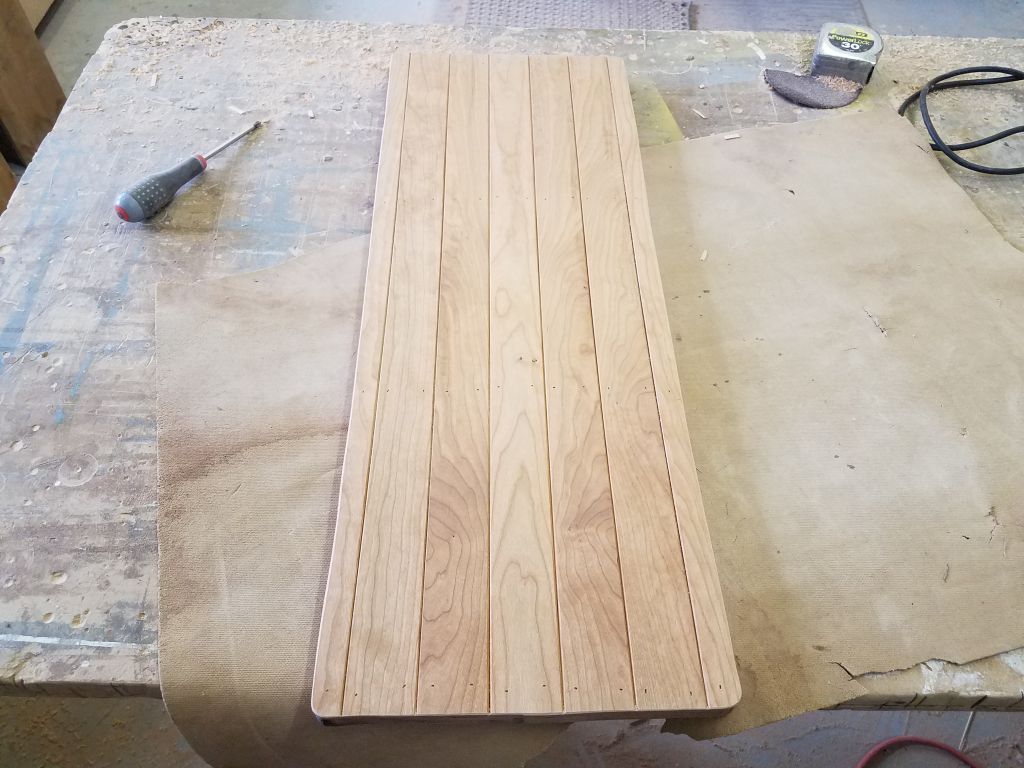
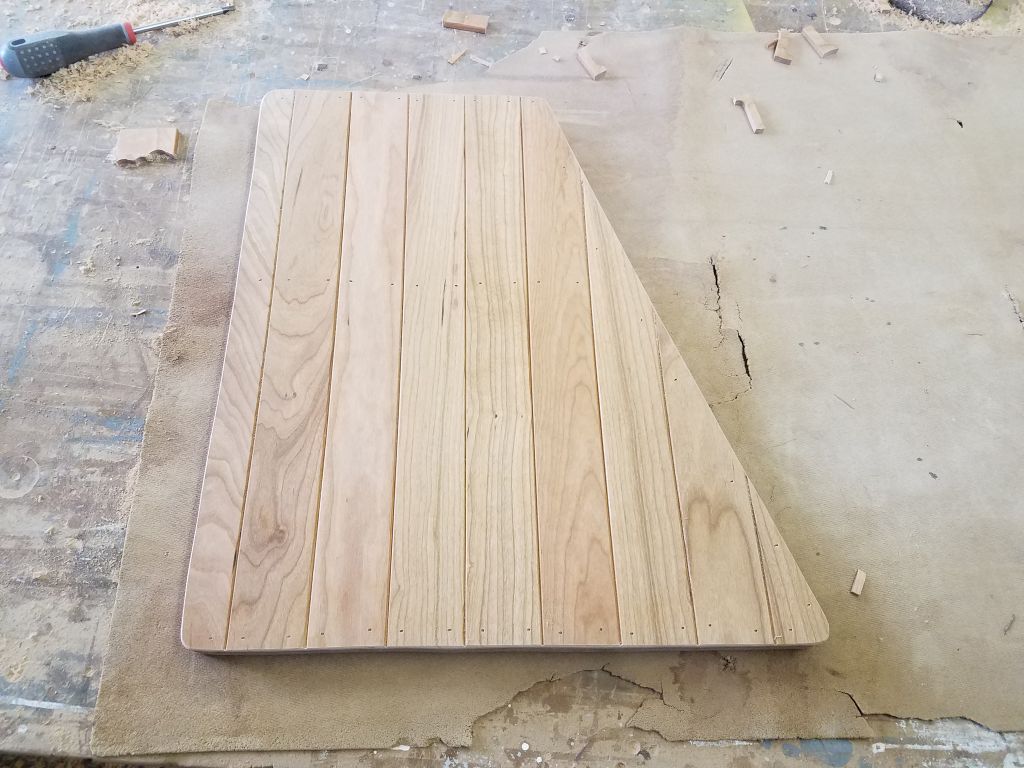
Earlier (no photos), I’d glued up the planks I’d reserved on the two locker lids for the storage area, and now I could trim the excess overlap there as well to complete the lids and the basic countertop construction.  Later, I’d add pulls to lift these hatches for access.

The final surface for the countertop would be a self-leveling bar-top clear epoxy coating, but for these to flow properly the temperature was required to be at least 70°.  It was fairly impractical to raise the shop to this temperature, so instead I planned to wait till later in the season when the ambient temperature was more appropriate.  To protect the countertop surface in the meantime, I masked and covered it completely with heavy paper, and I’d probably add a layer of cardboard for additional protection while construction in the rest of the boat continued.

Total time billed on this job today:  7.5 hours

0600 Weather observation:  38°, light rain. Forecast for the day:  Showers and light rain, 49°

Scupper 111

Thursday

Next, trim-wise, was the galley, which required edge trim along the overhead and liners above and beside the space.  As elsewhere, I cut 1-1/4″ wide trim to fit as needed and secured it with screws.  At the aft countertop corner, where a piece of vertical trim spanned between the overhead and the countertop, I used a scrap of the countertop material to hold the trim up an appropriate level above the substrate so the countertop would fit beneath.

This was the last of the removable trim in the main cabin, so now that I’d just constructed and installed all the trim, I removed it all so I could prepare and varnish all the pieces.  Down on the bench, I lightly sanded each piece as needed, removing layout marks and rounding the outer, exposed edge for better appearance.  Then, along with the trims from the forward cabin, I applied gloss varnish to all pieces, as well as the plywood electrical locker panels.  I’d continue a coat of varnish per day  till I had sufficient base coverage, and would finish up with satin varnish.

I planned soon to start the varnishing on all the fixed trim in the boat, but I went ahead and masked off and varnished the forward hatch trim now, since this tied in with the bulkhead trim and I wanted the adjacent pieces to be completed all at the same time.

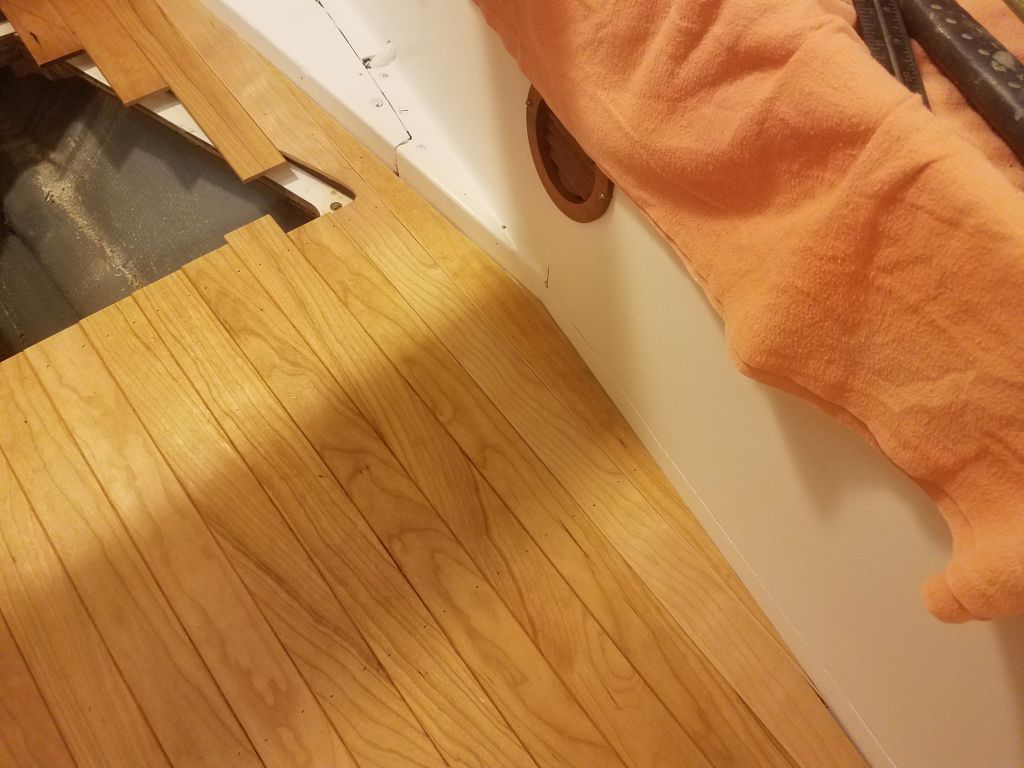
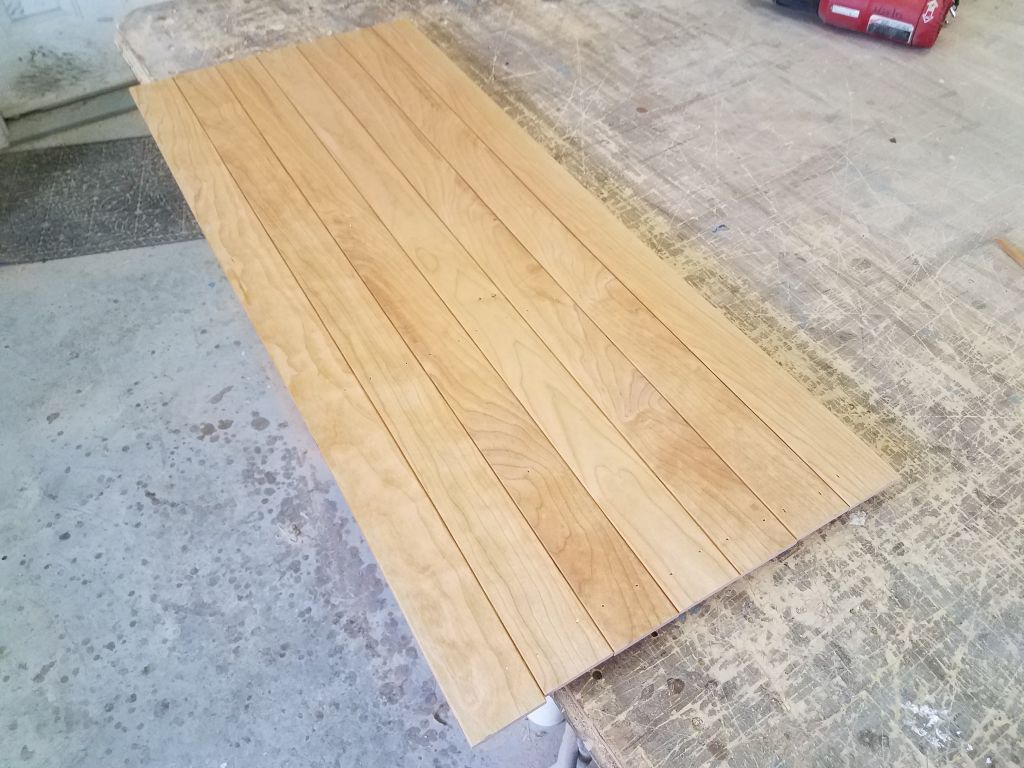
For the galley countertop, the owner requested teak covered with a deep-glossy bar-top epoxy finish, and earlier I’d milled some of the boat’s original interior trim into a series of 1/4″ teak planks for this task.  Now it was time to start the installation, and I began by vacuuming and solvent-washing the plywood substrate, and laying out all the teak boards on my bench so I could choose boards easily as I went.  The planks were random widths from a little over an inch wide to about 3-1/2″ wide, all based on the sizing of their original source boards.

I wanted the planks to end up straight and parallel with the outer edge of the galley once I got there, so to begin I started with a plywood mockup of the 3-1/2″ wide board I planned to use for the first plank against the bulkhead.  With this template cut to length and set in place near the aft bulkhead, I measured from the countertop edge in several places and aligned the template accordingly, making marks on the countertop as needed.  Though it’s not shown here, I also measured from the shorter leg of the countertop to properly align the first plank–against which all others would register–as close to parallel to both parts of the edge as possible.  Then, with the template held firmly in place, I scribed the template to the shape of the bulkhead, which was far from parallel to the forward end of the galley.

I used the template to mark the teak plank and cut out the shape, then, after a dry fit, secured the plank to the substrate with waterproof glue and brads.

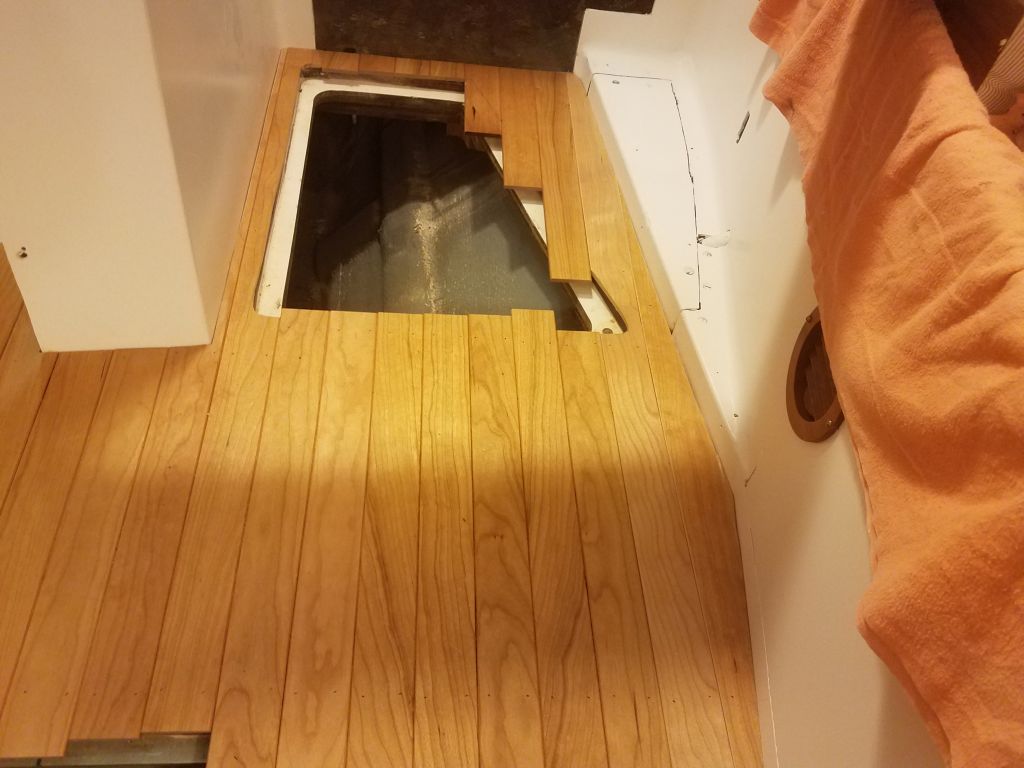
I cut down my template strip to straighten the edge I’d scribed, and now I used it as a marking device to determine the lengths of the remaining planks, most of which from now on would not be continuous full-length with the numerous openings to work around.  The second plank slightly overlapped the after storage locker in the countertop, and I made a layout mark to show where to cut the plank to allow some extra into the locker opening for later trimming to the final shape.  Then, the third piece of teak–and others following–required cuts for the locker opening, and in these instances I used a single board, cutting each length as required in order so the grain patterns would remain aligned and consistent.

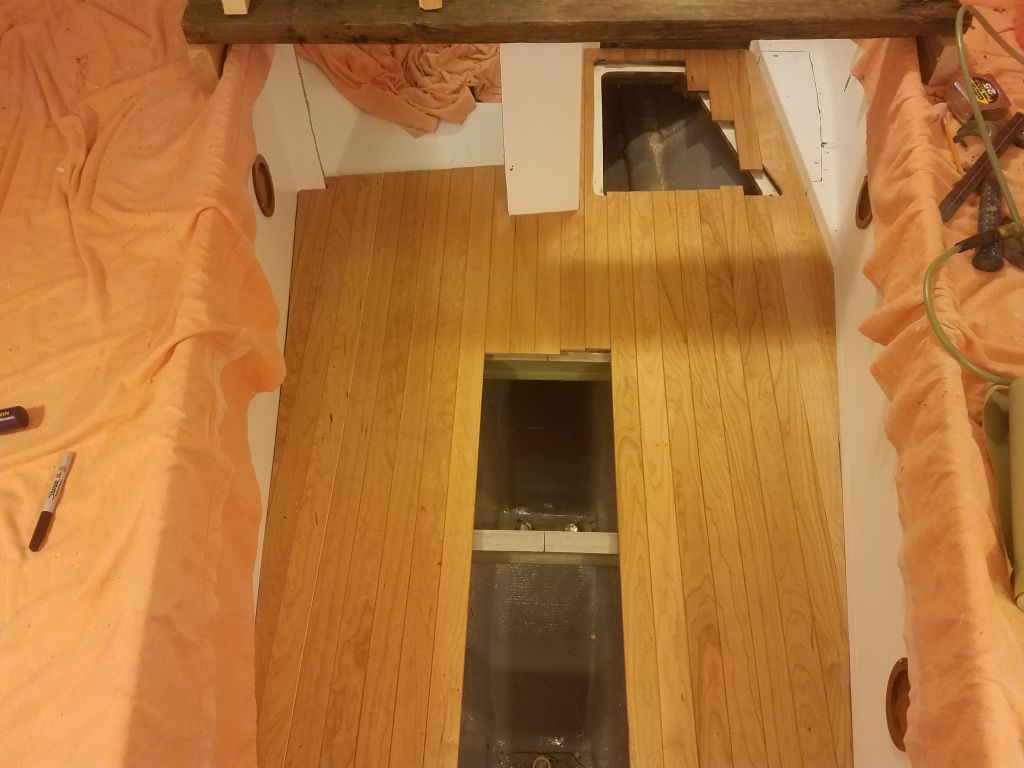
In this way, I worked past the first locker opening, measuring and cutting the planks as needed and choosing the board widths randomly.  In each case, I secured the planks with waterproof glue and brads, leaving overhangs at the various openings for later trimming.  The outboard ends of the planks slipped beneath the ceiling nicely.

From here, I had three openings to work across for each plank:  the stove, sink and the forward storage locker, so the pieces required were short, but I continued using a single board for each strip and setting aside the cut pieces for the locker doors, which I’d set up and glue a little later.  By the end of the afternoon, I’d reached the final plank on the short (stove) side of the countertop, which seemed a good place to stop for the day, as it was already late and there wasn’t time to complete the entire countertop.

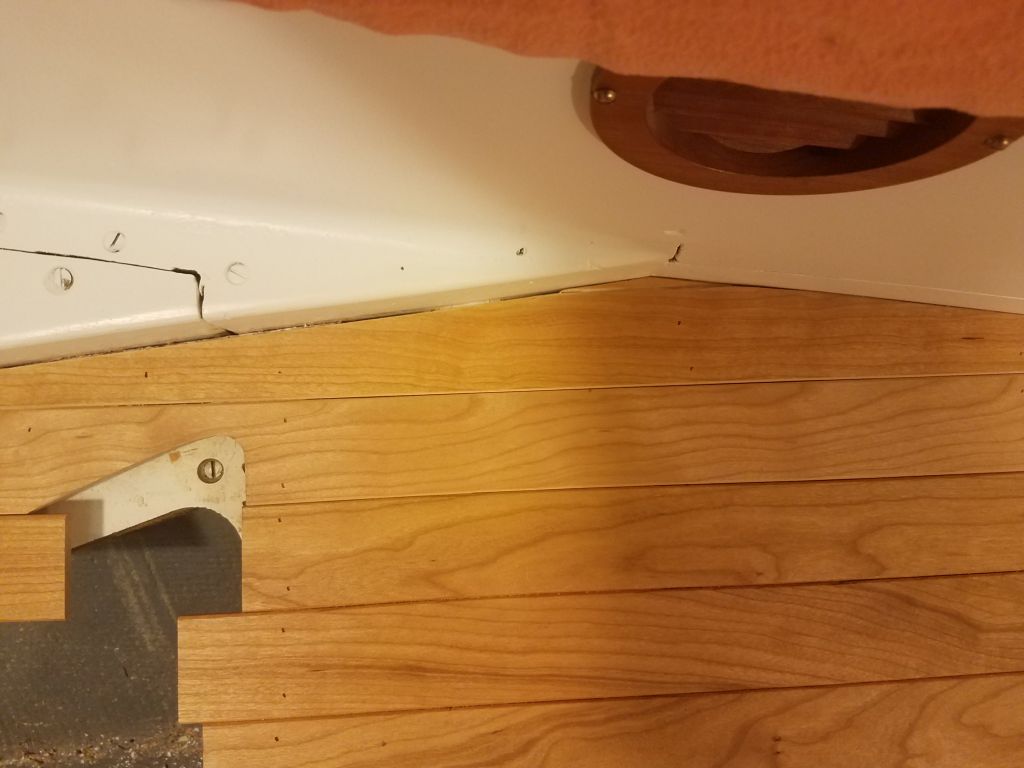
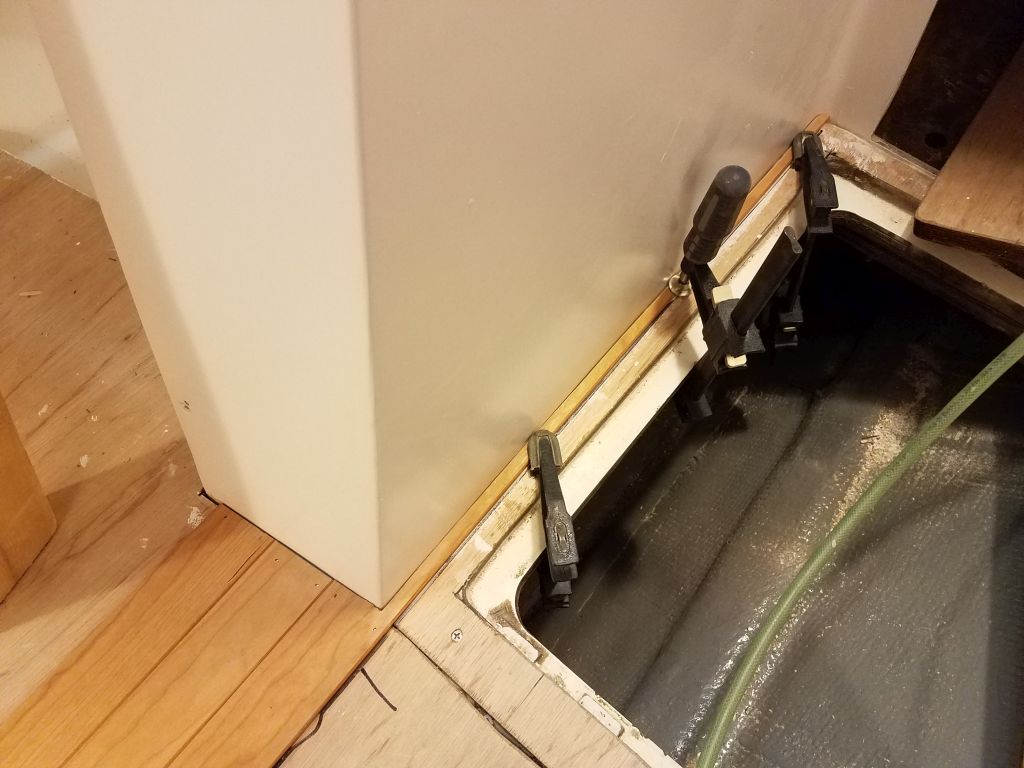
Here, I had to remove some of the bottom of the final plank to clear the molded edge of the original countertop, which was just a bit taller than the 1/2″ substrate I’d installed within, and I wanted the teak to overlap it so the surface would remain a consistent height, and also to allow the fiddles to sit directly on the countertop.  I’d cut the relief a little taller than needed, so to secure the plank solidly over the fiberglass lip, I used some thickened epoxy adhesive in that area to fill the gap, and also at the short exposed end of the plank near the sink, where another plank would soon butt up against.  The next series of planks would require this relief cut on their inboard short ends to clear the lip on the next section, and I’d finish up next time.

Total time billed on this job today:  8.25 hours

0600 Weather observation:  25°, clear. Forecast for the day:  Mostly sunny, 47°

Scupper 110

Wednesday

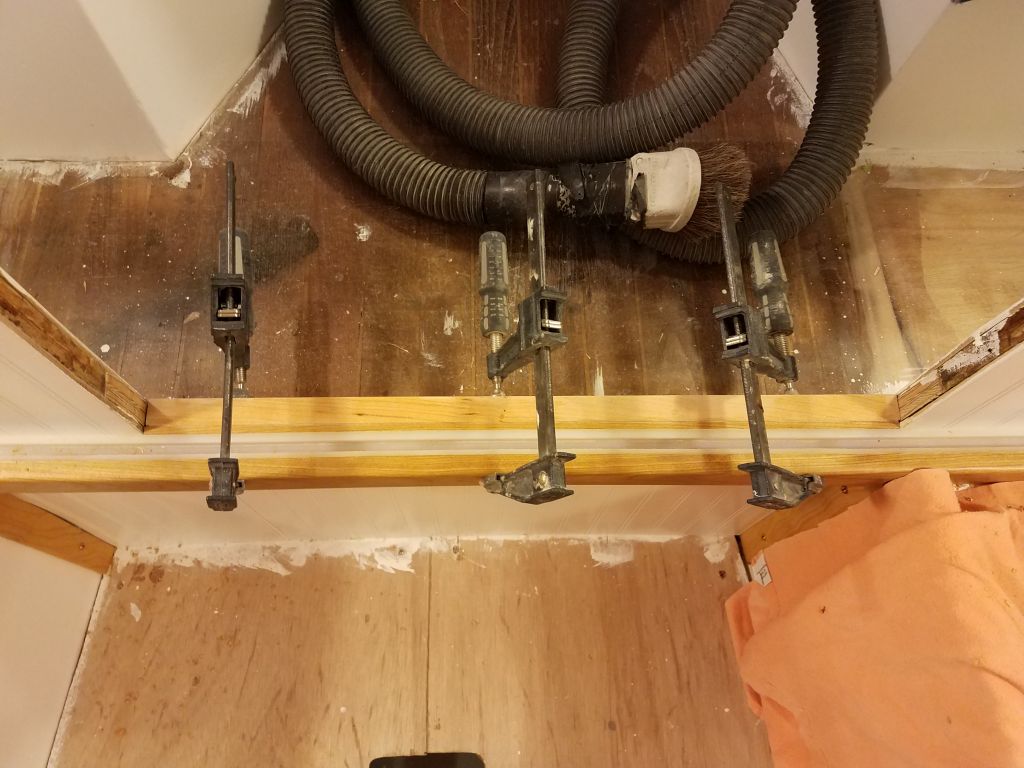
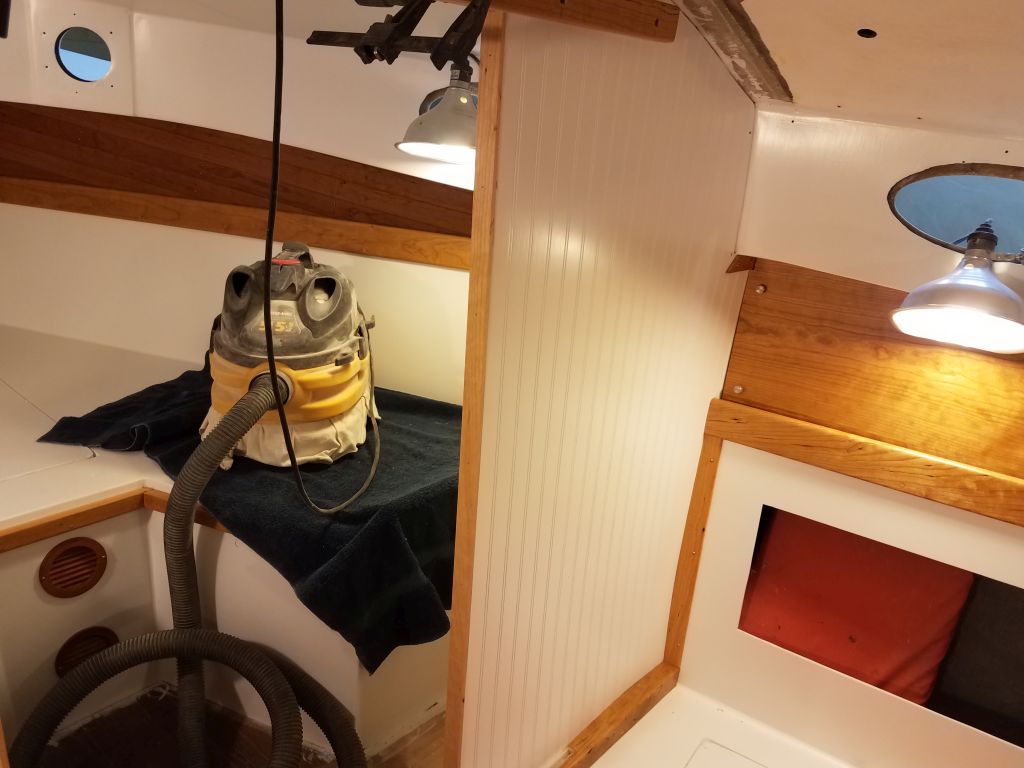
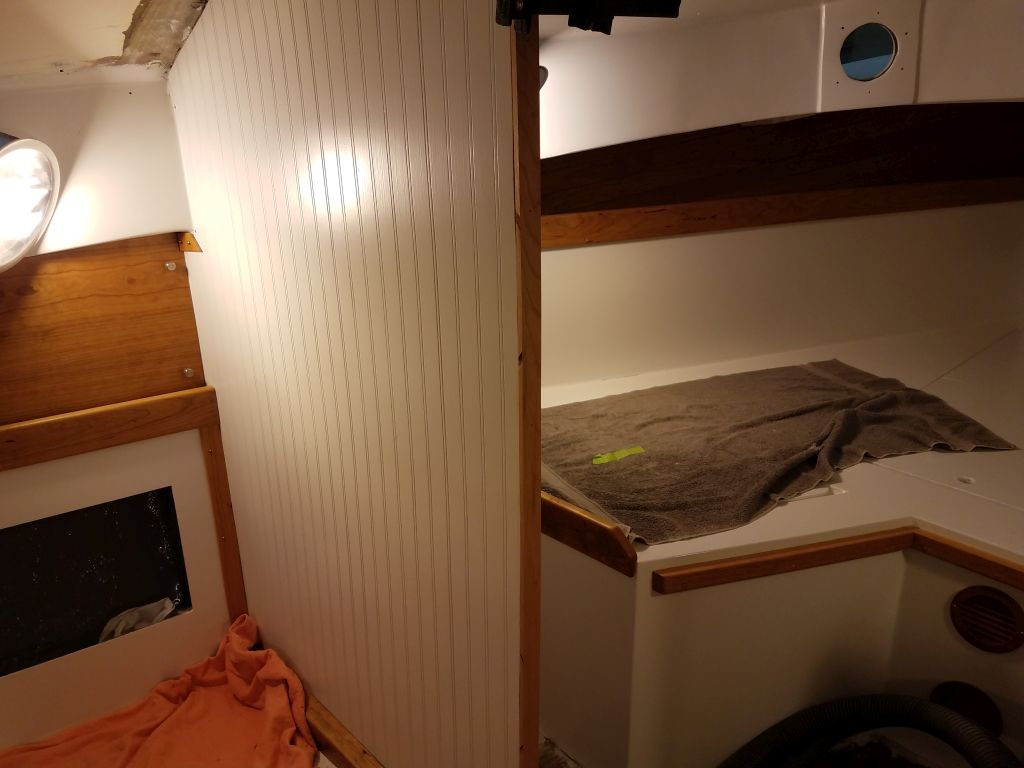
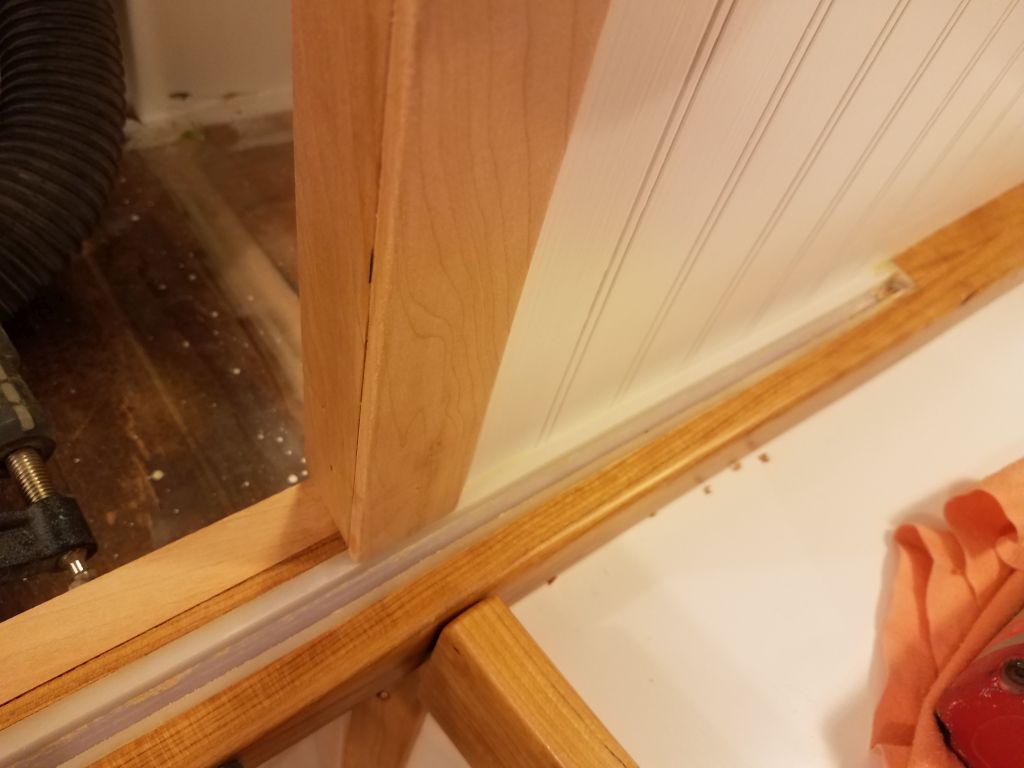
After unclamping the trim around the forward hatch, I cleaned up the overlaps where the pieces of trim met, sanding these areas smooth and lightly rounding the corners for a clean appearance.  Once that was done, I finished up the installation with screws on the horizontal trim pieces.

I removed the bulkhead trim pieces from the forward cabin and, down in the shop, lightly sanded them and rounded the exposed corners, then prepared them for the first of several coats of varnish–gloss for the base coats, then a final coat or two of satin–that I’d complete with the trim pieces out of the boat.

I continued work on the trim at the forward end of the saloon.  The new piece I’d prepared for beneath the transverse door trim was ready, but I decided it would look better and be easier if I first installed the thin vertical trim along the bulkheads between the cabin sole and the door trim, then installed the other trim inside of it, so I cut and shaped these trims as needed and, after slightly shortening the new apron trim accordingly, installed it as well.  Then I bunged the various screw holes in this area as needed.

I received a call from Jason, the upholstery contractor I use, and he’d recently been in touch with the owner about some of the interior details.  With these resolved to everyone’s satisfaction, he was ready to come and template the berths for the new cushions, and, since it was also a good time for me, we arranged for him to come this very afternoon, so with the time left in the morning I prepared the cabin a bit, cleaning up the berths and removing tools and supplies out of the way.  I also temporarily installed the fiddle trim on the v-berth filler piece, which wasn’t complete yet with another coat of paint to go, but this way we could ensure that the pattern for the forward cabin could be accurate.

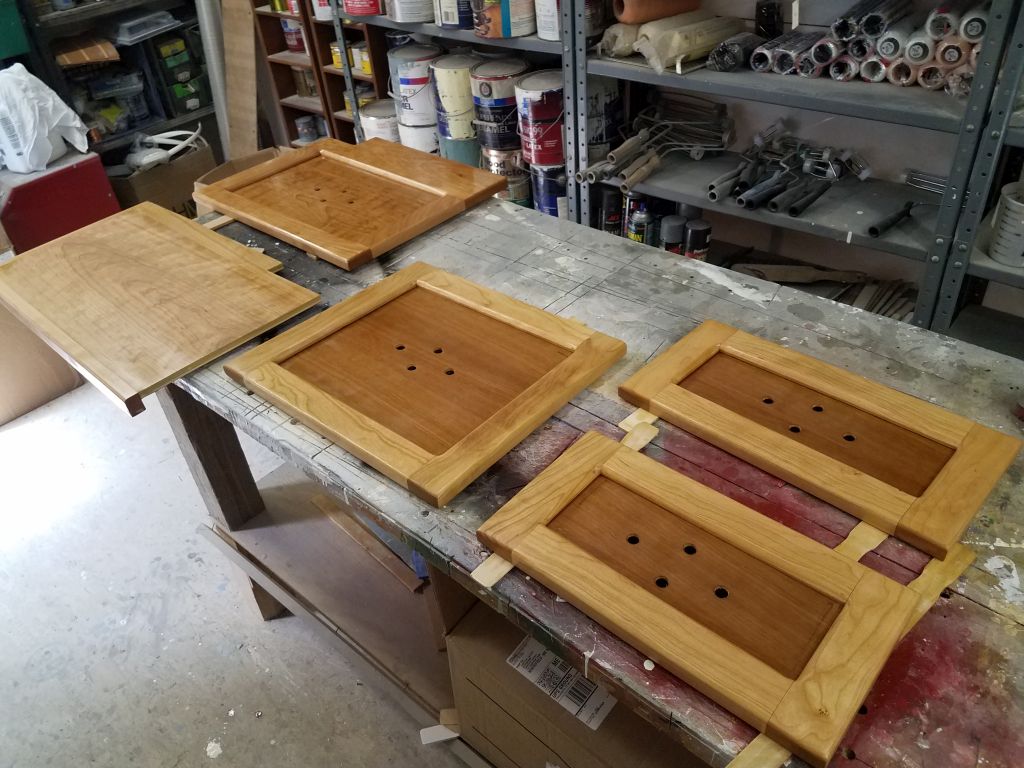
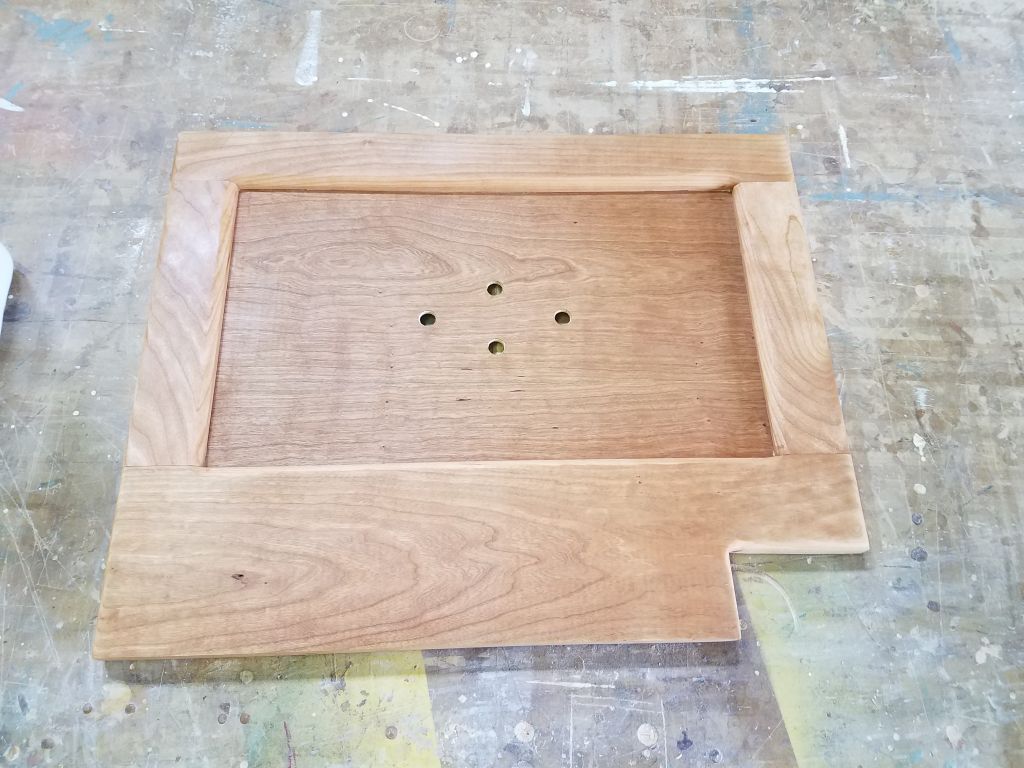
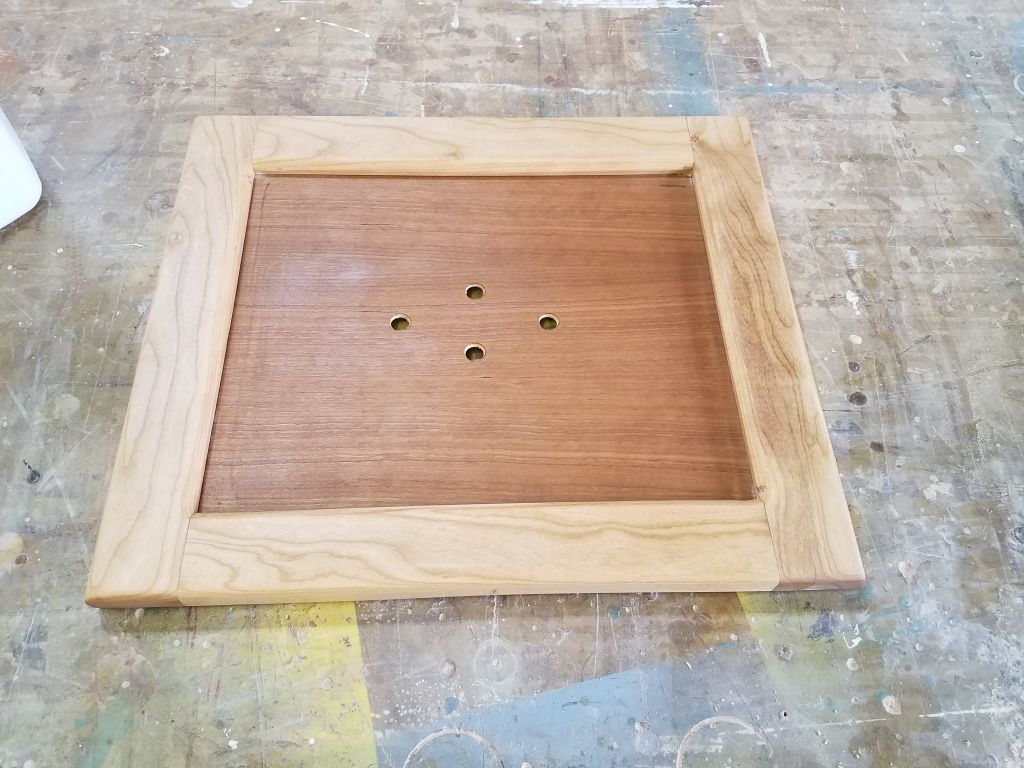
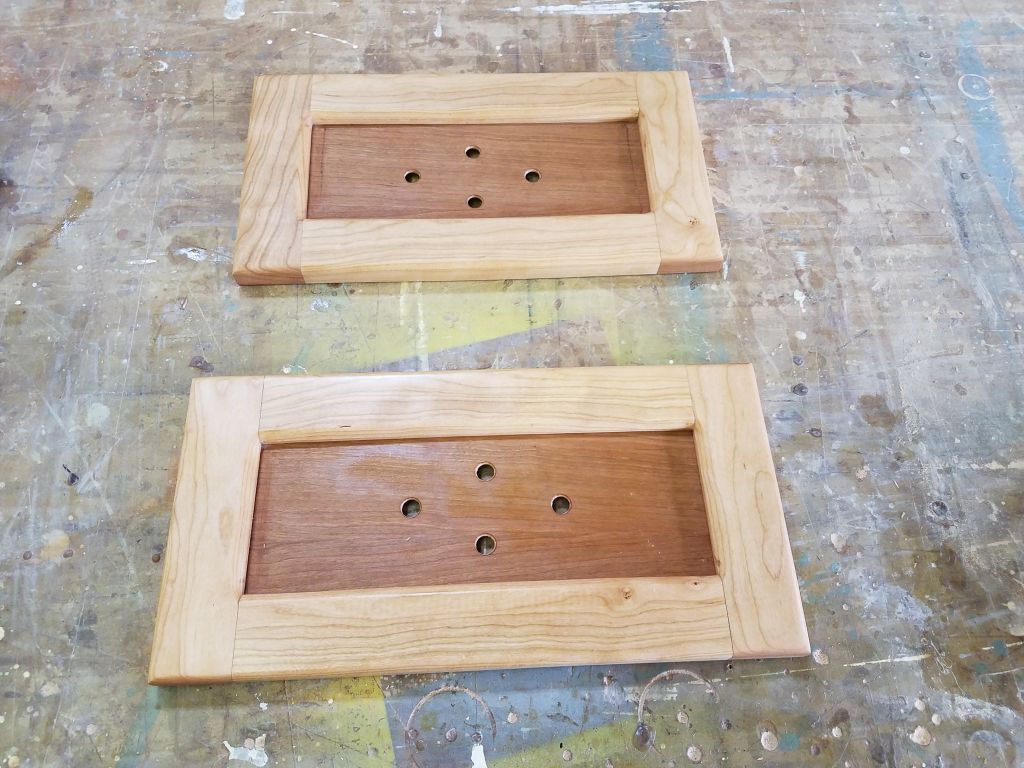
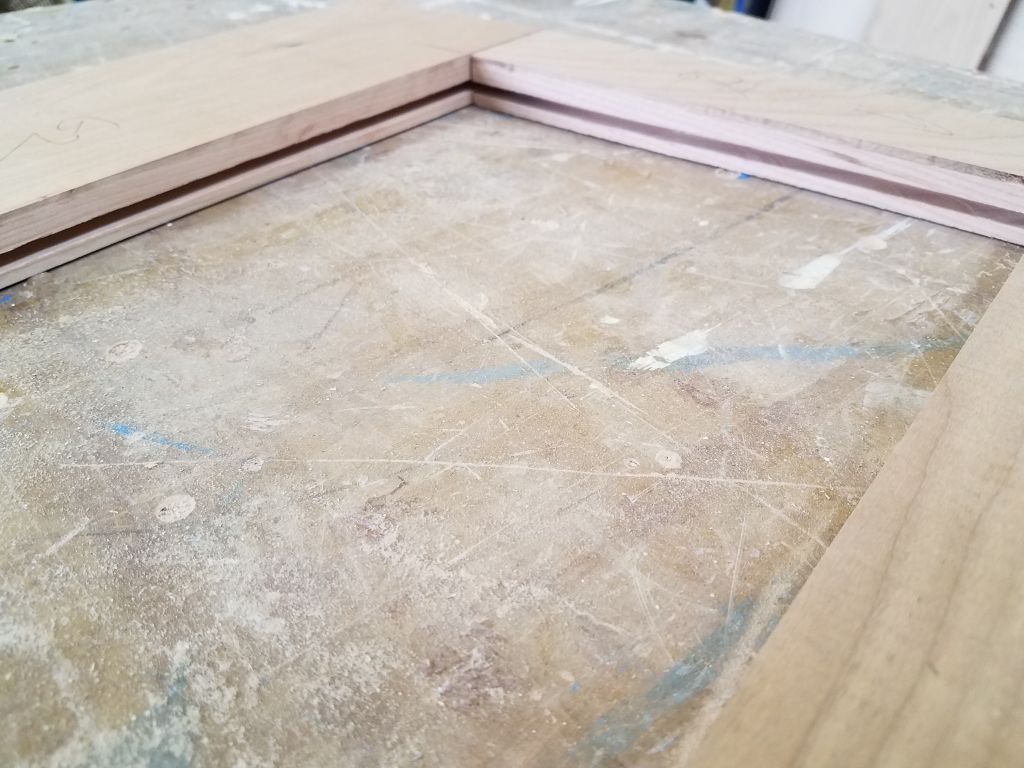
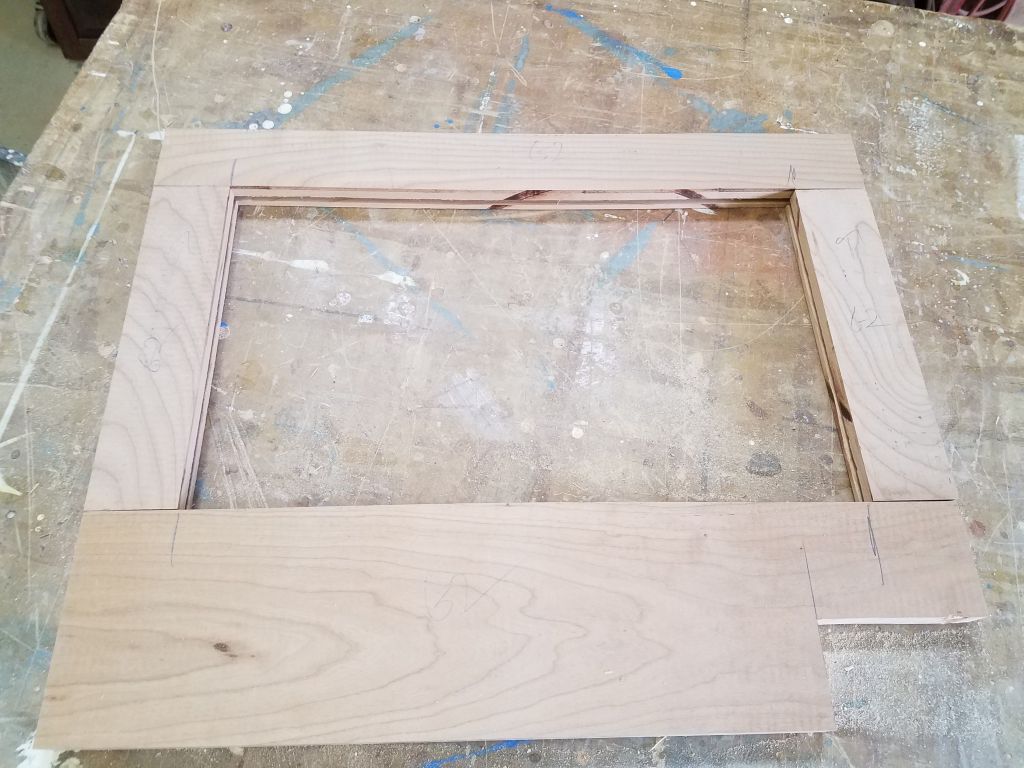
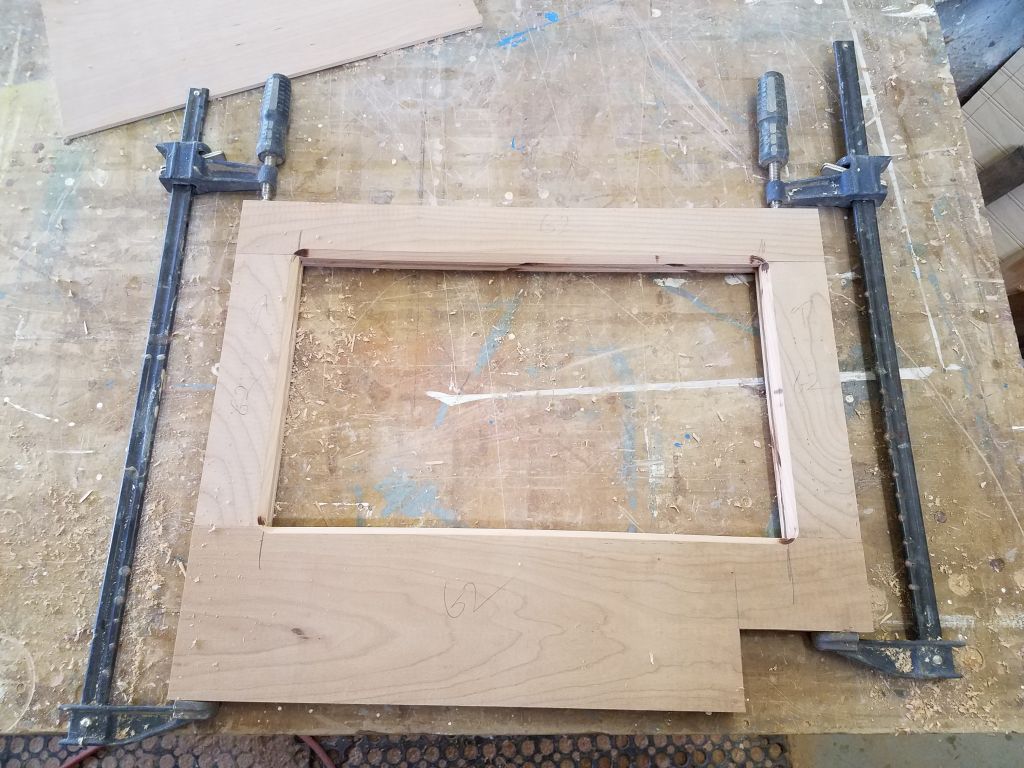
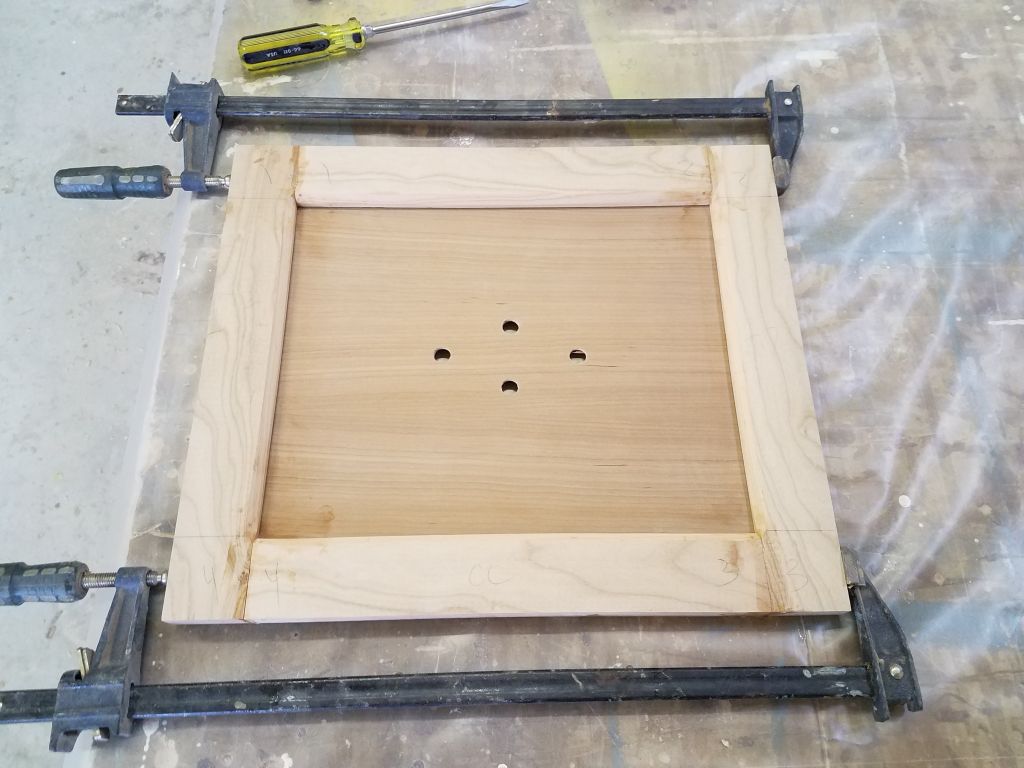
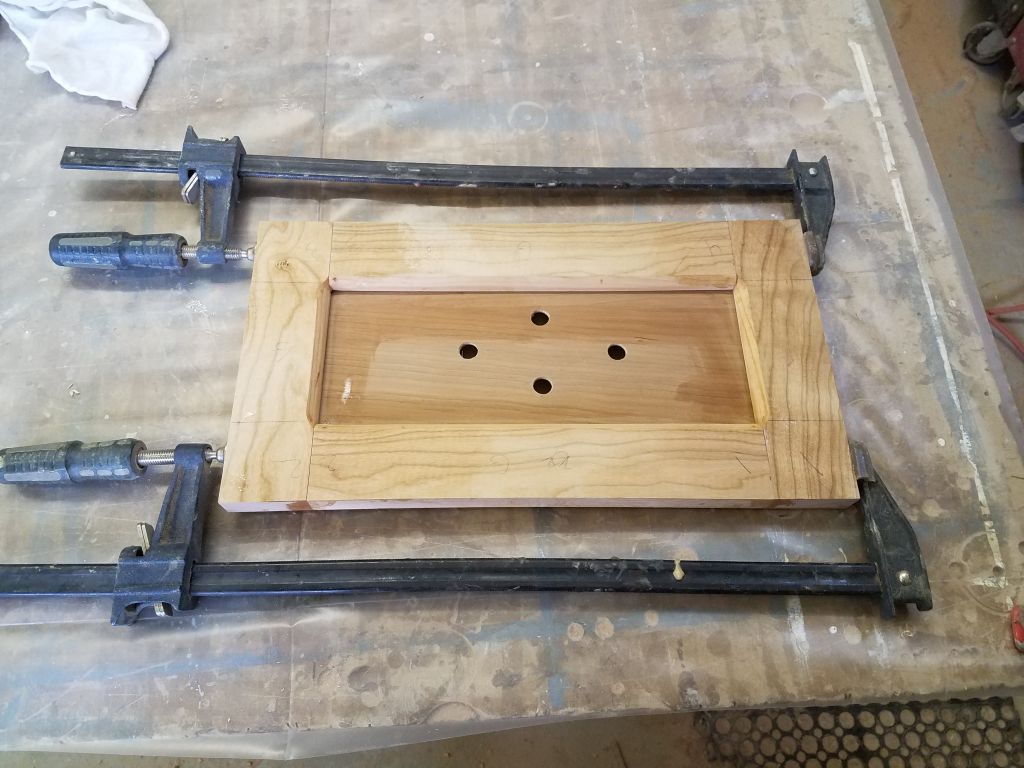
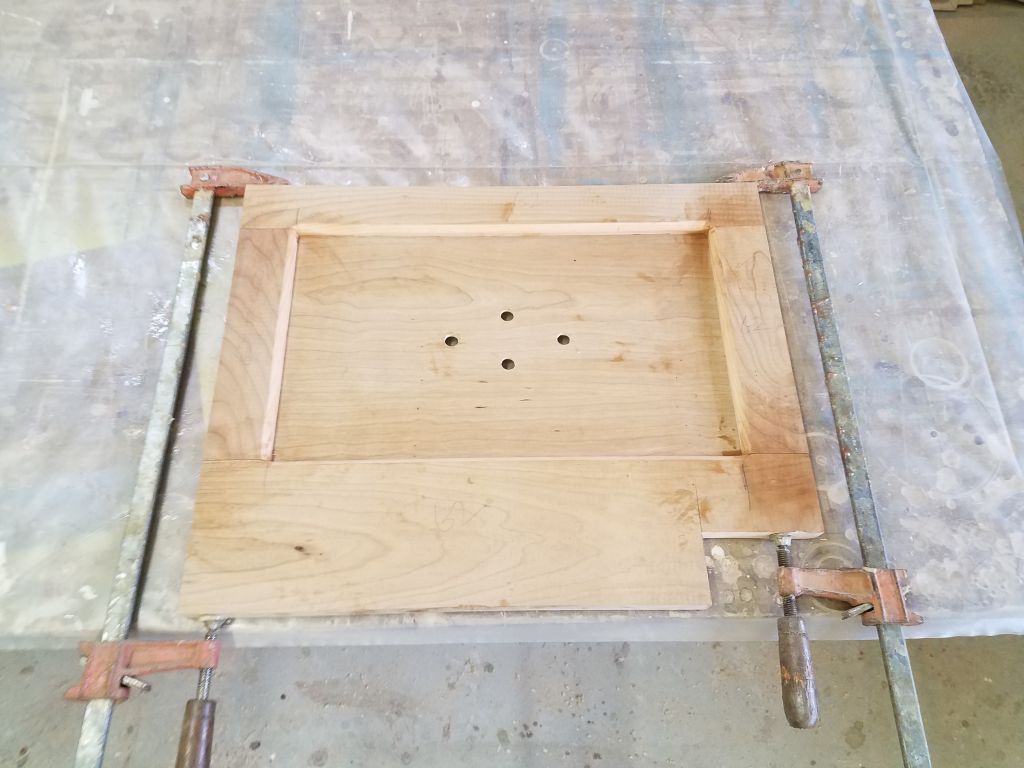
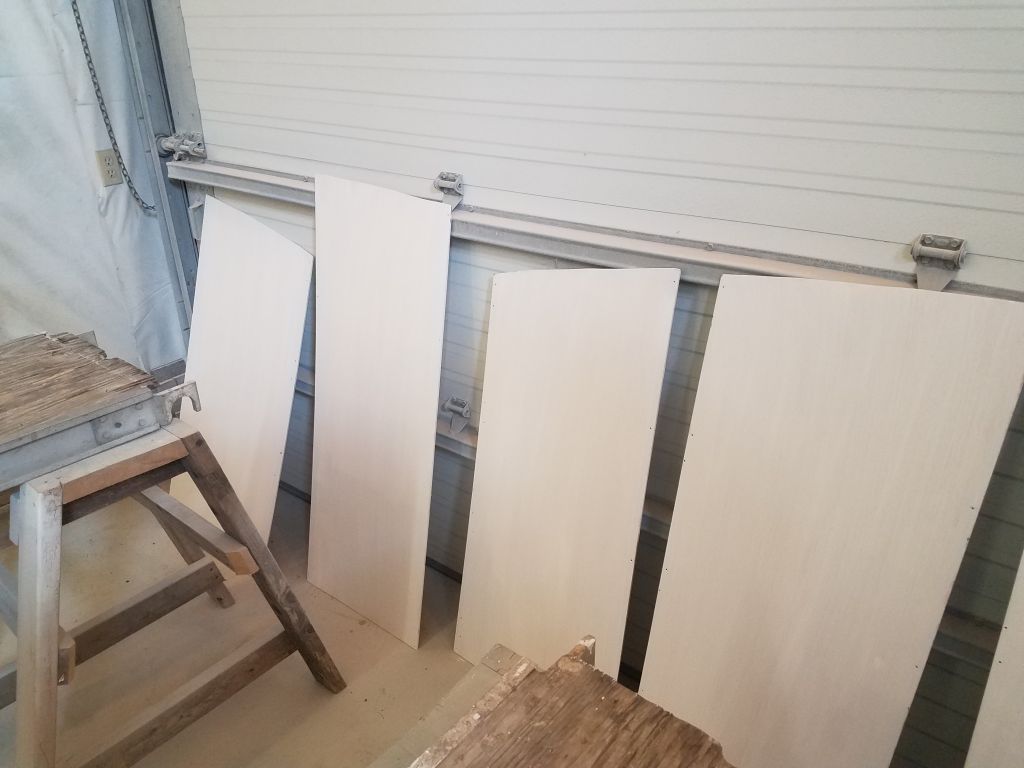
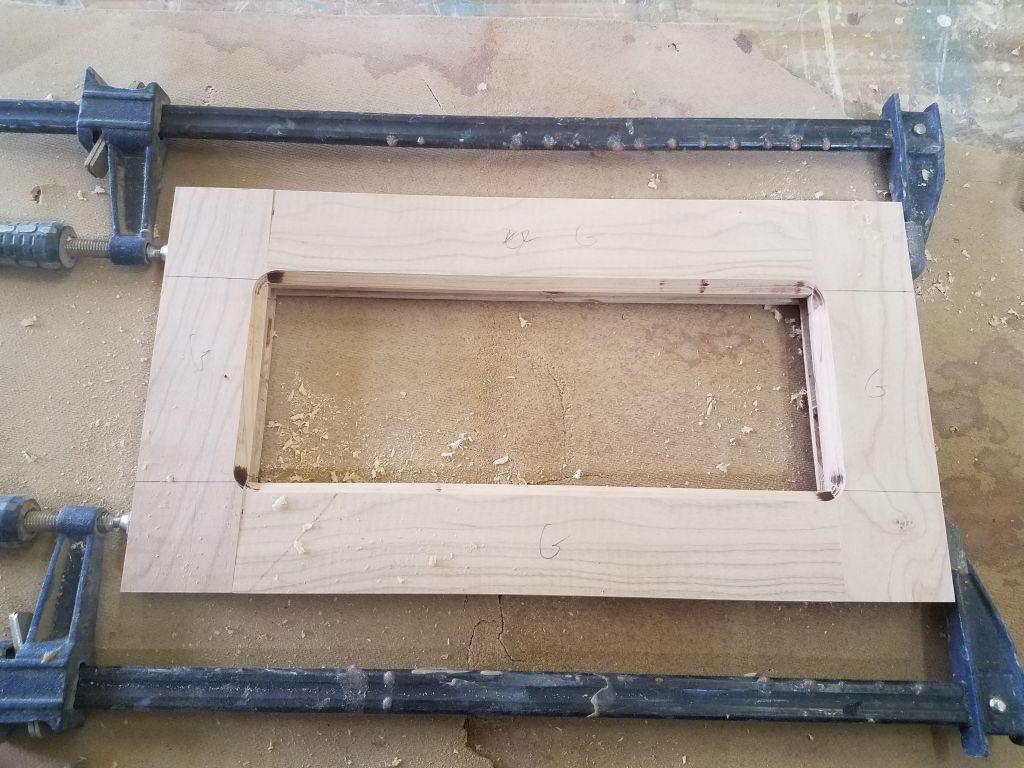
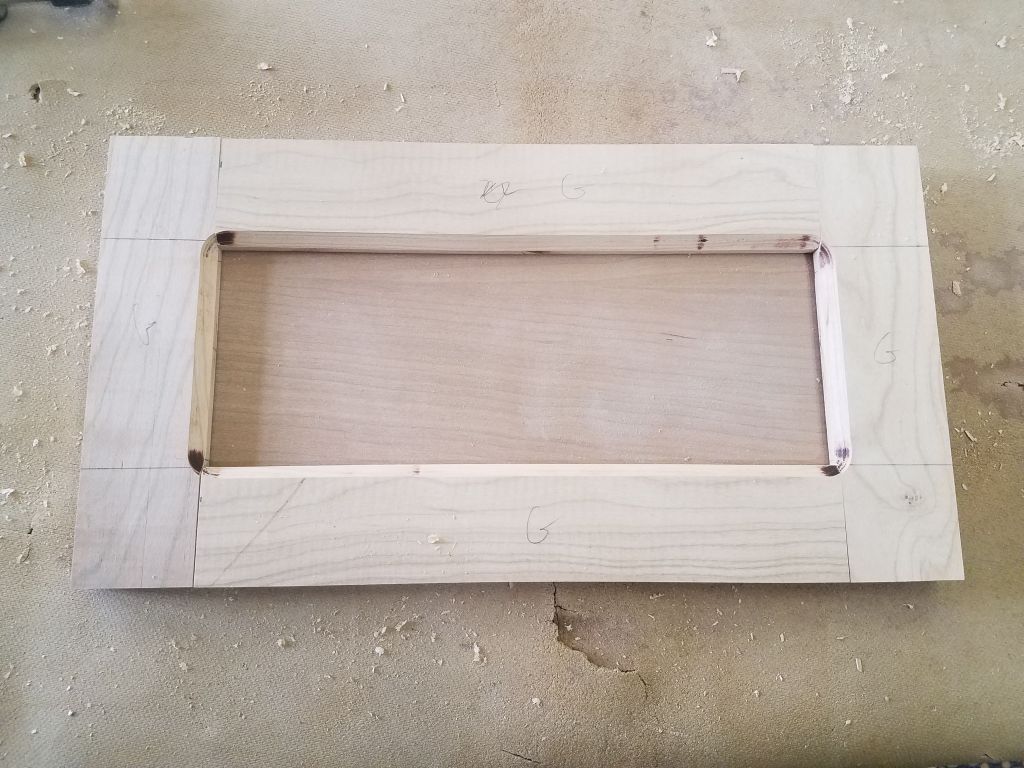
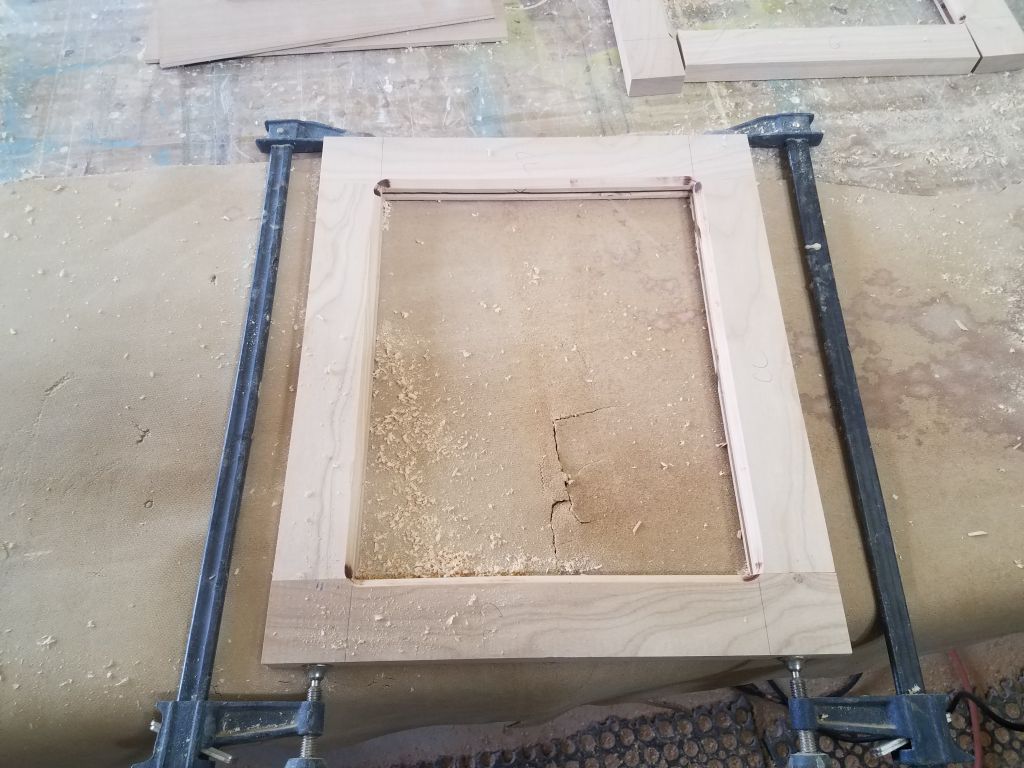
When he arrived and got to work, after some final discussion with him about the settee backrest cushions (which would also be the locker doors), I made up four new plywood panels for the purpose, which would accept his new upholstery and cushions as needed.  I cut the 12mm plywood to overlap the openings by an inch on all sides, and cut 2″ radius corners so Jason could wrap his fabric and welting easily and cleanly around the corners, at his request.  I milled a 1/4″ roundover on one side of the panel, and just eased the sharp edge on the other with light sanding to complete the new panels in time for him to take them back to his own shop for the upholstery work.

Once I had the boat back to myself, I spent the remainder of the day on more trim in the saloon, mainly the trim around the bulkheads and cabin sides at the main and after bulkheads, where there were gaps either between the beadboard and the sides (forward), or, at the aft bulkhead to starboard, a wide open space between the two molded interior liner components.

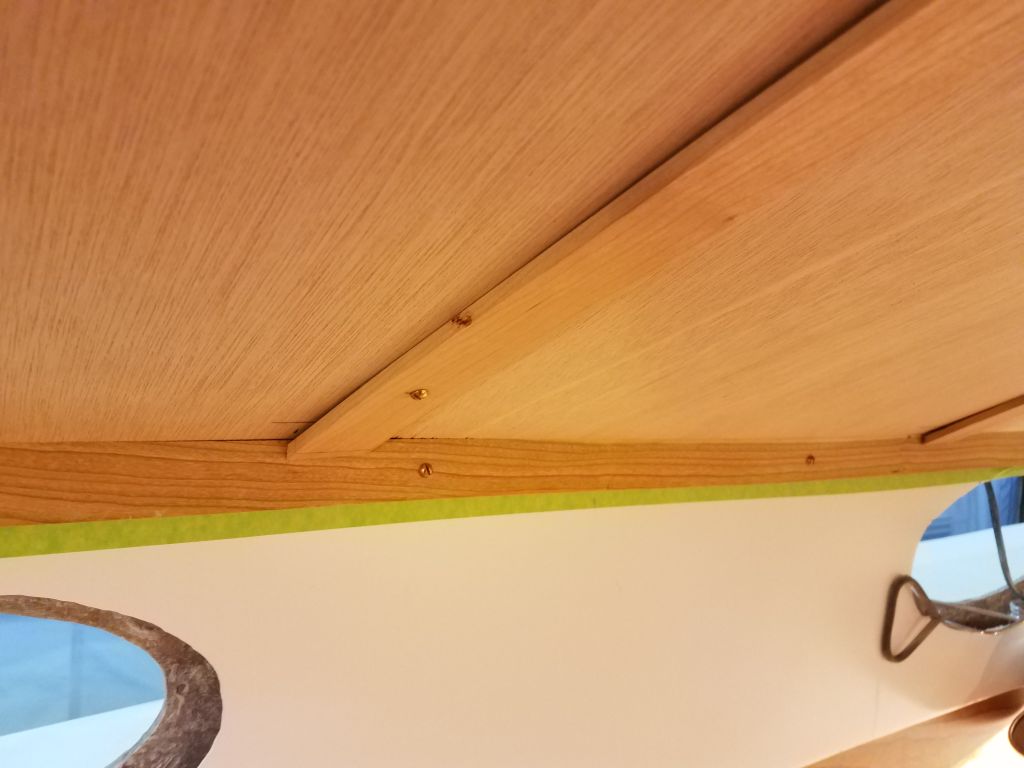
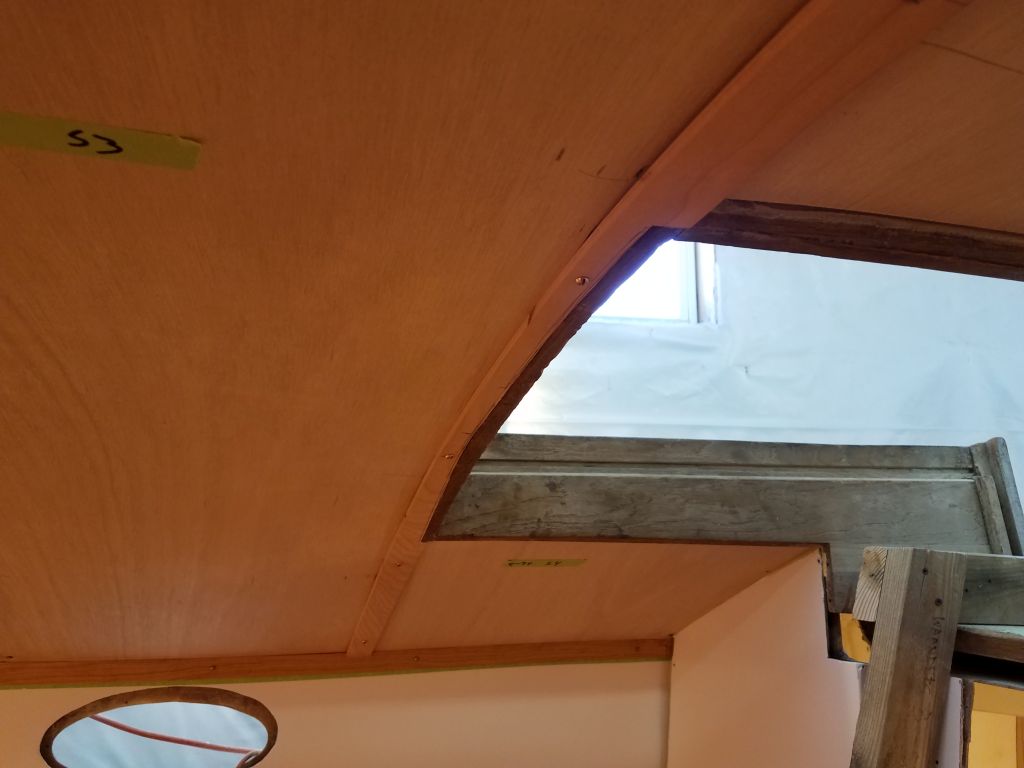
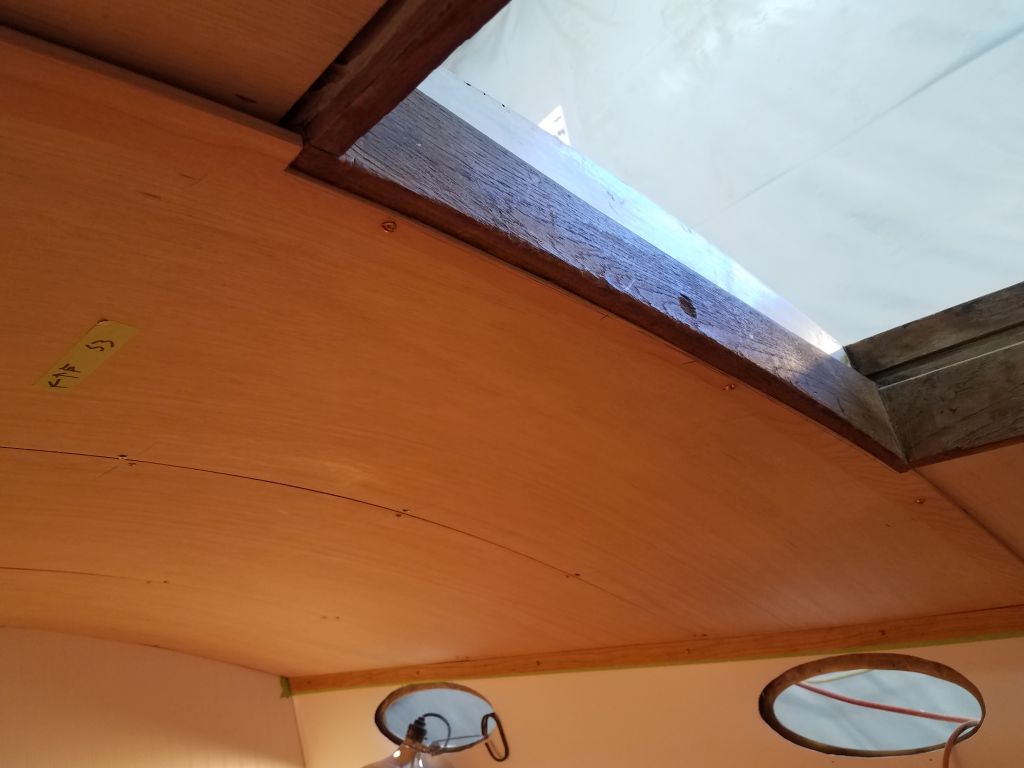
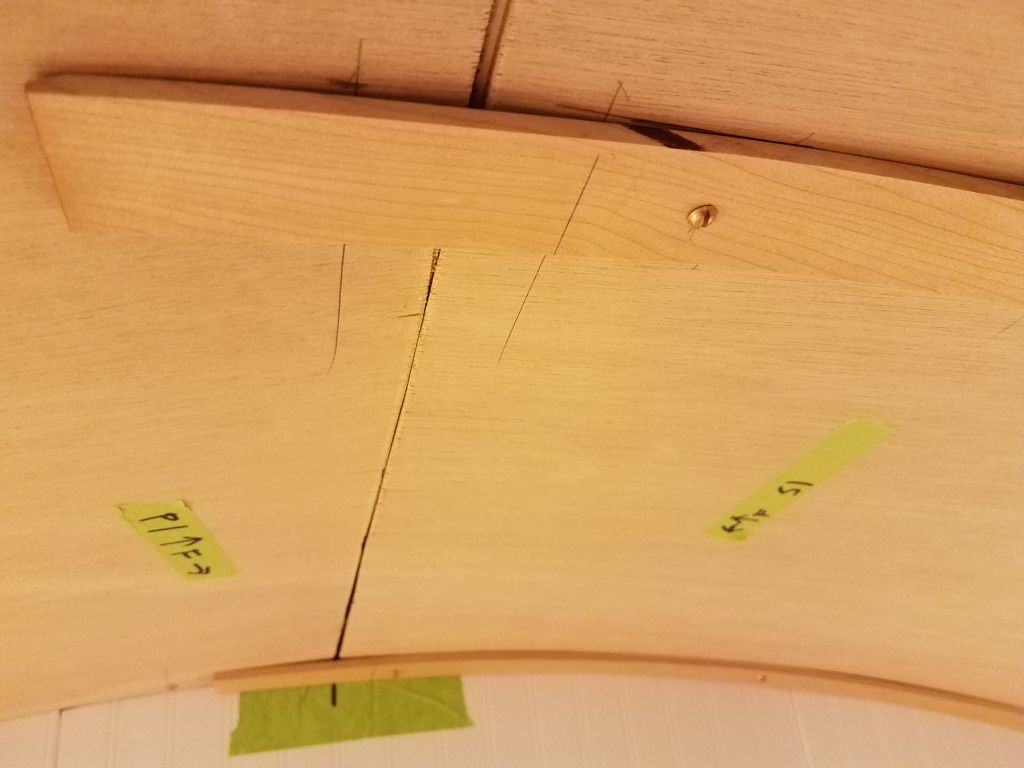
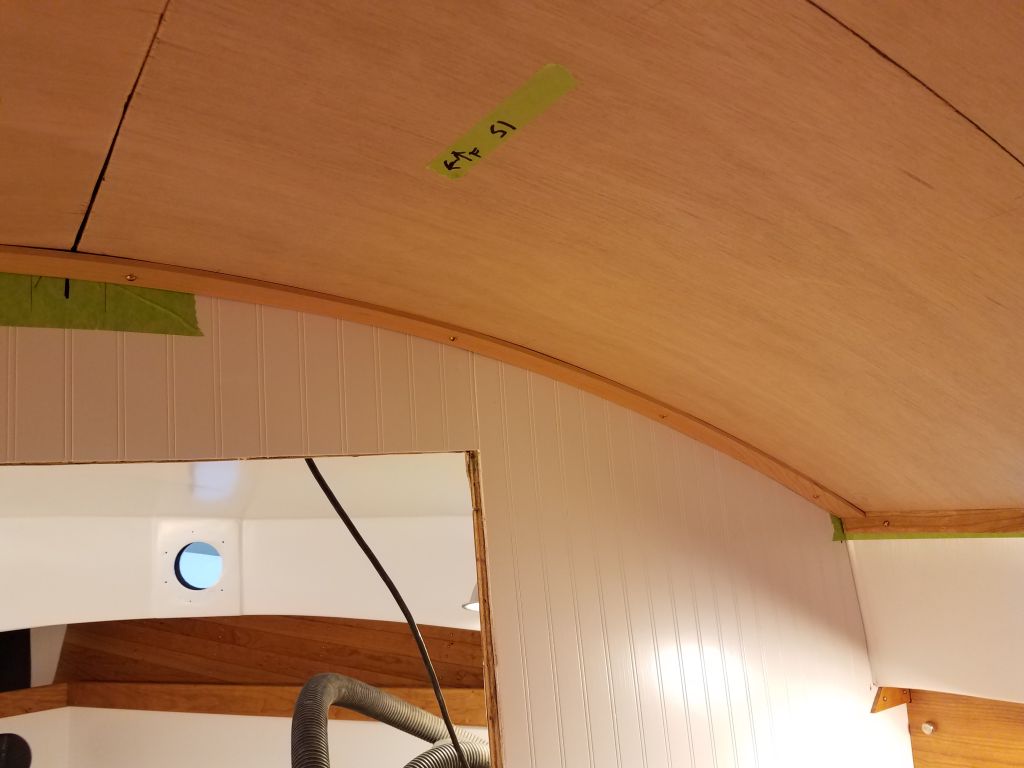
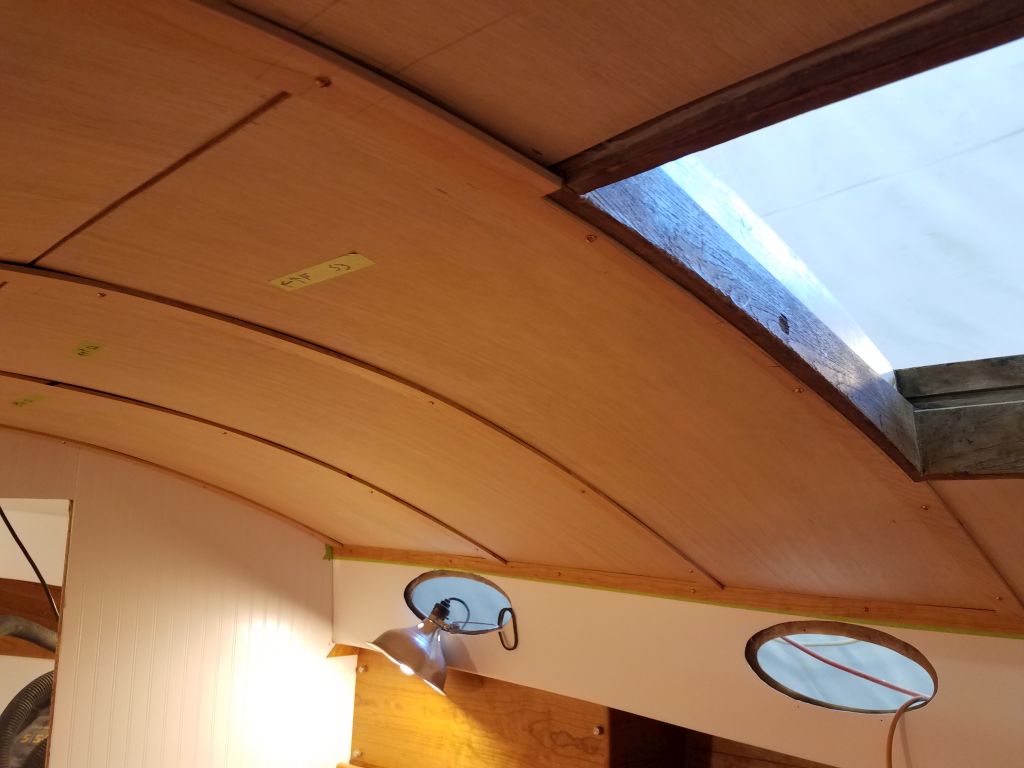
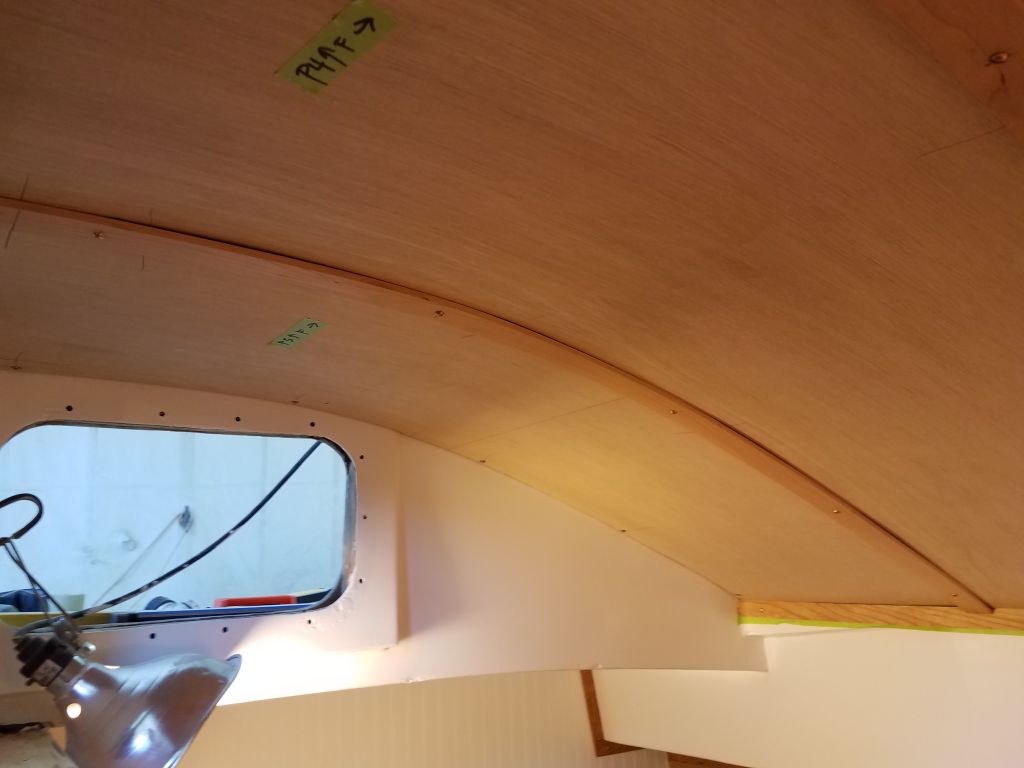
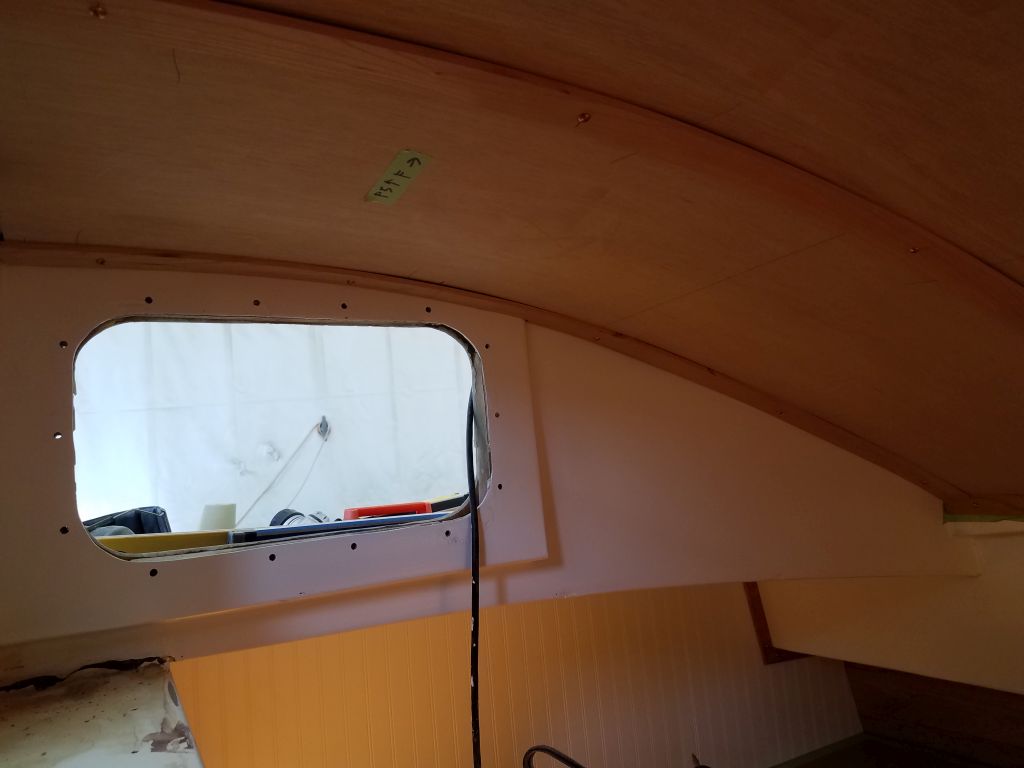
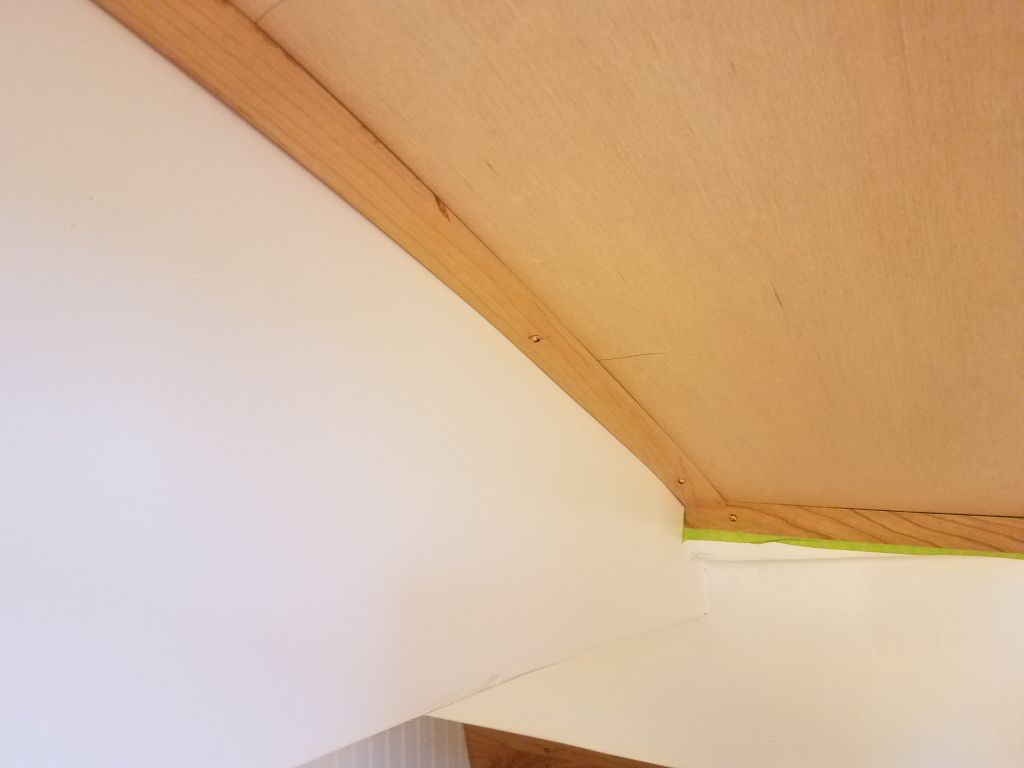
These trims were basic in concept, but the realities of the surfaces meant that they were (un)suprisingly fussy.  At the main bulkhead, I also had to relieve the front top corners of the new electrical locker panels to fit around the bulkhead trim, since those panels were meant to be removable and therefore had to fit around the trim, rather than allow the trim to butt up against the panels.  At the overhead, I fit the trim to the existing shape, but since there would later (soon) be a 1/4″ plywood overhead panel to cover the original, badly damaged fiberglass overhead in the main cabin, I might have to change the top edge of the trim later; plus, there’d also later be an additional piece of trim across the top edge of the bulkhead once the new overhead was in place.

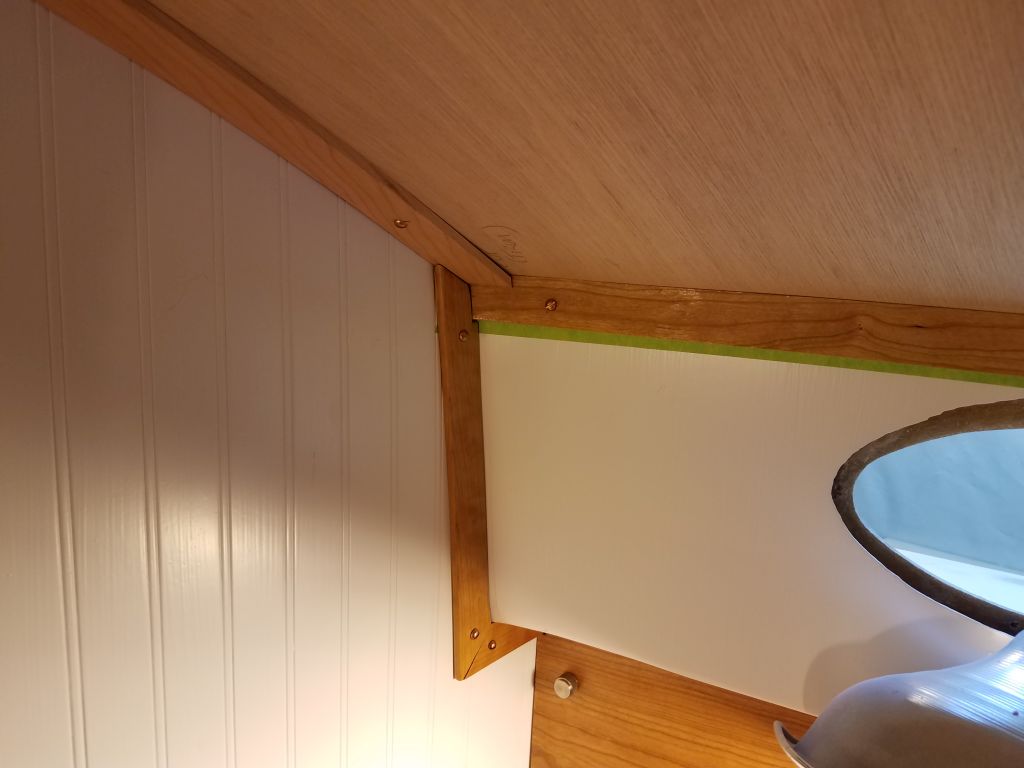
At the starboard aft bulkhead, I had to start with a wider piece of trim for the bottom piece (below the sidedeck), since this  trim had to incorporate a stepped shape in the liner at the outboard side.  This posed no problem, but once I had the top shape properly scribed to fit, I trimmed the bottom edge of the over-wide piece to the final dimension intended (1-1/4″, to match the other trim), forgetting at the time that the gap between the molded fiberglass pieces was so wide, so the narrower trim I’d just cut didn’t cover the gap.  Fortunately, it was not a lot of work to cut a new piece of trim using the first one as a guide, and by angling the cutline on the lower edge I could properly cover the gap at the outboard side, while still reducing the trim to the required 1-1/4″ at the inboard edge, where it met the vertical piece in a miter cut.  I didn’t trim the top edge of this bulkhead at this point because, like at the forward end, there’d soon be a new overhead cover panel here, so I’d complete the trim once that was fitted.

Total time billed on this job today:  8.5 hours

0600 Weather observation:  12°, clear. Forecast for the day:  Sunny, 43°

Older posts Newer posts