
(page 95 of 165)

Scupper 139

Tuesday

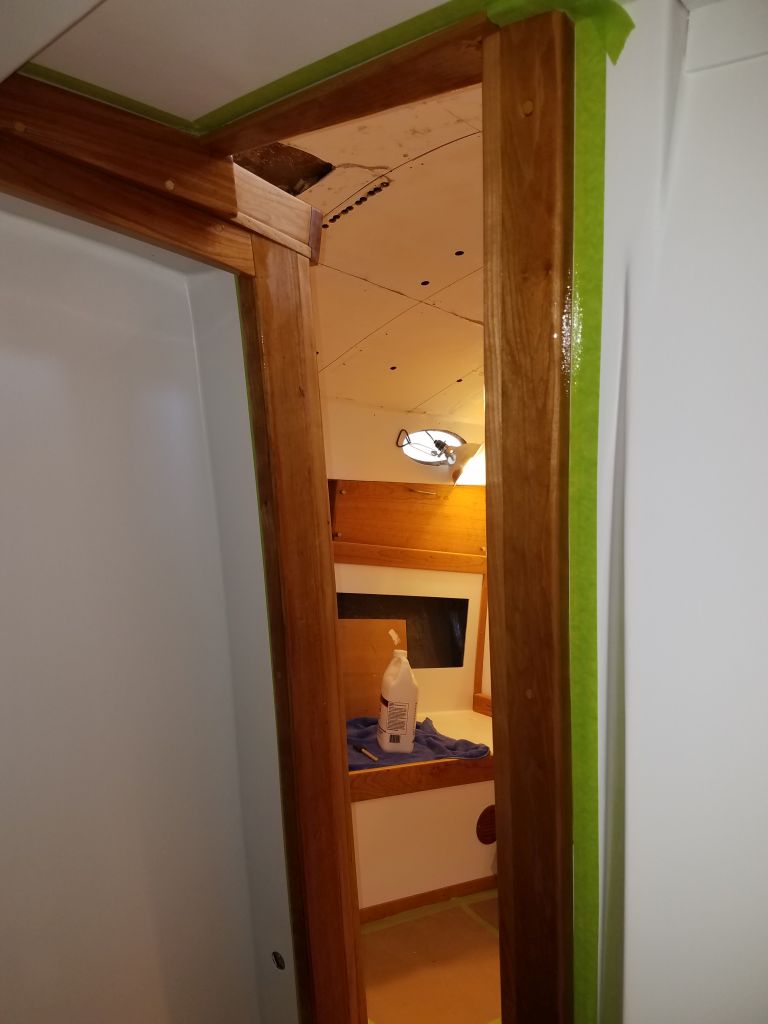
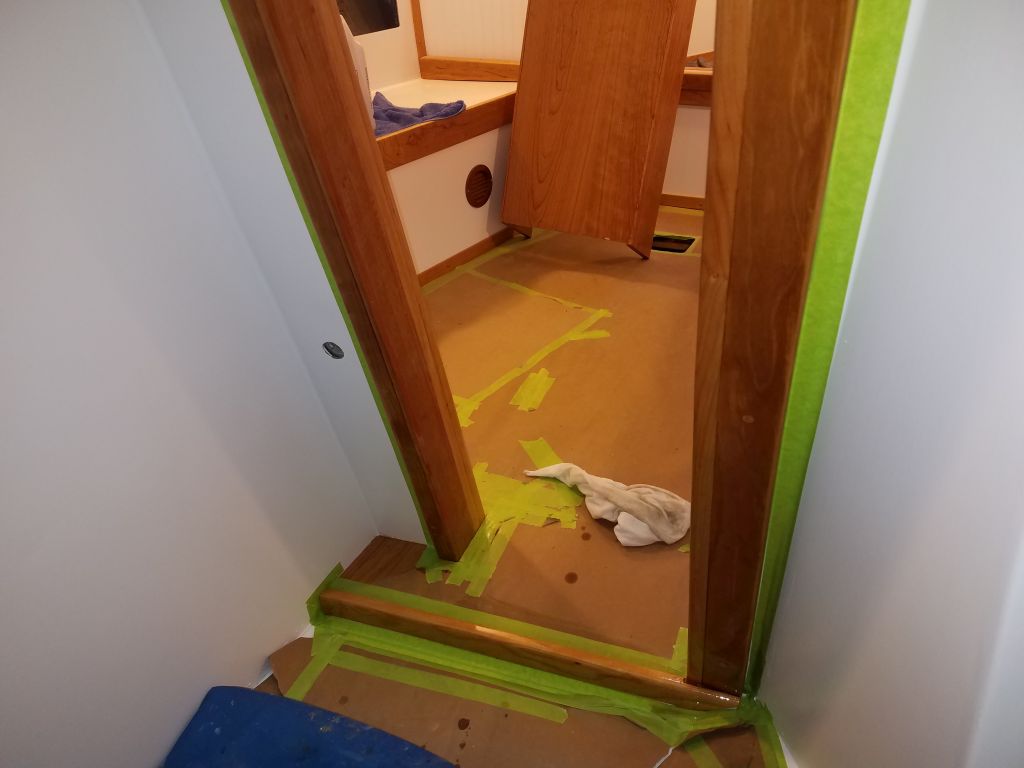
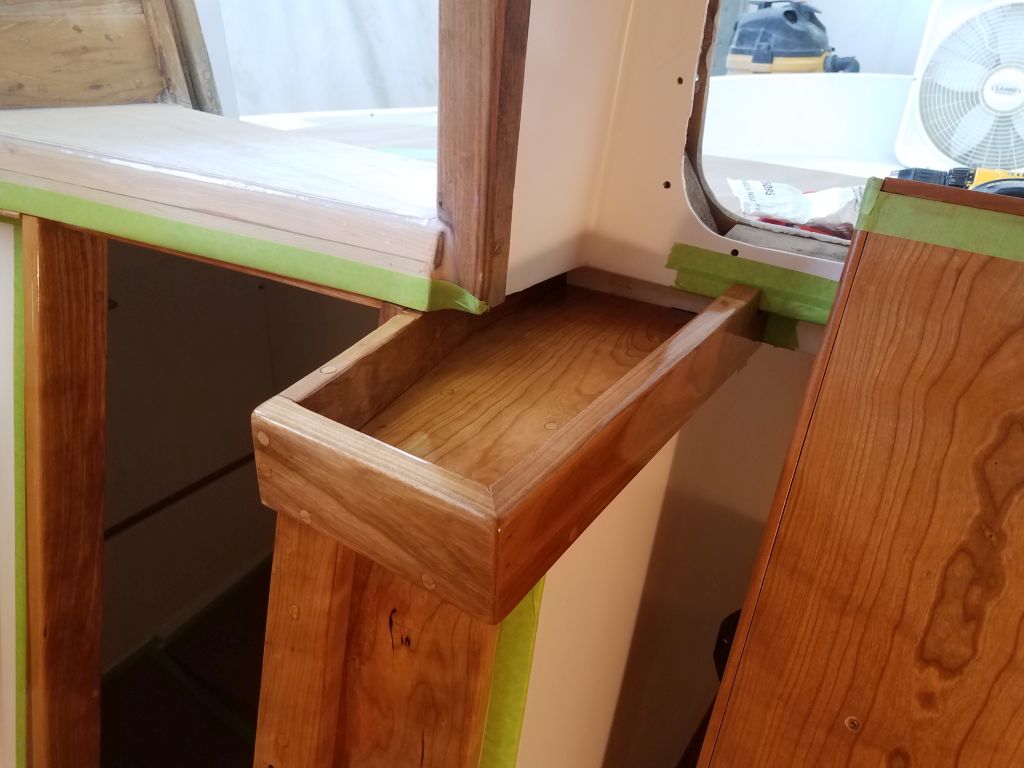
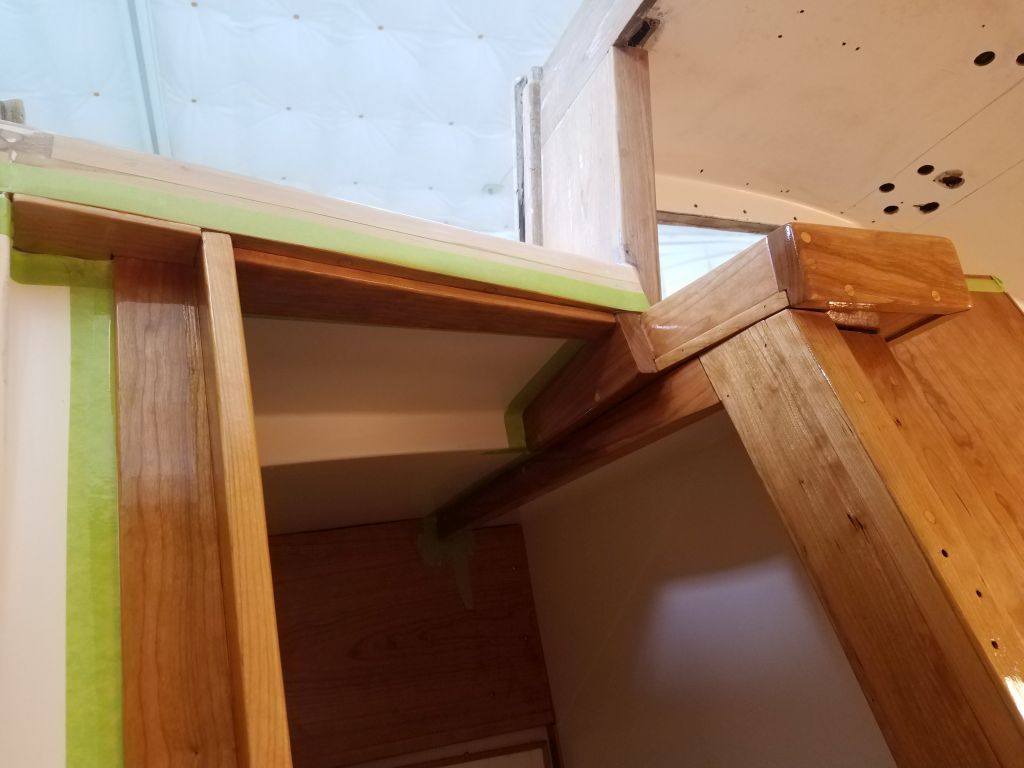
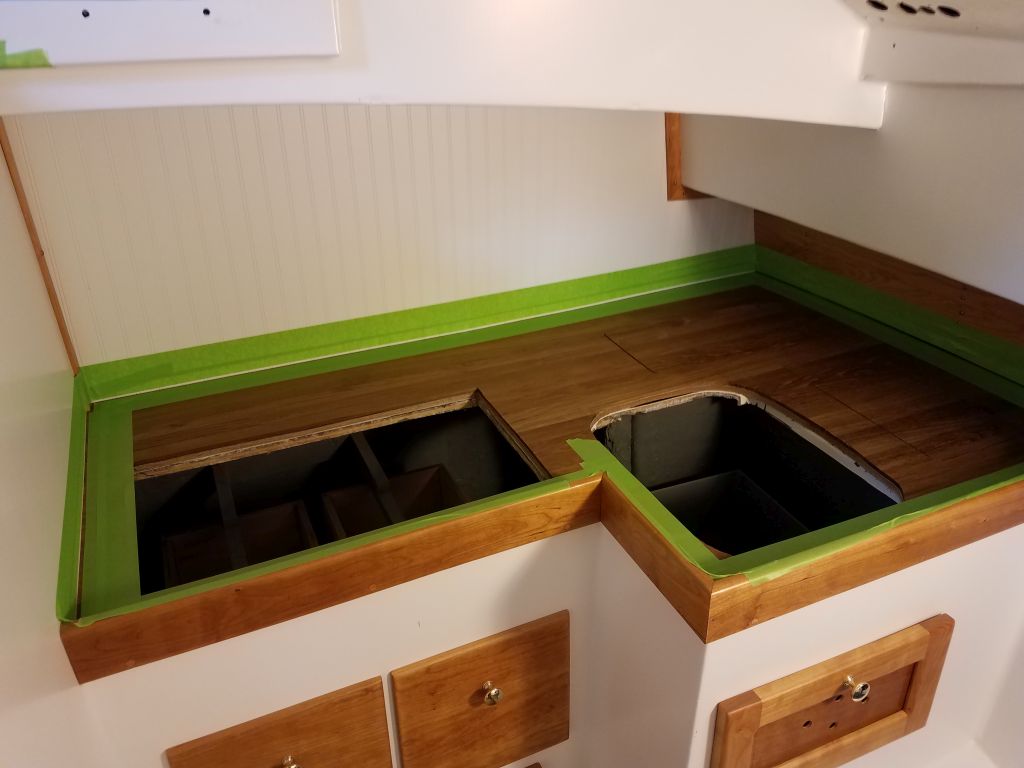
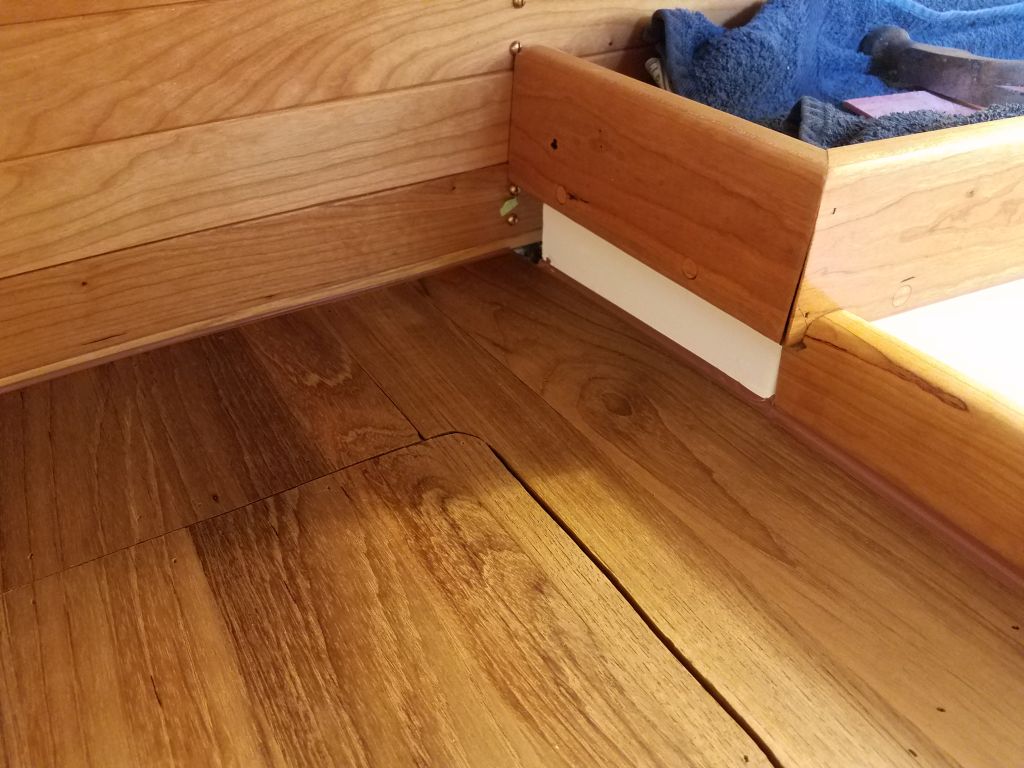
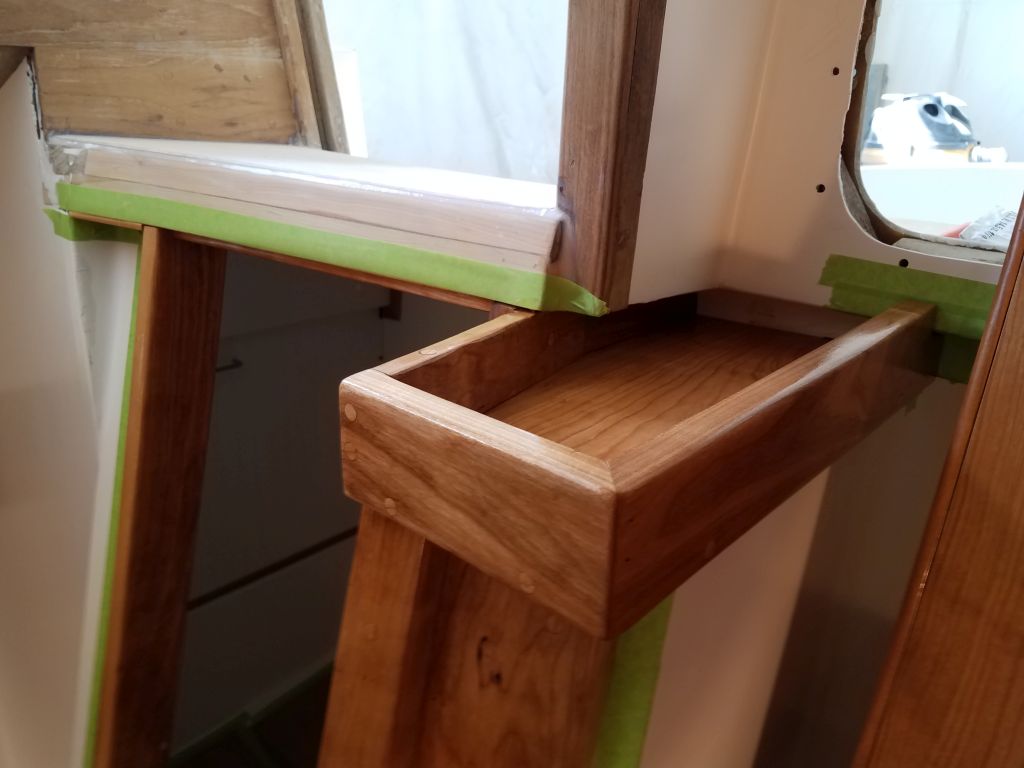
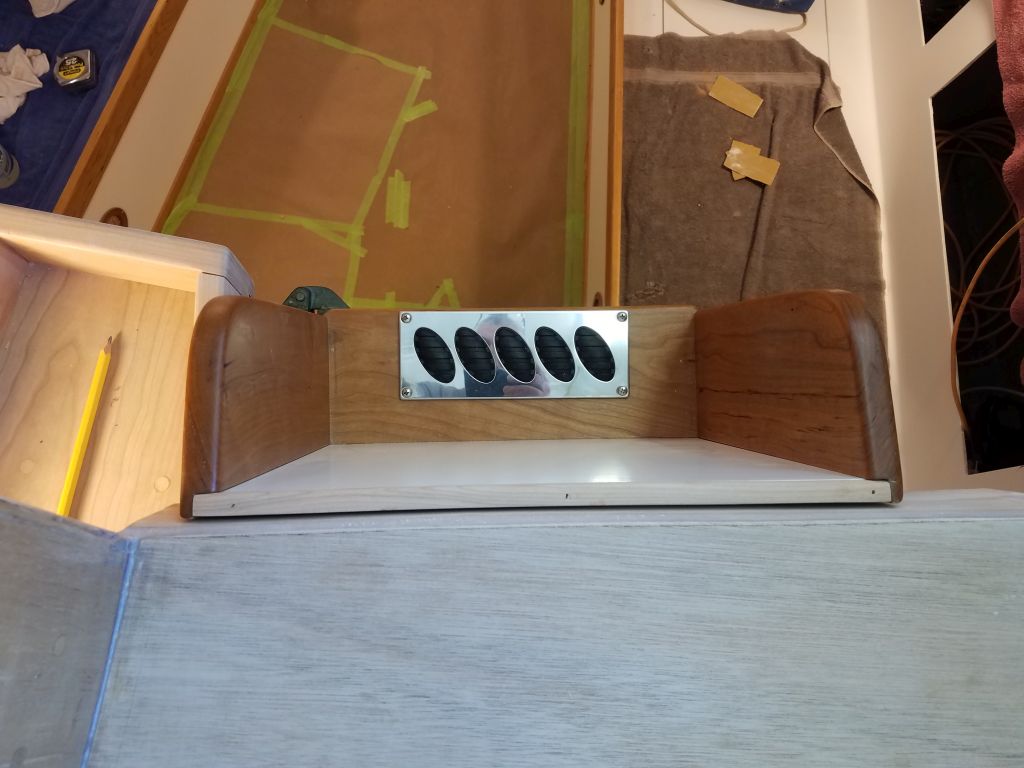
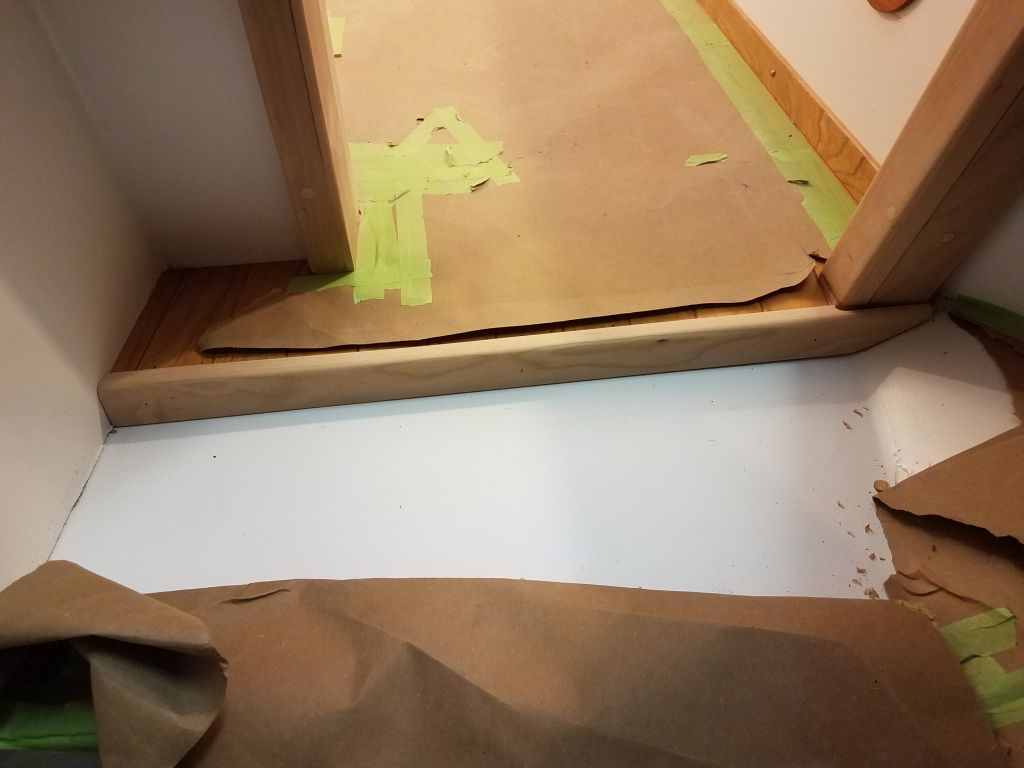
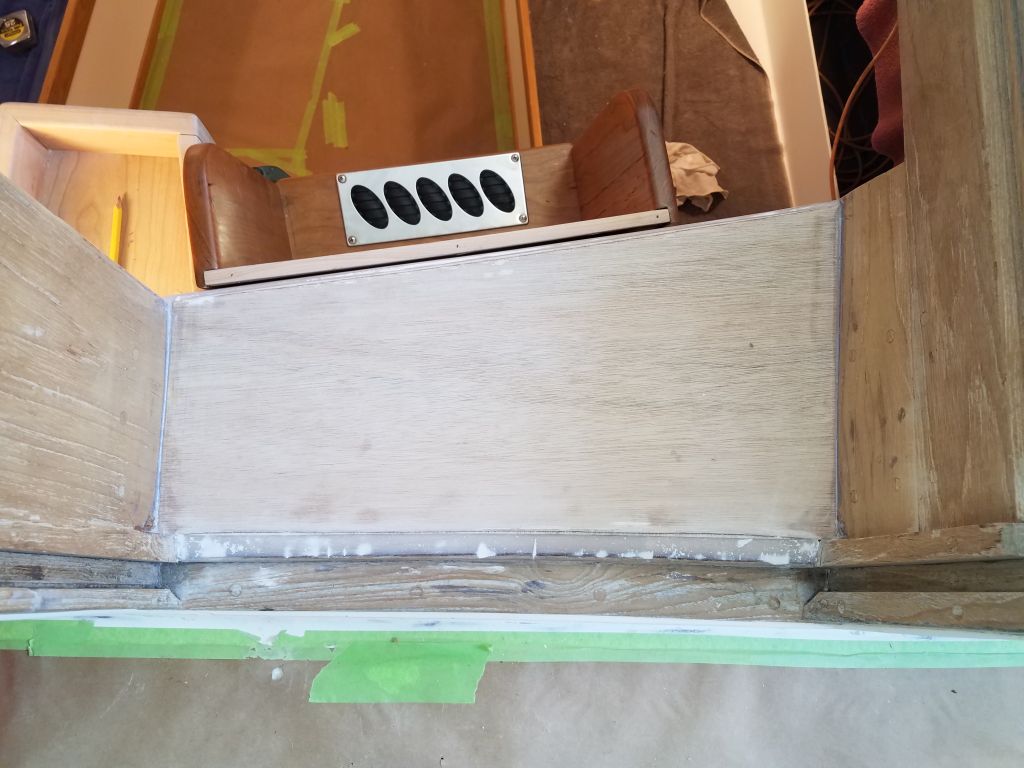
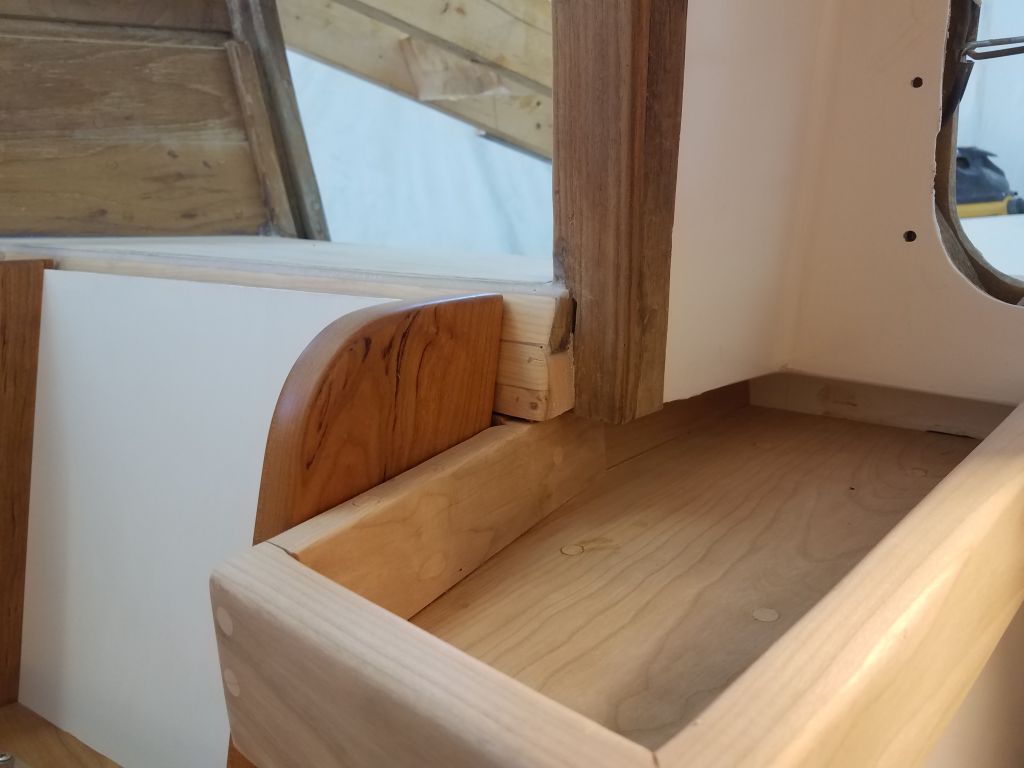
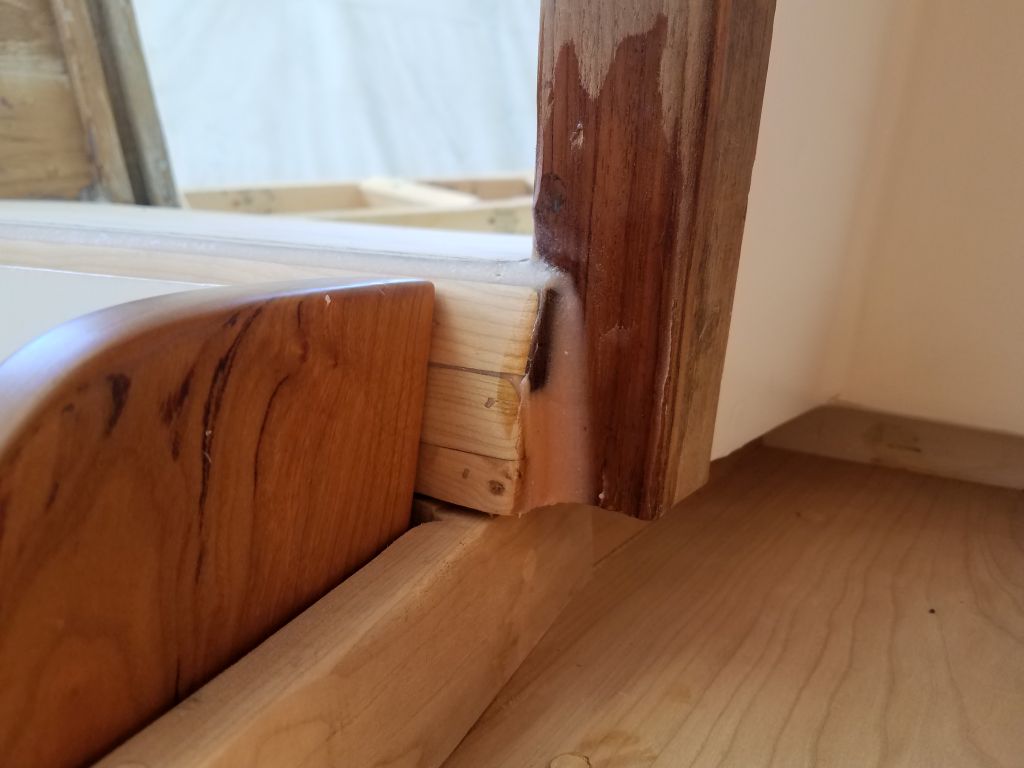
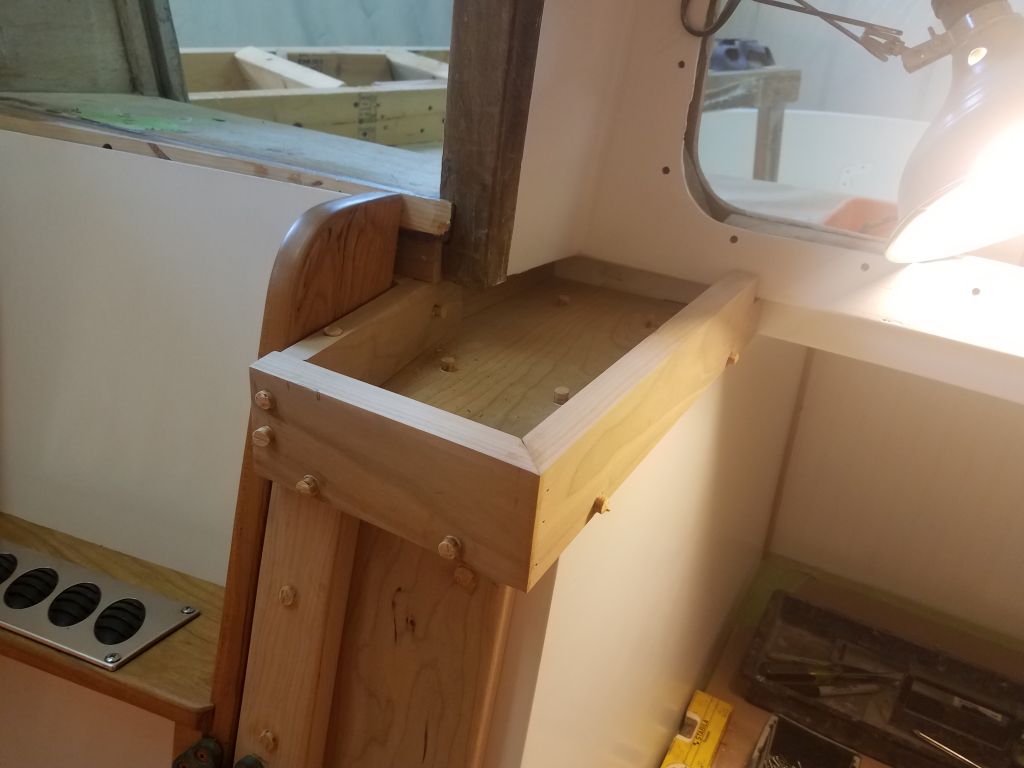
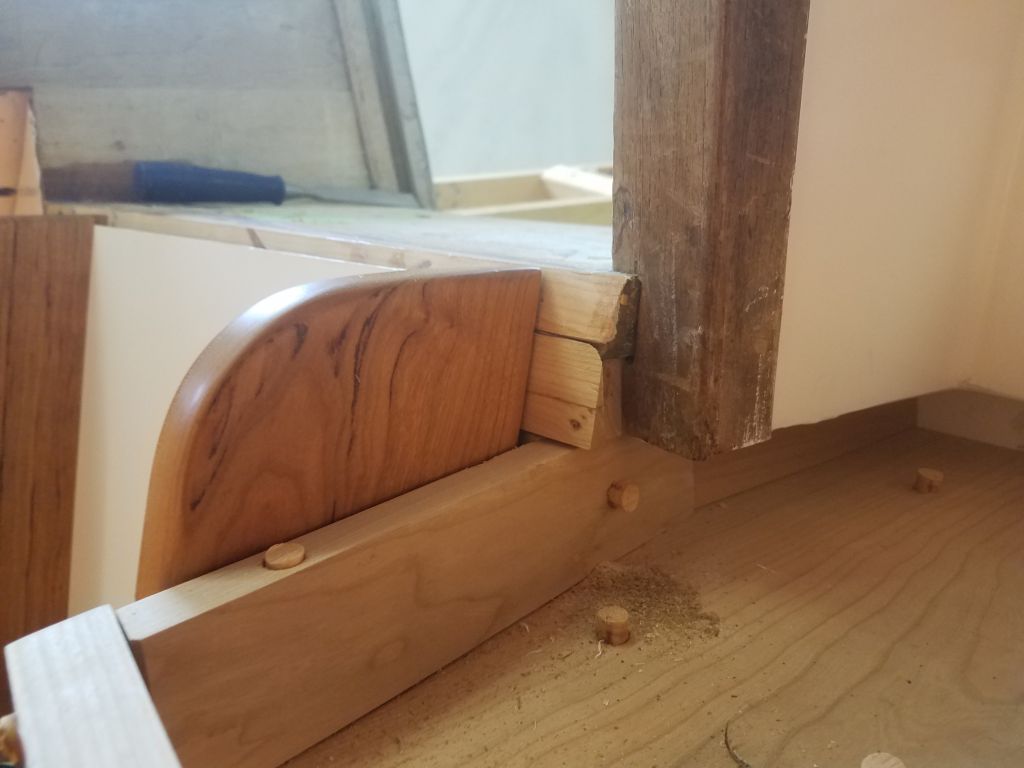
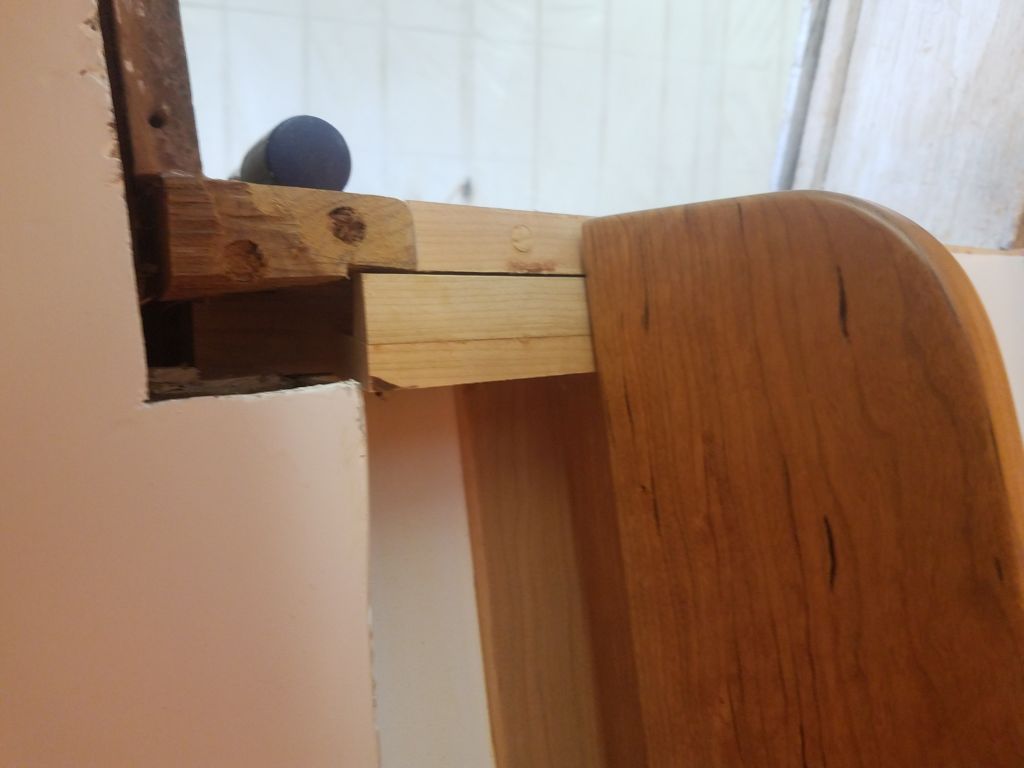
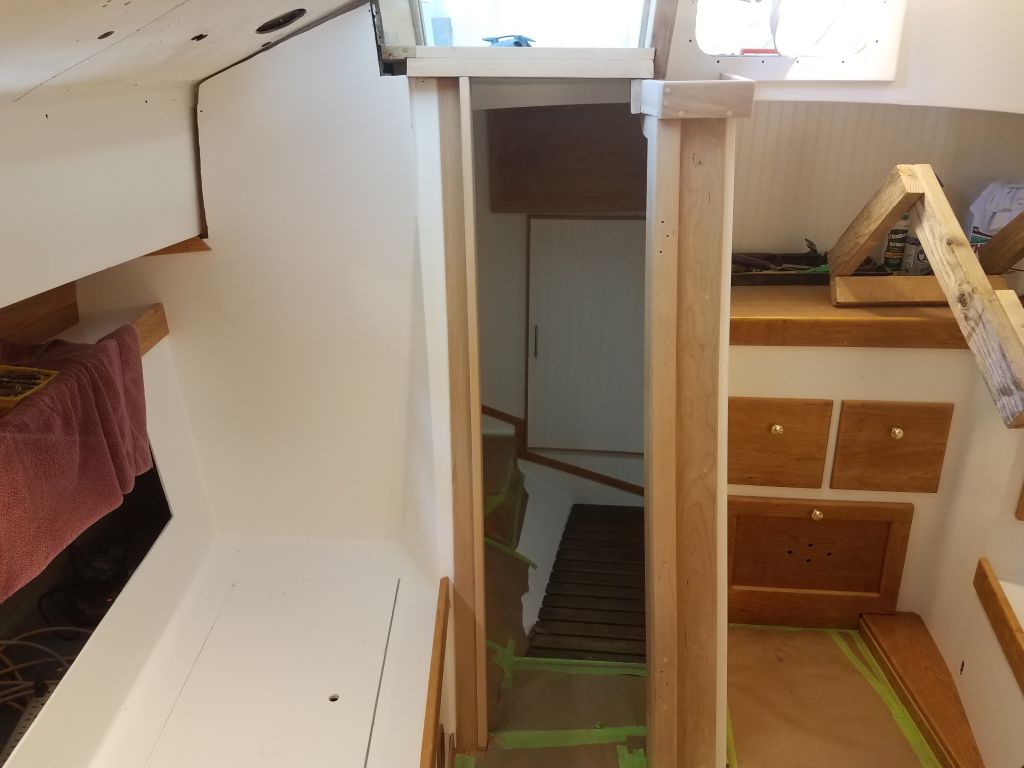
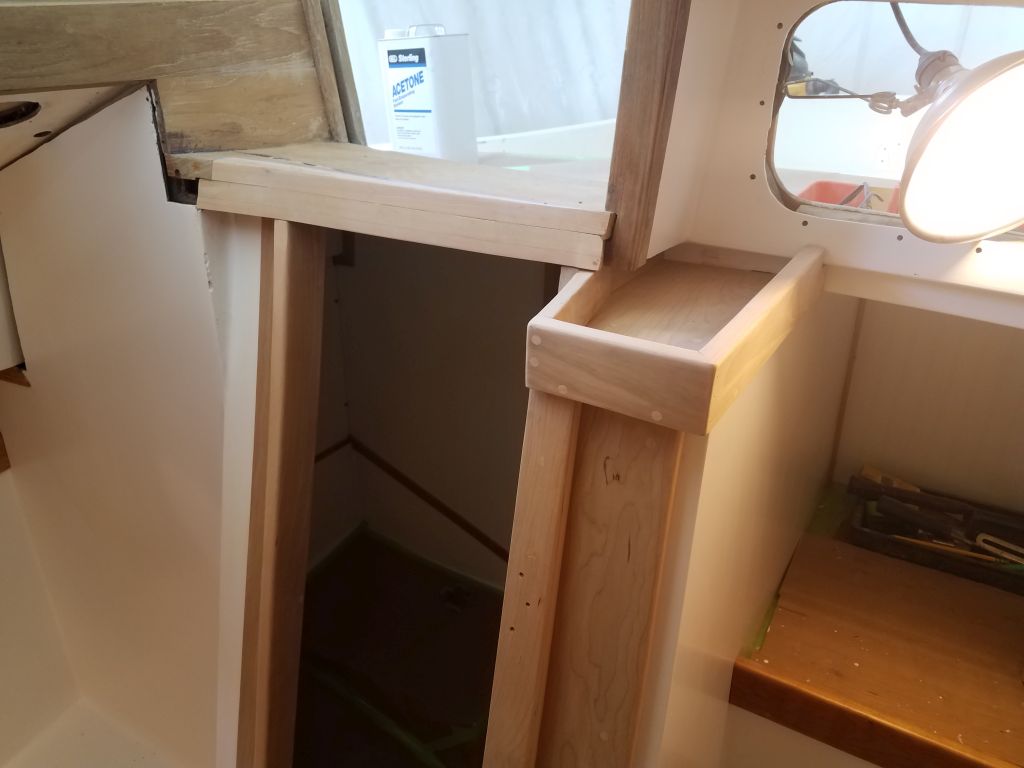
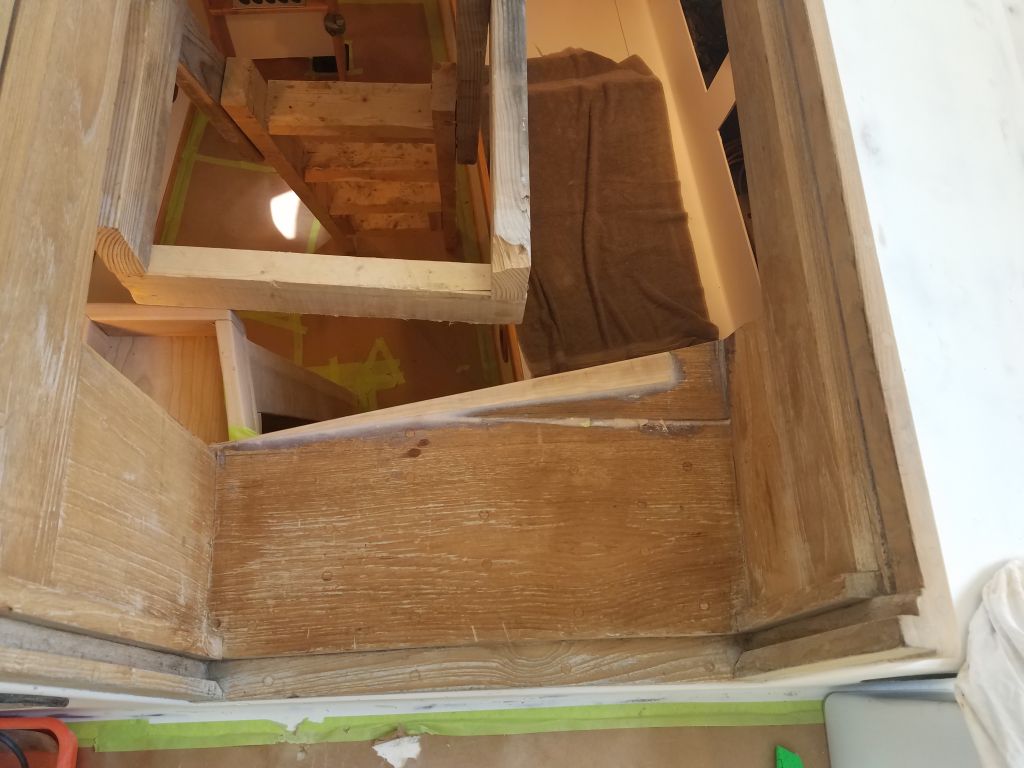
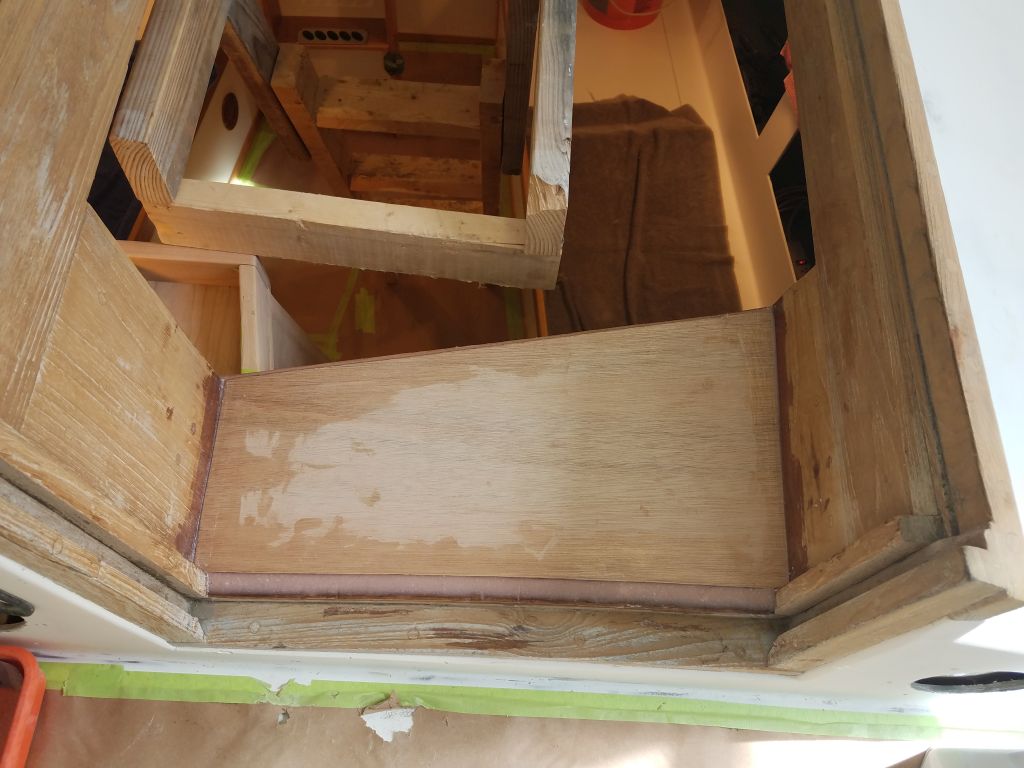
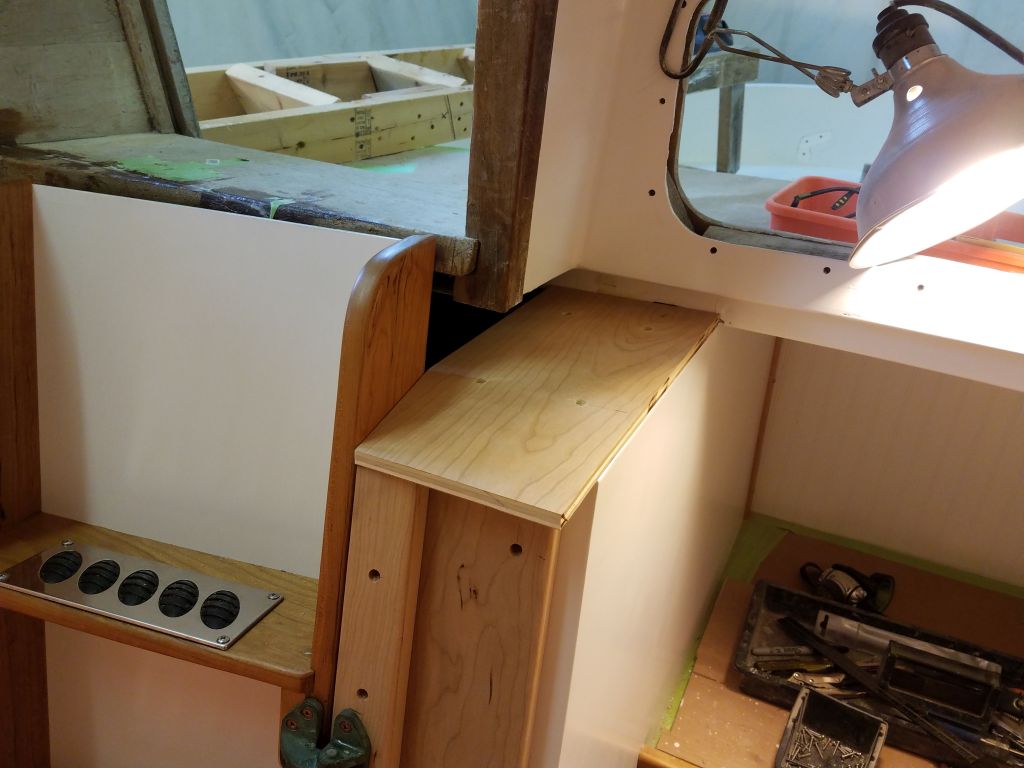
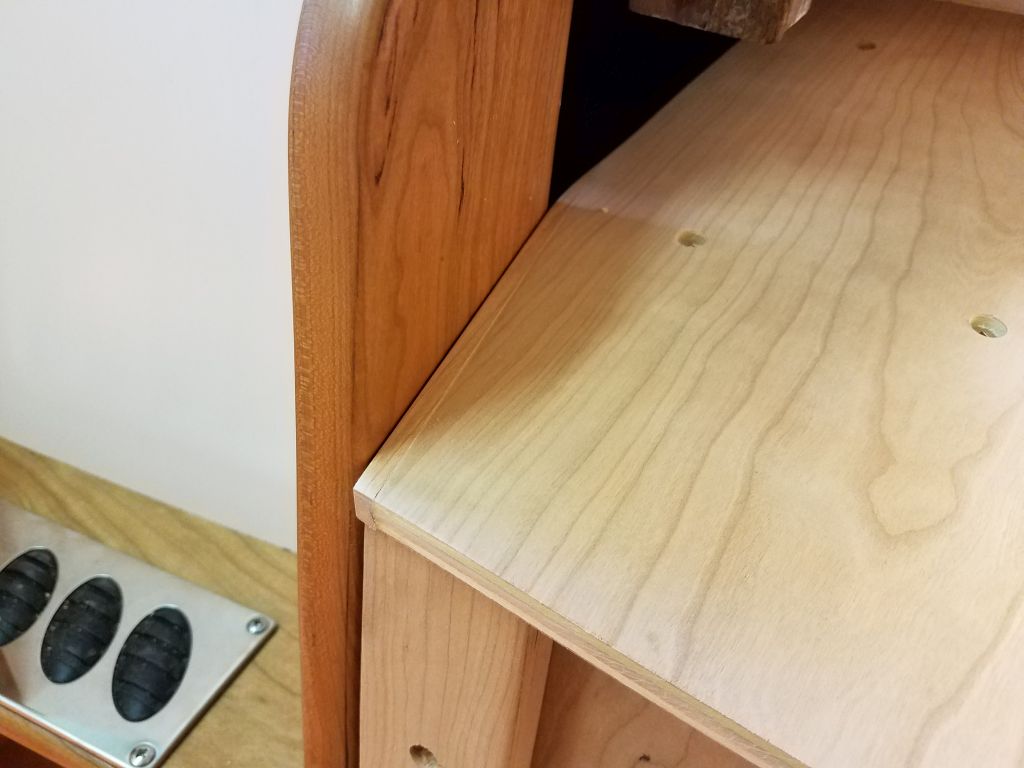
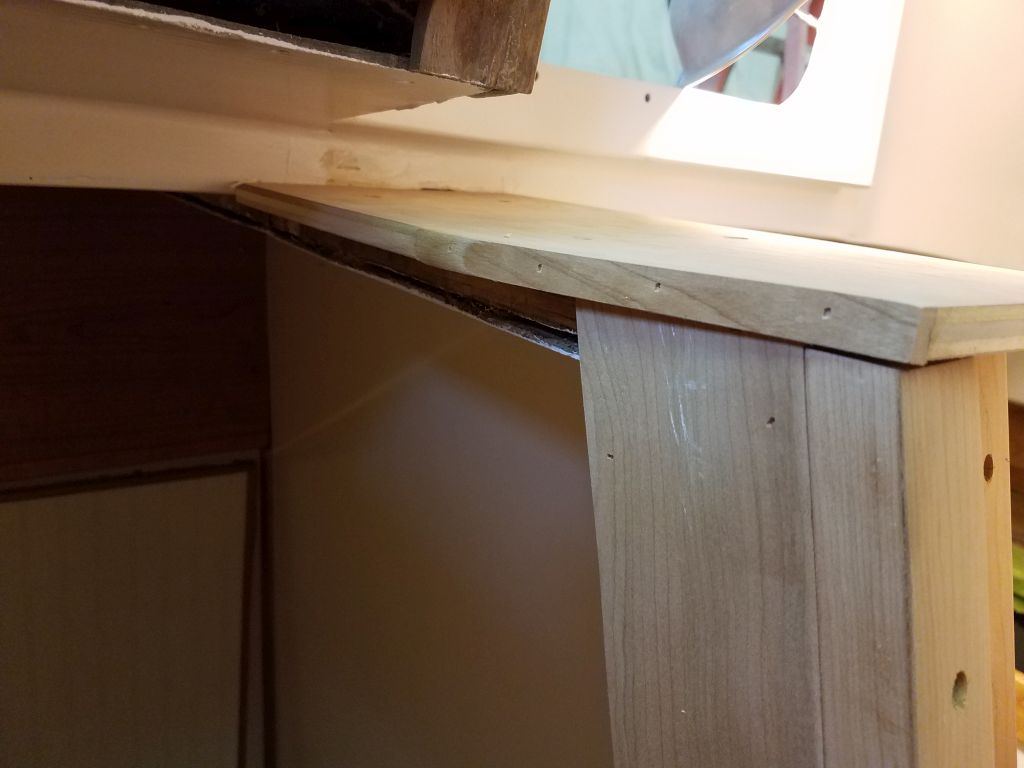
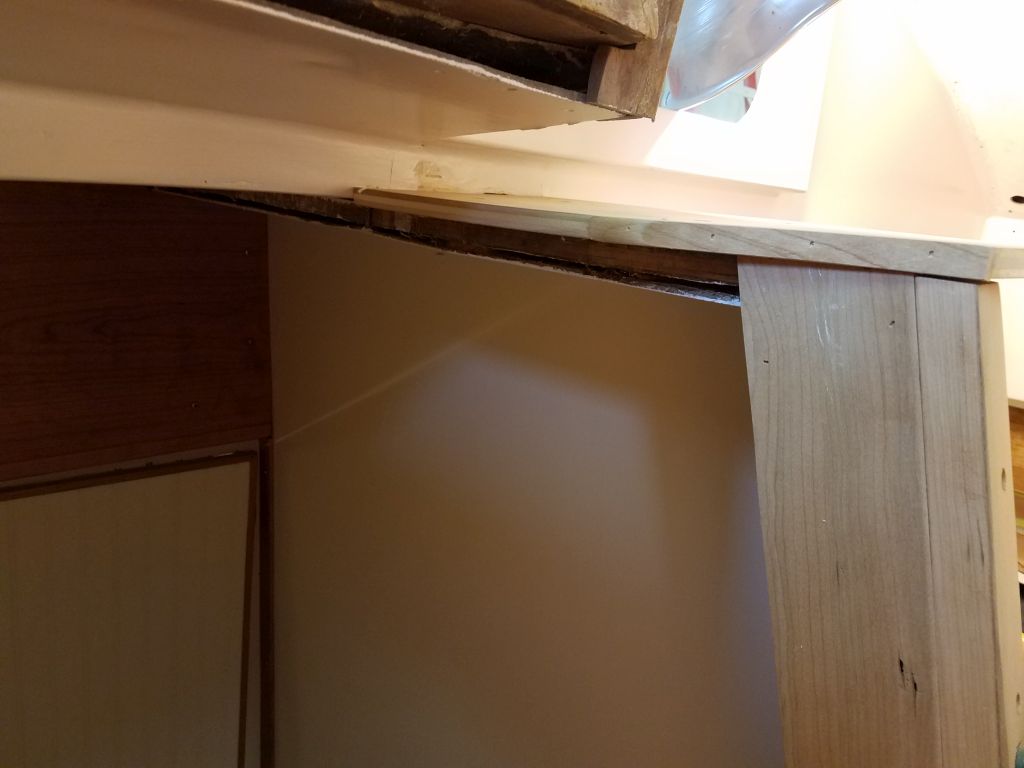
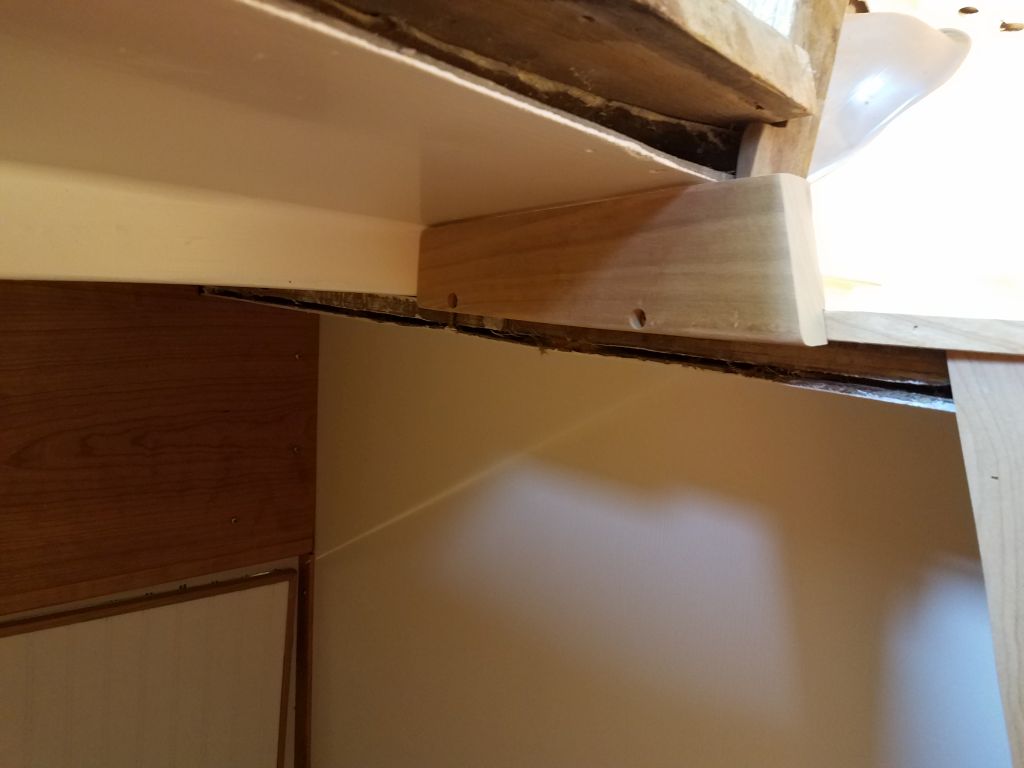
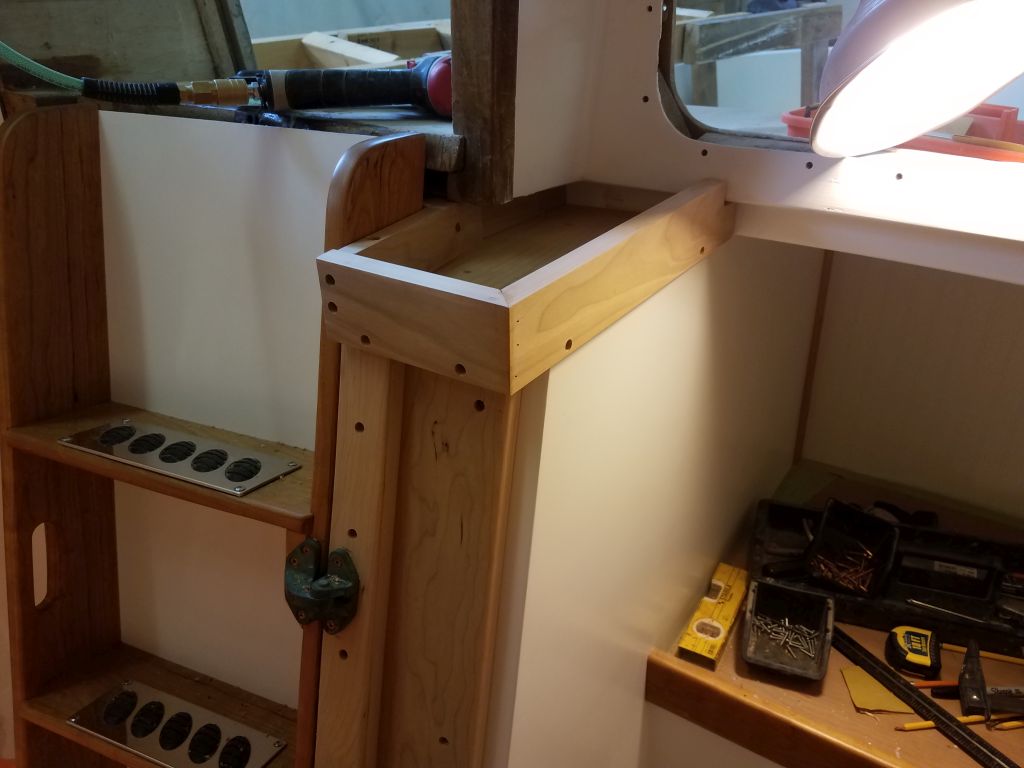
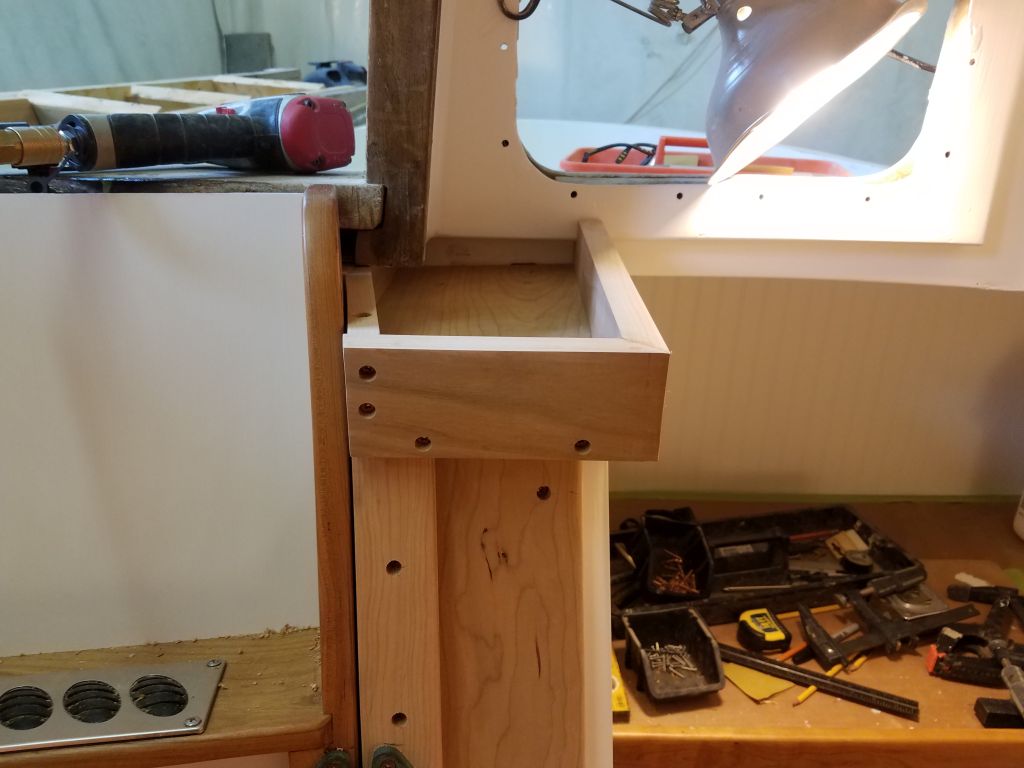
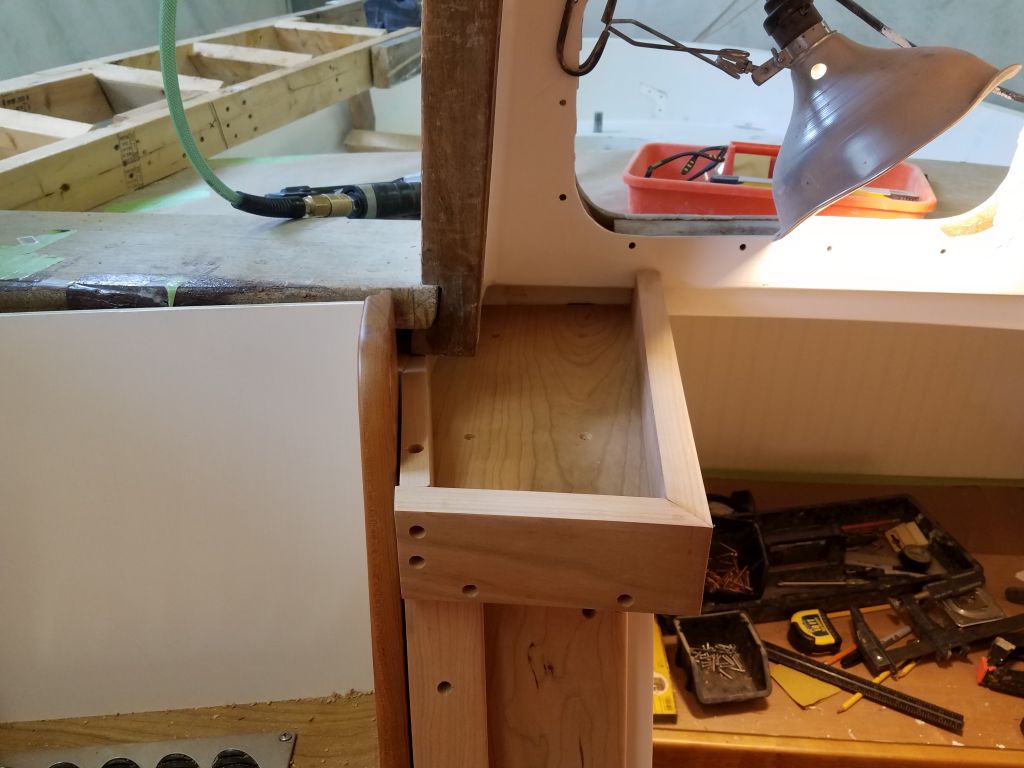
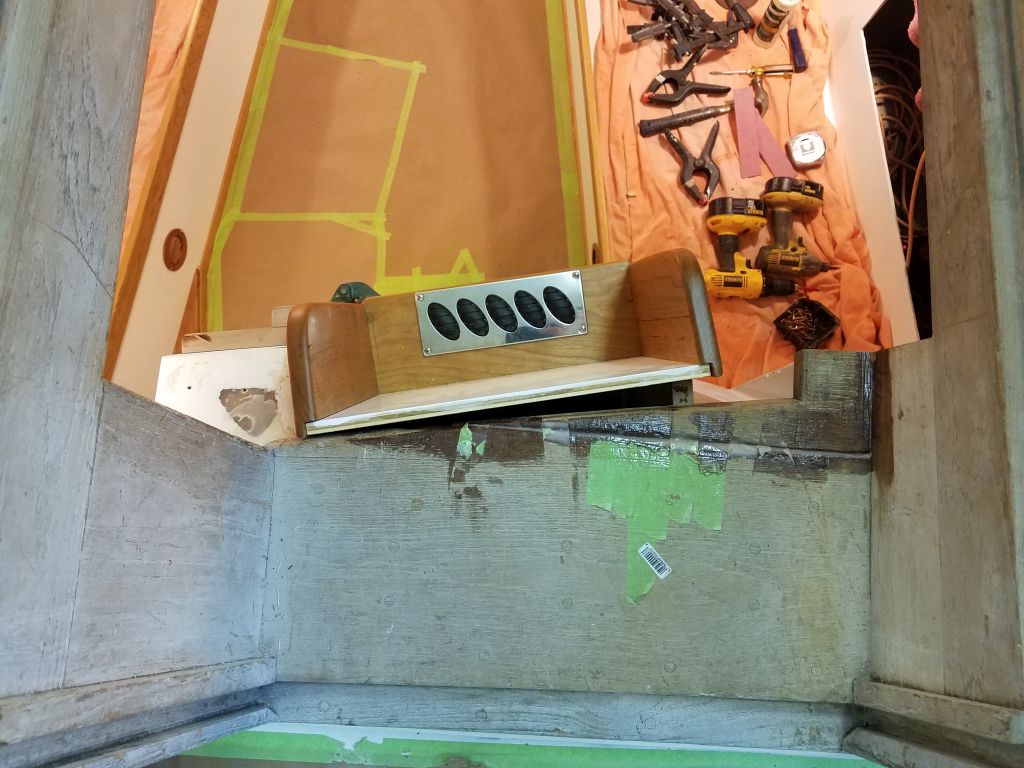
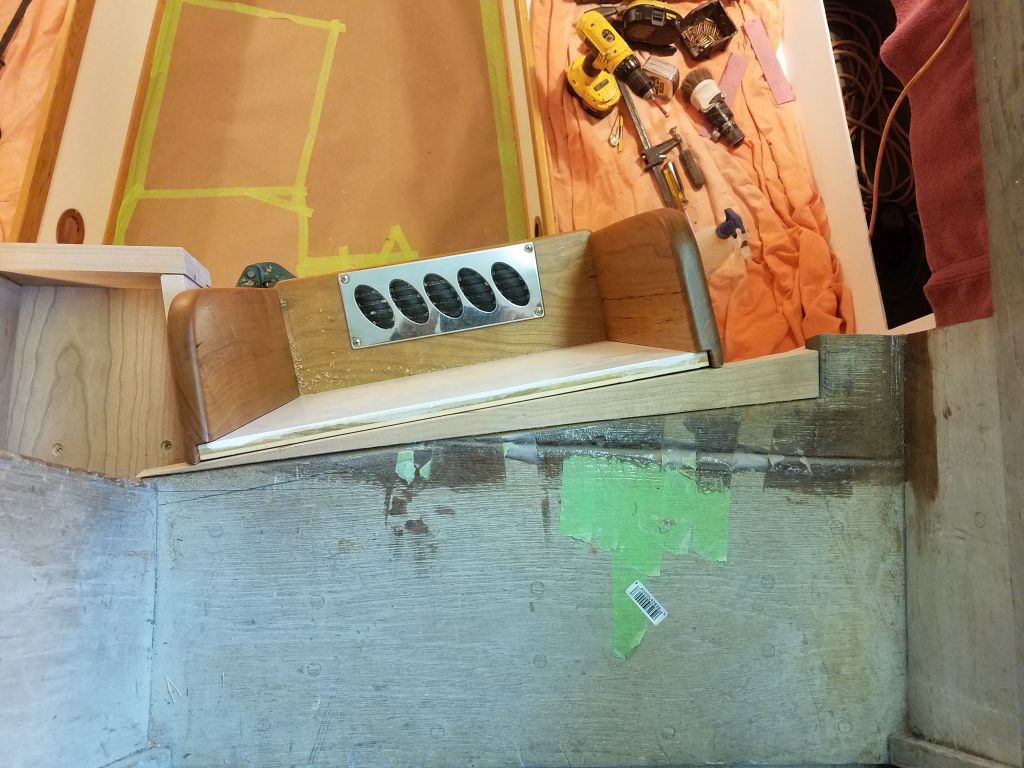
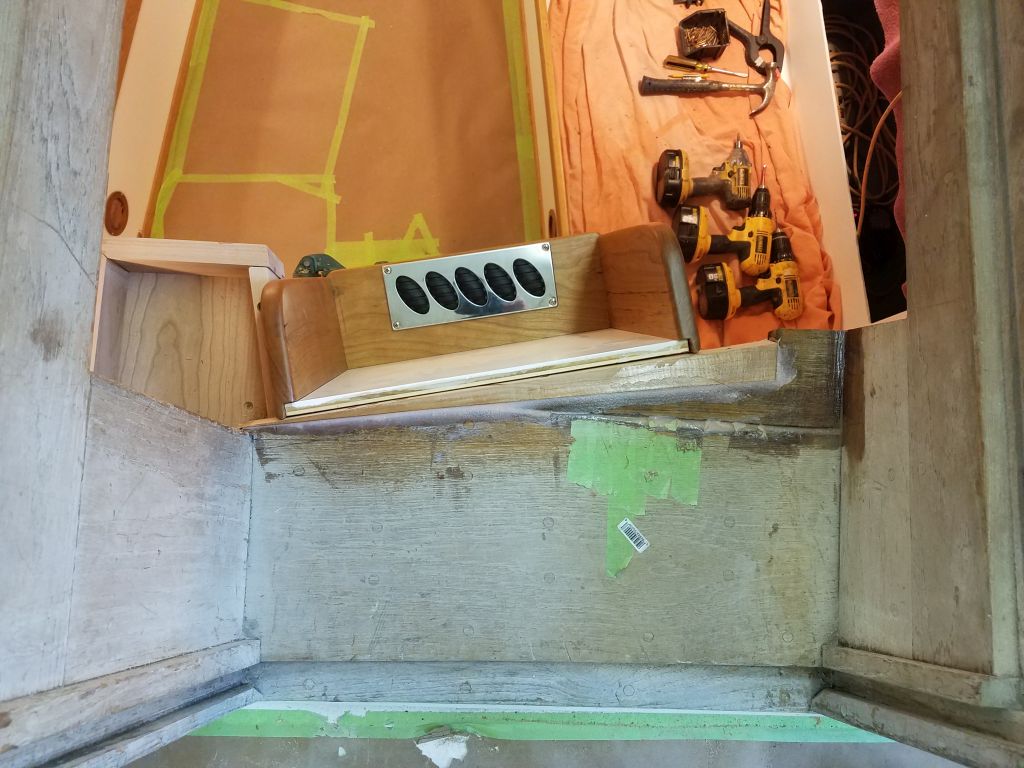
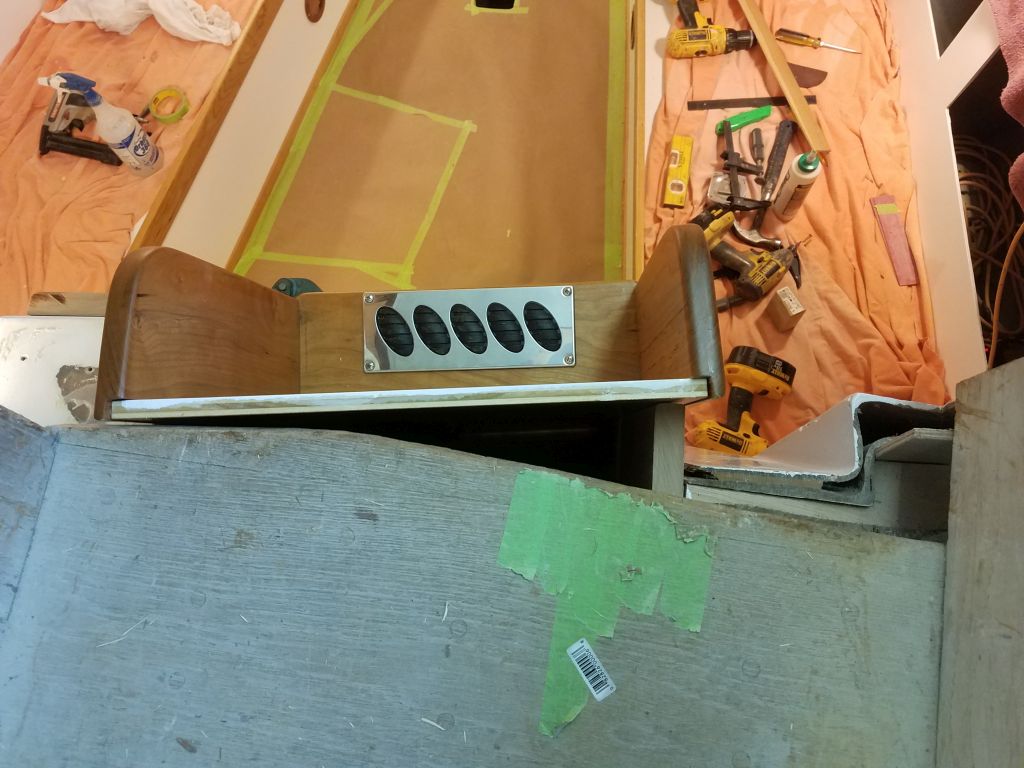
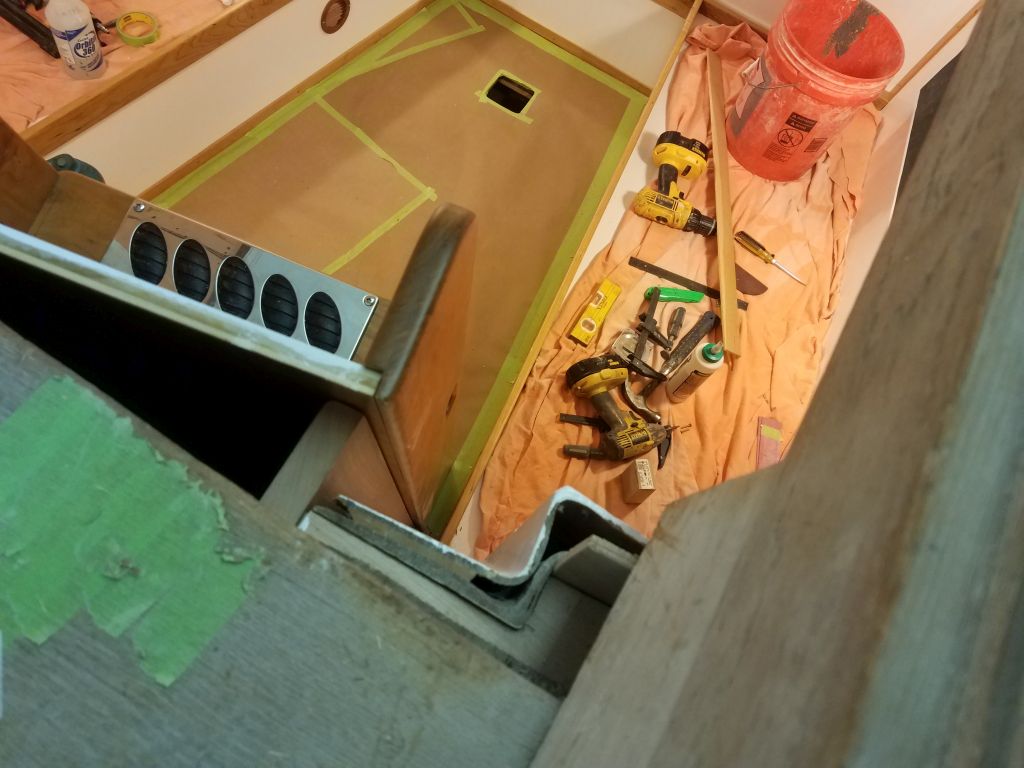
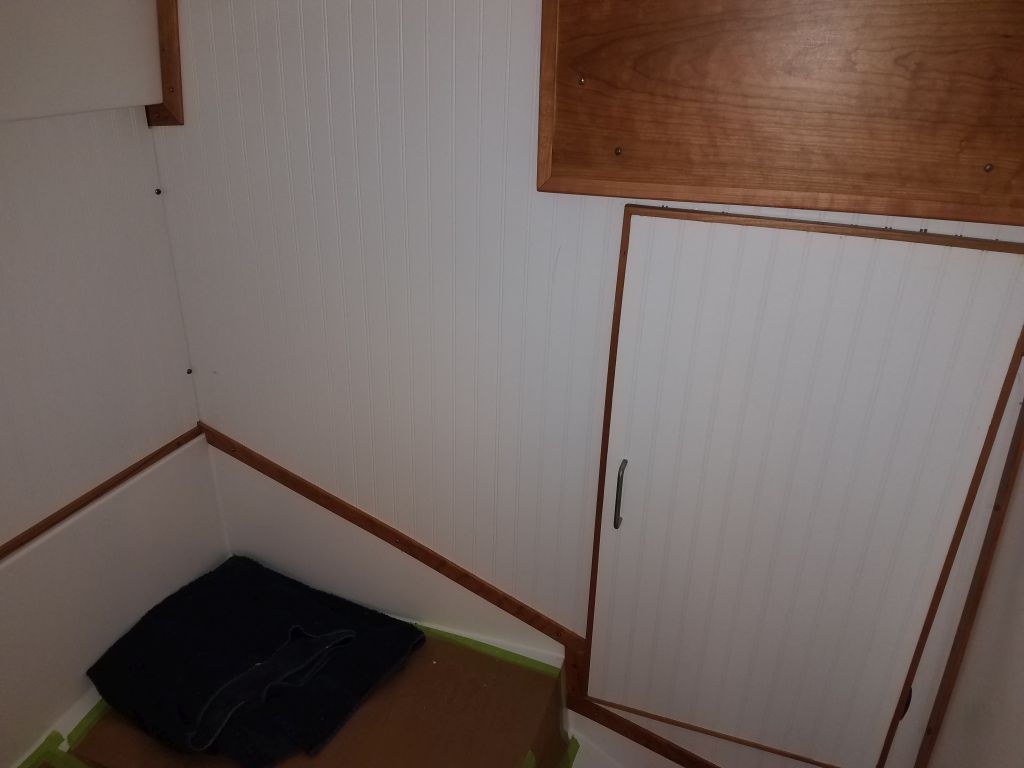
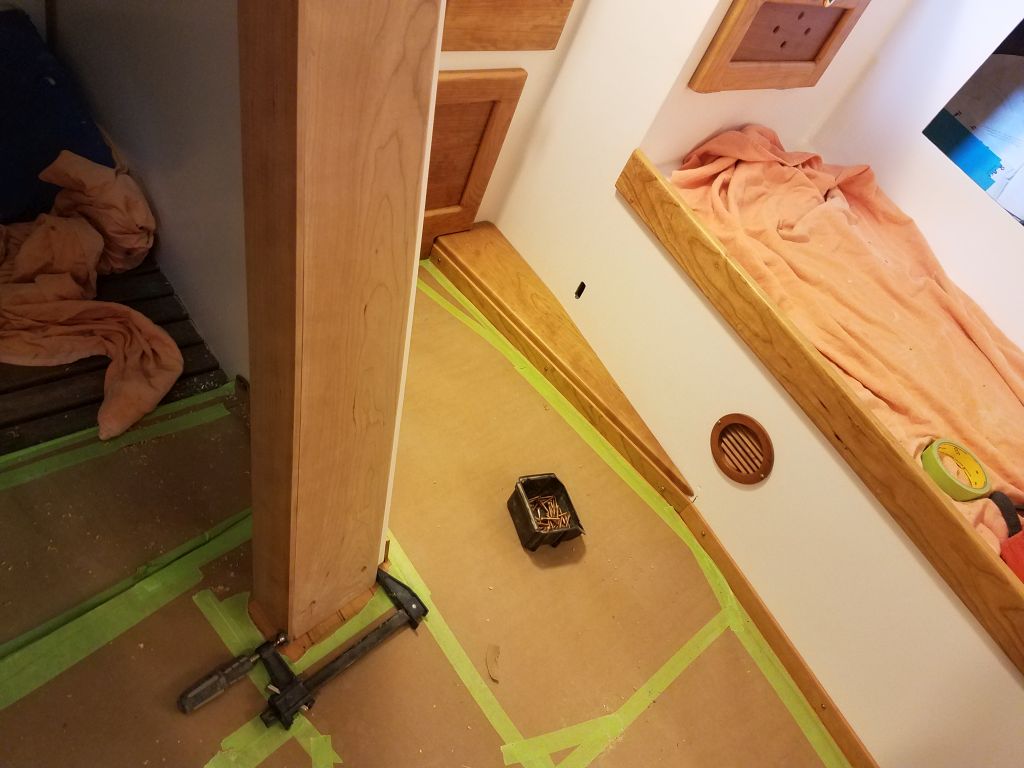
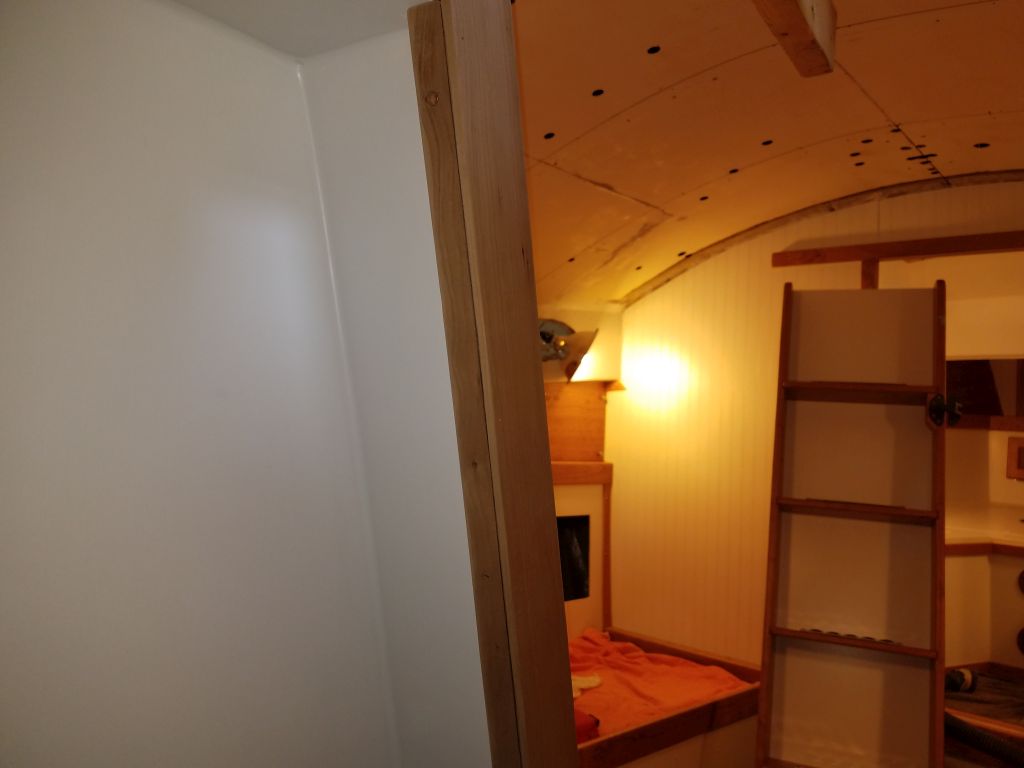
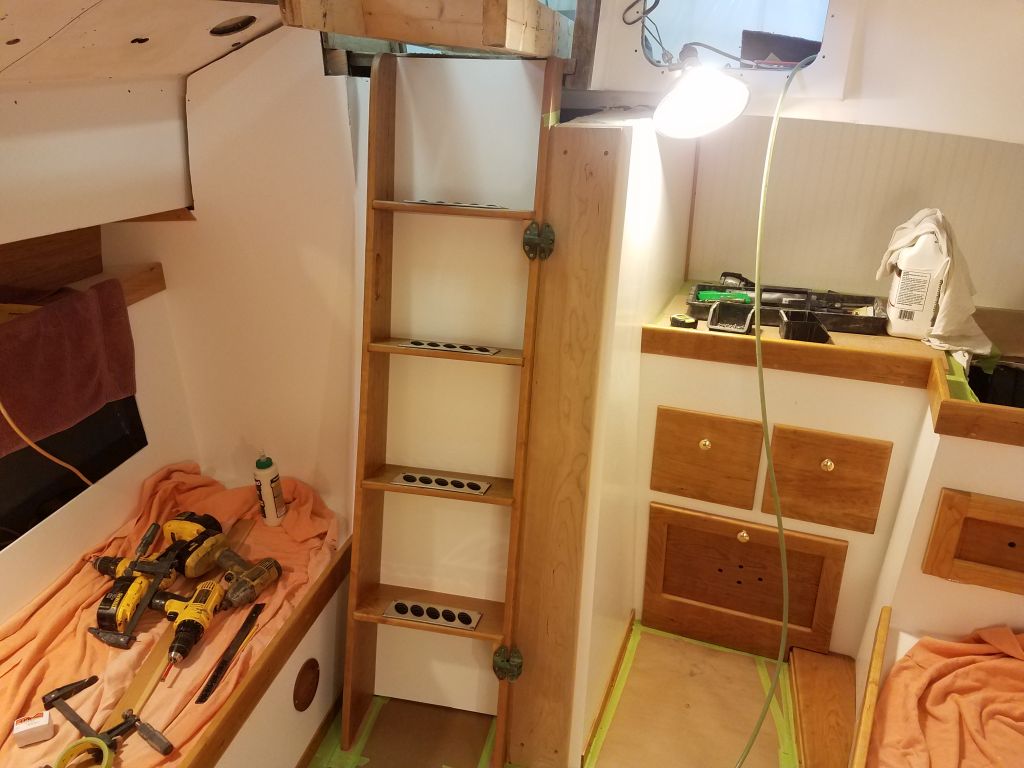
To finish up the cabin sole, I installed all the baseboard trim pieces.  In the galley, I temporarily installed the solid cherry piece on the little raised area to show the completed appearance, though this piece required more varnish before final installation.

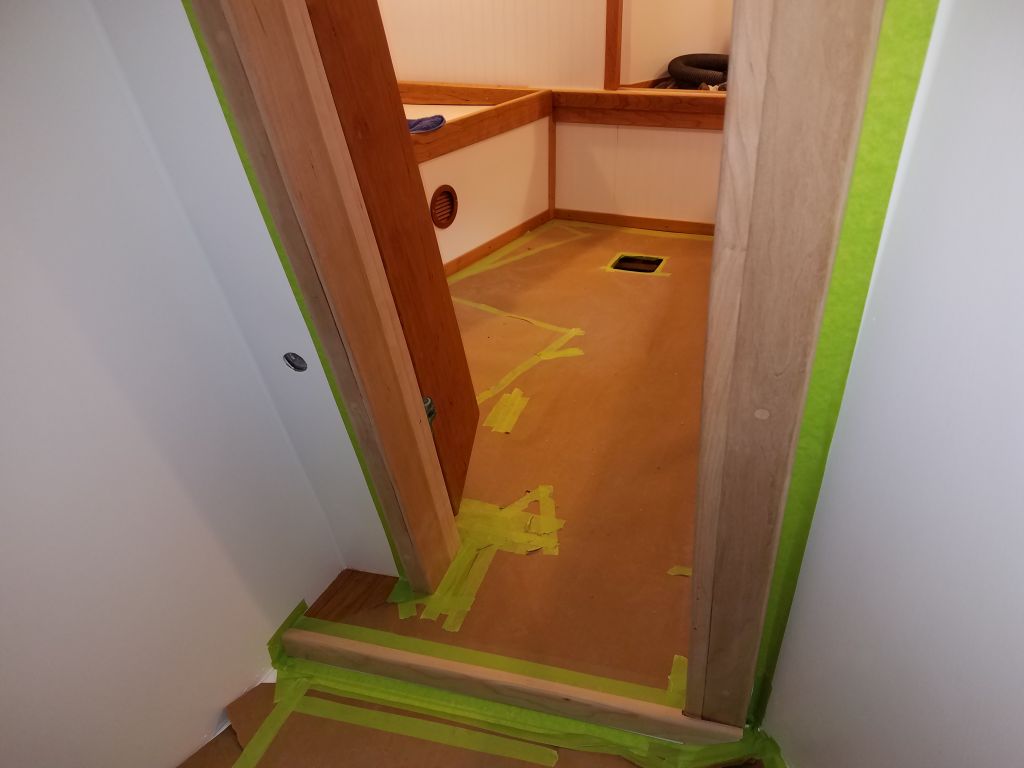
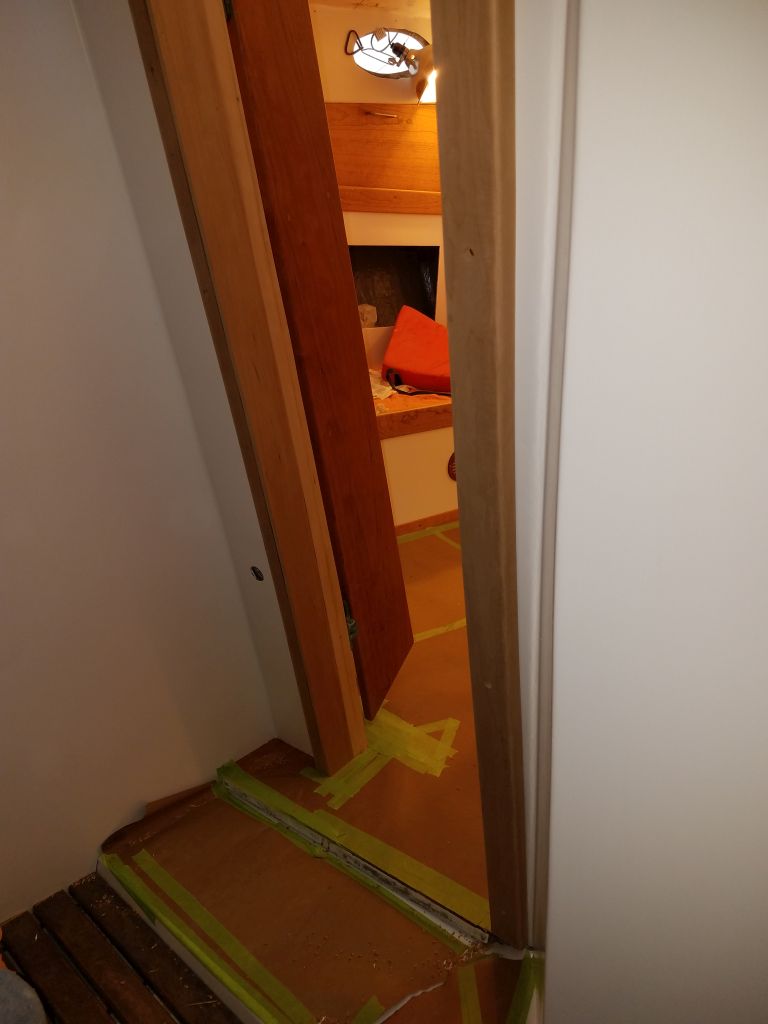
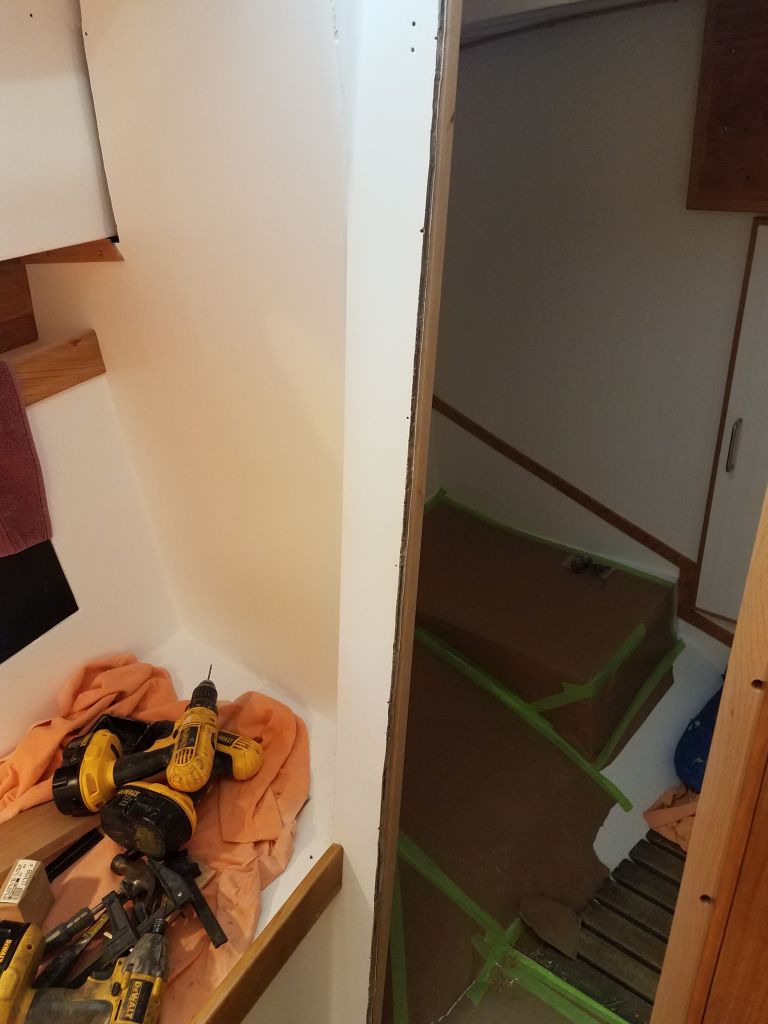
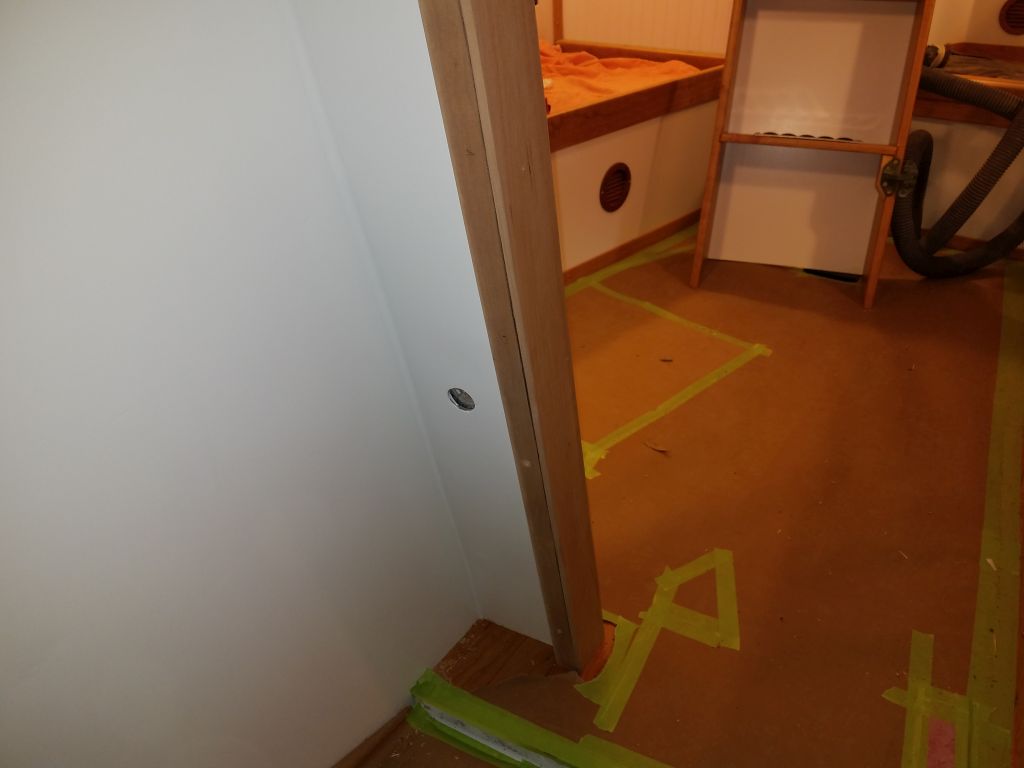
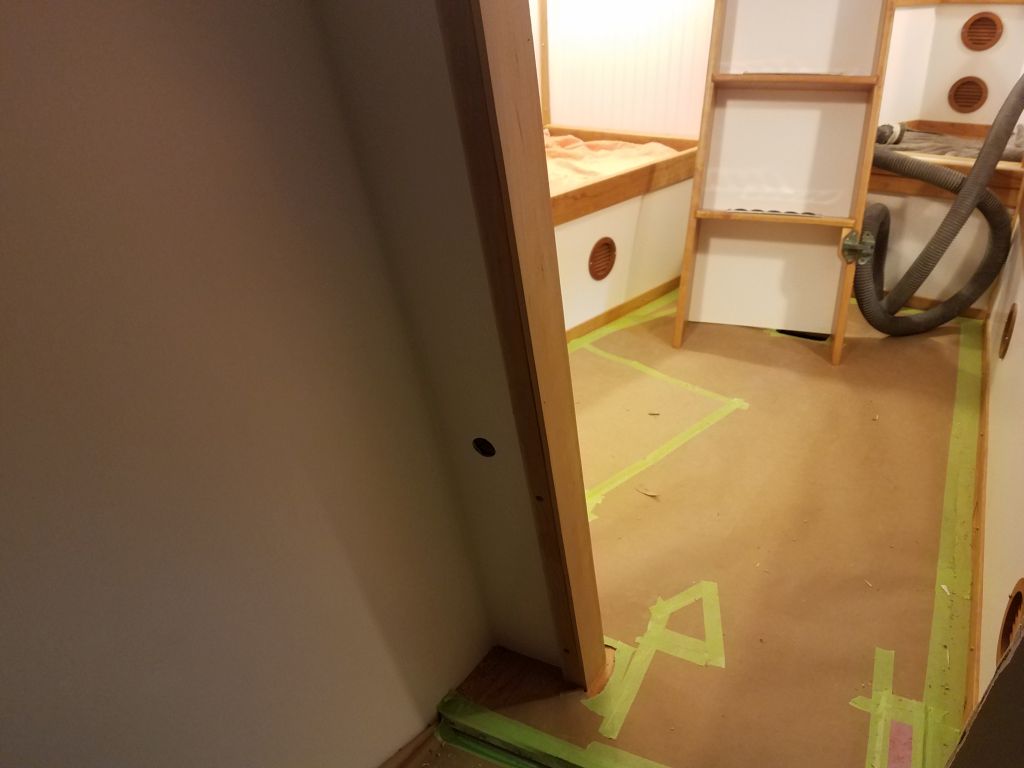
Afterwards, I installed paper over the main cabin sole to protect it during the rest of construction.  I added some in the head as well, since I’d be working in there later.

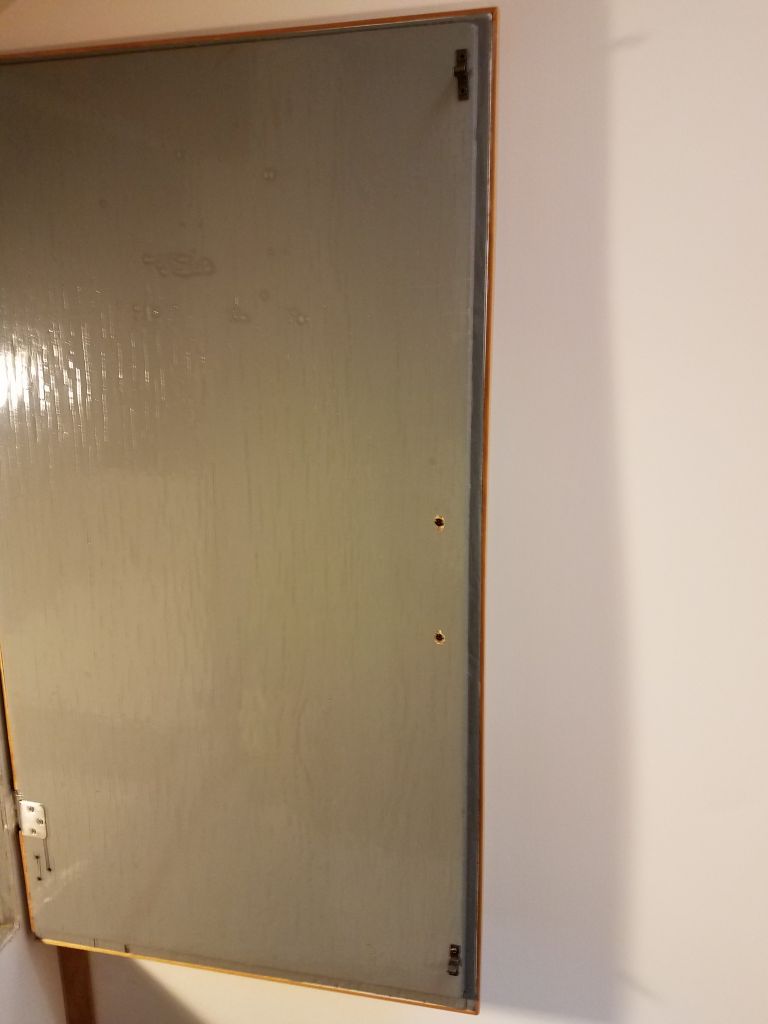
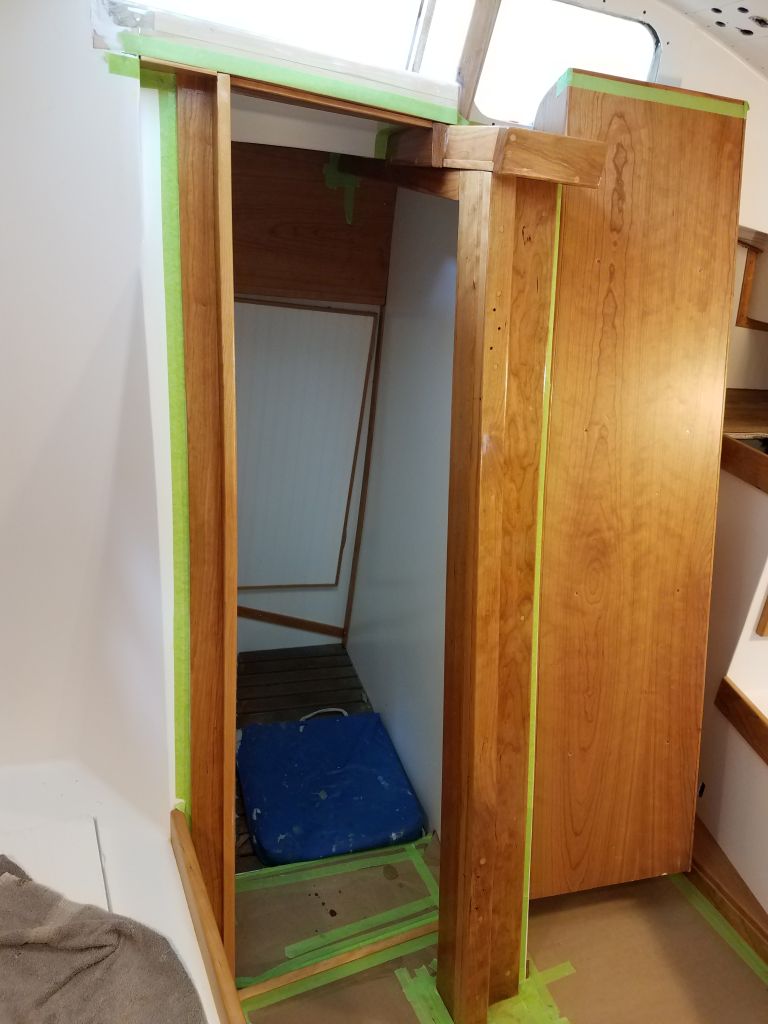
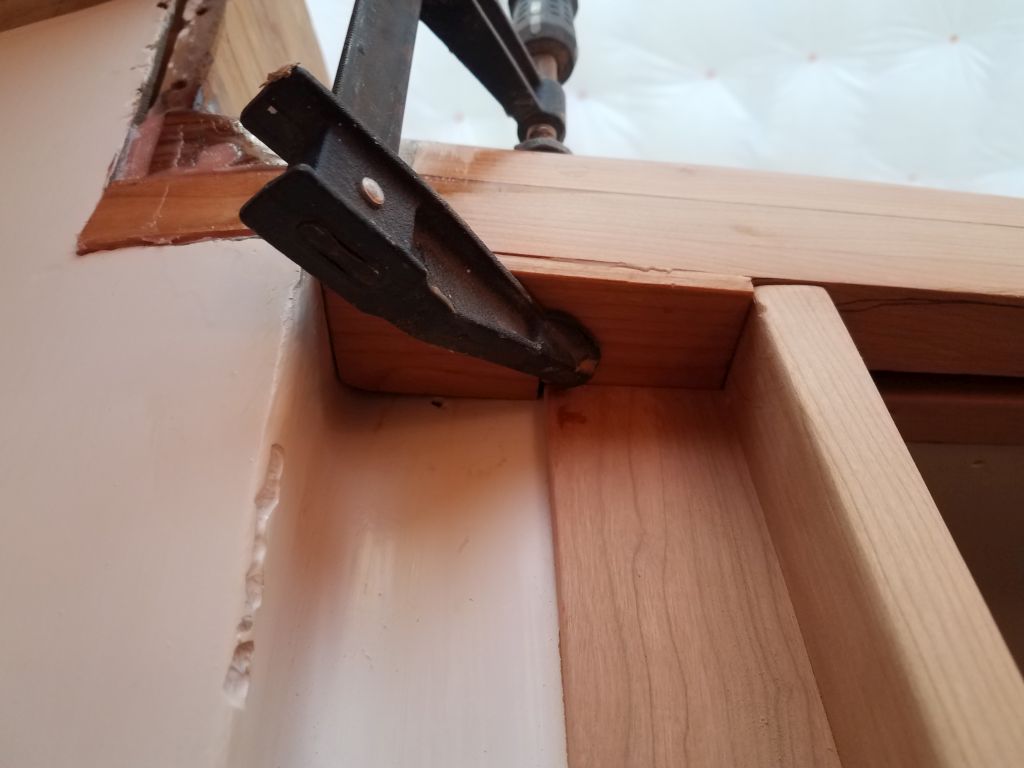
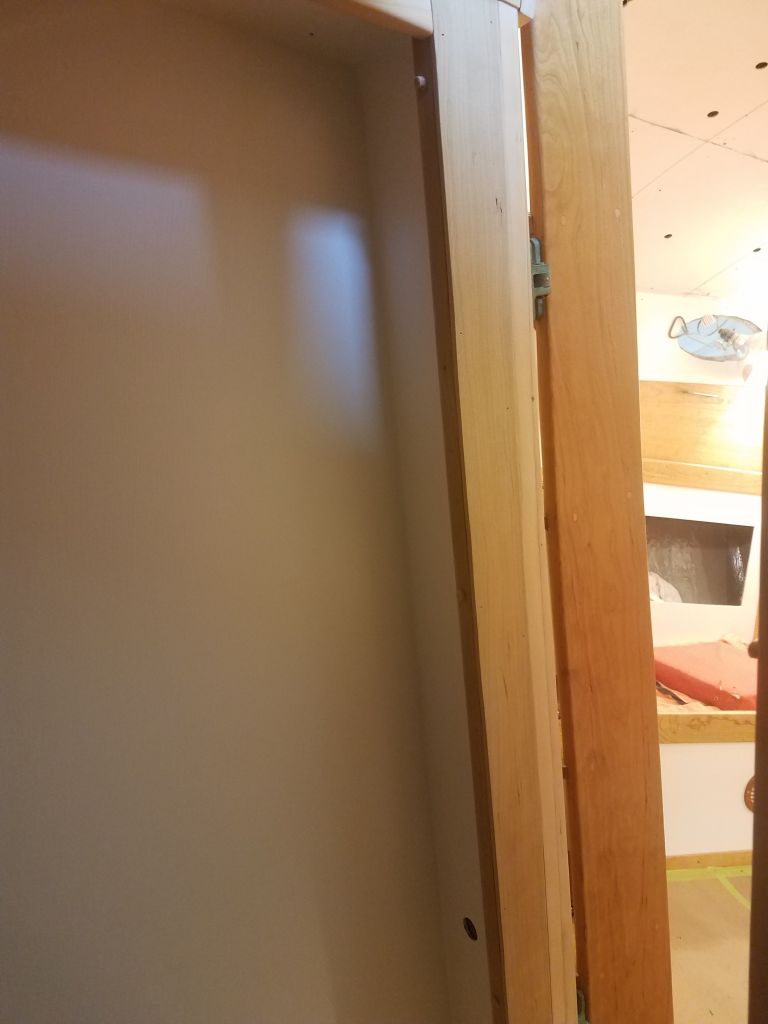
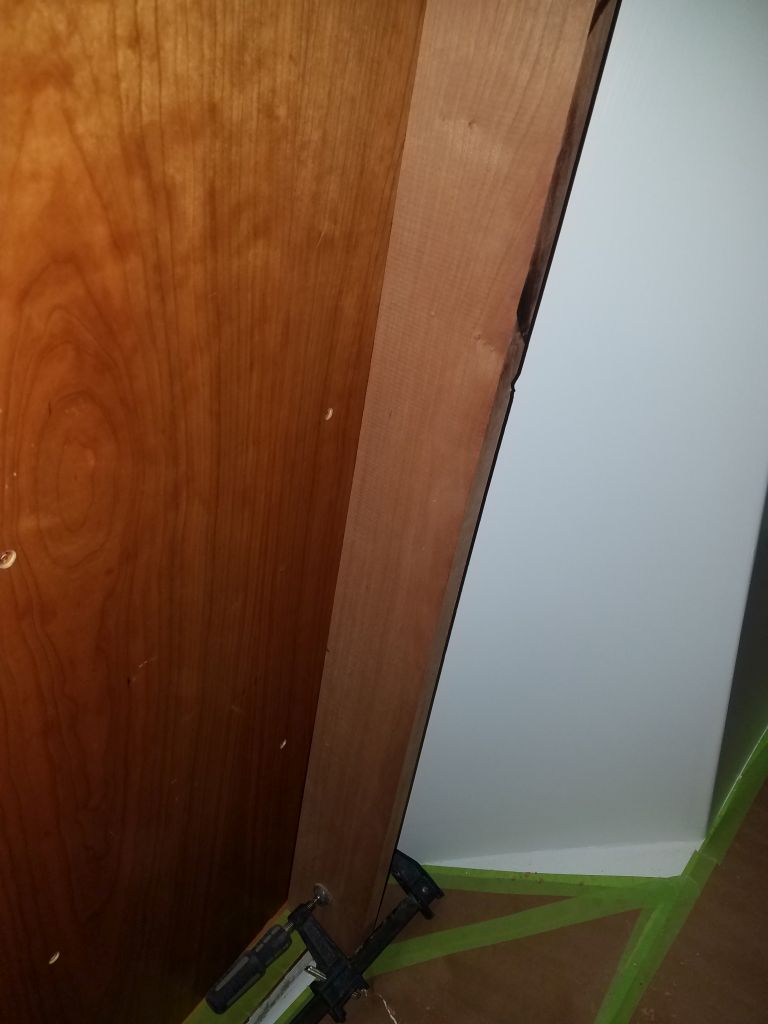
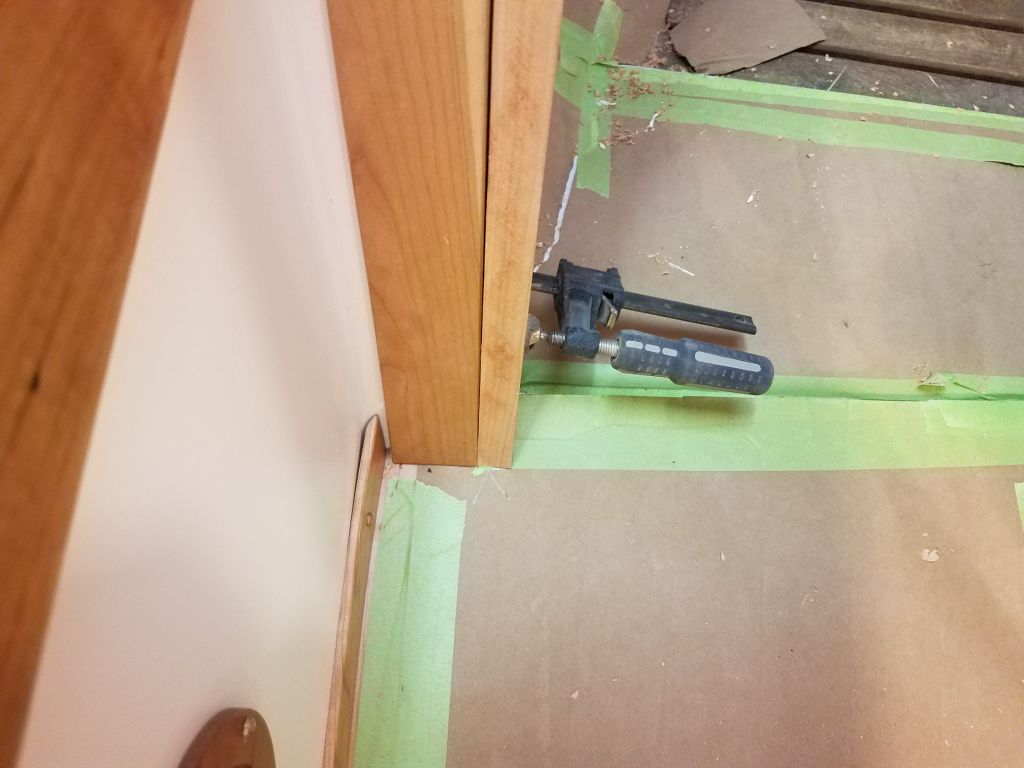
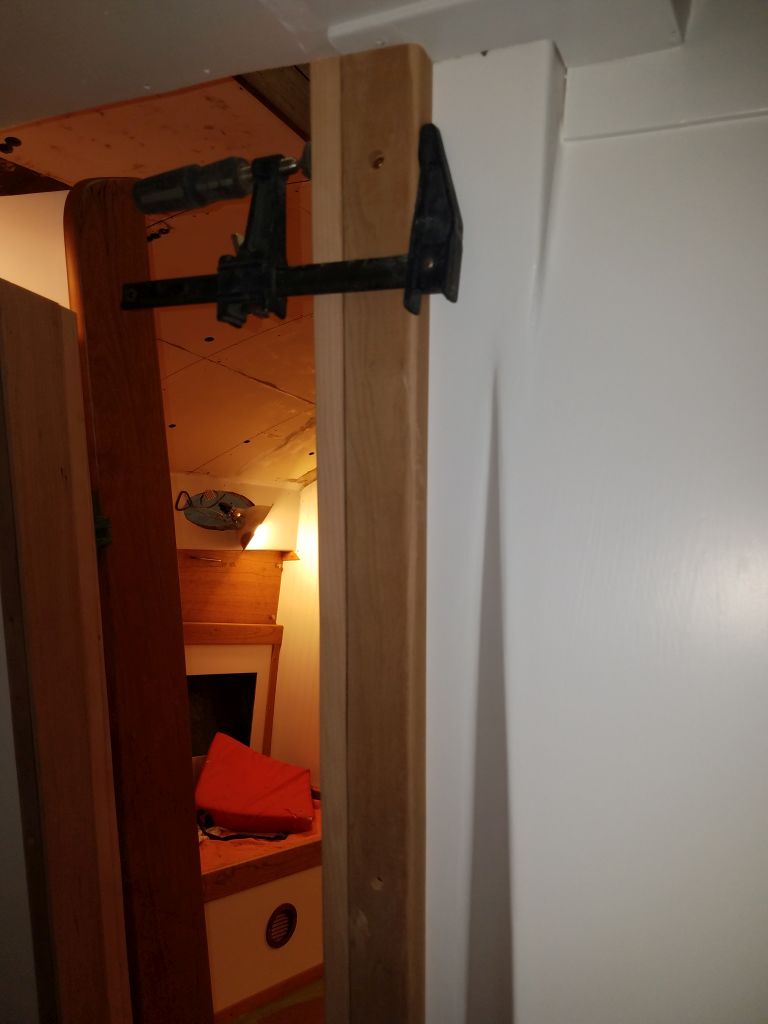
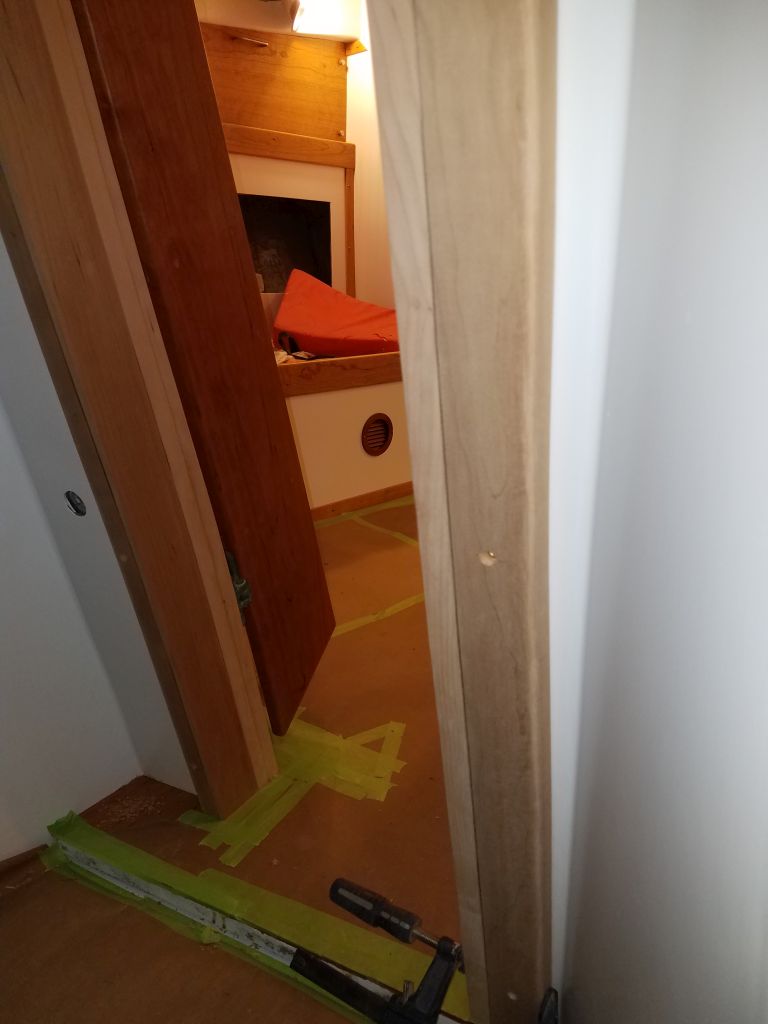
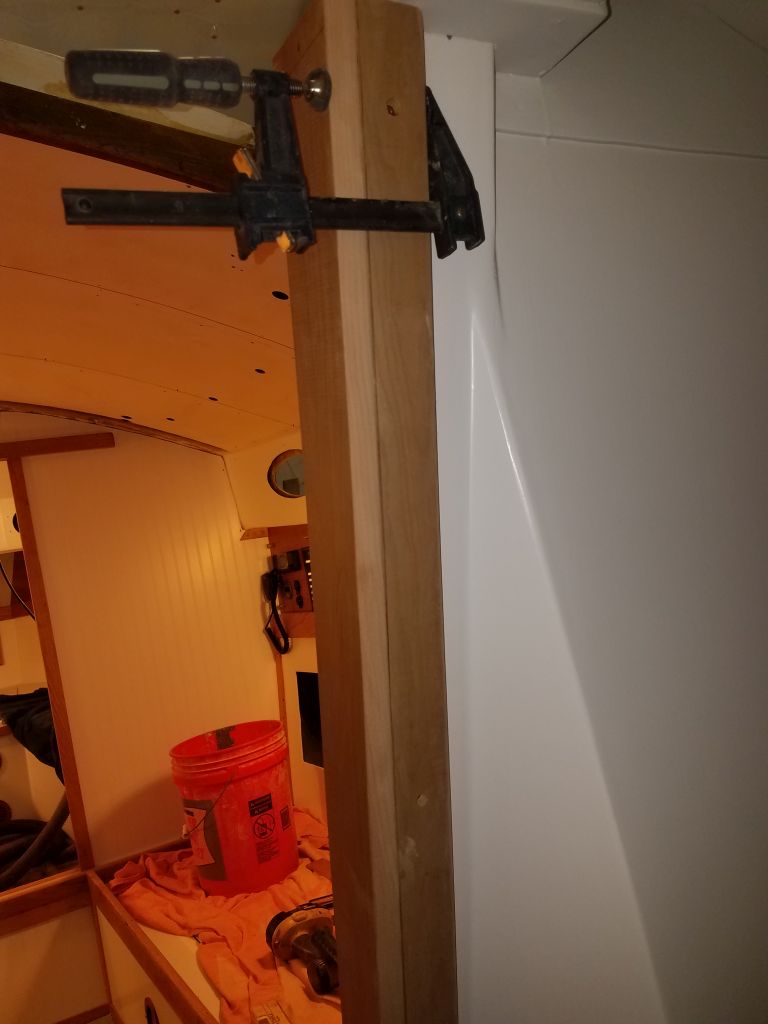
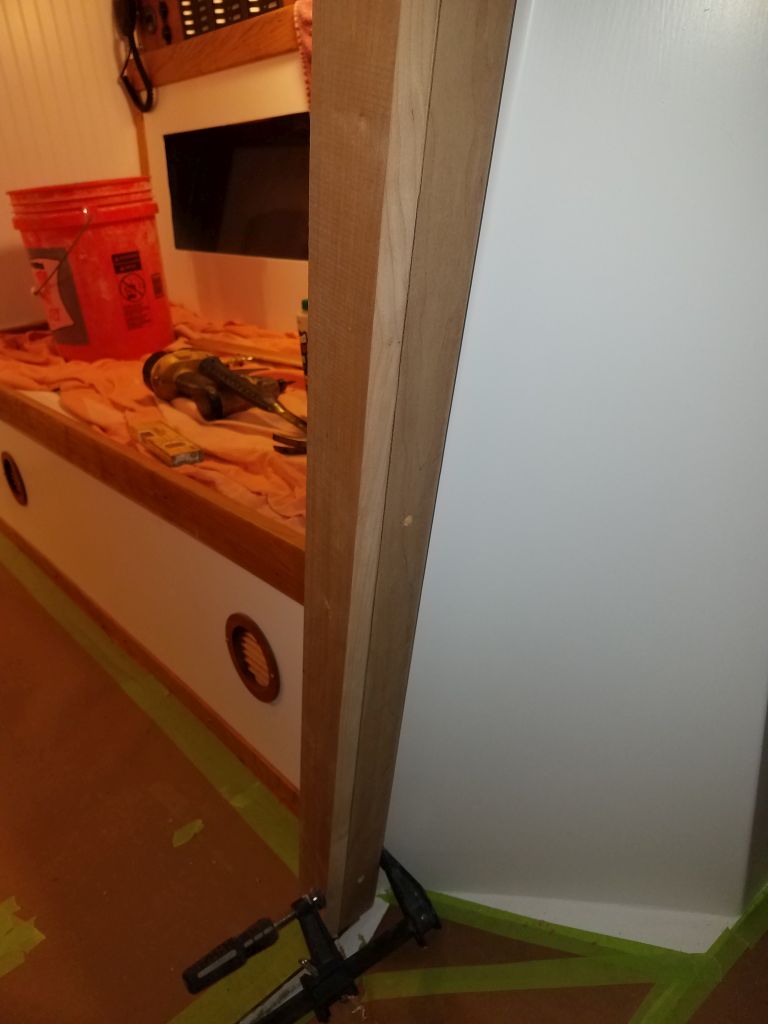
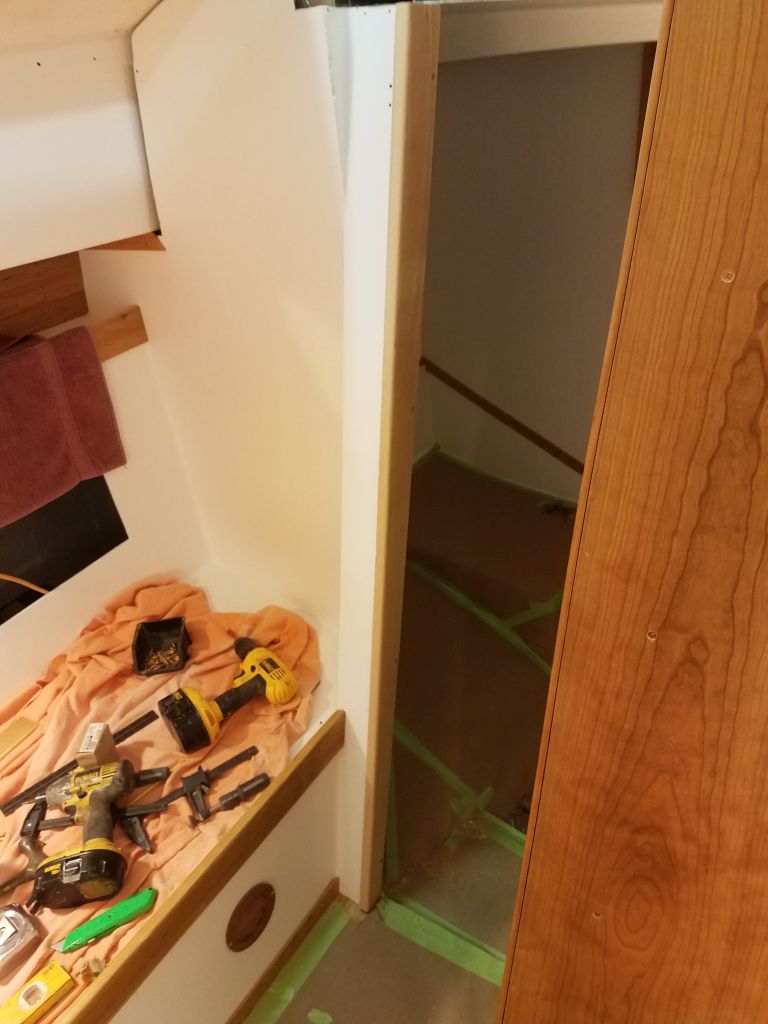
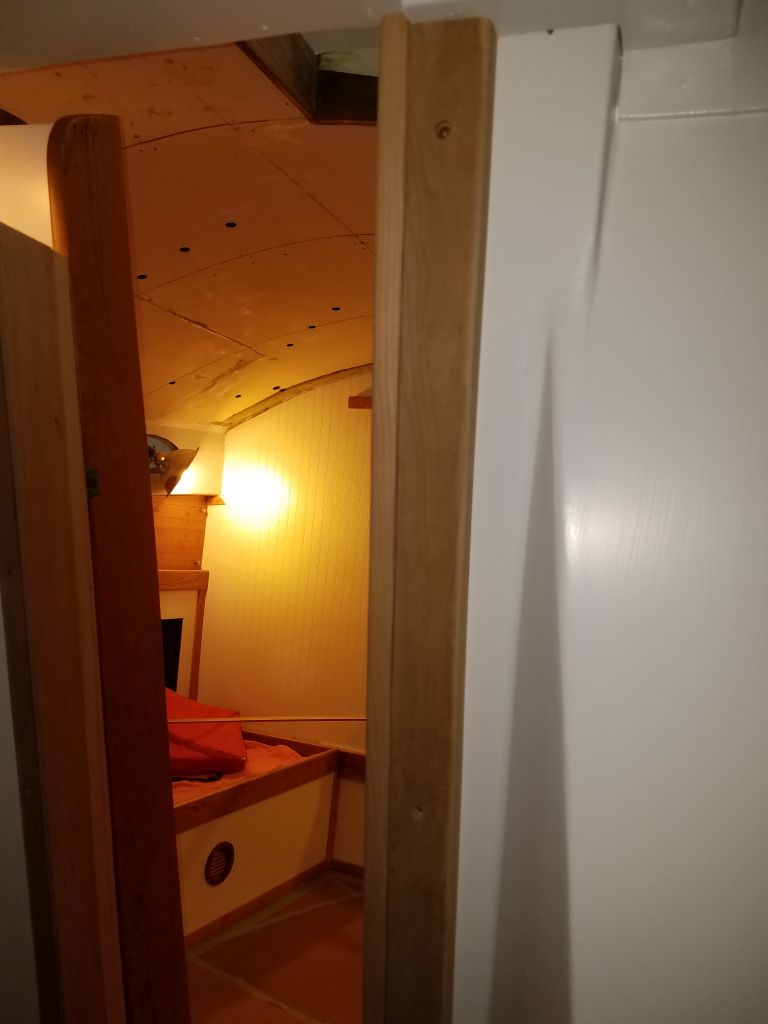
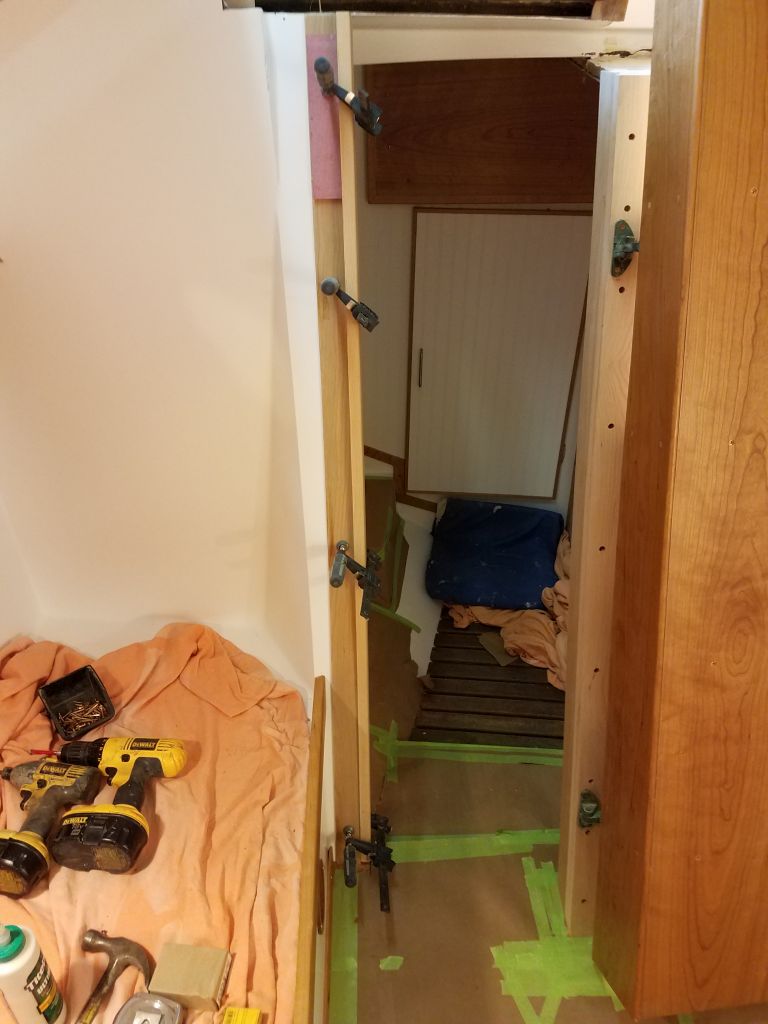
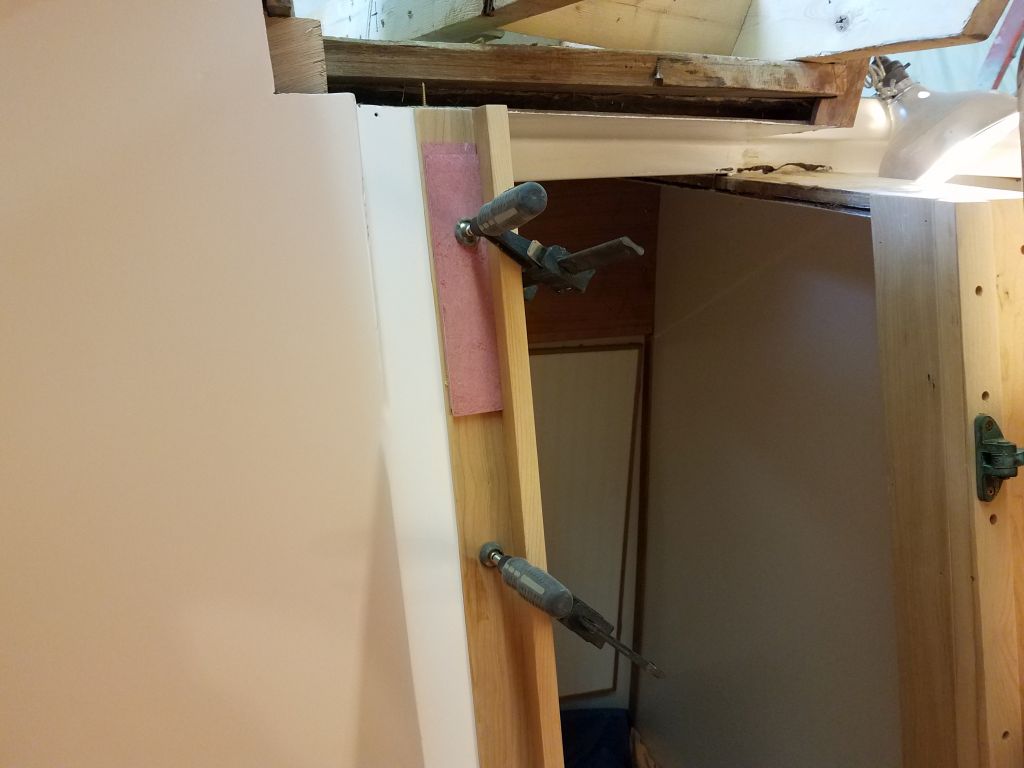
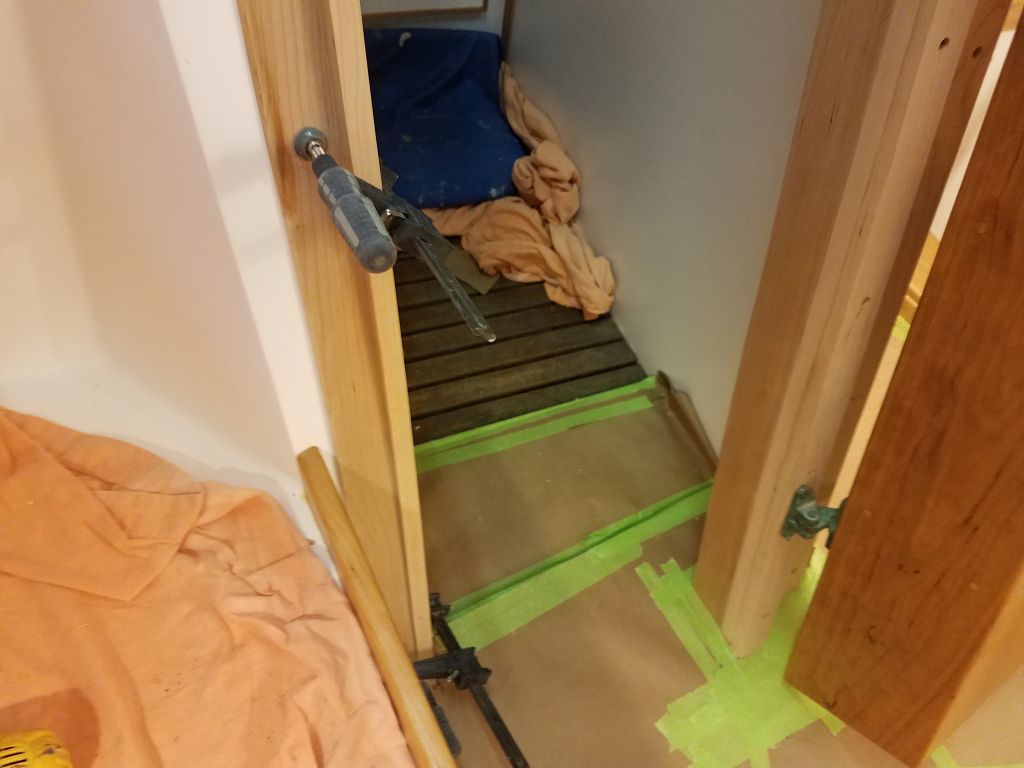
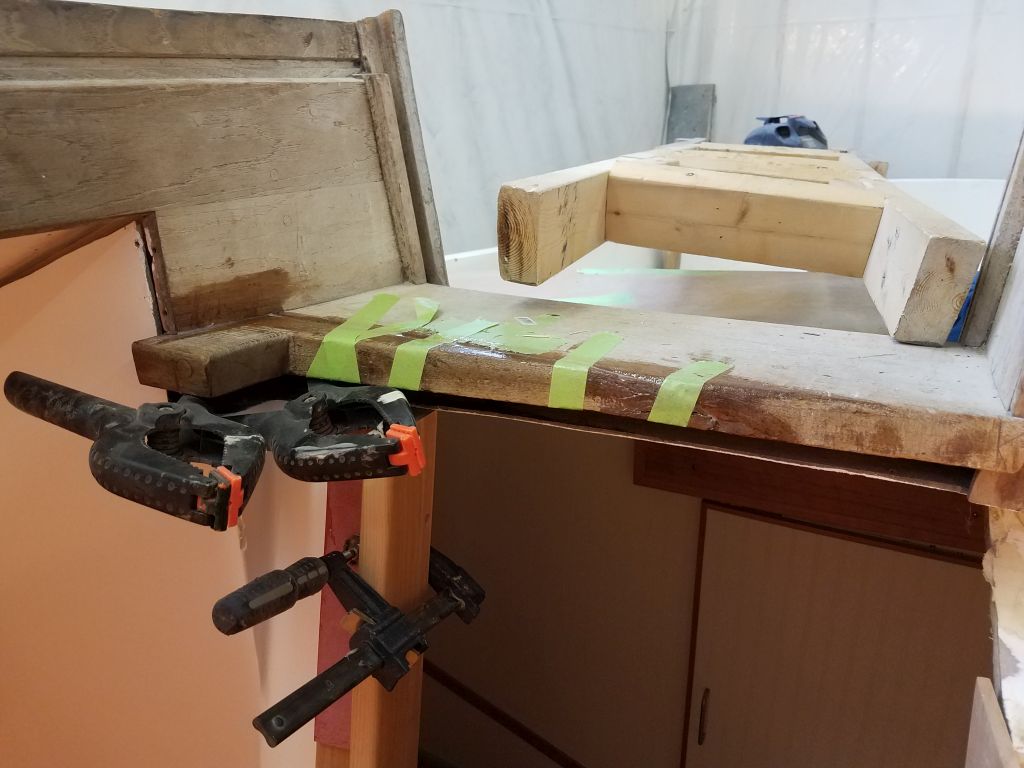
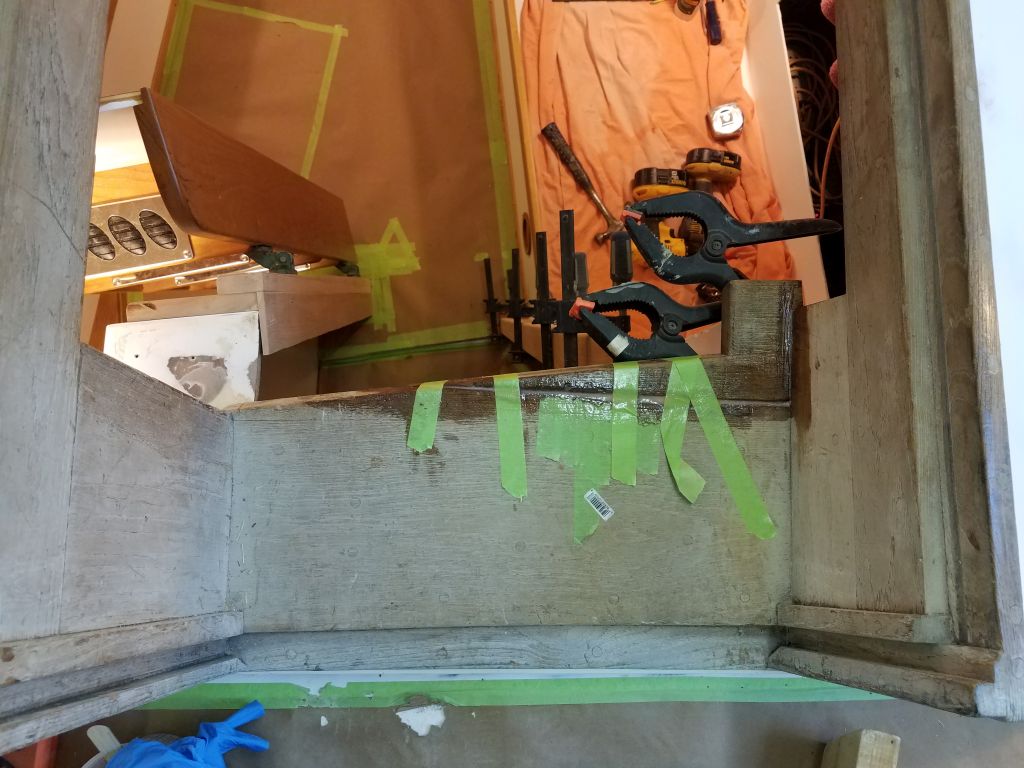
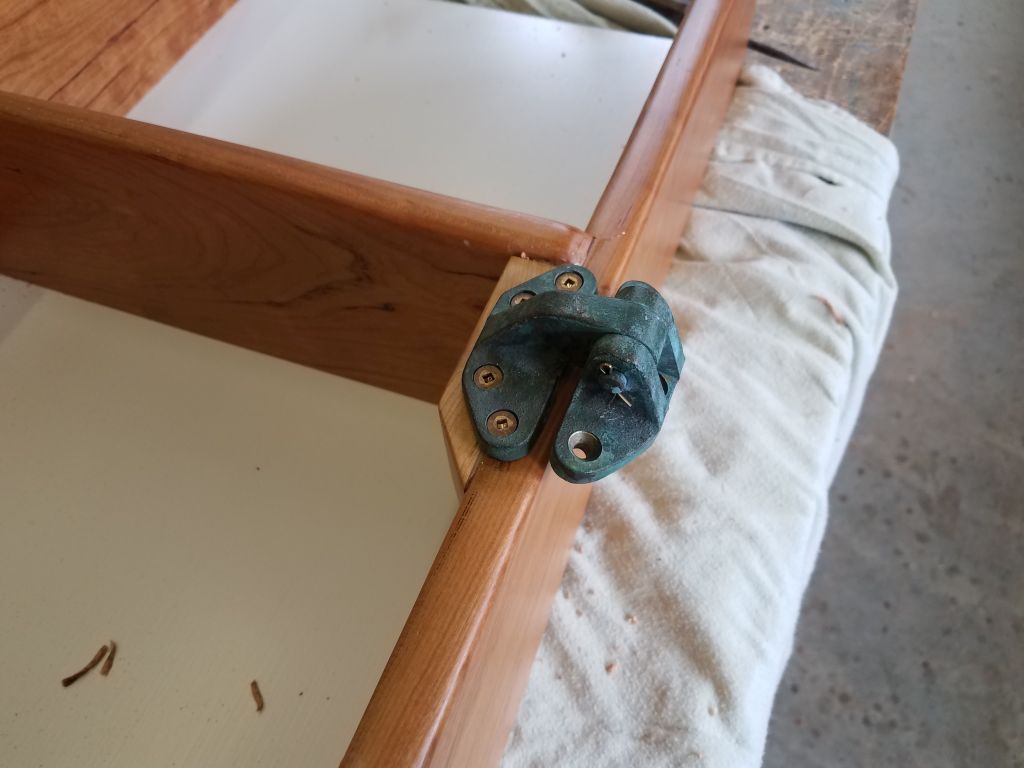
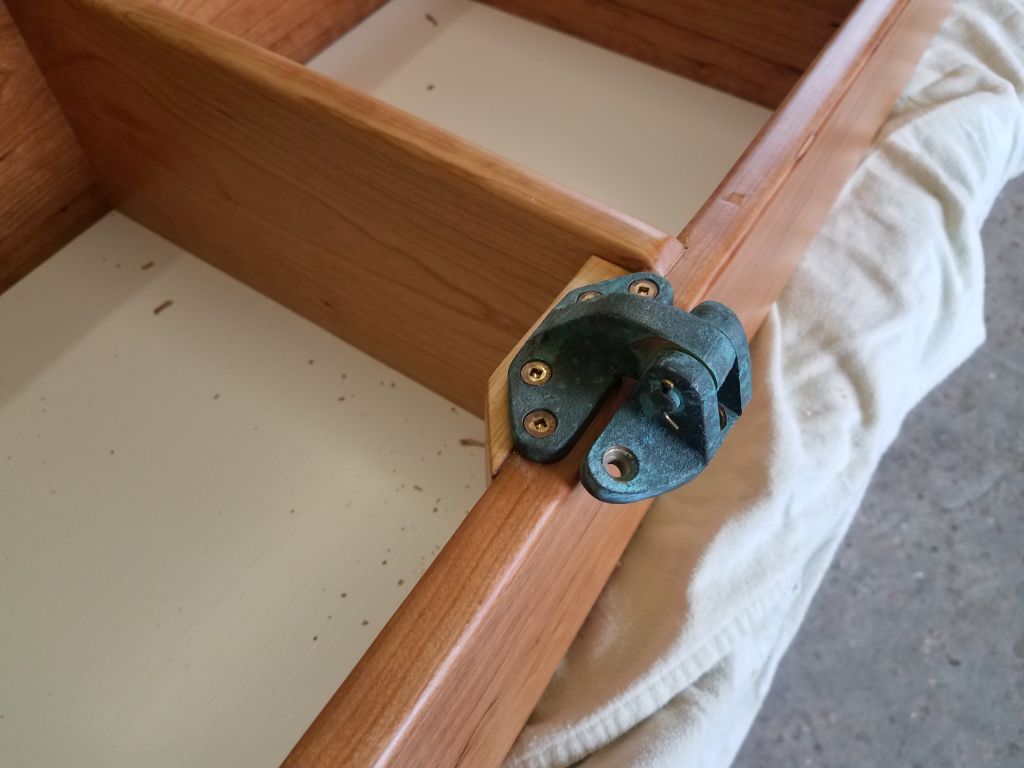
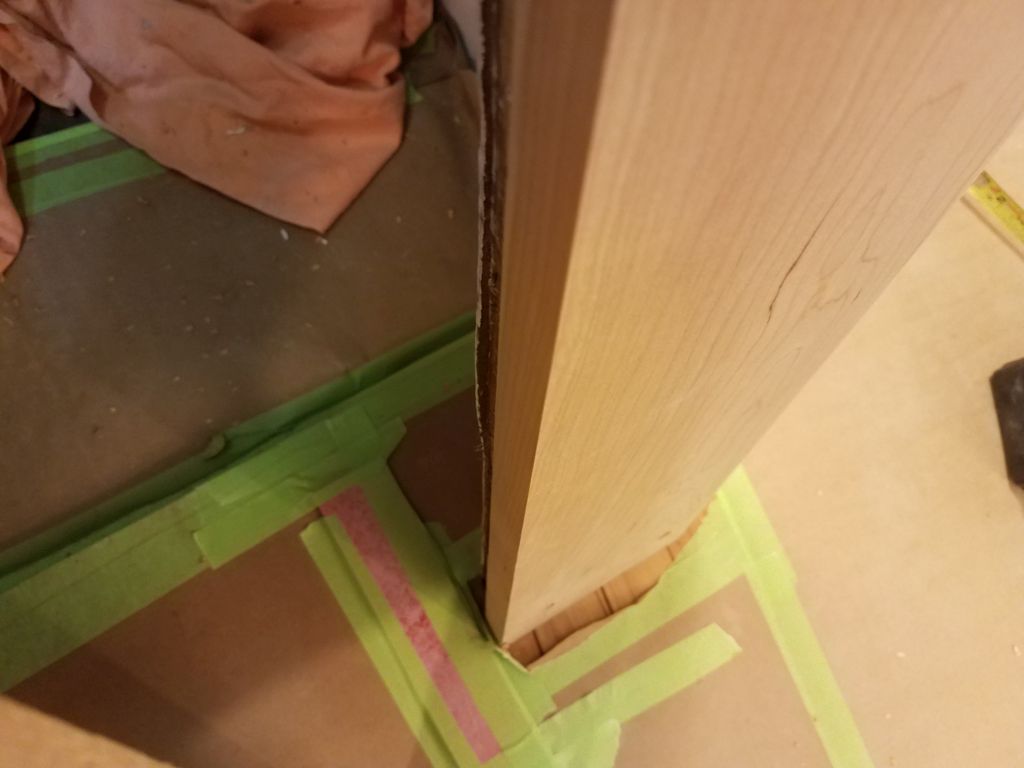
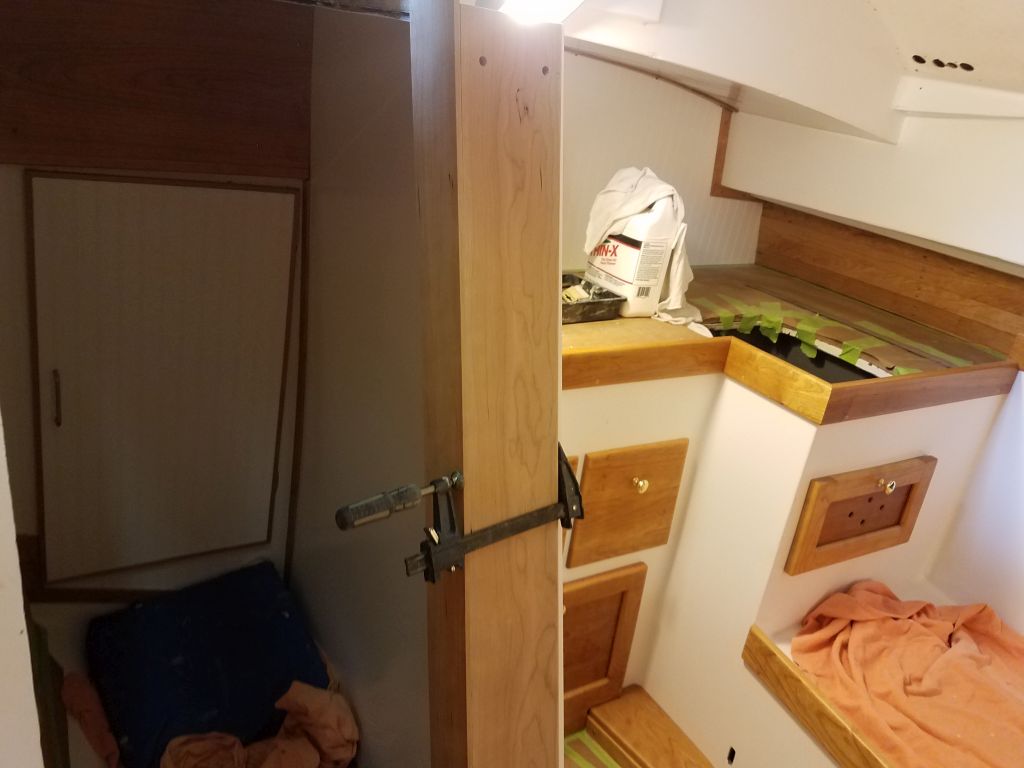
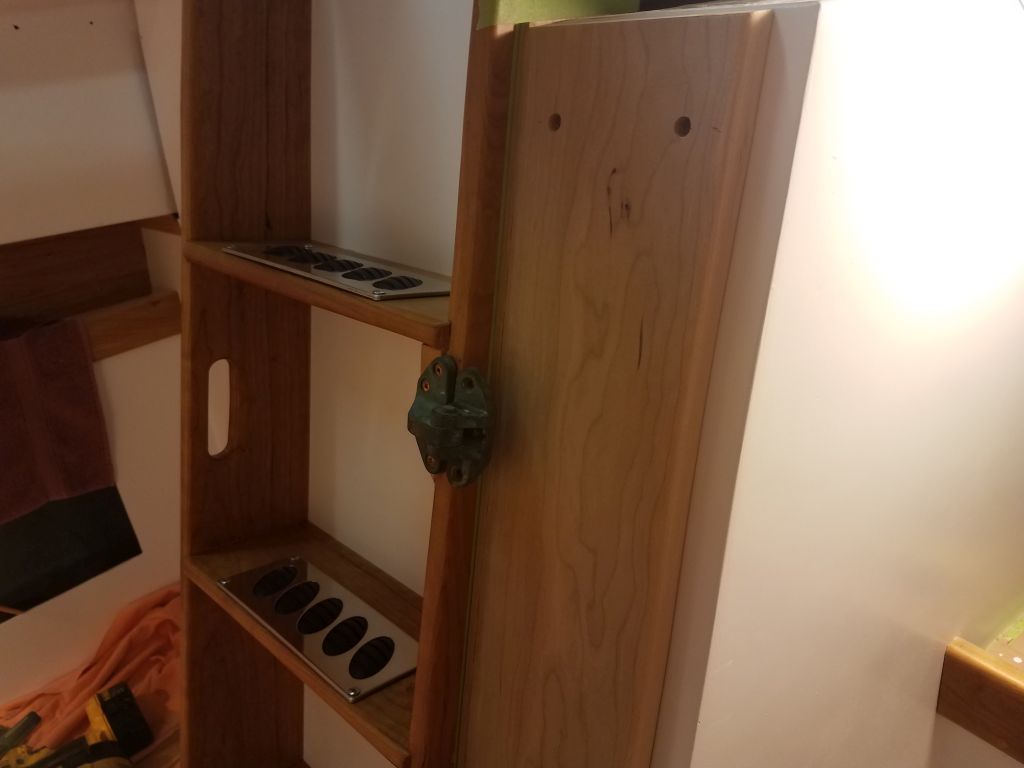
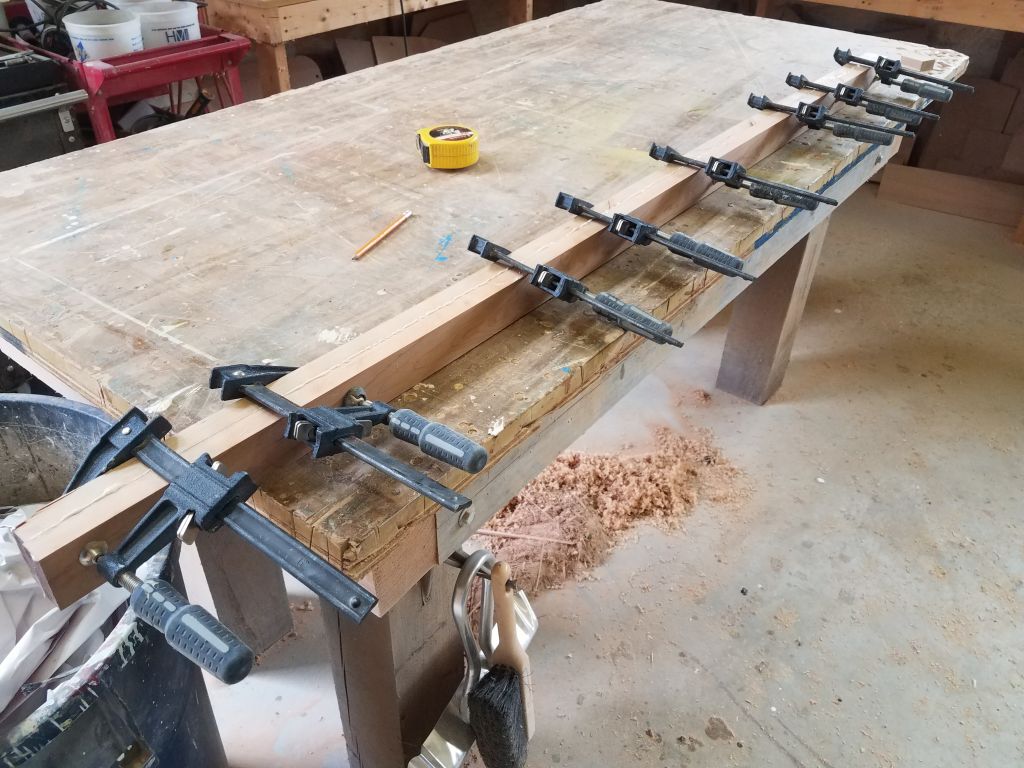
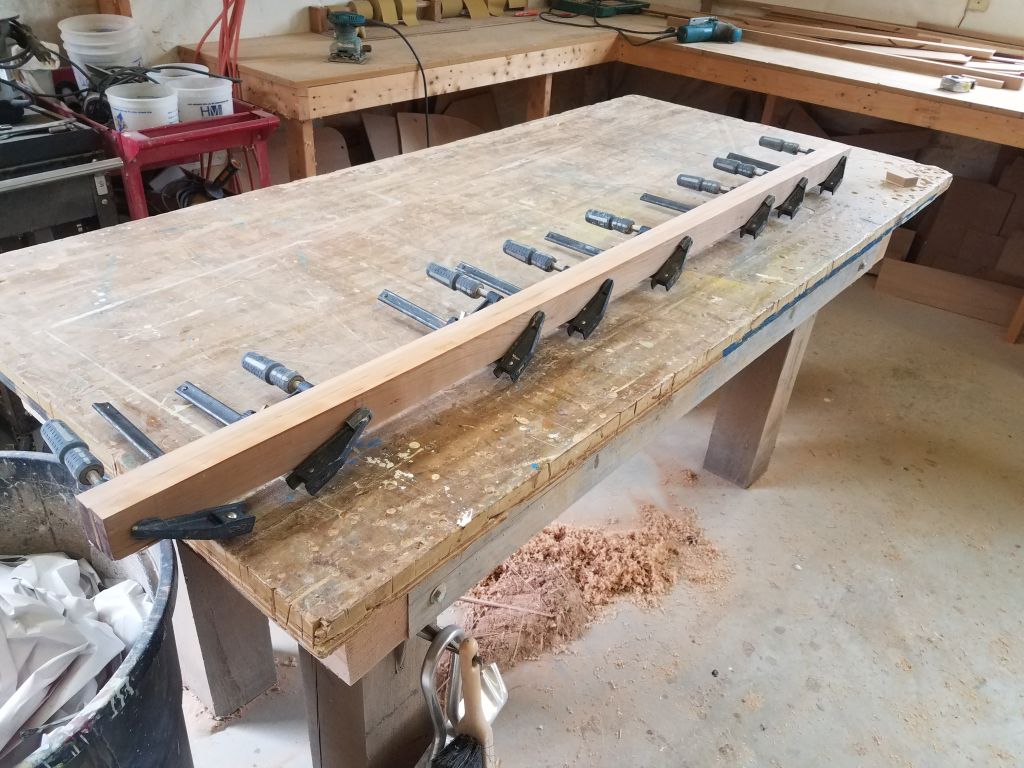
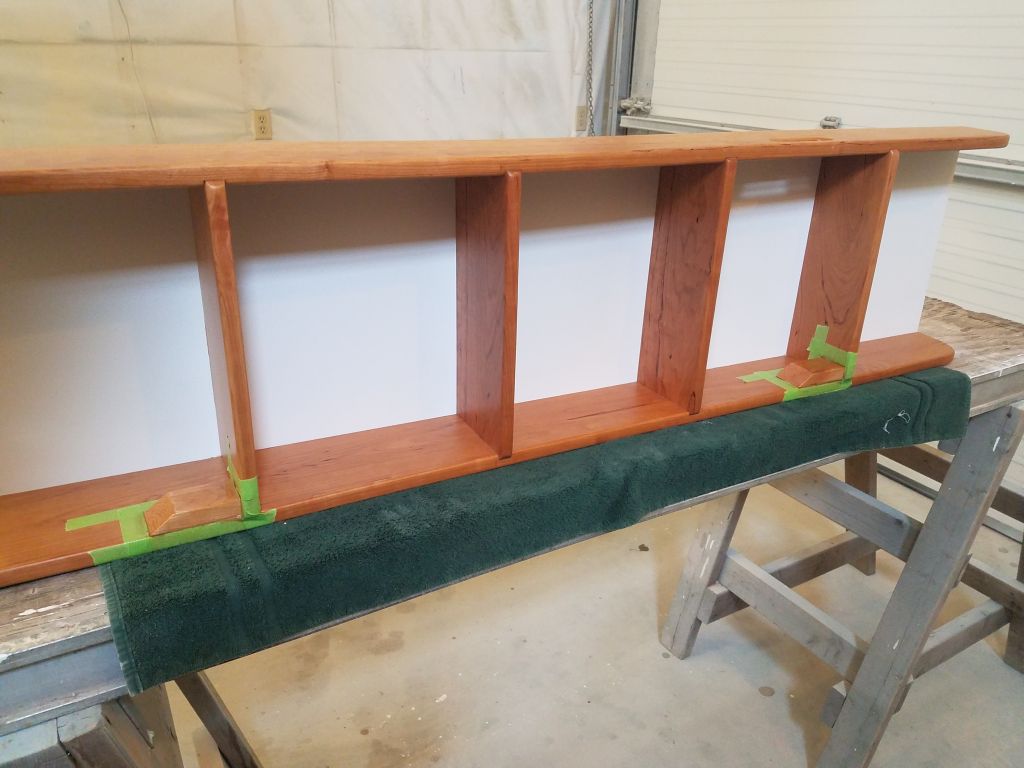
Before I could hang the interior cabinet doors, I needed to install some hardwood cleats that would support the door catches for each door, since the fiberglass interior liner wasn’t thick enough.  At each location, I installed a cherry cleat with epoxy adhesive, clamping it while the epoxy cured.  At the chainlocker bulkhead, the plywood bulkhead allowed me to install the catch right away, without need for a cleat.  Door knobs are on the way for this and all the other doors.

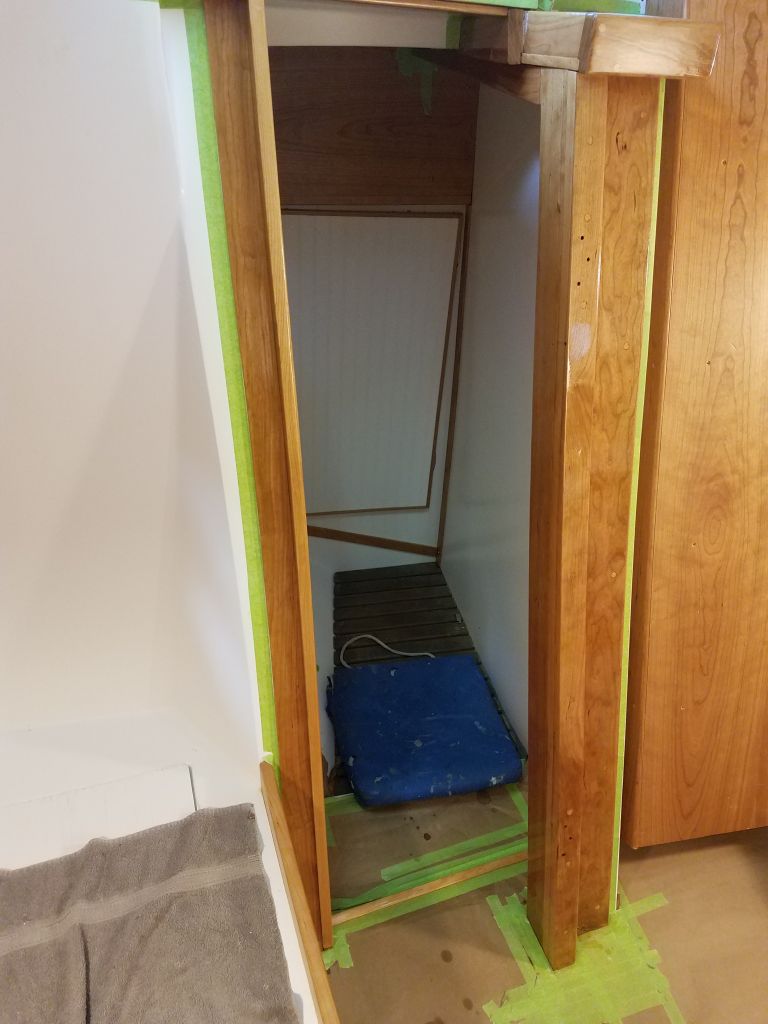
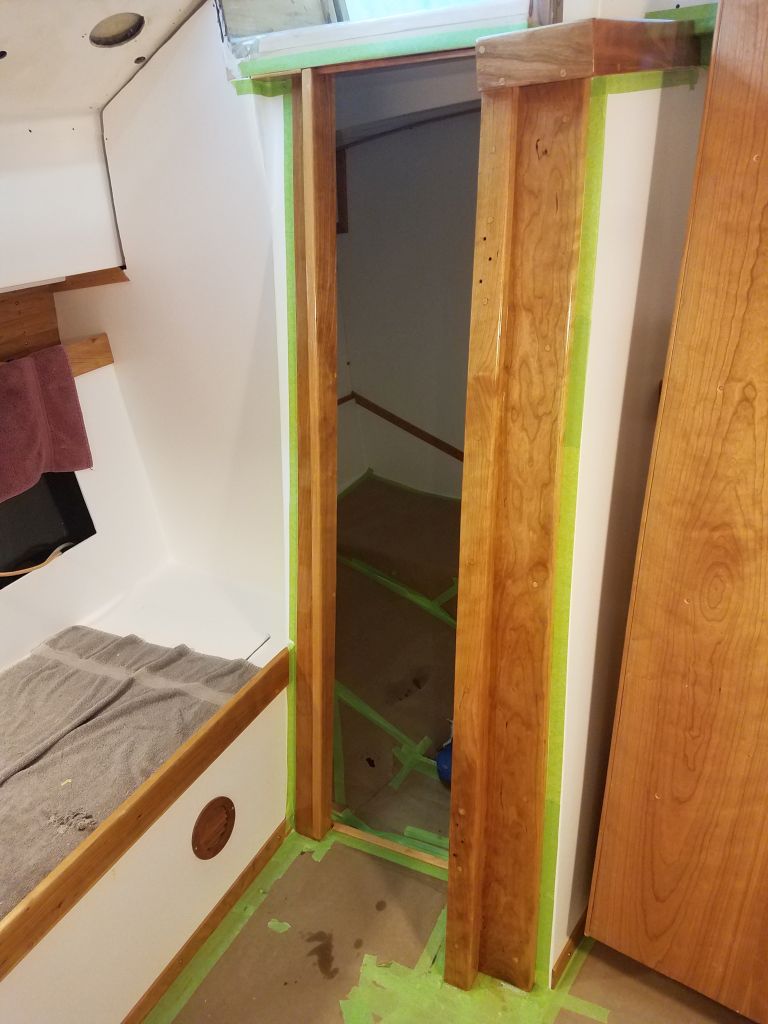
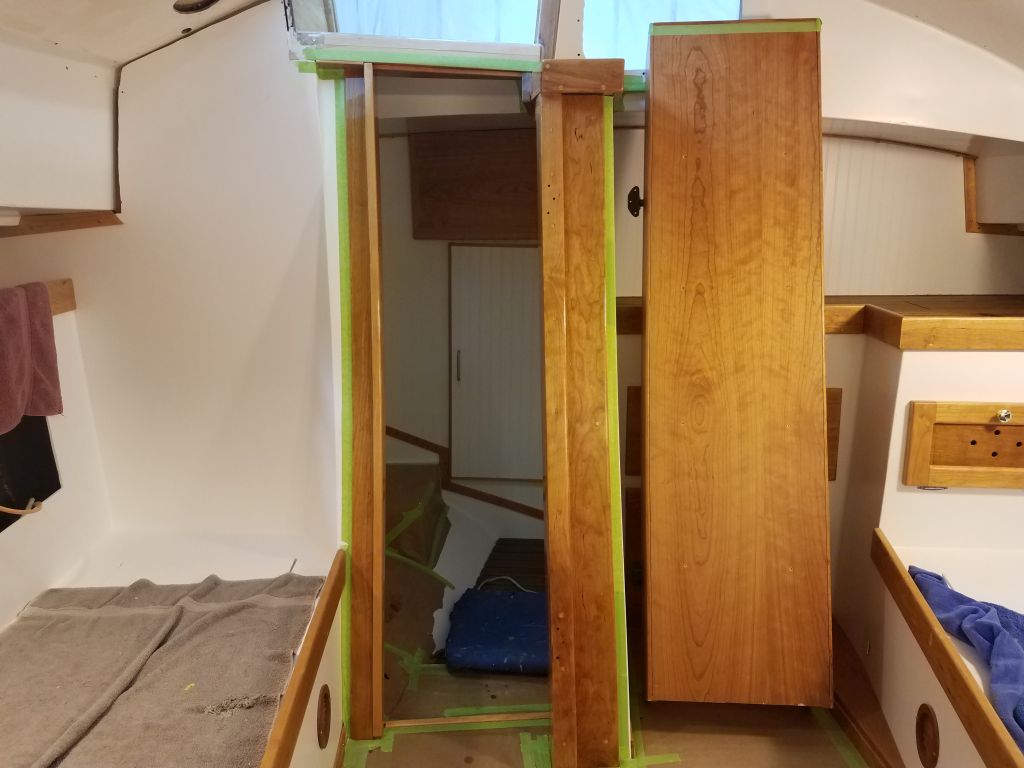
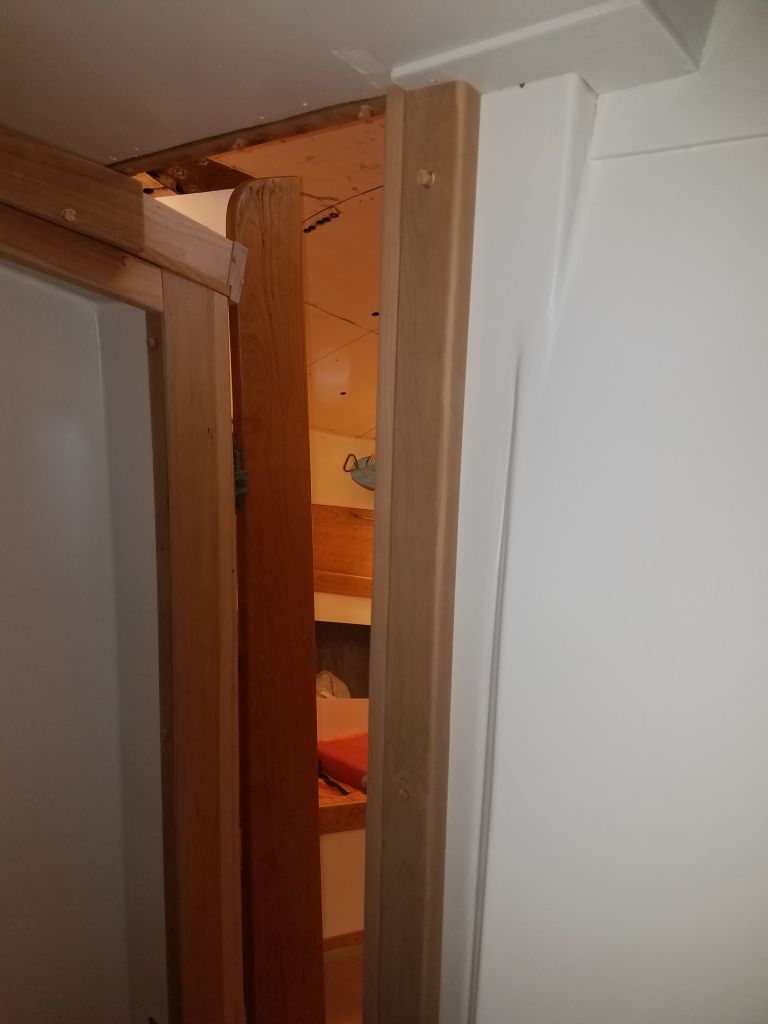
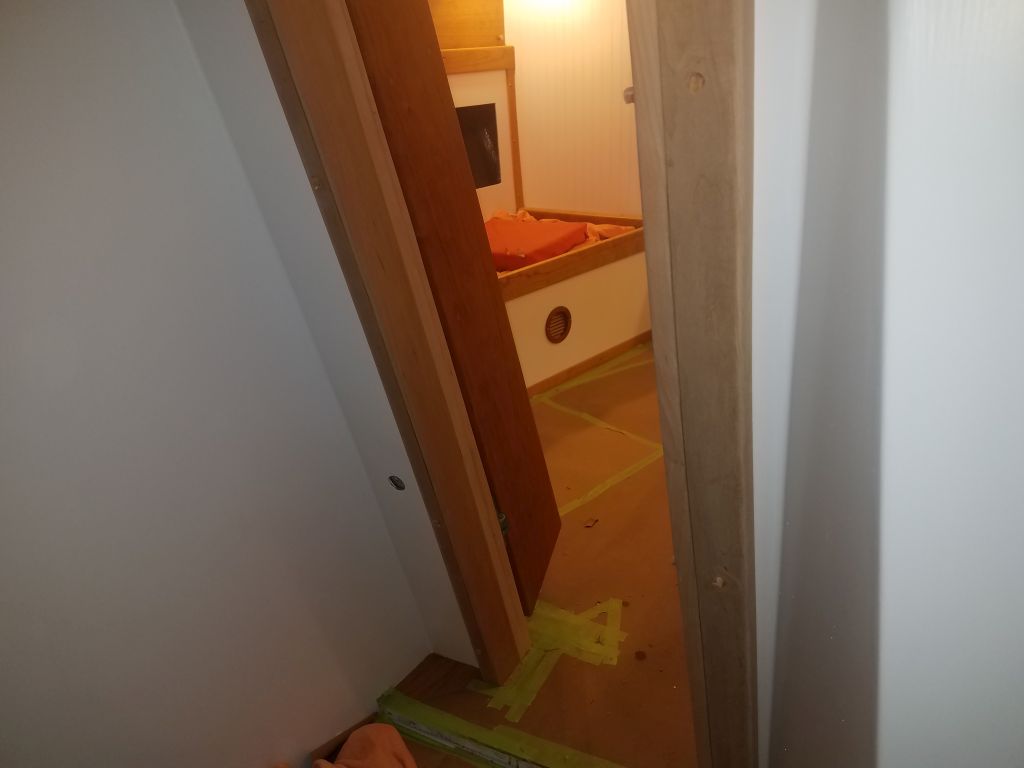
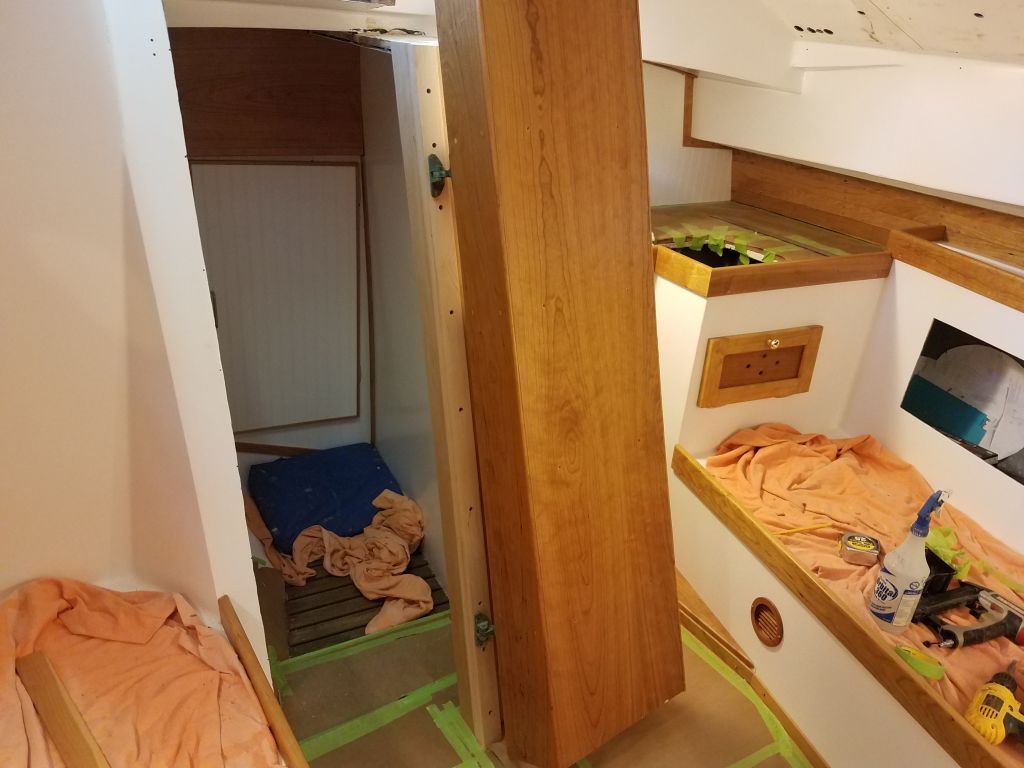
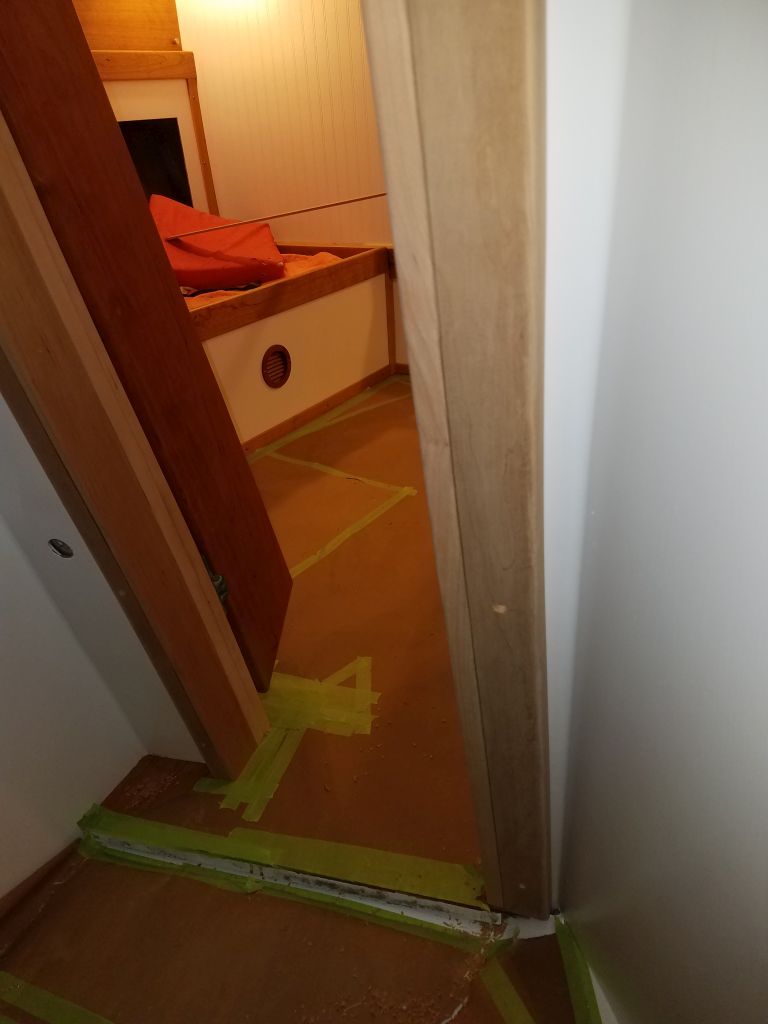
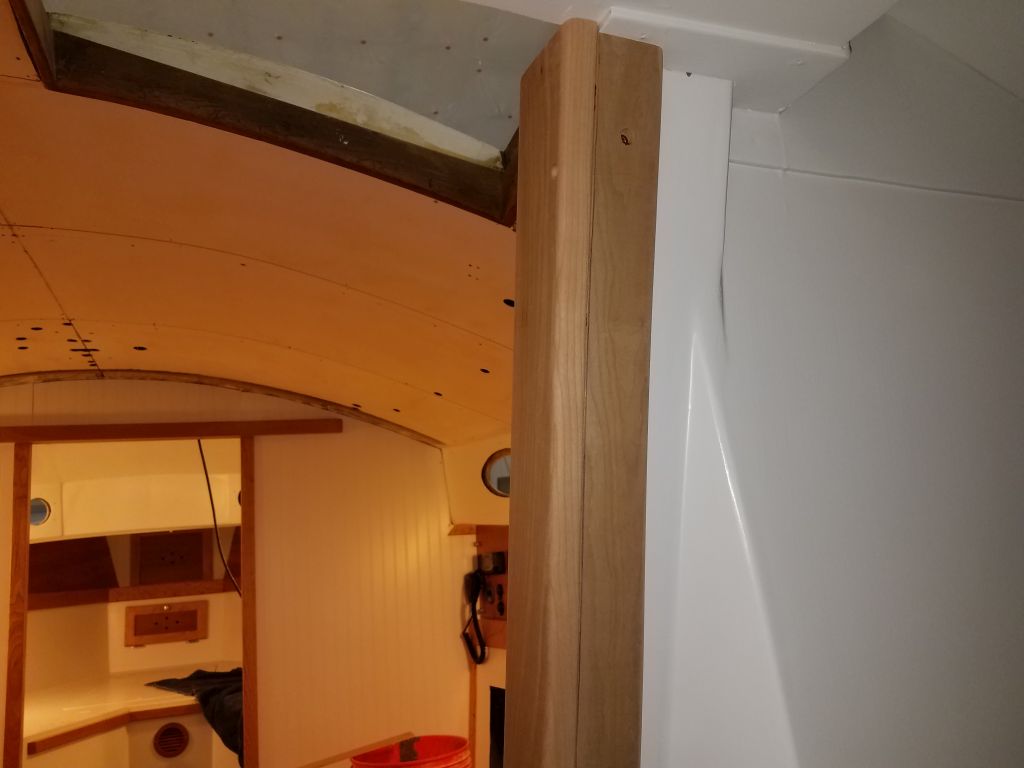
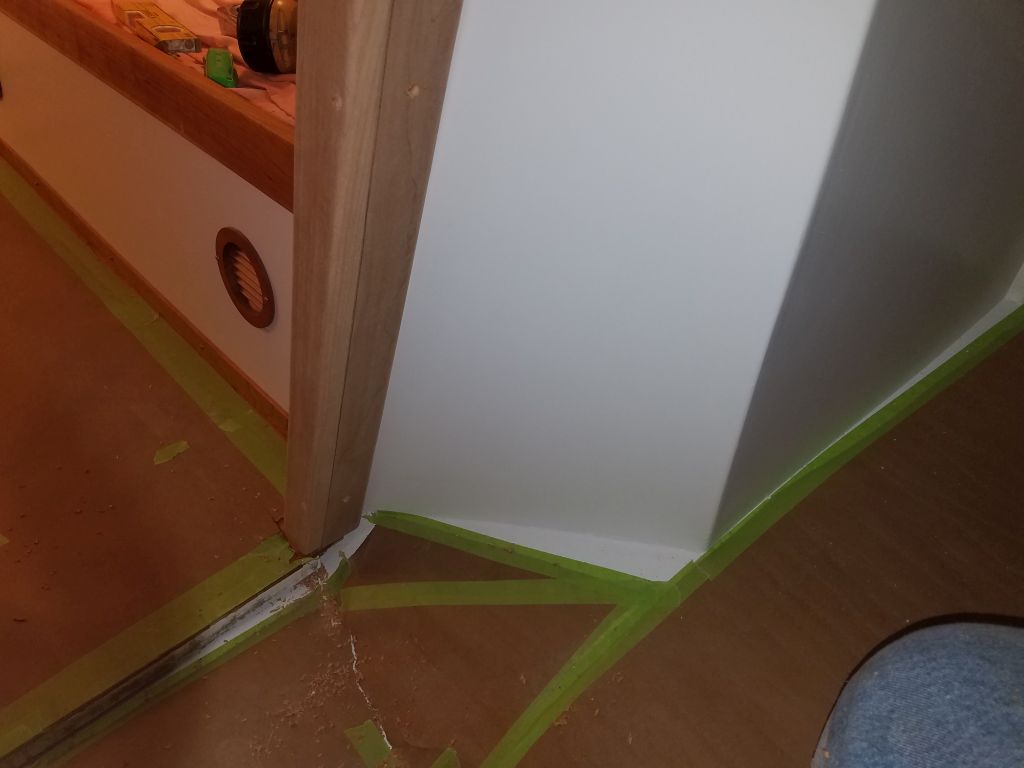
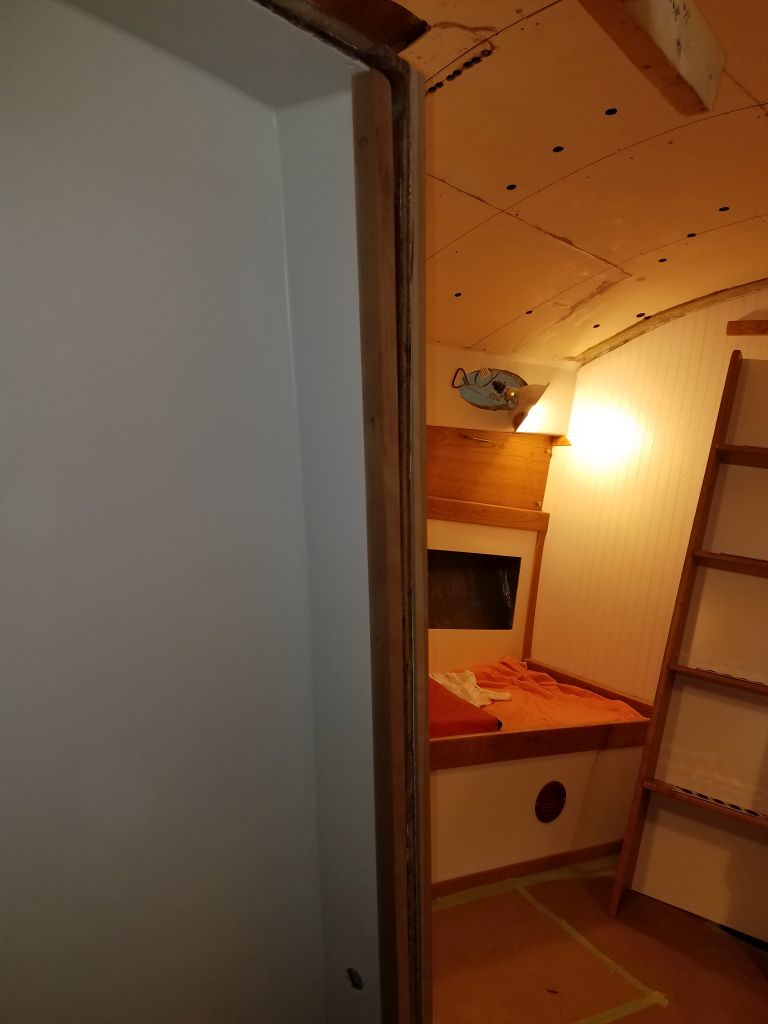
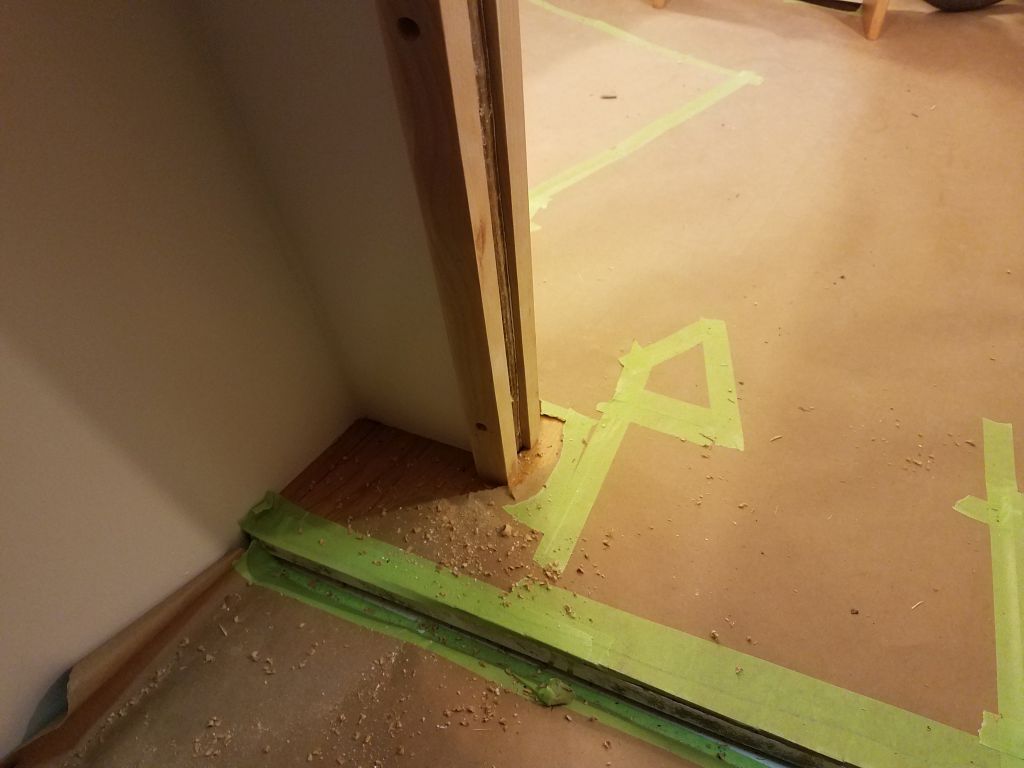
I temporarily installed the hinges on the engine room/head door, then hung the door in its opening, again temporarily.  This was partly to check the fit, but mainly to allow me to trim around the door at the bottom edge, which was my next task.

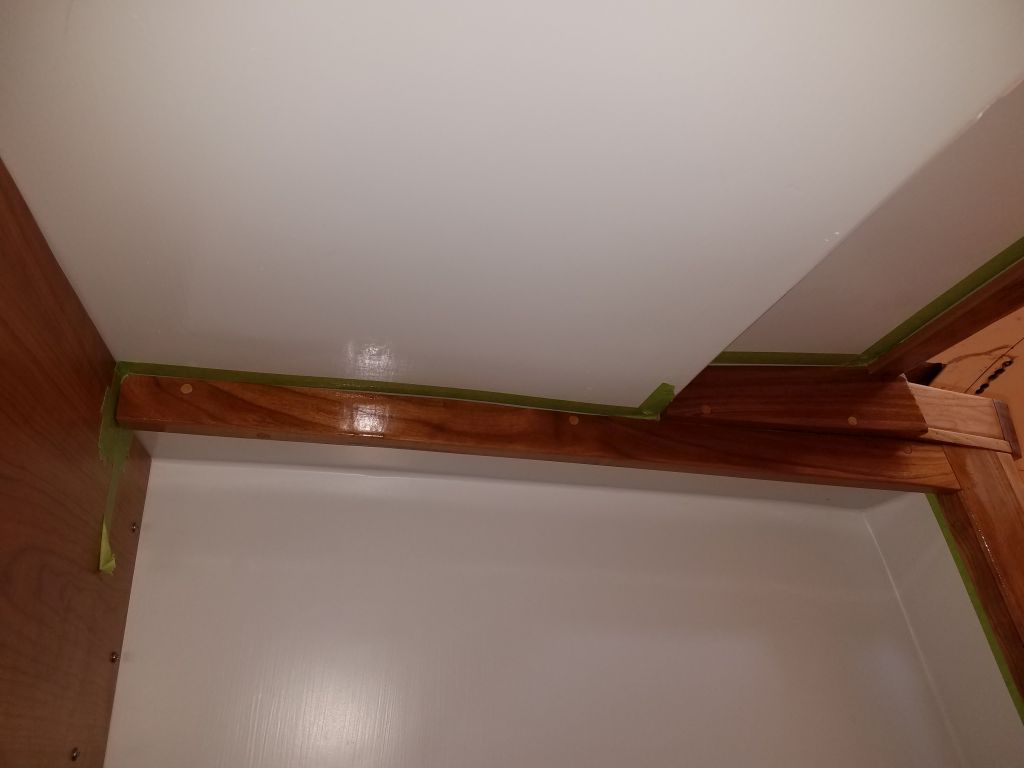
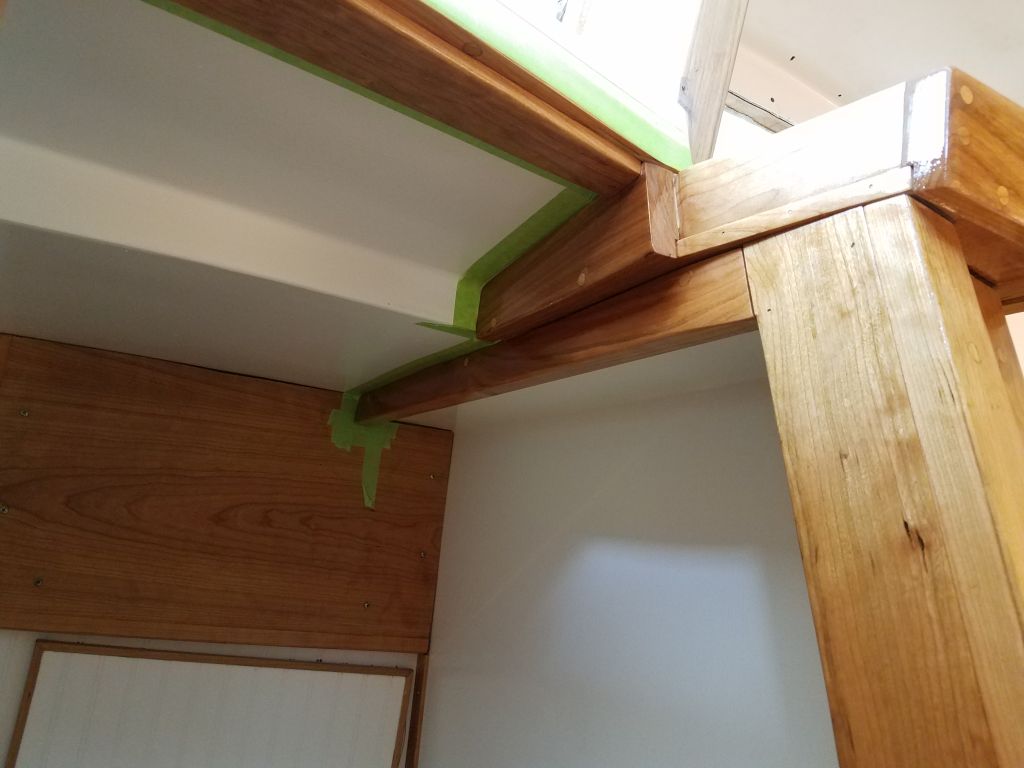
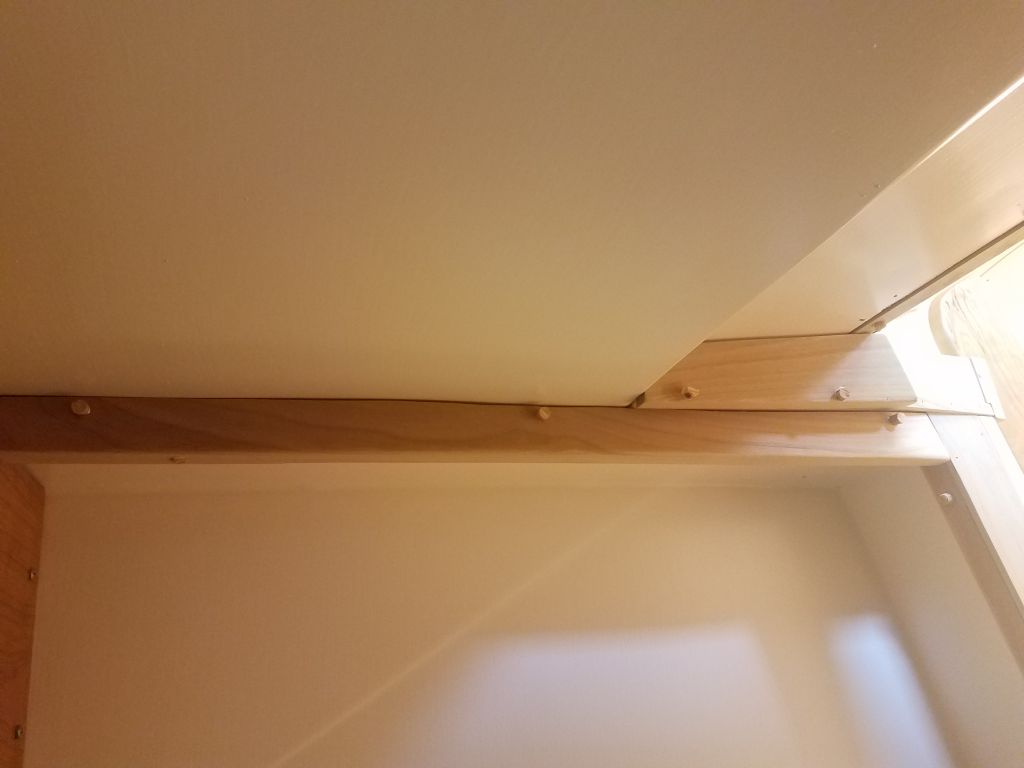
The head required trim at the bottom edge of the aft bulkhead, where the plywood met the fiberglass liner, as well as at various points along the edges and other interior intersections, much like those in the forward cabins.  Cutting and fitting all the raw trim took much of the day.

Once I had all the trim in place, I removed it all so I could sand and varnish it, beginning with a sealer coat.  Meanwhile, I continued work on the varnish on the other pieces underway, including the drawers, cabin sole piece, and engine room door trim.

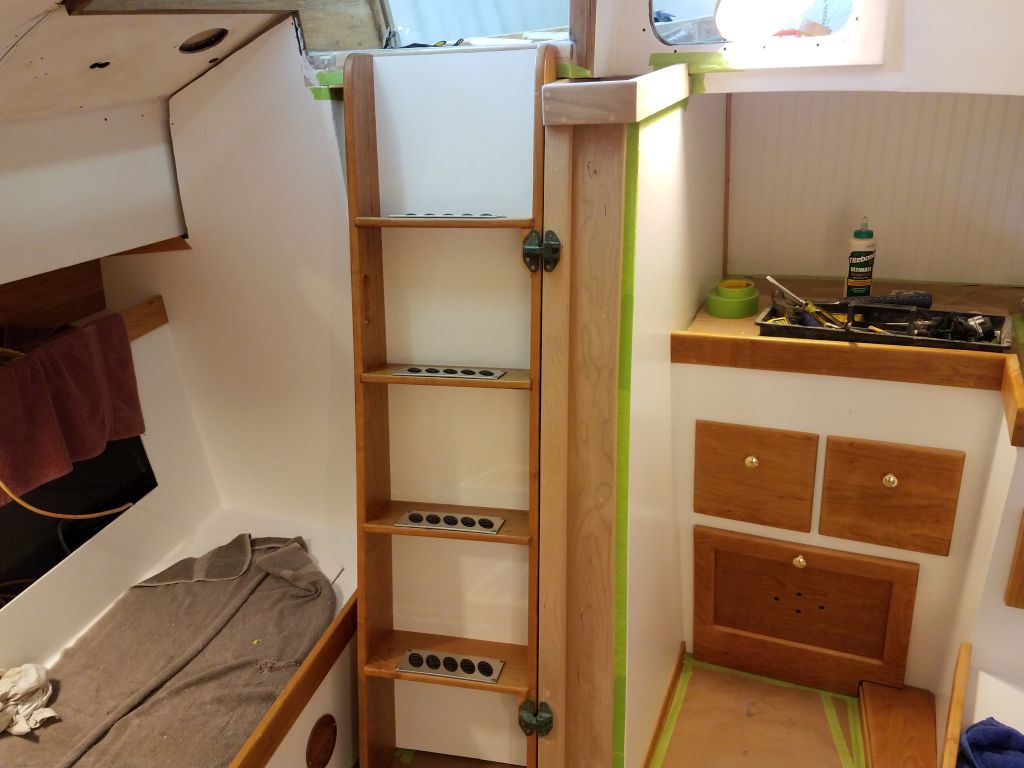
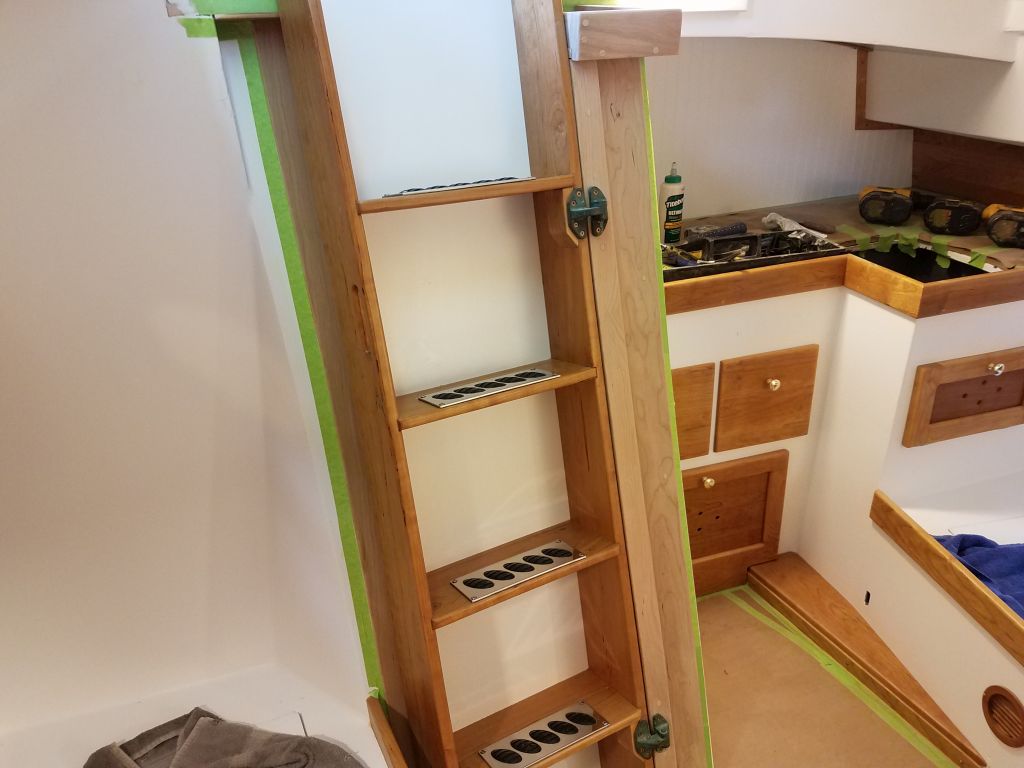
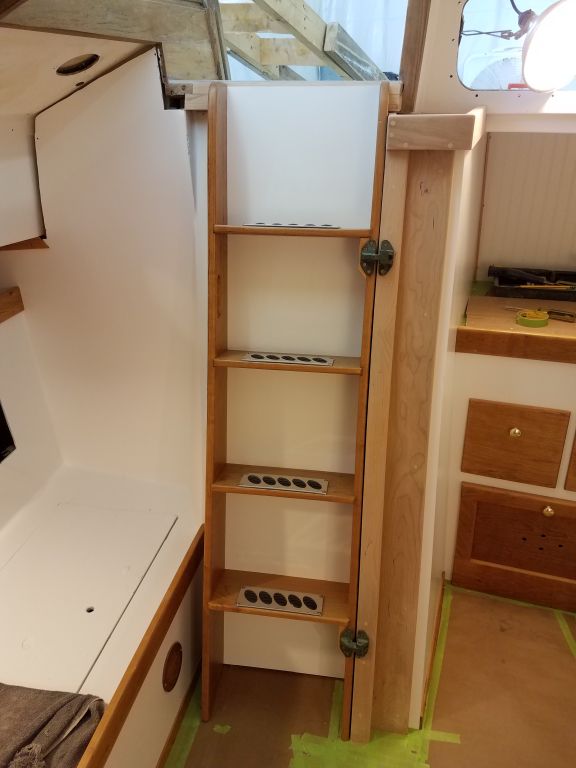
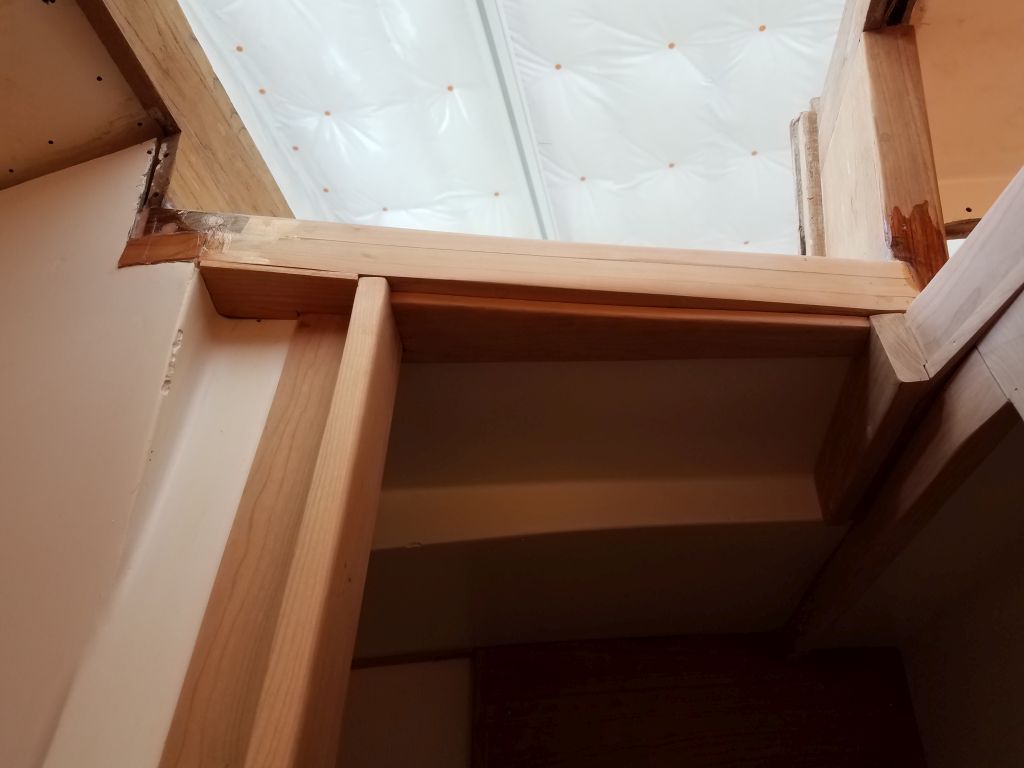
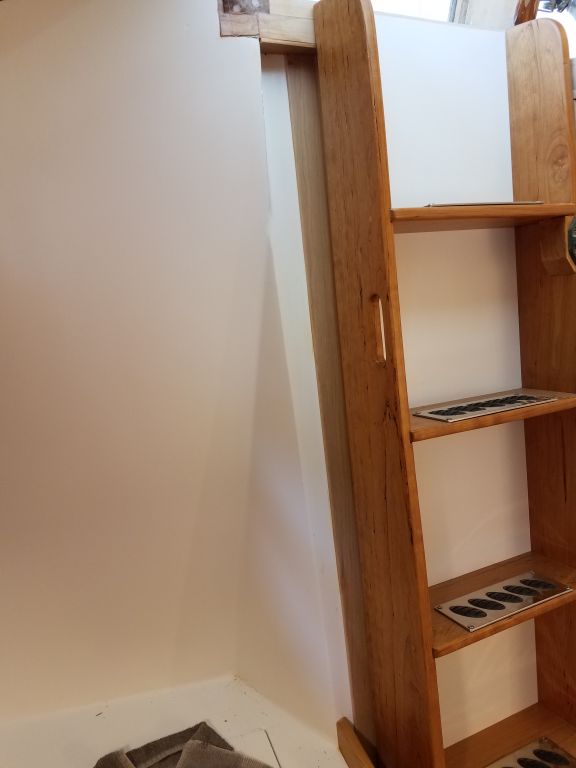
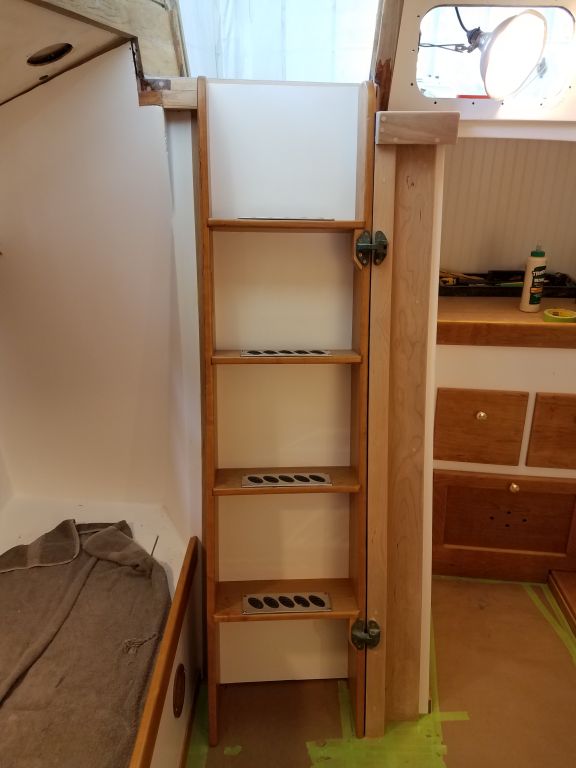
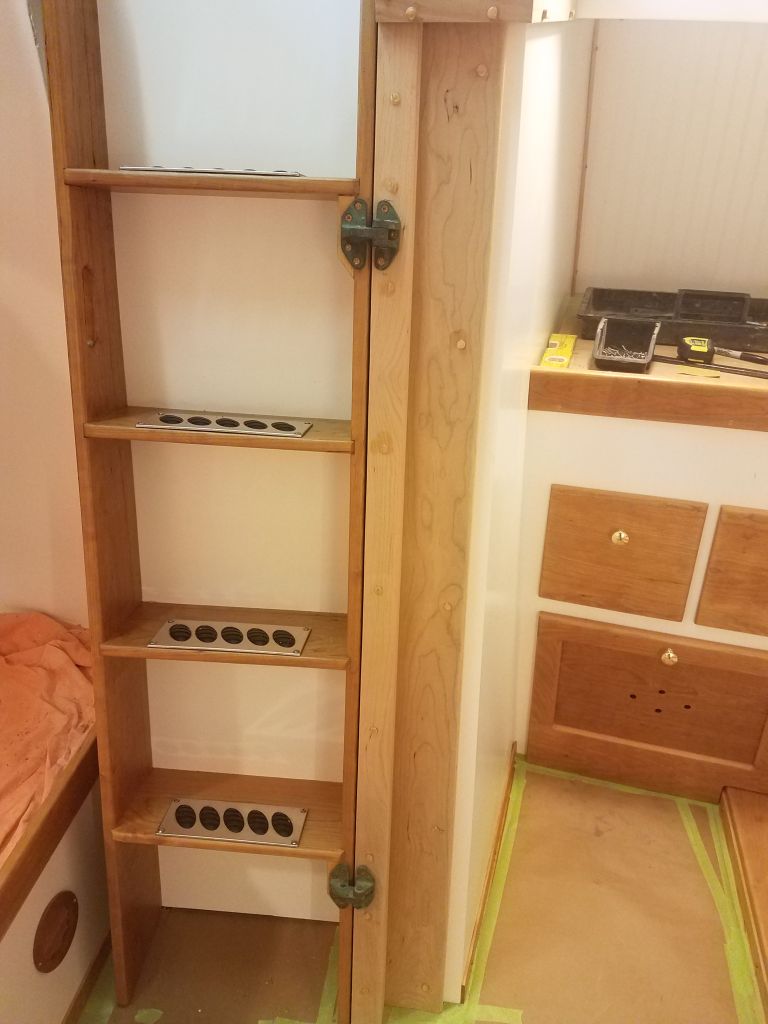
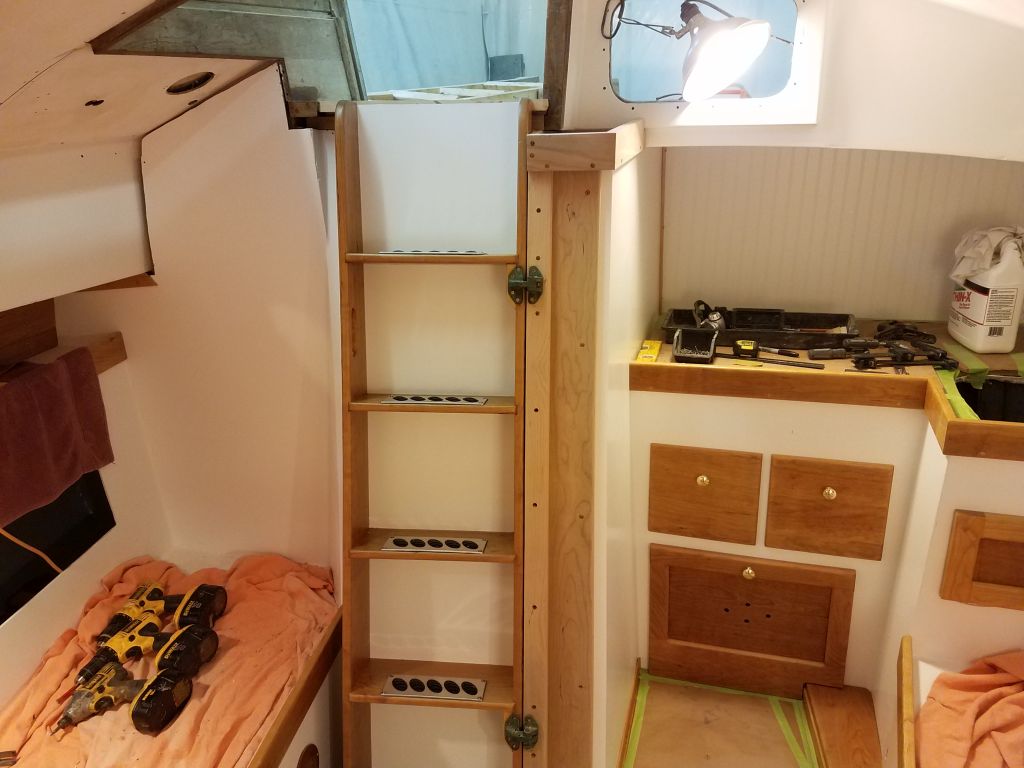
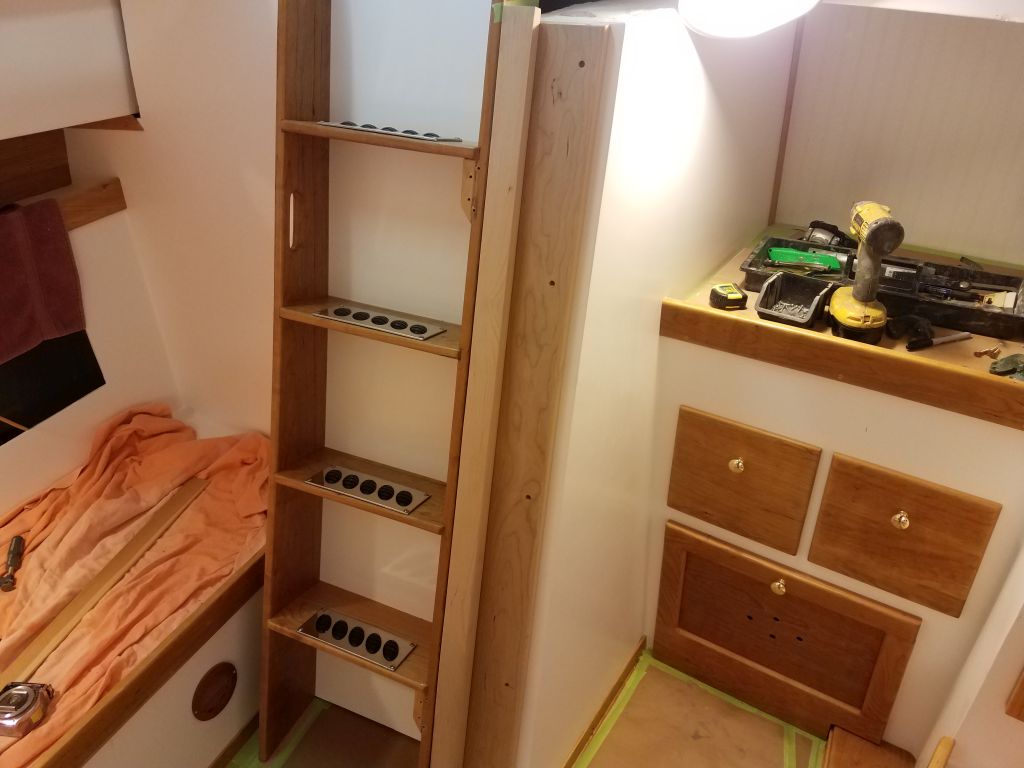
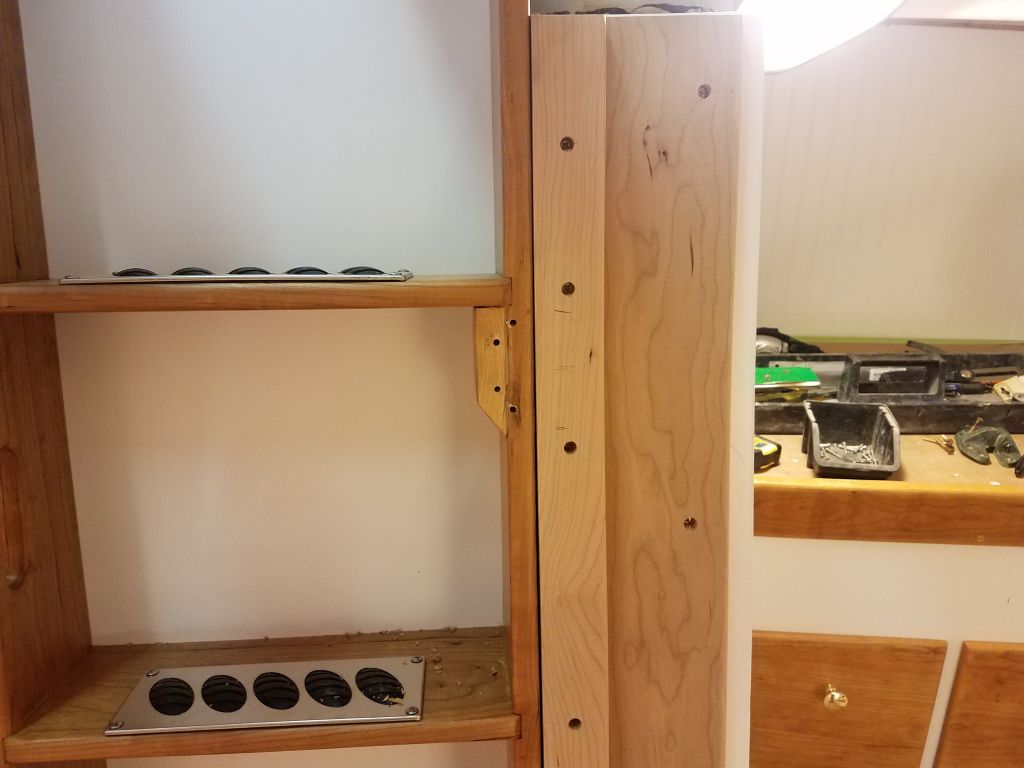
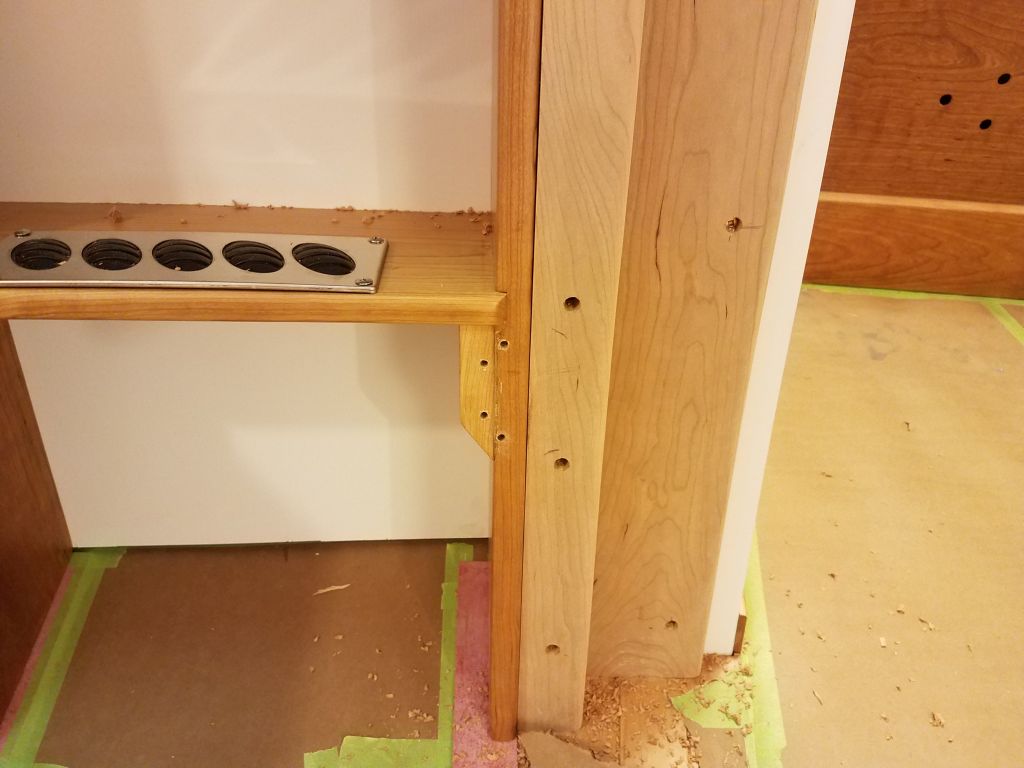
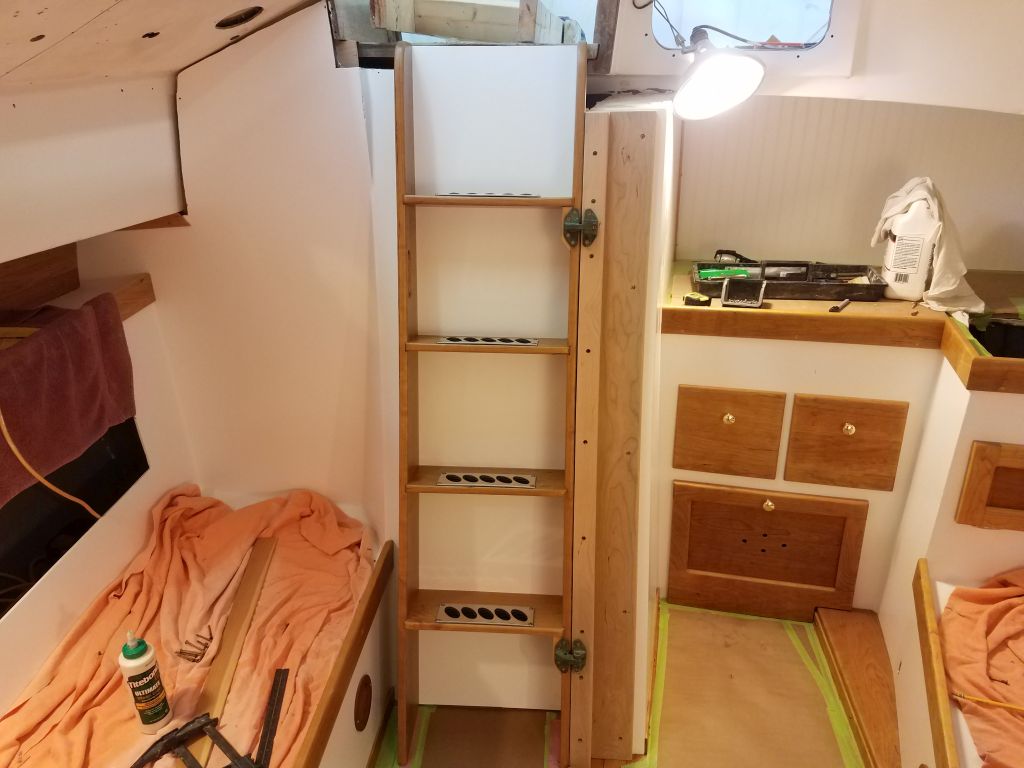
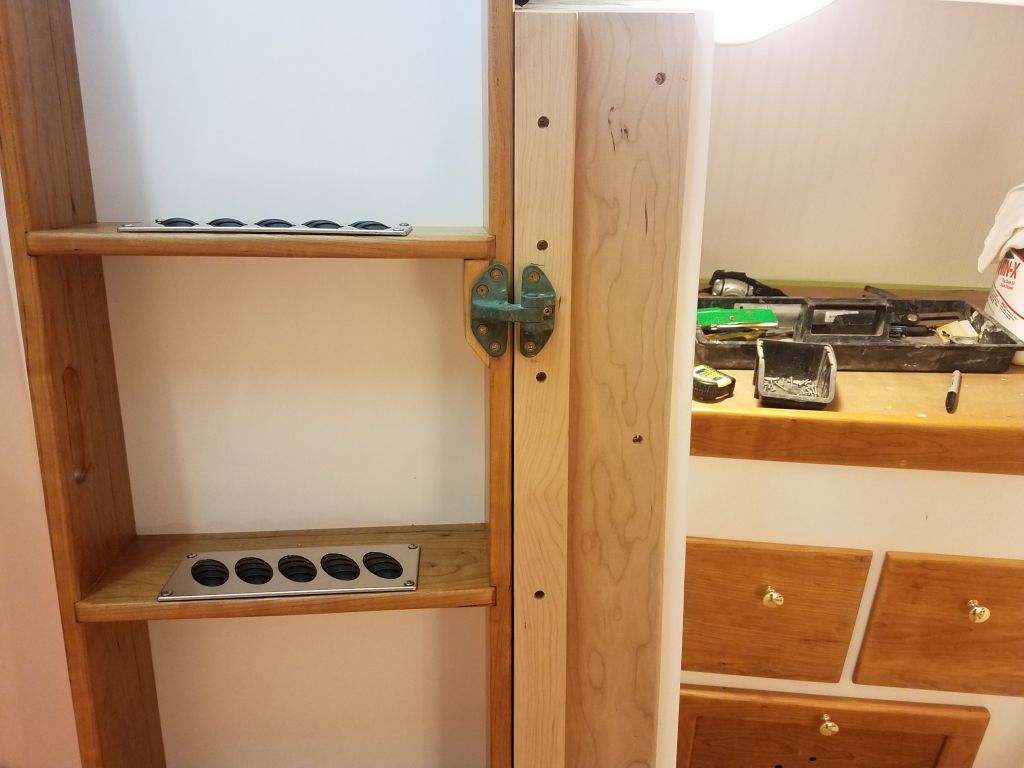
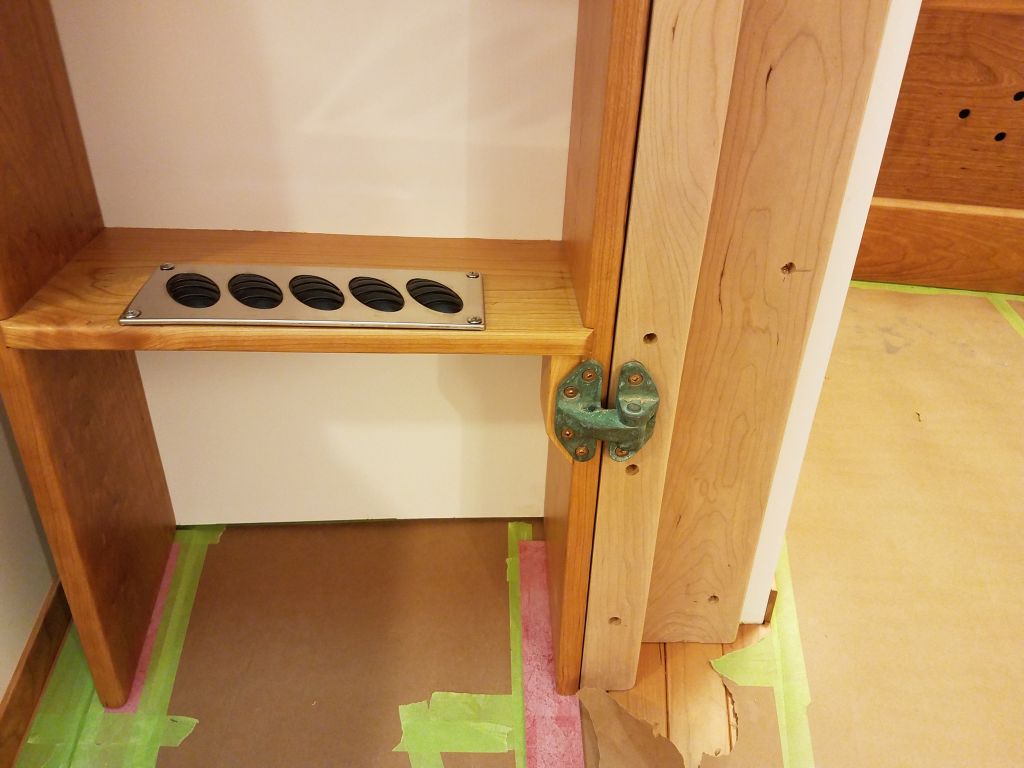
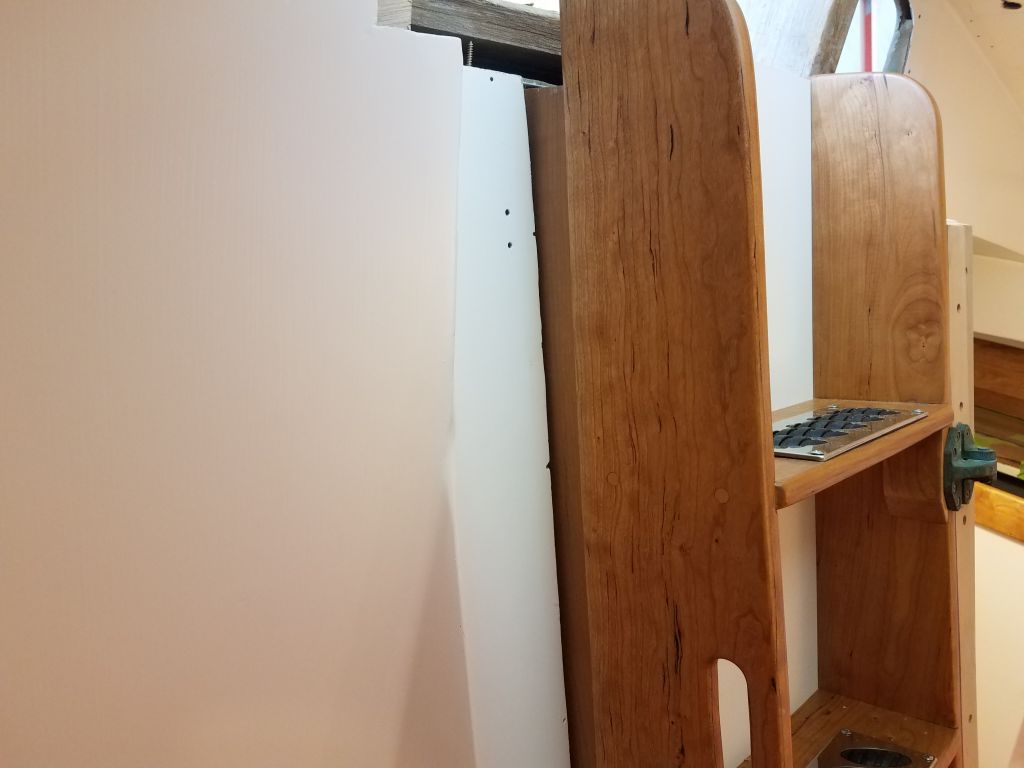
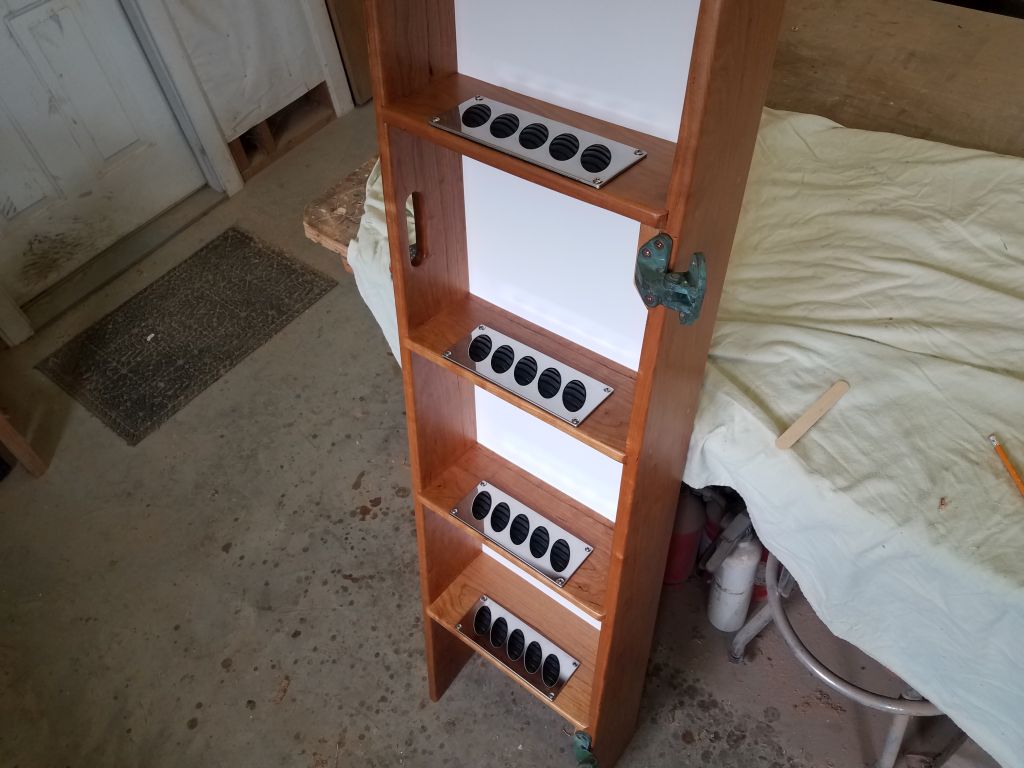
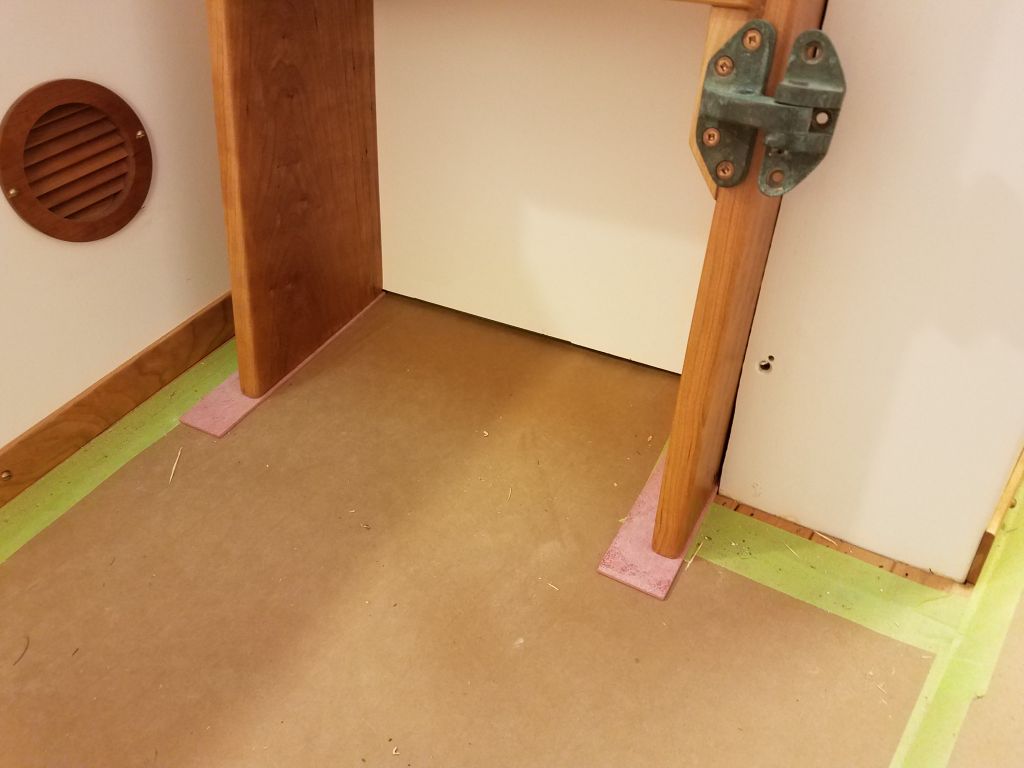
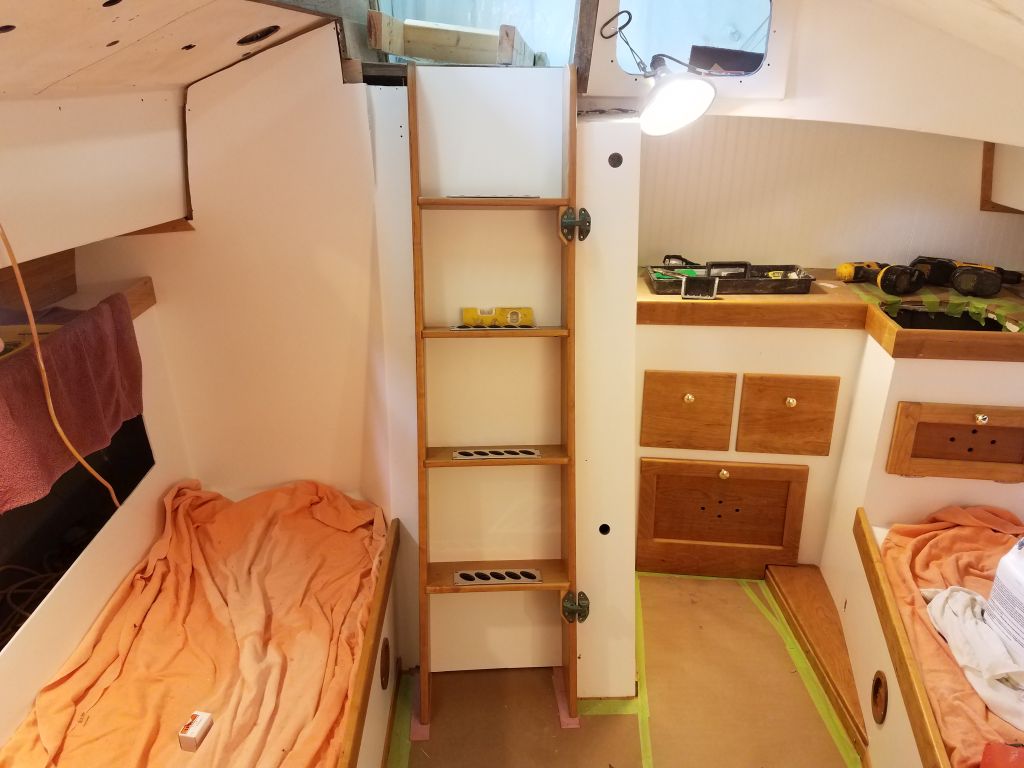
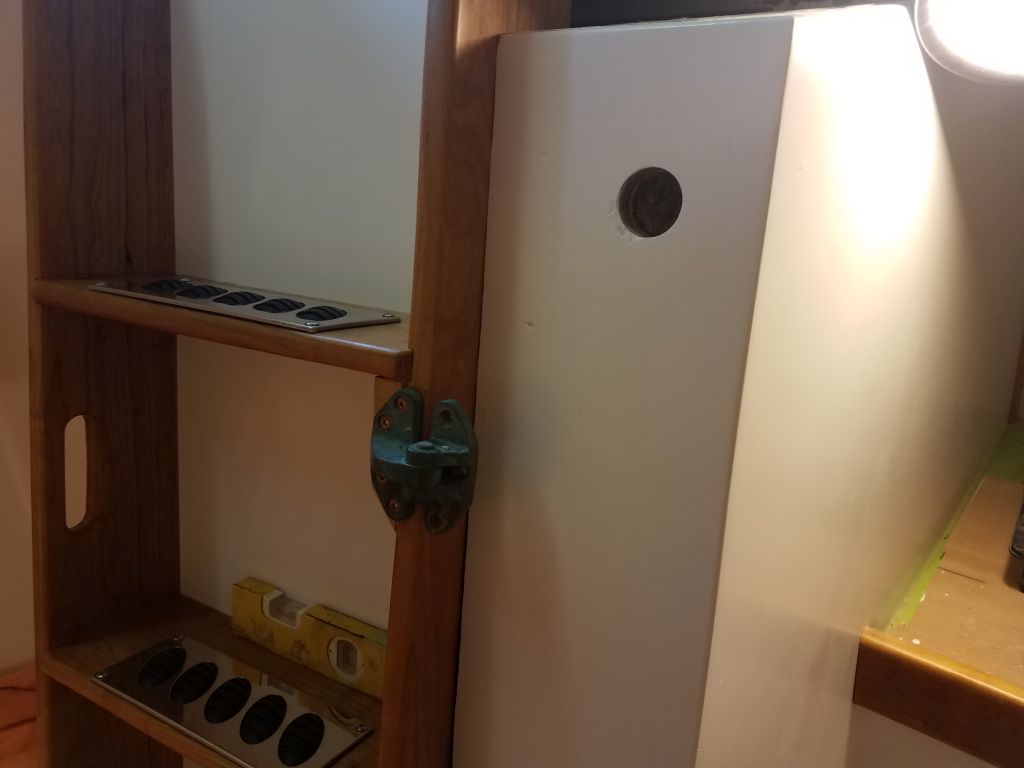
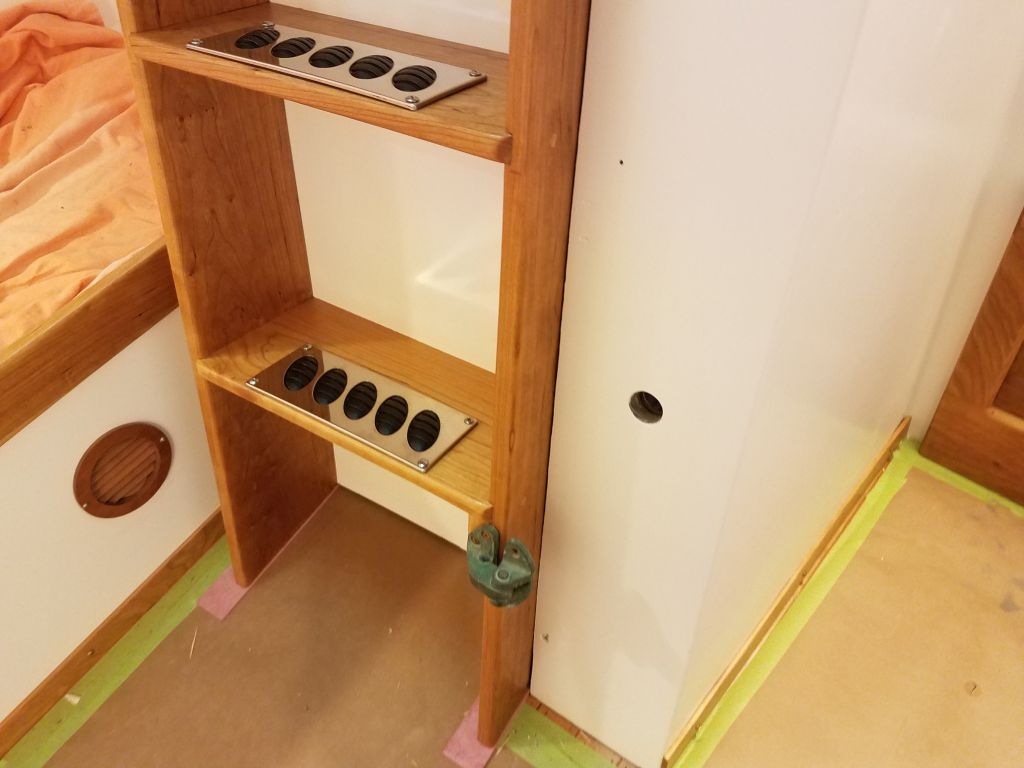
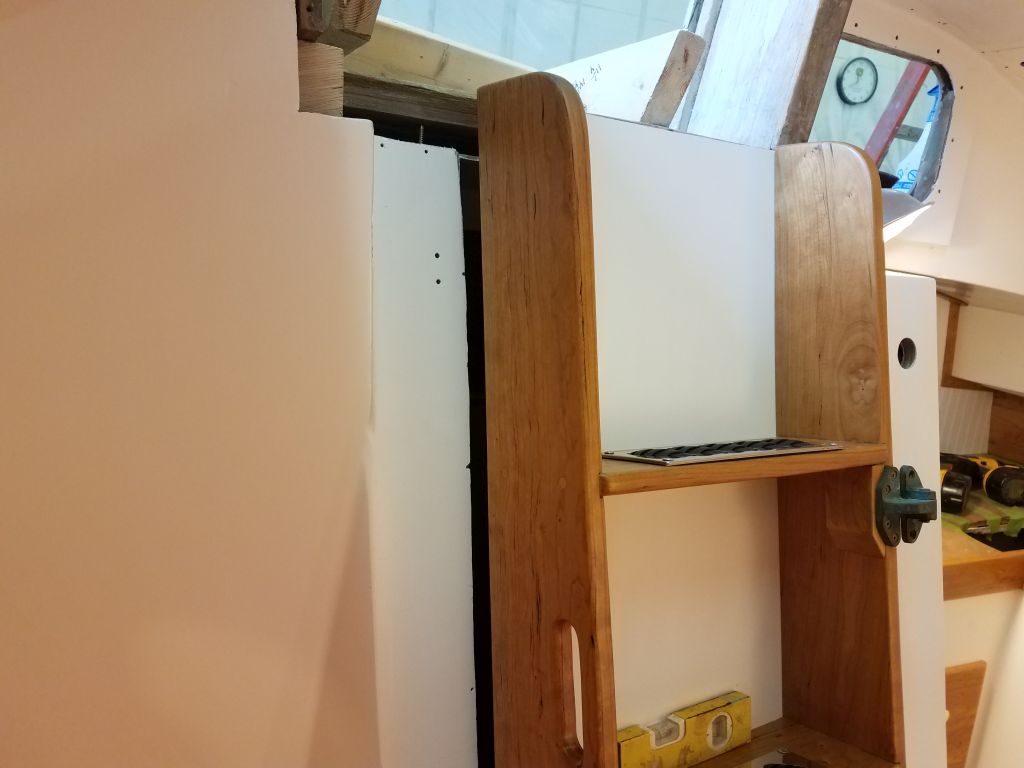
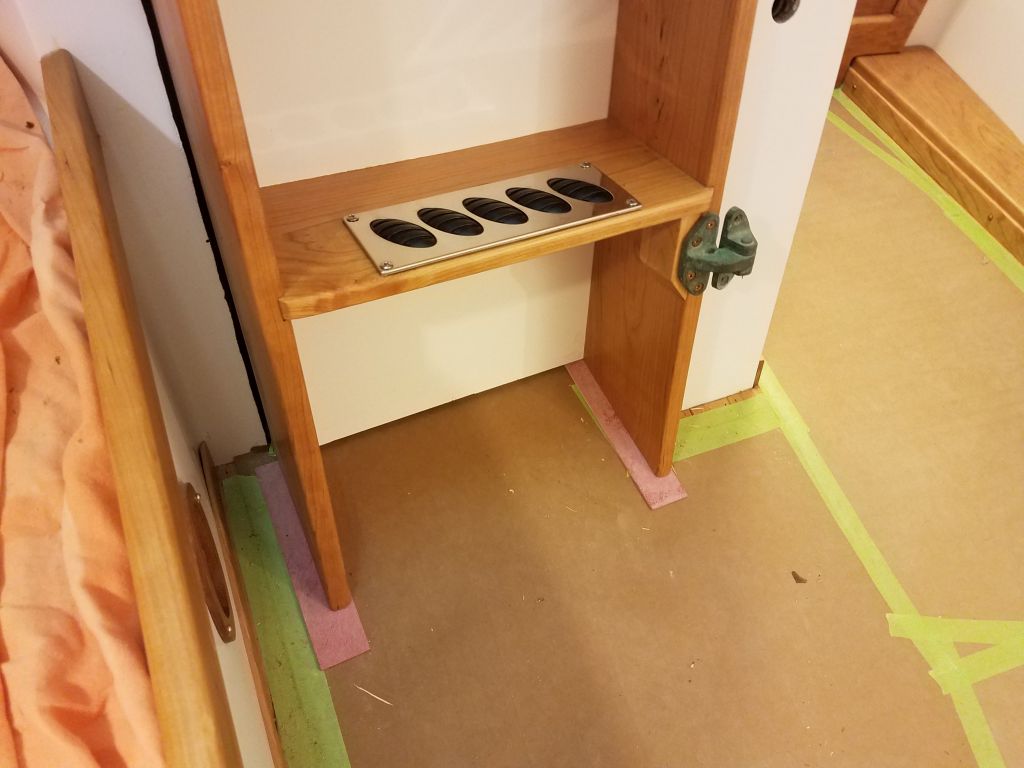
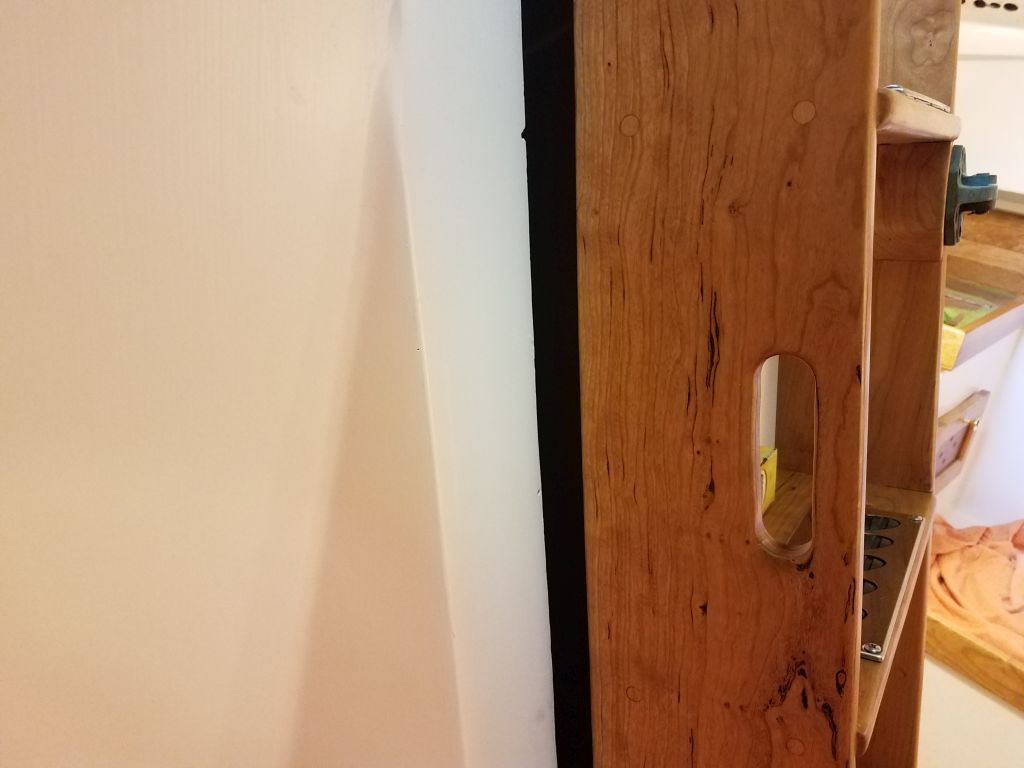
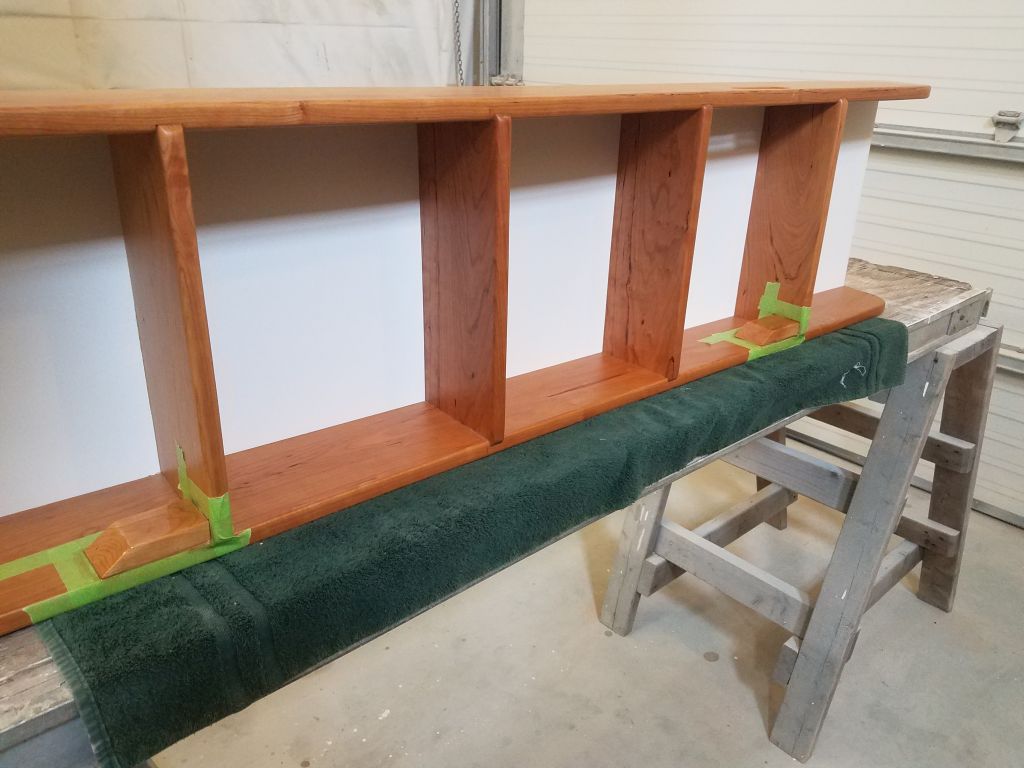
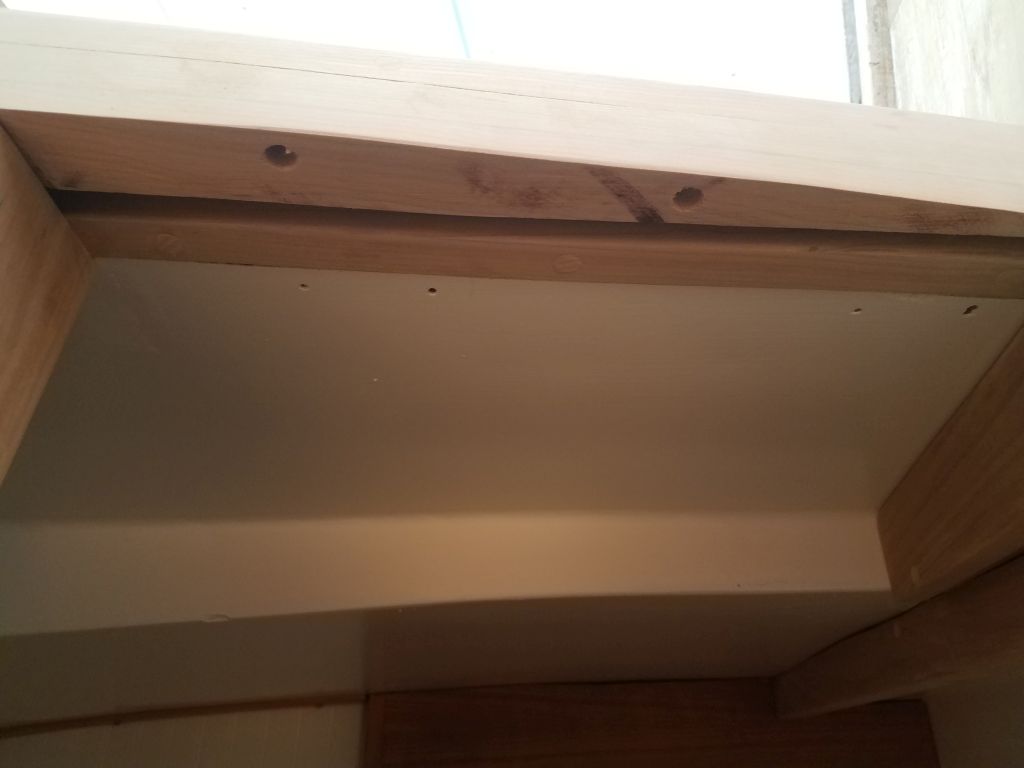
To finish up for the day, I completed the final steps to assemble permanently the companionway ladder.  With the back in place dry, I used tape to mark the edges of each tread on the back panel, which helped me lay out accurately the screw locations for each tread.  Thus marked, I drilled pilot holes from the front (painted) side, then milled small countersinks on the back (varnished) side to accept the screw heads, and finally assembled the whole ladder with glue and screws.

Total time billed on this job today:   8.25 hours

0600 Weather Observation:  Partly cloudy, 41°.  Forecast for the day:  Mostly sunny, showers possible in the afternoon, 64°

Scupper 138

Thursday

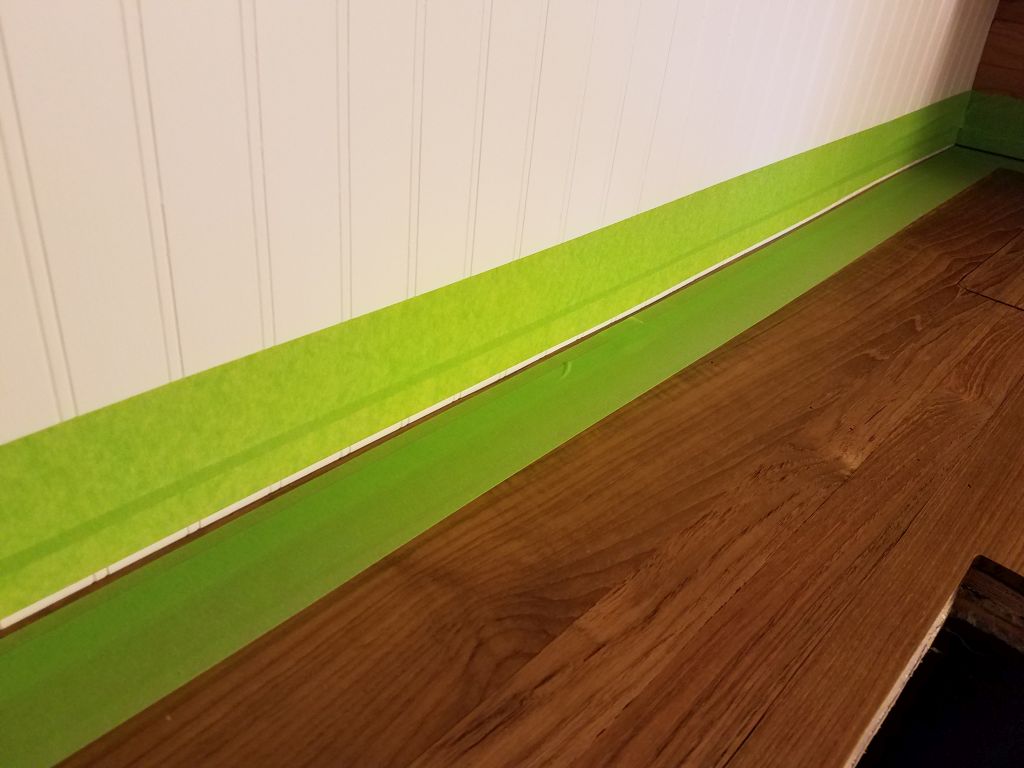
There wasn’t much I could do in the boat while I let the fresh cabin sole cure, but I’d planned this around a short shop day in any event.  After inspecting the last coat of varnish and deeming it satisfactory, I removed the masking tape while perched on the settees or in the bilge in the main cabin, thus avoiding stepping on the fresh varnish anywhere.

Back on the shop floor, I sanded, cleaned, and varnished anew the drawer fronts, engine room door trim, and galley cabin sole piece.

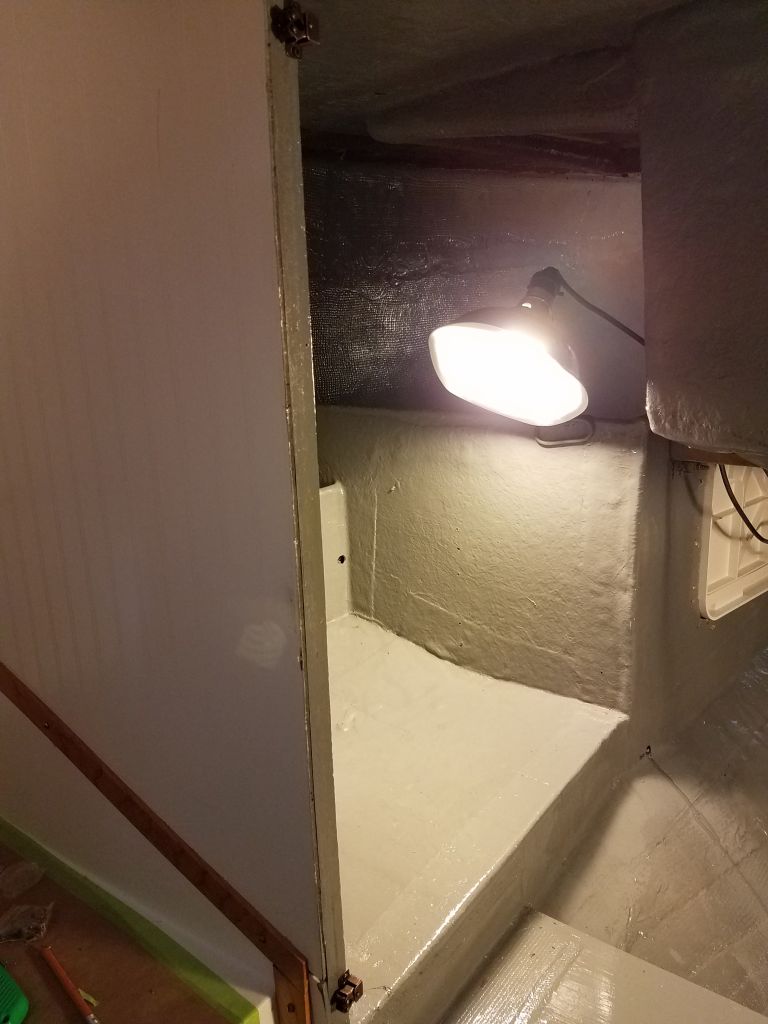
In the aft part of the boat, I solvent-washed the remaining parts of the lockers port and starboard to prepare them for paint.  Later, I applied paint in these lockers, working from the transom forward to cover the remaining area.

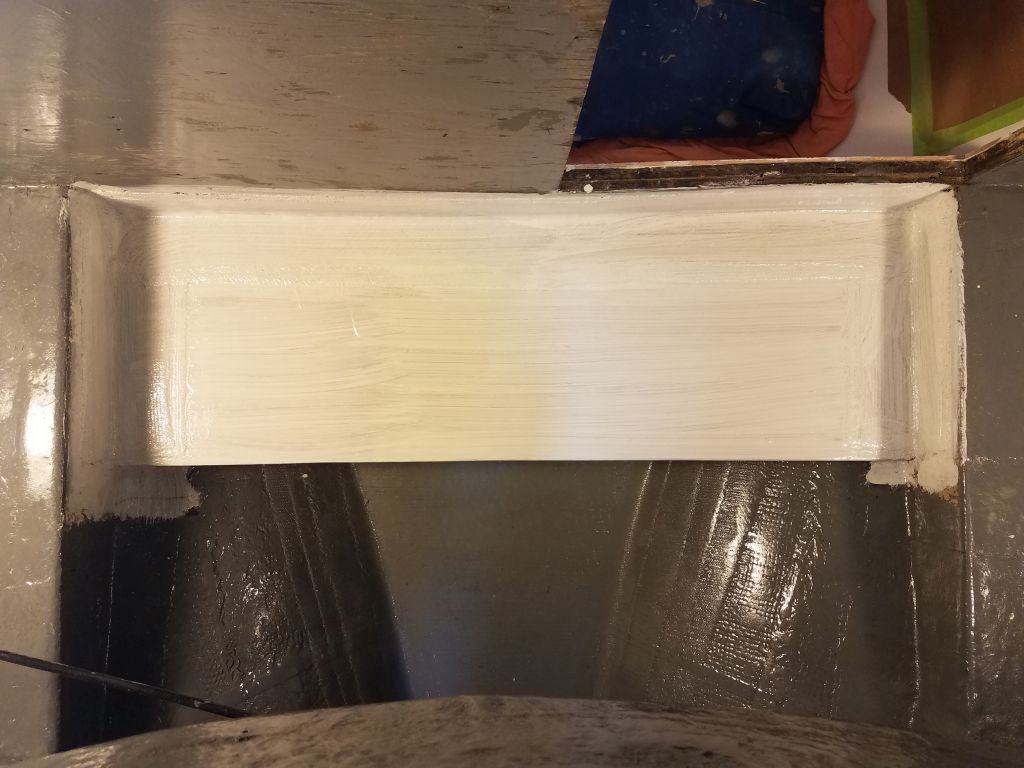
There was no way to get all the surfaces while I was in the lockers–I had to leave enough room to maneuver and turn around and get out of the spaces without getting into the fresh paint, so I did what I could from within, then taped my brush to a long pole and finished up the rest, as the lockers were much too deep for me to otherwise reach from the cockpit.  On the starboard side, I left the new generator platform uncoated for now in order to give the fresh epoxy there some additional cure time before I tried to overcoat it; I’d either prep it with 2-part epoxy primer later and press on, or wait a couple weeks for the epoxy to fully cure before proceeding.  In any event, it was nice to get these spaces mostly painted out.

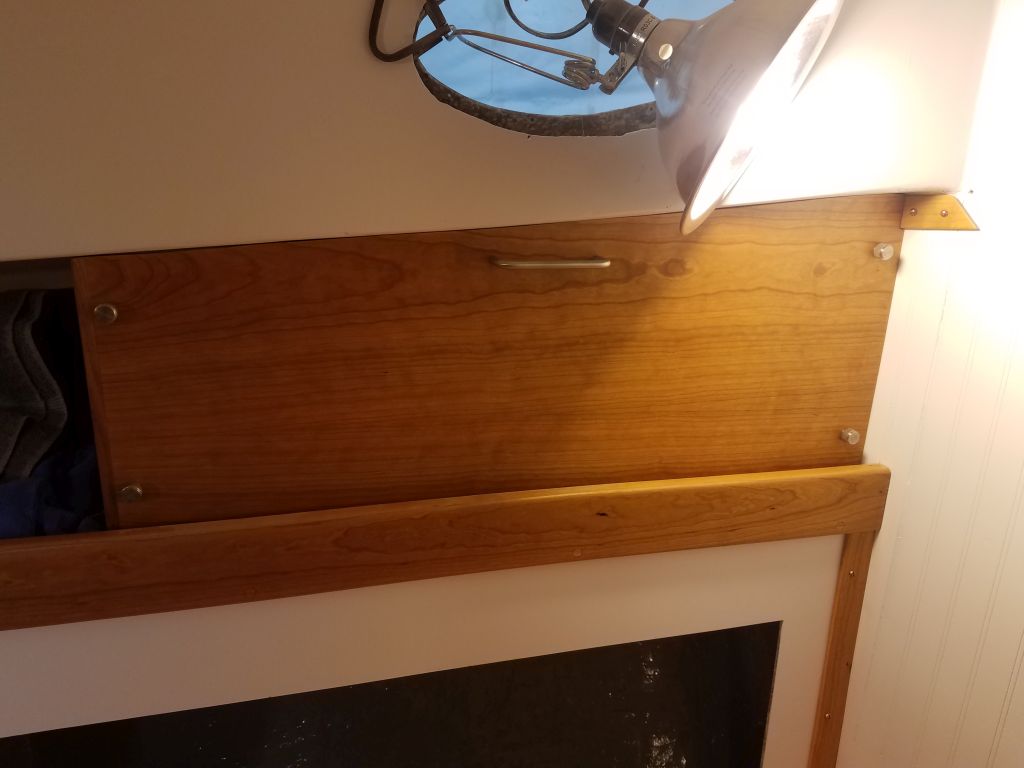
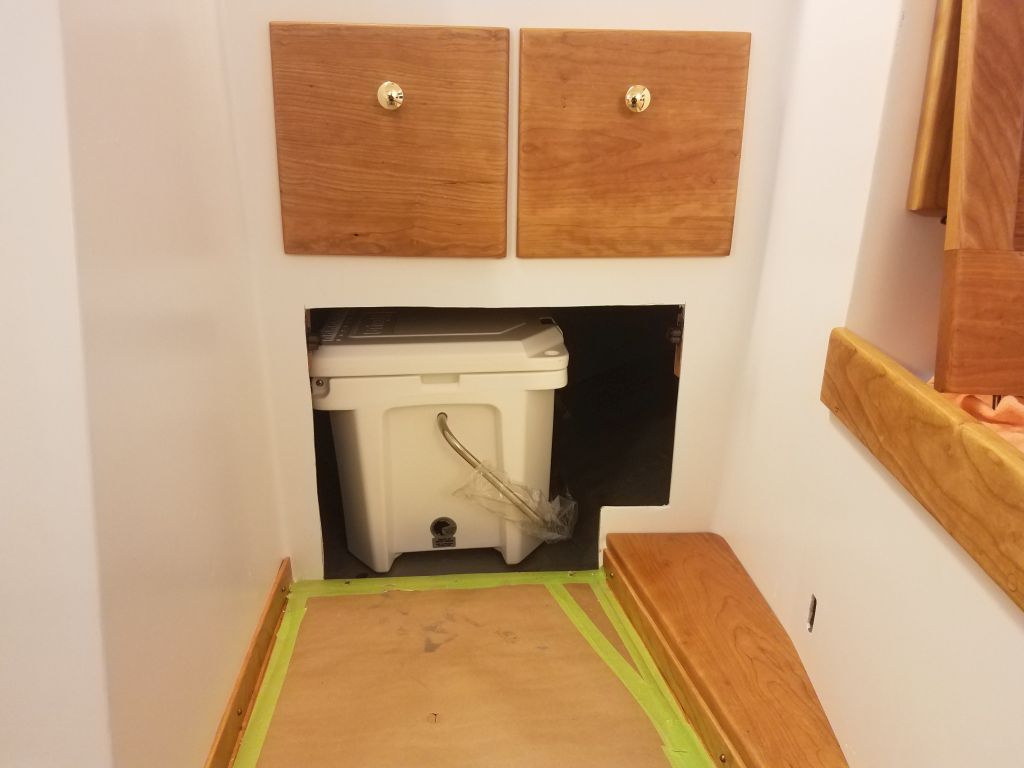
The new door for the chainlocker, and the one for the cooler storage area in the galley, were designed to actually rest upon the lower surfaces in each location, and thus wouldn’t take well to traditional hinging.  So for these two doors, I installed a pair of stainless steel dowels in the bottom rail, which would later fit into corresponding holes at each location to hold the doors in place while allowing easy removal for access to these spaces when necessary.  To aid the friction fit of the dowels in the door frame, I roughed up the metal surface a little and applied some thickened epoxy to help hold the dowels permanently.

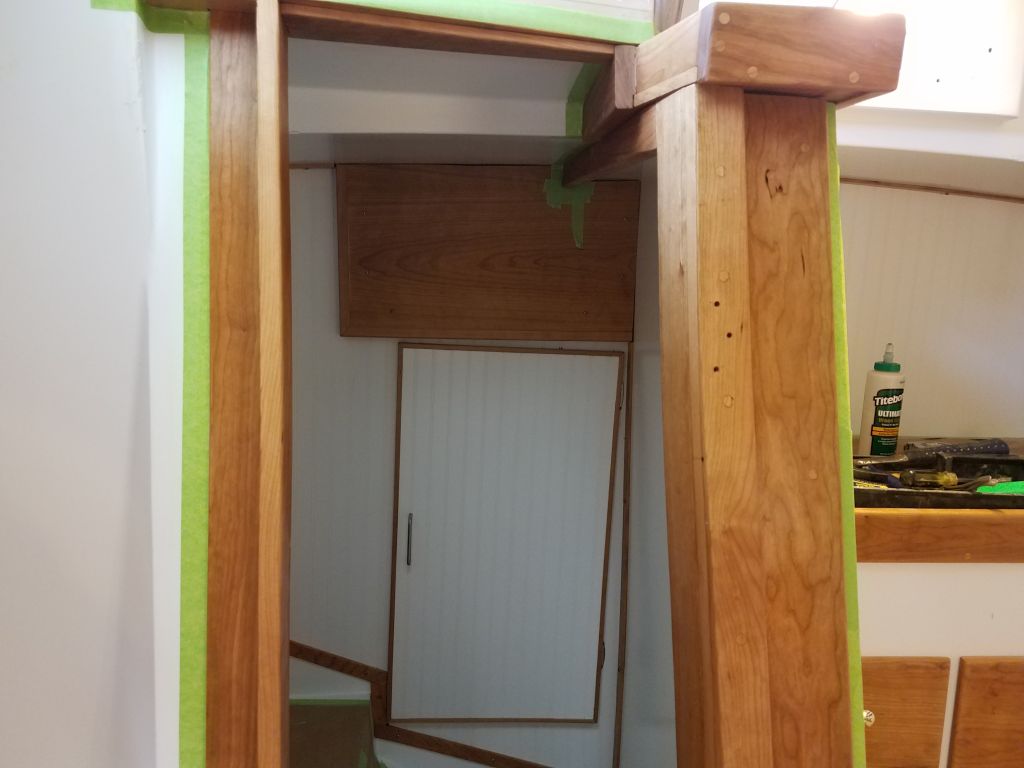
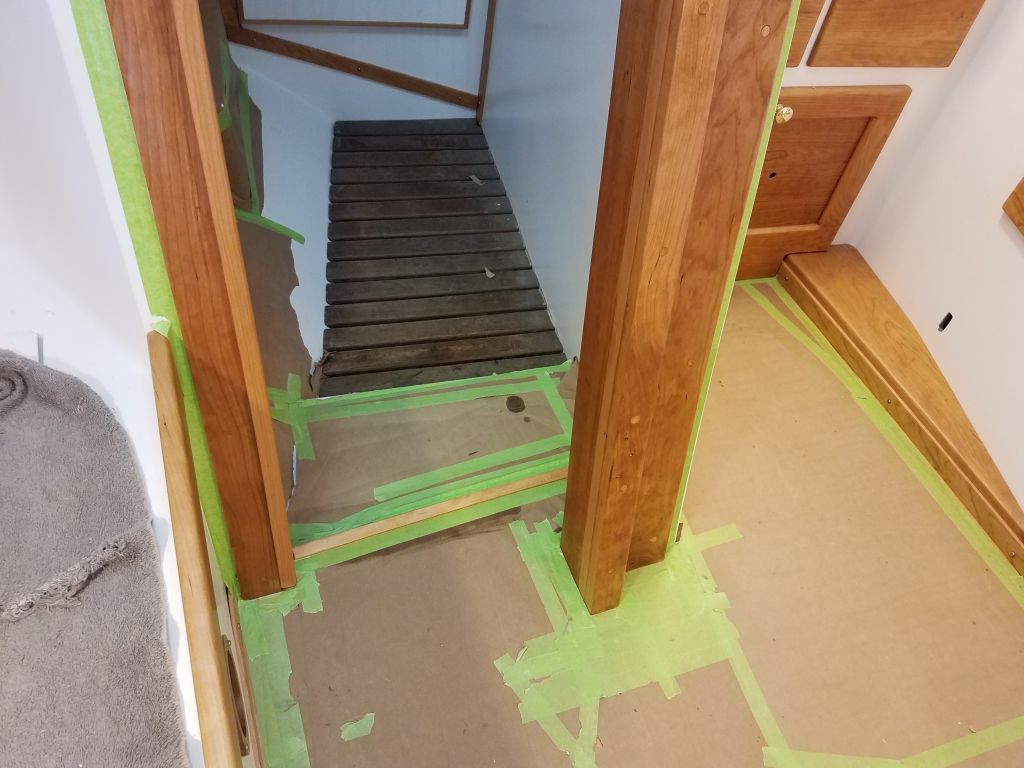
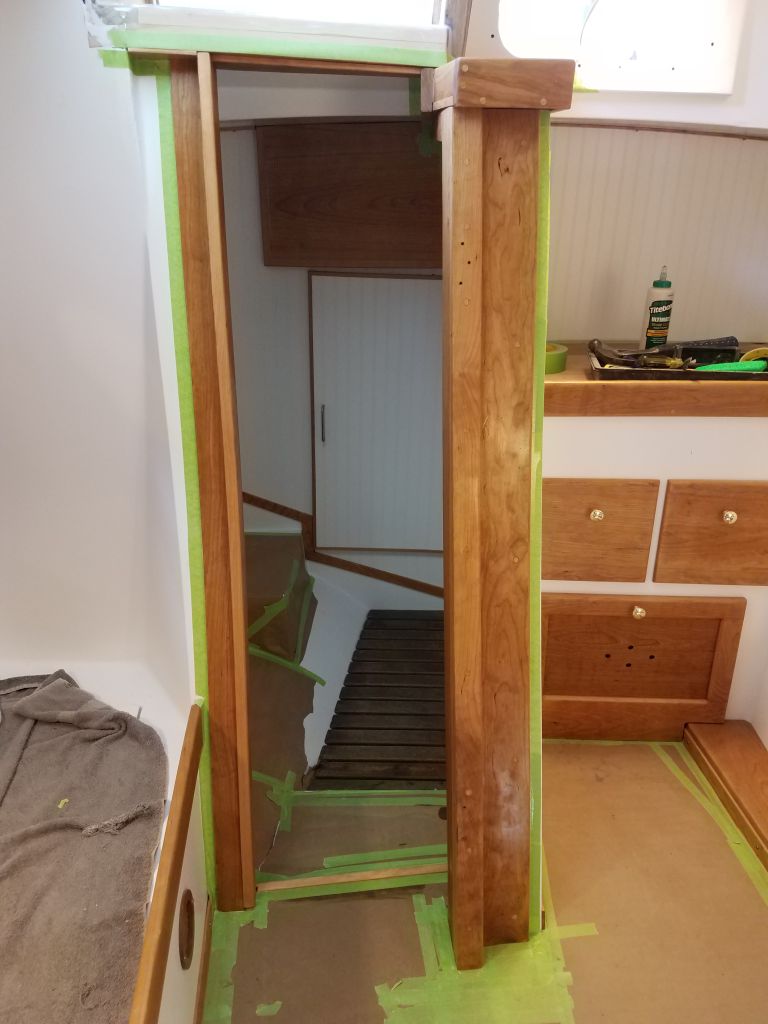
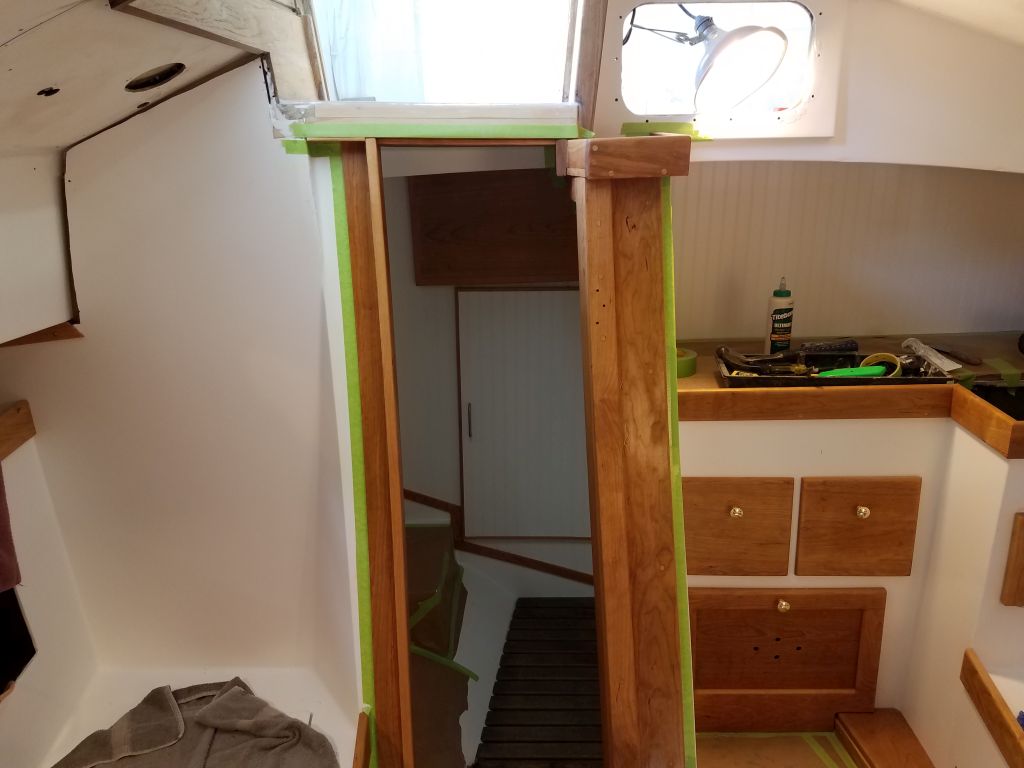
I had hoped to assemble permanently the companionway ladder, but, running out of time, I decided to hold off rather than rushing through.  I settled for dry-fitting the plywood back panel in place to confirm its fit and prepare for final assembly another time.  I was quite looking forward to having the permanent ladder back in place so I could pass between the main cabin and head/engine room without removing my awkward construction ladder;  there’s a reason doors with hinges caught on long ago.

Total time billed on this job today:   3 hours

0600 Weather Observation:  40°, light rain.  Forecast for the day:  Clouds and rain, 46°
Scupper 137

Wednesday

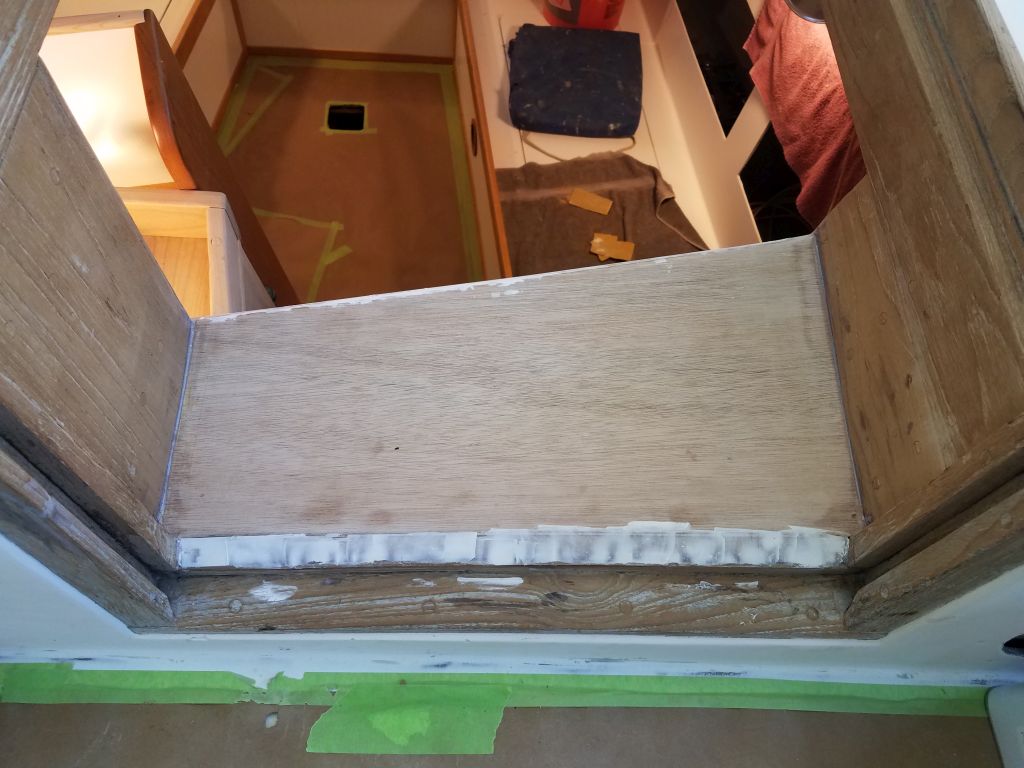
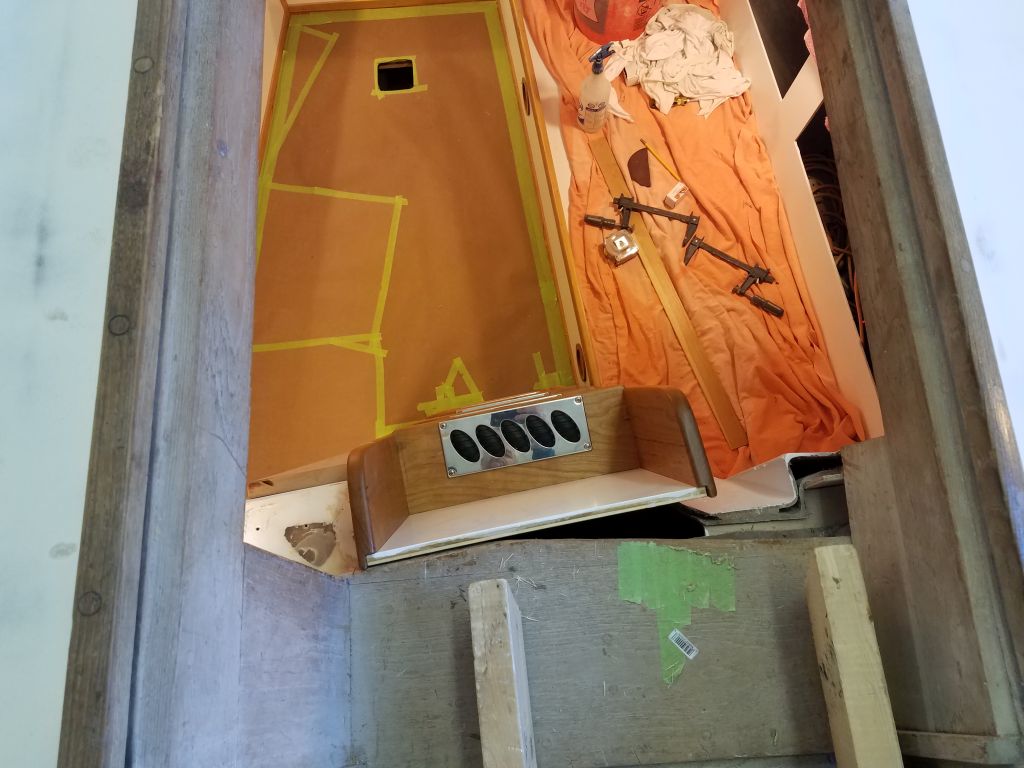
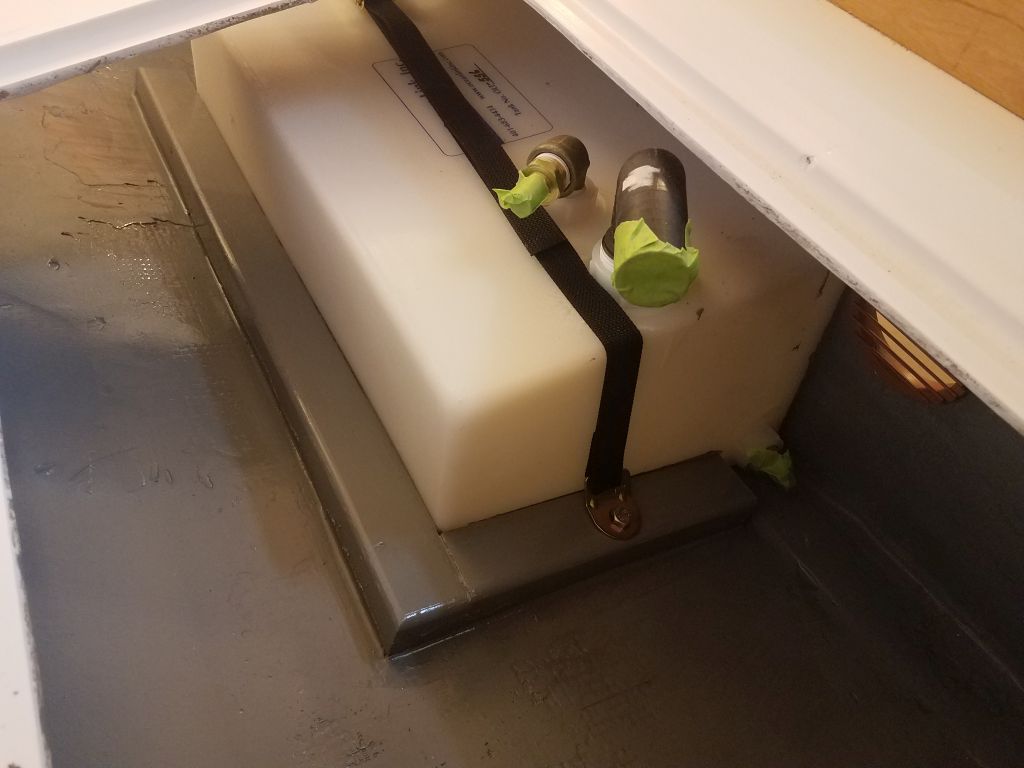
Most of the remaining trim work still ahead was either in the head itself, or near it (i.e. the companionway/head door).  I’d be focusing on that all very soon, but for the moment I started with the loose ends of the two cover panels I’d built earlier for the space:  Over the waste tank, and the future instrument panel access to the cockpit.  These needed to be in place so I could trim around them.

For both panels, I first used tape to mark existing screw locations in the backing cleats at each location; left to my own devices, I seemed to have an uncanny ability to choose and attempt to drill into the exact location of some screw in the underlying structure unless I marked them first (if only I could find them when I wanted to).  Then, I laid out for screw locations to secure the panels.  Both needed to be removable for access, but wouldn’t require regular access, so I chose regular screws to install the panels.

To allow the future trim to slip behind the waste tank panel, and to allow the panel’s removal later as needed, I used some future trim stock to mark the corners of the panel as needed, and then cut out the reliefs.  I planned to finish up the trim in the head soon, but wanted to get the engine room door  hung so I could trim around it as needed (clearances for required trim at the bottom edges of the opening were tight).  For now, though, I awaited the door’s final finishing (underway), and, with the cabin sole finishing in its final stages also didn’t want to be in and out of the boat unnecessarily, so the trim project would continue next week.

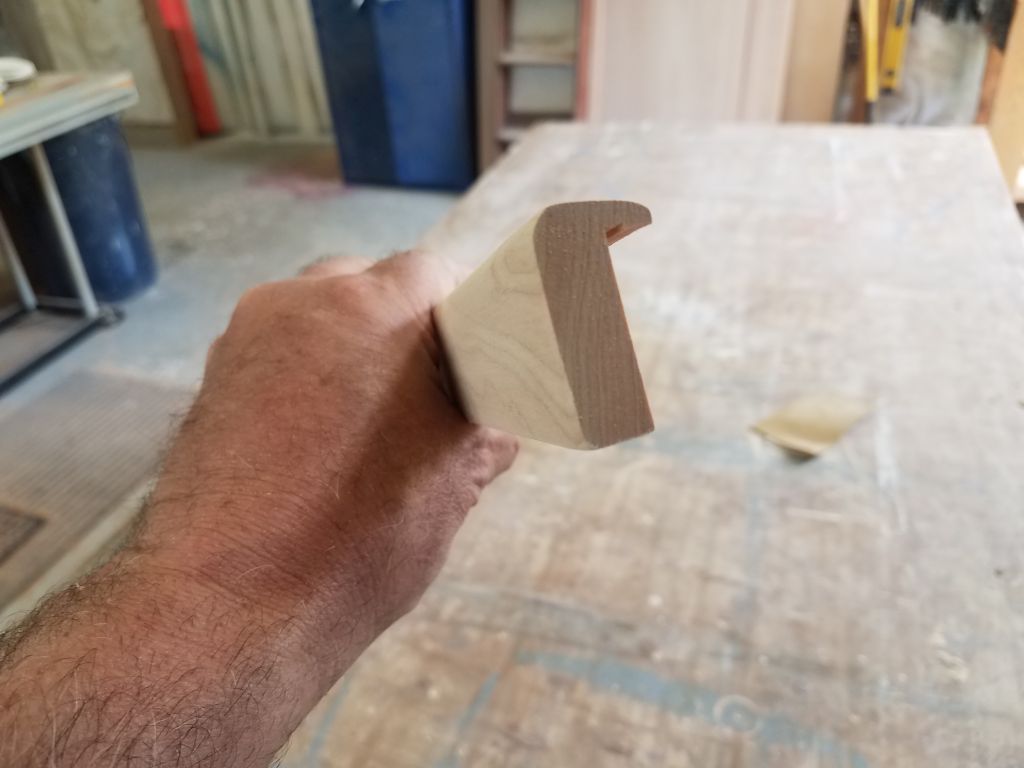
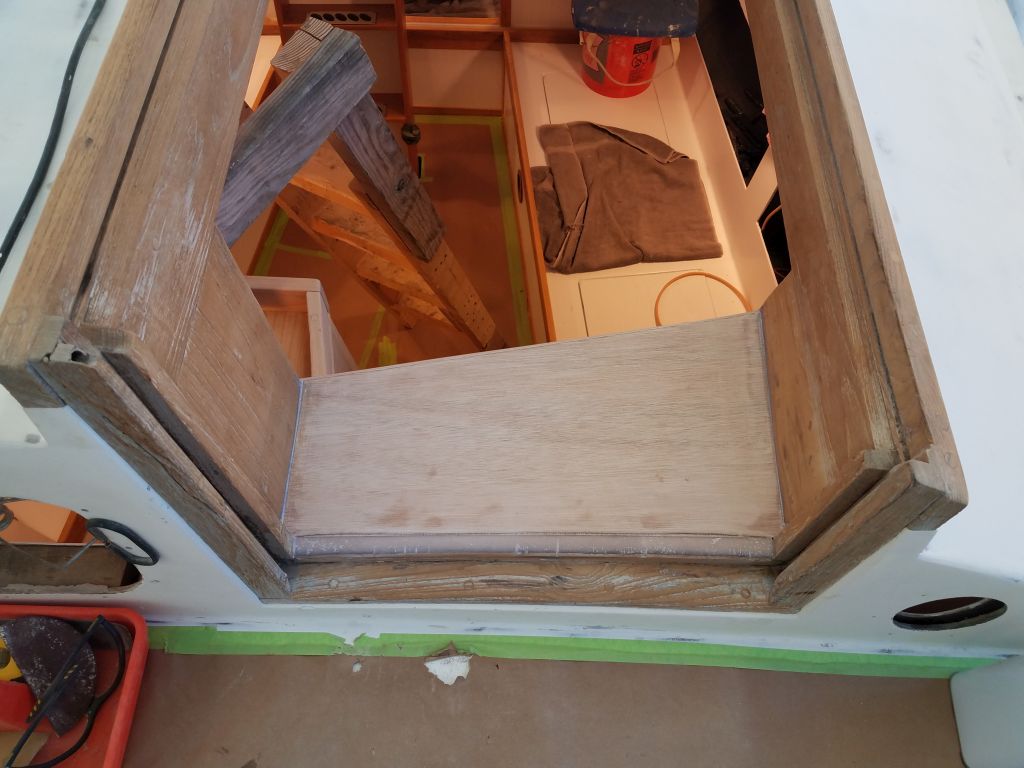
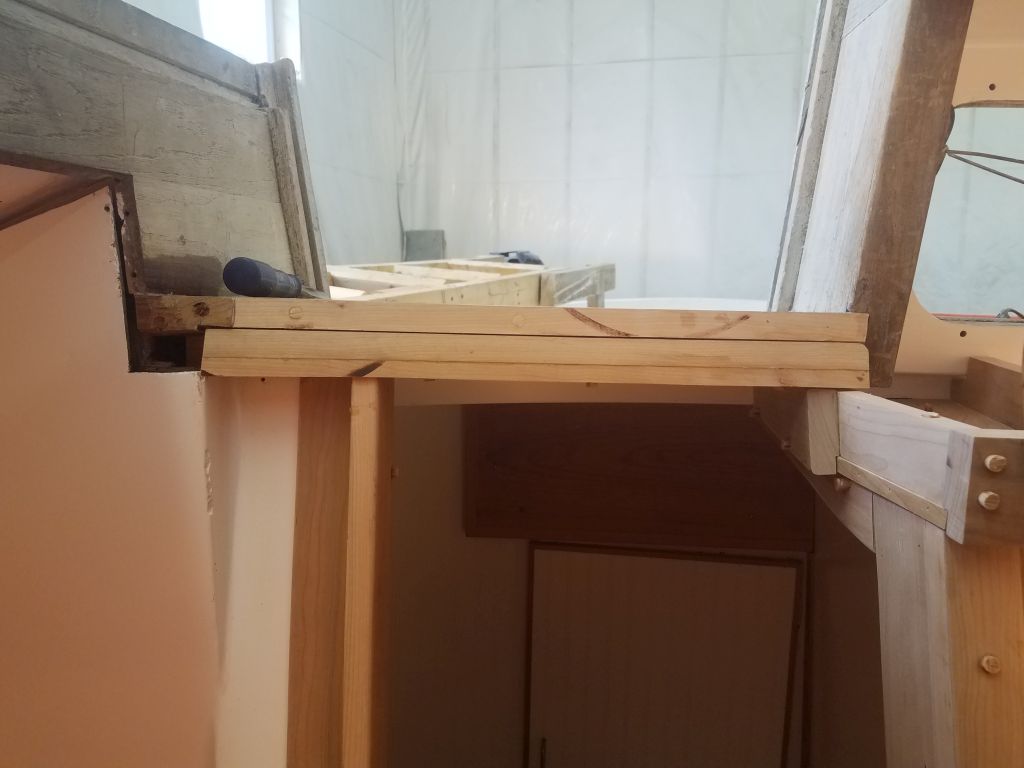
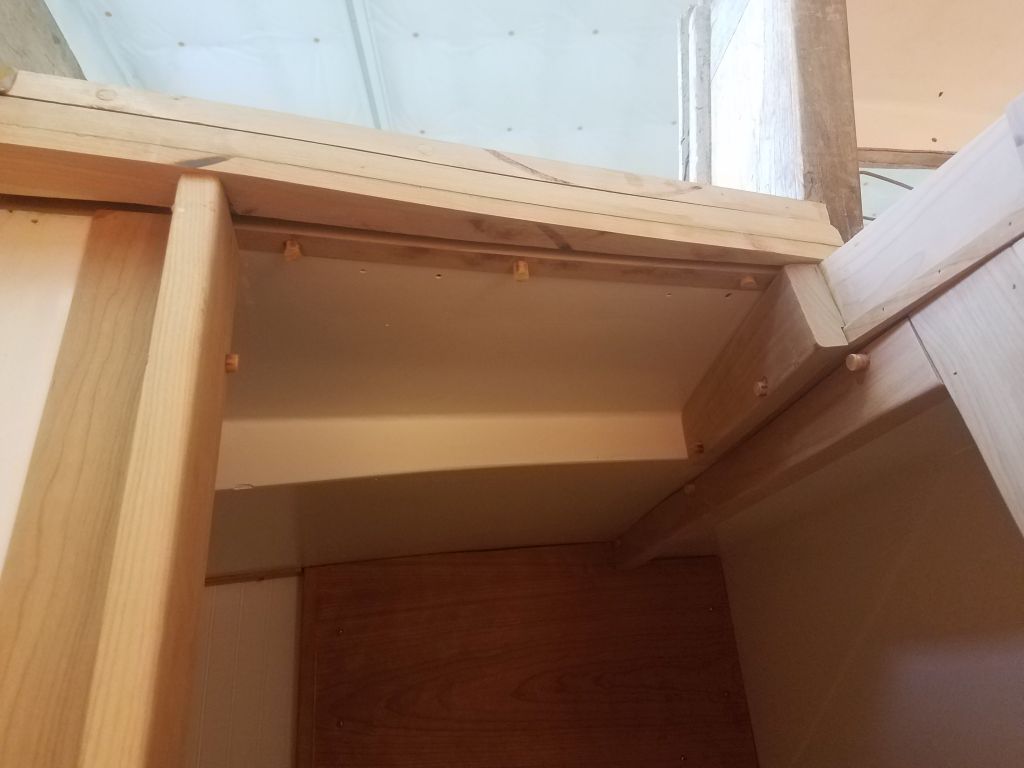
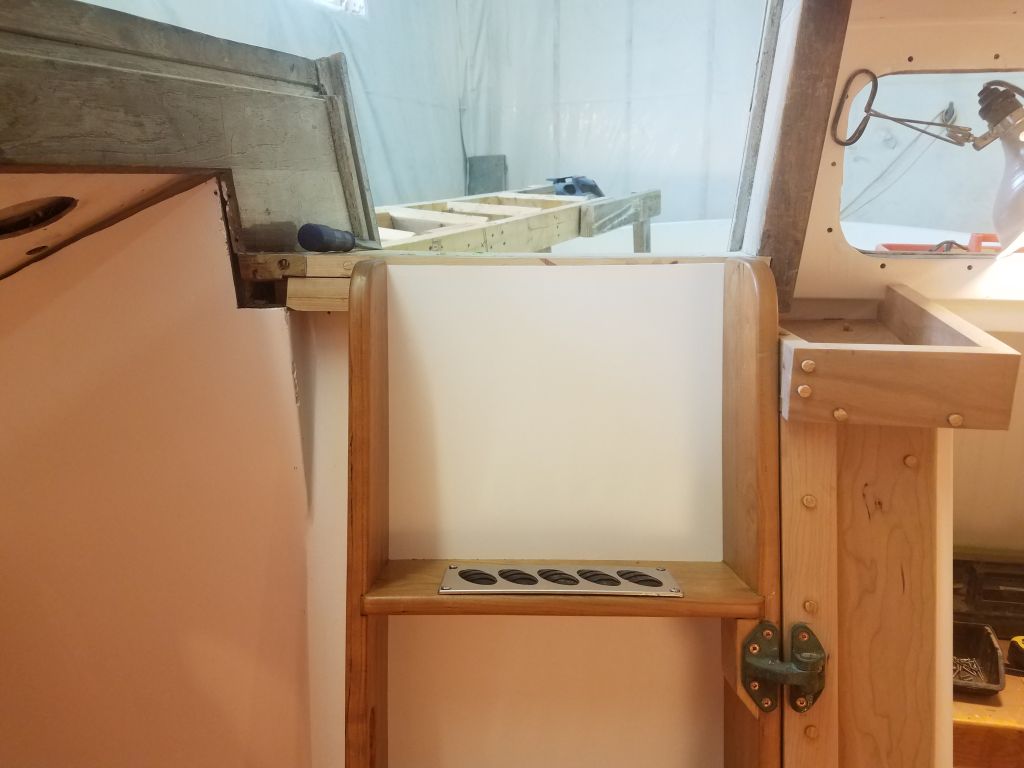
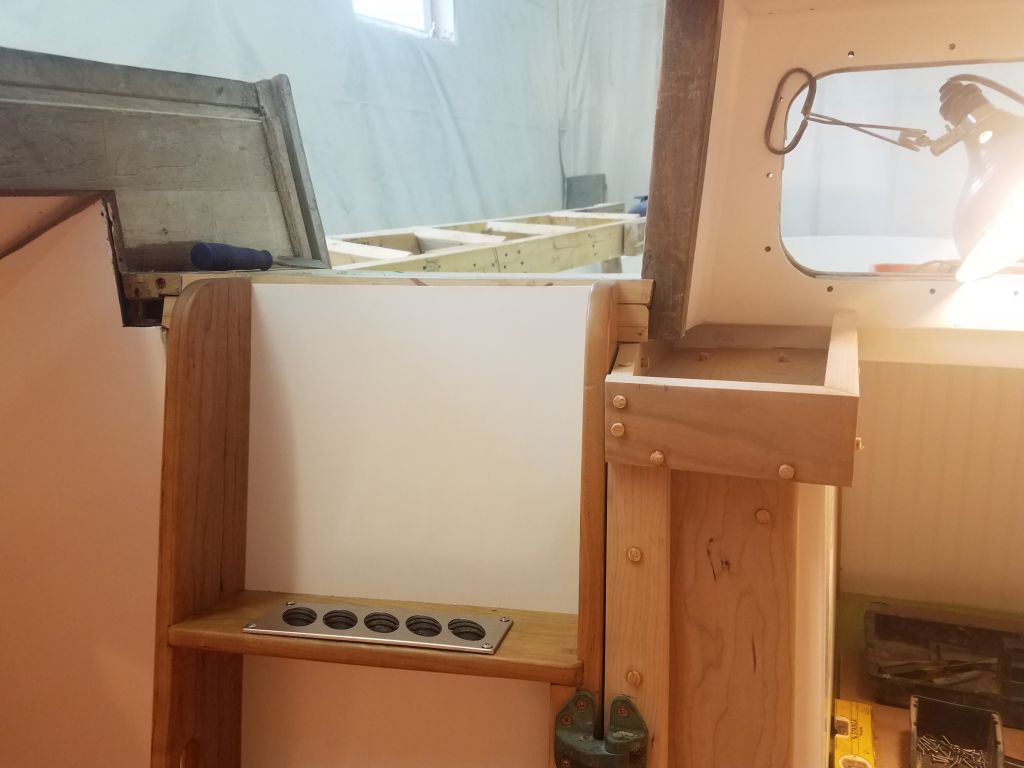
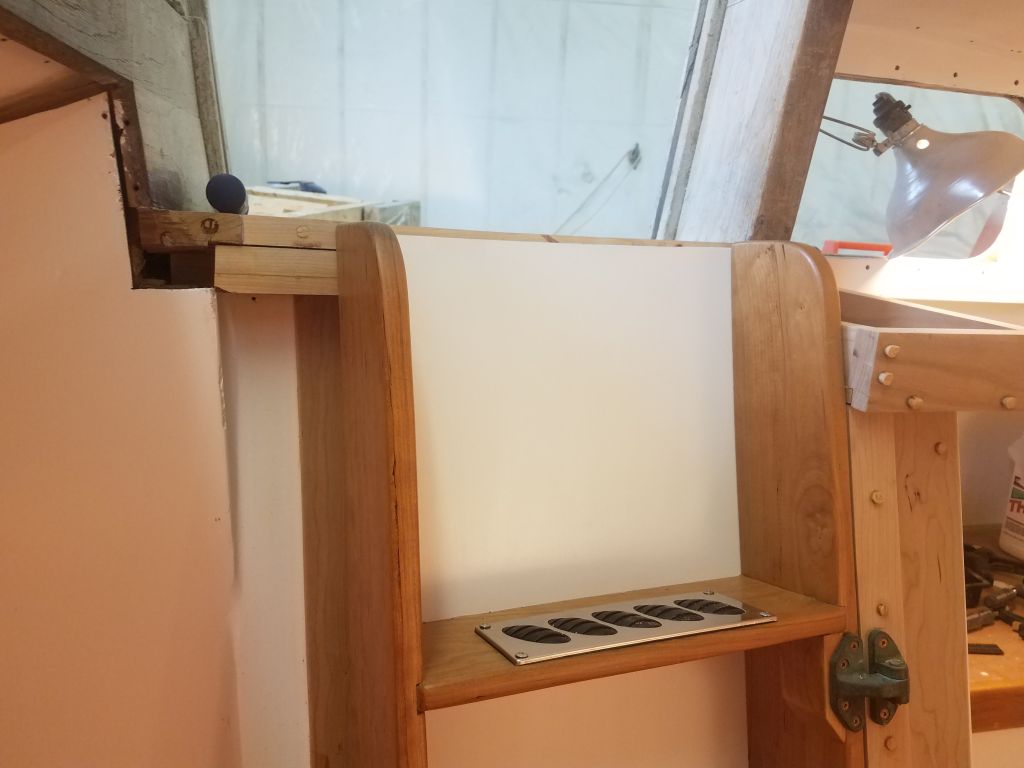
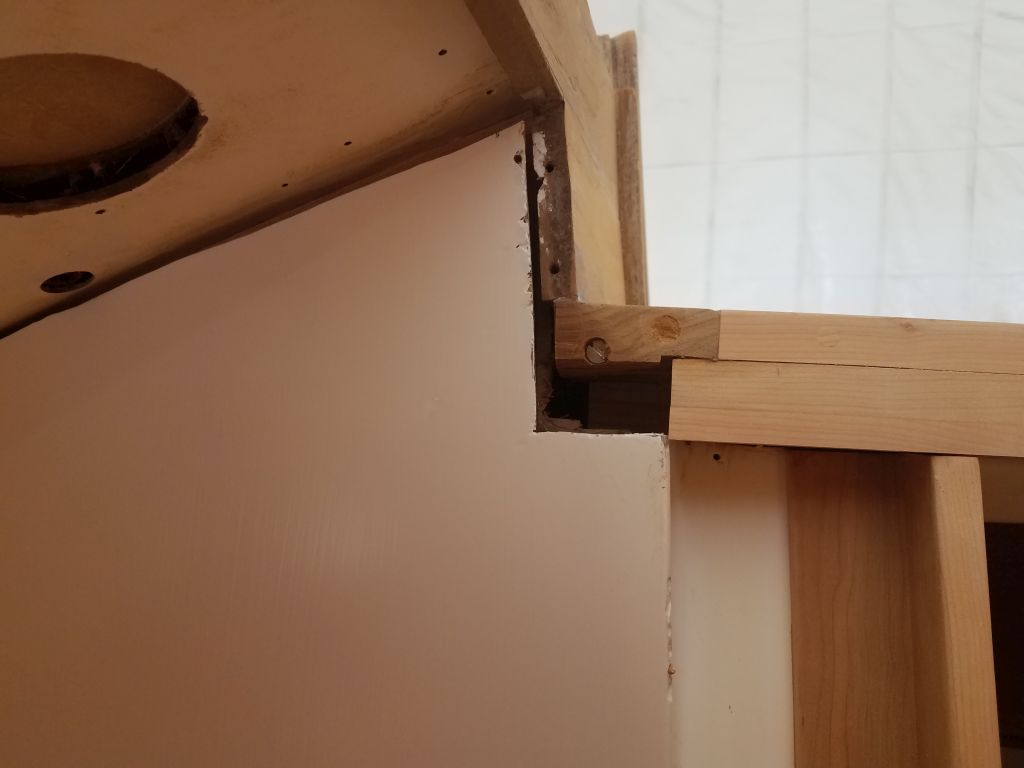
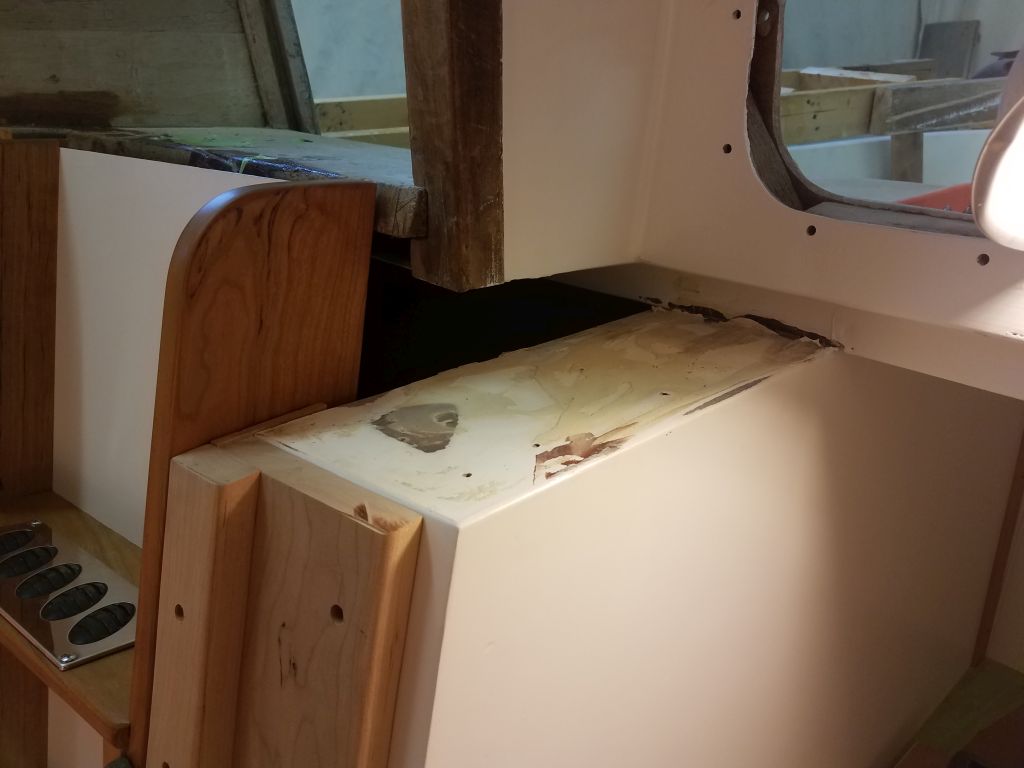
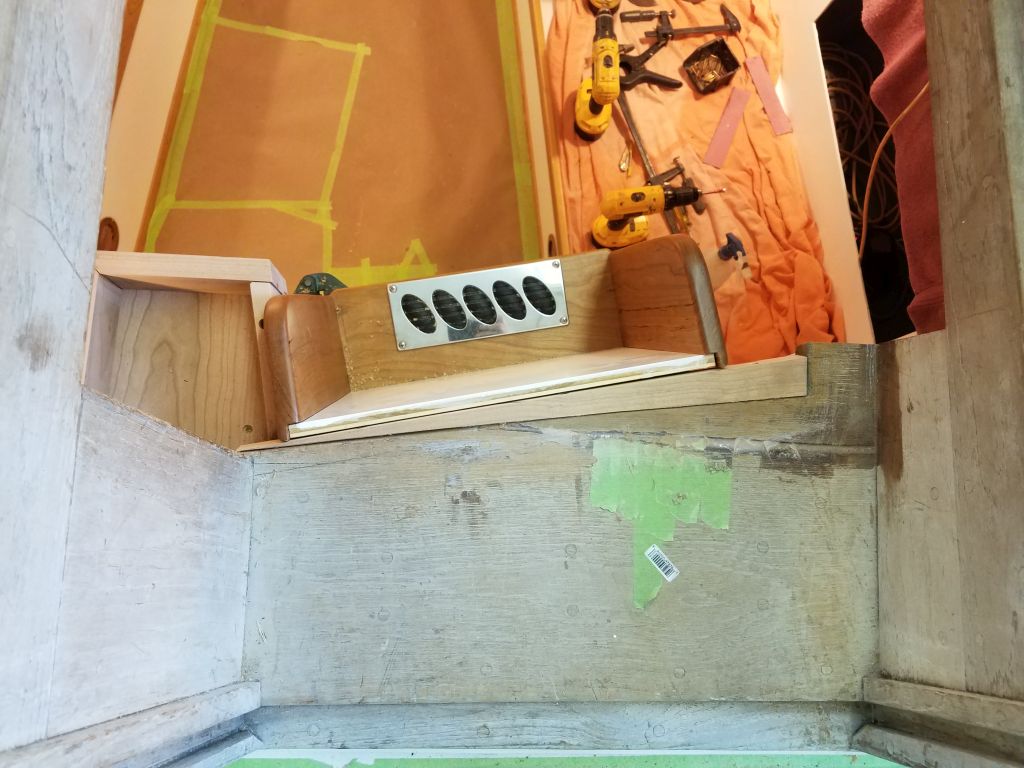
Another trim-my loose end was a small molded raised area in the galley, where the original interior molding had to take a little step to allow hull clearance while maximizing the galley sole area.  I’d saved for duplication the original teak piece from the area, and now used it to cut a new cherry blank to fit.  With the rounded corners of the molded liner, I had to relieve the back edges of the piece to fit, as per original, and after one test fit I found I needed to take off a bit more, after which the new piece fit as expected.  Afterwards, I sanded the new piece clean and to prepare it for finishing before installation.  The old piece used many screws, but I planned to install the replacement with adhesive alone.

Note that the cabin sole baseboard trim I built earlier would cover the lower vertical edge of this new piece once installed.

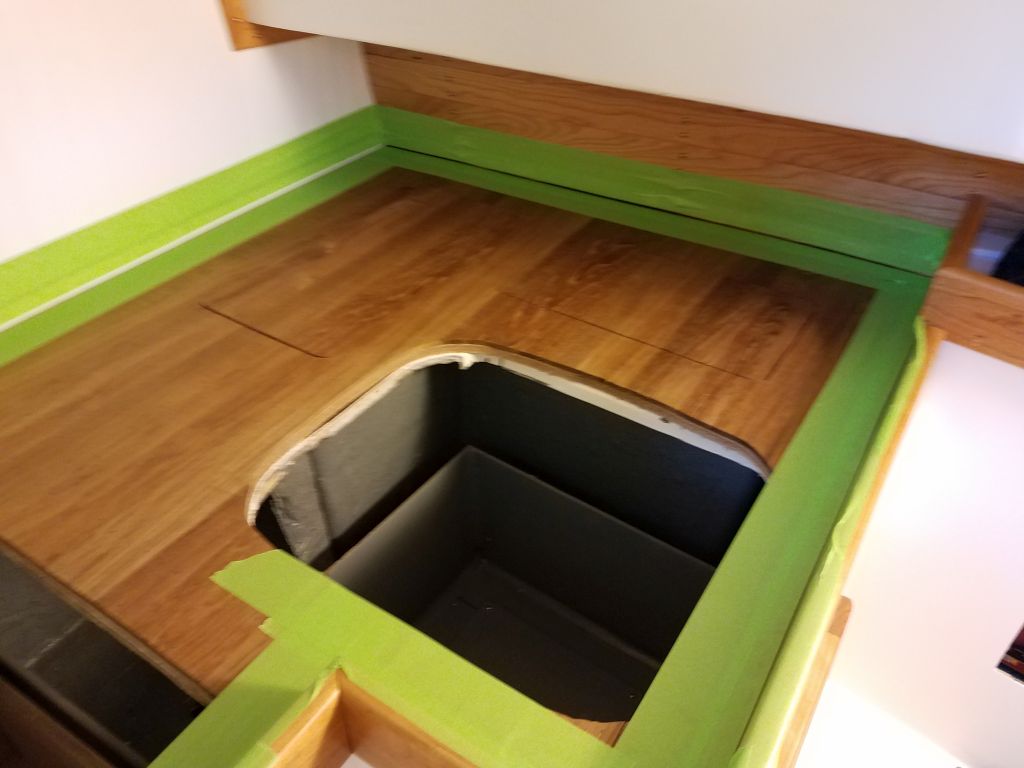
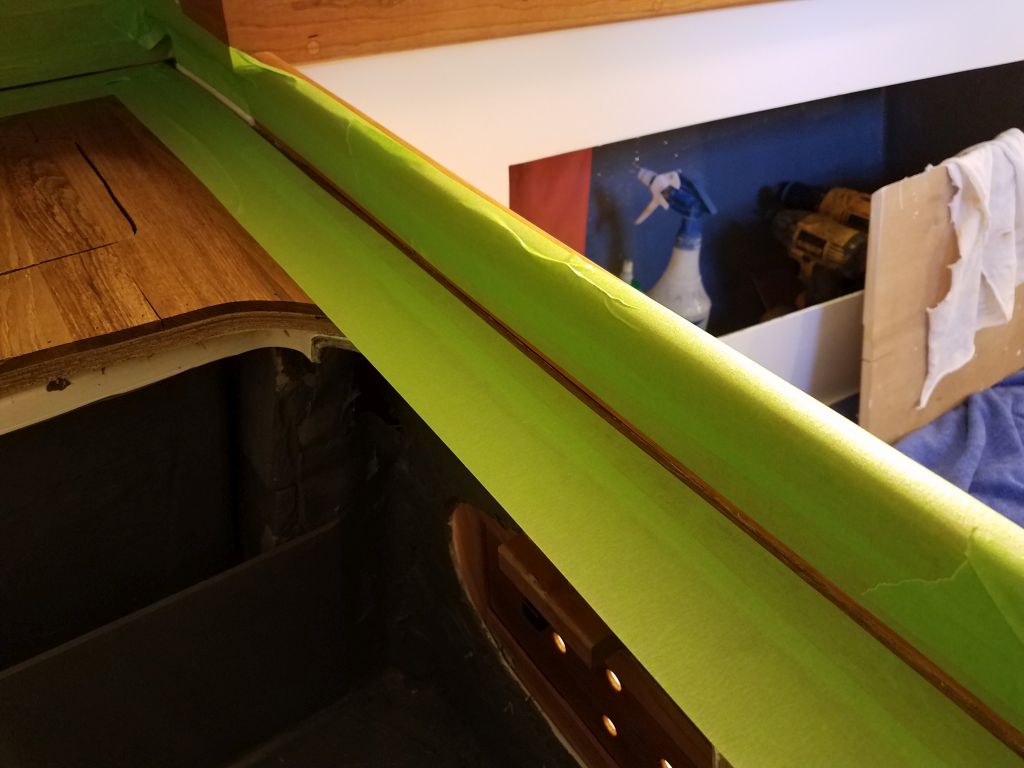
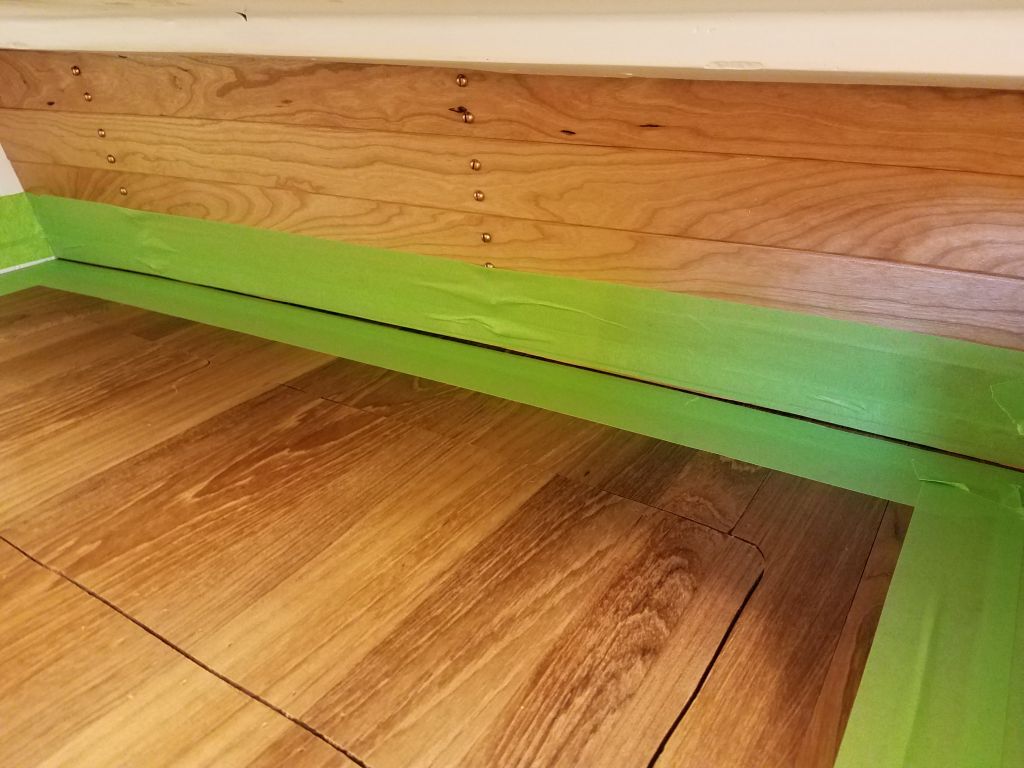
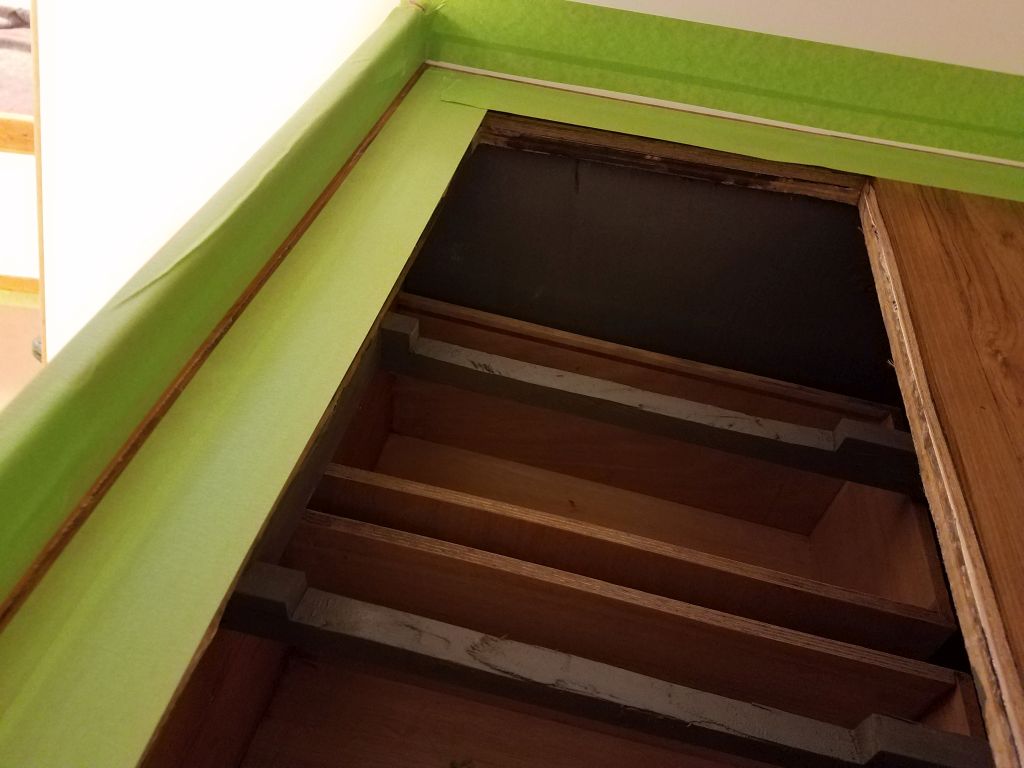
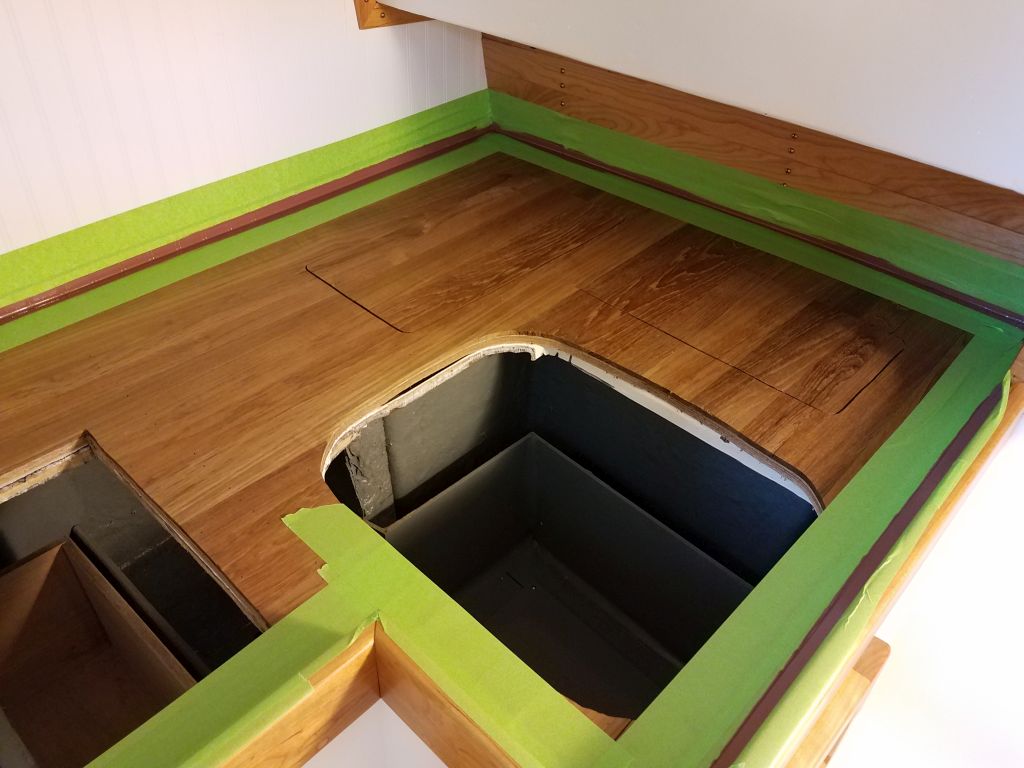
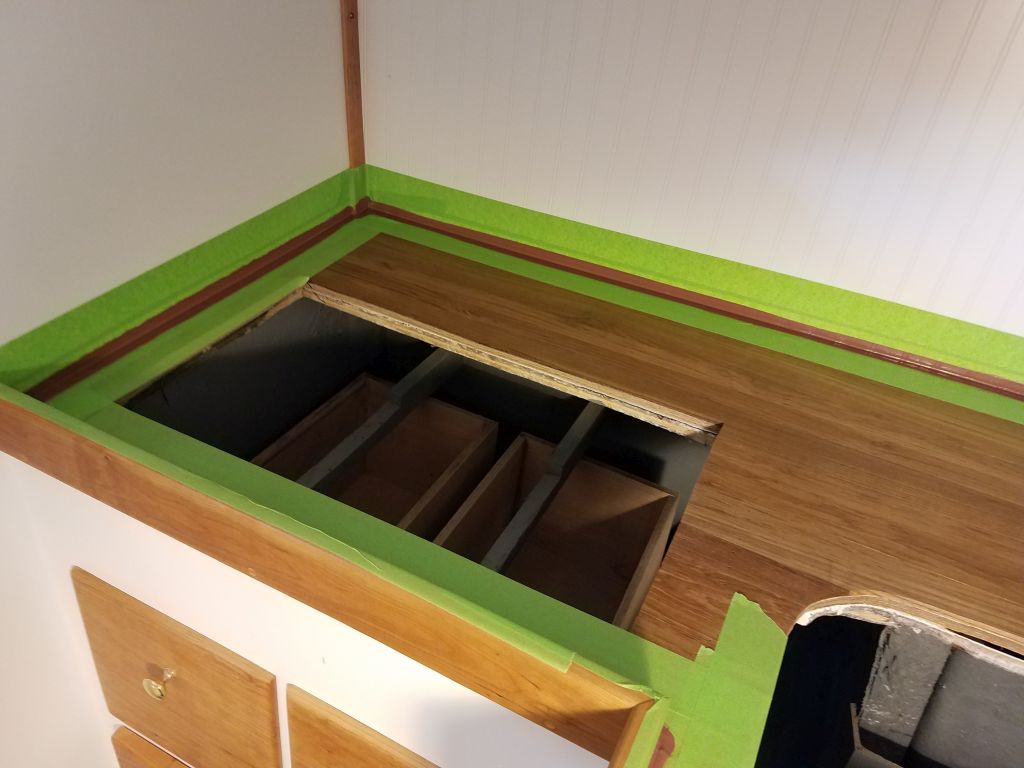
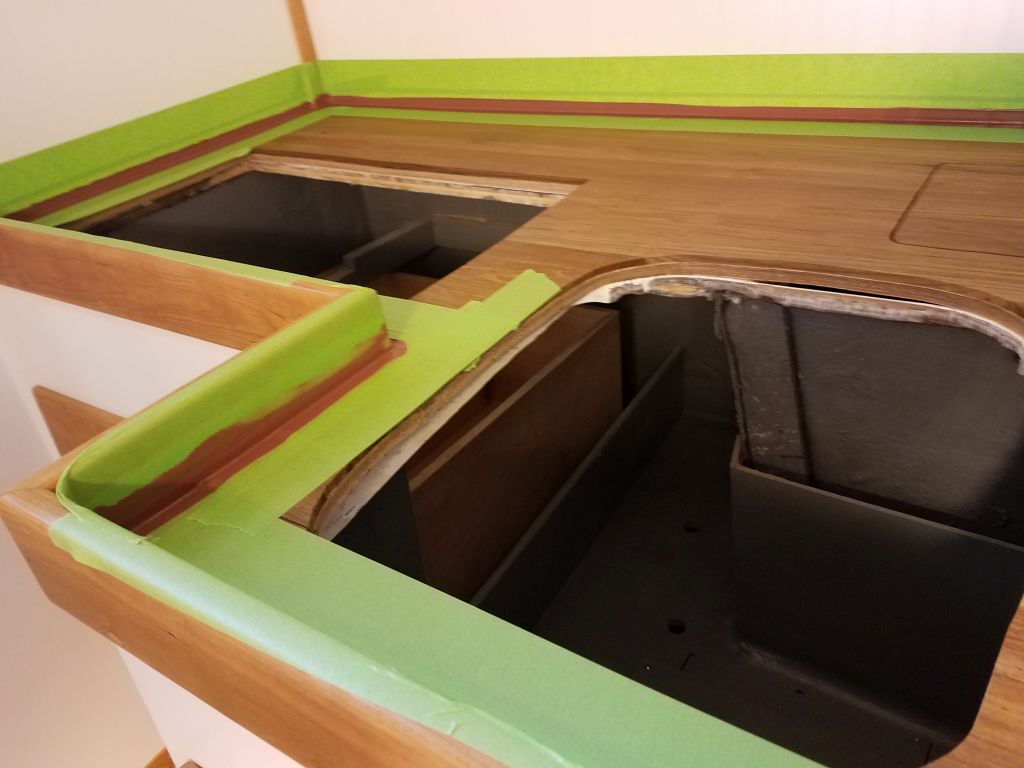
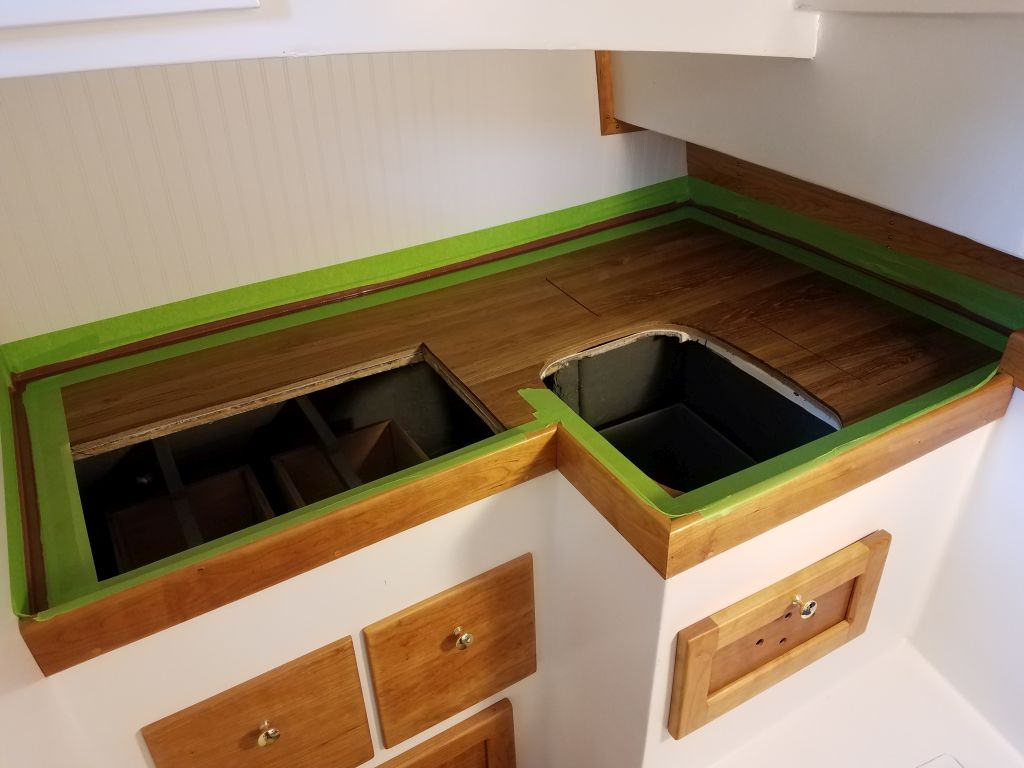
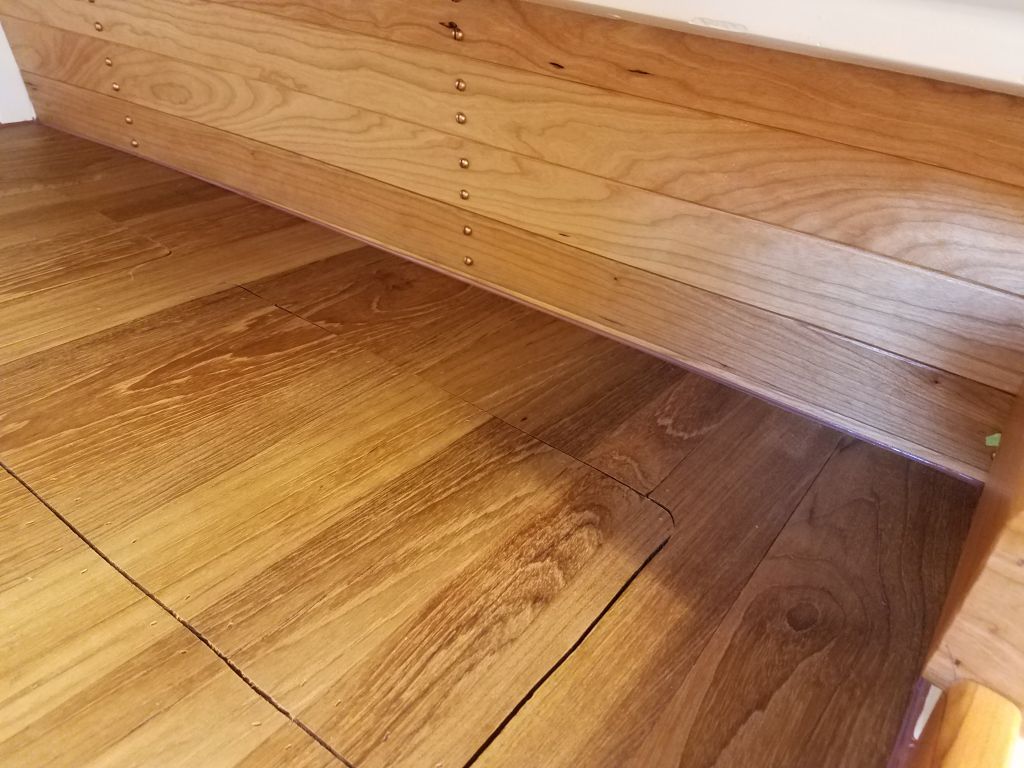
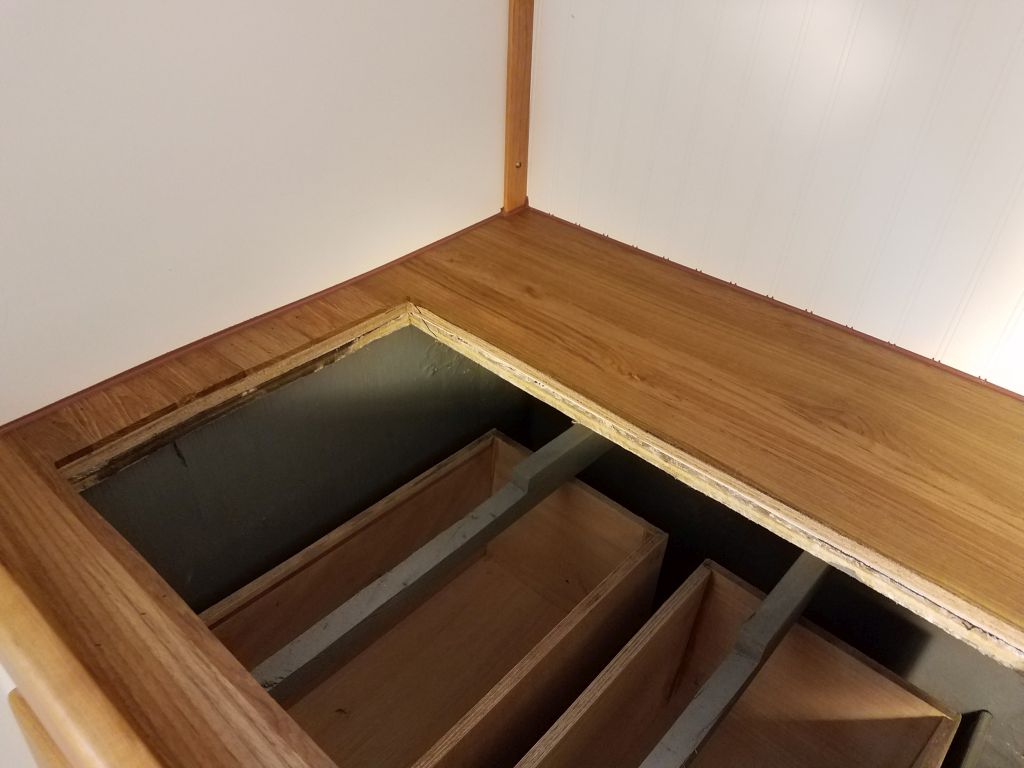
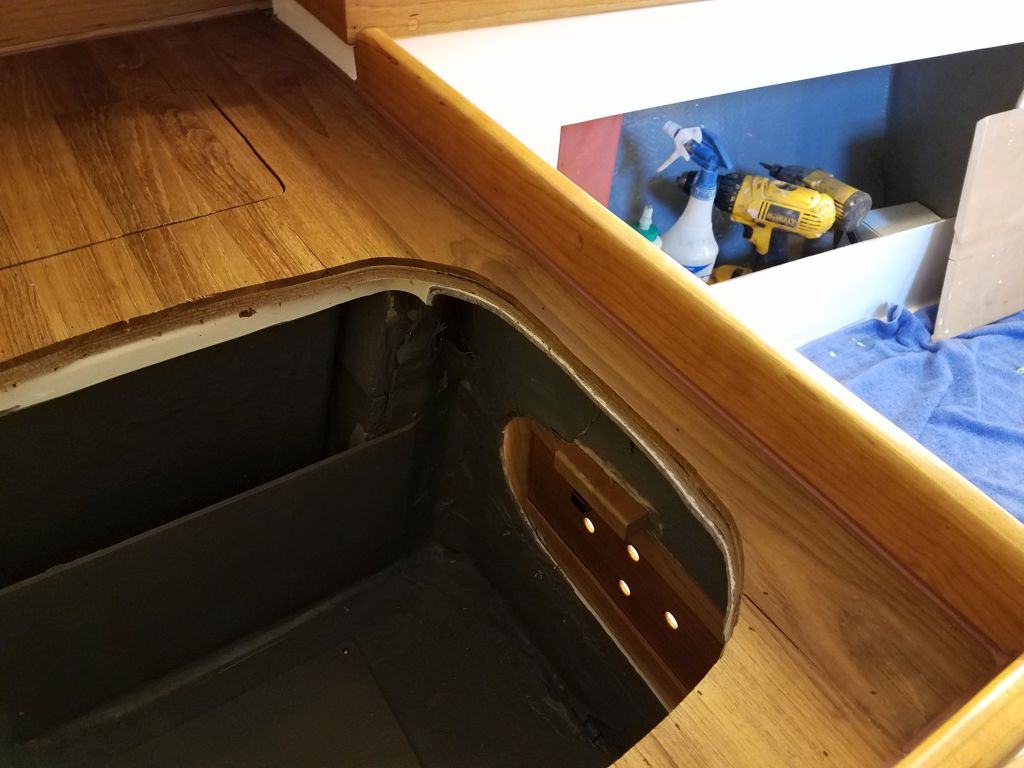
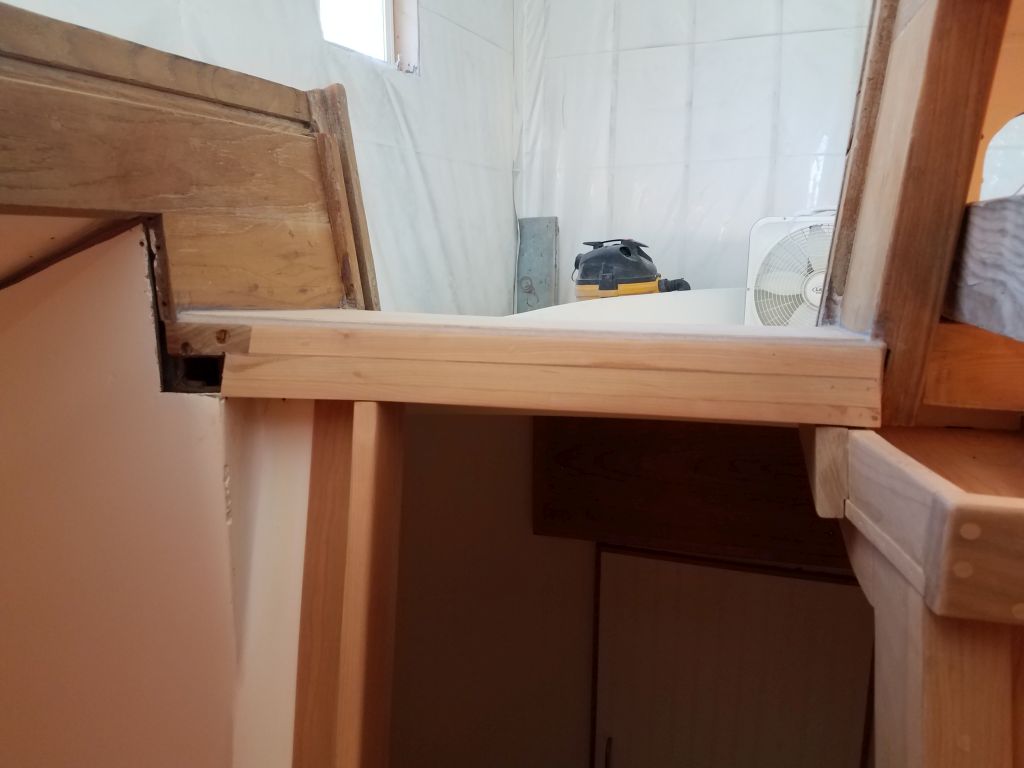
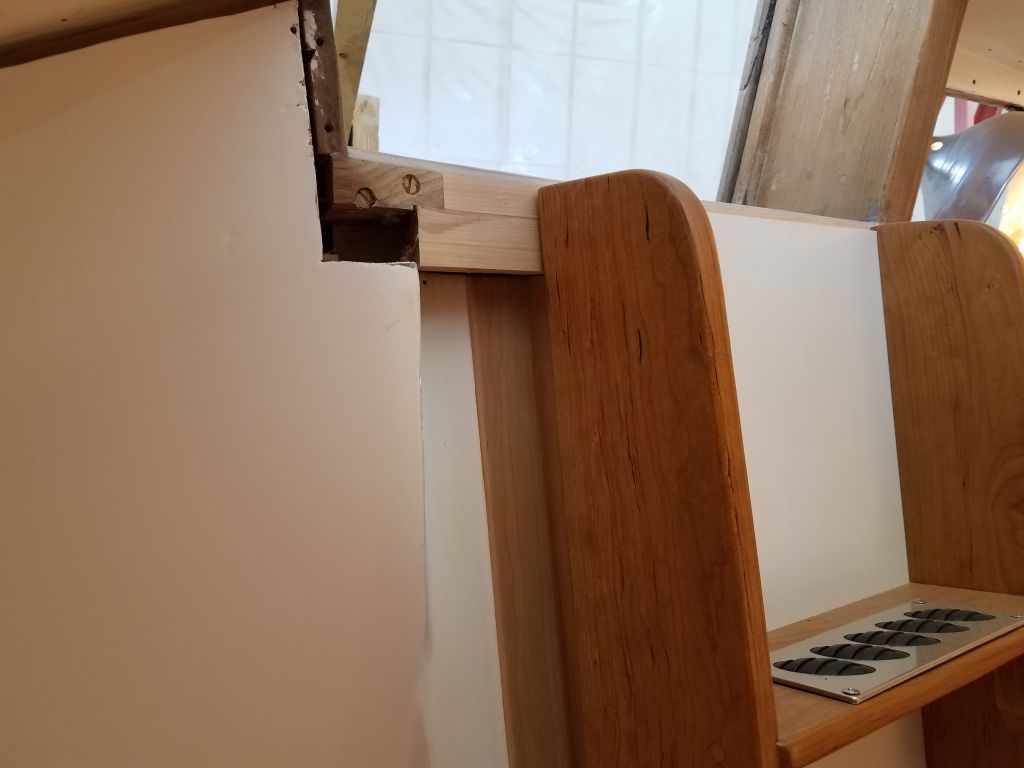
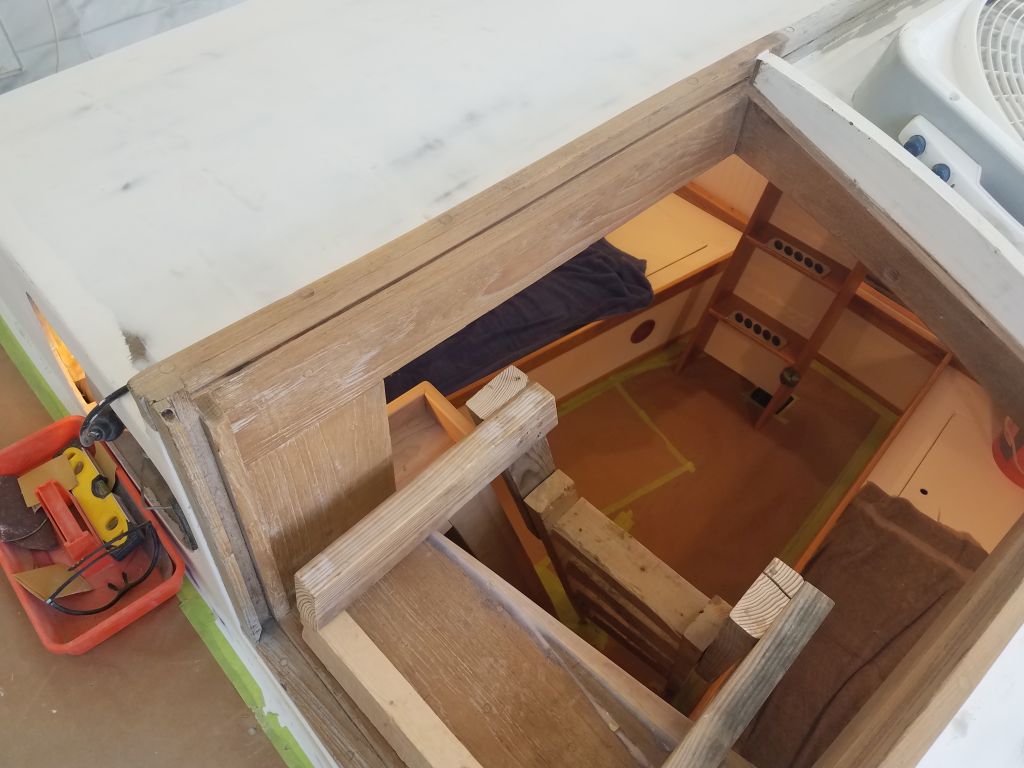
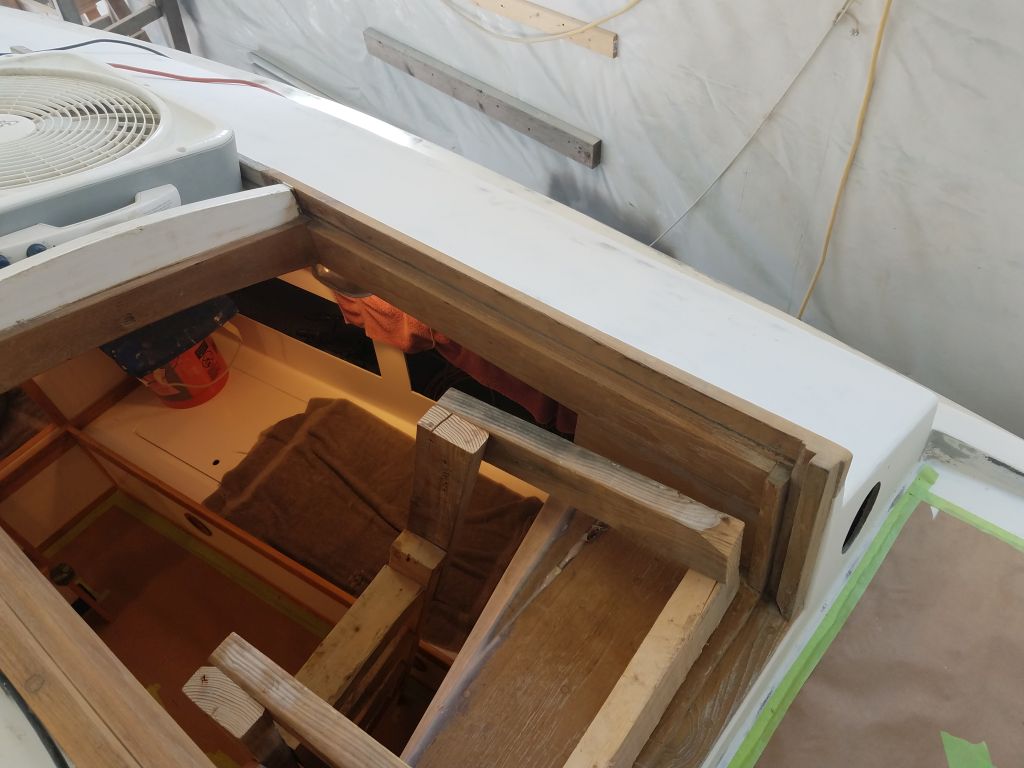
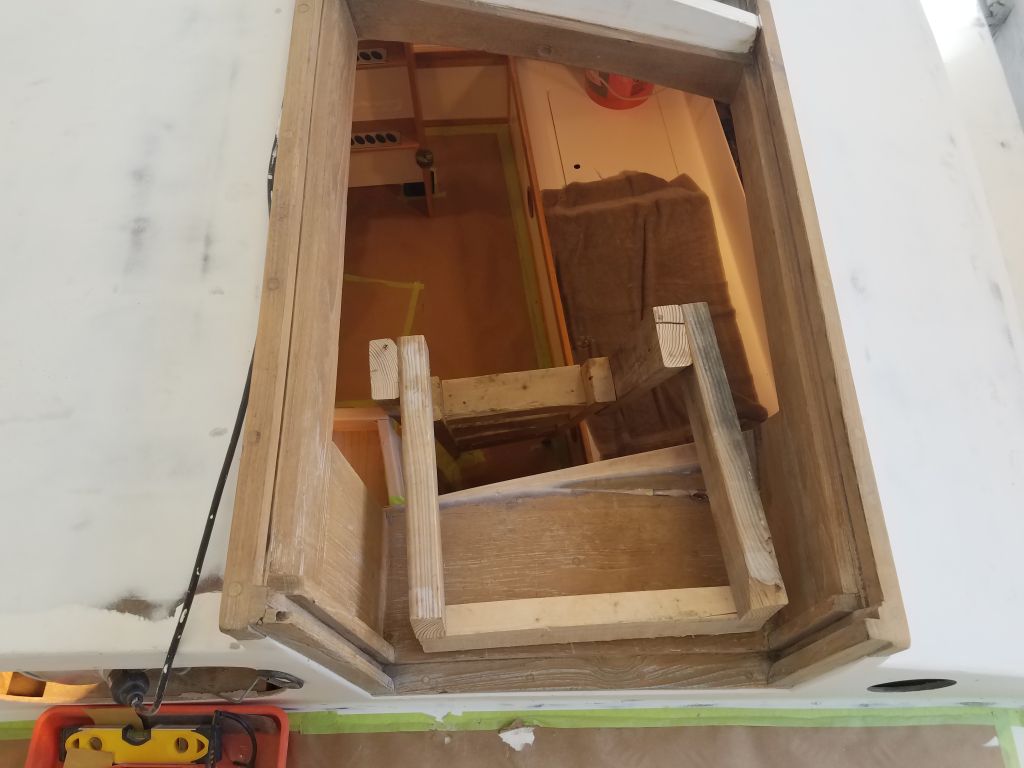
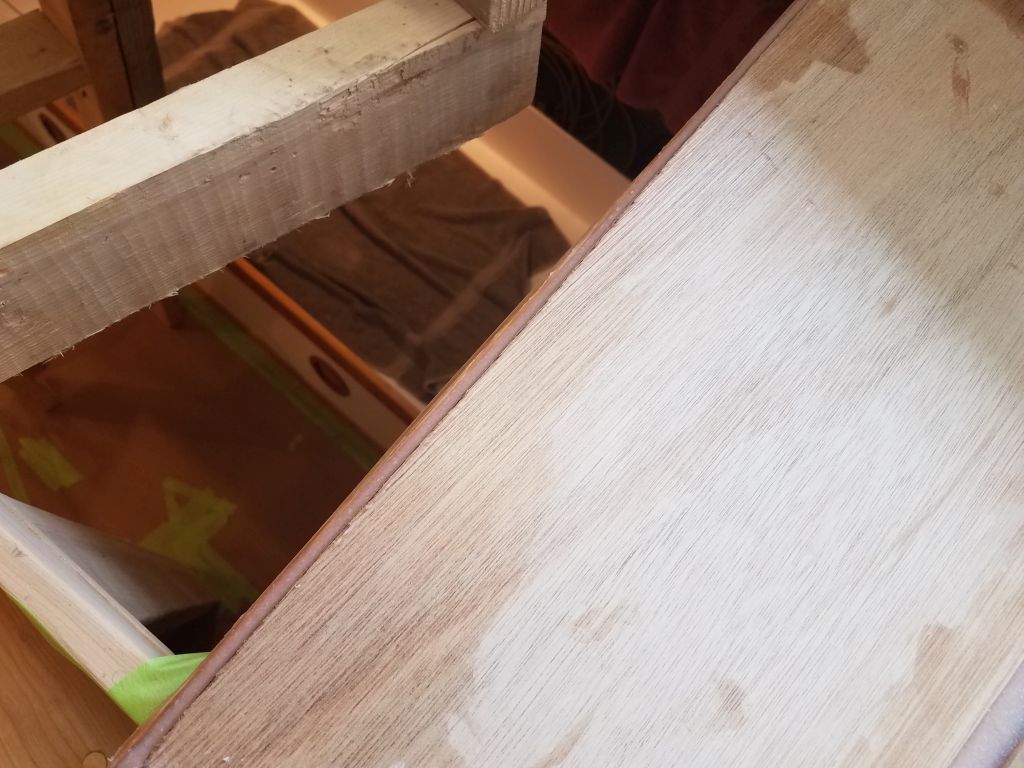
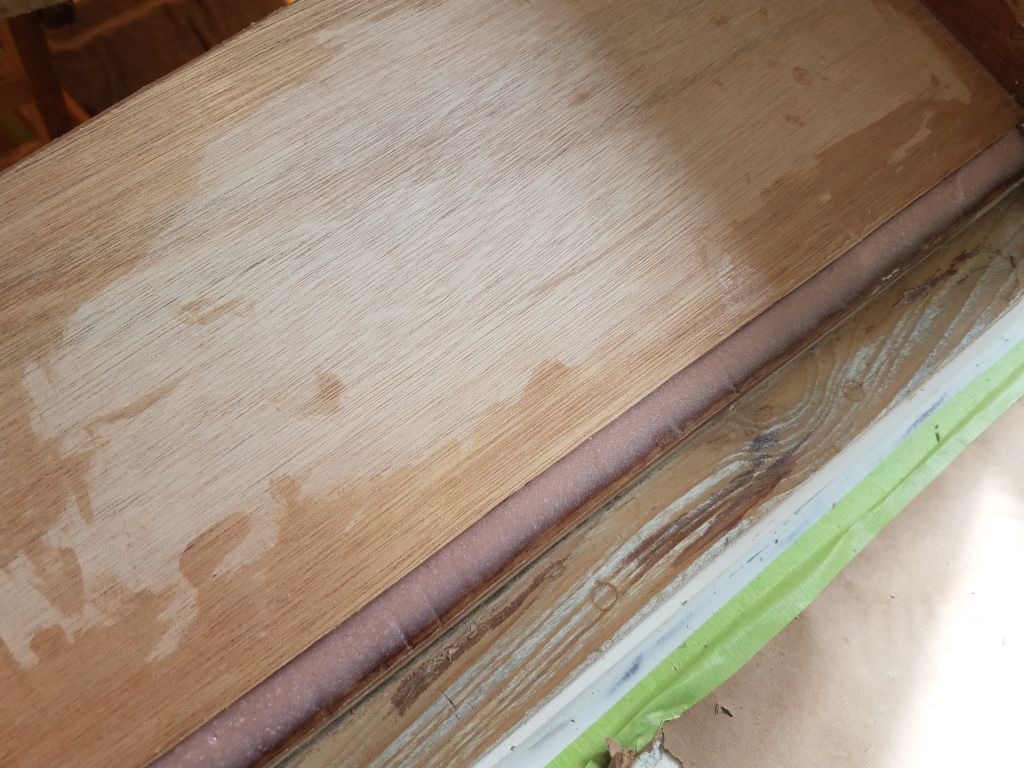
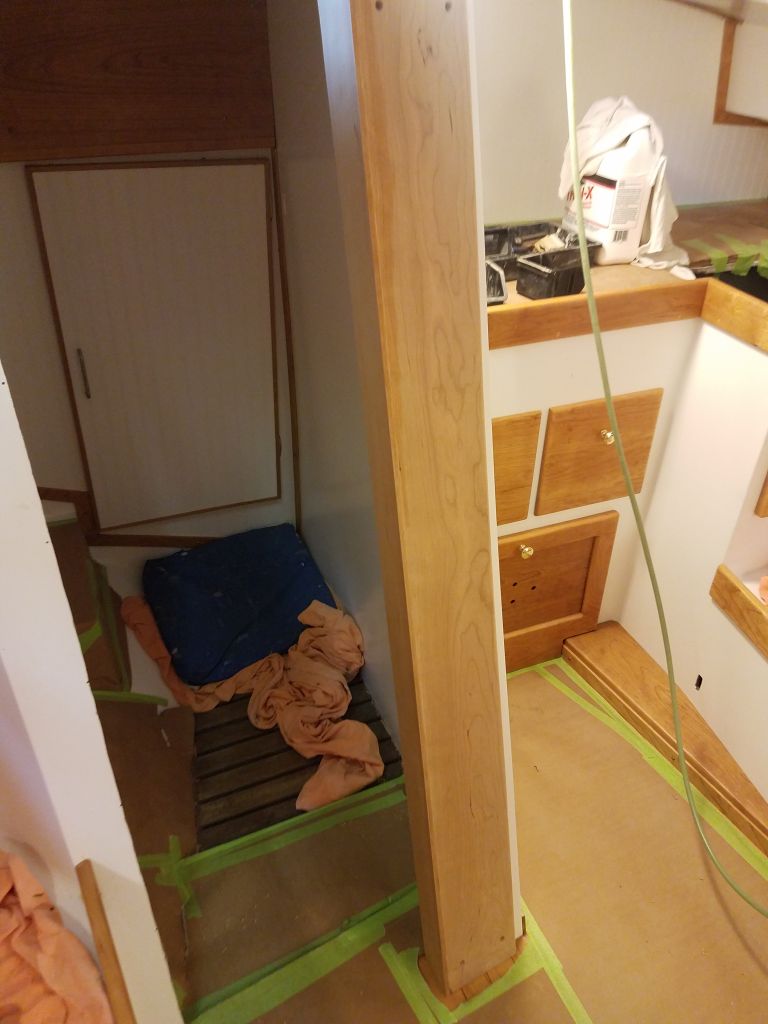
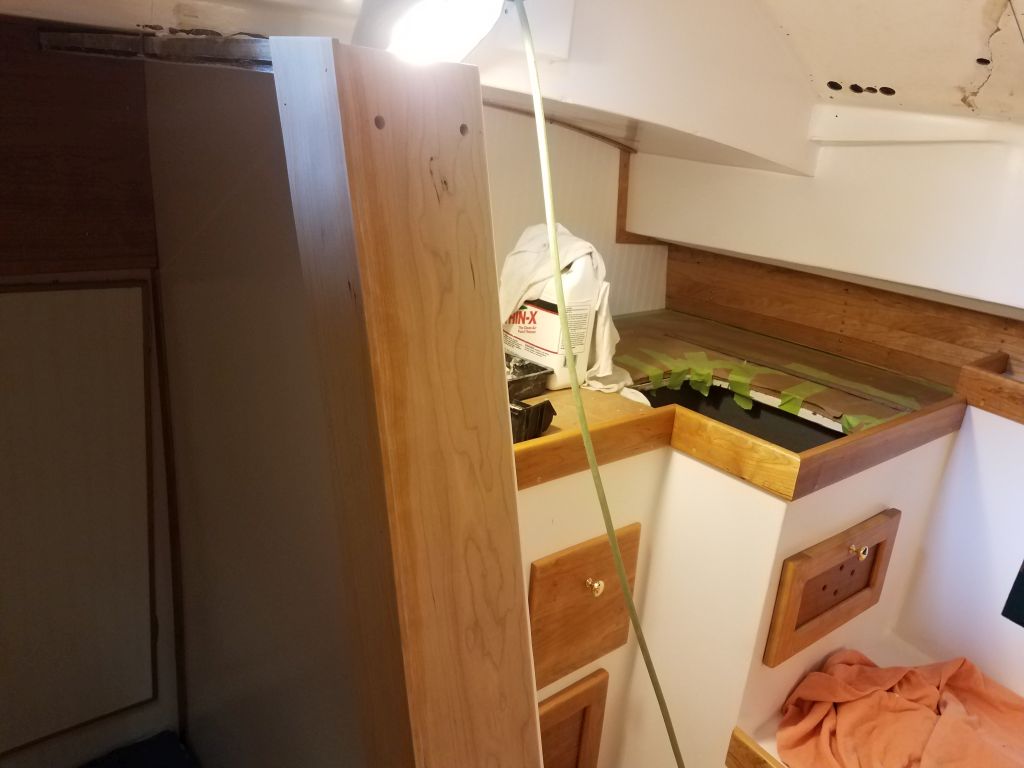
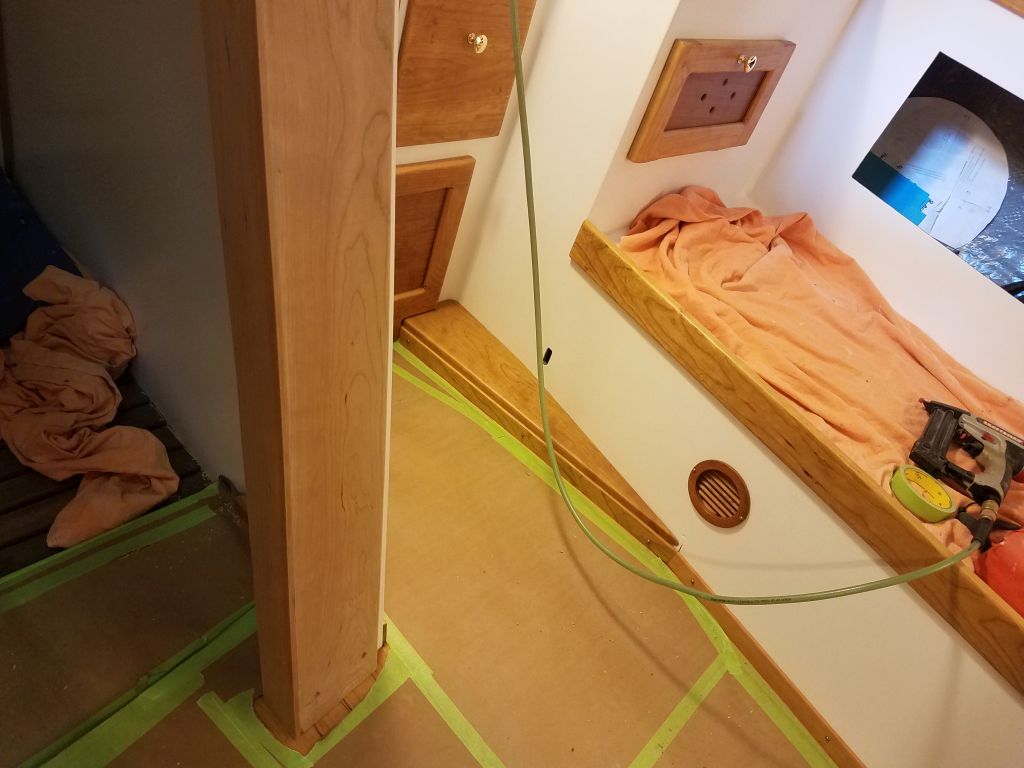
That was about all I planned inside the boat this day, so now I lightly sanded, then cleaned, the cabin sole to prepare it for its final coat of varnish.  These photos show the sole after drying overnight, all taken from deck level since I planned to stay strictly off the fresh sole till it had several days of cure time.  I’d planned this around other aspects of my schedule.

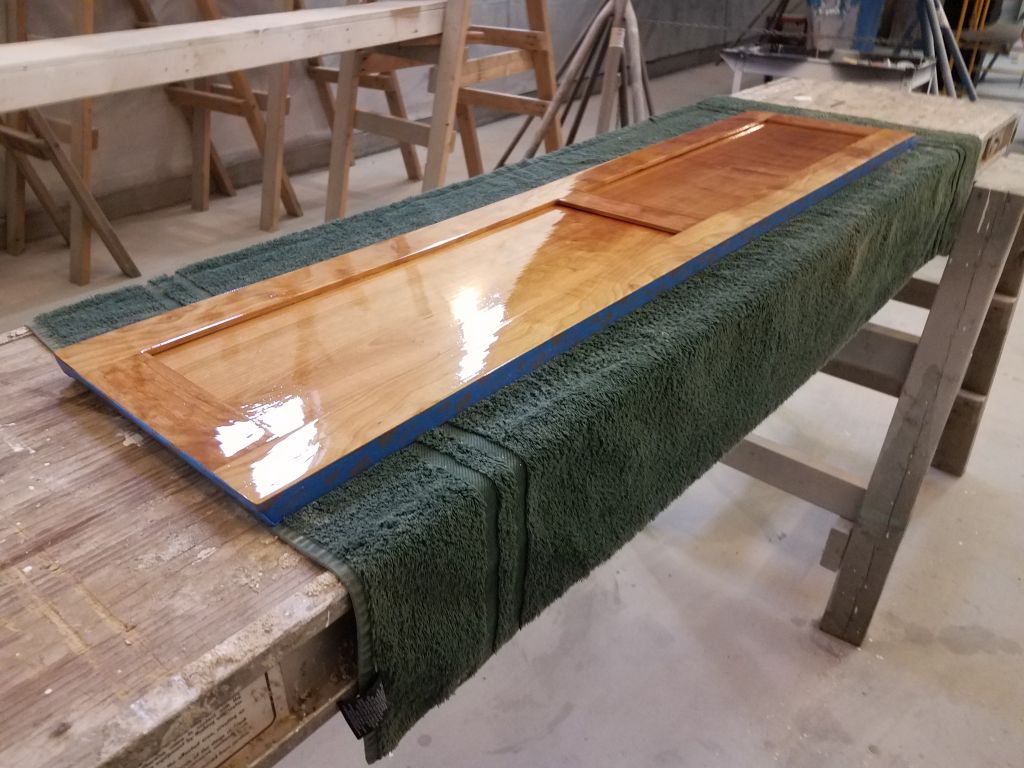
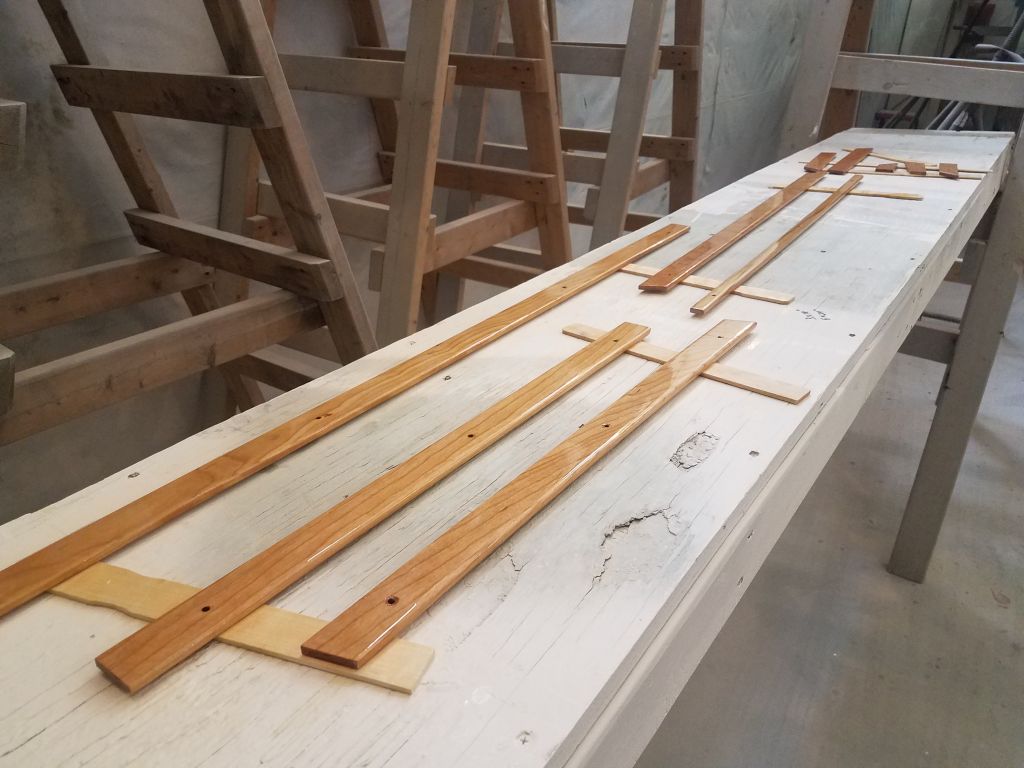
I also finished up the varnish work on the cabin sole trim pieces; this photo shows them after curing overnight.

The two cabin sole hatches, which were now complete, looked good, and I installed the brass ring pulls to finish them up.

Meanwhile, I continued the varnish buildup on the remaining ongoing parts, including the drawers, engine room door trim, and now the new galley cabin sole piece I’d just milled.

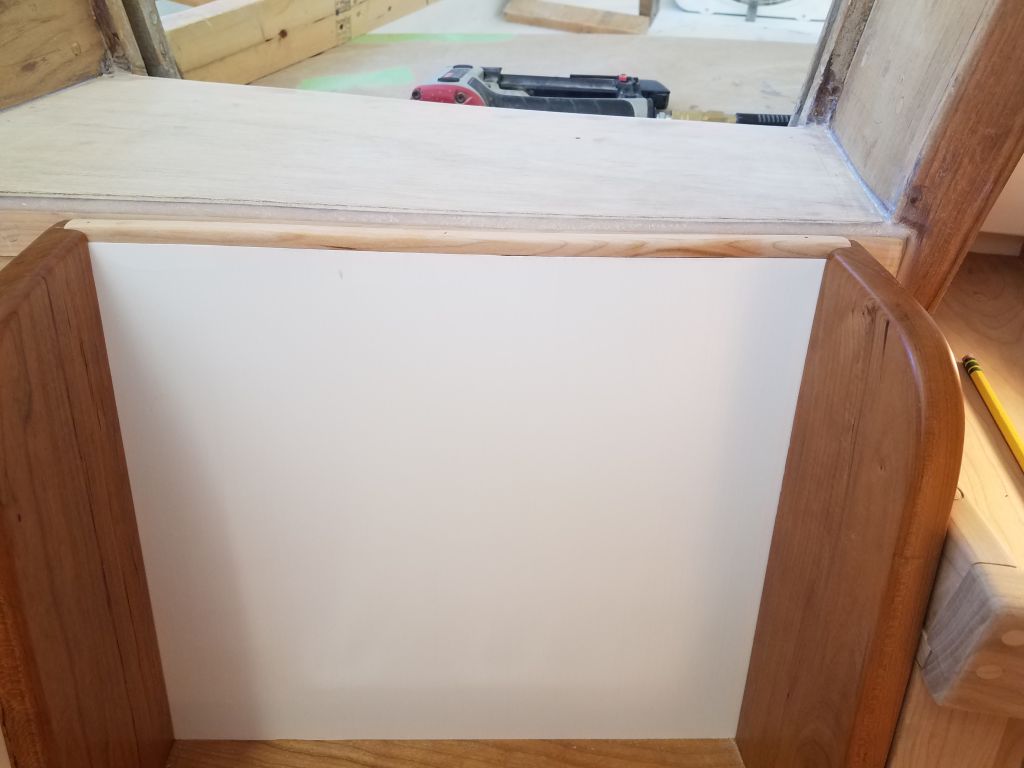
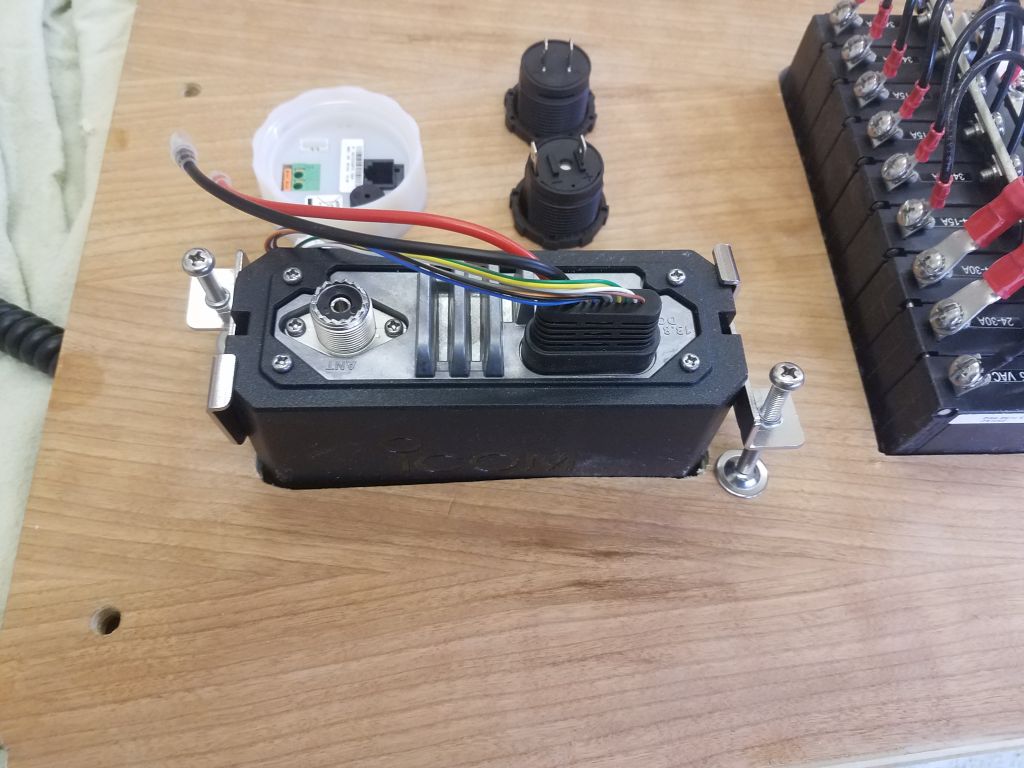
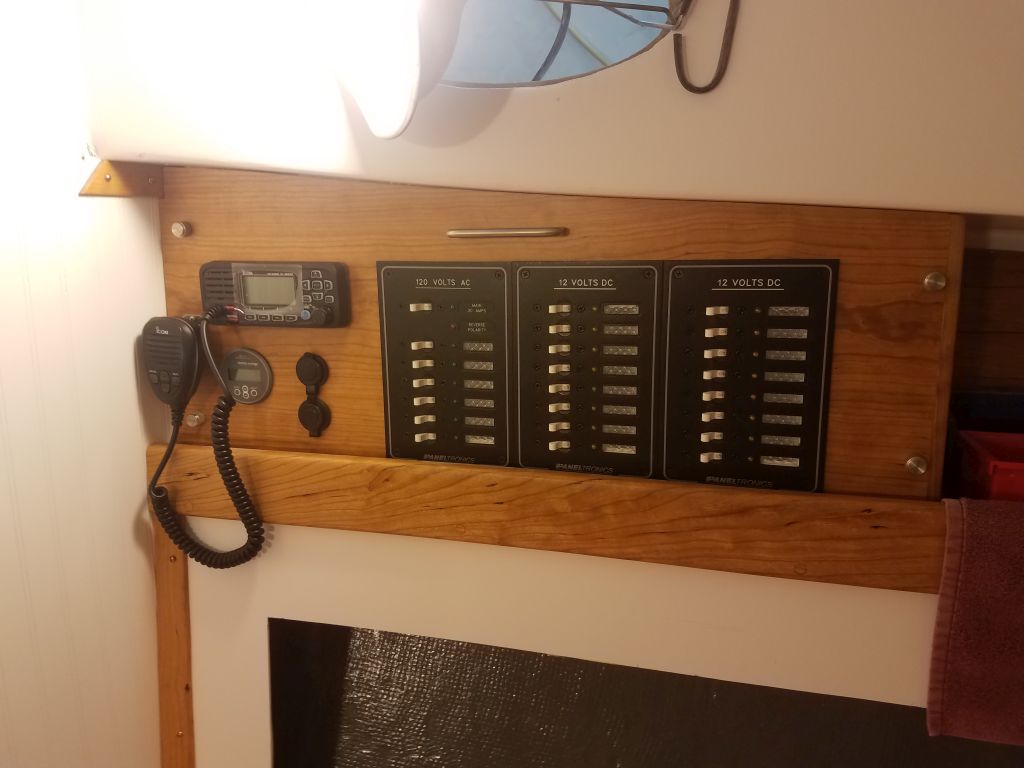
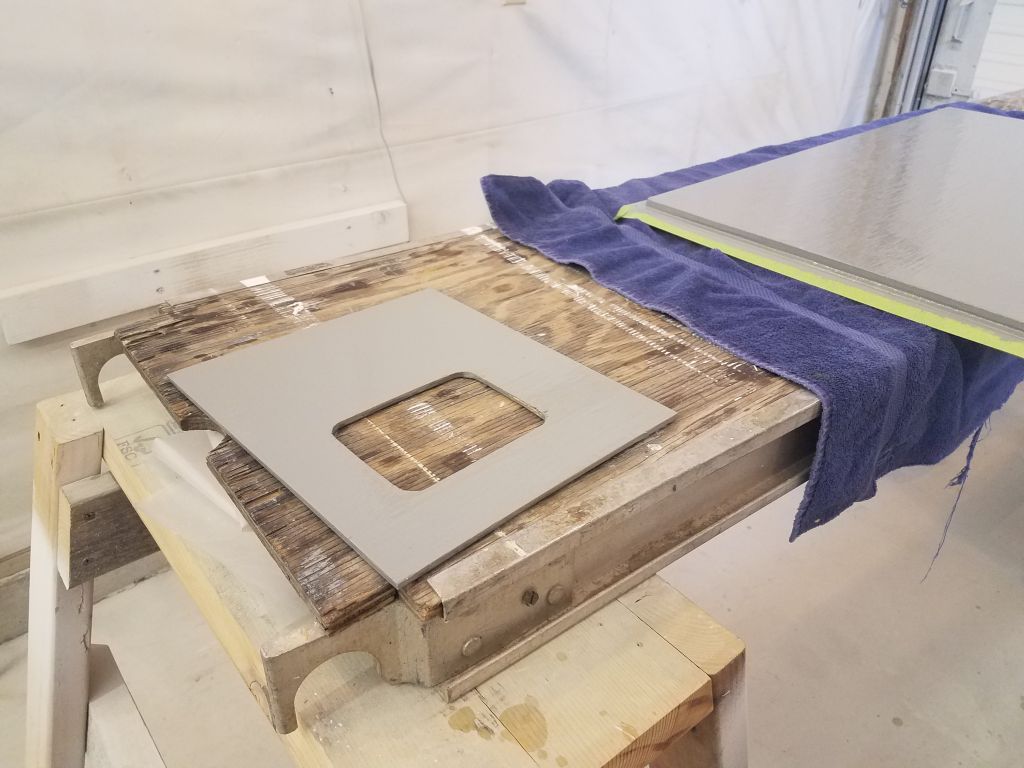
After confirming the layout I’d produced earlier, I went ahead and cut out the openings for the electrical service panels as marked.  I ended up leaving narrow vertical strips of the original cabinet in place between each panel for added strength, whether required or not.  Once I had the openings cut, I test-installed the three panels, then confirmed the locations of the additional installations I required at the forward end before marking and cutting those openings, working from both sides of the panel to avoid tearout on the back.  I didn’t yet have on hand the VHF, monitor, and outlets, but would install them once they arrived.  To finish up the panel for now, I installed a handle at the top edge.

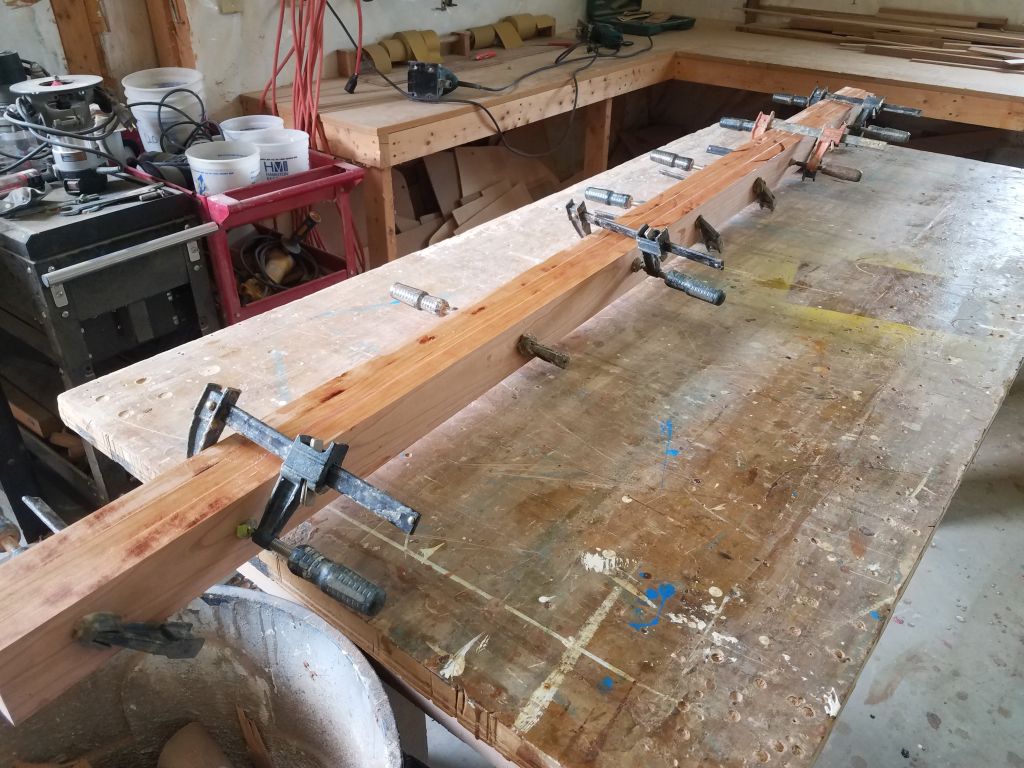
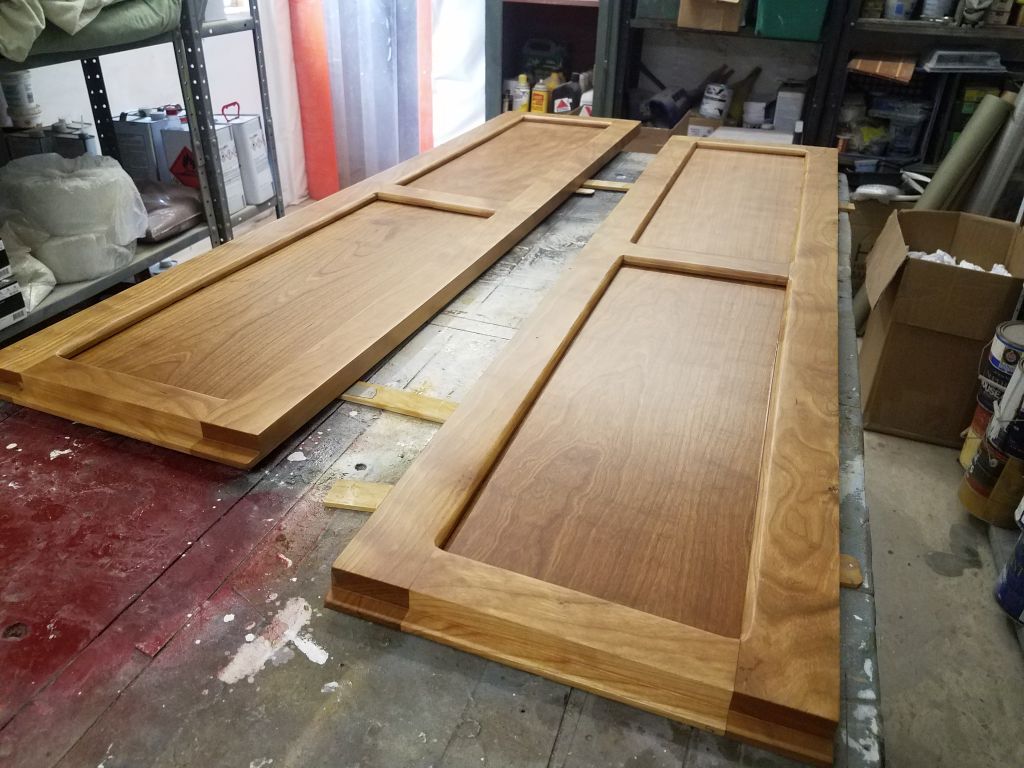
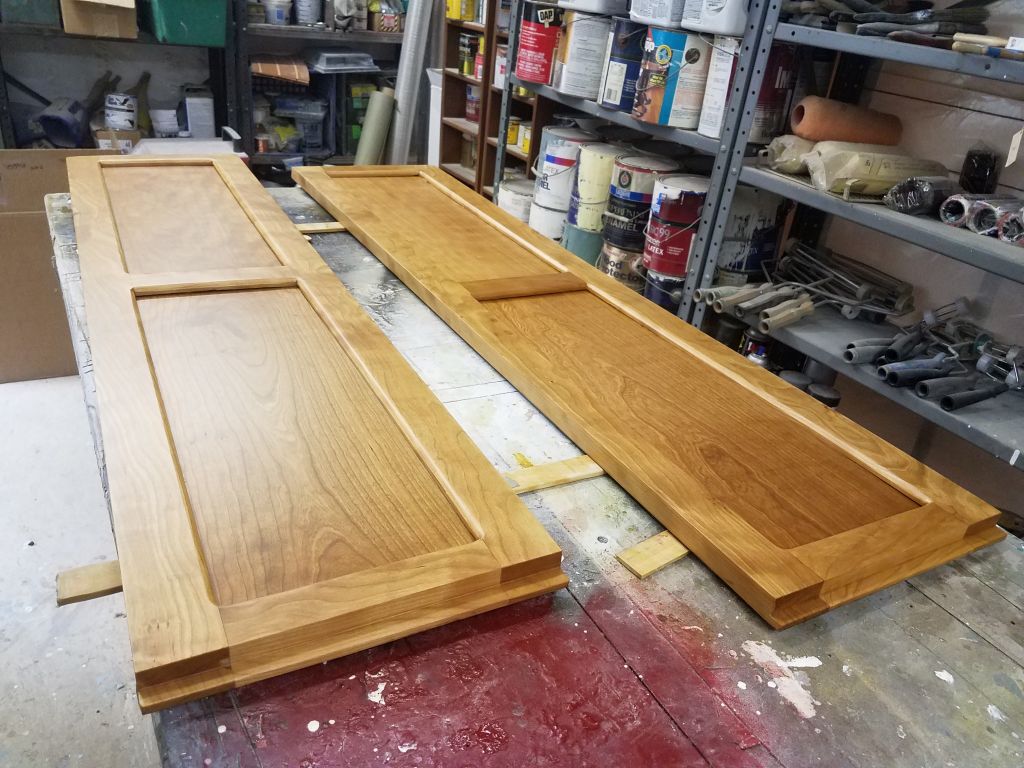
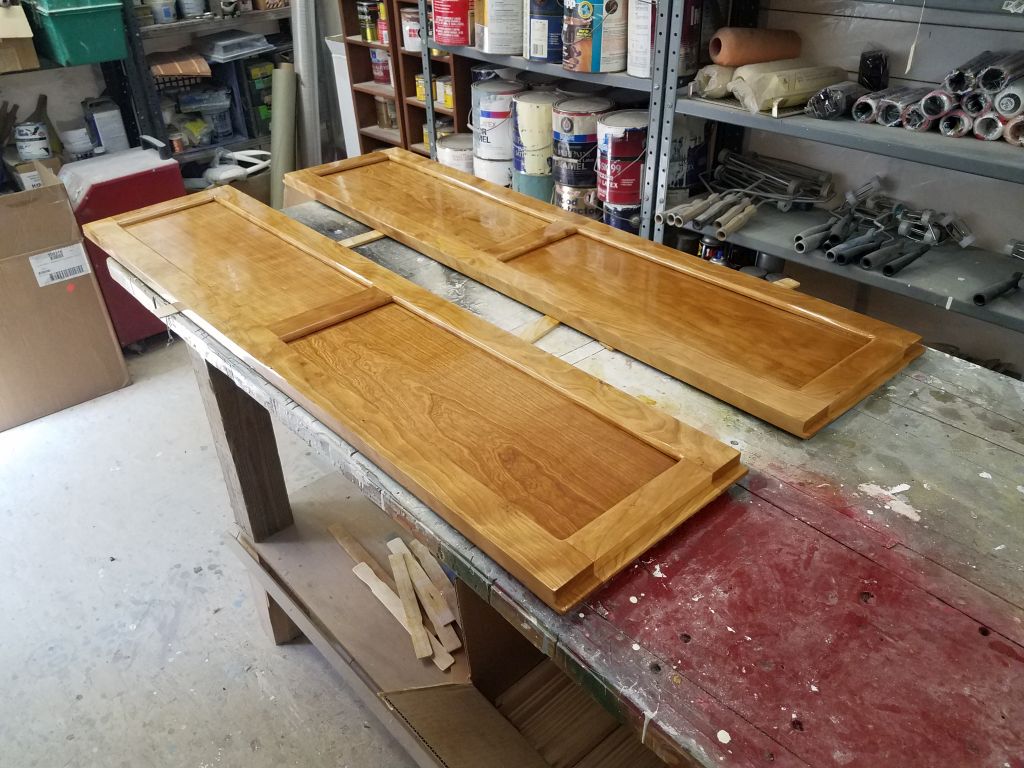
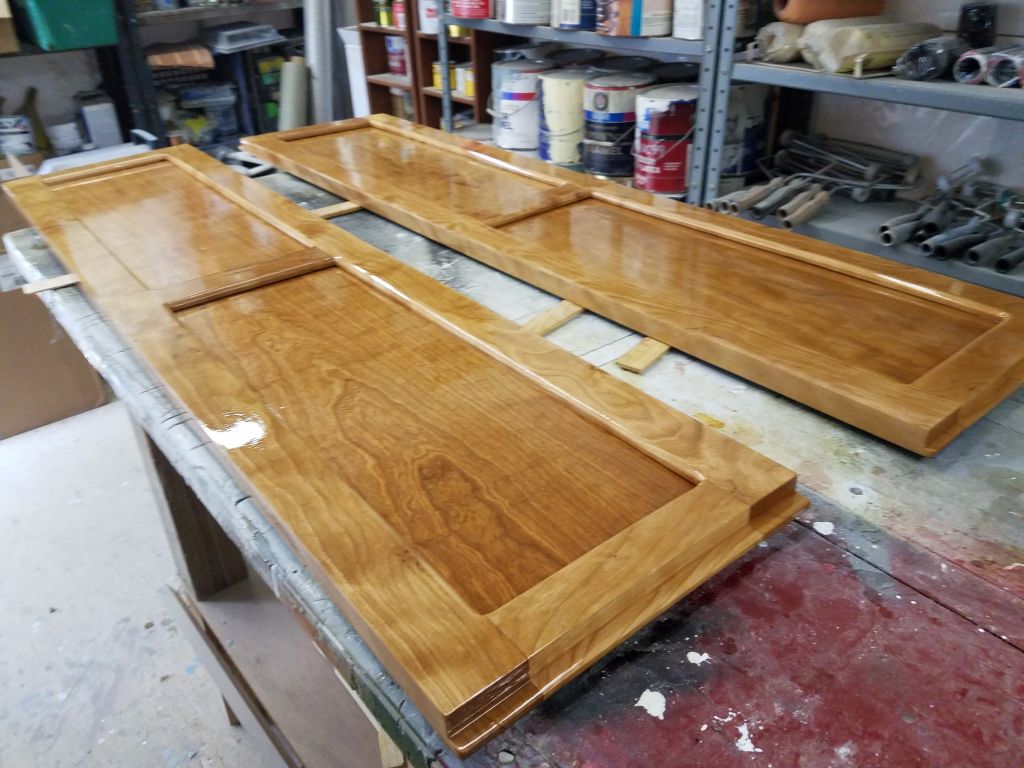
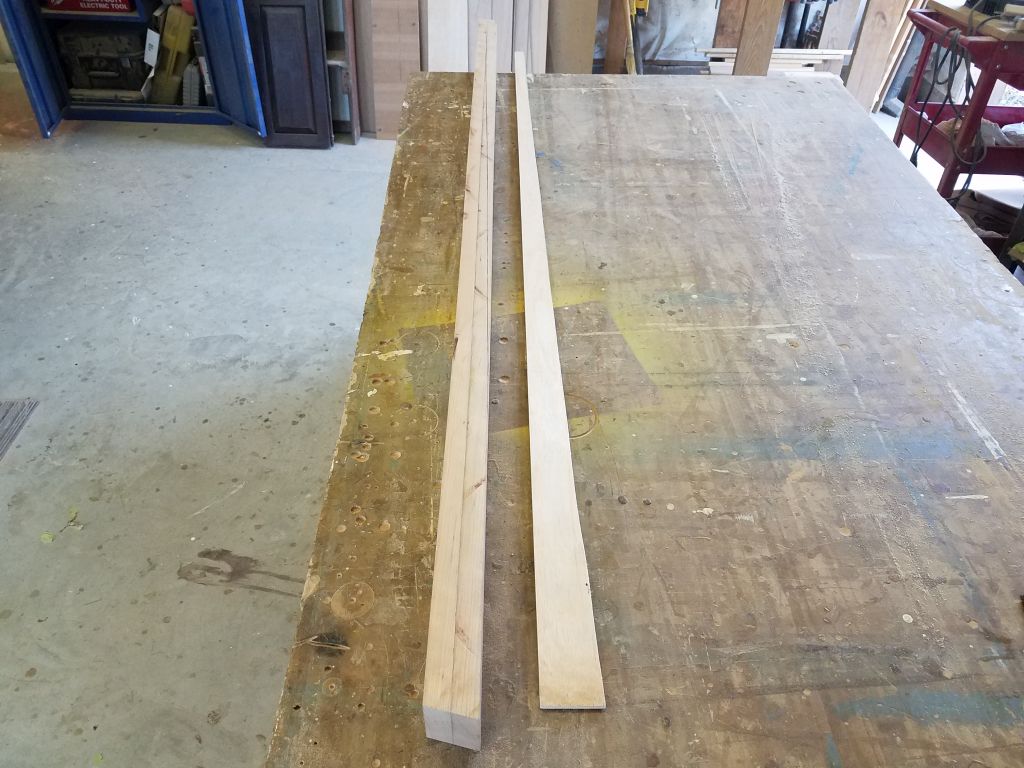
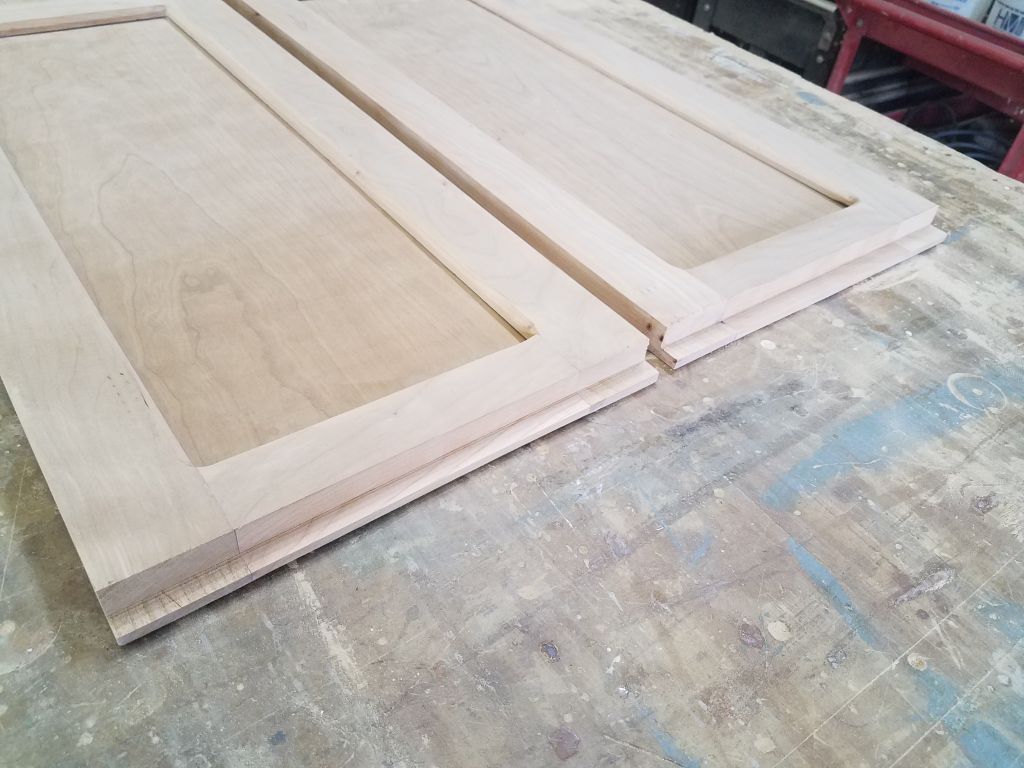
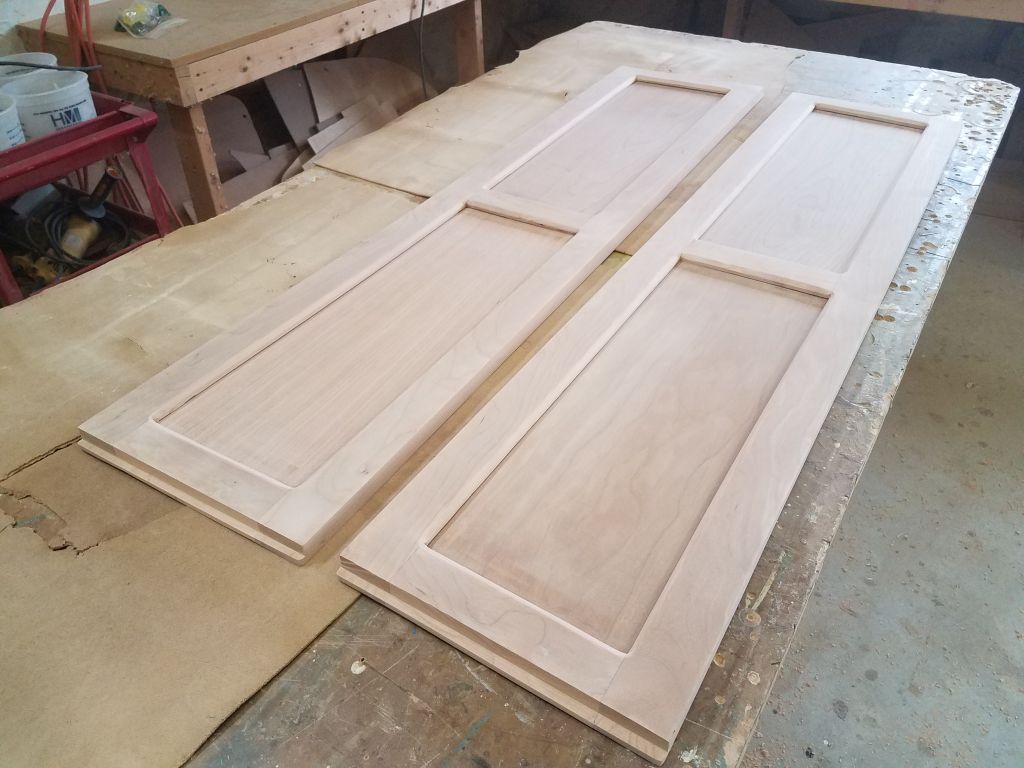
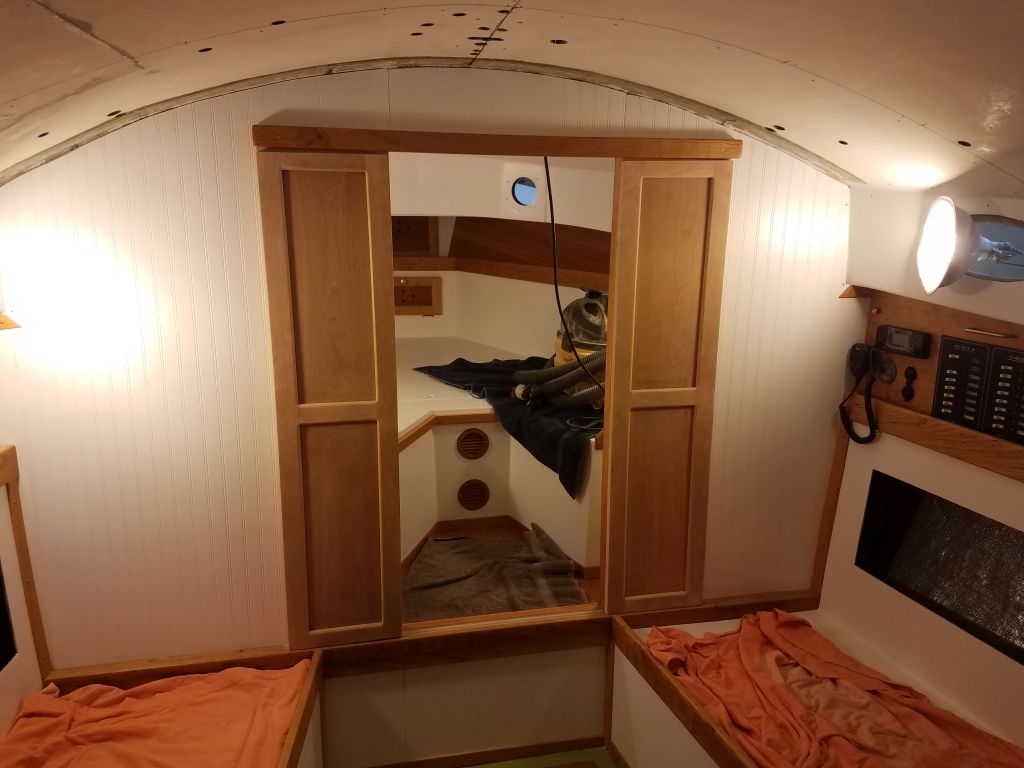
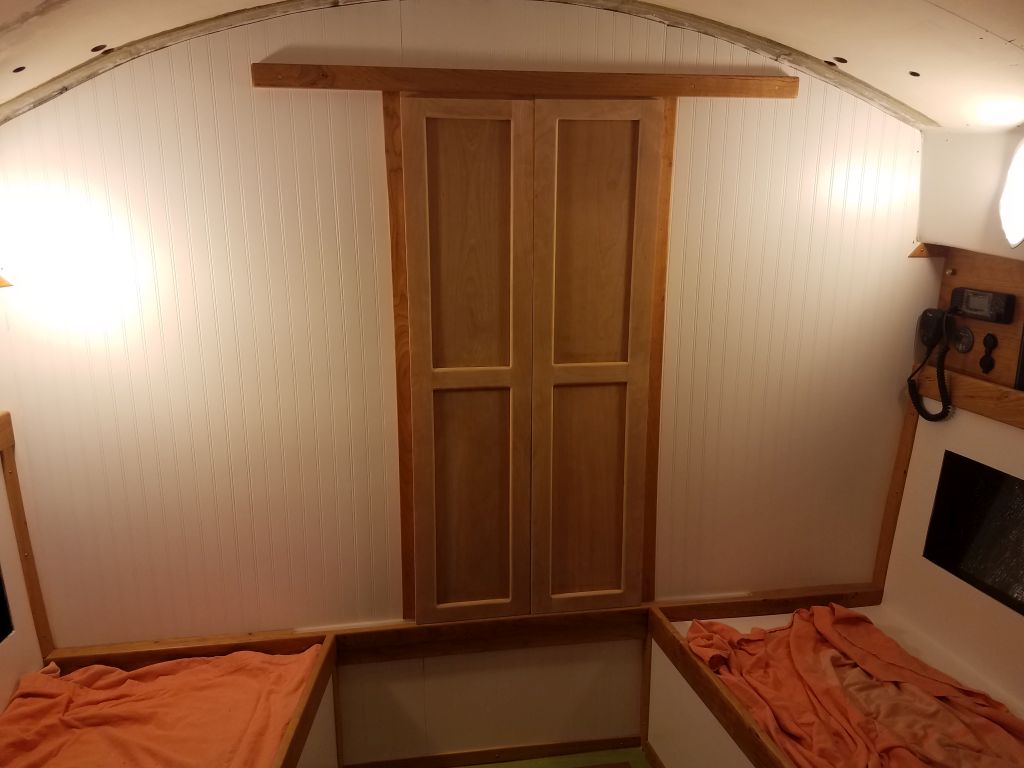
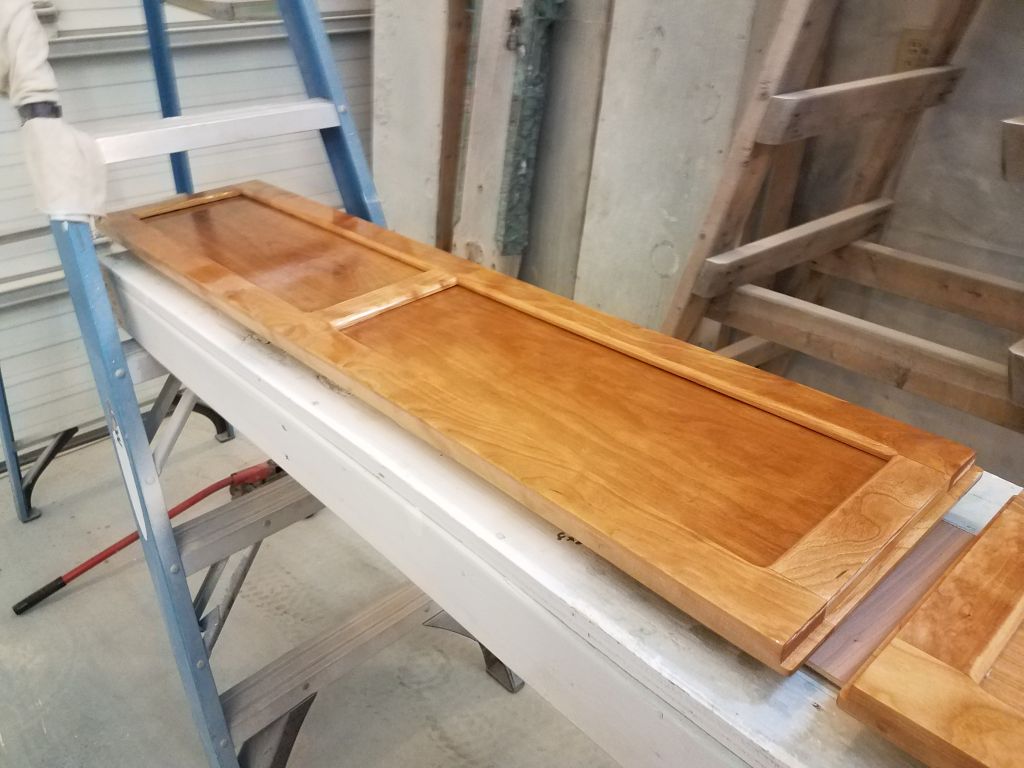
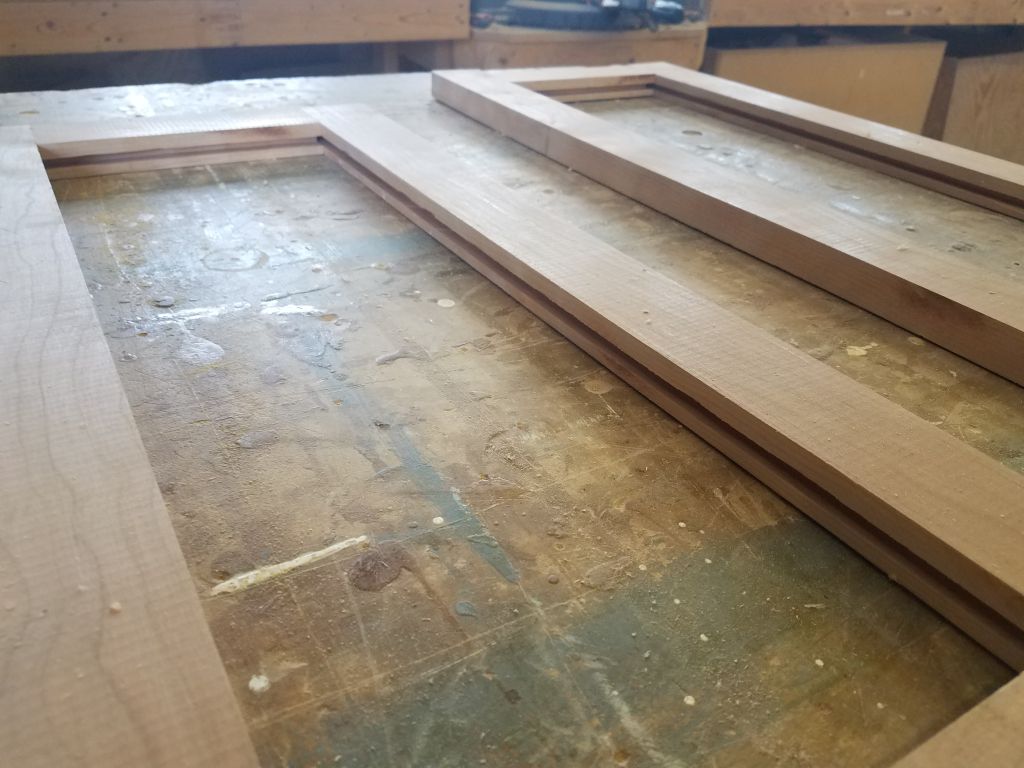
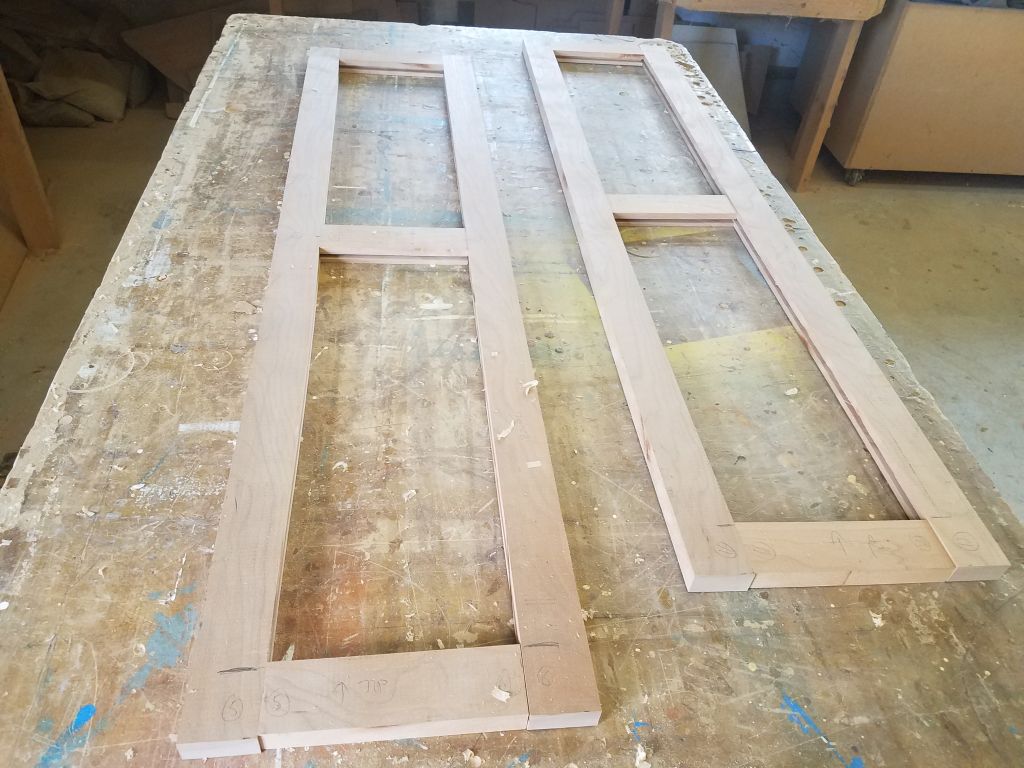
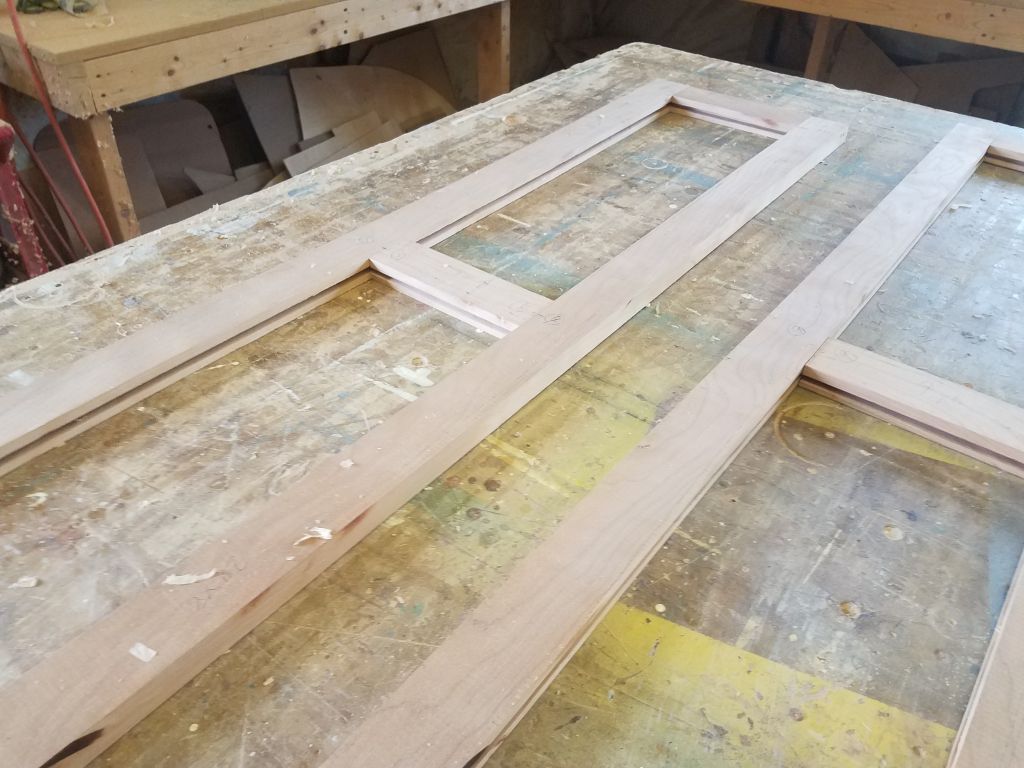
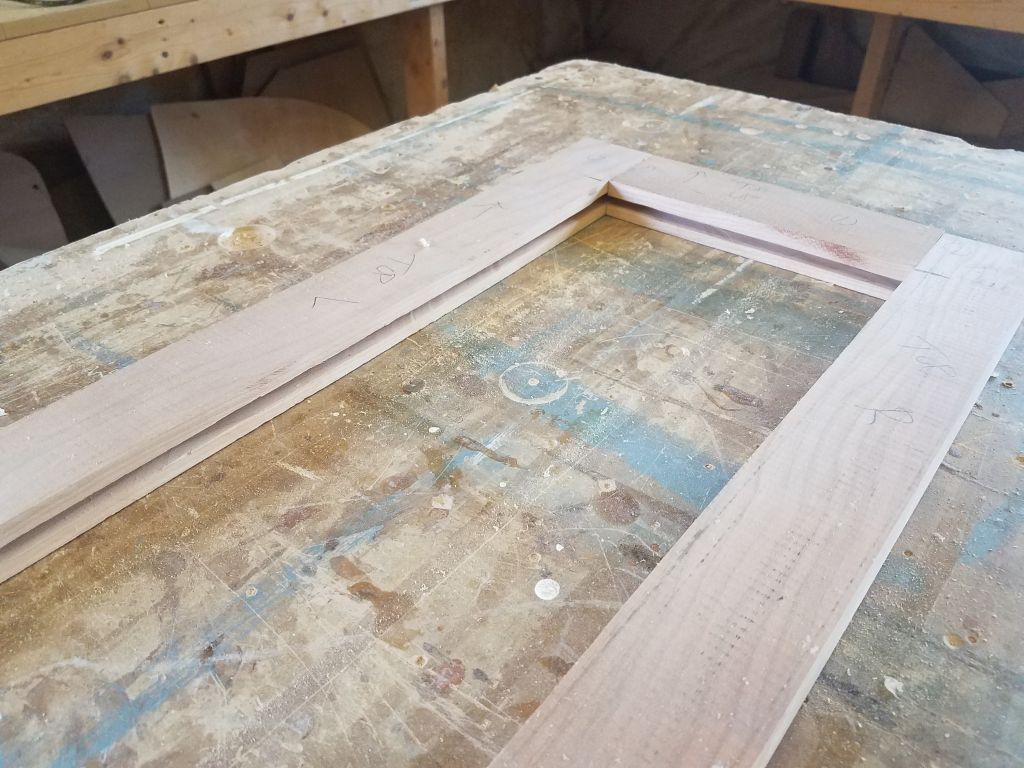
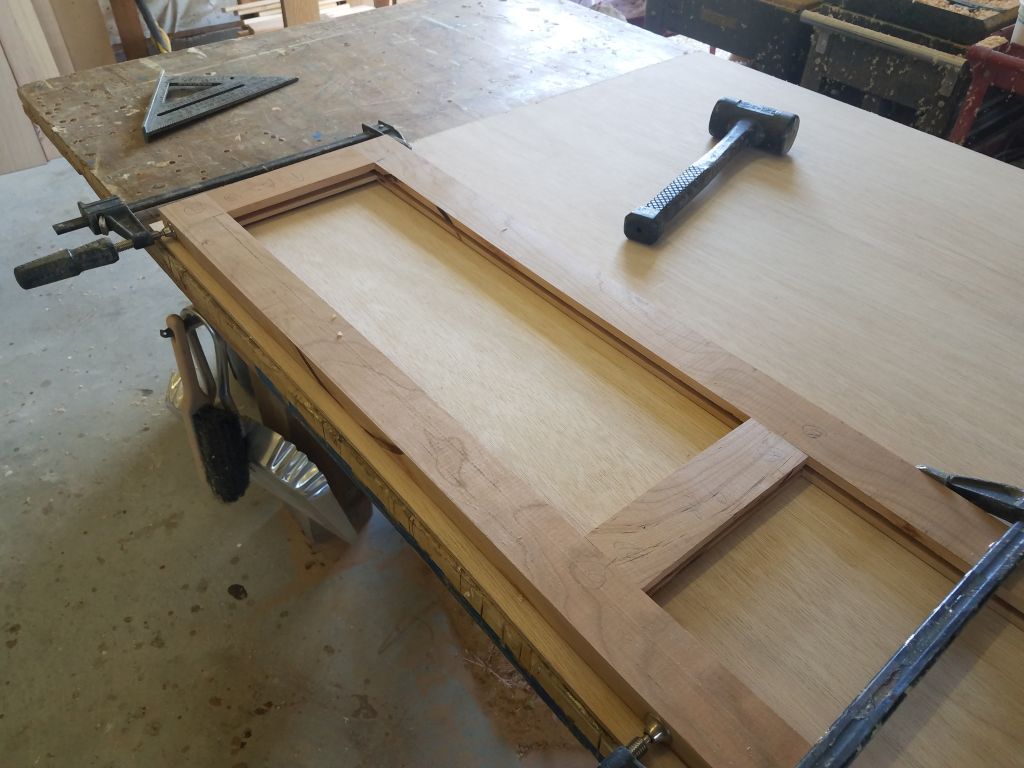
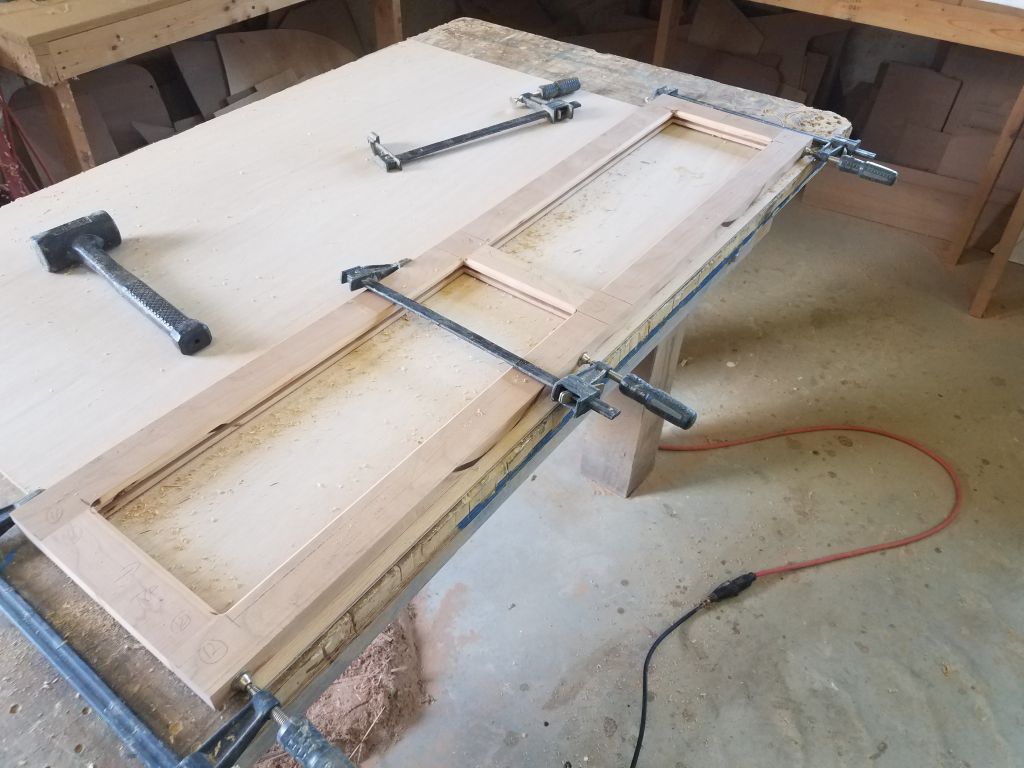
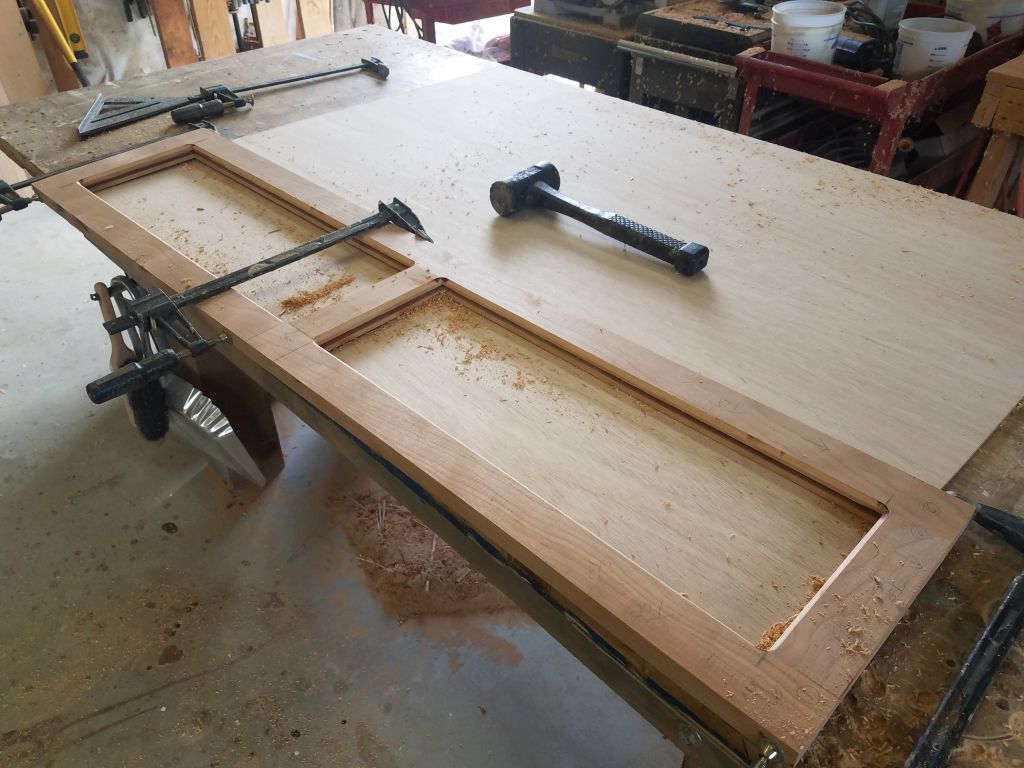
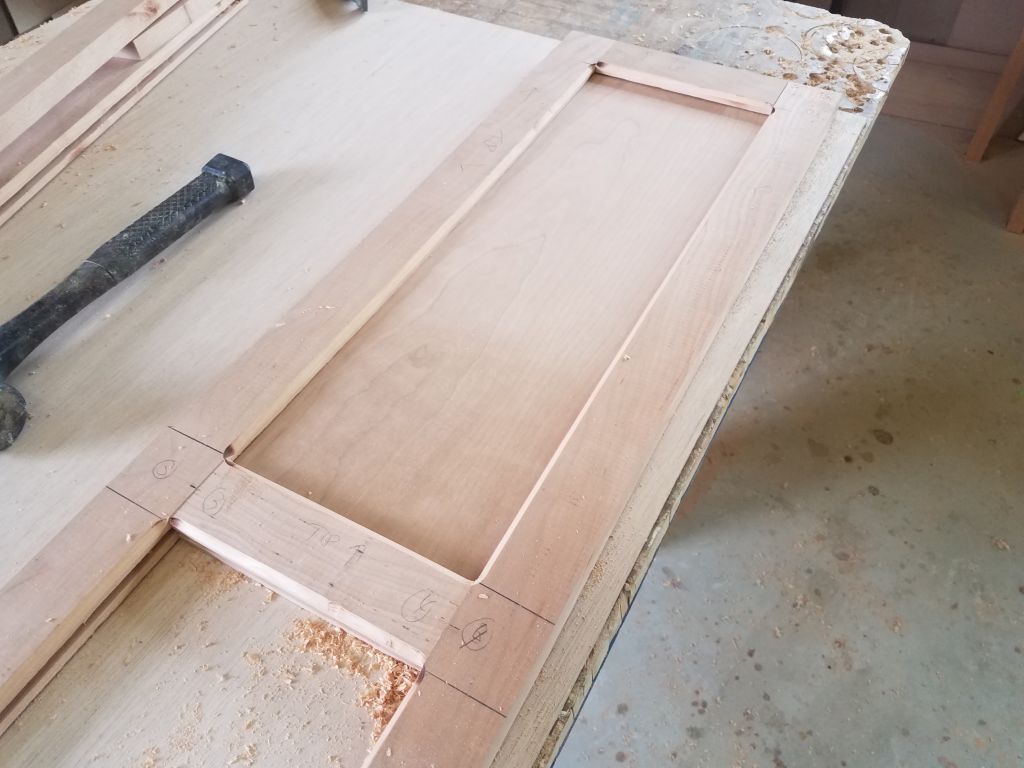
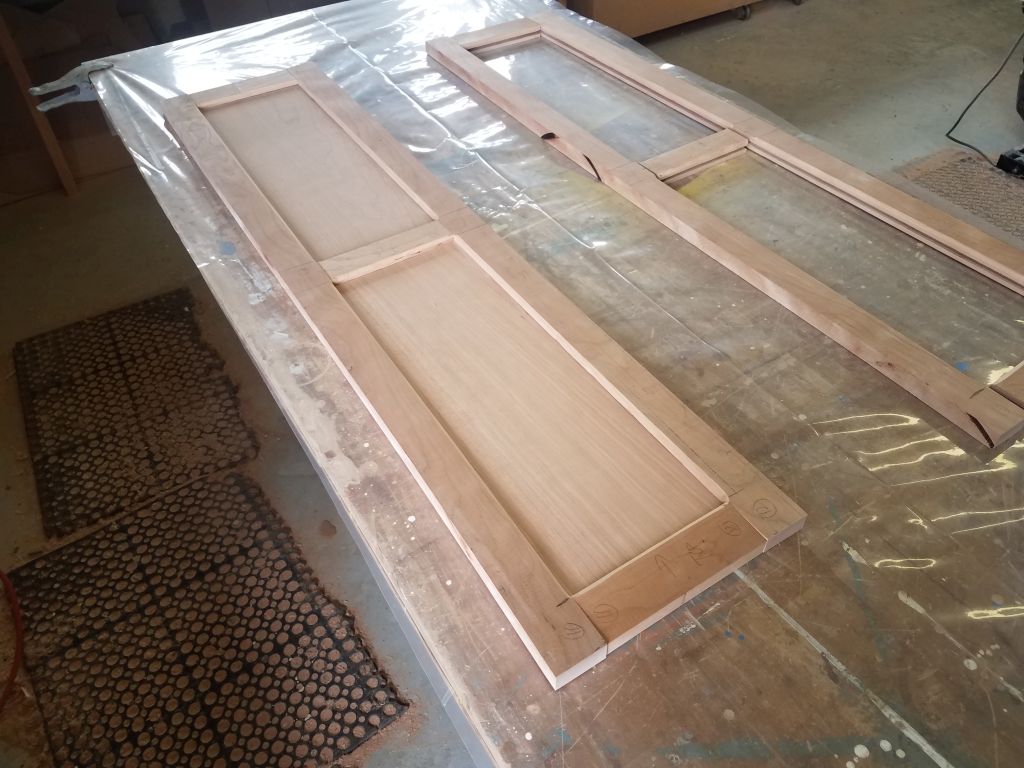
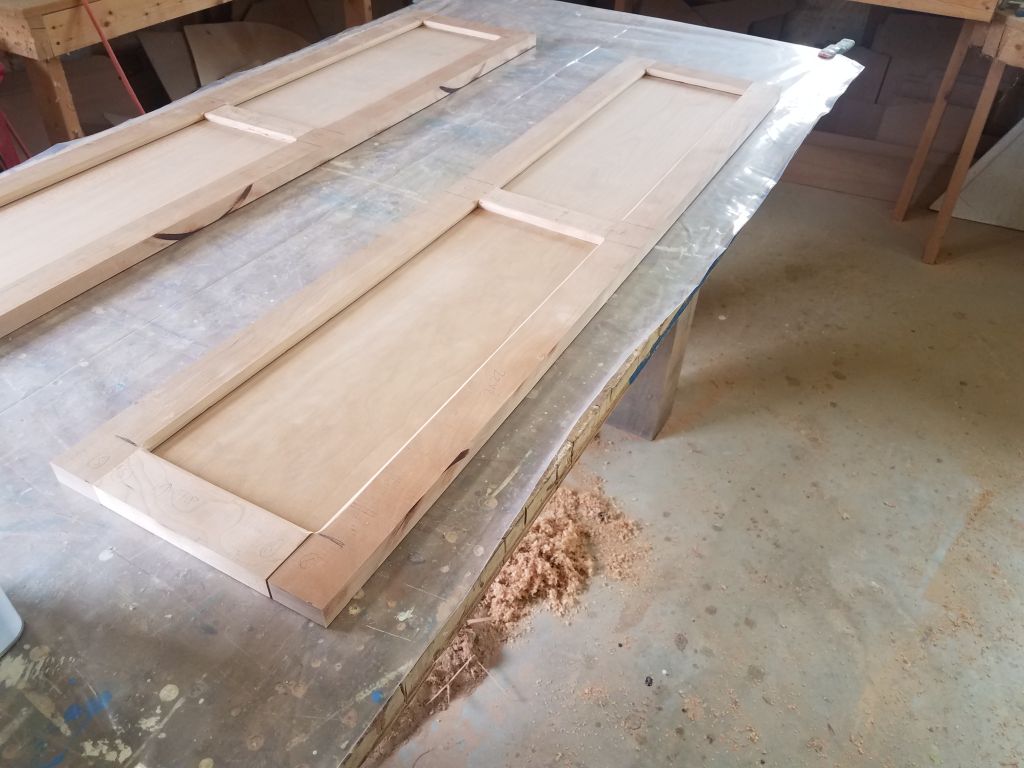
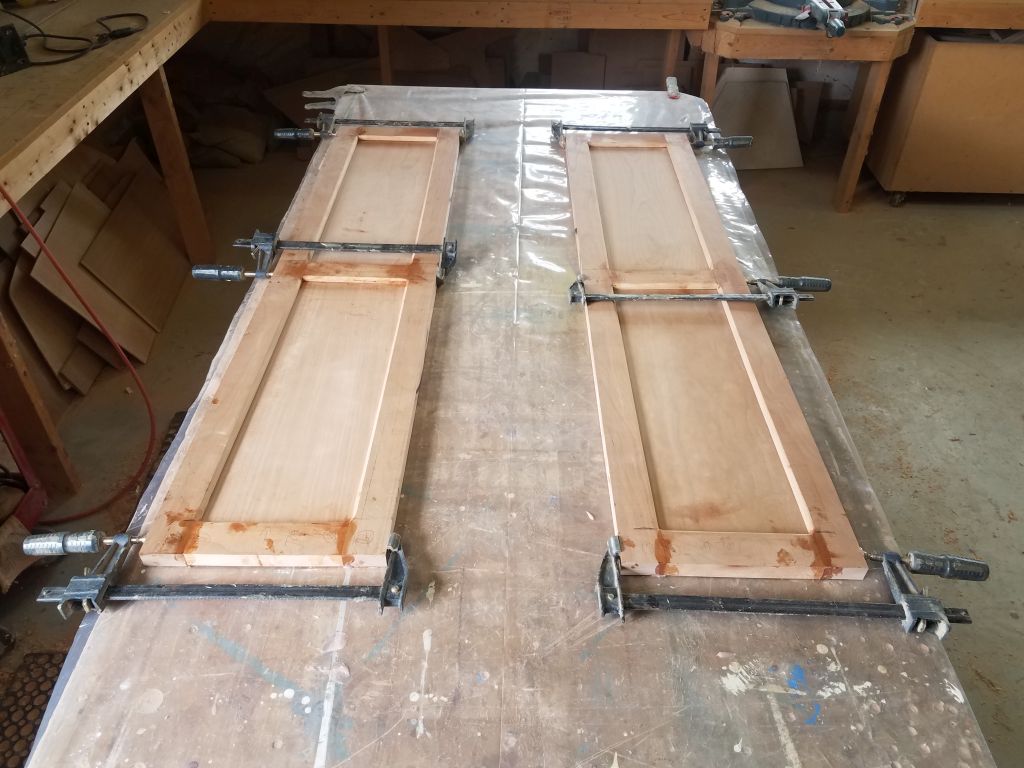
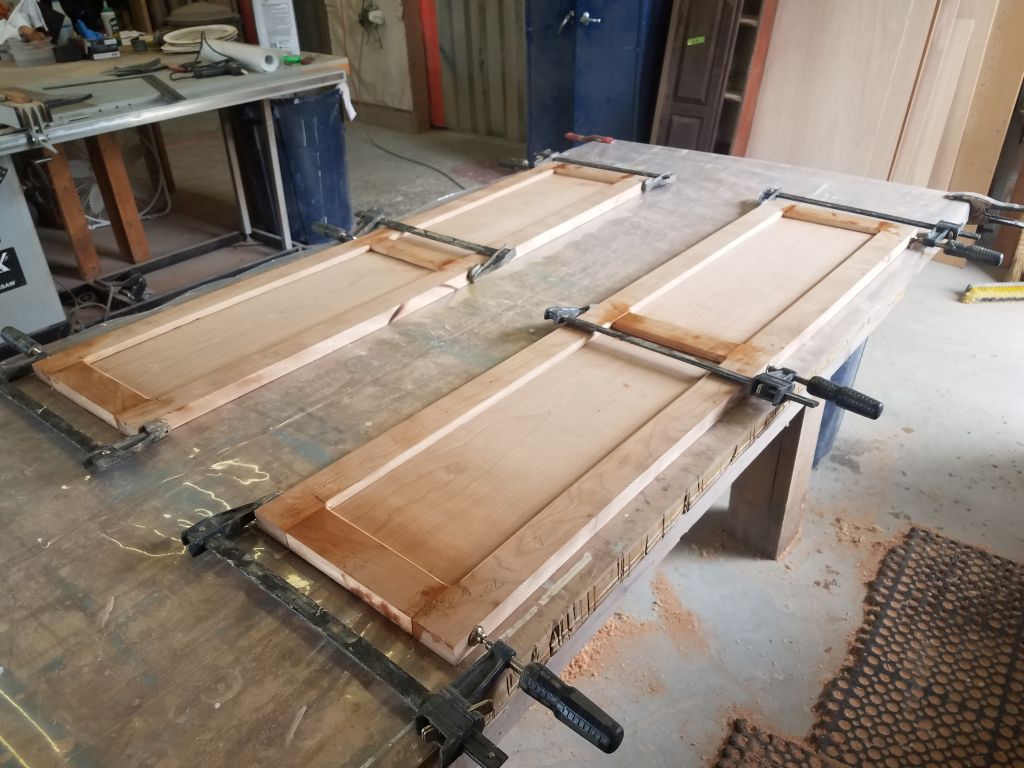
To finish up for the day, I prepared all the rails, stiles, and panel blanks for the doors into the forward cabin.  I’d previously cut a sample stile (vertical piece) to get the length and end details right, and had measured the width of the opening, so knew my doors had to each be 11″ wide, so I cut the rails 7″ long.  I pre-cut four panels to generous dimensions but would wait till I’d milled the grooves before cutting them to final size.  For that, I had a new router bit on the way to streamline the job, so for now this was as far as I could take the doors’ construction.

Total time billed on this job today:  7.25  hours

0600 Weather Observation:  28°, clear. Forecast for the day:  Increasing clouds, 56°

Scupper 136

Tuesday

After unclamping the drawers, I sanded the fronts and boxes as needed to clean up any excess epoxy and otherwise prepare them for finish.  I tested the completed drawers in the galley, and they fit as expected.

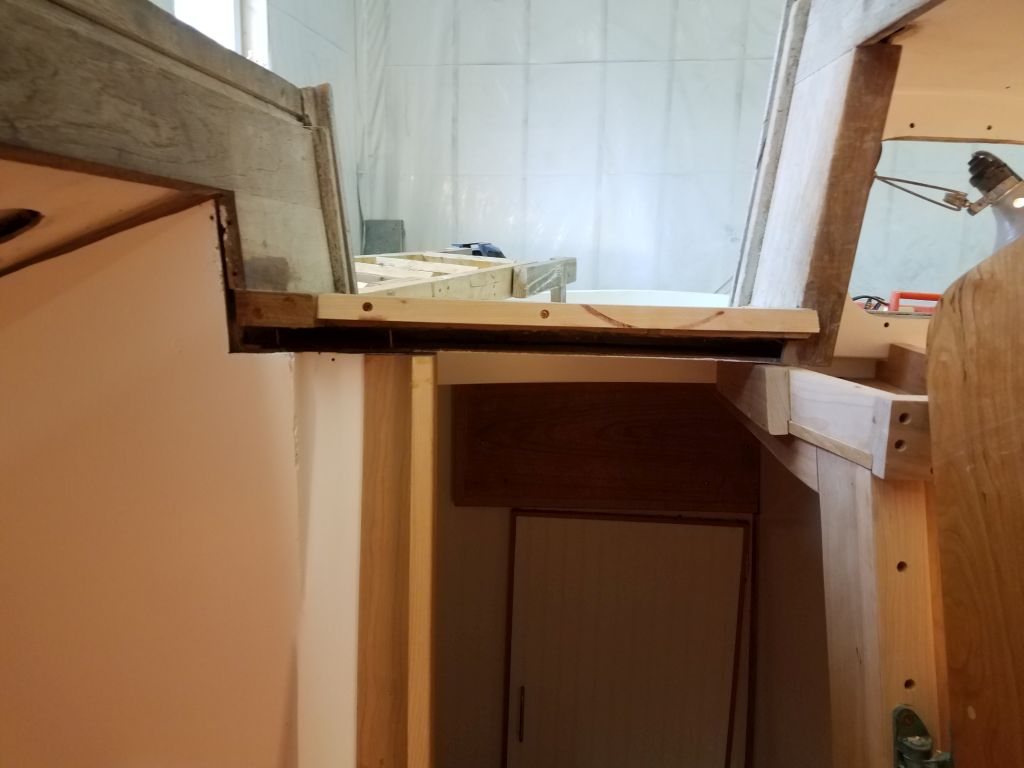
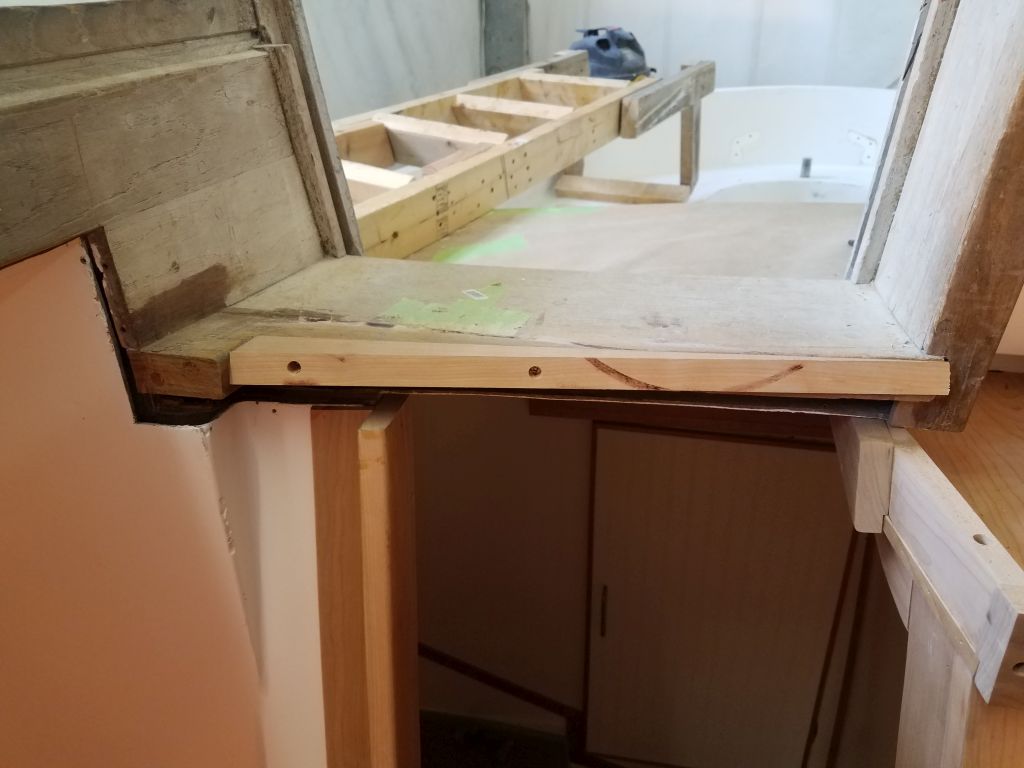
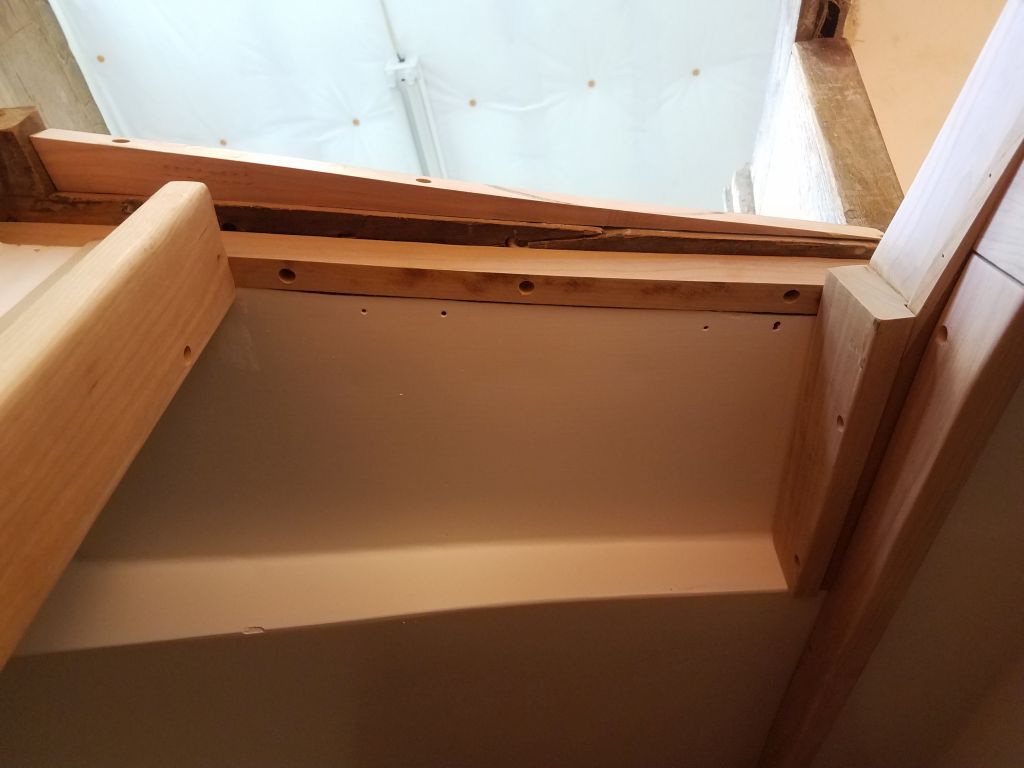
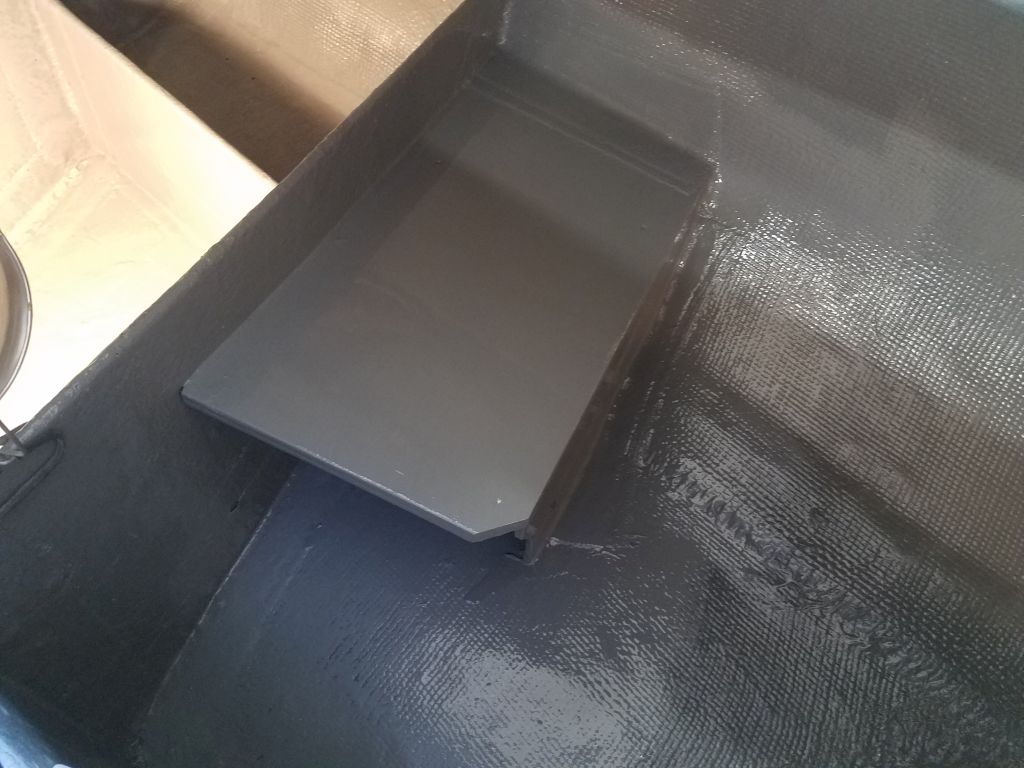
The newly-laminated generator shelf required a light sanding after removing the temporary screws, and a quick test fit showed a need for a slight bevel on the outer edge where it met the hull.  With that cut, I patterned a small vertical bulkhead to support the forward end of the platform, and after confirming the fit I secured it to the platform with a hardwood cleat, screws, and epoxy adhesive.  I also coated the under-and insides of the platform and bulkhead and all plywood edges with more epoxy.

I cut away the inside edge of the new bulkhead to allow better access in the confines of the cockpit locker, and similarly chopped off the corner of the shelf itself to avoid a hard and sharp edge, which measures I knew would be appreciated by me, and hopefully by future denizens of the cockpit locker.

After final preparations in the boat, I secured the platform in place permanently with epoxy adhesive and screws at the aft bulkhead cleat, and additional epoxy where the shelf and forward bulkhead met the hull, and coated the outside portions of the platform with epoxy as well.  Then, I applied two layers of tabbing to secure the platform and bulkhead to the hull and secure the entire arrangement.

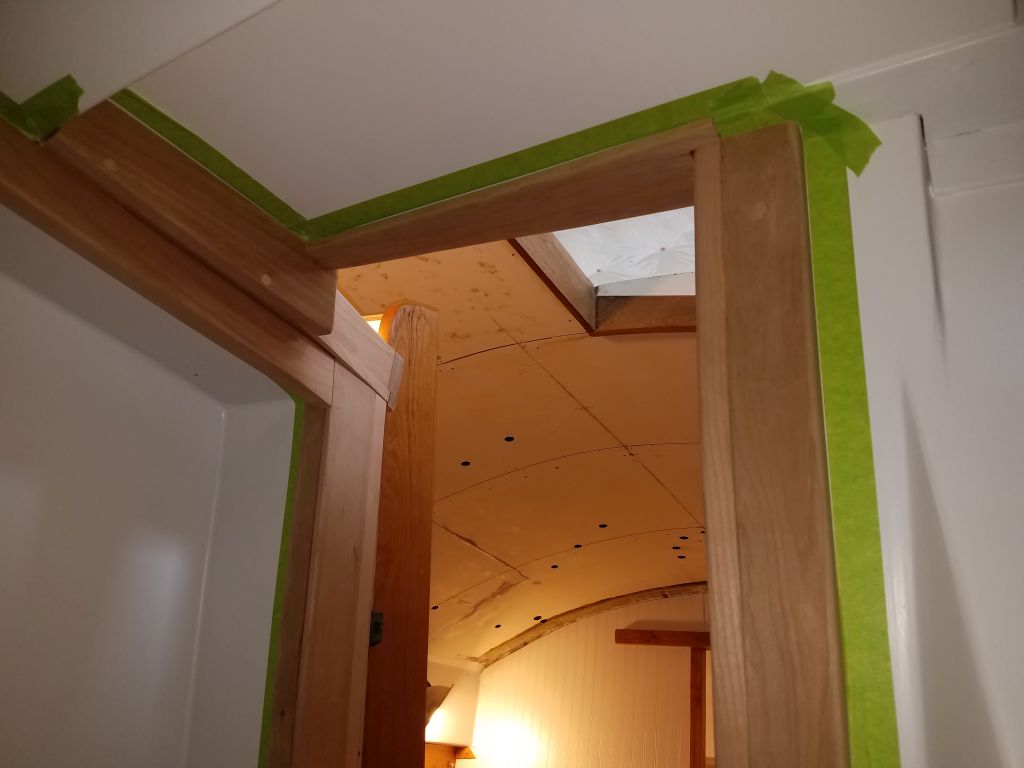
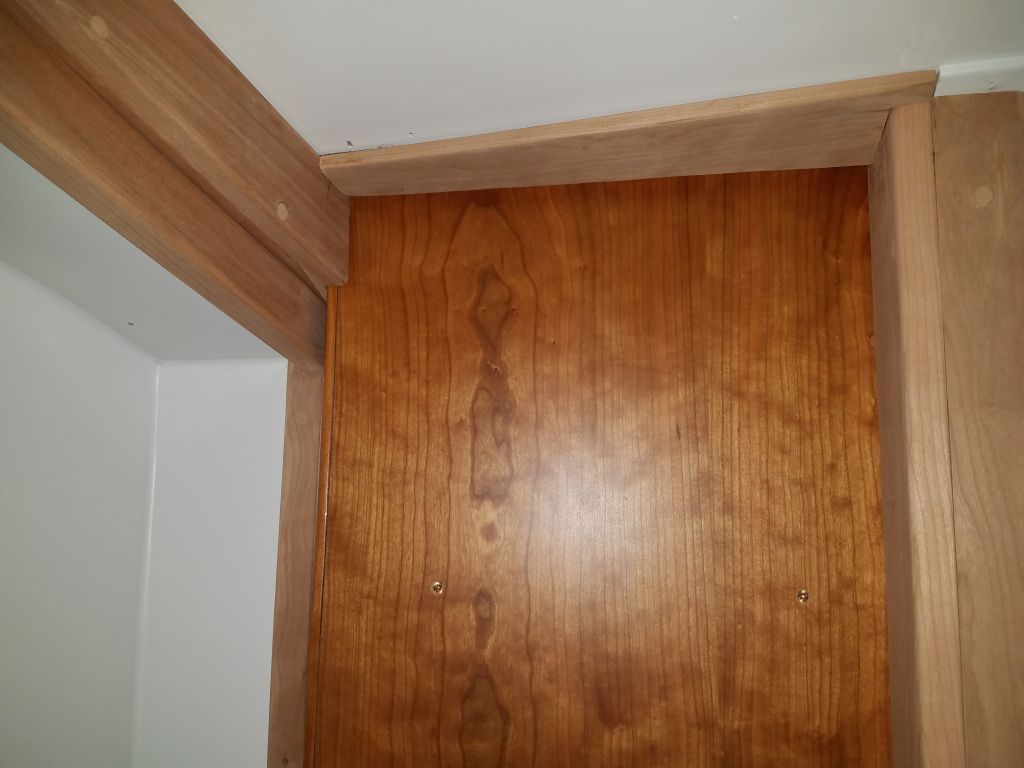
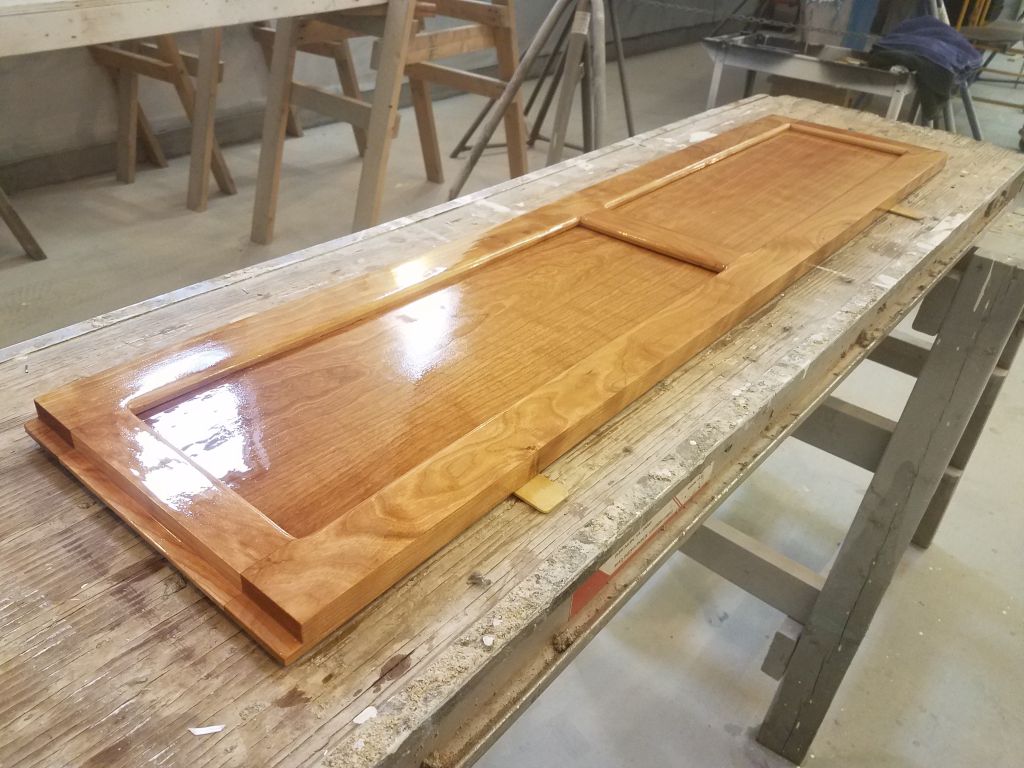
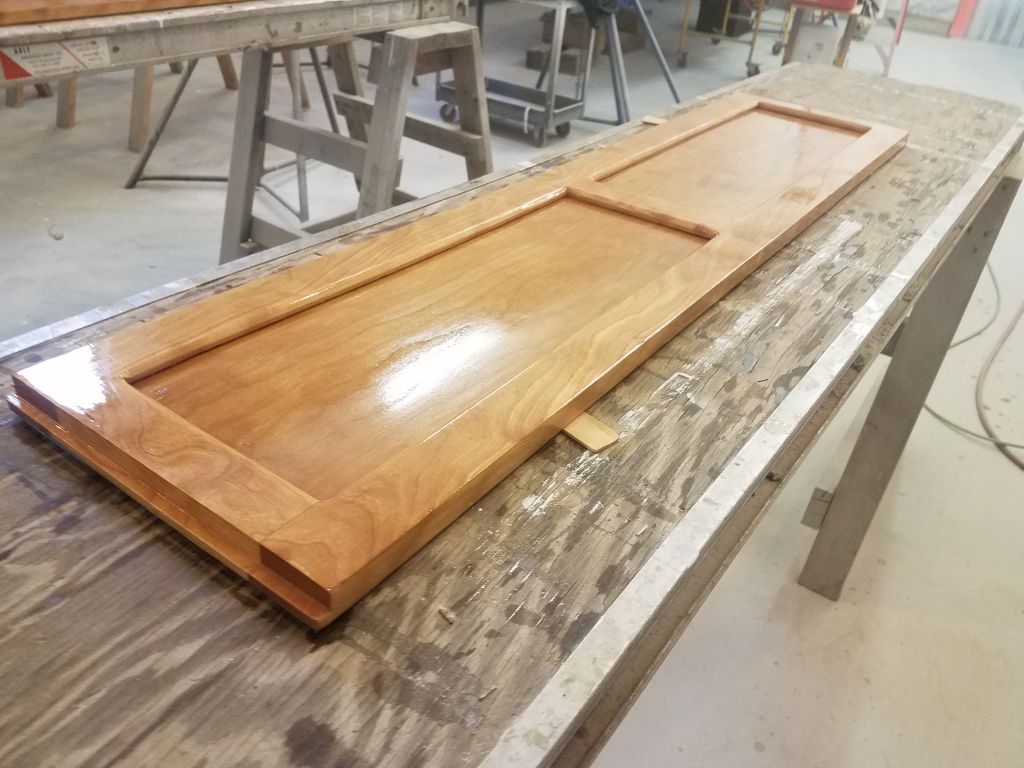
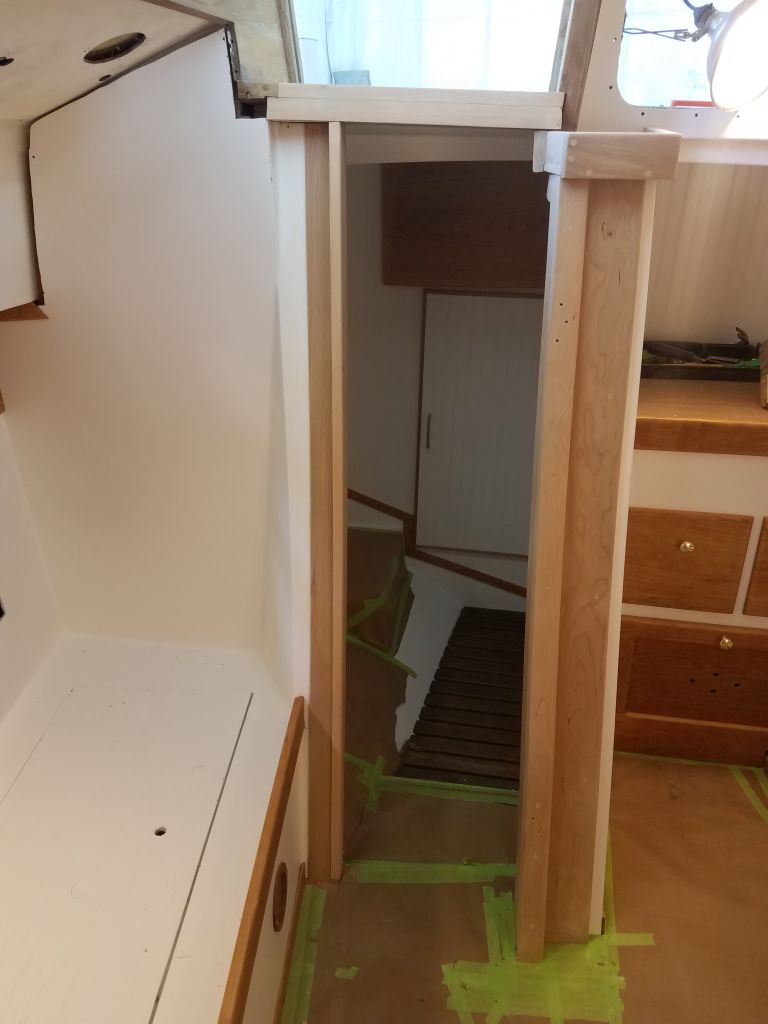
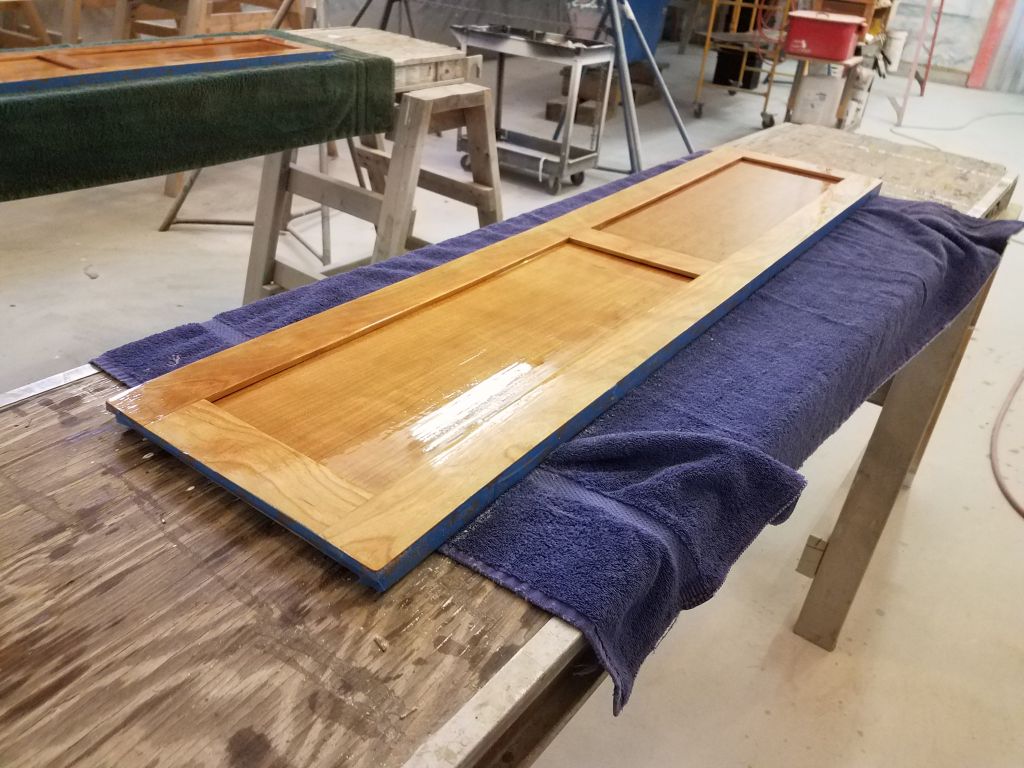
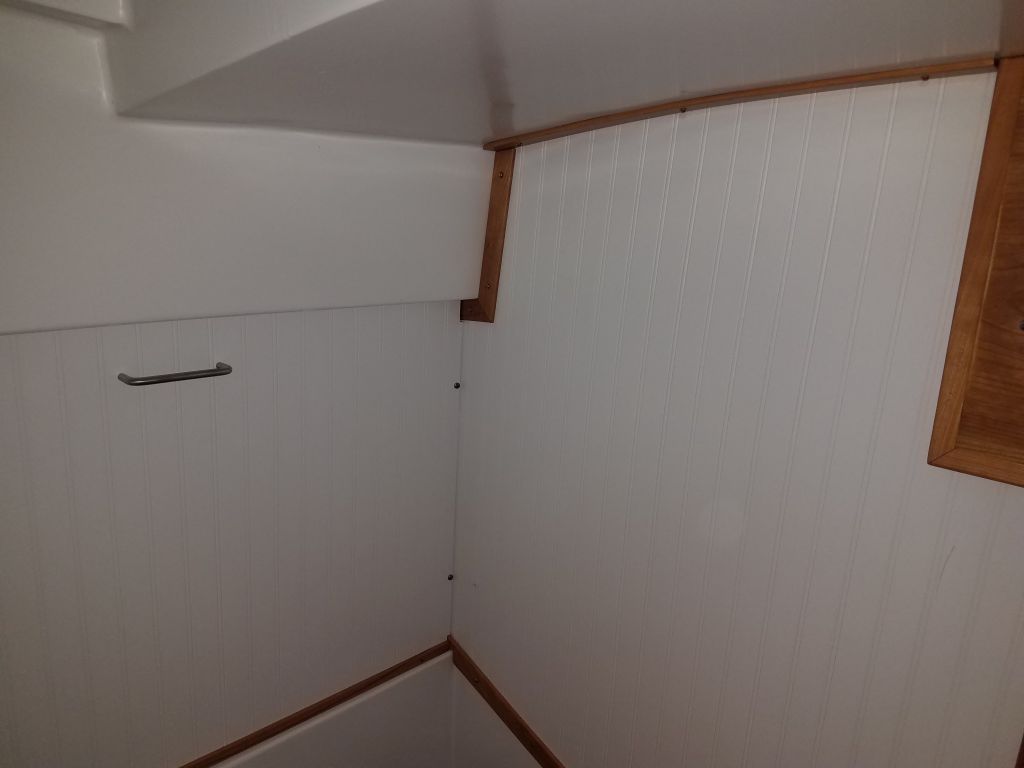
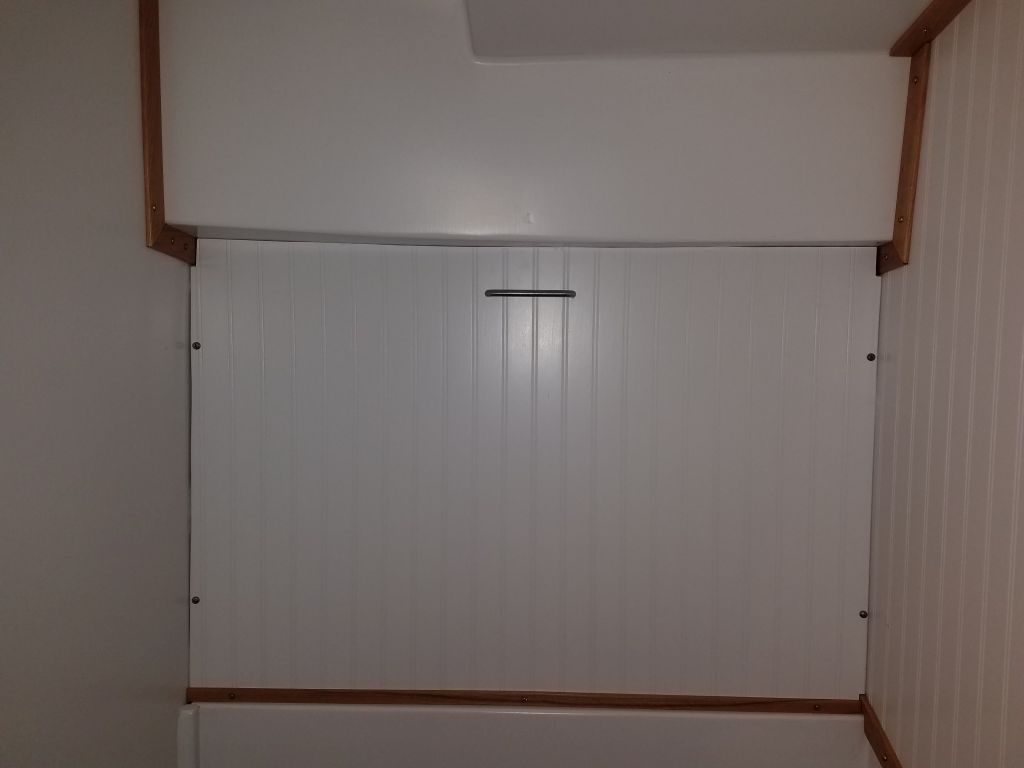
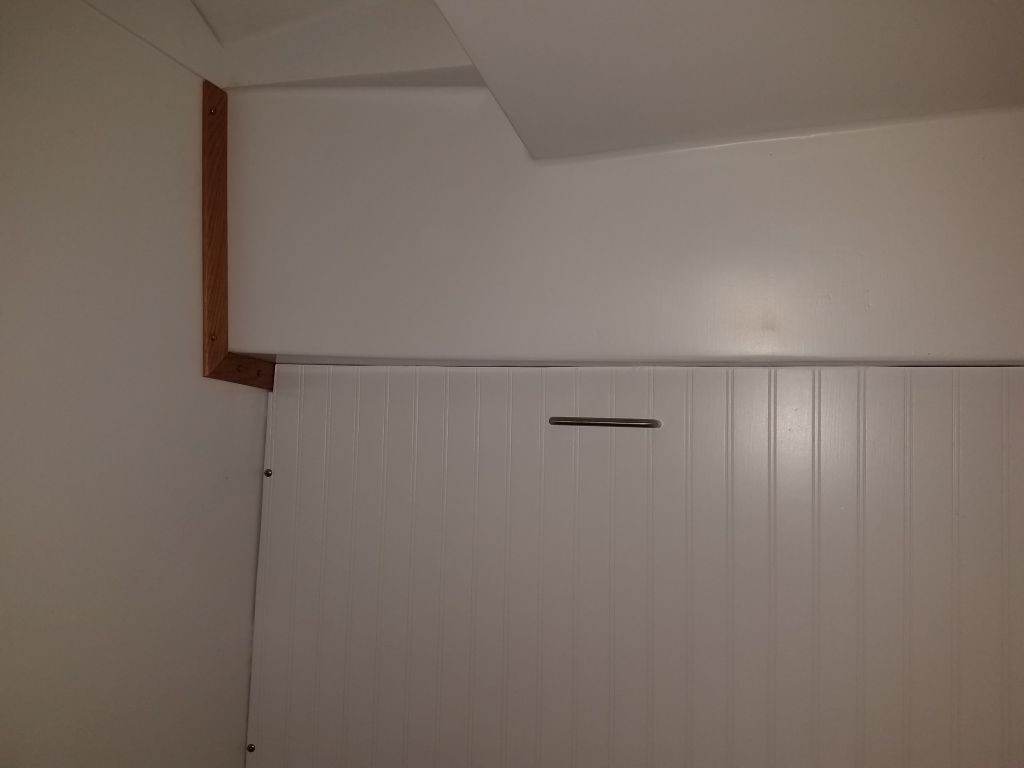
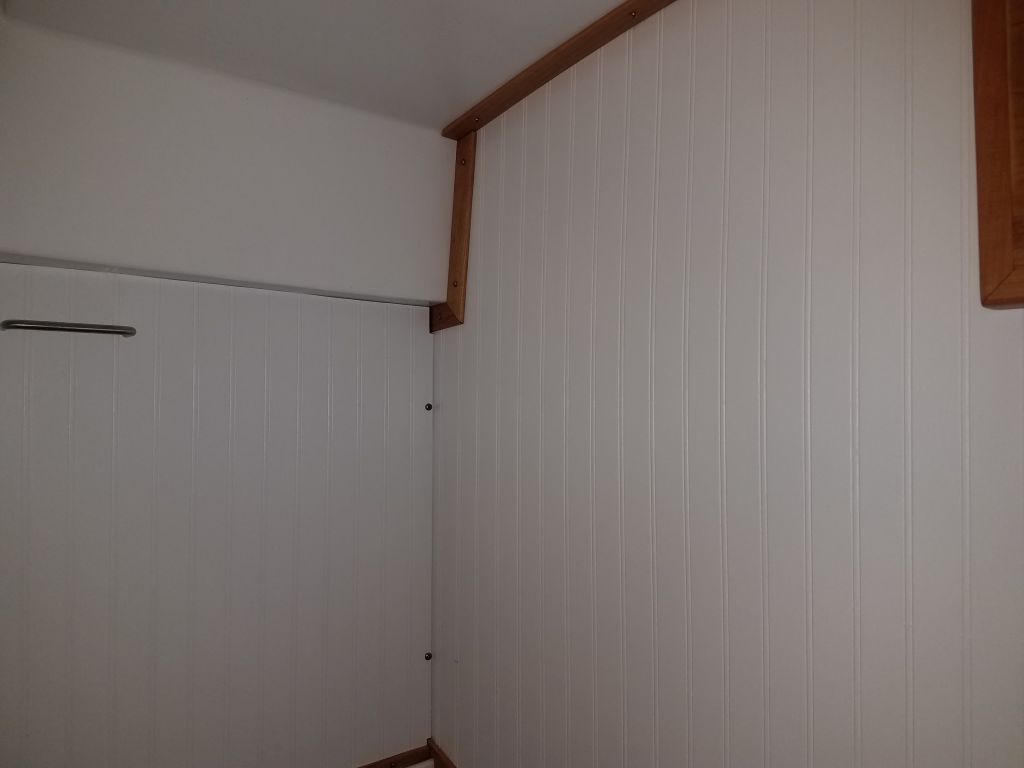
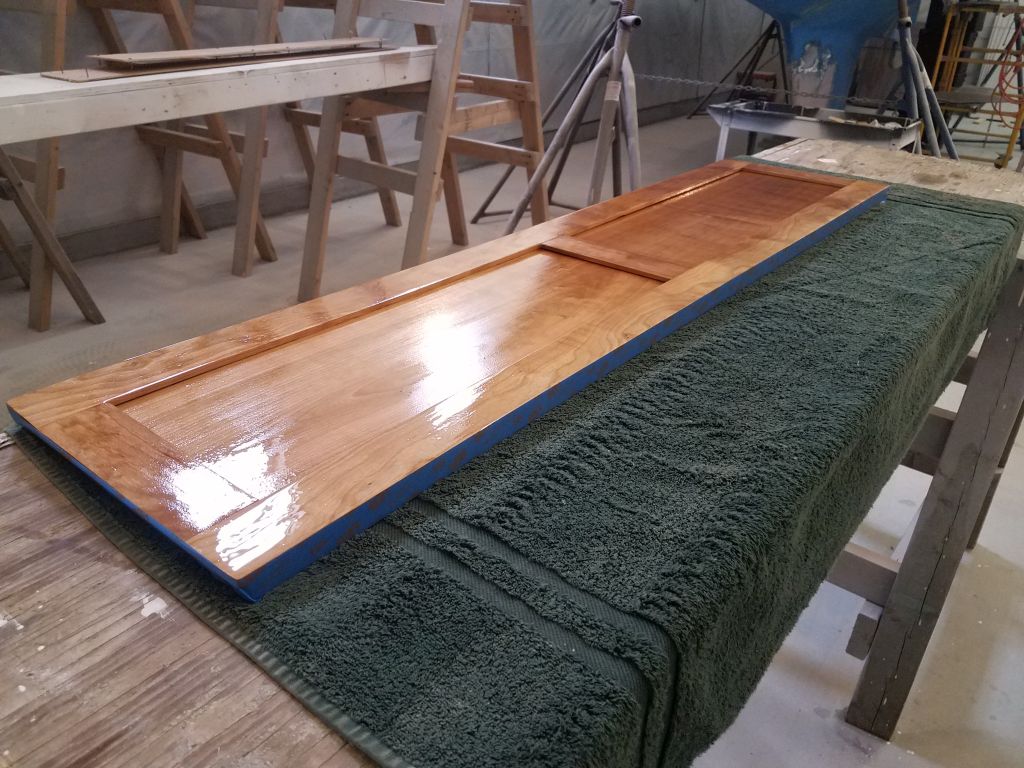
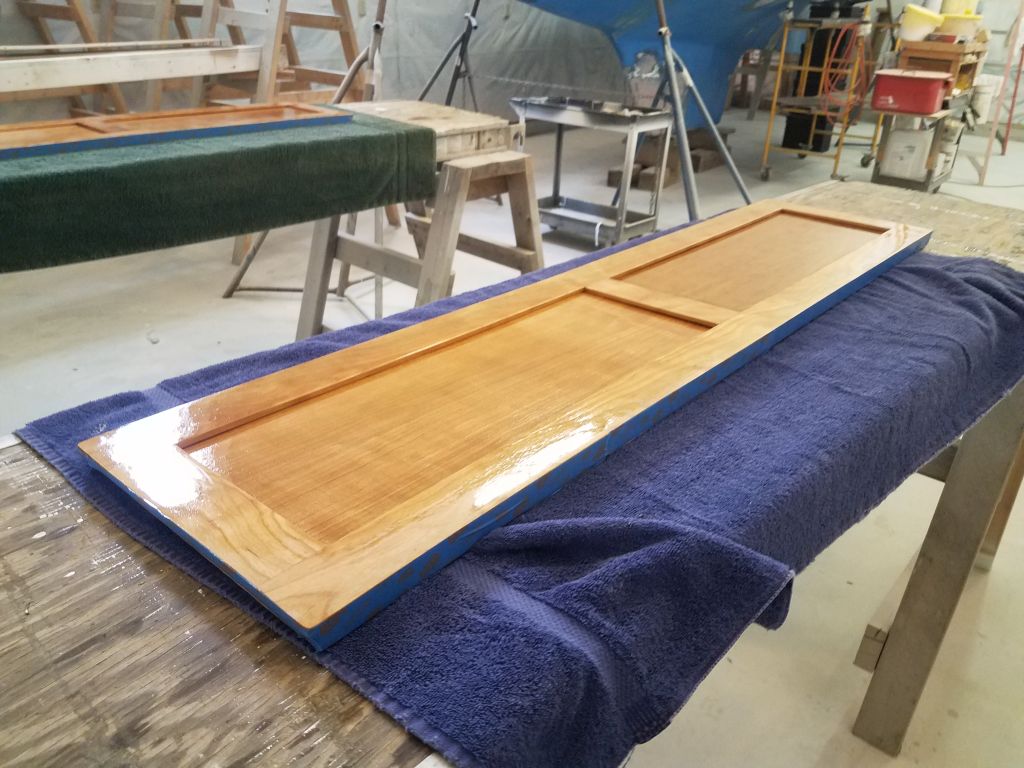
The simple panel door leading from the head to the engine room, which I’d previously veneered with beadboard and painted to match the rest of the boat, required some trim along its outer edges to hide the plywood edge grain, since the door was a basic overlay design.  To this end, I milled some delicate wraparound trim from cherry leftovers–I didn’t want, and the door didn’t need, any hefty trim here–and secured it around the edges with glue and brads.

With the afternoon drawing on, it was time for the day’s varnish work, starting with the 4th base coat on the cabin sole trim pieces.

Next, I applied a thinned coat of varnish to the new drawer fronts and engine room door trim, after masking off the areas as needed.

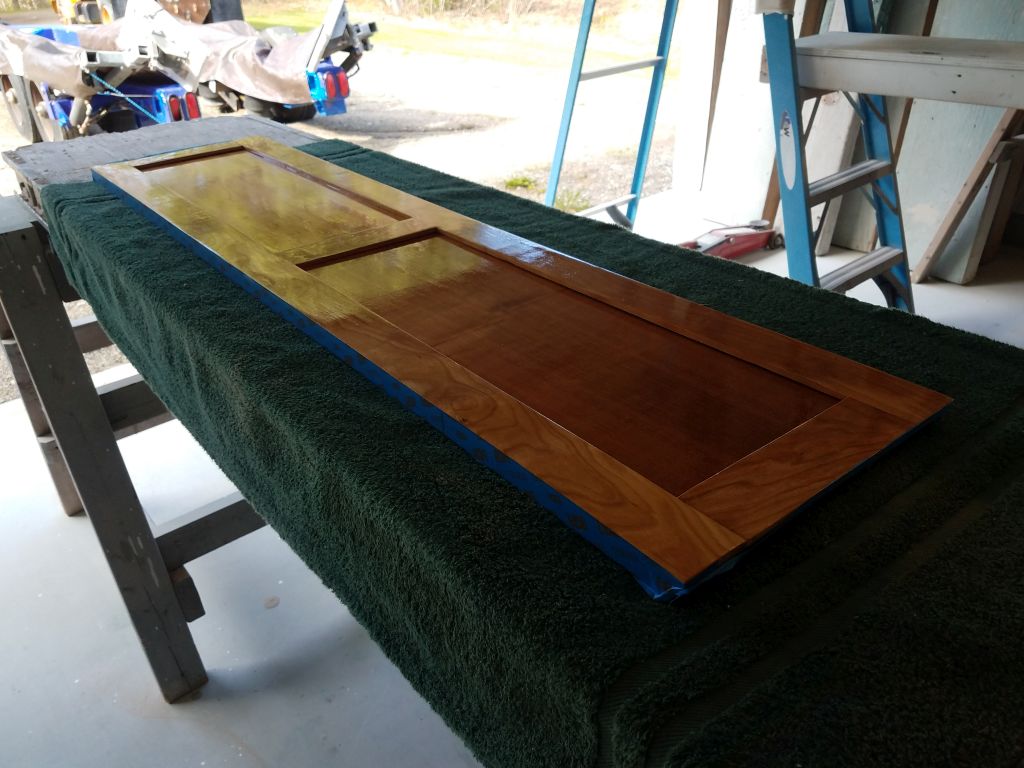
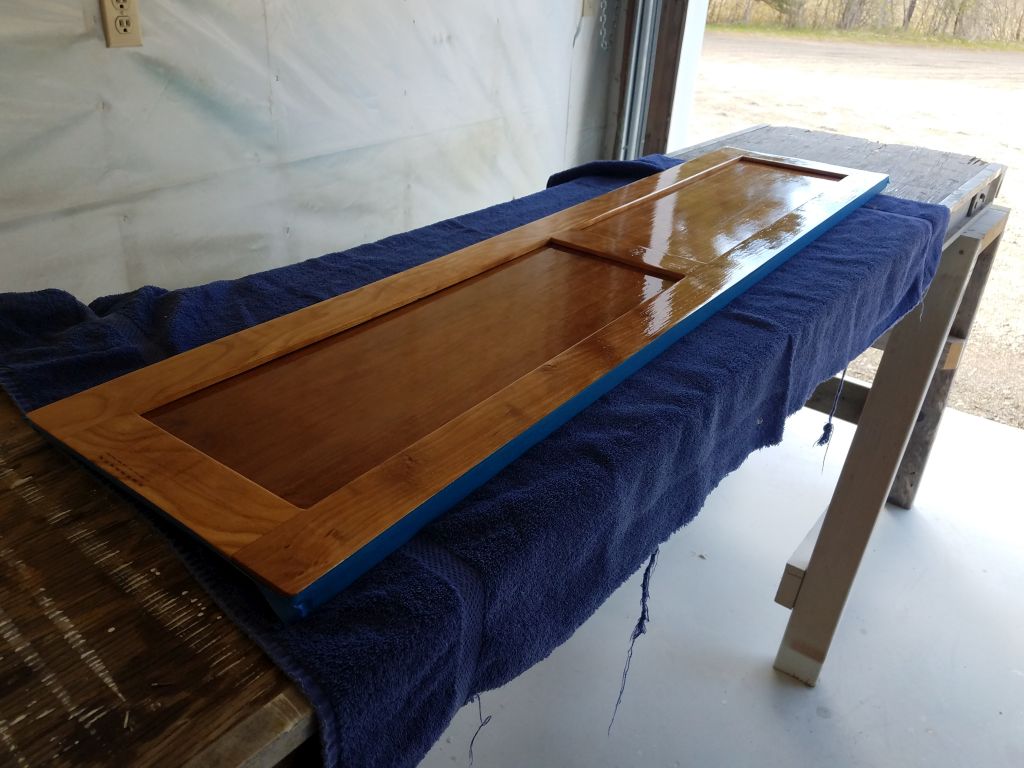
The cabin sole was ready for its final coat or two of satin varnish, but I’d not yet prepared the sole in the cabin, as I wanted to leave the final coat till I knew I could stay off it for a few days (over the weekend), so for now I just applied satin varnish to the two cabin sole hatches.

I used the last part of the afternoon to begin laying out the electrical panel and service area, using the starboard panel from the new locker I’d built in the main cabin.  This panel would include 16 DC breakers, plus an AC shore power panel, along with a flush-mount VHF radio, battery monitor, and a couple ubiquitous 12-volt and USB outlets.  I had the panels on hand, but for the remaining installations I used dimensional information available online to determine the sizes of the VHF, monitor, and outlets.

To begin, I covered the face of the wooden panel with masking tape so I could draw layout lines and protect the finished surface.

Space requirements had dictated the general shape and size of the electrical service panels, with three separate, identically-sized panels for the job, but I wanted to install them butted together so they looked like a single unit.  To ensure an accurate cut opening in the wooden panel, I used plywood scraps and glue to create a basic template of the panels, which always seem to be designed with tight clearances at the edges, and little wiggle room for error.

After some basic layout on the tape-covered panel, where I marked outside limits based on known cleat and fastener locations, I determined that the electrical assembly should be at the aft, narrower end of the panel, leaving the larger forward end available for the VHF and other installations.  I used my wooden template to mark inner (cutout) and outer dimensions of the electrical panels, then laid out the VHF, battery monitor, and outlets in a pleasing way in the forward section of the panel, which brought me to the end of the day’s work.

Total time billed on this job today:   8  hours

0600 Weather Observation:  38°, cloudy.  Forecast for the day:  Cloudy, chance of showers, 49°

Scupper 135

Monday

Beginning a day of mostly odd-and-continuing jobs, after another round of sanding I applied a coat of satin varnish to the interior doors and head panel, hopefully the final coat for these parts.

Now that the cherry drawer front blanks were ready for action, I spent much of the morning finishing up various details required to assemble the drawers, starting with trimming the blanks to the proper size based on the old drawer fronts, then milling rabbets around the edges to match the spirit and overall dimensions of the originals. and the specifics of new plywood drawer boxes.  With the four main rabbets milled as needed to fit, I temporarily clamped the drawer sides in place and used one of the drawer bottoms (which I’d cut to appropriate size from 6mm plywood) to mark the landing point on the insides of the drawer fronts, where I required another dado to accept the front edge of the drawer bottom.

Before continuing, I did a reality check with the drawer parts up in the boat, just to be sure the new boxes fit inside the openings in the galley.  Though I used just the sides and back assembled dry for the test, it was clear that the dimensions were as they needed to be.

I milled a rounded edge detail on the drawer fronts, in keeping with the joinery elsewhere in the cabin, then sanded the fronts smooth and clean on both sides before assembling the drawers with epoxy adhesive and setting them aside to cure.

Continuing work on the shelf for portable generator storage in the starboard cockpit locker, I first cut a blank from 6mm plywood to fit the desired location (it turned out to require only a simple angle cut to fit against the hull).  Then, using materials on hand, I cut two identical pieces of 6mm plywood, and laminated the three together with epoxy to make a hefty shelf 18mm  (3/4″+) thick, securing the assembly temporarily with screws while the adhesive cured.

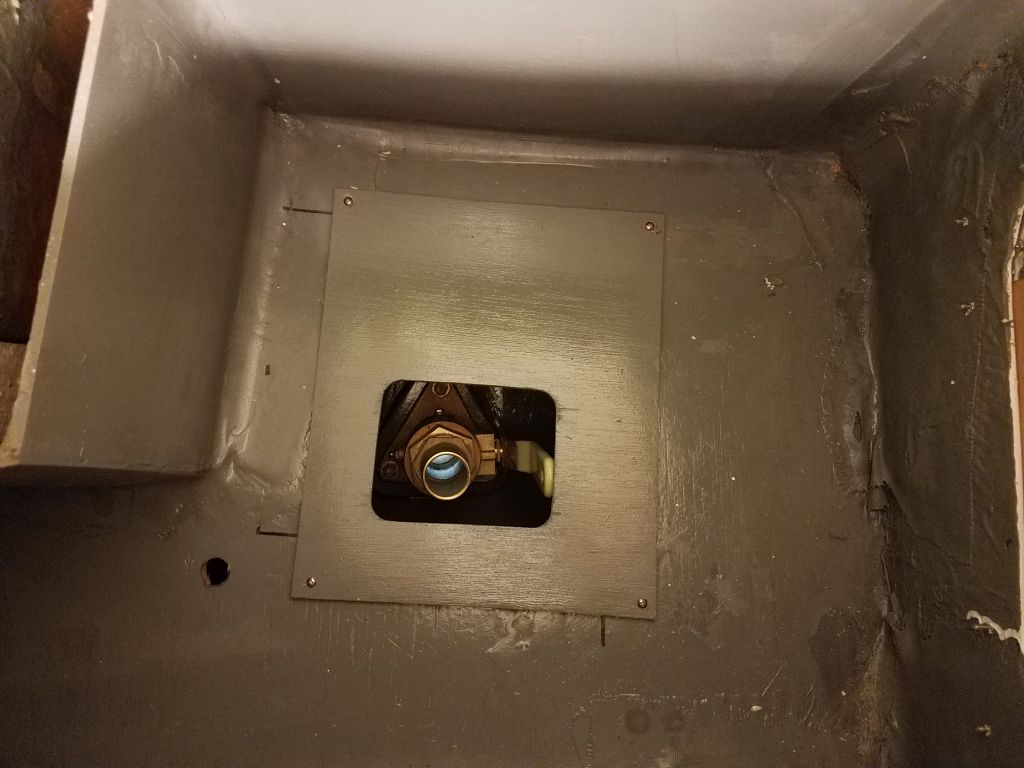
In the galley, I laid out another piece of 6mm plywood to cover the large hole I’d had to cut in the original shelf for through hull installation access.  The new panel covered much of the hole, but left an opening for hose connection and access for operating the sea valve if desired.  I’d wait to install this permanently till I finished up the prep and paintwork in the locker beneath (soon).

Before continuing the varnish work on the cabin sole, I took a few minutes to pre-install some brass ring pulls in the two hatches, drilling recesses above the old finger holes I’d started with in the substrate to accept the flush round ring pulls above.  I’d await final installation till the varnish was complete, but now I could varnish into the new recesses during the last coats on the sole.

After the usual final preparations, I continued varnish work on the sole with the fourth coat of base varnish on all areas, and the third coat on the trim pieces.

Finally, I applied a coat of satin varnish to the companionway ladder and back.

Total time billed on this job today:    7.75 hours

0600 Weather Observation:  26°, clear.  Forecast for the day:  Sunny, 53°

Scupper 134

Friday

For some time, I’d been ready–and wanted–to paint out the engine room and related spaces, but my focus on working through the various trim and finish details in the cabin kept superseding the aft spaces.  But today, I made it my priority, as I wanted frankly to get it over with.

The engine room and cockpit locker spaces were voluminous, but still fairly tight to move about within, so I planned my attack accordingly.  The sheer magnitude of the spaces meant that I planned from the getgo to paint in a couple stages, plus the fact that I still had some work to finish up in the starboard locker, so for now I focused on the center part of the space, beneath the cockpit, and the engine room, aft bulkhead face, and battery shelves on each side.

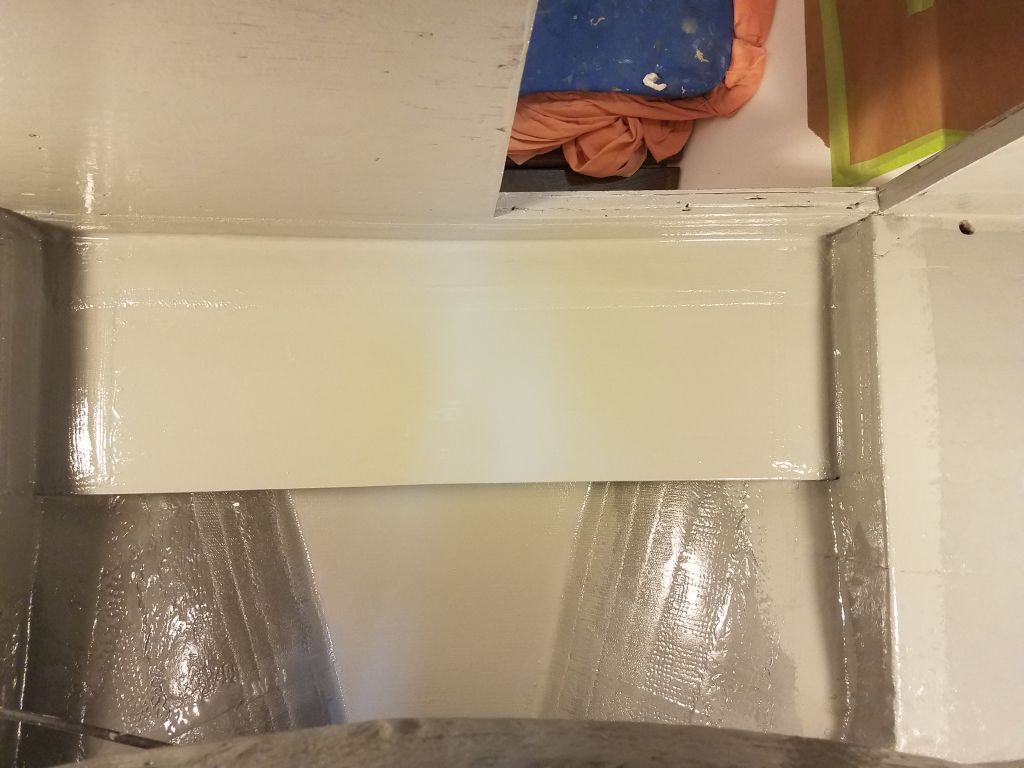
I started by vacuuming and then solvent-washing the spaces in question, then worked my way up and out from the aft part of the engine room (working from within the space itself), then the forward part of the engine room (working from the head), and then the outlying spaces on each side, working from the two cockpit lockers to paint the battery shelves and bulkheads at the forward end of the engine room.  I also painted the aft center space around the rudder post, and the entire inside of the transom, plus some areas of the inside of the cockpit well.  I left the storage lockers and other remaining areas on both sides for another painting session soon.

With that done, I turned to the day’s varnishing chores, going through all the standard preparation steps and applying more varnish to the cabin sole (3), companionway ladder parts (4), interior doors (4), and cabin sole trim pieces (2).

I rounded out the day in the woodshop, working on the galley drawers.  I began by cutting some cherry stock into appropriate lengths and gluing up two panel blanks from which I could later build the drawer fronts.

For the drawer boxes, I needed to perform a couple additional milling steps on the plywood pieces I’d cut last time.  Each piece required a rabbet at the back end, into which the drawer back would later fit.  I cut the plywood backs to fit properly within the rabbets, forming the overall drawer width required.  I also cut dados near the bottom edge of each panel to accept the 6mm plywood drawer bottoms.

Once the cherry front panels were cured, I could complete the shaping of the drawer fronts, cut the bottom plywood to size, and assemble the boxes.  That would all happen another time.

Total time billed on this job today:   7 hours

0600 Weather Observation:  40°, fog, partly cloudy. Forecast for the day:  Fog and rain, 50°

Scupper 133

Thursday

After a light sanding, I applied the third coat of base varnish to the interior doors and companionway parts.

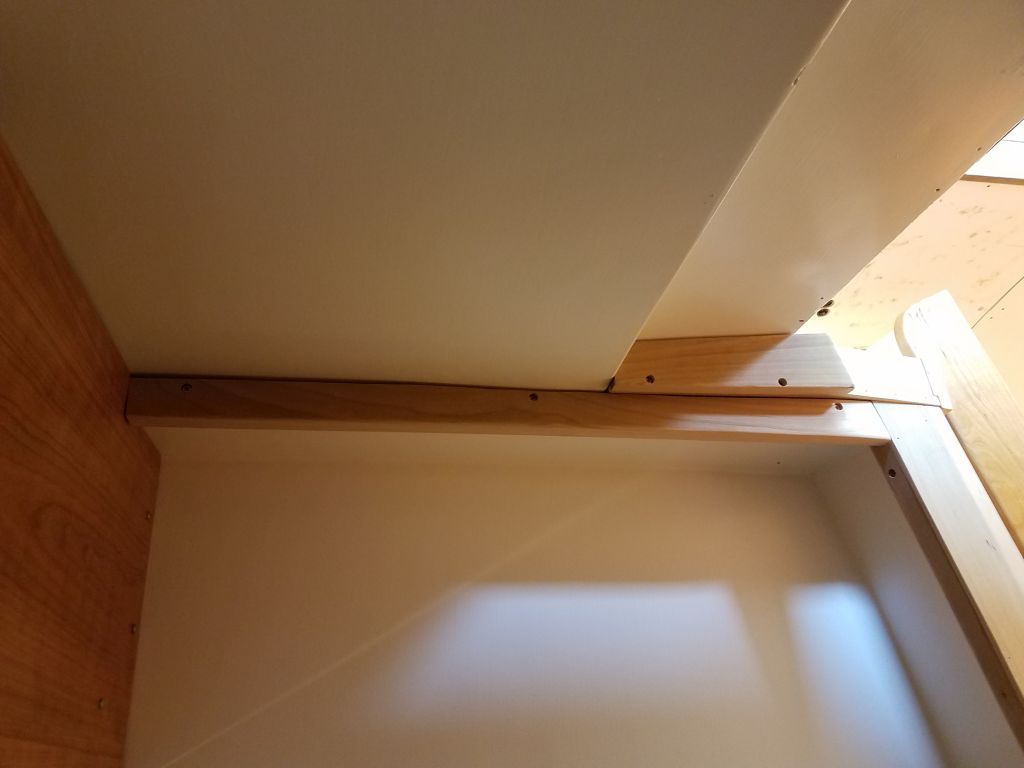
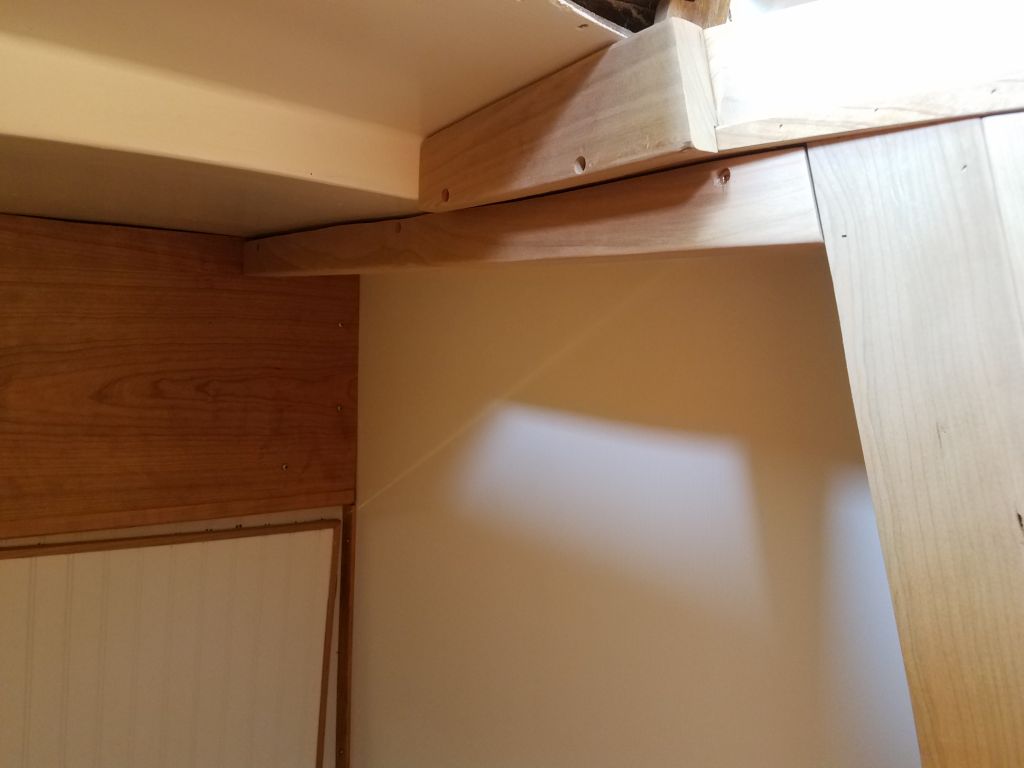
To finish off the cabin sole, I used 1-1/2″ wide cherry to install a small baseboard along the edges all around, beginning in the main cabin.  I cut and fit each piece as needed in its given space, but the stock was still unfinished so I planned to remove it all once complete so I could sand and varnish all the pieces before final installation.

At the centerline bulkhead adjacent to the companionway, I cut a small piece of trim but left it long since the eventual companionway and door trim itself would later take up some of this space and at this point I didn’t know how long this baseboard piece would end up.  In the photo, it’s just resting in place with no fasteners.  Also unfinished at this point was a triangular piece of flat trim required over the molded stepped area in the aft corner of the galley; I’d mill this piece in the immediate future.

With the main cabin complete, I repeated the process with the forward cabin trim.

After removing all the trim pieces so I could sand and varnish them separately, I cleaned up the cabin and masked around the sole in all areas, then lightly sanded it to prepare for varnish, which I did next.

Next, I sanded all the trim pieces as needed to remove layout and tool marks, and to lightly round the top edge for appearance.  Afterwards, I applied thinned varnish to all sides of the trim pieces.

With a little time left in the day, I turned to the two drawers from the galley.  I’d thought of reusing the original drawer bodies and just replacing the old teak fronts with new cherry, but there were several reasons I quickly decided against this:  First, the drawers were nailed together, and it was unlikely I could successfully separate the old fronts without damaging the old, dry pine drawer boxes; second, the bottoms of the drawers, made from 1/4″ plywood, were delaminating and semi-rotten; and finally, the whole construction wasn’t fancy enough to warrant efforts to save and maintain the old units, and the surfaces were worn and moldering from previous dampness and dry-outs.

I had just barely enough 12mm plywood of sufficient dimension left on hand from which to build new drawer boxes, so after measuring the sides of the original drawers I milled four new plywood sides to the proper dimensions.  This left me just enough material to make the drawer backs, but the backs’ final dimensions would depend on how I ultimately chose to secure the boxes together, so as it was late in the day I left that task till another time.

Total time billed on this job today:   8 hours

0600 Weather Observation:  38°, partly cloudy. Forecast for the day:  Partly sunny (what?), 58°

Scupper 132

Wednesday

An appointment kept me out of the shop much of the day, but upon my return in the afternoon I had enough time to finish up the cabin sole in the forward cabin.  The process was the same I’d been through on previous days, and was not particularly noteworthy.  Once I filled in the center opening in the berth, the planks were all short in length, but the bulkheads on both sides of each narrow space were inconsistent enough that I could only cut and install two or three planks to the same measurement before the lengths or angles changed enough to force a different size.

At the outboard ends, I removed the lower ceiling boards, which I’d held up 1/4″ to allow for the sole to slip beneath, and filled in the final angled pieces towards the curved hull; once reinstalled, the ceiling covered the plank ends cleanly.

To complete the installation in both cabins, my next step would be to cut and fit baseboard trim around all the edges:  a project for next time.

Total time billed on this job today:   3 hours

0600 Weather Observation:  40°, light rain.  Forecast for the day:  Clouds and showers, 50°

Scupper 131

Tuesday

With the varnish on the forward cabin door trim complete, I removed the masking tape.

Continuing on the cabin sole, I started with a small piece to fill in the last corner on the starboard side, then continued on the port side with four or five long boards to fill in the bulk of the remaining space.  As before, I cut lengths for the galley hatch and the tiny area aft of it from the same lengths of board at the same time to keep the grains consistent, and secured the planks with glue and brads.  Once I passed the forward corner, each board required long angle cuts on the ends to fit; the next-to-last piece fitted here required careful cuts at both ends, and a fair bit of final fitting before it was right.

This left a small triangular section that required a pattern and some test-fitting before I achieved the final fit and completed the main part of the cabin sole.

I’d collected the small pieces for the galley hatch down in the shop, and to finish things up now I glued and nailed these to the hatch cover itself.

After lunch, I took some time to prepare several additional boards–which I’d earlier dimensioned and planed to the proper size, but had set aside for later use–for use in the sole, since I’d used up most of the material I’d already prepared.  For these six or seven pieces, I sanded the chamfered edges on the top corners, cleaned them, then applied thinned varnish to all sides.  These would be ready for use next time.

While I had varnish underway, I took care of the second coat on the interior doors and companionway ladder.

With a router and flush-cutting bit, I trimmed the excess lengths of cabin sole from the two main cabin hatch covers and openings.  Then I could install the hatches to make moving through the cabin easier and safer as I continued work.

Using the offcuts from the main cabin sole, I started laying the sole in the forward cabin.  Because at the moment I only had a few lengths long enough for the longest pieces here, I started at one side of the berth cutout and worked towards the outside of the boat from there, with the pieces growing progressively shorter as I went.  The aft ends of the planks fit neatly beneath the door trim as planned.  I had enough material to turn the corner into the narrow space aft of the port berth before running out, but fortunately this coincided nicely with the close of business.  Next time, I’d be able to use the newly-varnished lengths of sole stock that I’d gotten ready earlier in the day.

Total time billed on this job today:   8.25 hours

0600 Weather Observation:  48°, clouds and fog. Forecast for the day:  Clouds and showers, 50°

Scupper 130

Monday

To support the eventual battery shelf across its forward edge, I cut and installed a hardwood cleat across the bulkhead in the engine room, securing it with epoxy adhesive and bronze screws, keeping the cleat level and aligned with a mark I’d made during an earlier layout.

Some time back, I’d made a shelf template sized to hold a small portable generator that the owner specified to have on board, and now used the template to start laying out the shelf location at the forward end of the starboard cockpit locker, where I installed a hardwood cleat with epoxy and screws against the bulkhead, keeping it low enough that the bulkhead would hold the generator partly in place (along with additional fiddles and a strap later).  The cardboard template was the raw size required to fit the generator footprint, but I’d need to angle its outboard edge to fit the shape of the hull when I cut the actual platform, which would be a little later.

Earlier, I’d noticed a short section of the tabbing on the port aft side of the after bulkhead was a bit loose at its top edge, so now I prepared the area and re-secured the tabbing with epoxy from behind, and added some new tabbing over the top to finish the repair.

When I’d applied the high-build primer to the decks earlier, the final decision on steering had not yet been made, and I’d left in place some small wooden cleats that had helped hold a wooden helm seat (and rudderpost cover) in place at the aft end of the cockpit.  The helm seat would no longer be needed nor wanted now that the boat would be tiller-steered, so I removed the cleats and their screws, prepared the holes for filling, and filled the various fastener holes with an epoxy mixture.

With that short list of lingering small jobs complete for now, I finished up preparations on the interior doors and companionway ladder and applied a sealer coat of varnish.

The day’s real focus was to be the cabin sole.  I started in the main cabin with a plank down the centerline, which was straightforward to lay out and align since I had a nice centerline seam in the plywood substrate to work from.  I cut various lengths from a single piece of cherry to fit the three sections required:  the forward part; the bilge access hatch; and the after length, keeping the pieces aligned according to the original woodgrain.  I ran the forwardmost piece directly over the hole for the mast compression post to begin, then cut out the center part with a saw; later, I’d trim this with a router.  I secured the sole with glue and brads.

With the center plank in place (I also aligned and installed the center plank on the removable hatch), I worked in both directions to cut and install several more sections of the sole, leaving the ends and edges wild over the openings as needed.  As I reached the opening into the head, I extended the planks to the end of the plywood substrate and wrapped the planking around the edge of the door frame as needed.  As I went, I kept cutting and adding planks to the center bilge hatch as well, leaving the edges and ends long for later trimming.

On the opposite side, in the galley, the plank sizing required that the first full-length piece be cut into a narrow strip to continue past the center bulkhead as needed.  This little strip was too narrow to nail, so I clamped it in place to let the glue cure.

The construction companionway ladder continued to be a bother, and now it was in the way of the planking runs into the head opening.  I grew quickly tired of moving the ladder for each fitting, so since I also needed a way to keep the ladder clear of the sole when it was time to varnish, I cut off the bottom part of the ladder and rested it on a new rough platform I built to span between the two settees.   This kept the way clear beneath so I could work without constantly moving the ladder.

In this way, I continued working towards the starboard side, cutting and fitting a couple planks at a time.  Eventually I reached the forward corner, where I’d earlier used a scrap of planking to cut off the corner trim just above planking height, so now a full width of the planking fit nicely into the corner.  From there, each plank end required a steep, long angle cut where it died out into the angled settee side.  I worked my way to the last full plank running past the door opening at the head, leaving the little angle piece in the corner for next time.

Meanwhile, it had been long enough that I could now unclamp the little strip in the galley, and from there I ran one more width of planking to even up what I’d begun earlier in the day.  The piece next to the narrow strip required marking and cutting to fit the hatch opening in the galley, which I had to do now since the edge of the opening was too close to the bulkhead to allow a router to fit for normal flush-trimming like I’d do in the other openings.  I left the cut just slightly overlarge and would have to sand it to final shape later.

For now, though, this was a stopping point, since I wanted to use what was left of the day to sand, clean, and varnish the forward cabin door trim once more–this time with the rubbed-effect satin varnish that I hoped would be the final coat.

Total time billed on this job today:  8 hours

0600 Weather Observation:  50°, clouds and fog.  Forecast for the day:  Cloudy, chance of rain, 61°

Older posts Newer posts