
(page 87 of 165)

Scupper 219

Tuesday

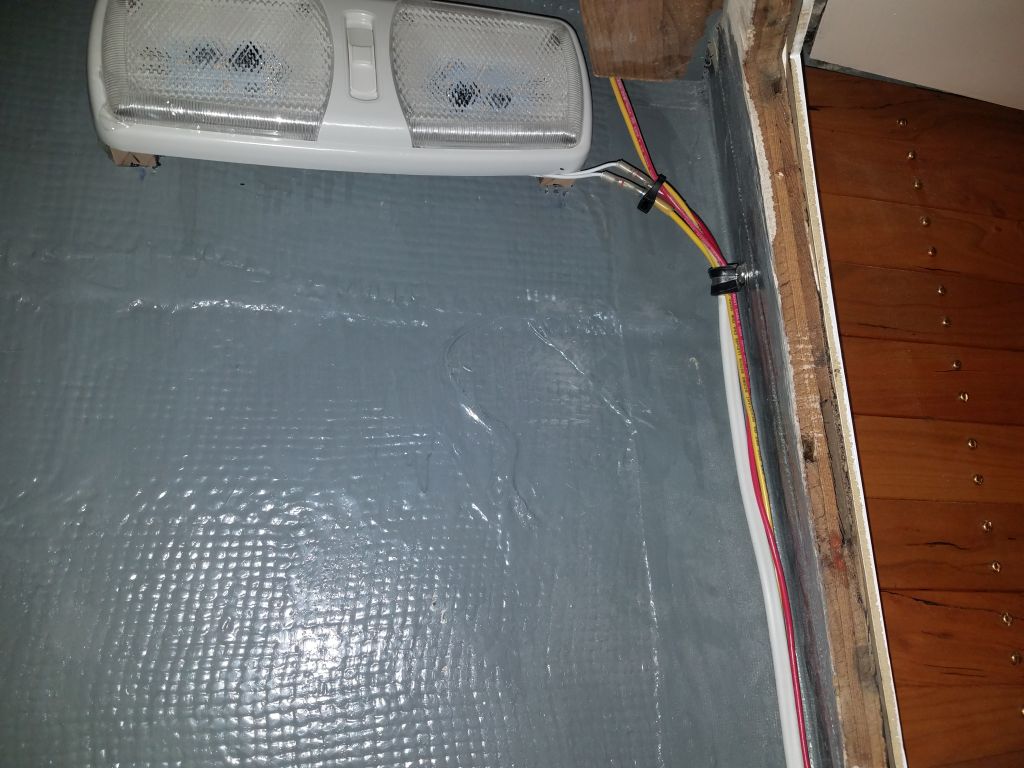
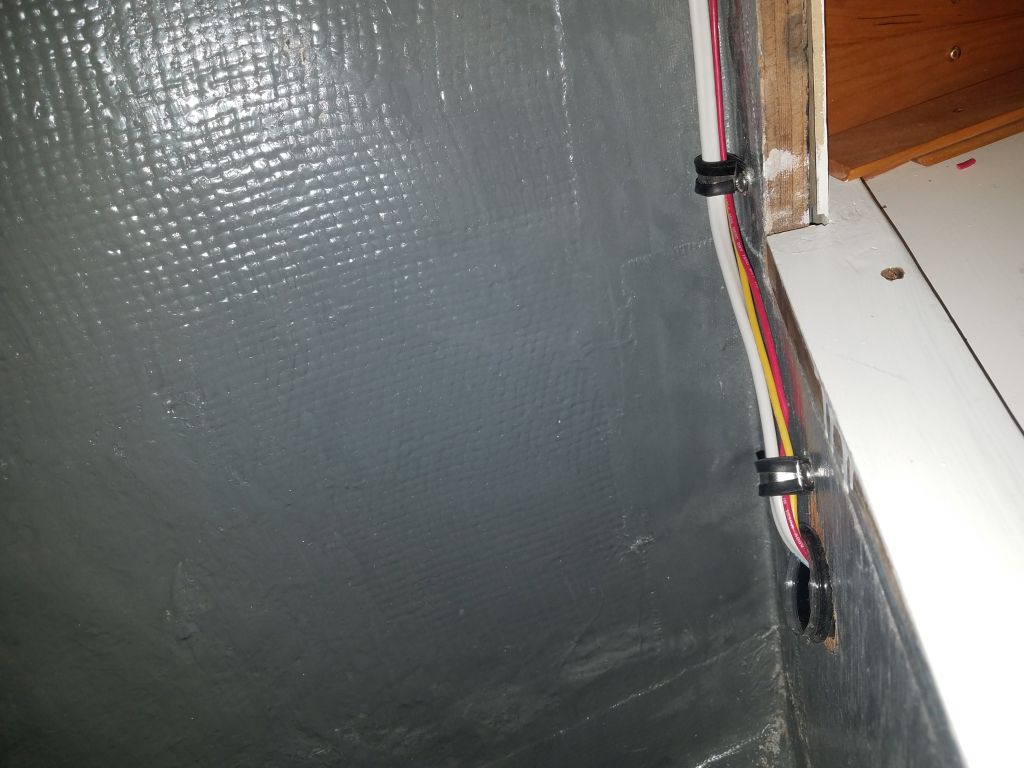
For the last remaining lighting circuit, the owner had requested that the galley lights, and a light near the companionway, be operable by a switch near the companionway to make it easy to light the interior when entering.  With limited options for locating the switch, some time ago I chose the bulkhead adjacent to the companionway ladder, and at that time ran in another wire pair leading from the electrical locker to eventually service the switch.

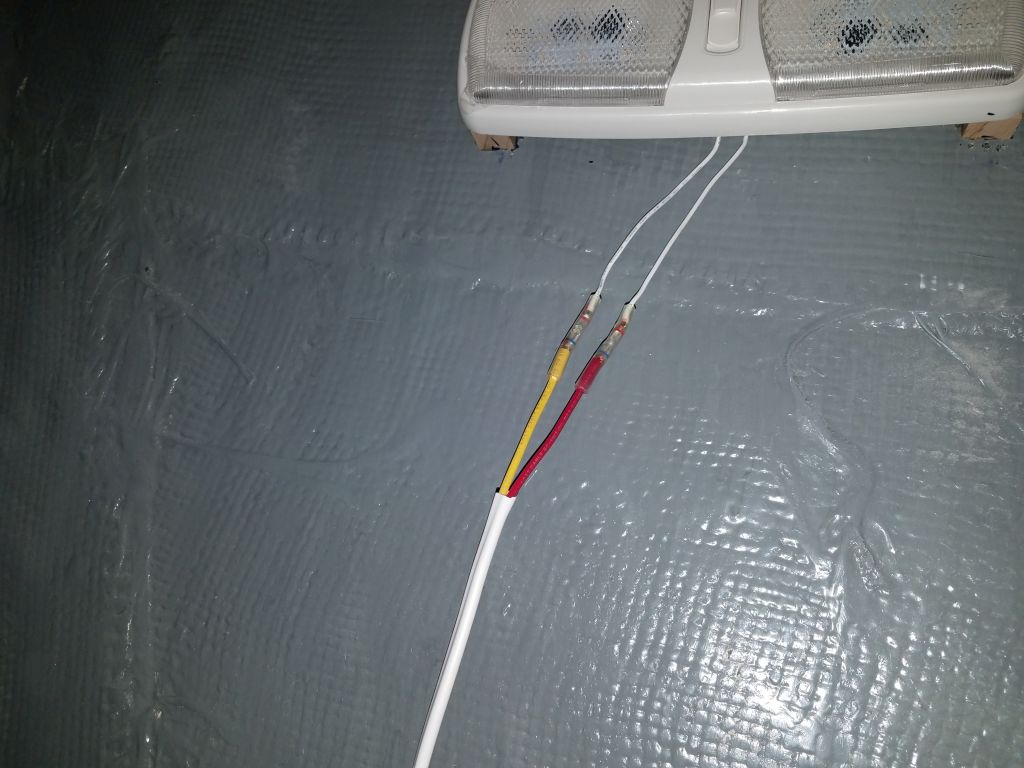
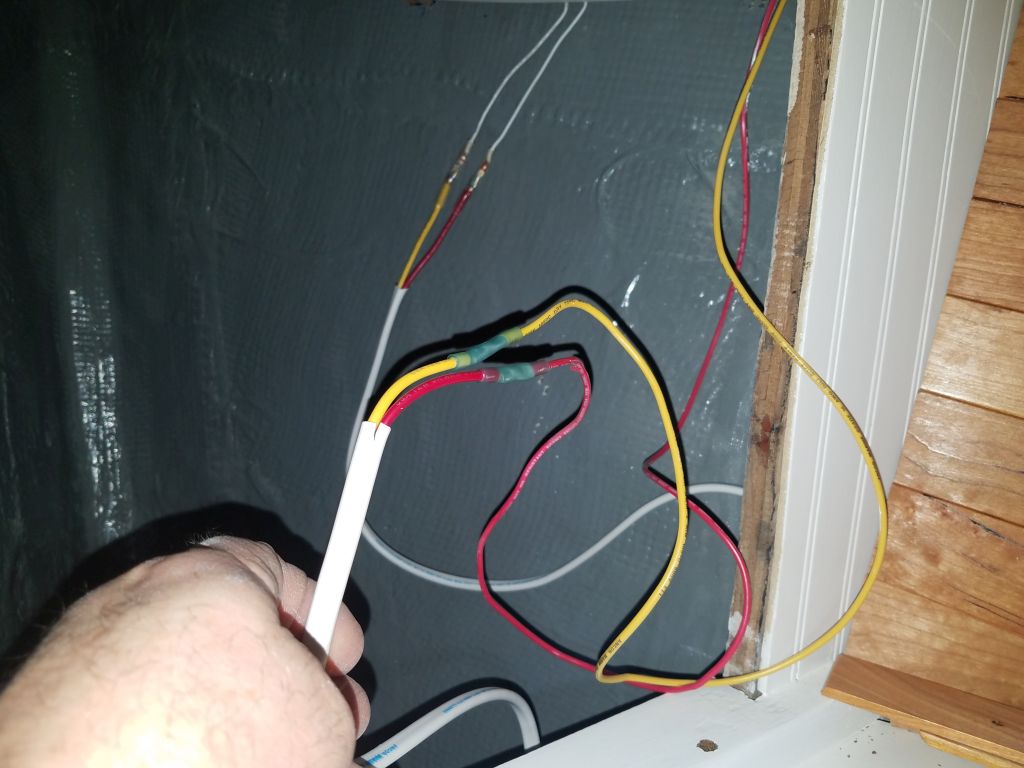
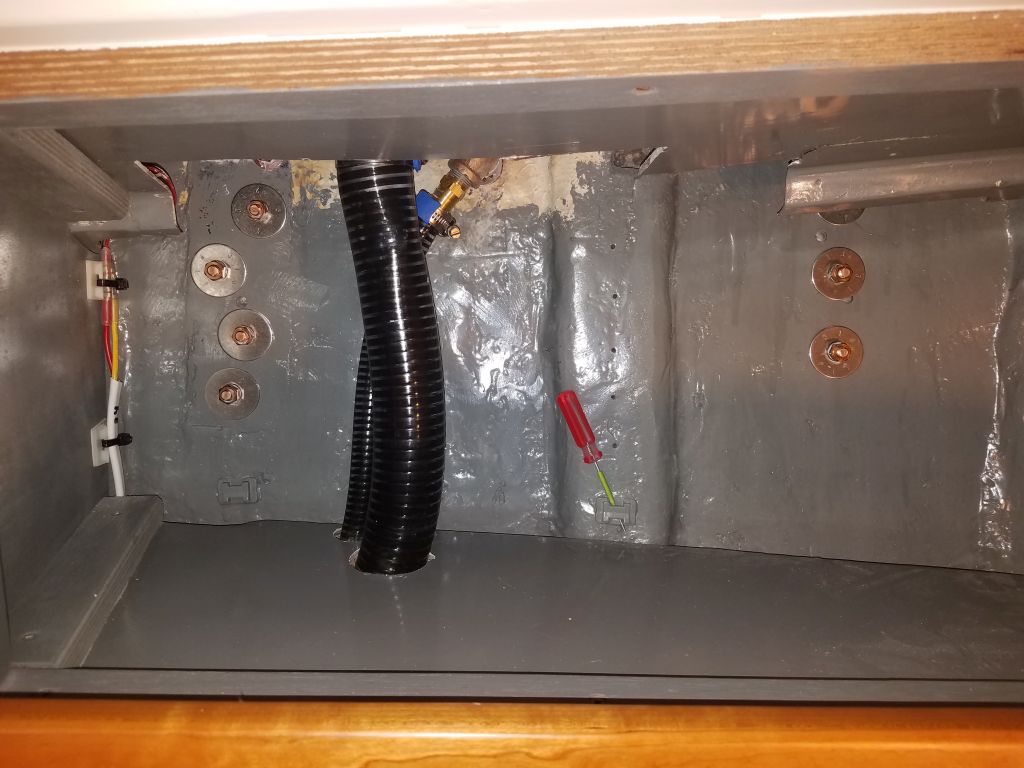
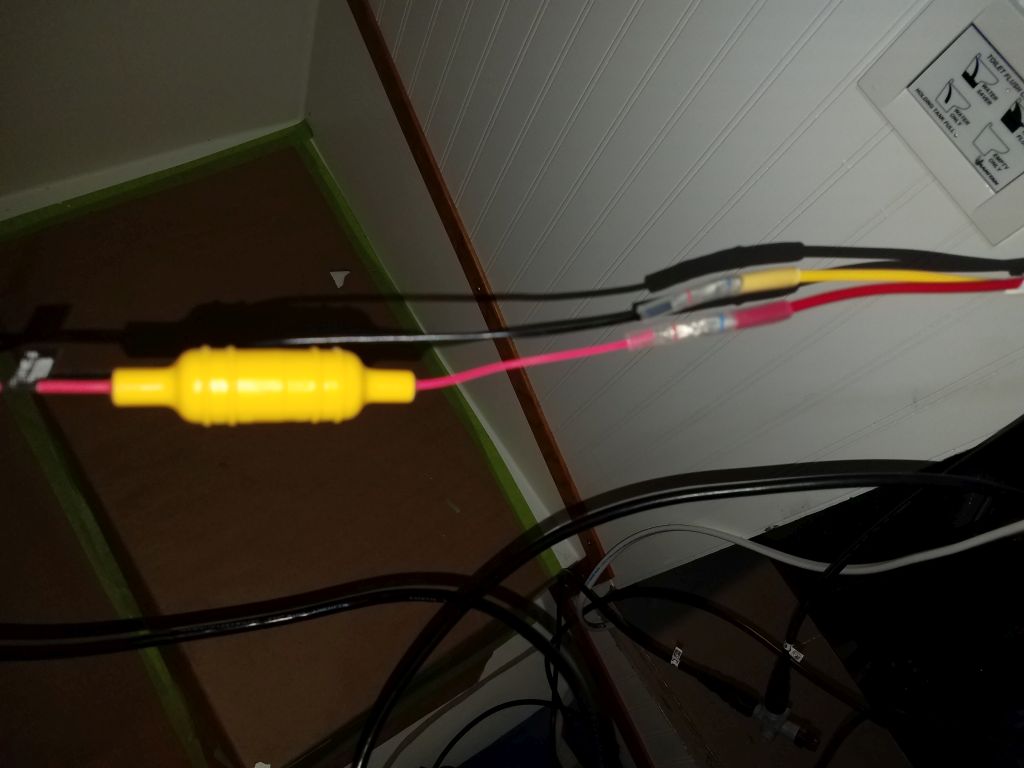
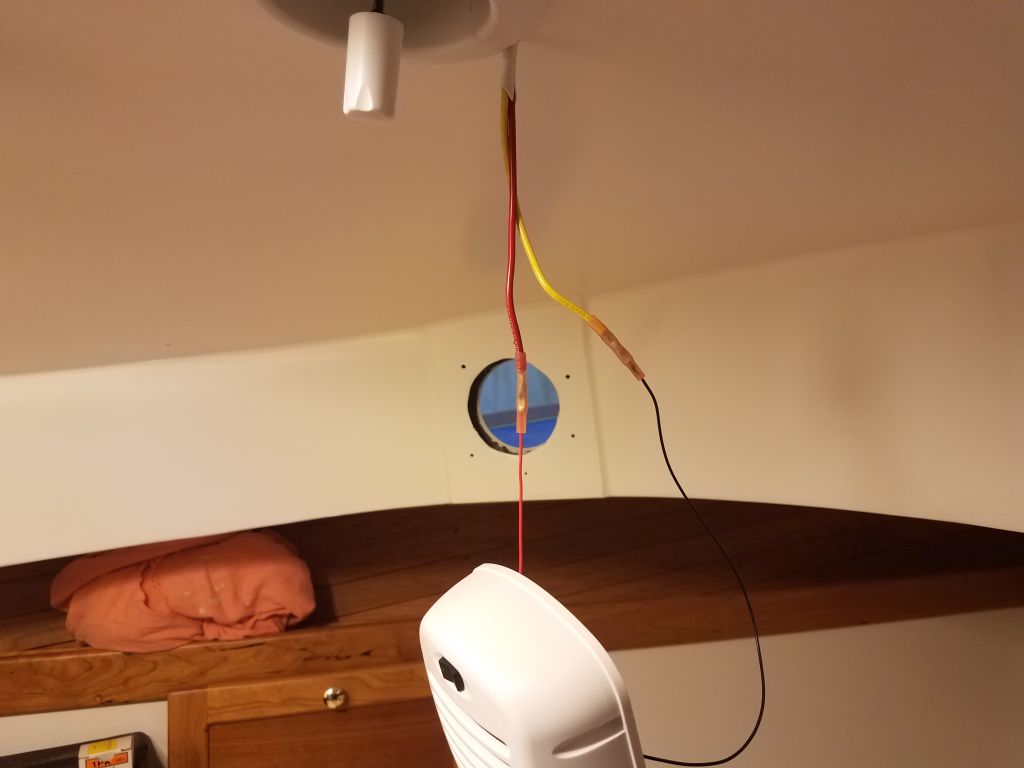
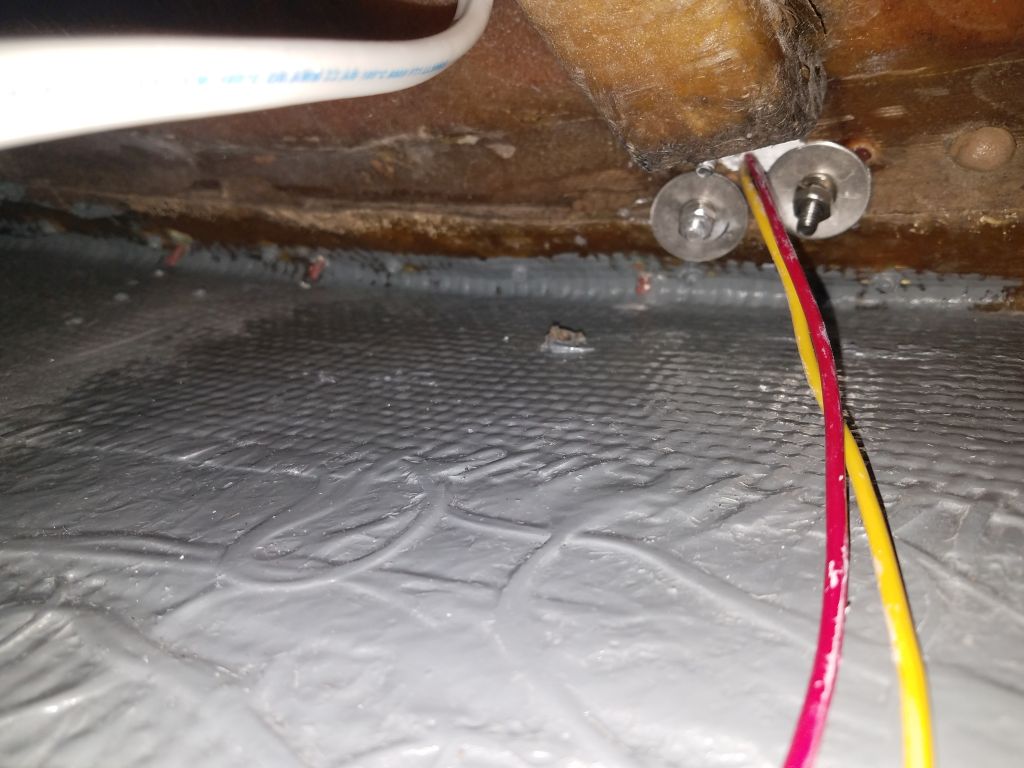
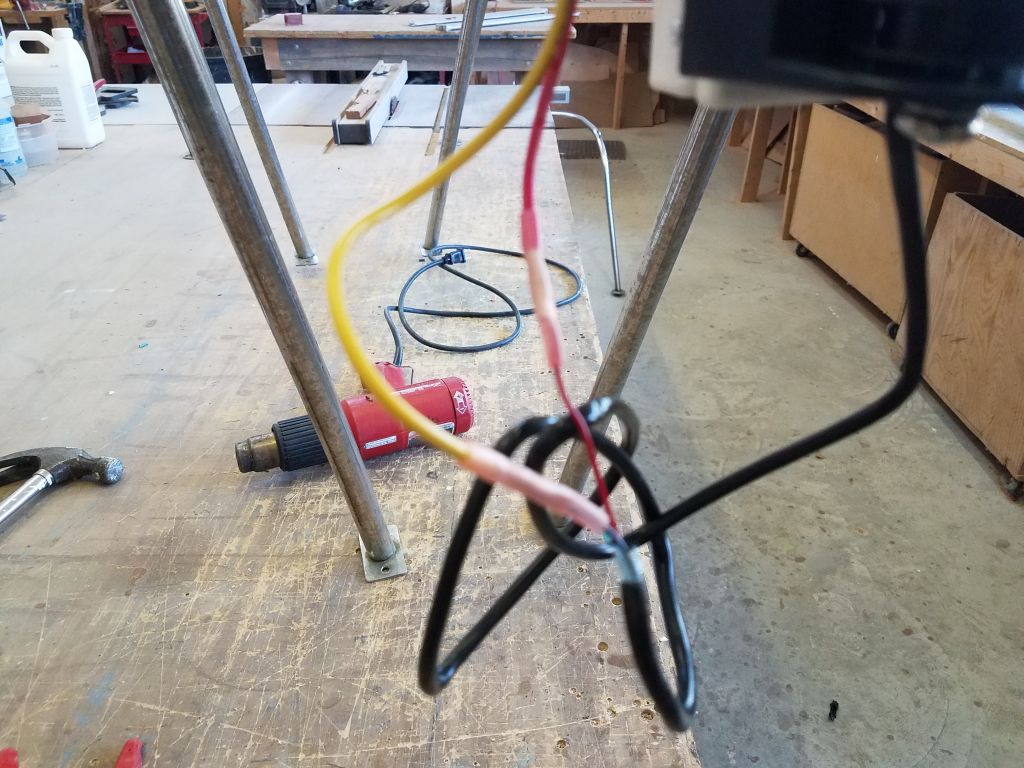
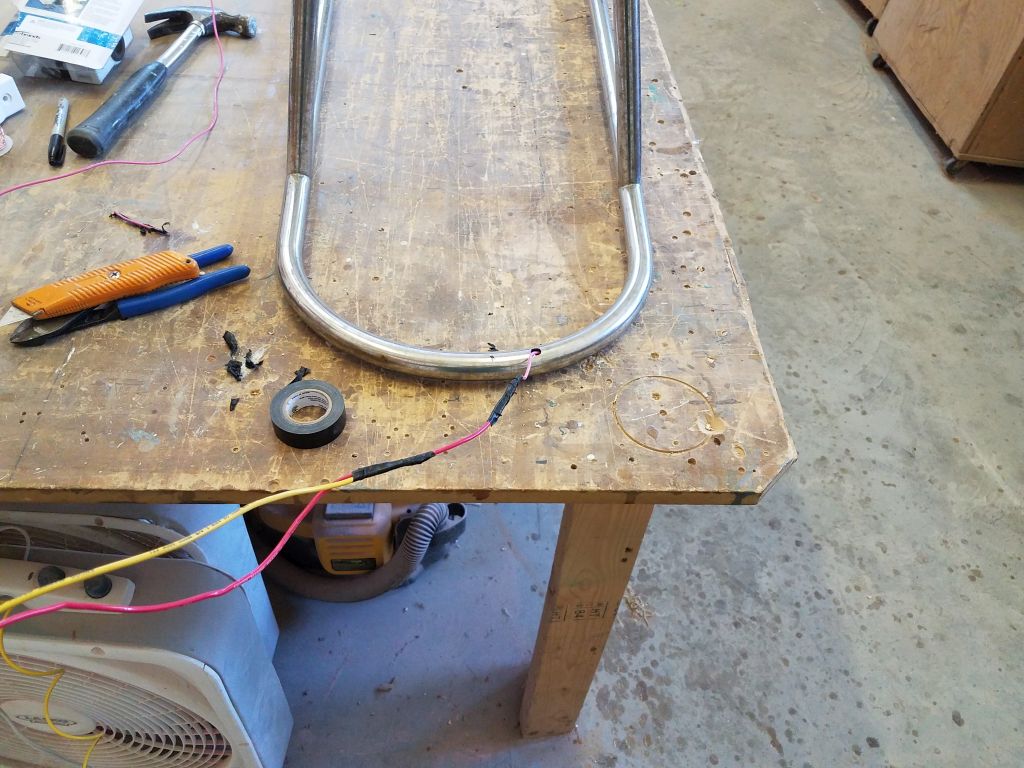
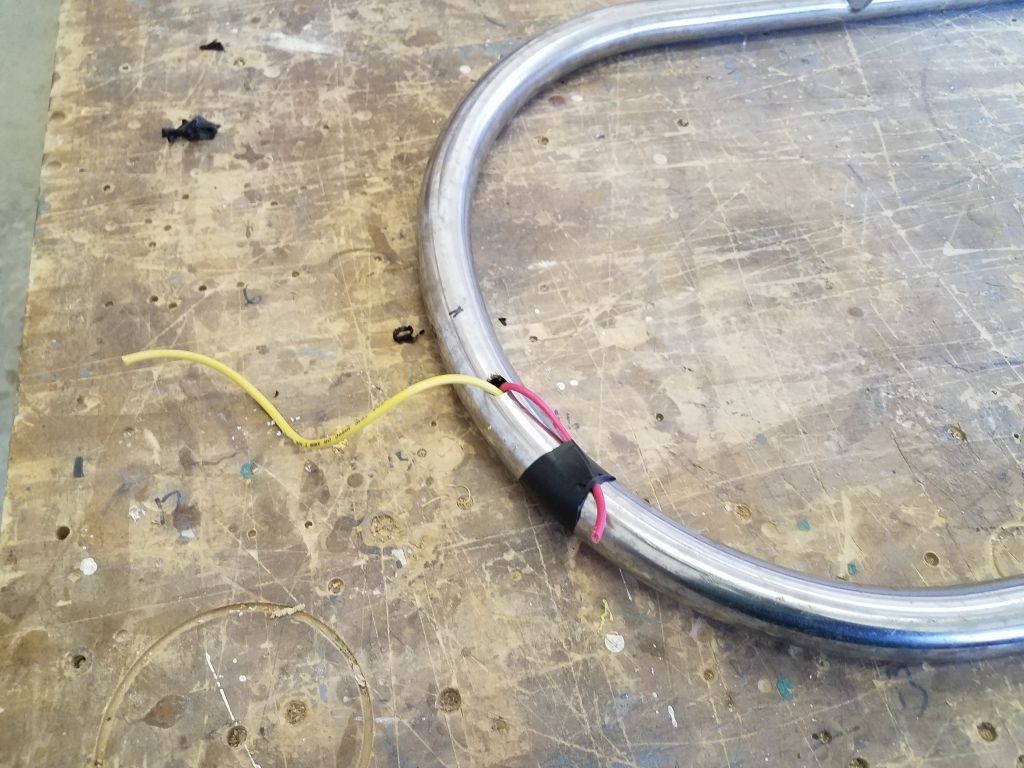
I’d kept the circuits for the galley and companionway lights separate, and now I had to make up a switched circuit to operate them both.  I drew up a basic diagram, then installed the wires as needed using a small terminal block to conjoin the wires appropriately.  Note that the yellow wire in this case is one of the two wires that would connect to the switch, as I used an ordinary sheathed wire pair; the red wire from the switch pair connected to the circuit breaker on the panel, and the two red wires attached to the terminal block are the positive leads for the two lighting circuits serviced by the switch.

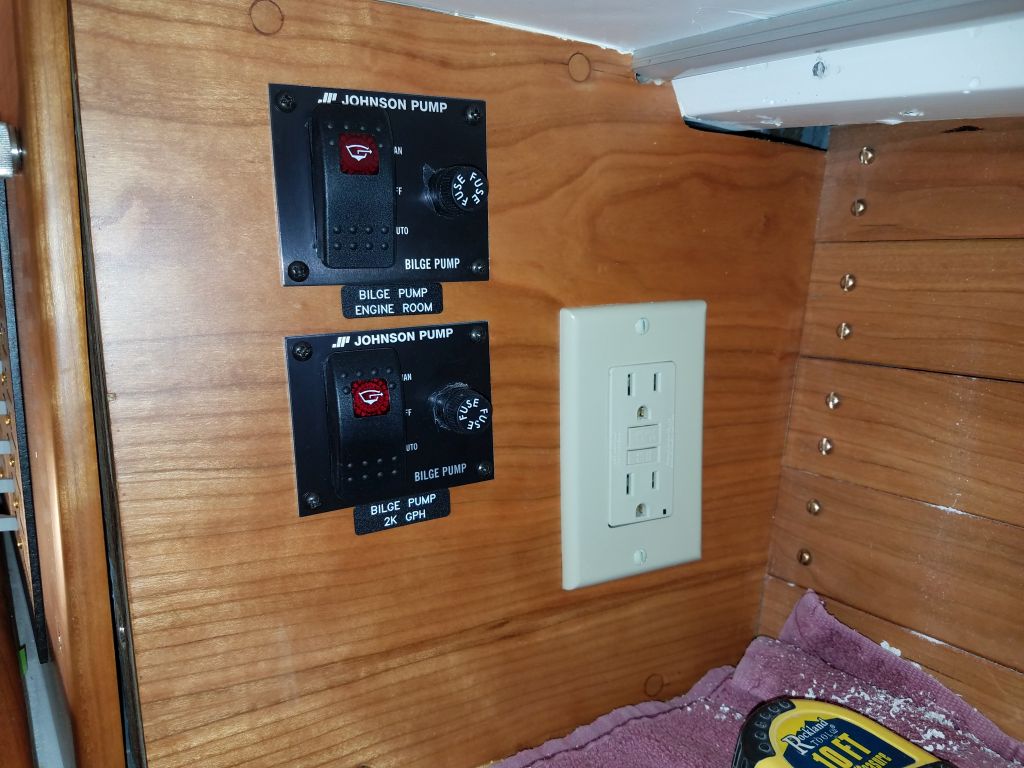
After terminating the negative wires from these circuits to the negative distribution buss, I turned to the final wiring connections at the bilge pump switches, and made up these connections as needed.  I ran the power feed to each pumps from the “always hot” buss I’d installed earlier, so the pumps would operate independently of the switched battery circuit.

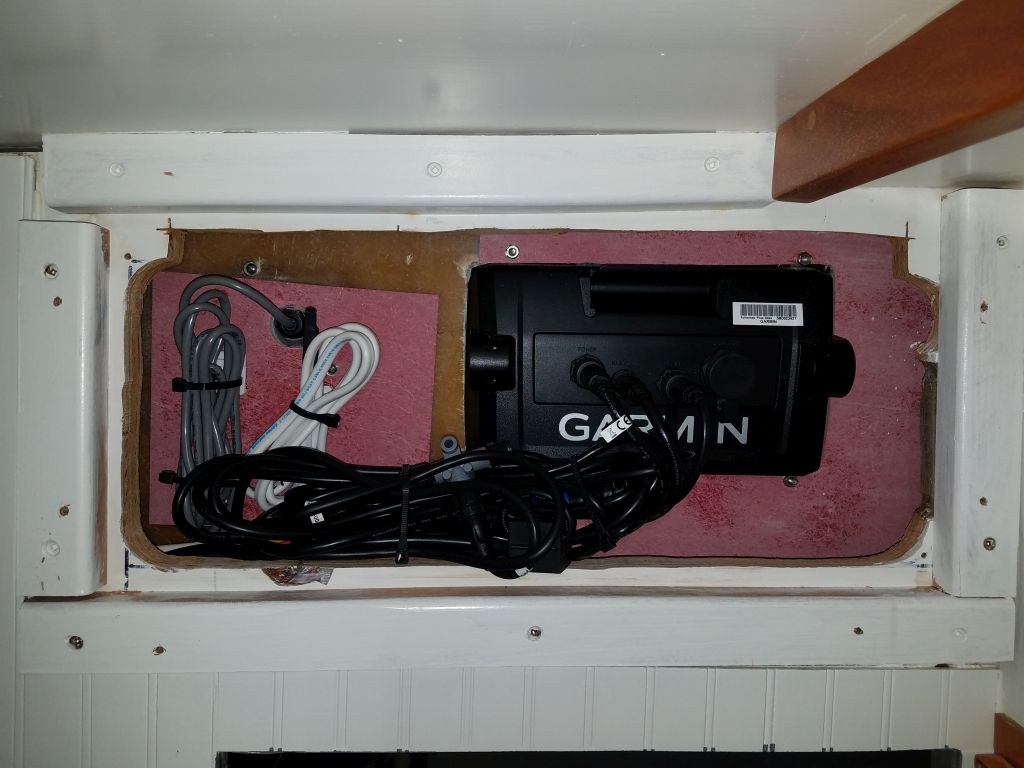
I made up the end of the boat side of the VHF cable and secured it to the radio, and this completed the wiring connections in the electrical locker.

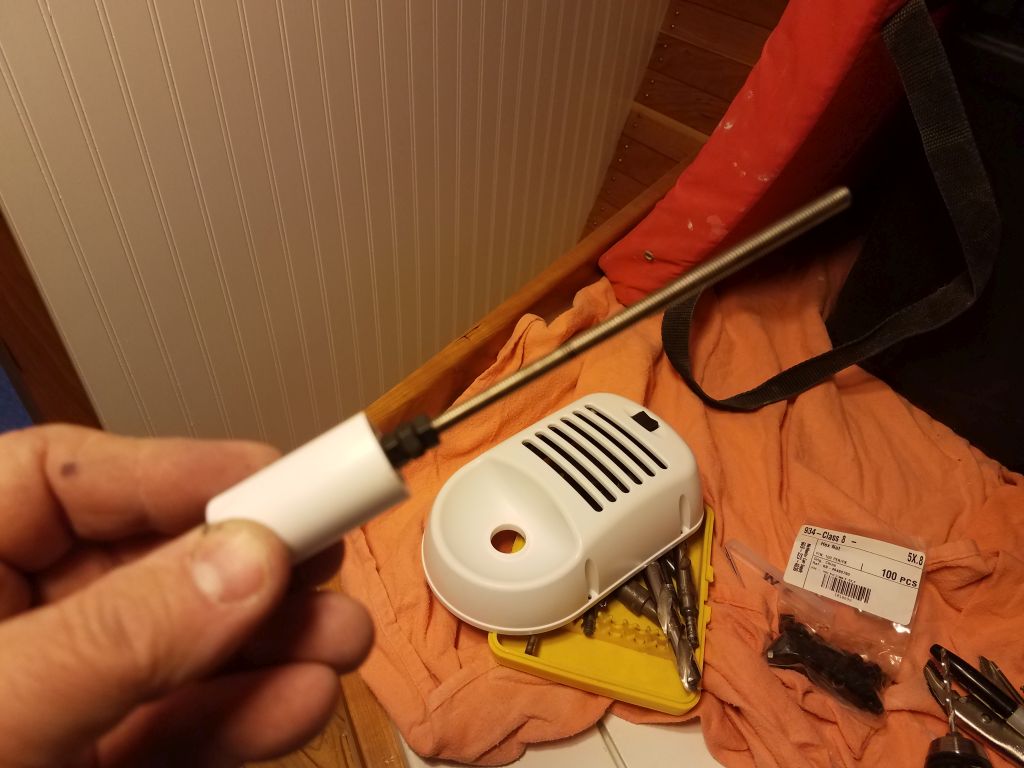
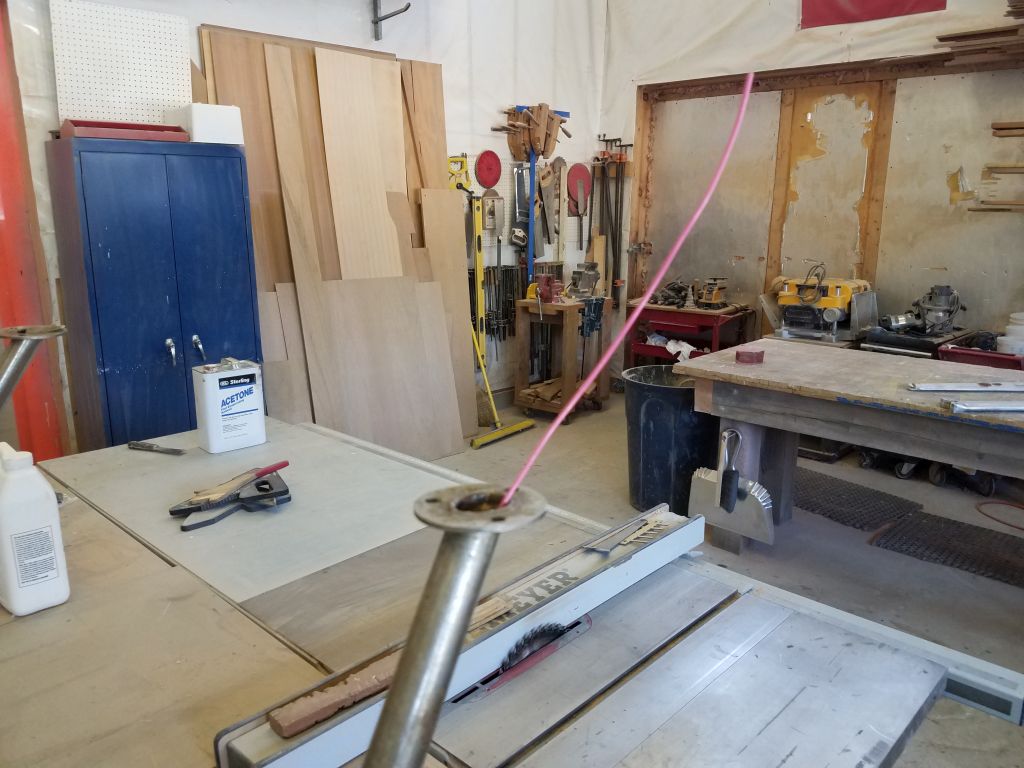
Next, I turned to the mast wiring.  The masthead required wires for an anchor light, wind instrument, and the VHF antenna, and I bundled these cables in some flexible conduit.   At the masthead casting, I ran the wind instrument cable through one of the two welded pipes at the top, since the connector there was too large to otherwise pass through.  Later I’d install the bracket for the anemometer.  I ran a wire snake through the mast and used it to pull through a piece of 1/4″ line as a messenger to pull the wires, then prepared to pull through the pre-prepared wire bundle.

The old mast wires had been secured inside the mast to an extruded track, but the slot was so small I couldn’t source any slides to fit within.  To attempt to secure the wires along their run through the mast, I came up with a plan to use small self-mounting wire ties (the kind with the mounting hole), and some #4 machine screws and nylock nuts.  I’d previously determined that the head of a #4 flathead screw would fit in the track, and I hoped this arrangement might hold the wires along the way.  I added some waterproof grease to the screw heads to hopefully help them slide through the track.

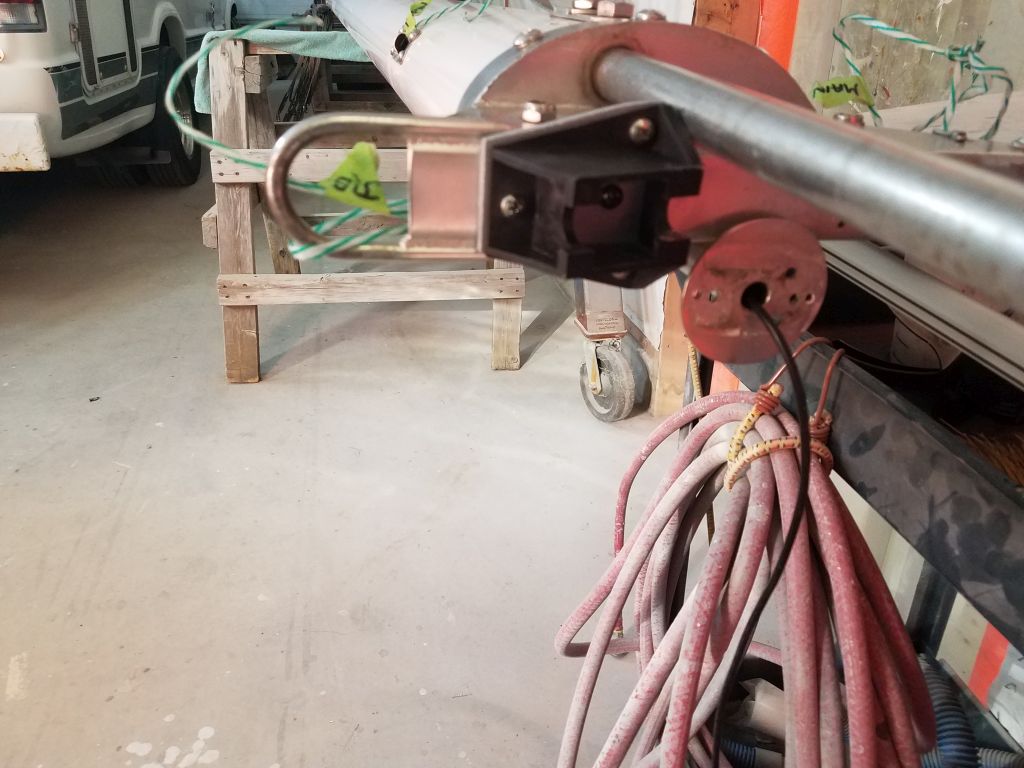
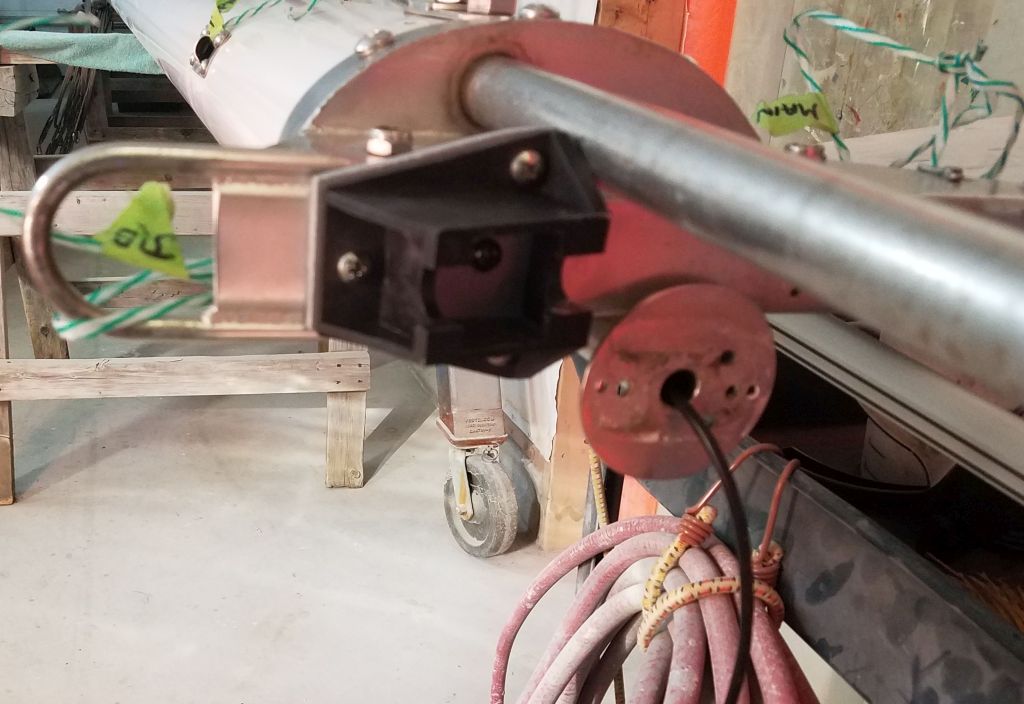
This surprised me by actually working…almost.  Pulling the bundle through in stages, I added additional screw supports every so often, and after a few temporary bind-ups (much fewer than I’d expected) and  what seemed like a year of pulling the messenger, I finally pulled the wire bundle through the bottom of the mast, but found that somewhere near the bottom of the mast one of the screws had bound on some old debris in the track (impossible to see or reach), and the orange conduit had bunched up within the spar somewhere above the gooseneck.  But at least the wires were through, and it looked like most of the conduit had survived, so for now I called it a relative success and would address the conduit issue in the morning.

Total time billed on this job today:  8 hours

0600 Weather Observation:  20°, partly cloudy. Forecast for the day:  Mostly sunny, 32°
Scupper 218

Monday

In the varnish room, I flipped the loose table pieces and, after final preparations, applied the satin varnish to the opposite sides (the “main” side) and edges of all.  The table base, with its coat of satin varnish from last time, was complete.

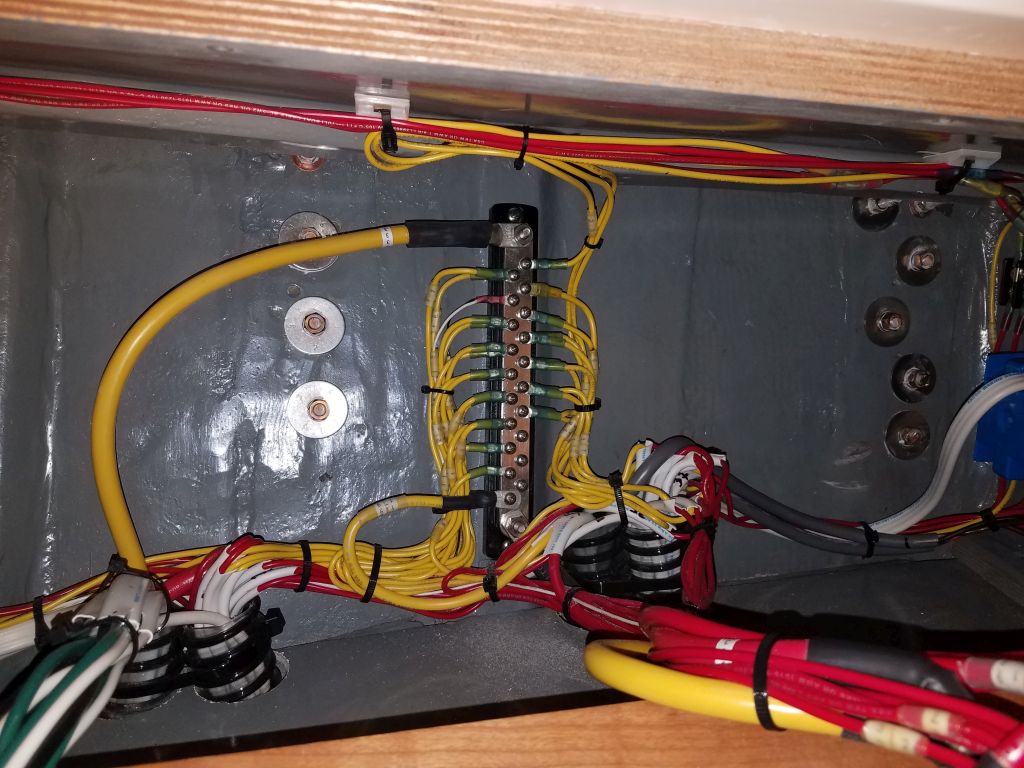
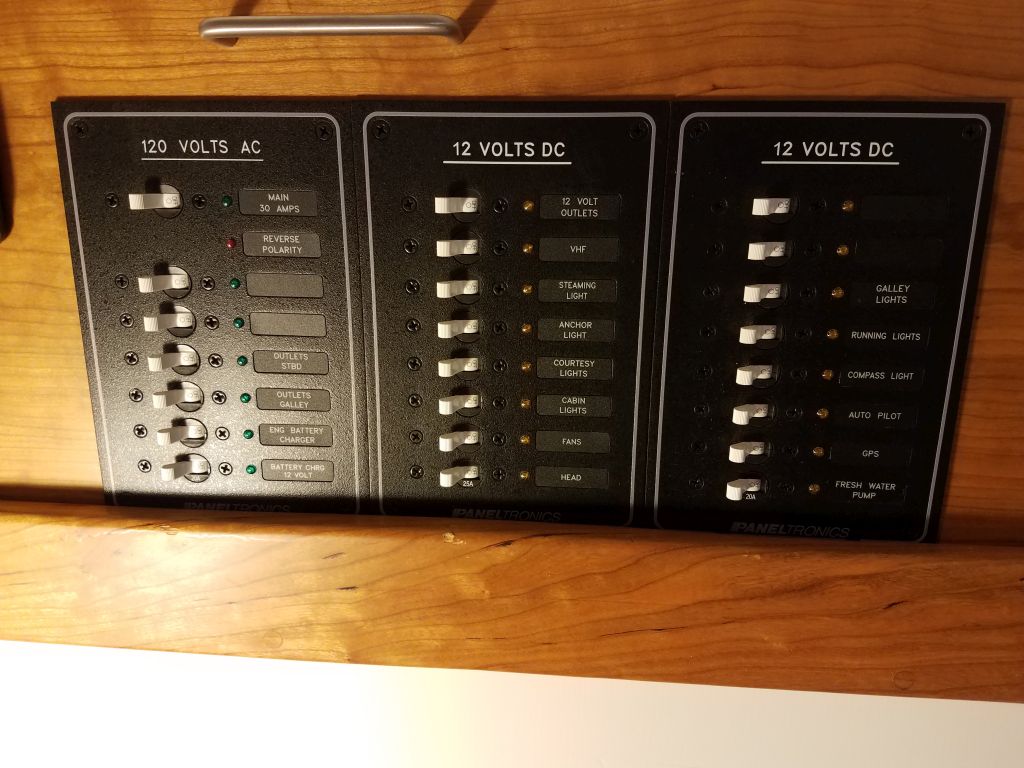
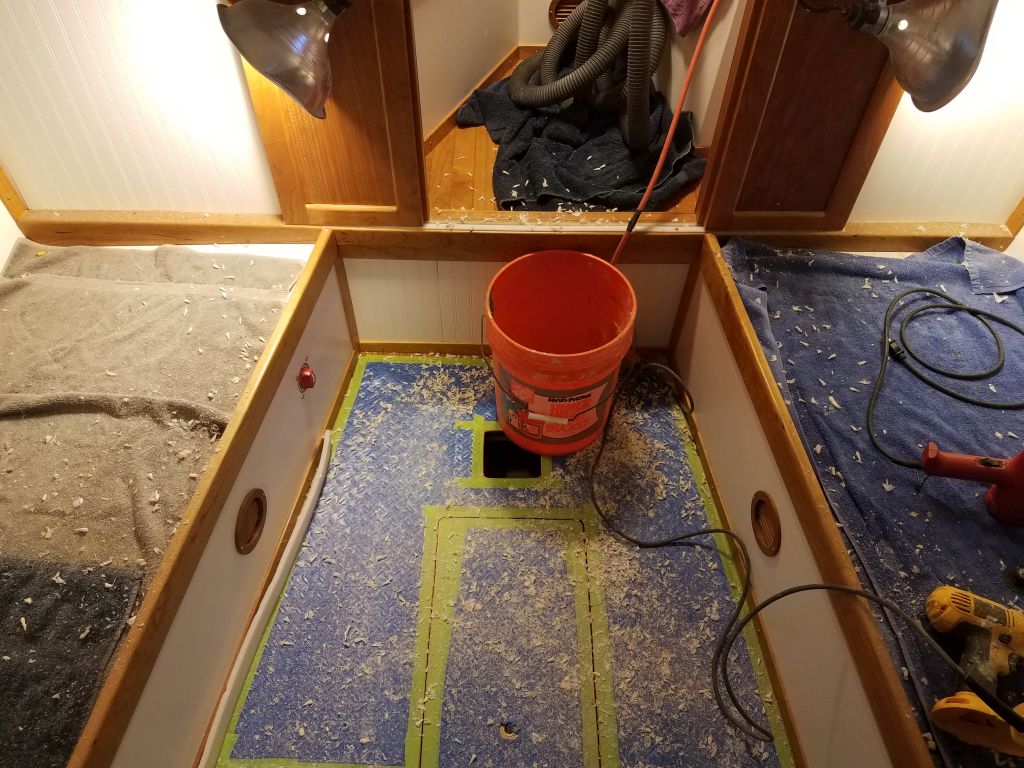
I spent the rest of the day working on the electrical panels and final wiring connections.  Starting with remaining circuits at the forward end of the electrical locker, I made up the positive connections as needed to the first part of the panel (the forward section), and also terminated to the negative buss all the negative wires from these circuits plus the various lighting circuits I’d run previously, straightening and securing the wires as progress allowed.  It made logistical sense to run the short leads from the VHF and the two 12-volt outlets in the electrical panel directly over the top part of the panel, where I connected the leads to circuit breakers and the panel’s built-in negative buss.  As I went, I labeled all the wires and noted the breakers I chose for each circuit so I could order the appropriate panel labels.  I temporarily removed the cover over the AC panel since it was impeding clear access to the terminal screws on the adjacent DC panel.

With the forward half of the panel fully wired, I moved on and began making up the wires left near the aft side of the locker, and made various additional connections to the negative buss and second half of the electrical panel by the end of the day’s work.  This left a few wires behind–namely the bilge pumps (2) and a separate switched lighting circuit for the galley and companionway–for me to finish up next time.

Total time billed on this job today:  8 hours

0600 Weather Observation:  15°, mostly cloudy.  Forecast for the day:  Mostly cloudy, chance of light snow, 28°

Scupper 217

Friday

To get started, I lightly sanded the last coat of gloss base varnish on the table parts, then, after cleaning up, applied a coat of rubbed-effect satin varnish to the secondary sides of the leaves and supports, and to the table base itself.

The riggers were on site to assemble the new furlers, install the revamped outhaul system, and deliver the running and standing rigging.  For now, we left the rigging uninstalled pending final mast wiring and any other prep work.

I spent most of the day working at the electrical locker, starting to sort out and terminate the various circuits.  I began with the 110-volt AC panel since the job there was more finite, with only four circuits plus the main cable from the shore power outlet.    Leaving ample slack for wire routing and to allow the main panel to be easily raised and lowered, I terminated all the AC wiring ends, securing them to the breakers and other parts of the panel as needed.

When the AC wiring was complete, I installed a plastic cover over the back of the panel to protect against accidental contact with the higher-voltage circuits when the panel was opened.

The AC panel, as well as the two DC panels, featured small circuits for backlighting that needed to be installed to the DC positive and negative.  I took care of this next.  Then, I installed the main feed cables from the (eventual) house battery bank, and conjoined the two DC panels with additional cable.

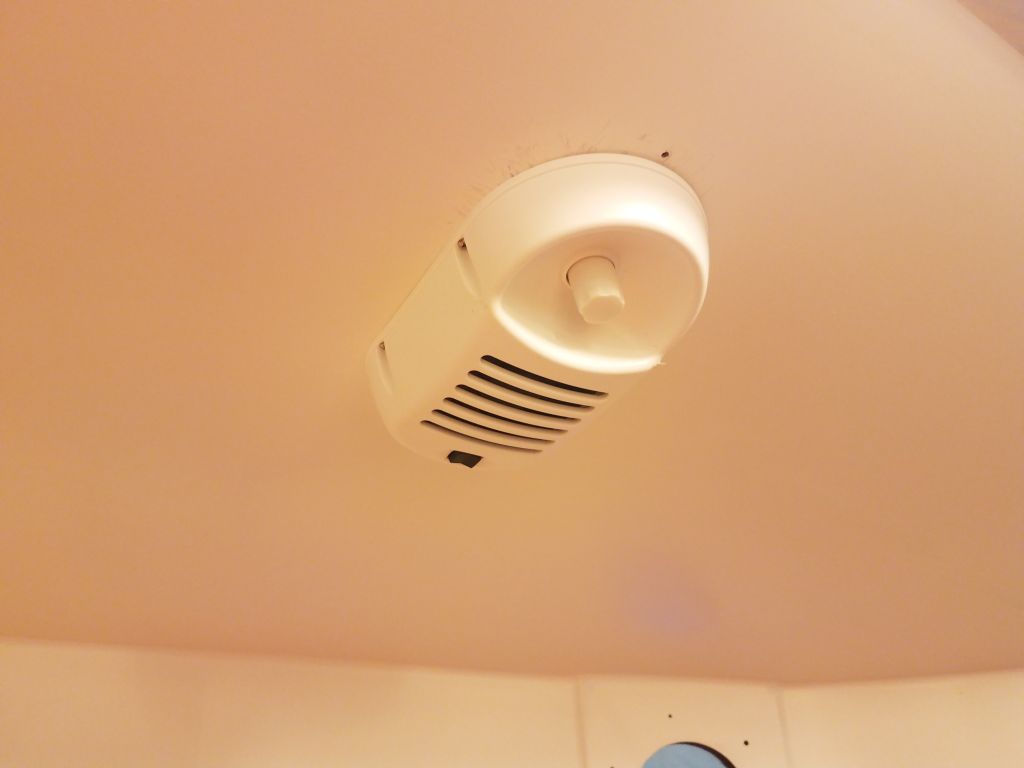
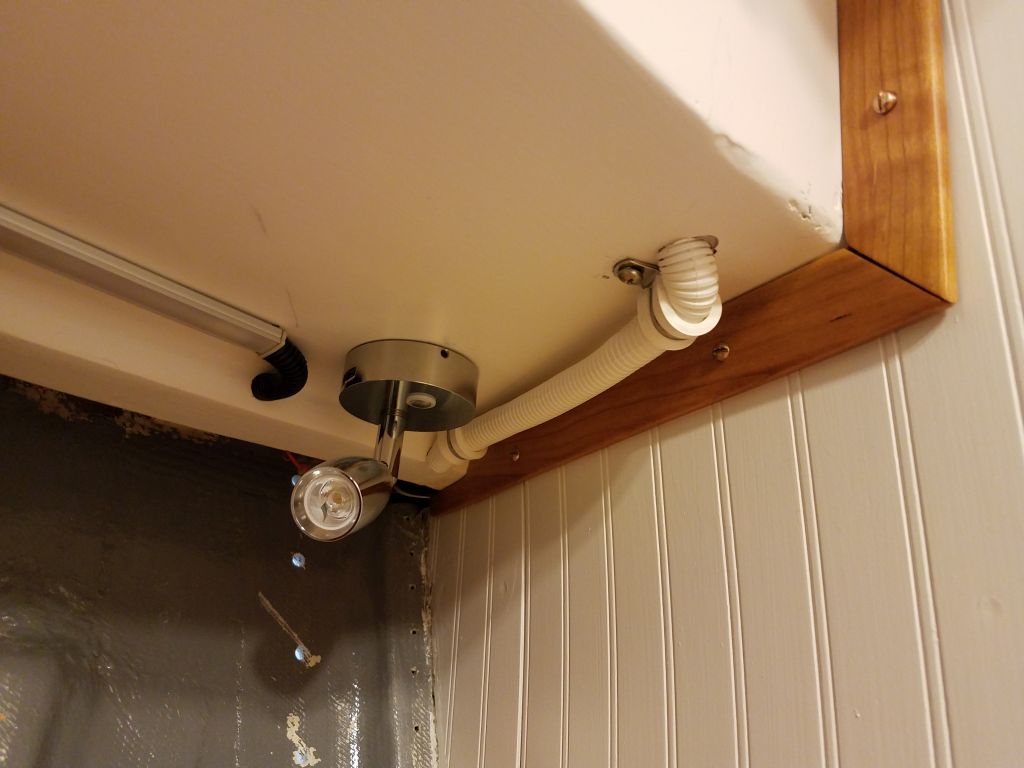
Next, I sorted through the various wires and separated out all the lighting circuits.  I planned two main lighting circuits–one each for the underdeck secondary lighting and the main cabin lights–plus a third, separate circuit for the galley lights and a forthcoming light at the companionway, which three lights would be serviced by a switch near the companionway for convenience.

To reduce wiring leading to the panel itself, I installed my habitual terminal block to accept all the lighting circuits, and from whence a single wire could later lead to the appropriate breaker.  In this instance, I combined three of the terminal pairs with jumpers to service the main cabin light circuits, and left the remaining pair separate to service the underdeck lighting circuits.  Then, I began working my way through the wires, separating positive and negative leads and making up the terminal ends and identification labels for some of the positive cabin light leads.  I left the negative wires to one side for later attention.  As I went, I planned the final wire locations and, in some cases, temporarily secured wires along the way, though final securing would only happen once all the wires were terminated and in place.  By the end of the day’s work, I’d made good progress on the cabin lights, though a few circuits still remained untouched–along with the bulk of the other circuits on board.

Total time billed on this job today:  7 hours

0600 Weather Observation:  12°, partly clear. Forecast for the day:  Cloudy, slight chance of rain or sleet, 38°

Scupper 216

Thursday

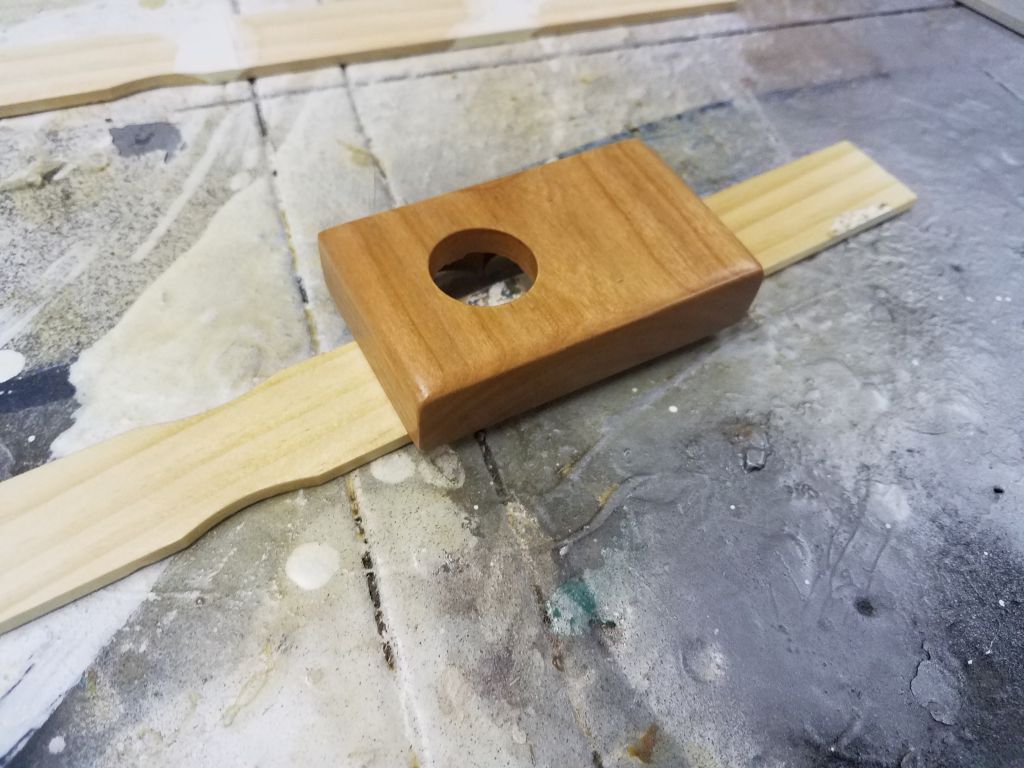
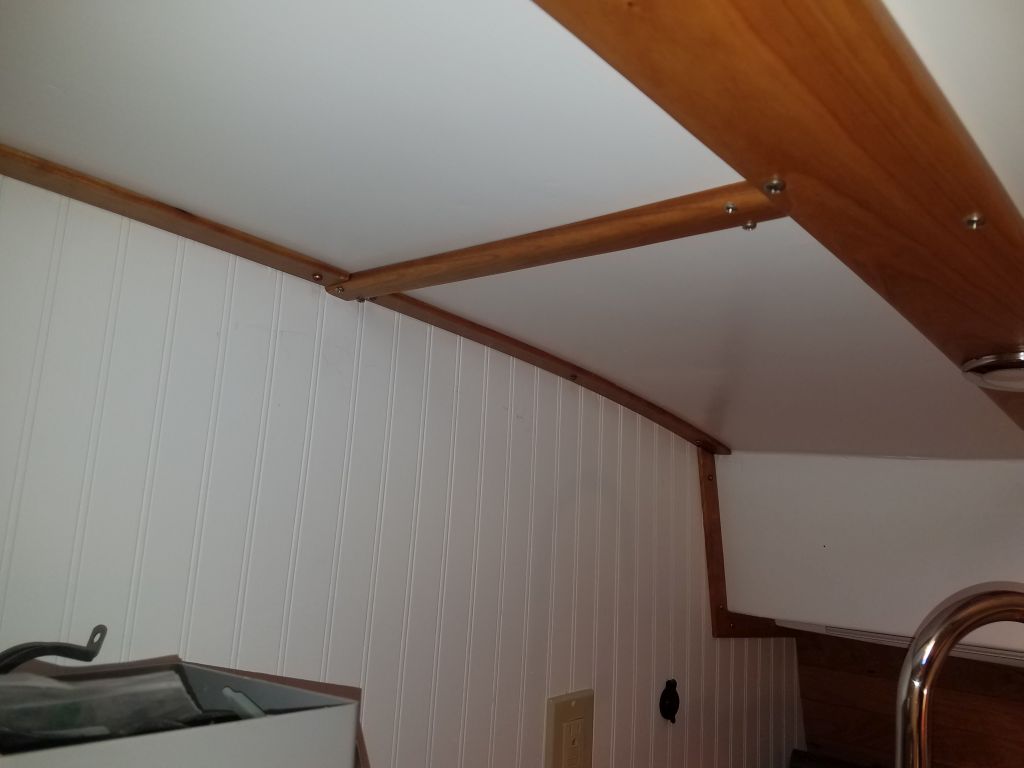
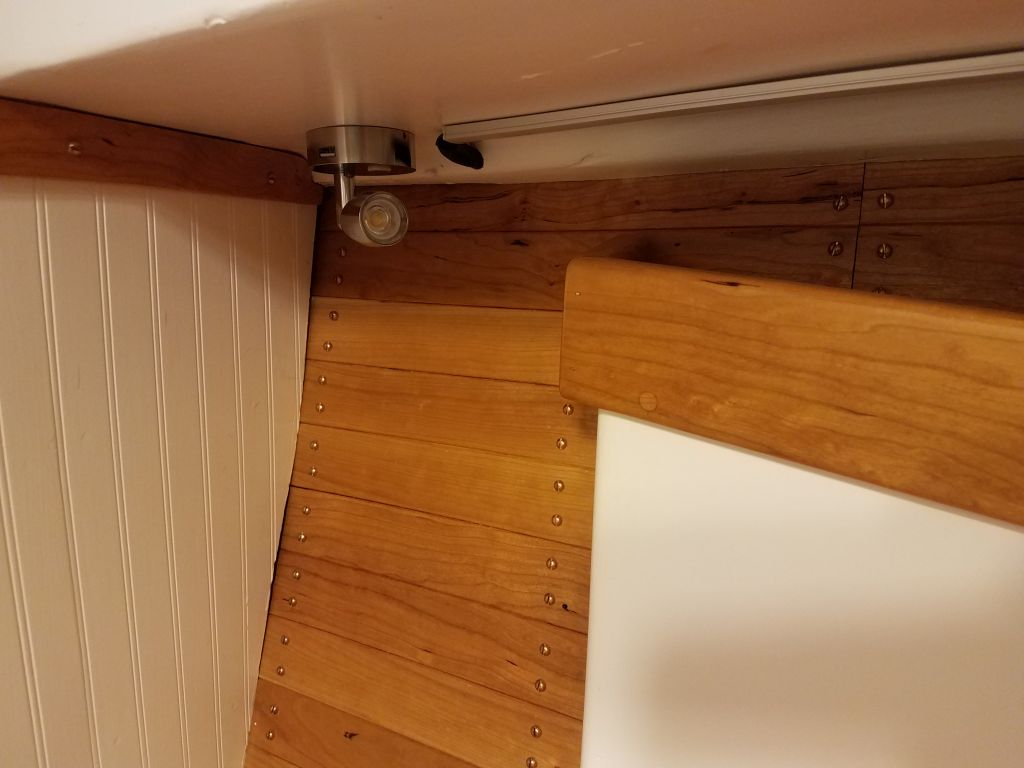
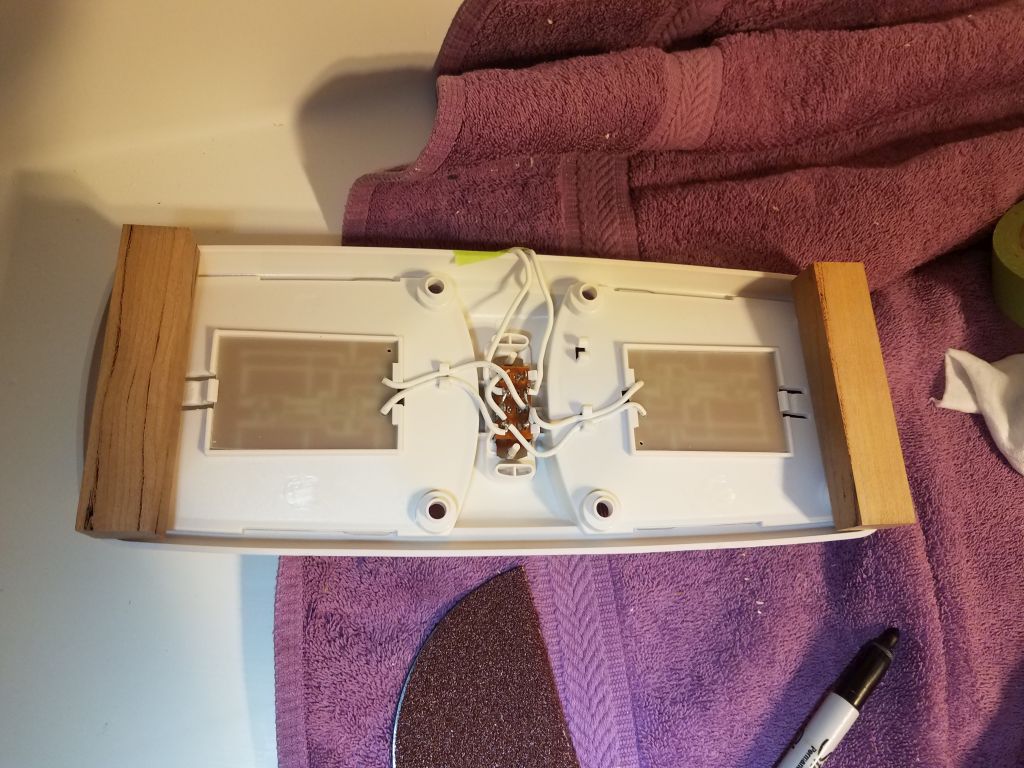
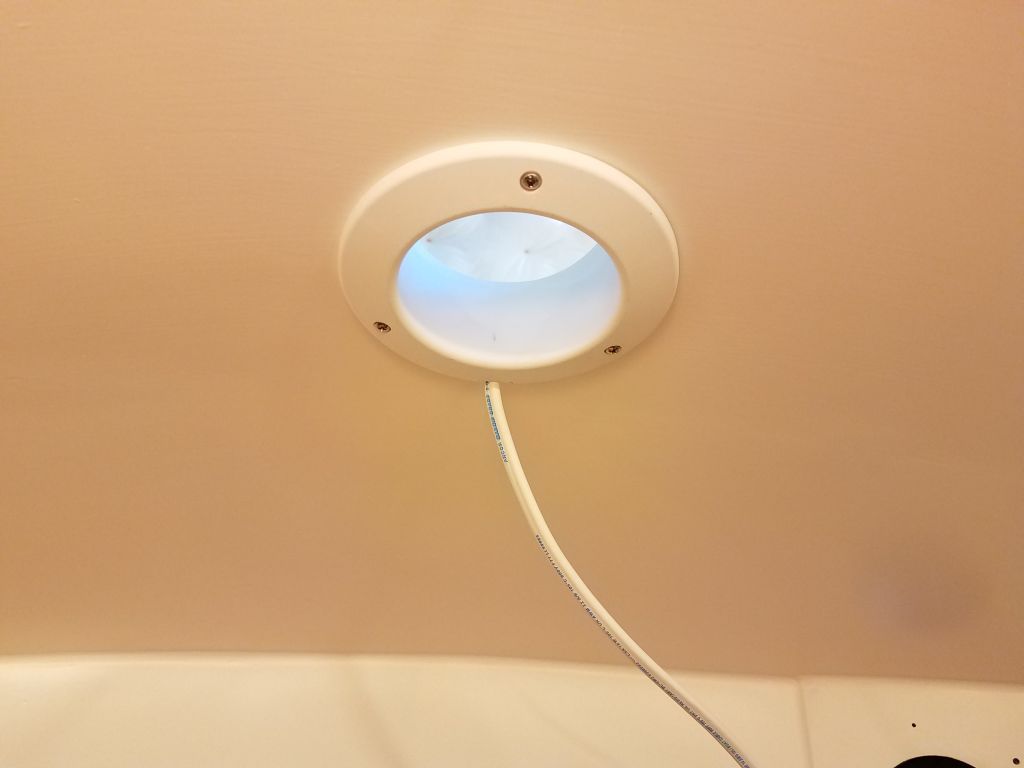
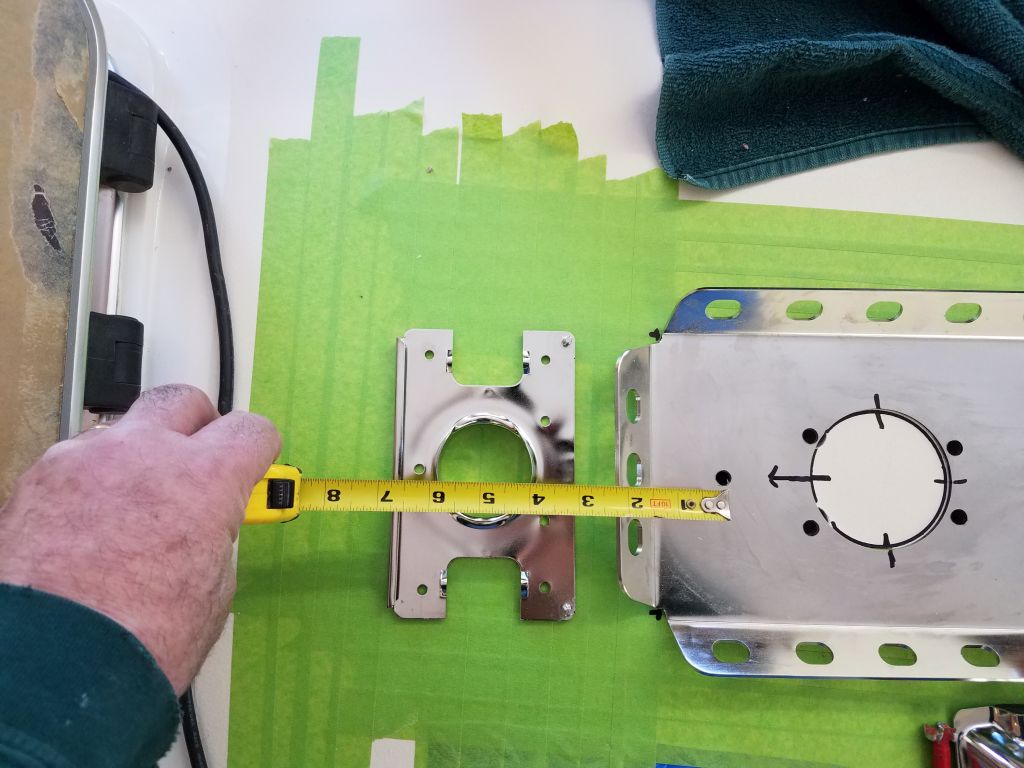
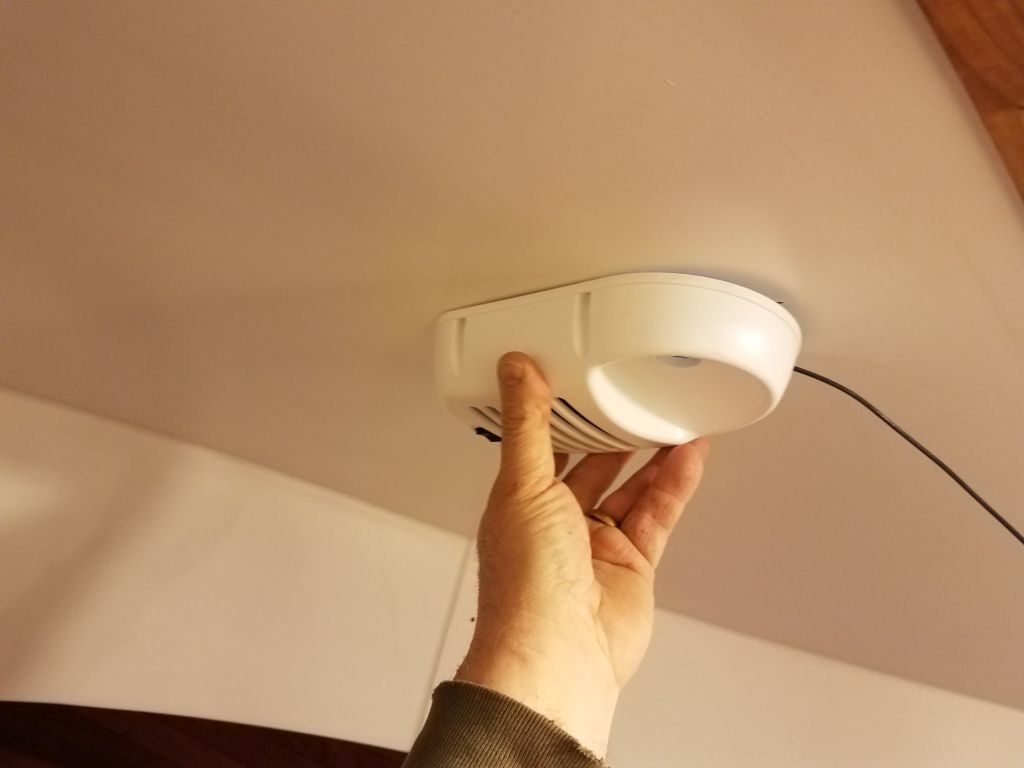
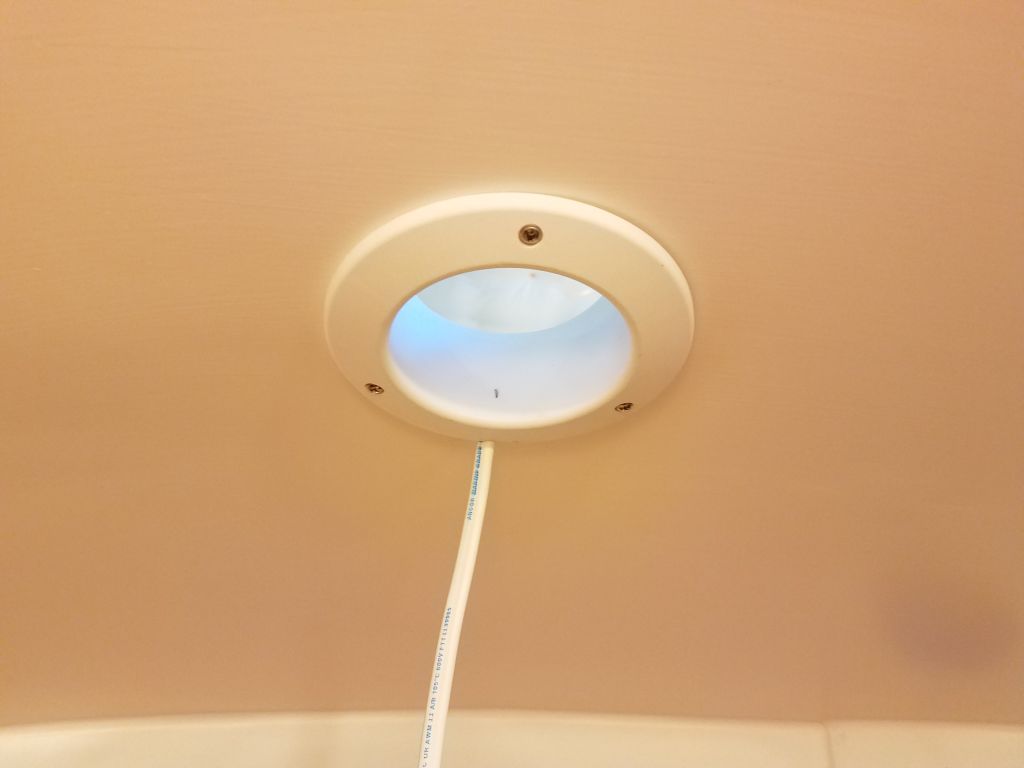
The cherry trim piece I built to accommodate the owner’s selection of two small flush-mount lights was complete now, and I turned to the final installation.  Each of the two lights fit in the holes I’d prepared in the trim, and I secured them with screws before installing the trim rings.

I’d routed a wire channel on the back side of the trim, and I spent some time at the bench wiring up the two lights and conjoining the wire leads to a single wire pair that would exit the trim and eventually connect to the circuit I’d run into the engine room for these lights.  To accommodate the larger butt connectors needed to connect both lights together, I had to ream out a portion of the existing wiring channel to make it deep enough for the connectors to remain flush.  I used dabs of hot glue to hold the wiring and connectors in place within the channel so they wouldn’t move during installation.

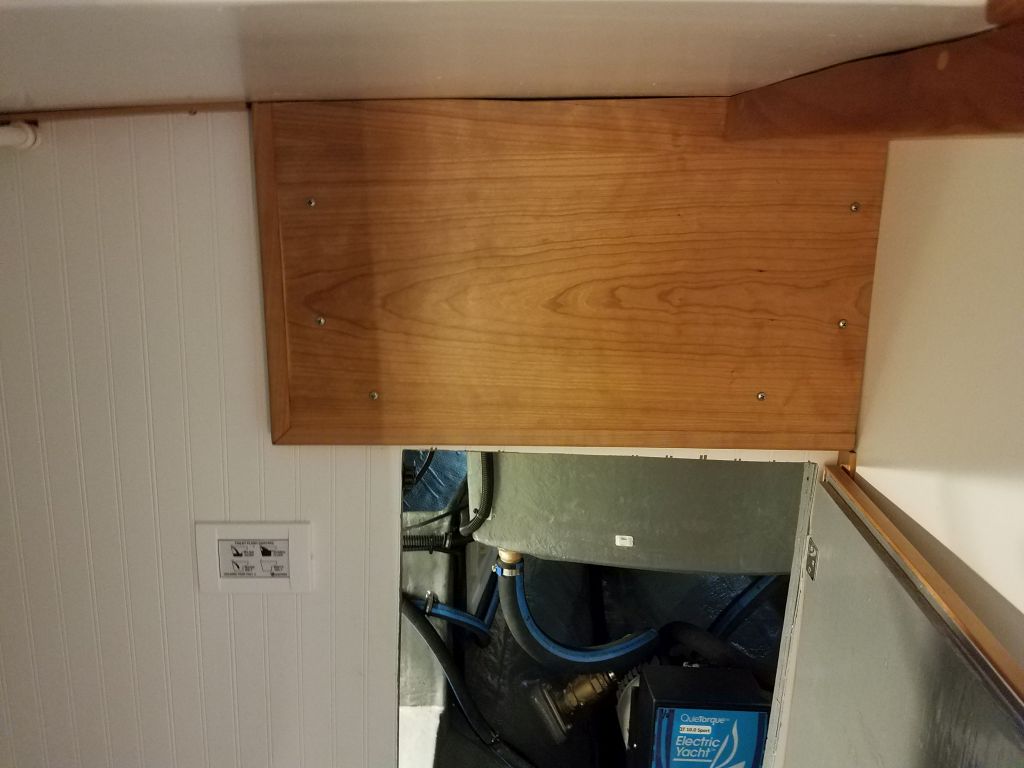
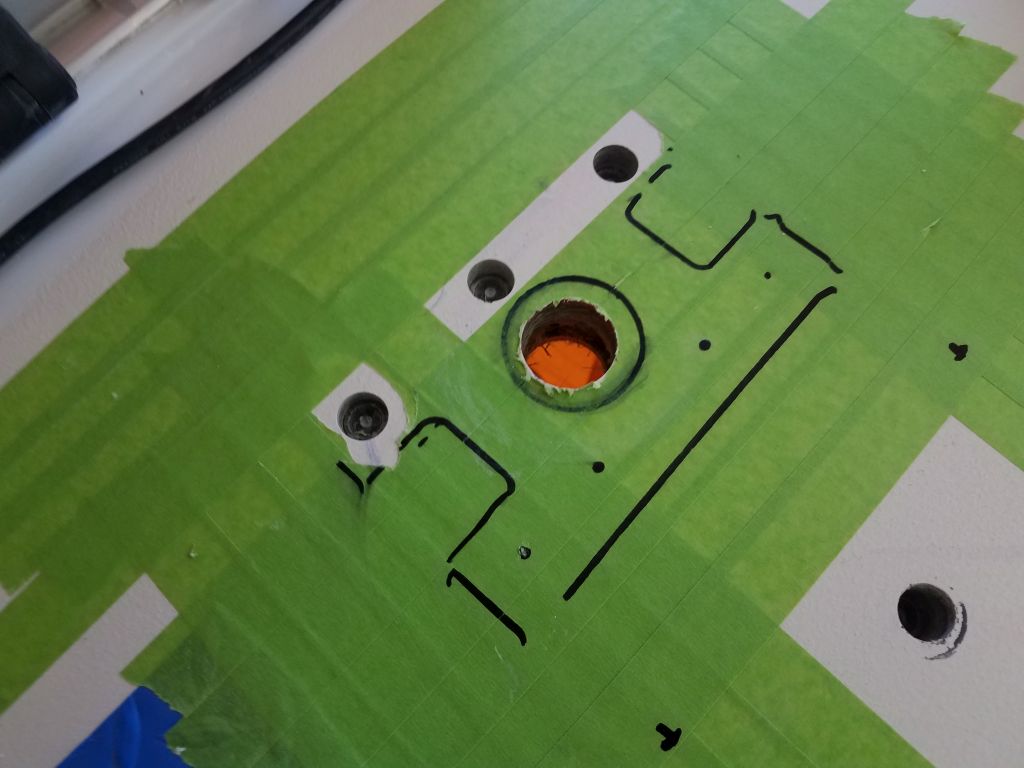
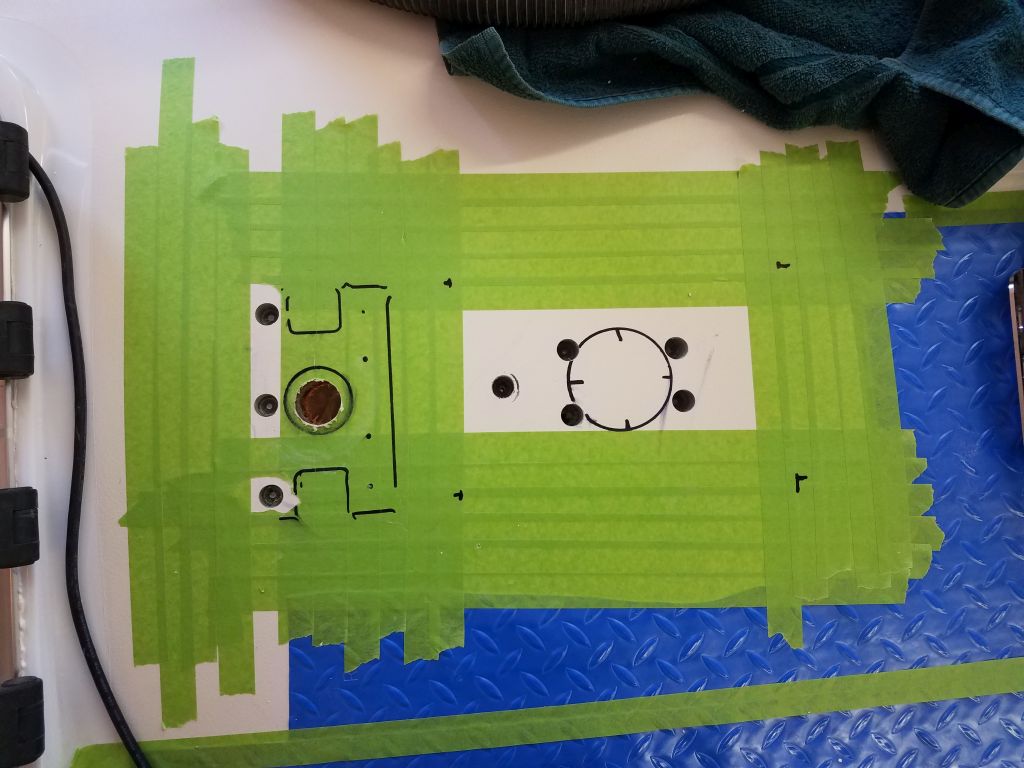
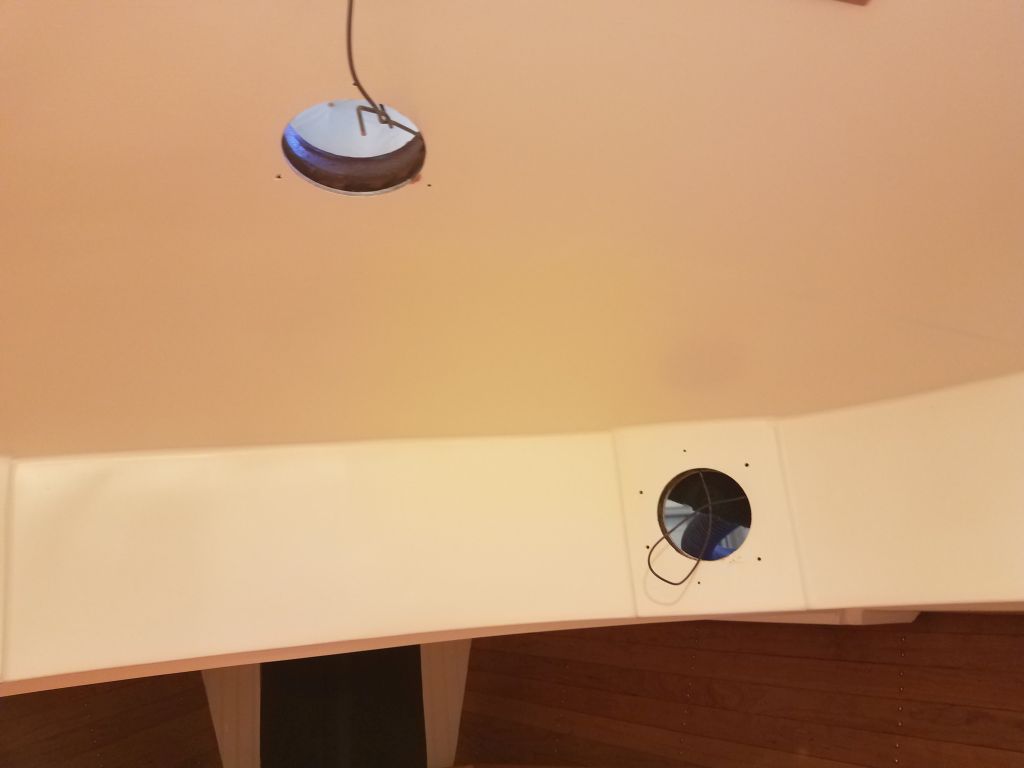
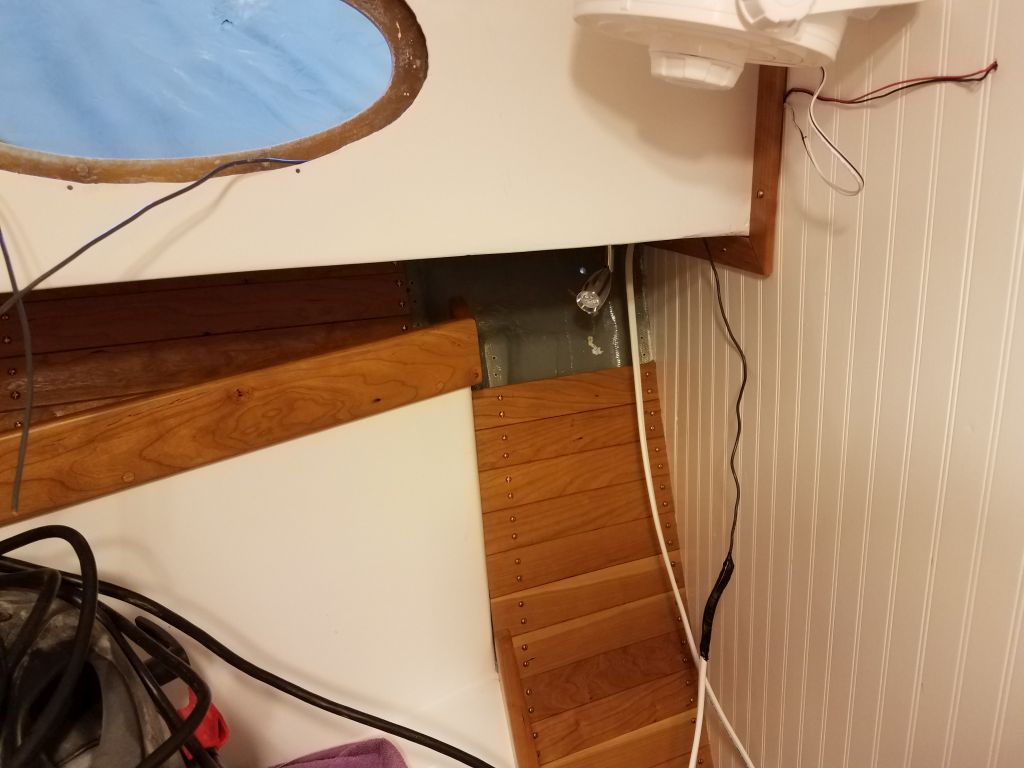
After some layout, I installed the trim with the lights above the galley, securing it to the overhead with screws.  I planned to lead the wiring directly aft to the bulkhead, as I knew there was an open space between the bulkhead and the after bridgedeck molding through which I could lead the wires.  I chose this because it was the most direct and (irony to follow) easiest route for the wires given all the other complications in the mounting location.  I laid out a line perpendicular to the light trim and leading aft to the bulkhead to show where I needed to drill a hole for the wiring (not shown here).

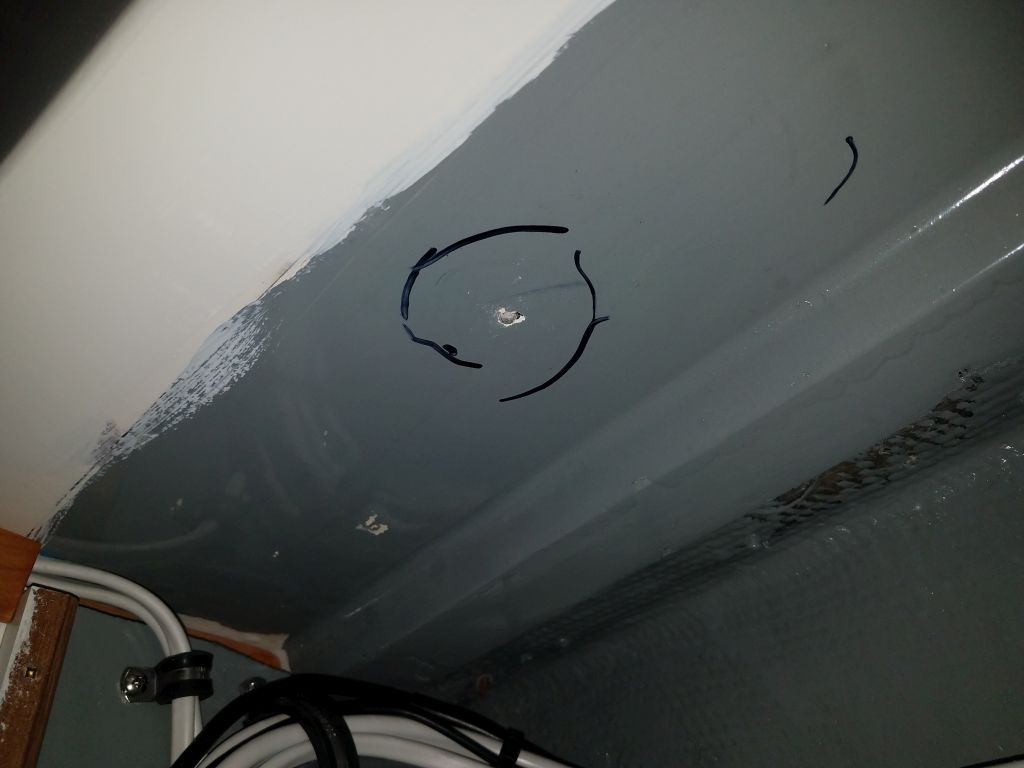
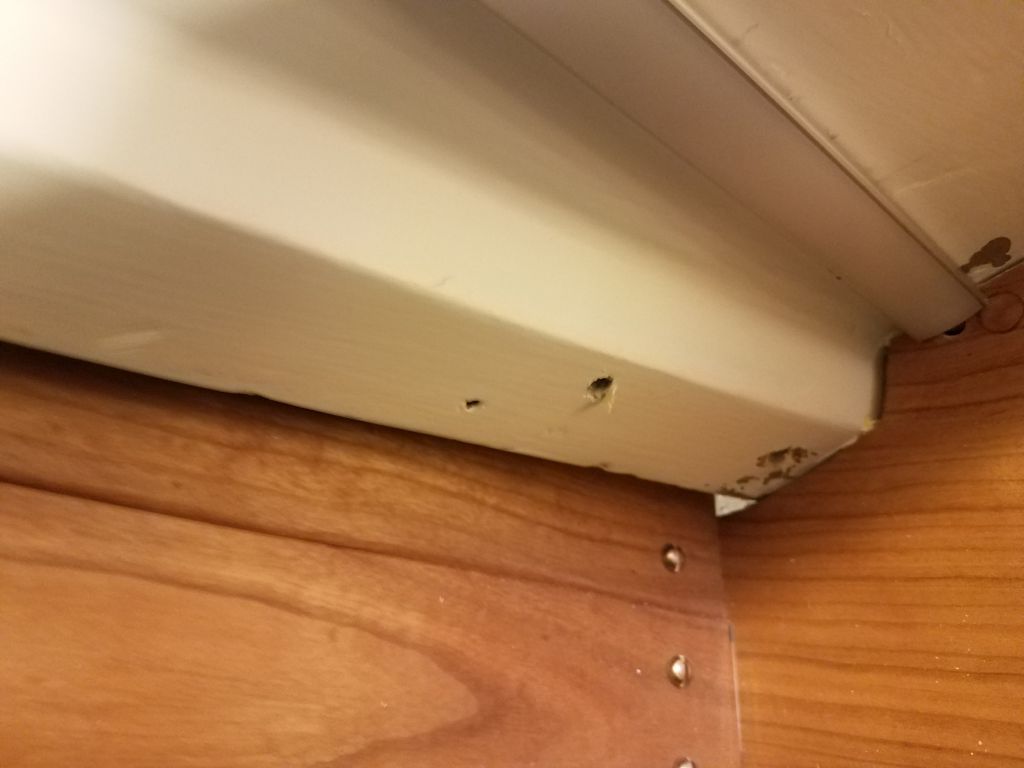
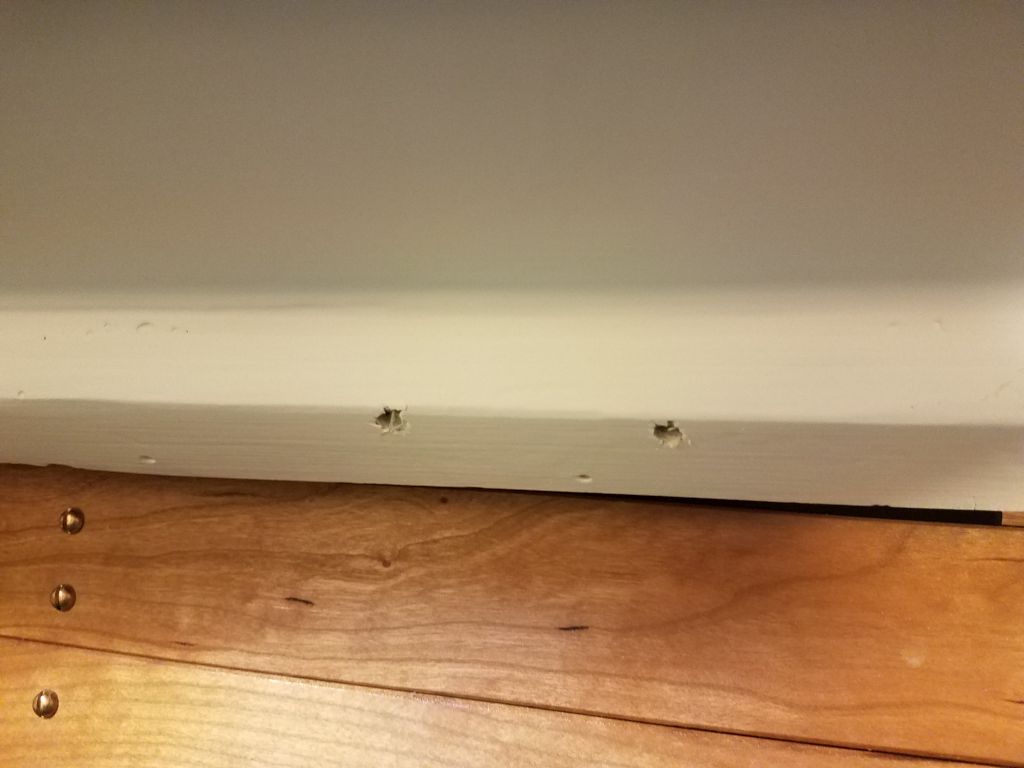
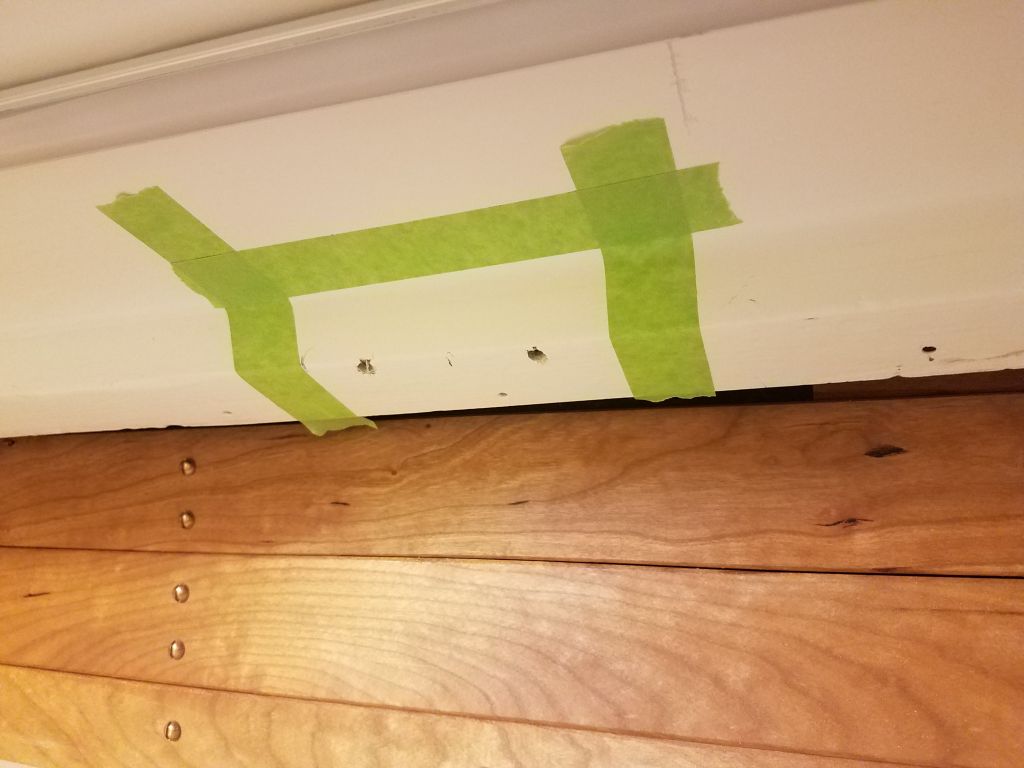
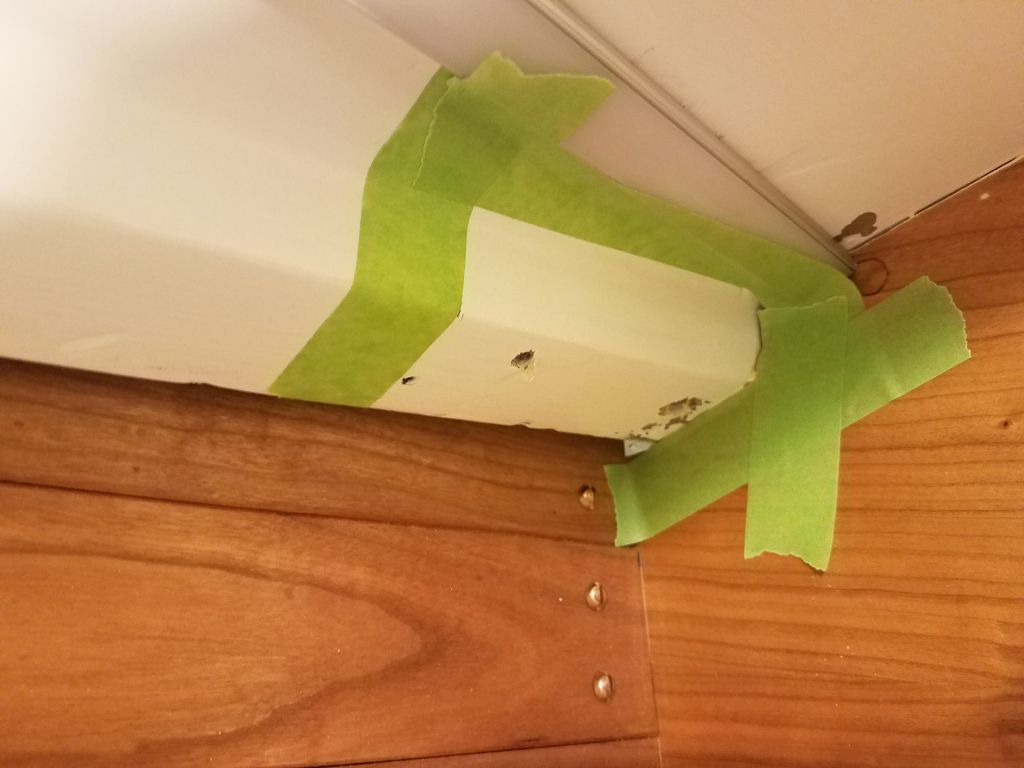
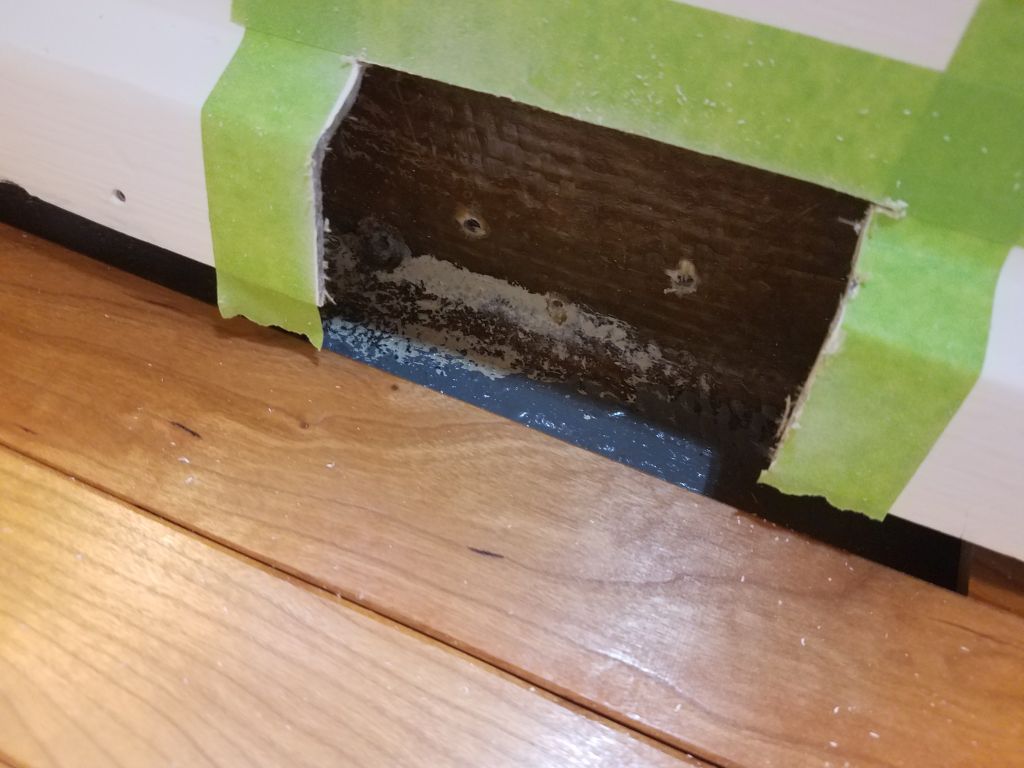
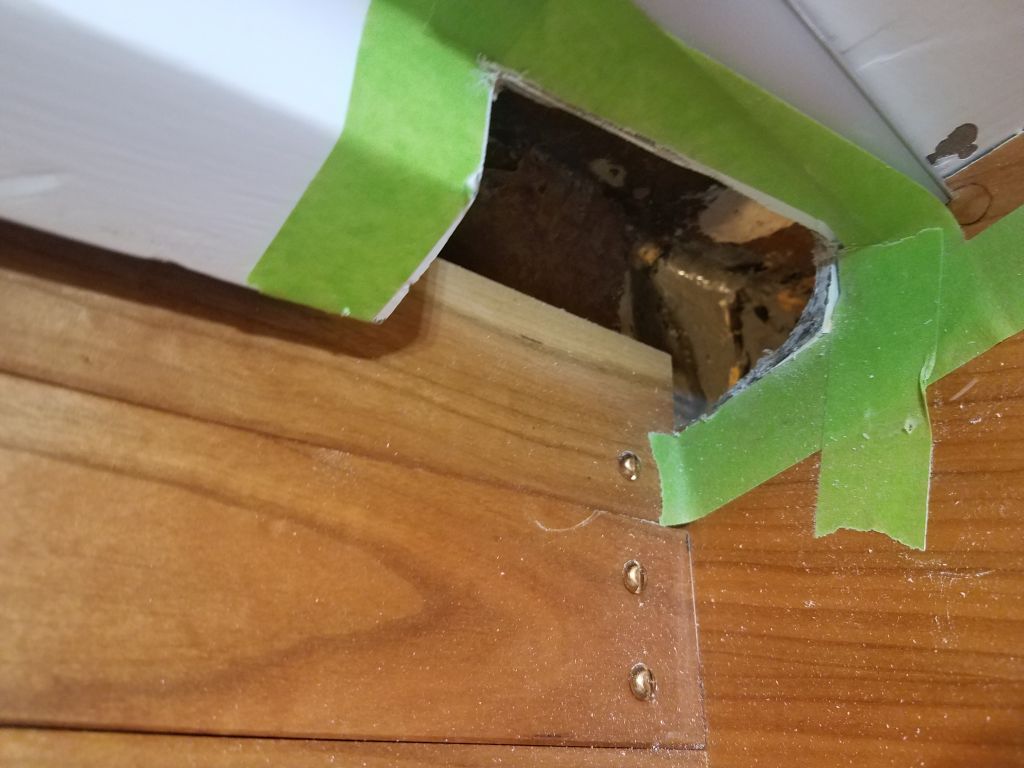
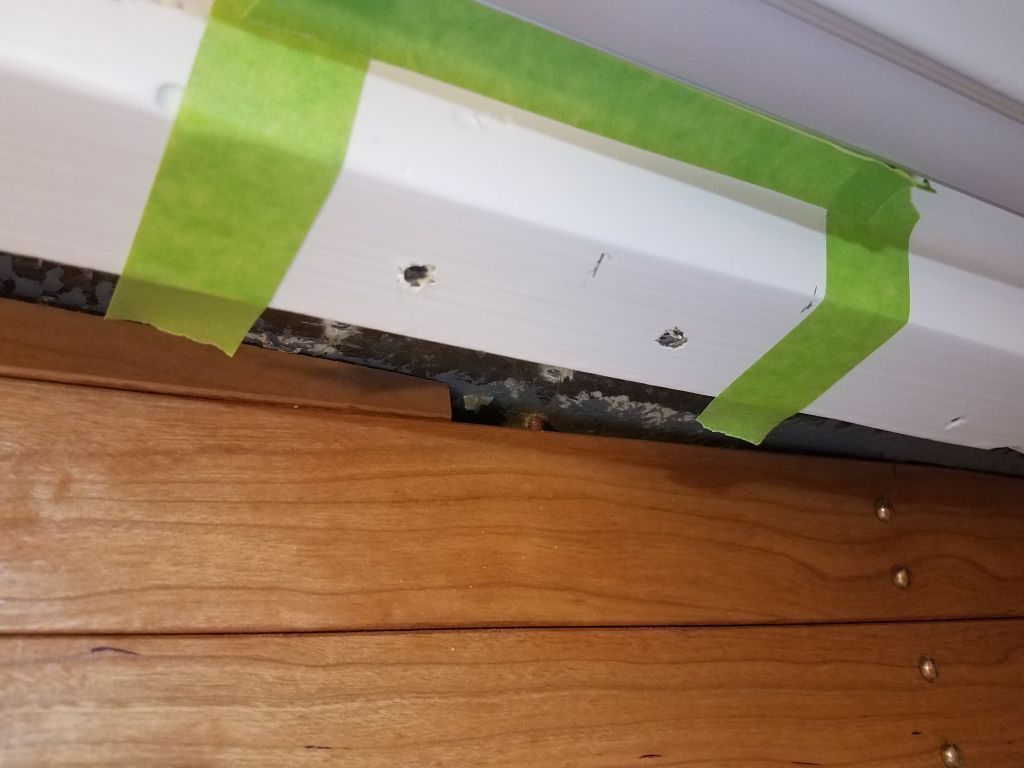
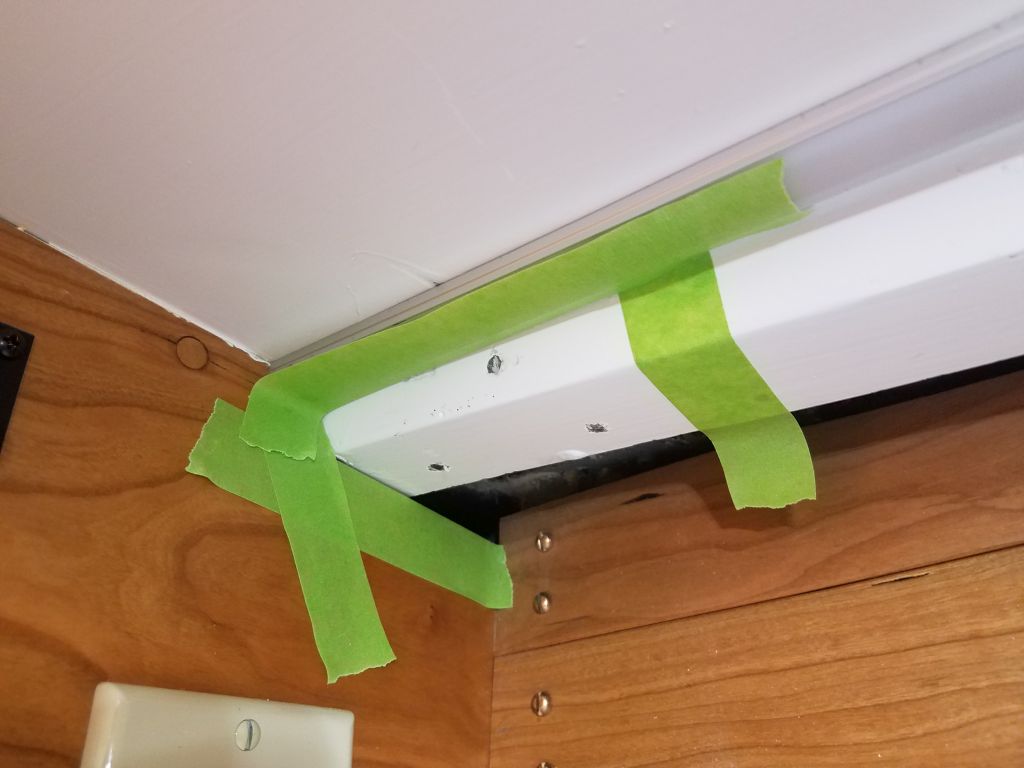
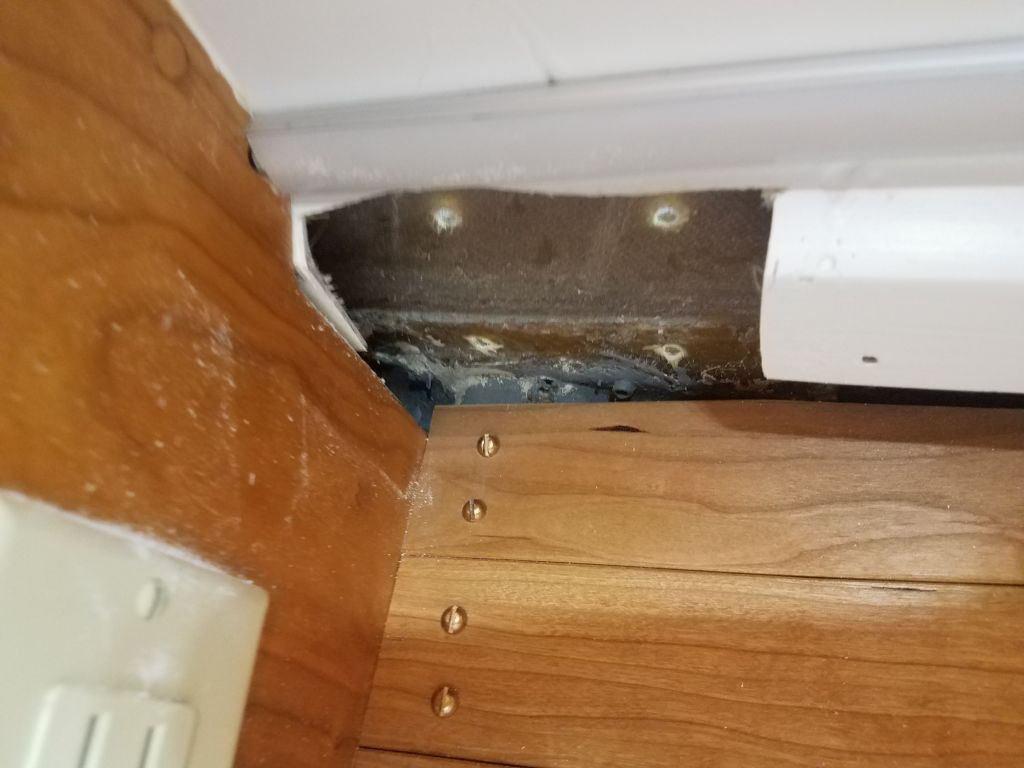
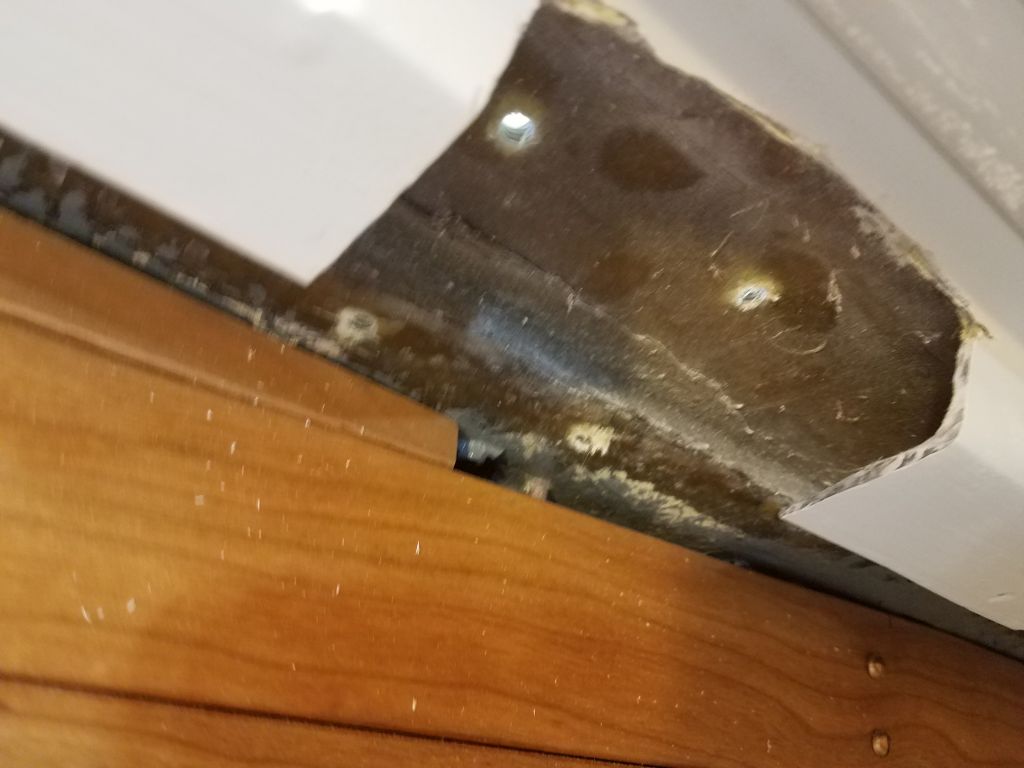
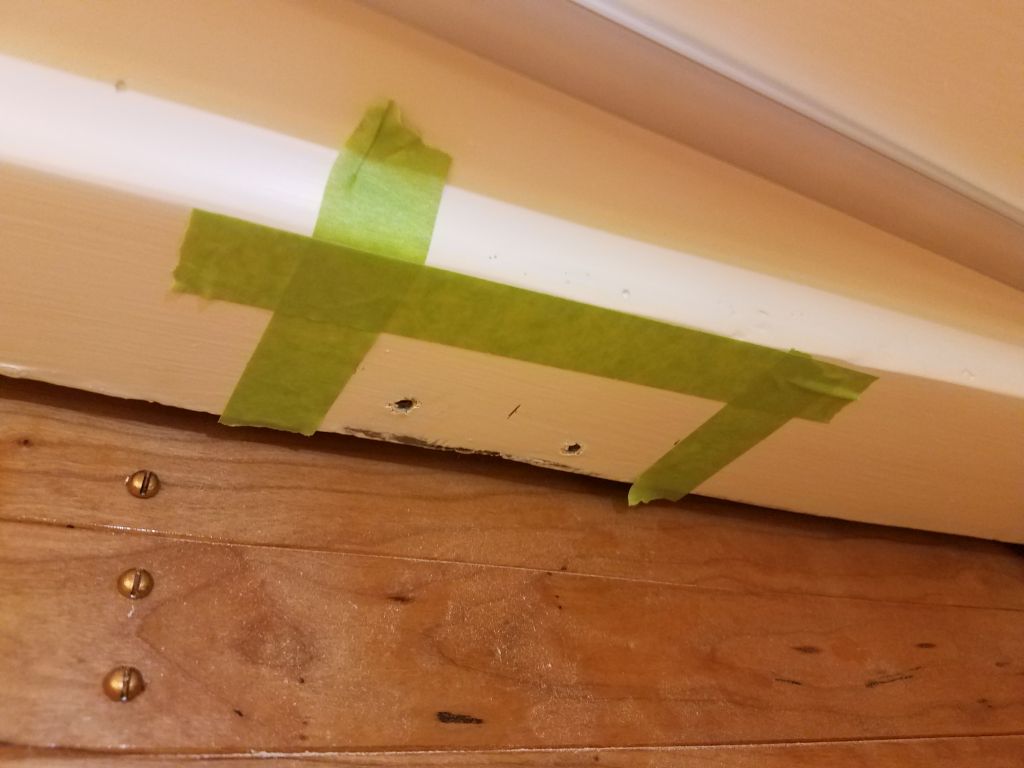
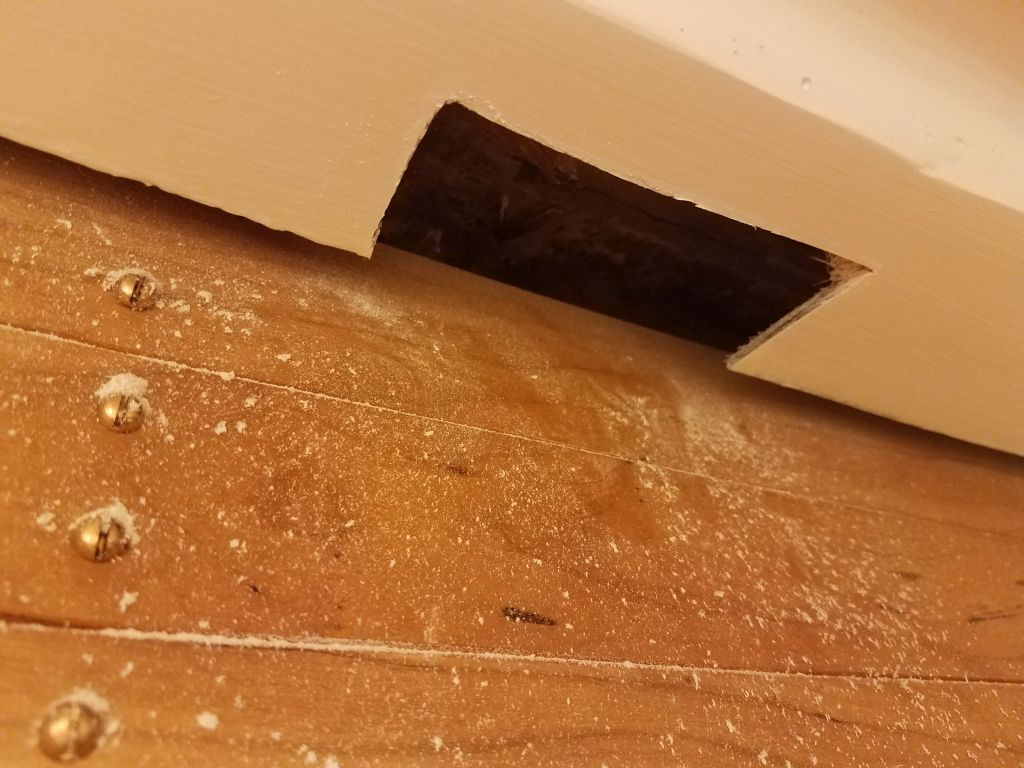
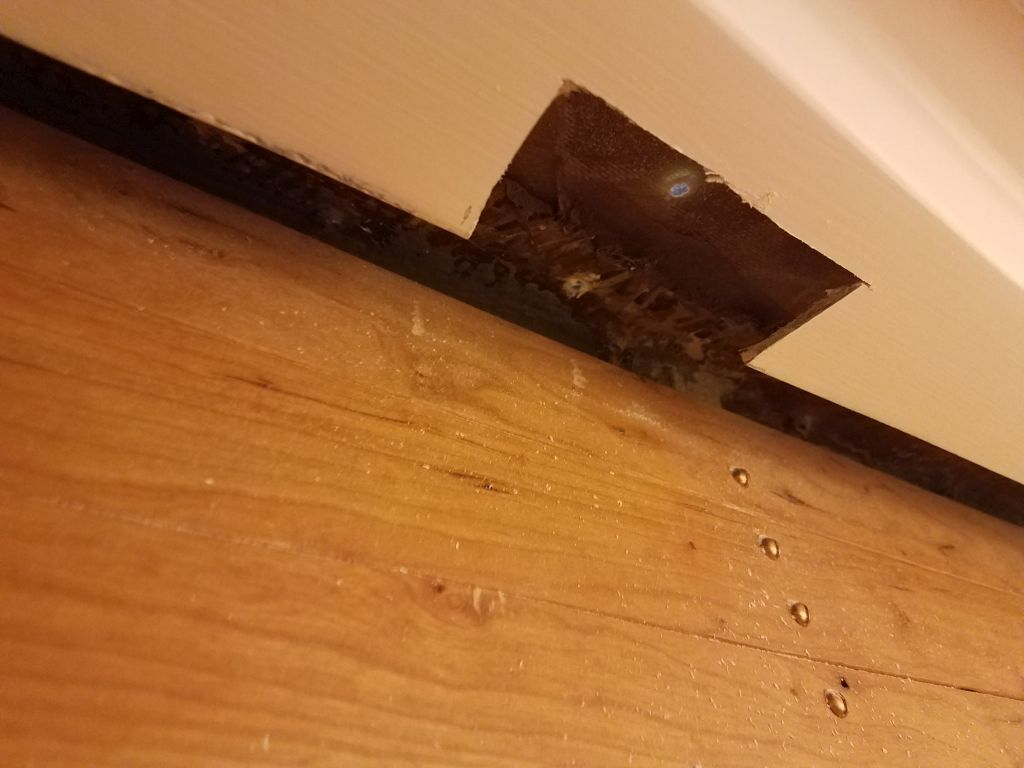
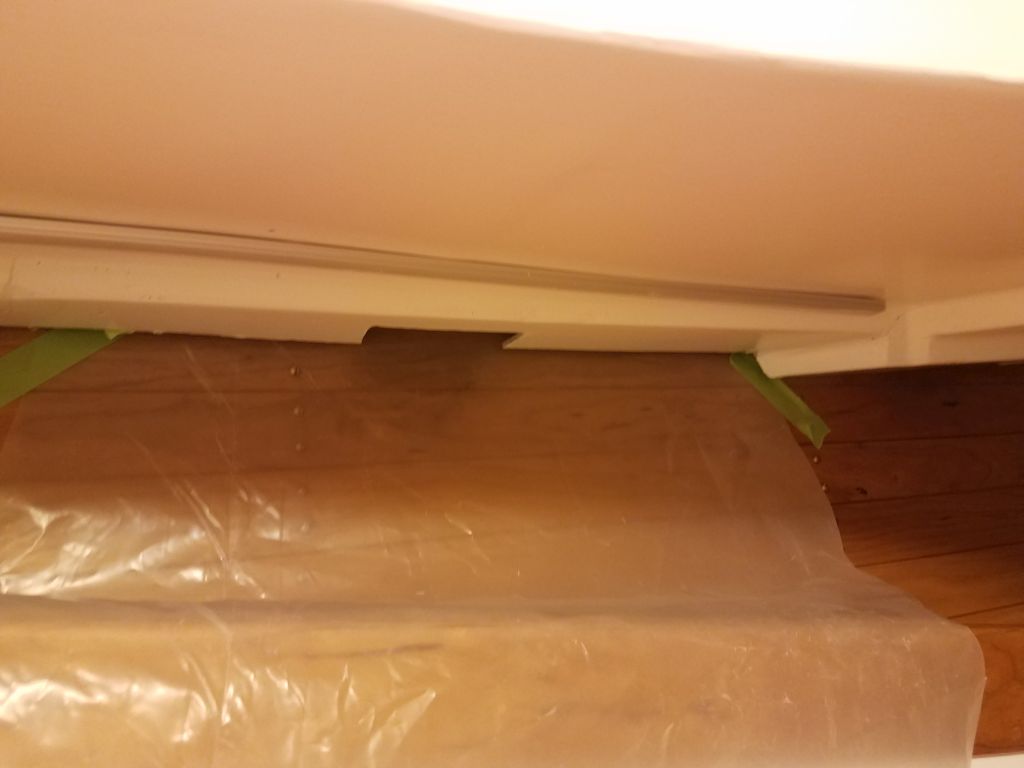
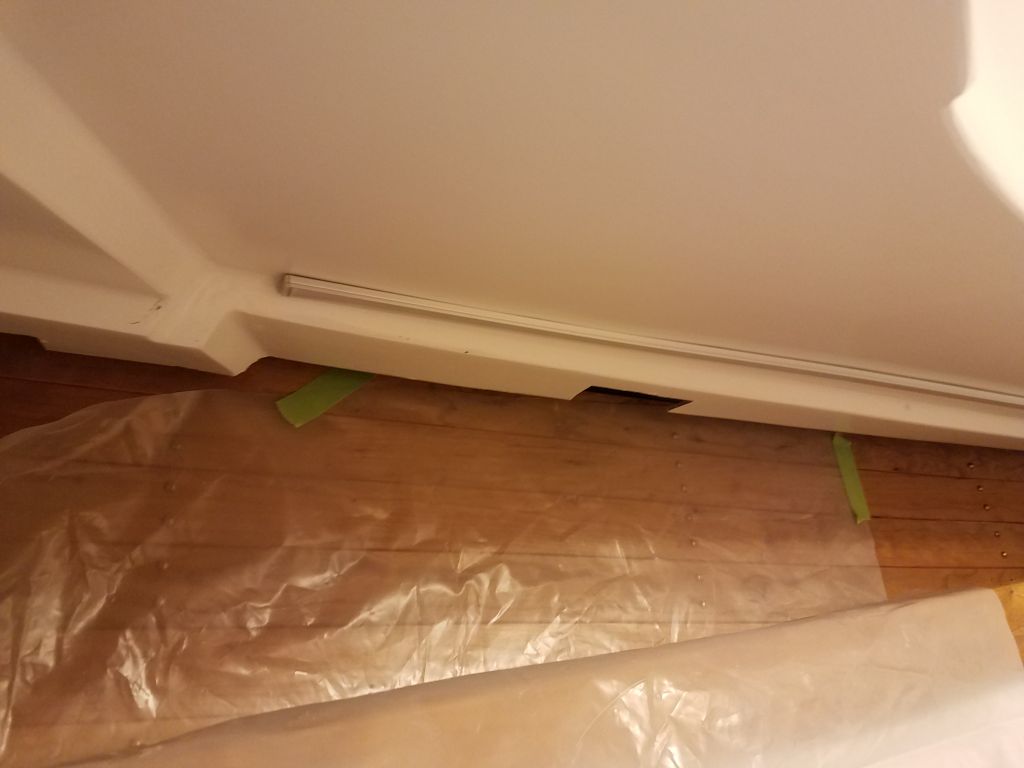
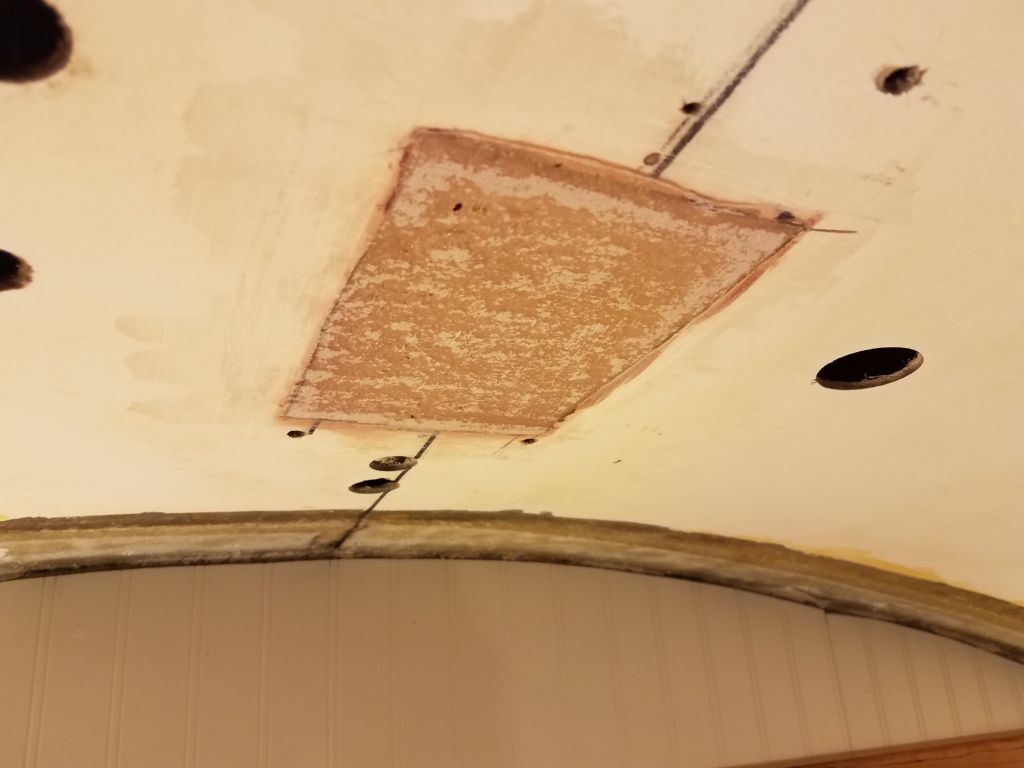
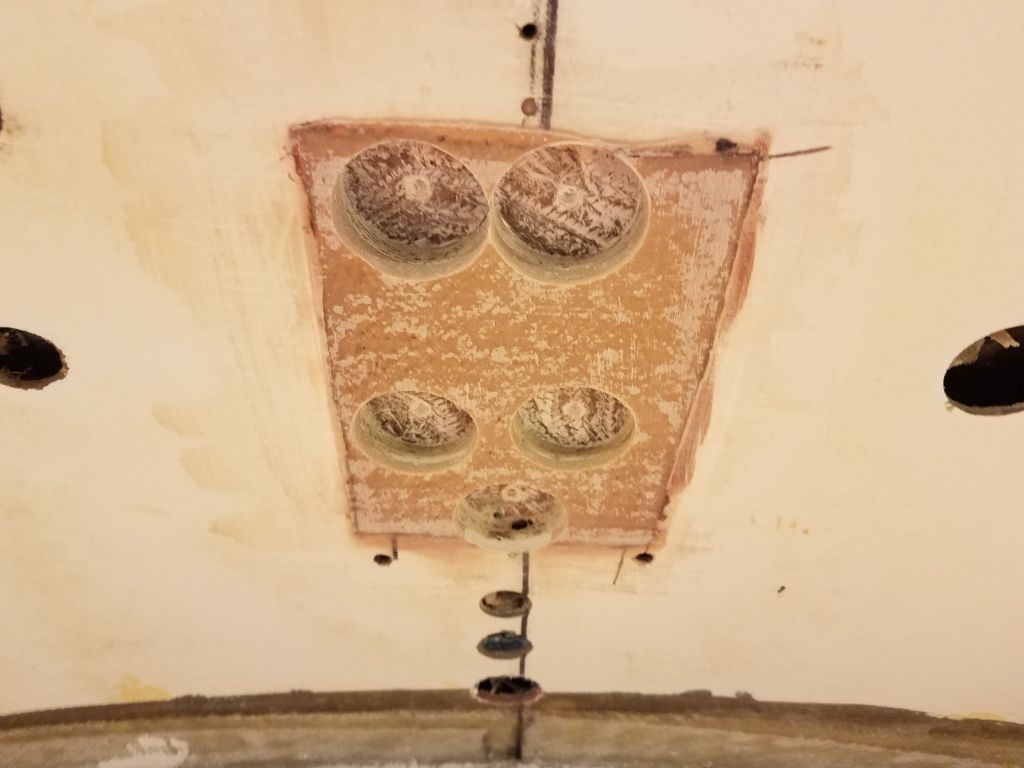
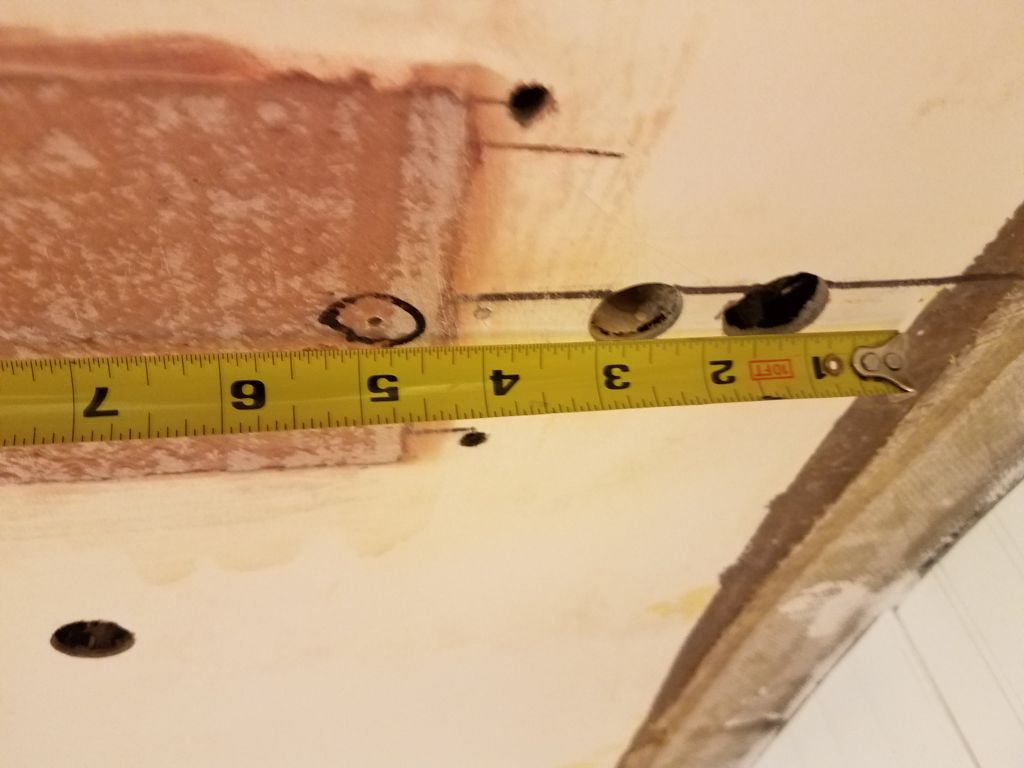
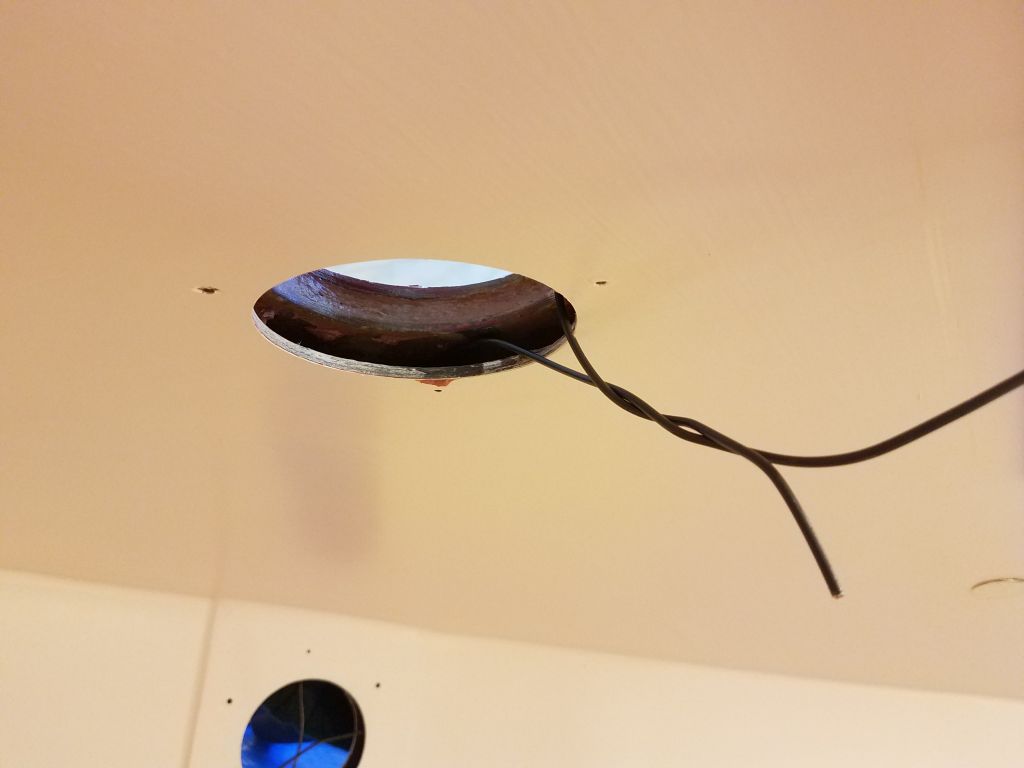
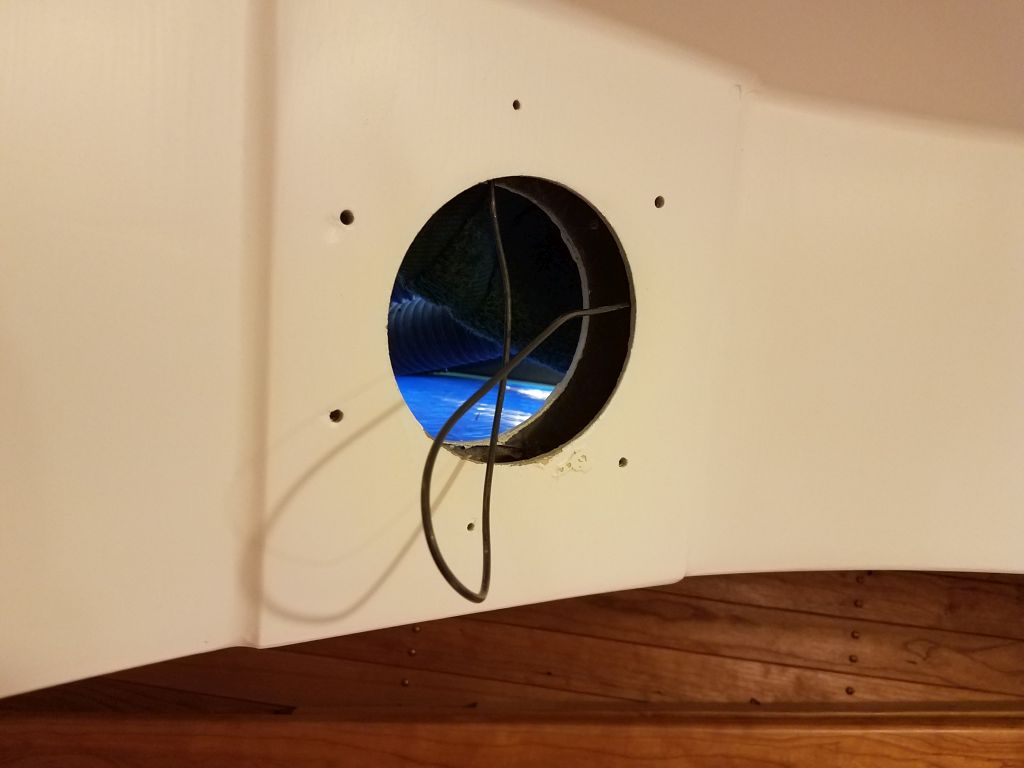
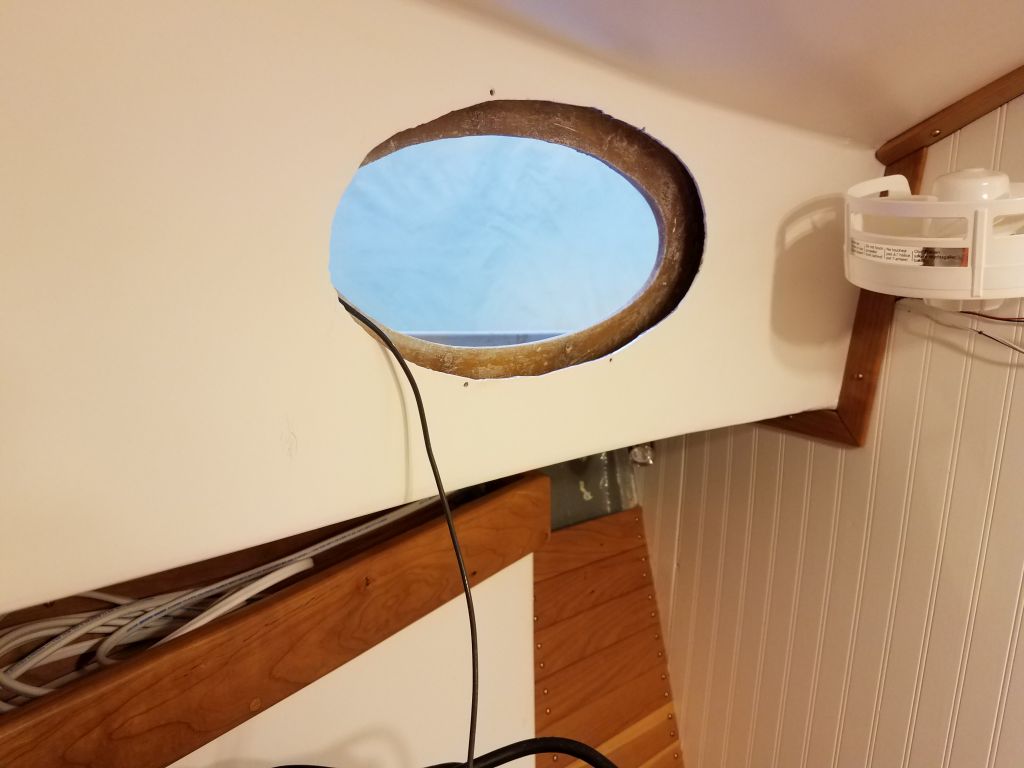
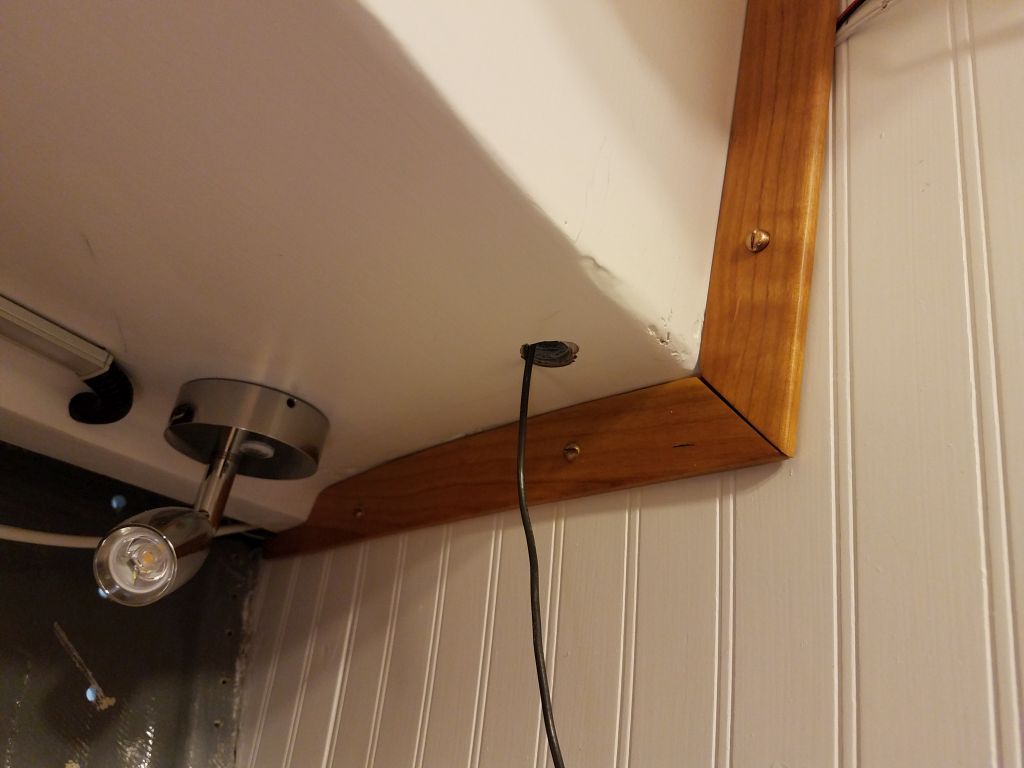
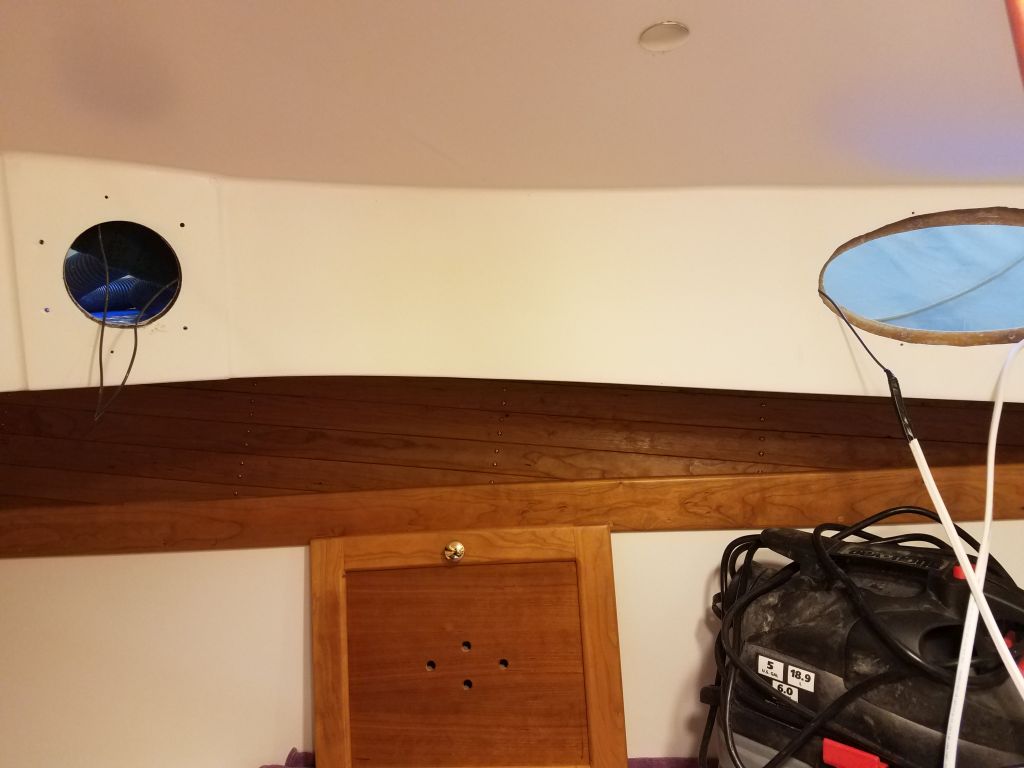
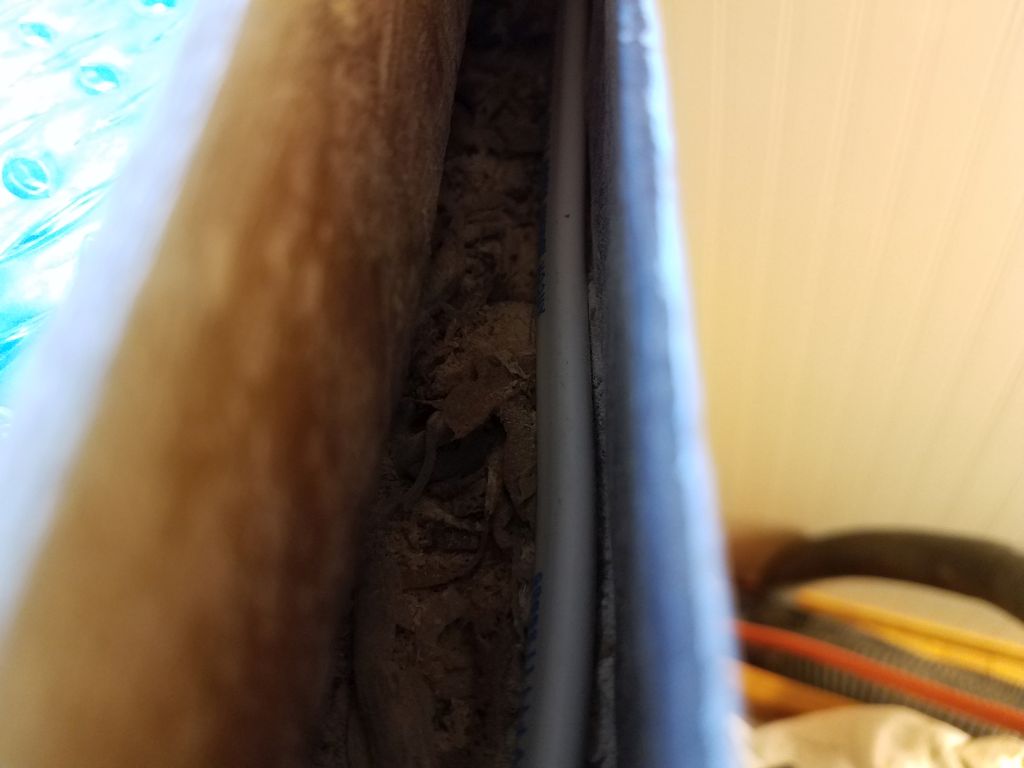
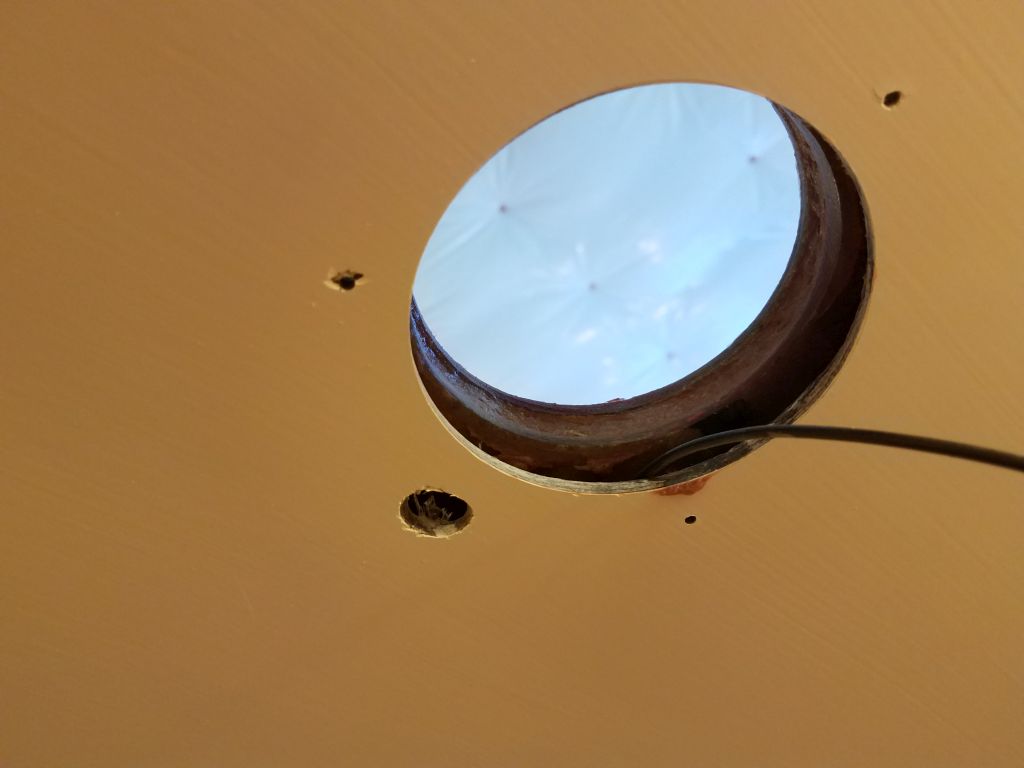
This is where the job got fun.  To drill my hole, I first removed the trim along the upper aft edge of the bulkhead, then drilled a hole through at my mark.  What I’d not counted on was the fact that the actual bulkhead didn’t extend quite all the way up, so there was a small gap hidden behind the beadboard.  This meant that the hole, drilled at the extreme edge/corner of the bulkhead to hide it behind my wiring trim, didn’t come out cleanly or even in the proper orientation, and I had a bear of a time snaking the wires through.  There was no direct, or even indirect, access to the back side, and after various failed attempts I had to open up the hole more than I wanted in order to have a chance at accessing the space for my wires.  At great length I eventually managed to get a tiny, relatively stiff solid copper wire I had on hand through the hole and far enough down into the narrow, tall gap behind so I could finally grab it with a long grabby tool.  Once I had the messenger through, pulling through the wire pair from the lights was straightforward enough, but this had taken inordinately long.

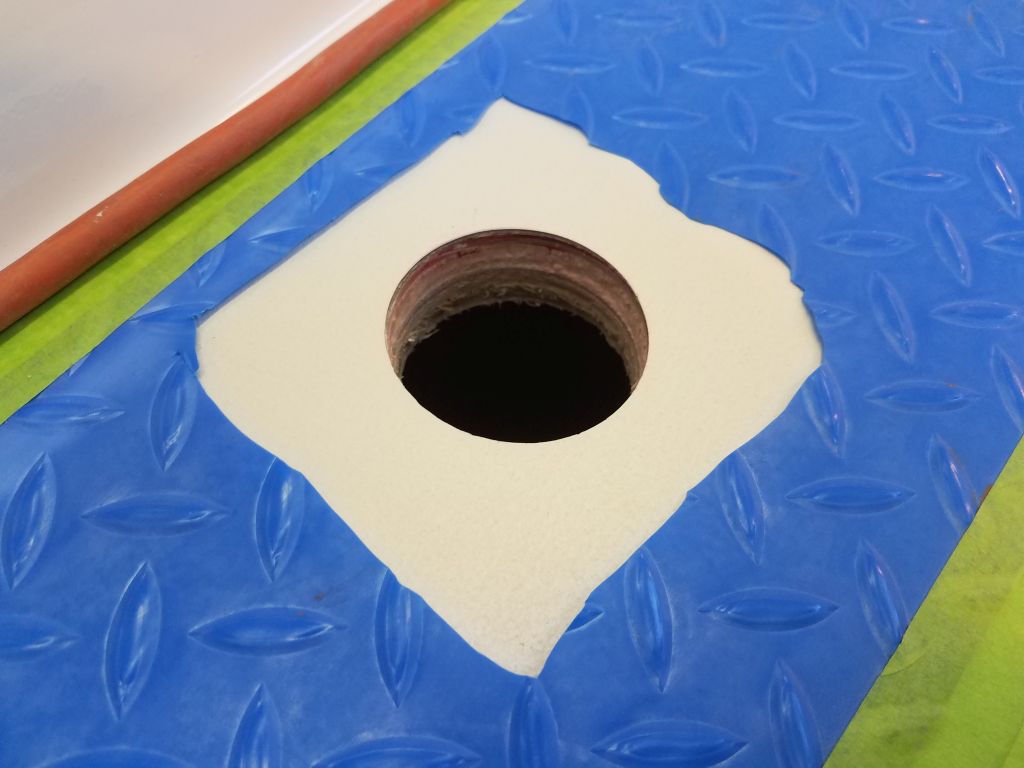
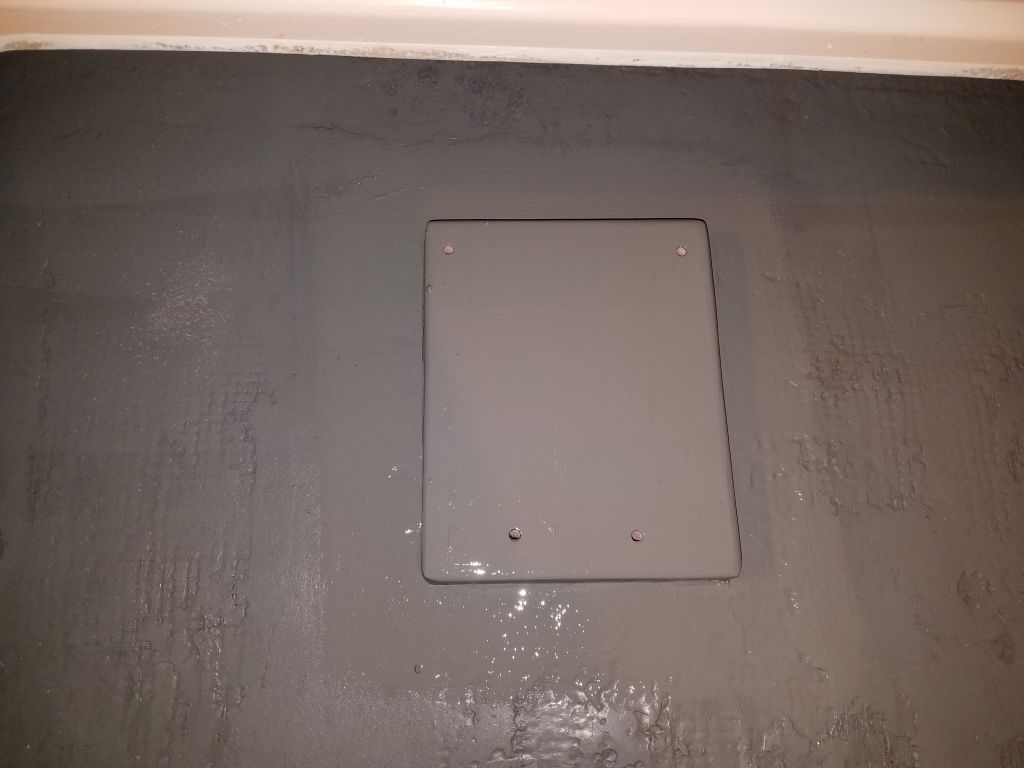
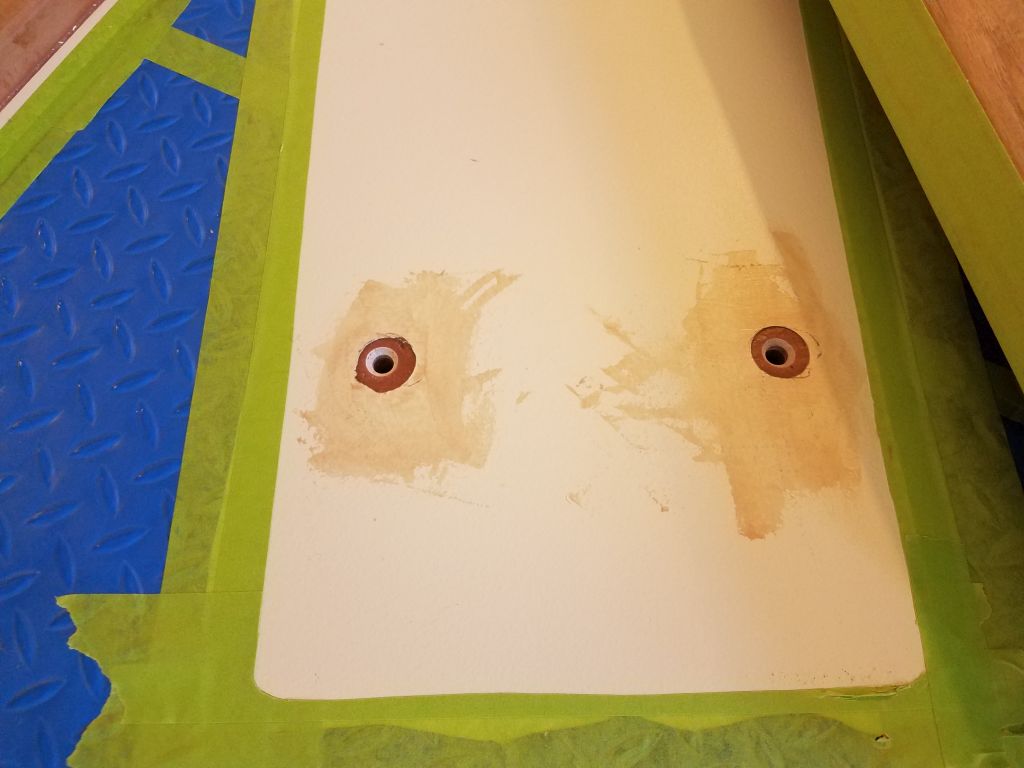
This left me with a larger and uglier hole than I had planned on–a bit too large for the trim to cover properly, so I’d have to patch the hole and repaint the area.  But what mattered for right now  was that the wires were in place.

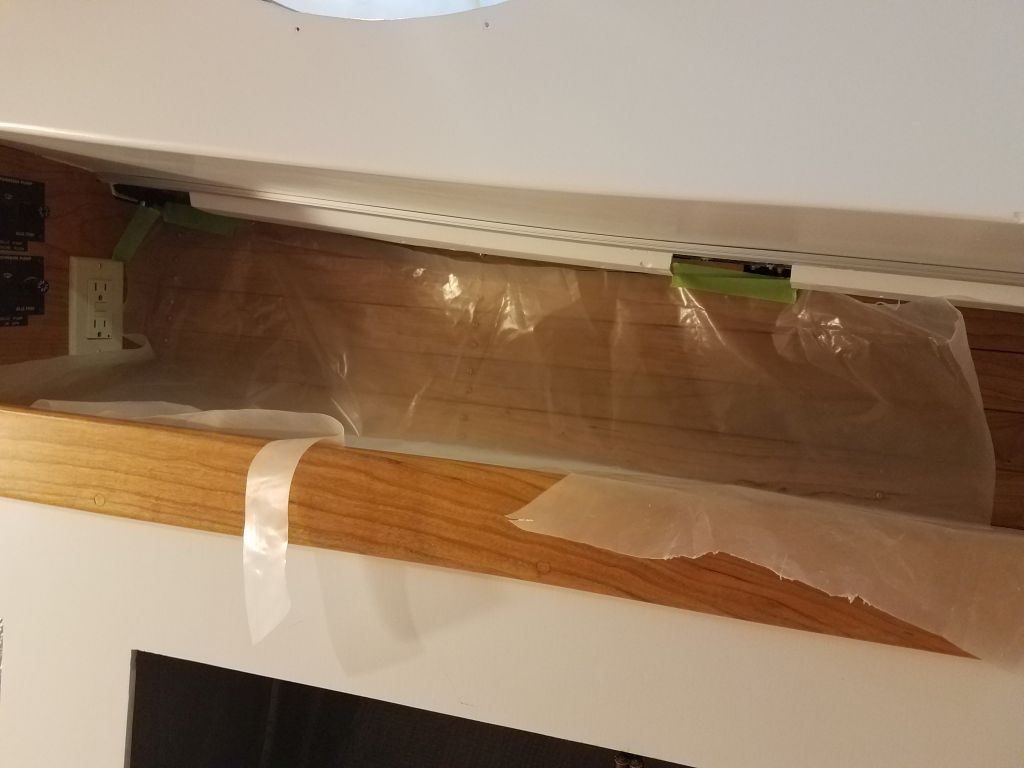
I temporarily installed the new wiring trim after cutting it to length, and reinstalled the aft bulkhead trim that I cut to accommodate the wires and trim.  So this would be ready to quickly install later, but for now I removed the trim and, after masking and other preparations, filled the excess hole in the bulkhead with an epoxy mixture.

Working from the port cockpit locker, I finished up the wiring connection for the galley lights, securing the new hard-won wires to the end of the circuit I’d run in for the purpose.

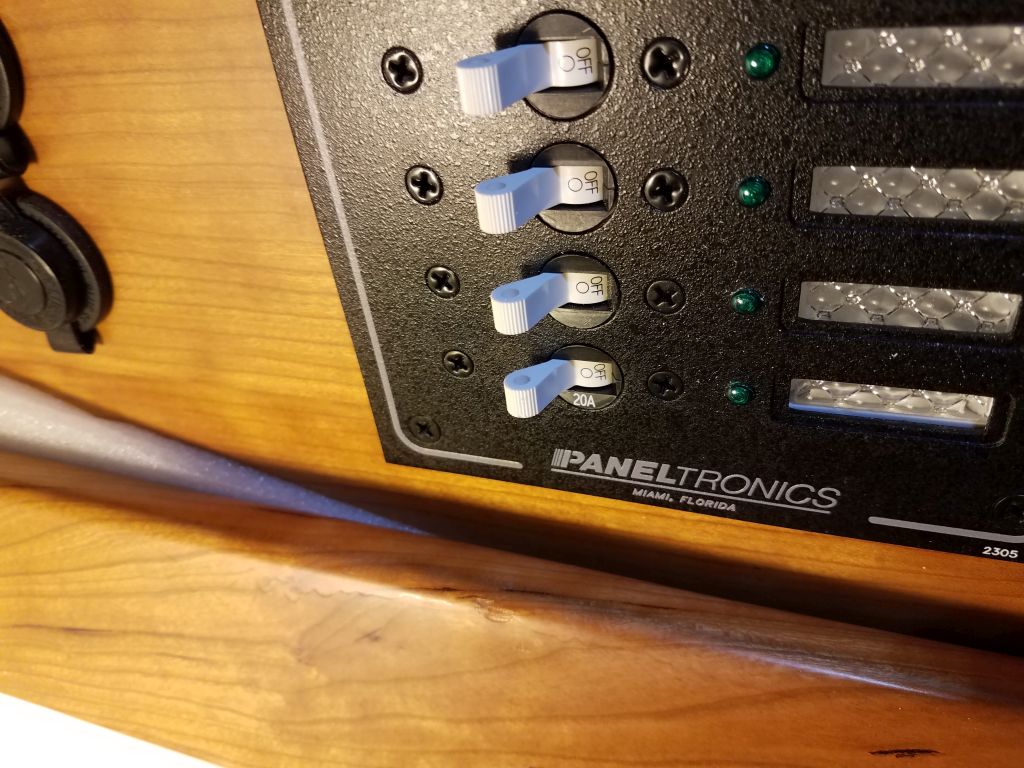
With only an hour or so left in the day, I decided to get ready for the final panel wiring and installation.   To accommodate a couple higher-draw appliances on board, namely the electric toilet and the potable water pump, I needed to replace a couple of the stock 15-amp circuit breakers in the panel with larger ones:  25-amp and 20-amp, respectively.  I decided to put these larger breakers at the bottom of each panel, so I disassembled the panels as needed to remove the old breakers and install the new.

In the electrical locker, I chose a location for and installed a large negative distribution buss, so which I’d install all negative wires.  To begin the process, I cut to length and terminated the yellow wire leading to the panel from the house battery location and negative buss there.

To secure the locker cover and electrical panels while working on the final wiring, I made up a couple supports from spare wire, which let the panel hang in an open position with good access for wiring now, and maintenance later.  I looked forward to making order from the wiring mess starting next time.

Total time billed on this job today:  8 hours

0600 Weather Observation:  12°, clear. Forecast for the day:  Sunny, 22°

Scupper 215

Wednesday

I began the day in the varnish room, where I lightly sanded the table parts and applied a coat of gloss varnish to the base and the visible side of the table leaves, locker lid, and support brackets.  This brought all sides of all pieces up to at least 4 base coats.

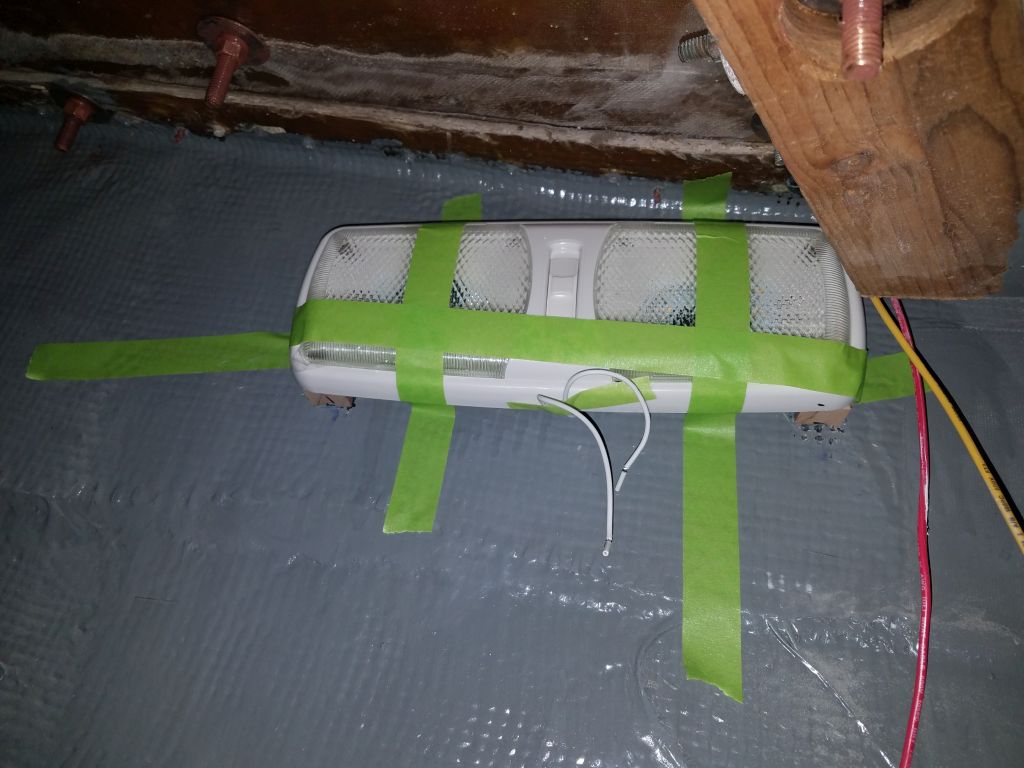
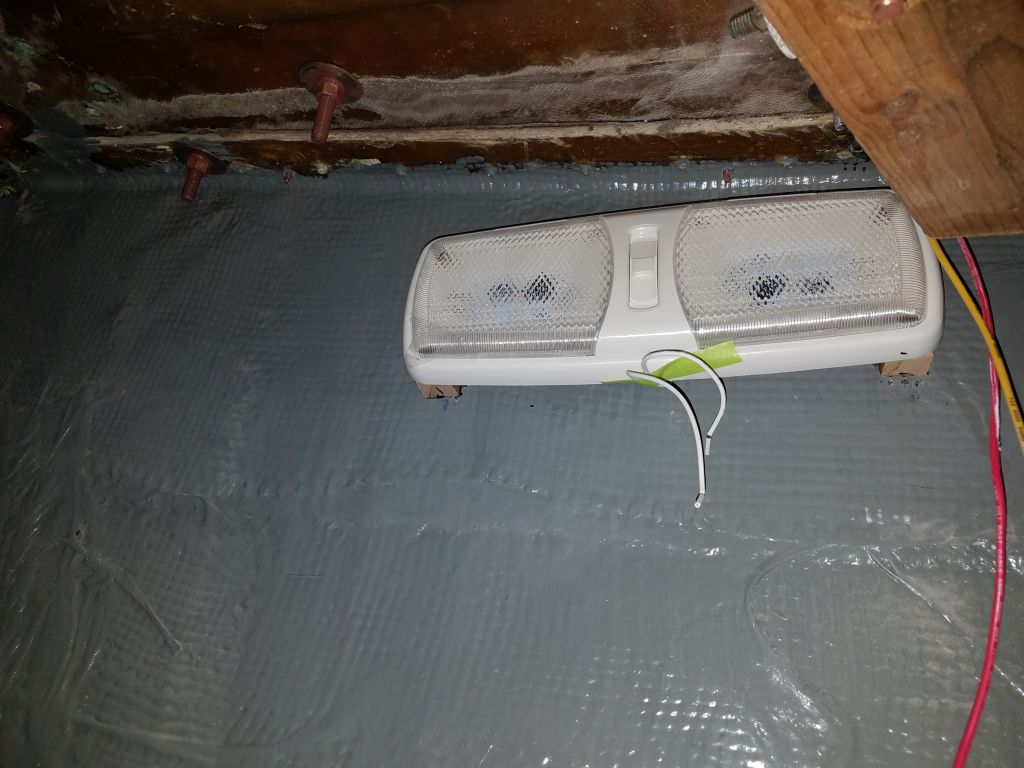
A few weeks back, after finding that the LED diffusers I’d bought for the underdeck lighting in the forward cabin and main saloon weren’t suitable for my application, I ordered different materials for the purpose–aluminum channels and diffuser covers–and now I could finally return my attention to these lights, starting in the forward cabin.  The channels were longer than I needed for the space available in the forward cabin, so I cut two channels to length.  These came with two kinds of end caps:  solid caps for the blank end, and caps with a hole for wiring at the other end.  In order to secure the channels in place, I drilled pilot holes and countersunk for flat head screws.

Beginning on the starboard side, I installed the channel beneath the sidedeck with 1/2″ screws.  I kept the channel near the outboard side of the space, and started them just forward of the reading lamps I’d installed earlier.  Once the channel was in place, I installed the waterproof LED light strip, which I cut to length as needed to fit within the channel.  This strip was self-adhesive.  I led the wires out the aft end of the channel, through the end cap, and then through a hole I drilled in the liner to accept the wiring and a short length of flexible conduit.

To finish off the first of four installations, I installed the diffuser cover over the channel–a simple snap-in installation–and made up the wire ends to a wire pair I’d already led forward into the space.

I repeated the process on the port side.

Moving aft, I repeated the installation on the starboard side aft of the electrical locker.  Here, I could butt the end of the channel up to the small bulkhead, through which I drilled a hole for the LED wiring.

On the port side of the main cabin, there was room for a full length of the aluminum channel.  Here, to avoid interference at the aft end with possible deck hardware, I let the channel run out towards the inboard side of the space beneath the deck as it ran aft, keeping the outer aft section clear in case I needed to cut access through the liner for the jib track or stanchion base when the time came.  I extended the wiring and led it through the locker and up to the lighting terminal block I’d installed earlier, finishing up the connections there.

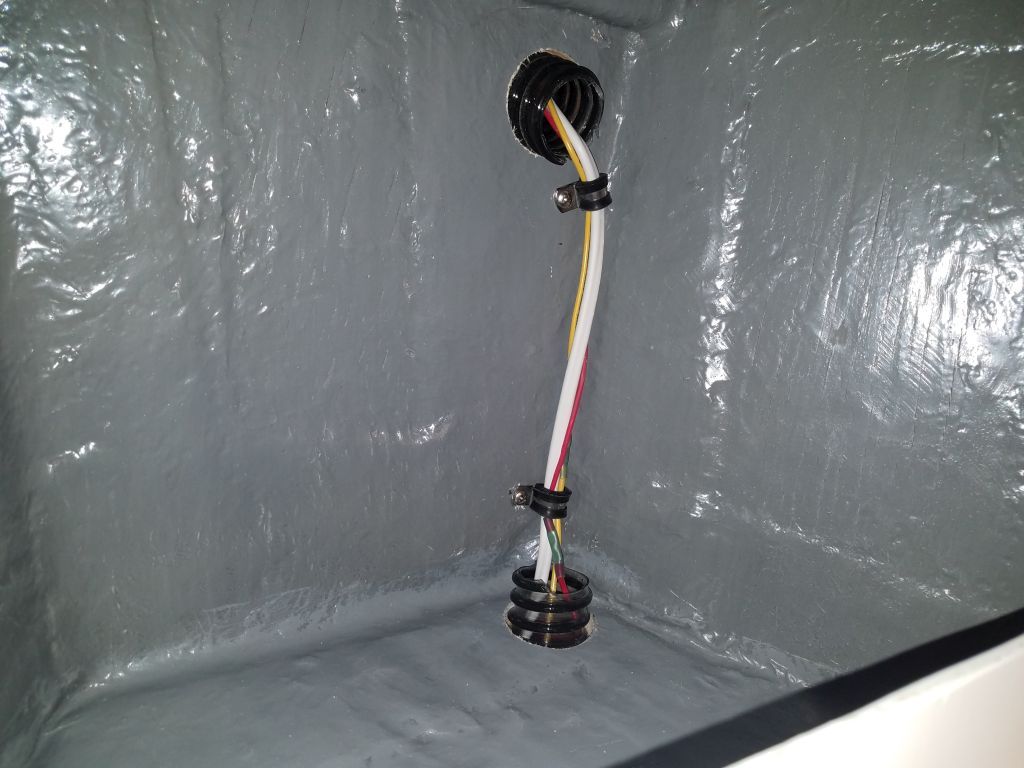
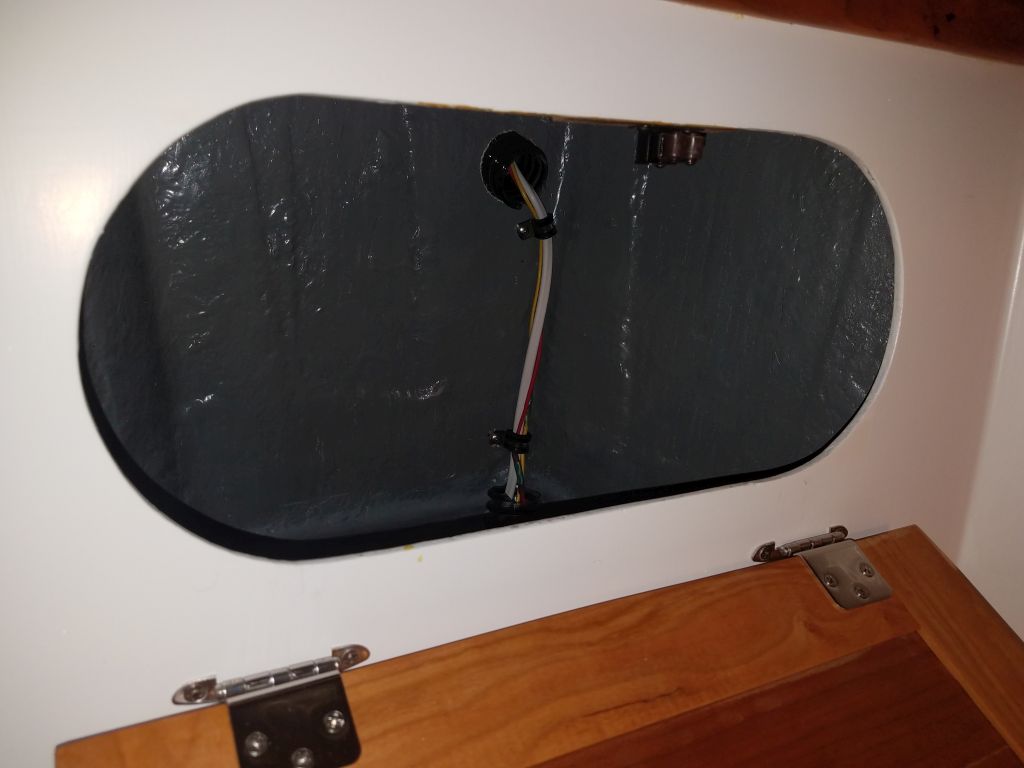
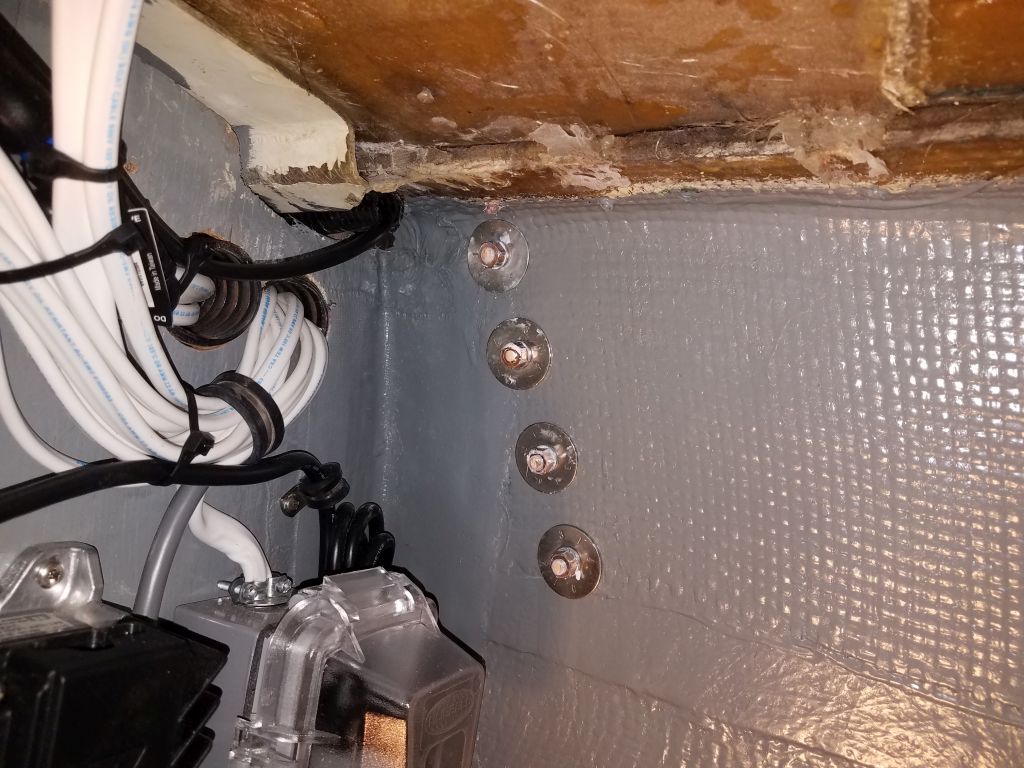
To round out the day, I finished up the bulk wiring runs. leading four circuits and a VHF cable from the panel area, through the forward part of the boat, and back into the bilge in way of the mast compression post, through which these wires would ultimately lead.  These circuits would service mast lighting as well as a couple additional interior fixtures based off the compression post.  For now, I left ample length at the bilge end for final connection later, and, after securing the wires through the starboard lockers alongside the existing wire runs,  at the panel end left sufficient length for final connections there, which could start happening soon now that all the basic wires for known circuits were finally in place.

Total time billed on this job today:  8 hours

0600 Weather Observation:  25°, light snow. Forecast for the day:  Light snow, maybe an inch forecast, 32°

Scupper 214

Tuesday

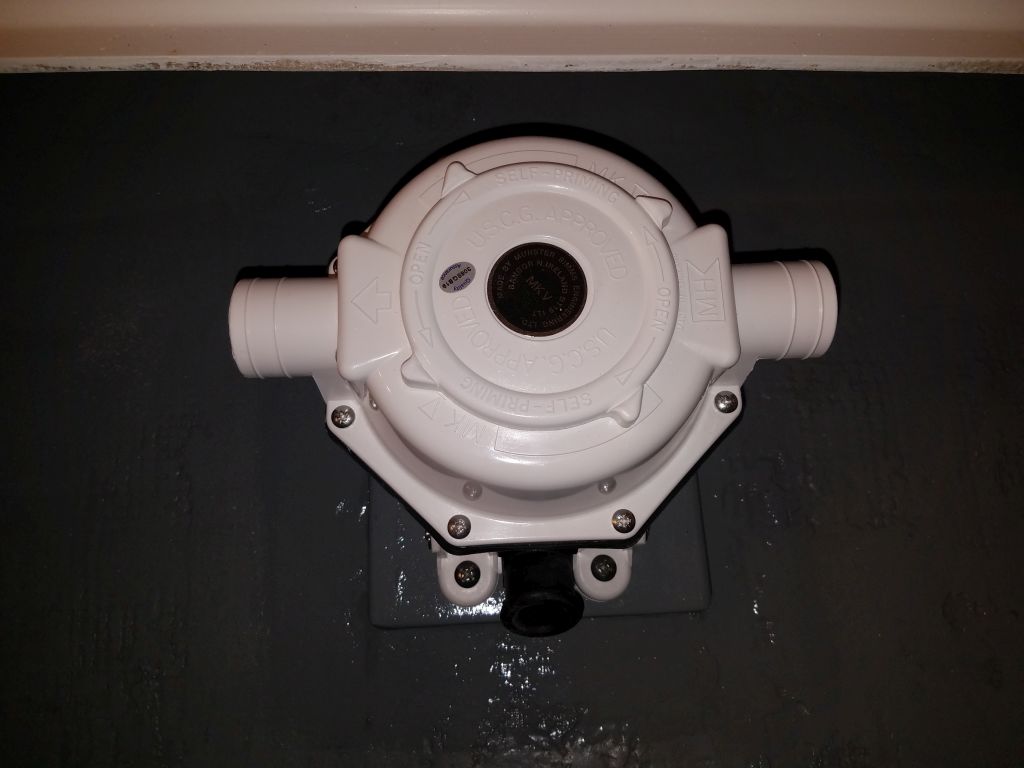
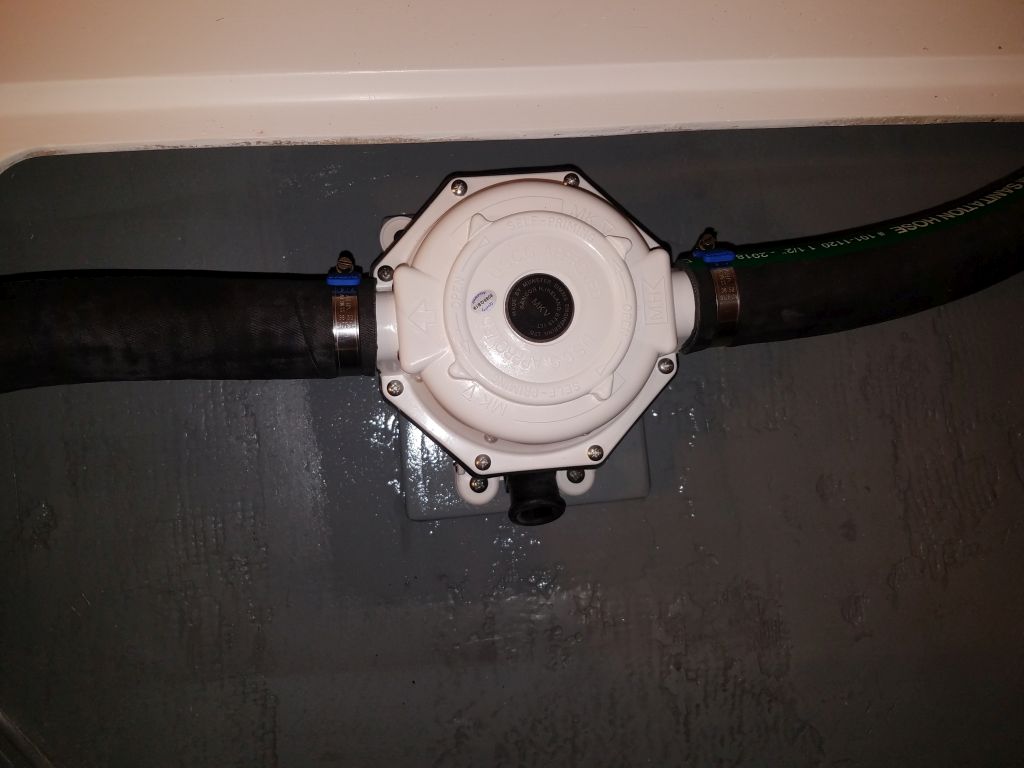
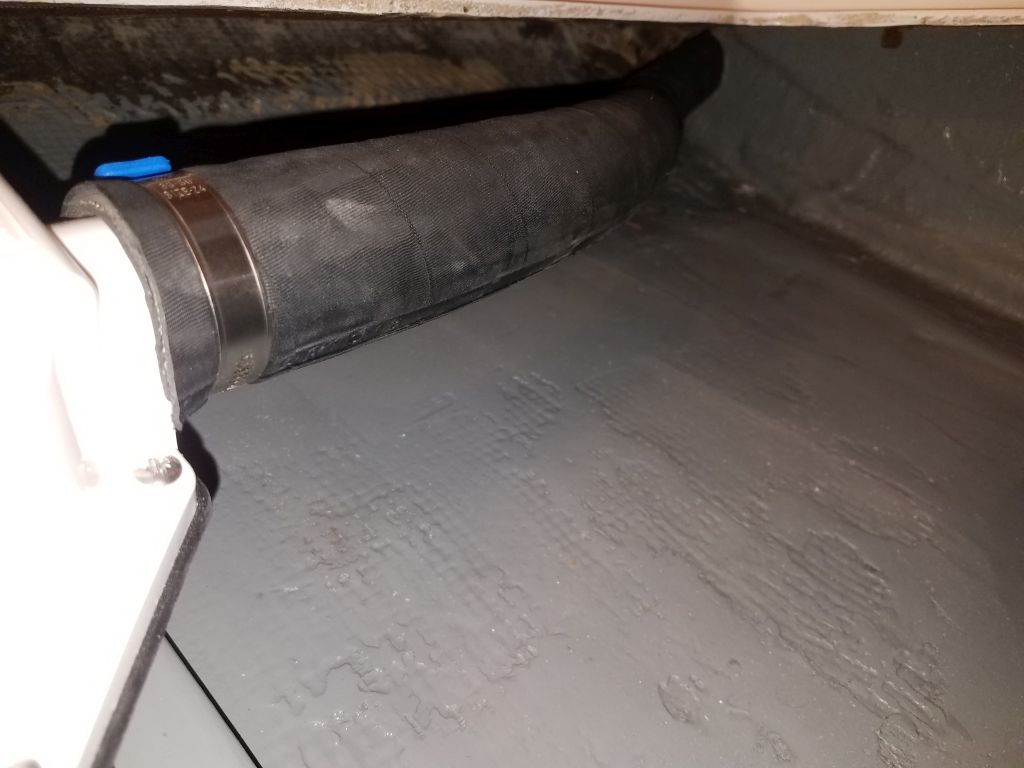
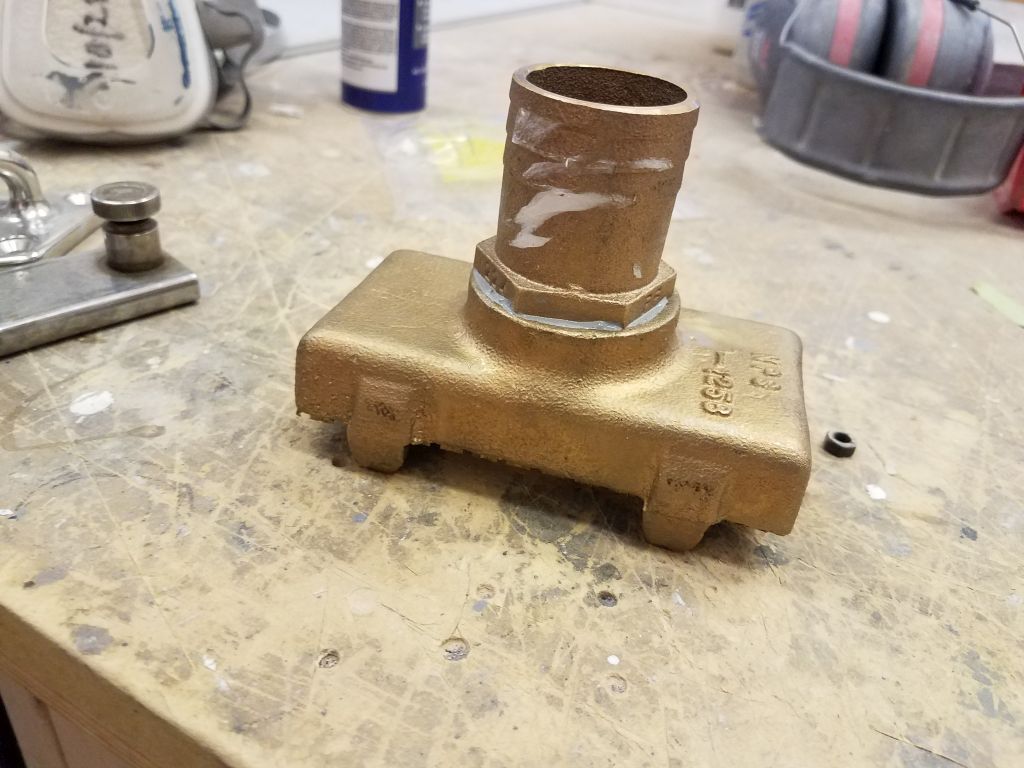
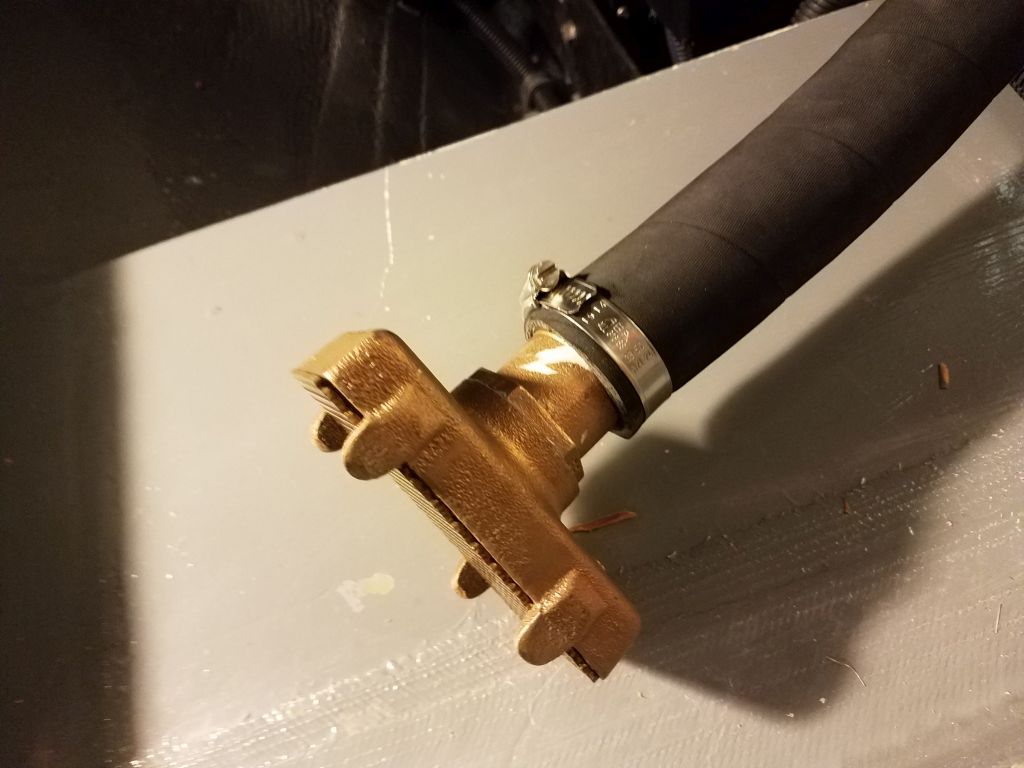
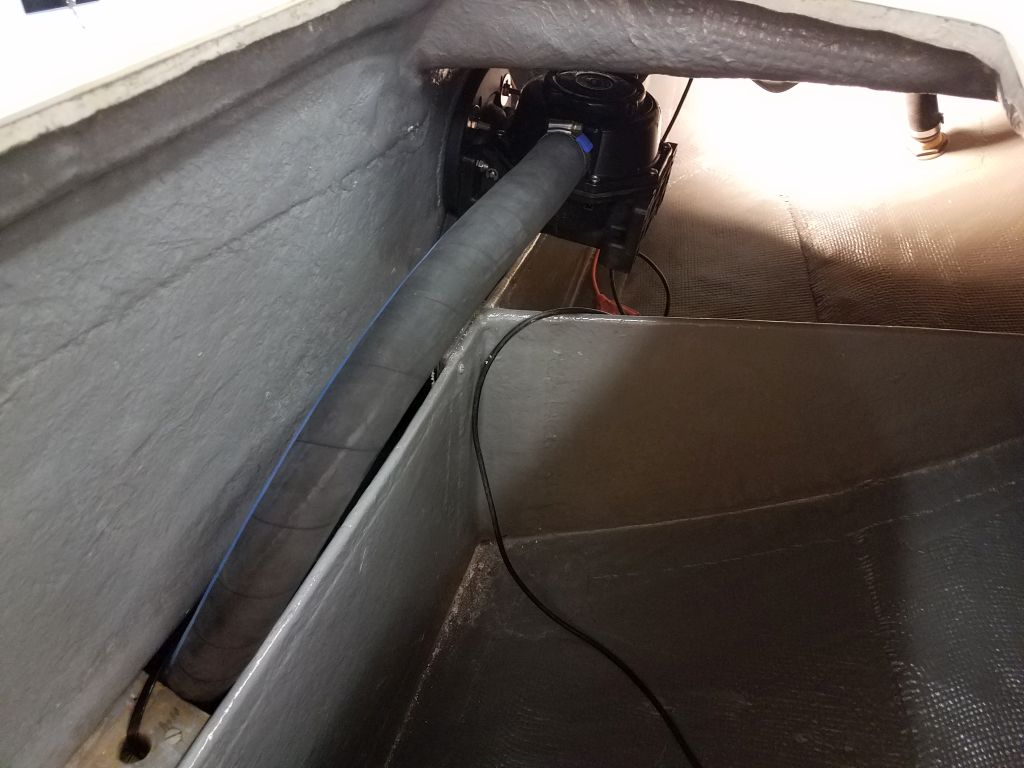
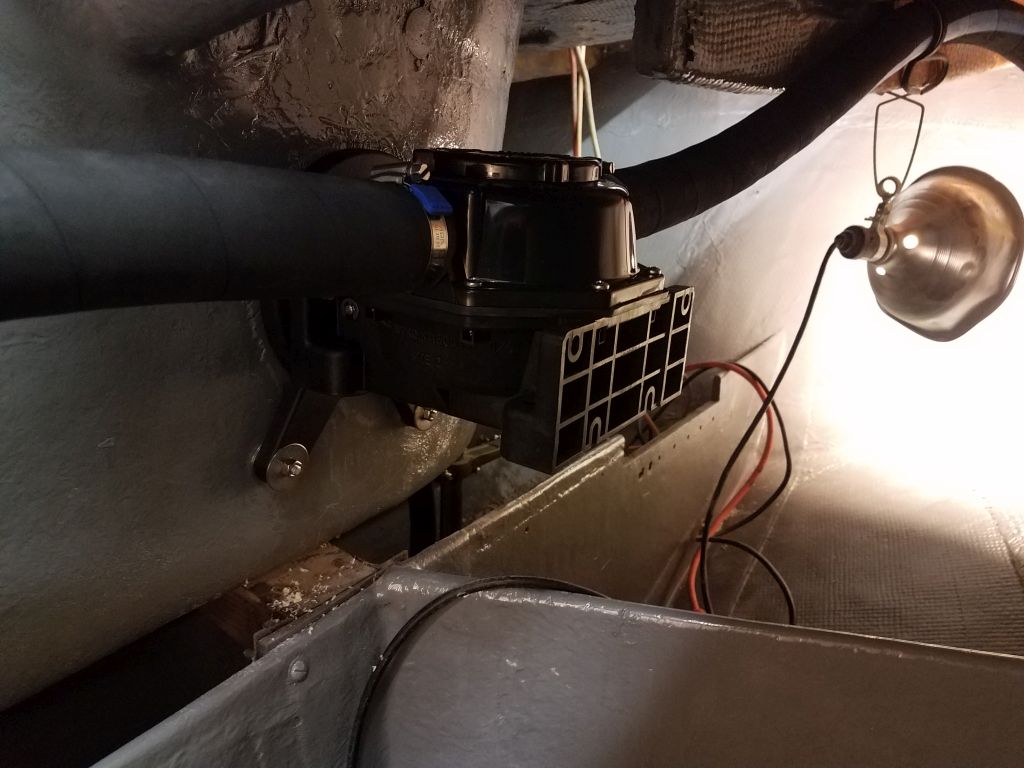
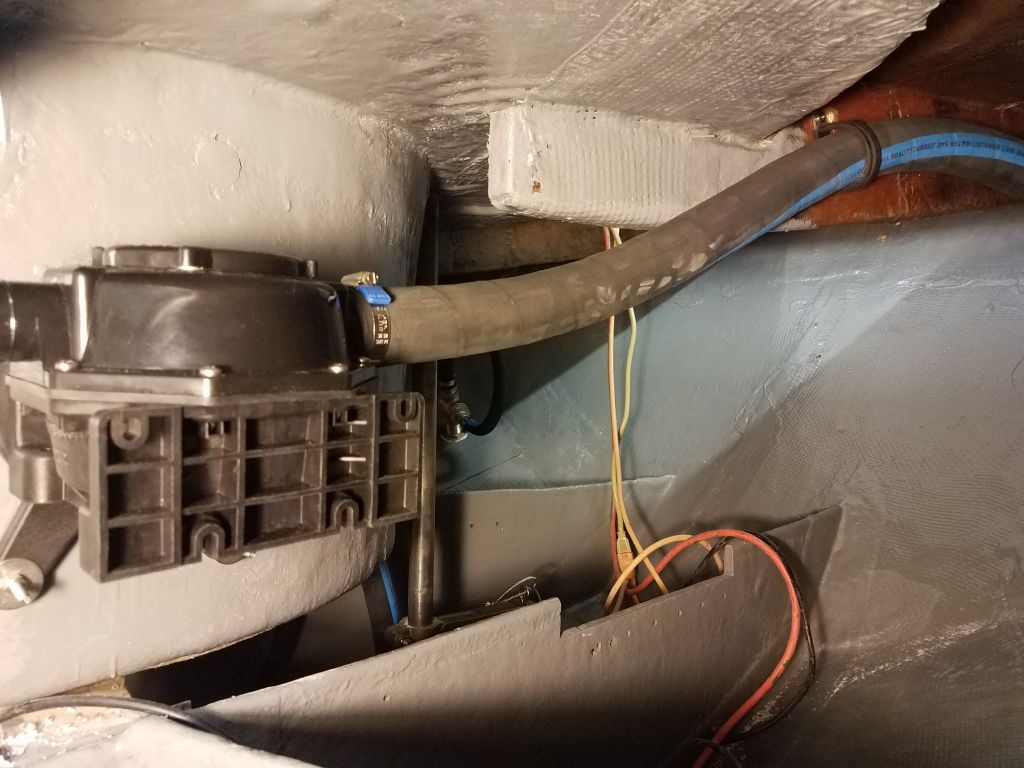
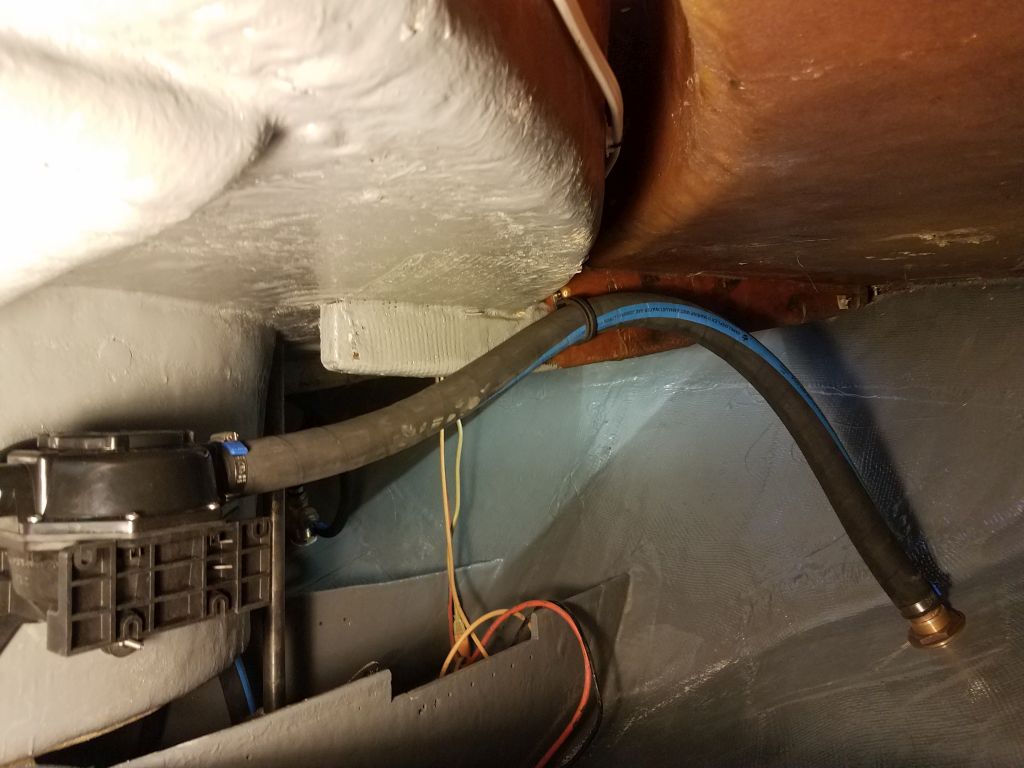
I finished up work on the electric bilge pumps’ installation, beginning with where I left off in the engine room at the new diaphragm pump.  I installed a bronze suction screen on the end of the hose leading to the bilge, then secured the hose as needed from the bilge, through a small intake filter, and to the pump itself, through the new holes I’d prepared in the small divider bulkhead.  Then, I led the discharge hose from the pump and aft through the engine room as needed, securing it with rubber-lined clamps along the way.

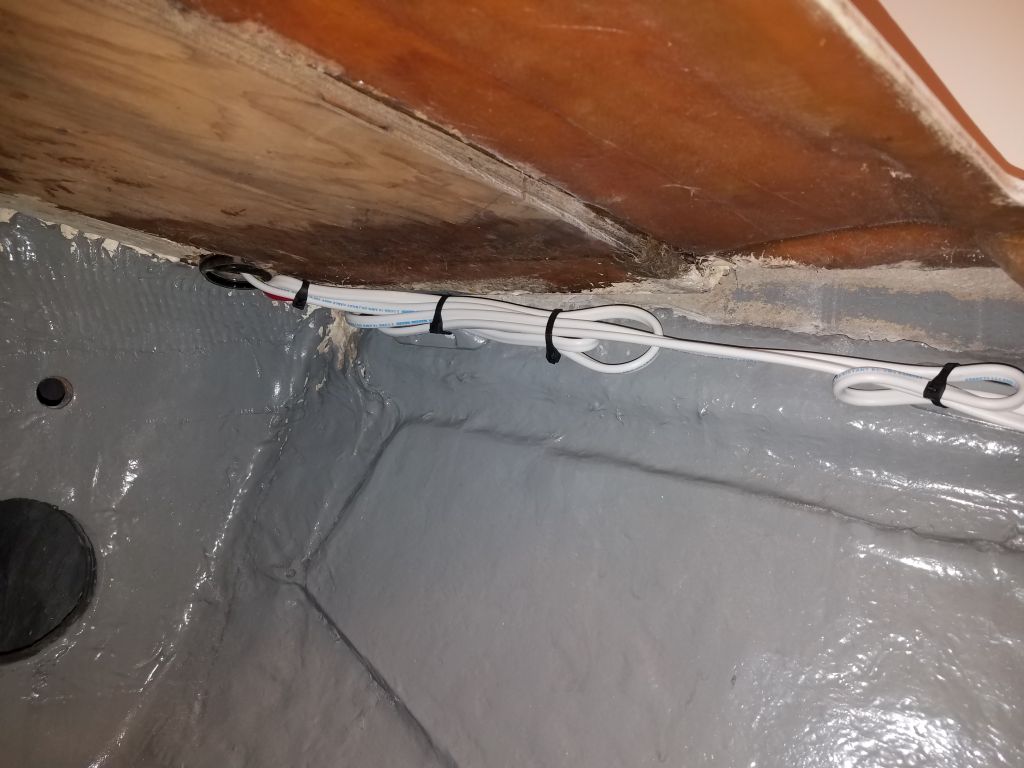
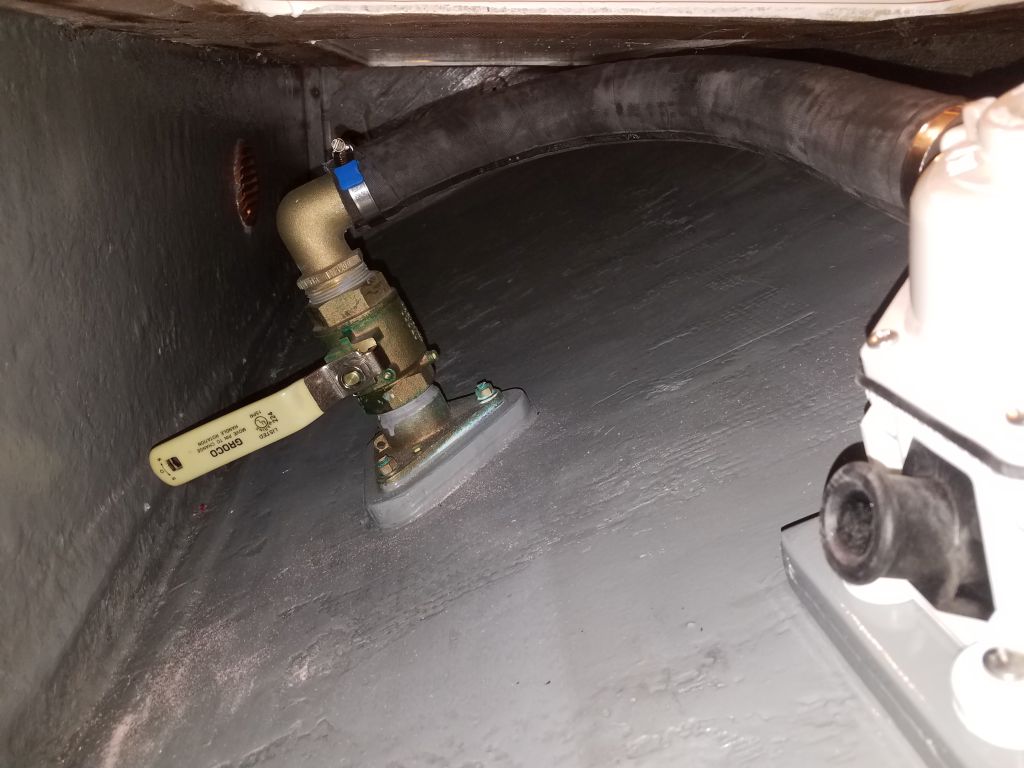
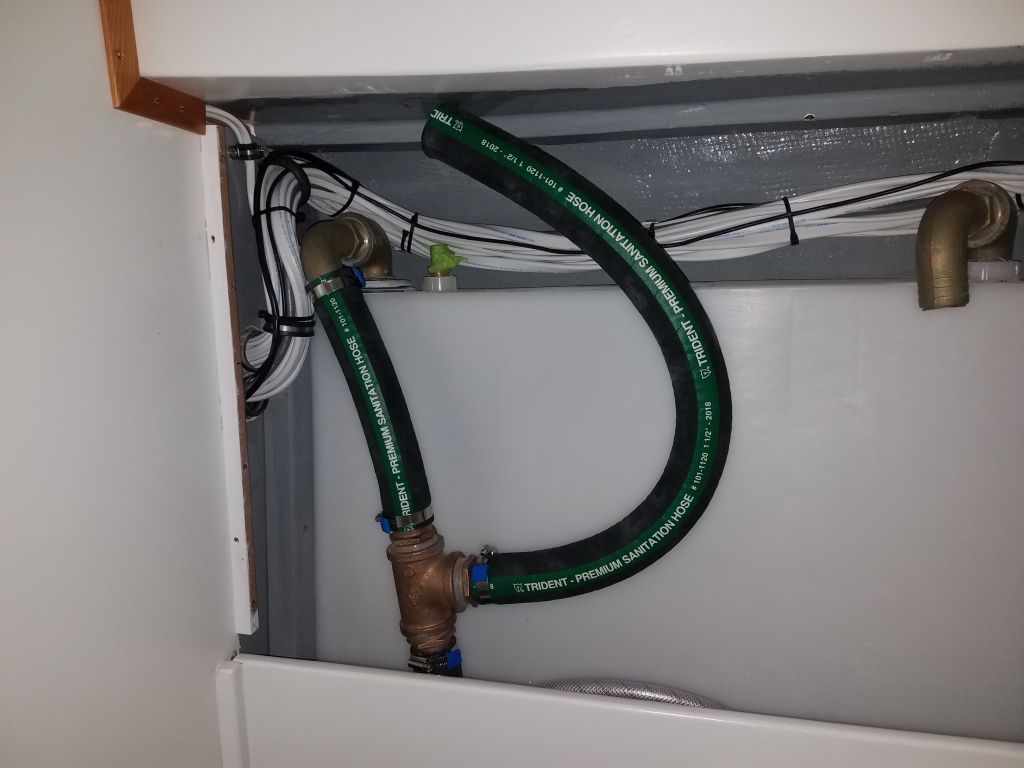
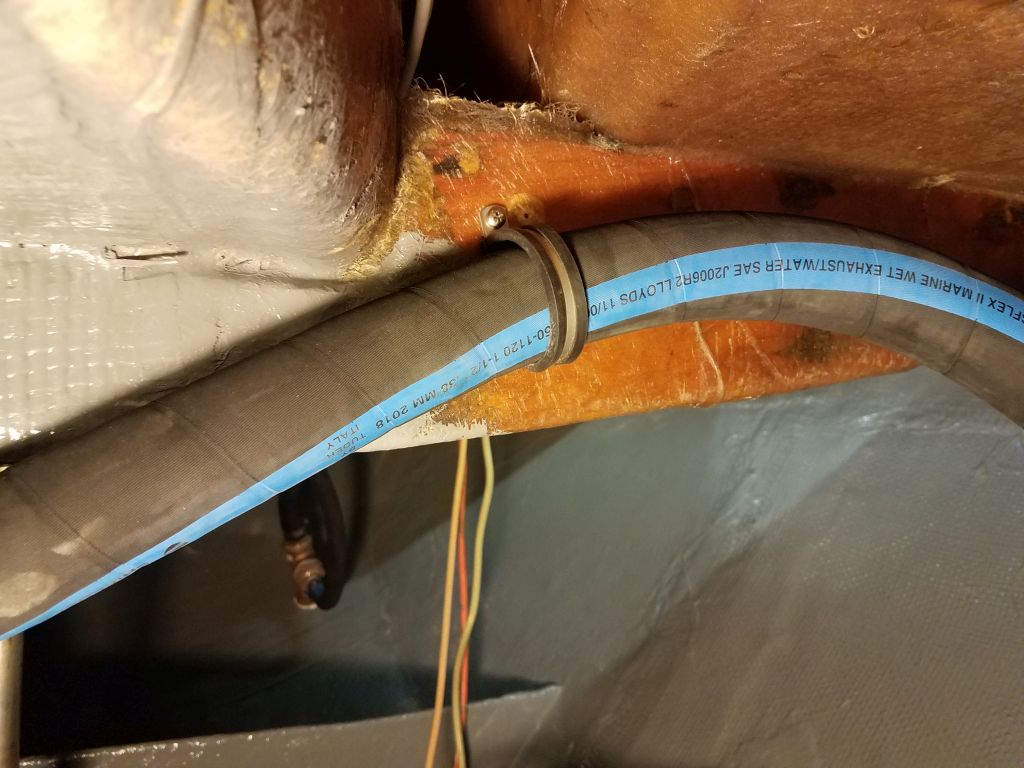
At the transom, where I’d recently installed the outlet through hull, I finished off both hose runs from both electric pumps, starting with the larger hose from the forward pump.  I led this hose in an arc to the underside of the deck to minimize backflow potential through the hull fitting, and then secured the smaller hose from the everyday diaphragm pump to the larger hose to keep it out of the way as well.

Armed now with new fasteners, I turned to the mast reassembly, and spent the remainder of the day reinstalling most of the hardware, except for the masthead casting, which I left off for now till I could run in the wires needed.  For all the fasteners, I treated the threads with Tef-Gel to reduce future corrosion problems.

I reassembled the boom ends, and installed a bail at the aft end for the main sheet.

Finally, I re-led messenger lines for the halyards, leaving things ready for the riggers when they returned later in the week.

Total time billed on this job today:  7 hours

0600 Weather Observation:  11°, mostly clear. Forecast for the day:  Mostly sunny, 32°

Scupper 213

Monday

Over the weekend, I finished up the base coats of varnish on the various cherry trim pieces, and to start the day now I applied a final coat using satin varnish.

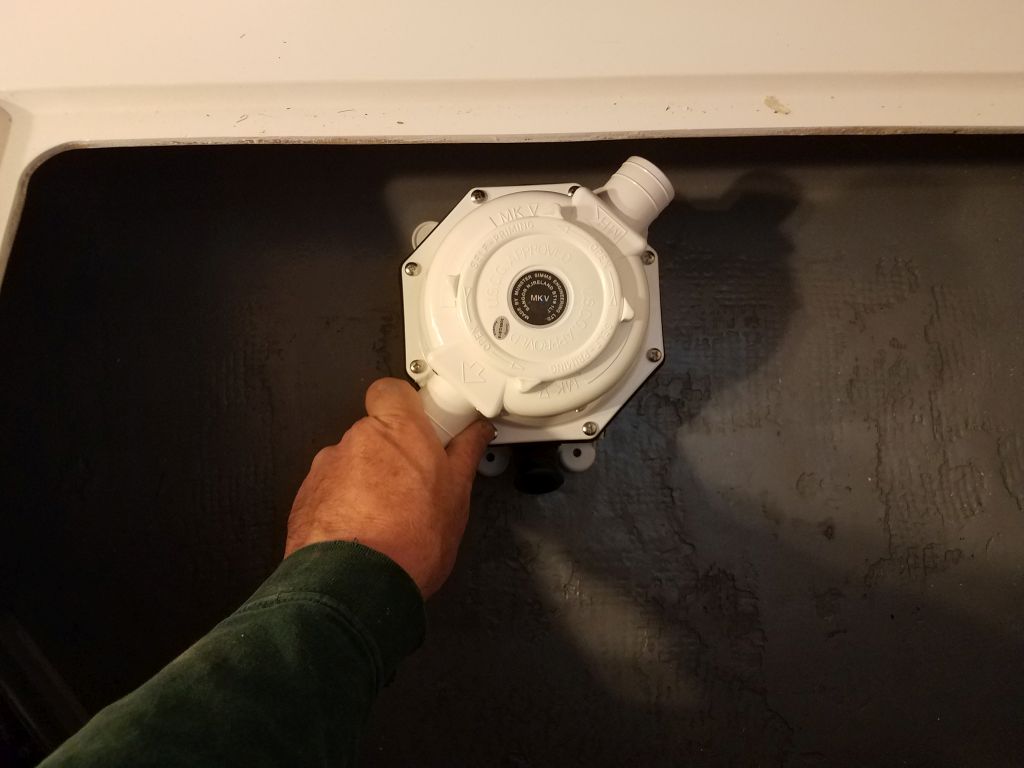
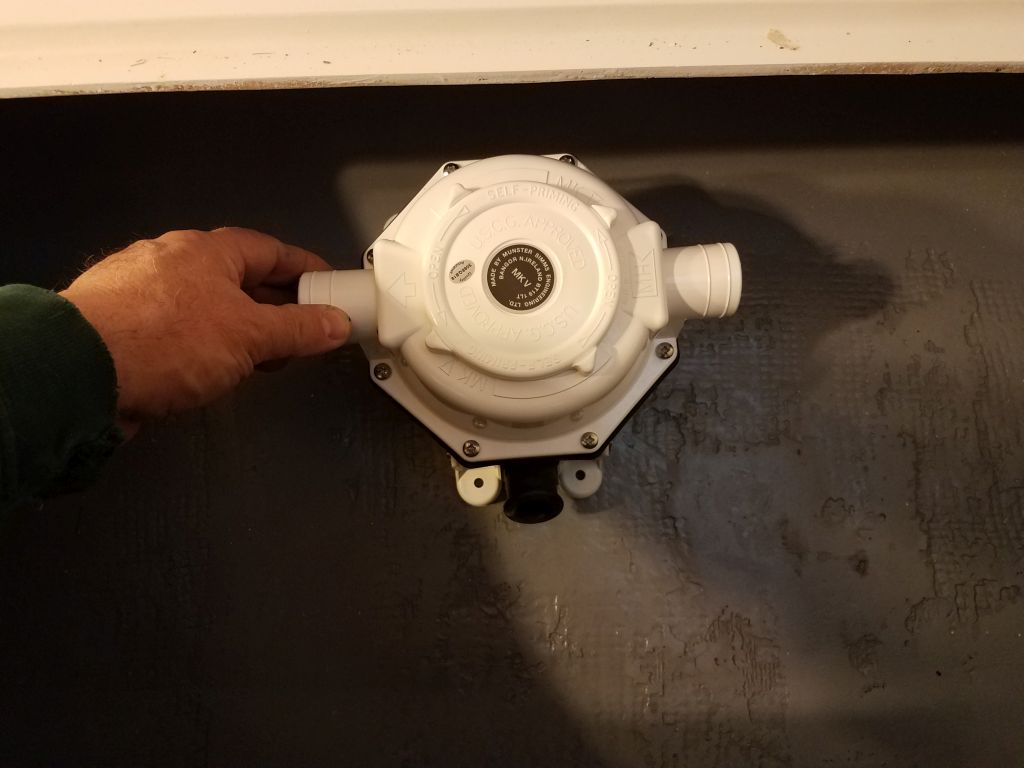
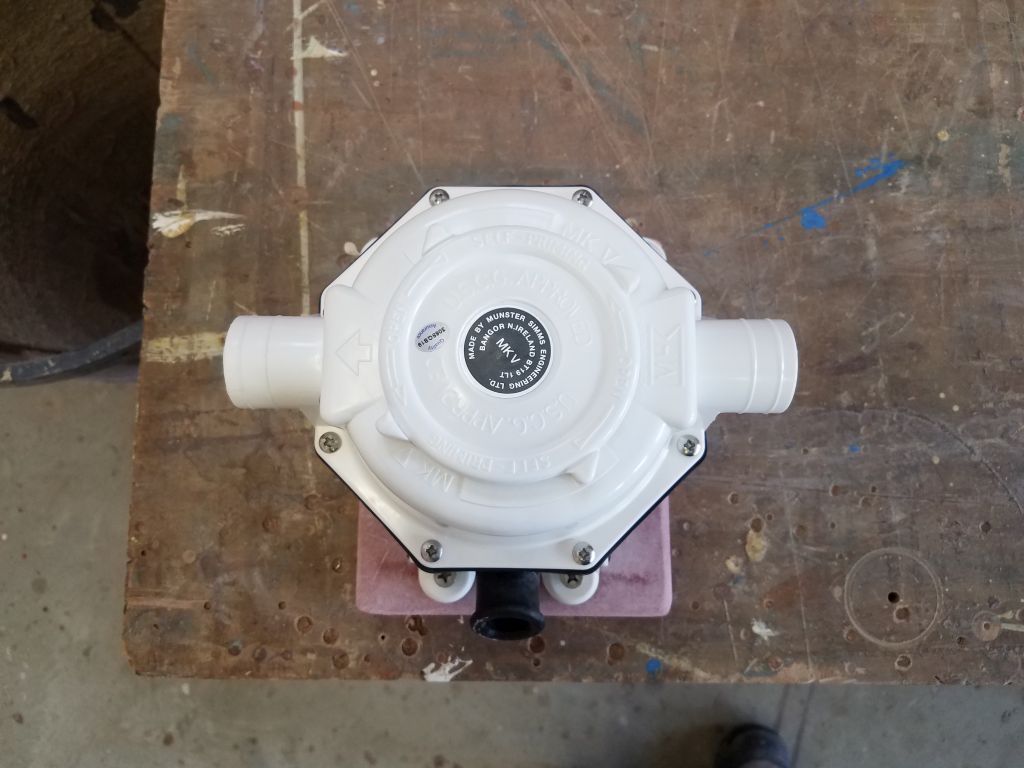
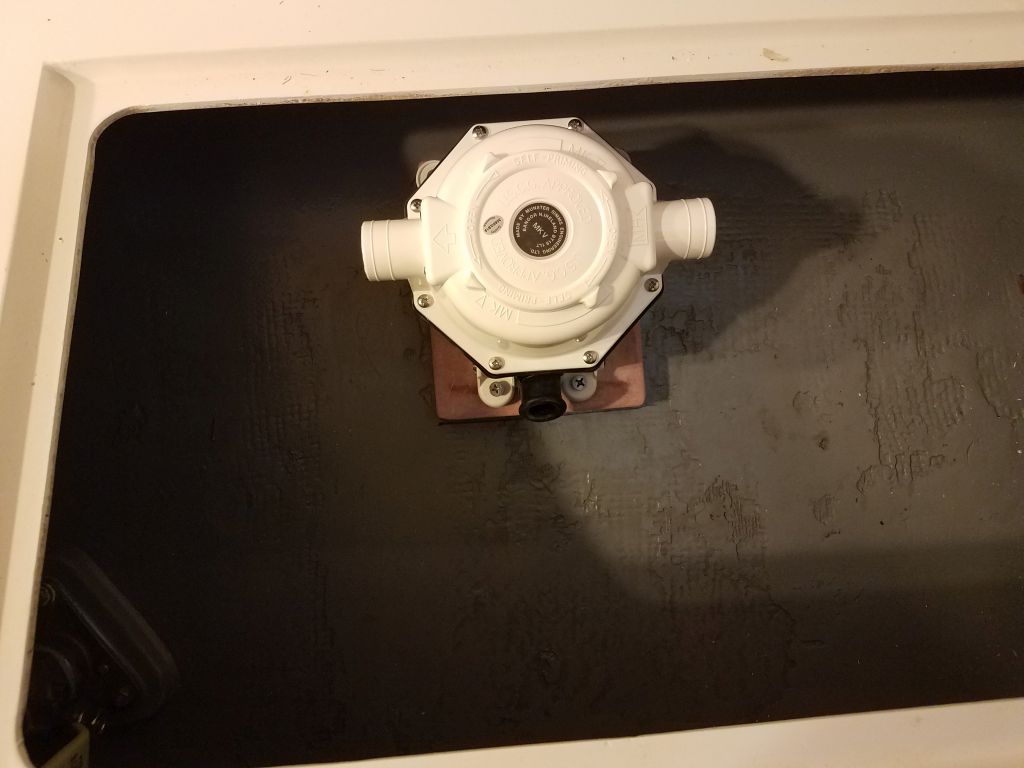
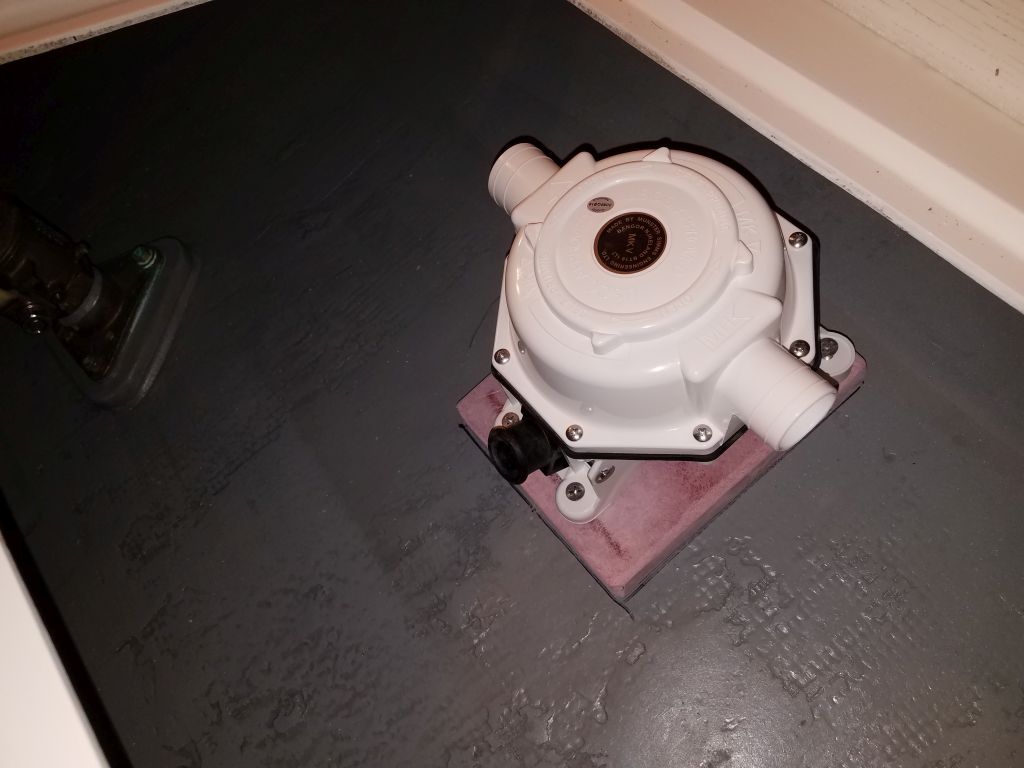
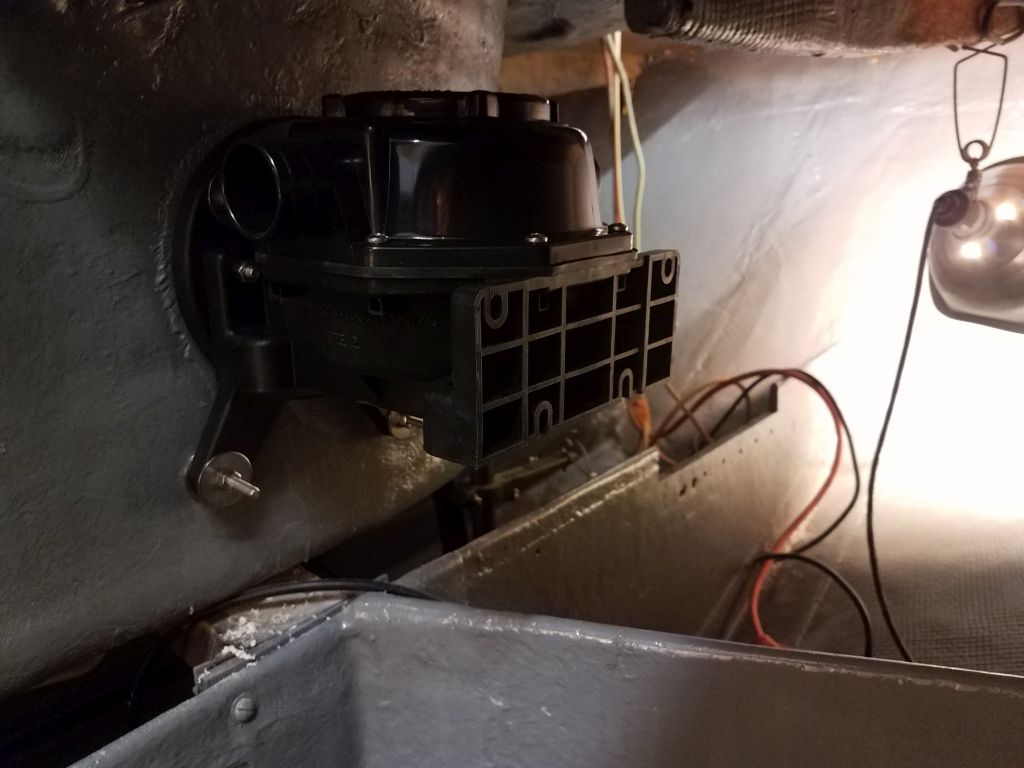
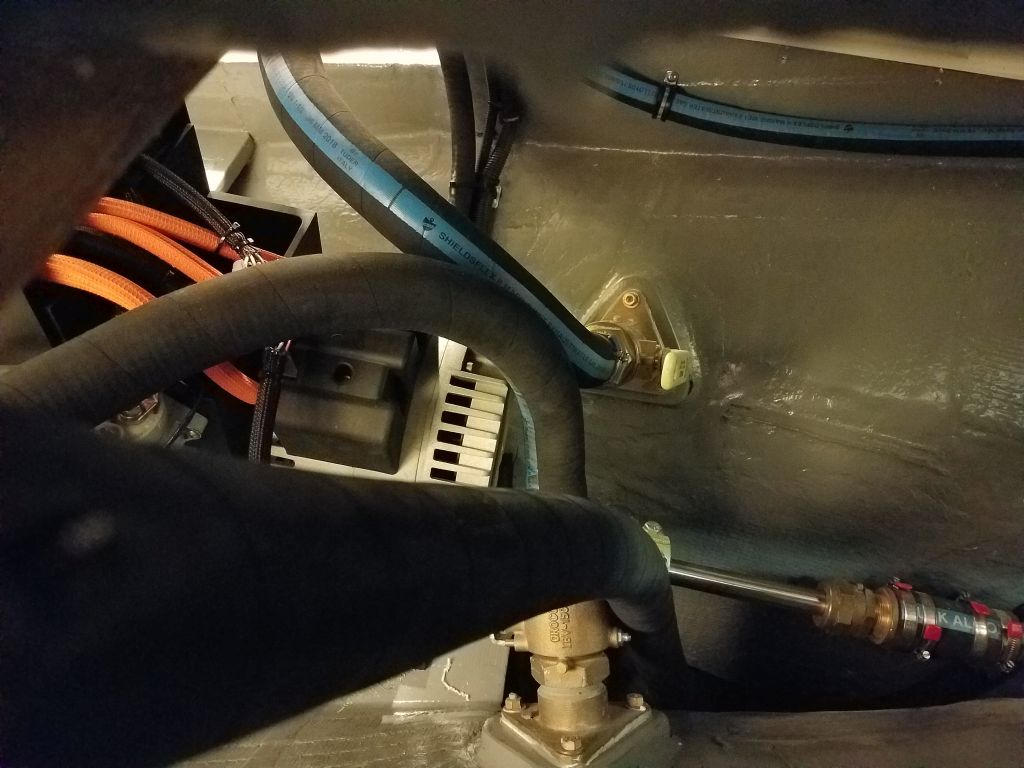
In the main bilge near the galley, I finished up the installation of the new centrifugal “emergency” pump and automatic switch.  Now that the pump bracket was secured to the boat, I snapped the pump back in place and, working from the engine room, led in a length of 1-1/8″ hose, which I connected to the pump.  For now, I left the other end of the hose wild in the engine room pending final connection to a new through hull.

I ran the wires up through into the locker beneath the galley, where I eventually secured them to a terminal block held up out of the way on the inboard side of the locker, and connected the wire leading back to the panel to the other side of the terminal.  This provided a straightforward way to make up the connections between the pump and switch to allow manual or automatic operation; I’d finish up the wiring at the panel end a little later.

In the engine room, I continued work on the second, main pump:  a diaphragm pump designed for routine and complete dewatering of the bilge.  I’d already installed the bracket and automatic switch in the bilge, and now I led the switch wires through flexible conduit and along the path of some other wires already in place in the engine room and over to the starboard side, where I chose to install the diaphragm pump on a shelf at the outboard side of the engine room.  I wired up the pump and switch to the cable leading to the panel through another terminal block.

To lead in the suction and discharge hoses for the pump, I drilled a pair of holes through the divider at the side of the pump, in line with the two ports on the pump itself.  I found a plywood void in one of the holes, and while the divider was non-structural, I chose to fill the void with thickened epoxy, and treated the exposed plywood in the second hole as well.  I left the new epoxy to cure overnight.

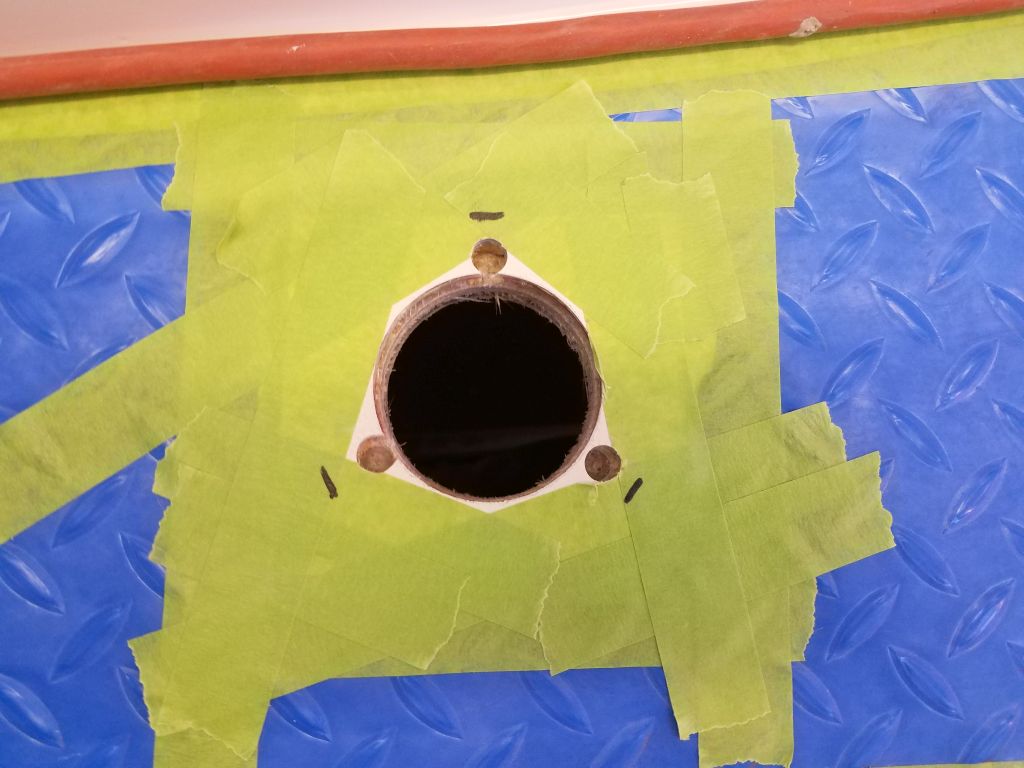
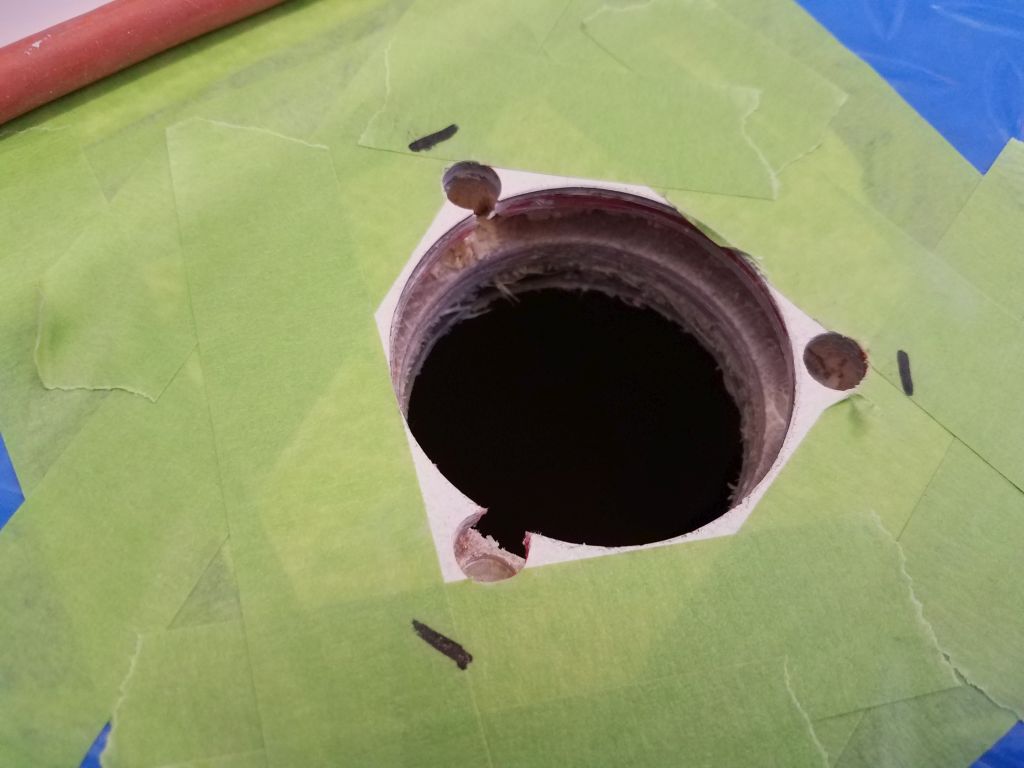
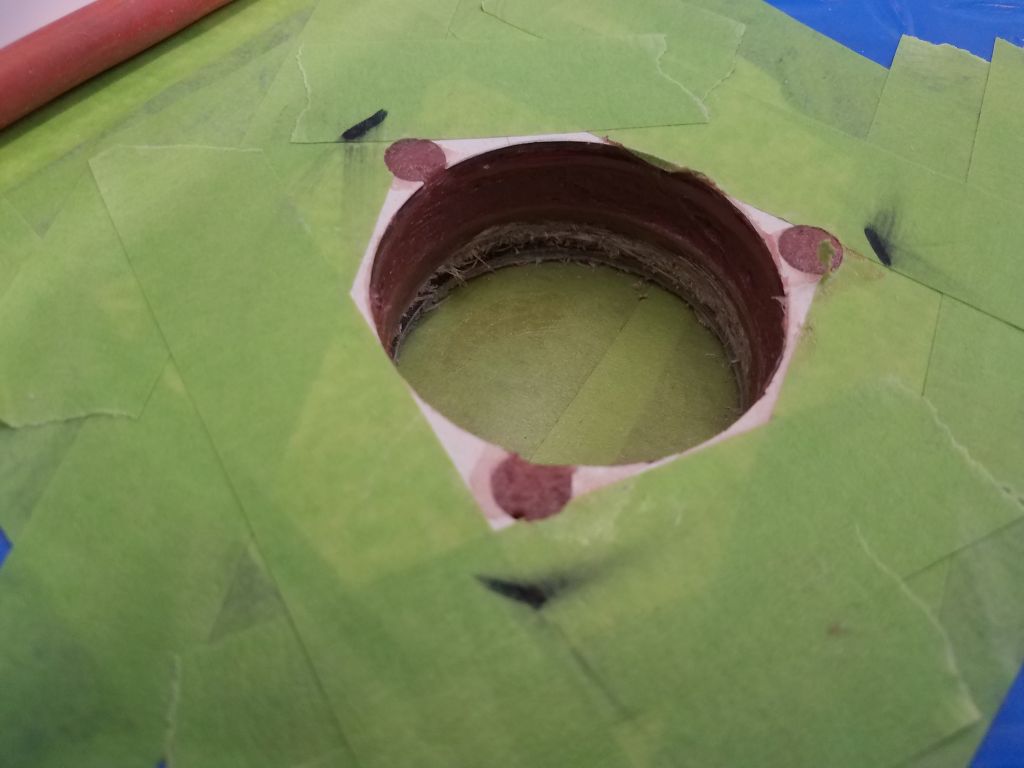
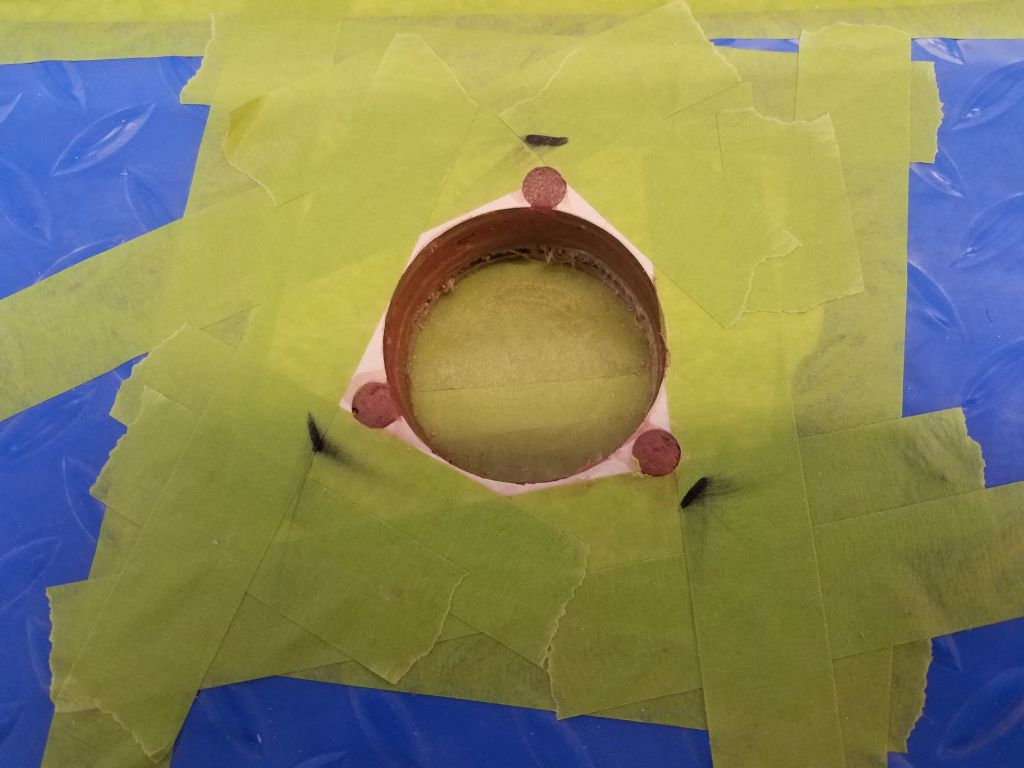
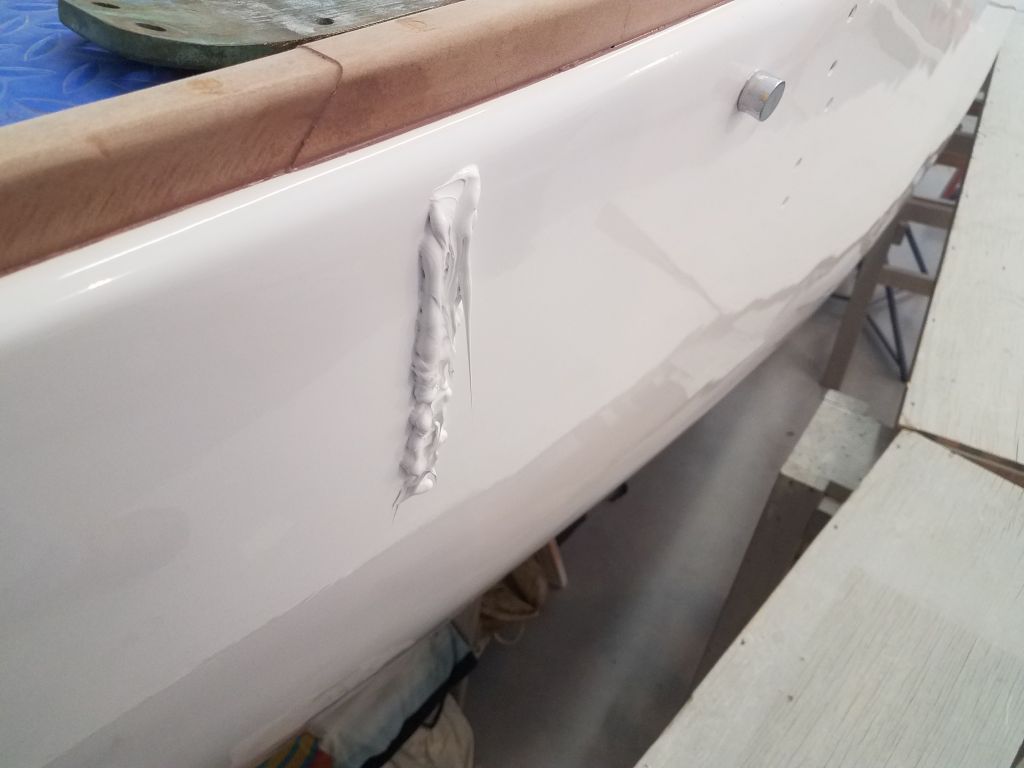
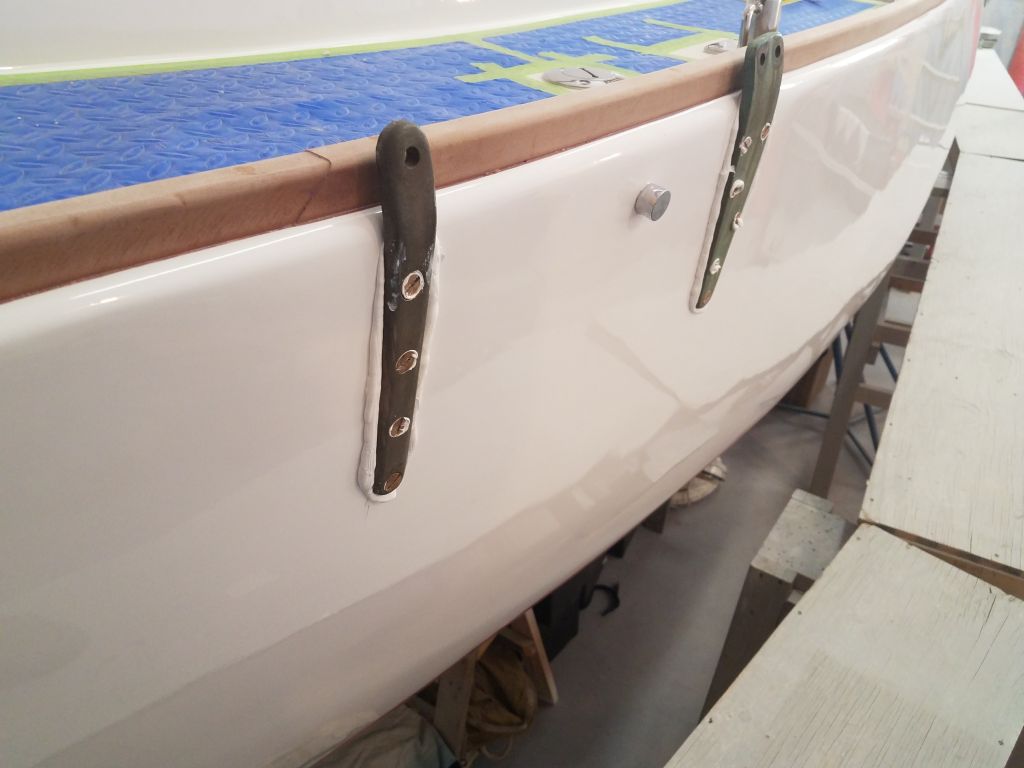
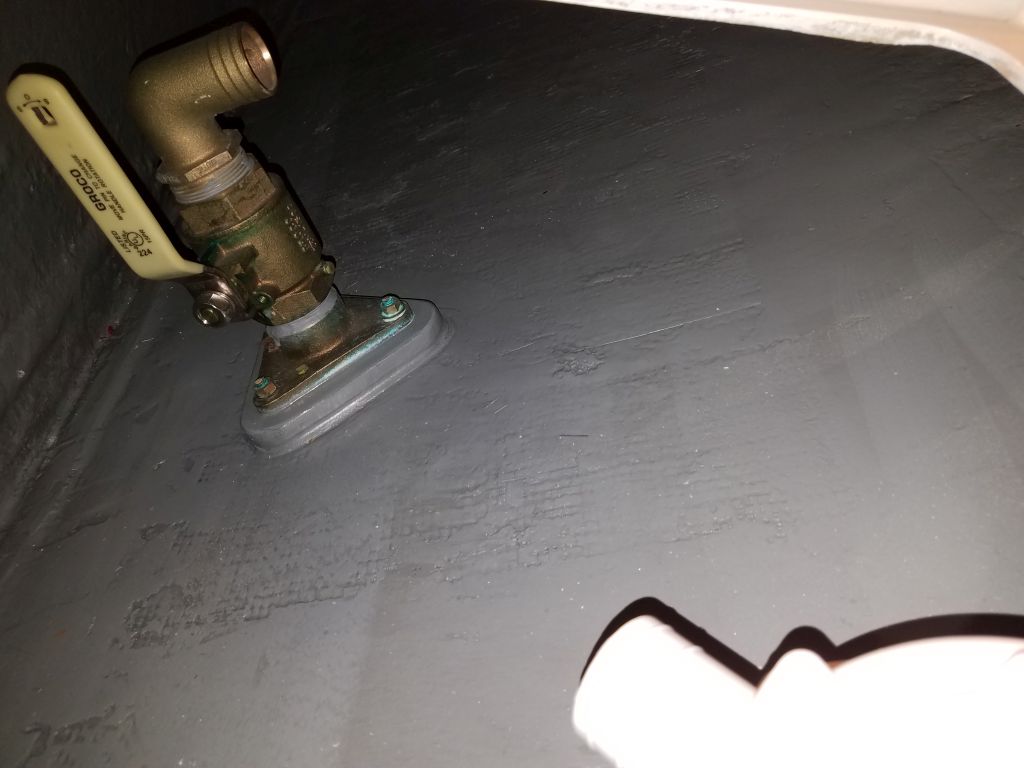
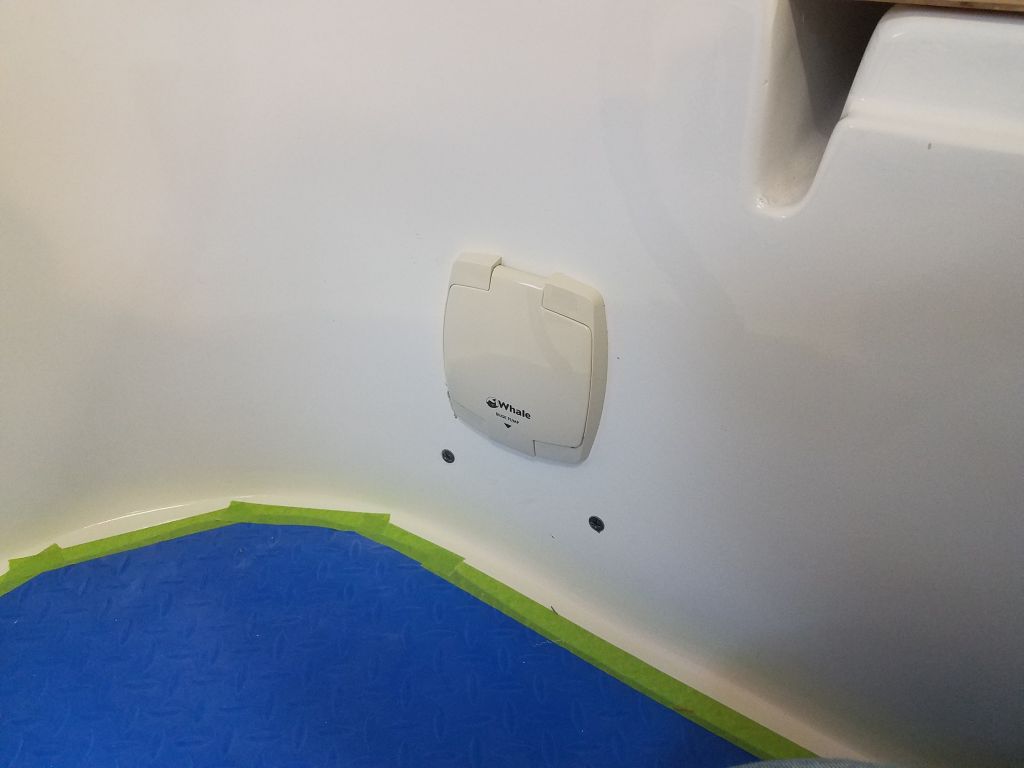
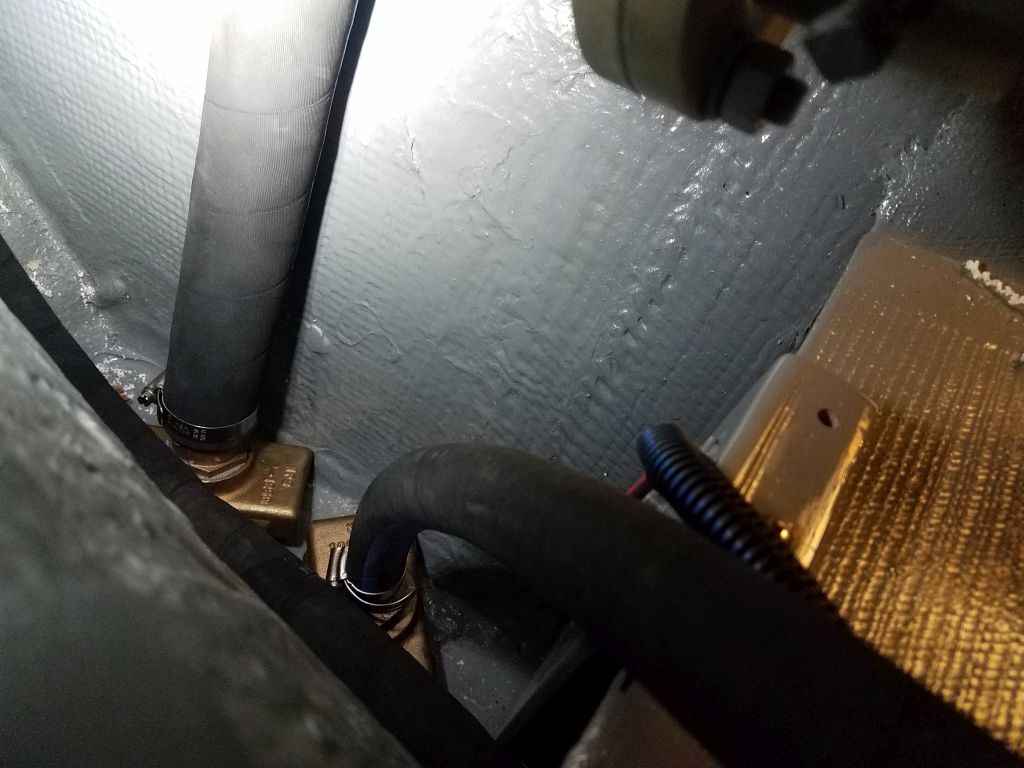
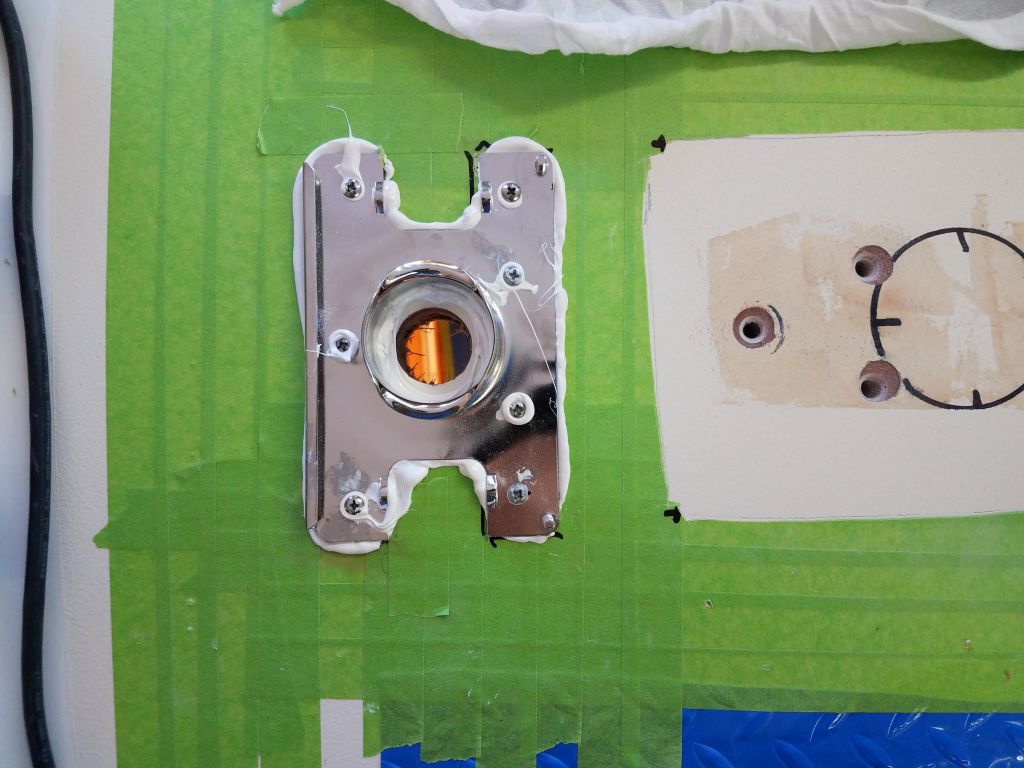
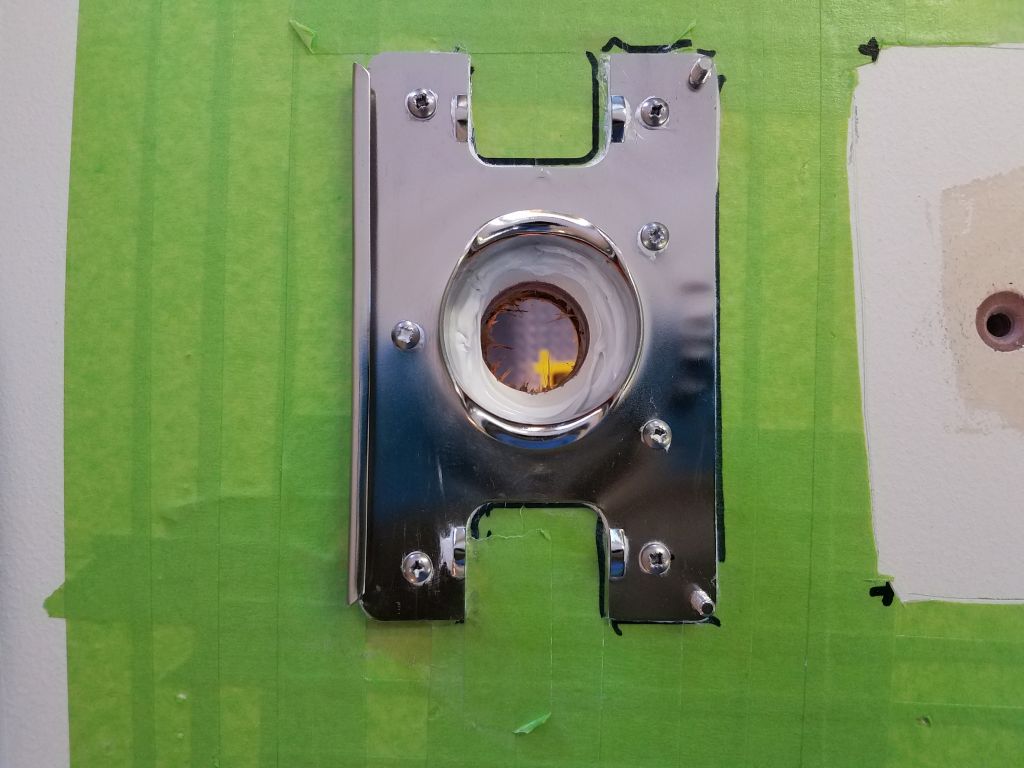
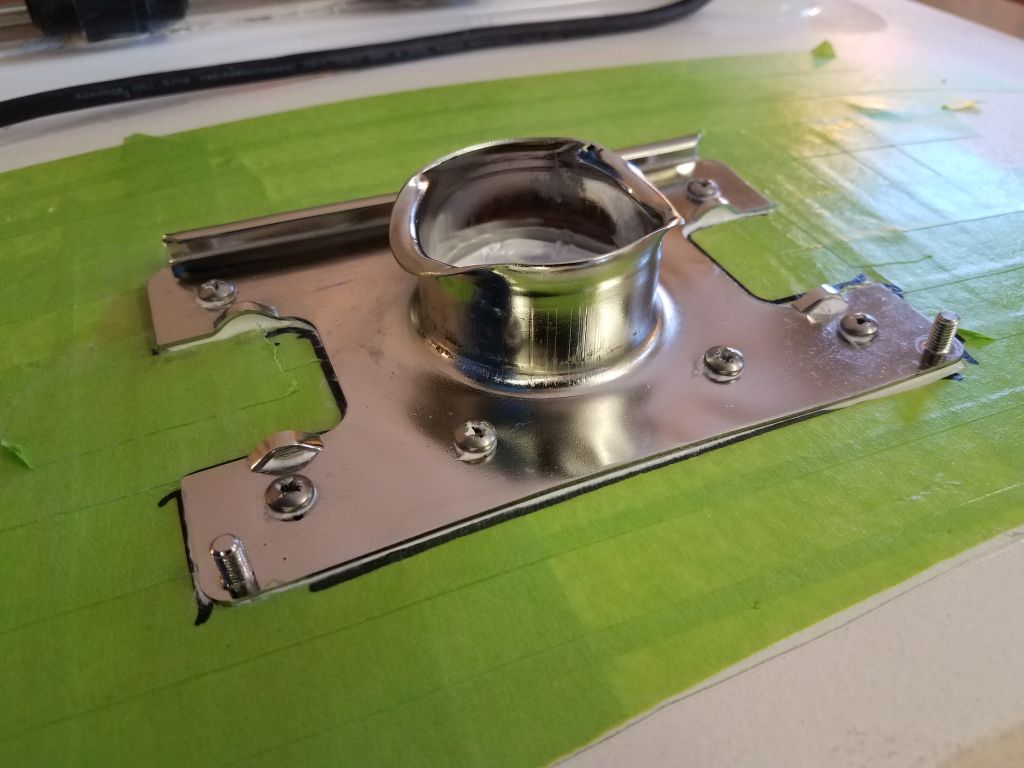
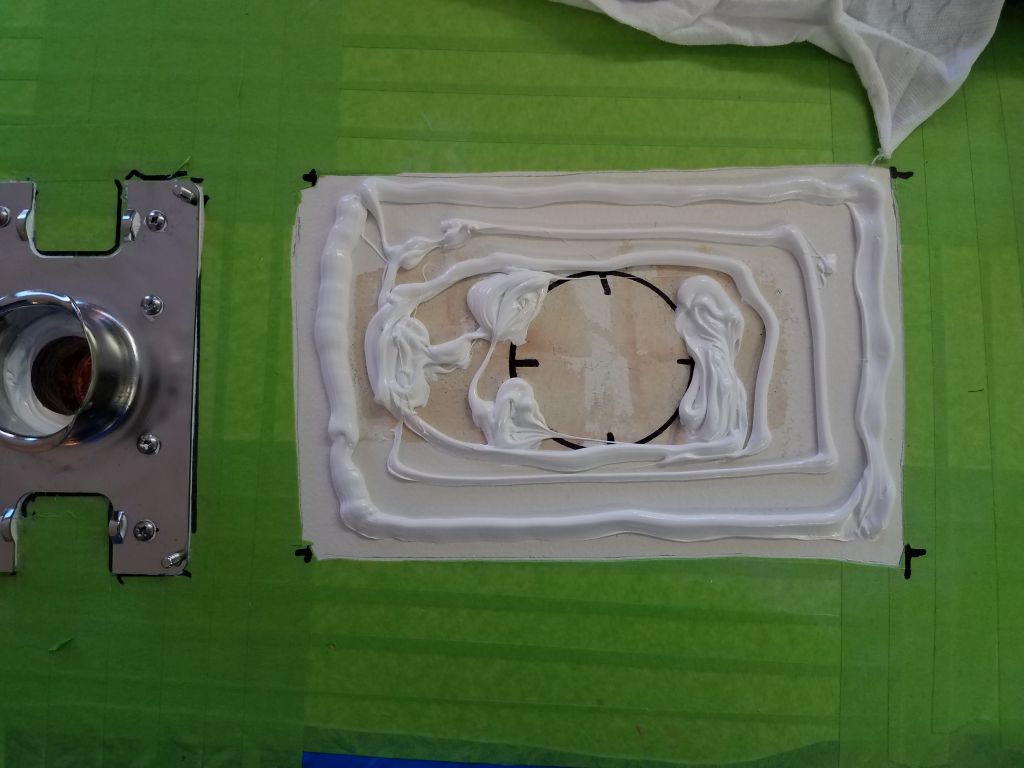
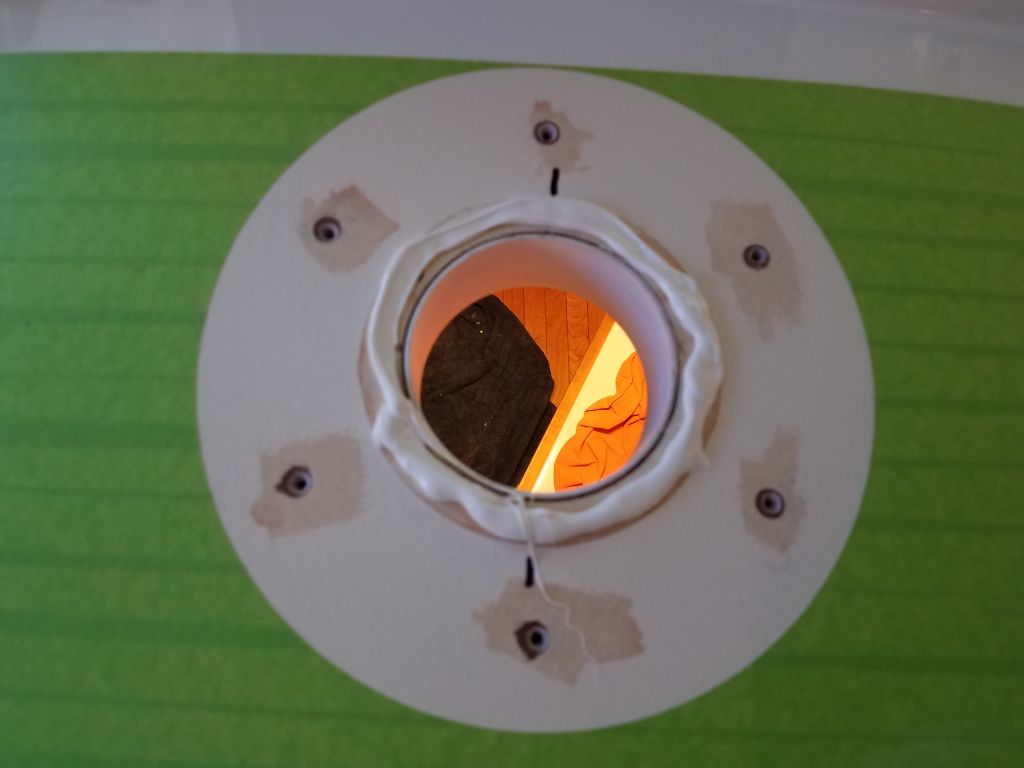
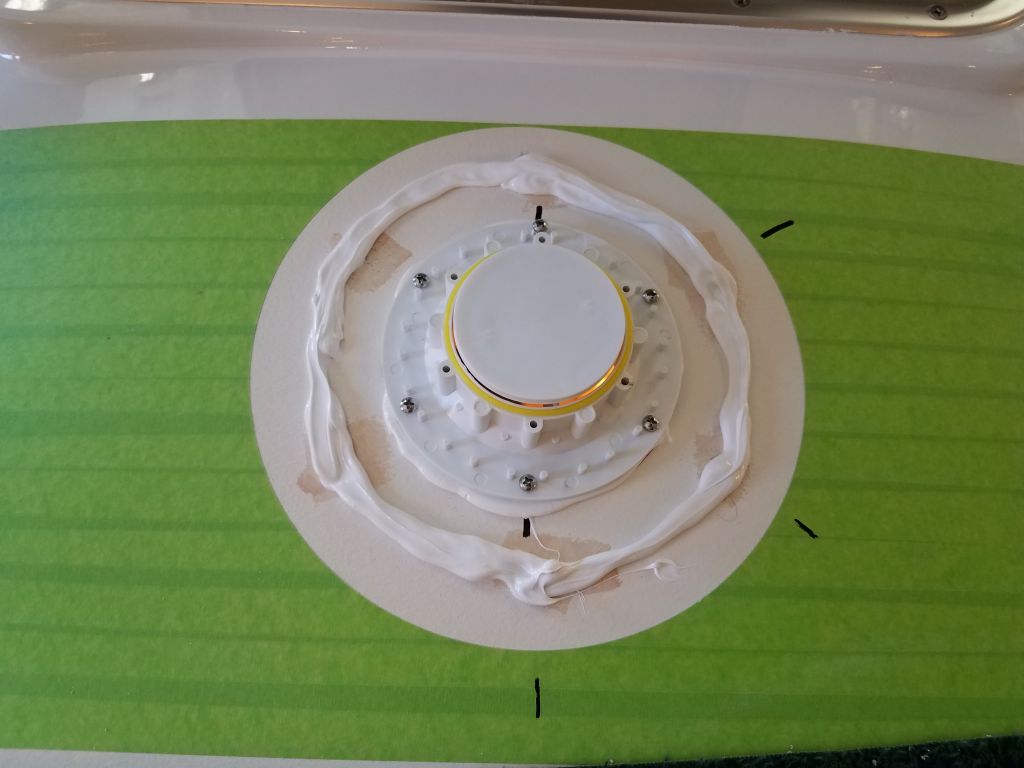
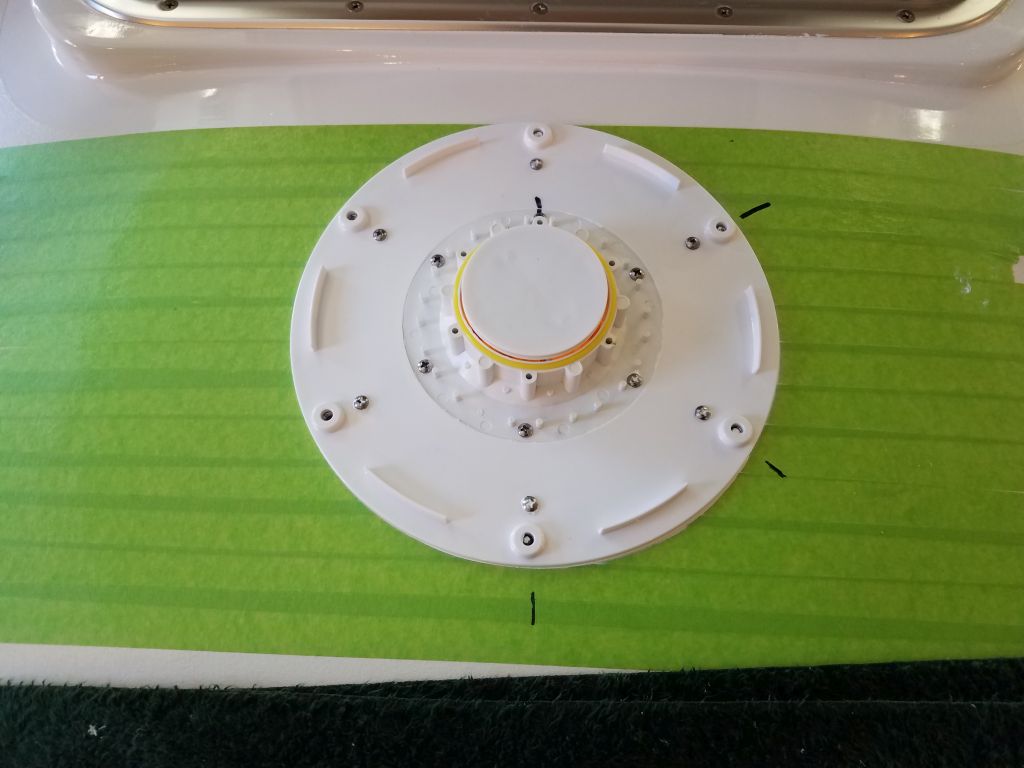
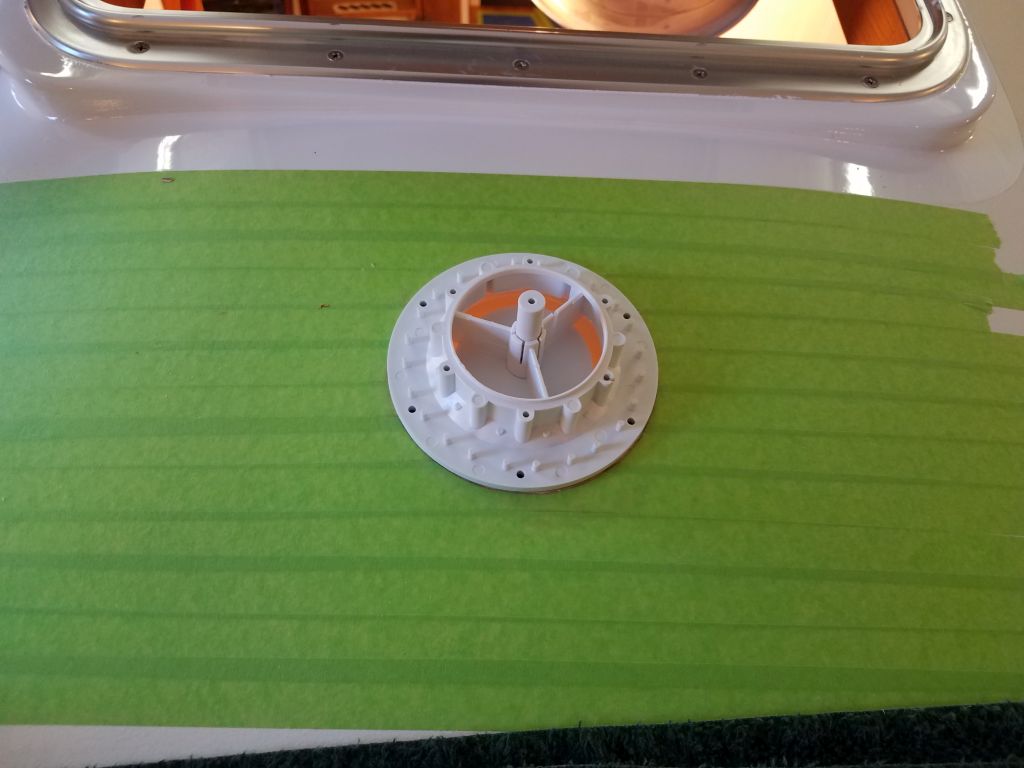
To accept the discharge ends of the two electric pump hoses, as well as a forthcoming manual bilge pump, earlier the owner and I had decided to install a pair of through hulls, one on each side of the counter:  one on the starboard side for the two electric pumps; and a second on the port side for the manual pump.  Using the location left over from the old discharge through hull (which I’d removed and patched much earlier) on the starboard side as a guide for the new locations, I drilled a pilot hole from inside the boat on each side in the desired location, then, from outside, drilled the larger holes required to accept each through hull.

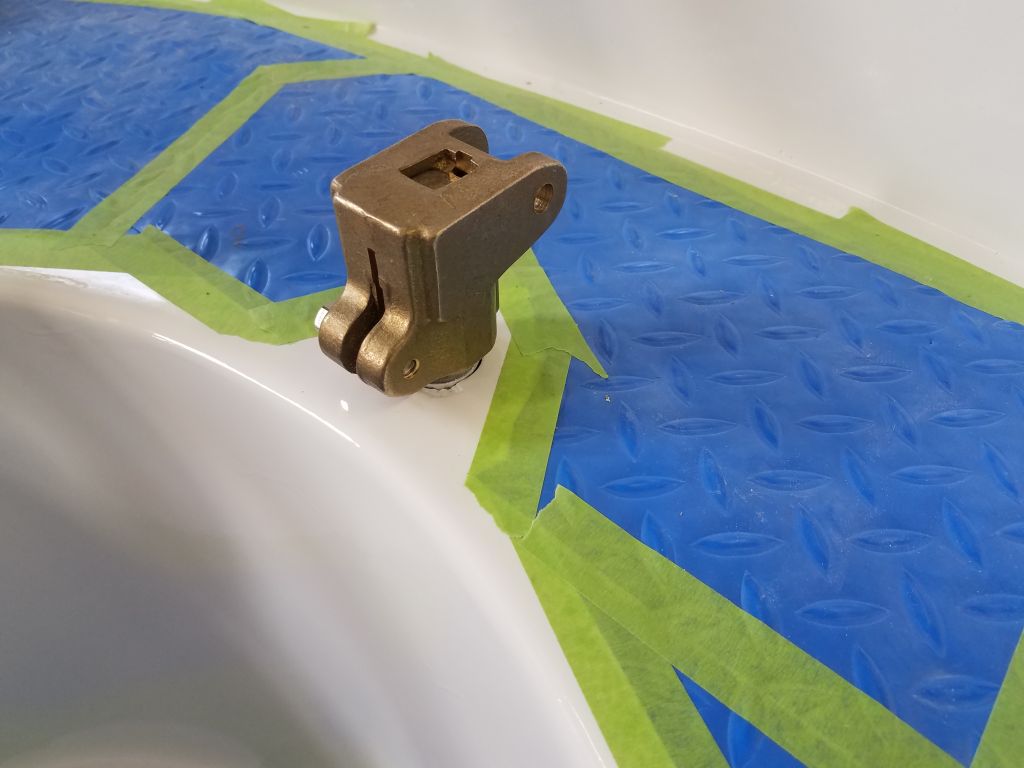
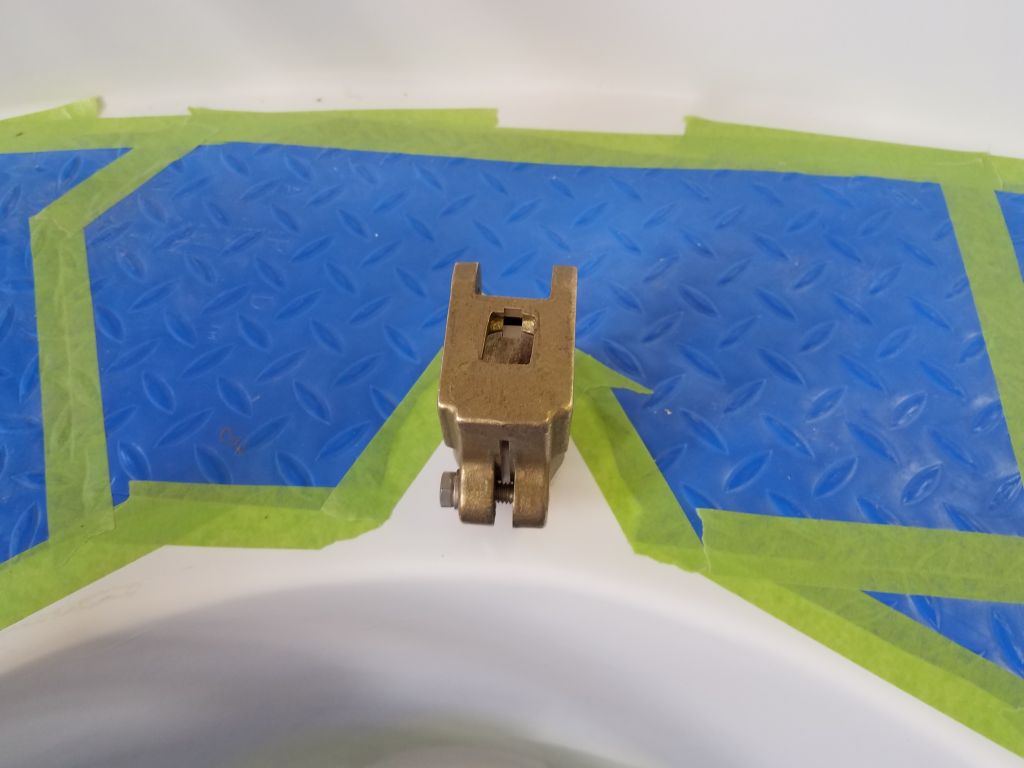
After cleaning up the drill spoils and around the holes themselves, I installed new bronze fittings at each location.

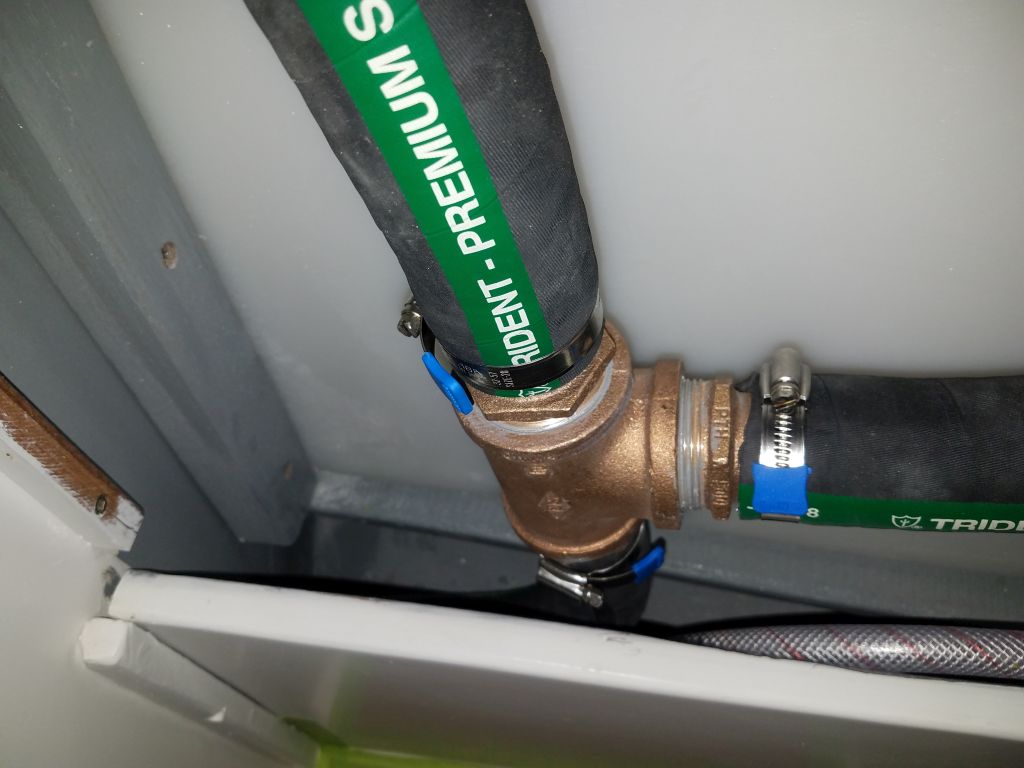
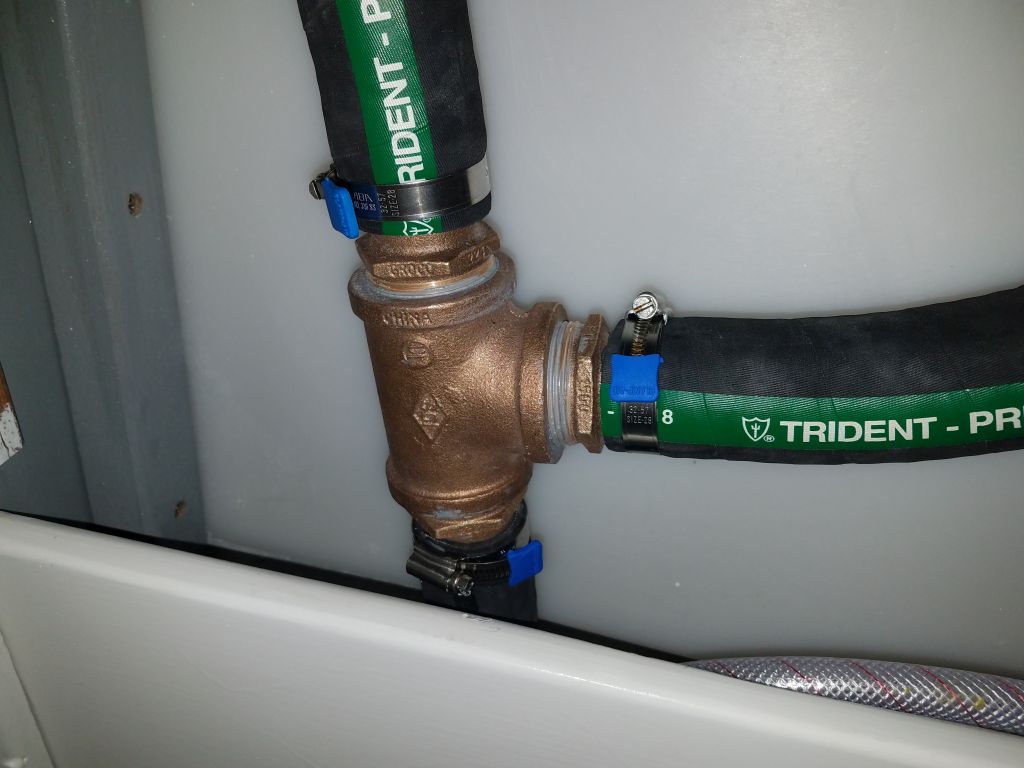
On the port side, I chose a barbed through hull that would later accept the 1-1/2″ discharge hose from the manual bilge pump.  For the starboard fitting, I needed a normal threaded through hull so I could install a bronze tee fitting for the two discharges from the electric pumps:  1-1/8″ from the centrifugal pump, and 3/4″ from the diaphragm pump.

Total time billed on this job today:  7.5 hours

0600 Weather Observation:  5°, mostly cloudy. Forecast for the day:  Mostly cloudy, 28°

Scupper 212

Friday

It was a quiet day, with important yet largely non-visual progress at the shop, aimed mostly at setting things up for the work to come in the next weeks.

To begin, I cleaned up as needed from the mast painting operation,putting away the painting supplies and equipment so I could get that side of the shop back to normal.  I left the freshly-painted spars alone for now for some additional cure time, but soon planned to move them to the side so I could reclaim the bay for a vehicle that I stored there, but had moved out for the painting operation.

Completing the mast painting was a significant milestone, and I wanted to finish its reassembly as soon as possible so the riggers and sailmakers could get back to work on their respective jobs, so to that end I went through all the mast hardware, noting the fasteners required so I could order replacements as needed, which I did once I’d checked existing stock against my scribbled notes.

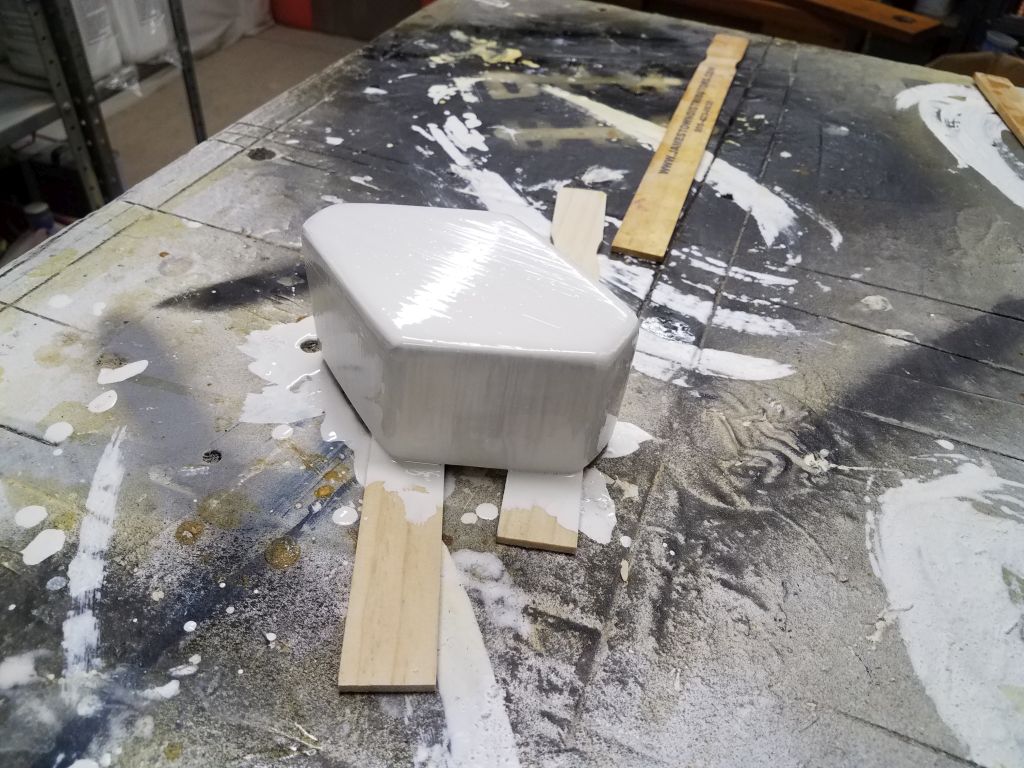
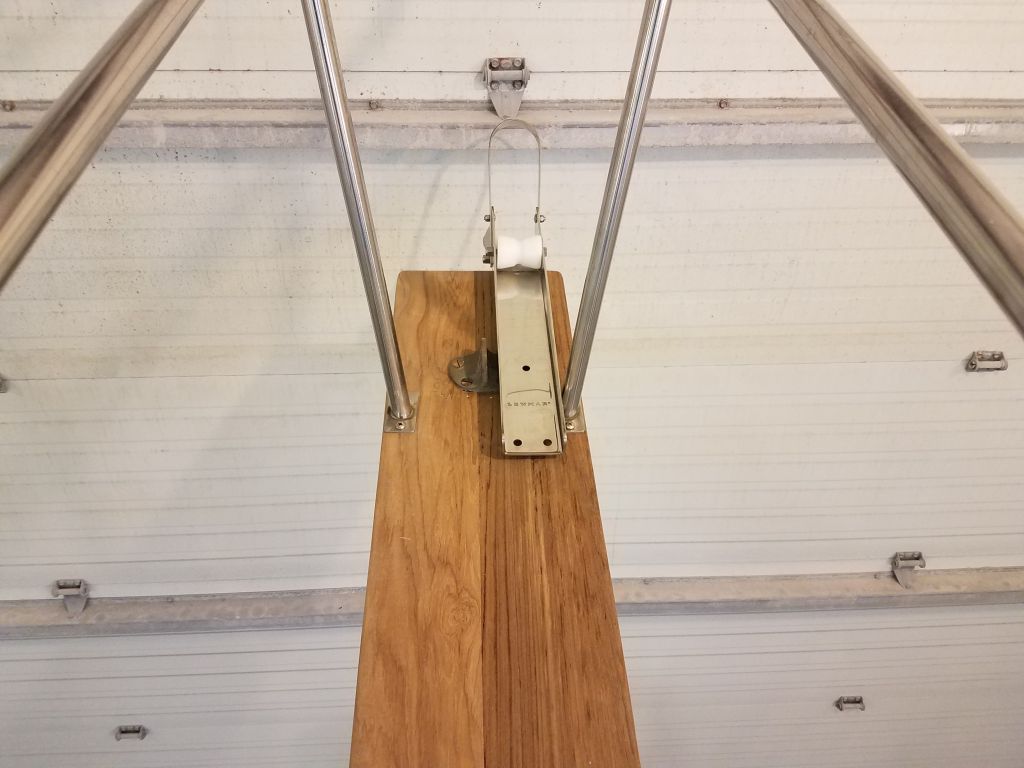
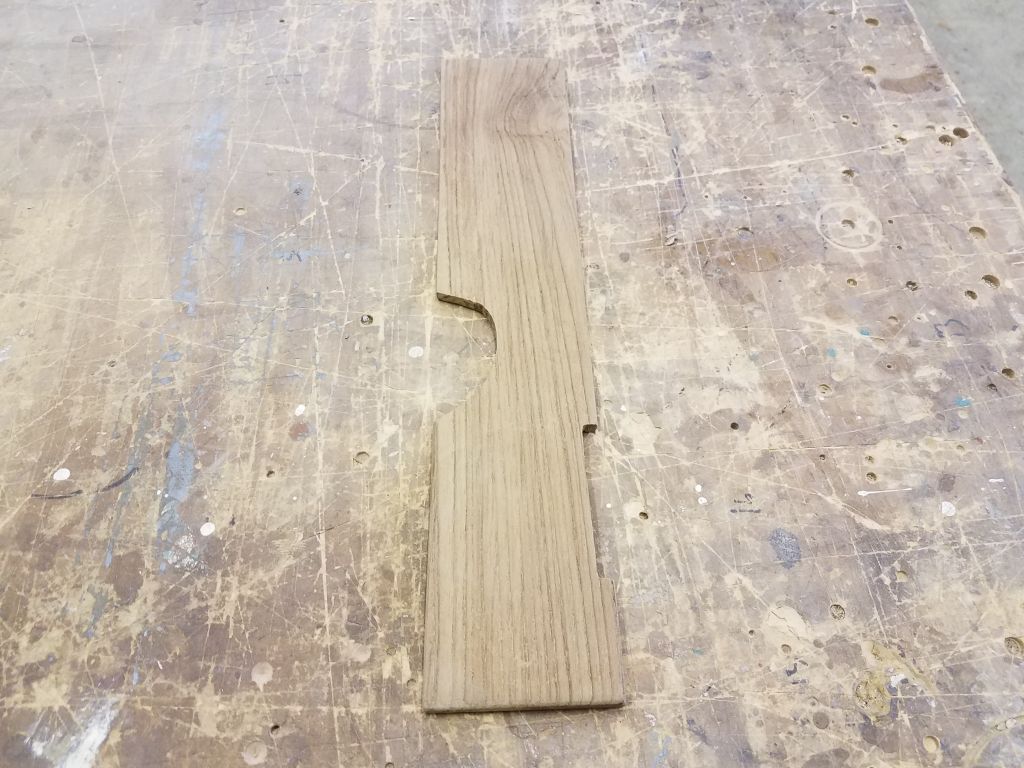
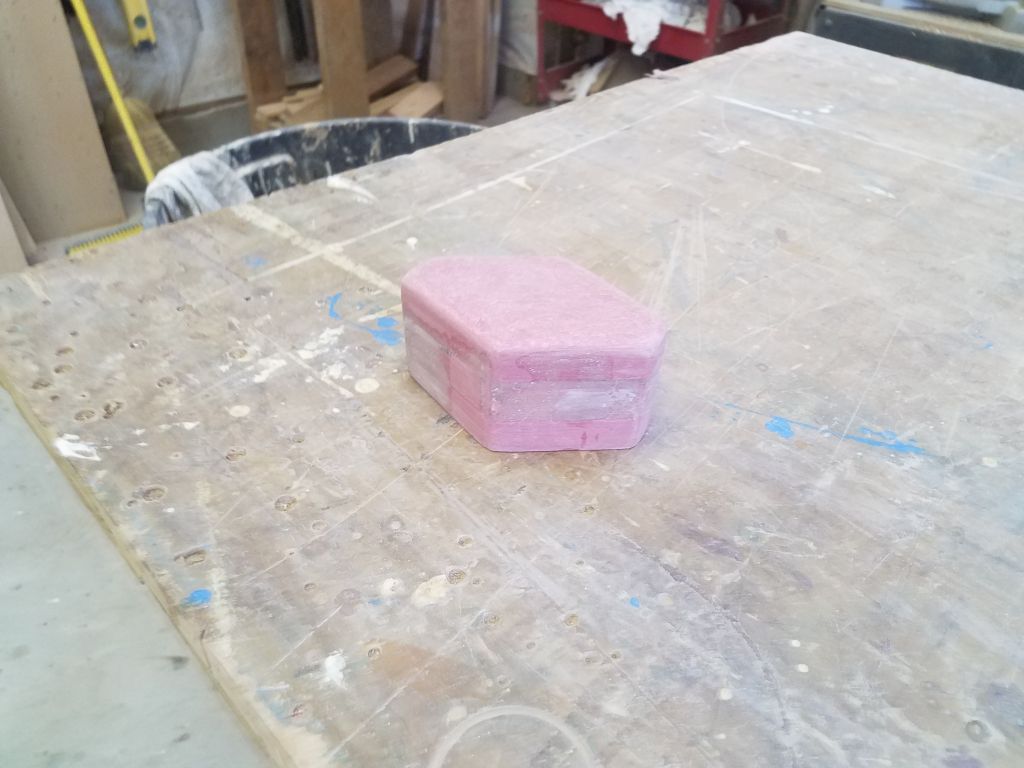
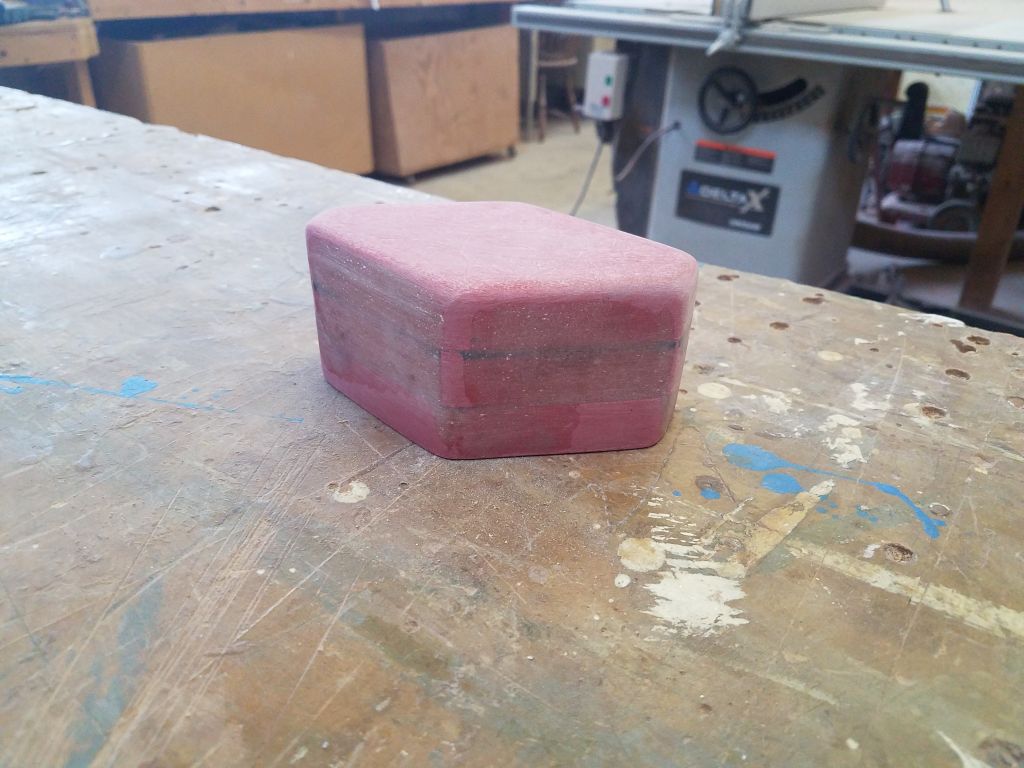
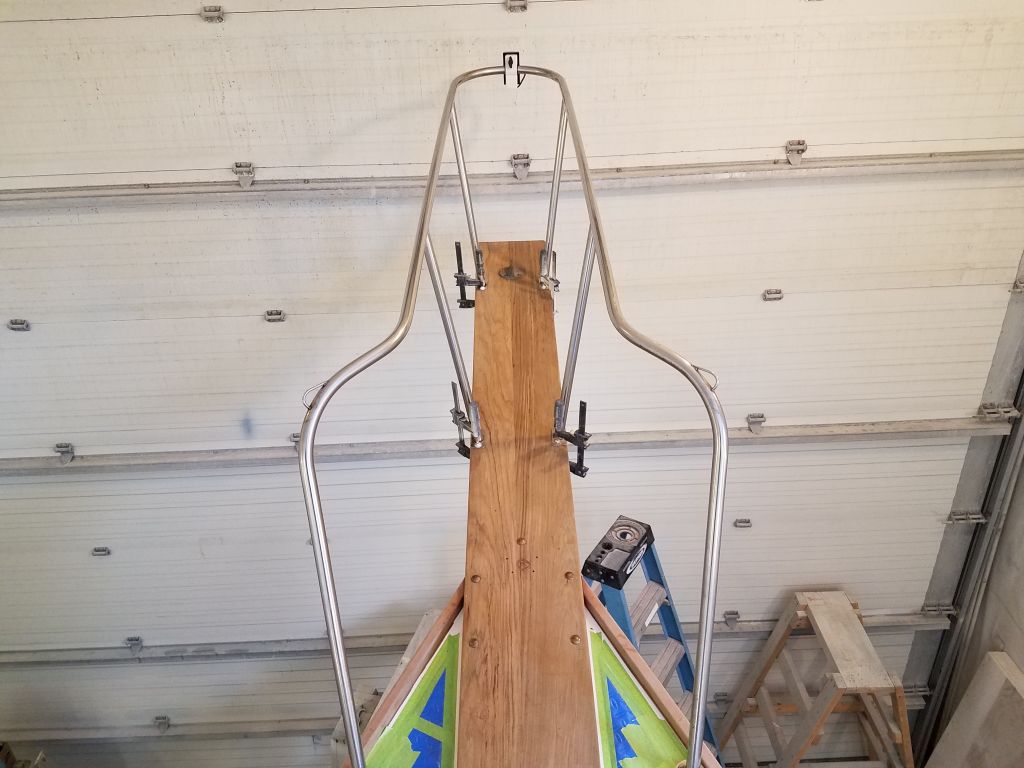
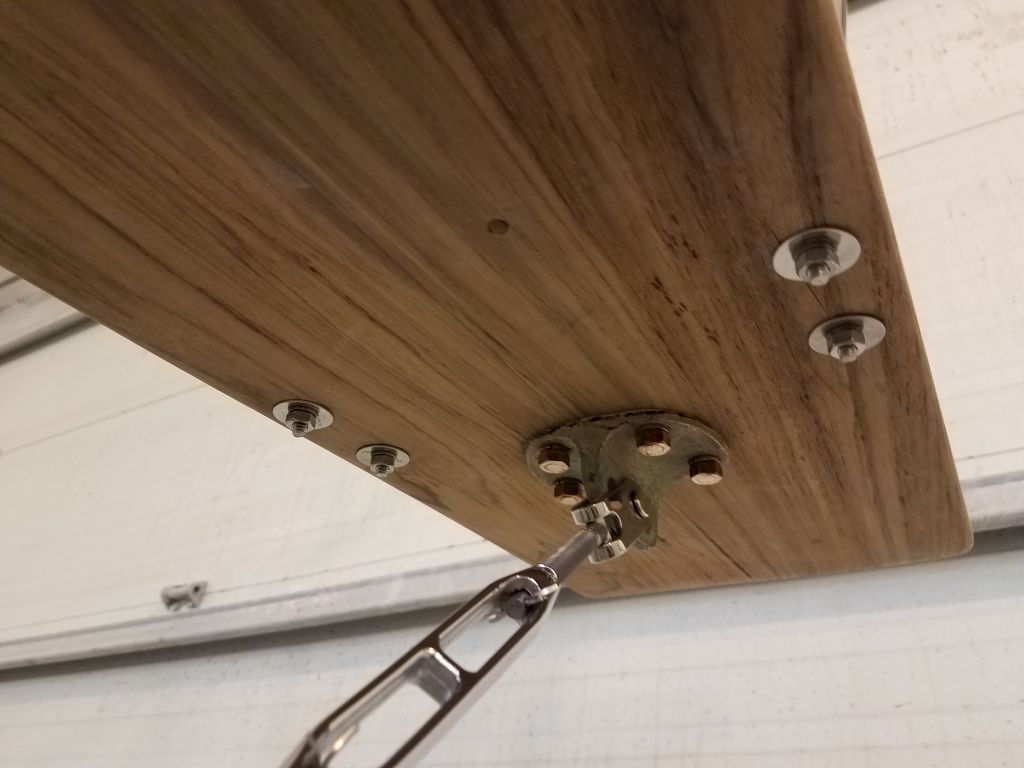
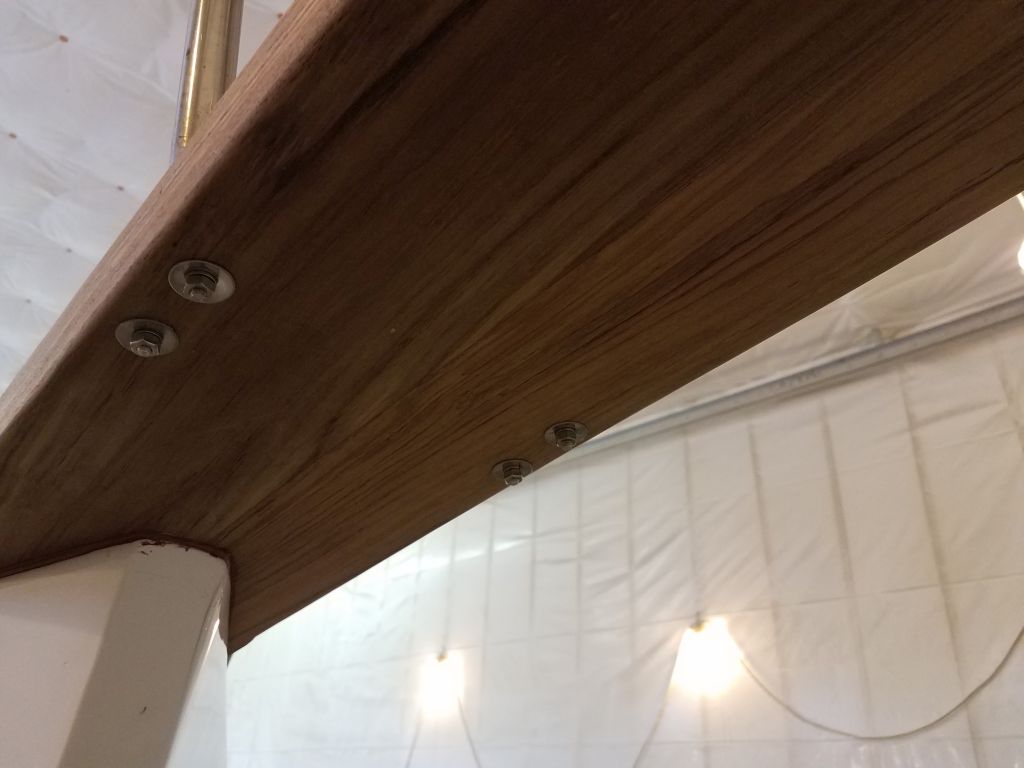
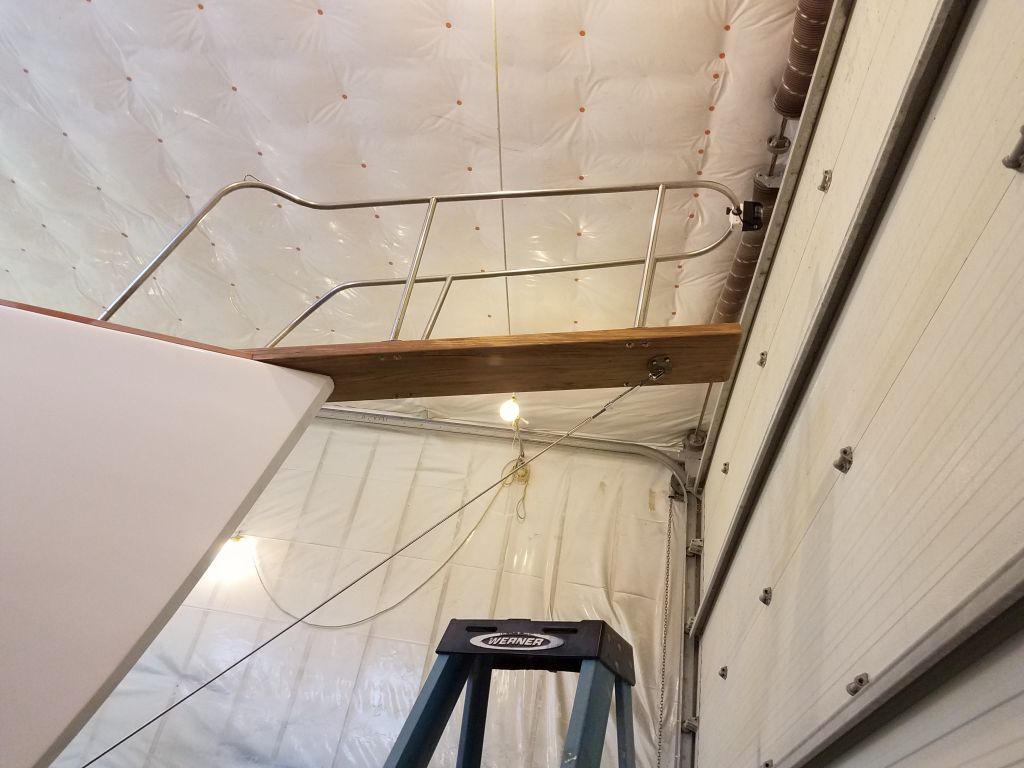
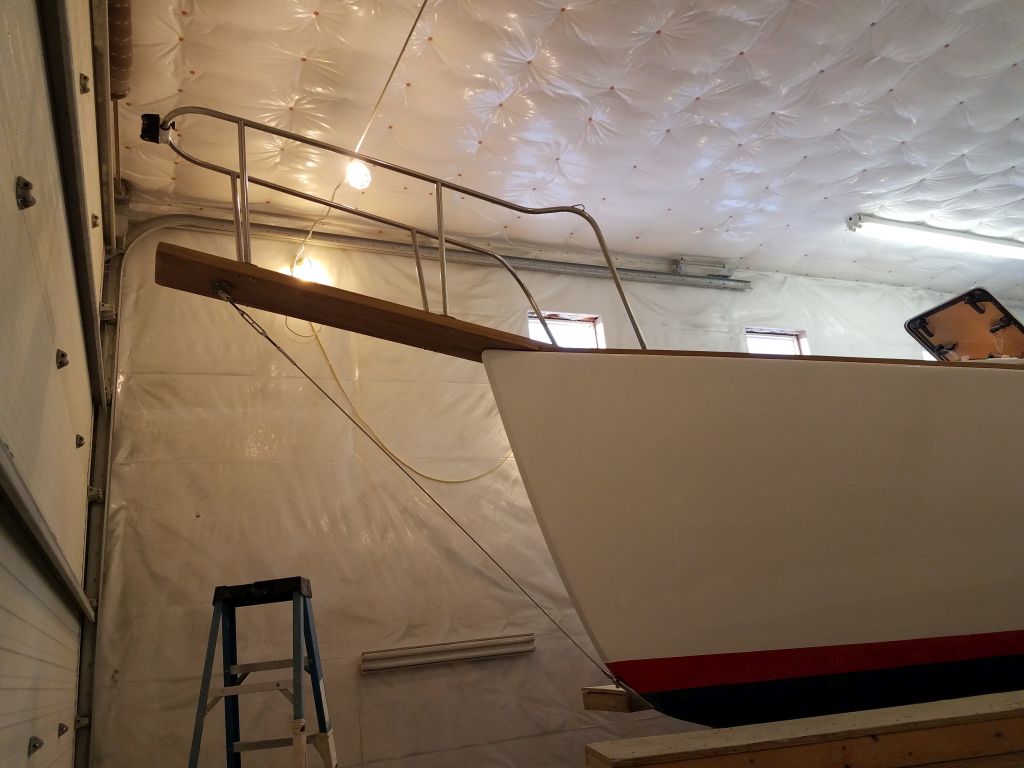
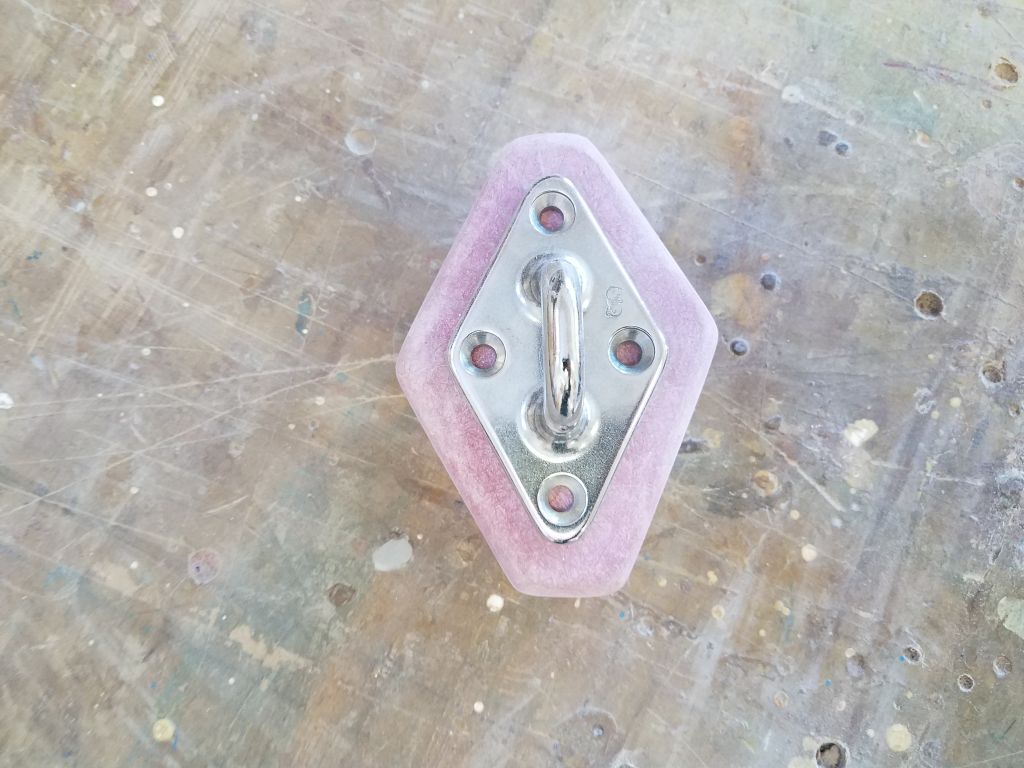
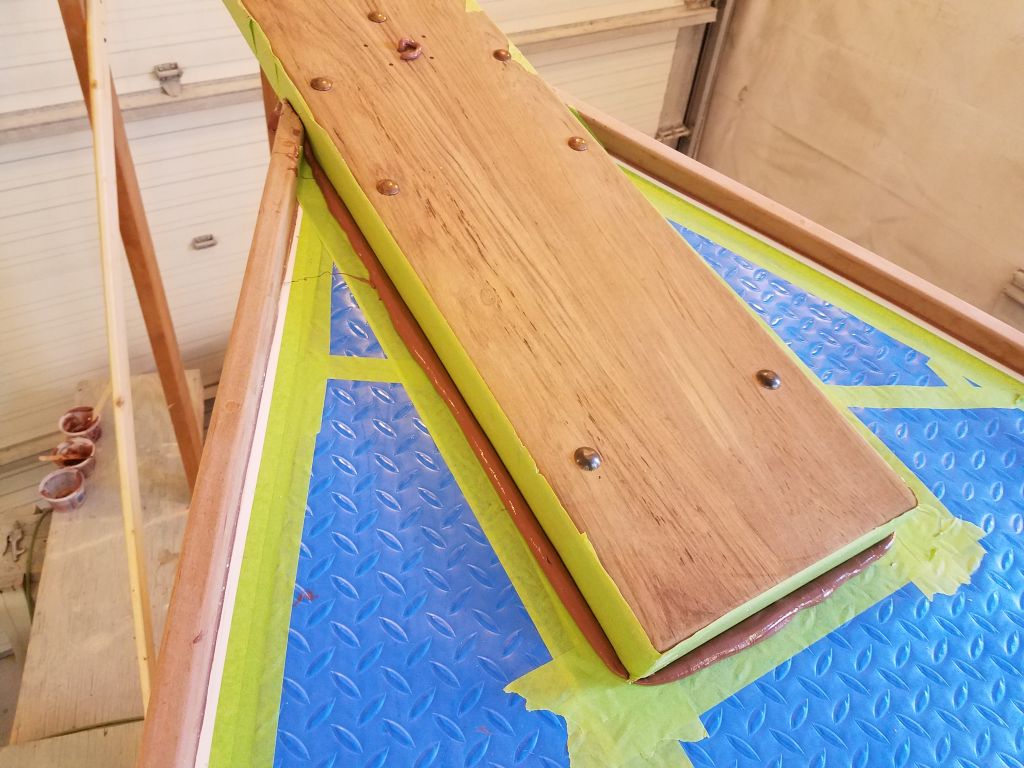
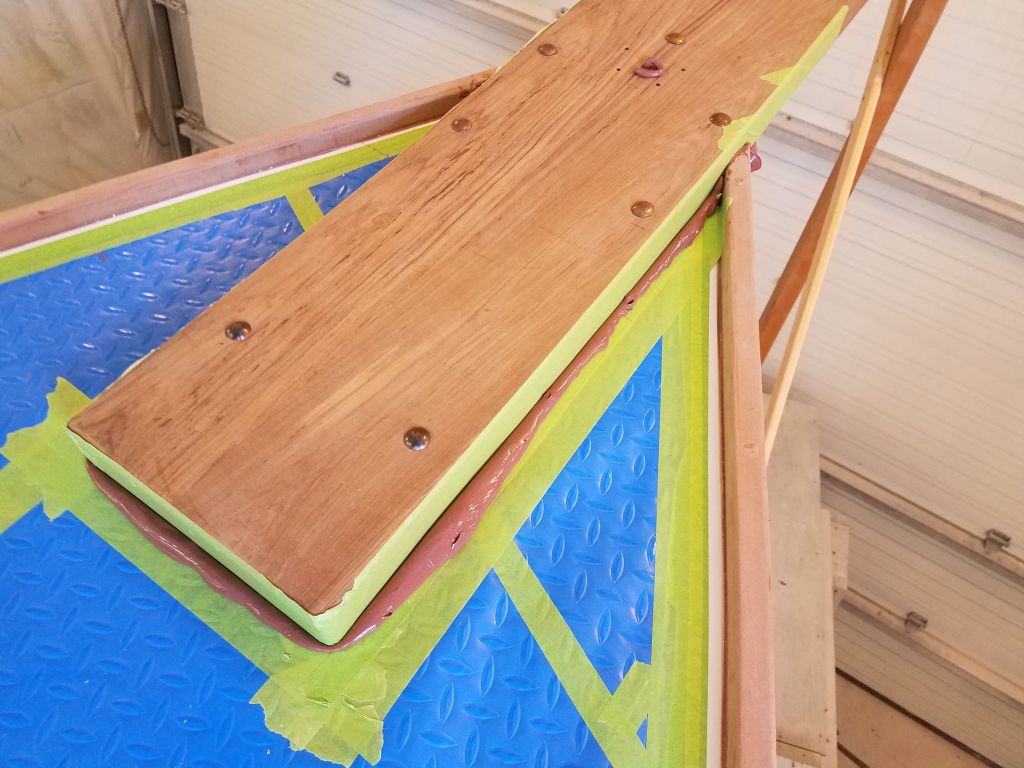
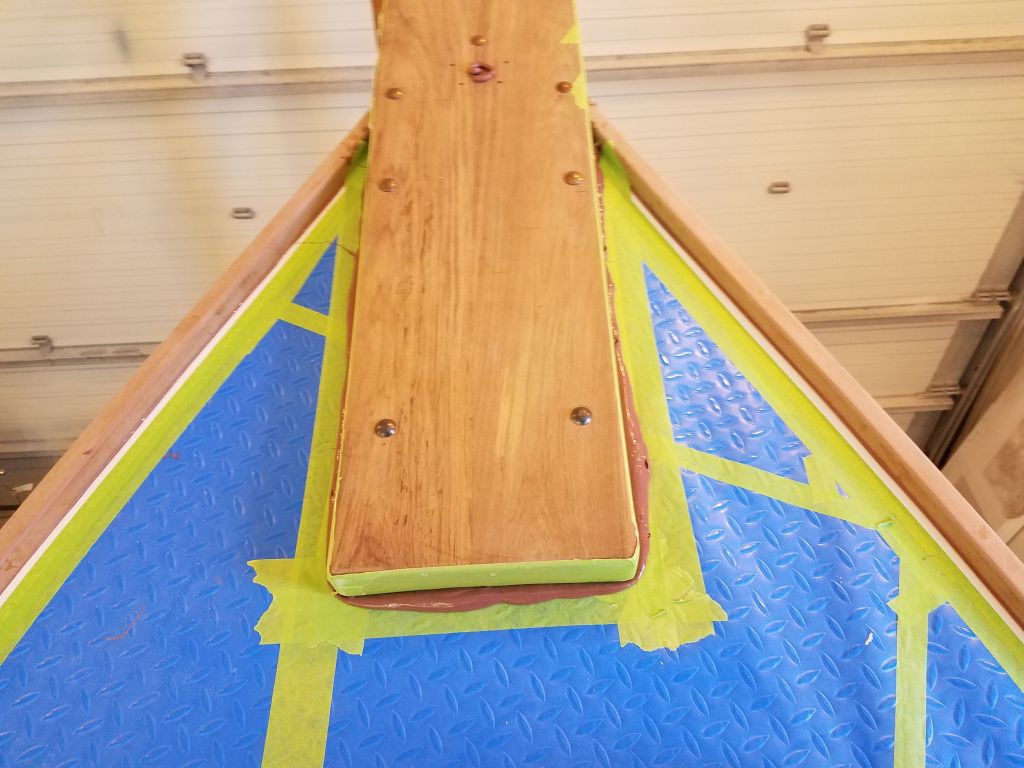
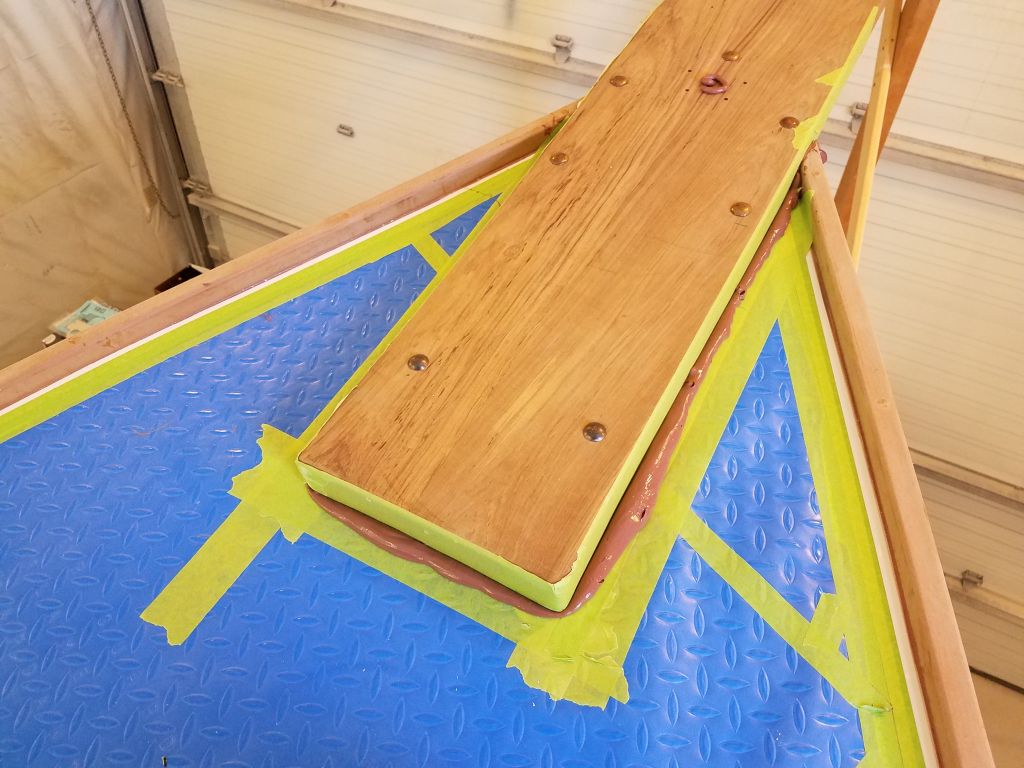
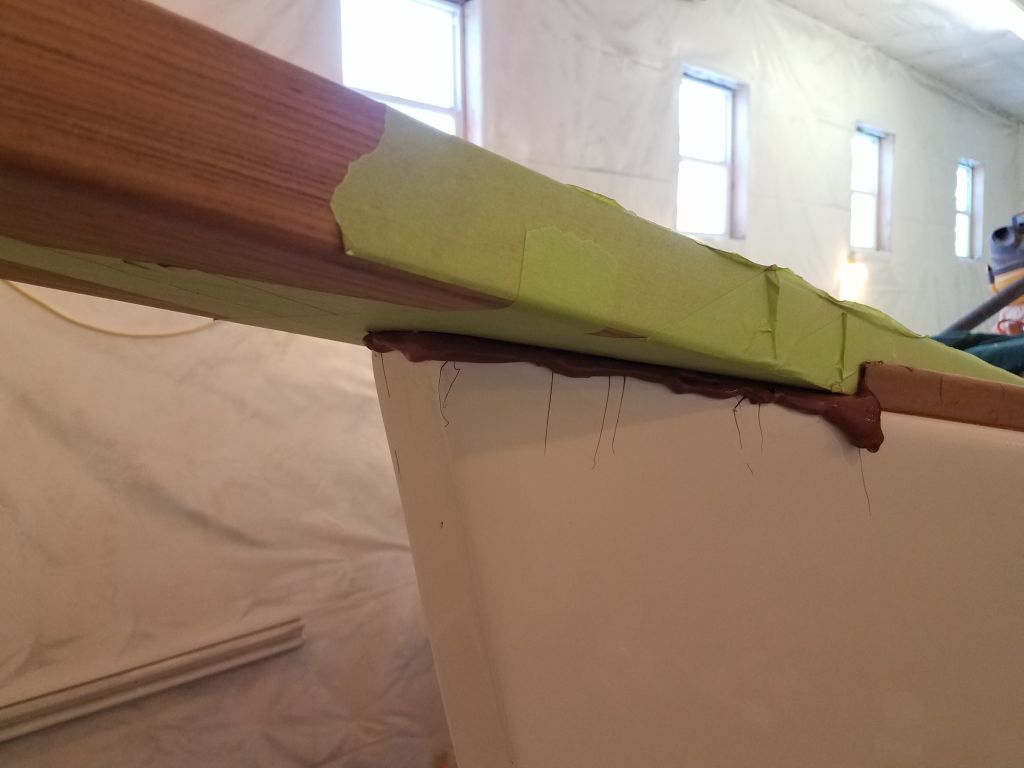
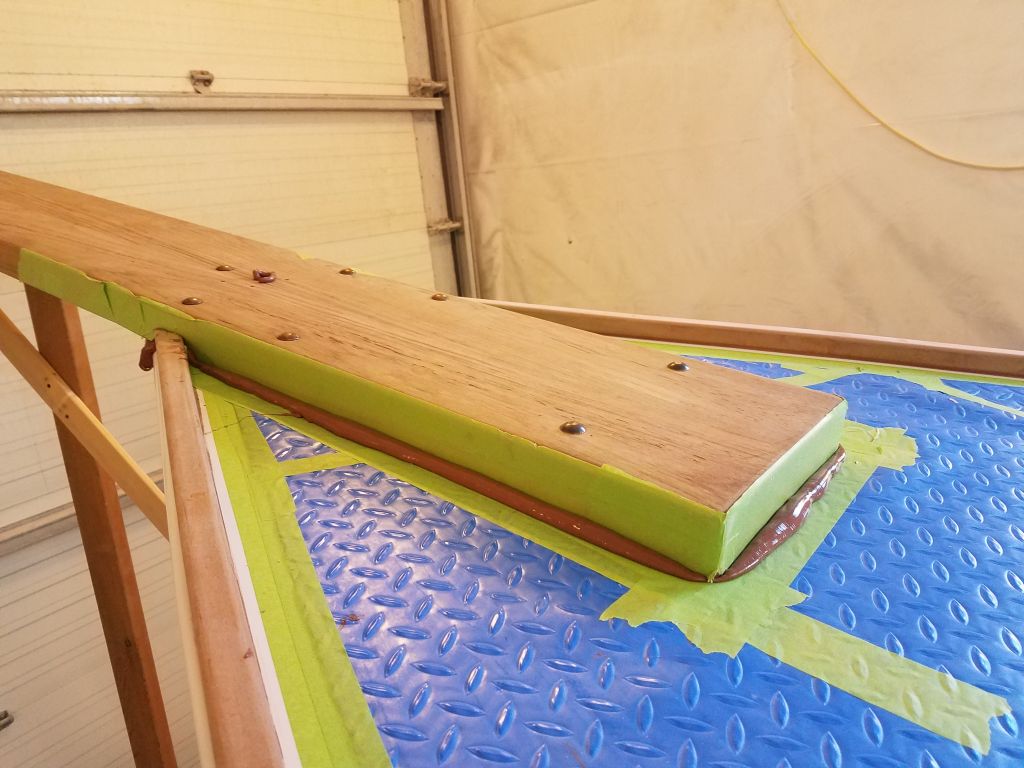
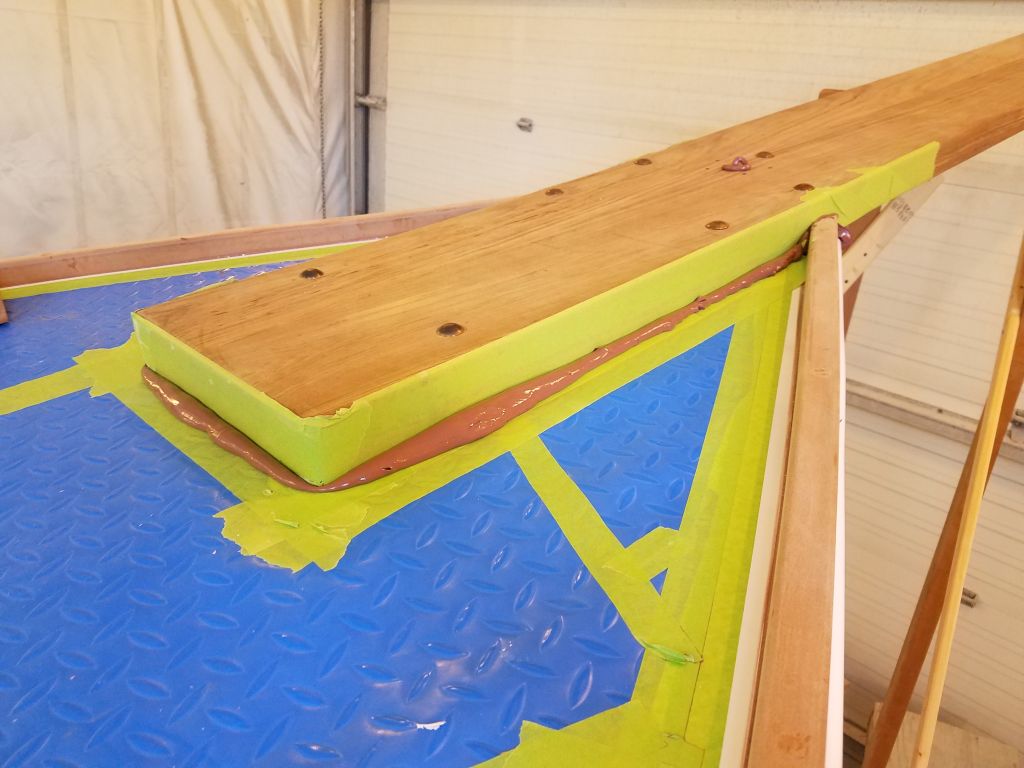
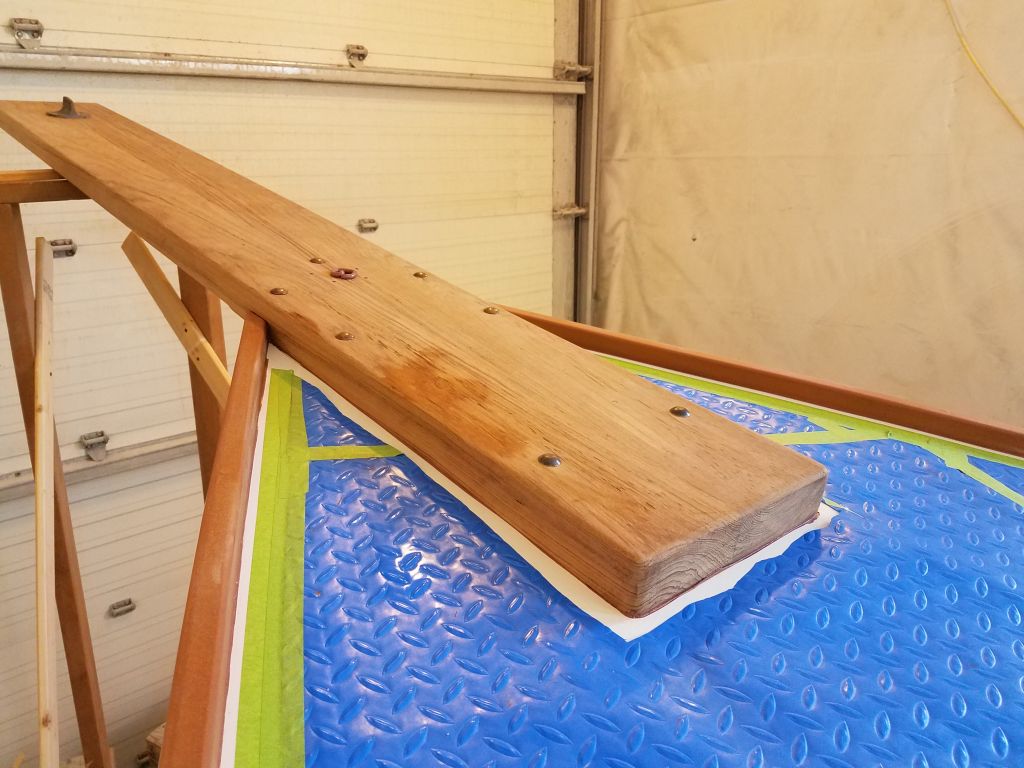
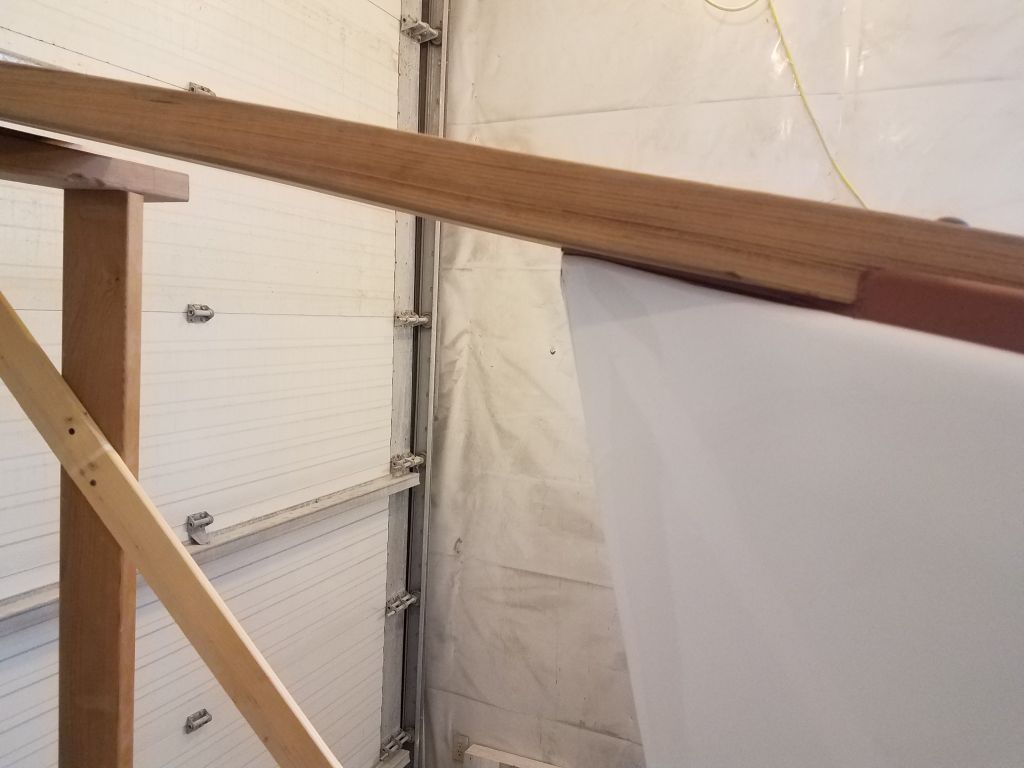
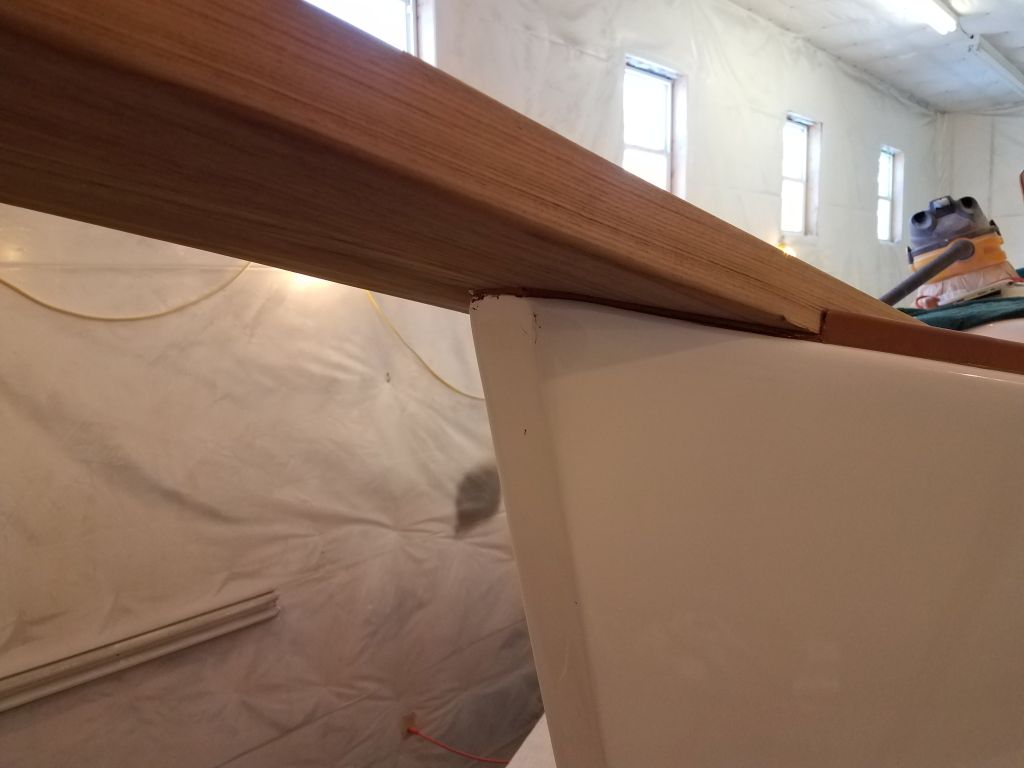
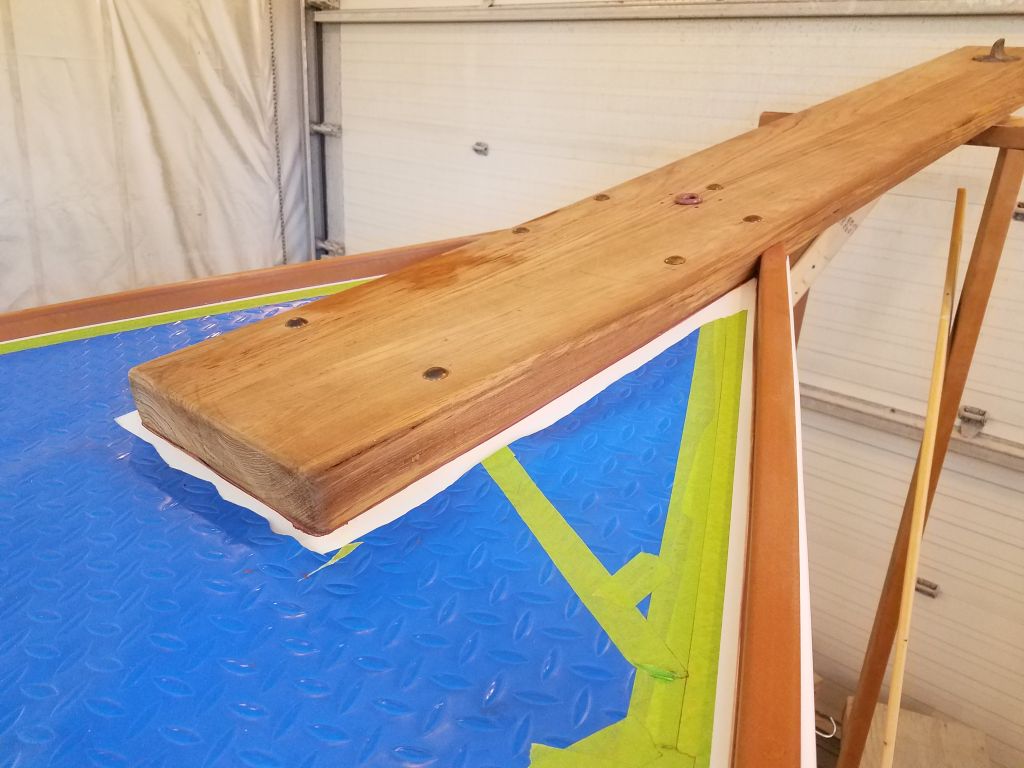
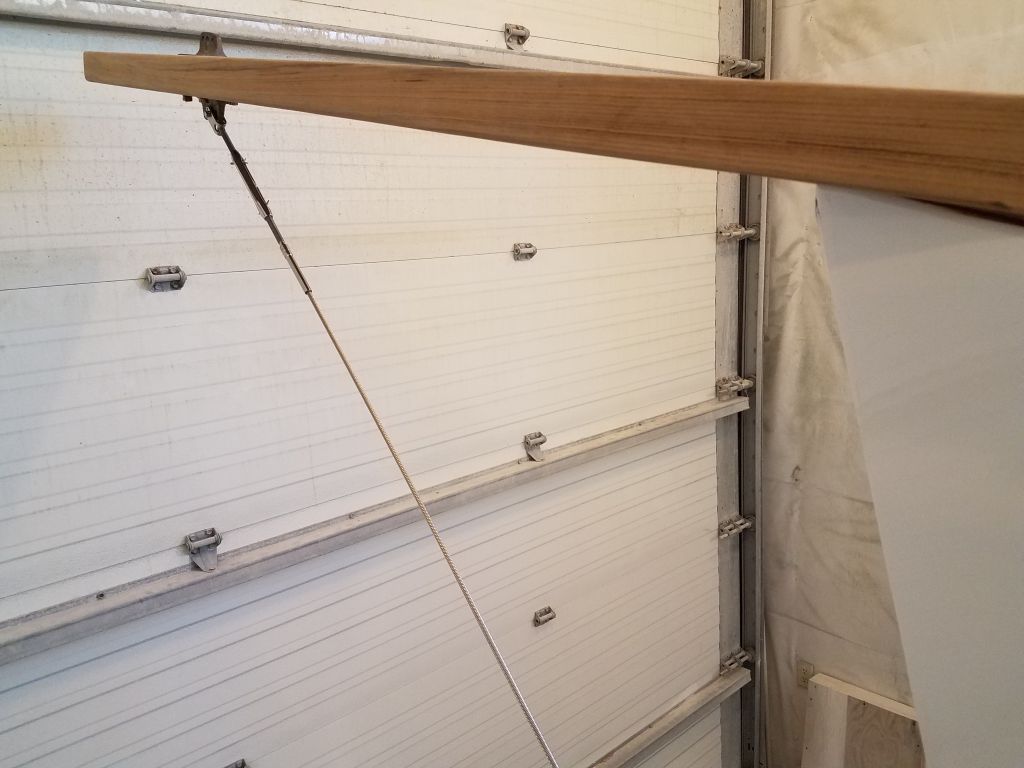
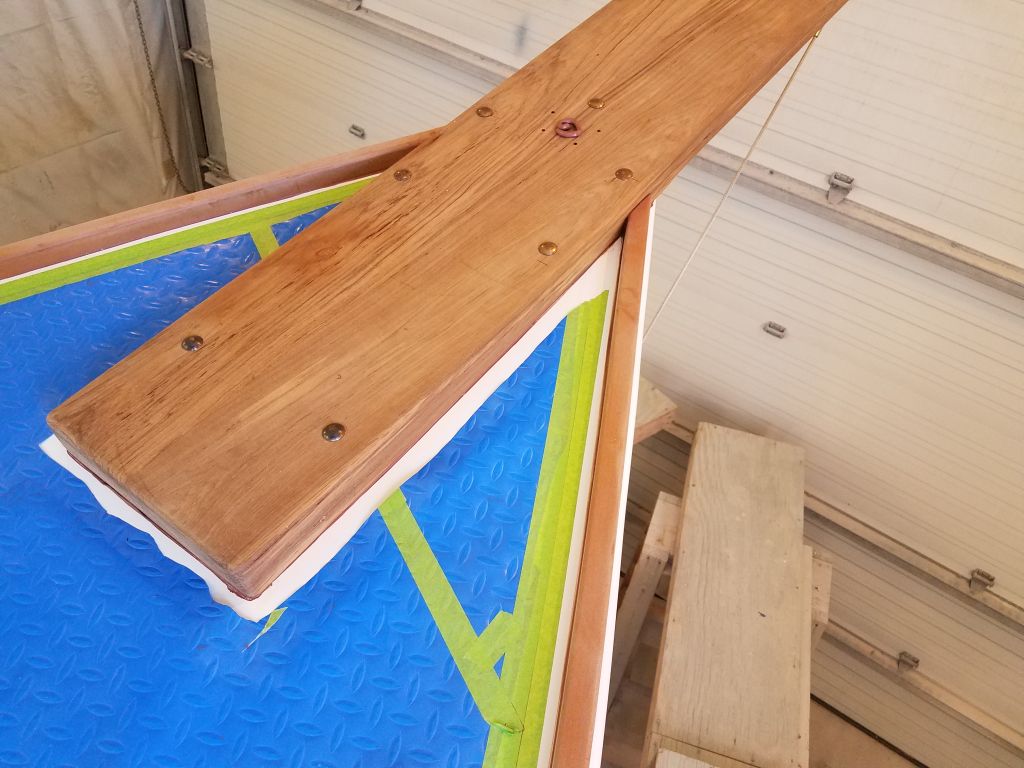
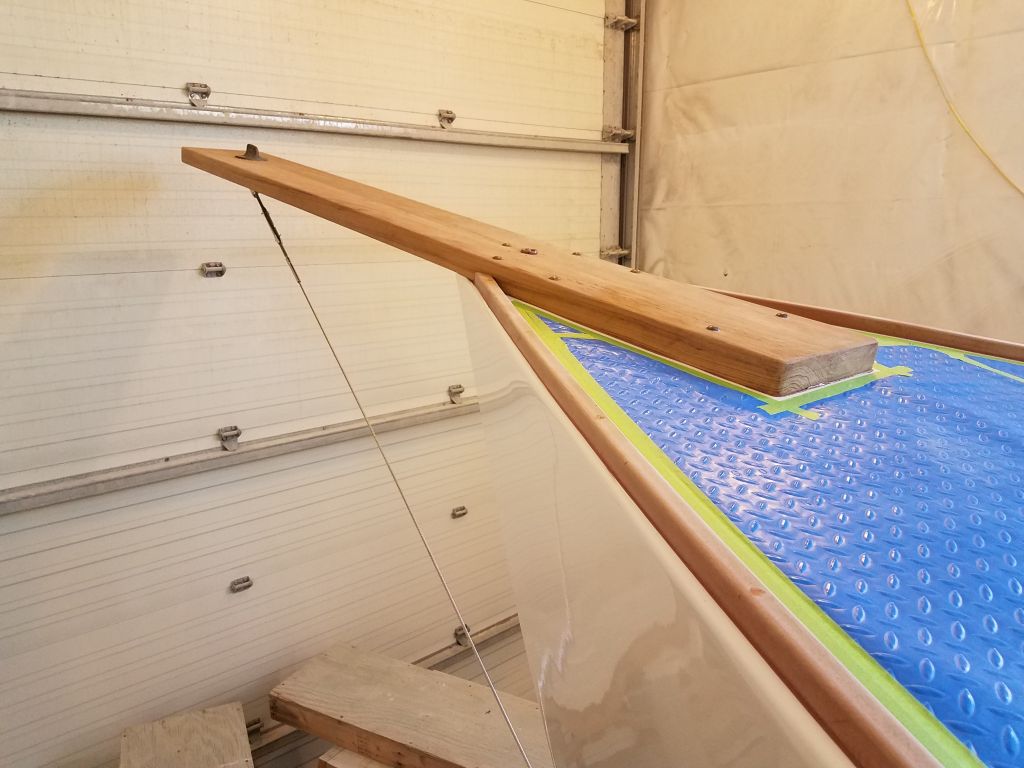
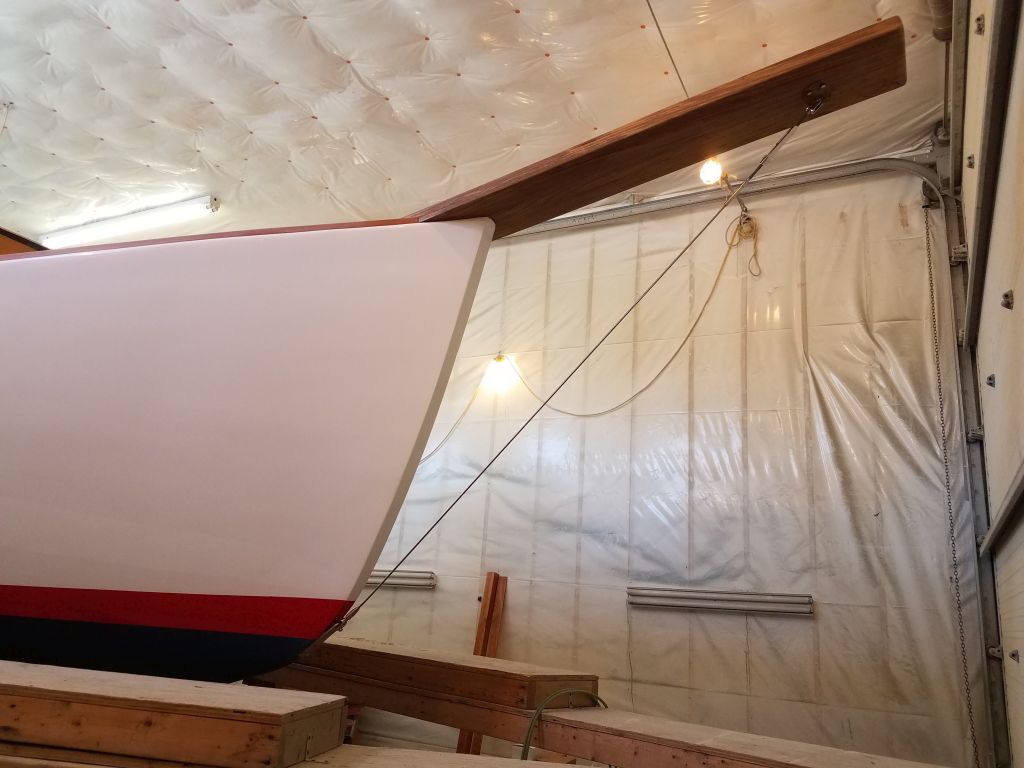
Next, I turned to the new bowsprit, which I’d glued up some time before.  Now I removed the clamps, scraped off the excess epoxy, and milled the blank to the final dimensions, using the original as a guide:  10-1/4″ wide and 84-1/2″ long.

I finished up the blank by rounding the corners as appropriate, and sanding the whole thing smooth.  Since the bowsprit would remain bare, this completed the initial construction, and I could soon prepare to install it.

Afterwards, I lightly sanded, cleaned, then revarnished the new cherry trim pieces and the cabin table.  I’d recently moved an unrelated finishing project out of my little finishing room, and now I spread the table pieces out there to allow the refinishing process to go on over the coming days, as the numerous two-sided pieces would require extra time to varnish completely.  I planned to finish up the cherry trim over the weekend, so I left them in the main shop for the duration.

Total time billed on this job today:  7 hours

0600 Weather Observation:  30°, cloudy. Forecast for the day:  Cloudy, 42°

Scupper 211

Thursday

The mast painting remained my main focus, but since there was little prep required before I could apply the gloss topcoat, I decided to use the morning to take care of some smaller jobs before continuing on the mast.

I wanted to keep the varnish work going on the cabin table and various trim parts that I’d started before the holidays, so to get going I lightly sanded everything and, after cleanup, applied a second coat of gloss varnish to all surfaces.

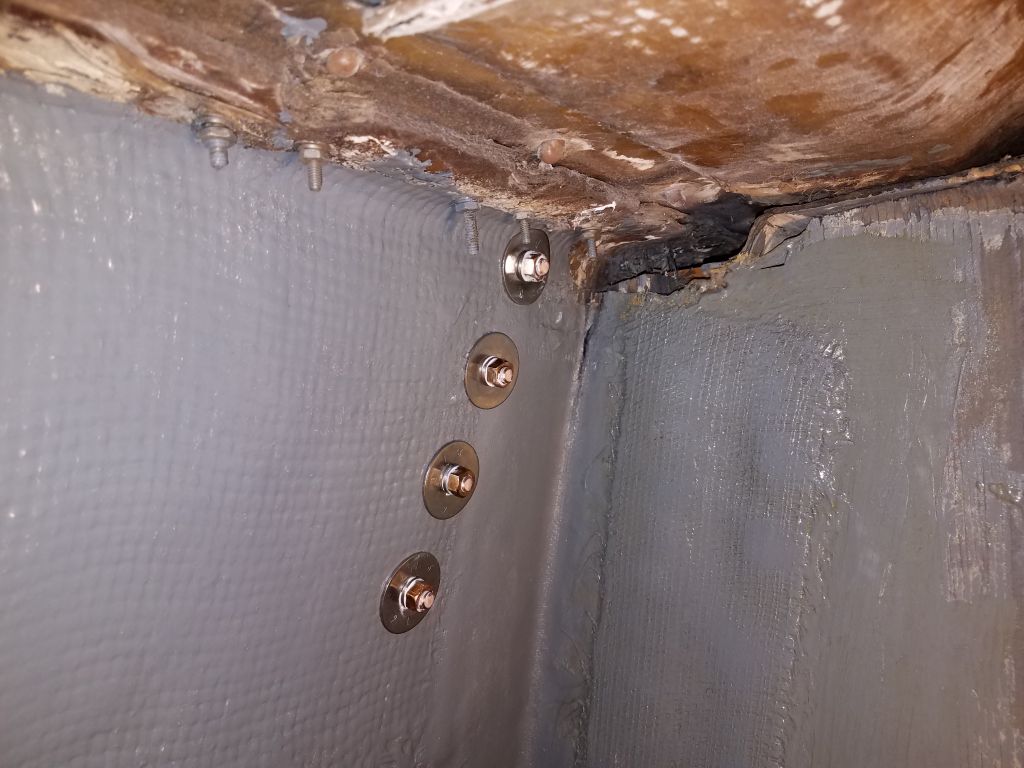
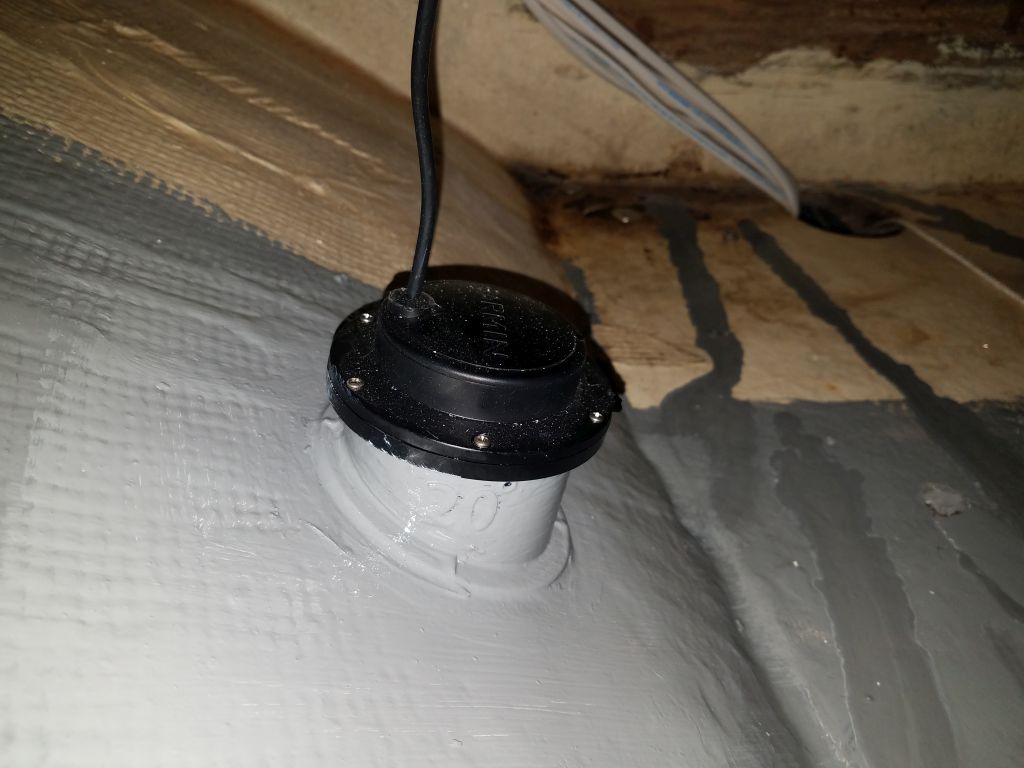
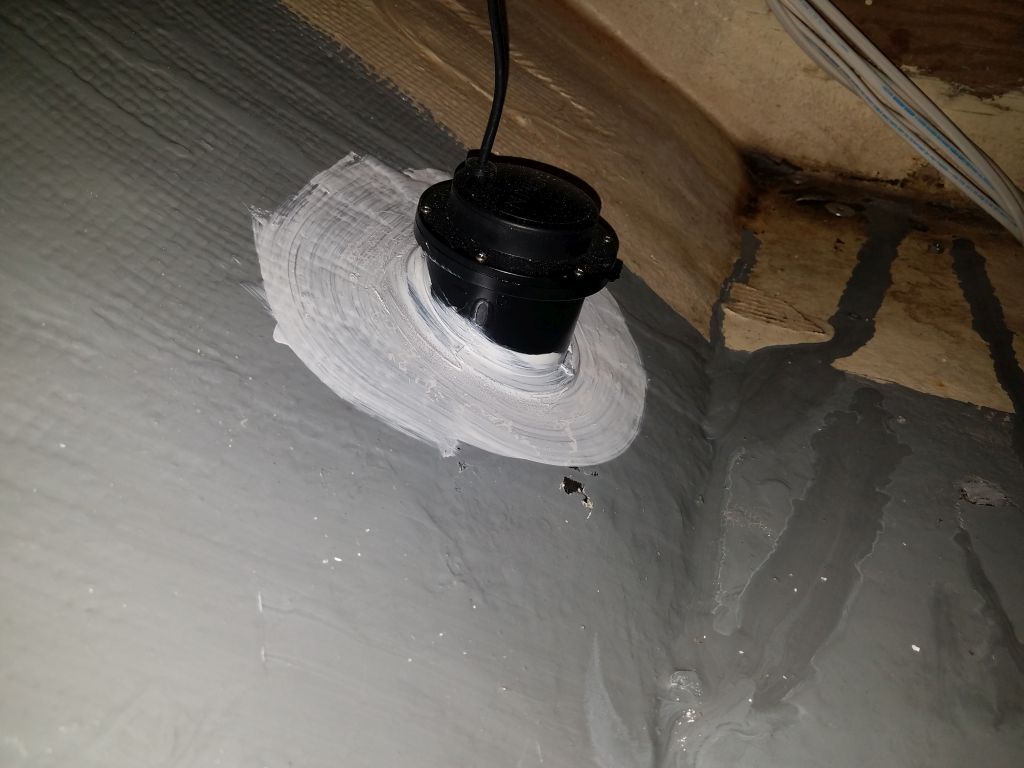
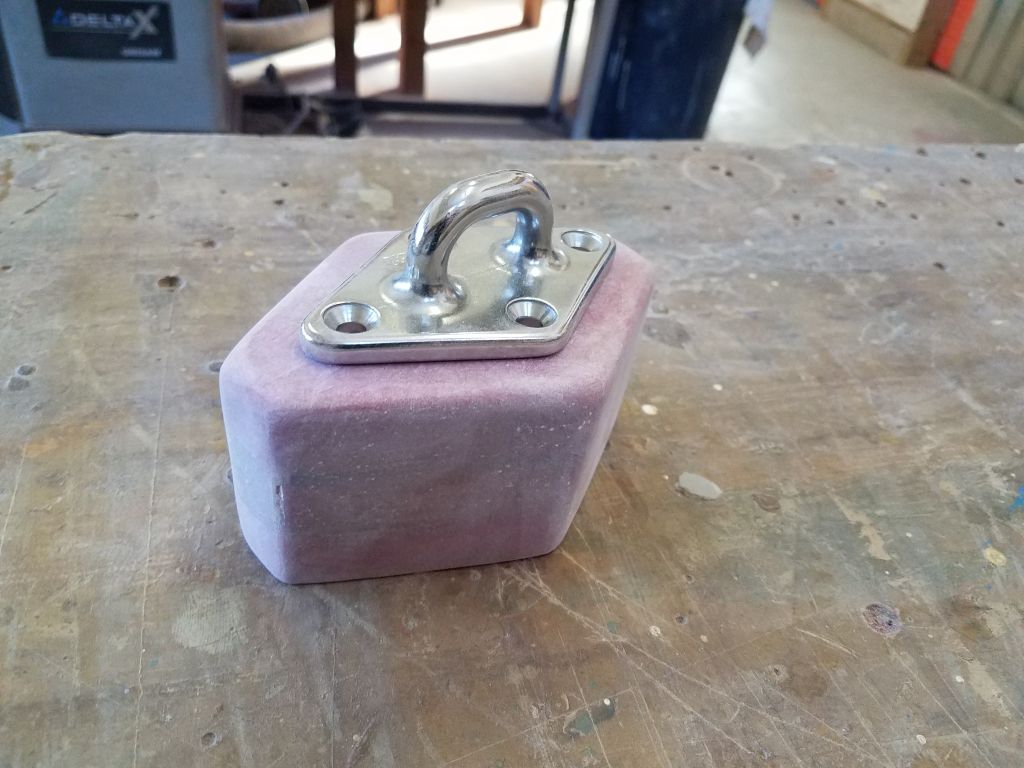
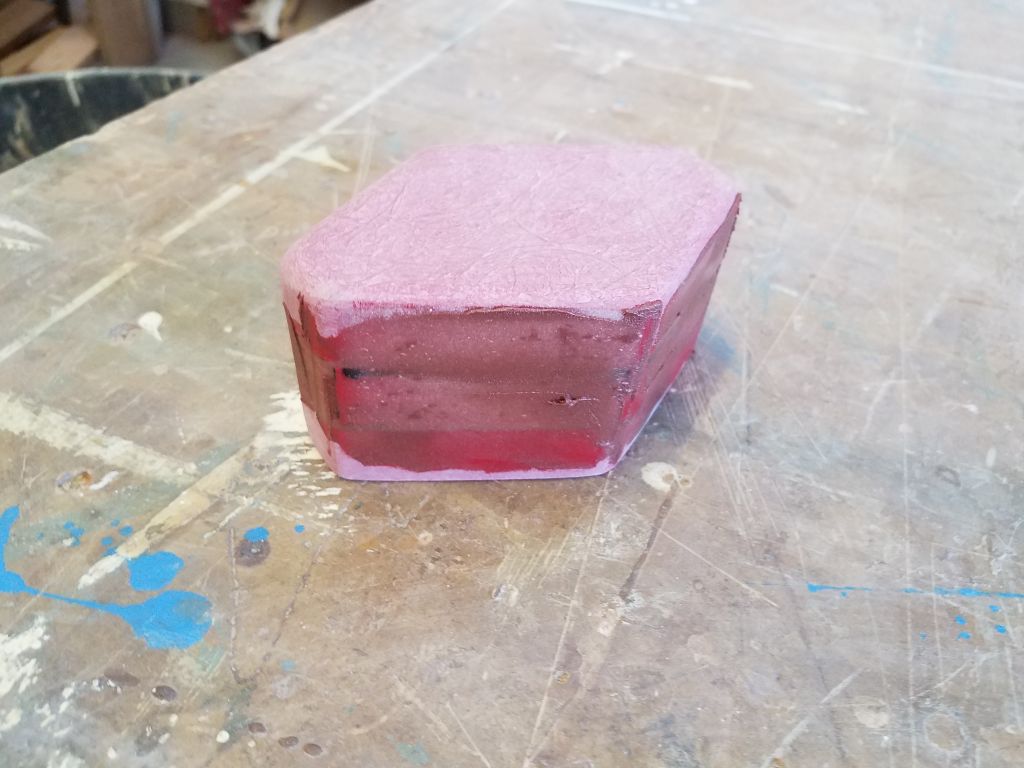
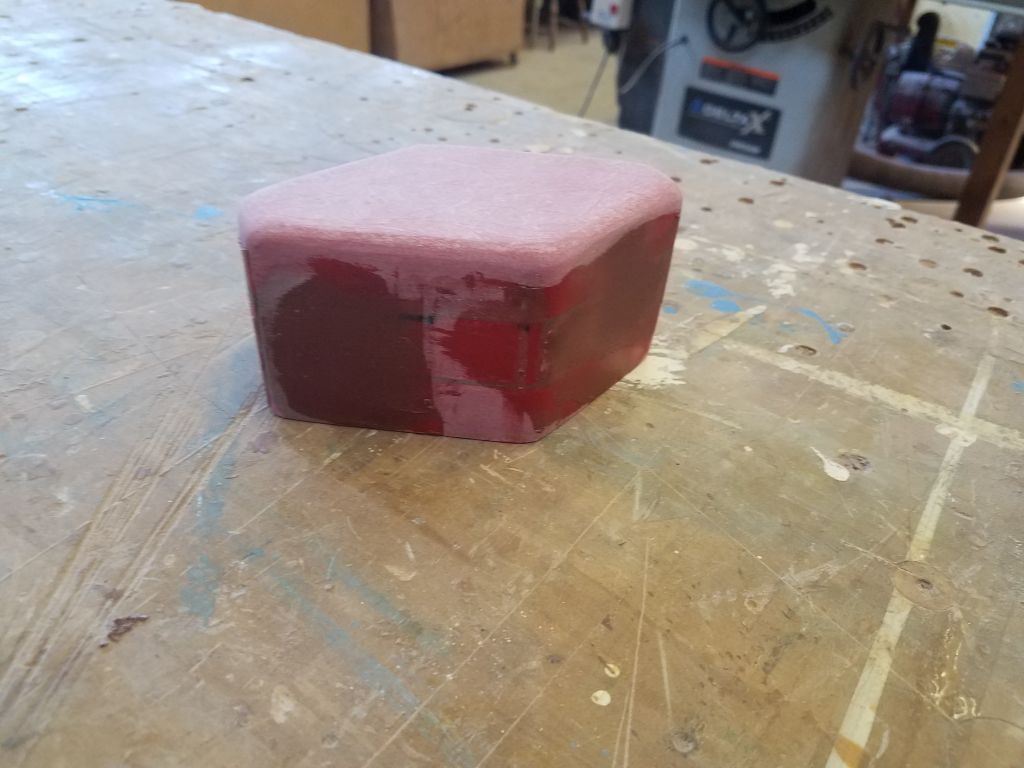
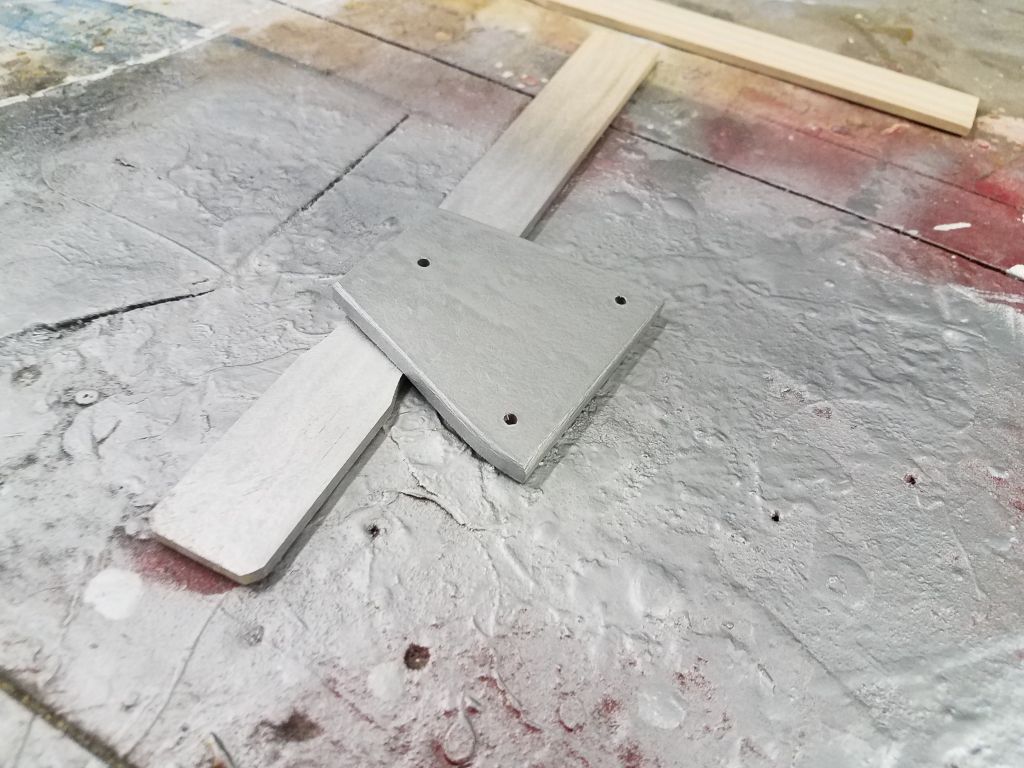
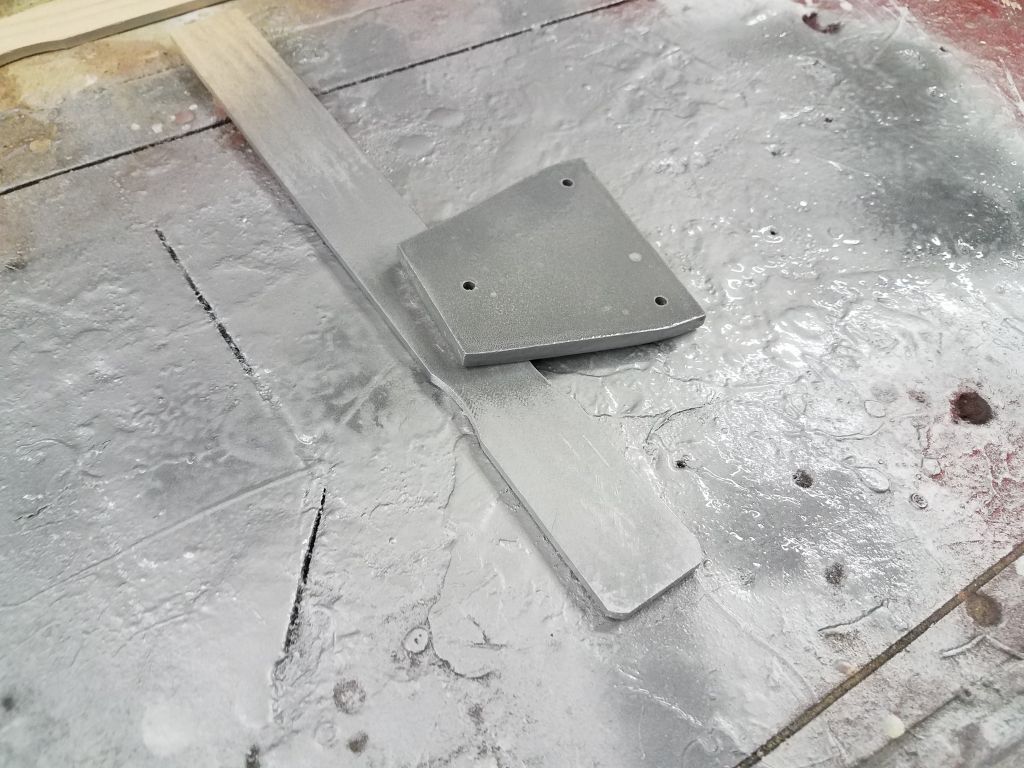
On my new bracket, I installed one of the automatic switches, along with the base for the centrifugal bilge pump, using short screws tapped into the fiberglass to avoid penetration through the bracket itself.  I aligned the bilge pump base so that the outlet of the pump would face the desired direction once the bracket was installed.

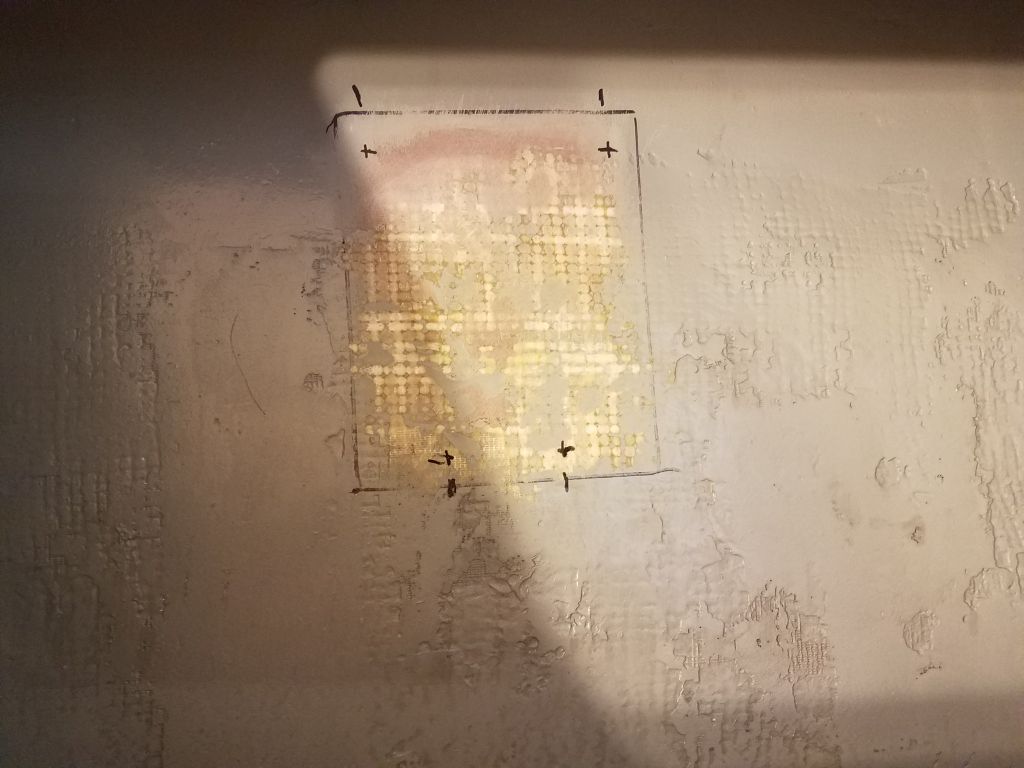
Inside the boat, in the bilge opening near the galley, I chose the location for the bracket and removed paint from the bottom of the bilge so I could epoxy the bracket in place.  This location allowed relatively easy access for wiring and servicing the pump and switch in the future, and the bracket design intended for the wiring to be easily led up and away from the bilge water, where I could make all connections in a dry location.There was room on each side of the bracket to allow free passage of water towards the aftermost part of the bilge in the engine room, which was the deepest part and where I planned to install the switch and suction for the everyday “nuisance water” pump.

To that end, I installed the second switch on the bracket I’d made for the engine room space, then installed the bracket to the aft edge of the engine platform with a screw.  I’d hoped to use two screws, but the shaft above prevented accessing the second screw location.  The screw only holds the bracket upright, and there’d be no pressure on the installation, so the single screw was ample in any event.  I noted earlier that I’d mistakenly built the bracket backwards from my intention, but this actually worked out well since now the switch was well-protected on the forward side of the bracket, leaving plenty of room behind for the manual and nuisance pump suction hoses.  Final wiring runs and plumbing connections would happen in the near future.

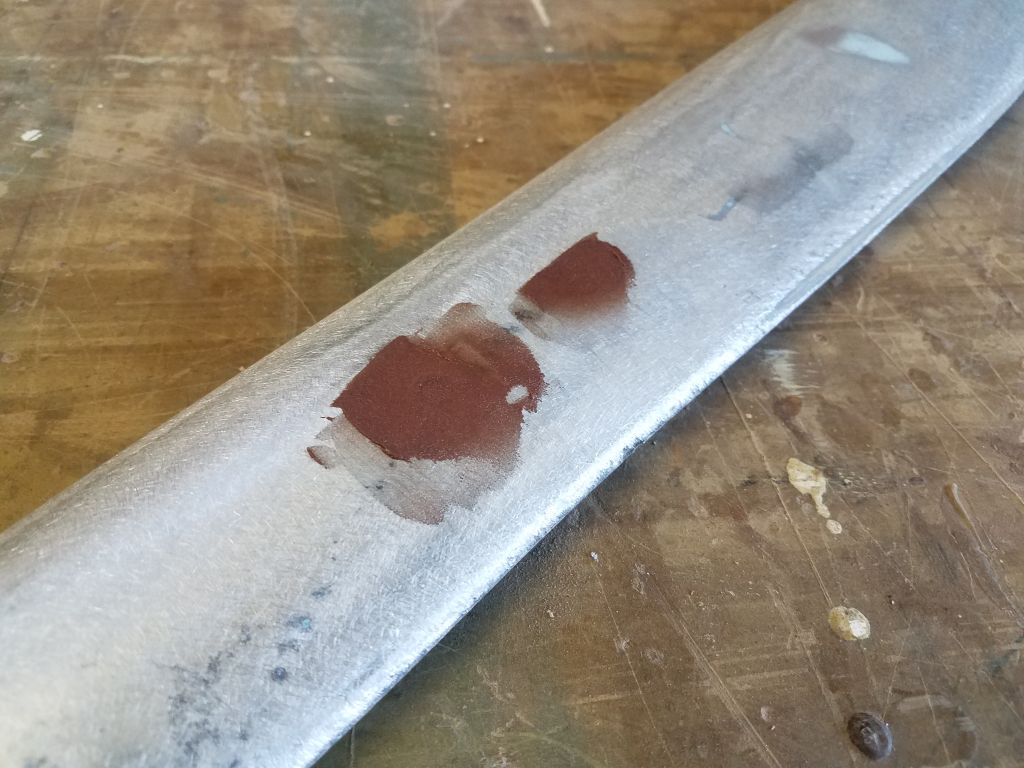
After an early lunch break, I turned to the mast painting for the afternoon.  The anti-corrosive metal primer I chose for the spars didn’t require any further primers before topcoat, nor did it require sanding for adhesive purposes (within the specified time frame, which was six months after application).  The surface as applied was smooth and without obvious flaws, but I went over the spars briefly with a Scotch-Brite pad just to knock down any minor surface  texture.  After solvent-washing and other final preparations, I spray-applied three coats of the Alexseal snow white gloss topcoat I used elsewhere on the boat, leaving the new coating to cure overnight.

Total time billed on this job today:  6.5 hours

0600 Weather Observation:  20°, mostly clear.  Forecast for the day:  Partly sunny, 37°

Scupper 210

Monday

Before continuing work on the spars, I wanted to come up with a way to suspend the spars between the sawhorses so they would be free and clear for primer and paint.  The boom was no issue:  it was small and light enough that I figured I would just hang it from small line led through some screw holes at each end, and to the saw horses.  This would allow the boom to swing, which I wouldn’t want for sanding, but for spray painting it would work fine.  For now, I left the boom as is pending final sanding.

The mast was tougher, as it was too heavy to hold with small line, and in any event there weren’t enough holes at the ends to secure the line even if I’d wanted to do it that way.  I could have built wooden inserts that fit inside the mast, and then used those to secure it to the sawhorses, but that was frankly more work than I felt was necessary or desirable.

After a failed attempt to build a simple internal support with a stick protruding to the sawhorse–this failed because the wedge inside the mast didn’t hold as I’d hoped, and the stick ended up looser than intended–I came up with a plan to secure a square piece of hardwood (actually a leftover stair baluster) inside the mast, with screws through the inside of the mast track.  There were already holes in place at the bottom of the mast that I could use, but I drilled two holes as needed inside the track at the top of the mast.

When suspended between the two sawhorses and clamped at both ends, this held the mast solidly with the track facing down, which is how I wanted it for ease of painting.  I arranged the mast kitty-corner in the shop as needed to accommodate its length and the sawhorses, while still leaving just enough room for me to maneuver around at the masthead end (where the sawhorse was almost at the doorway to the woodshop) as needed so I could work on all sides of the mast.

I sanded the epoxy filler in the screw holes left over from the spinnaker pole track; this came out well and didn’t require any further work.

Everything was set up as I needed it, so next I sanded the mast and boom a final time, this time with 120 grit paper.  Although there was no visual indication that the previously-sanded spars had oxidized over the couple days since their last sanding, this final round of sanding would ensure clean, bright metal to encourage the best possible adhesion of the anti-corrosion metal primer.  The finer grit also brought the prepared surface to the desired level of roughness (or smoothness) for the primer.

With metal, one can’t use rags for solvent-washing after sanding, as tiny fibers might catch in the rough metal and create a tiny wick that could exacerbate primer failure and corrosion later, so all I could do at this stage was vacuum the surfaces thoroughly to remove dust.

Afterwards, I strung up the boom to hang it, bottom side up, from the two sawhorses.  I added vertical pieces to raise the boom’s height and make it easier for me to paint.

After final preparations and getting the paint ready, I spray-applied two coats of the protective anti-corrosion metal primer to the spars.  As always, spraying rendered the shop otherwise uninhabitable, so I called it quits for the day.

Total time billed on this job today:  6 hours

0600 Weather Observation:  26°, cloudy.  Forecast for the day:  Cloudy, chance of snow late, 27°

Older posts Newer posts