
(page 100 of 165)

Scupper 89

Wednesday

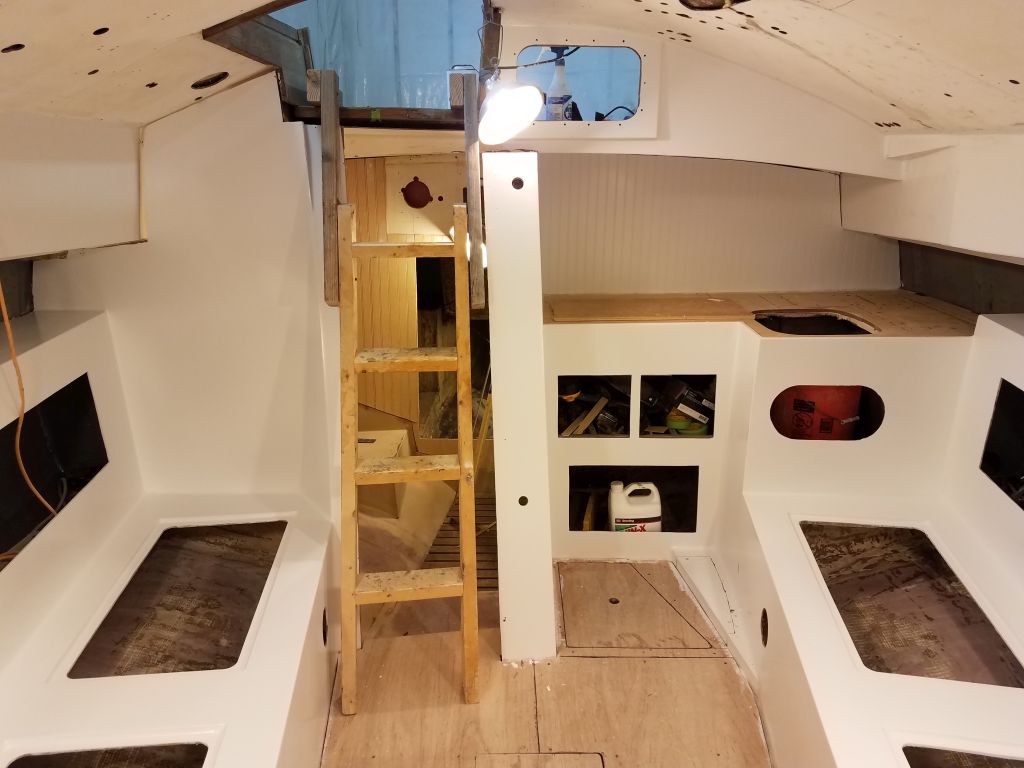
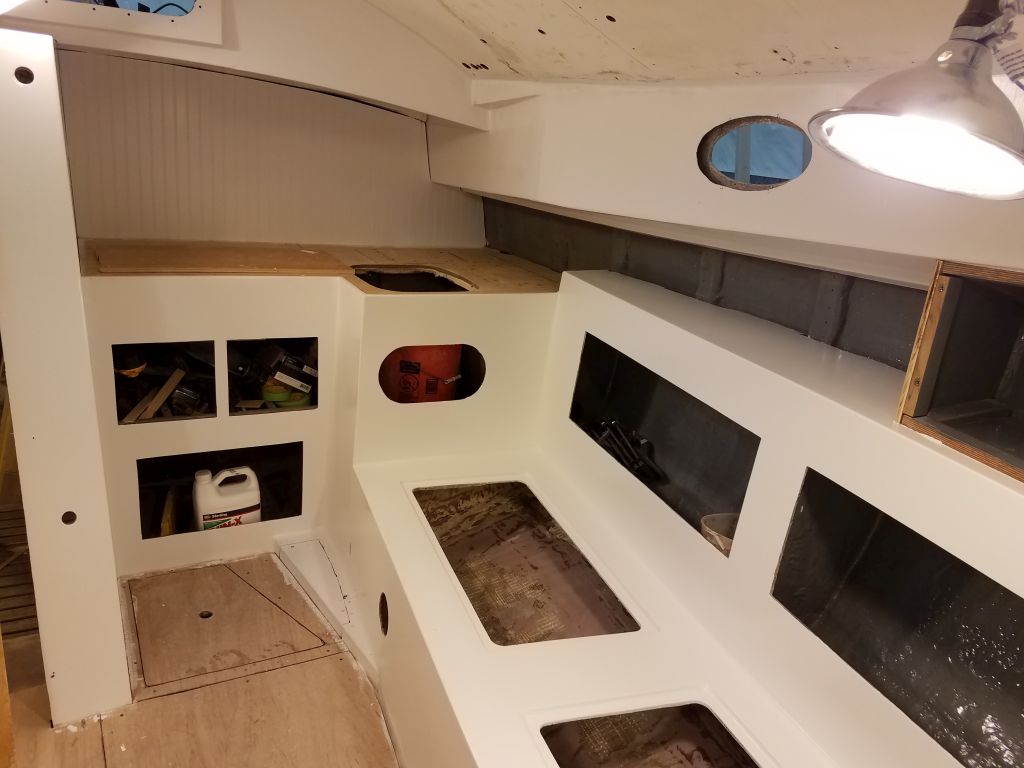
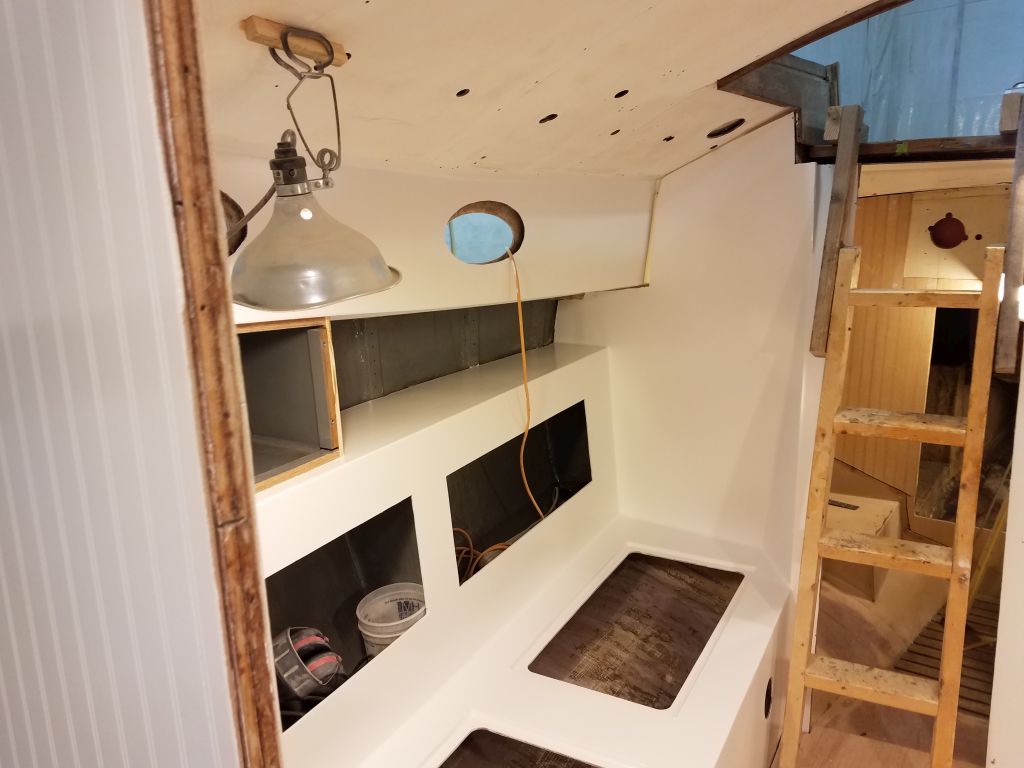
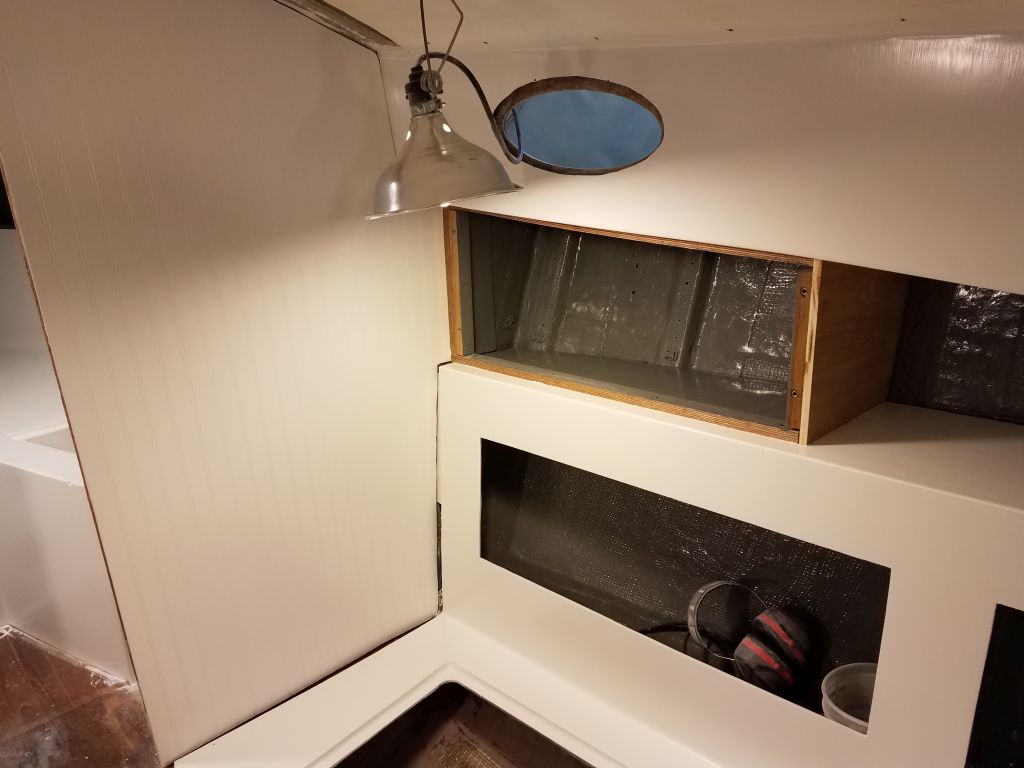
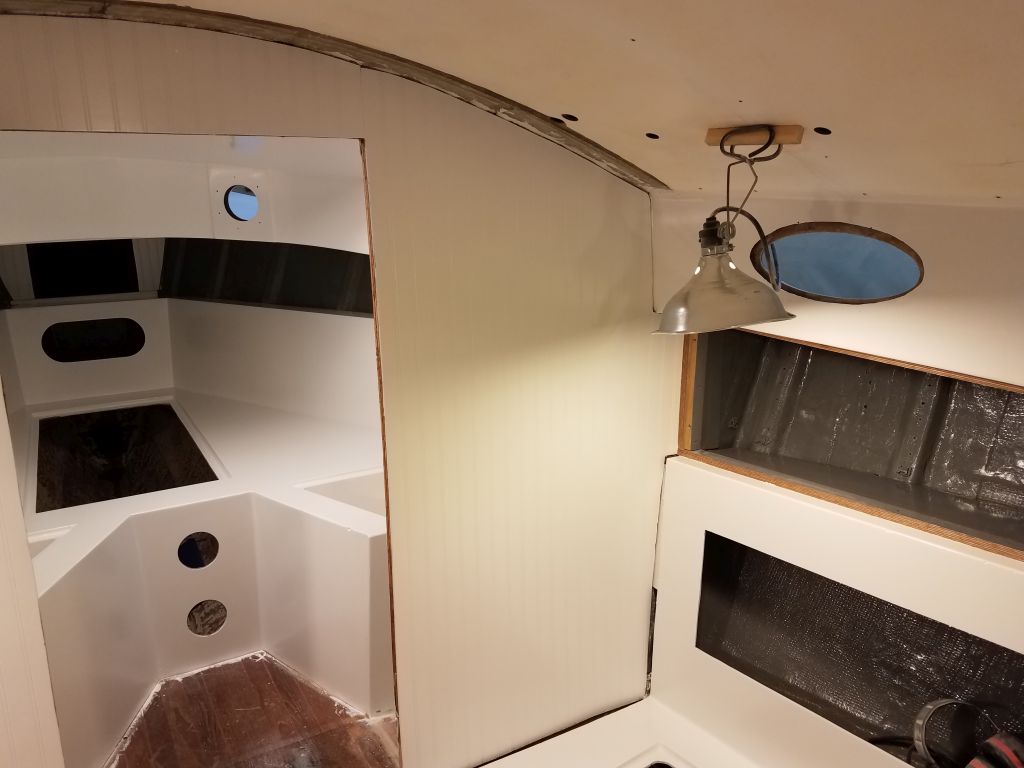
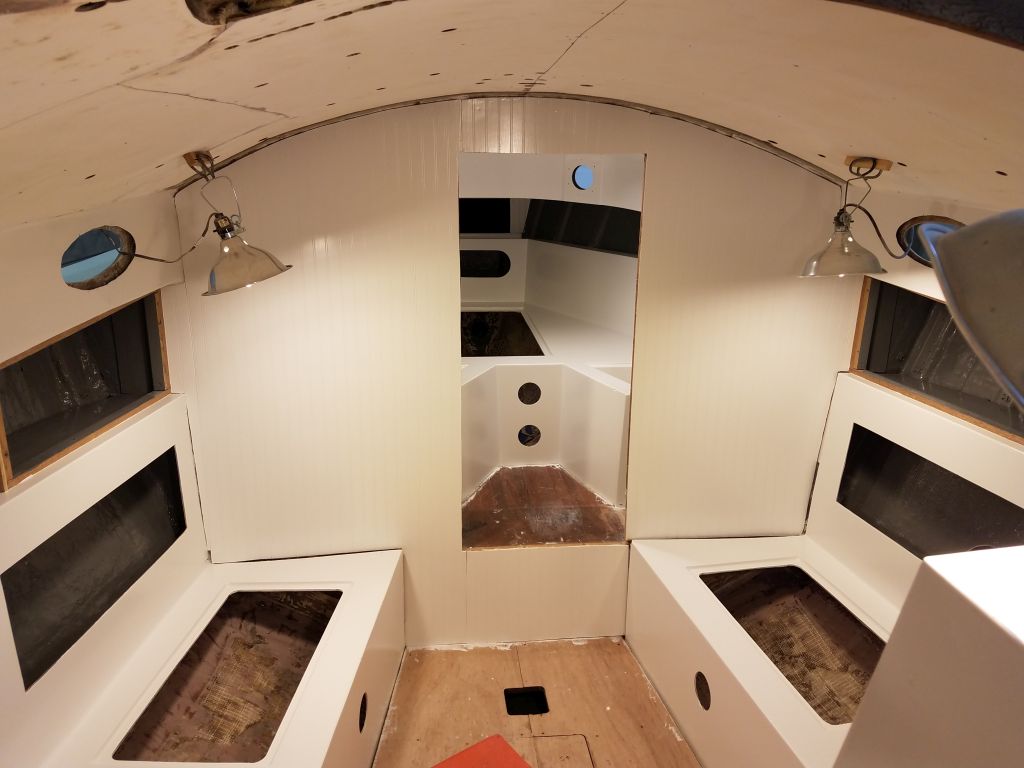
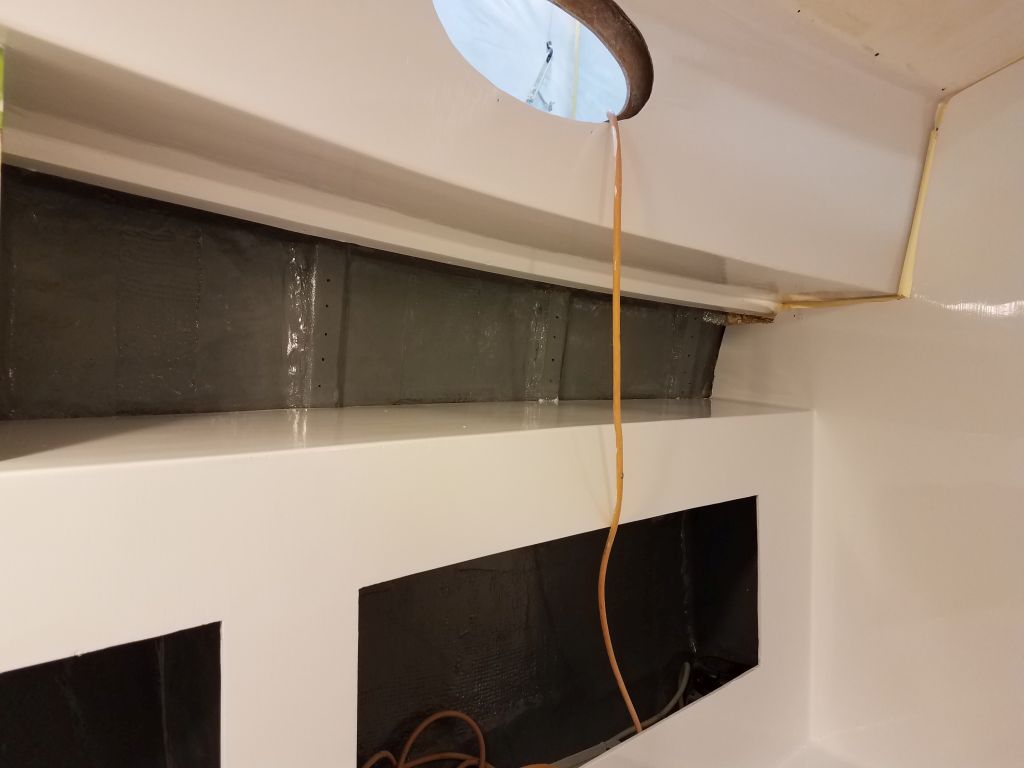
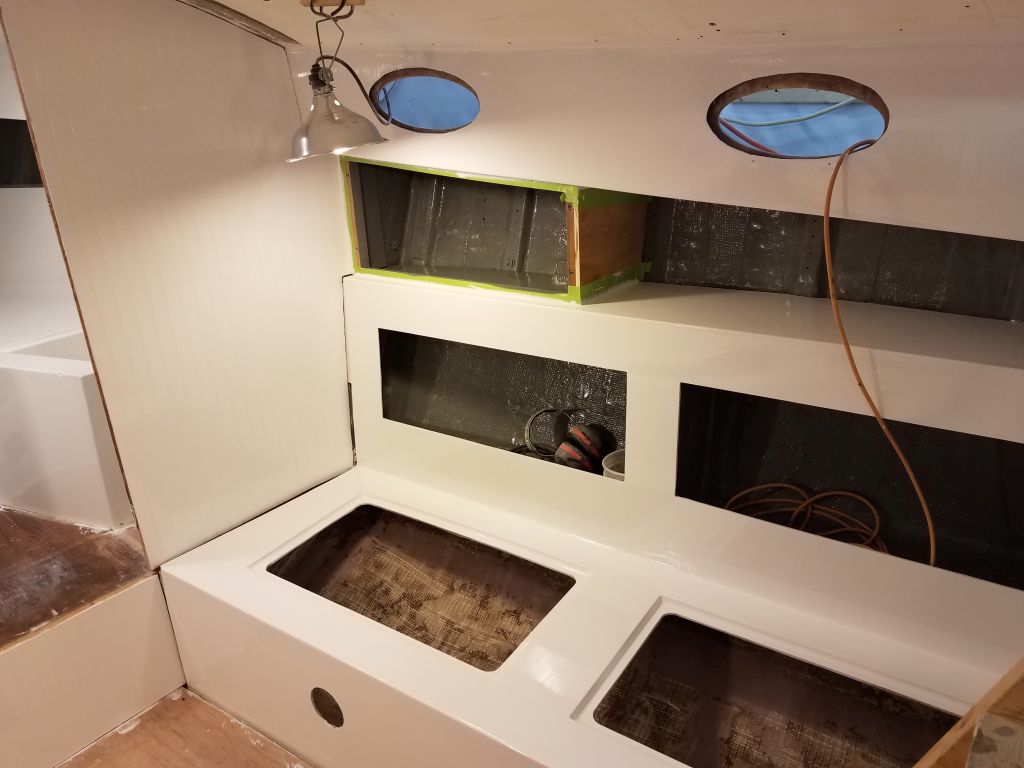
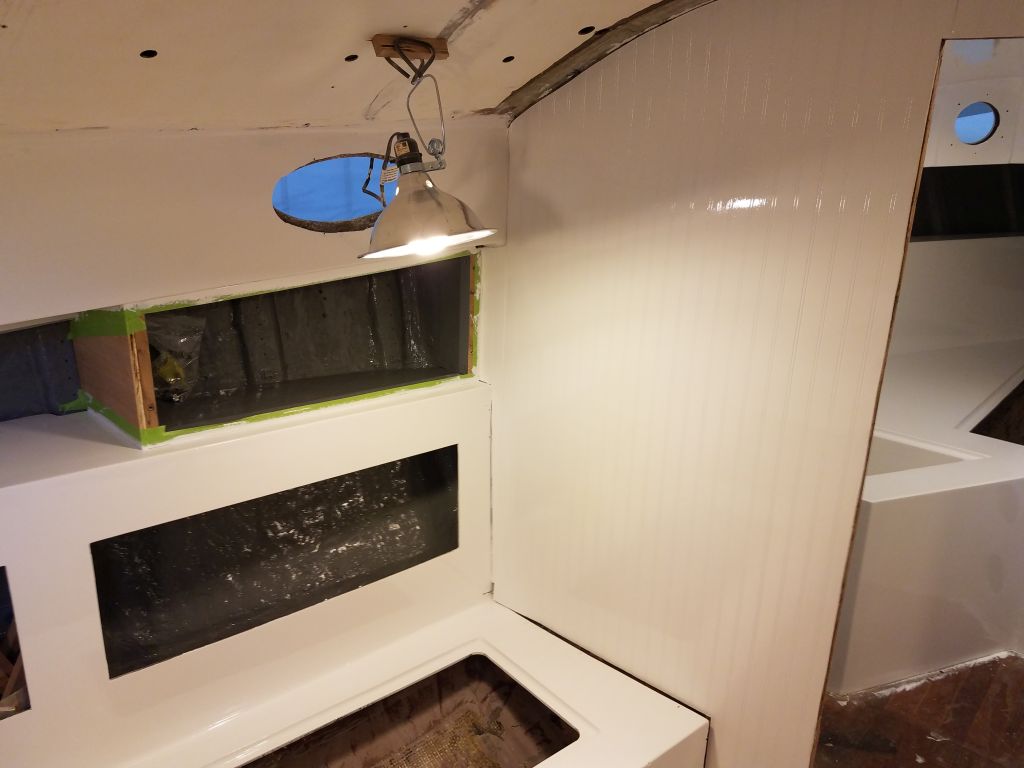
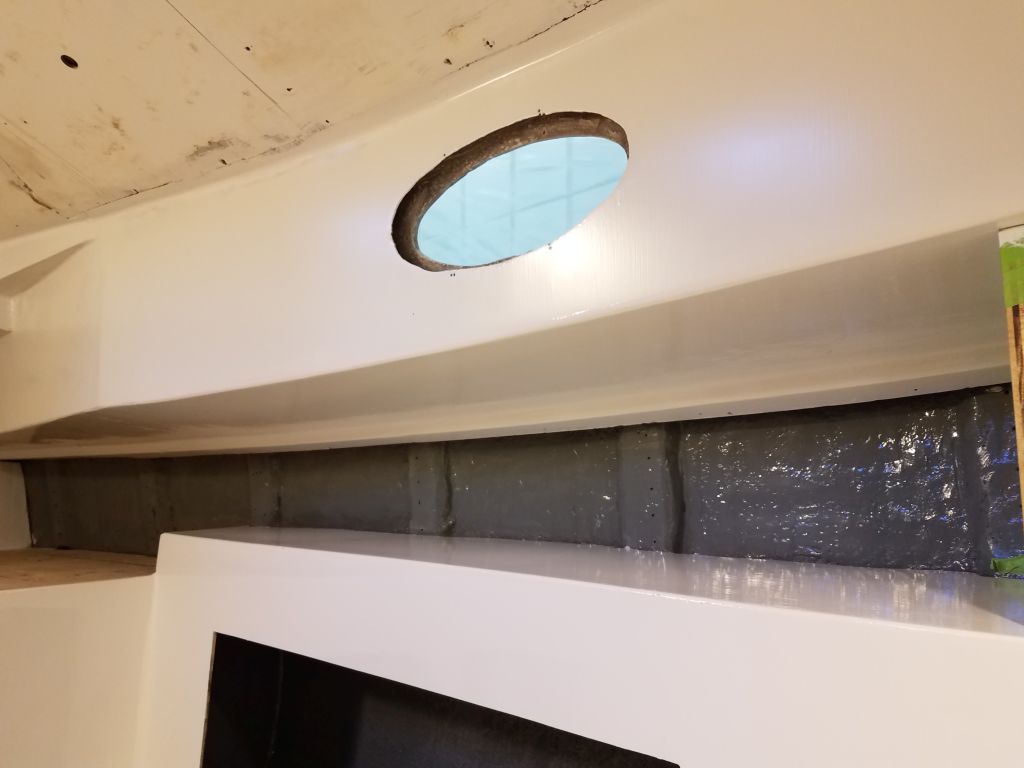
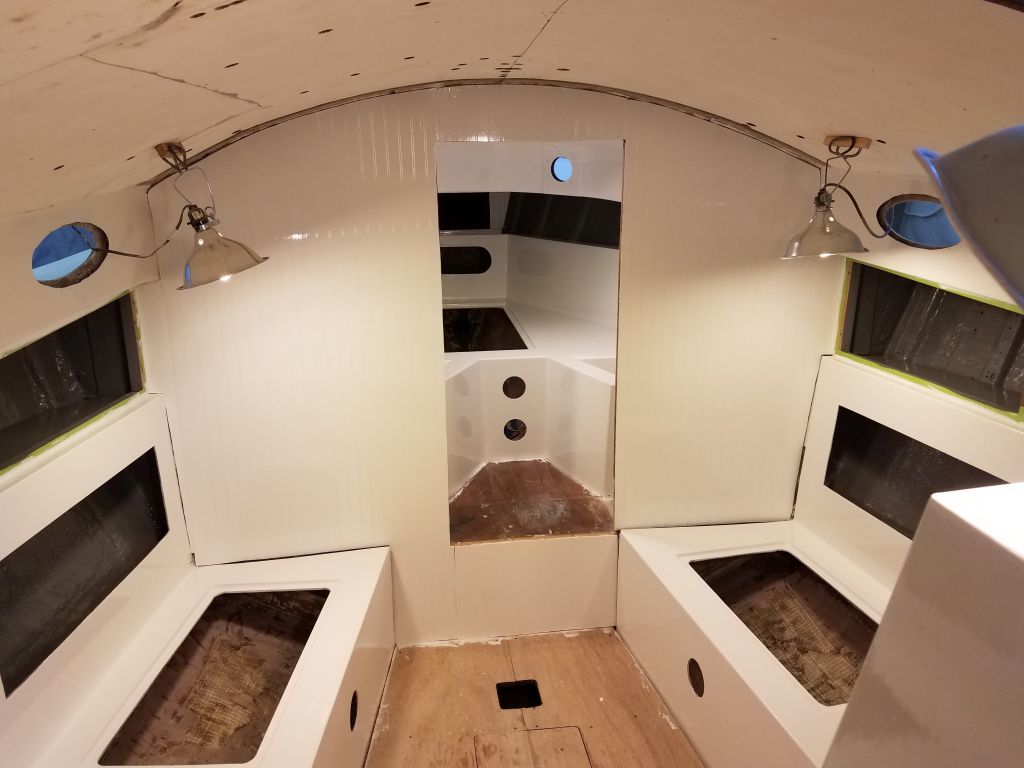
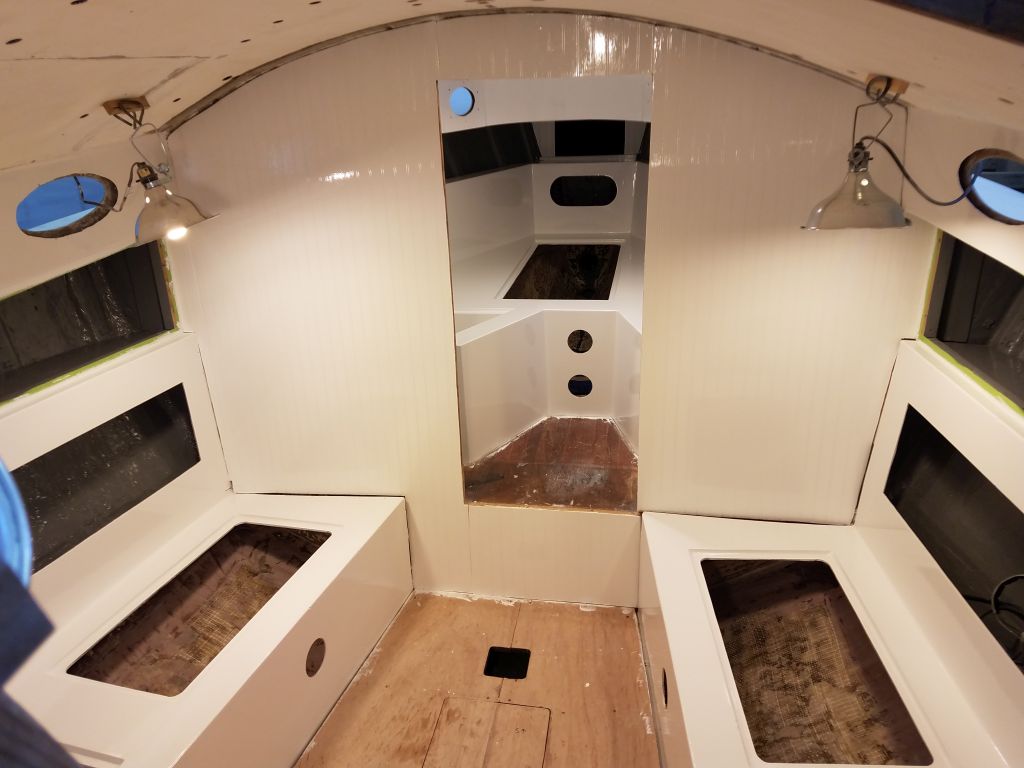
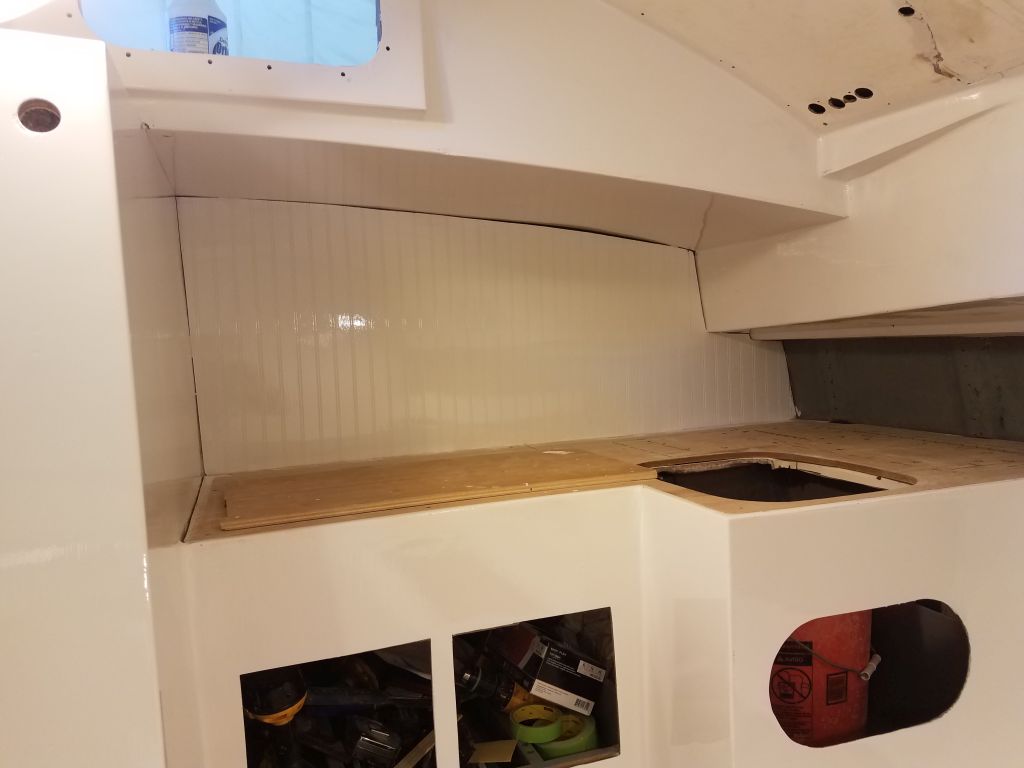
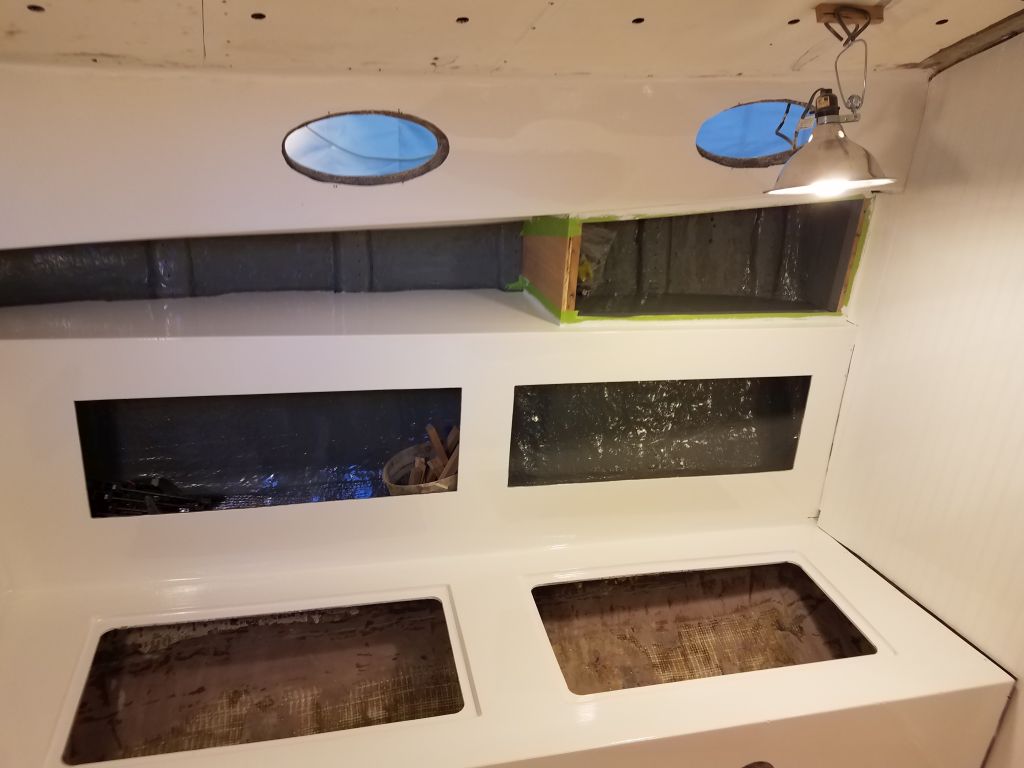
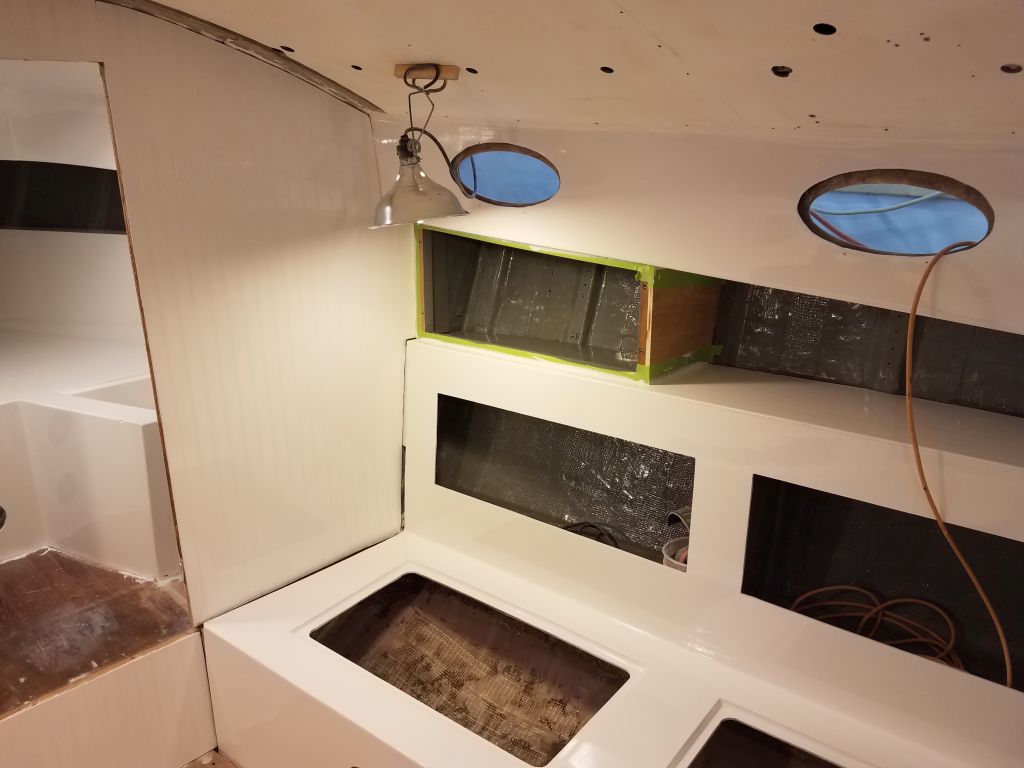
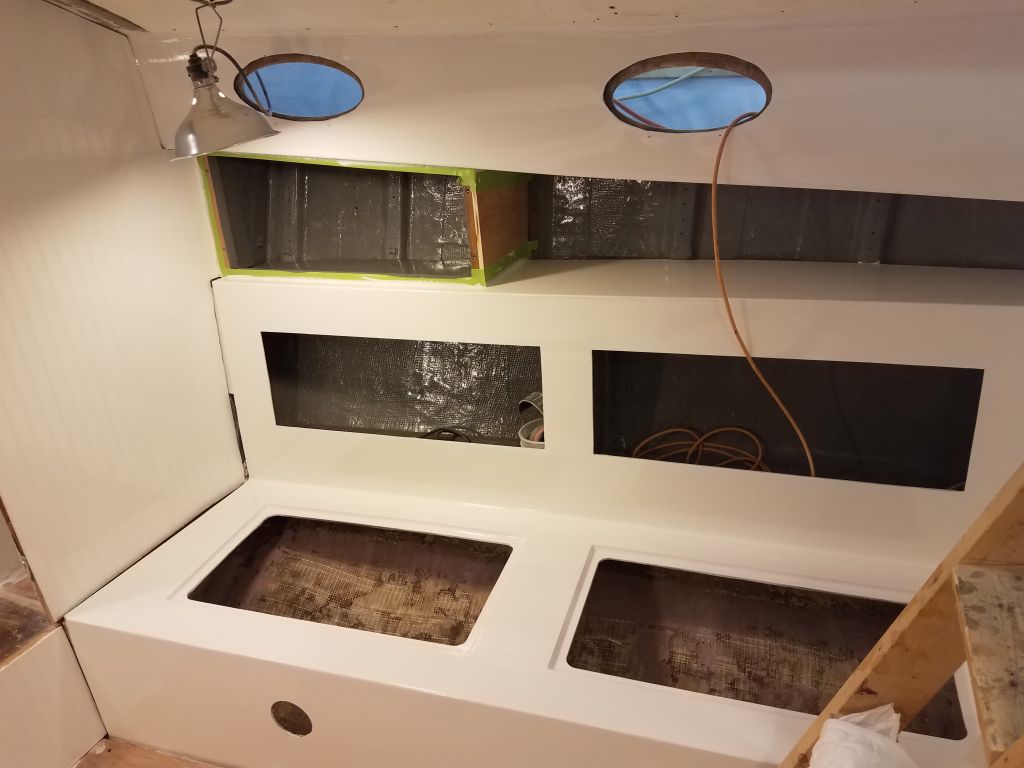
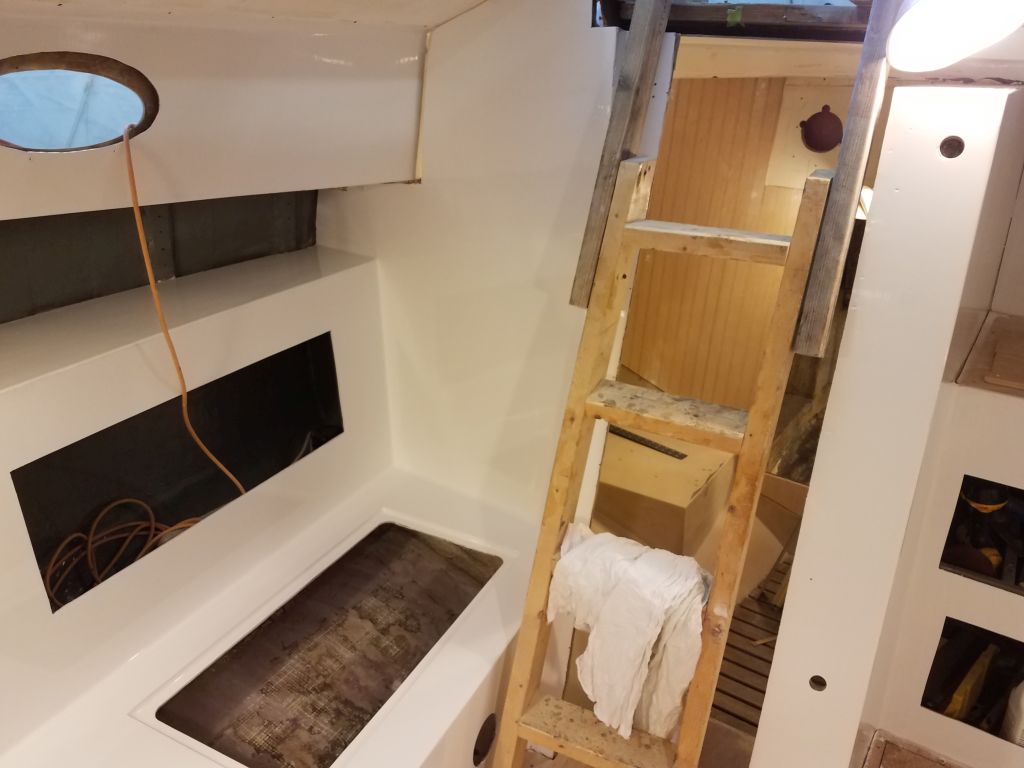
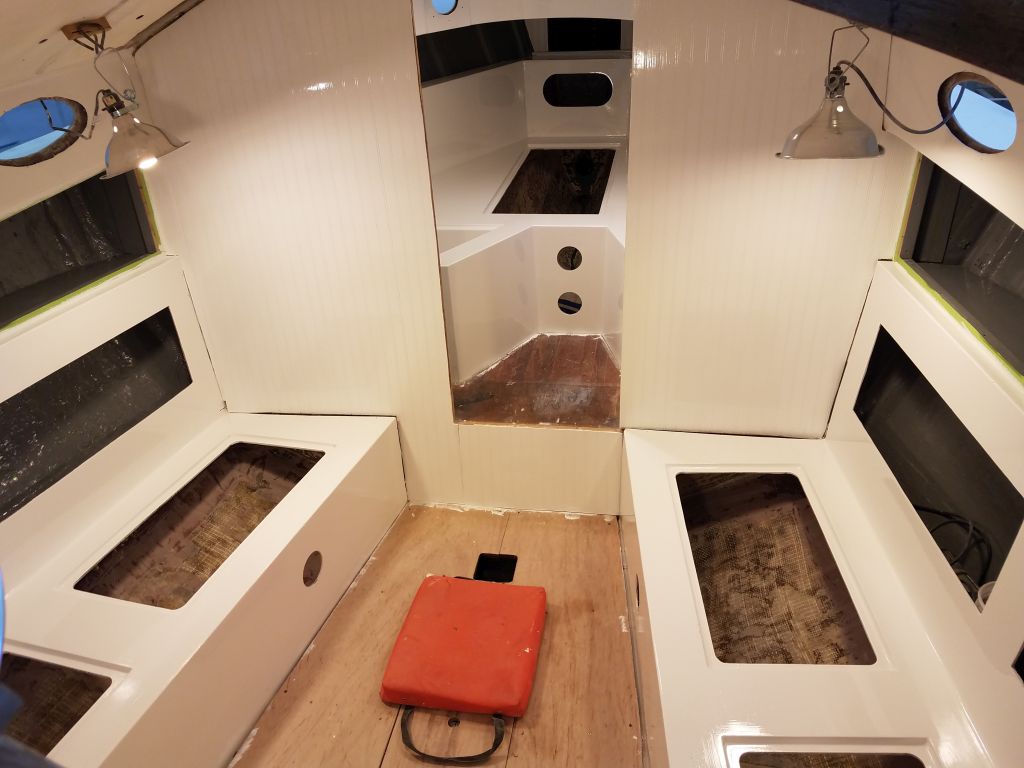
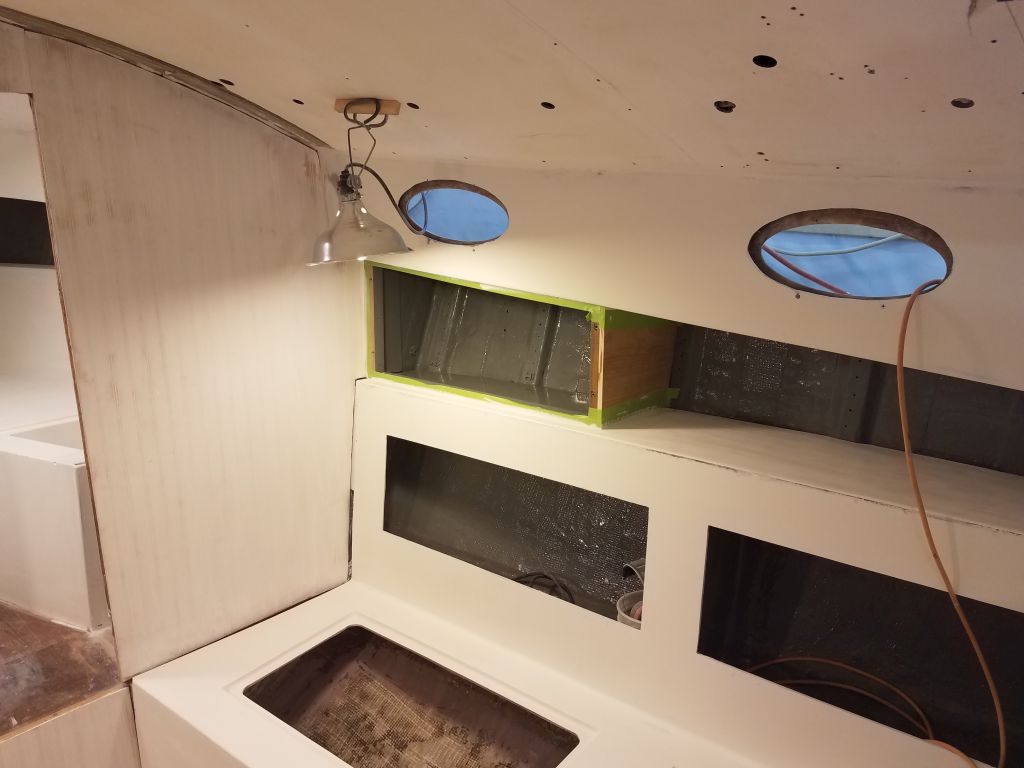
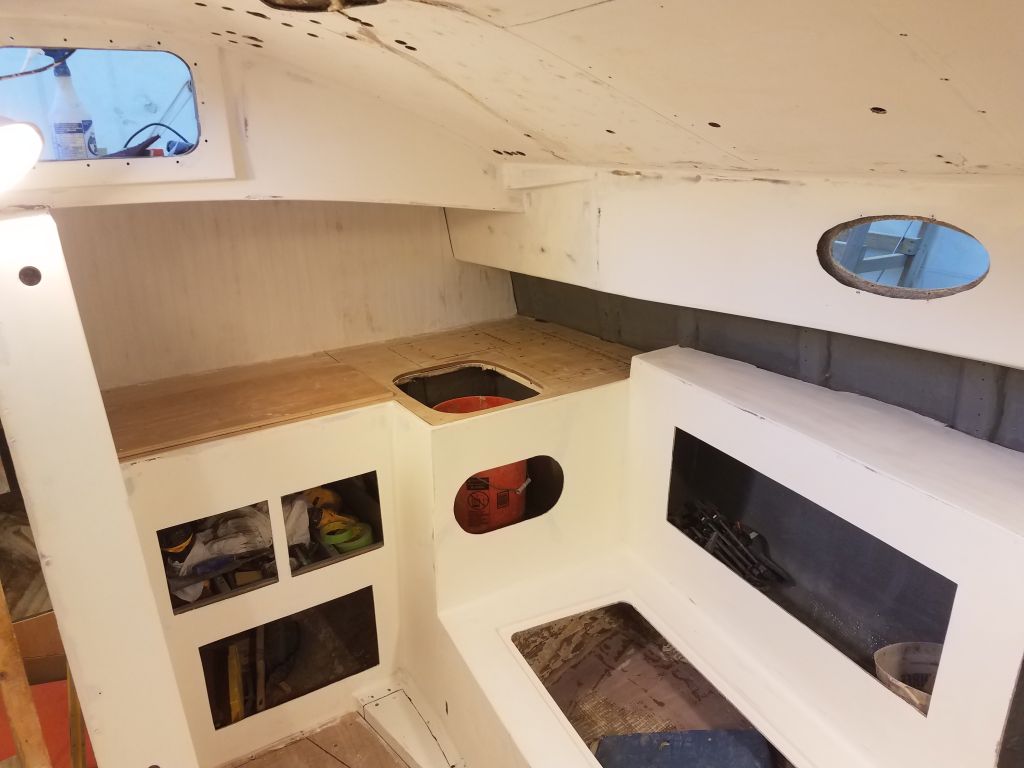
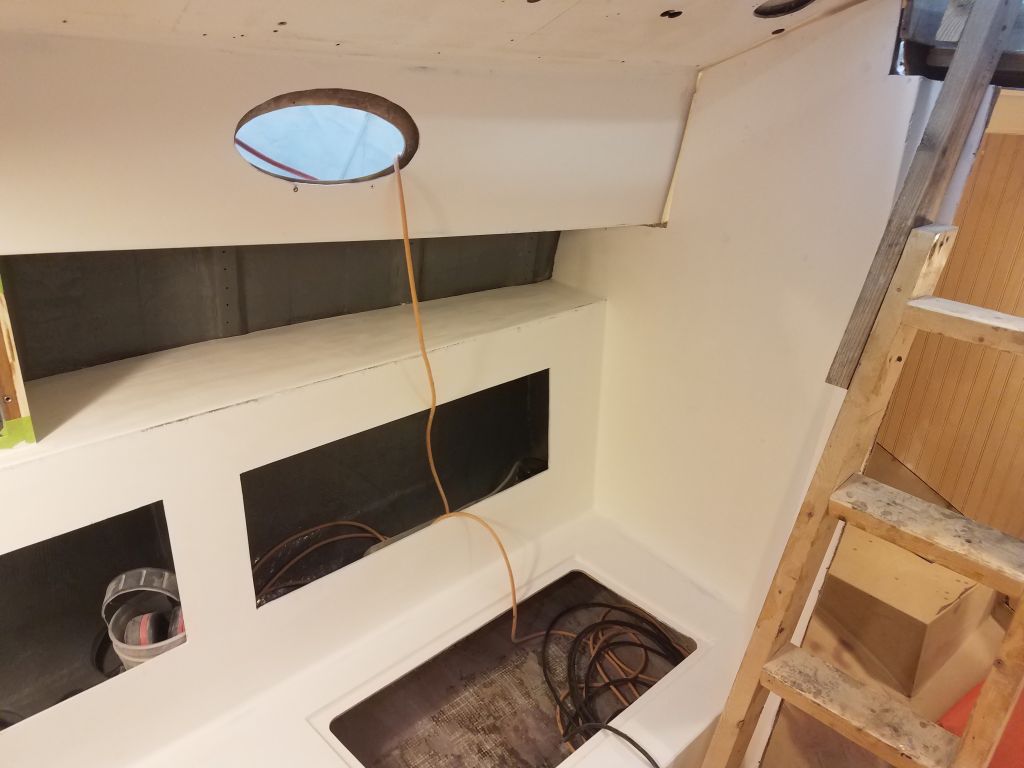
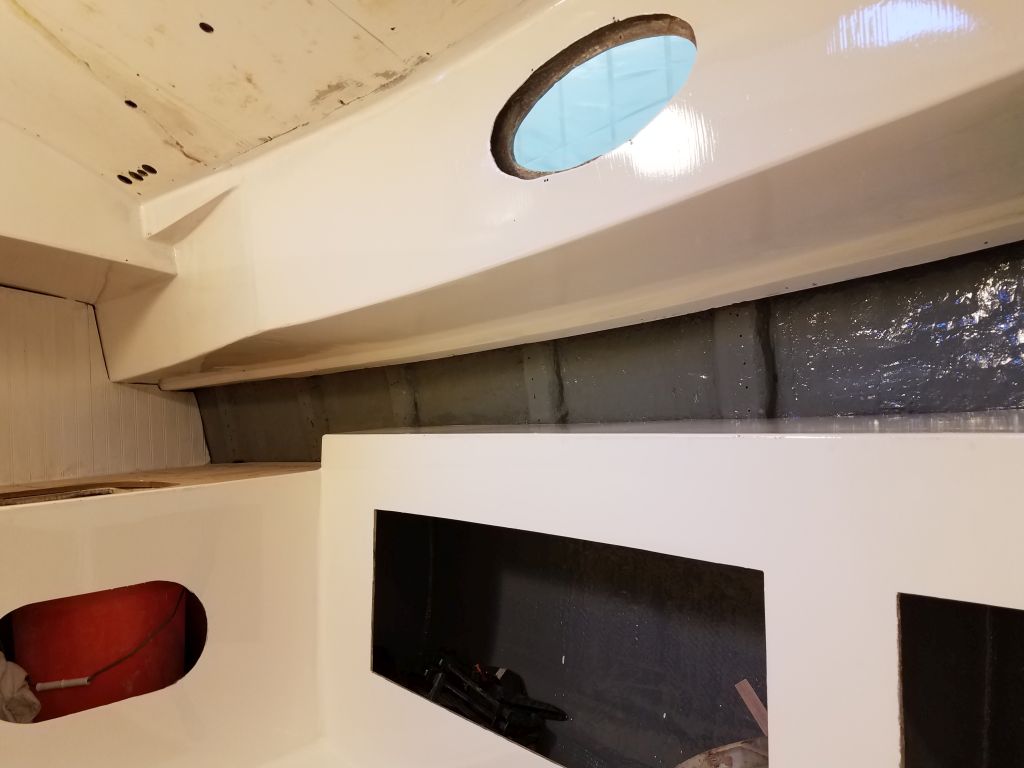
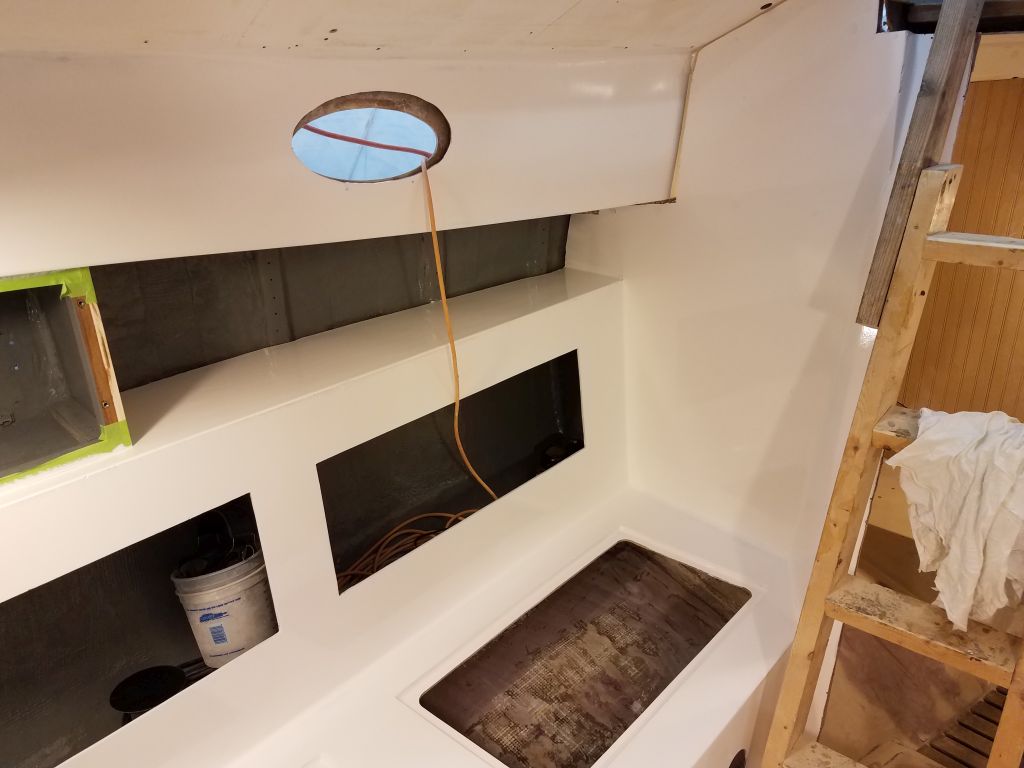
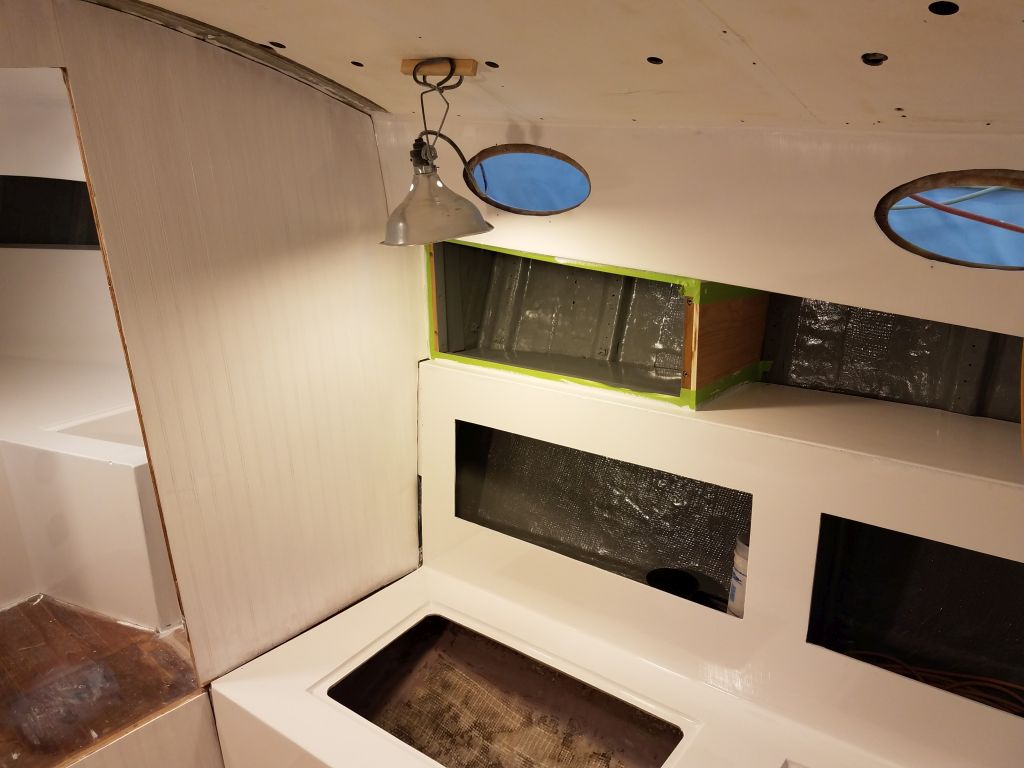
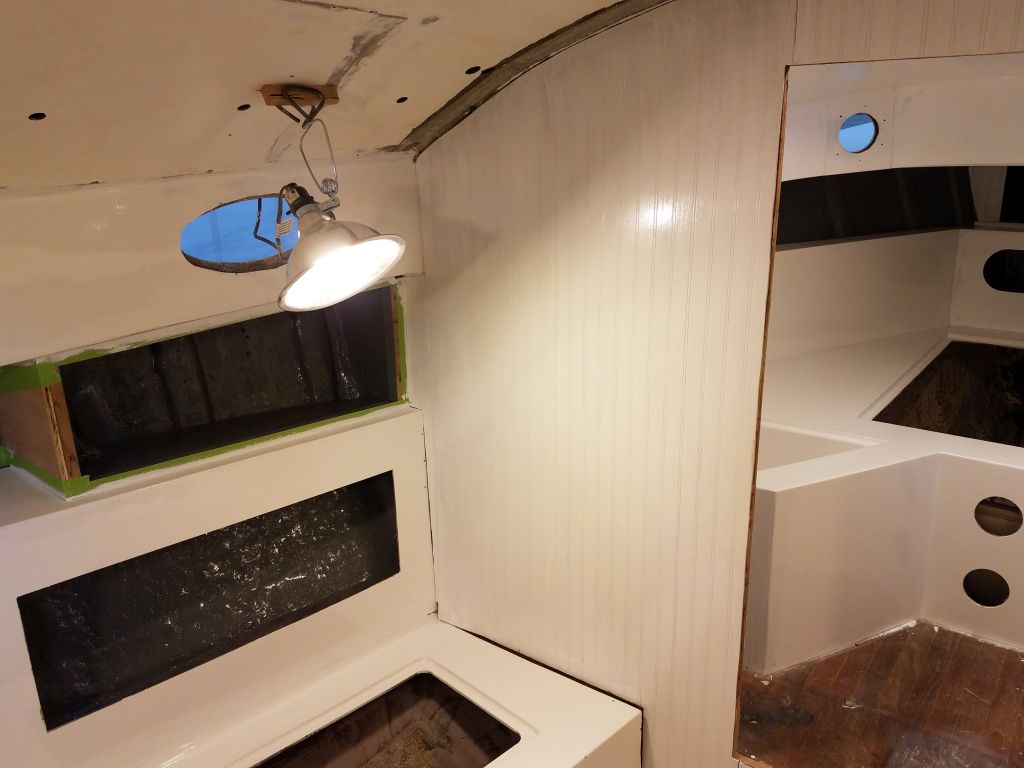
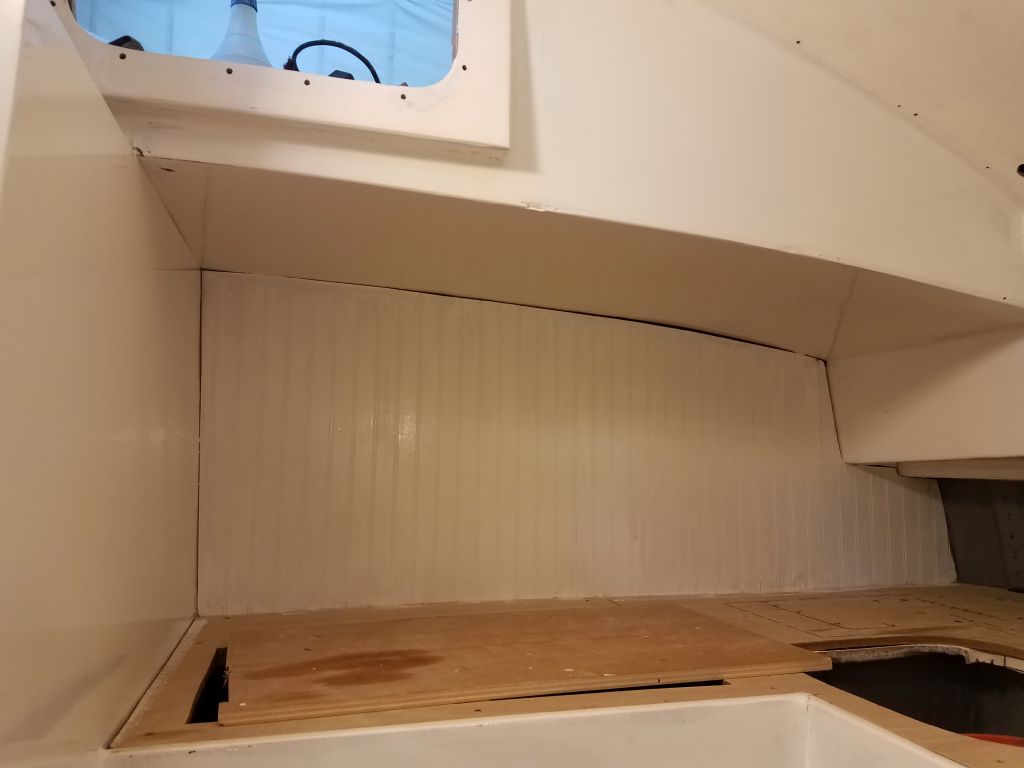
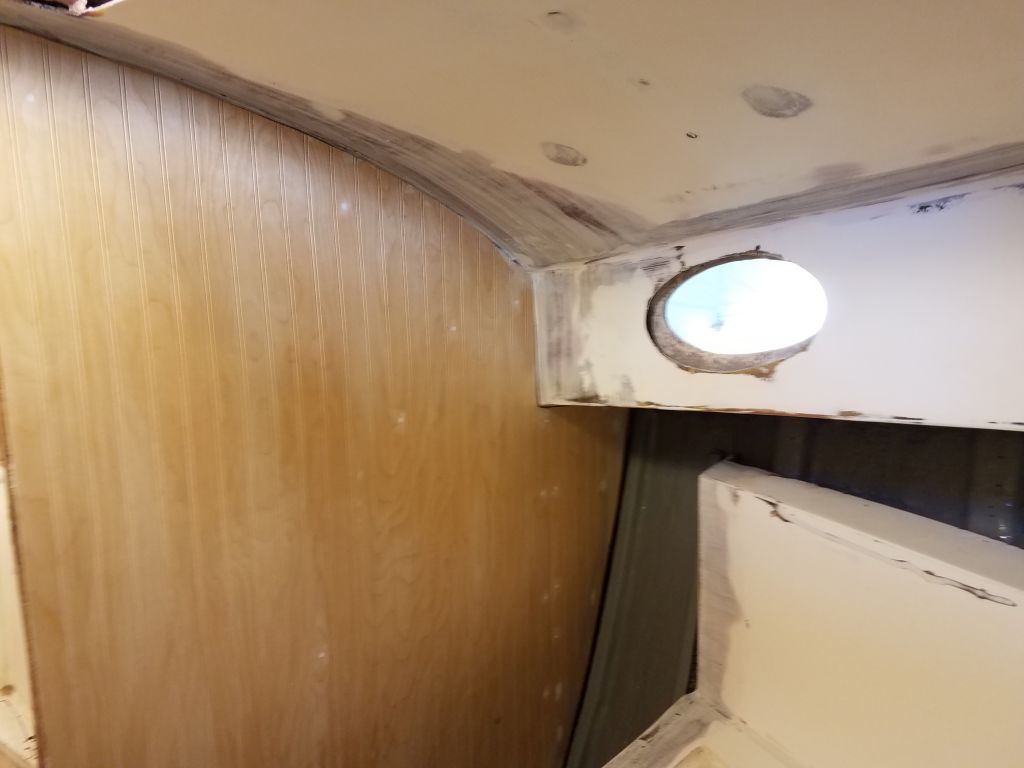
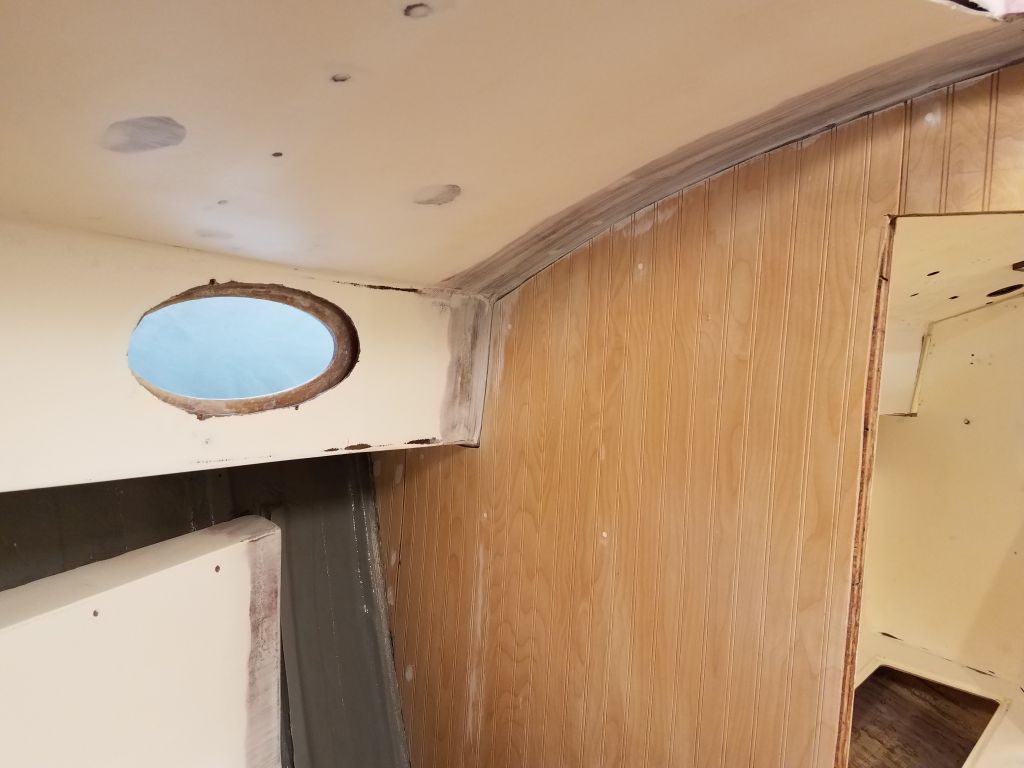
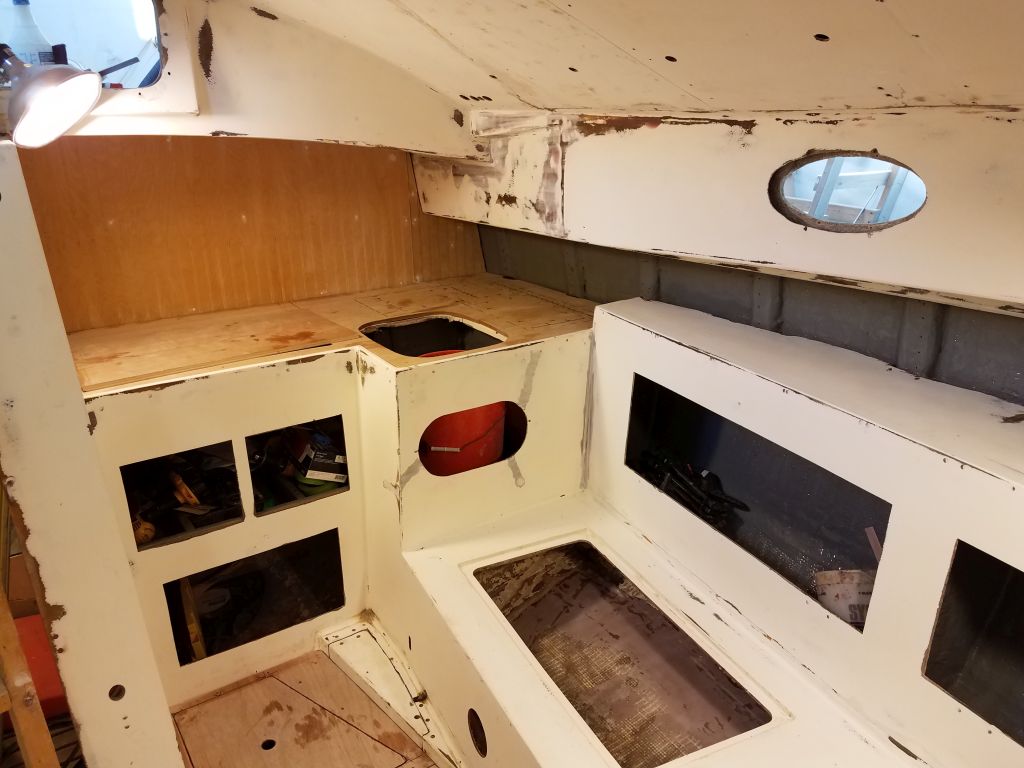
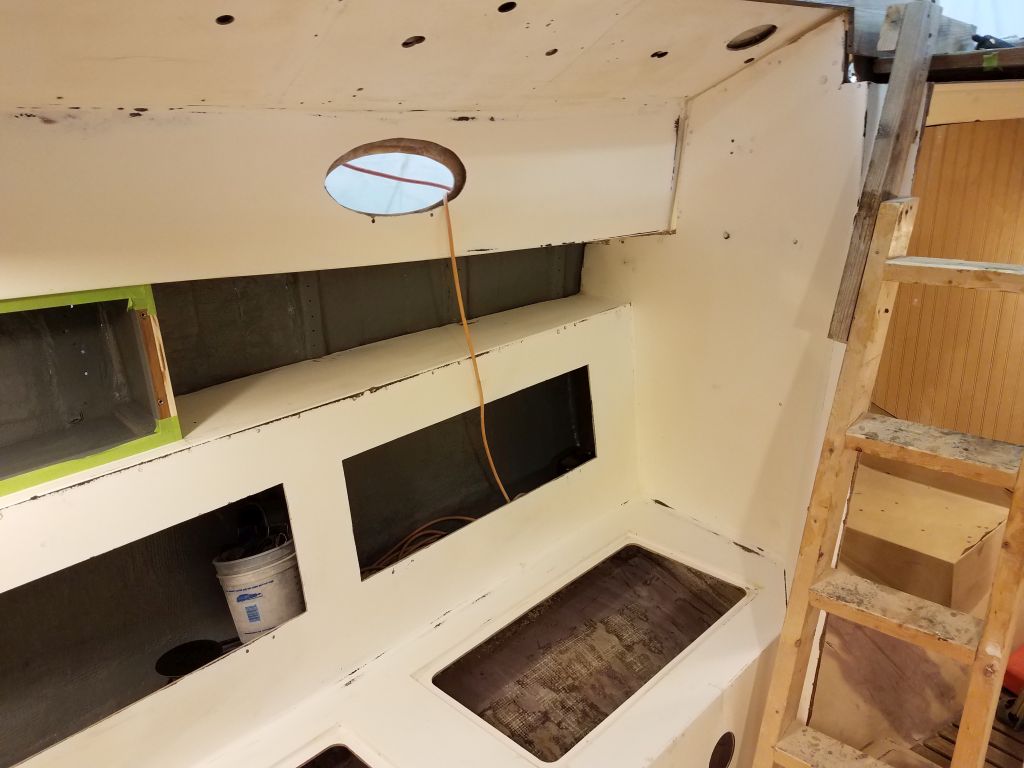
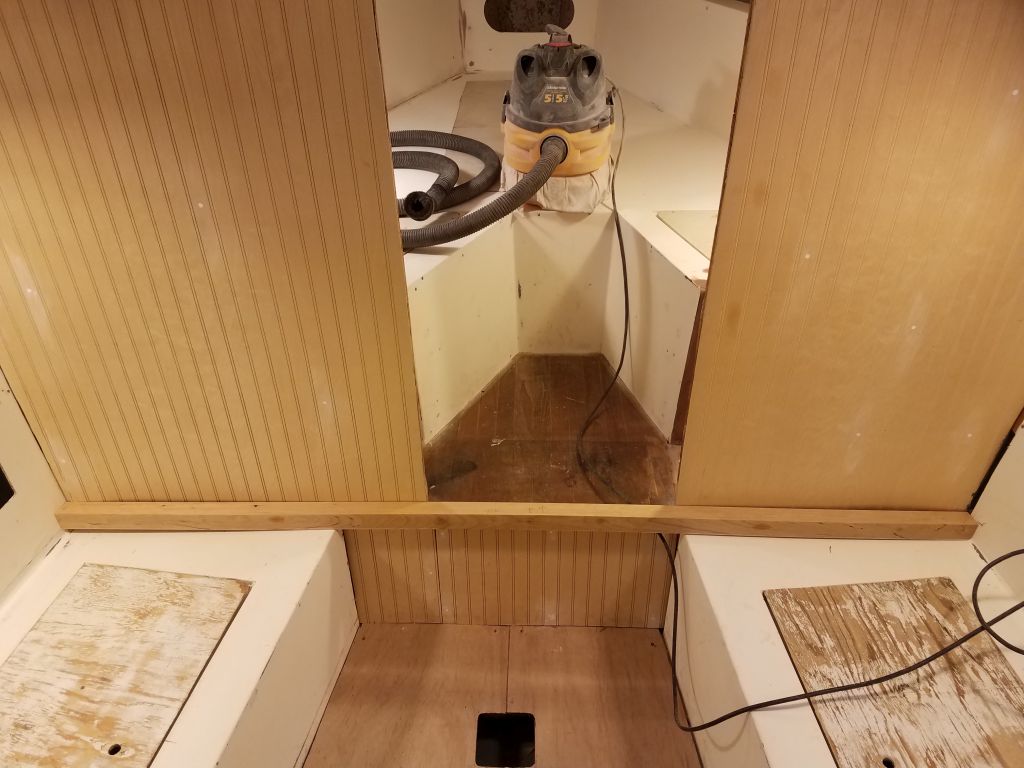
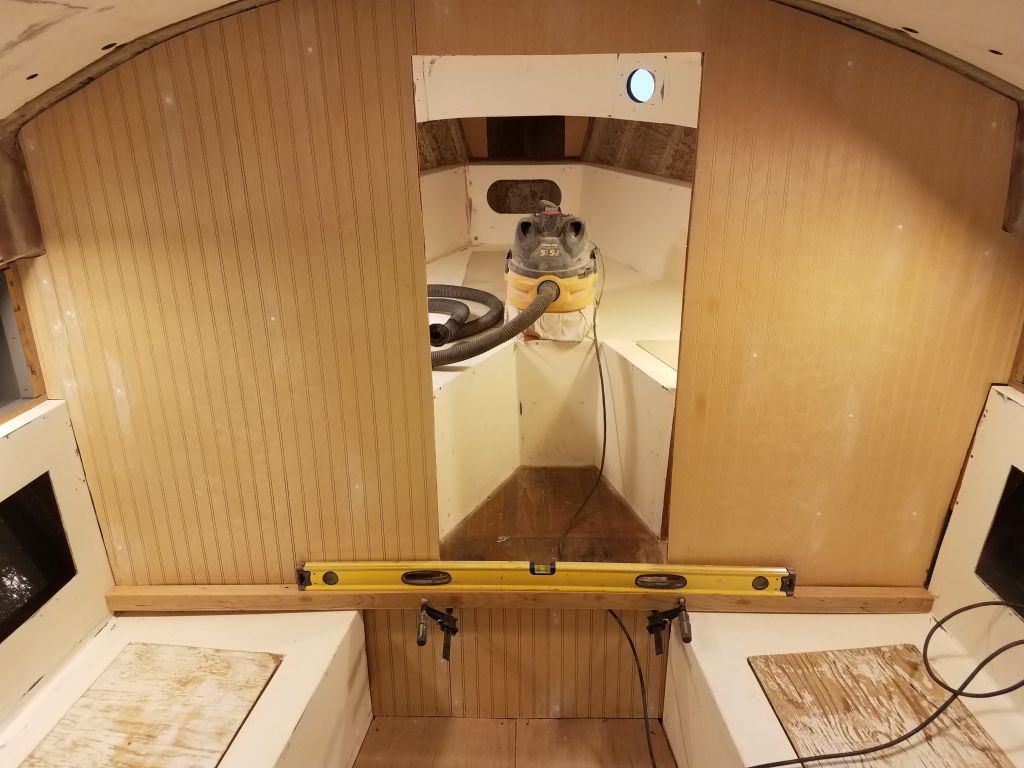
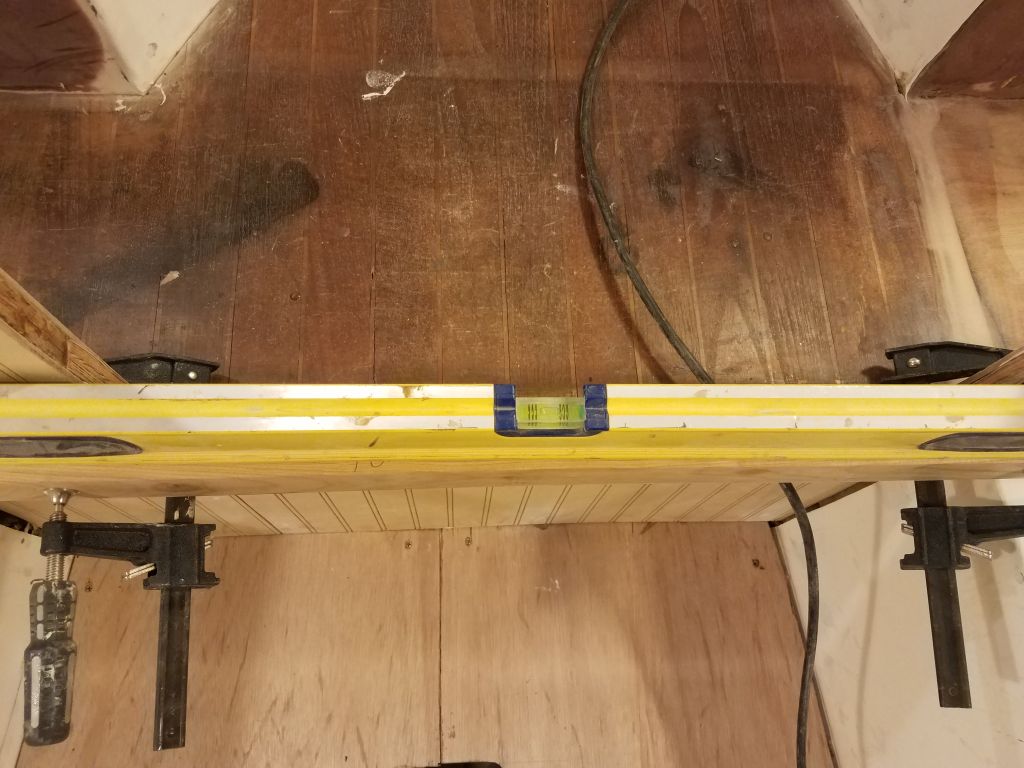
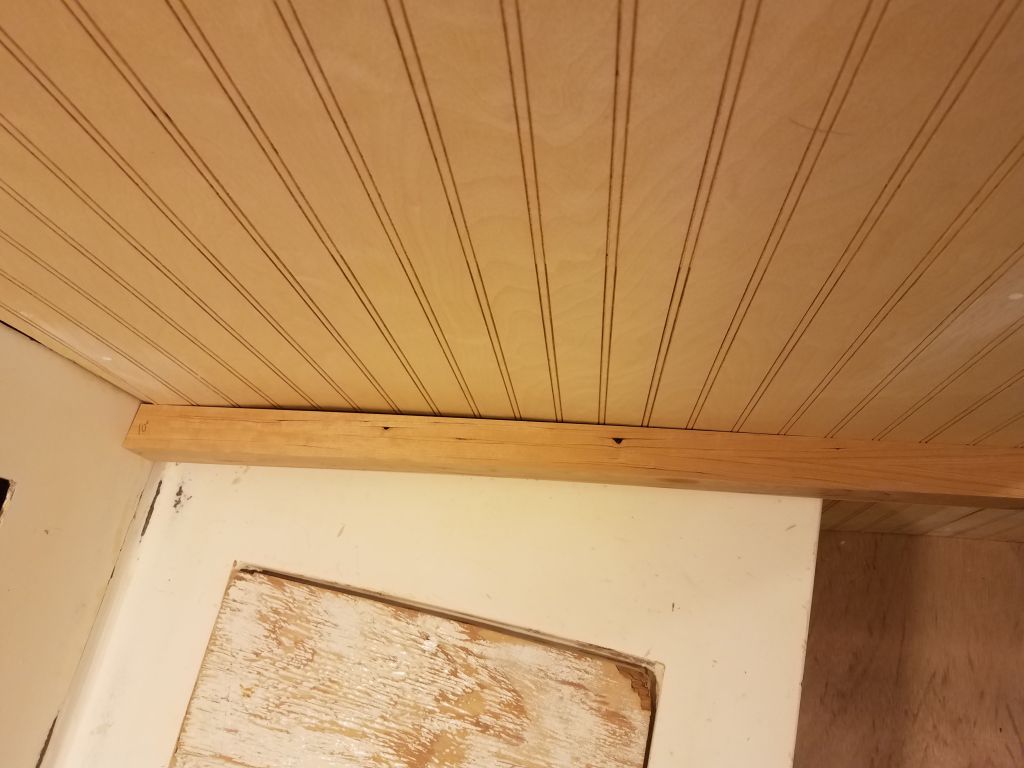
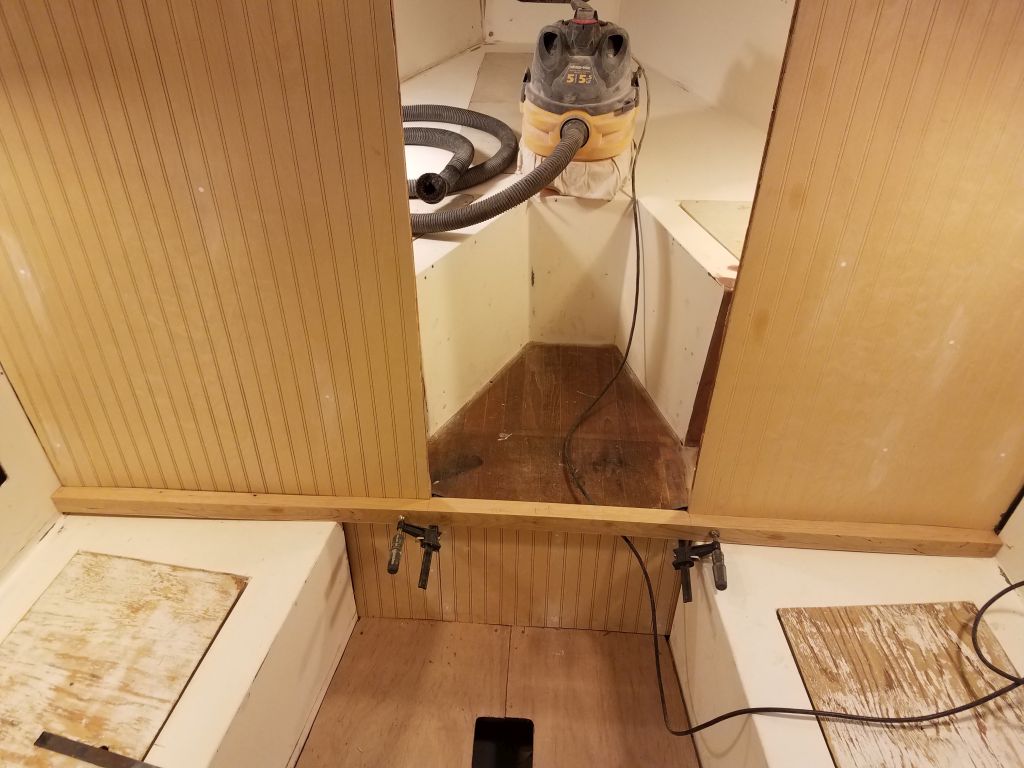
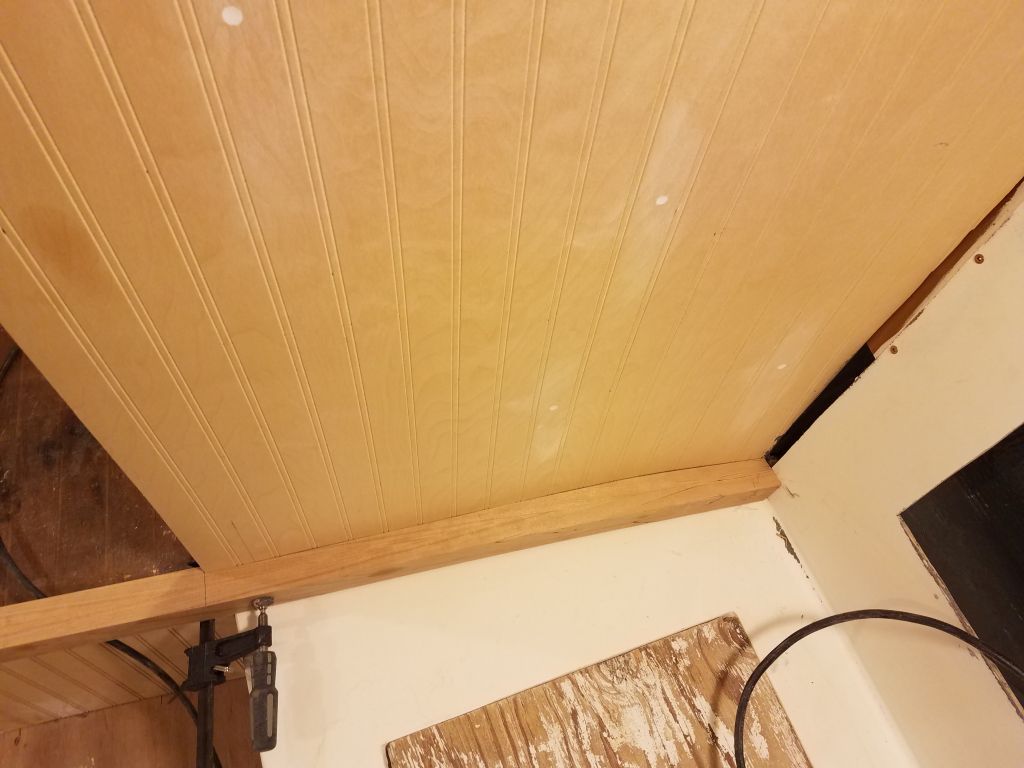
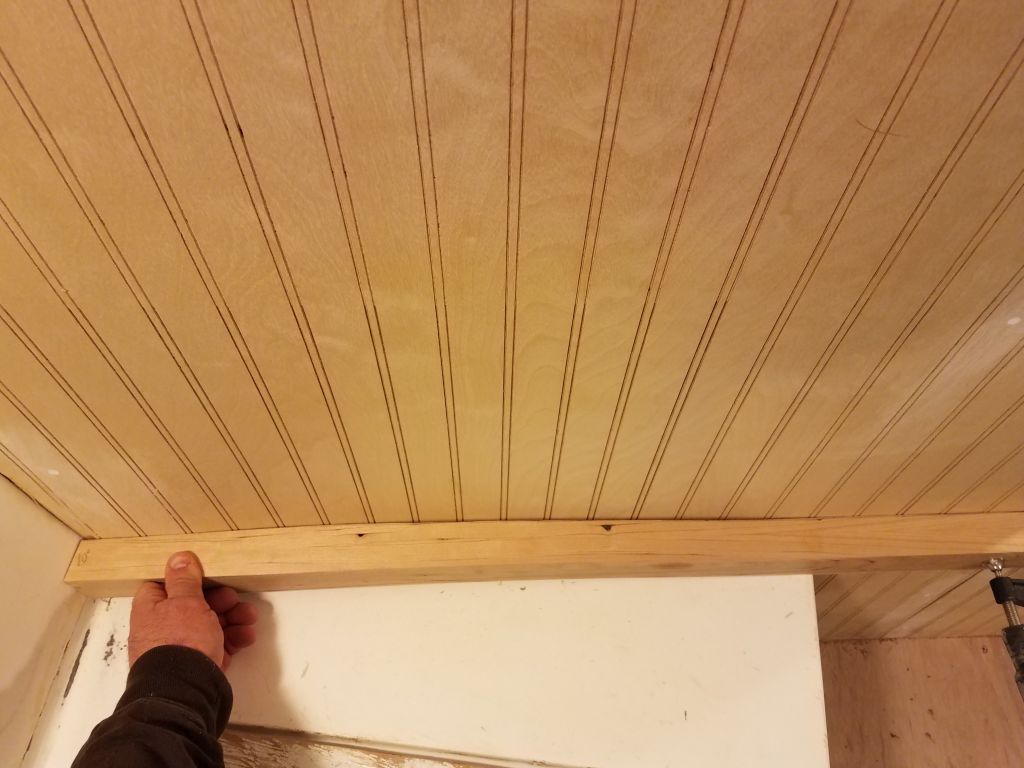
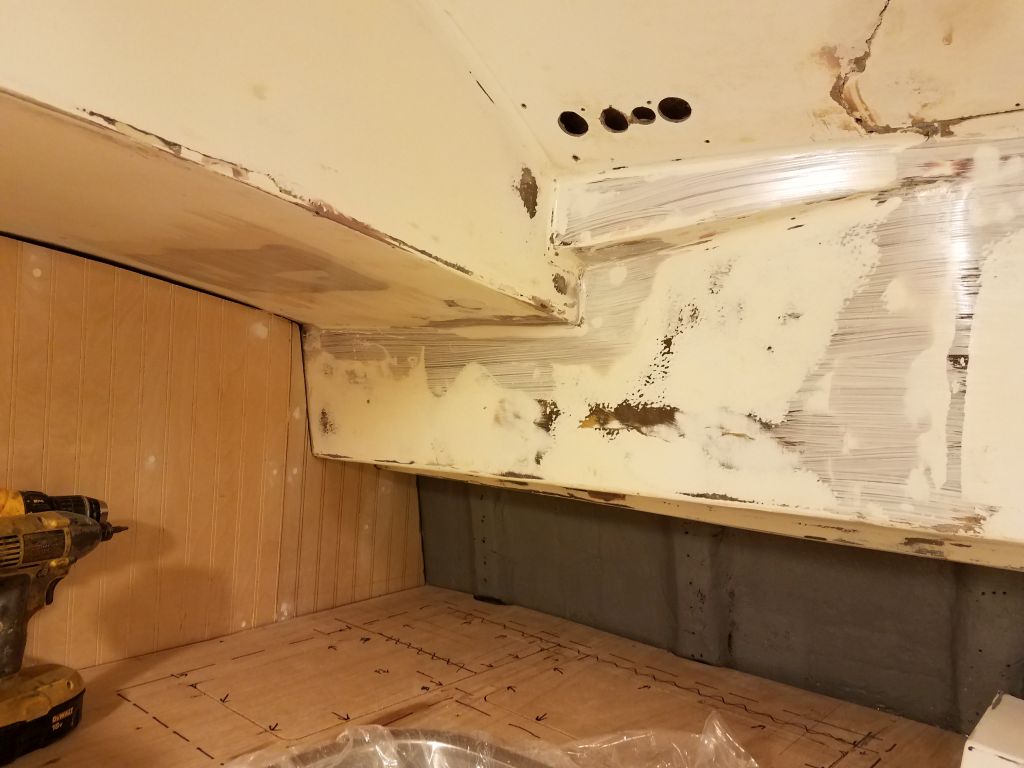
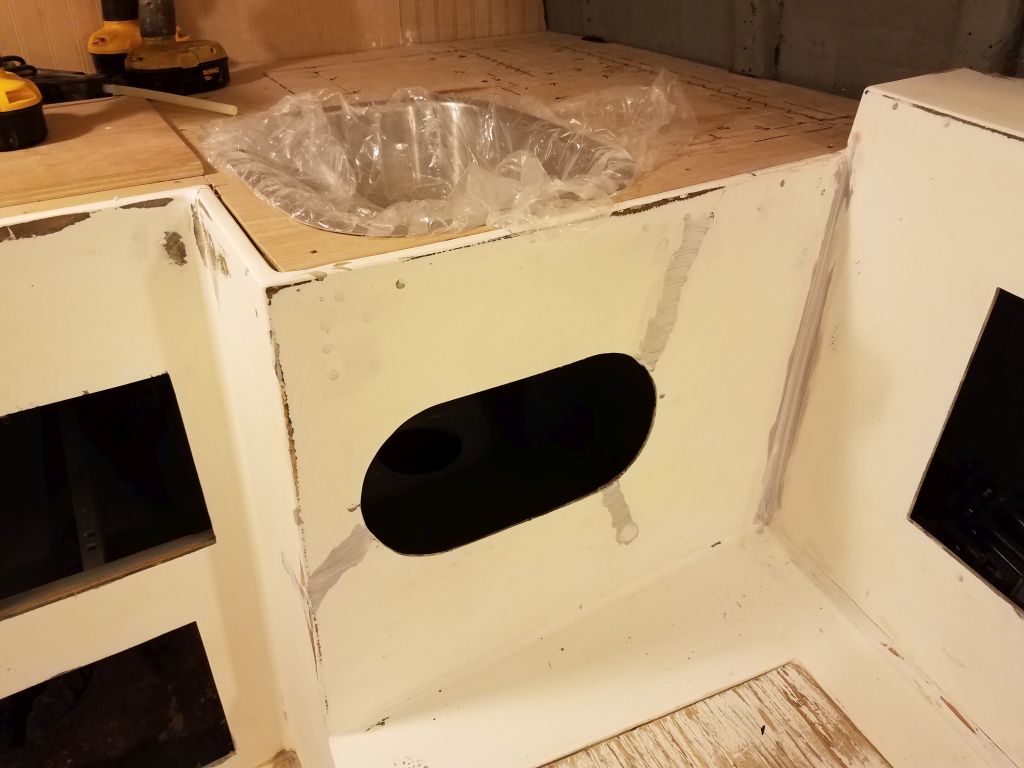
Following an early morning commitment elsewhere, I got back to work on the new cabinets in the saloon, starting with the final cleat on the starboard side, which I cut to fit and secured with screws.

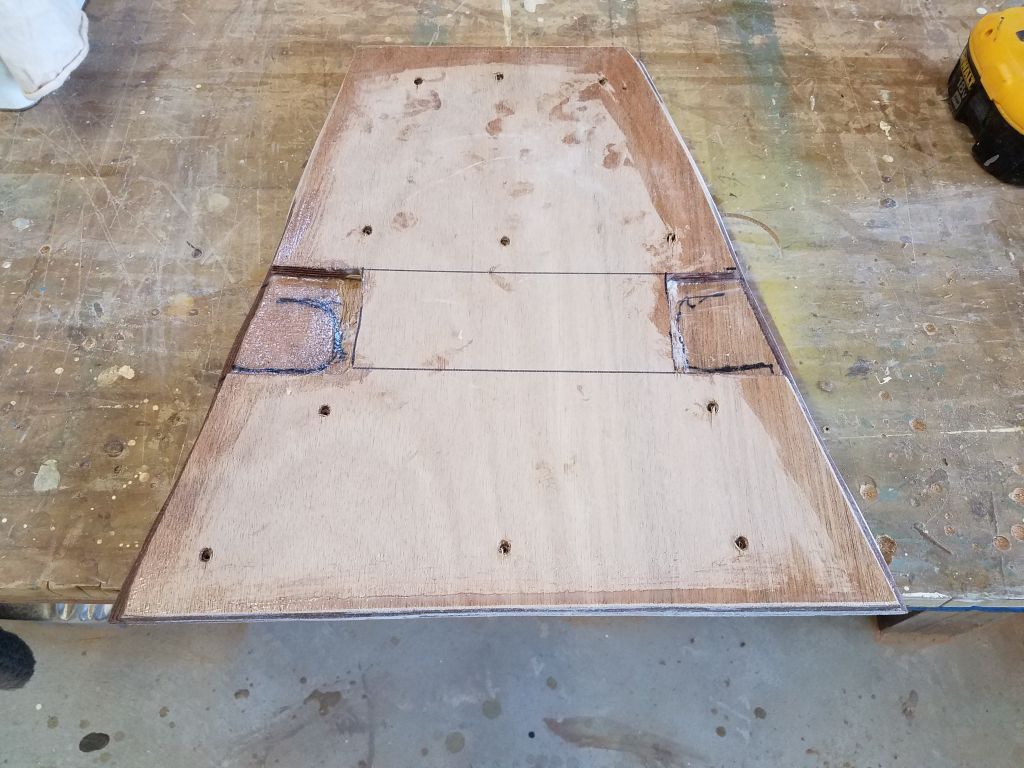
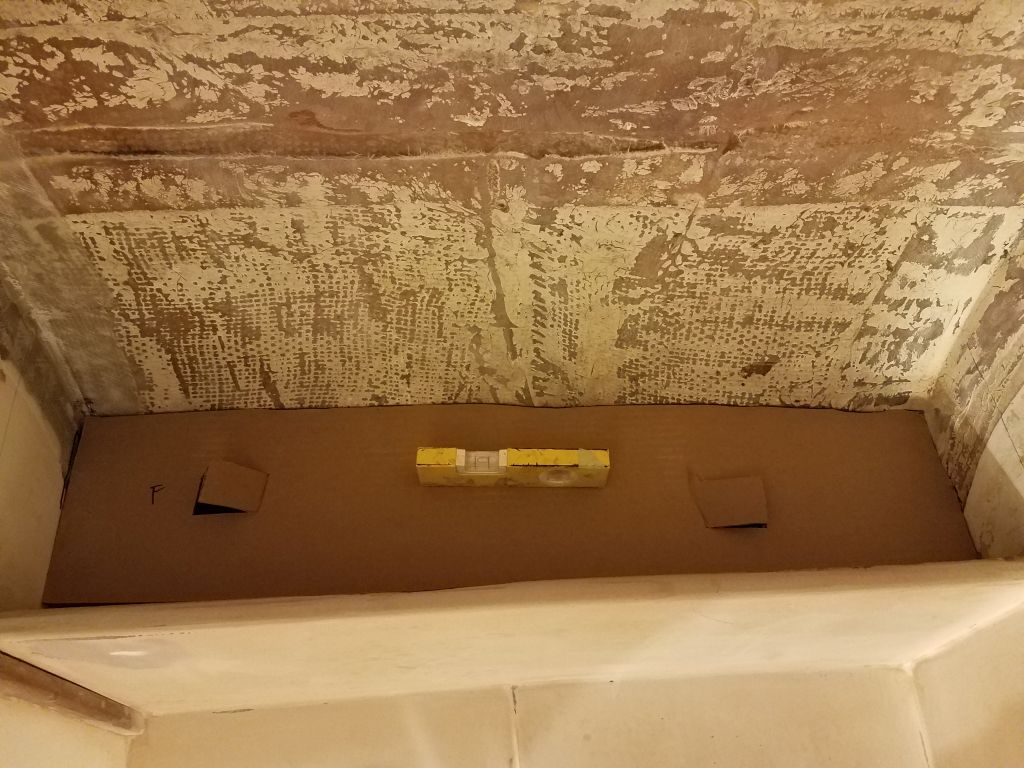
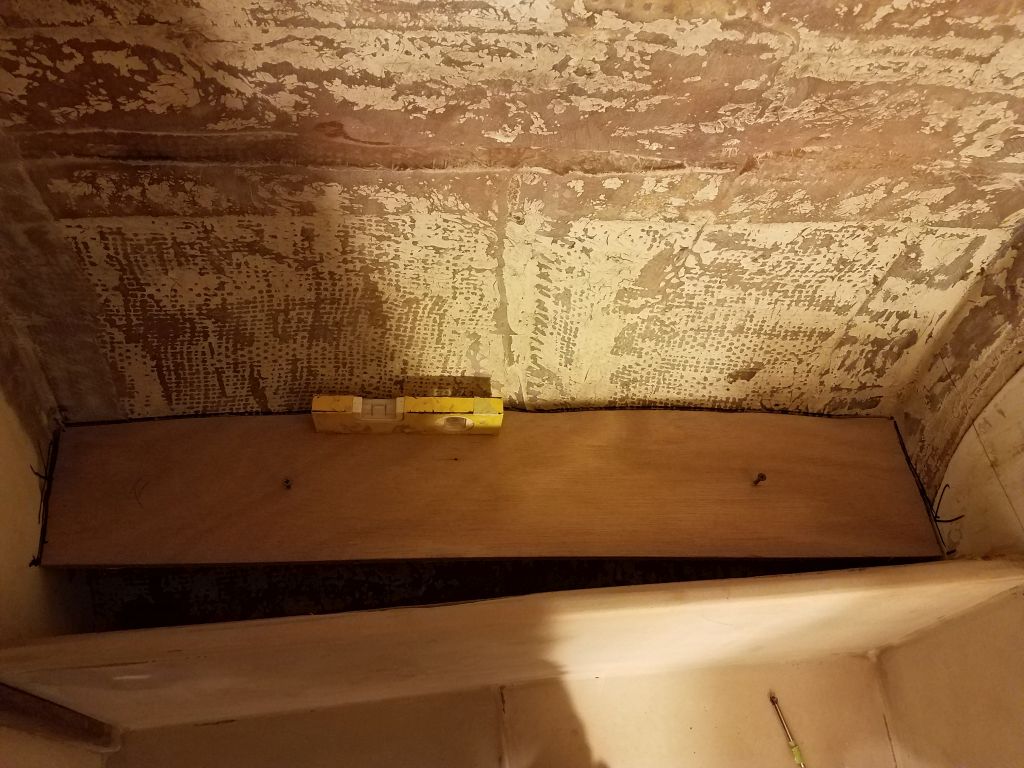
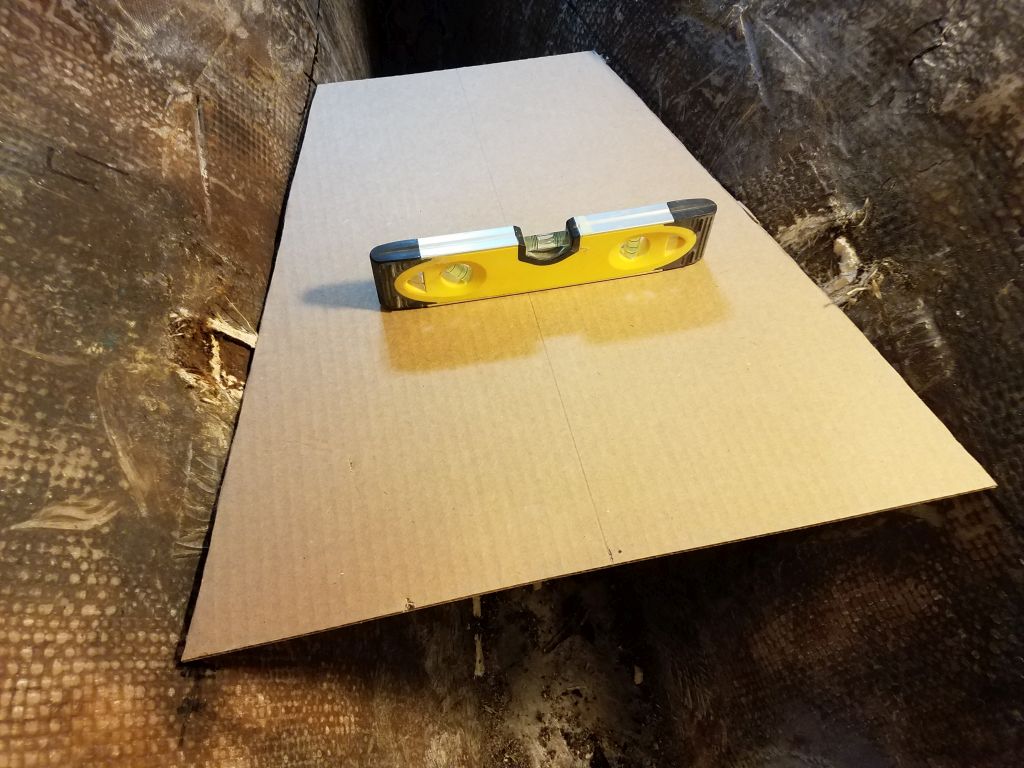
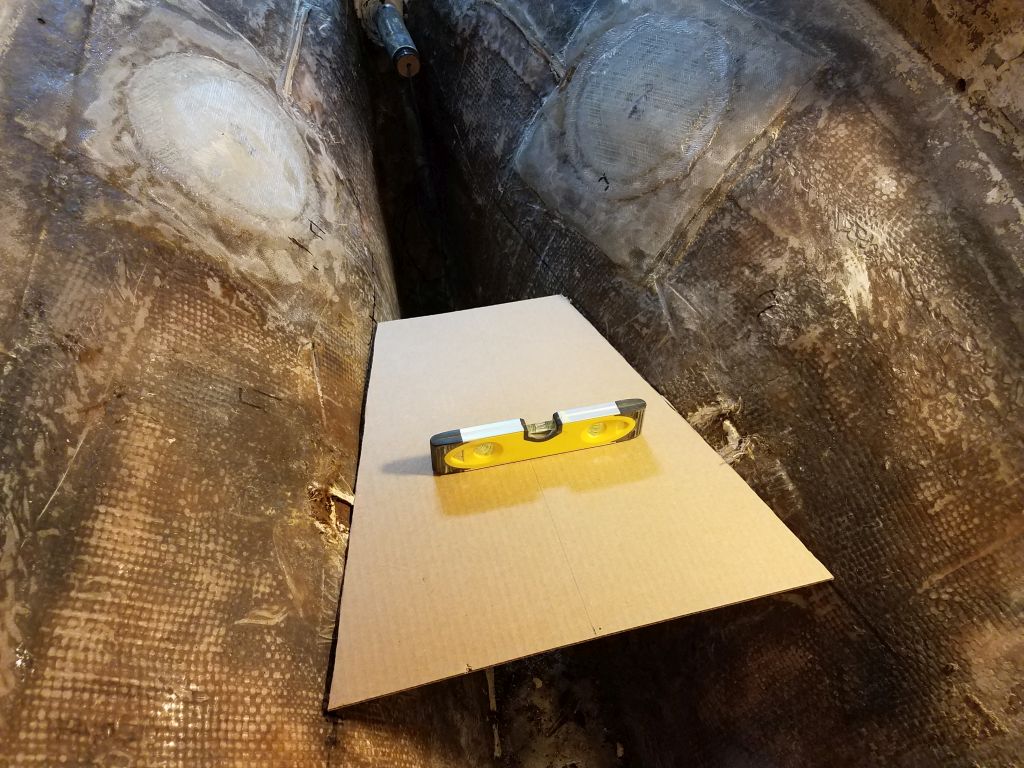
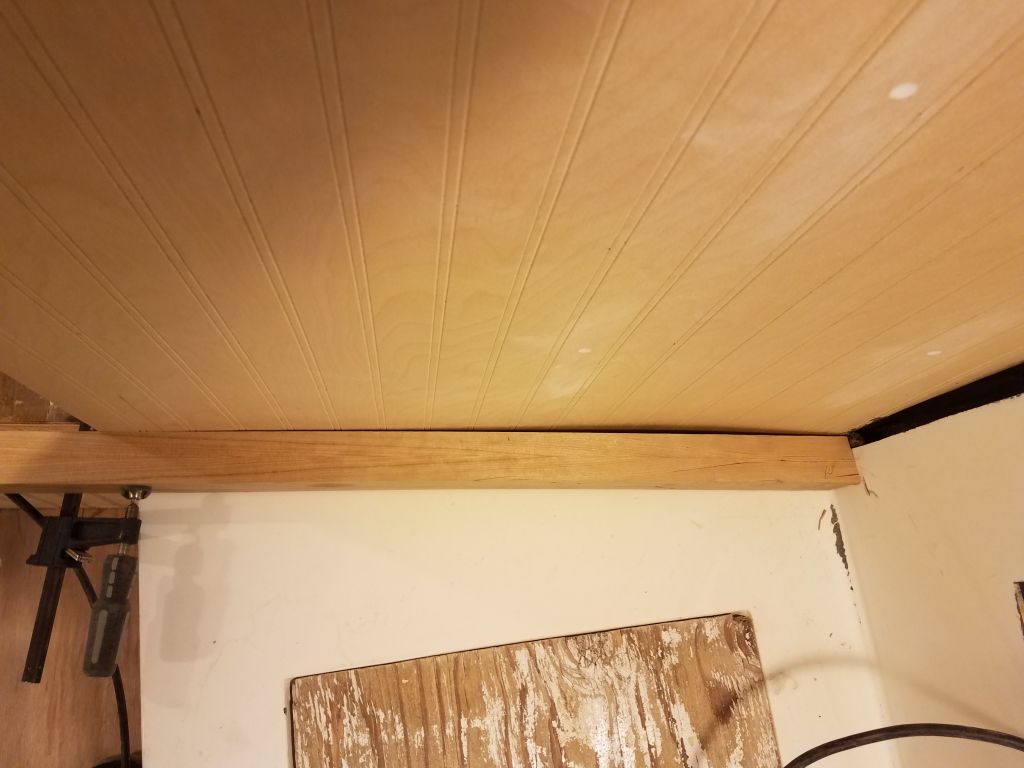
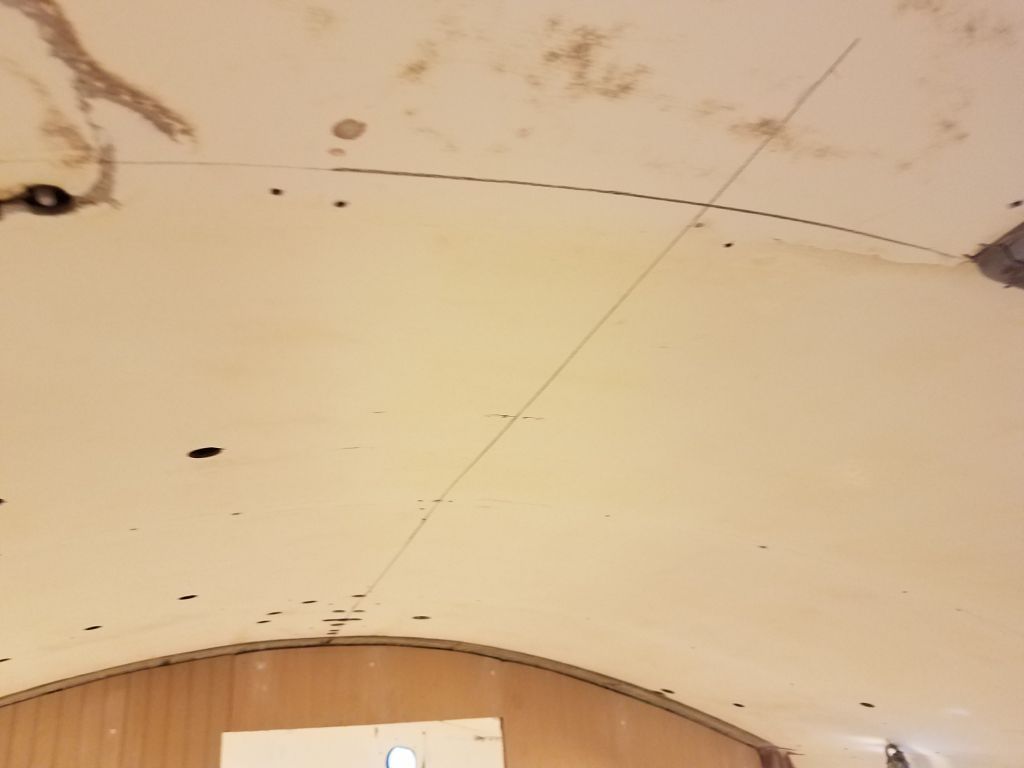
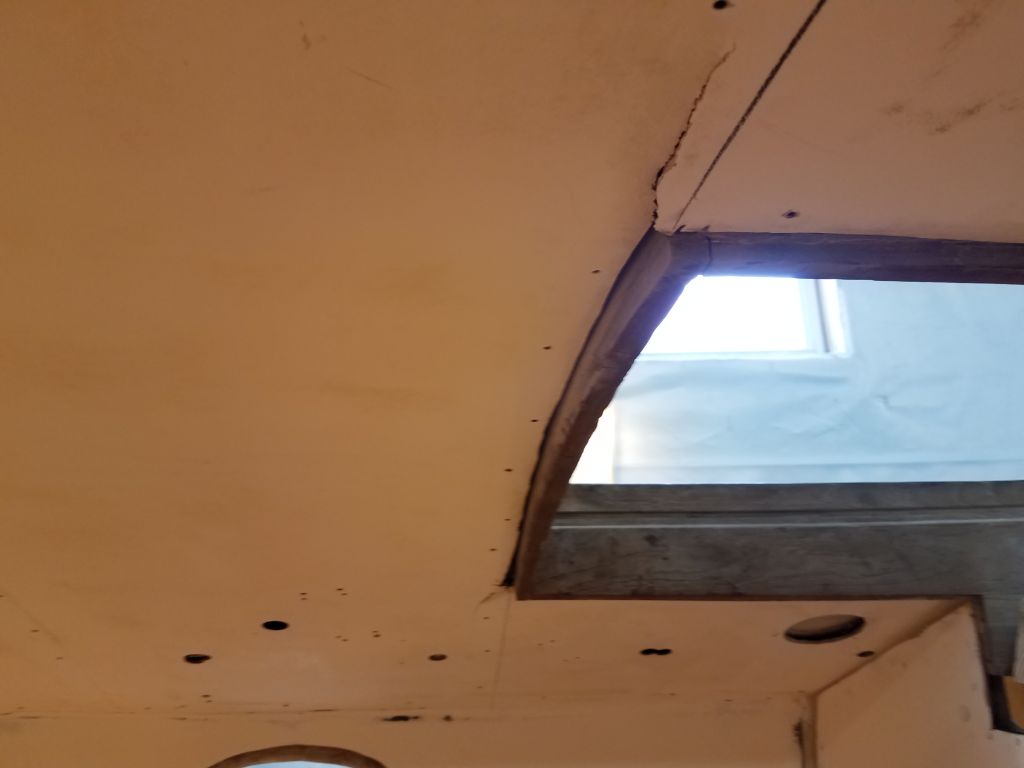
For the front panels on each side, I started with cardboard templates that I scribed to the space, and used these to cut cherry plywood panels to fit.  I sneaked my way up to a close fit for the top and forward edges of the new panels, eventually achieving a good fit with the overhead.  For the moment, I let the after side run long past the aft bulkhead.

Once the panels were well fit, I marked the aft ends of the panels where they passed the aft bulkhead of the lockers, then cut the panels to length.

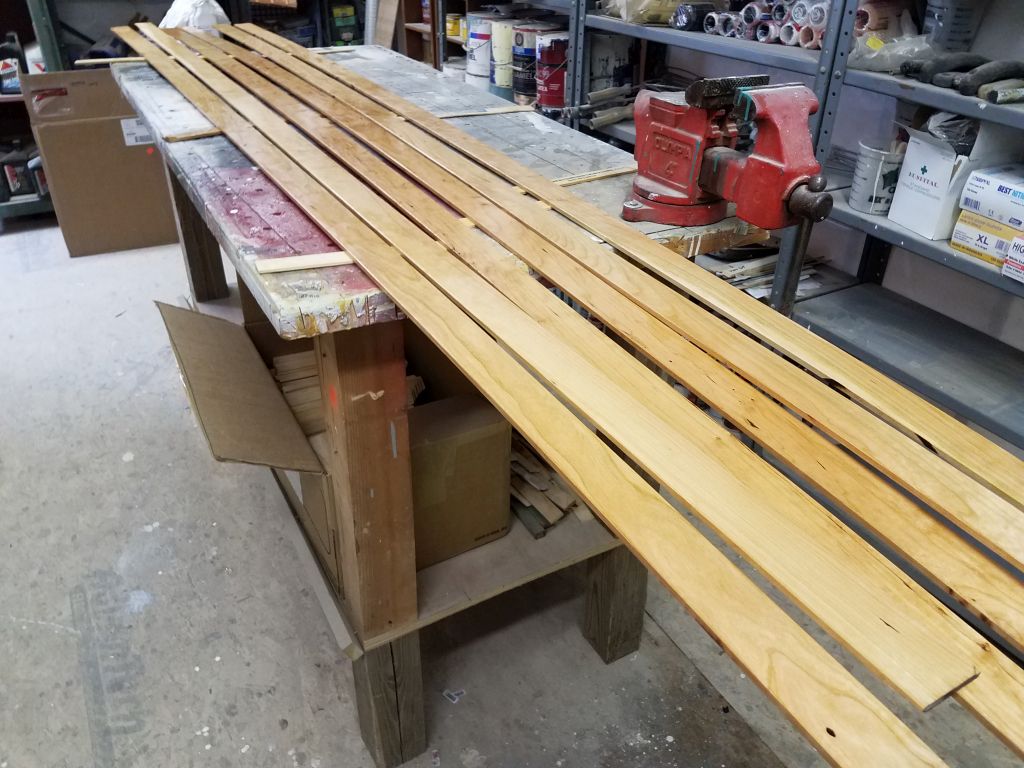
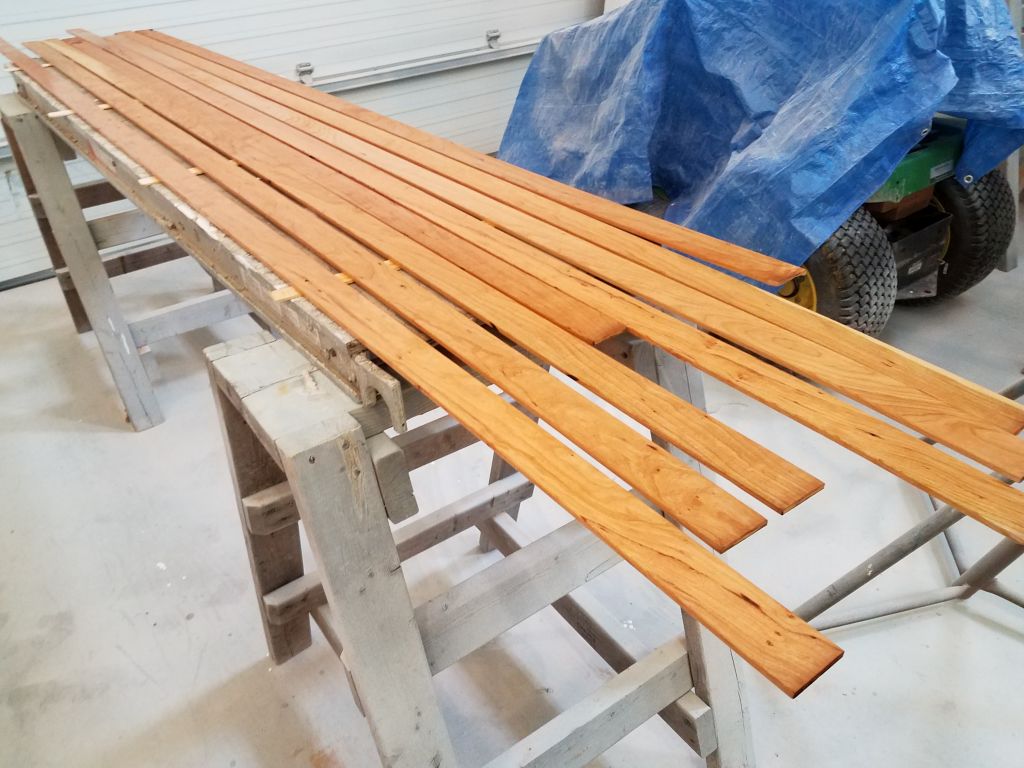
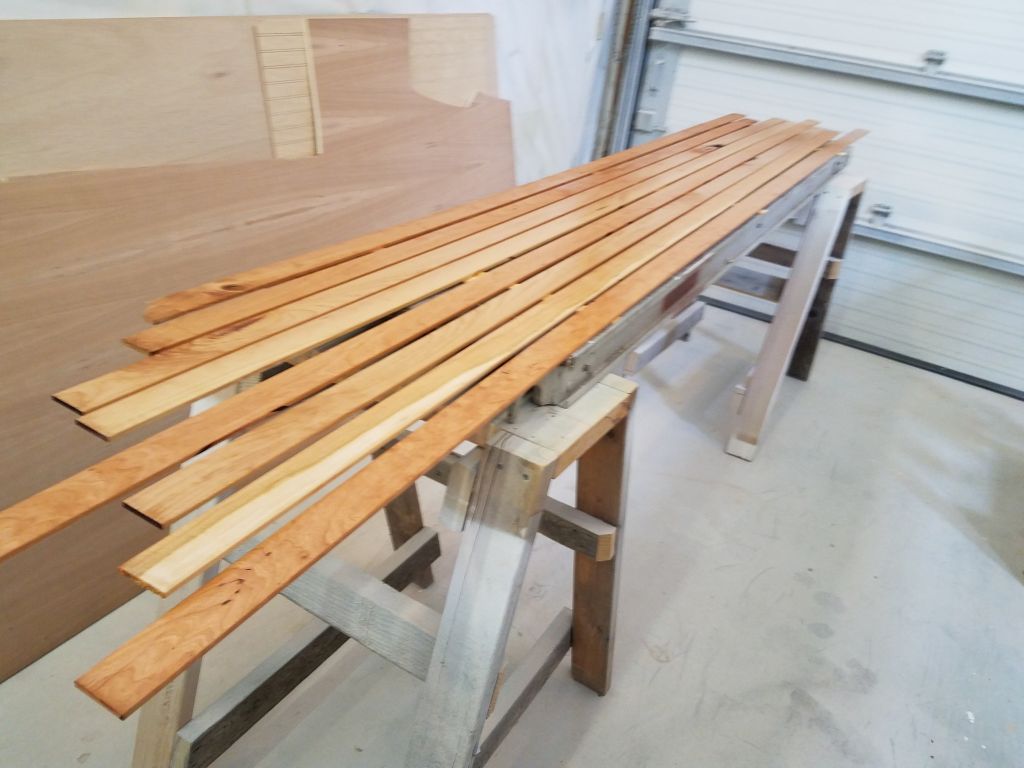
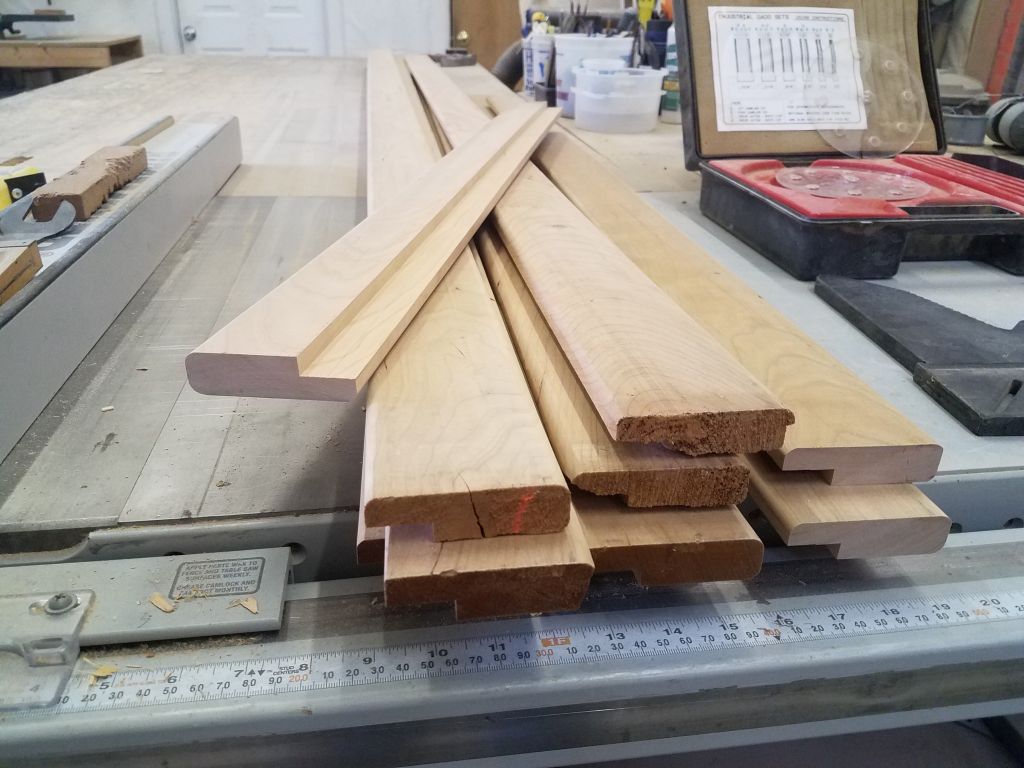
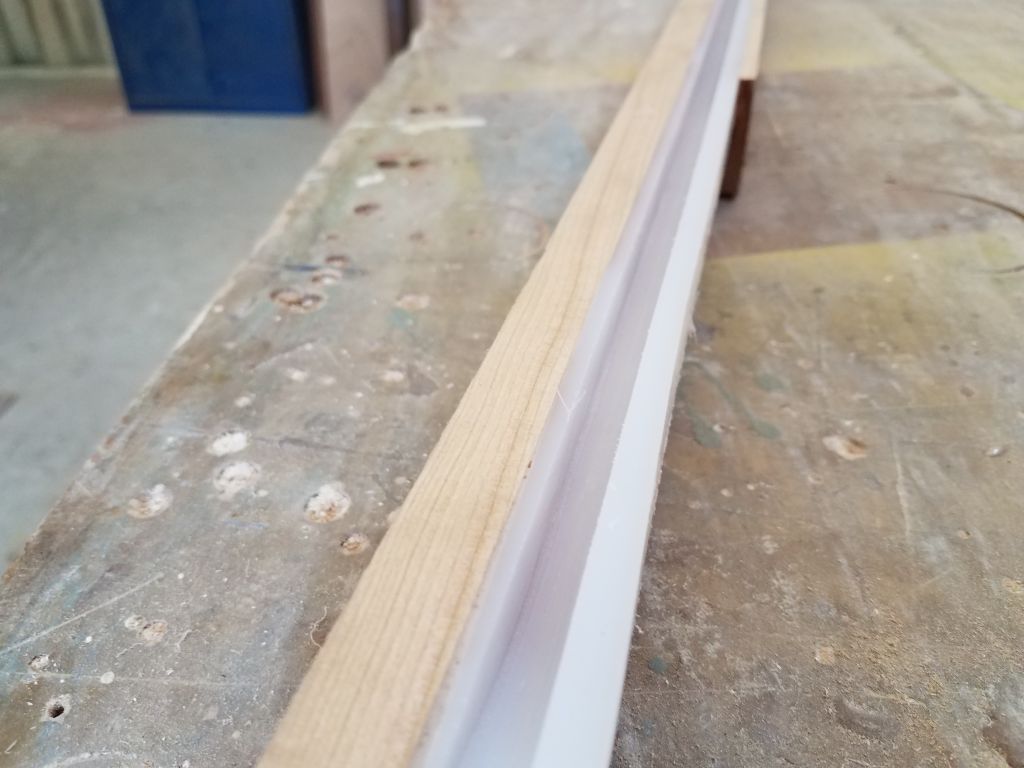
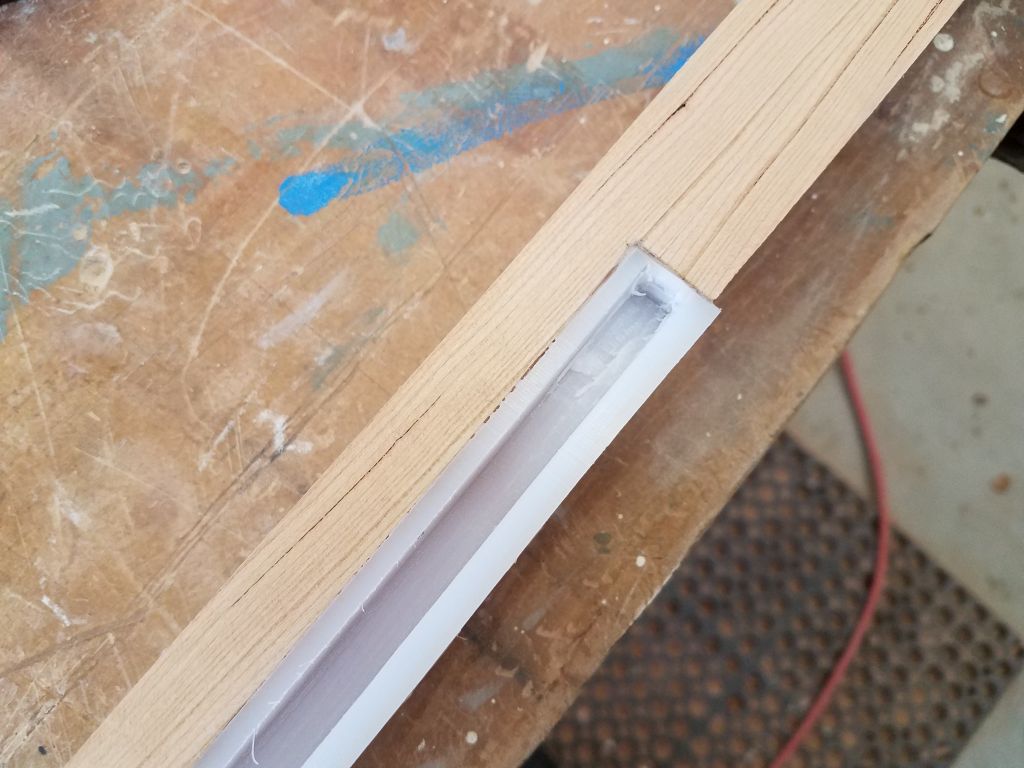
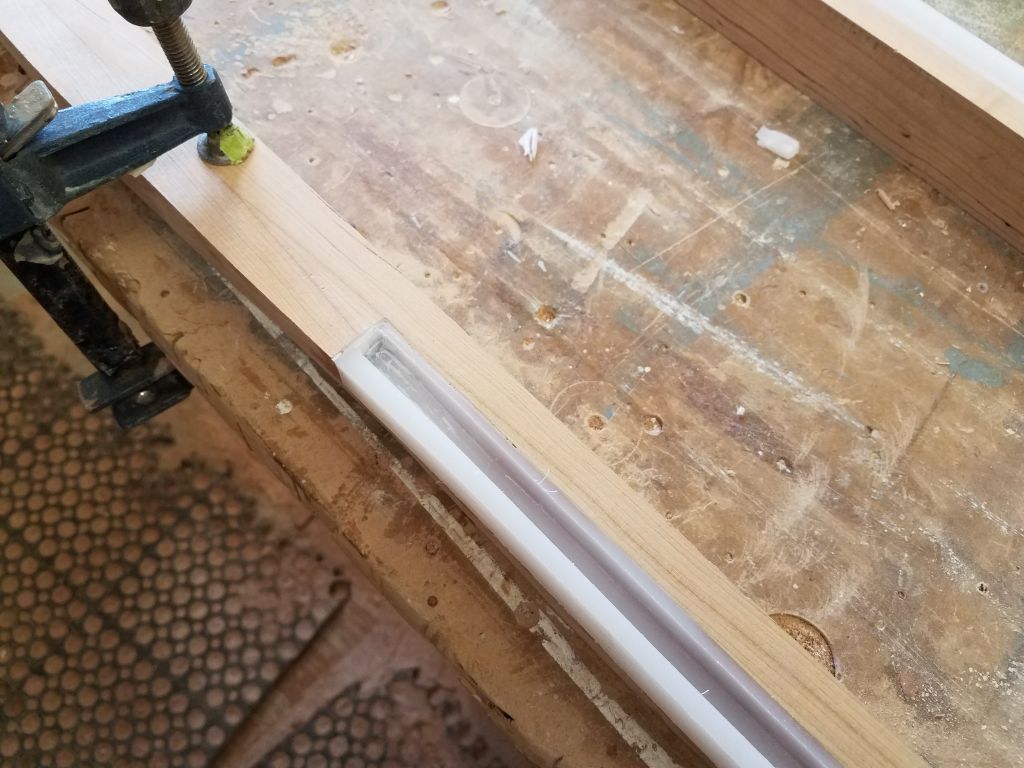
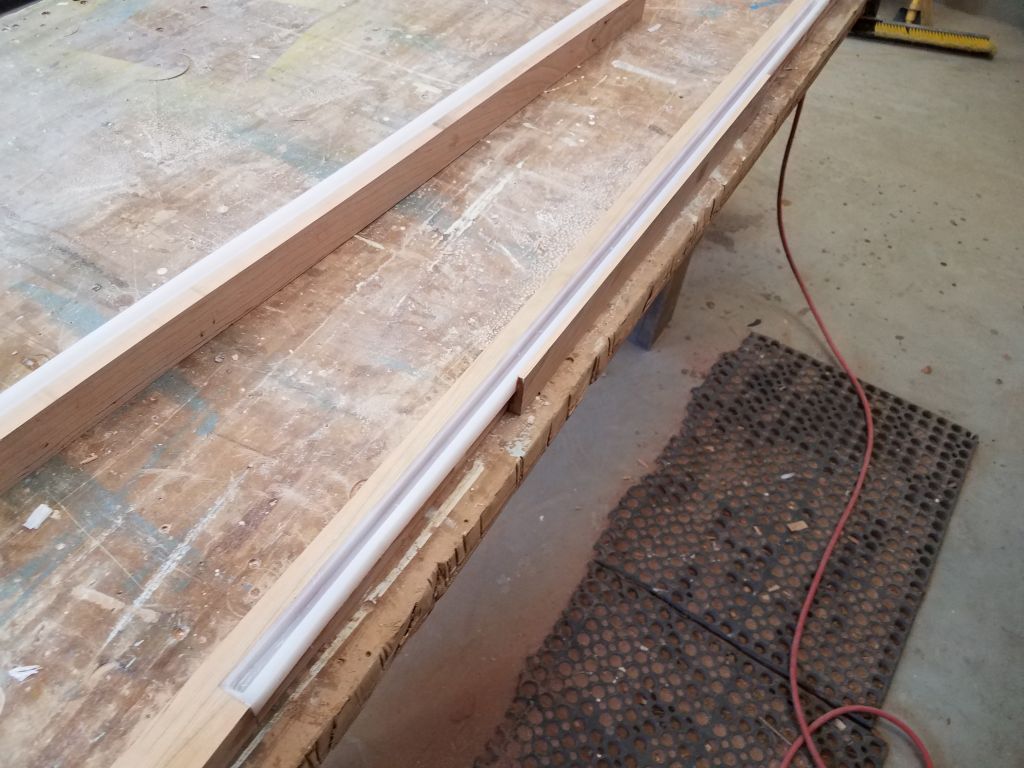
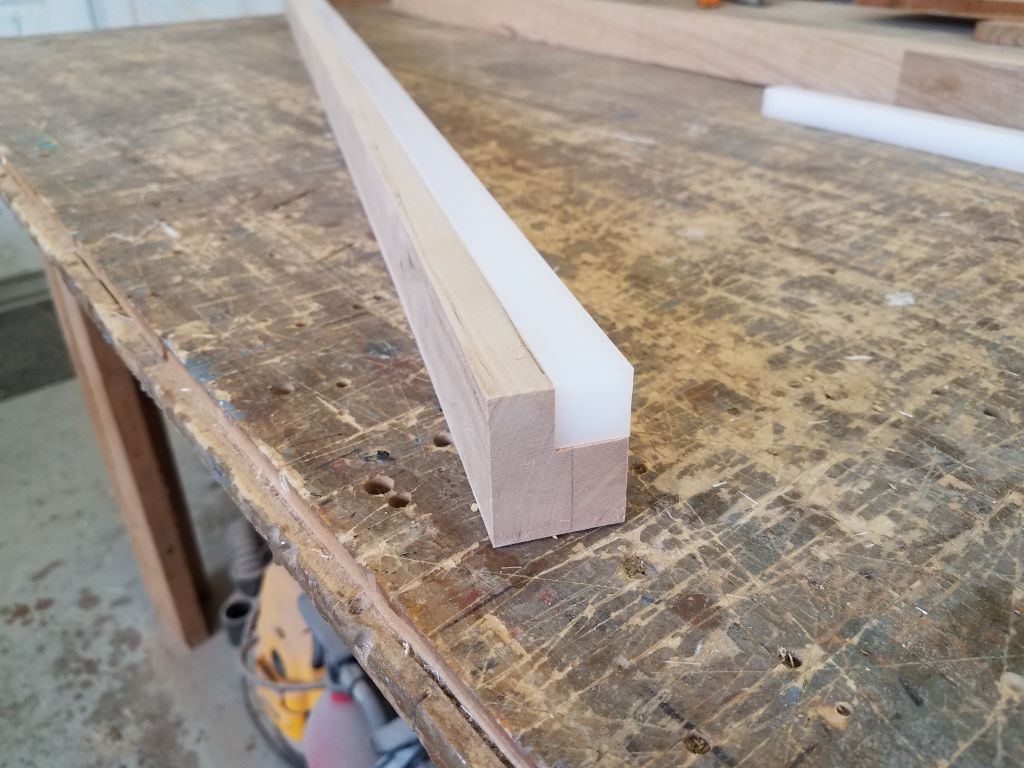
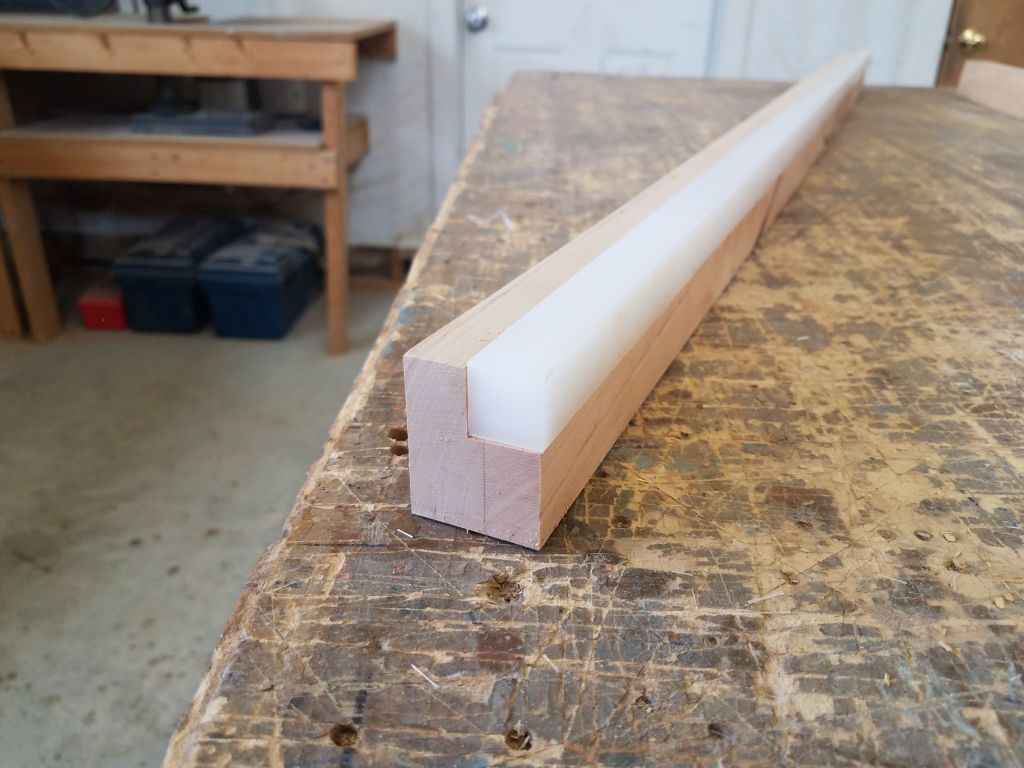
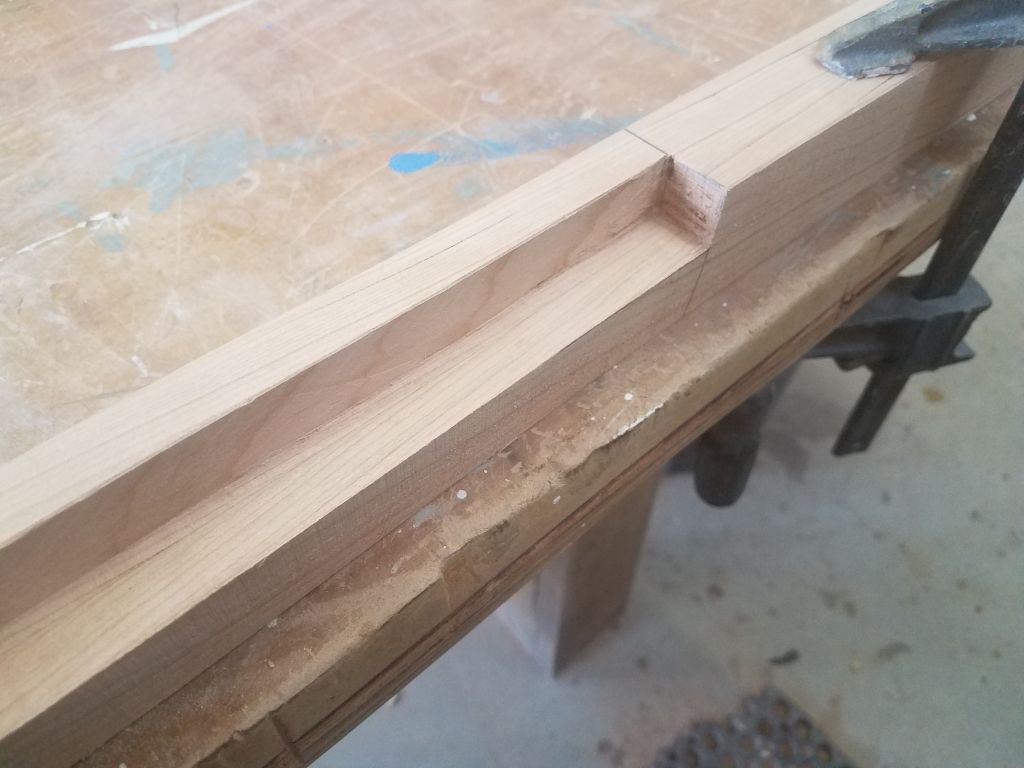
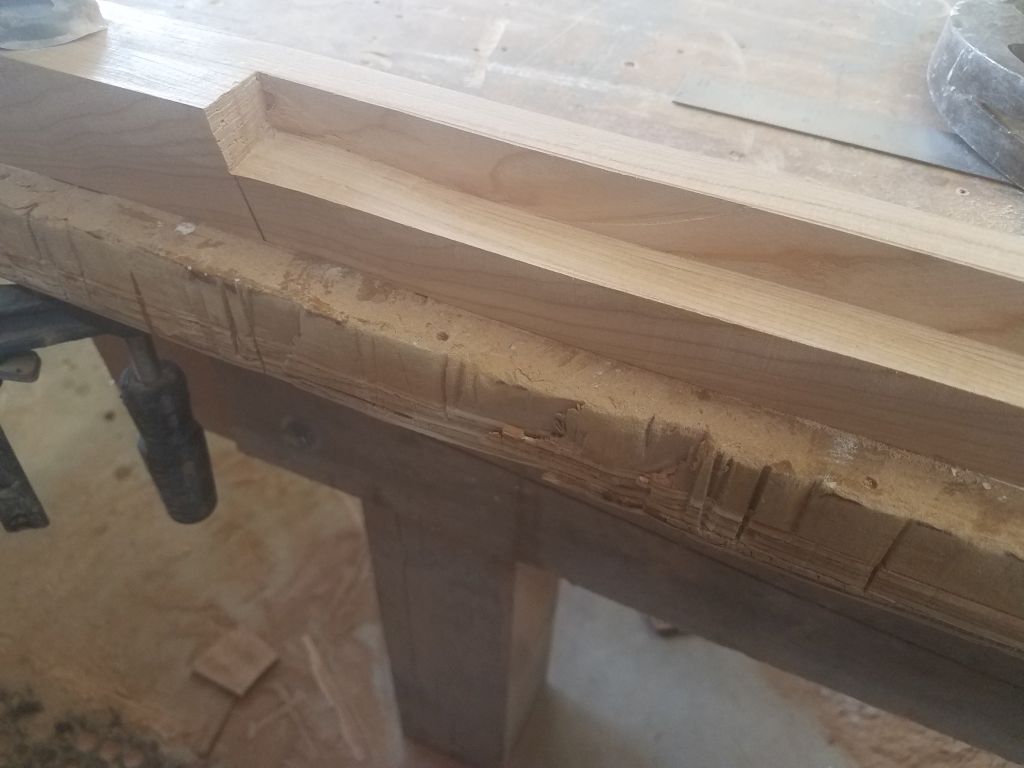
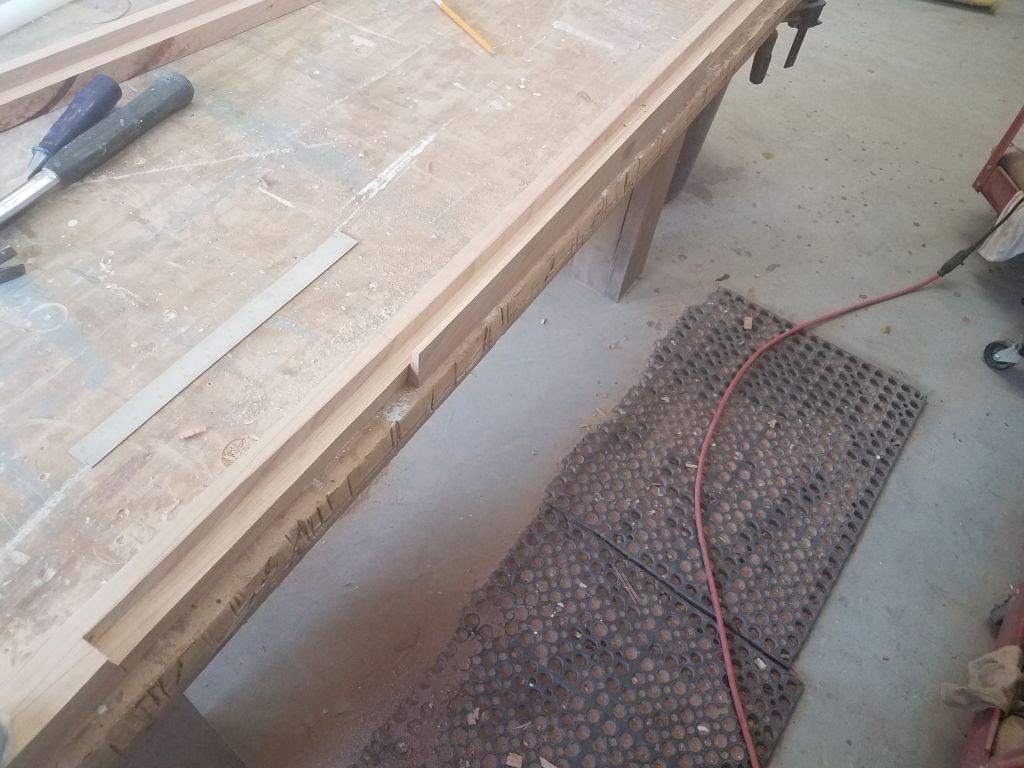
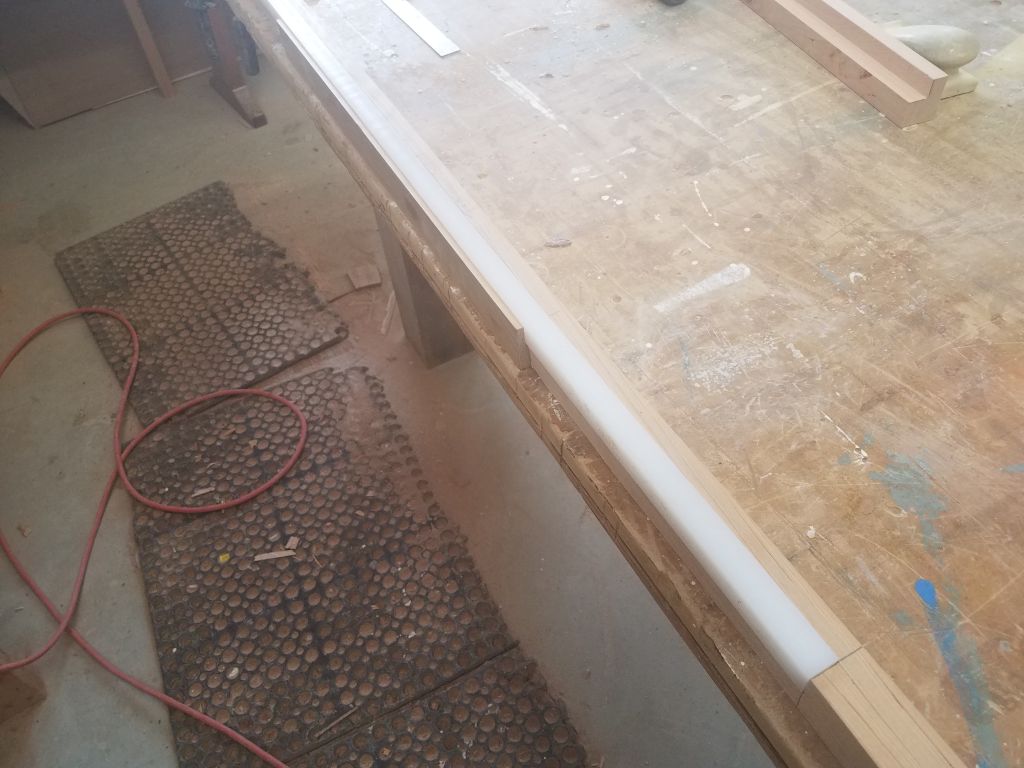
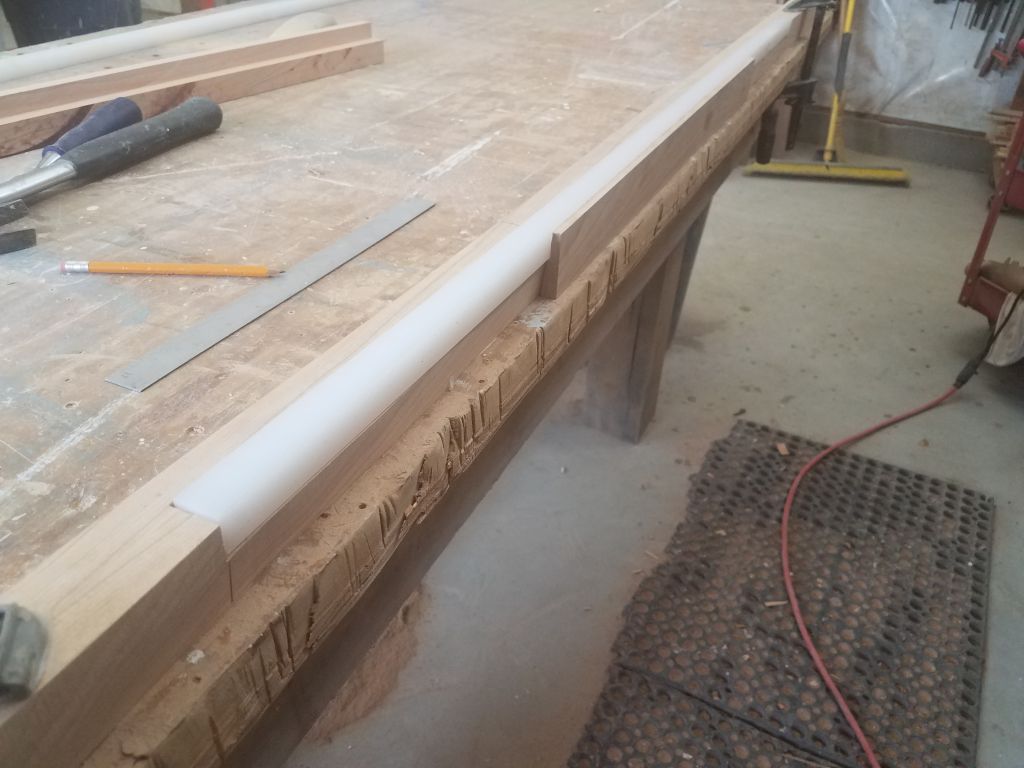
Once I had the panels’ final lengths set in this way, to cover the edge of the plywood face panel I trimmed another 1/2″ from the panels at the aft end, and glued on slightly oversized solid cherry strips that would provide the finished appearance  once complete.  I planned to trim these to exact length with the panels in place.

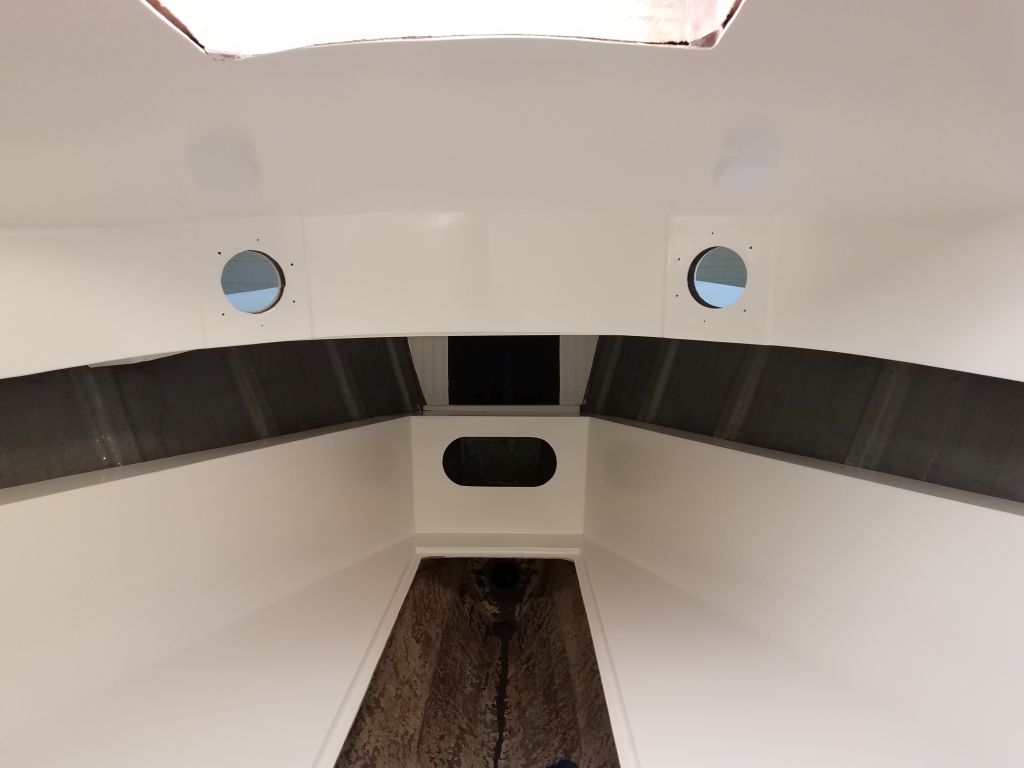
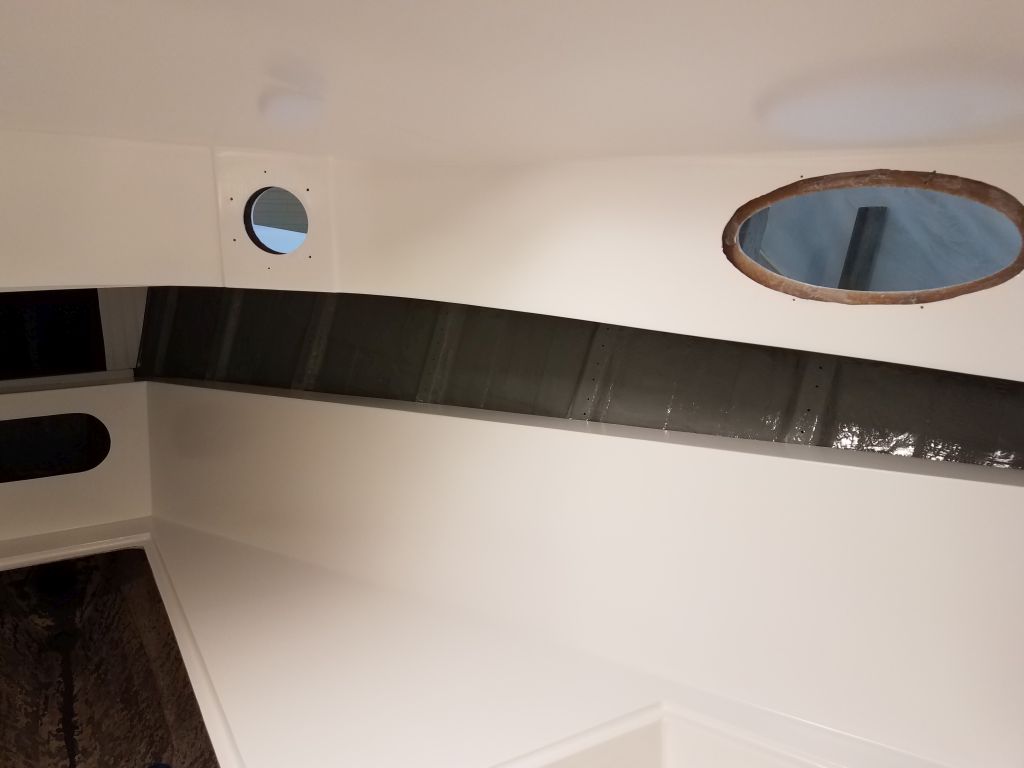
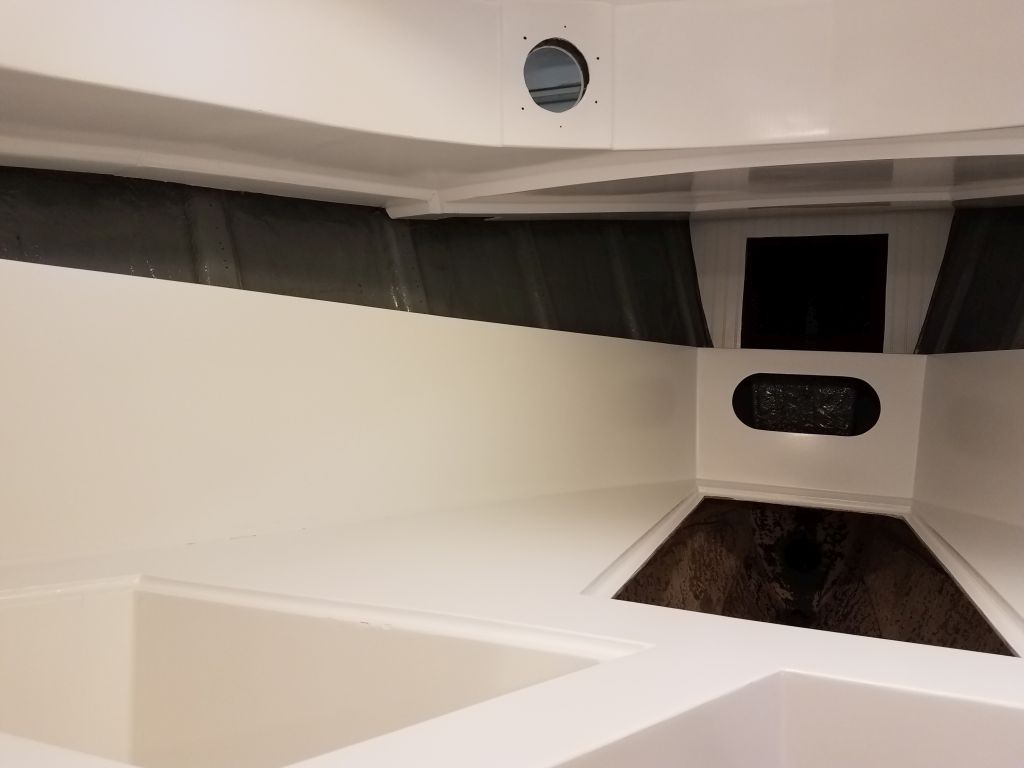
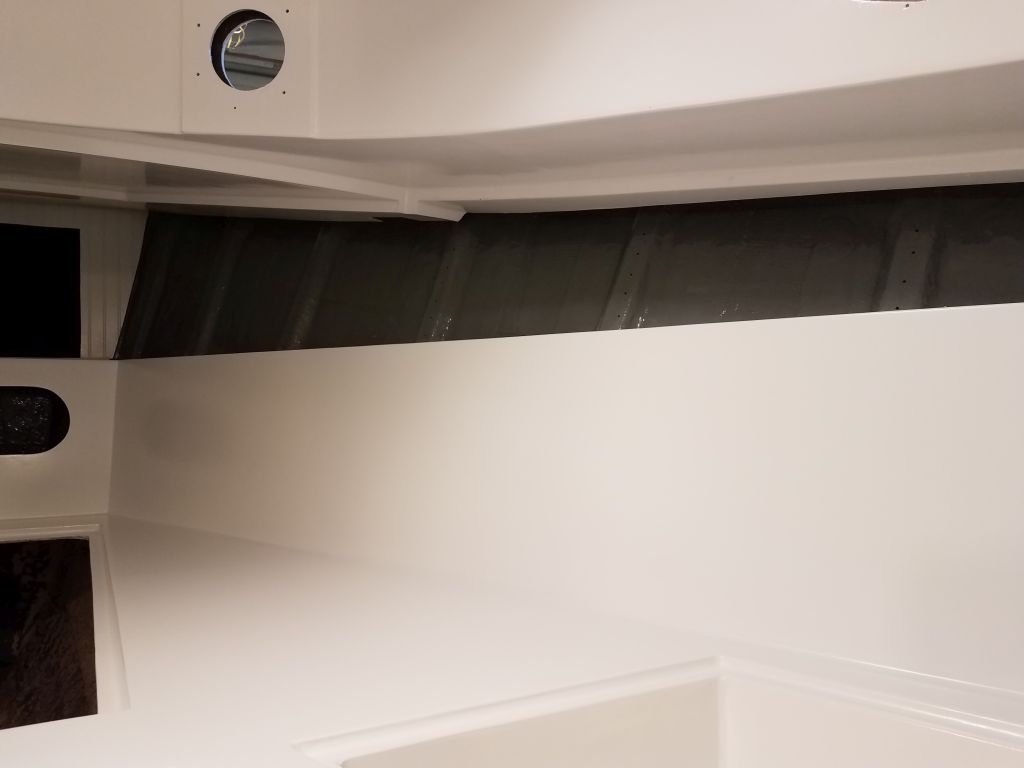
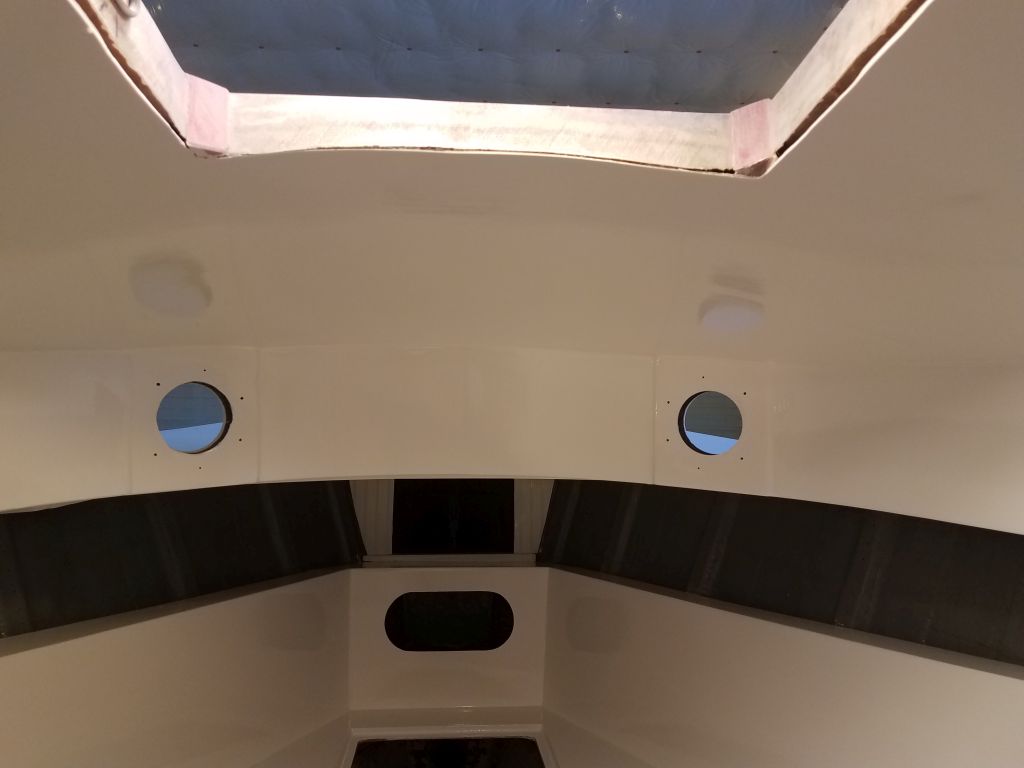
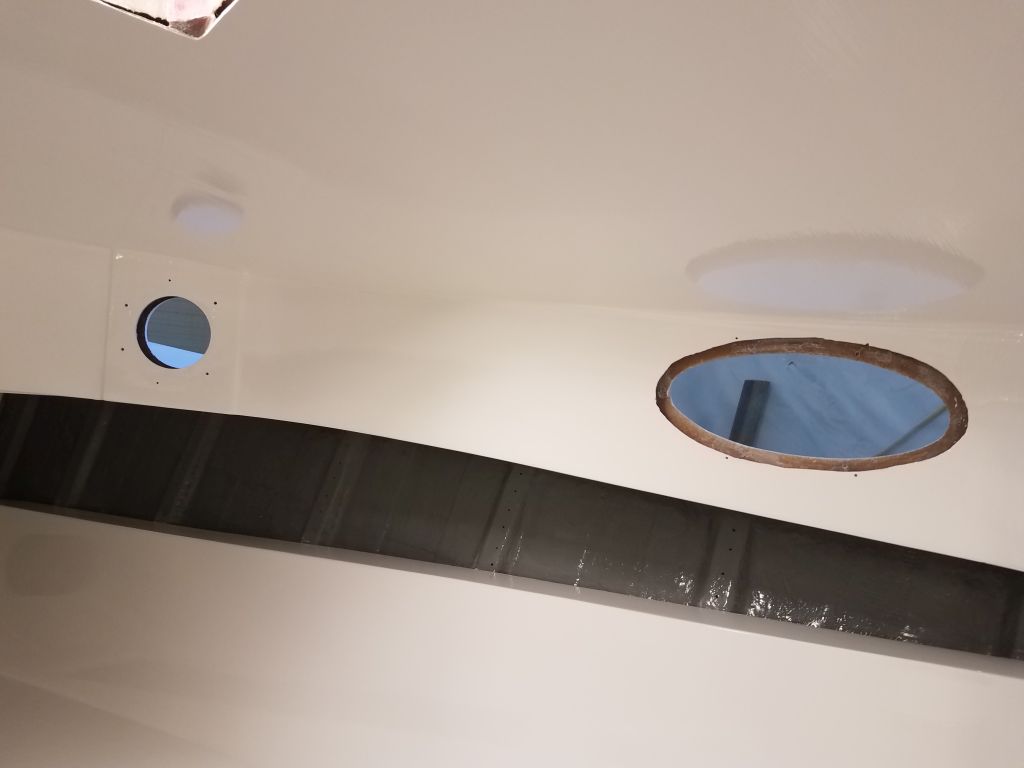
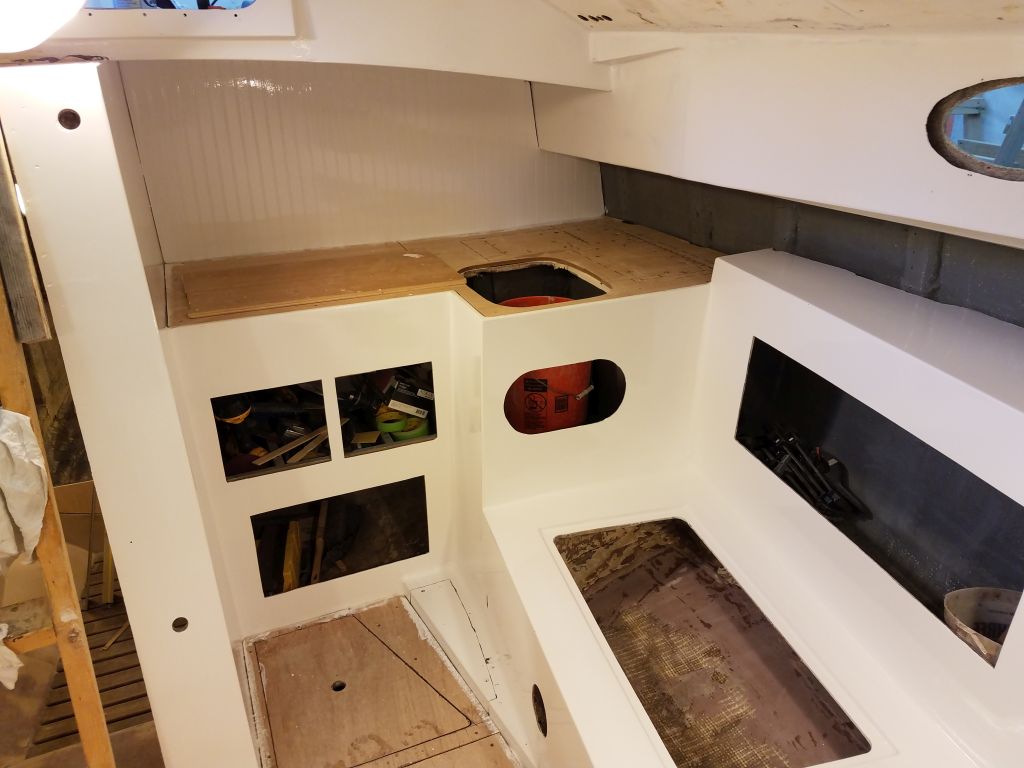
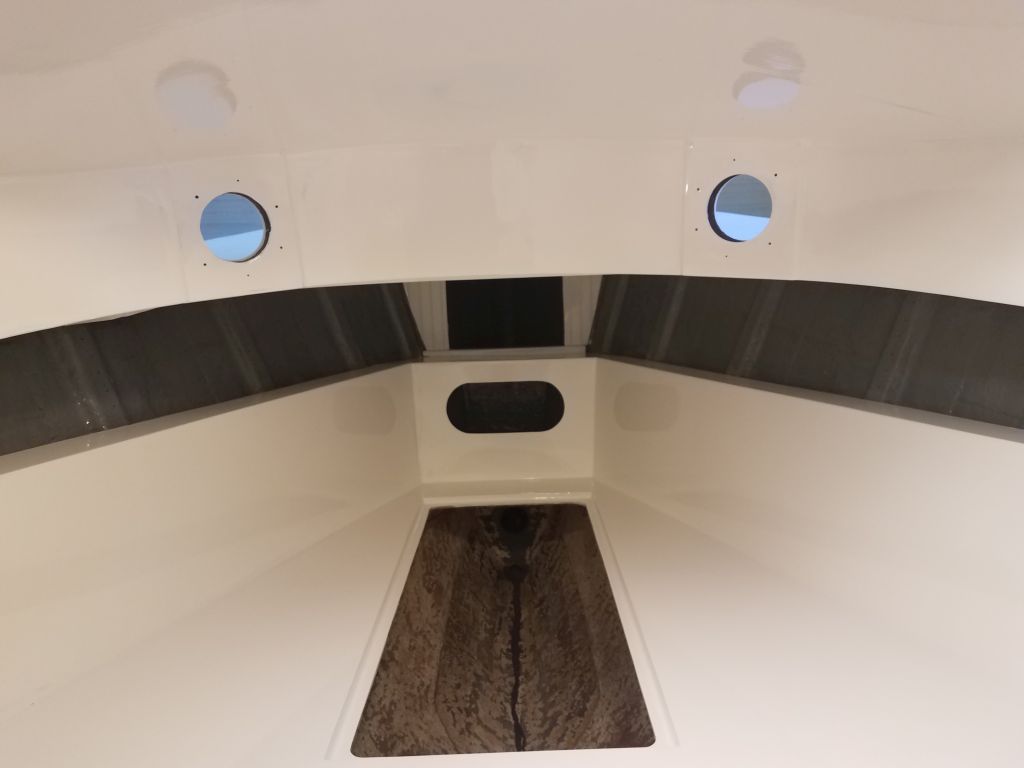
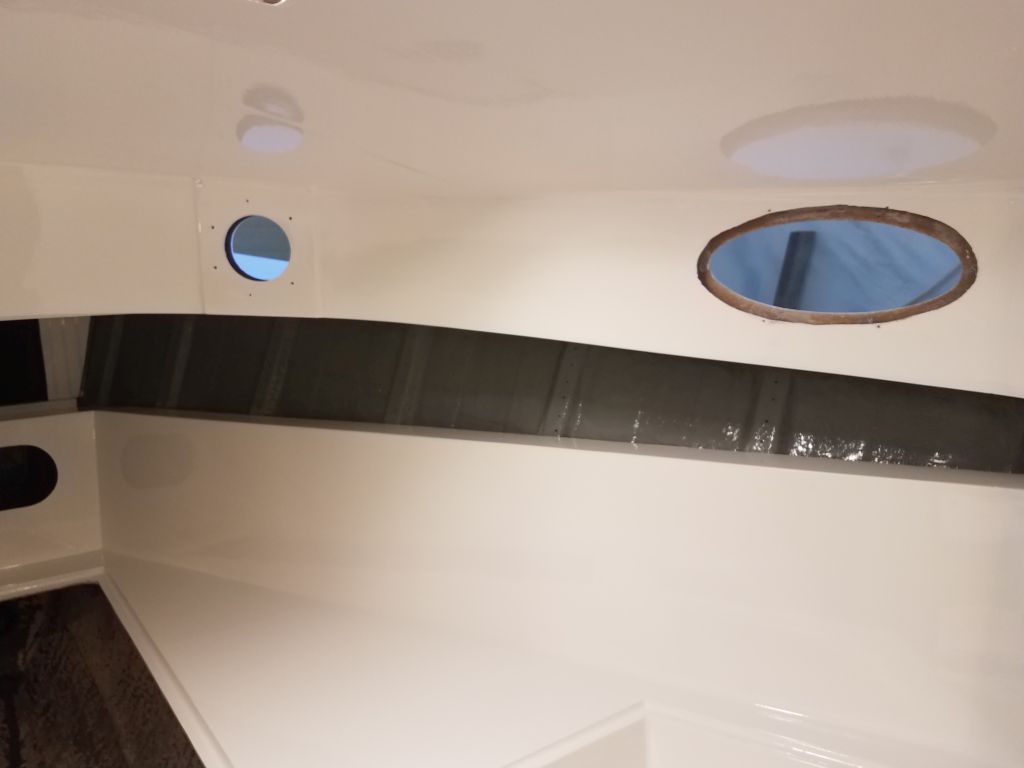
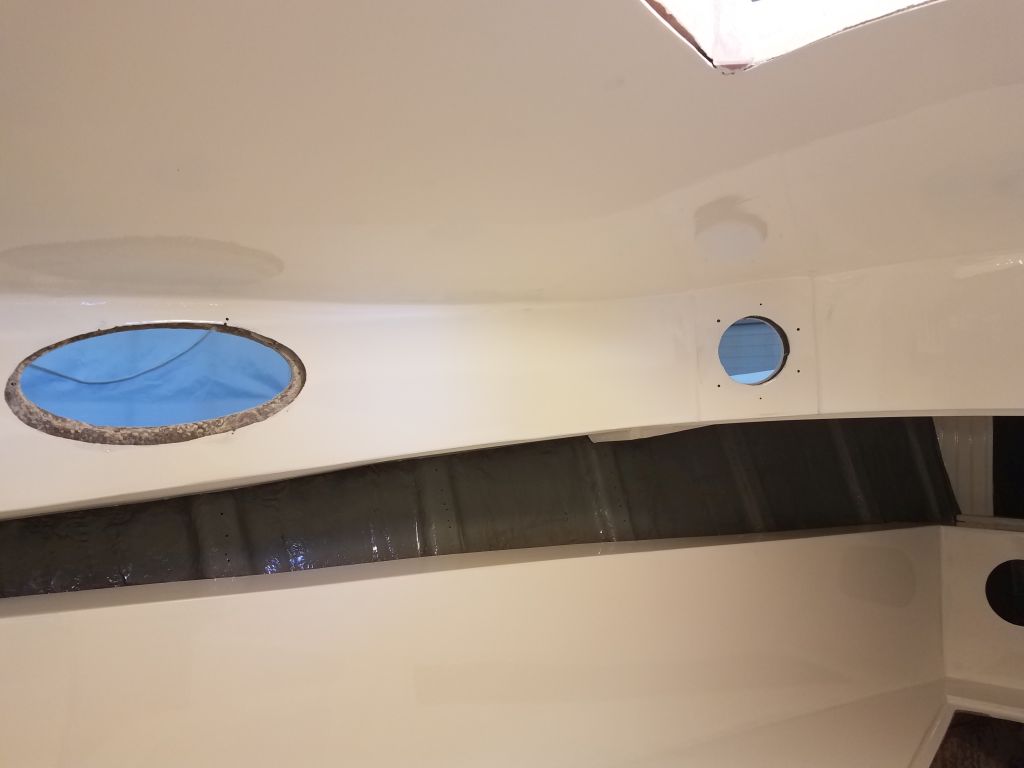
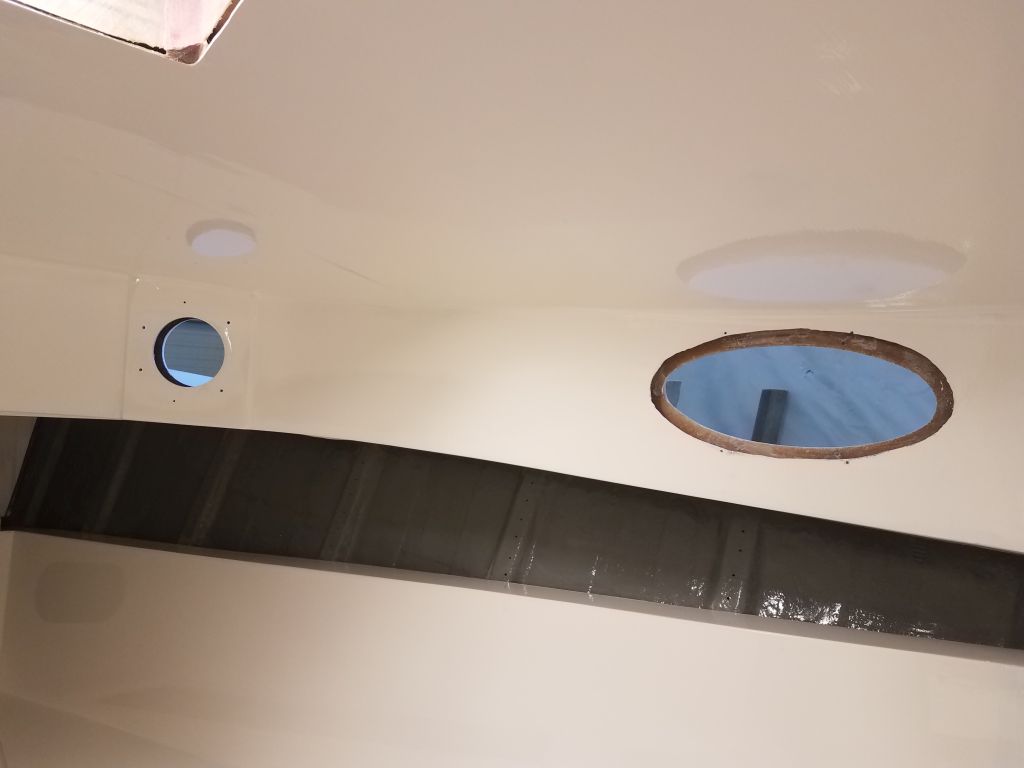
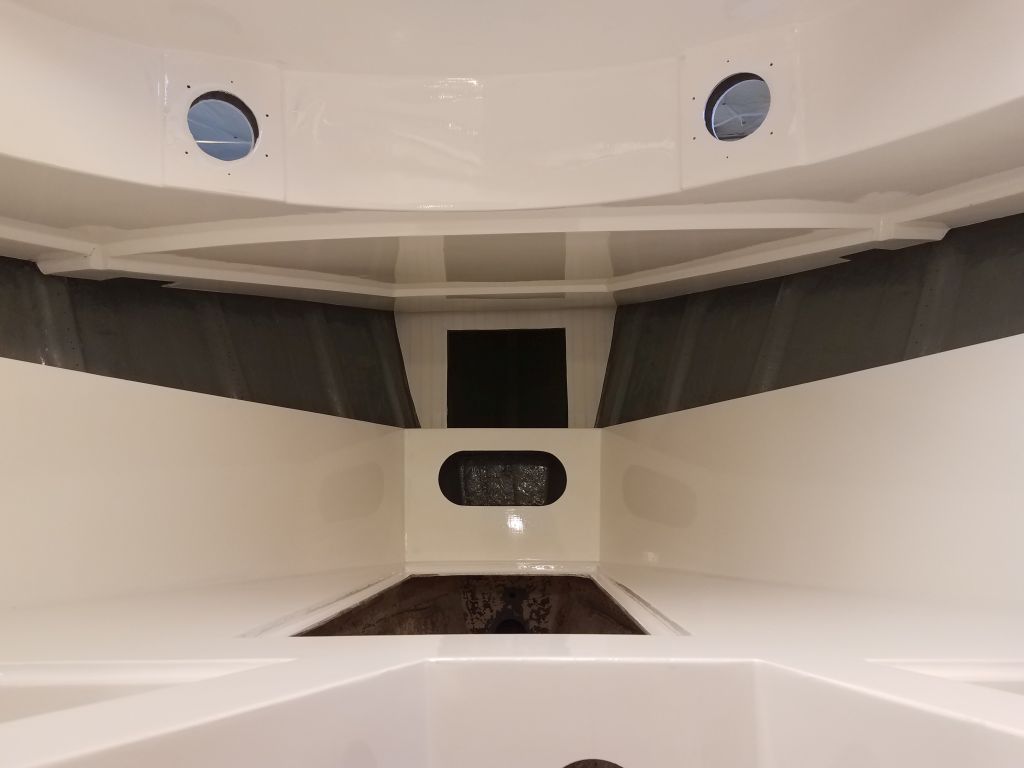
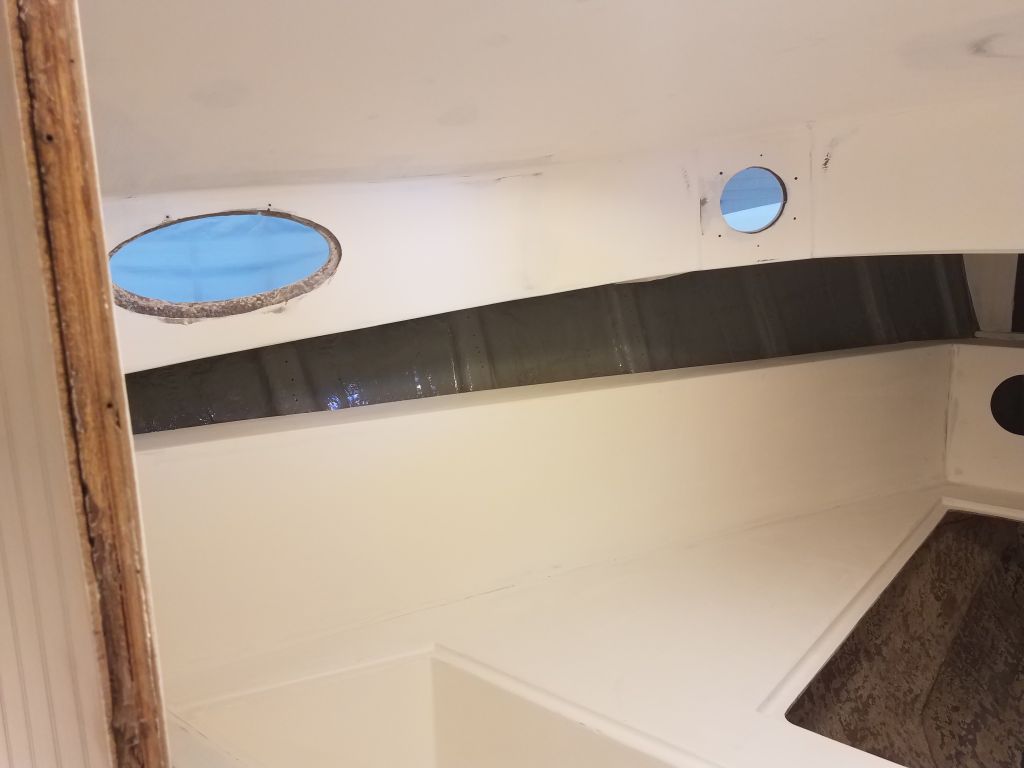
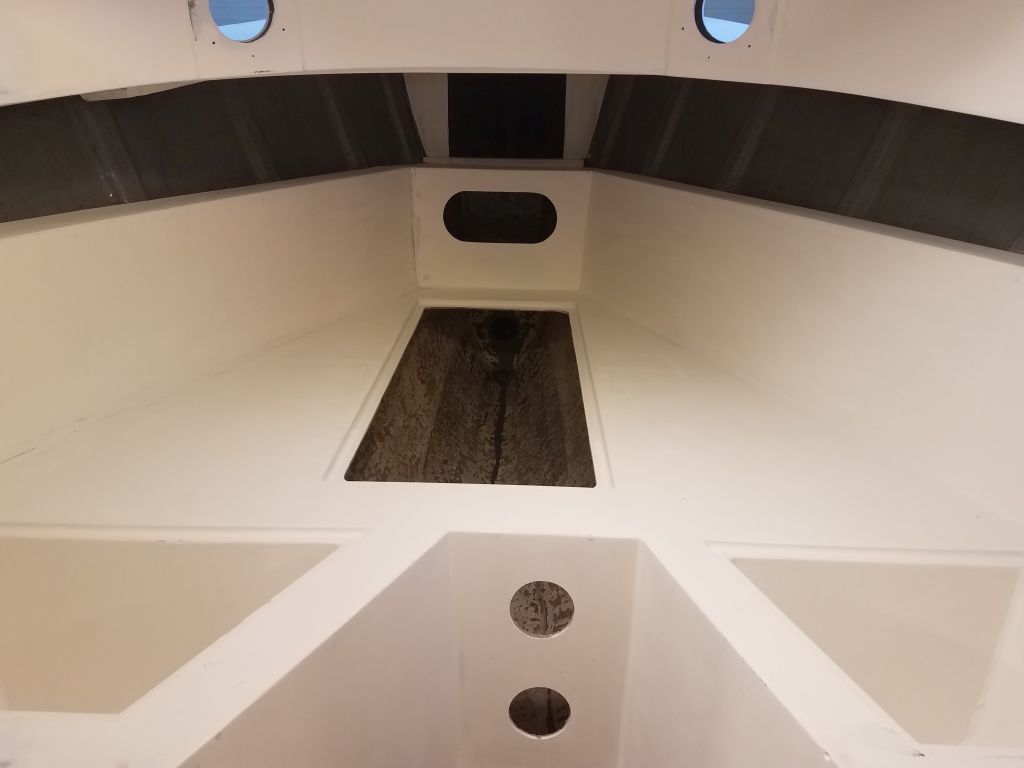
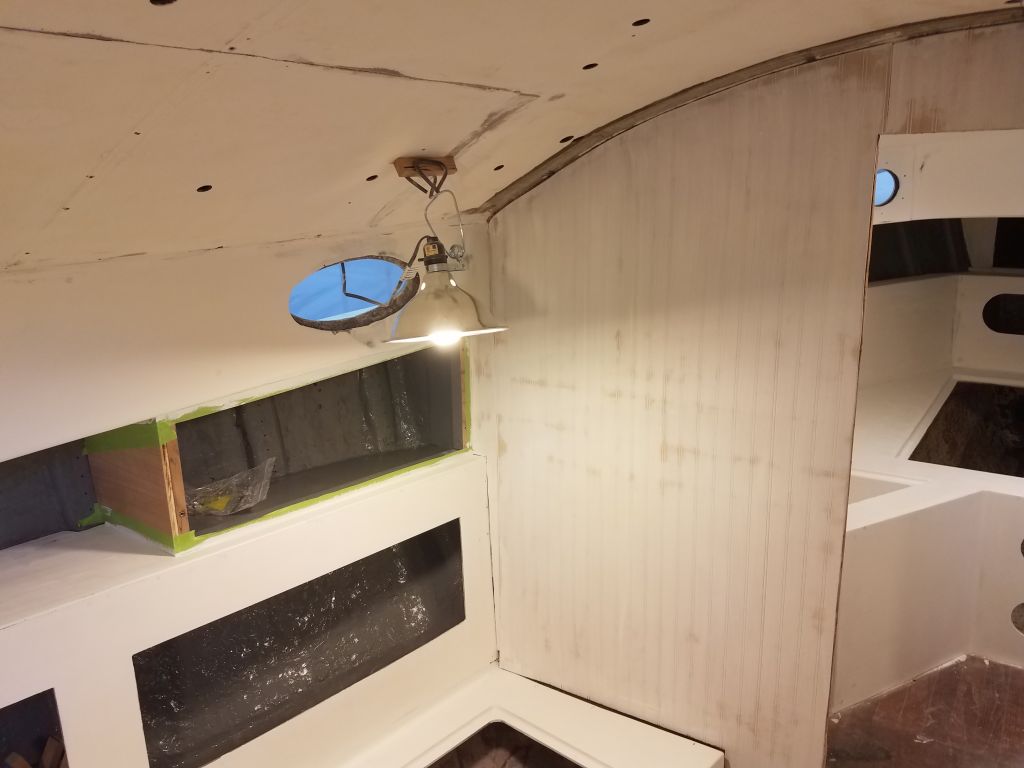
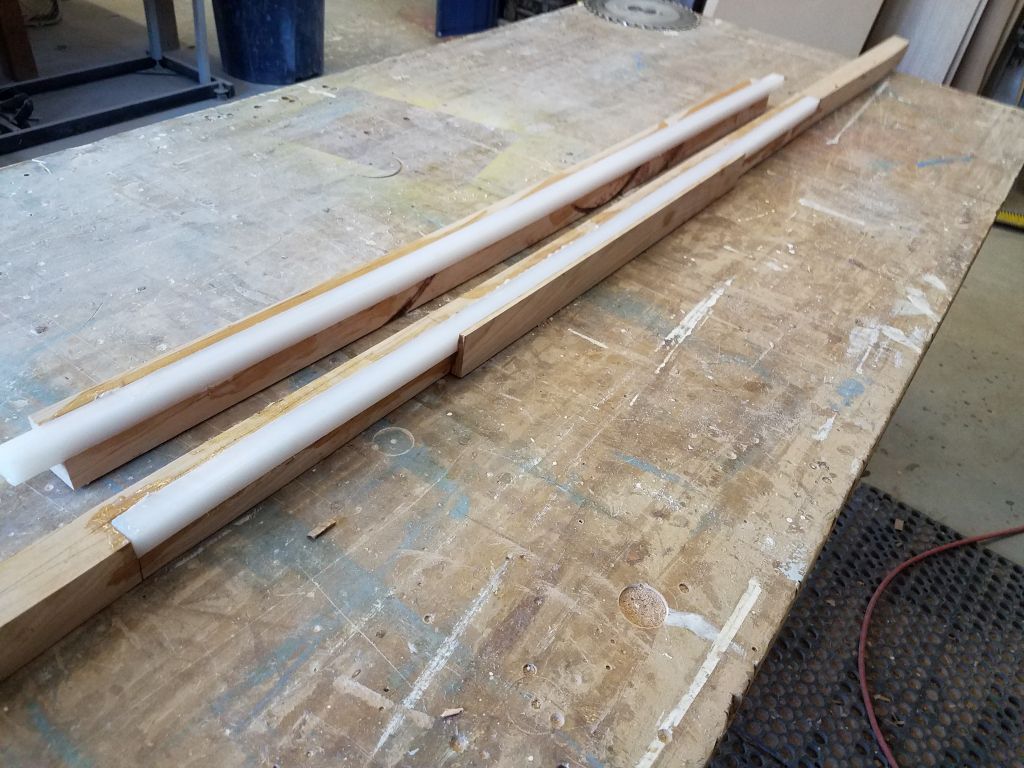
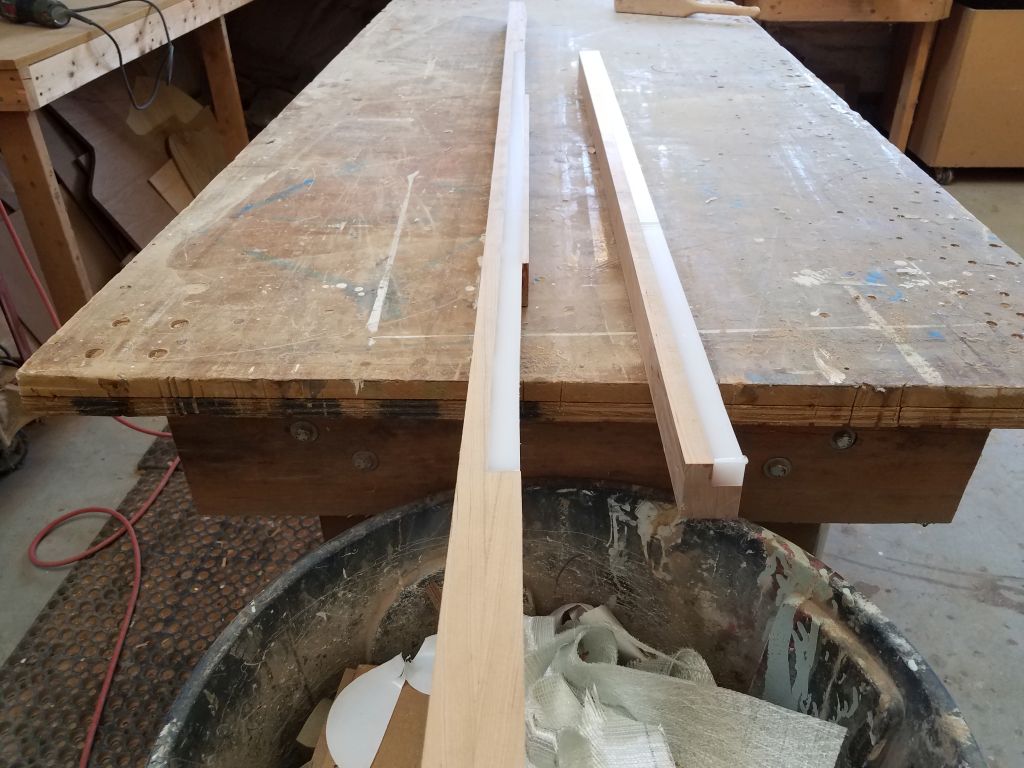
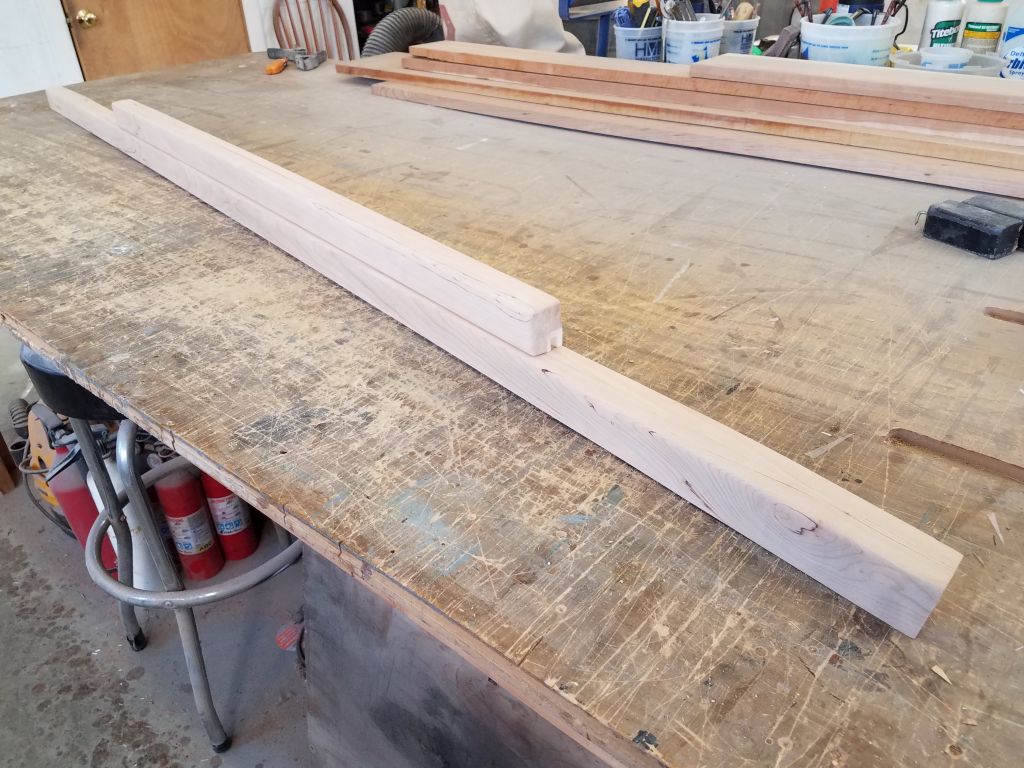
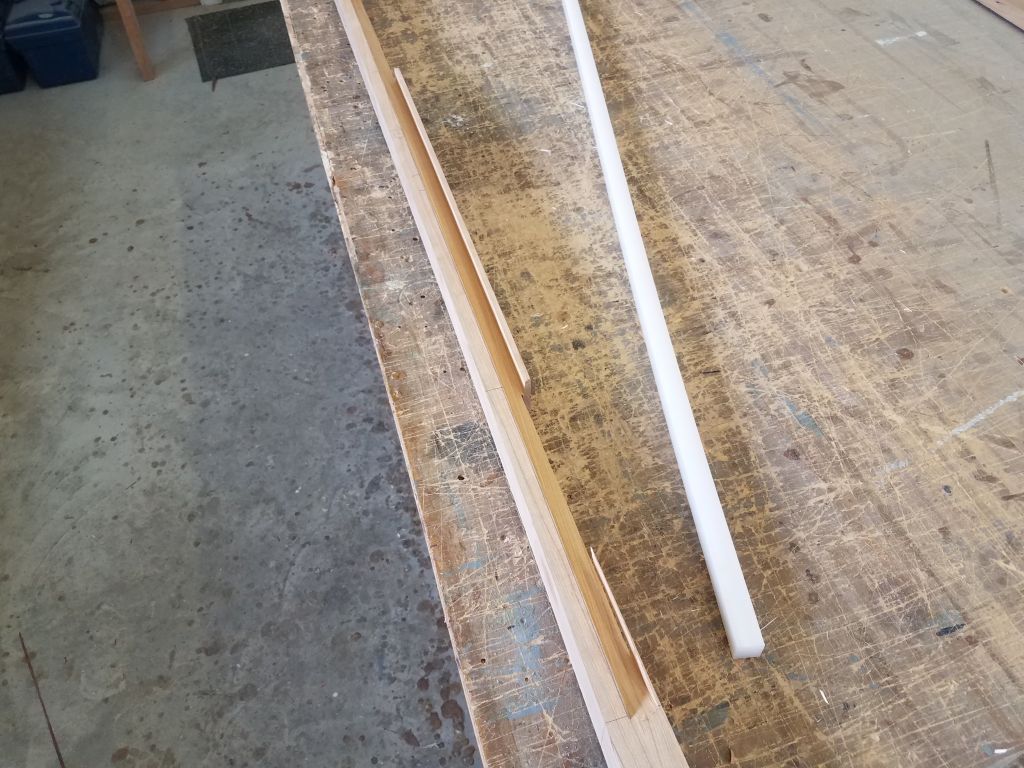
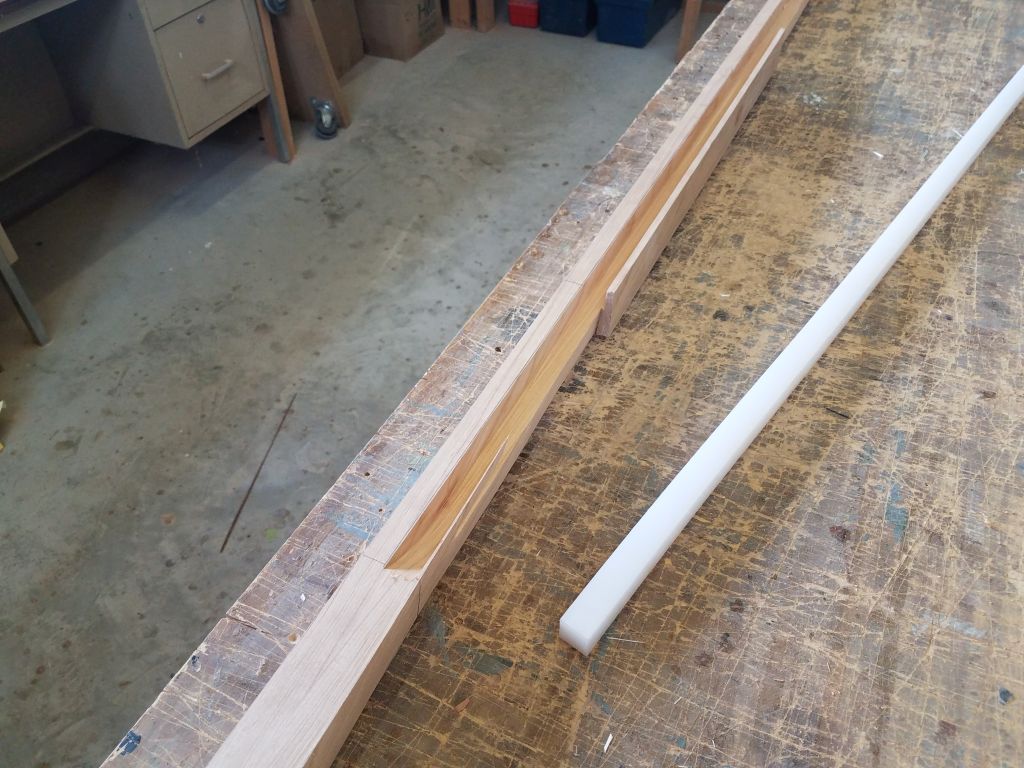
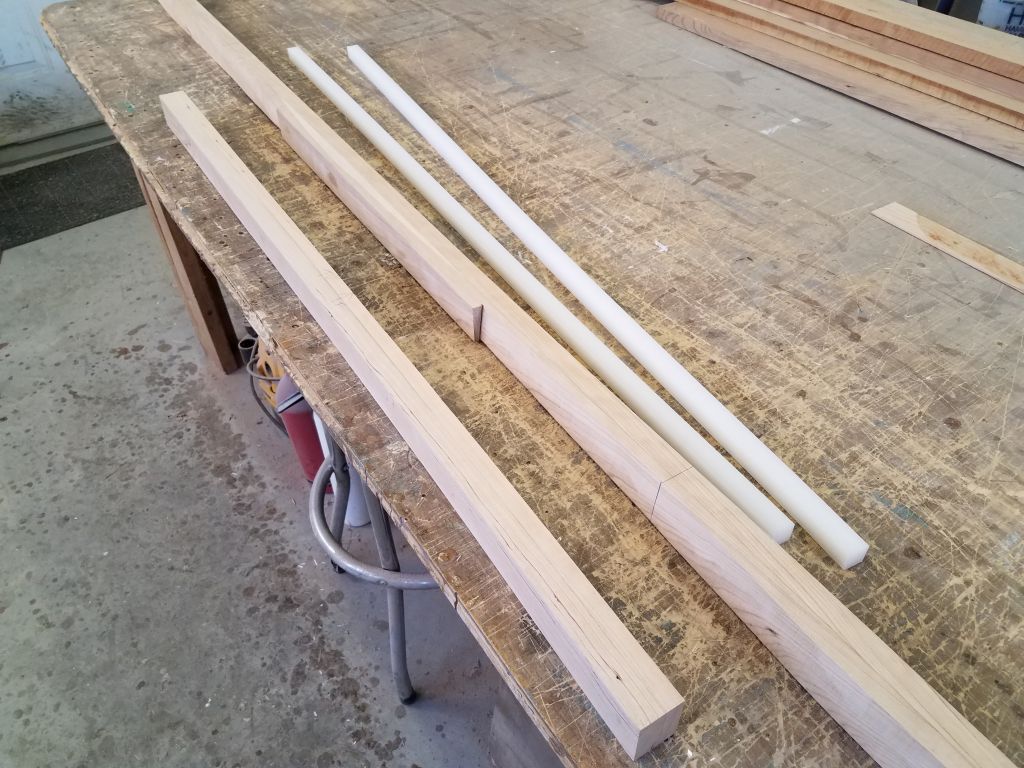
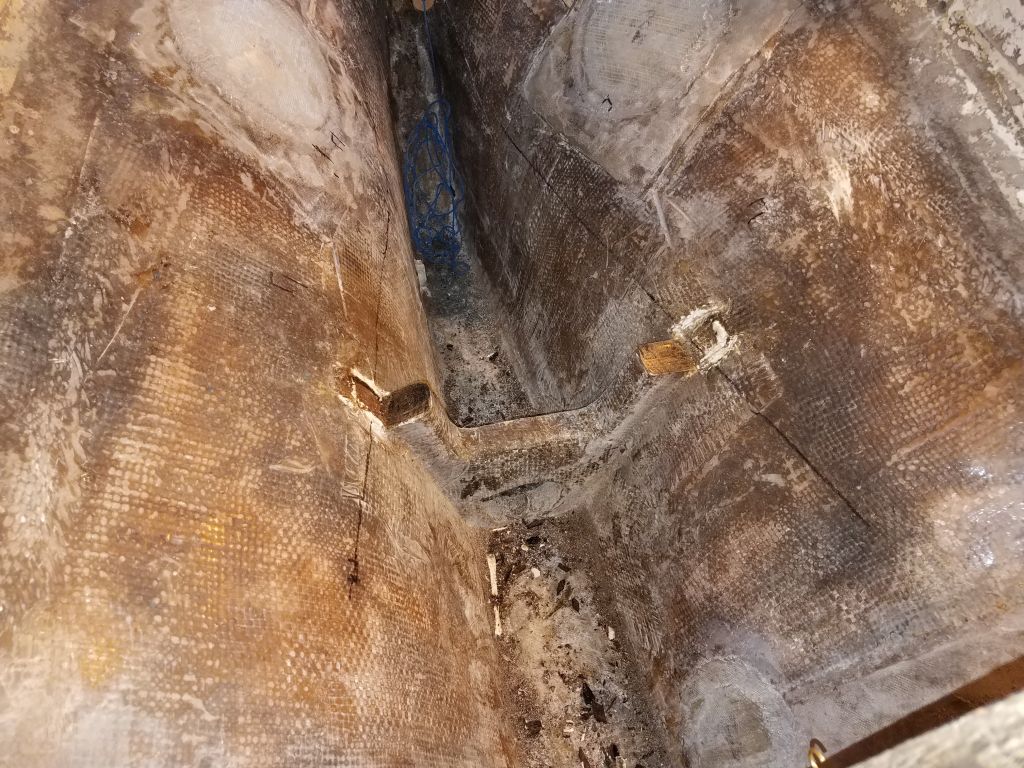
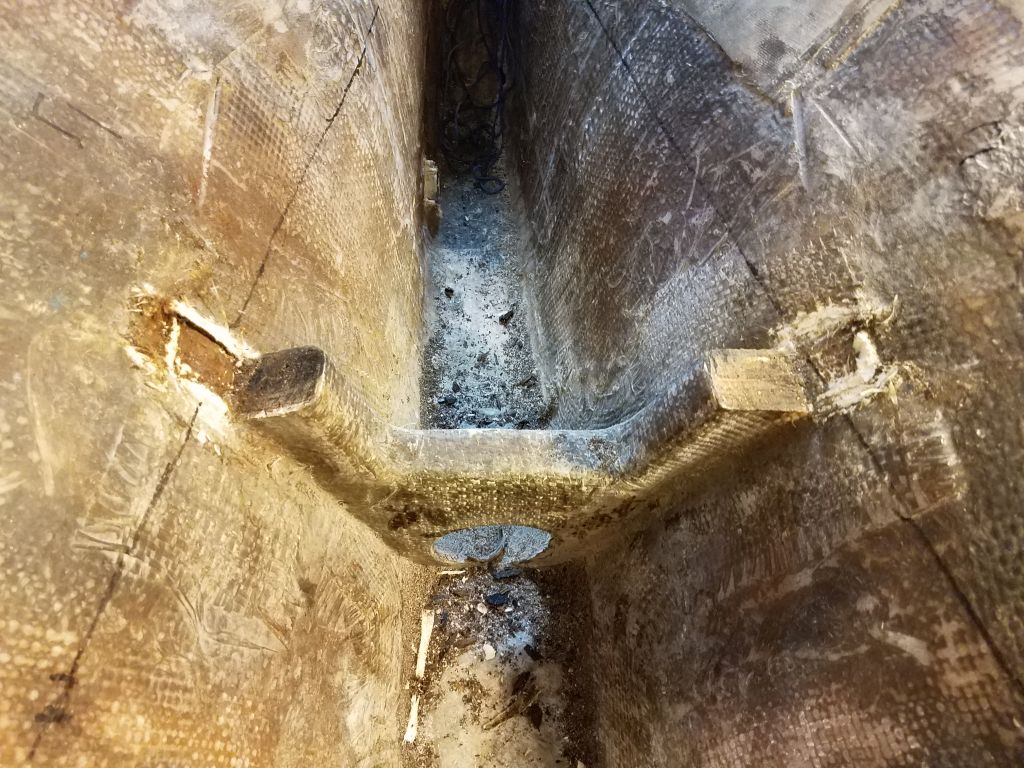
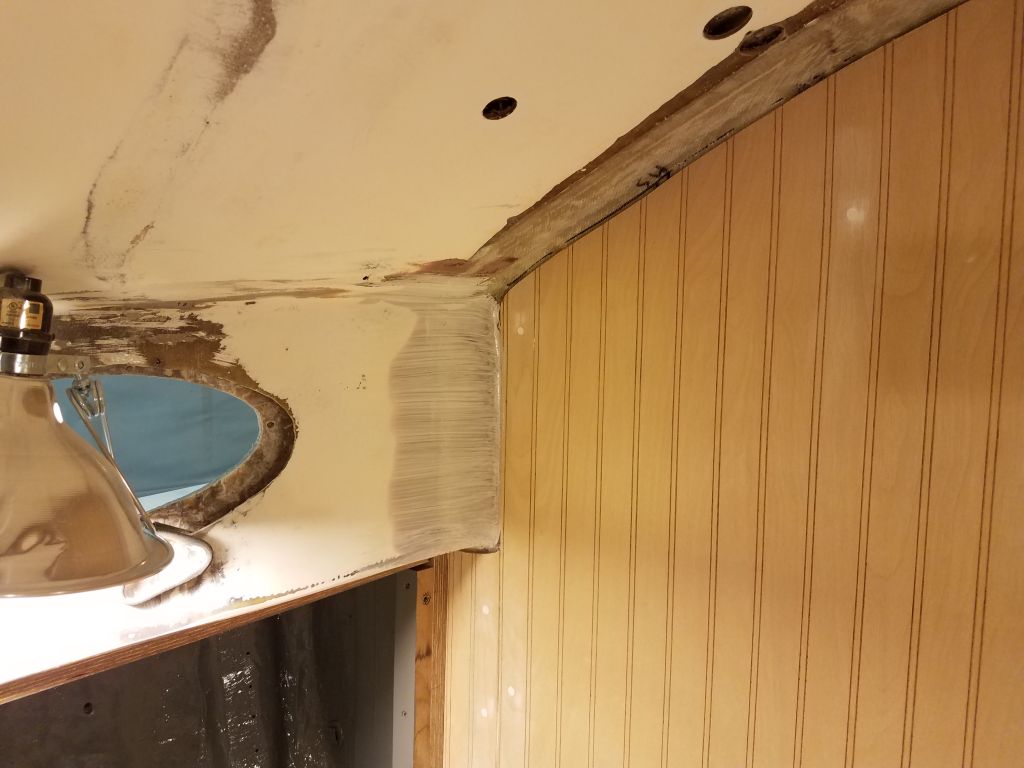
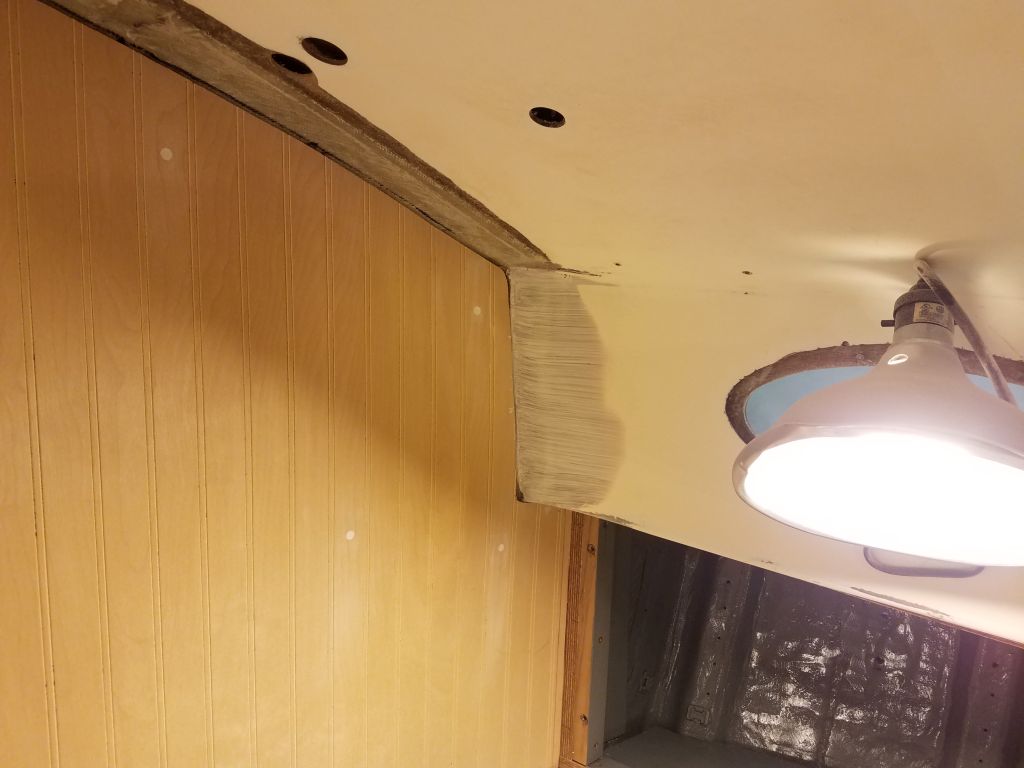
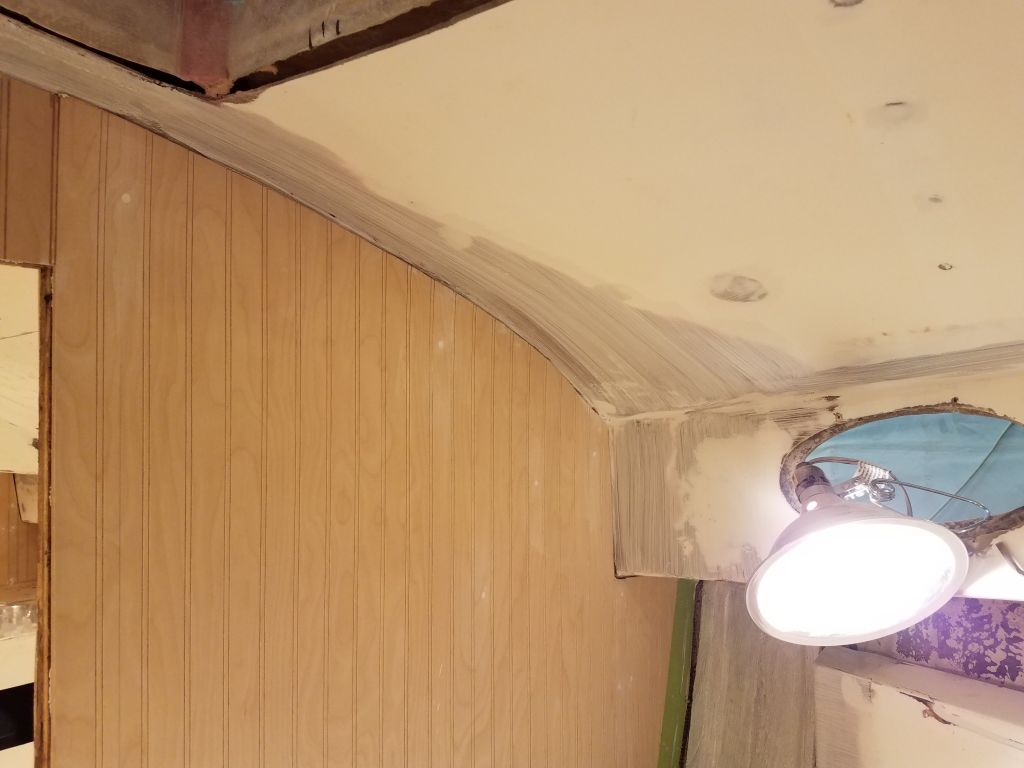
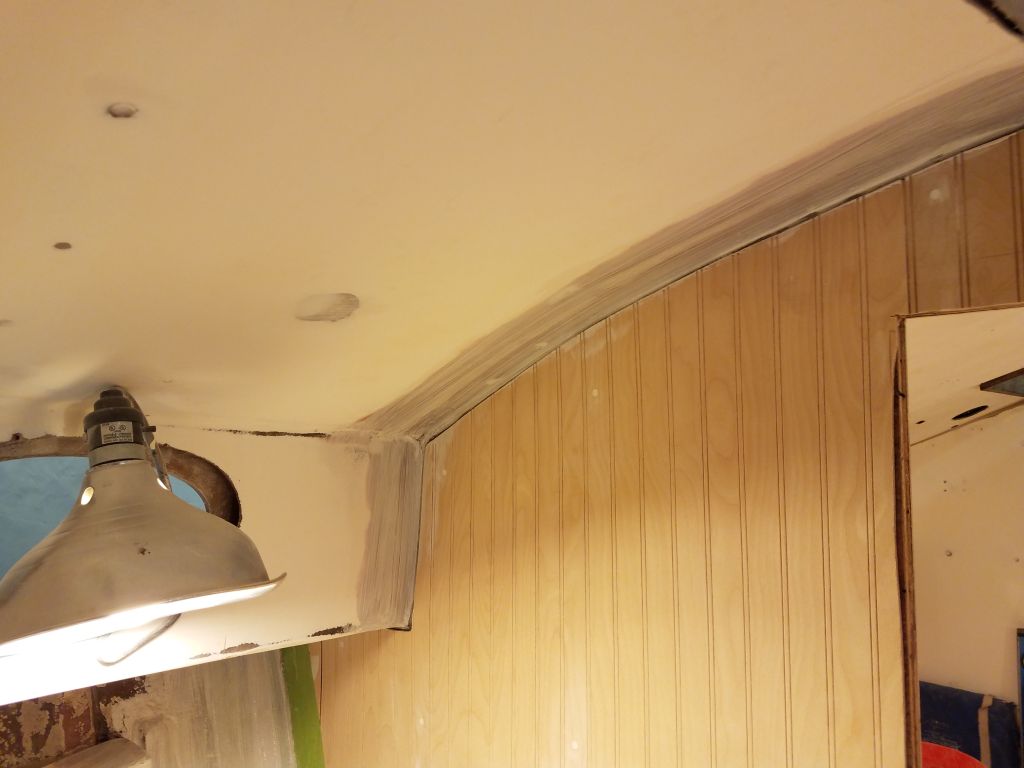
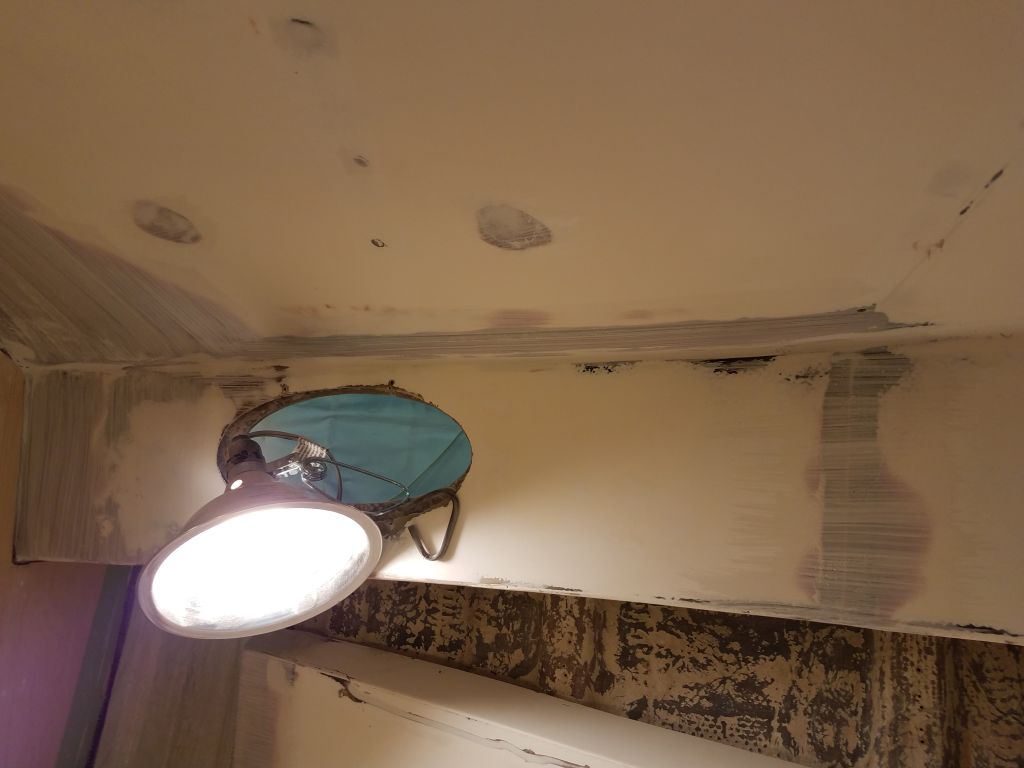
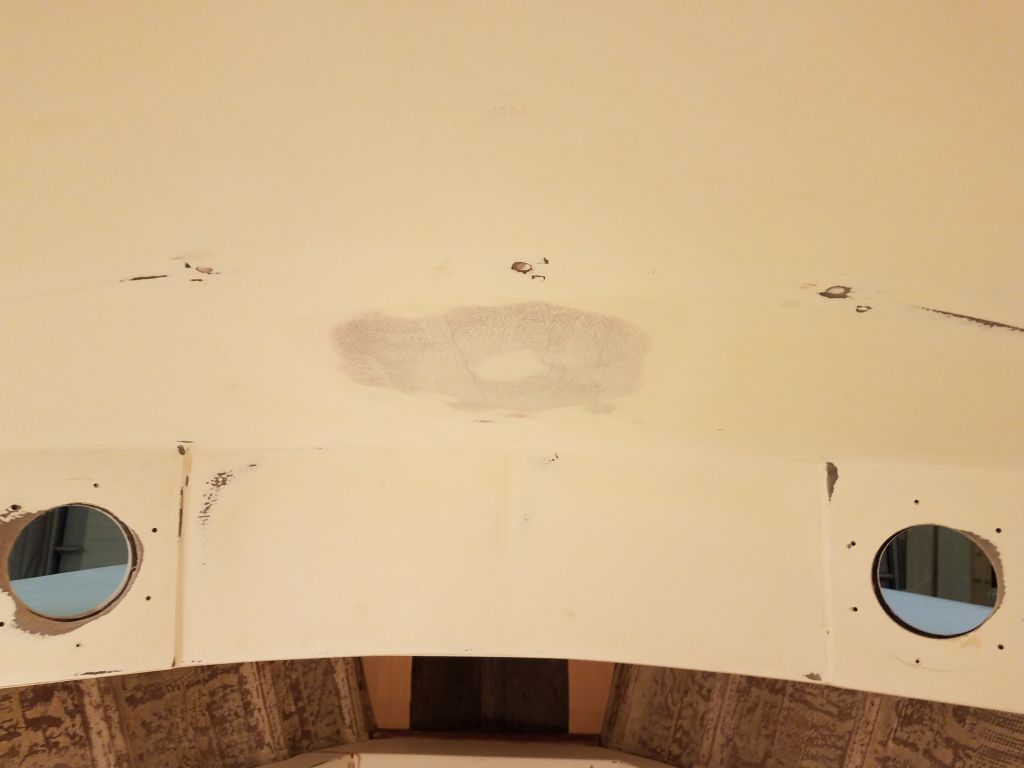
In the forward cabin, I needed to install a pair of new ceiling support cleats on each side in the newly-opened areas aft of the berth.  The existing cleats throughout the boat were about 3/4″ tall, so I prepared four pieces to the proper lengths from some leftover teak, which happened to be leftover from some previous toerail or another and already had an angle cut on one side, which is the profile I wanted for these pieces.

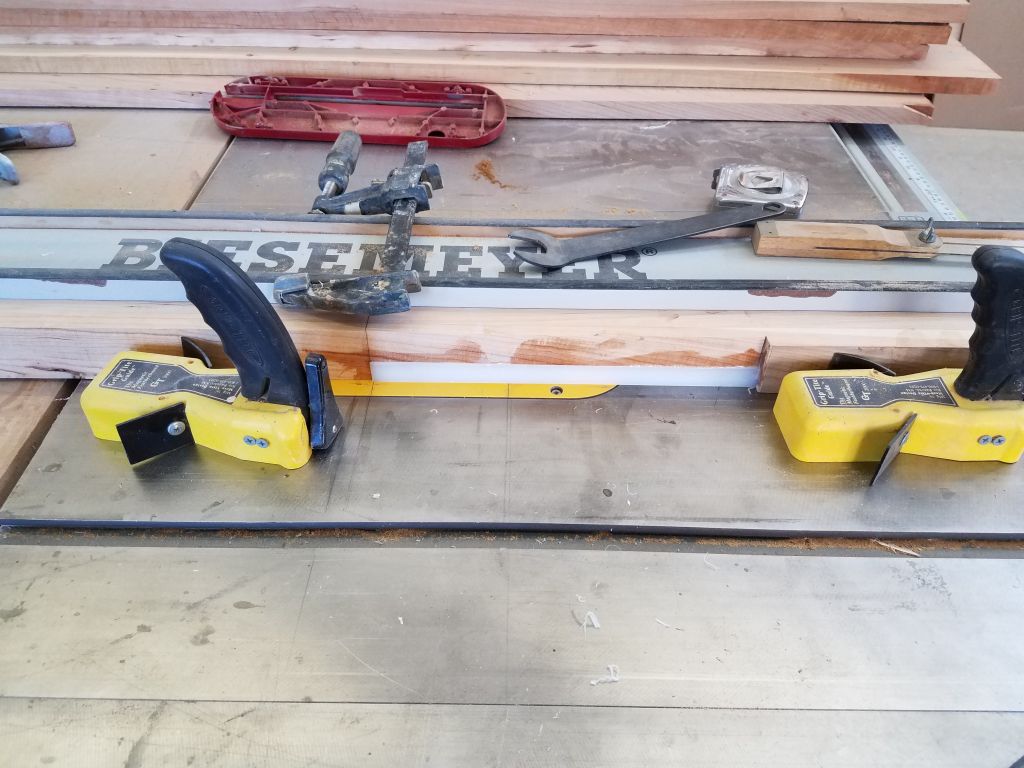
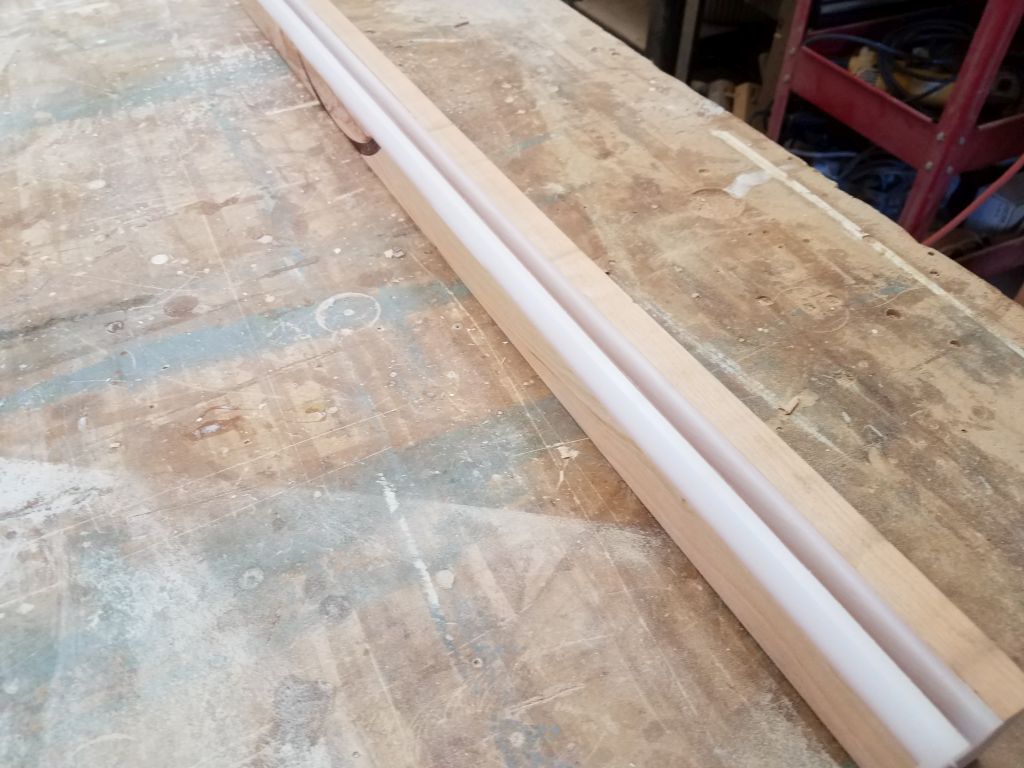
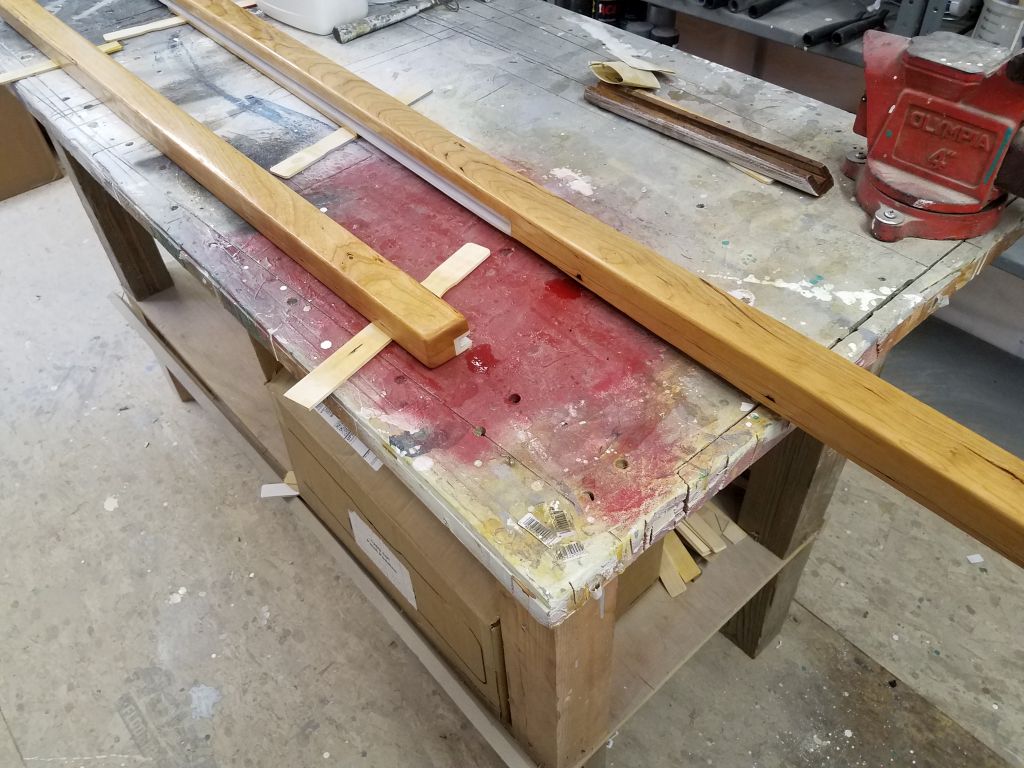
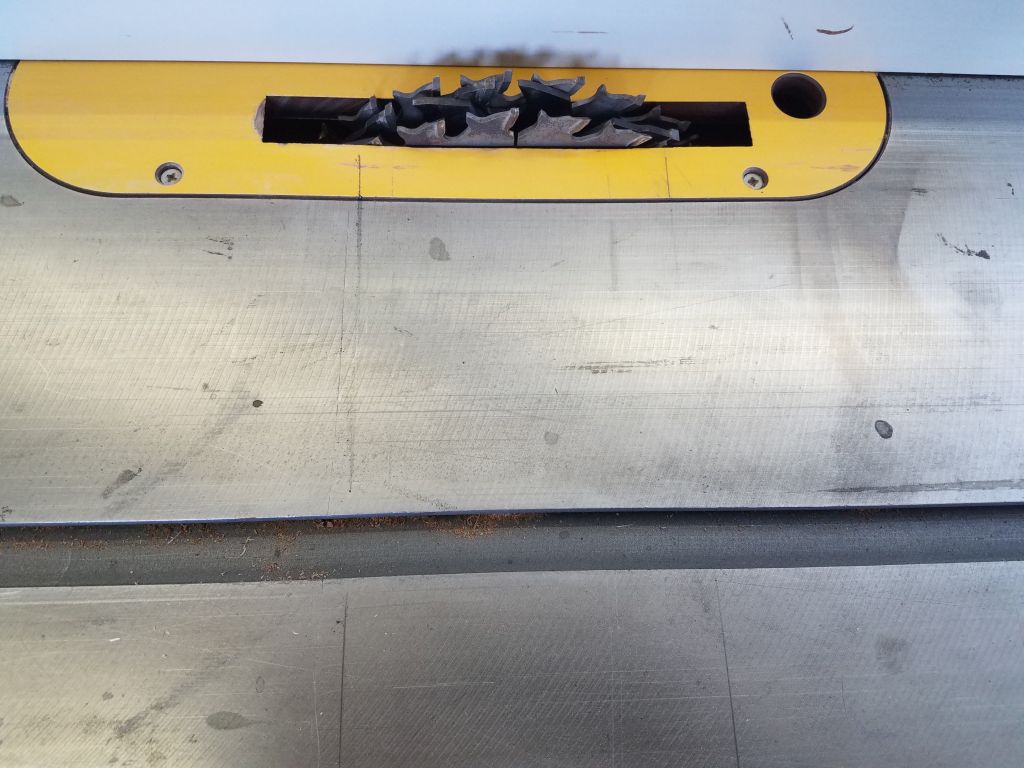
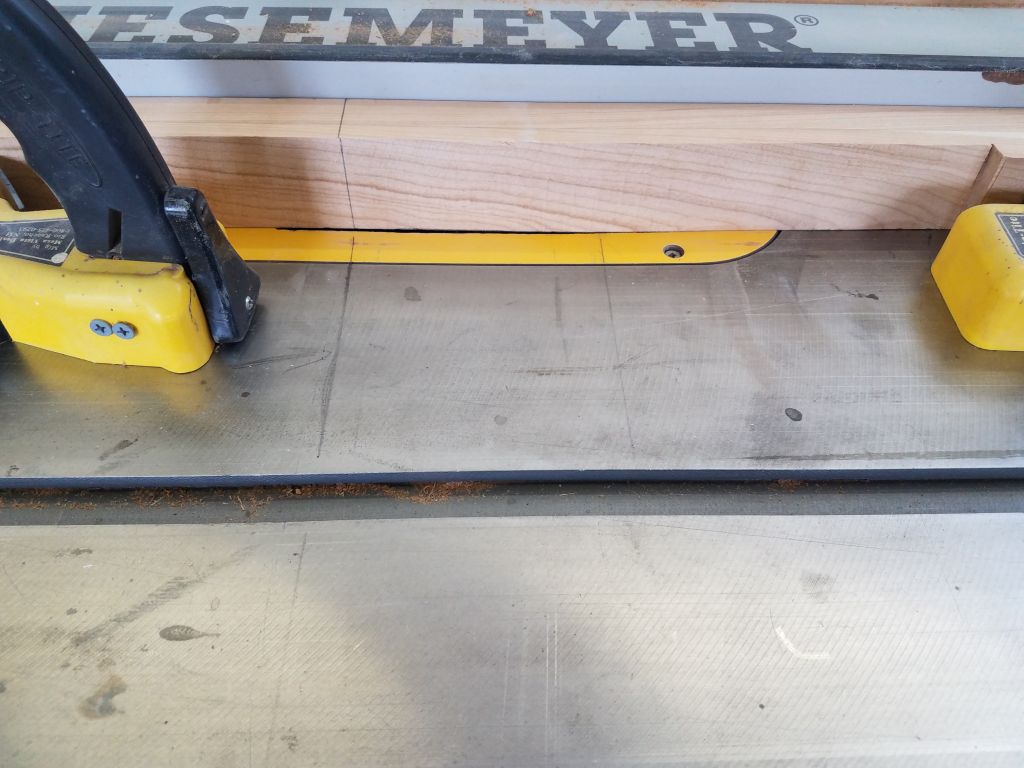
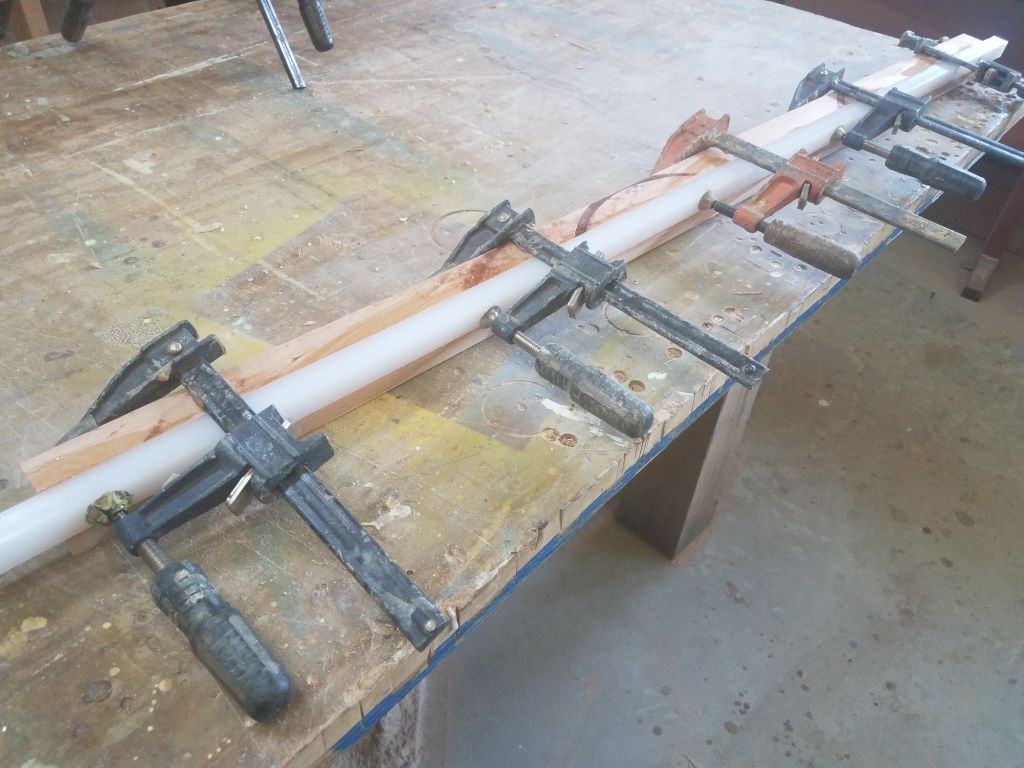
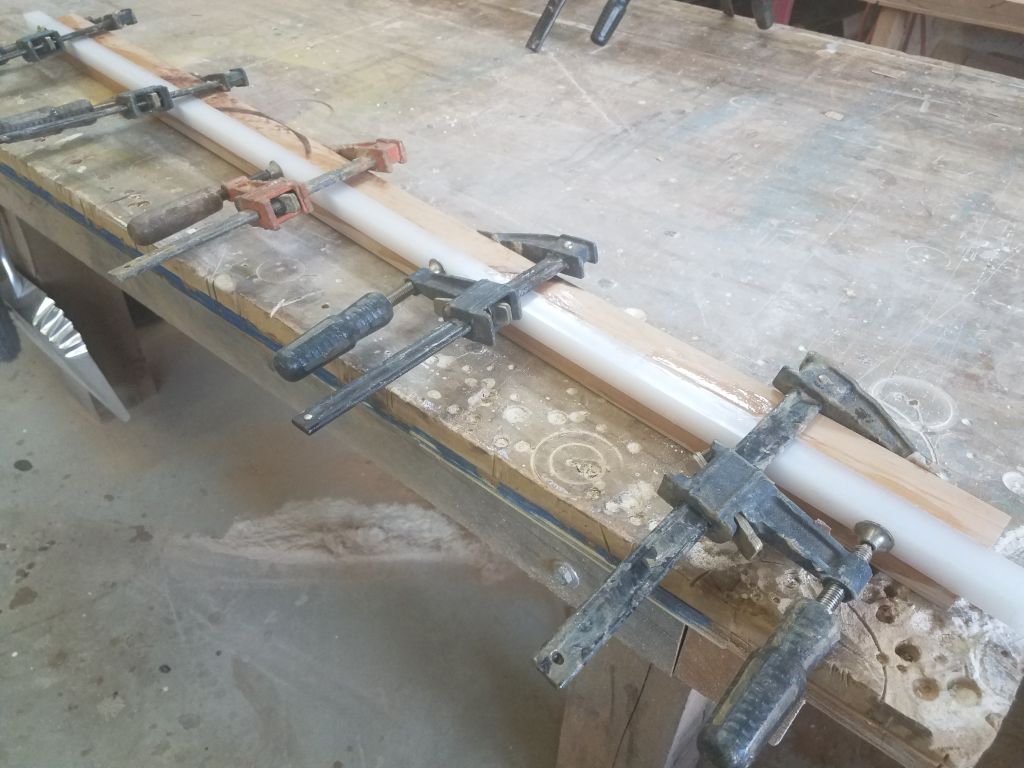
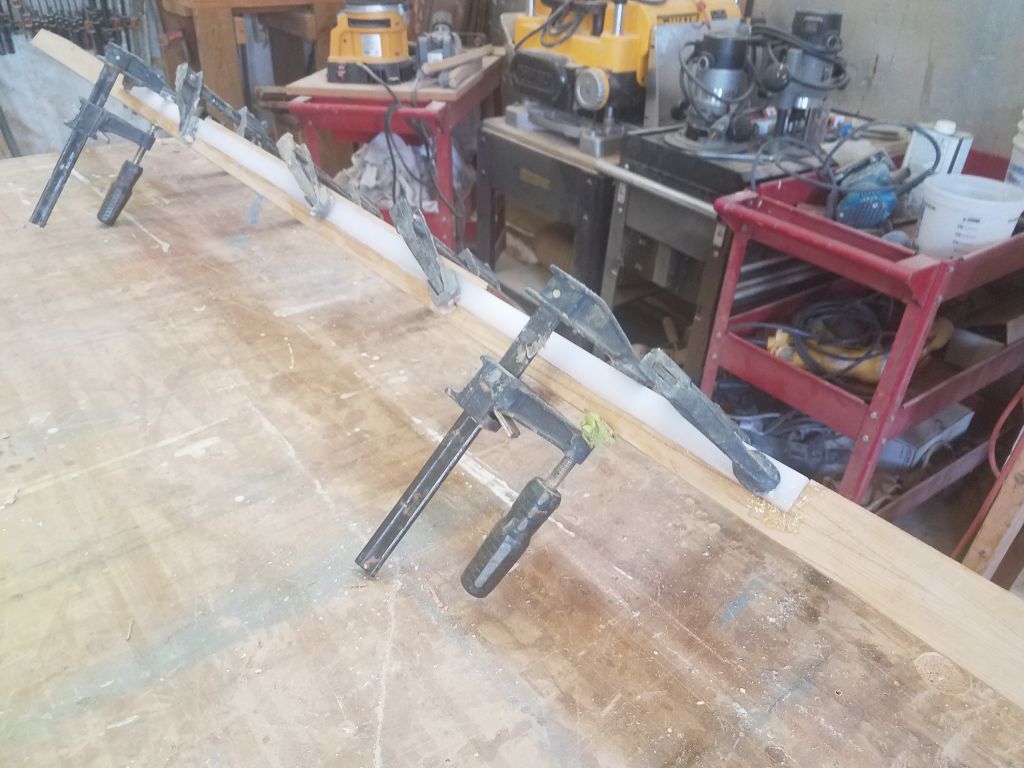
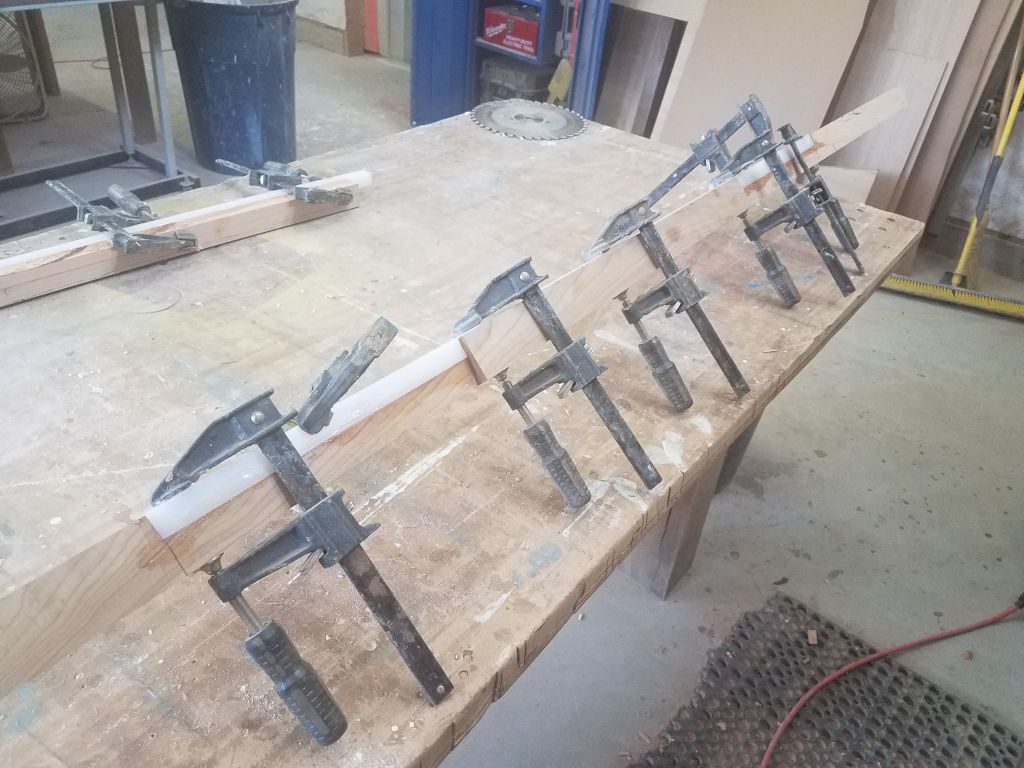
To allow the cleats to bend into the shape of the hull, I kerfed the back sides of all pieces, clamping them together on the bench and making the cuts freehand with a saw.  These would never be seen when the installation was complete, so I didn’t worry about how the kerf spacing looked; I just wanted enough so that the wood would easily bend.

The teak now bent easily into the shape of the hull,  but figuring out how to brace and hold it there long enough for adhesive to cure was the trick.  With the cleats dry, I tried a couple different things to see what would work, and ultimately had to cut some long braces that I could use against the overhead hatch opening to press the cleats into the hull.  It took quite a bit more time to figure out and prepare the braces successfully than it did for the actual cleat preparation itself.

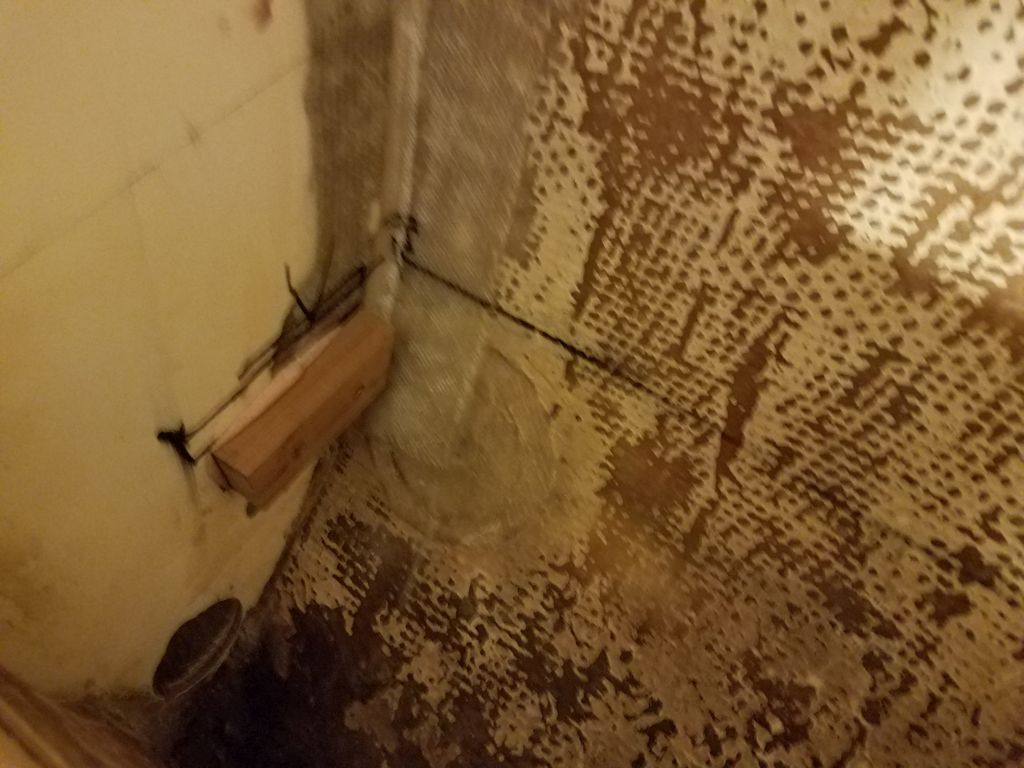
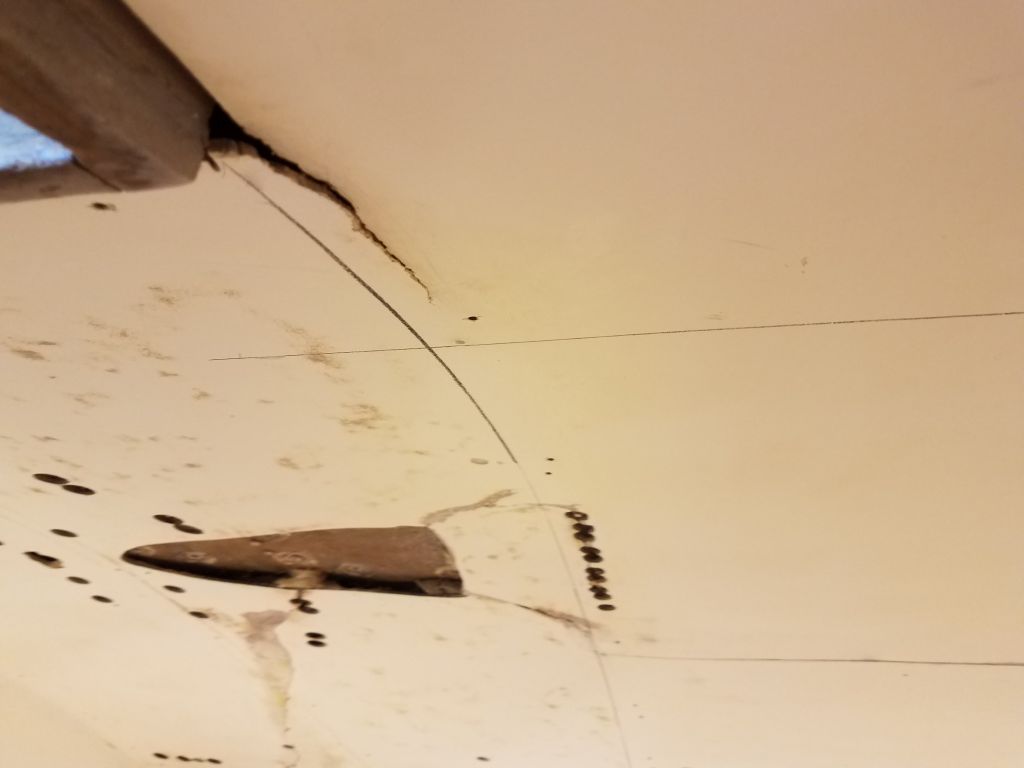
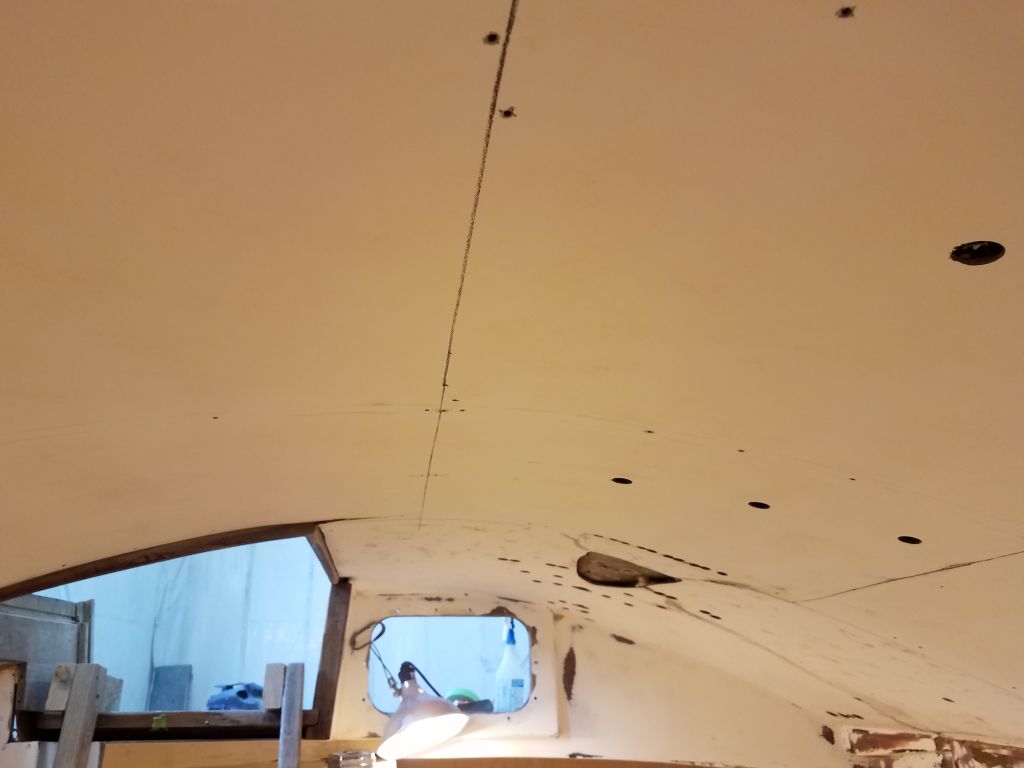
The original ceiling cleats on the boat were fiberglassed in position, and I planned to do the same, but first I had to simply secure the cleats to the hull.  One problem with these sorts of installations is that as soon as the cleat gets covered with adhesive, it gets slippery, and the braces tend to work less well.  This would certainly be a problem in this location, with fairly substantial compound curvature to the hull.  With this in mind, I thought maybe the polyurethane adhesive would work better than epoxy for the initial securing.  Even though I was prepared for problems, or thought I was, I got started with the two cleats on the port side.  I still had a lot of frustration trying to get the cleats to stay where they needed to and pressed tightly to the hull as required, as the cleats–particularly the forward cleat–wanted to slide all over the place and refused to stay where I wanted them.   I eventually had to use some of the braces I’d cut for the other side just to get the cleats to stay in position, and also added some temporary blocks glued to the hull in a semi-desperate attempt to hold the forward cleat in place.

Though I eventually reached a tenuous state of satisfaction with the port cleats, and I hoped that they would stay put once the adhesive cured, I decided to cut my losses for now and leave the starboard side for next time, since trying to properly brace that side might just end up undermining the work already completed on the port side.  I hoped the other side would go more smoothly in the morning, and with the benefit of the experience here.

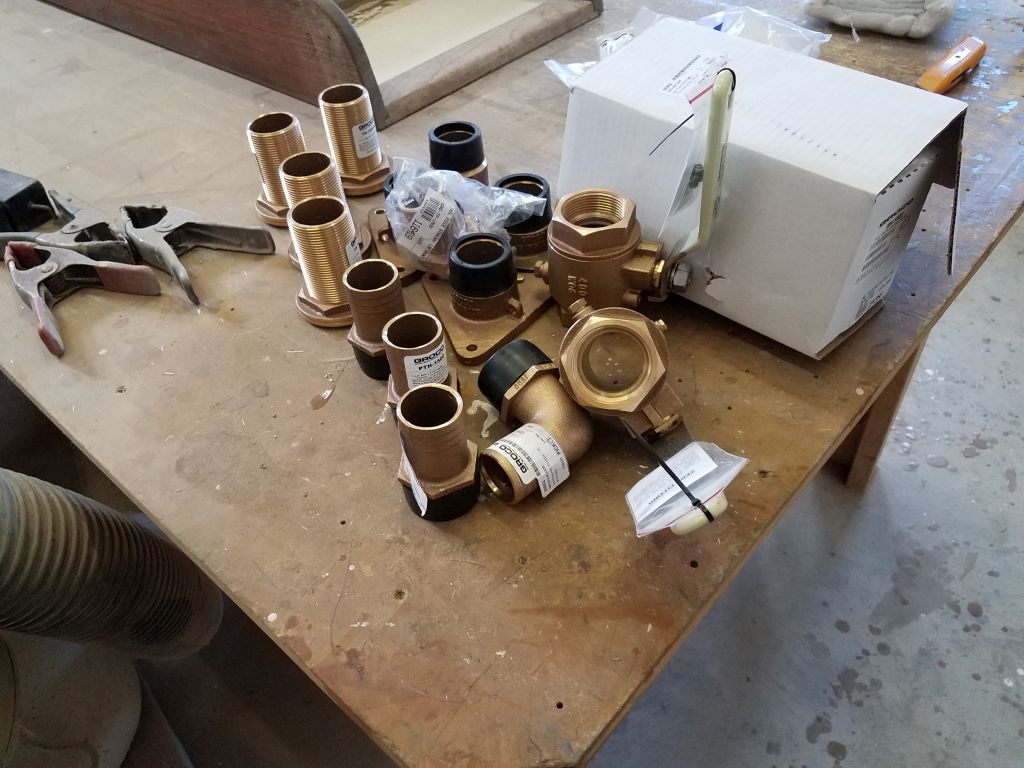
Instead, I used up the last bit of time in the day sourcing and ordering some hardware to secure the new saloon cabinet panels for easy removal and access behind.

Total time billed on this job today:  6 hours

0600 weather observation:  -2°, clear.  Forecast for the day:  Sunny, then increasing clouds, 20s

Scupper 88

Tuesday

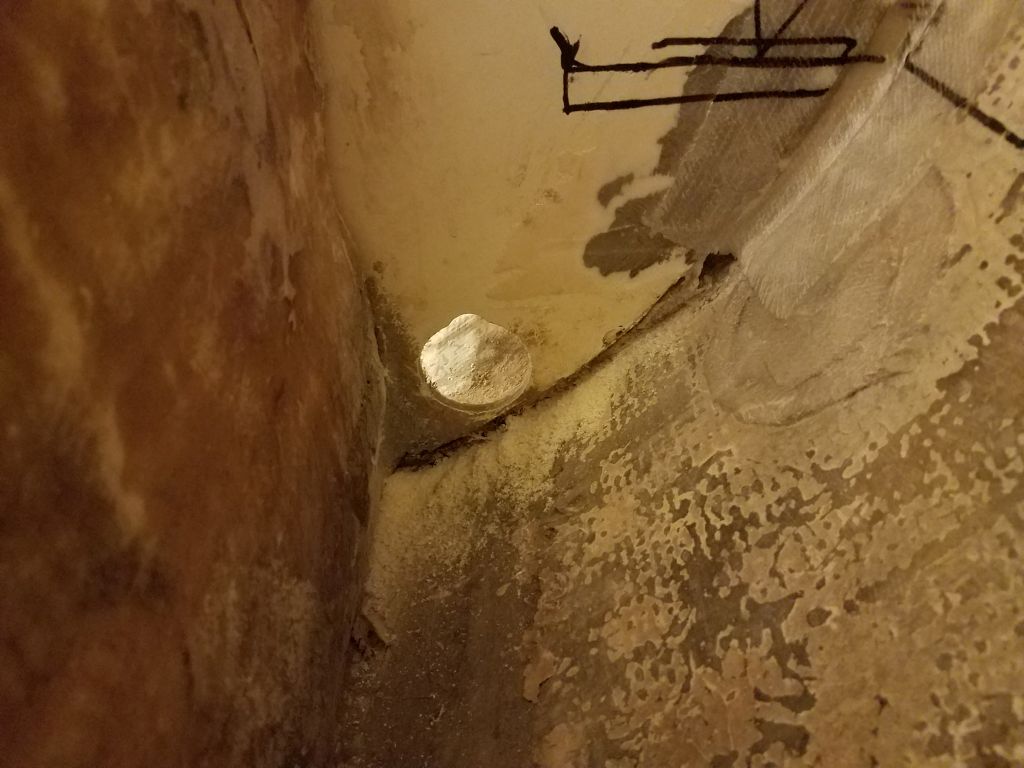
Before I got much further with interior work, there was a small job I’d been meaning to take care of for quite some time.  When I worked on the hull and deck and glassed over the hull-deck joint during an earlier phase of work, I’d mainly filled most of the old boltholes for the hull-mounted chainplates–mainly because they were in the way and it just happened, not because they needed filling.  On the inside of the hull, the holes were all visible, but in several instances there were two sets of holes, and it was no longer clear which holes were which.  With the outside holes filled and primed over, I needed to redrill the holes from inside so I didn’t lose the locations with interior and additional exterior paint.

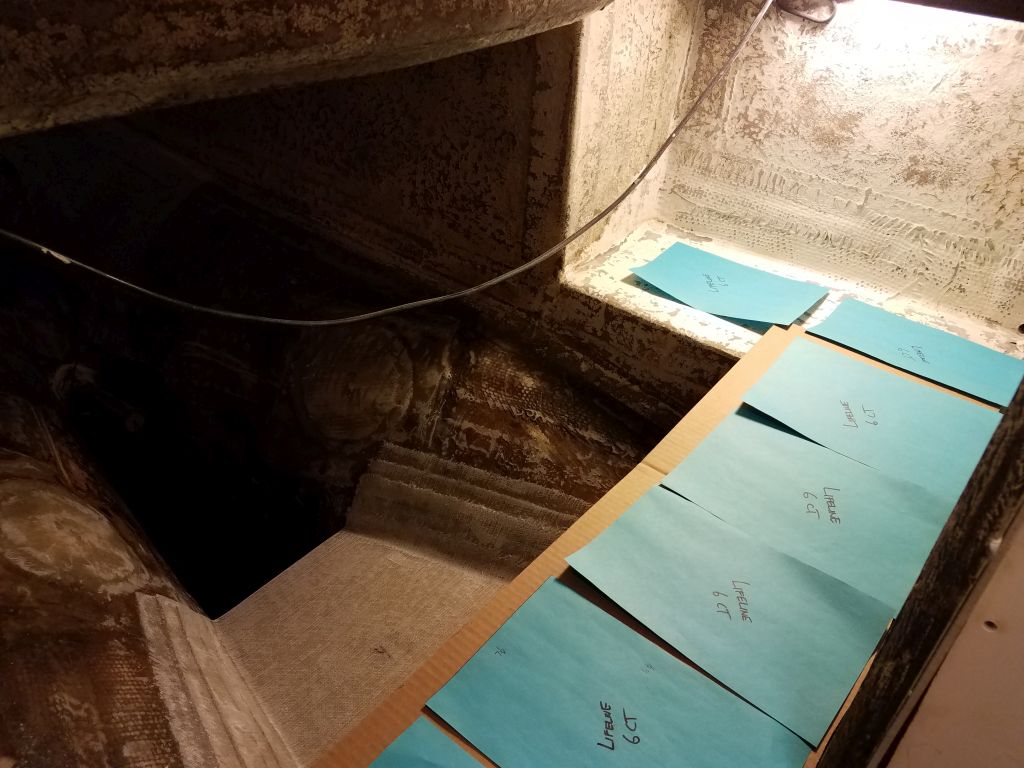
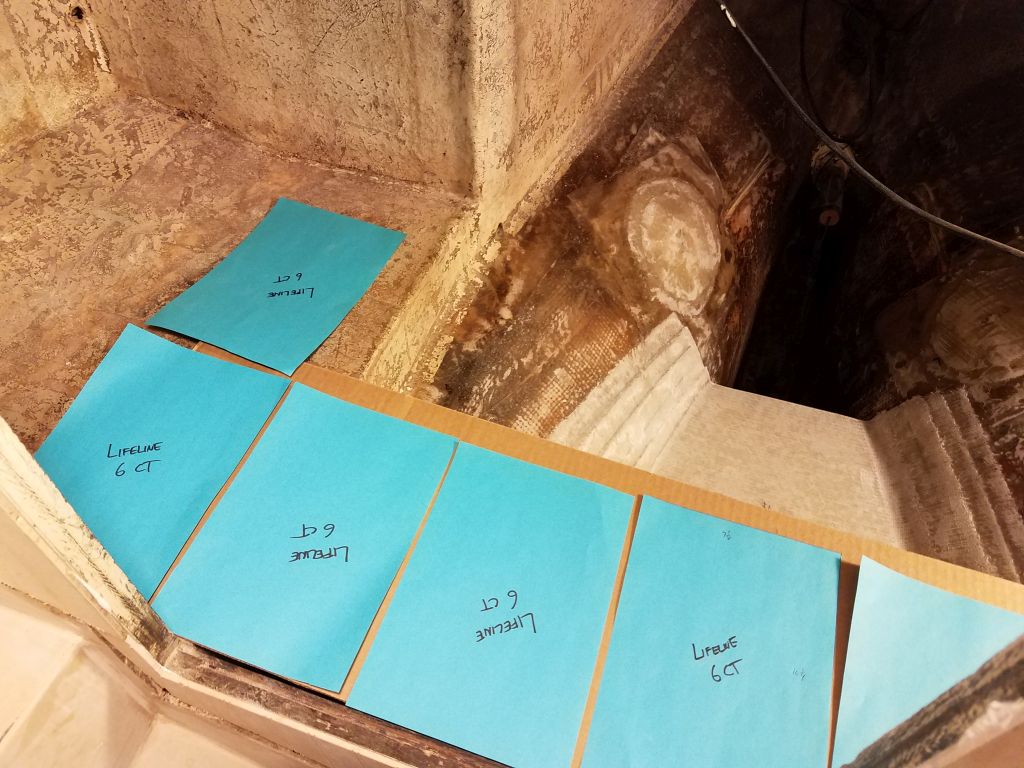
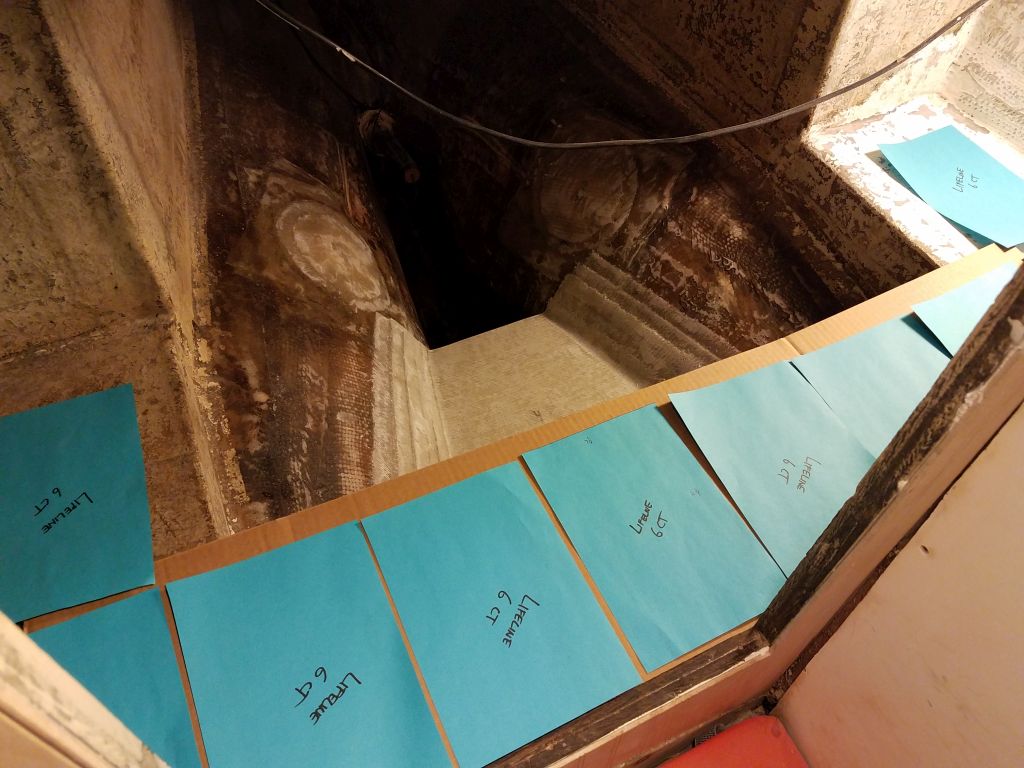
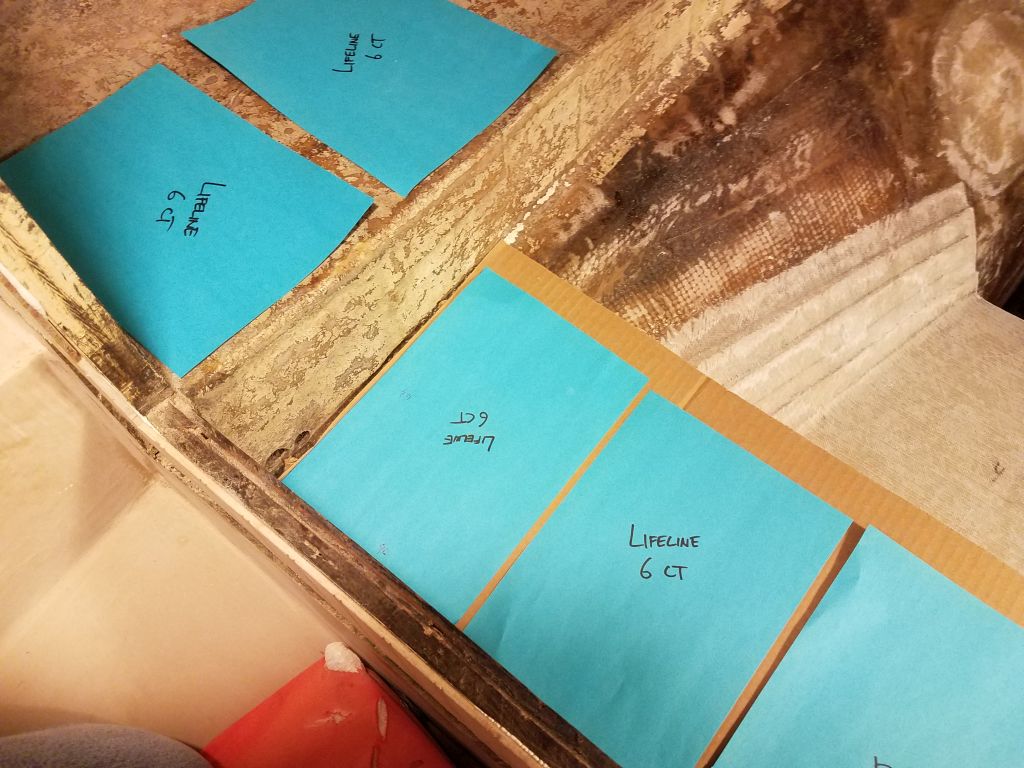
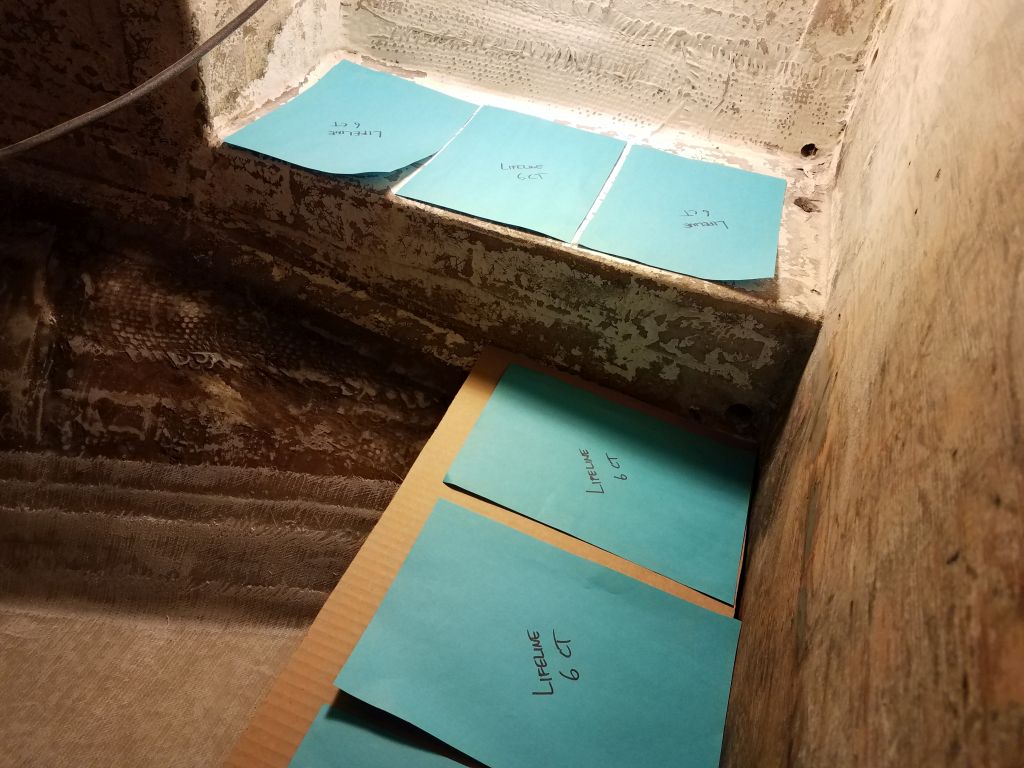
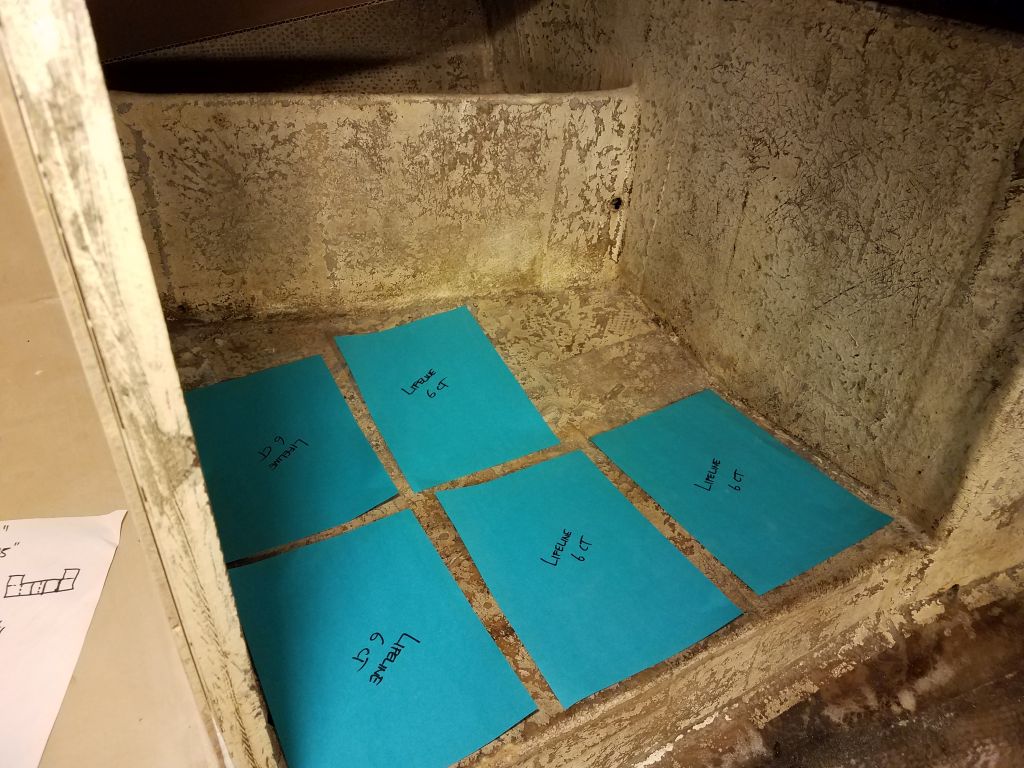
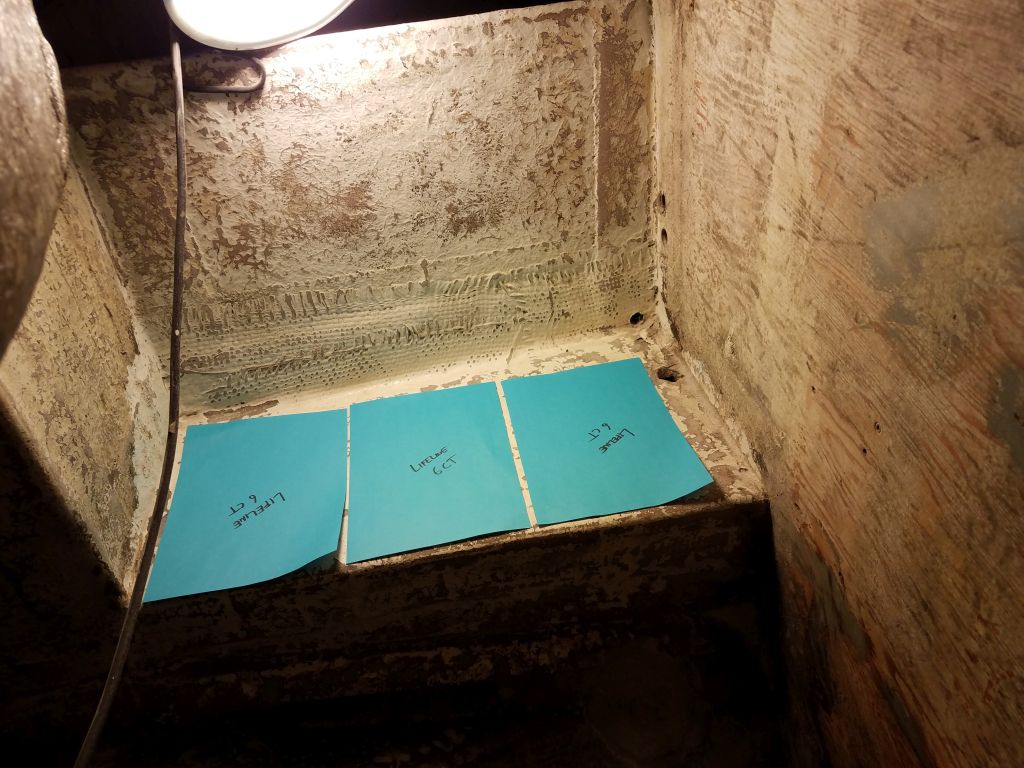
To ensure I redrilled the correct holes, I traced each chainplate and marked the holes on some paper, and used these brief templates to drill the correct holes from inside at each chainplate location–or at least all the holes I could access from inside with a drill, as the interior liner blocked drill access to the upper holes in the main cabin.  But in any event, I now had enough of the holes redrilled to ensure proper placement of the chainplates later when the time came.

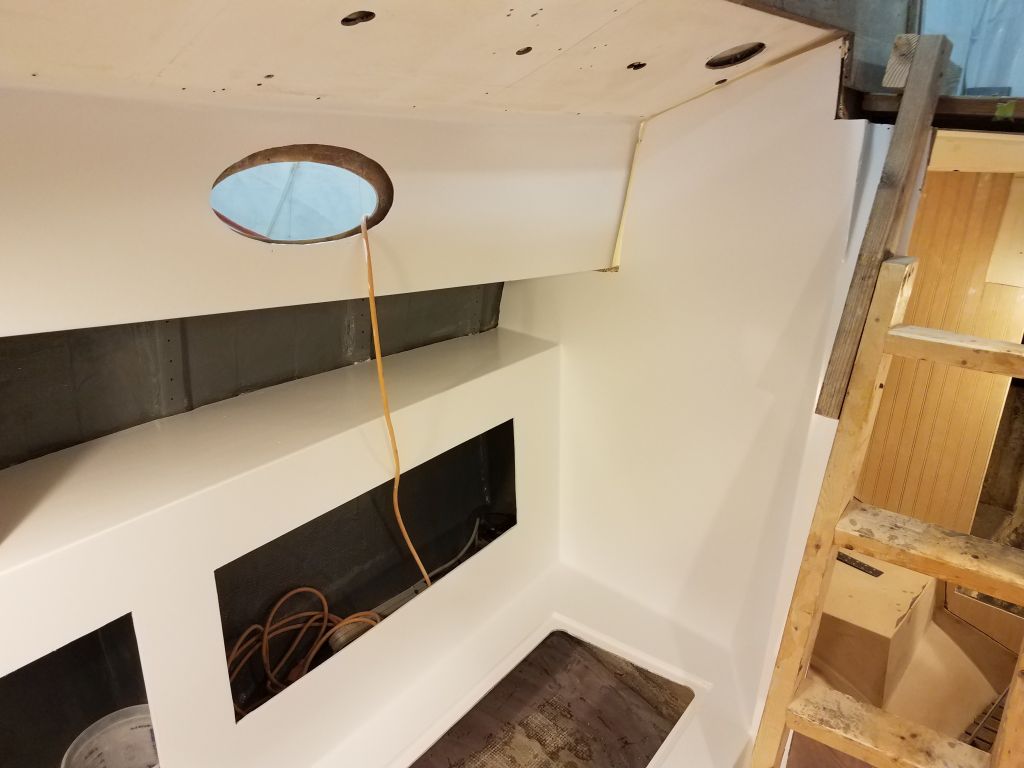
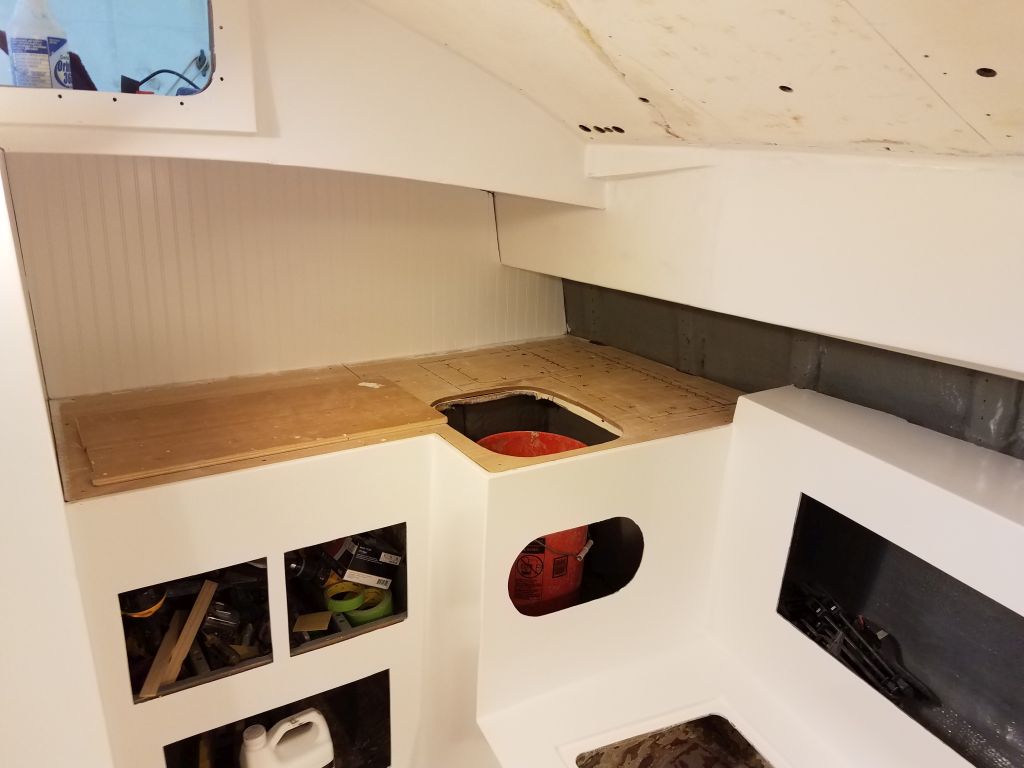
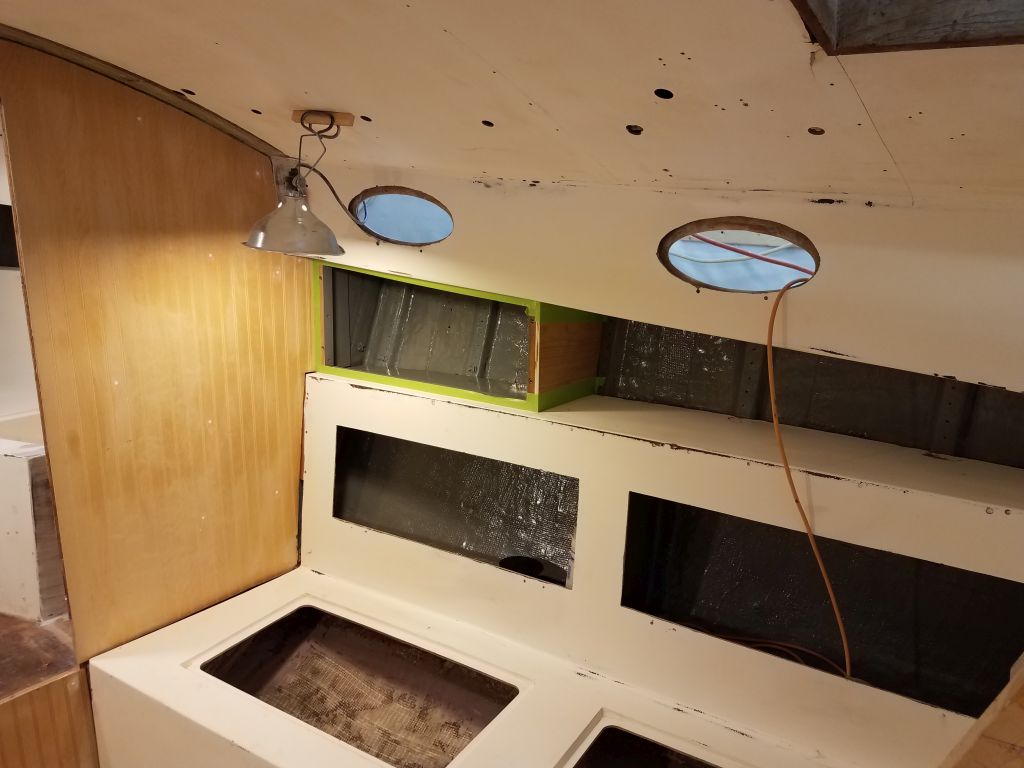
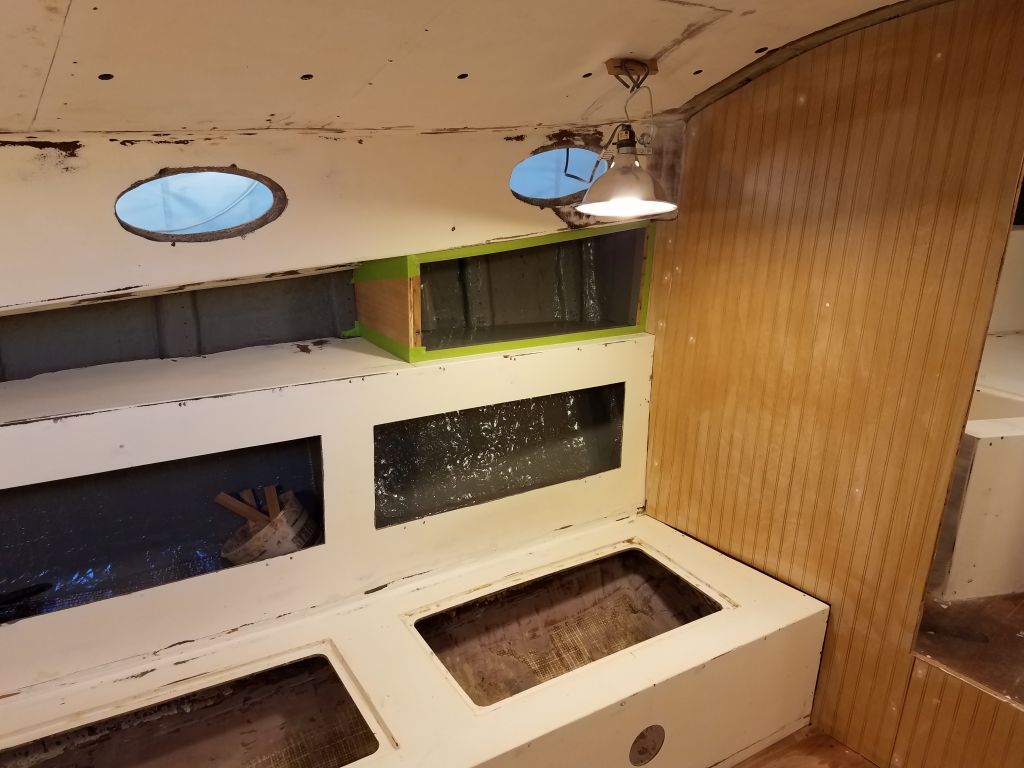
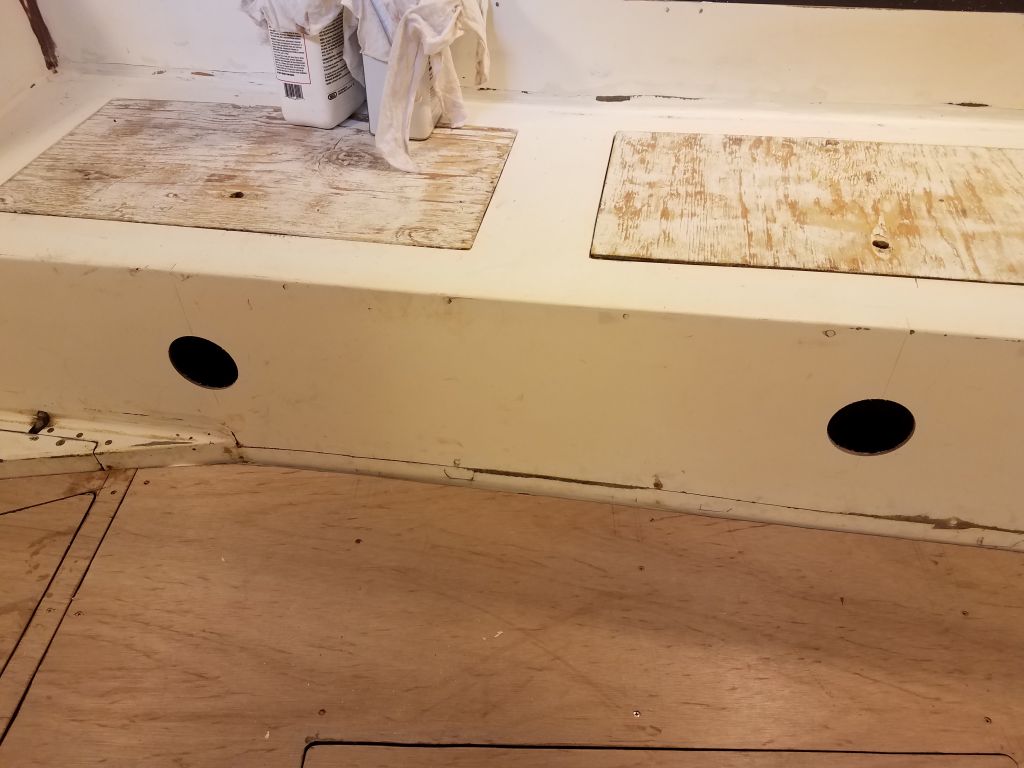
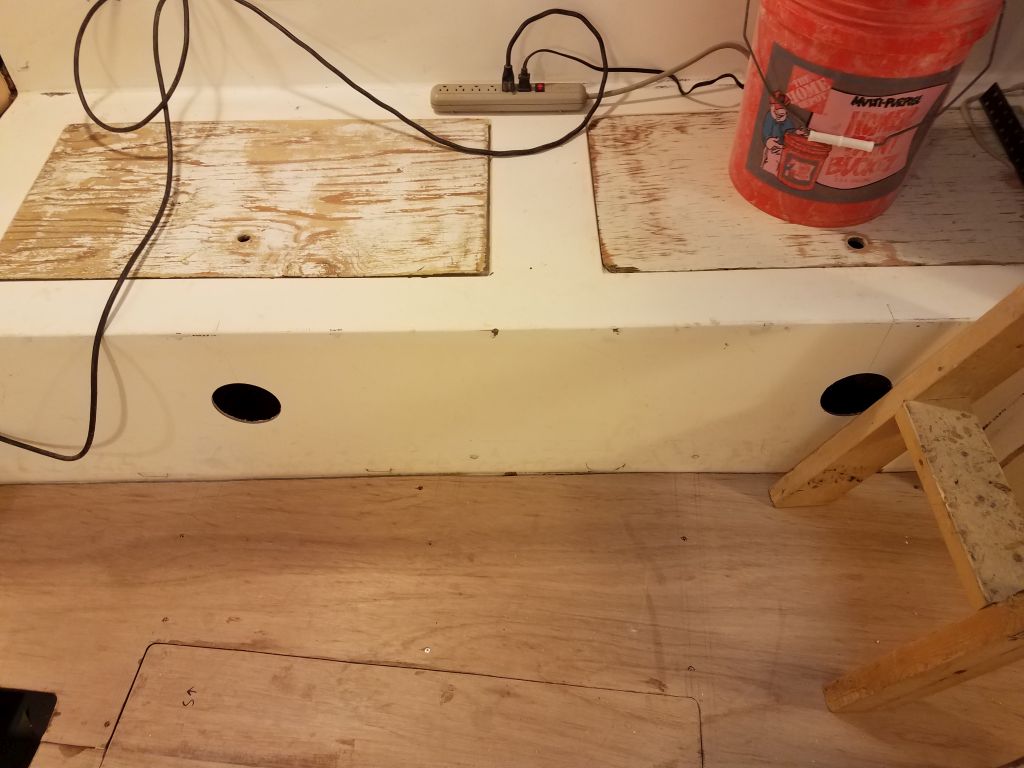
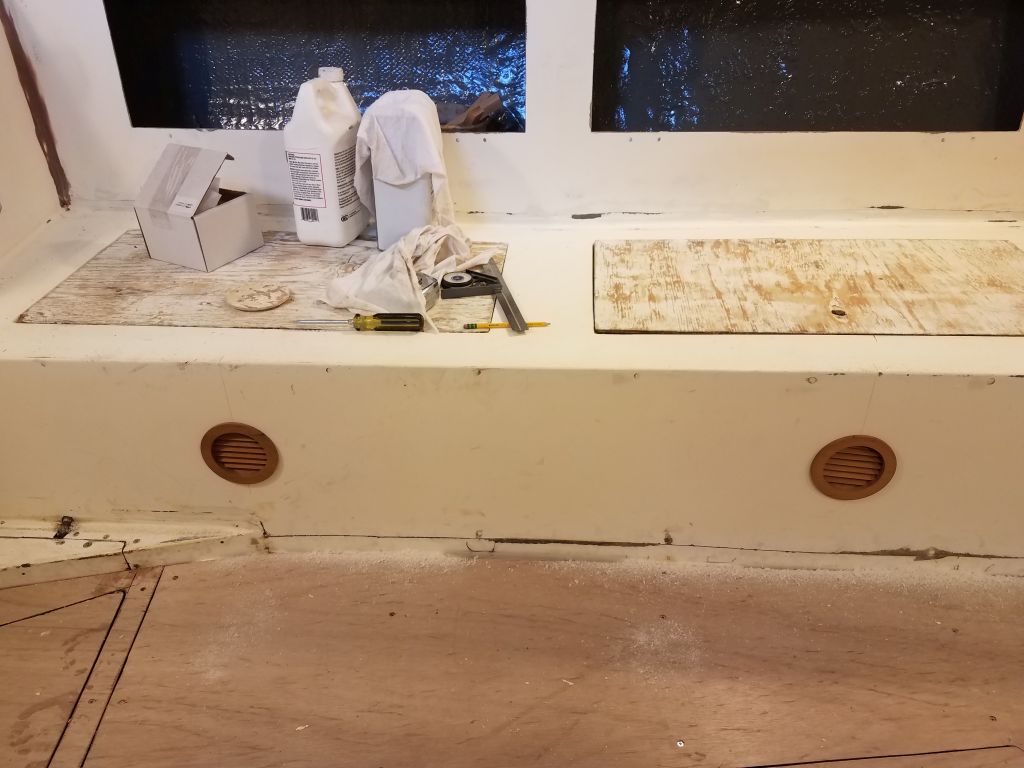
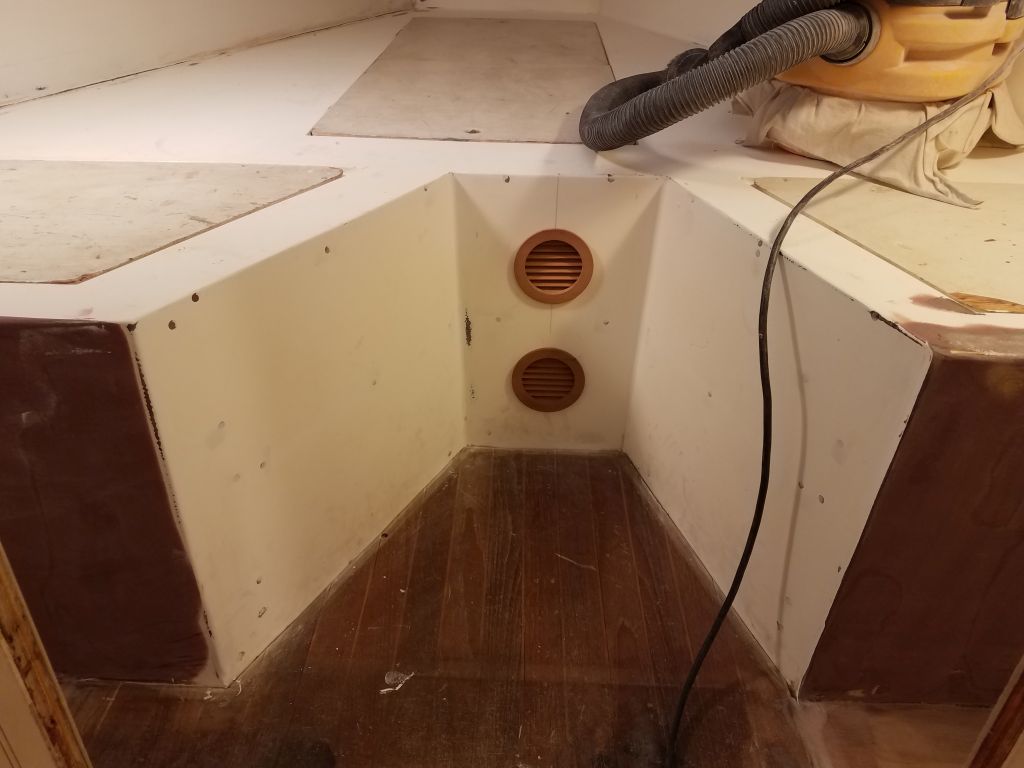
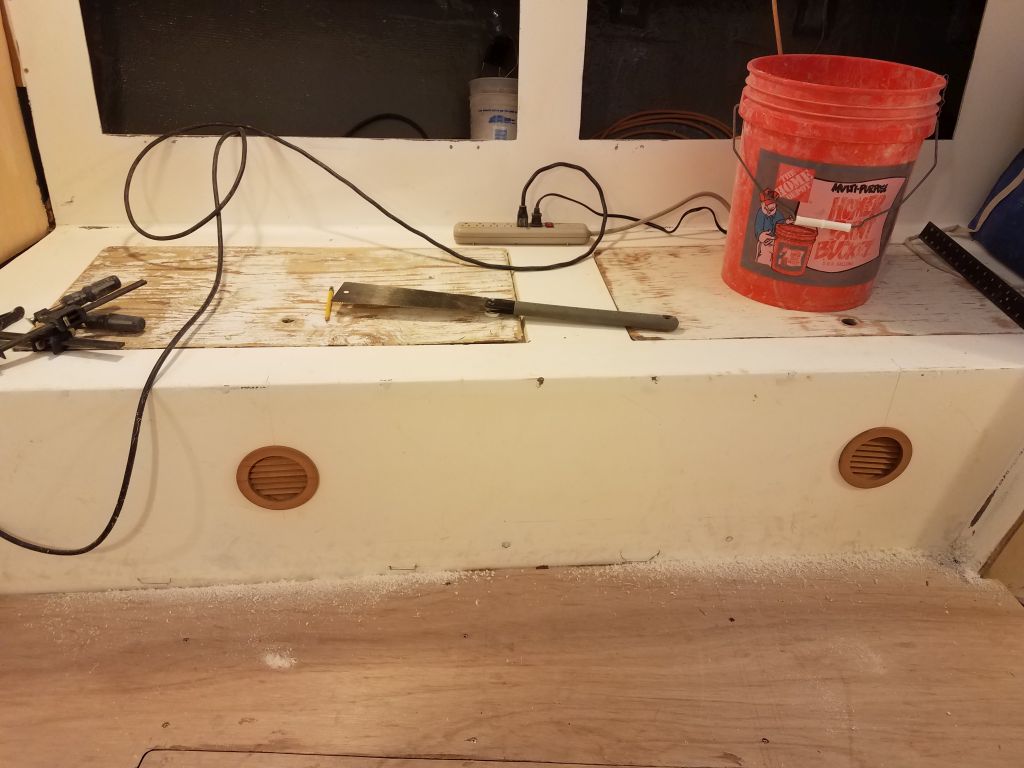
In order to house electric panels and perhaps some equipment, the owner asked for a pair of new cabinets in the saloon, located at the forward ends of the settees between the deck and the settee shelves.

To provide ample room for the needs, as well as maintain usability of the existing ceiling support cleats on the hull, I chose a cabinet size based on the cleats’ locations on each side, which happened to be about 31″ aft of the bulkhead.  This location for the aft ends of the lockers would allow the ceiling boards to secure just aft of the new locker, and the new lockers would provide a nice wooden accent to the cabin as well as house the electrical service.

The settees were at a bit of an angle to the main bulkhead (7°), so to line up the new cabinet properly I used this angle to mark the aft end of the cabinet on the settee.  I began all the layout work with the port cabinet, but worked generally in tandem from side to side.

Next, I made some additional layout marks for the support cleats to which I’d secure the new cabinet facing.  I wanted the new face to set back a bit from the settee back edge, and in any event the settee didn’t extend out as far as the deck above, so my layout allowed for the new cabinet to stay beneath the deck along its length.  Eventually, I made some layout marks for the face of the cabinet, and then used small pieces of 1/2″ plywood to mark another line beyond these, giving me the location of the support cleats for all sides.

With the port side marked, I repeated the process on the starboard side.

Now I could cut and install support  cleats for the three lower sides of the new cabinet.  I left the top edge for now since that cleat needed to run to the top edge of the after bulkheads, and it was easier to leave this till the bulkhead was actually in place.  While I did the same steps on each side of the boat, in some instances I only photographed the work on the first, port, side.

With cardboard, I made a template of the aft bulkhead shape, which had to fit between the underside of the deck, the hull, and the top of the settee.  Eventually I had an accurate template that I could use to cut 1/2″ cherry plywood to fit the space tightly.  Then, I could mark the outer edge of the new plywood in line with the front support cleat, and I trimmed the bulkhead accordingly.  This would allow the front face to pass and cover the edge of the after bulkhead.  To support the upper edge of the aft side, I installed another support cleat beneath the deck, secured into the overhead liner.

Now I could cut and install the final support cleat along the top edge between the forward and after sides of the new cabinet.  This cleat required a slight angle on its face to match the angle of the overhead and thus remain vertical beneath.

I moved to the starboard side and templated, cut, and installed the after bulkhead in the same way.  By now it was late in the day, and I’d run out of cleat stock, so before knocking off I cut an additional cleat along with the angle required, and set it aside to be installed first thing next time, when I’d also work on the cabinet faces.

Total time billed on this job today:  8 hours

0600 Weather Observation:  10°, clear, windy.  Forecast for the day:  Sunny and windy, 15°
Scupper 87

Monday

It was a short day with a couple short-ish work sessions, in between which I had to leave the shop on other business for much of the day.

Knowing this in advance, I chose to work on several smaller projects, starting with the bulkhead paneling.  I lightly sanded all the hole patches I’d made, then cleaned up and filled a second time as needed.

In the chainlocker, I lightly sanded the new platform, and redrilled a few of the ventilation and drain holes that had been covered with fiberglass during installation.

Preparing to finish up work beneath the galley countertop so I could move forward with final installation when ready, I resecured the original drawer supports below the stove cutout; these had been somewhat loose, and required new fasteners to re-secure.

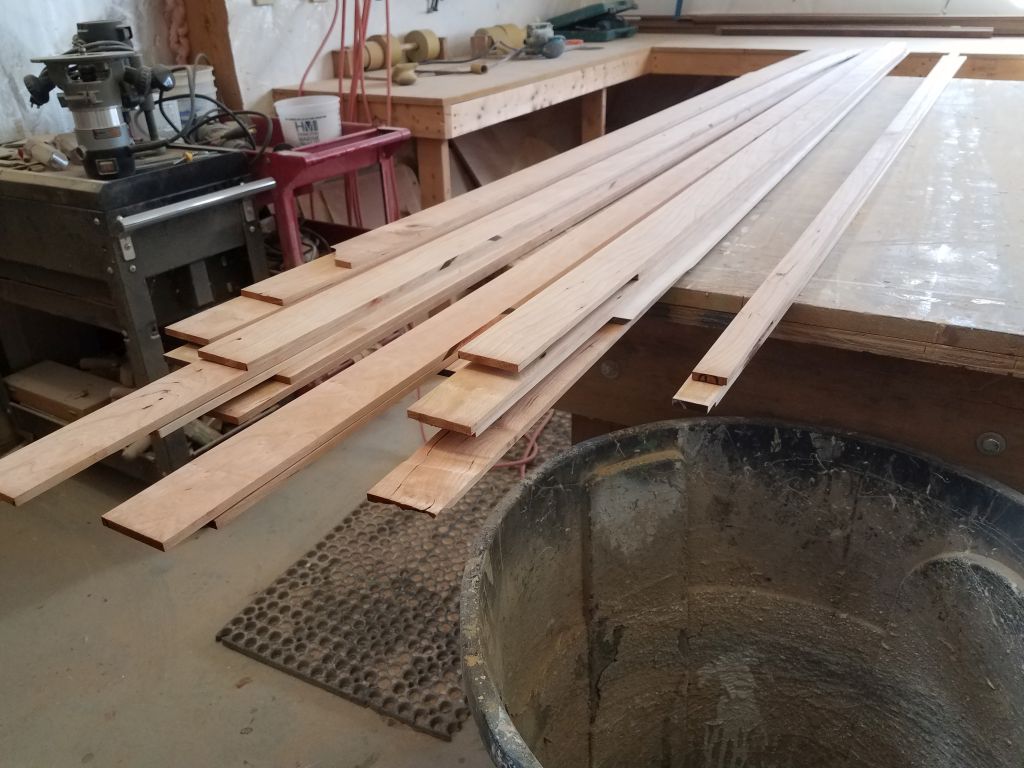
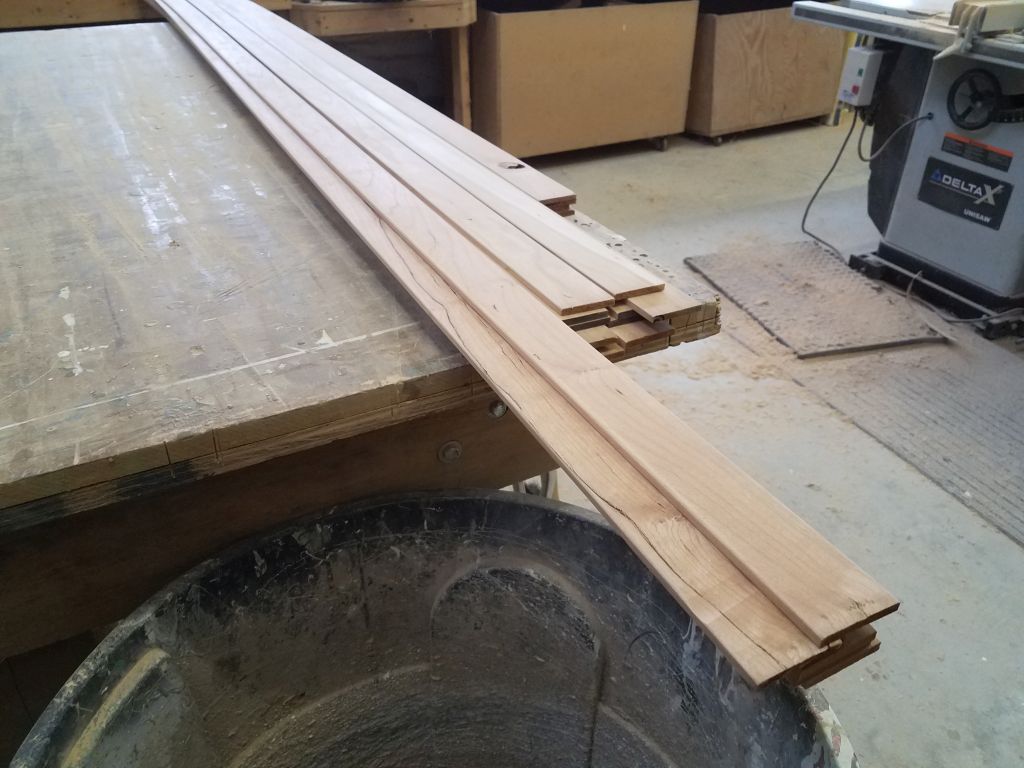
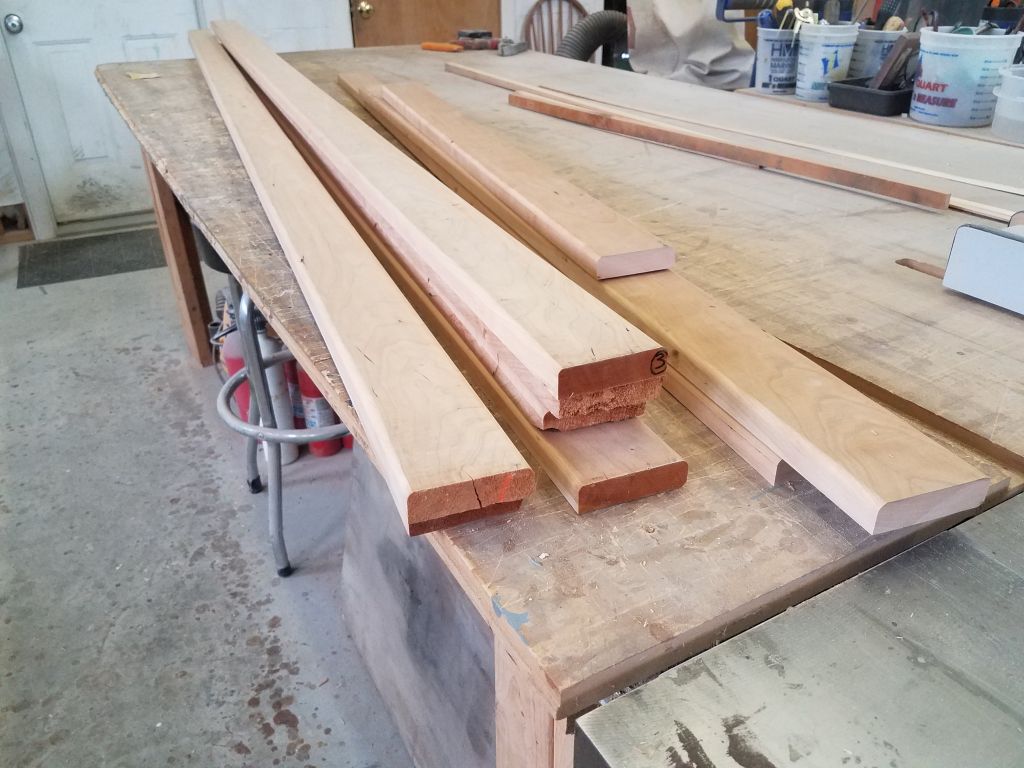
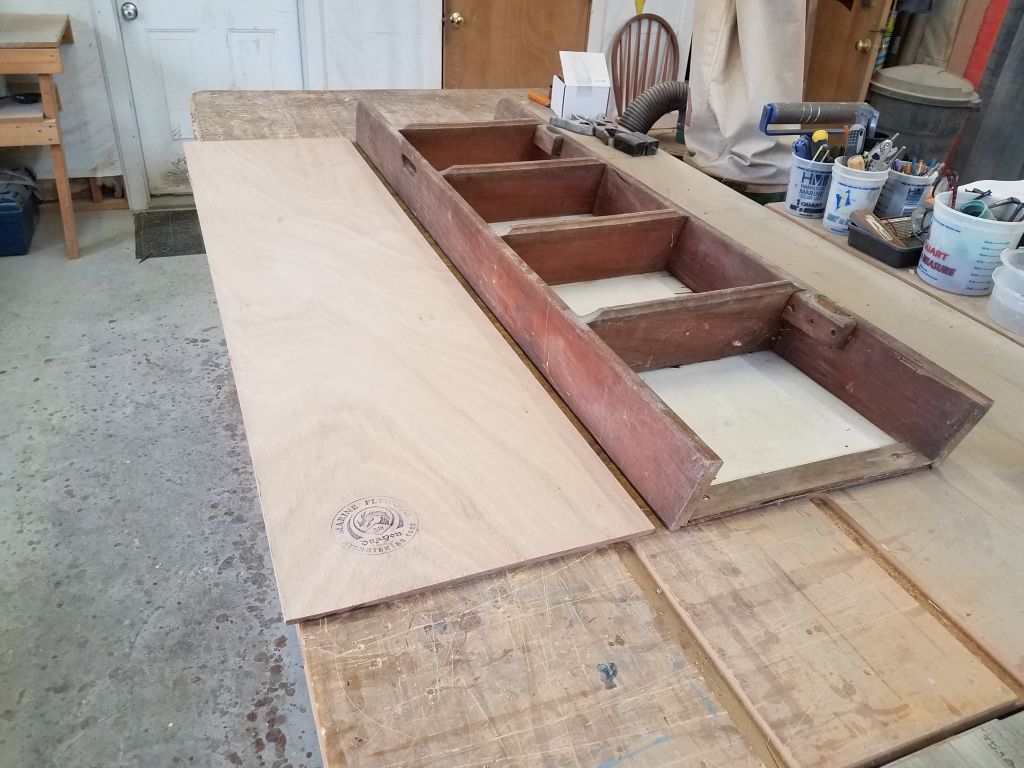
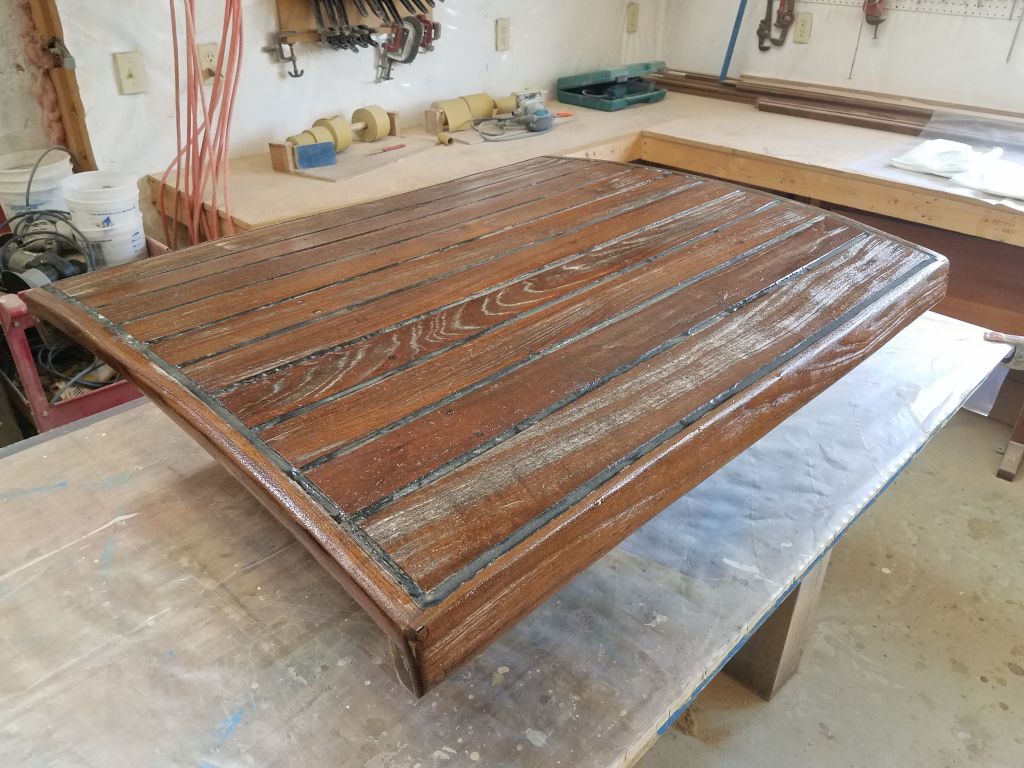
For the countertop surface itself, the owner asked for teak covered with bartop finish for a standout appearance in the cabin.  I thought I could reclaim enough teak from some of the boat’s old trim pieces that I’d stored since removing them some time ago, so now I went through the pile of old trim, discarding pieces that were of no use because of damage or small size or fastener holes, but in the end I had a fair pile of decent wood to use.

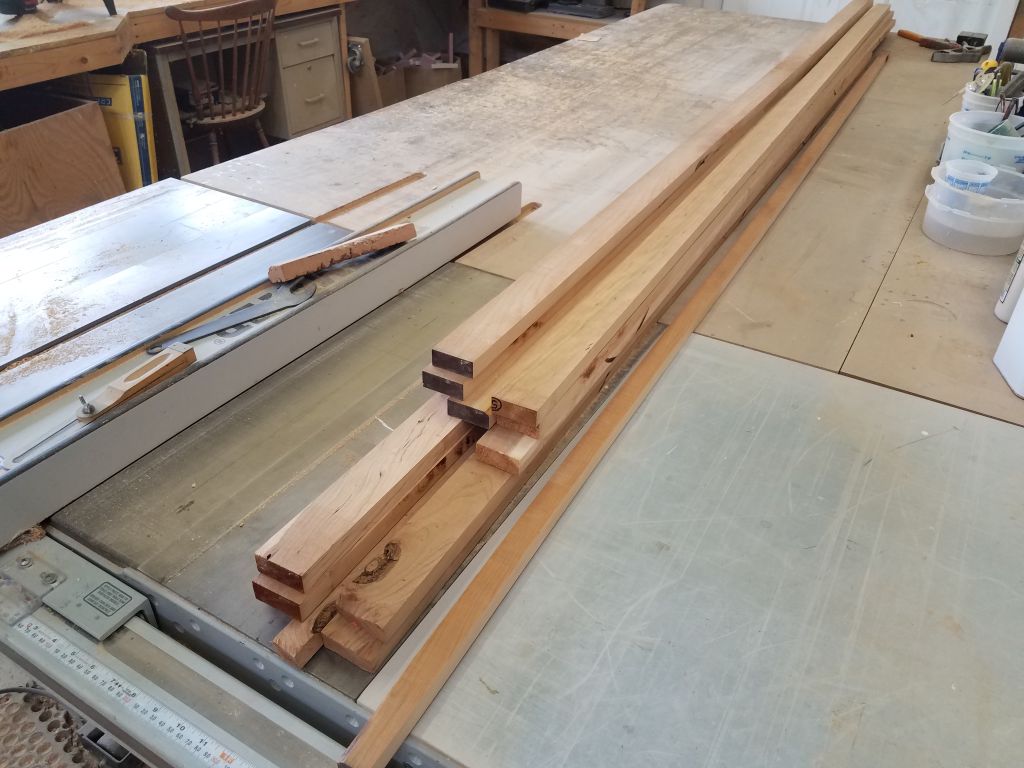
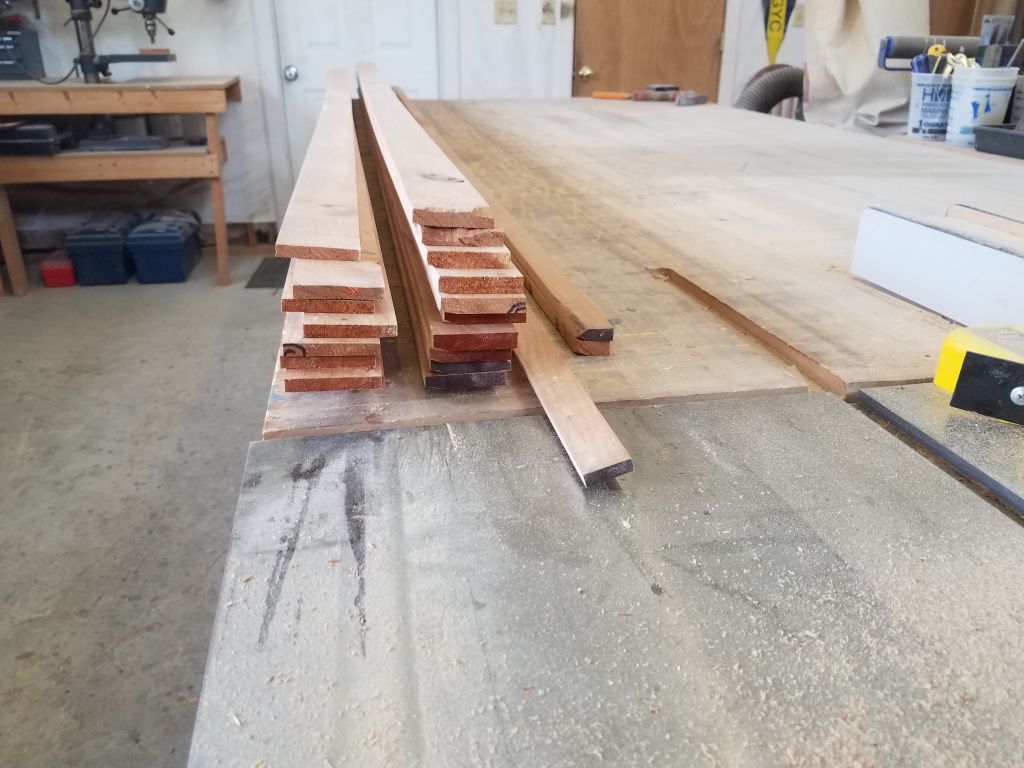
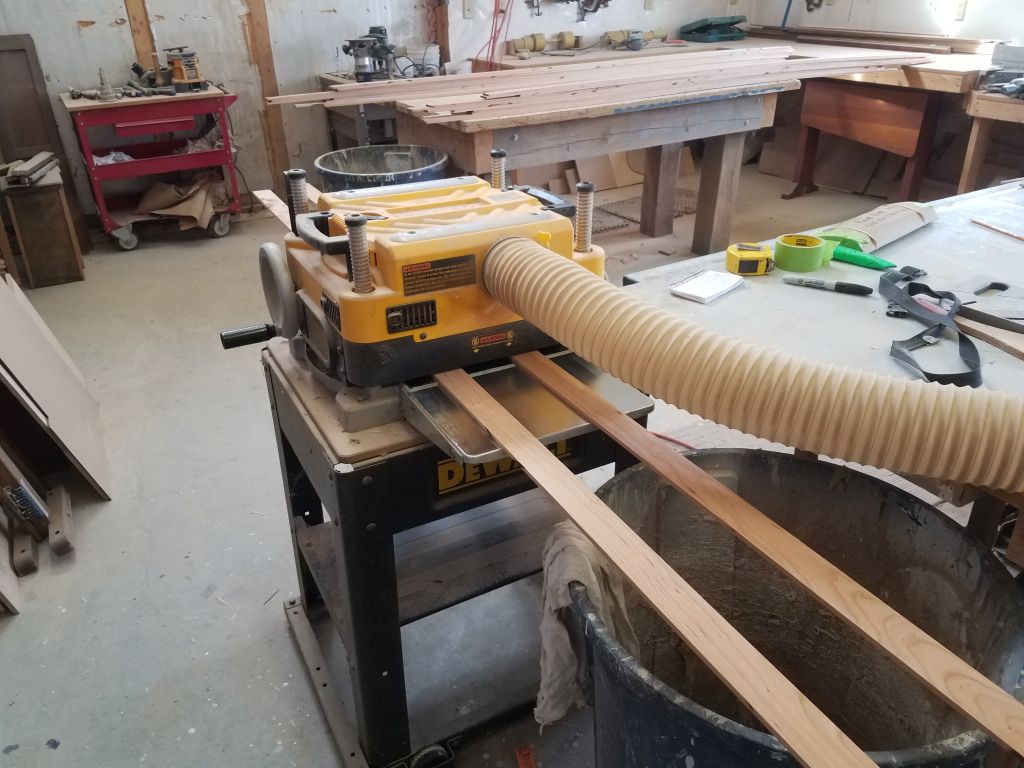
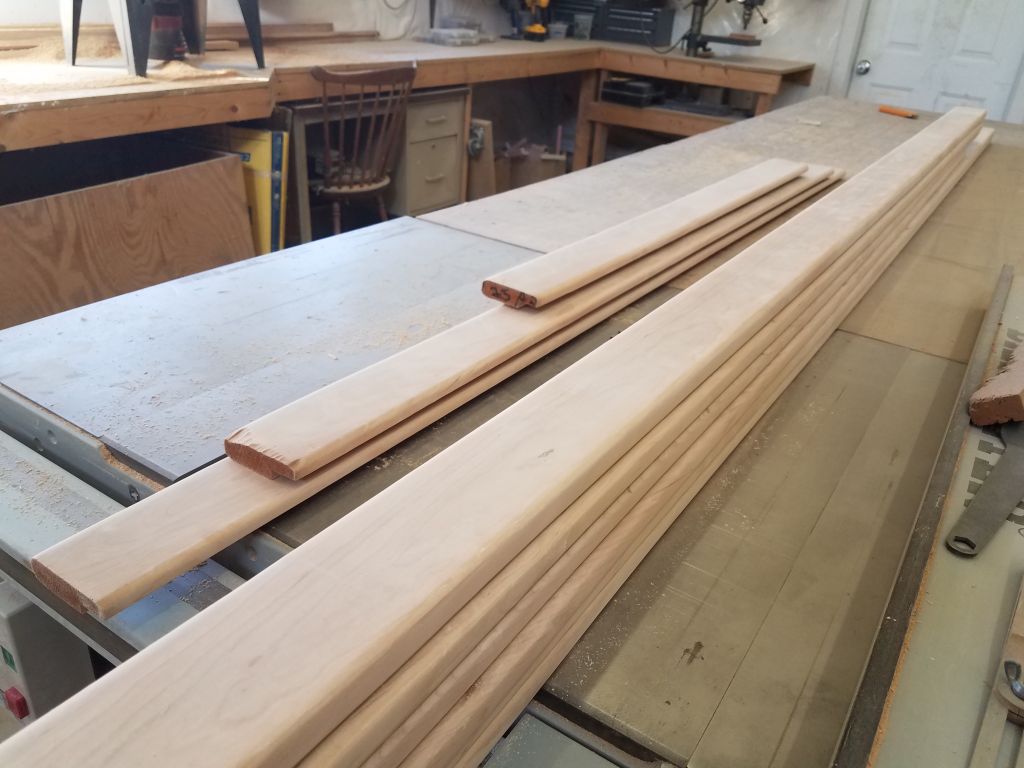
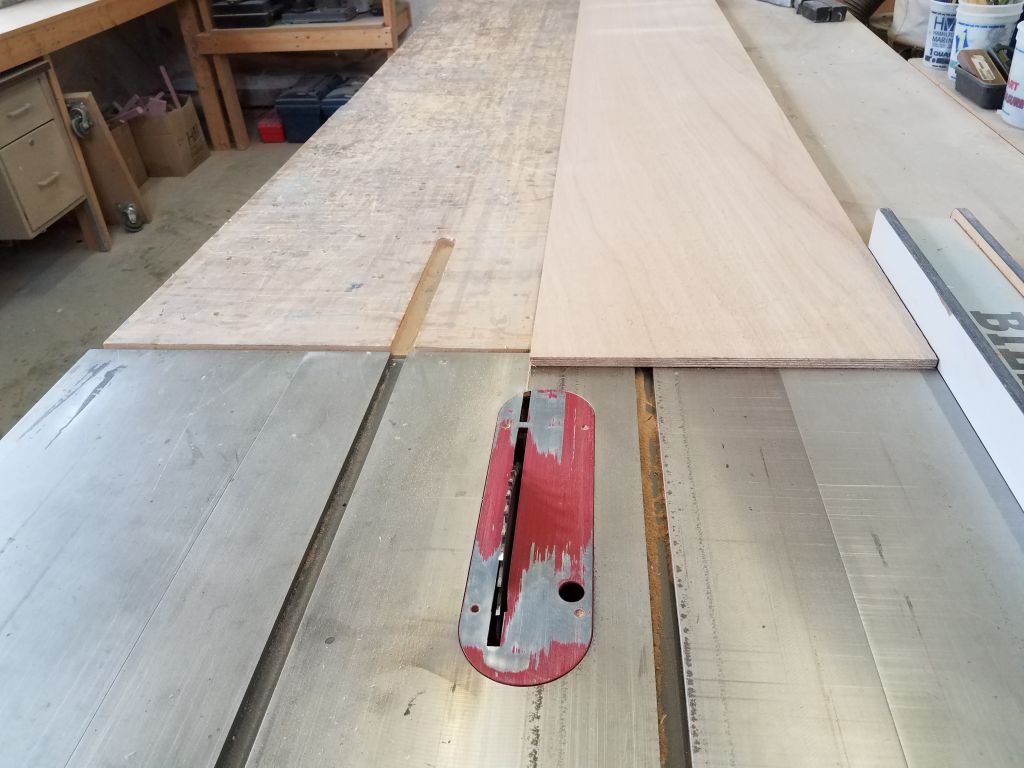
My next step was to trim off any unusable portions of the remaining trim boards, leaving me with clean boards free from major damage or fasteners.  Then, I set up the table saw to resaw the 3/4″+ boards in half, creating two 5/16″ thick pieces that I could later plane and sand smooth and clean and use for the new countertop surface.

Total time billed on this job today:  4.25 hours

0600 Weather Observation:  32°, partly cloudy.  Forecast for the day:  Windy, clear, temperatures dropping

Scupper 86

Friday

After  unclamping the last pieces of paneling in the head, I went around the boat and used a countersink to slightly widen all the screw holes I’d used to hold the paneling in place during installation, then filled these holes with acrylic putty.

After another round of sanding, the ends of the v-berth were just about where they needed to be, but I used a light application of the white putty to fill a couple remaining lows.

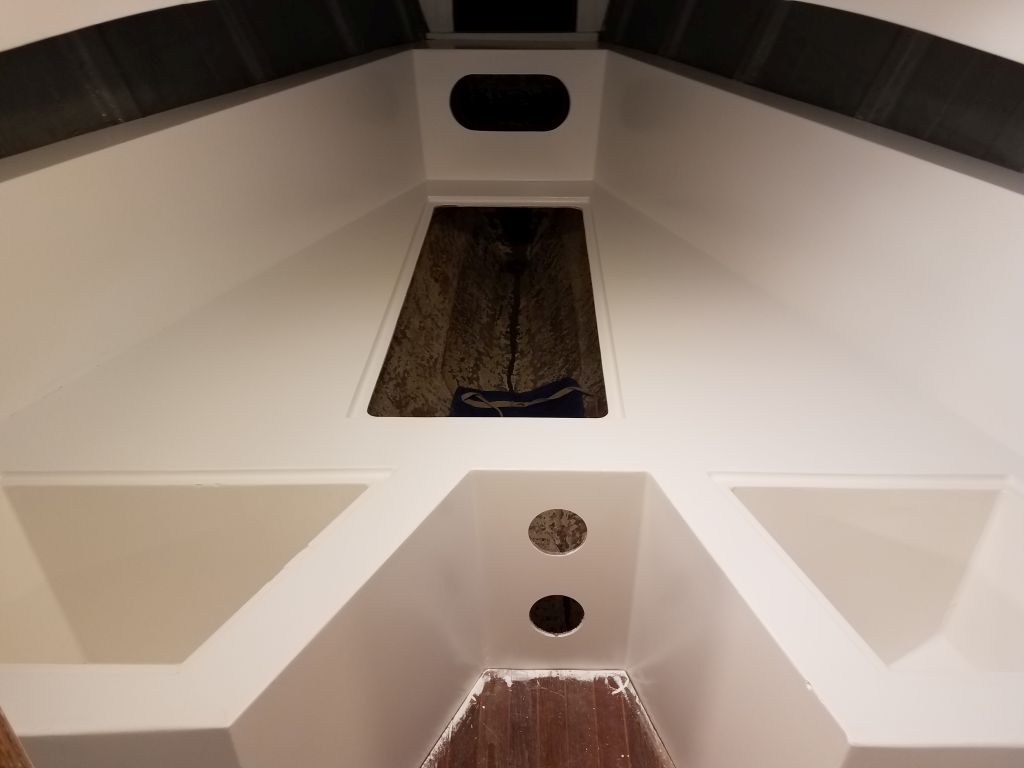
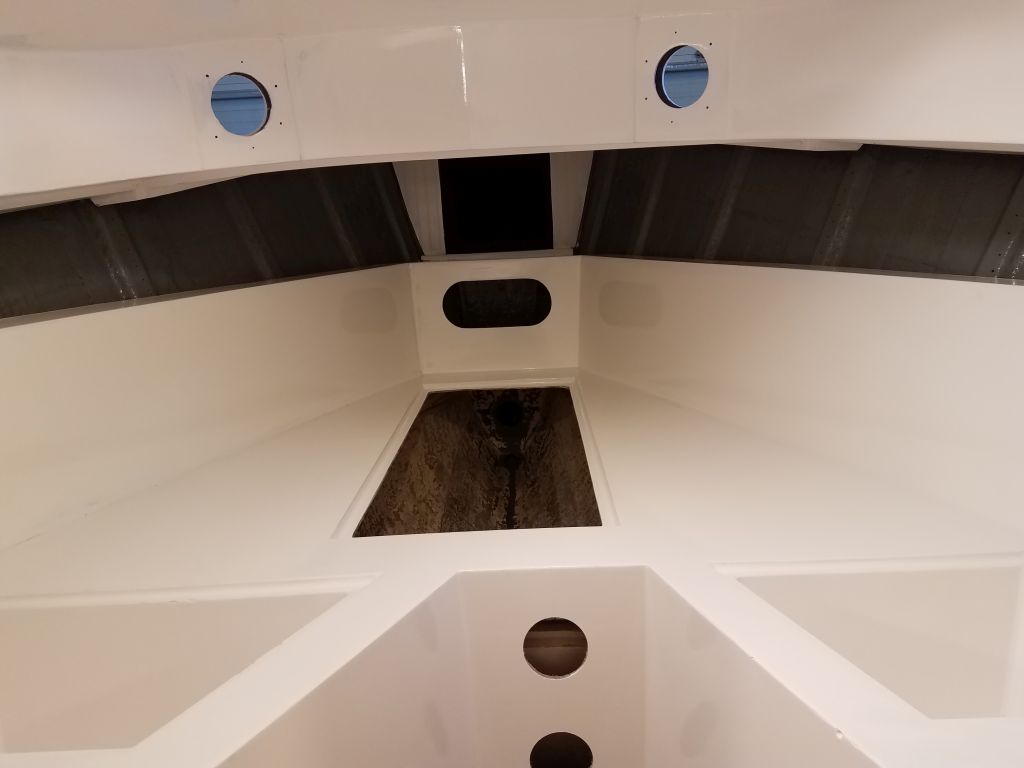
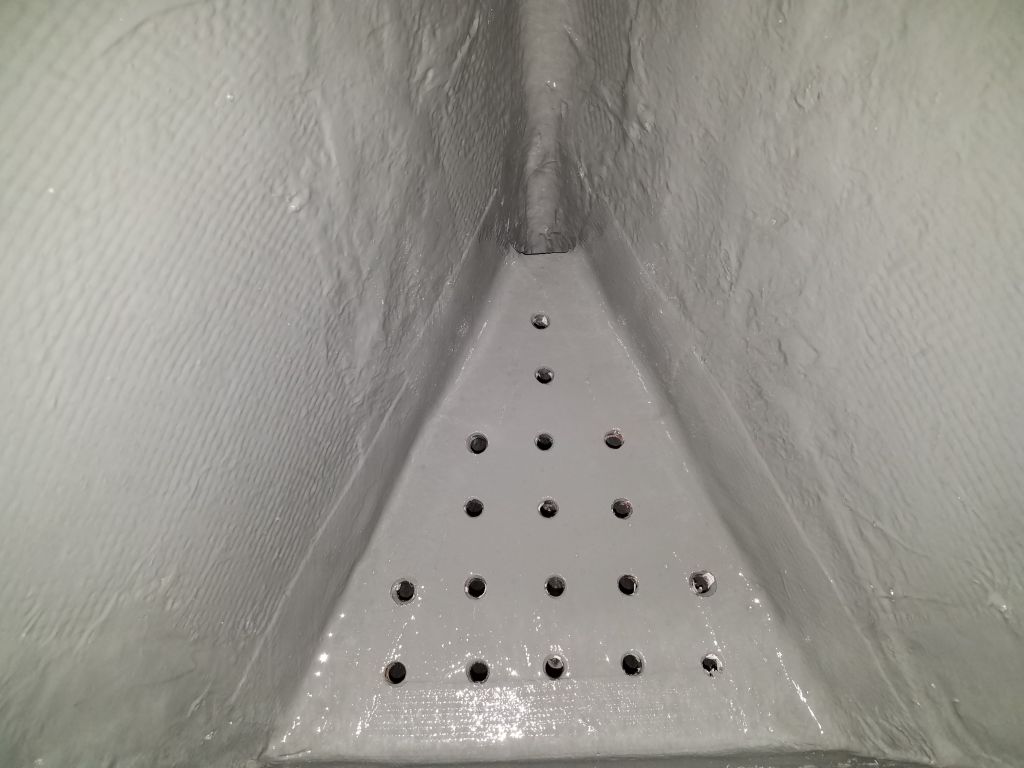
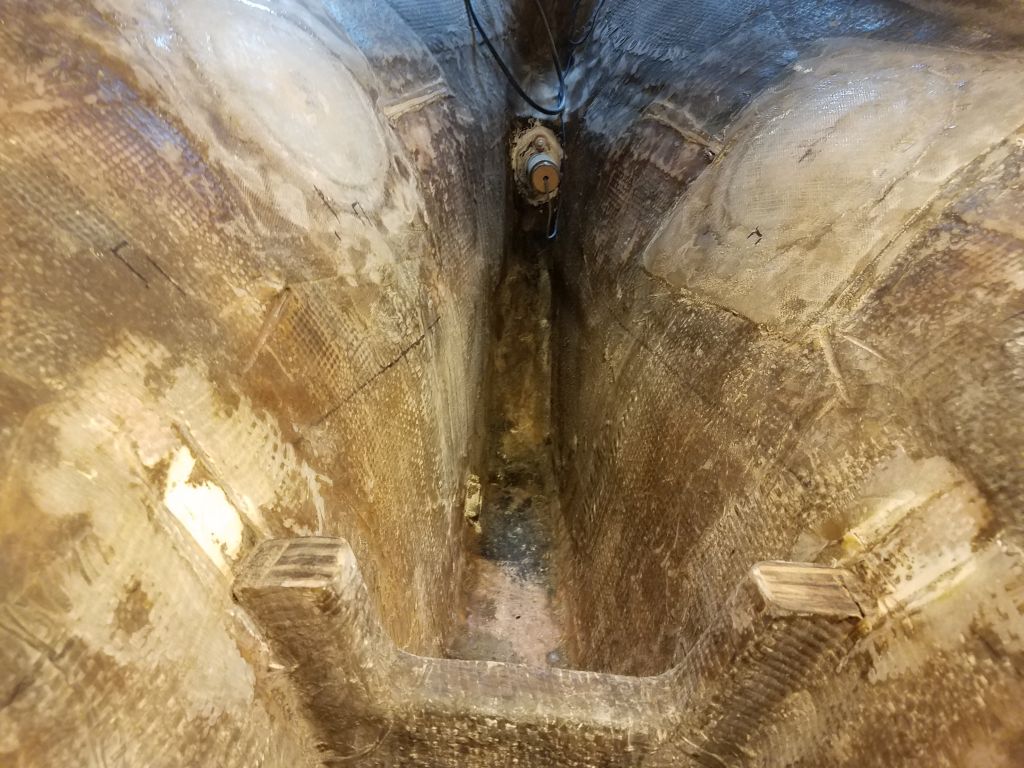
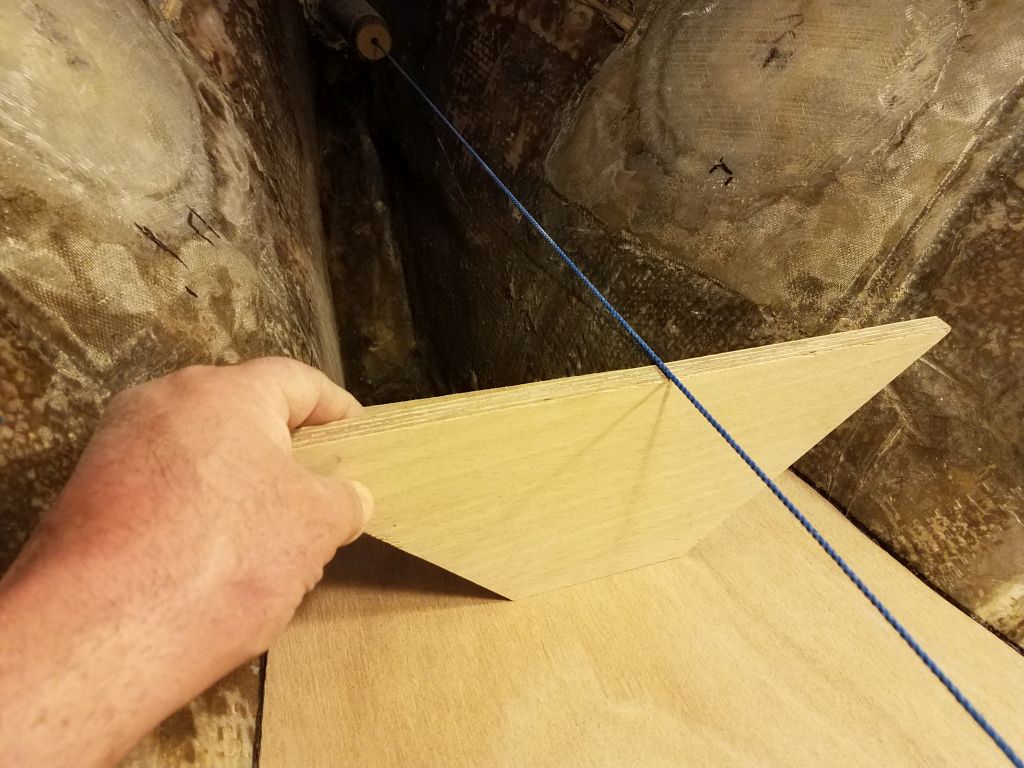
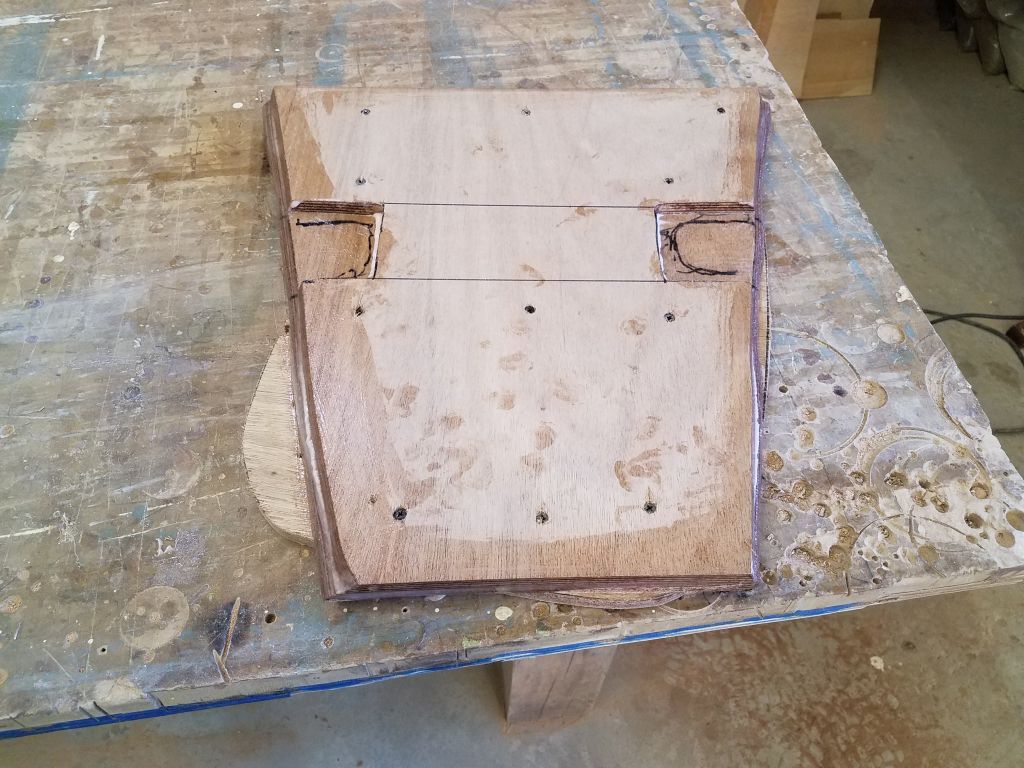
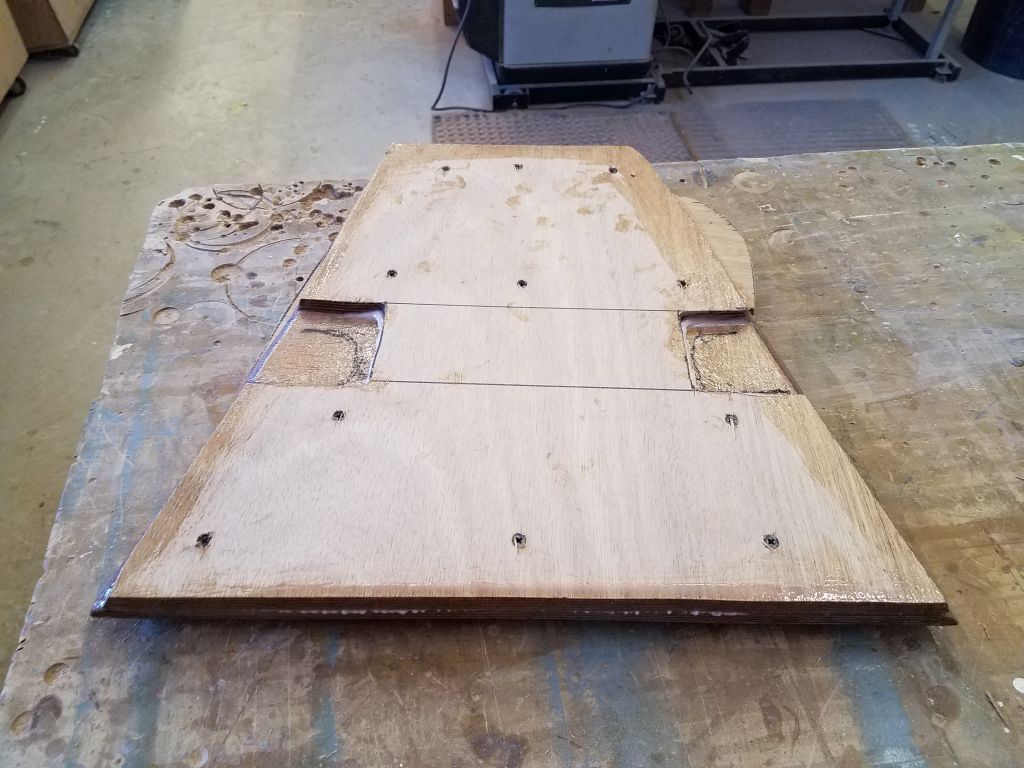
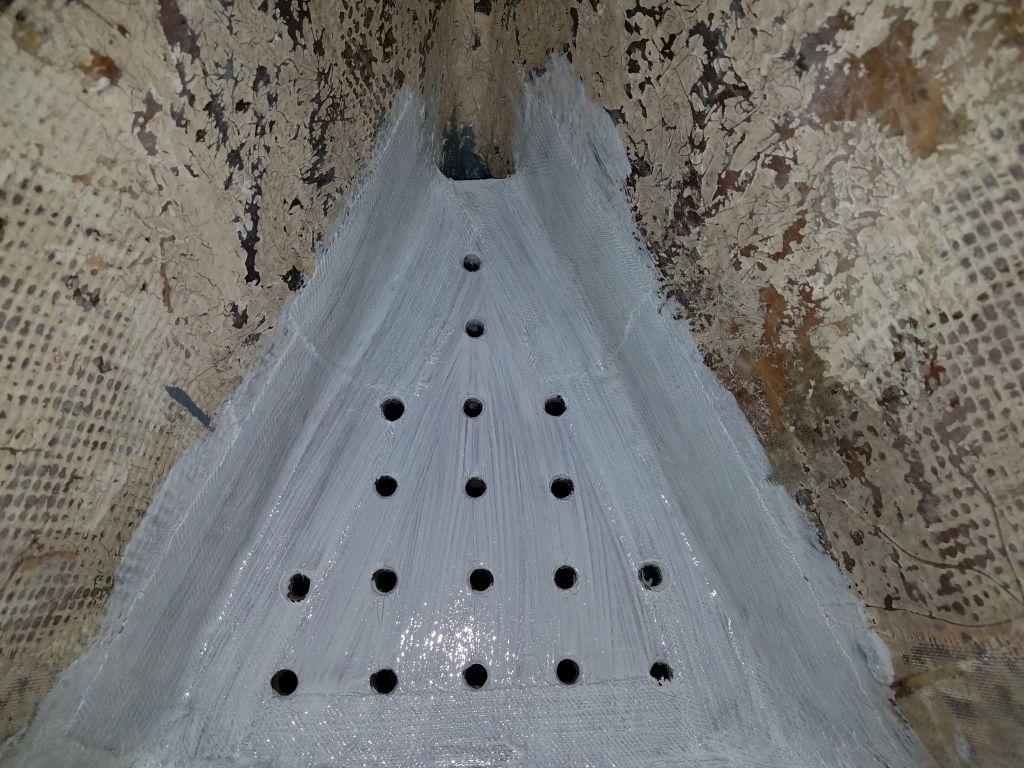
In the chainlocker, which was tall and narrow and deep, I prepared to install a platform part of the way up to better hold, drain, and ventilate the anchor chain and rode.  Reaching down from the opening a reasonable distance, I took a quick measurement of the aft width and used a bevel gauge to approximate the side angles, then transferred these to a cardboard pattern.  Satisfied with the pattern, I cut the platform from some 18mm plywood, using a slight bevel on the sides to match the hull shape, and drilled a series of small holes throughout the platform to allow for drainage and ventilation.  I also intentionally left the platform just a bit shy of the stem, leaving another vent and drain area there.

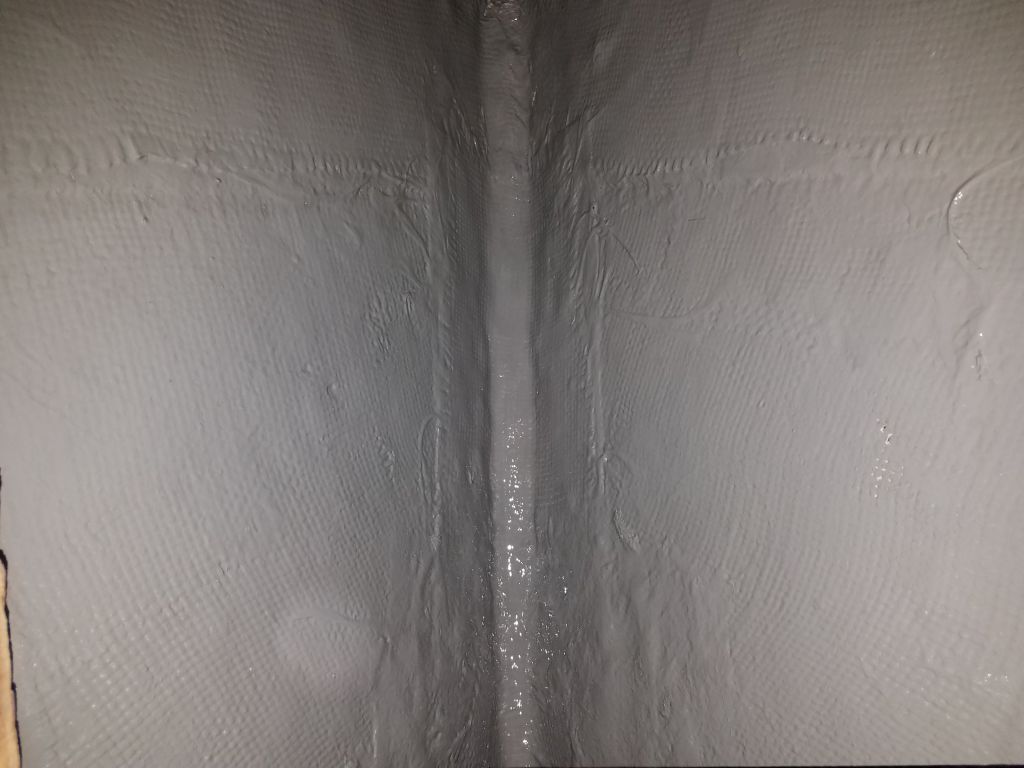
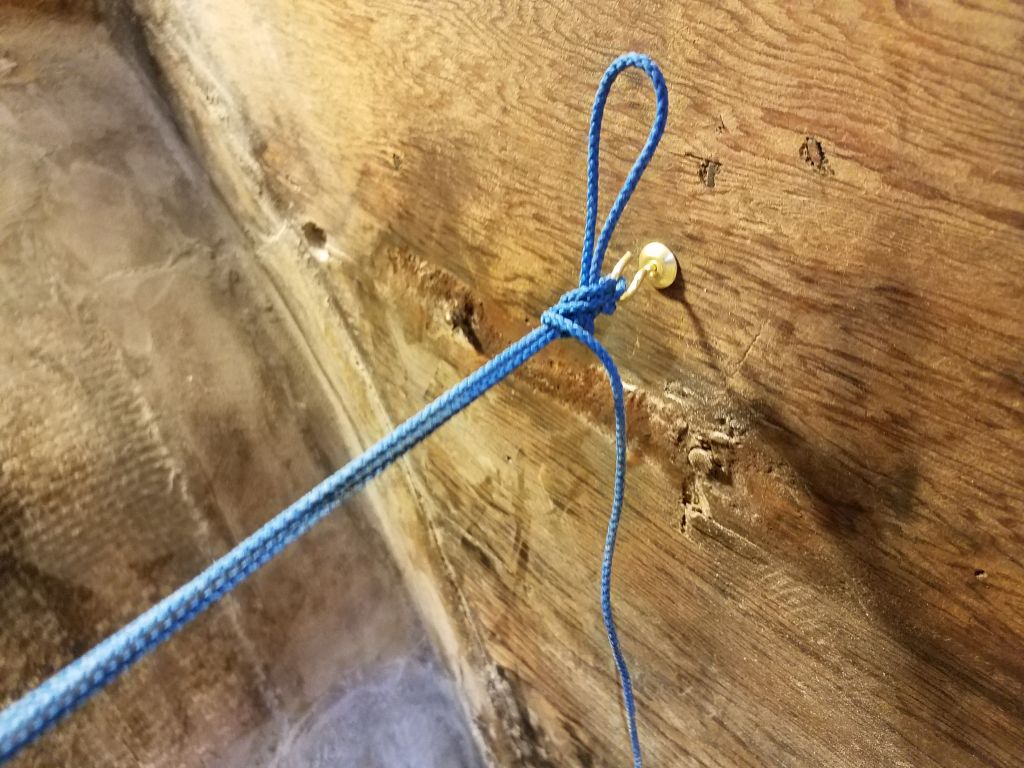
After marking the hull at the top edge of the platform, I removed the platform and epoxy-coated both sides and all edges down on the bench.  Meanwhile, back in the boat, I prepared the lowest section of the locker for paint, since this would be the last time I could access the area for this purpose. (There was access to the very bottom of the space for reaching the bolts that would secure the bobstay fitting later.)

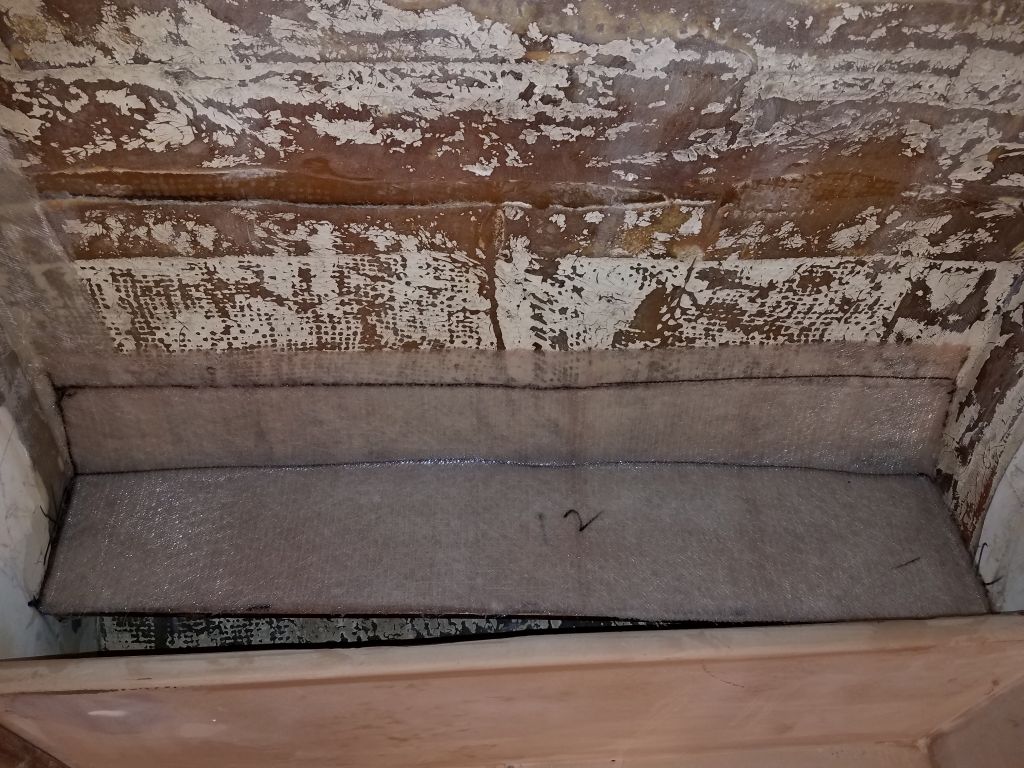
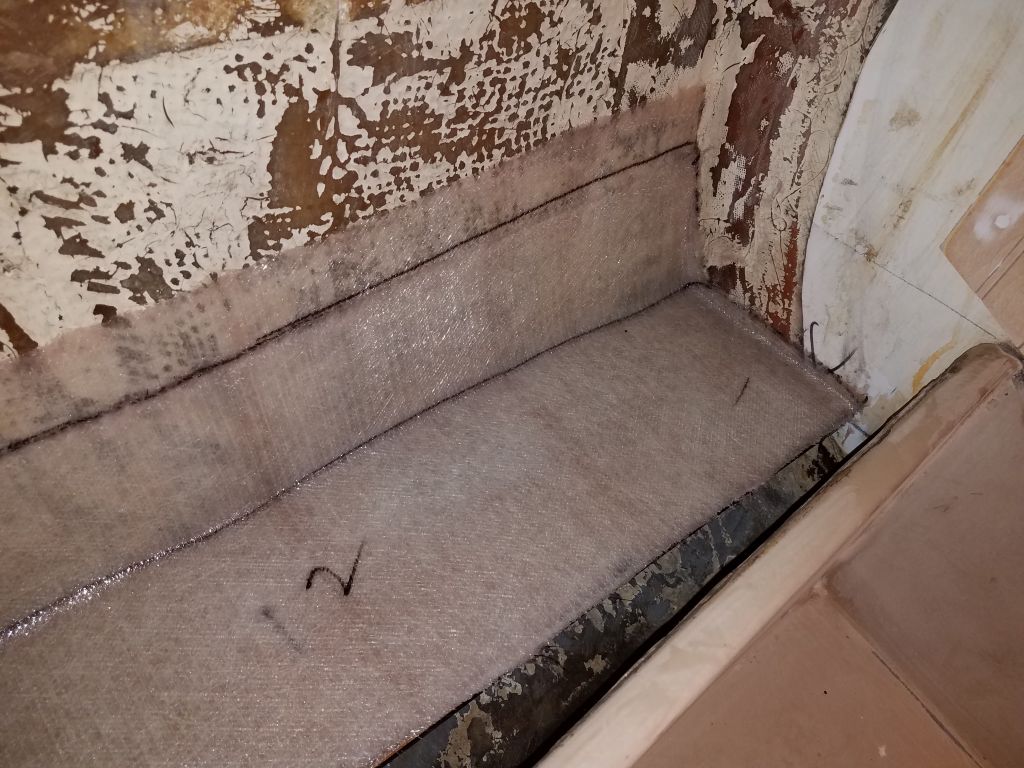
I installed the new platform permanently in a bed of thickened epoxy adhesive along the edges, which I also used to fillet around the three bonding sides, and then I applied fiberglass tabbing to complete the installation.  I’d redrill any of the holes that the new tabbing covered later.

While I had the paint out, I painted the inside of the old icebox (now a storage locker) in the galley.  The other spaces in the galley would also require paint, but these areas weren’t quite ready for this treatment yet.

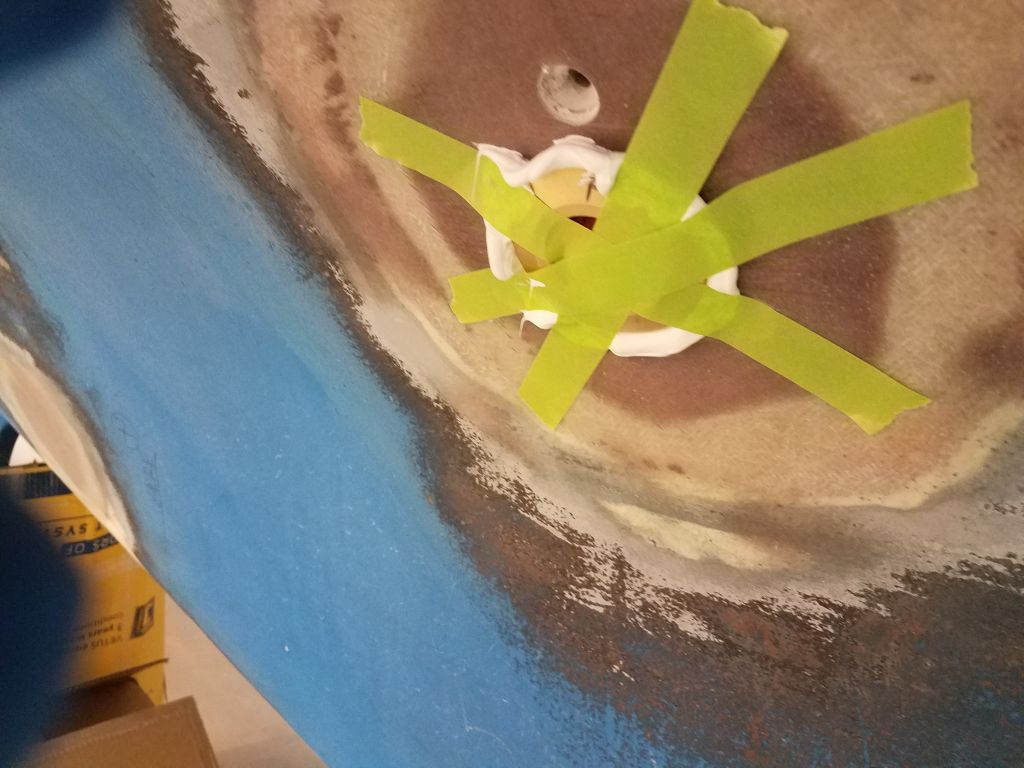
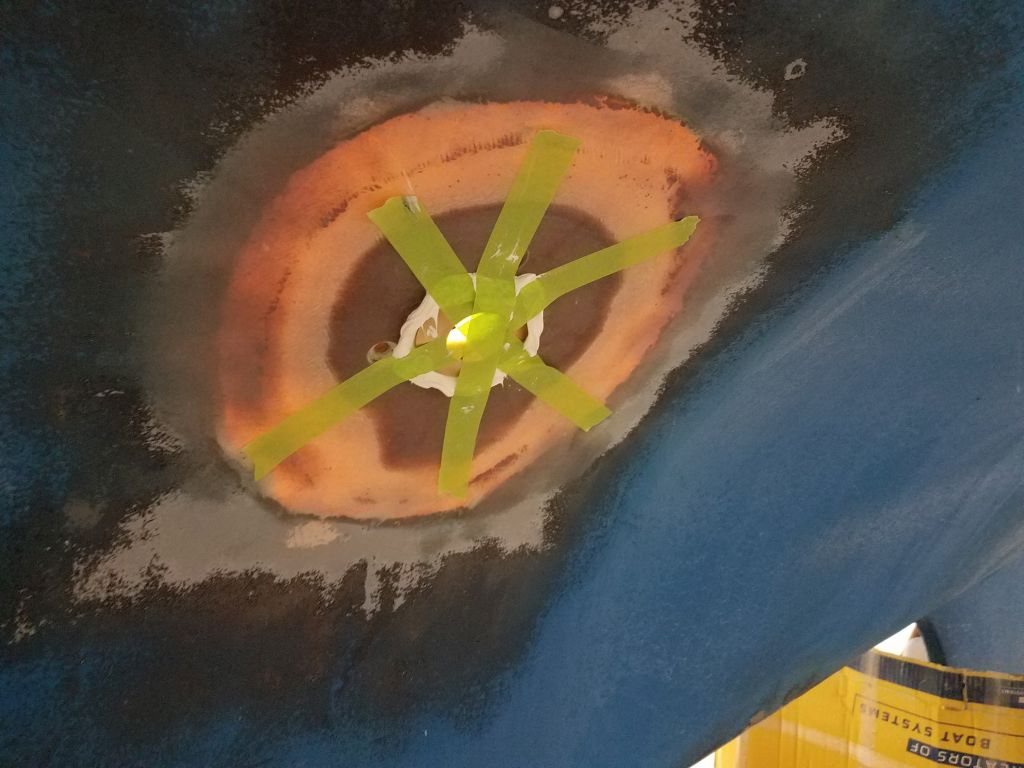
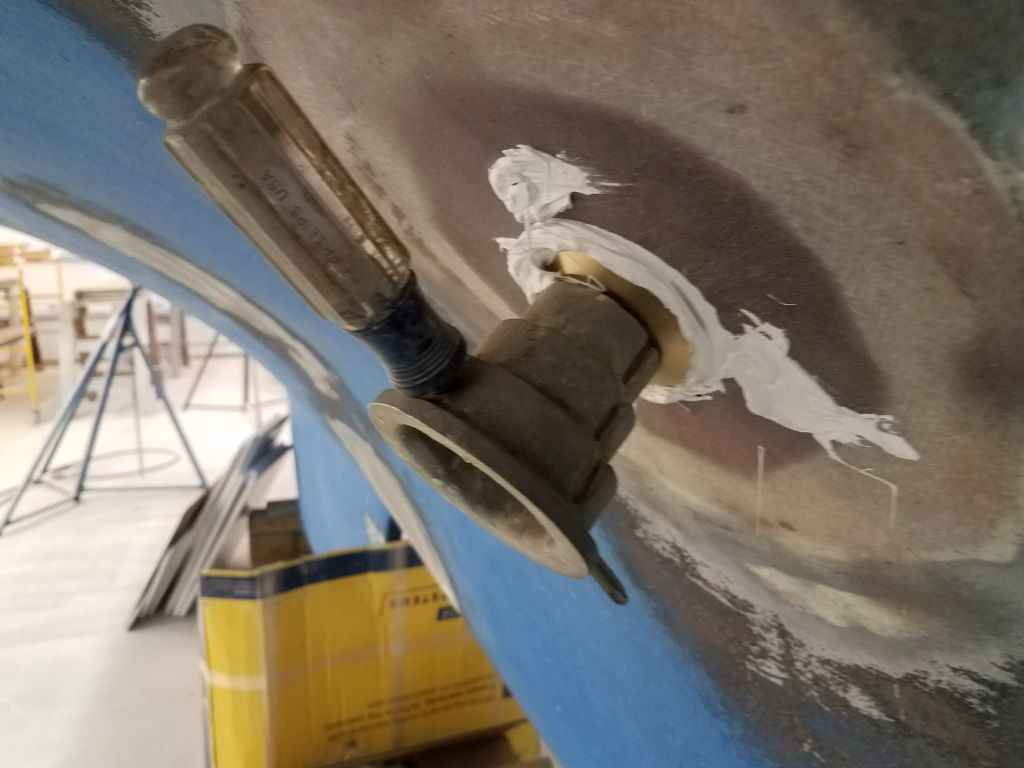
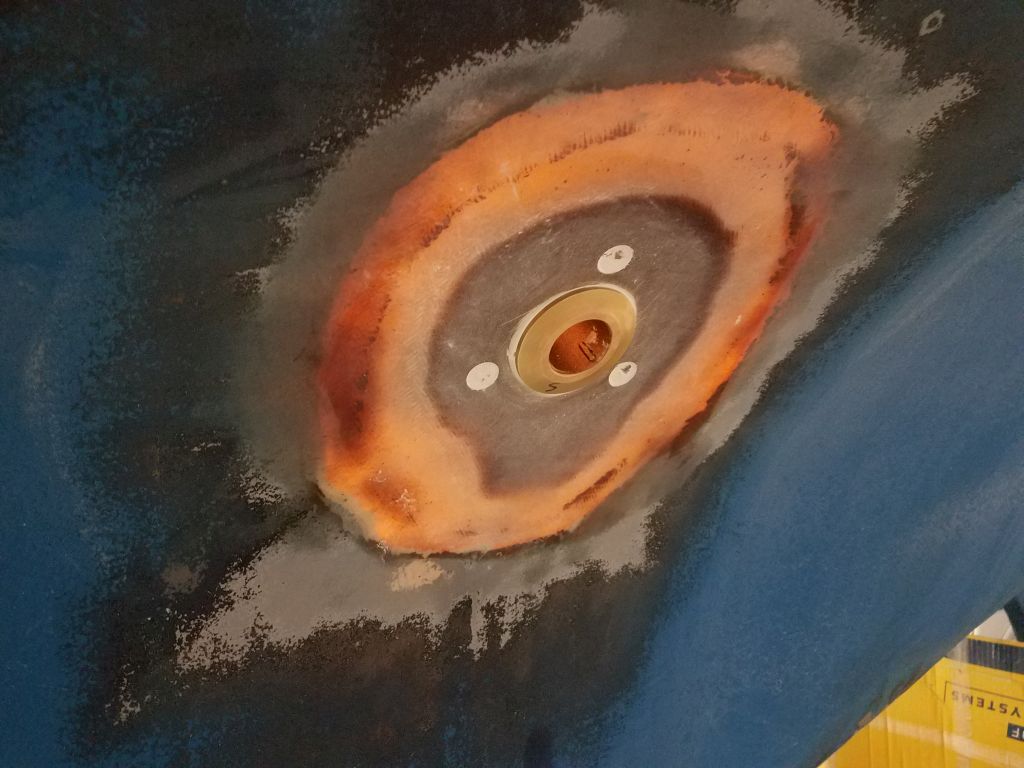
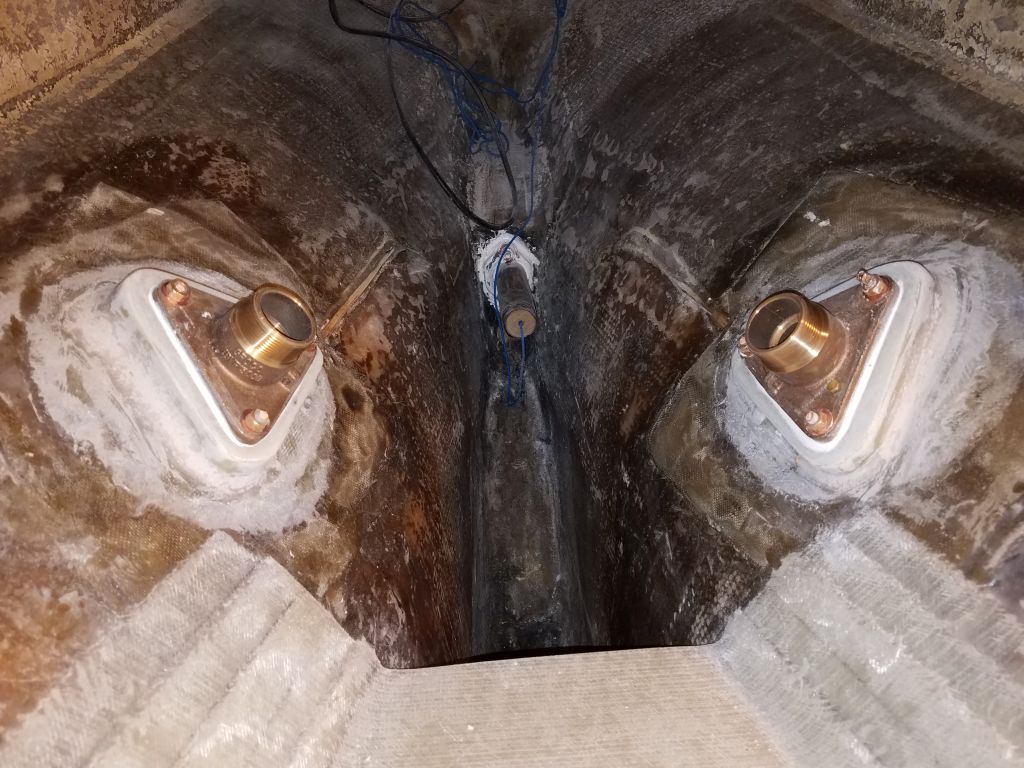
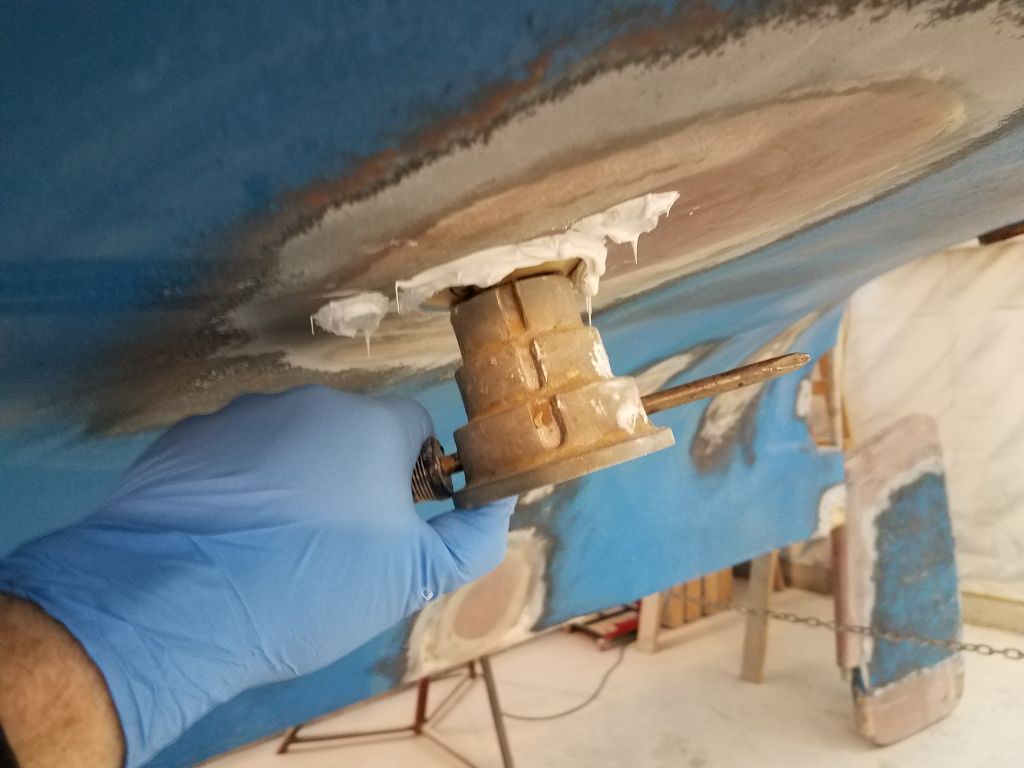
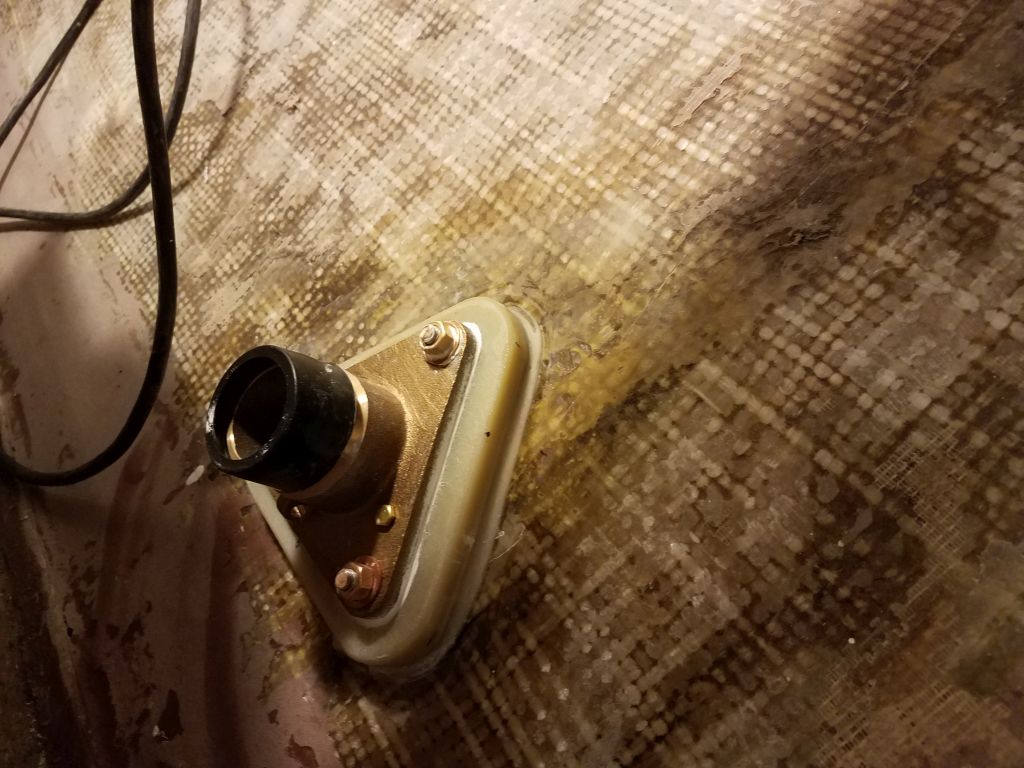
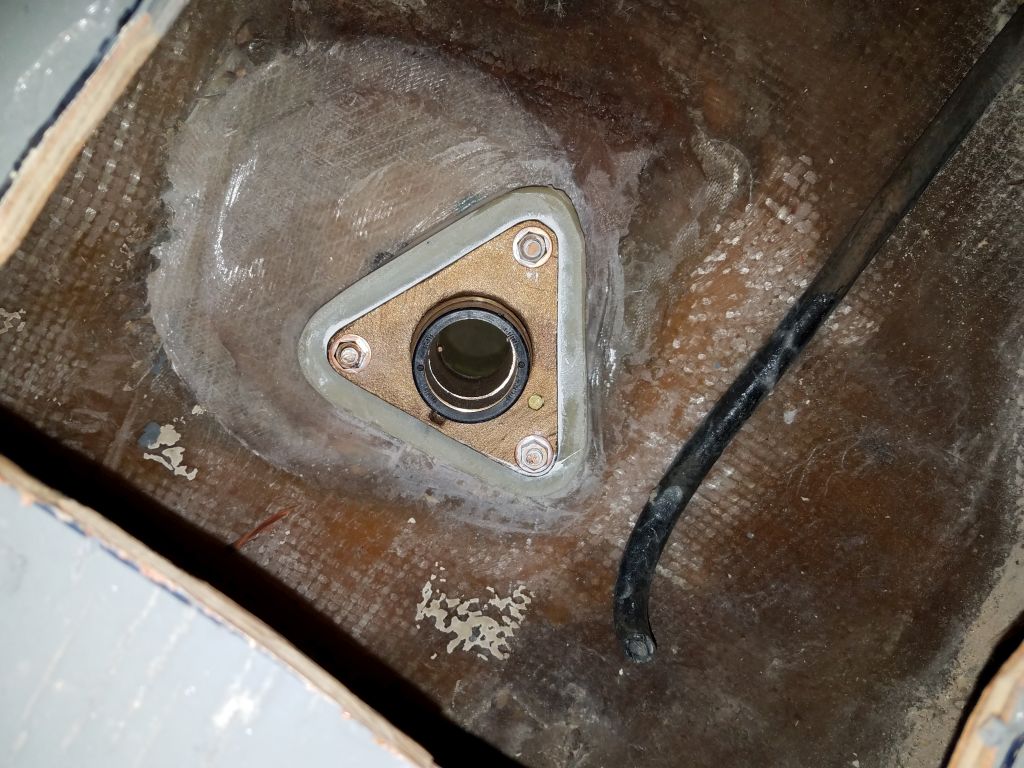
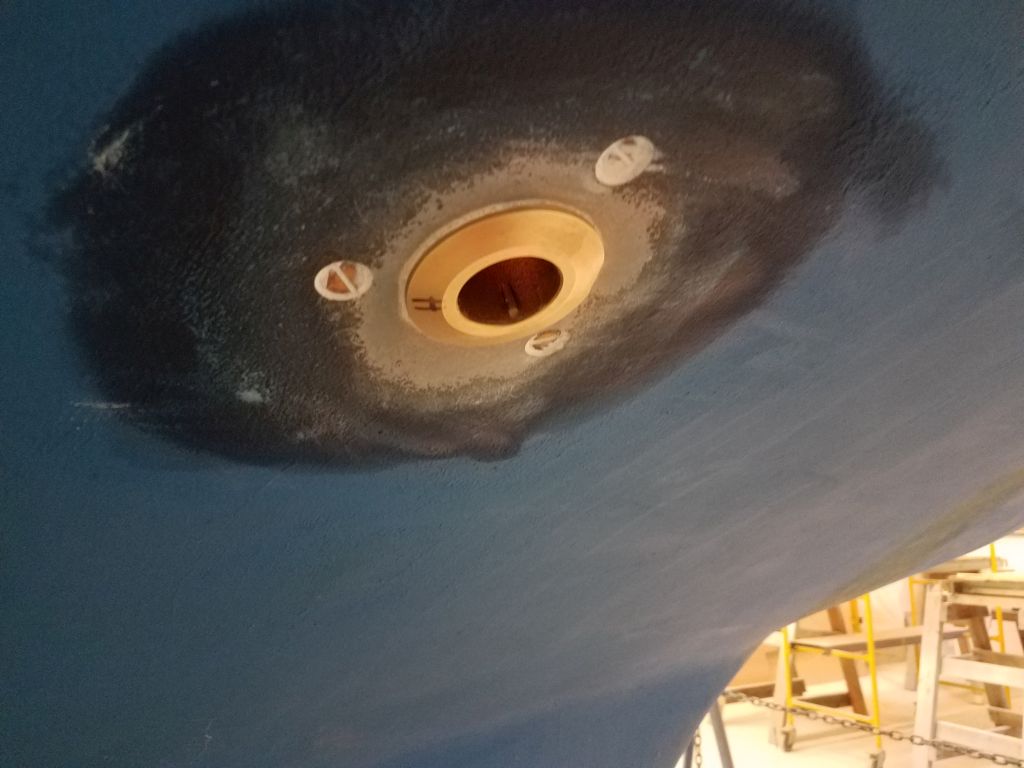
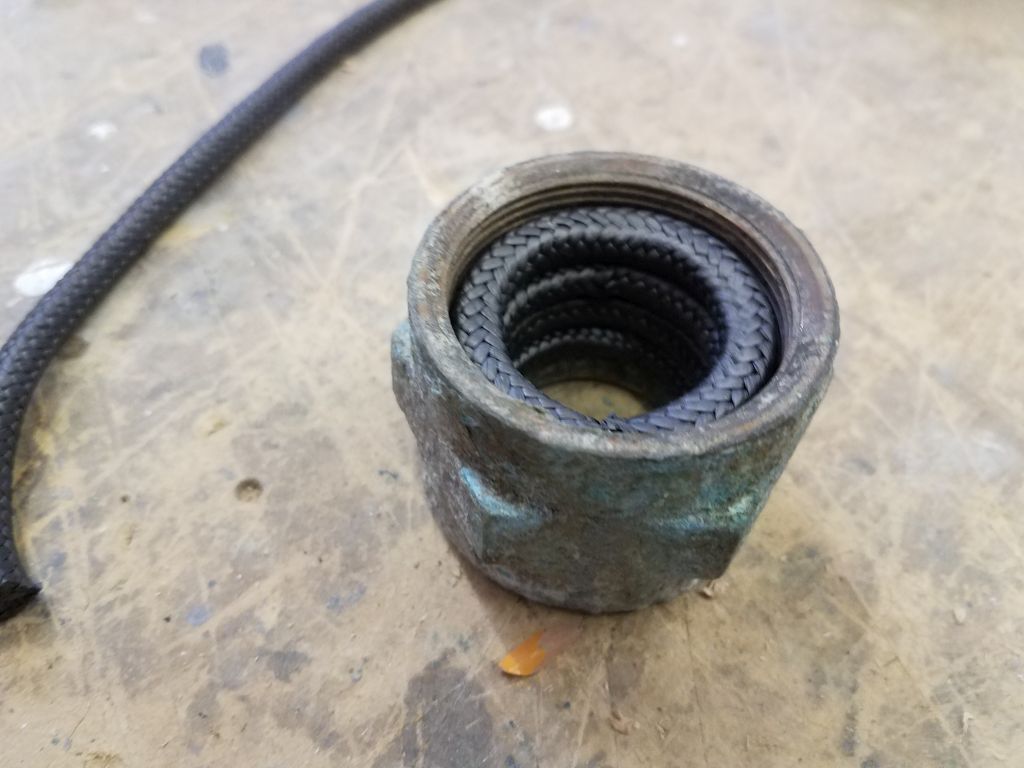
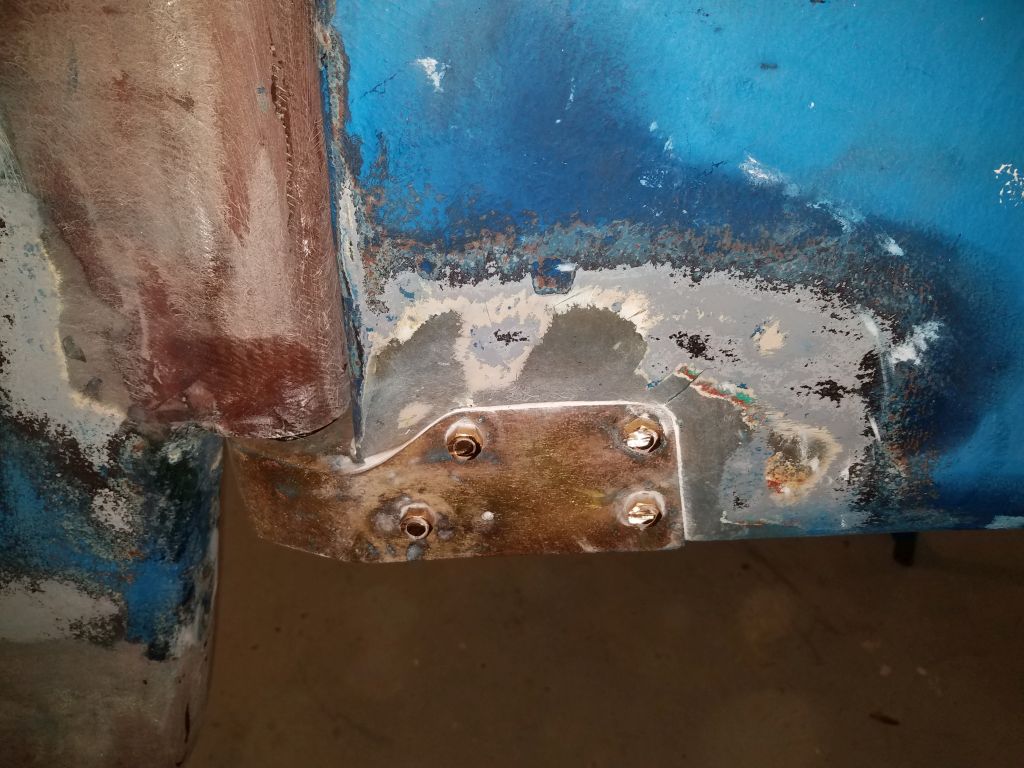
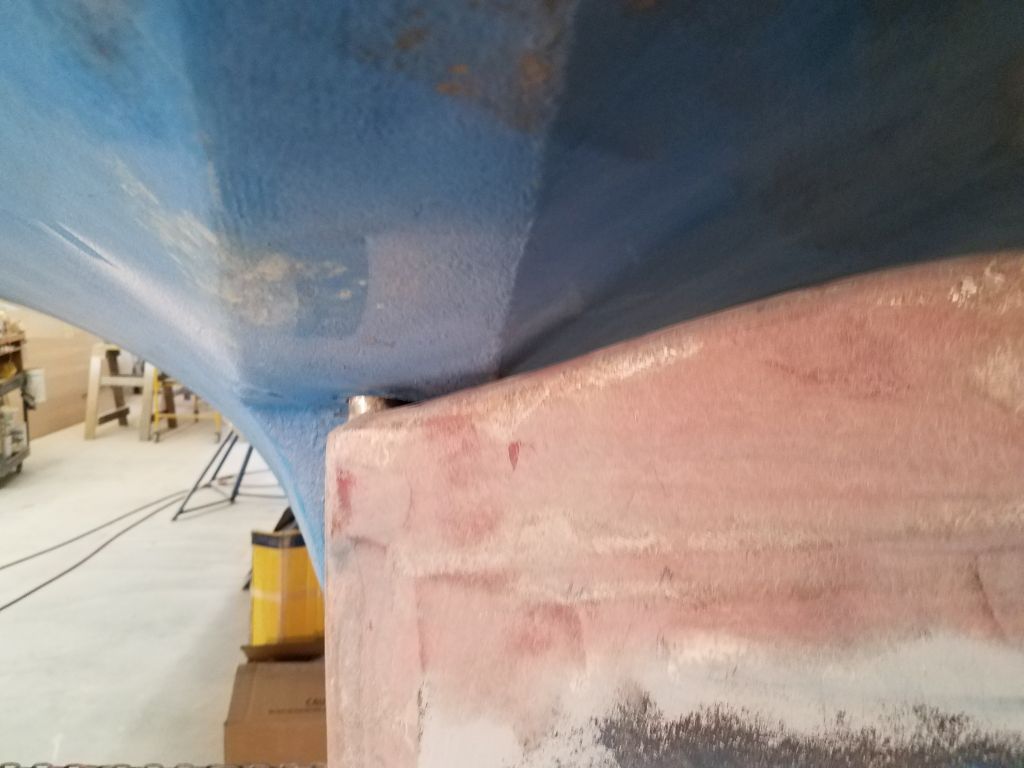
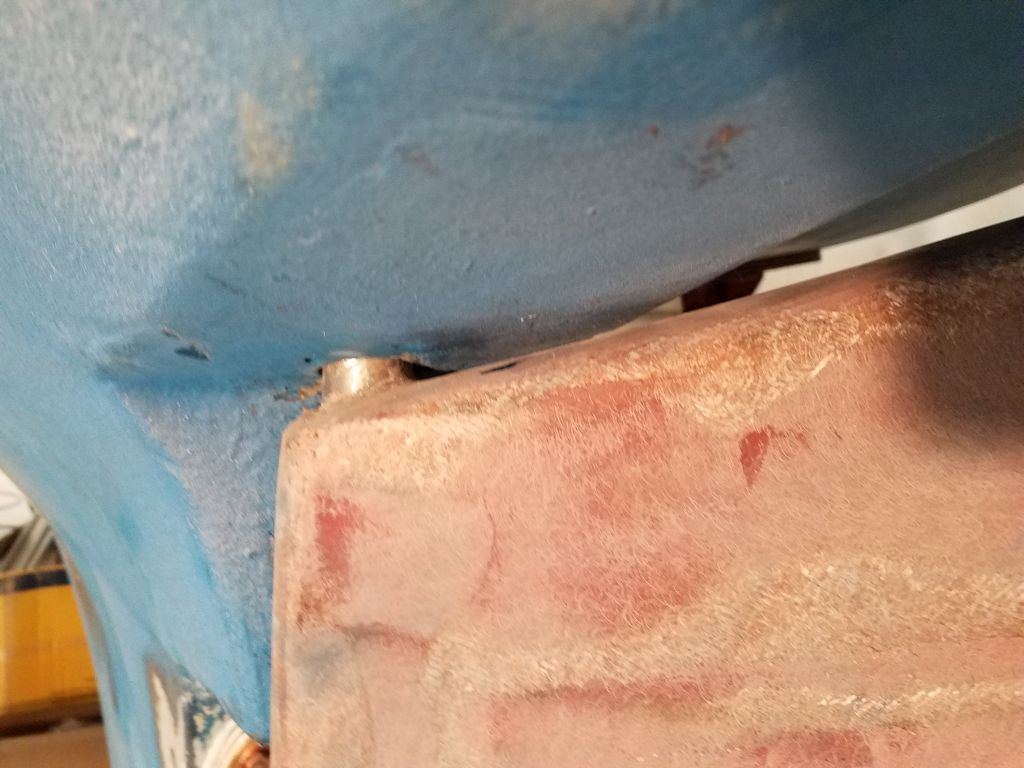
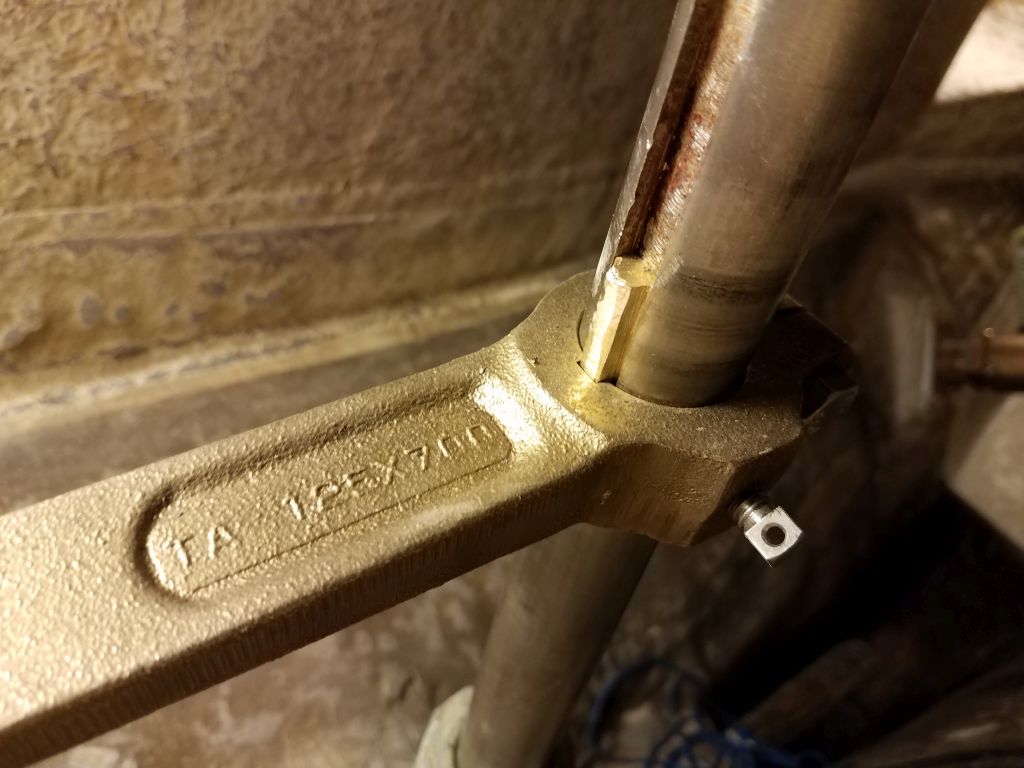
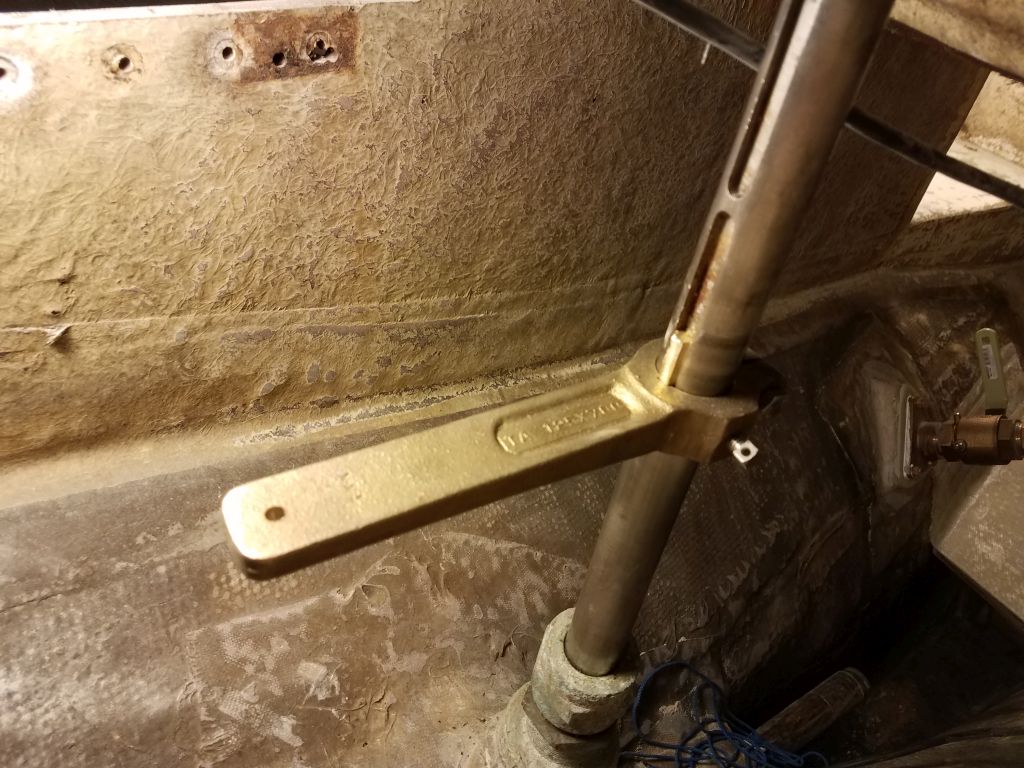
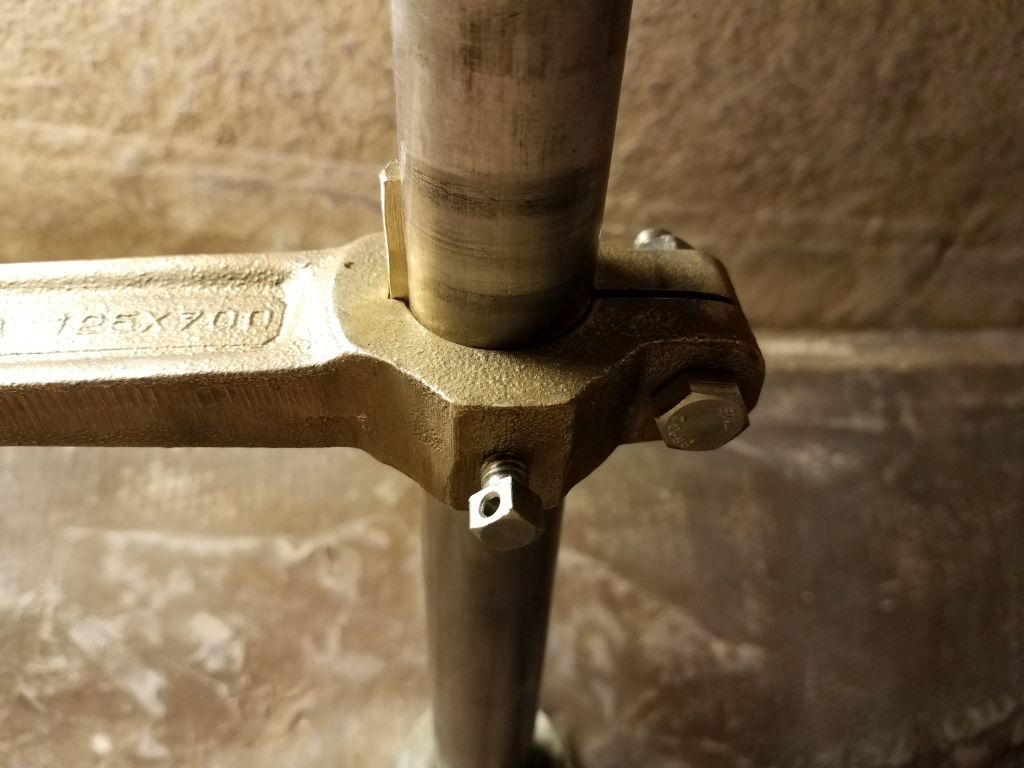
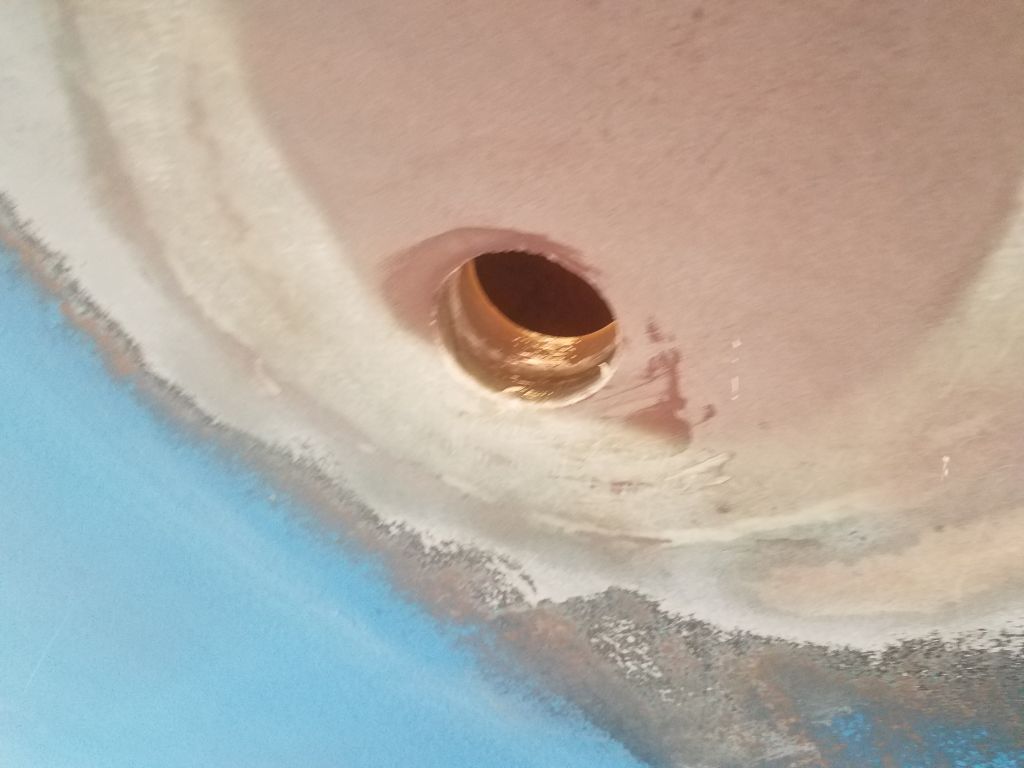
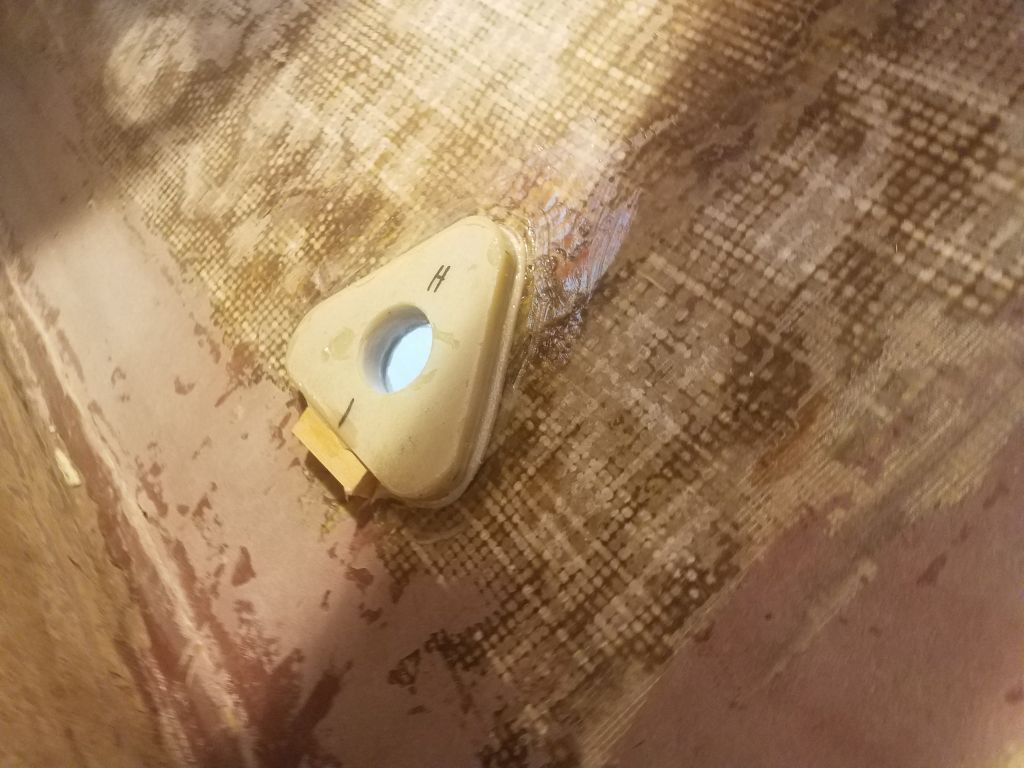
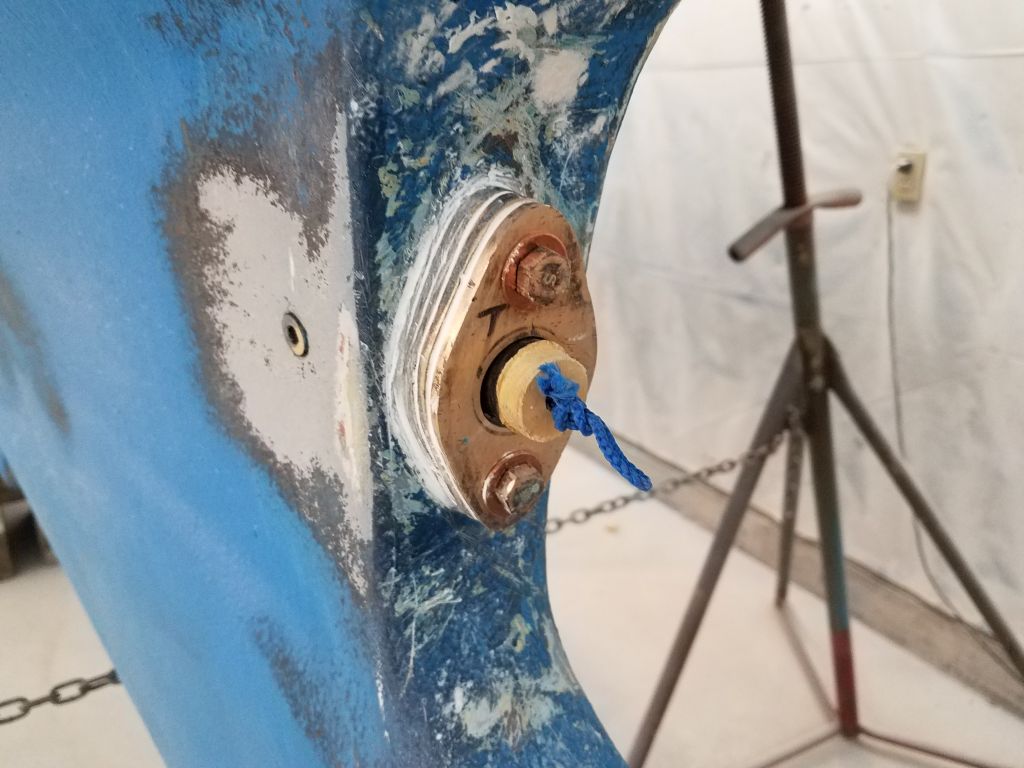
Friday afternoons are good for random tasks on my list, and it seemed fitting that I spend this Friday afternoon installing the new Cutless bearing and completing the work there, since I’d succeeded at its predecessor’s removal just a week before.  The new bearing is model “BACK”, sized for the 1-1/4″ ID of the stern tube and a 1″ propeller shaft.  The way this housing and stern tube worked, the outermost plate secured the bearing in place with a shallow recess on the bearing side, and the inside edge of the bearing fit against the shoulder inside the stern tube.  The outer plate pressed into the bearing when the two long bolts secured it through the deadwood.  I spent some time removing old paint and sealant from the various parts, and cleaning everything to bright metal.

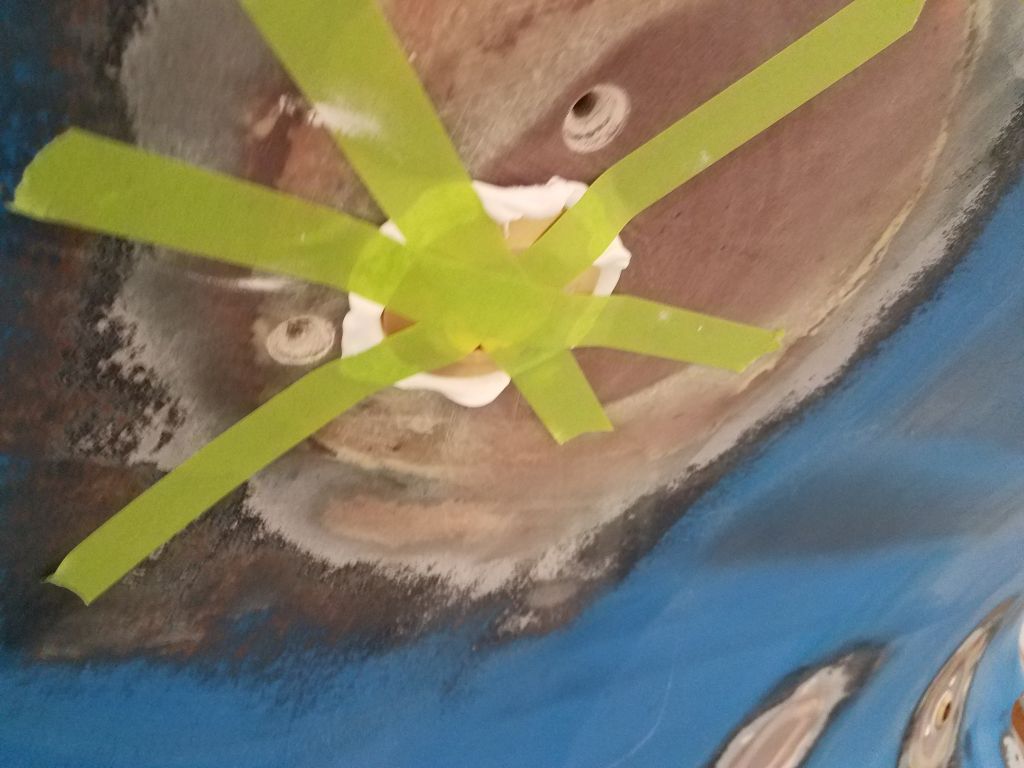
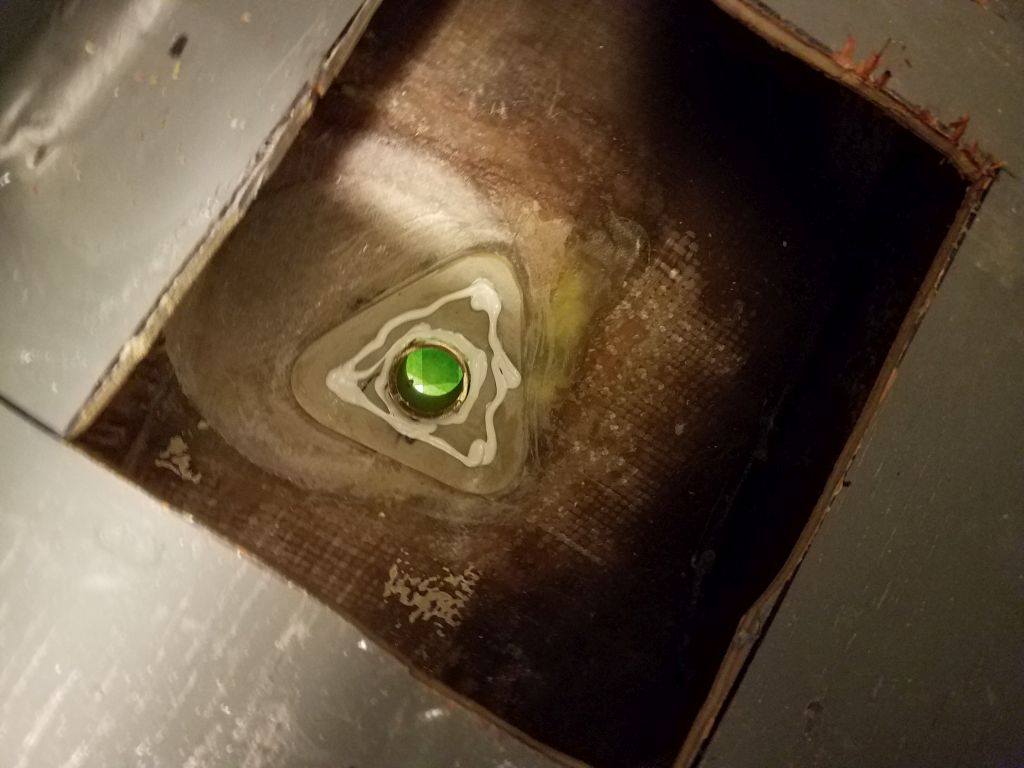
I cleaned up the inside of the stern tube, and measured to the shoulder within.  This required that I cut about an inch off the bearing to allow it to fit inside.  Once I had the bearing inside the stern tube, I installed the outer part of the housing and the bolts, heavily gooping up the bolts and faying surfaces with polyurethane sealant.  Inside the boat, I rebedded the inside backing plate as well, and, with locking pliers on the outside, secured the nuts and washers from within to draw the assembly tightly together before cleaning up the excess sealant.  This was a job I was most pleased to have behind me in entirety, and after cleaning up the shop I was happy to knock off for the day.

Total time billed on this job today:  6.75 hours

0600 Weather Observation:  22°, clear.  Forecast for the day:  Sunny, 30s

Scupper 85

Thursday

In the forward cabin, I removed the clamps and screws from the new paneling.

With good access restored, I sanded the latest application of fairing compound on the berth ends, highlighting various low areas (mainly in the center of each panel) requiring an additional round of filler, which I took care of next.

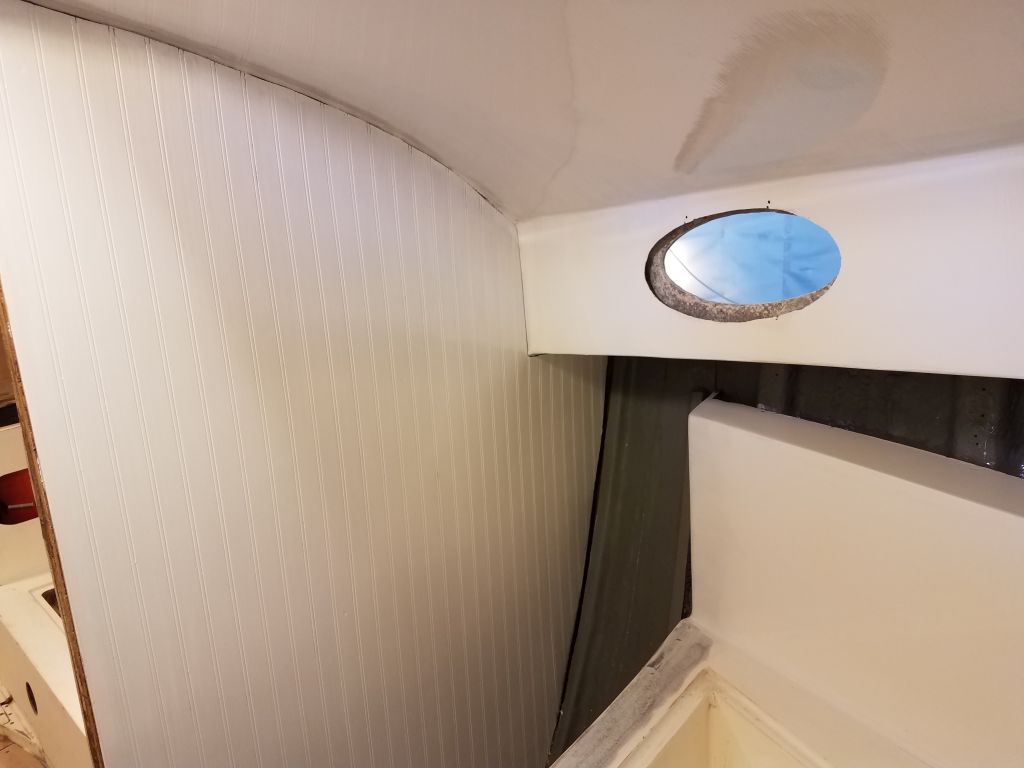
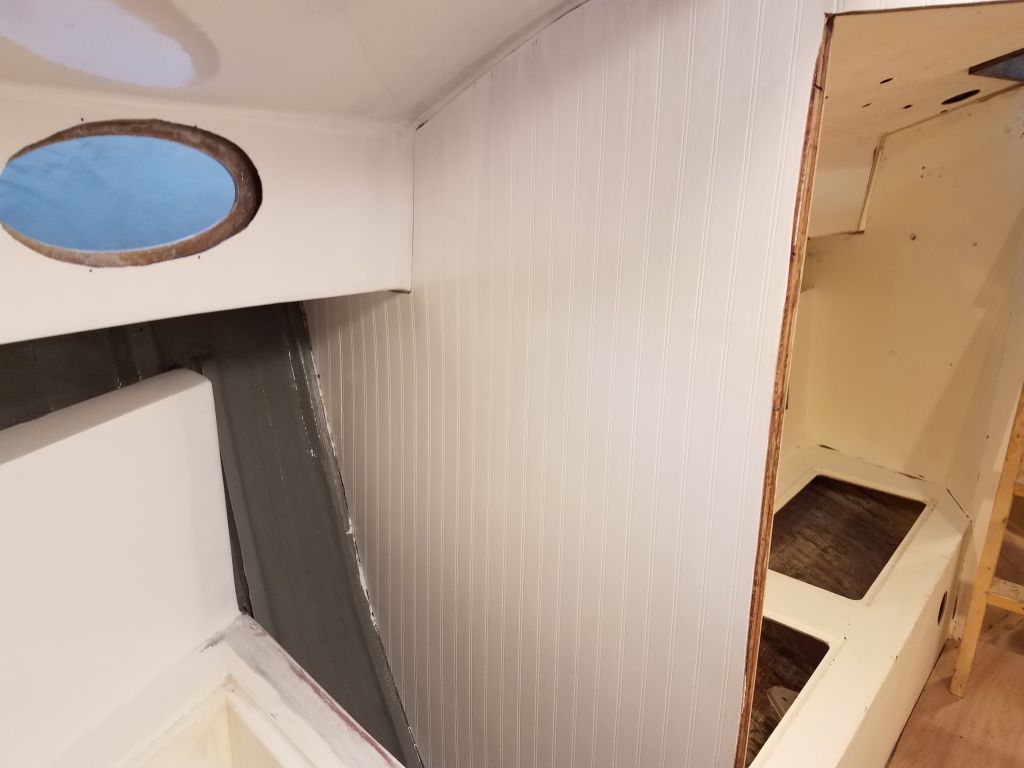
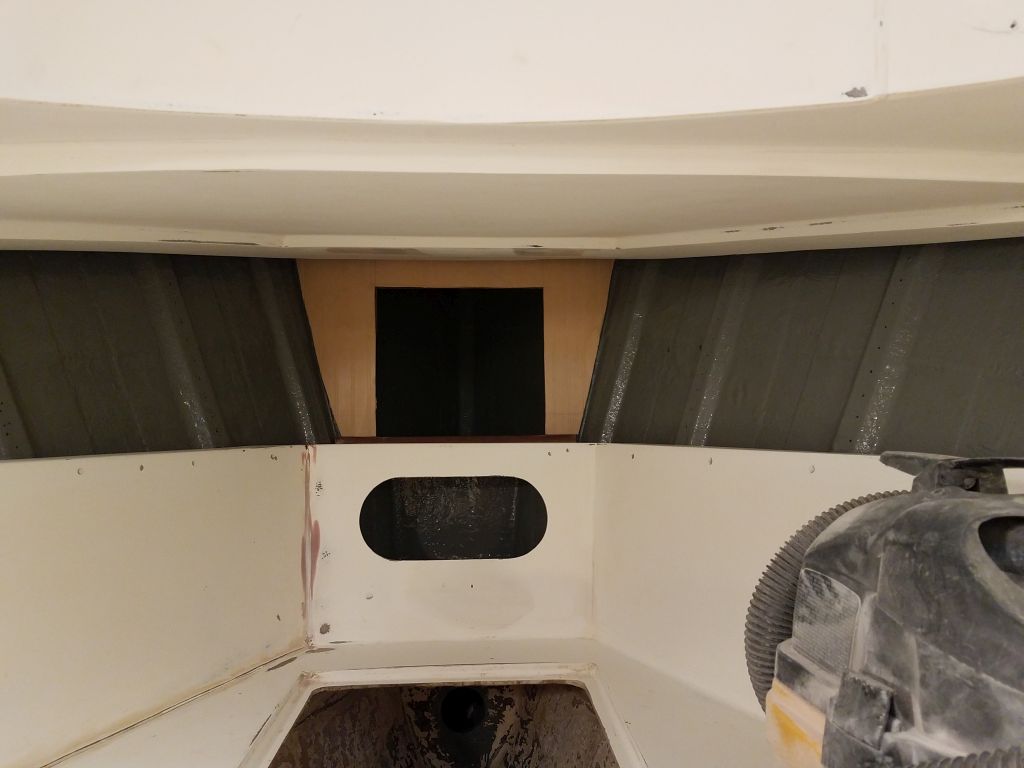
The final place that required new paneling was the after bulkhead in the head, which, like its twin in the galley, was plywood covered with old Formica and riddled with holes.  In the usual way, I made a paper pattern of the large section and cut out the paneling accordingly.  I extended the paneling slightly under the sidedeck, but this area would later be covered with another longitudinal panel to hide a holding tank and associated plumbing (more on this presently), so I extended it only far enough that the other panel would cover the edge.  This also helped keep the overall panel width within the confines of the companionway measurement.  After a dry fit and minor recutting for a better fit, I installed the panel with clamps and screws as needed.

I left a planned cutout at the top edge towards the centerline, in way of the cutouts from the old electronics and engine panel.  Later, I’d build a removable cover panel for this area to allow for future installation of display screens or instruments in this space, which faced the cockpit from beneath the bridgedeck.

Next, I patterned the small areas remaining around the doorway to the engine room, and cut paneling to fit, then installed it as usual.  Much of this area would later be covered with trim as well.

To complete the work in this area, I prepared the plywood door, which I’d long ago removed for storage and for better access to the engine room.  I removed the Formica from the door, and cut a beadboard panel to fit, ensuring that the starboard (left in these photos) side of the door matched the pattern of beads already in place on the bulkhead.

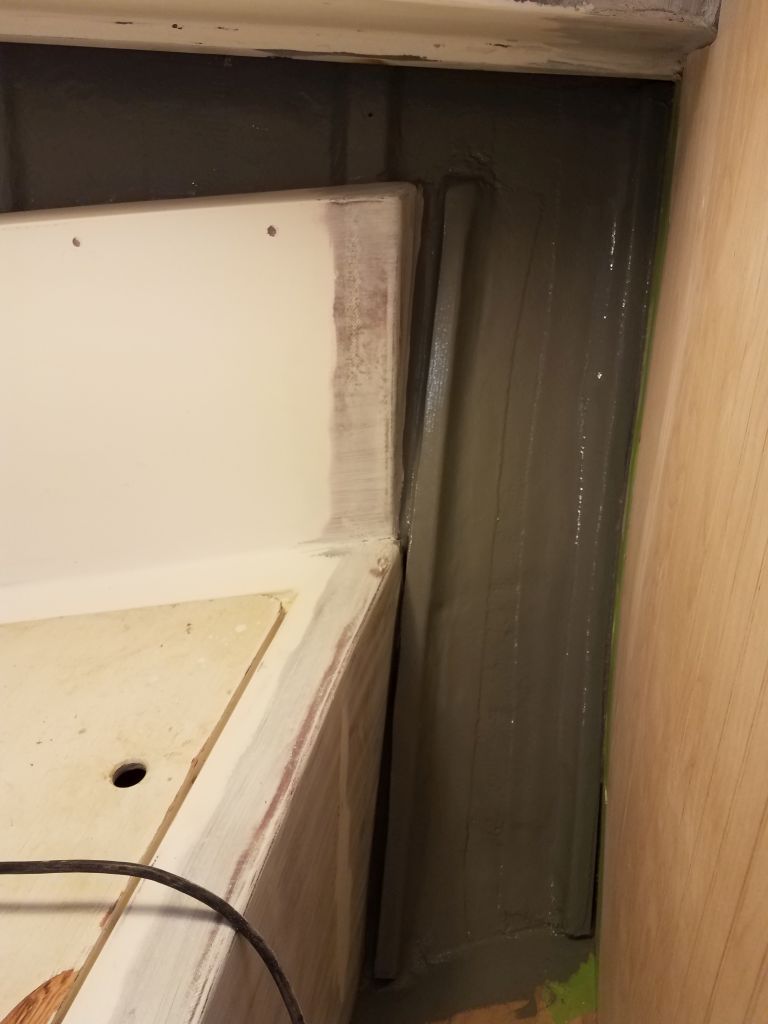
The owner hoped to install a new waste tank just outboard of the head, in the space previously occupied by shelving.  To this end, I’d spent some time over the past couple weeks perusing various tank options till I found something that seemed like a good fit in the space.  Measurements are one thing, but fitting the three-dimensional object anywhere can be an entirely different thing, so to check the real-world fit of this possible, tank, I built a plywood mockup to the proper dimensions.

Bringing the tank into the boat, after some brief concern when the outer portion of the head seemed narrower than the tank, but the actual space where it needed to fit was a bit wider thanks to the shape and position of the liner and bulkheads.  The tank fit nicely in the space, and if I built a small platform down in the space behind that brown divider panel, I could mount the tank back against the hull, leaving ample room for tank fittings and plumbing, as well as access to the deck for unrelated deck hardware attachment and the like.  In the photos, the tank is shown up against the divider because that’s where it anted to sit without any support, thanks to the curvature of the hull, but in the final installation it’d be pushed further back to the hull.

While I was on tankage, I wanted to finalize plans for a smallish “day” tank of fresh water near the galley, part of a two-tank system the owner requested (with a larger, possibly portable, tank under the v-berth).  The locker beneath the settee just forward of the galley was a good space for this tank, which would service not only the galley but also the fresh water flush toilet the owner specified for the head.  One limiting factor for the tank was the size of the locker opening in the settee top, and I’d found a few possible tanks that I thought might fit.  Had a large capacity tank been critical for this very space, we could have considered opening the top of the berth to allow installation, but in this case those additional modifications weren’t desired nor necessary since there was plenty of additional space elsewhere in the boat for larger tankage.

I started with one that seemed like it ought to fit, and built a mockup to the correct size.  I didn’t bother with plywood to fill in the additional sides, as I only needed the basic shape and dimensions for the test fit.  The dimensions seemed like they should work, but I soon found out I’d been overconfident–in other words, when I saw how the tank (didn’t) fit, I wondered how I could have ever thought it would.  As it happened even the basic shape of the ends of the tank wouldn’t fit in the space, as the two-sided back was incompatible with the realities of the space even if the tank had been able to twist through the opening.

Next, I cut just the end shape of another possible candidate, not wanting to waste time on a full mockup when there was doubt about the shape in the first place.  Again, on paper this size and shape seemed like it would work, but in reality there was no way to twist the tank through the opening, as the top width of the tank was simply too wide to allow the inside edge to pass through the opening.

Armed now with good knowledge of how the real-world space actually worked, I chose a final version of the tank that would fit without issue, and which left enough room for fittings clearance as well.  This one looked like a winner.

After cleaning up from the week’s panel-cutting operation, and a phone conference with the owner to discuss some of the questions for work ahead, I called it a day.

Total time billed on this job today:  7.5 hours

0600 Weather Observation:  Snow, 2-3 inches down, 22°.  Forecast for the day:  Snow through mid-morning, about 3-4″ total, then clearing, into the 30s

Scupper 84

Wednesday

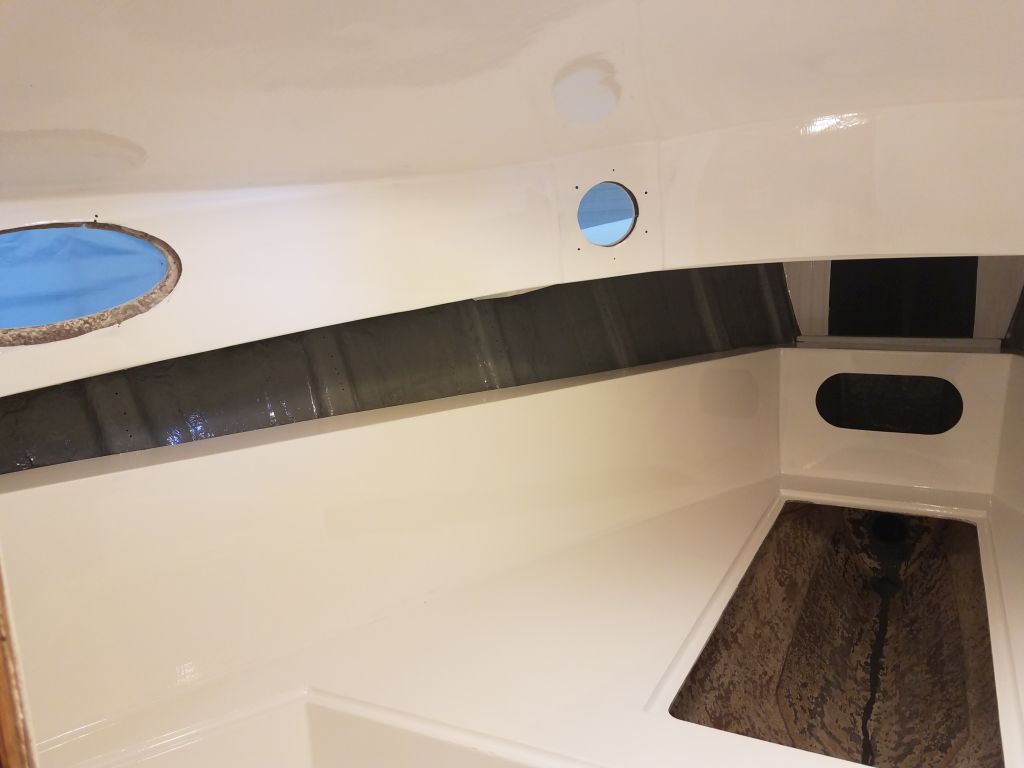
As usual, I got started with sanding duty, just a light round in the forward cabin to sand the first skim coat on the ends of the berth and liner area.  The goal in the lower sections would be to eventually create a smooth surface, fairing in the various tabbing at the hull and inboard ends with the plywood faces of the ends of the berth.  This would require an additional round or two of fairing compound, but the basics of the contour was now in place.  For the moment, I left the area as is, as I wanted to work on the nearby bulkhead paneling during the day.

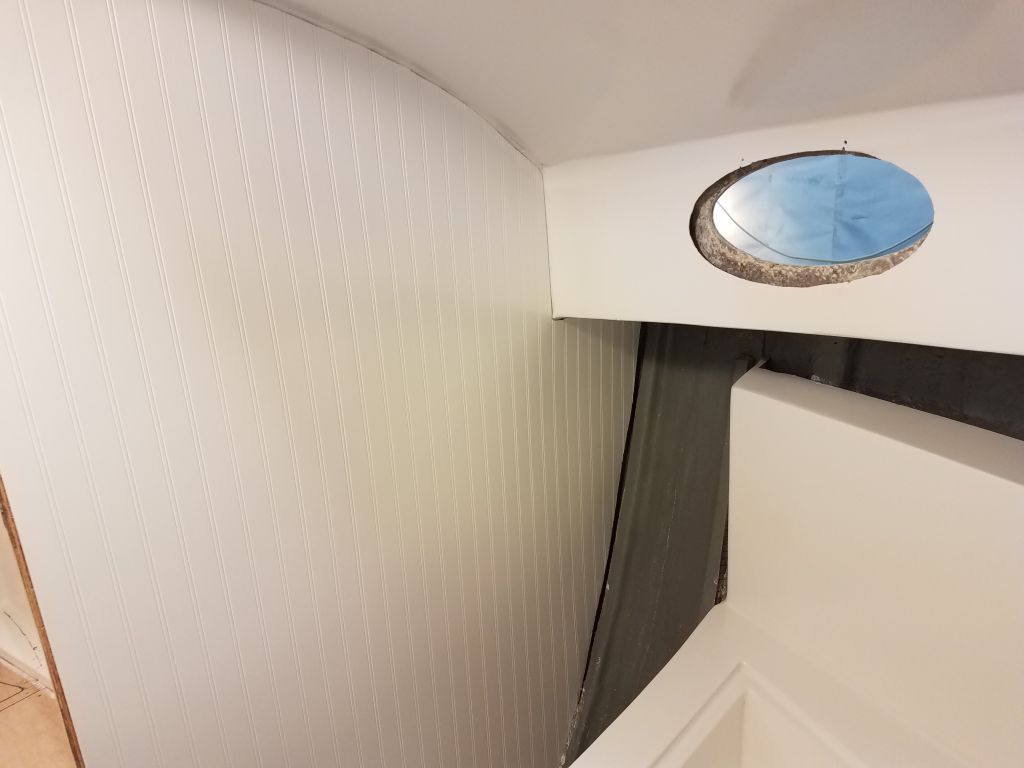
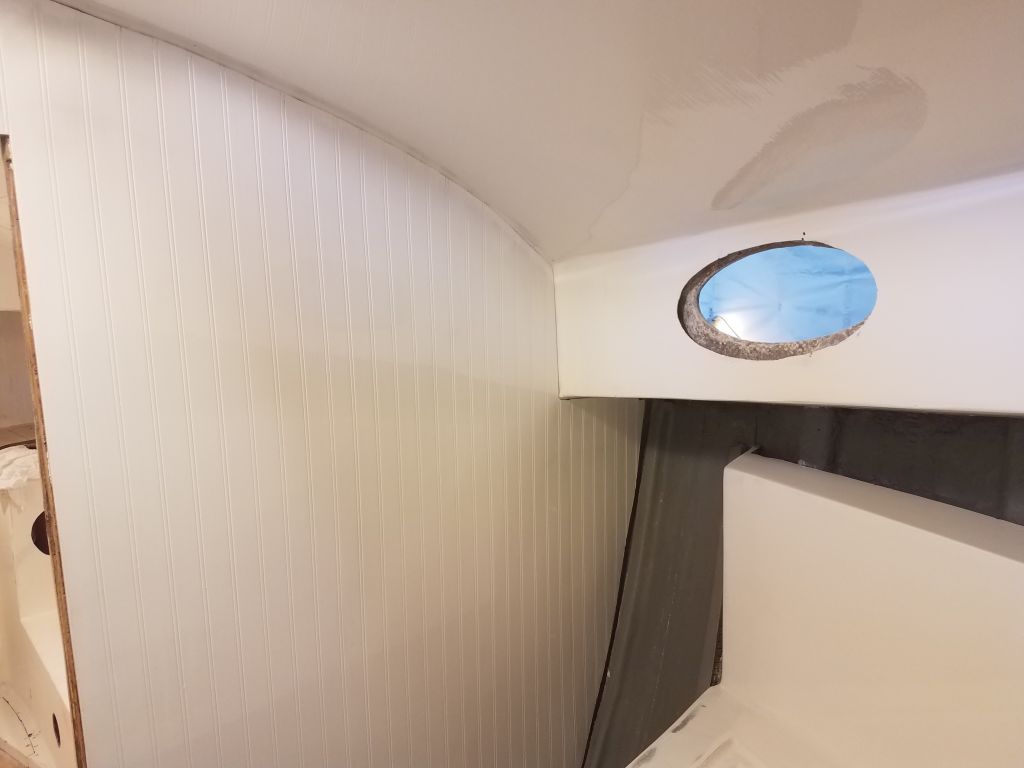
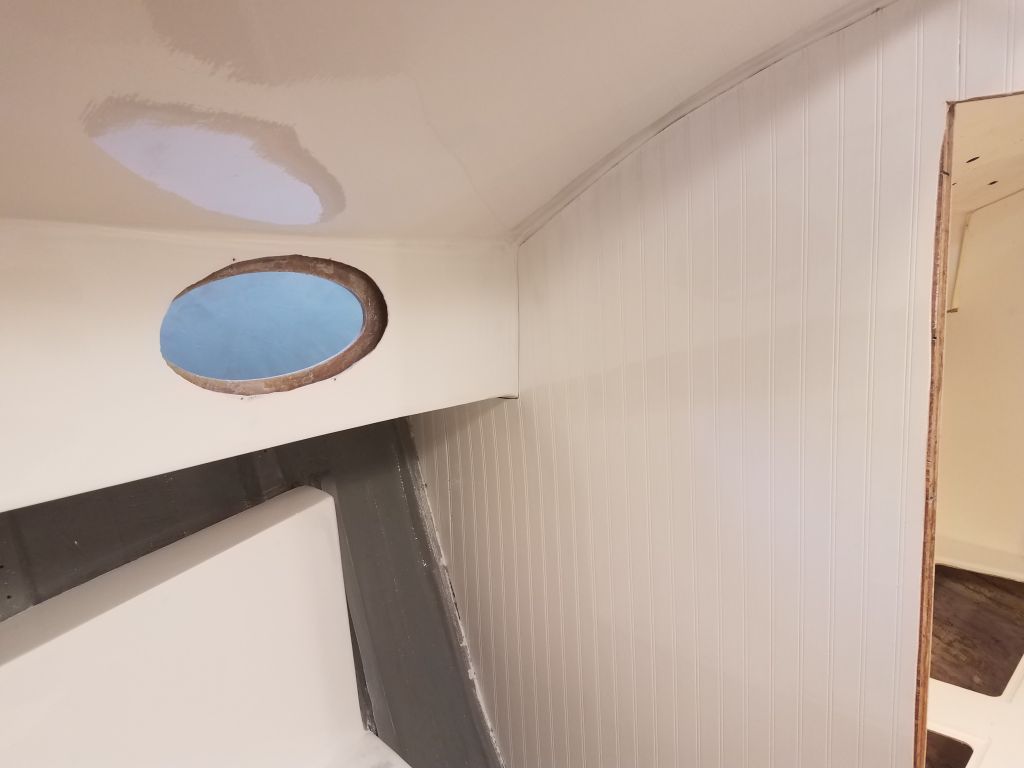
At the small bulkhead dividing the chainlocker from the forward cabin, I created a paper pattern (sorry for the blurry photo) and cut out the new beadboard facing to fit, then installed it with clamps and polyurethane adhesive.

I continued with the port side of the forward cabin bulkhead face.  I created a pattern over the entire bulkhead, leading to the edge of the hull, though I knew I’d have to create the panel in two pieces in order to fit through the 33″ maximum dimension of the companionway.  Once I had the pattern laid out on the fresh panel down on the bench, I chose the exact seam location based on the bead locations.

After dry-fitting the panel sections, I went ahead with final installation with the adhesive, clamps, and screws.  I ended the new paneling about one inch away from the hull side; this area would later be covered with the wooden ceiling strips.

I made the small section above the doorway without a pattern, simply starting with a rough-cut piece of the beadboard and scribing the top edge to fit as required.

I finished up the day’s paneling work with the last piece on the port side.

The last paneling required in the boat was the after bulkhead in the head, which I’d finish soon, but to wrap up the work in the boat for the day, I prepared the ends of the v-berth platform and applied a second round of fairing filler, this time concentrating on the inboard and outboard edges, which required the most substantial work.  A wide trowel helped clean up and fair in the tabbing on these two sides, and I used a smaller trowel to fill in some lows in the center portion.

Total time billed on this job today:  8 hours

0600 Weather Observation:  -5°, clear.  Forecast for the day:  Sunny but increasing clouds, about 24°.  Snow tonight.

Scupper 83

Tuesday

To begin, I removed the various clamps and  temporary screws securing all the paneling I installed last time.

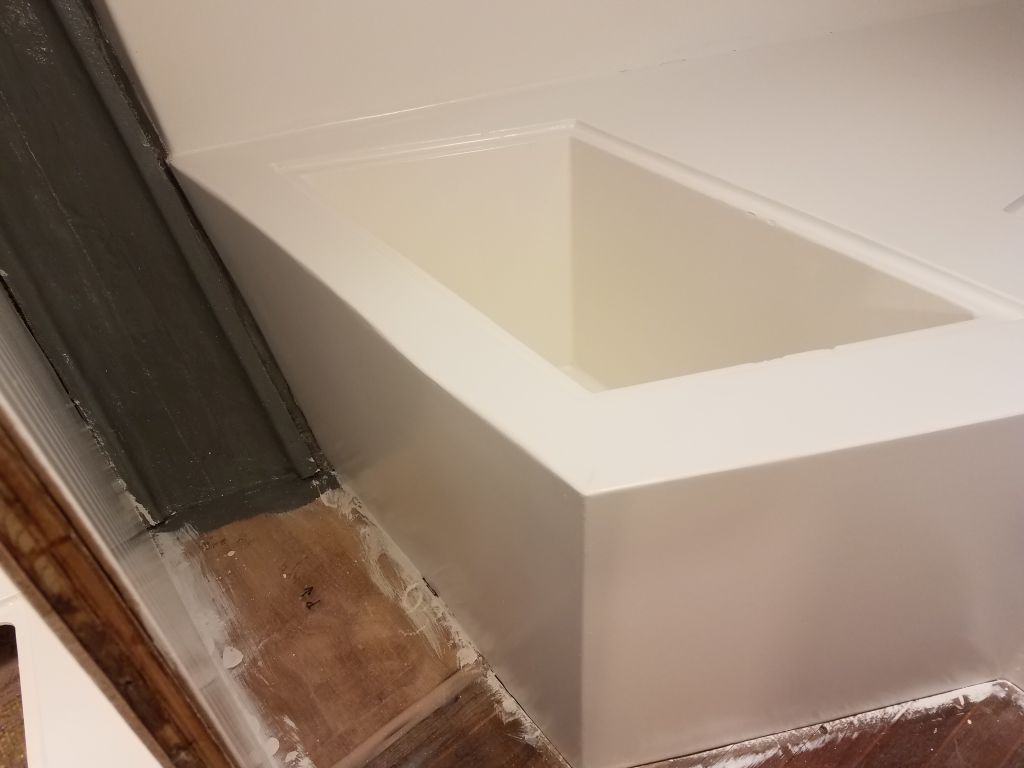
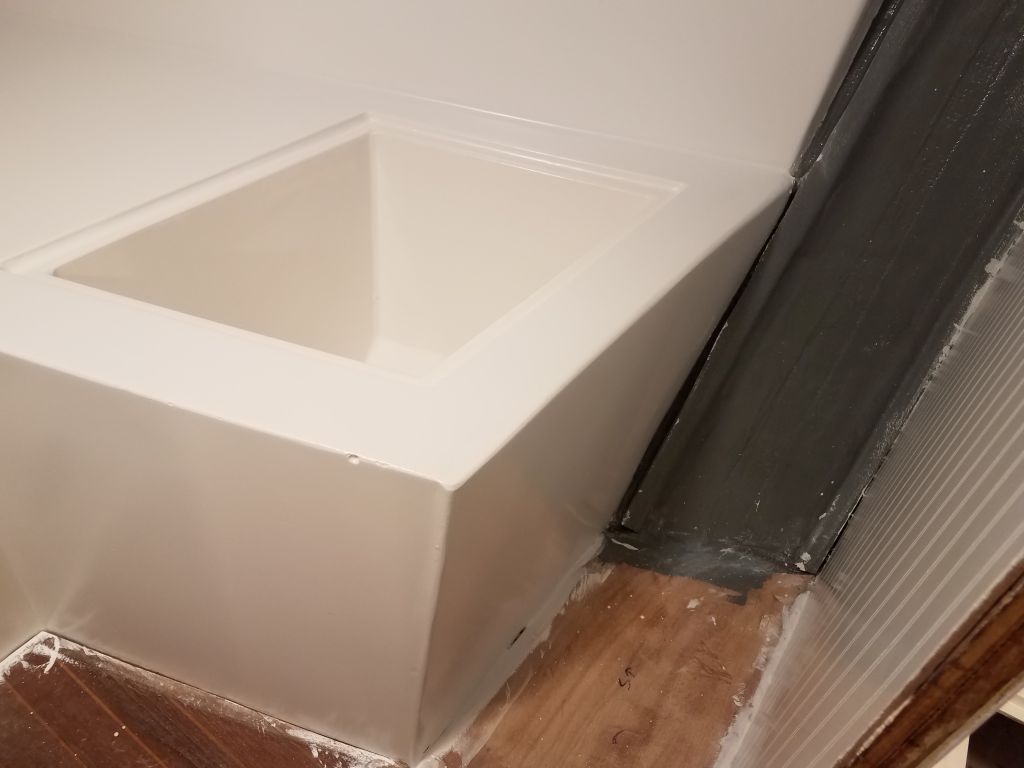
In the forward cabin, I lightly sanded the new fiberglass at the ends of the berths and liner, and after cleaning up, applied a skim coat of epoxy fairing compound over the new fiberglass, as well as over the existing plywood ends of the berth itself.  This would eventually prepare all these areas for primer and paint.

After a trip out into the world to a paint store to investigate the possibilities of using a specific color the owner hoped to use on the painted interior surfaces, I returned to the shop and spent the remainder of the day working on the galley sink and surrounding area.  I’d purchased a new slightly larger, deeper stainless steel sink to fit the space, and now I traced the outline of the sink’s flange on the countertop in the appropriate position so I could better align the cutout template provided with the sink.

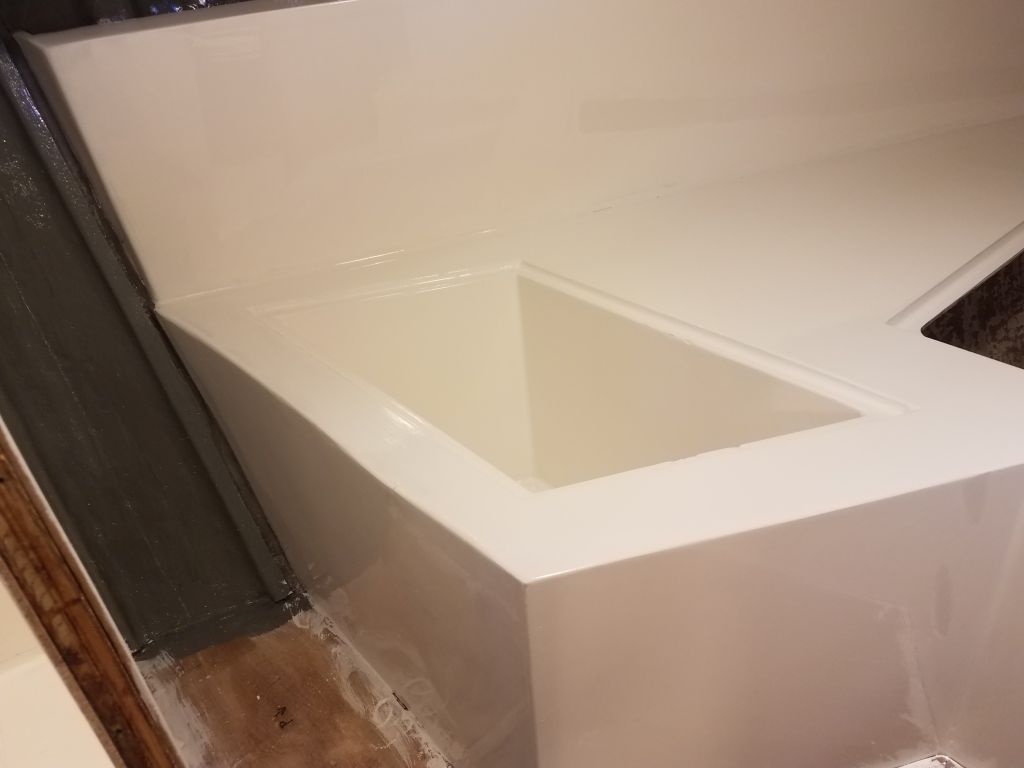
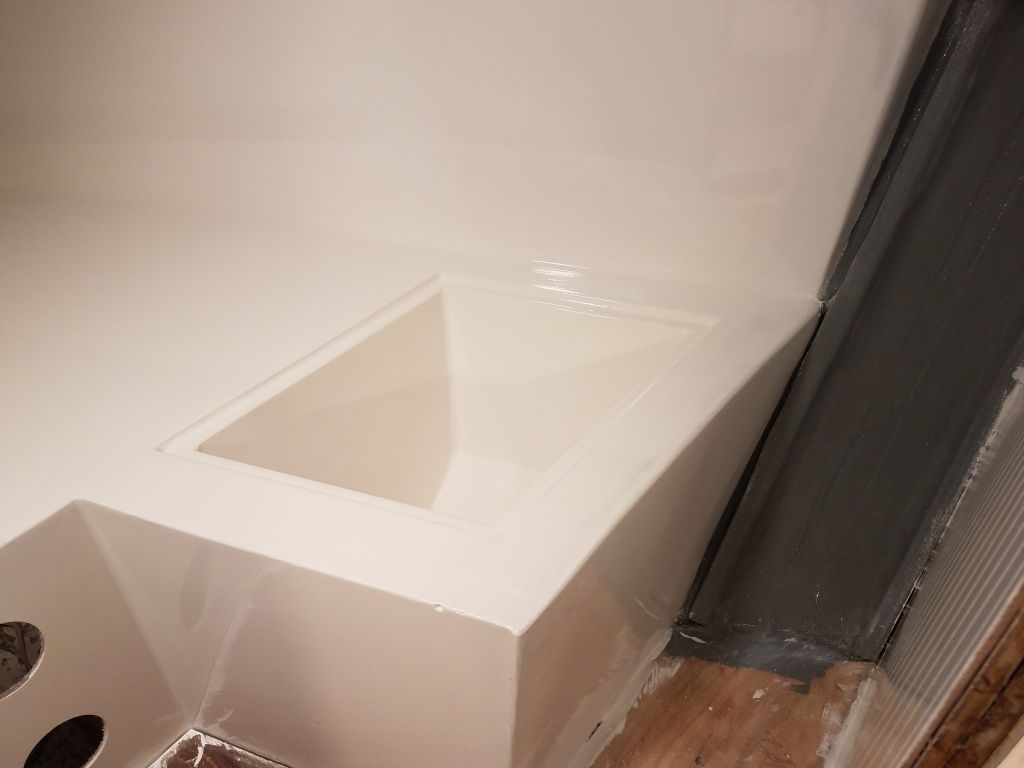
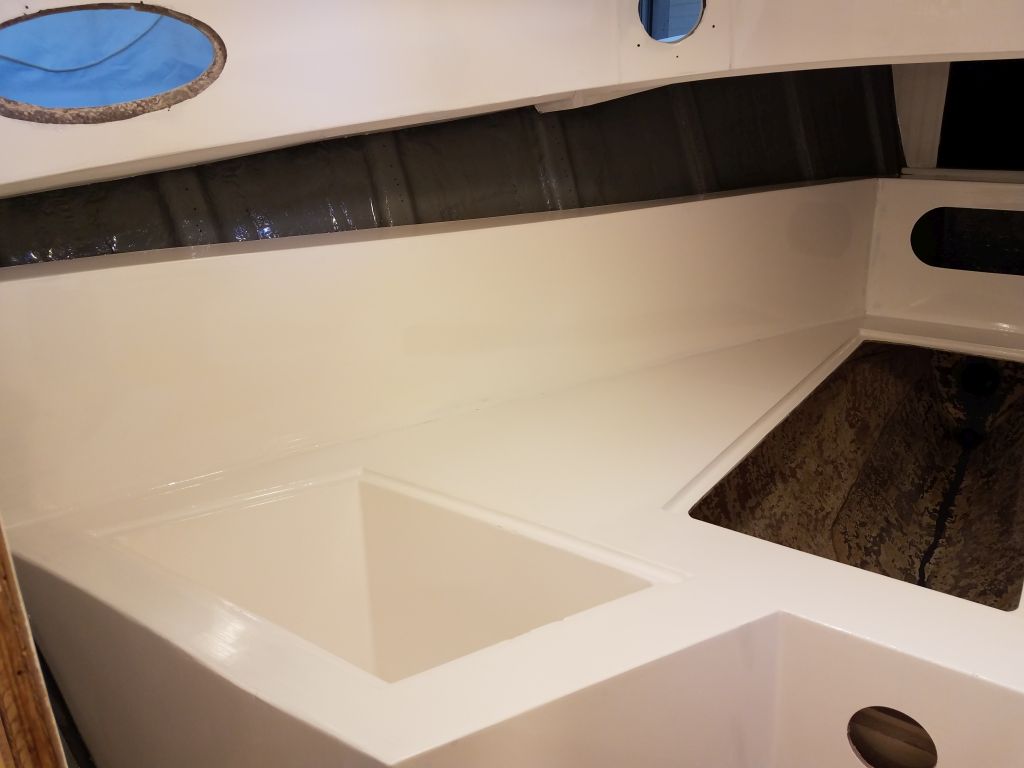
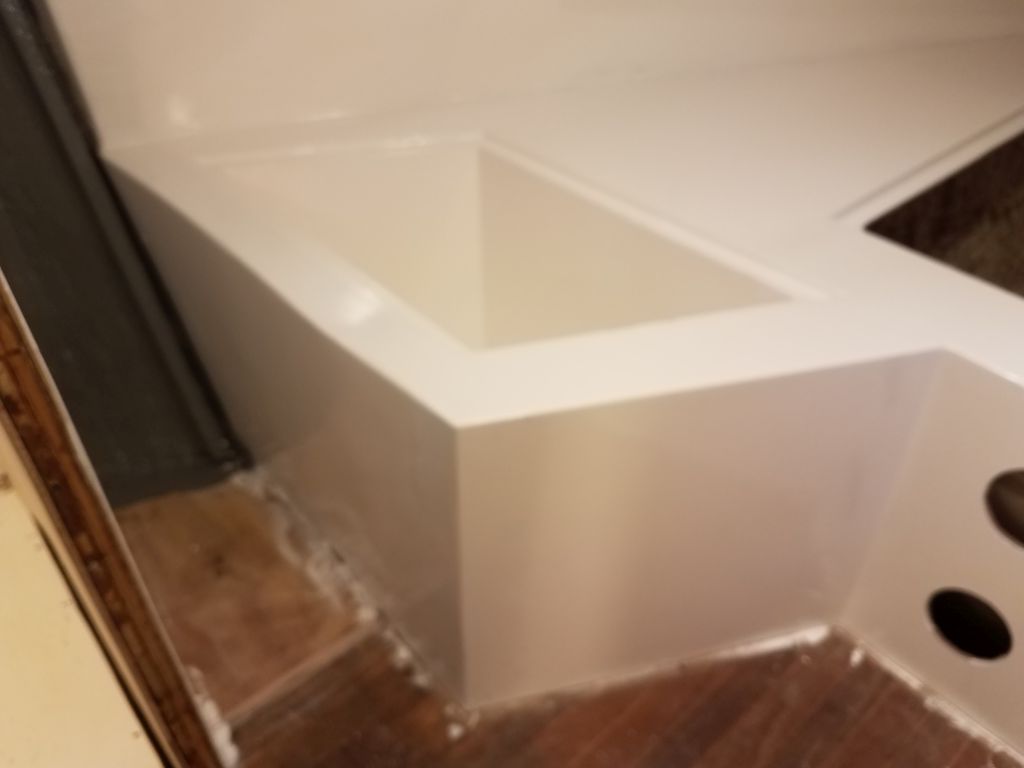
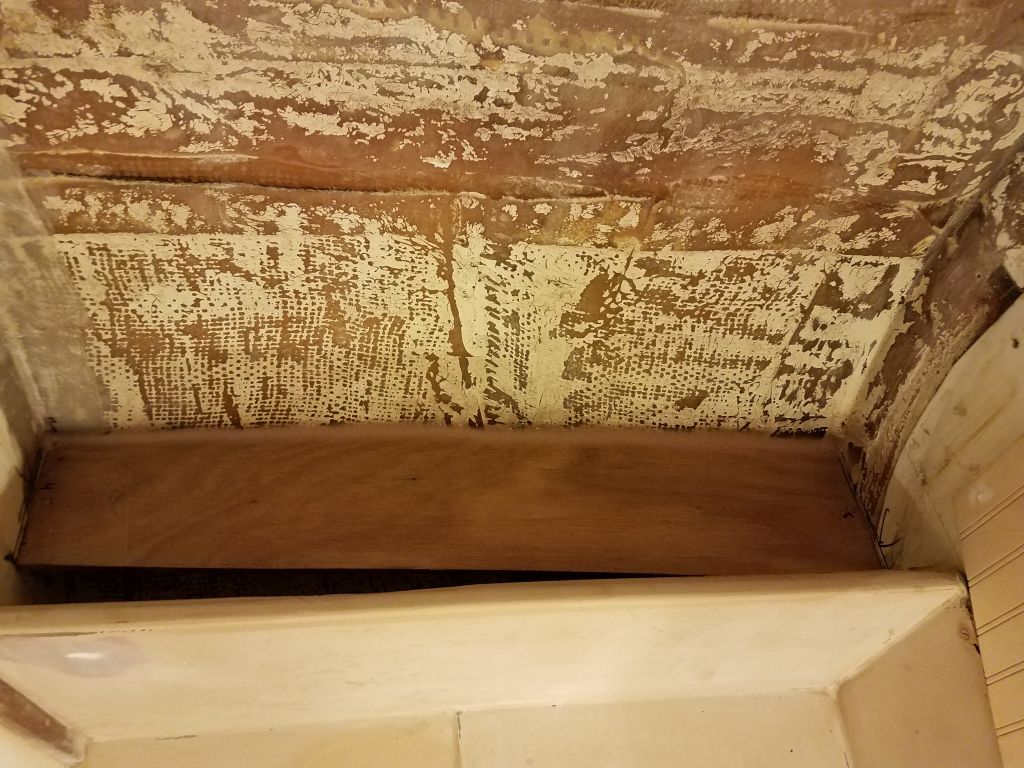
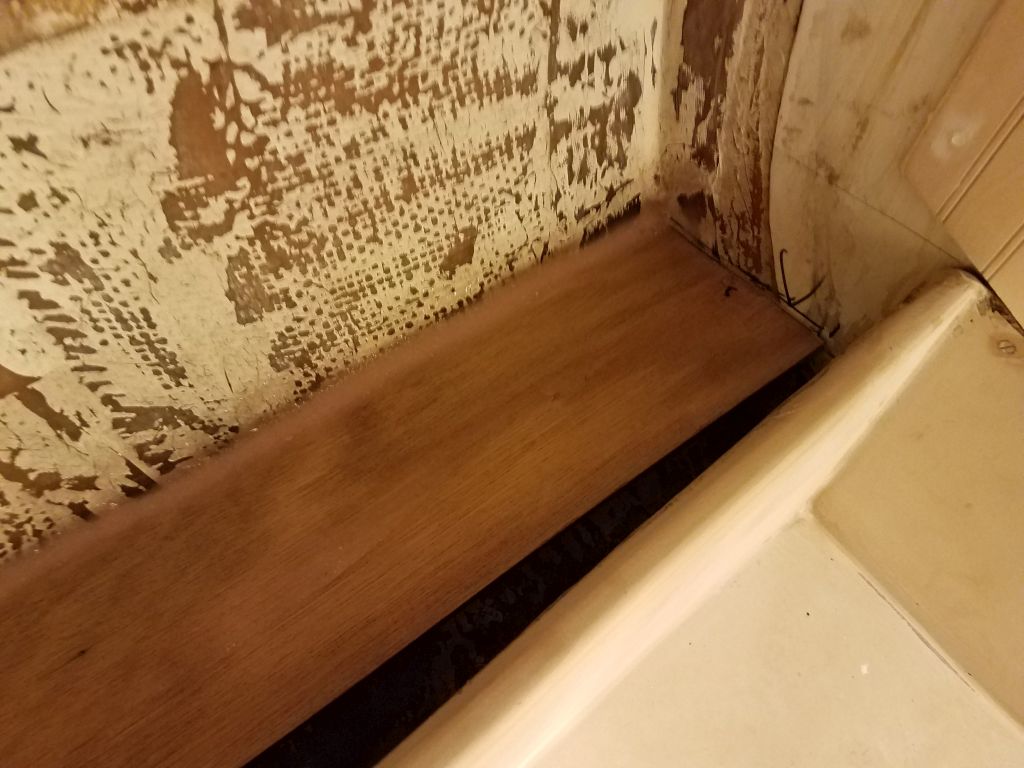
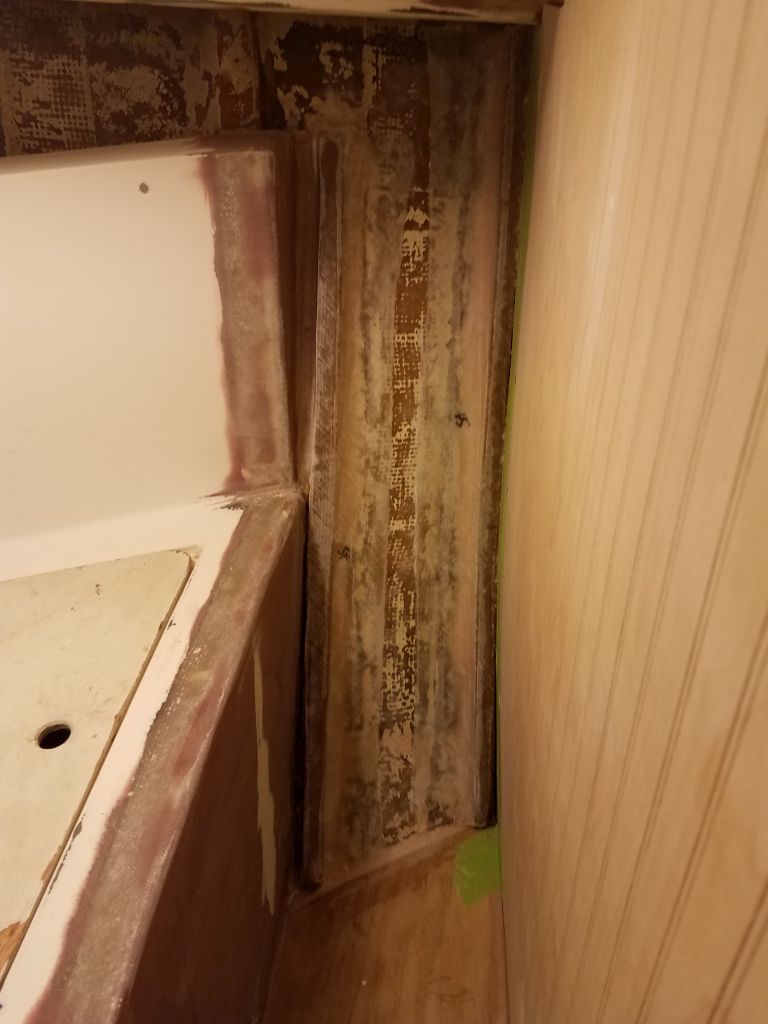
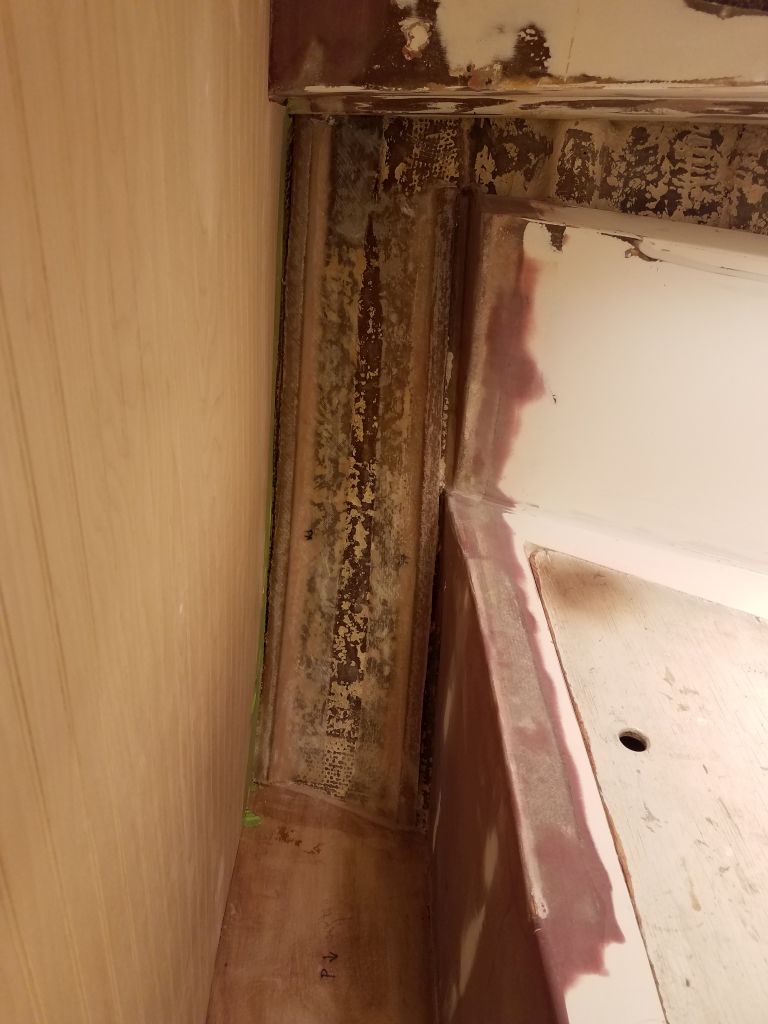
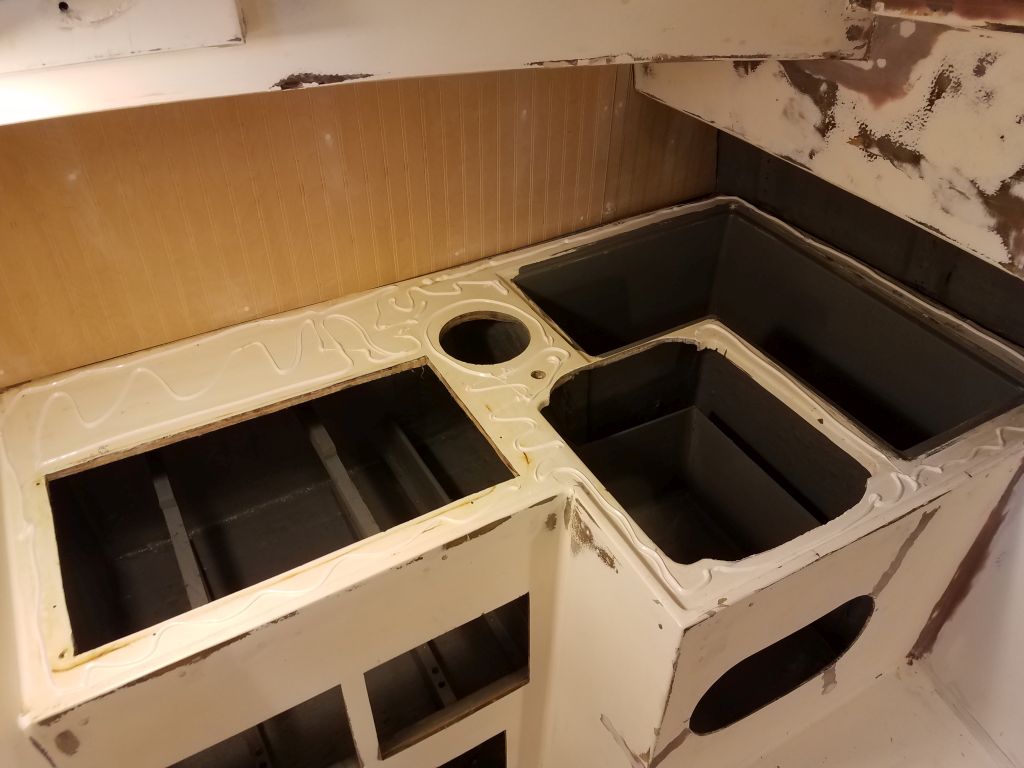
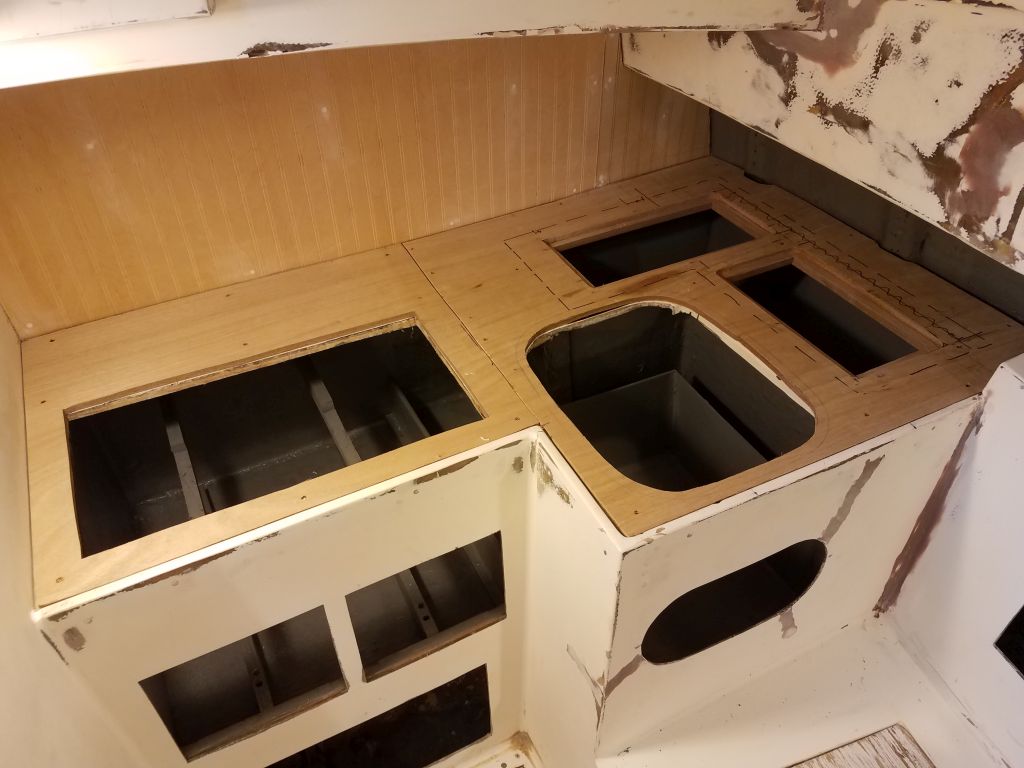
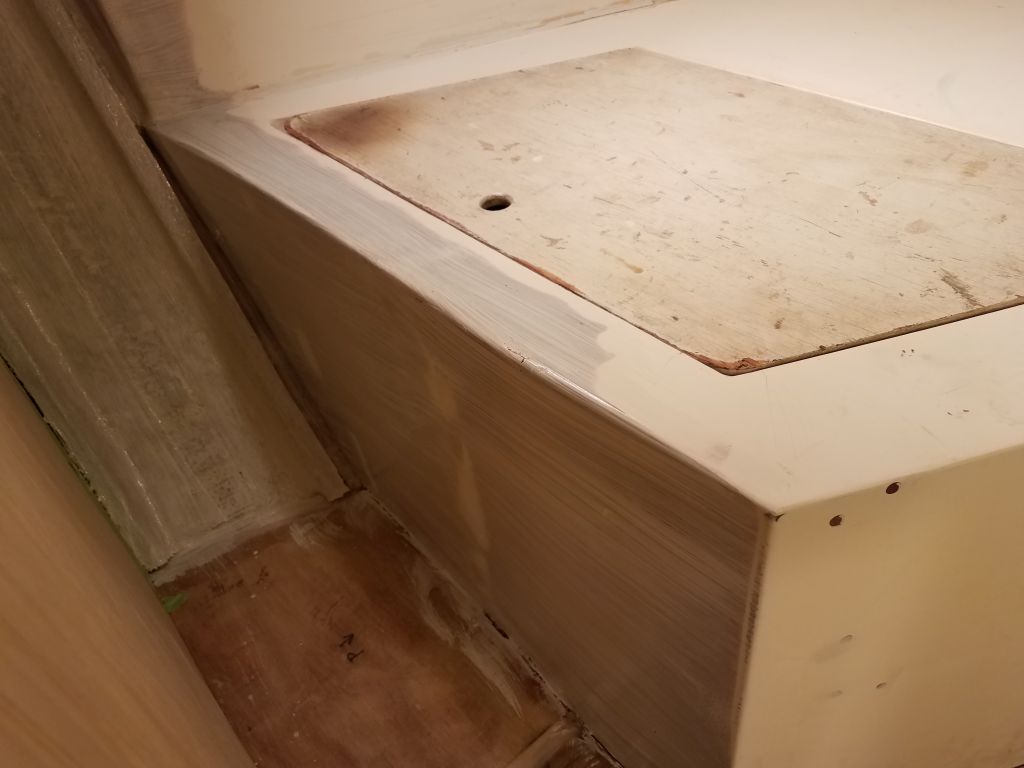
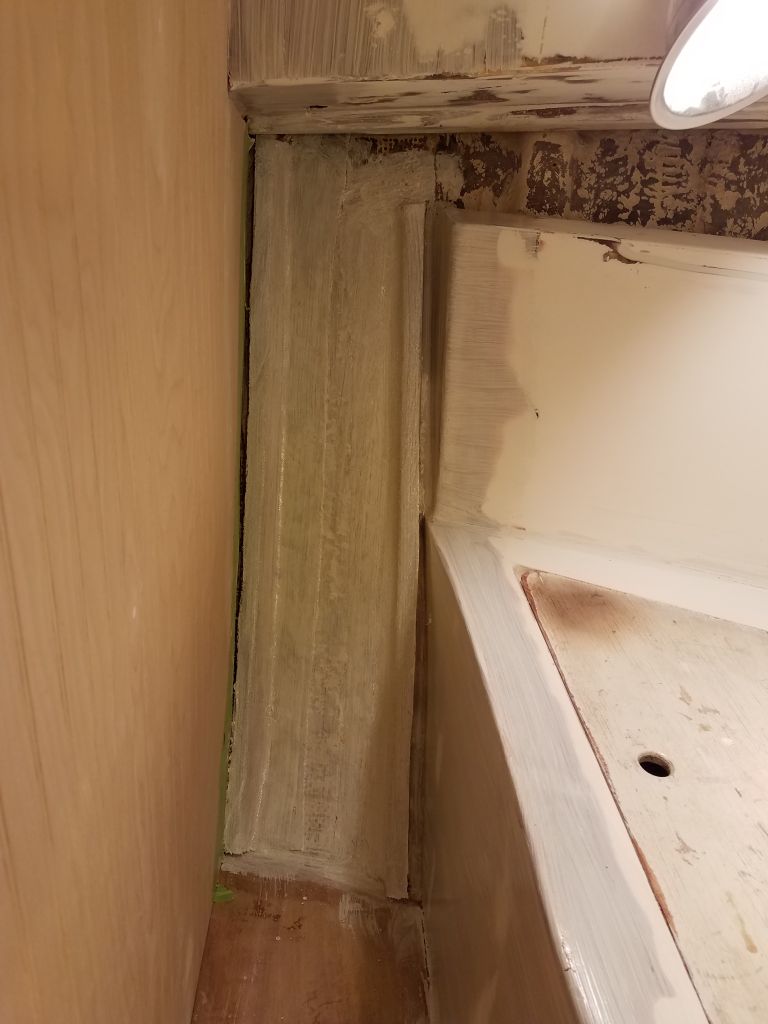
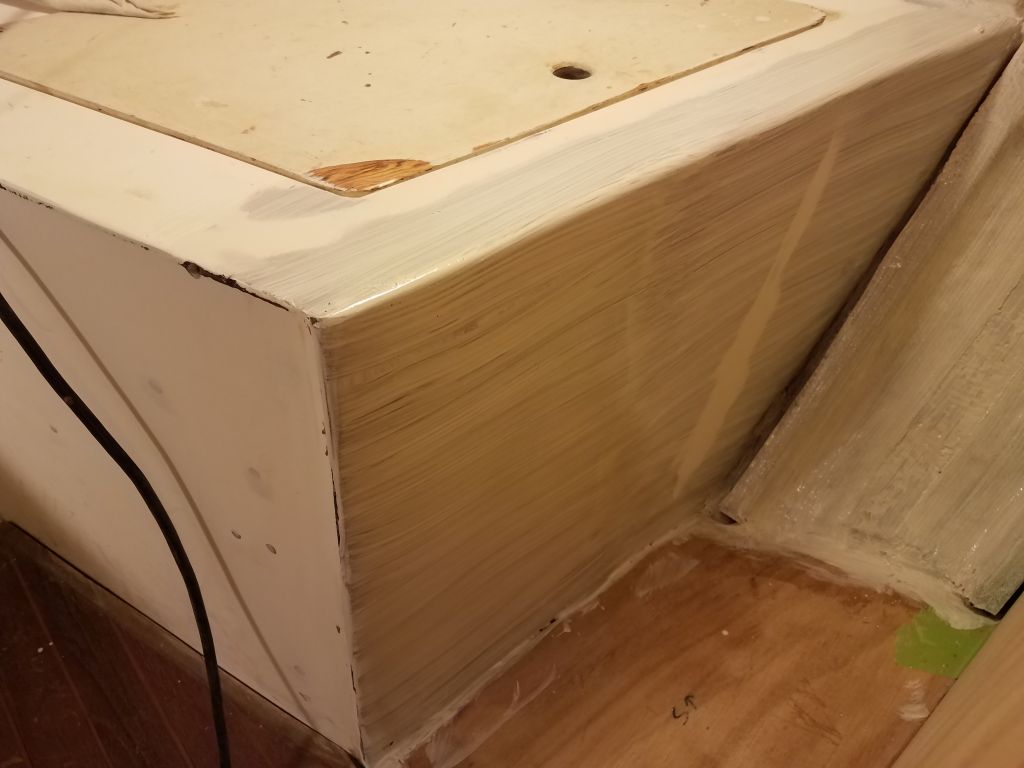
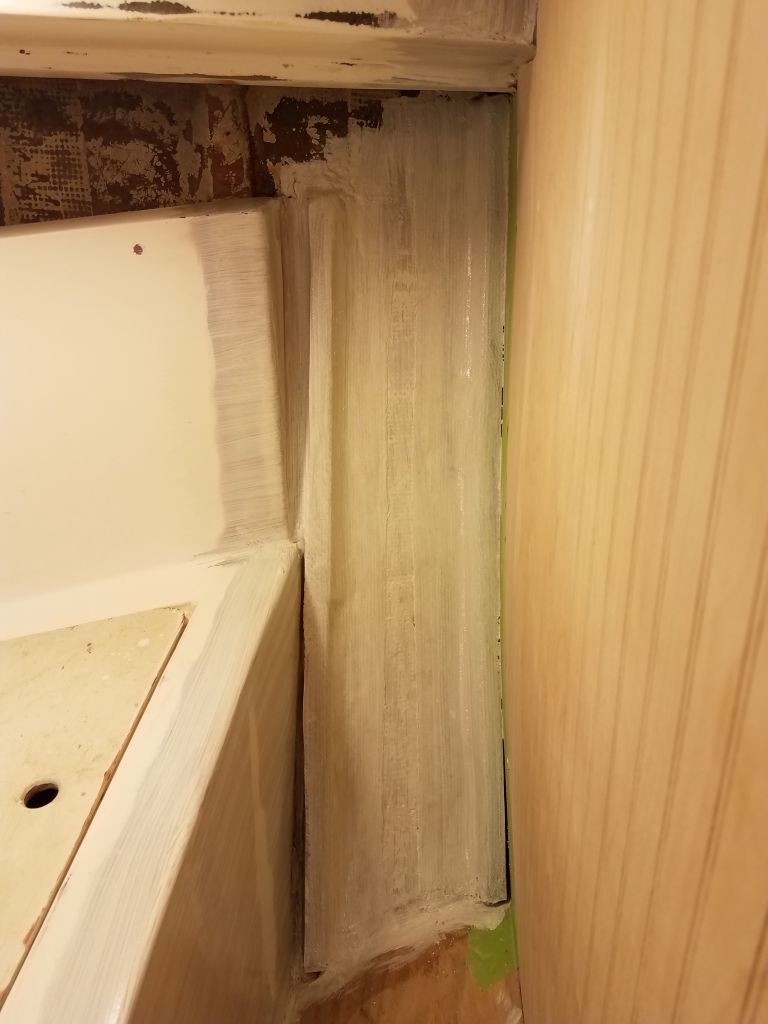
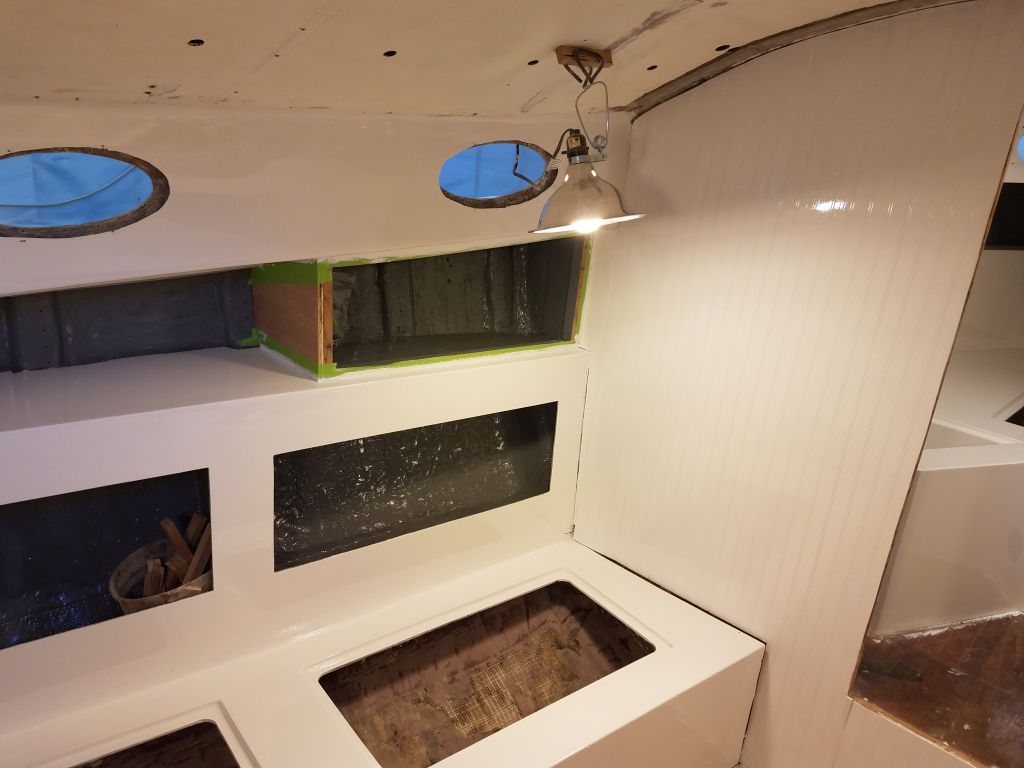
With the marking complete, I cut out the opening in the plywood countertop, then used the new opening to mark where I had to enlarge the hole leftover from the old sink and made those cuts.  At the after end, this cut extended well into the fiberglass and foam that had been built around the old (now repurposed) icebox, and this inevitably led to some project scope since I had to remove some of the old material and foam now that I’d exposed it, as I couldn’t see leaving it as is.  Removing the old sink earlier had also damaged some of the adjacent fiberglass on the other side, so this was an opportunity to deal with that area now as well.  The first image below shows how the area looked right after I cut out the old sink a few days earlier.  I cut out the fiberglass (it was rough and raw and awful anyway) and removed the foam pieces from the two newly-exposed sides, revealing the molded side of the storage compartment.

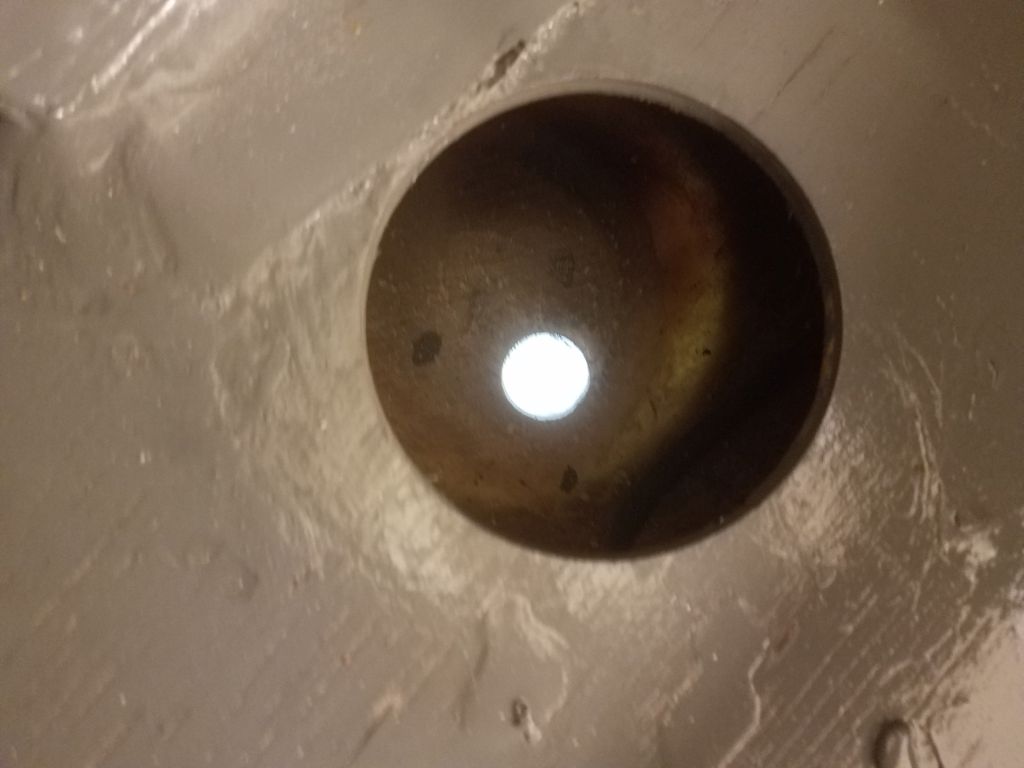
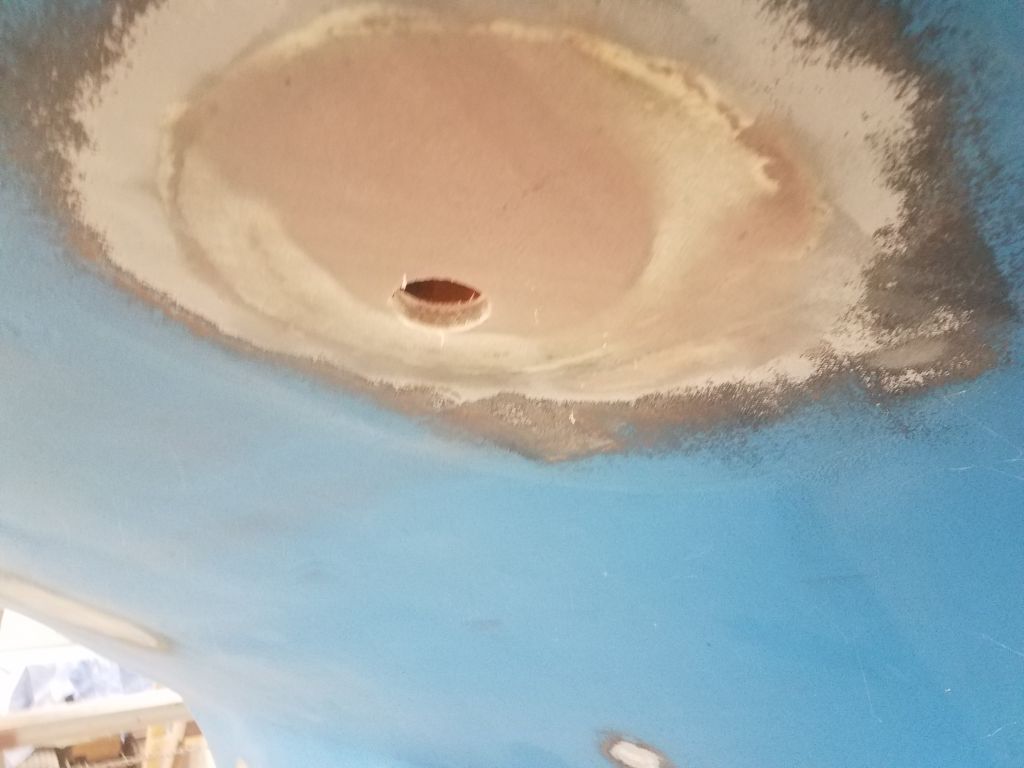
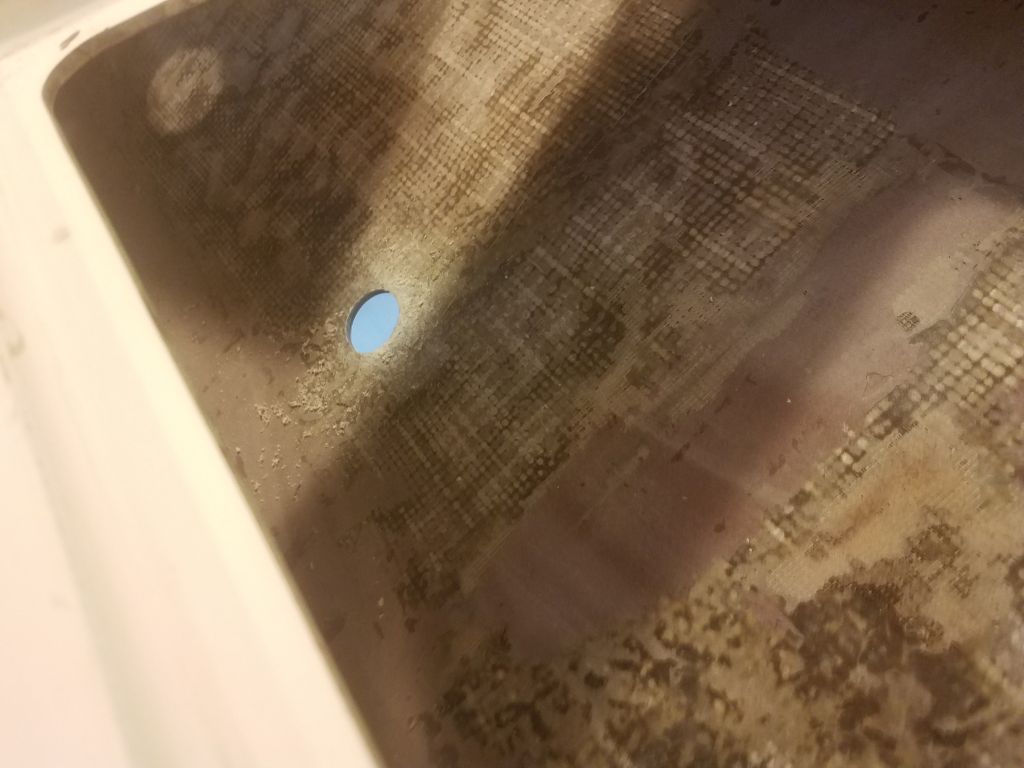
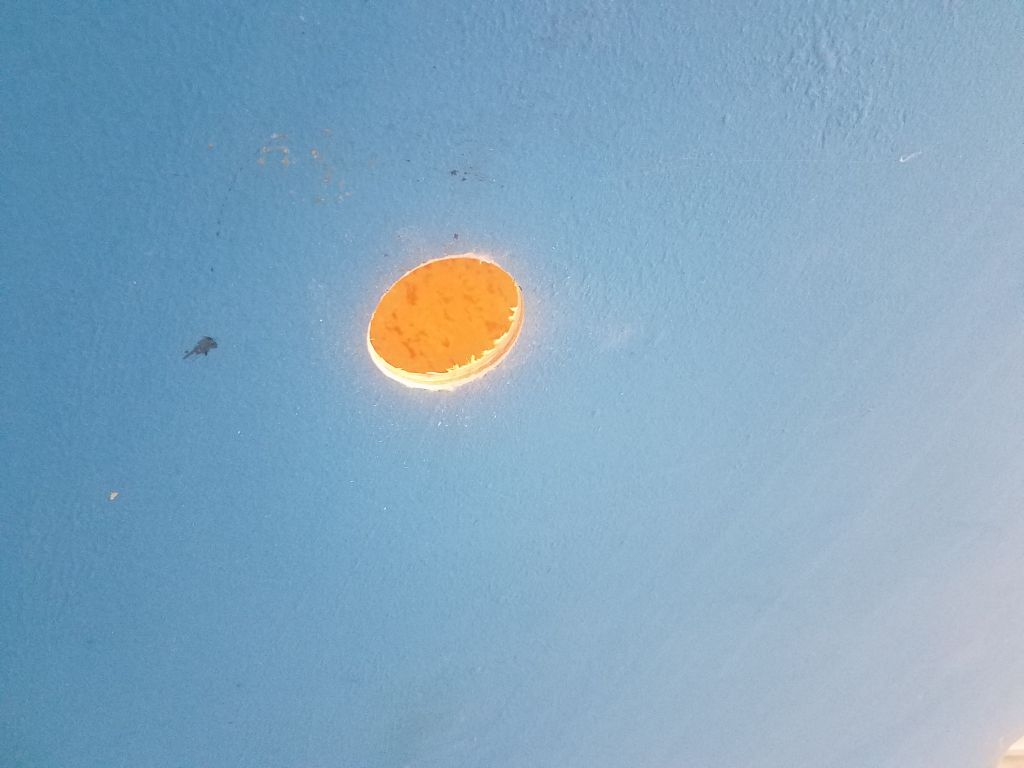
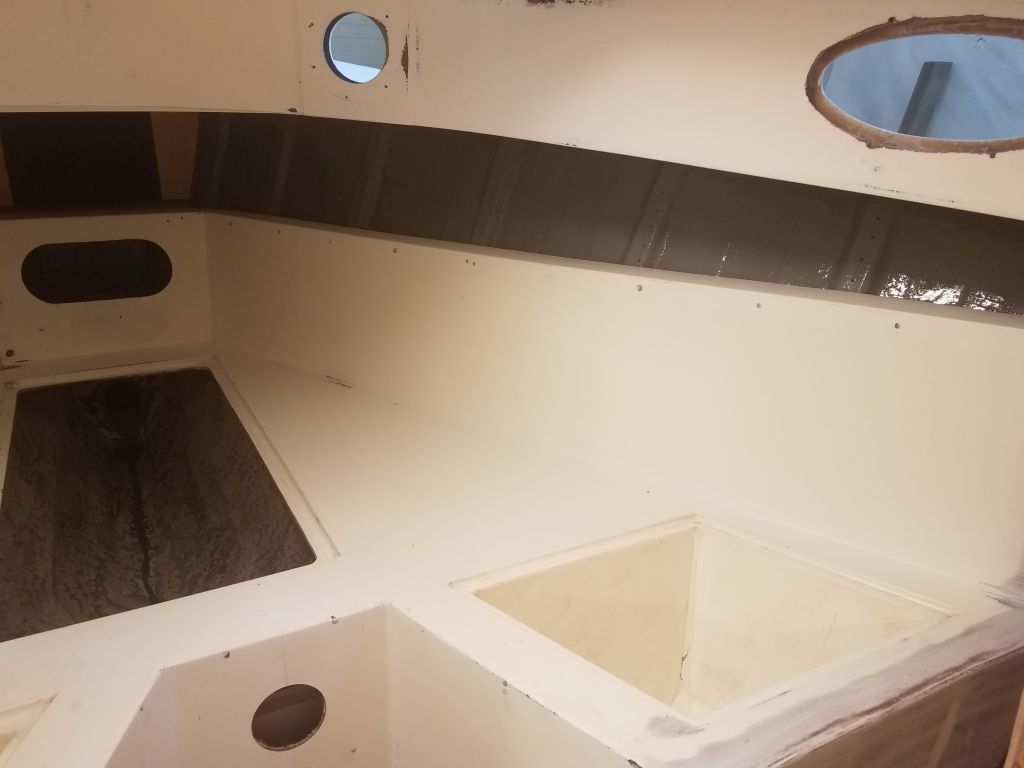
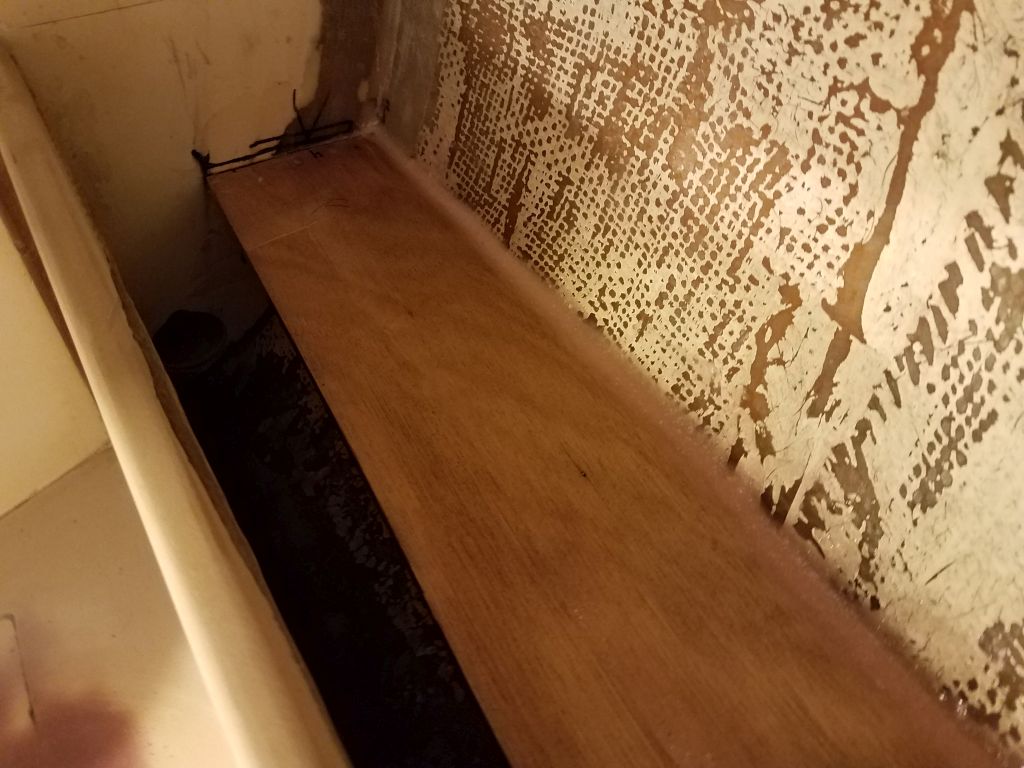
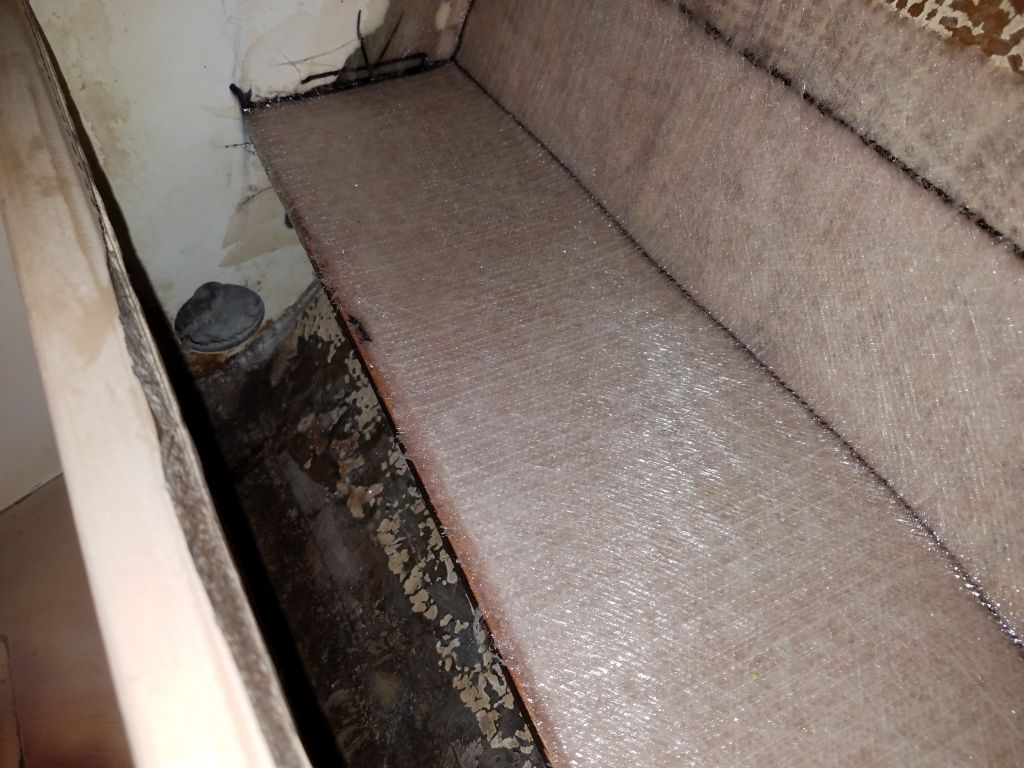
With the cutout complete, I could test-fit the sink and countertop.  This sink came with a nice wooden cover/cutting board as well, so the space would be usable for other purposes, a handy feature since there was little counterspace otherwise.  With a big hole saw, I also neatened up and enlarged the hole through the compartment bottom for the sink drain, which can be seen in the photos at the bottom of this page.  When the time came to install a new sea valve for the drain, I hoped I could work through the new opening as well.

I was reluctant to dig any deeper into the area beneath the sink and around the old icebox, as there was simply no point and it would have been a waste of time and resources–and any further work in this area hadn’t been in my plan to begin with.  I also didn’t want to disrupt any materials that might be helping to hold the whole galley in place in the first place.  Nothing I’d done so far had had any such effect, but it was far better to leave well enough alone at this point.  What structure (using the term for lack of a better one) remained was fine and stable, but now I wanted to close it off in a way that was simple and effective for the required purposes.

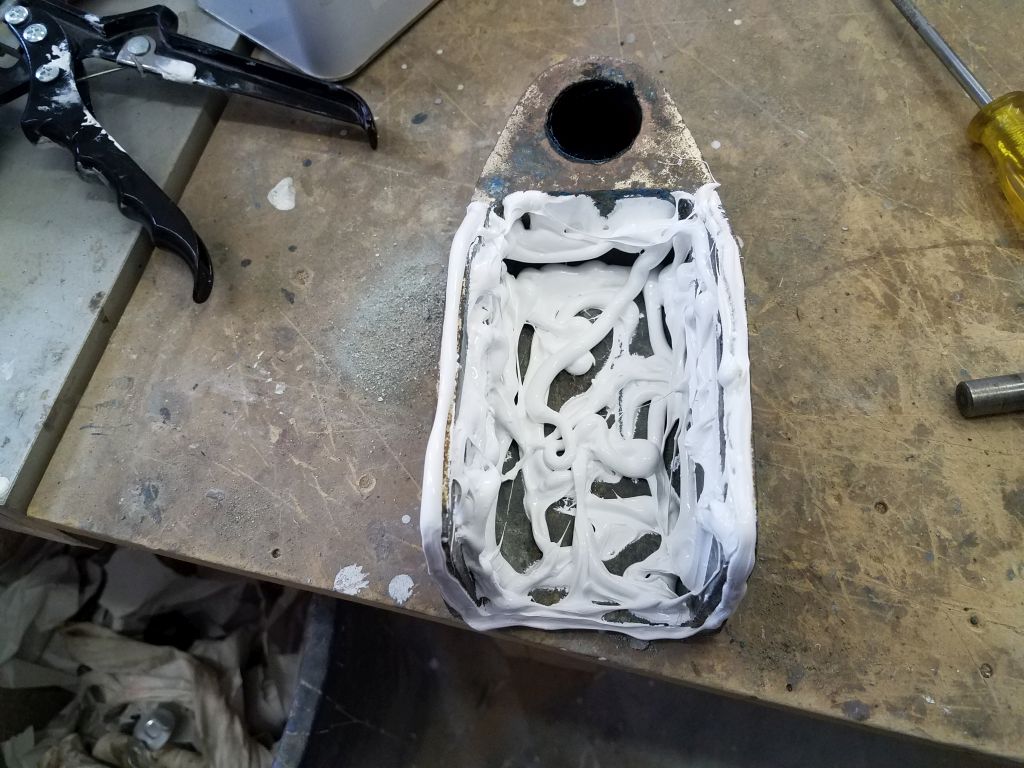
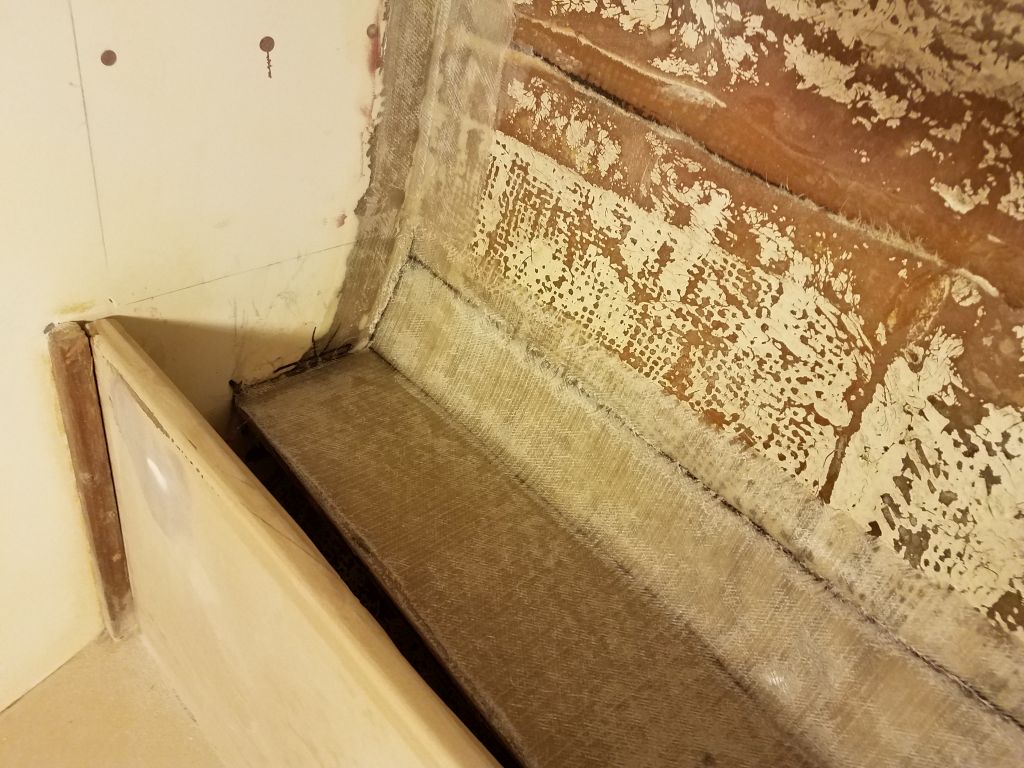
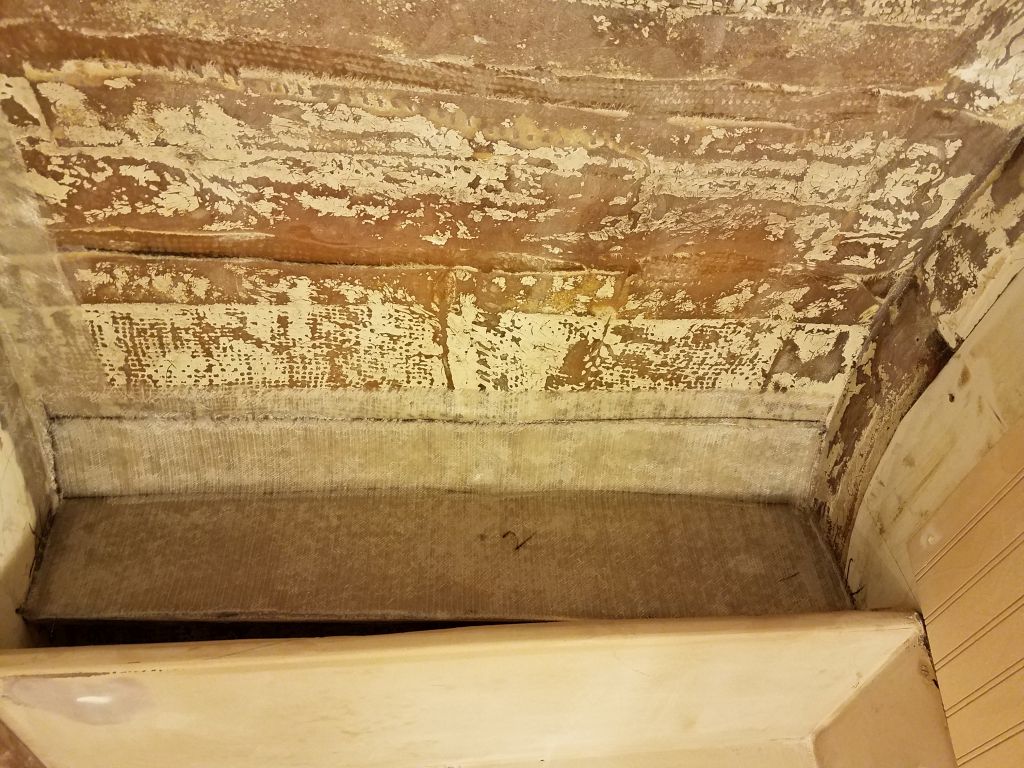
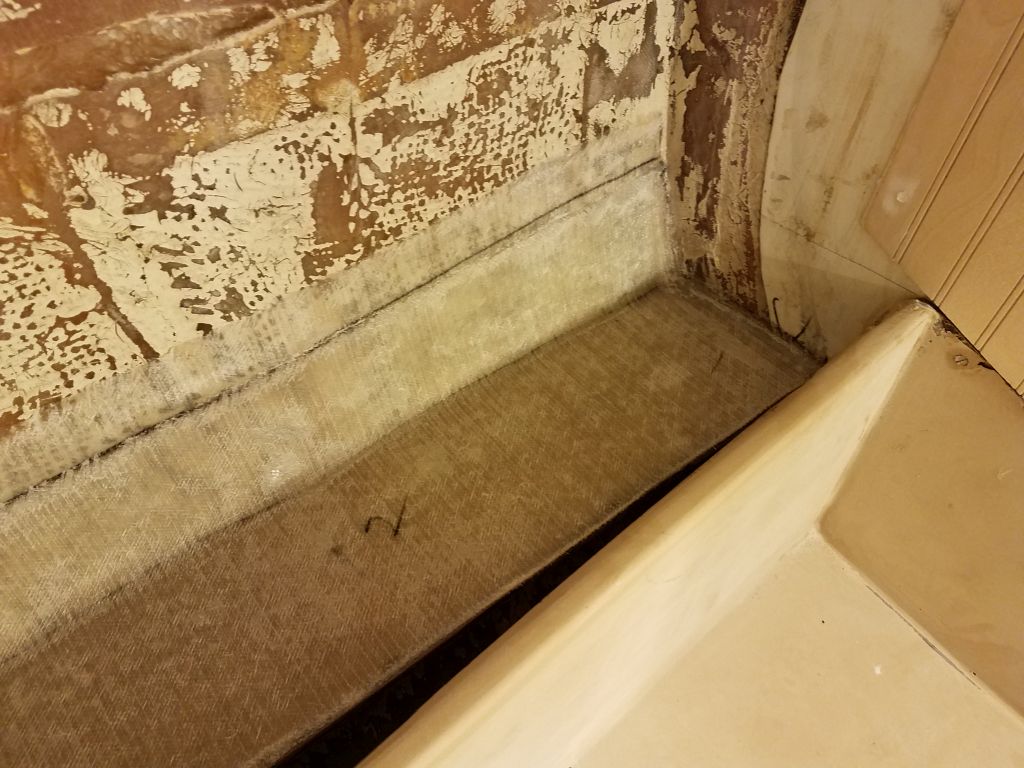
The only access here in the completed galley would be through an opening in the bulkhead directly beneath the sink, and with the sink’s protrusion and various plumbing, the space would be effectively fairly small and unlikely to be used extensively.  I considered various means to finish off the area, but at length, I decided to built a simple partition of 1/4″ plywood running from the compartment’s floor to the level of the bottom of the sink bowl and enclosing the rough area behind.  I tacked the three required pieces together with hot glue, and secured them to the boat with epoxy fillets in all available areas, which closed off the gaps at the edges, would provide a smooth finished appearance once painted, and effectively solved the mission requirements with as minimal wasted time as possible.

Total time billed on this job today:  7.75 hours

0600 Weather Observation:  8°, clear.  Forecast for the day:  Sunny, 20°
Scupper 82

Monday

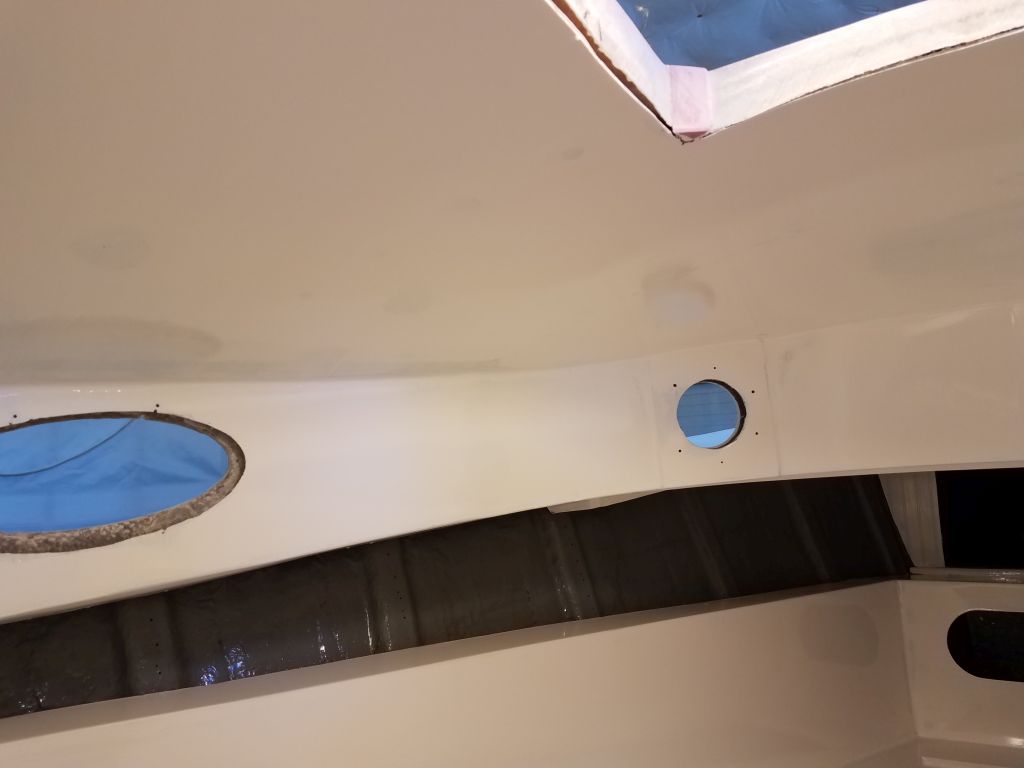
In the forward cabin, I lightly sanded as necessary the new little bulkheads at the ends of the upper liner, easing the outer corner and otherwise preparing these areas for fiberglassing.  The installation was probably fine as is in this application, but I wanted to tab over the new material and into the hull to ensure that everything would remain stable and secure.

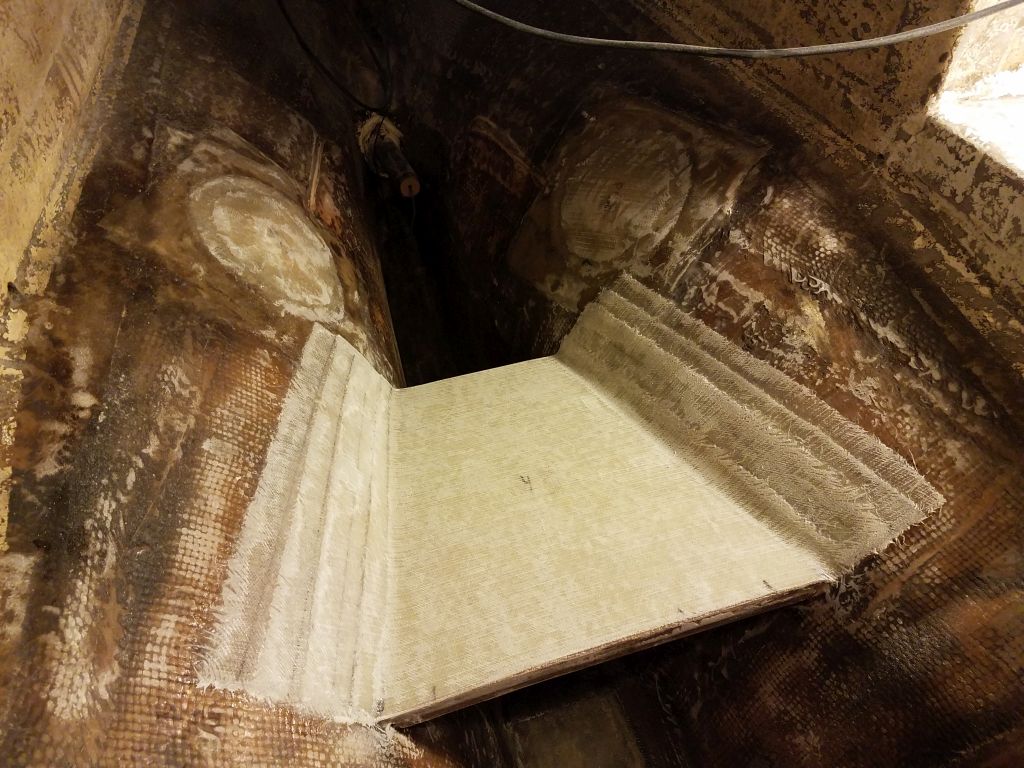
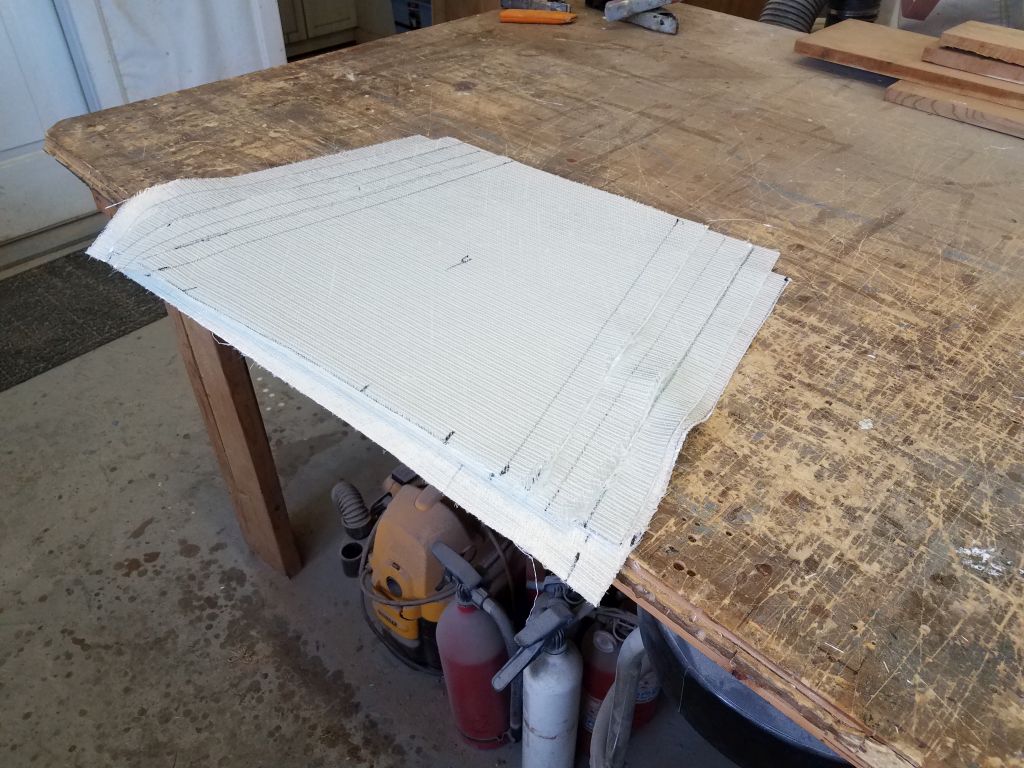
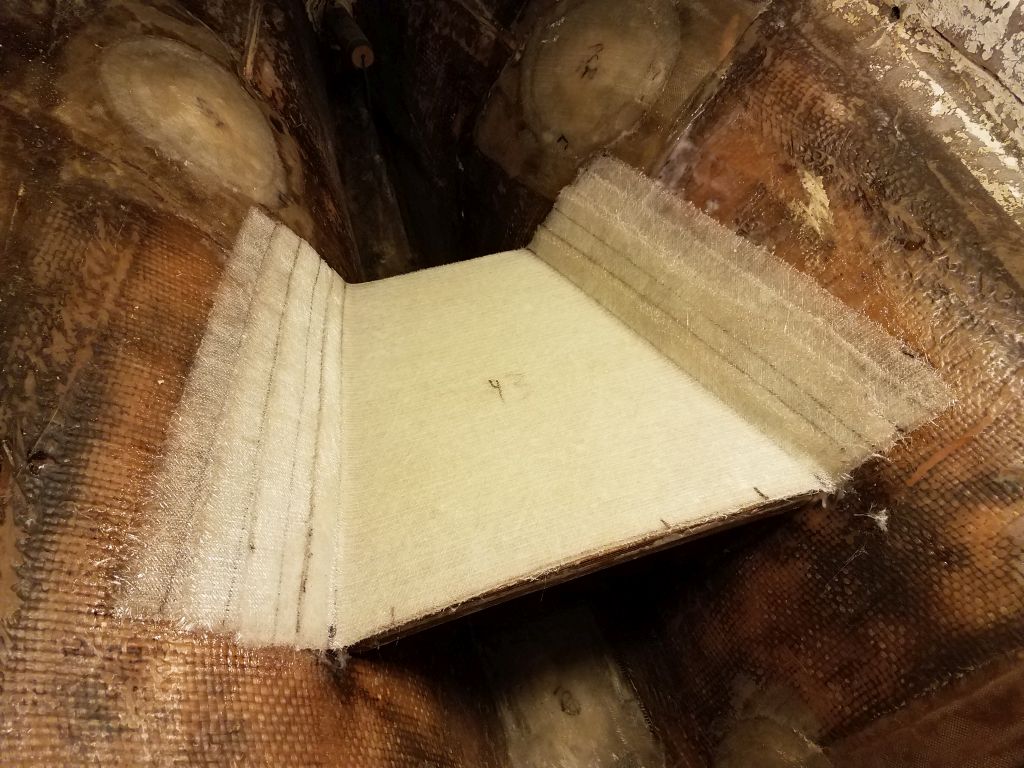
Afterwards, I used some thickened epoxy to fill a few minor low areas and give a better substrate for the fiberglass and, after cutting out pieces of fiberglass to fit, glassed between the liner, over the triangular panels, and out a bit onto the hull.  I also added a piece of tabbing over the edge at the aft end of the berth tops, to cover the plywood edges there and tie that area in; I’d previously prepared these areas for this step.

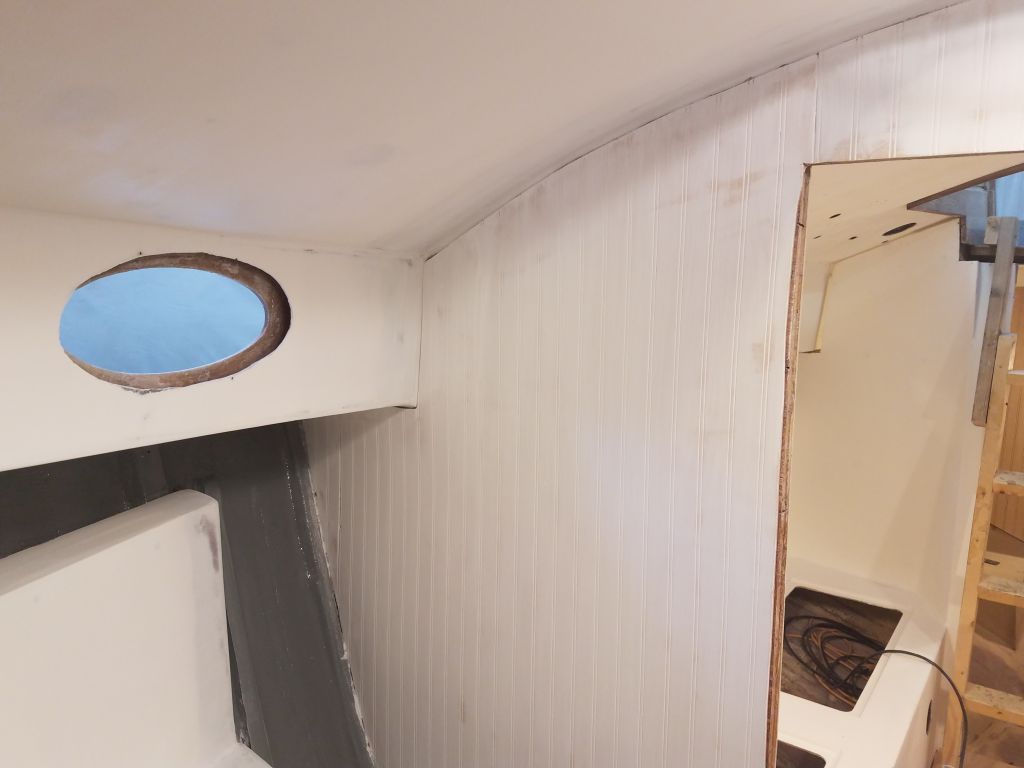
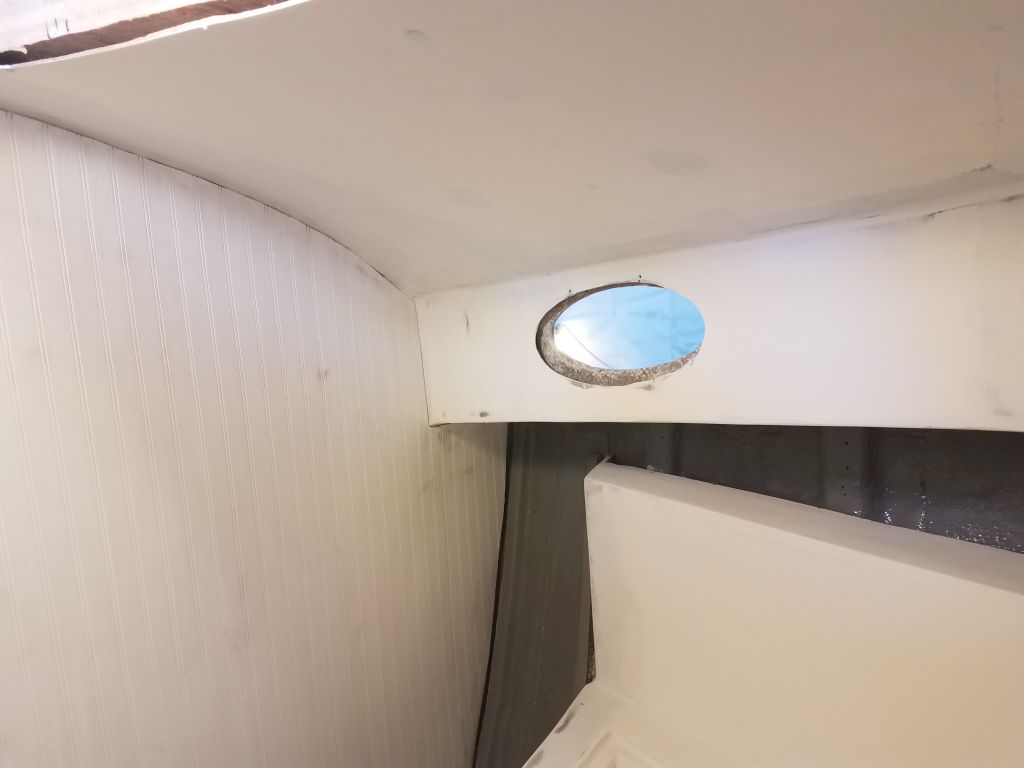
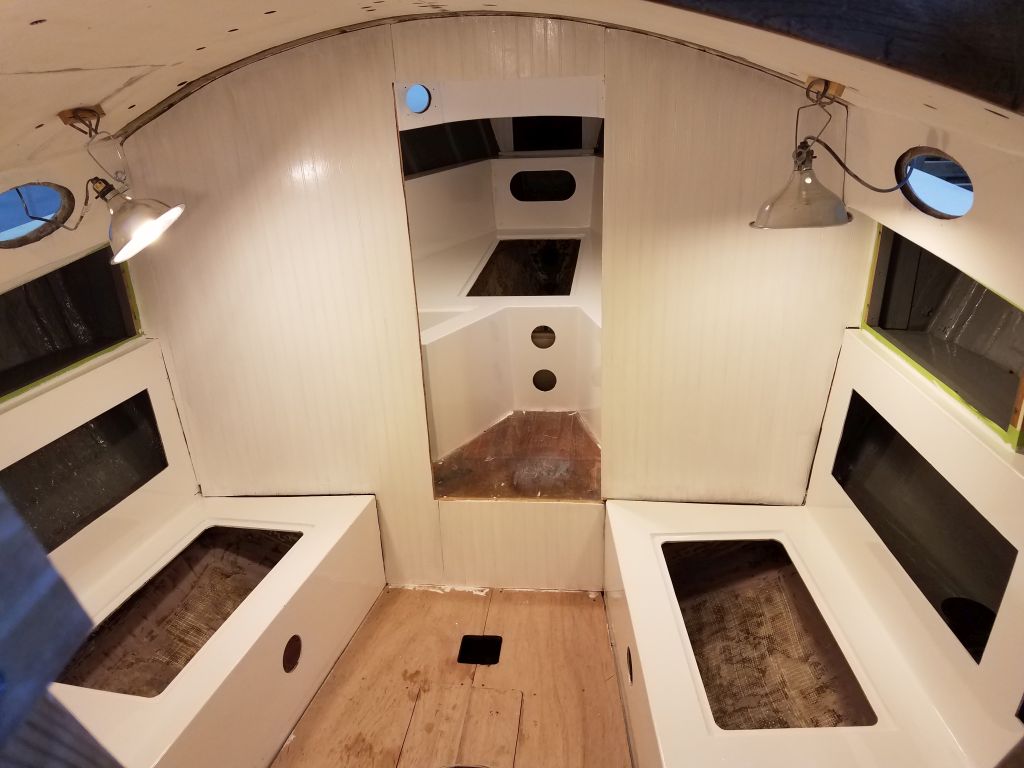
The owner’s choice for the final surface on the main bulkheads throughout the boat was beadboard paneling, which would be finished with primer and paint and offset with solid cherry trim throughout.  Most manufactured beadboard paneling seems to be built on an MDF core, which I didn’t like the idea of using on this (or any) boat, but I found a birch-faced plywood paneling for the job.  Now, starting with the starboard bulkhead in the main cabin, I prepared a paper pattern of the bulkhead shape that I could transfer to the paneling.  On all sides of the paper, I traced a line 2″ in from the edges, both straight and curved, which would make it easy to transfer the pattern to the plywood.

On the bench, I transferred the pattern and cut out the plywood piece.  Bringing it to the boat, I was once again hampered by the companionway shape and size:  I couldn’t fit the piece, as originally cut, into the boat, no matter how I tried.  In this case, the fit was close, and since the part of the panel that extended beneath the sidedeck would eventually be largely hidden behind another cabinet I planned there, it wasn’t the end of the world to trim a couple inches off this part of the panel, which allowed the panel finally to fit into the boat.  I planned the inboard edge of the panel to minimize the length of the seam between it and the next section of panel, locating the seam at the top of the doorway to the forward cabin.

With the first section clamped in place, I continued with a small piece to cover the top part of the bulkhead above the opening.

The last section of this bulkhead–the largest piece, since the doorway was off-center to starboard–required some additional planning, since there was no chance of the full-size piece fitting in through the companionway.  I had to choose a way to divide the panel that would allow proper alignment with the bead pattern, and also hopefully locate the seam in as unobtrusive a location as possible.  I was limited to about a 33″ panel width to fit through the hatch, and eventually chose the location for the seam as far outboard as practical based on these limitations.  I held the outermost edge of the panel (beneath the sidedeck) the same distance back from the hull as on the starboard side for continuity.

With the first three crucial pieces cut and fit, I proceeded with final installation, leaving the small section beneath the forward cabin doorway till afterwards.  To install the panels, I chose a quick-cure polyurethane adhesive for its strength, ease of application, and long-term flexibility.  I applied beads of the adhesive to the back of the panel–enough to securely hold the panel without issue, but without being excessive or so dense as to prevent the panel from squeezing the adhesive as needed during installation.  To hold the panels while the adhesive cured, I used clamps where possible, wedges in the spaces along the settee tops and backs, and, sparingly and only as necessary, screws and washers in other areas to draw the panel in tightly.  I’d remove the screws and patch their holes later, once the adhesive cured.  In this way, I installed the three panel sections I’d cut already.

To finish off the main bulkhead, there was one small piece remaining–below the opening to the forward cabin.  In the same way as before, I patterned, cut, and installed the final section.

Next, I turned to the bulkhead behind the galley, and followed the same steps to pattern, cut, and install the new paneling here to finish off the day’s work.

Total time billed on this job today:  8.25 hours

0600 Weather Observation:  20°, cloudy.  Forecast for the day:  Light snow, up to an inch or so, then clearing in the evening or overnight.

Scupper 81

Friday

First on today’s agenda:  permanently install the cabin sole.  With the three sections dry-fit once more, I laid out marks to show where the cross beams landed, then drilled pilot holes for a series of screws that would help hold the sole in place.  I didn’t go crazy with the number of screws since their main purpose when all was said and done would be just to hold the sole in place while the adhesive cured.

With screw holes thusly prepared, I removed the plywood and vacuumed up the drill spoils as needed, and solvent-washed all of the bonding surfaces.  To secure the sole, I chose a polyurethane adhesive (a fast-cure version in this case), which I liked in this instance because not only was it tenacious and strong, but also remained flexible, which seemed a worthy characteristic in this application.

I applied a good bead of the adhesive to half the sole underpinnings, beginning with the starboard side.  Once I laid down the first section of plywood, I applied the adhesive to the other side, and laid down the port sheet as well before going around and installing the screws on both pieces.  Once I’d secured the main sections, I repeated the process with the final section in the galley.   I’d worked to minimize adhesive squeezeout in the hatch openings, but some was inevitable, and I cleaned up the excess with solvent; I left the hatches off the rest of the day lest they get accidentally bonded in place.

The new sole was rock-solid underfoot and was well worth the efforts to replace.

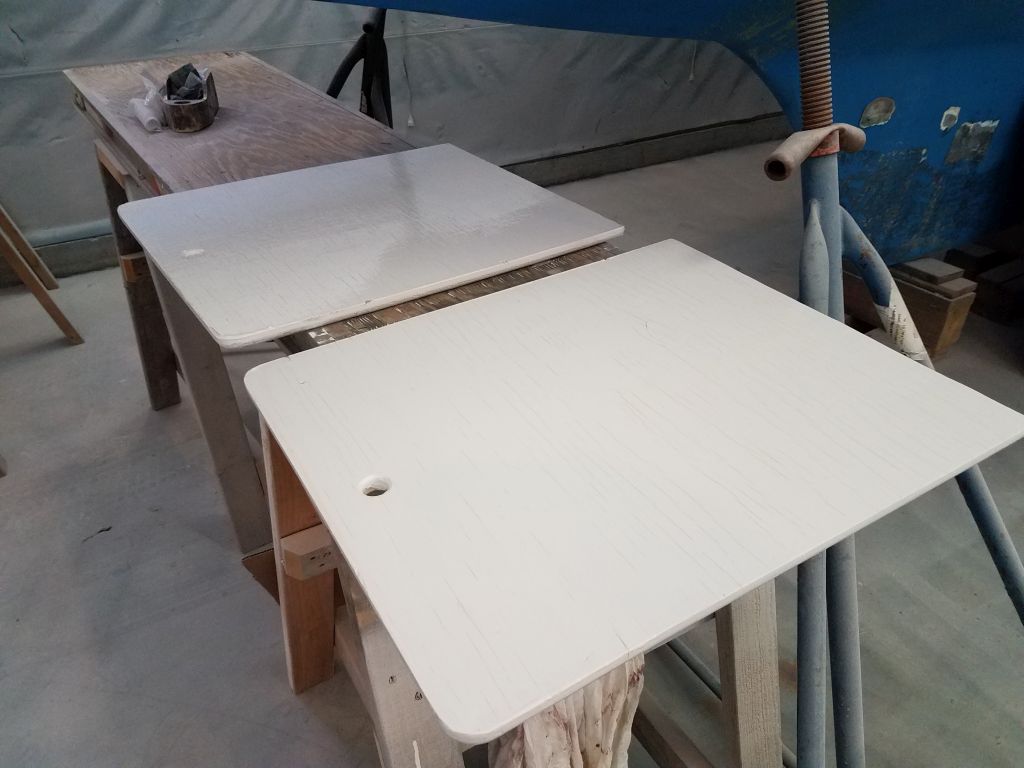
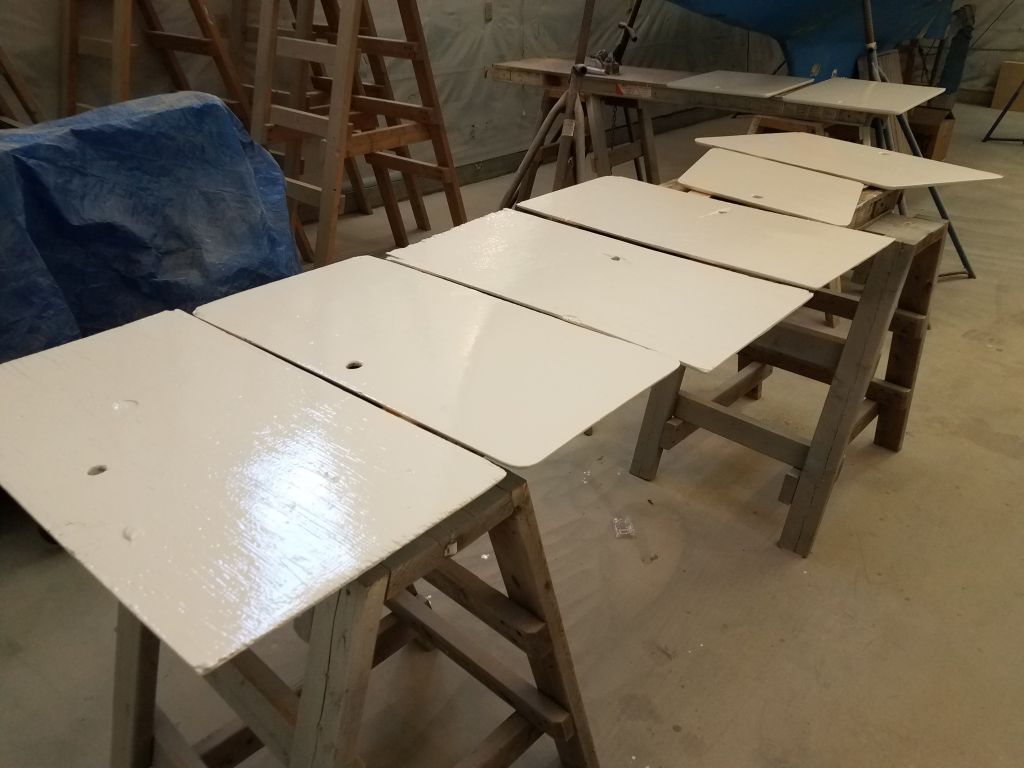
Earlier, when I’d built the substrate for the galley countertop, I’d done some layout measuring to locate two access hatches over the repurposed original icebox, but since there was no way to mark the openings accurately from beneath, and I was wary of making a mistake, I took the extra step now of creating a quick cardboard template of the countertop (by tracing the plywood on a sheet of cardboard) and, cutting a narrow access hole, traced the opening on the bottom of the template.  I could then easily (after cutting out the opening) transfer this shape to the plywood itself.

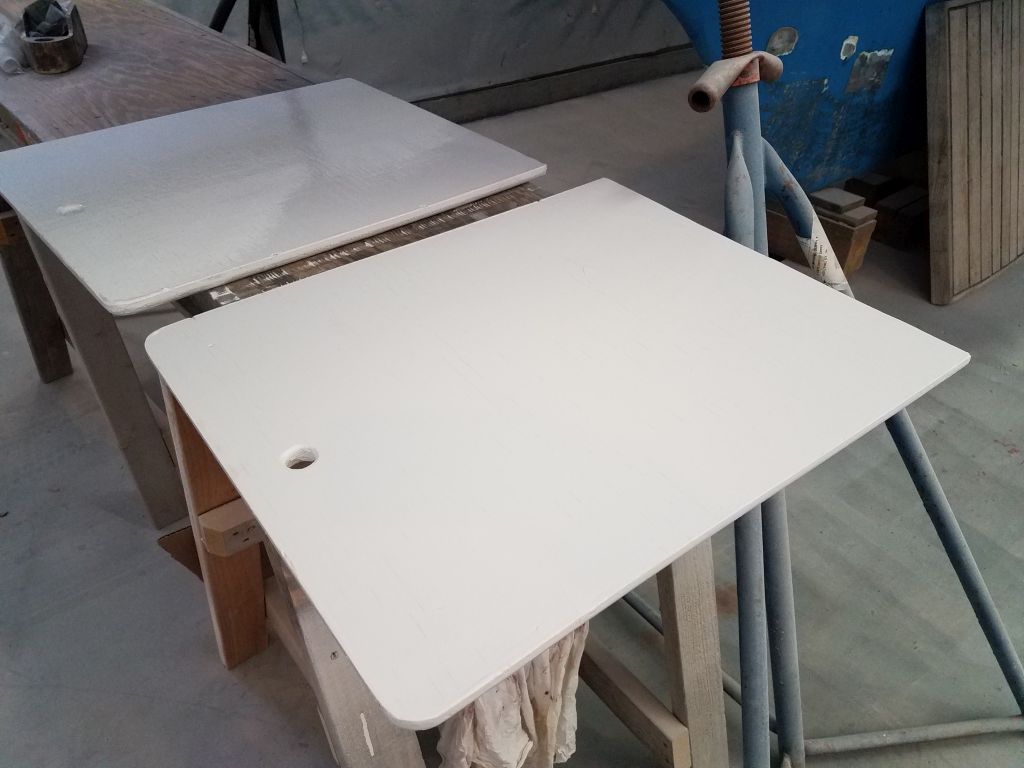
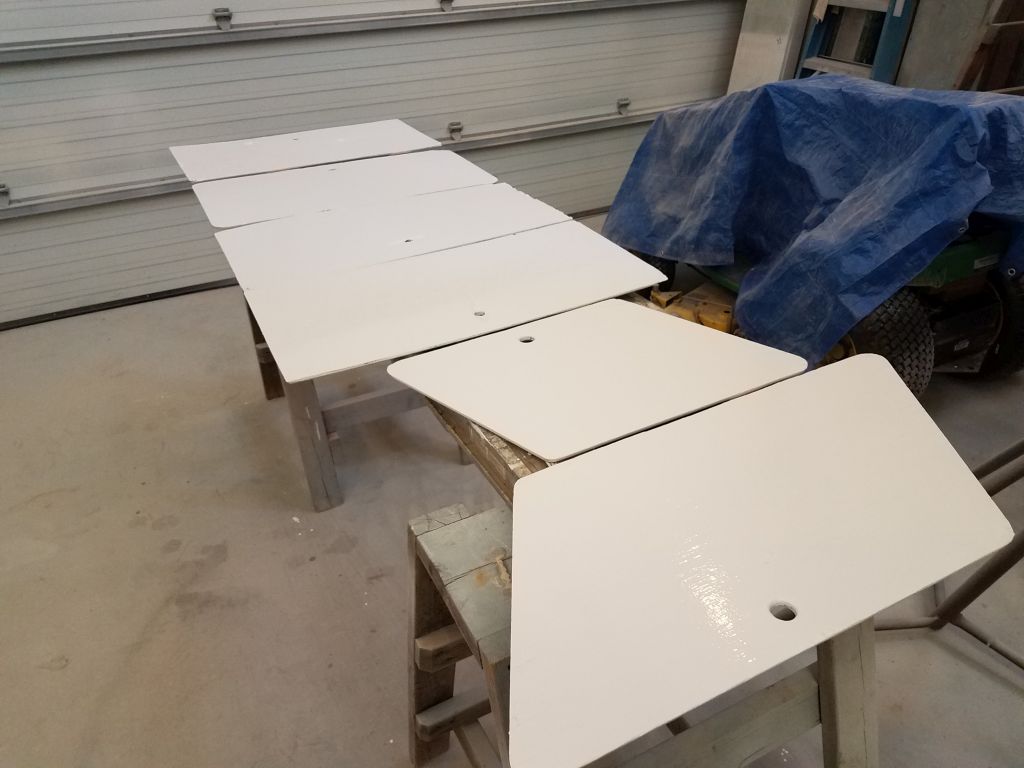
As it happened, my original layout was OK as is, but I did make some minor changes based on the more accurate marks.  Then, I removed the plywood section to the bench, and cut out the locker openings, and also installed wooden support cleats from beneath with glue and screws.

In the forward cabin, there was some work remaining at the aft ends of the berth, where I’d removed the original molded hanging lockers earlier.  I needed to bring the sole level up even with the existing sole in the center part of the cabin, so that eventually the new finished sole surface could extend seamlessly into these newly-created spaces, and there were the open, unfinished ends of the cabin liner to close off and prepare for finishing, along with the plywood berth ends.

The soles in the old locker spaces turned out to be 1/2″ lower than the finished part of the sole, so I made simple patterns of the spaces and cut 1/2″ plywood to fit.

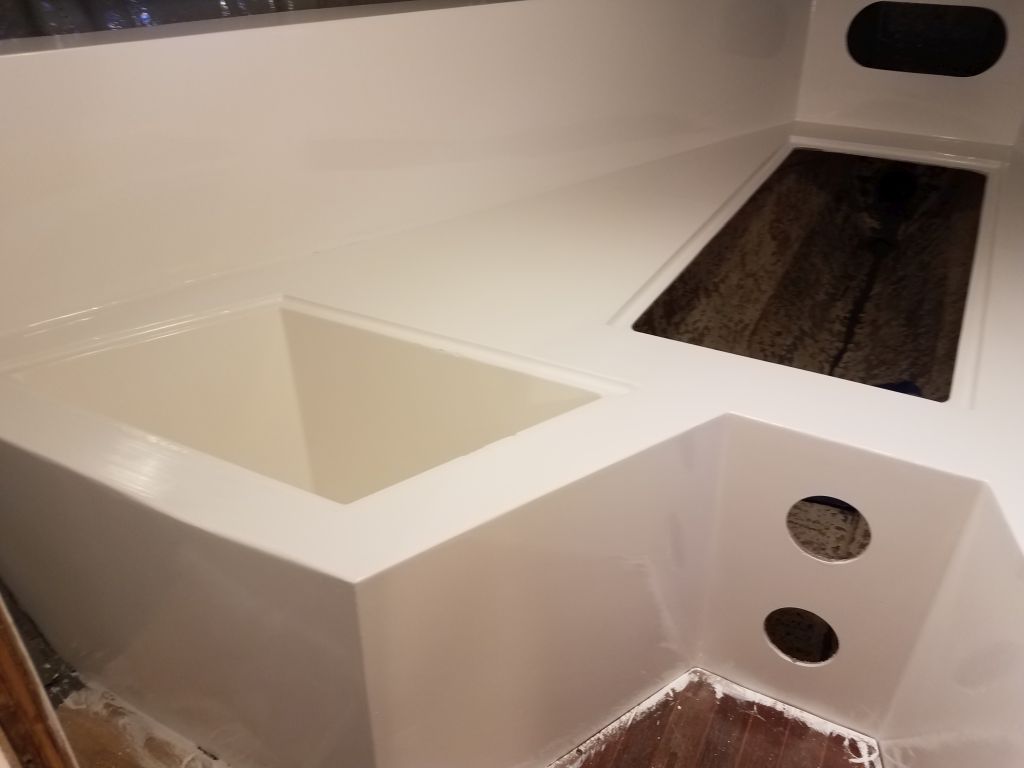
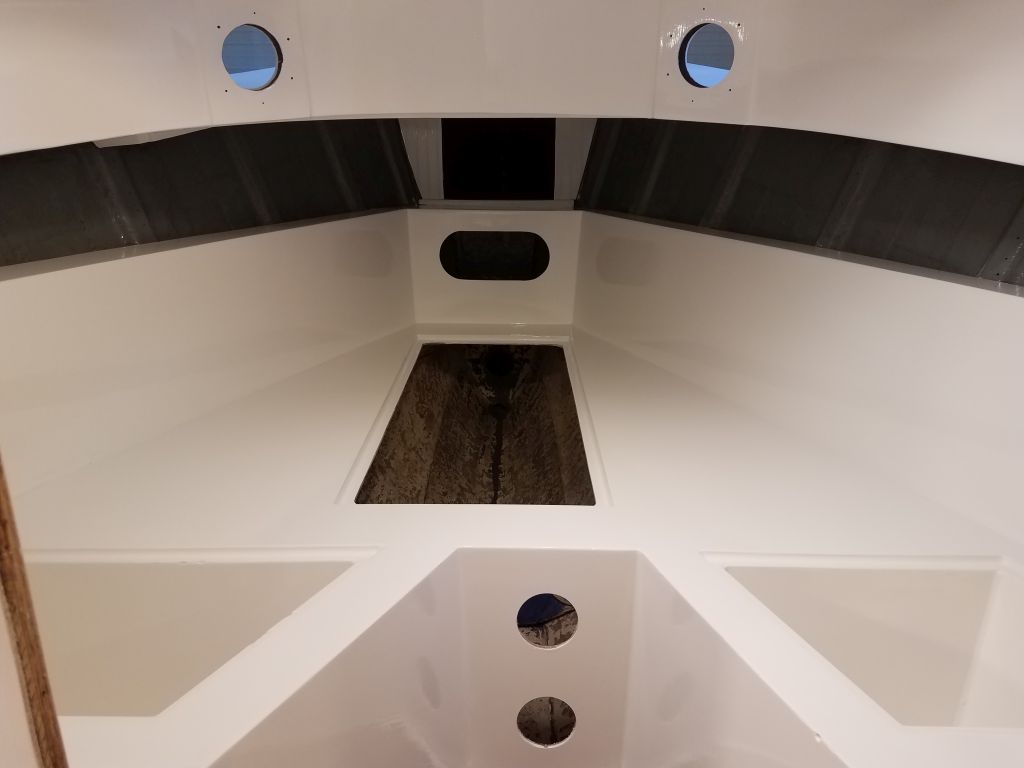
I made cardboard patterns of the triangular “bulkheads” to close off the open ends of the upper part of the liner on each side, and transferred these to more 1/2″ plywood to fit.  Securing these temporarily with hot glue, I finished a more permanent installation with thickened epoxy to hold the mini-bulkheads in place and fillet them into the adjacent surfaces.  Later, I’d complete the work here with some fiberglass.

I installed the new plywood sole sections in epoxy adhesive, and filled in any small gaps around the edges with more of the epoxy to create a smooth surface.

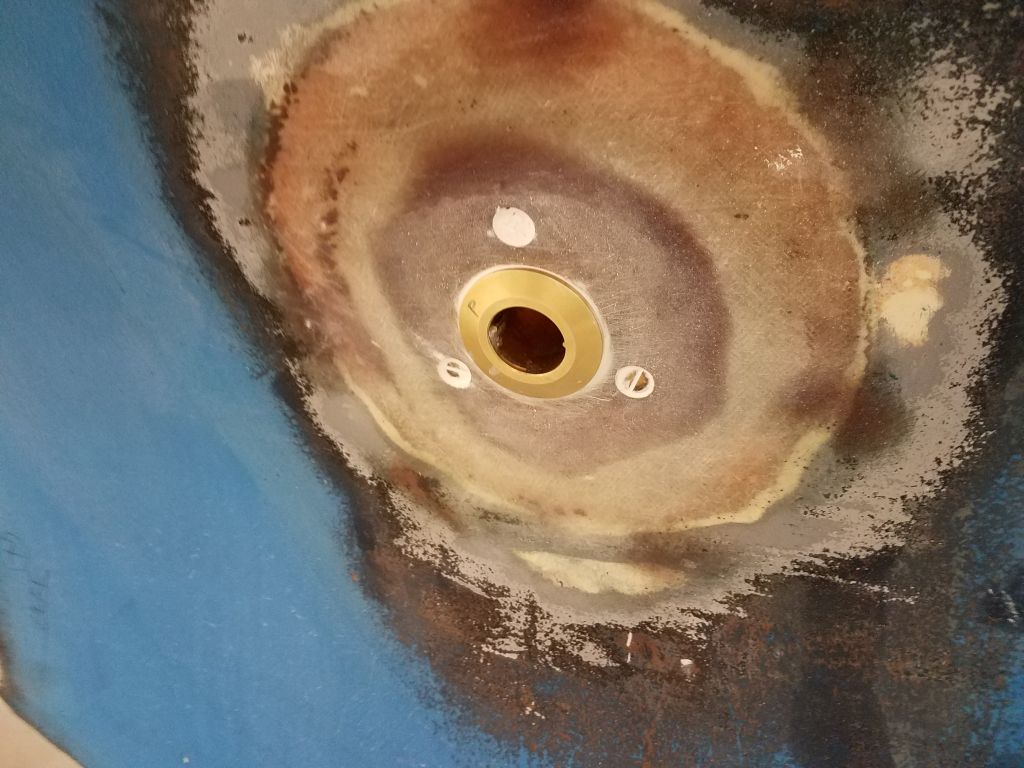
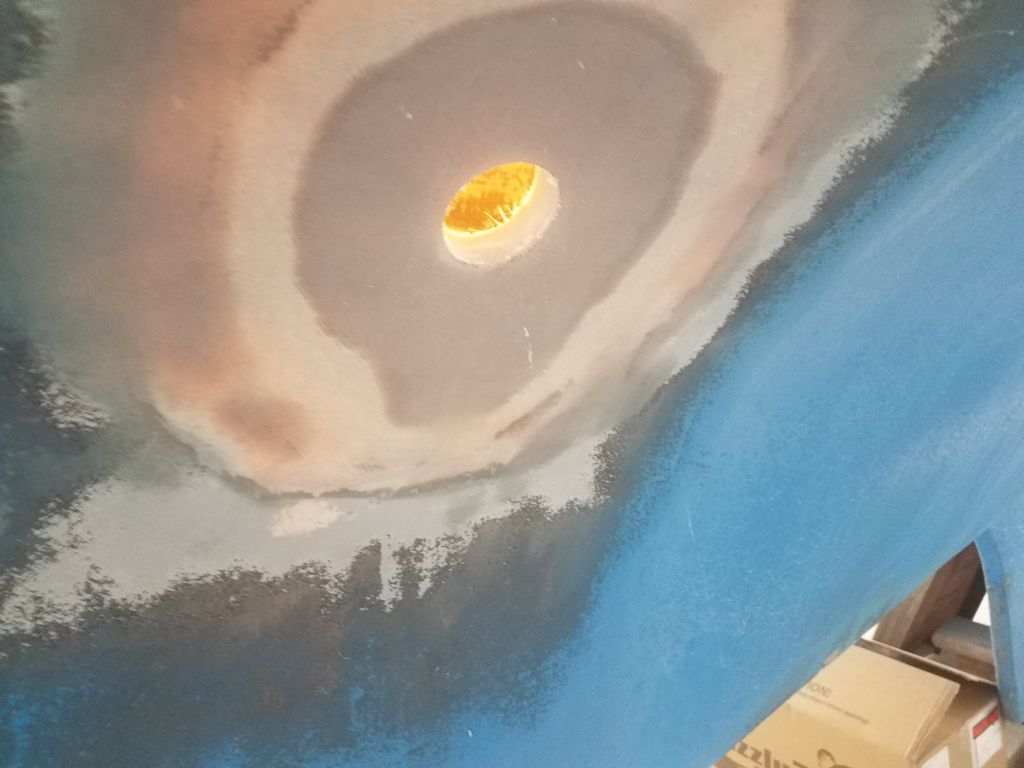
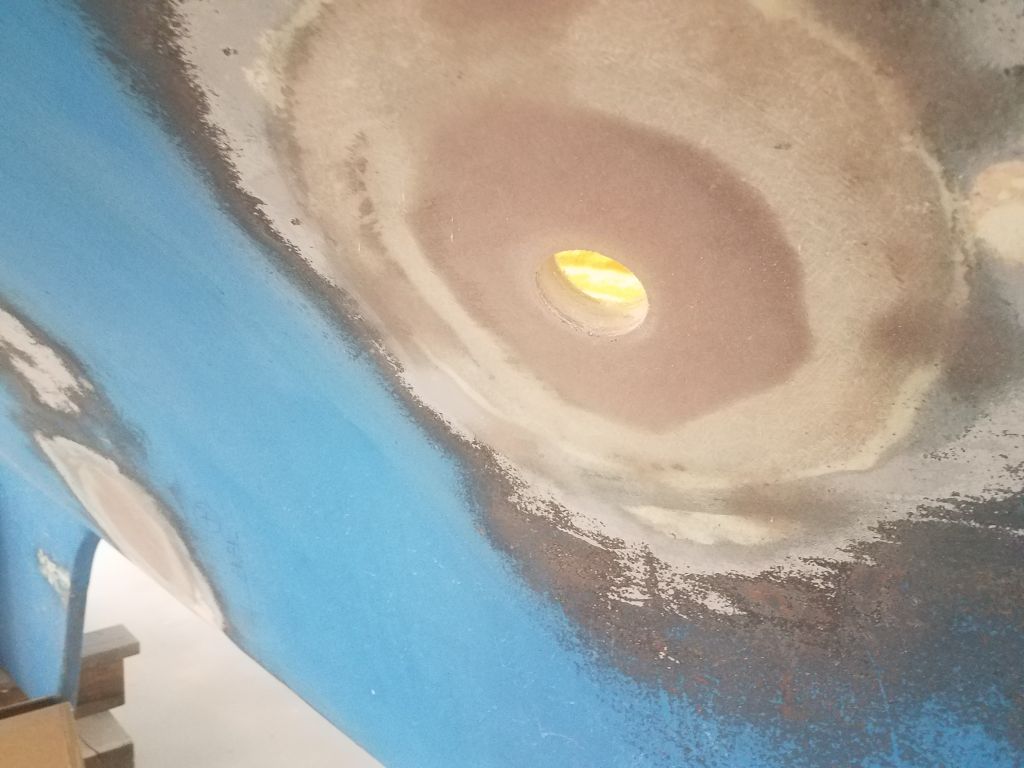
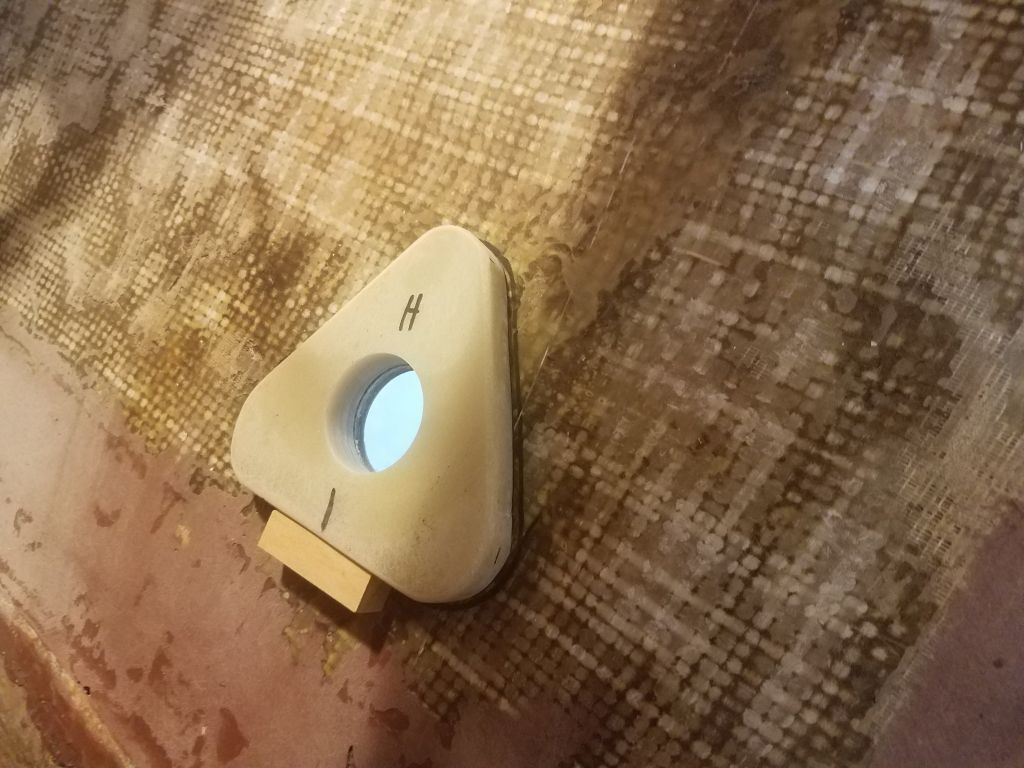
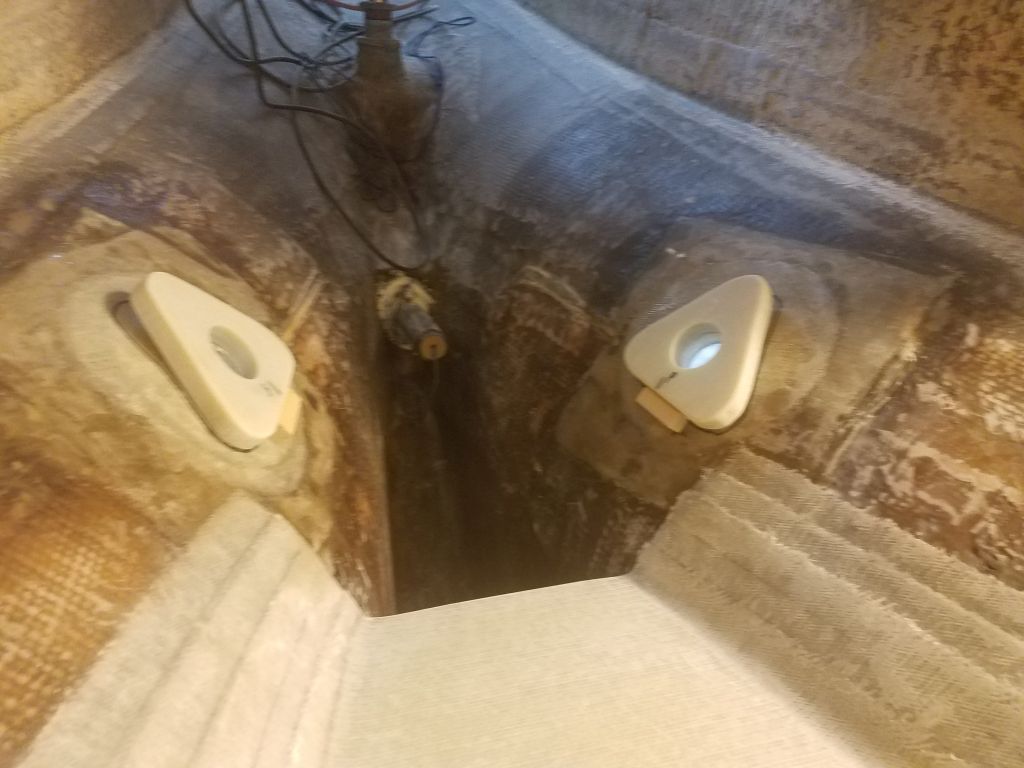
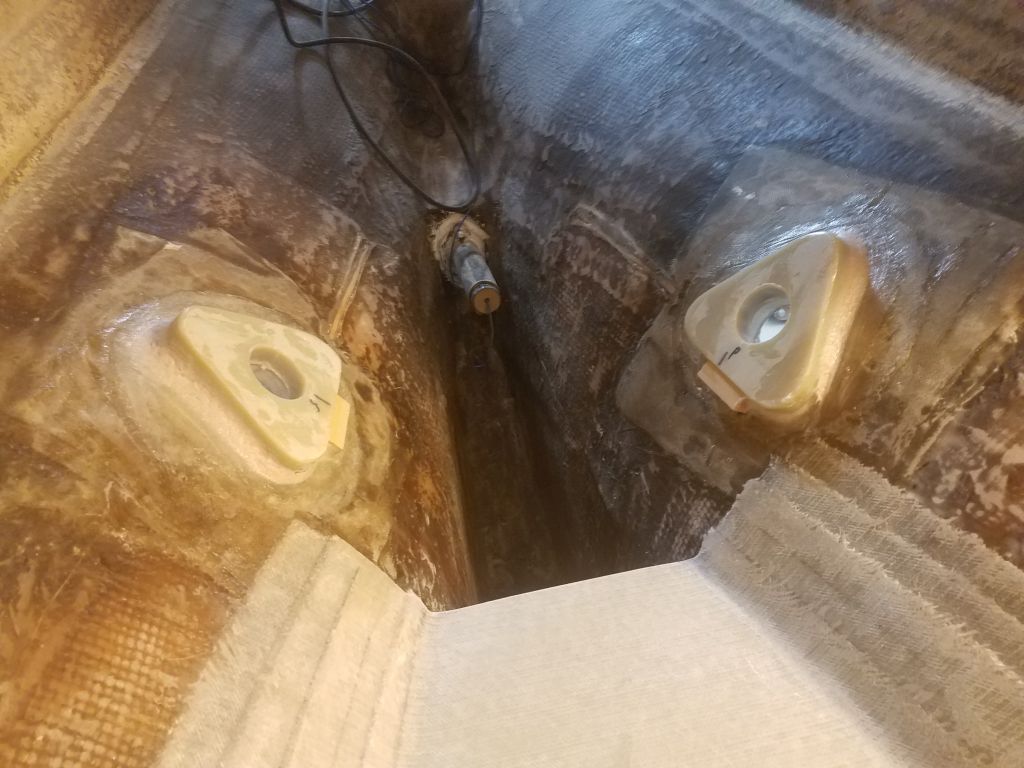
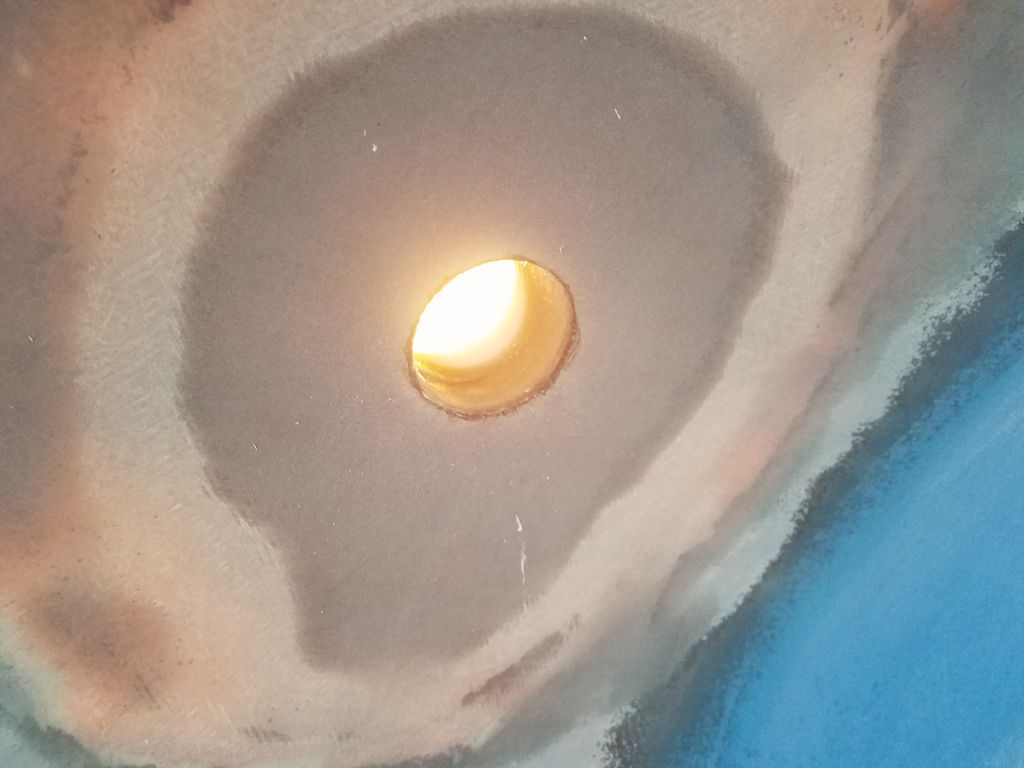
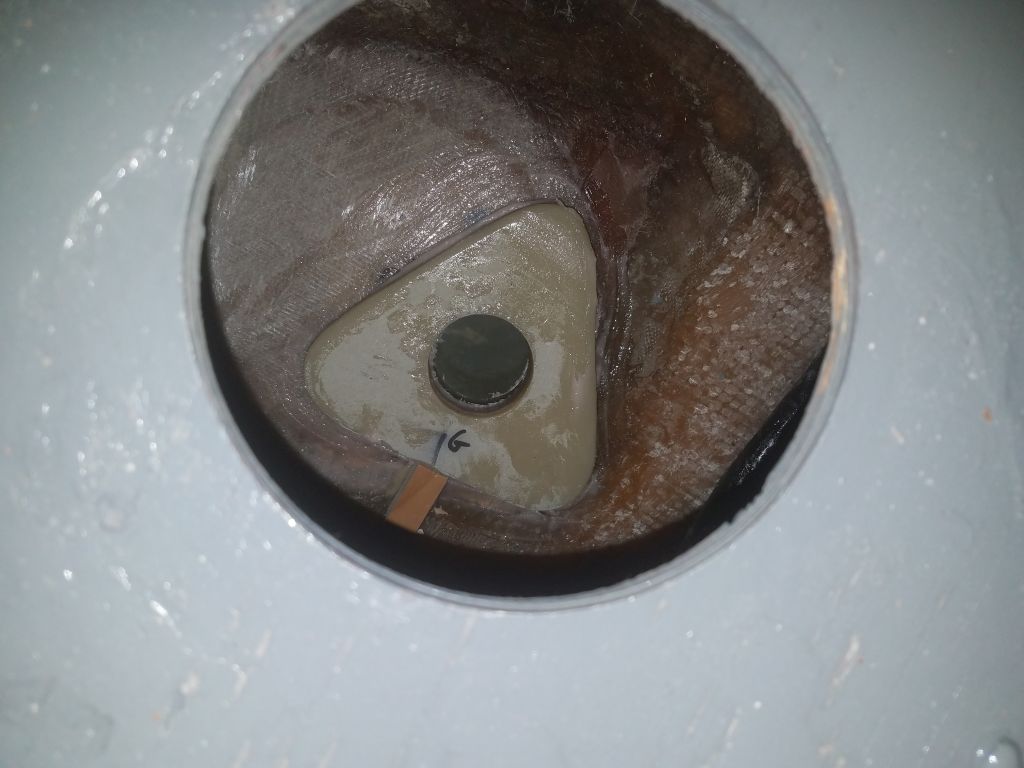
The Cutless bearing had been a thorn in my side for some time now.  Back in June 2018, I’d first looked into the replacement of the bearing and at that time removed the outer housing in the aperture, ostensibly allowing access to the bearing for removal.  The existing (probably original) bearing was in poor condition and required replacement through whatever means.  Photos below are from June 14, 2018.

Of course, there was really no way to get the old bearing out easily.  It was flush on the outside, and, in the period between that initial access and the present time, I’d pondered the thing from every possible angle and made various non-starter attempts at its removal, including using a steel bar from inside the boat to hammer out the bearing (nope–but more on this presently), and even making an attempt to remove the housing somehow, as some anecdotal information found in the nether world suggested a possibility of this housing being threaded into place  (nope–at least not in any way that I could unthread).  I sanded the external parts of the housing clean and searched for setscrews or some other eureka-type thing that would assist me in finding out what held the bearing in place, but alas.

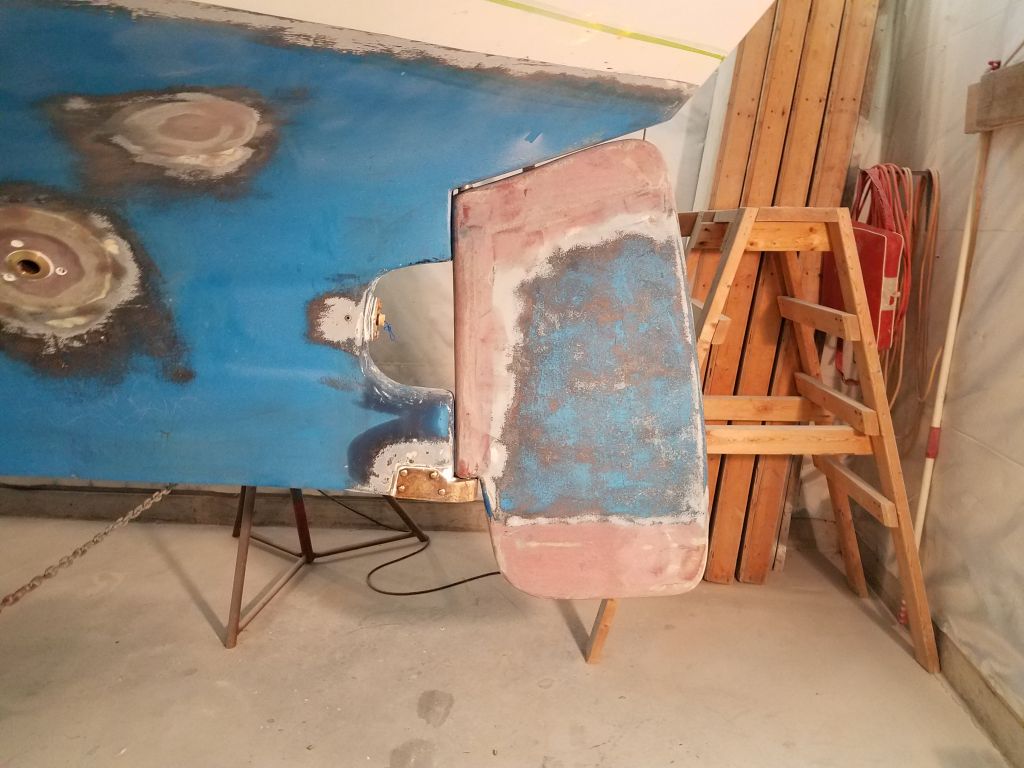
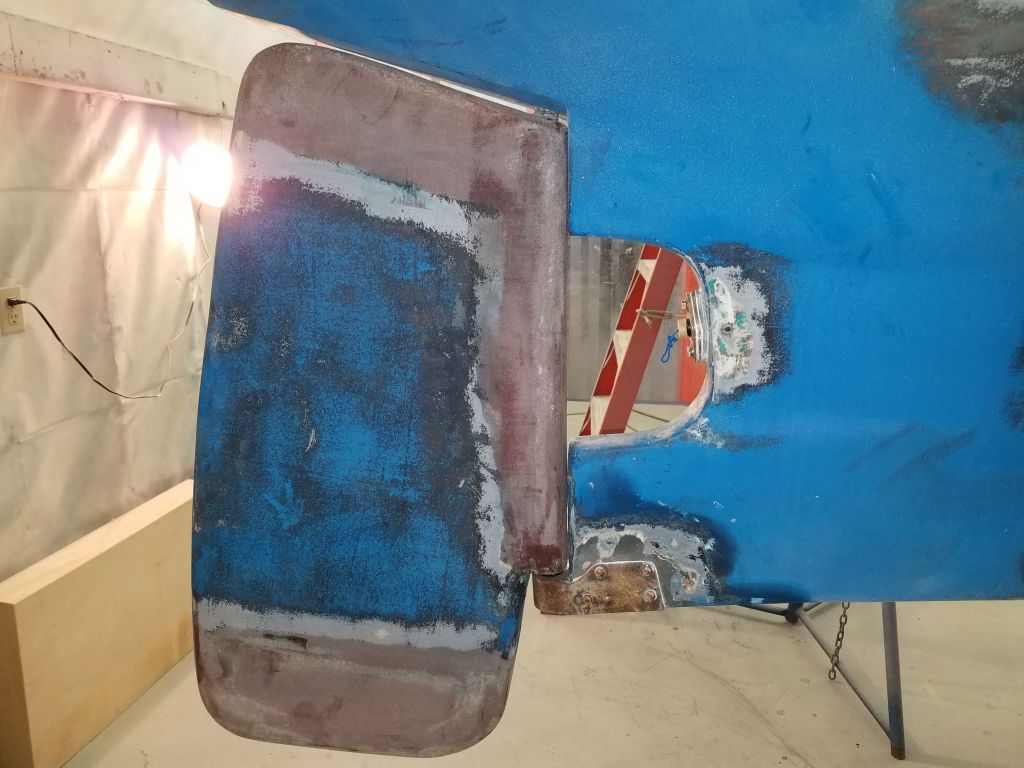
Complicating the whole process was the fact that direct access was limited by the rudder shaft and small aperture.  With the boat on concrete, and having already made the decision much earlier not to drop the rudder for its own rebuild, at least in the immediate term the rudder wasn’t going anywhere, though reluctantly I considered the possibility that I might have to drop it simply to replace a shaft bearing.

Whatever the backstory, it was time to fish or cut bait.  I wanted it gone, and yesterday wasn’t soon enough.

All the happy advice in the usual boating reference and impractical online sources fail to touch upon the situations like this one, where those convenient suggestions related to pressing out bearings on a hydraulic press, or using spiffy little shop-built tools to pull it out (always through the apparently ever-present external strut, as if there weren’t thousands of boats with stern tubes and bearings embedded in the deadwood like this one) fall unhelpfully short of offering any tangible advice for getting out the really hard cases.

Brute force wins, but it isn’t pretty.  Fortunately, as difficult, time-consuming, and frustrating as this process was, I was unquestionably aided by the fact that the brass shell of the old bearing was about as thin as it could be, since the size of the stern tube (1-1/4″ ID vs. the size of the shafting (1″) required that the shell be thin in order to fit.

I started by driving an awl and screwdriver between the bearing shell and the stern tube (which was bronze), which allowed me to begin to collapse the bearing in on itself.

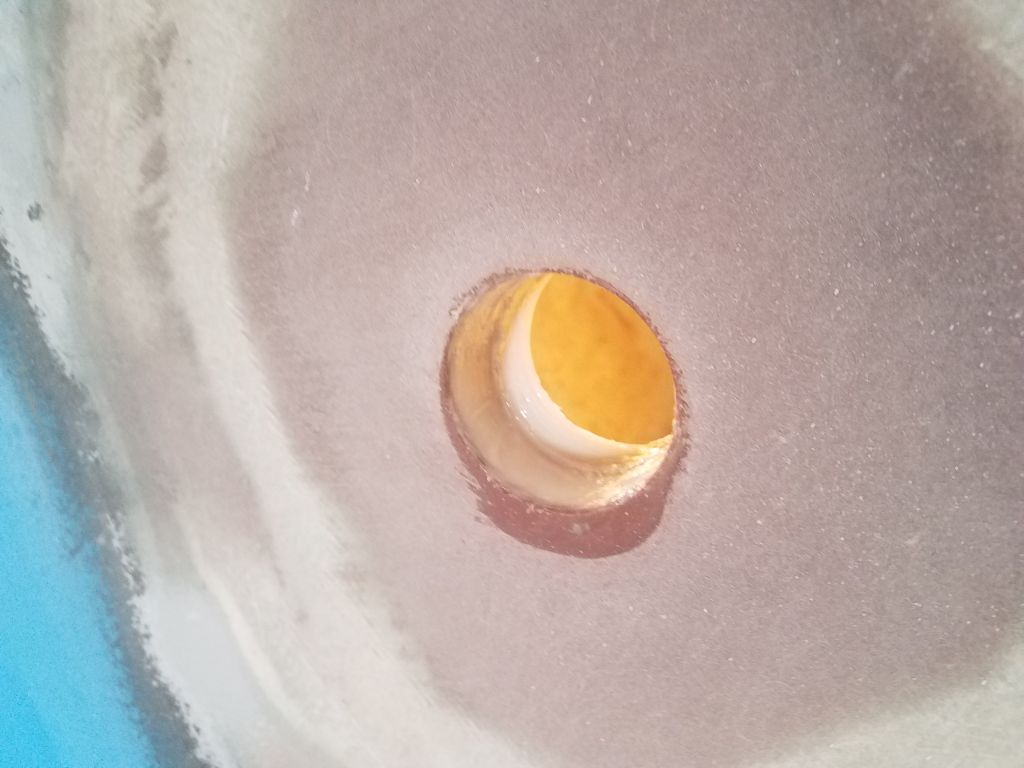
Working a few minutes here and a little longer there over a couple days leading up to the present, I basically chipped away at the bearing–not by choice, per se, but because it’s just how it worked in this case.  Instead of “neatly” collapsing inwards, the thin, ancient bearing shell came apart in little pieces, all the time stubbornly resisting any more efficient means of removal.  After a while, I’d cleaned out about half the bearing, but the mess that remained was on its way to becoming a fairly solid little plug located about 2″ inside the tube.

With a long drill bit, I created some little openings in and around the collapsed shell remains, and, at length, finally succeeded in getting out what was left of the bearing.  They never show you this in the articles and weekend maintenance books, but this is how they come out sometimes, folks.

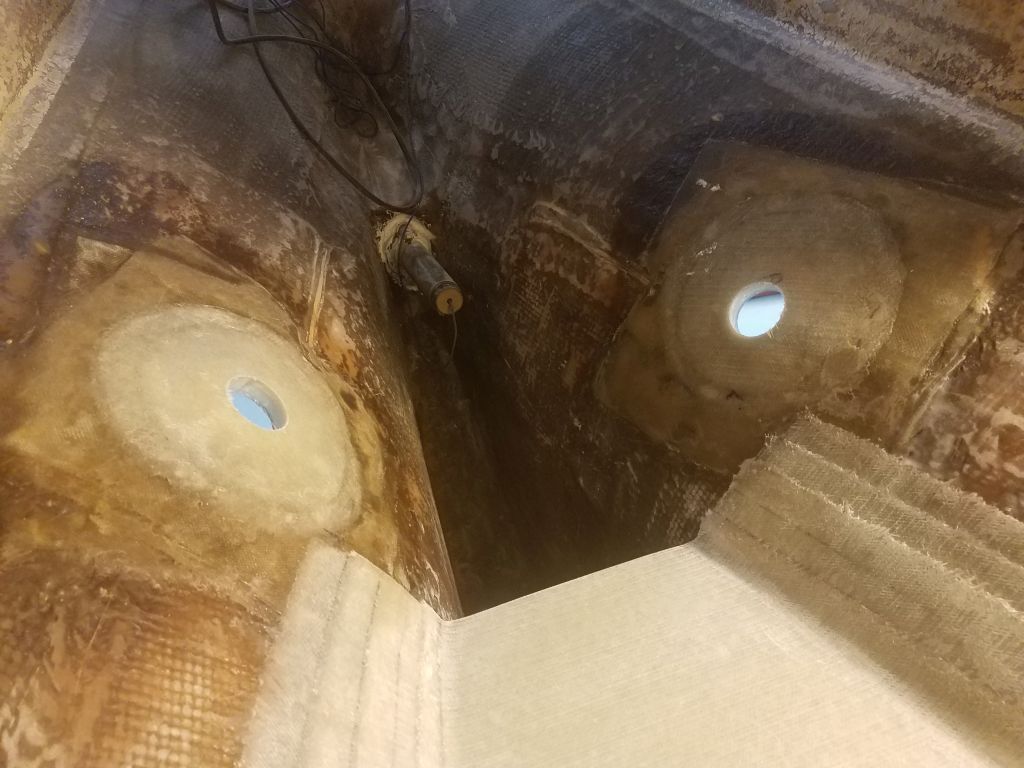
With an air nozzle, I blew out the remaining detritus and happily put this removal job behind me.  With the tube clean and finally able to see in from both ends, I could now determine that the outer part of the stern tube was a smaller diameter than the inside, apparently threaded or otherwise secured within the inner section.  This is why my steel rod from inside the boat had failed to push out the bearing:  the bearing, with its narrow wall, had basically hidden behind this change in diameter.  At least this made more sense now, since I’d failed to comprehend how a 5 lb. maul hammering a solid steel rod with some urgency had failed to budge a little brass and rubber bearing (and there couldn’t have been any setscrews–and weren’t–since there was no access for their installation nor removal).

With class time over, I was happy to put the removal job behind me, and after cleaning up from the week’s efforts, I looked forward to a weekend of clean conscience and with no bearings hanging over my head.

Total time billed on this job today:  7.25 hours

0600 Weather Observation:  15°, cloudy.  Forecast for the day:  Clouds and showers (snow and rain), 30s

Scupper 80

Thursday

Looking forward to a flat and solid place to stand, first thing I installed the cabin sole–just dry for now.  Final installation would be soon.

Next, I dispatched the morning’s sanding chores, just a few small areas throughout the cabin plus the larger section at the aft end of the port forward cabin.  Later in the day, I spot-applied some final filler to this spot.

This short round of sanding didn’t satisfy my desire for more dust and mess, so I decided to cut out the old galley sink, which was slated for replacement.  The old sink was part of the molded galley unit, and was surprisingly heavily constructed.  I used and angle grinder to cut through the sink just below counter level.  I also sanded the inside of the old icebox to prepare it for paint; this space would become dry storage in the revamped galley.

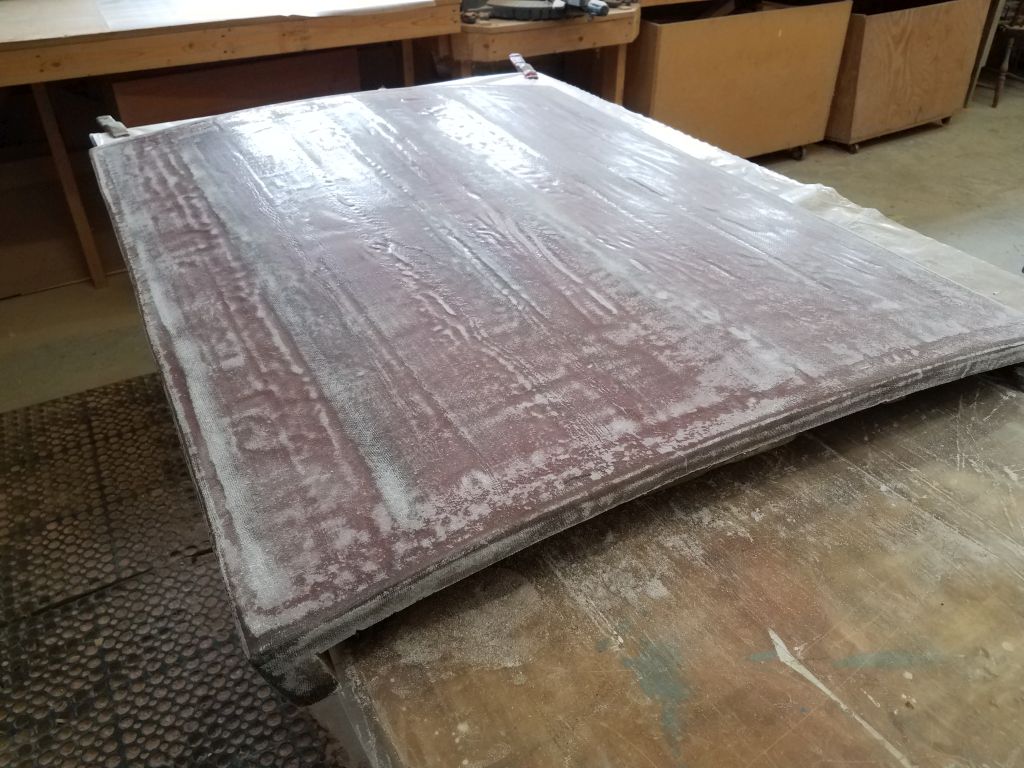
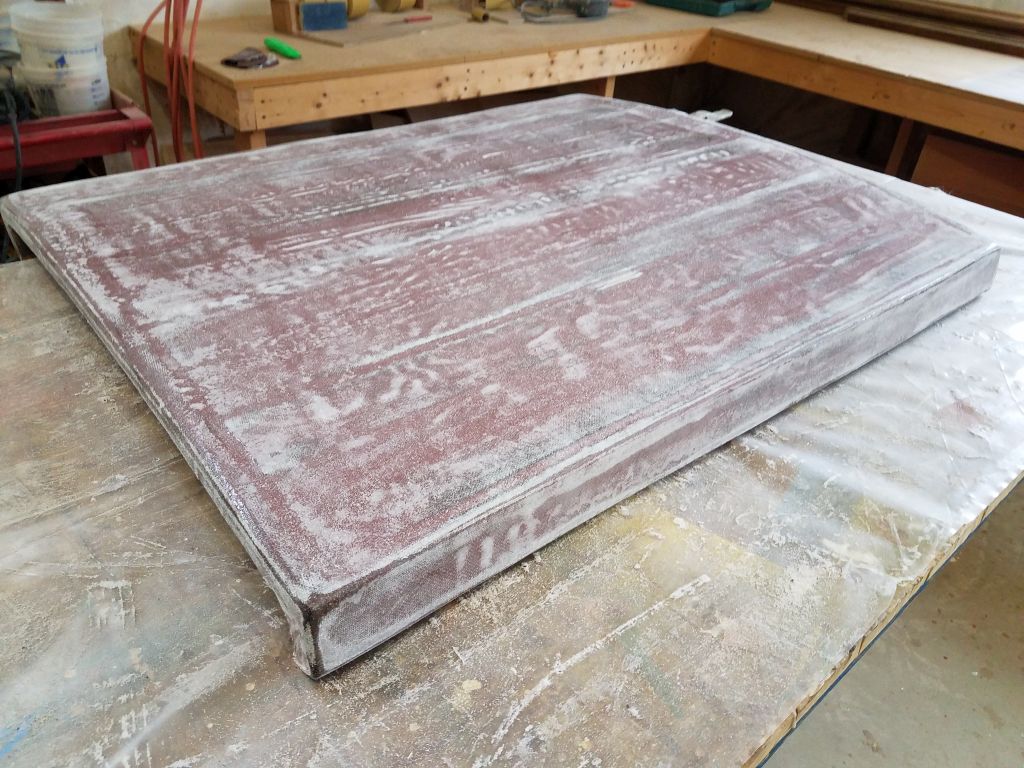
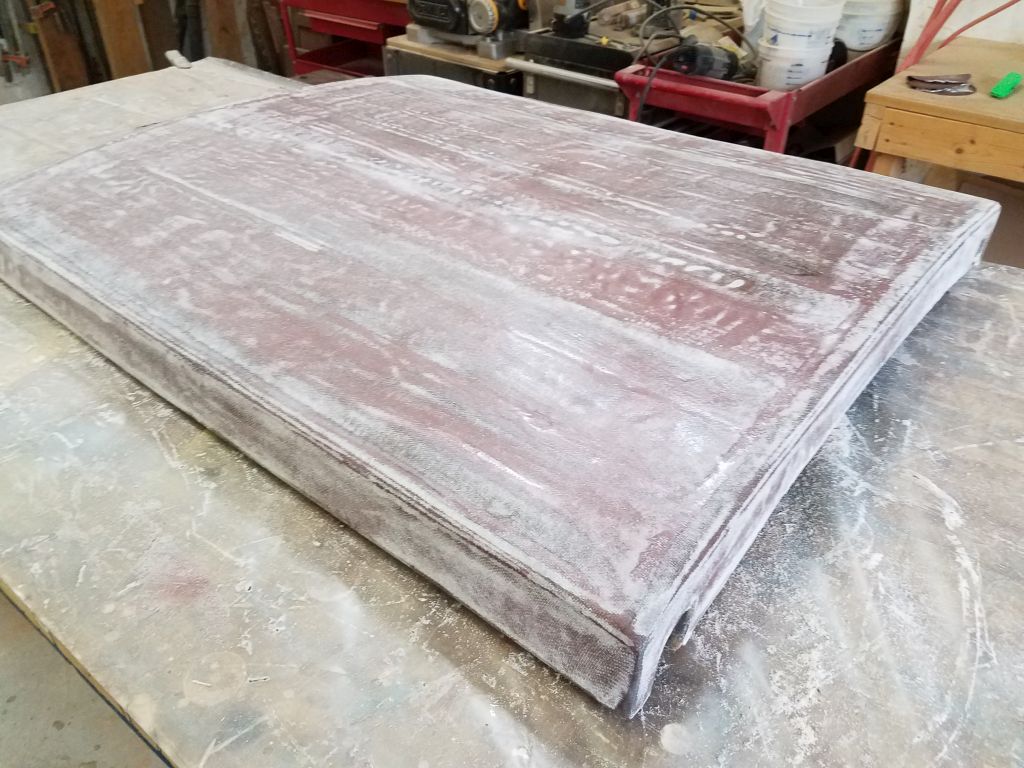
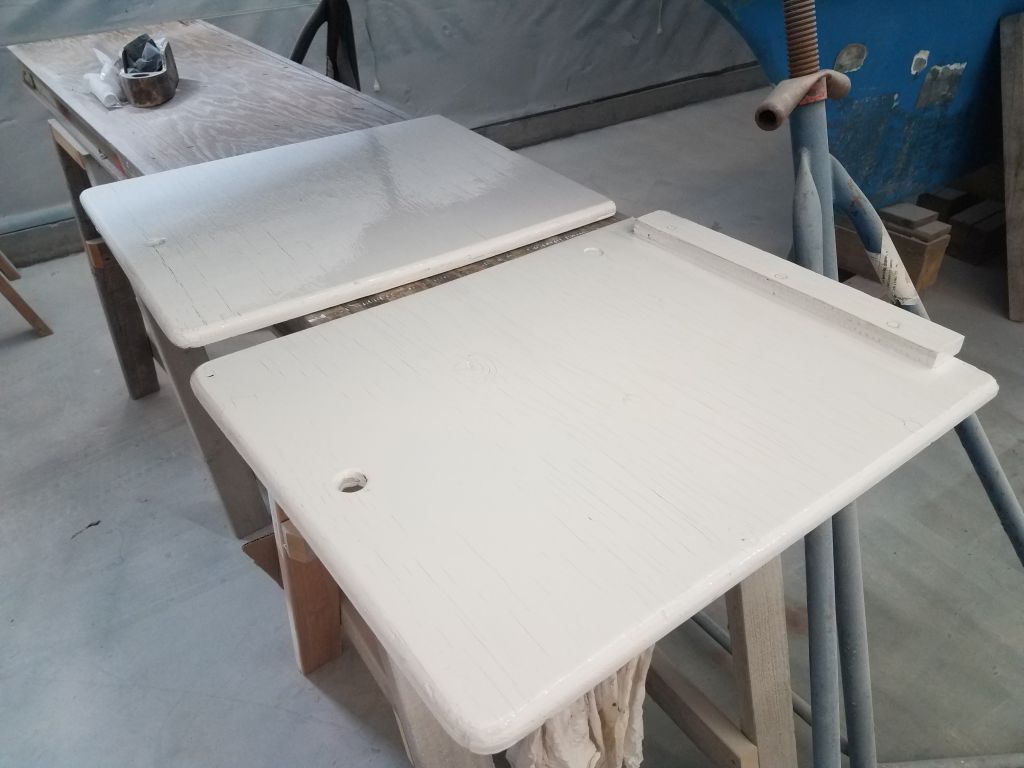
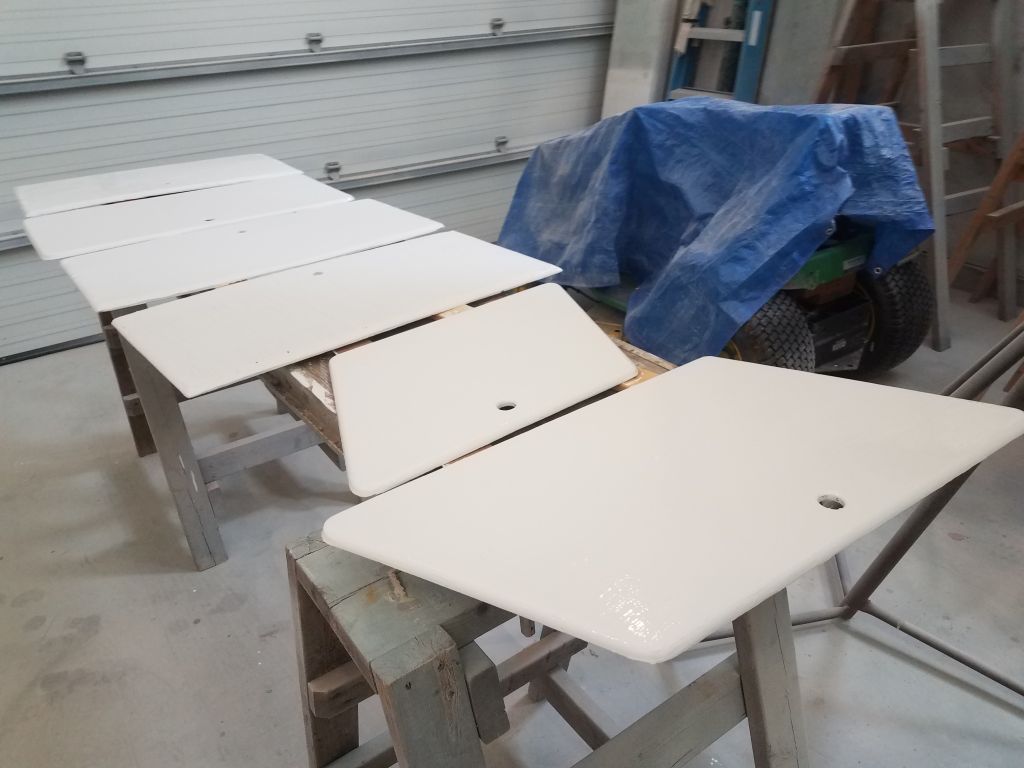
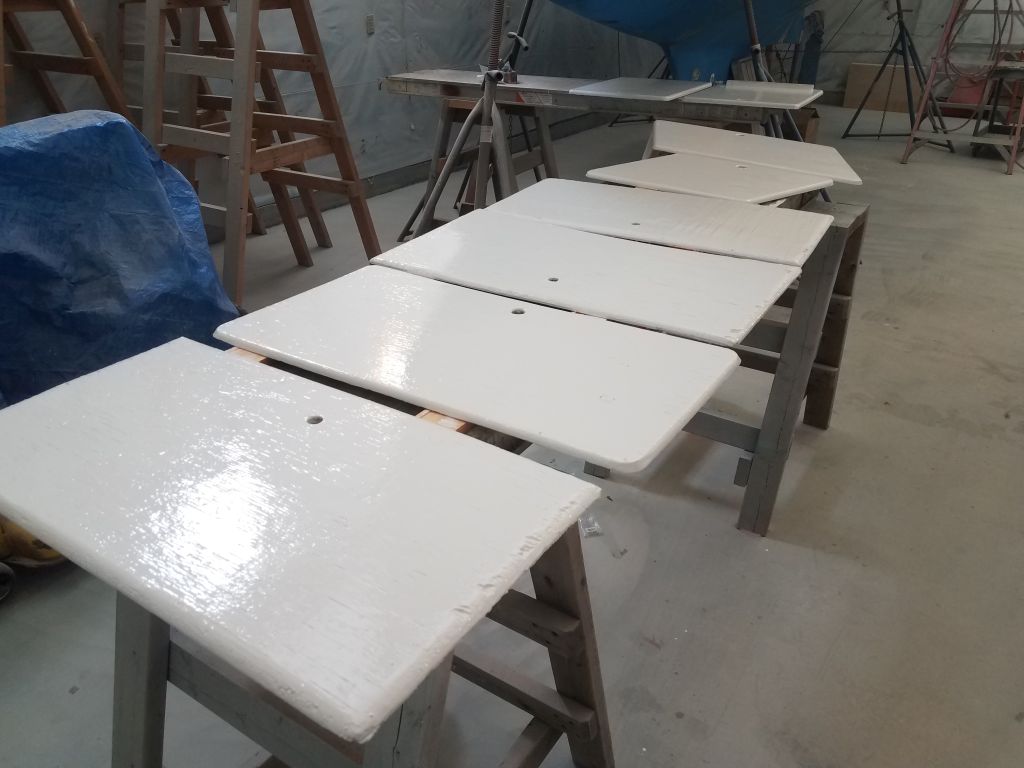
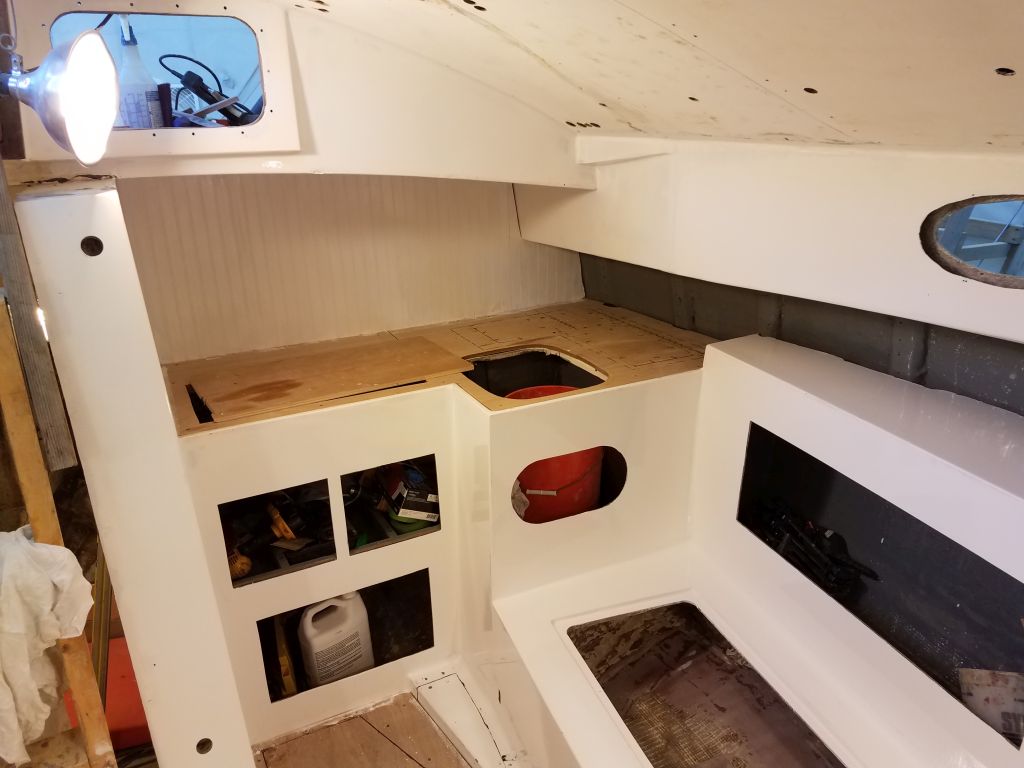
After completing a pretty thorough cleanup of the boat and shop, I made a simple plywood pattern of the galley countertop so I could cut a new 1/2″ plywood top, which would be nice to have in place now to store tools and so forth. I fit the pattern inside of the raised, molded lip of the existing unit (which happened to be about 1/2″ tall itself), and later, trim and fiddles would cover this area.

When I removed the pattern, I found that I couldn’t get it out the companionway–though with some careful bending I eventually did.  However, I was therefore unsurprised to find that the new countertop blank didn’t fit either.  I tried every which way, but the clearance simply wasn’t there.  It didn’t seem worth it to try and remove any of the trim still in the hatchway, or to make other modifications, so in the end there was nothing for it but to cut the countertop into two pieces, which was disappointing but actually wouldn’t make a whit of difference in the end result–and in fact would make fitting and various related chores easier, as it happened.

I marked out the existing openings for sink and stove for later reference in recutting these openings as needed, and did some initial layout for some top-access hatches to the old icebox/storage area.  For now, this was as far as I needed to take the installation.  It was nice to see some new work going into the cabin in any event.

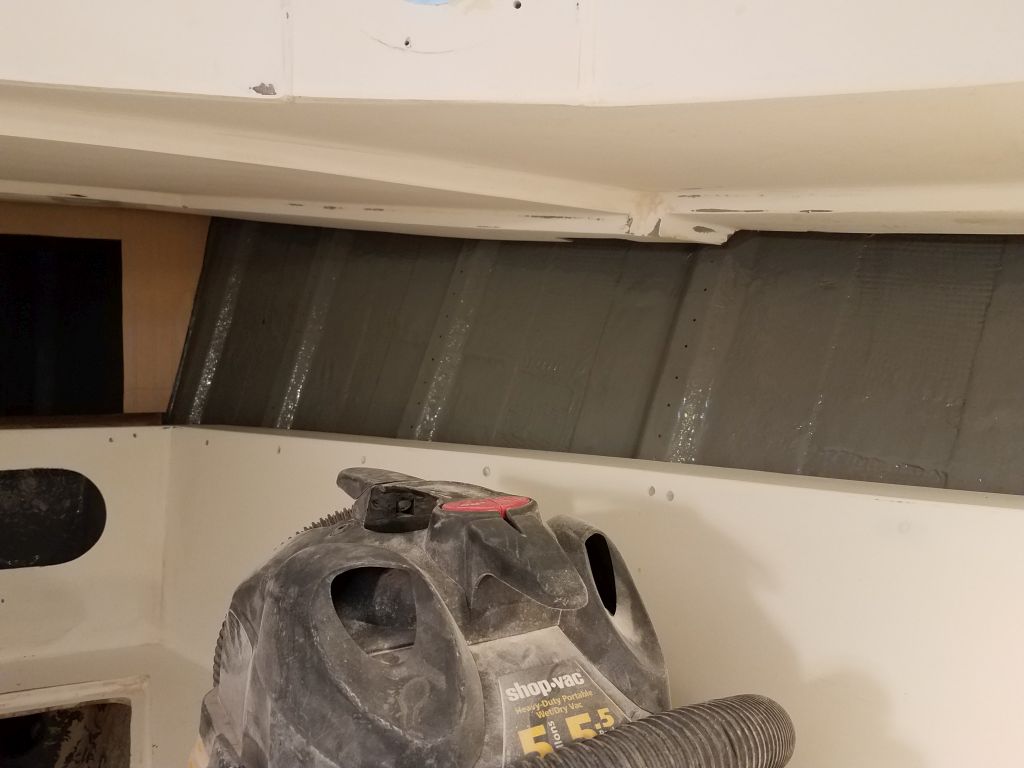
During the remainder of the day, I worked on various and sundry tasks that would later lead to fruition of other interior and overall progress, including measuring spaces for possible tankage and similar sorts of preparatory things, but which were otherwise un-noteworthy for the moment.  Before it got too late in the afternoon I turned to final preparations in the main bilge.  Removing the cabin sole again, I vacuumed and solvent-washed the space to clean thoroughly, then applied gray bilge paint to all areas.  This looked terrific.

Total time billed on this job today:  7 hours

0600 Weather Observation:  18°, clear, a little fresh snow accumulation overnight.  Forecast for the day:  Sunny, 34°

Older posts Newer posts