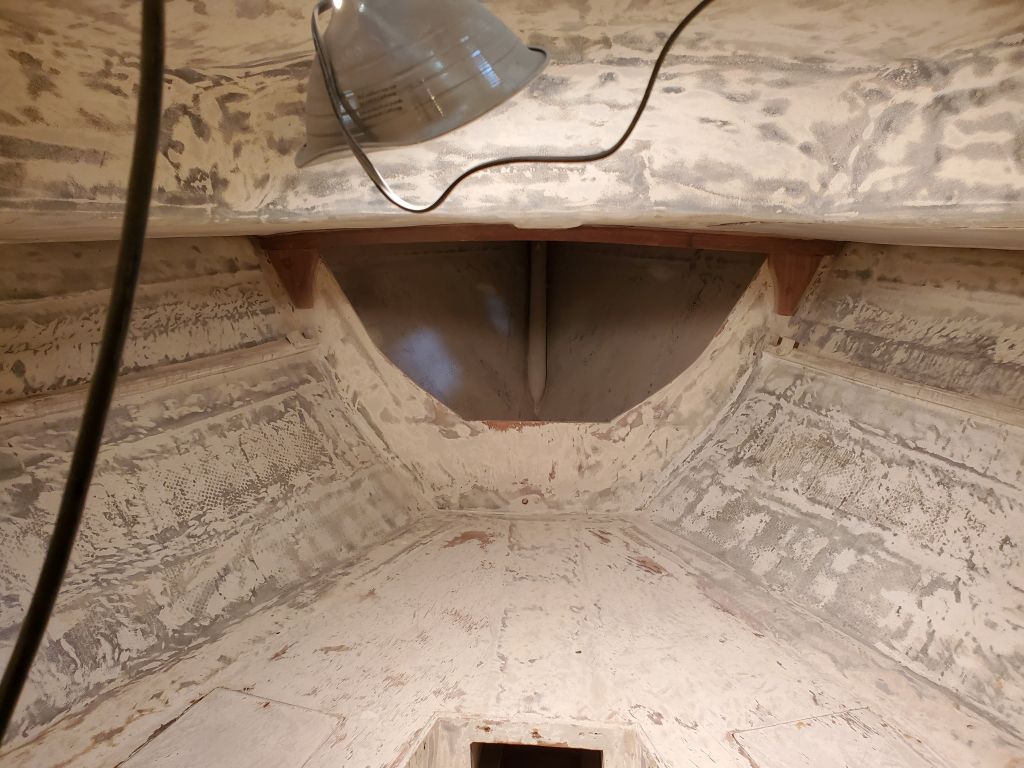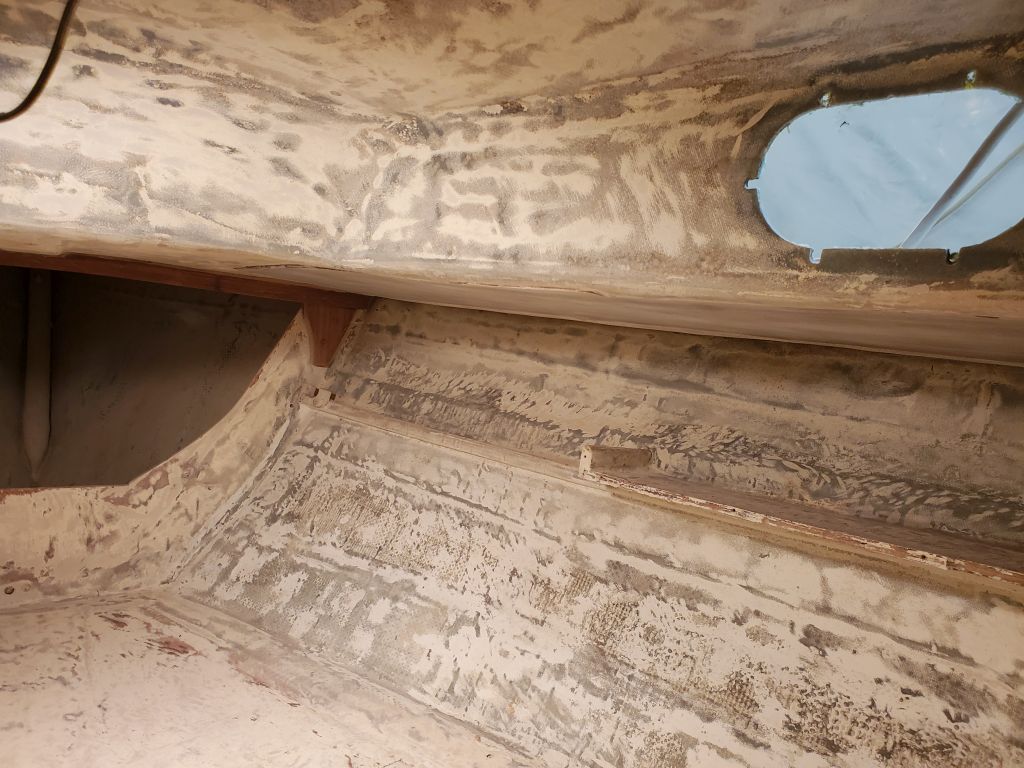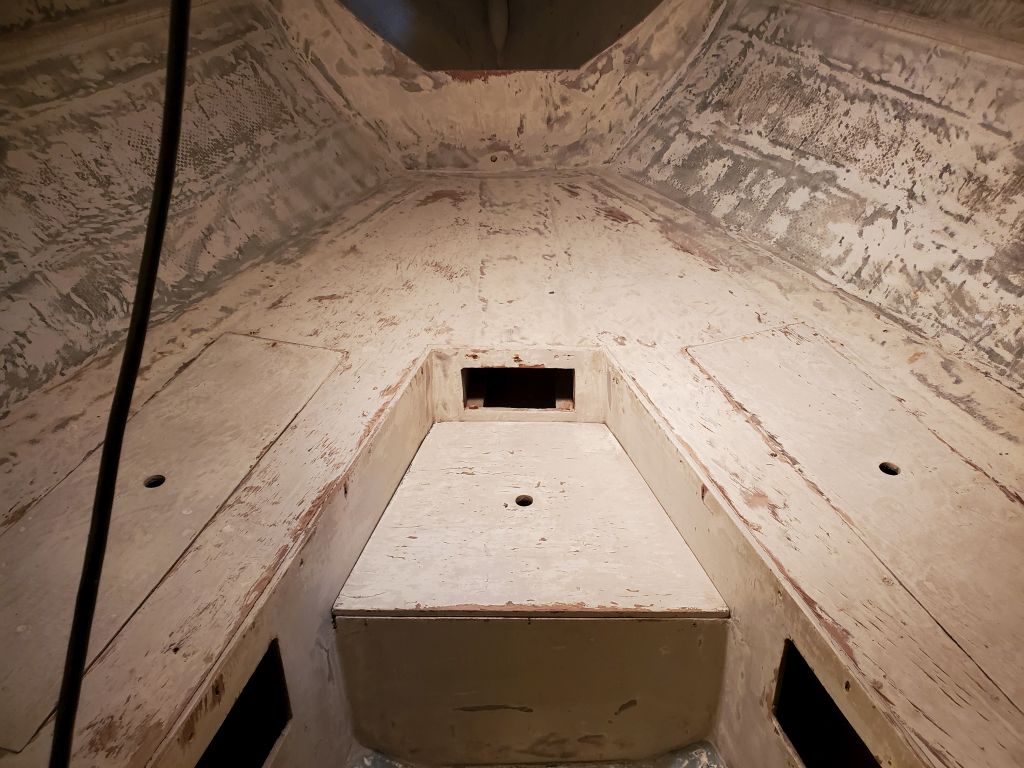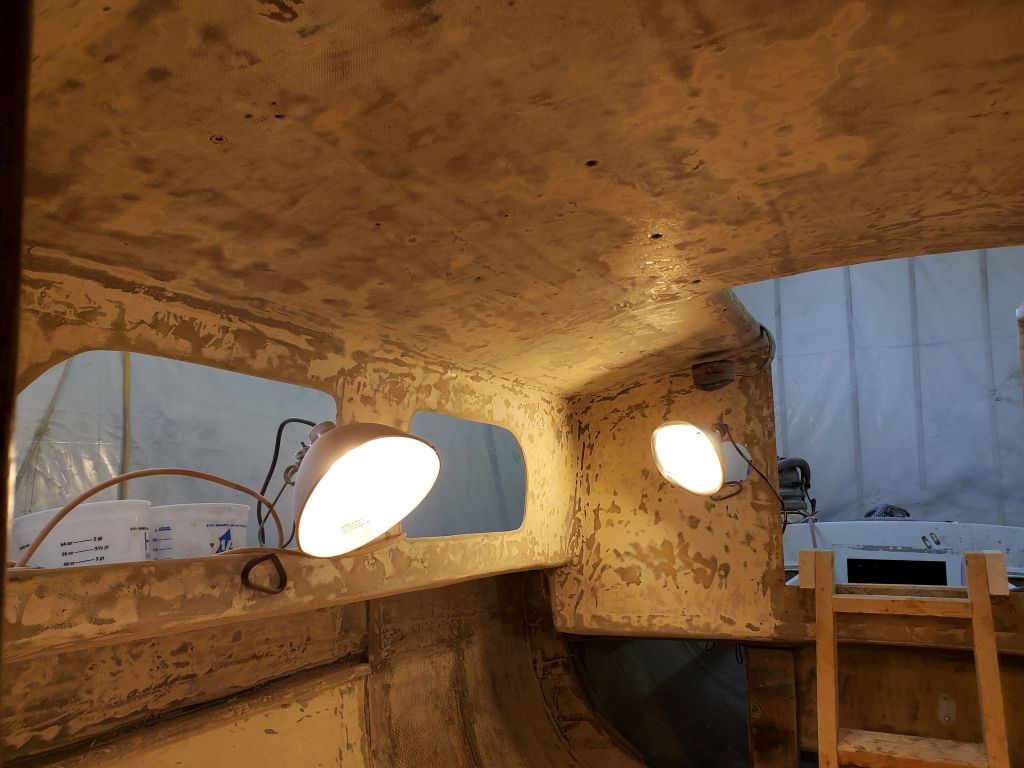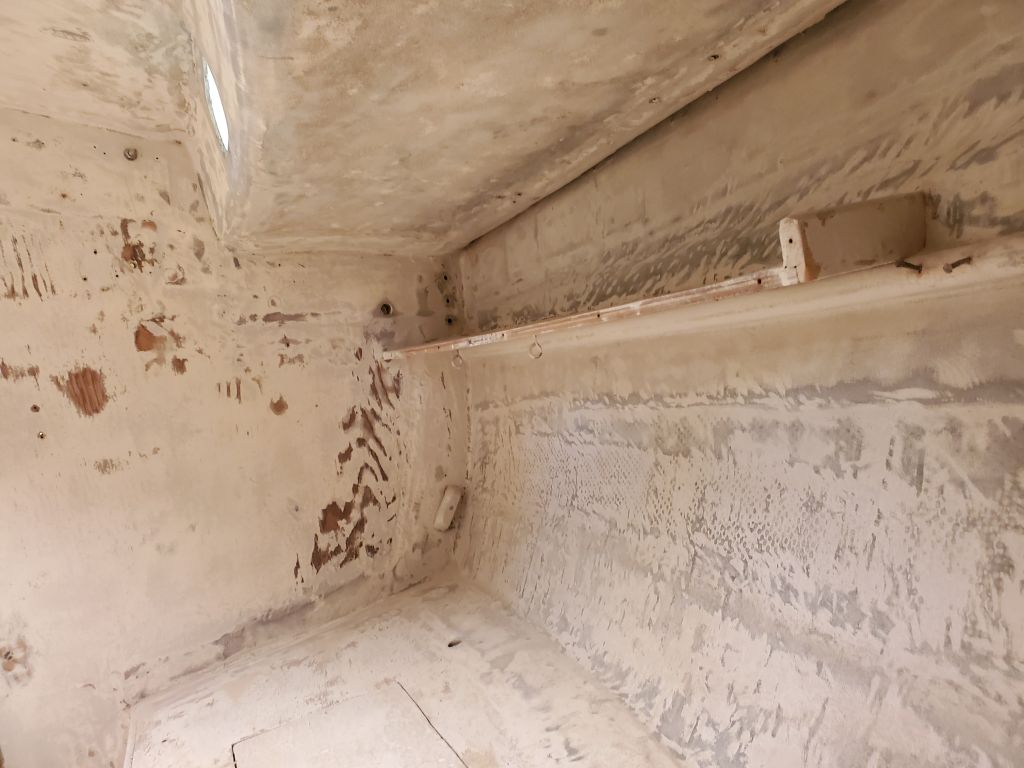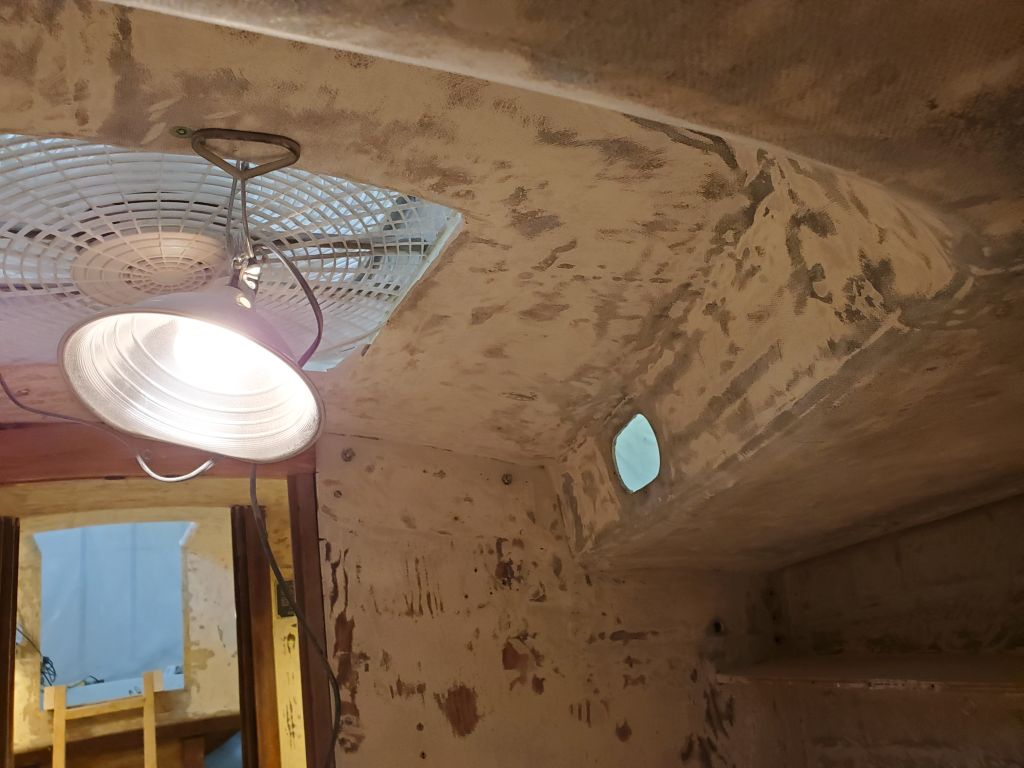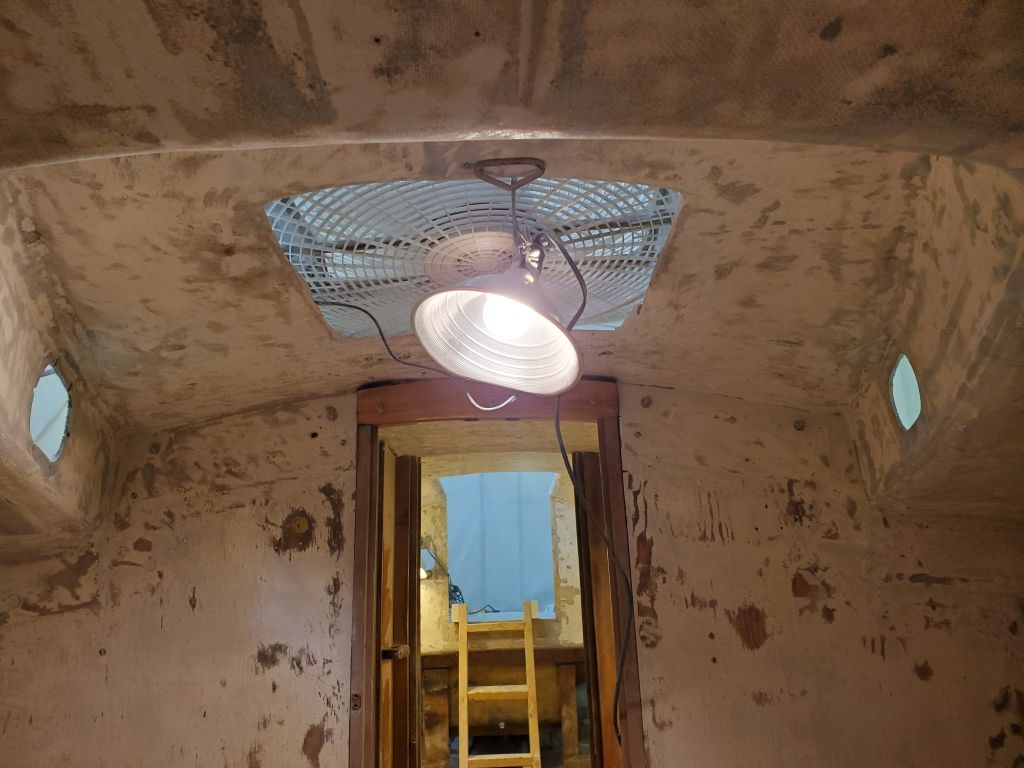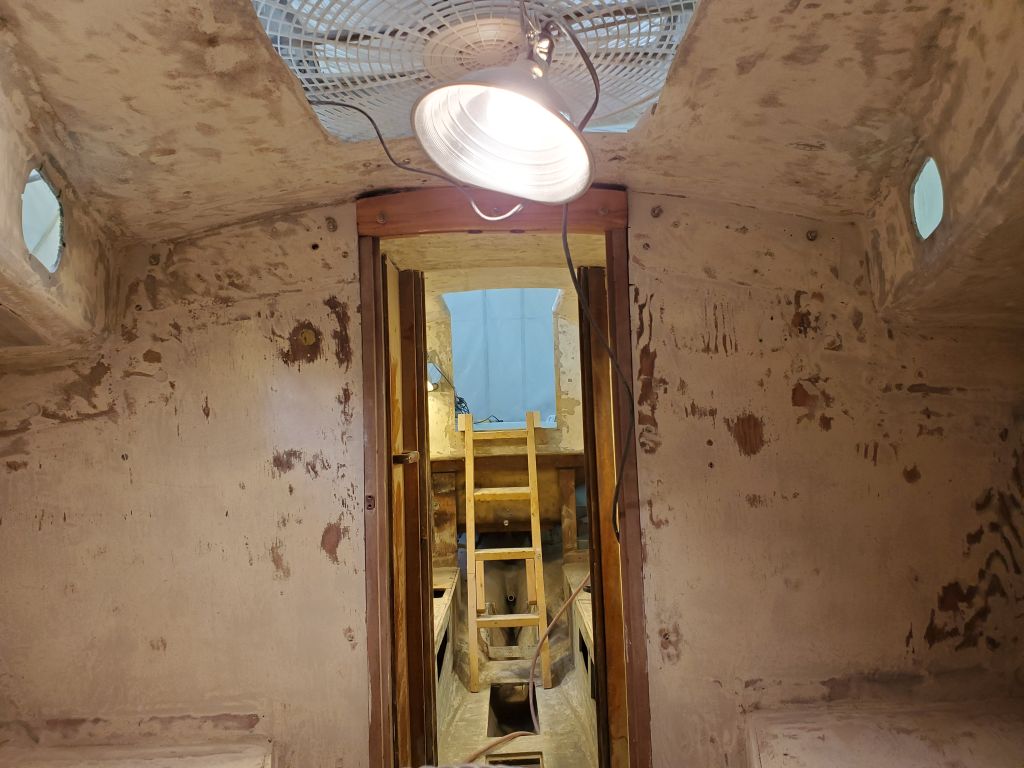

(page 68 of 165)

Lively Heels Phase 3-9

Thursday

First thing, I reconfigured slightly the new potable water hoses and valve system to change the alignment of the hose connection for priming and winterizing, returning it to its original orientation.
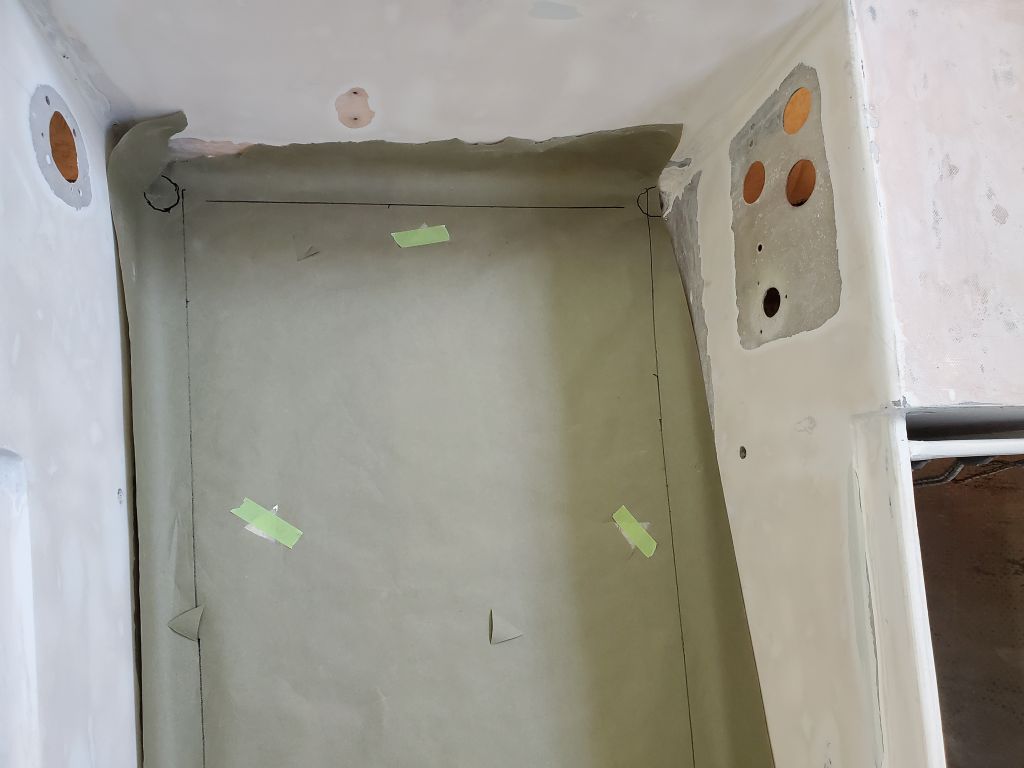
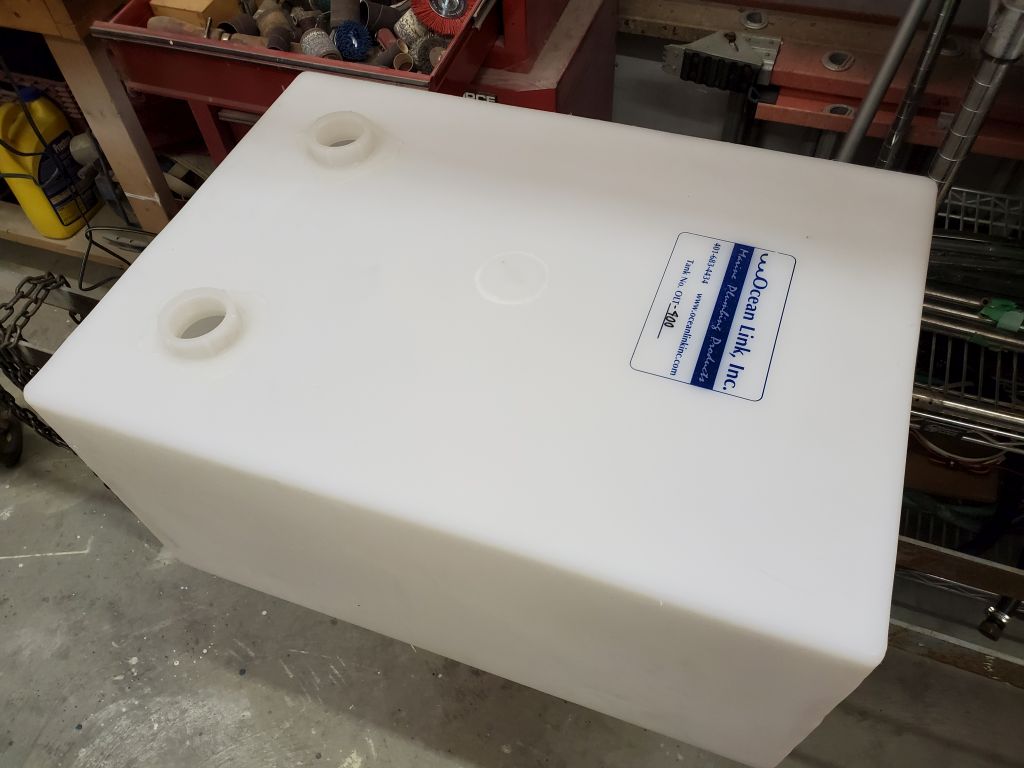
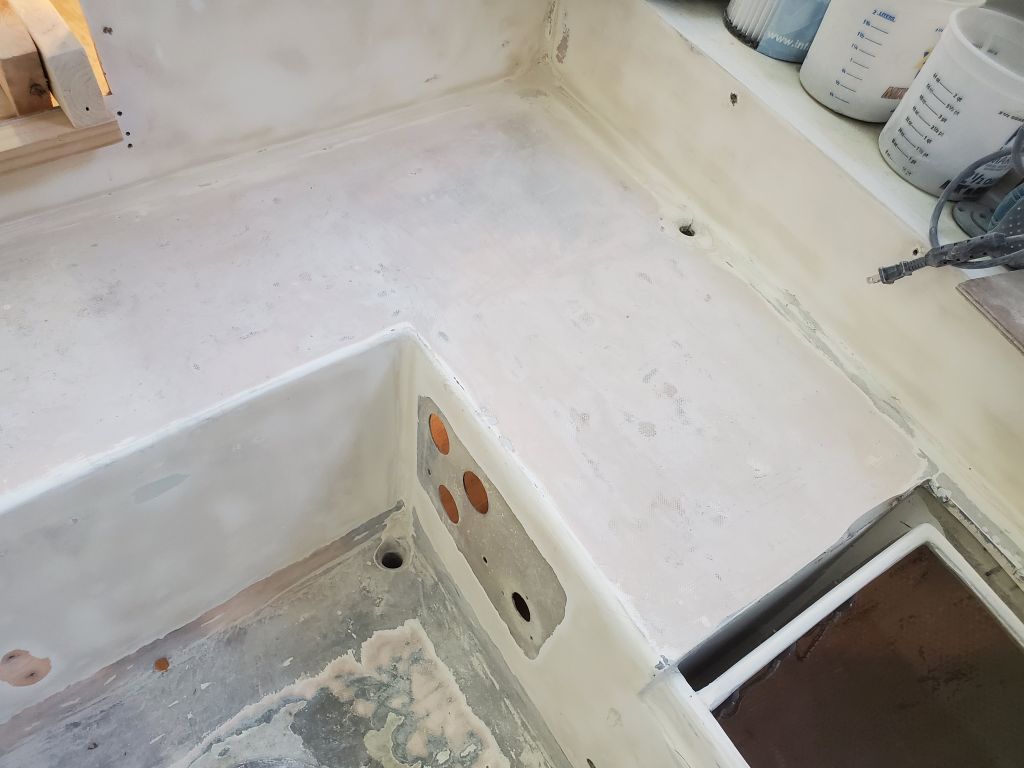
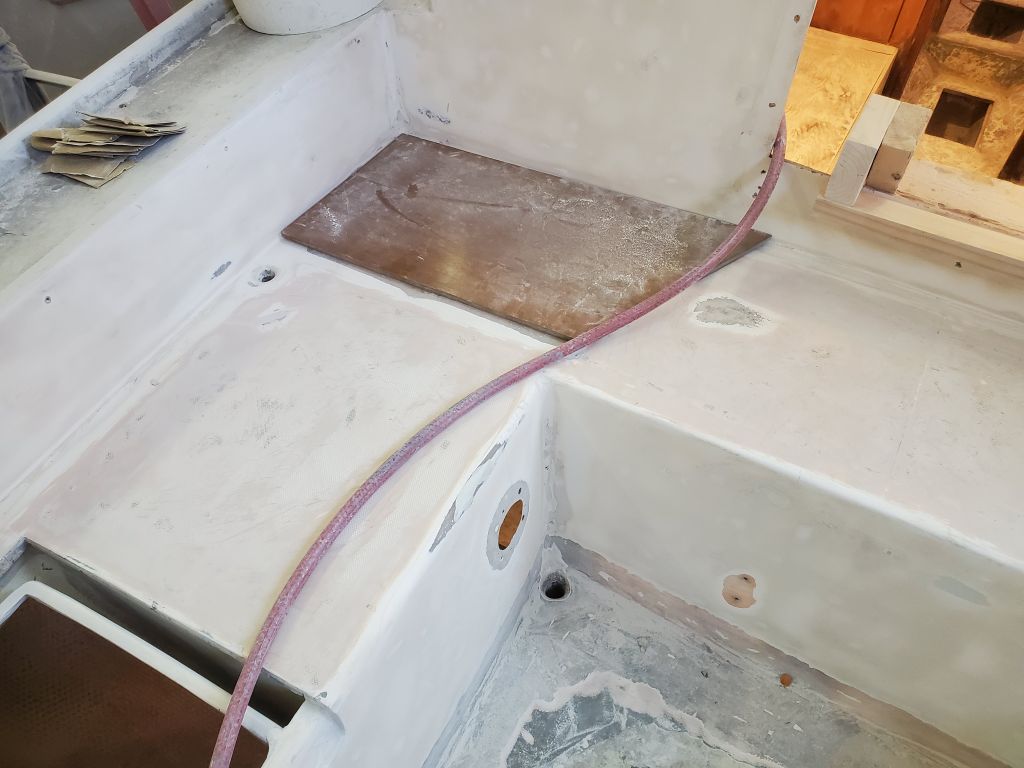
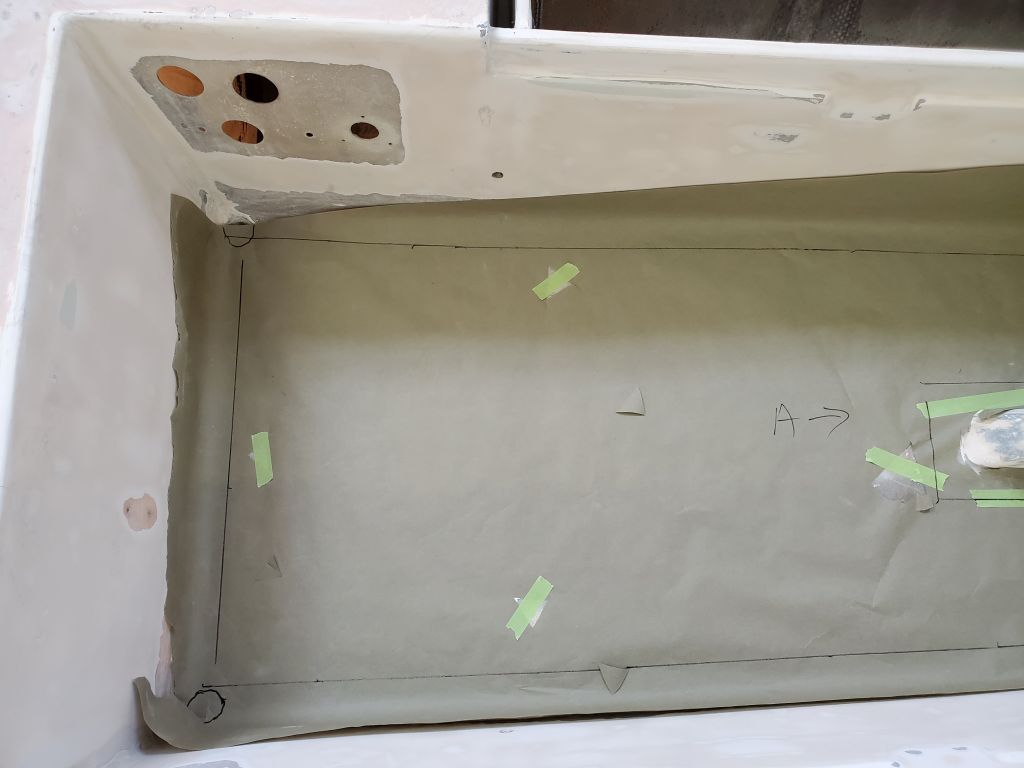
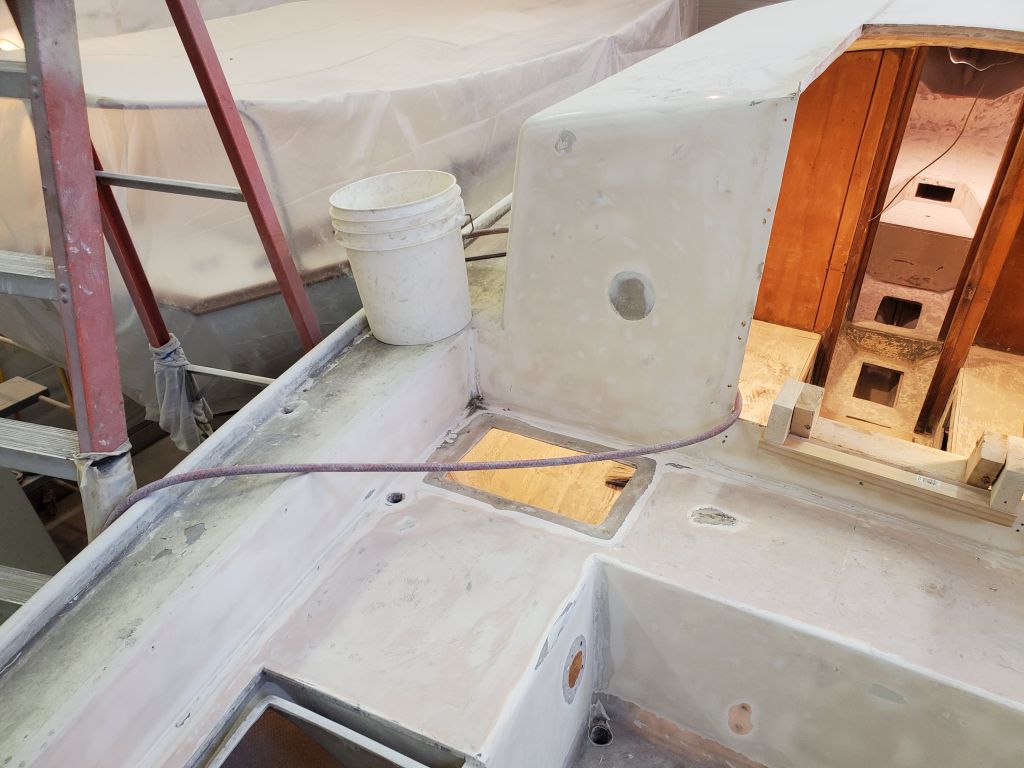
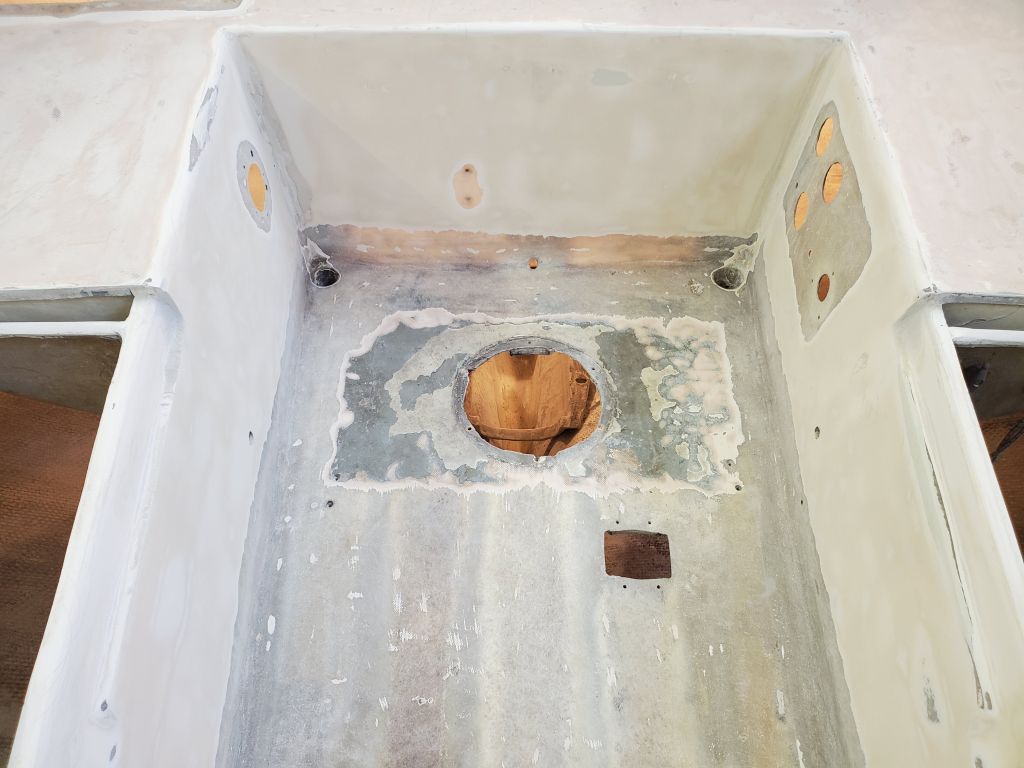
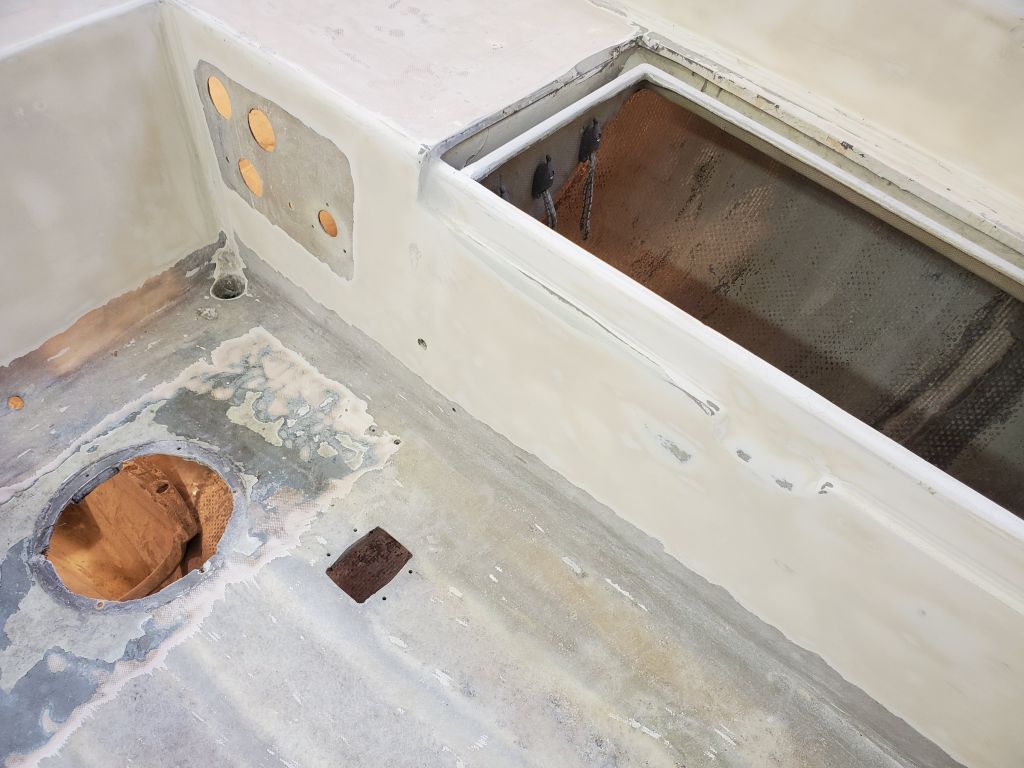
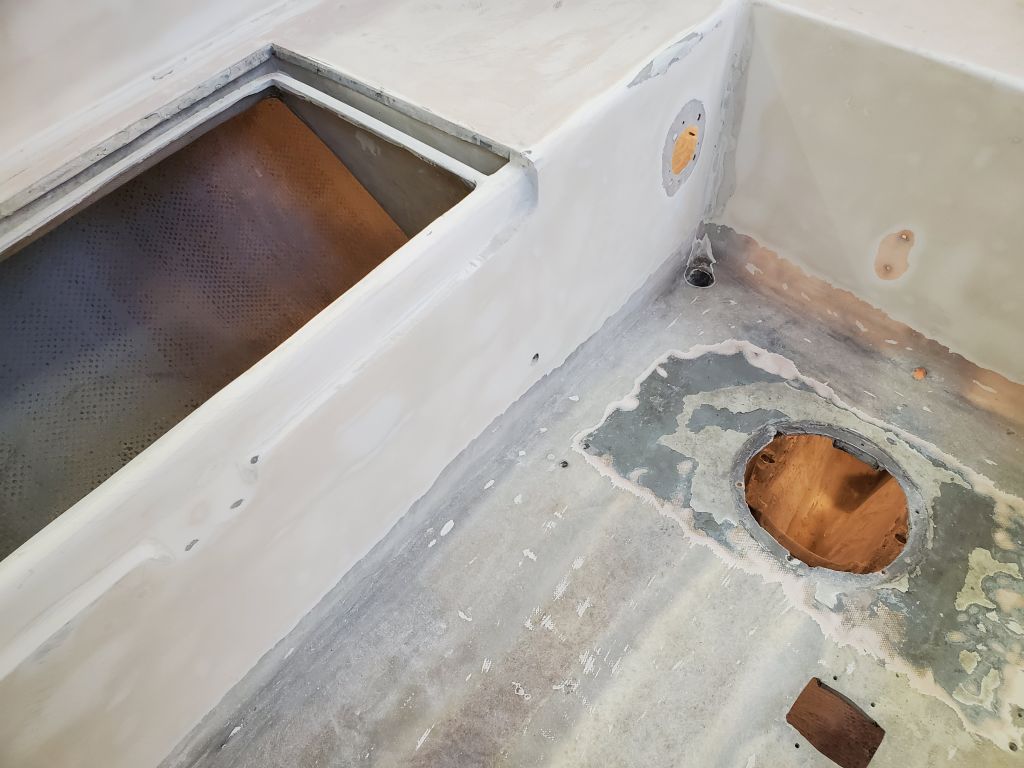
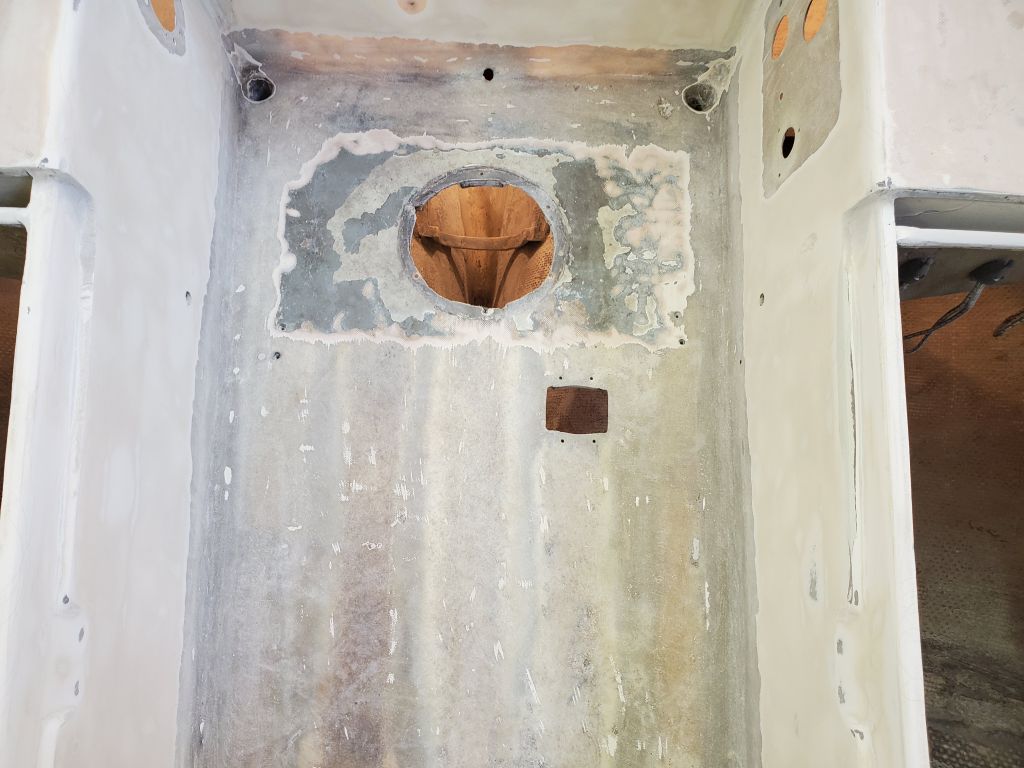
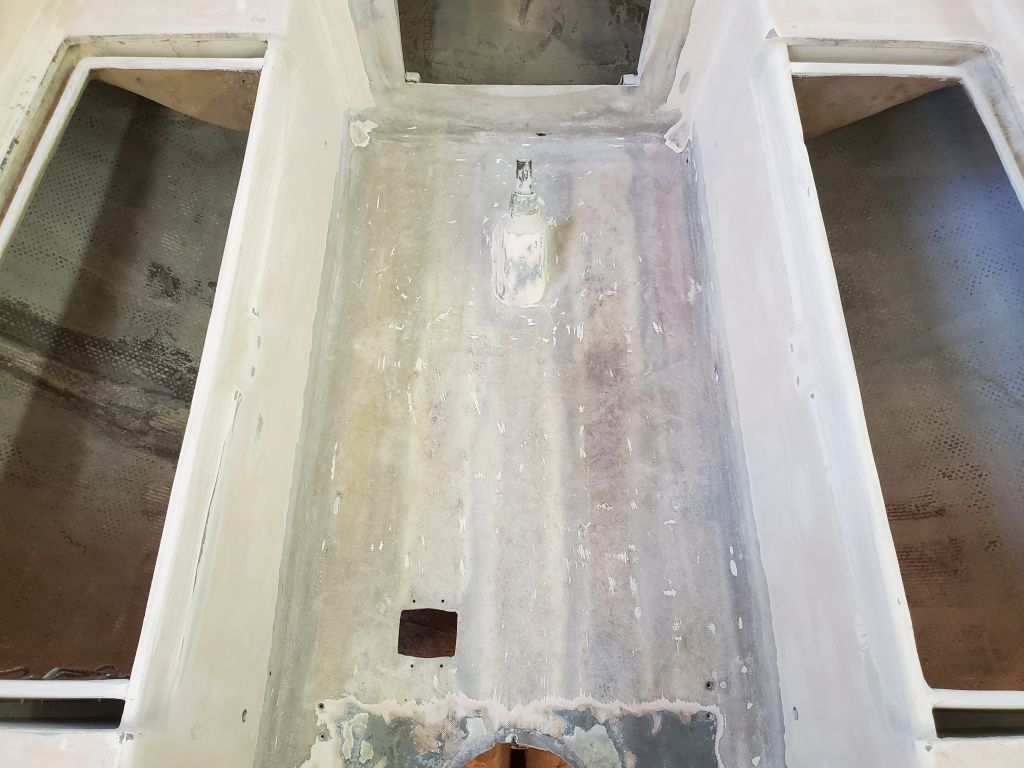
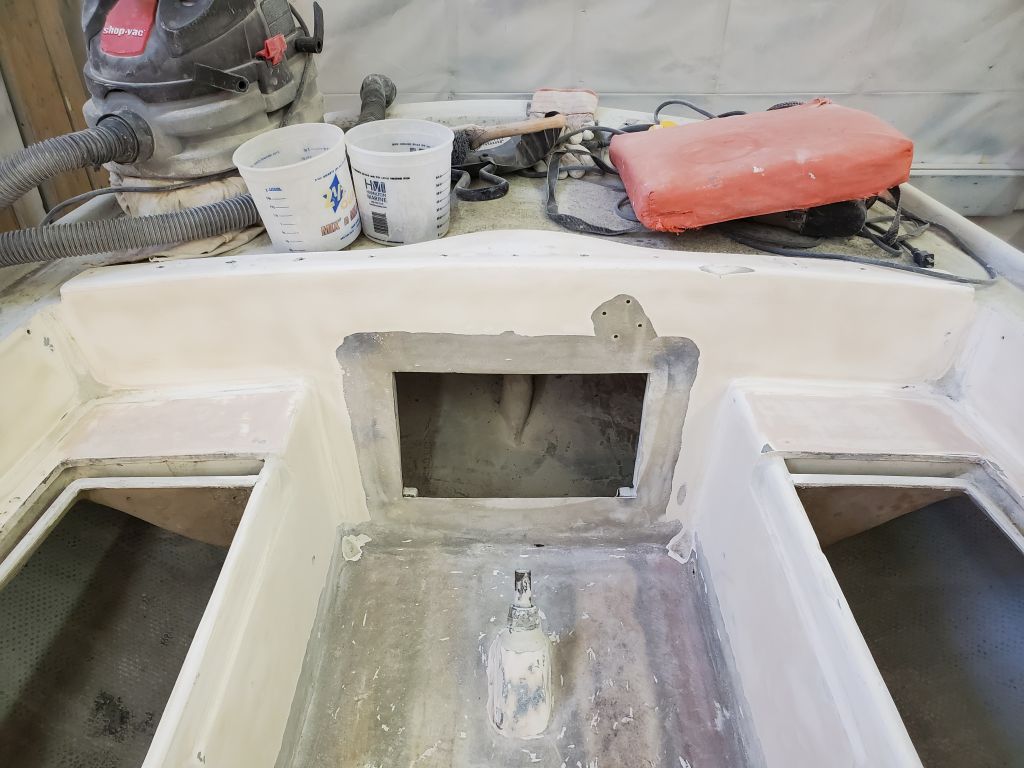
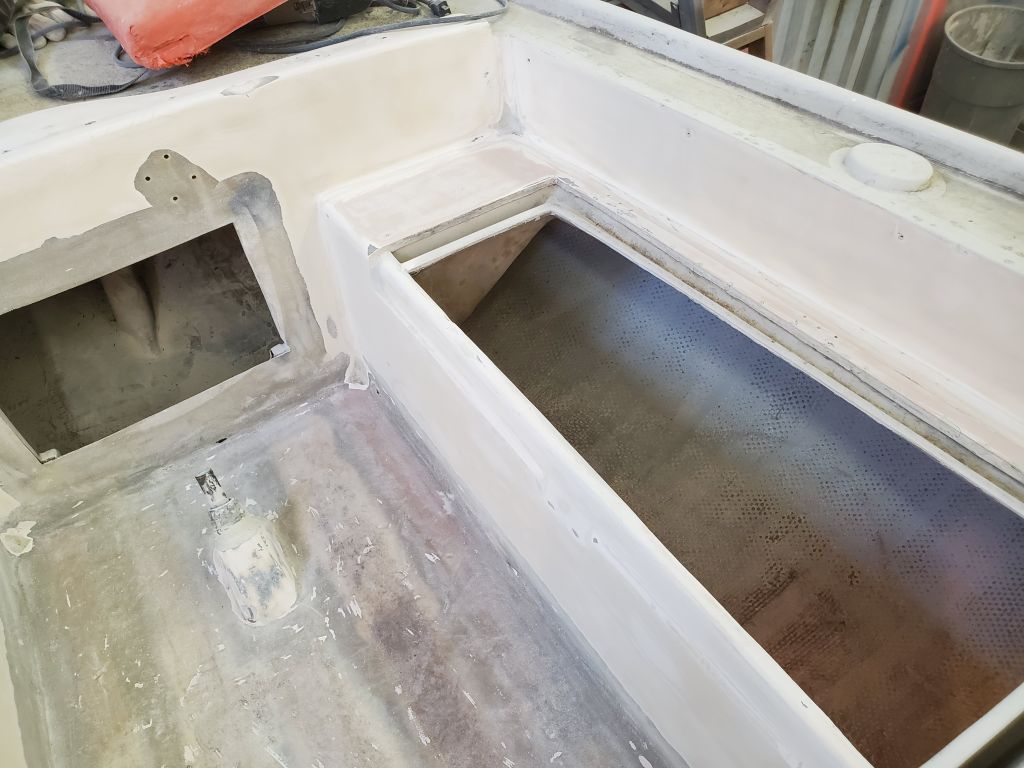
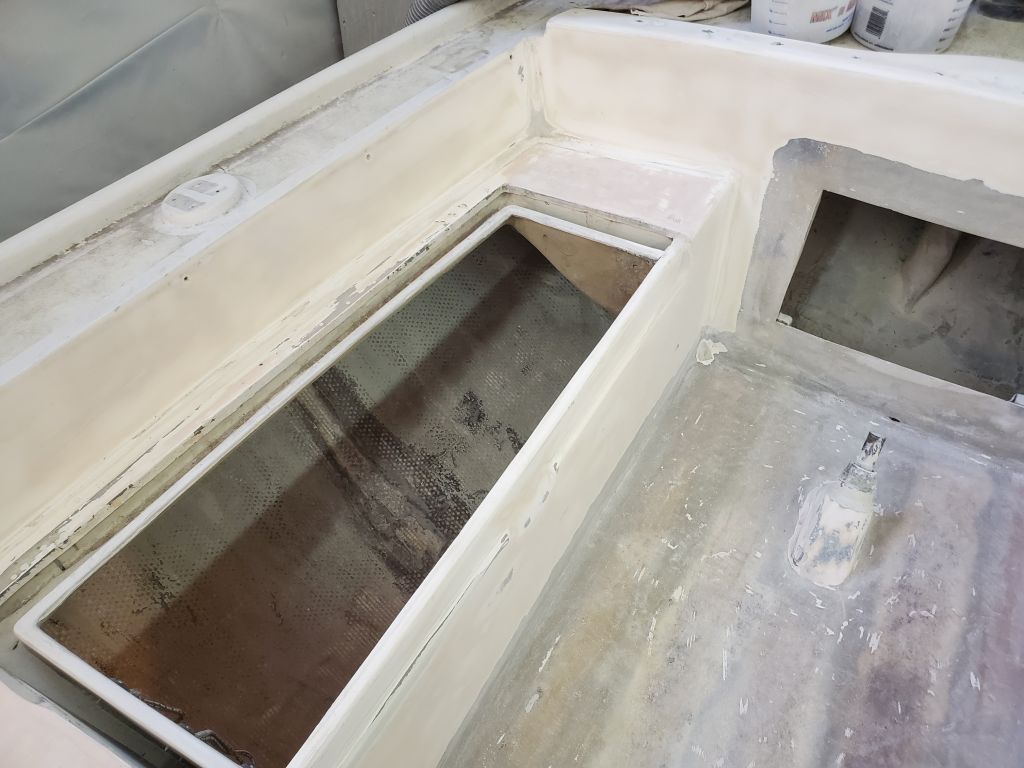
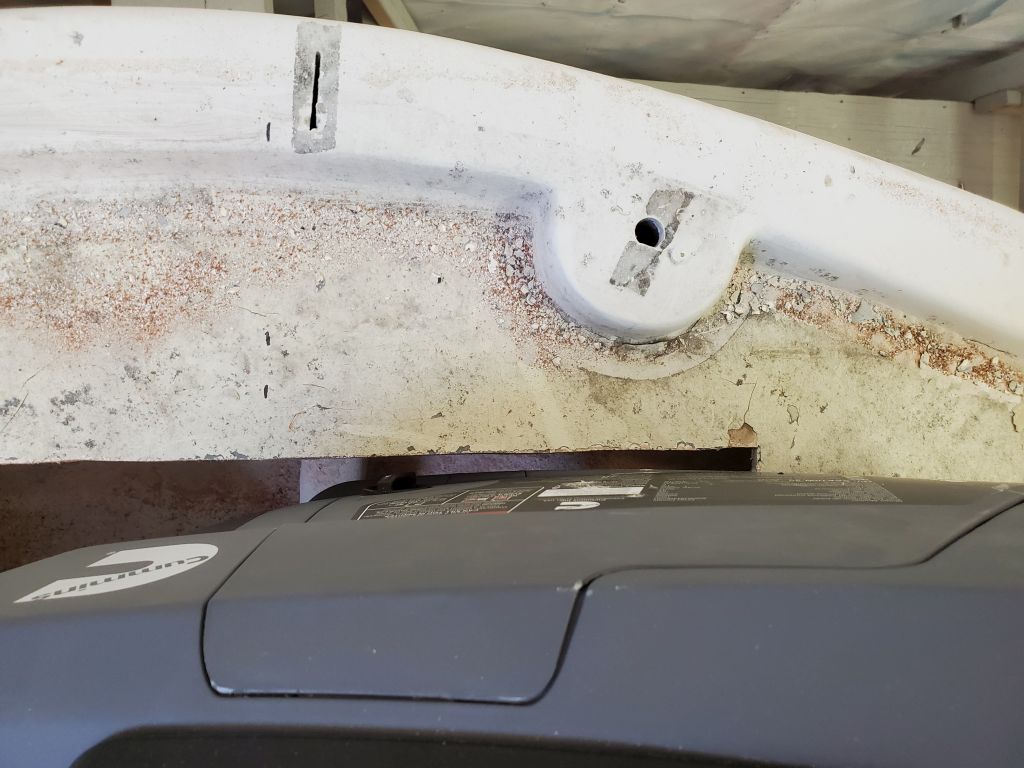
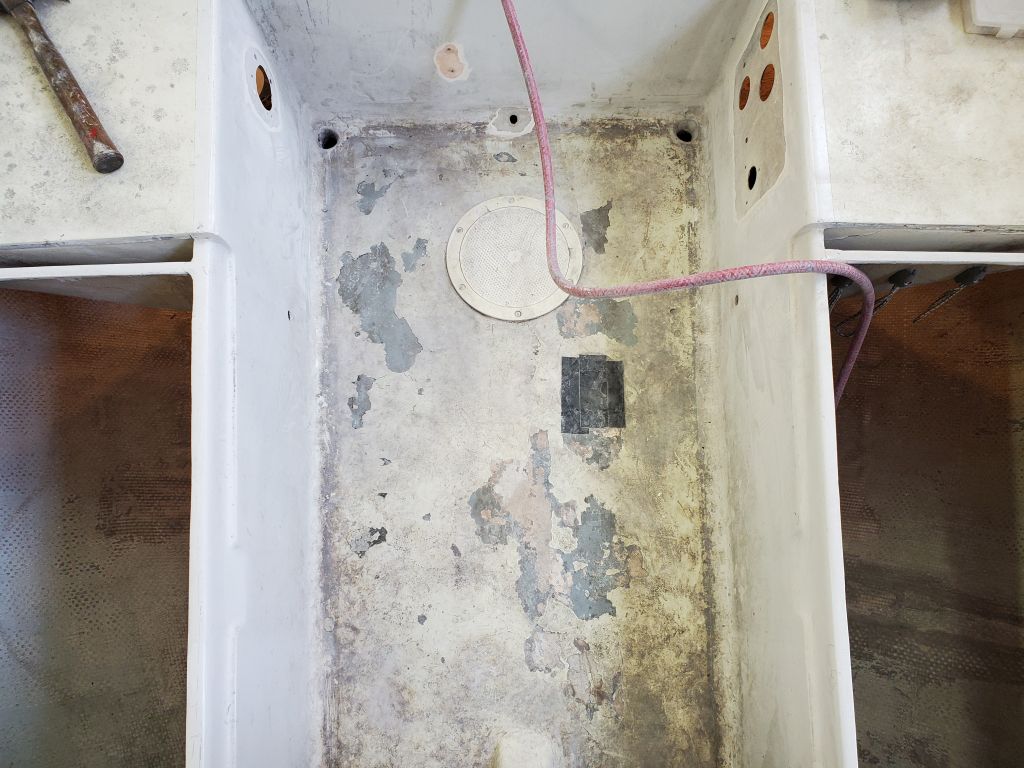
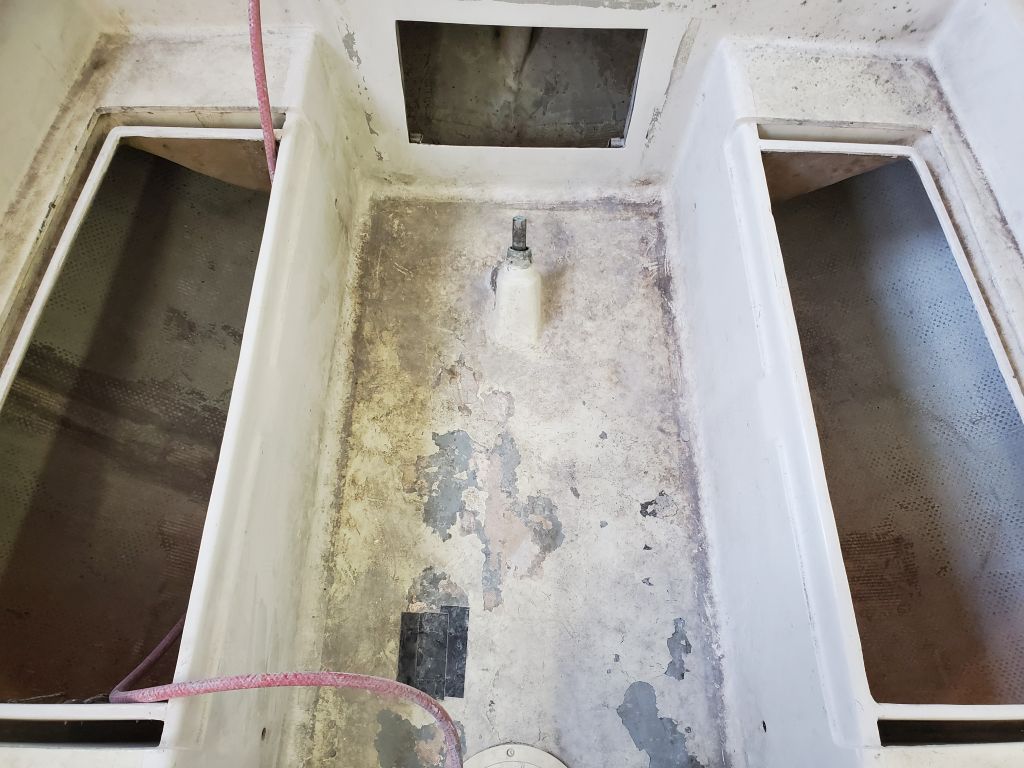
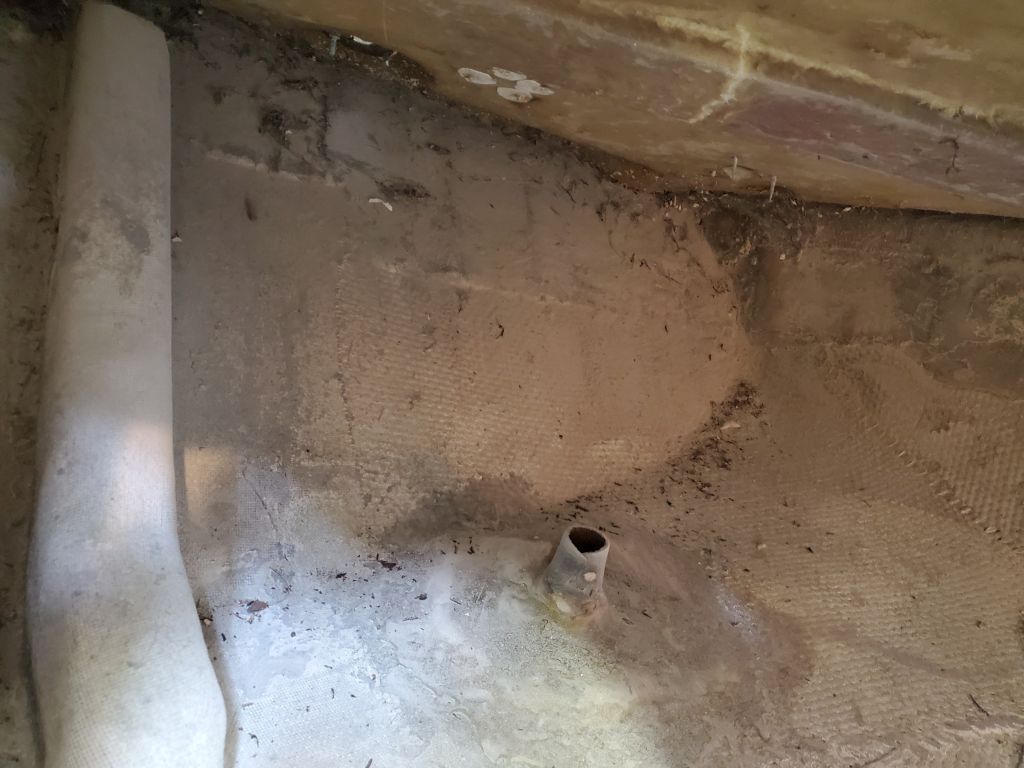
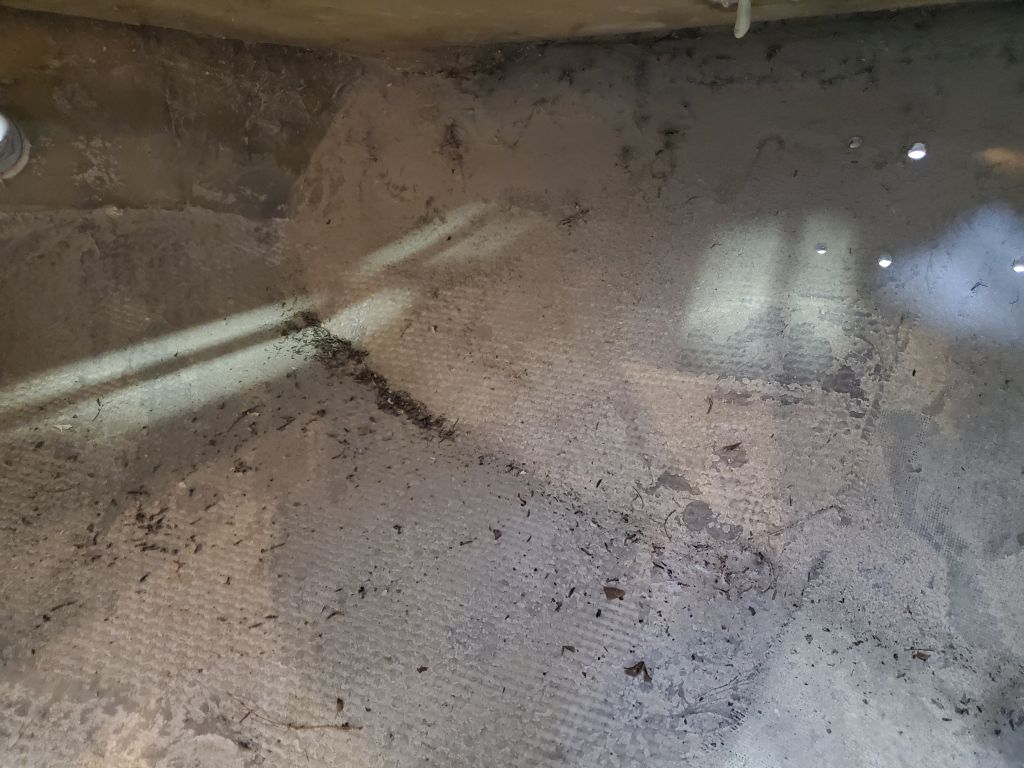
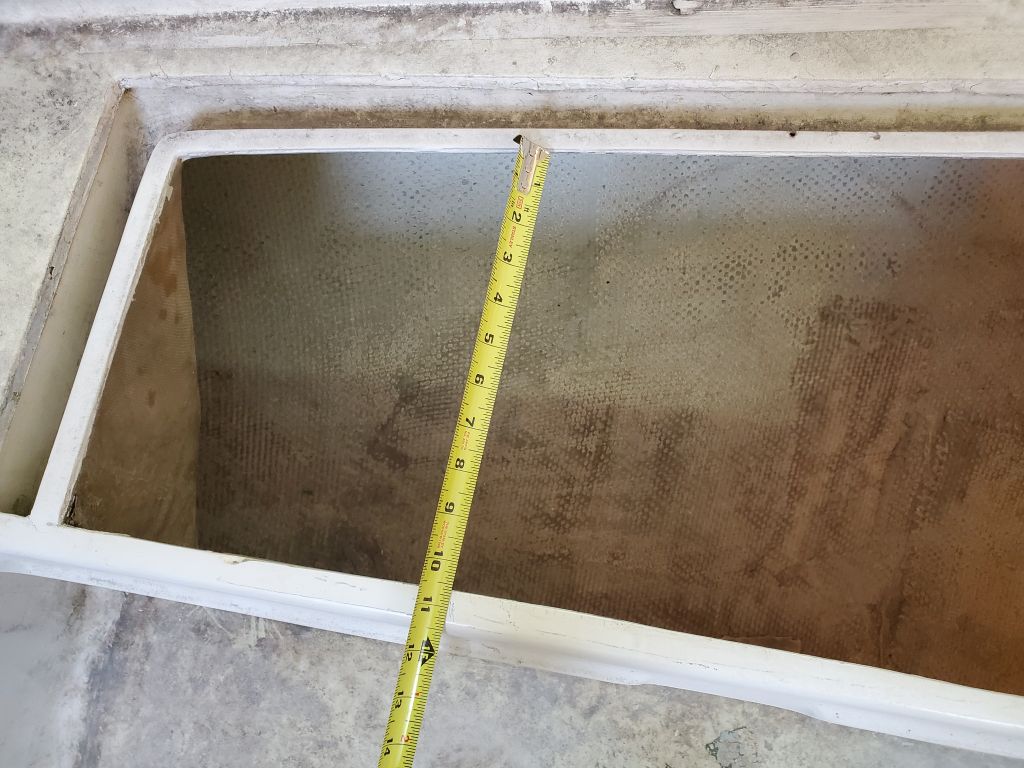
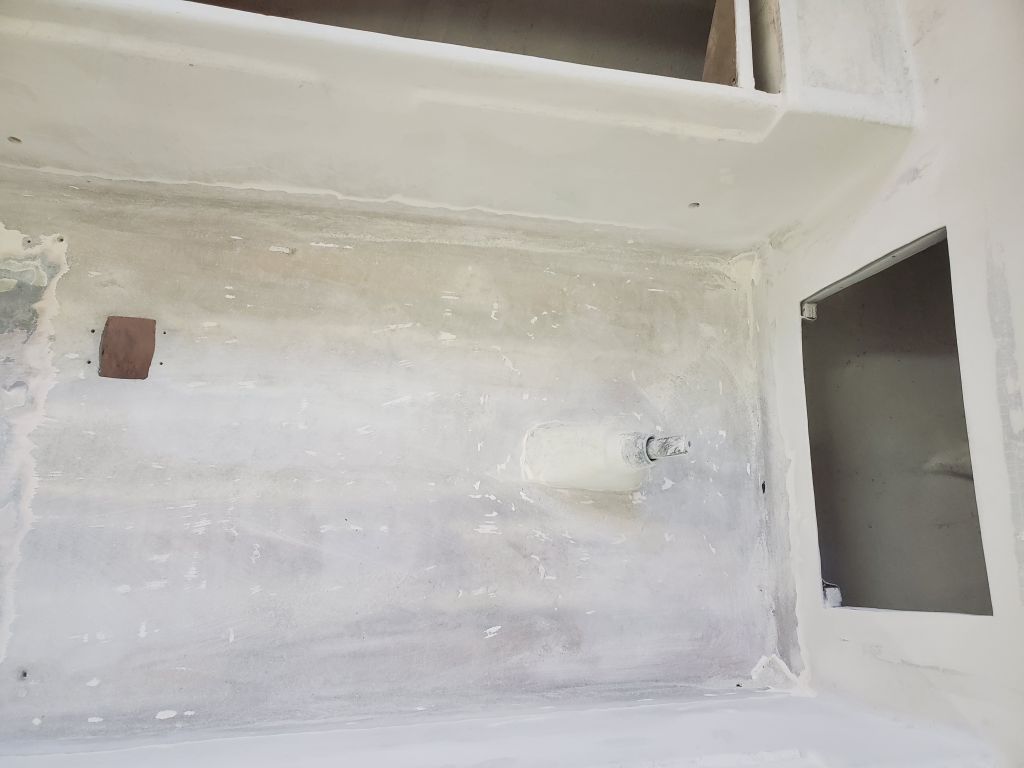
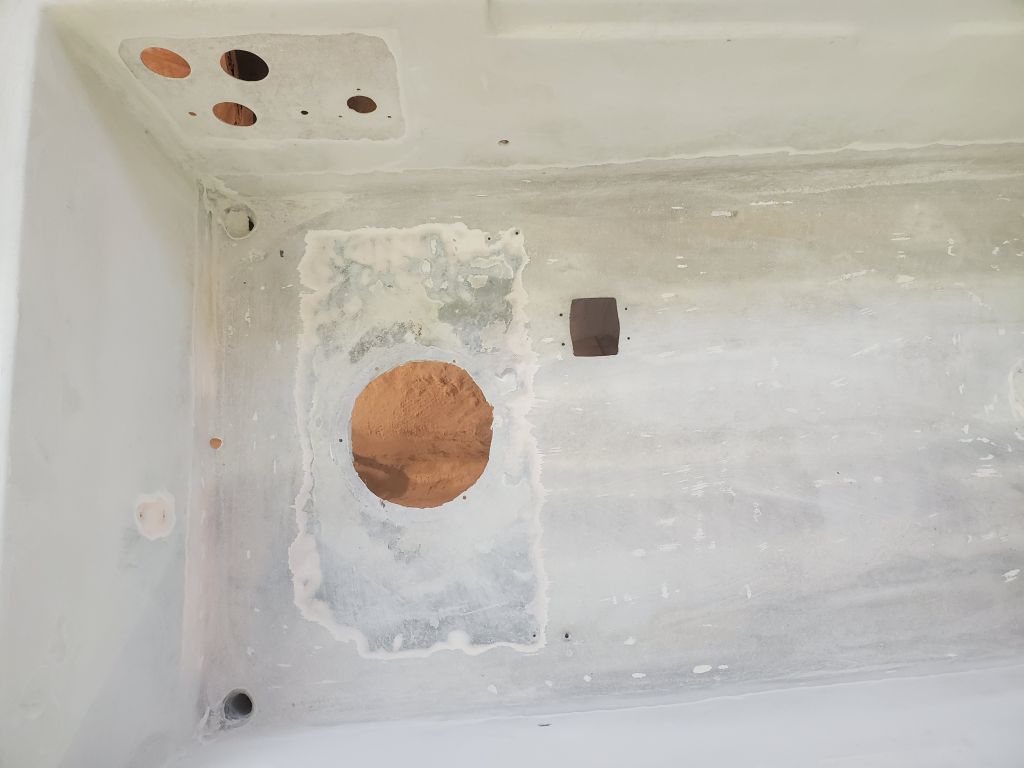
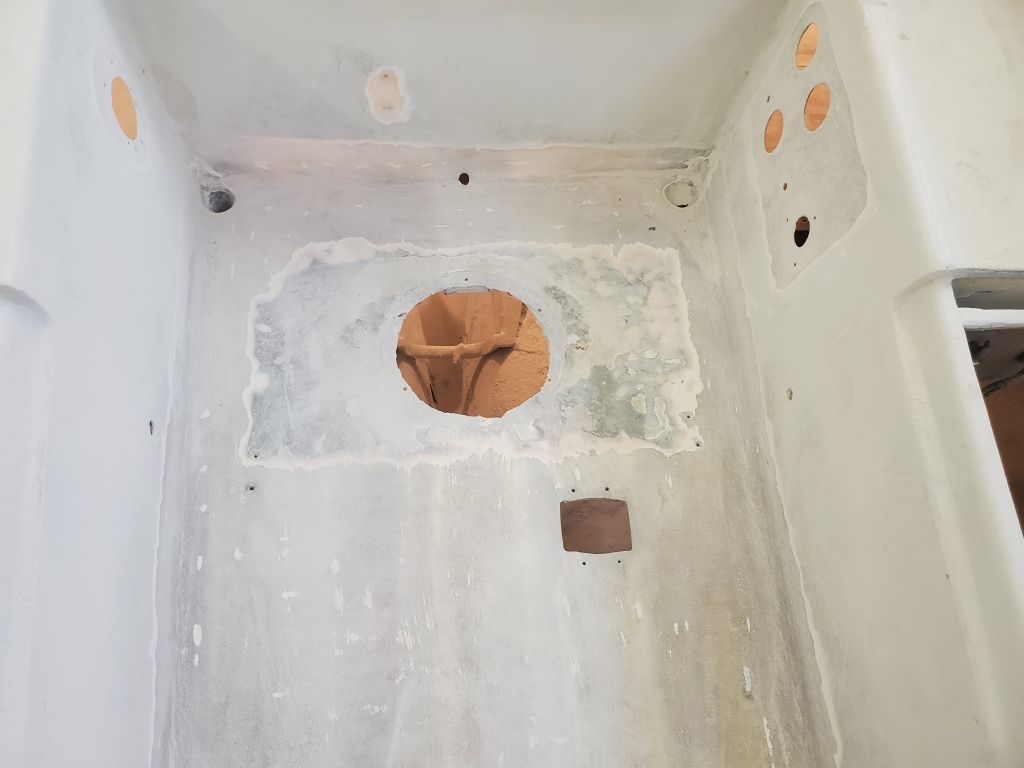
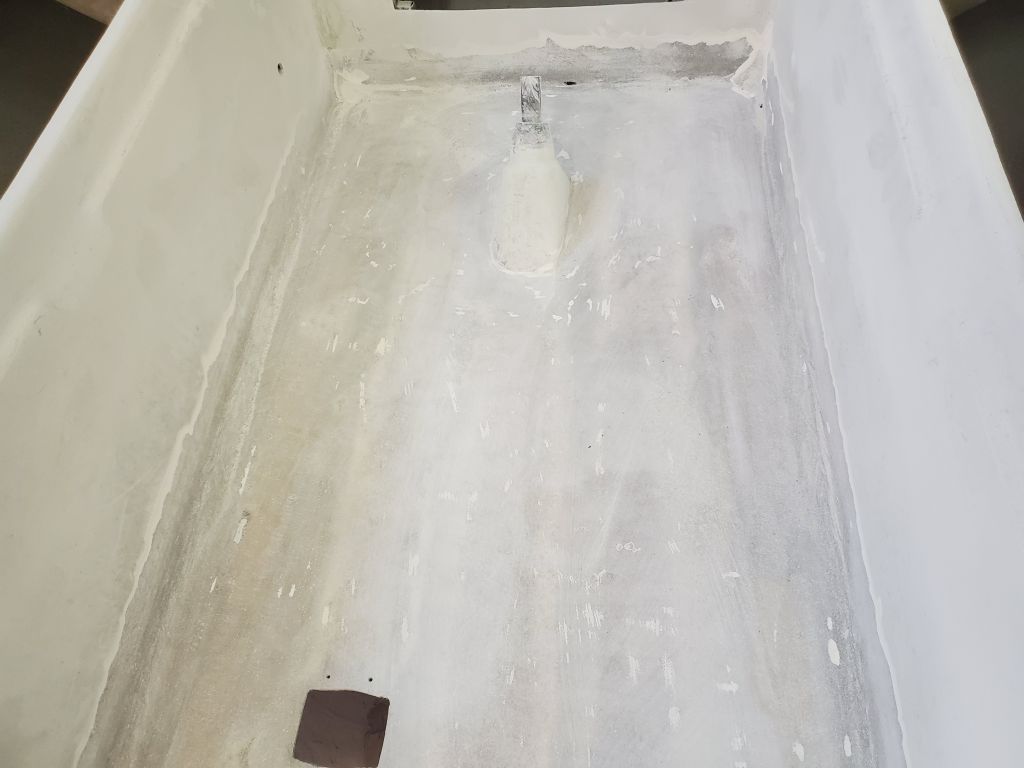
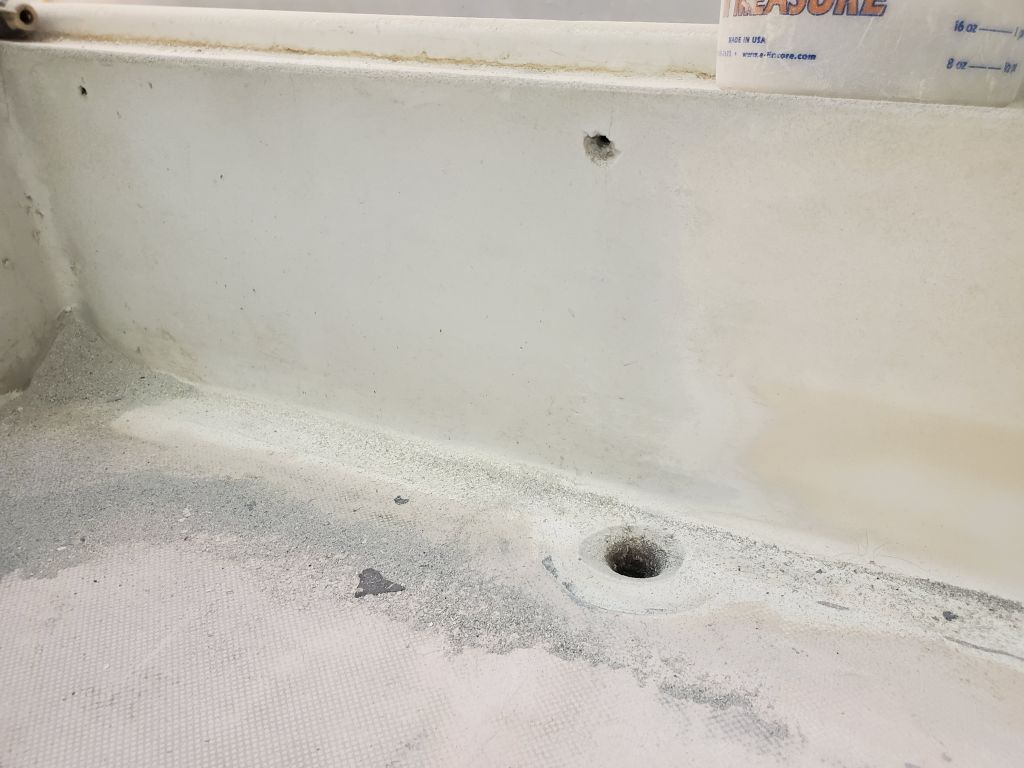
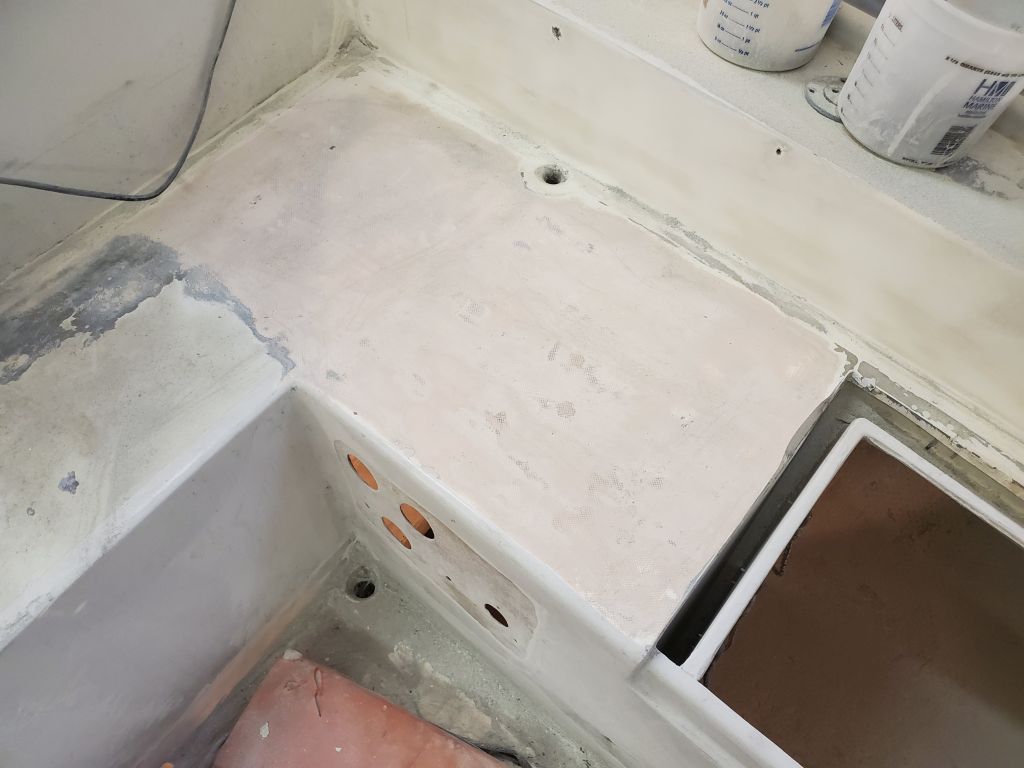
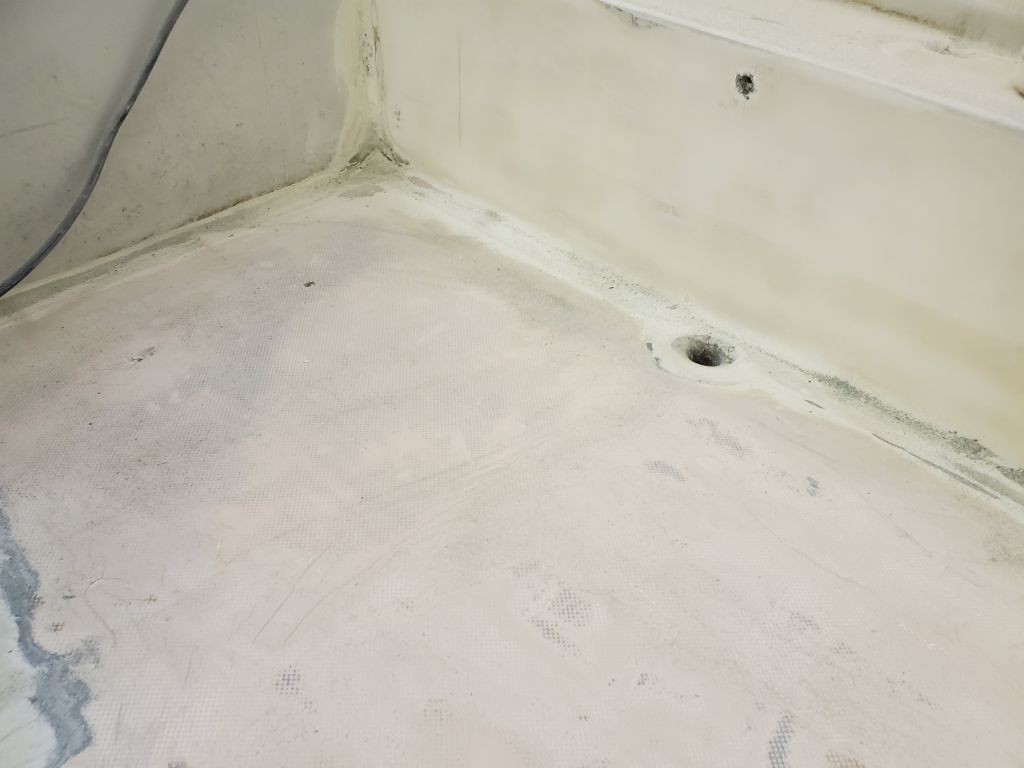
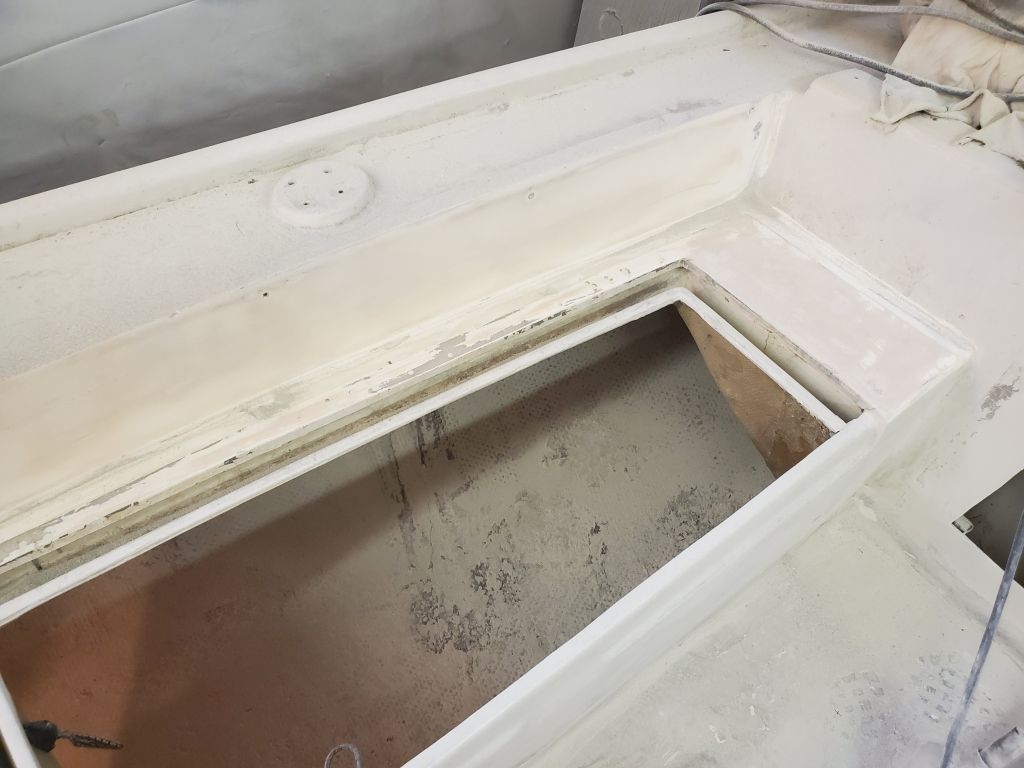
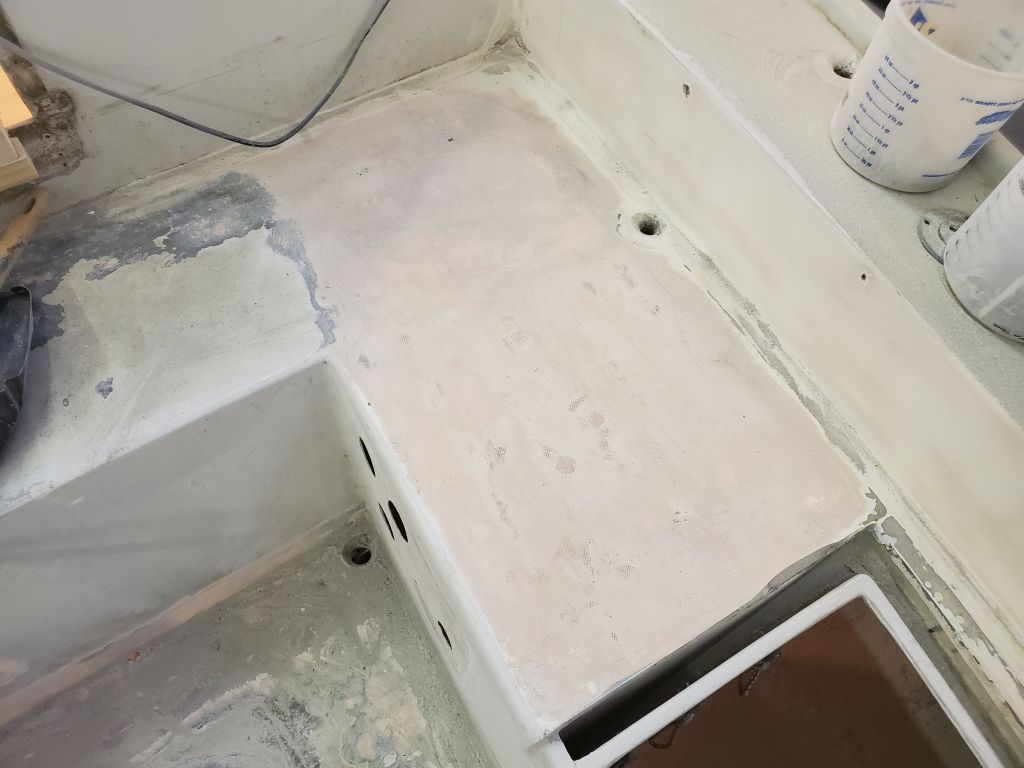
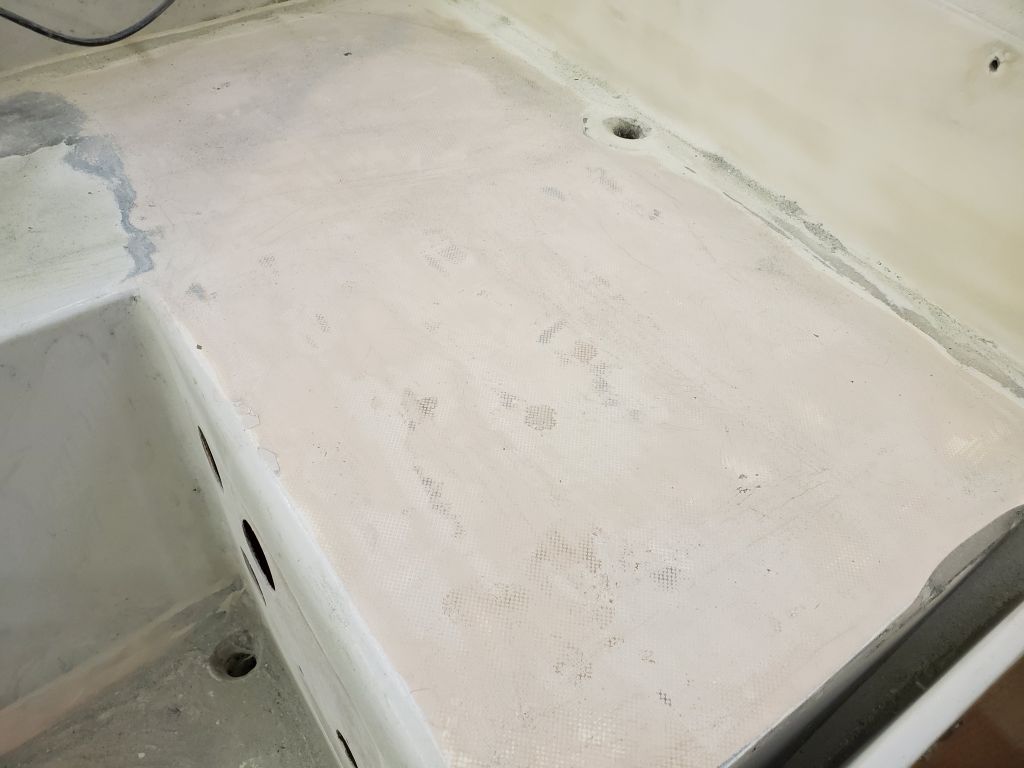
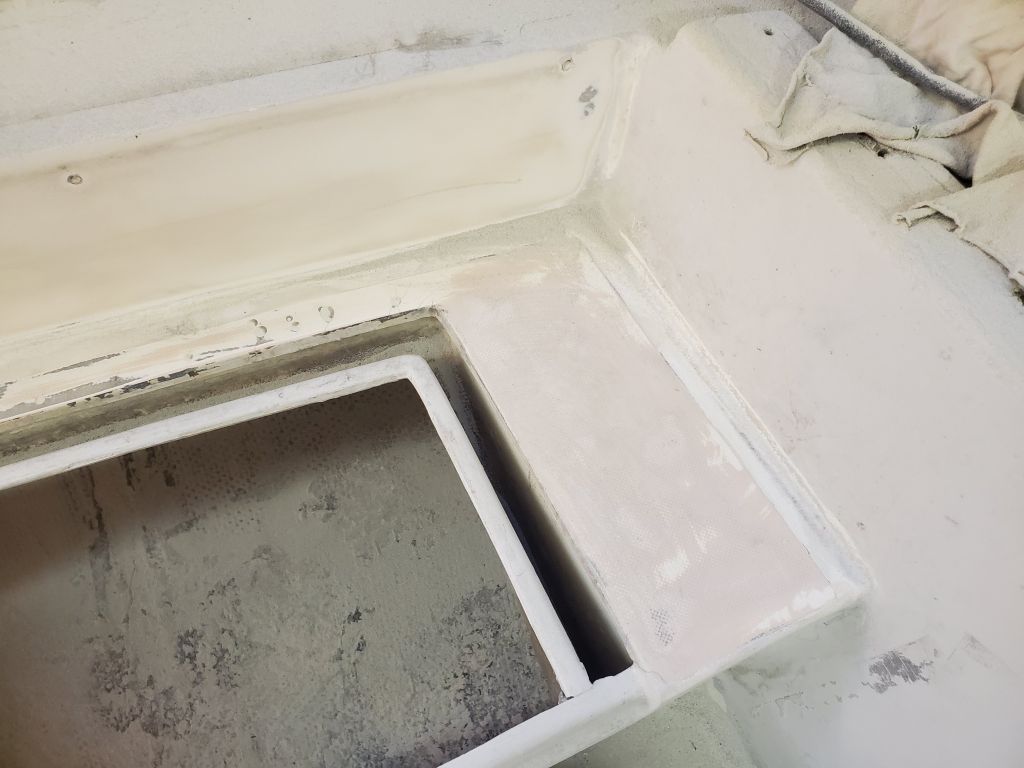
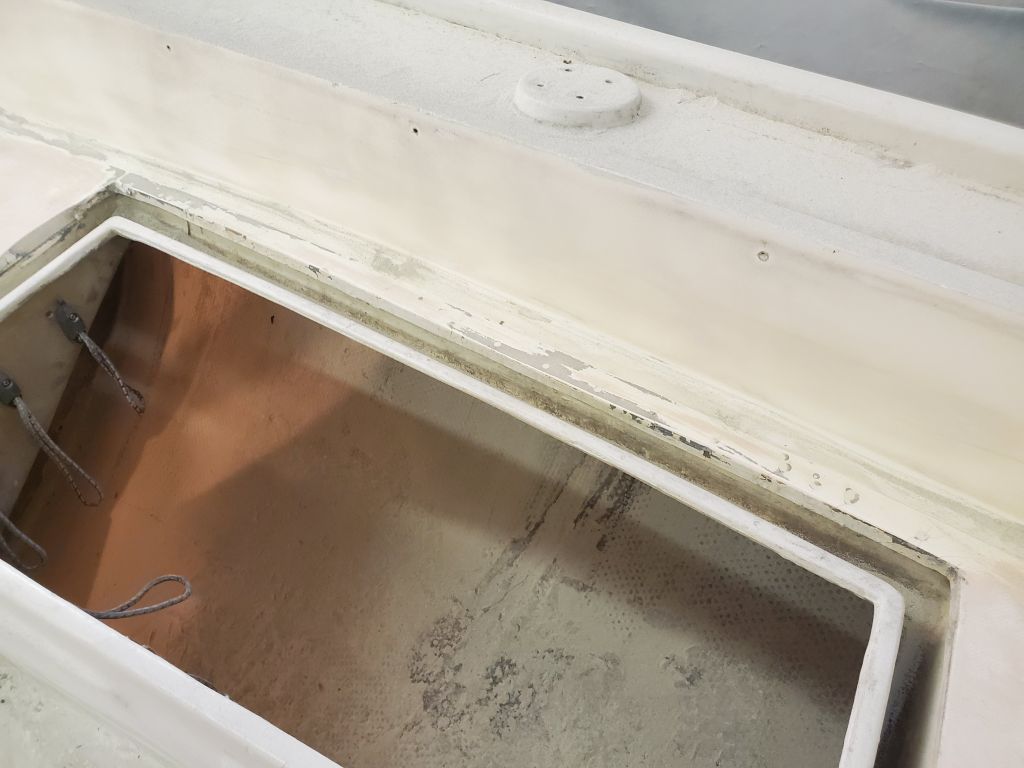
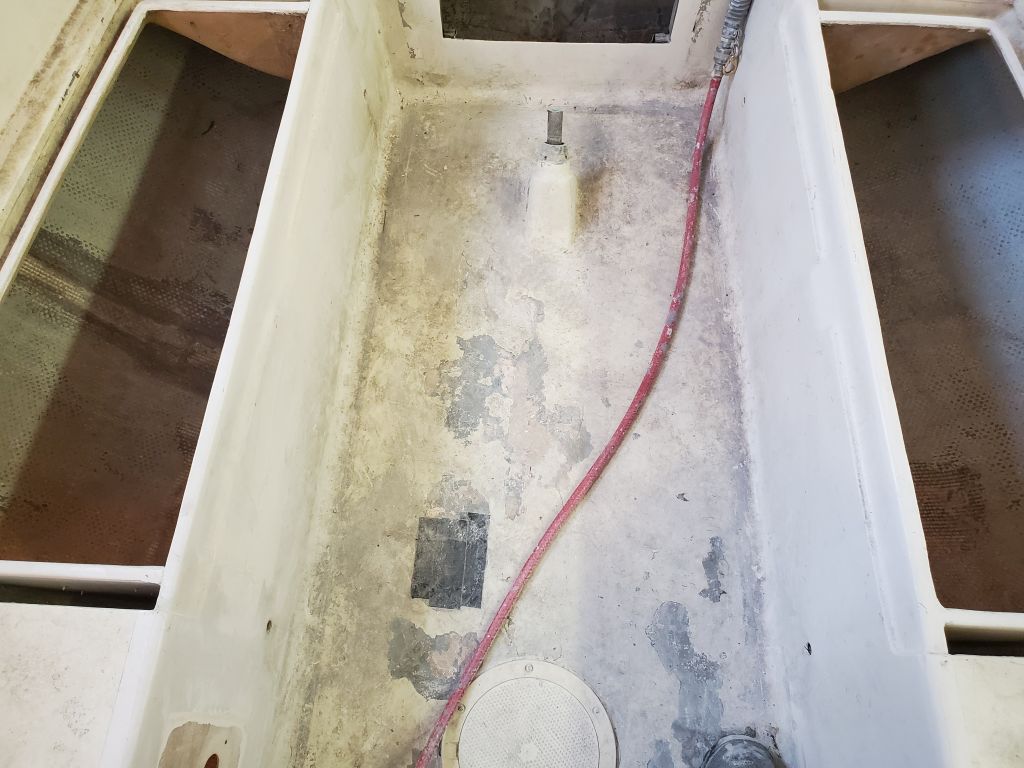
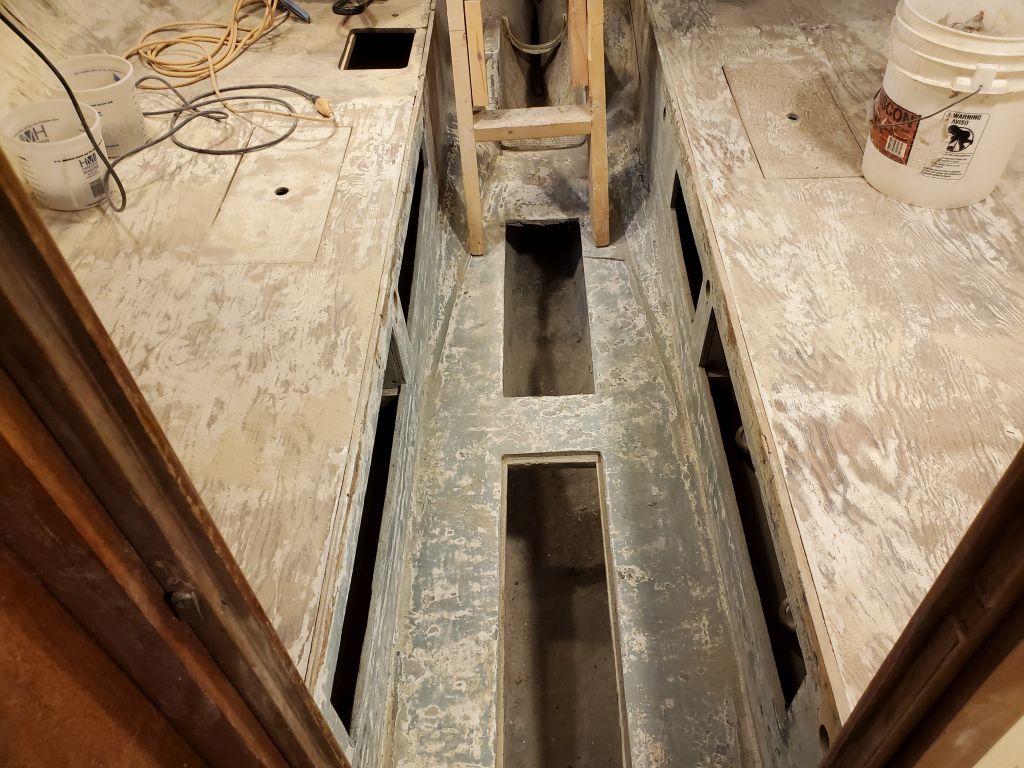
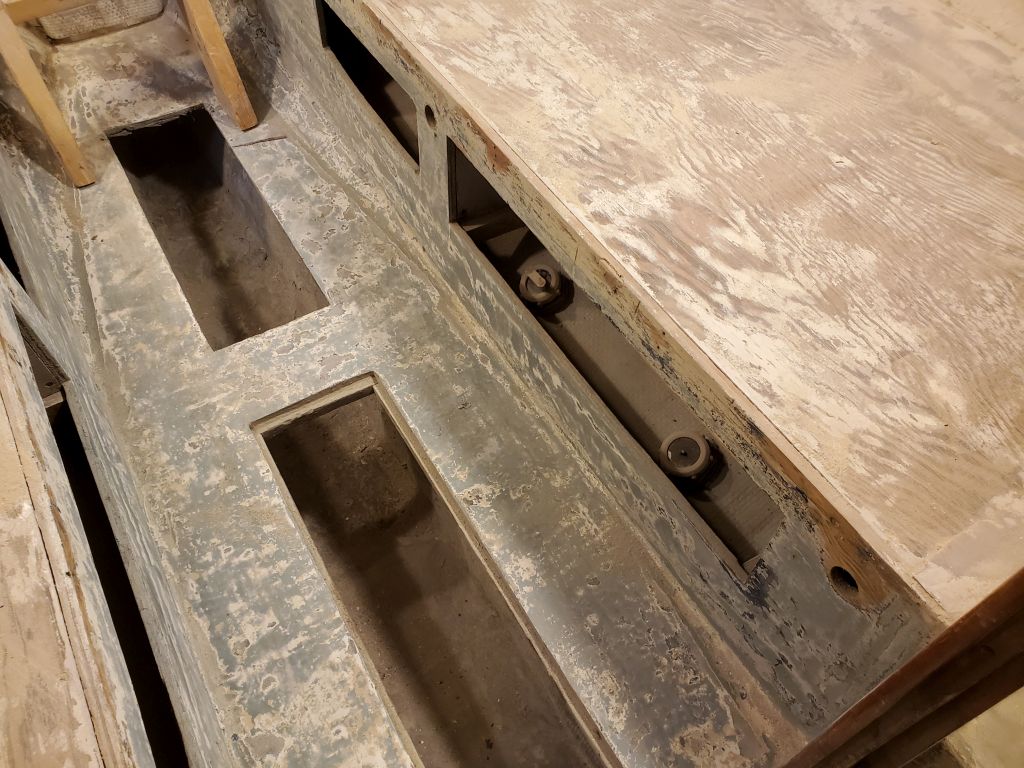
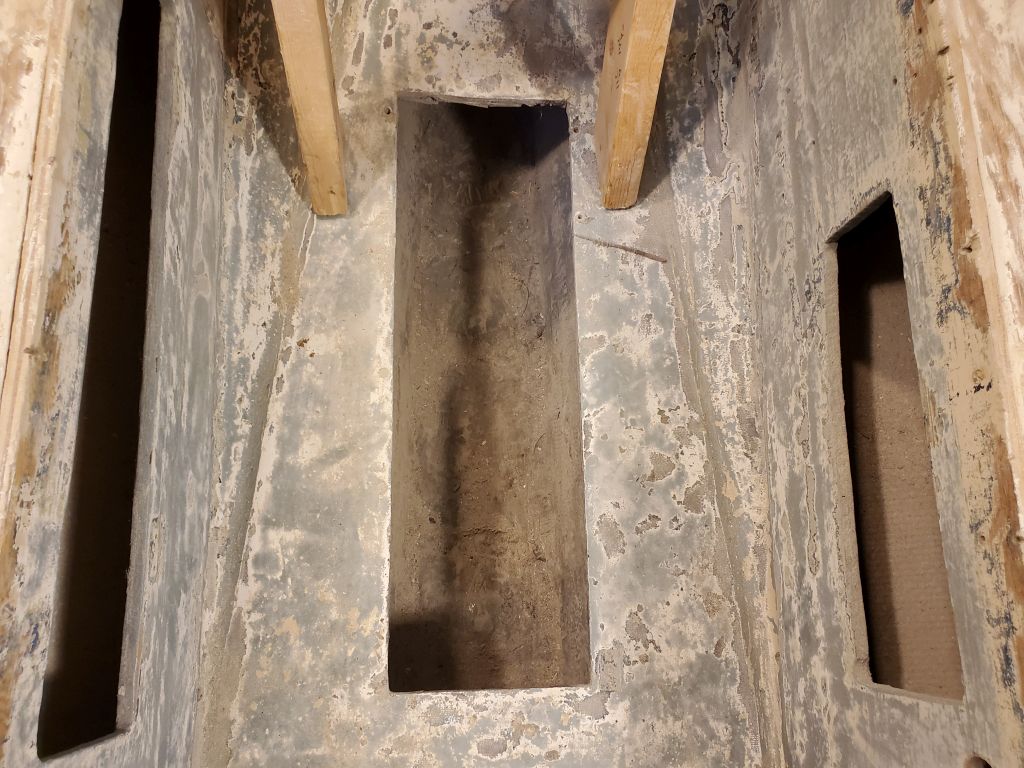
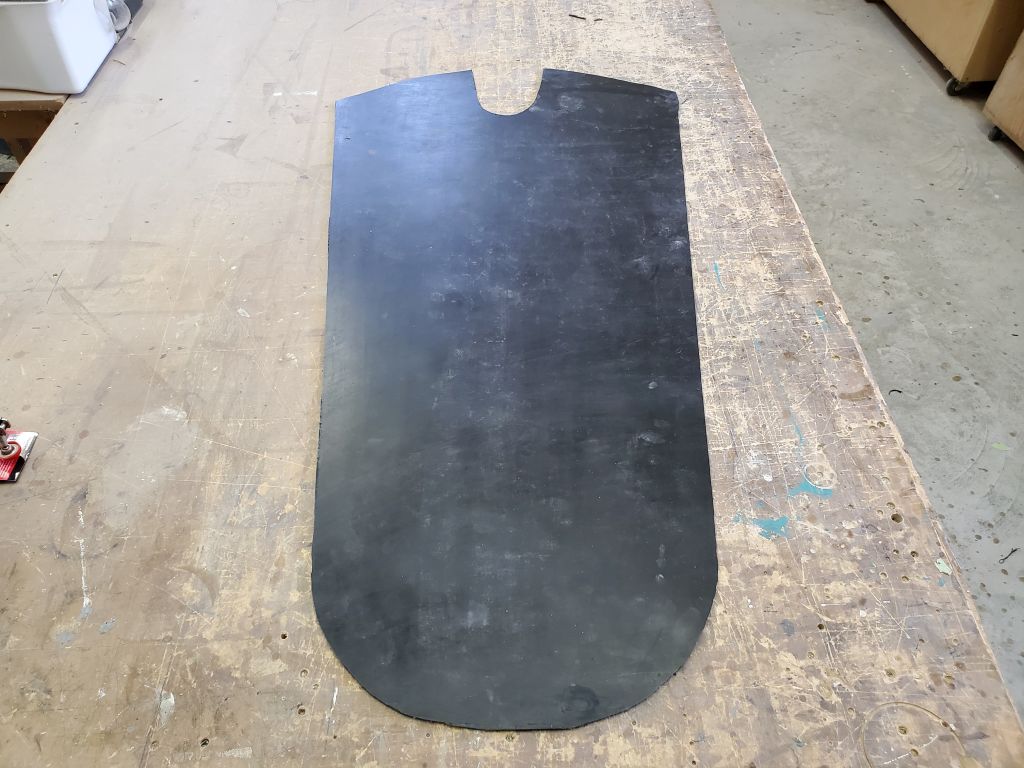
Several years ago, an accident damaged irrevocably the starboard water tank, leaving it without a top.  With tank repair or replacement in kind not practicable,  the owner used the remaining plastic bin for storage in the meantime, but for his future plans hoped to add at least a bit of extra potable water storage on board to replace the  missing volume.  His idea was to install a bladder tank inside the old shell, with whatever capacity it could give.  Studying the available sizes of these tanks, we eventually settled on a 13-gallon model that would fit physically in the space; others with larger capacity were the wrong shape, too long or too wide to work here.  I test-fit the tank to be sure it would work, and to get a sense of where the fittings should go.
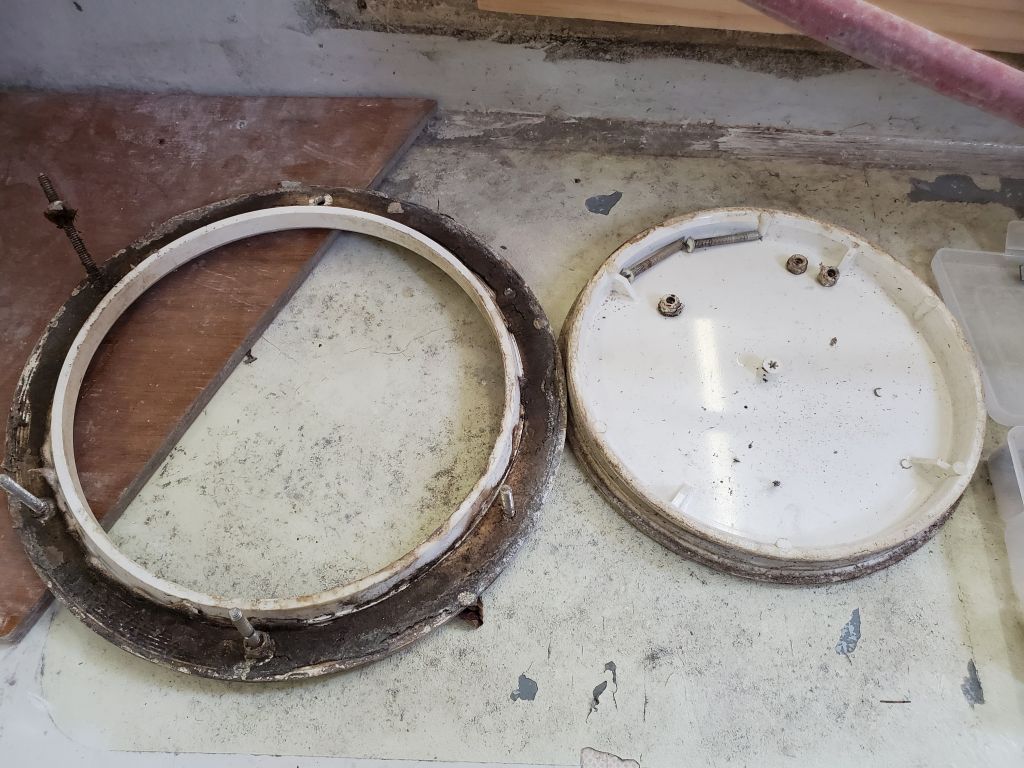
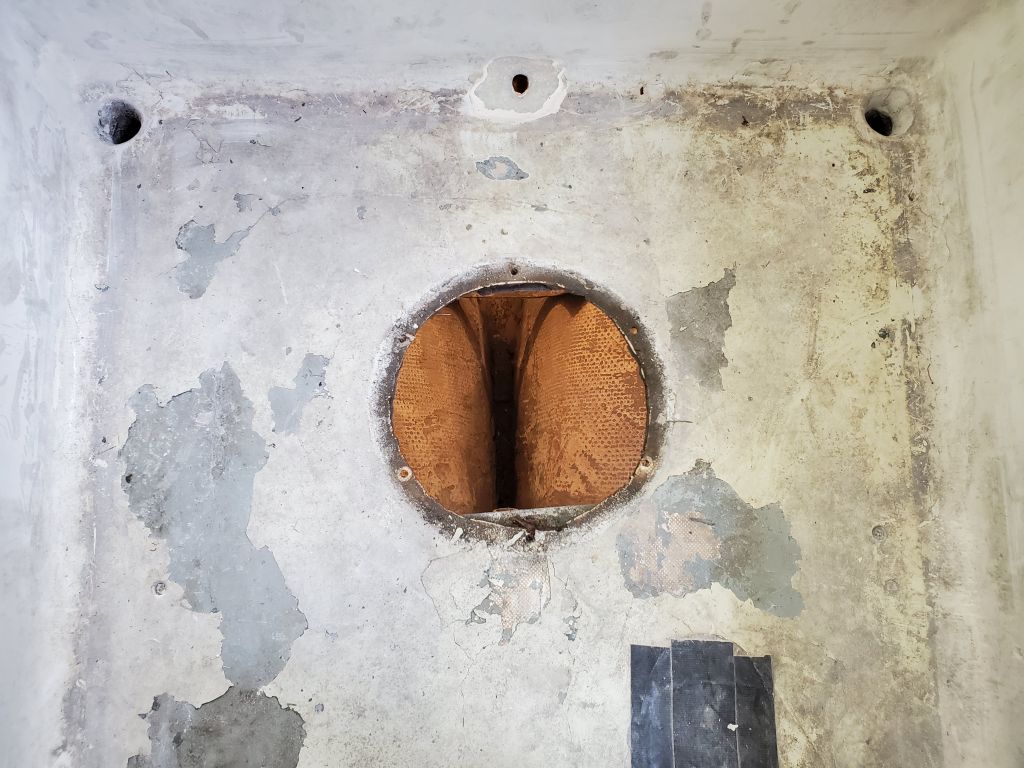
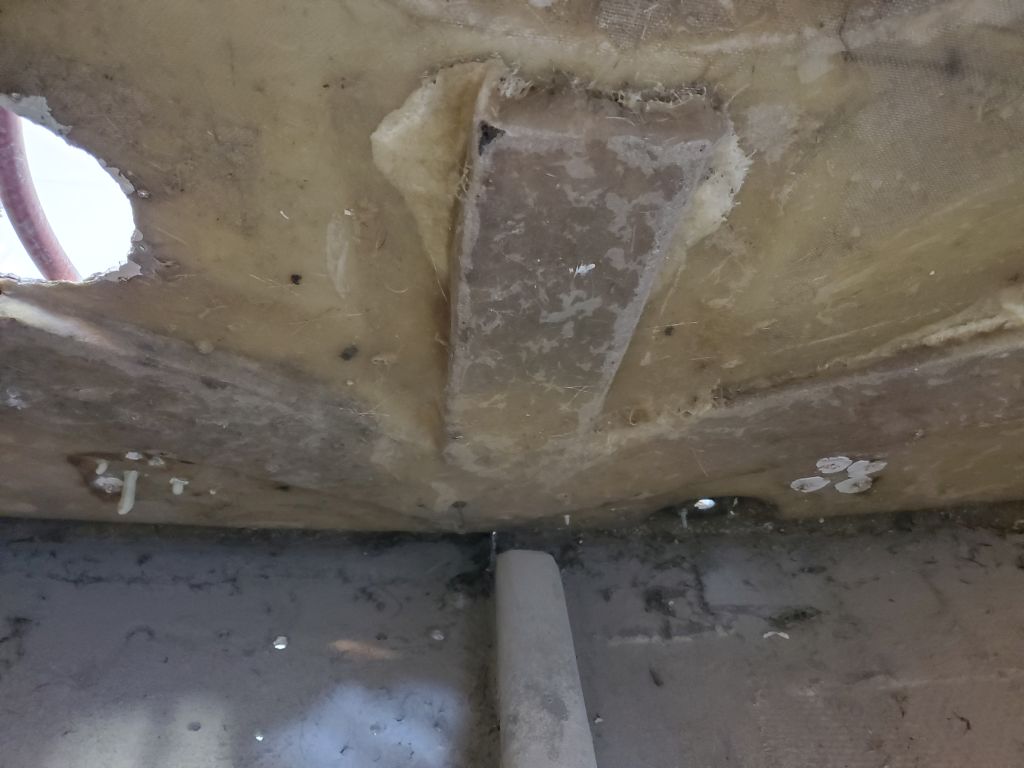
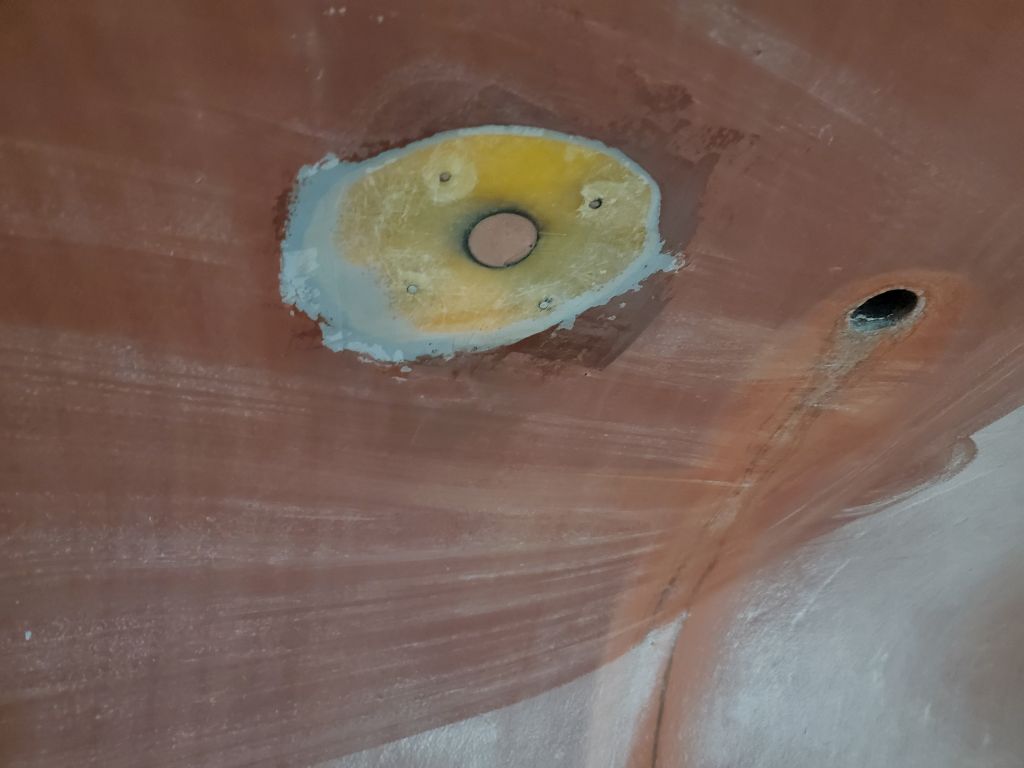
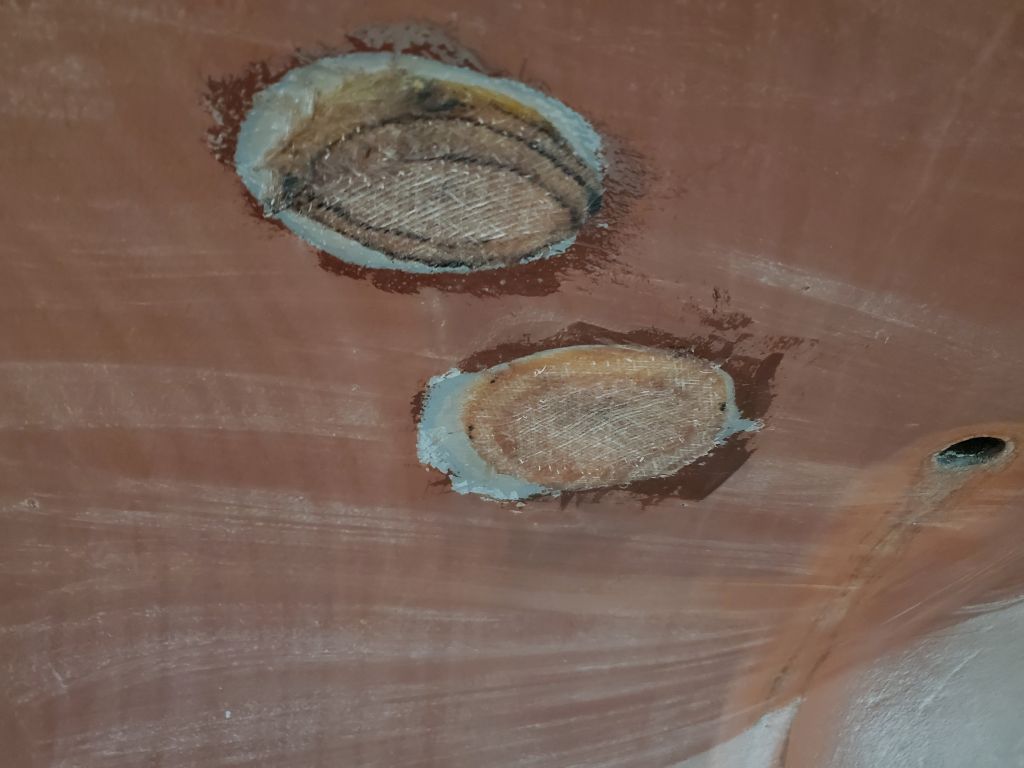
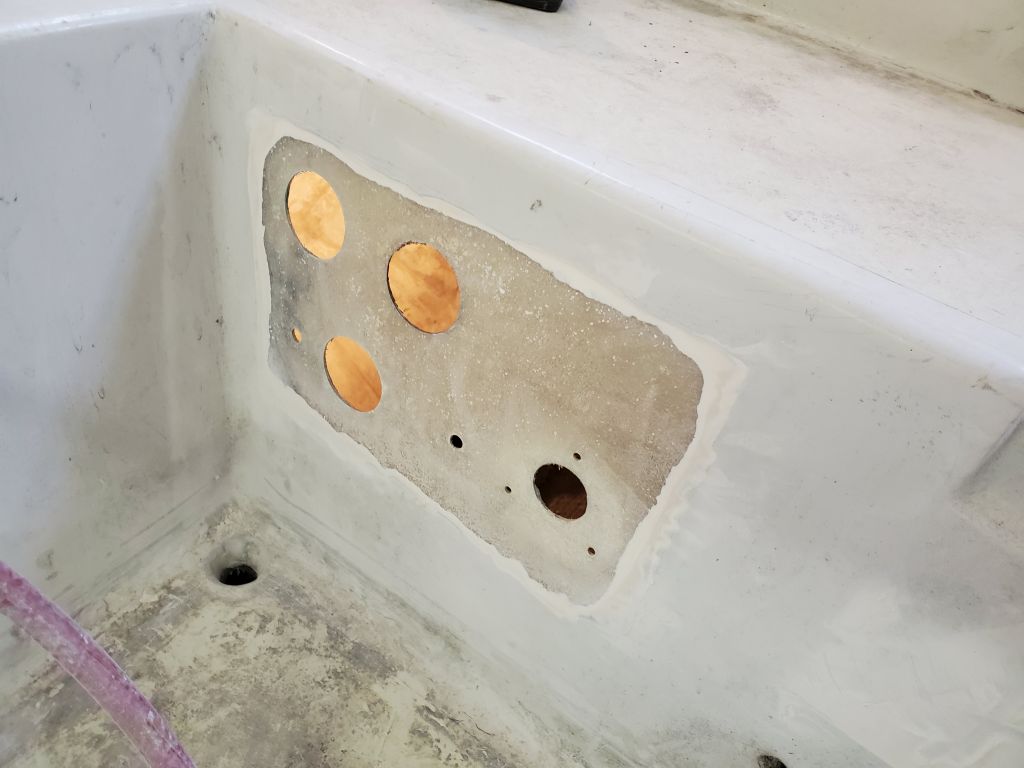
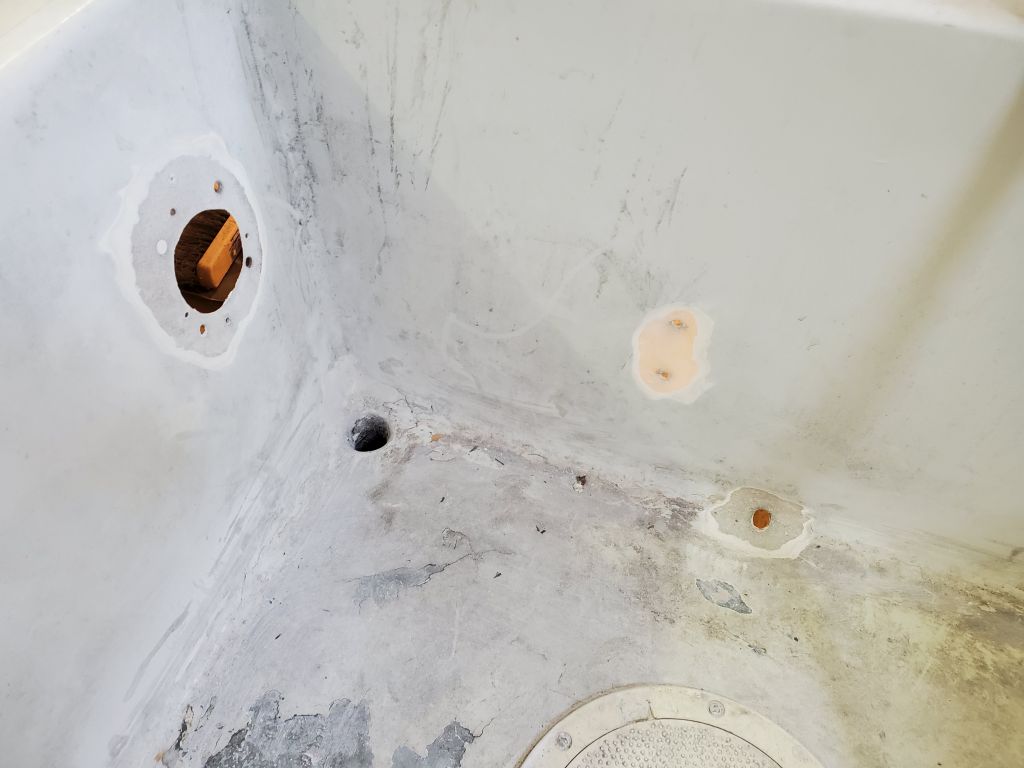
Before I could install the new tank, I had to install three fittings:  fill pipe, vent, and supply.  This was a straightforward, if occasionally frustrating, process involving cutting holes of the exactly correct size and pushing flanges larger than the holes themselves somehow through the holes, before installing clamp rings and washers that secured the parts together and provided a watertight seal.  I installed the fill and vent near what would be the top edge of the tank, and the fill down near the bottom.

Now I could lay the tank in the clean plastic remains of the old water tank (this would cradle the filled bladder very well, with no sharp edges or rough spots to worry about), and connected the fill, vent, and supply hoses, installing new, longer hoses as needed for the supply and vent.  After temporarily moving a wire bundle to make room for the new supply hose installation, I resecured it where it belonged.

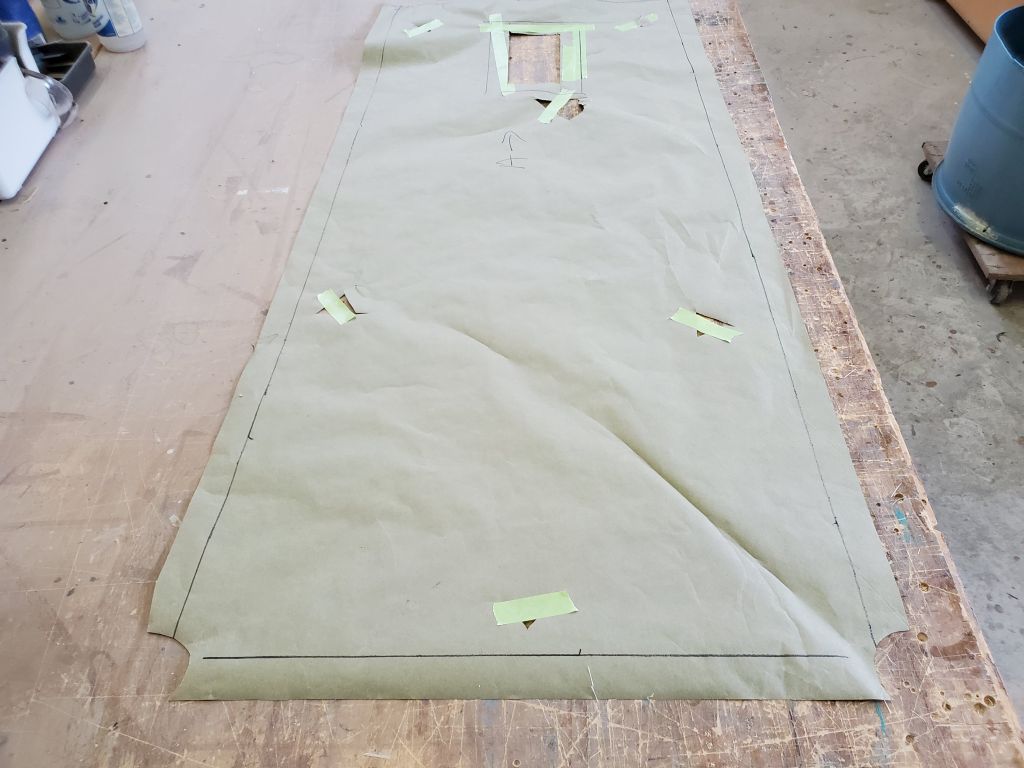
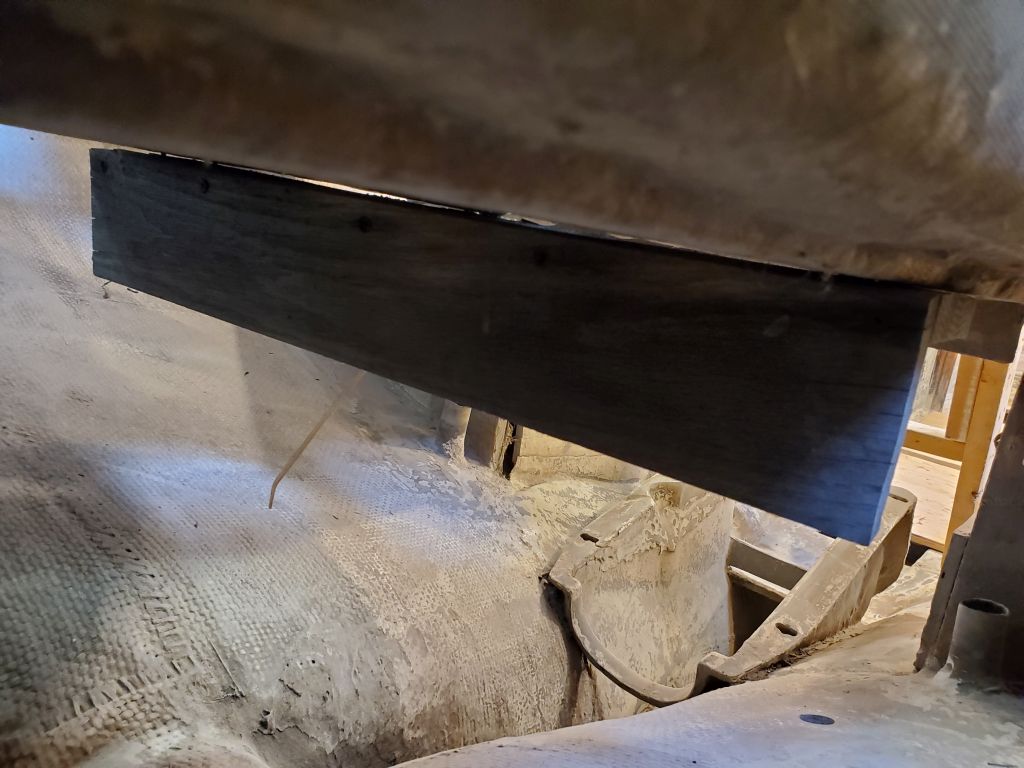
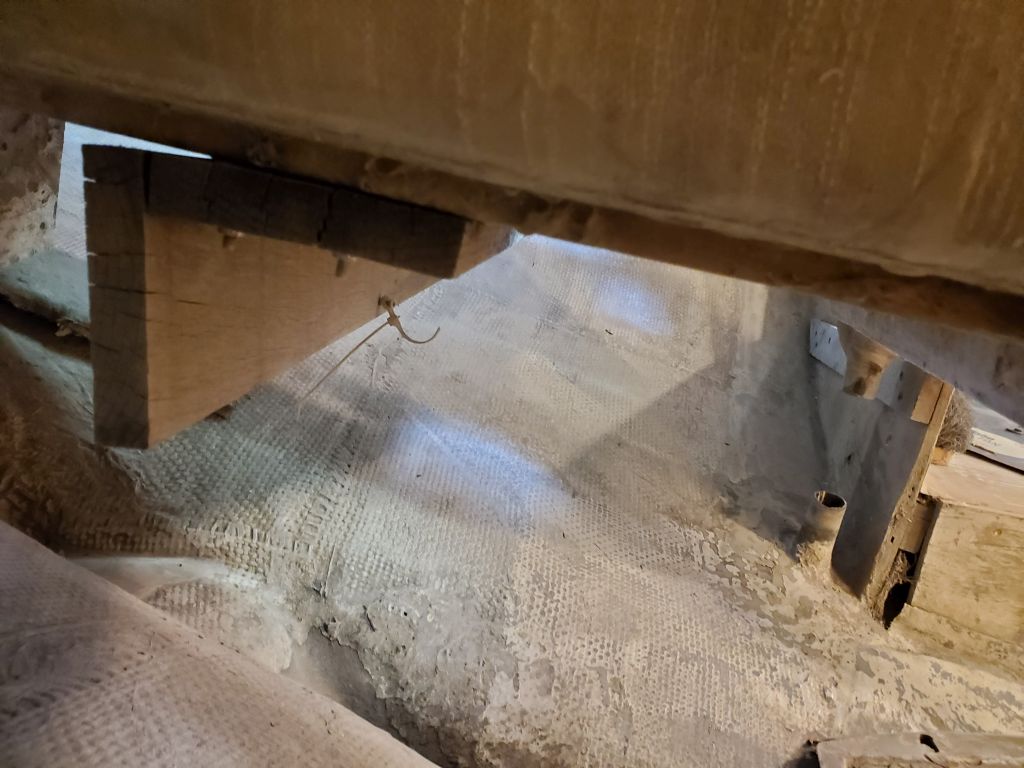
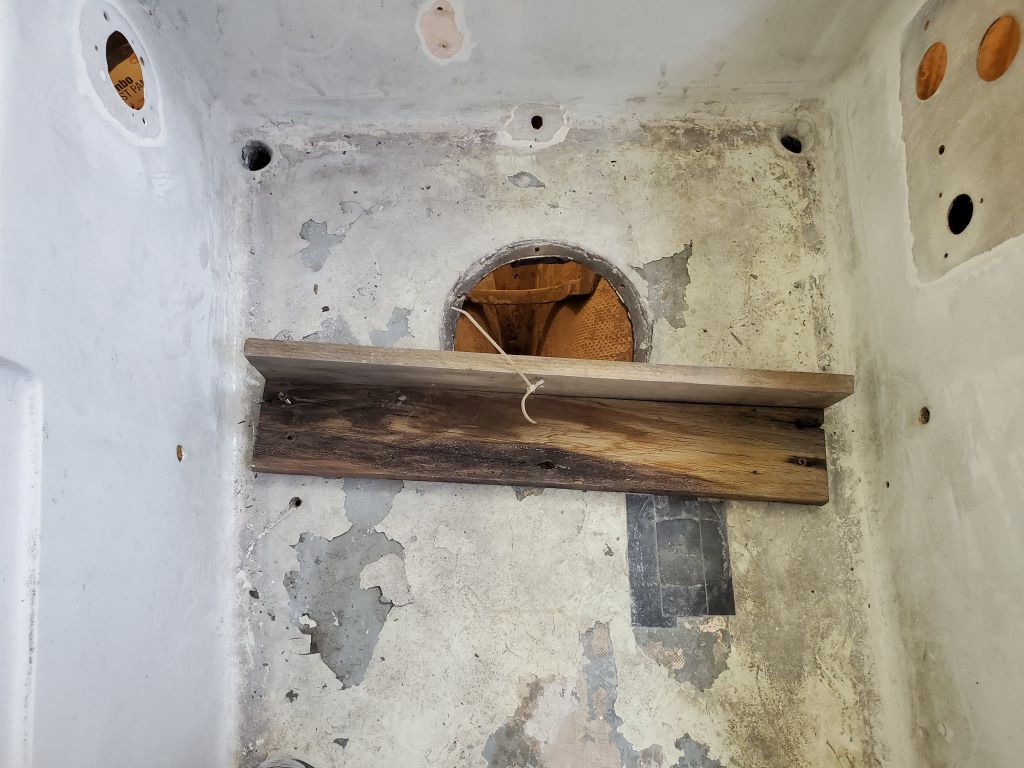
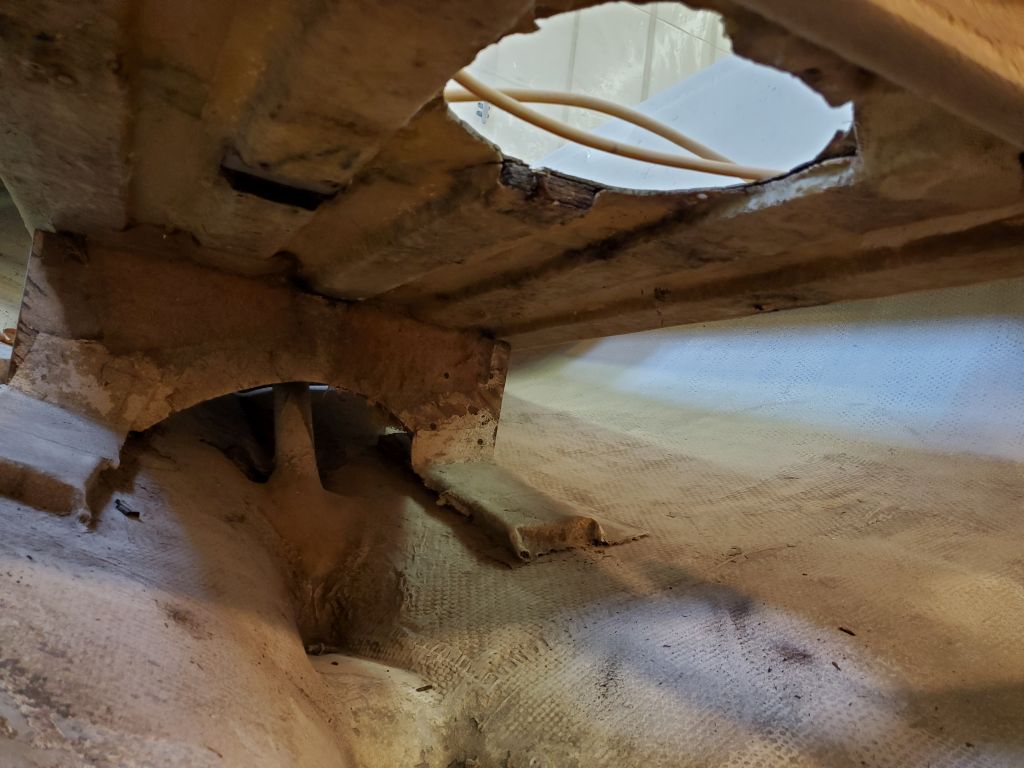
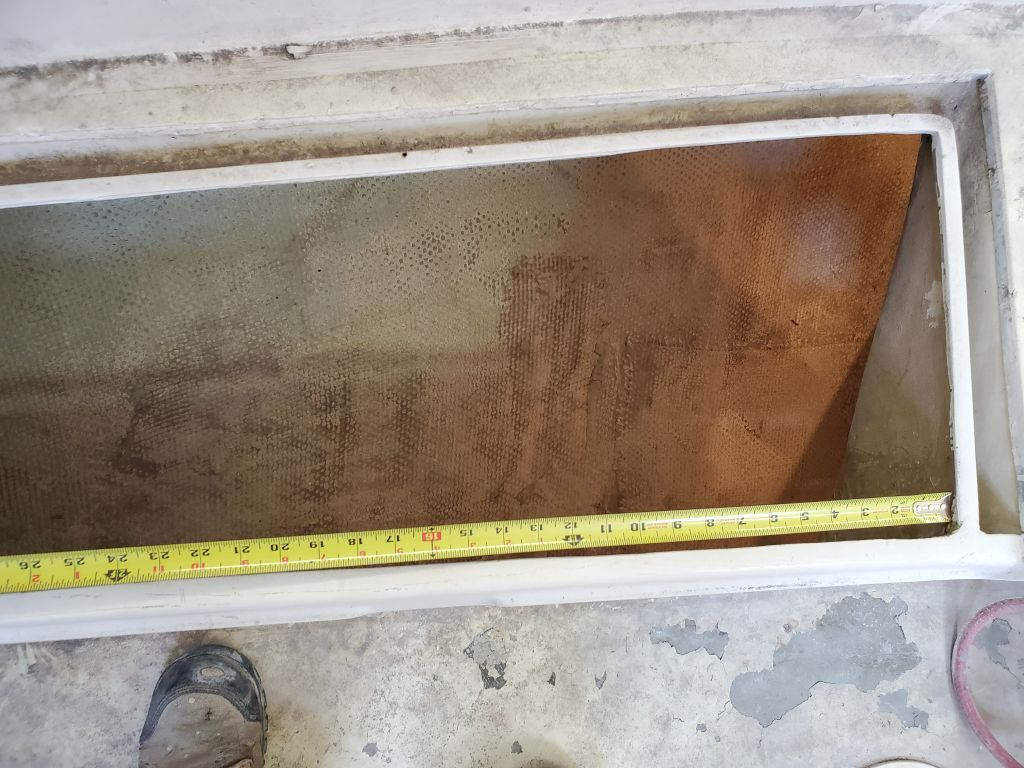
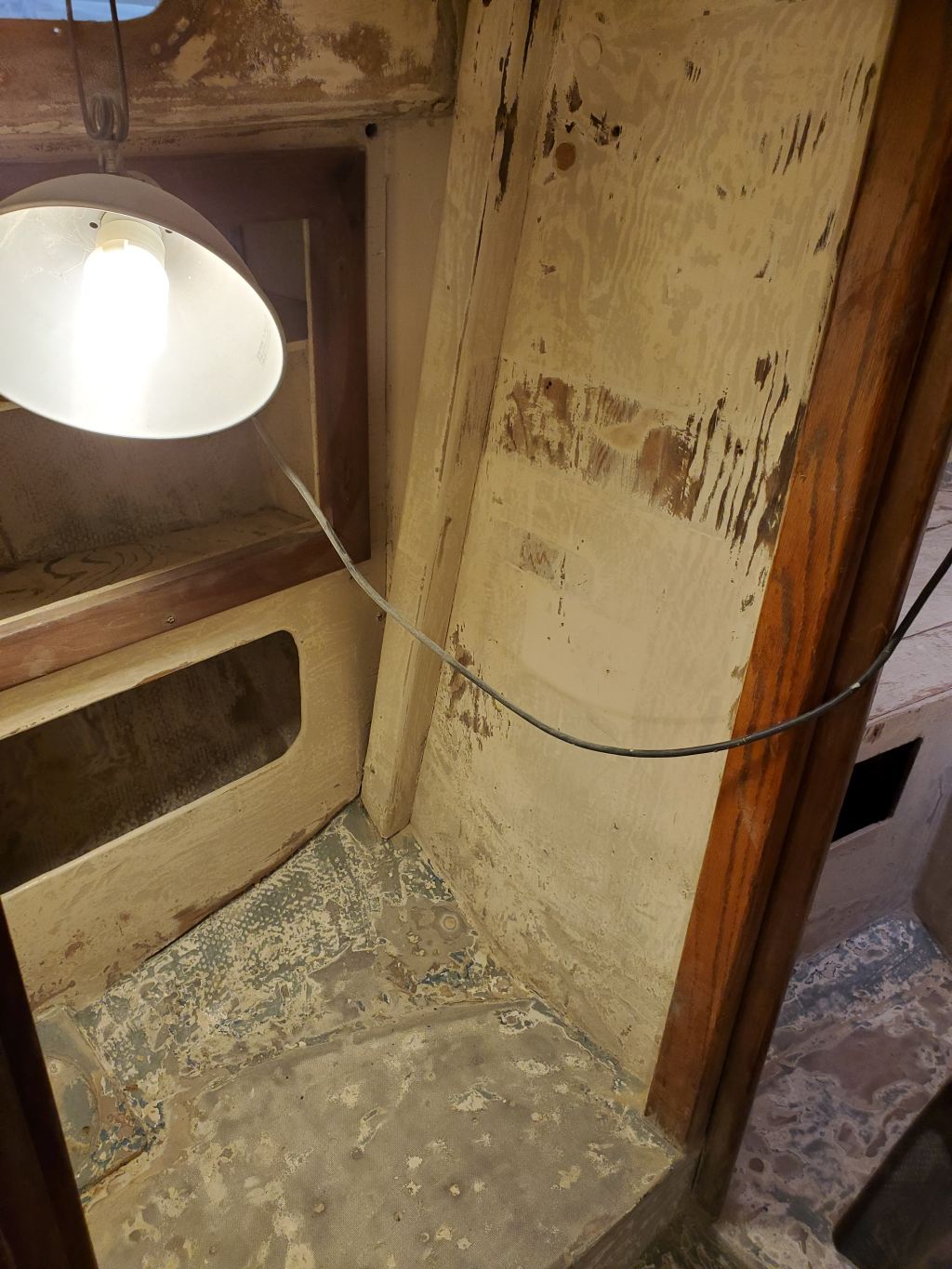
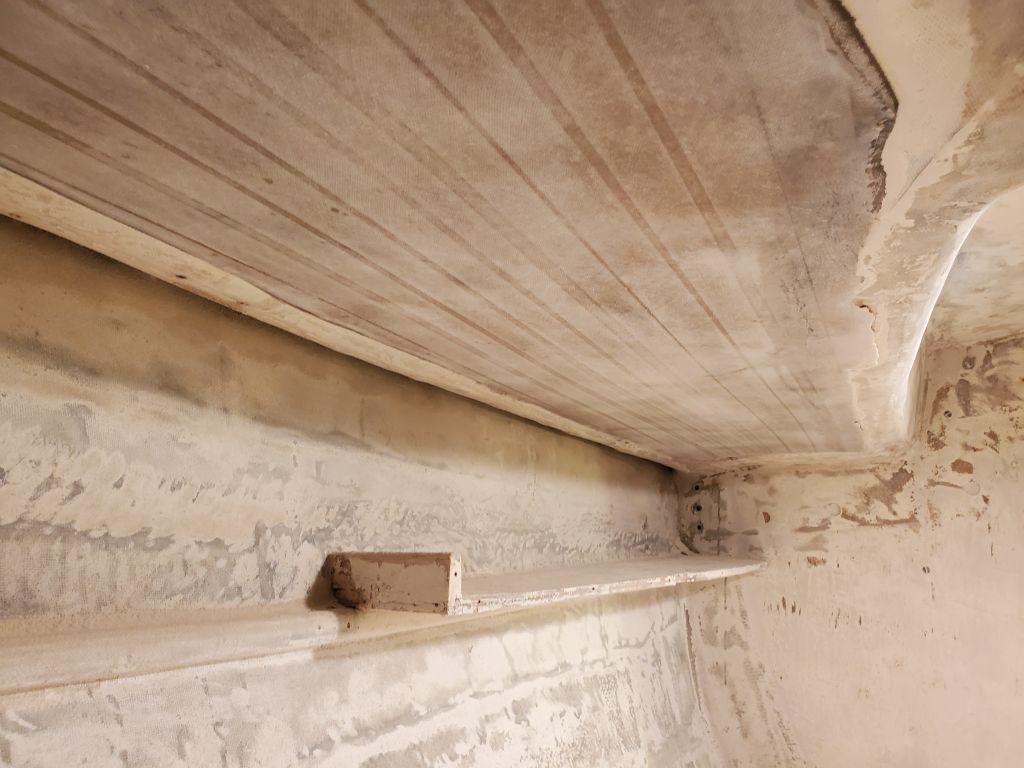
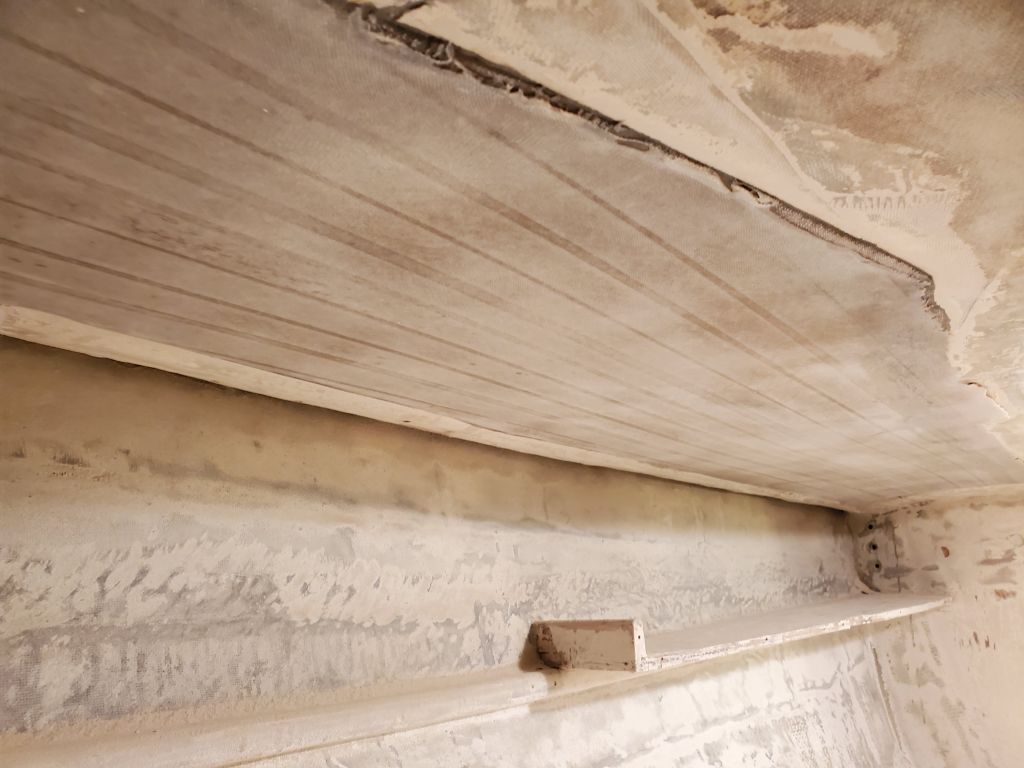
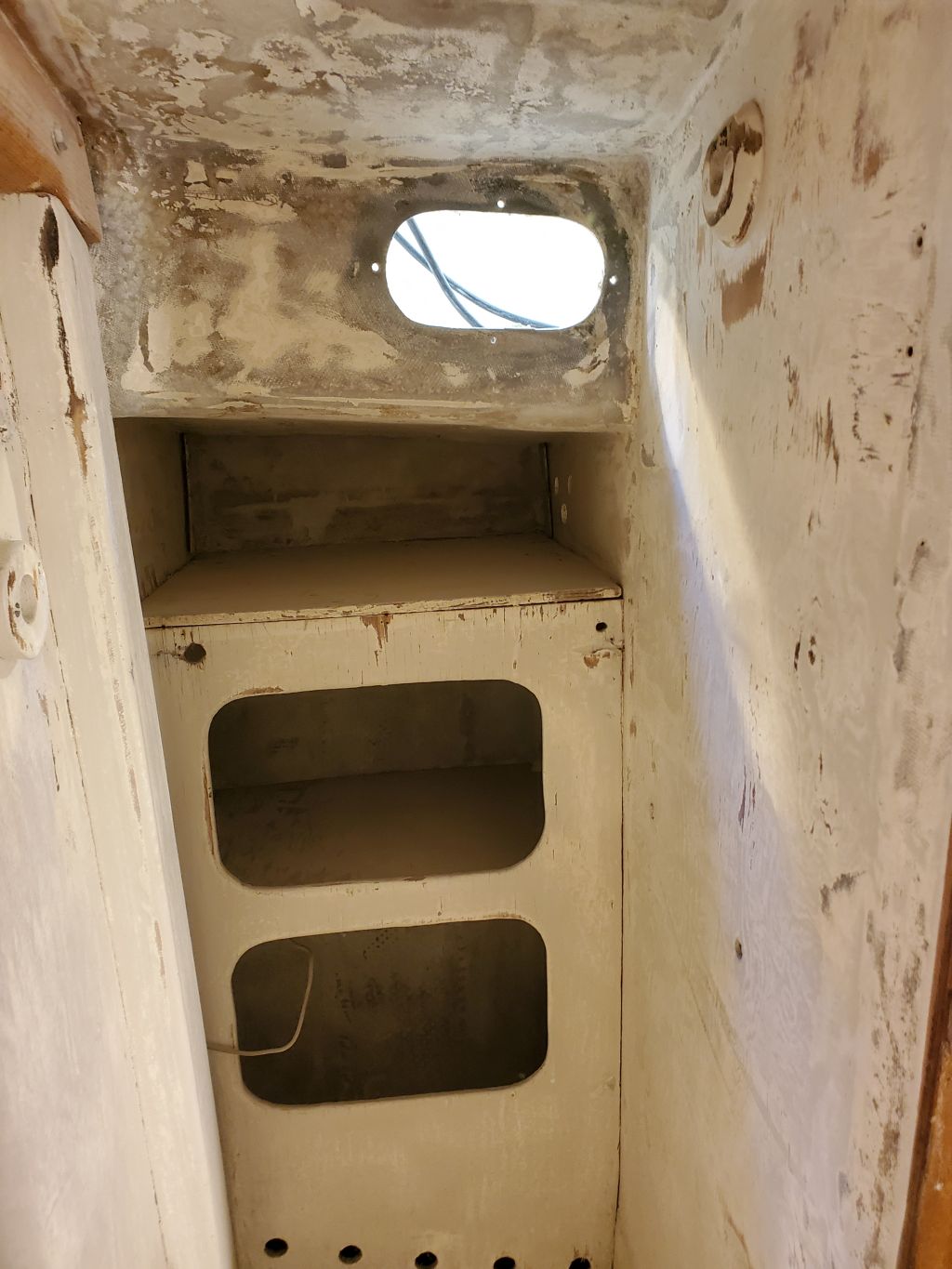
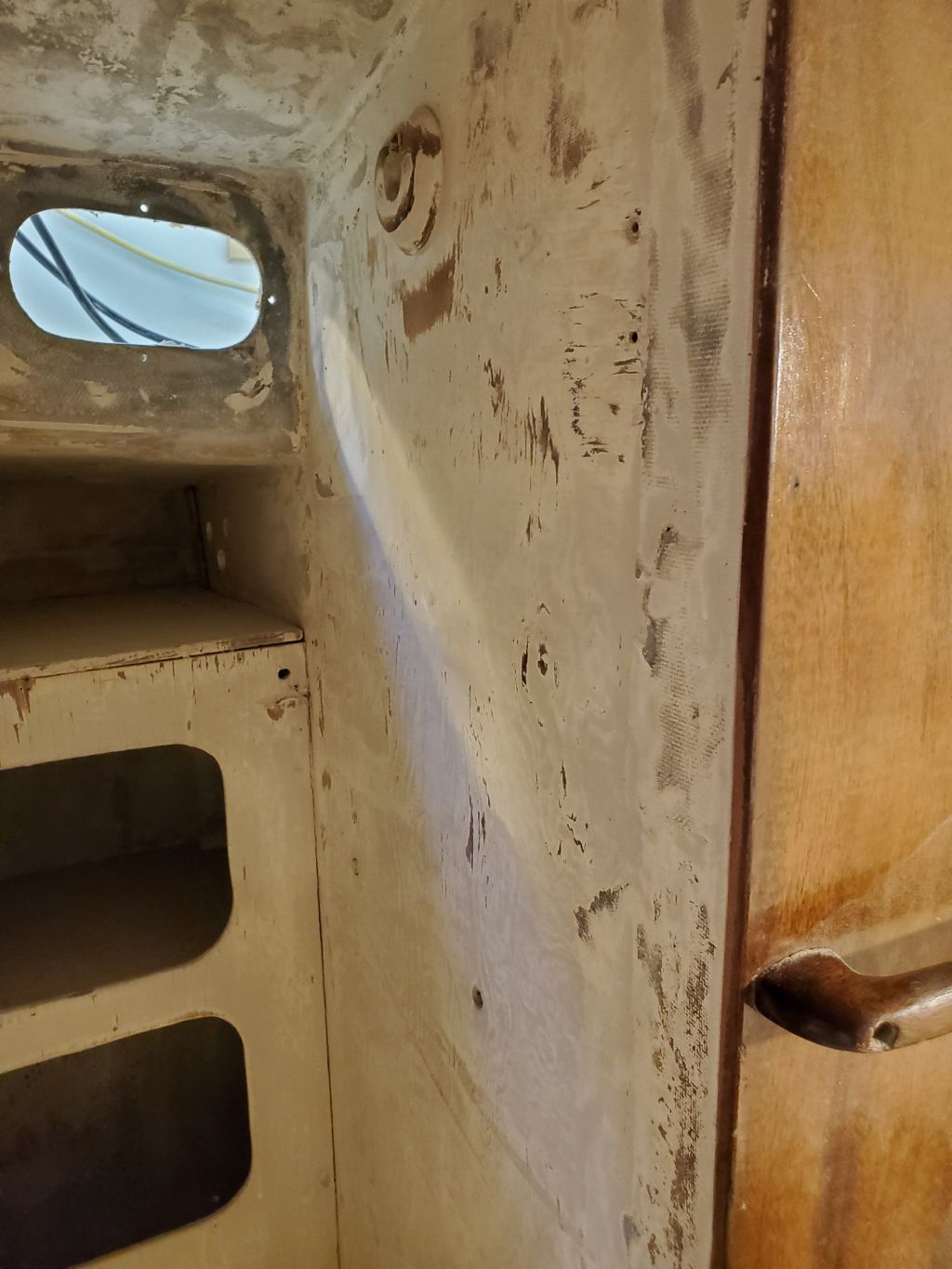
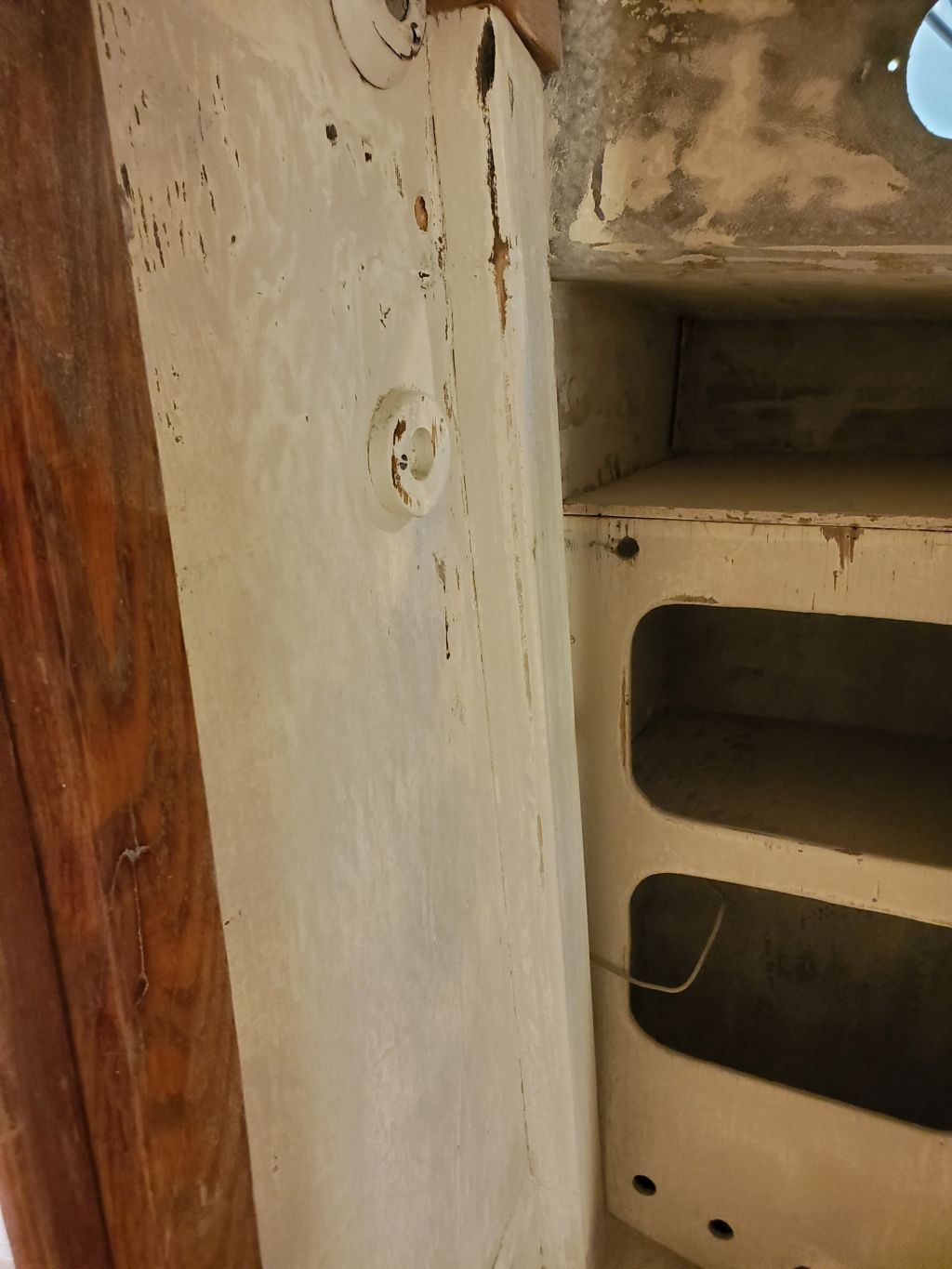
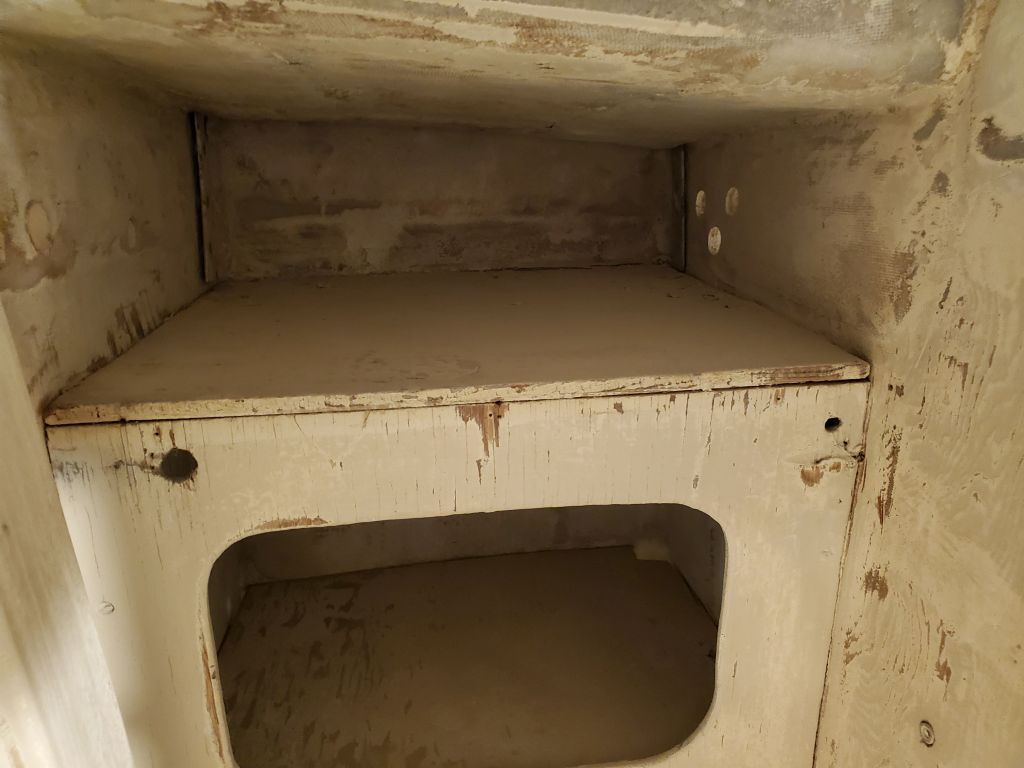
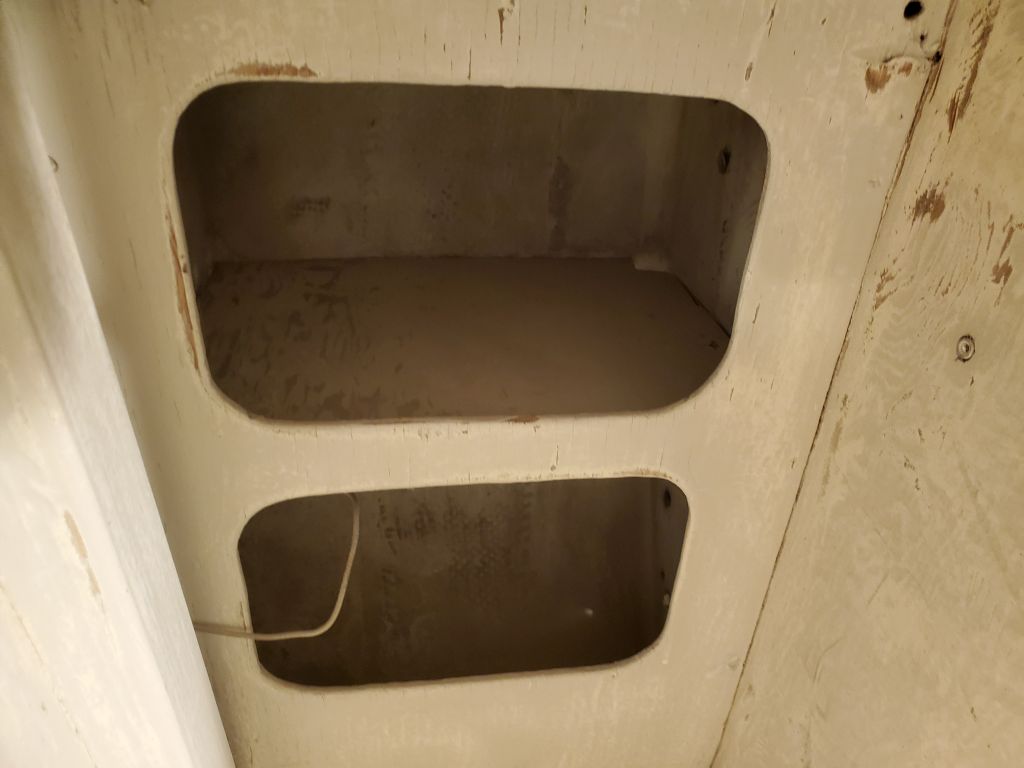
An upcoming project on the boat was to add some shelving and improve storage in the large locker across from the head, which now had only two widely-spaced shelves.  To that end, I measured up the space so I could get materials ordered, and to give the owner some sense of the available shelf space for ordering storage bins to maximize the utility of the revised spaces.

With the regular arrival of the shipping courier, I could get back to work on, and finish up, the engine bypass/heating system plumbing in the engine room.  Specifically, I’d been awaiting a replacement hose nipple with female threads to fit the water heater coolant outlet so I could attach one of the existing hoses leading to the coolant recovery tank next in line.  I had also needed a splice fitting so I could interconnect the remaining two hose ends, which would complete the circuit from the coolant tank to the pilothouse fan heater and beyond.  This new plumbing plan greatly simplified and cleaned up the chaotic, tight space around the water heater.  Note that the clear potable water hoses still dangling are the way they are here because of how the owner winterizes the water system by bypassing the water heater when running through antifreeze; the two clear hoses dangling from the tank itself normally get connected to the ends of the loop dangling low.

After some final cleanup in the area, I could reinstall the removable platform with the electric bilge pump, and reconnect the pump’s hoses and wiring.  I’d removed this early in the process to improve access to the after corner of the engine room.

With the work in the engine room wrapping up, and a little time left in the day, I reinstalled the port battery box, then installed the batteries and their watering system.  I’d finish up the cable reinstallation next time to complete the work here.

Total time billed on this job today:  5.5 hours

0600 Weather Observation:  12°, partly clear.  Forecast for the day:   Partly sunny, 27°

Lively Heels Phase 3-8

Wednesday

I spent the bulk of the day working on reconfiguring the old heating system, picking up where I left off by beginning to make order of the remaining hoses, and working up a plan for the new and simplified engine-based system.

Considering the various components at hand, and taking the most logical and streamlined approach possible, I came up with a new plumbing plan to guide me through the physical work.  The new system would begin at the engine’s calorifier outlet on the starboard side, incorporate a system drain at the low point, and fire first the water heater, then the two cabin fan heaters, before returning to the port side of the engine at the calorifier inlet.  Shutoff valves near the engine on each side would allow the entire heating portion of the system to be shut off and isolated should it be desired or necessary.

Sorting through my abundant collection of plumbing fittings, including some that had been part of the original system, I eventually determined a few additional pieces I needed and placed an order so I could get them here soon, which would allow me to wrap up the reconfiguration work.  Before beginning, I had to drain the rest of the coolant from the engine side of the system, which I’d hoped not to, but there was simply no way to avoid it given the changes in the hoses and fittings ahead.

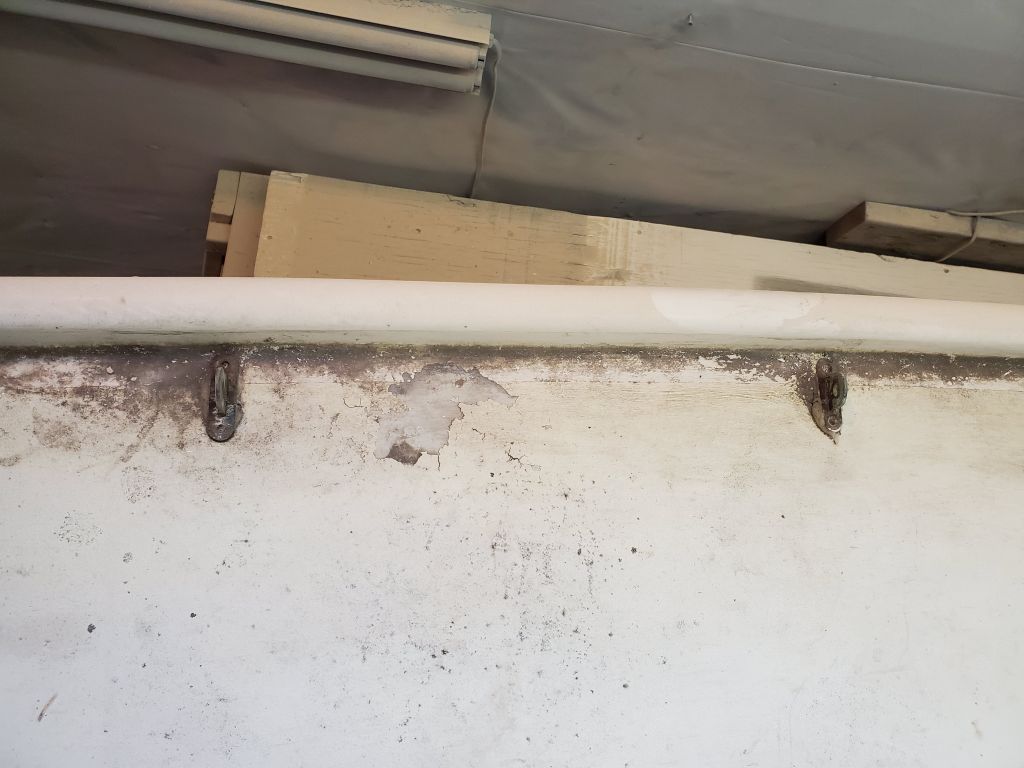
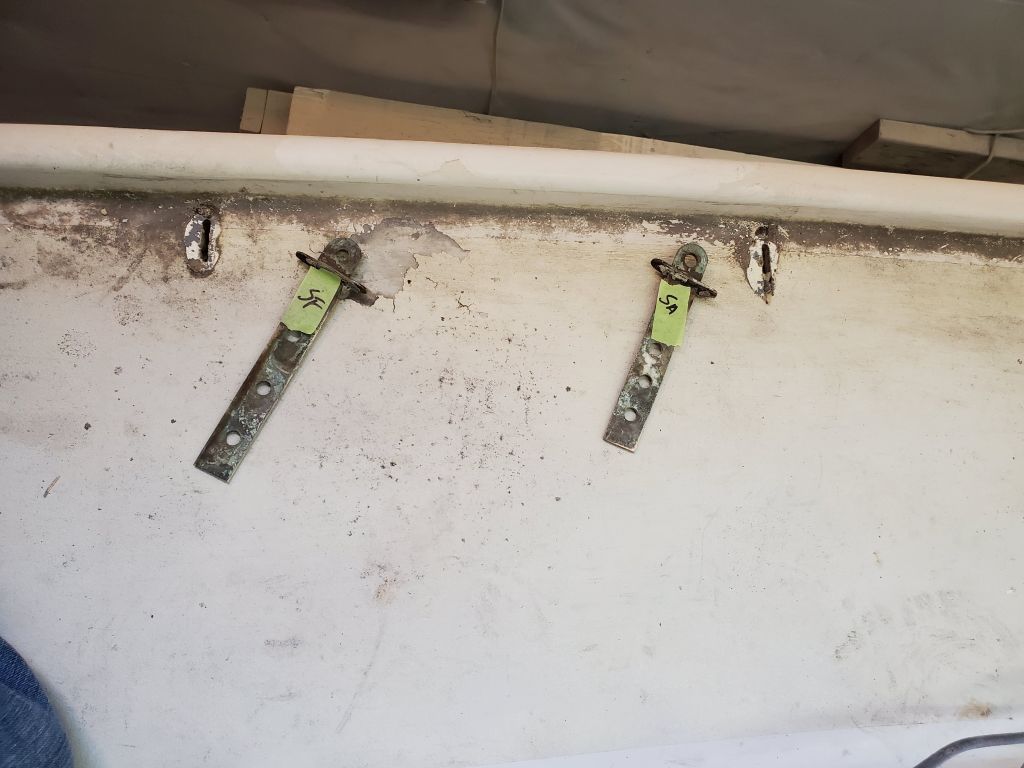
Working with fittings on hand, I strove to complete everything that I could while I awaited the new fittings, starting with the return line from the cabin fan heater to the engine, which led from beneath the helm console.  I chose to secure this hose to the pair of mounts leftover from the heat exchanger that I’d removed the day before, since the mounts would cradle the hose well and because I couldn’t easily remove the brackets anyway, since they had blind fasteners through the engine room panel.  I chose to mount the shutoff valve on the panel just aft, making a more convenient and cleaner installation as I finished the hose run to the port side of the engine, which was the calorifier inlet.

Note that many of the progress photos show pieces and remnants of the old system that are not part of the revised setup, and would disappear in due course.

The domestic water heater had originally been plumbed with shutoff valves beneath the coolant inlet and outlet, but along with the various plumbing changes and desire for simplification, now I elected to remove these hose stubs and reconfigure entirely how the water heater fit into the plan.  Also, I needed to change one of the outlet fittings to accommodate the hew hose connection that would lead from the water heater outlet to the coolant expansion tank, so I simply removed both threaded fittings and their attached hose stubs, since this was frankly easier than trying to remove the hoses from the barbed fittings, given the tough access to the space and the myriad other plumbing and wiring runs in the area.

The new fitting for the outlet was one of the things I’d had to order, so I couldn’t complete that side now, but for the inlet I installed a new 3/4″ hose barb on the water tank, then attached an overlong length of hose that would eventually connect with the engine coolant outlet.  Three remaining hose ends, marked with green tape, awaited final connections with the new fittings when they arrived.  For now, after a couple fits and starts as I worked out the best hose run, I secured the coolant inlet hose to the nearby cockpit scupper hose, running it down towards the centerline and the aft end of the engine.

To complete this hose run, I modified the existing (old) coolant hose by changing the position of the shutoff/isolation valve and drain fitting, again striving for simplicity, appearance, and convenience of use, as well as rerouting away from chafe points.  The drain fitting featured a garden hose attachment on the end that would allow ease of draining or even filling using the electric pump the owner had for this purpose.

For the moment, that was as far as I could take the job, but once I received the plumbing fittings I needed I could (hopefully) finish up the replumbing work in relatively short order.  In the meantime, I took a few minutes to reinstall and reconnect a terminal block in the engine room, near the forward end of the port side, that provided a circuit and attachment point for the electric coolant priming/draining pump the owner used.  I’d mistakenly removed this terminal block and wiring earlier in the dismantling process.

Next, I moved across to the starboard side, in the utility space above the tankage outboard of the engine room.  Over the past years, the owner had traced some frustrating potable water system priming problems to the potable water filter and its oversized hoses that had originally been mounted in this space, and he’d removed the filter at some point, which cured the problem.  However, some of the larger 3/4″ hose remained, and to bring the whole system back to overall spec we decided to replace the larger hose with the 1/2″ hose used throughout the rest of the system.

I removed these pieces of hose, along with the priming spigot built into the system, and took it down to the bench to rebuild with smaller nipples and new hose.  This part was straightforward, but I found that the two barbed fittings I had to changed up in the boat–at the water supply manifold and at a tee fitting just before the water pump–the pipe dope I’d used during initial installation years before was extremely tenacious and resisted removal, so eventually I had to use some heat to loosen the grip, after which replacing those fittings with 1/2″ barbs was easy.

When I reinstalled the hose and fittings section, I’d forgotten how it had been routed originally, but discovered as I reviewed photos for this log that I’d not installed things in the correct orientation; the priming nipple, with garden hose connection and which the owner used for winterizing as well, would certainly be more convenient in an up-facing direction as it had been (see photos above), so I planned to rotate and reroute things as needed to correct this small error.

Thus endeth the day.

Total time billed on this job today:  7.5 hours

0600 Weather Observation:  23°, overcast.  Forecast for the day:   Cloudy, isolated snow showers in the afternoon, 32°

Lively Heels Phase 3-7

Tuesday

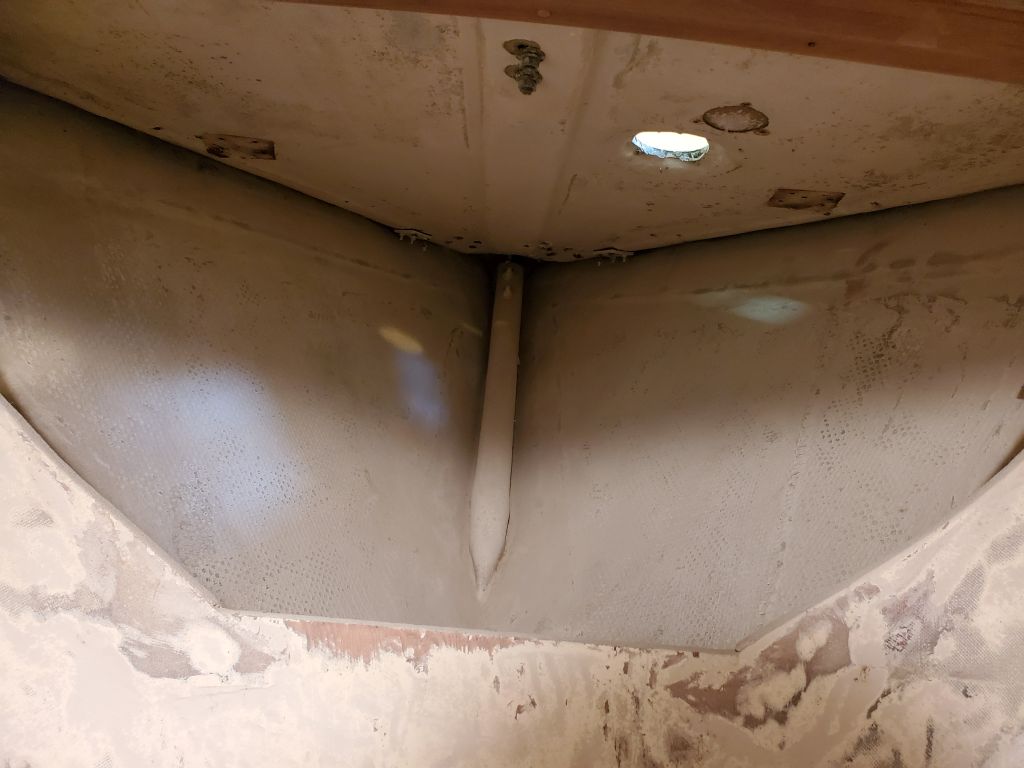
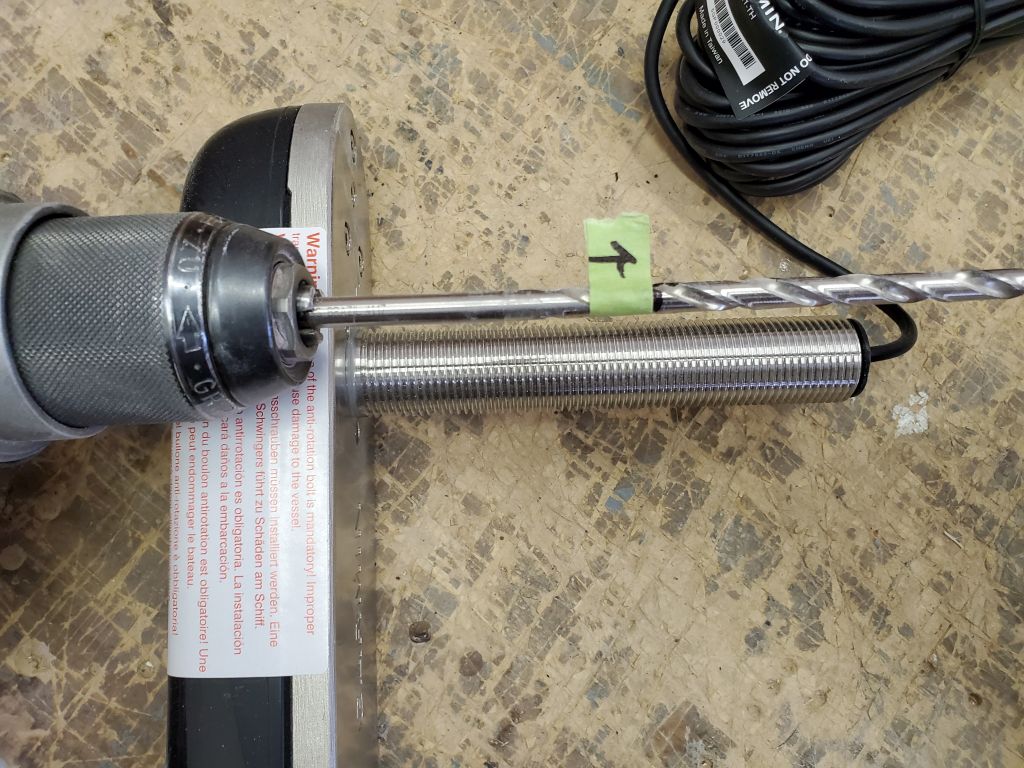
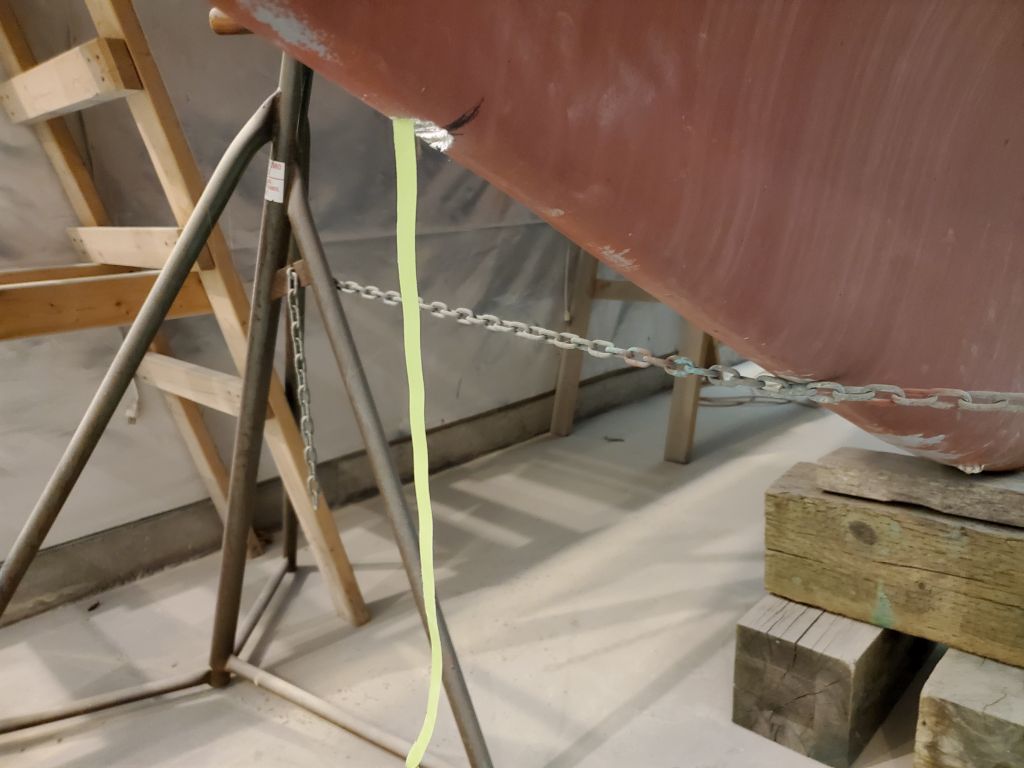
I got started back at the holding tank vent, beginning by drilling a new hole for the replacement hull vent fitting.  For the new vent, the owner requested a normal bronze through hull, which not only would resist the corrosive influences of the effluent (even for the affluent), but would be easier to clean and maintain if necessary; apparently this had been an ongoing problem with the old system, though that was probably related to the supposed “treatment” of the waste with the old Electro Scan.

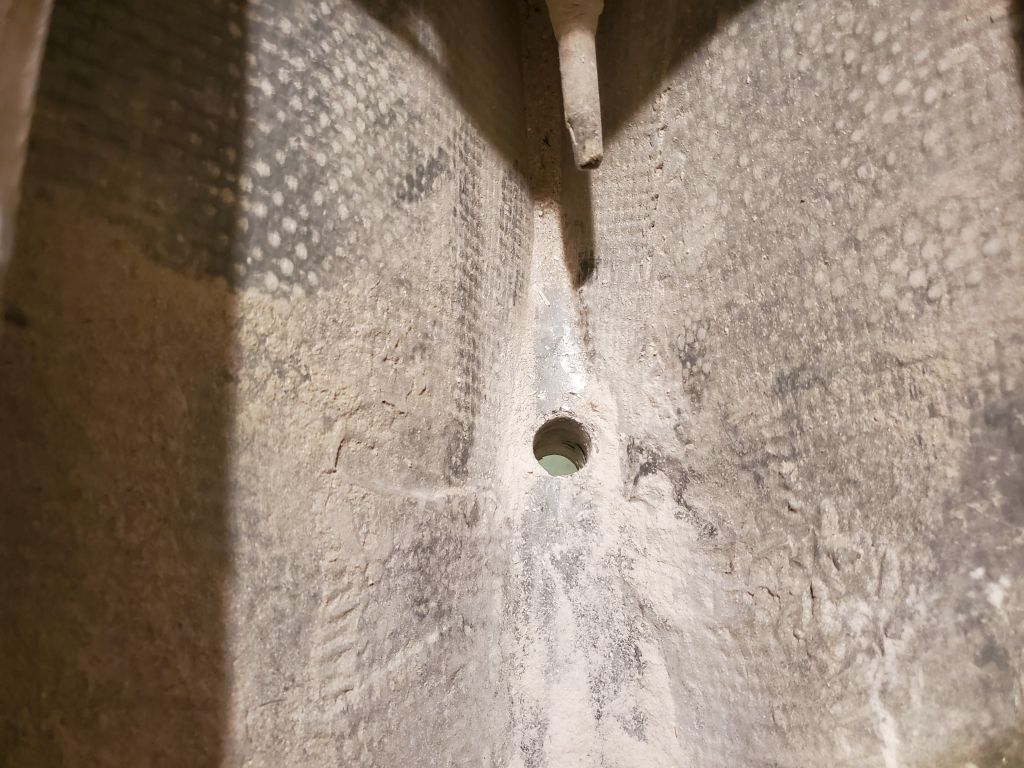
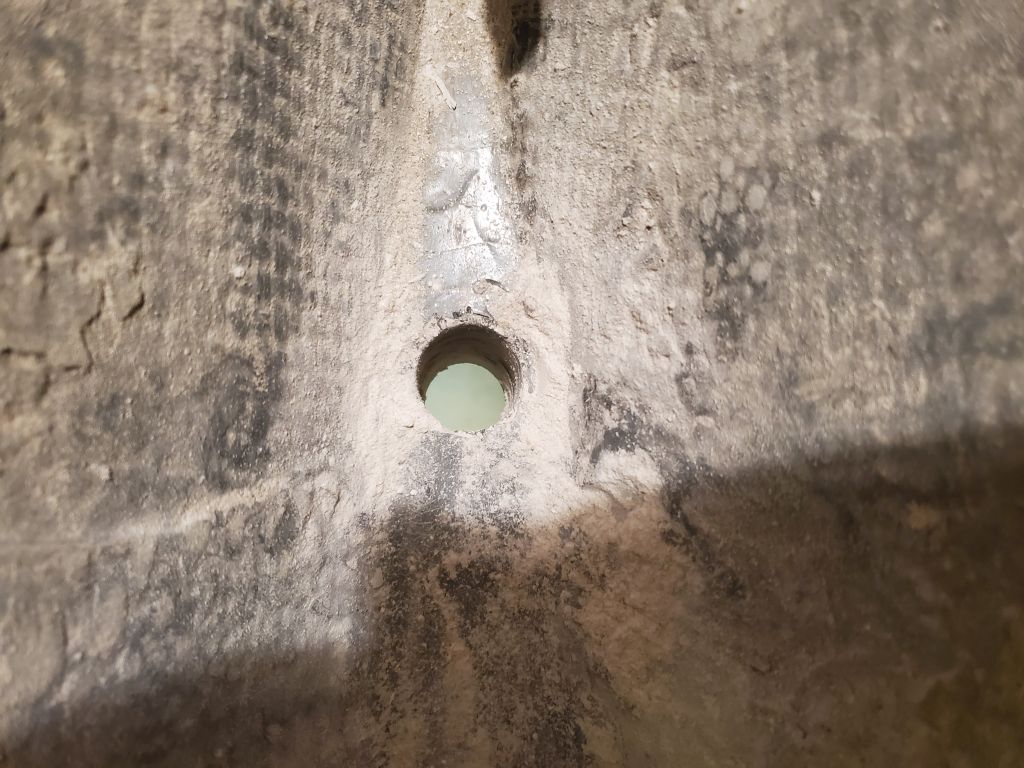
I installed the new 3/4″ fitting with plenty of sealant, and, once installed and cleaned up, ran new 3/4″ hose from the hull fitting into the compartment where the tank would ultimately be installed once it arrived.  Fortunately, the hole through the bulkhead, leftover from the original vent hose and located in a tight, nearly inaccessible V-shaped corner, was large enough for the new hose, so I was spared the challenge of enlarging it.

While I was in the space, I decided to re-secure the wiring leading to the head shower sump pump.  This wiring had originally been led, along with some of the cabling and wires for the old electric waste treatment system, along the top and side edge of the port partition in the locker, but now I decided to run it along the underside of the locker opening, which made sense now anyway, and also allowed me to clean up those loose wires now.

Until the new tank arrived, I was done with the head and environs, so next I turned to the other continuing dismantling/reconfiguration project to remove the remnants of the old diesel boiler system and simplify the plumbing for use with the engine alone.

After deciding, in consultations with the owner, to use only the engine coolant bypass to operate the pair of fan heaters (pilothouse and main cabin) and the water heater, most of the complicated plumbing from the original system was now extraneous and could be removed.  This would greatly clear up the clutter in the engine room and elsewhere.  In order to get at parts of the old system, however, I first had to remove the port battery box, which contained two 6-volt house batteries and the engine start battery, and blocked access to some of the components.  In theory this was straightforward enough, but in practice it was time-consuming and complicated, as there were myriad wires and cabling running through the box, along with a battery watering system for the house bank, and not only did I want to ensure it was easy to reconnect and reinstall everything, but also strove to minimize as much as possible how much I needed to dismantle.

After documenting and labeling all the connections (the wires and connections had been labeled by the owner at some point, but I did my own too), eventually I disconnected and moved temporarily out of the way all the wires and cables, leaving the batteries clear for removal.  I secured the cable masses up at the forward end of the engine room for the duration.

With the way clear, I removed the watering system from the house bank and replaced the original battery caps for now, then pulled out all the batteries.  This exposed the fasteners that held the battery box to the structural members beneath, and from here removal was as easy as one would think.  The hull beneath the batteries wasn’t as dirty or full of dropped things as I had expected; I knew I’d dropped things down there myself during past work sessions on the boat over the years.  I spent a little time cleaning up the hull and removing the minor debris before continuing.

Ready now to remove the old hoses, first I needed to drain the coolant from the heating side of the system.  For this, I planned to use a portable pump that the owner and I had set up years ago to help charge (or drain) the system, but when I hooked it up to a battery the pump didn’t run for some reason.  This was frankly unimportant at the moment, so rather than waste time troubleshooting I drained the coolant into the bilge, where it ran out the garboard drain to be caught in a bucket outside the boat.

With the bulk of the old coolant drained from the system by gravity, I started on the starboard side, removing mounting ties and eventually removing the red hoses that led to and from the green coolant expansion tank mounted there.  I cut the hoses as needed in strategic locations to ease removal and avoid fighting the hoses off hose barbs.  Later I planned to salvage hose clamps and good plumbing fittings, but for now I just wanted all this stuff out of the boat.

The photos below strive to show the existing plumbing (all red hoses) in their existing state around the forward and starboard sides of the engine room, as well as in the starboard compartment outboard of the engine room leading to the coolant tank.  Once I’d removed all the hose I could remove the green tank and its cradle, freeing space and mindset.

Continuing, I removed the rest of the red hose from the system, now on the port side of the engine room, along with the heat exchanger that had allowed use of either the engine heat or old boiler heat to run the system–the long green one that had been located outboard of the battery box.  I also removed the old line pump, no longer needed.  The black hoses left behind near the engine and in the after part of the engine room (near the not-seen-here water heater) are either parts of the engine coolant bypass system (equipped with valves that I shut off before cutting the hoses beyond them), or parts of the heating system that will be reused, and cleaning up and connecting these various pieces and parts into the new configuration would be in the docket in the coming days.

With the old plumbing out of the way, I spent the remainder of the day re-securing the potable water hoses in the starboard locker outboard of the engine (their ties had been cut in order to remove the heater hose), and securing the wire bundles along the starboard side of the engine room.

Total time billed on this job today:  6.5 hours

0600 Weather Observation:  18°, clear.  Forecast for the day:   Sunny, 28°

Lively Heels Phase 3-6

Monday

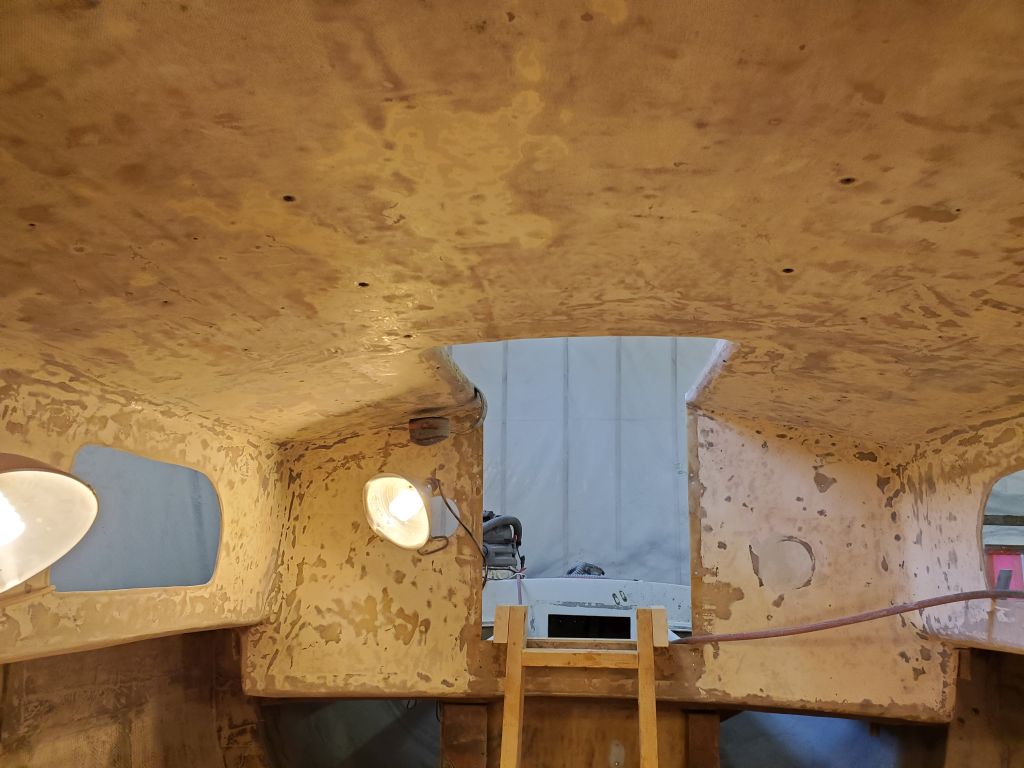
Looking to make some progress even with the holiday, I started a short workday by preparing, then filling with thickened epoxy, the old hole left from the holding tank vent in the hull.  The new fitting was slightly larger and I’d need to redrill the hole, so filling the old one was the easiest way to provide me with the necessary center for the new, larger hole.  I expected all of the old hole, and its epoxy filler, would be eliminated when I drilled the larger hole later.

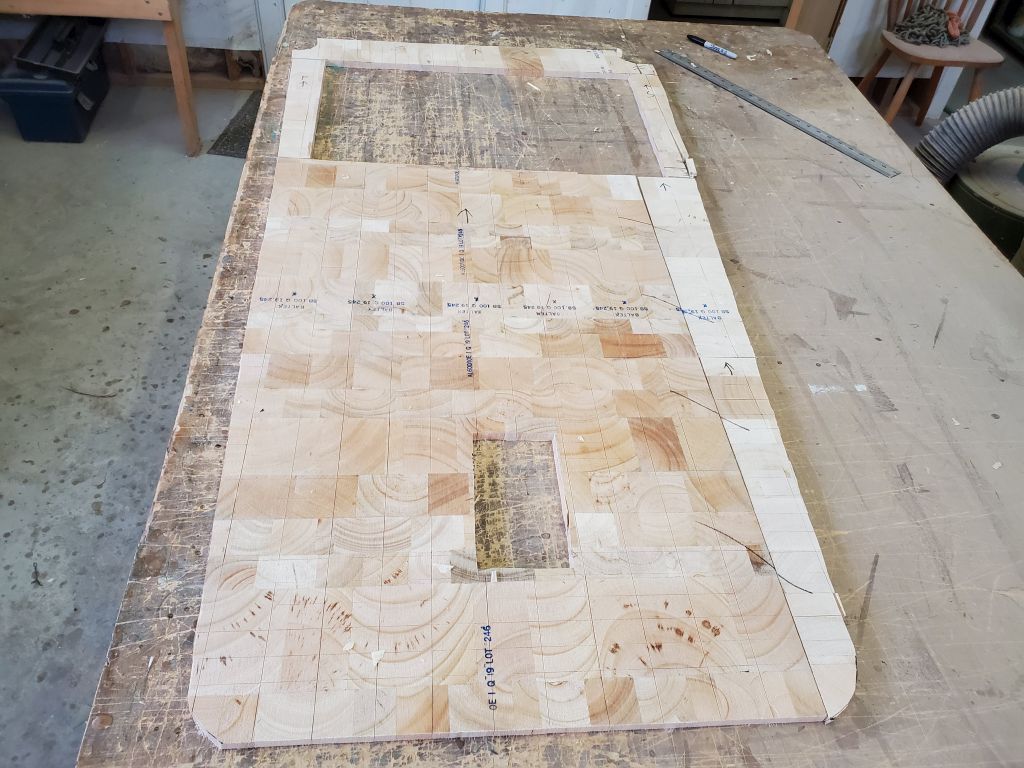
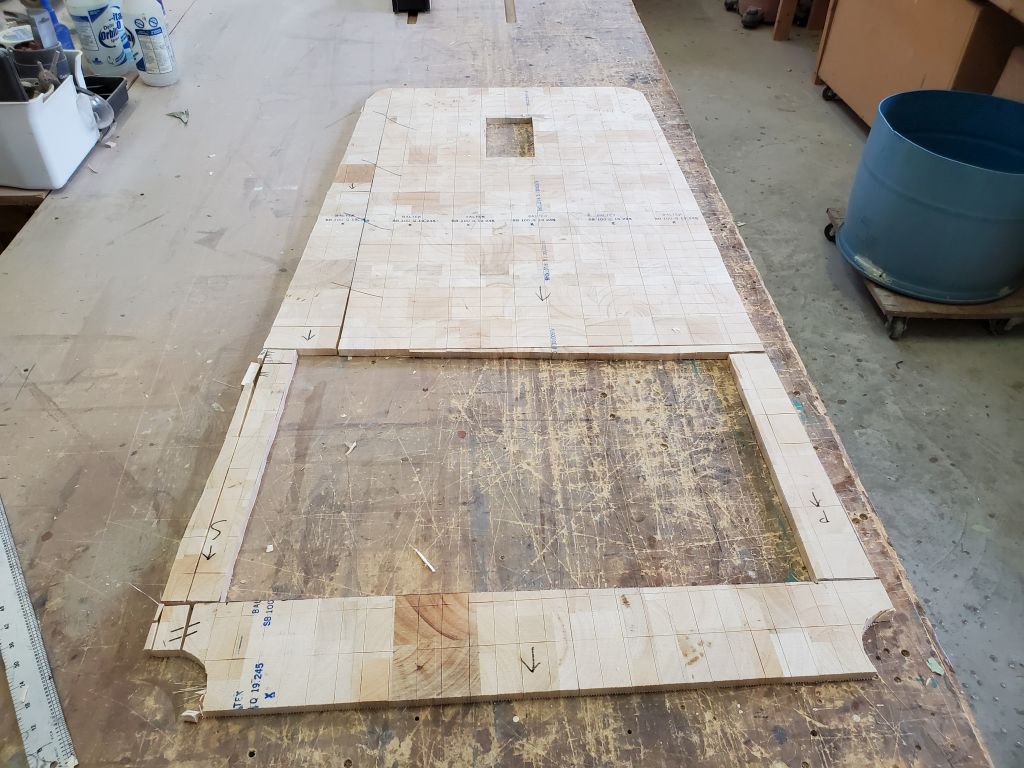
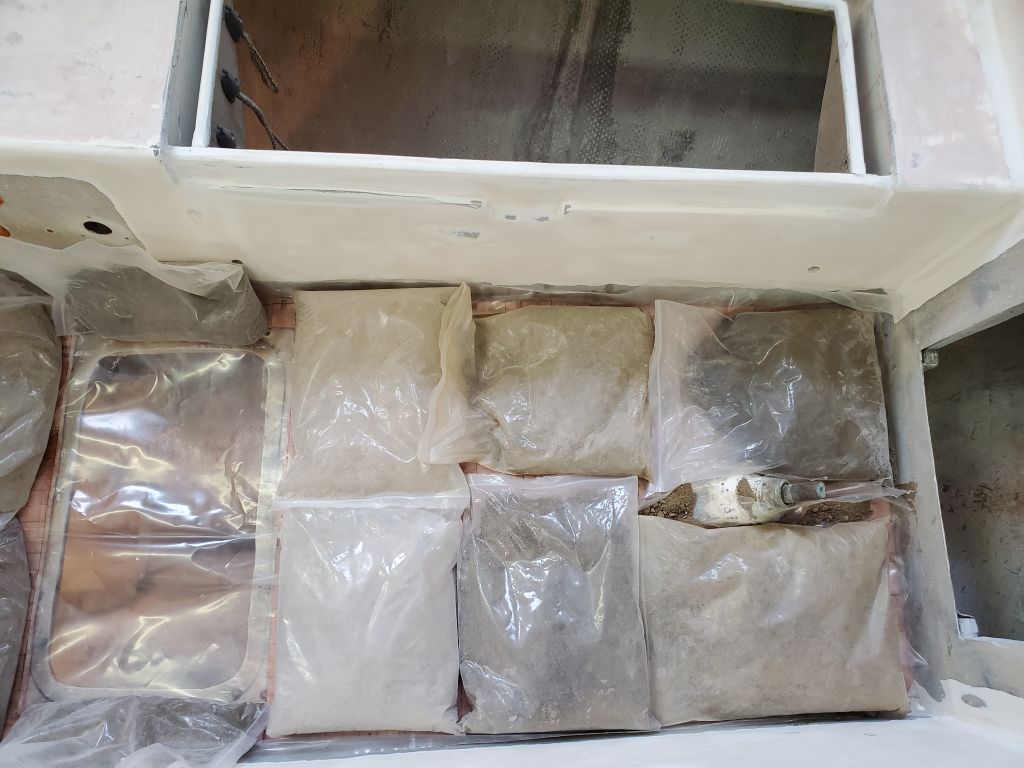
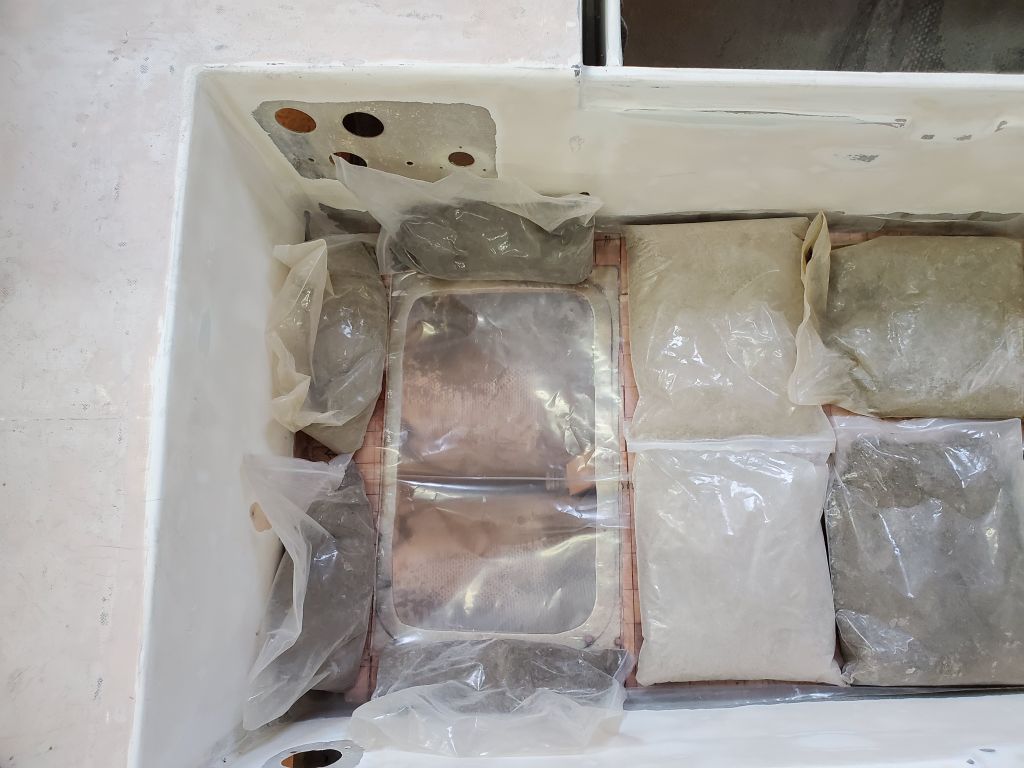
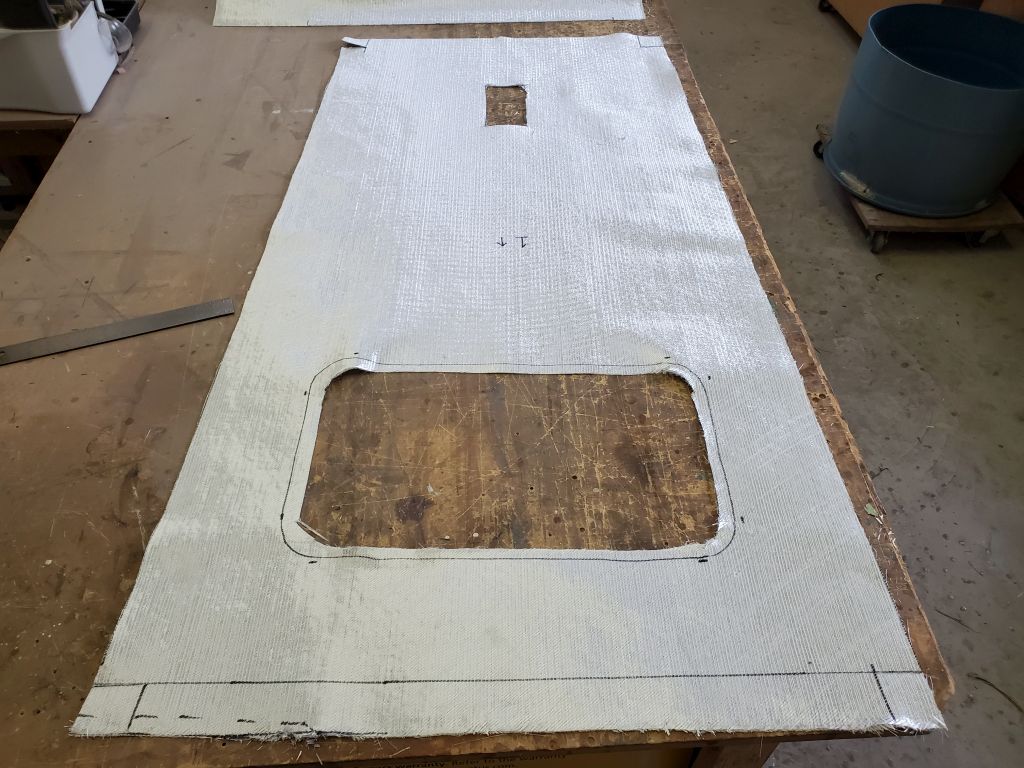
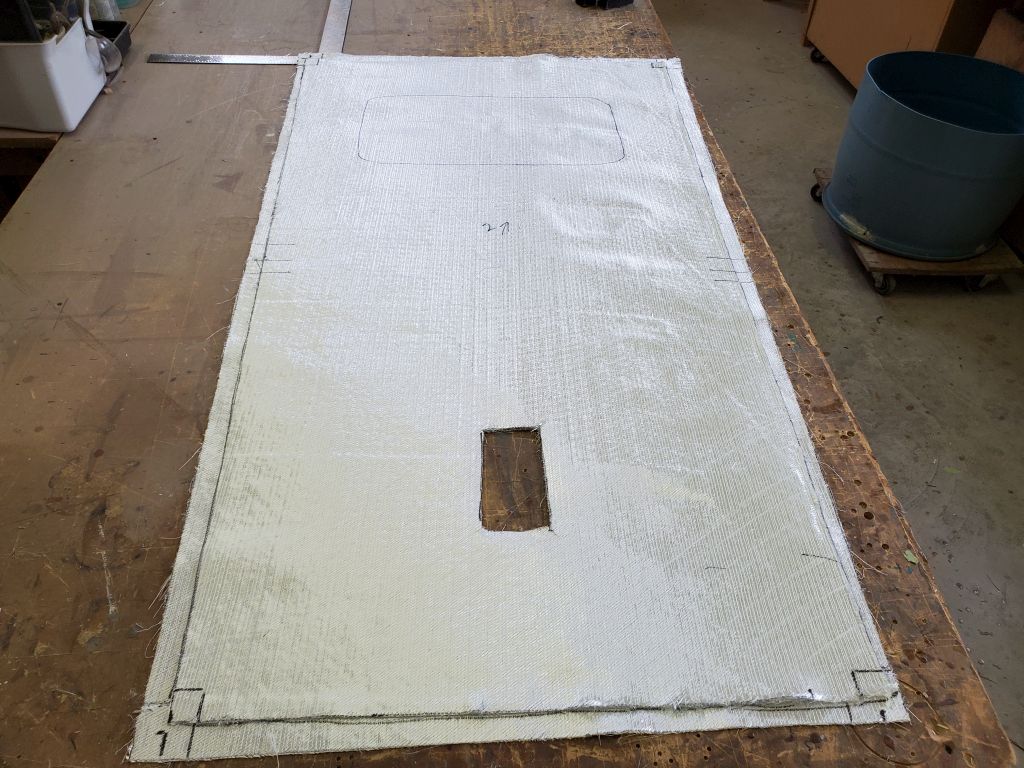
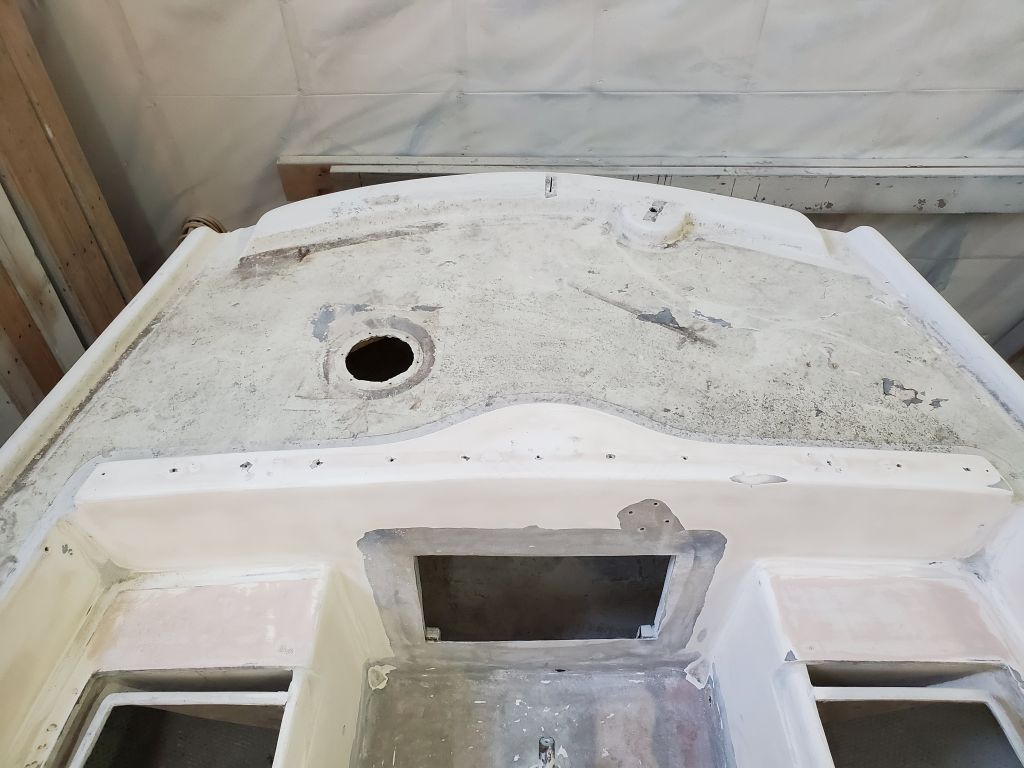
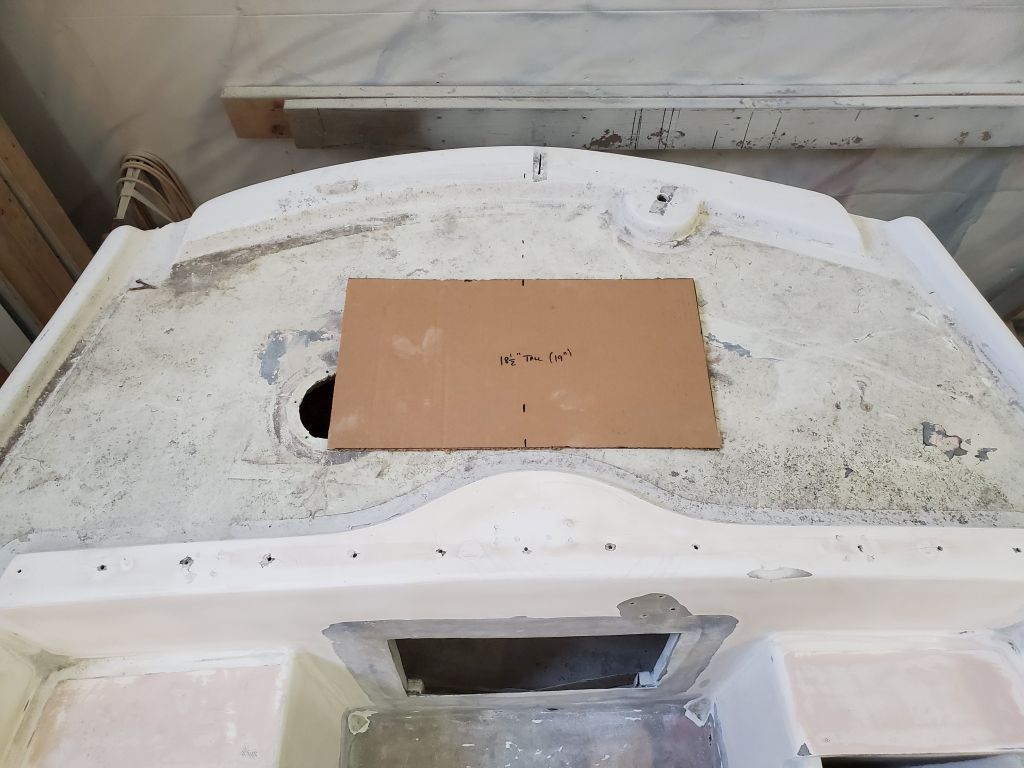
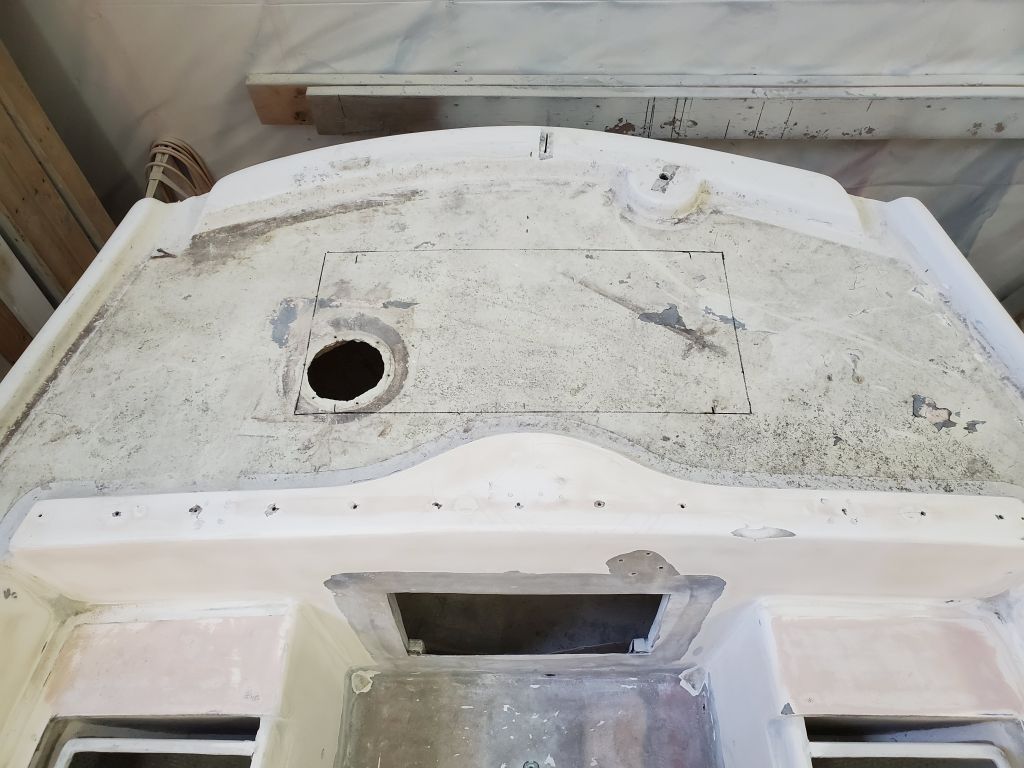
Seeking additional storage, the owner inquired about one or more deck boxes in key places on deck (aka places there might be room), and one of these was to be on the centerline forward of the pilothouse, where there was ample open space that wasn’t used for anything else.  I made some initial measurements of the space to determine the possible dimensions of the new deck box.  To leave clearance aft of the mast, and for the rigid boom vang, it looked like an overall length of 48″ would work (and also use the sheet goods efficiently), and by overhanging somewhat the 11″ wide raised center portion of the deck, the width could be made as needed to accommodate some of what the owner hoped to store.  Height-wise, the box had to be deep enough to be useful, but couldn’t extend too high lest it block too much of the view from the pilothouse windows; the owner had suggested that roughly the height marked by the lower window frame in its open position would be OK.  This was around a foot.

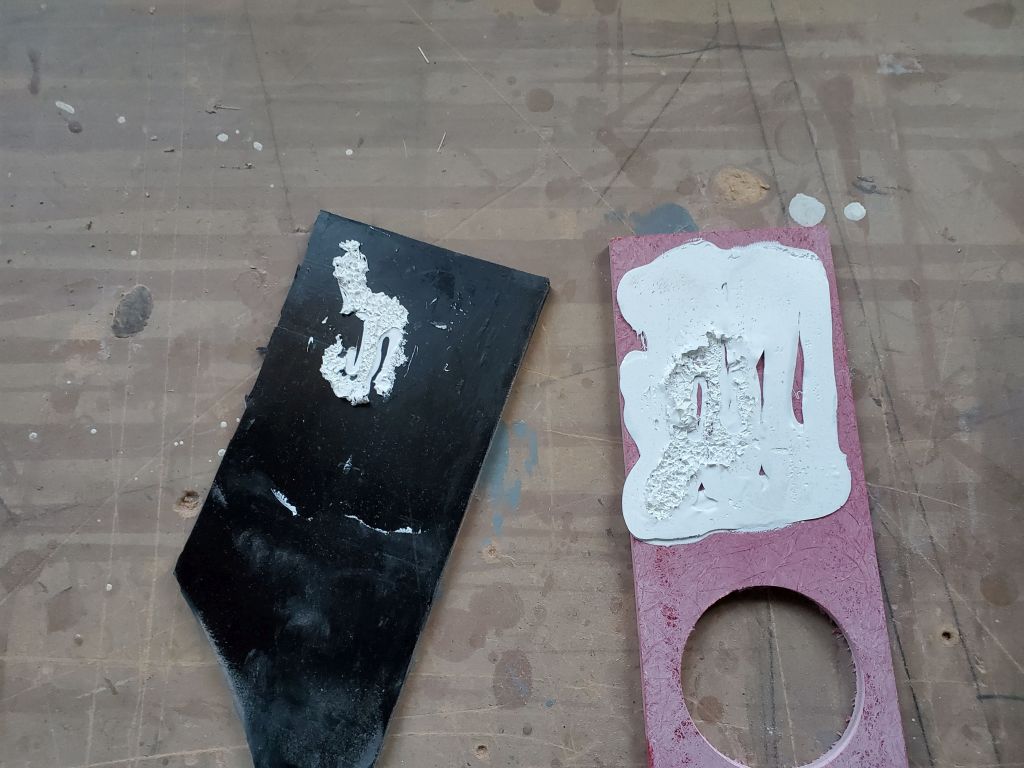
One thing the owner hoped to keep in the new box was a spare propane tank to fit the small propane locker in the cockpit.  The tank was just over 12″ tall and a bit over 11″ in diameter, so these formed the basis for my calculations on the new deck box.  To keep the height from growing too much and being an impediment to visibility, I thought I could create a recess for the bottom of the tank that would minimize the space required for it, as well as holding it in place inside the box.  Therefore, I decided to make the sides of the box 12″ tall, and the overall width of the box 15″ to easily fit between the deck hatches, but not overhang the raised portion of the deck by to much (14-1/4″ inside width).  I hoped these overall dimensions would make the box useful without being too bulky.

To this end, I cut to size the sides, ends, and bottom from 12mm marine plywood.  I routed out a circular area to fit the bottom of the propane tank, which allowed the tank to fit within the 12″ tall interior of the box.  To support the box on deck, I planned to add plywood feet to hold it just off the deck for drainage, and I planned for one of these plywood additions to reinforce from beneath the section beneath the propane tank.

To showcase the size of the box, I temporarily taped it together to hold the sides and ends in place.  Once I confirmed that the box would be adequate and suit the owner’s needs, I’d start assembling, fiberglassing, and finishing the box.

Total time billed on this job today:  2 hours

0600 Weather Observation:  30°, mostly cloudy.  Forecast for the day:   Clouds and sun, 39°

Lively Heels Phase 3-5

Friday

With the old sewage system out of the way, it was time to turn to the replacement system.  The owner requested a simple system that would send all waste to a new holding tank, and from there the tank could be either manually pumped overboard in appropriate waters, or discharged to a shoreside facility when needed.   In the time since I finished removing the old system, I’d ordered the new tank, though it had not yet arrived, as well as other components of the new system, including the manual waste pump:  Another Henderson/Whale Mk IV like the toilet pump itself.

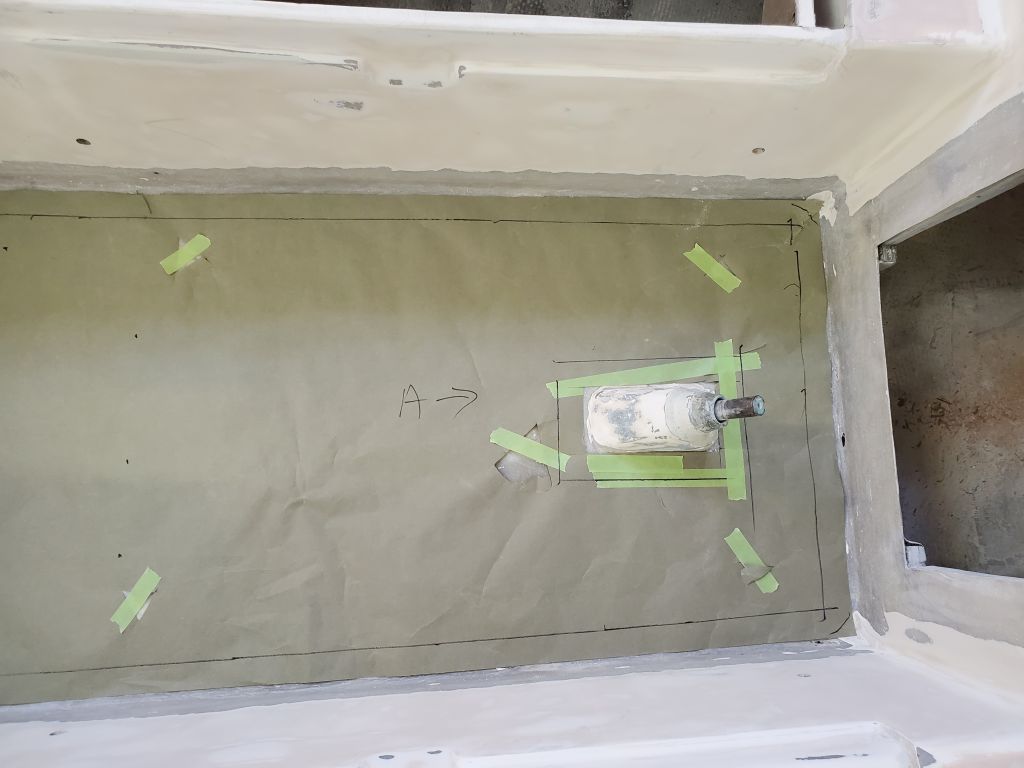
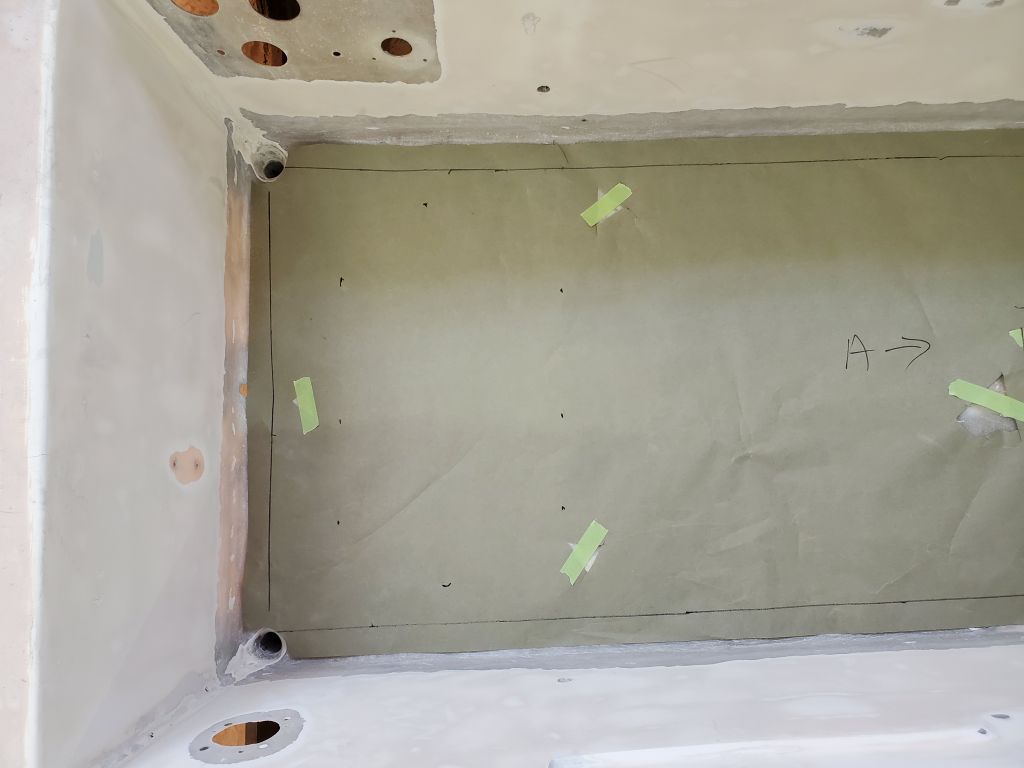
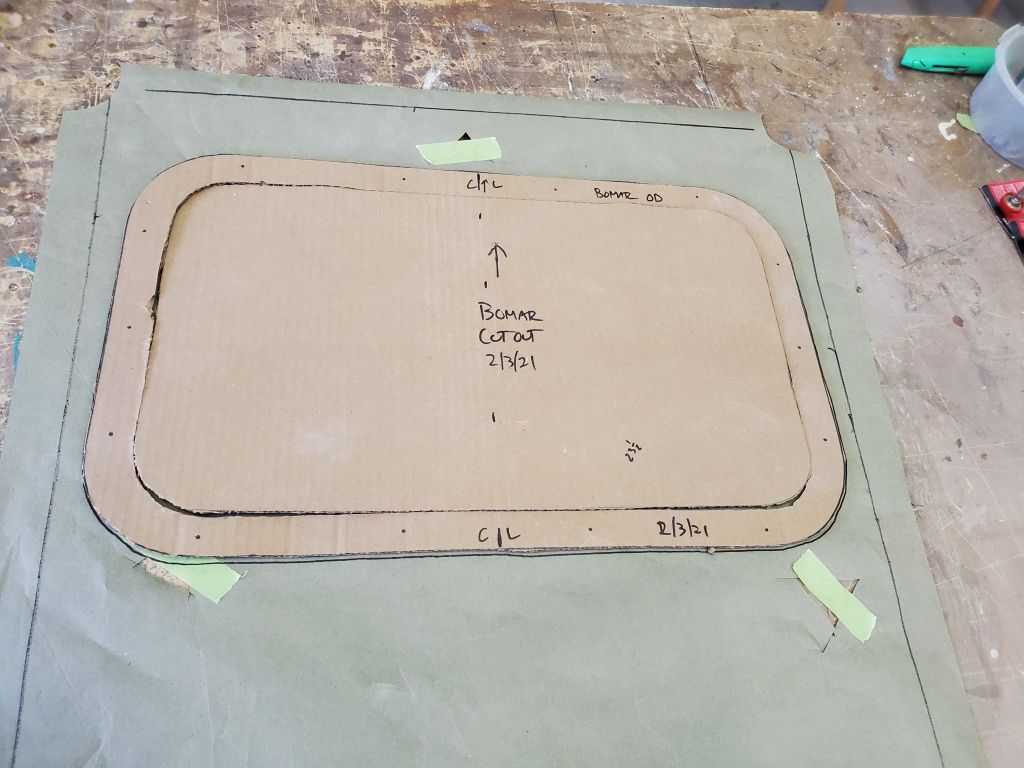
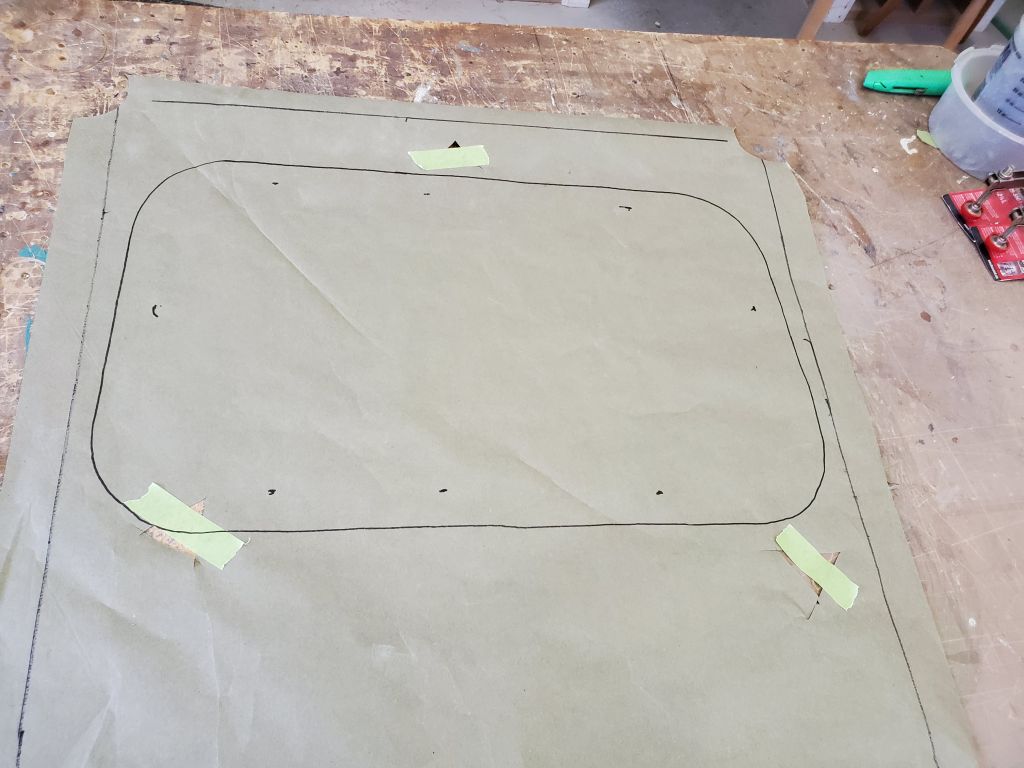
Now I prepared to install the new waste pump.  The instructions for the through-deck (or through-bulkhead) talked of a mounting template, and it seemed I might have used a template for the original head pump I installed in 2014, but I could find no such template available, so I made my own template to show the cutout required for the pump handle and four mounting bolts for the pump itself.  I also rotated the pump’s cowl to change the flow direction from the standard vertical orientation to a horizontal orientation that would better match the installation specifics at hand.

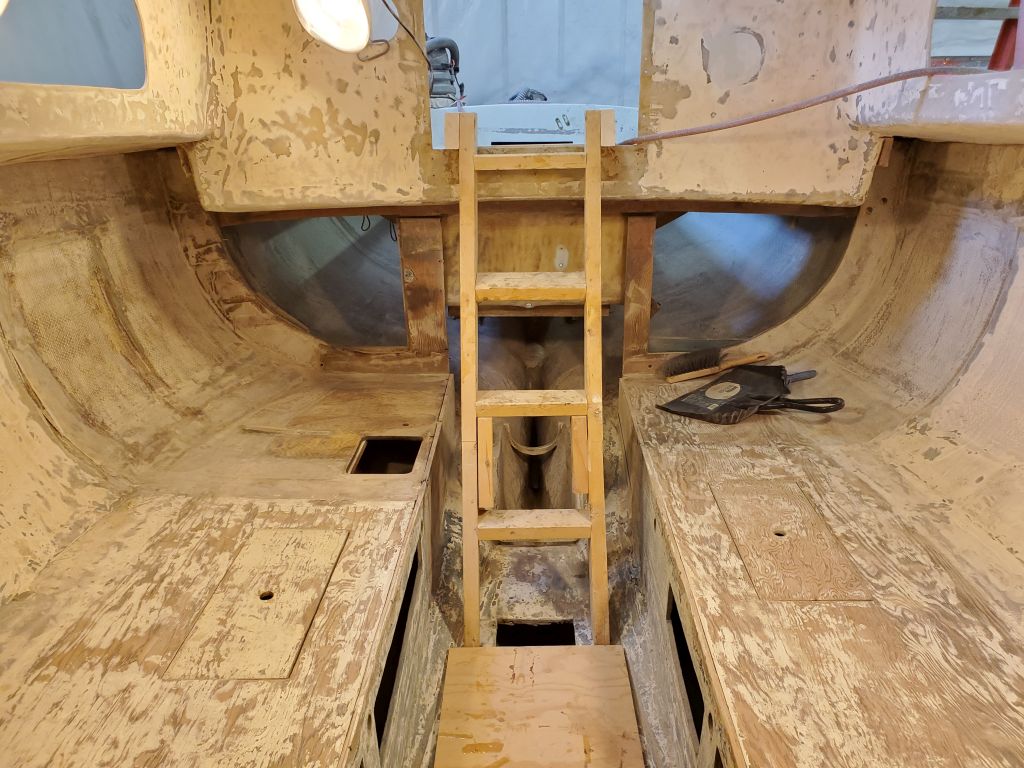
In the compartment beneath the forward berth, I removed a side panel to gain better access to the existing sewage hoses.

There were severe space constraints for the new pump, between the height of the berth platform, the nearby faucet controls, and the head platform and toilet itself (for pump handle clearance).  Ultimately, these various obstructions, along with the bulk of the pump itself, more or less dictated only a single possible location for the pump, which fortunately happened already to be a clear space within the forward compartment.

With the basic location determined, I used my homemade template to mark the mounting holes and pumping slot on the forward side of the bulkhead.  I drilled a pilot hole through the rough center of the slot to double-check that there would be handle clearance in the head compartment; even in the best location the clearance was tight, but it was sufficient to allow full throw of the handle in both directions, without interference with the toilet.  From there, I could cut the slot for the pump handle.

As essentially straightforward as this installation was in theory, in practice it required a lot of back and forth between the forward cabin and the head, a process complicated by needing to continually clamber in and out of the tight (and high) opening to the forward cabin, and into the adequate but still tight space where the old holding tank system had been, and so forth.  I had to do this multiple times as I laid out and drilled the four mounting holes for the pump, as well as securing each of the bolts in turn, since I couldn’t access both sides of the bulkhead at the same time.  I sealed each bolt penetration with a large washer and butyl sealant, and eventually the pump housing was in place.

Now I could finish the installation with the rubber bellows and cover plate from the head side.  I’d forgotten from my last such installation nearly seven years earlier that the top two holes in the bellows mounting ring corresponded with the top pair of bolts securing the pump, so I had to remove these two bolts and reinstall them through the plastic ring–no trouble, just more back and forth and repeating the processes I’d done earlier.  In addition to the rubber bellows, which flange extended behind the entire mounting ring, I added more butyl tape sealant behind the ring to seal all the fixing screws.

To finish off what I could of this installation for now, I installed a new discharge hose from the pump to the existing, and nearby, loop that led to the overboard discharge through hull.  The proximity of the two connections required a hose loop to accomplish; the hose threading the needle through the loop is the actual and original discharge line from the toilet, which I would later connect to the inlet of the new tank once it was installed.

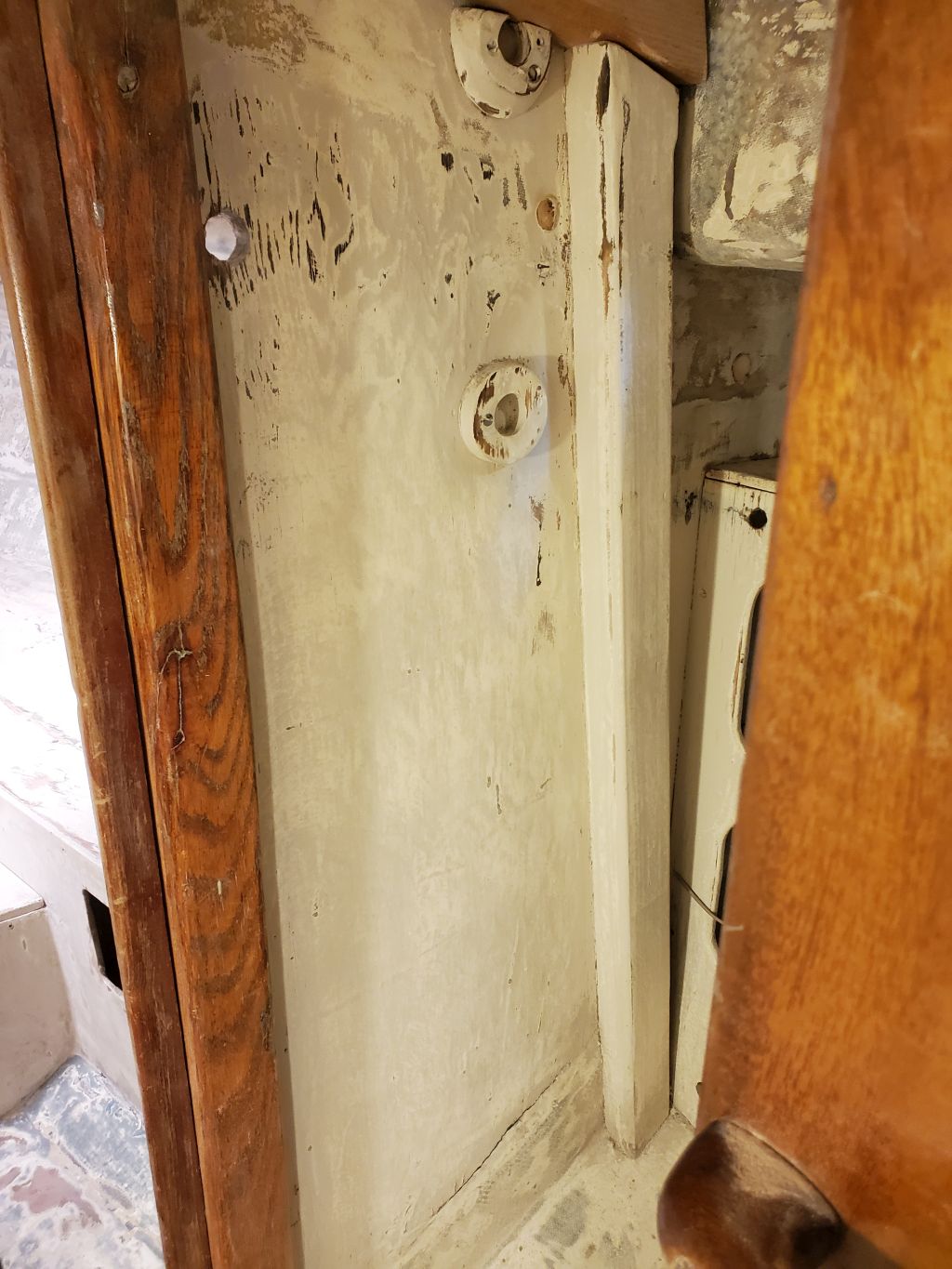
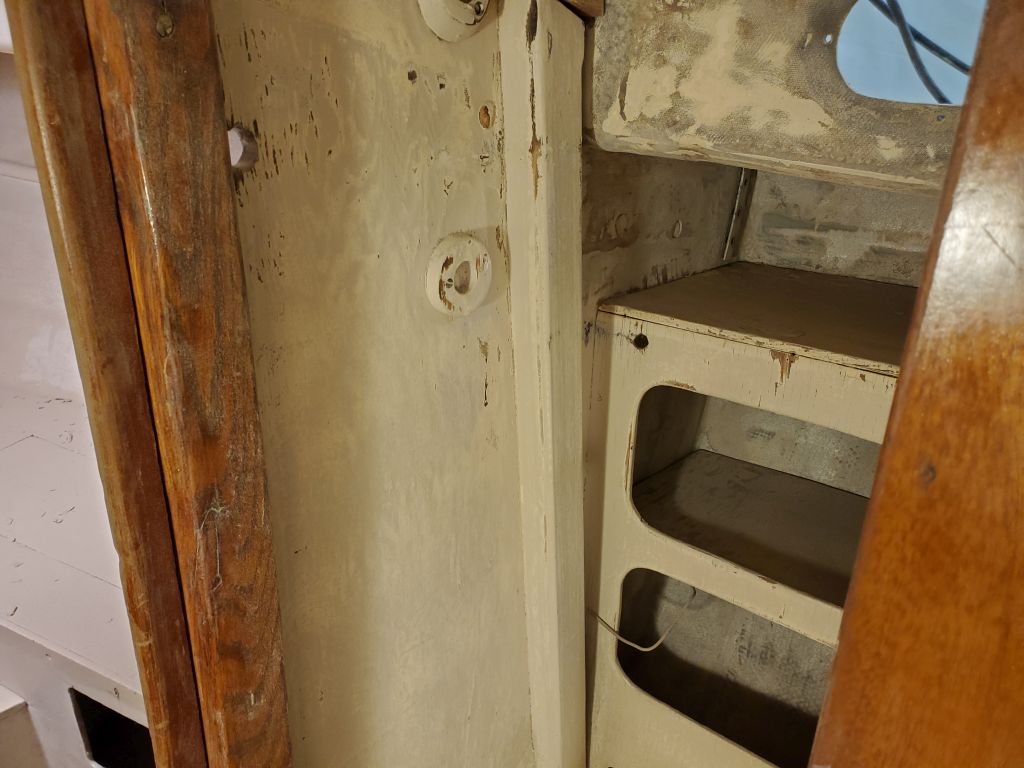
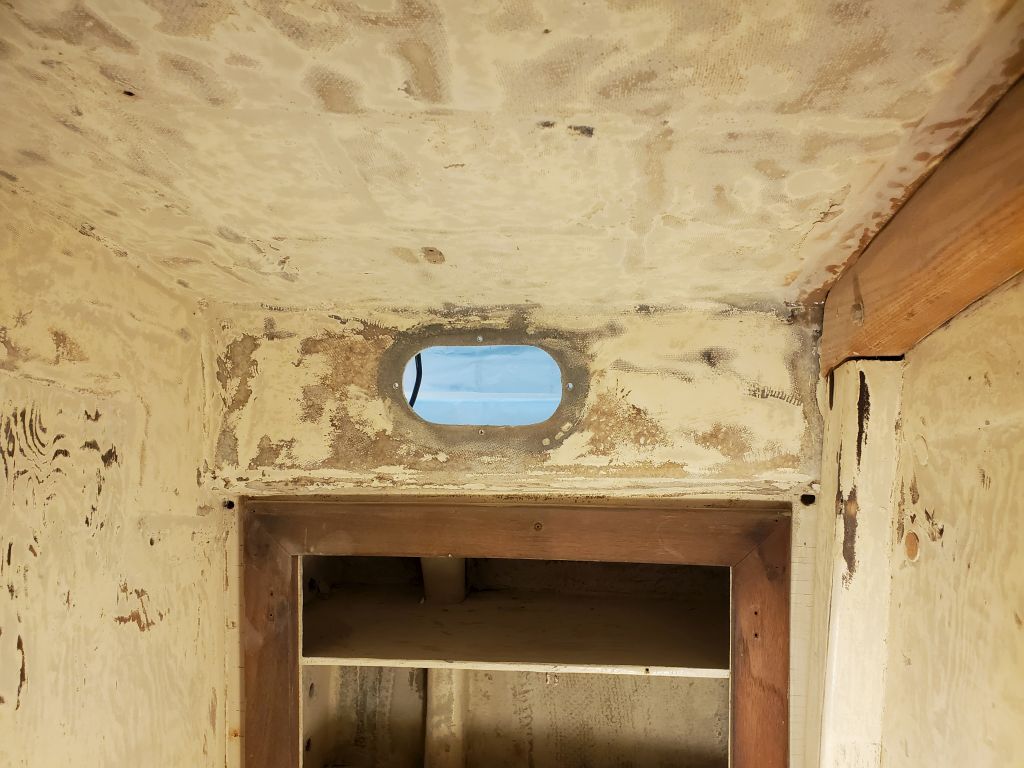
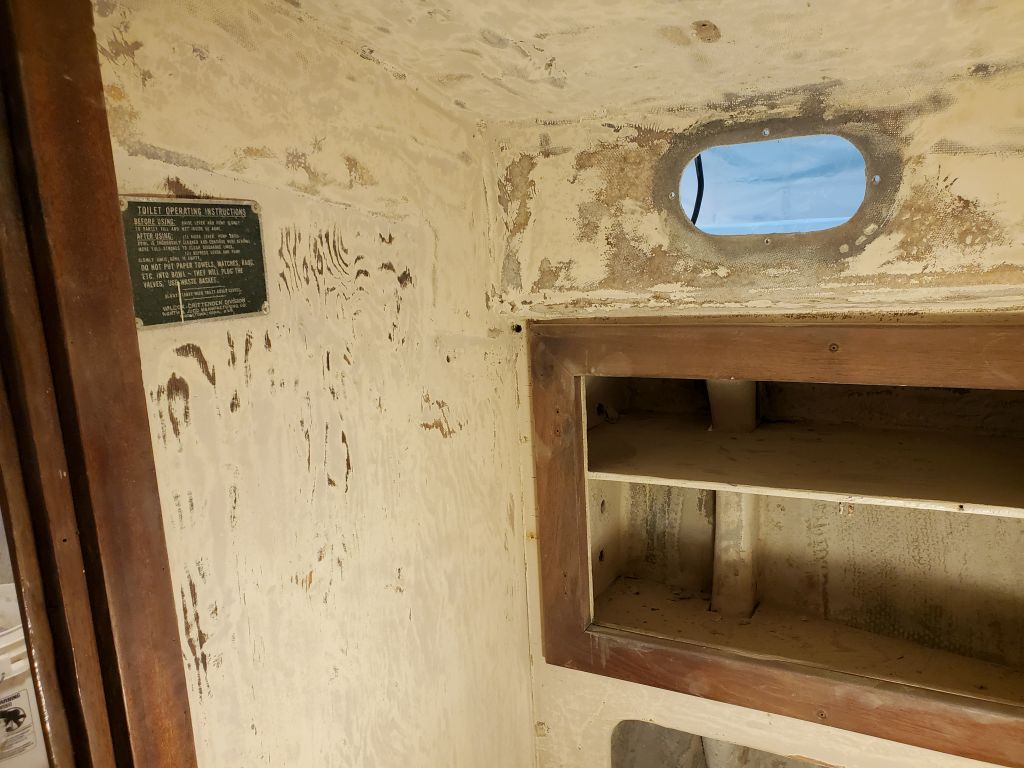
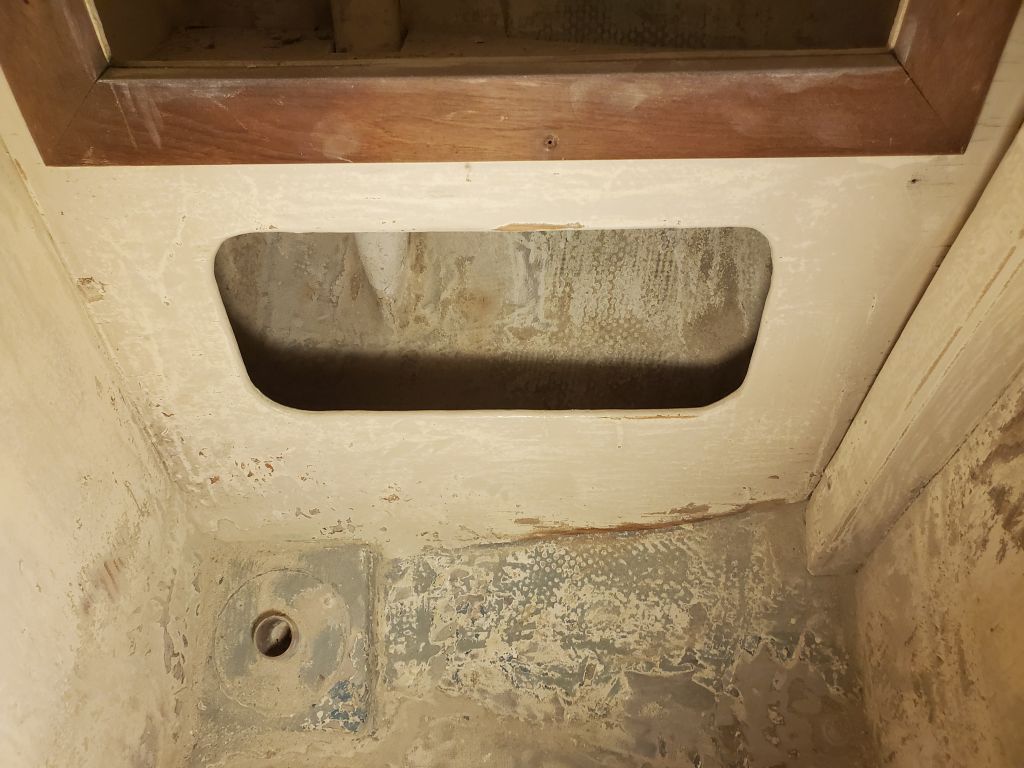
Meanwhile, while working in the head space I took care of a couple smaller removals.  First, I removed the small control panel from the old electric head treatment system, leaving a 1″ hole in the bulkhead that I’d cover with something or other for cosmetic purposes in due course.  I also removed the associated cabling that had led to the control box that I’d removed along with the old holding tank previously.

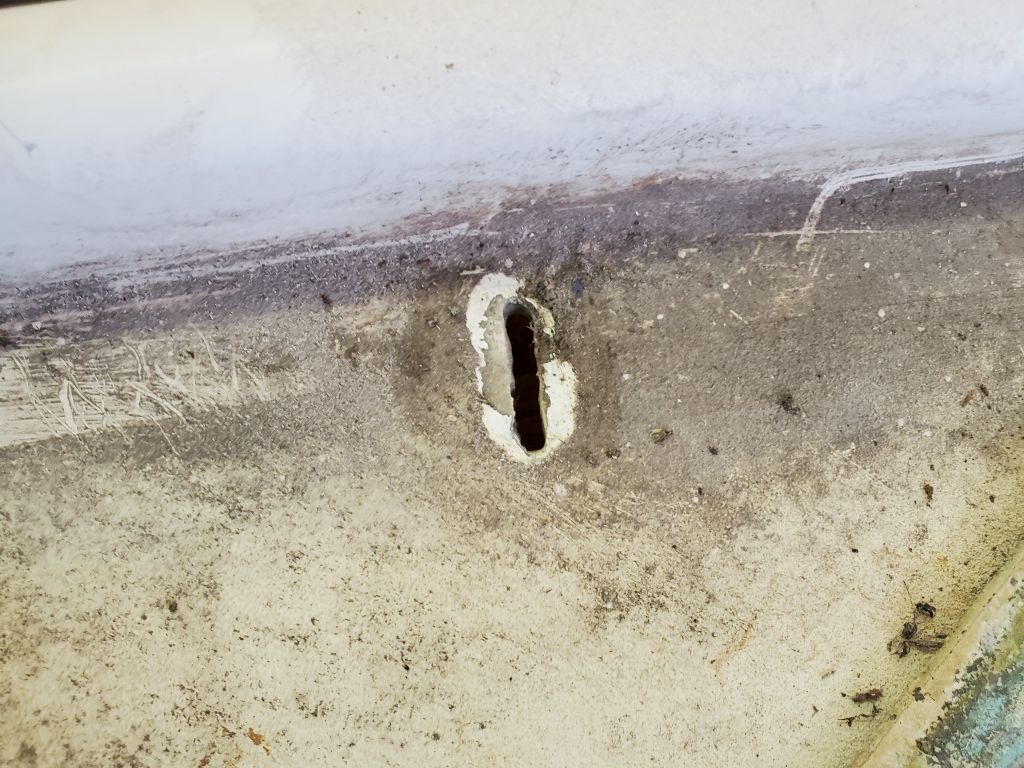
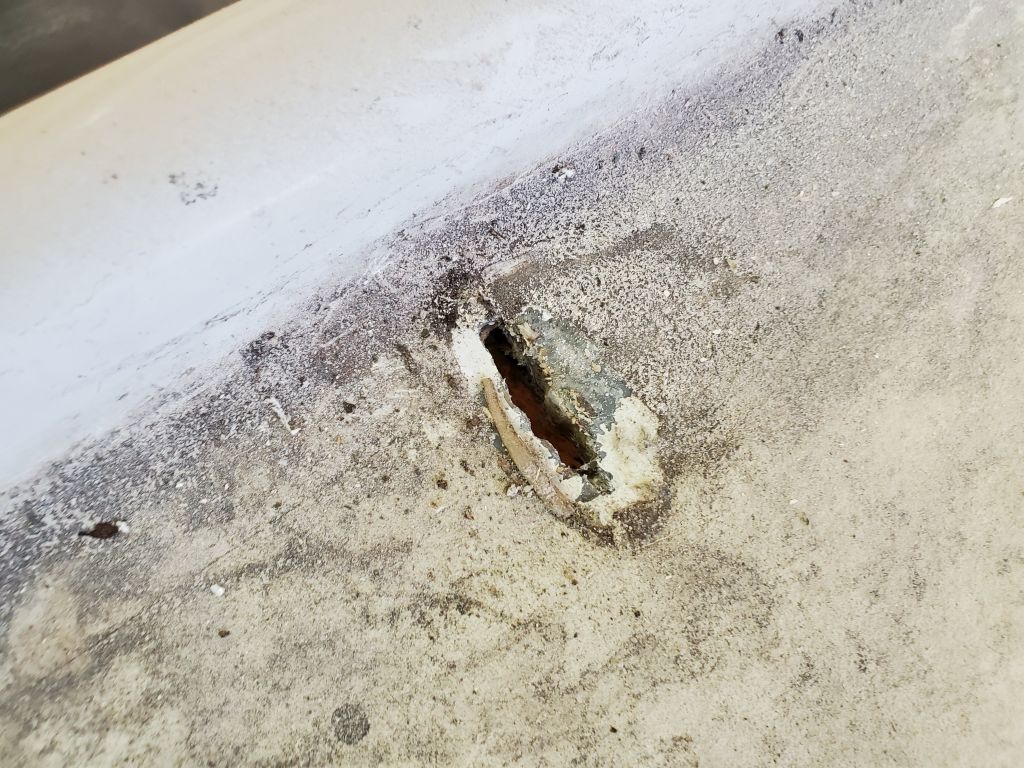
Because the owner wanted a different type of through-hull vent for the new tank, I also removed the old vent hose and vent fitting from the hull, which was located in the space behind the head panel.  I’d replace the fitting and hose in the near future.

Total time billed on this job today:  4 hours

0600 Weather Observation:  32°, cloudy.  Forecast for the day:   Becoming sunny, 37°

Arietta 32

Friday

With the new hasp now on hand, I completed the installation on the lazarette hatch.  The hasp featured a rotating eye that secured the hasp without need for a padlock through the eye.

The final installation, as it were, was to reinstall the tiller, and with that, the project was complete, other than painting the bottom sometime in the early spring.

Total time billed on this job today:  0.5 hours

0600 Weather Observation:  32°, cloudy.  Forecast for the day:   Becoming sunny, 37°

Arietta 31

Thursday

After collecting tools, fasteners, hardware, and protective cloths and towels, I got to work installing the last of the hardware in the cockpit.  Deceptively minimal, the various hardware installations took most of the day to complete.

I started by reinstalling the inclinometer beneath the compass, after checking that the boat was still level.  I used VHB tape to secure the plastic device in place.

Next, I installed the pair of padeyes in the cockpit well, one on each side.  I reused the plywood backing plates that I’d removed earlier, but used all-new fasteners.

I moved on to the lower part of the latches for the two cockpit hatches.  The latches and catches for the hatches have few matches, except in Natchez.

(sorry.)

Still on the bench, I installed the top portions of the locker lid latches, then reattached the two lids to the hinges still in place on the cockpit seats.

Next on the list:  A pair of new winch handle pockets at the forward end of the cockpit.

I made up some new fiberglass backing plates for the stern cleats, then installed the cleats on each side.

The only piece of hardware left now was a hasp/latch for the lazarette hatch.  Unfortunately, the simple new hasp I’d purchased for this turned out not to work:  The leg was too long, and I couldn’t orient the hasp in any way that would work.  So I searched for, found, and ordered a replacement with a shorter leg that I hoped would do the job.  It turns out that hasps with rotating eyes have far fewer sizes available than normal hasps, so my options were limited.  The new hardware should arrive on the morrow, and I planned to install it then to wrap things up.

Other than that, the work list was complete for now.

Total time billed on this job today:  5.75 hours

0600 Weather Observation:  26°, cloudy.  Forecast for the day:   Mostly cloudy, chance of showers, 37°

Lyra 1

Wednesday

During what we’d had of winter so far–two “real” snowstorms (in that they accumulated and required plowing), one of which melted and washed away by Christmas, the other of which was only moderate in scope but had stuck around mostly unchanged for a couple weeks–I’d endeavored to keep the way clear around Lyra, as I knew I’d be moving her indoors sometime in January to begin the project.  Happy to have had a relatively easy winter so far, meaning less work to keep the boat and my trailer clear enough to get to, I prepared for the boat move by removing what I could of the tarp over the boat.  With no real framework above the deck, the cover was mostly flat and  therefore still had a surprisingly heavy snow load atop that I couldn’t move from the ground, and the tarp itself had a lot of frozen water collected in various pockets and folds caused by the abundant excess tarp bundled all around the boat, so I chose just to cut the tarp off roughly at waterline level, which would allow me to move the boat indoors and then deal with the rest of it later.  The tarp was damaged anyway from the weight and I didn’t see the bother in making any attempts to salvage it regardless.

One never knew when a real winter would hit (usually April now, it seems), so I was grateful that the conditions were so good for the move now, and was anxious to have the boat indoors as soon as possible so I wouldn’t have to worry what the weather brought in the coming days or weeks, even though it would be a few days to a week or so before I truly got started on the project.  So with all other preparations complete, including uncovering and hooking up the trailer and getting the shop ready, I picked up the boat and moved her indoors without issue, placing her fairly tightly in the back corner of the shop to keep as much room open as possible so I could fit in another boat in the remaining space.  Since the bulk of the work on Lyra would be on deck and in the cabin–no exterior structural or cosmetic work was planned at this time–I didn’t need a lot of room around her for staging or other work.

Once the boat was inside, I was able to get up on deck at my relative leisure and push off the snow and remove the rest of the tarp and the minimal framing over the cockpit, after which I could move back in the other boat.  I suppose it would have been easy enough to do this outdoors first, but one never knows.

This project would get underway soon, but regardless it felt good to have her indoors and ready whenever I was.

Total time billed on this job today:  2 hours

0600 Weather Observation:  28°, cloudy.  Forecast for the day:   Partly sunny, 36°

Arietta 30

Wednesday

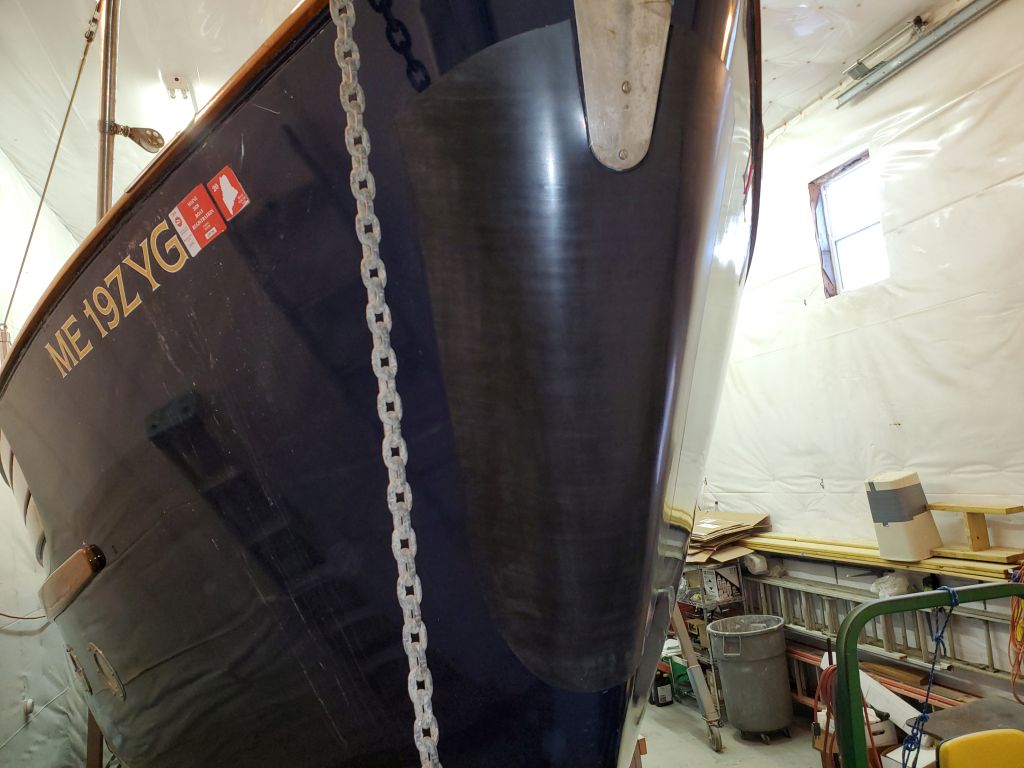
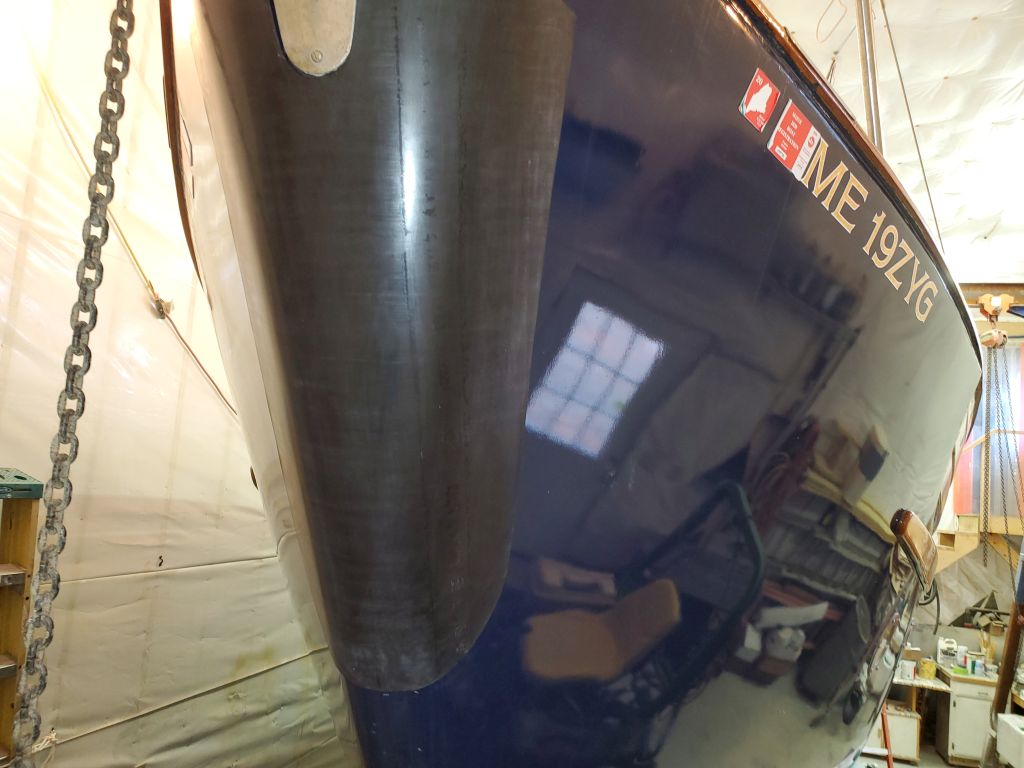
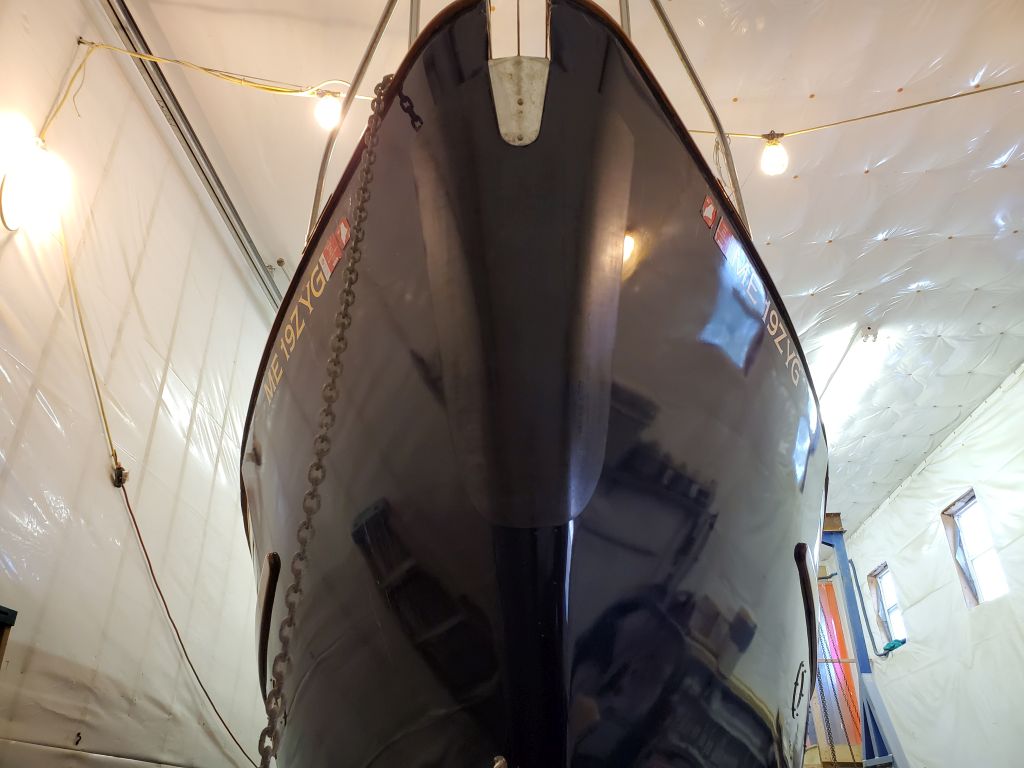
At the bow, I installed the newly-made registration numbers, locating them about 27-1/4″ aft of the stem on each side, which corresponded roughly with the cutwater below.

Now that the nonskid paint was dry enough, I could remove the remaining masking from the cockpit.

I wanted to give the cockpit at least another day to cure before I started working within to finish up the hardware installations there, so for now I worked on the lazarette hatch, reinstalling the original hinges on the hatch before installing the hatch permanently on the deck with new bolts in tapped screw holes.  Later, I’d add a small hasp, but since part of that might be on the fresh nonskid, I wanted to wait a little longer.

To lead the solar panel wire belowdecks, I used the same hole that it had been led through previously, but now I installed a weatherproof cable clam over the hole, which better sealed the cable and secured it.  I left enough slack for the hatch to operate as needed.

Next, I reinstalled the stanchions and lifelines that I’d removed early in the painting preparations.

This was about all I could do till the cockpit had a bit more cure time, so it seemed a good time to move some boats around.   Fortunately, my next project would fit in the shop at the same time as Arietta, which meant I could leave her indoors for the winter months ahead rather than attempt to engineer an effective and non-damaging cover for the boat in the meantime, and it also meant I could take advantage of the current benign weather pattern to shuffle boats without undue cold, storms, snow, or ice.  So after moving some things around in the shop to make room, I temporarily moved Arietta outdoors on her trailer so I could move the other boat in.  Then, later, I moved her back to the spot she’d occupy for the remainder of the winter, which still gave me opportunity to finish up the final hardware installations later in the week.

Total time billed on this job today:  3.25 hours

0600 Weather Observation:  28°, cloudy.  Forecast for the day:   Partly sunny, 36°

Arietta 29

Tuesday

Before getting back to the second coat of nonskid, there were a few installations I could finish first, starting with the outboard bracket.  I’d painted the bracket along with the hull and deck, and during layout I’d prepared the fastener holes, so the final installation was straightforward.  After reaming out the top surface of the four mounting holes, I applied sealant to the back of the bracket, then secured it with four 5/16″ flathead bolts in the already-tapped holes through the transom and built-in reinforcement within.

Afterwards, I cleaned up excess sealant and completed the installation with large washers and nuts on the inside.  The removable portion of the bracket slid easily into the mount even with the additional thickness of paint within.

Next, I installed the oarlock base and socket with two long bronze bolts through the taffrail and hull/deck flange within.

The last thing I could install now was the aluminum trim covering the seam between hull and taffrail on the transom.  I’d removed this before painting and cleaned up the original piece before installation with new screws and sealant.

The remaining hardware, including stern cleats, lazarette hatch, and some padeyes in the cockpit, would await the completion of the nonskid.  So to get on with it, I applied the second and final coat of the nonskid paint, this  time using the special roller to provide the textured surface.  I started with the cockpit sole and the beige paint, leaving behind ample evidence of the worthiness of the extra masking around the space.

With the texture on the cockpit sole complete, I removed the masking tape around the field.  I’d installed the masking in such a way that I only had to remove the strip of tape immediately defining the nonskid field, leaving the remaining masking in place till after the paint cured.  The masking has to be removed with the paint still wet to avoid damaging the paint edge later.

Next, I continued with the cockpit seats and the white nonskid paint.  Here, I had to remove all the masking now, since I’d forgotten to set up the tape the “proper” way as I’d done on the cockpit sole and other areas thereafter when I remembered what I was supposed to be doing.  This didn’t pose a big problem, but just meant a modicum of extra care required in the tape’s removal.

I continued with the poop deck and the cockpit locker lids.  Later in the afternoon, I returned and removed the excess tape from the poop deck surrounds.

After lunch, I picked up the new graphics for the name, hailport, and registration numbers, and spent the remainder of the day installing the lettering on the transom, keeping it more or less in the same position as the original lettering I’d removed earlier in the project.  I’d get to the registration numbers on the bow next time.

Total time billed on this job today:  6 hours

0600 Weather Observation:  20°, cloudy.  Forecast for the day:   Decreasing clouds, 36°

Older posts Newer posts