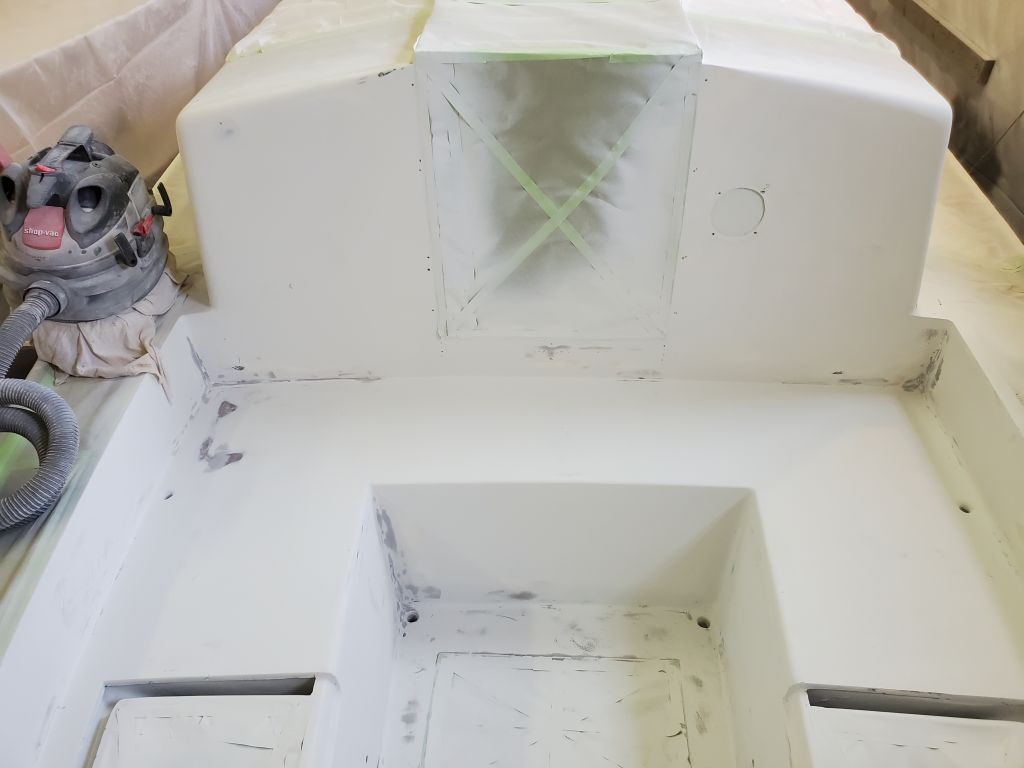
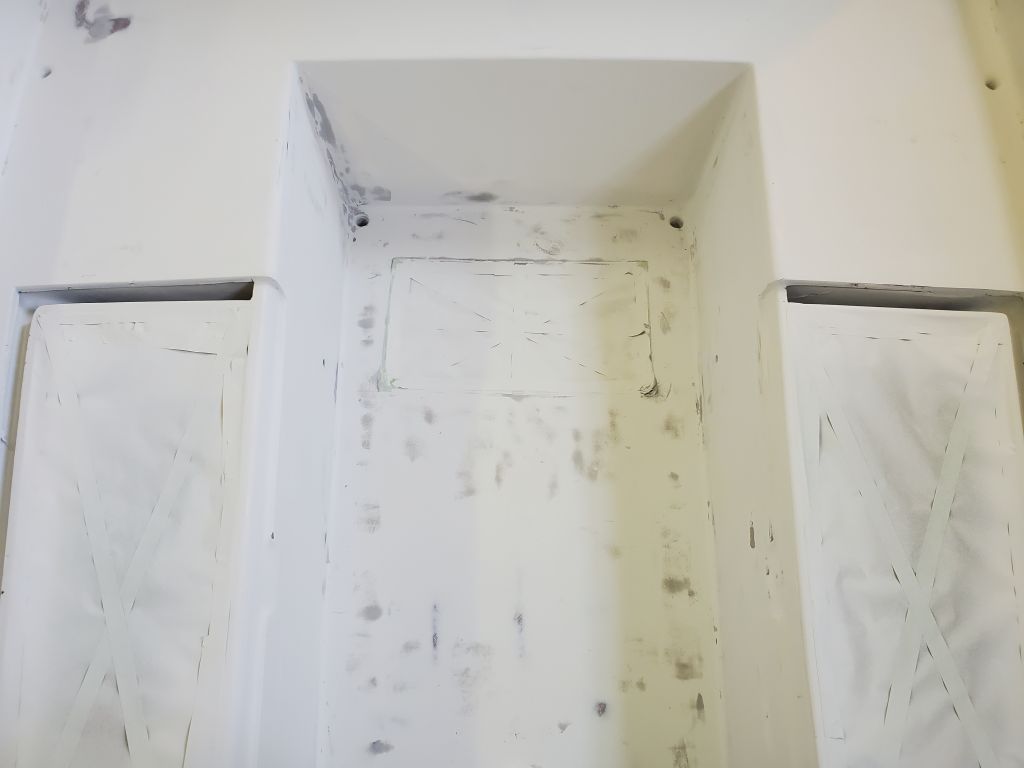
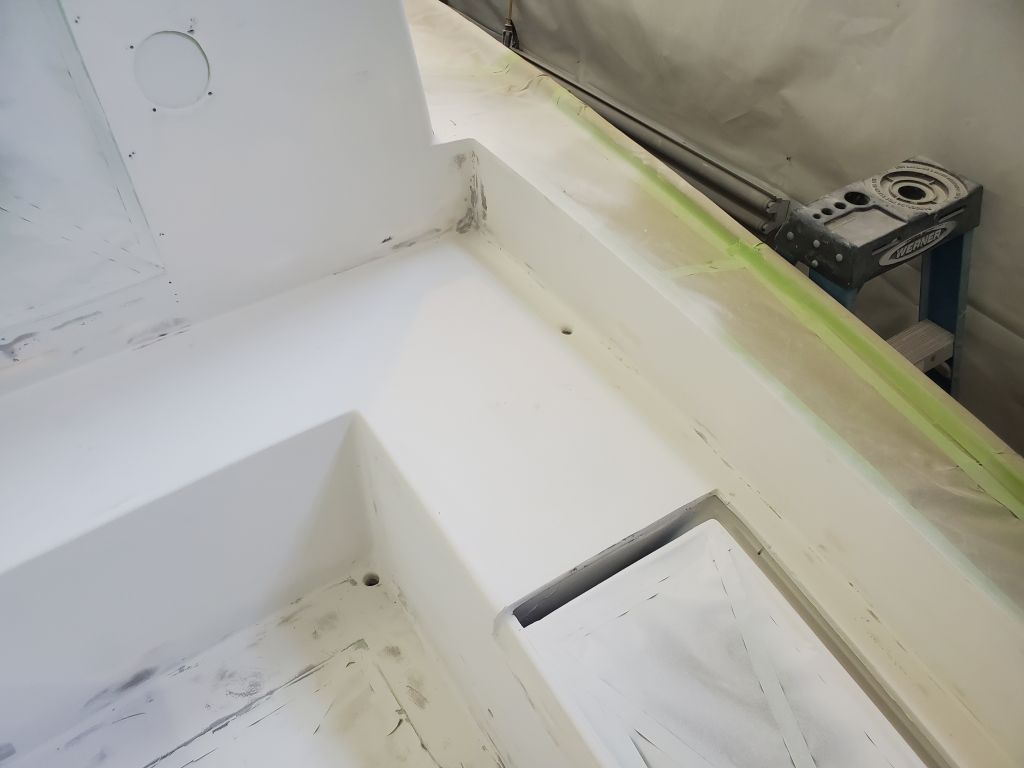
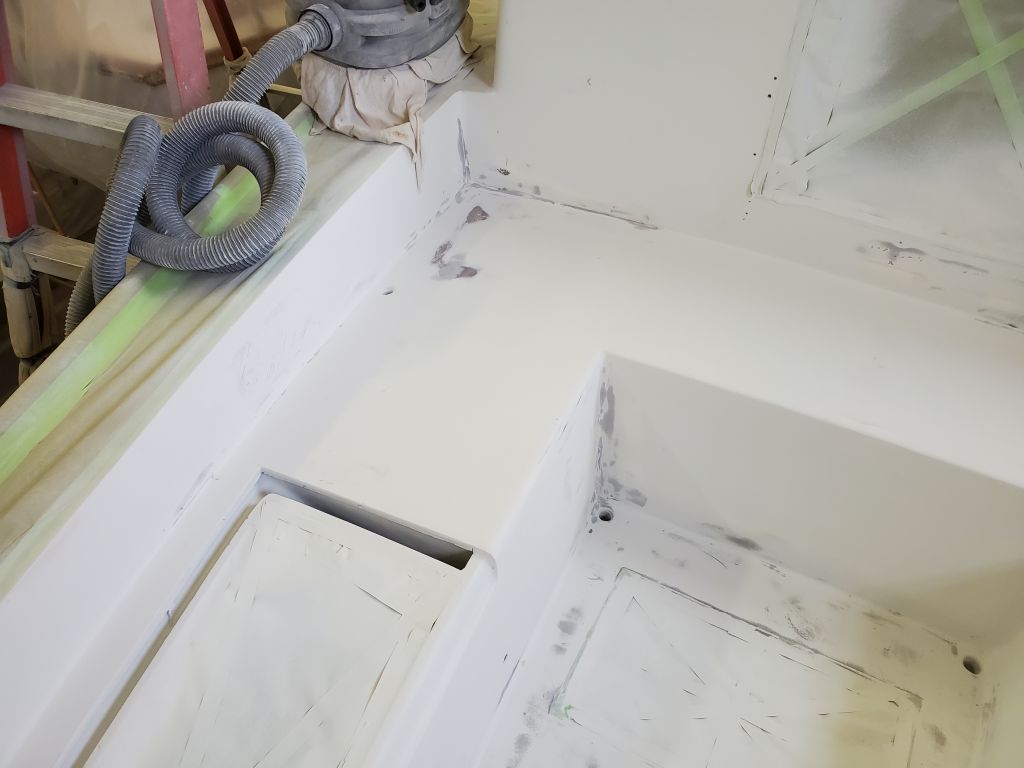
(page 62 of 165)

Lyra 40

Wednesday

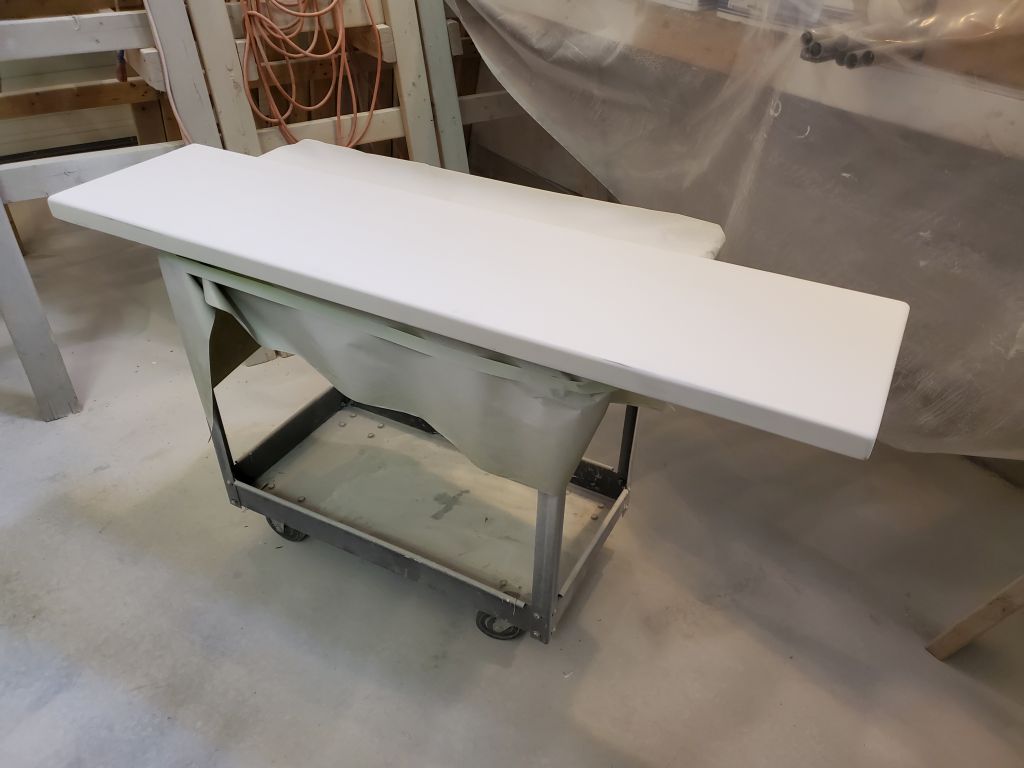
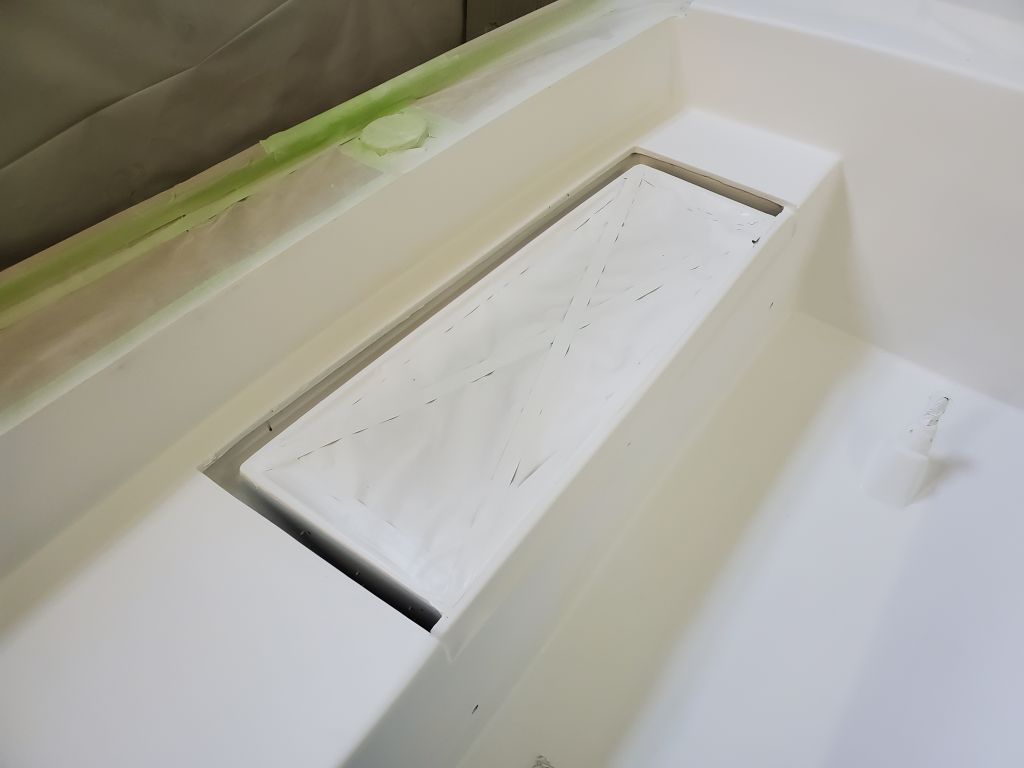
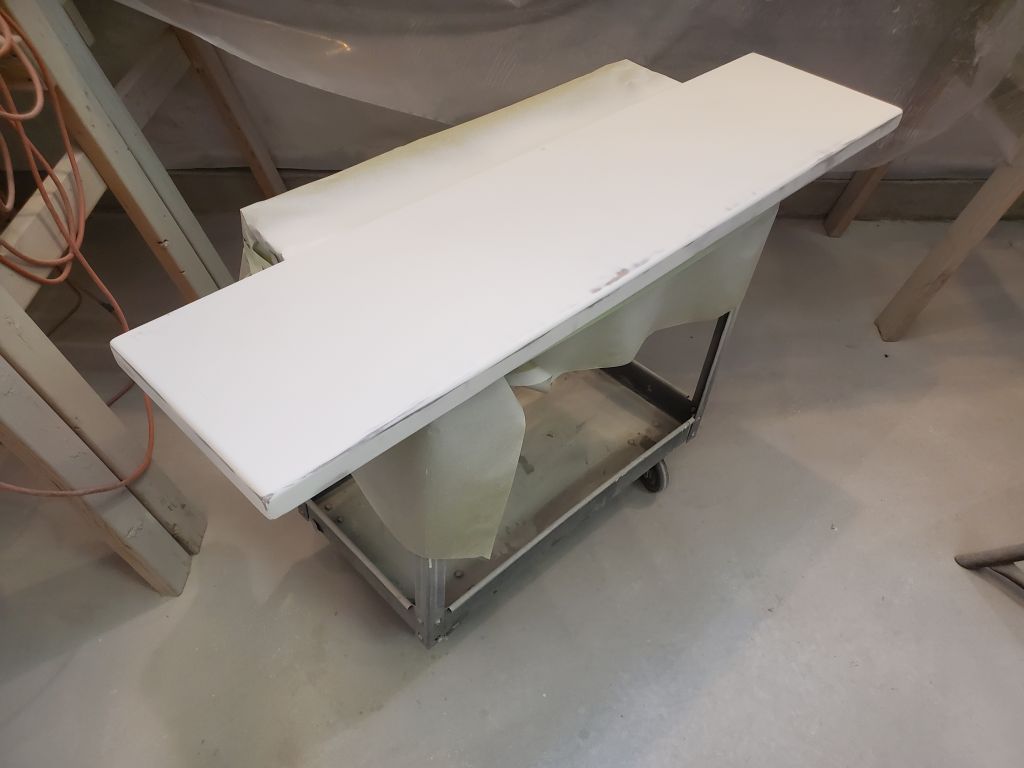
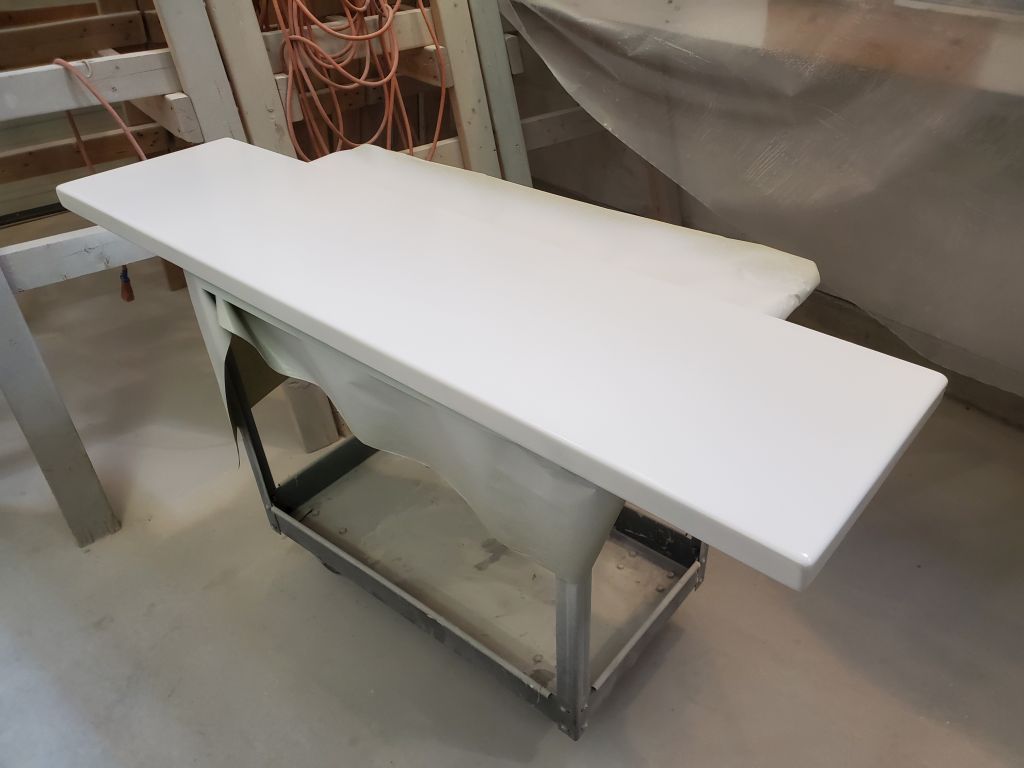
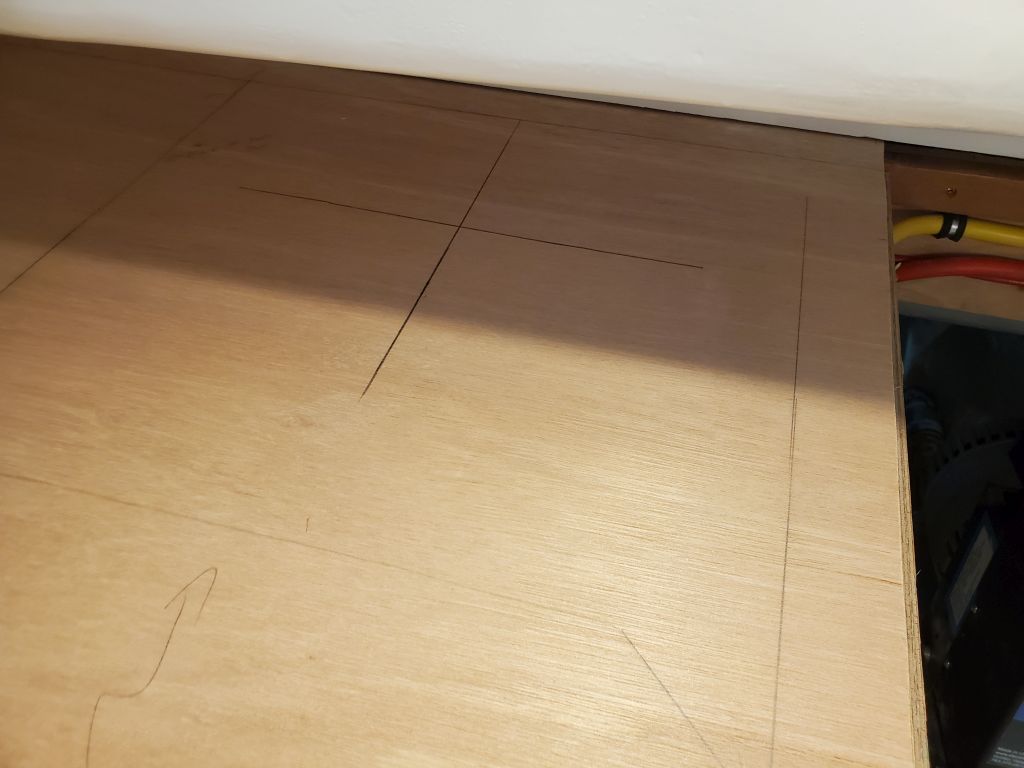
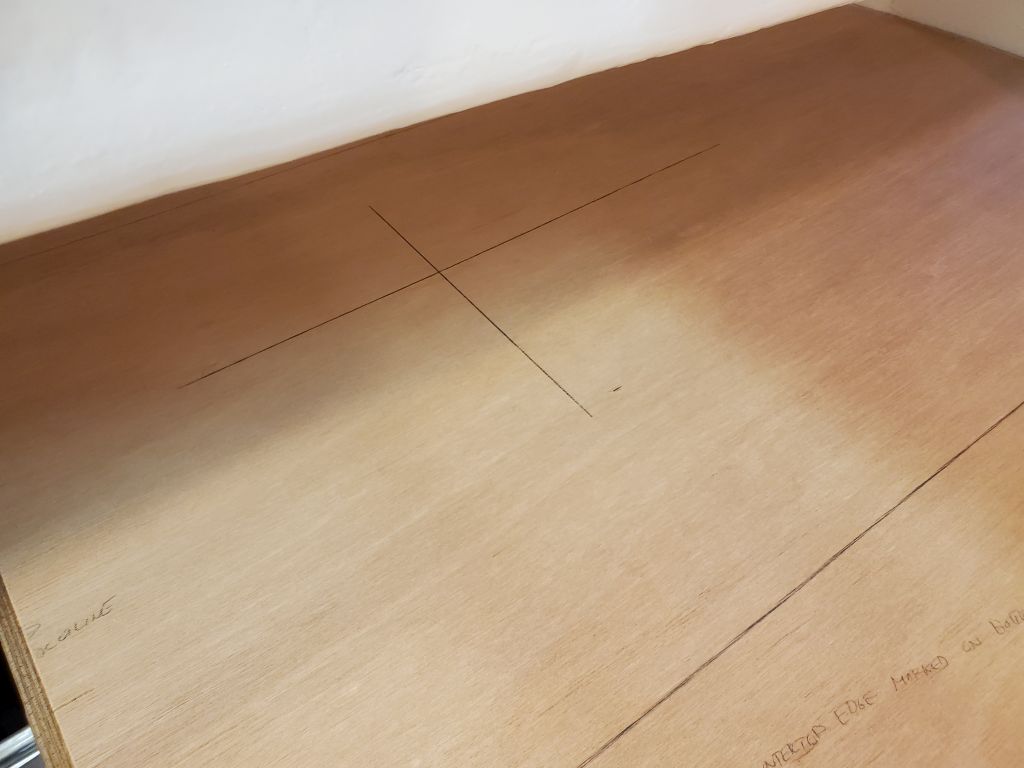
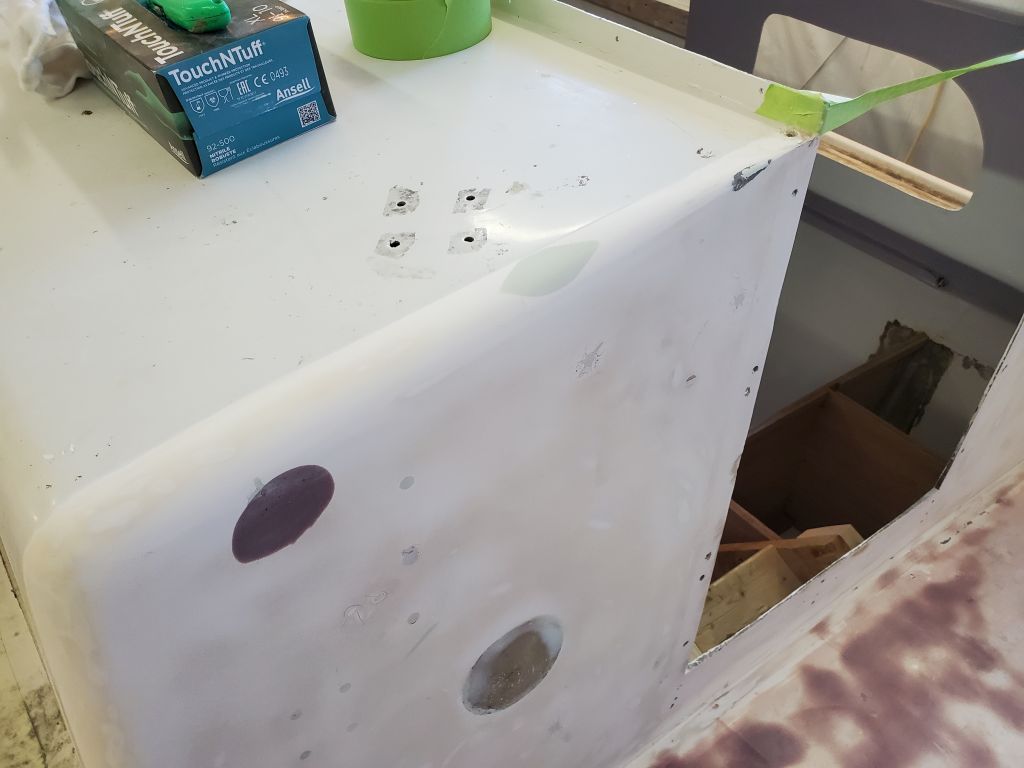
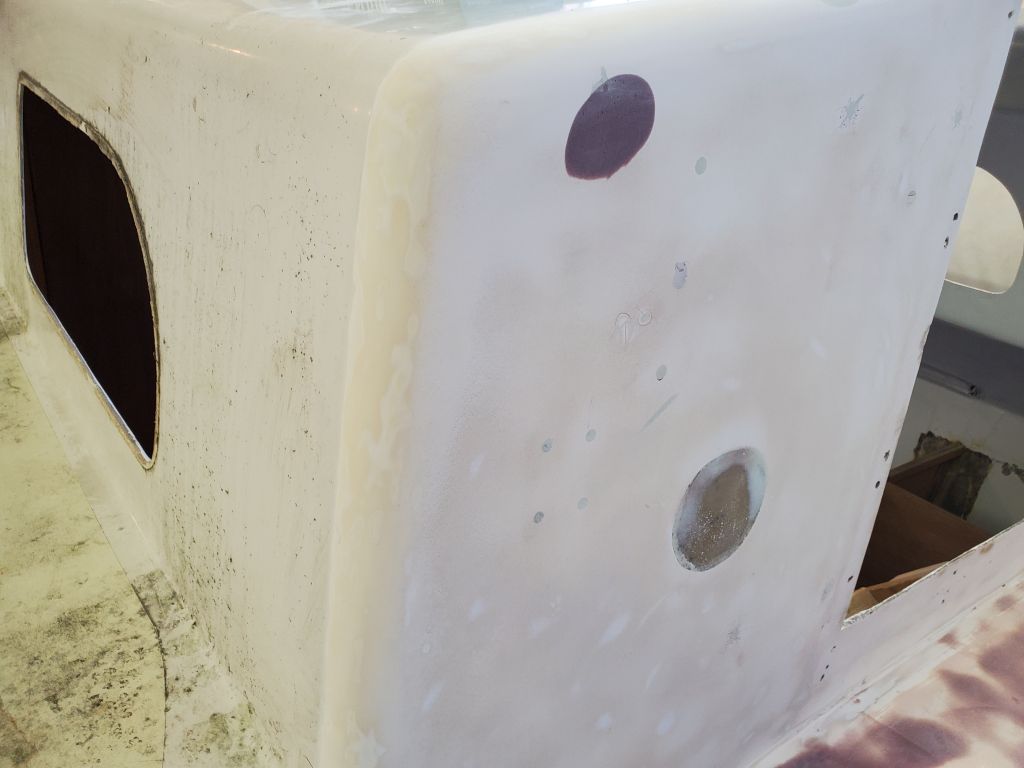
The last piece of countertop for the galley proper was the small section above the engine room.  From scrap plywood, I made a simple yet accurate template, then cut the section slightly overlong from 12mm plywood, marking and trimming the forward edge to match the forward edge of the engine room side trim.

This design left over 6″ of clear countertop beneath the companionway and forward of the bridgedeck, good enough for galley work and potentially available as a first step depending on the final companionway ladder details.

On the port side, with the wide overhang, there was over 14″ of clear counterspace before the bridgedeck.

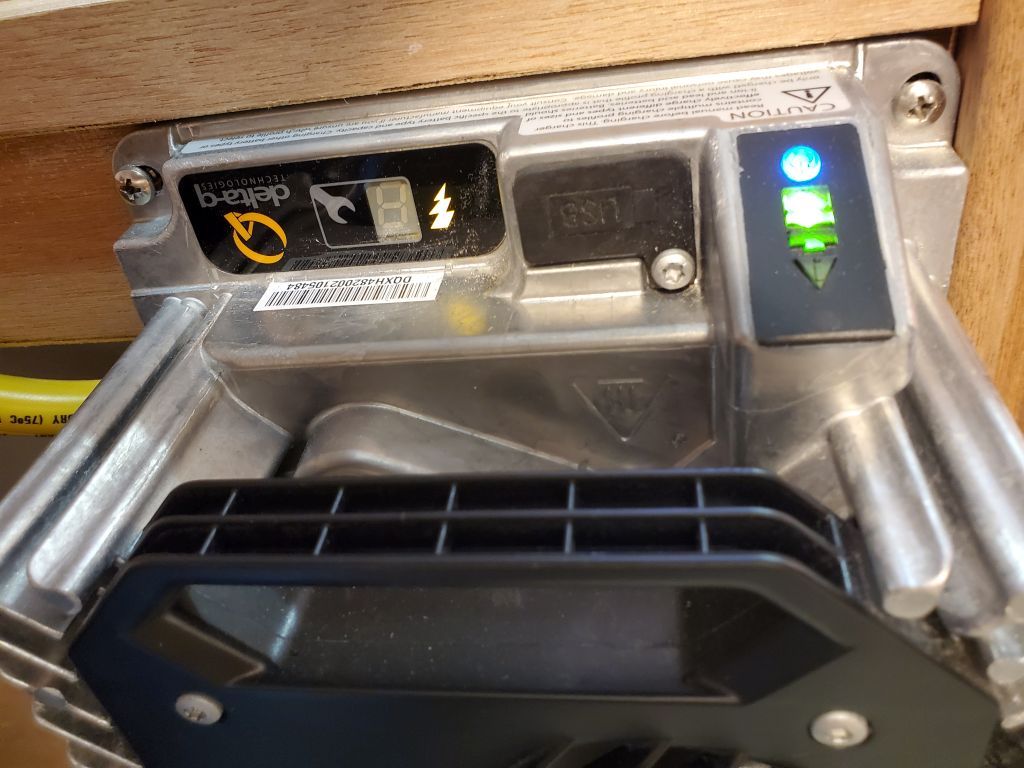
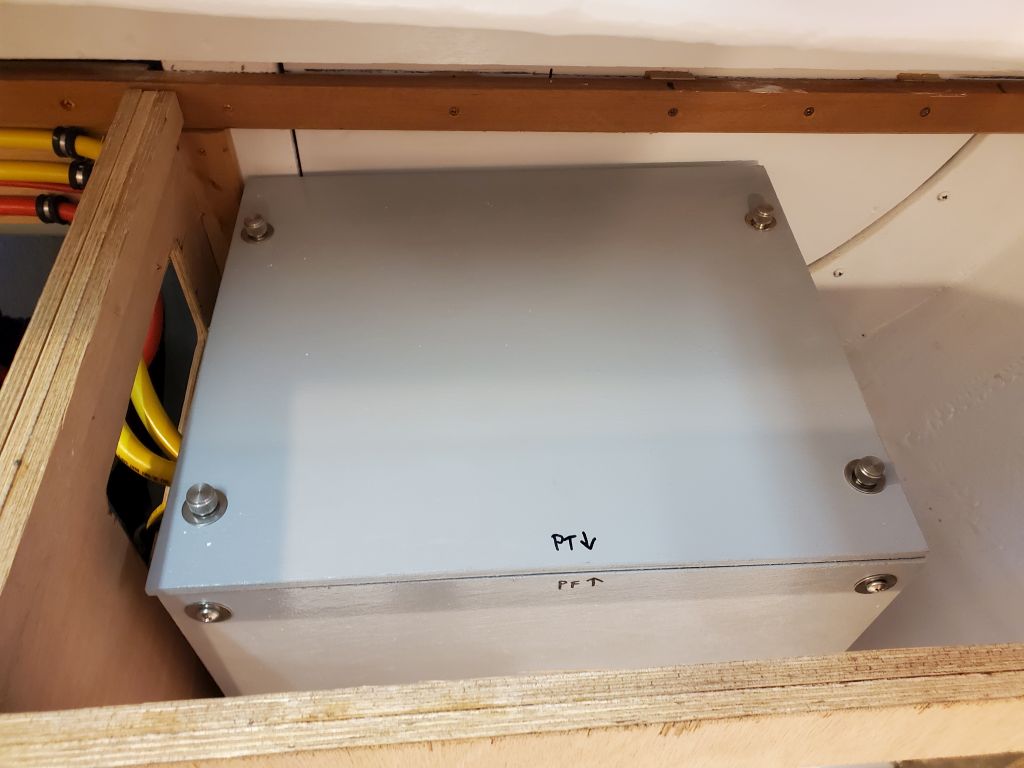
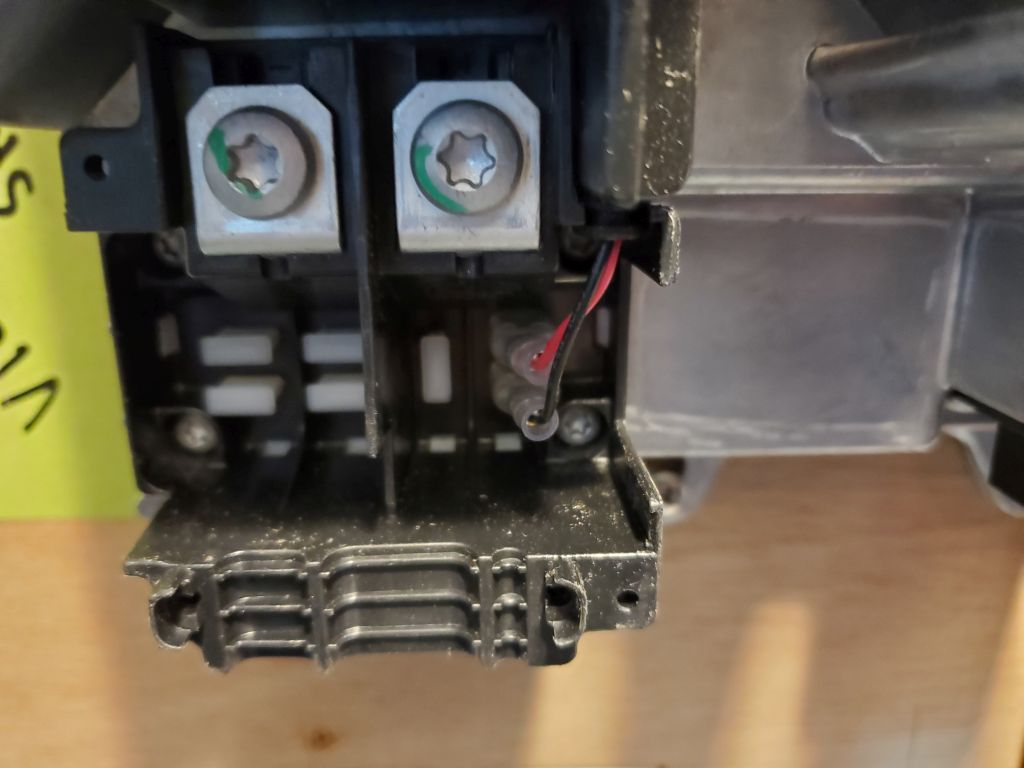
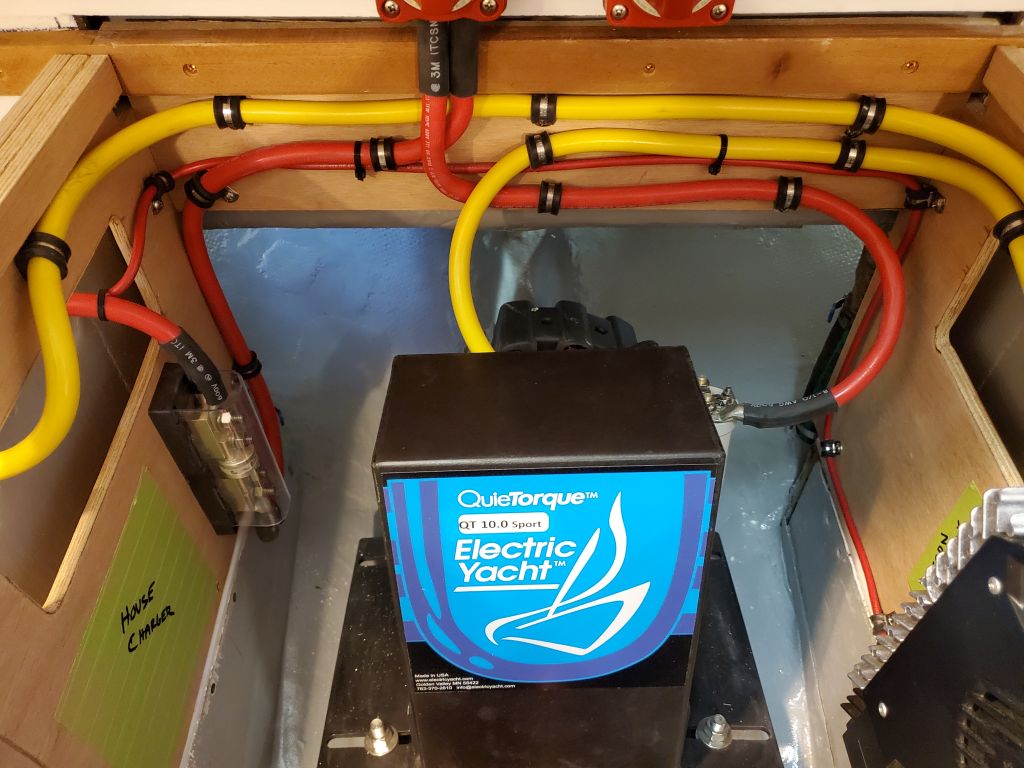
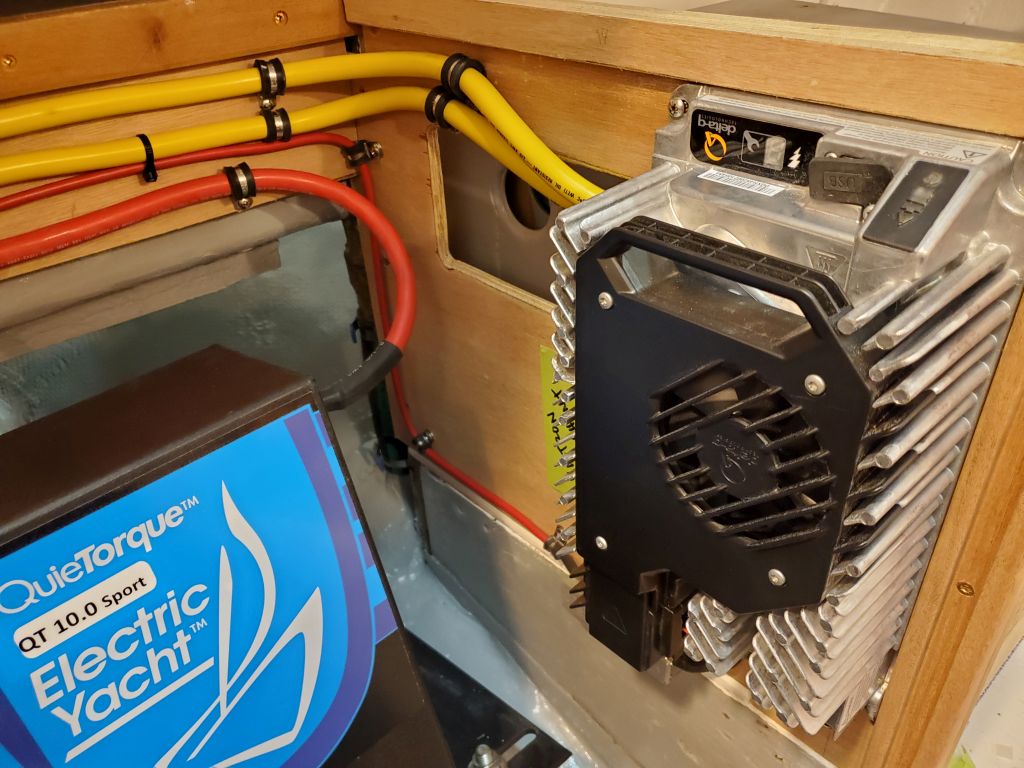
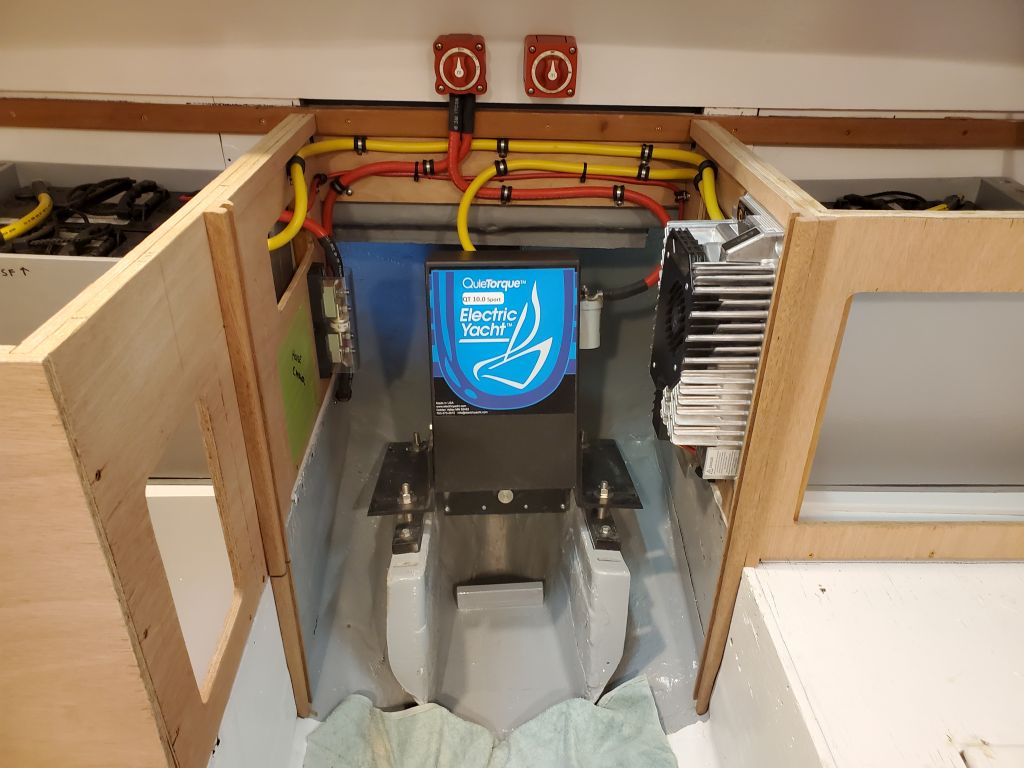
With all the basics of the galley and engine room in place now, I could shift focus for the moment to the critical installations and wiring related to the electric motor.  In the engine room, I started by installing the large 48-volt charger at the forward edge of the port bulkhead.  This charger design is a little like a pushmi-pullyu, as both ends, yet neither end, was really heads up:  Whichever way it was oriented, something was upside down.  I considered both ways of mounting it before finally deciding that the power cable and battery cable connections would be better off at the bottom, and the “controls”, as it were, at the top–even though they’d be upside down.   This orientation allowed me to keep the top of the charger just beneath the countertop support cleats, with ample room beneath for the cables and even a 110-volt outlet should one be added later.

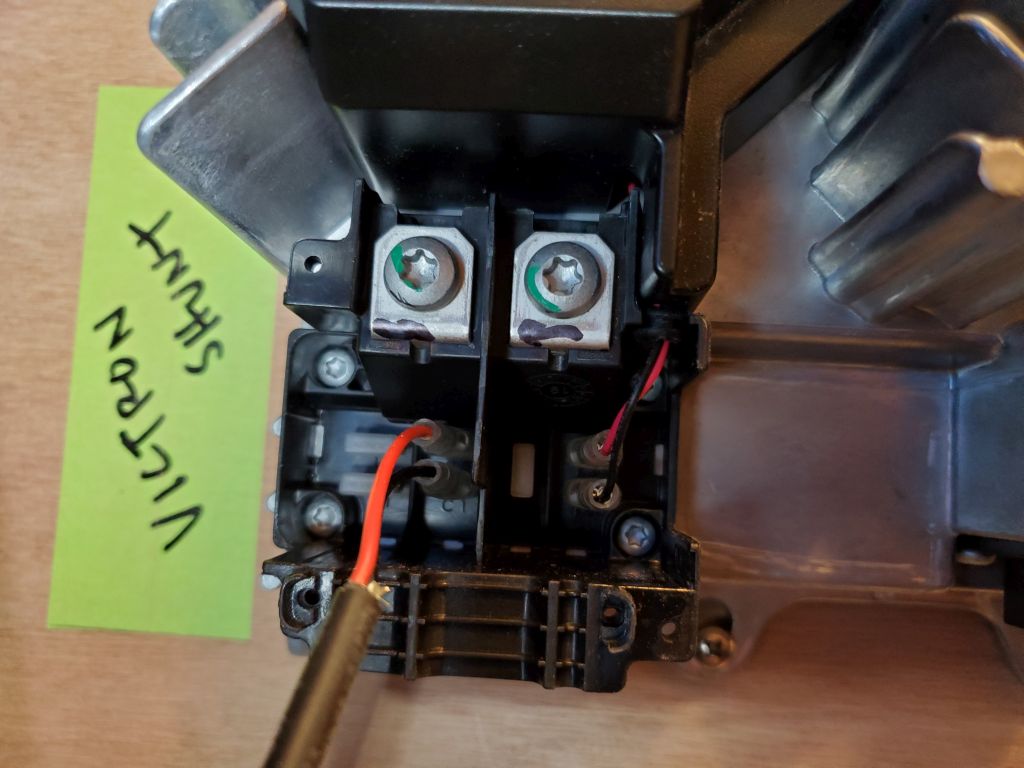
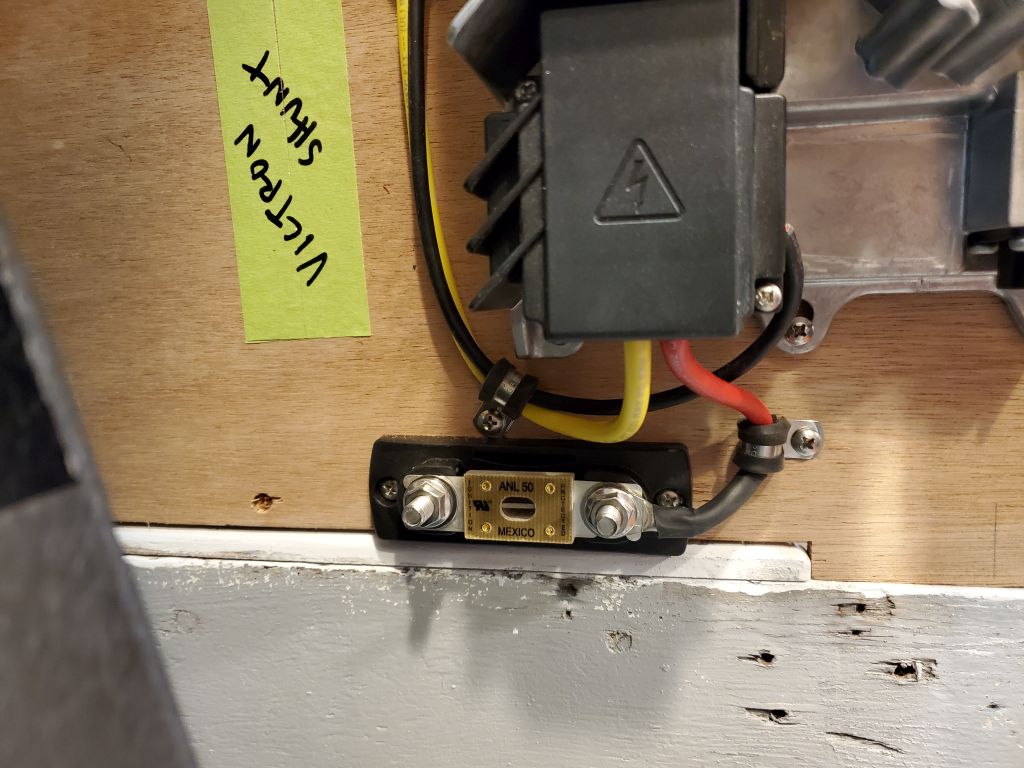
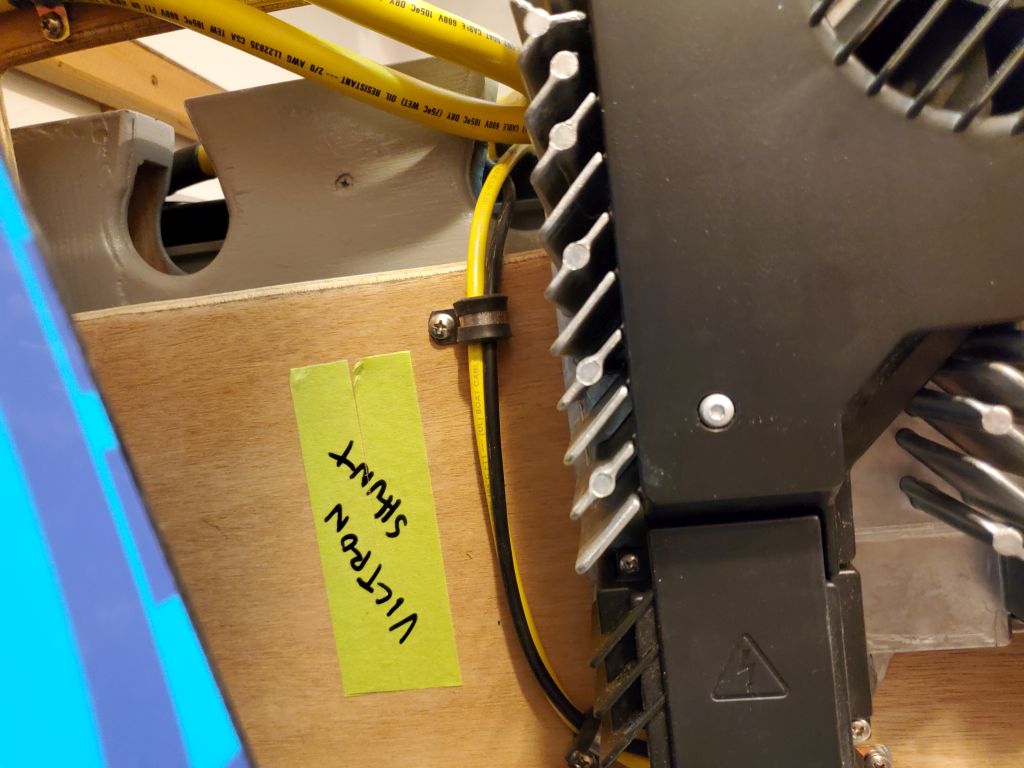
I didn’t have the 12-volt charger for the house bank on hand, but had a mockup of its overall size, and to reserve space in the engine room I marked out the future mounting position with tape.  Similarly, I marked out a mounting position for the shunt required for the battery monitor the owner had for the house bank, leaving ample room for this installation and its wiring next to the engine bank charger on the port side.

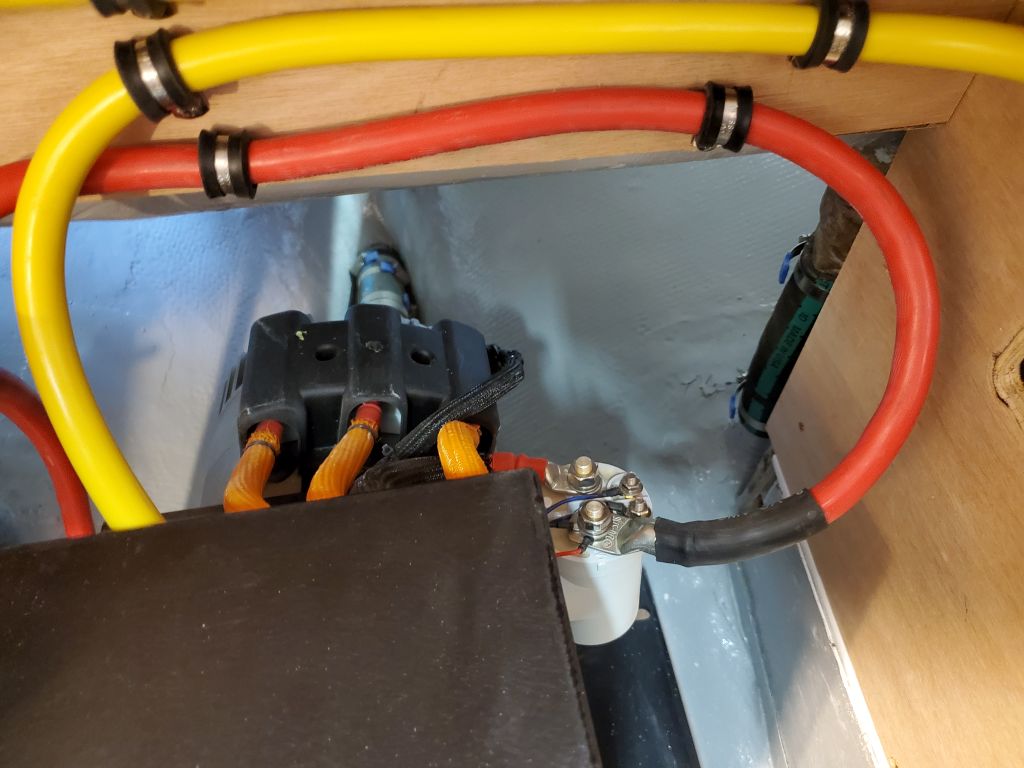
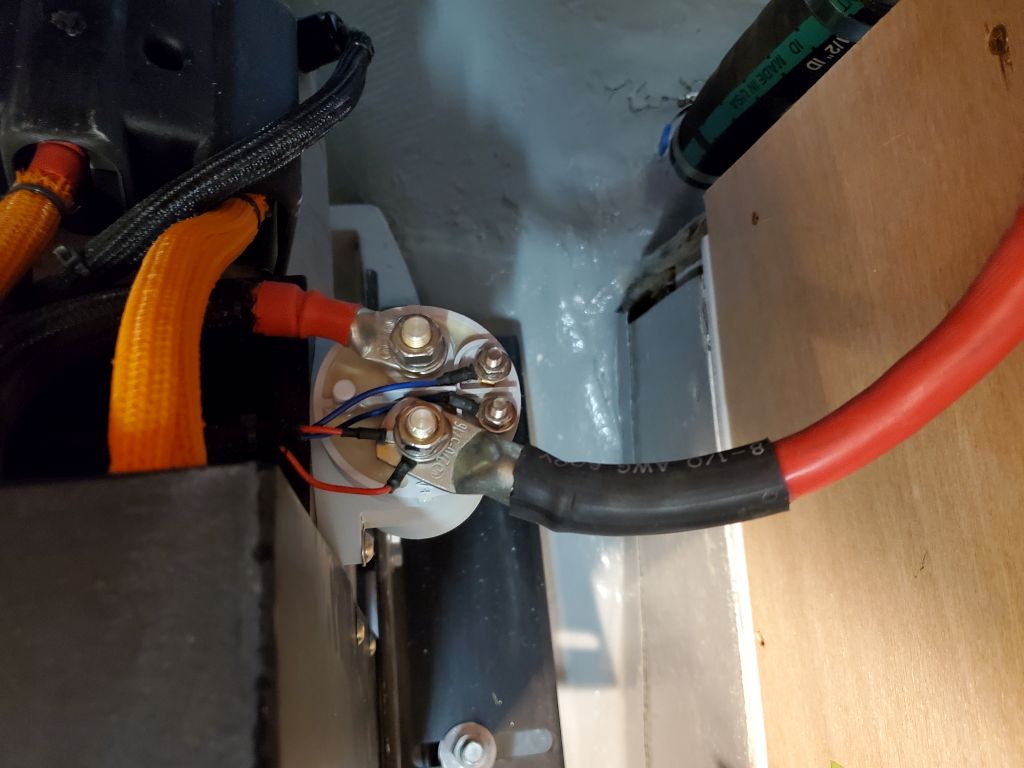
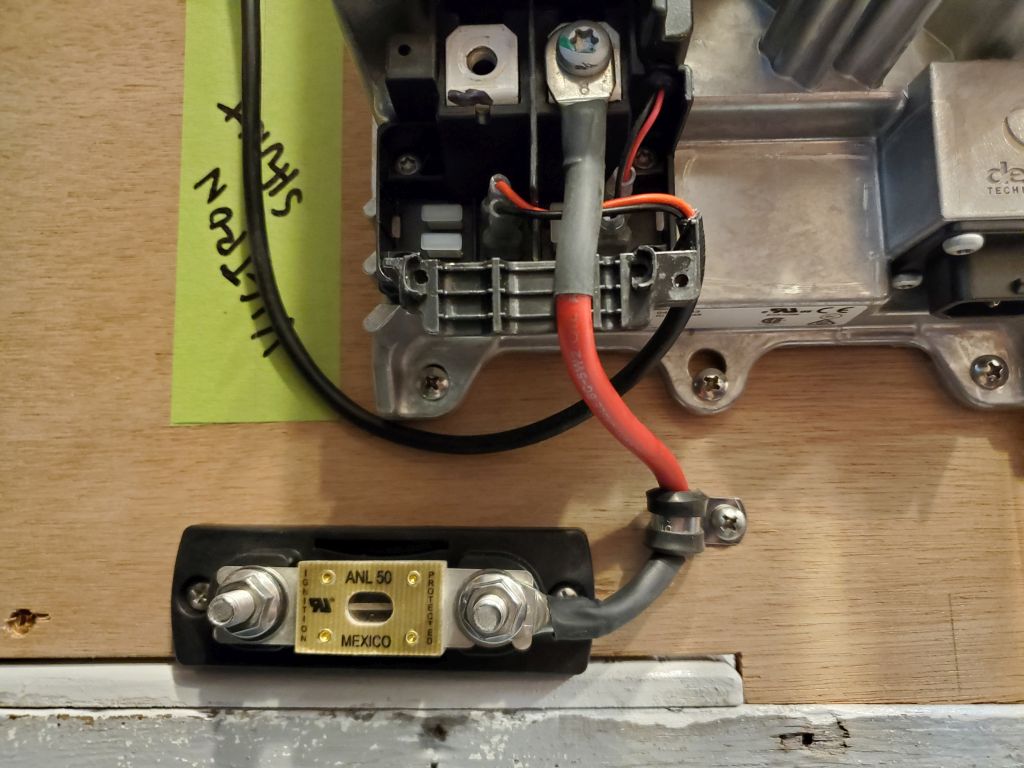
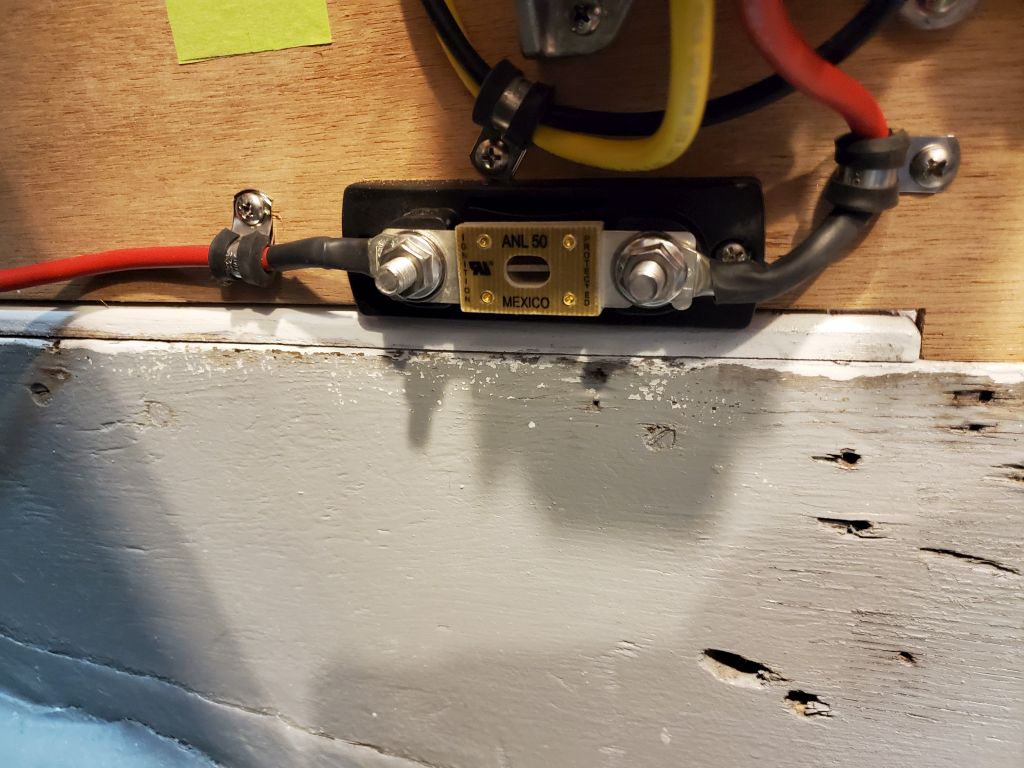
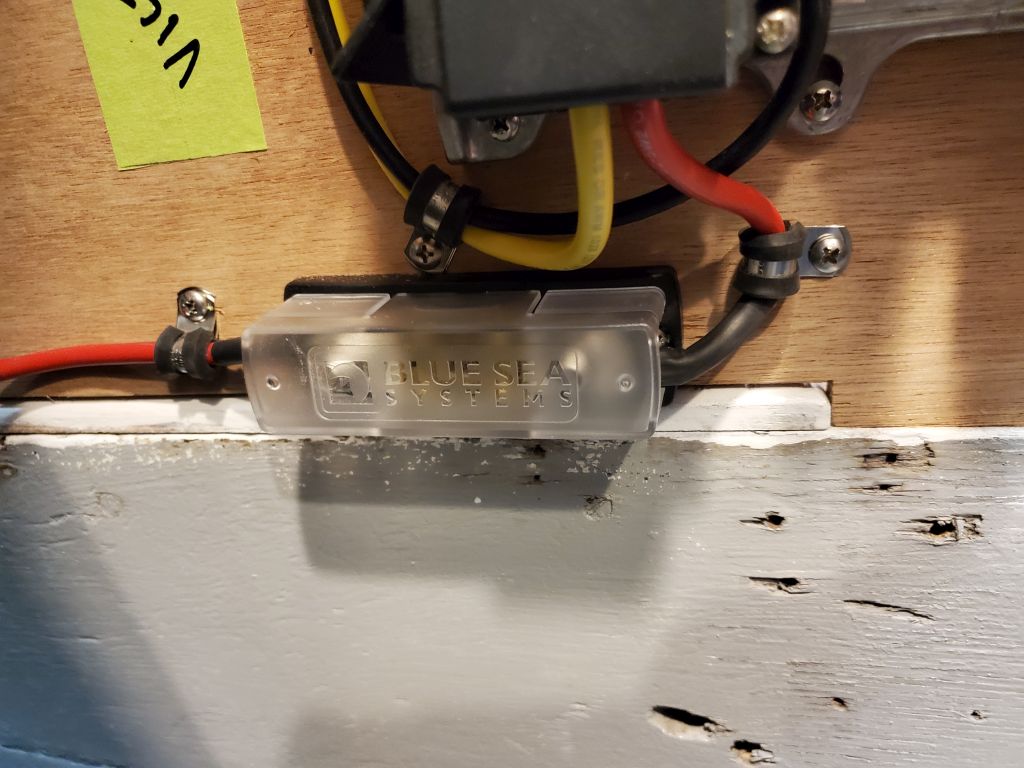
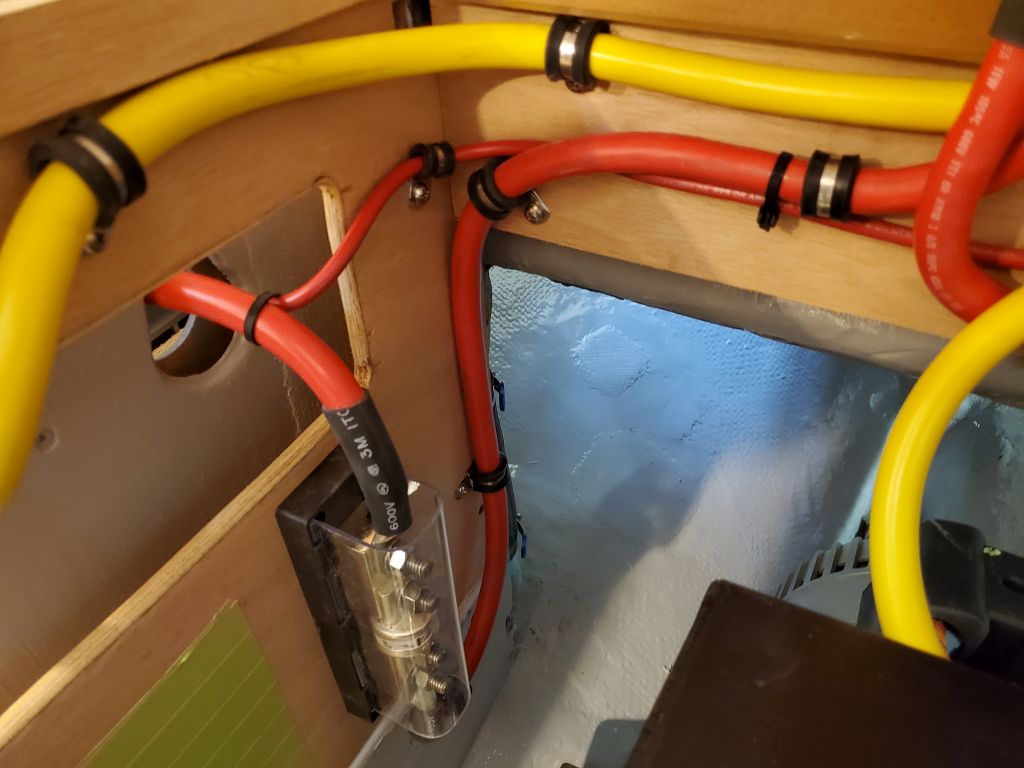
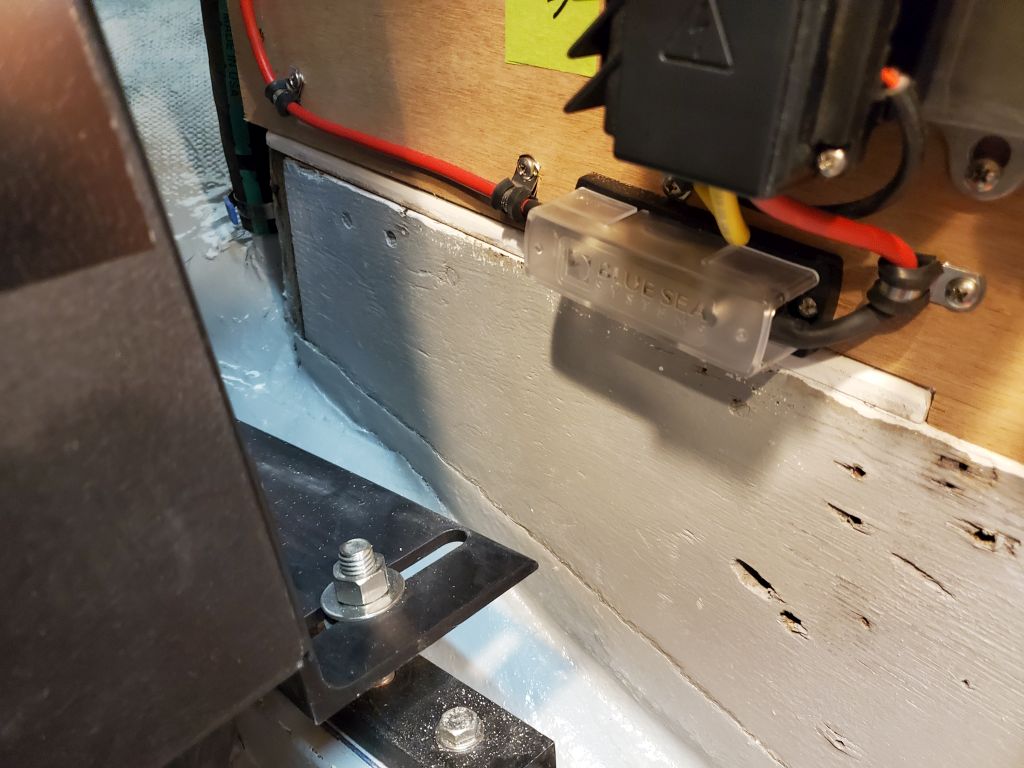
The final bit of hardware to pre-install was the large fuse housing for the propulsion bank, which, after considering the whole battery wiring setup in general, I eventually located on the aft end of the starboard bulkhead, inline with one of the battery box wiring ports.

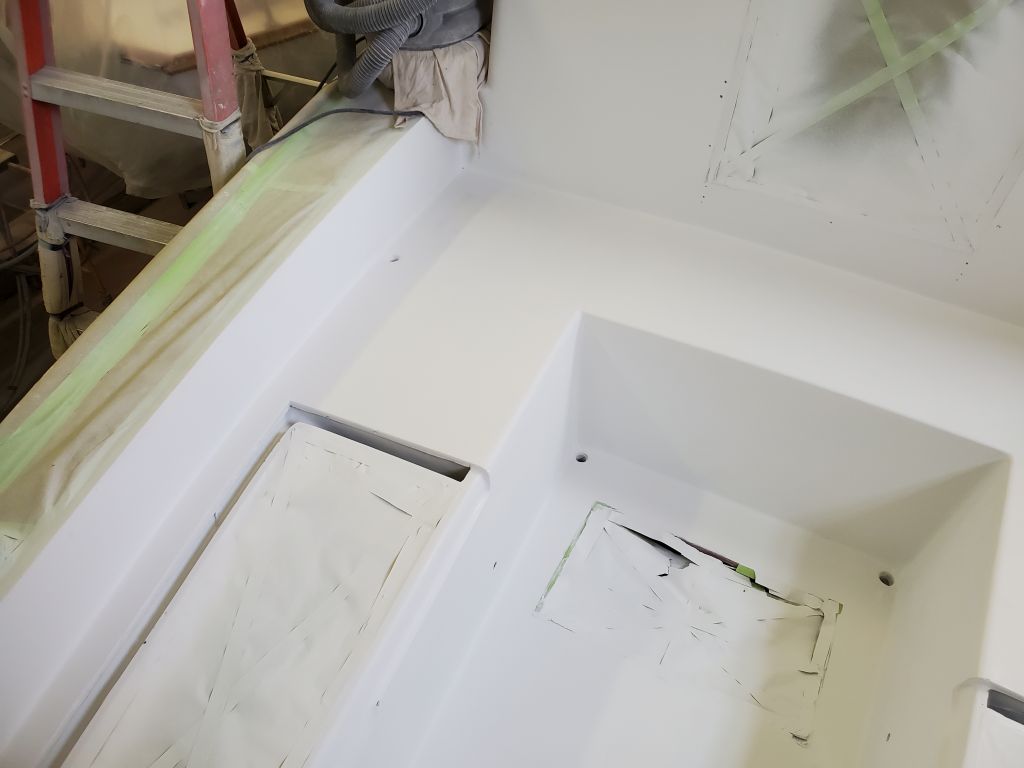
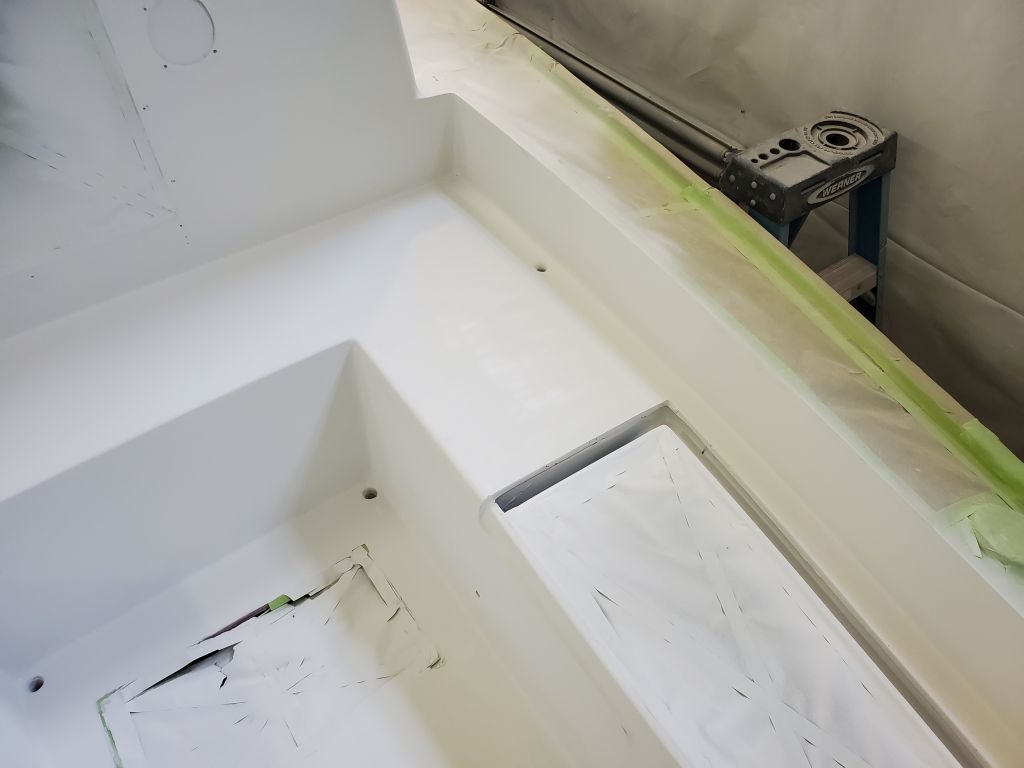
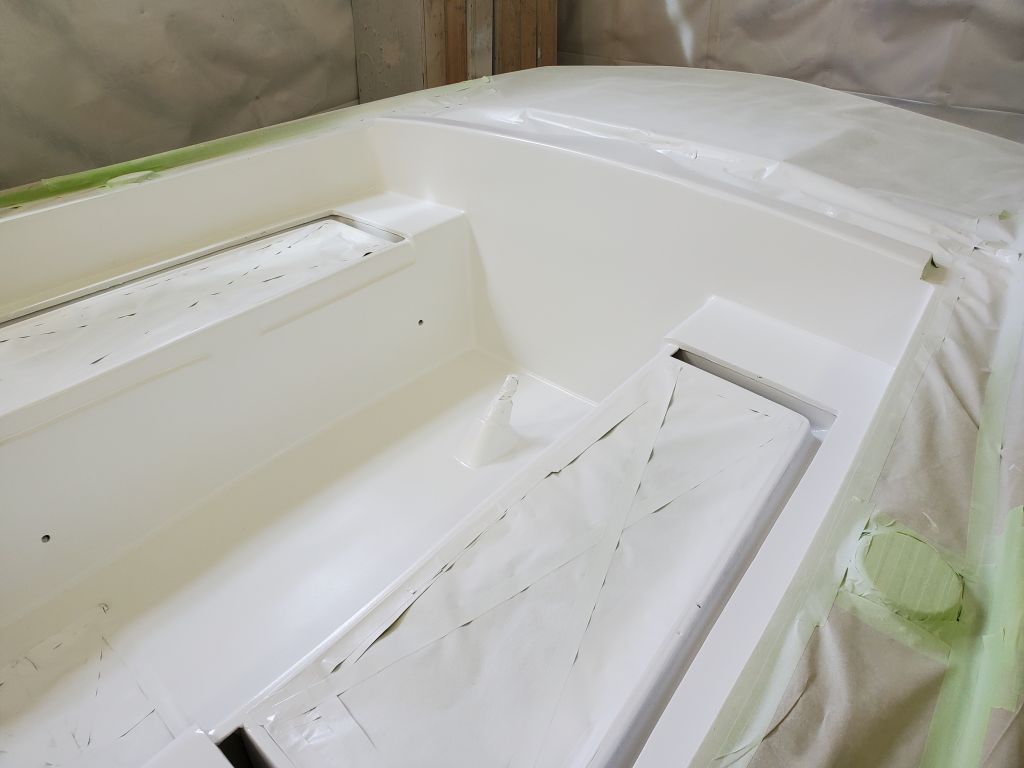
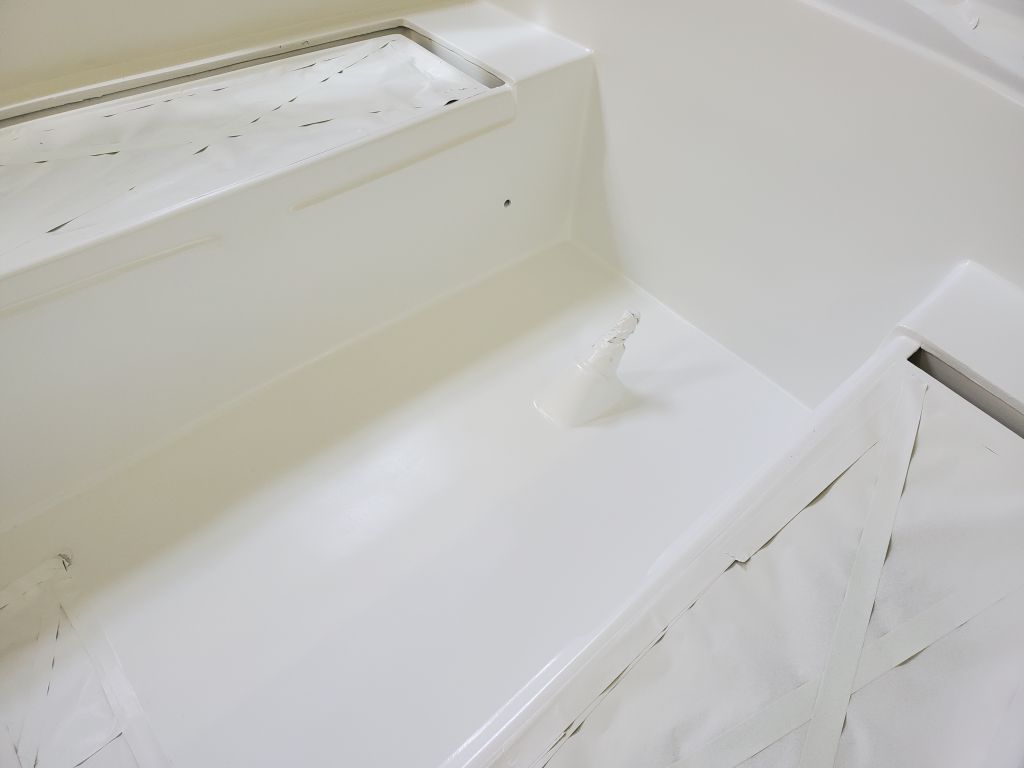
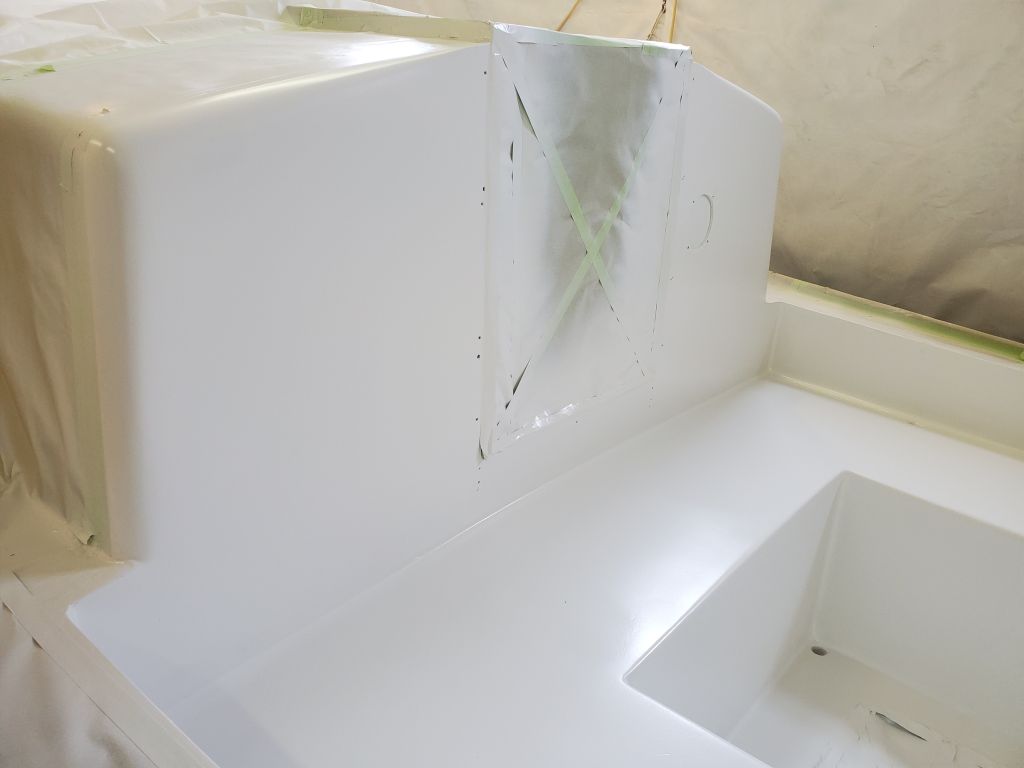
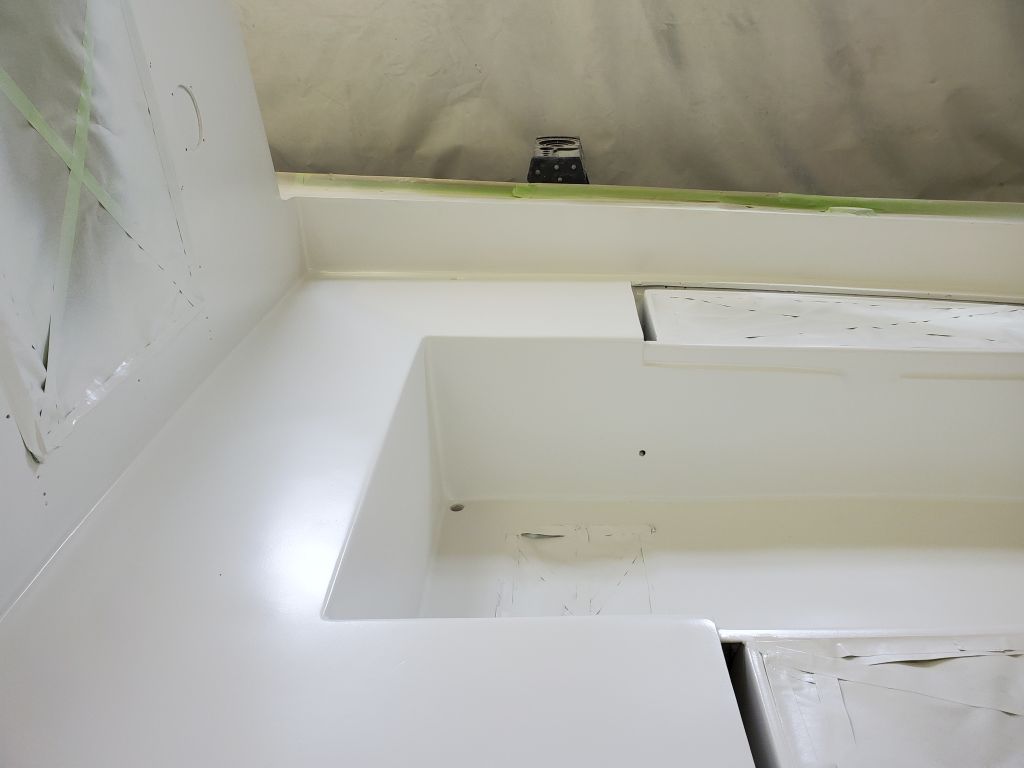
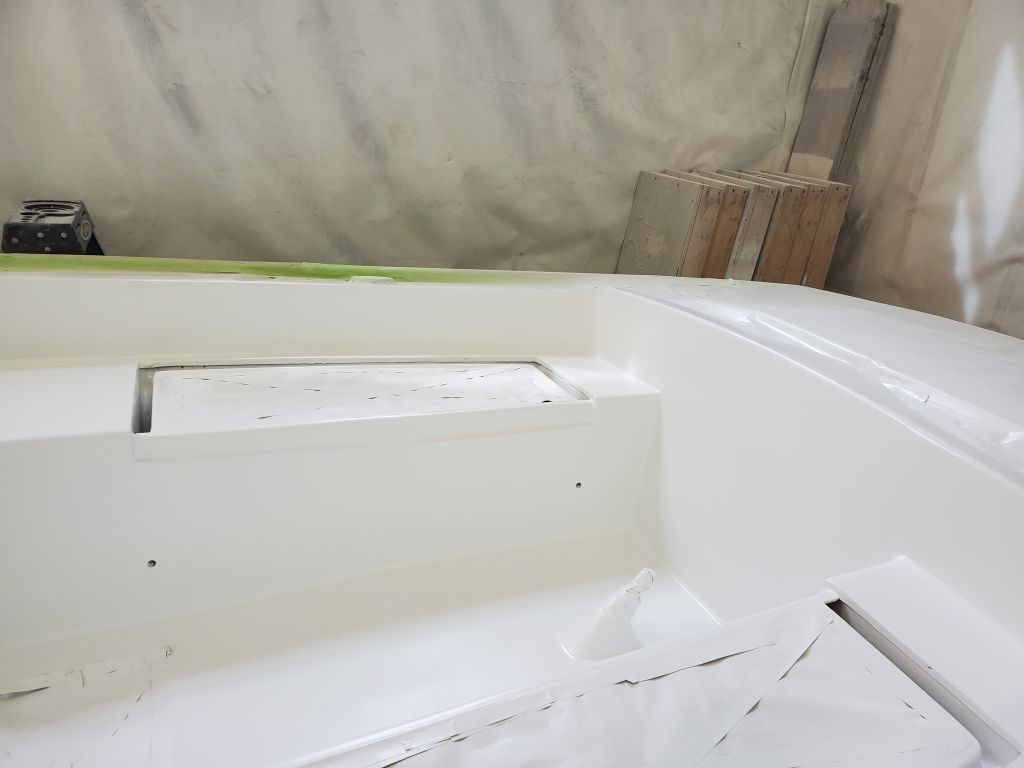
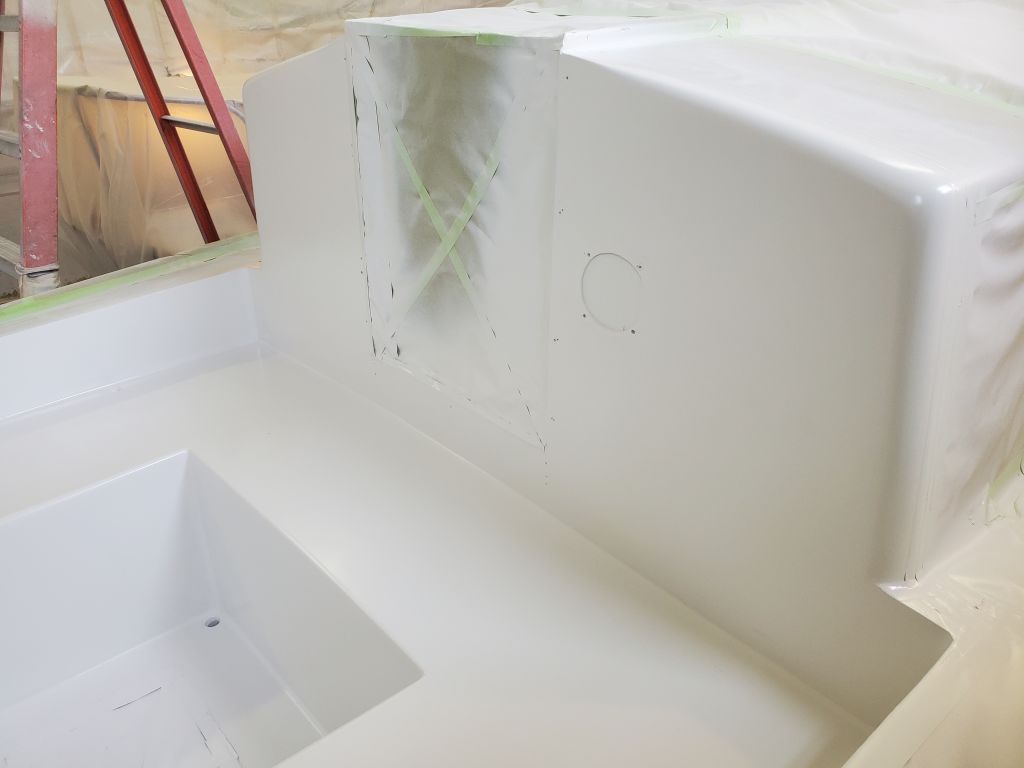
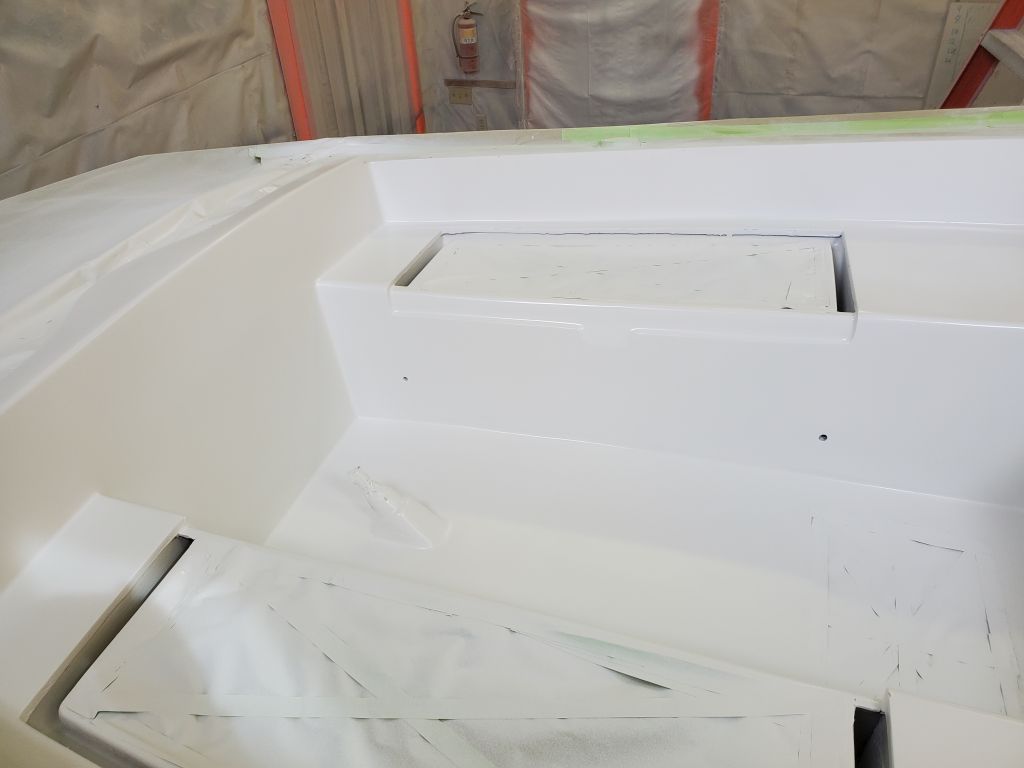
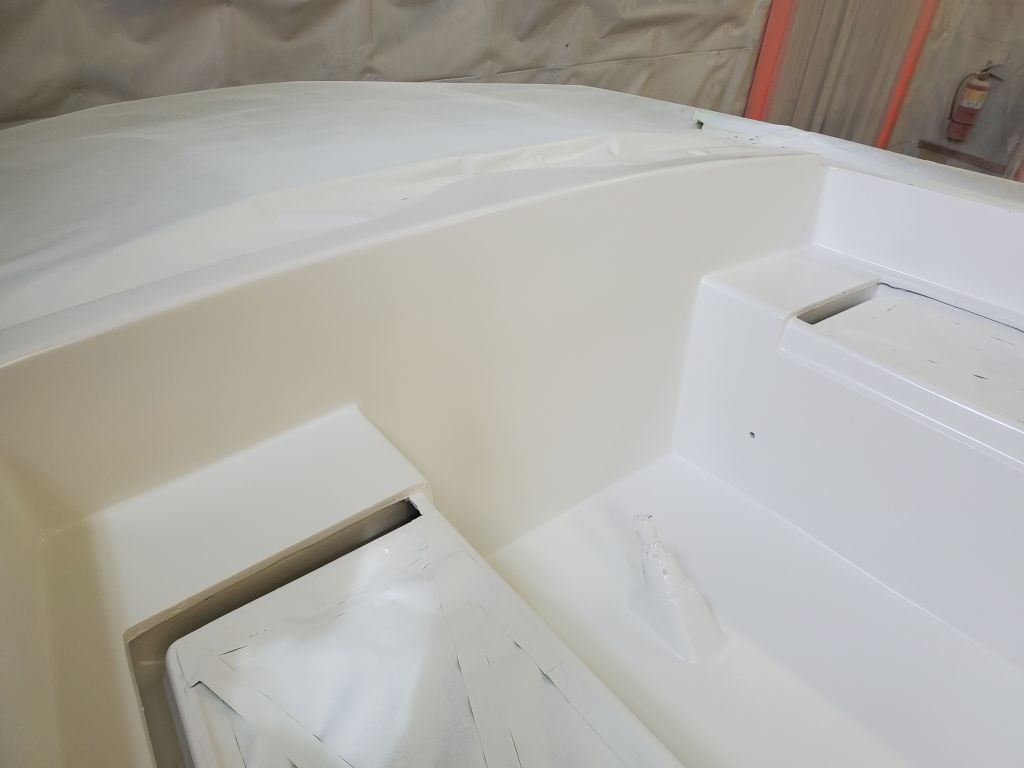
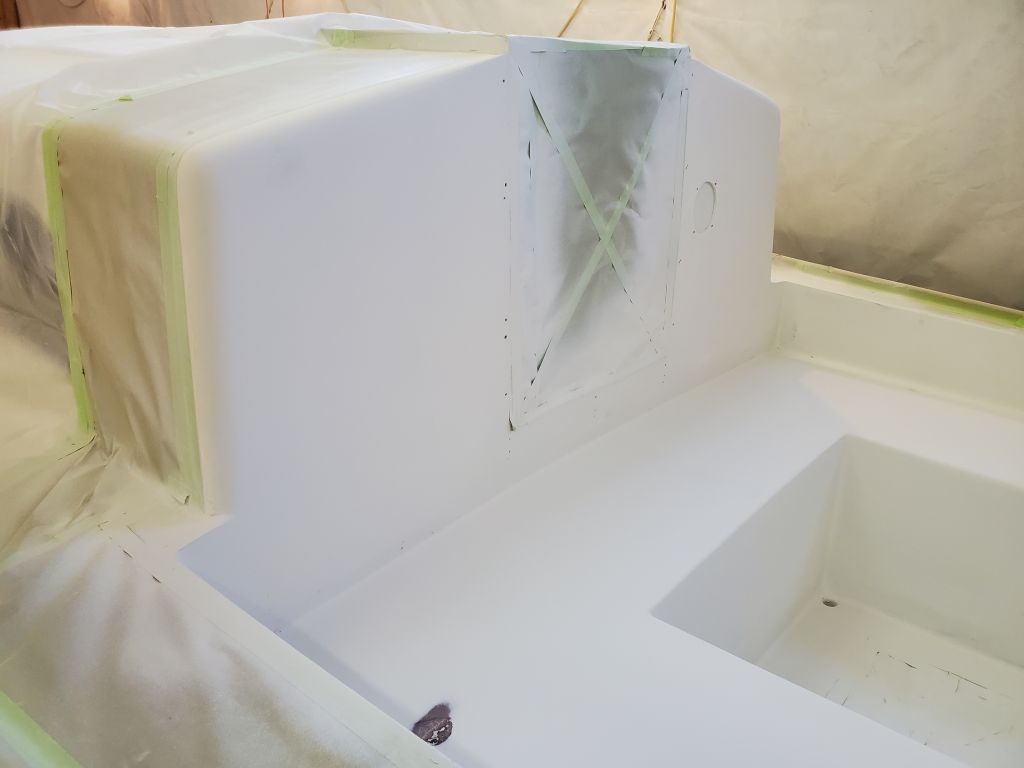
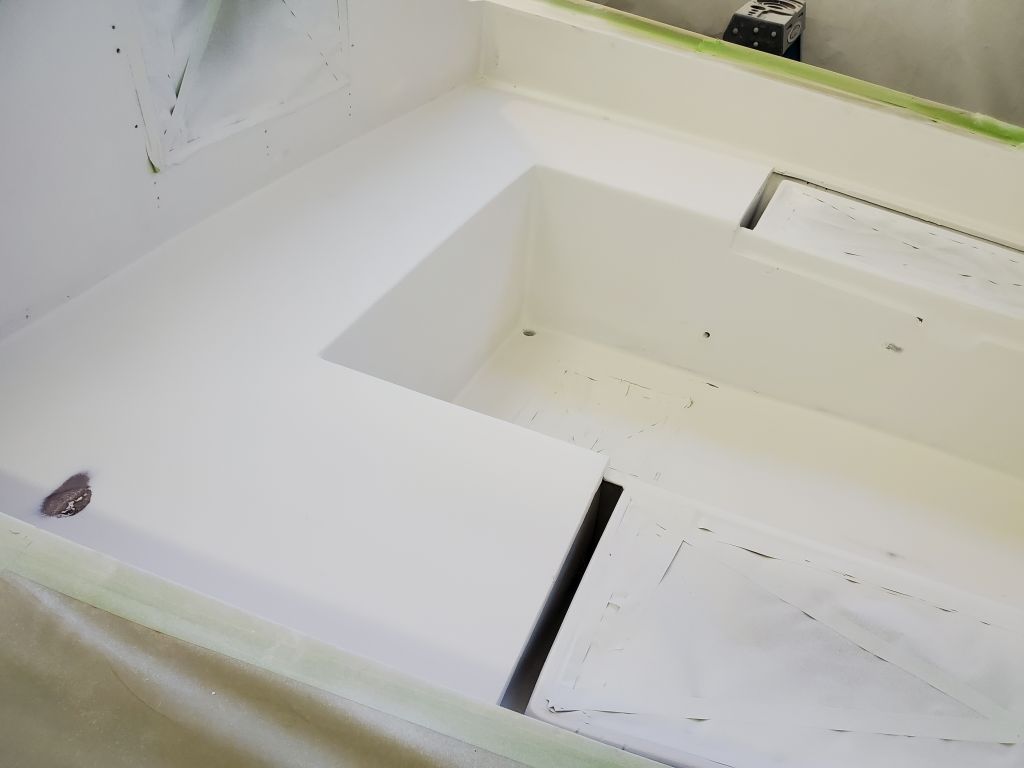
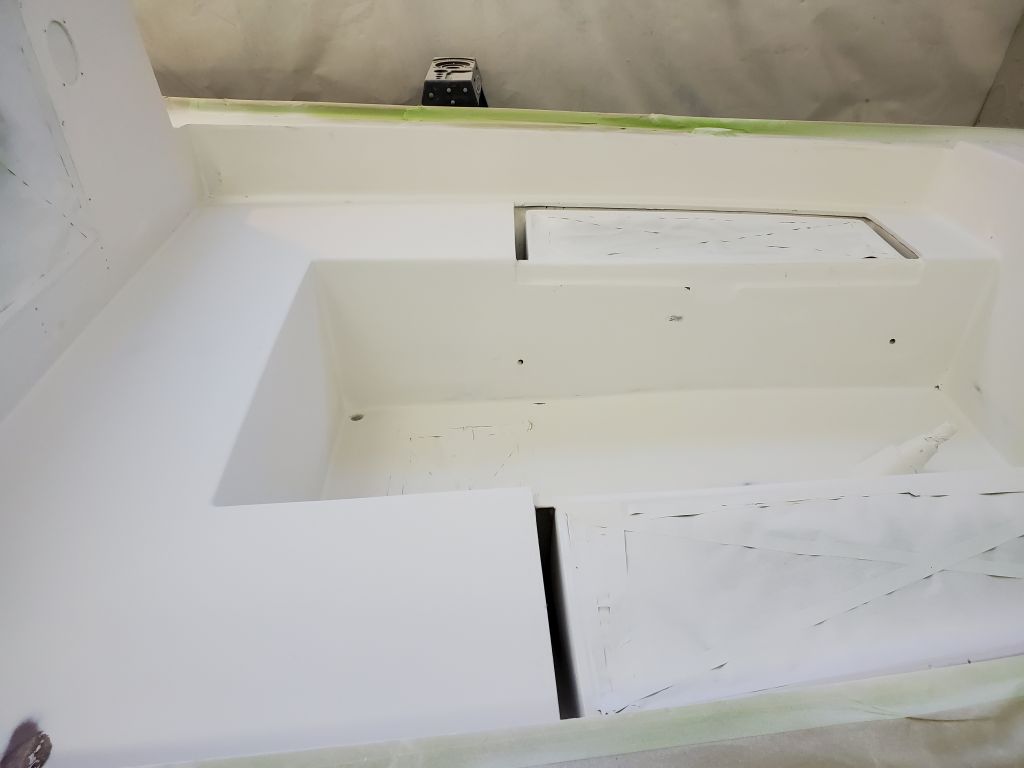
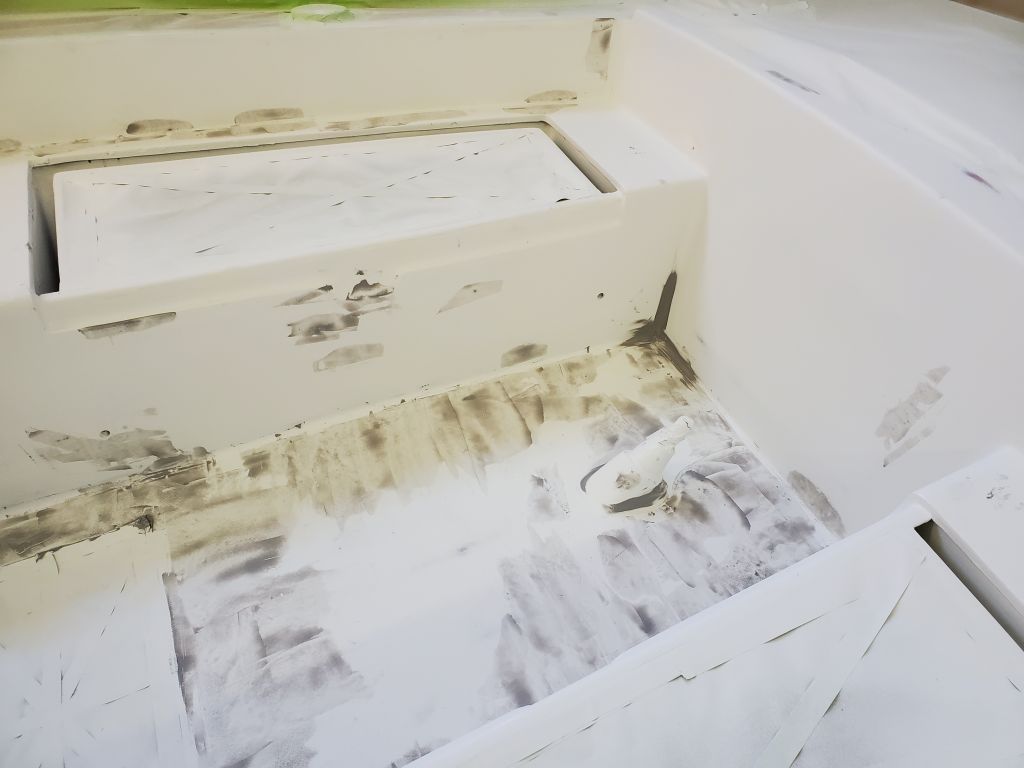
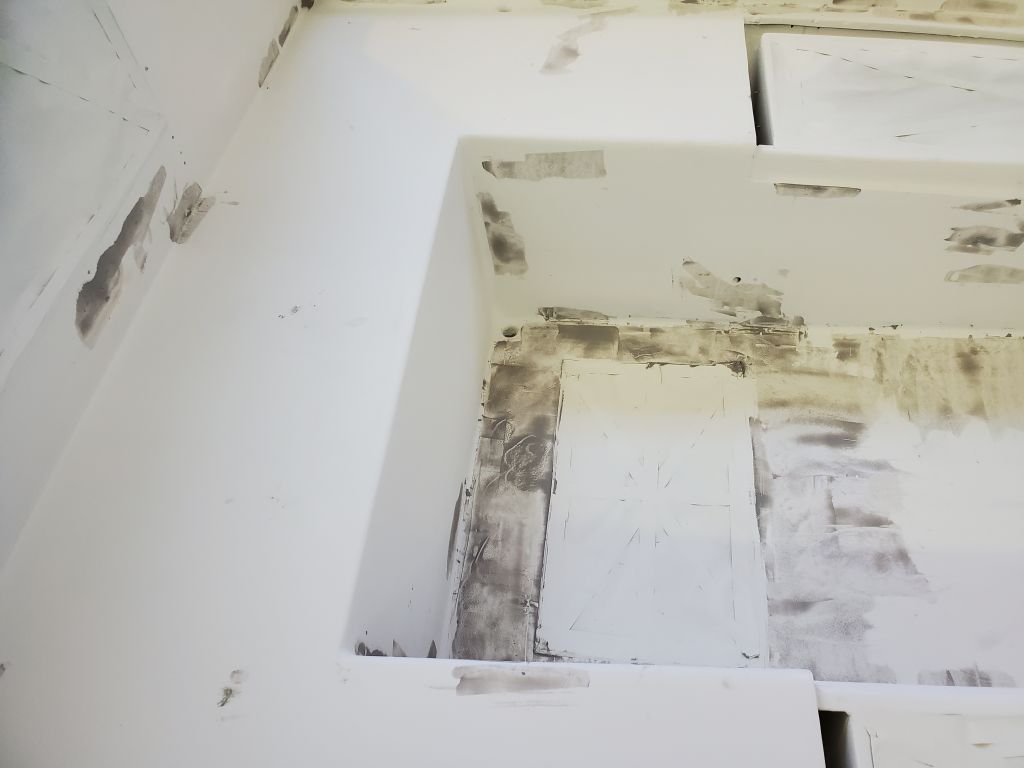
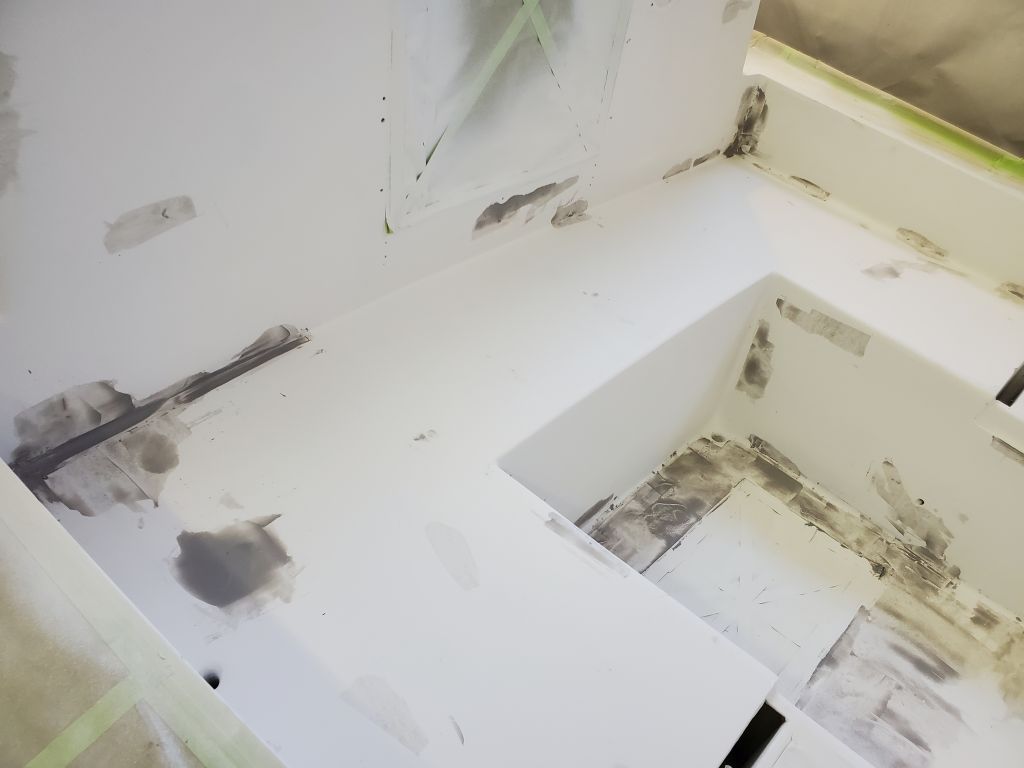
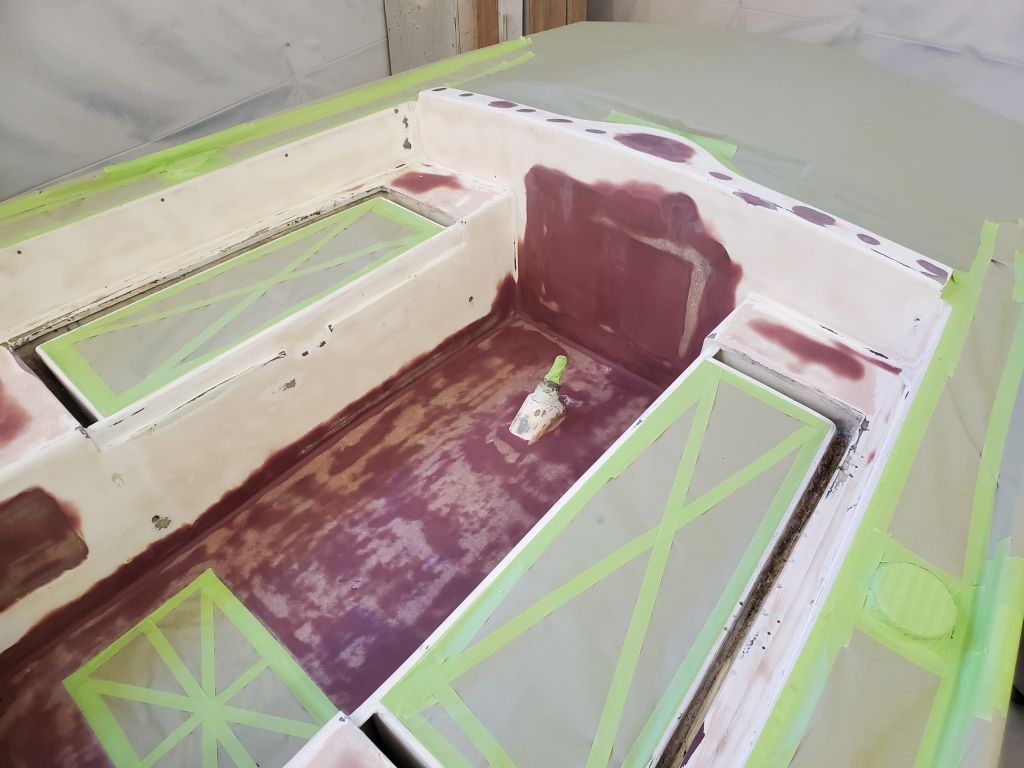
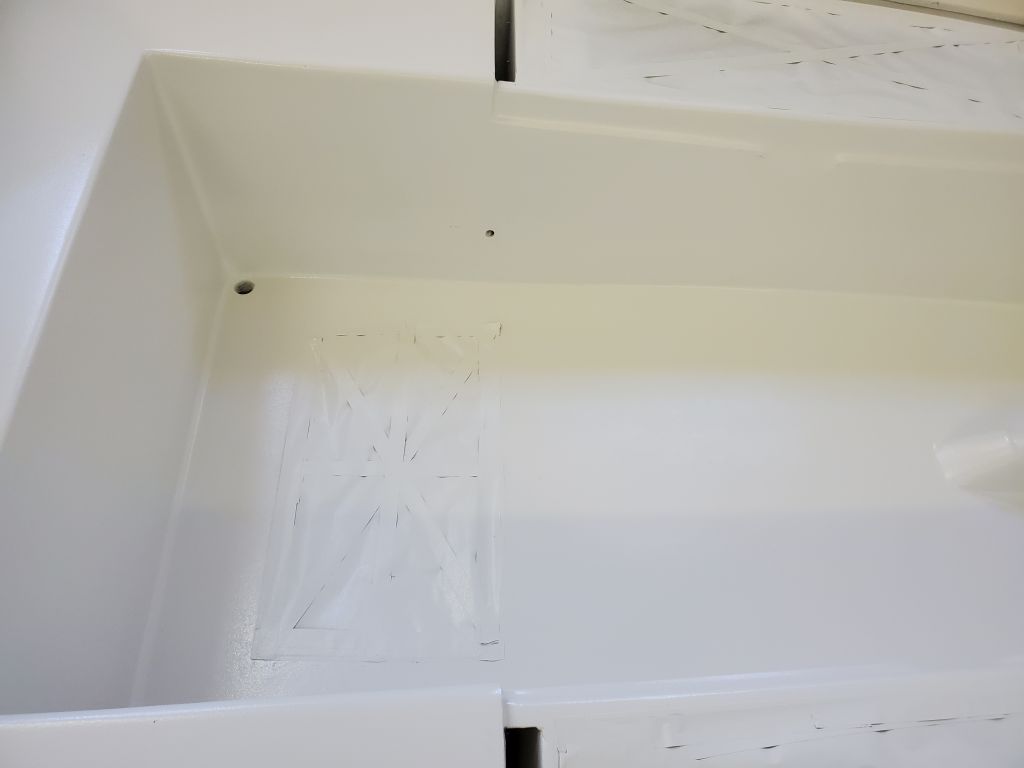
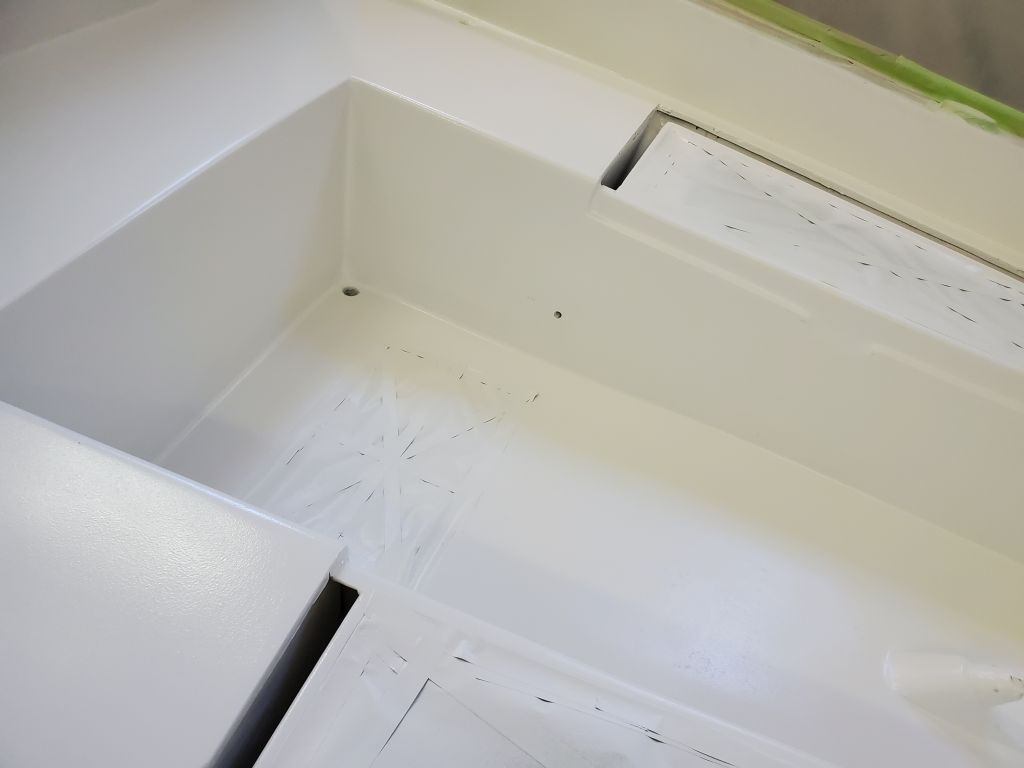
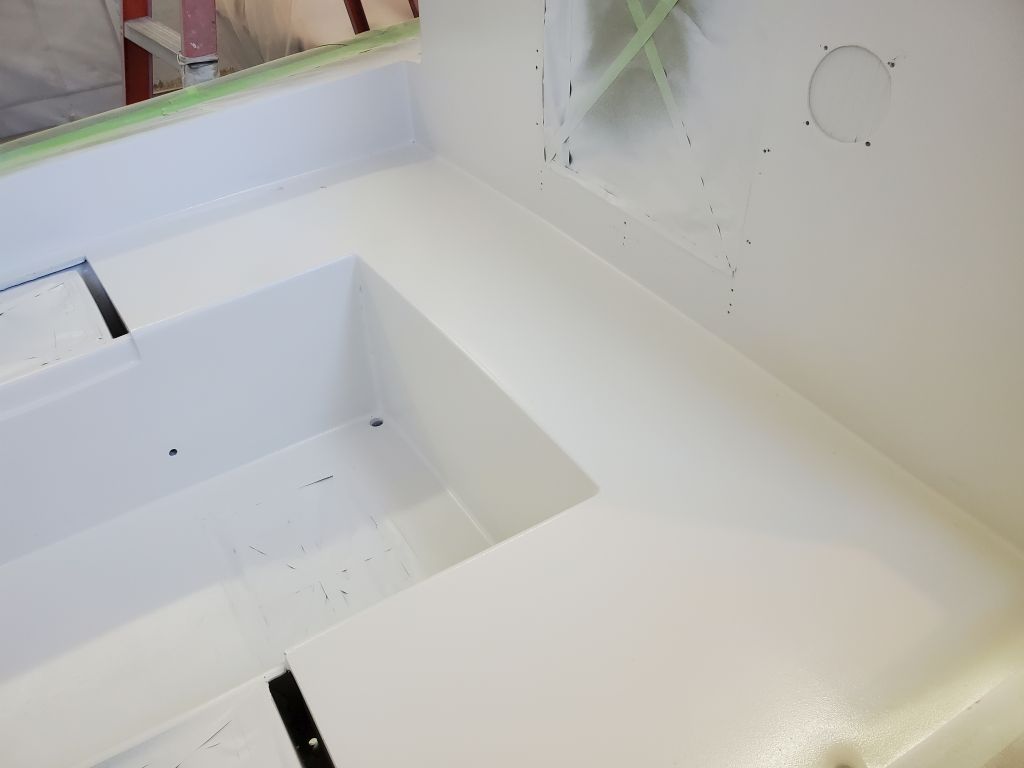
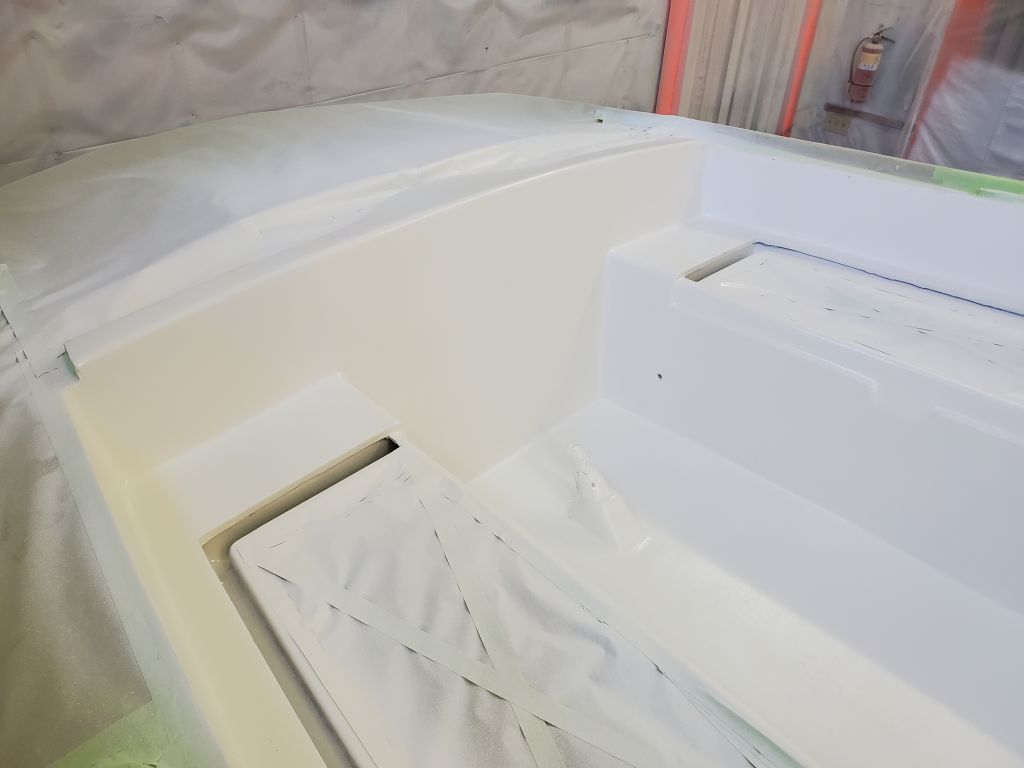
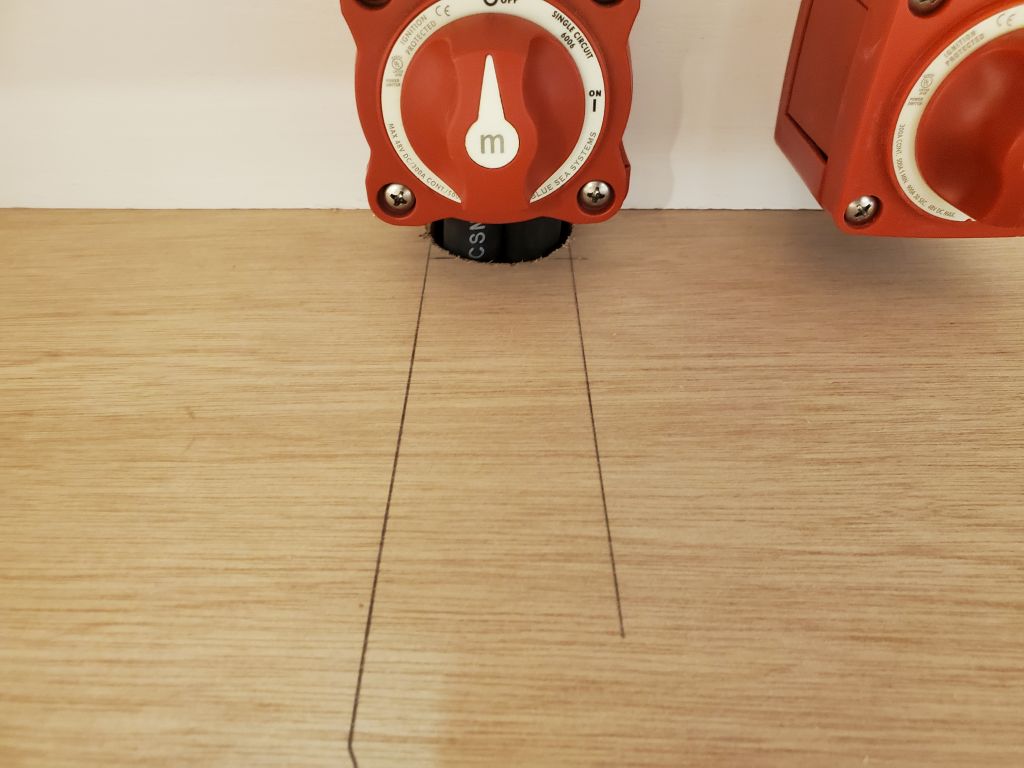
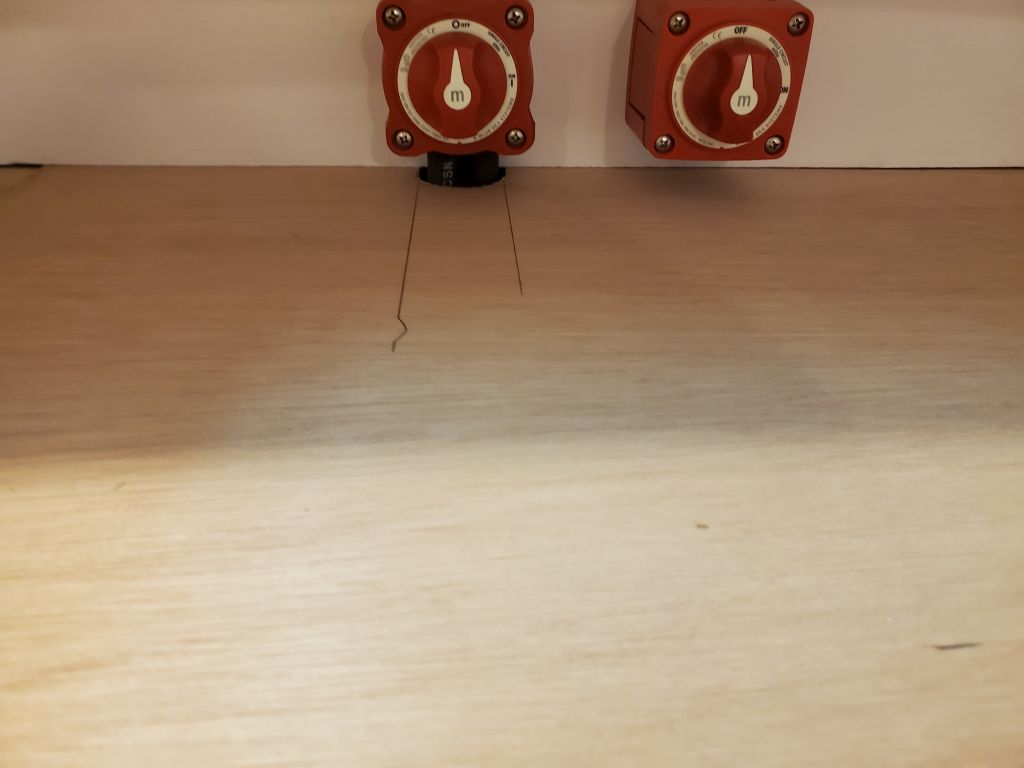
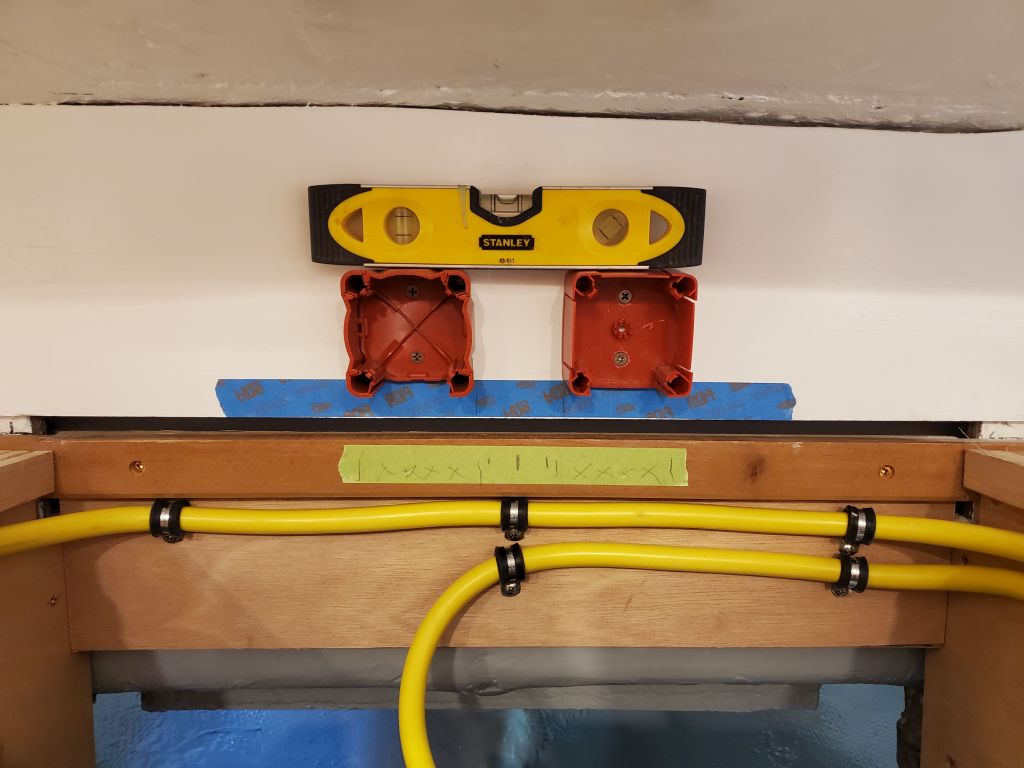
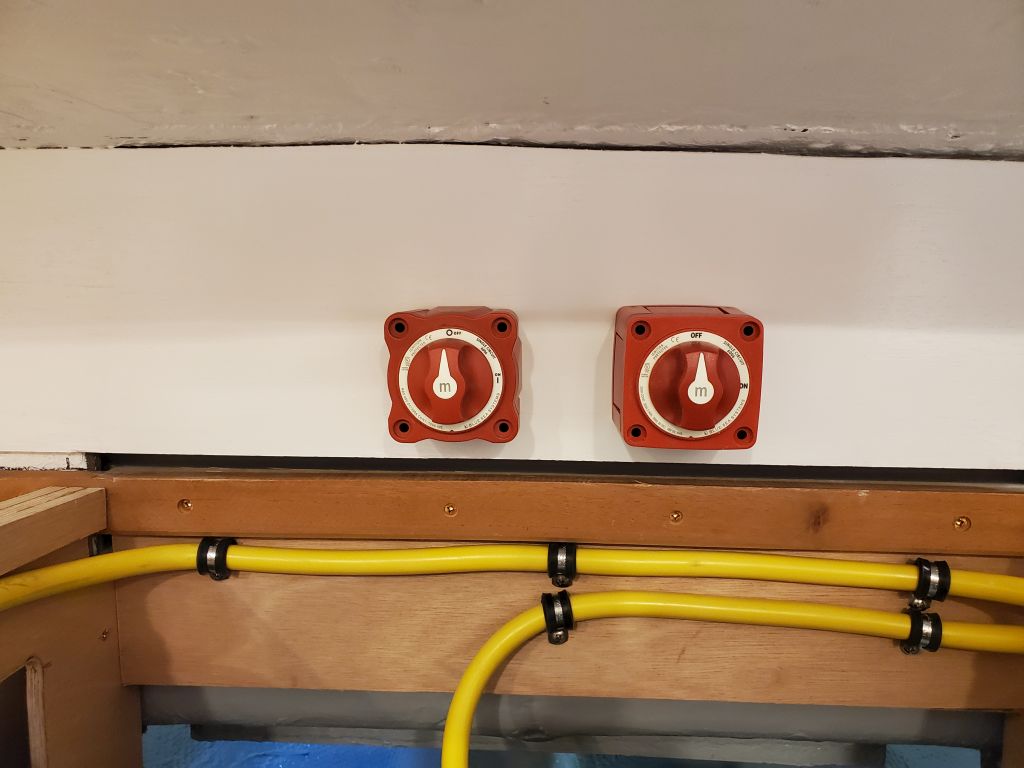
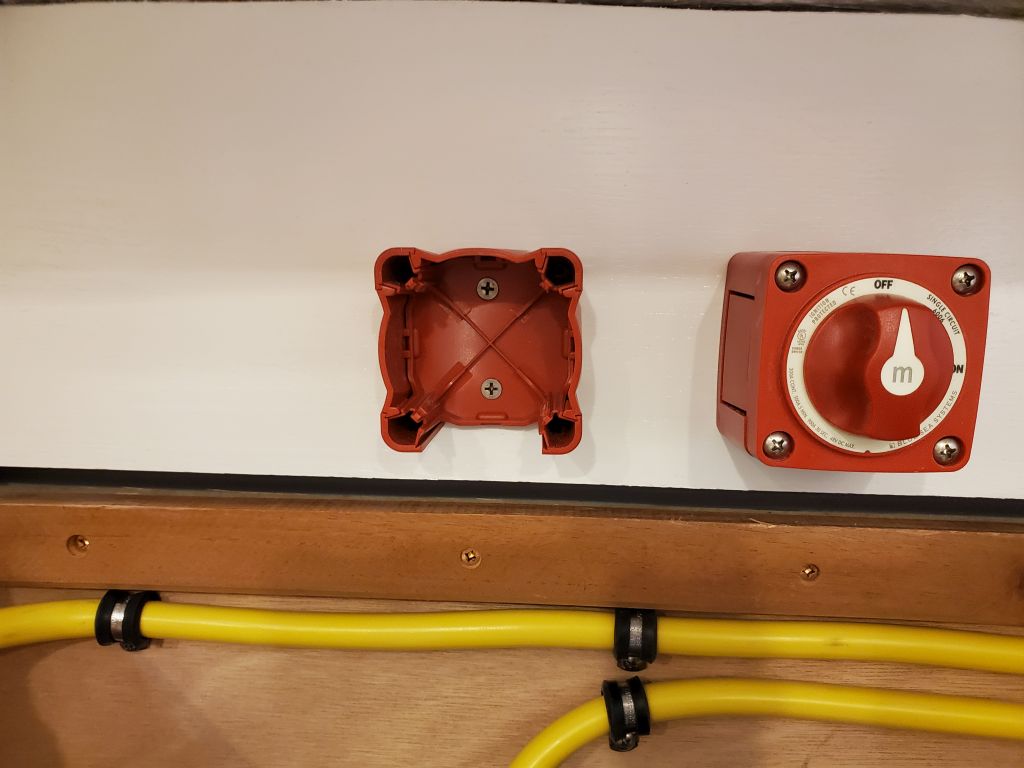
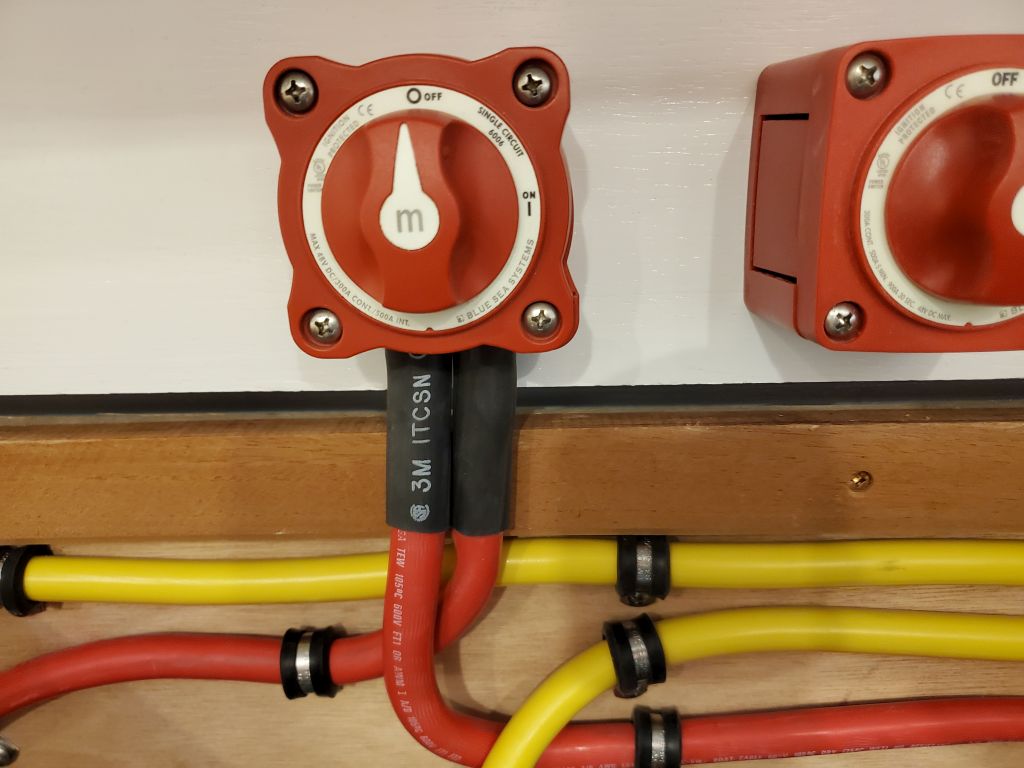
Before continuing, after a light sanding I applied a coat of the semi-gloss white enamel paint to the aft bulkhead above the galley, as I needed this bulkhead complete before I could install the battery switches.  This had a little time to set up before I got back to work in the engine room, but in any event I didn’t need to touch it as I continued working.

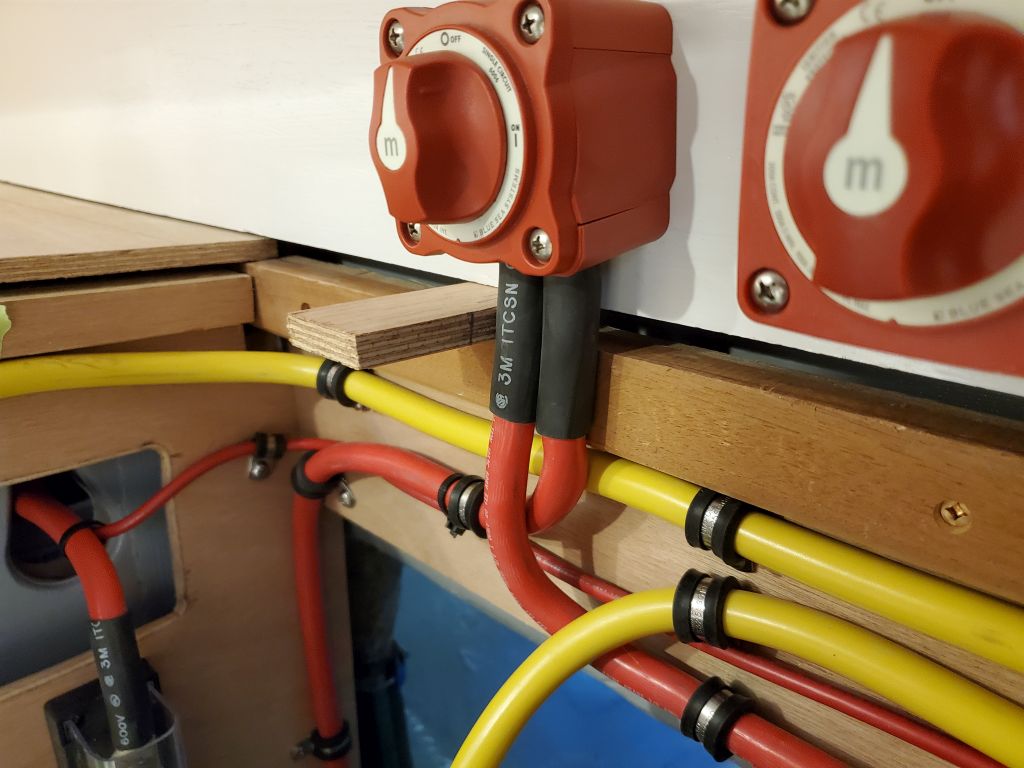
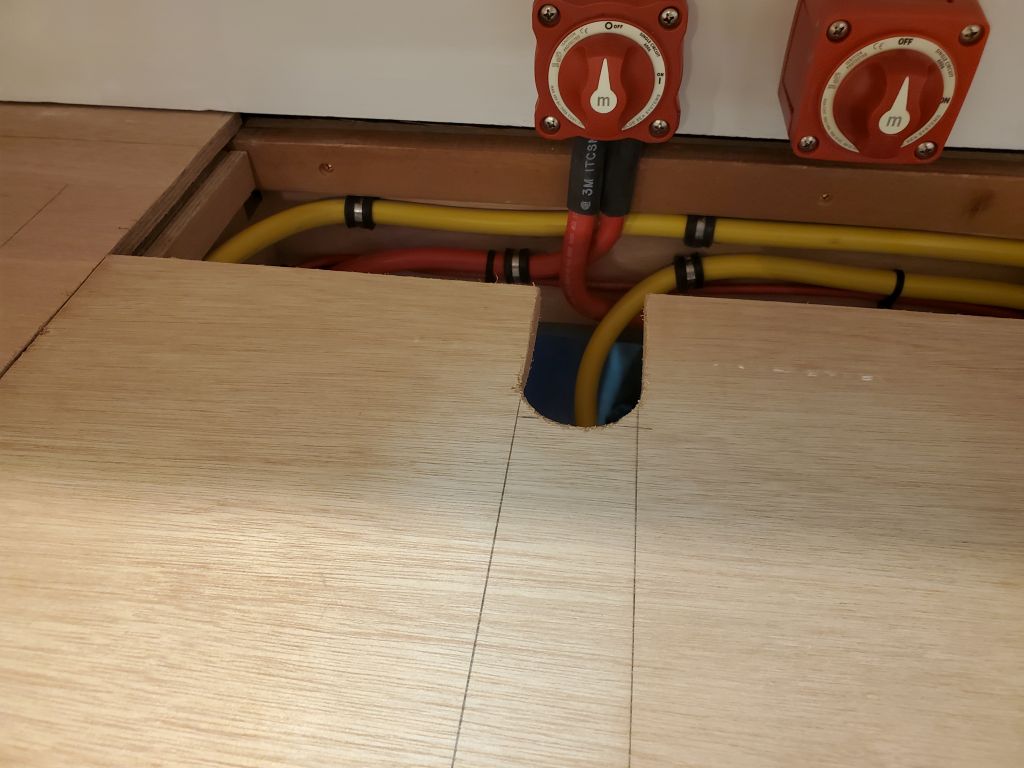
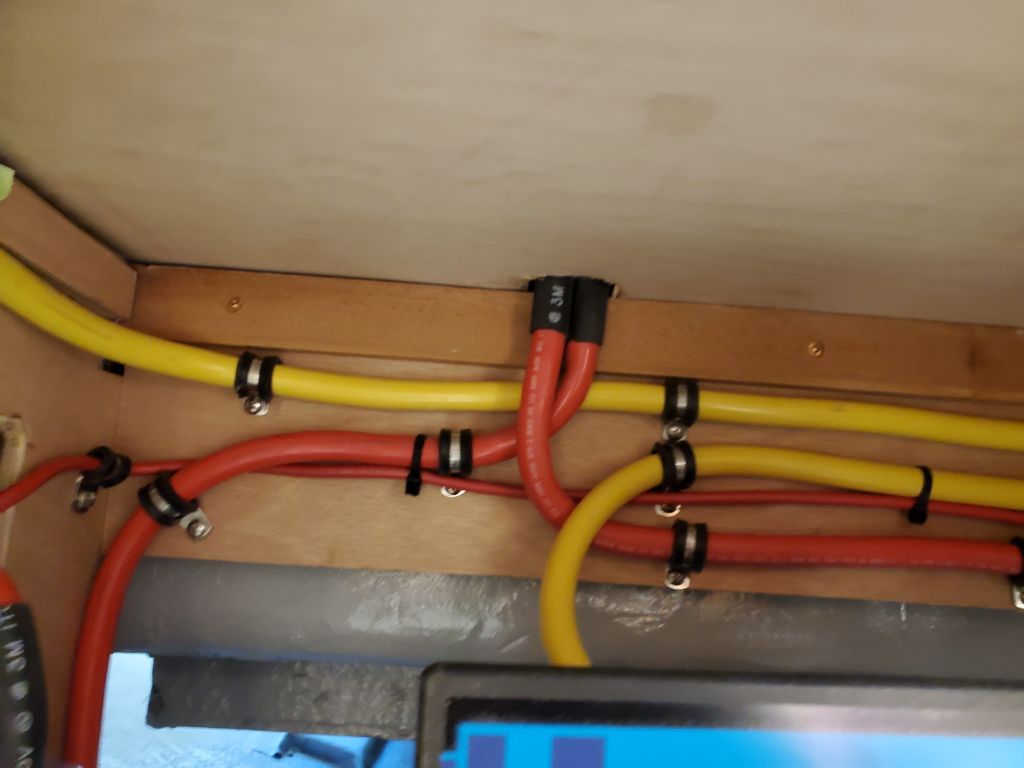
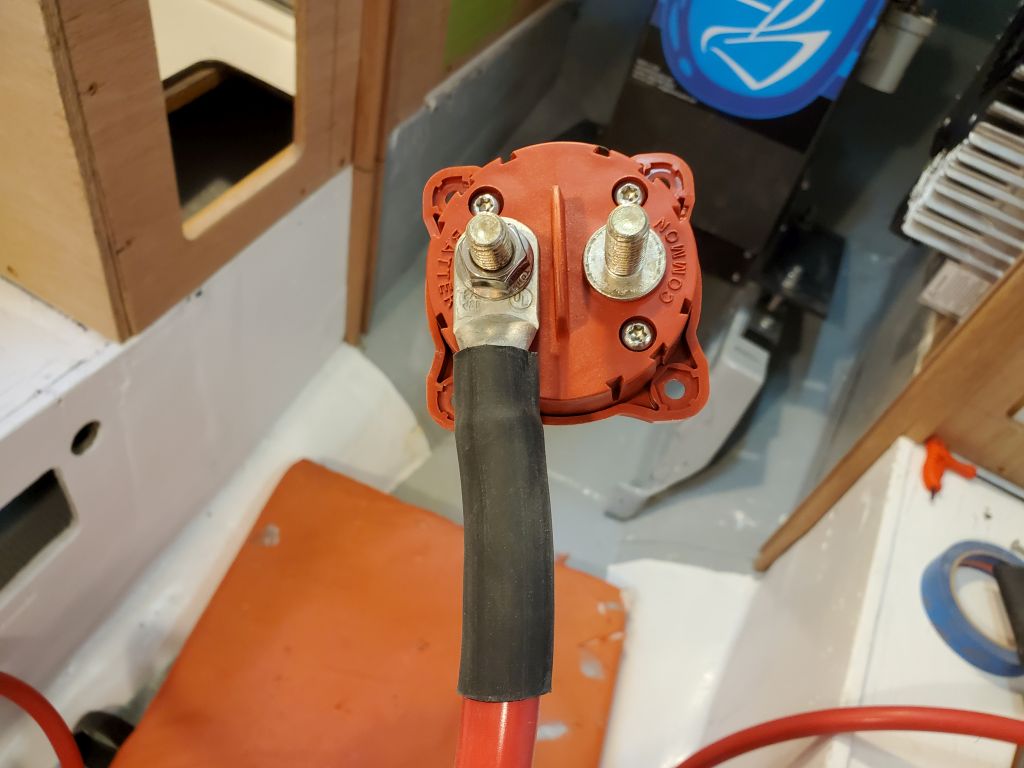
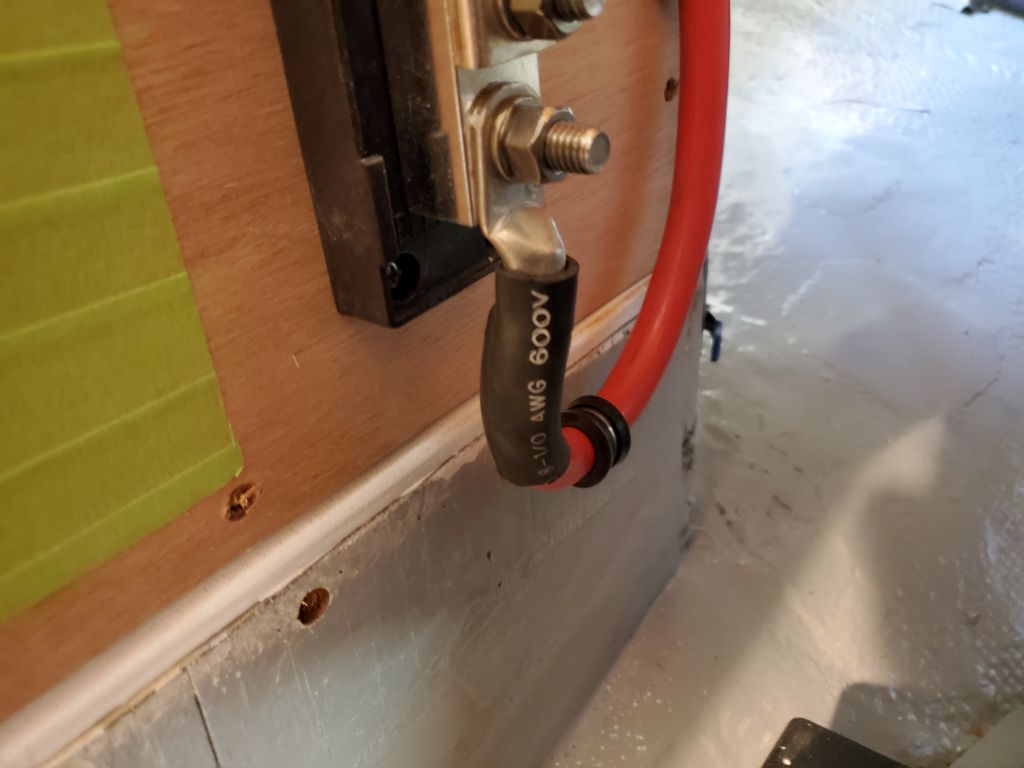
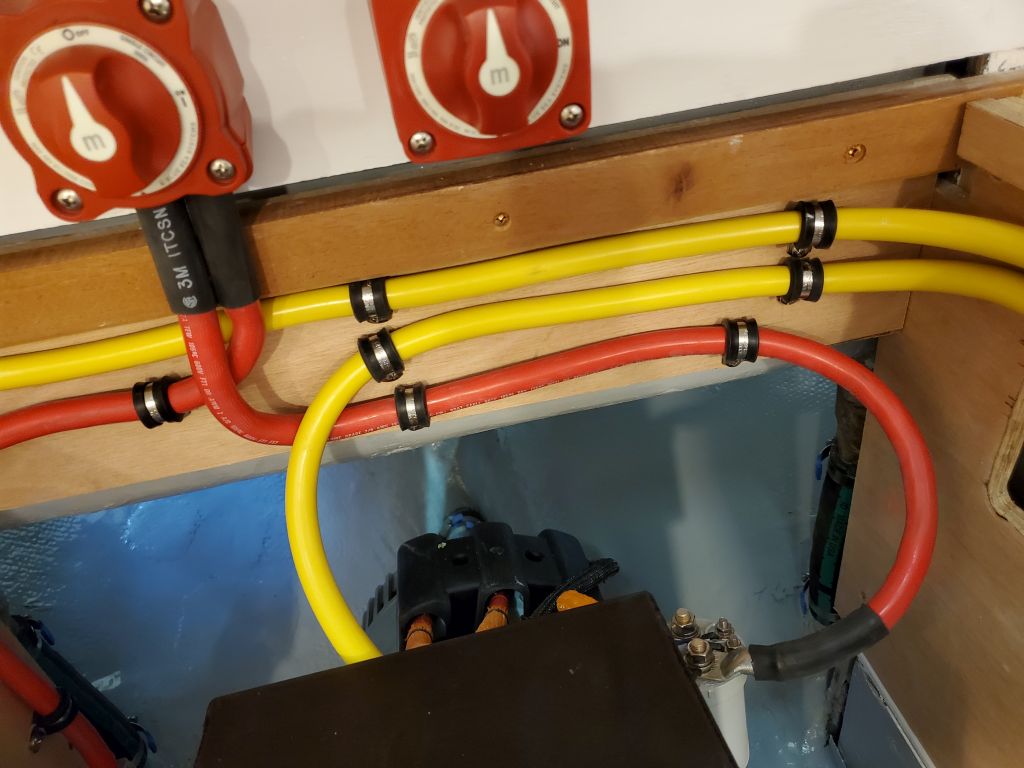
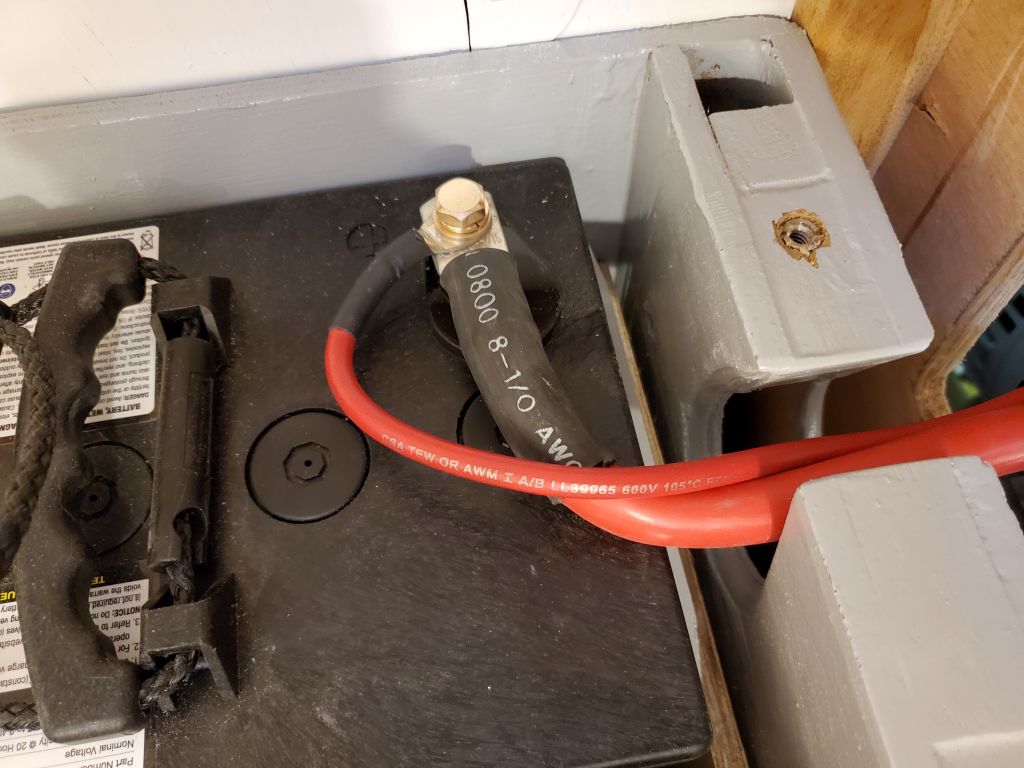
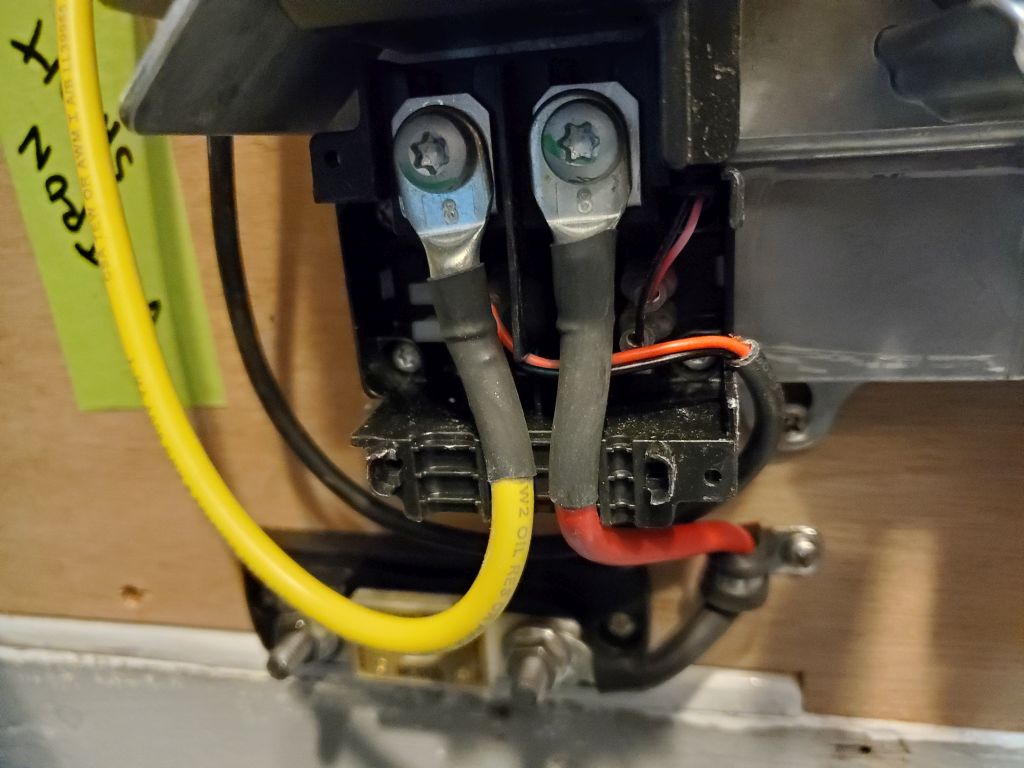
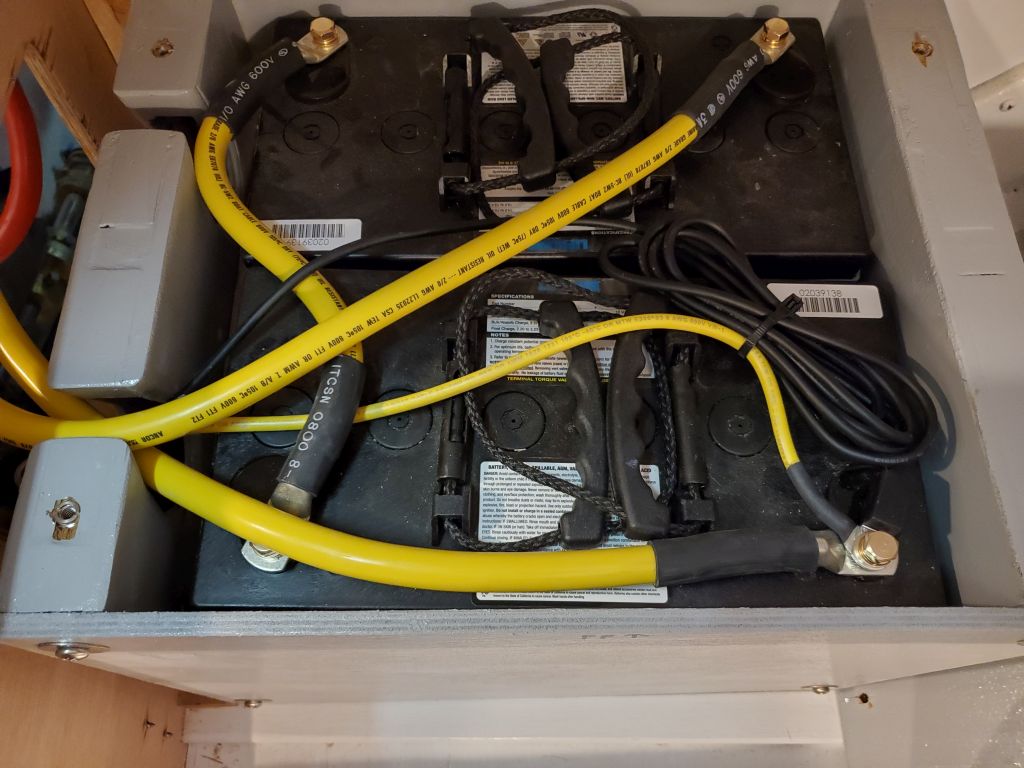
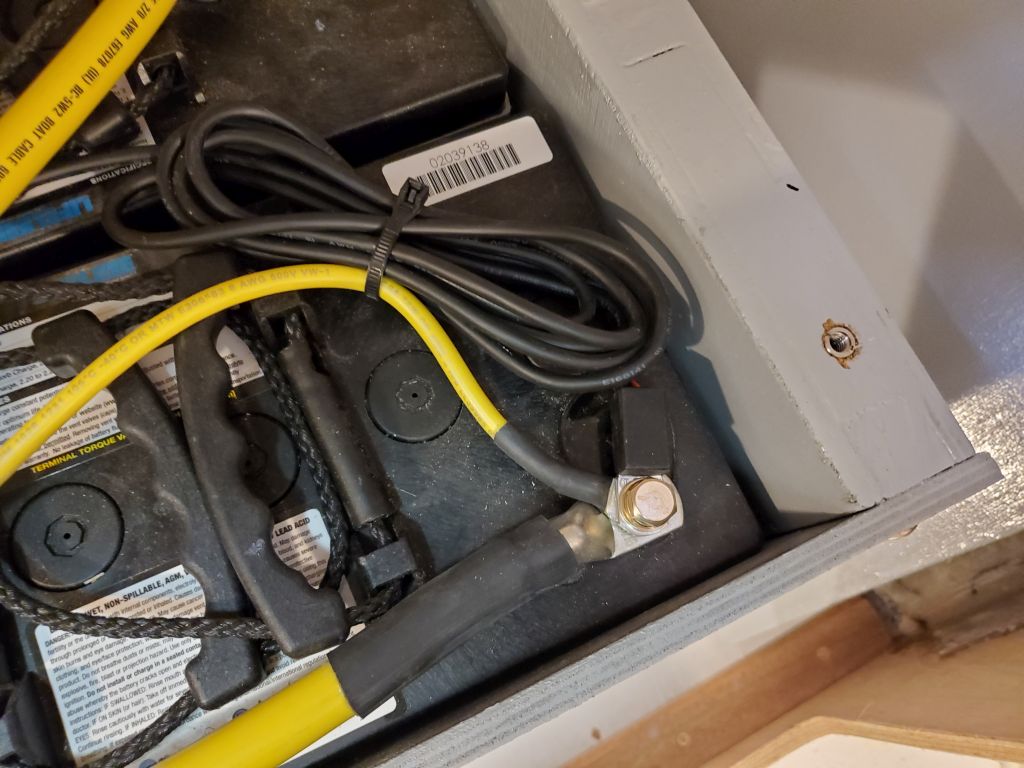
Starting with the positive cable from the battery bank to the fuse holder, I spent the remainder of the afternoon installing all the cables required to tie the batteries together in series, creating the 48-volt bank required for the propulsion motor, the first step in the final motor wiring.  With the positive terminal of the 4-battery bank thusly determined, I moved through the remaining batteries connecting negative to positive with jumpers–which in this case included a long jumper that extended across the aft end of the engine room to the port battery bank.  I used yellow cable for these jumpers since logic suggested it was debatable what color they should be anyway, and I always used more red cable than yellow, so as a matter of supply it seemed to make sense.  I planned the cable runs so as to maximize space for additional wiring in the space, and to provide room and passage for the additional cables that would come later, once I was ready to mount the battery switches.

With all four batteries connected in series, I tested the voltage between the bank positive terminal to starboard and the bank negative terminal to port:  52 volts, which was what I’d expected from a fully-charged new bank of nominal 48-volts.  This was quite a stretch for the standard leads from my meter, but they just reached.

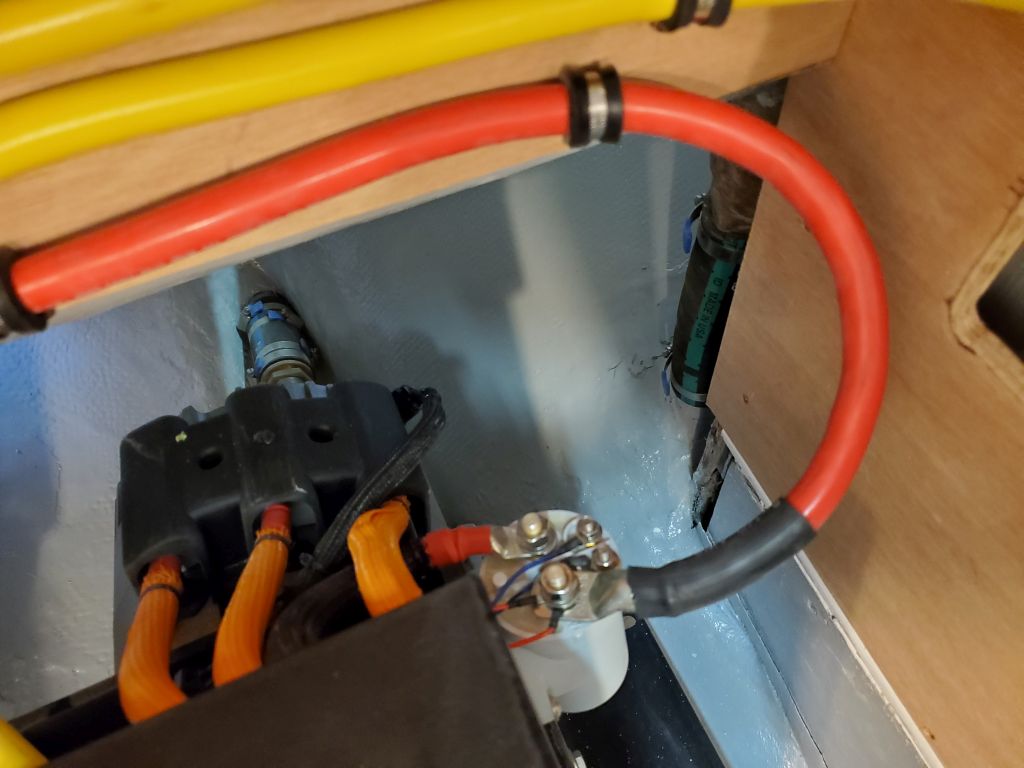
For now, I disconnected the positive wire till I had the rest of the system installed, and to finish up for the day I installed the negative cable from the bank negative on the port side to the appropriate terminal on the front of the electric motor controller, leading the cable around the back of the engine room and down the front of the motor along with the various pre-installed cables already there.

Next time, I planned to finish up the cabling with the remainder of the positive side of the system.

Total time billed on this job today:  5.5 hours

0600 Weather Observation:  16°, clear.  Forecast for the day:   Sunny, 50°


Lyra 39

Tuesday

I uncovered a long, narrow strip of junky 1/4″ plywood, which was perfect for making a more accurate pattern of the after bulkhead above the countertop.  After transferring the lines from the cardboard template to the new plywood, I test-fit the template and scribed and re-marked it at a 2″ offset, which I then transferred anew to the strip of 9mm I’d prepared for the final bulkhead.  From here, it took several trips up and down to fine-tune the cuts and trim various areas, but finally the piece fit.

I’d originally set the bottom of the patterns right at the level of the countertop cleat, but with the final fitting I trimmed the flat, straight bottom edge of the panel to provide enough room for the countertop beneath:  12mm plywood plus an allowance for the laminate countertop surface, for which I used a scrap of  firm 1/8″ gasket material that I had around.  For final positioning of the bulkhead, I used similar spacers beneath the panel to hold it the proper distance from the support cleat.

The panel was a tight fit, and because of the nature of the underpinnings it only required a few screws to secure in strategic places–eight in all.  Once I’d secured the panel, I filled the countersunk screw holes with some quick-dry fairing material to prepare the new bulkhead for priming later in the day.

The starboard galley cabinet required a divider across the widest part, not only to provide a separate storage area outboard of the sink and battery box, but also for countertop support across its area of widest span.  This was a pretty straightforward installation using a leftover piece of 9mm plywood for the divider, and a hardwood cleat where it joined the forward bulkhead at 90°.  The after side of the divider rested against the outboard side of the battery box.

With the slightly-oversized divider in place, I struck a line between the forward bulkhead and aft countertop support cleat to get the correct height, then cut the plywood and installed it permanently with screws to the forward cleat and battery box.  This left a good-sized storage area that would be accessible through top-access hatches in the countertop later.

To better support the countertop during final installation, I prepared a series of cleats from offcuts of 12mm plywood, which I then glued to the inside edges of all the galley bulkheads and partitions with glue and clamps, leaving them over lunch break to cure.  These cleats would provide a wider bearing surface for securing the countertop, and also the requisite support for the top panel over the engine room.

Now, starting with the starboard side, I used my cardboard patterns to cut a piece of 12mm plywood to fit for the countertop.  I left the two outer edges overlong to start so I could mark and cut them accurately according to the cabinets themselves.  The first piece fit well from the start, with one extra scribe and cut to improve the fit where the countertop met the hull.

Once I had the fit where it needed to be, I traced the overhang on the two sides of the cabinet and cut the plywood to its final size.

Next, I laid out some reference marks that would come in handy later, including the position of the longitudinal divider, the top of the battery box (marked from inside), and the sink drain.  From cardboard, I made a pattern for the sink cutout and laid out a proposed position for the sink, with the sink flange 2″ in from the countertop edge on both sides.

Not yet sure what the owner eventually planned for any upper cabinets at the outboard edge of the galley, I laid out a couple different marks that might affect the top access to the locker beneath:  one 7″ in from the hull, which would match the vertical extension on the port side; and a second line in line with the bump in the bridgedeck at the after end.  For now, these were for reference and consultation.

For the port side, the owner requested a countertop overhang forward of the cabinets, up to 9″ wide, so to start, after setting up my cardboard patterns appropriately, I added 10″ to the outer reaches to allow room for trimming to final shape according to the reality of the cabinets.  The first test-fit was pretty good, but the shape of the fillets and tabbing around the top part of the bulkhead stopped the plywood from getting all the way to the hull, leaving a small gap.

I scribed the plywood and, after cutting to the new marks, the countertop fit well against the hull and bulkhead.

From beneath, I marked the engine room and forward edges of the galley cabinet on the plywood, then, back down on the bench, added 9″ to the forward mark and one thickness of plywood away from the engine room mark (to allow for the width of the inner support cleat) and cut the top to its final (for now) size, which would give the owner a chance to see the 9″ extension in the raw and help determine the final shape.

During the morning and afternoon I’d applied, sanded, and applied again some filler to the screw holes in the after bulkhead.  Now, by the end of the day, this was ready for a coat of primer.

Total time billed on this job today:  7.25 hours

0600 Weather Observation:  6°, clear.  Forecast for the day:   Sunny, 34°

Lyra 38

Monday

After a late-ish start following an errand, I finished up the new galley tabbing with a quick water wash and light hand sanding just to remove any sharp edges or nubs from the fresh fiberglass.

With the side galley cabinets and engine room defined, now I could build and finish up the front panel to the engine room, which would finish off the galley in the main and further define the mechanical space, which would be helpful as I transitioned into some of the wiring and related installations.  I used my original cardboard template/mockup to check the fit between the real cabinets and, finding it good enough for the purpose for now, proceeded with the final installation details and construction.

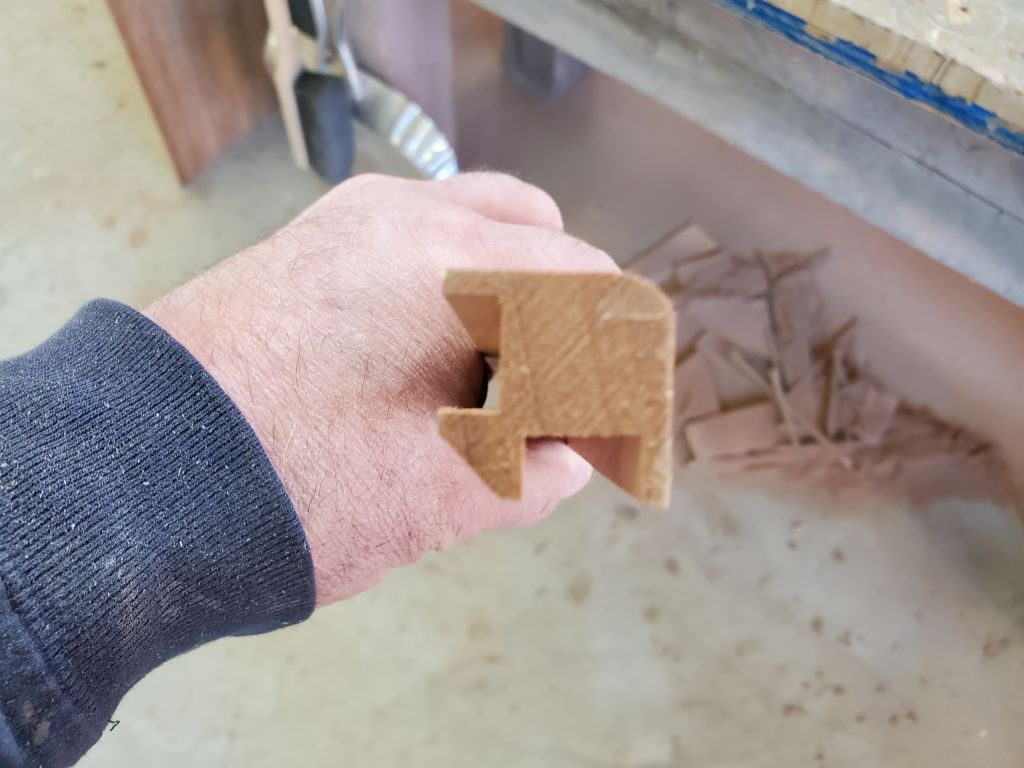
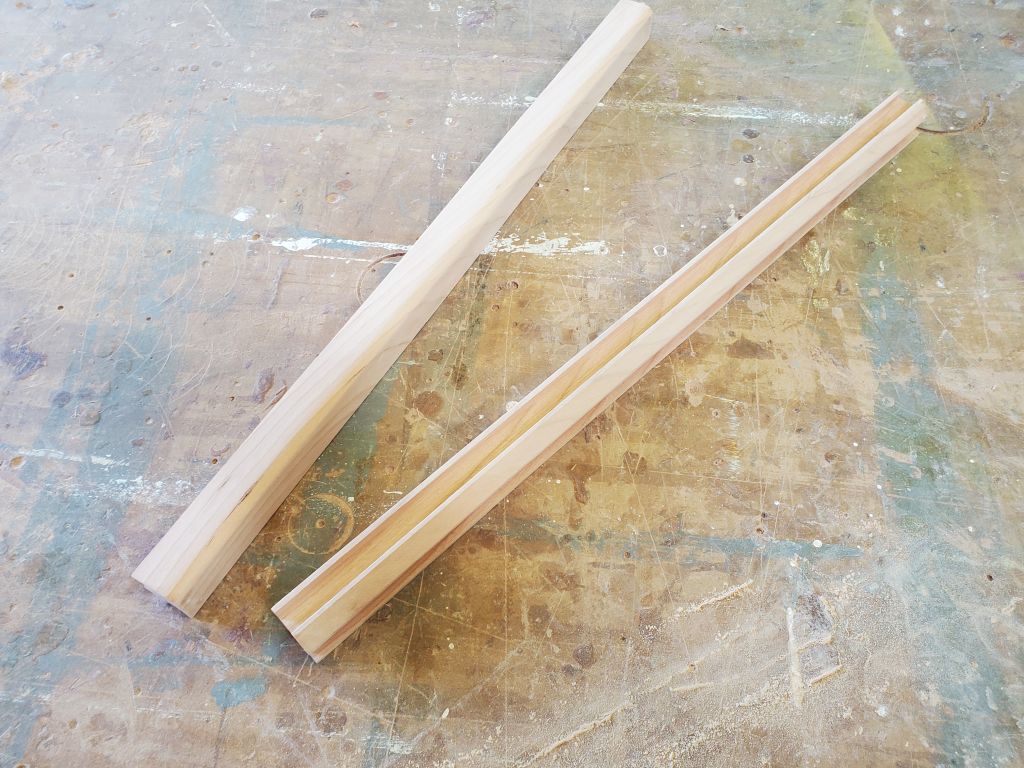
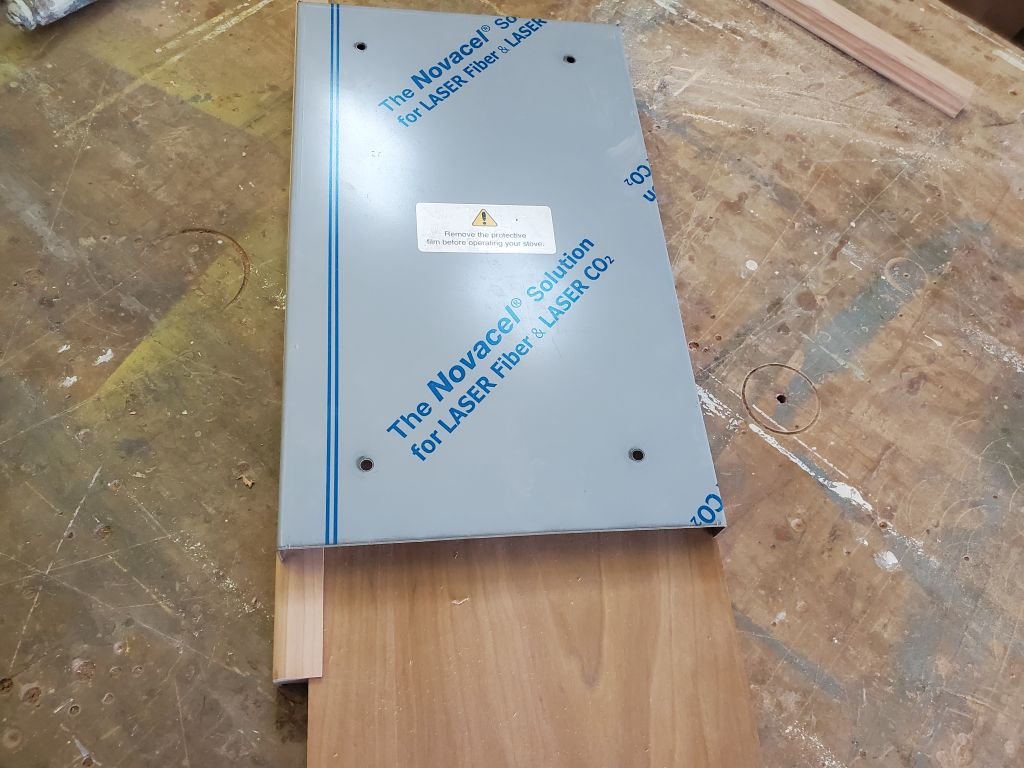
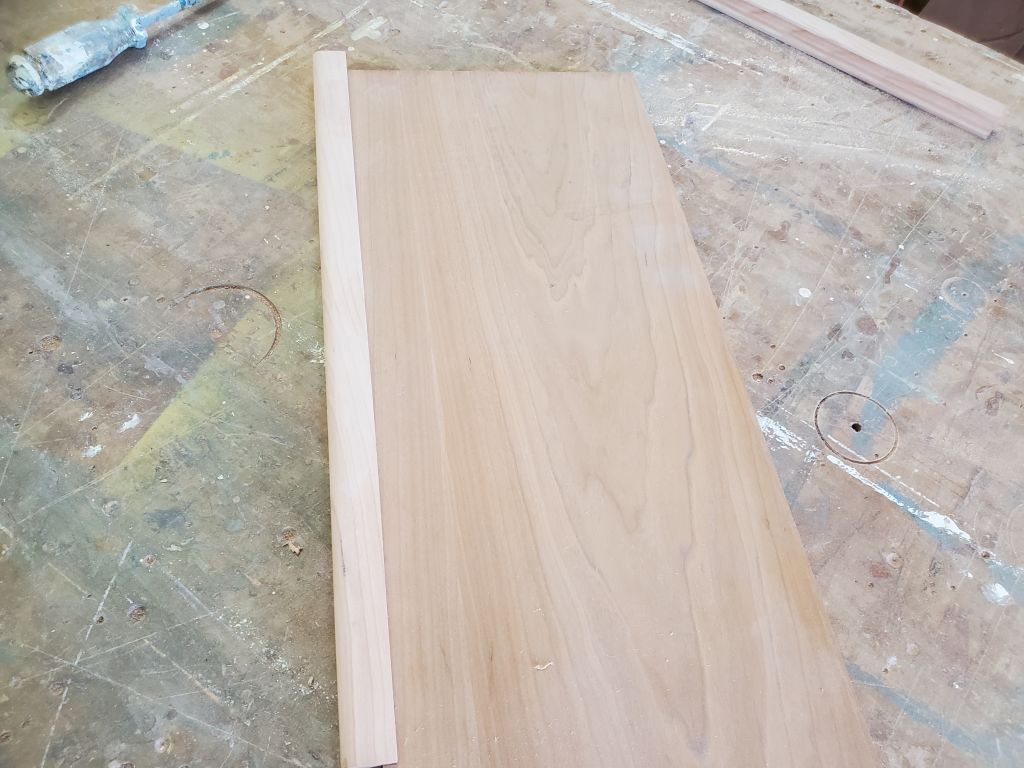
To position and secure the front panel, allowing for easy removal, I chose to build simple channels for each side, into which the panel would slide and by which would be held.  From some of the available stock of Sipo, I milled two blanks 1-1/2″ wide (allowing for a 1/2″ wide dado to accommodate the plywood, plus 1/2″ on each side) and 3/4″ thick, and long enough to span the height and then some.  I milled 3/8″ deep by roughly 1/2″ wide dados through the centers of the strips, which held the 12mm plywood securely, but not tightly to allow for ease of installation and removal.  To finish off the pieces, I rounded the outer corners and sanded them smooth.

In all-new construction, installation would have been quick and simple, but here I found it to be fussier than expected, since the stiles needed to run on and between both the new, generally straight and true cabinetry in the galley, and the older, less-so original settees and tabbing at the bottom edge.  For the panel to work properly, the grooved stiles needed to be basically straight and plumb, and it required several rounds of scribing and shaping and fitting along the bottom few inches before I got the stile to fit acceptably over its whole length.  I secured it for now with screws and glue through the dado into the cabinetry behind, with the groove aligned with the front of the adjacent cabinet.

This let the stile overhang the front of the port cabinet by about 1/2″, and although at the onset I’d considered making a trim that would incorporate a little return onto the cabinet to finish off this overhanging edge (while also hiding the joint in the plywood), this would have turned into a highly fussy and difficult thing, so instead I added a second piece of the mahogany to finish off the corner, gluing it to the stile during its final installation (which was a bit later on in the process).

To ensure that the engine room front panel was properly in plane with the port cabinet as intended, once the first stile was in place I used a straightedge to mark the cabinet on the opposite side, at both the top and settee level.  These two marks gave me a layout line where I could align the stile for the starboard side.  For now, I cut the stile to length and shaped the bottom as needed to fit the hull and tabbing and other contours of the cabinetry; this went more quickly than its counterpart to port.

Before installing the stile, however, to be sure it ended up exactly where it needed to be–measurements and transfer marks notwithstanding–I decided to cut and fit the actual plywood panel first, which would help ensure that the stile was where it needed to be.  Starting with my original mockup panel, I decided to cut a new cardboard template since the original was creased and a bit beat up at the sides.  Using the new, fresh cardboard, I made some needed adjustments to the edges of the panel, and eventually transferred it to a section of 12mm plywood for the real thing.  With the base cut roughly to shape according to the template (fine-tuning to come just a little later), once the panel fit well enough in the grooved stile I could finalize the position of the starboard stile and install it with screws.  As it happened, there was a slight, perhaps 3/32″ adjustment to the top edge of the original line I’d struck.

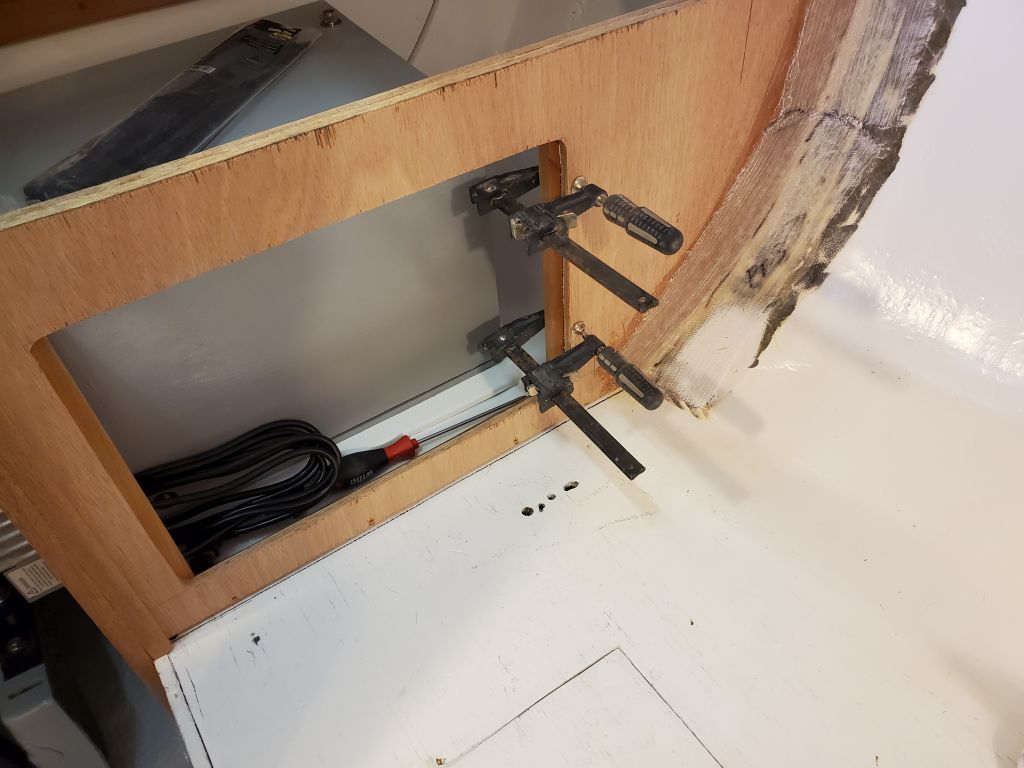
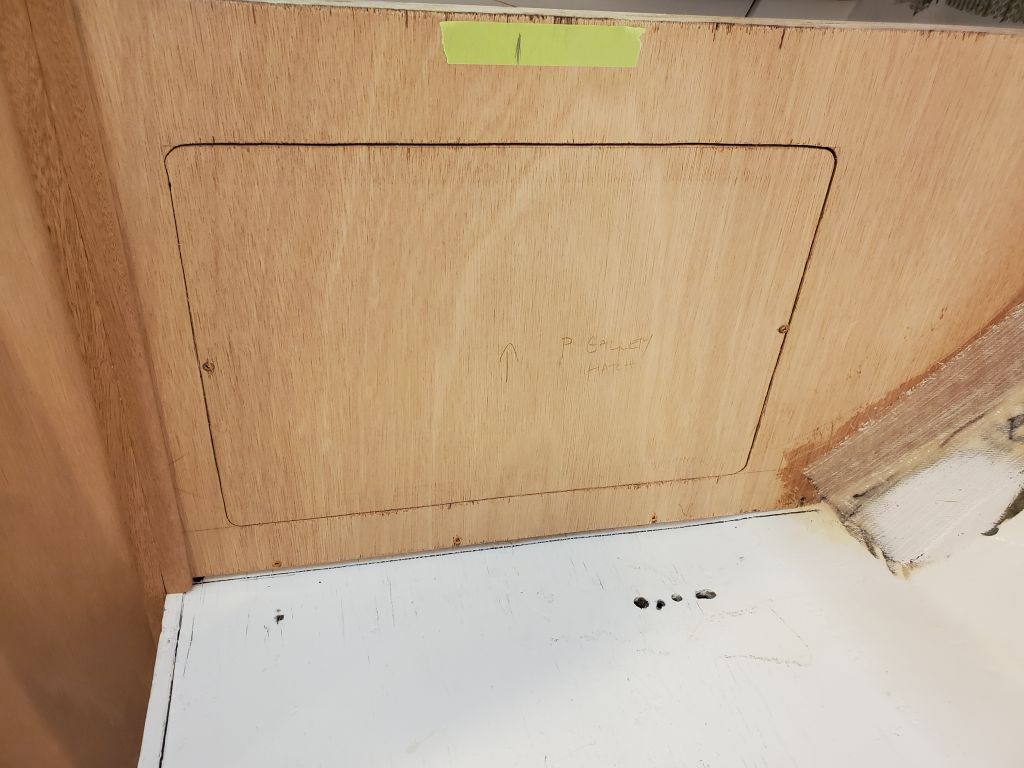
The stile spanned directly the removable battery access panel in the bulkhead, which was expected but turned out to be more useful than anticipated since it would give me a way to secure that panel without additional cleats, enhancing simplicity and avoiding undue obstructions in the right-sized opening.

Now I scribed, cut, and fitted the bottom edge of the panel to better fit the curvature of the hull and cabin sole.  Once I was satisfied with the fit, I used a straightedge across the two sides of the galley to strike the top edge of the panel and cut it to the correct and final height.

To allow the battery panel to be removable if needed, I marked and cut the engine panel stile just below the bottom of the battery panel, creating two sections.  The top section, secured to the panel with two screws and glue, held the panel securely, while the top few inches of the stile, which secured to the main bulkhead with a single screw, held the panel properly in place and alignment with the surrounding cabinetry.  With one additional screw through the bottom of the small panel into the cleat on the settee, this panel was well-secured, yet easily removable when needed.

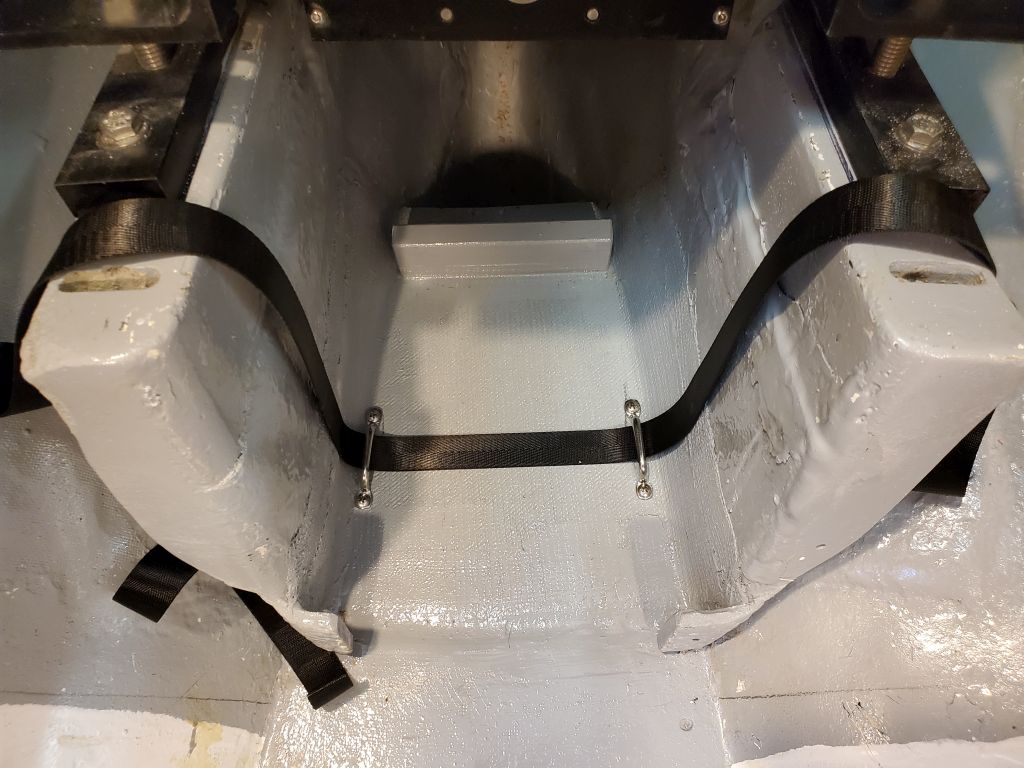
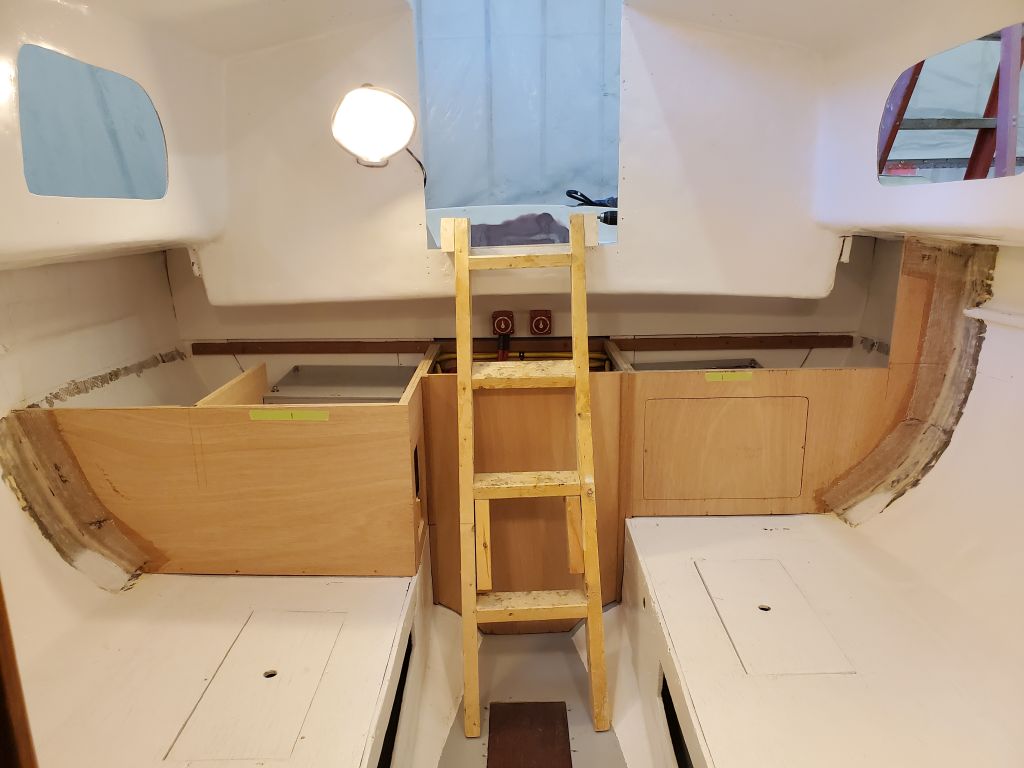
The new engine room front panel finished off the basic galley cabinets, and fit as far aft as practicable to leave as much cabin space available as possible.  There was just enough clearance forward of the engine foundations to allow for the installation of the fiberglass cleat I’d made to secure the house battery beneath the electric motor.

Now it was near the end of the day, but with the engine room now fully defined I could start thinking about the final layout for a pair of battery chargers–one for the 48-volt propulsion bank, and a smaller one (not on hand, but with a plywood stand-in) for the 12-volt house battery.  The engine room seemed the best place for these chargers, and I mocked up a few possible positions for the larger charger for the owner’s consideration.

The smaller charger, represented by a scrap of plywood cut to size, would fit in any of the same positions, depending on where the big one ended up, and thus posed no particular installation issues.  Other installations that would compete for the remaining space on these bulkheads included a shunt for a battery monitor, a large main system fuse for the engine bank, wire runs for various cables, and possibly in the future some 110-volt outlets to power the chargers,  I’d account for these and other installations once the chargers were located.

Total time billed on this job today:  5.75 hours

0600 Weather Observation:  8°, clear.  Forecast for the day:   Sunny, windy, 18°

Lyra 37

Friday

The main galley bulkheads were now permanent and sturdy, so now I could prepare to install the two short longitudinal bulkheads to enclose the engine room.  First, however, I water-washed and lightly sanded the new bulkhead fillets to prepare them.

I secured the engine room bulkheads with screws against the various cleats I’d previously installed, so this was a quick process.  For now, I left the removable panels out of the starboard side, as I didn’t know yet how best to install them.

With all the pieces in place, I used my original countertop mockups to create patterns of the countertop, accurately marking the hull, aft bulkhead, and other bulkheads on the patterns for later use in creating the final countertop.  The owner and I had discussed an extension forward of the port bulkhead, which would be easy enough to accommodate, and to prepare for this I also made a template extending to the hull forward of the bulkhead there, to allow for the possibility of bringing the extension straight to the hull and to likely define the bottom of the electrical locker.  I set these patterns aside for the moment.

Continuing with the bulkheads, I cut sections of 6″ biaxial tabbing to fit both sides of both bulkheads and, after other final preparations, finished up the fillets in the areas where I’d had glue blocks during the initial installation.  Then, I installed the tabbing in epoxy resin.

To round out the day, I transferred my cardboard patterns to a sheet of plywood to use for the exposed area of the aft bulkhead, above the eventual countertop.  I had to turn to another project at the shop, so cutting out the shape would await another time.

Total time billed on this job today:  3.25 hours

0600 Weather Observation:  45°, clear.  Forecast for the day:   Sunny, 50°

Lively Heels Phase 3-29

Thursday

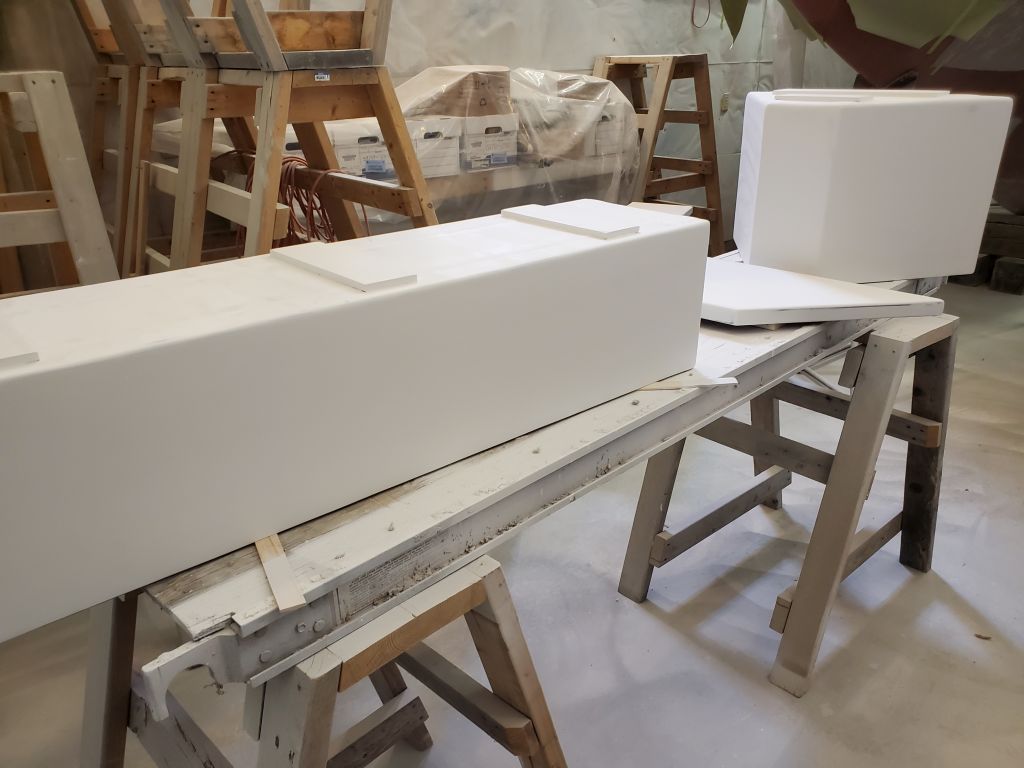
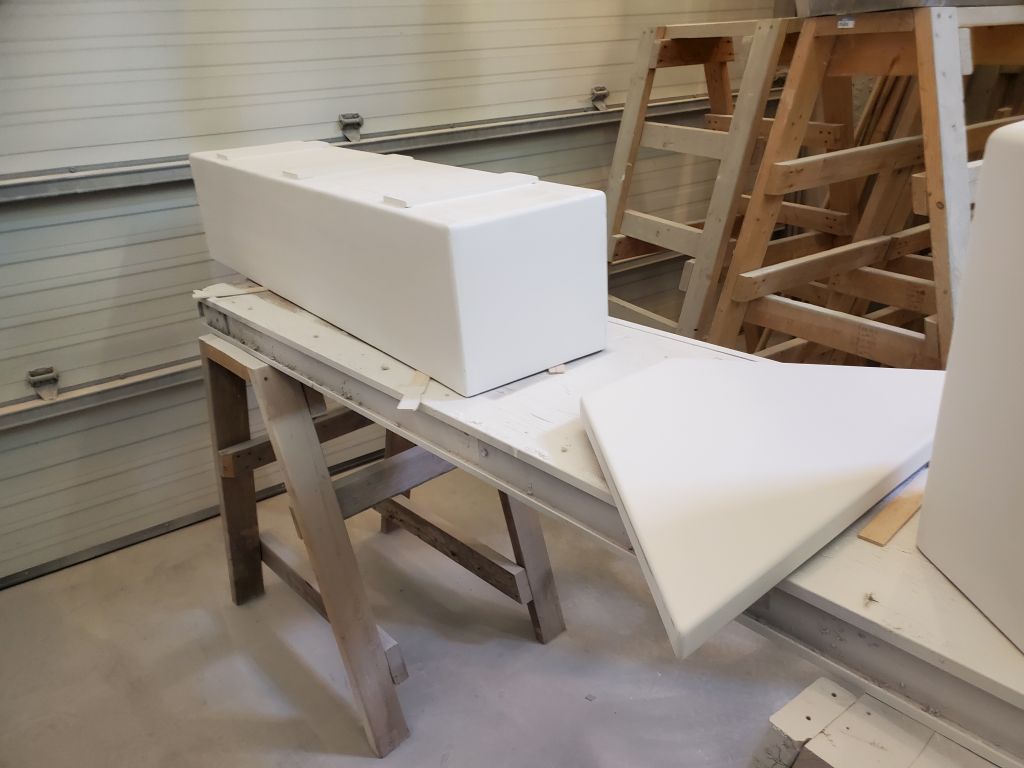
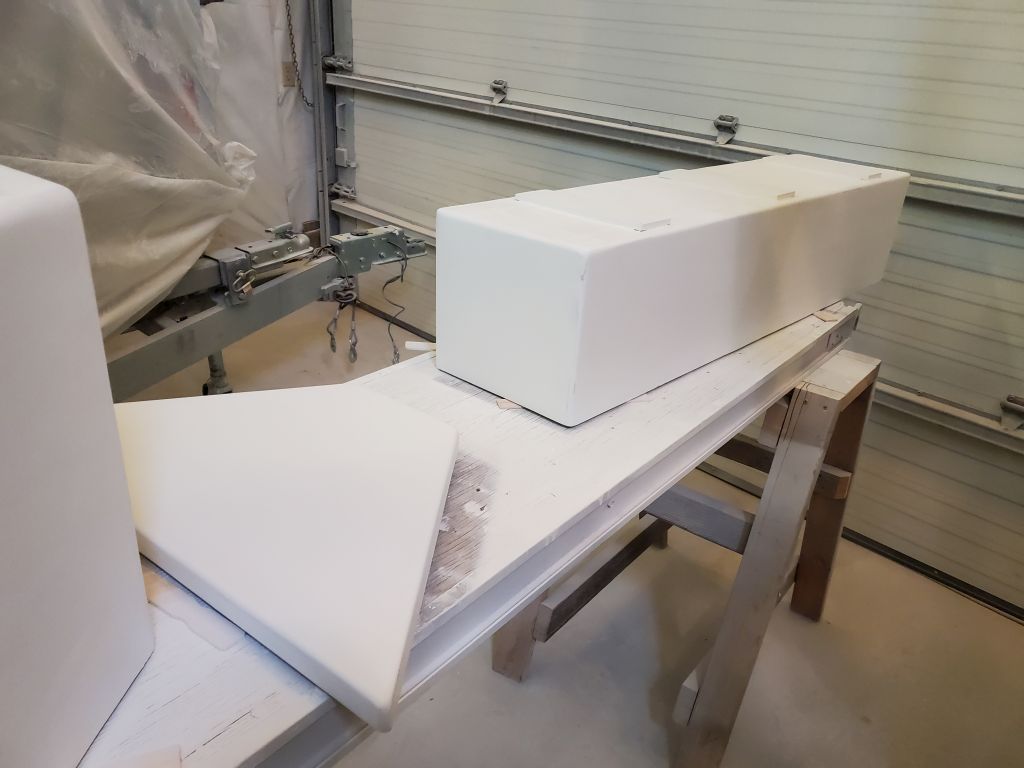
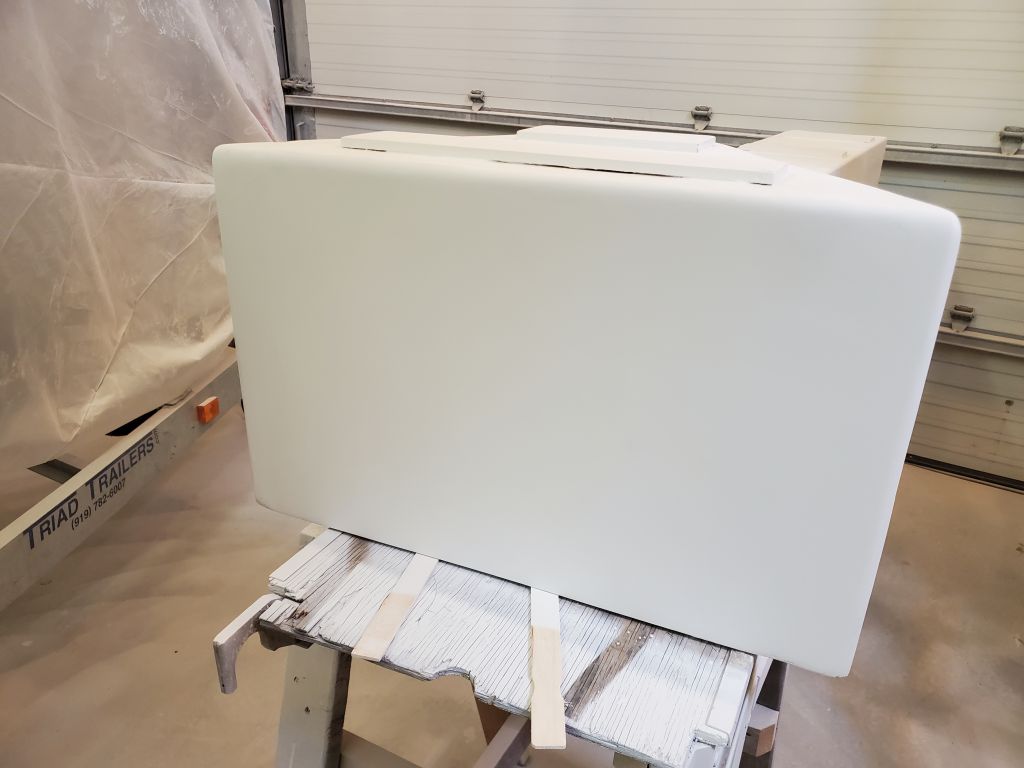
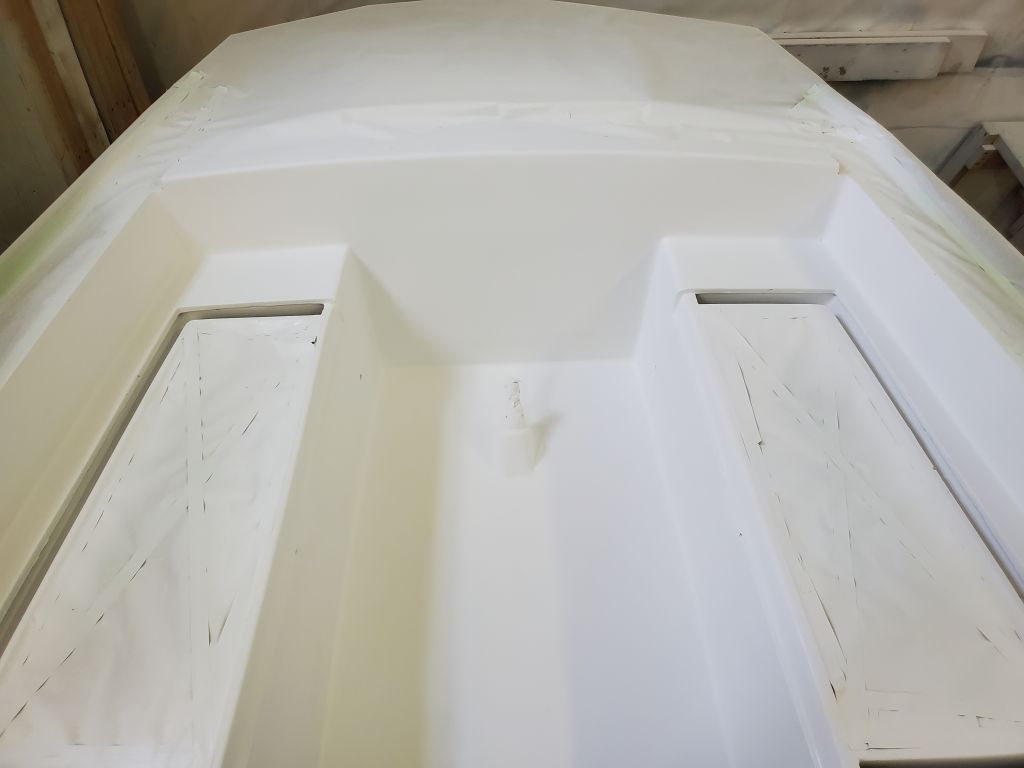
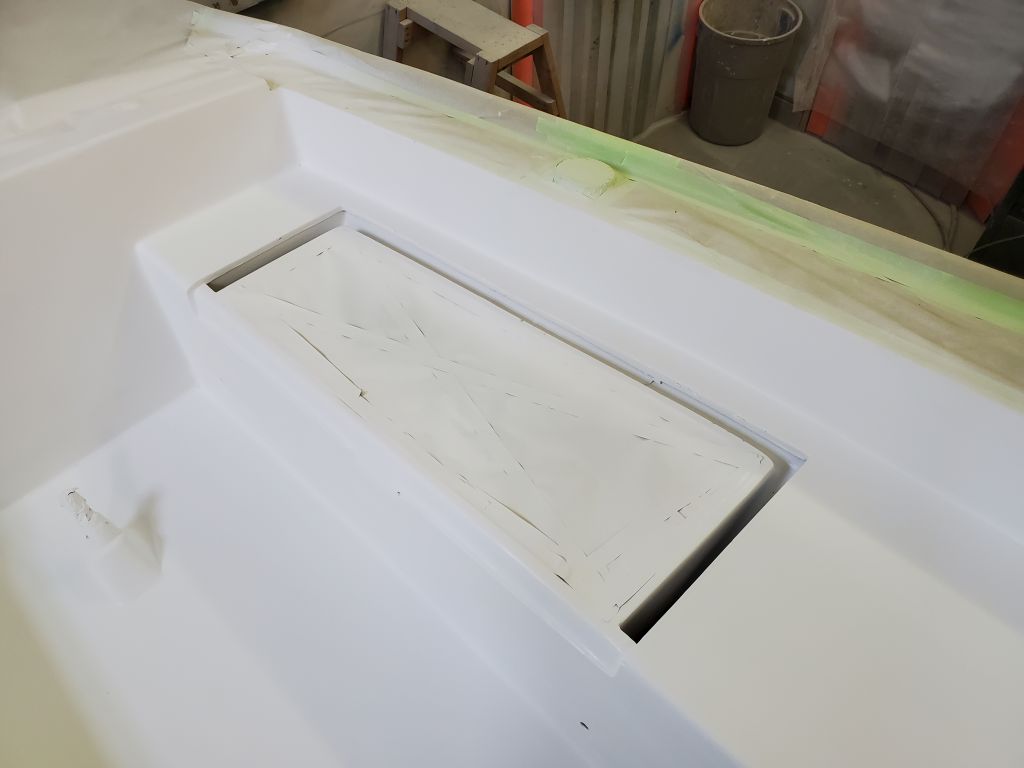
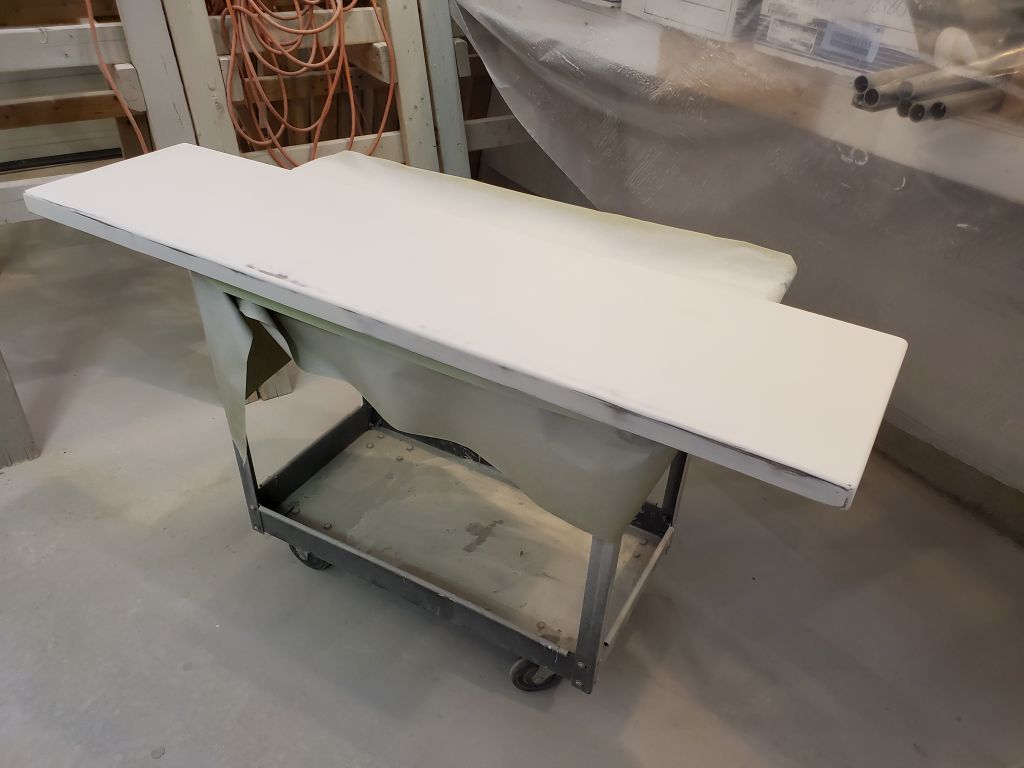
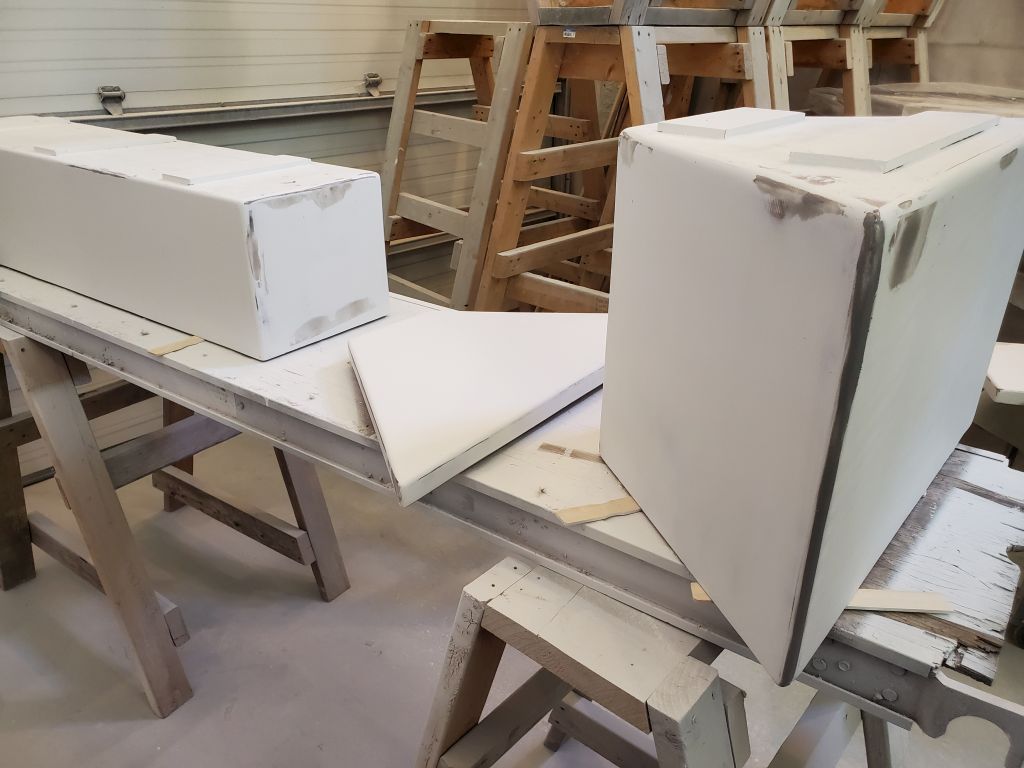
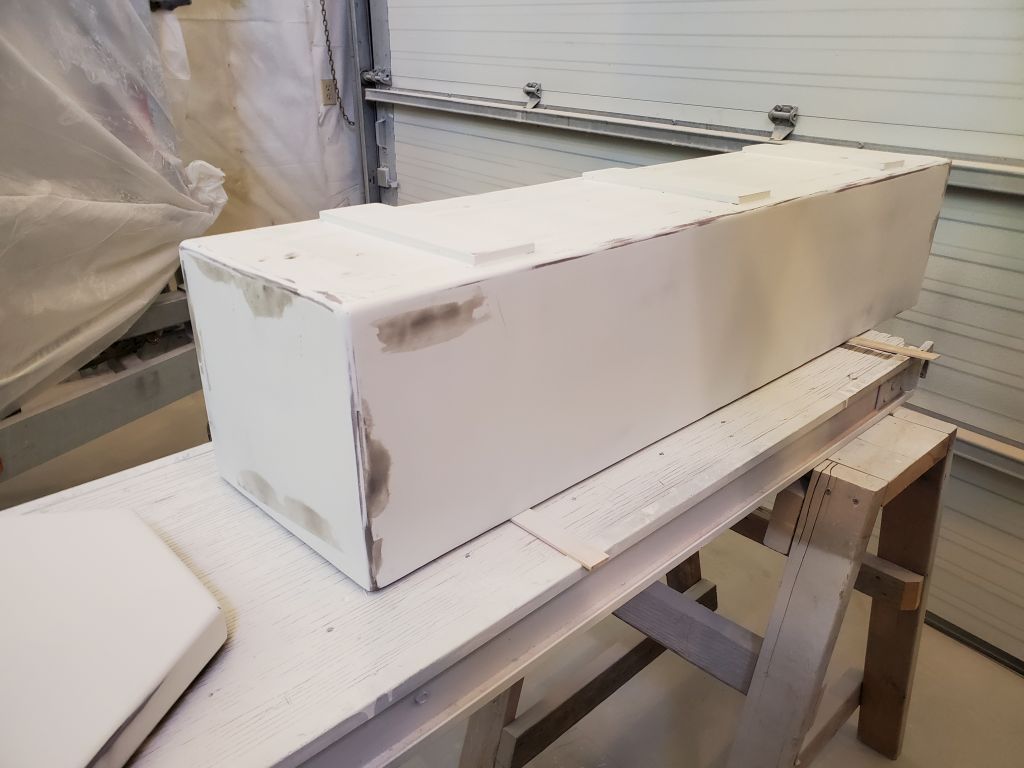
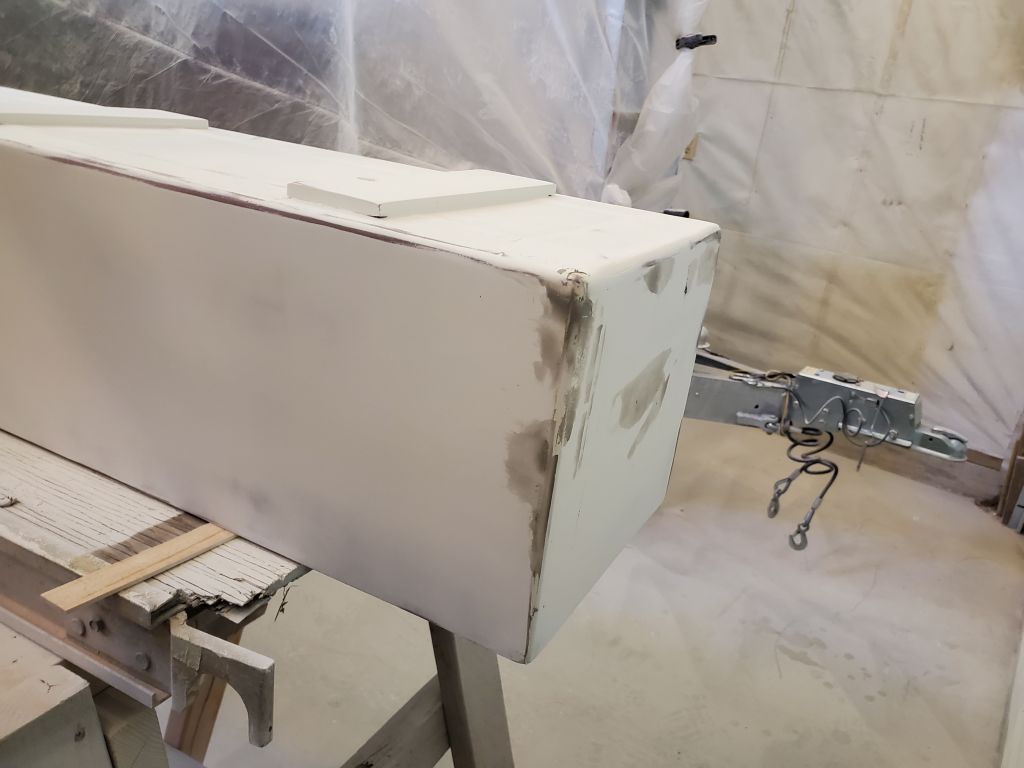
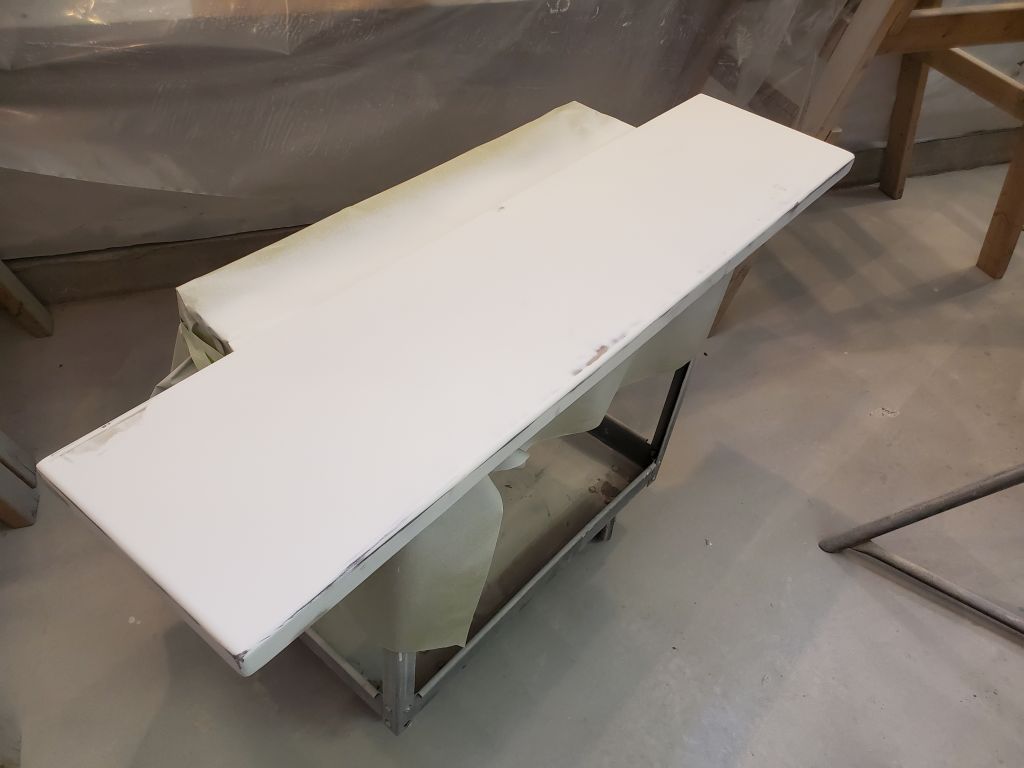
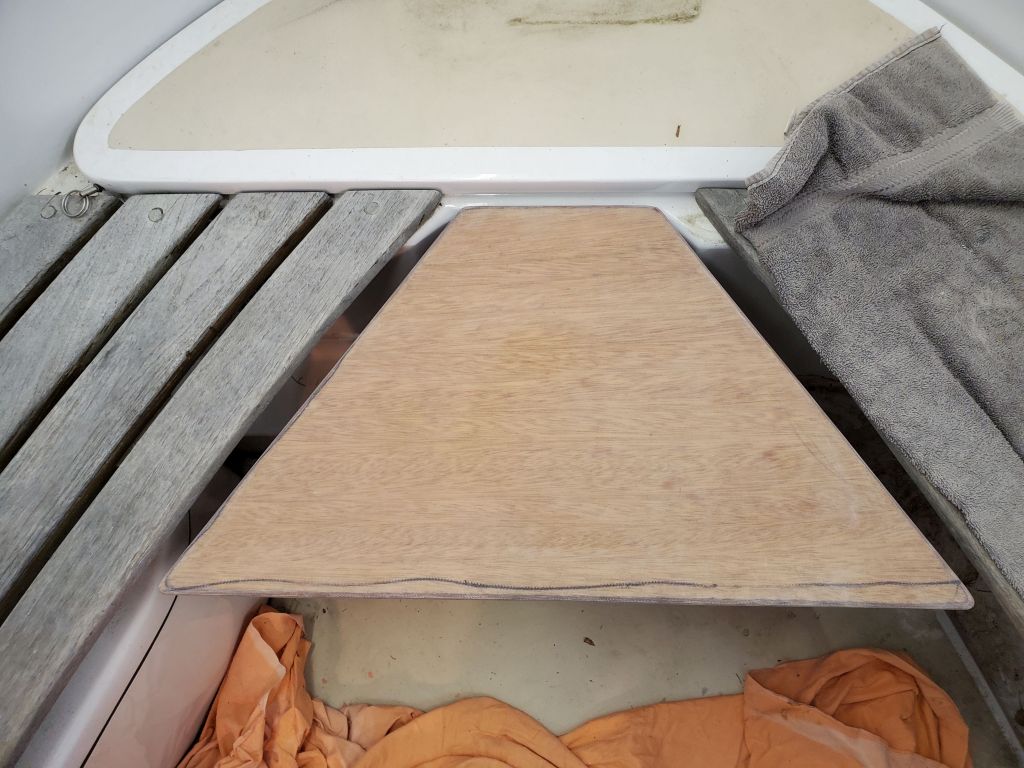
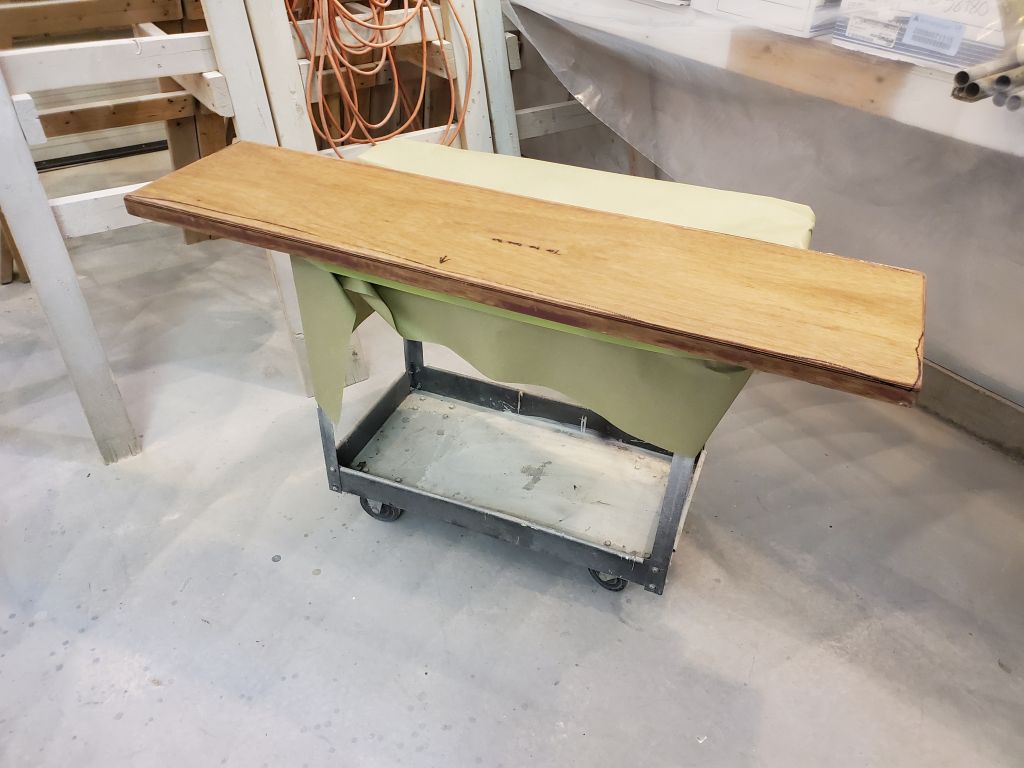
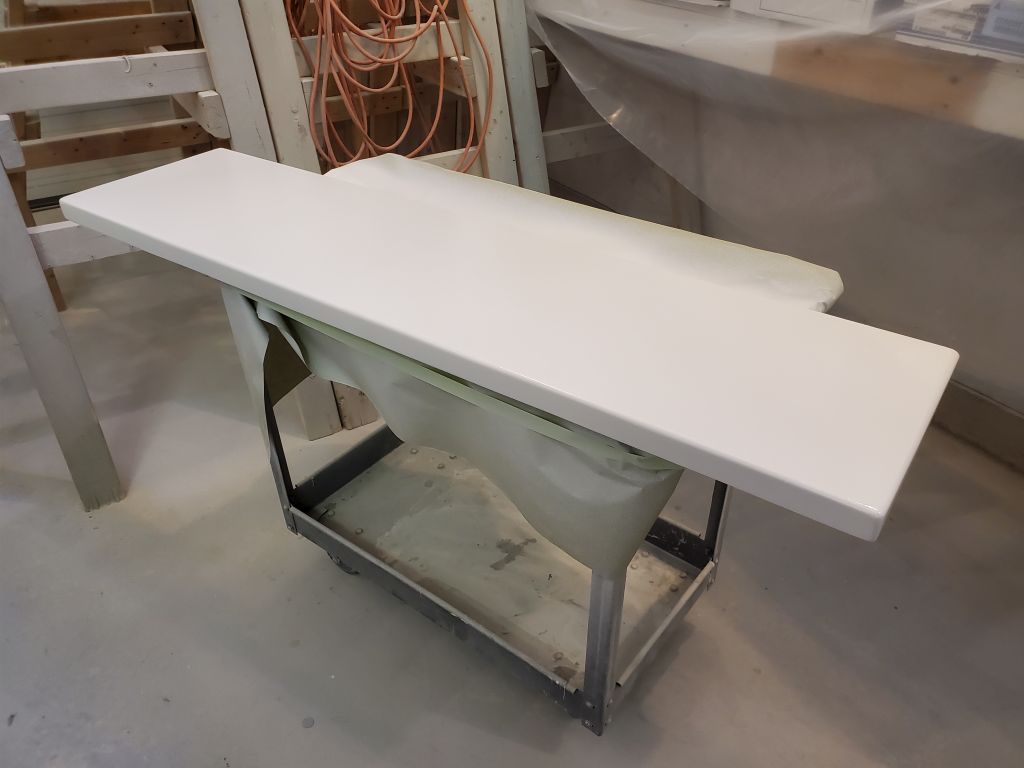
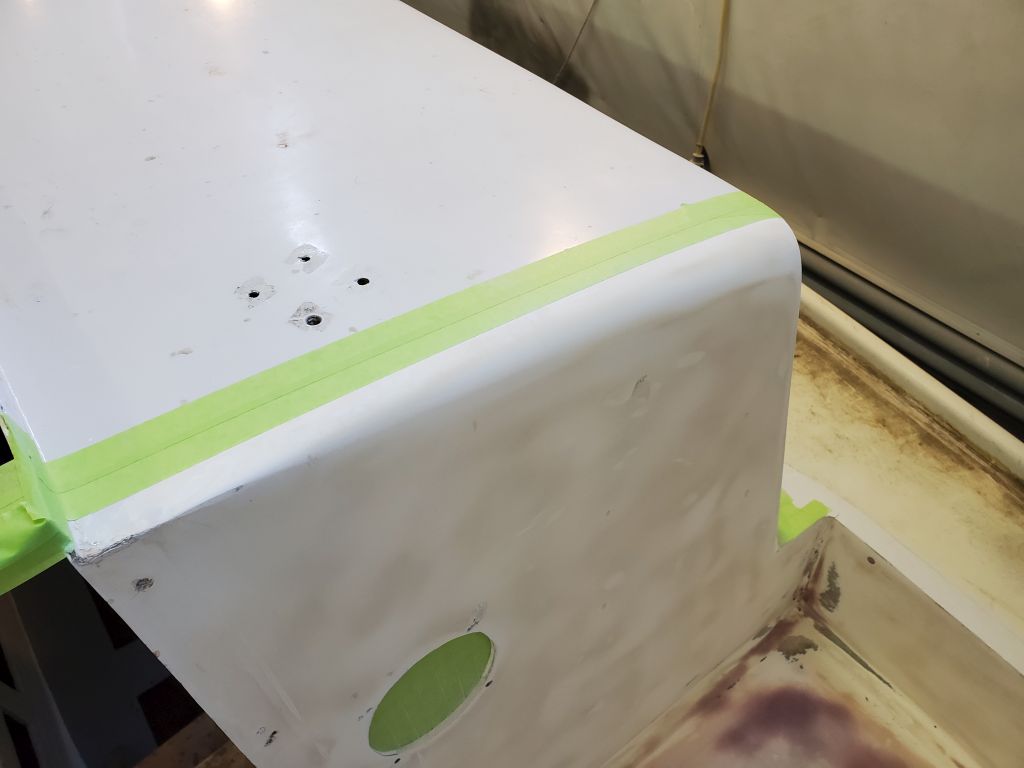
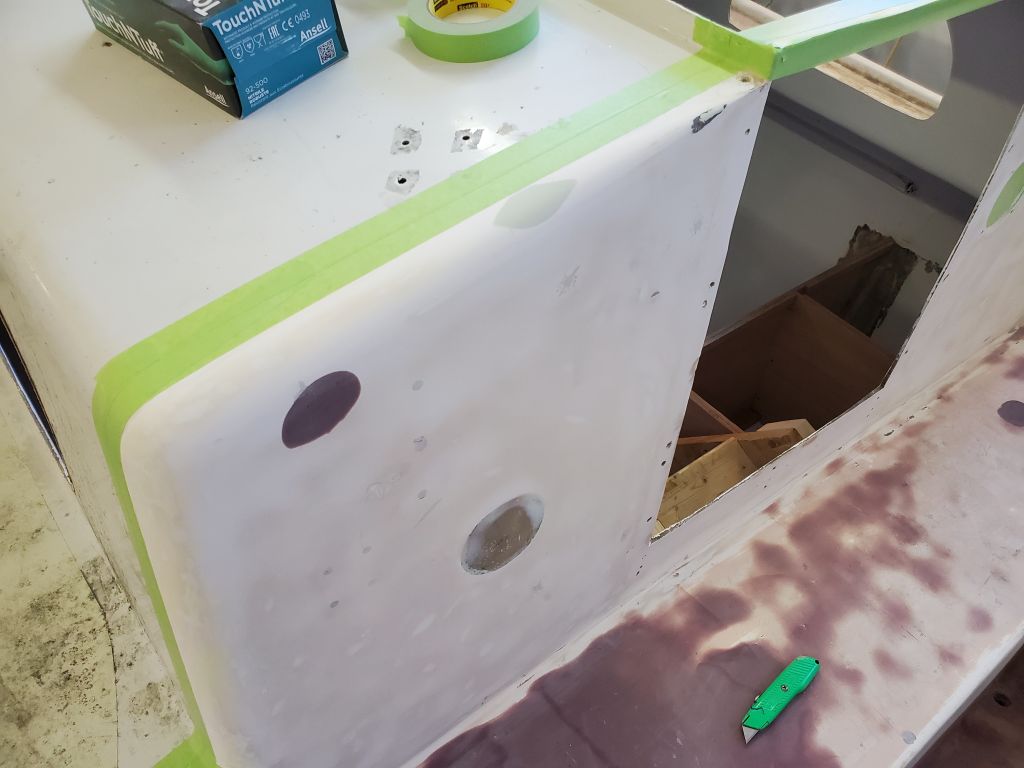
Once the fiberglass cured, I trimmed the excess that hung over the edges and sanded it flush, then very lightly sanded the entire surface to prepare it for epoxy coating.  In this case, I chose to fill the weave of the cloth with coats of liquid epoxy, rather than fairing compound, since the finer, lighter cloth required less work to bring to a smooth surface, and to avoid the possibility of inadvertently sanding through the cloth.  For right now, however, I didn’t have any rollers on hand, so I had to await the epoxy coating till a couple days hence.

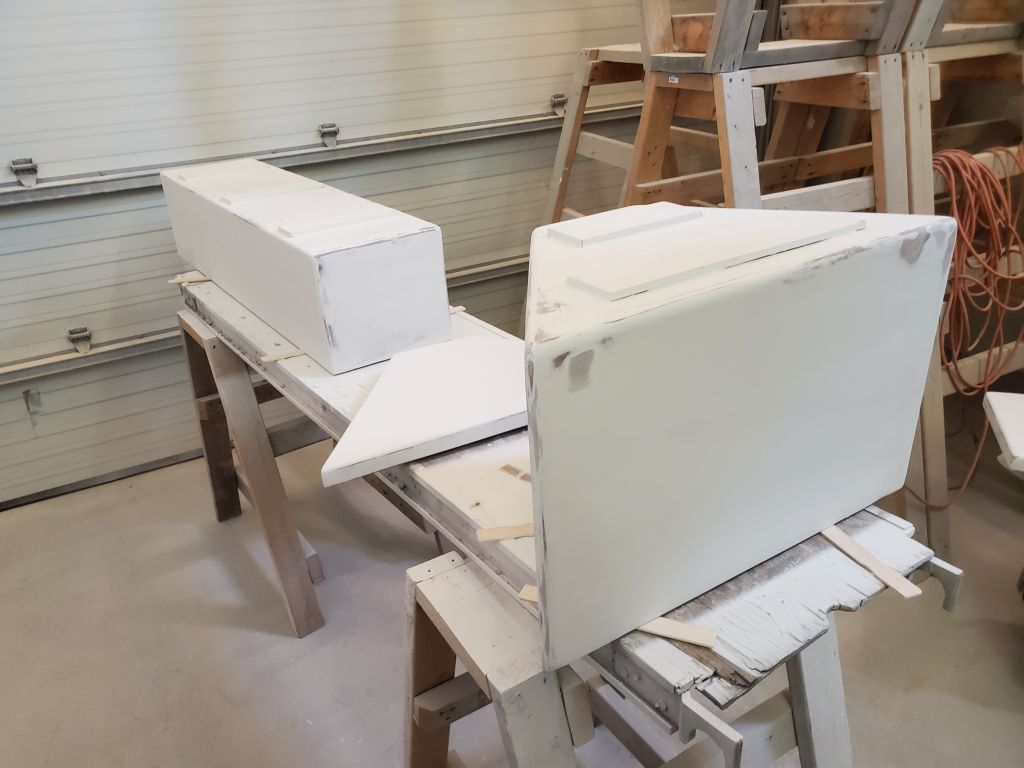
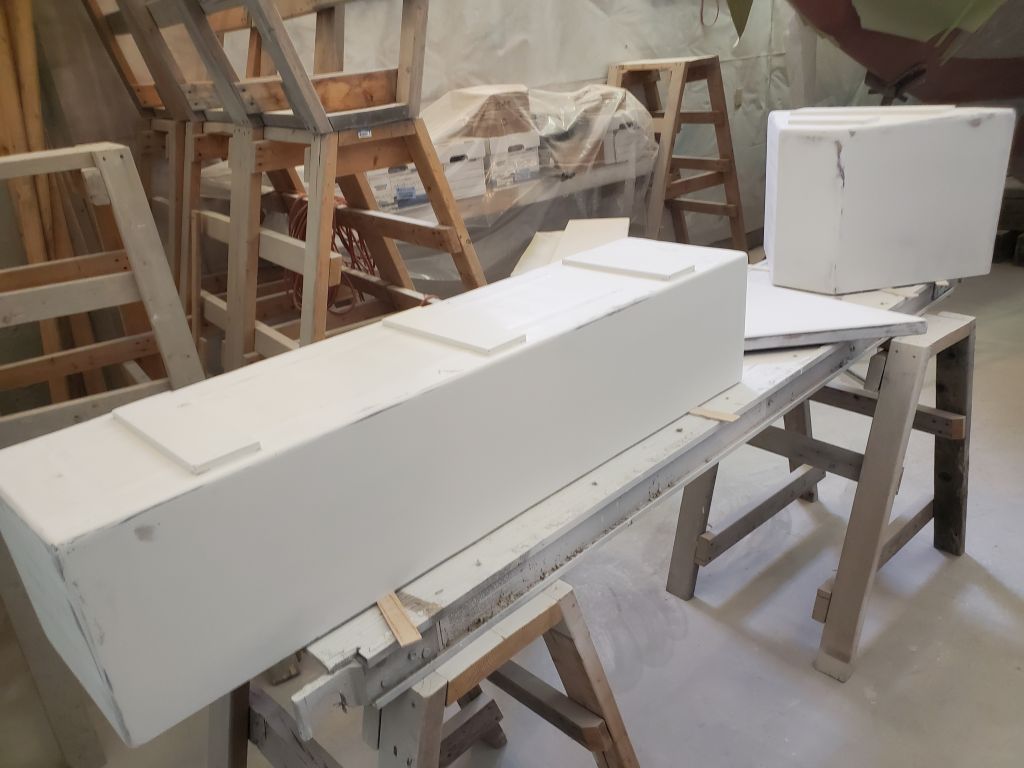
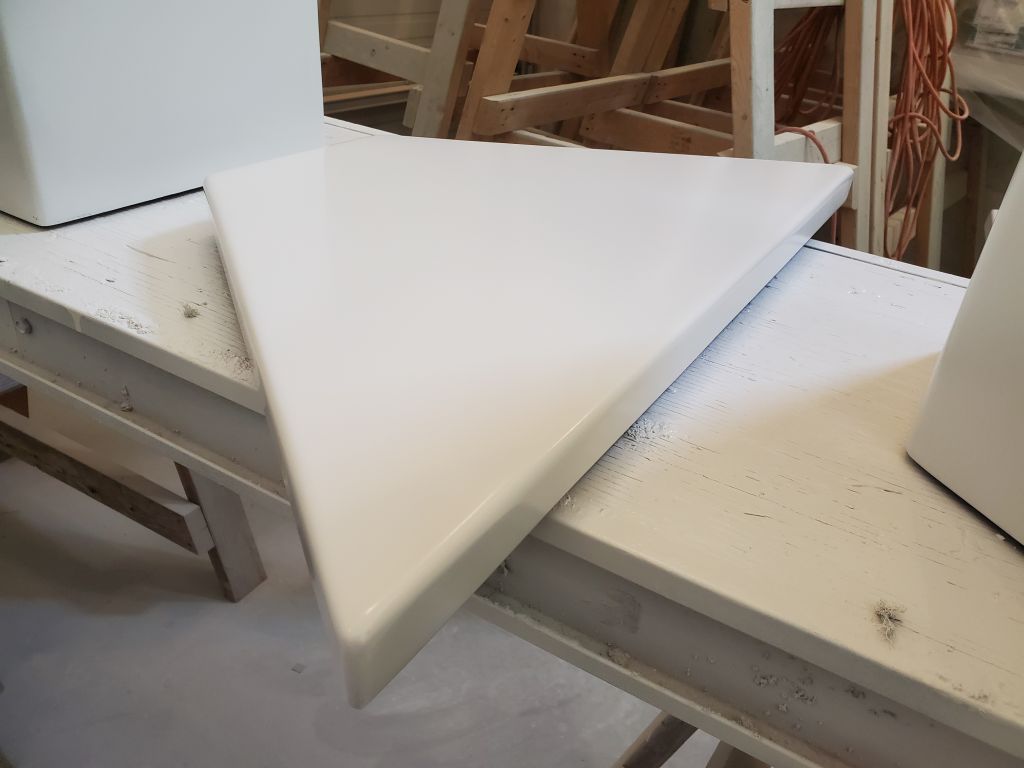
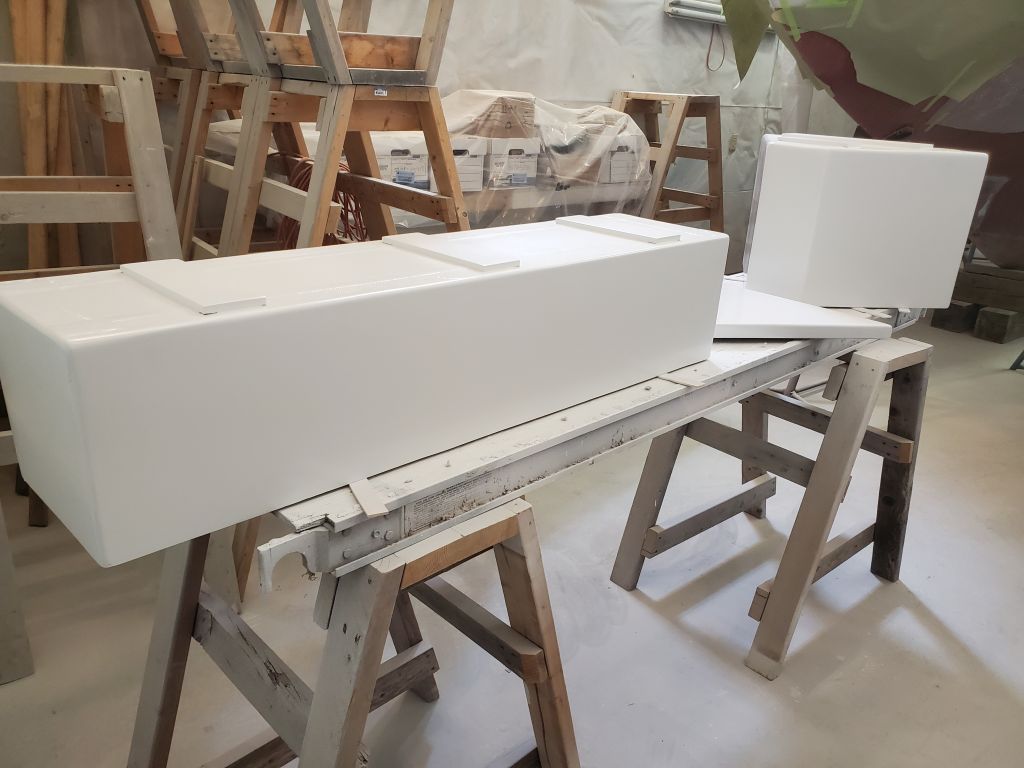
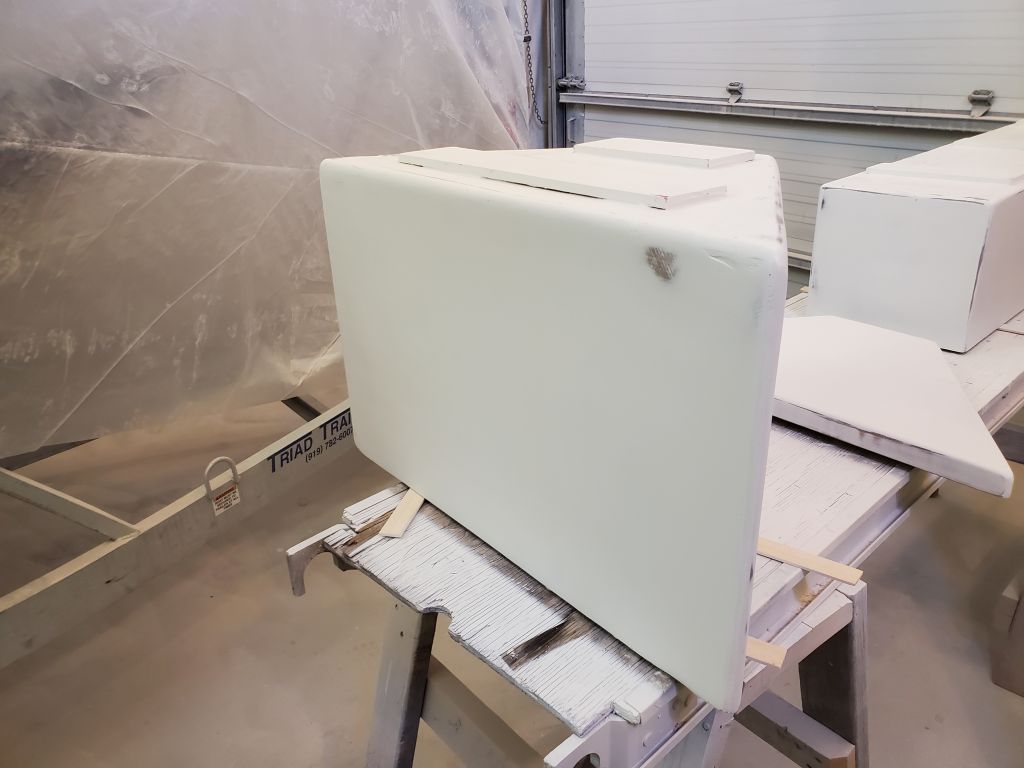
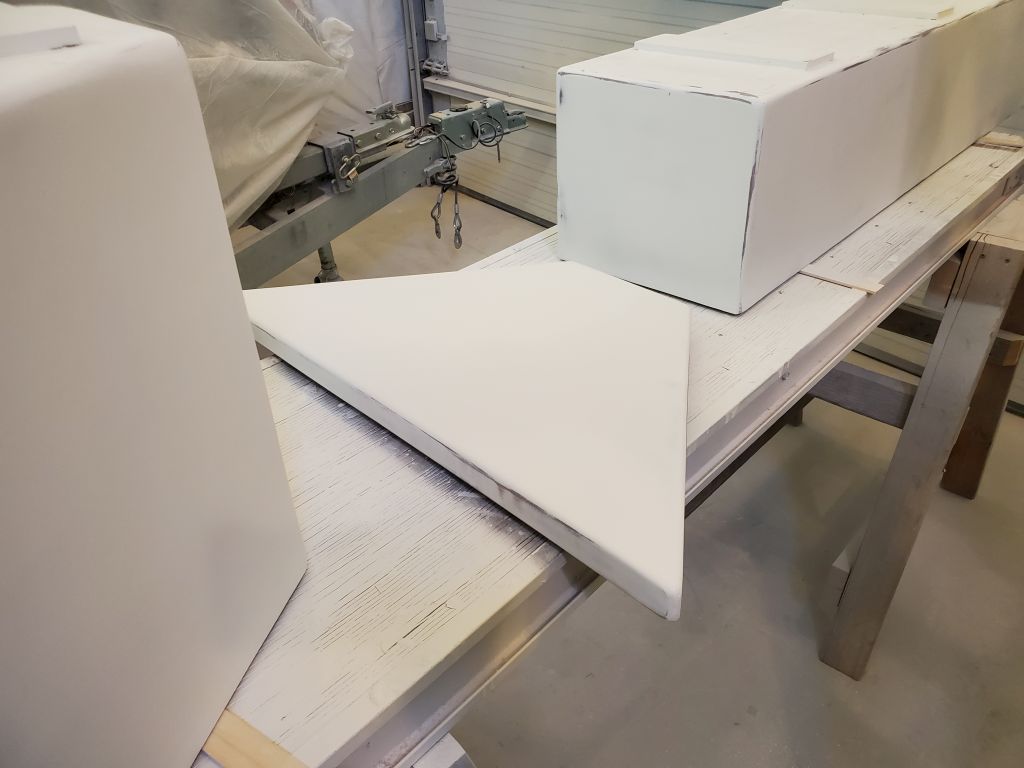
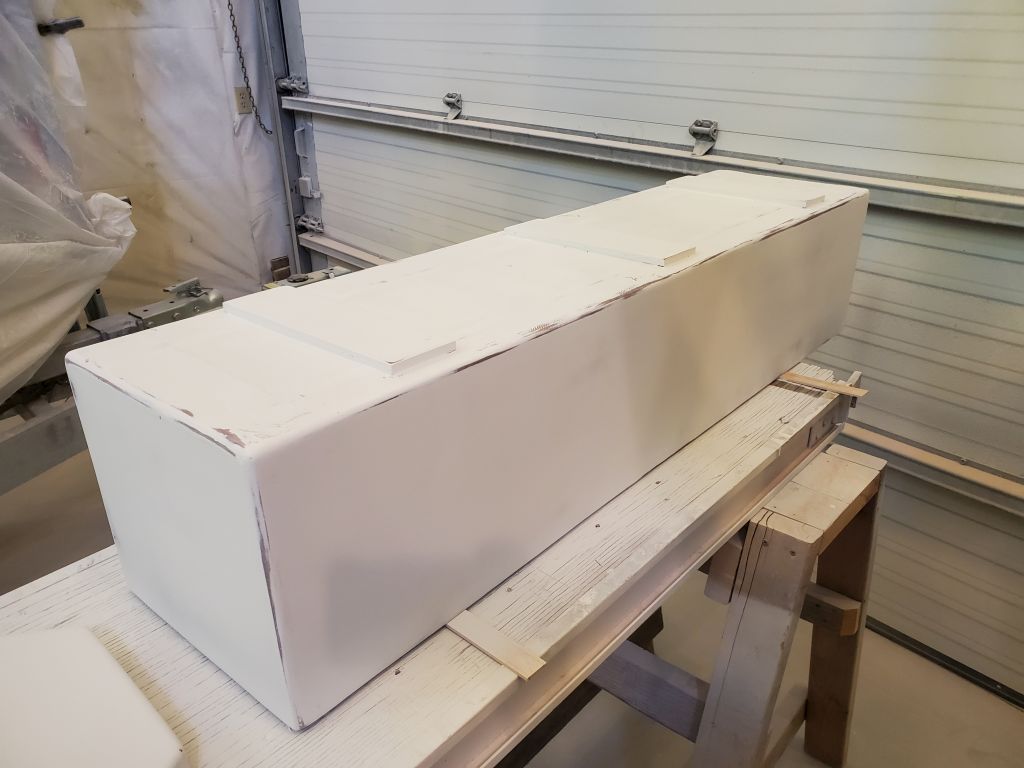
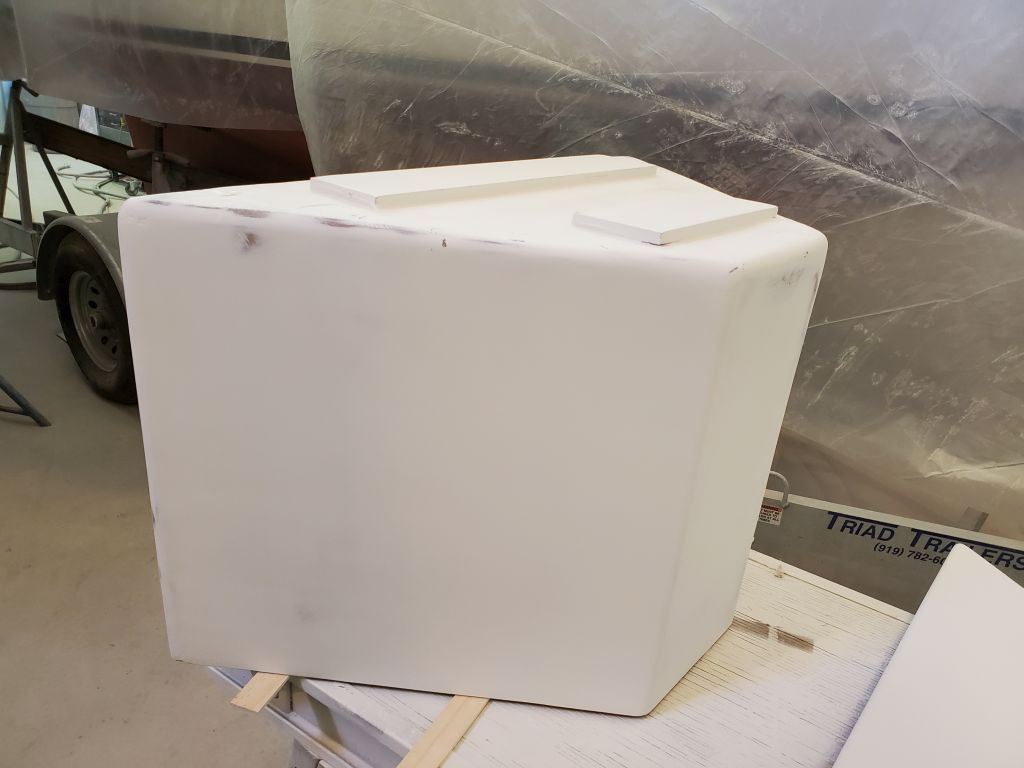
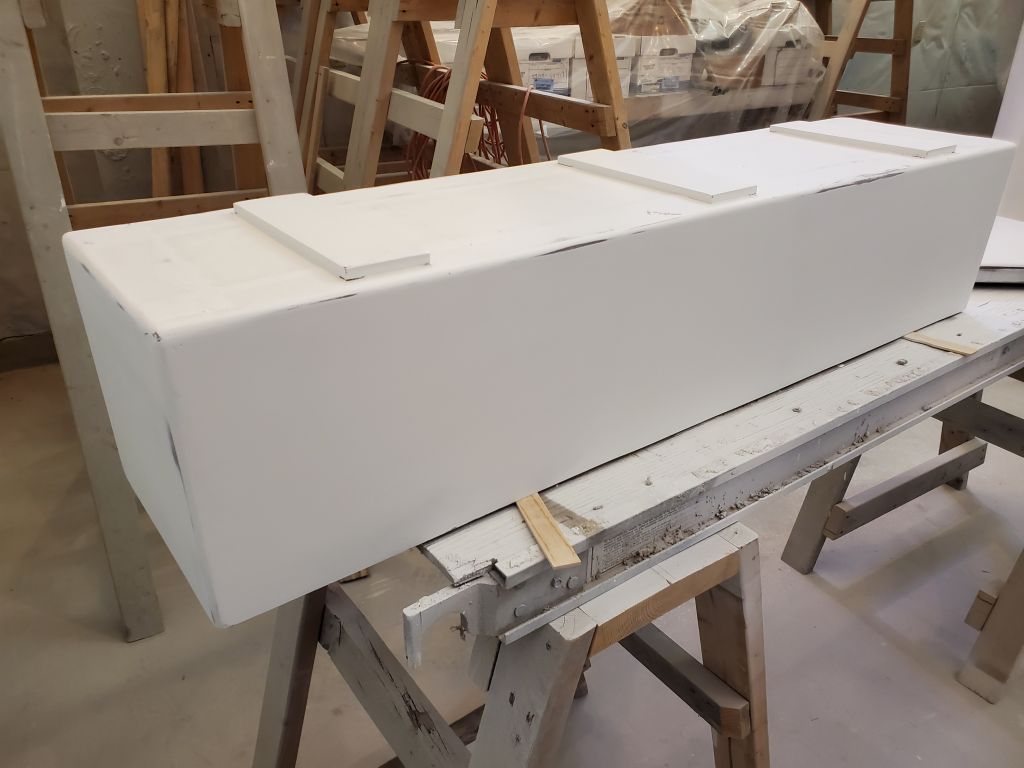
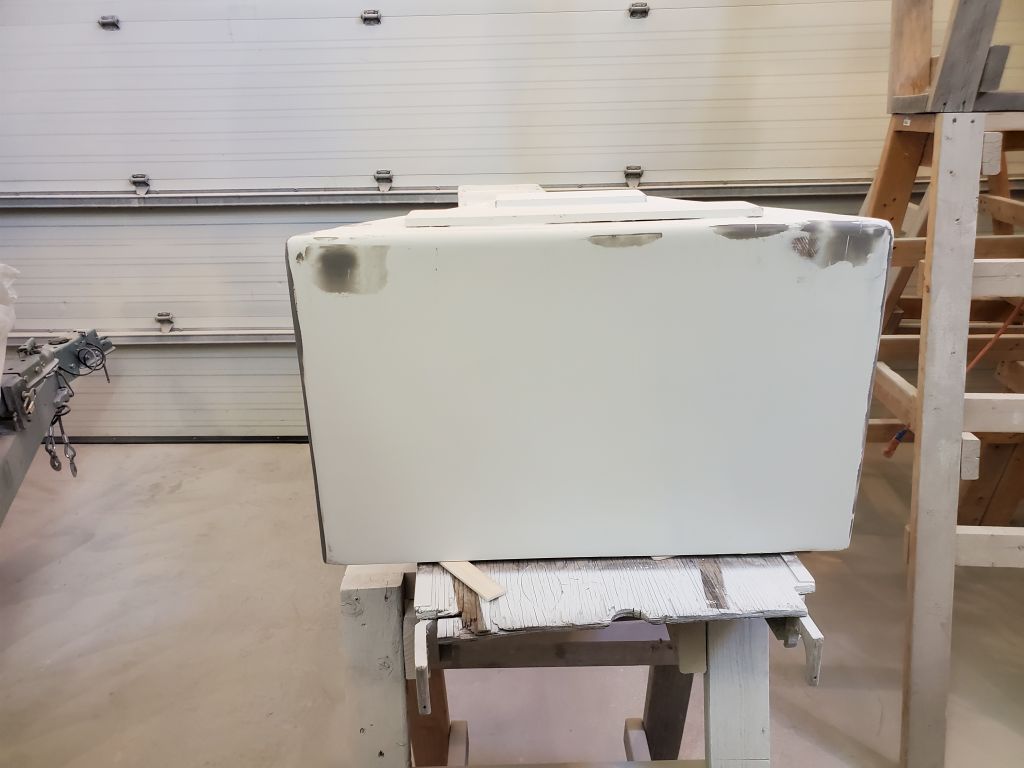
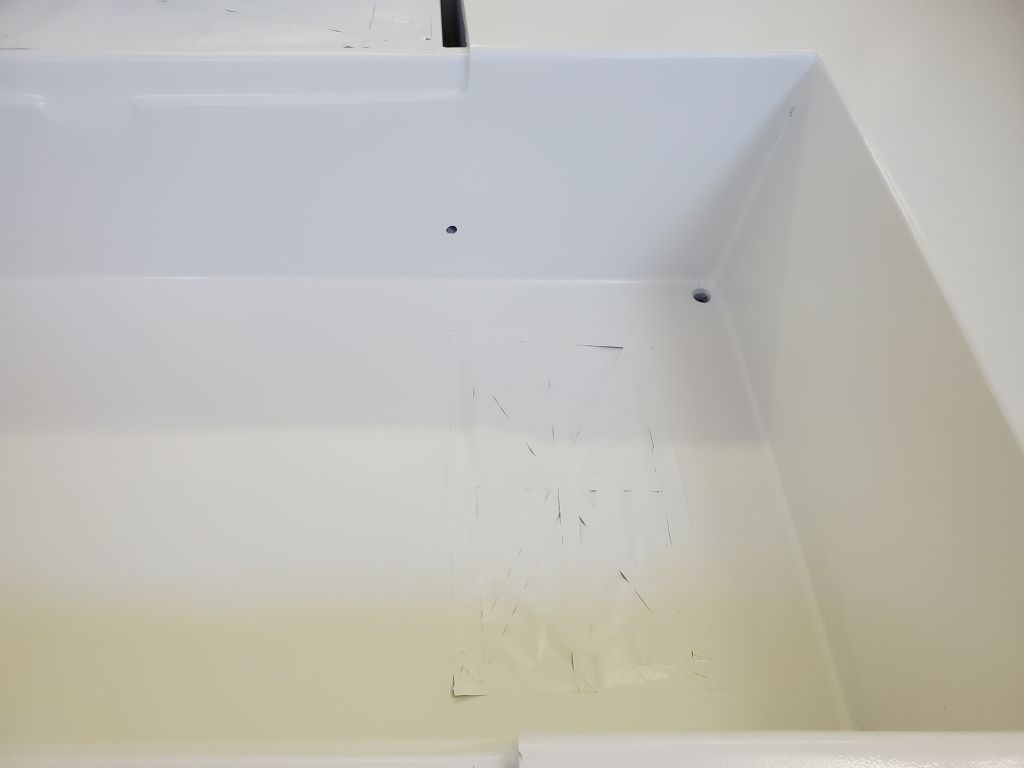
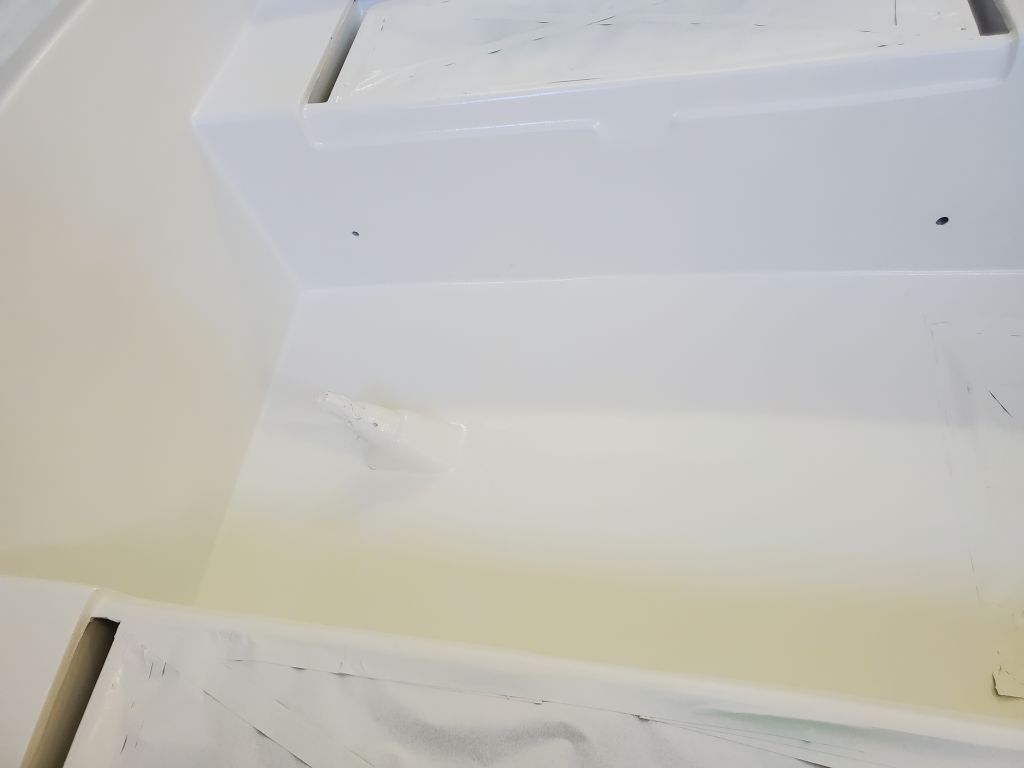
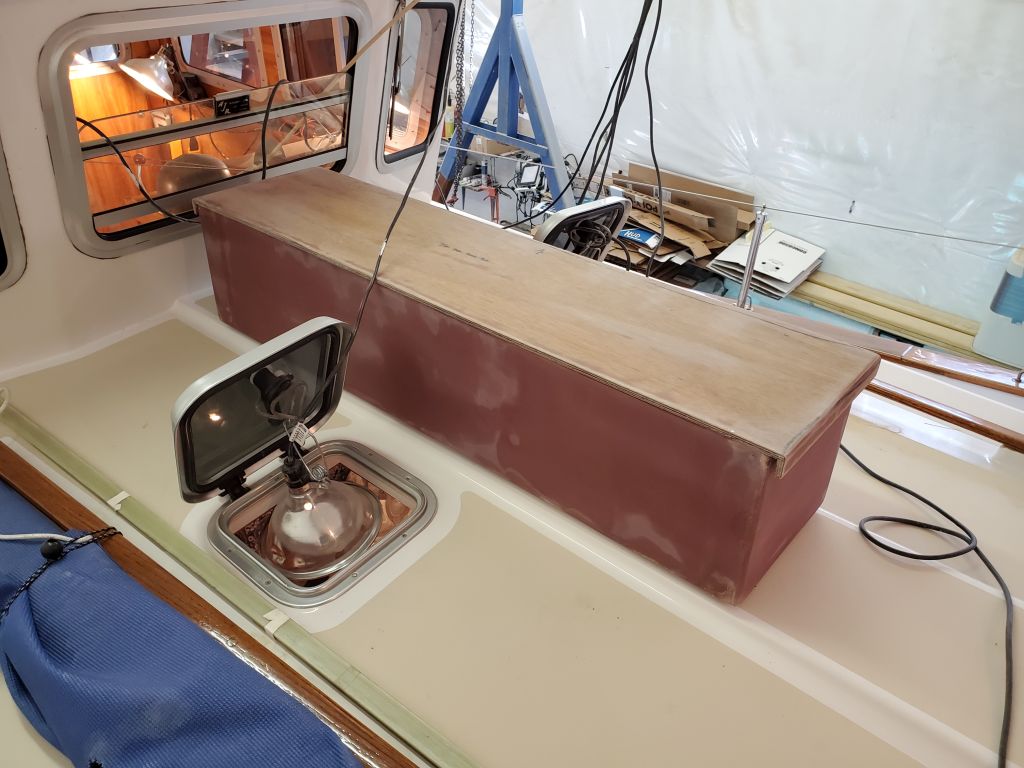
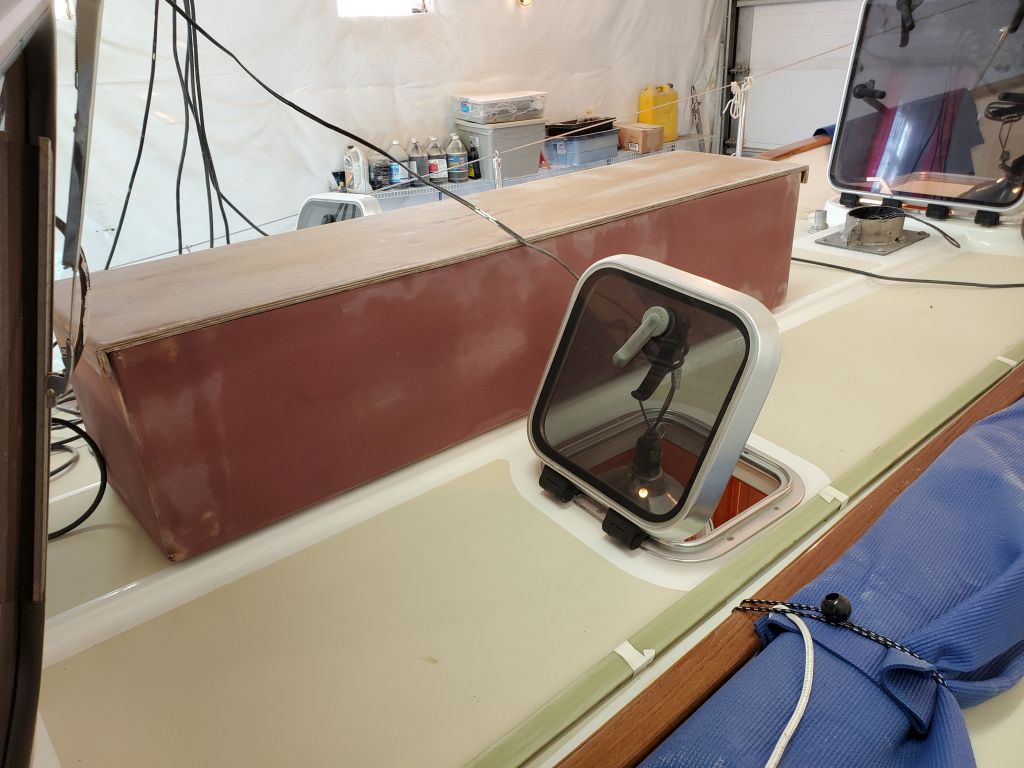
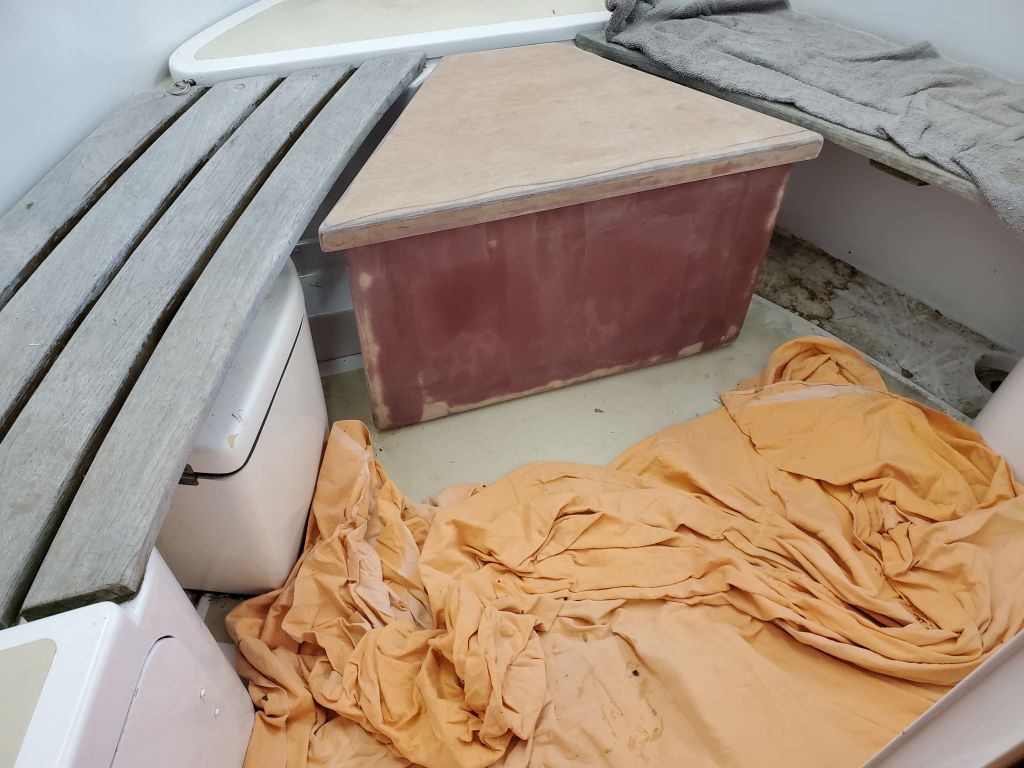
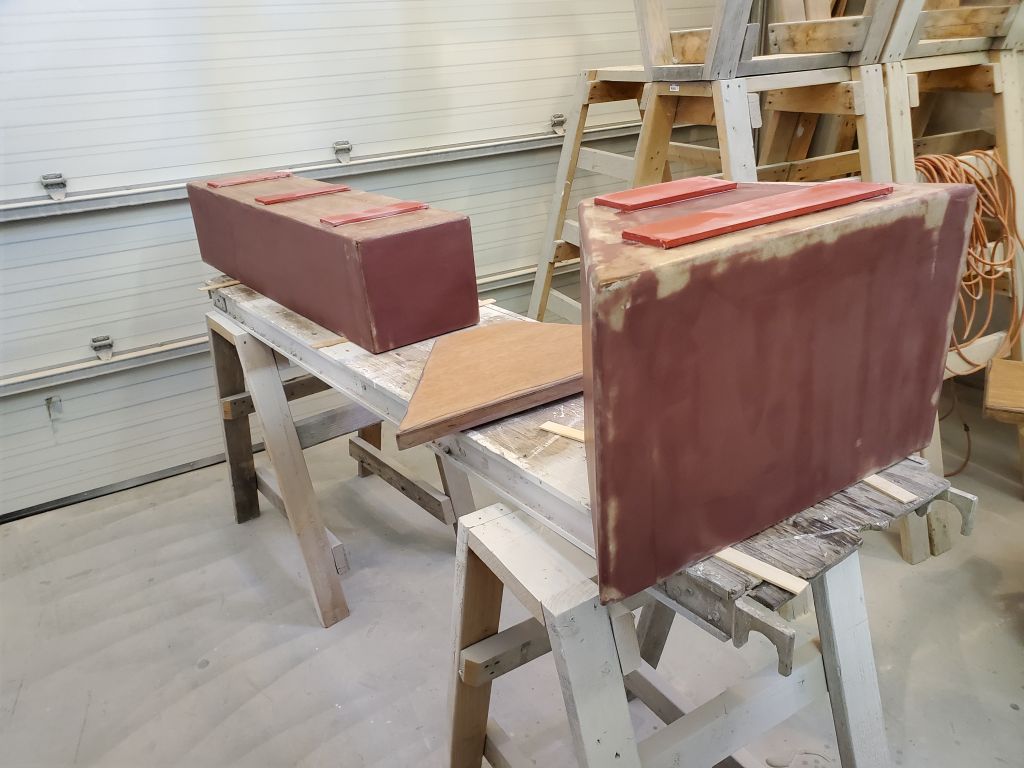
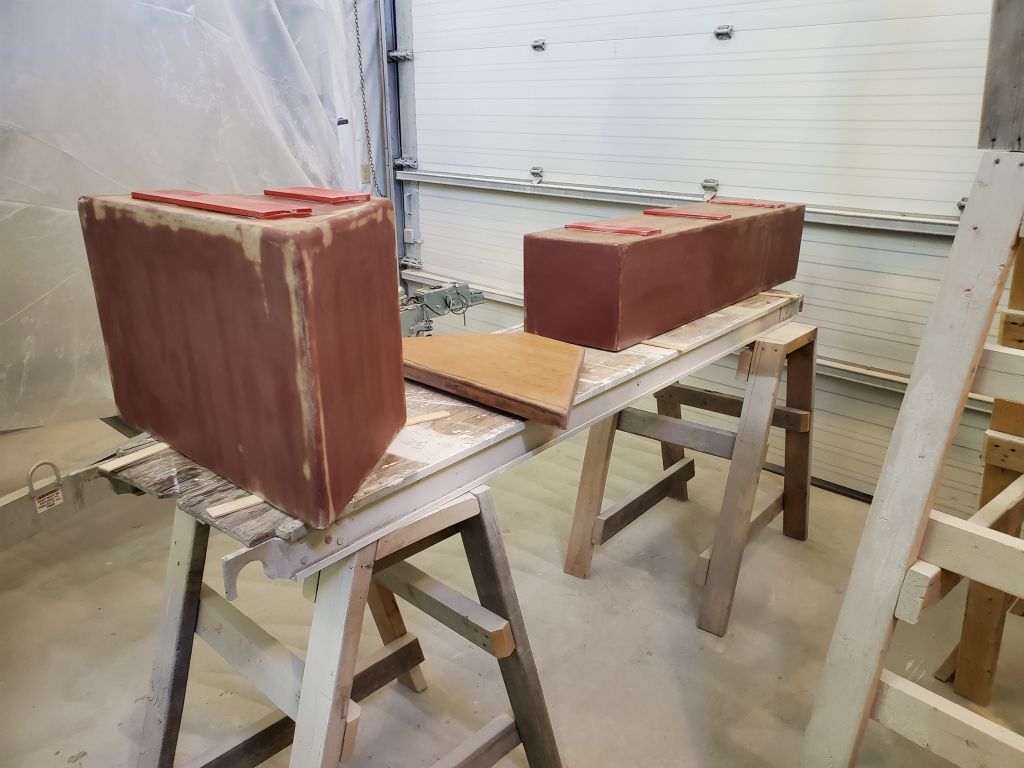
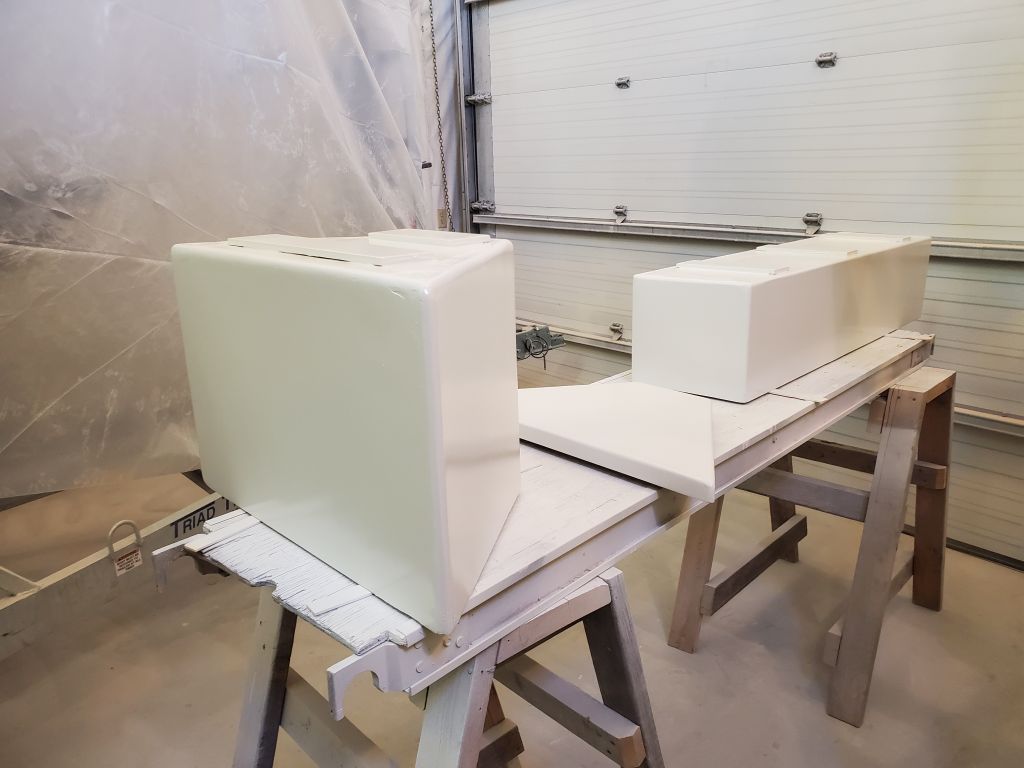
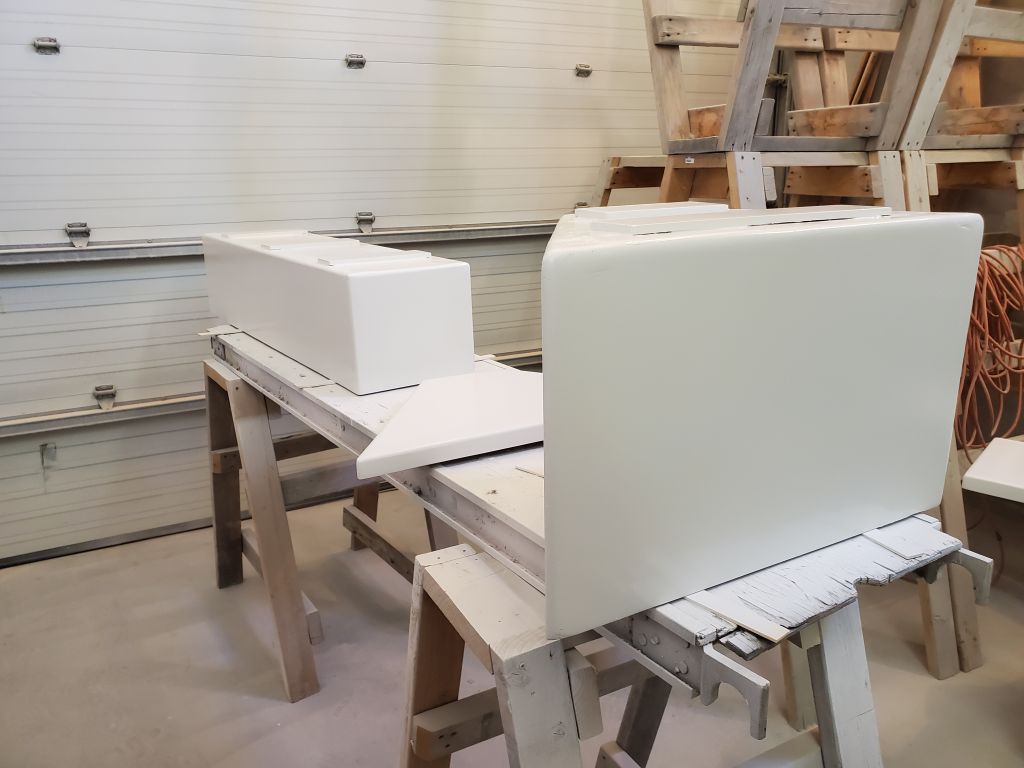
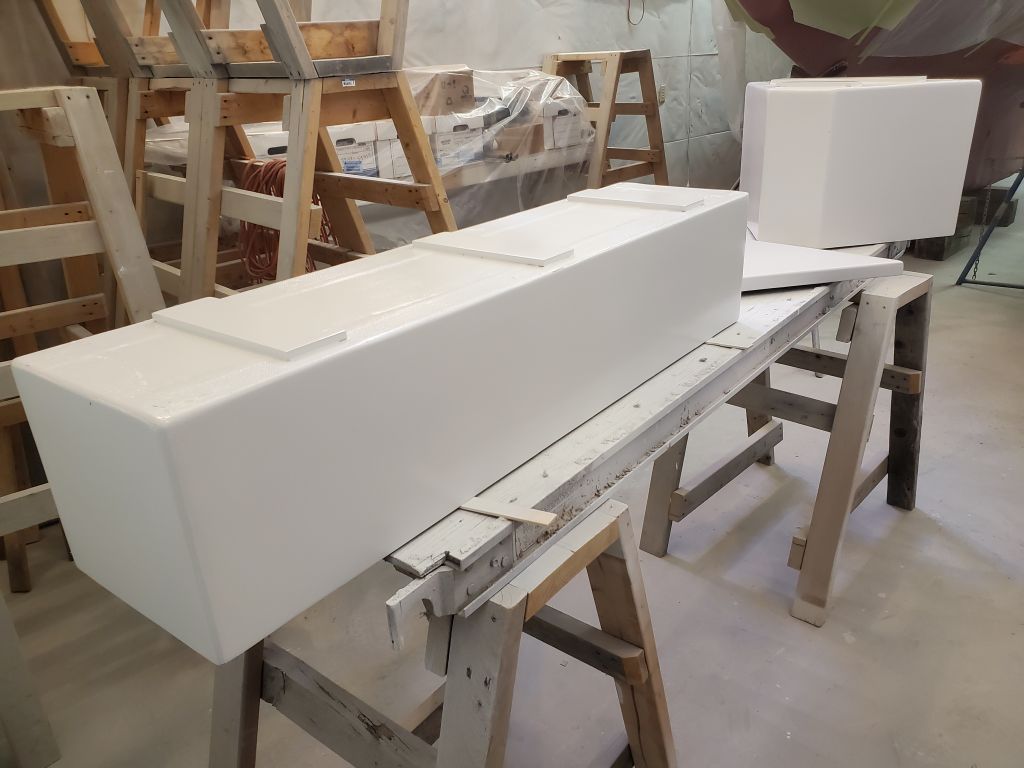
Meanwhile, I installed some 3/8″ tall fiberglass “feet” to the bottoms of the two deck boxes, securing them with thickened epoxy adhesive.  These risers would keep the boxes just clear of the decks and promote water and air flow beneath as needed.

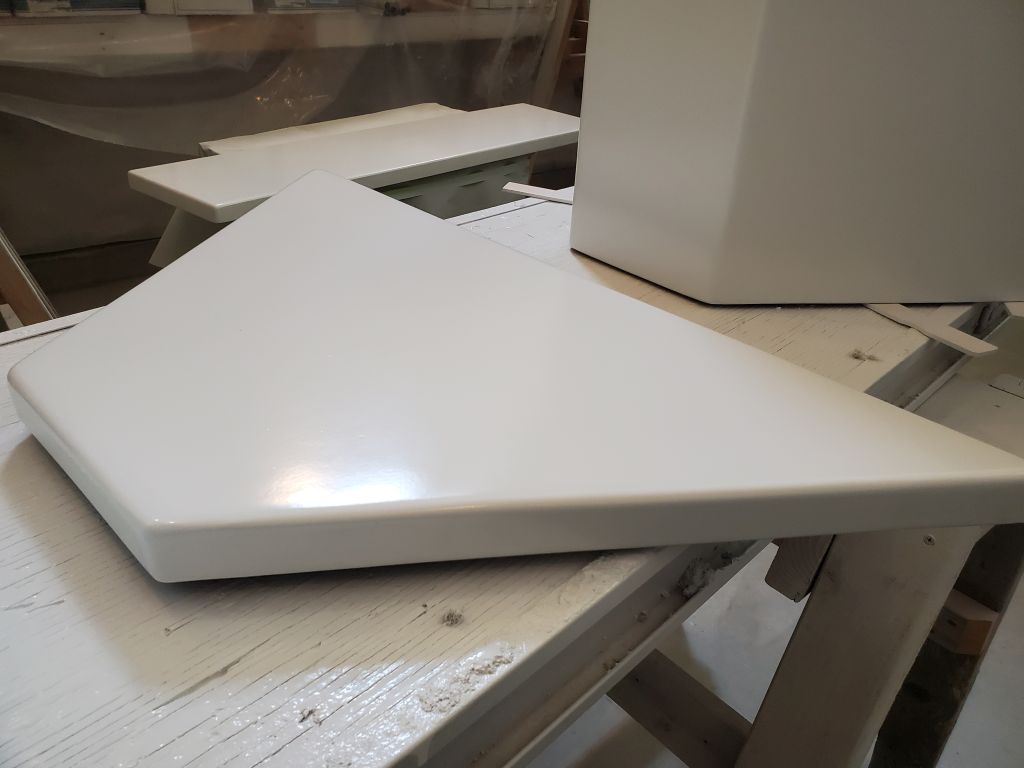
With foam rollers on hand a little later in the week, I applied, over the course of a day, two good rolled coats of epoxy over the two lids.  This seemed to be enough to fill the weave adequately and I decided to leave it there pending a light sanding to see how flat I could get the surfaces.

Total time billed on this job:  1.5 hours (over two days)

0600 Weather Observation:  35°, cloudy.  Forecast for the day:   Mostly sunny, 53°

Lyra 36

Thursday

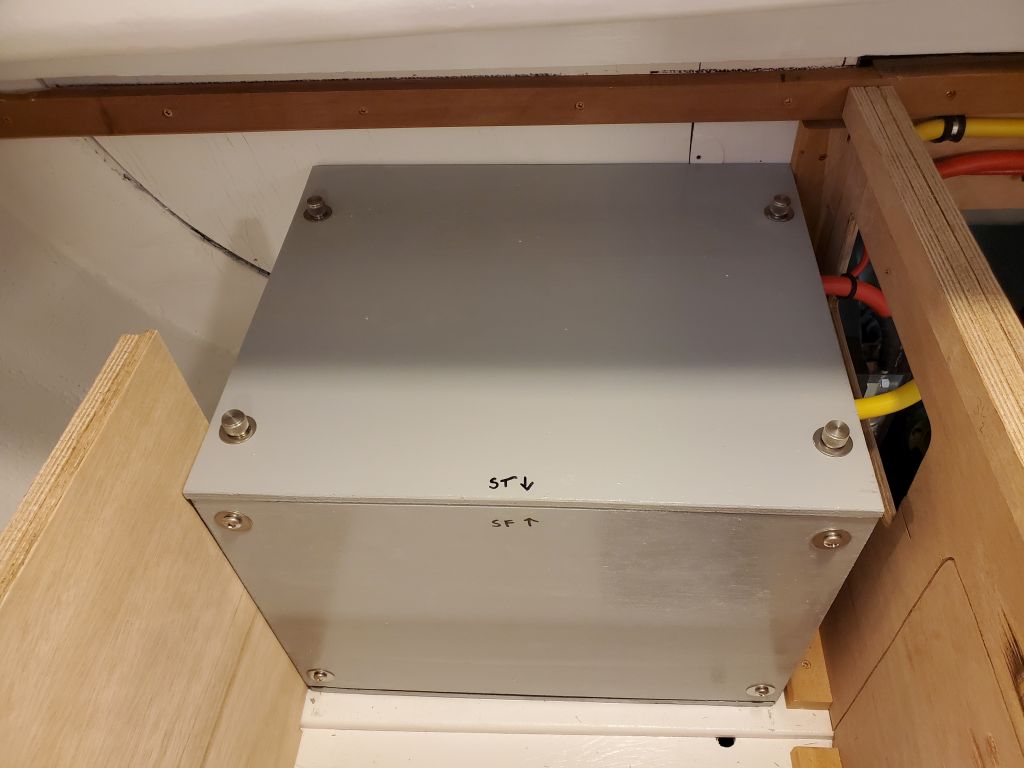
Now that the painting was complete, to finish up the battery boxes I installed a series of stainless steel threaded inserts to accept fasteners from the removable front and top panels.  These inserts, with sharp, aggressive outer threads, got installed in a predrilled hole in the wood with a special installation bit, and provided 1/4-20 machine screw threads on the inside.  I installed eight on each box:  four each for the top and front panels.

Test-fitting the boxes in the boat, I found immediately that my thought of using the boxes to support the longitudinal engine room panels was not going to work, as the various undulations of the original boat structure meant that the boxes did not line up perfectly with the plane of the panels.  So I installed more hardwood cleats to line the engine space, which would ultimately support the panels.

I permanently installed the battery boxes with eight screws per side:  Six through the box bottoms into the reinforced berths beneath; and two longer ones in the backs and into the fiberglassed portion of the aft bulkhead.

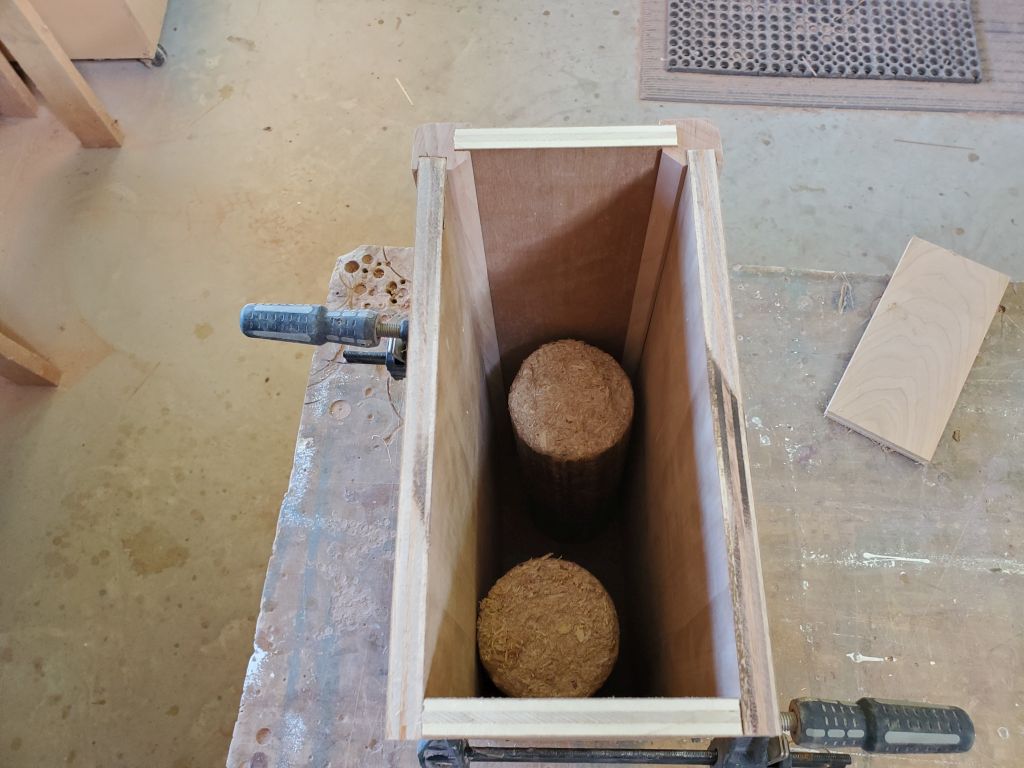
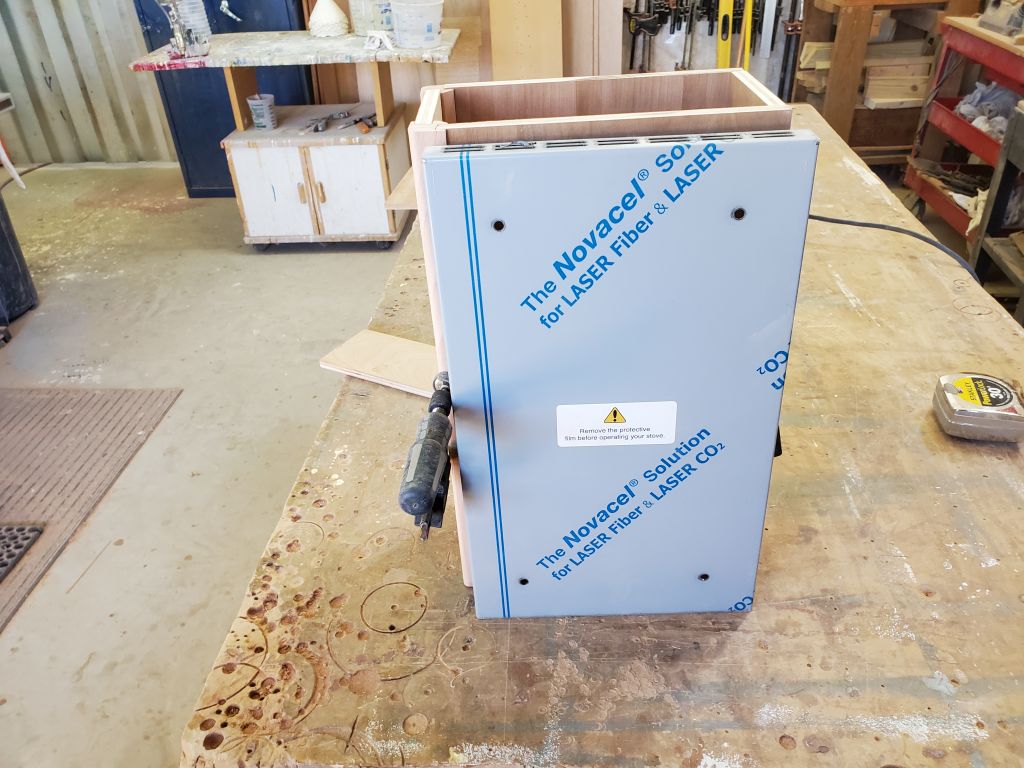
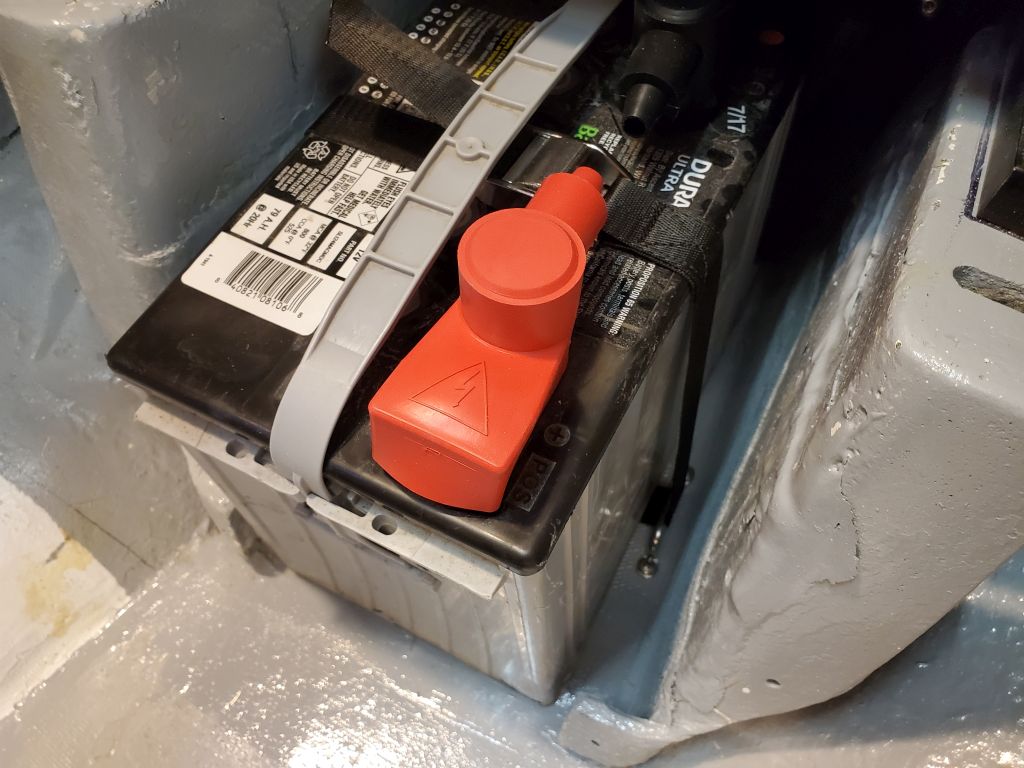
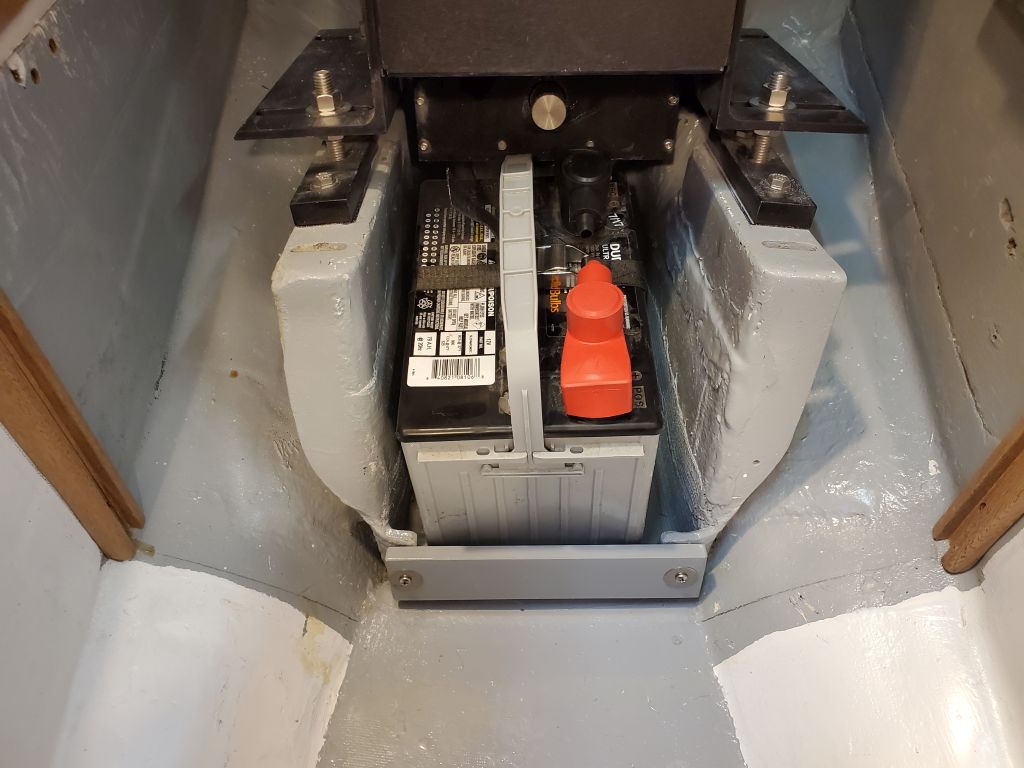
Now, working carefully to avoid excess strain on the capable, yet aging, machinery, I carried the four main batteries up and into the boat and installed them in the boxes.  If I were into video, this would be one of those stop-action montages showing the boxes filling themselves one battery at a time.  Astute viewers might notice that I actually reversed the direction of the first battery after I took the photo (as in the third photo), as upon reflection and consideration of the wiring it seemed that having the terminals for each battery end up at the fore and aft edges of the box would work out better.

I was pleased with the expansiveness of the opening in the port bulkhead, which clearly would give adequate room to move the batteries as well as good access to the remainder of the locker.

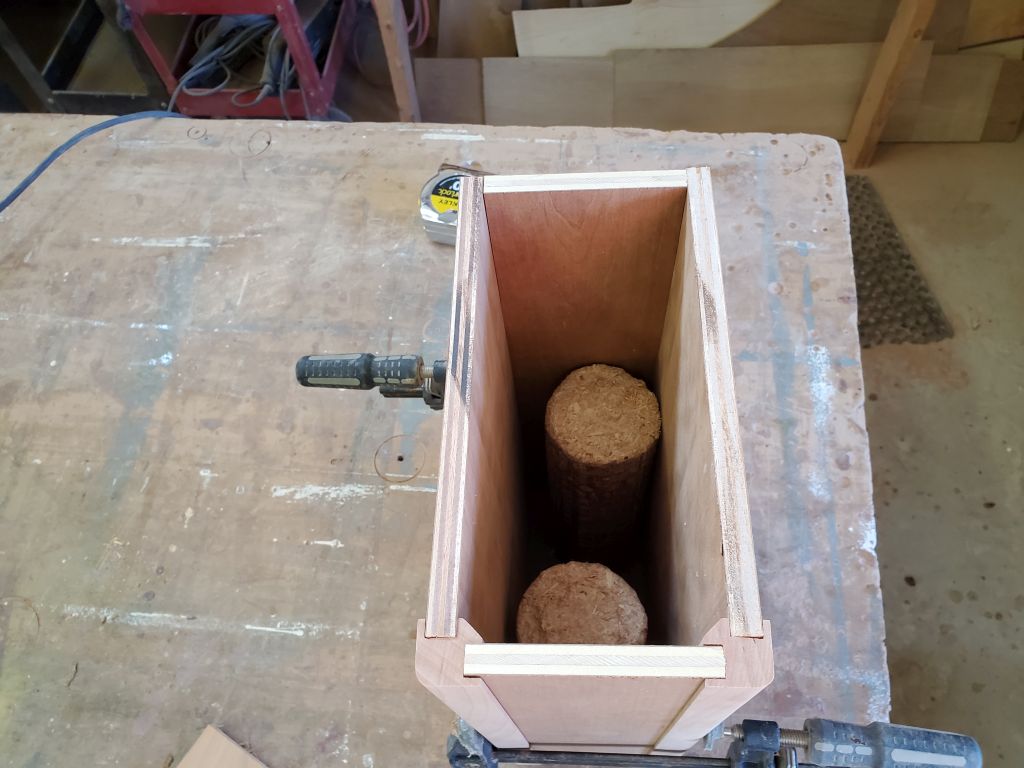
Because the inside dimensions of the boxes were slightly larger than the batteries, there was a bit of room within, and to help hold the batteries securely I cut and installed some plywood spacers to fill the gaps.  Afterwards, I installed the fronts more or less permanently, and, for protection, installed the tops as well, though wiring was still to come.  To that end, I made some rough measurements so I could order the necessary cable and have it on hand for the coming week.

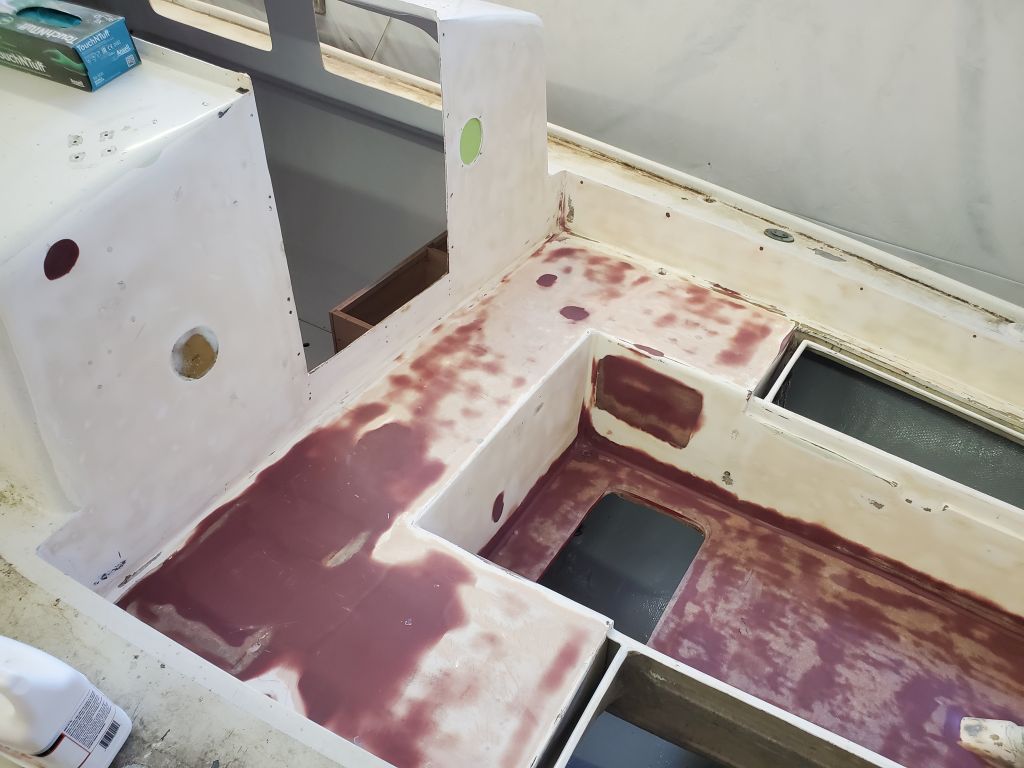
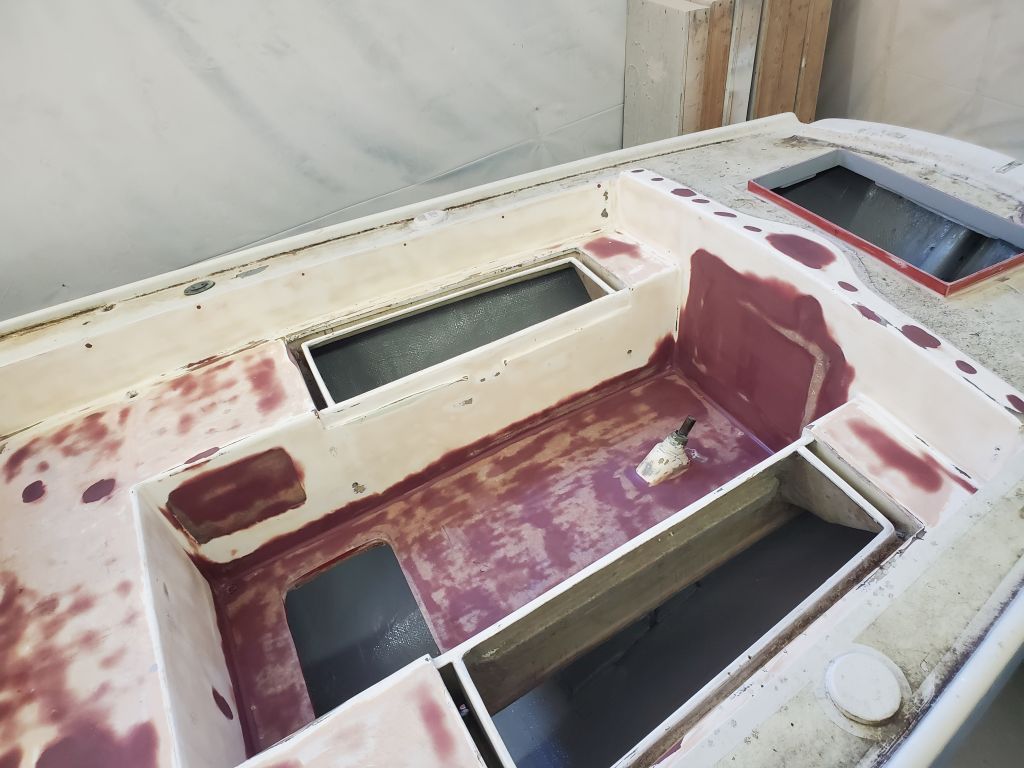
Now that the batteries were in place, I could move ahead with the final installation of the galley parts, at least what was prepared so far.  At each bulkhead location, I marked and ground away the paint and other coatings from the hull (and deck, to port) to provide bare laminate for bonding purposes.  I also removed the paint from narrow strips aft of each bulkhead in way of the future countertop location, to allow for some cleats to support the countertops along the hull.  This all made far more of a mess than I would have thought (and did think) possible, but I took the opportunity to do a good cleanup, and also aired out the shop since it was an incredibly nice day near 60°, a real pleasure (if taunting) for March.

With the surfaces thusly prepared, I completed the first installation step for the two main galley bulkheads, after masking off the bulkheads in preparation for tabbing.  To hold the bulkheads securely in place while being installed, I used small glue blocks as needed to hold each bulkhead plumb and in the right position, and after these preparations epoxy-coated the plywood edge and installed the bulkheads with screws along the settee cleats, and epoxy fillets where they met the hull and deck, leaving this to cure overnight.

Earlier, while installing the battery boxes, I’d marked the engine room bulkheads in way of the battery box wiring holes, and now down on the bench I cut out oversized sections to provide clear passage for the wiring through the narrow space between the bulkheads and batteries.  Meanwhile, I finalized the cutouts on the starboard side, including the battery access panel and, just forward, an opening for access to a storage locker beneath the sink.  These bulkheads awaited final installation next time.

Total time billed on this job today:  6.25 hours

0600 Weather Observation:  35°, cloudy.  Forecast for the day:   Partly sunny, 53°

Lyra 35

Wednesday

The battery boxes required another coat of paint, as the first coat (as is typical) soaked into the new plywood, so although I’d been hoping to install these today, needs must, so I applied a second coat of paint.  I had enough to do and didn’t absolutely require the boxes right away.

In order to finalize the size of the port bulkhead–specifically the vertical extension to the sidedeck–I had to determine how much depth the electrical locker, which would abut the bulkhead on the forward side, required for what the owner planned to install within.  The deepest installation was likely to be the VHF radio, which I had on hand and measured at about 5″ to the end of the housing plus room for wiring connections, so around 6″ minimum clearance required.  To this, I added 1/2″ for the plywood front (assuming the front of the panel would be flush with the aft bulkhead), and an extra 1/2″ for good measure to arrive at 7″ total.

On the bulkhead, I marked a plumb line at 7″ from the closest part of the hull, then removed the bulkhead to make the cut and also cut out the large battery access panel in the front, saving the cutout piece to use as a hatch at least for the short term.  The new, slimmer bulkhead looked right and afforded much better access to the aft corners of the space, including the nook between the cockpit and side of the hull.

Using the cardboard mockup, I cut out a blank for the starboard galley bulkhead, leaving it overlong and over tall for now to allow final in-place marking and trimming.  I installed a hardwood cleat on the settee at the marks I’d made and 90° to the settee front–the most immediate and logical reference for whatever might be “square” in this boat–and temporarily installed the bulkhead plumb using some hot-glued blocks on the hull for support.

The bulkhead fit well against the hull and required no further trimming there.  At the inboard end, I struck a plumb line from the settee face, and with a level transferred the height of the port bulkhead across the boat.  To help with this I cut a little notch in the waste portion of the starboard bulkhead so I could more easily run the level across.  I had to mark the top edge of the new bulkhead this way because the settees from side to side were not accurate enough to use as a measurement, and to ensure the new countertop was level across the whole boat (since it was to be more or less a single surface all the way). I needed to start with what, by default since it had been cut first, had become the permanent reference–the port bulkhead.  Measuring up 17-1/2″–the height on the port side–from the starboard settee had created an entirely new attempt at reality that had little in common with the established reference to port, highlighting the off-kilter fundamentals of the settees on either side.  So by transferring the port height, and establishing level off of that, I ensured the whole countertop would be in keeping with itself.

Figuring out how to measure, plumb, and level off a 60 year-old construction that was never accurate to begin with is one of the more enjoyable challenges of the job.

Now I could remove the starboard blank and make the final cuts down on the bench.

I used a level off the new bulkheads to establish a line across the aft end of the space, on the original aft bulkhead, which would define the aft edge of the countertop.

With the transverse bulkheads established, it was time to build the two short longitudinals that would define the engine room and enclose the two galley areas.  With basic measurements, I cut two blanks of appropriate size and, with a few fine tunings, fit them to their respective spaces and leveled off the top edges accordingly.  As needed, I installed support cleats on the settee and adjacent bulkhead to support the new panels; the after ends of the panels (at least I thought for now) would be supported by the battery boxes once installed, so I held off installing any cleats in those areas pending final battery box installation.  These panels extended just past the edges of the original aft bulkhead on each side of the engine room.

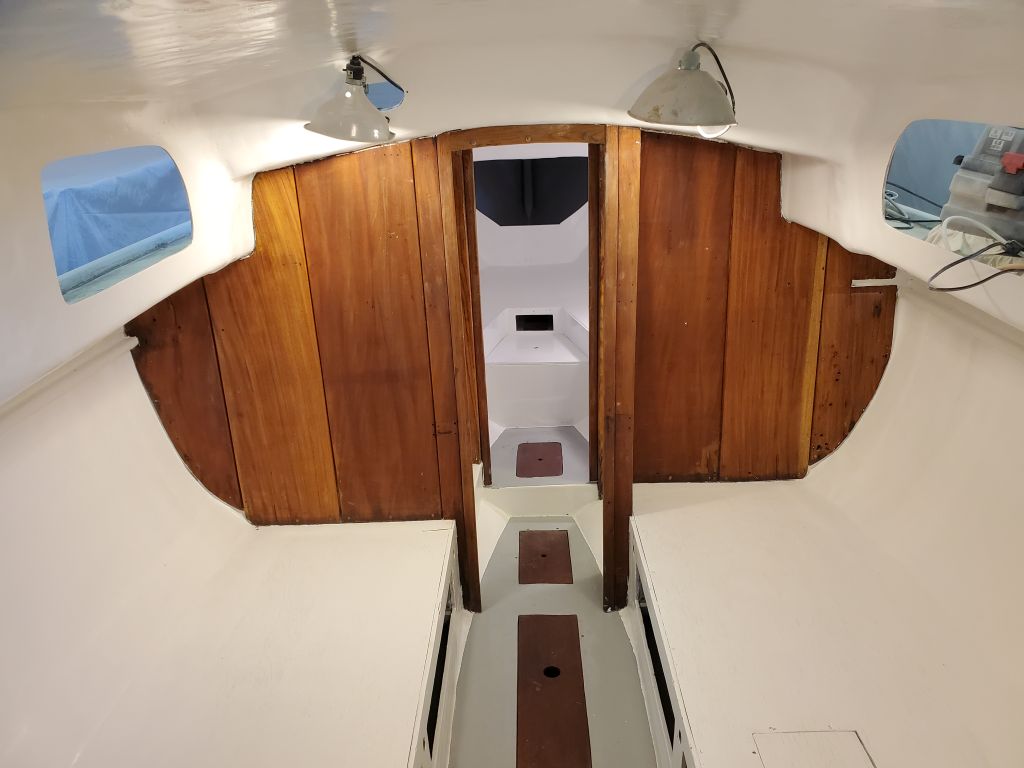
With the galley basics cut and fit, they could await final installation in the near future.  For now, though, I removed everything to make room for some additional work at the aft bulkhead, starting with a basic cardboard pattern of the space above the new countertop line.  The original “bulkhead” was an el-weirdo mishmash of different pieces, rough carpentry that would make a first-day high school apprentice wince in pain, and gaping openings, and  quite simply needed to be covered.  I made my cardboard patterns by cutting pieces roughly to size, then using a compass set at a fixed measurement to scribe the Roz Chast-inspired contours of the hull, deck, and elsewhere.  This simplistic and quick approach has always worked well and accurately for me.

Setting those aside for now, I milled and installed a hardwood cleat across the bulkhead, with its top edge even with the line I’d struck earlier.  I found a suitable offcut of old Honduras mahogany–which I’d not seen in many years since it is no longer widely available on the market (I miss it)–that had to date to the early 2000s in my shop.  The long narrow strip from which I cut my cleat was not of much use for anything good, but would make an excellent cleat.

I installed the cleat with screws into the bulkhead, with some shims behind where the cleat spanned the new plywood filler piece on the port aft side.

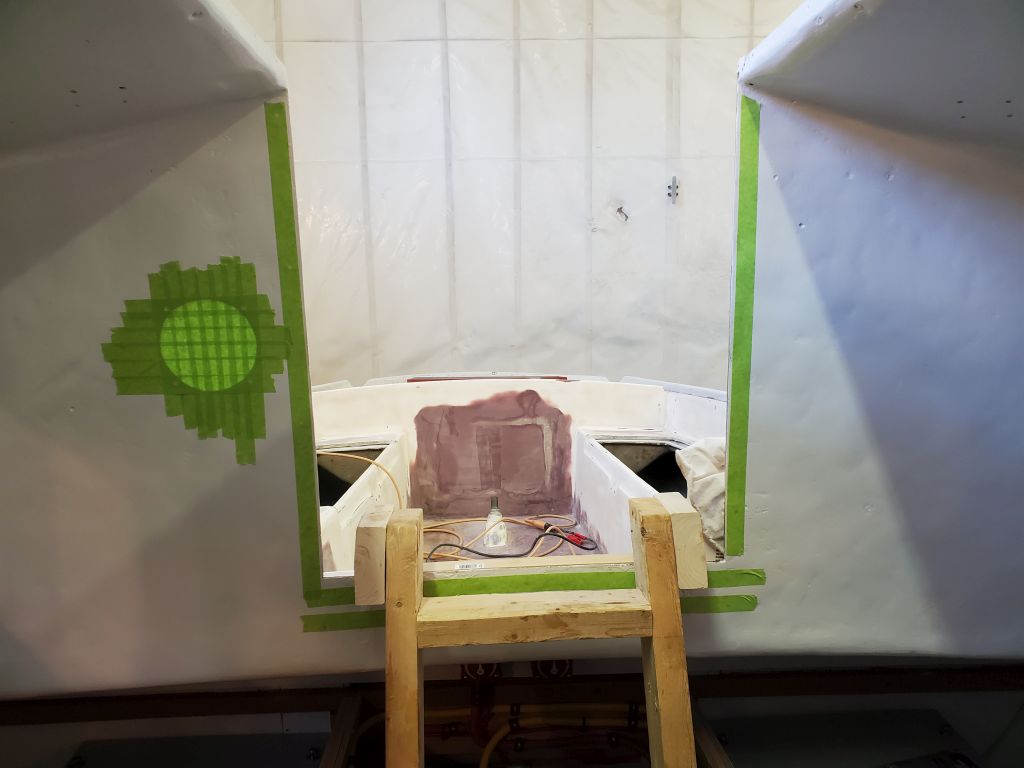
Finally, using some reference marks I’d made while the panel was in the boat, I laid out a few things on the starboard engine room/galley panel, including the minimum required opening to allow battery passage (marked by the outside edge of the green tape), and the sink bowl (outside margins of the blue tape).  I also marked the drain location for the sink for reference.  I thought there was a need and desire for access into this potential storage space, not to mention hose maintenance access, and while probably a second opening (and eventual door) made sense for this, since the battery opening was partly in and partly out of the engine room (and front panel, which was to come), but wanted to highlight the situation to help better showcase it for the owner so he could make the most informed decisions possible.

Total time billed on this job today:  6.5 hours

0600 Weather Observation:  25°, cloudy.  Forecast for the day:   Mostly sunny, 48°

Lyra 34

Tuesday

After some discussions and back-and-forths with the owner about the initial cardboard layout of the new galley, I started the morning with a few additional measurements and confirmations, including a reality check on the static waterline position to ensure that the countertop and sink were to be as expected.  I took a rough measurement from the rubrail outside the boat, then transferred this measurement to the galley, where I made some reference marks, along with a mark for the 5″ depth of the supplied sink.  No surprises here.

I also confirmed some measurements from the starboard bulkhead (inside and outside the nook) to the forward edge of the cooler, as well as some early layout to determine measurements and positioning possibilities for a future stove forward of the main galley countertop.  This wouldn’t happen now, but the exercise confirmed the possibilities and, eventually, confirmed that the current position of the forward galley bulkhead, as represented by the cardboard, was where it should be.

It came as no real surprise when one of the cleats holding up the bilge hatches broke free.  I’d been hearing ominous cracks underfoot for a while, and from the getgo had worried whether the new cleats would be able to work with just epoxy, since the old plywood cabin sole was in marginal condition.  Indeed, the wood failed, not the adhesive, when the forward cleat on the aftermost hatch gave way.

This was disappointing, but I took a few minutes to reinforce the cleats in this opening with some through bolts, supported by large washers and nuts beneath.  This felt a little like shuffling deck chairs on the Titanic, as the sole was just soft would need further real attention in the future, but hopefully it would serve the purpose for the immediate future, as we just couldn’t do it all now.  I’d probably go back later and add preventive bolts to some of the other cleats at the other locations, just to be sure, but that could wait for now.

On the port galley bulkhead, I added an extension to bring the outboard edge of the bulkhead up to sidedeck level, creating an oversized panel for now so we could determine its final width later.  This extension would serve as the starting point for the cabinetry forward of the galley on this side, which would include (most significantly for now) an electrical locker to house panels and wiring.  Something might happen aft of the extension as well, in that tough-to-reach corner of the galley and the little nook above, between the cockpit and the side of the boat.

With the port template complete, I disassembled the entire “Whitefield mahogany” galley so I could start building the real thing.  I chose to begin with the port bulkhead, and used the cardboard template to transfer the shape to a new sheet of 12mm meranti plywood.  I left the upper extension much wider than its final size to allow for options and trimming, and left the bulkhead a couple inches too tall, and let the inboard end hang out over the engine room, all to allow accurate final marking and later trimming.  The first fitting was close, but I rescribed the hull edge and made an additional cut to bring the whole thing to where it needed to be.  To support the lower edge, I aligned and installed a hardwood cleat on the settee, choosing as my reference the inboard edge of the settee.  This location, as earlier determined, was 6′-4″ aft of the forward bulkhead.

Satisfied with the basic fit, I plumbed the bulkhead and made various reference marks with a level, including a vertical line to trim the bulkhead at the engine room side; a horizontal (level) line to cut the bulkhead at its final height (17.5″ above the settee, allowing for the 1/2″ countertop to bring it to the final 18″ height), and another vertical line 12″ from the hull on the outboard side, where I could cut the upper extension plumb.

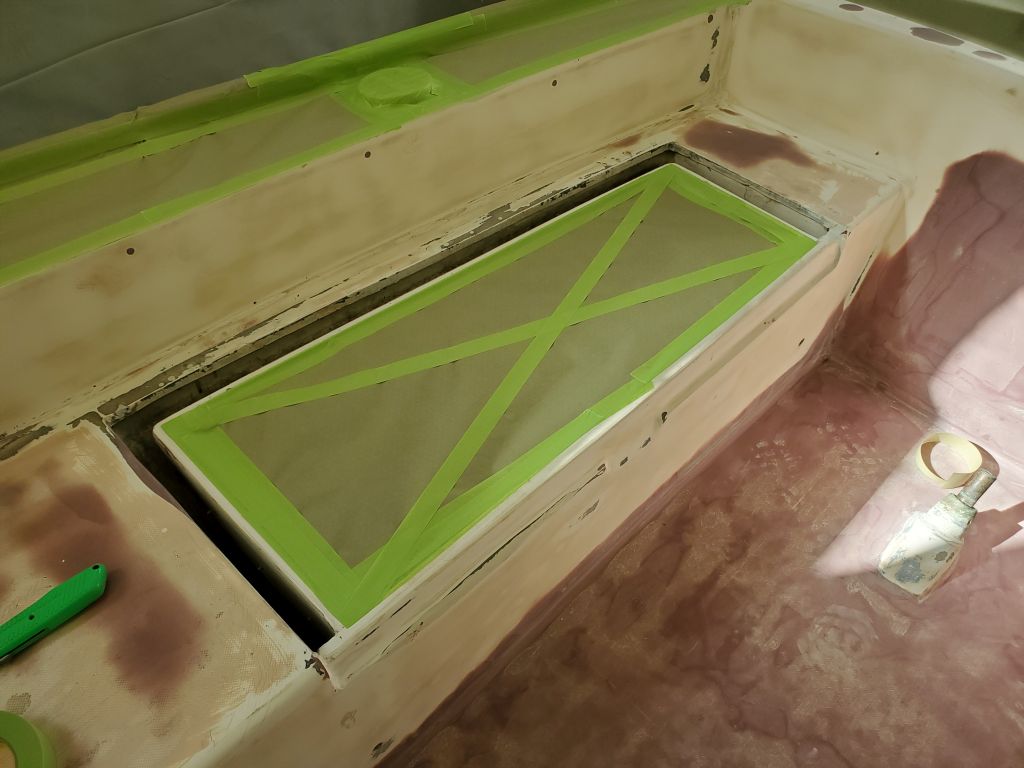
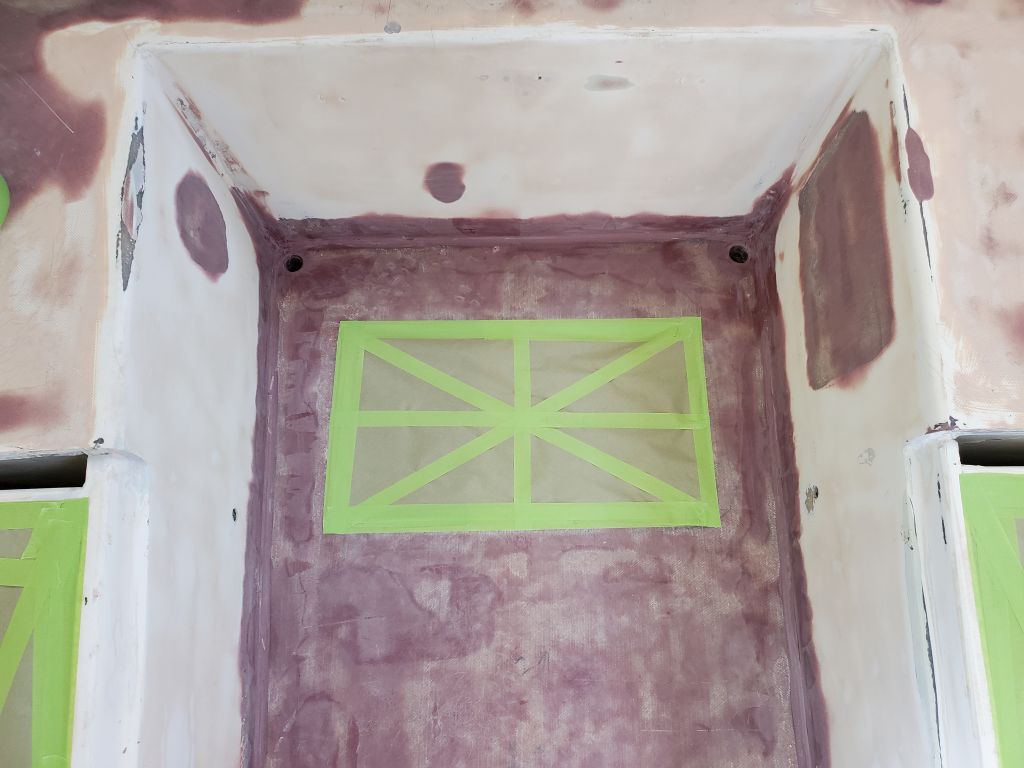
After making these cuts, I laid out a proposed hatch or door opening into the bulkhead.  This large opening, defined by the outside edge of the green tape, was designed to allow battery installation or removal to the battery box behind, as well as ancillary access to the storage areas remaining in the space.  I might have extended it further outboard, but to do so would probably impact the port settee back cabinetry, specifics of which were still unknown at this point.

I planned to cut back the vertical extension fairly substantially later, once we had determined how deep the electrical locker–to be located just forward of this–needed to be, as well as after resolving various related questions about what might be behind the bulkhead too.  These questions would soon be resolved once the owner and I chatted about them.

Speaking of the battery boxes, I was required to take care of one final task before I could call them complete and send them to the paint room (as it were):  The boxes needed openings in the sides to allow passage of wiring, and which would also serve as vent holes.  With large cables to be run in and out, I made the openings large (2″ holes), but narrowed the openings at the top to retain plenty of the solid wood banding there for the screws securing the top.  I rounded over the openings on both sides and sanded things smooth before cleaning up the boxes and applying gray paint to all surfaces, including the front and top panels.  (I’d already done a successful paint-curing test on some of the fresh epoxy.)

Total time billed on this job today:  6.25 hours

0600 Weather Observation:  30°, cloudy.  Forecast for the day:   Becoming mostly sunny, 46°

Lyra 33

Monday

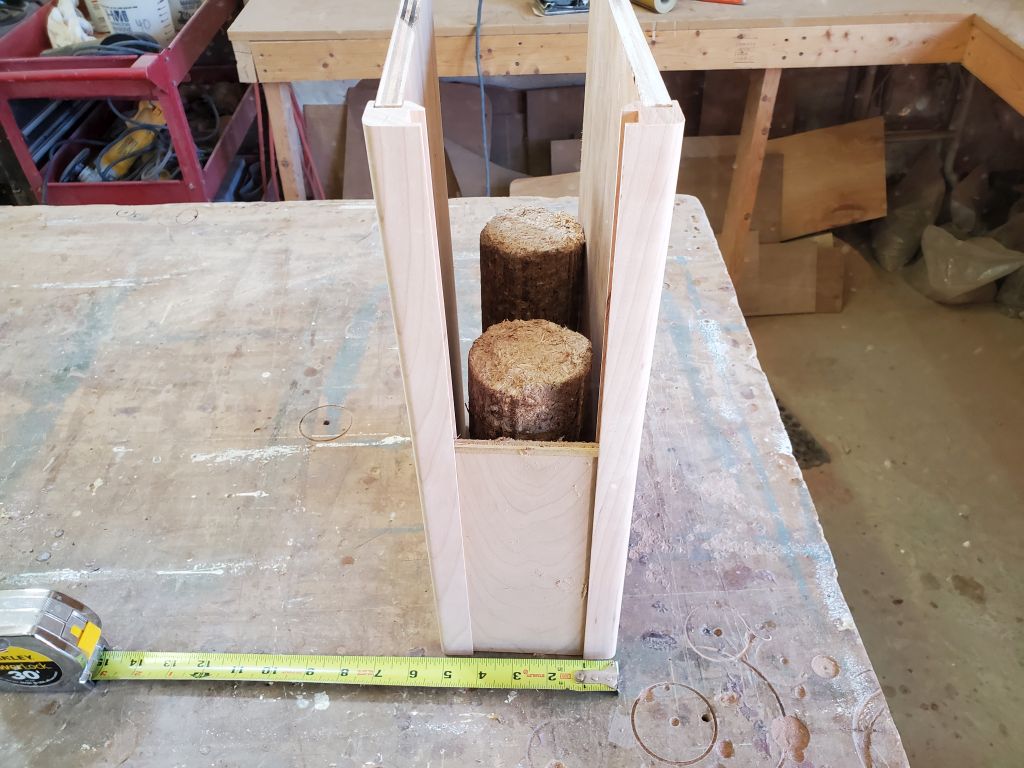
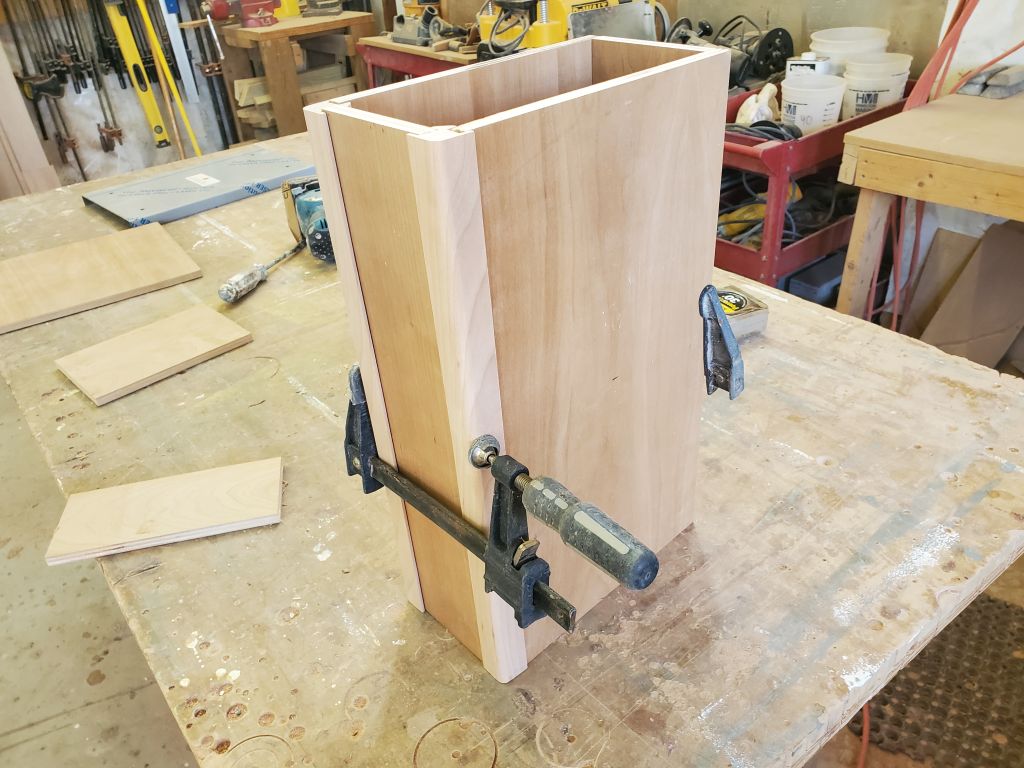
I lightly sanded the battery box tabbing as needed to prepare the boxes for their final construction steps and finishing.  Afterwards, I dry-assembled the removable front and top panels to show the completed box; I’d finish the details on these panels soon, but was awaiting some materials.

Bringing the boxes and a lid into the boat, I could begin some of the critical galley layout.  The large battery boxes, and maintaining access thereunto, was to be a substantial factor in determining various details of the galley cabinetry, along with myriad other considerations, limitations, and desires.

On the port side, the owner wanted to maintain a full-length berth of at least 6′-2″, so to begin I made myself a little reference guideline showing various lengths on the port settee.  The secondary plywood underlayment beneath the battery box would limit the aftmost placement of the bulkhead, and the minimum berth length the forwardmost location, so that gave me about six inches of space within which to work, depending on other factors that would make themselves known as the layout continued.  With clear access ahead of the battery box, it would be straightforward enough to incorporate usable access to the battery box for installation or removal of batteries; those details would come later.

On the starboard side, which would incorporate a more typical galley cabinet and on which side the owner planned to sacrifice overall berth length in favor of galley needs, one thing I needed to think about from the getgo was a way to manipulate batteries in or out of the battery box once all the cabinets were installed.  While I planned top access on both sides to allow inspection, wiring connections, and so forth, space limitations and physical impediments meant that it wasn’t possible on either side to actually lift in or out the batteries from the tops of the boxes:  The bridgedeck was too low, and the batteries too large and heavy to manipulate that way in any event.

So my plan to starboard was to build an access panel or door in the side of the galley cabinet, aft of the sink plumbing, that would fit the batteries’ width dimension of just under 7″, allowing the batteries to be slid in or out of the box and through this opening.   I measured forward the 7″ distance and made a reference mark on the settee for confirmation of the idea and for future reference.

With the lid atop the boxes, I made further reference marks on the aft bulkhead on each side, aimed at determining the final height of the countertop.  The boxes were about 13-1/4″ tall, plus the 1/2″ underlayment, so with a 15″ settee height above the cabin sole, and a theoretical countertop of 36″–a standard for kitchen counters–this allowed nearly 7″ clearance between the underside of the countertop (at this proposed height) and the top of the battery box.  However, this left the clearance between the countertop and the bridgedeck at only 3-1/2″–far too narrow to allow access beneath or working utility.  Looking for a minimum of 6″ clearance, I made some additional measurements from the bridgedeck down, marking these on the bulkhead as well.  At this point, in my mind I settled on a 33″ final countertop height, which was still high enough for comfort and to clear all the requirements beneath, but allowed over 6″ of overhead clearance to the bridgedeck–a key consideration for the owner, and for the general utility of the galley.

With tape, I marked the outlines of the battery boxes (footprint and height) for continuing reference, but moved the boxes out of the way for the duration, and to complete a bit of additional structural work.  I’d changed my original thinking on how to secure the tops of these boxes–I’d been thinking of some hold-down clamps, but ultimately decided simply to use screws, same as my plan for the removable fronts.  So to provide a landing surface for the screws (and threaded inserts I planned), now I had to add some solid wood in the voids at the tops of the box sides, a simple task with more scrap hardwood and epoxy.  To prevent the new inserts from sliding down at all, I hot-glued little strips to the top to hold them flush.

Now I could turn to the fore and aft arrangement of the two sides of the galley.  At a minimum, the starboard side needed to allow room for a sink (on hand) forward of the batteries, and its overall location was more or less dictated by the drain through hull as well.  I laid out the sink with its long dimension fore and aft, as well as sideways, and thought that the transverse arrangement worked better in all ways, so I planned accordingly.

While it wasn’t on the docket right now, the owner thought he’d eventually like a stove forward of the galley, as many Triton owners have done, so for the moment, and to maximize space on the berth ahead at least at these early stages, I located the proposed galley bulkhead quite close to the sink position; this could be easily moved forward in the final construction, but one has to start somewhere.  With this reference point, I used a square to mark the bulkhead position, and cut cardboard (sometimes known as “Whitefield mahogany”, a term coined by a client in years past) to fit–both as a mockup, and perhaps as a pattern going forward.  I taped the bulkhead in place more or less level and plumb all around, and, to match the proposed countertop height, cut the top edge at 18″ above settee level, which was just about 33″ off the cabin sole.

On the port side, my goal for the initial layout was to have flush cabinetry running from the engine room and across the port berth, which meant the engine room dictated the final placement for now.  In positioning this, I allowed clearance for the cleat to secure the house battery in the engine room, and a bit of leeway, then transferred this measurement to the port berth so I could cut and install a mockup bulkhead on that side as well.

With the bulkheads in place, it gave a good sense of the space behind on each side.  The blue tape and arrows represent the battery boxes.  Reviewing the layout later, I noted that on the port side, I needed to factor in enough space to line up the batteries in front of the box so they could be slid in or out; the shape of the boxes probably wouldn’t allow much of an angled approach.  How I laid out the access opening in the bulkhead would ultimately play a role in this, but it was something I had to keep in mind through the rest of the layout and especially in the final construction.

Now I cut more Whitefield mahogany to form the longitudinal panels of the galley on each side, and a vertical panel for the engine room.  The working companionway ladder, which was fairly representative of what would ultimately end up here in the boat (in terms of its angle) cleared the engine room panel by a close, but adequate, margin, but the engine room couldn’t extend further forward without creating a conflict.  With a desire for a flush face across the engine room and port side bulkhead, this pretty much dictated the bulk of the layout, at least for now.  But even allowing for minor tweaks, so far I felt the whole thing was coming together well–more or less as envisioned, meeting most of the multiple design requirements, and looking good, and functional.

With the base cabinets in place, I mocked up a countertop from more cardboard, finishing off the mockup and giving a good sense of things to come.  I made additional reference measurements and marked the sink outline on the starboard countertop.

For refrigeration, the owner chose one of the modern super-insulated portable coolers, and from cardboard I made a rough template to the maximum size of the cooler, representing the top; with tapered sides all around, the base was slightly smaller.  As it happened, the cooler was 18″ high, so its top would be level with the countertops.  With 3″ insulation all around, the inside dimensions of the cooler were in keeping with what seemed appropriate for the boat’s intended use.  The owner planned for now to use it on the starboard side, forward of the galley, where there was adequate room.

With the basics in place, it was time to let the concepts settle out and have some discussions to determine what changes, if any, should be made before building the final galley.  As with all design, various questions, considerations, and potential issues had already made themselves clear, but the fundamental layout seemed to be well workable.

Total time billed on this job today:  6 hours

0600 Weather Observation:  13°, clear.  Forecast for the day:   Sunny, 38°

Lively Heels Phase 3-28

Saturday-Sunday

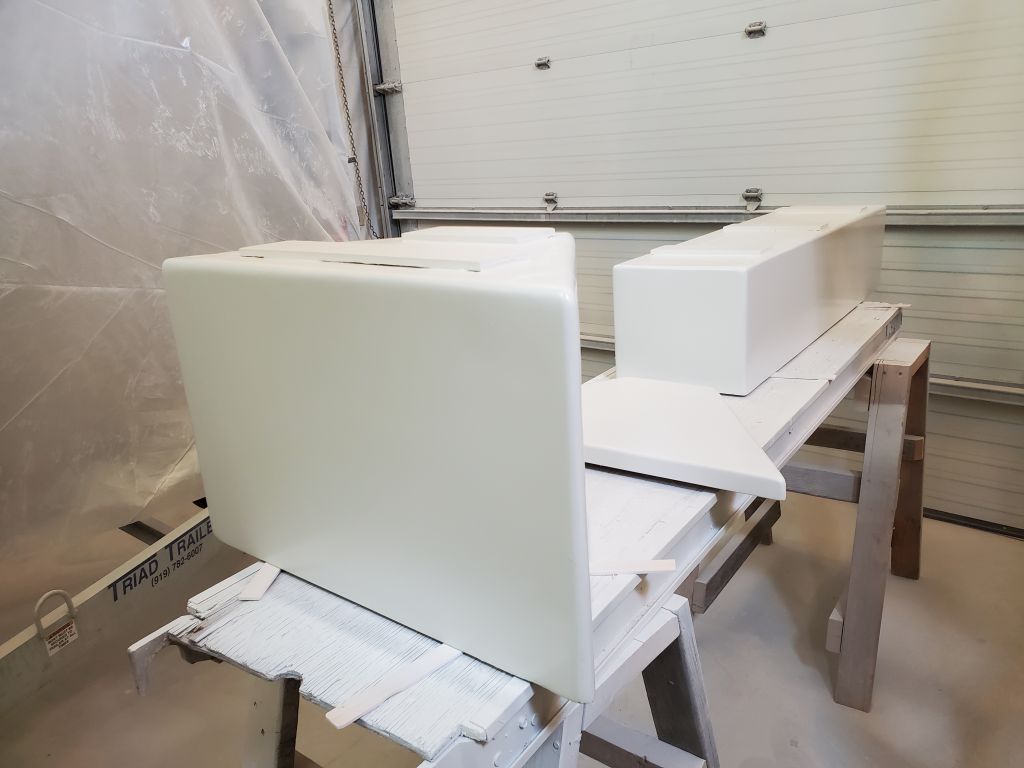
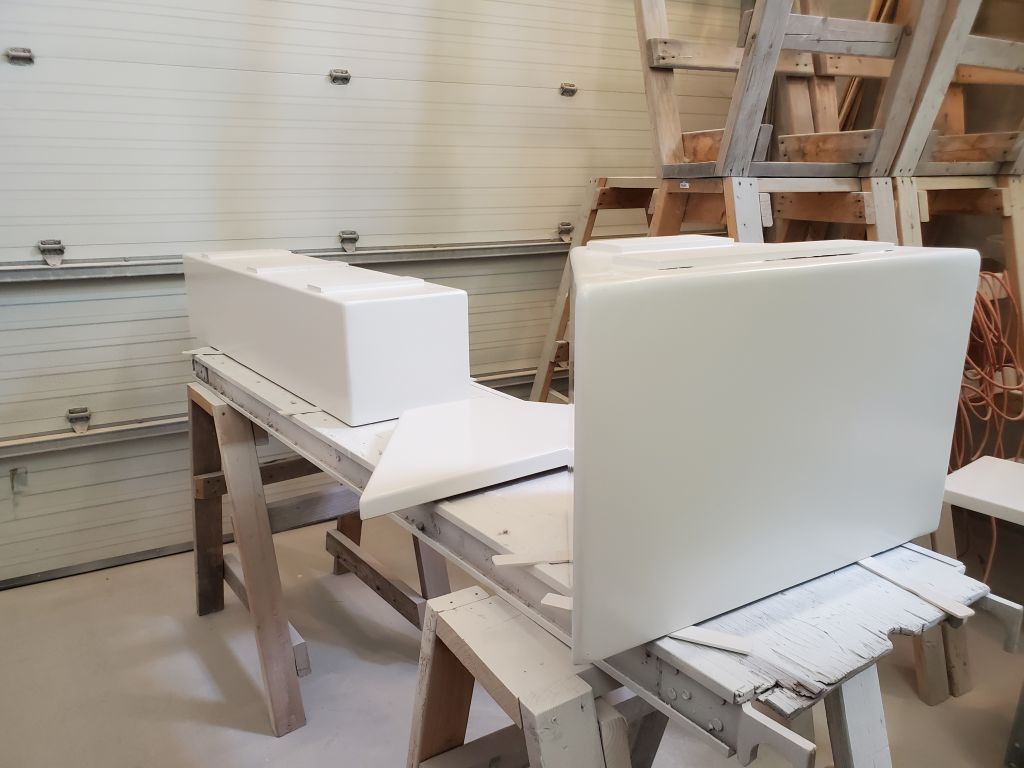
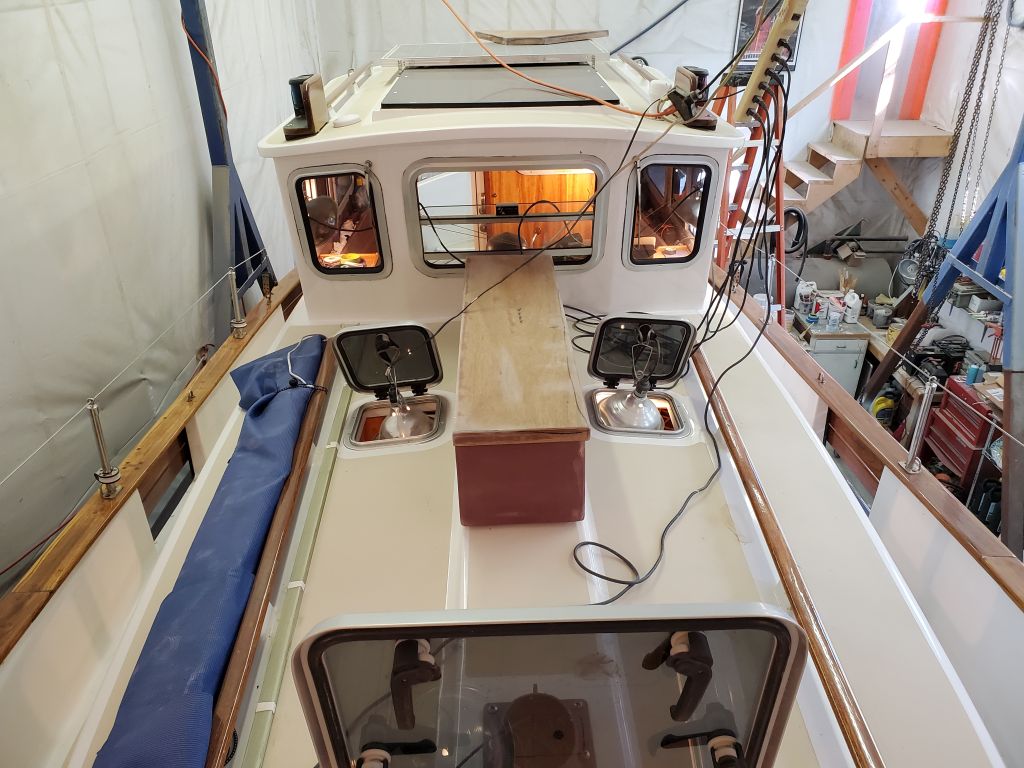
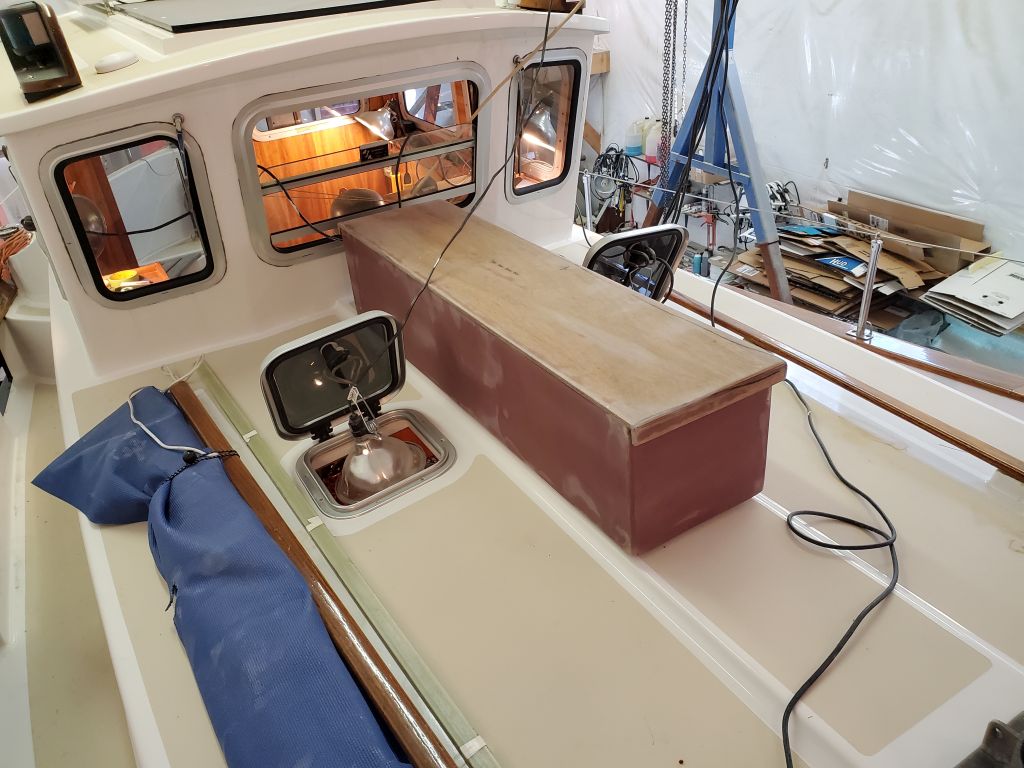
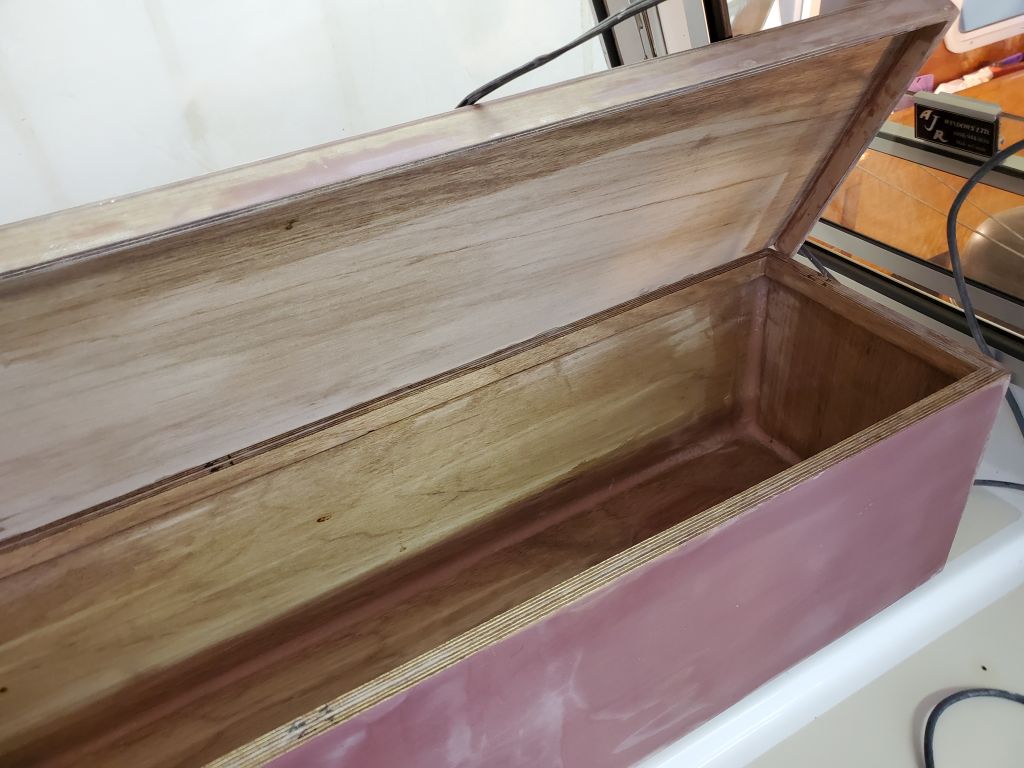
When I built the deck box (and the cockpit box, but we’ll get to that a little later), I also cut out an oversized piece of plywood from which I planned to make the top and set it aside for later.  Now was later, so it was time to build the lid.

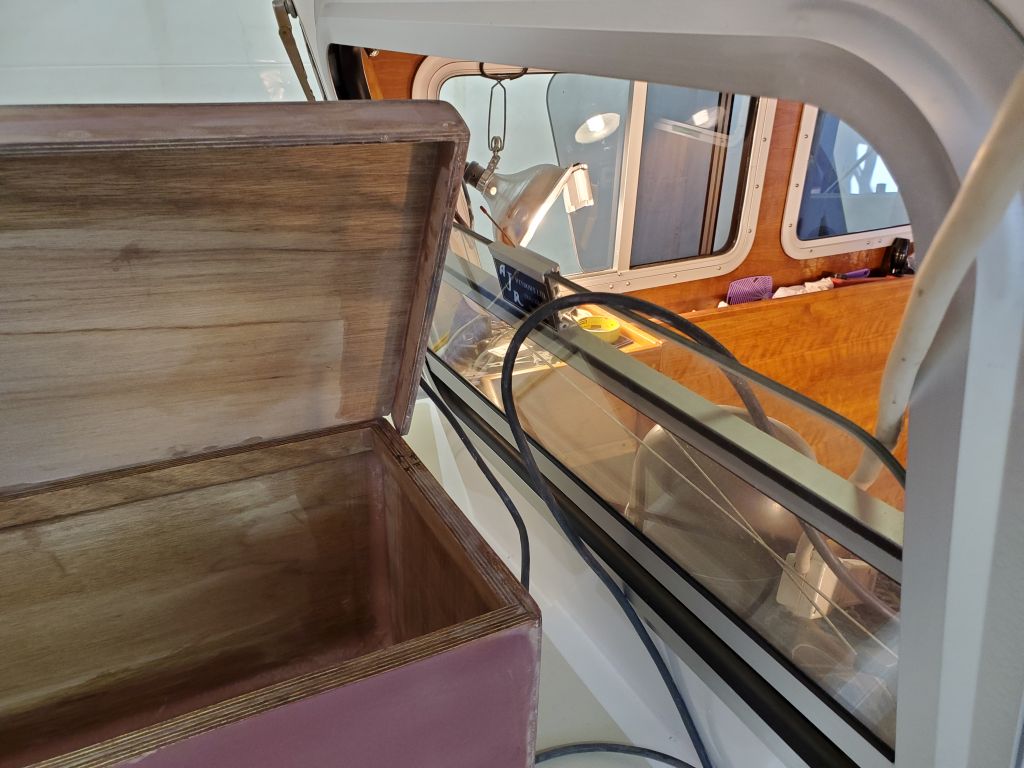
This largest of the planned deck boxes was to have a hinged, gasketed lid, and to further waterproof the top I planned for it to be a shoebox style, where short extensions on the lid would overhang the box itself on three of the four sides; the fourth side would have the piano hinge and gasket.  I’d found a piano hinge with extra clearance between the leaves that would accommodate a gasket running through.

With the box inverted on the lid blank, I laid out scrap strips of 9mm plywood for the overhang, spacing them a little away from the box itself for clearance (I used wooden stir sticks, which are about a strong 1/8″ thick).  After marking the final dimensions of the lid, I trimmed as needed.

After milling some 1″ wide strips of plywood for the overhang, I cut them to fit around three sides of the box, flush with the edge of the lid.  Then, I glued and clamped them in place with epoxy.

To provide a wider bearing surface for the gasket, as well as better area for the piano hinge fasteners, I installed an additional layer of 9mm plywood around the top inside of the box opening, cutting and fitting the strips to fit, then gluing them with more epoxy.  I rounded the bottom edges of the strips for a better in-the-box experience for the owner’s hands.

With the main deck box complete for now, I moved on to the angular cockpit box, and repeated the process with the lid, fitting and gluing the 1″ wide strips around the perimeter after cutting the oversized blank to the proper size.  In this case, I installed the overhang on all four sides, since this lid would have no hinge and would be just a lift-on-lift-off design.

Next, I laid out the additional strips for the inside of the top edge, again to accommodate the sealing gasket.  I was out of clamps (or more specifically out of clamps I wanted to use with epoxy–I have gunky epoxy clamps and clean woodworking clamps), so for the moment the final installation would have to wait until the clamps were freed up from the other lid.

After an overnight cure, I unclamped the various epoxied things and test fit the overhanging lids on their respective boxes.

Next, I rounded over the outside corners of the lids and sanded things smooth to improve appearance and prepare for fiberglass sheathing.

I cut oversized panels of 10 oz. fiberglass cloth to fit the lids, knowing it would cling tightly to the various corners, particularly on the trapezoidal lid.  After preparing a working surface and wetting out the plywood lids with epoxy, I installed the fiberglass cloth, which conformed well to the shapes and would, when cured, provide additional strength and durability.

To round out the day, I glued in the interior strips at the top edges of the cockpit box, clamping them while the epoxy cured.  The additional thickness at the top edge would better accept the gasket material to help waterproof the lid.

Total time billed on this job (over two days):  4 hours

0600 Weather Observation:  13°, clear.  Forecast for the day:   Sunny, 30°

Older posts Newer posts