(page 63 of 168)

Lyra 48

Monday

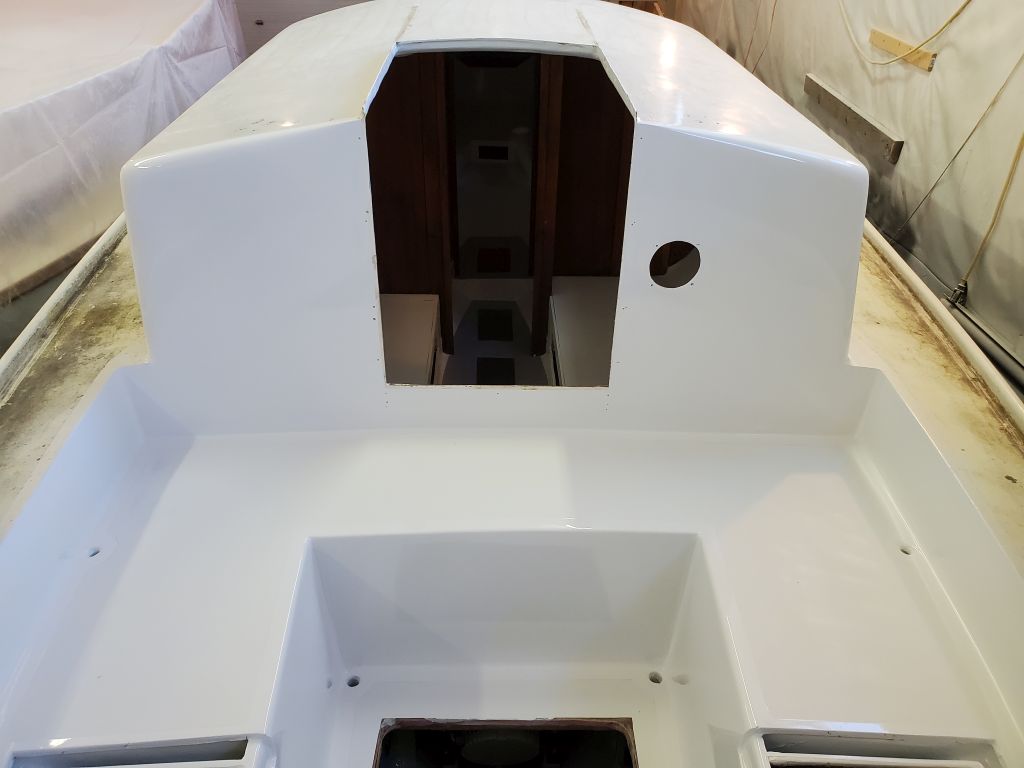
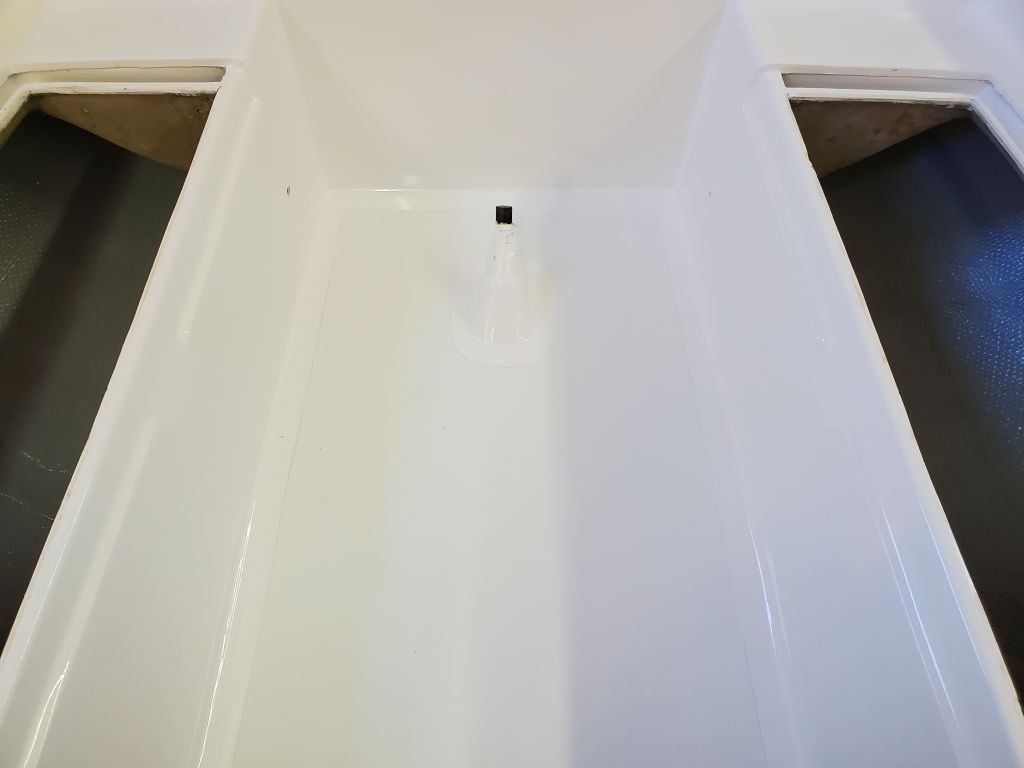
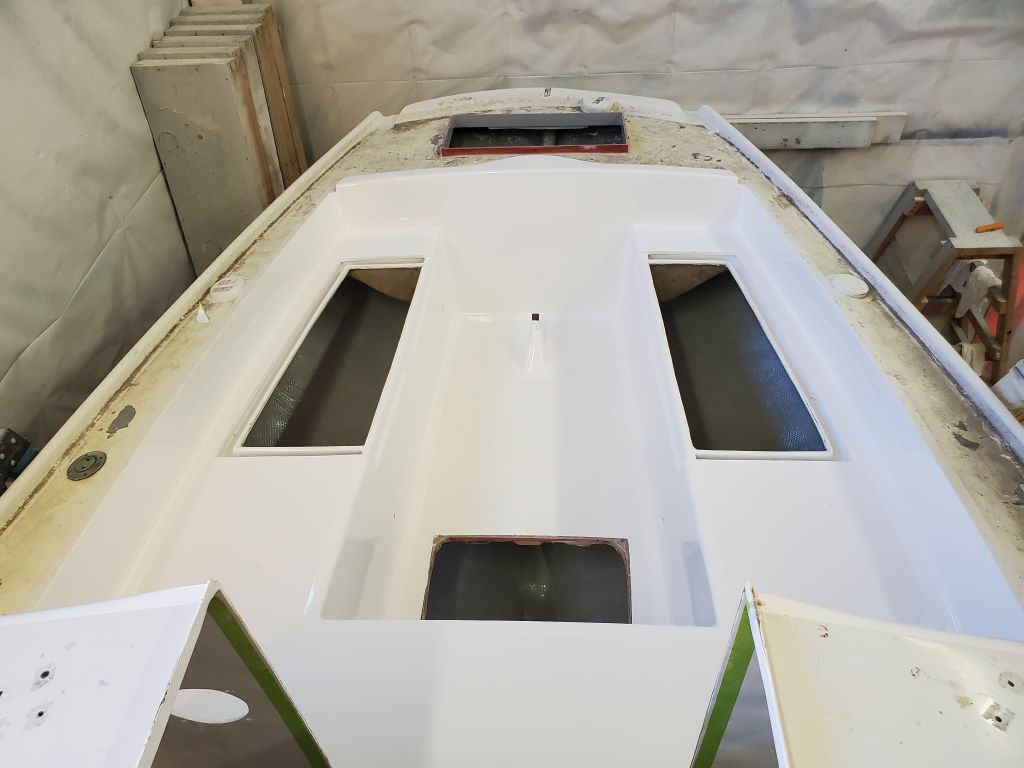
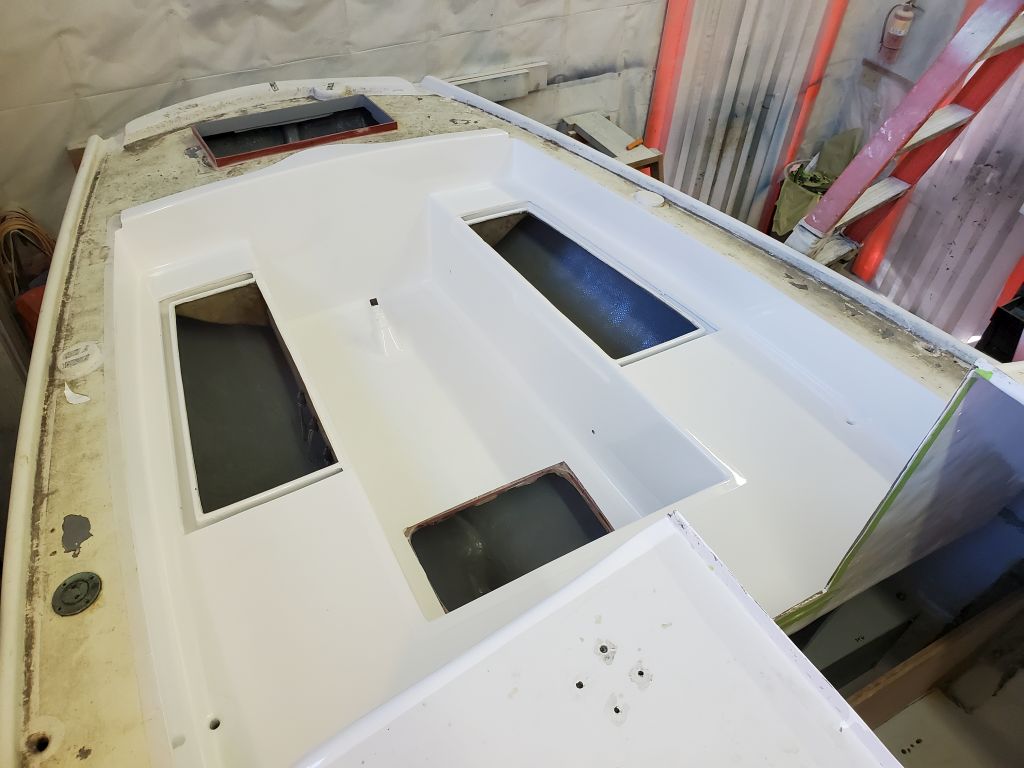
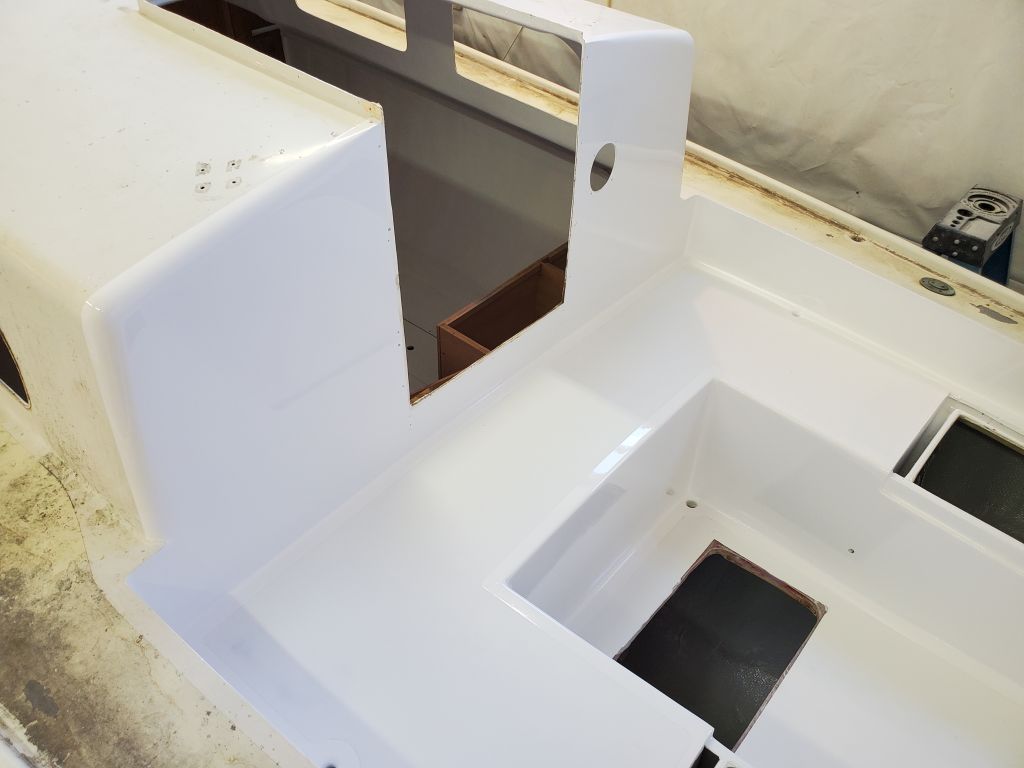
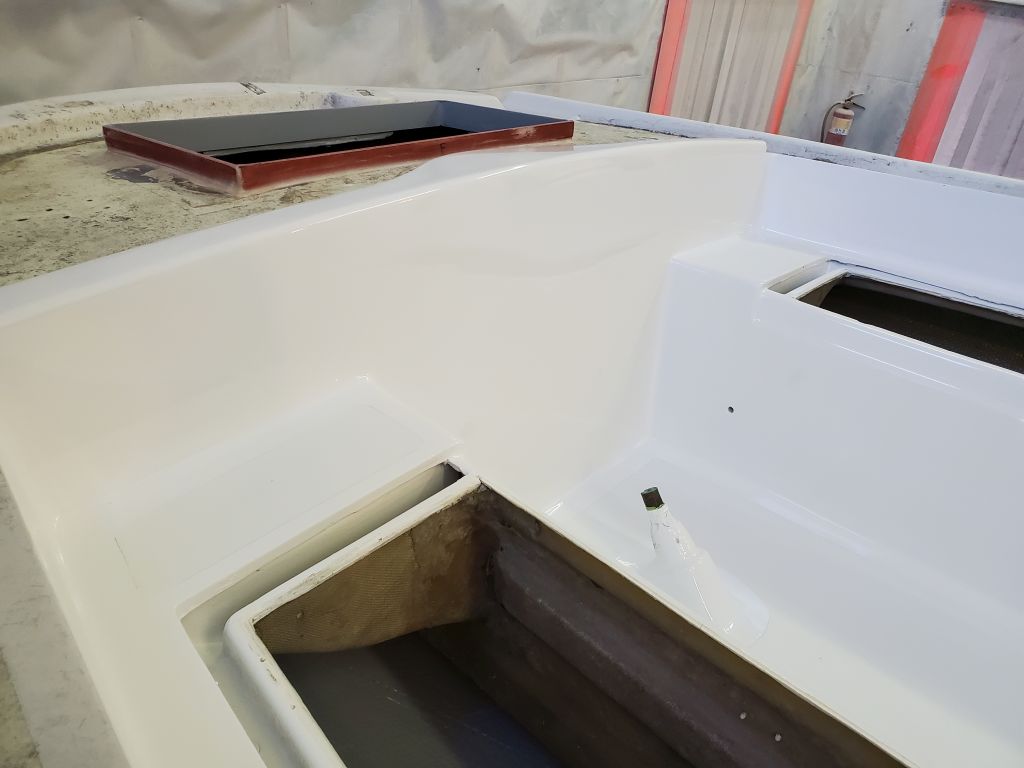
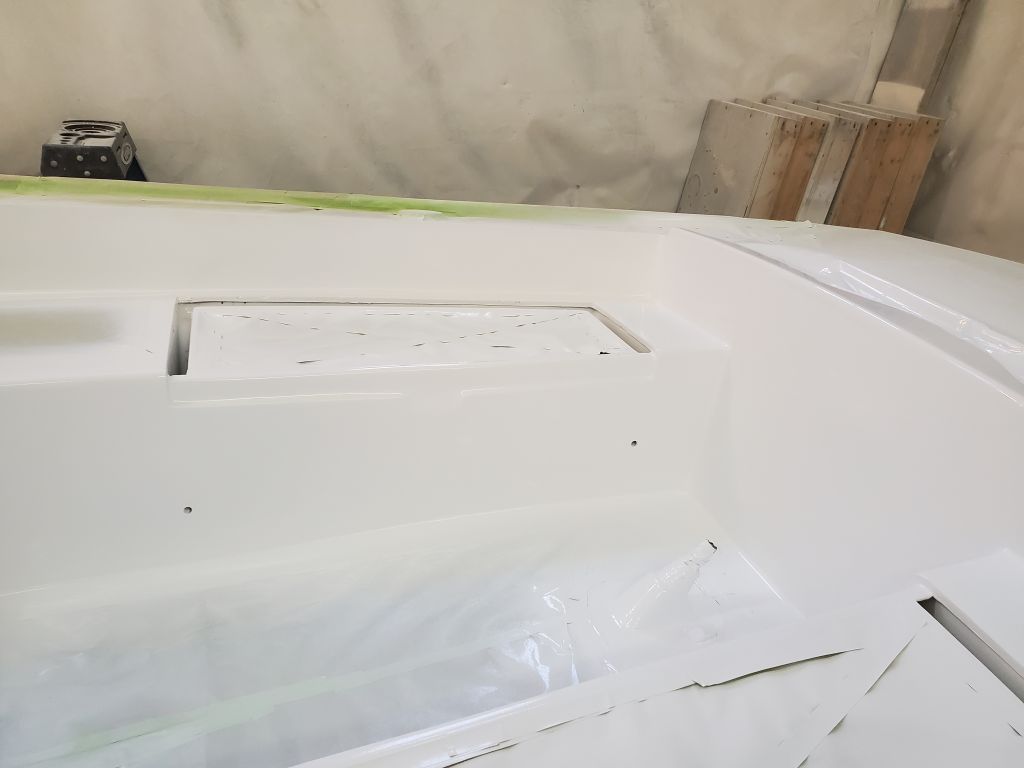
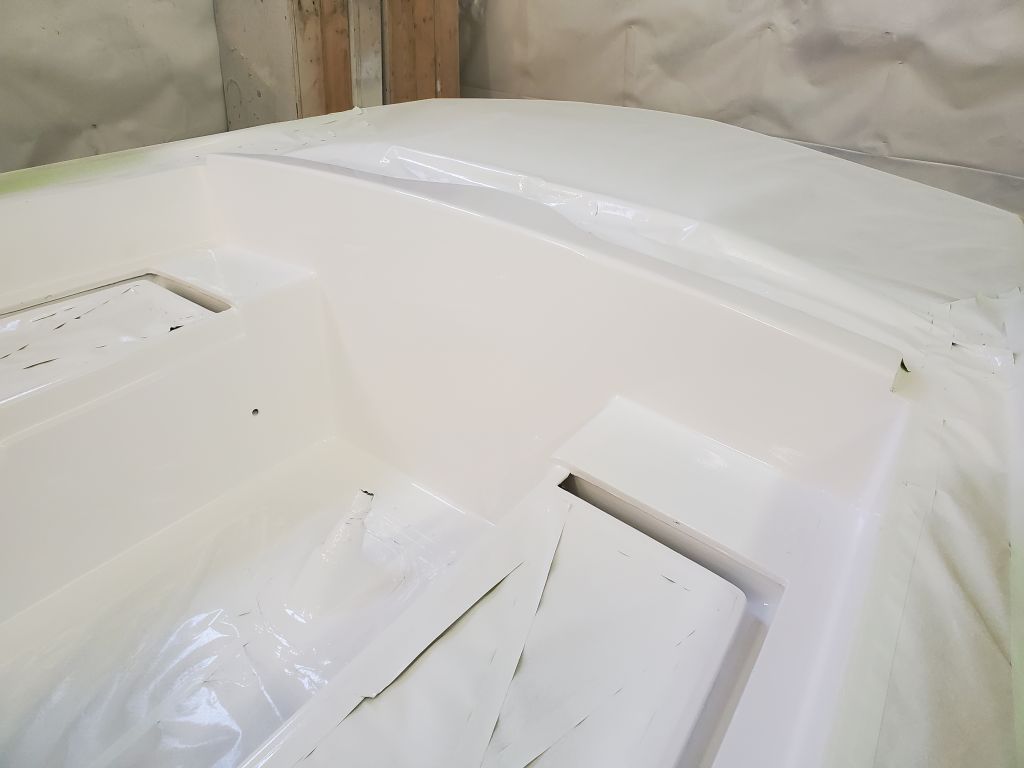
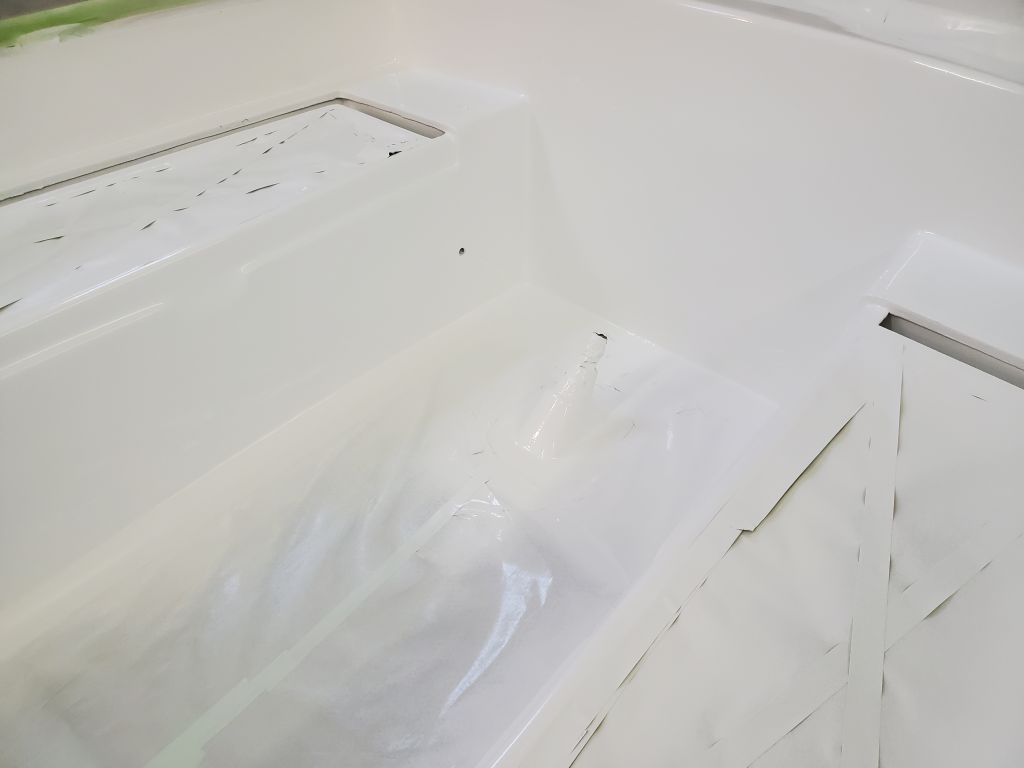
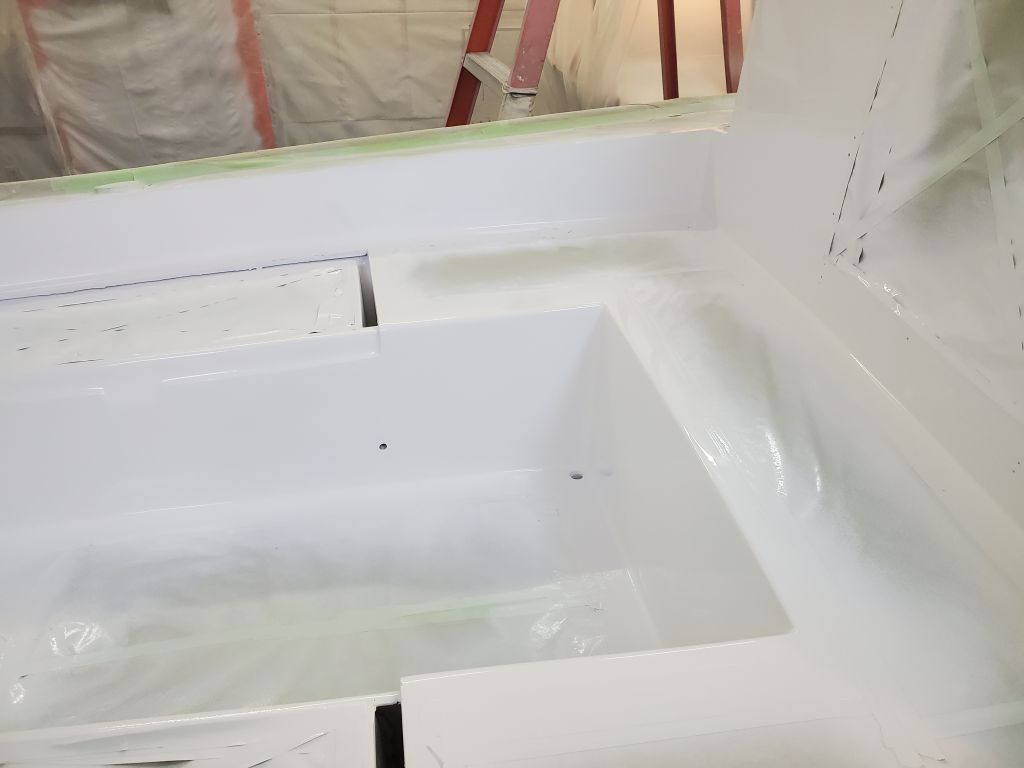
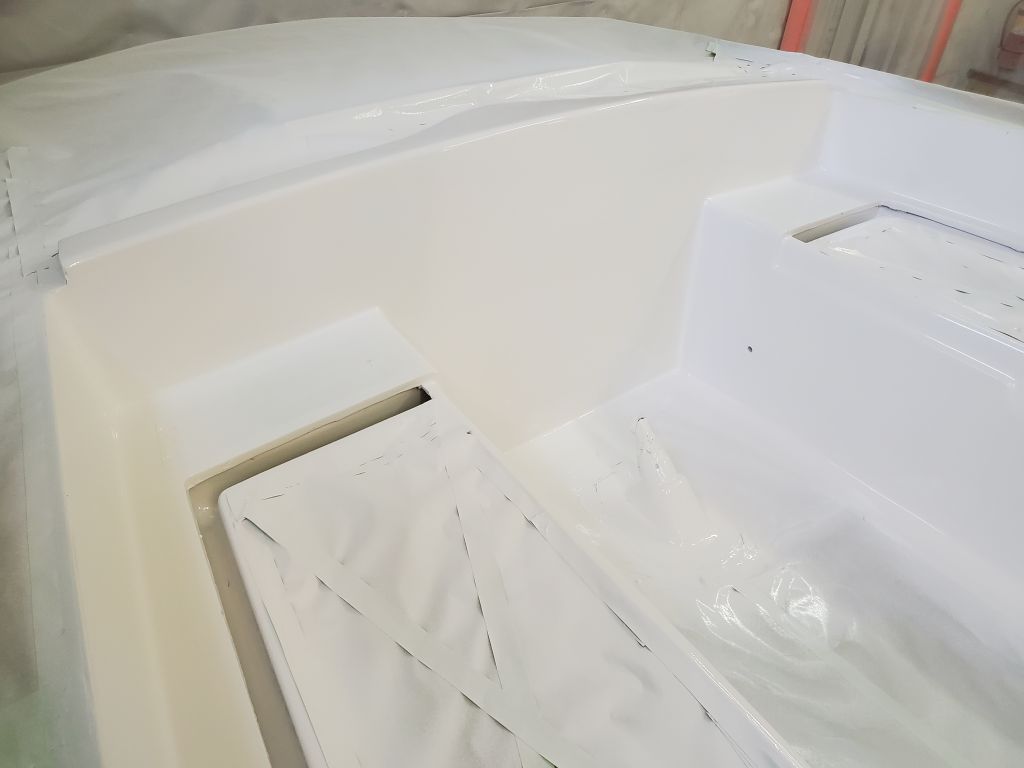
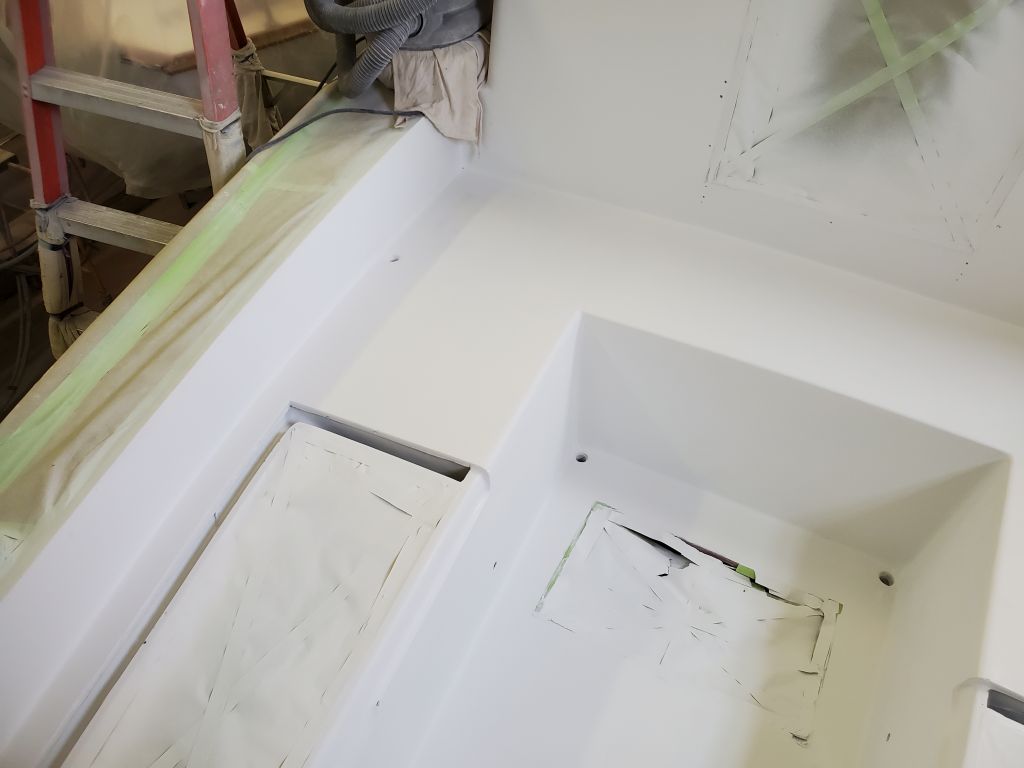
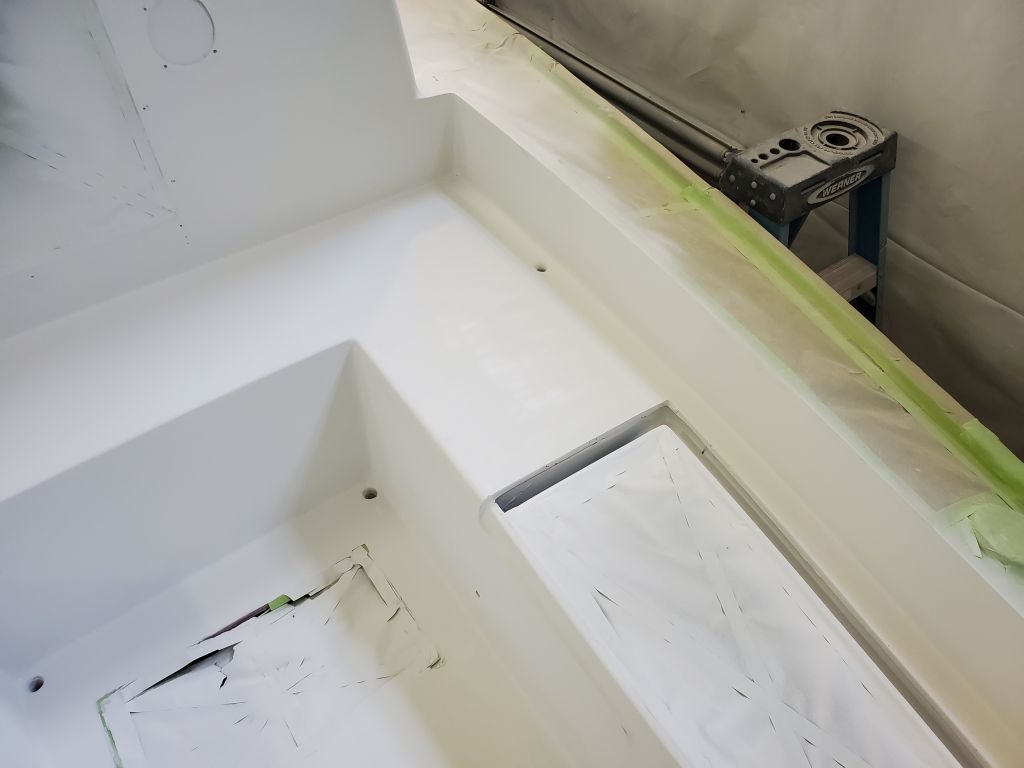
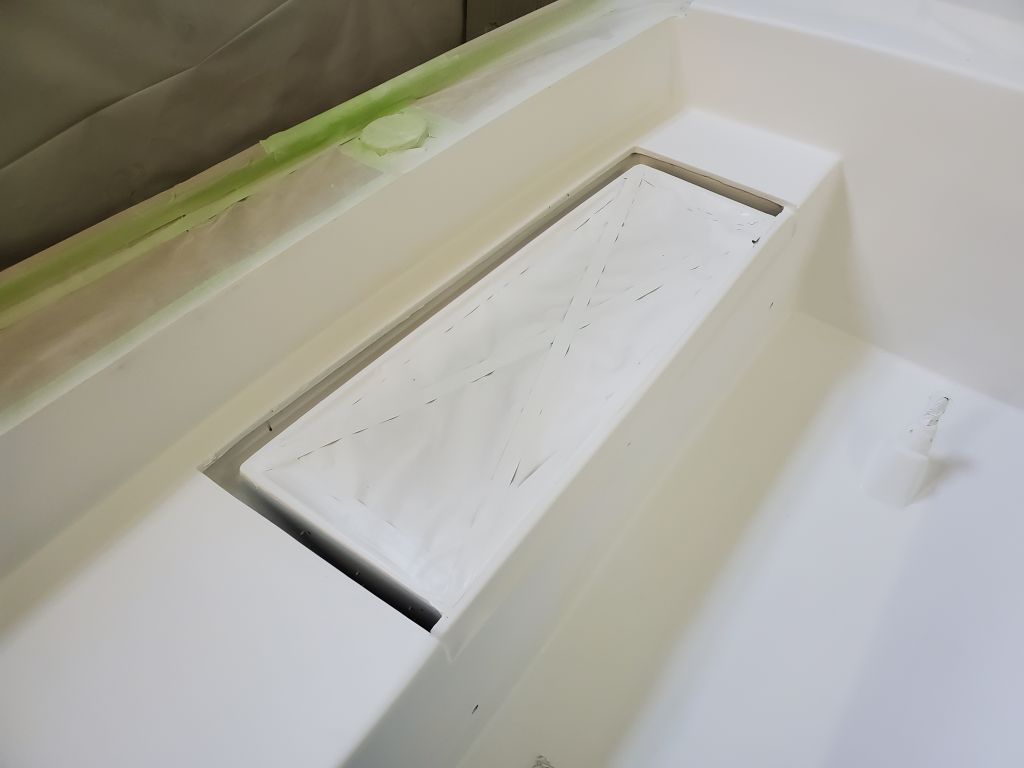
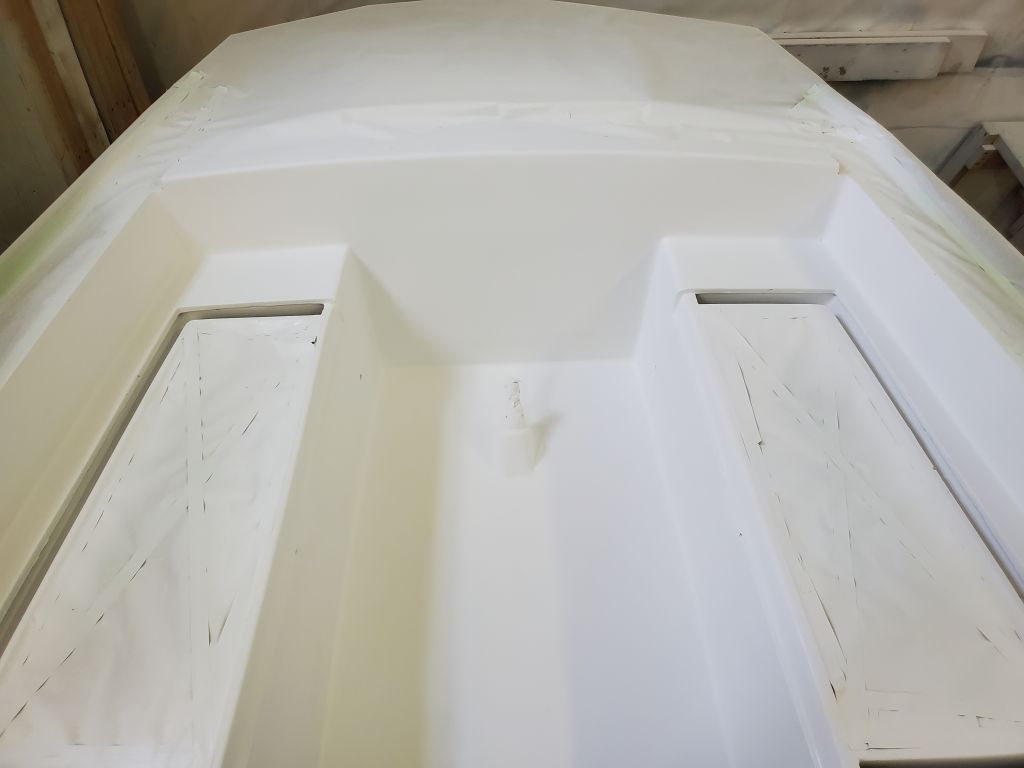
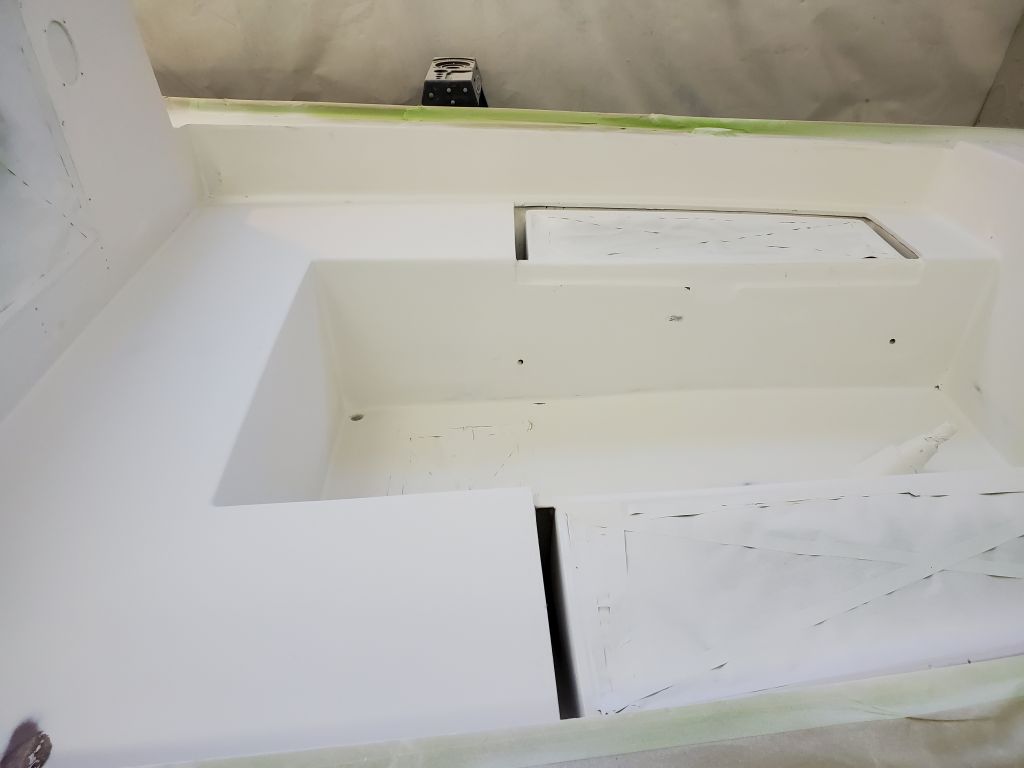
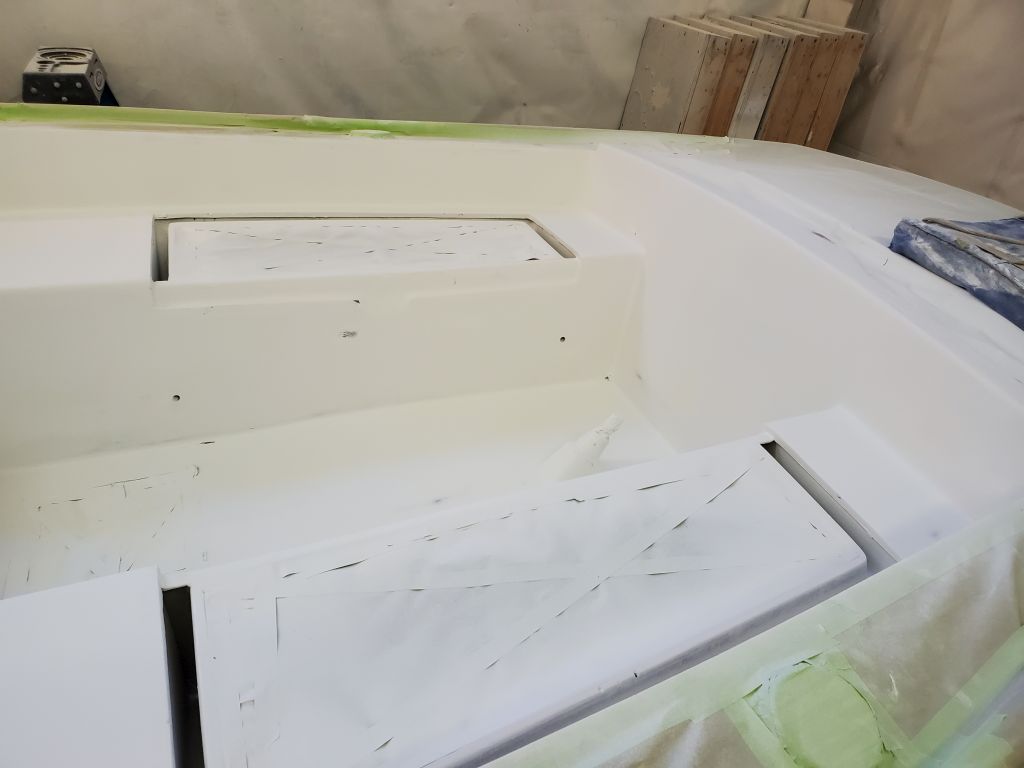
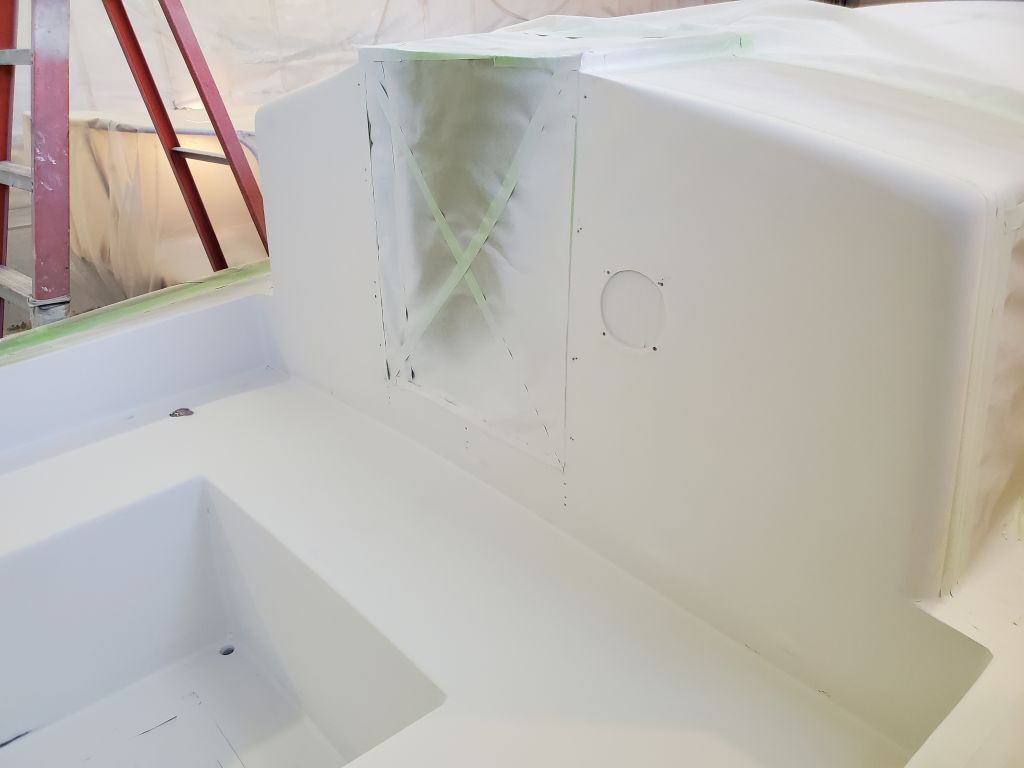
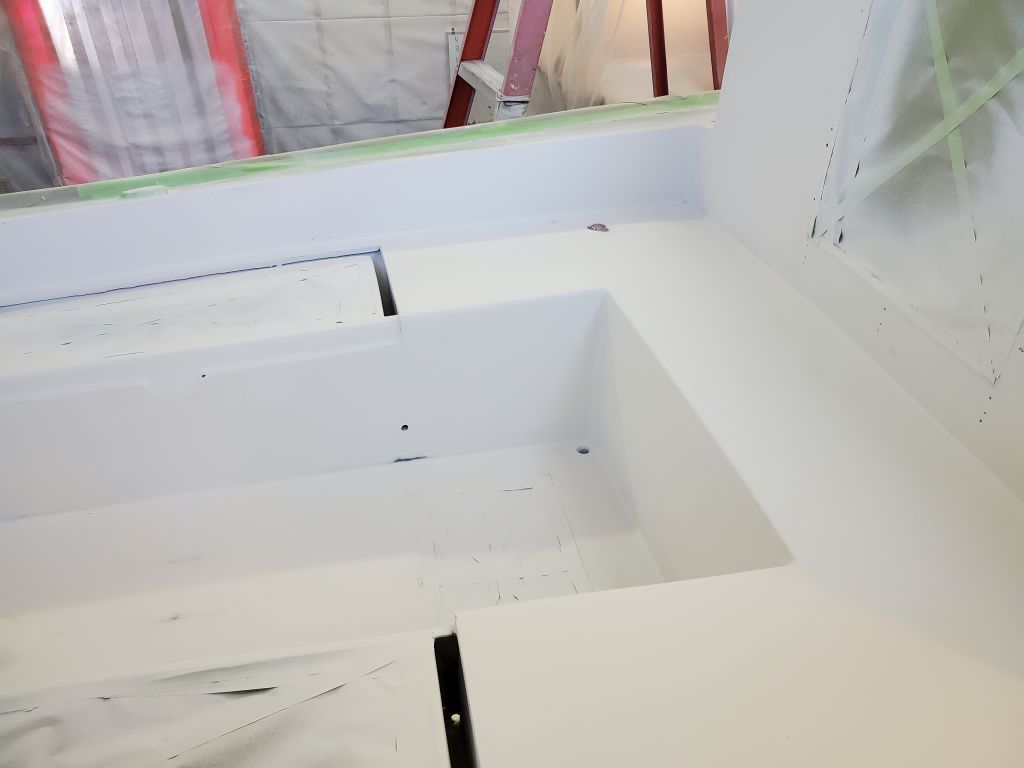
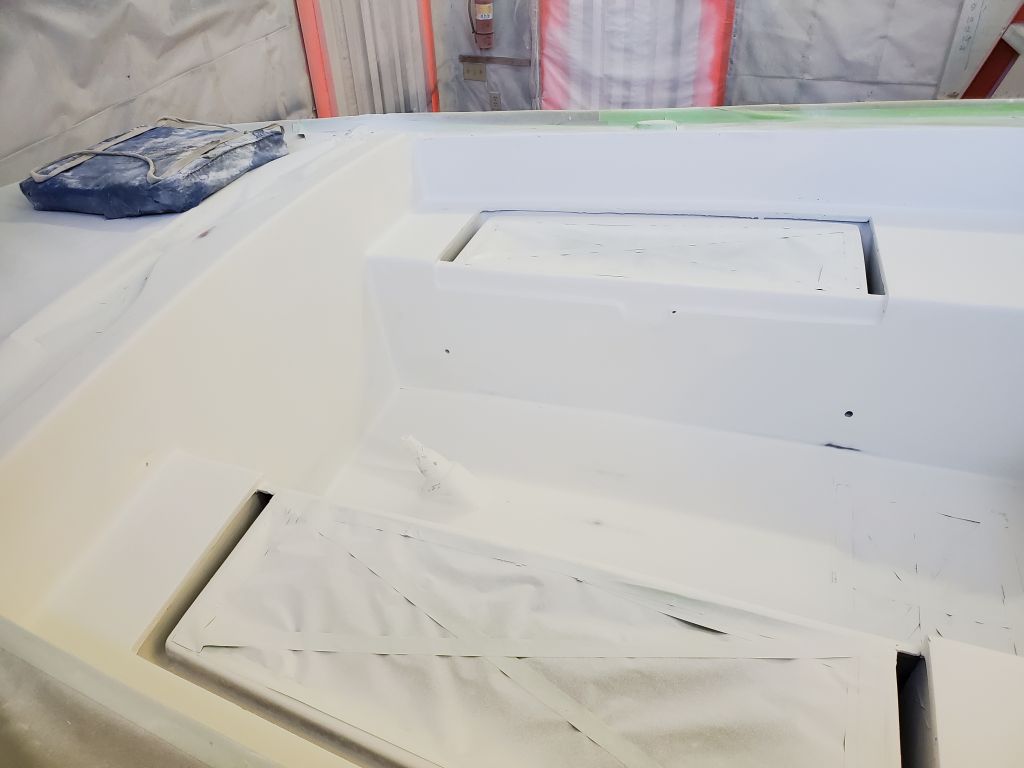
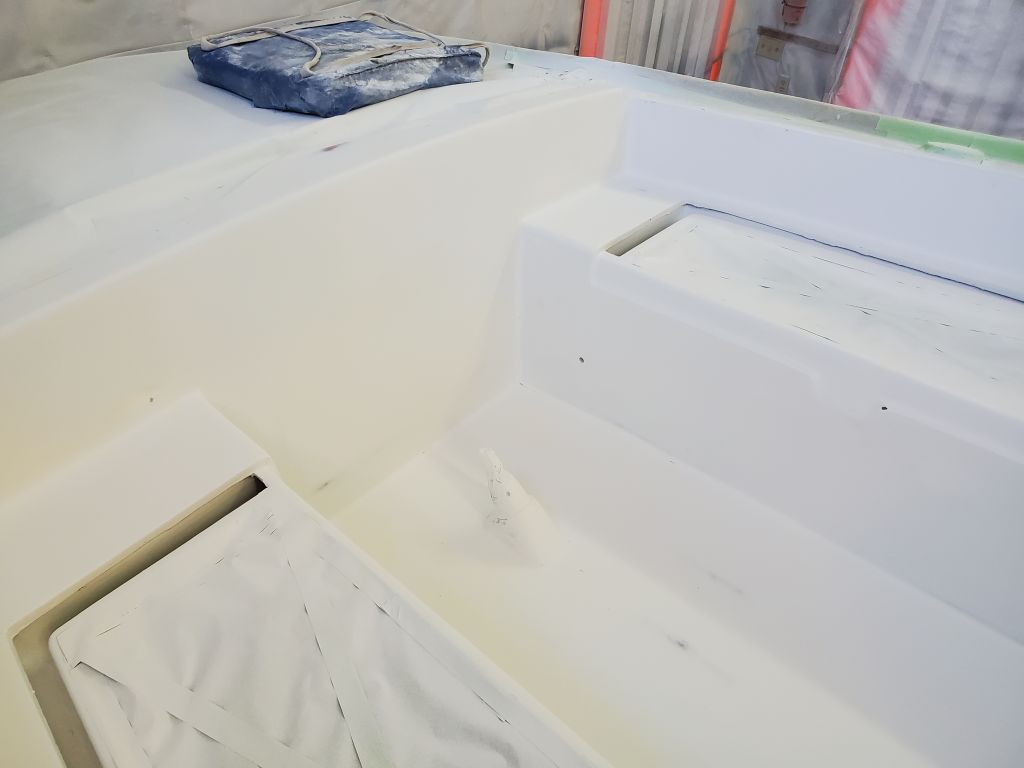
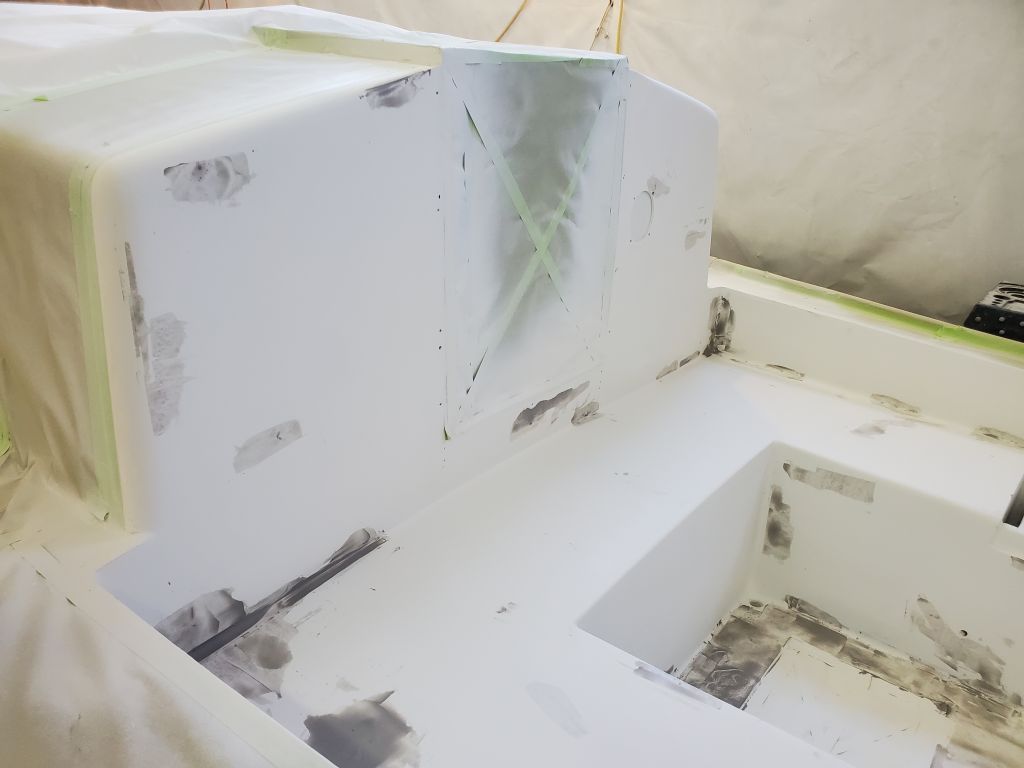
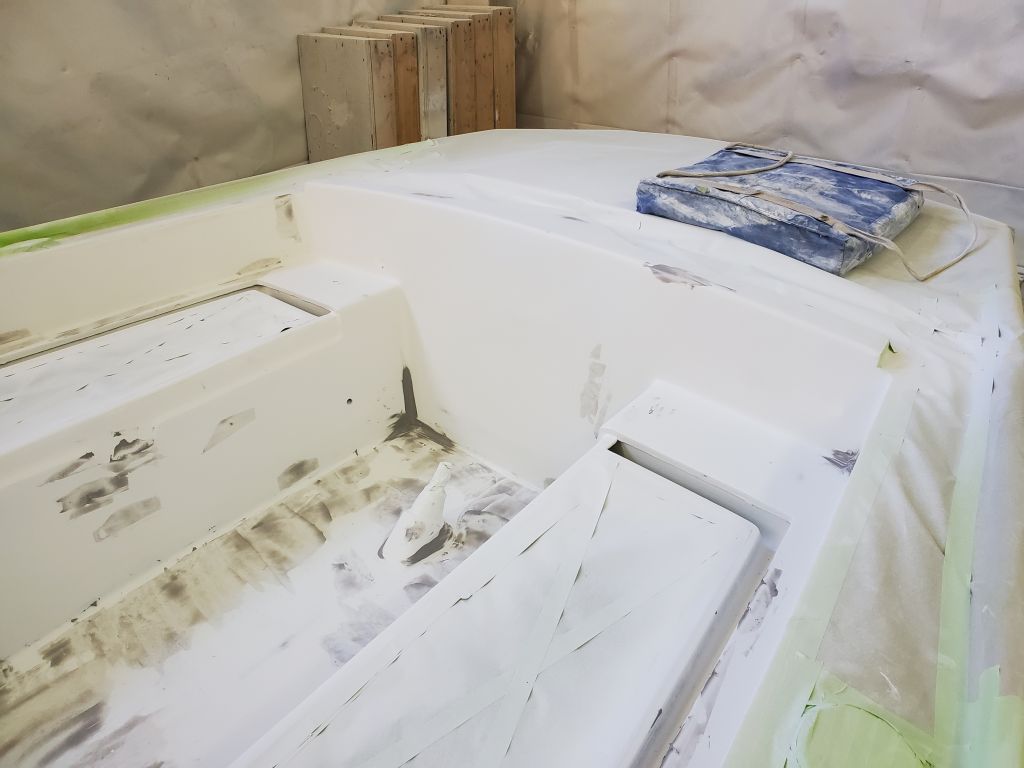
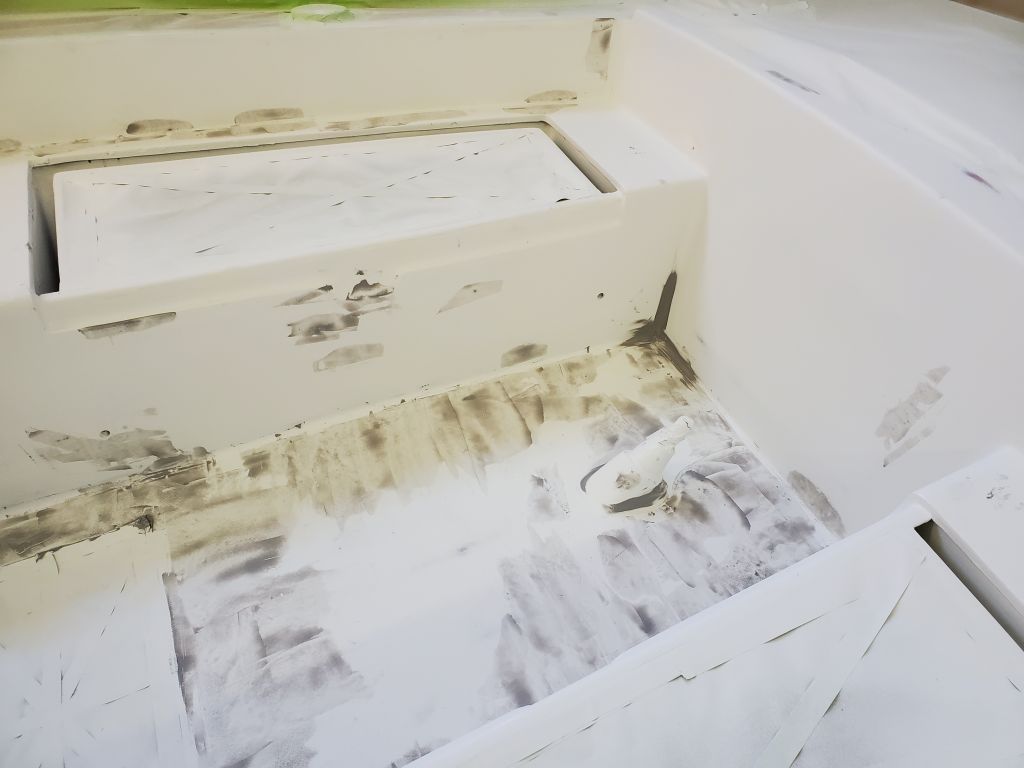
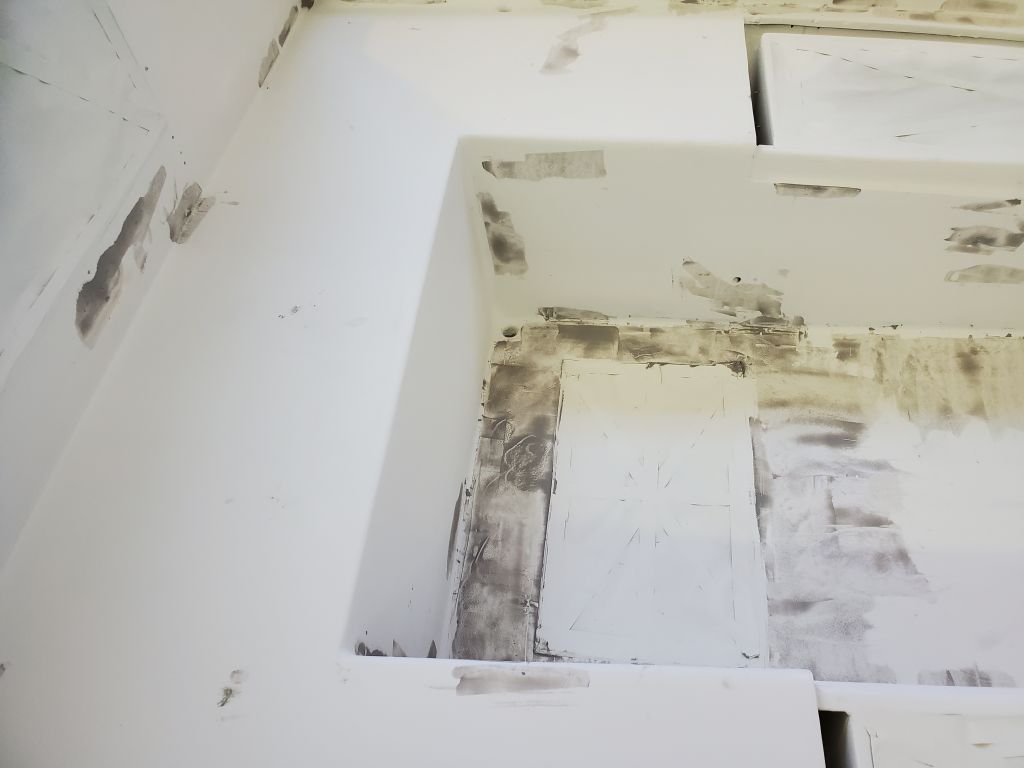
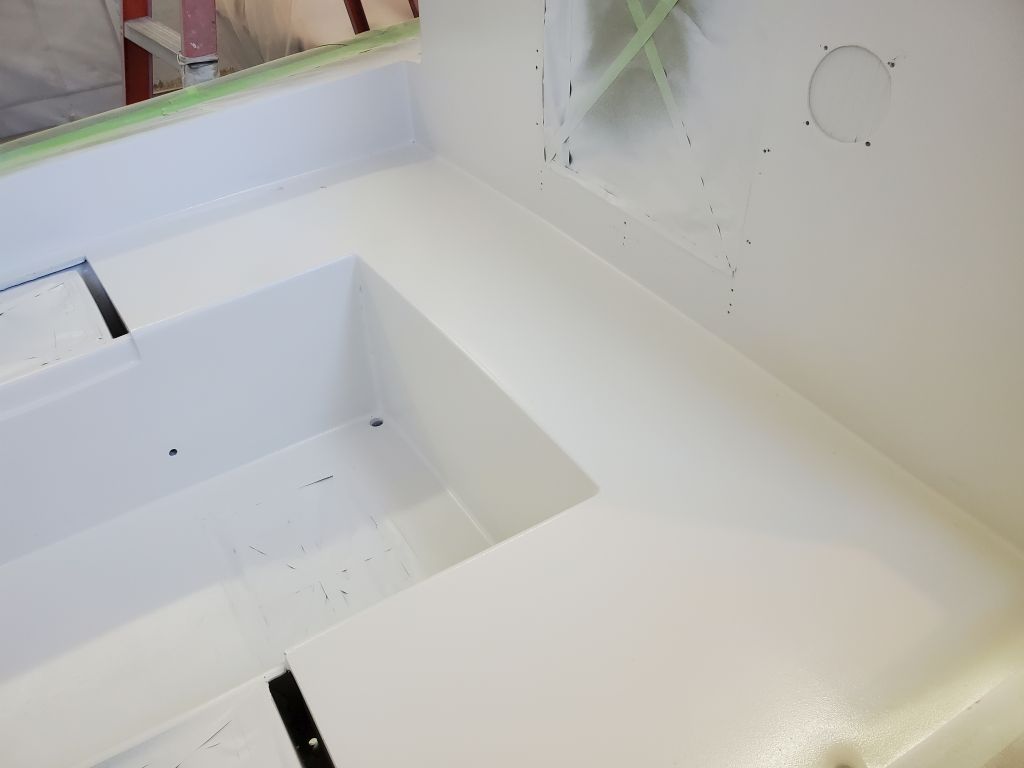
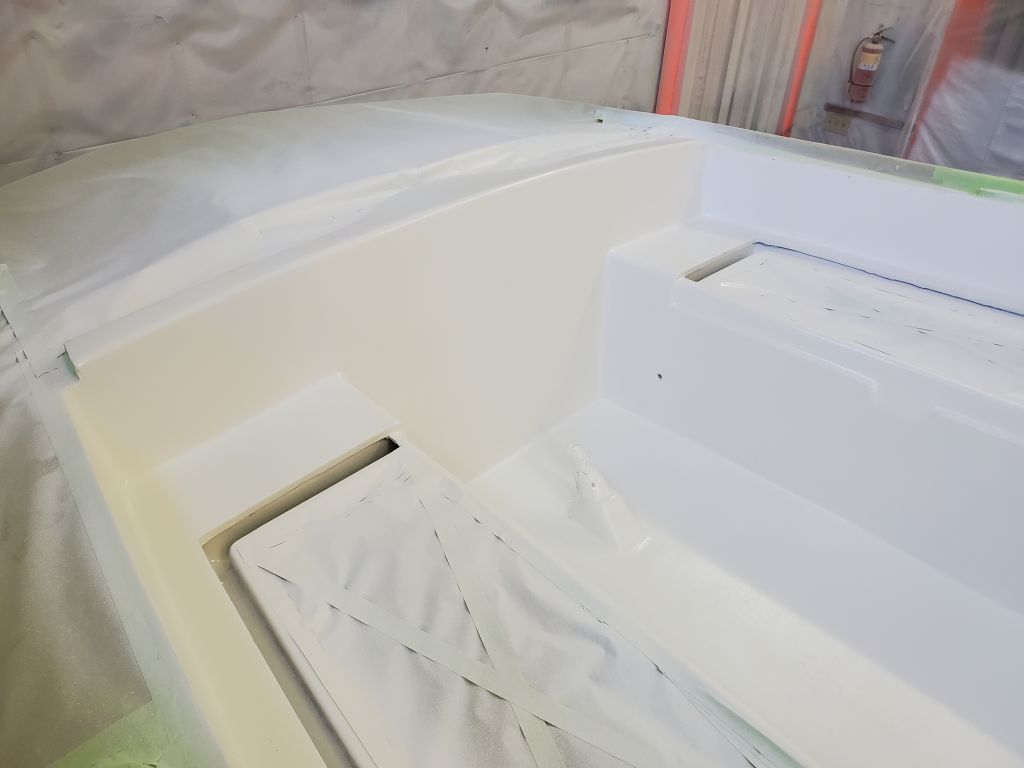
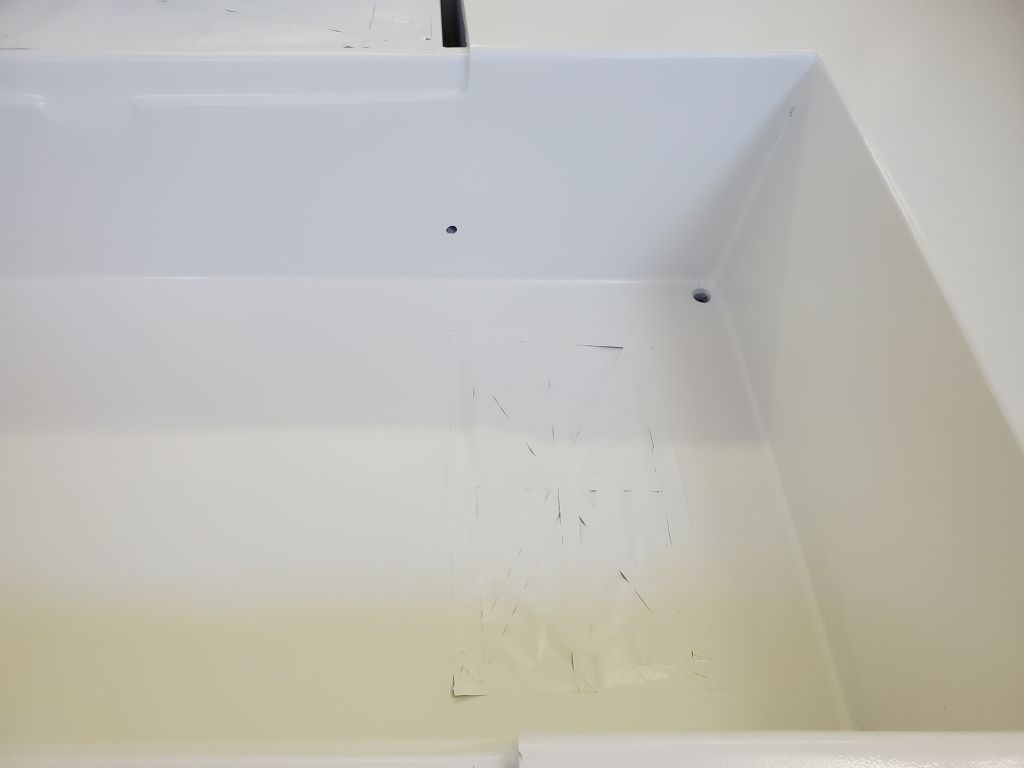
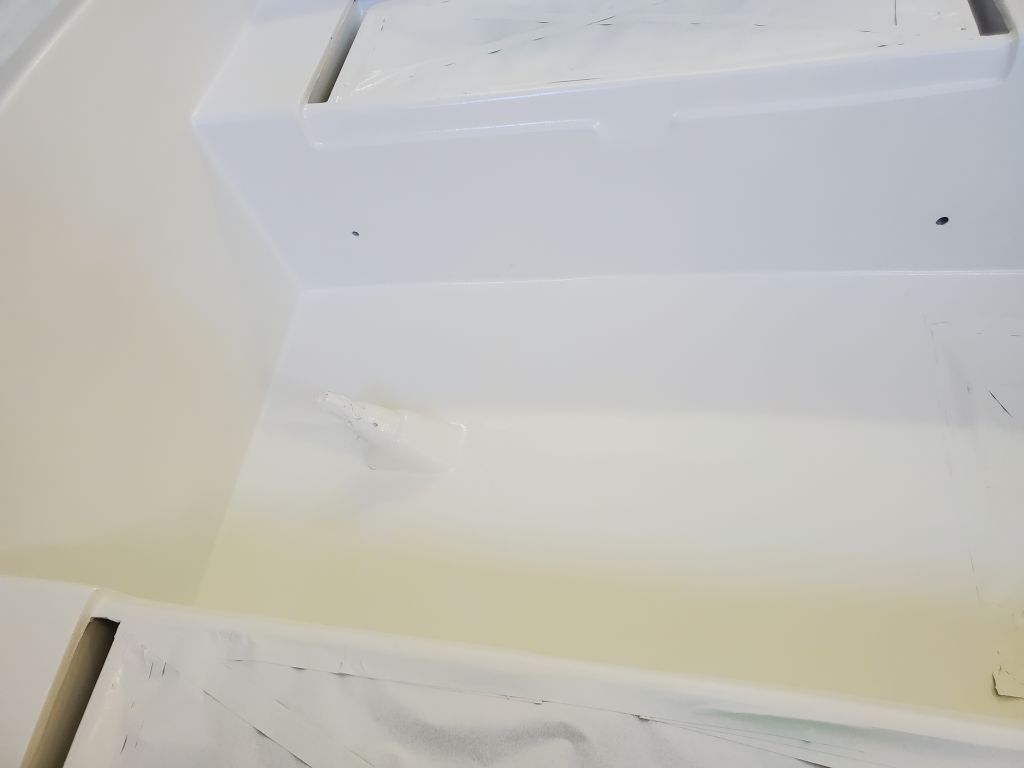
With the topcoats complete and amply cured, I began by removing all the masking tape, paper, and plastic from the cockpit and the rest of the boat.

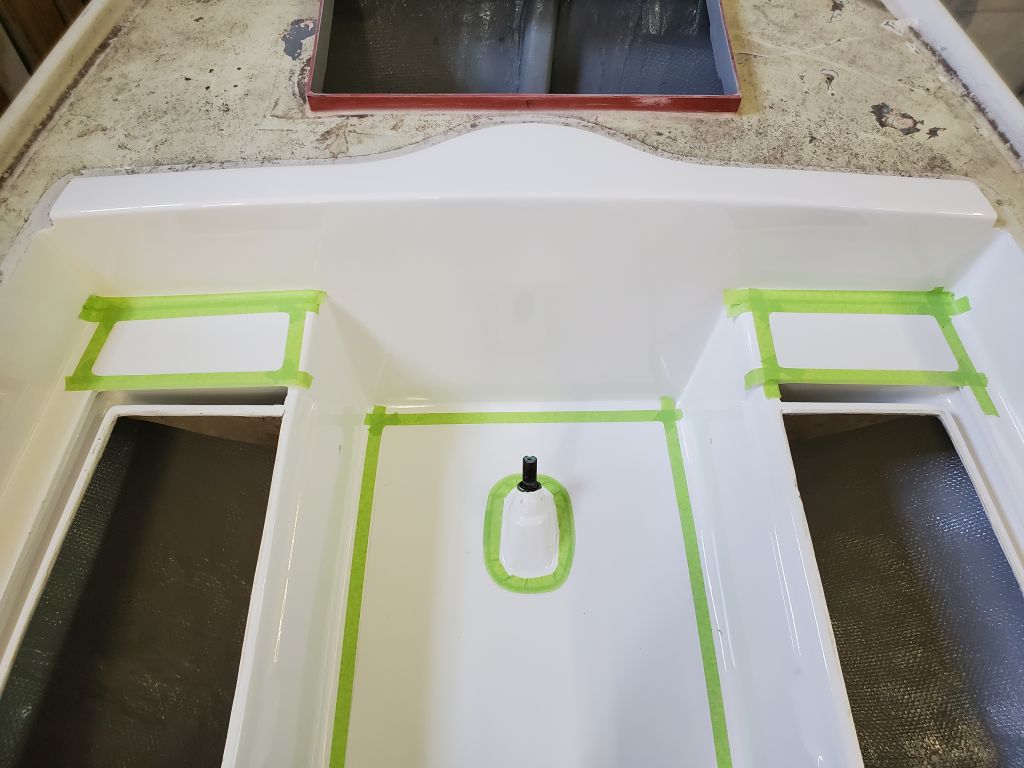
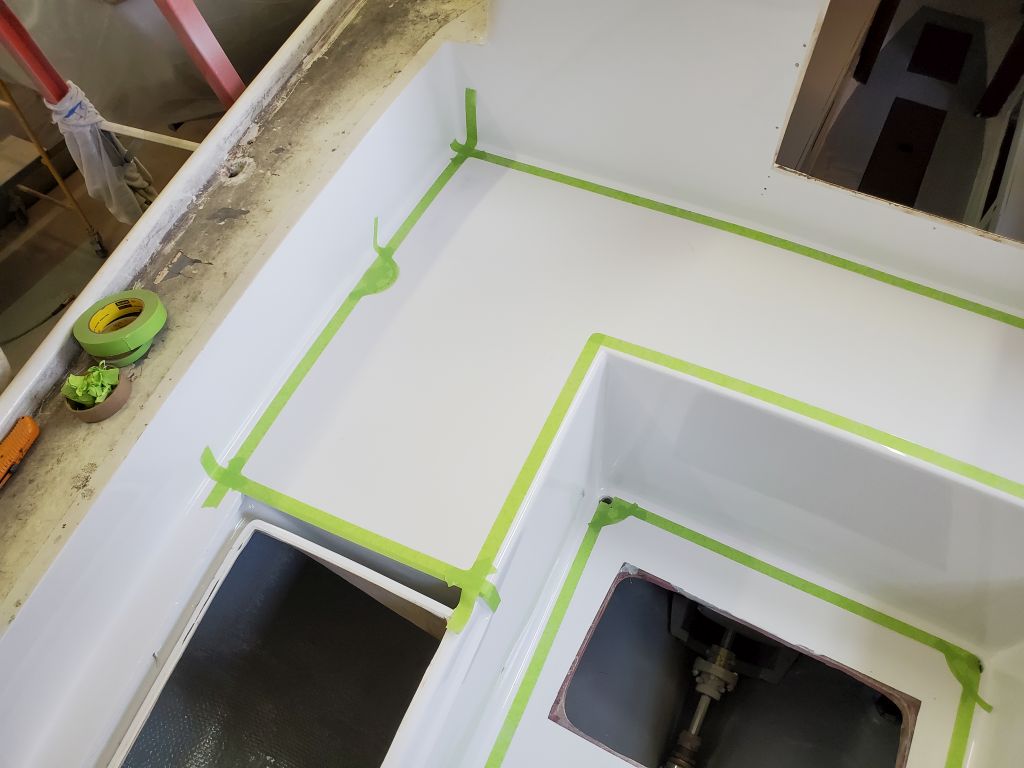
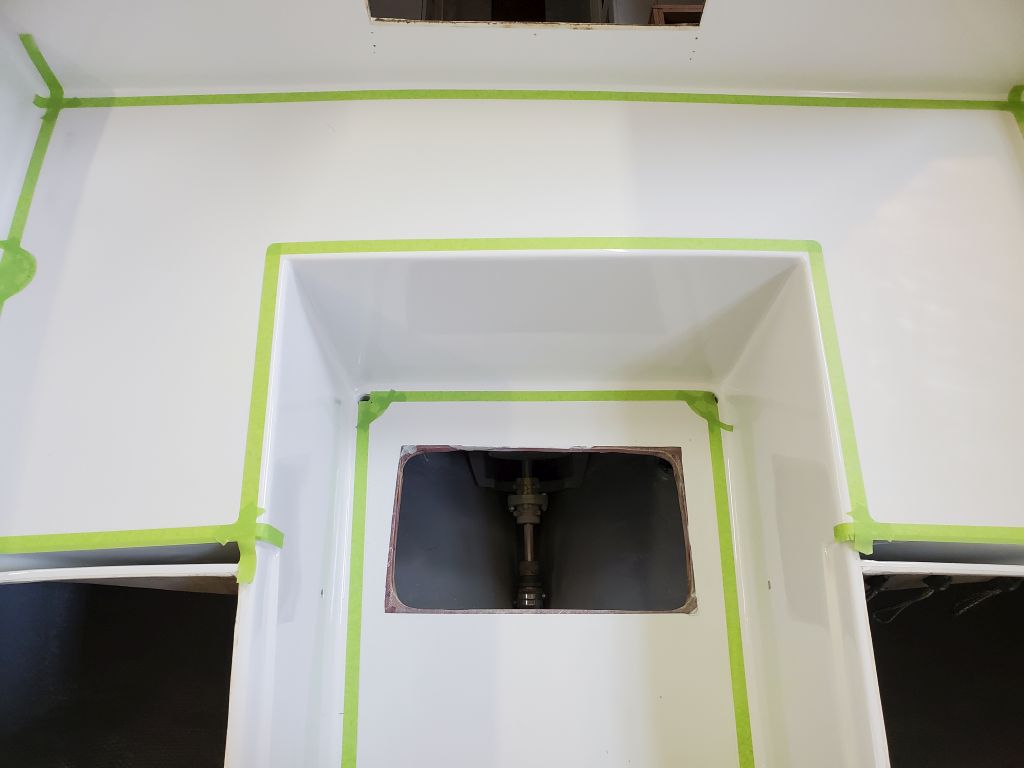
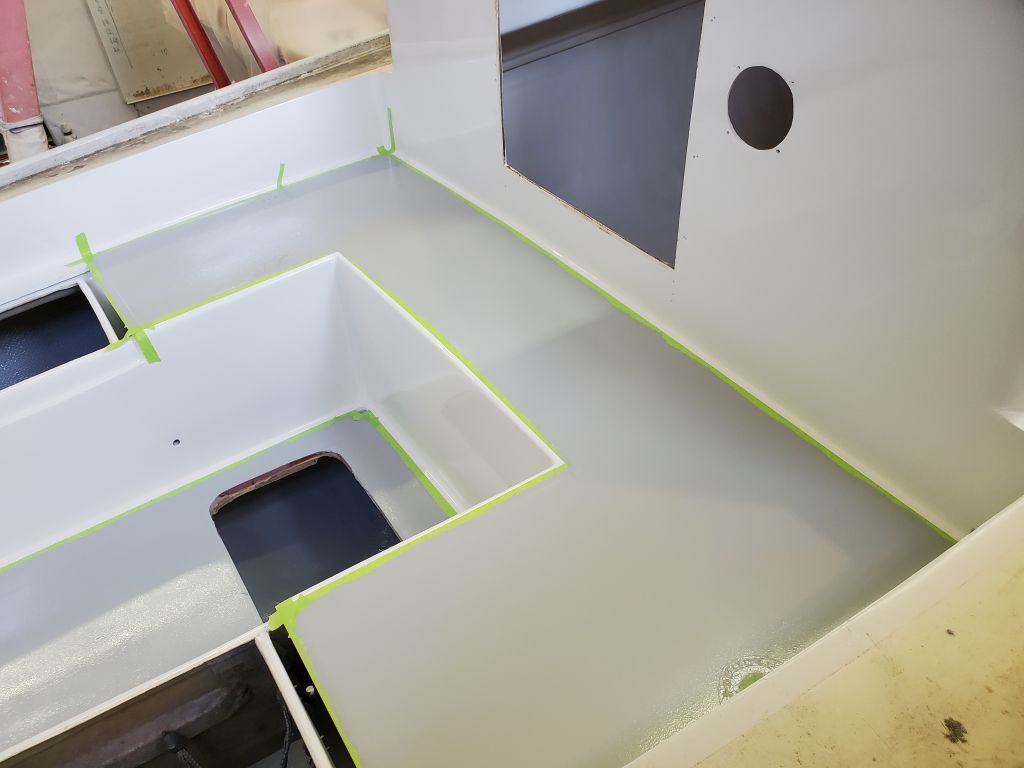
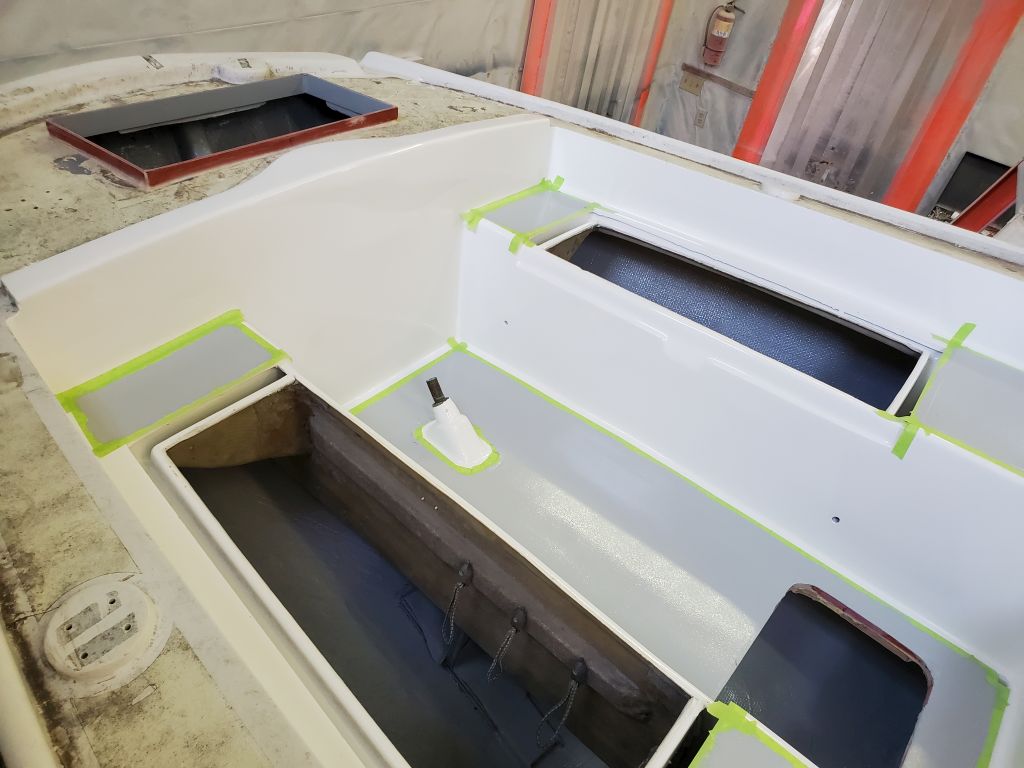
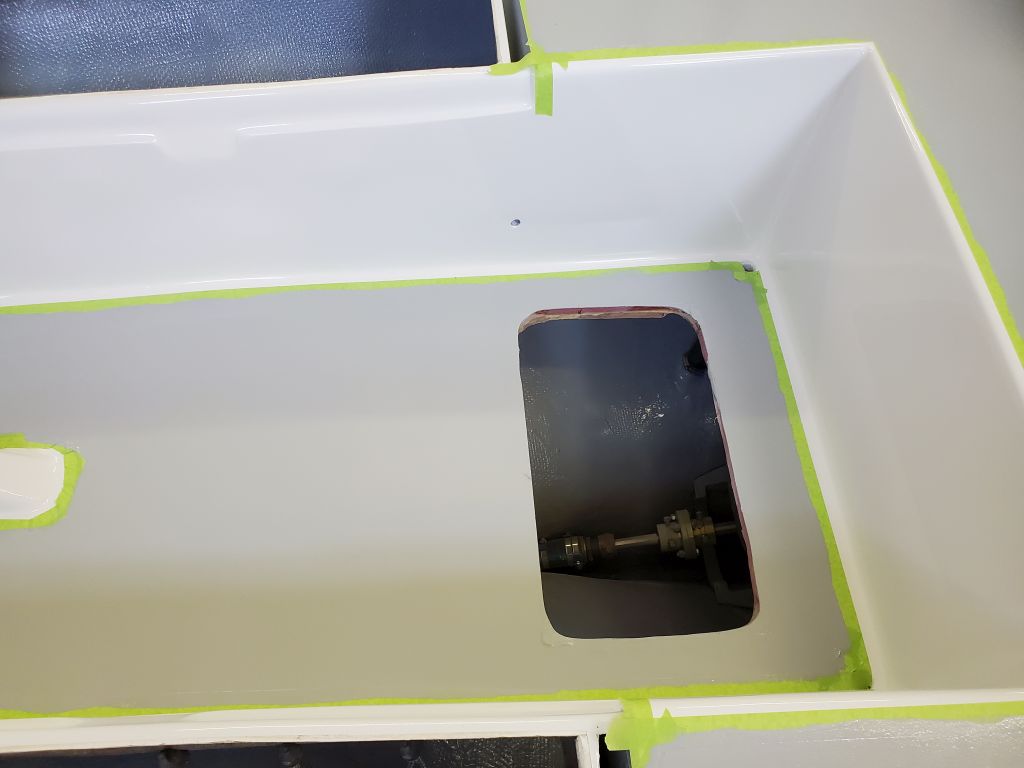
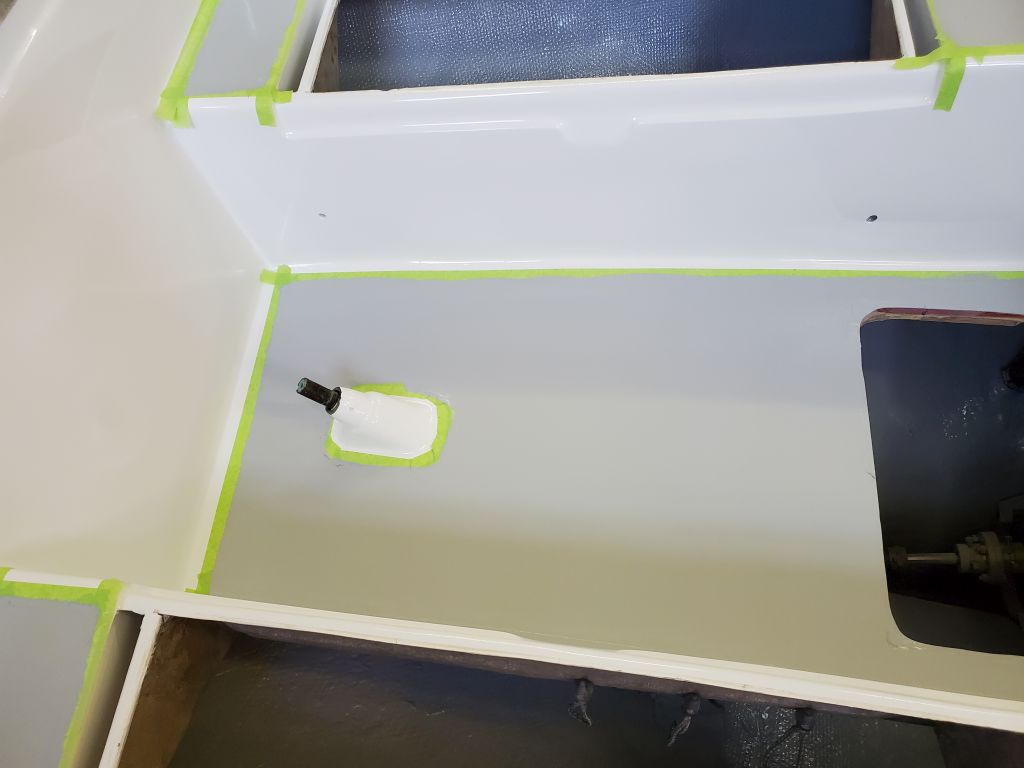
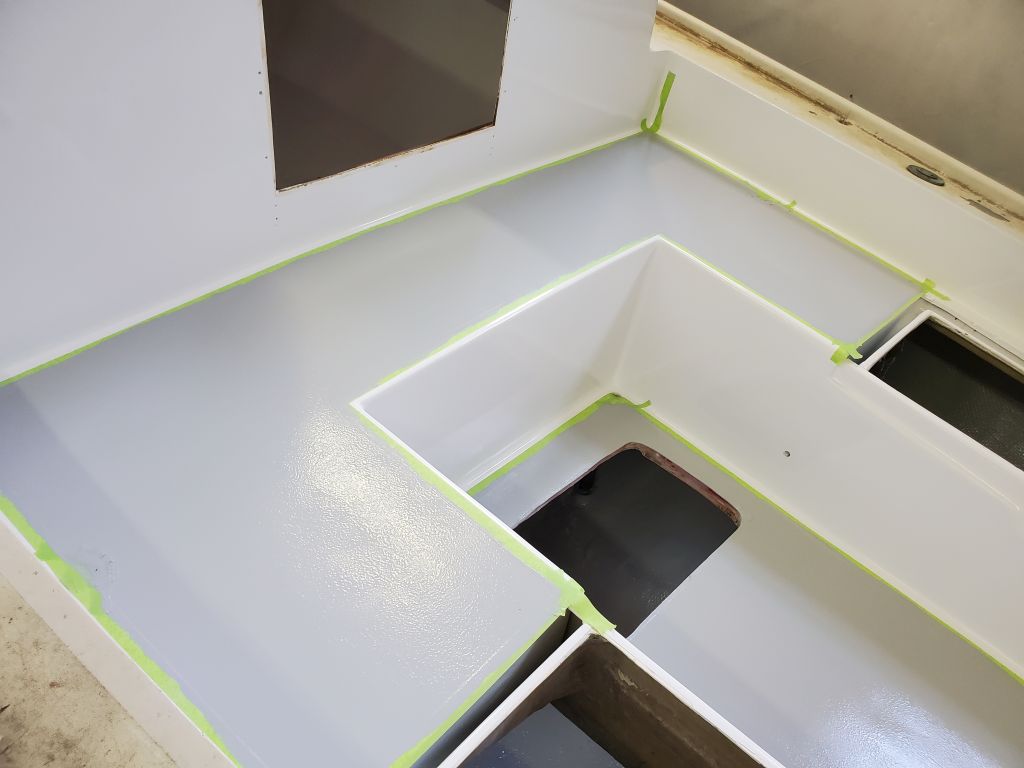
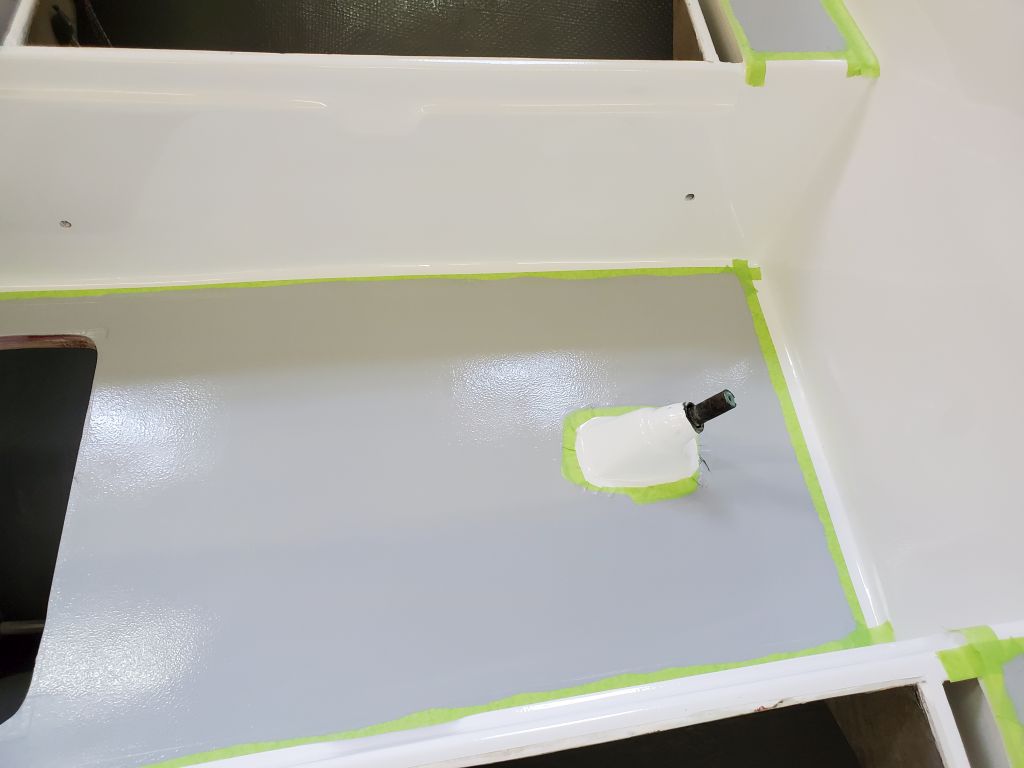
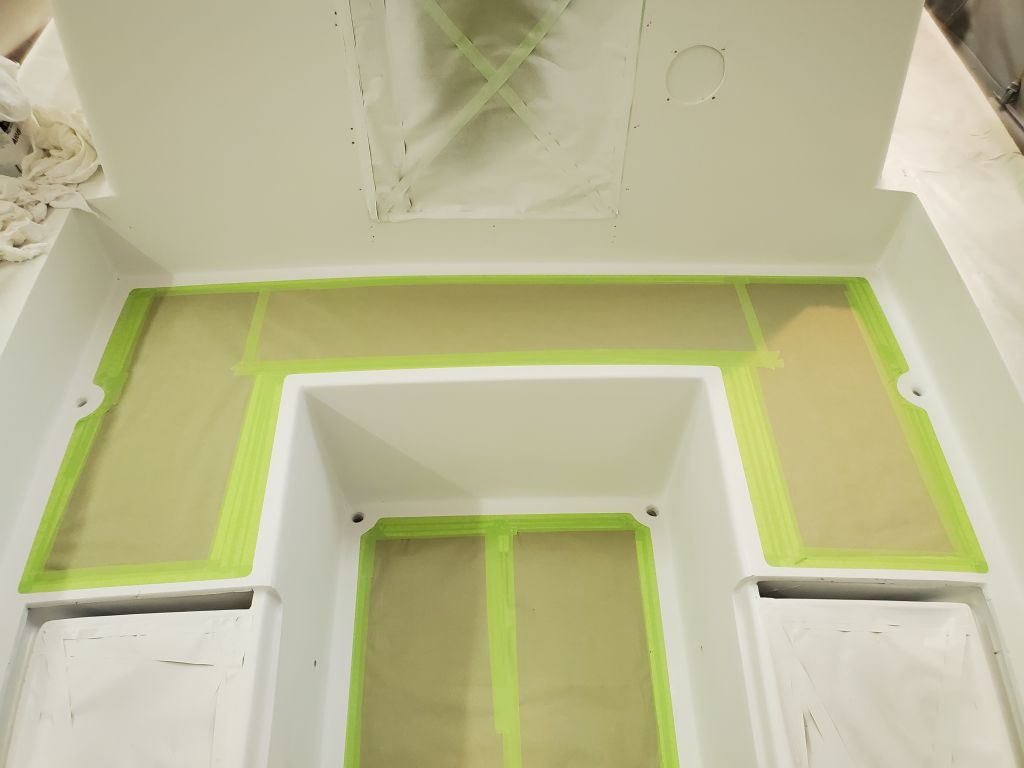
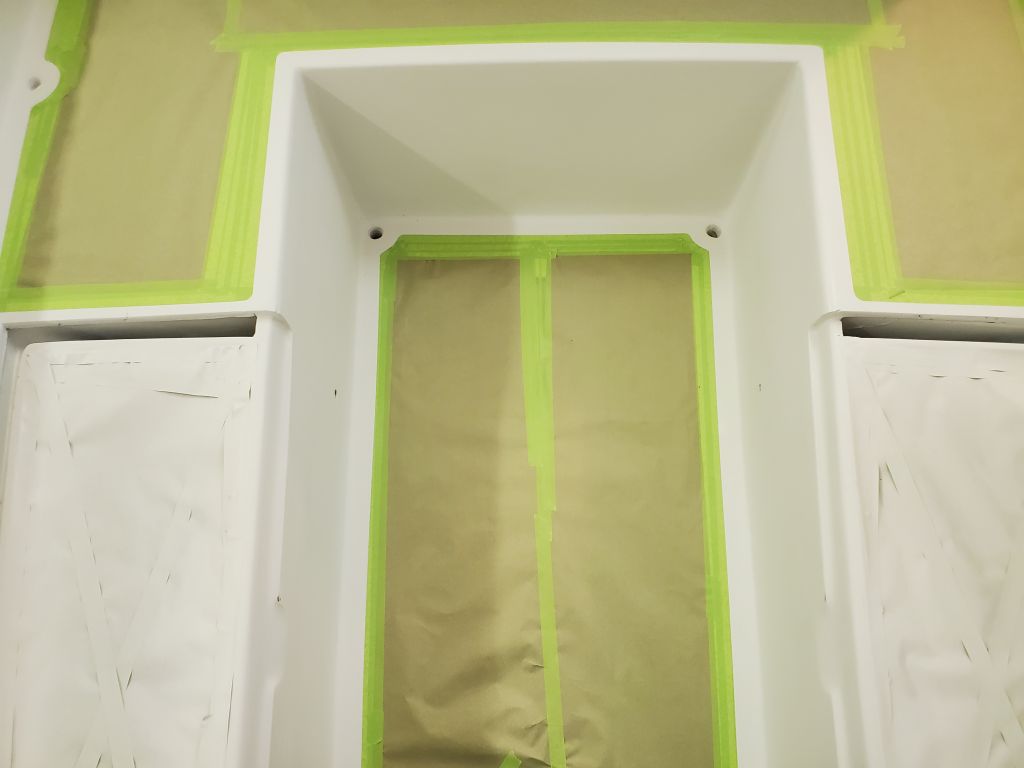
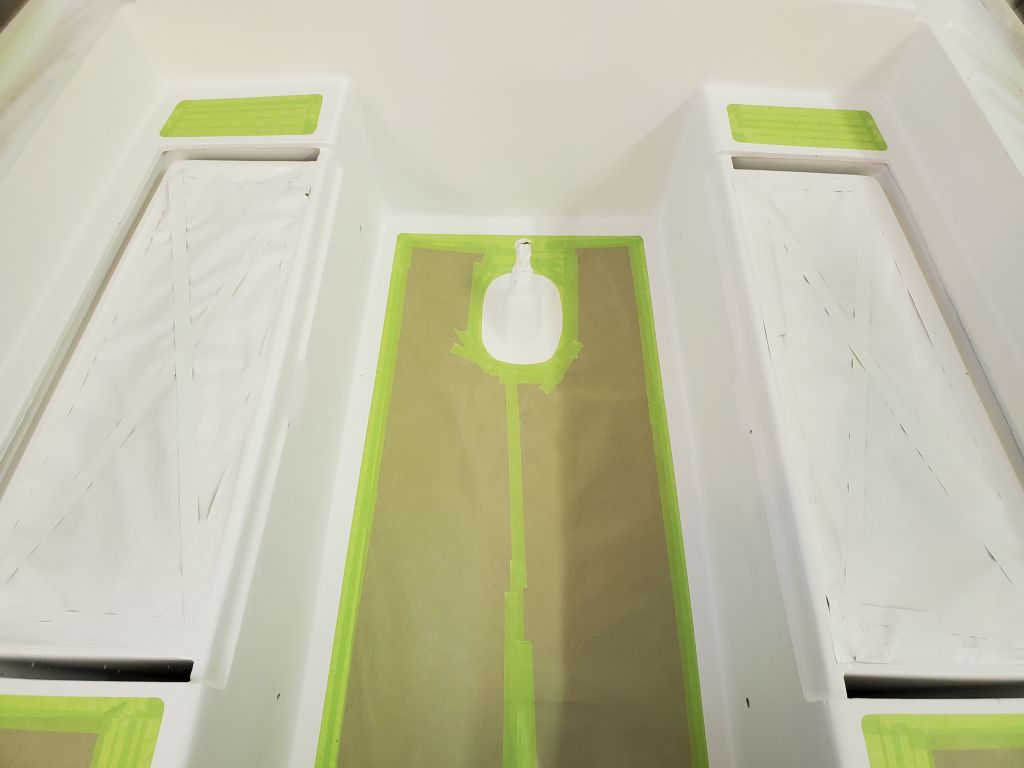
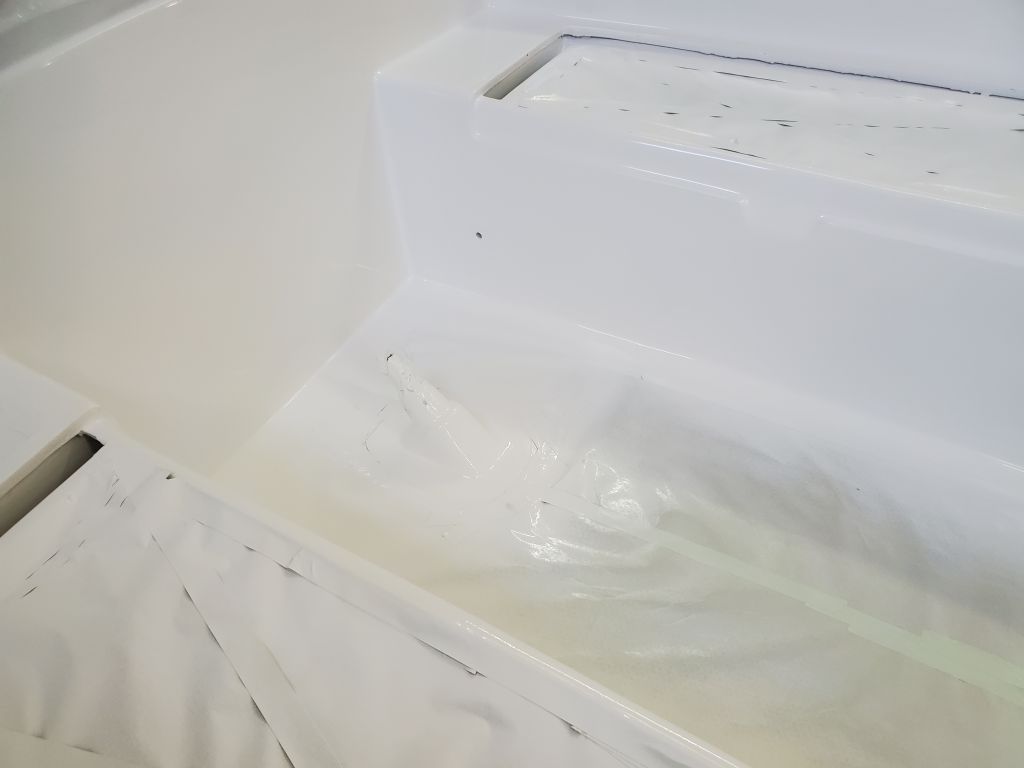
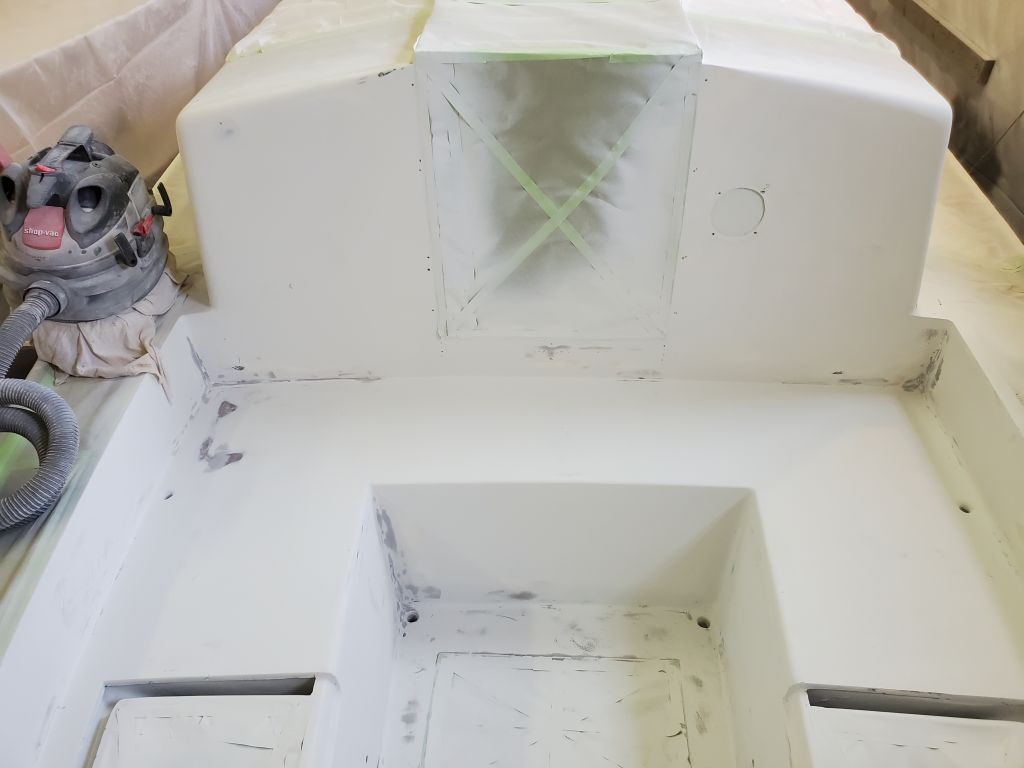
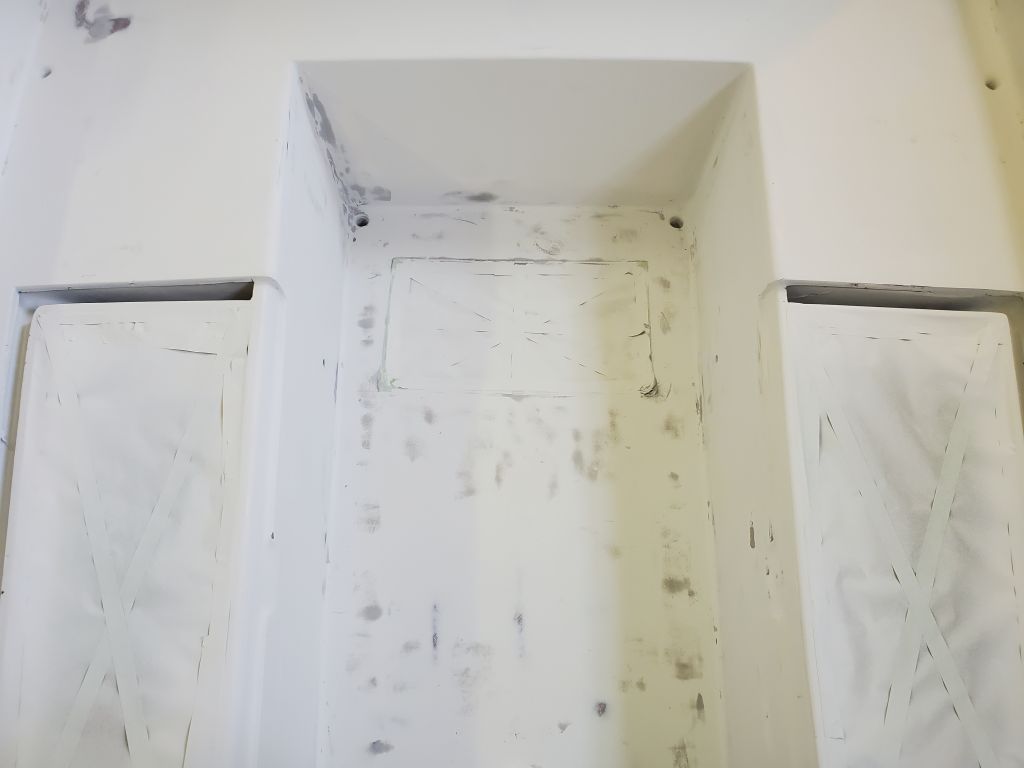
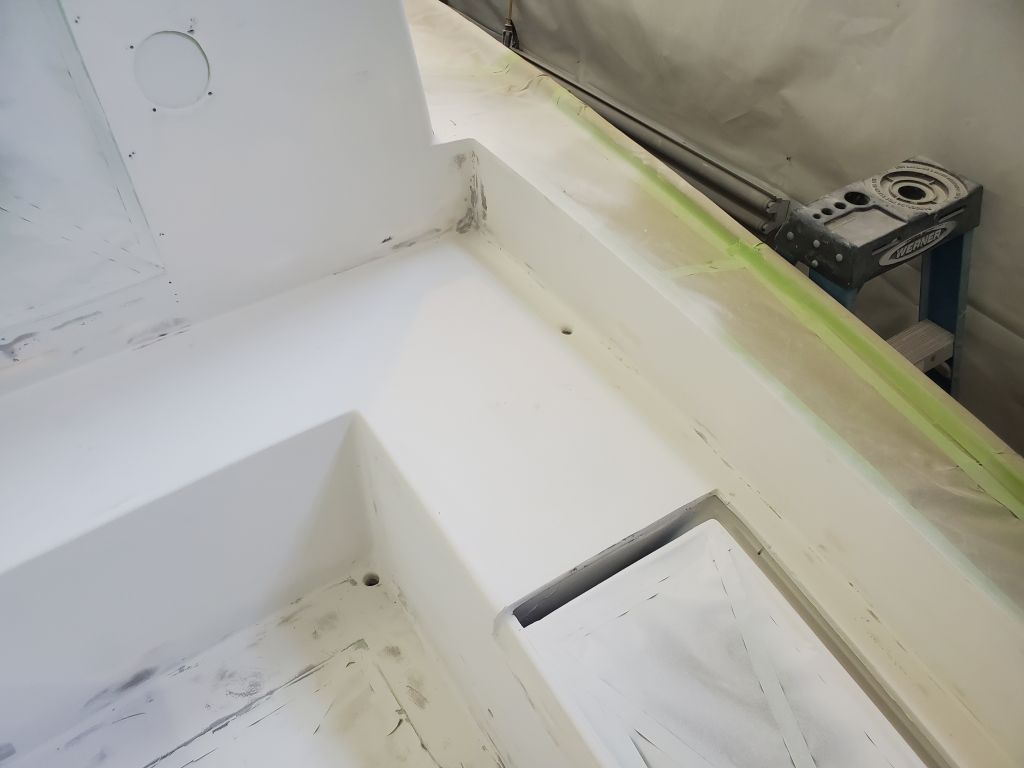
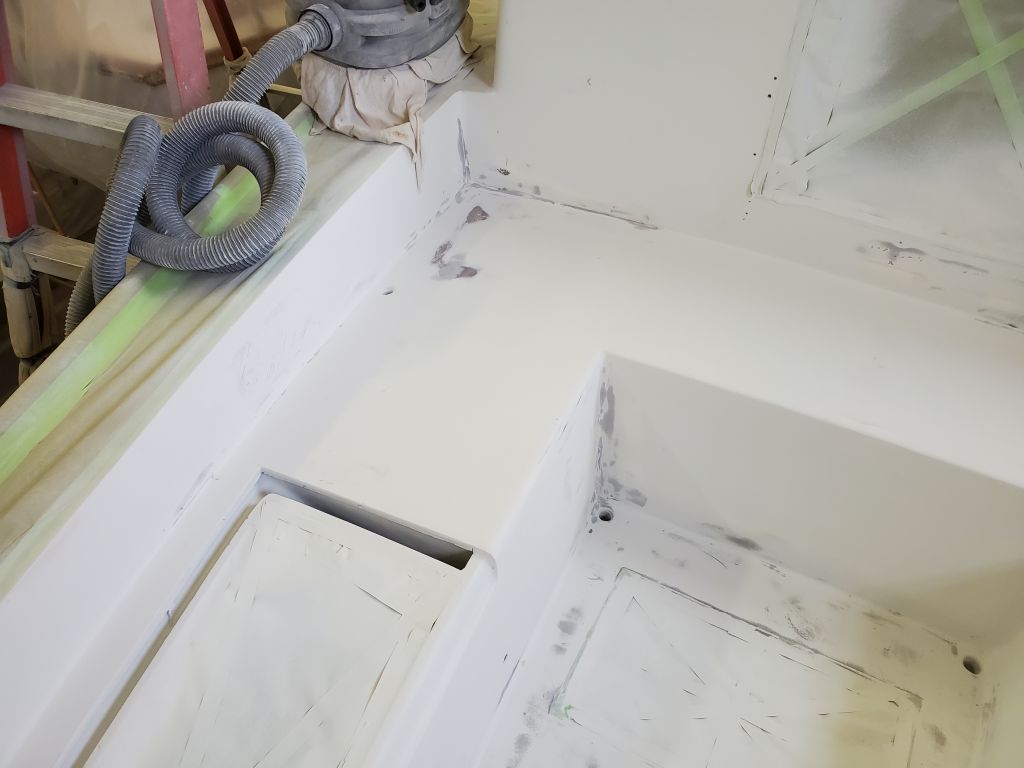
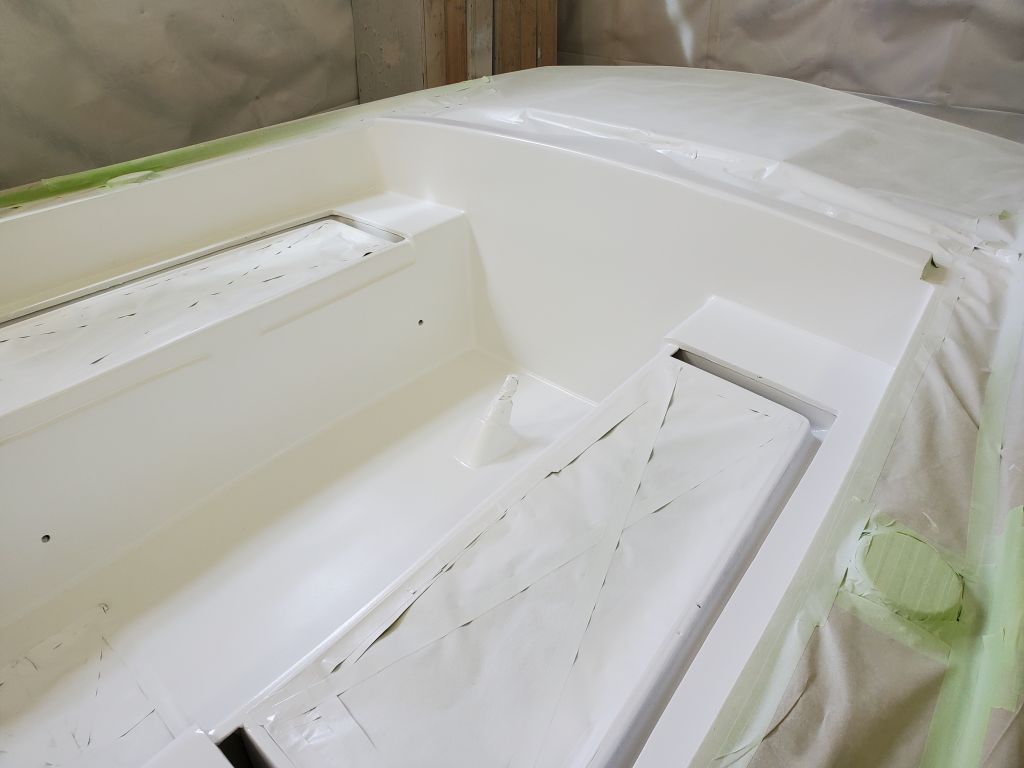
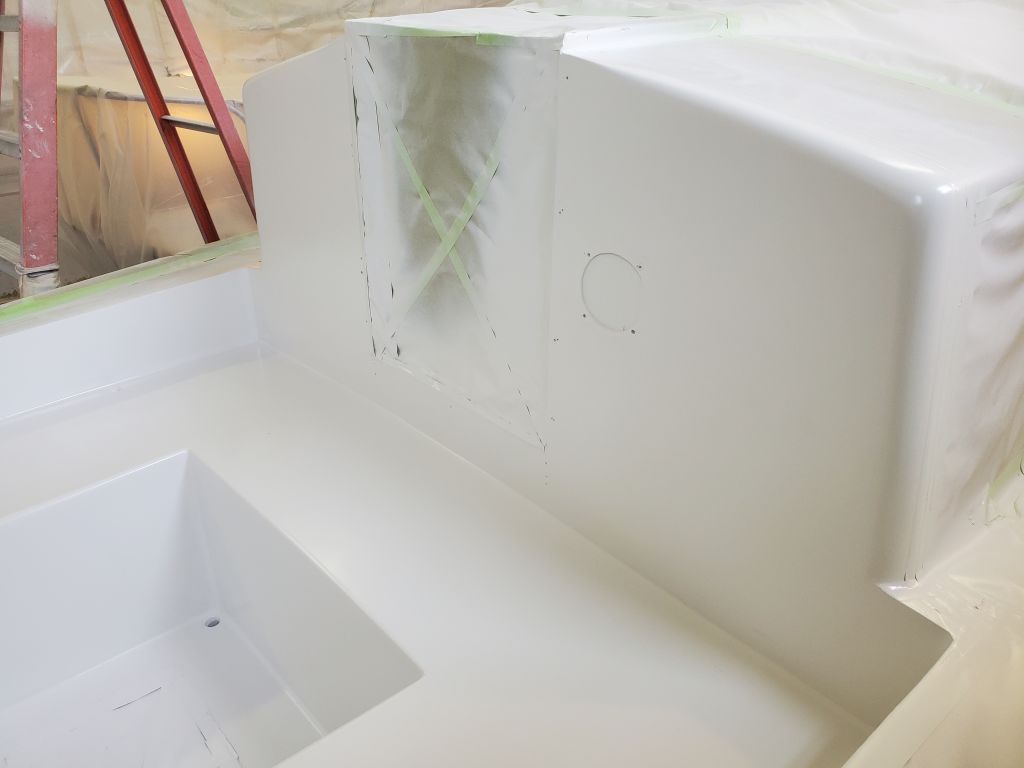
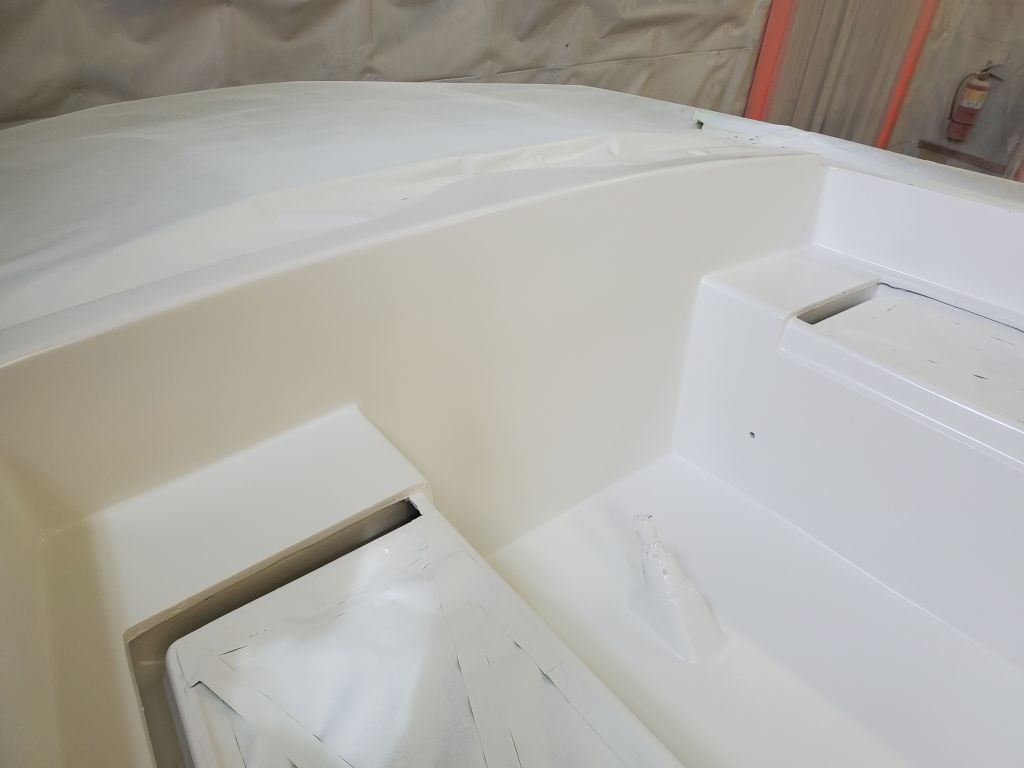
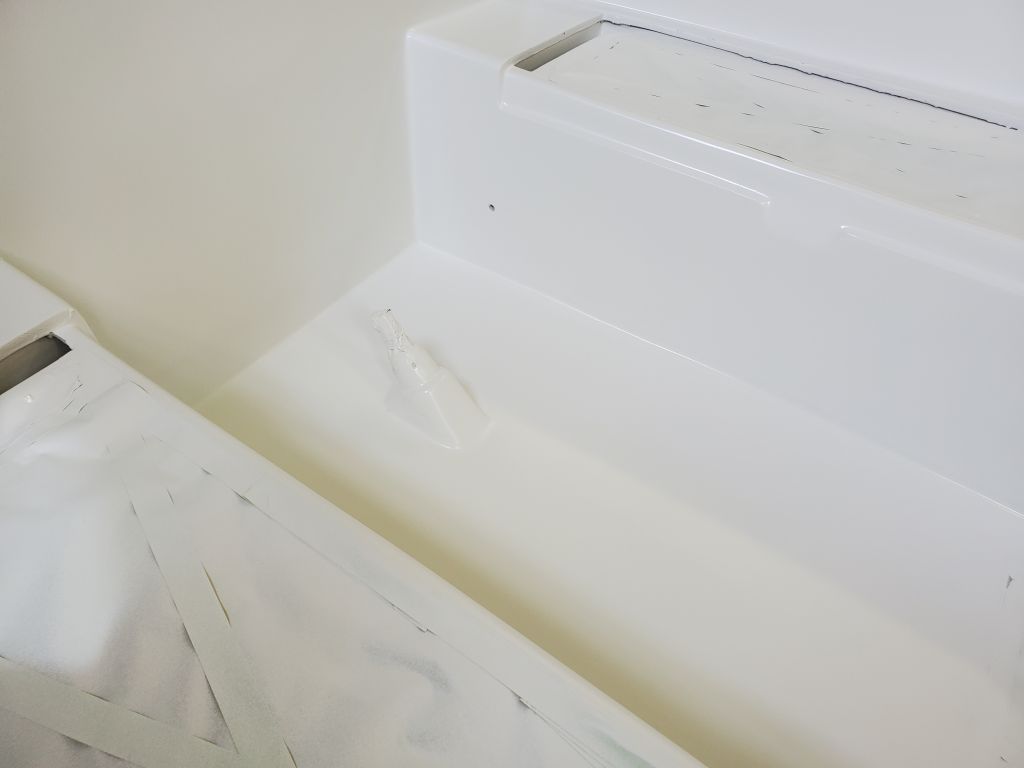
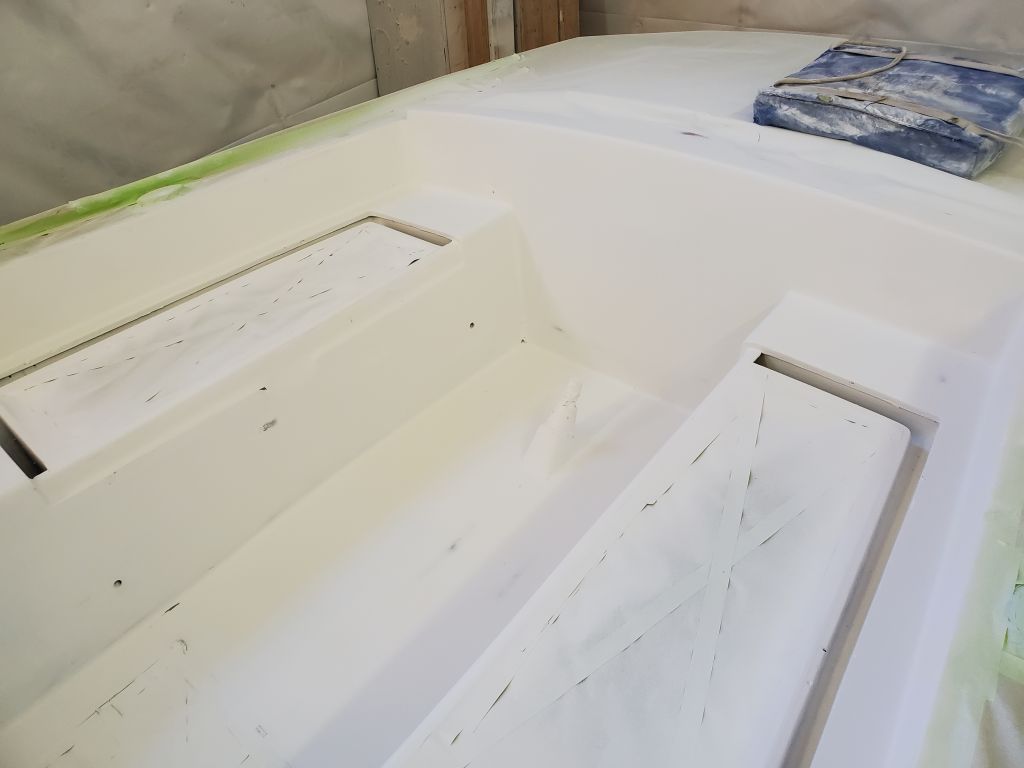
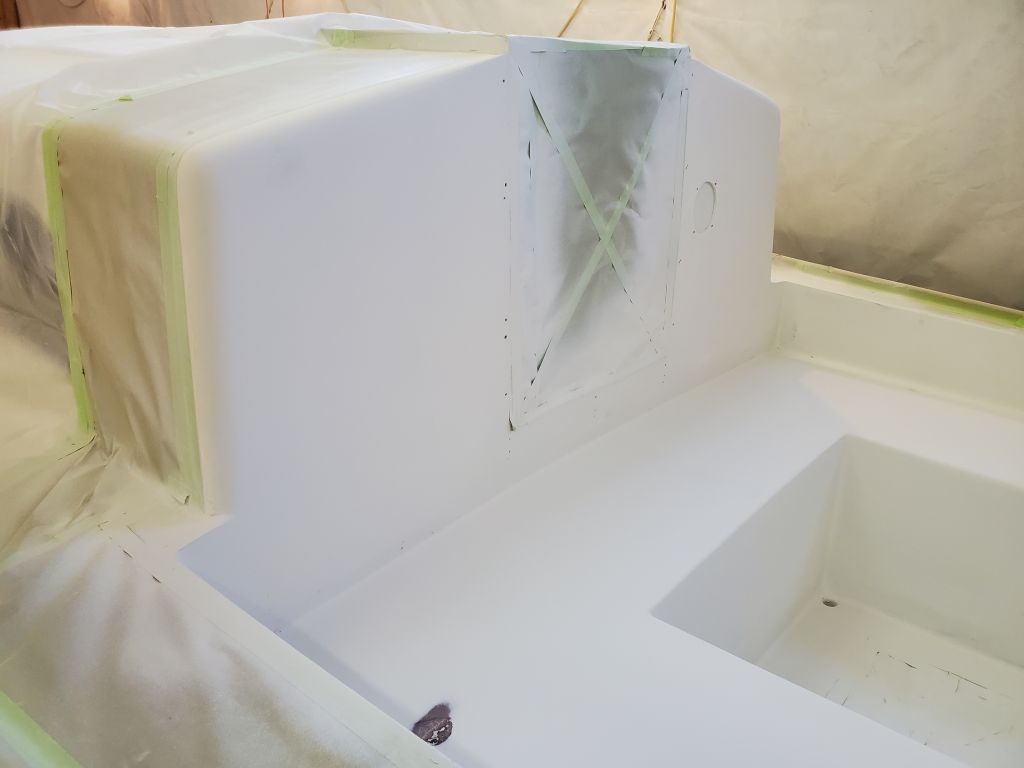
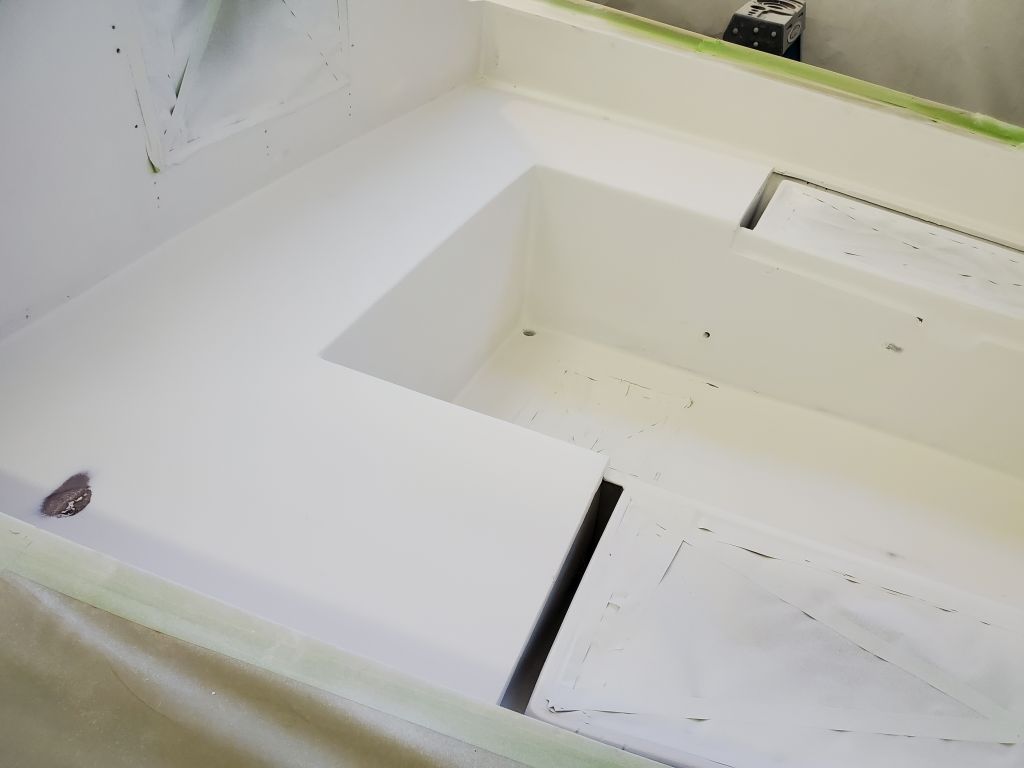
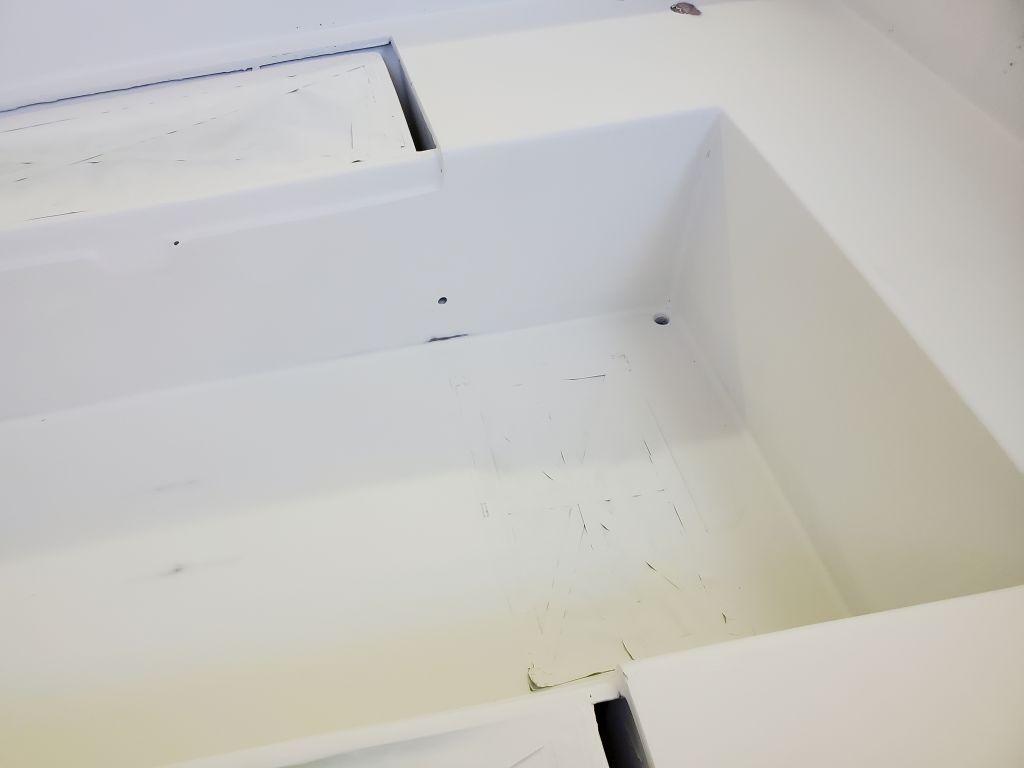
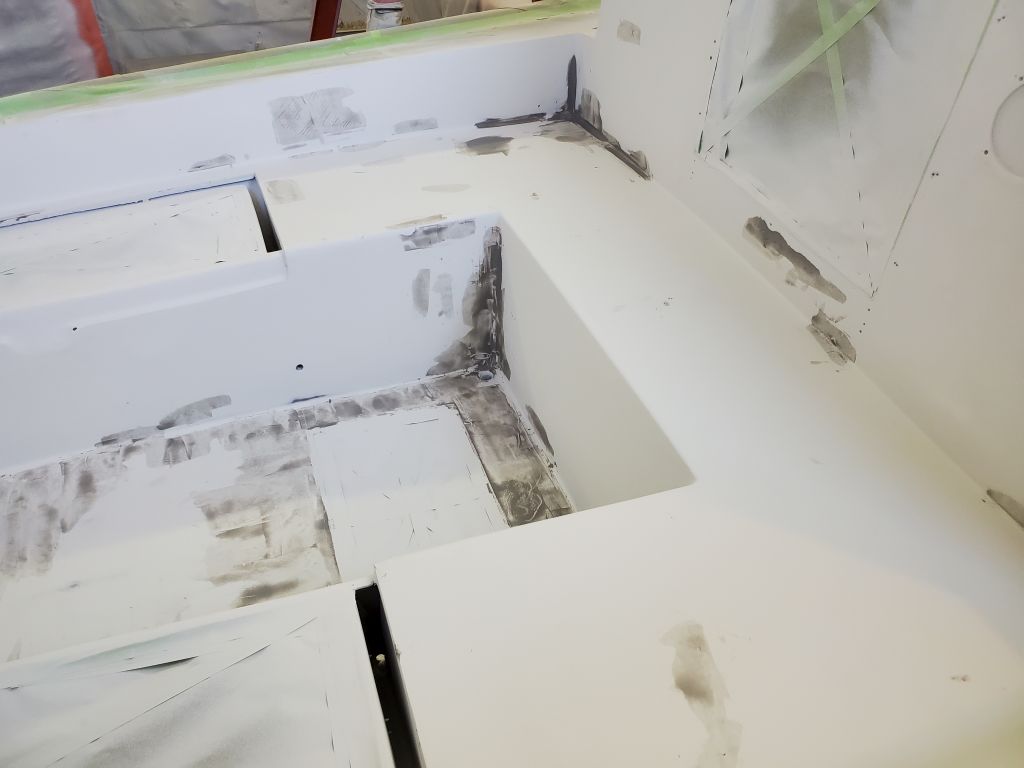
Next, I masked over the fresh paint in the cockpit, following the layout I’d made during my earlier masking rounds but this time to protect the new paint from the nonskid to go in the field areas.

After final cleanup and preparations, I applied the first of two coats of light gray nonskid paint to these areas, leaving it to cure during the day while I worked on other projects.

Total time billed on this job today:  2.5 hours

0600 Weather Observation:  Partly cloudy, 35°.   Forecast for the day:   Sunny, windy, 43°


Lively Heels Phase 3-35

Friday

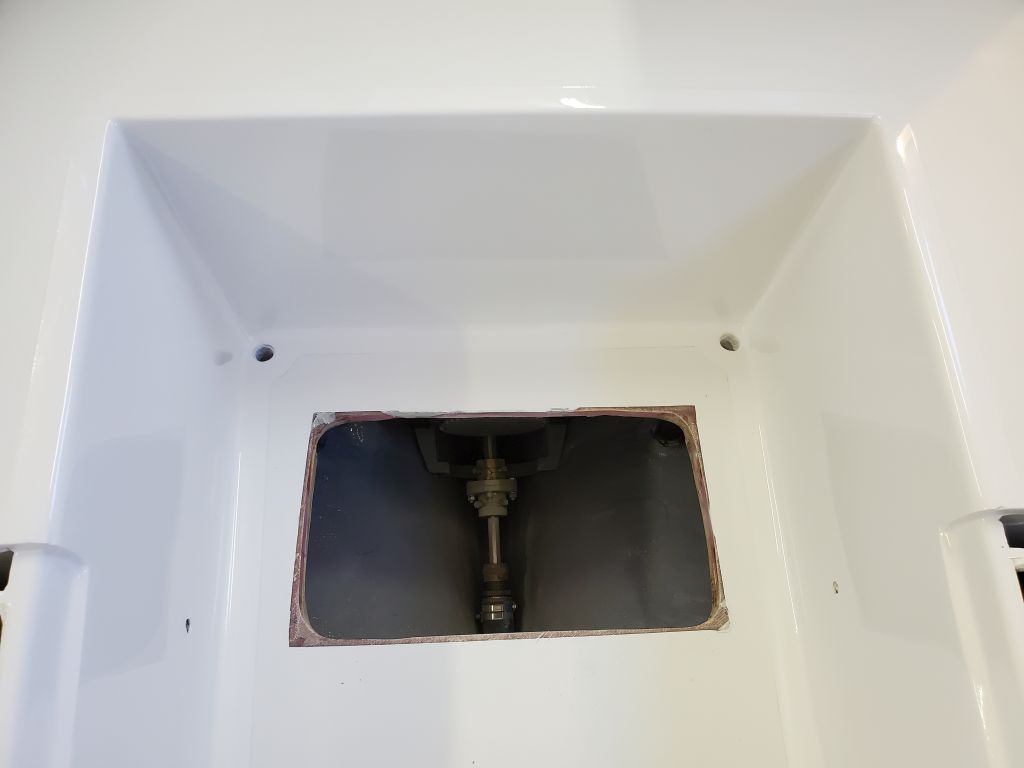
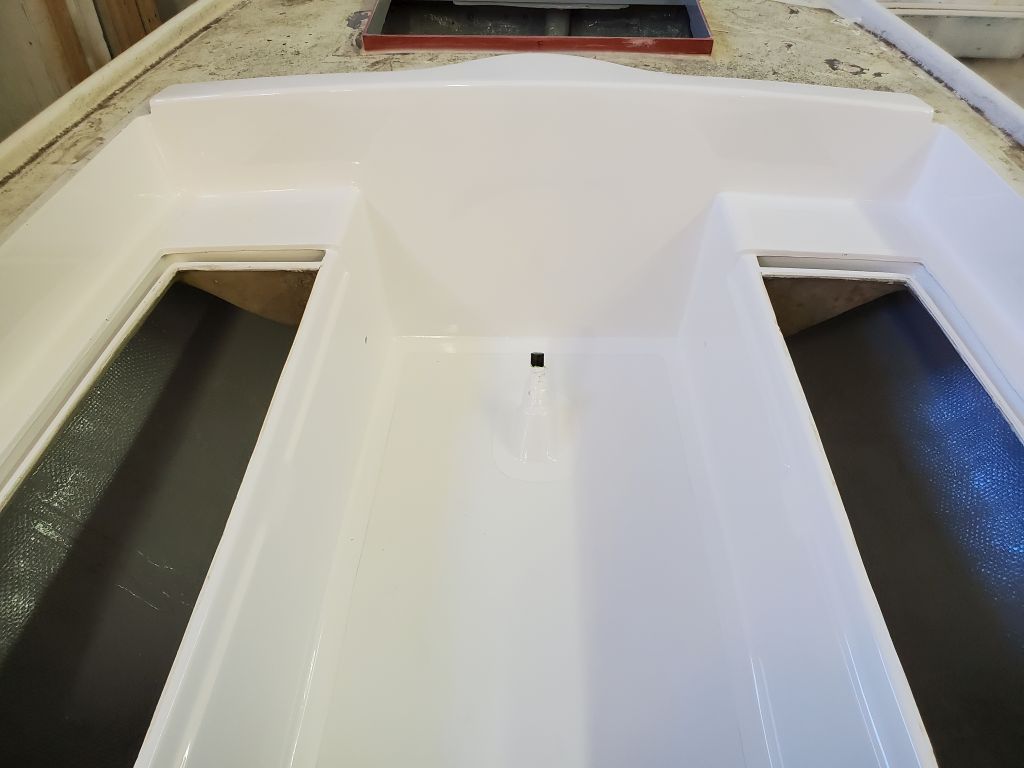
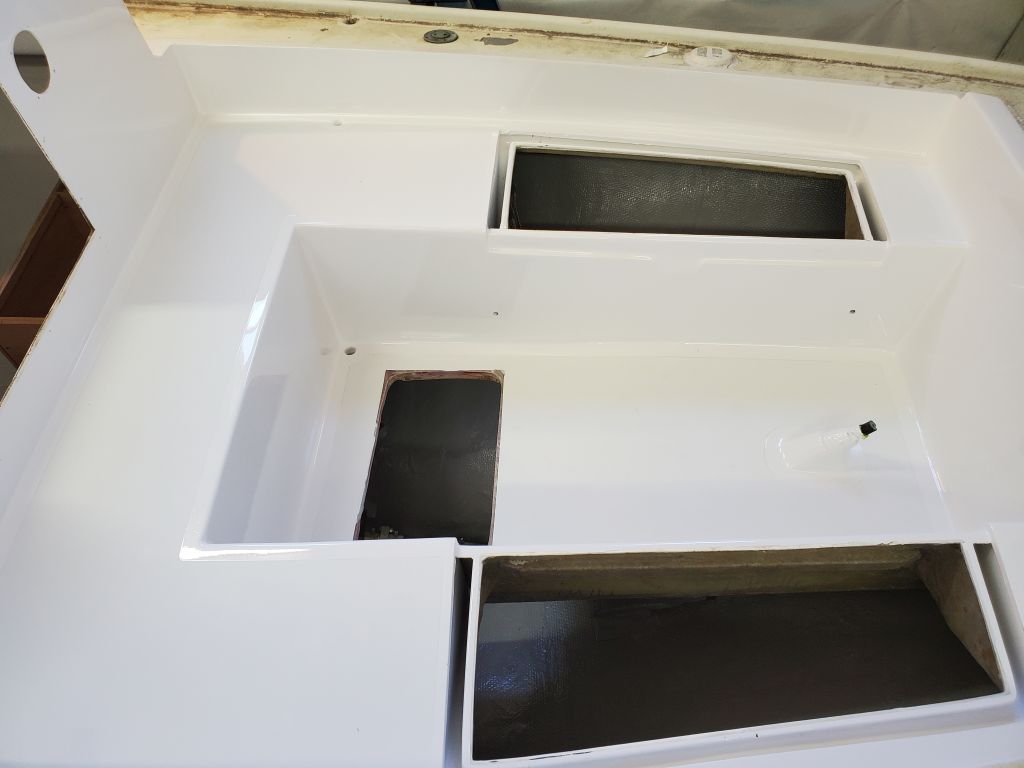
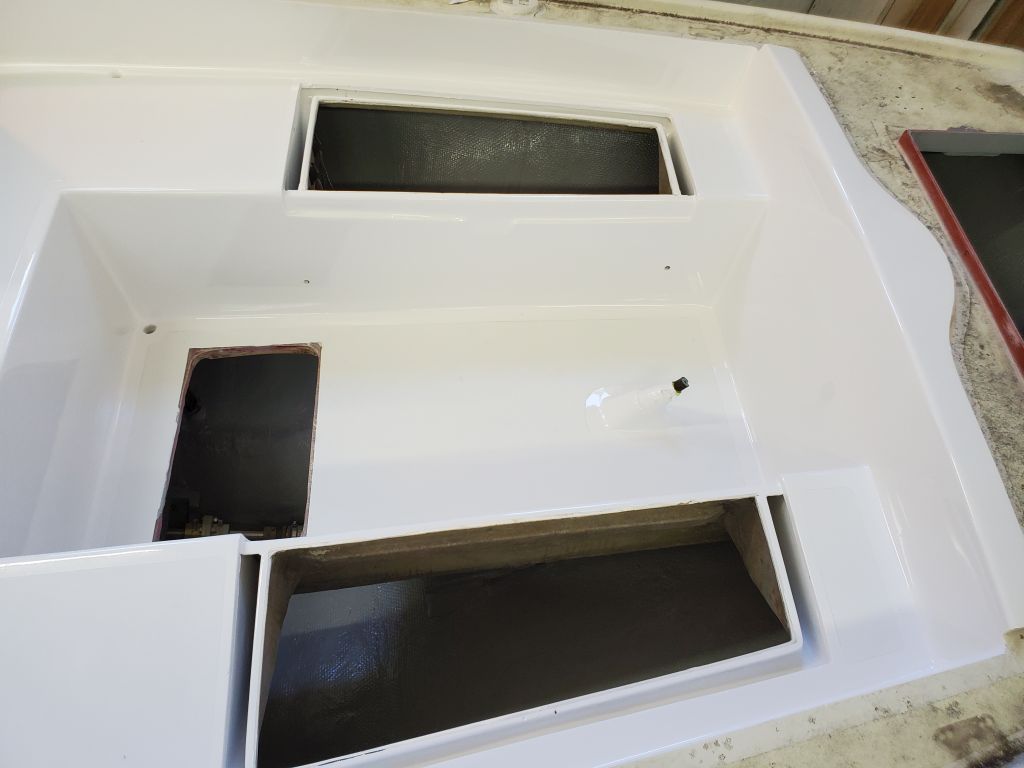
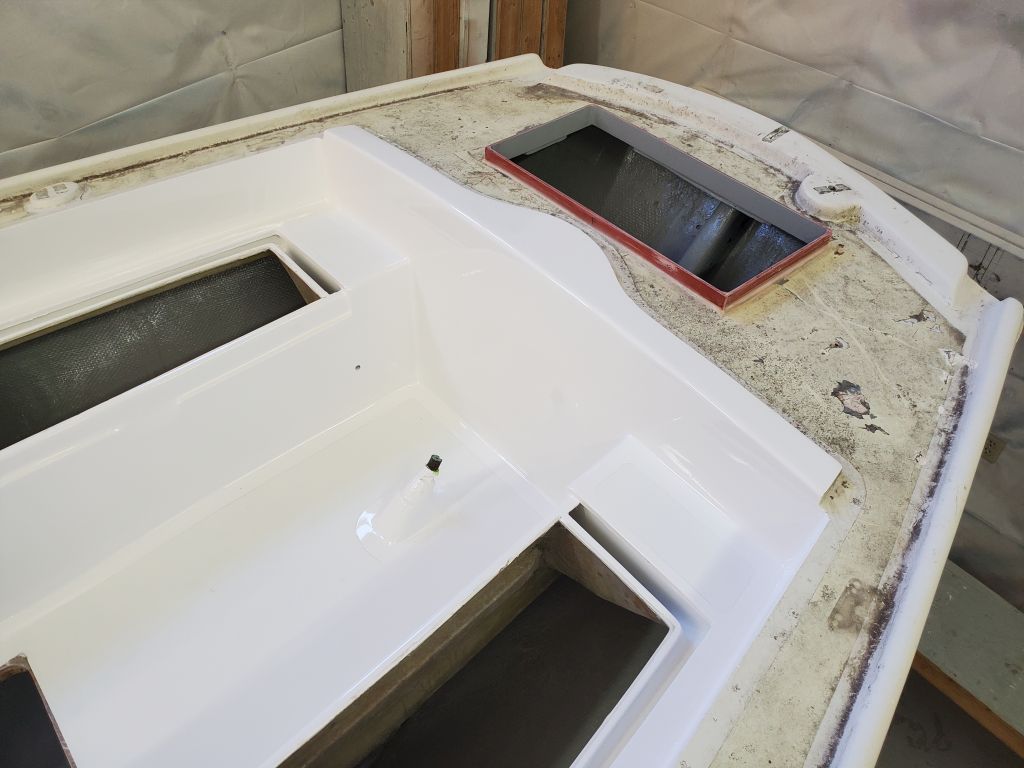
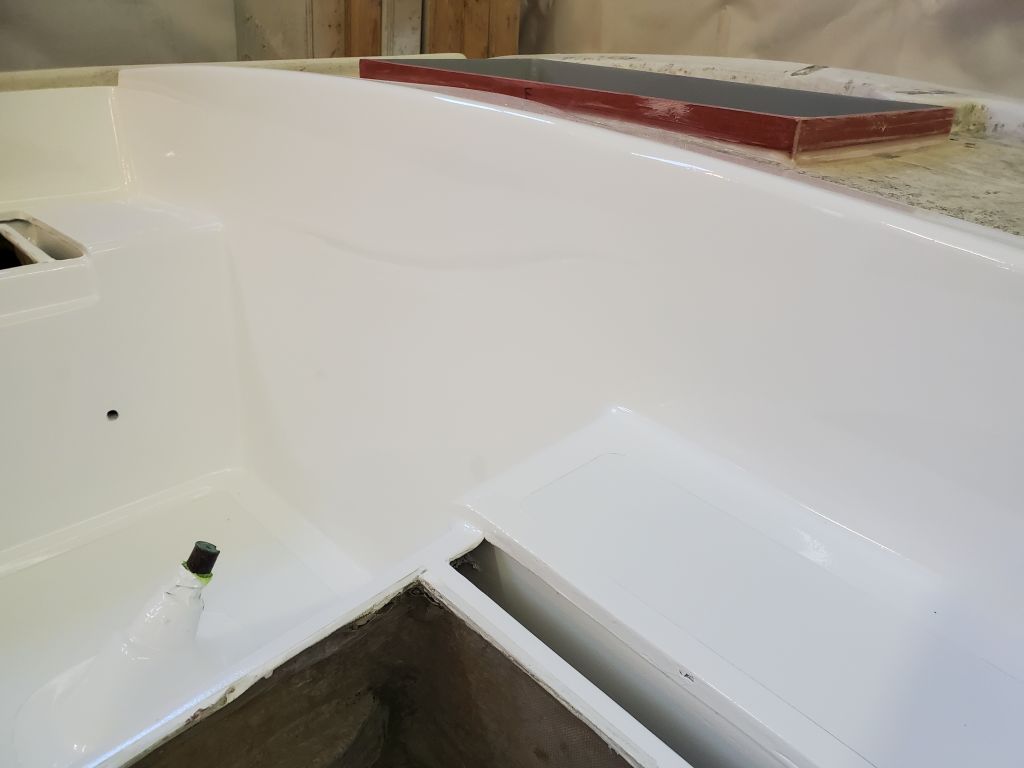
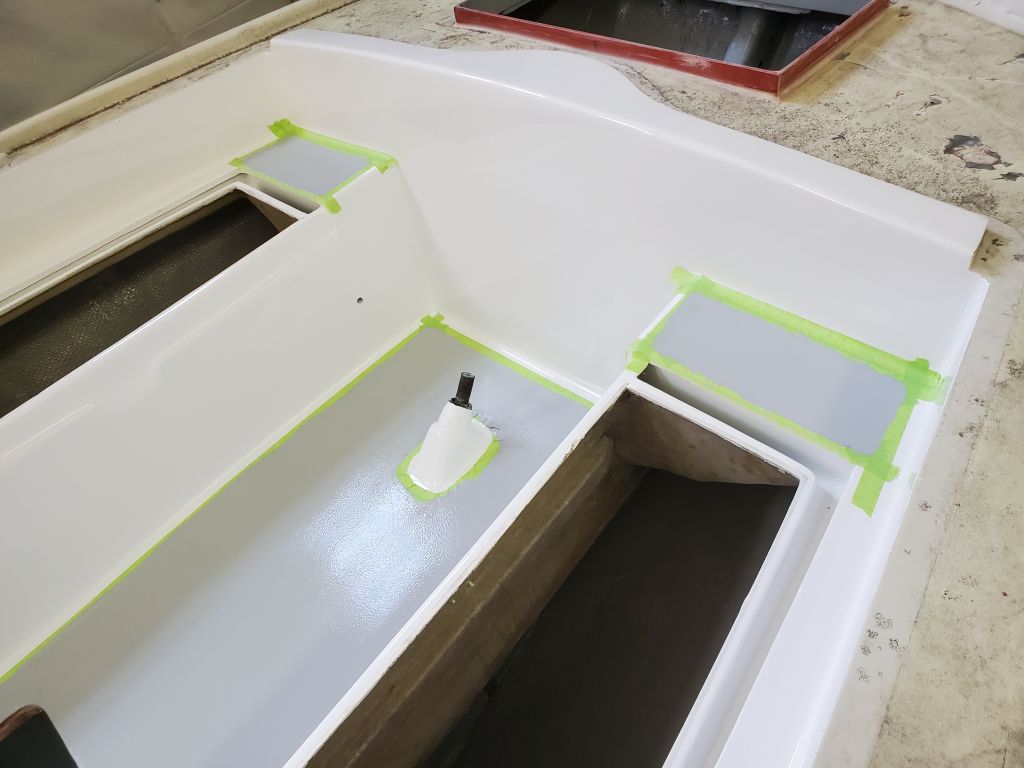
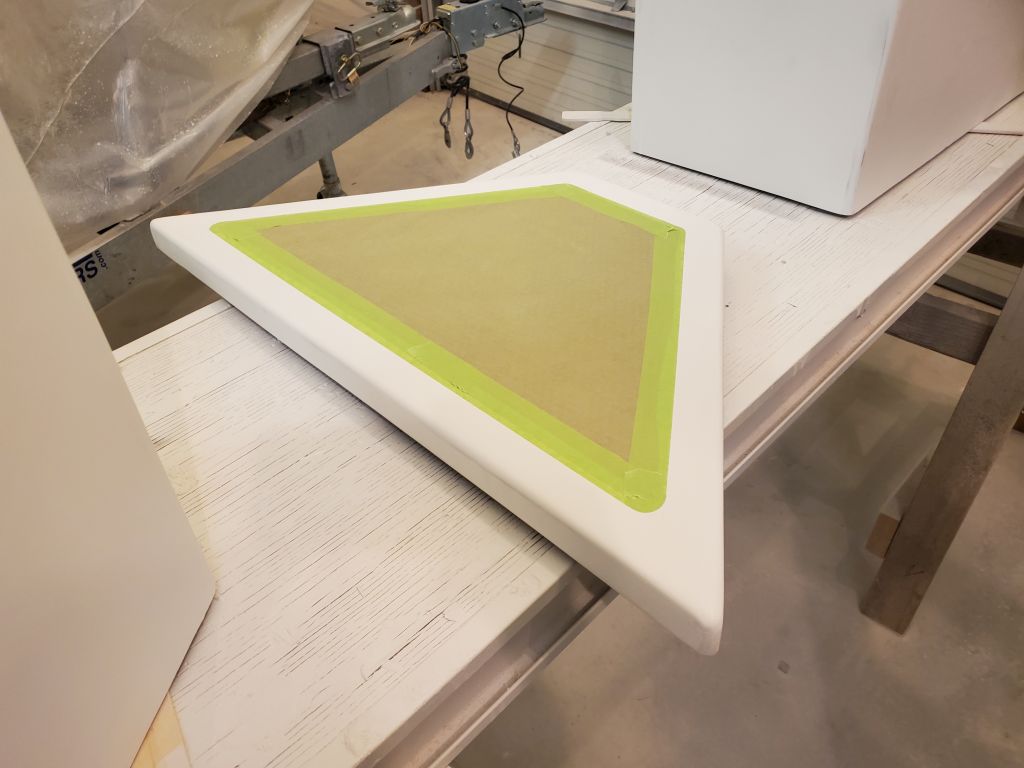
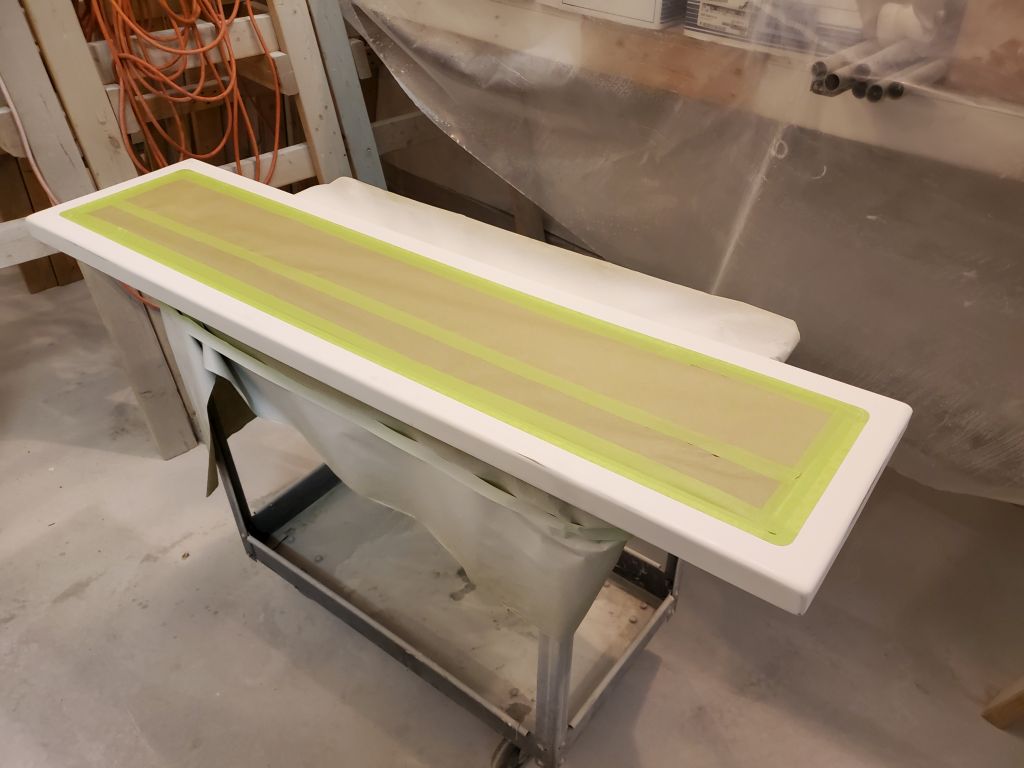
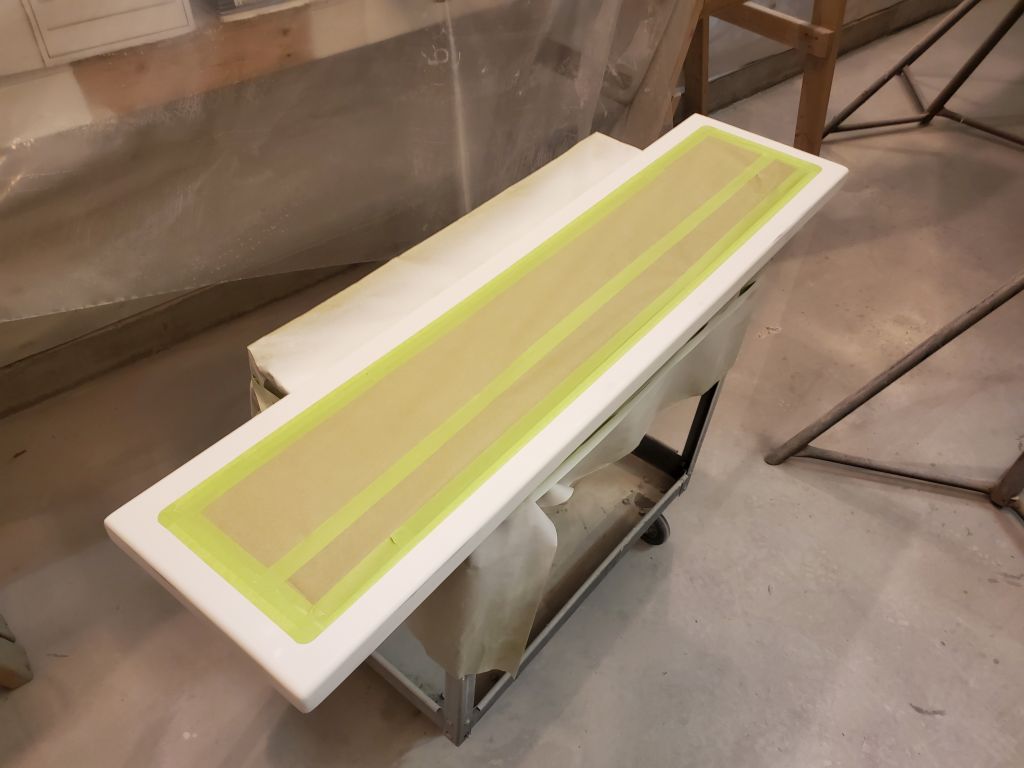
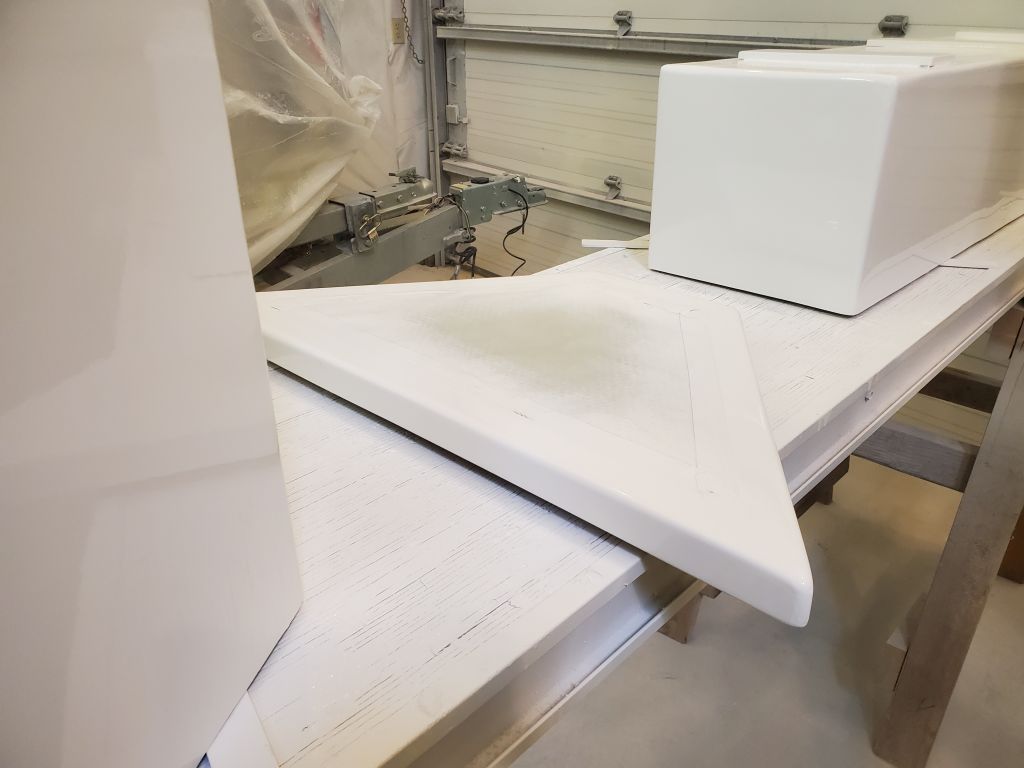
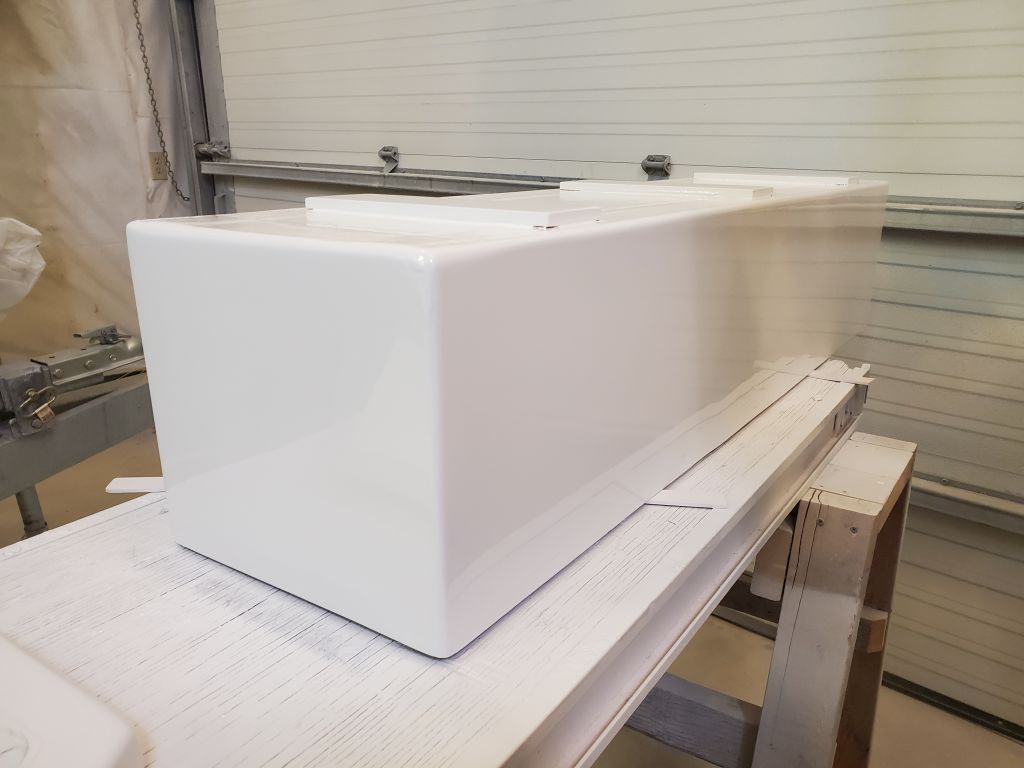
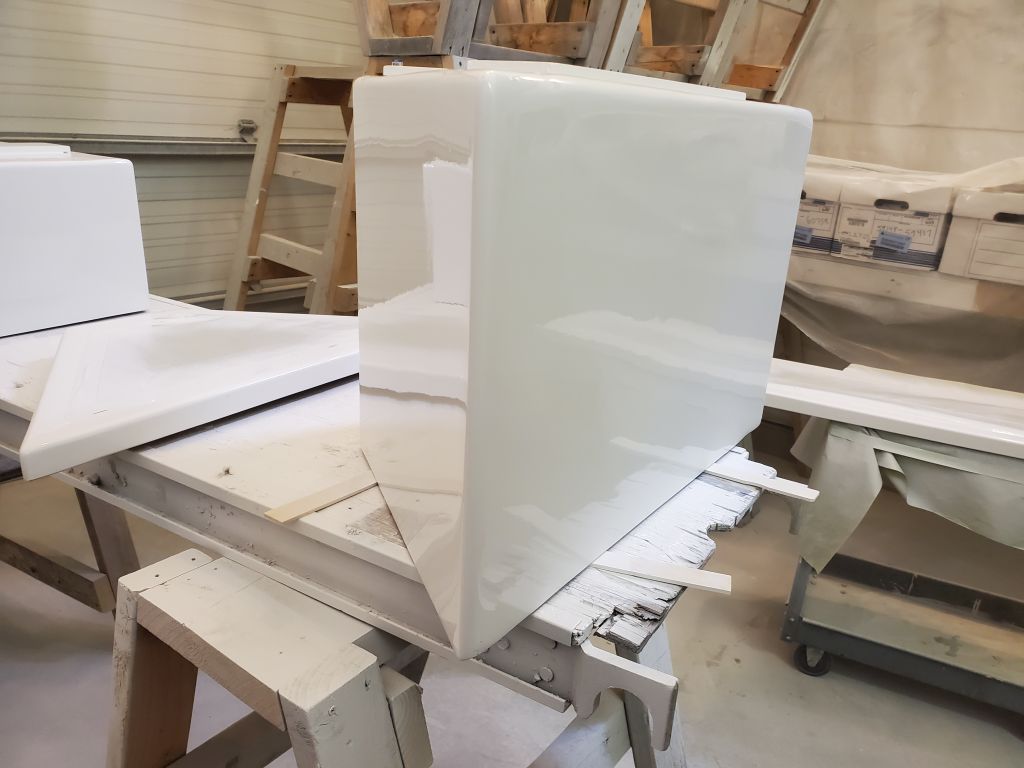
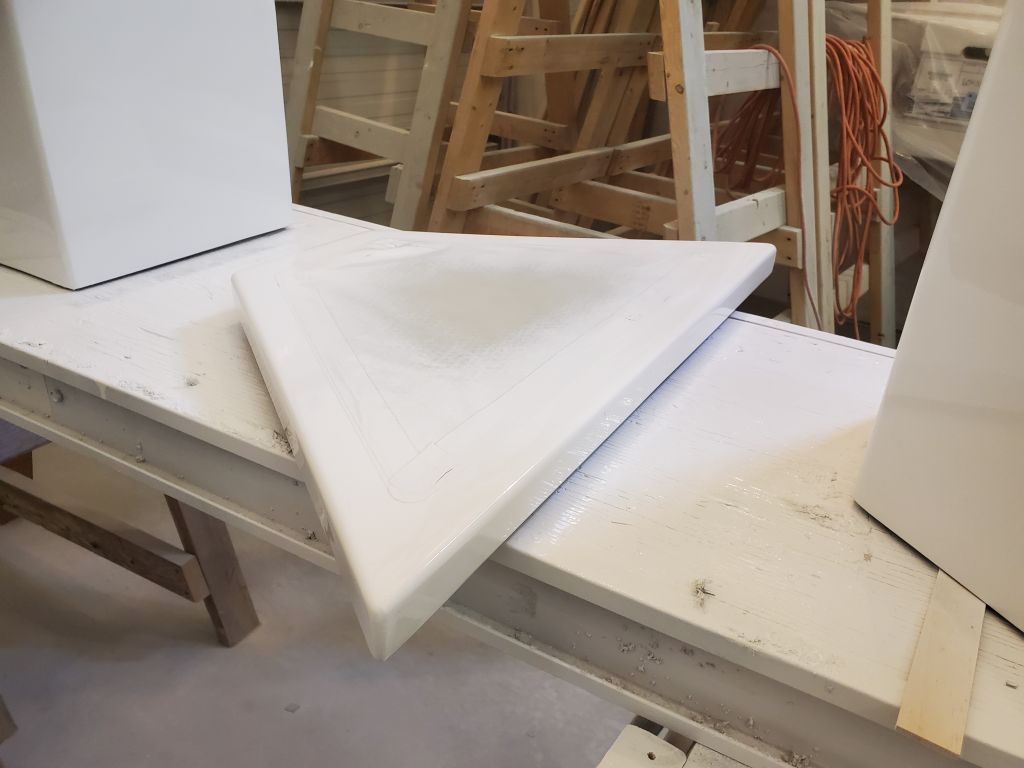
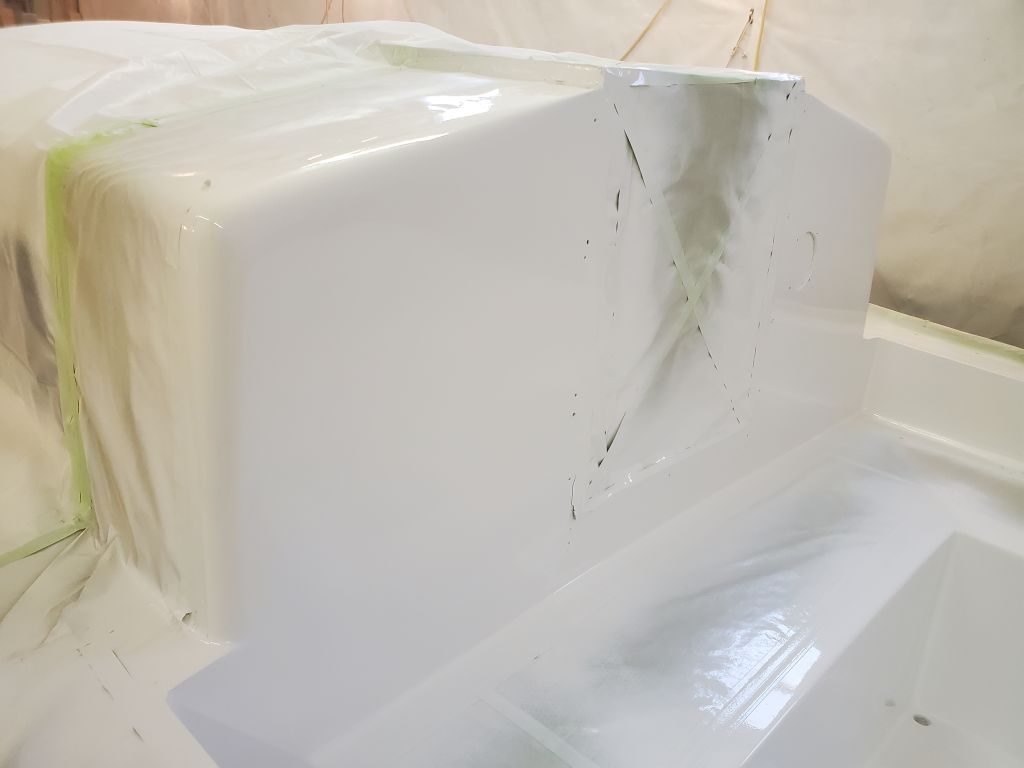
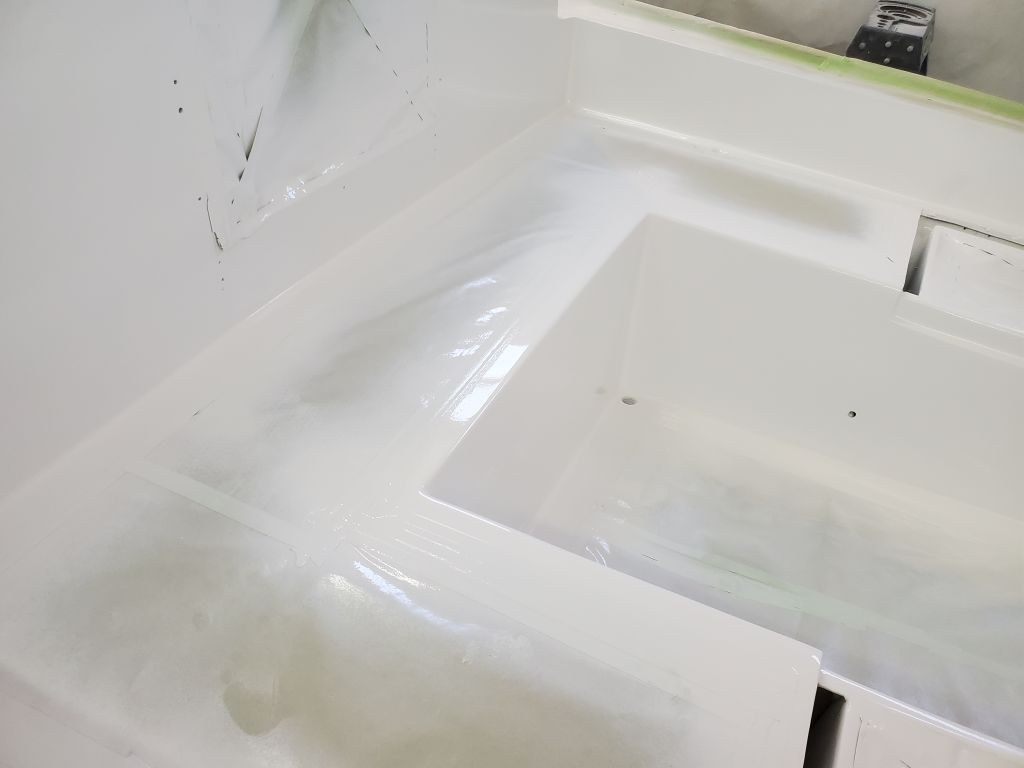
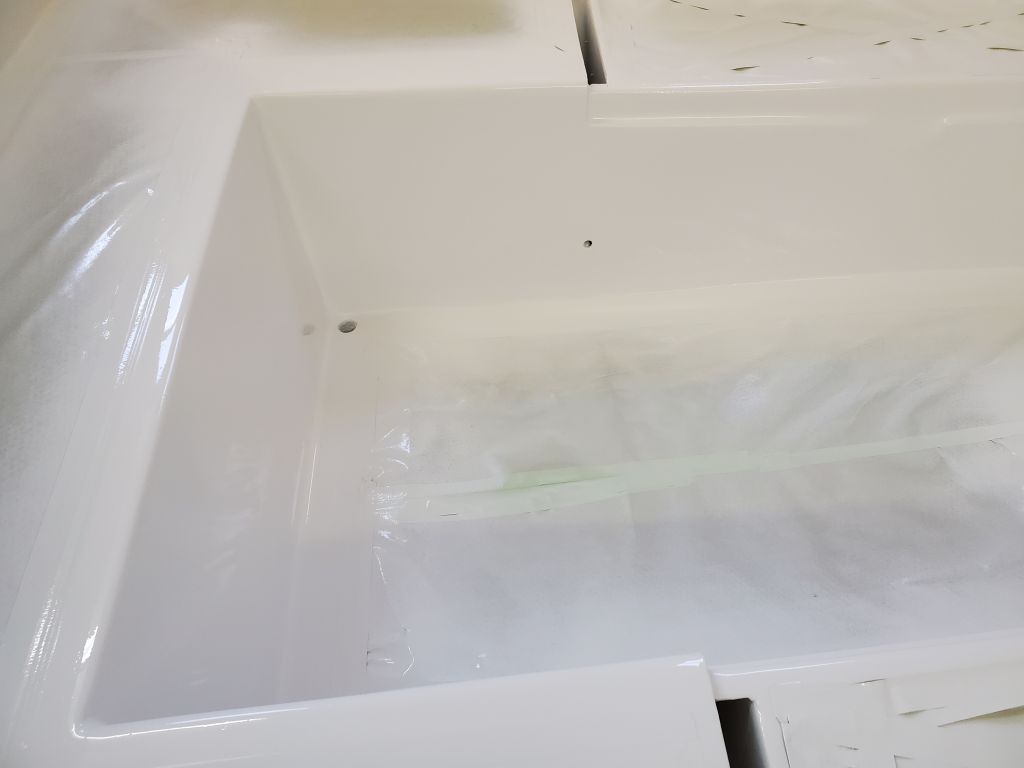
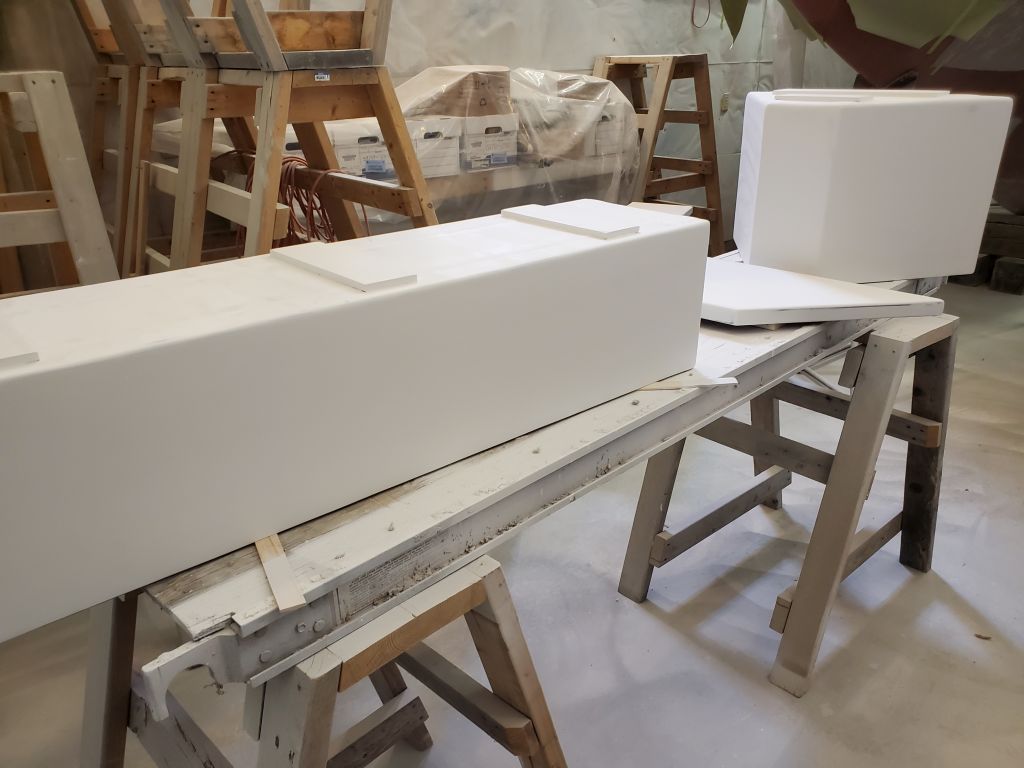
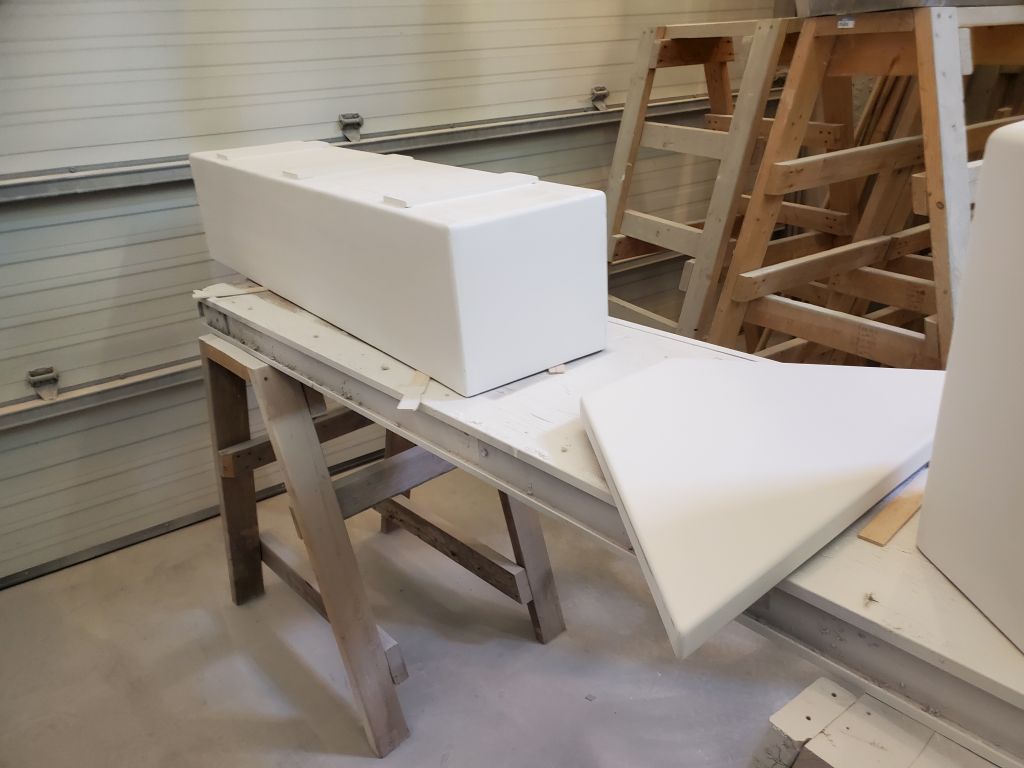
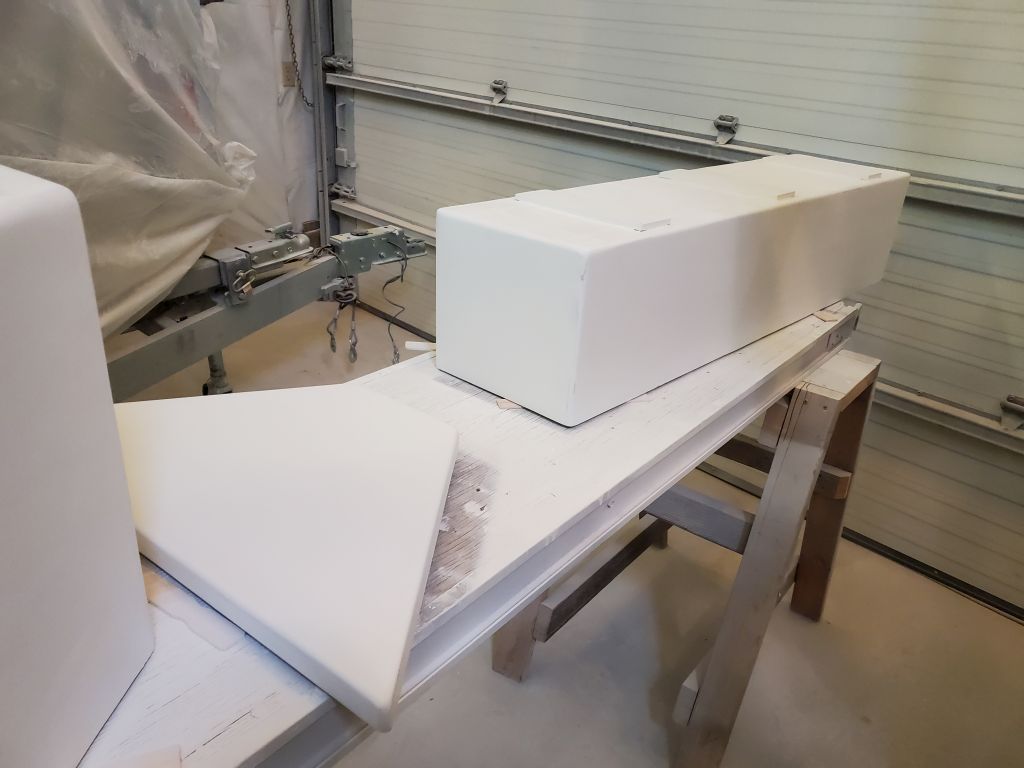
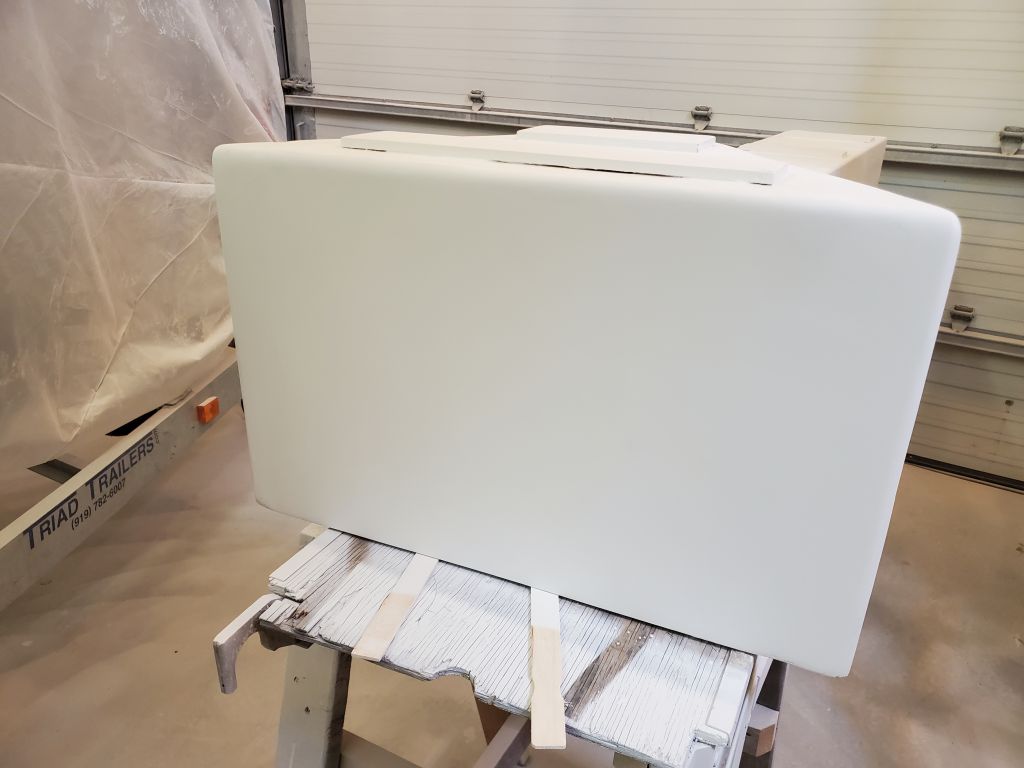
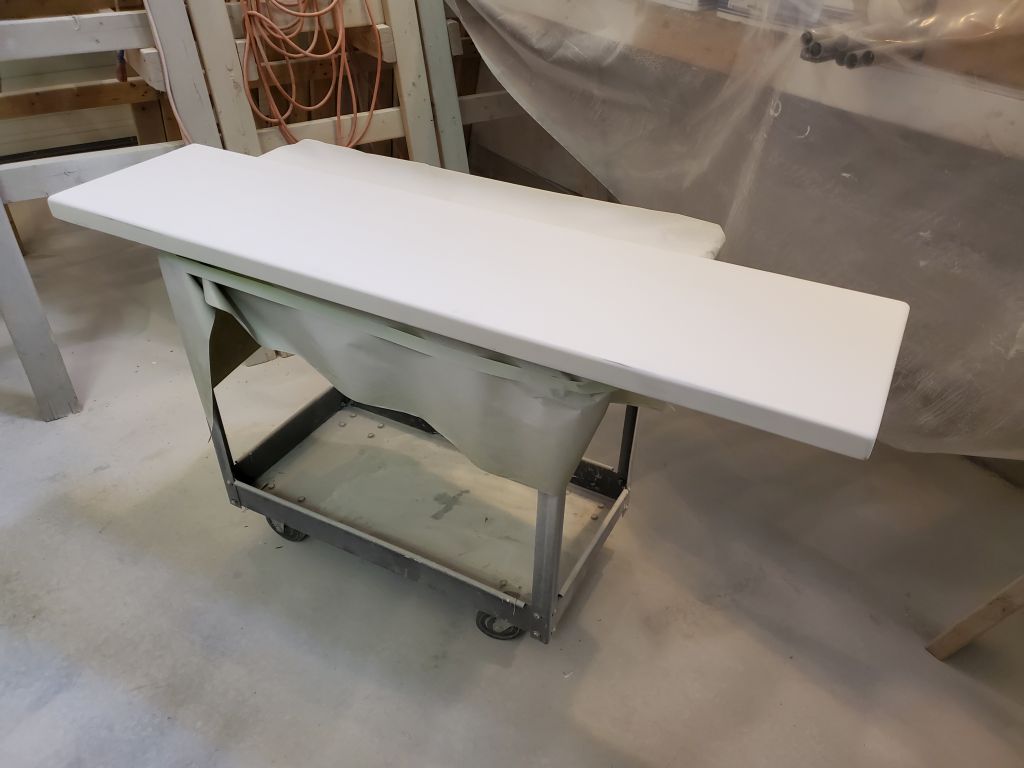
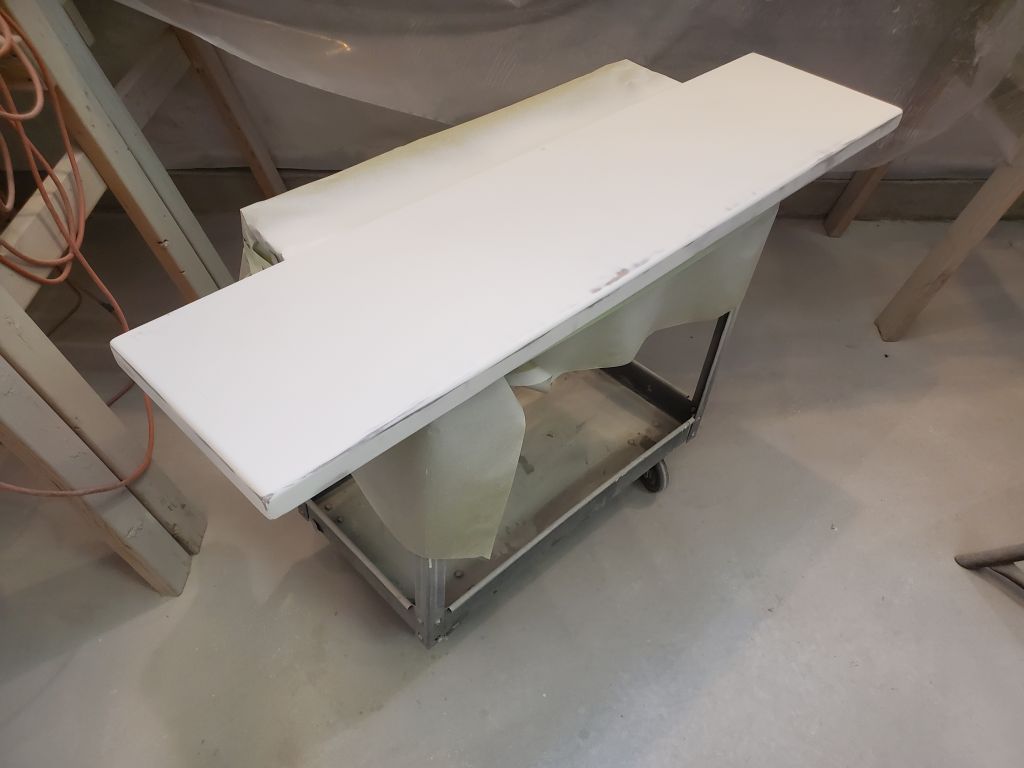
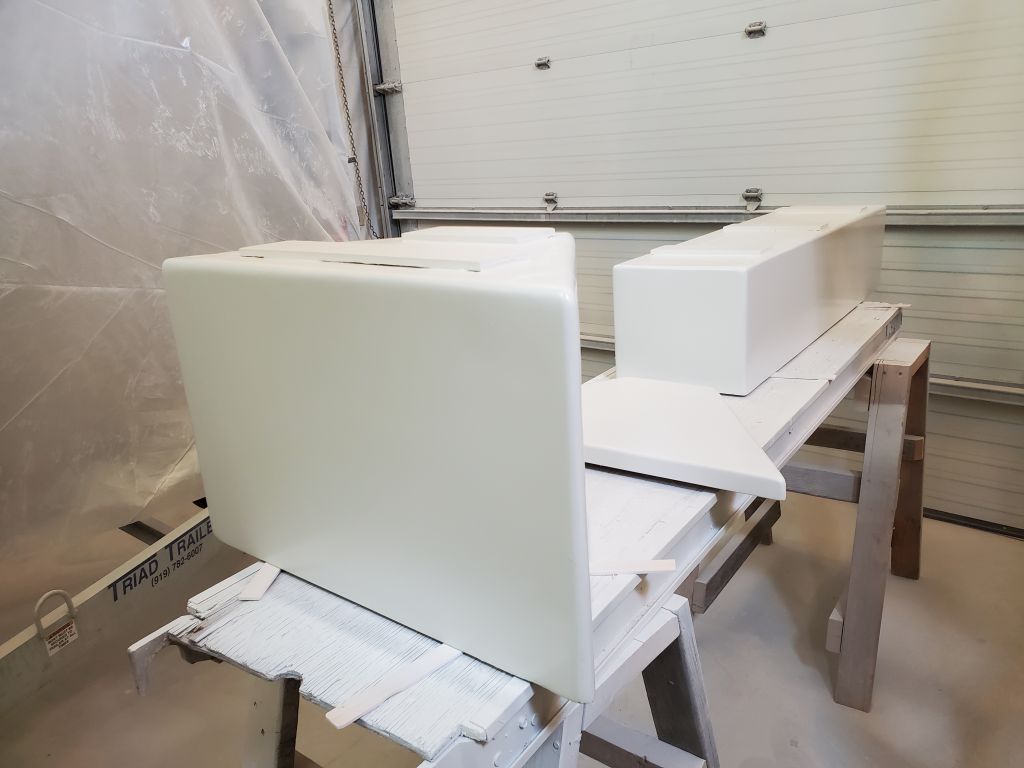
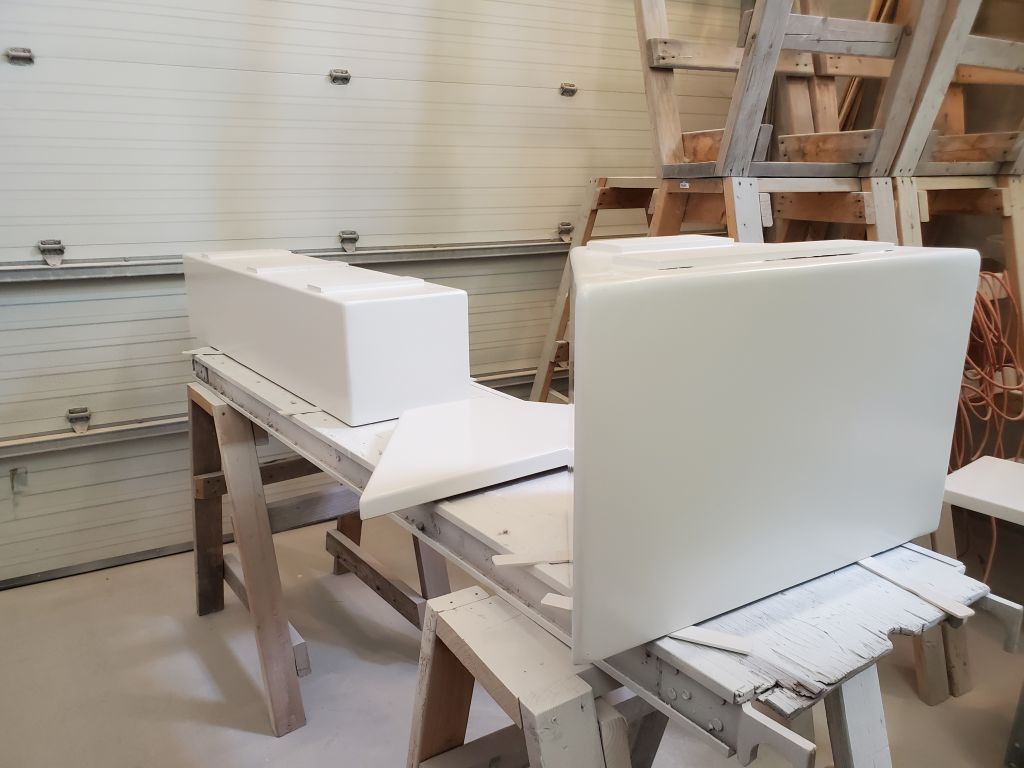
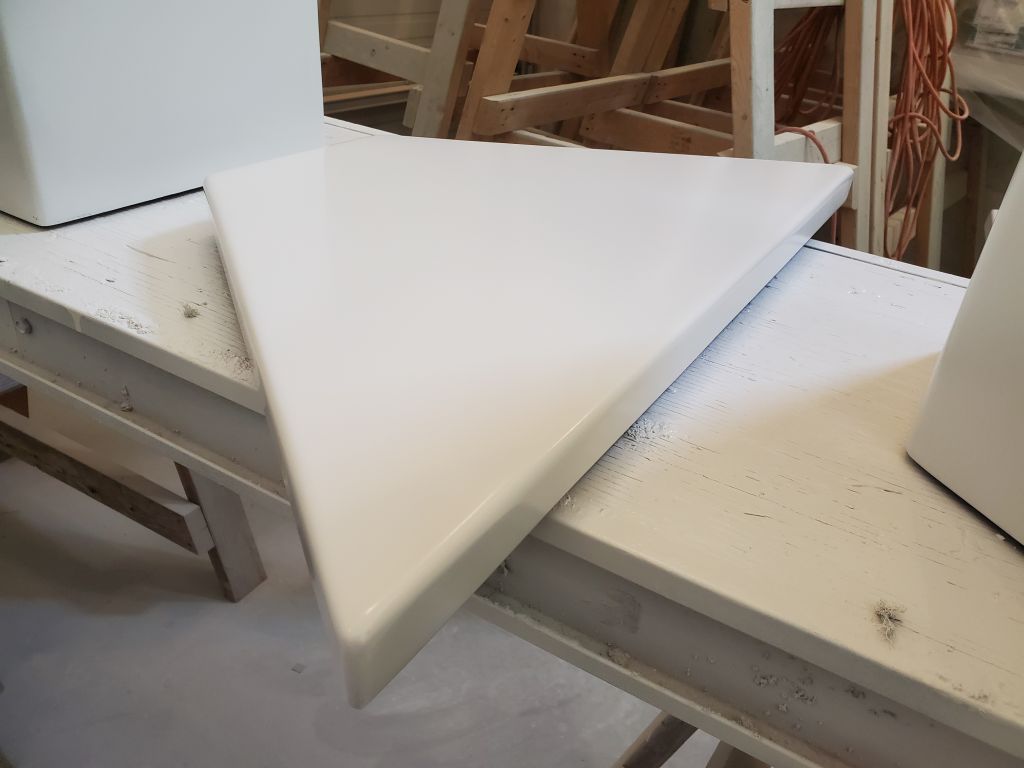
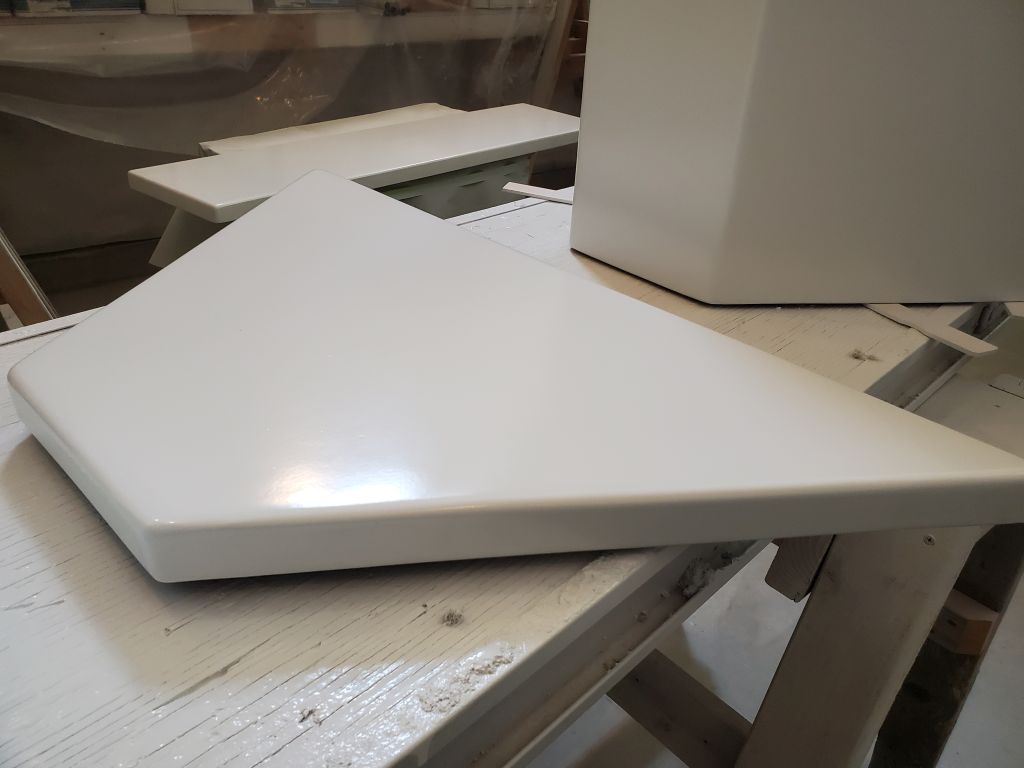
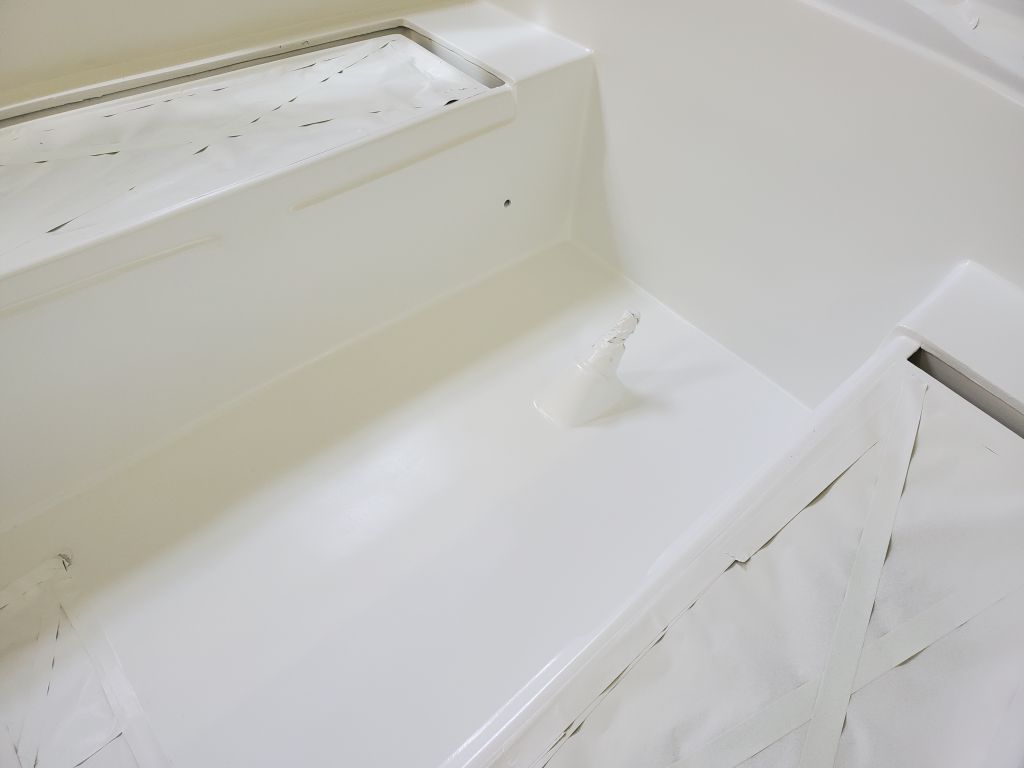
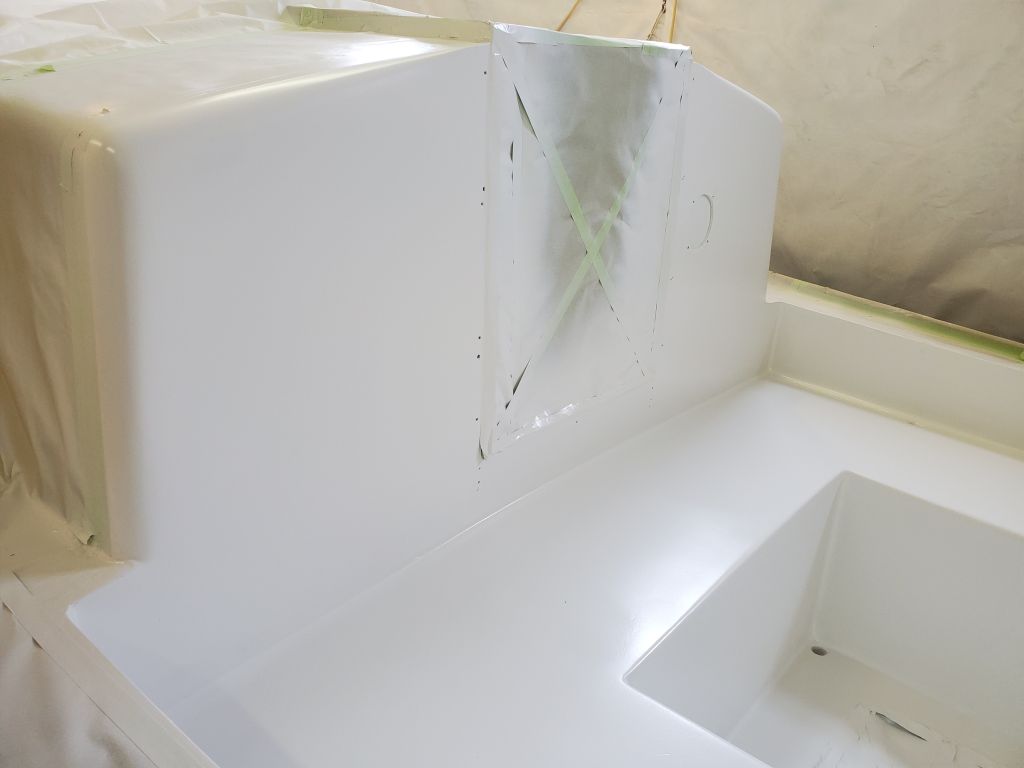
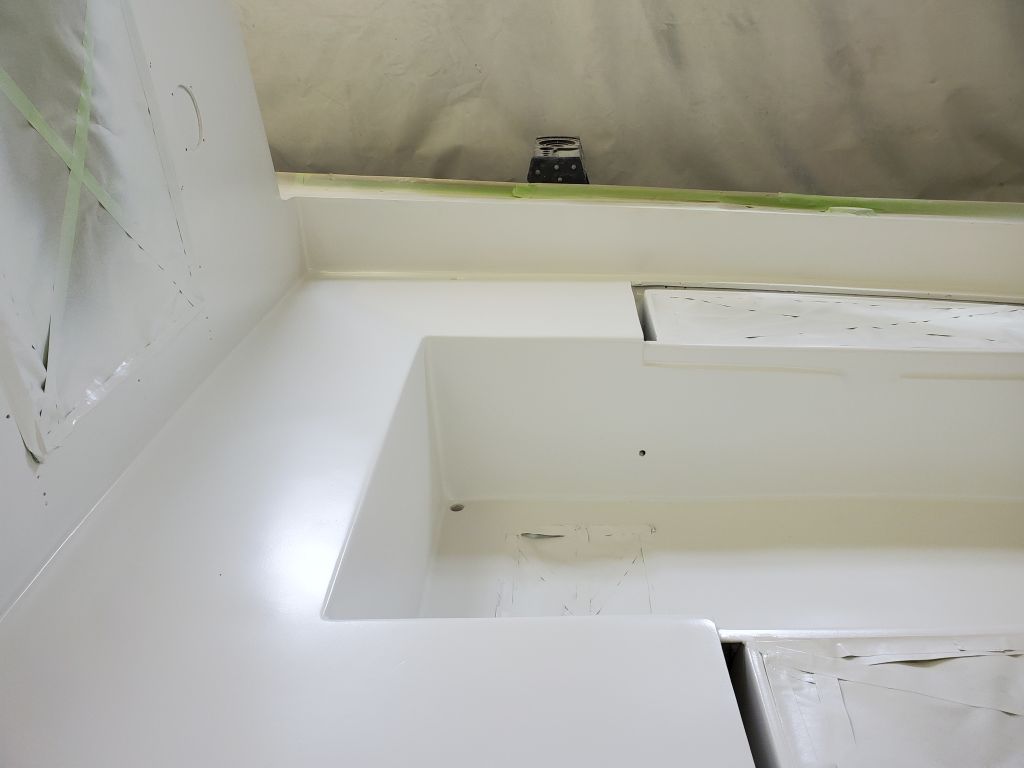
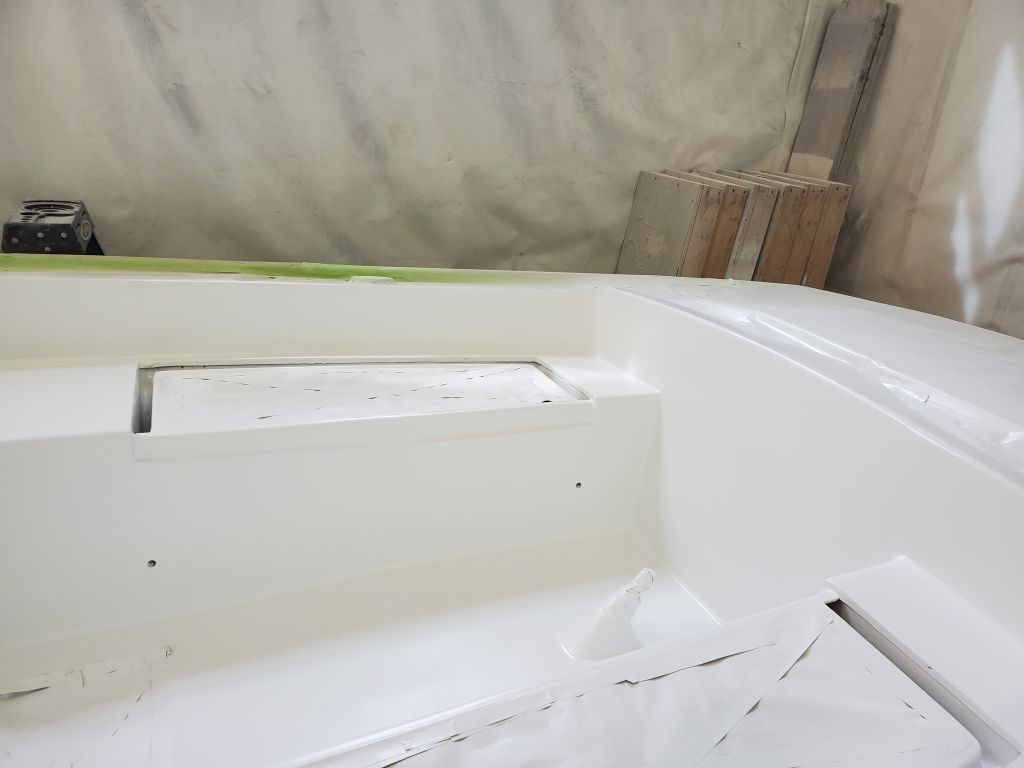
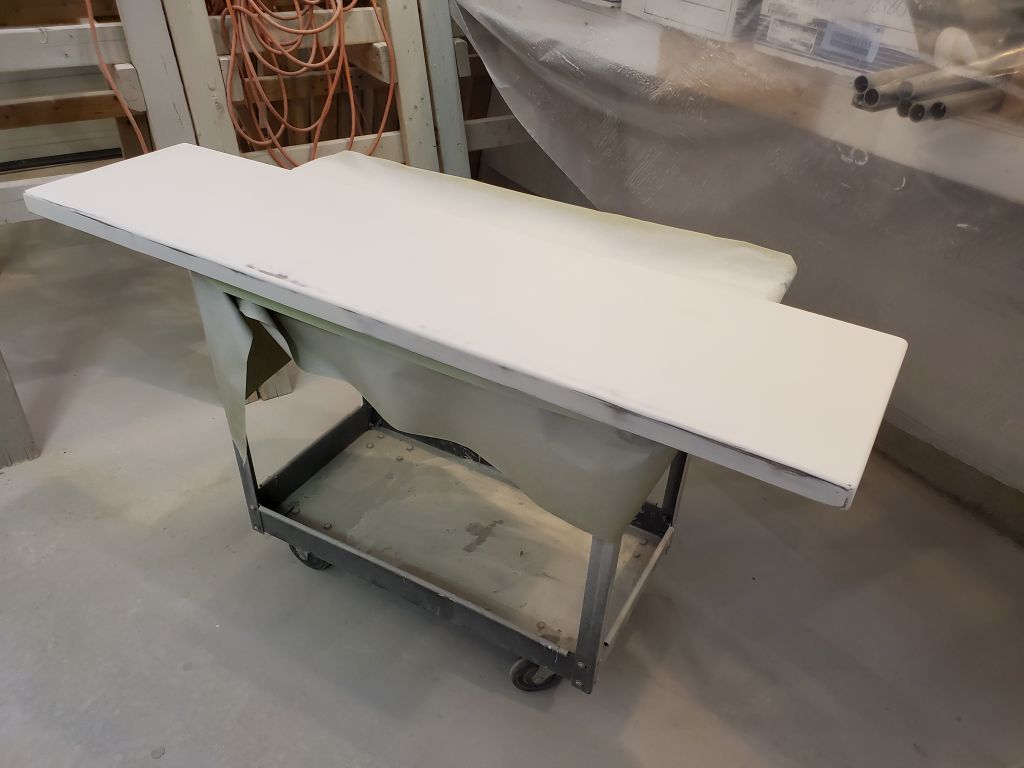
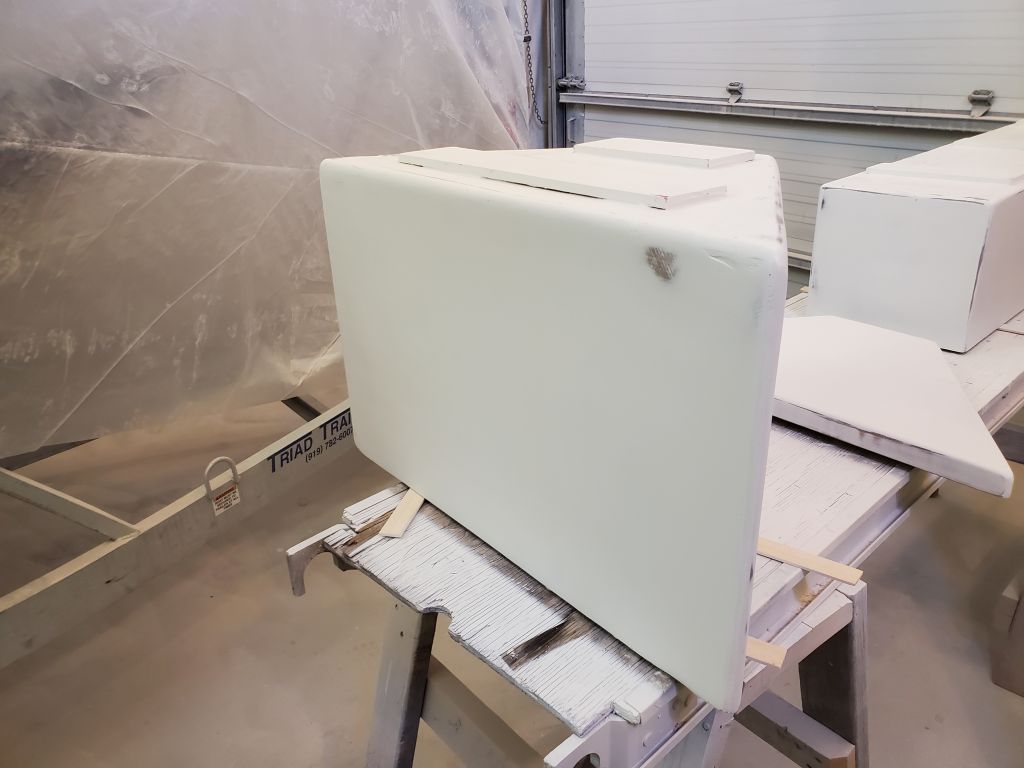
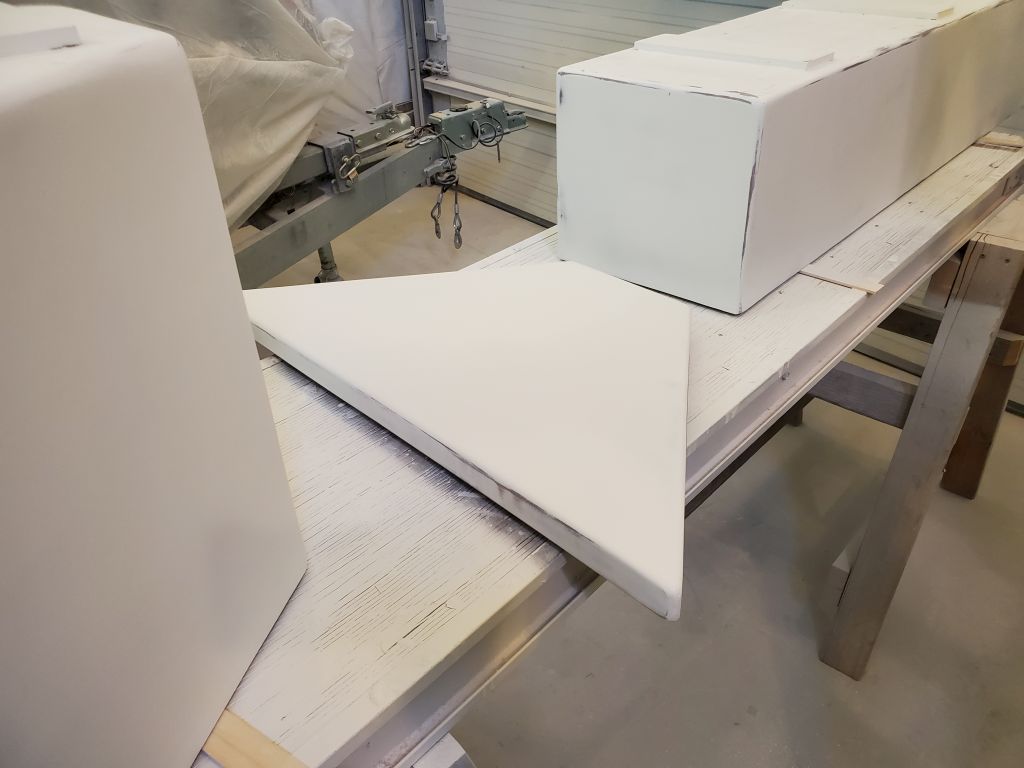
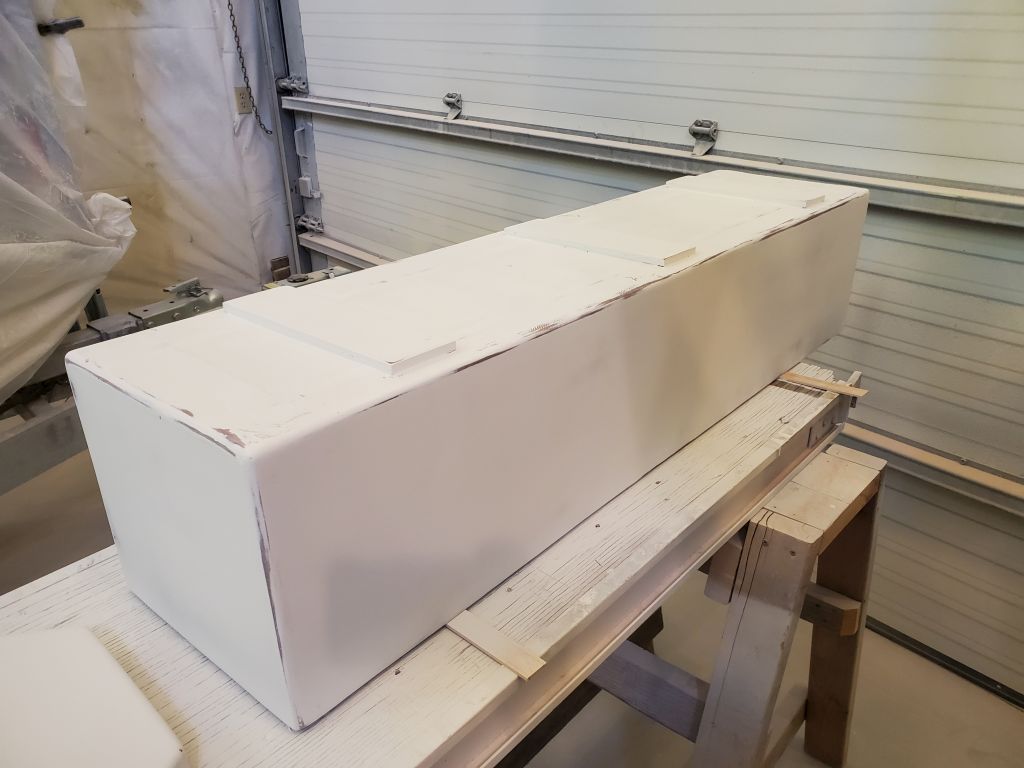
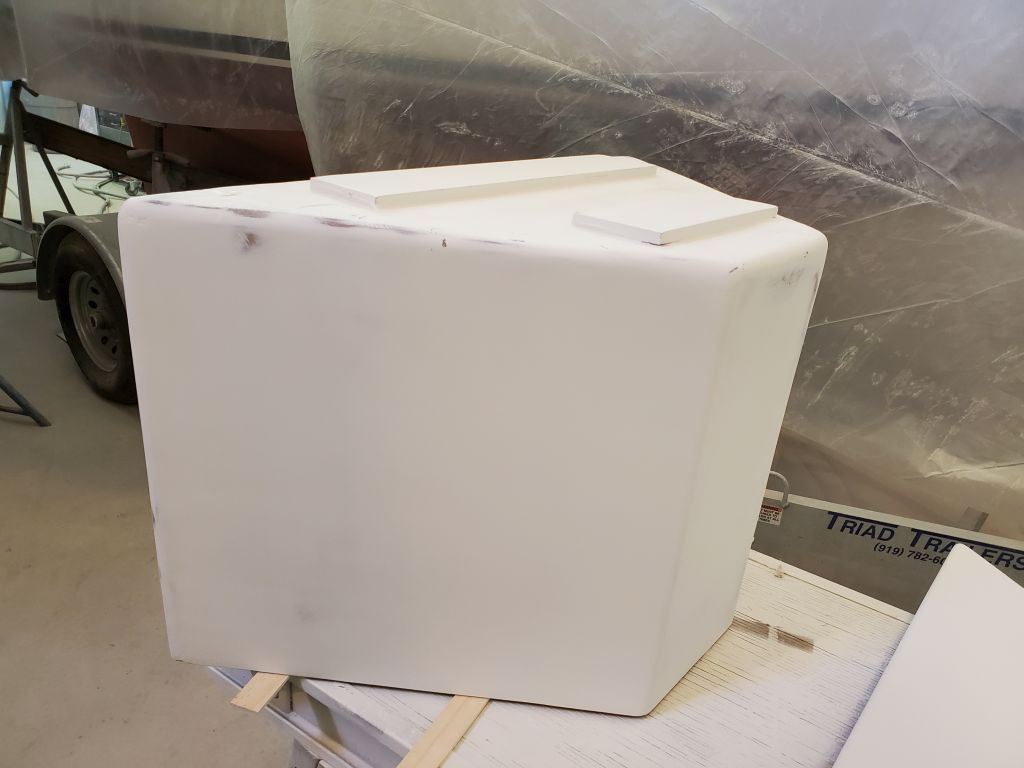
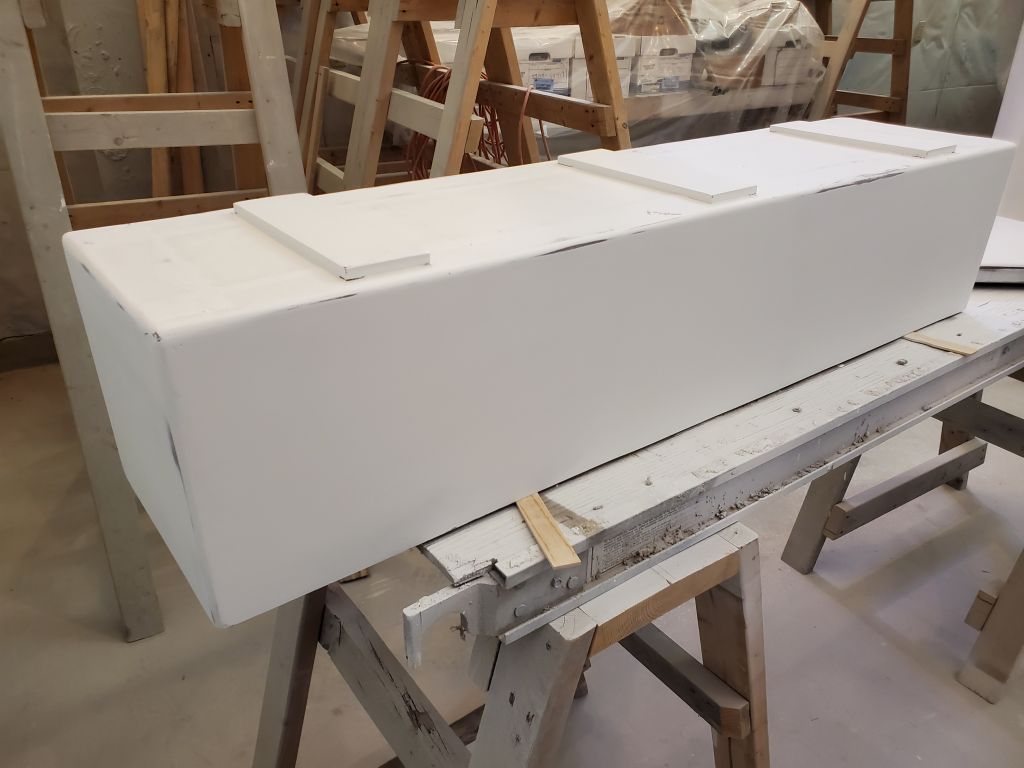
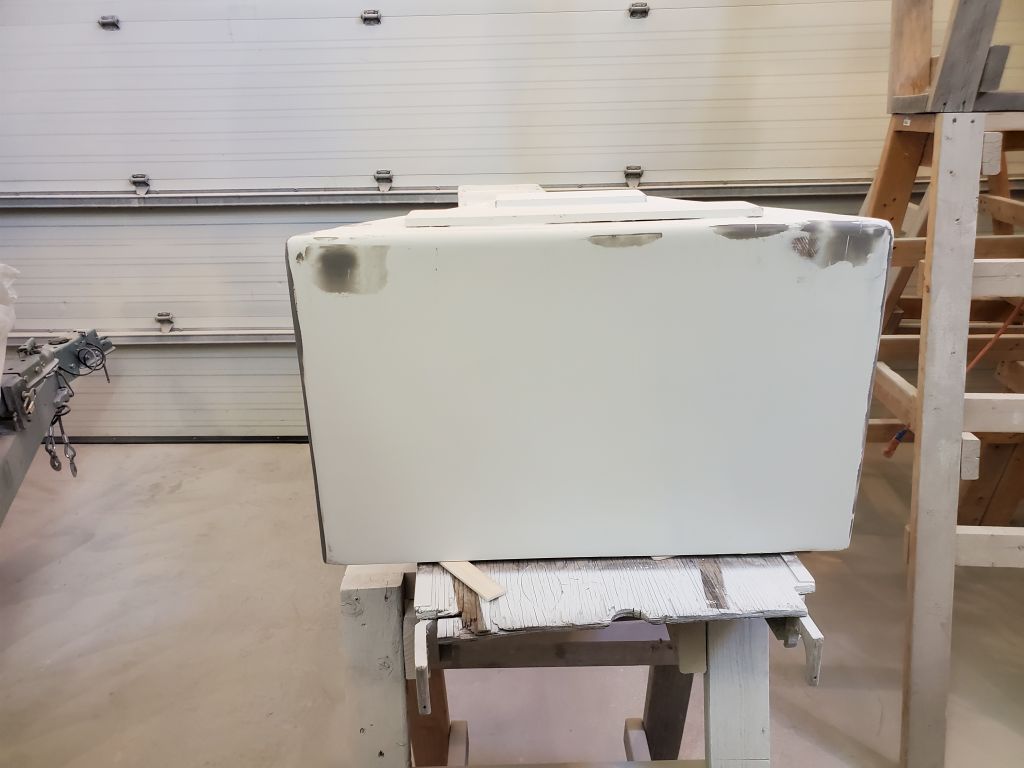
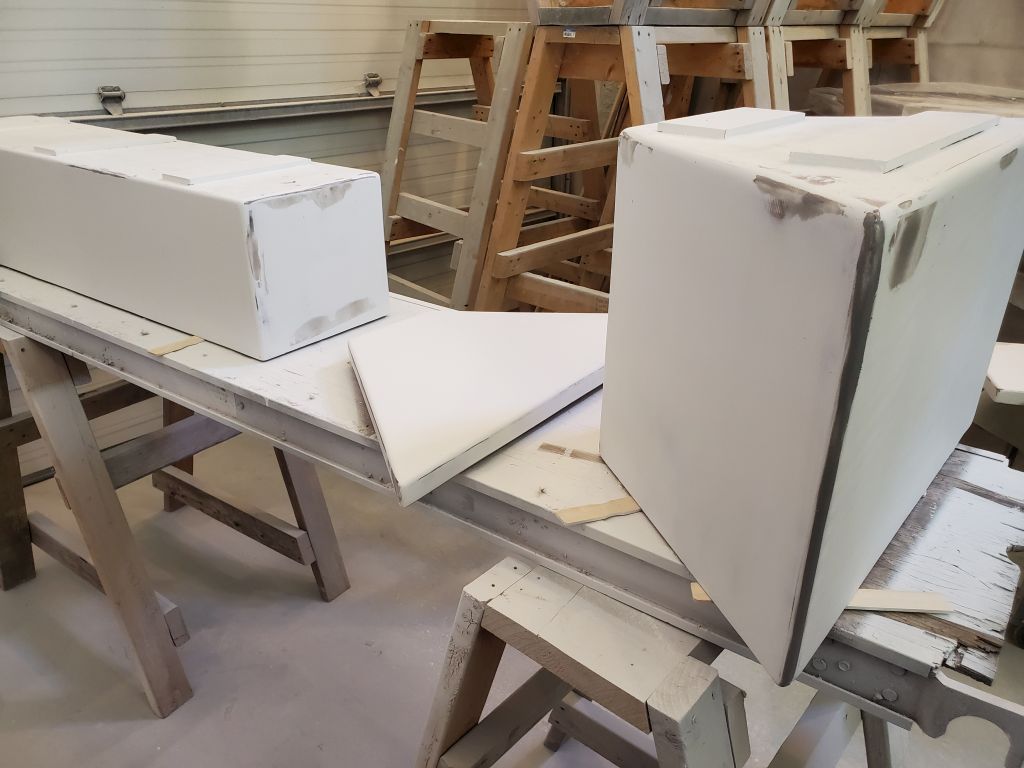
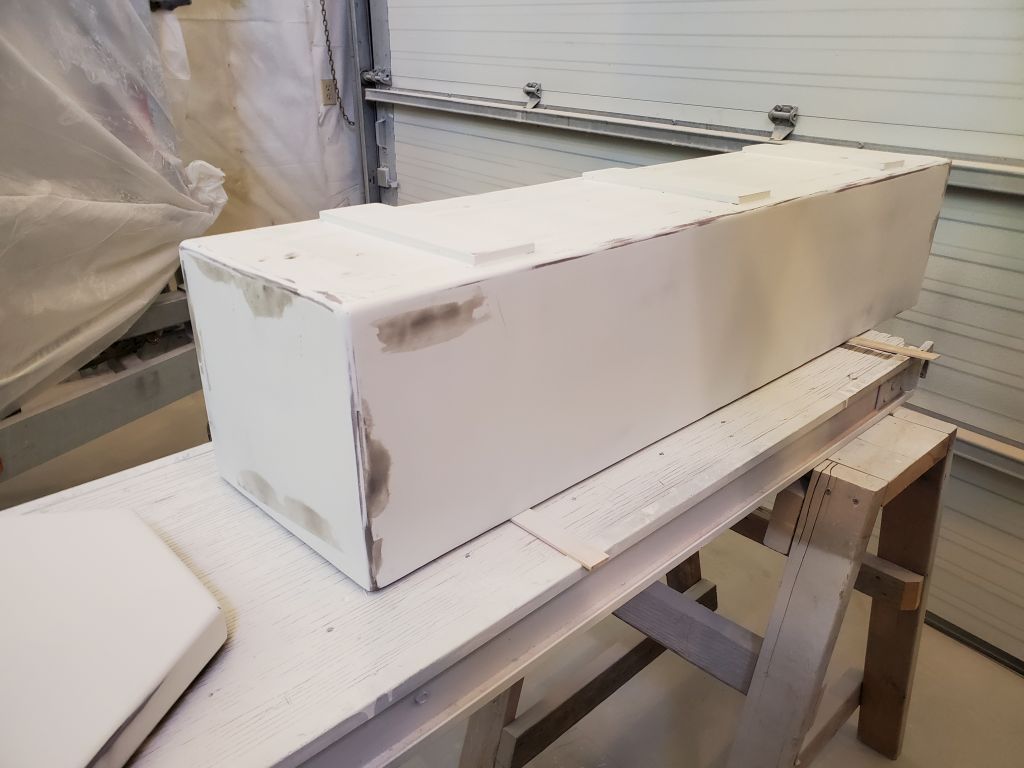
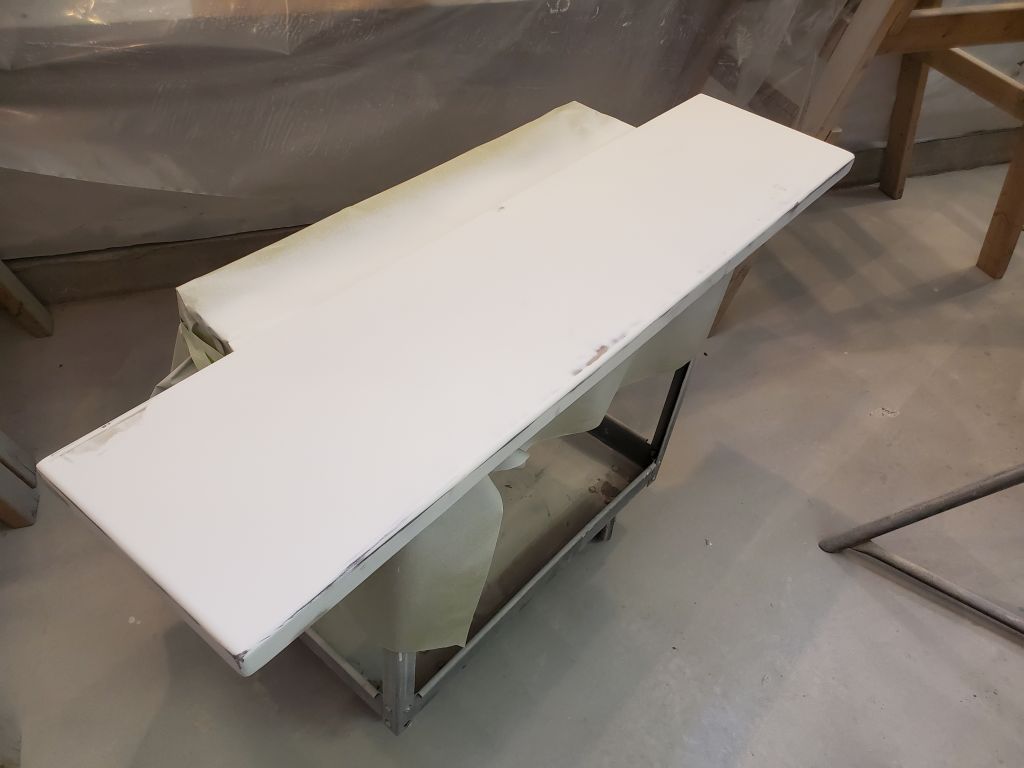
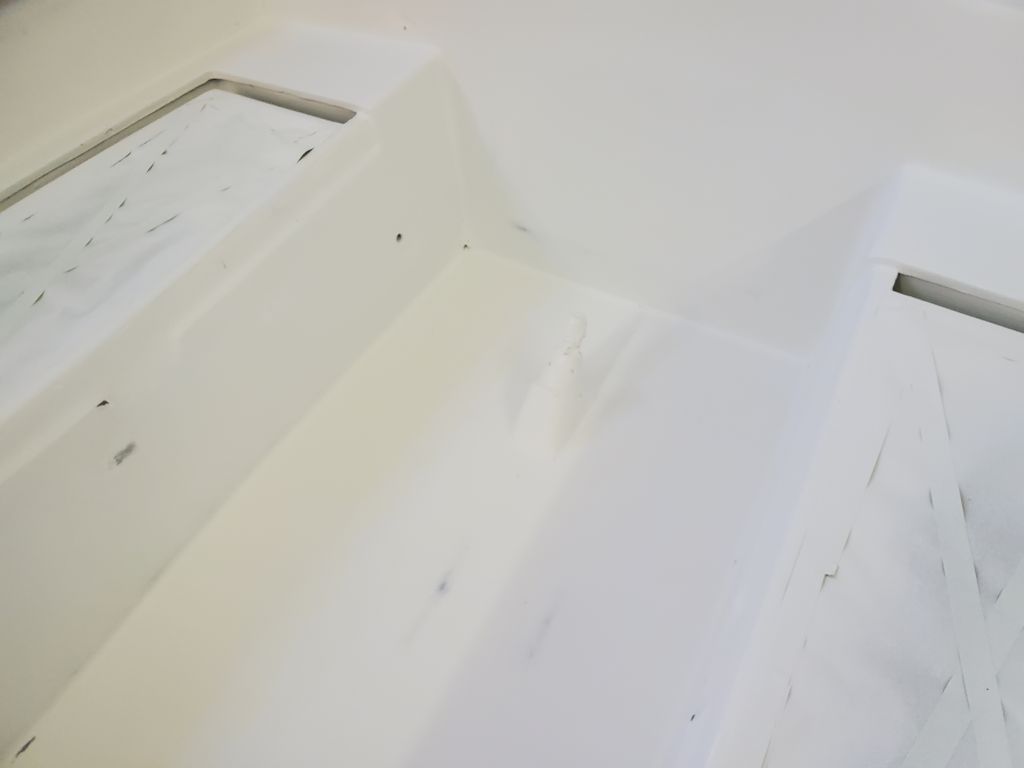
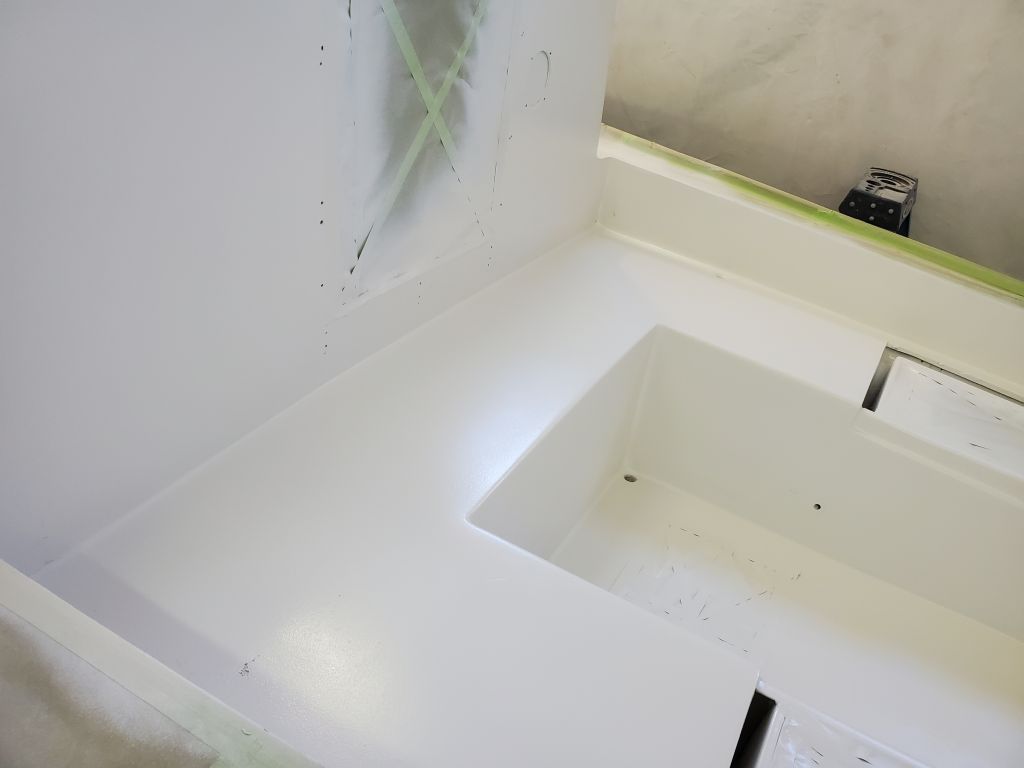
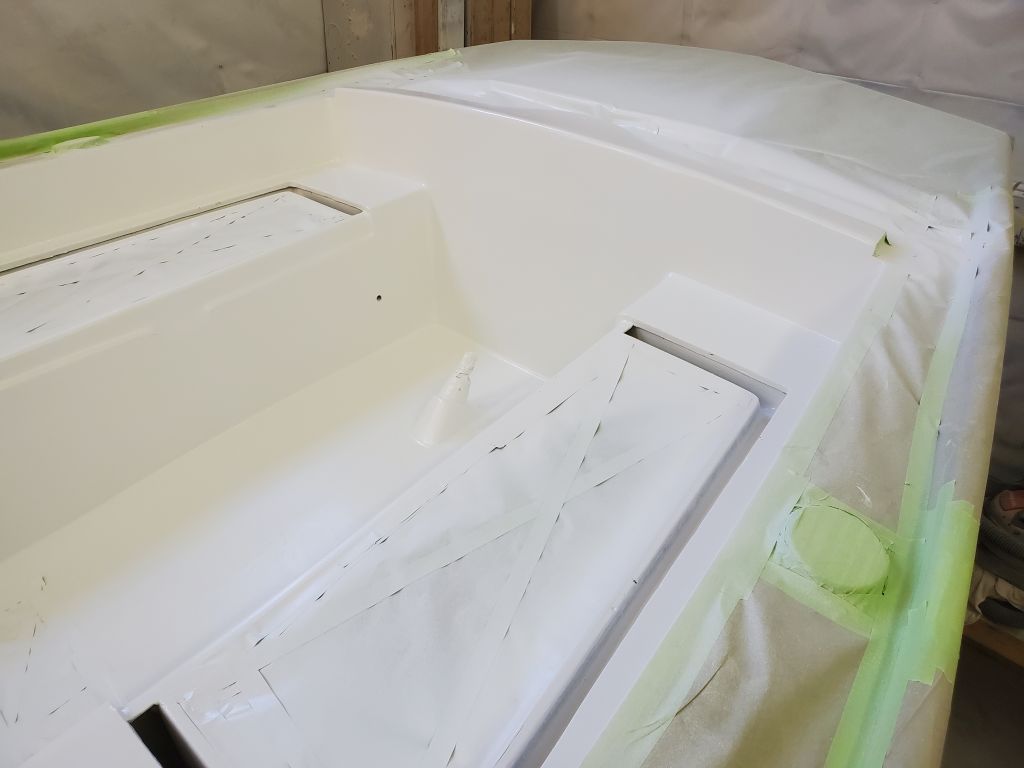
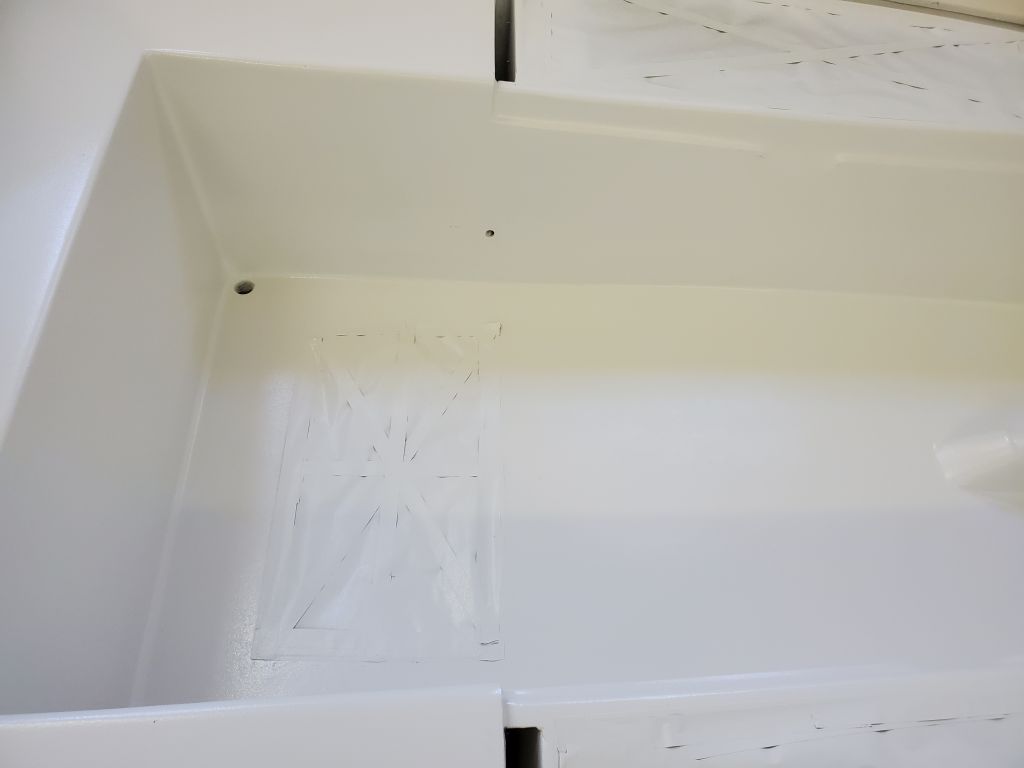
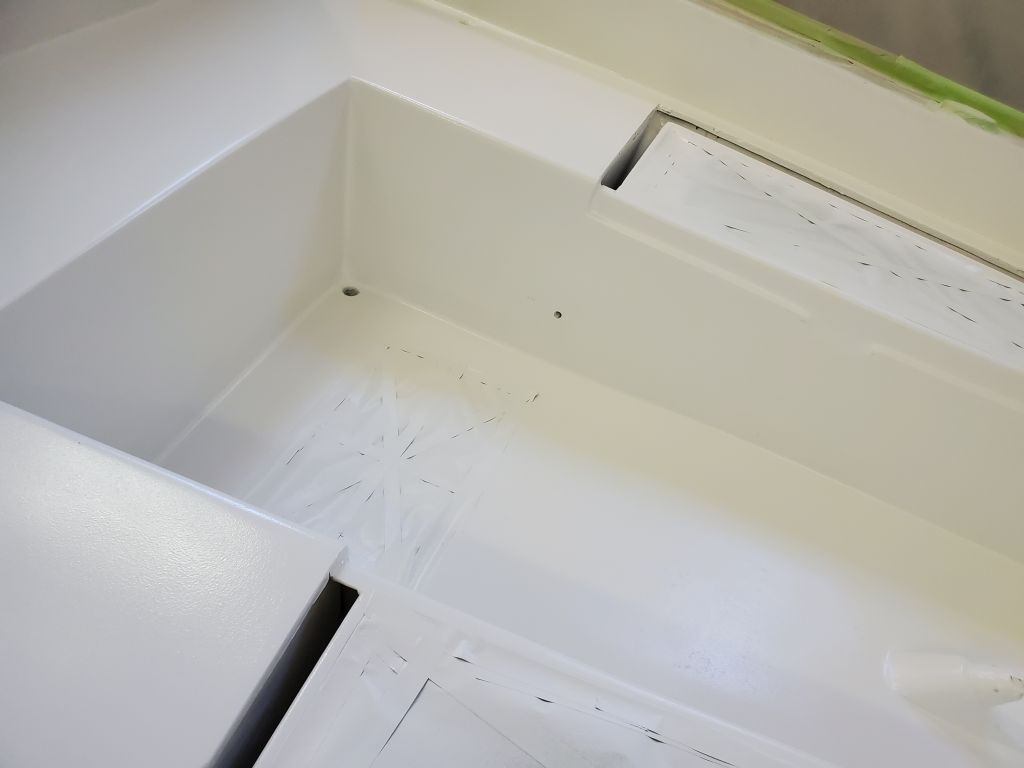
As a final step before the final paint work, I laid out and masked off the field areas of the two lids to protect the eventual nonskid areas from overspray.  Afterwards, I solvent-washed all the pieces and parts and wiped with a tack rag.

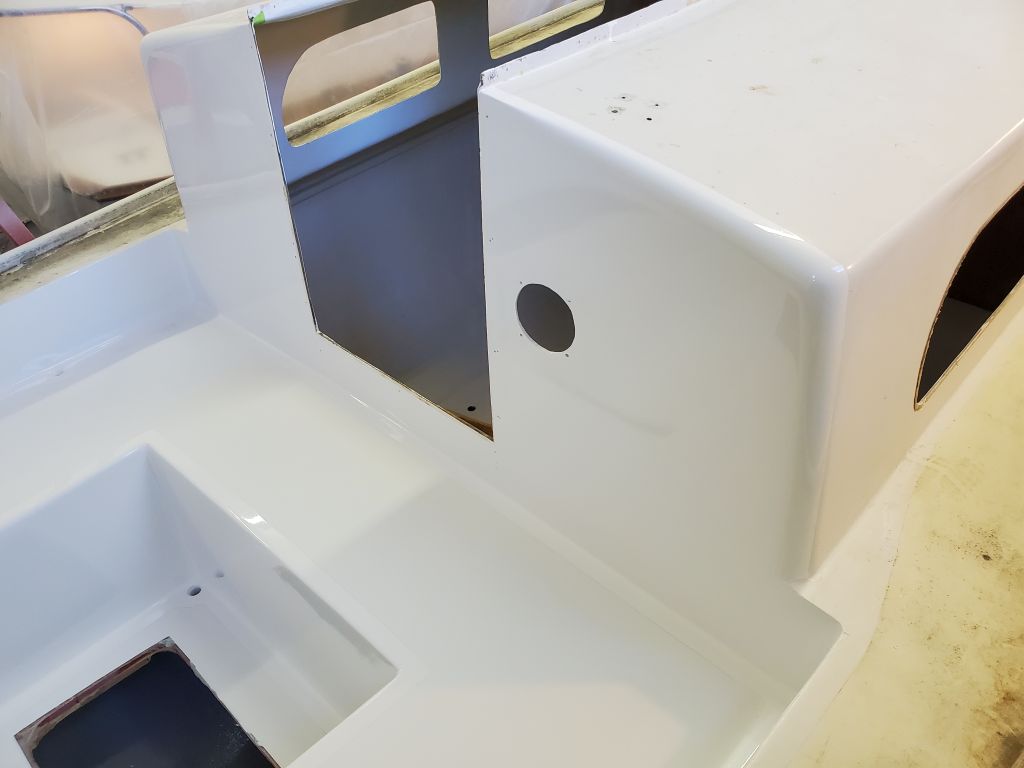
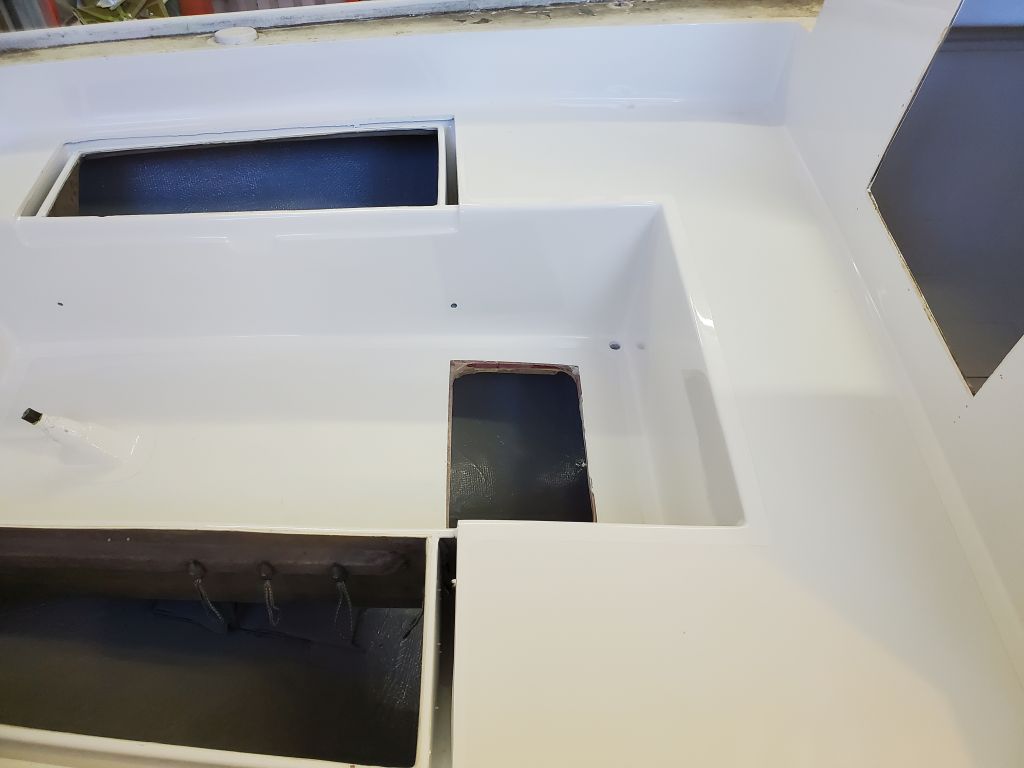
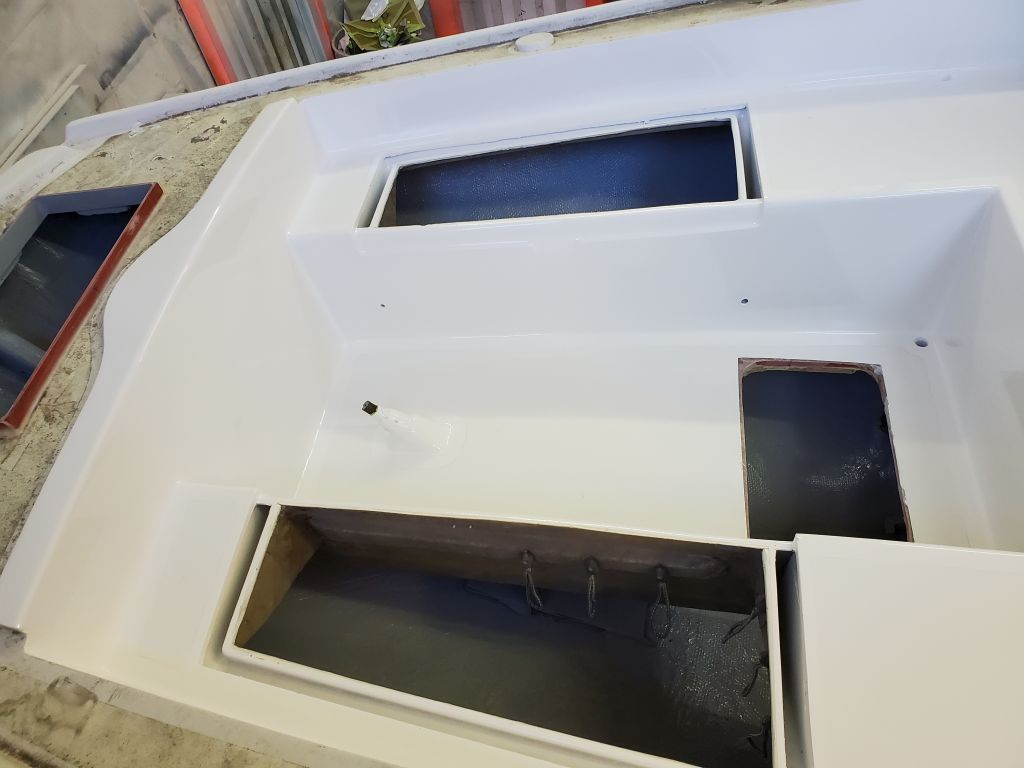
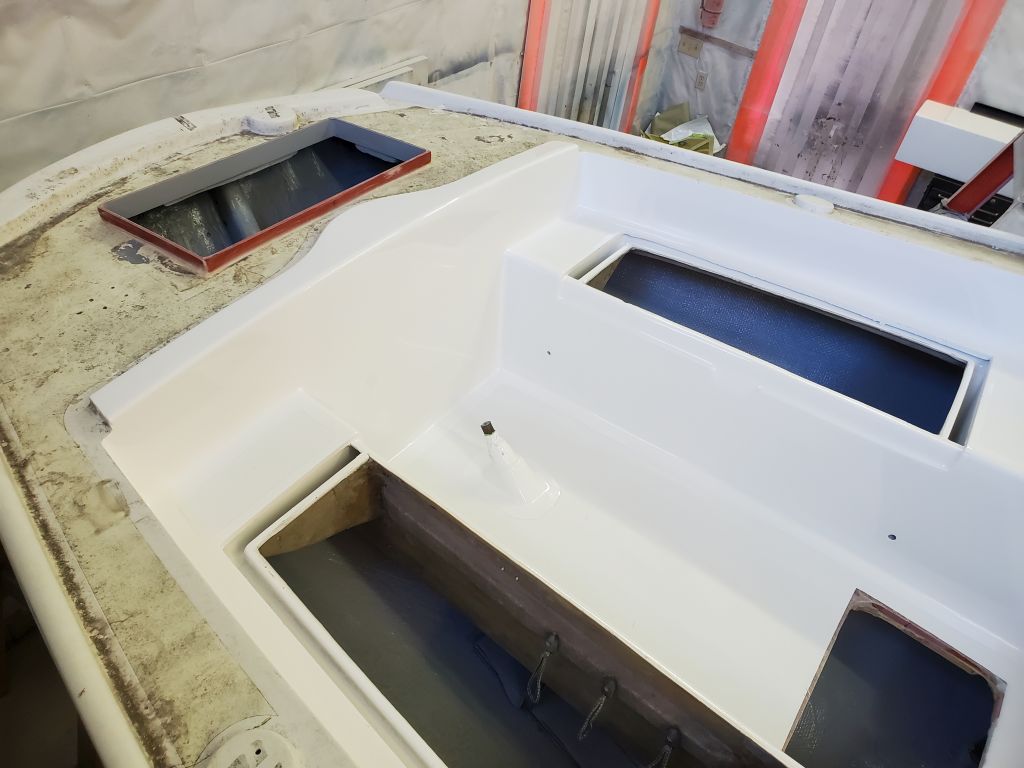
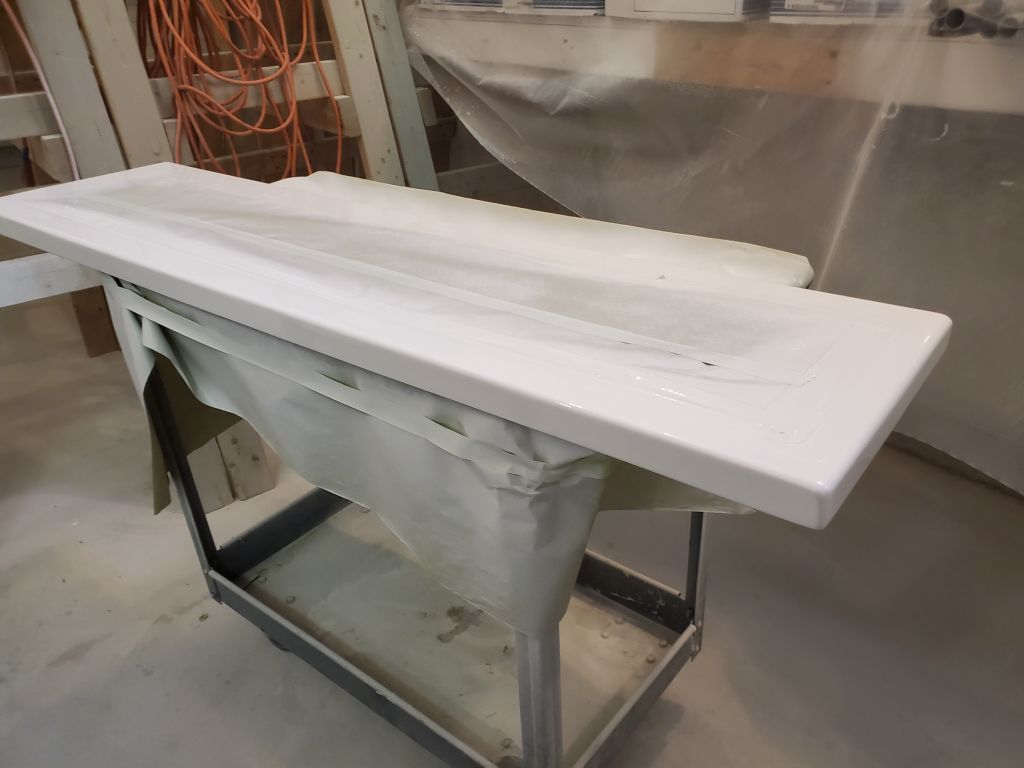
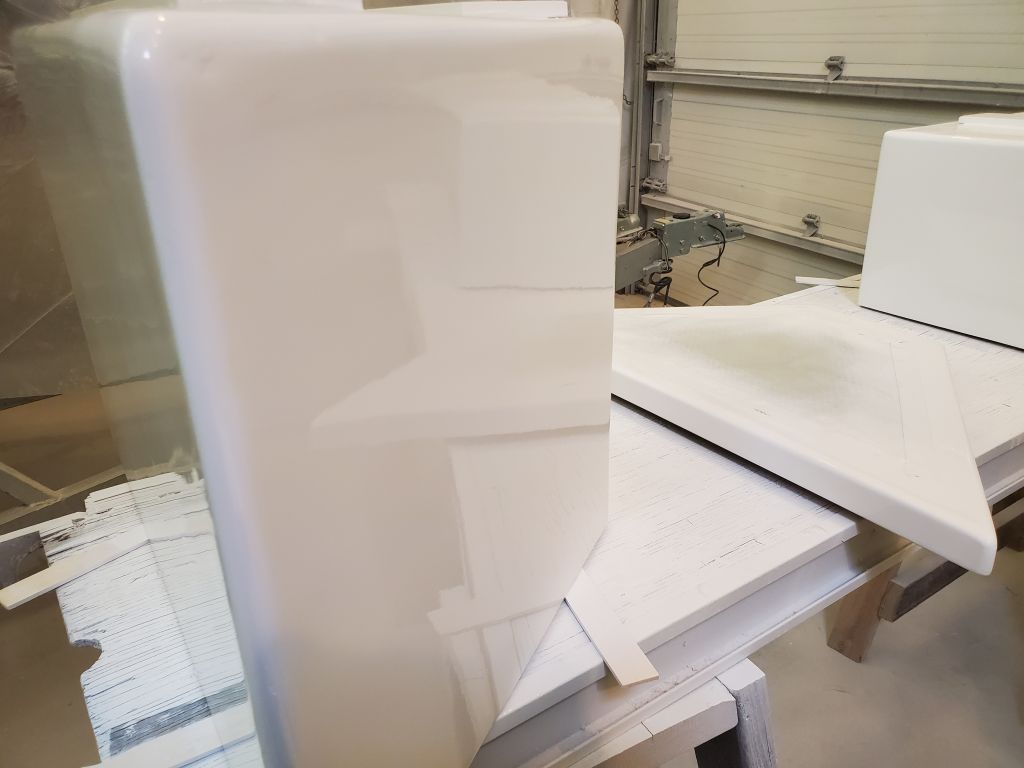
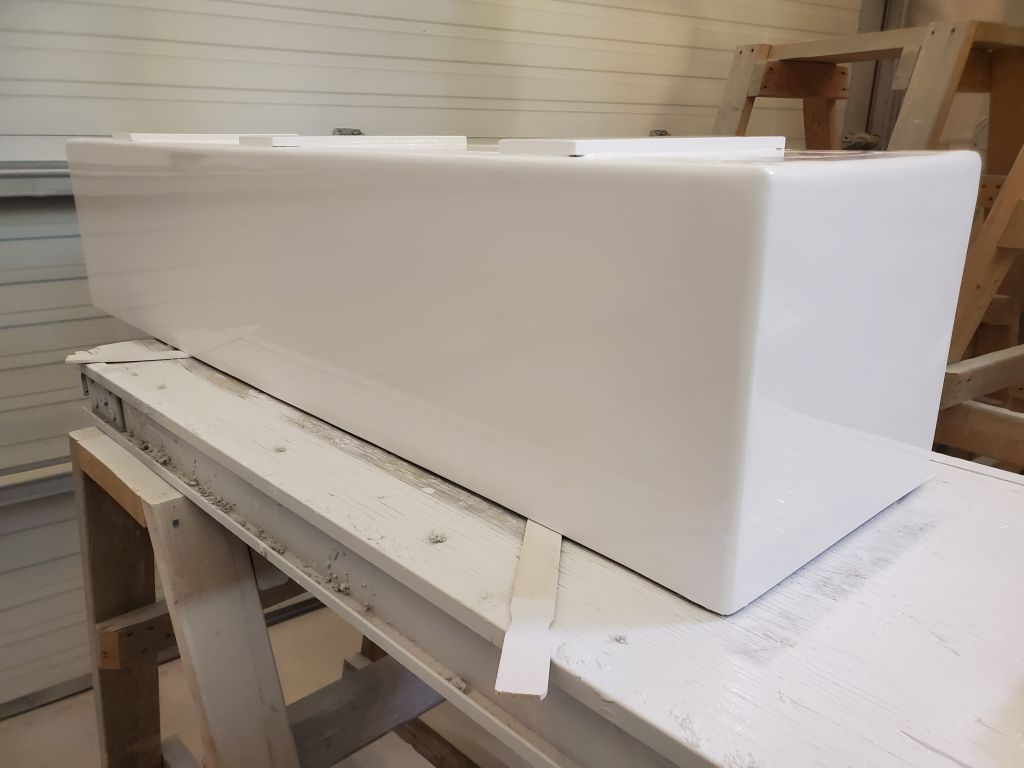
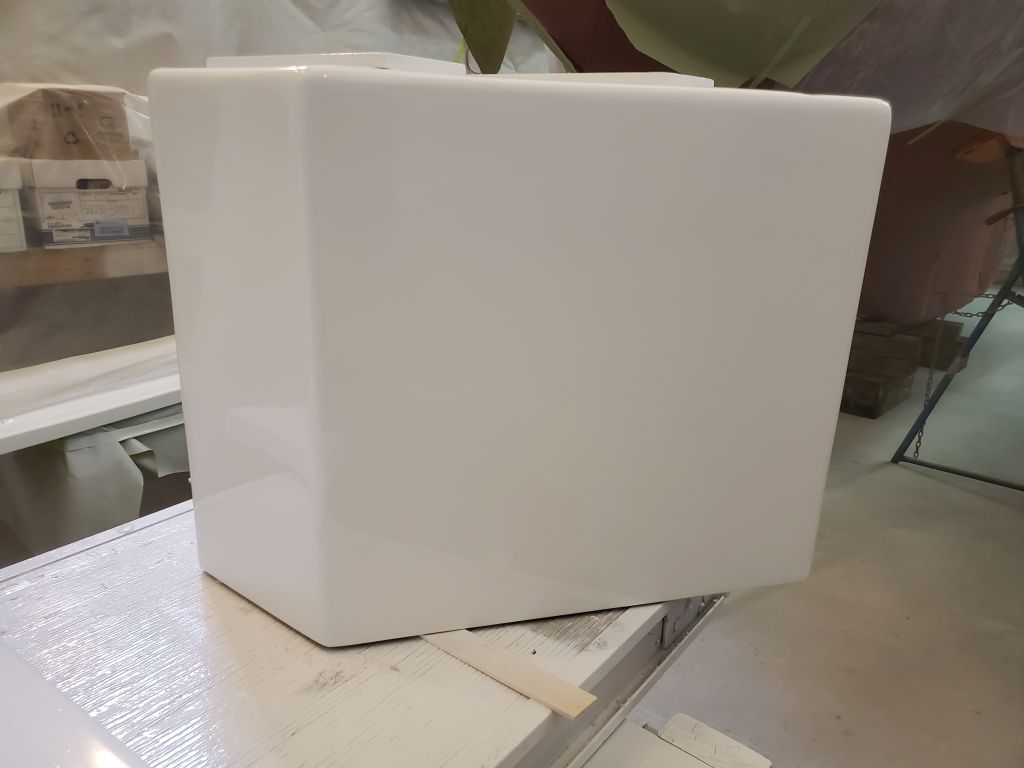
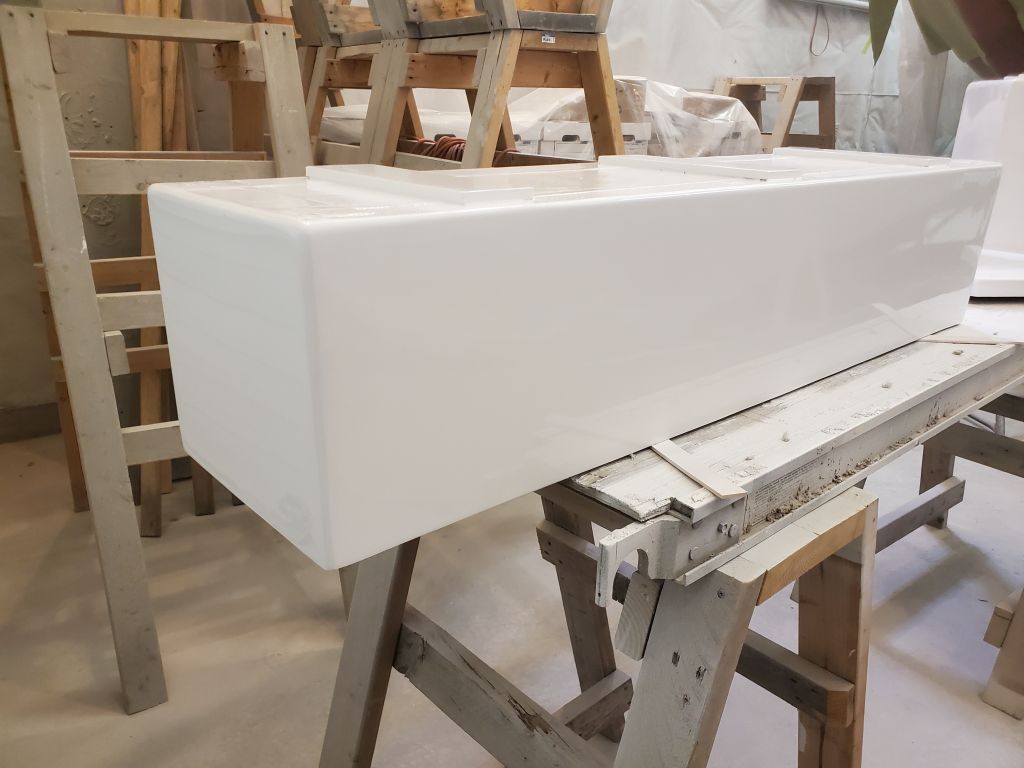
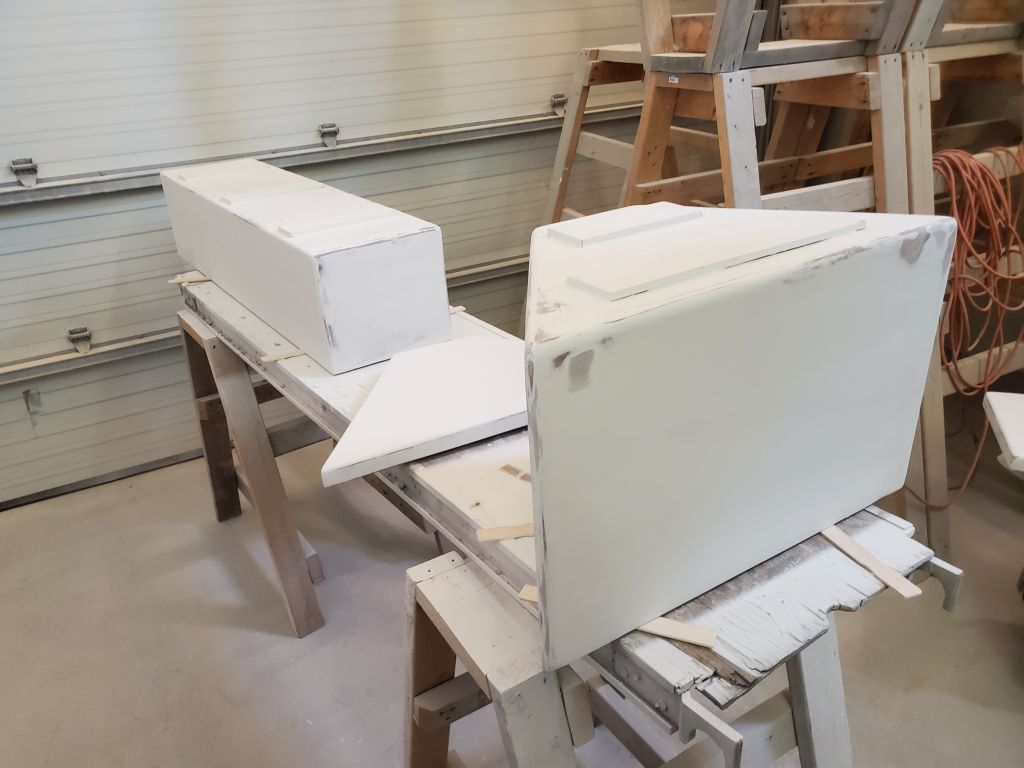
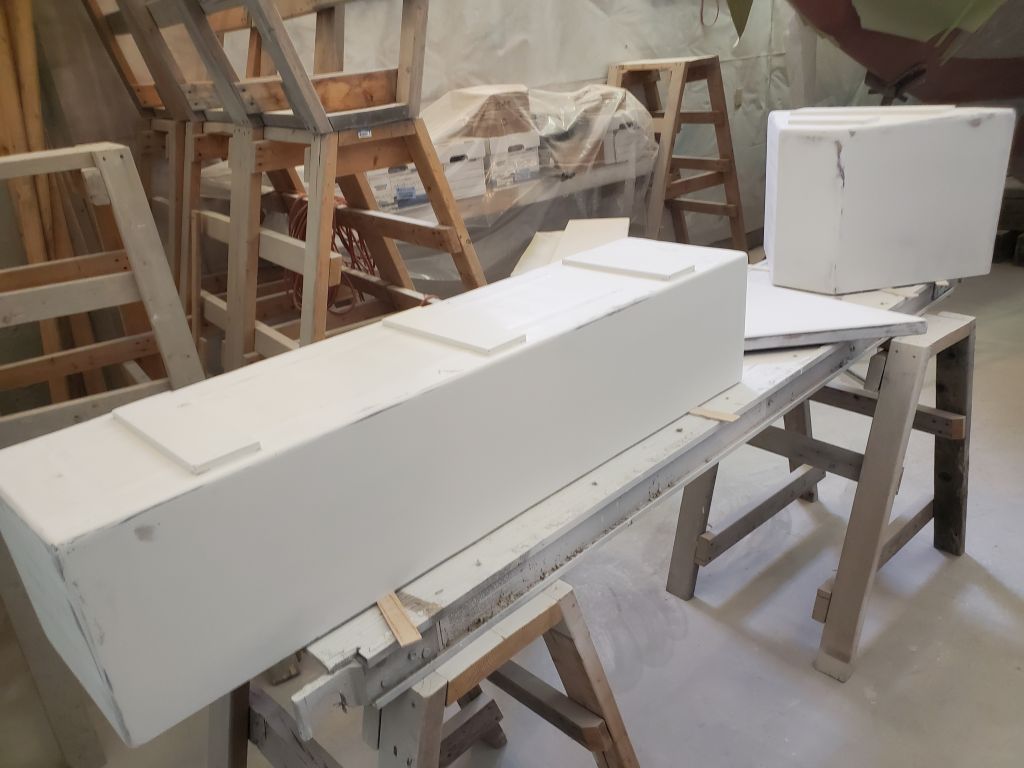
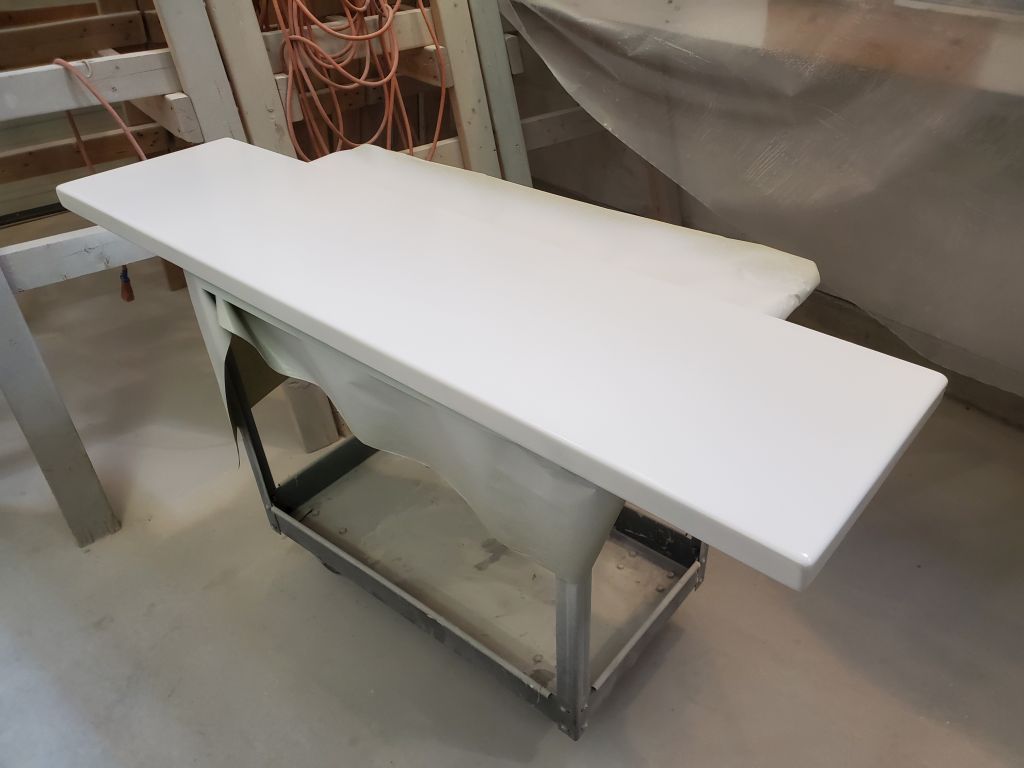
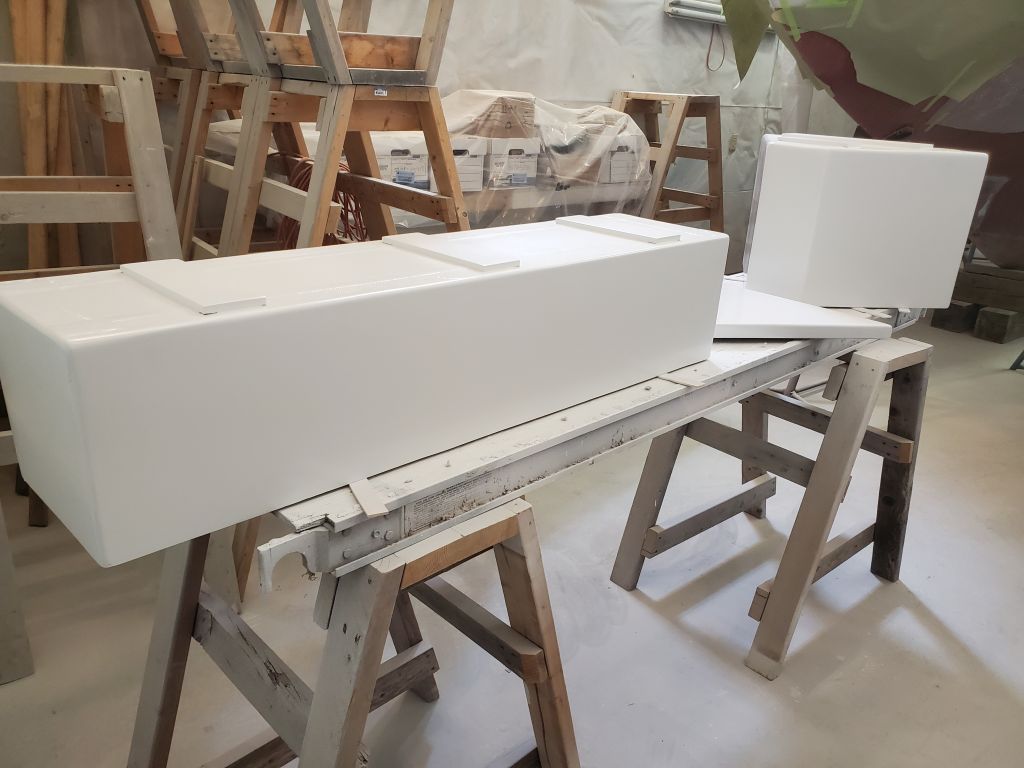
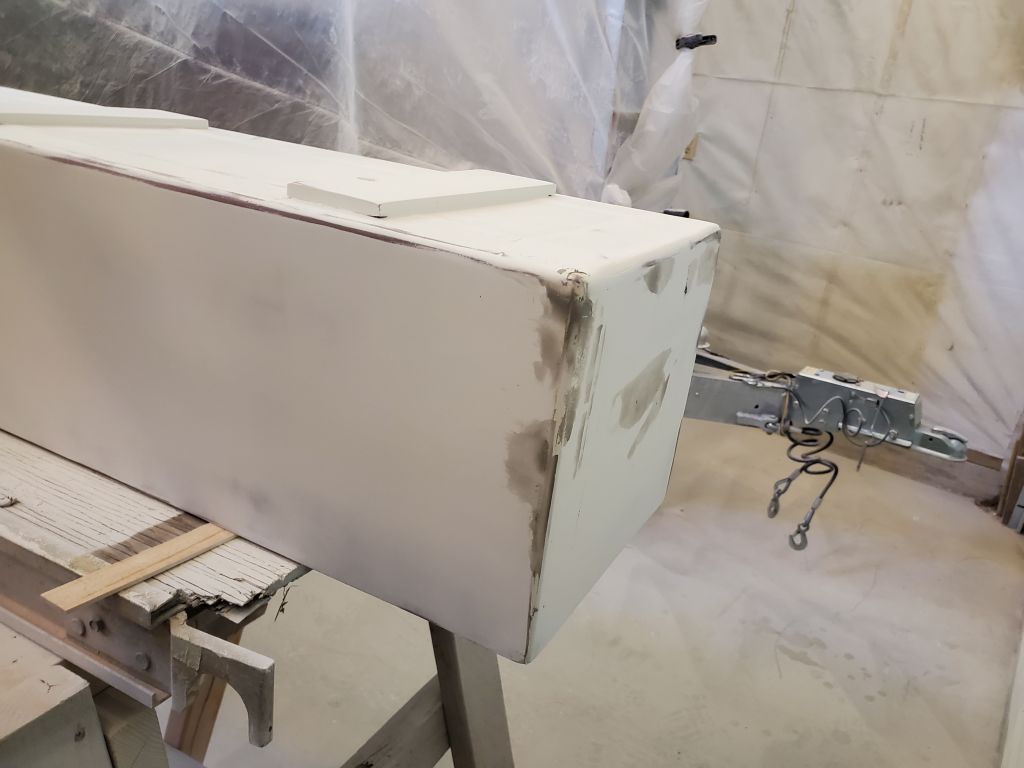
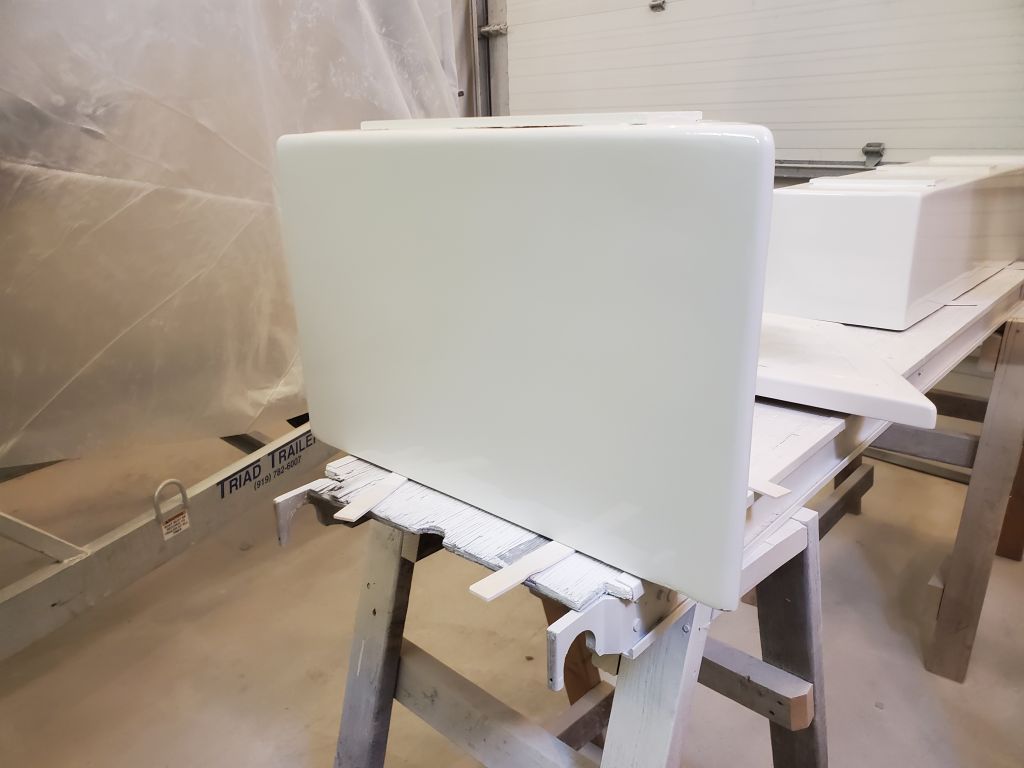
Over the course of the remaining morning, I spray-applied three coats of snow white gloss topcoat to the boxes and lids, which paint matched the existing on the deck areas.

Total time billed on this job today:  2 hours

0600 Weather Observation:  45°, foggy.  Forecast for the day:   Fog and rain, 56°

Lyra 47

Friday

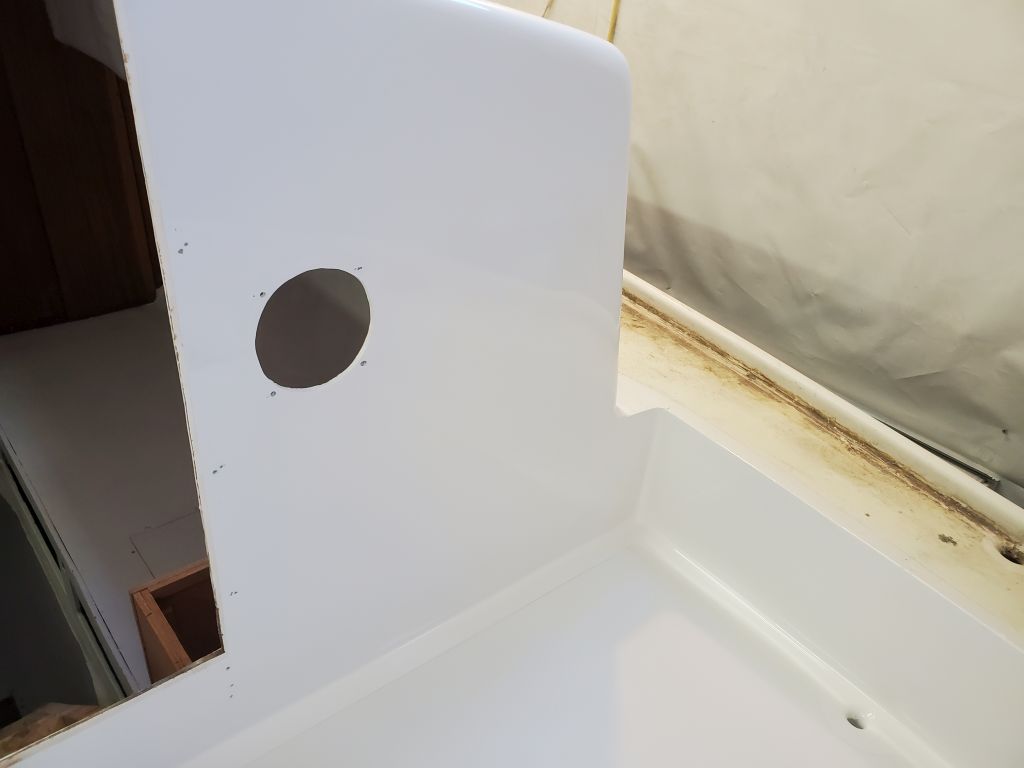
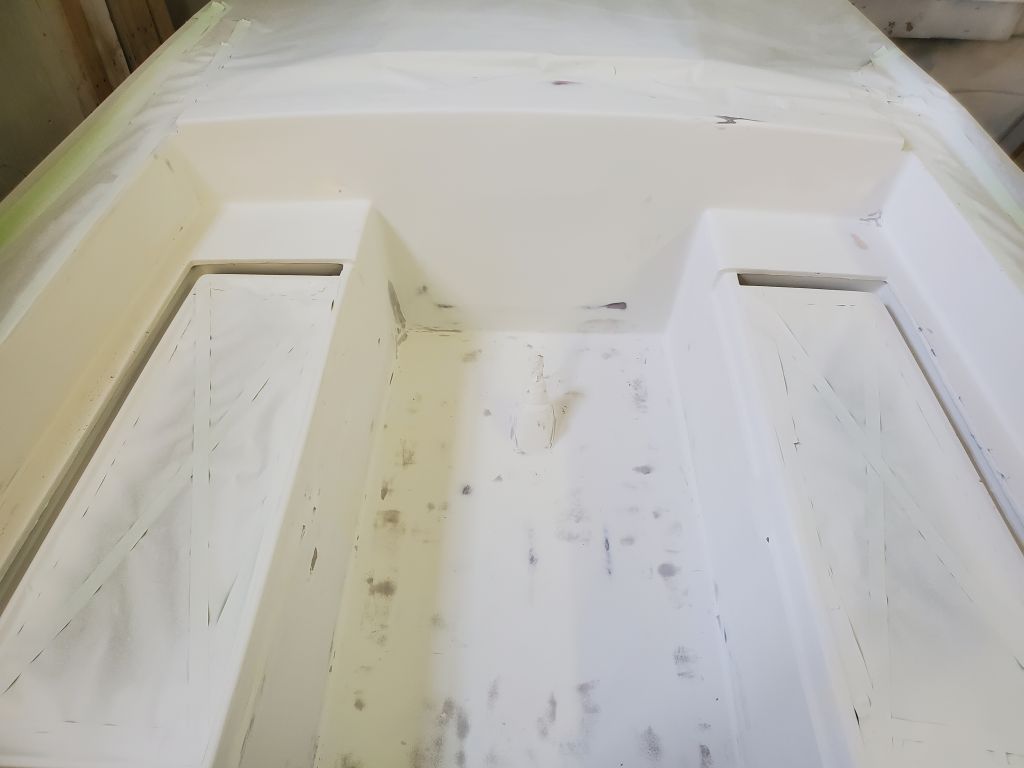
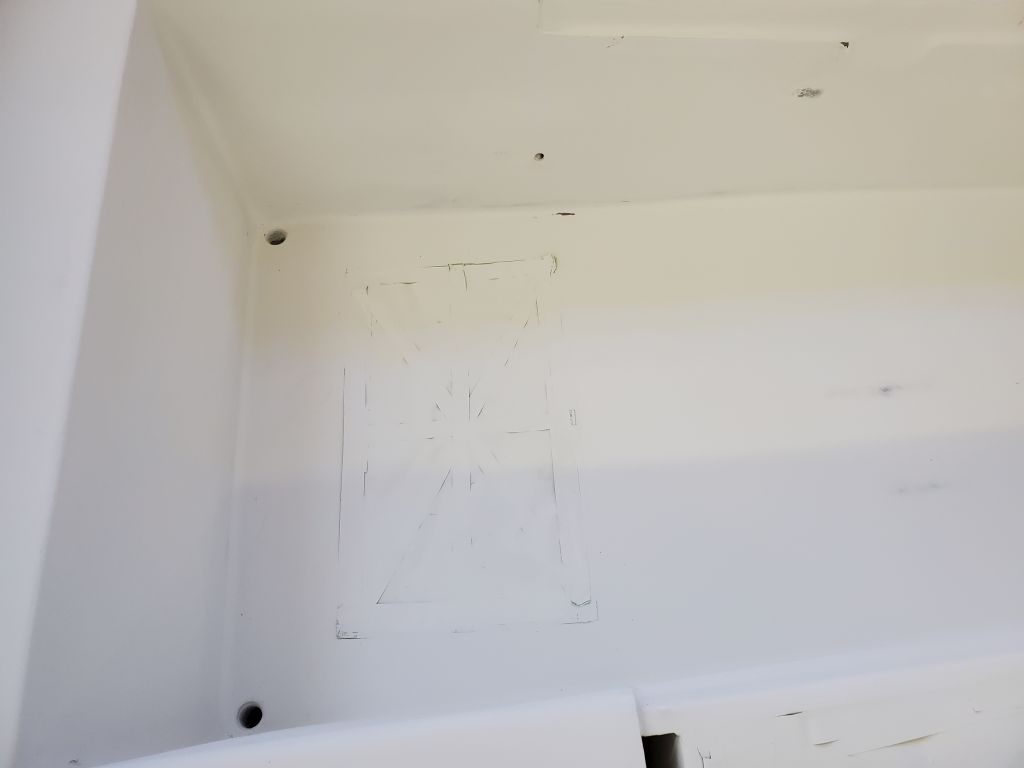
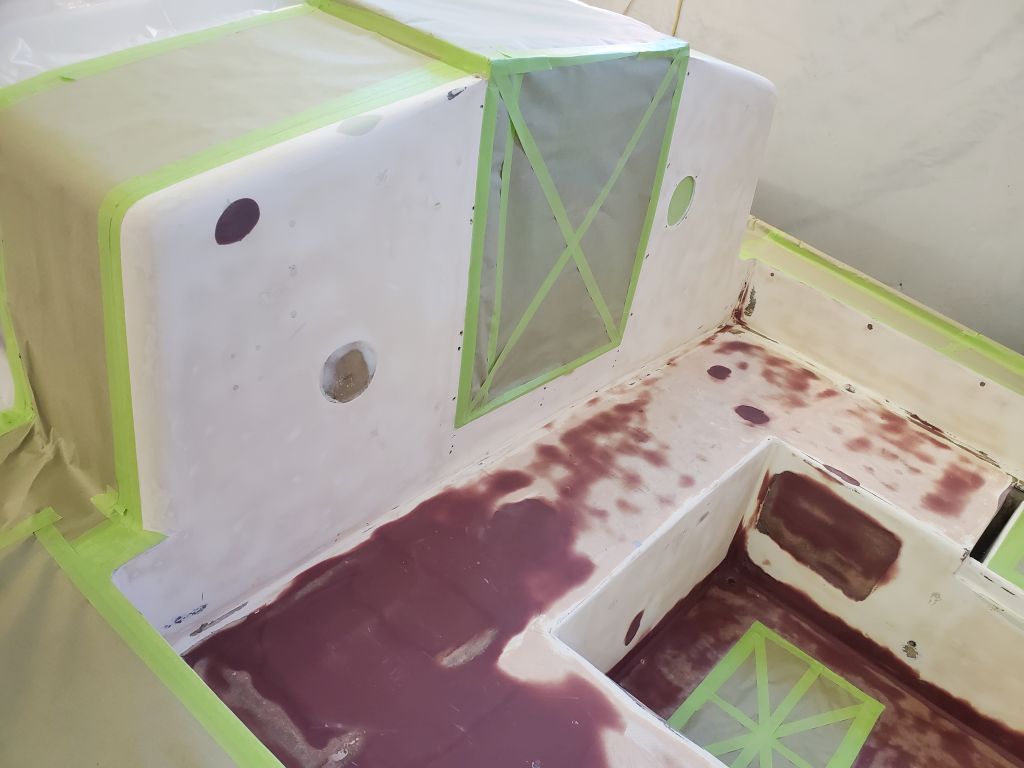
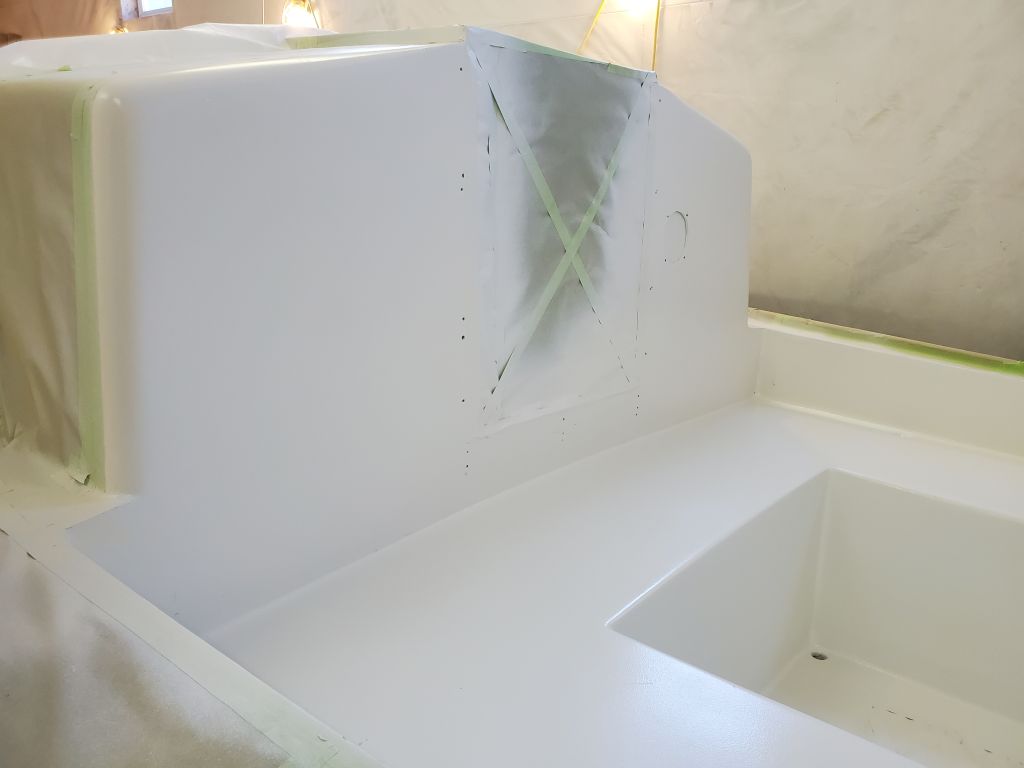
Now that the primer had had sufficient cure time overnight to allow additional masking, I started by laying out and masking the eventual nonskid areas in the cockpit, covering them to prevent overspray from the gloss topcoat.  I marked off my habitual 1-1/2″ wide borders around the cockpit seats and sole, then masked to the lines, rounding all the corners, and covered the field areas with paper and tape as needed.

With the masking complete, I cleaned the cockpit once more, this time with the special wipe-down solvent to remove lingering dust and contaminants from the surface, and tacked off thereafter before applying three sprayed coats of snow white gloss topcoat to the cockpit well, seating areas, and cabin bulkheads.

Total time billed on this job today:  3 hours

0600 Weather Observation:  45°, foggy.  Forecast for the day:   Fog and rain,  56°

Lively Heels Phase 3-34

Thursday

After a light round of sanding with 320 grit paper by machine and hand, the deck boxes were ready for the next steps, which included some minor masking on the lids before gloss topcoats.  Since the primer hadn’t yet had the minimum 24 hours to cure before masking atop the fresh paint, I completed all the setup I could for the work ahead, including a thorough cleanup of the shop and surrounding areas, then worked on other things during the remainder of the day.

Total time billed on this job today:  1 hour 

0600 Weather Observation:  44°, foggy.  Forecast for the day:   Mostly cloudy, 56°

Lyra 46

Thursday

I spent the first part of the day sanding the cockpit once more, this time with 320 grit paper by machine and hand as required to ready the primer for the next steps.

Afterwards, I cleaned the boat and shop thoroughly and, since it was too soon to start masking over the primer for the topcoat (the last coat of primer had only been applied during mid-afternoon the day before and required 24 hours minimum cure time), I laid out and prepared masking materials for next time, when I hoped to mask, then apply topcoat to, the cockpit.

Total time billed on this job today:  2.75 hours

0600 Weather Observation:  44°, foggy.  Forecast for the day:   Mostly cloudy,  56°

Lively Heels Phase 3-33

Wednesday

The deck boxes required another round of light sanding and cleanup following the application of fine filler last time.

Afterwards, I applied three coats of epoxy-based finish primer to the boxes and lids.

Total time billed on this job today:  1.75 hours 

0600 Weather Observation:  39°, foggy.  Forecast for the day:   Mostly cloudy, 58°

Lyra 45

Wednesday

The cockpit was ready for another round of light sanding to smooth the fine filler from last time.

Afterwards, following the usual rounds of vacuuming, solvent wash, and other related preparations, I applied three coats of epoxy-based finish primer to the cockpit.

Total time billed on this job today:  4.25 hours

0600 Weather Observation:  39°, foggy.  Forecast for the day:   Mostly cloudy,  58°

Lively Heels Phase 3-32

Tuesday

I sanded the high-build primer on the deck boxes and lids, creating a generally smooth surface with only a few flaws revealed by the primer–always expected and part of the process.

After cleaning up, I applied fine fairing compound to a few areas here and there, filling pinholes in the original laminate or fairing compound and correcting  some work at a corner or two.

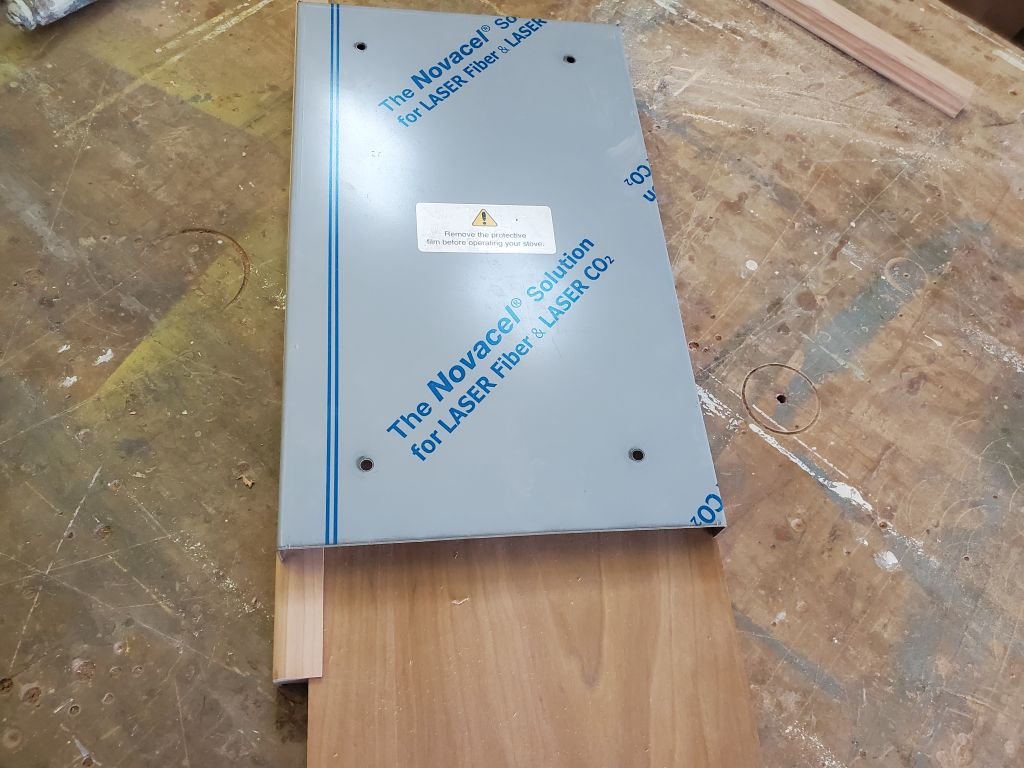
Changing tacks, I turned to some initial work that would lead up to the final installation of the new woodstove in the cabin.  Because the woodstove couldn’t be located the minimum required distance away from the cabinetry outboard of the mounting location (21″ minimum required), the owner ordered a side shield that, properly installed, would reduce clearance to 3″.  However, the side shield wasn’t quite what was expected–at least not by me.  It turned out that the side shield was supposed to be installed on the surface to be protected itself, not as part of the stove’s own shielding, which was how I thought it would work.

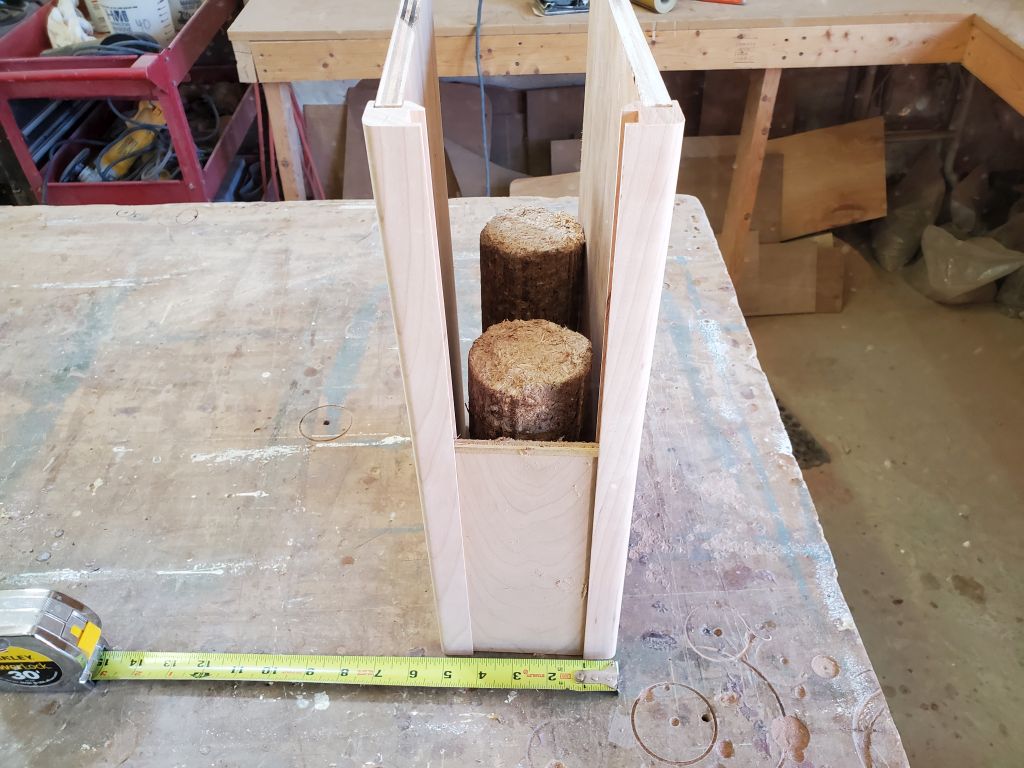
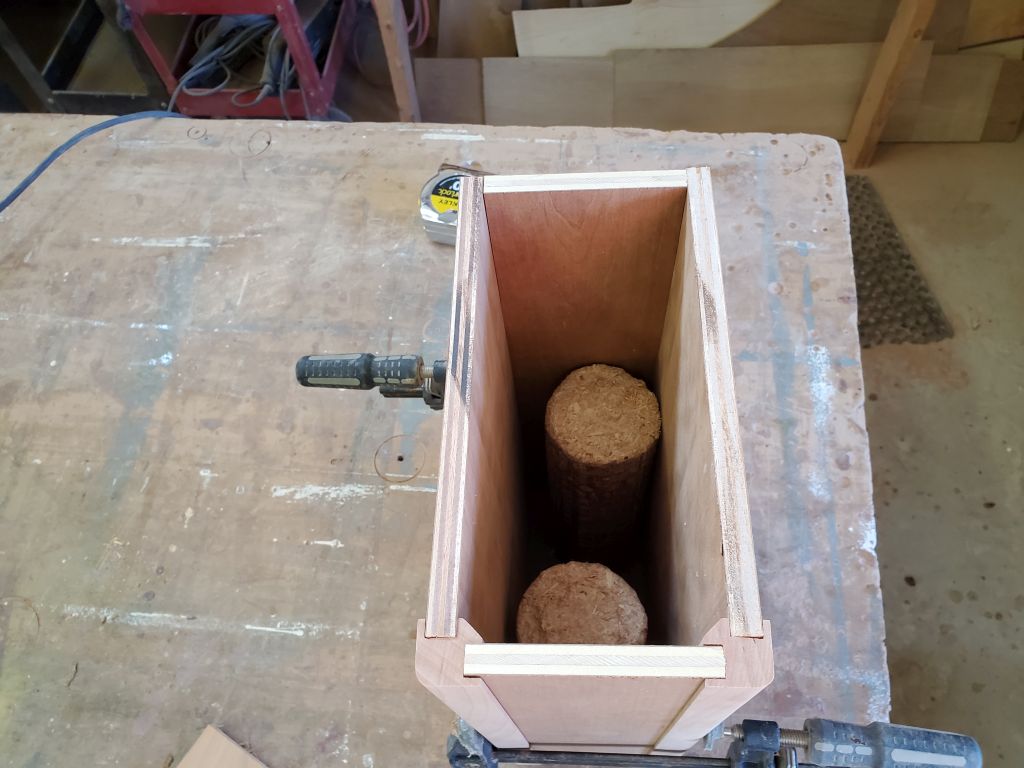
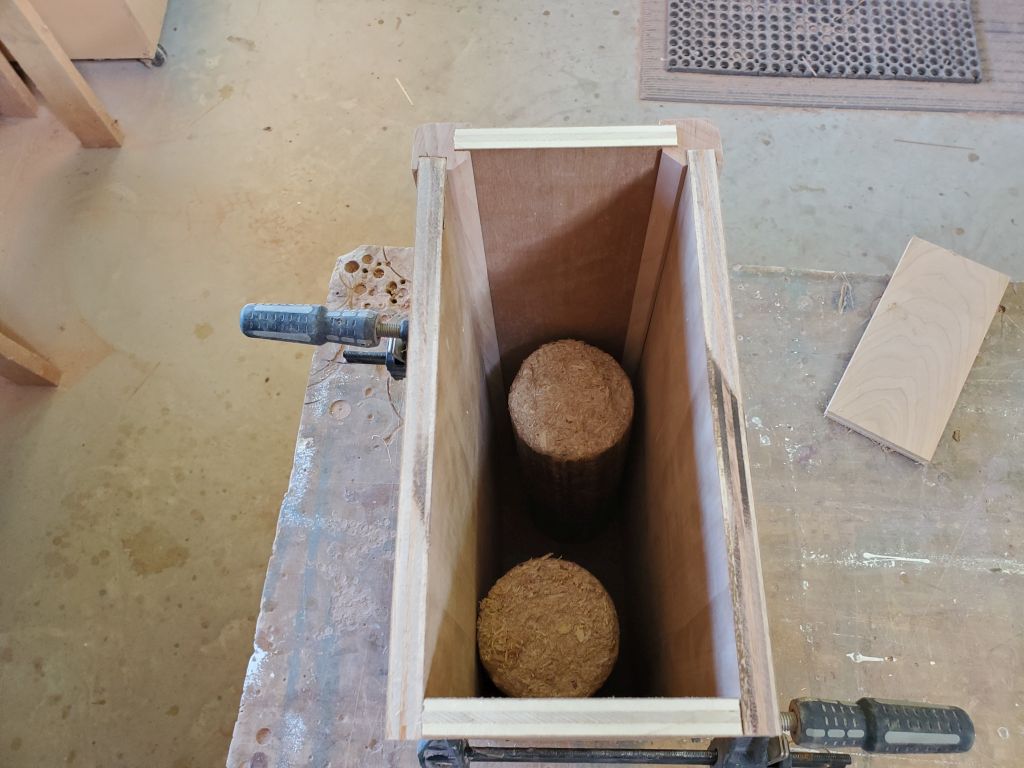
During the previous weeks, the owner and I had come up with a plan to build a tall, narrow wood box next to the stove itself, onto which the side shield would mount–satisfying that requirement–while also providing a useful storage area for the firewood.  The owner envisioned a simple box with an opening at the top, wide enough to hold some compressed sawdust wood logs he had test-burned and liked for the stove.

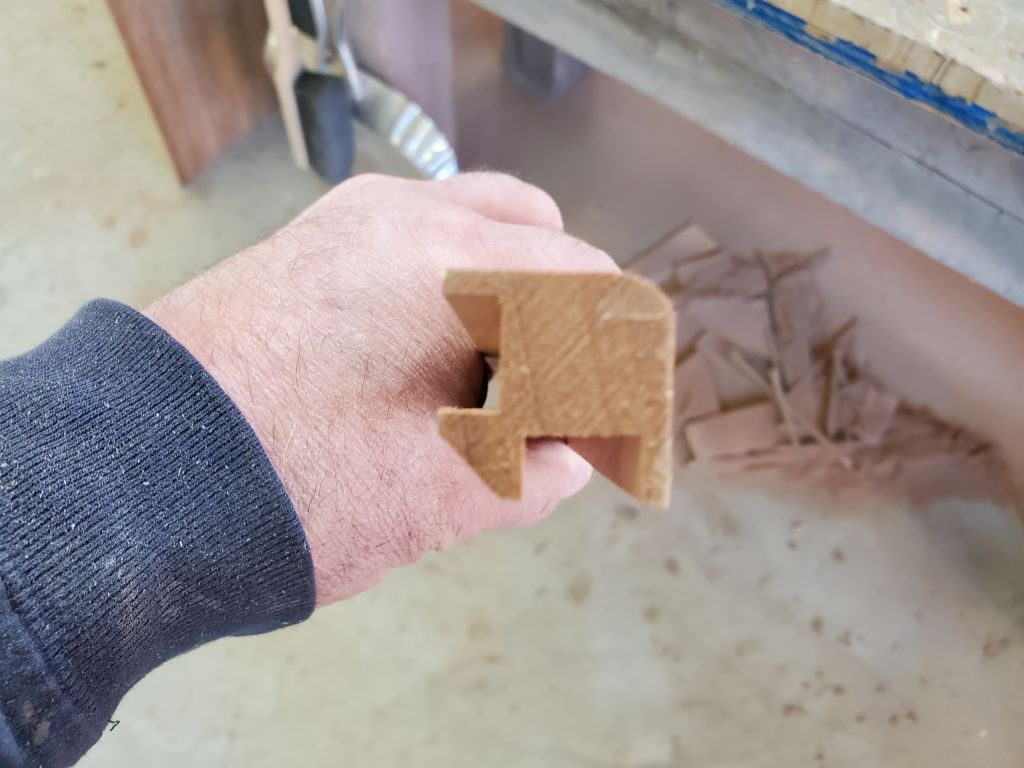
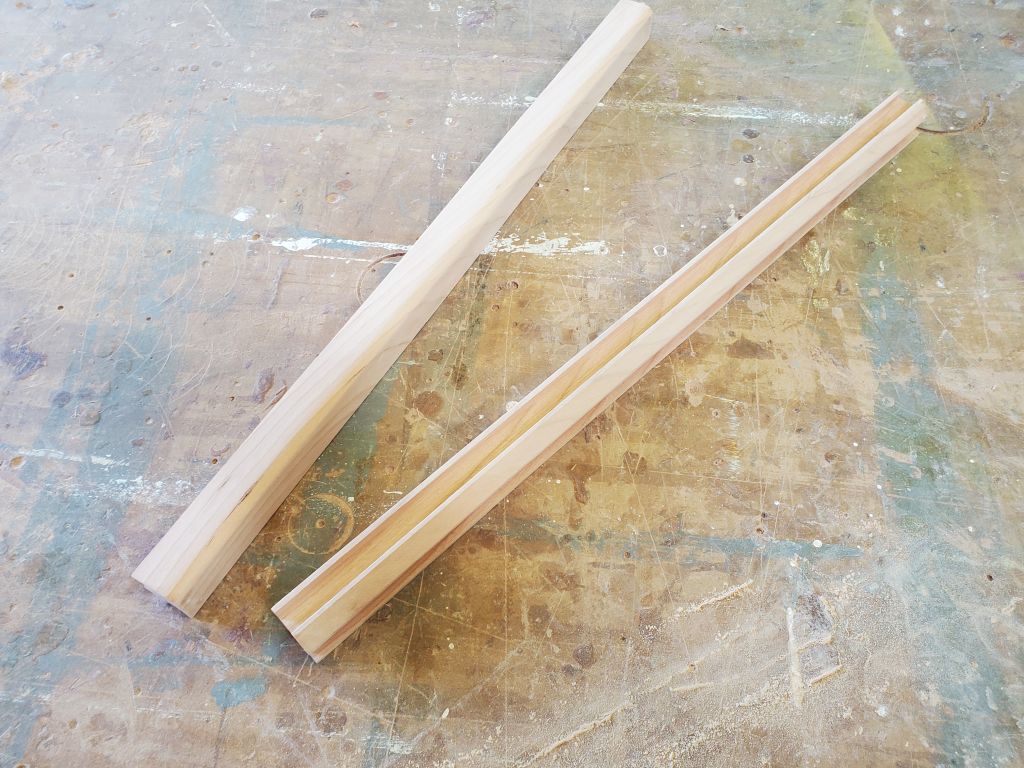
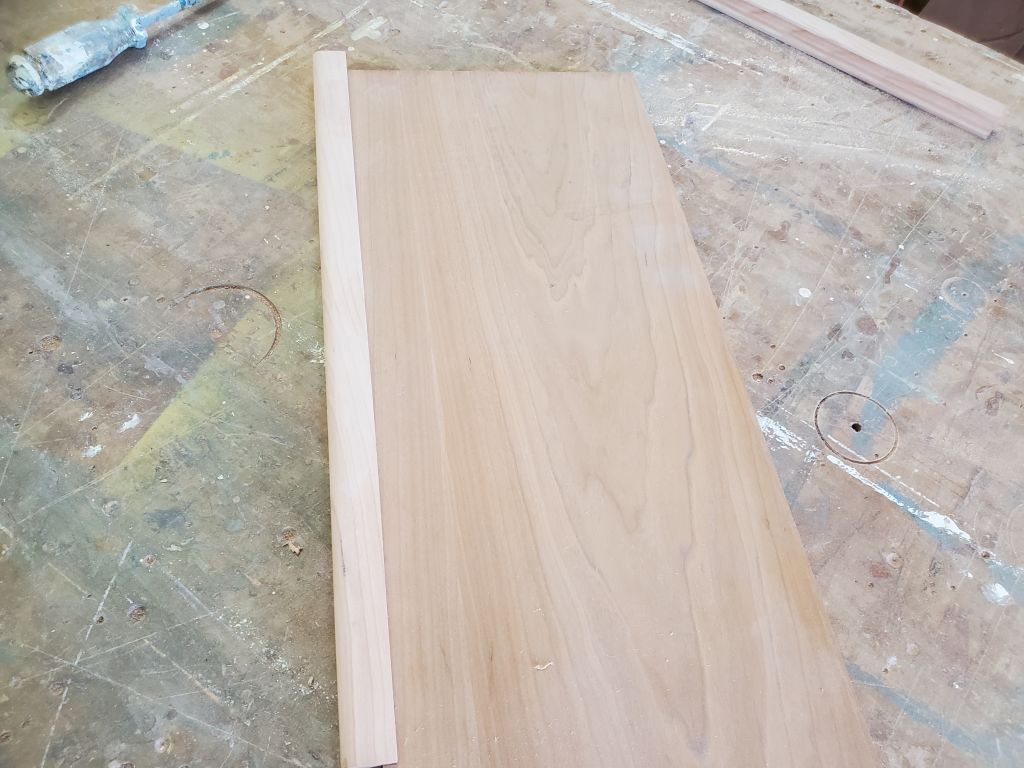
I started construction by determining the general size of the box, mainly directed by the size of the stainless steel side shield.  Before I could dimension the various plywood panels that would make up the box, I had to start with some solid cherry corner trim for the front corners, a basic design to accept the plywood edges, hiding the end grain and securing the corners together at the same time.  I milled the trim as needed to fit the plywood:  1″ square, with dados on two adjacent sides to accept the 1/2″ plywood, with an angle cut on the inside and roundover on the outside corner.  Once milled, I sanded the pieces smooth and clean.

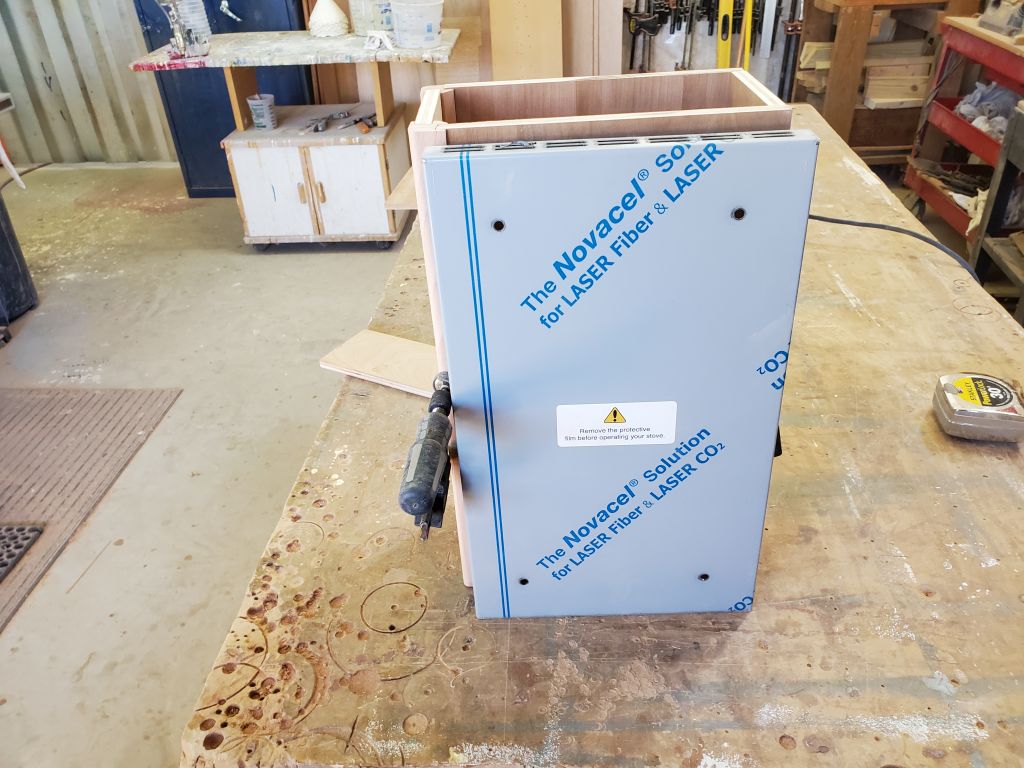
Using the side shield, I determined the final width of the side panels required.  Because of the photo perspective, it doesn’t look like it, but the side panel–including the corner trim–was about 1/4″ wider than the shield, just enough to ensure full coverage without any overlap.  With the plywood partially inserted in the grooves of the trim, I could determine how wide to make the plywood now, and cut pieces accordingly.

Space was at a premium on the bulkhead, and there was no need nor desire to make the box any larger than necessary, so after some additional layout I cut a test piece of plywood to a width that would work for the front panel–wide enough to hold the fire logs the owner planned to use (as well as hardwood scraps), but not much wider than absolutely necessary.  With the front panel width determined, I cut a piece to fit properly, then measured and cut a back  panel as well.  There was no need for solid trims on  the back of the box since these edges would be tight against the bulkhead, and the back panel could butt against the sides from within.

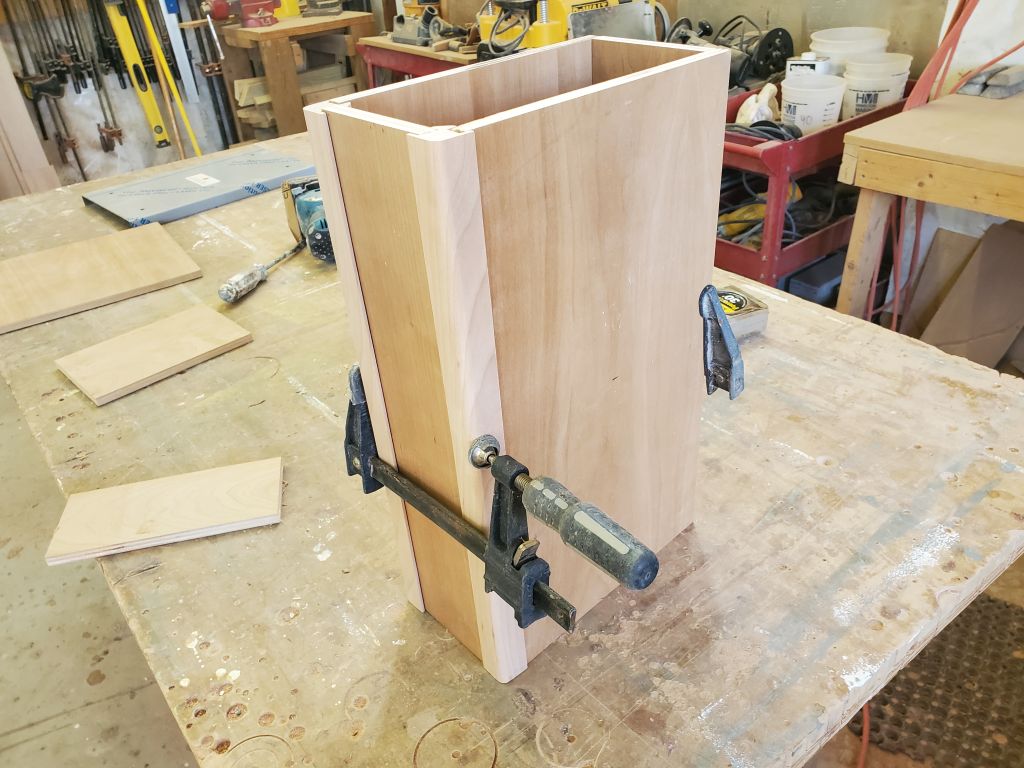
The mockup with the side shield shows the shield slightly offset because of the clamp holding the box together at the moment.

For now, that was as far as I could take the box, but to finish it up I planned to install a bottom panel an inch or two up from the base of the side panels, not only to keep the depth at a manageable level for reaching in from above, but also to give me a way to secure the box to the bulkhead from beneath the bottom panel.    Some additional trim or plywood edge-banding would be required at the top of the box, and then I could glue it up and varnish it before installation.  All to come in due course.

Total time billed on this job today:  3.25 hours 

0600 Weather Observation:  30°, clear with fog.  Forecast for the day:   Becoming mostly sunny, 58°

Lyra 44

Tuesday

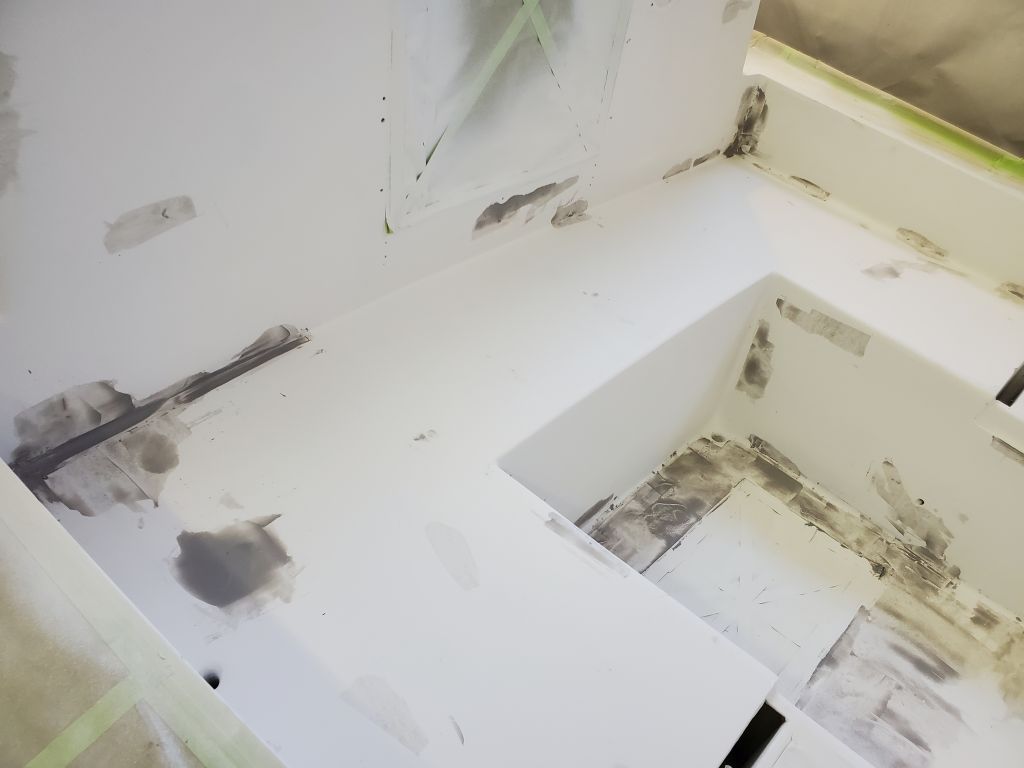
After curing overnight, the high-build primer was ready for sanding, which I took care of first thing, vacuuming and solvent-washing the cockpit afterwards.

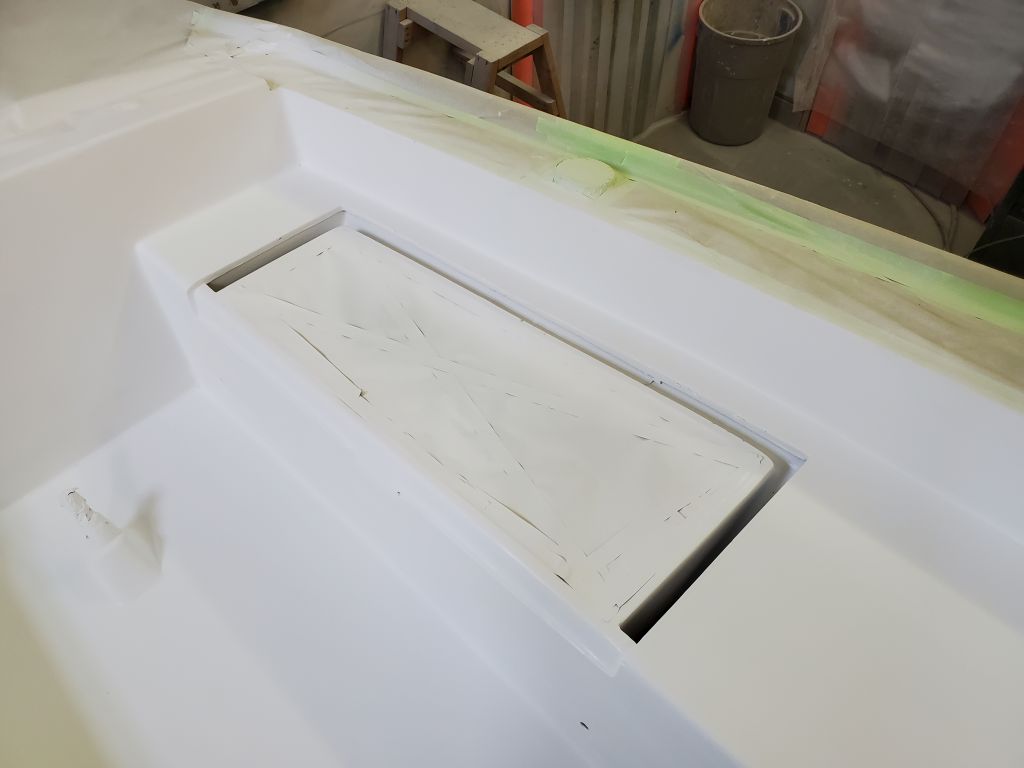
High-build acts as a sort of sealer and final stage of surfacing, and as such highlights various areas requiring additional work, such as pinholes to be filled, and other minor interruptions.  Because even the best efforts during the initial fairing and filling stages leave unseen flaws to be found after priming, I expected and planned for there to be an additional round of filling and surfacing work now, and later in the day I applied thin applications of an epoxy fine fairing compound from the paint system, filling pinholes, fine-tuning the shape of the corners and angles, places where the laminate weave was still showing through on the cockpit sole, and one small air void I uncovered at a corner of the icebox repair.  I left the fairing compound to cure overnight in the overheated shop.

Total time billed on this job today:  2.75 hours

0600 Weather Observation:  23°, clear.  Forecast for the day:   Sunny, 60°
Lyra 43

Monday

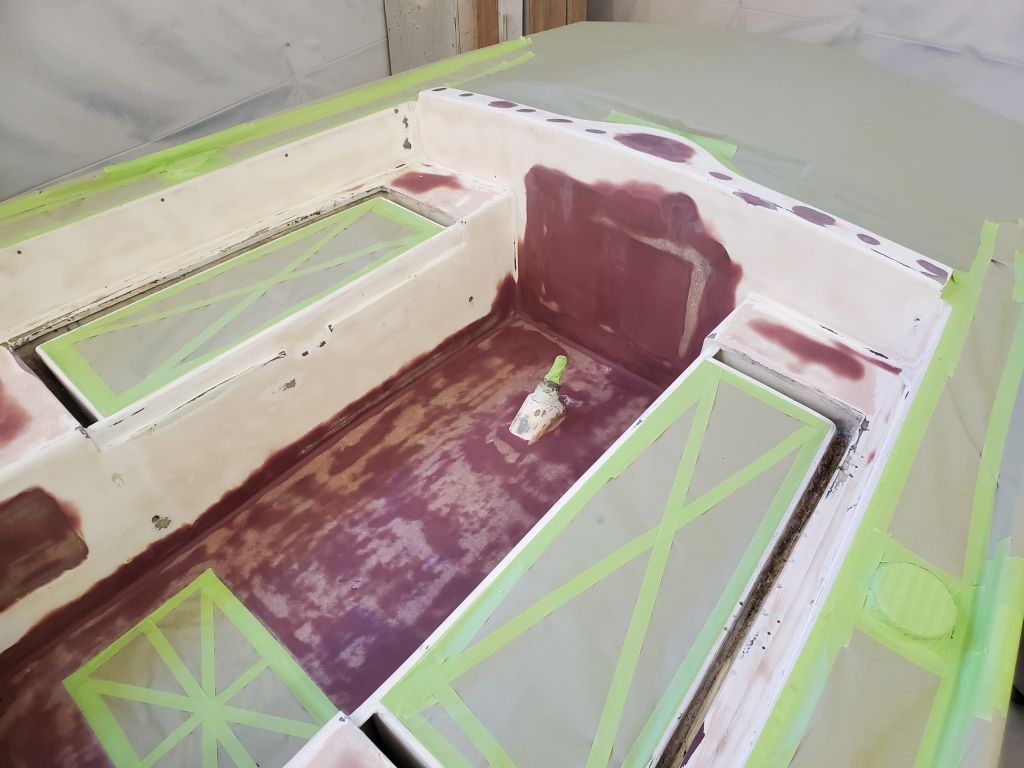
During the first part of the morning, I finished up various final prepwork for the primer and paint stage ahead, including some additional masking (mainly some additional paper to protect the hull around the stern quarters of the boat), plus setup of  paint and spray equipment as needed.  Once all the related preparations were complete, I finished up with a final solvent wash in the cockpit, this time using the paint system’s proprietary solvent for the purpose.

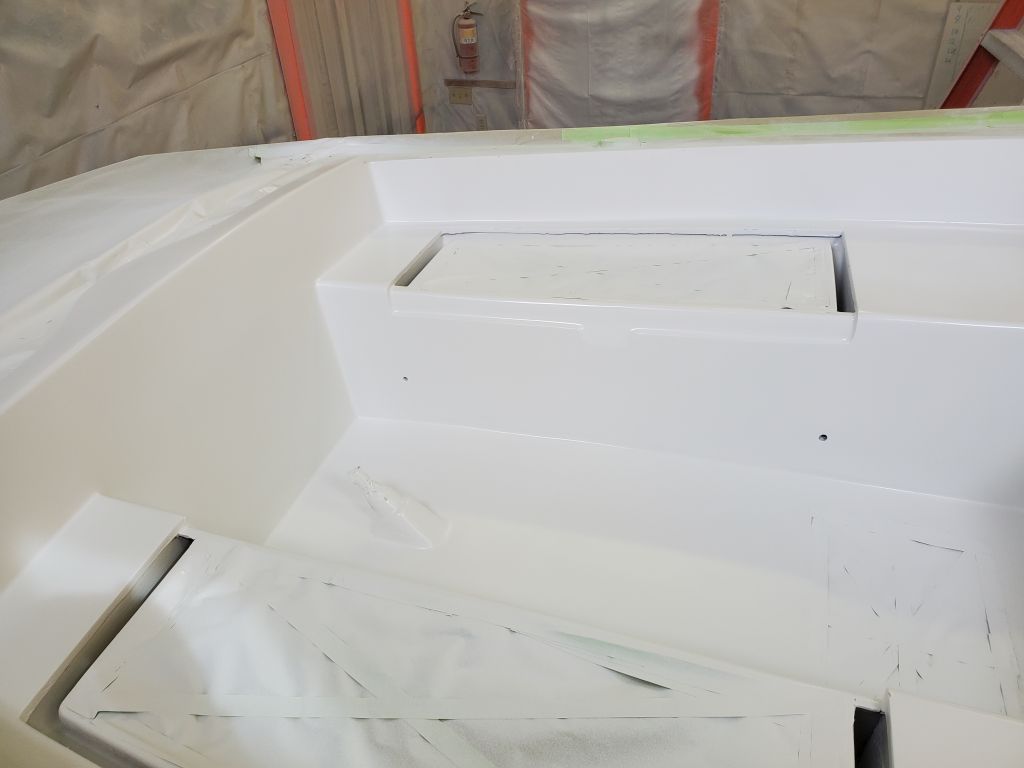
Then, over the course of a few elapsed hours, I applied three coats of epoxy-based high-build primer to the cockpit areas.

Total time billed on this job today:  4.5 hours

0600 Weather Observation:  23°, clear.  Forecast for the day:   Sunny, 60°
Older posts Newer posts