(page 61 of 168)

Lyra 61

Monday

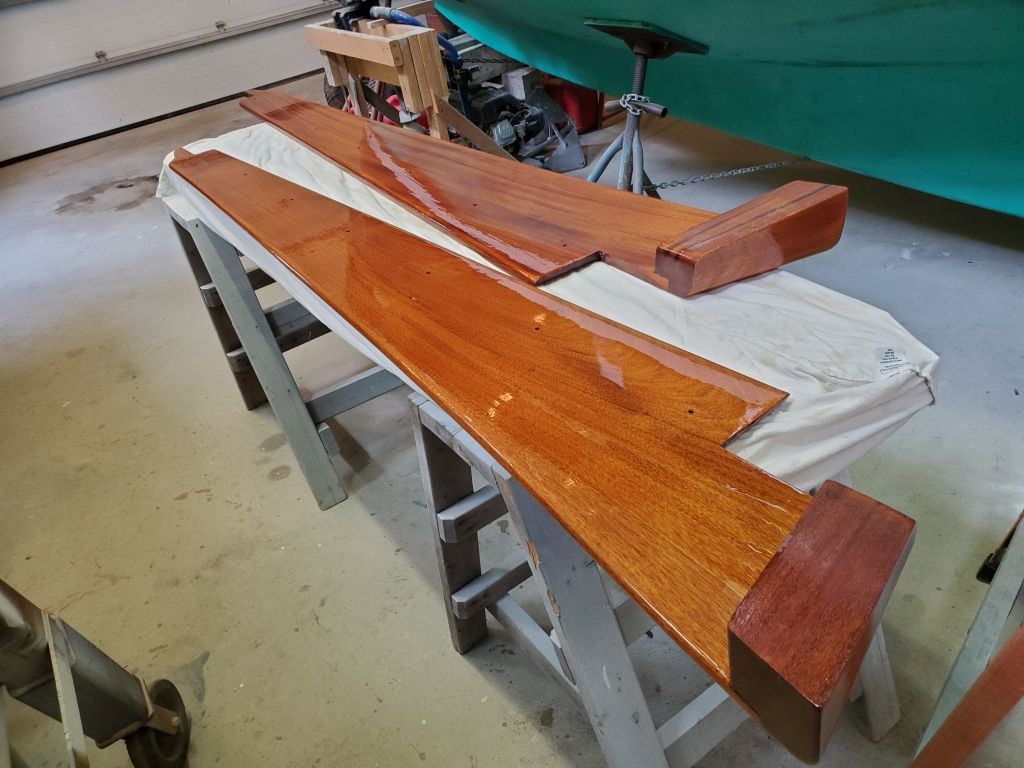
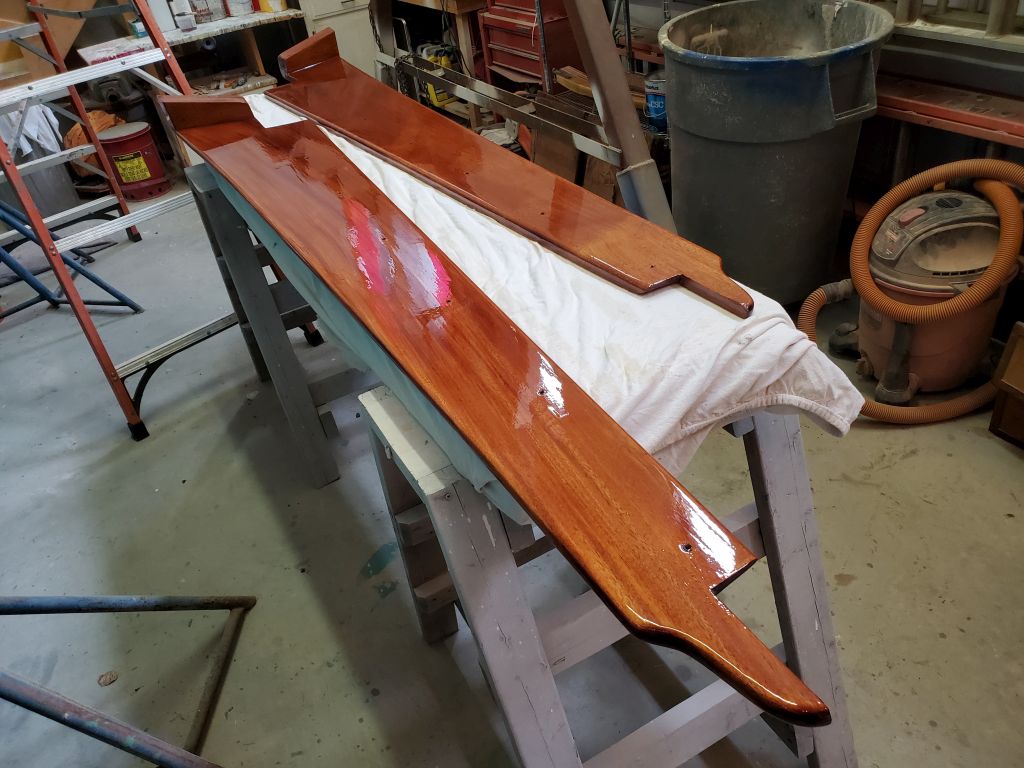
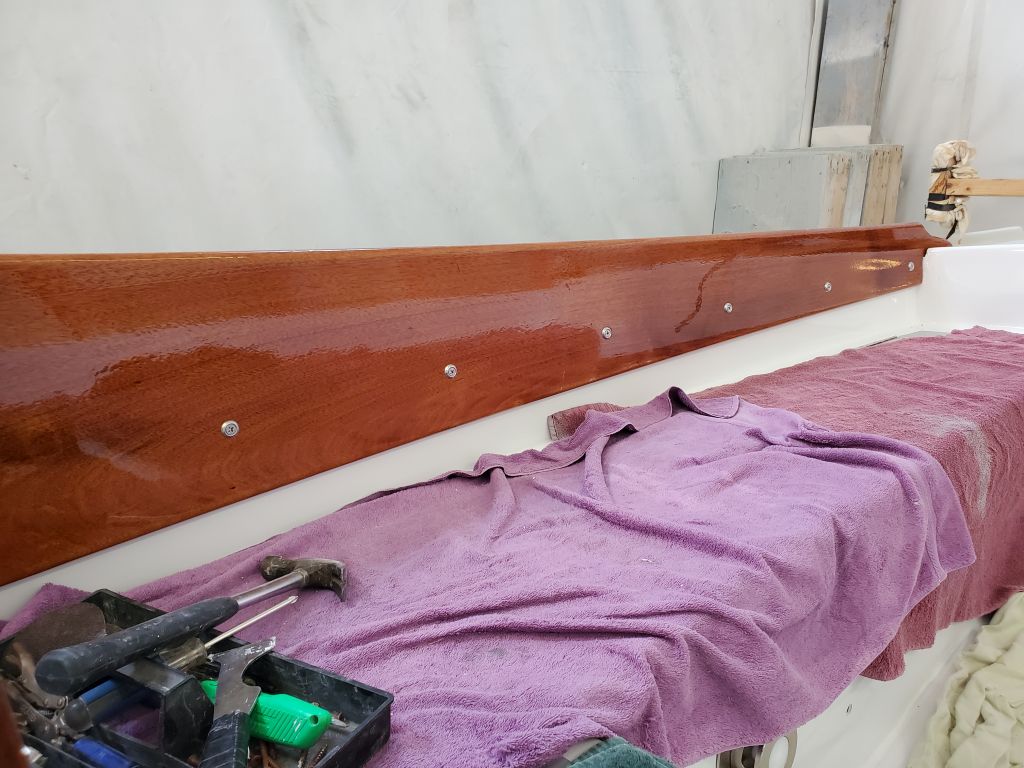
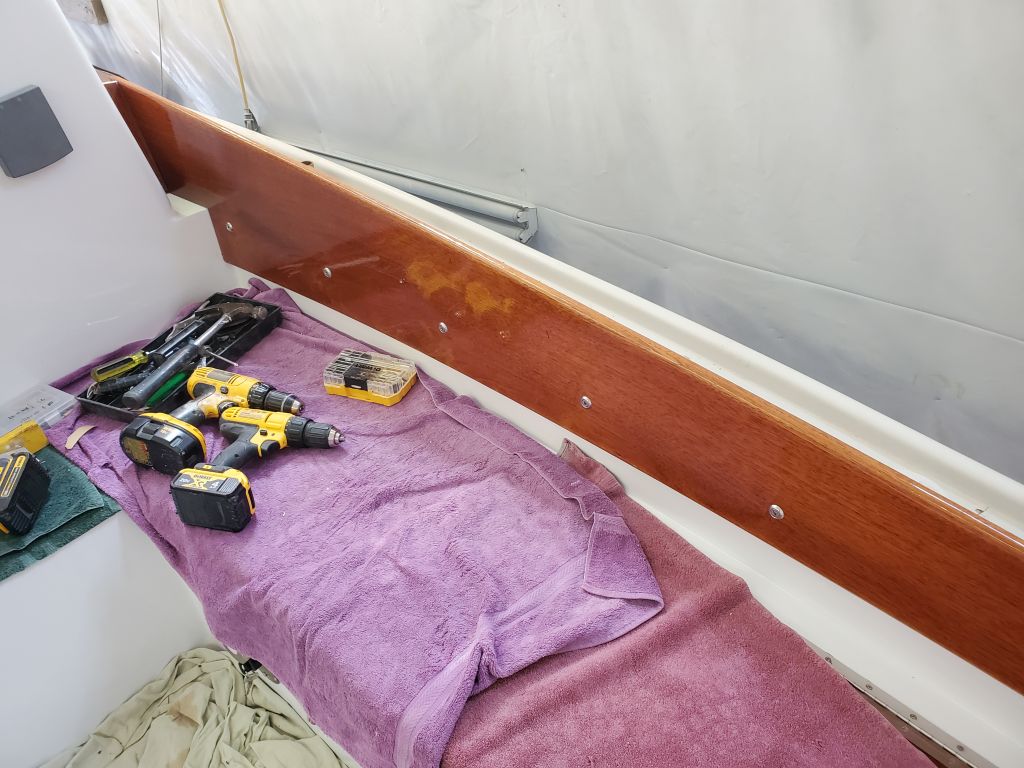
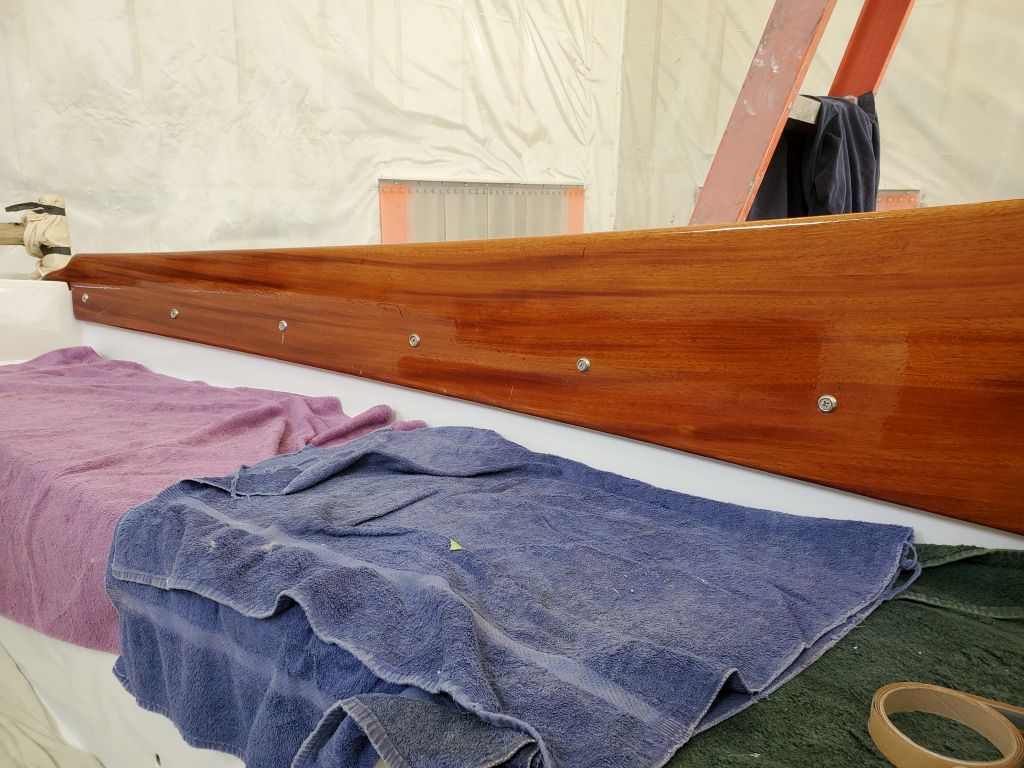
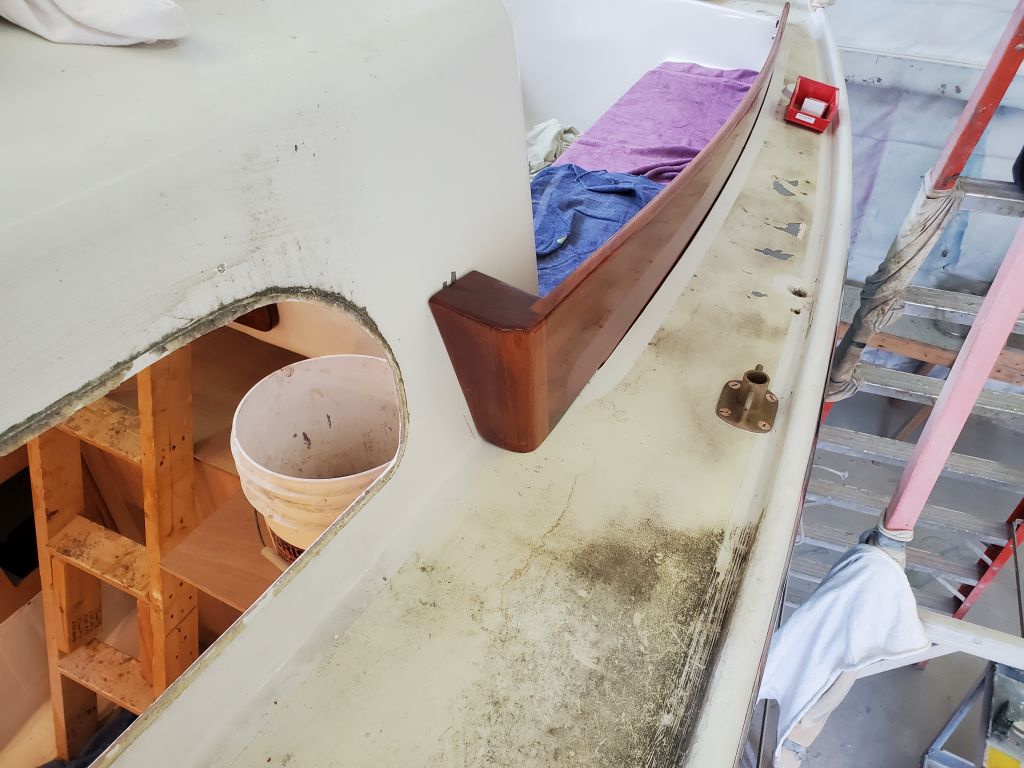
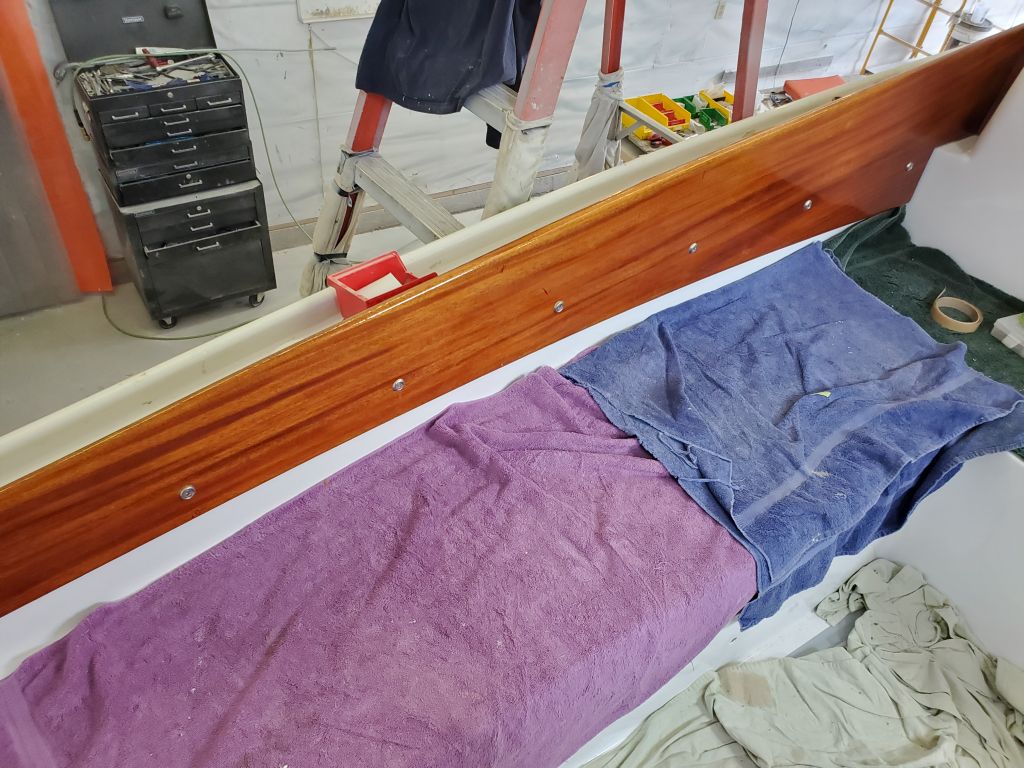
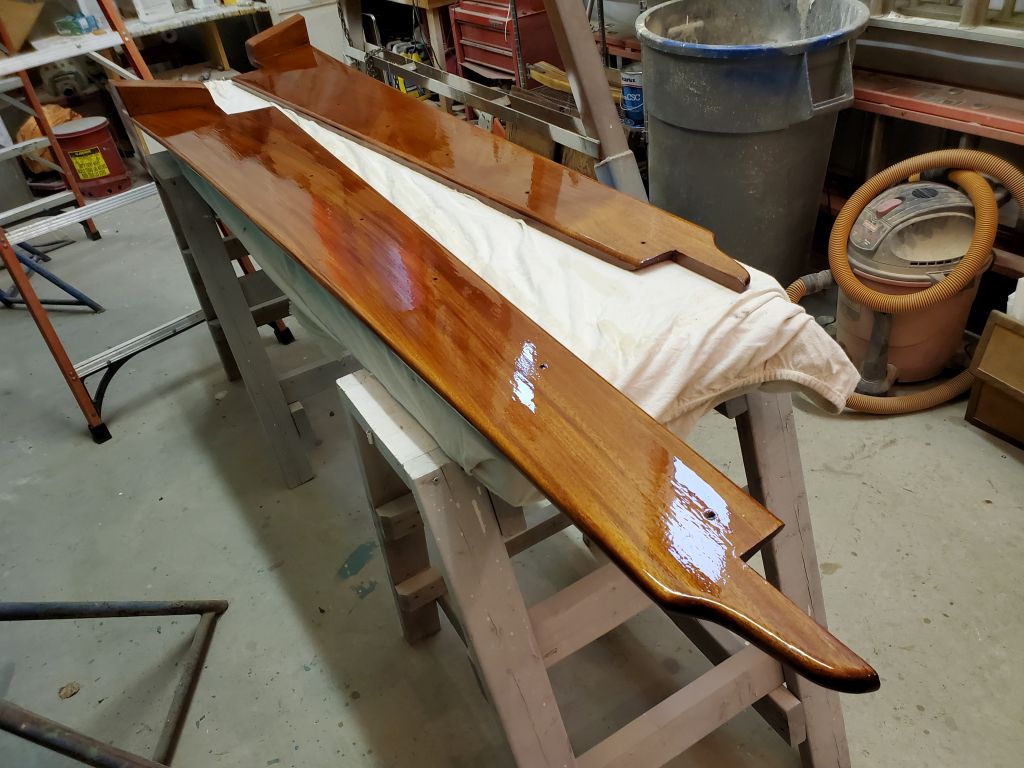
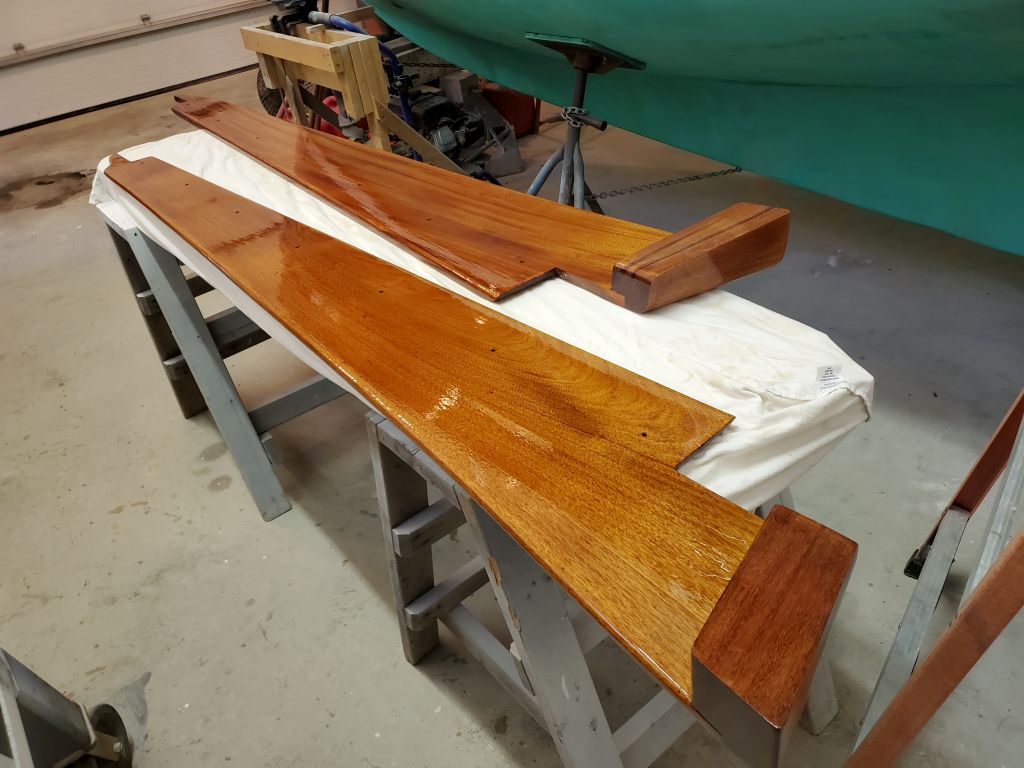
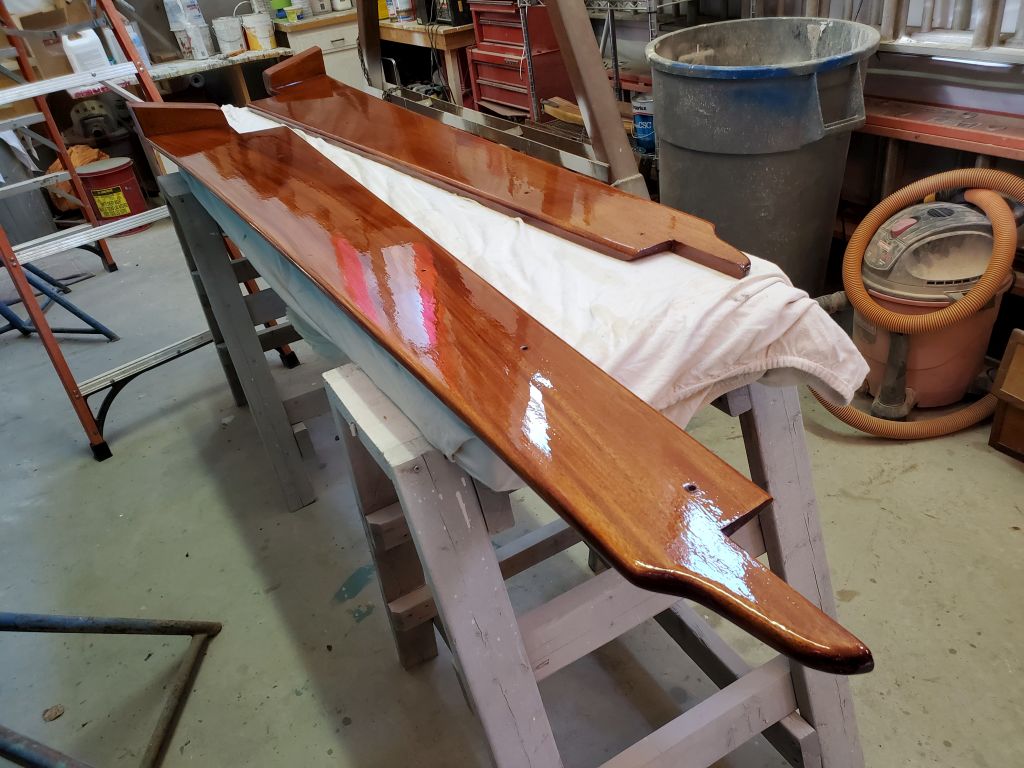
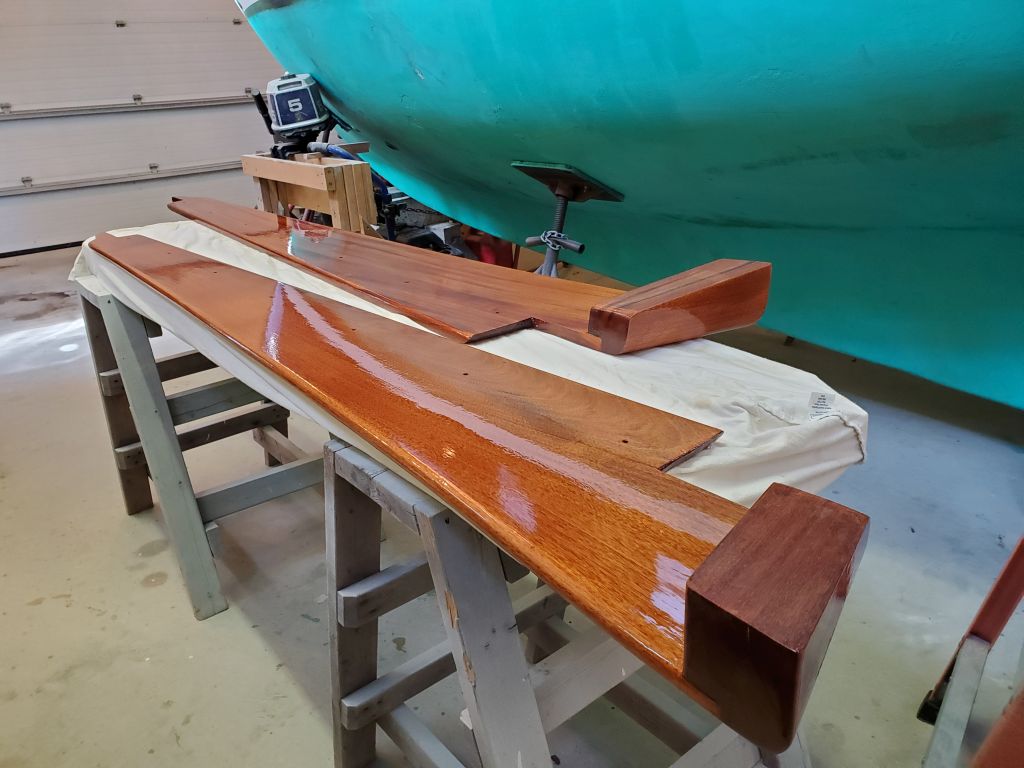
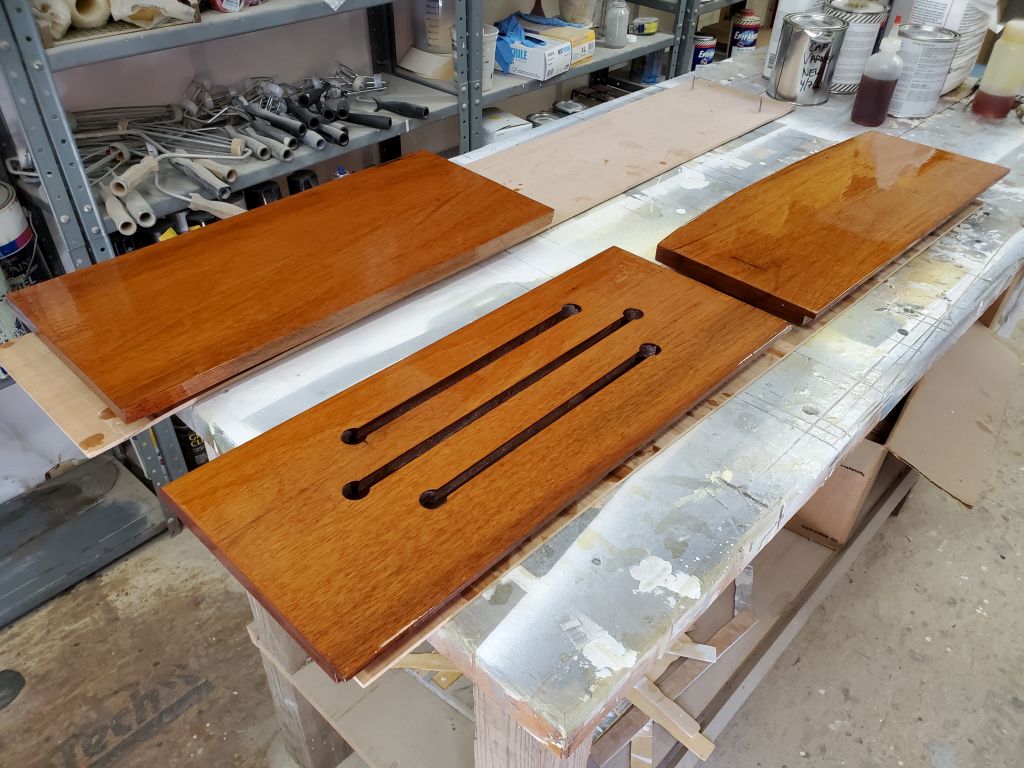
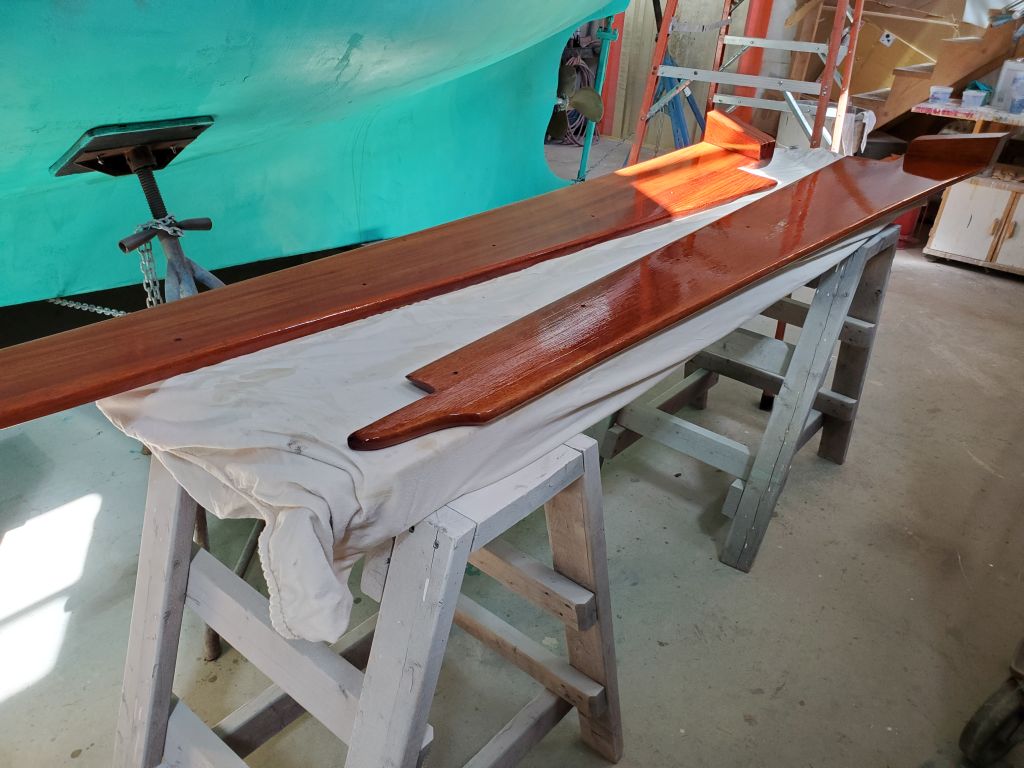
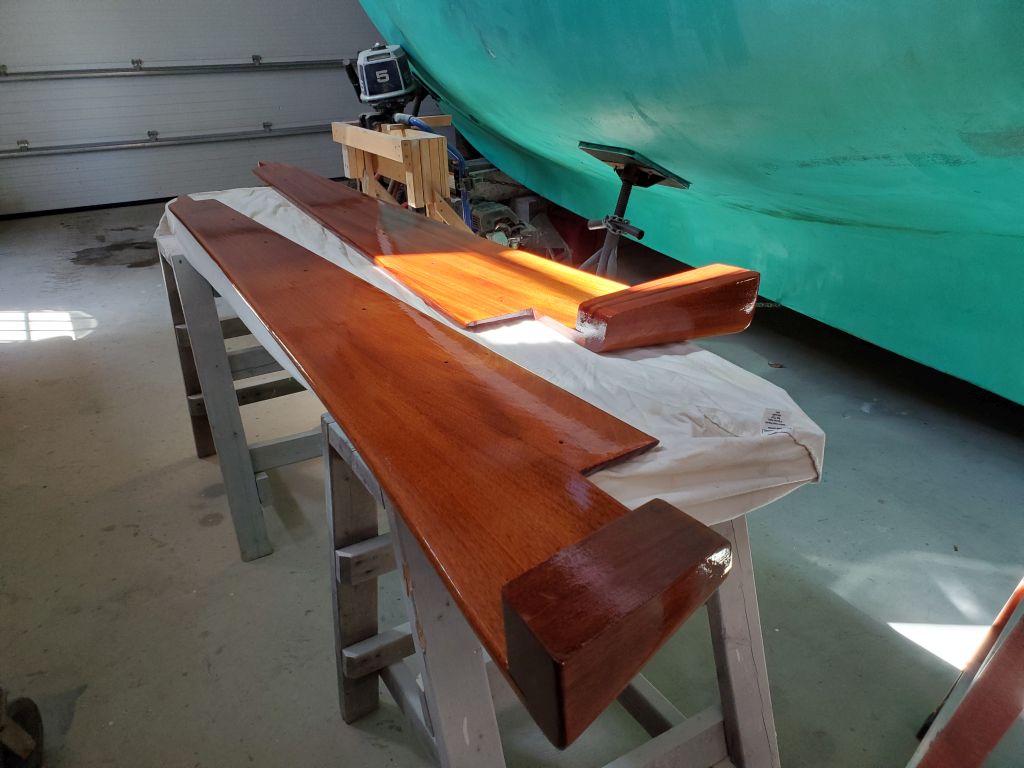
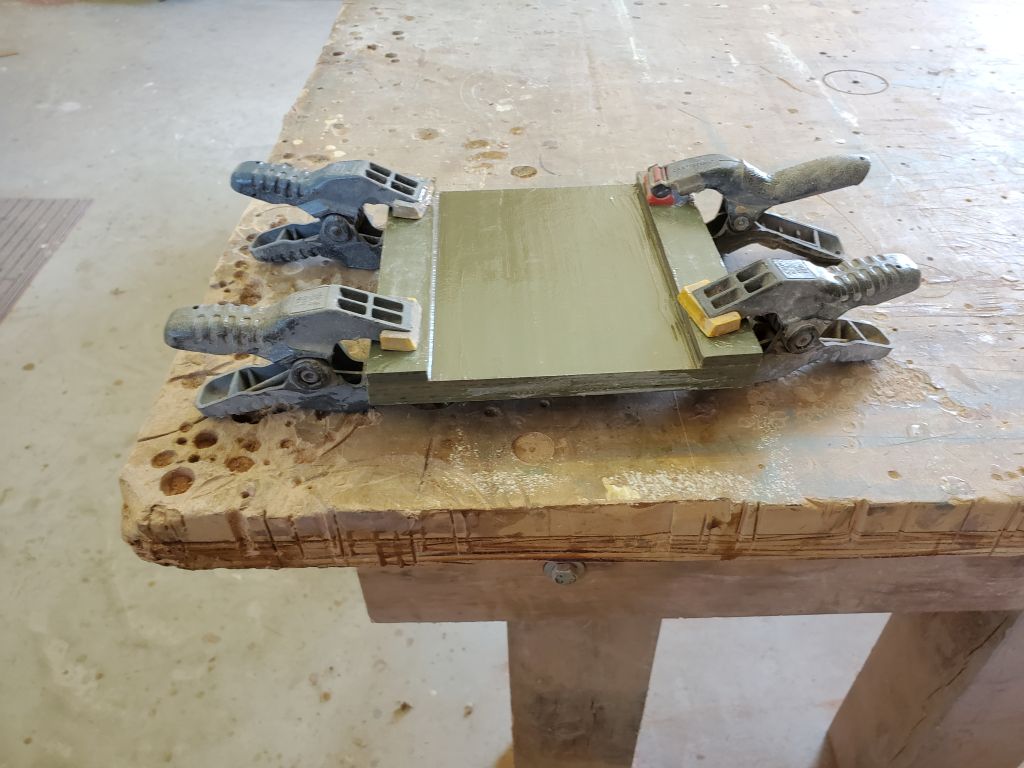
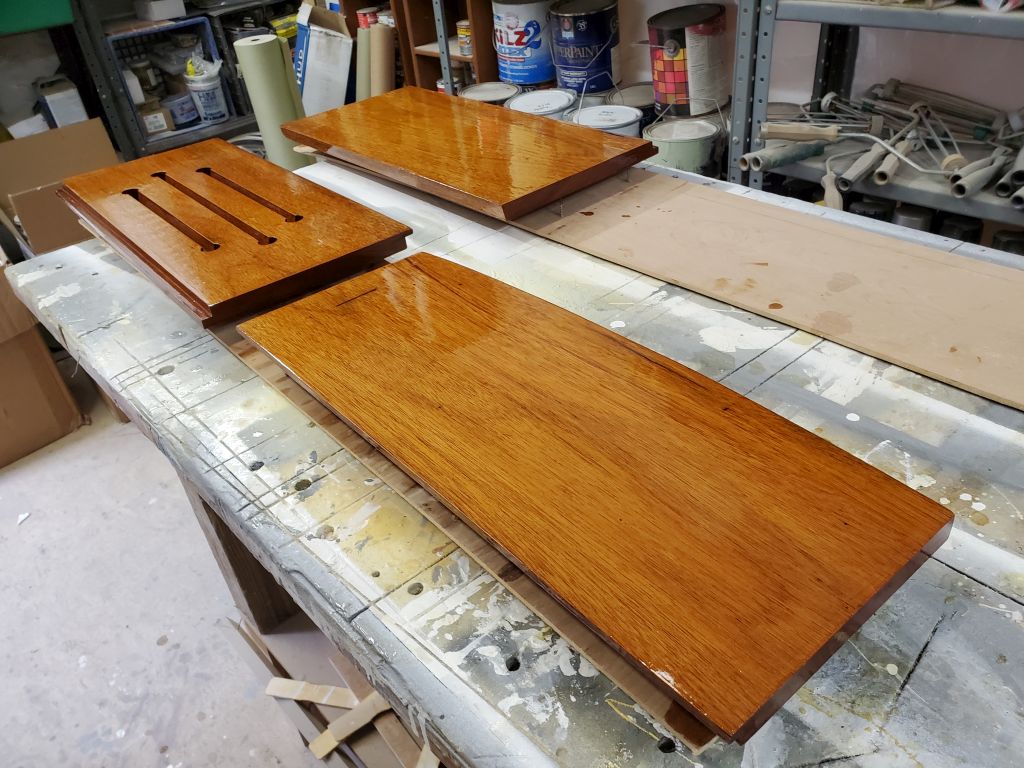
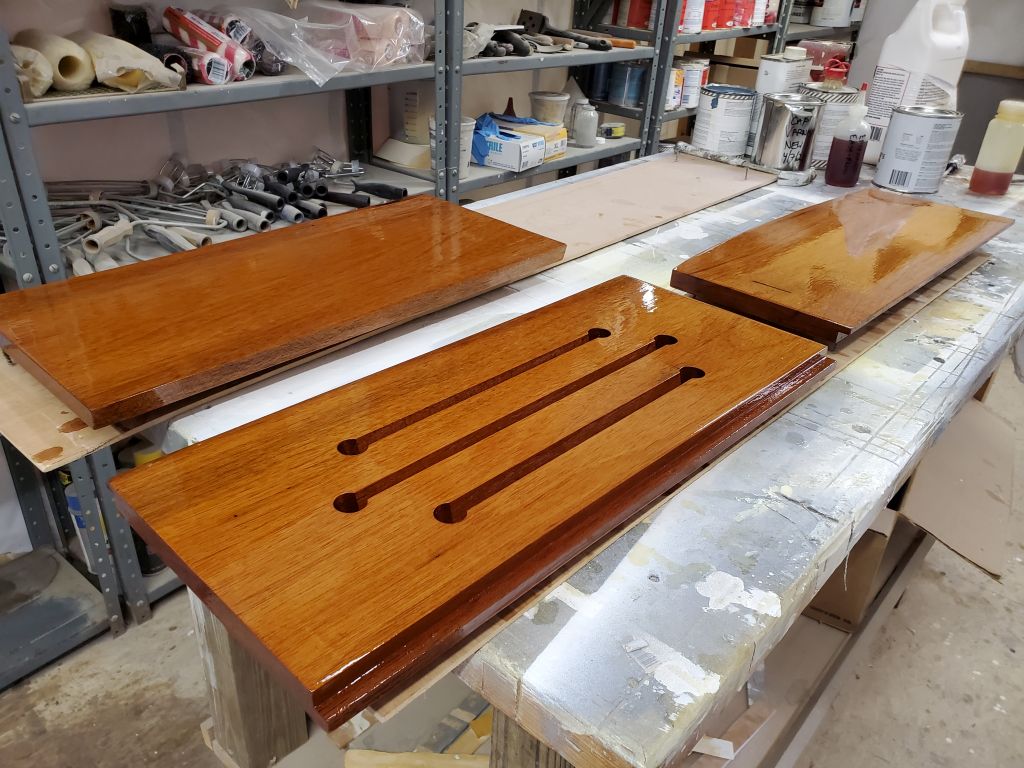
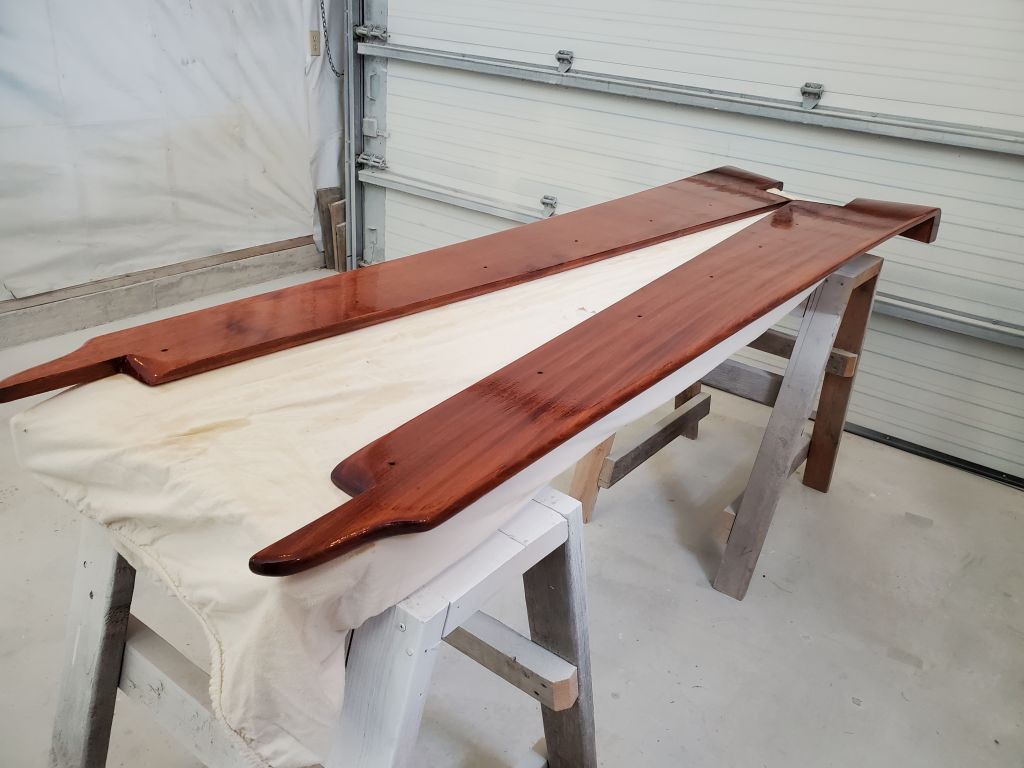
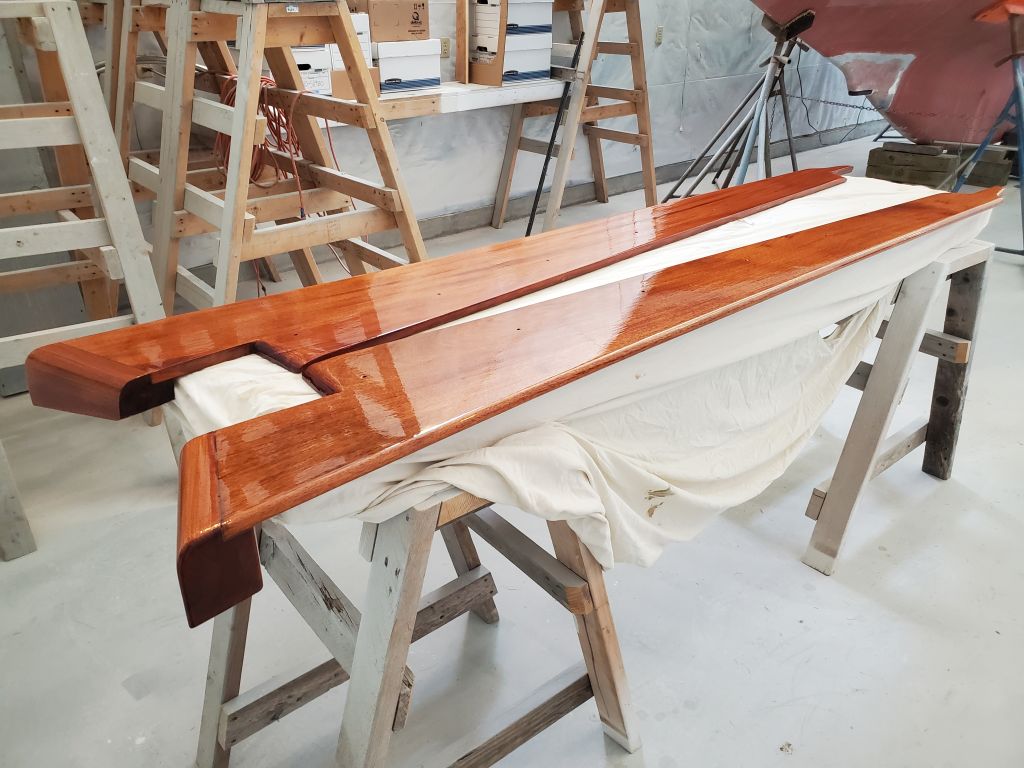
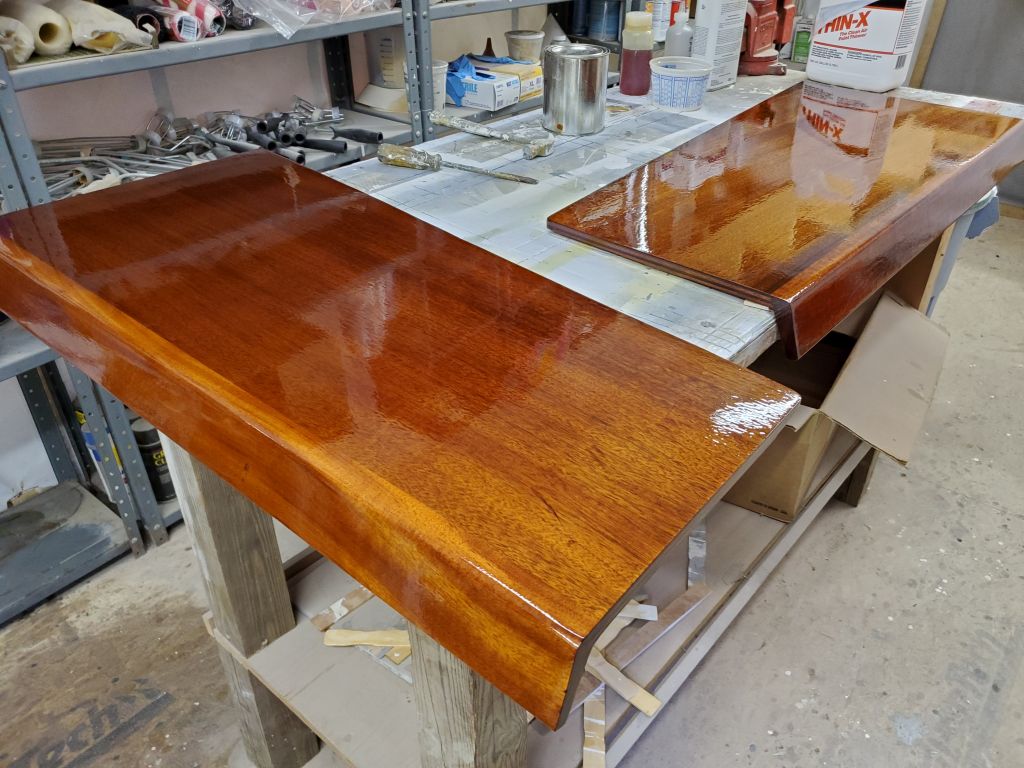
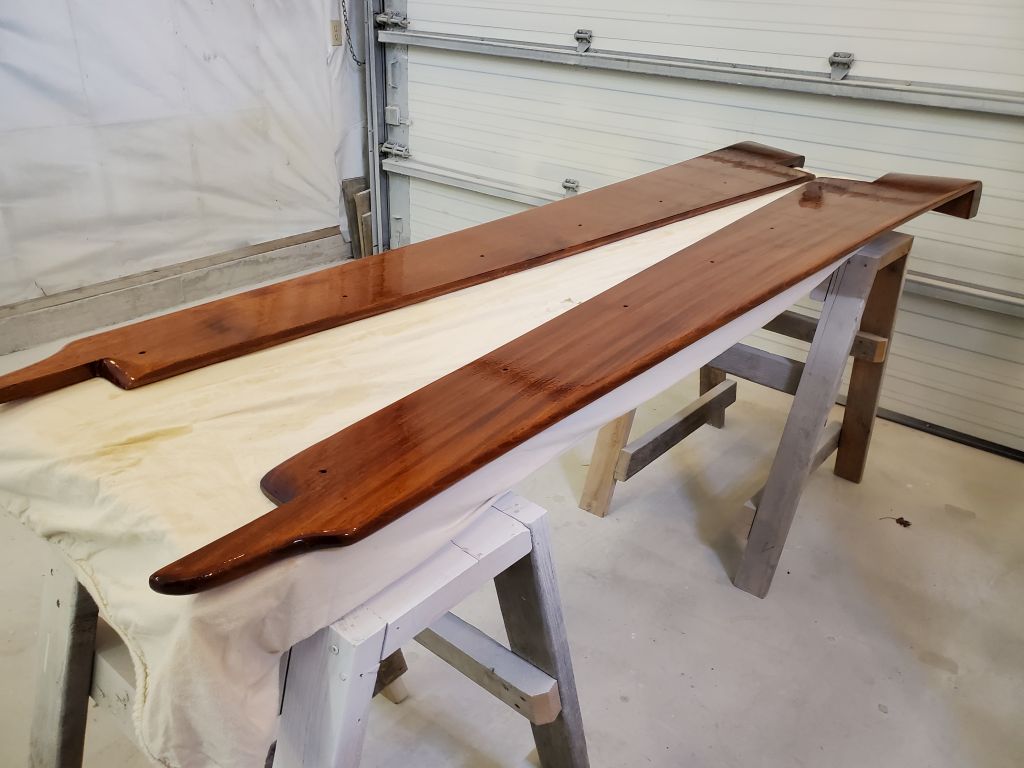
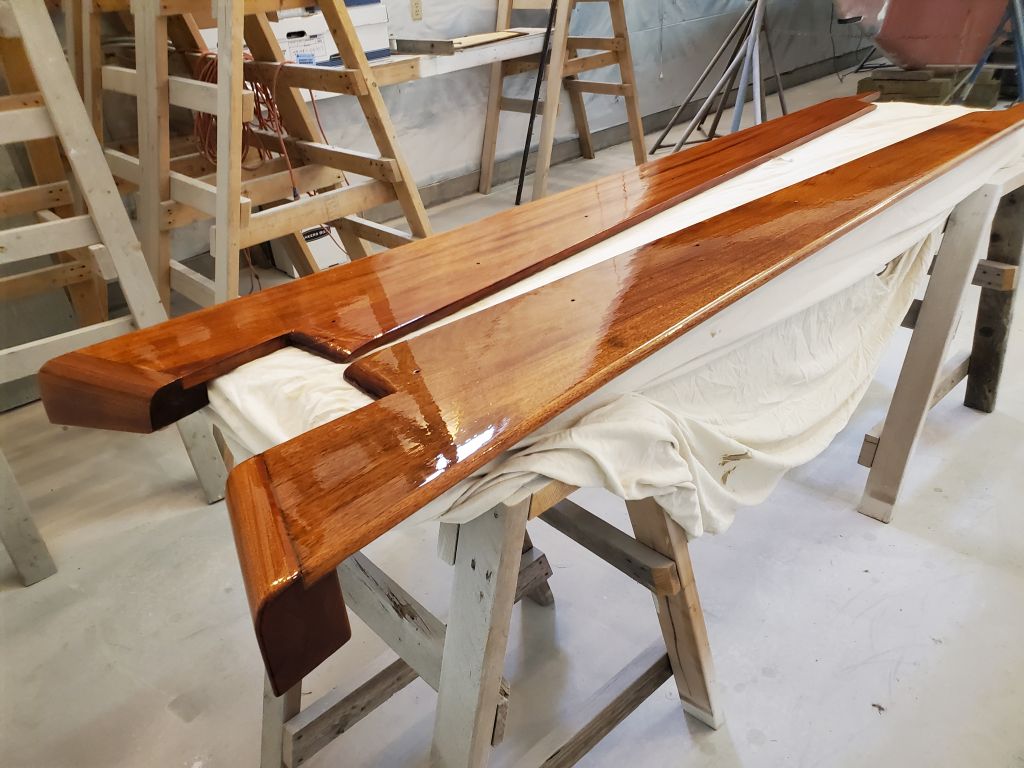
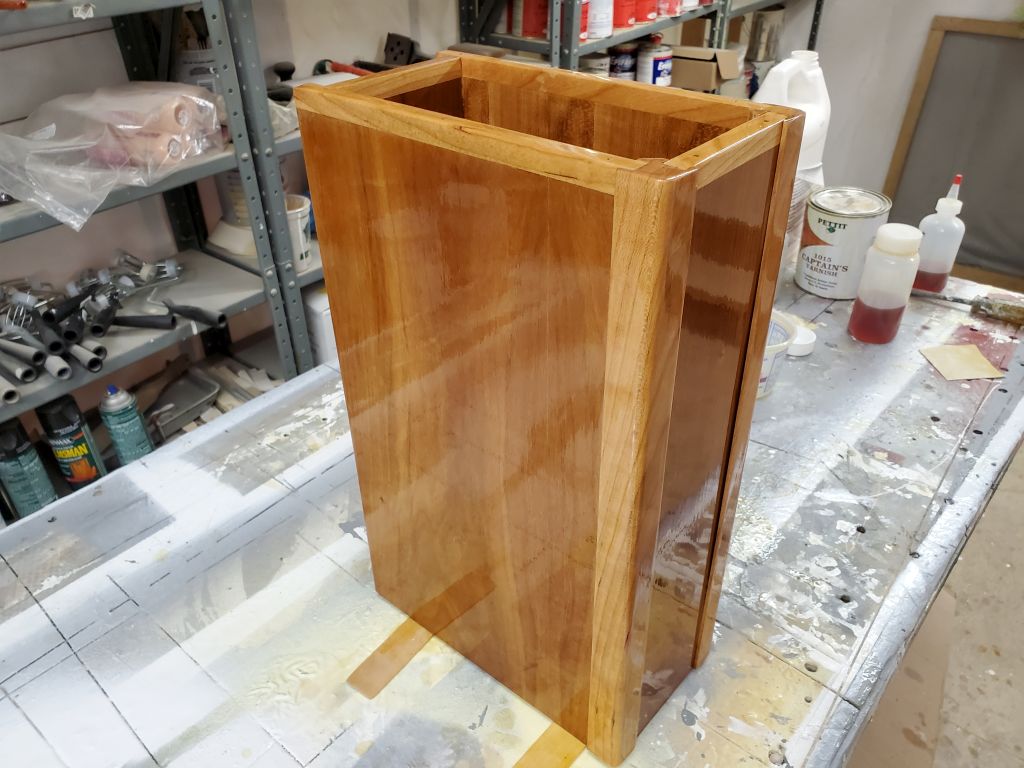
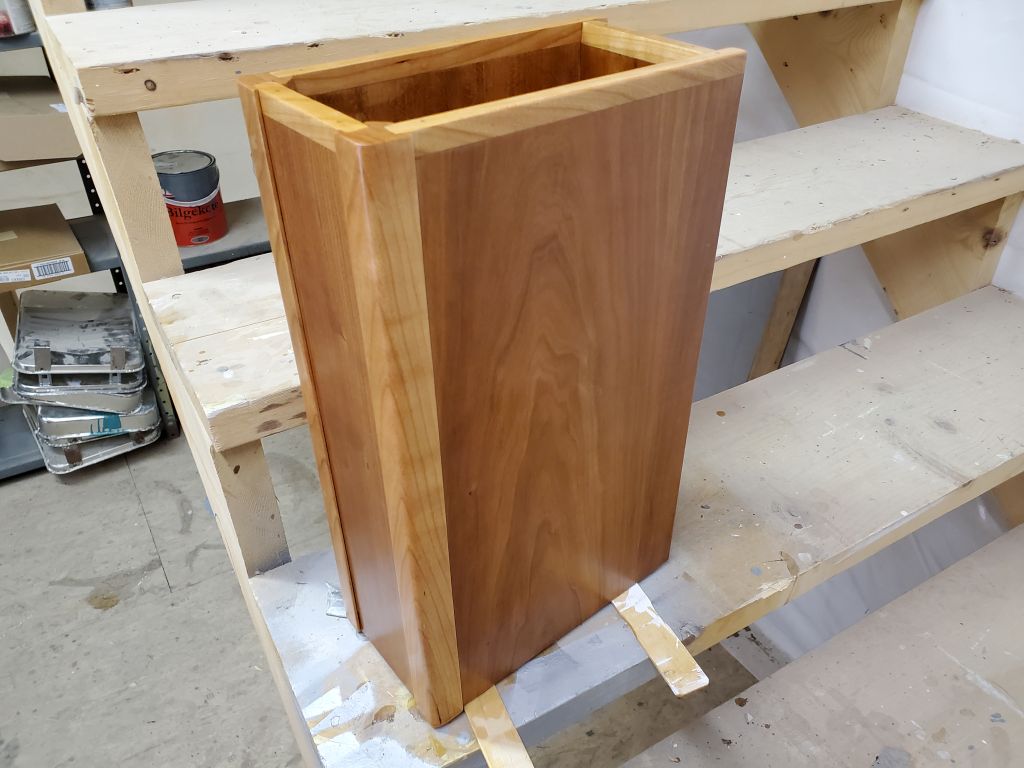
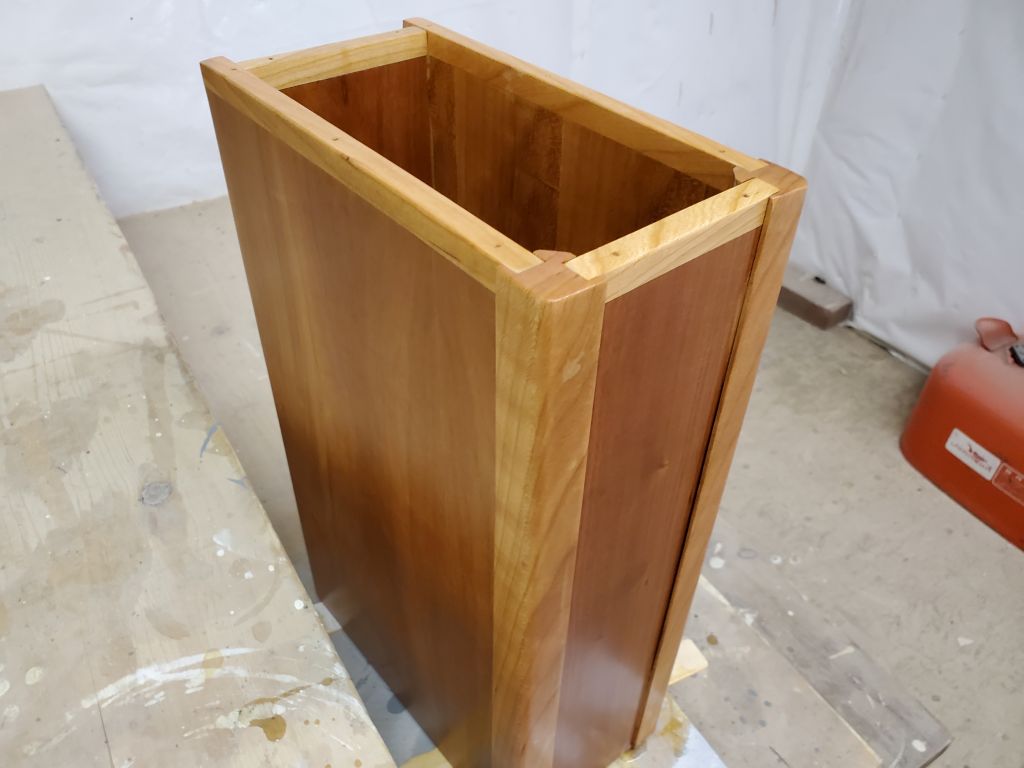
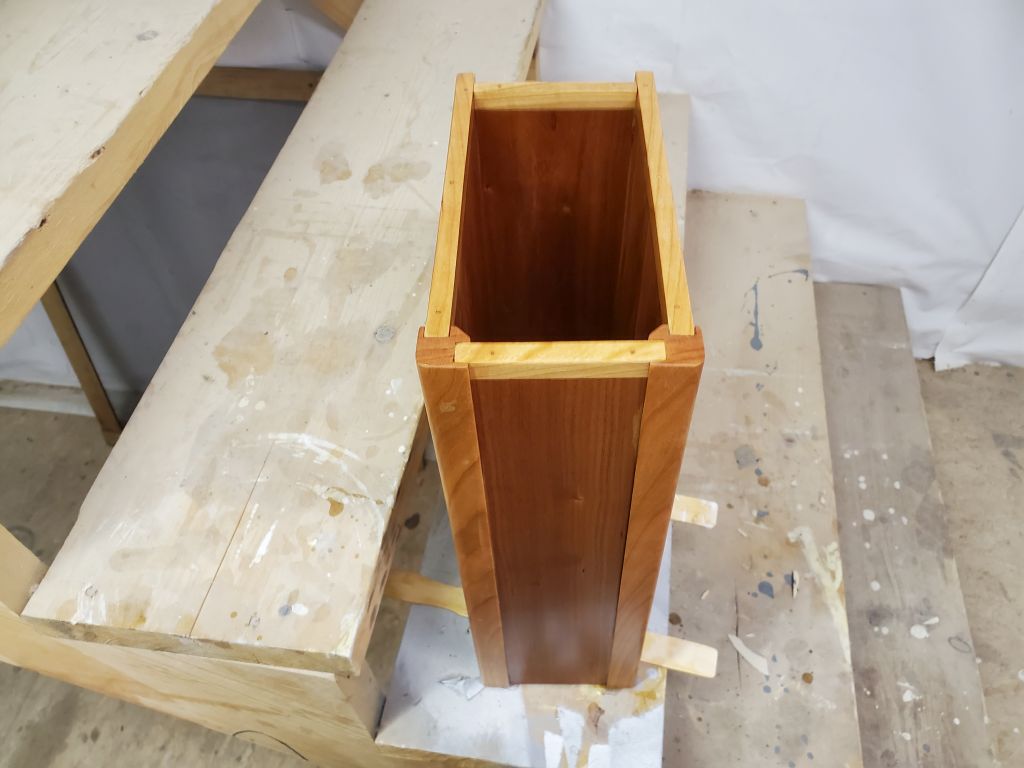
Over the weekend, I finished up the varnish on the coamings with the sixth coat on the inboard sides, leaving them ready for installation now that there’d been two full days to allow the varnish to fully cure..

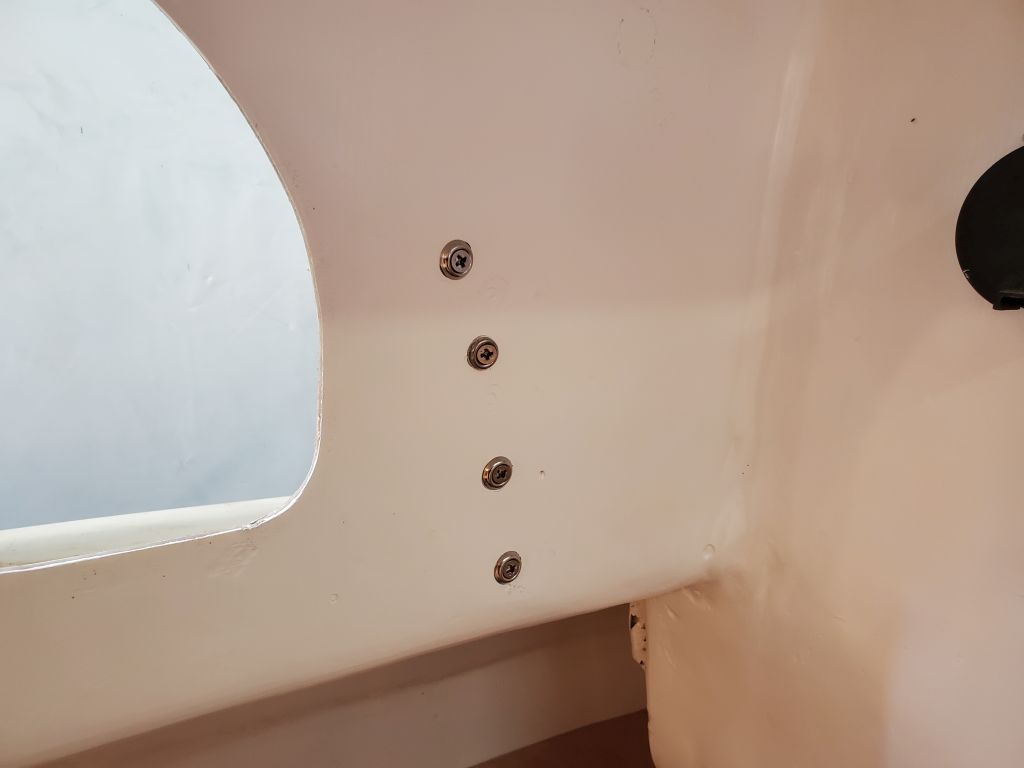
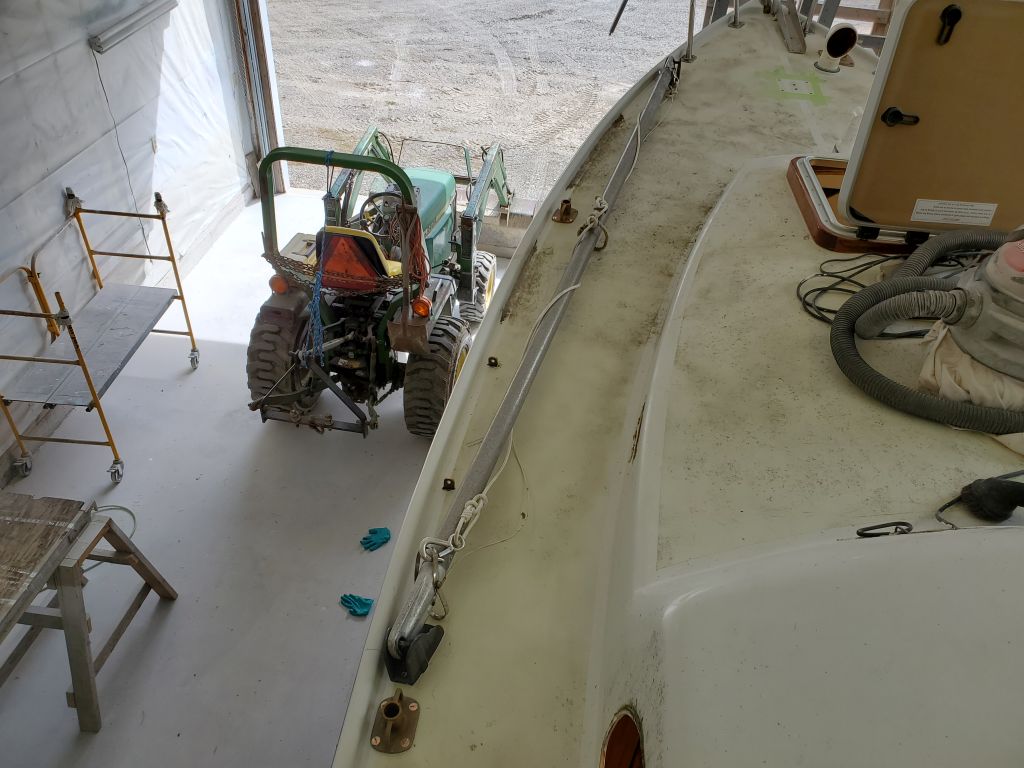
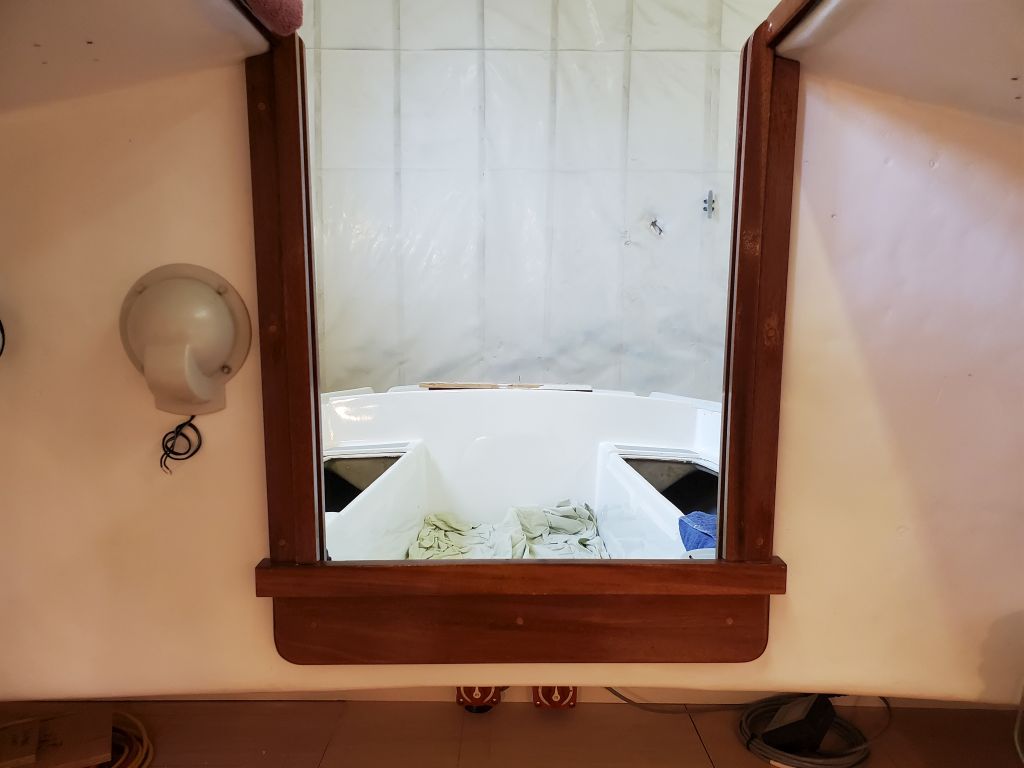
After spending the morning on another project, I got to work installing the coamings.  This was relatively straightforward since I’d already fitted them, but now I had to mark and drill the cabin sides for the screws that would secure the return blocks at the forward end.  Once that was done, I applied butyl tape to the mating surfaces to keep water out of the screw holes, and installed the coamings with screws and finish washers to allow them to remain removable for easy maintenance going forward.

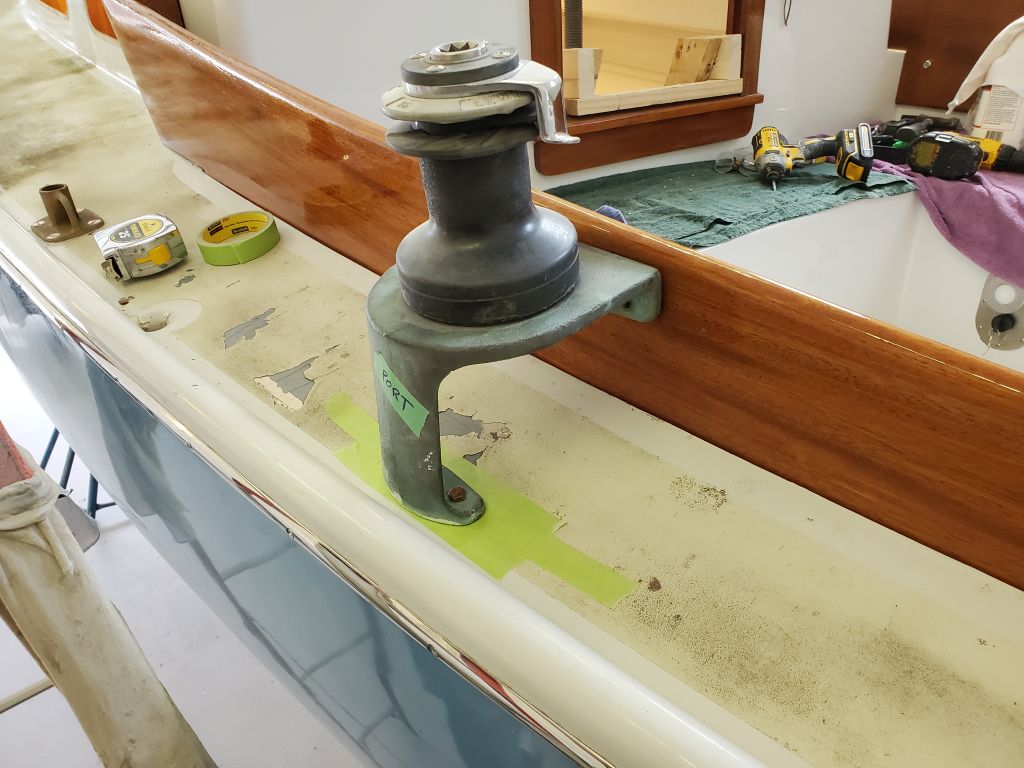
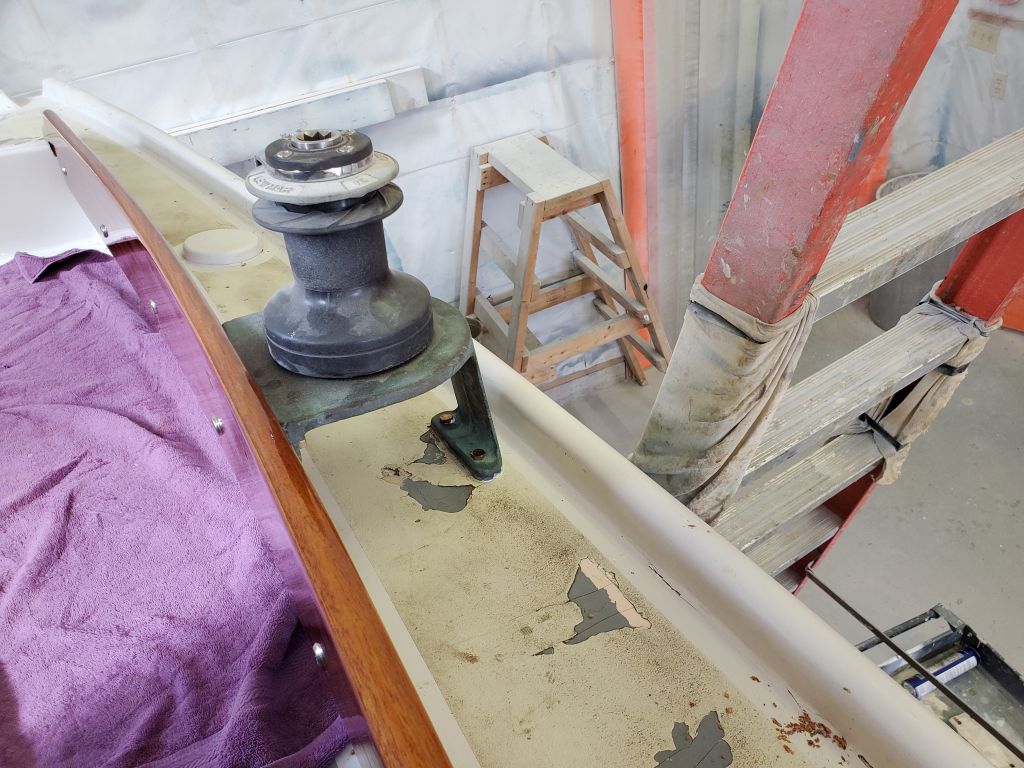
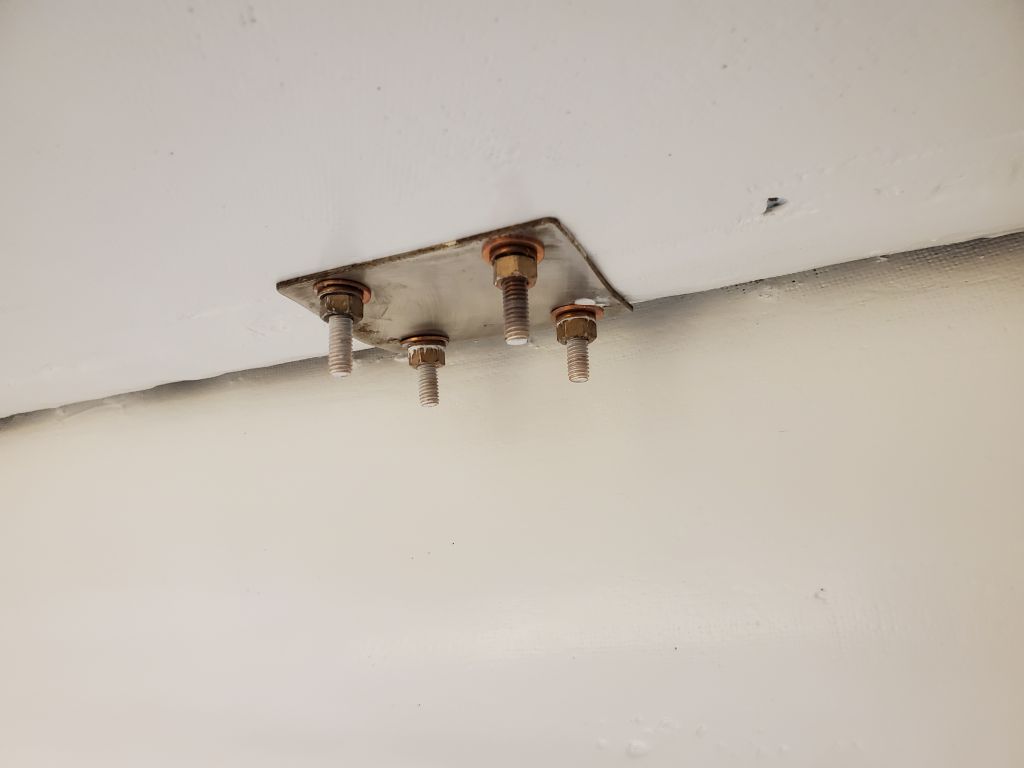
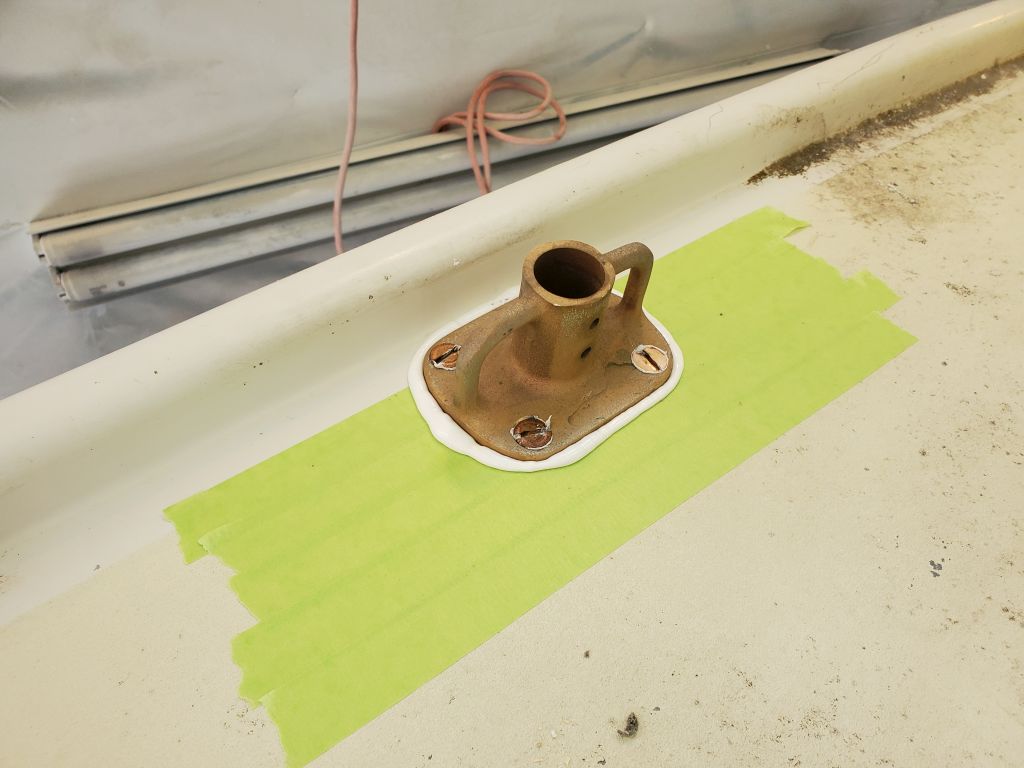
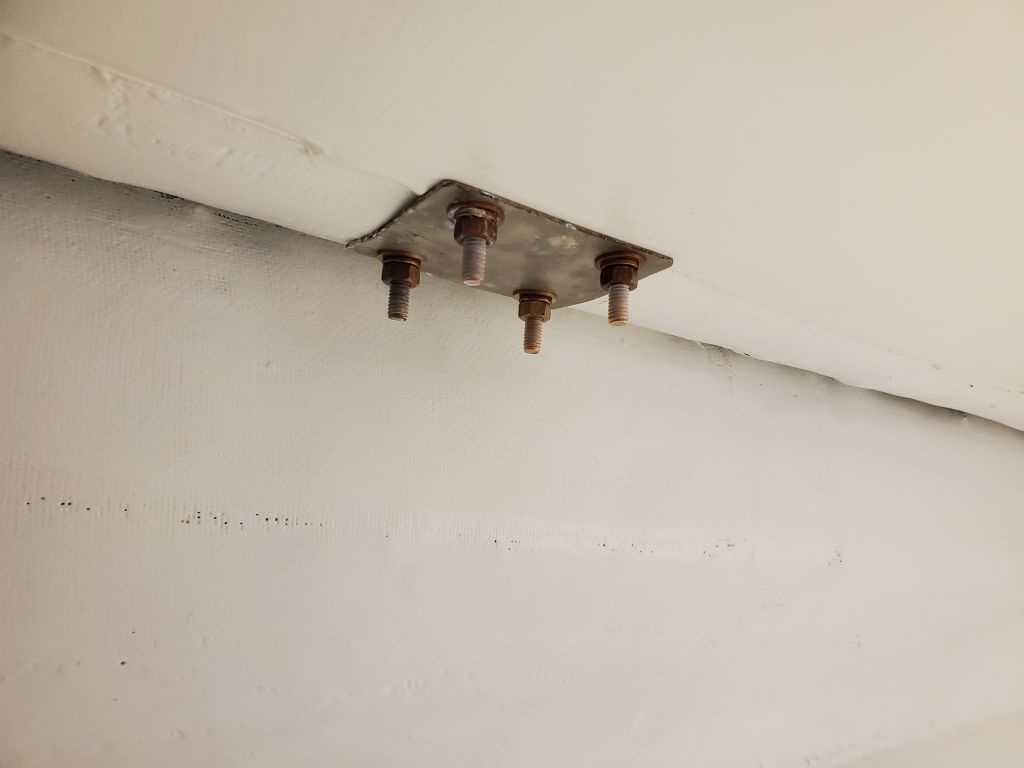
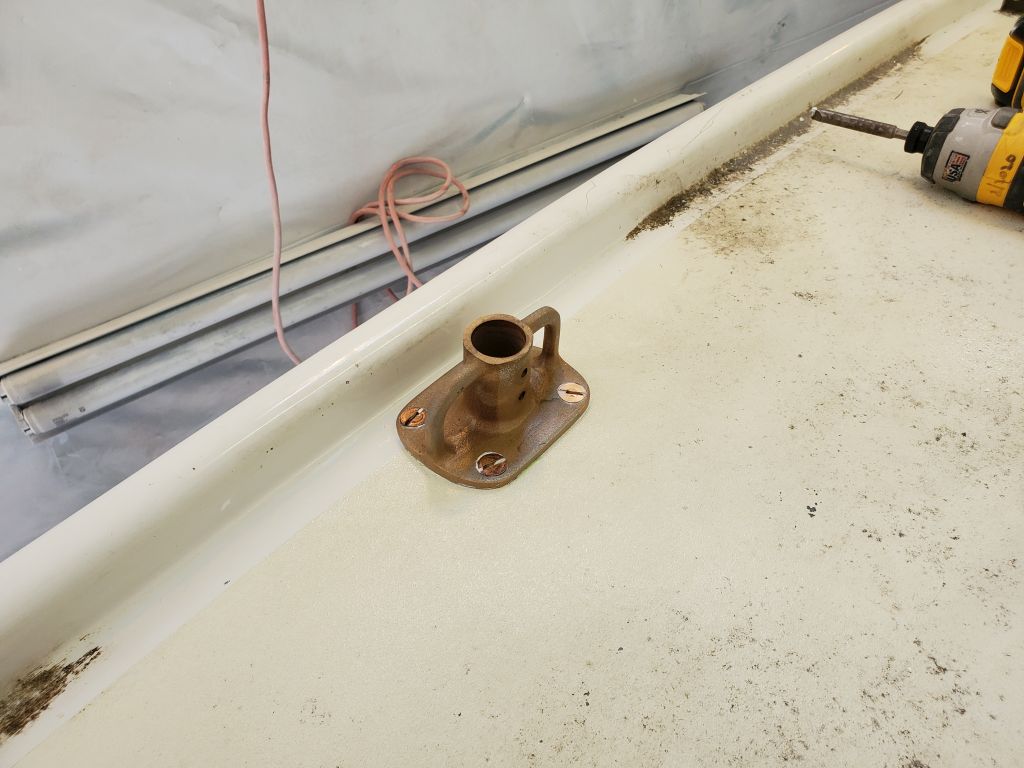
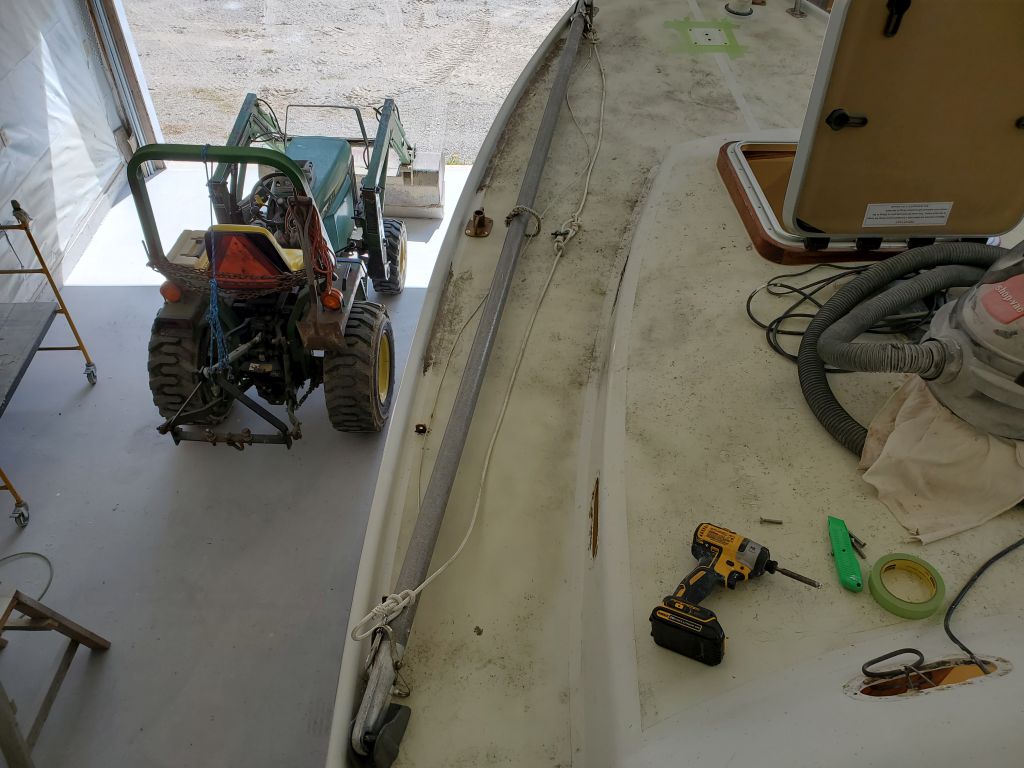
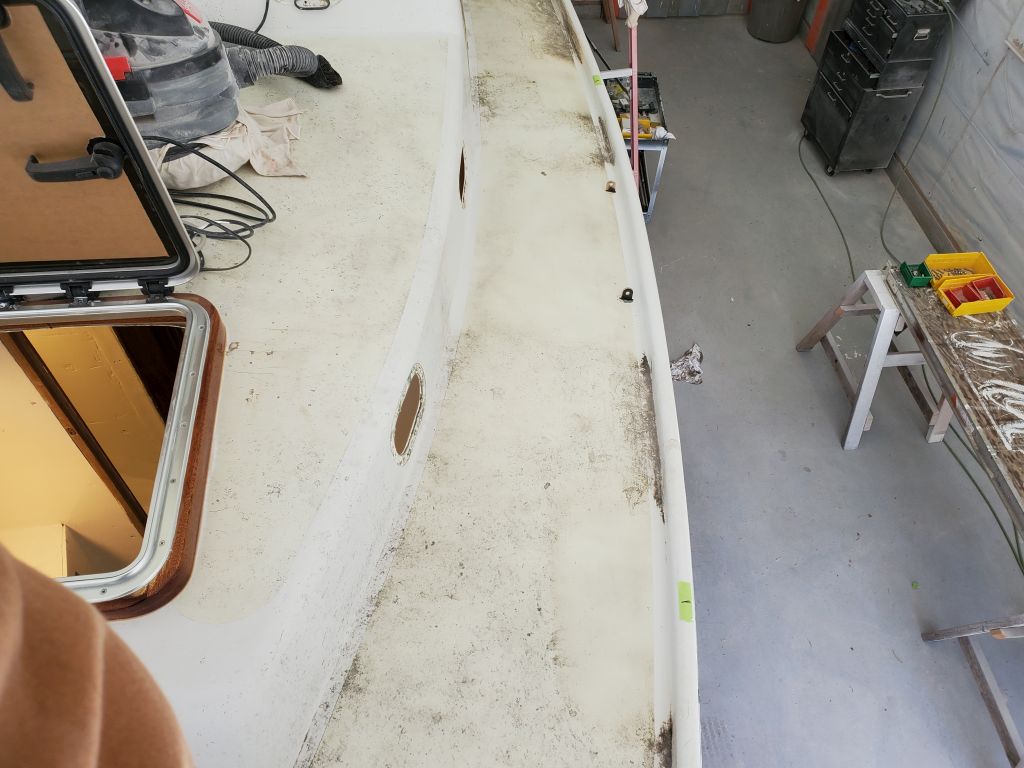
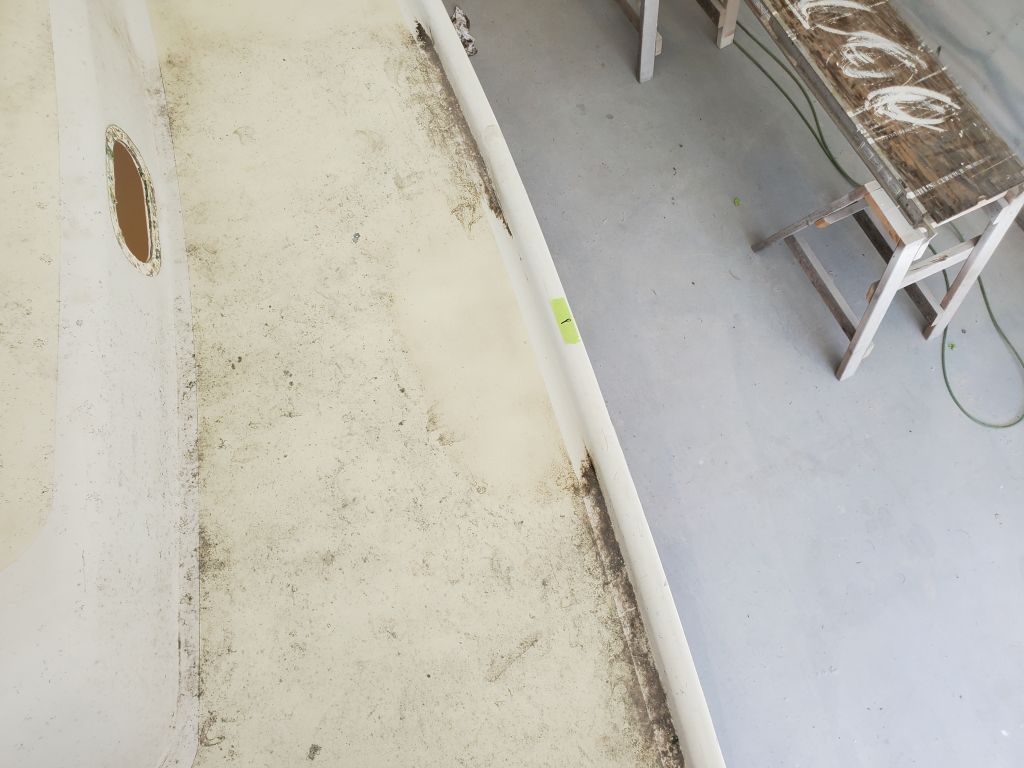
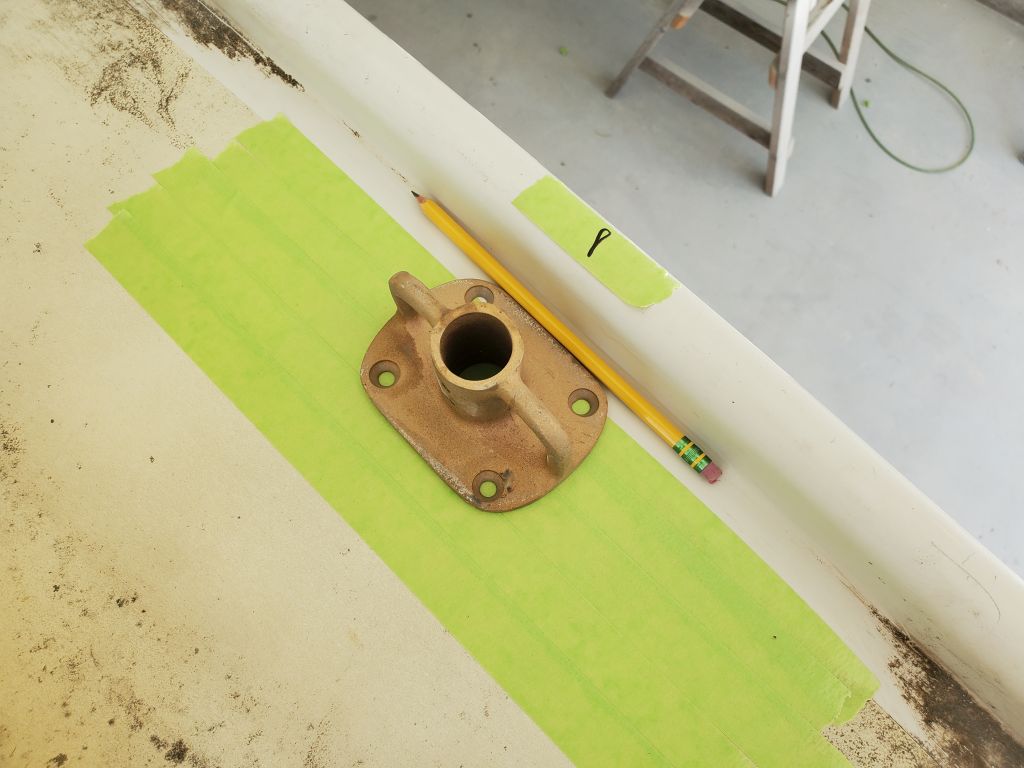
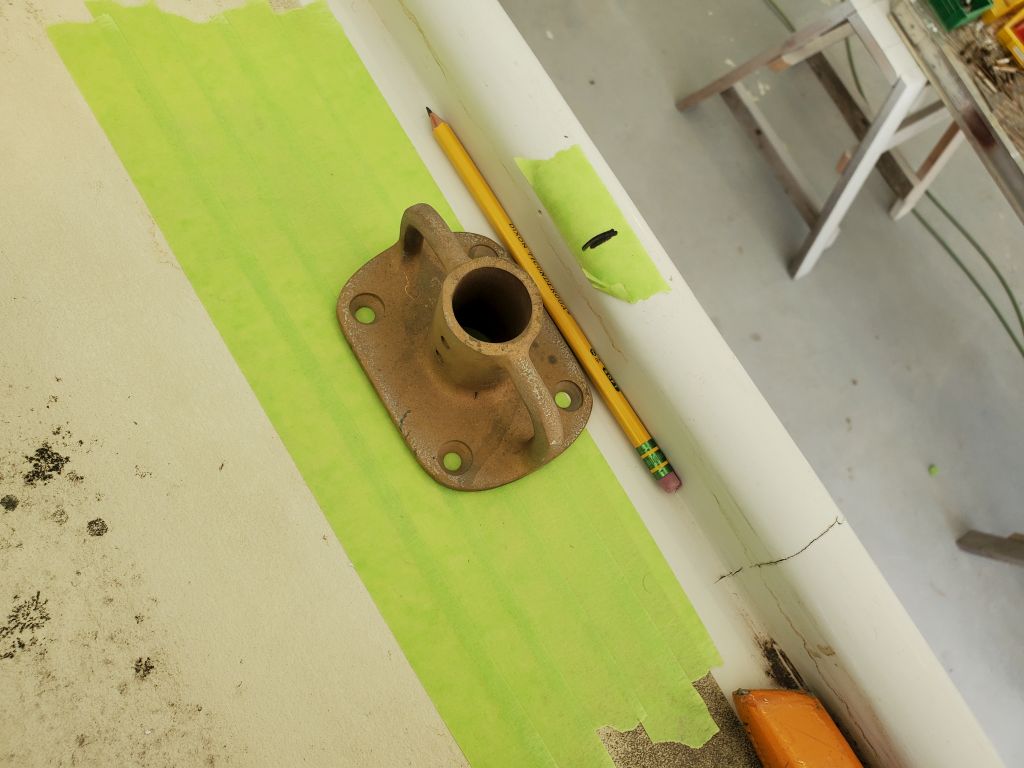
Once both sides were in place, I turned to the winch stands and winches, which the owner had preassembled, so now it was just a matter of laying out and installing the bronze winch bases with four bolts.  As I started the layout, I found that there were old sealant-filled screw holes already in place in the deck right about where I’d been planning to place the bases anyway, so this made the placement decision easy.

With the base held in place with two bolts through the existing deck holes, I marked, drilled, and countersunk from the inside a pair of boltholes to secure the upper edge of the stands in place, then finished the installation permanently with sealant at the deck and bronze bolts all around (hex bolts at the deck mount, flathead machine screws through the coamings).  I had enough time before the end of the day to finish up the port winch; the starboard winch should go quickly next time.

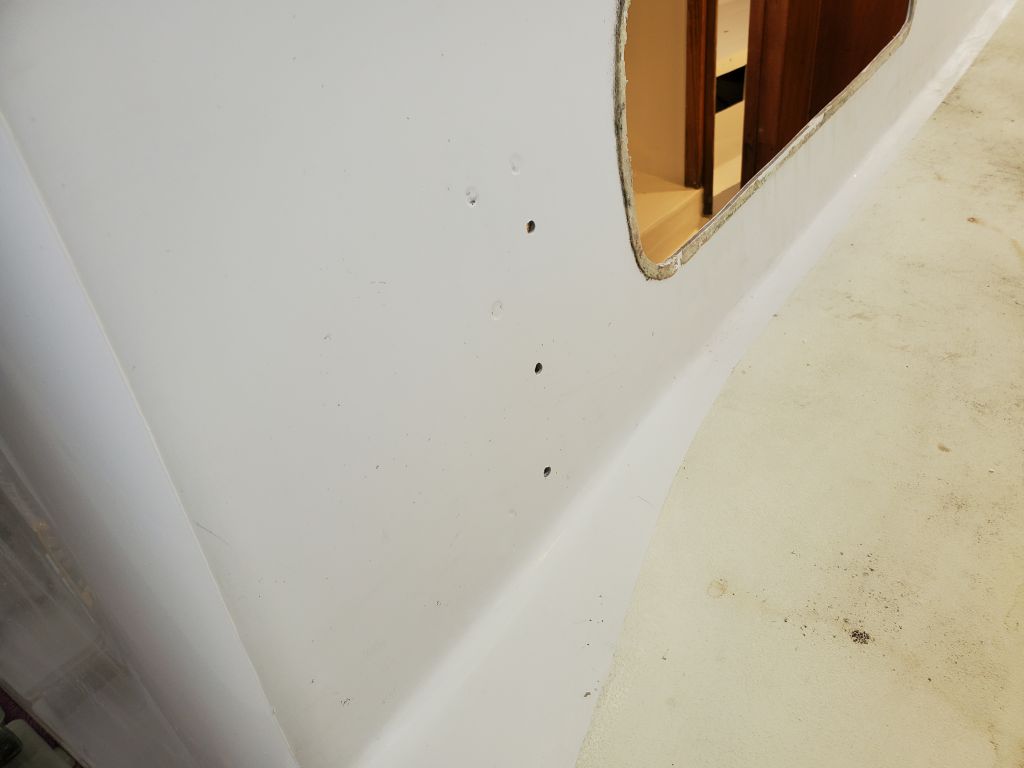
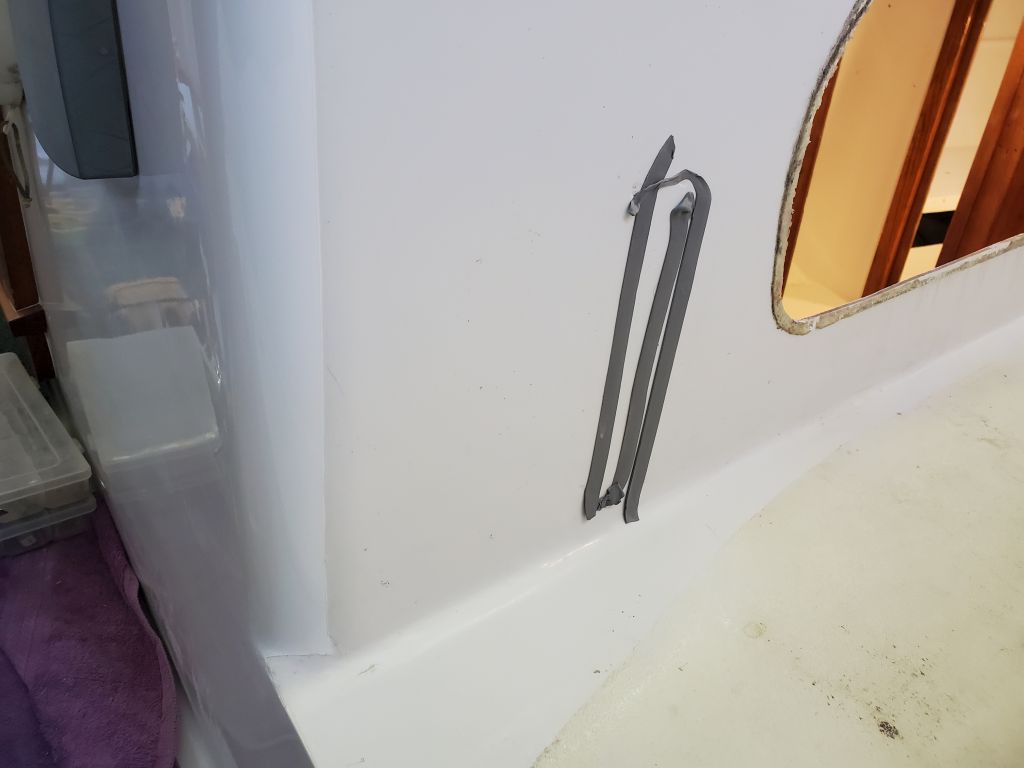
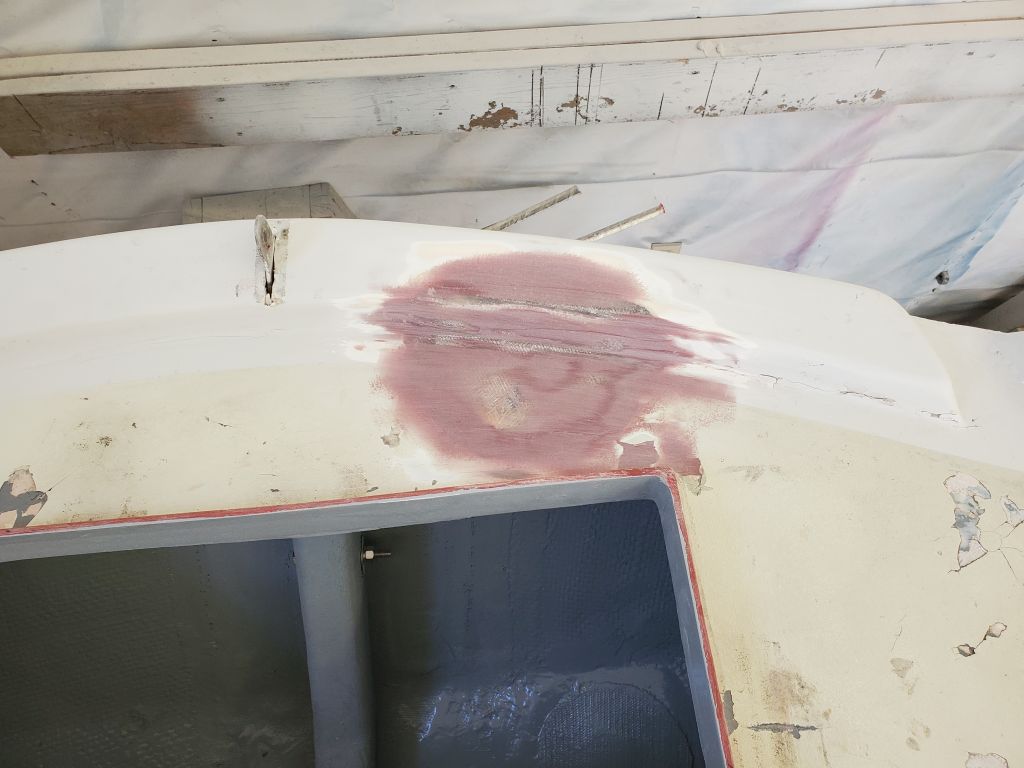
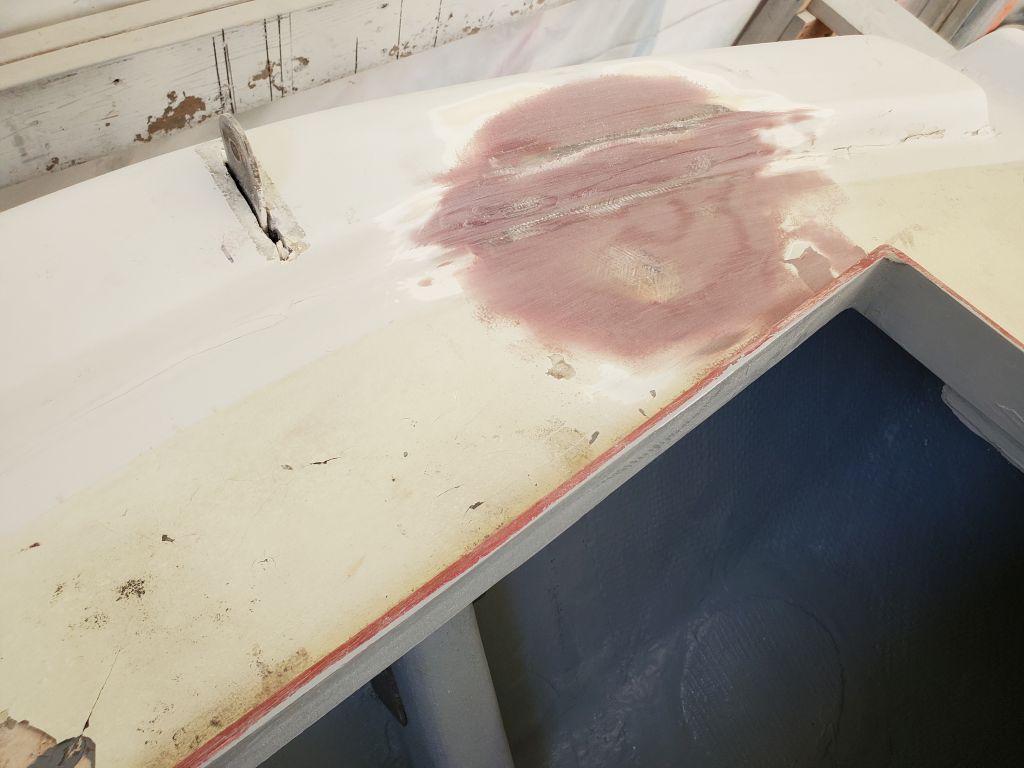
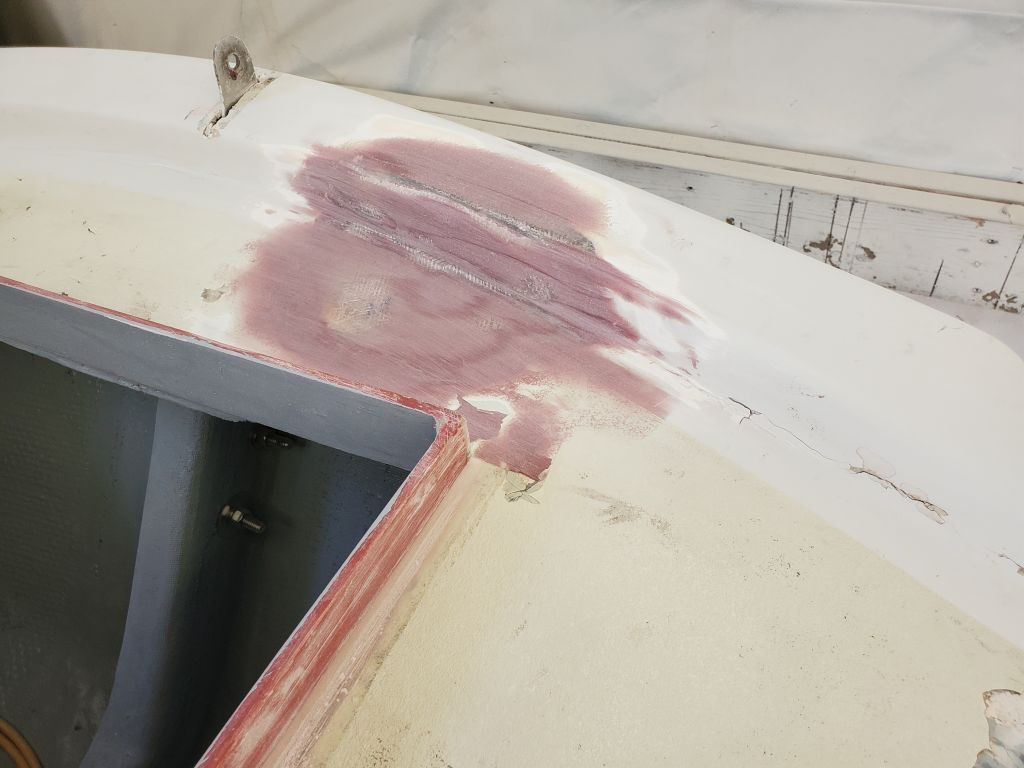
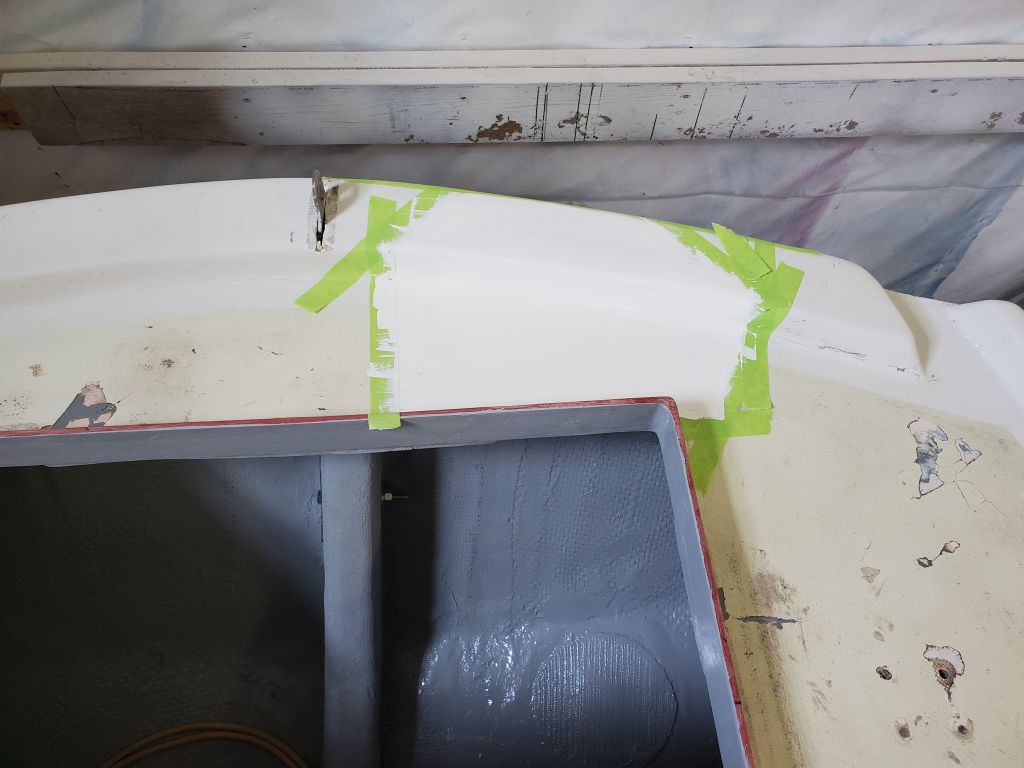
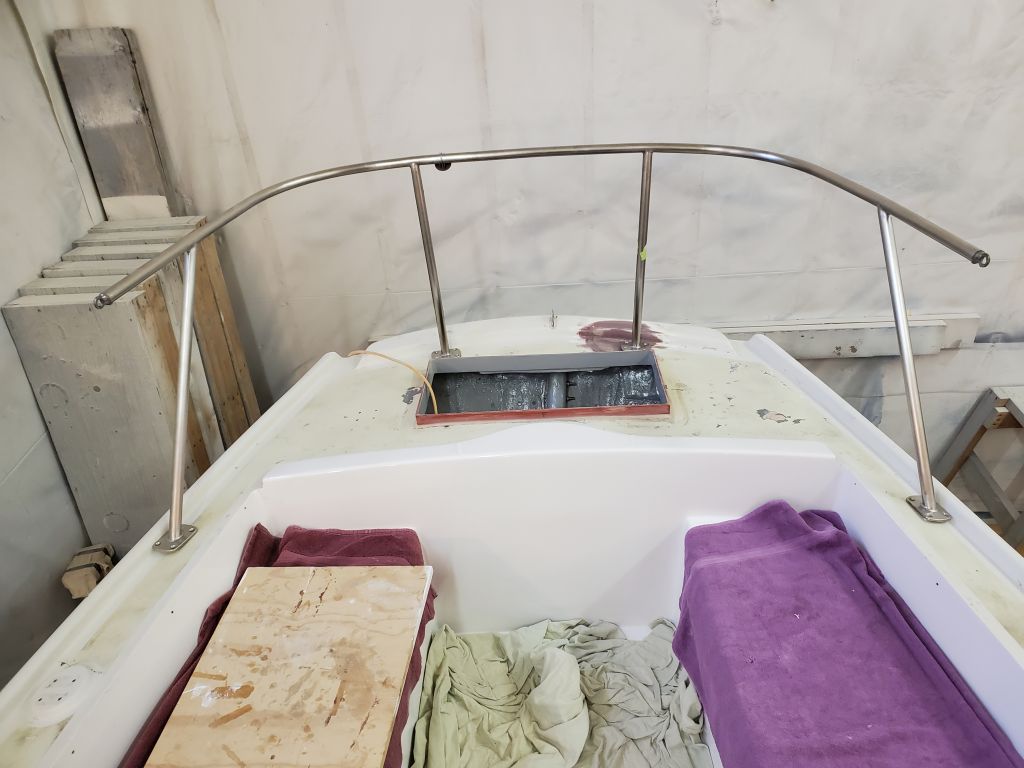
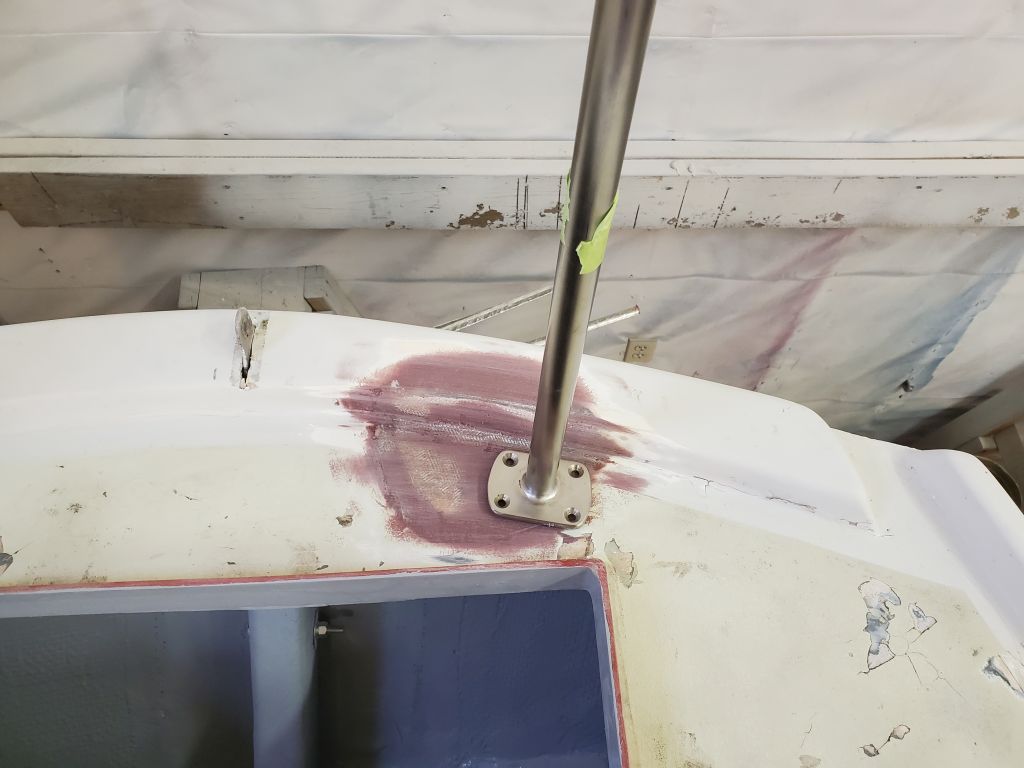
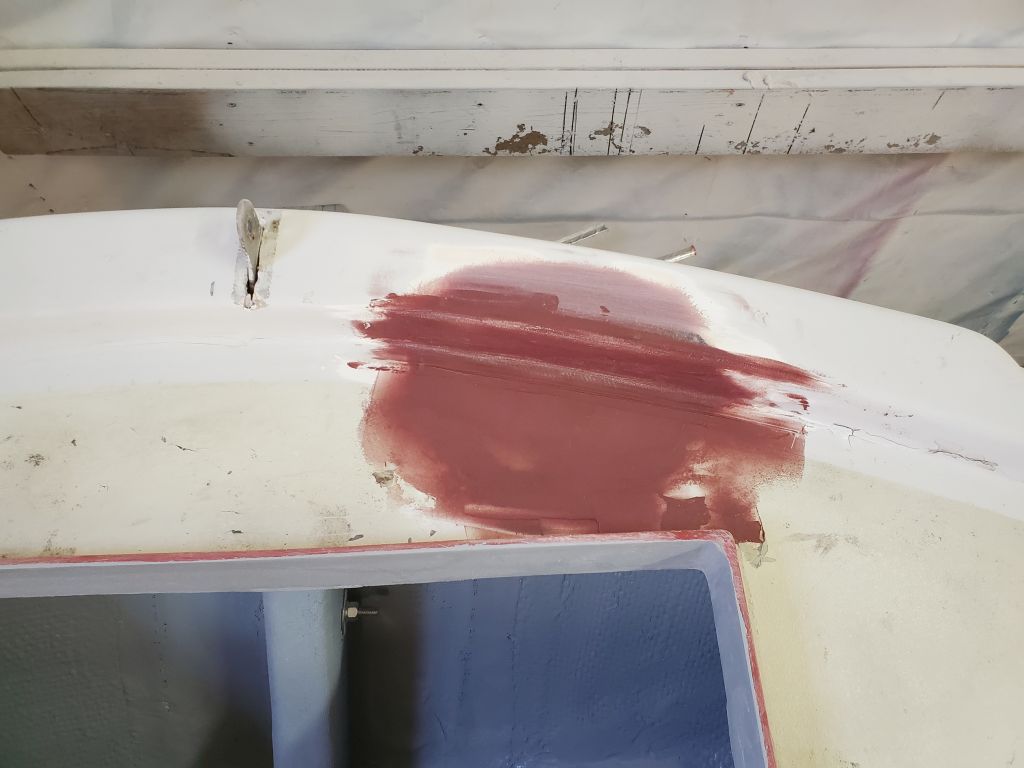
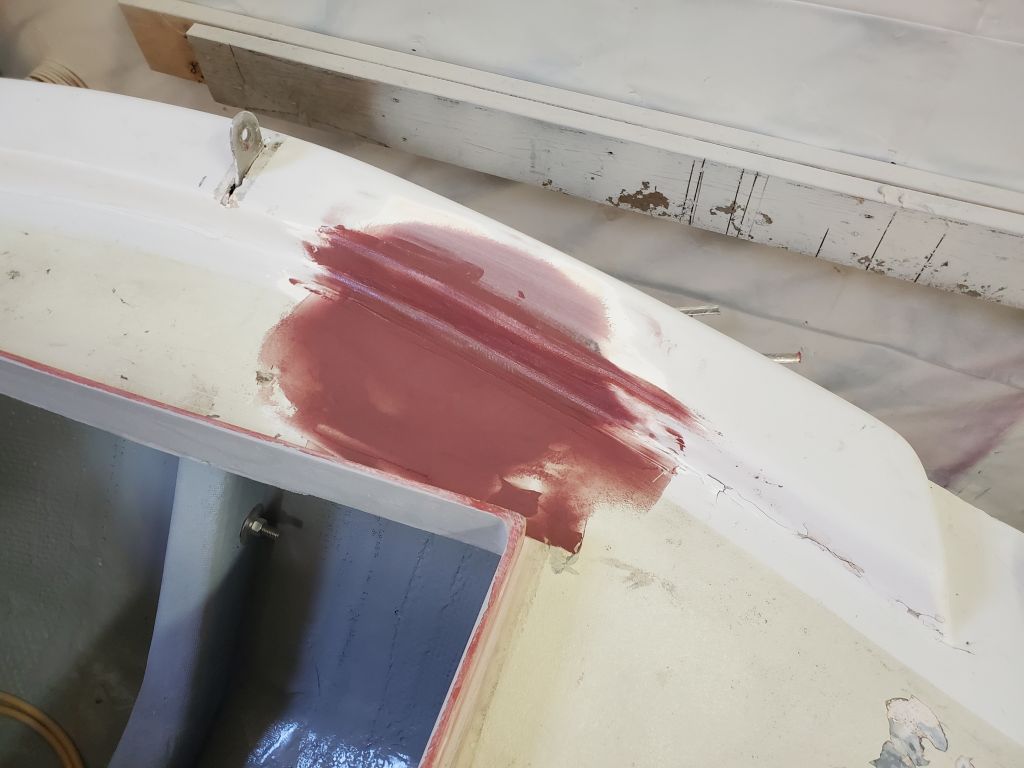
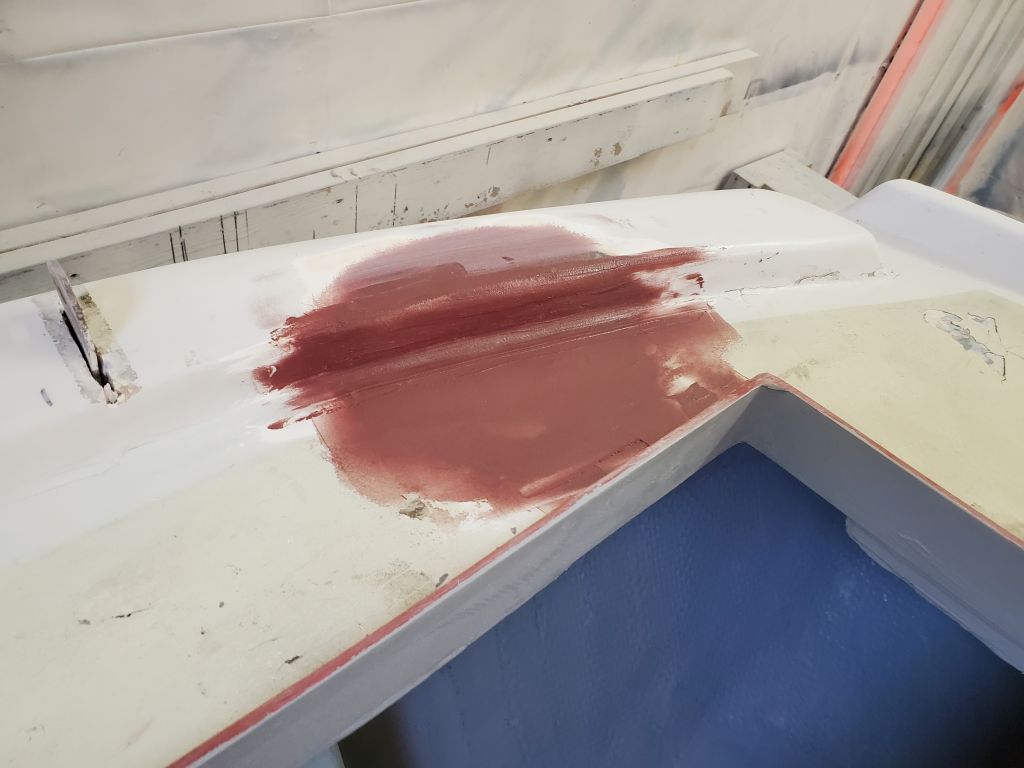
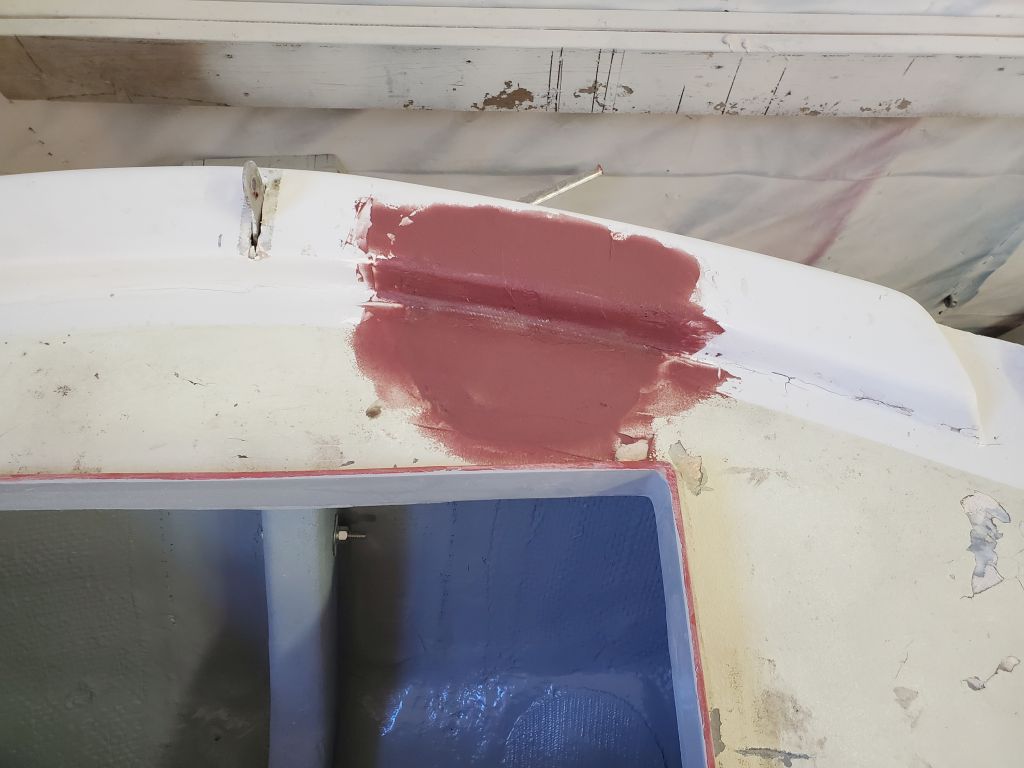
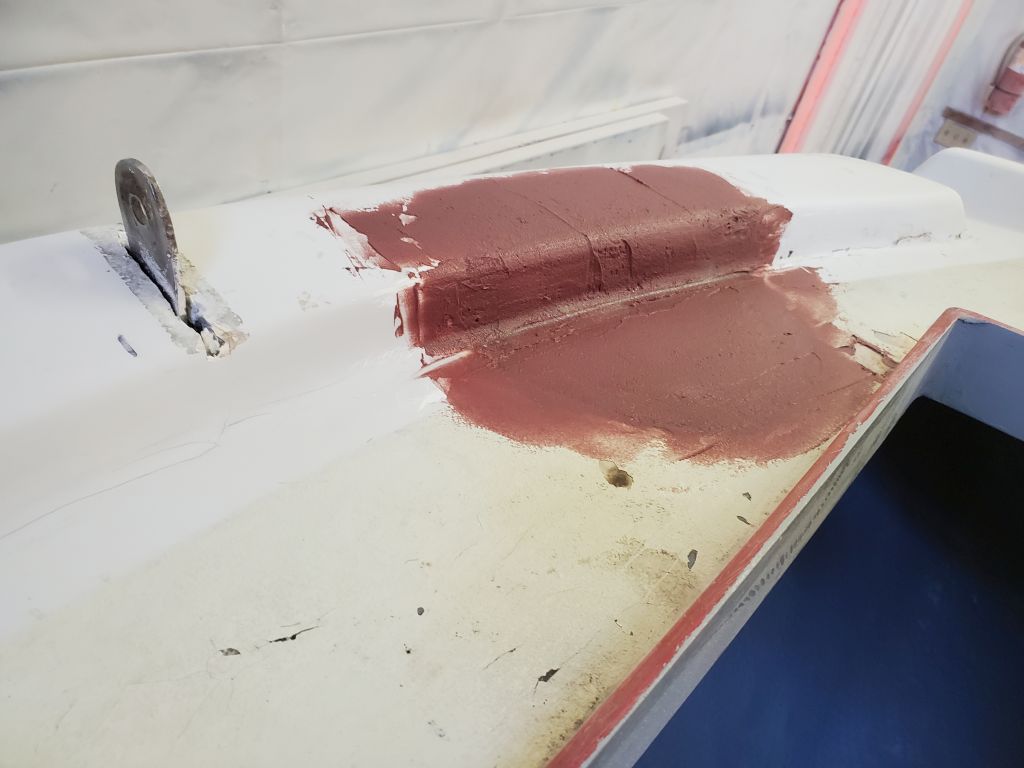
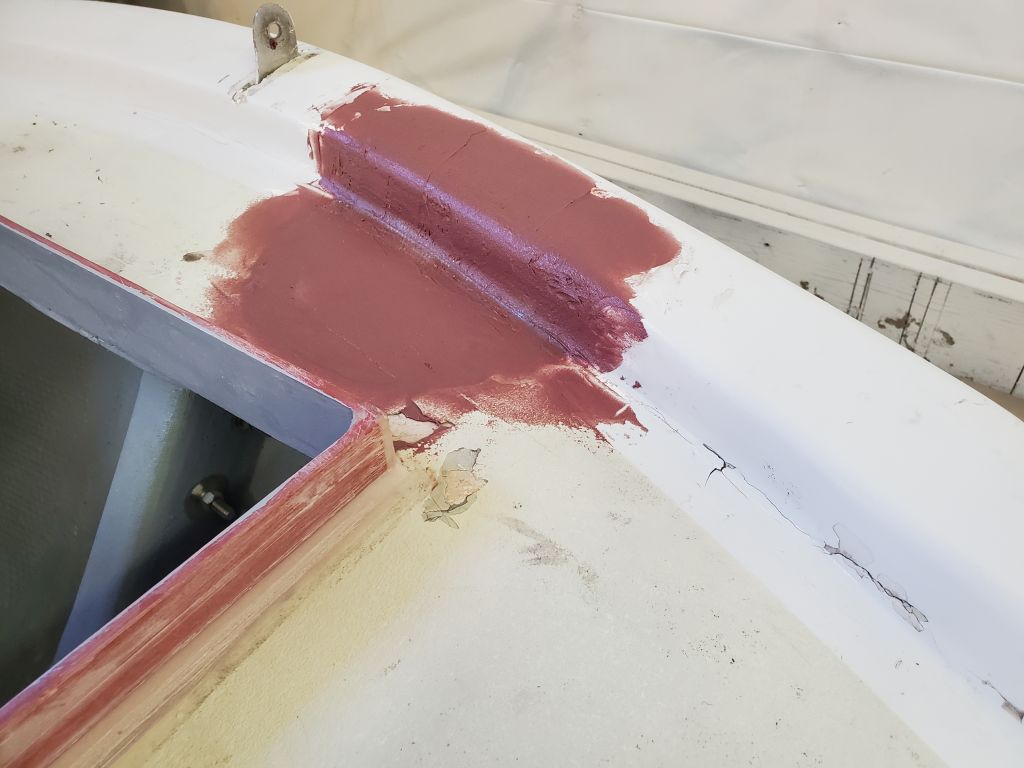
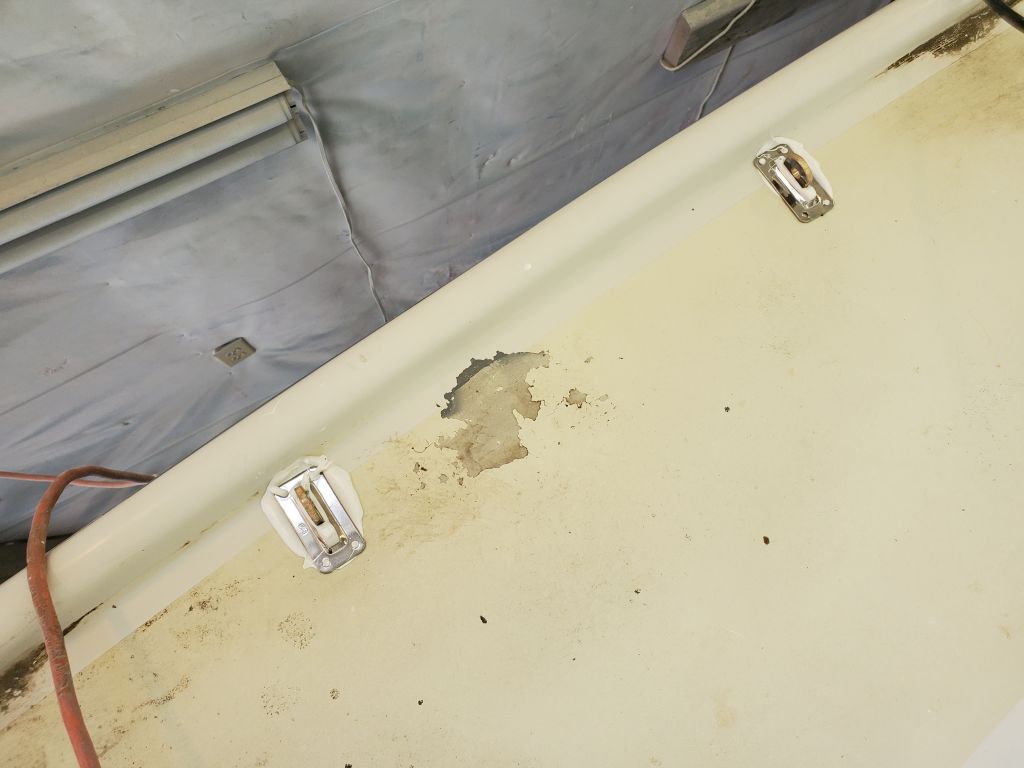
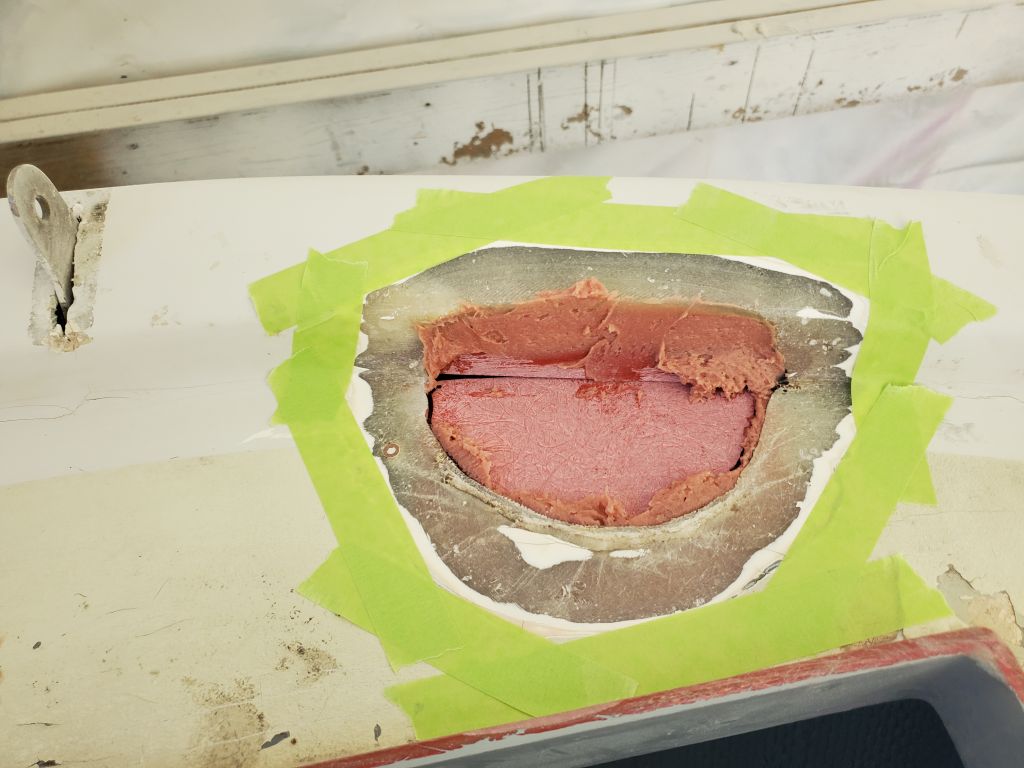
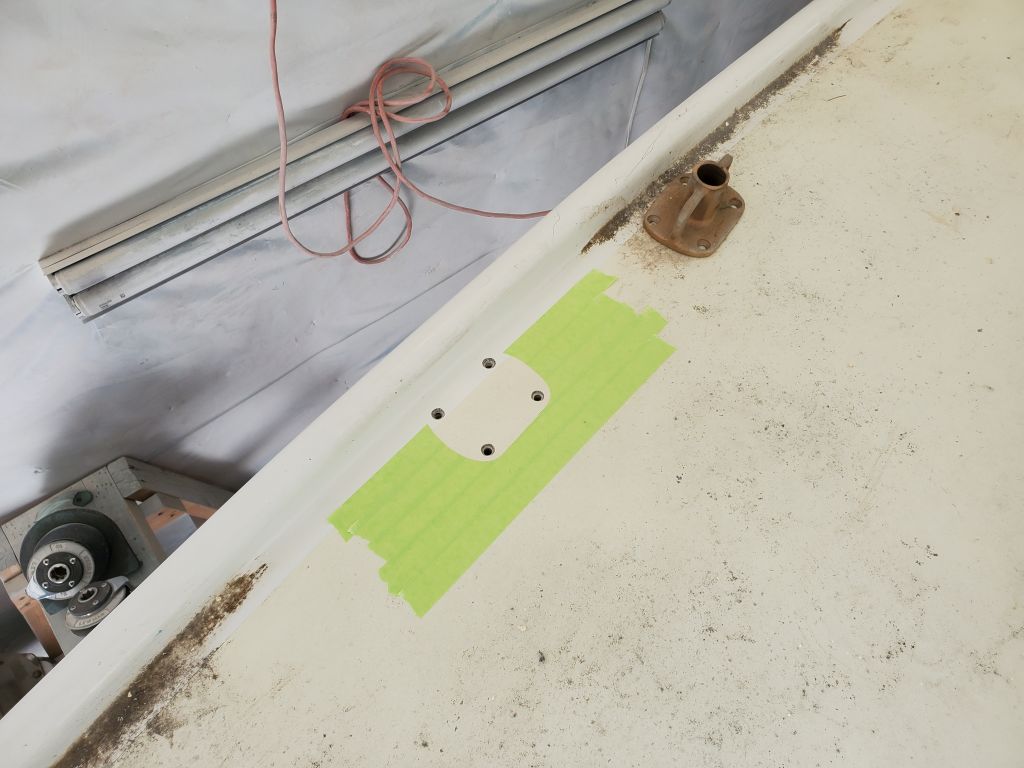
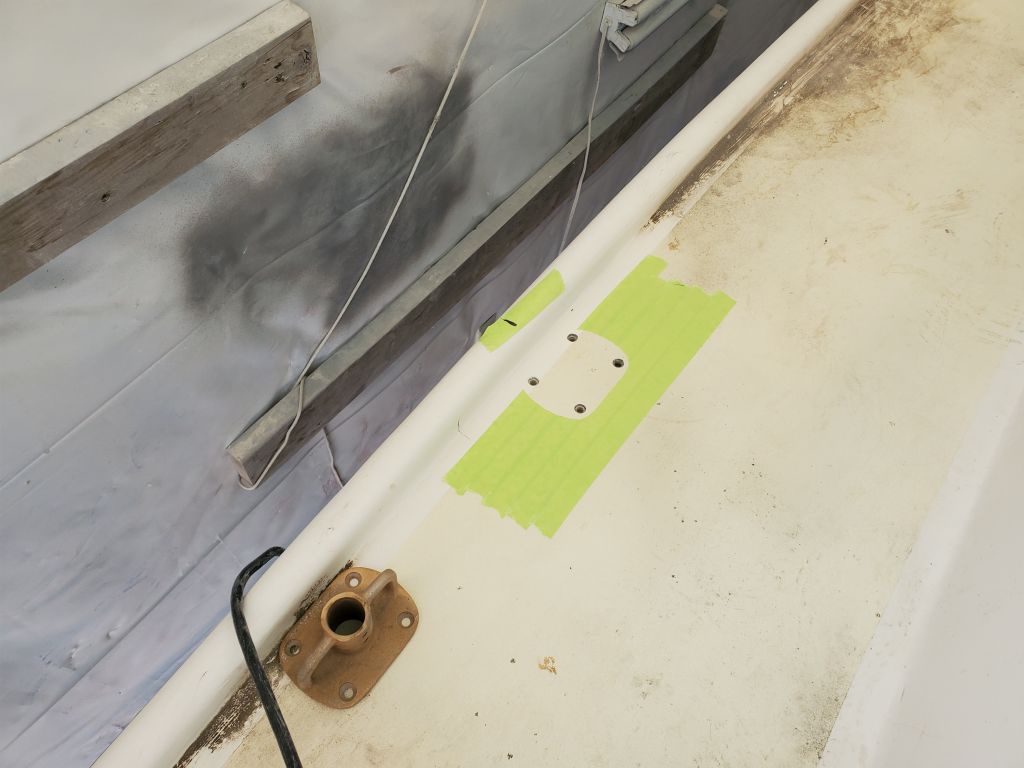
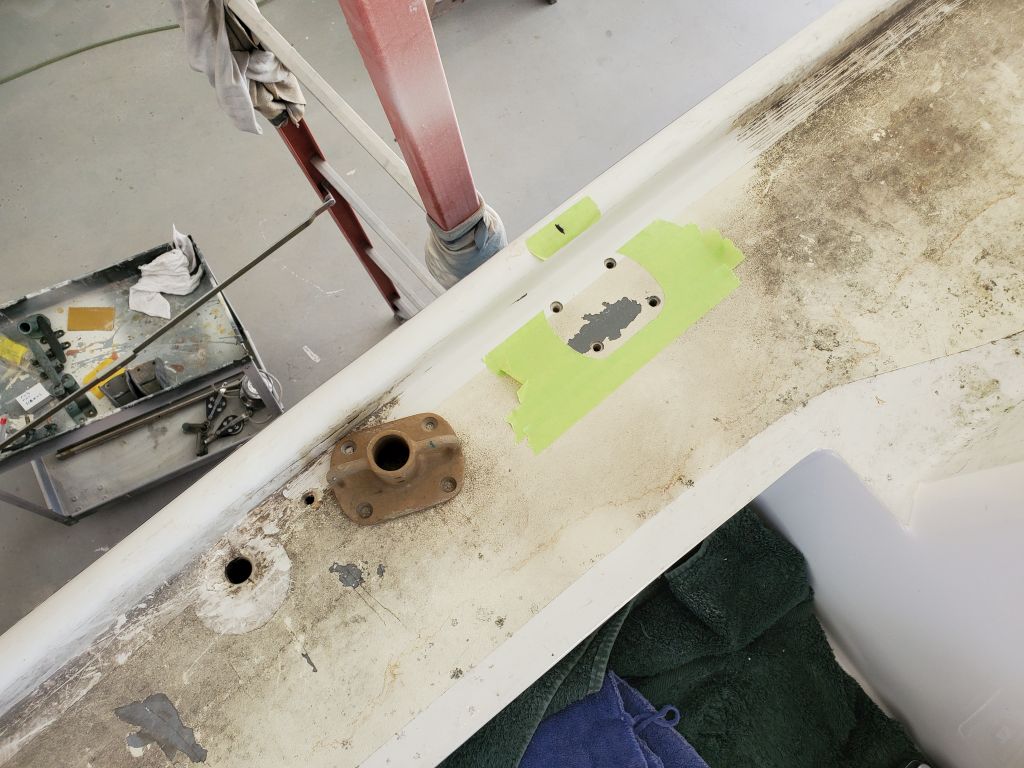
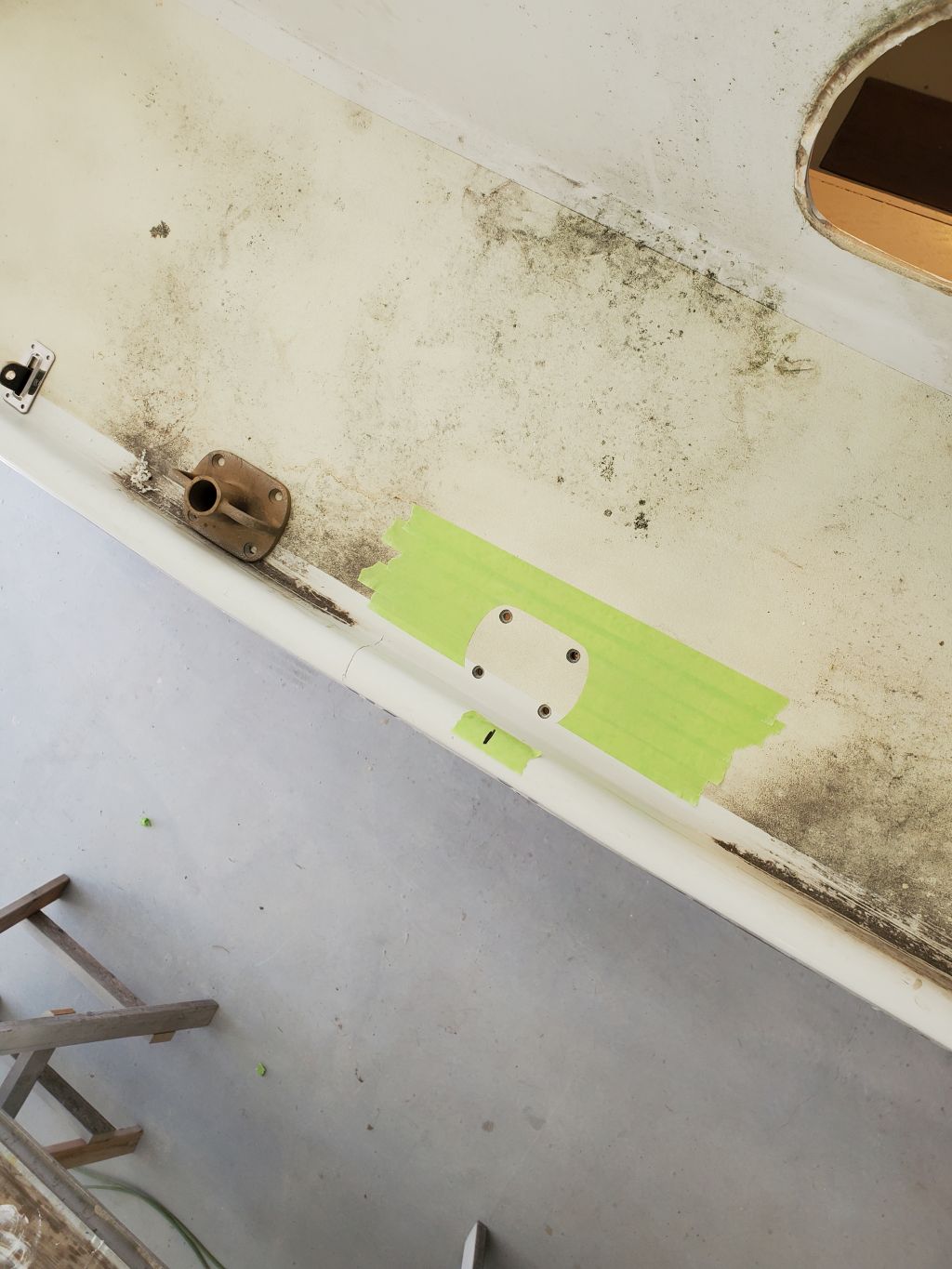
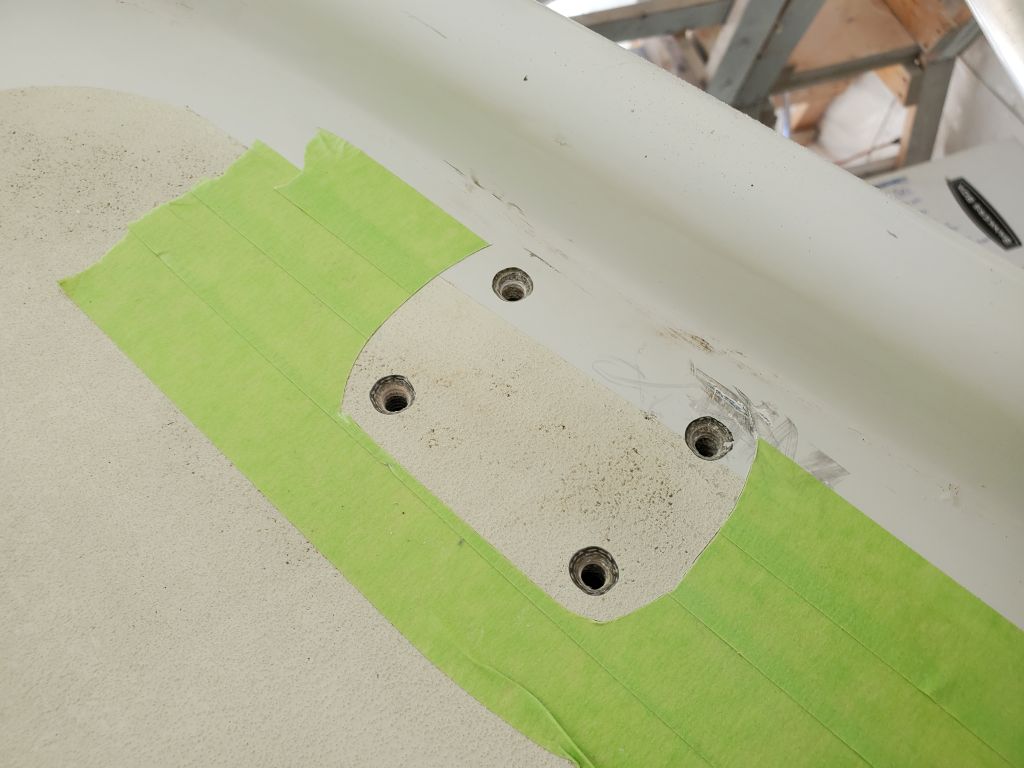
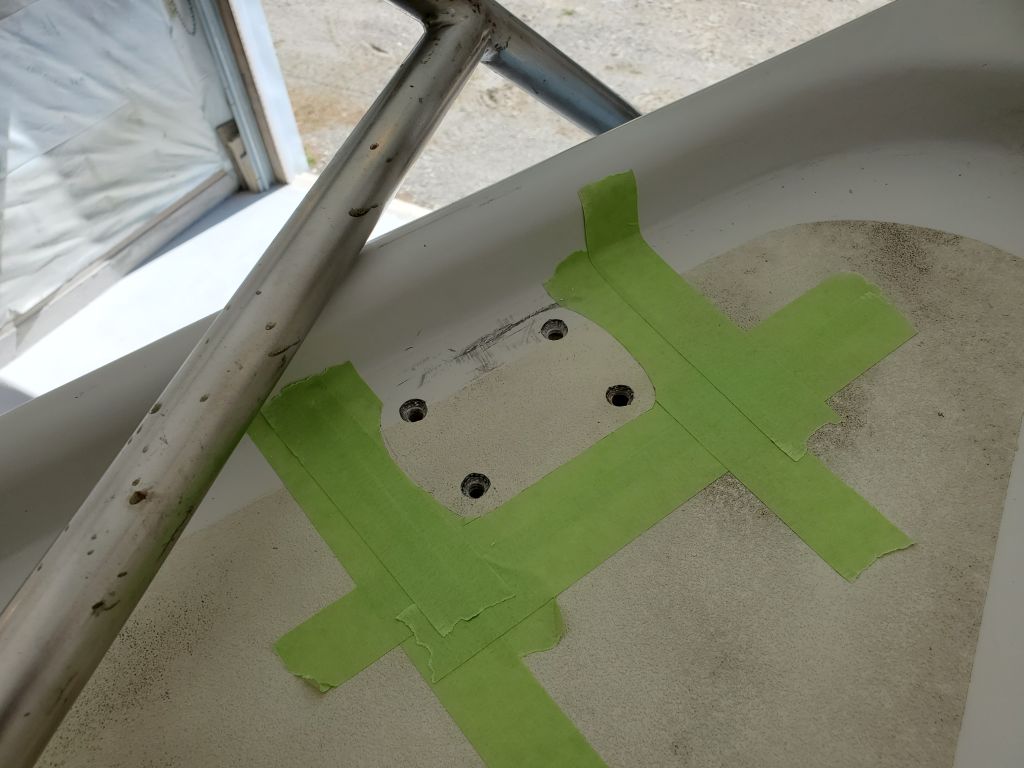
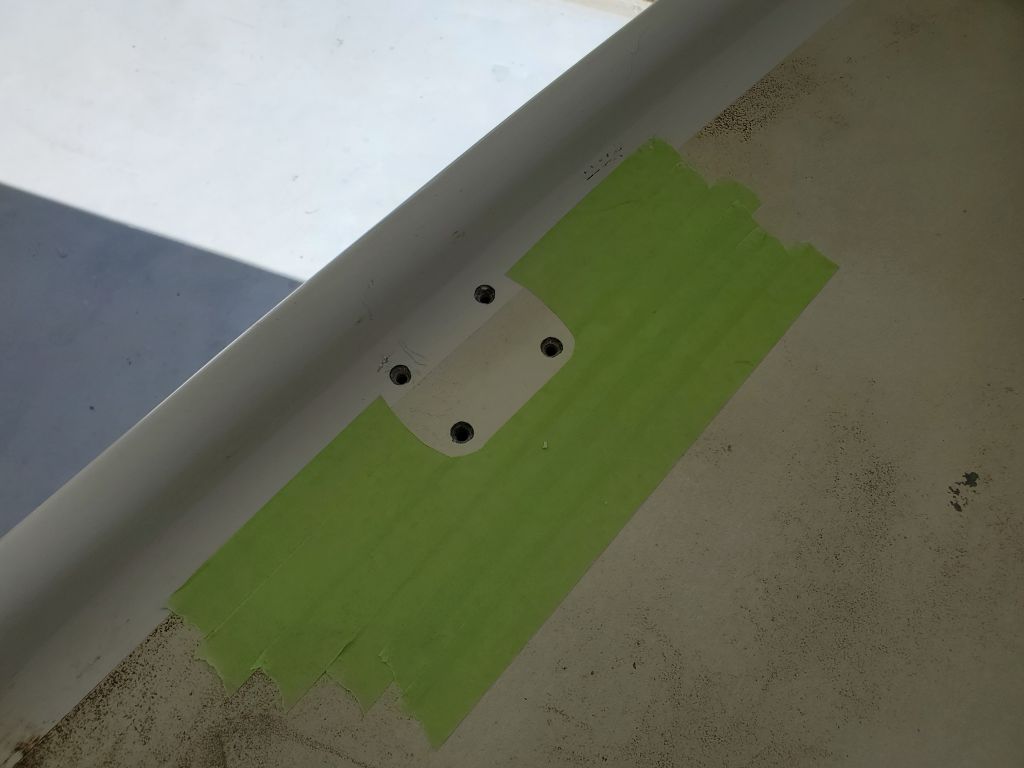
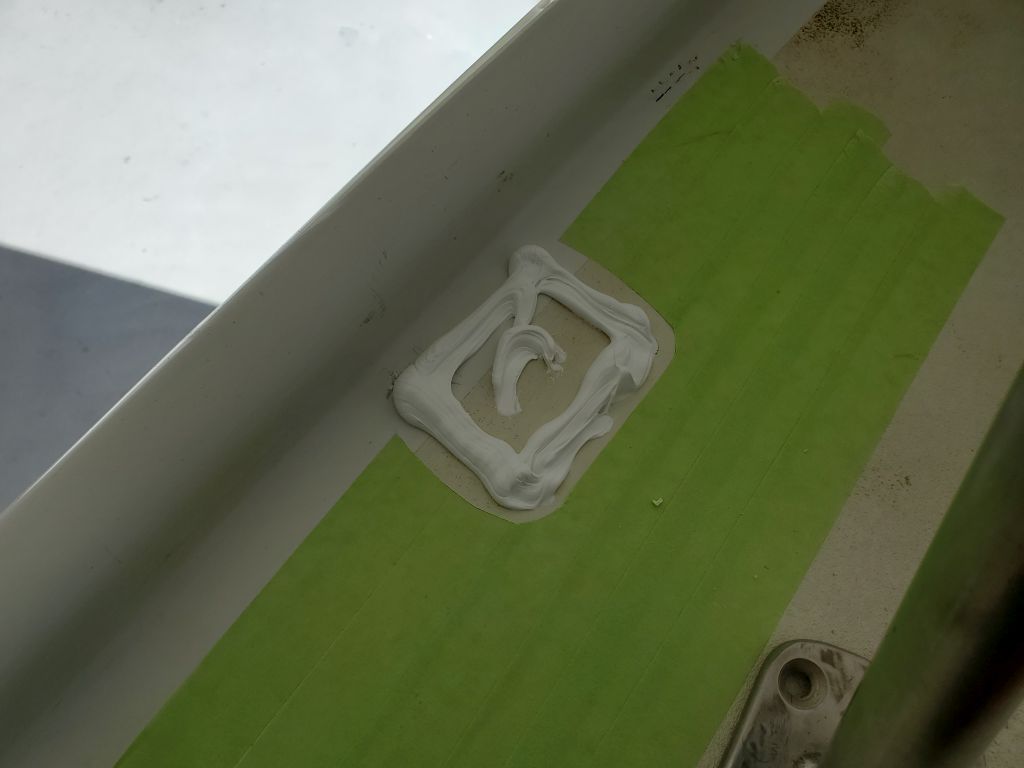
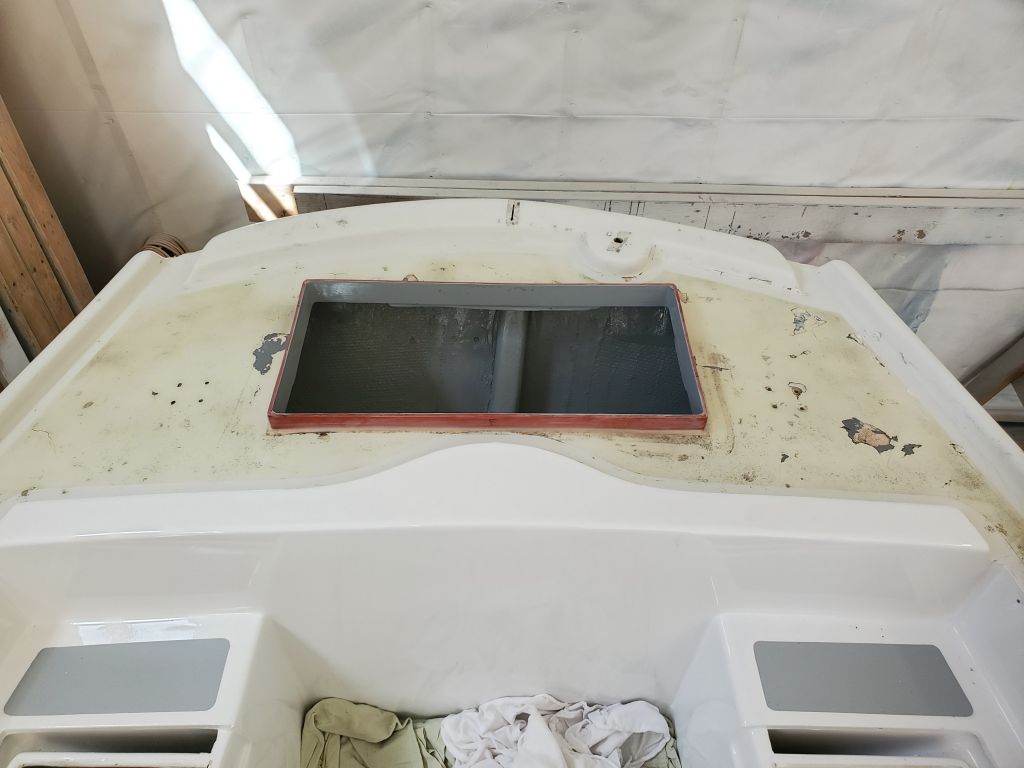
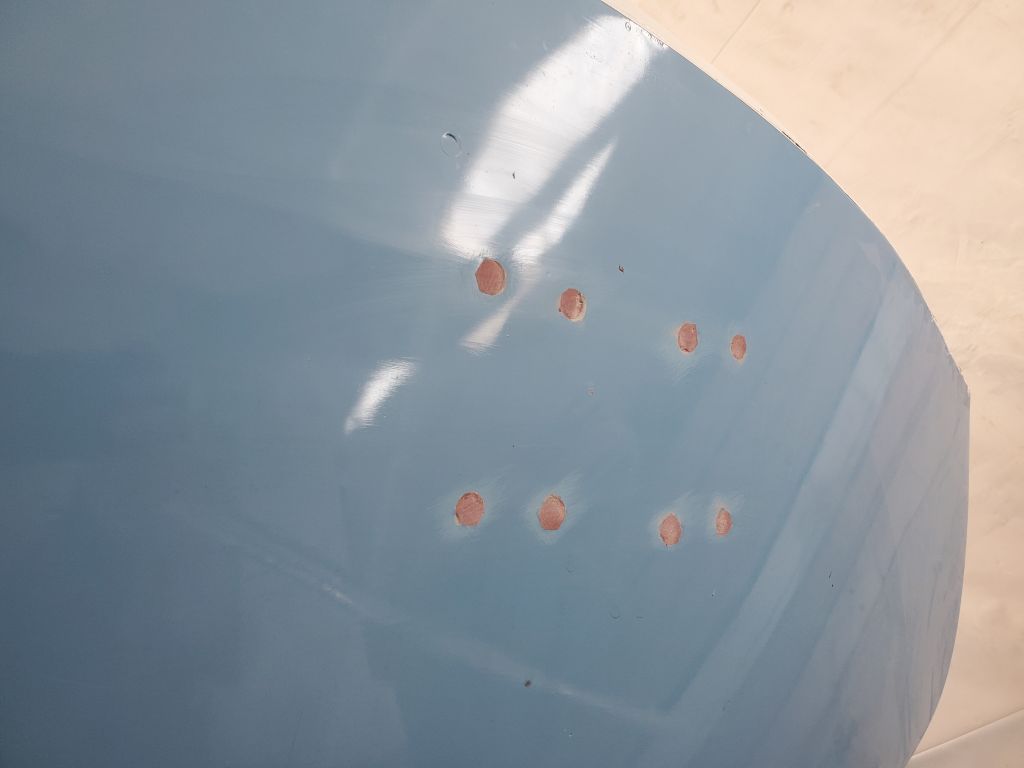
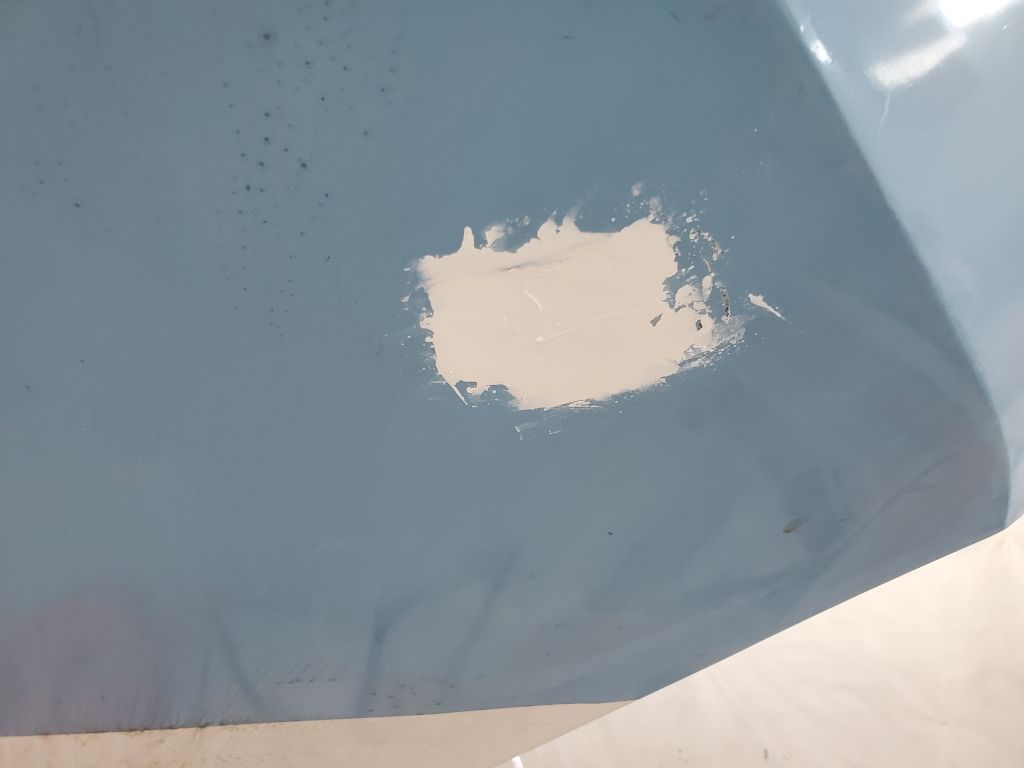
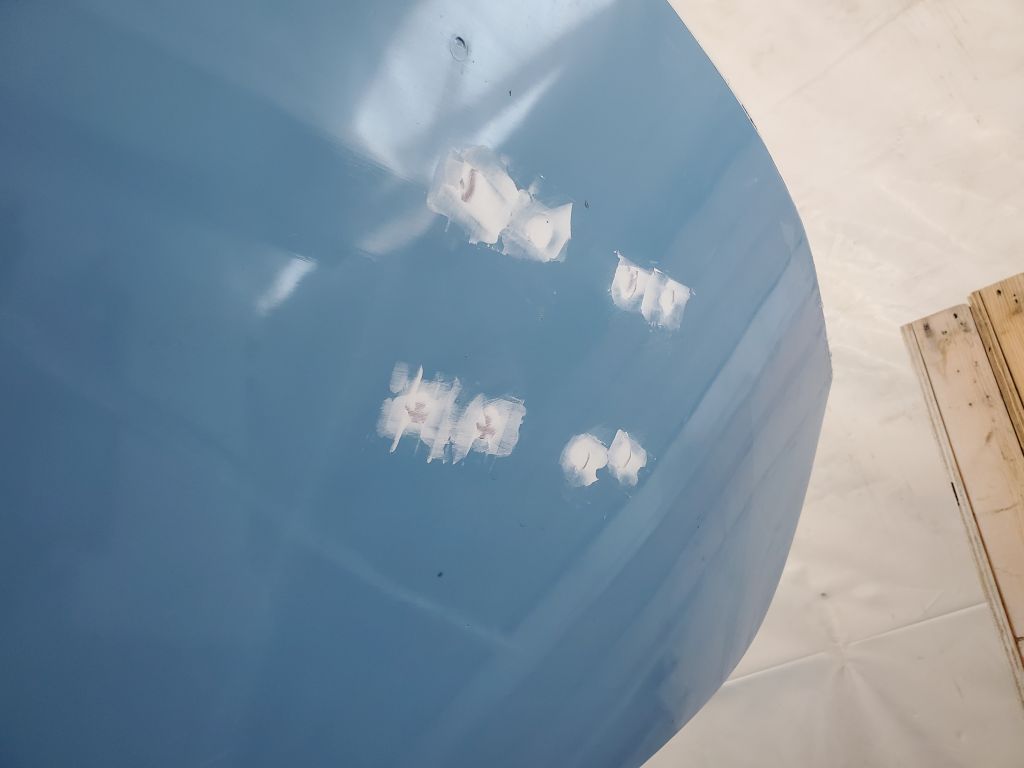
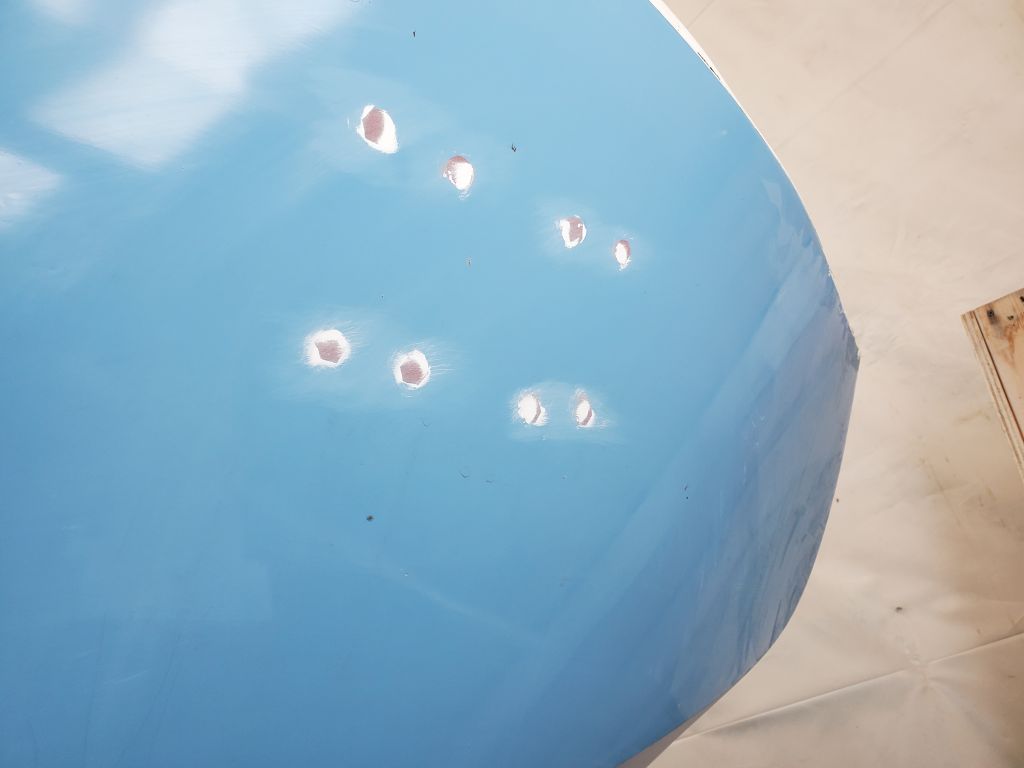
Meanwhile, I continued work on the small taffrail modification/repair.  After a light sanding of the second round of fairing compound, I deemed the fairing work complete, and to finish off the patch for now I applied a couple coats of 2-part white primer for protection and a semblance of cosmetics till the rest of the deck could be properly painted.

Total time billed on this job today:  2.75 hours

0600 Weather Observation:  30°, clear.   Forecast for the day:   Sunny, 62°

Lyra 60

Friday

In a short work session before I had to leave for an appointment, I started with another round of sanding and varnish (5) on the coamings.

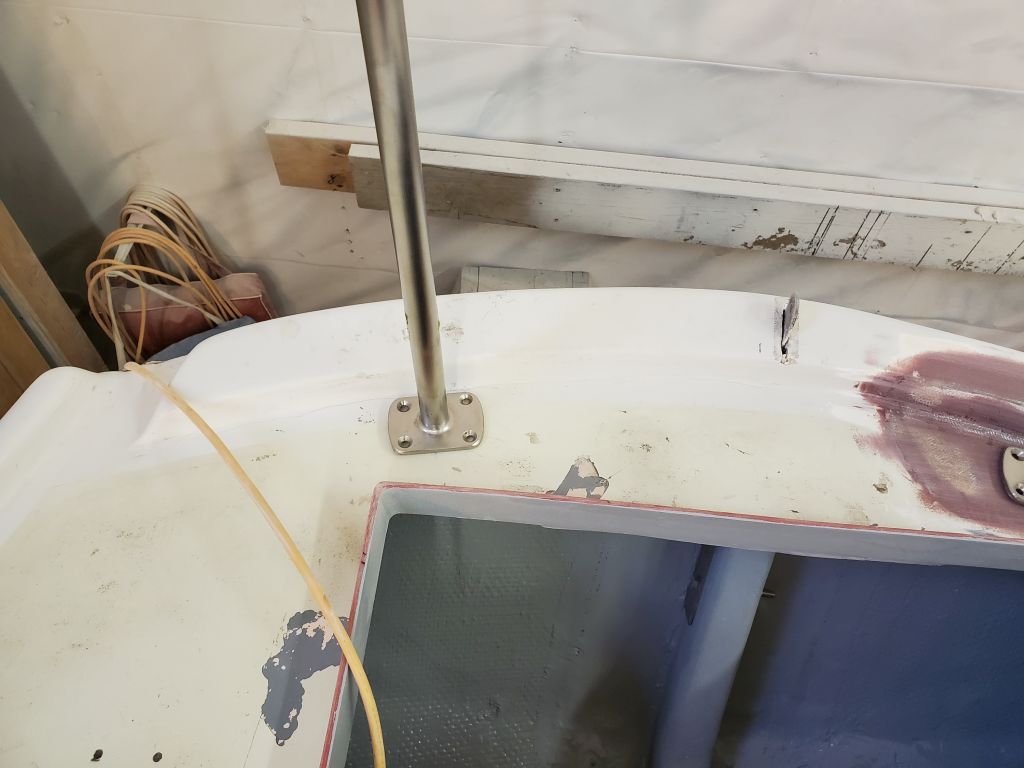
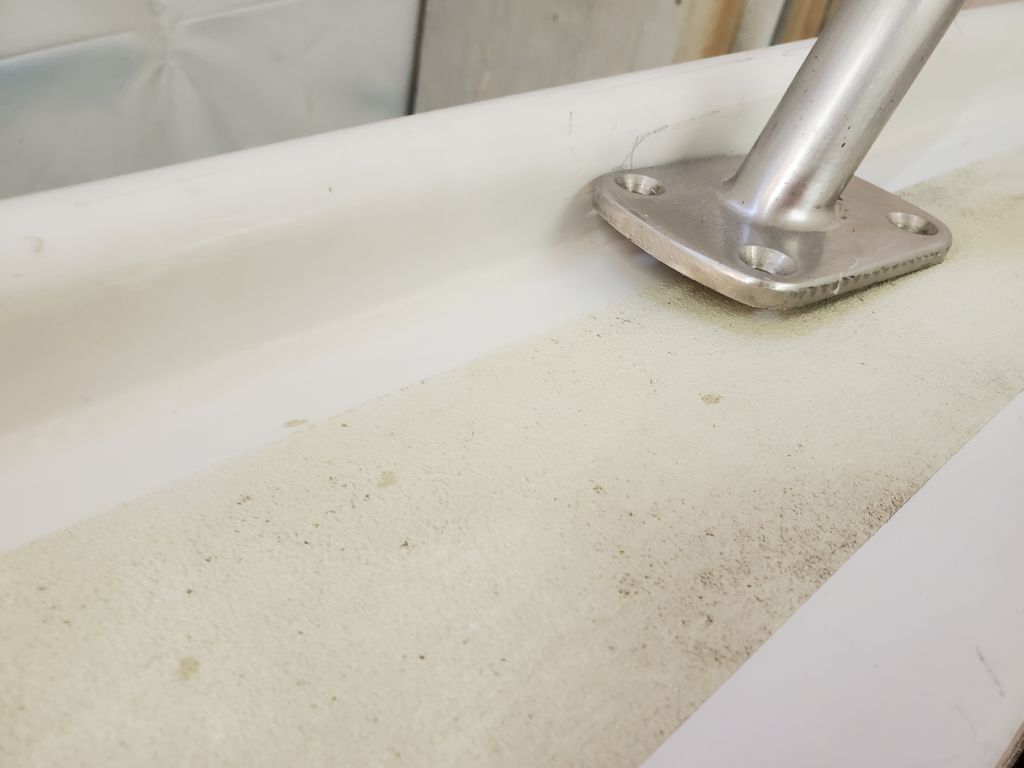
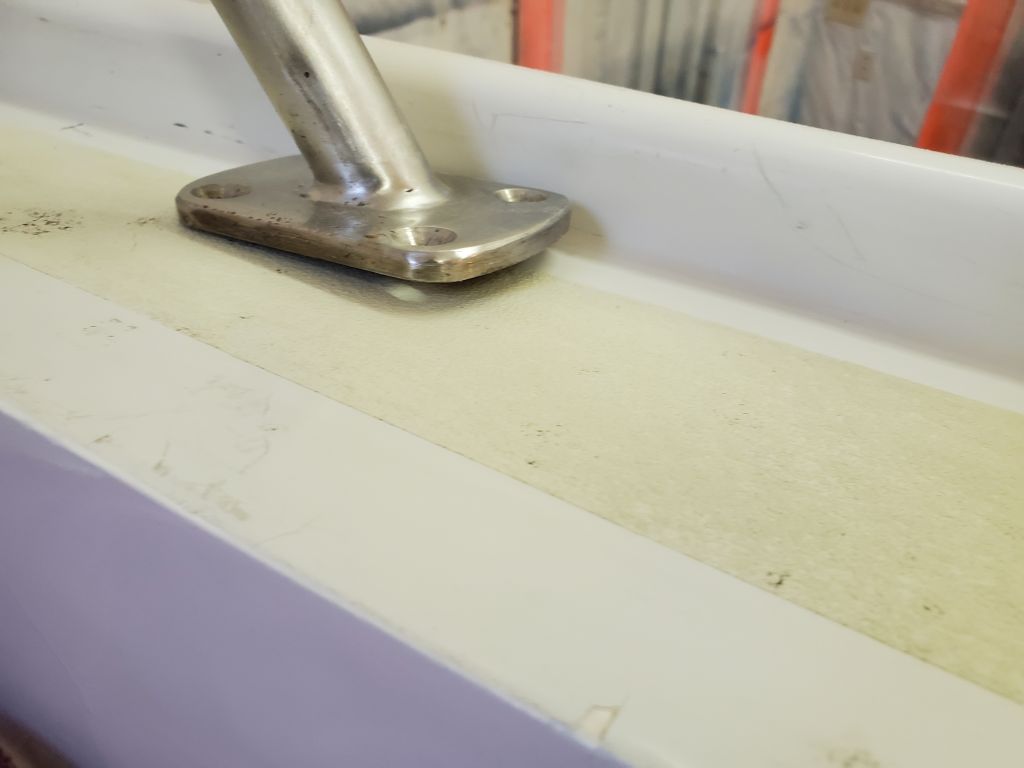
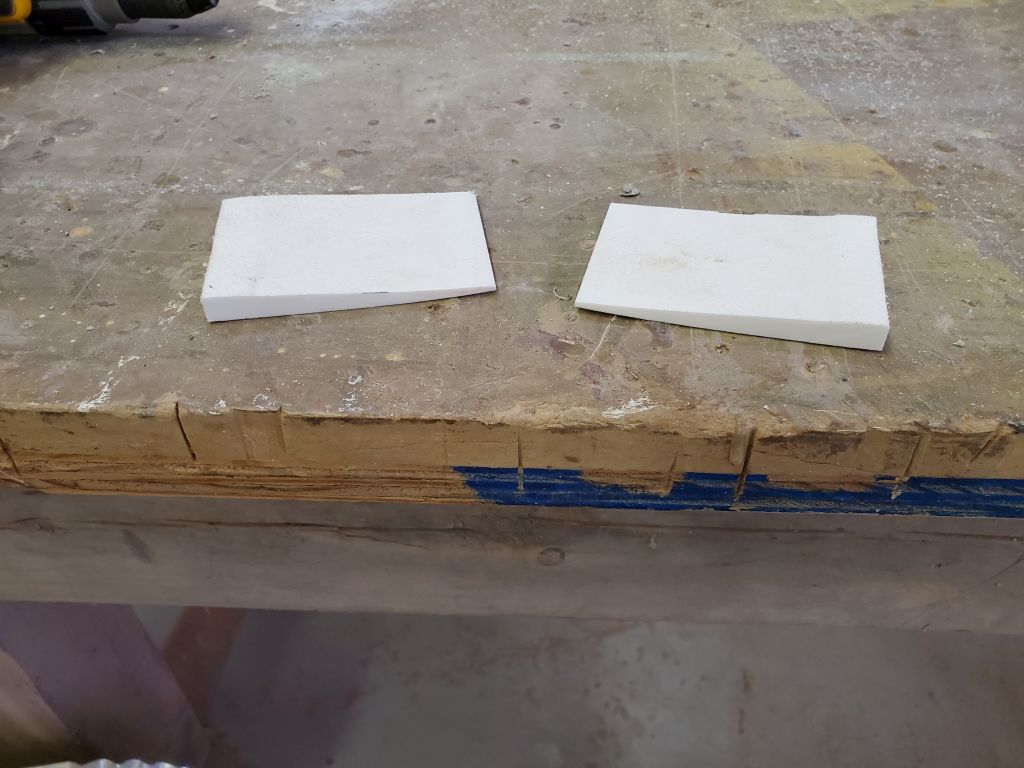
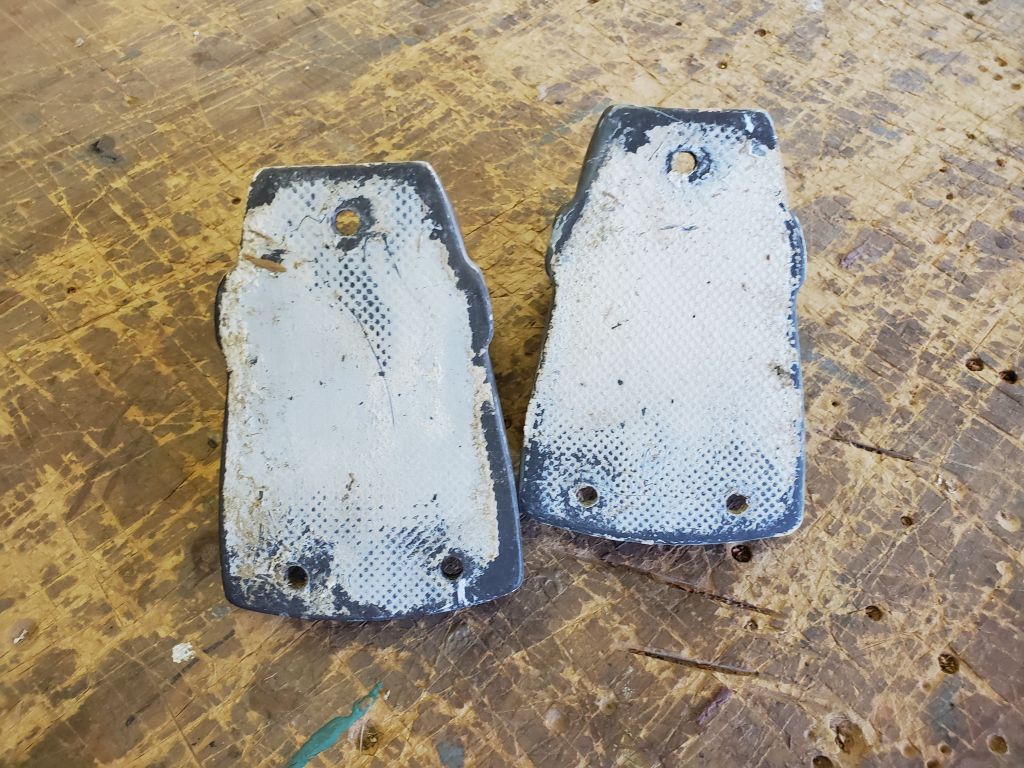
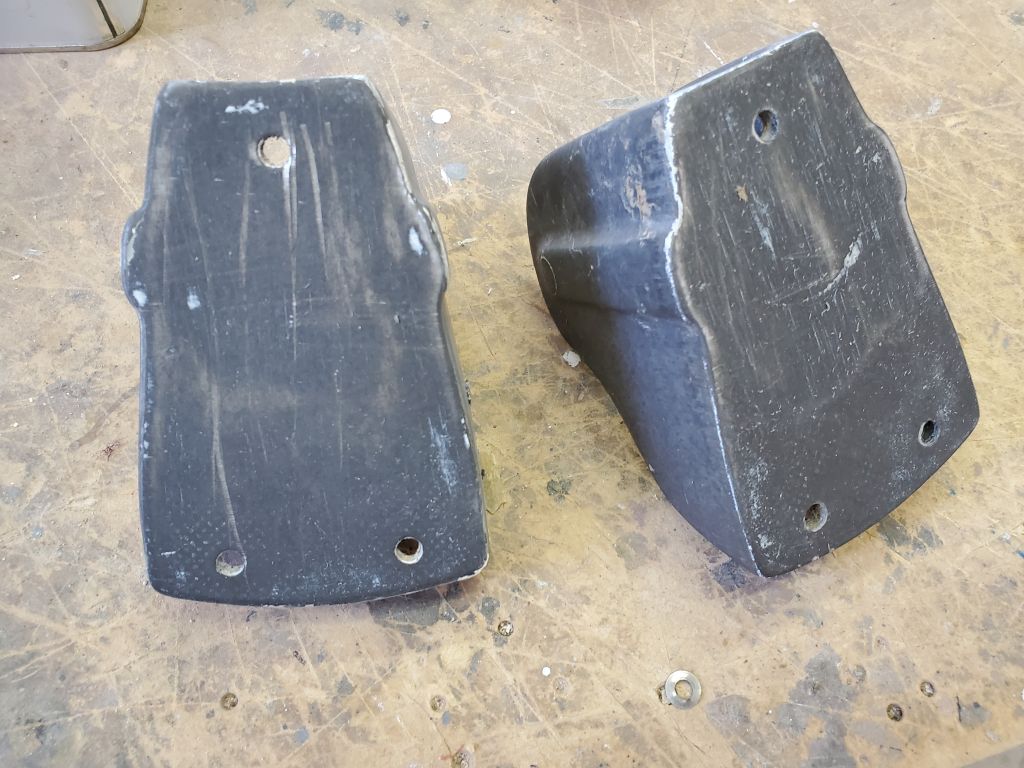
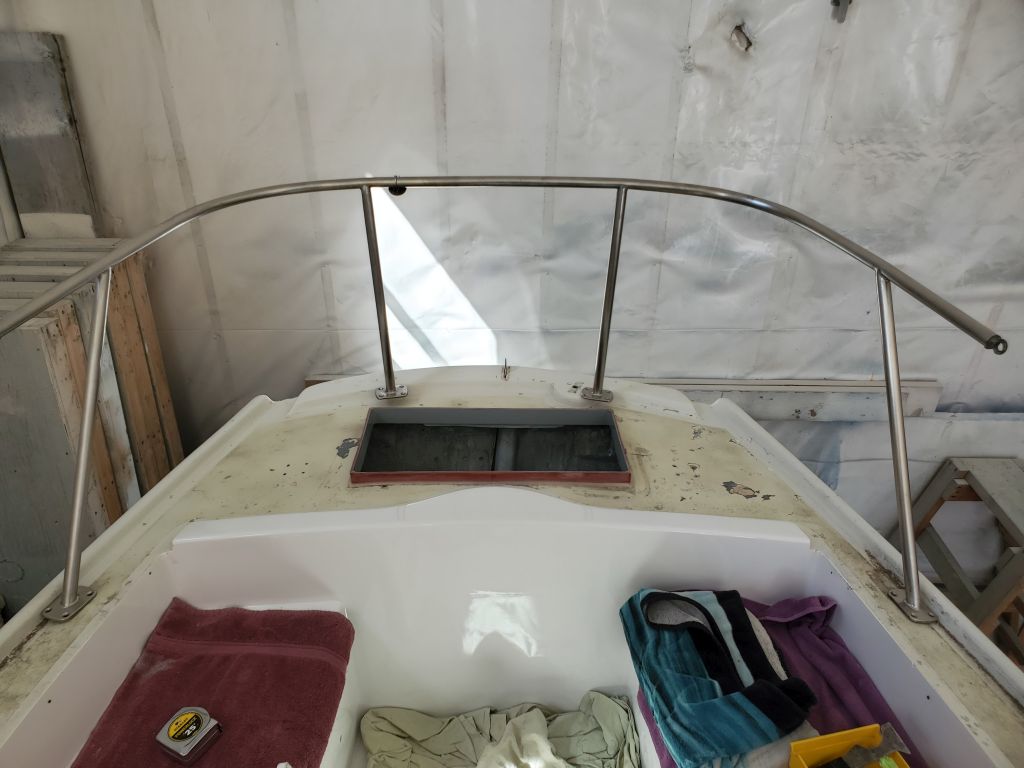
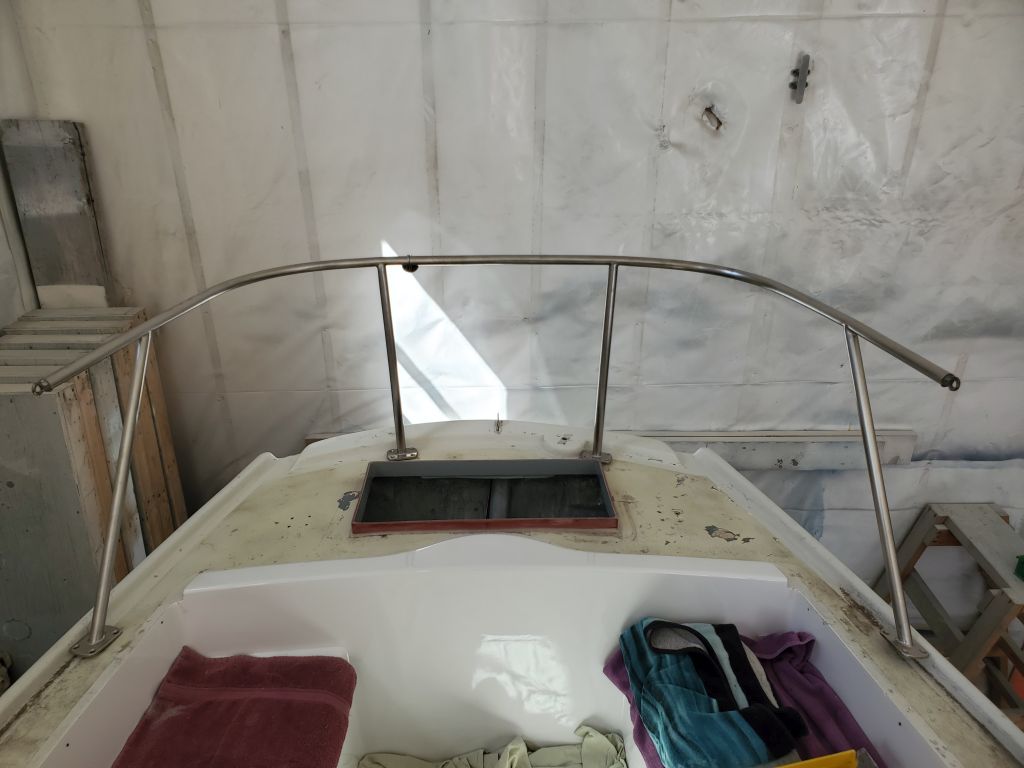
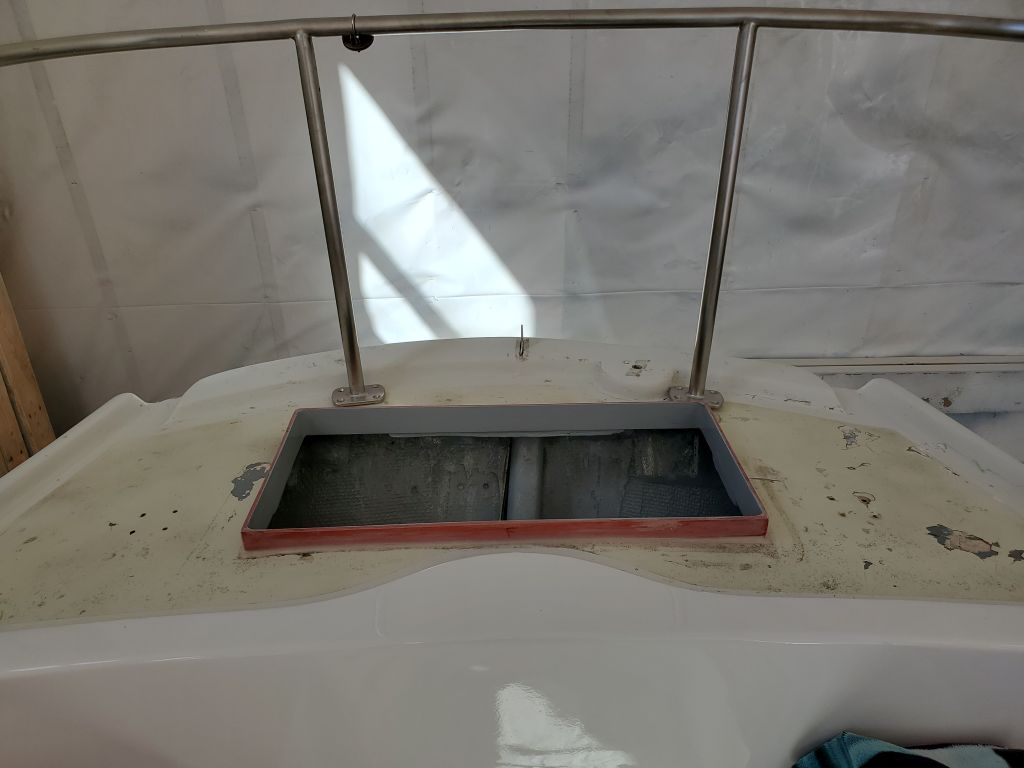
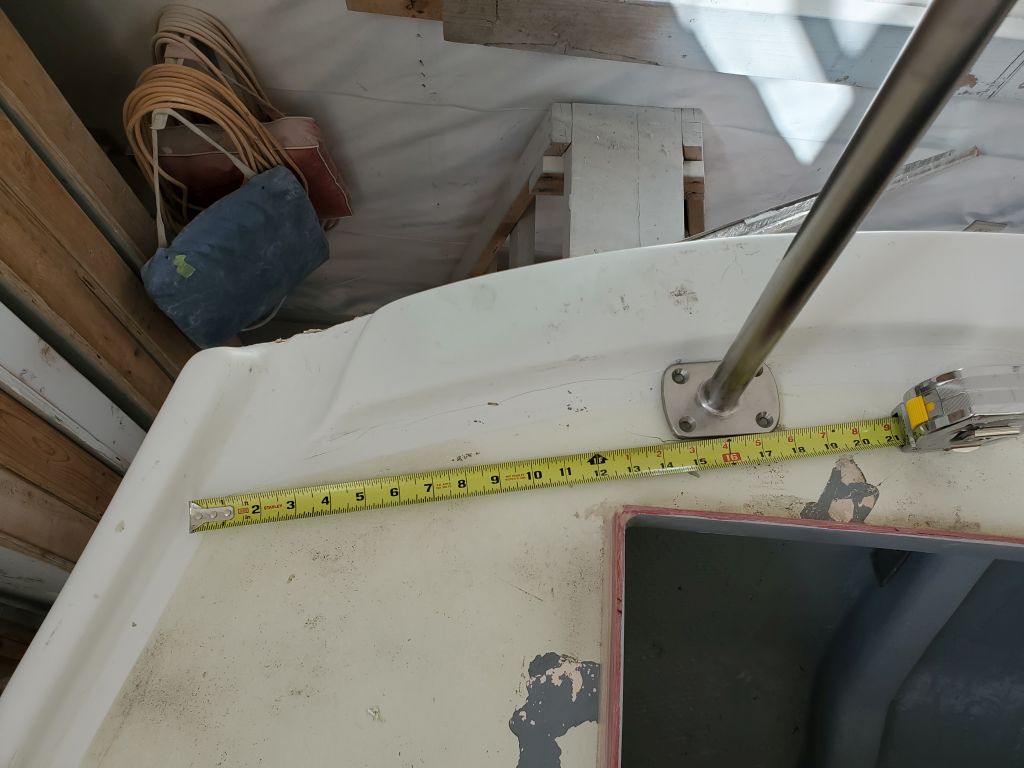
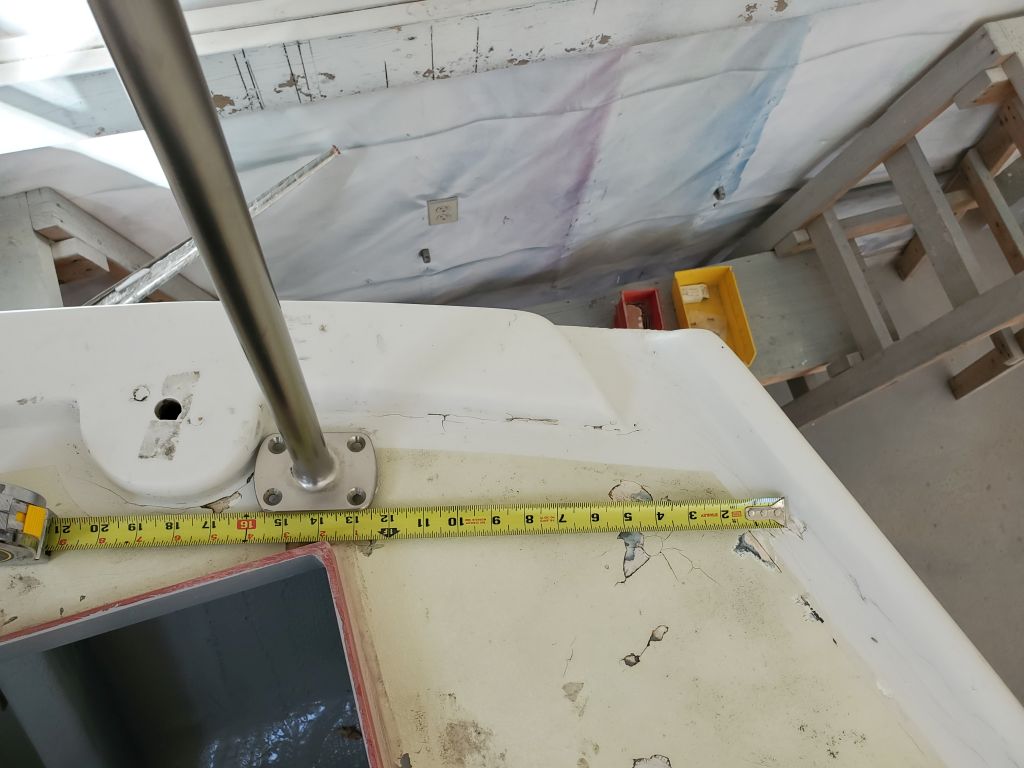
After sanding the first round of fairing compound on the taffrail, but before applying a second round to fine-tune the area, I test-fit the stern pulpit once more.  This fit much better now without the offending molding in the way, and I took the opportunity to measure for, and prepare, a set of slim wedges for beneath the forward legs of the pulpit.  The pulpit bases were welded, and these two didn’t match the contours of the short sidedecks in the area, so the wedges would make up for that.   Satisfied with the basic wedges, I set them aside for further trimming to better match the pulpit bases before installation.

With that done for now, I applied another light coat of fairing filler as necessary on the taffrail repair.

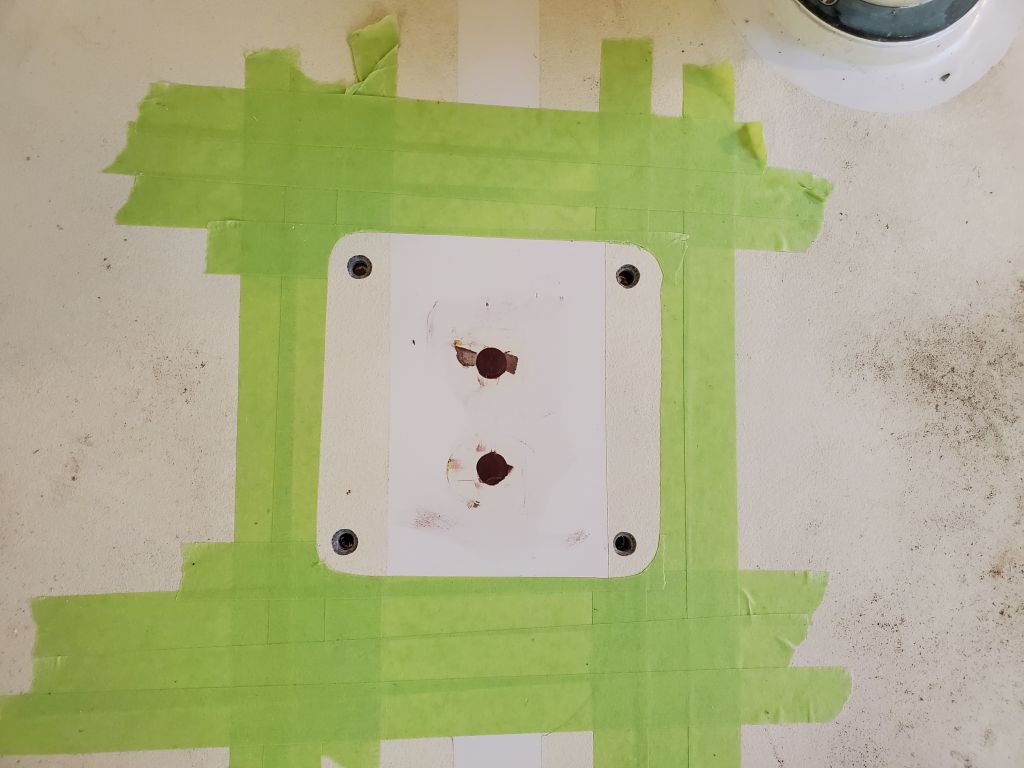
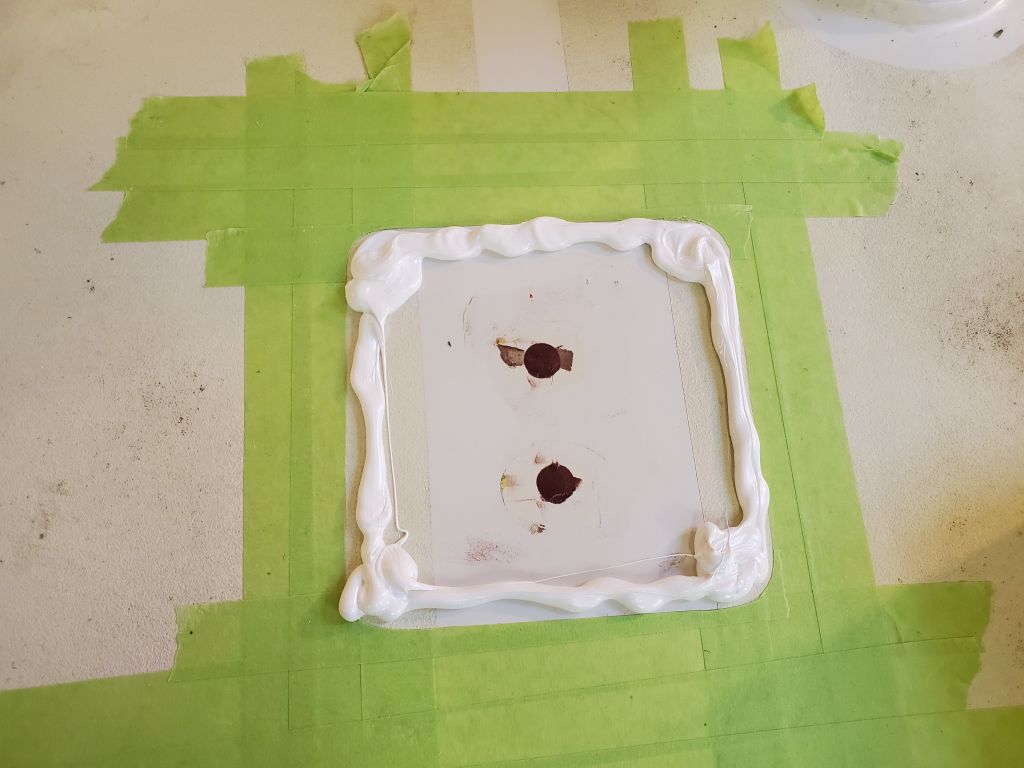
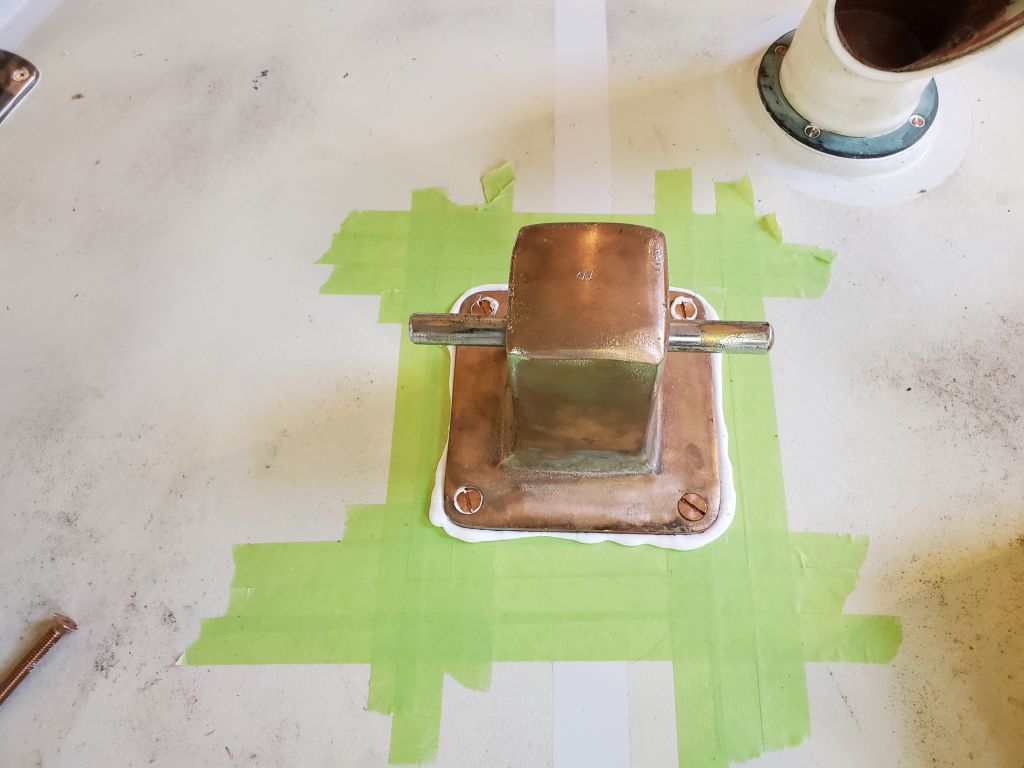
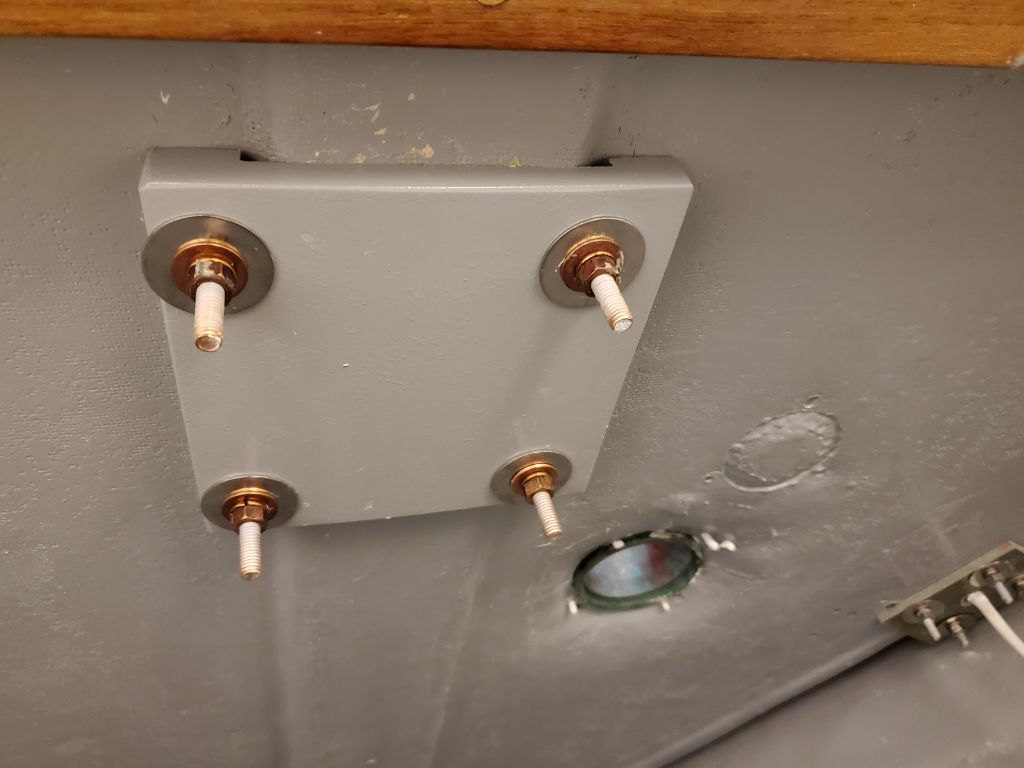
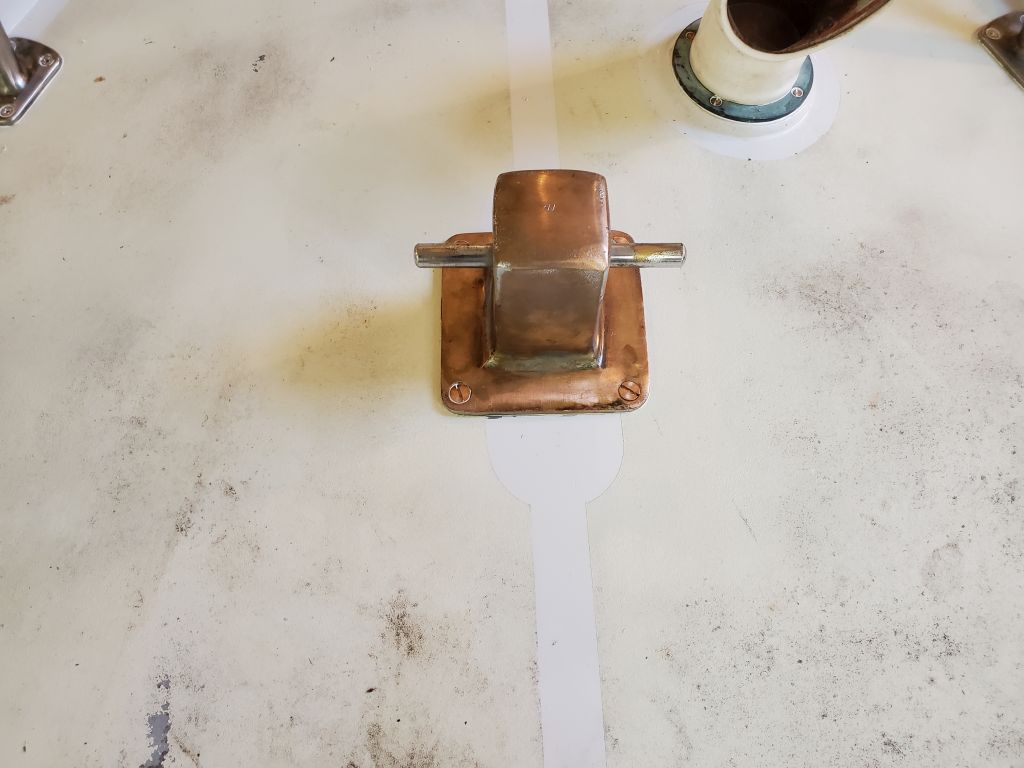
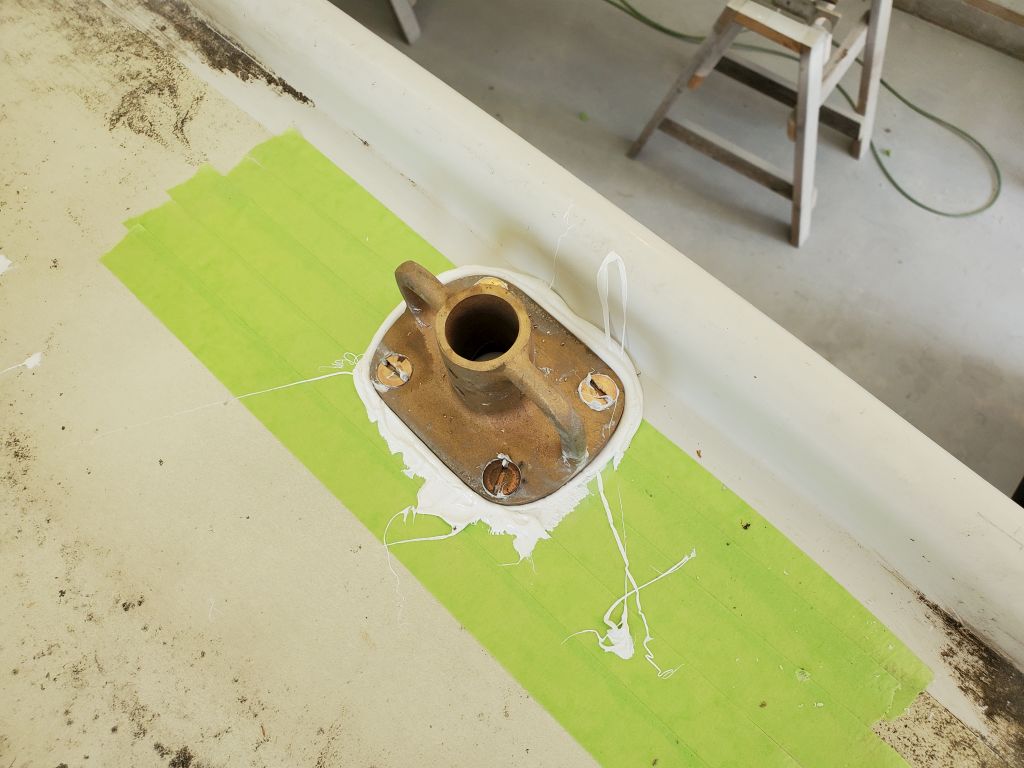
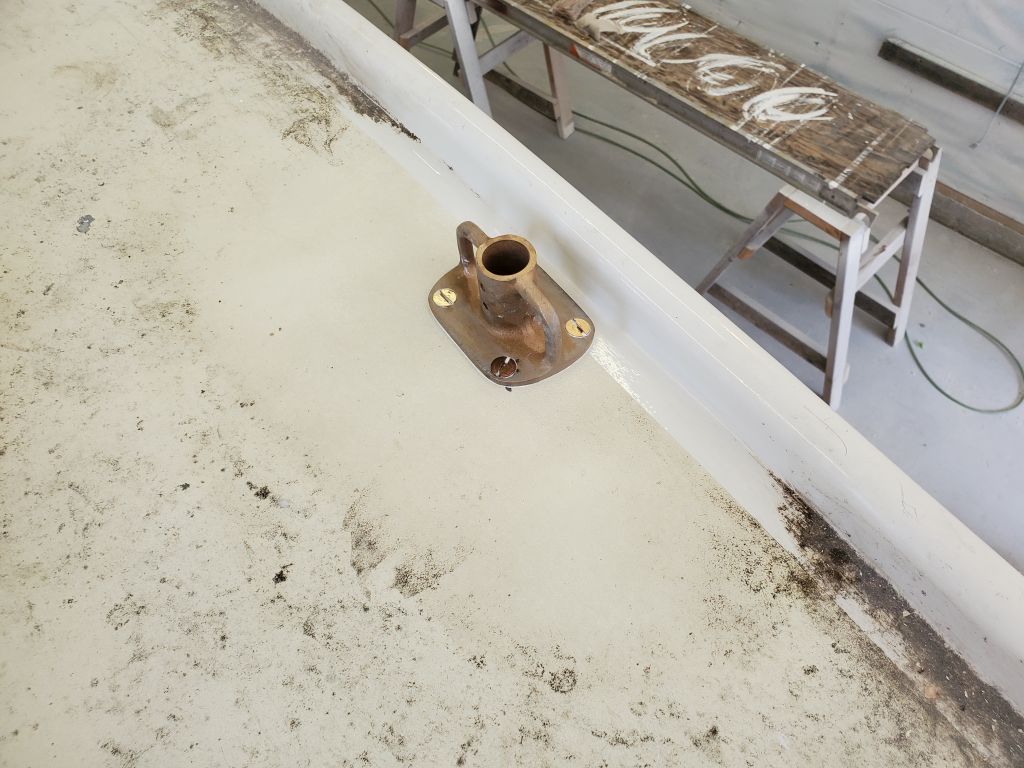
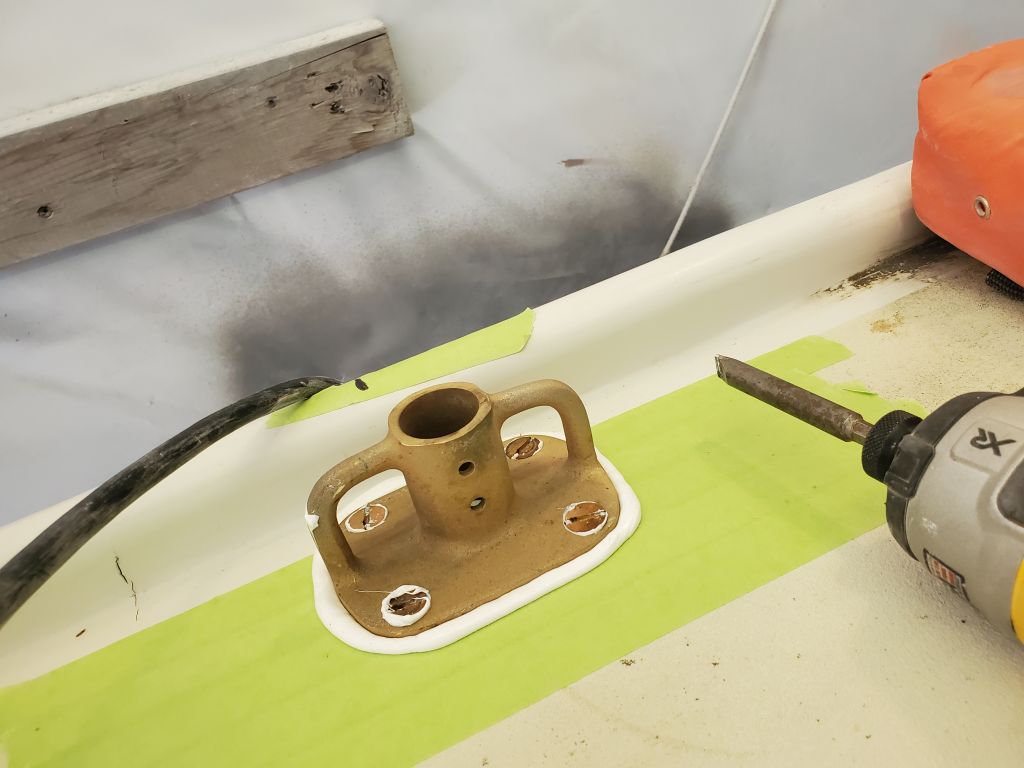
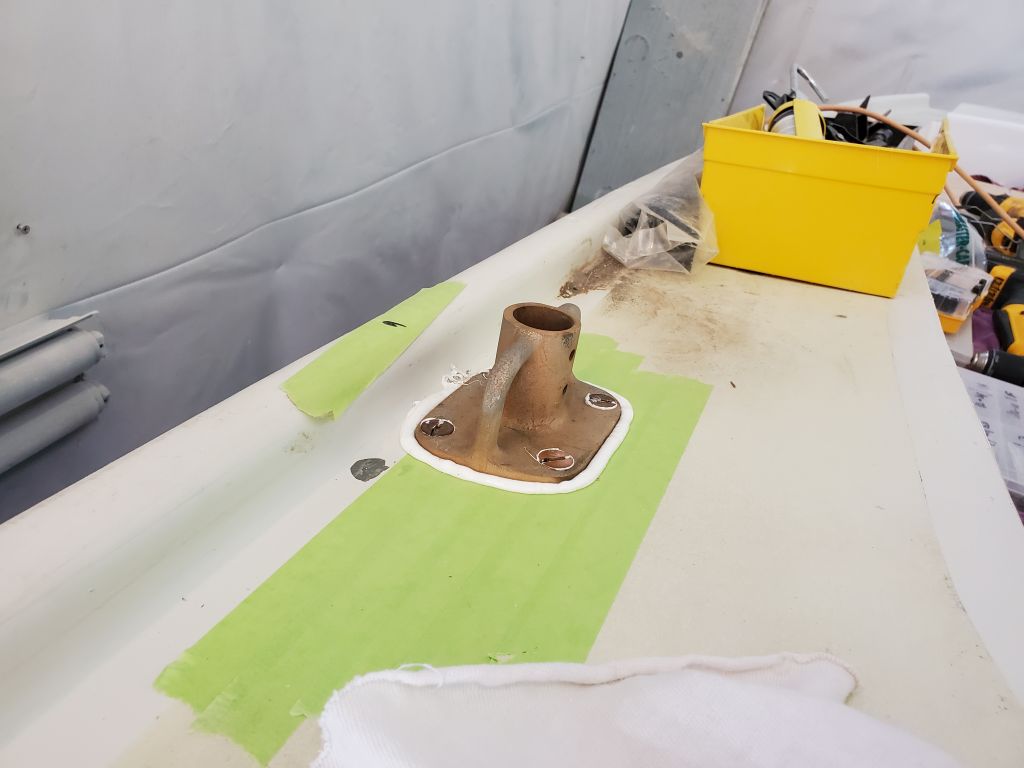
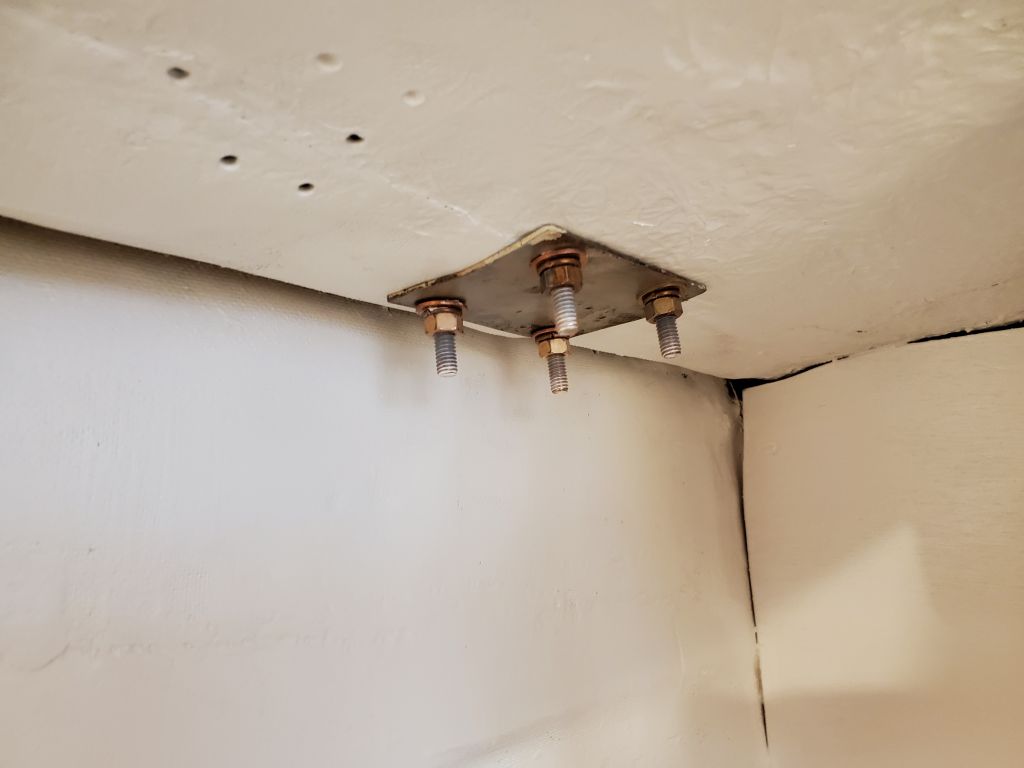
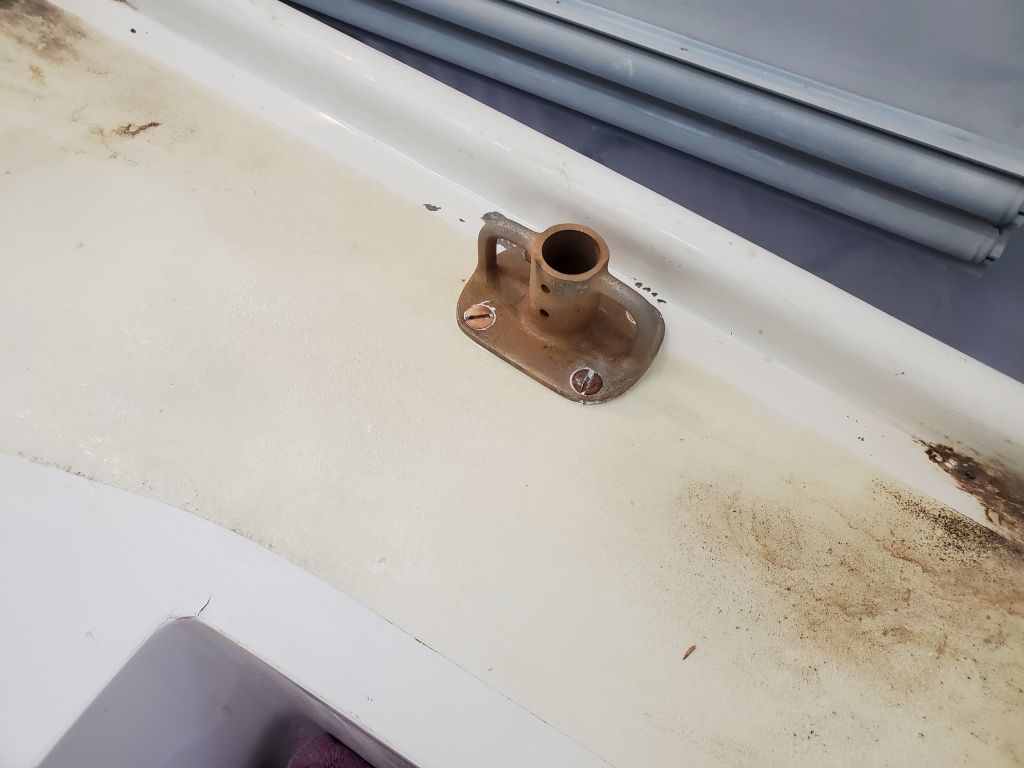
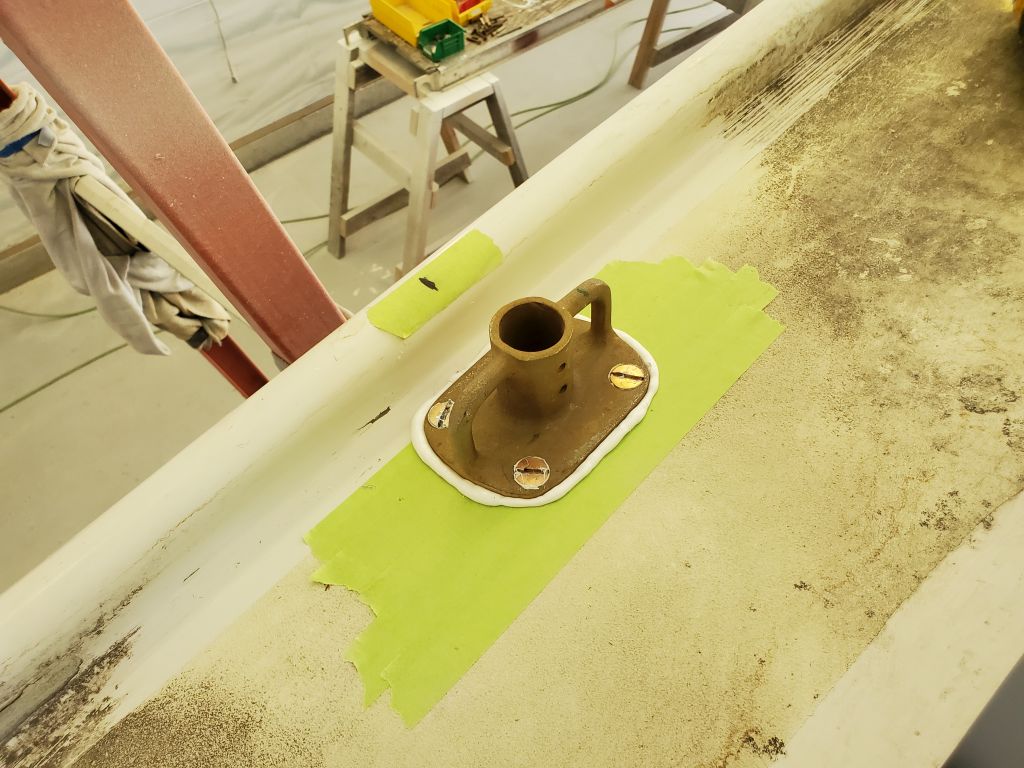
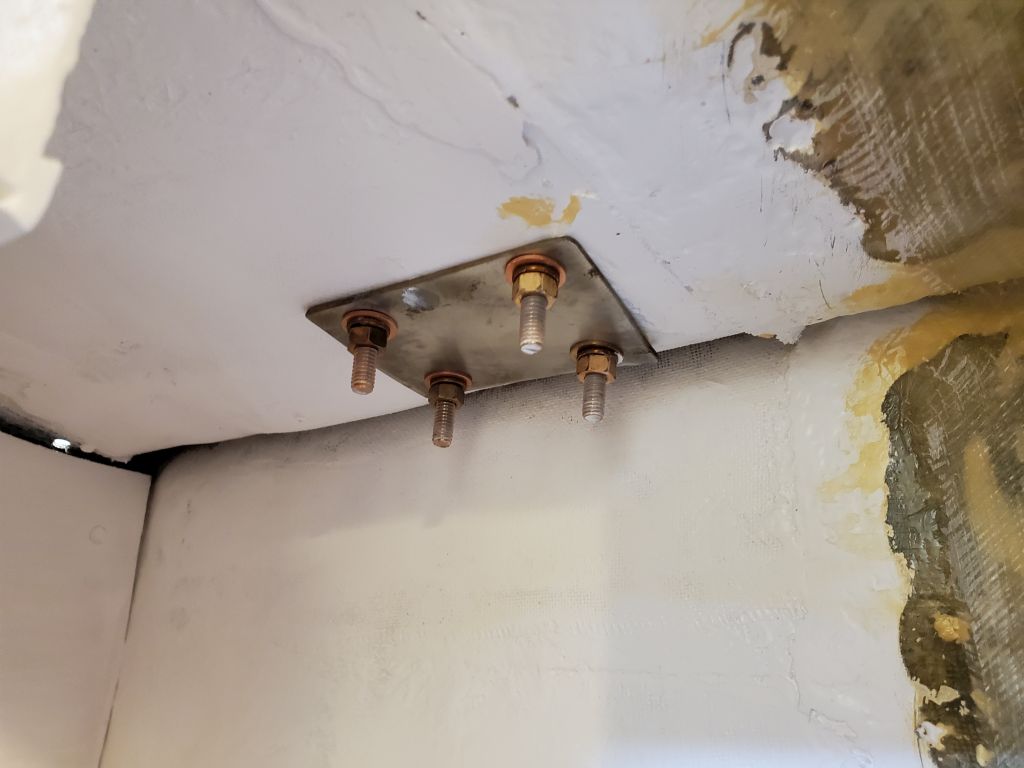
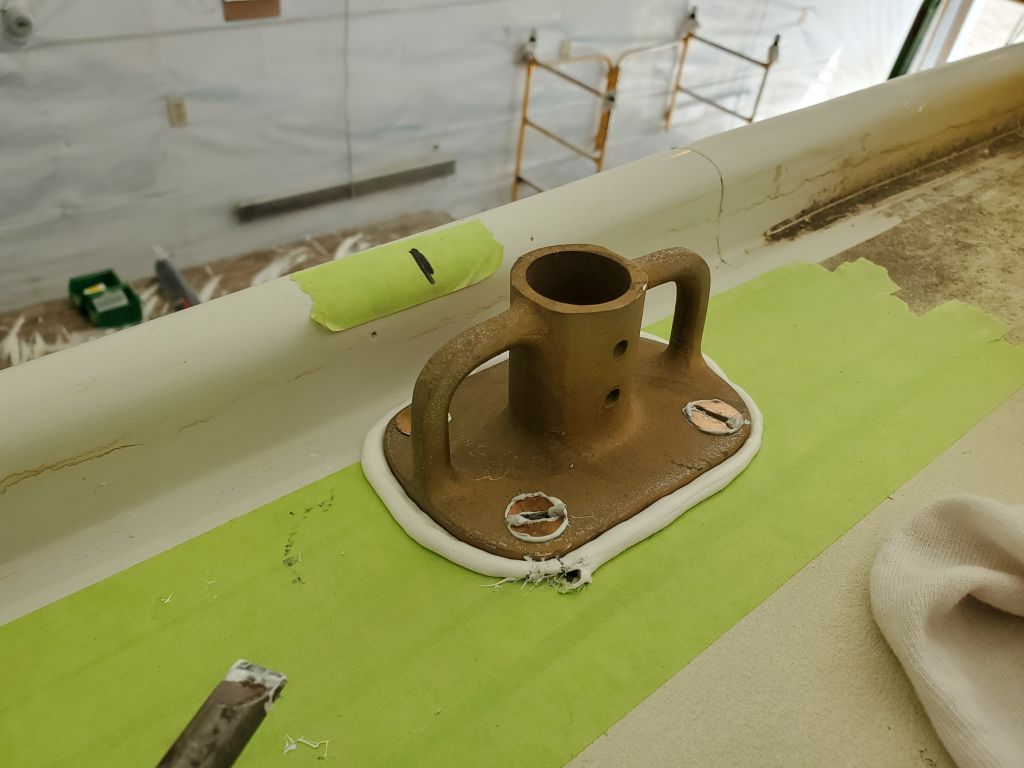
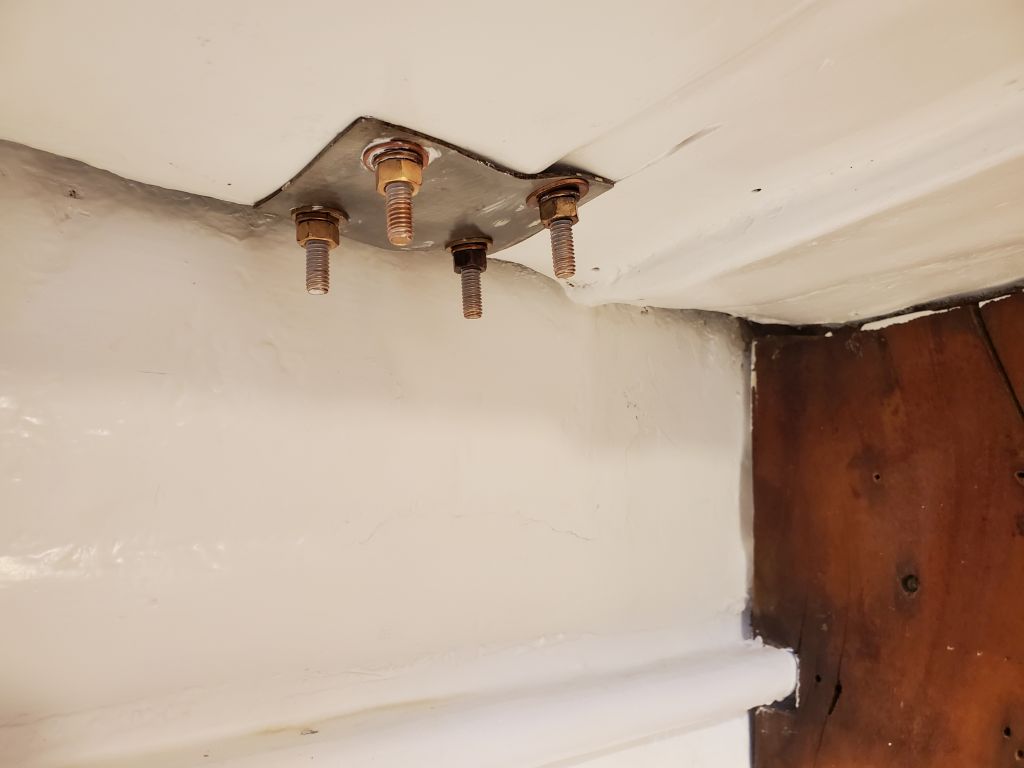
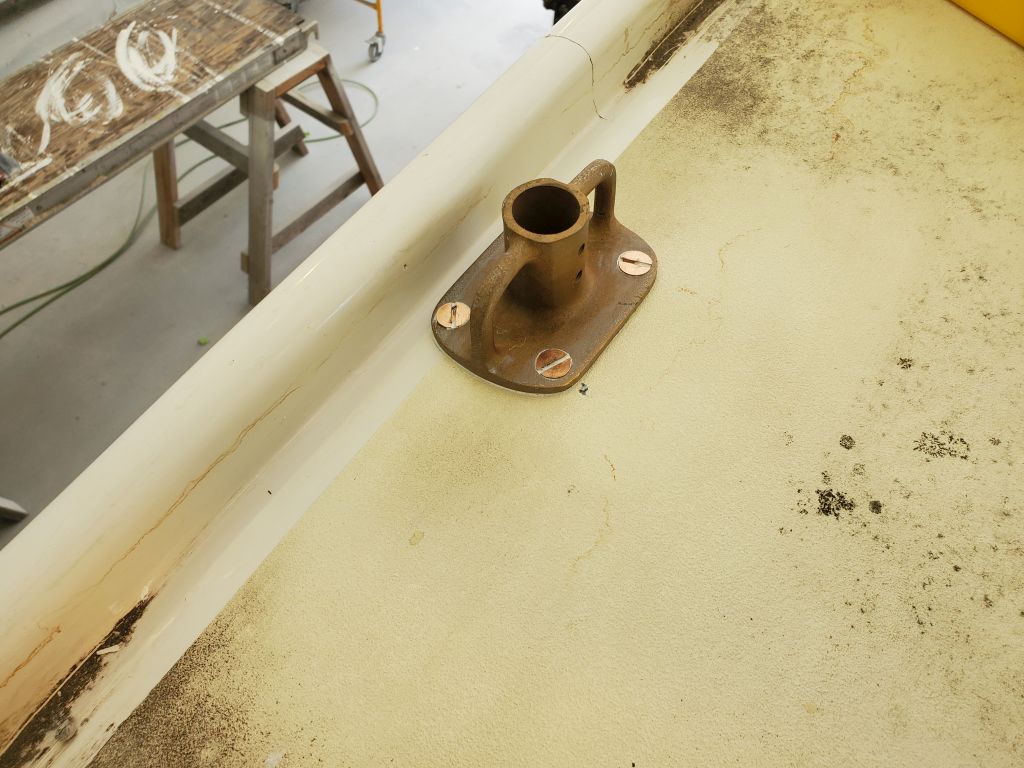
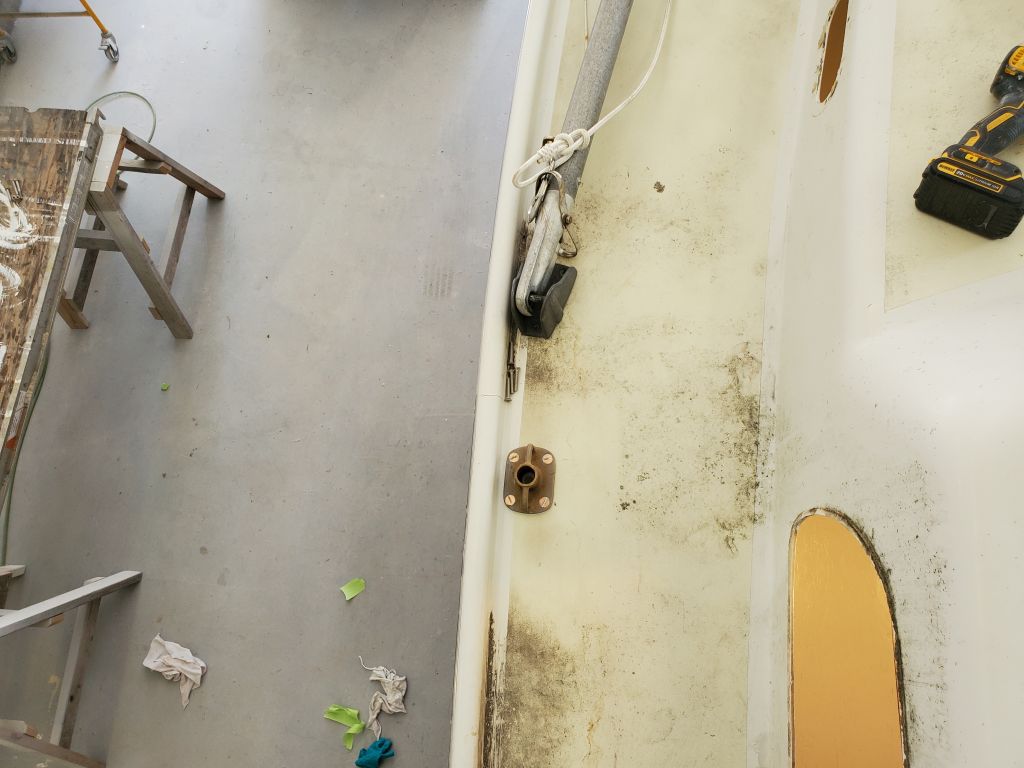
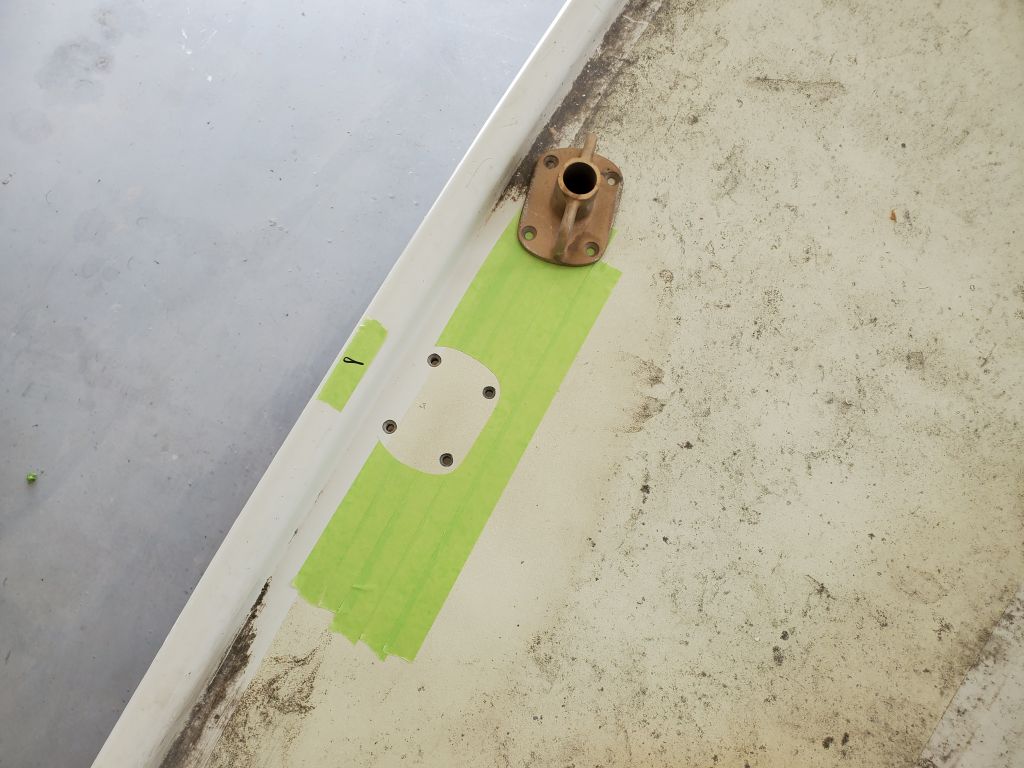
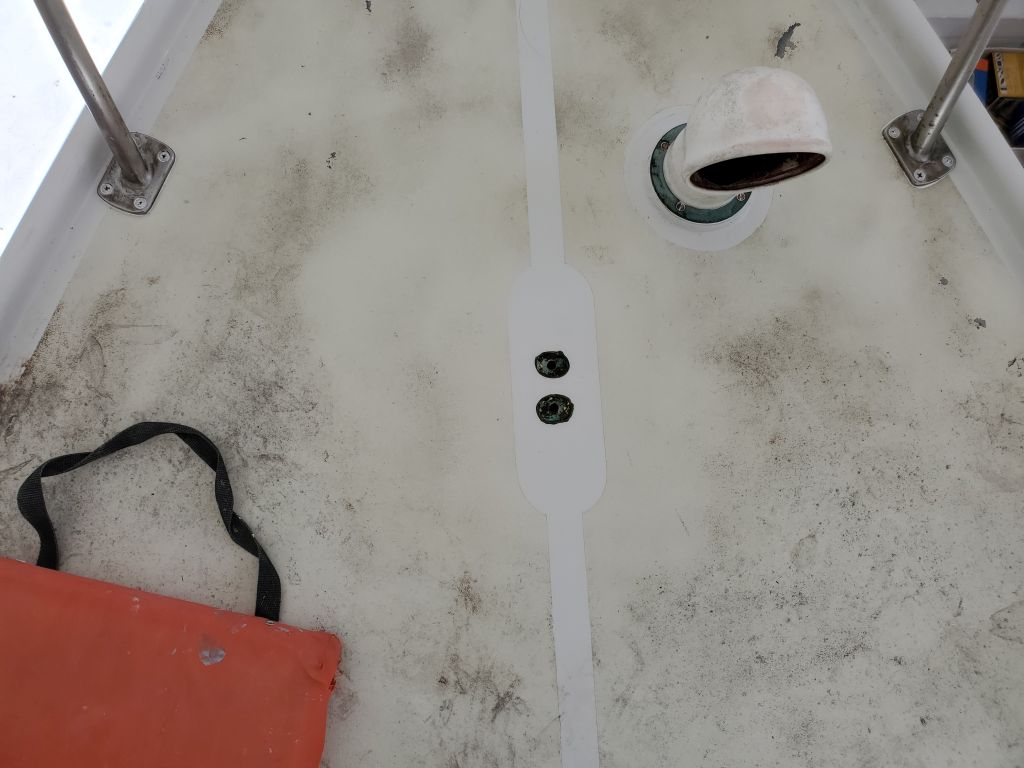
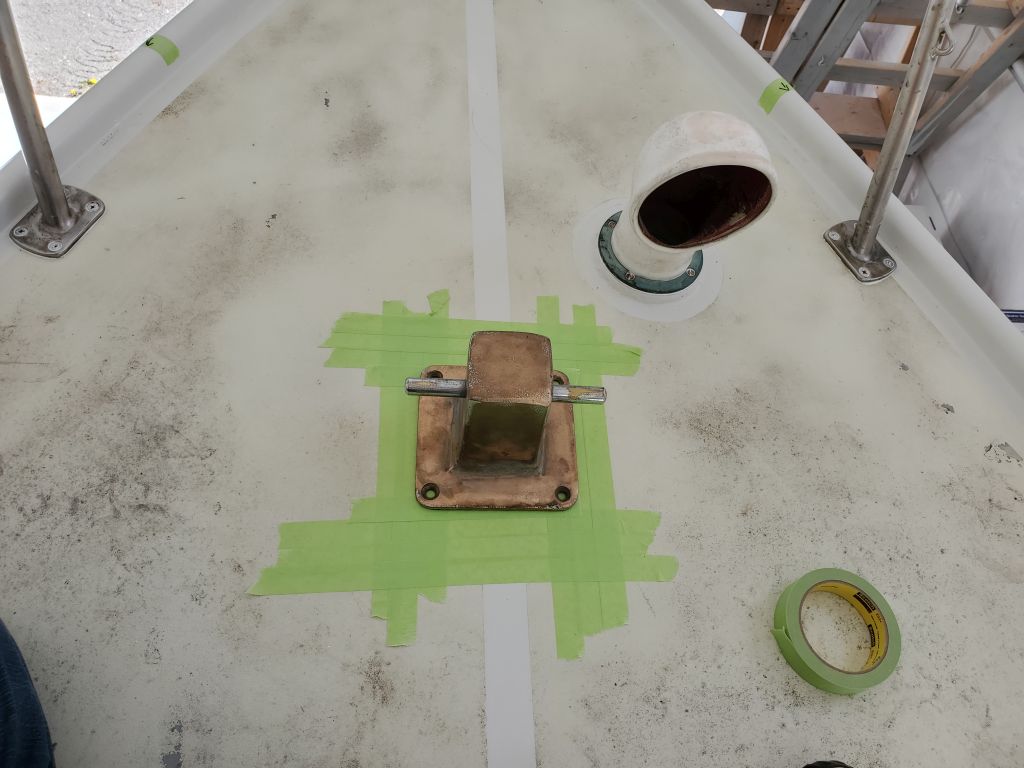
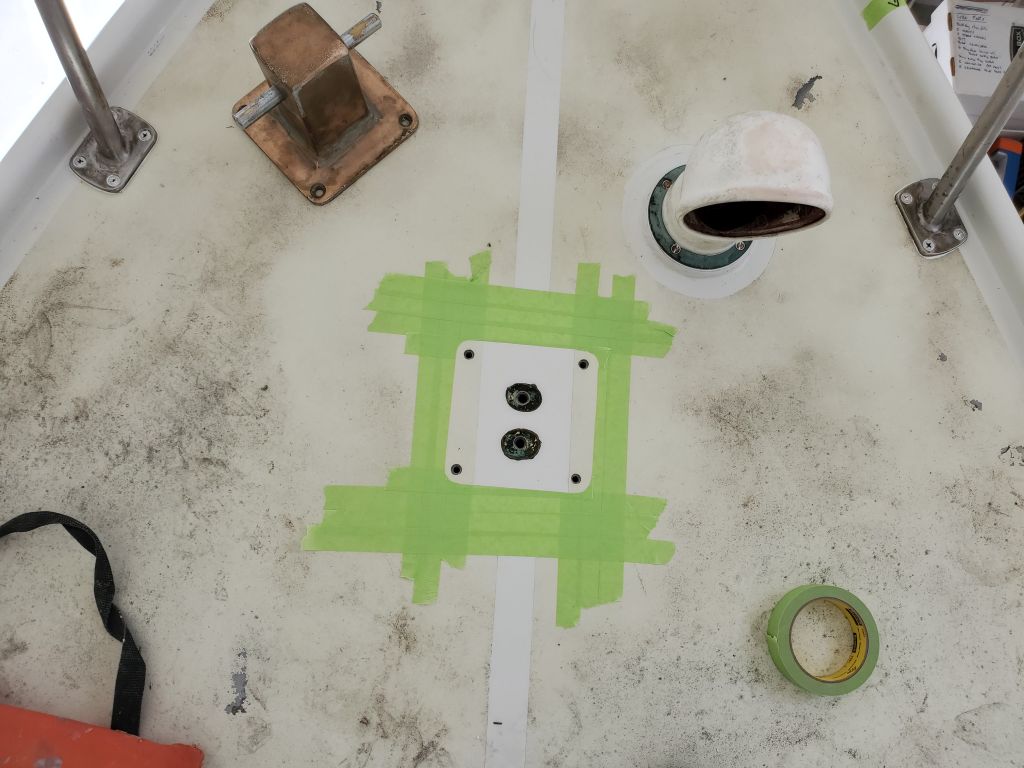
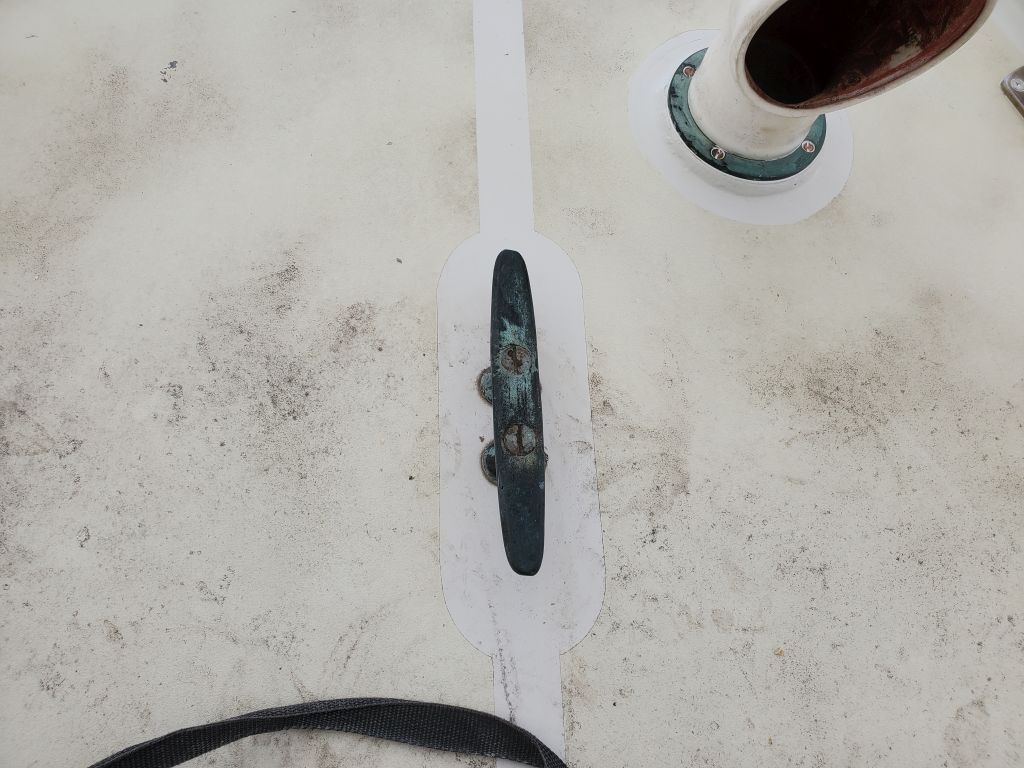
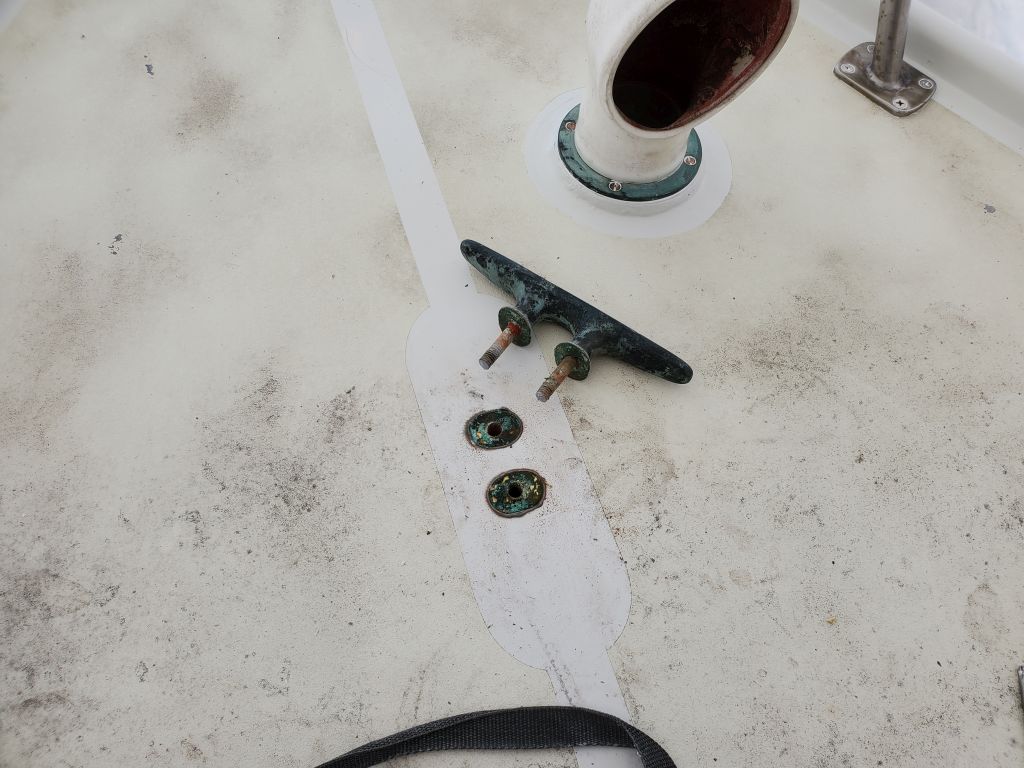
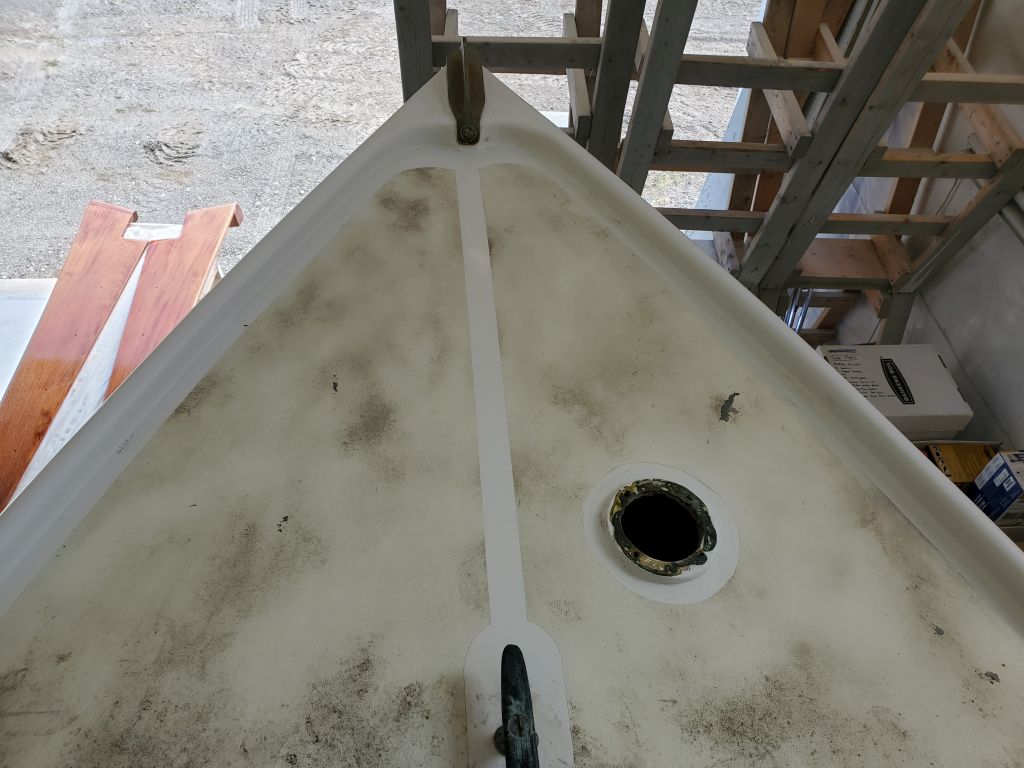
To round out the morning’s work, I installed the mooring bit on the foredeck.  Most of the prepwork was done, but I had to drill the holes through the new backing plate to accommodate the bolts from above.  I’d used some of the epoxy leftover from the taffrail to fill the old bolt holes left from the old cleat, and since the base of the mooring bit was hollow, I could install it right over the top of the uncured epoxy, applying sealant around the bearing surfaces at the edges and screw locations.  I secured the bitt from below with the backing plate, fender washers, lockwashers, and nuts.

Total time billed on this job today:  2 hours

0600 Weather Observation:  Mostly cloudy, 37°.   Forecast for the day:   Rain and snow, 38°

Lyra 59

Thursday

After a light sanding and cleanup, I applied the 4th coat of varnish to the inboard faces of the coamings.

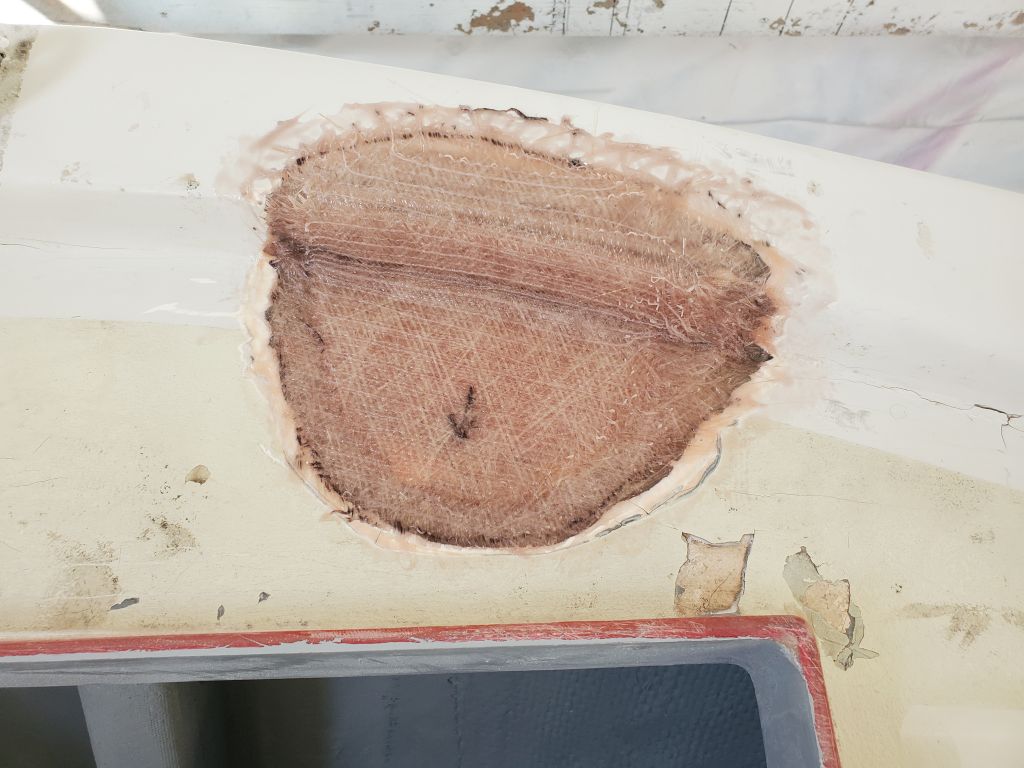
I sanded clean and flush the repair to the taffrail modification, then applied a first round of epoxy fairing compound to fill the fiberglass texture and start to bring the repair to its final contours.

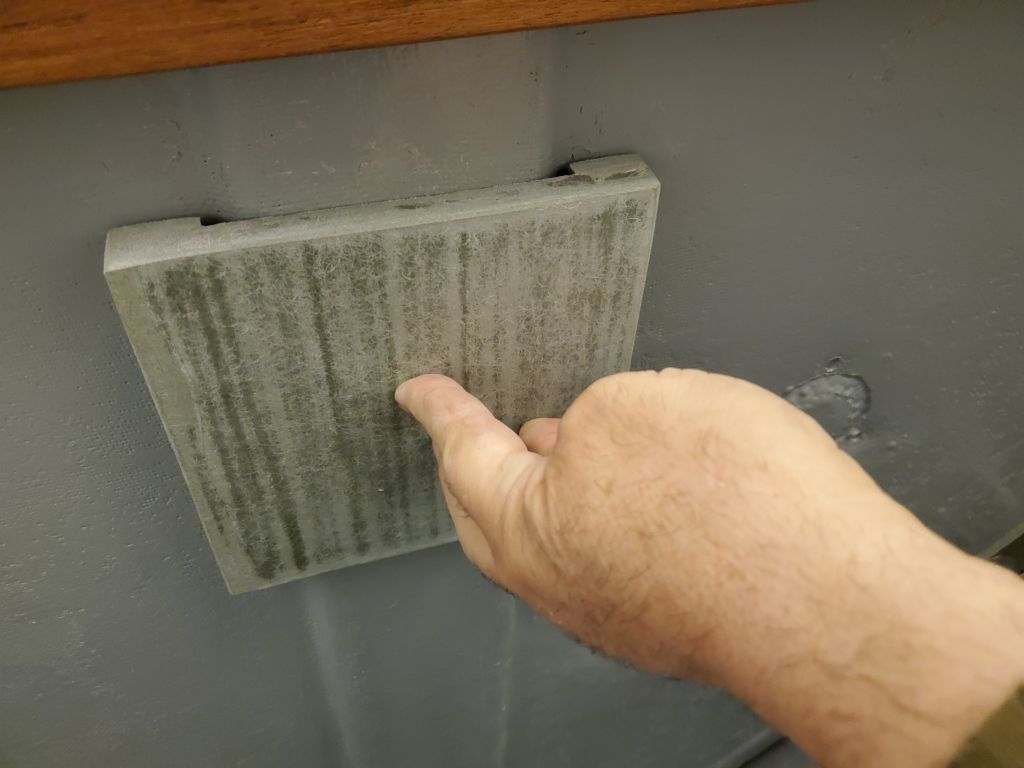
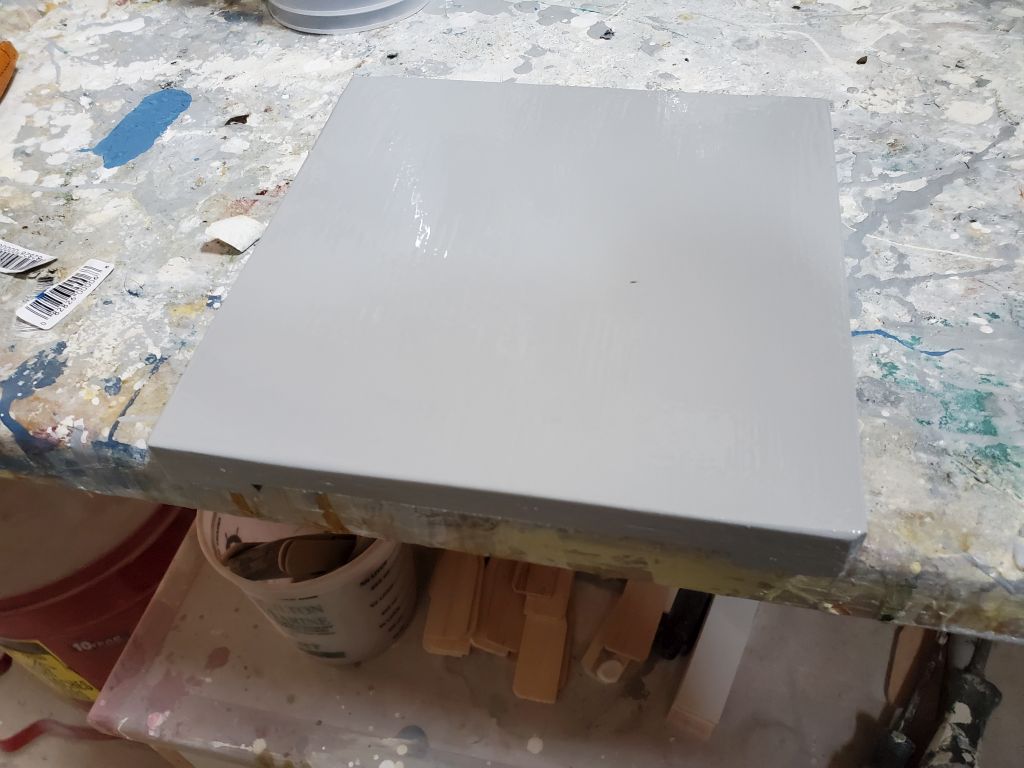
After sanding away any squeezed-out excess epoxy from the backing plate I’d made for the mooring bit on the foredeck, and test-fitting the backing plate to ensure it worked as intended (it did), I painted it with the same gray locker paint, since at least for now the chainlocker area, where this was located, was wide open to the forward cabin.

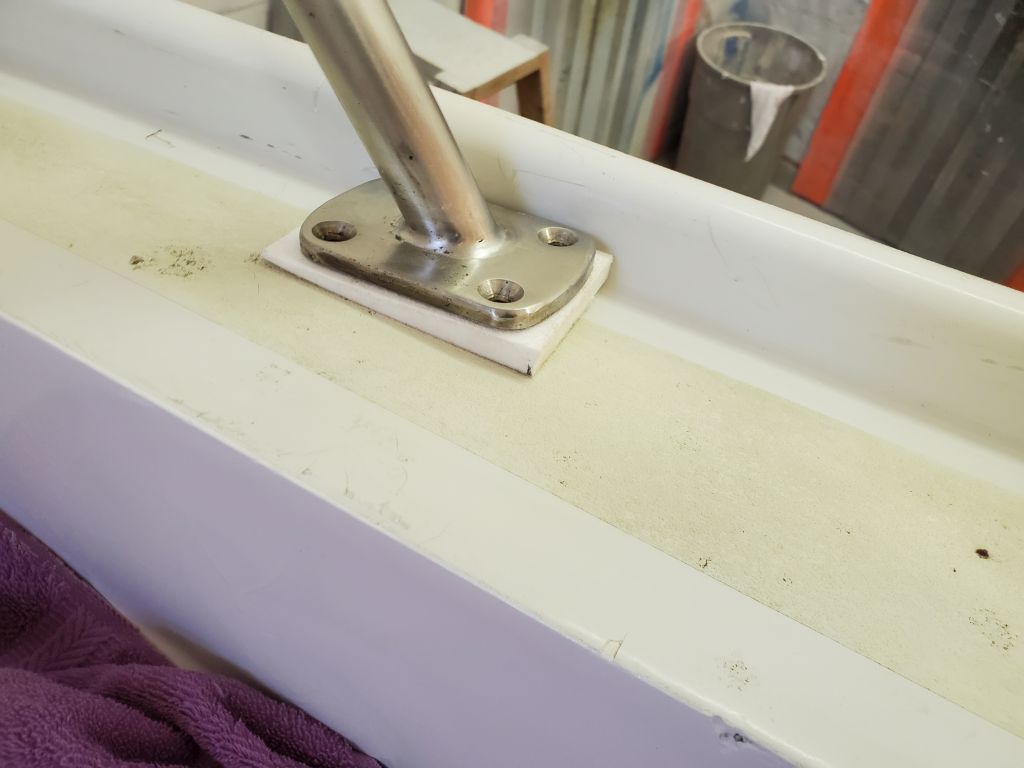
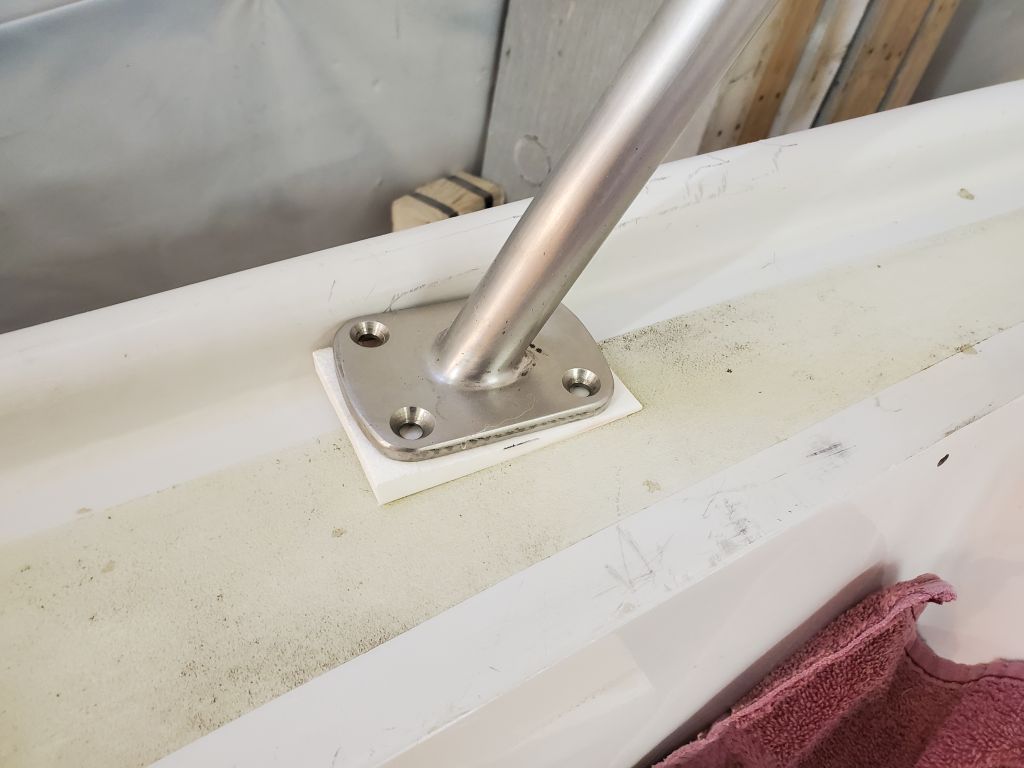
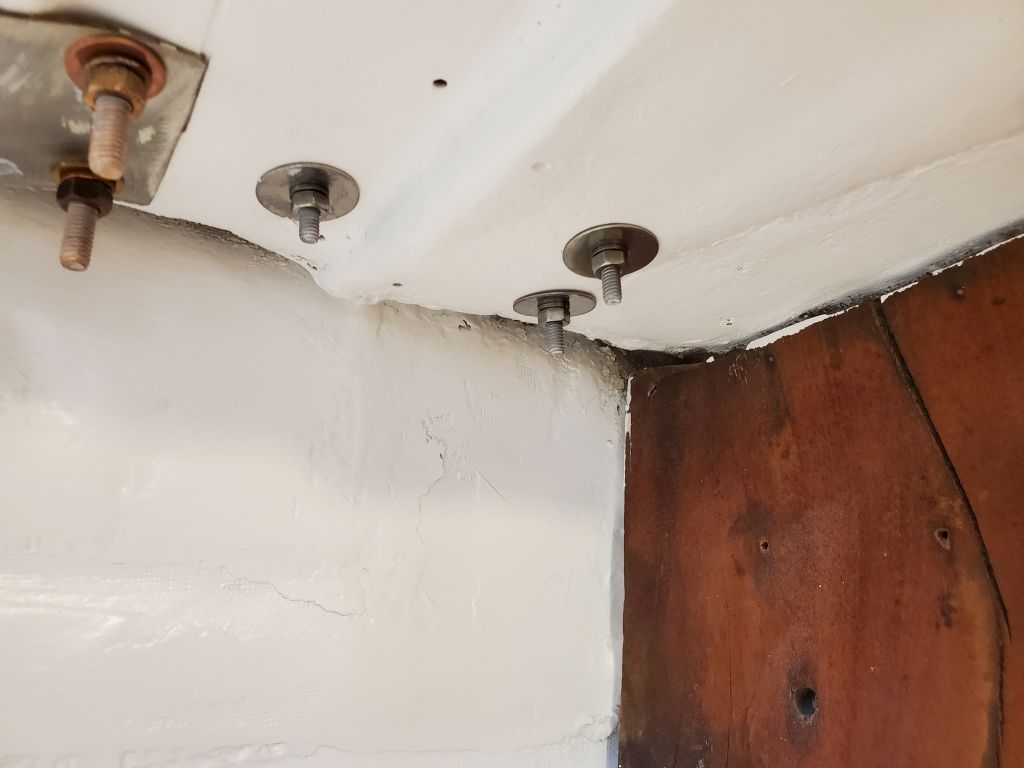
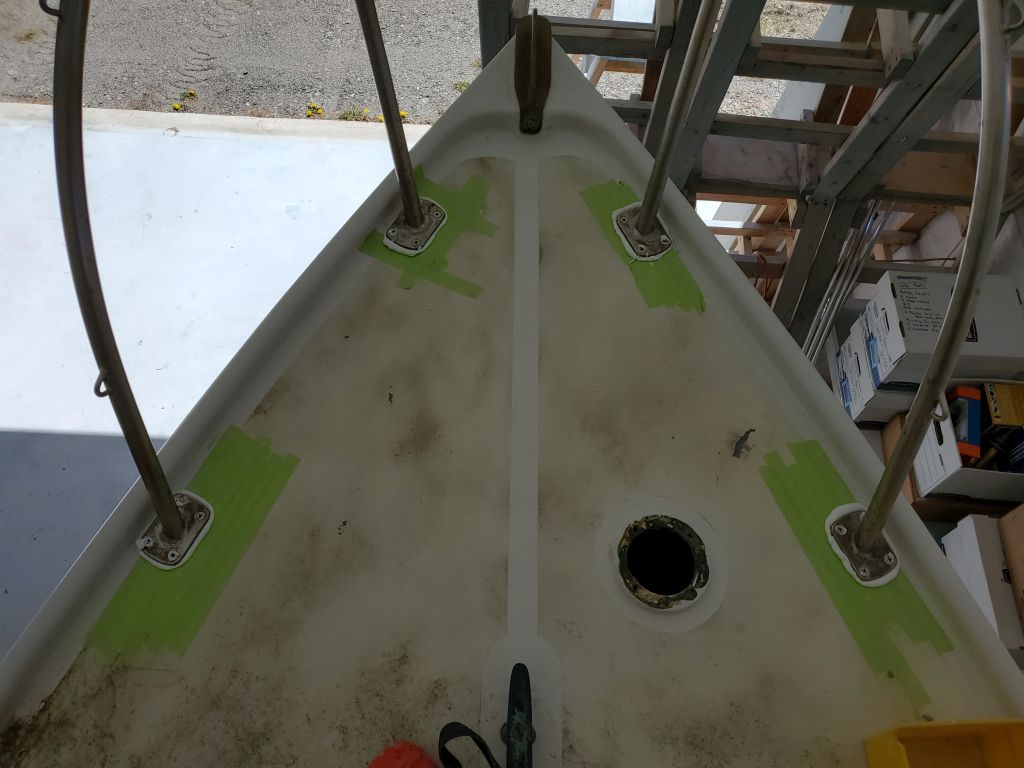
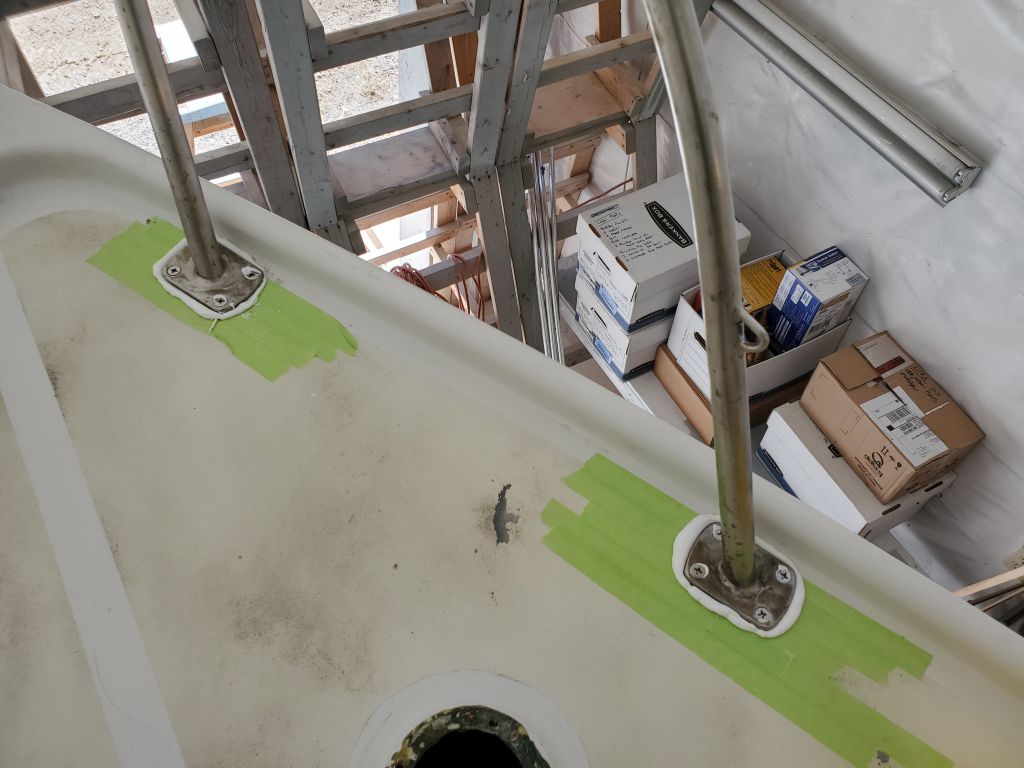
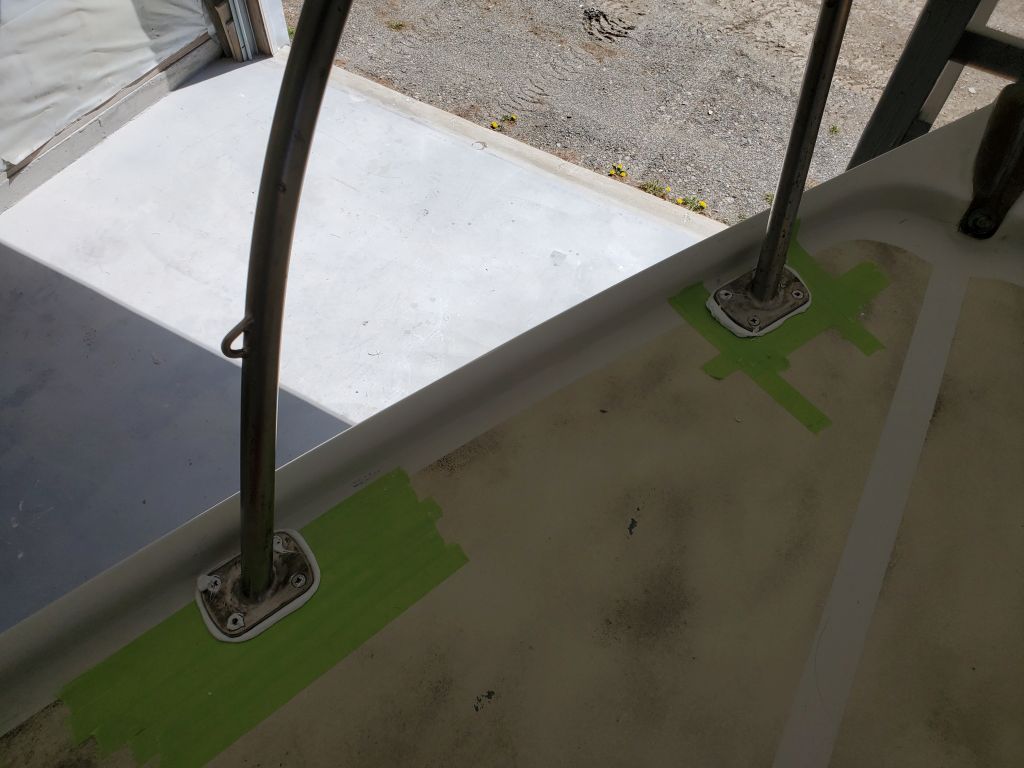
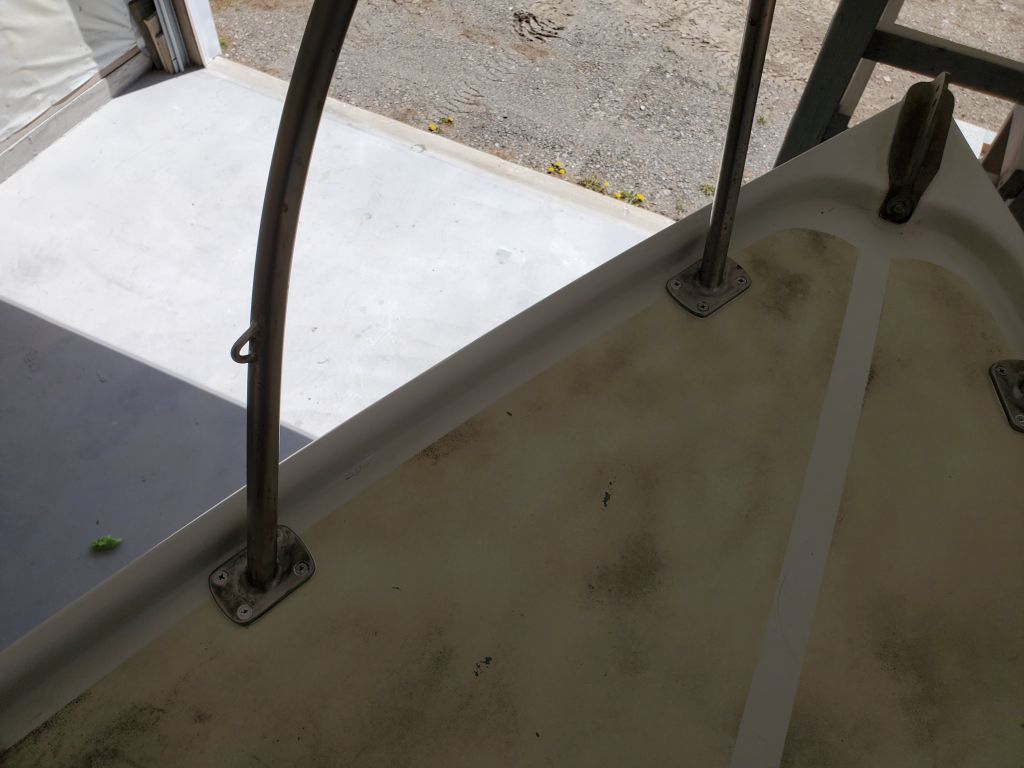
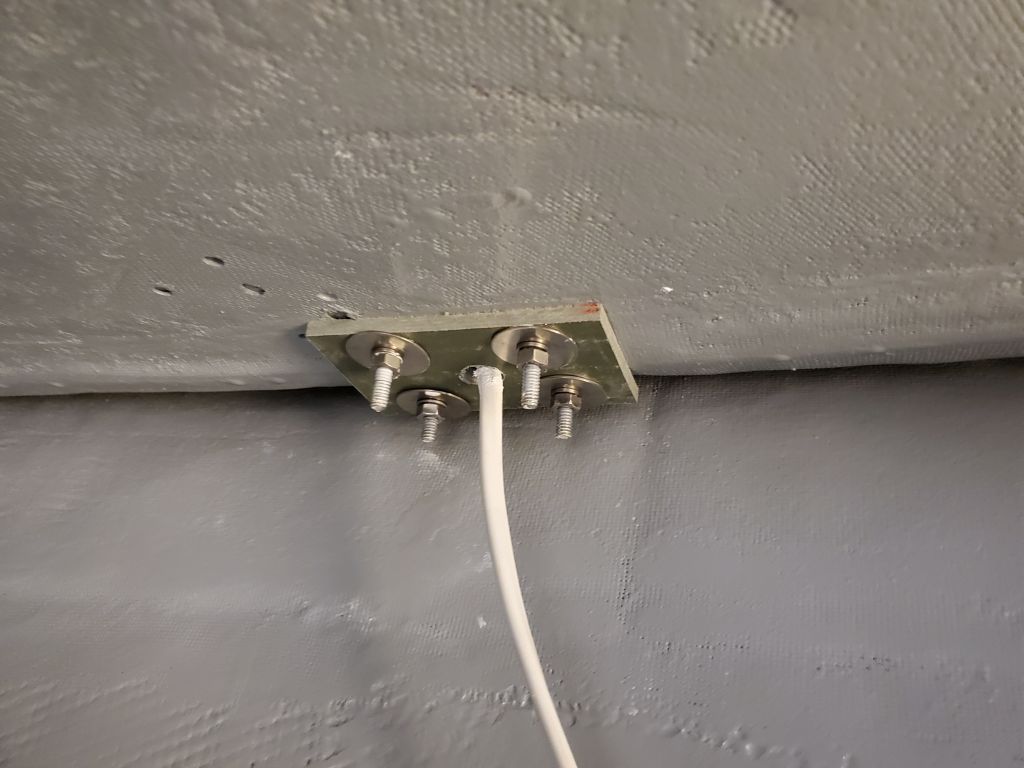
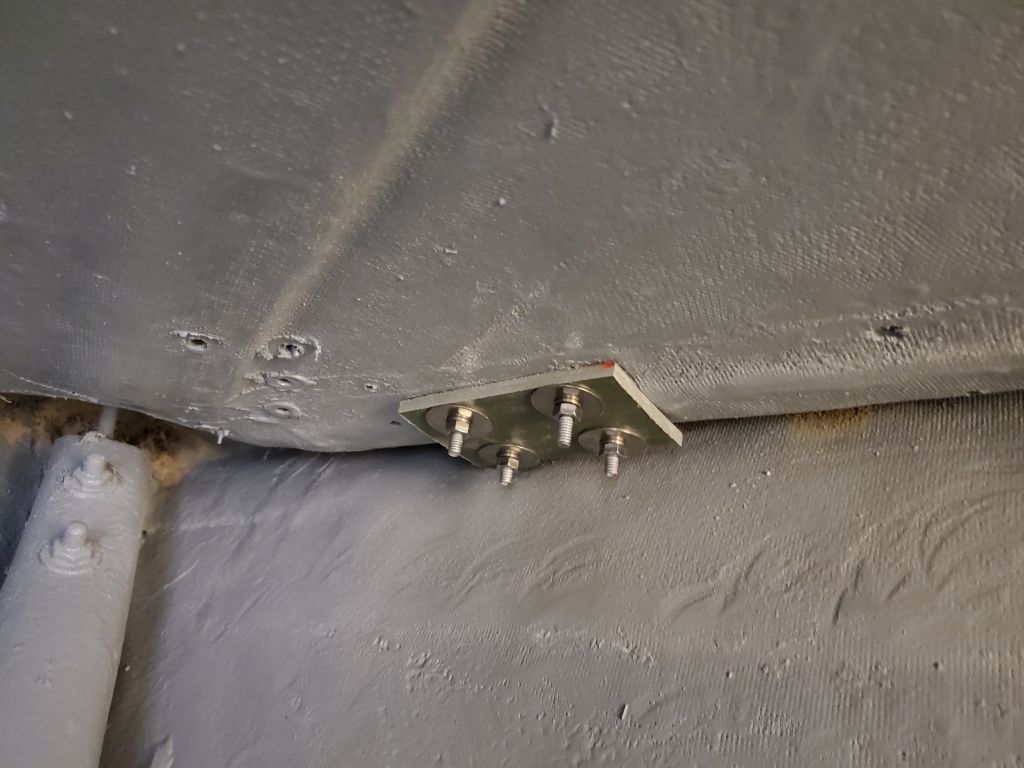
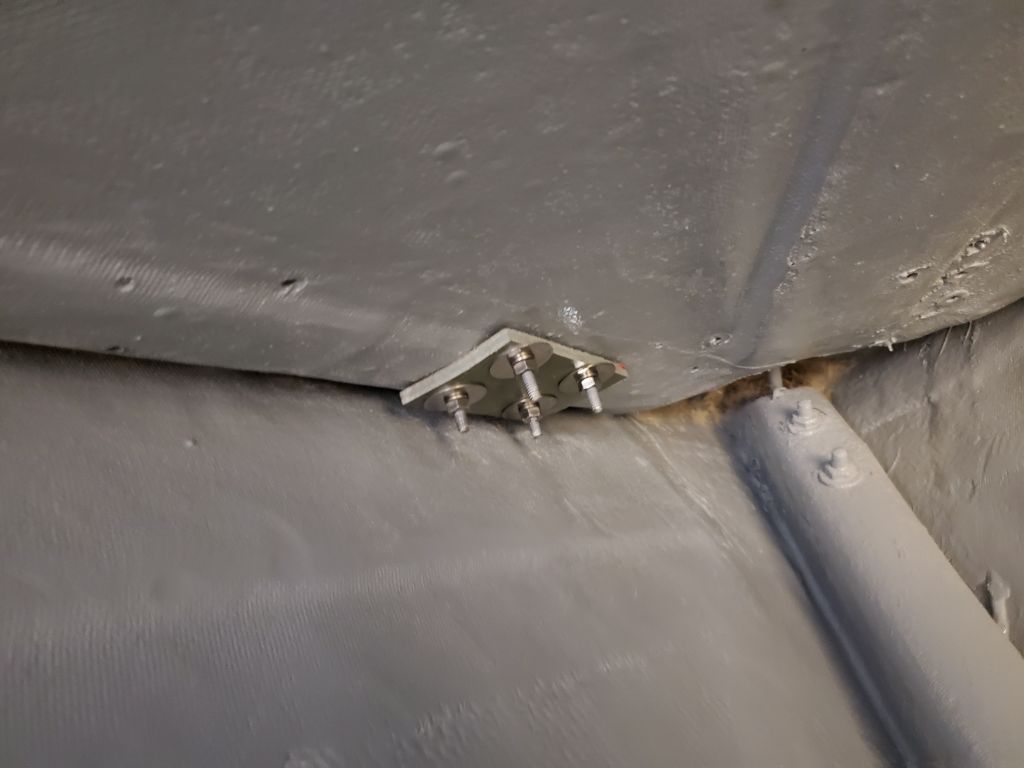
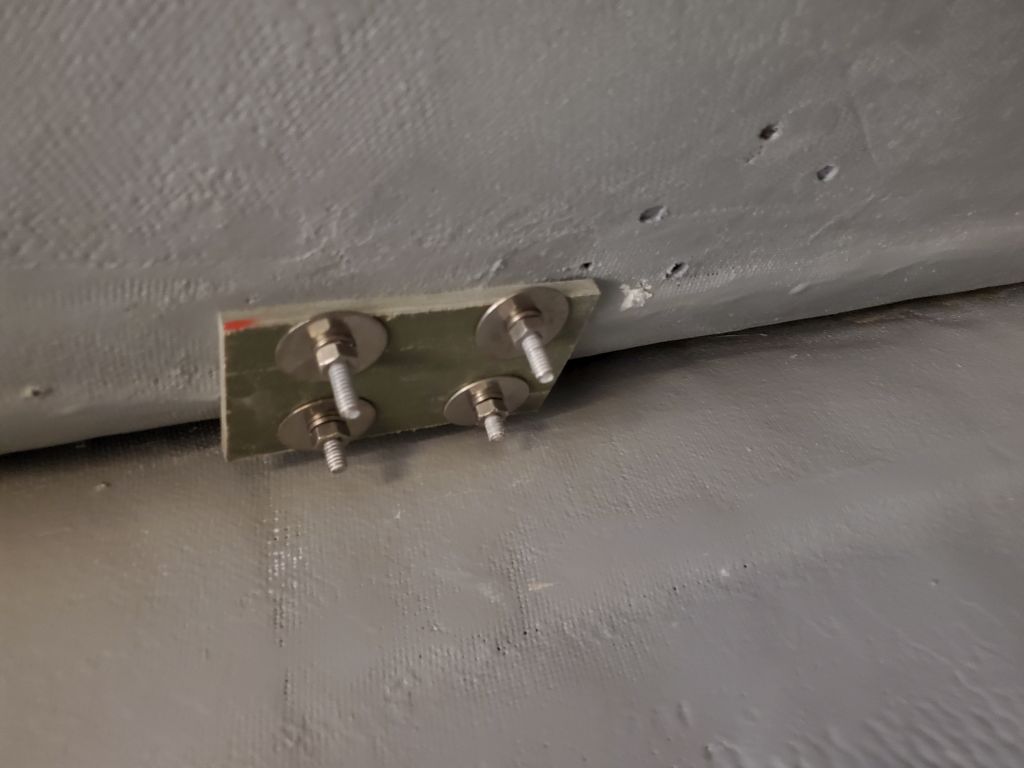
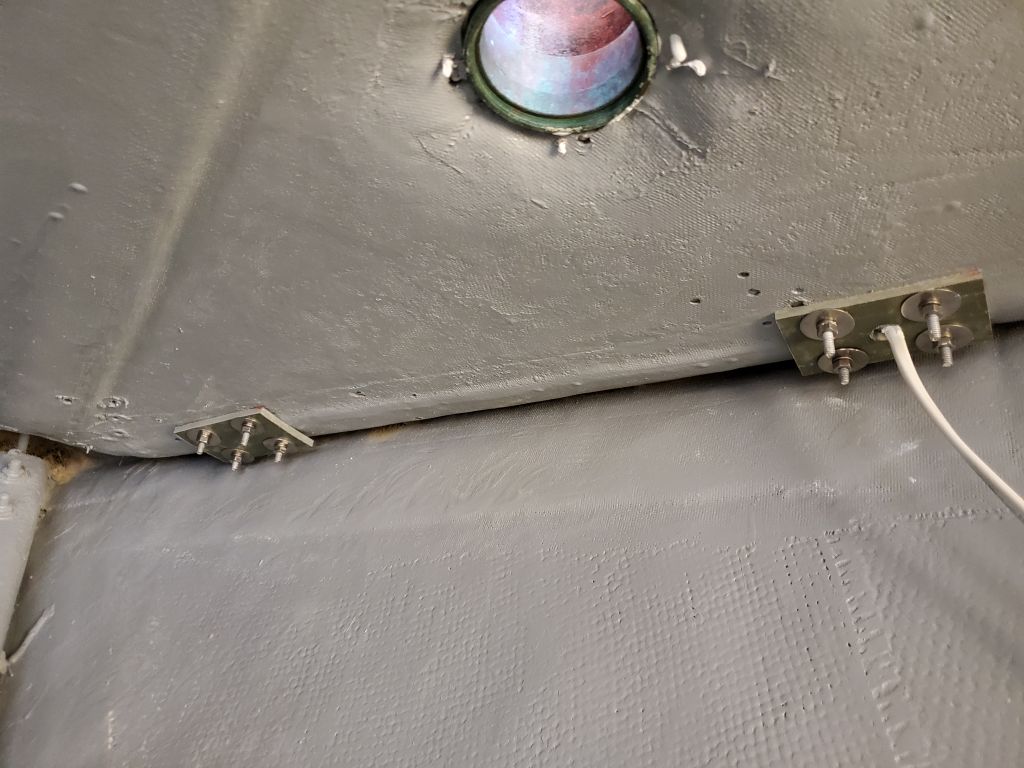
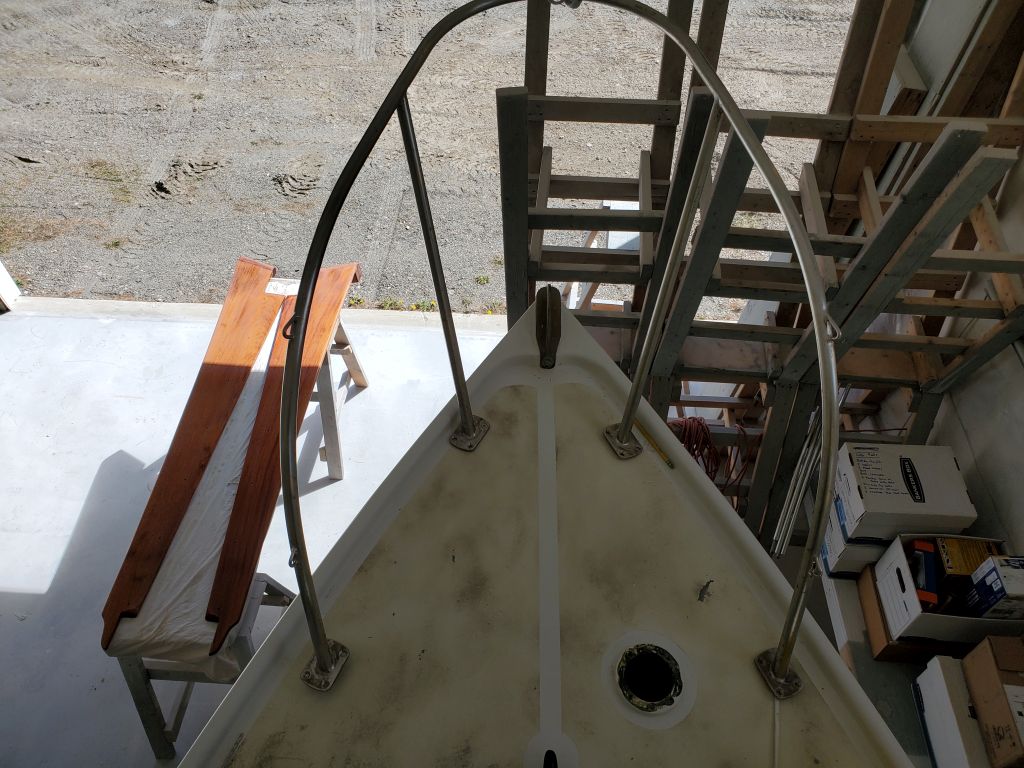
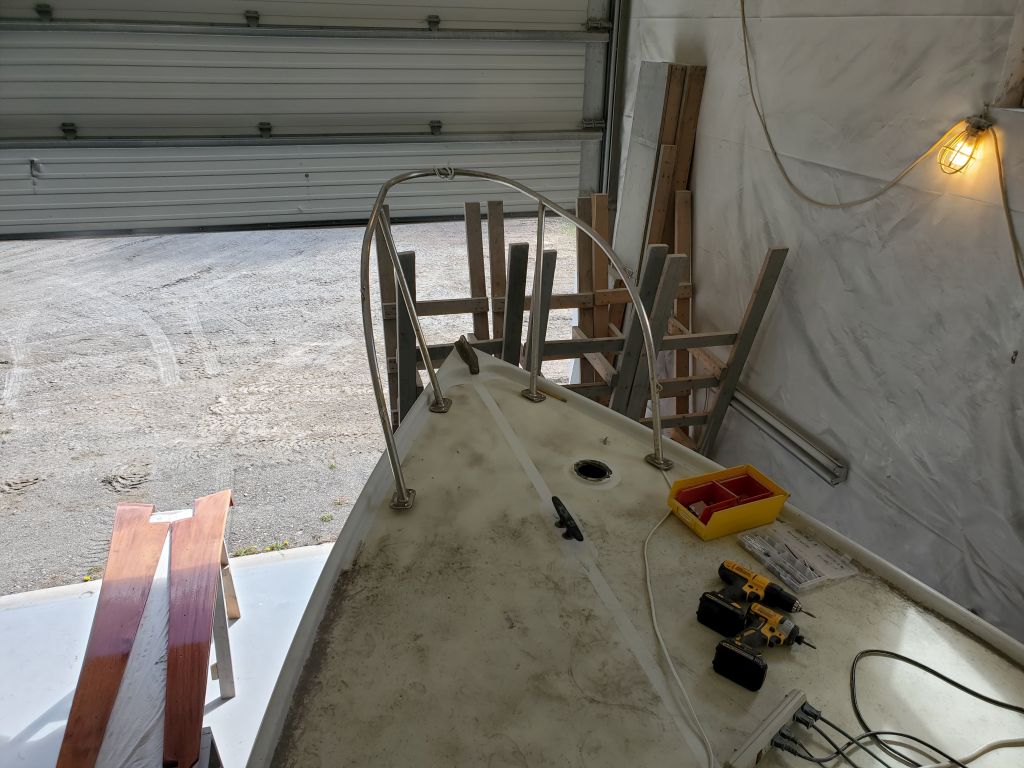
I spent the remainder of the day on hardware duty, mainly the stanchion bases (6).  With the fastener holes and deck areas already prepared, for each base in turn I applied sealant, installed three fasteners partway and one fastener most of the way so I could align the stainless steel backing plates that came along with the stanchion bases, then fully tightened the fasteners from above and installing nuts and washers below before cleaning up the excess sealant on deck.

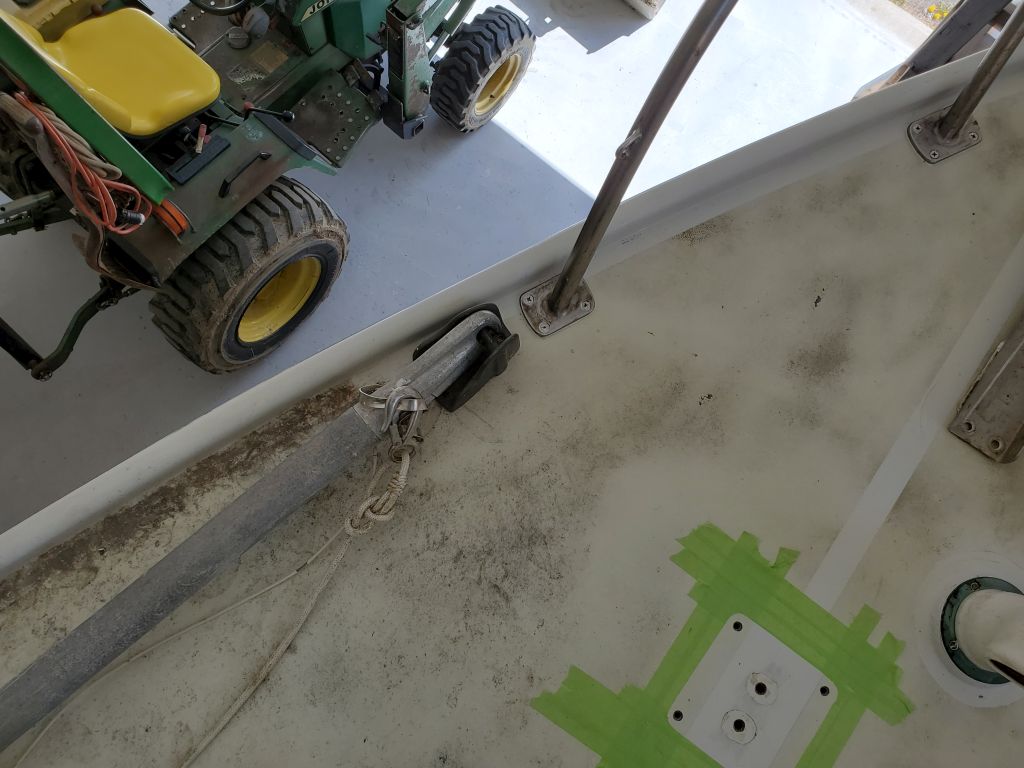
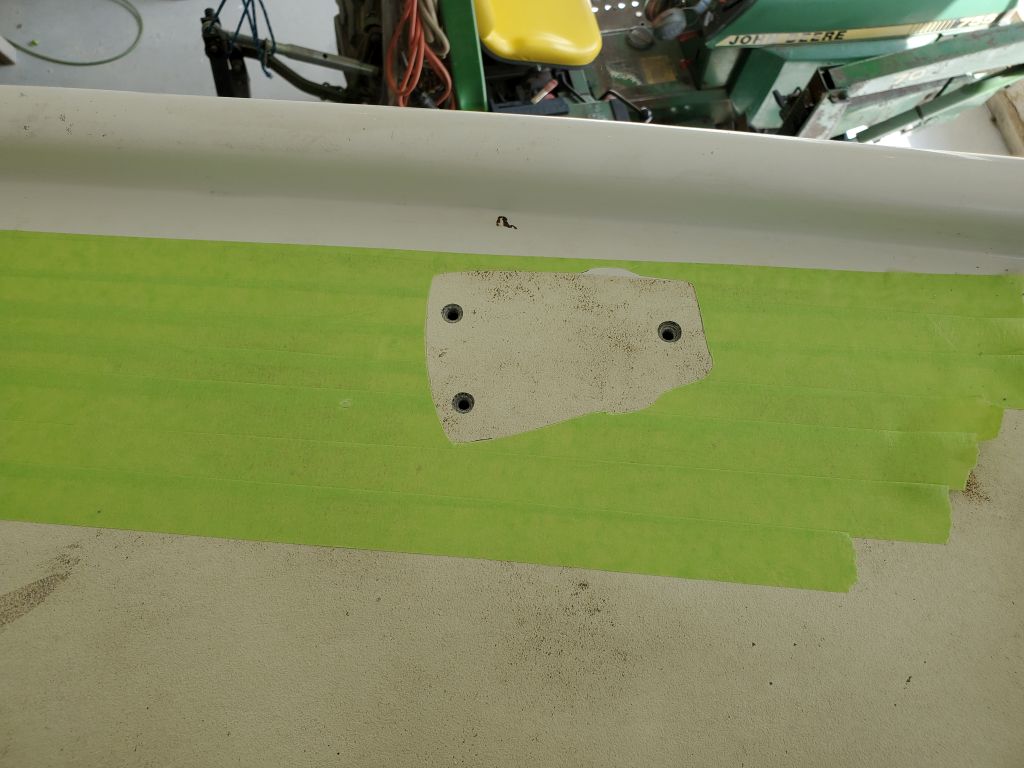
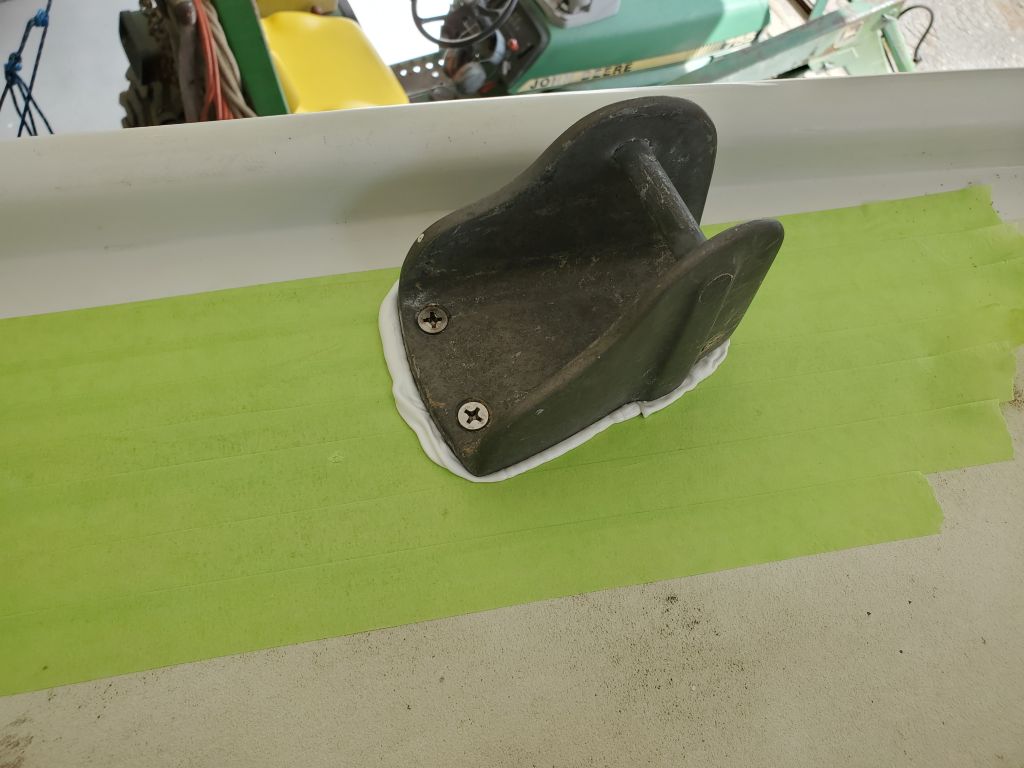
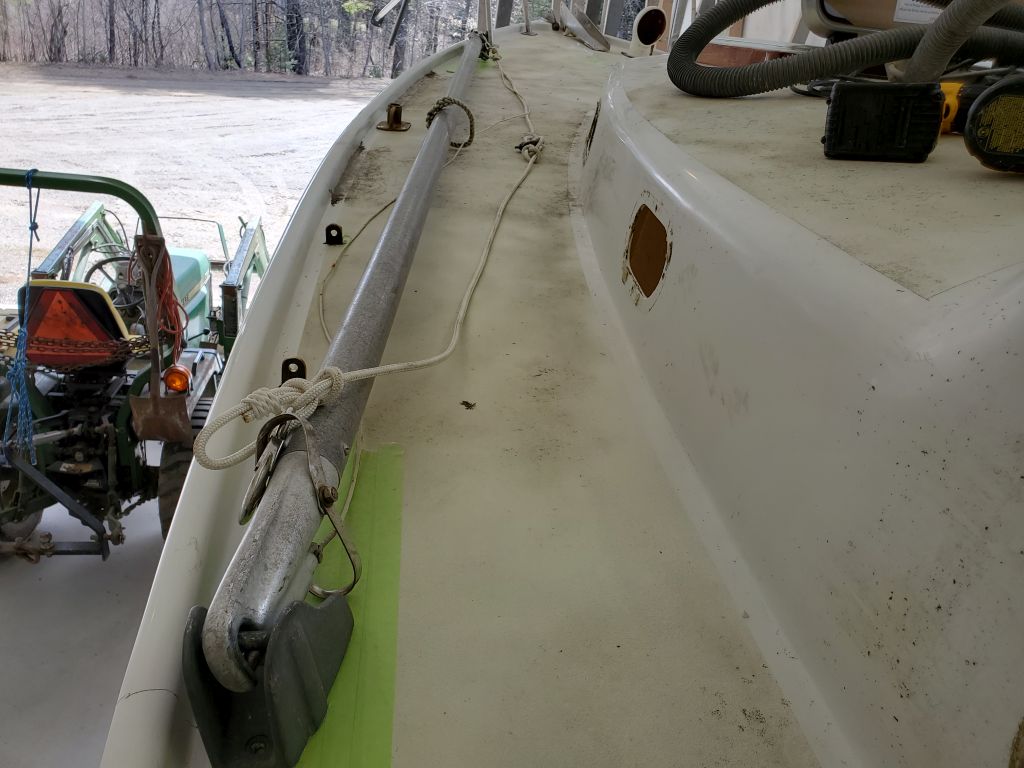
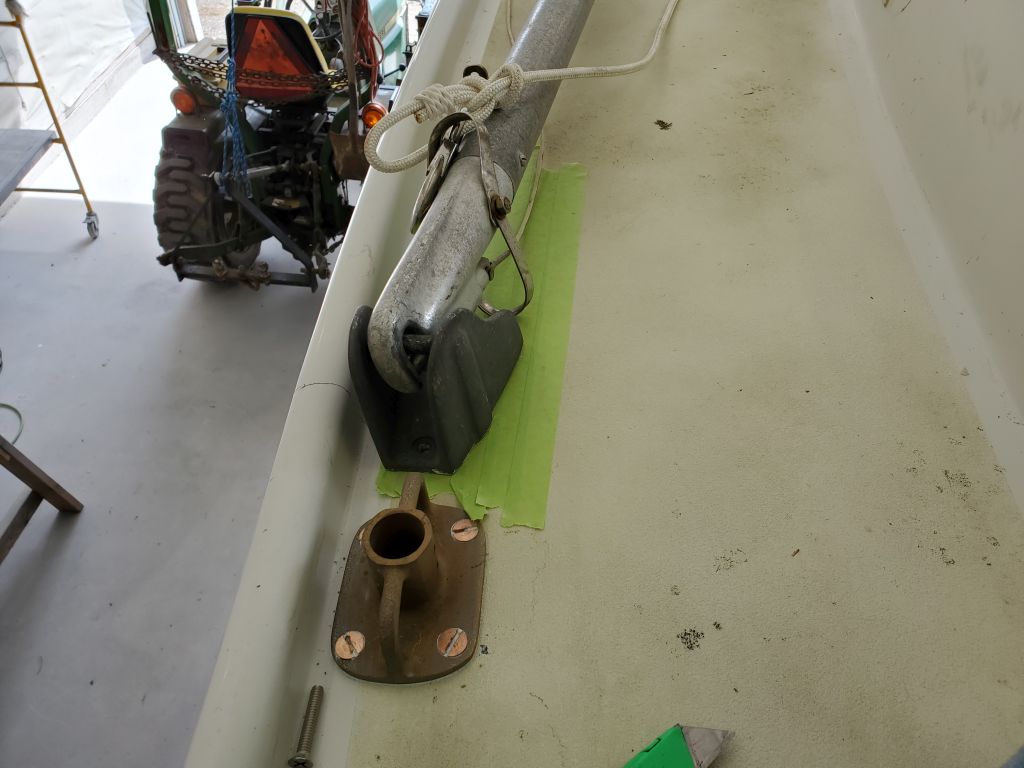
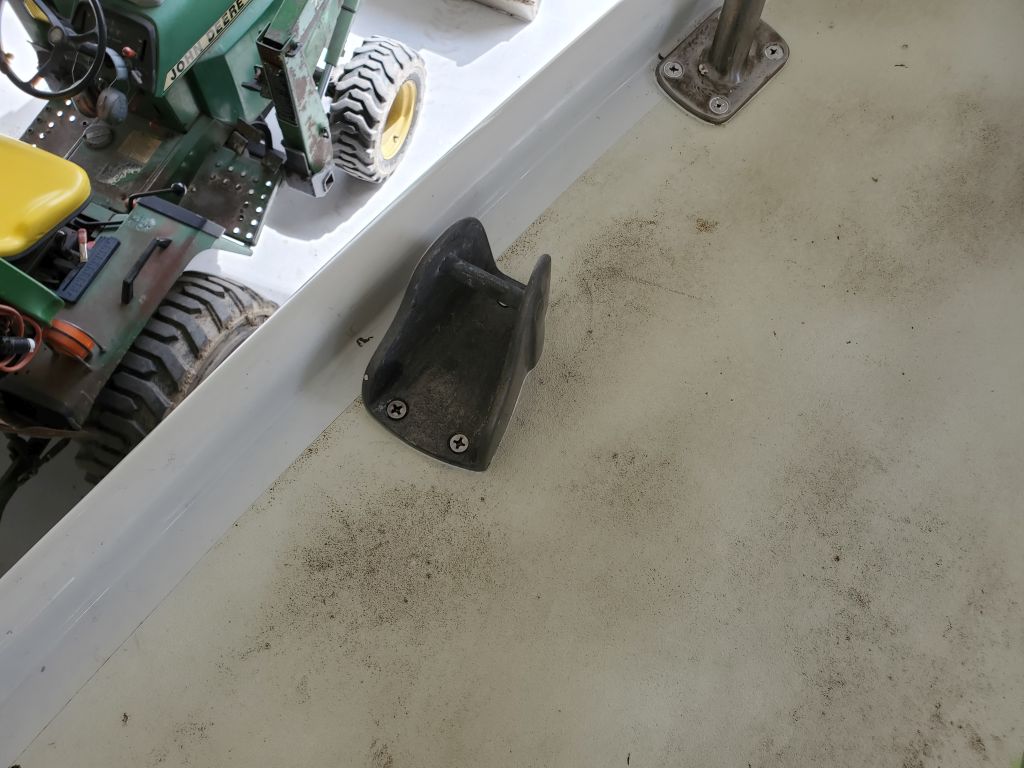
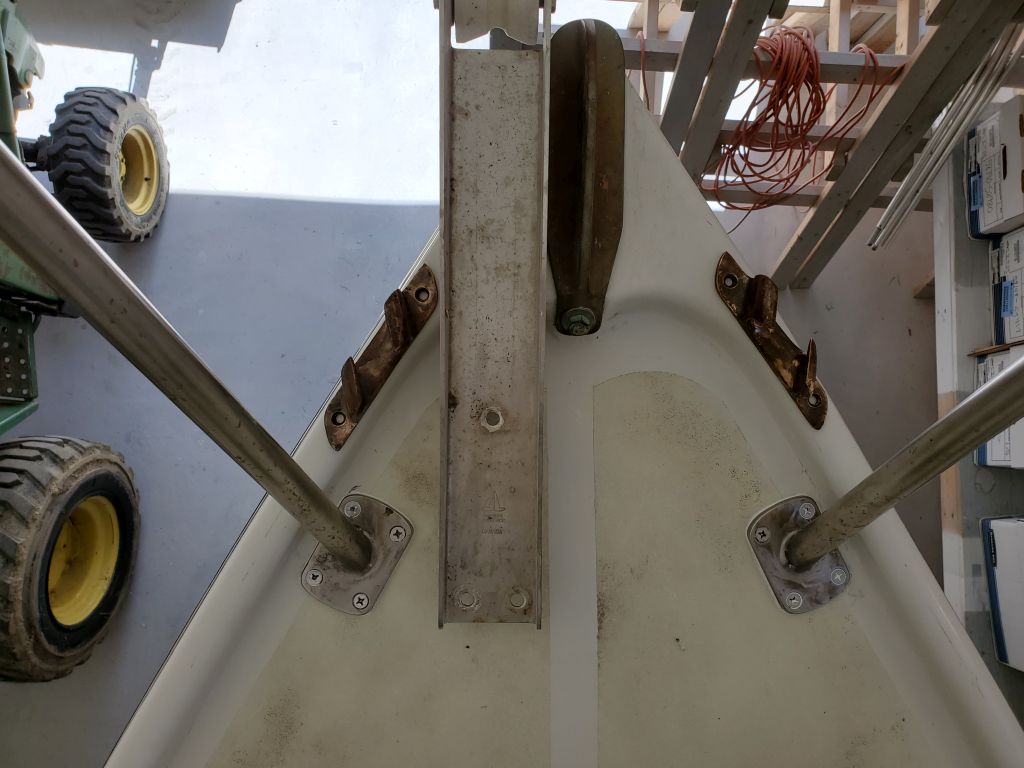
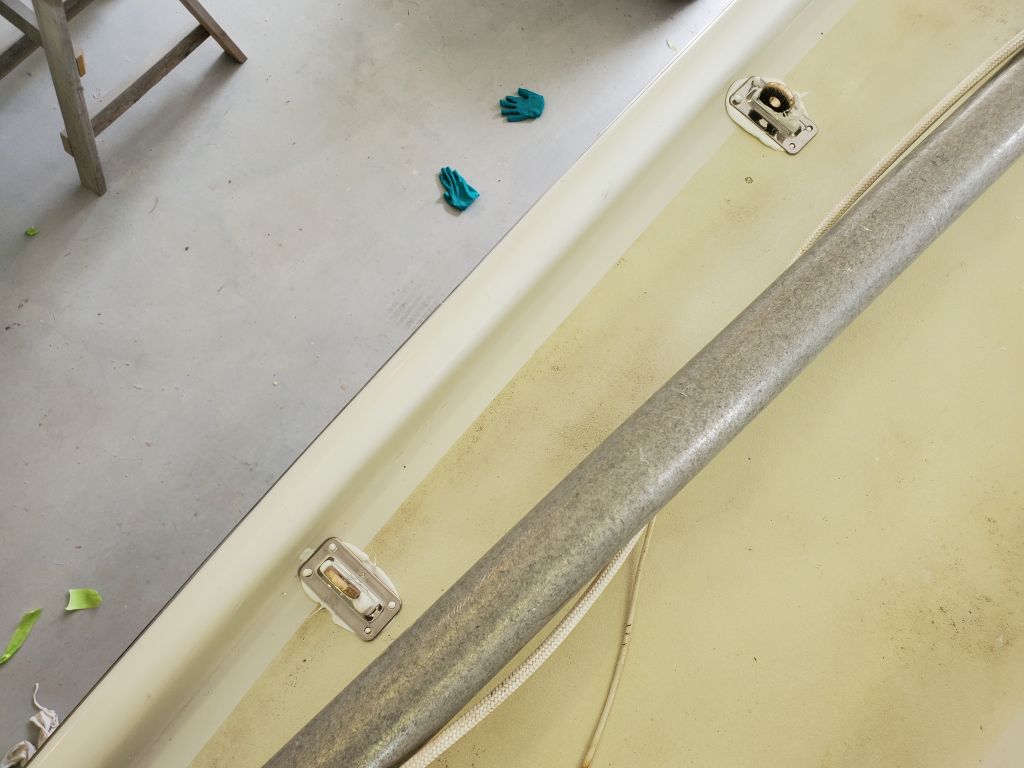
Next, I laid out and installed the spinnaker pole chocks on the port side, choosing the position as needed to best suit the storage of the pole (as far outboard as possible) while ensuring that the bases landed in convenient areas both above and belowdecks.  I had to clean off some old sealant from the bottoms of the chocks.  Once I had the basic position determined, I masked off the deck at each end and, following my usual installation steps, prepared the decks and fastener holes then installed the bases with sealant and new fasteners.

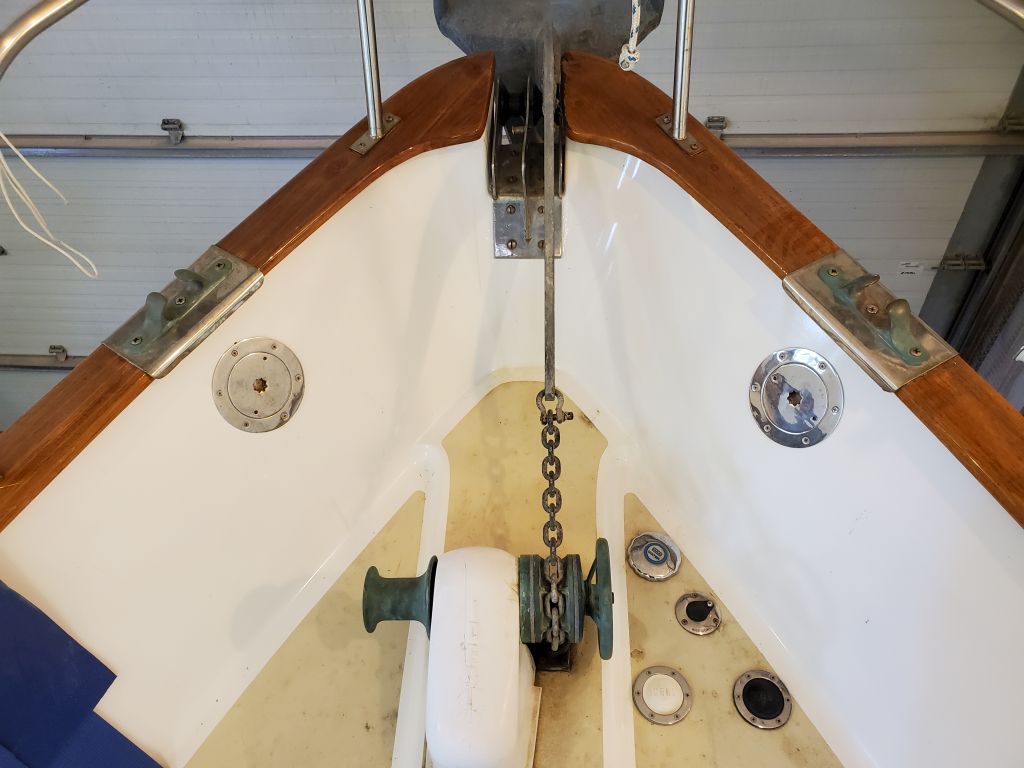
At the stem, I needed to arrange the position of an anchor roller and the bow chocks.  The anchor roller would require a spacer beneath, to make up the height between the deck and the molded stem platform, and I’d work on that soon, but for now it looked like the roller (on the port side by request) and bow chocks would fit well enough together and in logical orientation.  These installations would come soon.

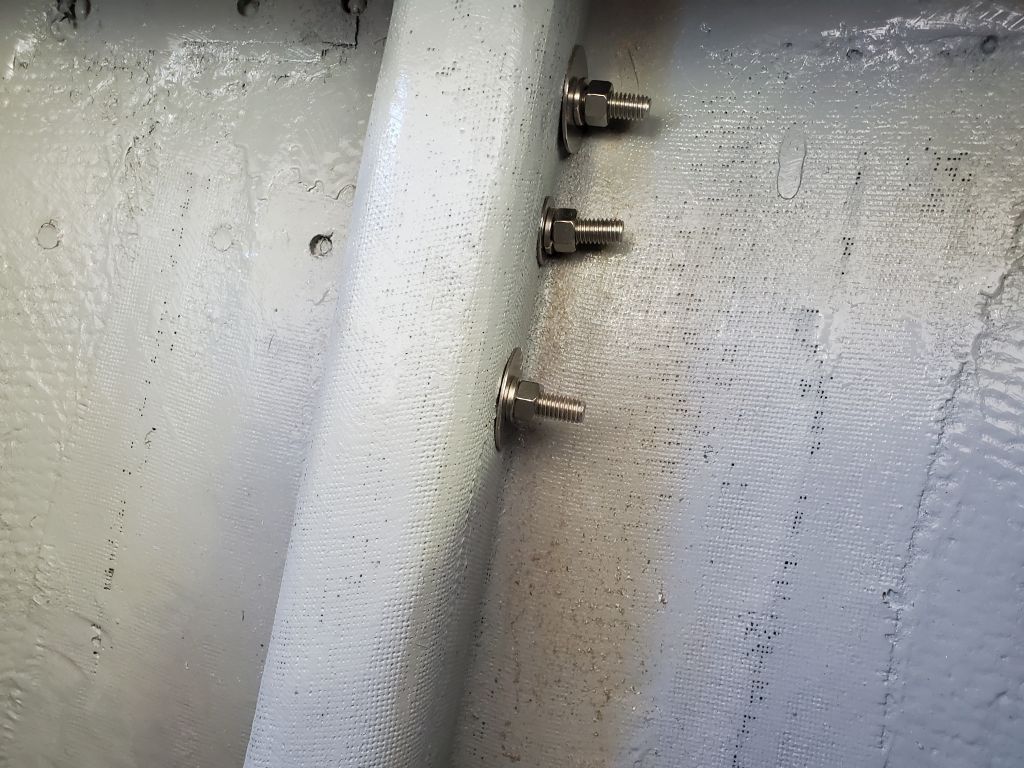
Meanwhile, to finish off the chainplate installations, I applied heavy beads of sealant in the slot and around the base of the four main chainplates, than squished a cover plate into the heavy sealant, which pressed the sealant into the recesses of the coverplate and surrounded the chainplate, as well as securing the covers in place (no need for screws).   Later, after the sealant cured, I could come back and remove the excess.   These covers were the closest fit for this particular size chainplate, but the slots were still larger than the chainplates by a bit.  I chose them since the original tiny bronze cover plates would no longer fit, since the new chainplates were thicker than the originals.  I forgot to order a cover for the backstay, so I’d get back to that later.

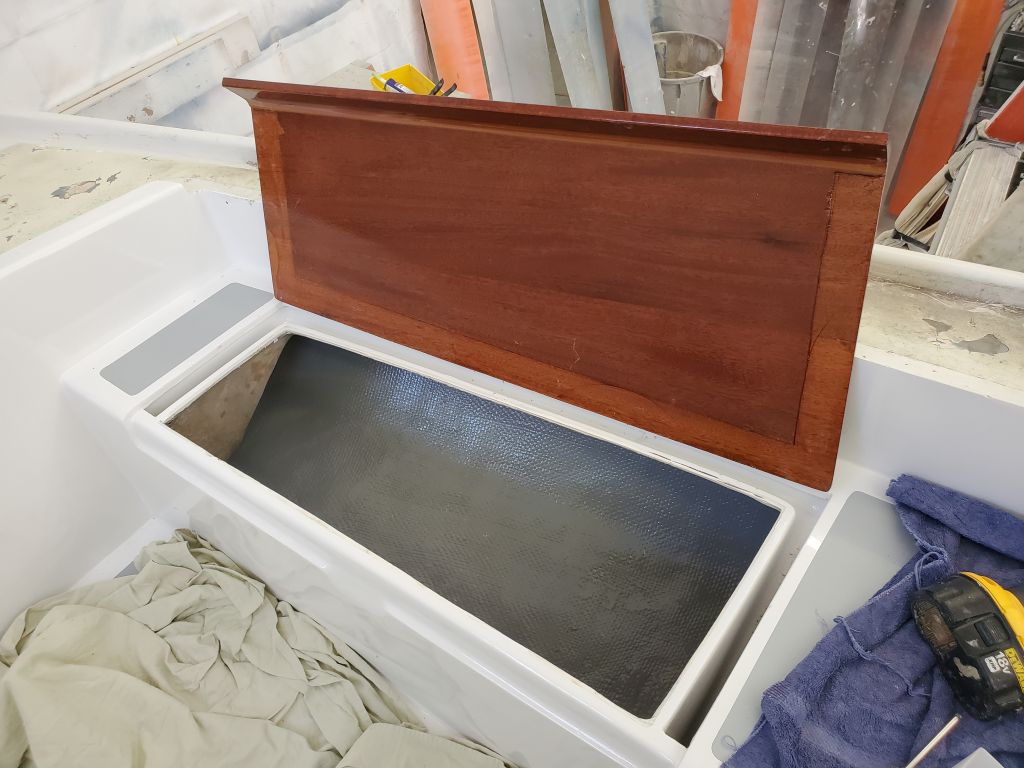
In the cockpit, I finished up the installation of the locker lids, now that I had a new supply of screws on hand.

Total time billed on this job today:  6.75 hours

0600 Weather Observation:  Clear, 30°.   Forecast for the day:   Mostly sunny, 55°

Lively Heels Phase 3-42

Wednesday

Wrapping up some project loose ends, I started by filling the reservoir in the windlass with gear oil, now that the gasket sealant on the motor had had ample cure time.  This complete, I tested the motor and raised the anchor back on deck.

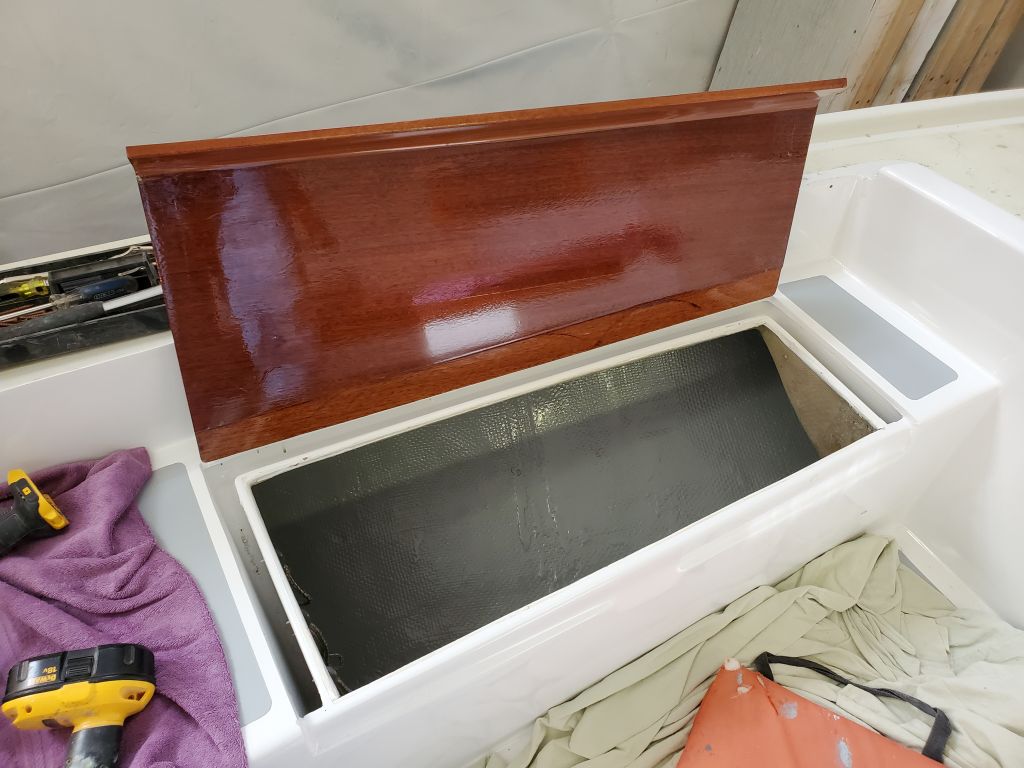
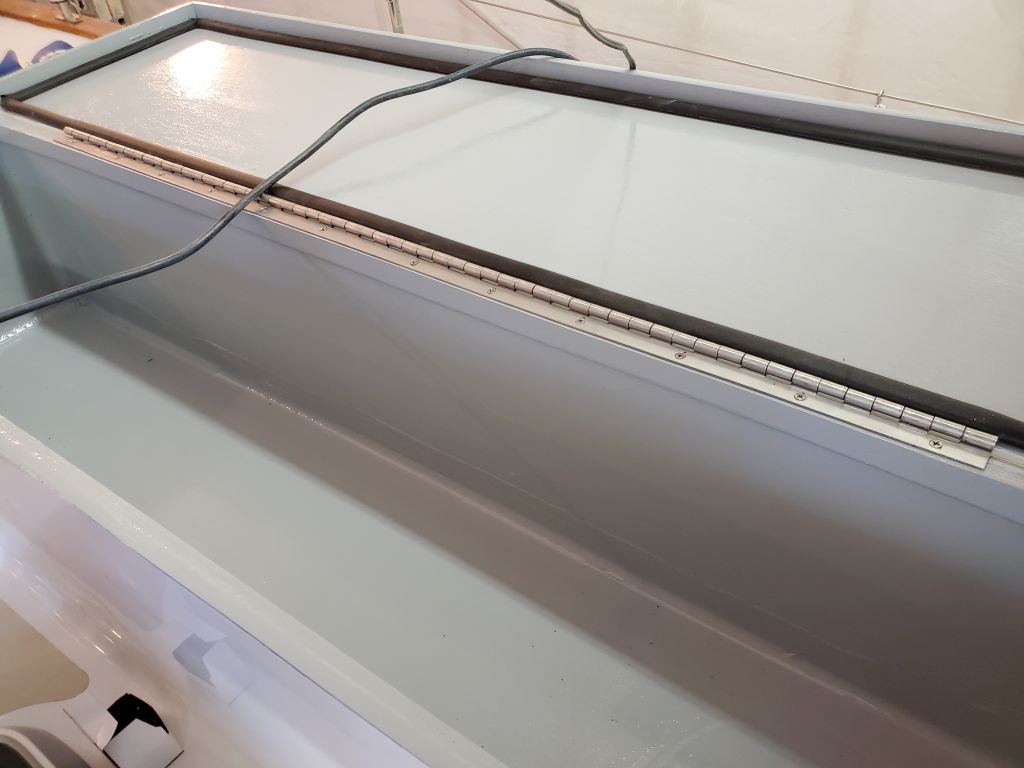
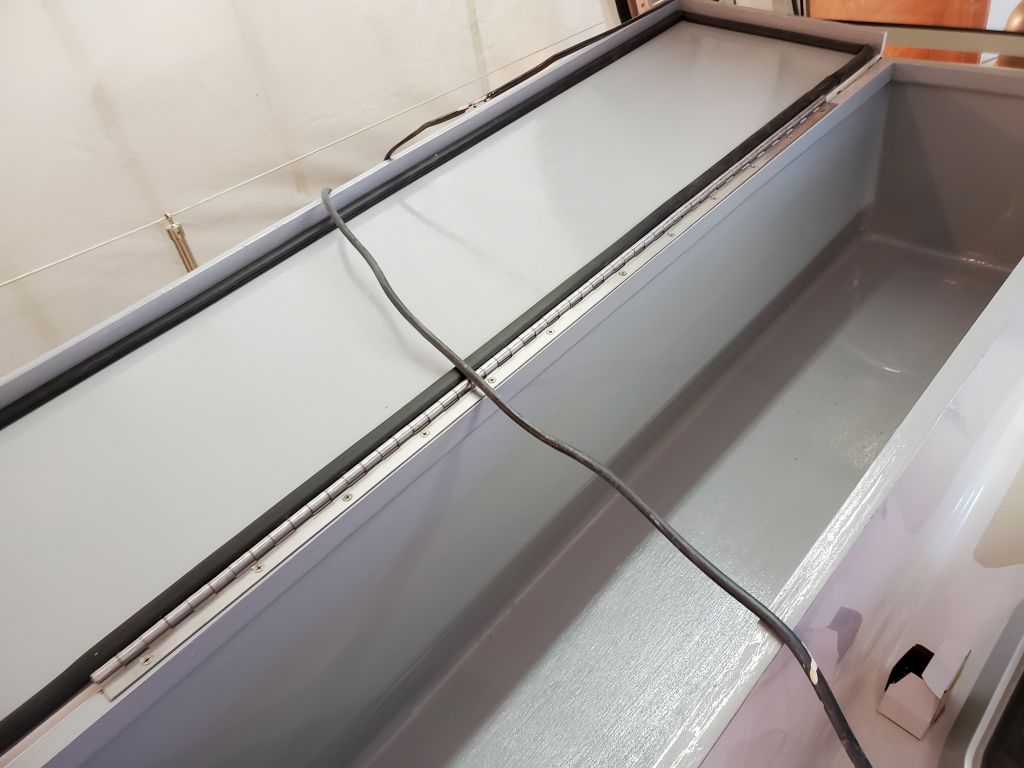
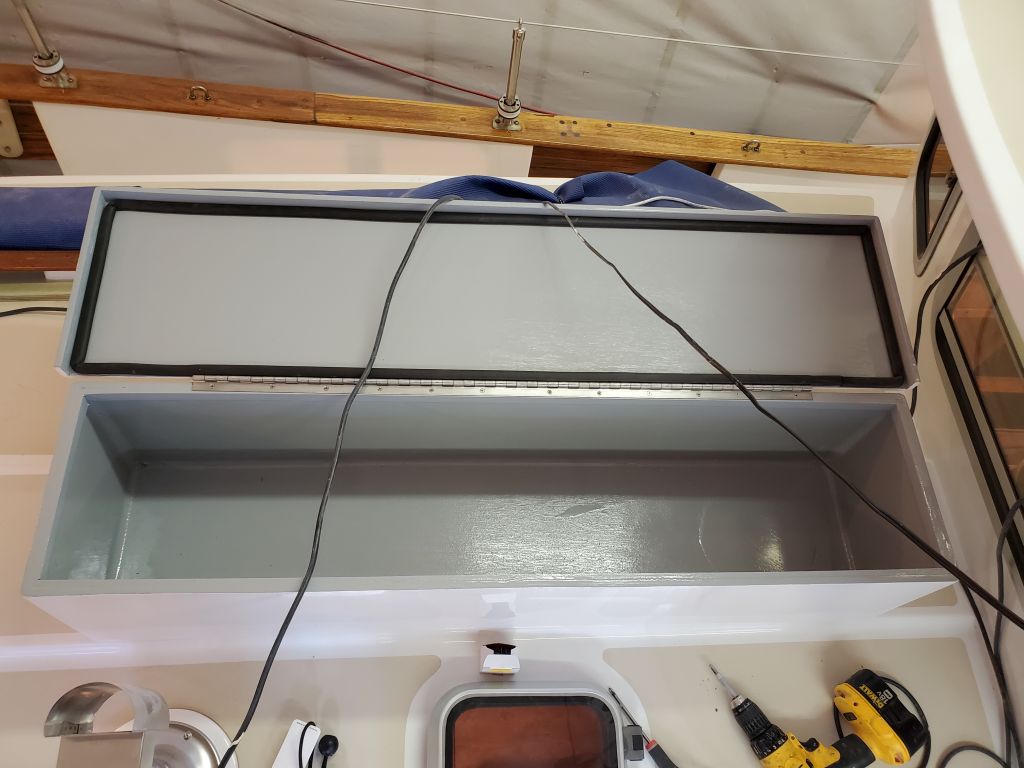
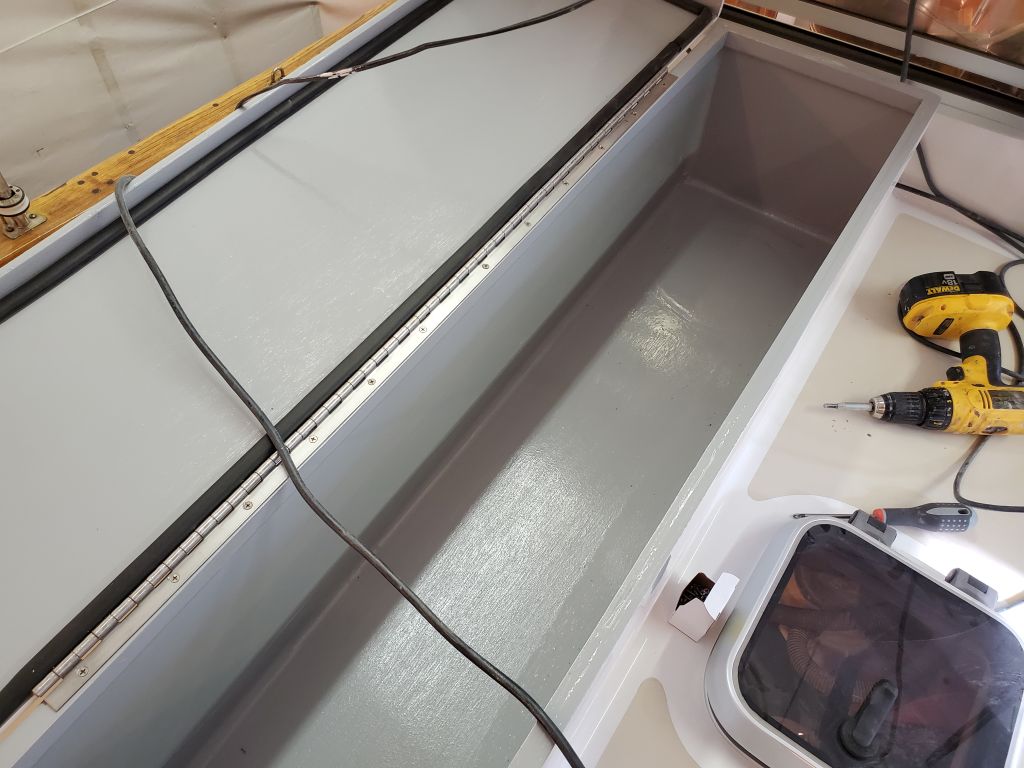
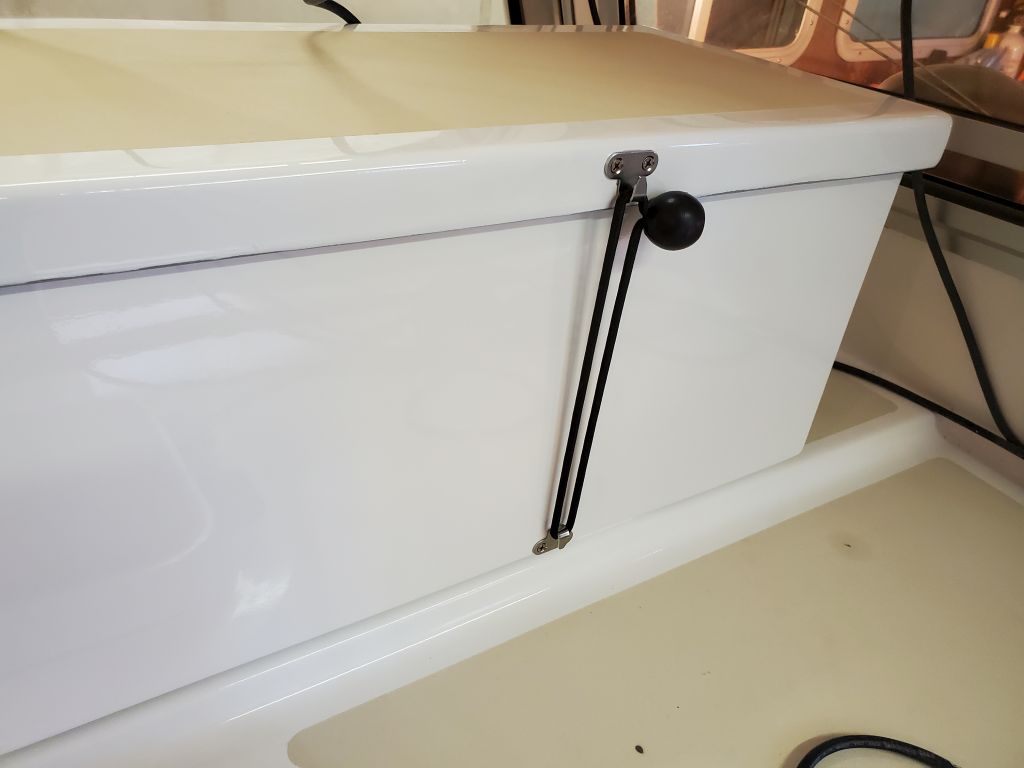
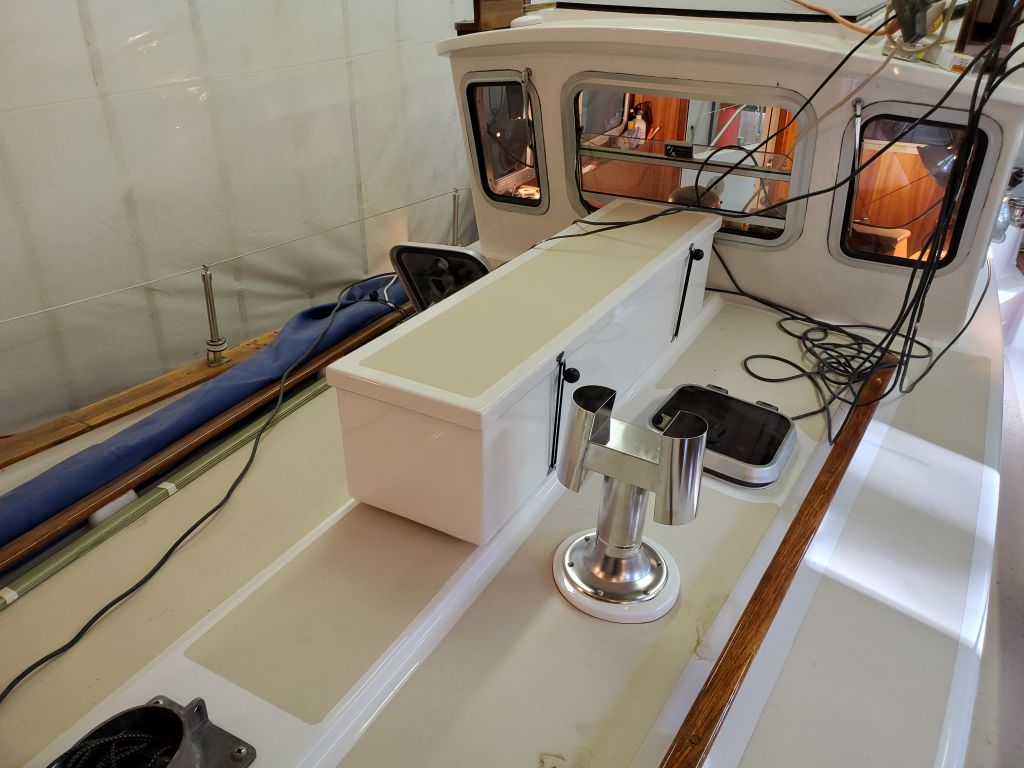
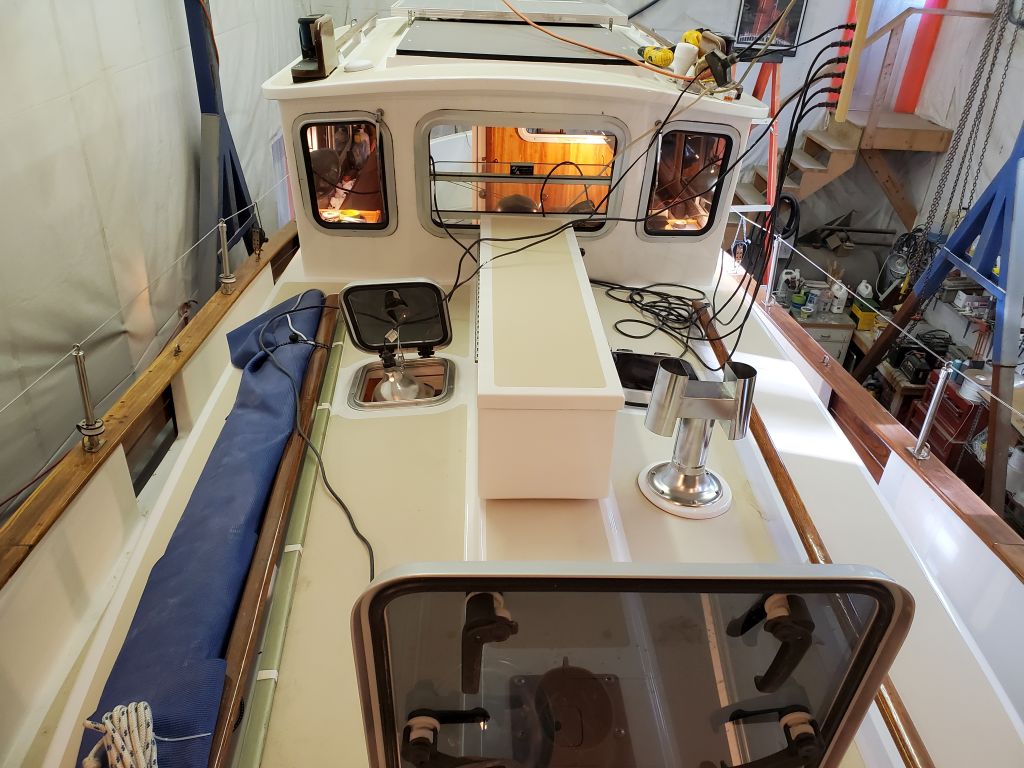
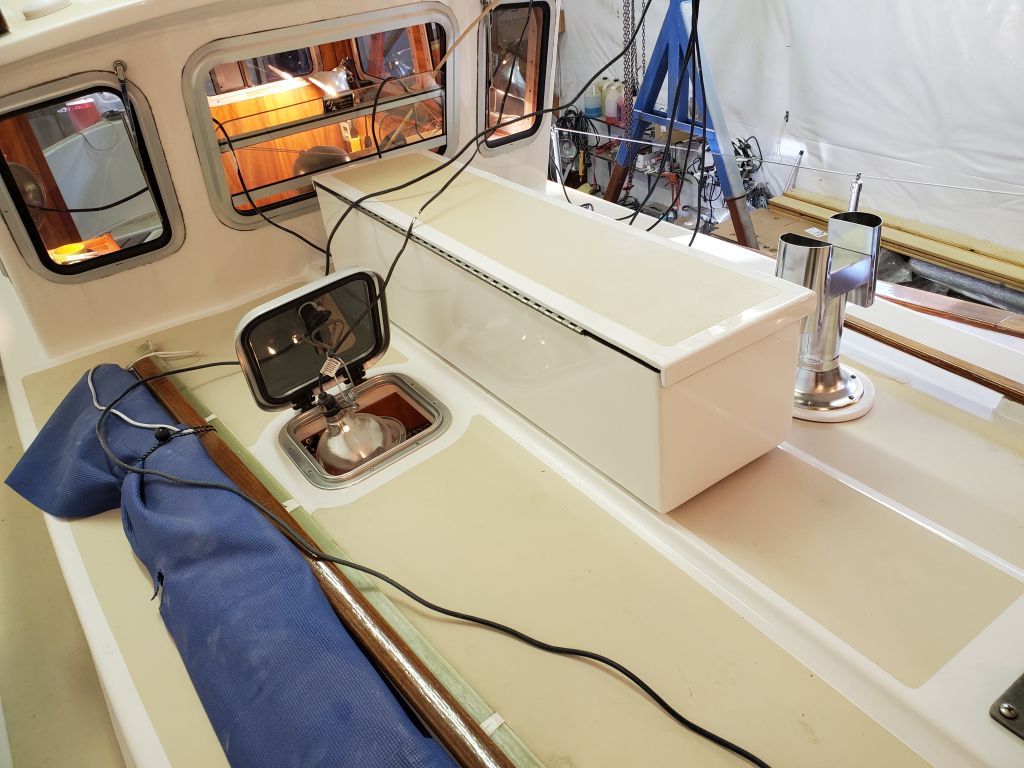
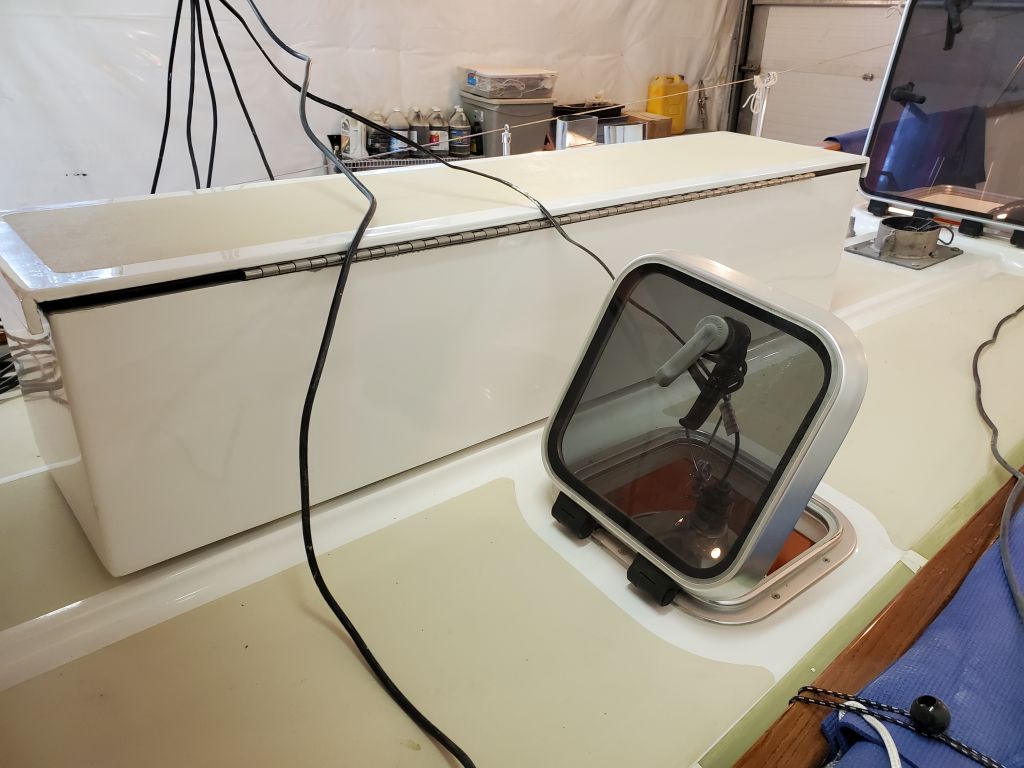
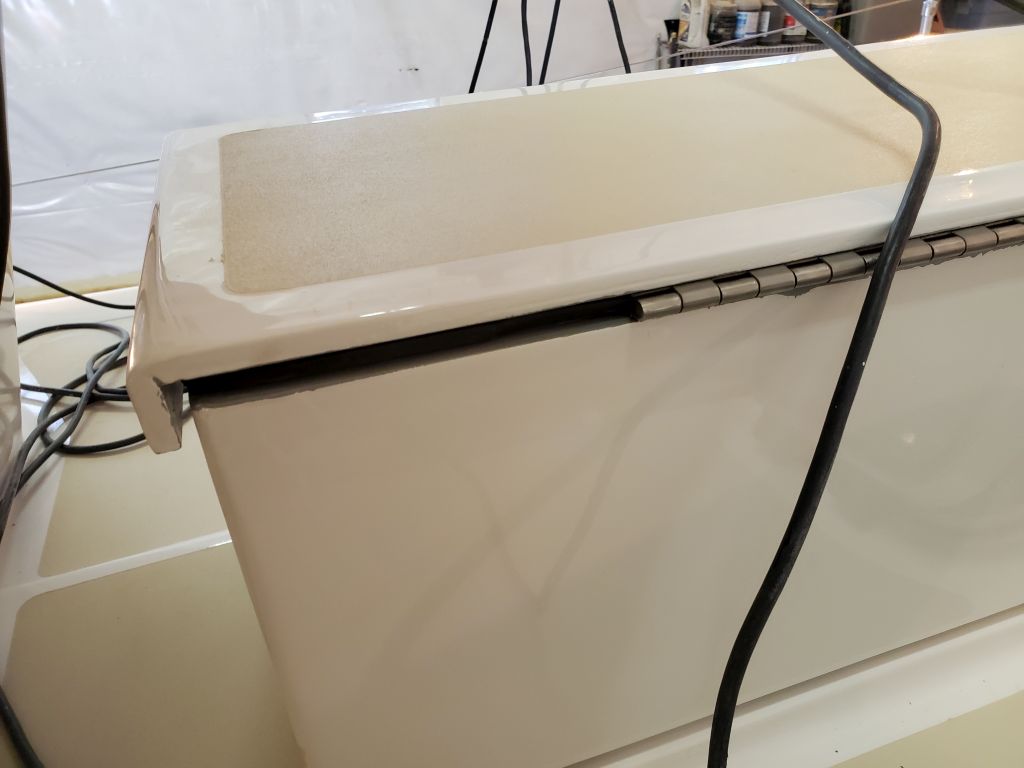
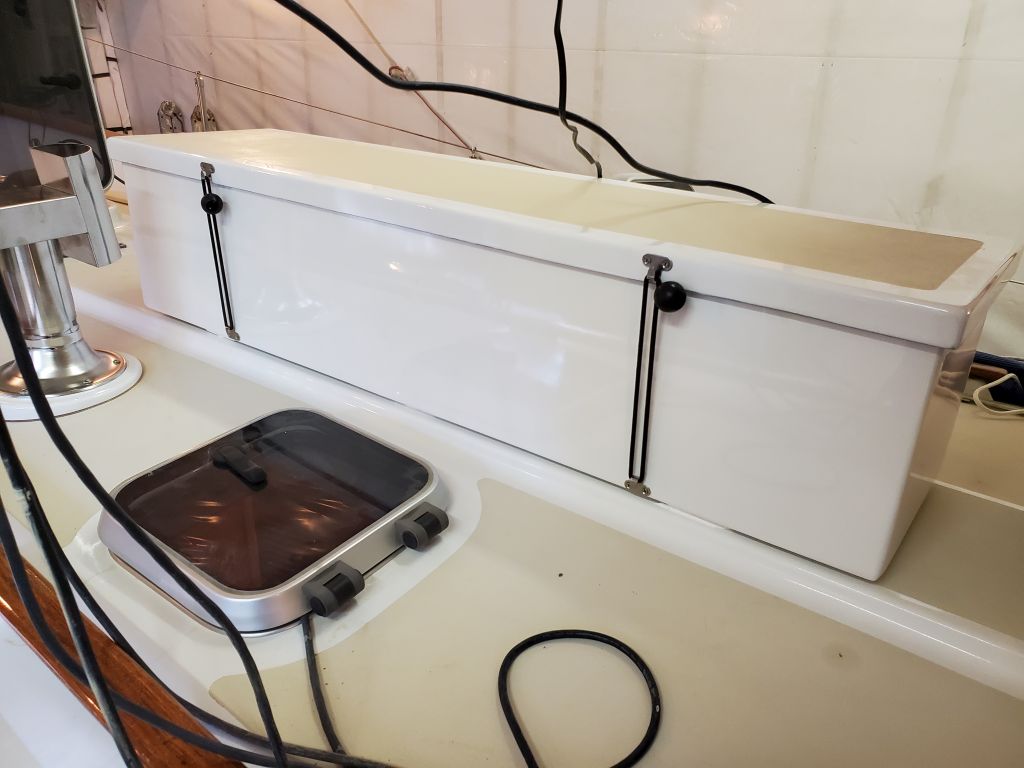
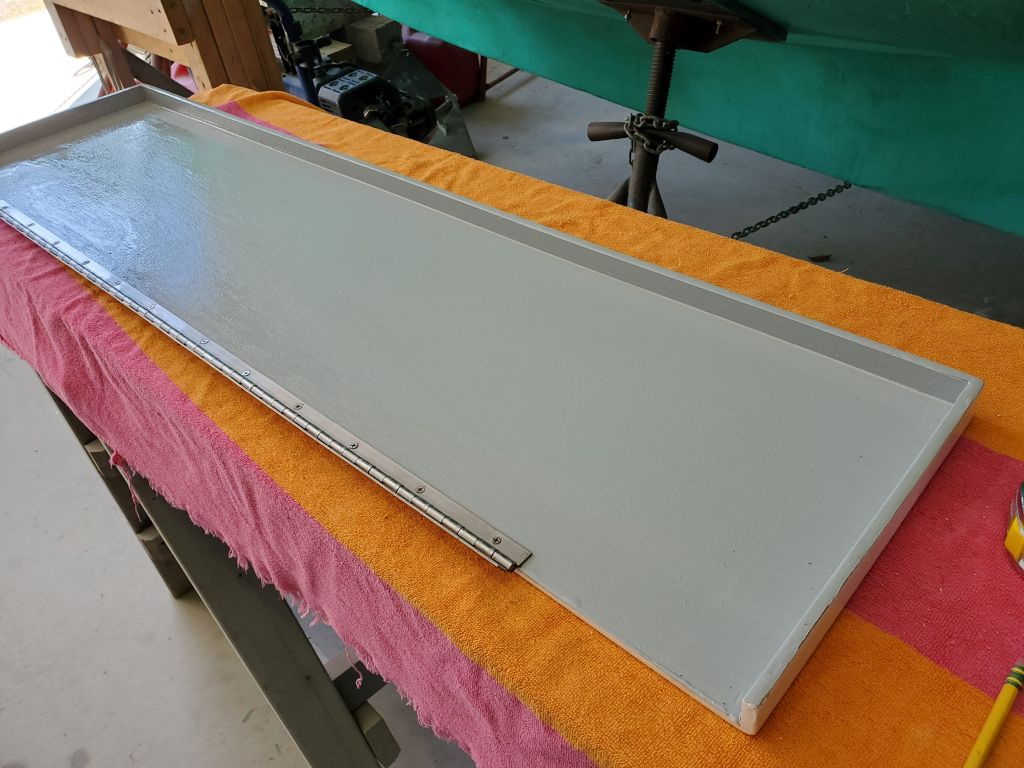
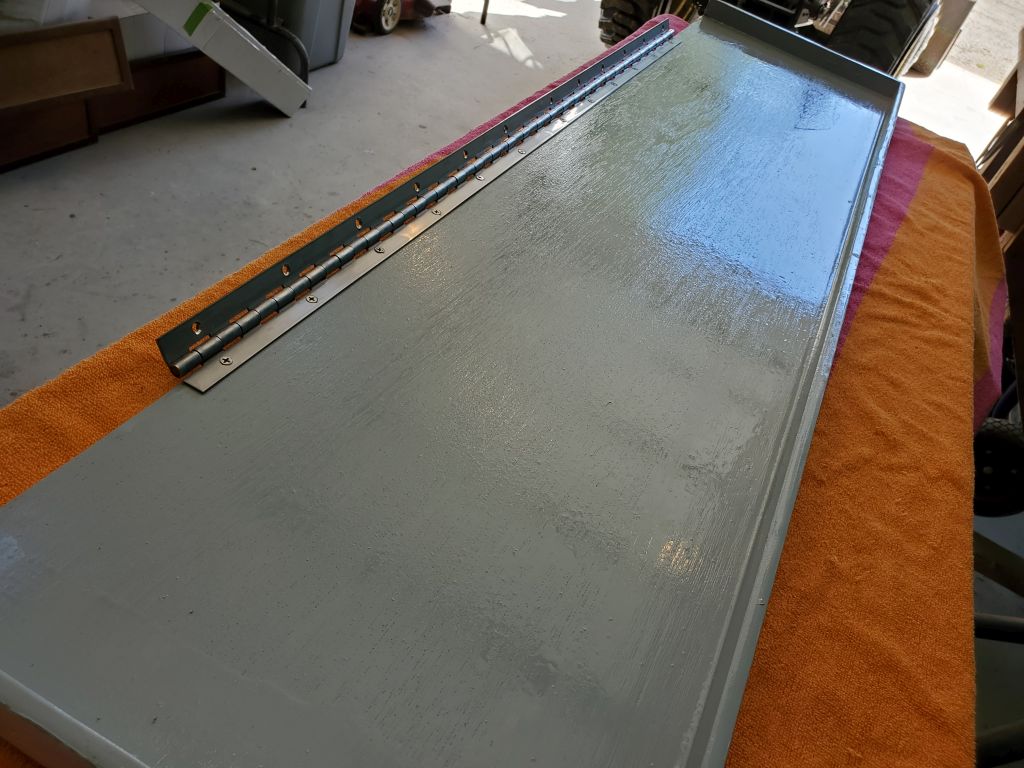
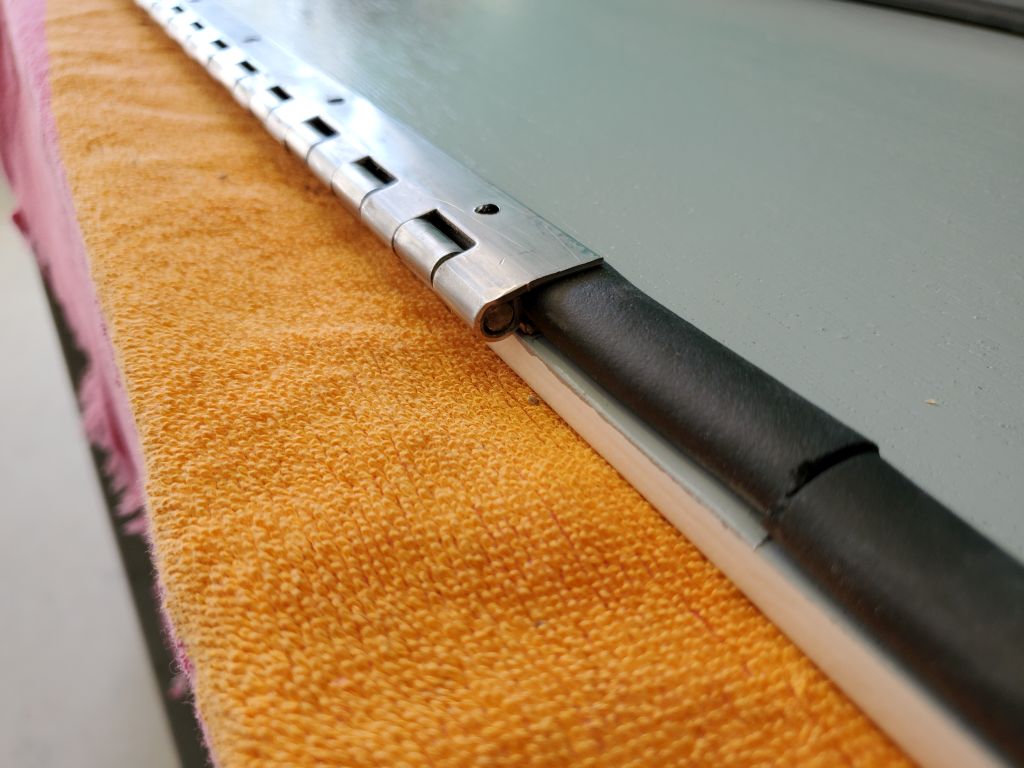
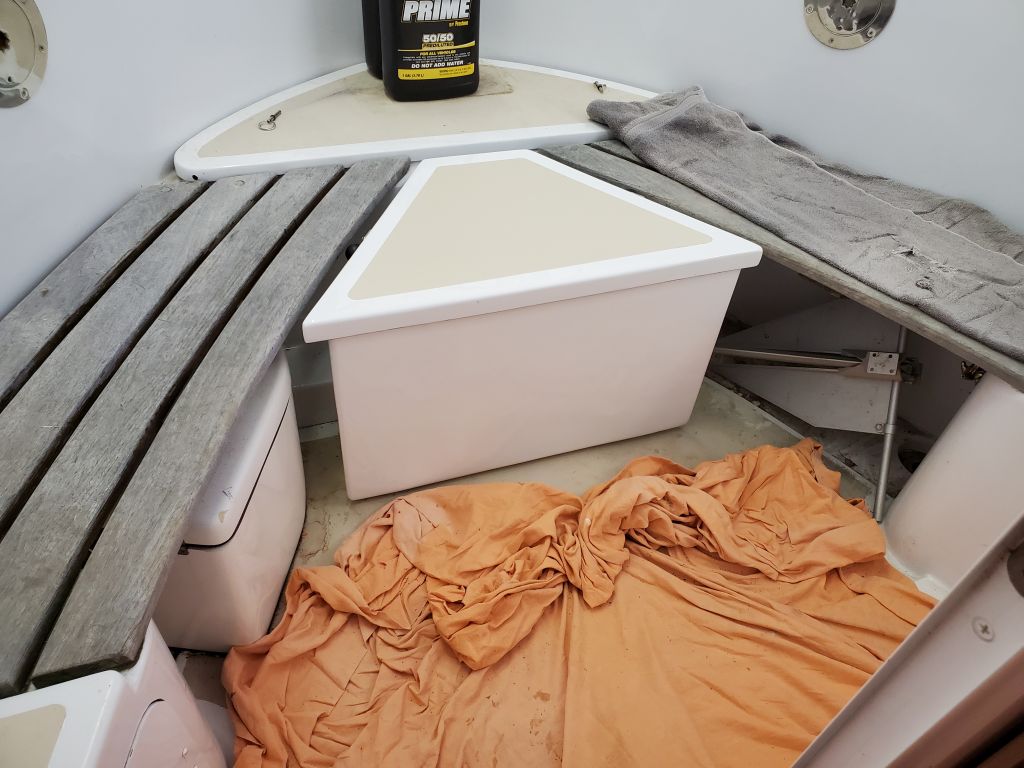
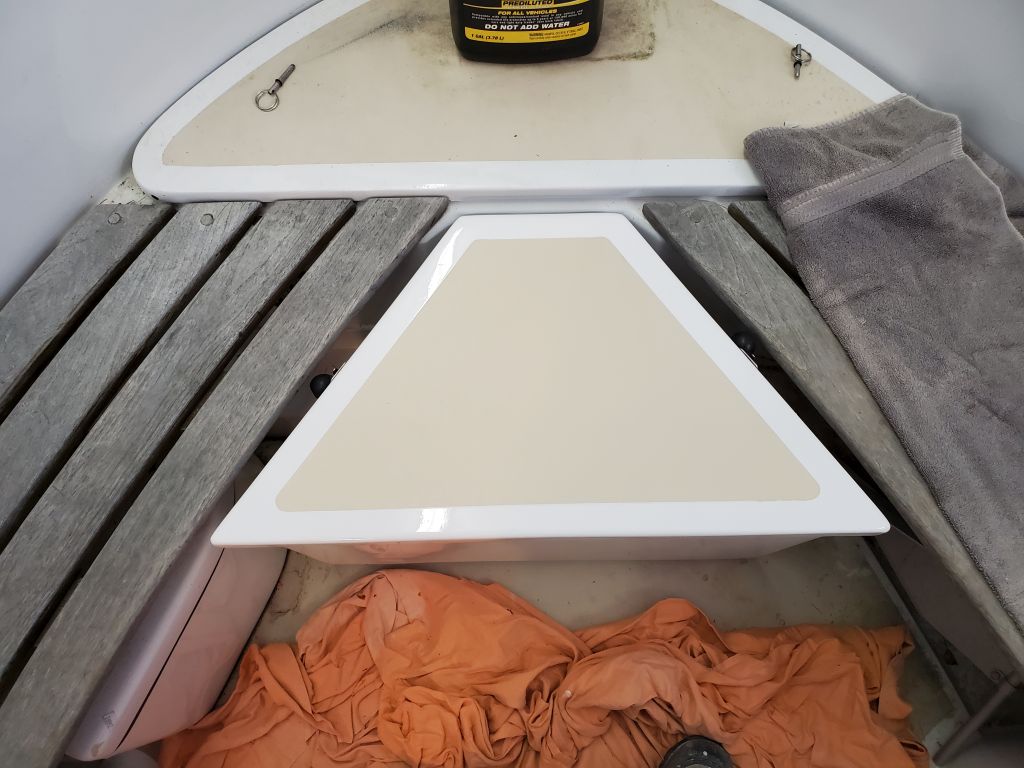
I finished up the forward deck box installation with the lid, which I installed so the box opened from the port side.  Once I aligned the lid where it needed to go and marked the ends of the hinge, installation was straightforward.  I was thinking of adding some sort of rubber flap to the hinge side of the lid, which seemed more exposed and susceptible to leakage than I would have liked.  Also under consideration were various simple means of securing the lid when raised, to be determined as of this writing.

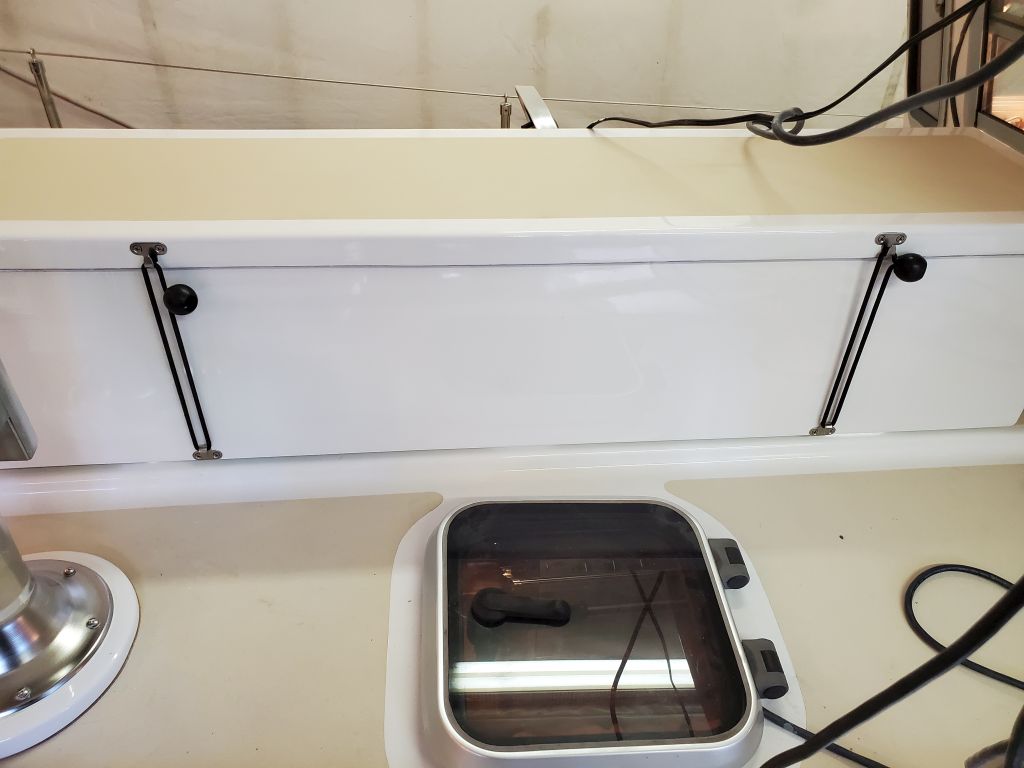
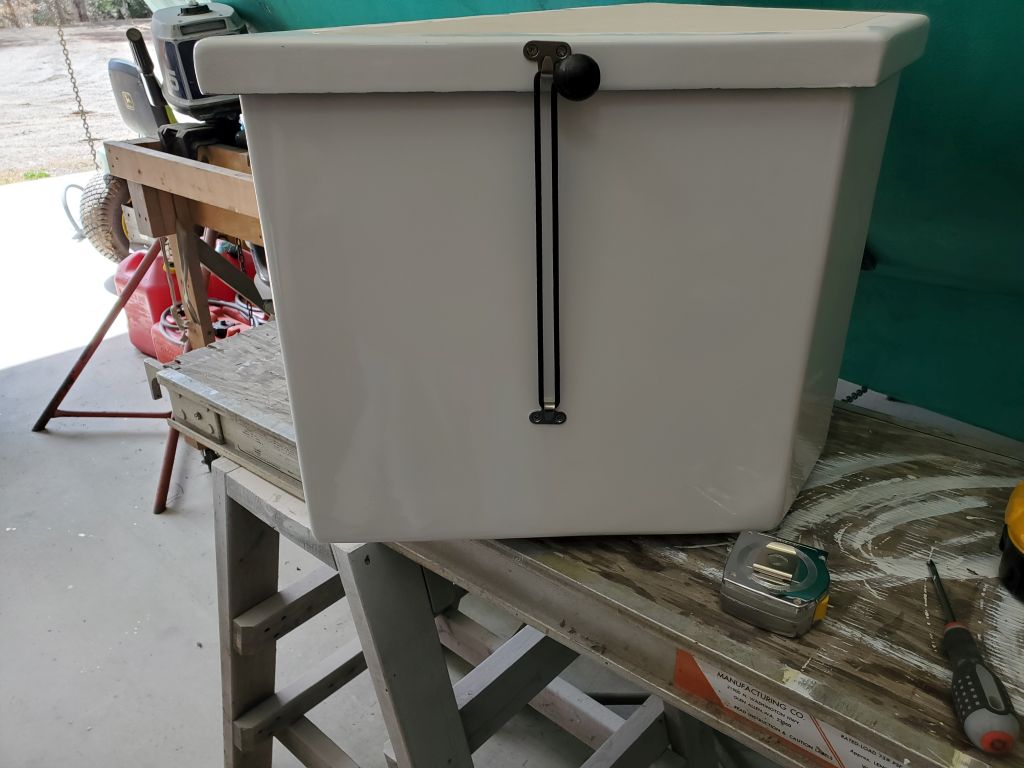
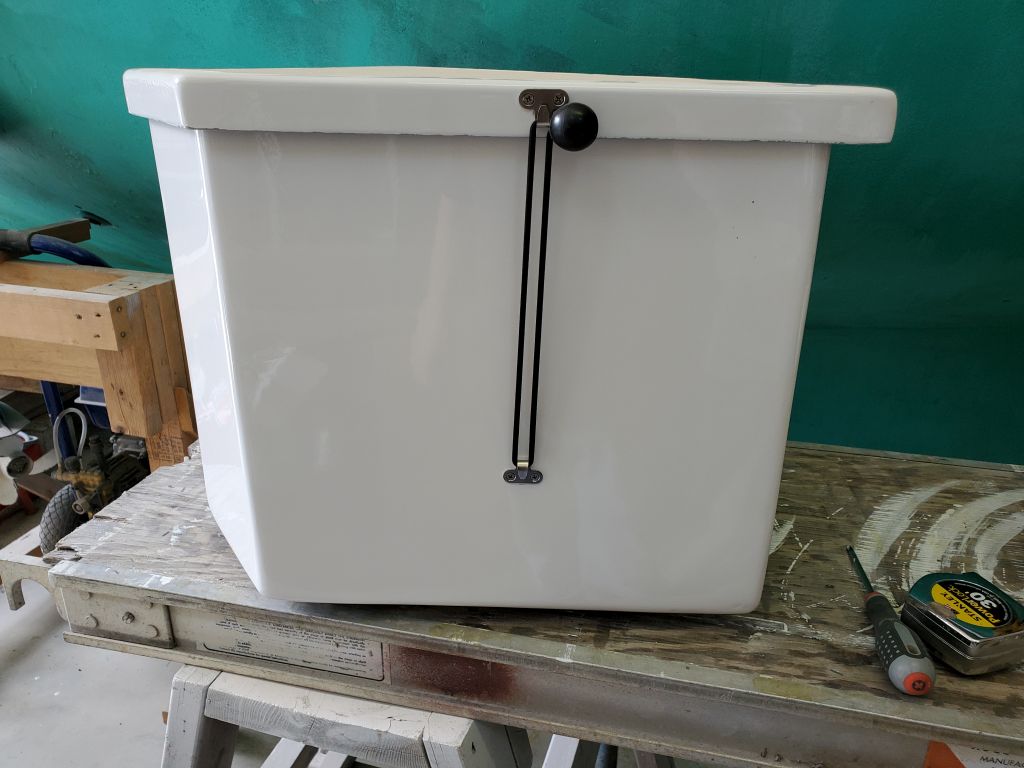
To secure the lid, as with the after box, I installed simple hooks and bungee cords.

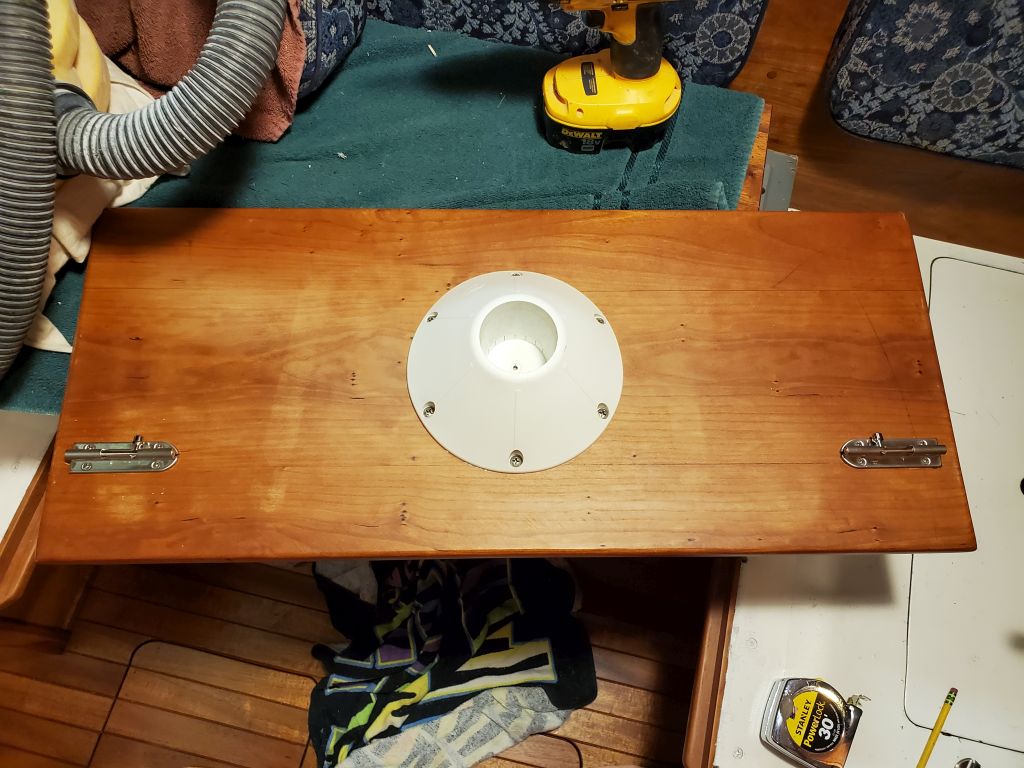
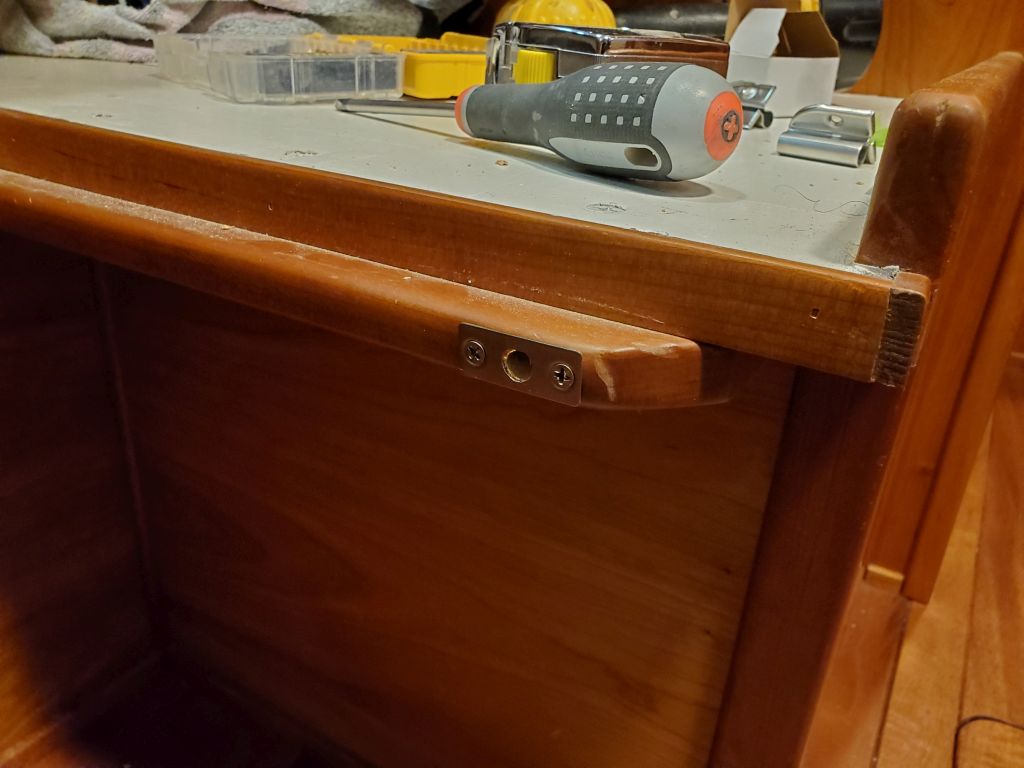
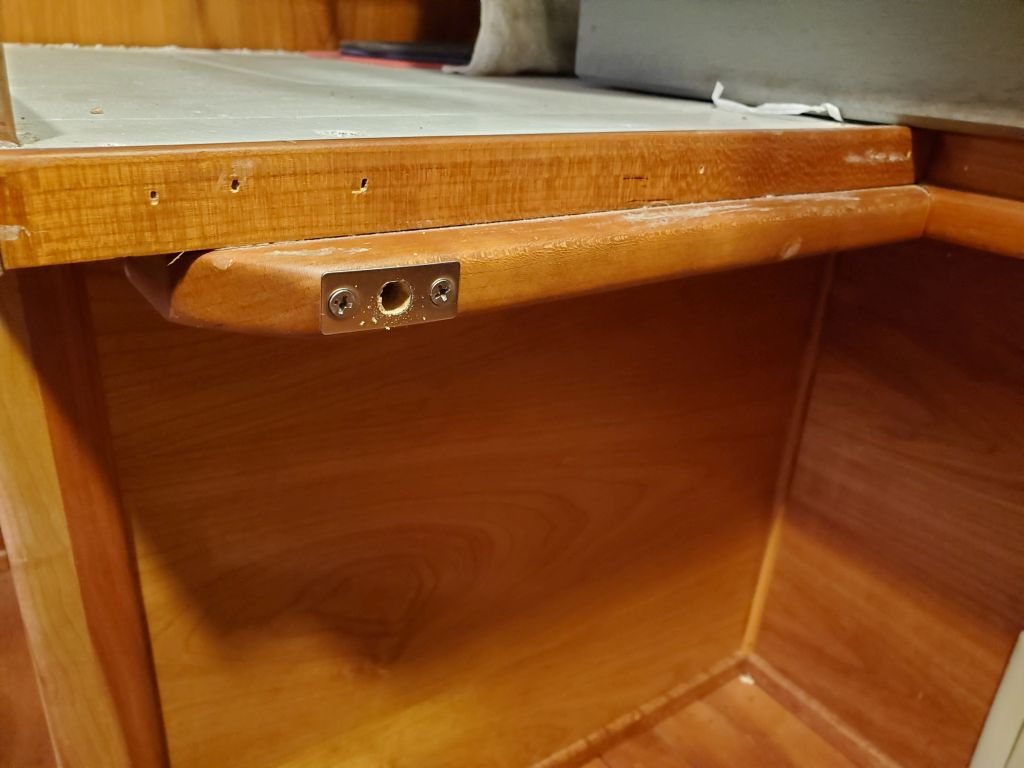
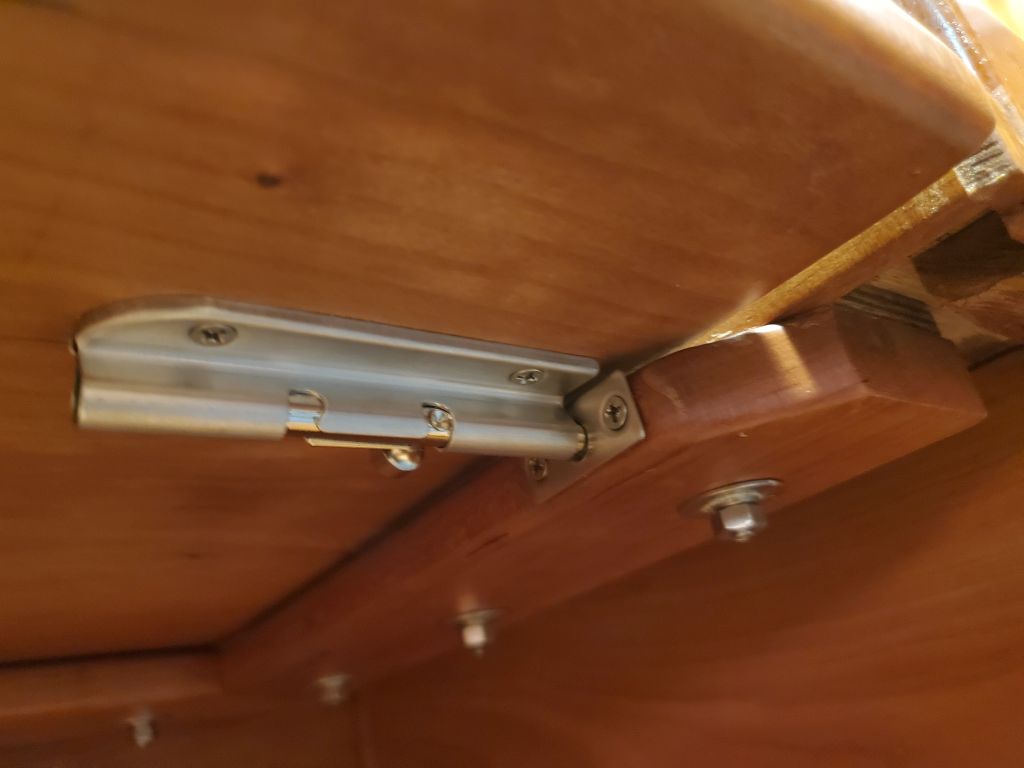
A final small task remained in the cabin:  The owner requested some simple latches to hold the table-cum-berth filler in place in its lowered position, so that it couldn’t slide out unexpectedly.  I installed stainless steel barrel bolts on the underside of the table, which latched to mortised holes in each adjacent support.

A few minor items remained on the list, none of which were time-critical, and with the major items complete I planned to move the boat outdoors in the next week or so to allow the owner time for final pre-launch preparations, engine commissioning, and so forth before the boat departed in early May.

Total time billed on this job today:  1.25 hours

0600 Weather Observation:  Clear, 35°.   Forecast for the day:   Mostly sunny, 60°

Lyra 58

Wednesday

I started off with more work on the ongoing varnish.  So I could continue the coaming varnish without worries about open doors or other shop work interfering, I moved the coamings into the other shop bay so I could do my varnish first thing each day.  I’d already moved the smaller swashboards to my little upstairs finishing room.

After setup and the usual sanding and cleanup as needed, I applied the 6th coat of varnish to both sides of the swashboards, and the third coat to the second (inboard) sides of the coamings.

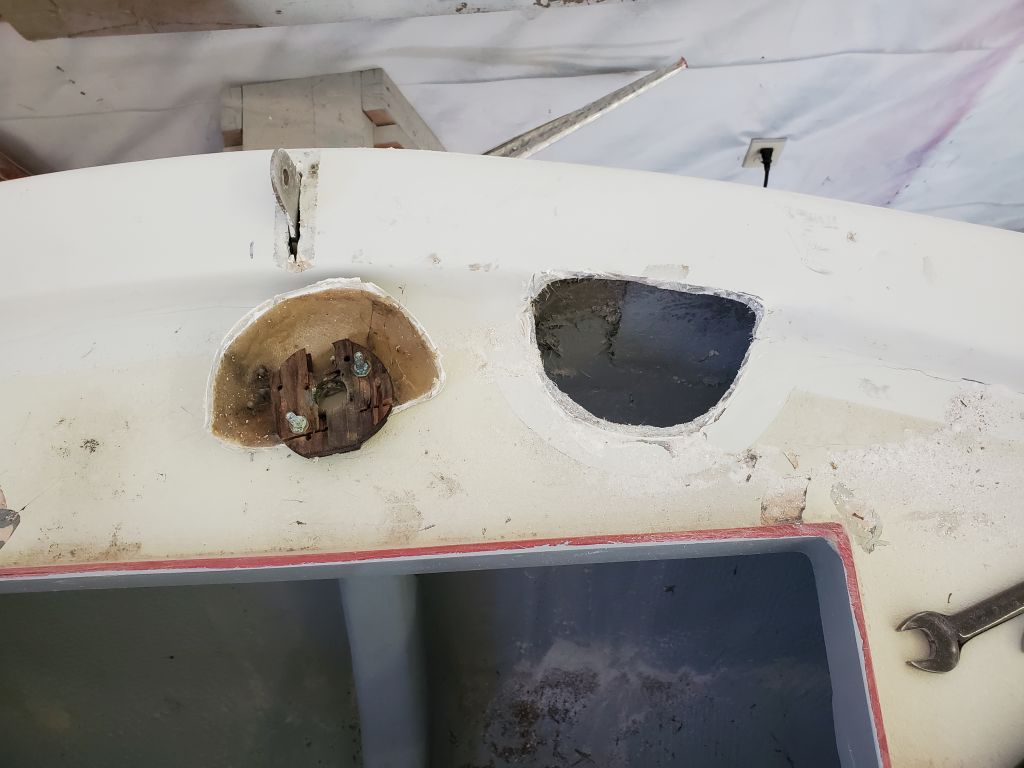
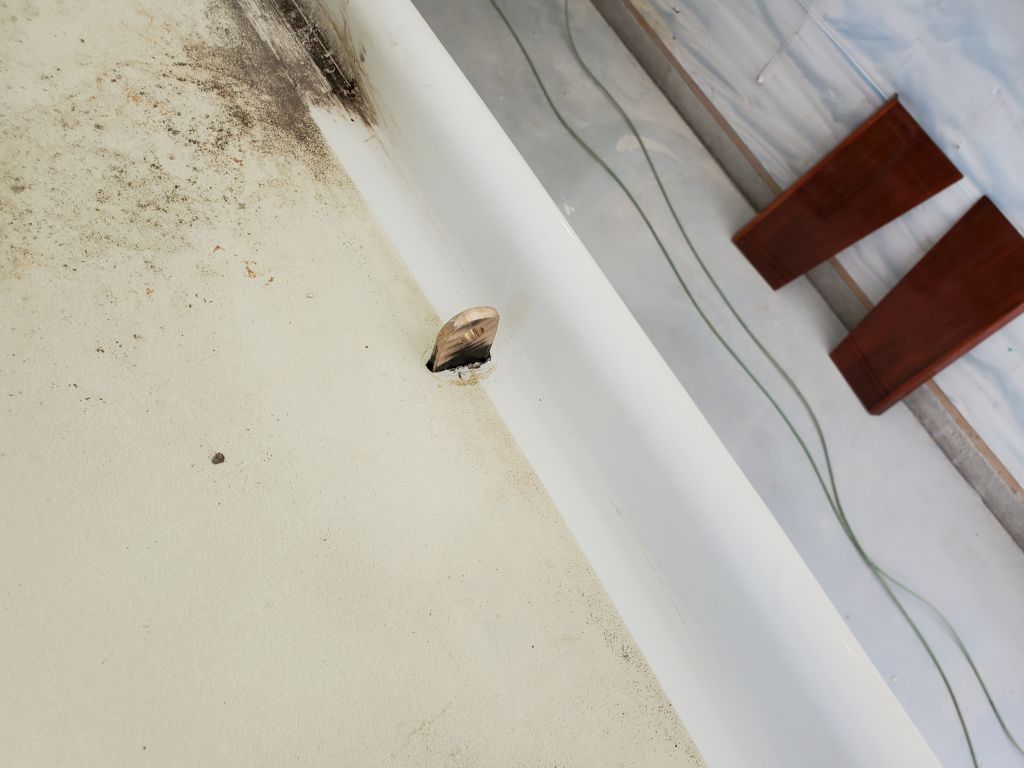
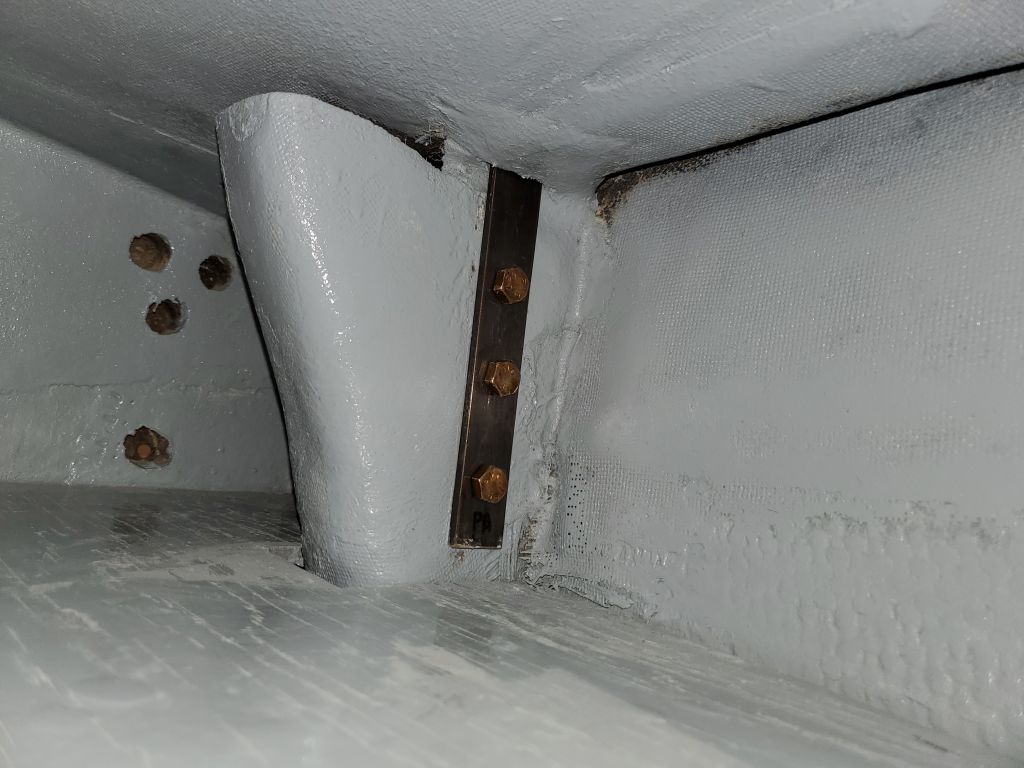
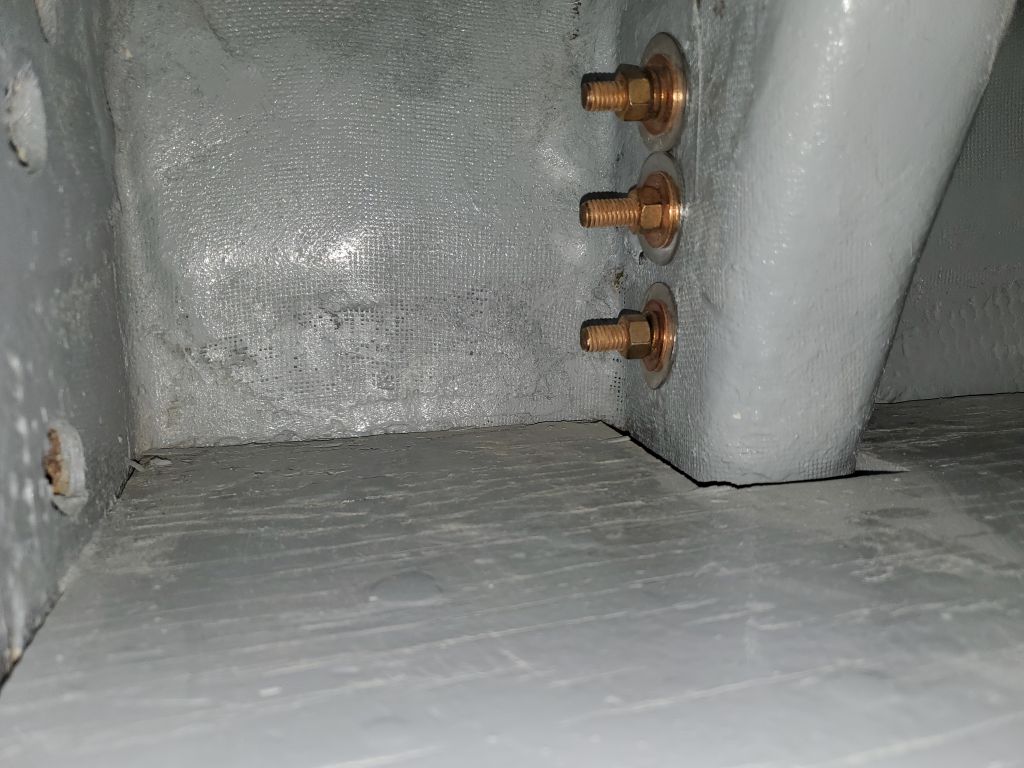
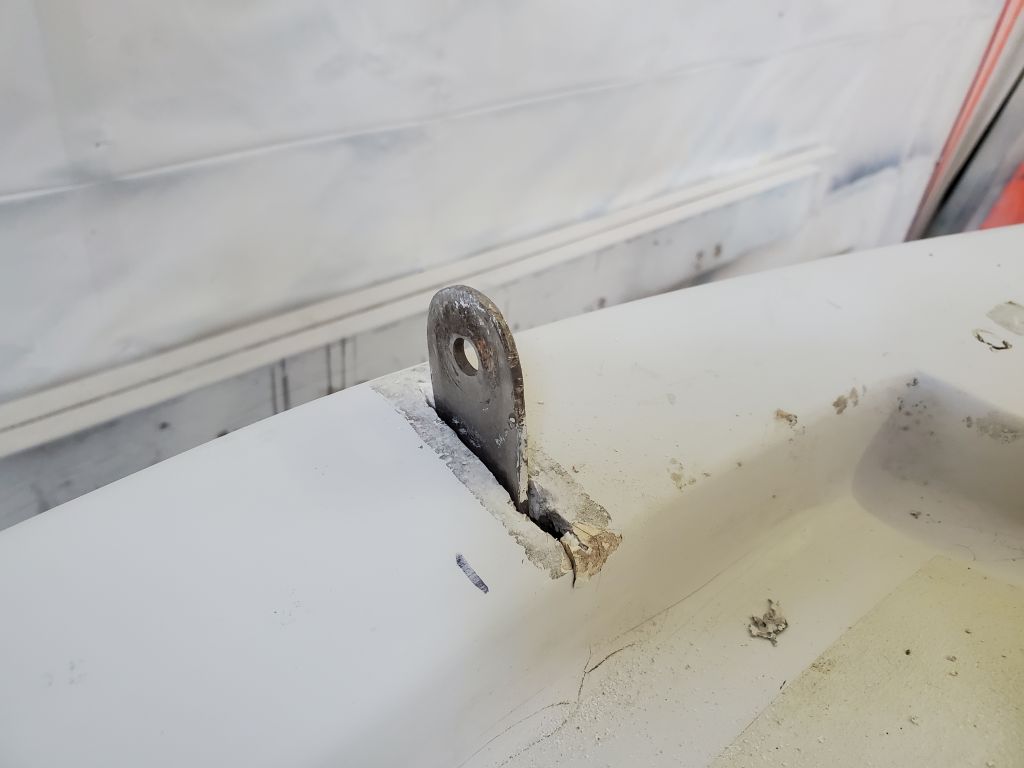
Having decided with the owner to remove the offending part of the taffrail molding, which was preventing the stern pulpit from fitting correctly, I turned to this next.  First, however, while I was in the area I finished up the backstay chainplate installation, installing the new bolts I’d ordered.  I’d used the old ones to determine the lengths of the replacements, but these turned out to be a bit longer than actually necessary.  The topmost bolt galled before I tightened the nut fully–this happens rarely, but is unpleasant when it does–but fortunately I could cut off the bolt inside the nut and replace the whole assembly with a new one.  The horrible wonky orientation of these bolts is simply how it is:  I used the existing chainplate and existing holes in the knee.  I guess no one ever really saw this when the only access back there was through the miserable old vertical hatch in the cockpit.

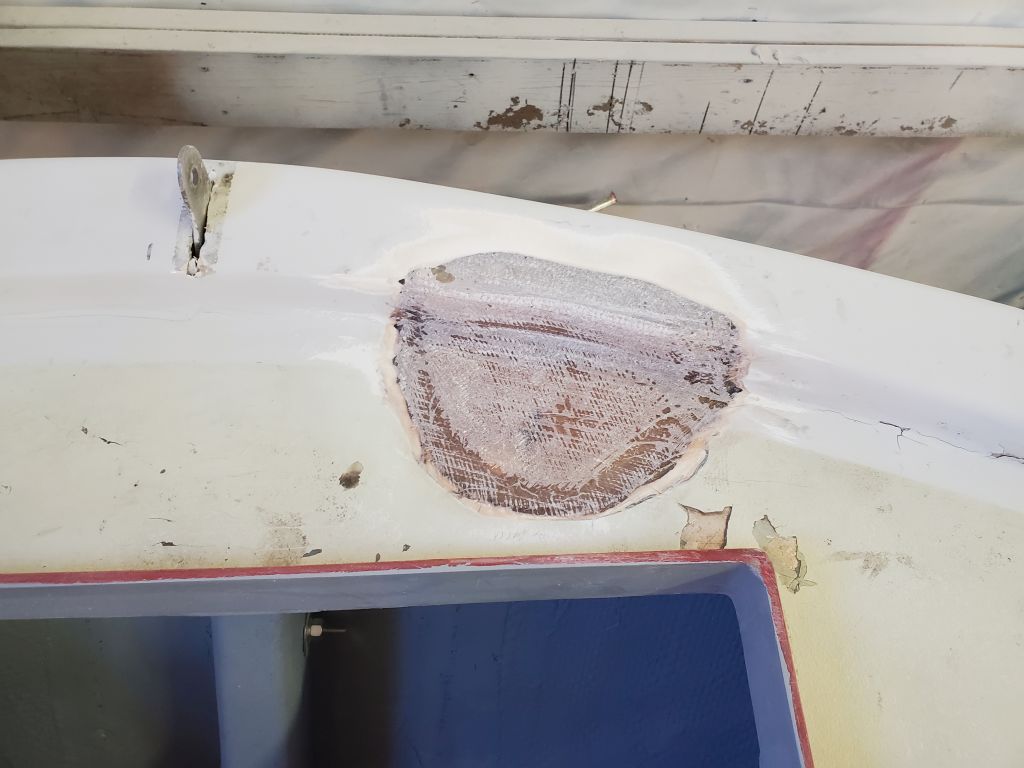
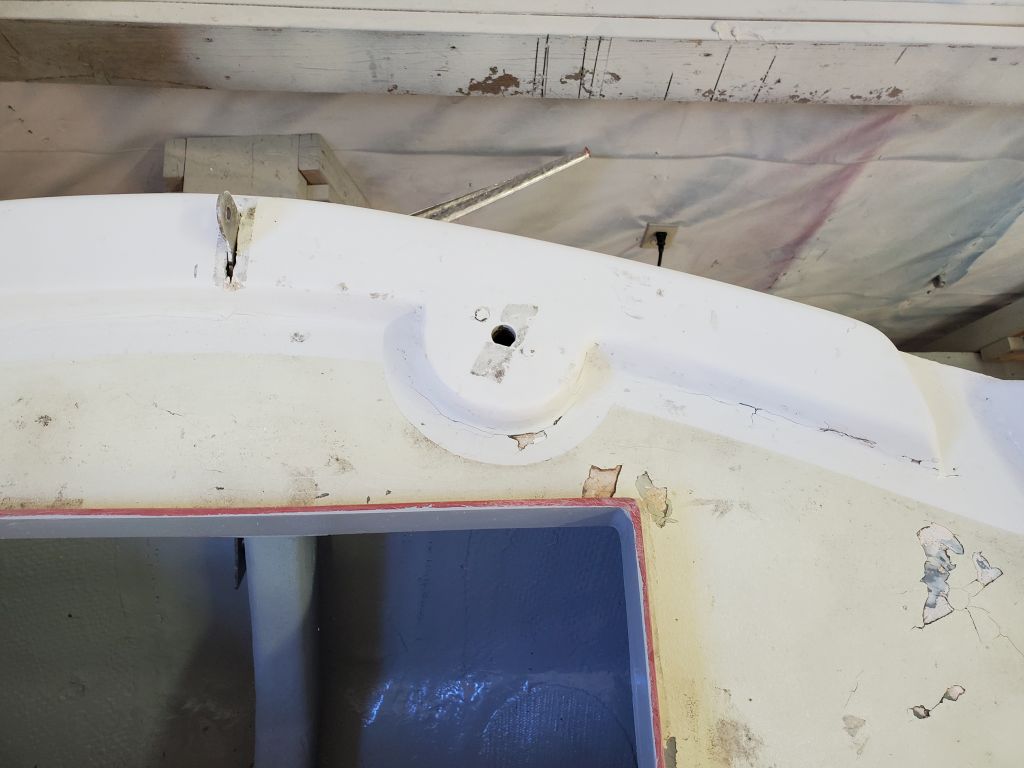
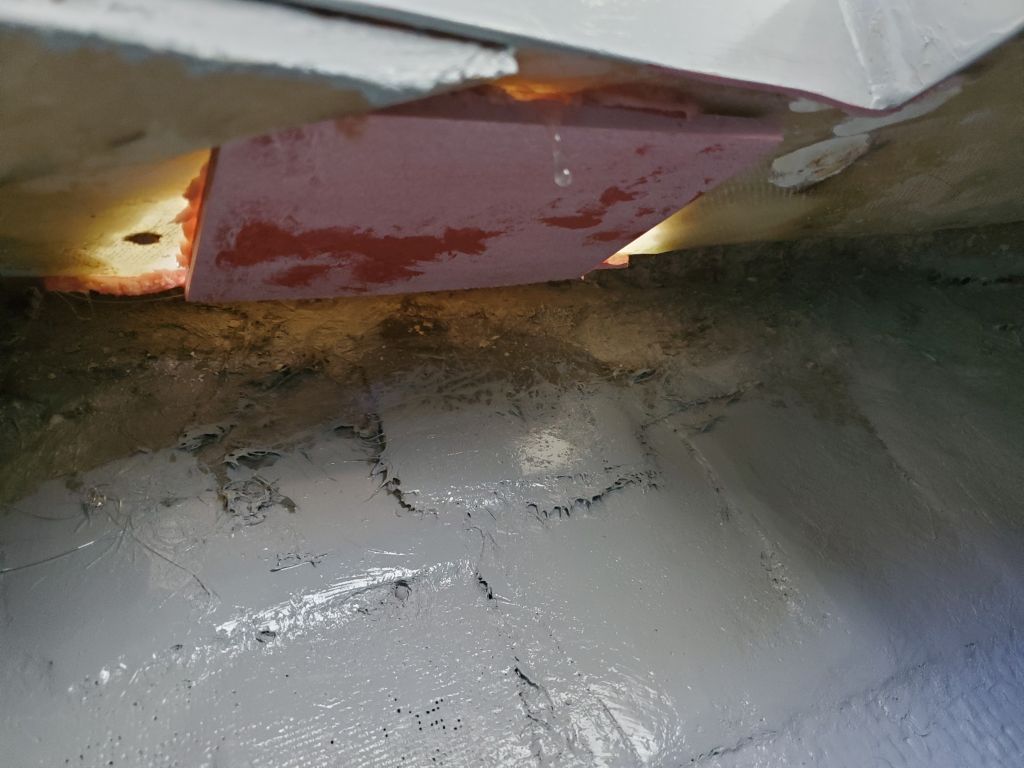
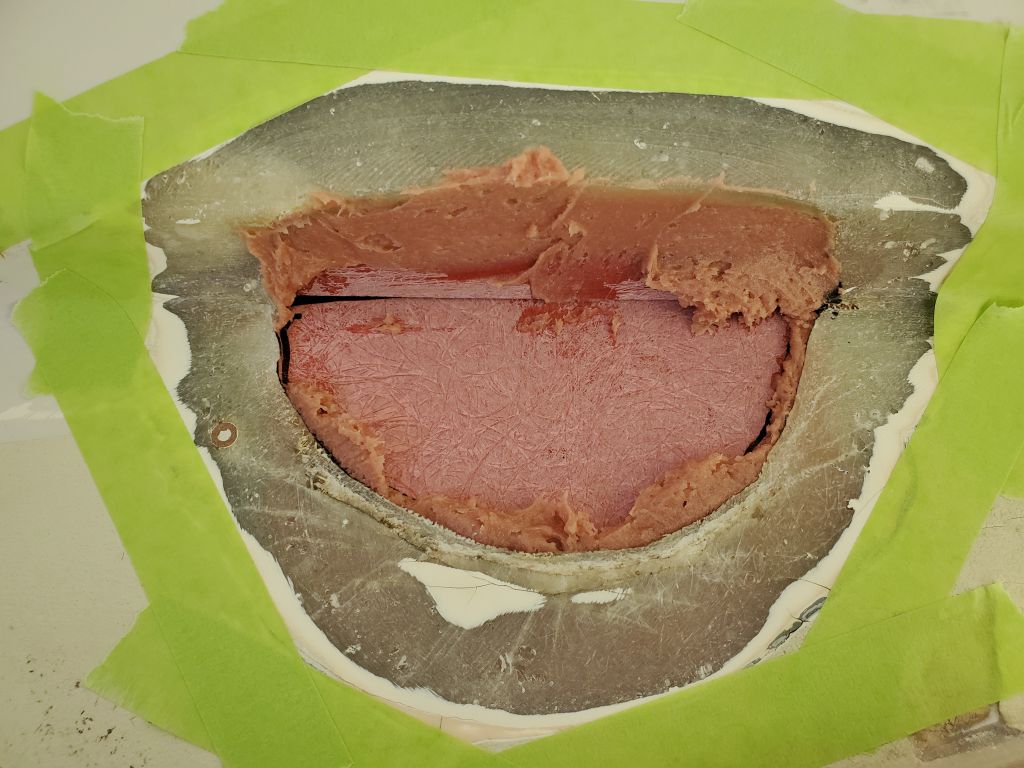
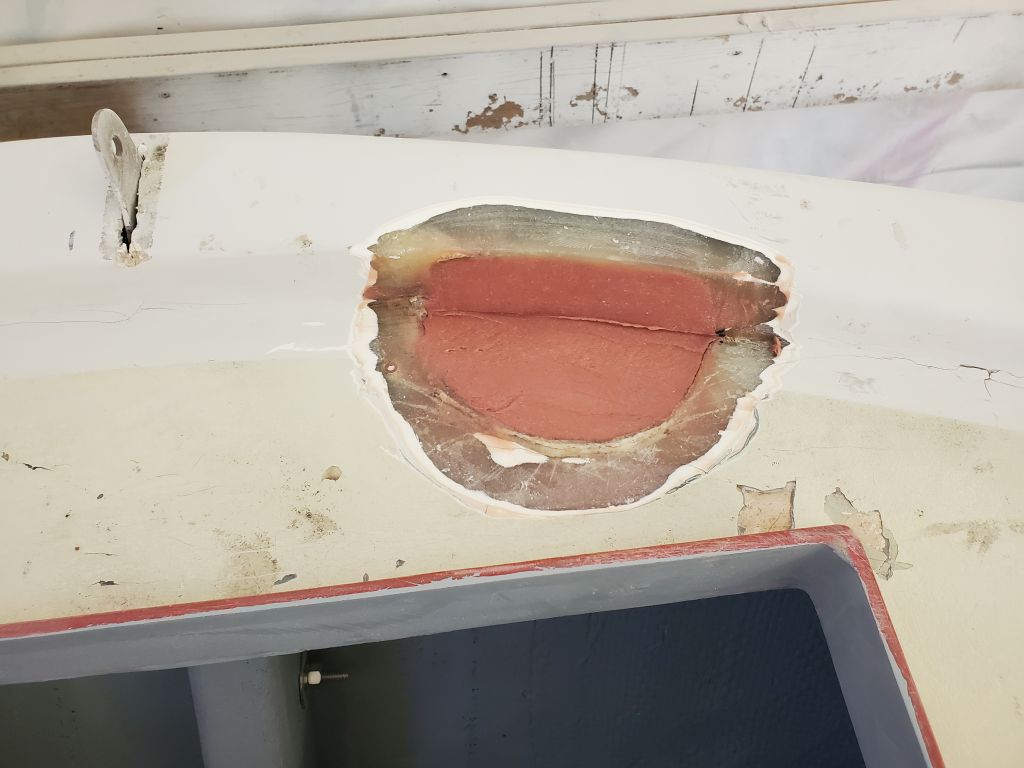
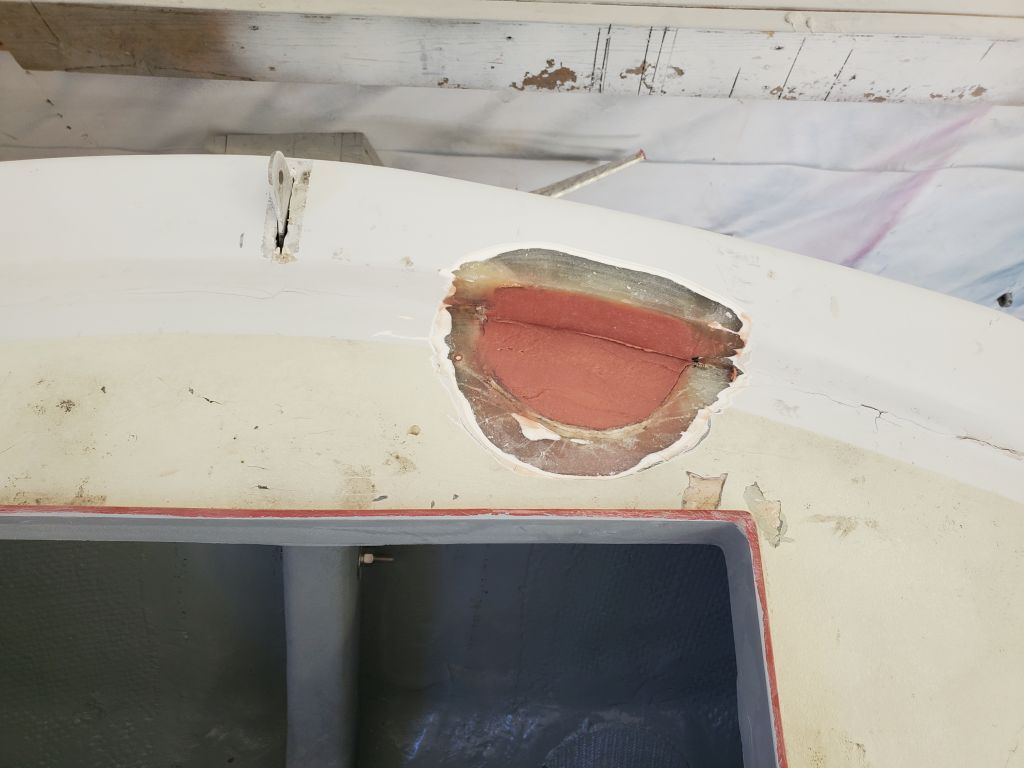
It didn’t take long to cut off the raised molded area that had once been used to mount a stern light (what a silly thing to build into a deck mold), and otherwise prepare the area for patchwork above and below.

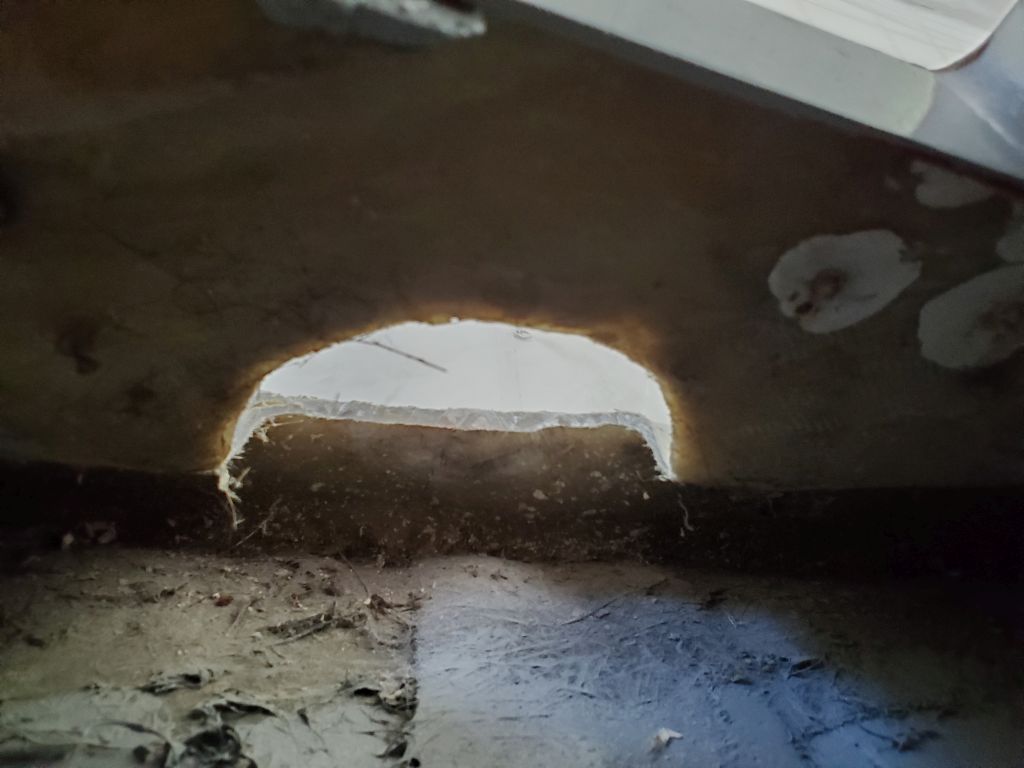
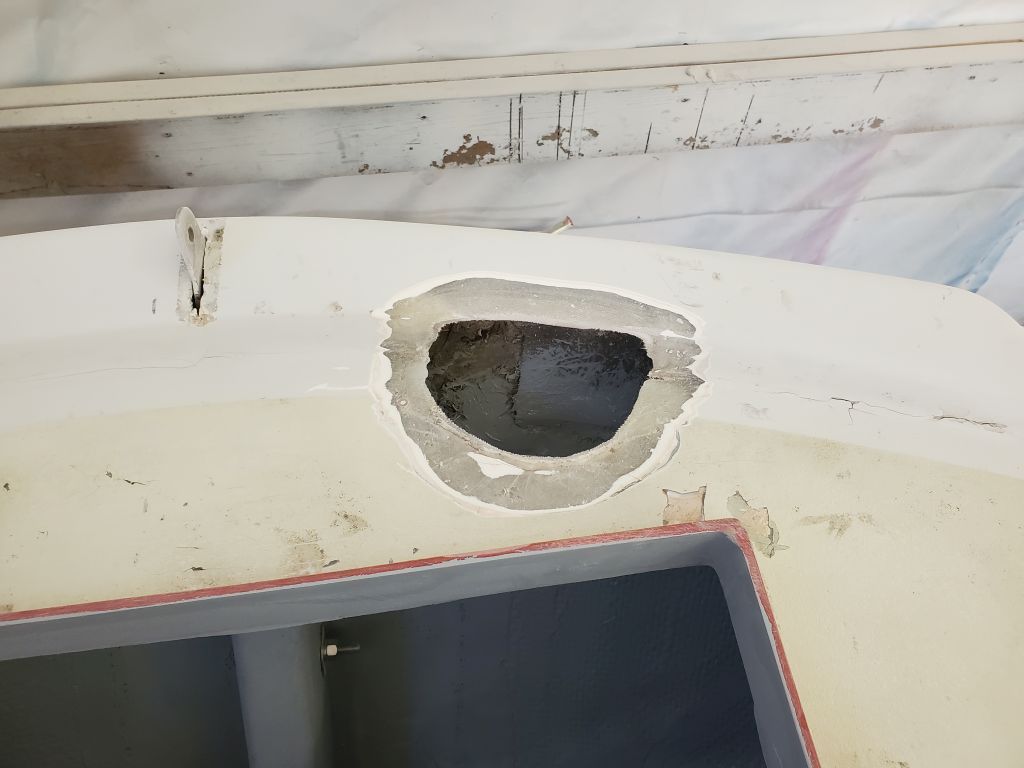
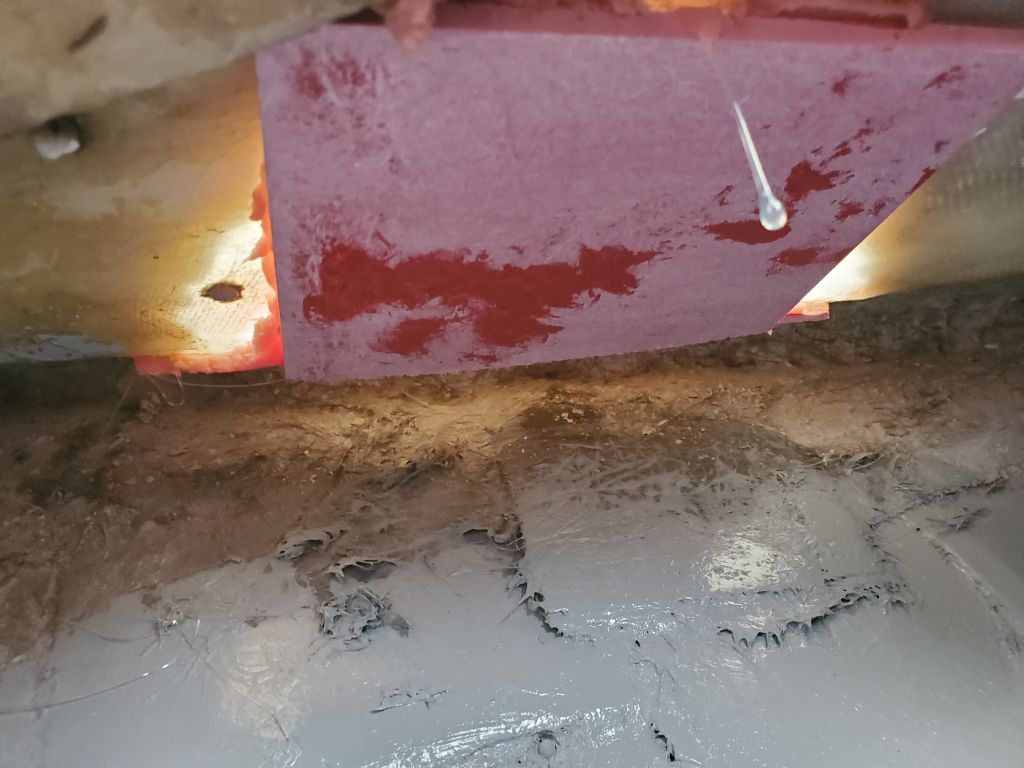
To patch this, I started with a couple pieces of prefabricated fiberglass from the scrap box.  I found an offcut of 1/4″ laminate that was basically a perfect fit for the base of the opening:  It even had the requisite curve/angle on the aft side to match the curve of the taffrail.  To fill the short vertical edge of the repair, I used a 1-1/4″ strip of 1/8″ laminate that I cut to fit.  I secured these to the back and undersides of the existing area with a thickened epoxy mixture, and some dabs of hot glue to hold things in place while the epoxy set up.  I filled in around the edges of the hole with more of the thickened mixture to smooth the whole area out flush with the edge of the ground, prepared areas of the adjacent deck and left this to cure for a couple hours.  This recreated the basic shape needed to fill the opening.

Sometime later, when the first application had cured to the green stage, I fine-tuned the shape a bit with a fillet at the bottom corner and some general smoothing of the first round, then installed two layers of structural fiberglass over the entire area, extending out onto the adjacent areas I’d prepared for this purpose.

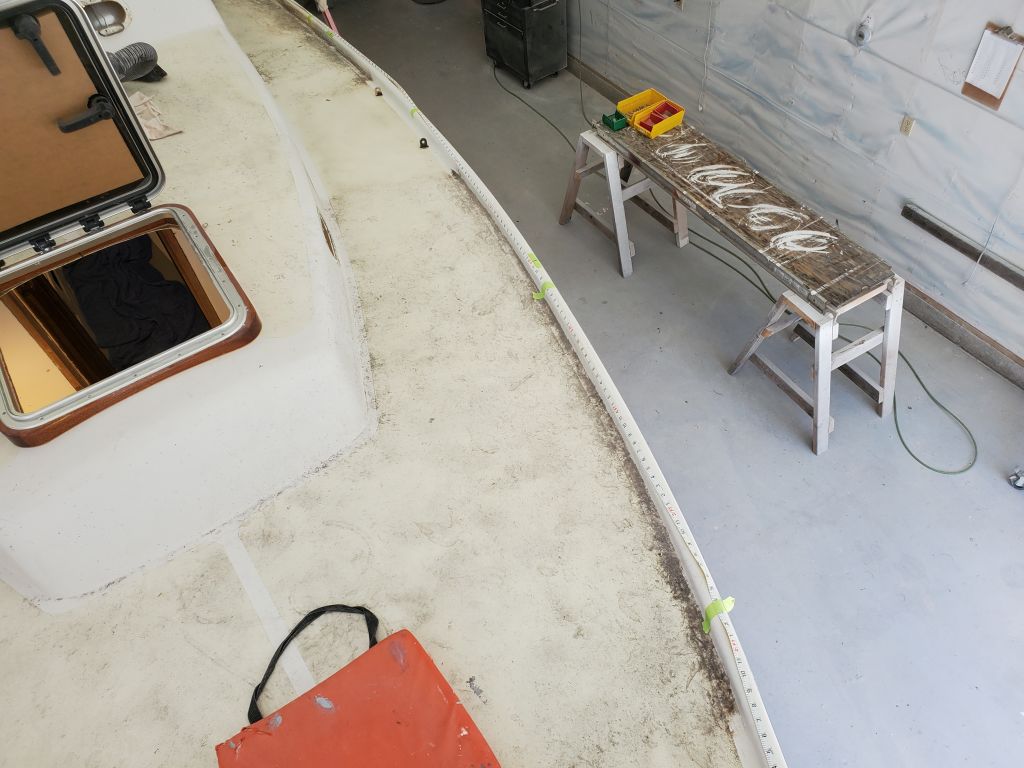
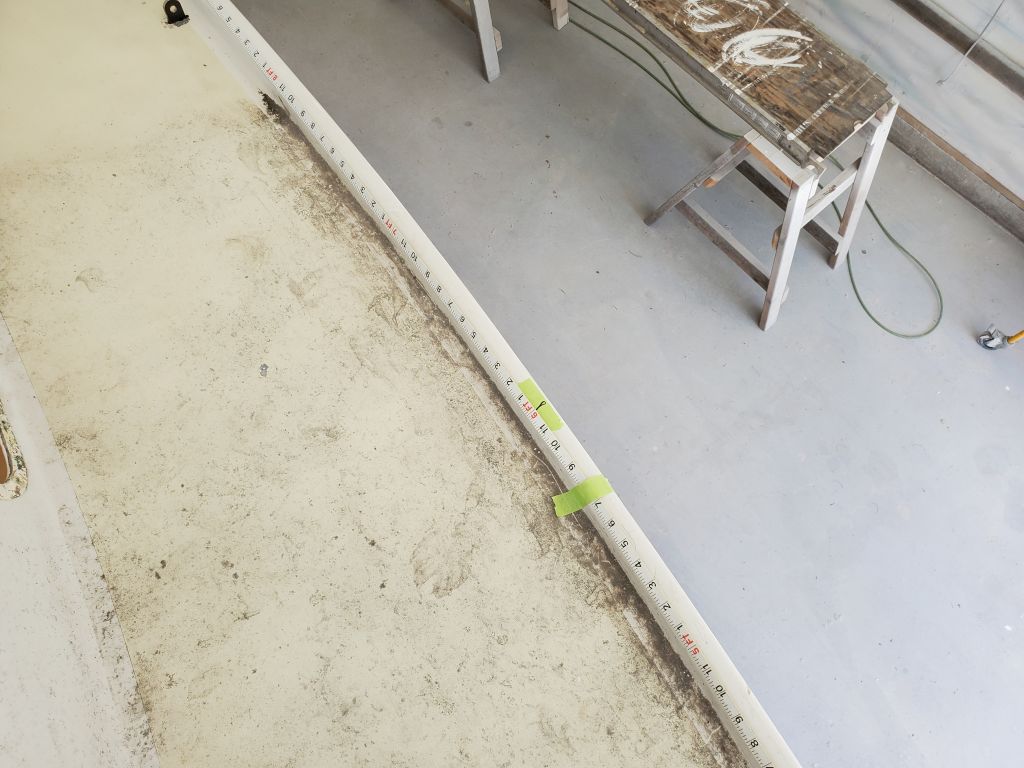
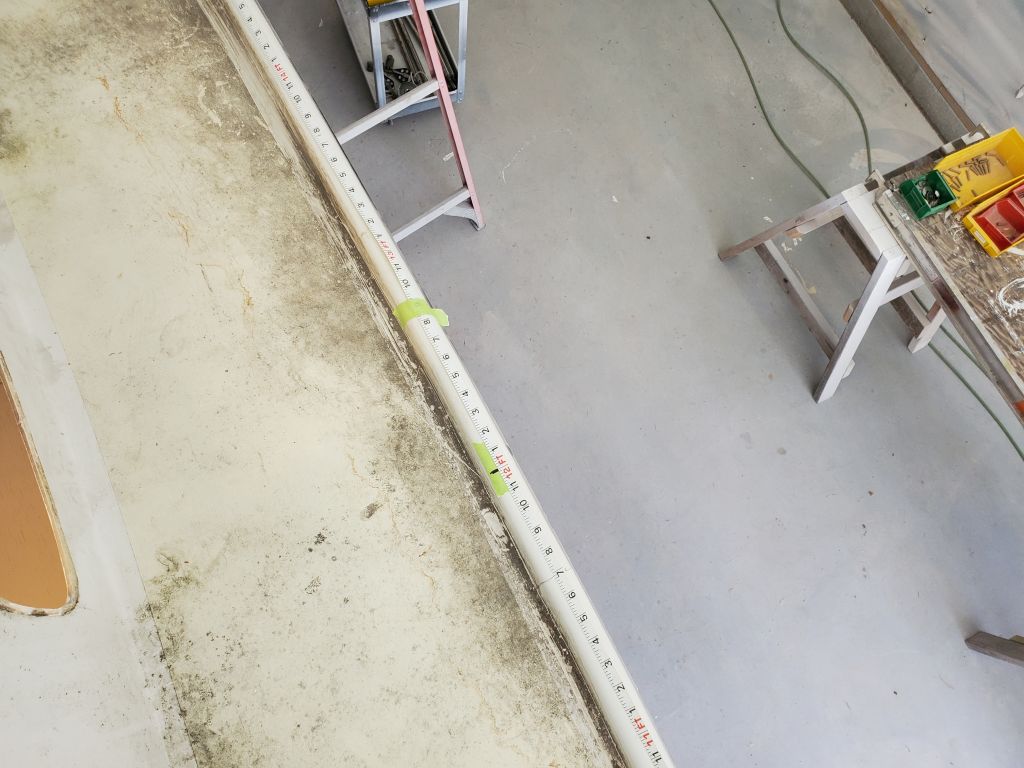
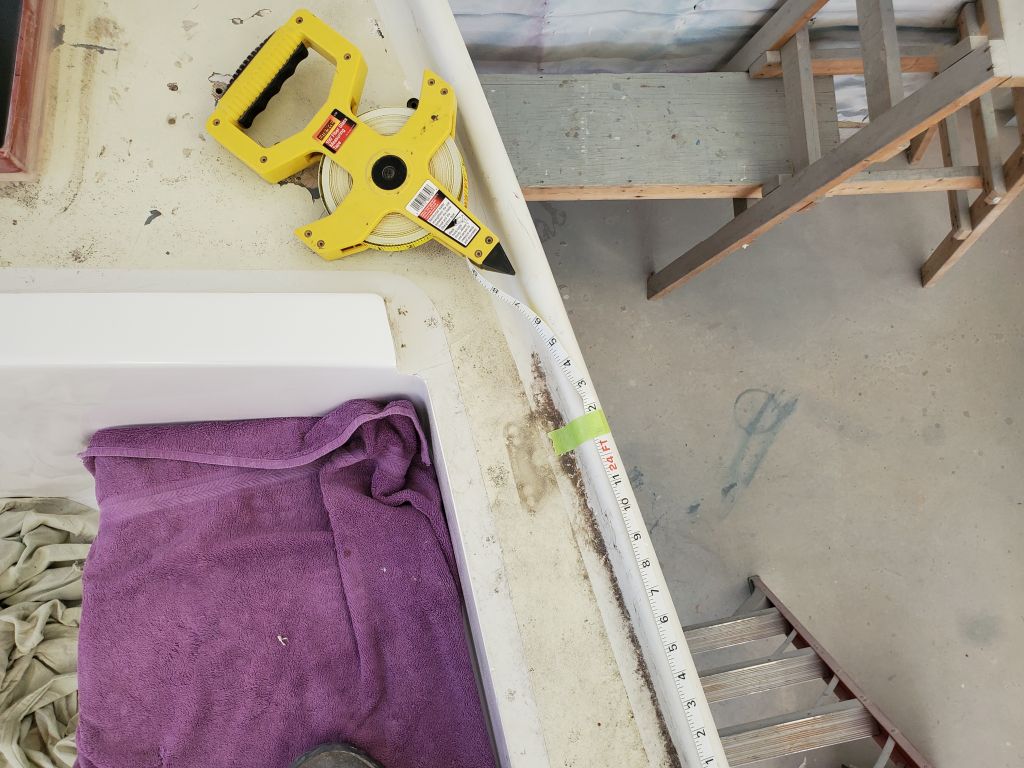
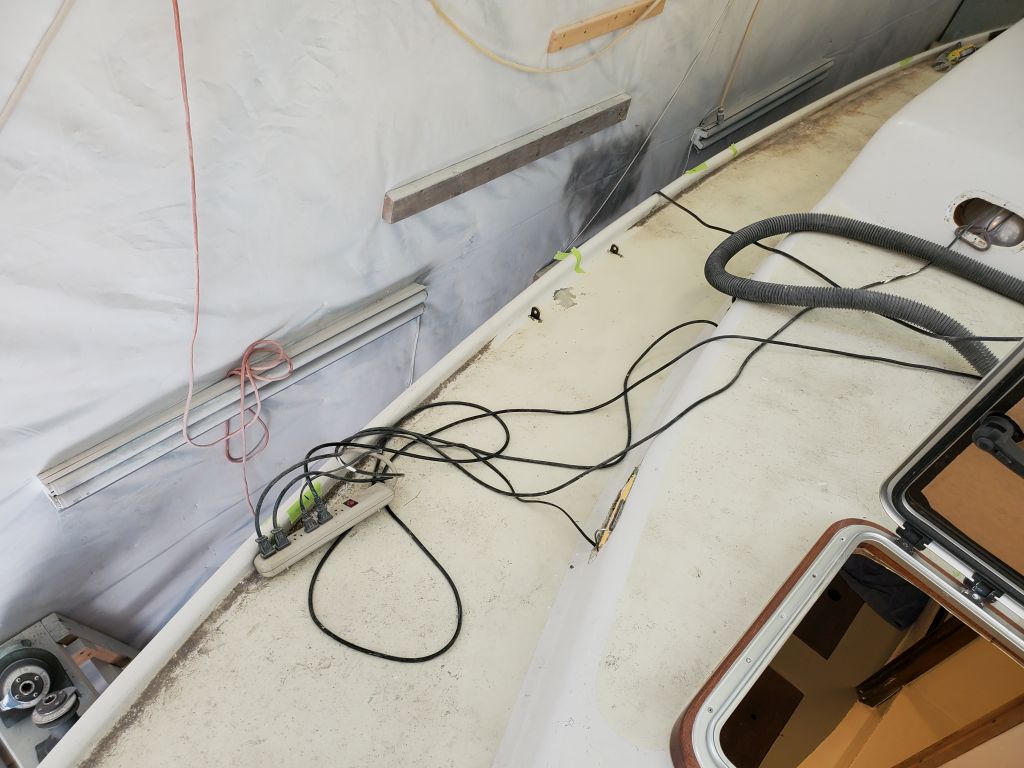
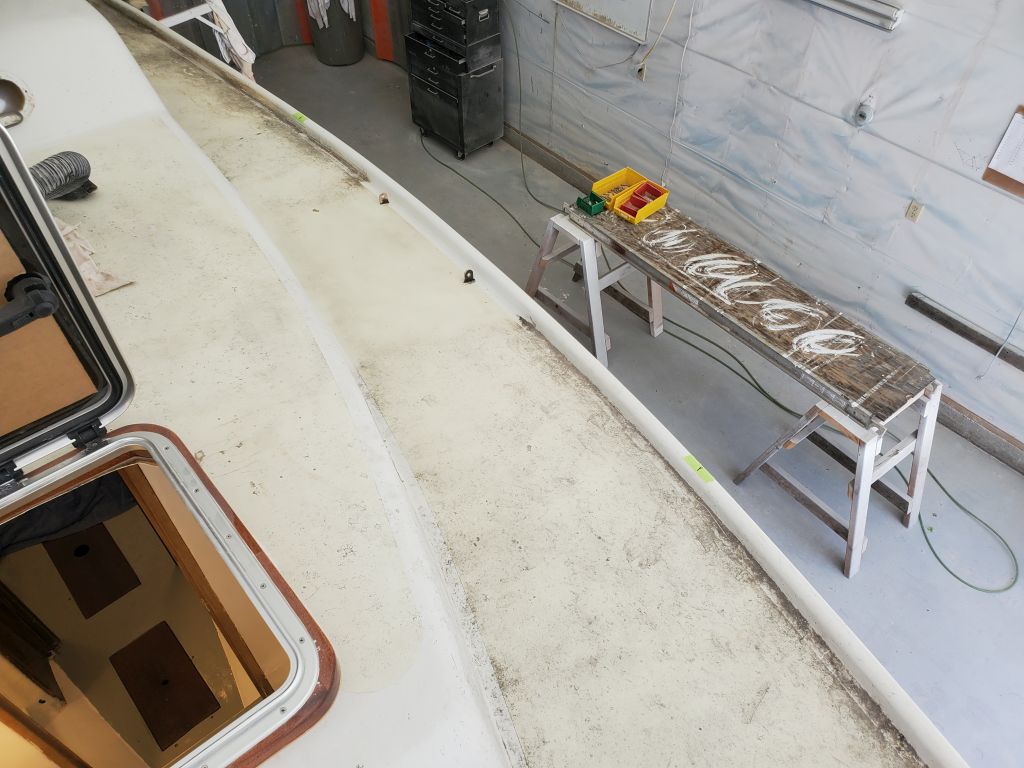
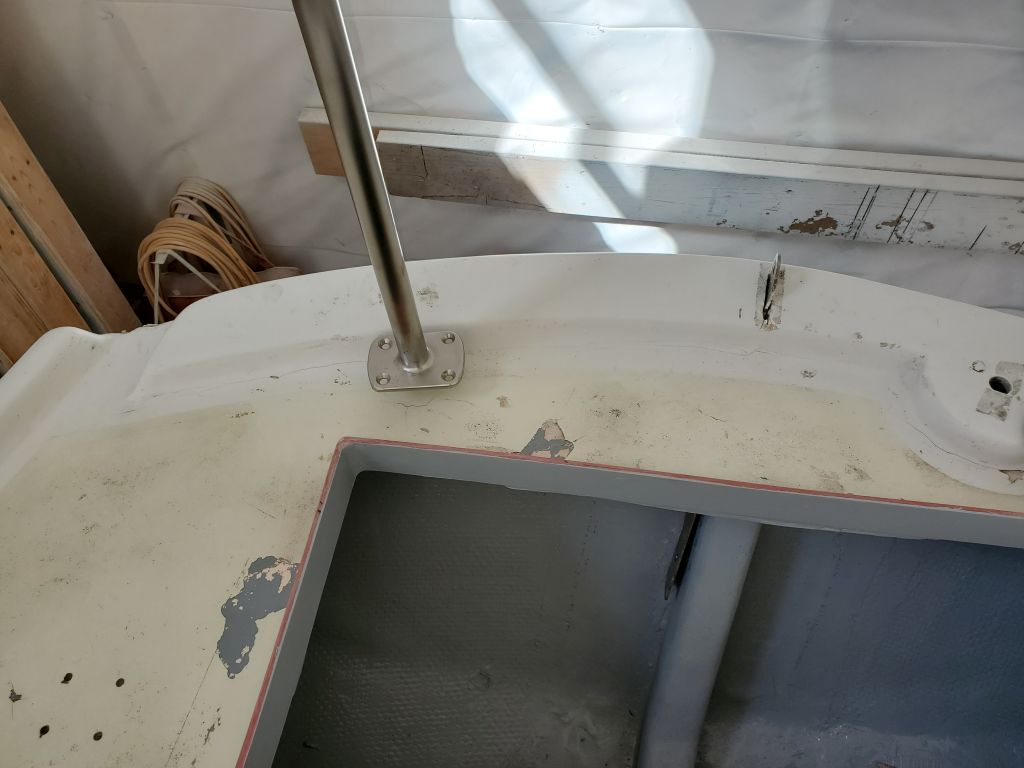
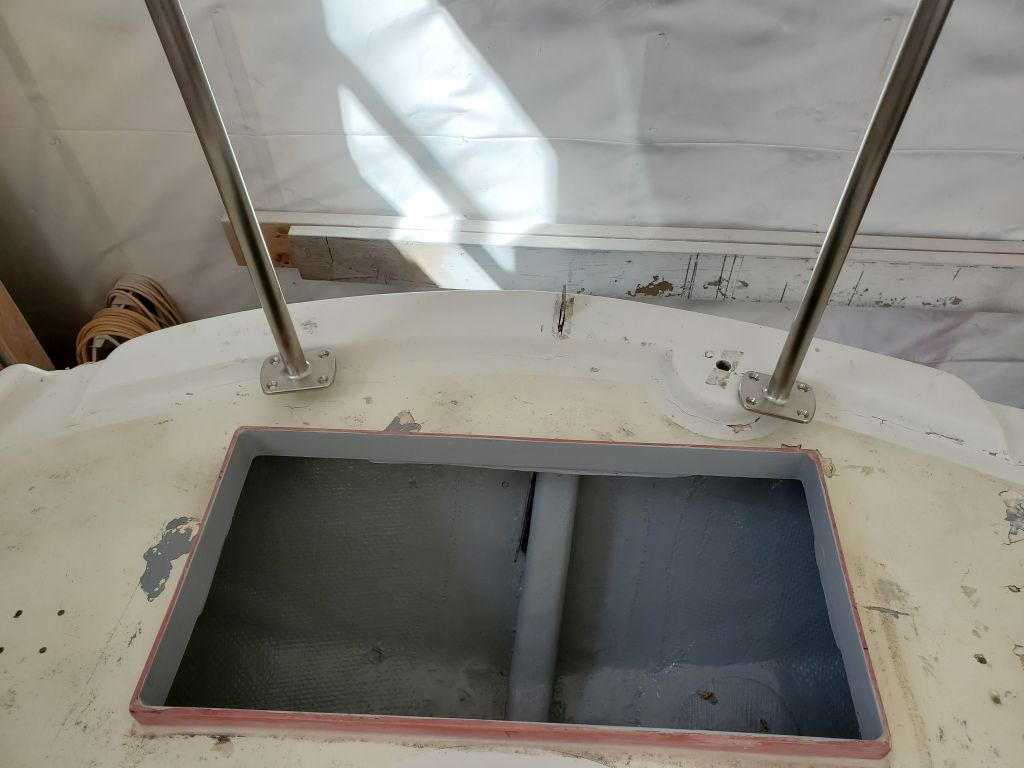
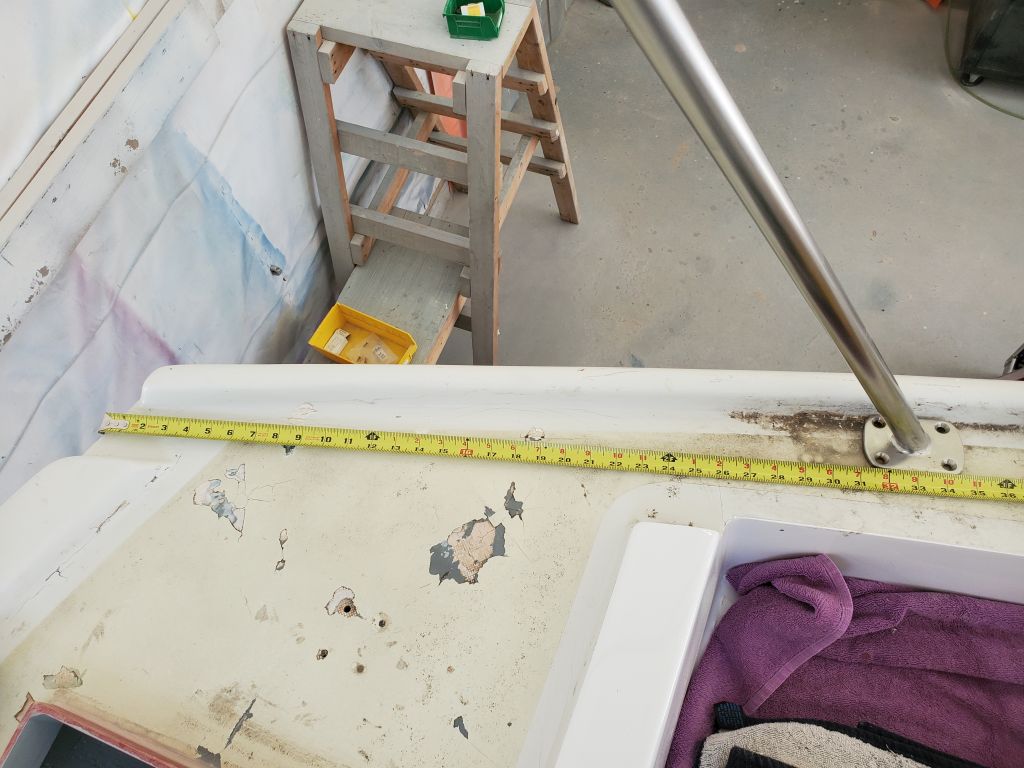
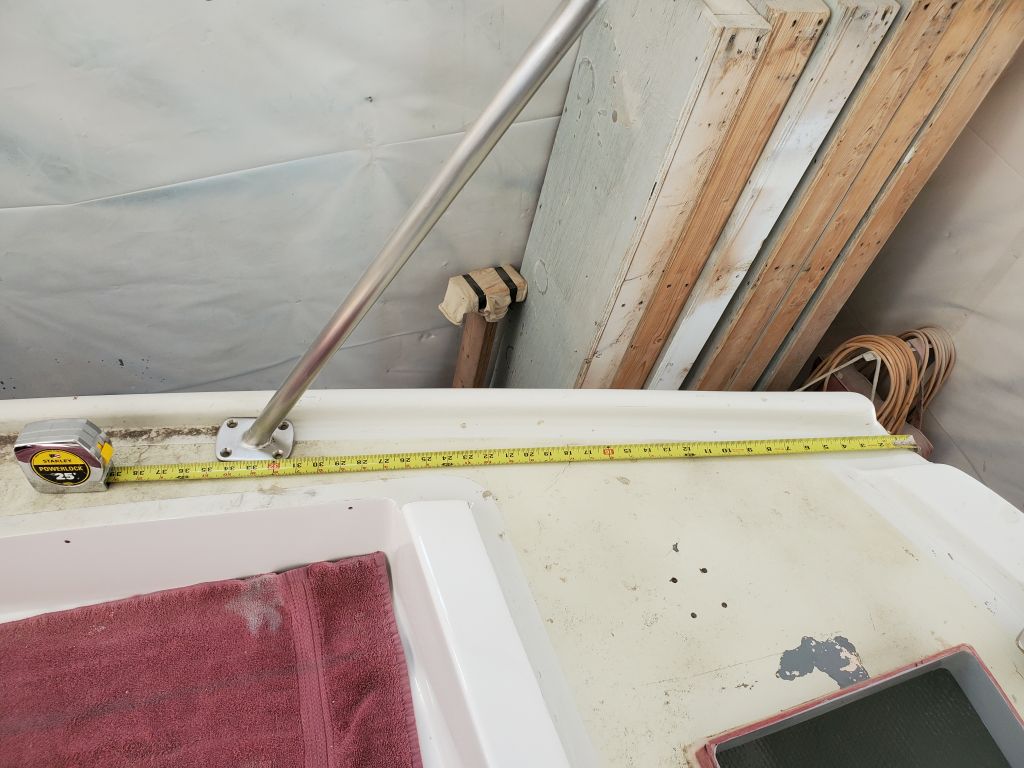
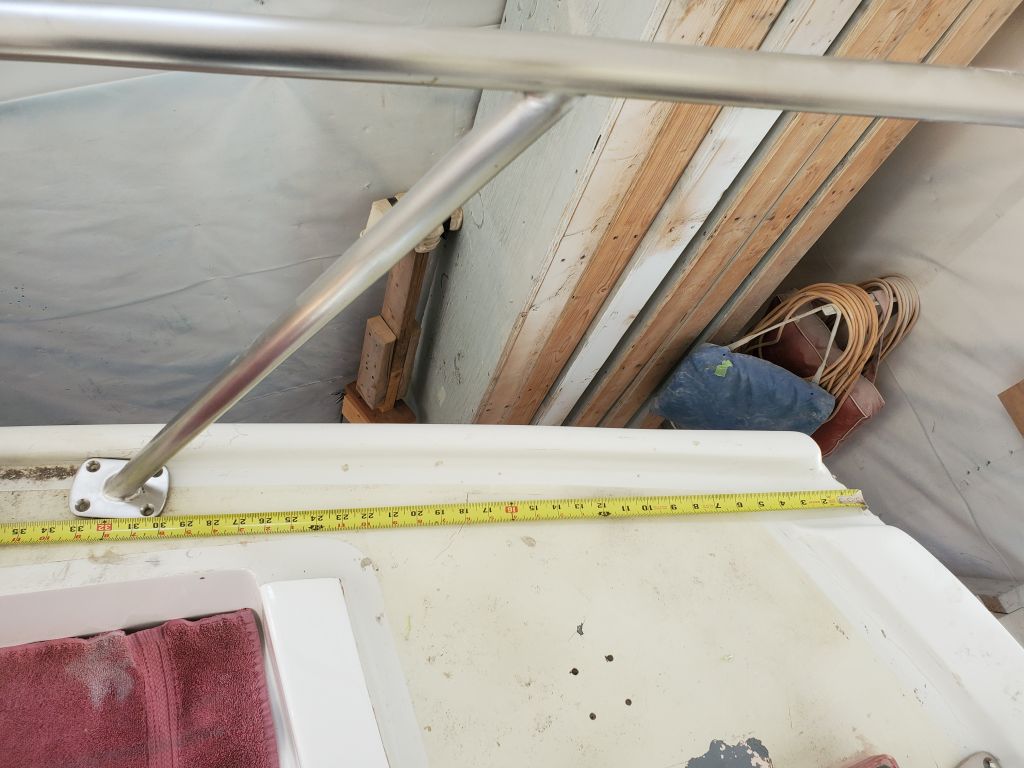
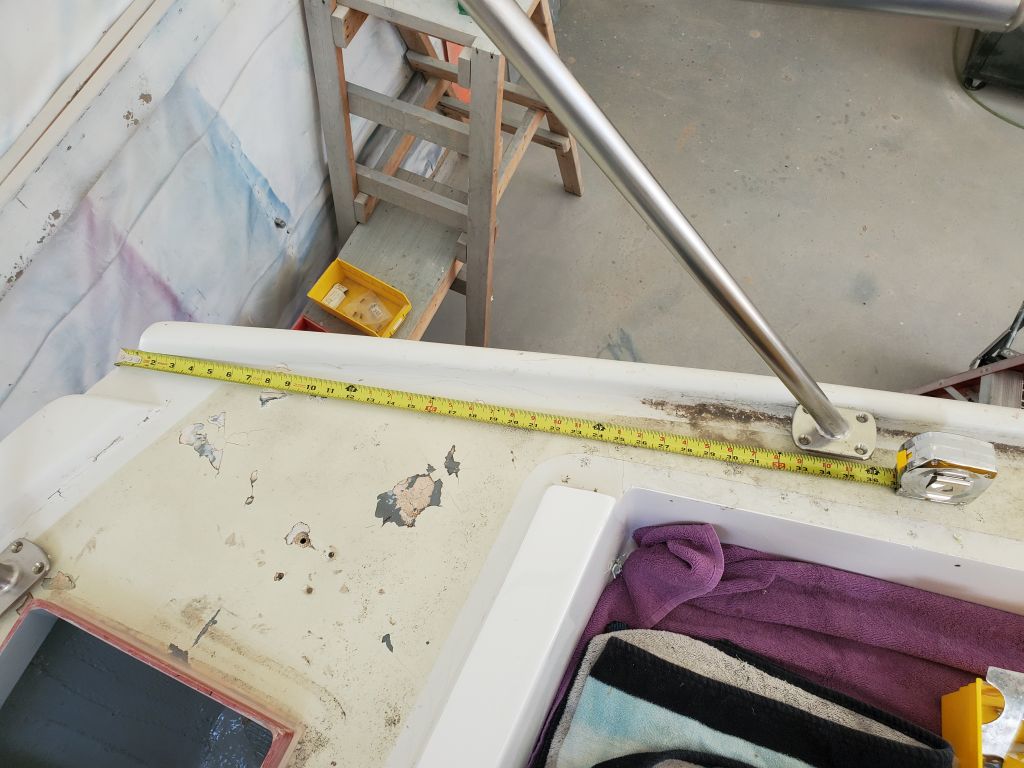
During the rest of the day, I continued work on deck hardware, mostly with the stanchion bases.  With six total bases (three per side), I started by installing a flexible tape measure along the gunwale between the points of lifeline attachment on both the bow and stern pulpits (the bow rail was in place, and the attachment point of the stern rail was aligned with the front of the forward bases, which location I’d noted during the pulpit dry-fitting).  This gave me a measurement between the points of 24 feet, so I evenly located the stanchion bases six feet apart along this line, making a mark on the gunwale for each.  Not only would this spacing look right, but it also worked out well in terms of where the bases landed:  Clear of obstructions like the chainplates or space for genoa tracks.

With one side complete, I repeated the process on the opposite side, and afterwards I scrubbed the deck in way of each mounting location to remove the dirt and grime.

Once the cleaned areas dried, I masked over the deck at each location and, keeping the base 1/4″ or so away from the gunwale, marked and drilled/tapped the  bolt holes for the 5/16″ bolts required, and scribed the edges of the fitting on the tape.  I chose to do this for all six fittings now, since the day was growing late and I preferred to leave bedding and final installation for one fell swoop next time.

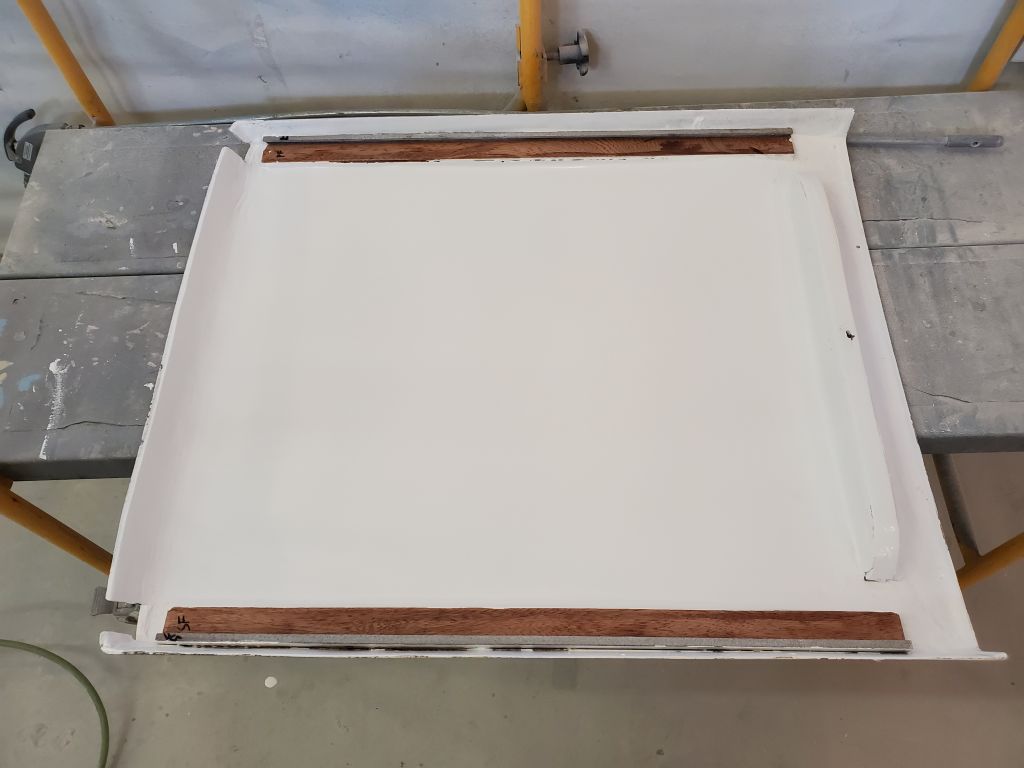
While I was in layout mode, I prepared the foredeck for the new mooring bit and marked and prepared its fastener locations in the usual way.  I still needed to fill the old holes left from the original mooring cleat.  Also, since this bit would span the built-in centerline reinforcement of the foredeck, which was a bit thicker than the rest of the deck and formed a protrusion on the underside, I built a fiberglass backing plate designed with this in mind, with a 1/2″ thick base cut to fit the bitt as needed, plus 1/4″ extensions epoxied on each edge, which would allow the backing to span the centerline reinforcement when installed.

Total time billed on this job today:  5.5 hours

0600 Weather Observation:  Clear, 35°.   Forecast for the day:   Mostly sunny, 60°

Lyra 57

Tuesday

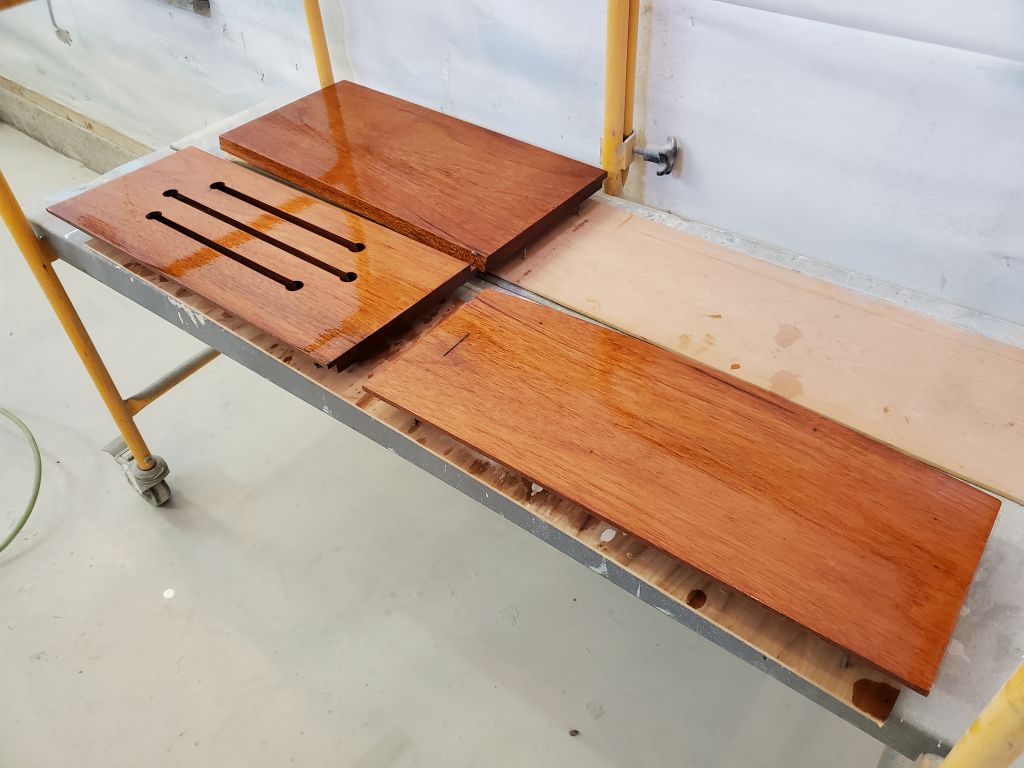
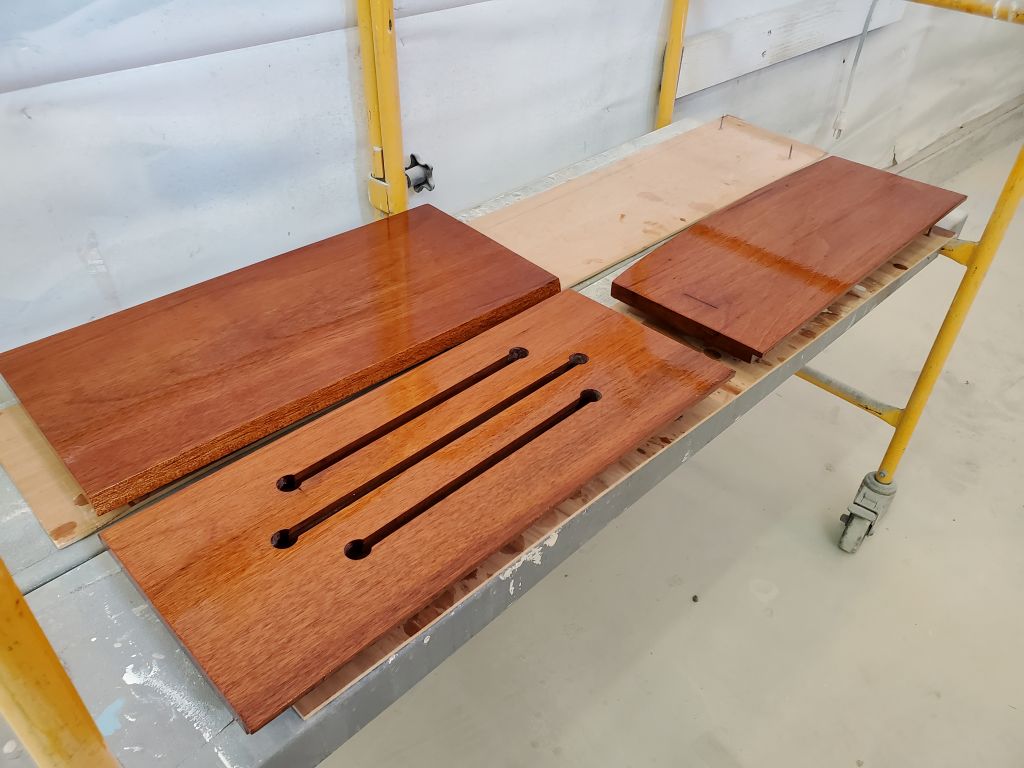
With six coats on the first (outboard) sides of the coamings, I gave them a day off to more fully cure before I considered turning them over to install the final coats on the inboard sides.  This reduced my varnish burden for the day to the companionway swashboards, to which I applied the 5th coat on each side.  In the cabin, I trimmed the bungs on the companionway, and dabbed on some varnish to blend in the plugs.

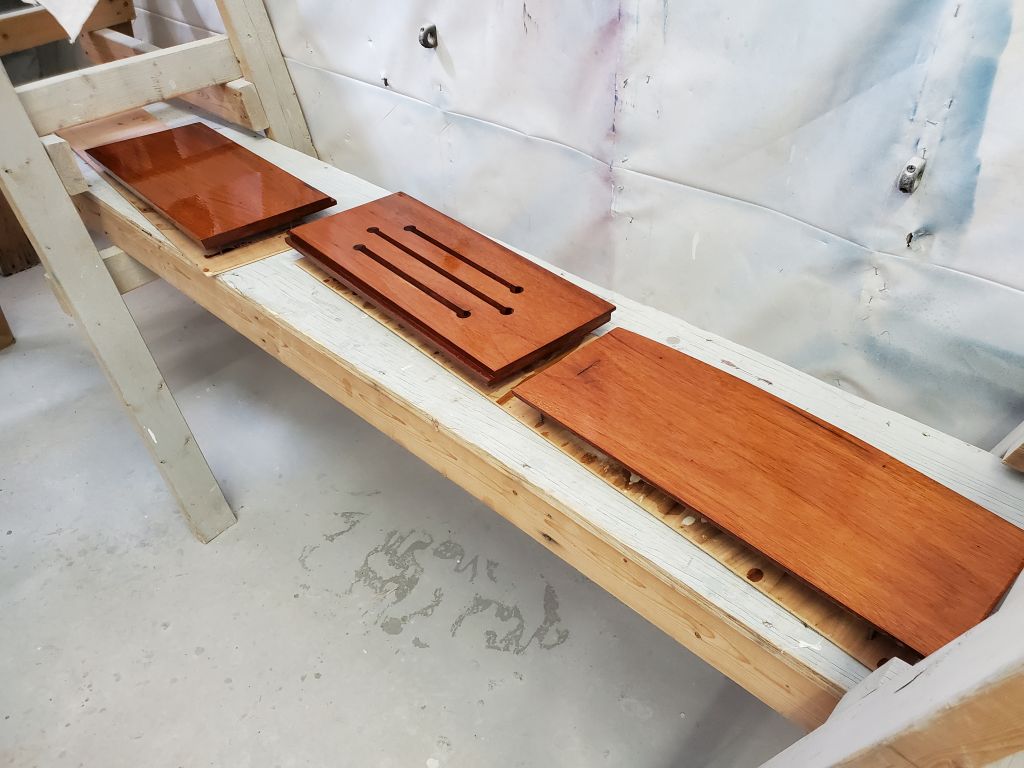
The owner and I had discussed the possibility of some sort of nonskid treatment to the varnished cockpit locker lids, and I’d attempted a couple different approaches to nonskid in varnish:  One using a packaged nonskid grit that proved not to work well at all; and another using kosher salt sprinkled into the wet varnish, which one was supposed to wash out later, leaving behind some sort of texture.  What sort of texture this might be was never determined by my  test, as rinsing the sample piece not only didn’t remove all the salt, but also revealed that the salt seemed to have affected the curing of the varnish beneath.  We both decided that for now, at least, it’d be better to leave the locker lids as they were rather than risk ruining them with some unsatisfactory treatment.  Something could always be done later.

This meant that, with six coats–my minimum threshold for new work–on the lids, I could think about installing them, which would be nice since it would fill in the large holes in the cockpit and give me more room to spread out my tools and supplies.

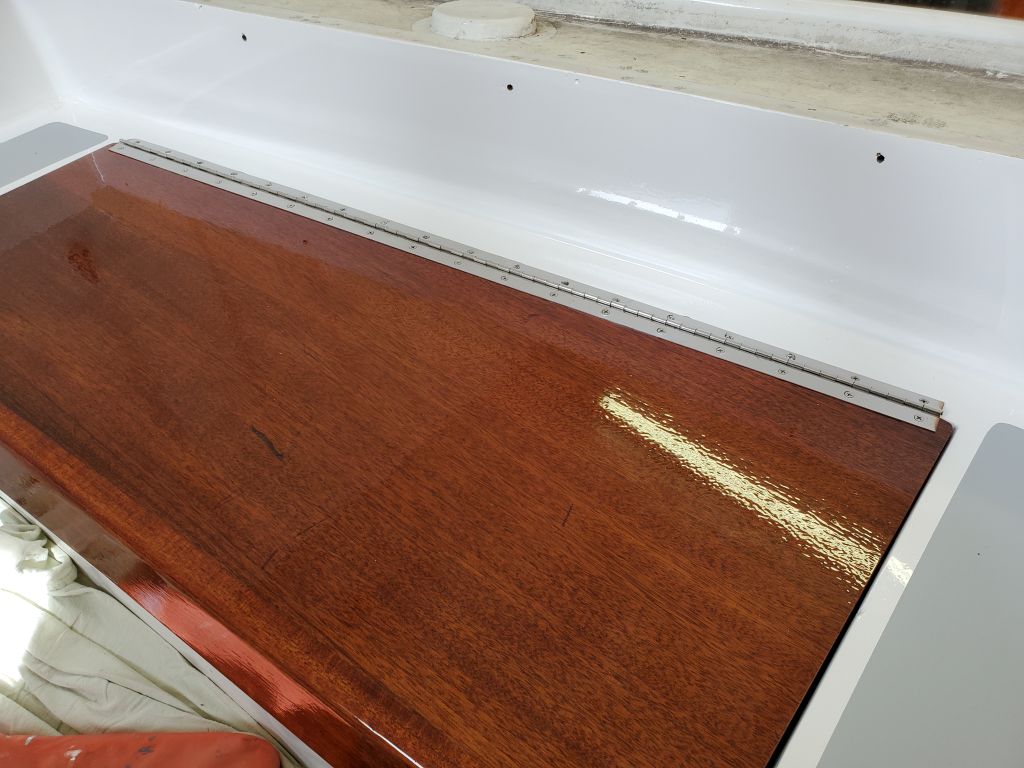
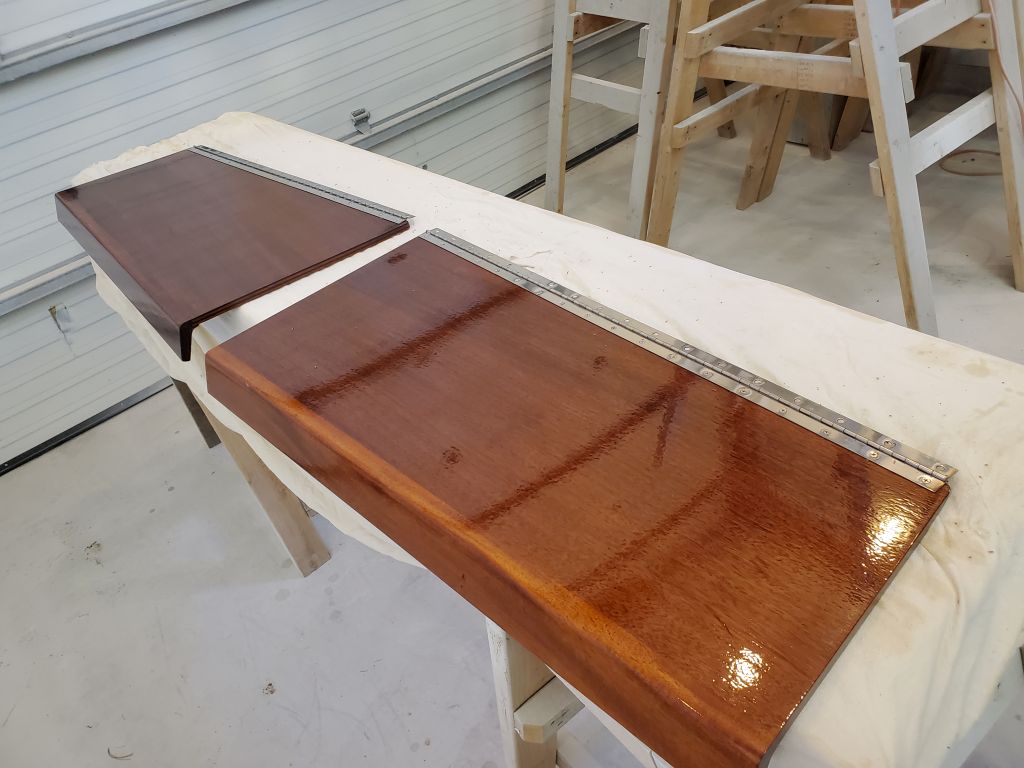
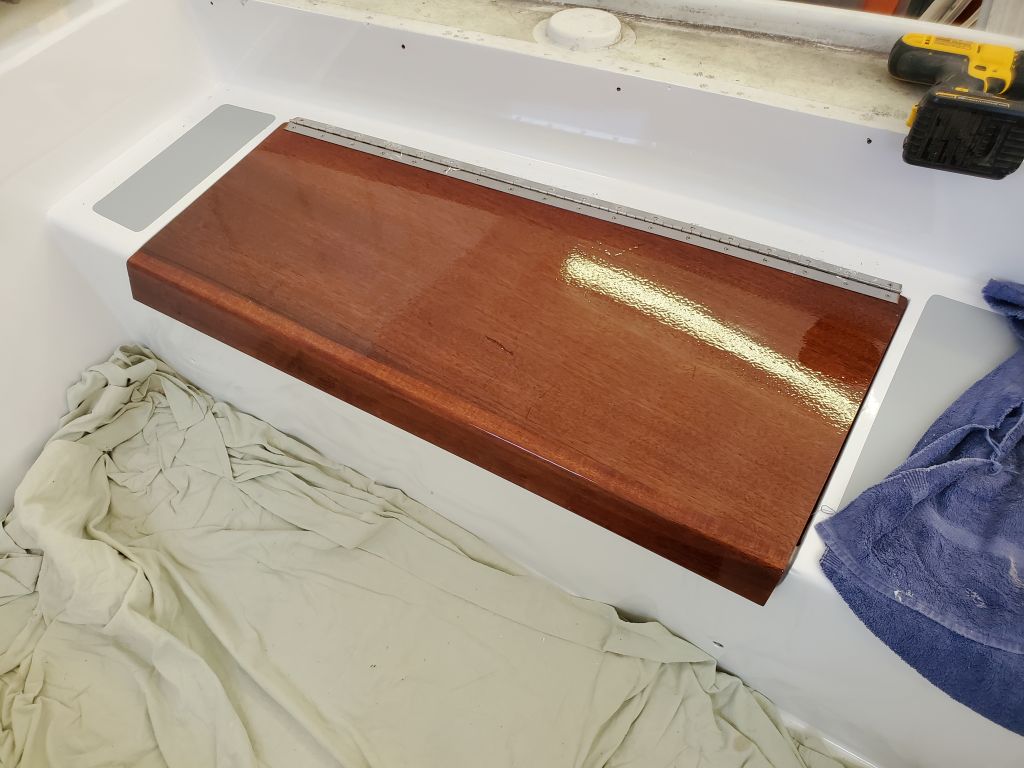
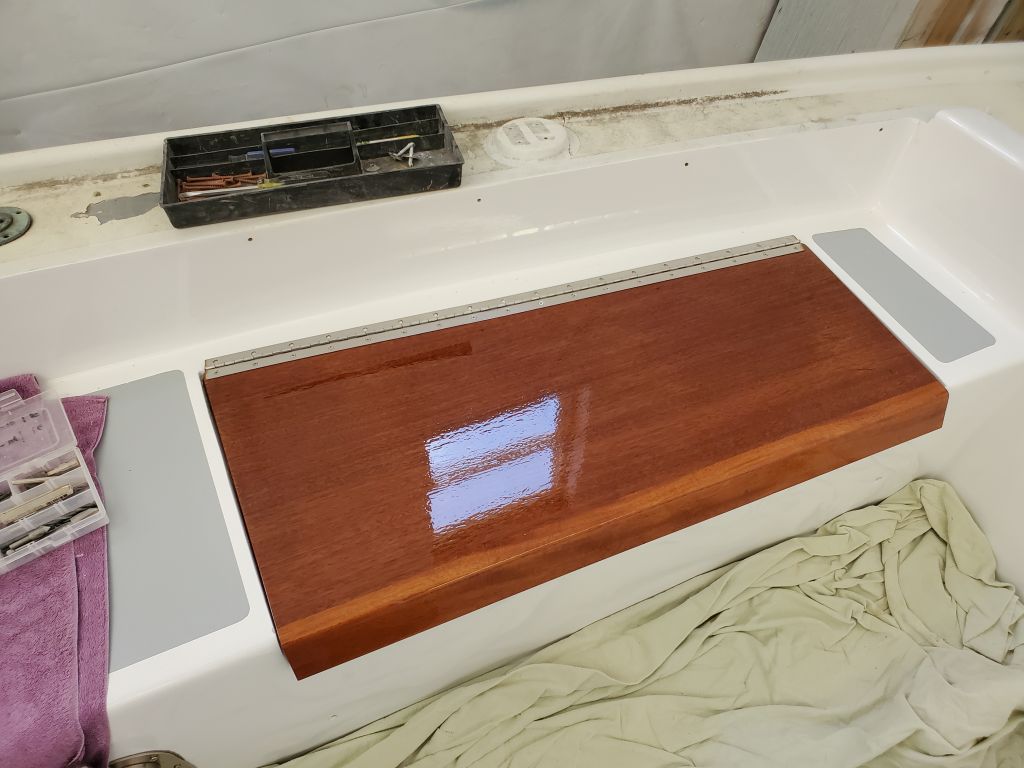
I’d purchased 36″ long piano hinges for these hatches, which was just slightly longer than the hatches themselves, so to start I had to remove one knuckle of length from each side of both hinges, to keep the bolt pattern centered.  This I did with a grinder and cutoff wheel, after which I could install the hinges on the hatches themselves down on the bench.  Then, I installed the hatches in the cockpit, though I found I didn’t have enough of the screws I needed, so I couldn’t fully install the hatches.  But with butyl tape sealant, and all the holes prepared, I installed enough screws on each side for now, and could easily fill in the remaining screws later when my new supplies arrived.

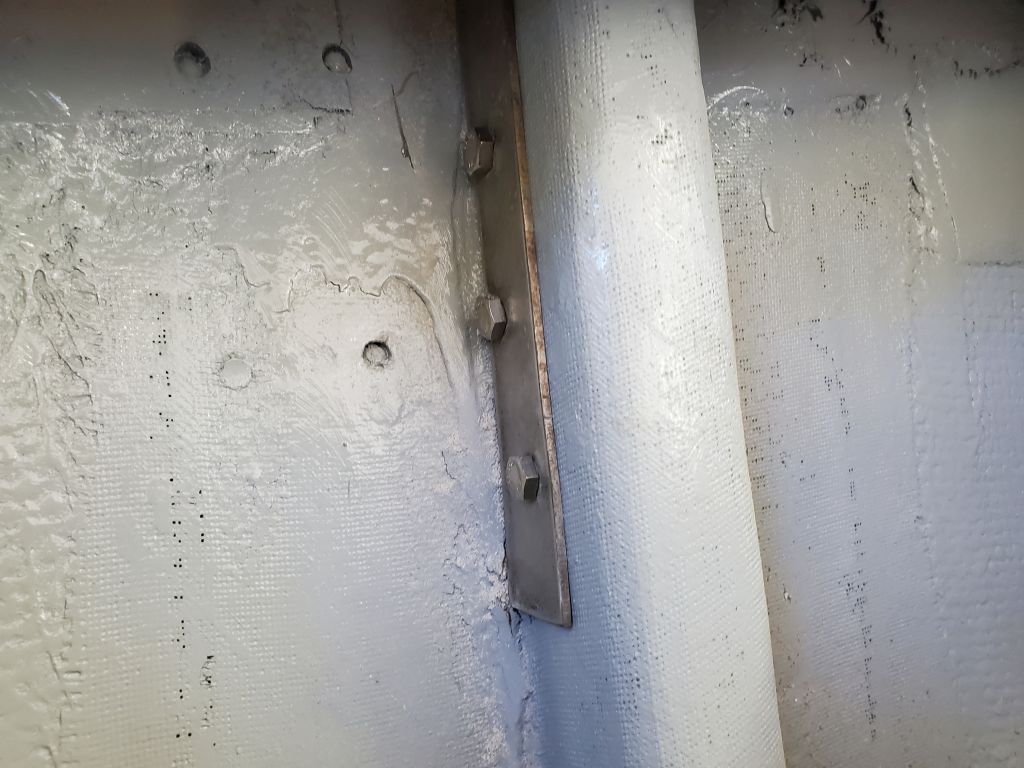
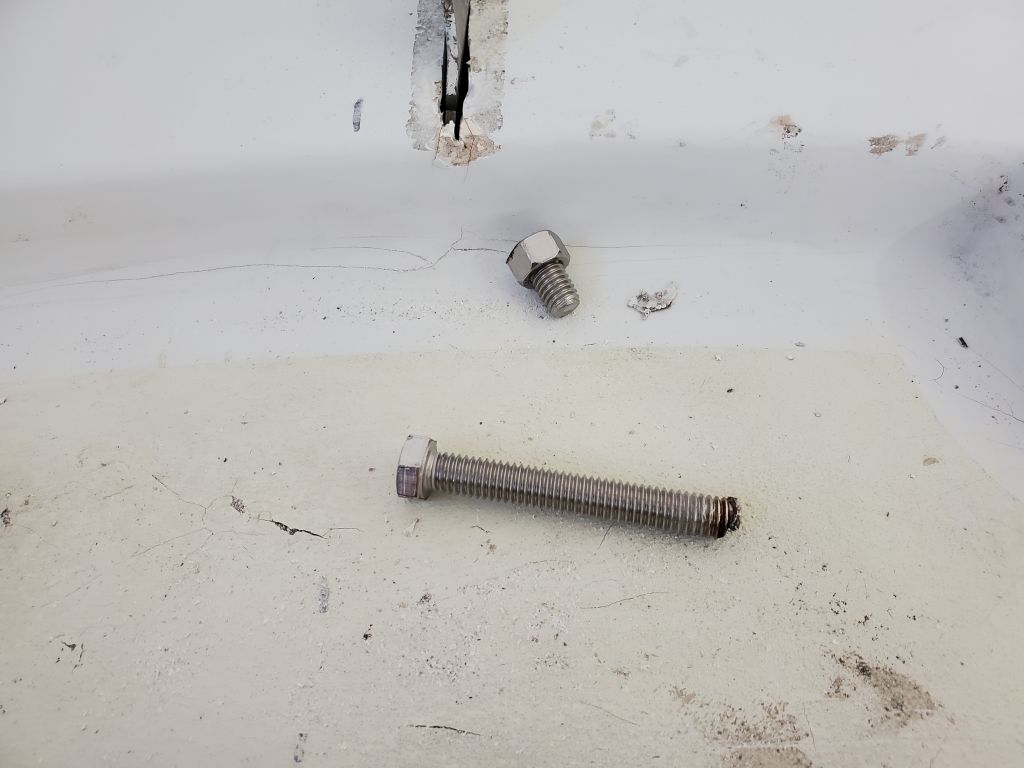
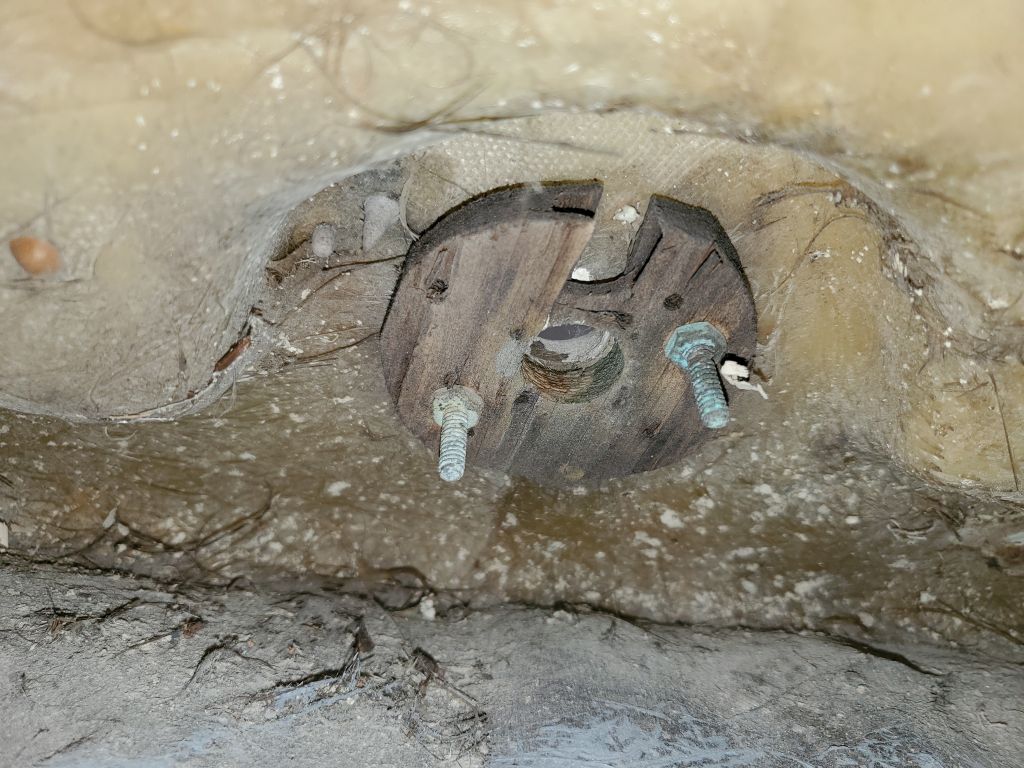
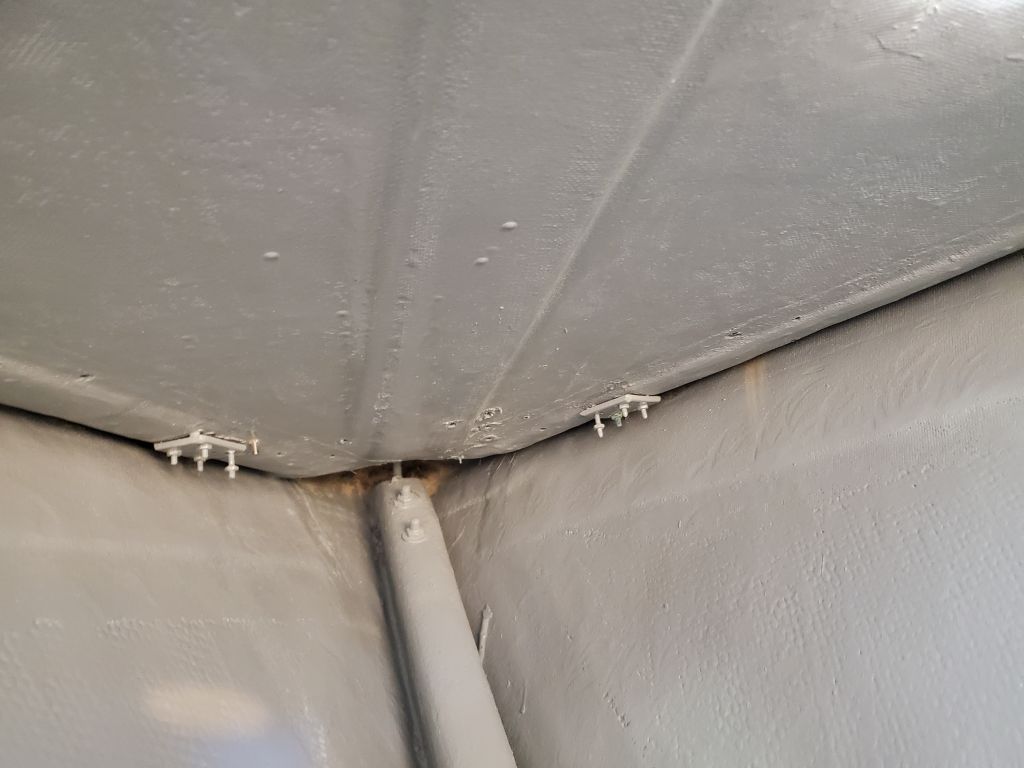
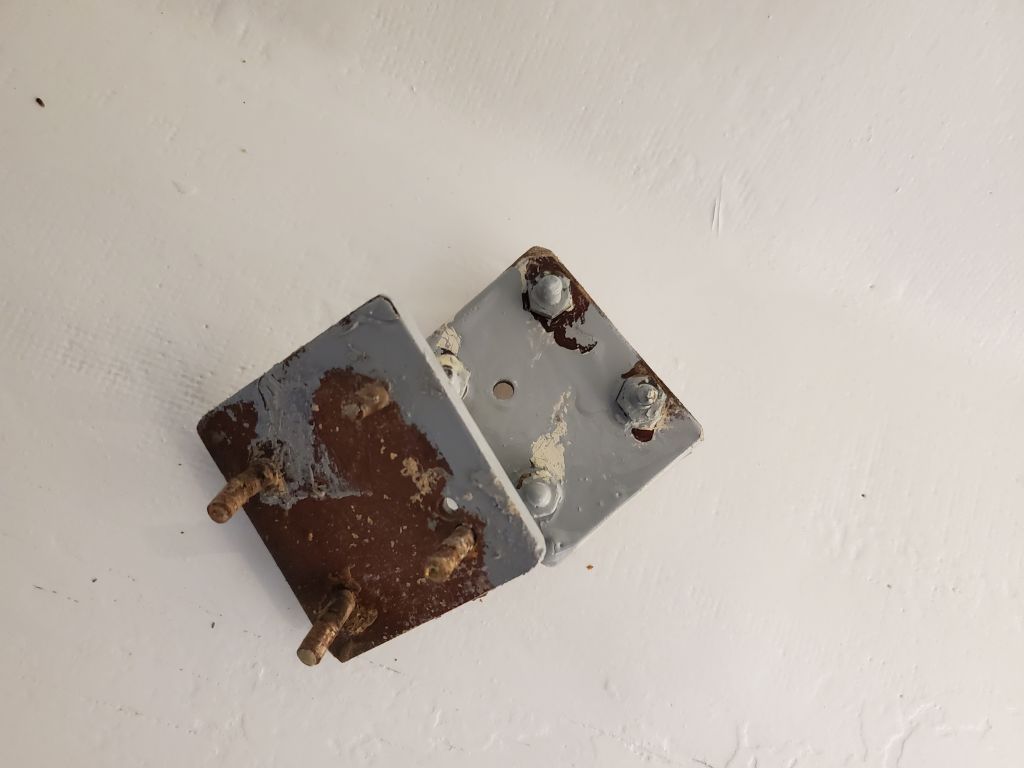
Next, I continued work on the bow pulpit, which I’d left before with a single screw to hold it roughly in position.  Before continuing, I had to remove from below some old backing plates and partially cut-off screws leftover from some old hardware installation:  These were in the way of the forward mounts for the pulpit.  Fortunately, I could pry off the old stuff without too much work.

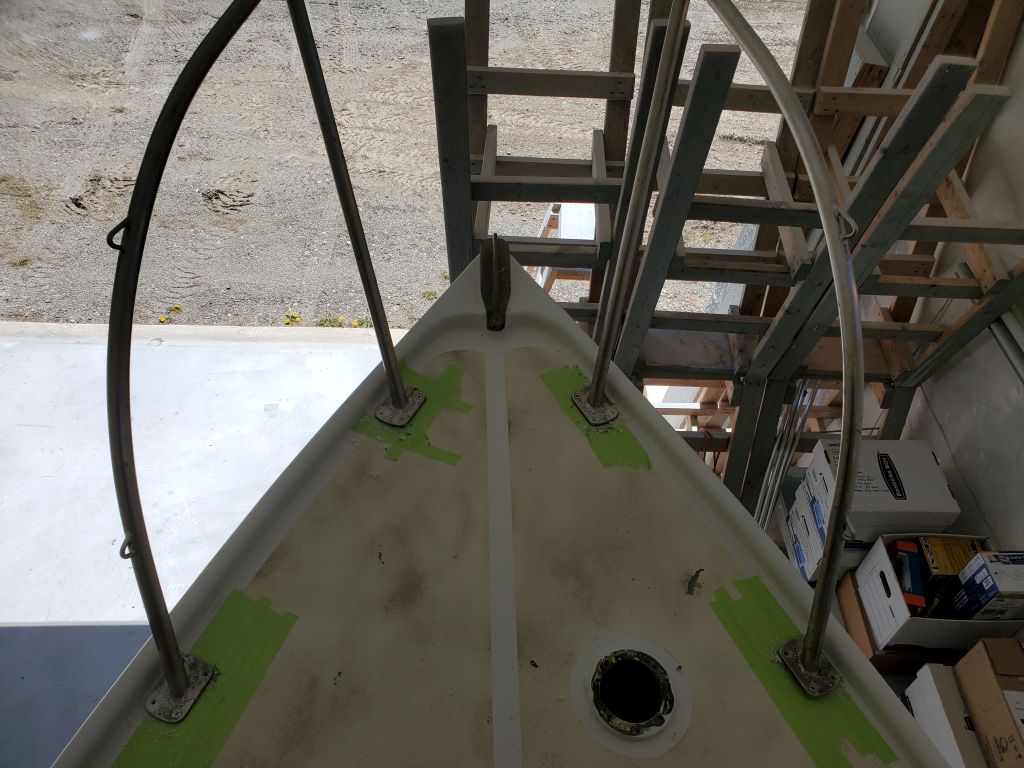
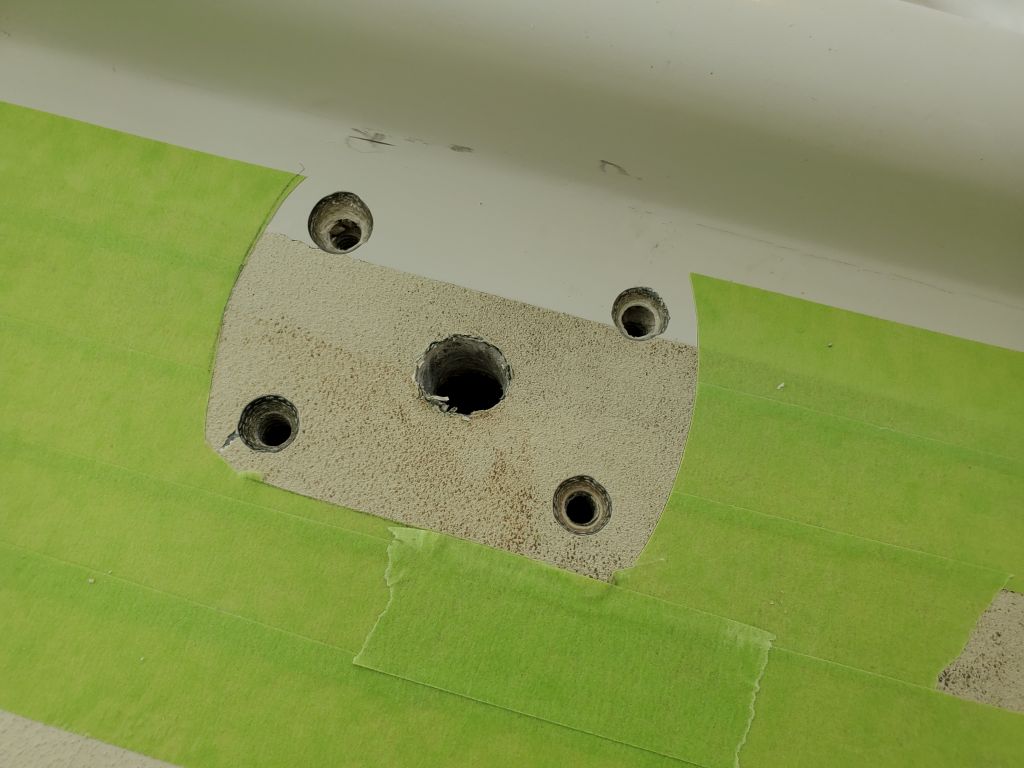
To complete the pulpit layout, I installed masking tape on the deck in way of each base location, then, ensuring the forward mounts were equidistant from the bow, placed each base on deck, using a pencil as a convenient spacer between the edge of the base and the raised gunwale (or roughly 1/4″), and marked the screw holes for drilling and tapping.  With a single screw in place at each base to hold things in proper alignment, I cut the tape around each base, then removed the pulpit so I could peel off the tape within and finish readying all the fastener holes with tap and a small countersink at each hole; on the starboard aft base I drilled a hole through the deck at the center of the base to accommodate the newly-strung bowlight wire.

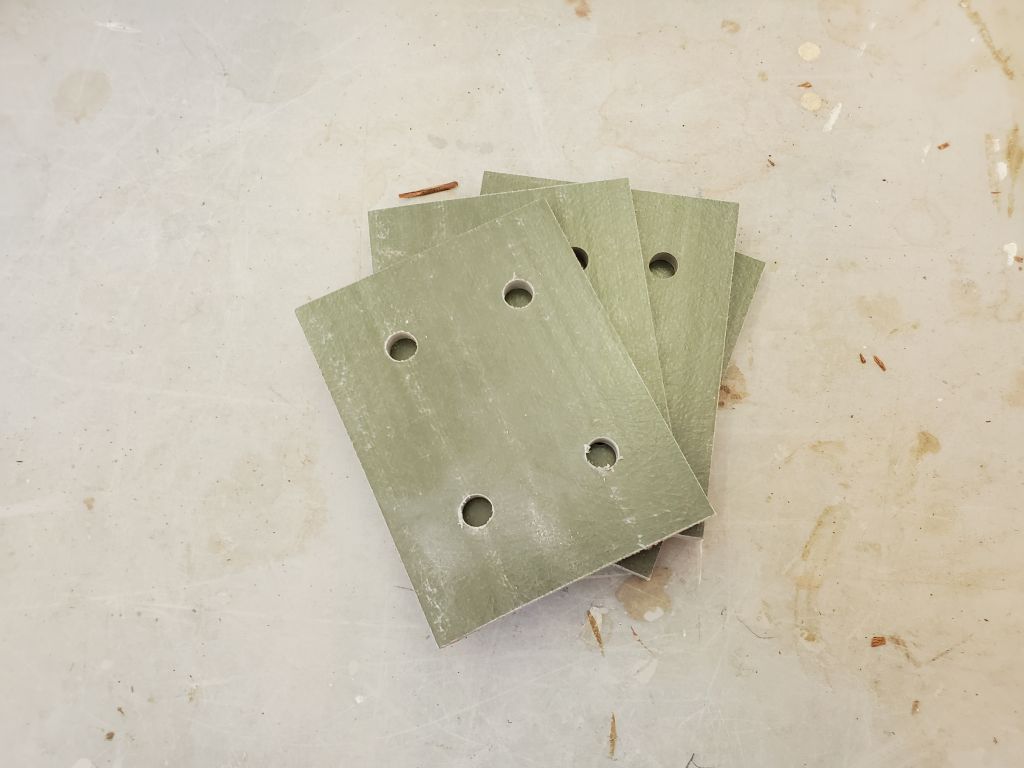
The backing plate material I needed for the pulpit installation was due for delivery later, and I’d made a cardboard pattern of the bases and the screw locations, so I decided to go ahead with the installation now and finish up the backing plates later.  This was possible since driving the screws through tapped holes in the deck would pull the pulpit tightly into position, allowing me to install the backing plates, washers, and nuts at my lavish leisure later.

I applied abundant sealant to the deck in way of the bases and, starting with the starboard aft base and its wire, installed the pulpit with sixteen 1/4-20 x 2″ screws, cleaning up the excess sealant afterwards.

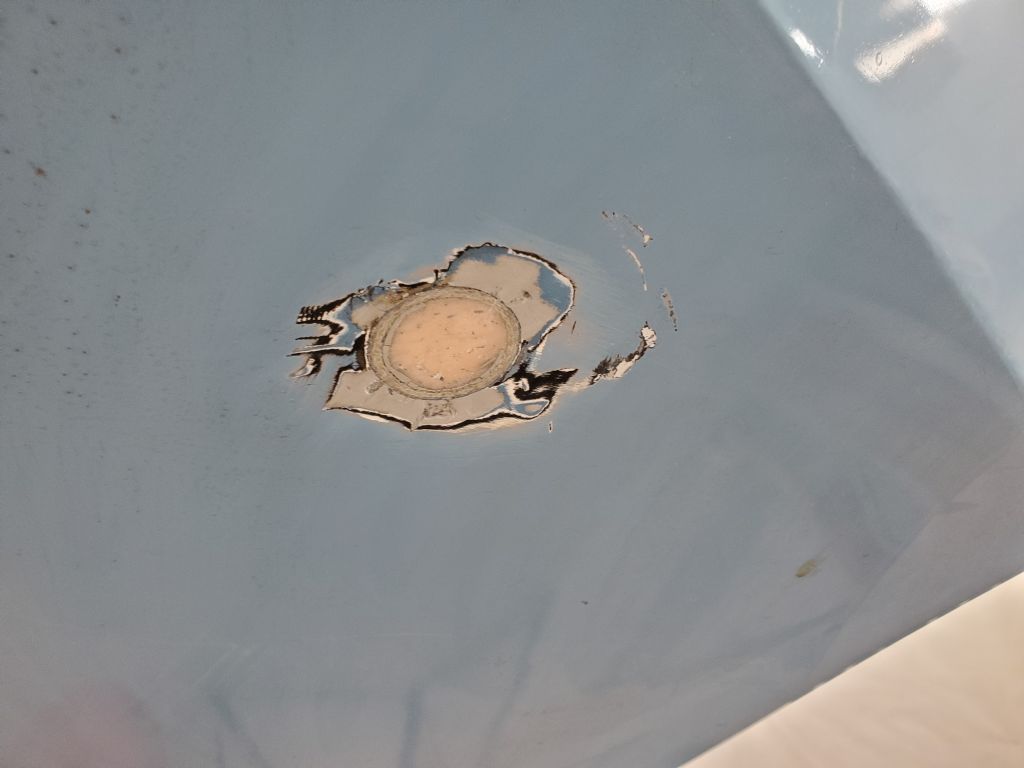
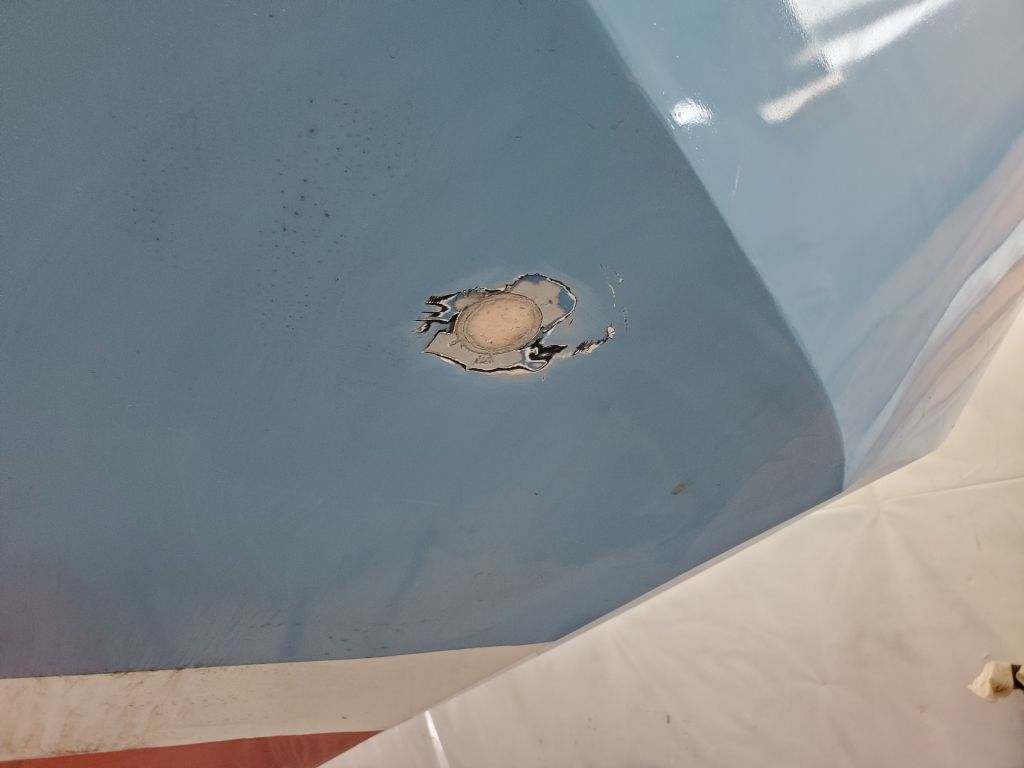
Meanwhile, in and around all this, I finished up basic preparations to the small transom/counter paint touchups, and, using an old can of the 2-part polyurethane paint that had been applied to the hull during the incomplete refit 10 or so years before, dabbed on some hull color to blend the small repairs.  With two coats applied over a few hours, the repairs disappeared for the most part, certainly well enough given the tiny efforts expended for the work.  Never were these fastener and exhaust repairs intended to attain perfection, but were merely a stopgap measure for now.

While I was on the foredeck, I removed an existing bow mooring cleat, which needed to be removed to make way for a bronze mooring bitt the owner had attained.  The cleat was easy to remove, another surprise, so that made for quick work.  I’d move forward with the final bit installation details in the near future, once my backing plate material arrived.

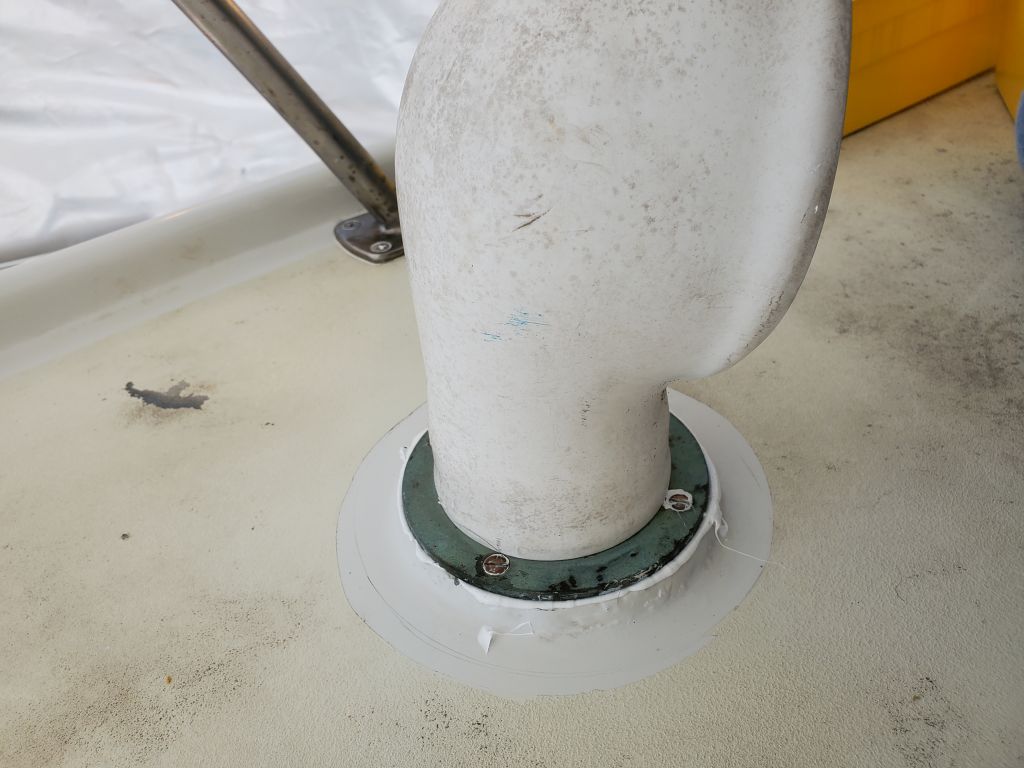
I also installed with sealant and new bronze fasteners the cowl vent on its little raised foredeck platform.

The stern pulpit was not original to this specific boat, but was otherwise a generally good fit.  However,  when I laid it out on deck to prepare for installation, I found that the port aft base interfered with the molded round on the taffrail where the sternlight was originally installed.  I couldn’t move the pulpit forward at all to clear it, since then it would interfere with the new hatch opening and lid.

With a small tweak to port, the offending base could fit next to the molding, but this skewed the pulpit rather badly off center.

After discussions with the owner during our common postgame analysis session, we decided to cut away the silly round molded area on the taffrail and thus make room for the pulpit base in the correct location, so I’d add that to my list and take care of the repair and some temporary cosmetics over the coming days.

Meanwhile, my delivery arrived, and with time growing short in the day I immediately made up a set of fiberglass backing plates for the bow pulpit, using my template as a guide for the screw holes.  I found that these were slightly too wide, given the angle of the hull beneath the protruding fasteners, so I trimmed them slightly, the installed the backing plates at each pulpit base location with fender washers, lockwashers, and nuts to complete the installation just in time for the end of the day.

Total time billed on this job today:  6.25 hours

0600 Weather Observation:  Overcast, 45°.   Forecast for the day:   Mostly sunny, 62°

Lively Heels Phase 3-41

Monday

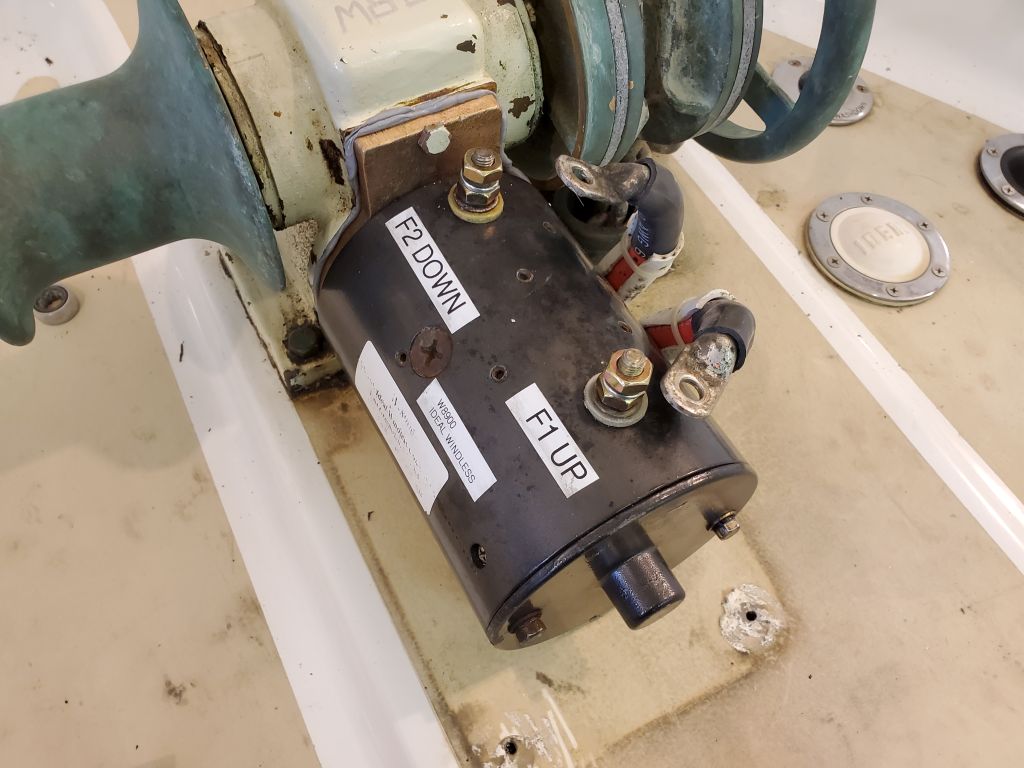
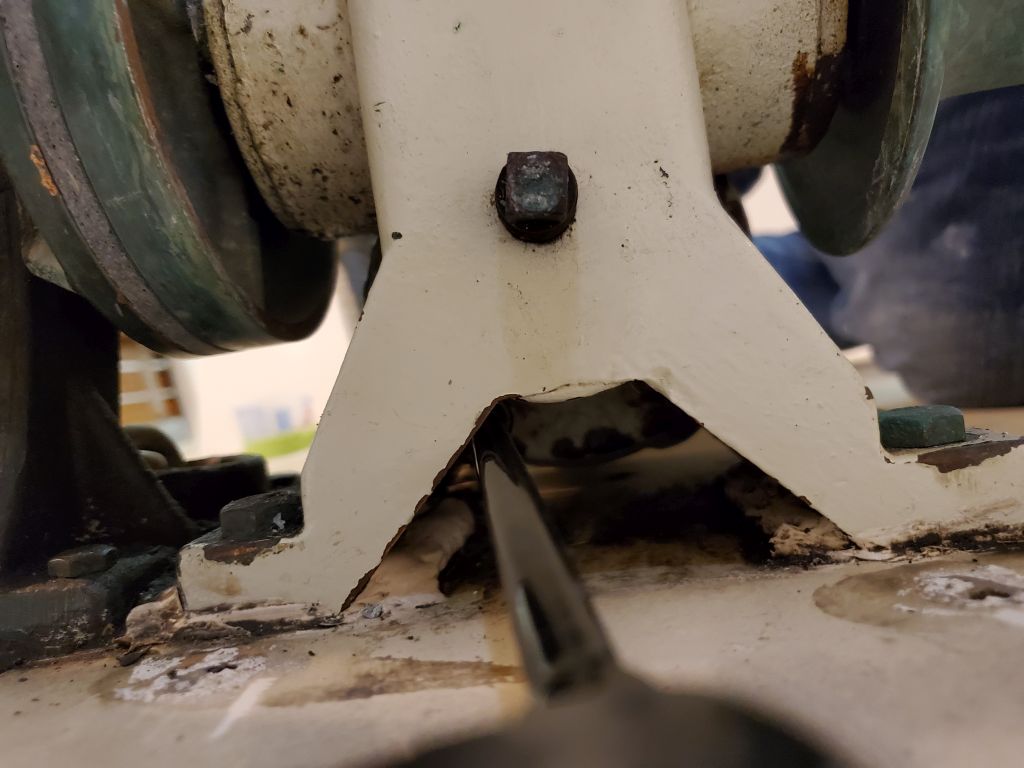
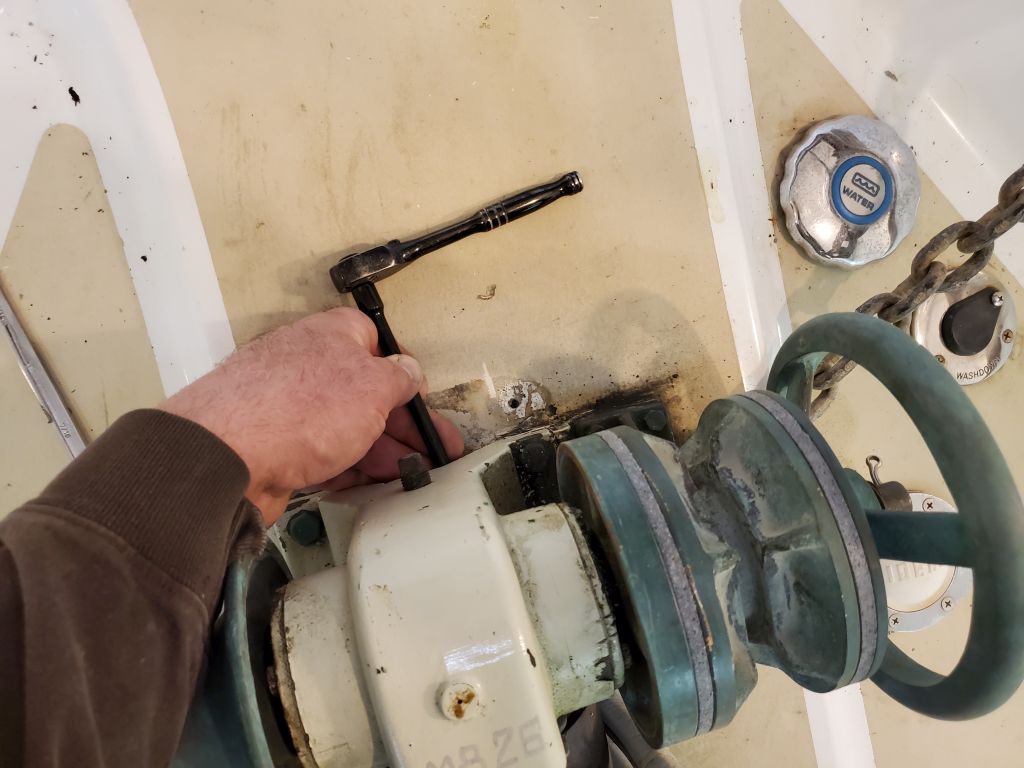
Over the weekend, the owner delivered the reassembled windlass motor, now in the correct orientation.  I was most anxious to reinstall this, since I’d been dreading it since I removed it in February, unsure whether or not the poor access to the mounting bolts would allow reassembly in place or not.  So fresh into the new week, I decided to get right to it and see if I could knock it off the list.

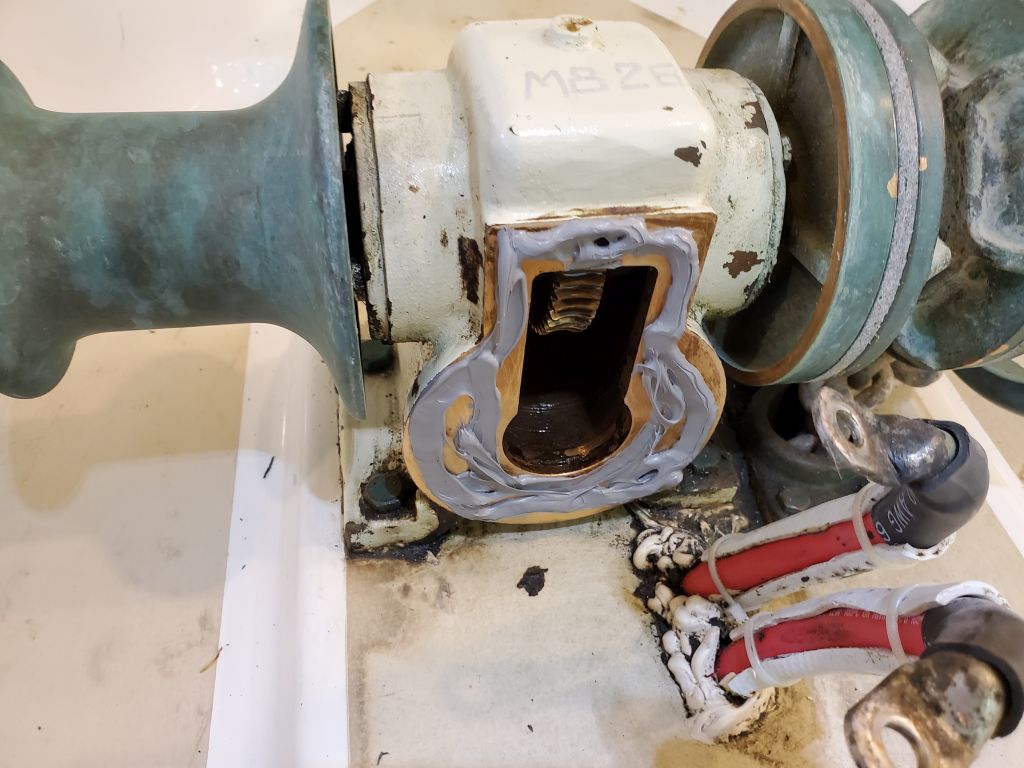
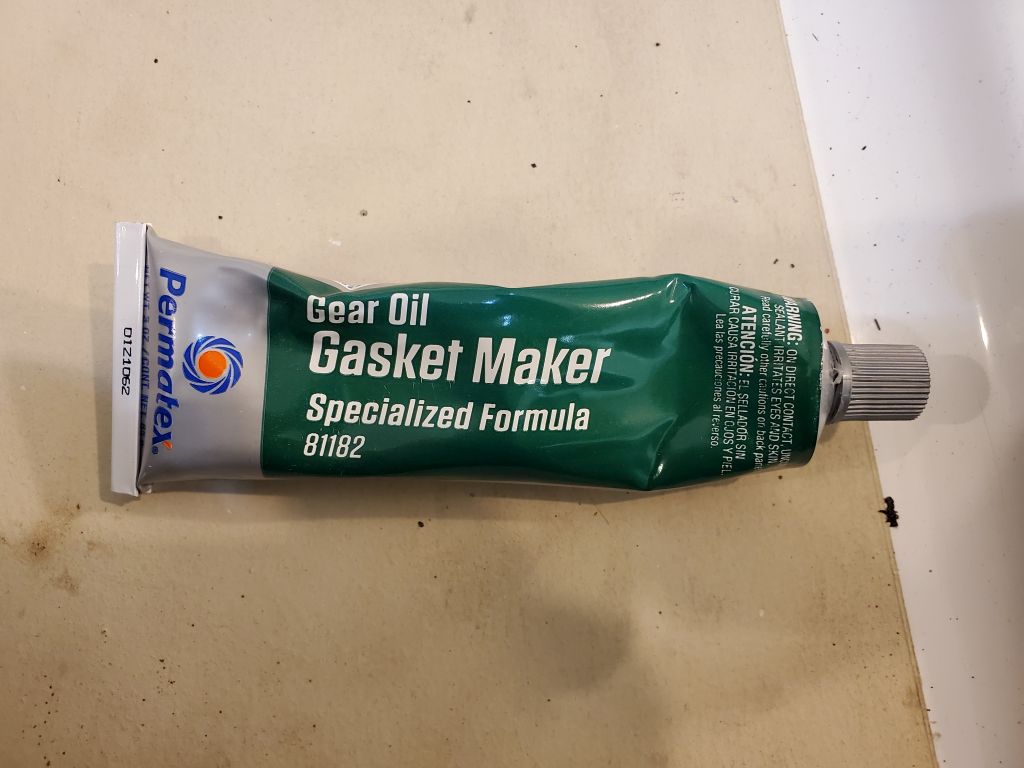
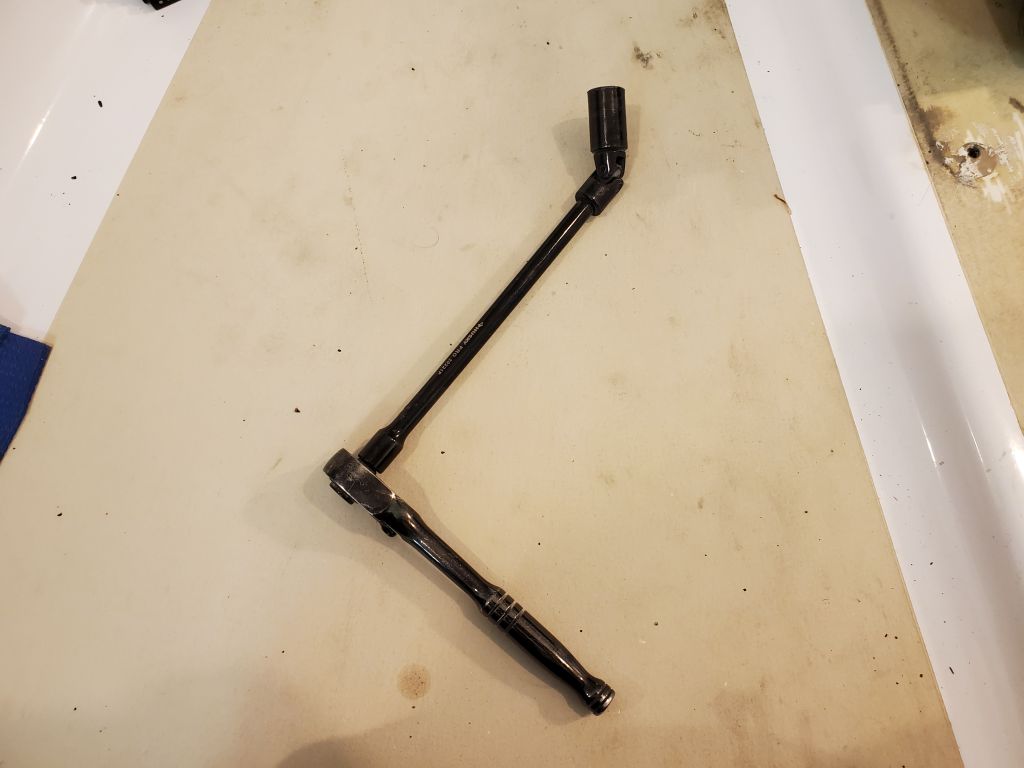
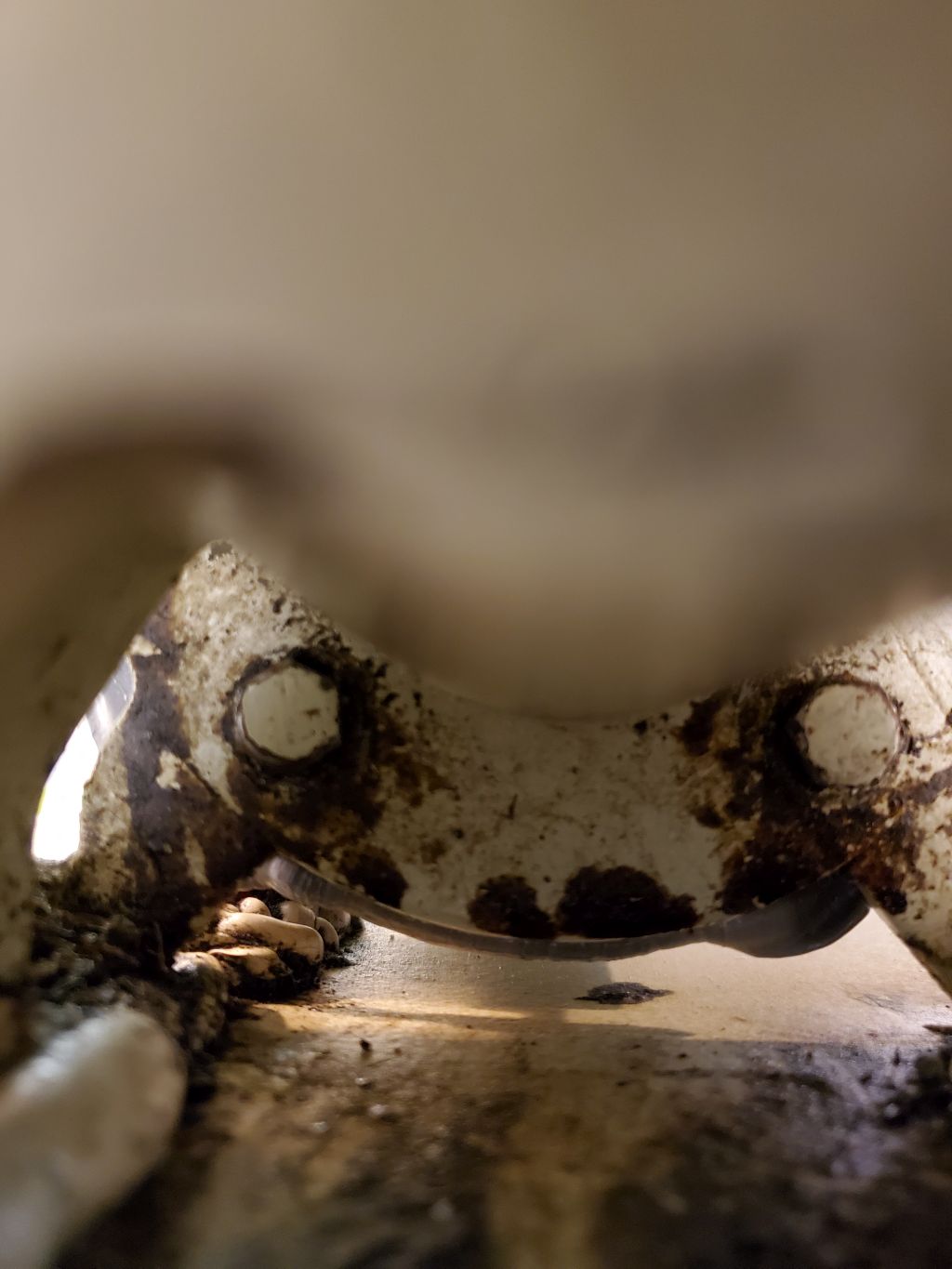
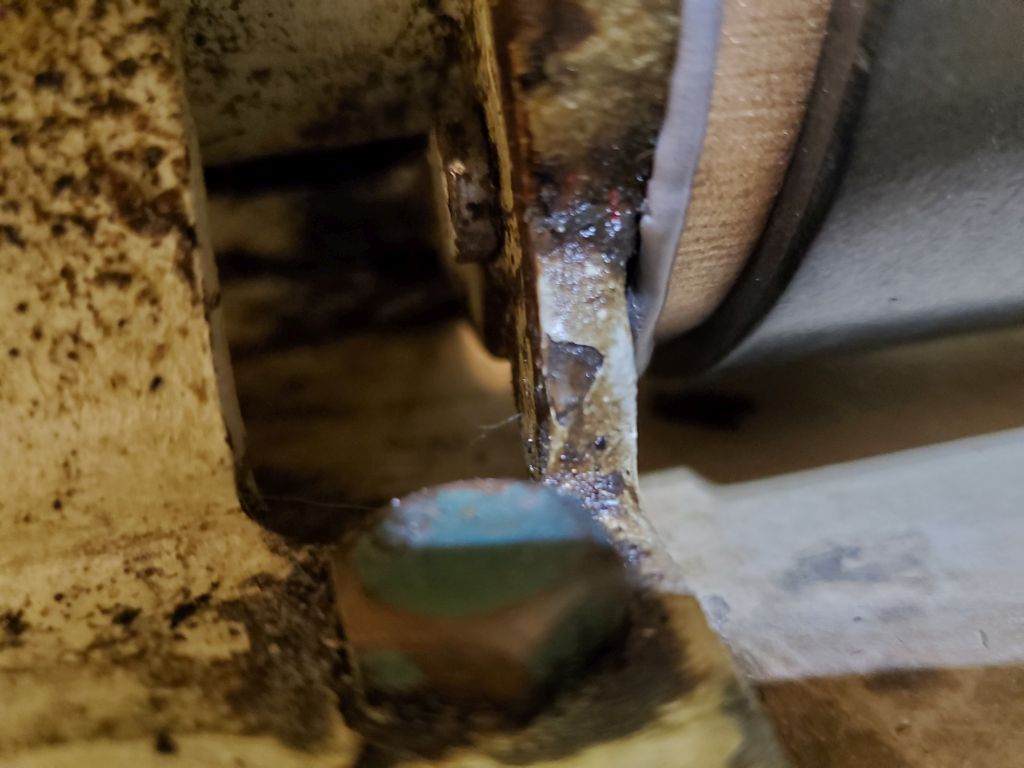
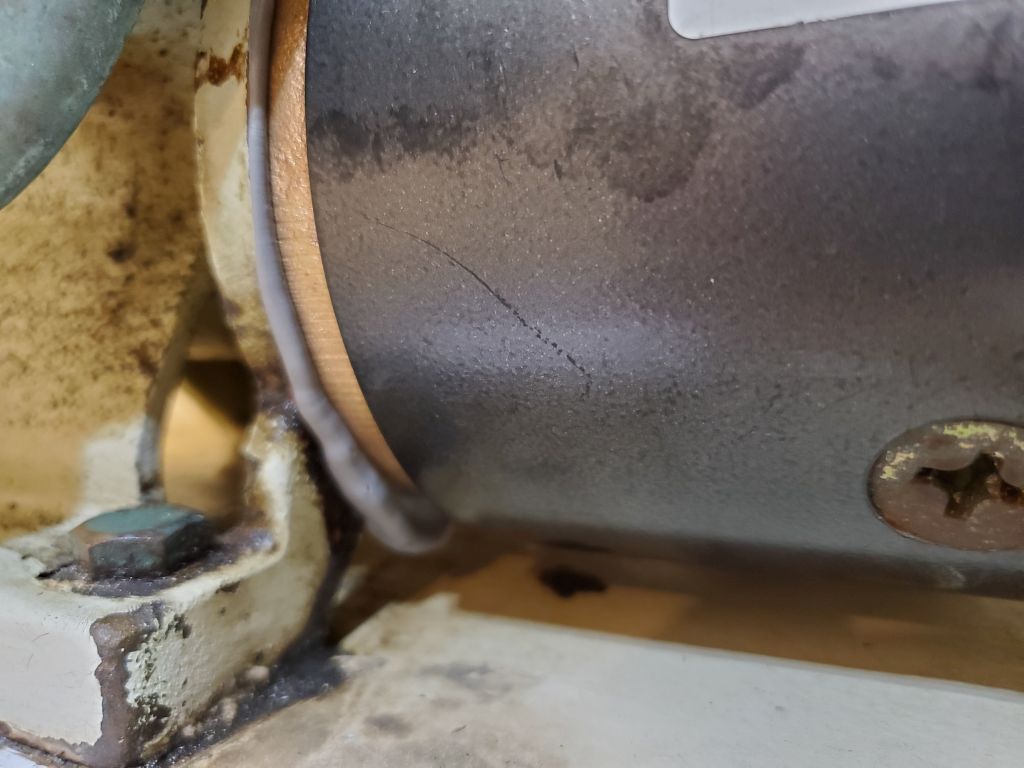
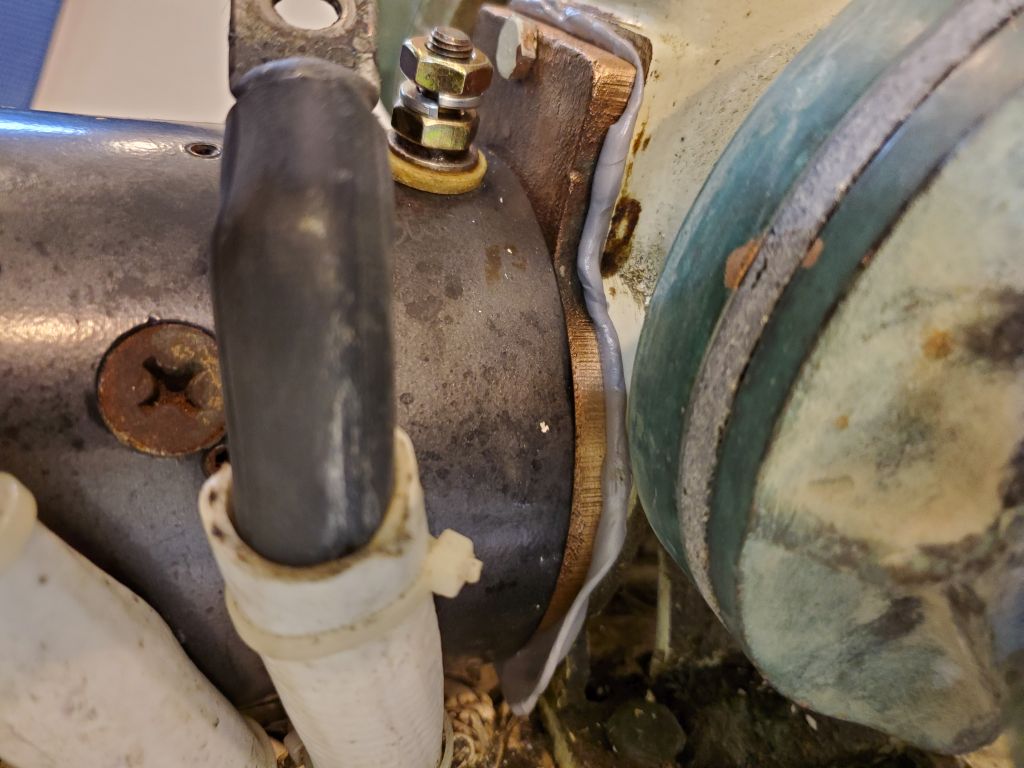
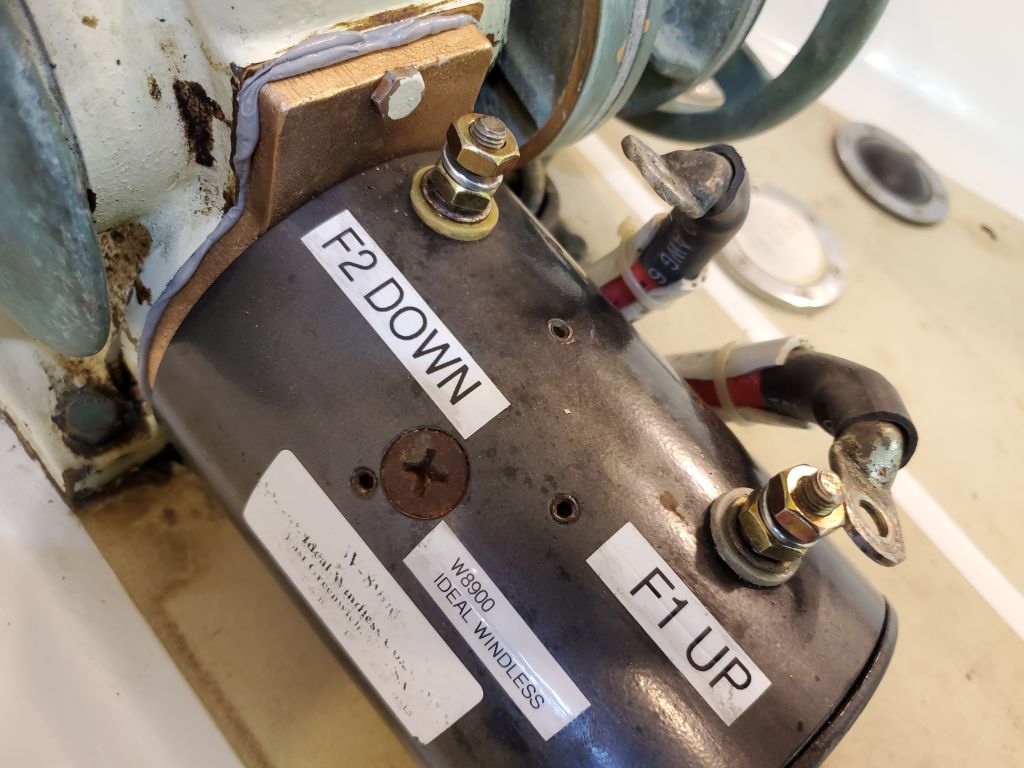
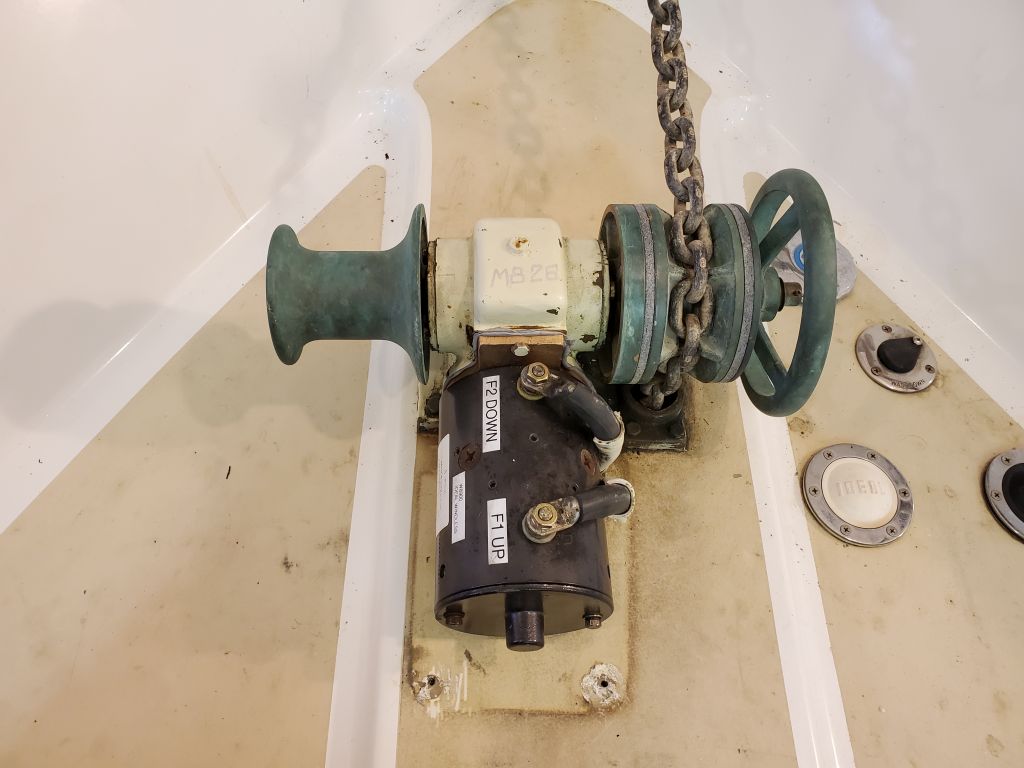
During my previous installation attempt, when I discovered the motor had been reassembled upside down, I’d already made all the other related preparations, so now I could just begin with a dry fit, inserting the worm gear and aligning the gears inside the windlass as needed to allow the motor to slip in and line up with the bolt holes.  I’d entertained the idea of getting the three bolts started with the flanges dry, before sealant/gasket material, but the fasteners were too short to allow enough room for access to install the sealant in this way.  So, satisfied with the dry fit, I used my small ratchet and extension, along with the universal joint I’d used to remove the bolts before, to get the hardest bolt–the one on the starboard side–set up in its hole from ahead, ready to be installed.  Then, I applied the gasket sealant, a silicone RTV specifically designed for gear oil and, with its thick consistency an obviously better choice than the Ideal directions had indicated before (which is what I used twice to rebed this motor before the windlass was installed 6 years earlier).

With the greatest of pleasure, I found that in the end I had no trouble installing the motor.  It wasn’t fun, and I was on edge the whole time, trying to get the two lower, hidden fasteners started, but in the end it proved no issue and before long at all I had the motor securely squooshed in place.

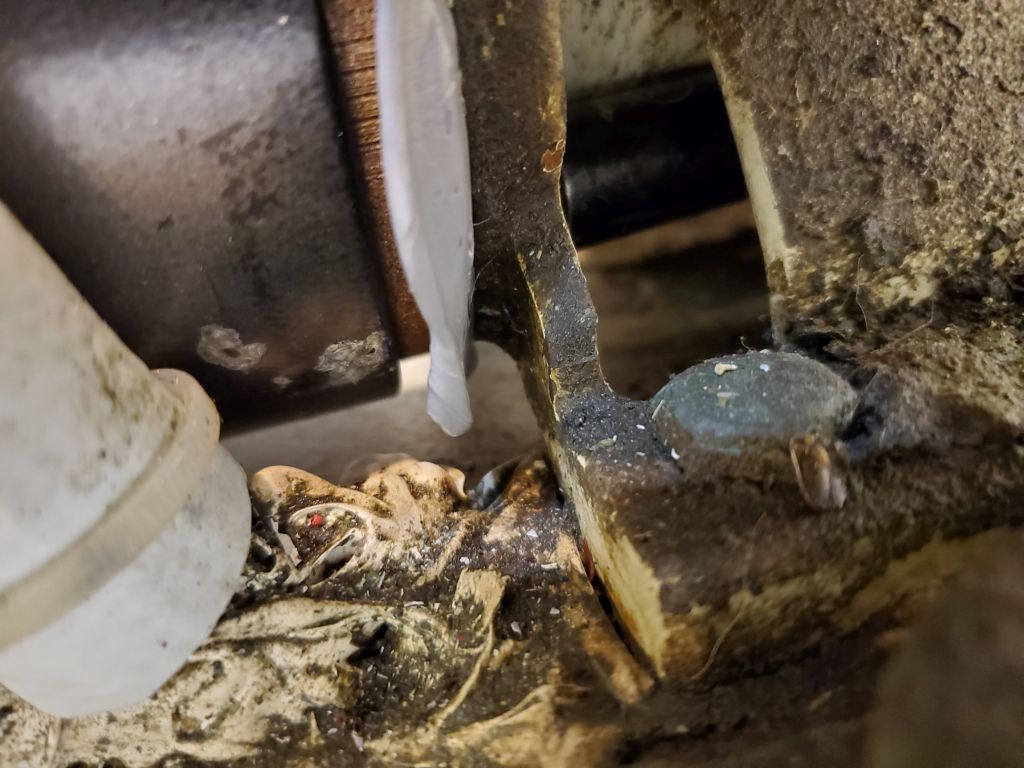
I chose to leave the excess sealant as it was, seeing no reason to bother cleaning it up where it squeezed out, and was happy to see a consistent bead of squeezeout all around the motor, which hopefully bode well for a leak-free existence from here on out.

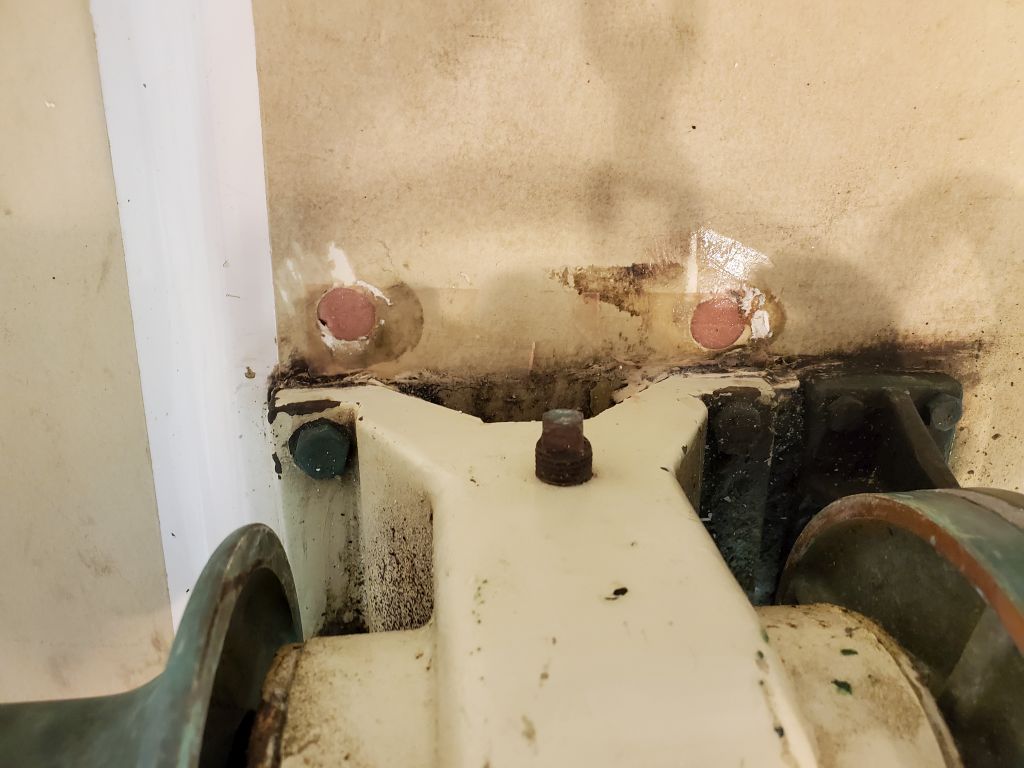
Flush with relief, I finished up the reinstallation for now by reconnecting the two power cables.  Then, I drilled out and epoxy-filled the four old fastener holes in the deck that had originally secured the fiberglass windlass cover.  The owner had found that these were unnecessary, that the cover was a tight fit and stayed in place on its own, plus we had contracted a new canvas cover over the whole thing (to be fitted soon), so these holes were now obsolete.

I chose to leave the newly-installed motor alone for a couple days to let the sealant have plenty of cure time before I filled the reservoir and tested the windlass by hauling the drydocked anchor back on deck.

Total time billed on this job today:  1.25 hours

0600 Weather Observation:  Overcast and fog, 45°.   Forecast for the day:   Eventual clearing and windy, 56°

Lyra 56

Monday

Before getting going, I went through the hardware to be installed in the days ahead and noted any lapses in my fastener inventory so I could order what I needed for the specific hardware.  I also ordered some backing plate material that I’d need for some of the installations.

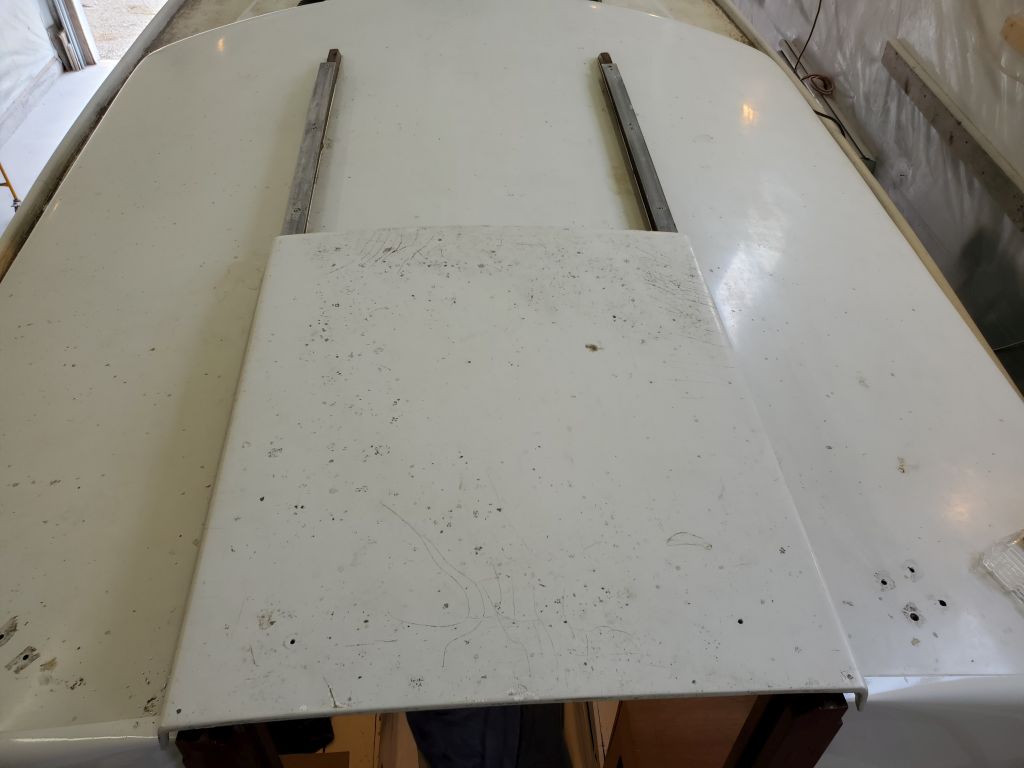
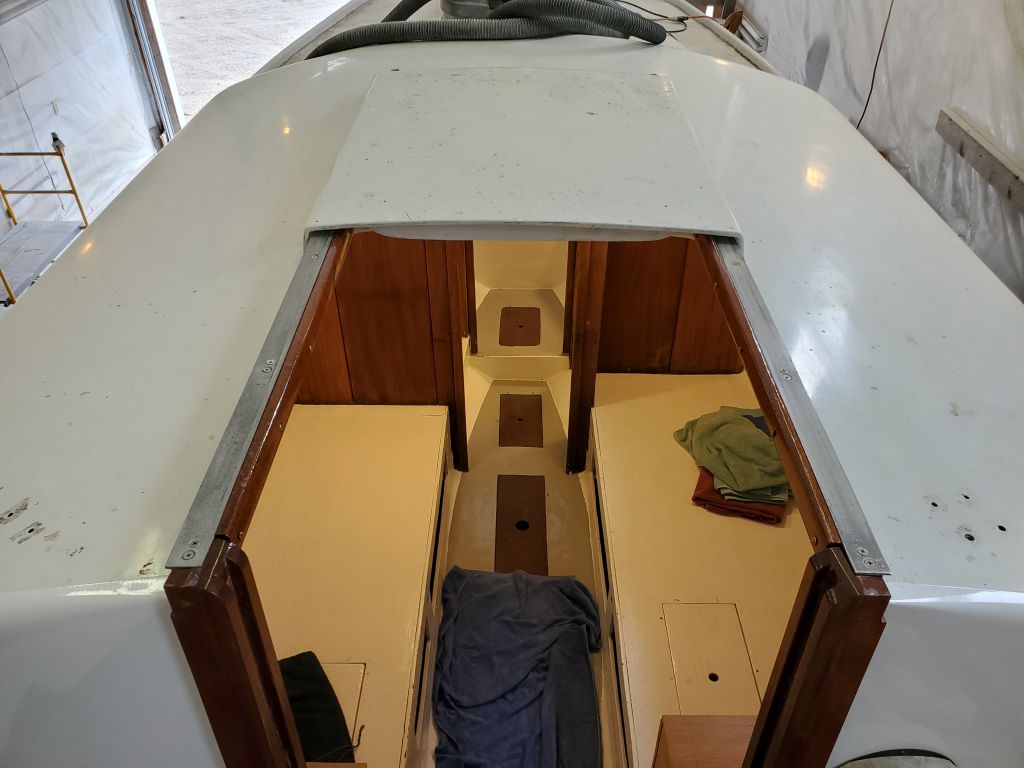
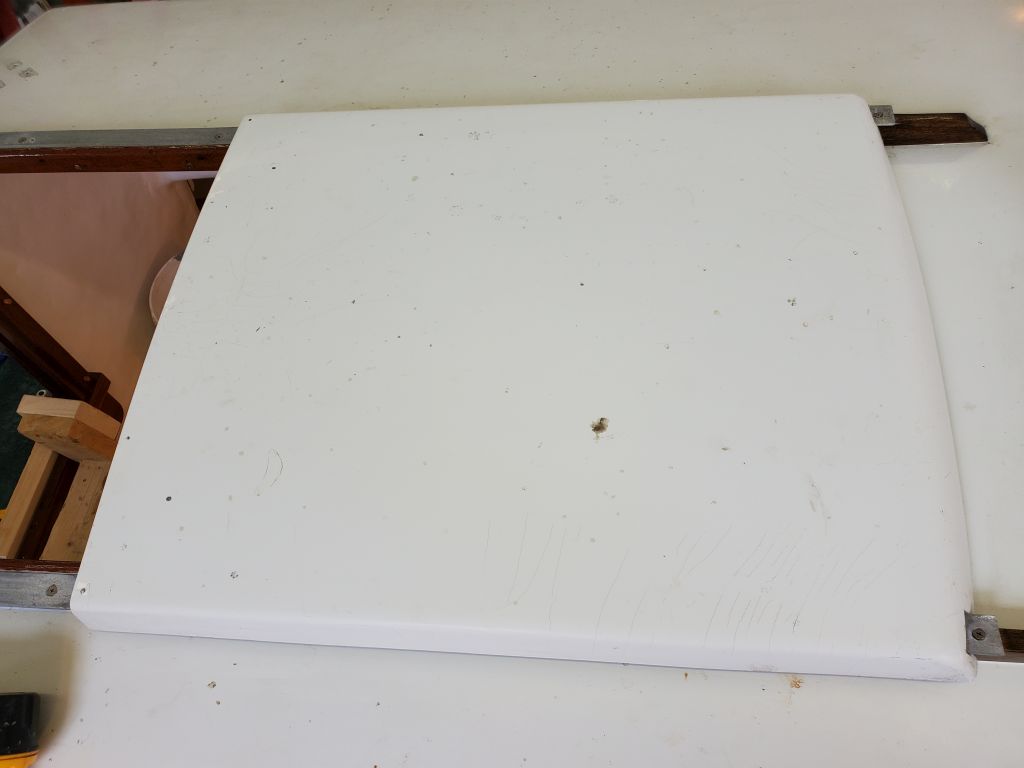
The companionway hatch was ready for final installation.  This was straightforward in concept, but I found that the reinstalled/rebuilt guide rails on the hatch rubbed the wooden supports near the forward end of the companionway opening when the hatch was operated, which required me to grind down a bit of the aluminum guides for better clearance.  Once the hatch slid more or less acceptably before final installation, I could proceed with installing the aluminum flat stock that the hatch slid over and around, completing the installation.

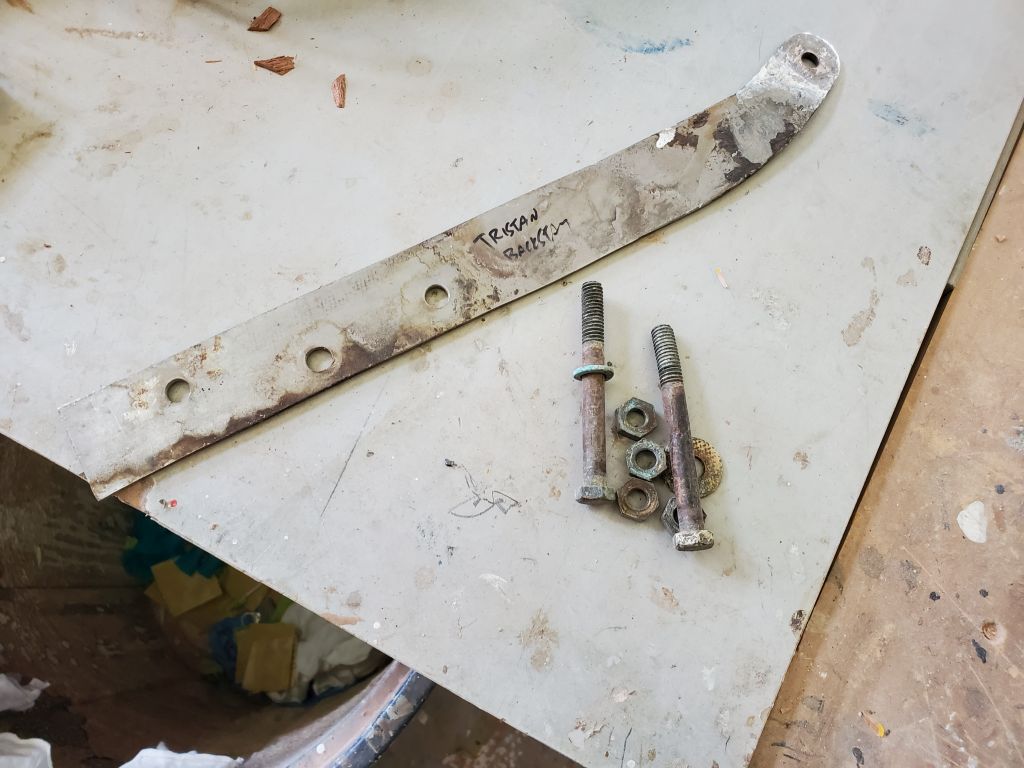
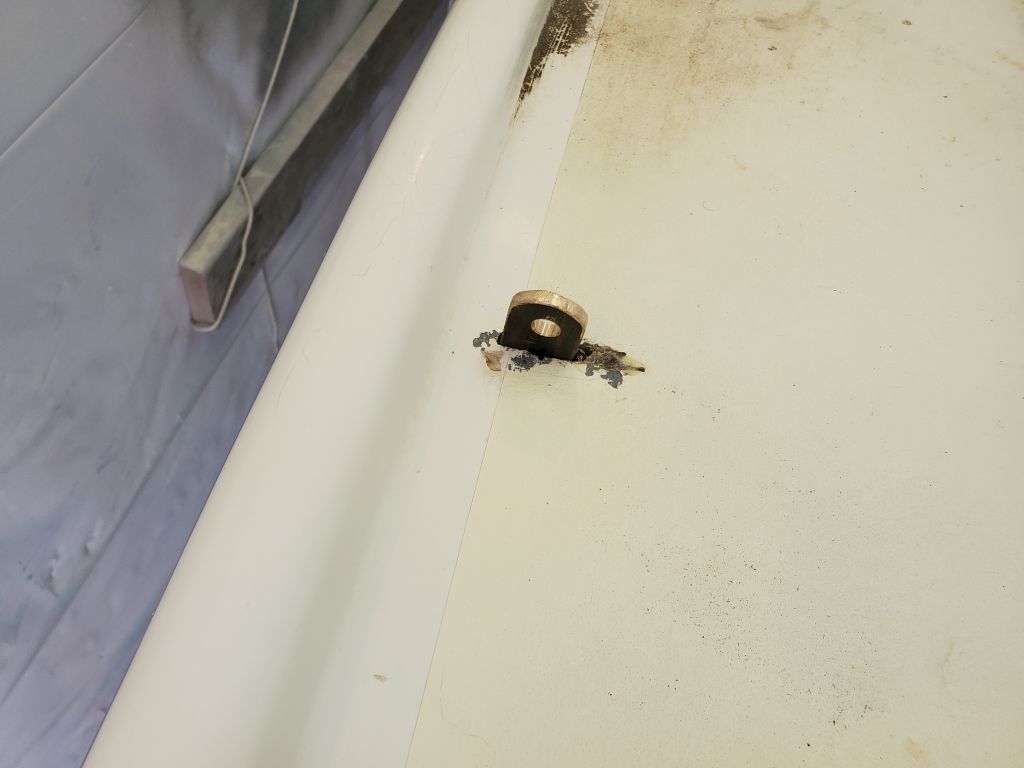
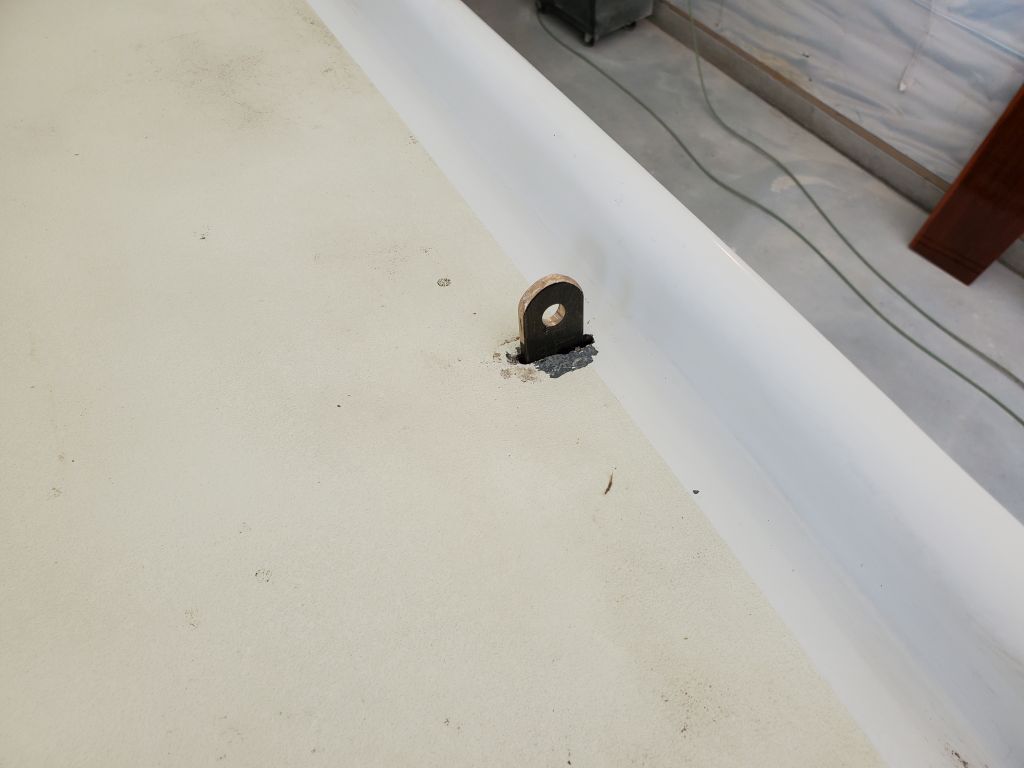
I began the hardware installation with the chainplates, with four new bronze chainplates that I’d replicated earlier plus an older, but sound, stainless steel plate for the backstay.  This chainplate required a quick cleanup but was in good condition; I didn’t have long-enough bolts on hand for this, so I ordered replacements to have on hand next time.

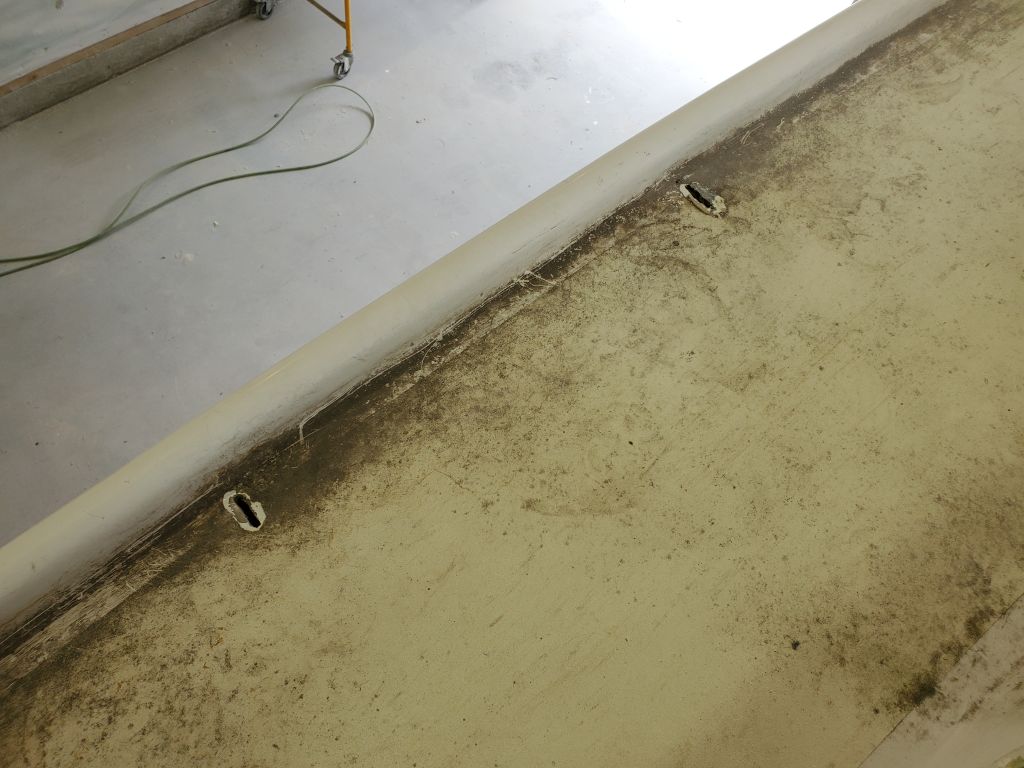
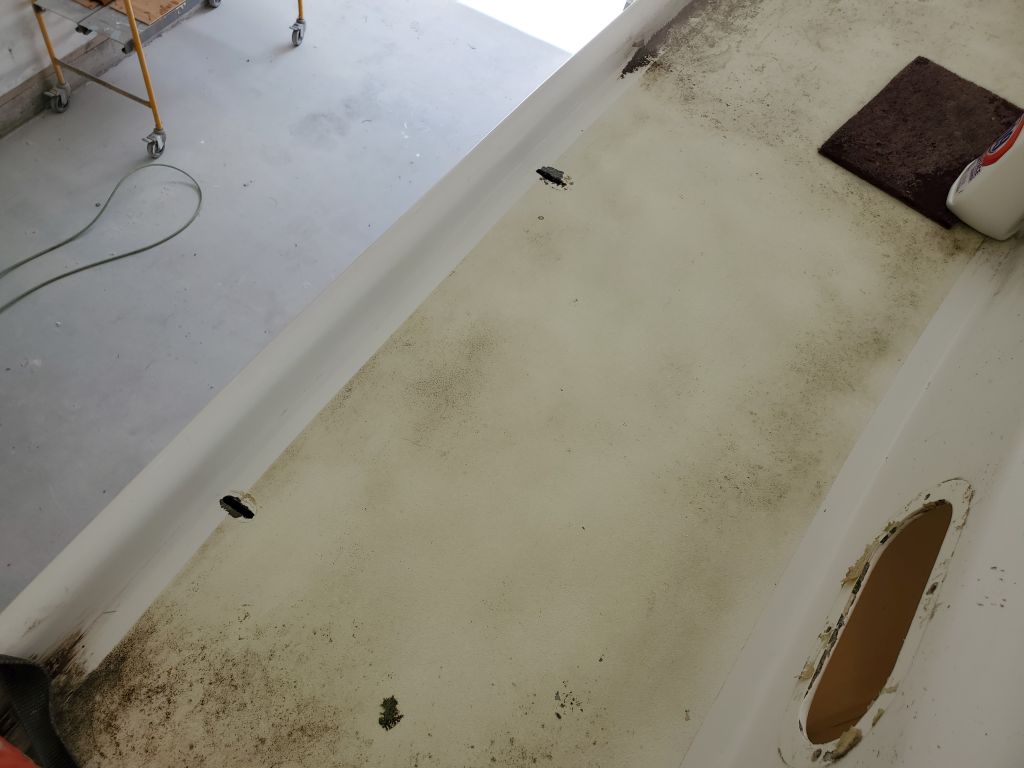
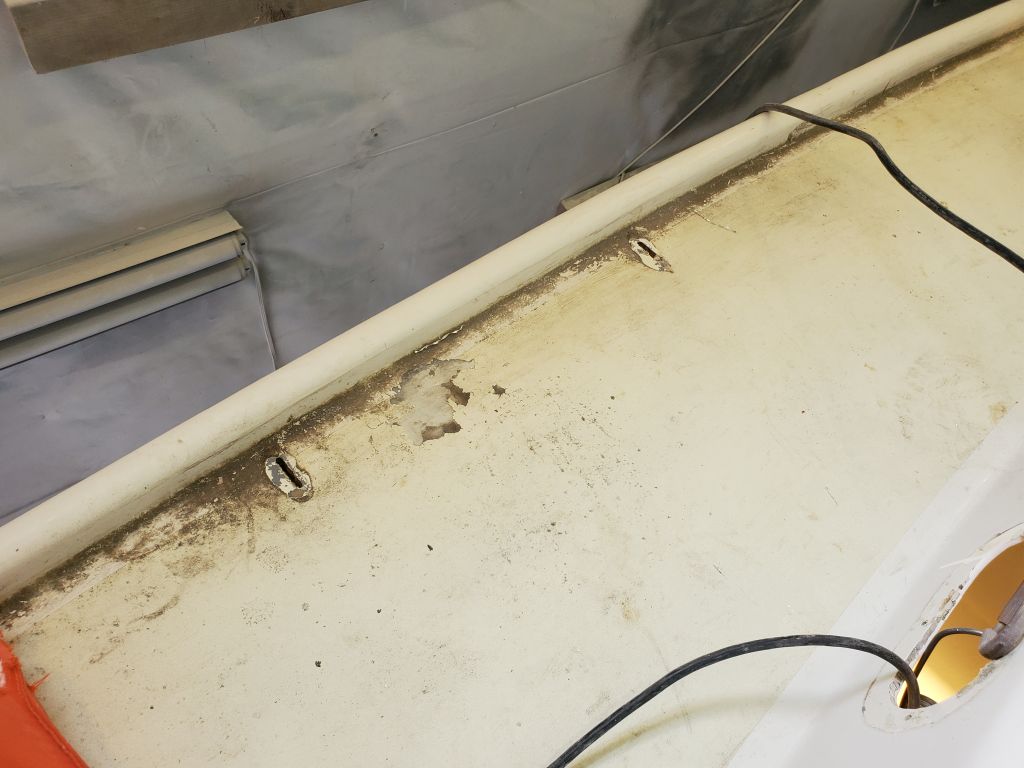
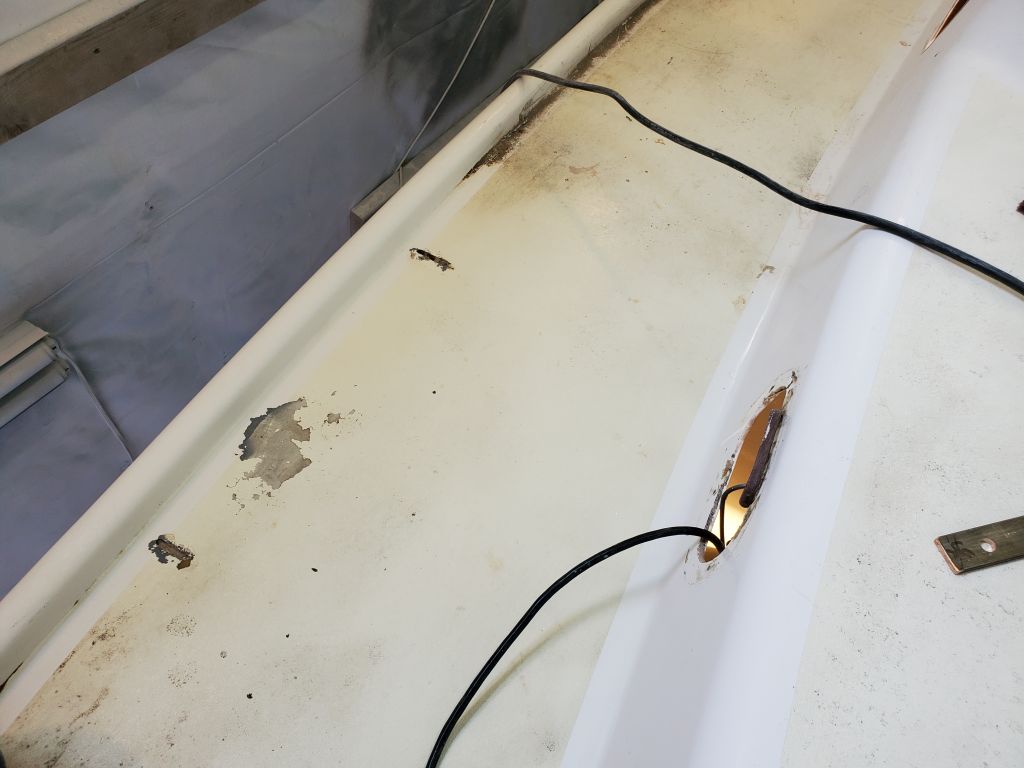
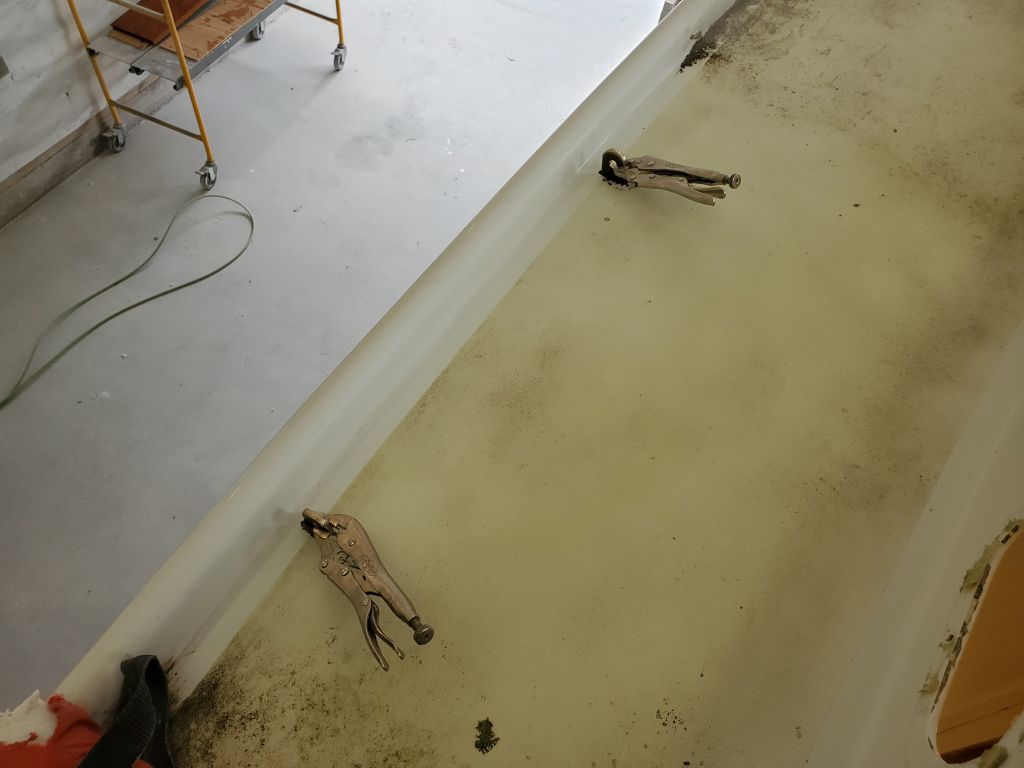
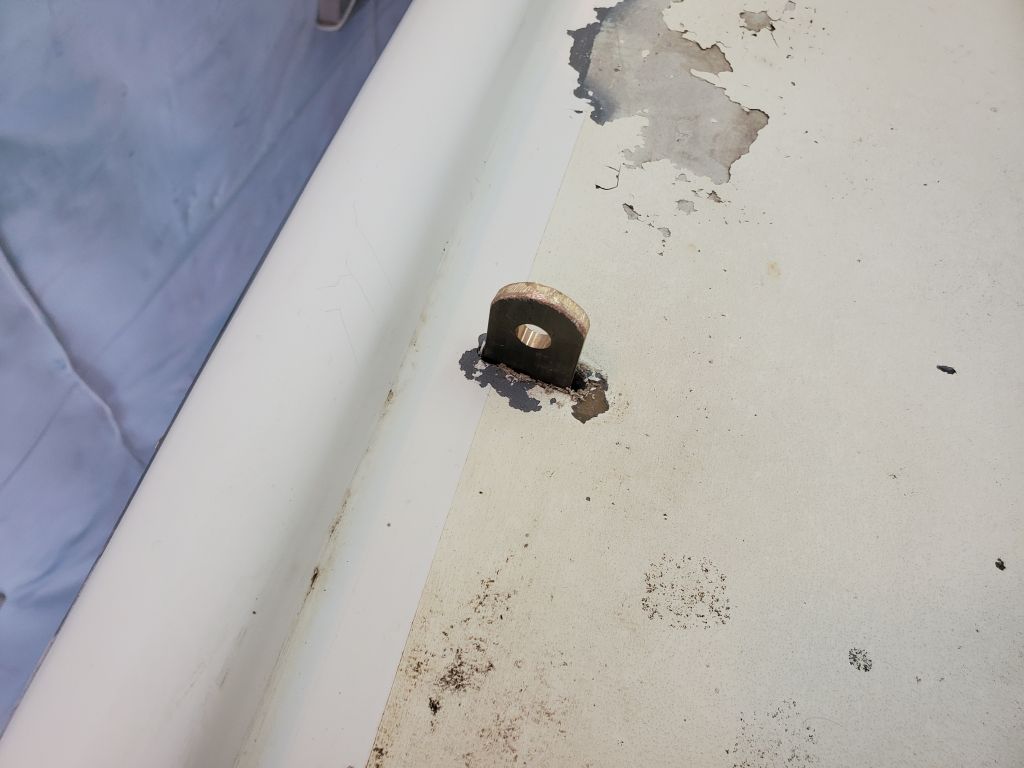
At the chainplate locations on the sidedeck, the existing slots required a bit of cleaning out and slight enlargement to handle the new, thicker chainplate stock.  This was quick with a drill bit to ream out the openings as needed.  To better prepare the deck for the installation, I had good luck cleaning up the well stuck-on dirt from 10 years of neglect with a Scotch-Brite pad (maroon) and 409:  The dirt dissolved with essentially no effort, leaving behind an imperfect but much better surface.

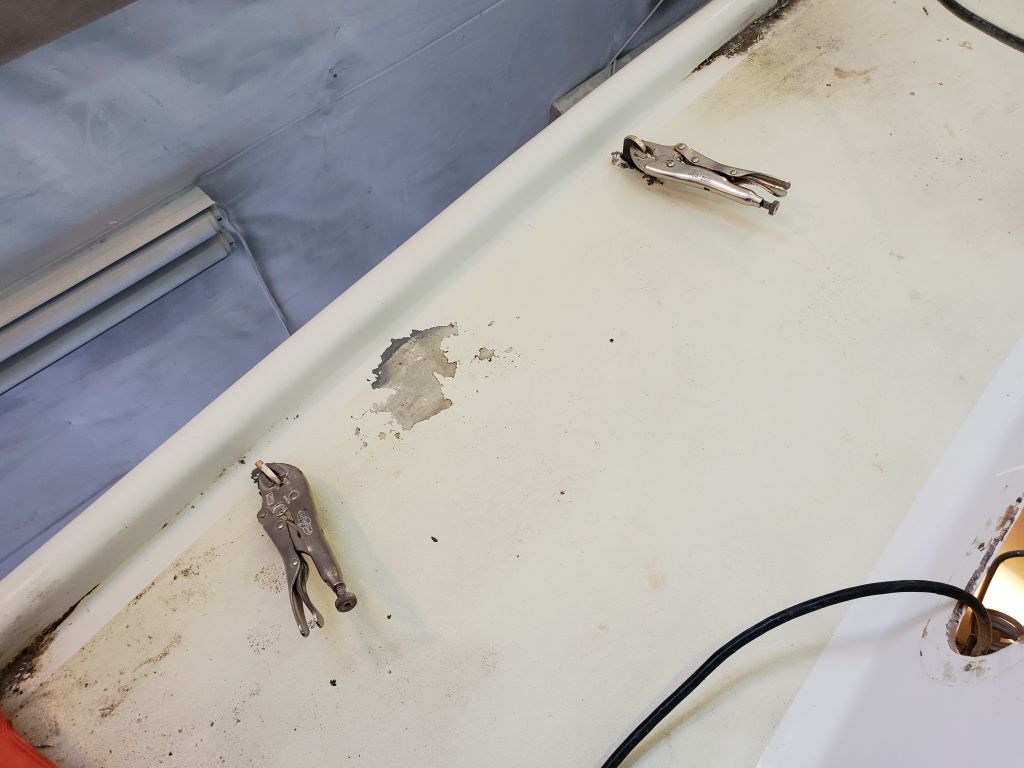
Thusly prepared, I slipped the new chainplates through the slots, clamping on some locking pliers so the chainplates couldn’t slide all the way through.

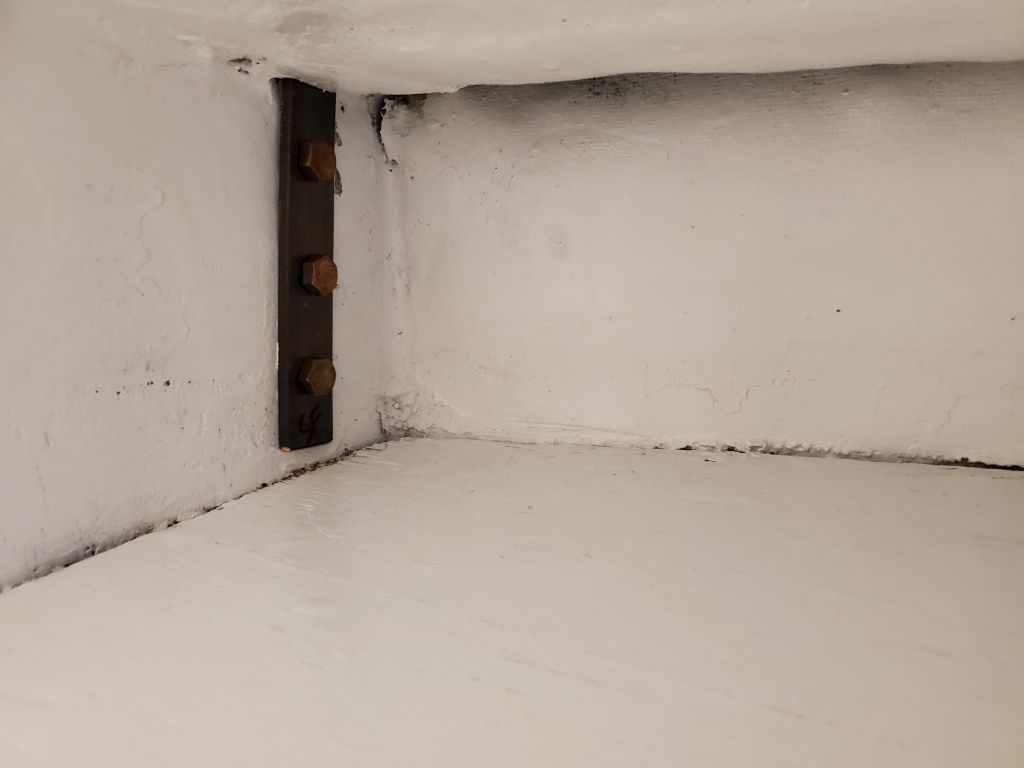
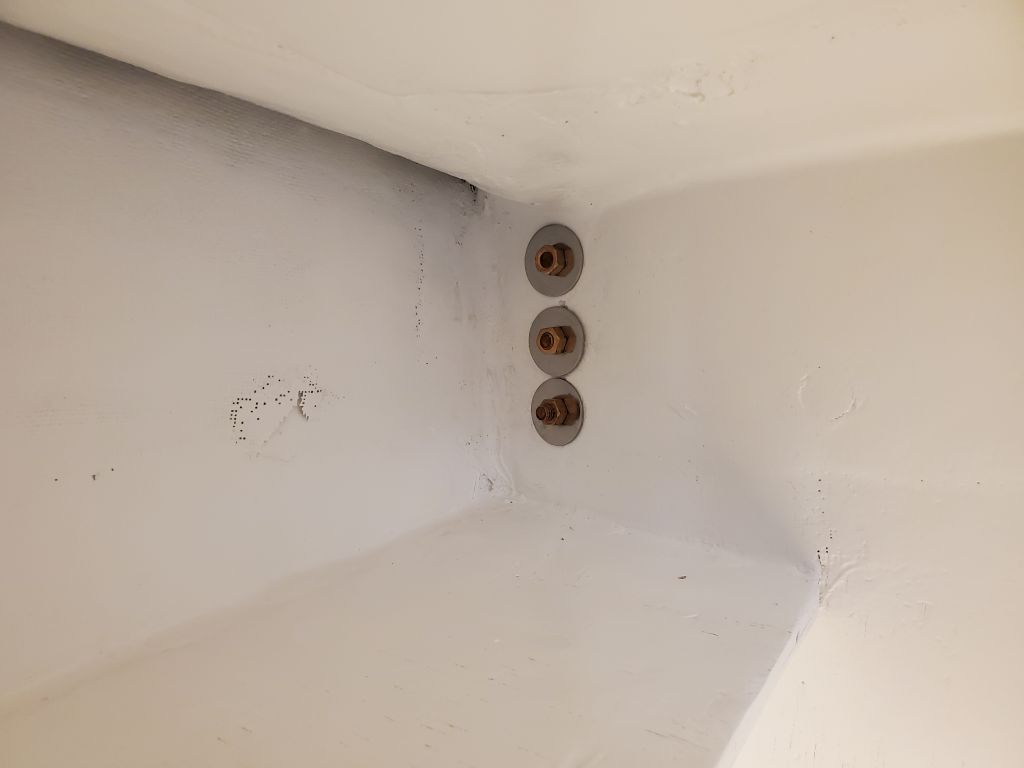
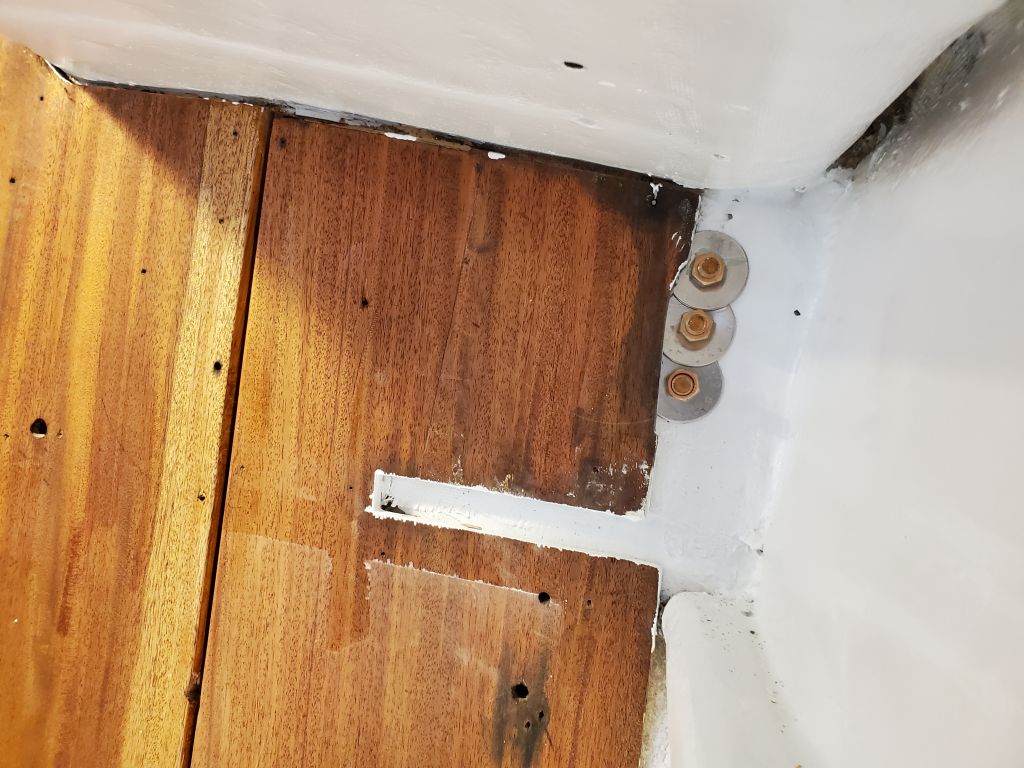
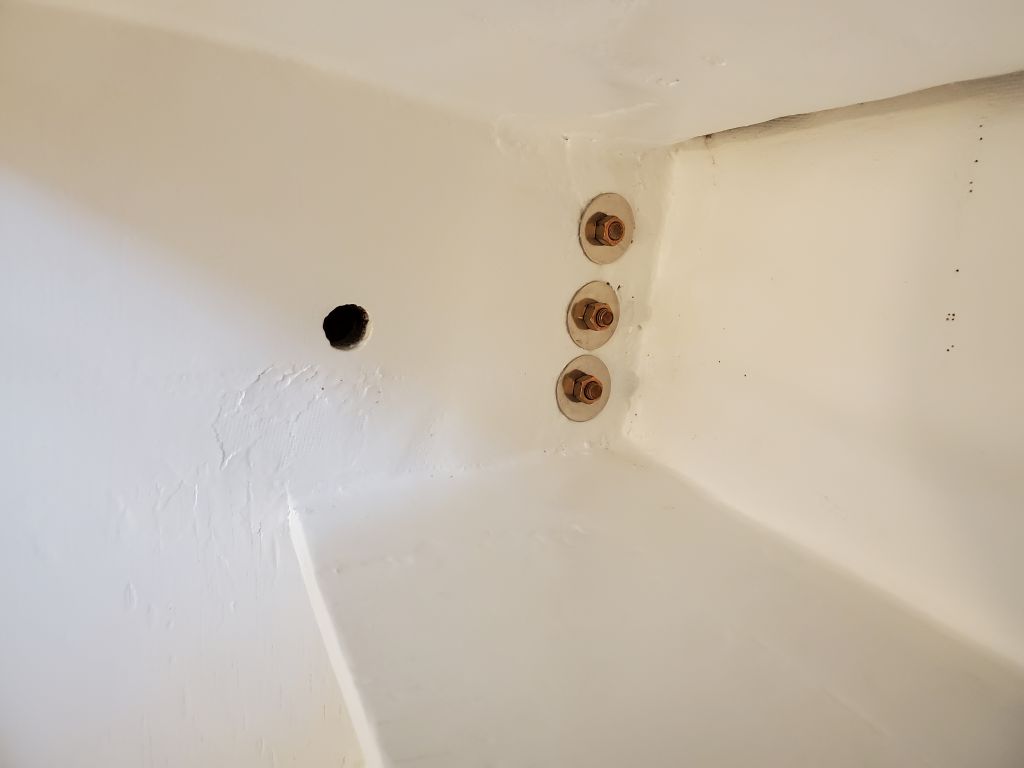
Down below, I bolted the chainplates in with new bronze fasteners and large SS fender washers, since I’ve never seen bronze fender washers.

The slot for the backstay chainplate wouldn’t allow the chainplate through–too narrow–so I opened it up a bit as needed and slipped in the chainplate, which now awaited the correct fasteners once they arrived.  Meanwhile, I turned my scrubbing attentions to the poor poop deck, which was in dreadful cosmetic condition overall but at least looked a little better once cleaned up.  Cleaning this area took only a minute or two.

I also tried the new method on the top of the companionway hatch, which looked better afterwards despite the various sap and resin spots that weren’t going to go away till the whole deck was repainted sometime.

Opening the chainplate slot with a multitool led me, stream-of-consciousnesswise, to the old engine exhaust outlet in the counter, which I’d been meaning to cut off for ages and now, with the tool plugged in and on the go, I took care of it.  Afterwards, I applied some quickie acrylic fairing compound over the old opening, and also to refine the previous epoxy fill work on the four outboard mount bolt holes in the transom.  I had an old can of the current hull paint on hand, provided by the owner, and hoped that I could use enough of it to color in these areas for improved appearance till such time as the boat might be repainted in the future, at which time a more permanent and better repair could be completed on these basic hole patches.

The lightweight compound on the transom holes cured enough to allow light sanding late in the day, but the slightly thicker application on the exhaust needed a bit more time.  I’d get back to it next time I passed by.

I wanted to start laying out the bow pulpit, though I wouldn’t have time to complete its installation this day since I soon needed to turn to sanding and varnishing in my daily way, but I could get the process started first by scrub-a-dubbing the foredeck in way of the pulpit mounting area (my goal was to have the deck clean enough to accept sealant where needed), then figuring out where the pulpit should land.  Since the pulpit wouldn’t stand upright on its own, once I figured the location I marked, drilled, and tapped one mounting hole for a 1/4-20 machine screw to tack it in place so I could eventually layout and mark the remaining fastener holes.  Knowledge of the work done on the boat previously, 10 or more years before, indicated that the main decks had been recored with Coosa board, so there would be no need to overbore and epoxy fill at most or all fastener locations.

I’d get back to the pulpit next time, but now I had to get to my daily varnish work, somewhat reduced now that the cockpit locker lids had their sufficient first-season coating (6 coats).  I continued work on the coamings, which were now receiving their 6th coat on the current side, and the swashboards, now on their 4th coat on both sides.

Total time billed on this job today:  5.5 hours

0600 Weather Observation:  Overcast and fog, 45°.   Forecast for the day:   Eventual clearing and windy, 56°

Lyra 55

Saturday

Over the weekend I managed one additional coat of varnish on the cockpit locker lids (six, probably the final coat for now), on the cockpit coamings (five on this side), and swashboards (three on both sides).  I also applied a second coat of semi-gloss white enamel to the underside of the companionway hatch.

Total time billed on this job today:  1 hour

0600 Weather Observation:  Clear, 35°.   Forecast for the day:   Mostly sunny, 67°

Lively Heels Phase 3-40

Friday

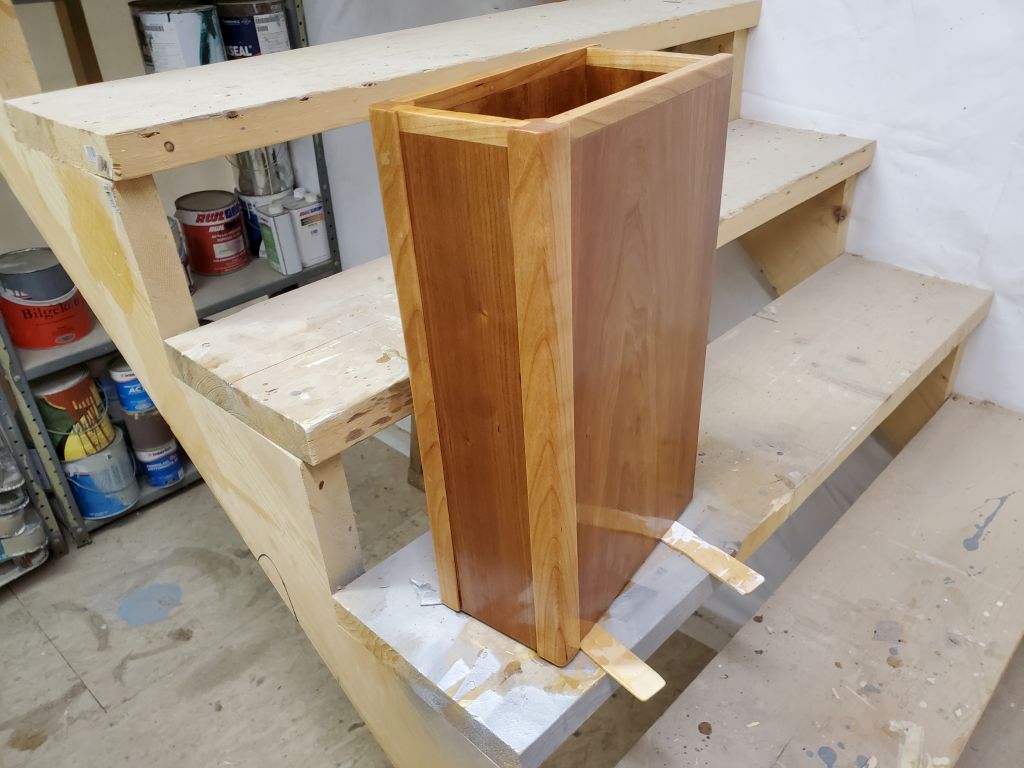
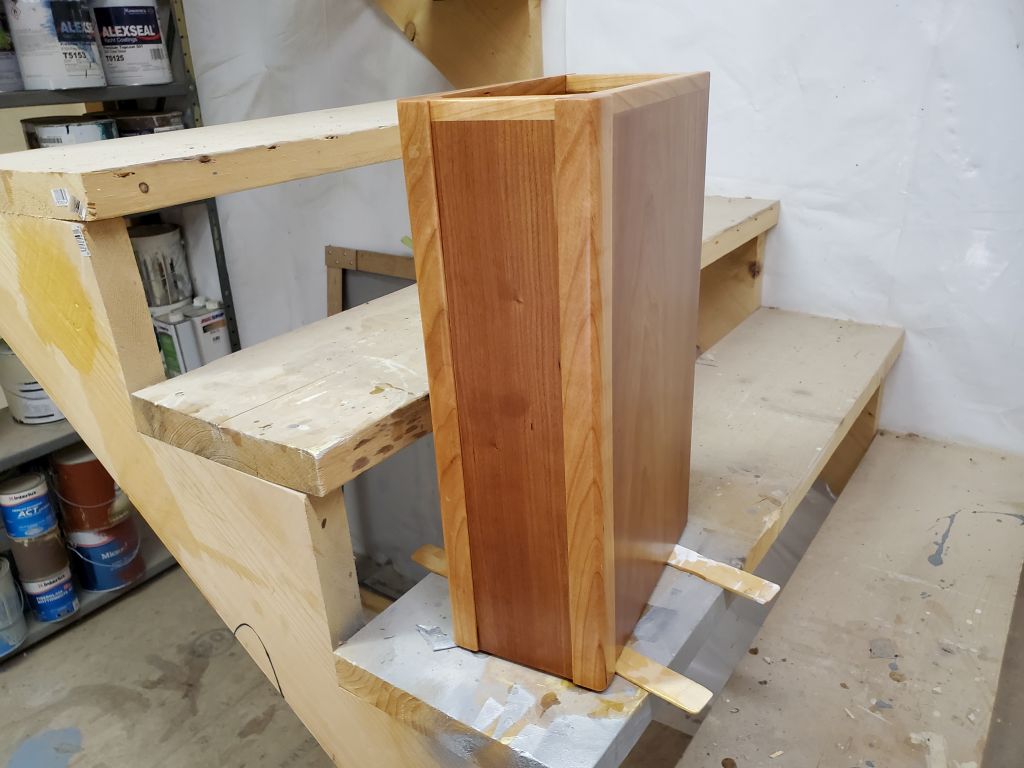
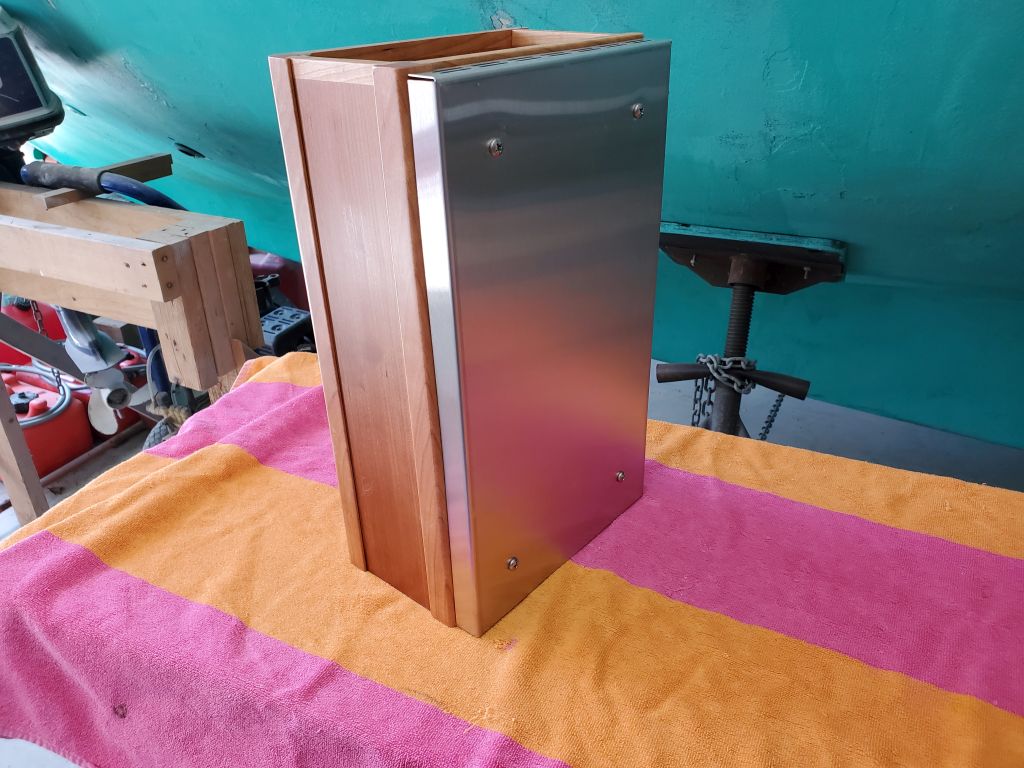
Over the past several days, I’d worked to build up base coats, then the final satin coat, of varnish on the new wood box, finishing up in time to allow the box to fully cure for a few days.

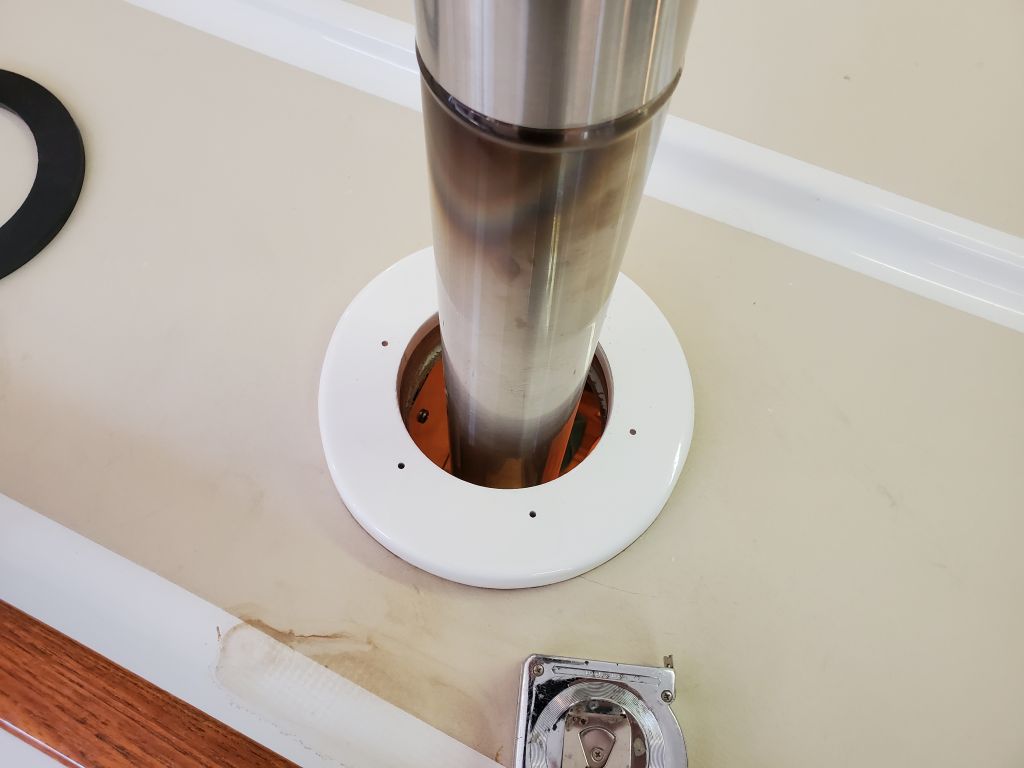
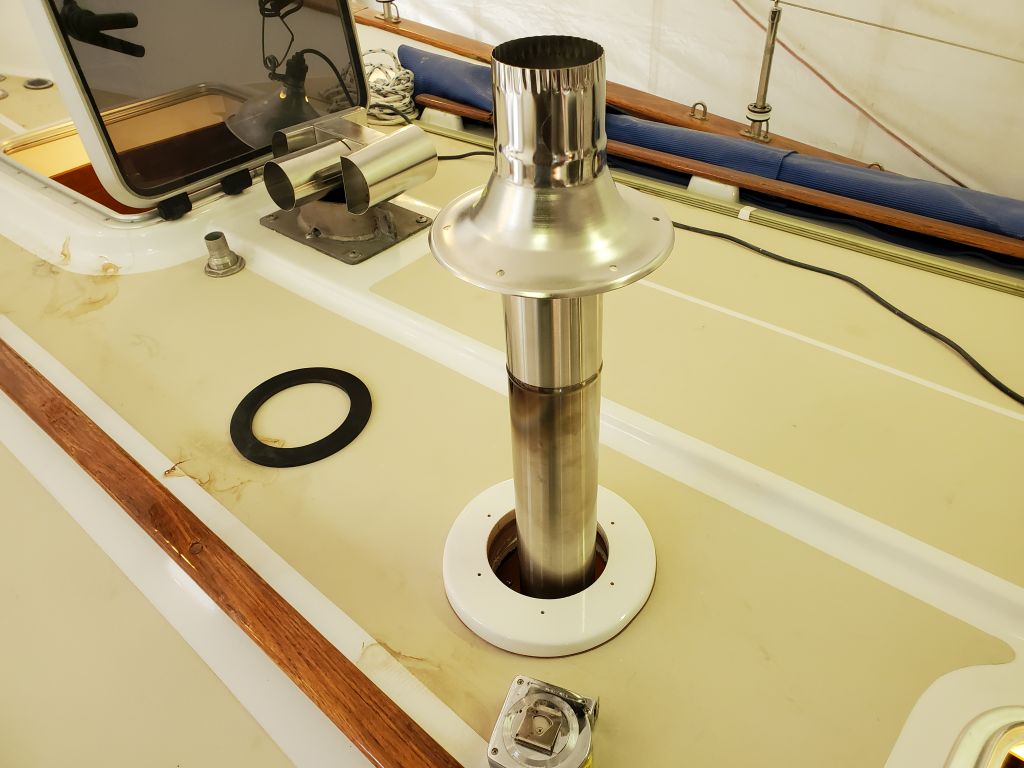
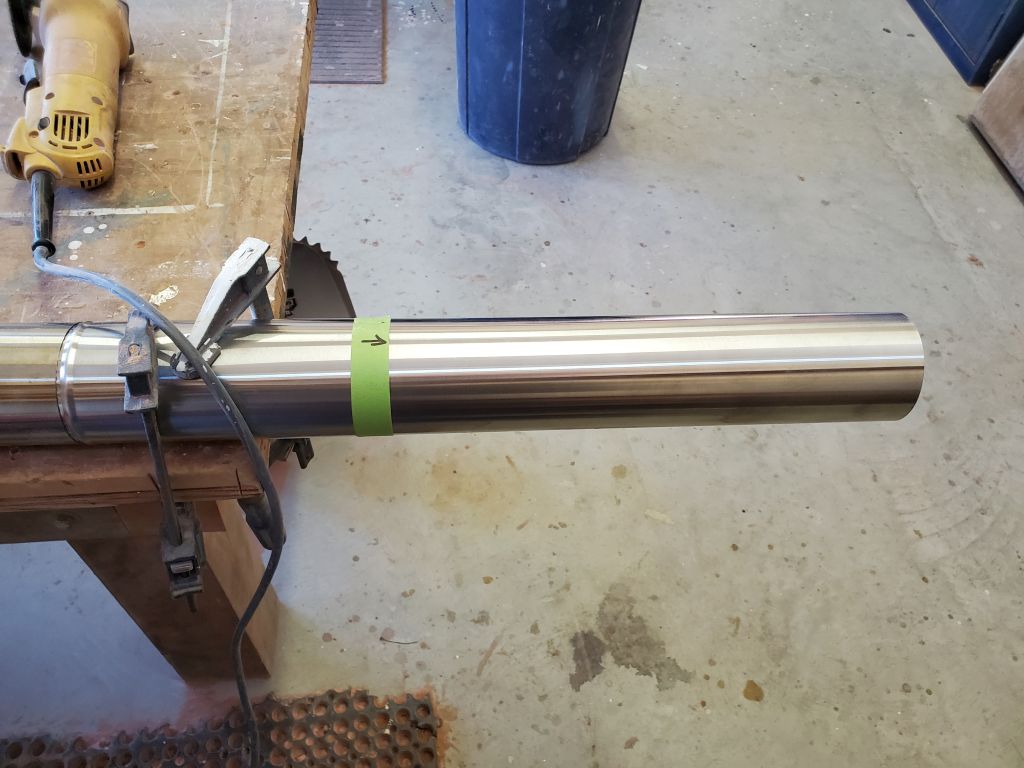
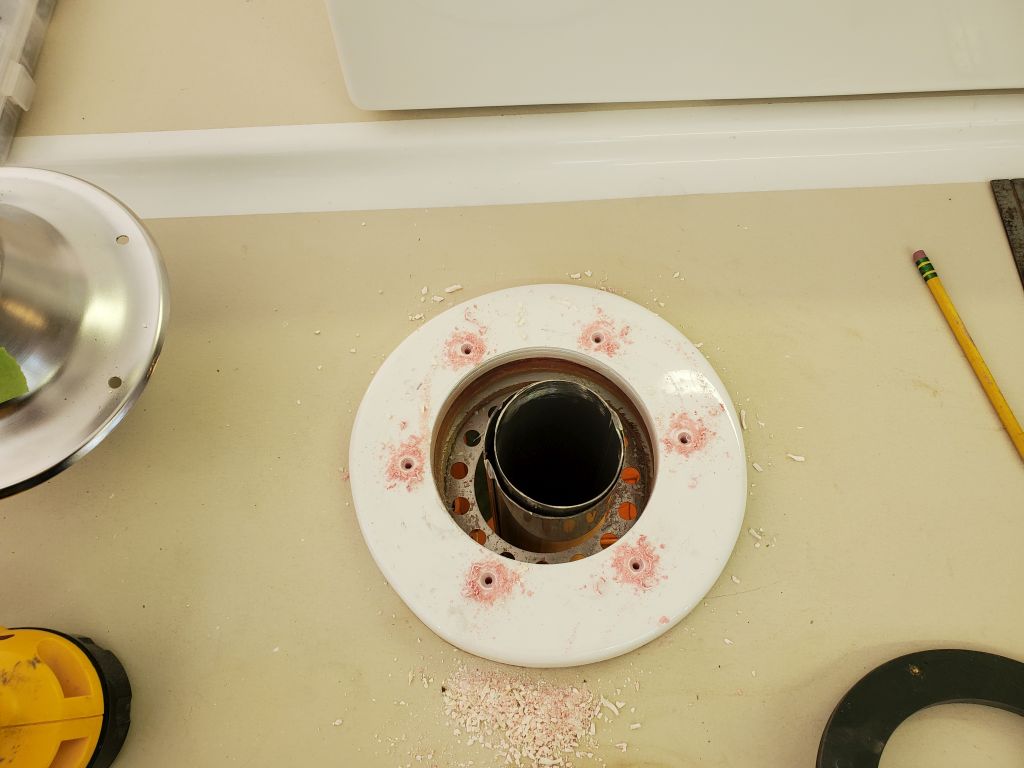
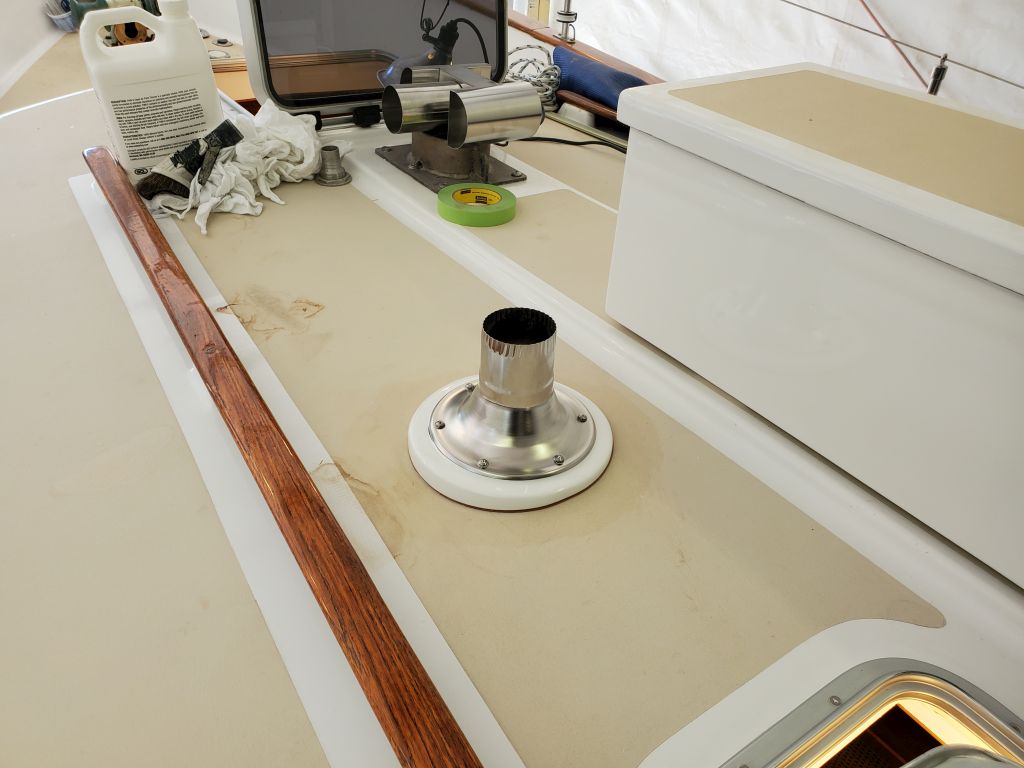
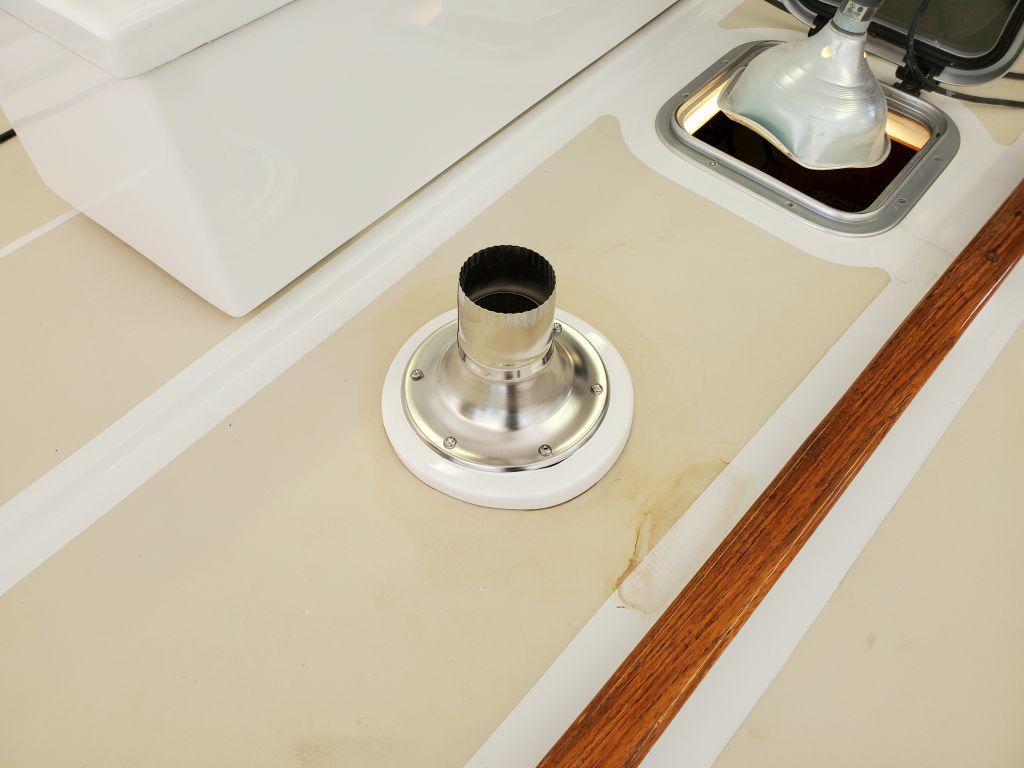
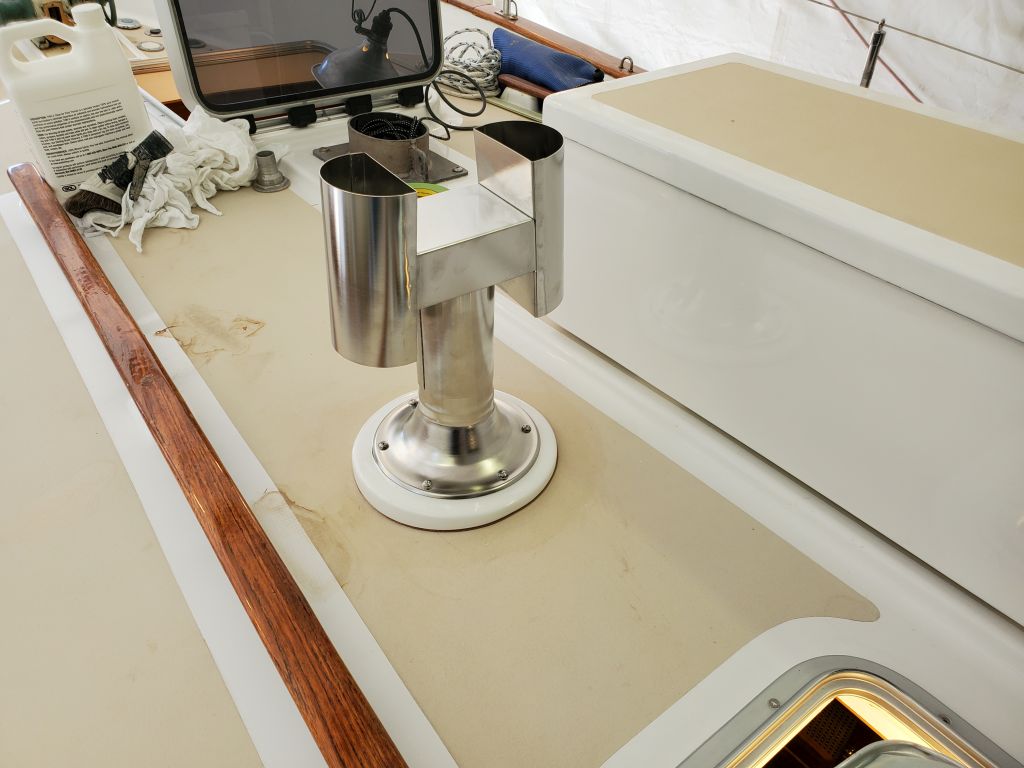
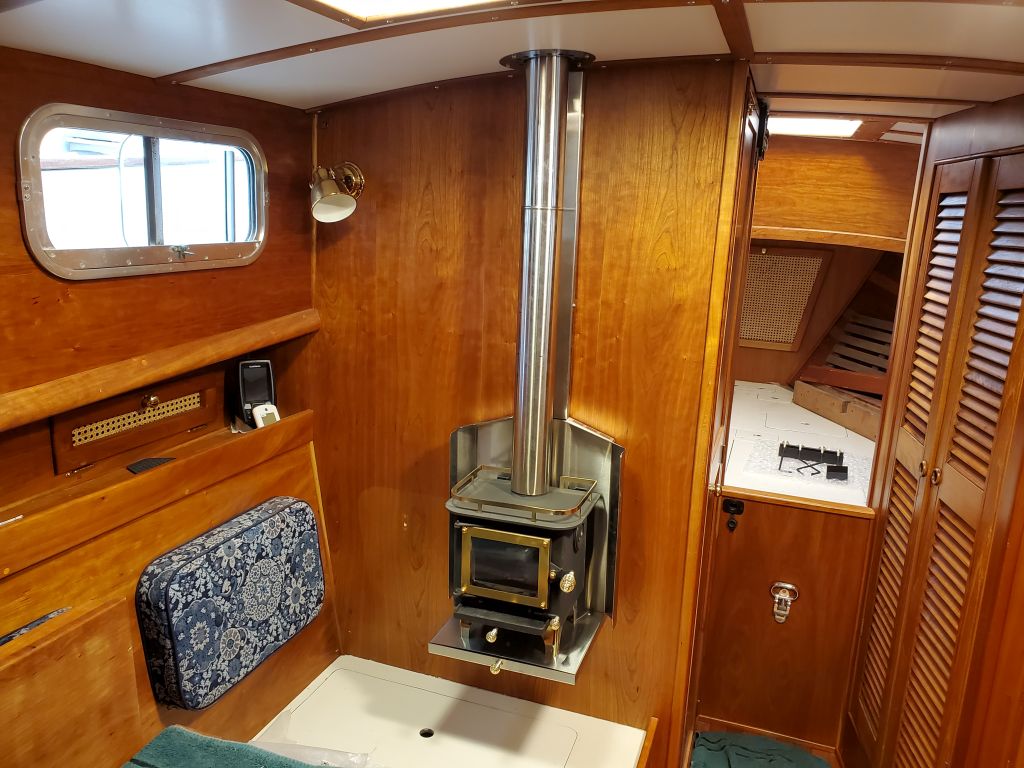
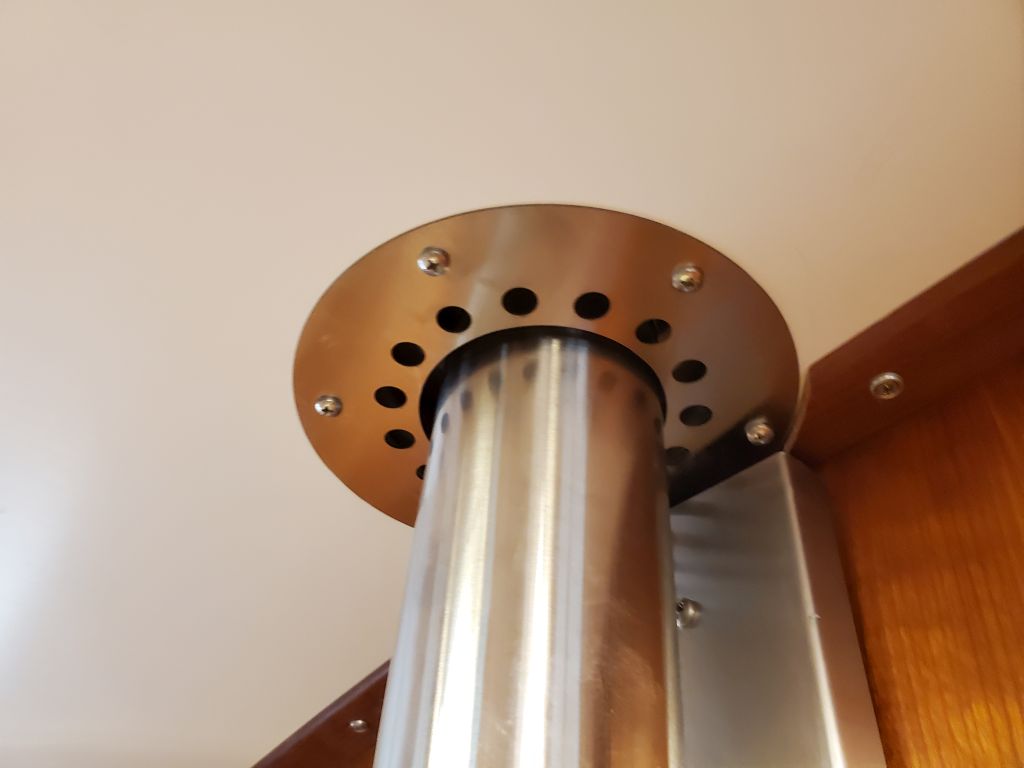
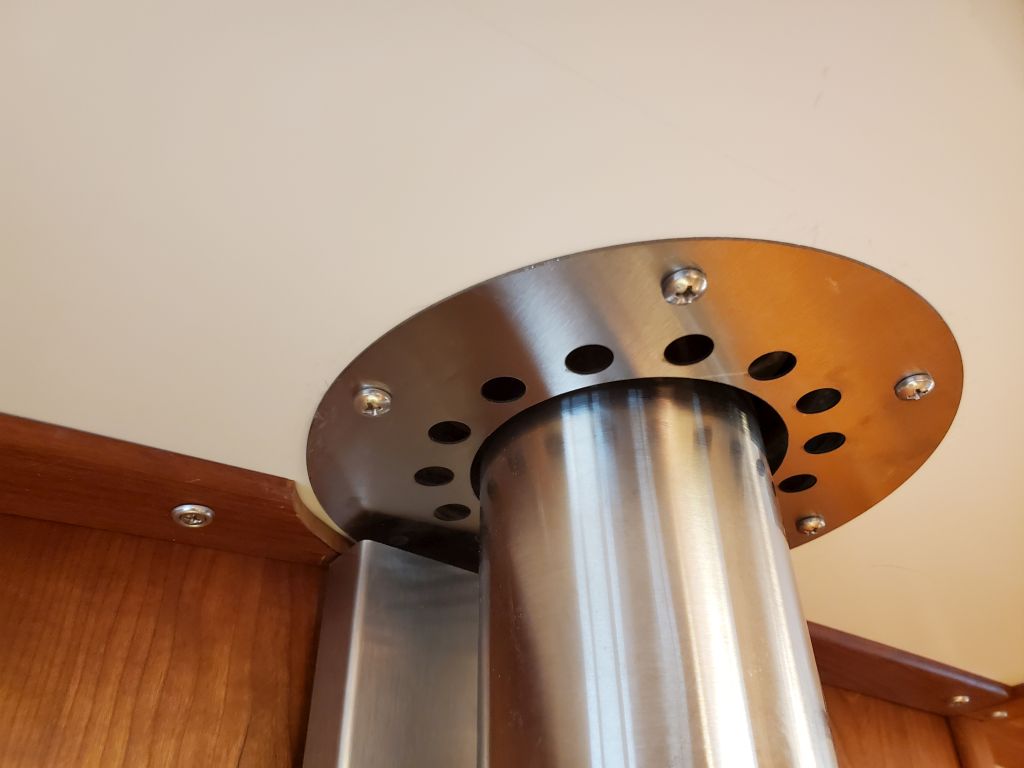
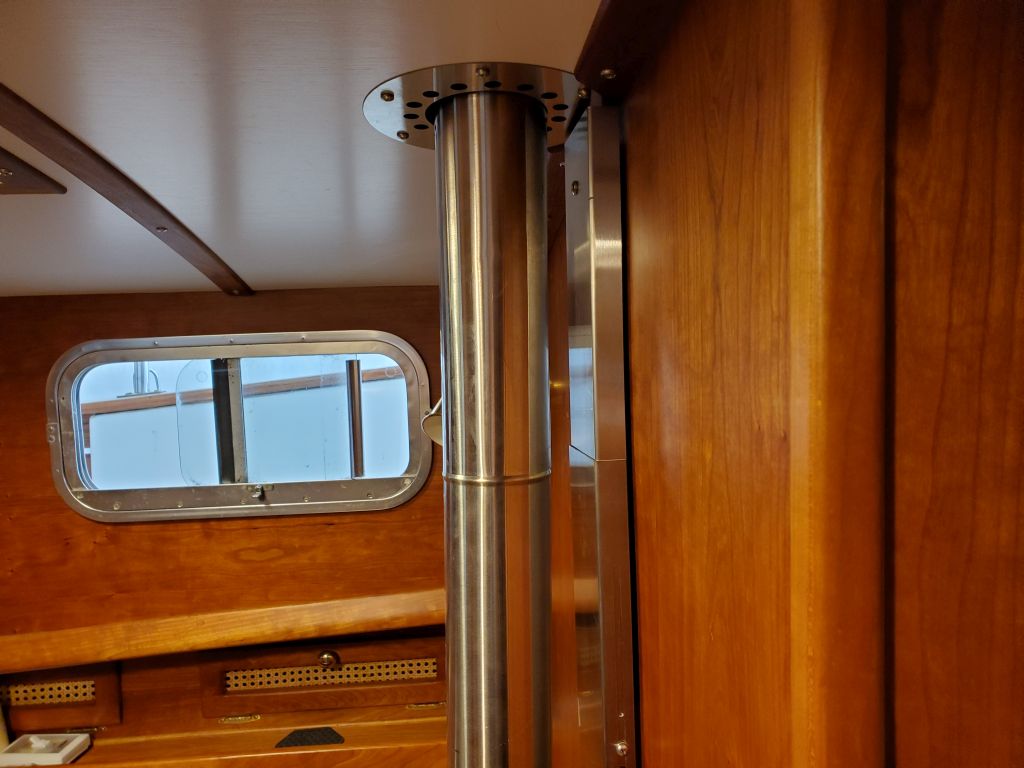
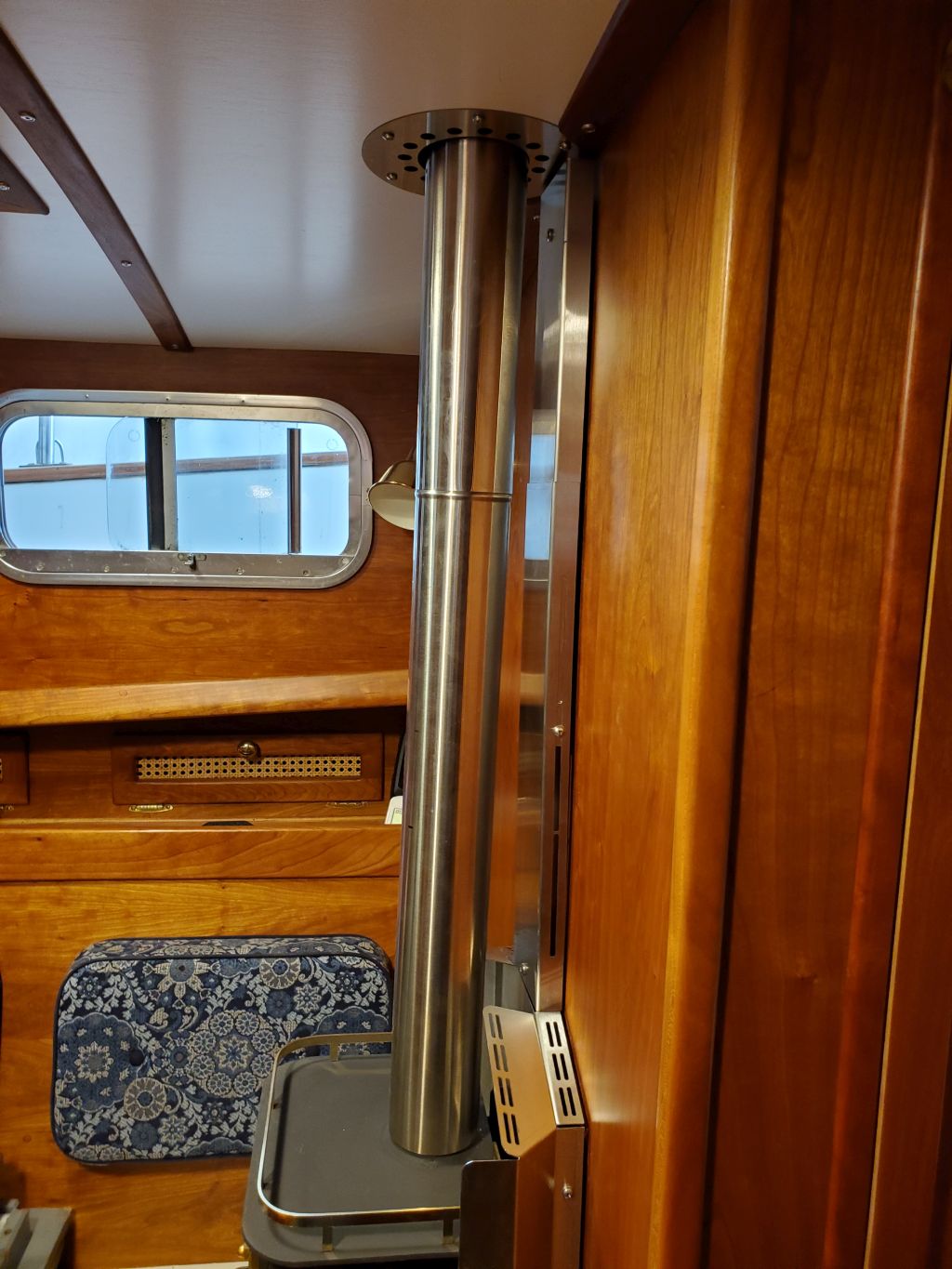
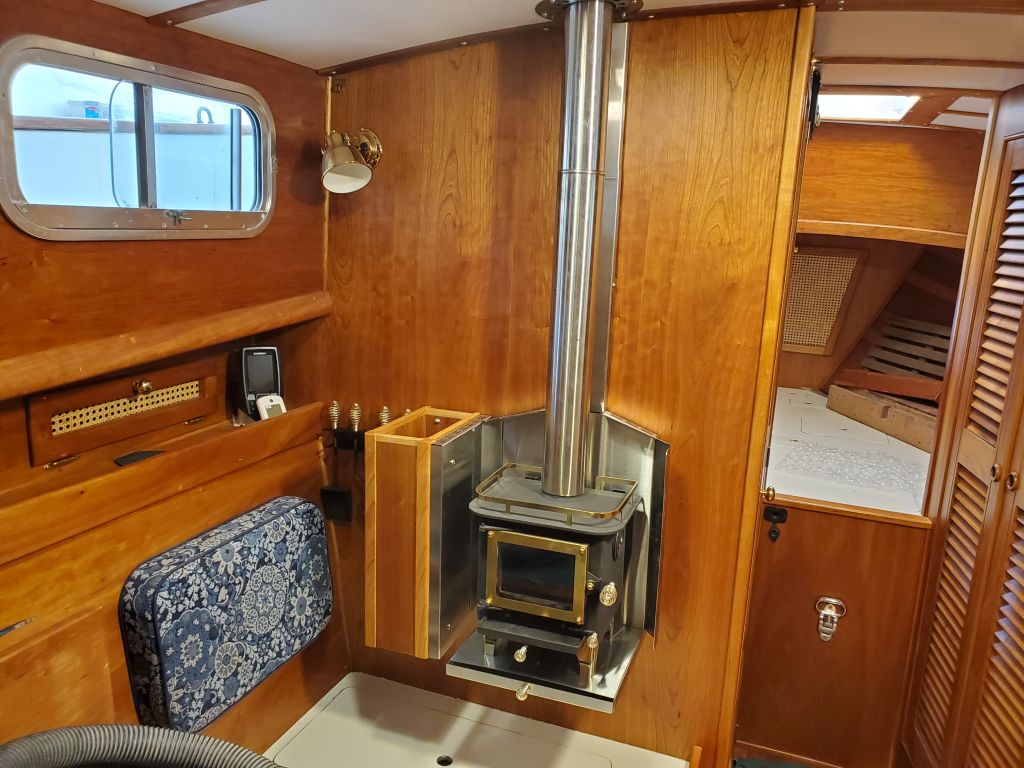
My main focus for the day was to wrap up the woodstove installation.  With the stove in place, and the deck trim ring installed, it was a theoretically simple matter to cut the stove pipe to length and install it along with the deck fitting.  Because of how the sections needed to fit together, it wasn’t just a matter of marking the pipe at deck level and cutting it off; for the parts on hand to work together as needed, I had to remove excess length from the bottom of one of the pipe sections.

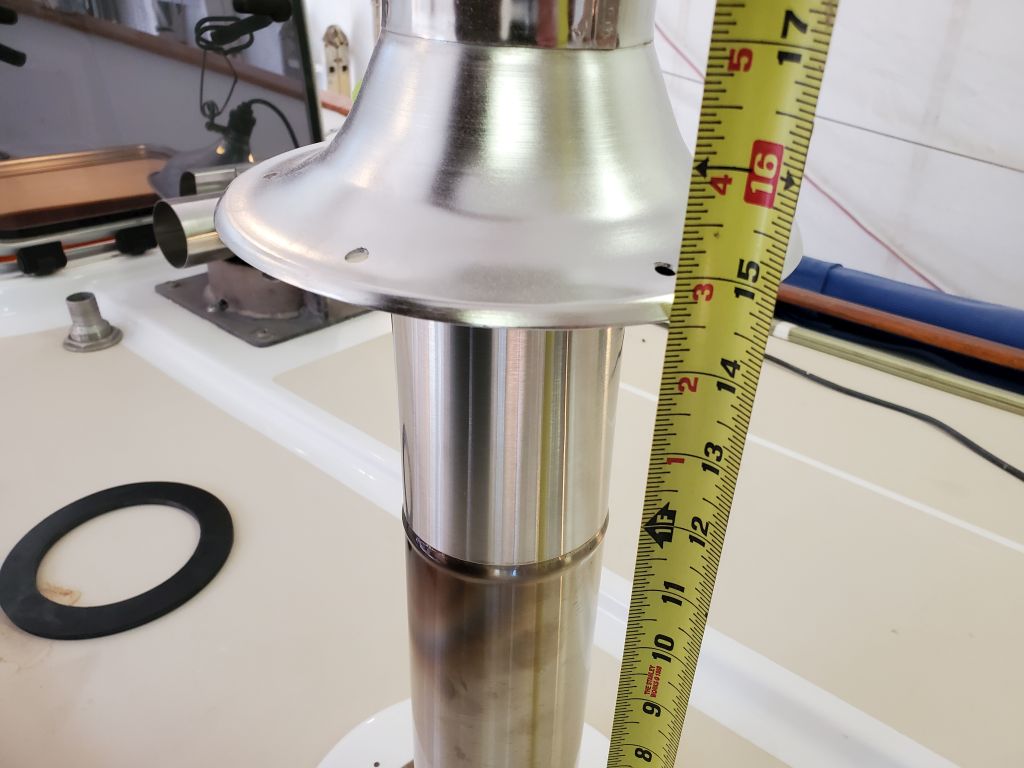
To begin, I set up the two 24″ lengths of pipe together with the deck fitting, allowing the assembly to protrude above the deck.  I measured the distance from the underside of the deck fitting flange to the trim ring below (14.5″) which, with all the pieces in this configuration, was how much I needed to cut off.

With a grinder and cutoff wheel, I cut the pipe at the mark:  All was fine, though this wasn’t fun stuff to cut.  Because even before cutting I’d had a vexing difficulty getting the two pieces of pipe to fit together during my dry fits in the boat (though I’d managed), I’d left the two sections fitted together while I cut them, specifically to avoid the difficulties in getting them to fit back together later.  For reasons that are now lost in a miasma of events and apparent suppressed memories born of severe trauma and blinding anger, at some point after cutting the pipe and while cleaning up the cuts, the two sections came apart, or I took them apart for some reason; whatever the case, what was once a connected length of pipe was now two again.  It really shouldn’t have mattered.

And for some reason I found it absolutely impossible to reassemble them.

It made no sense then, and it made no sense later, but I spent far too much time fighting the pipe sections and trying to reassemble them in a usable length once more.  I couldn’t reassemble them in their original configuration, and I couldn’t reassemble them with the cut section atop the full section.  I tried everything.  One issue was that the double-walled pipe was spot-welded together at one end, to hold the inner and outer sections together.  Assembled correctly, this didn’t matter because of how the joints interacted–but now it mattered, though I still didn’t understand why since these sections had been connected before.  Where the inner and outer sections were connected in this way, obviously the pipes couldn’t slide together.

In the event, in fighting the sections I’m sure that I made whatever problem existed worse by further distorting the pipes in the effort to connect them (the inner and outer sections had minimal clearance between).   I didn’t want to, or intend to (at least at first haha)–but it happened.   Eventually, it was clear that the cut section–the piece I needed to use–was a lost cause.  I didn’t have extra sections–they don’t give this stuff away at Cubic Mini–so what made me the angriest wasn’t needing another section, but that I couldn’t finish up the installation as intended.  I may have sealed my fate when somehow the section of pipe I’d been fighting with ended up beneath the head of my hammer several times.  Weird.

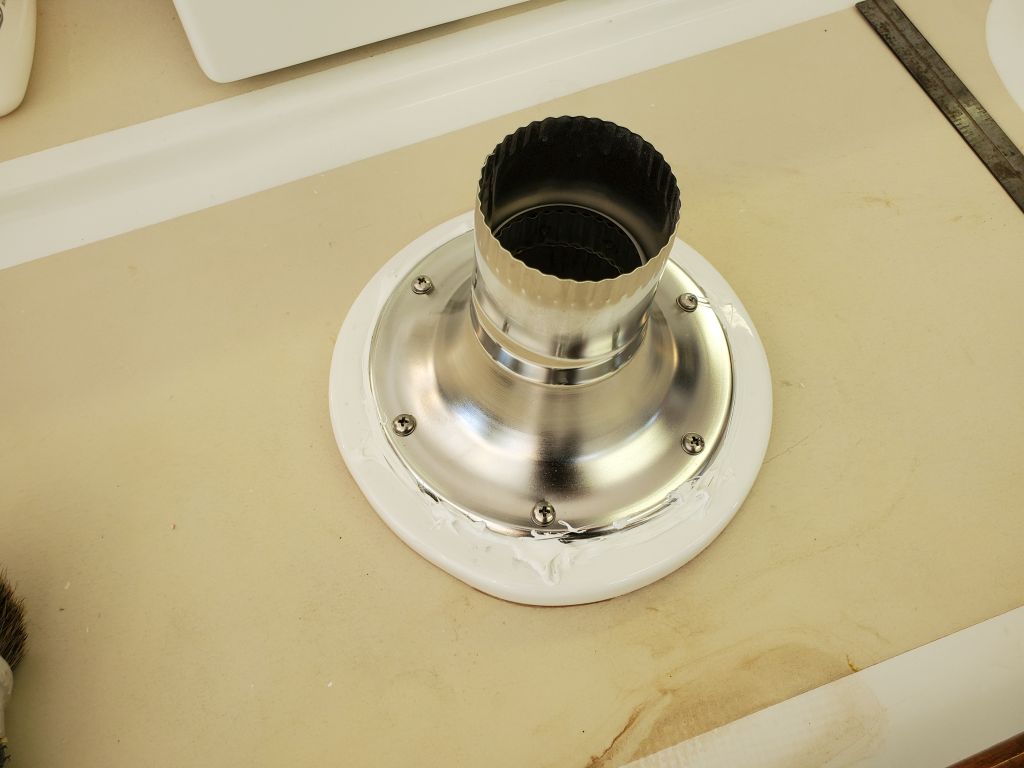
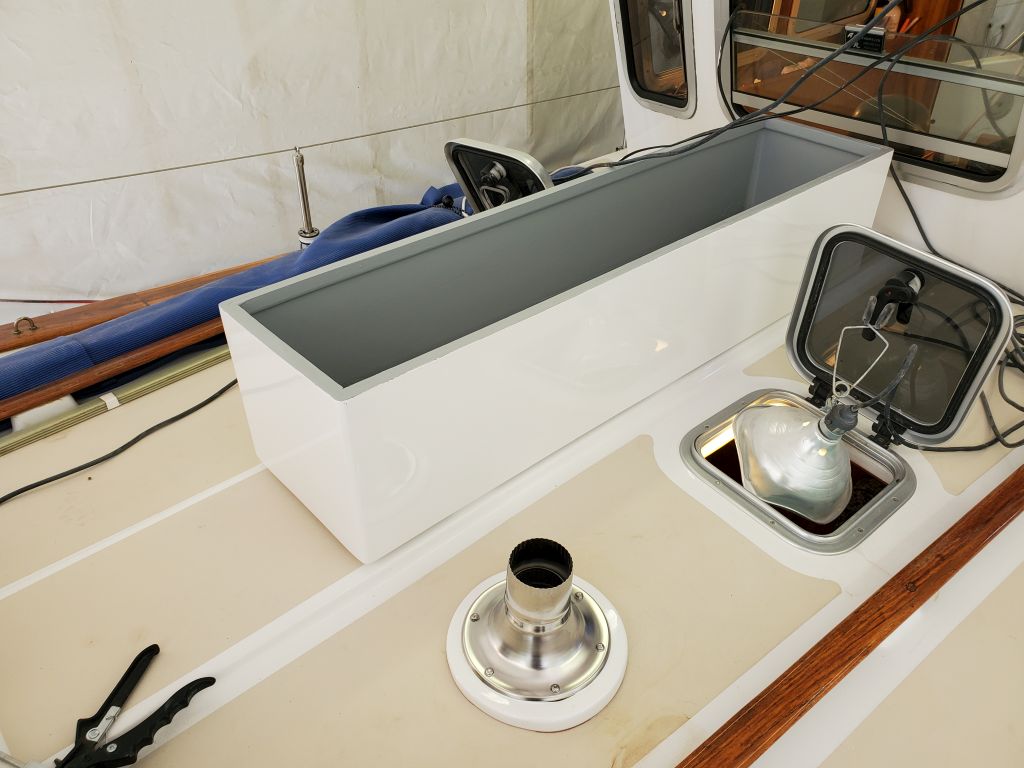
After a break to emergency-order replacement pipes, which felt like something positive even though it threw my schedule awry, I returned to assess what I had left and see if there was any other way to use the longer length of the original pipe–but supposedly the wrong end–to make this work.  And to my amazement I found a way forward.  It turned out that the deck fitting, which I’d originally planned to connect using a special adapter (seen in the photos above), which allowed the deck fitting to work with the upper, crimped end of a stovepipe section, actually fit well in the cut end of the pipe, slipping between the inner and outer walls of the stovepipe like it was its job.  (I seem to be a little short on photos during this miserable hour or so of the day, so I don’t have a photo showing that.)

Thinking back, now I remembered from some of the info online that I’d looked at a few months before had mentioned this too, so I felt good proceeding in this way–and it meant that I could finish up the installation too, and avoid the wait and expense of the replacement pipes.  So with the sections installed together in their new way, and after determining how far into the pipe the deck fitting would slip, I eventually determined the final length and cut the pipe a bit shorter as needed now–being sure to tape the pipe sections securely together, just in case.  (In the new configuration I had no problem connecting the pipes as it happened.)

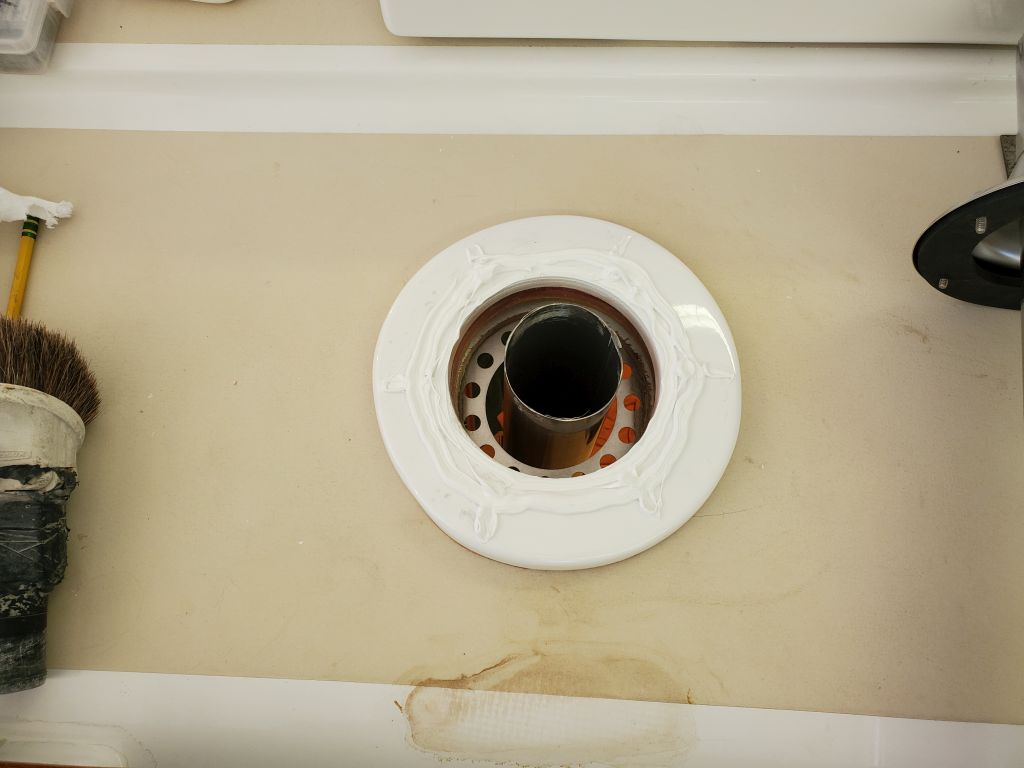
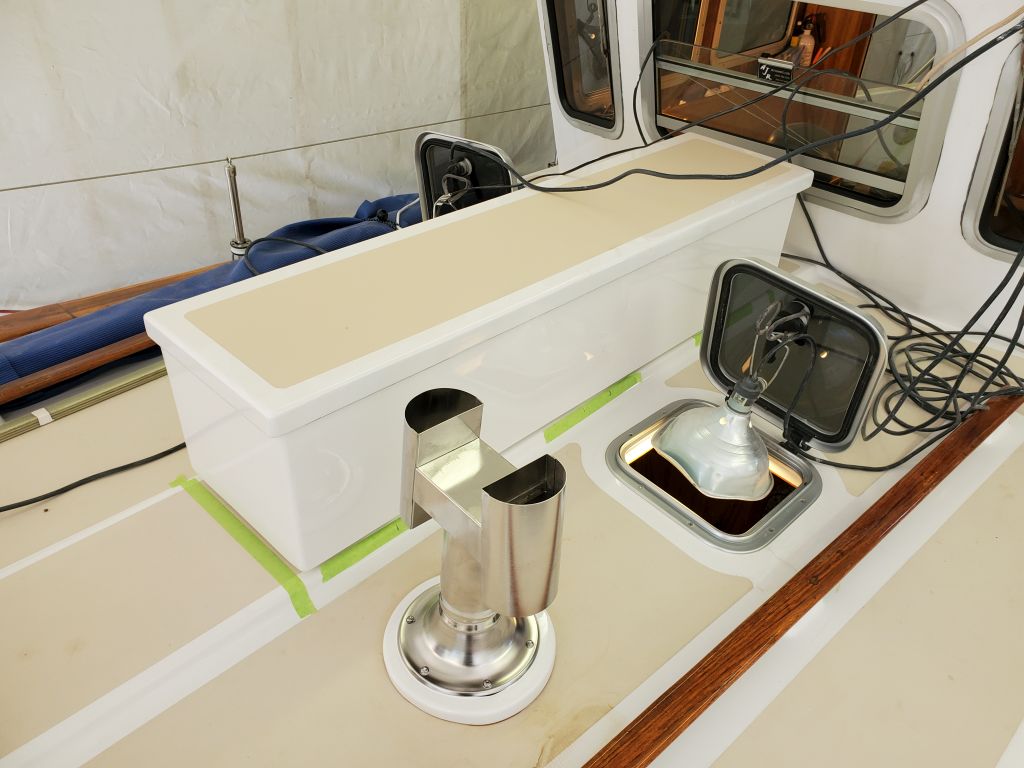
Now I could drill and tap the deck for the machine screws that would secure the deck fitting, and after final preparations I installed the deck fitting with its supplied heavy rubber gasket and sealant as well.  In the cabin, I secured the inside trim ring (which by design also allows air to flow into the gap between the stovepipe and the deck cutout) to the overhead with screws.  I’d made sure from the beginning, even before things went wrong, that I pre-secured this trim ring to the overhead with some tape so I wouldn’t forget it–there was no way to put it on once the stove pipe was in place.

It’s the way of the world with this stuff:  It’s the simplest-seeming tasks that can send everything into turmoil, doubling the time required to do a simple job.

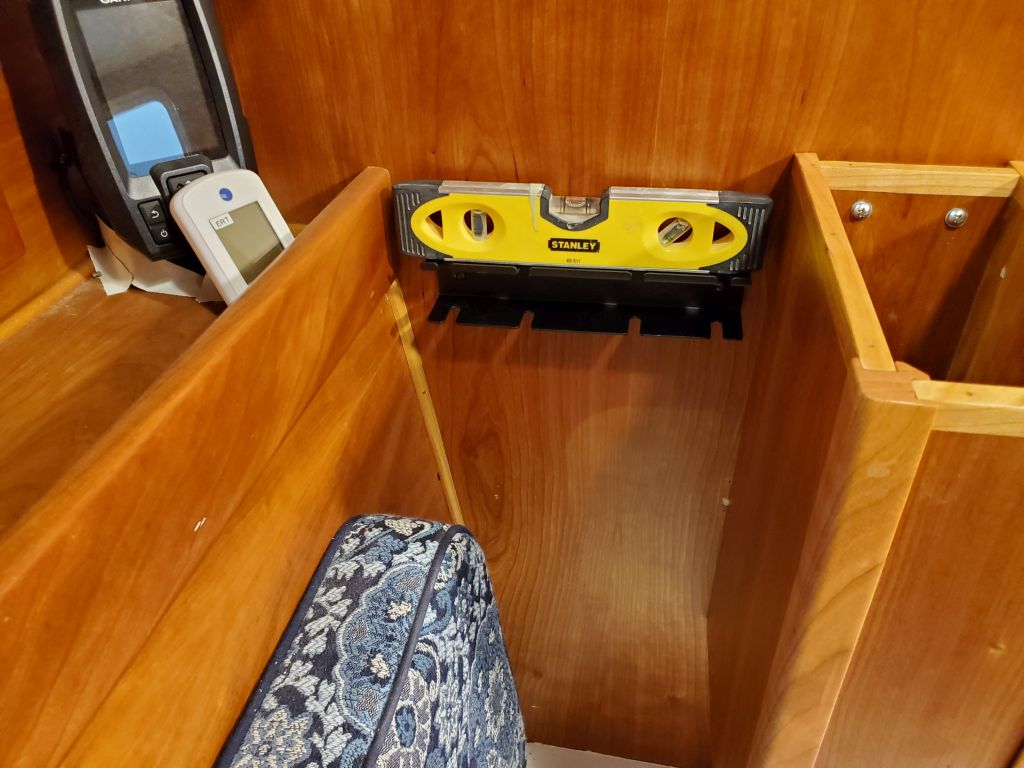
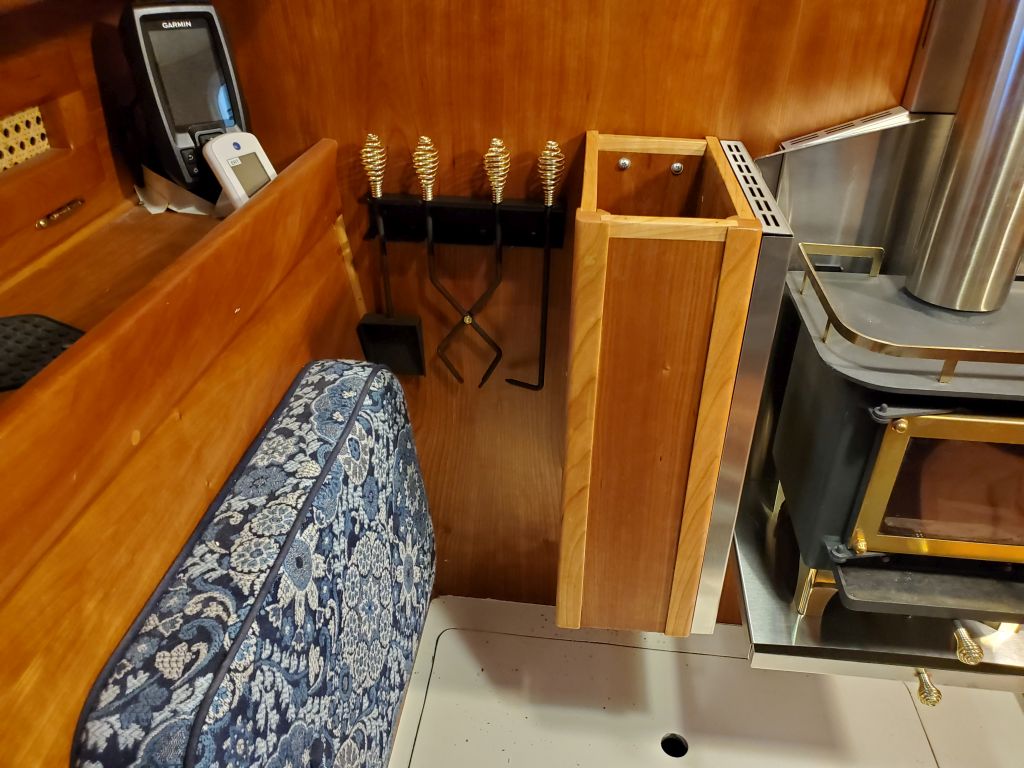
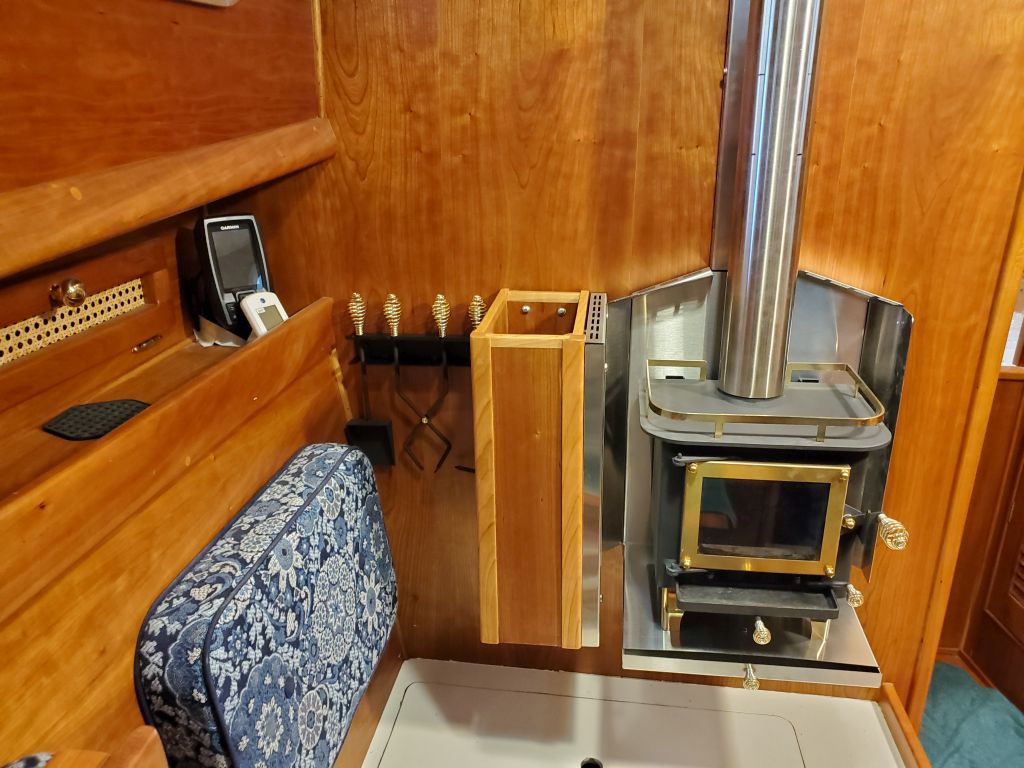
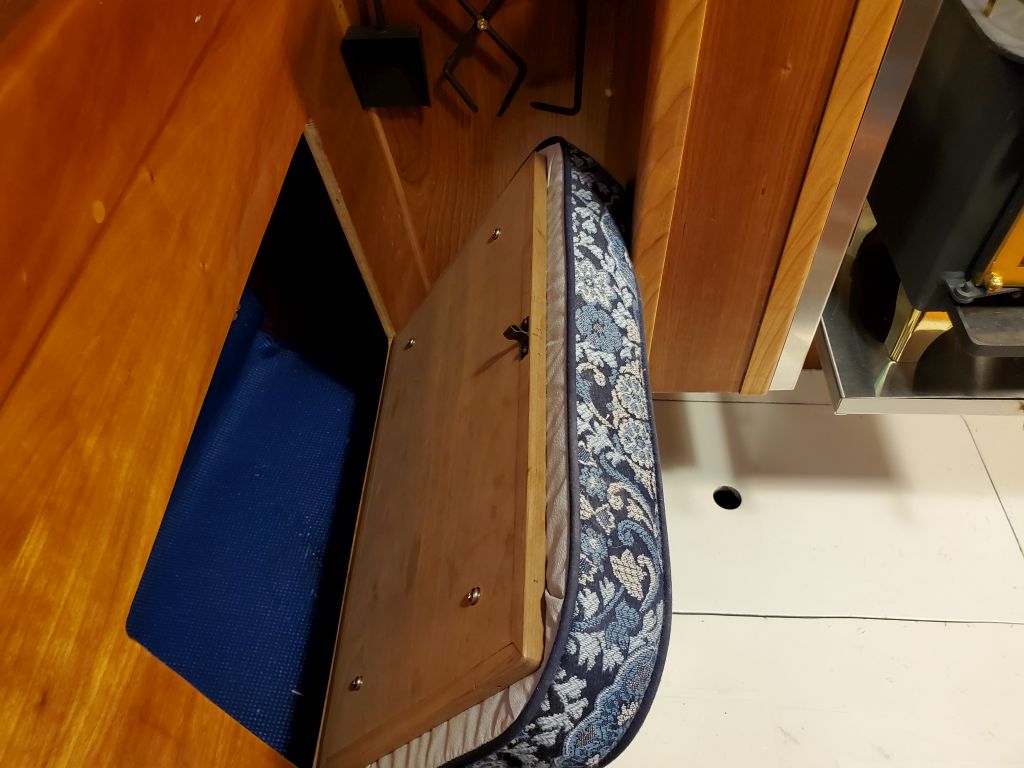
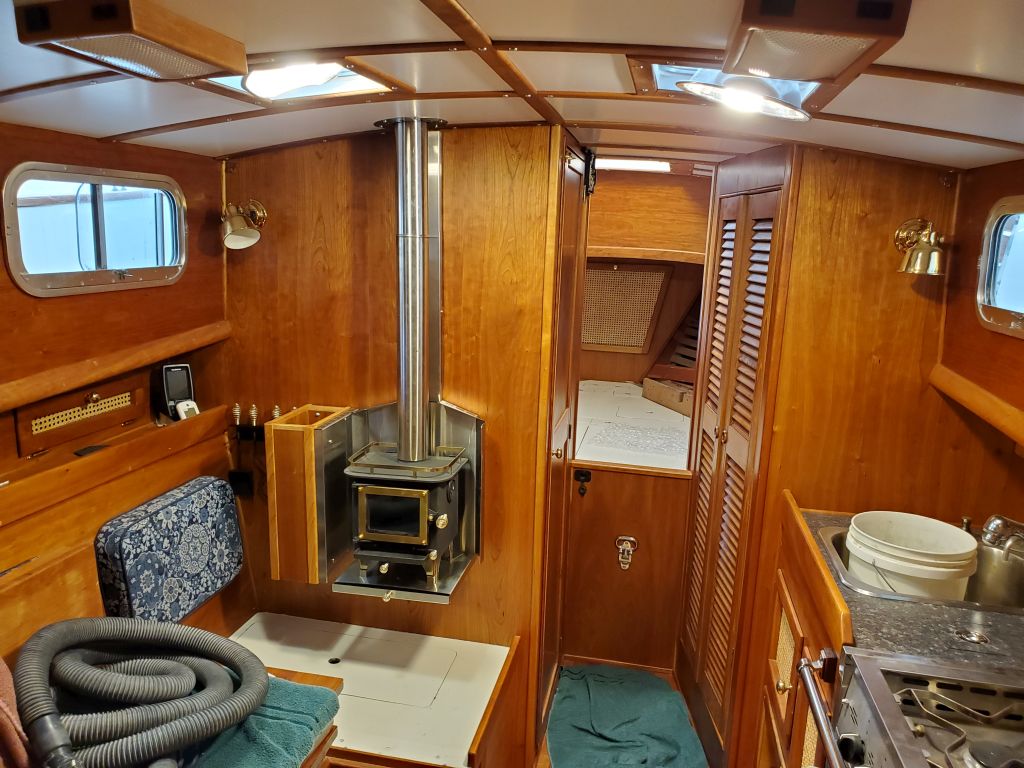
Now I could finish up the installation for real with the wood box and side heat shield.  To begin, down on the bench I installed the heat shield on the side of the box with stainless screws and the supplied standoffs.  To install the box, I predrilled holes for three screws (two through the top of the back panel, one through the bottom, accessible in the recess I’d built beneath the floor of the box for this purpose), then hung it on the bulkhead next to the woodstove. This gave the required minimum distance of 3″ between the stove and the combustible material.

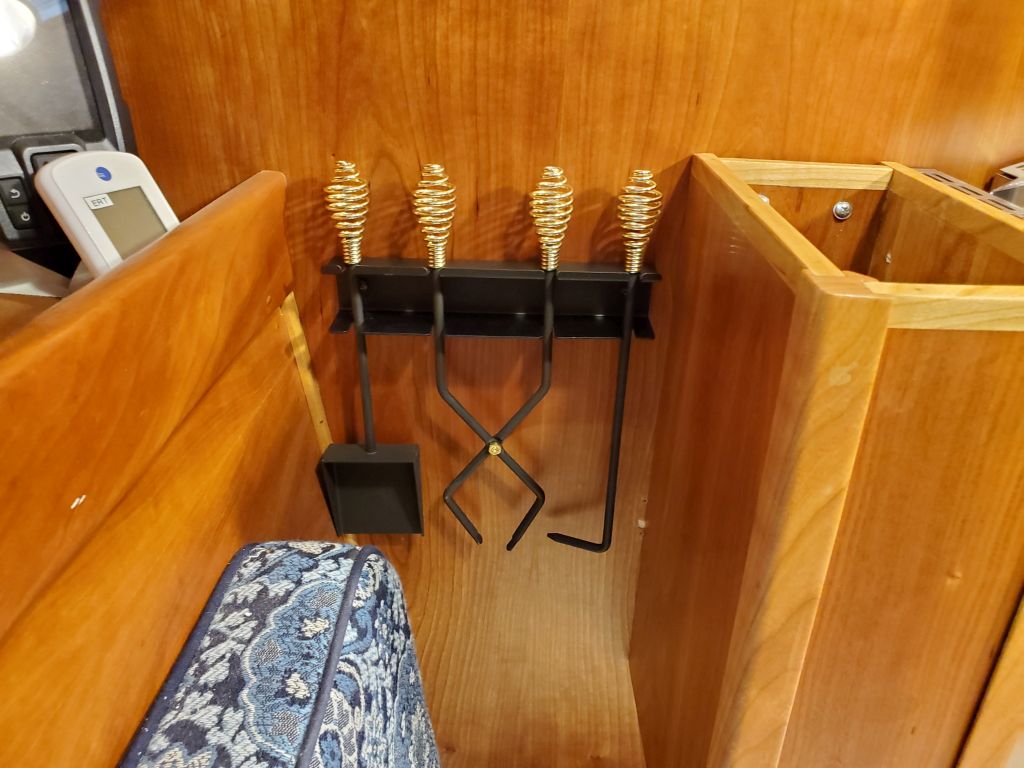
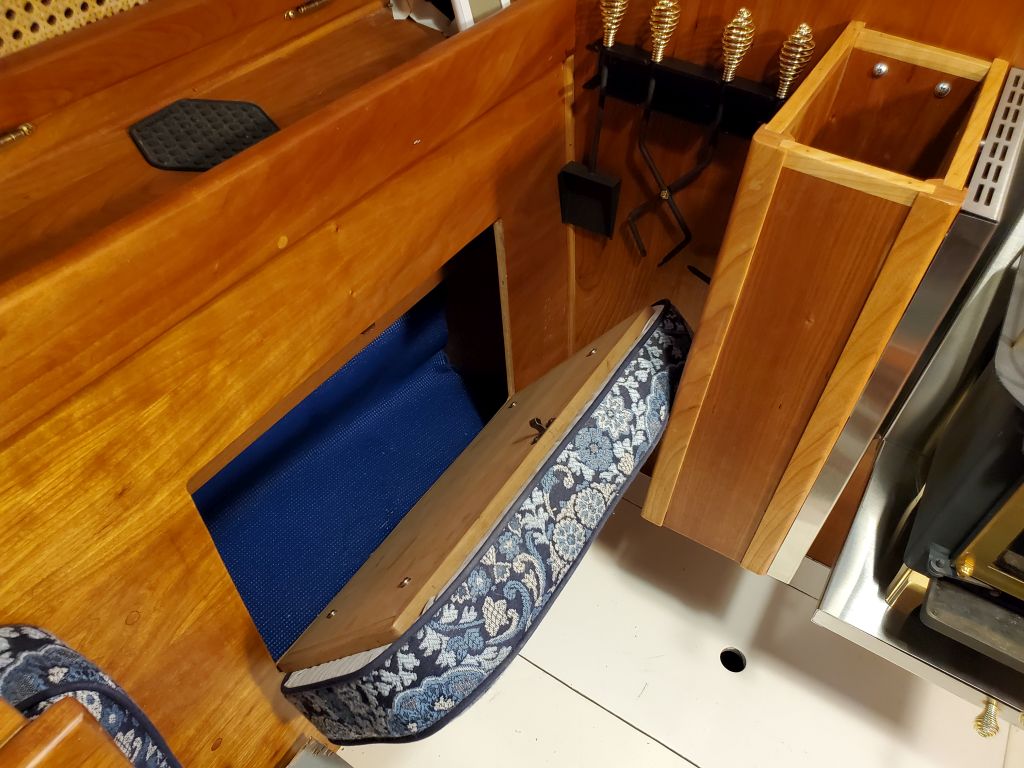
To finish things off, I hung the rack for the cutest little dollhouse stove tools in the space between the box and the settee back, which the owner and I had previously determined and which fortunately worked basically perfectly.  This left enough space for the locker to open more than enough for good access, and frankly the whole stove/woodbox juxtaposition and installation turned out even better than I’d hoped it would, looking quite at home there and as if it had always been there.

And I was able to cancel my emergency pipe order before it was processed, all the better to save $150.

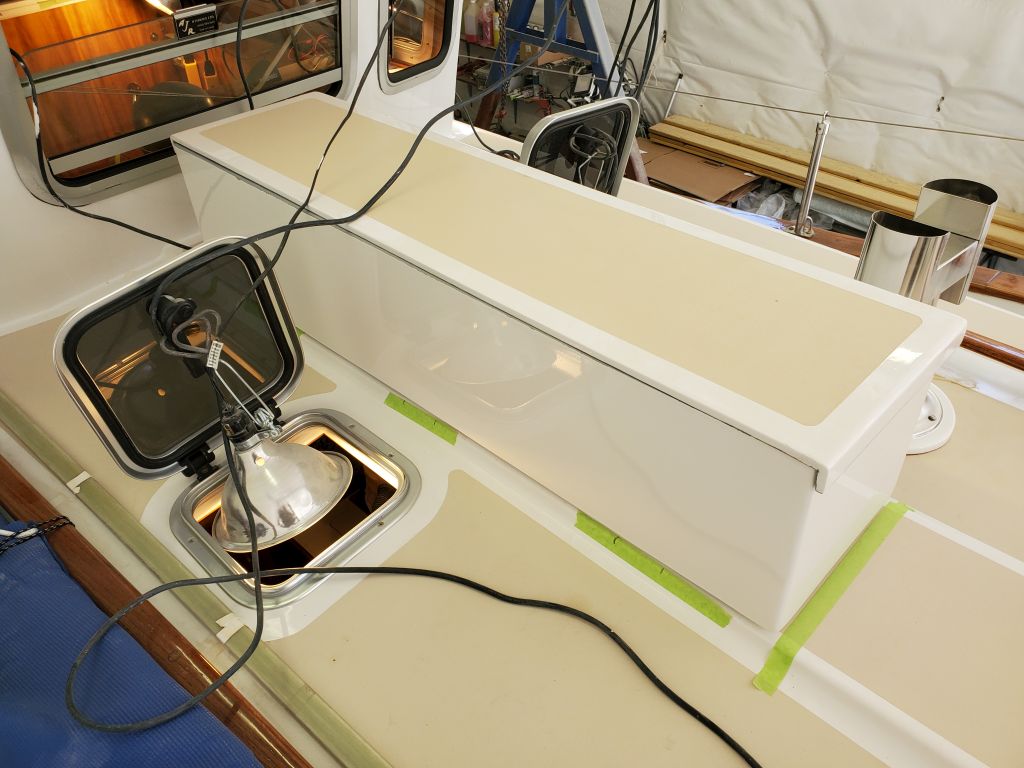
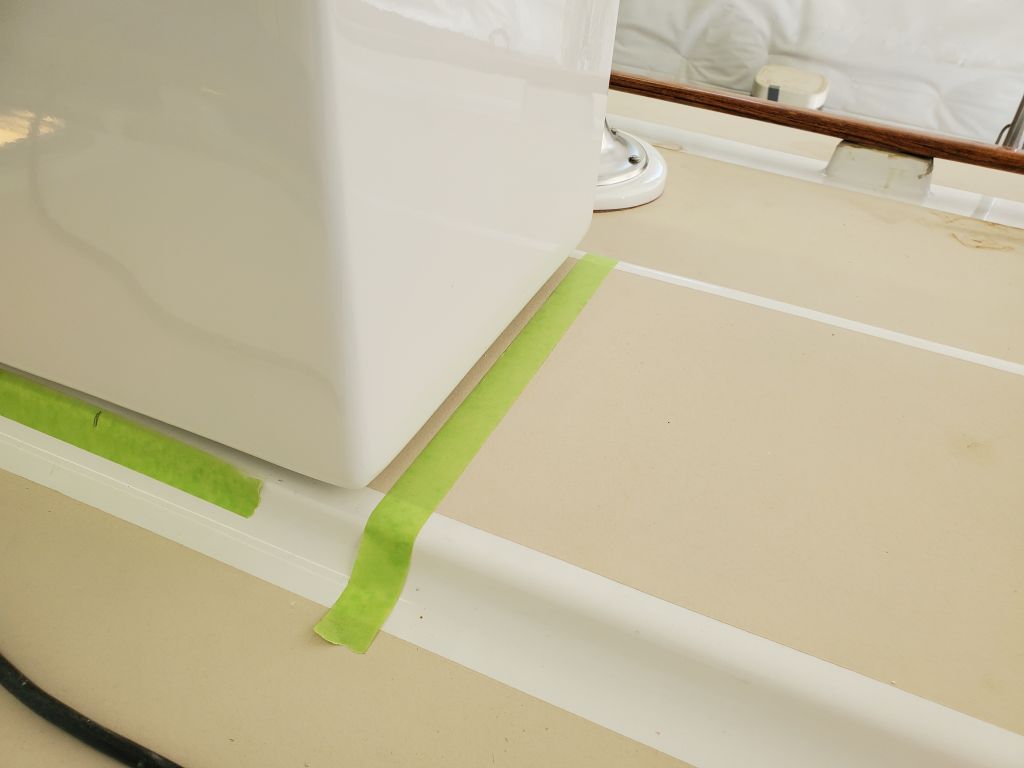
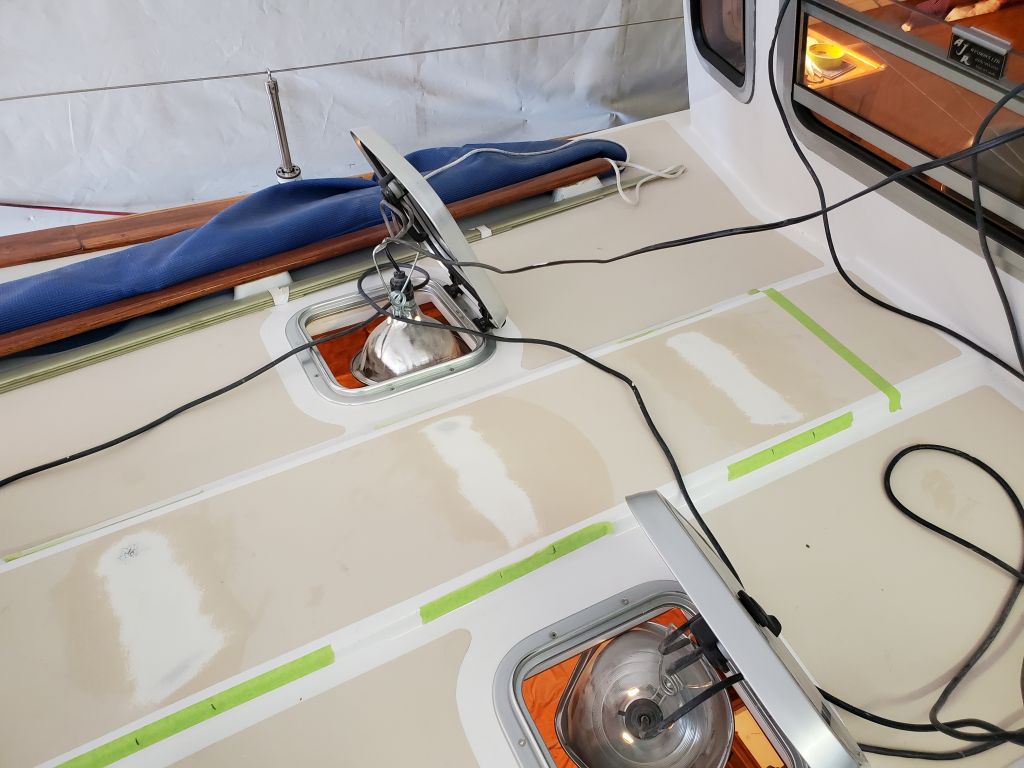
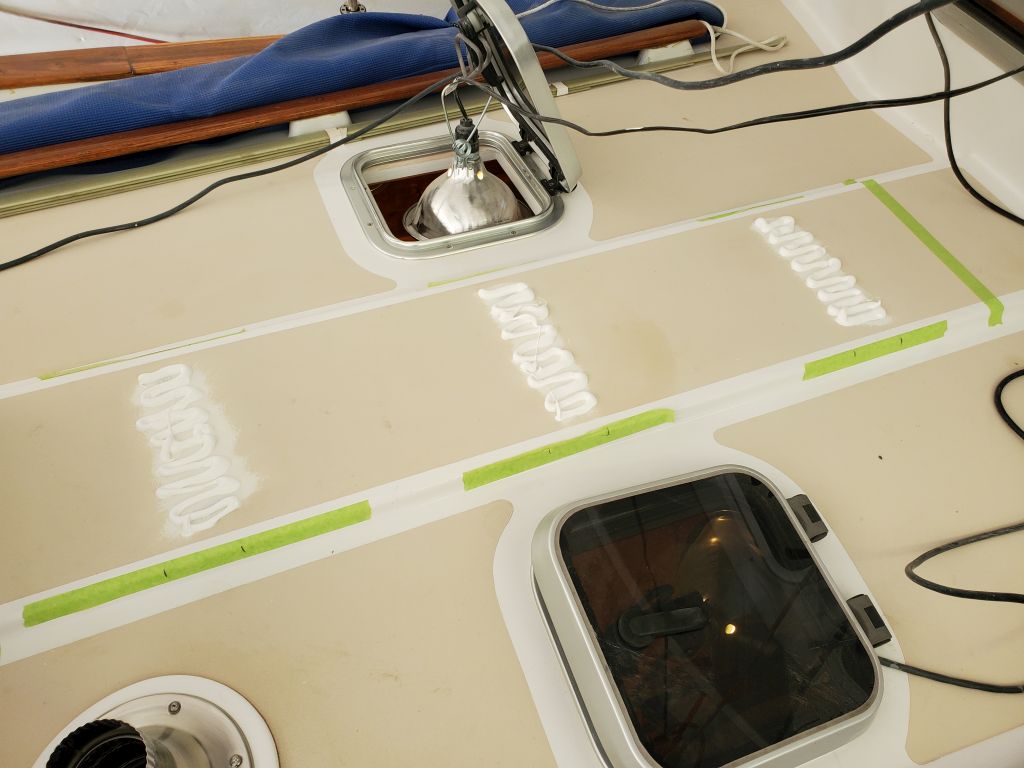
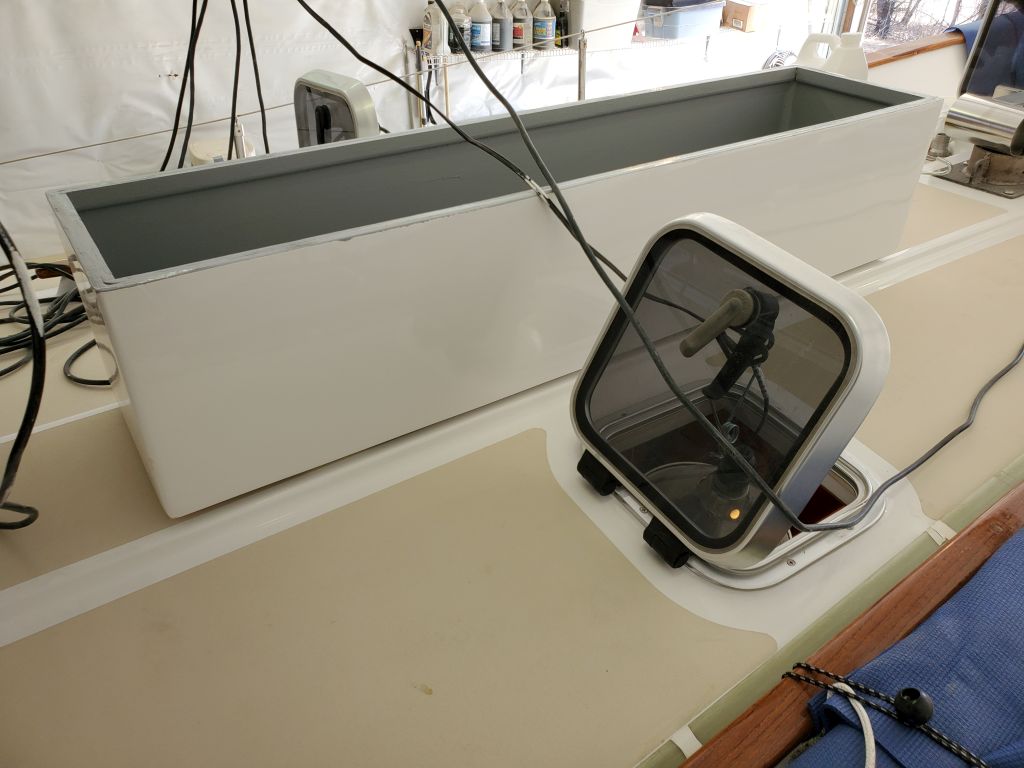
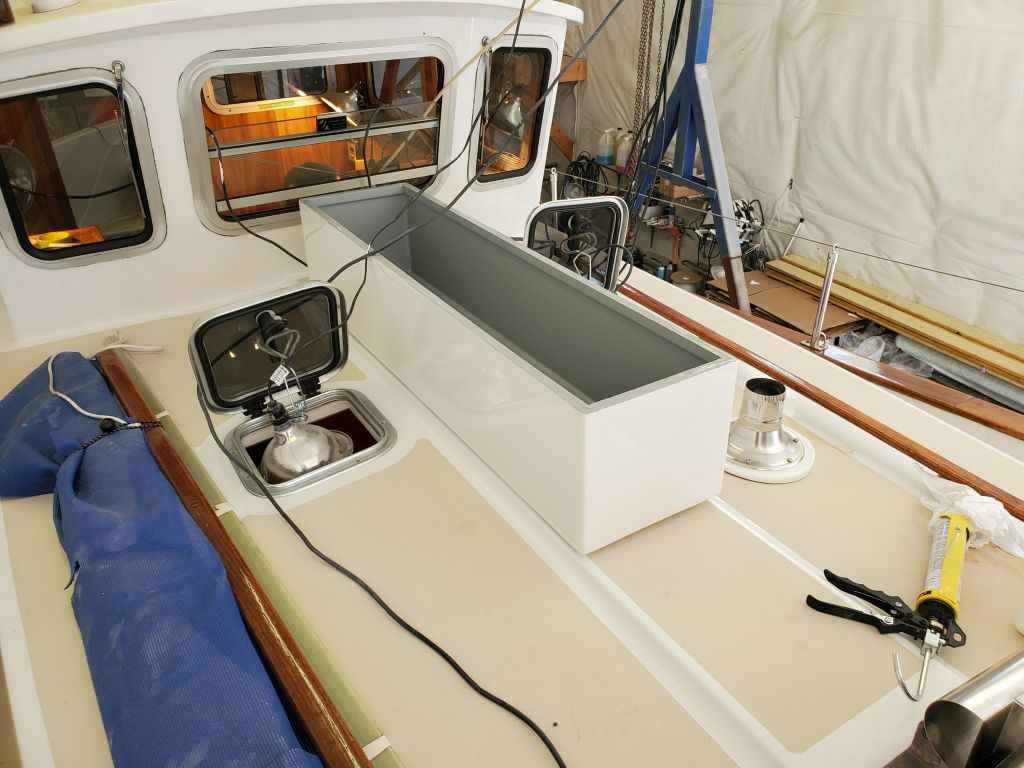
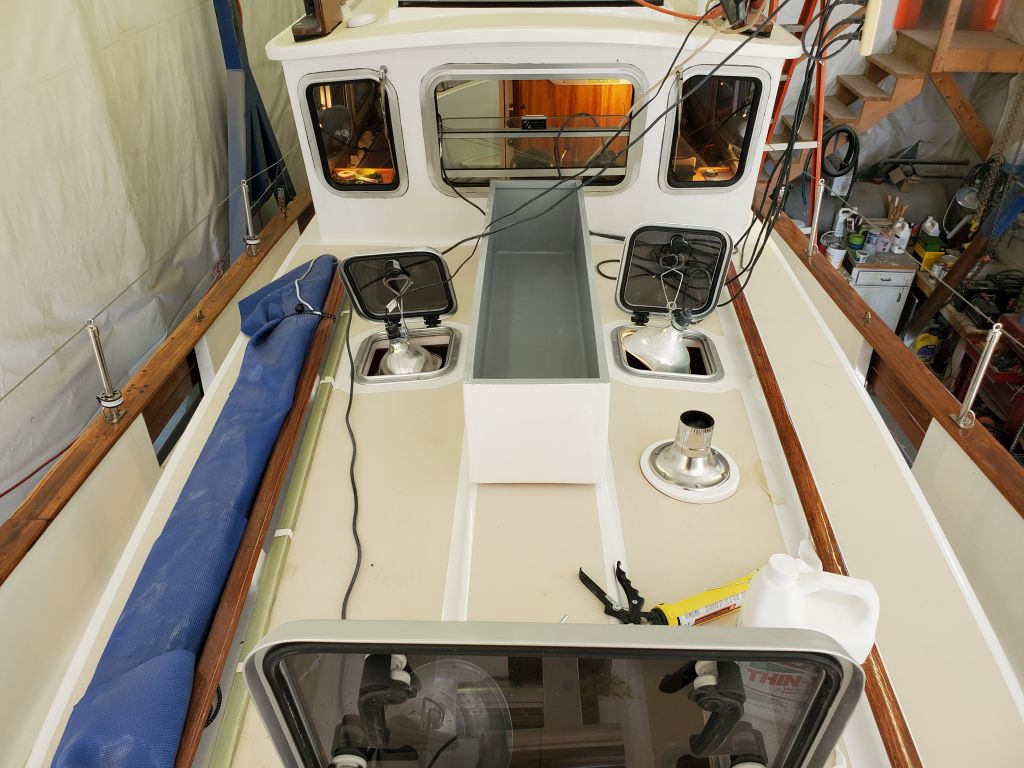
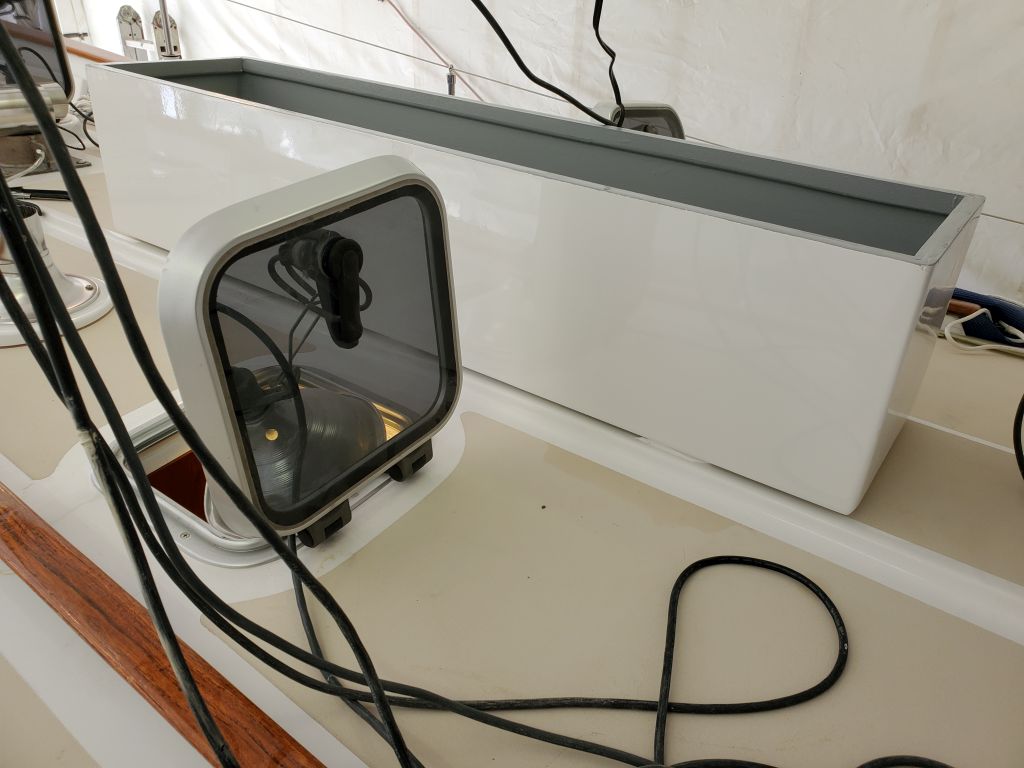
Next on my agenda:  The deck boxes, starting with the large forward box.  I planned to install this to the deck with marine adhesive (5200), saving the deck penetrations and time consumption of removing the overhead in the cabin.  To prepare, I aligned the box where I wanted it, and marked the ends with tape, and also marked with tape the positions of the three mounting “feet” from the side.  Removing the box, and using my marks as a guide, I removed the paint from the deck in way of the three mounting surfaces and, after final preparations and cleanup, applied heavy beads of adhesive to each location and pressed the box into position, aligning it carefully with my end marks and by eye to ensure a symmetrical mounting on the deck.  I left this to cure.

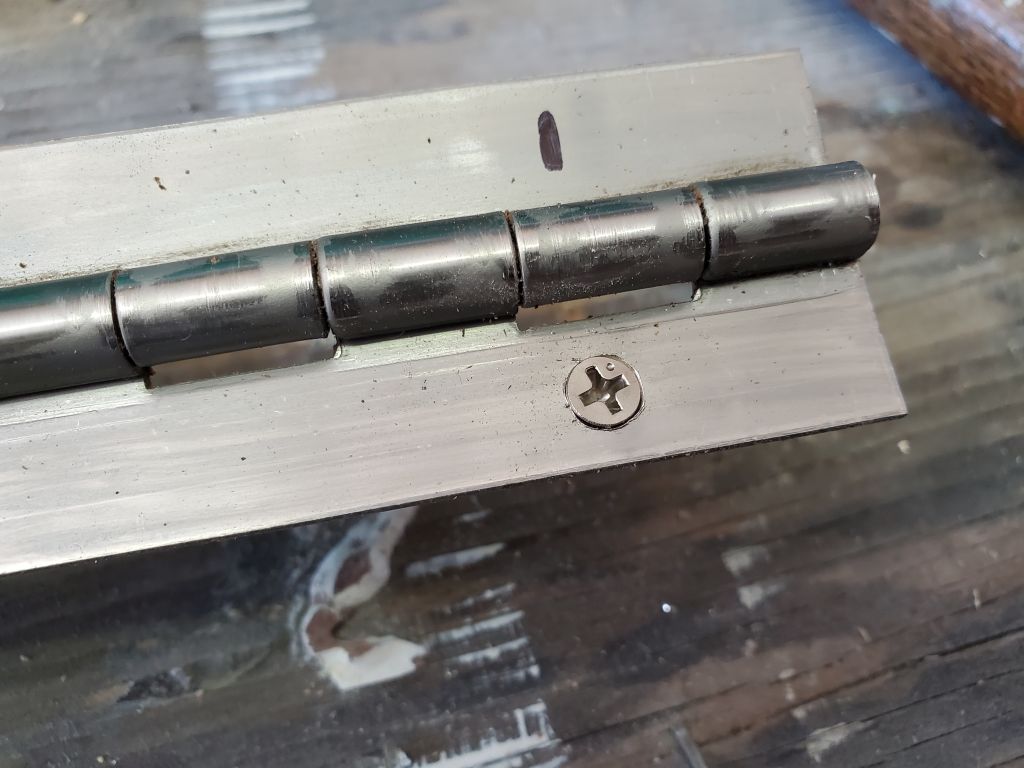
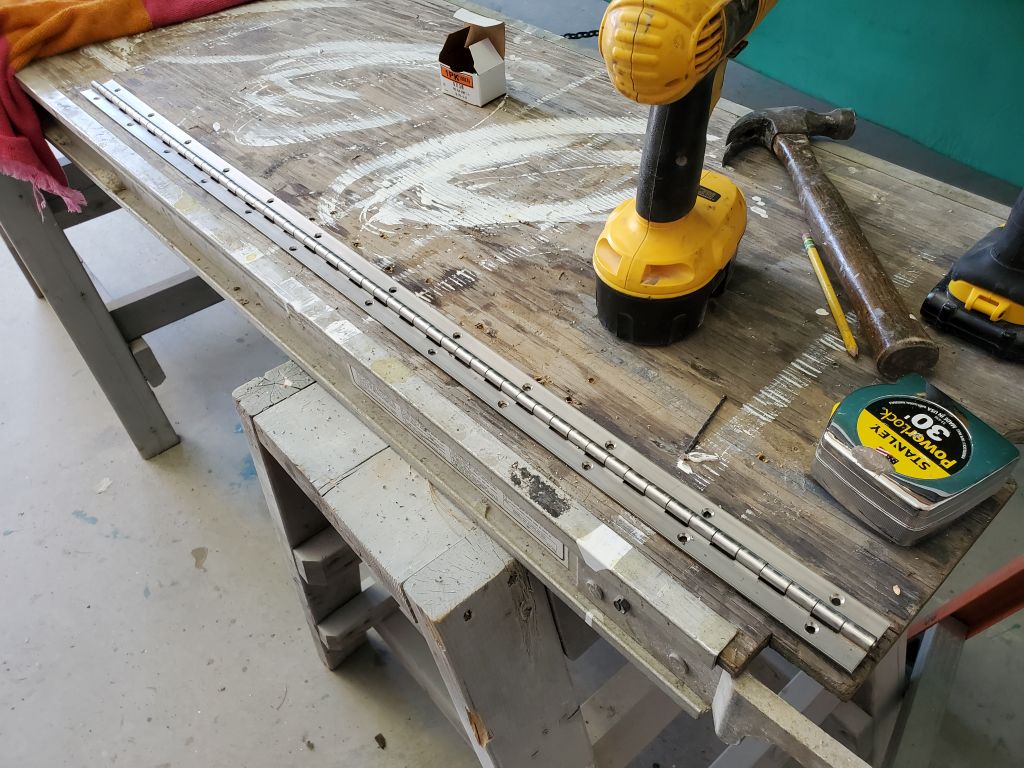
I chose to leave the lid off till after installation to make the box easier to handle.  Towards that end, I got ready to install the hinge on the hatch itself.  The piano hinge I’d sourced, which had extra space between the leaves when closed to allow room for a gasket, came without screw holes, so my first task was to lay out, drill, and counterbore the hinge for mounting screws.  In drilling stainless, I’ve found that the key is to buy the appropriate drill bits in bulk first, to ensure ample sharp, new bits for the job.  Every time I have amply prepared myself like this, a single bit easily makes all the cuts required, but if I try to use bits on hand, or if I have a single new one, the bit will break or they’ll be so dull that I spend 4 hours on a hole.  I’m now flush with 11/64″ bits–a small price to pay for having a task I hate go so swimmingly.

With the hinge prepared, I installed it on the underside of the hatch, then installed the gasket around the perimeter of the lid.  Once the box was secure on deck I’d install the lid and some hold-downs.

For the cockpit deck box, I installed gasket around the top of the box (I actually did this before the other deck box, and before it occurred to me that perhaps the gasket was better suited on the hatch than the rim of the box), then installed some little brackets to secure bungee cords, which were the owner’s suggestion of a simple, effective means of securing the lids on these boxes.  I like dead-simple things that work too.

This done, I “installed” the box in the cockpit:  This was just to sit of its own accord, assisted by the rubber pads I’d installed on the feet.  This would work here because the cockpit was so small, and so protected, that under the known circumstances of how the boat was used there was really no scenario where the box wouldn’t stay in place like this.

To finish off the day, I removed the door to the head, which the owner said swelled up and stuck badly at the bottom during the summer and when the boat was in the water (it worked fine now), and cut more than 1/4″ off the bottom before reinstalling it (no pictures).

Total time billed on this job today:  6.5 hours

0600 Weather Observation:  Clear, 35°.   Forecast for the day:   Sunny, 65°

Older posts Newer posts