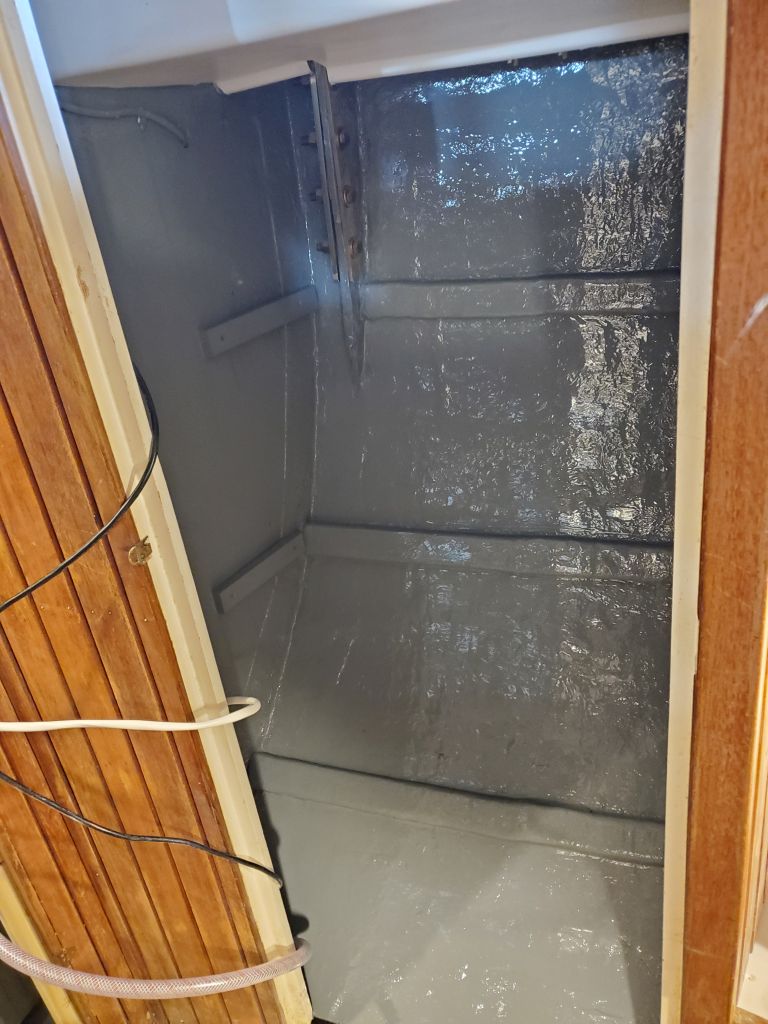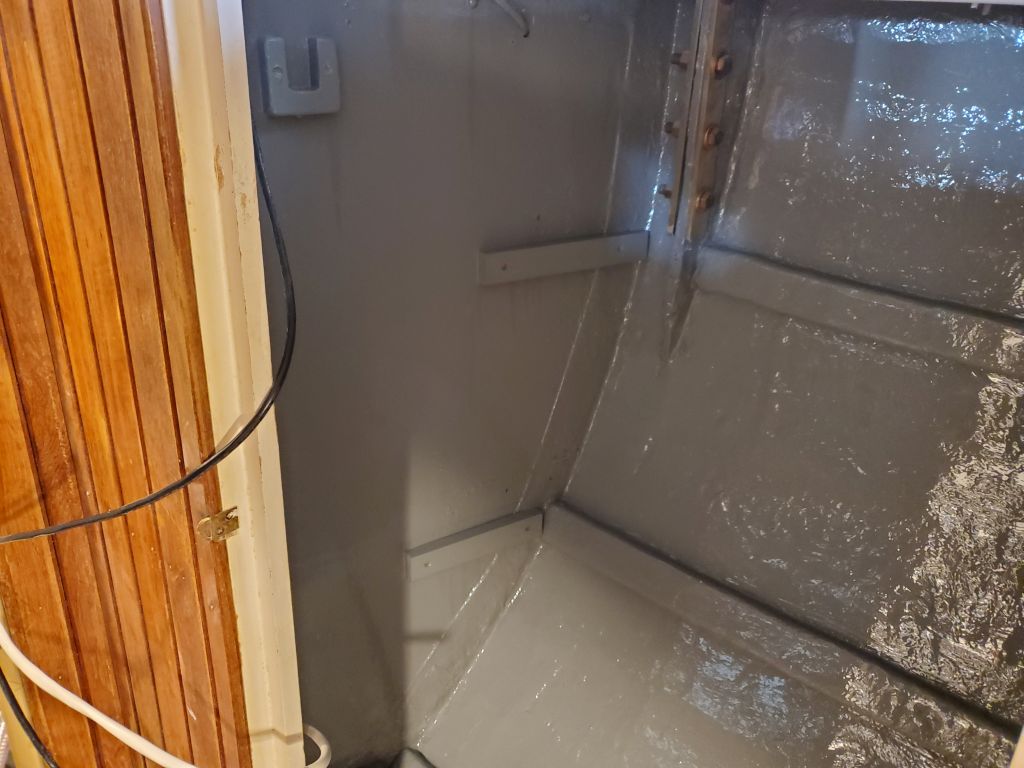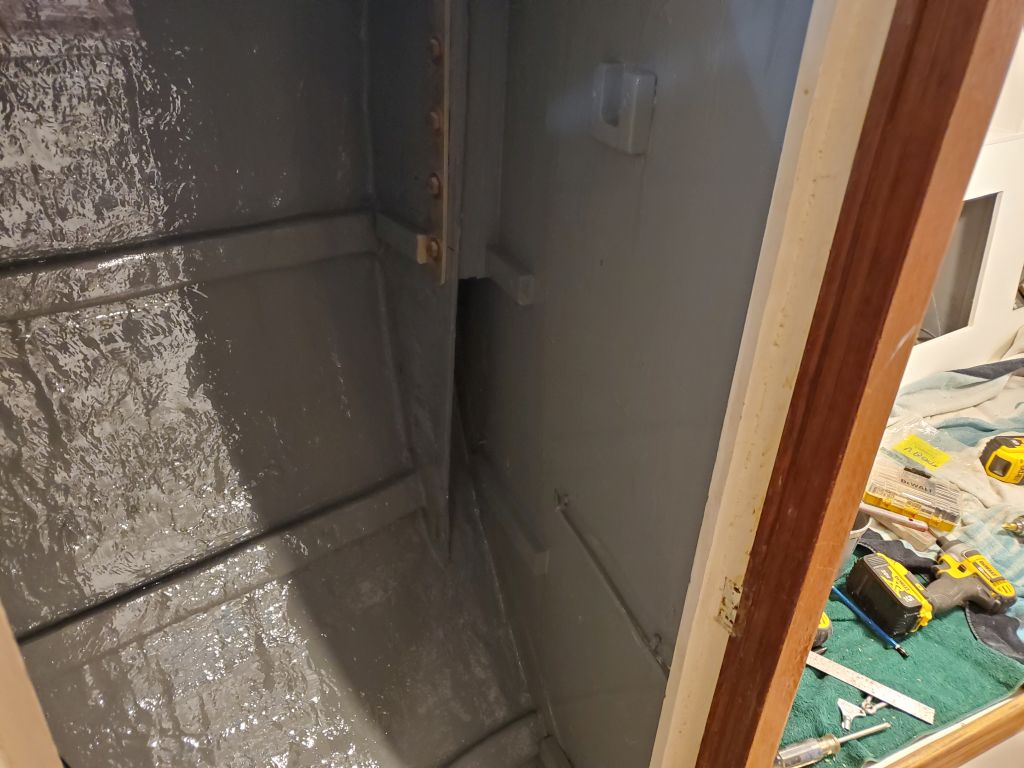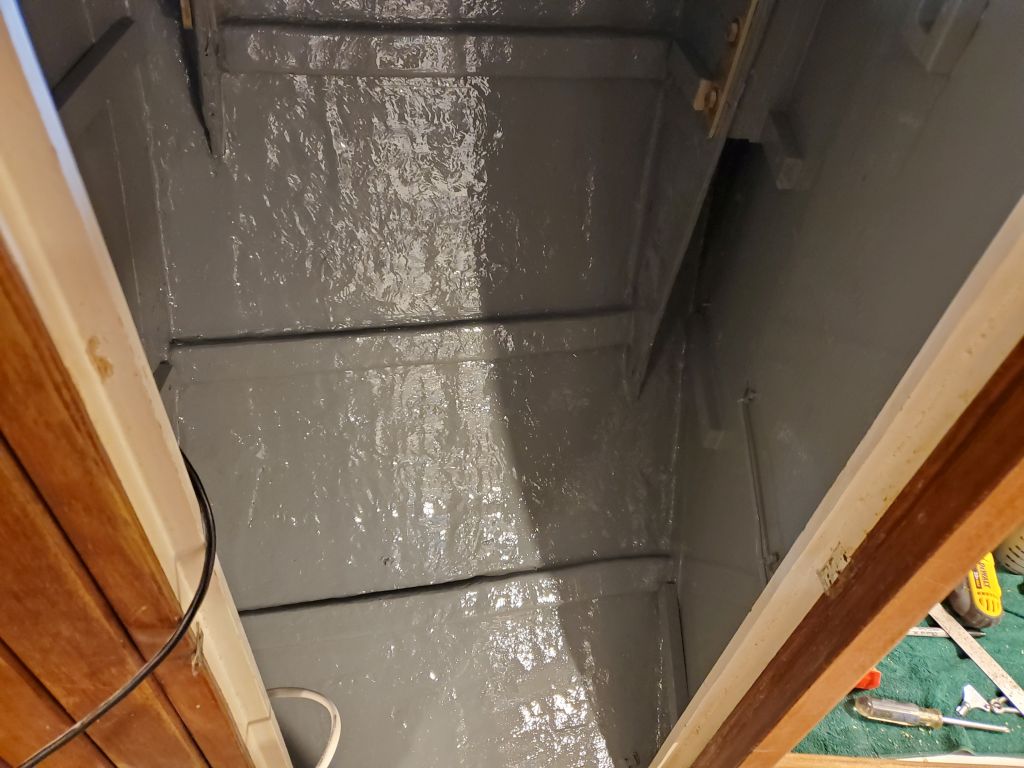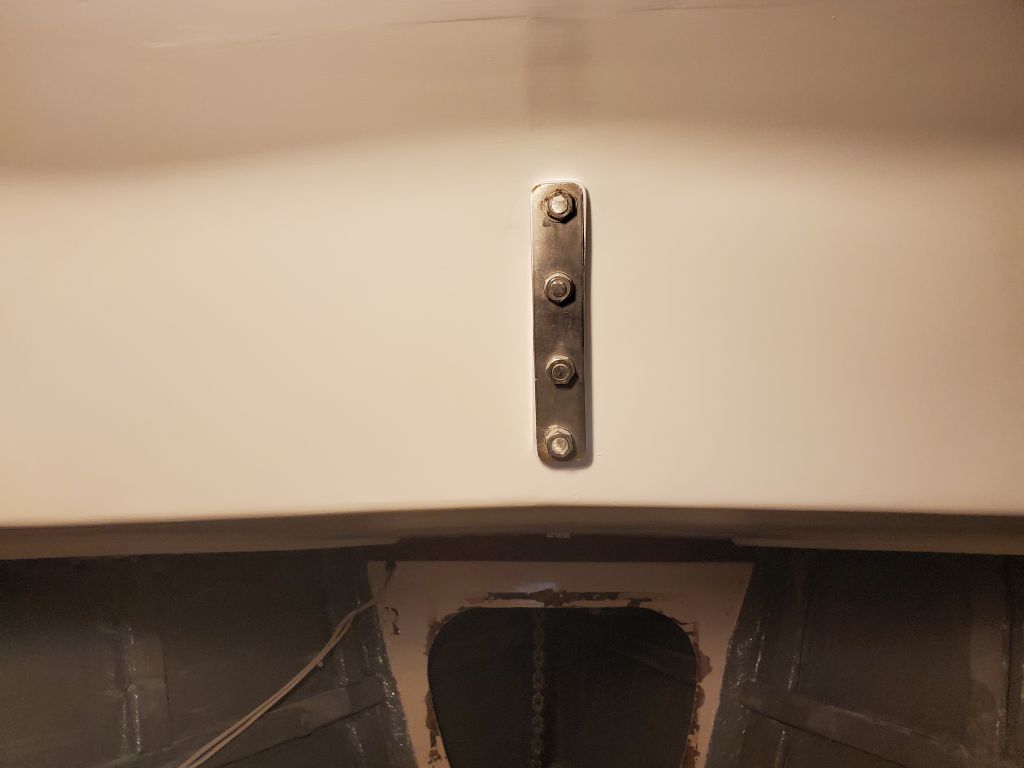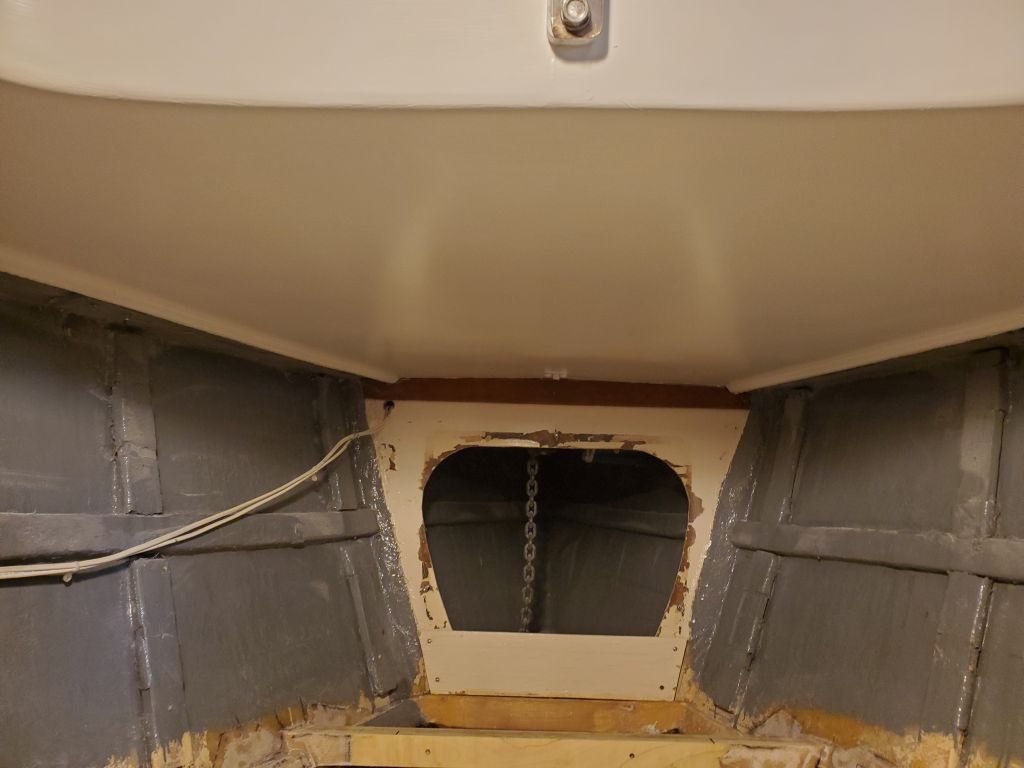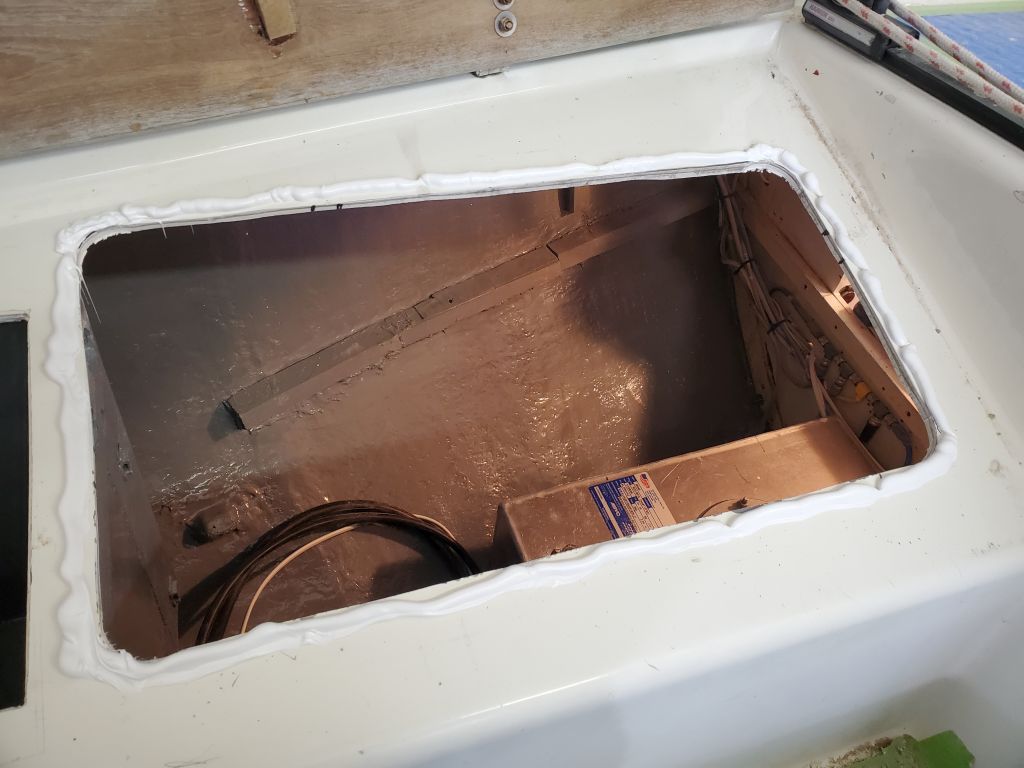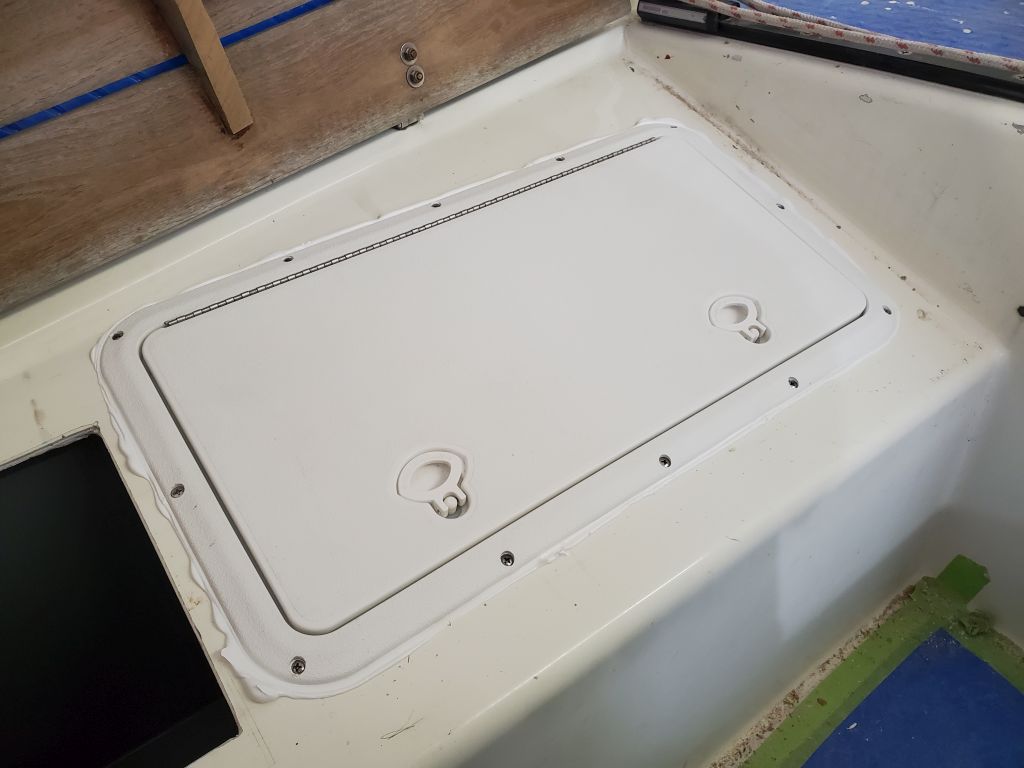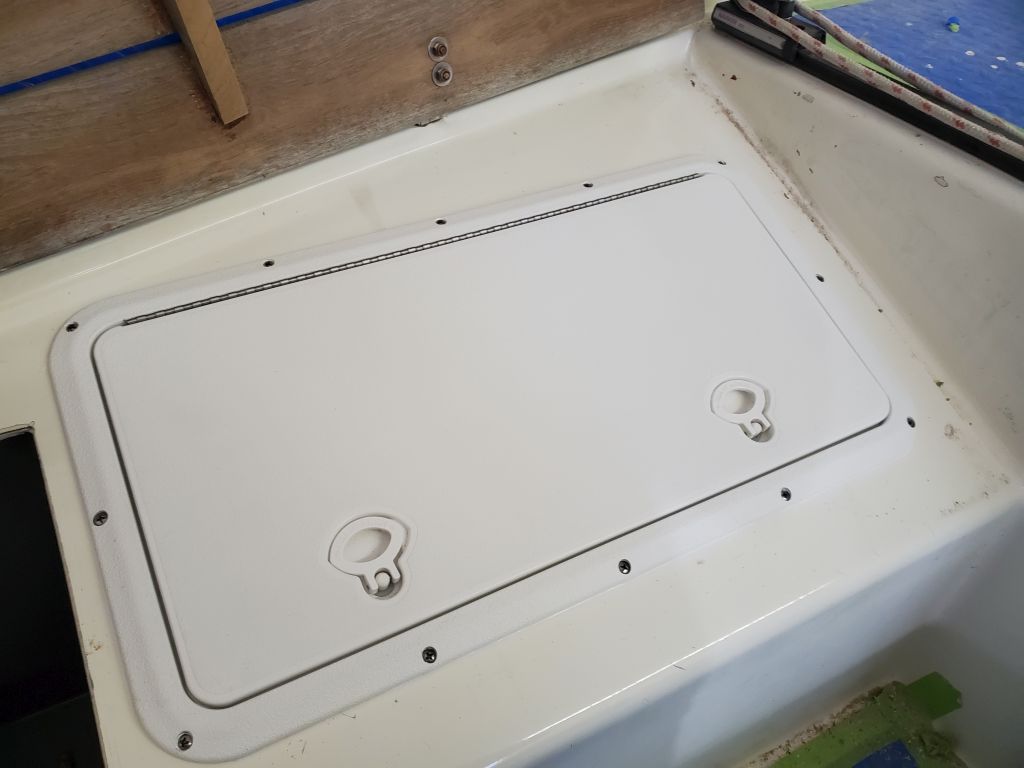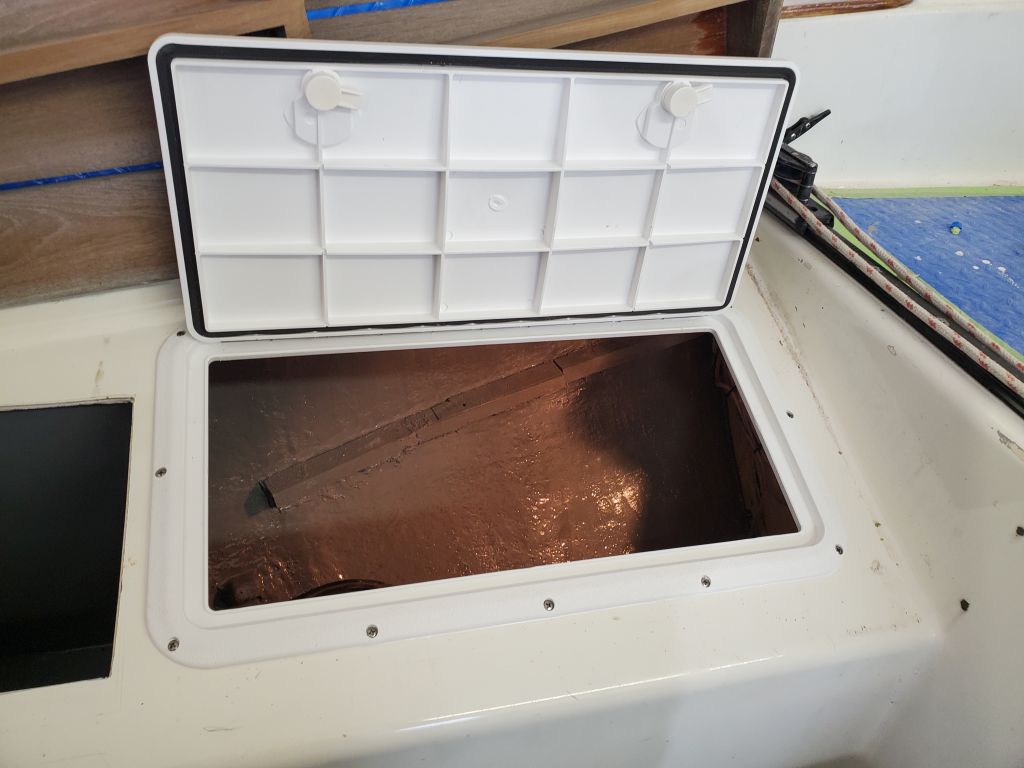

(page 21 of 166)

Calliope Girl 73

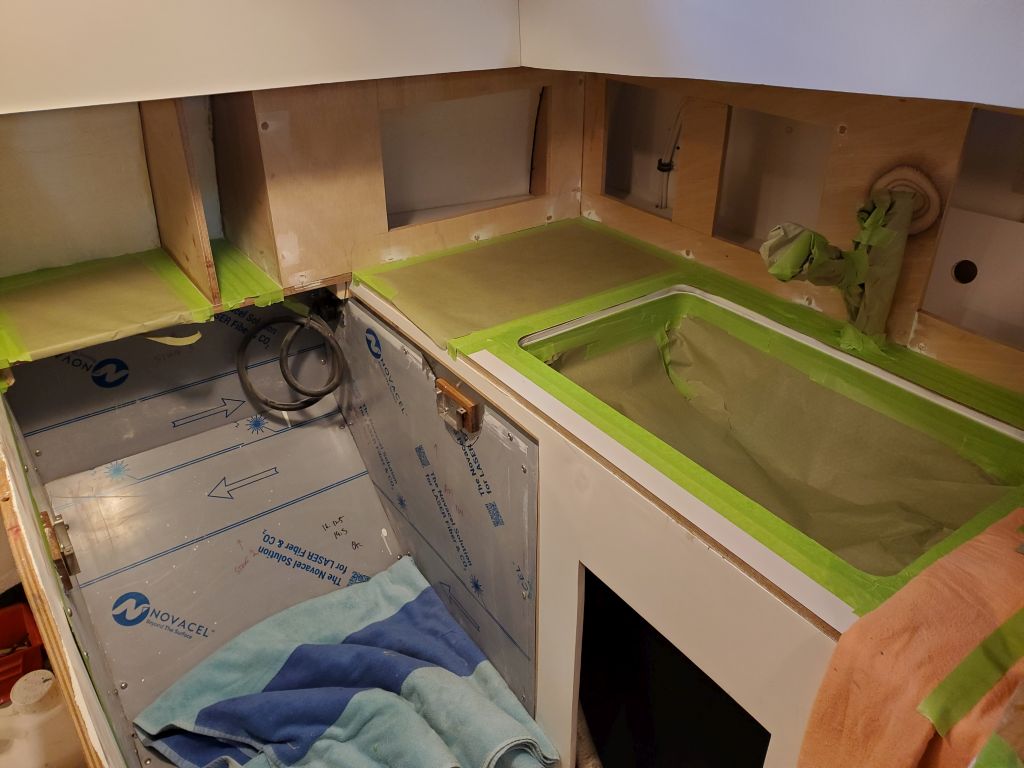
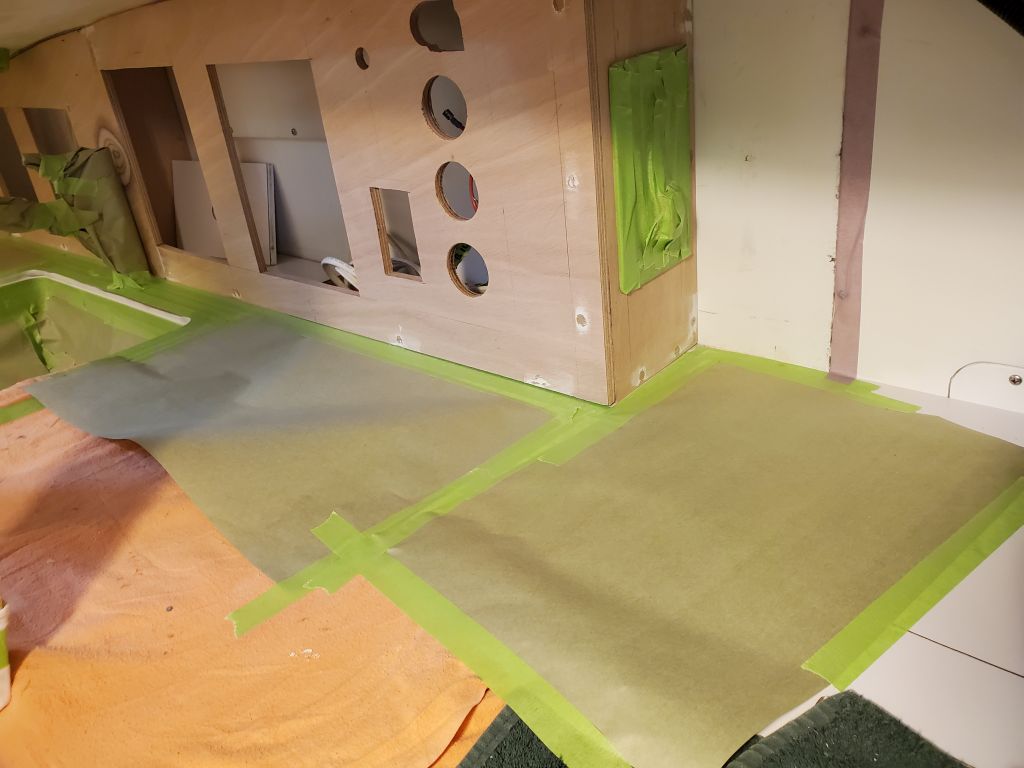
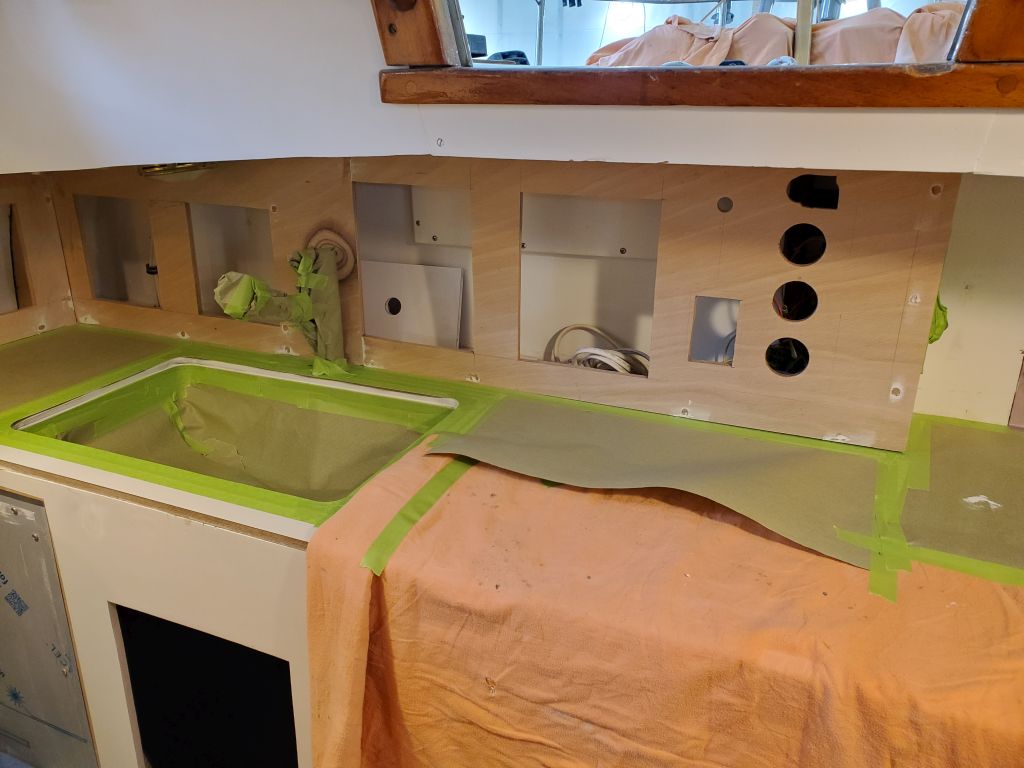
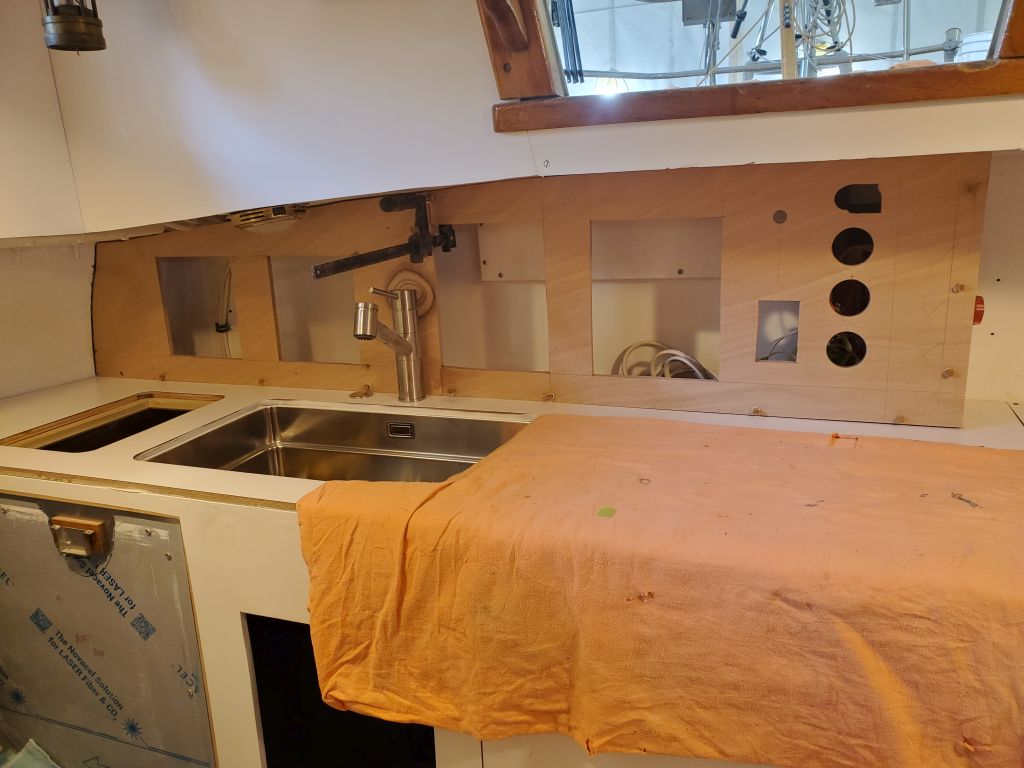
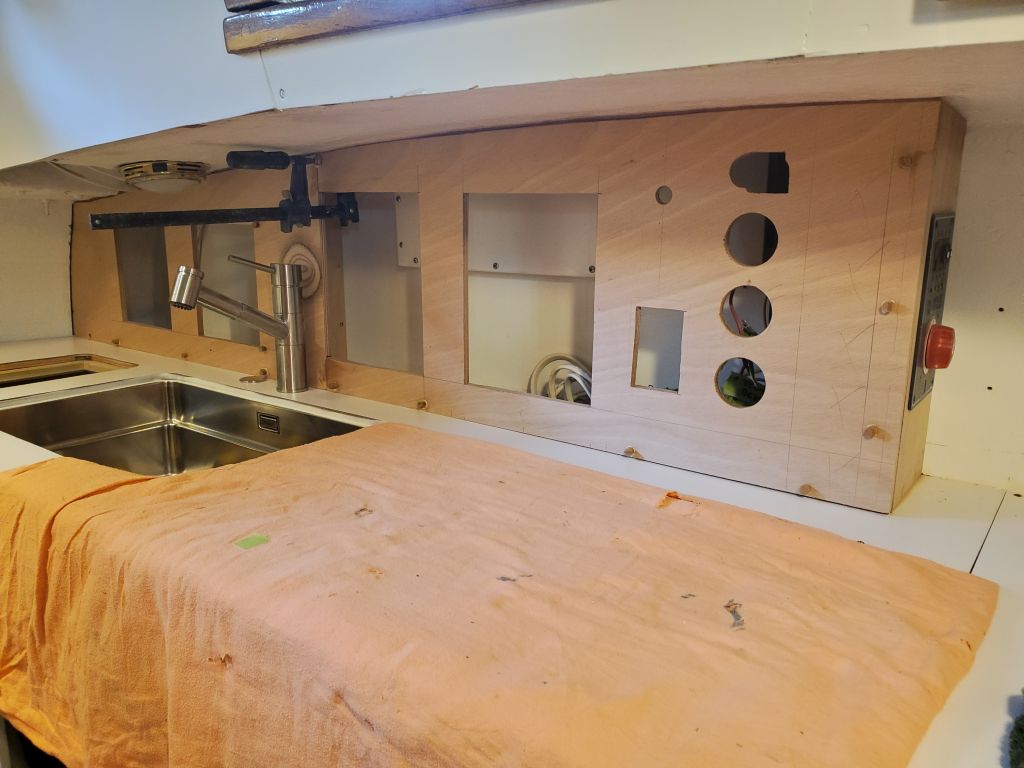
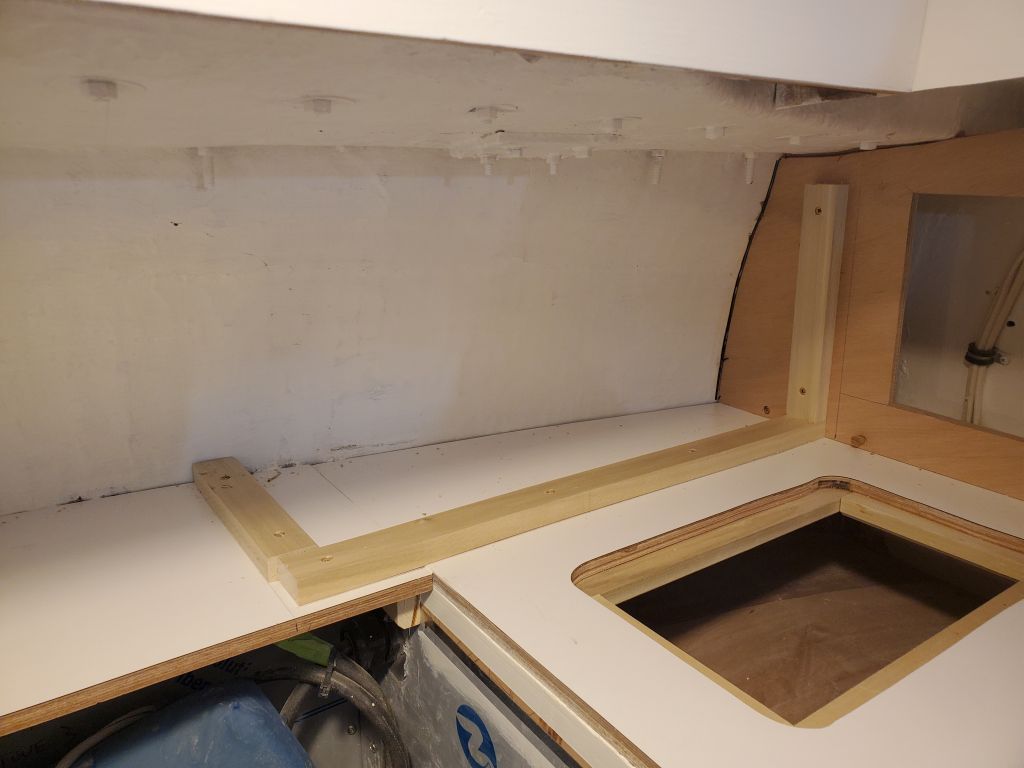
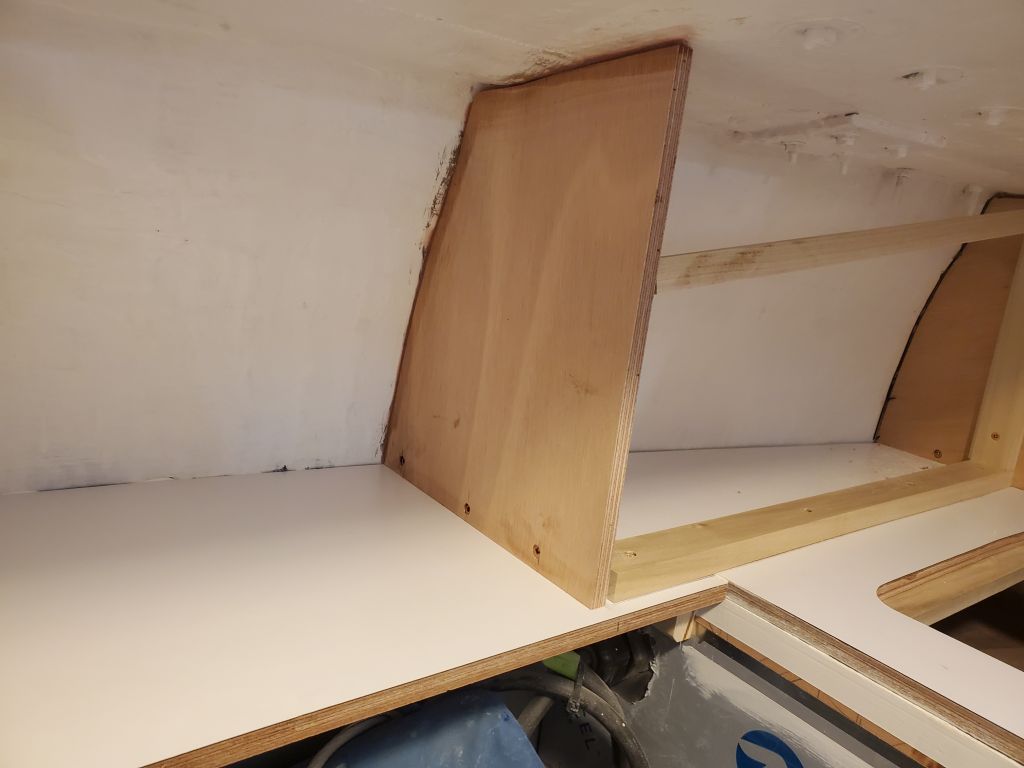
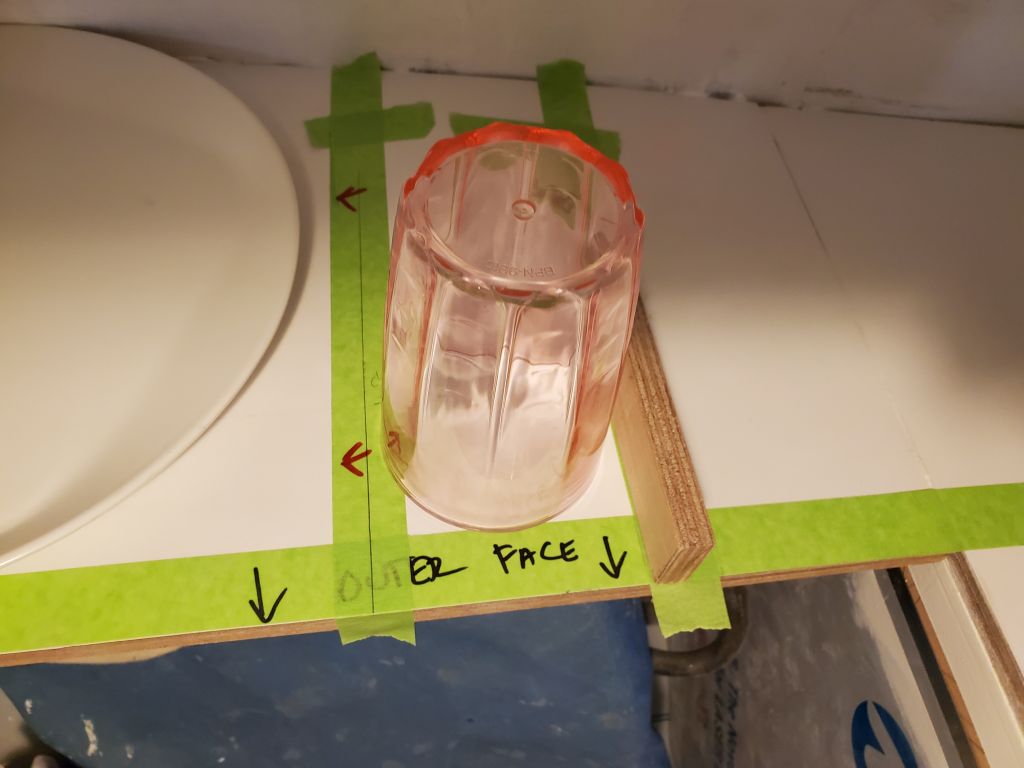
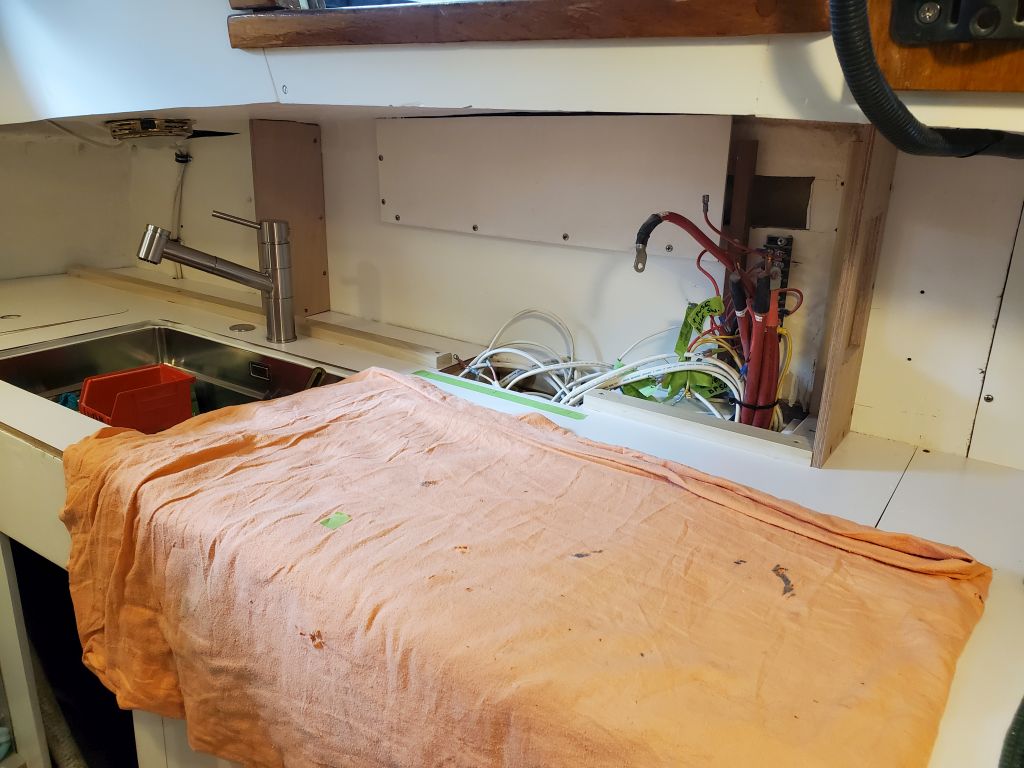
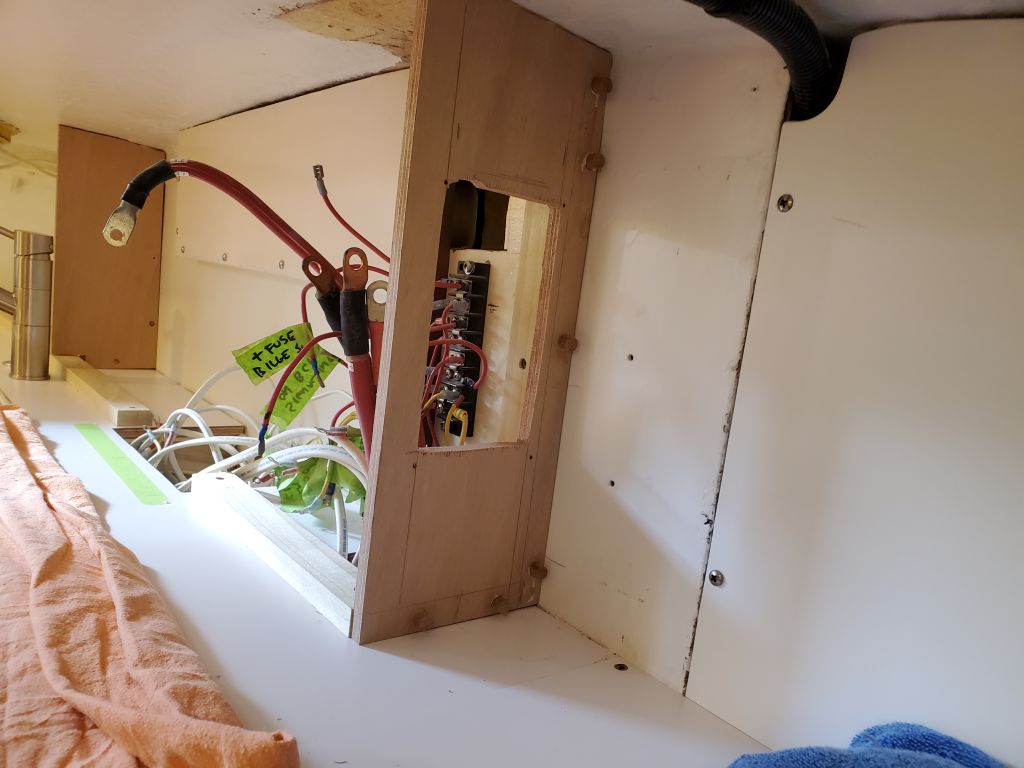
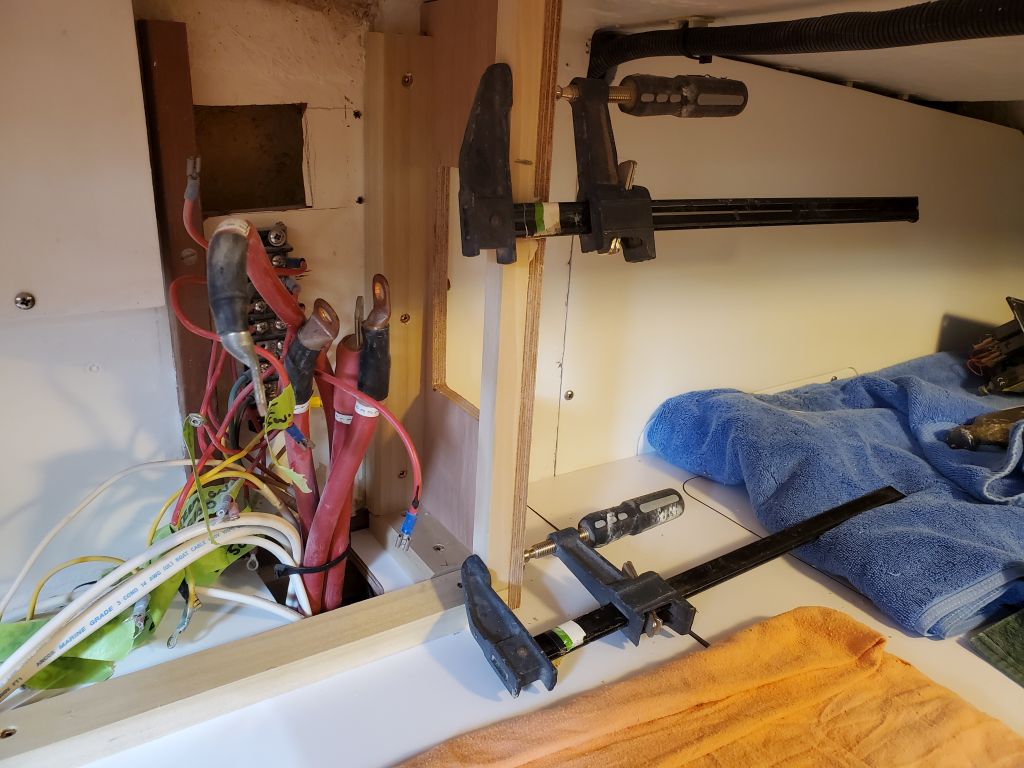
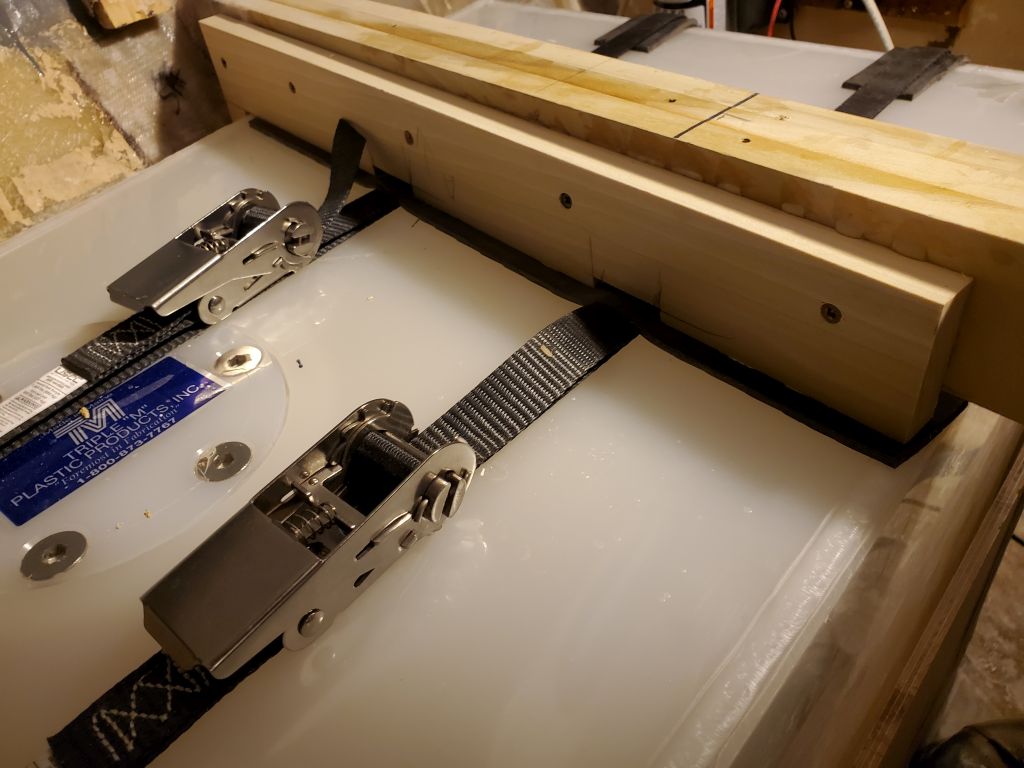
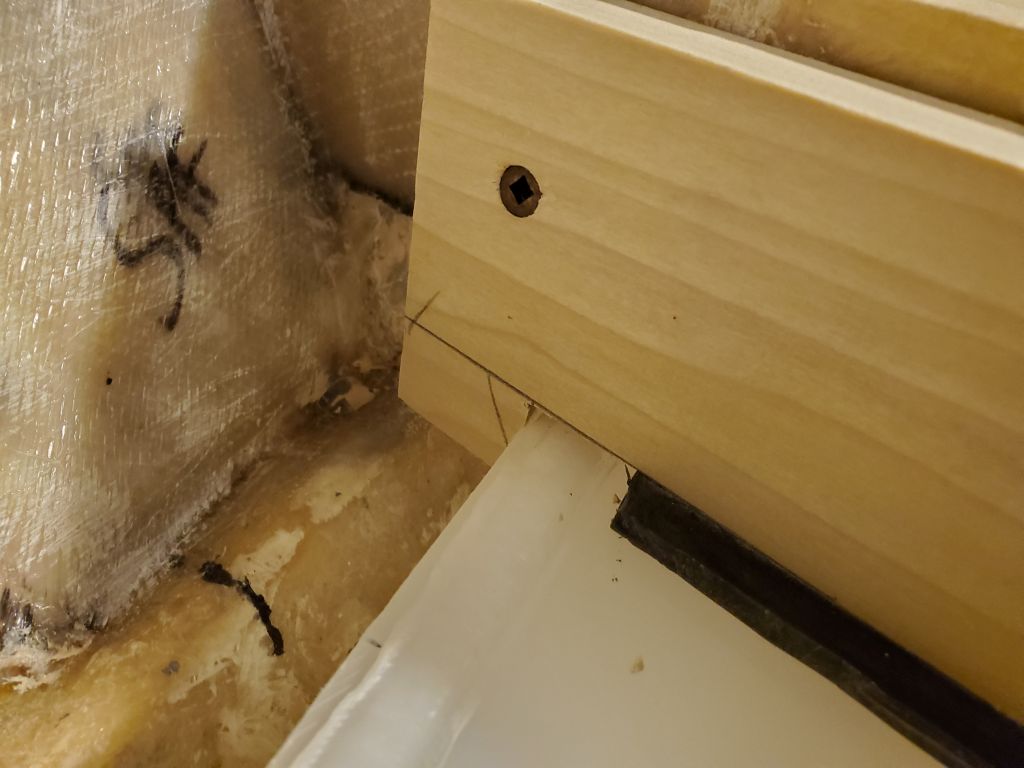
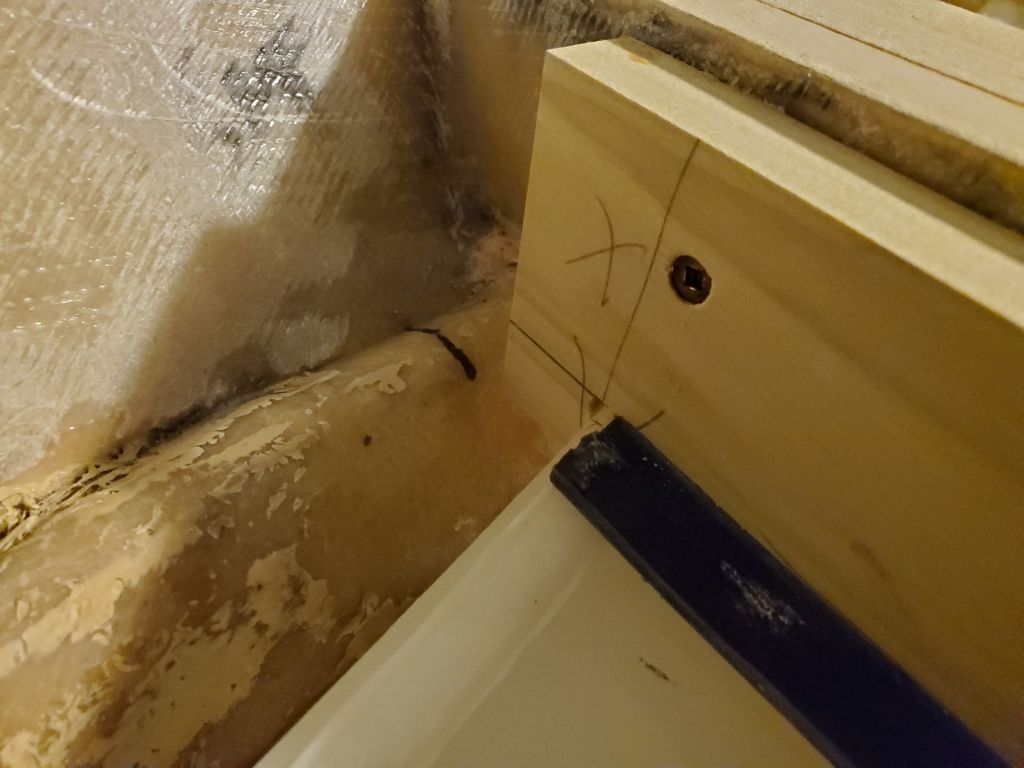
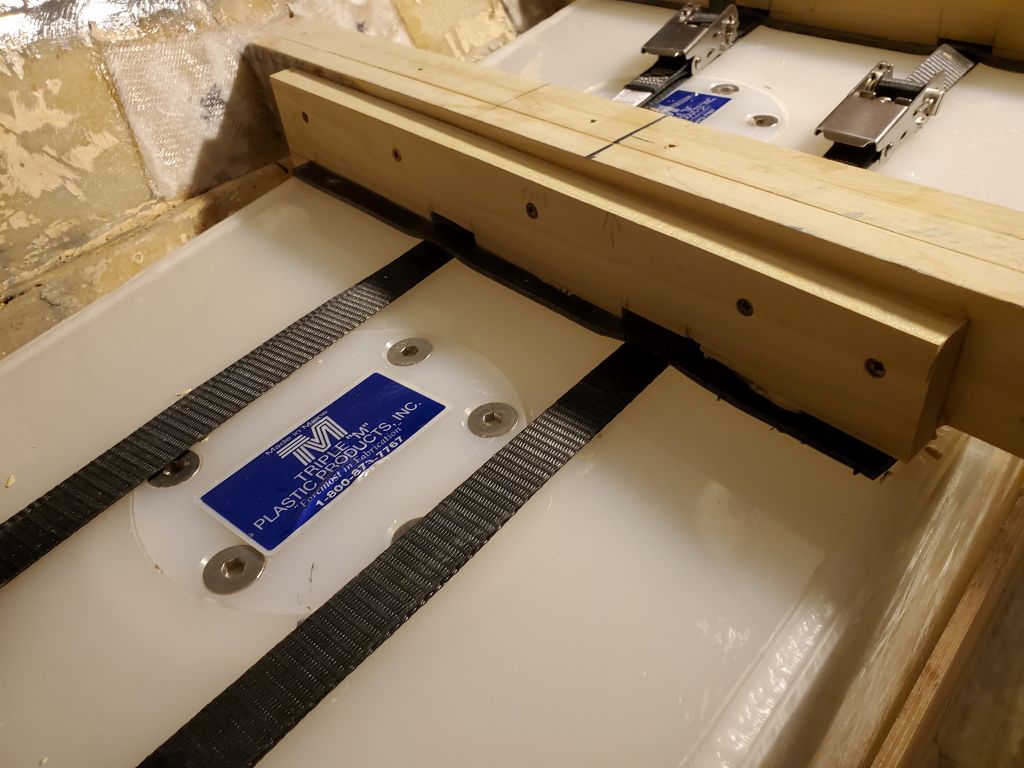
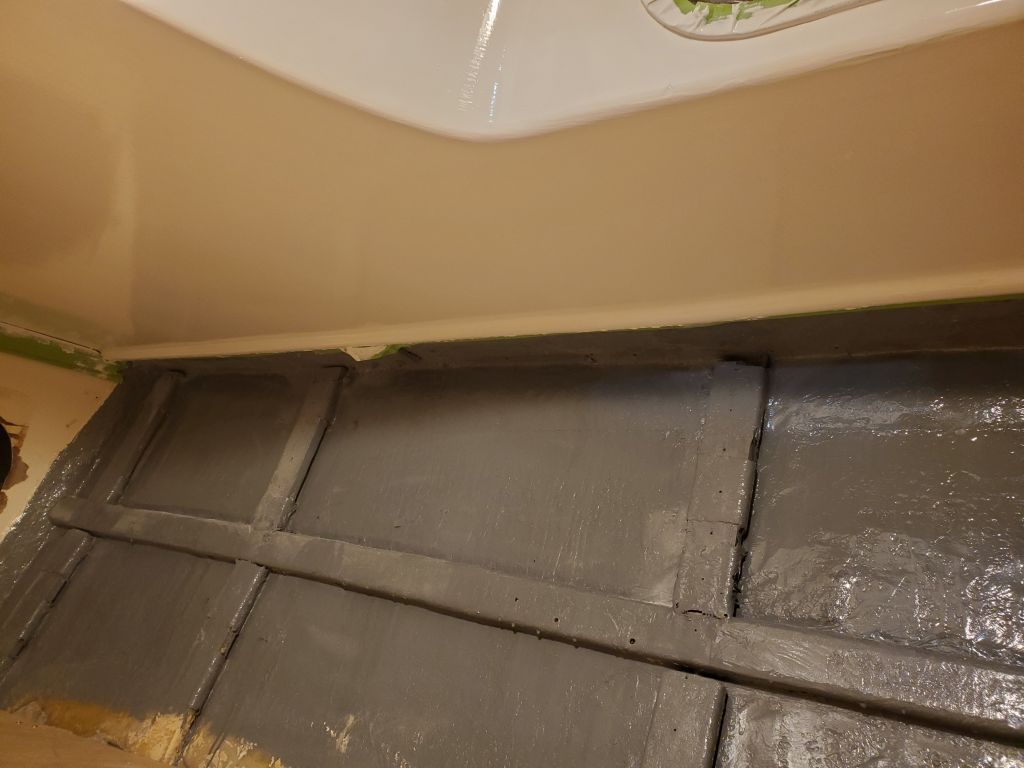
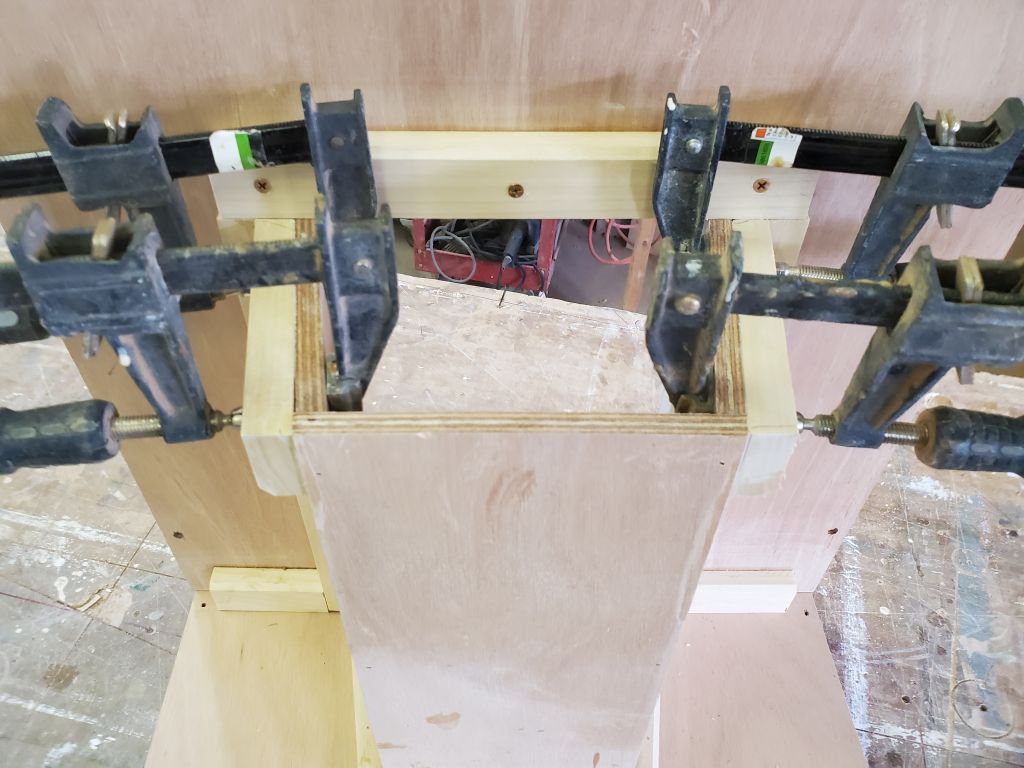
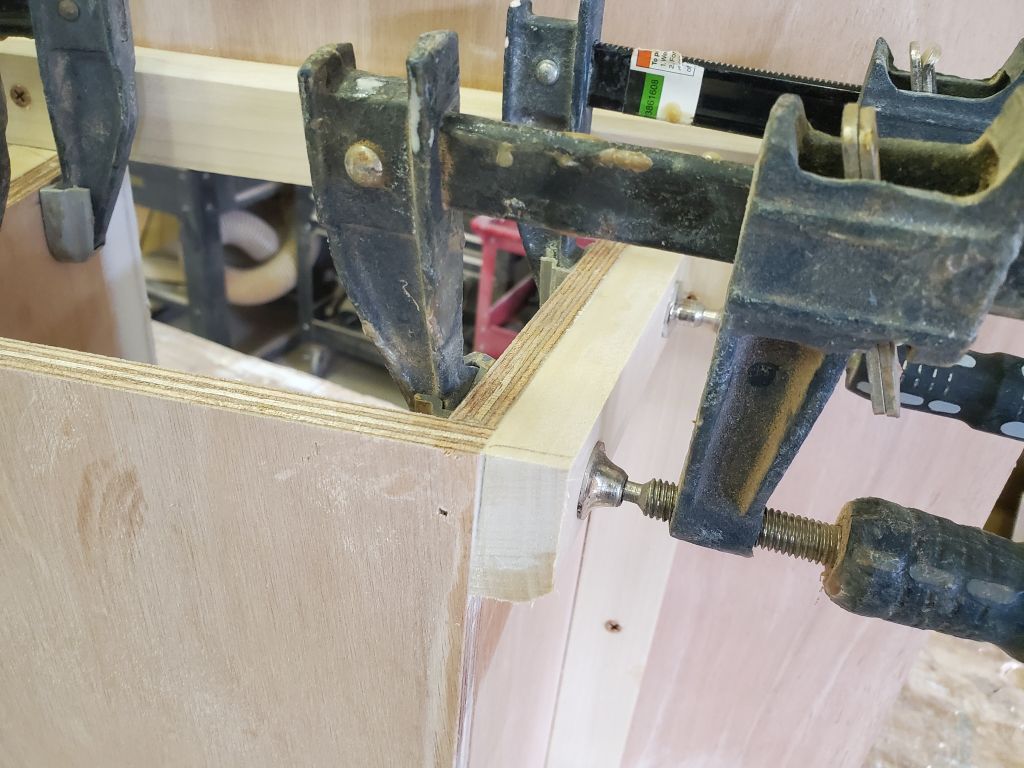
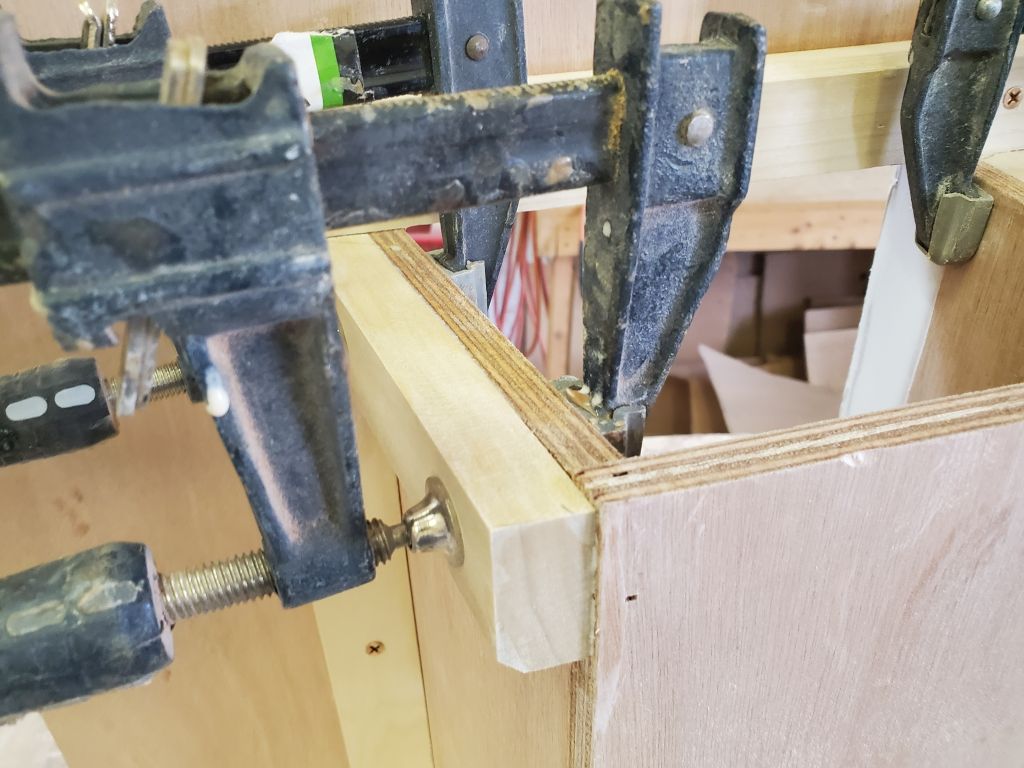
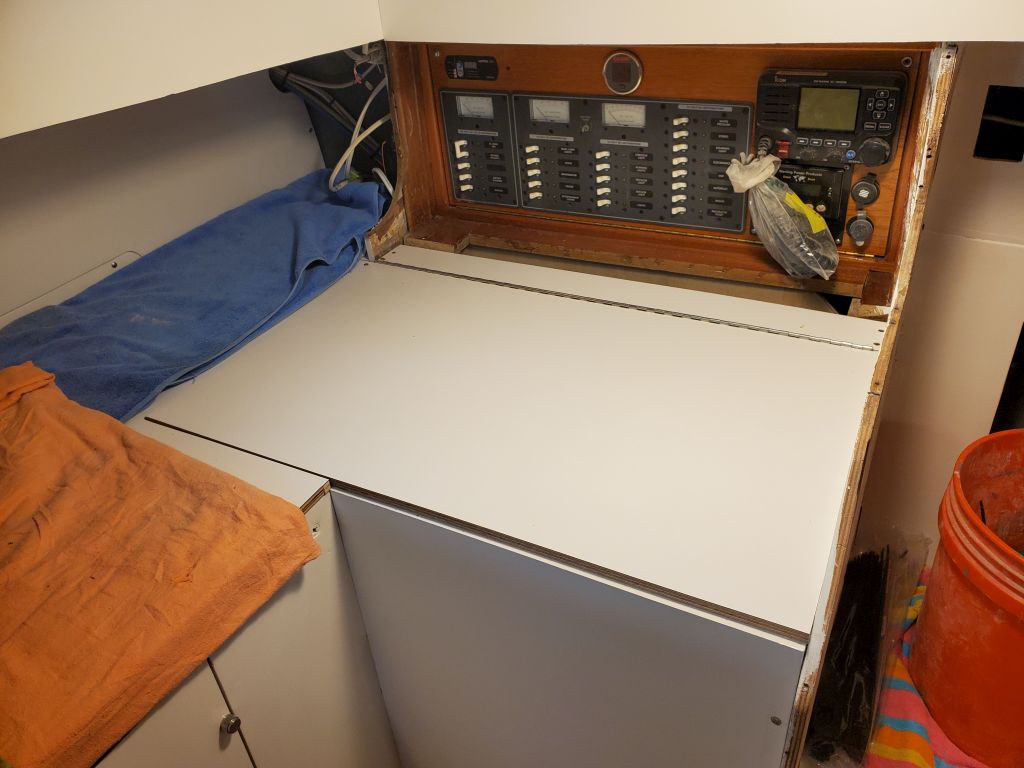
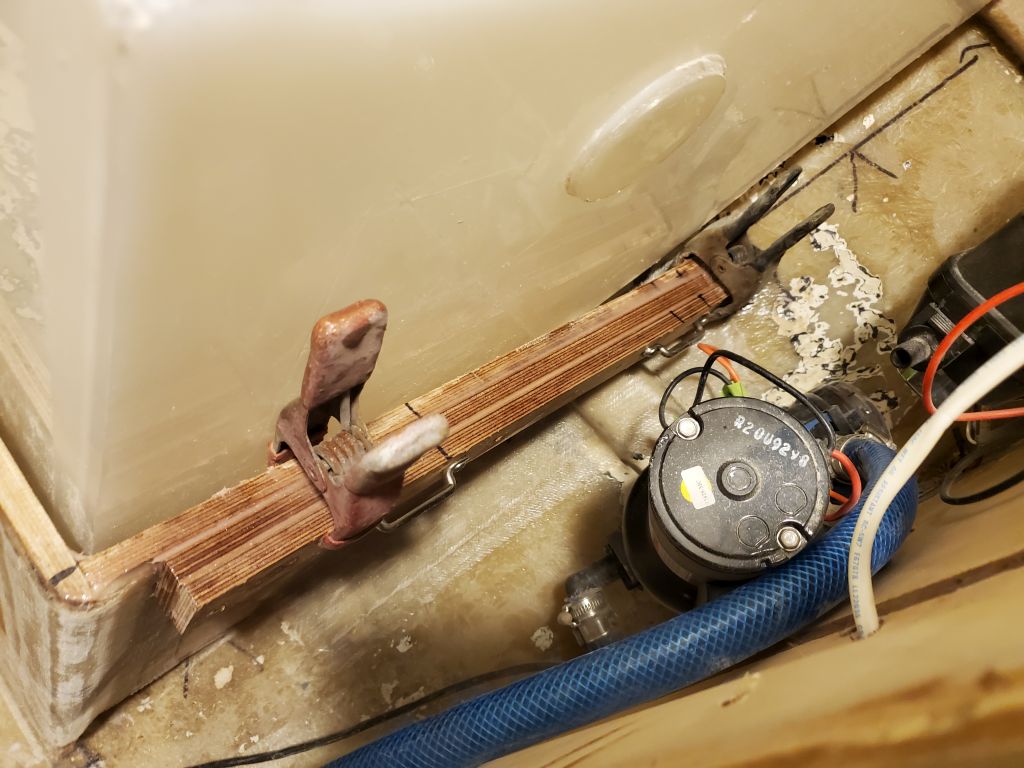
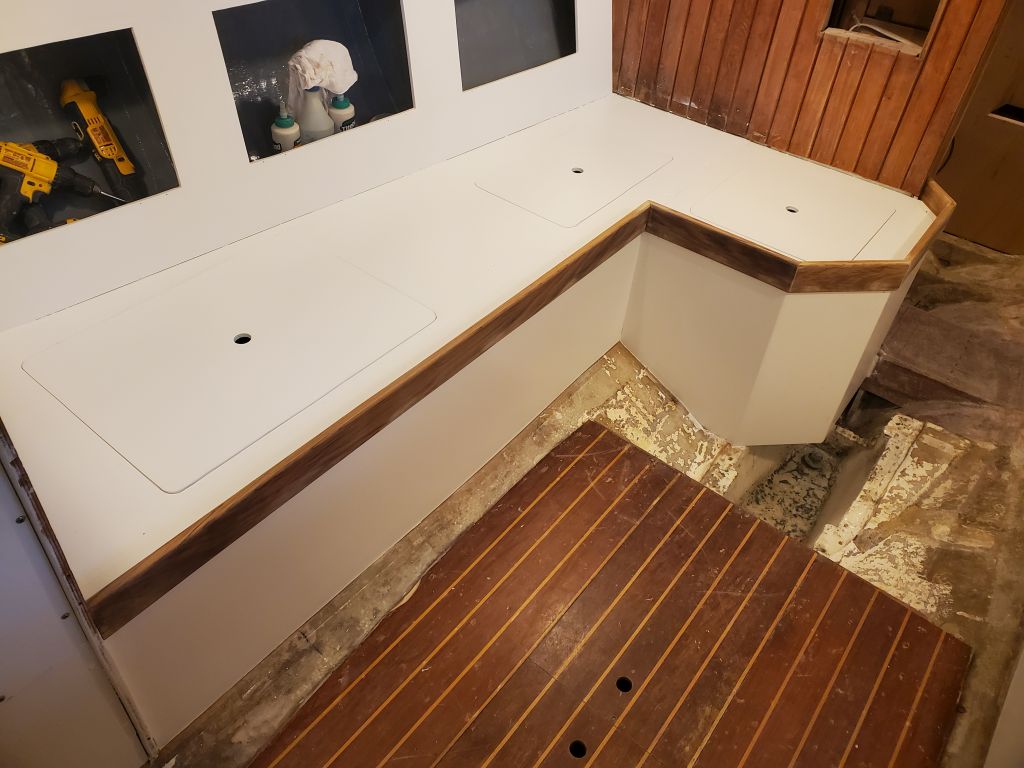
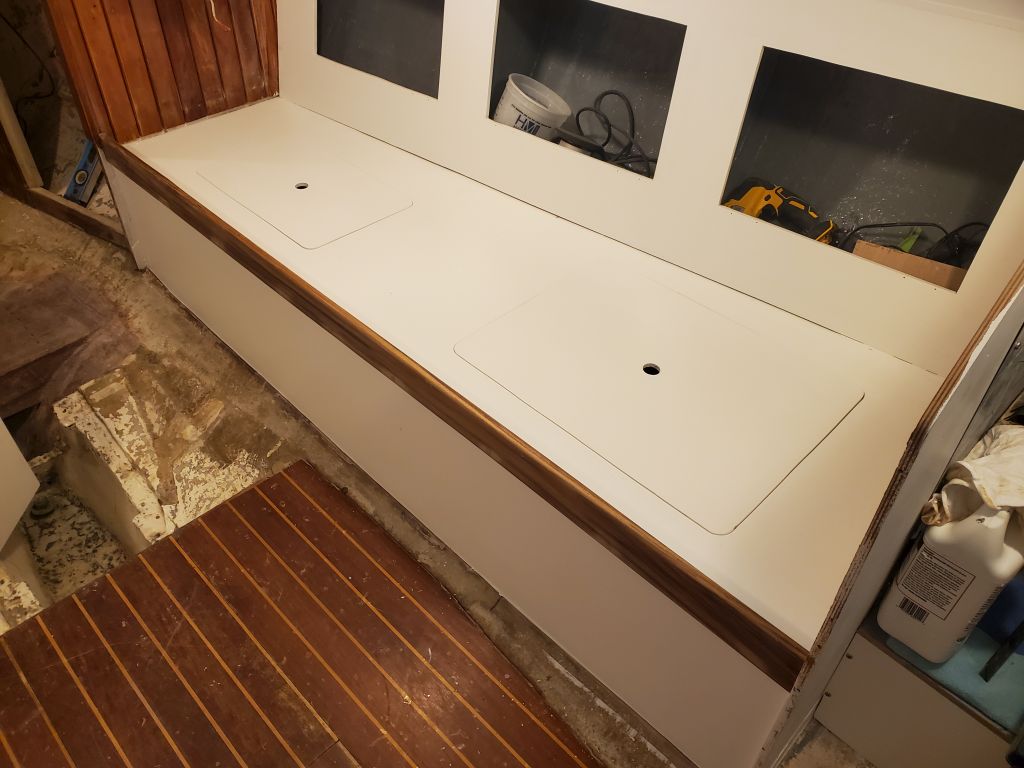
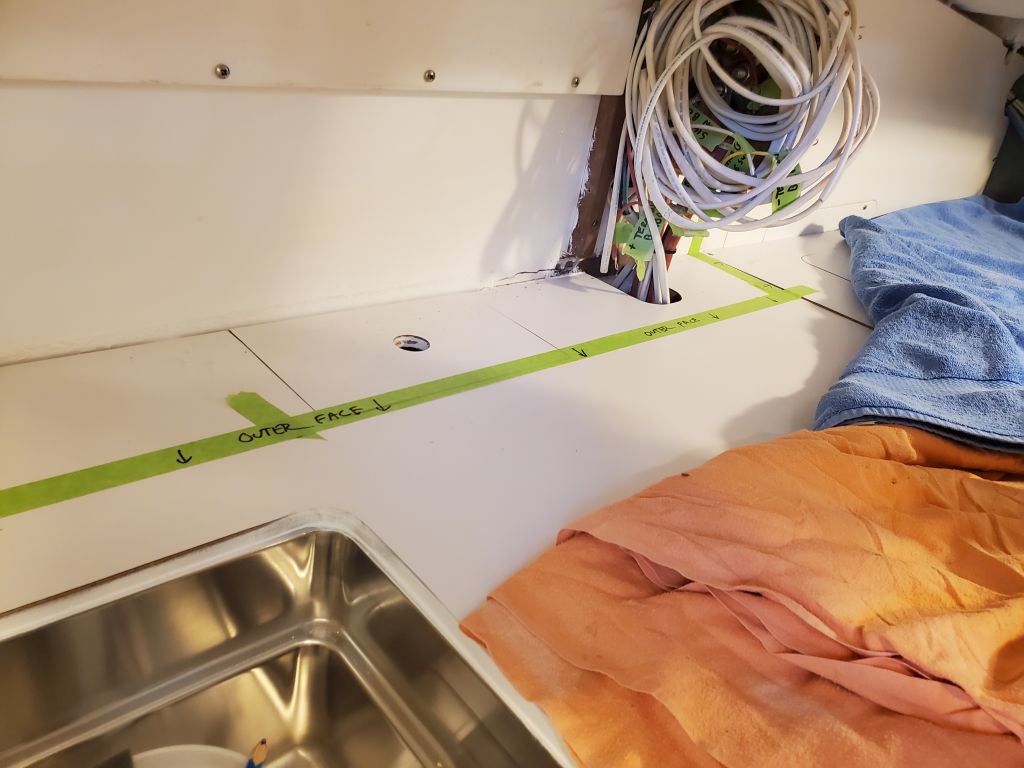
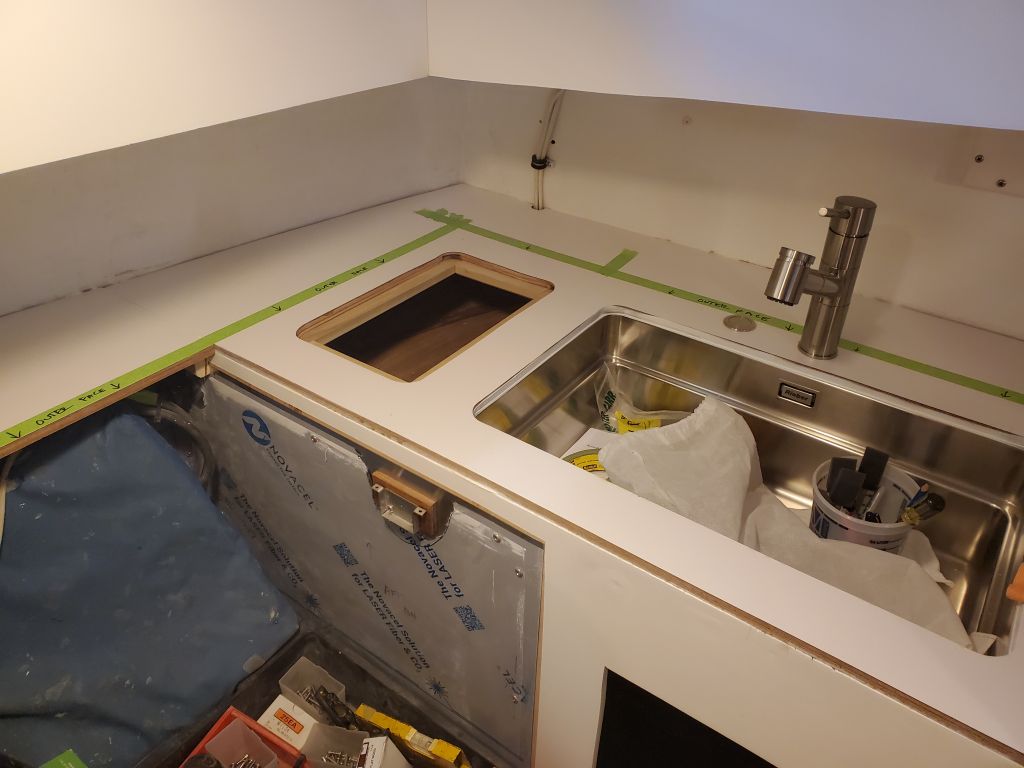
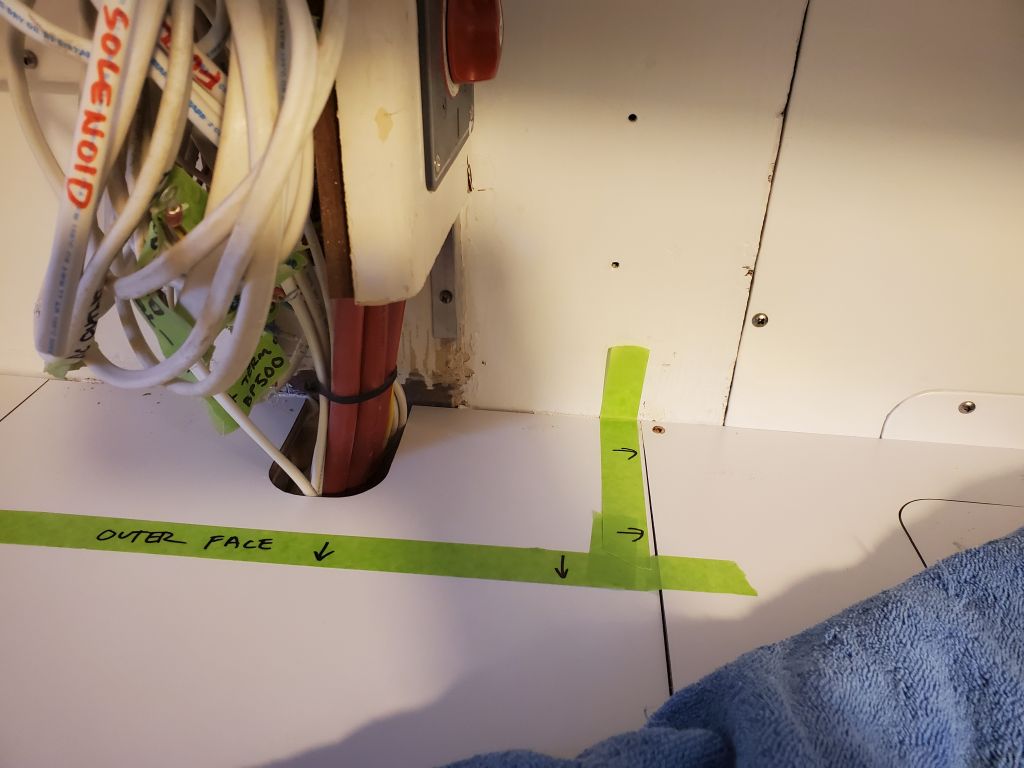
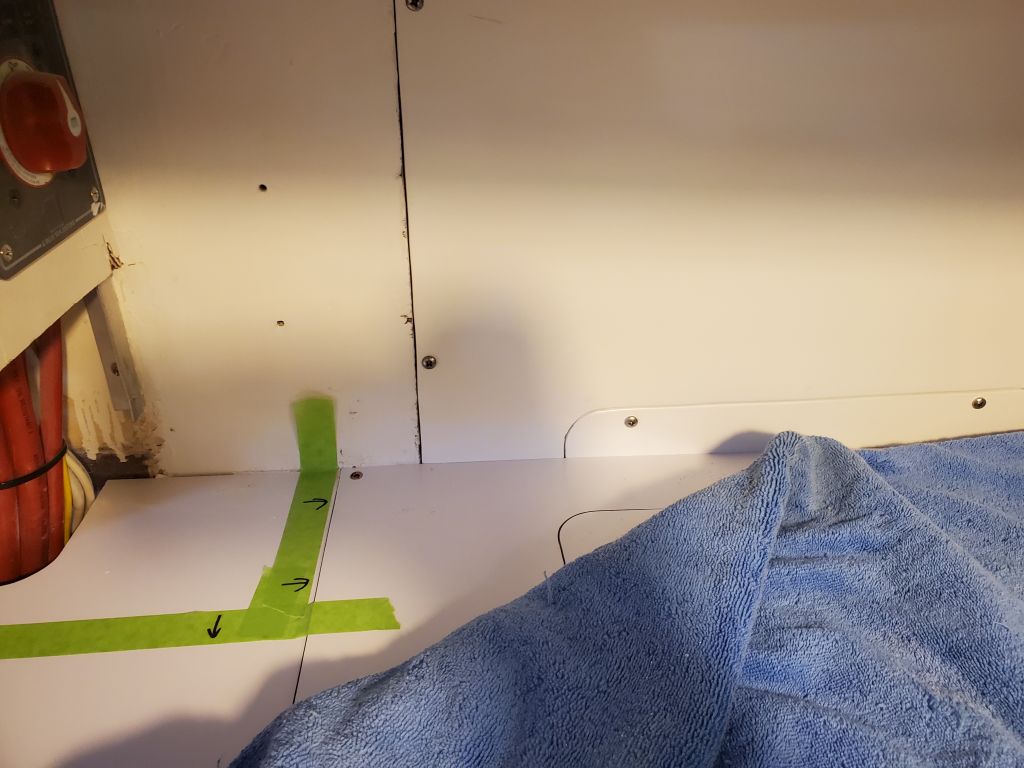
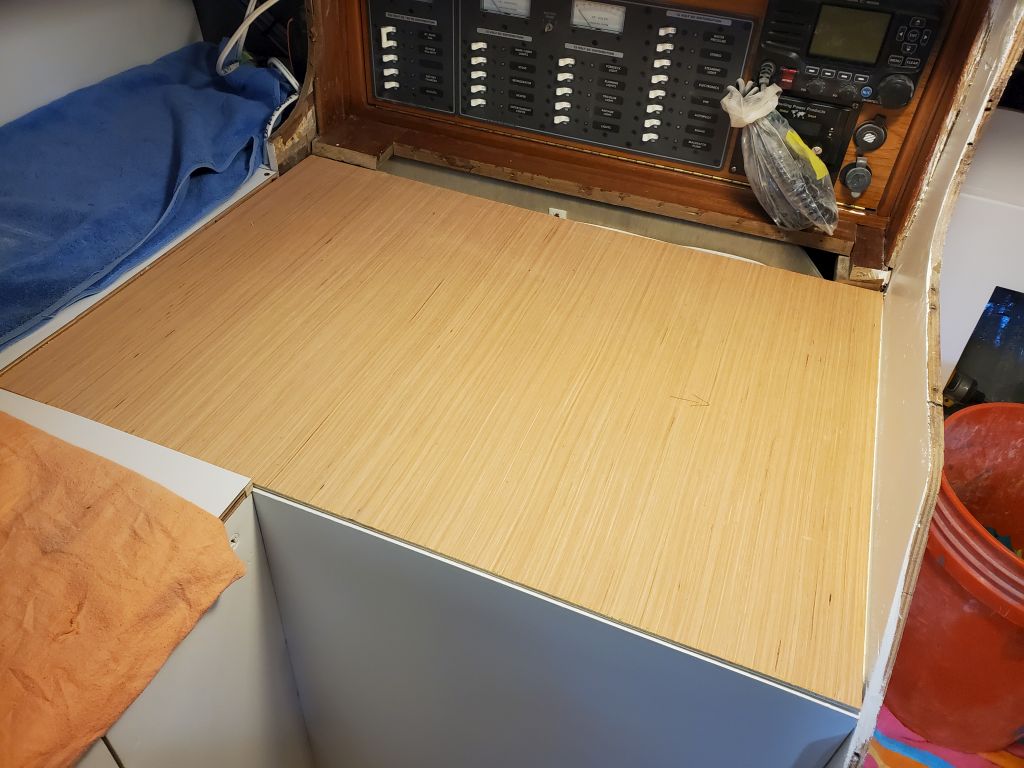
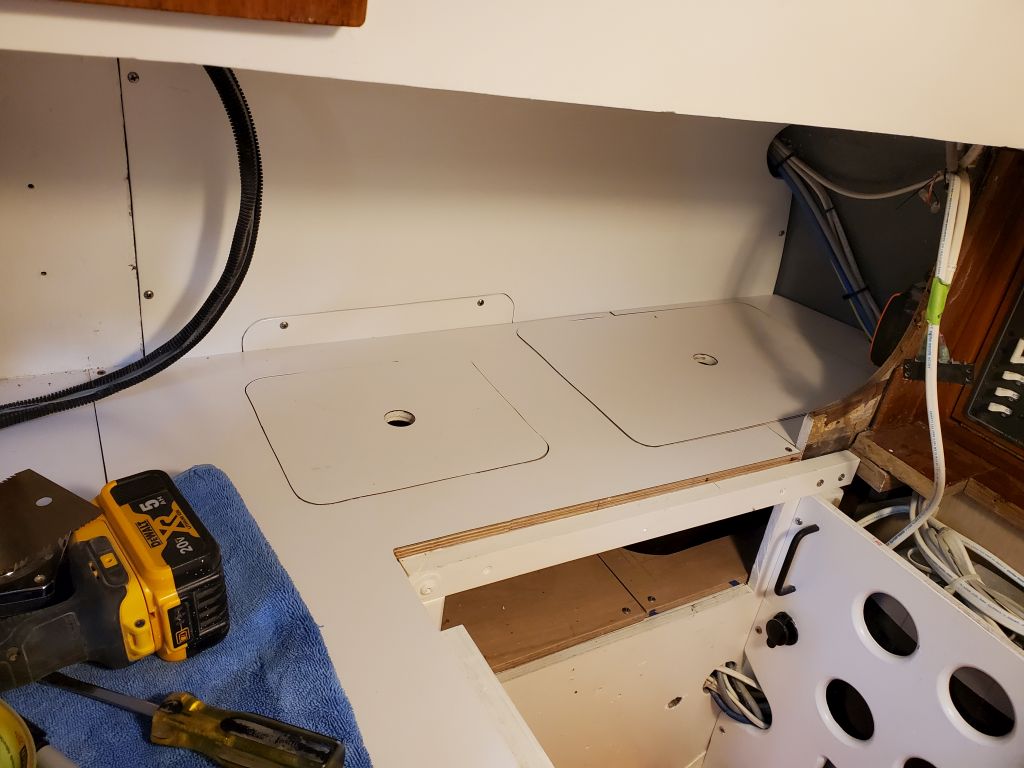
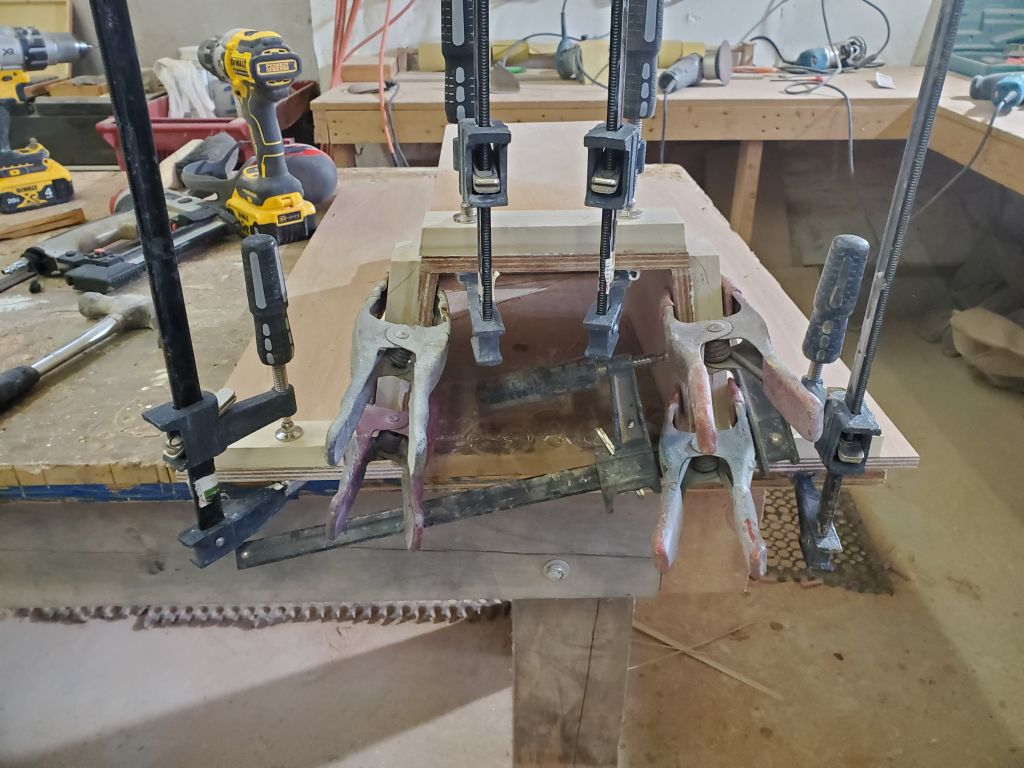
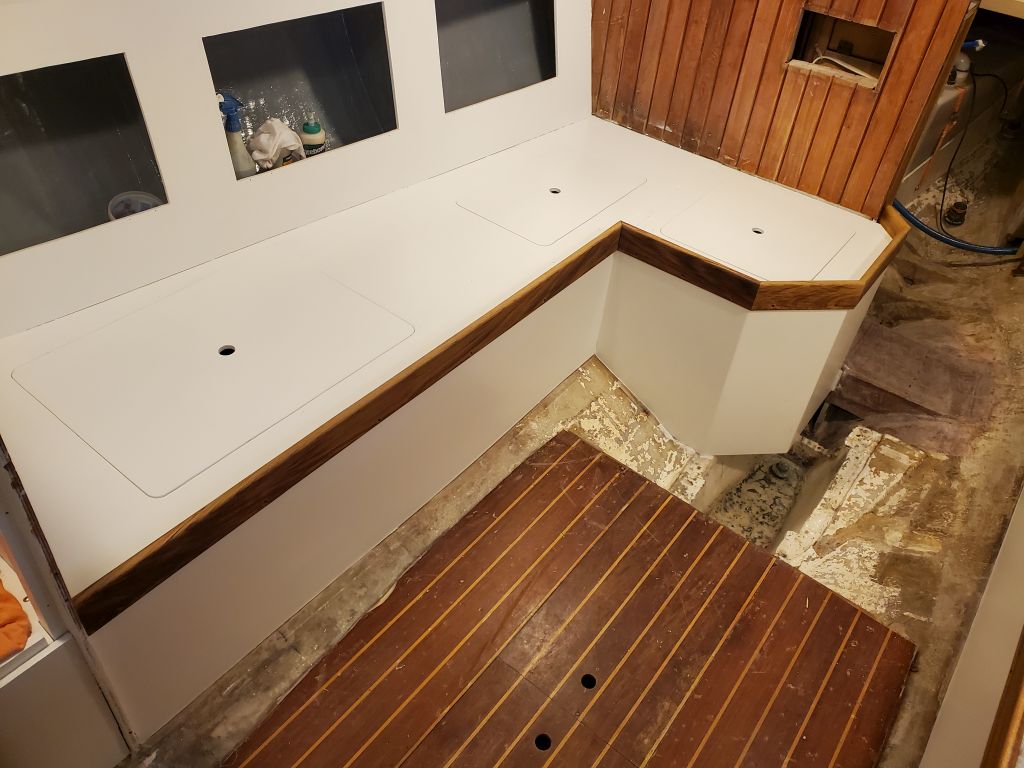
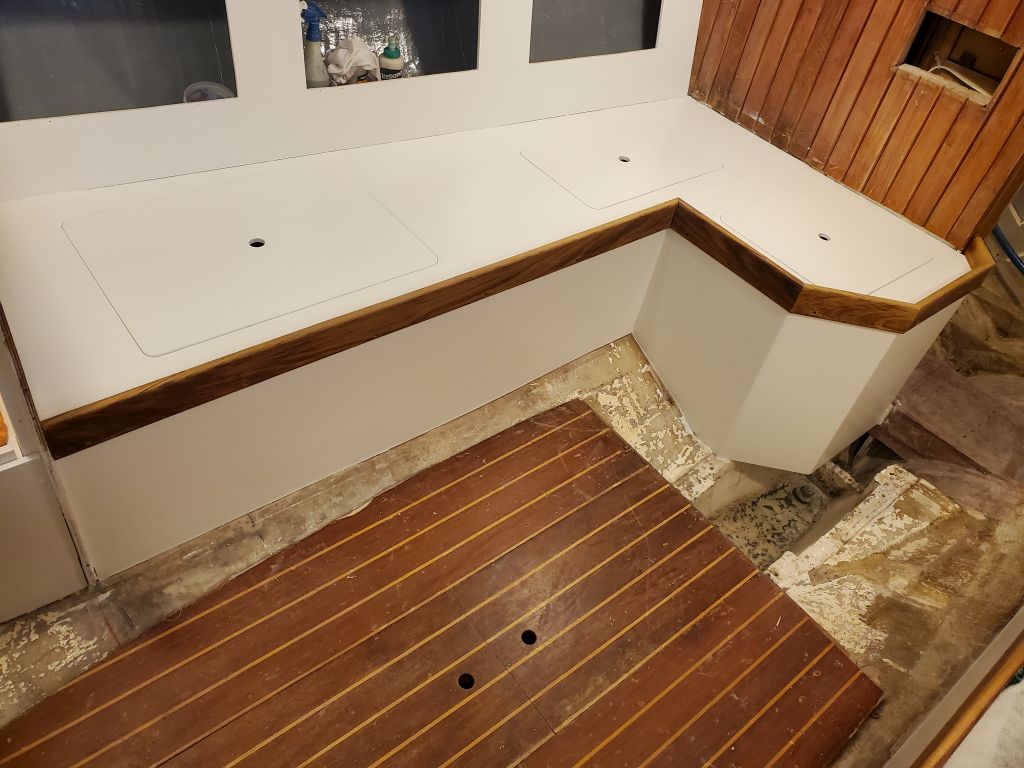
To begin, I unclamped the countertop, which had had ample cure time.

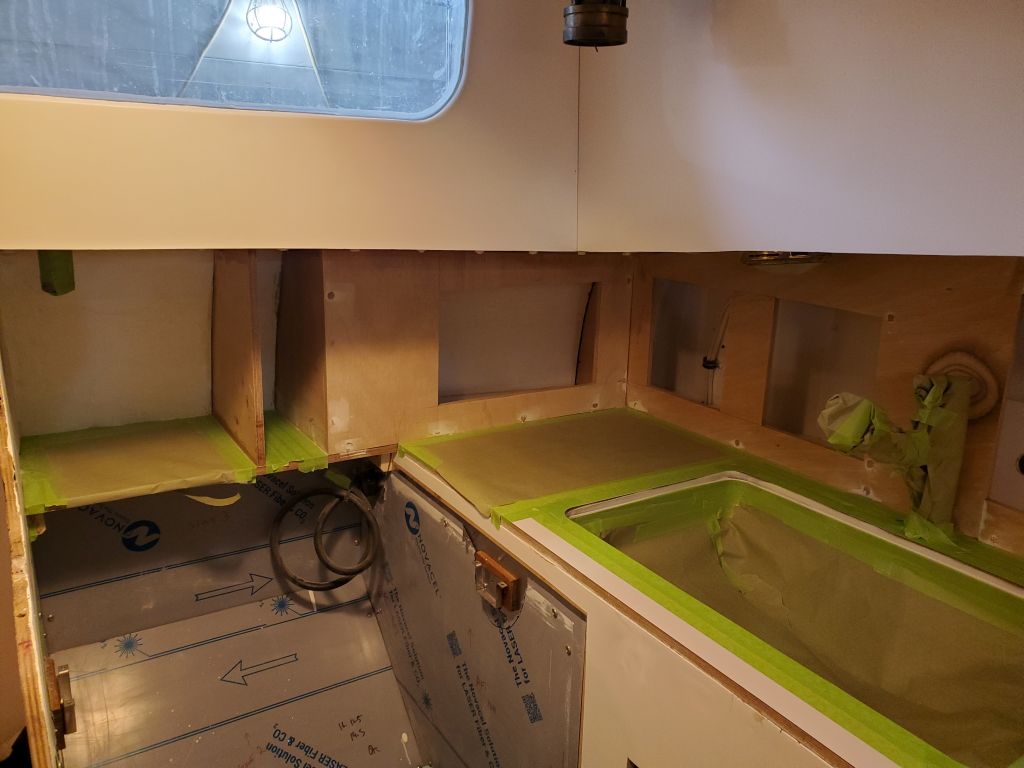
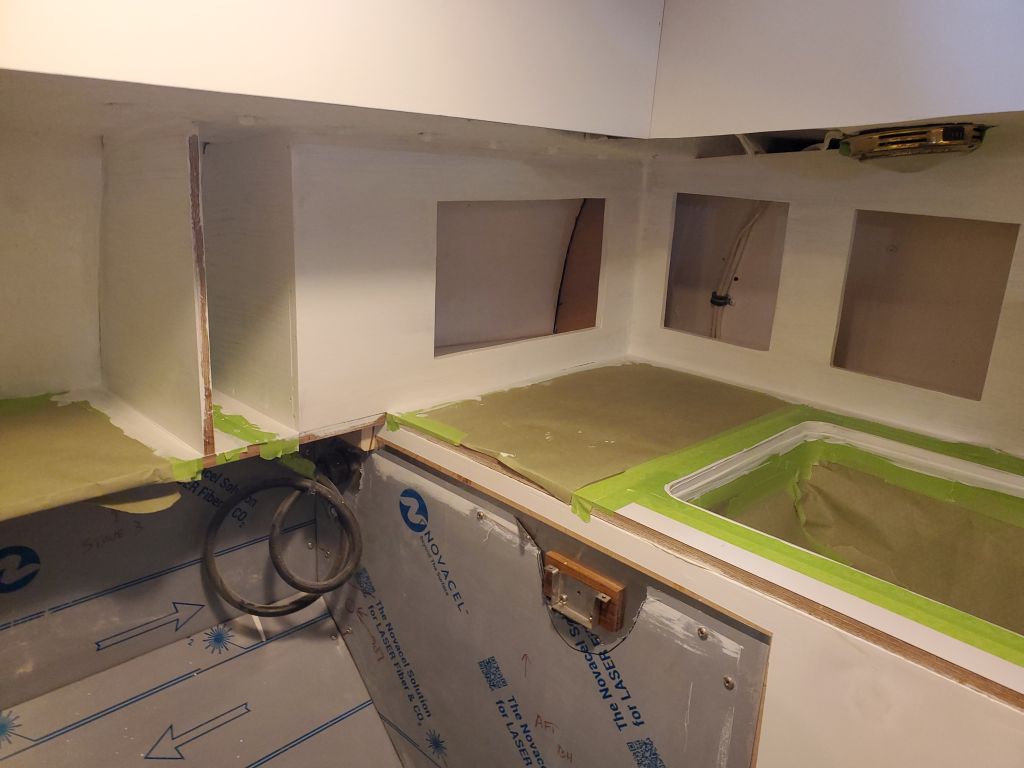
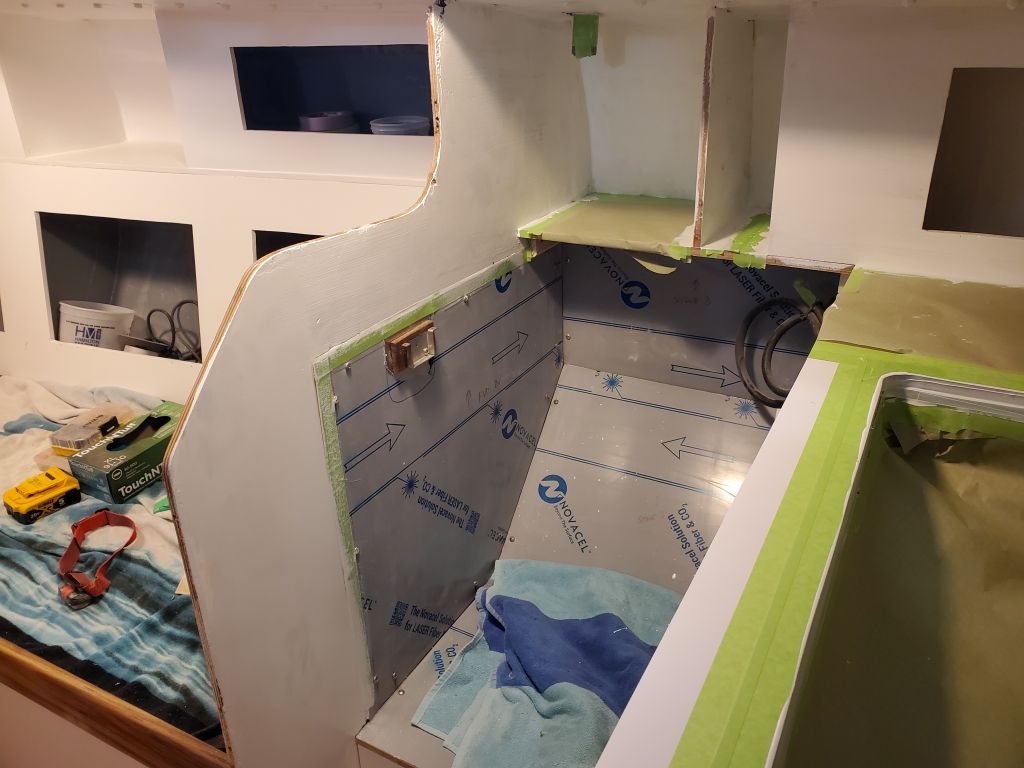
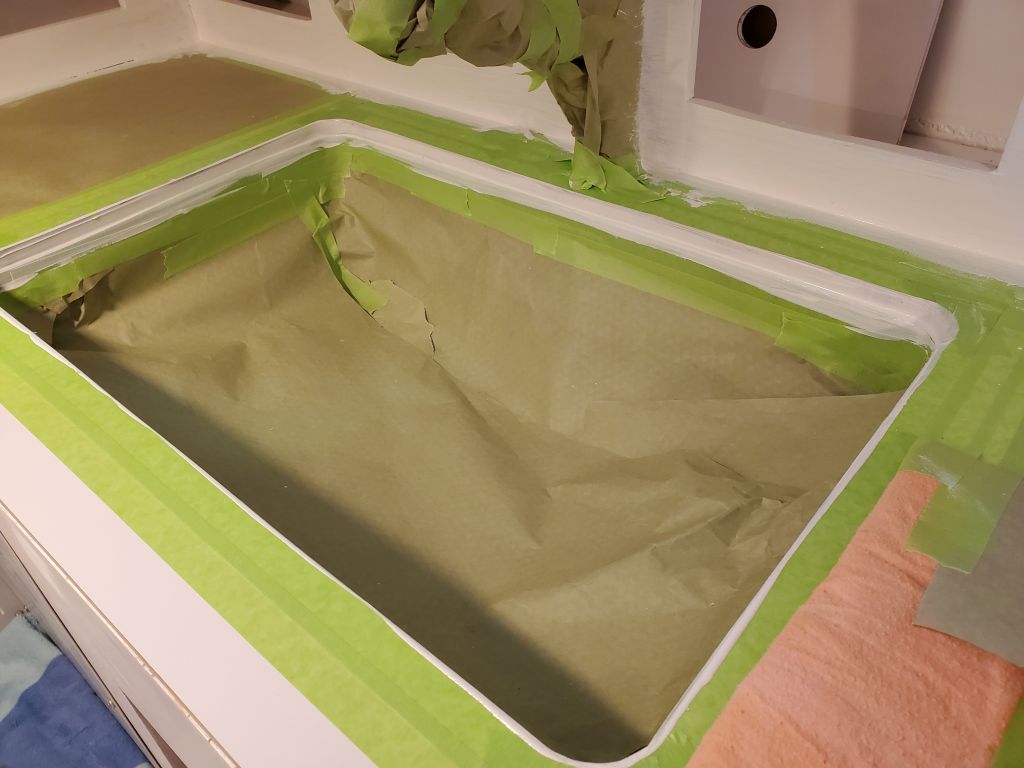
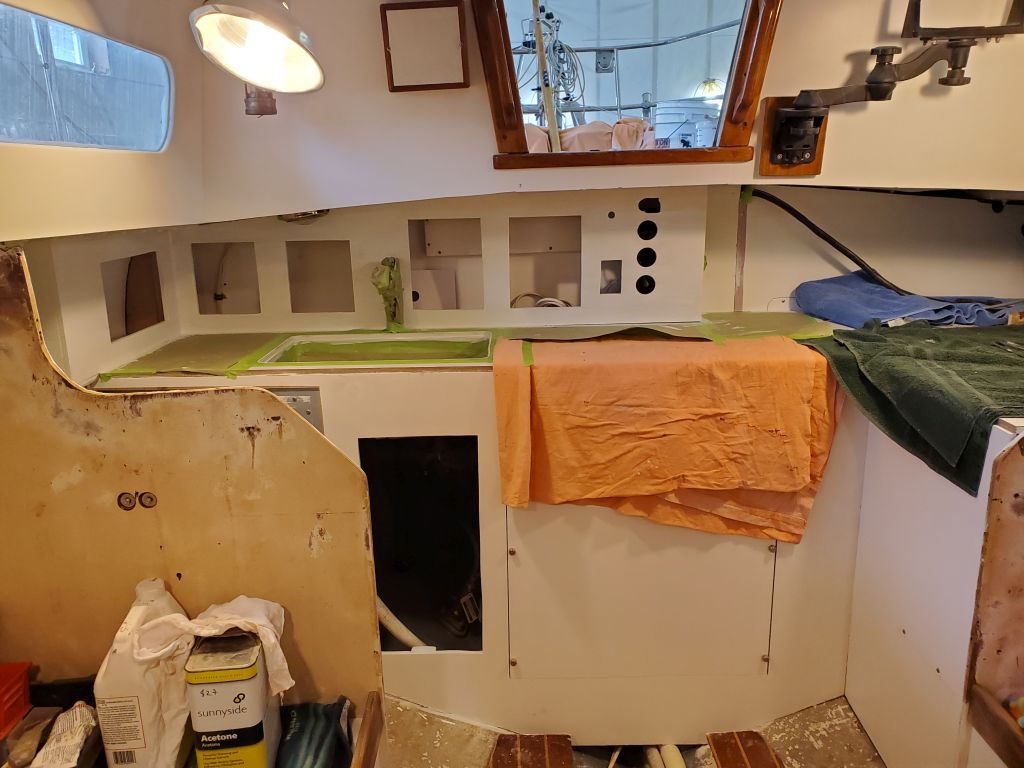
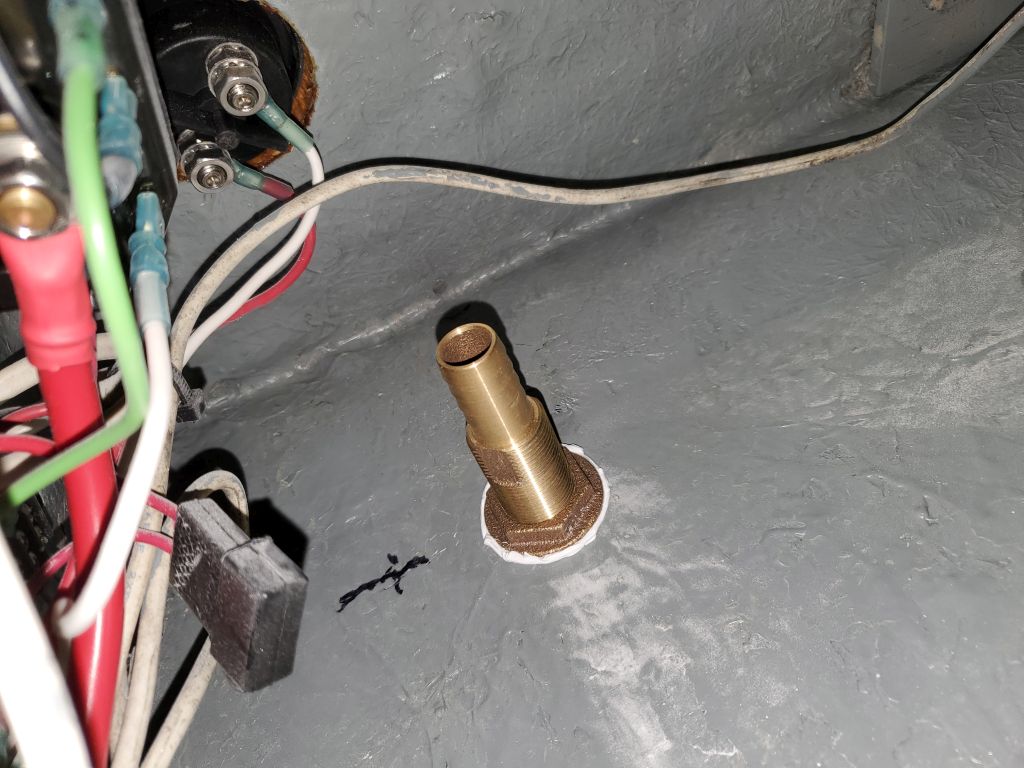
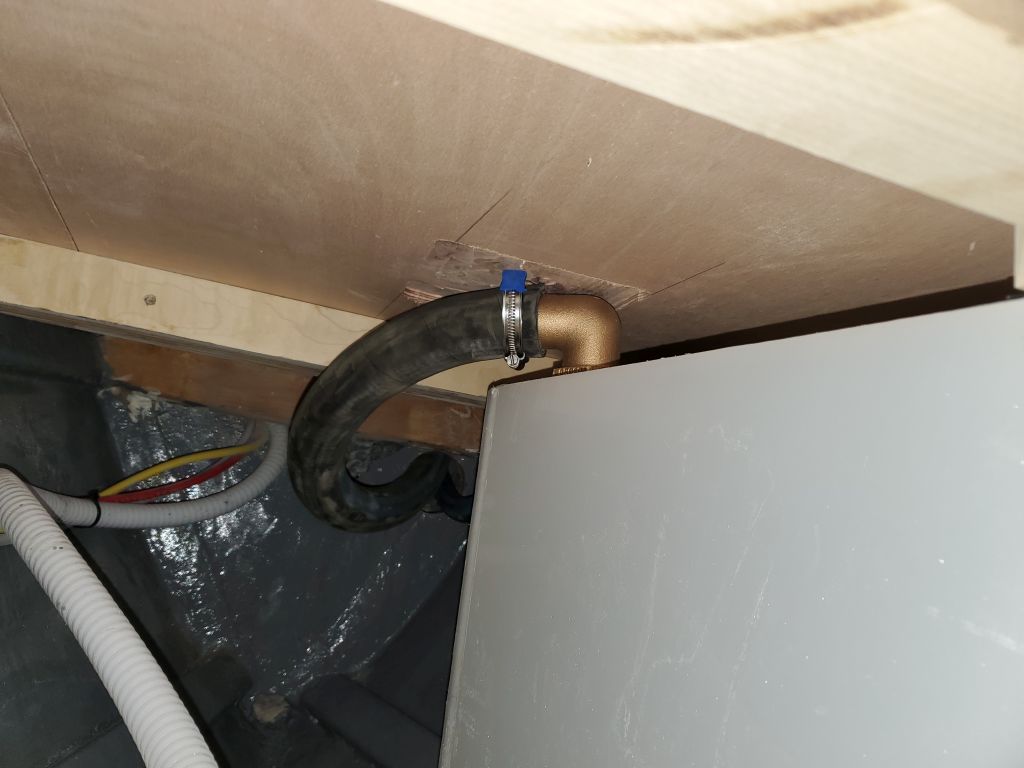
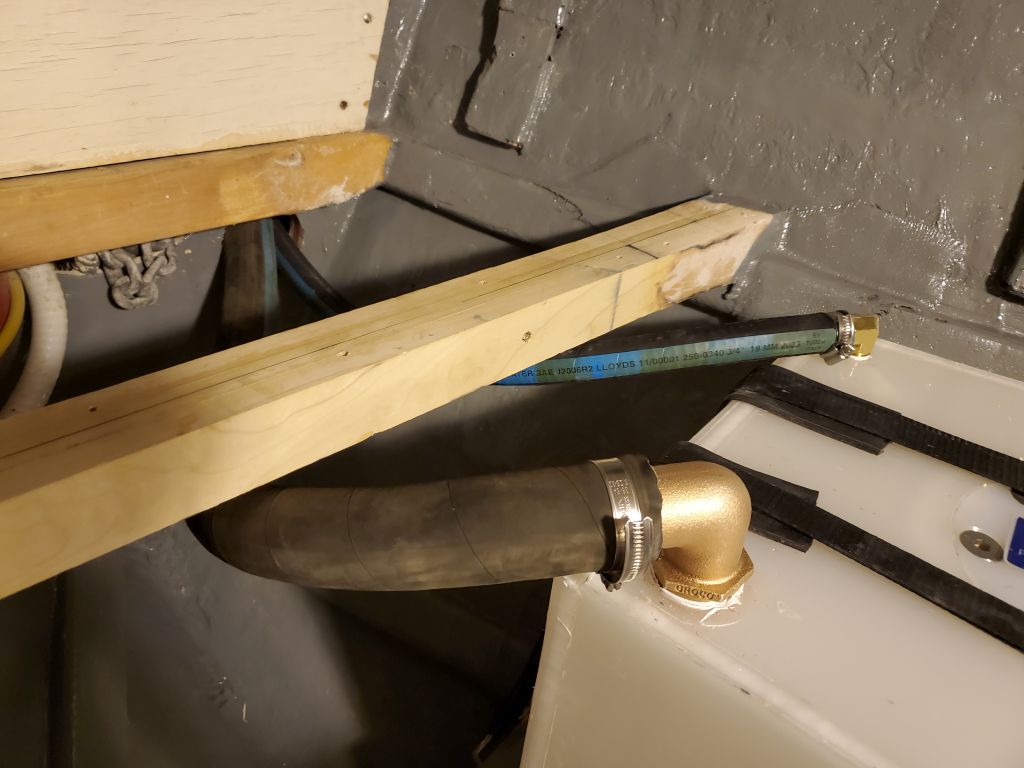
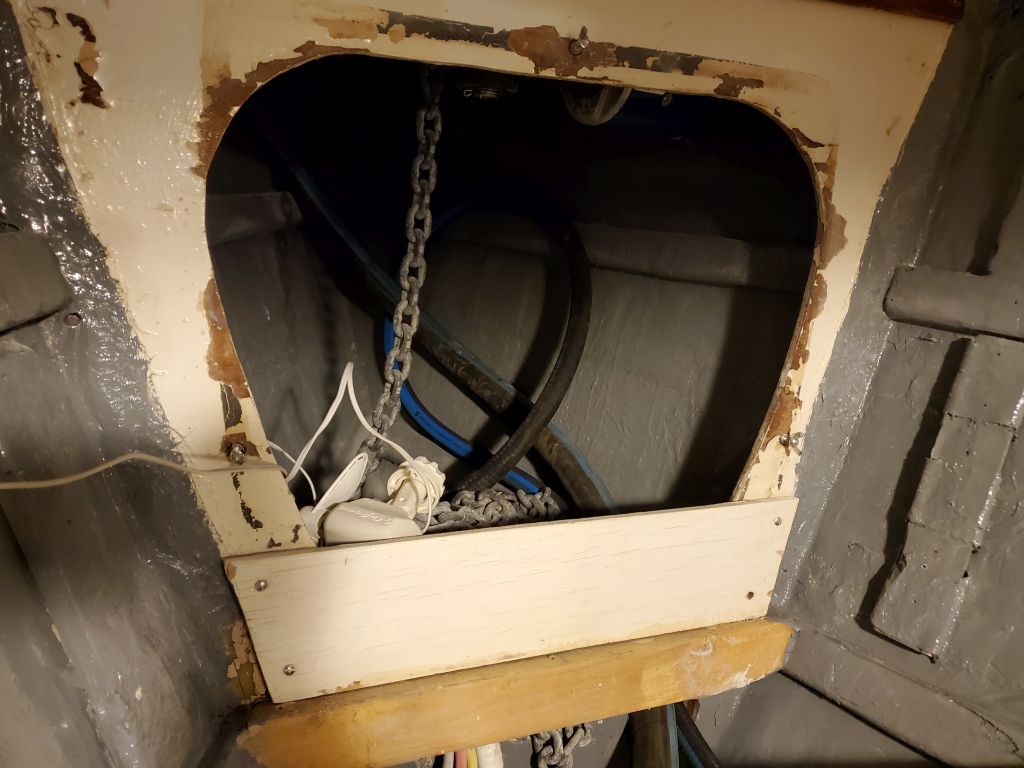
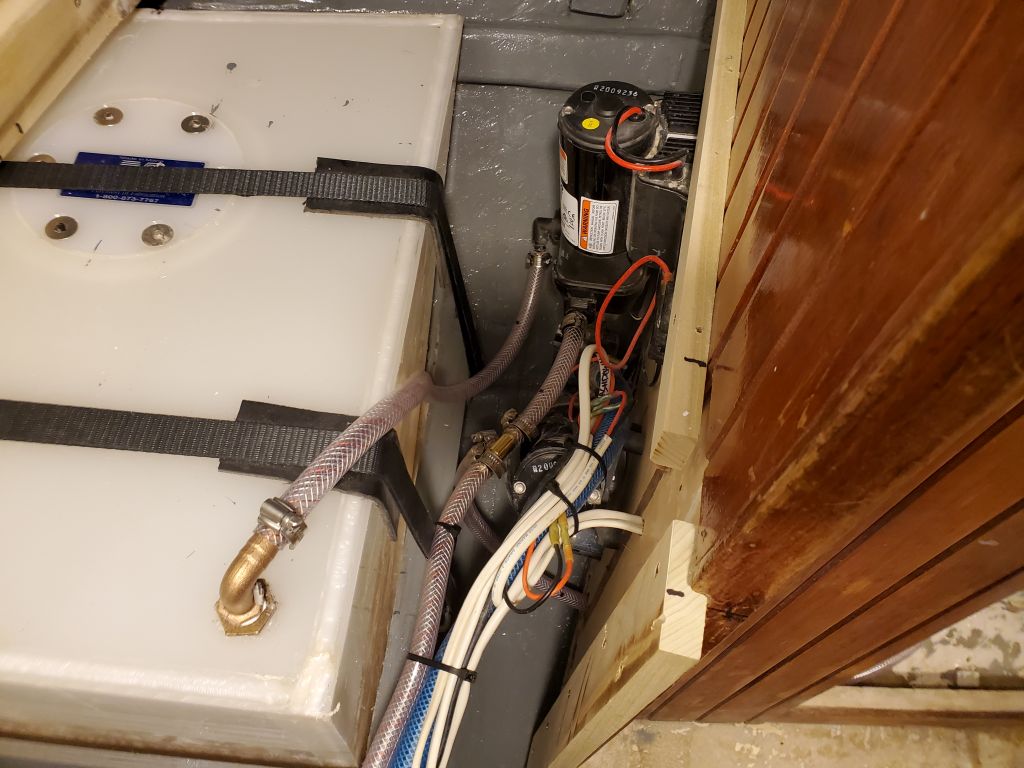
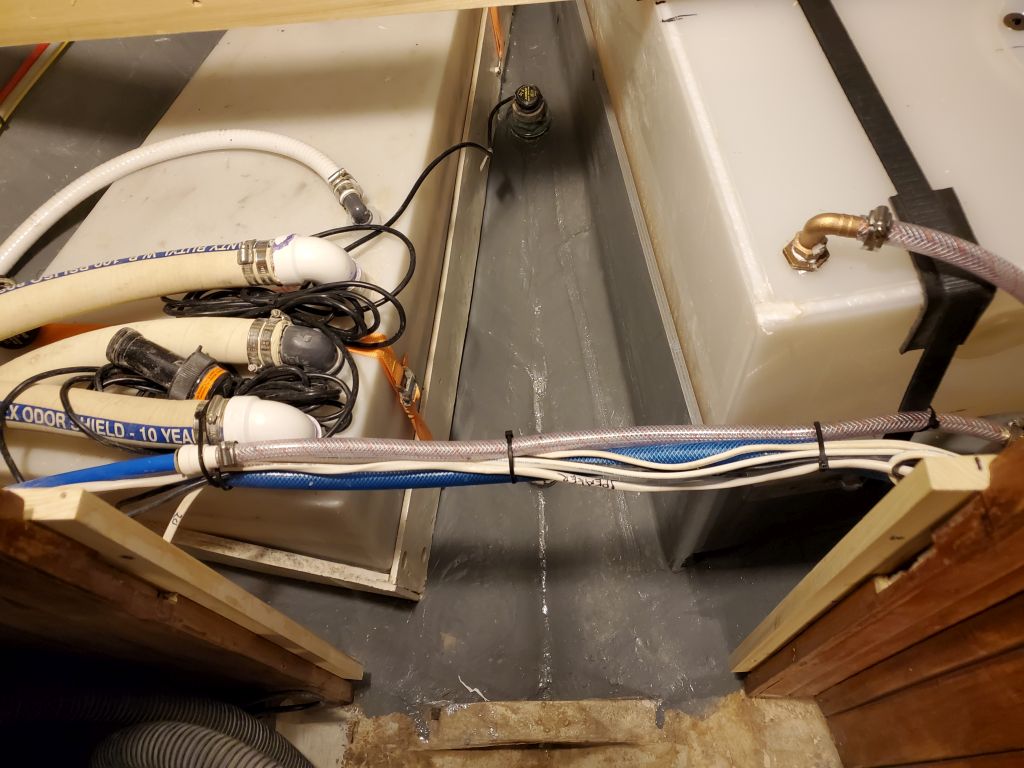
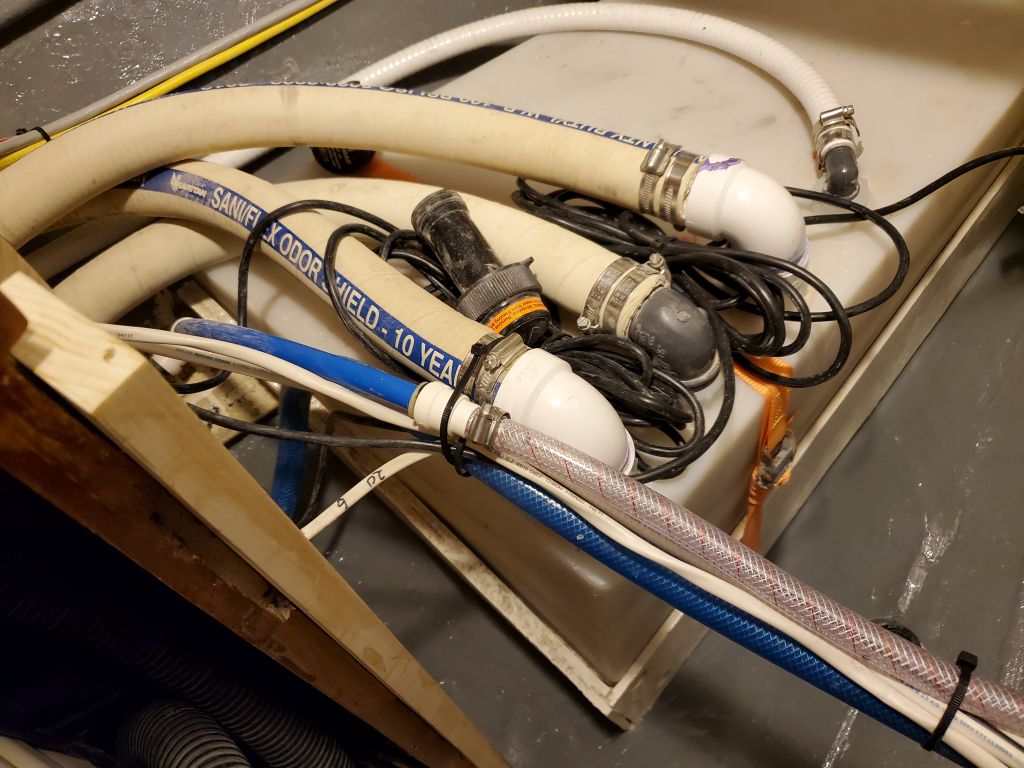
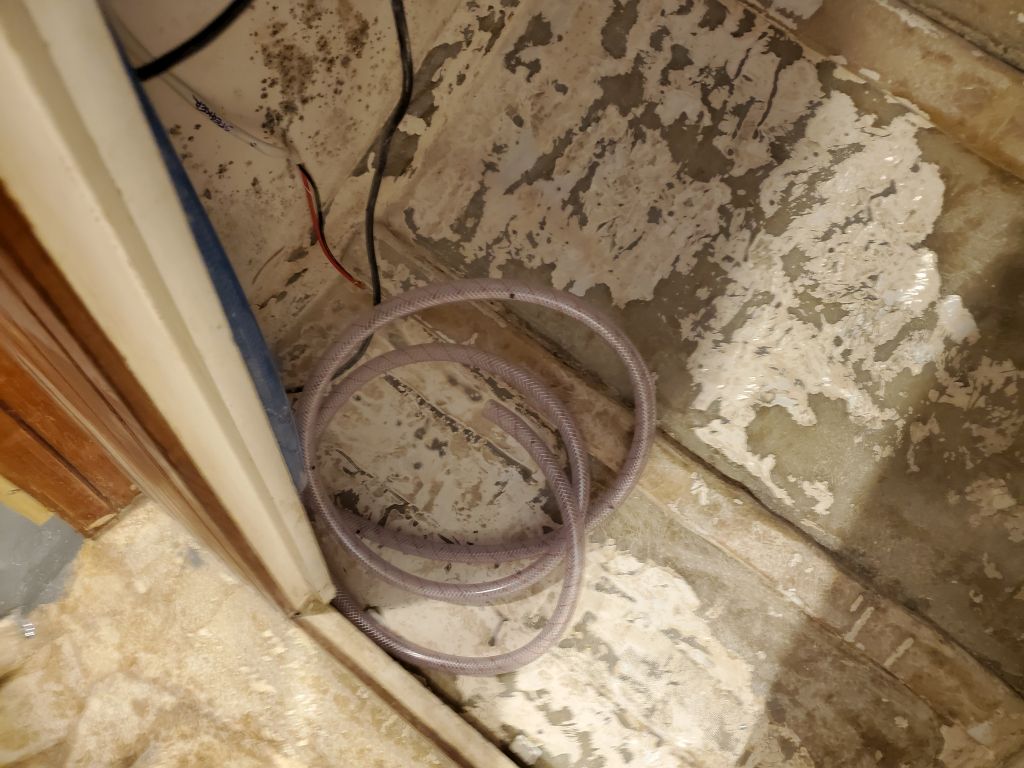
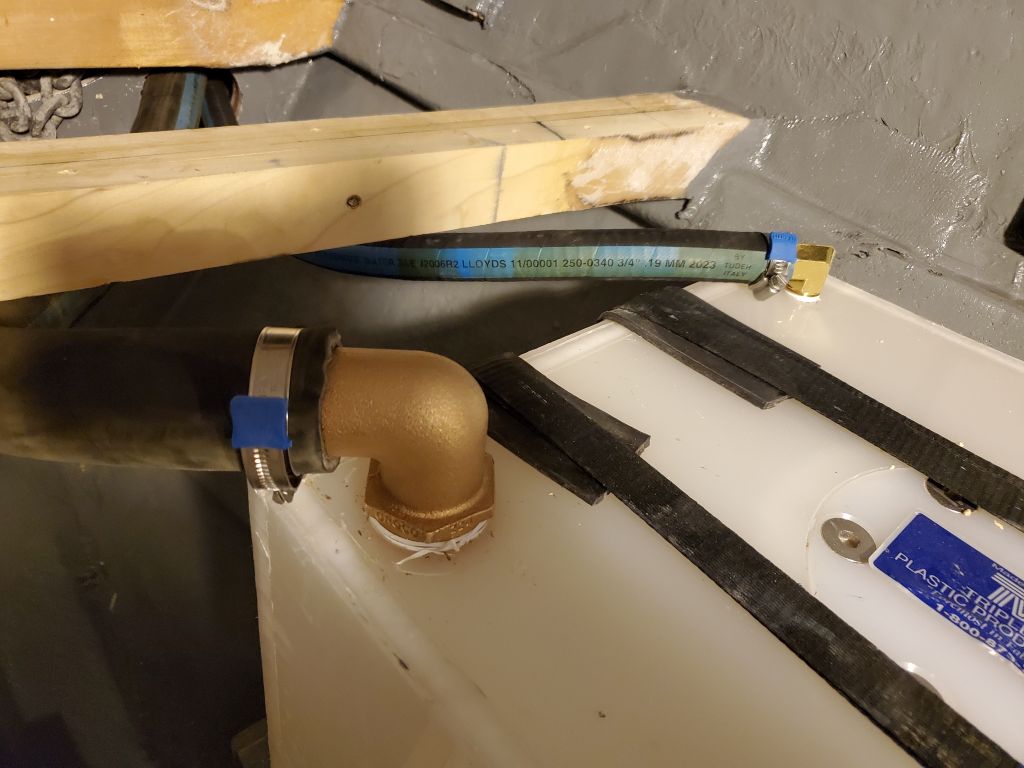
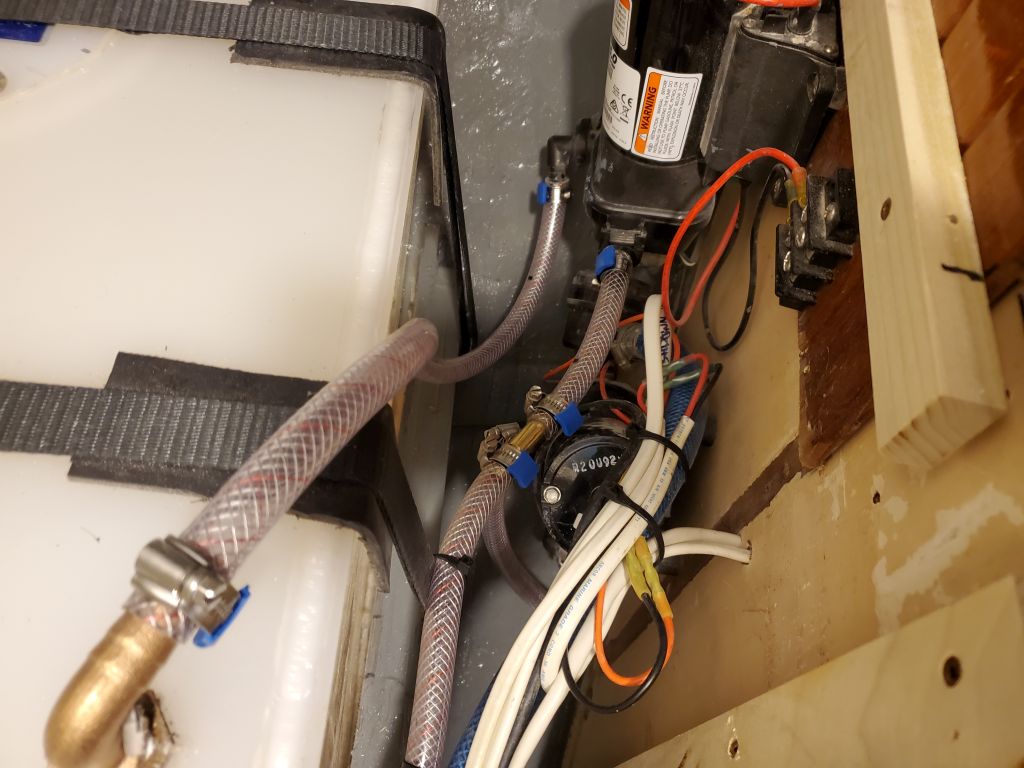
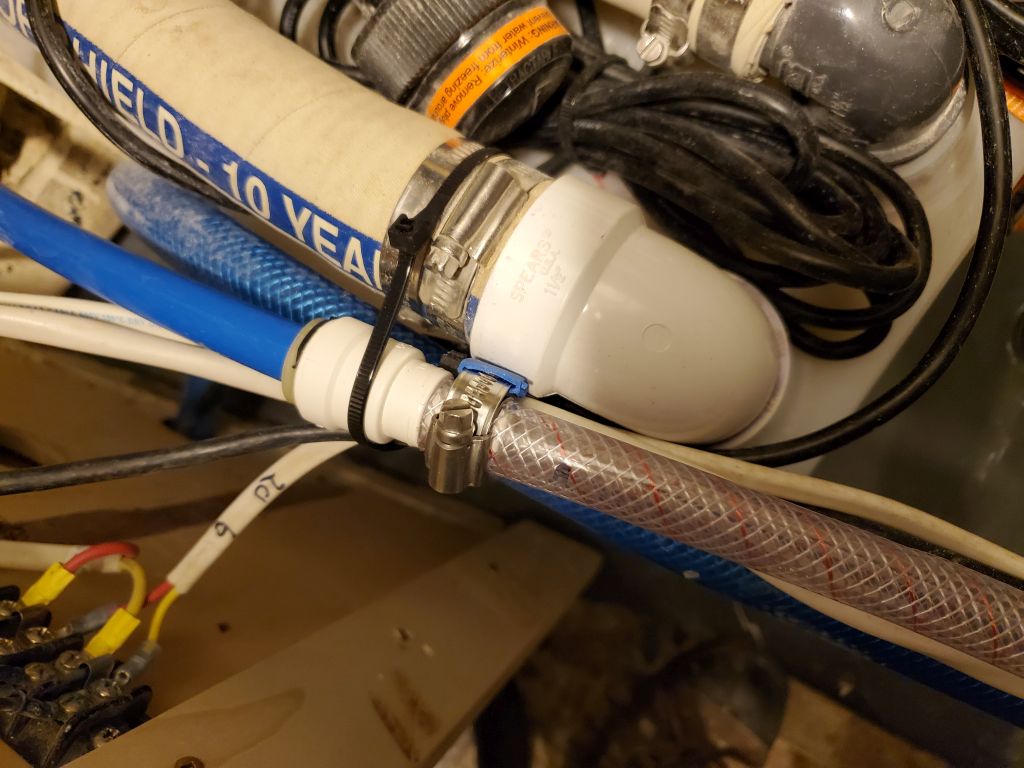
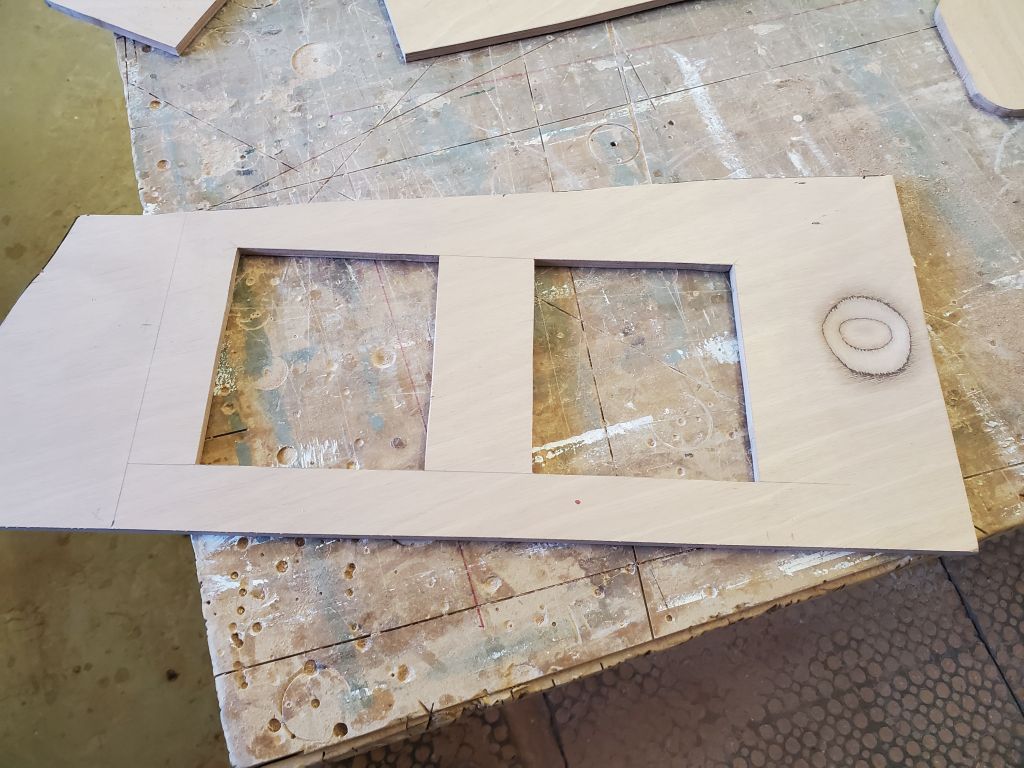
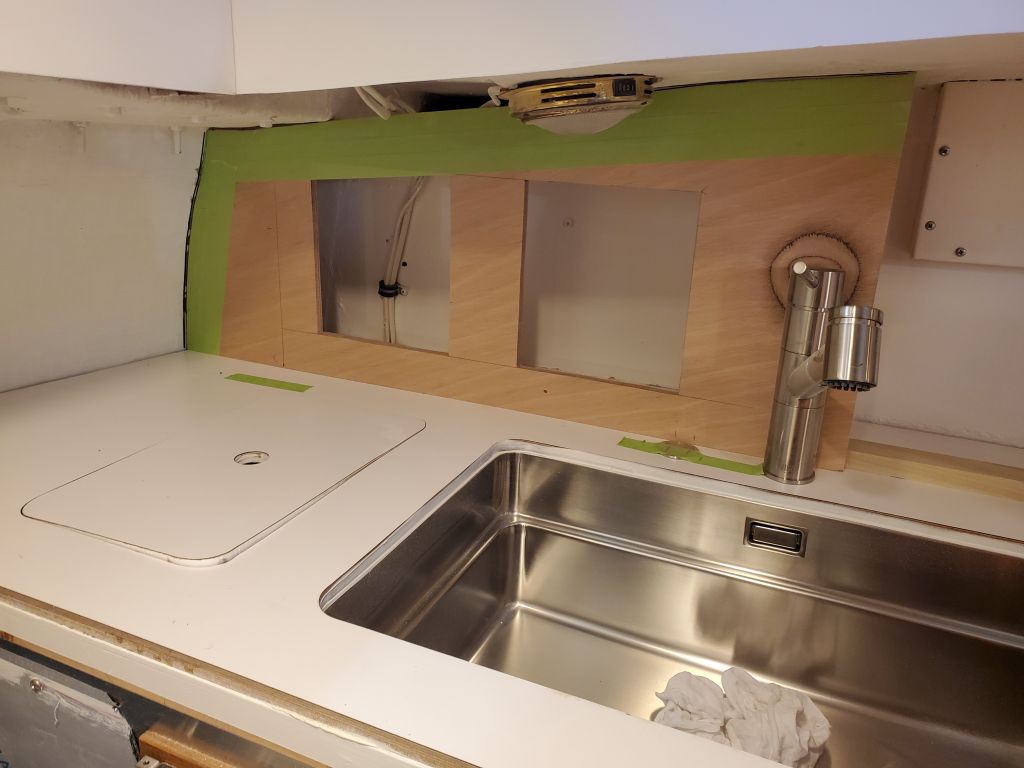
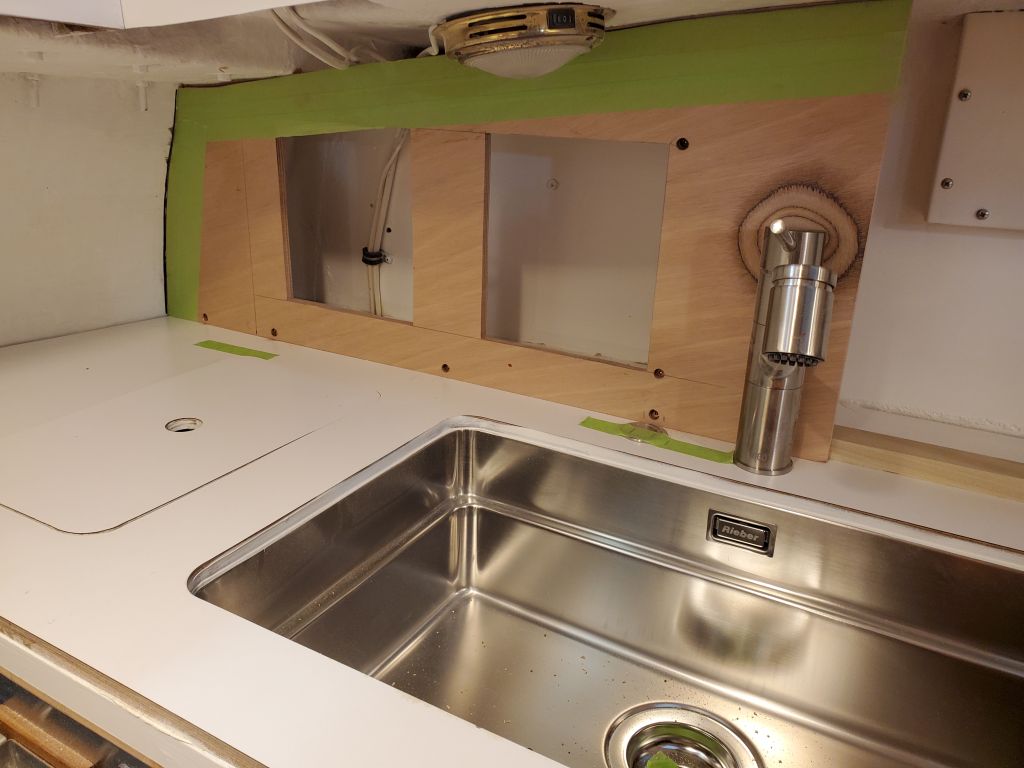
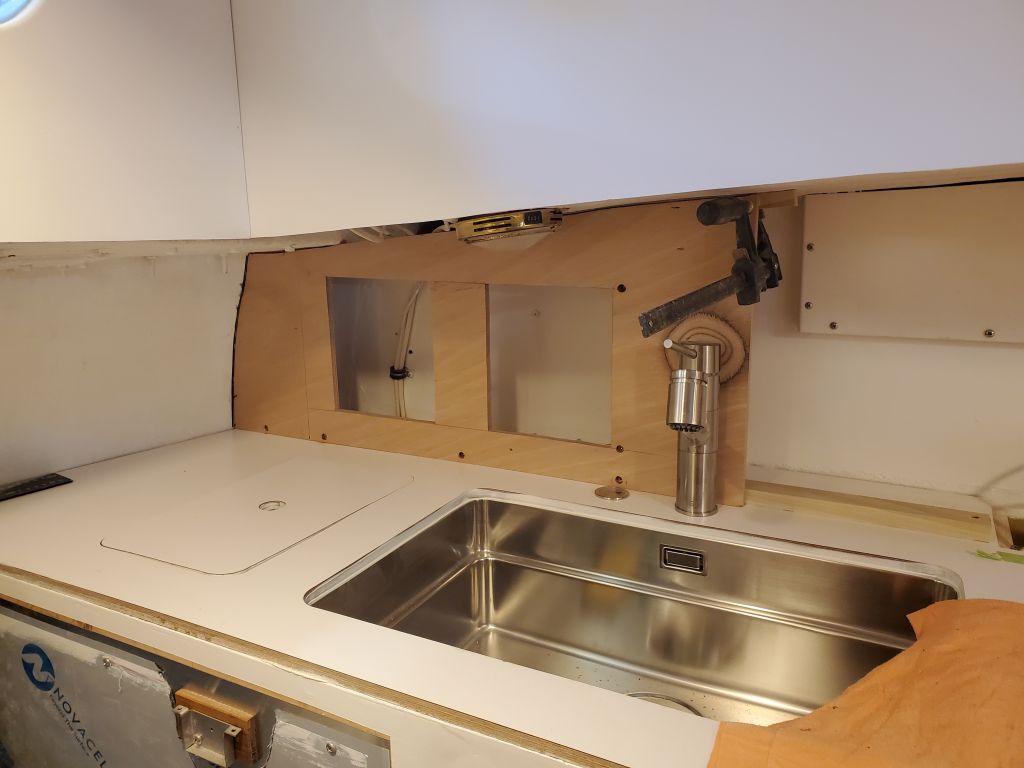
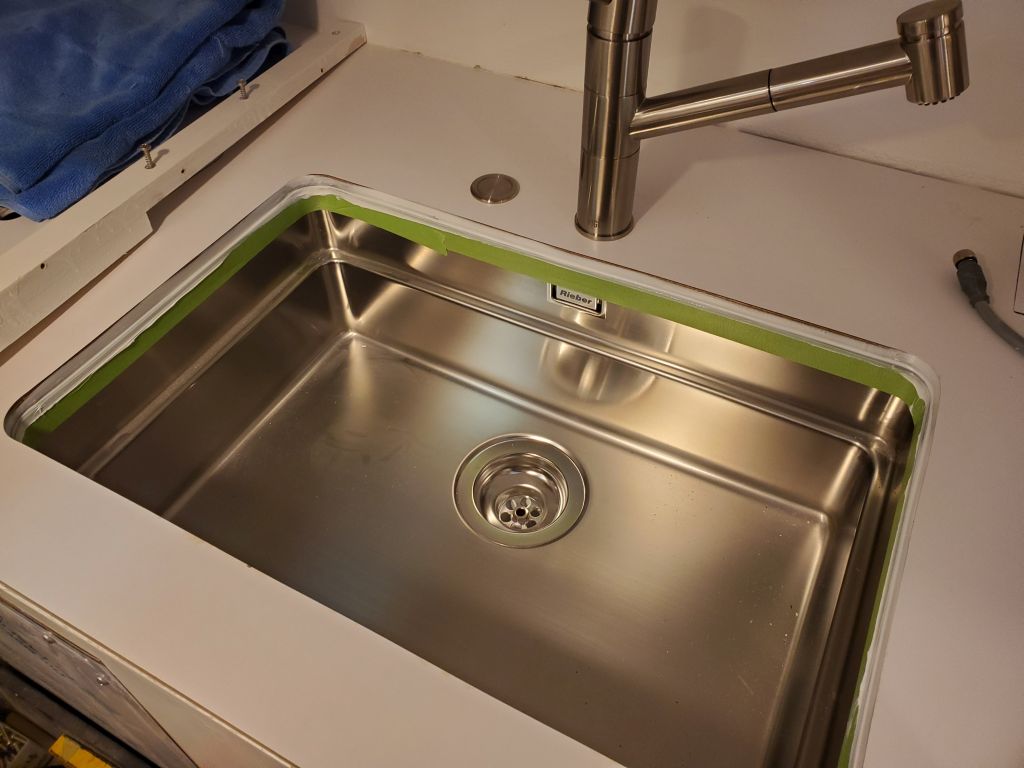
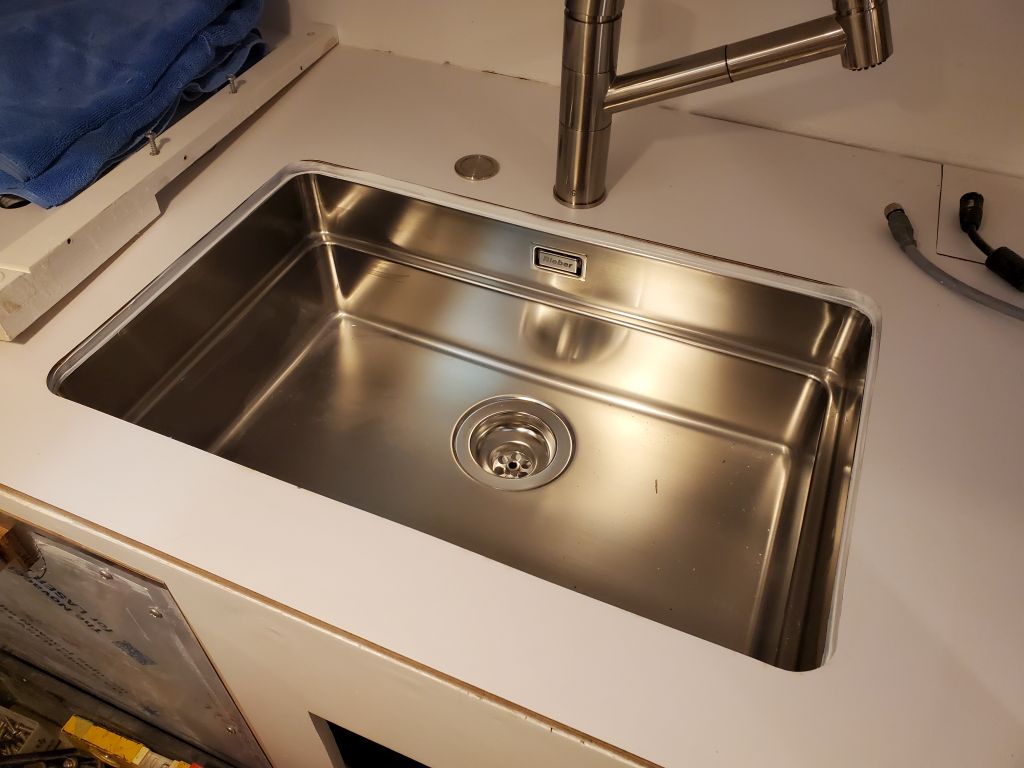
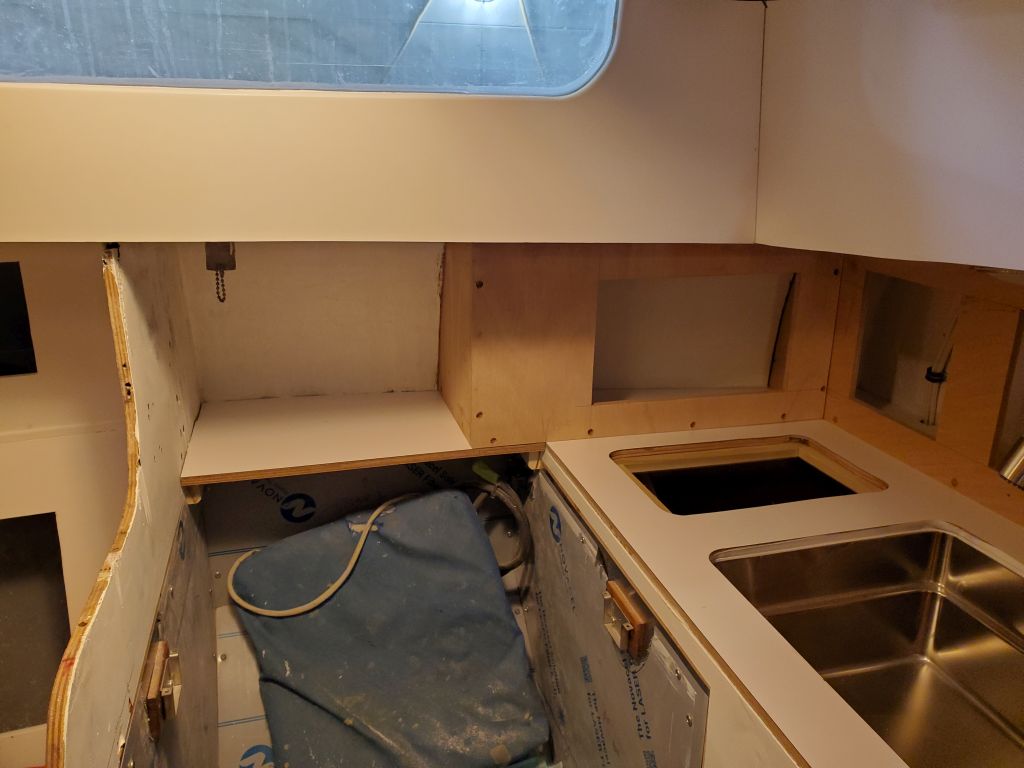
I thought I might as well wrap up the plumbing work with the sink and related area, as I had everything I needed and there was no time like the present.  I’d purchased some adapters to connect the compression threads on the existing sink supply hoses to the hose nipple (for supply from the tank) on the cold hose, and a plug on the hot water hose.  I also made up a bronze adapter to convert the 1-1/2″ sink drain pipe to the 1″ through hull.  I made up these supply and drain connections in the boat as needed, and also installed a winterizing/flushing adapter on the new engine intake seacock that the owner requested, and finished up its hose as well.

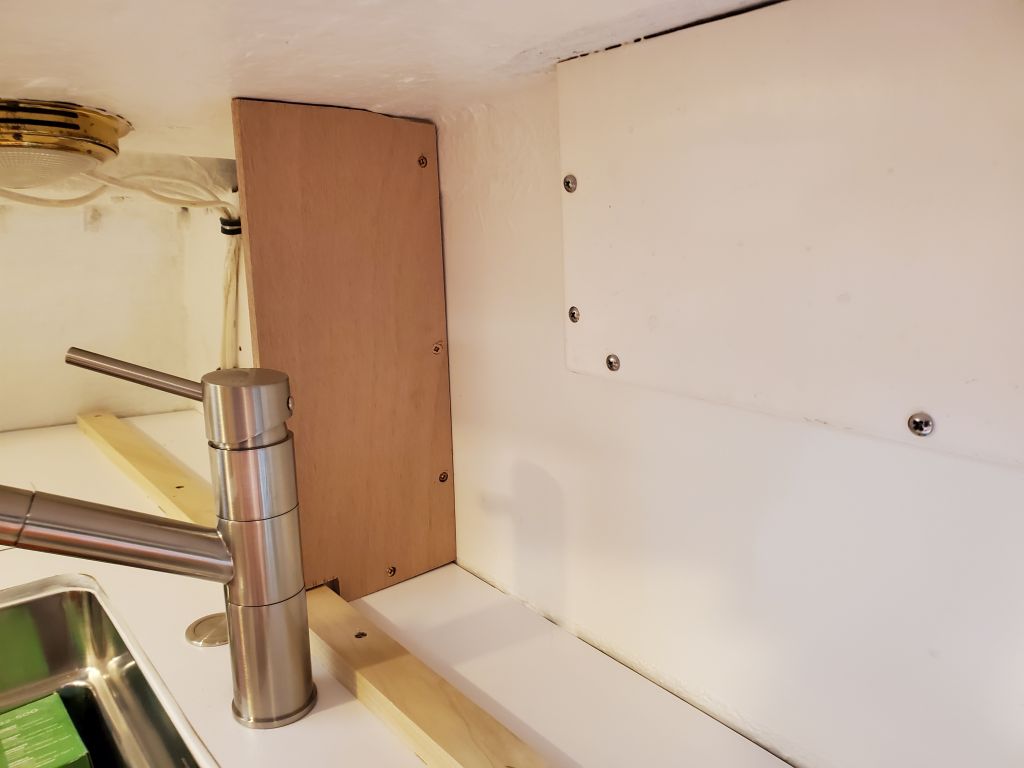
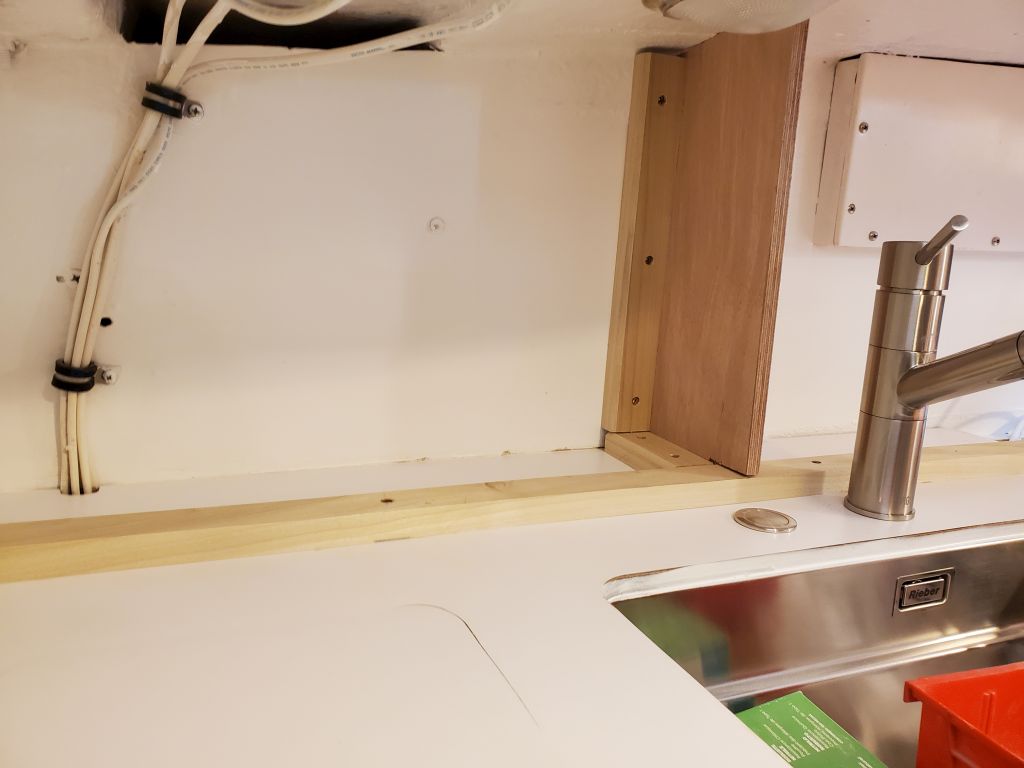
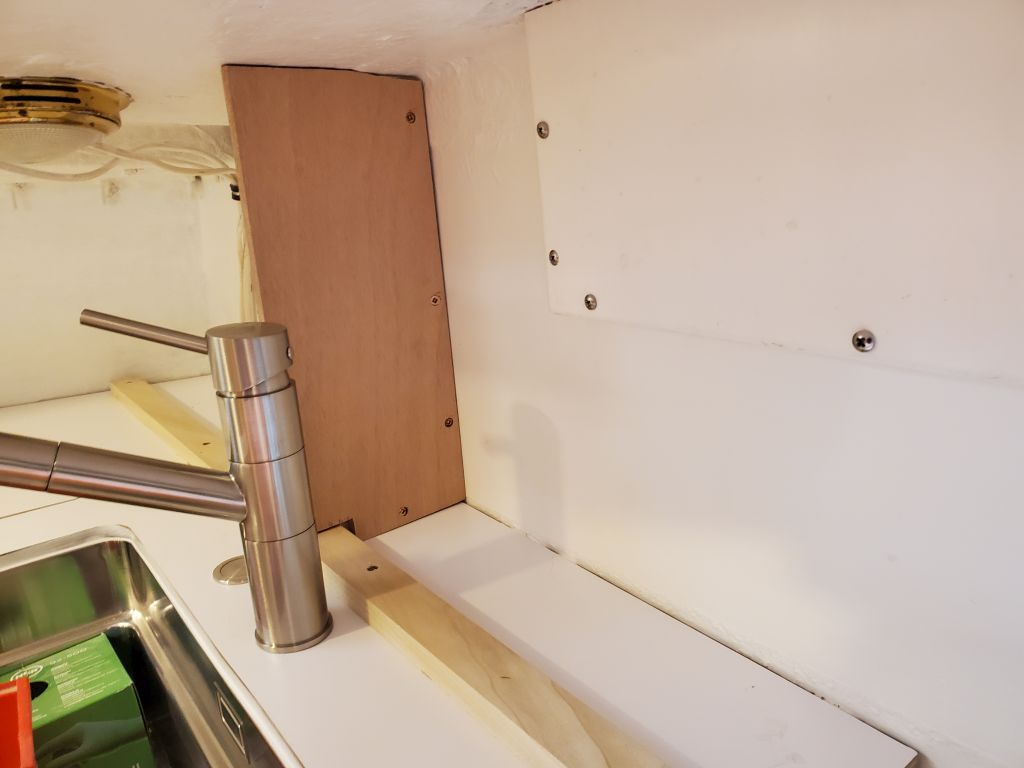
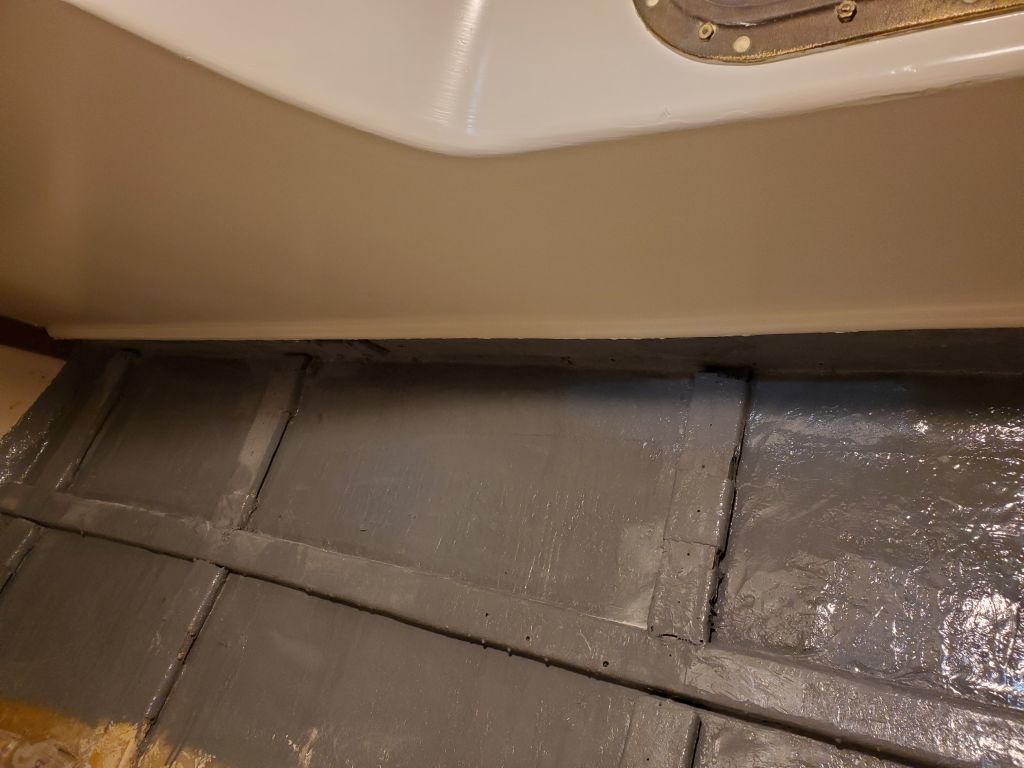
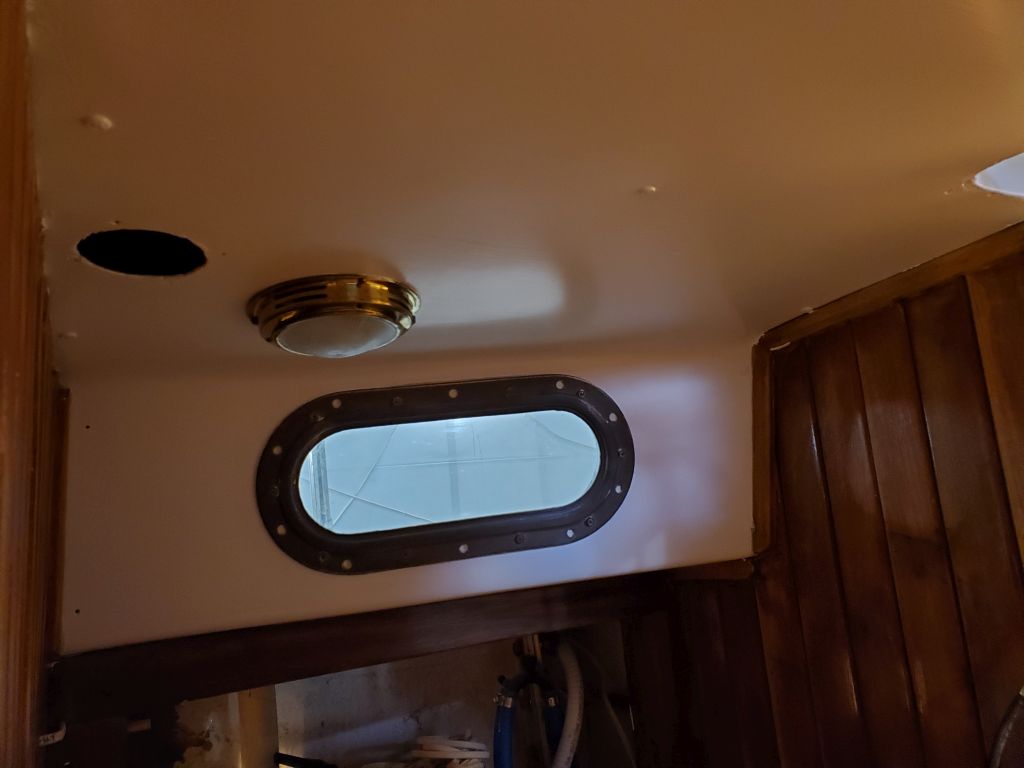
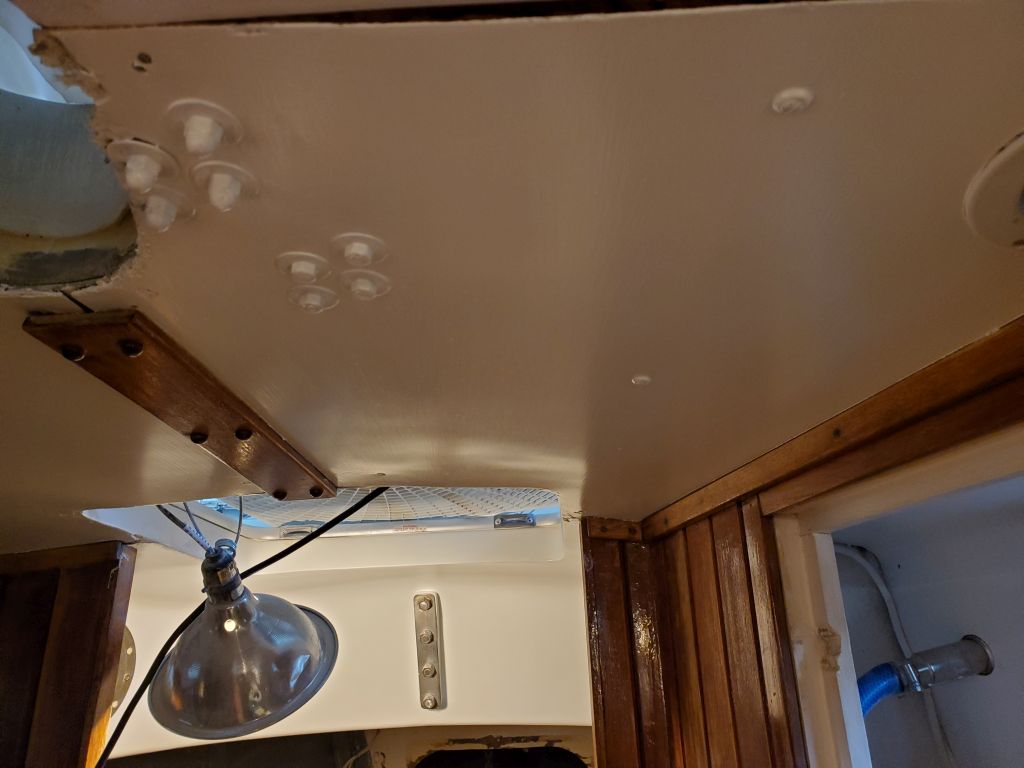
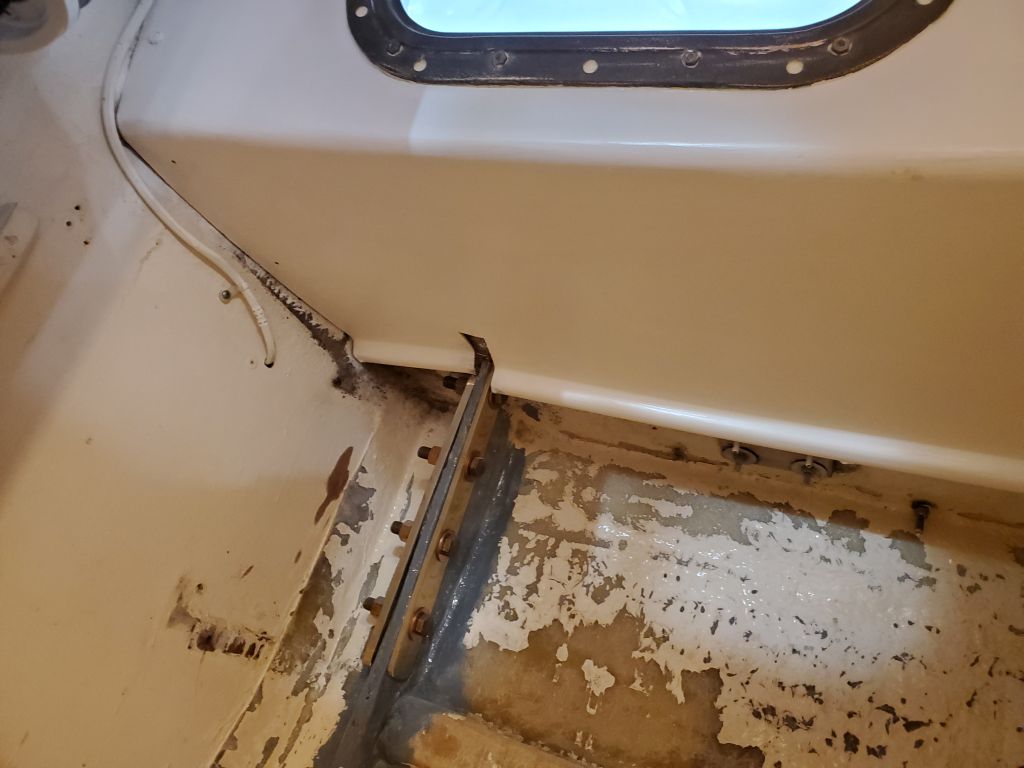
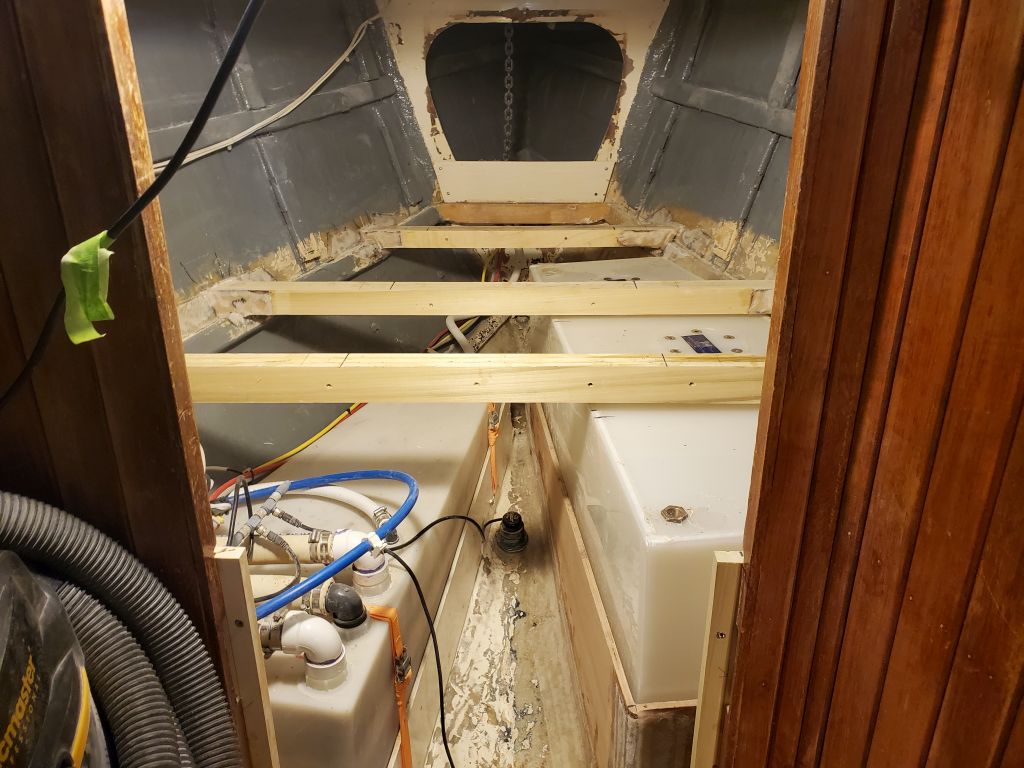
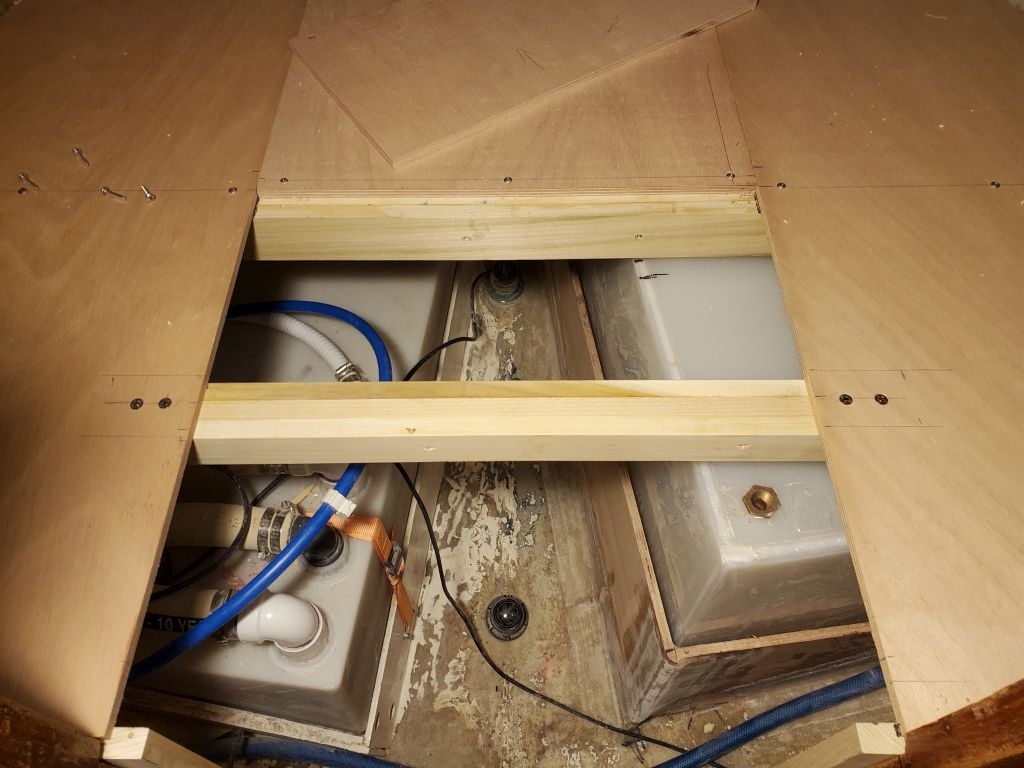
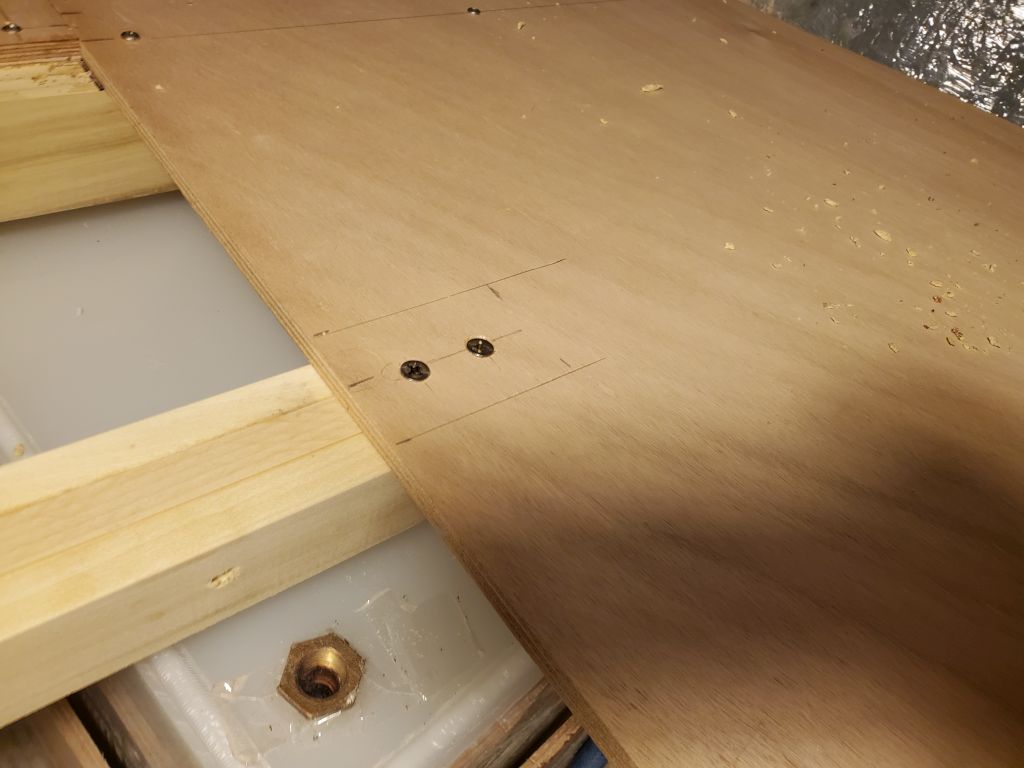
To finish off work in this space, I secured the engine room light to its overhead panel, and test-fit the two removable side panels with their insulation.

Over the weekend, the owner and I discussed the propane locker installation, and by happenstance he received some useful information from the owner of a similar boat.  Now, I could start to look at some of the ideas and how they might work on the boat and within the various requirements and confines of the installation.

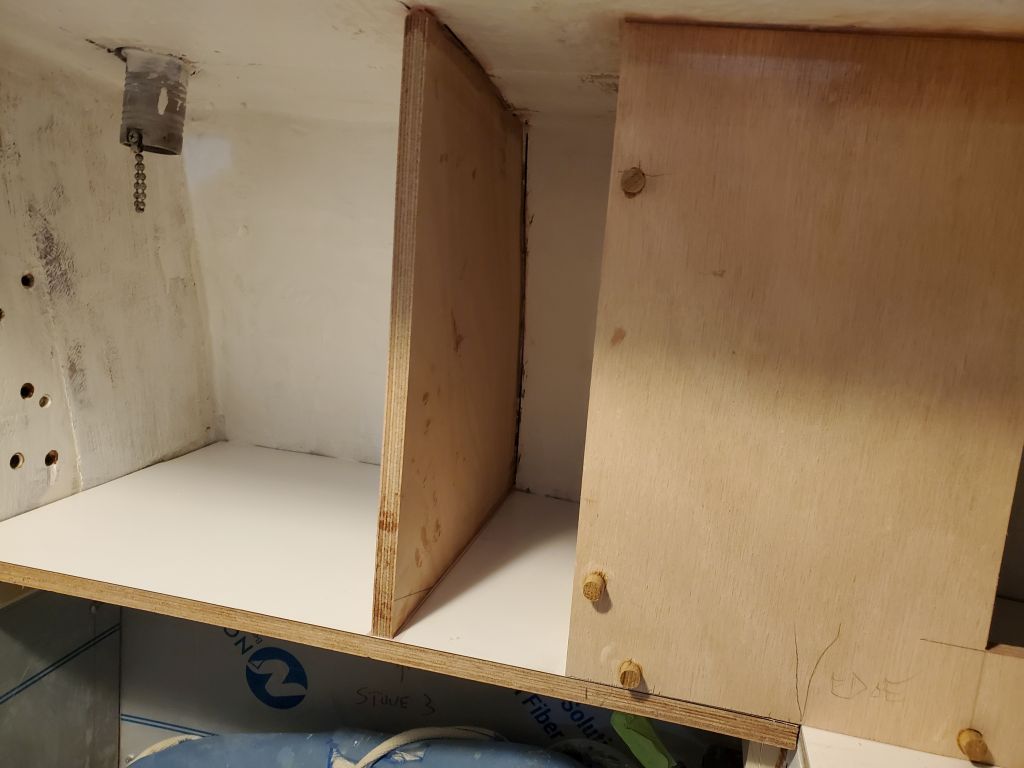
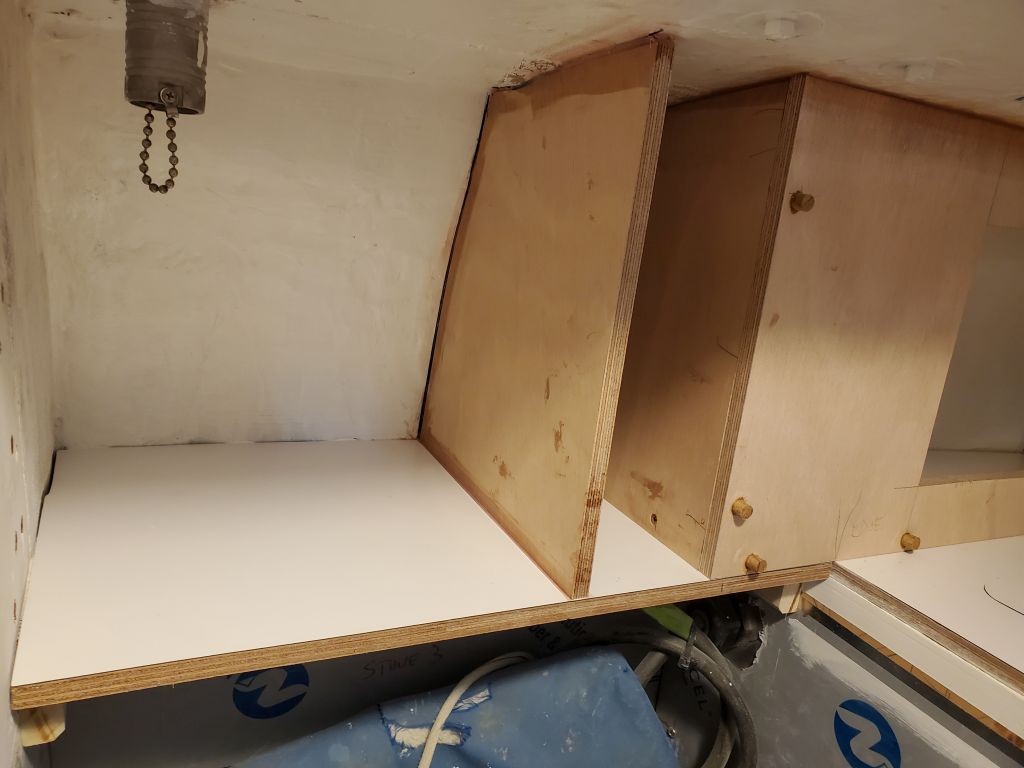
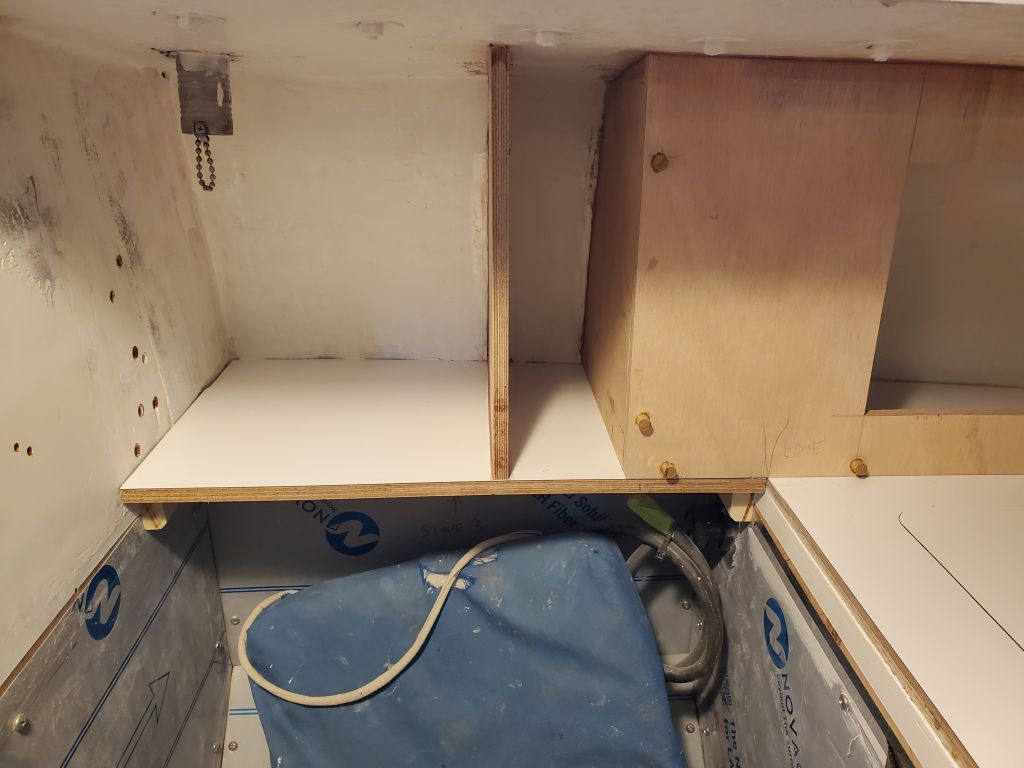
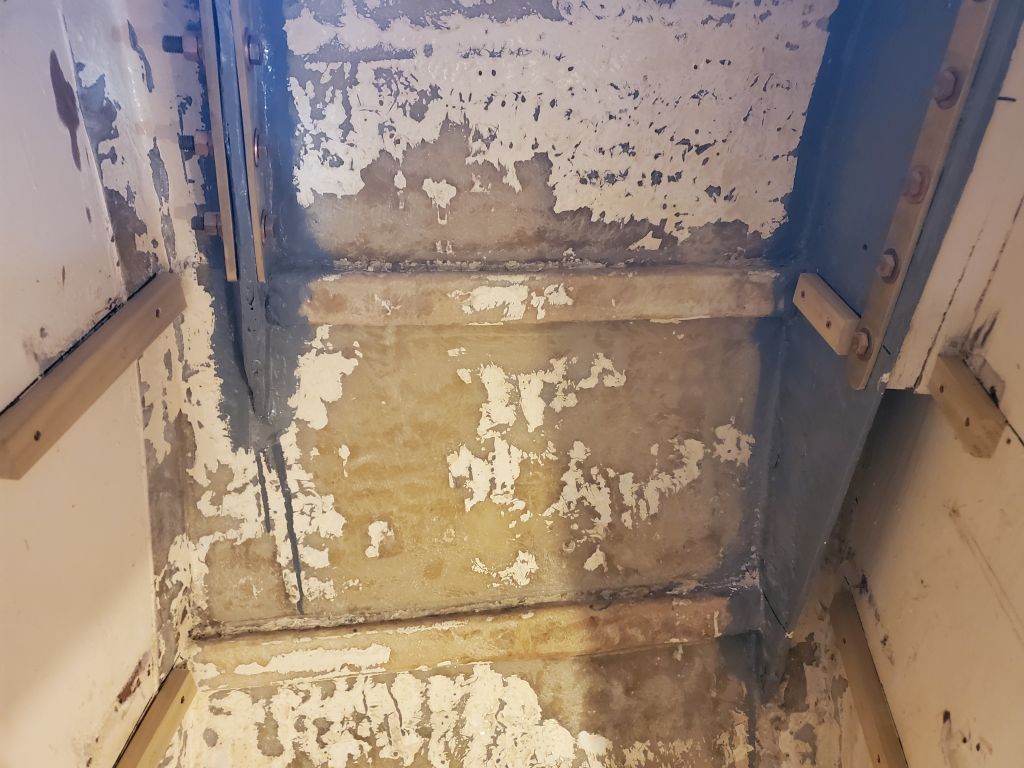
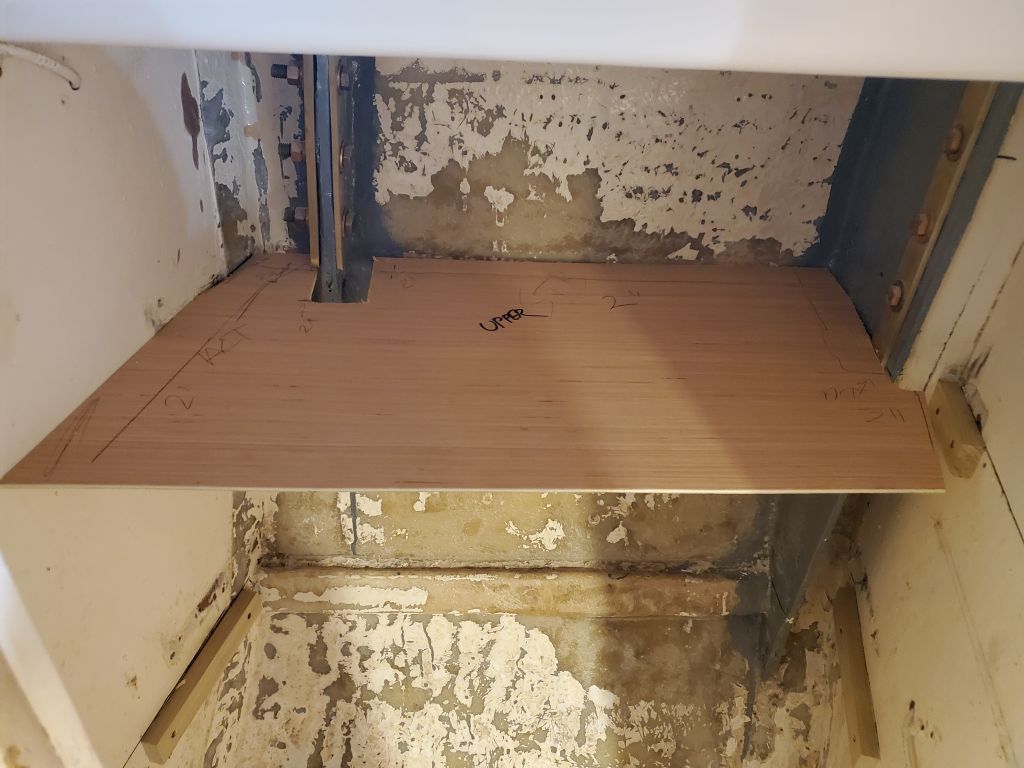
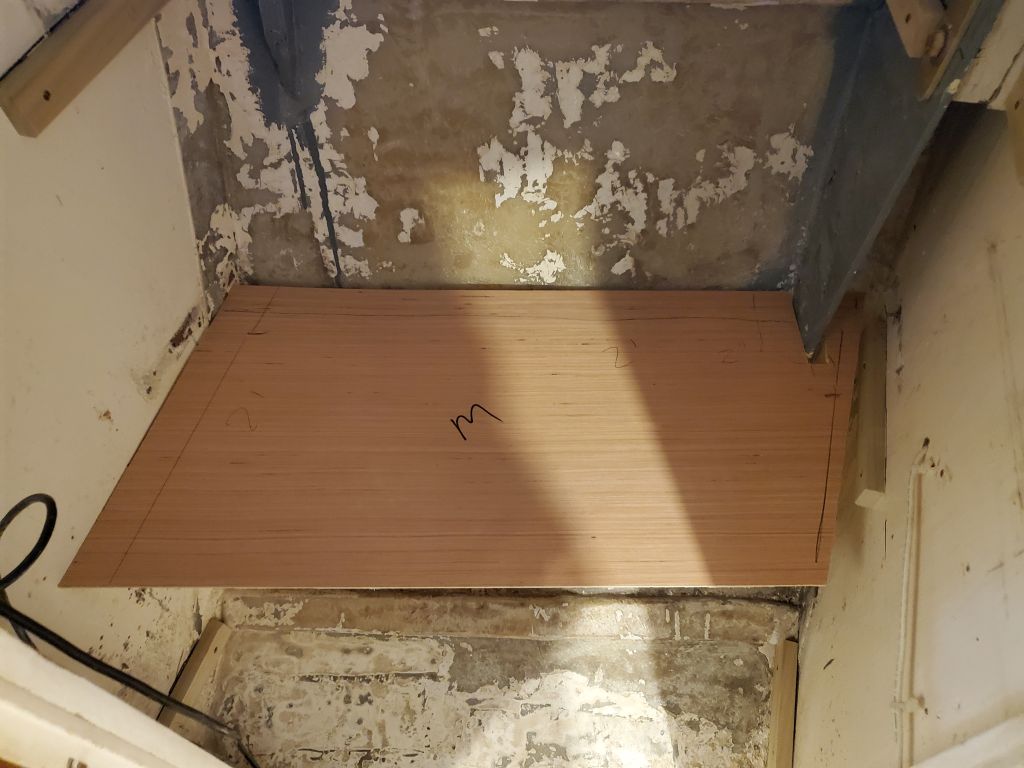
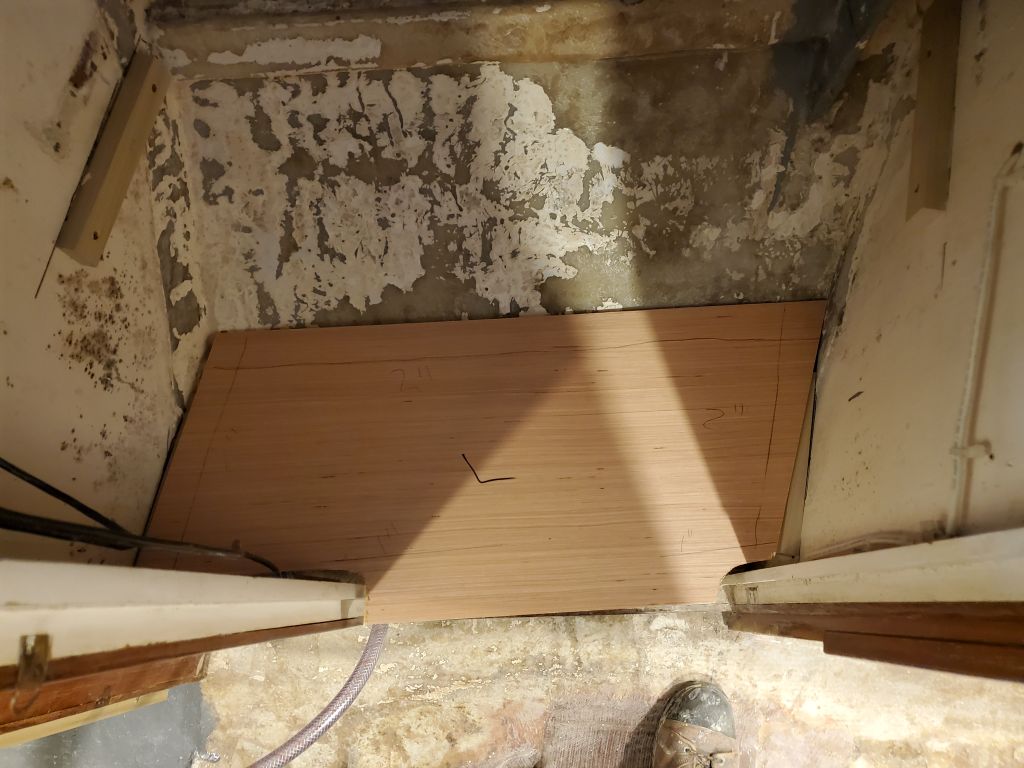
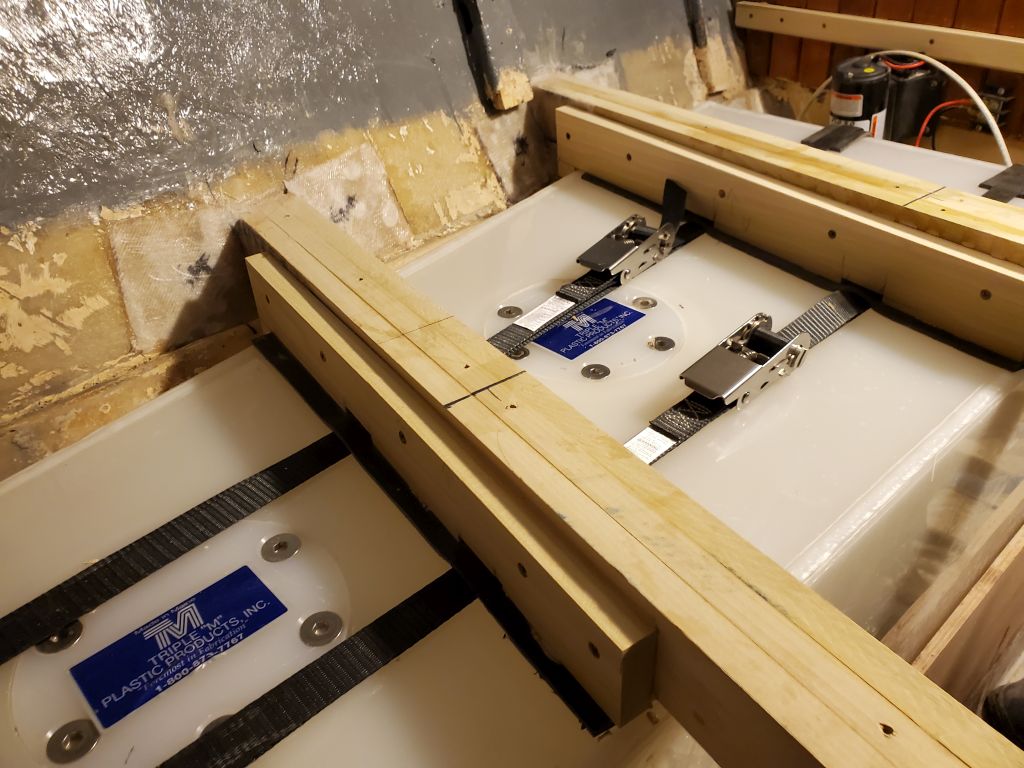
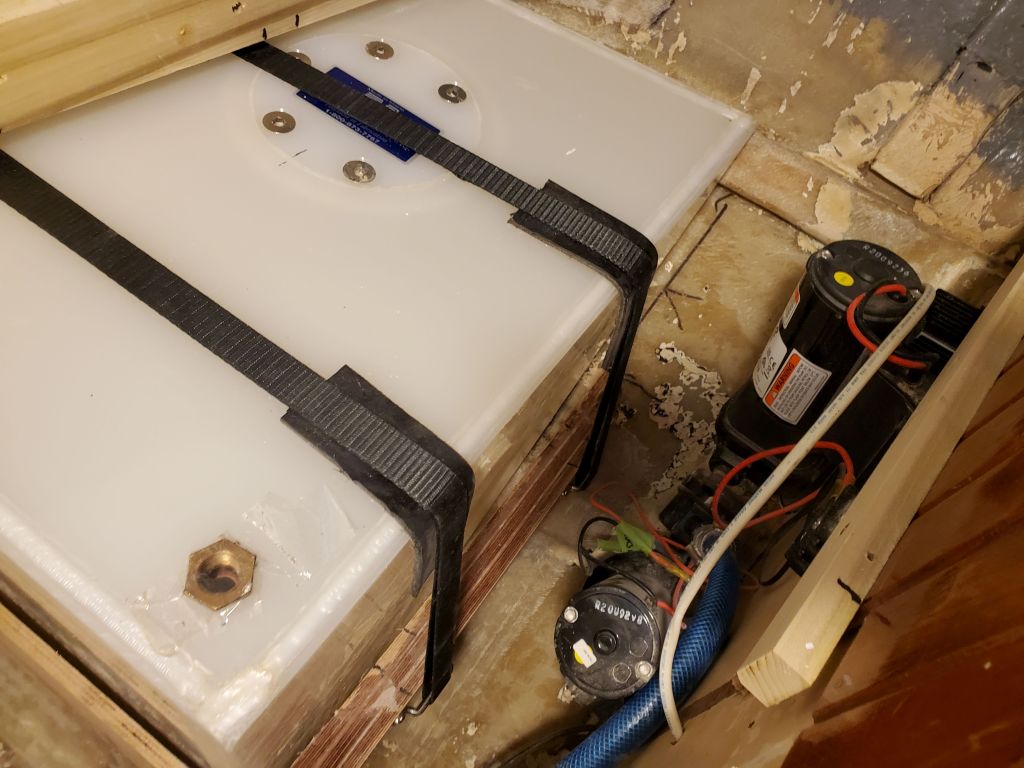
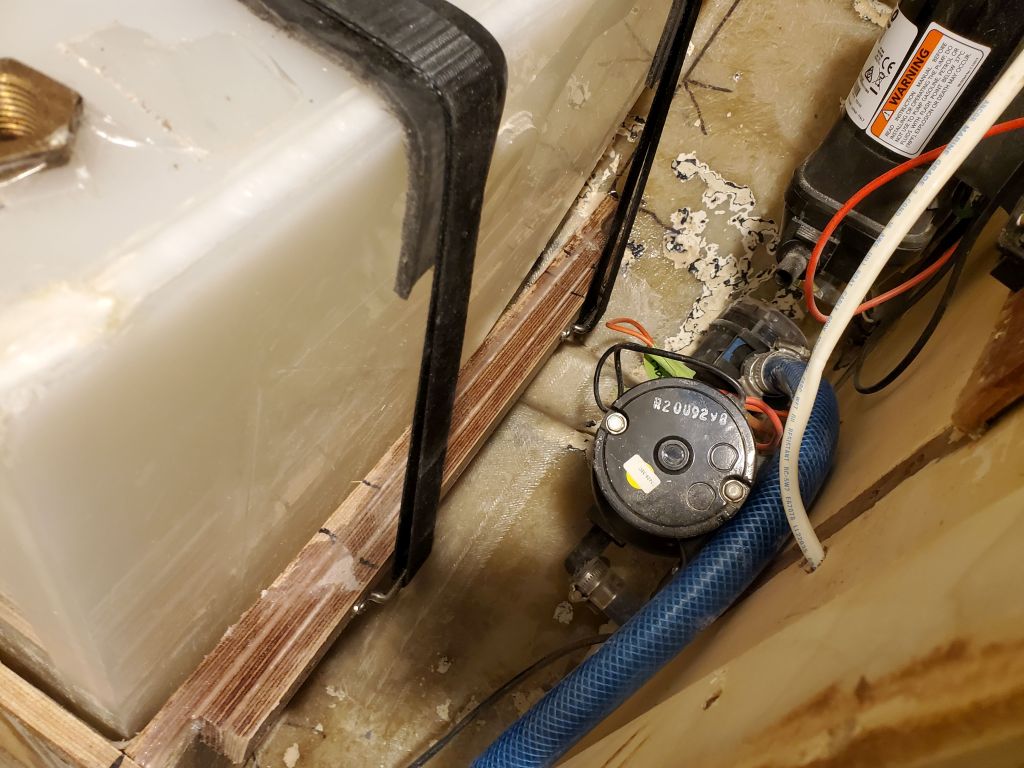
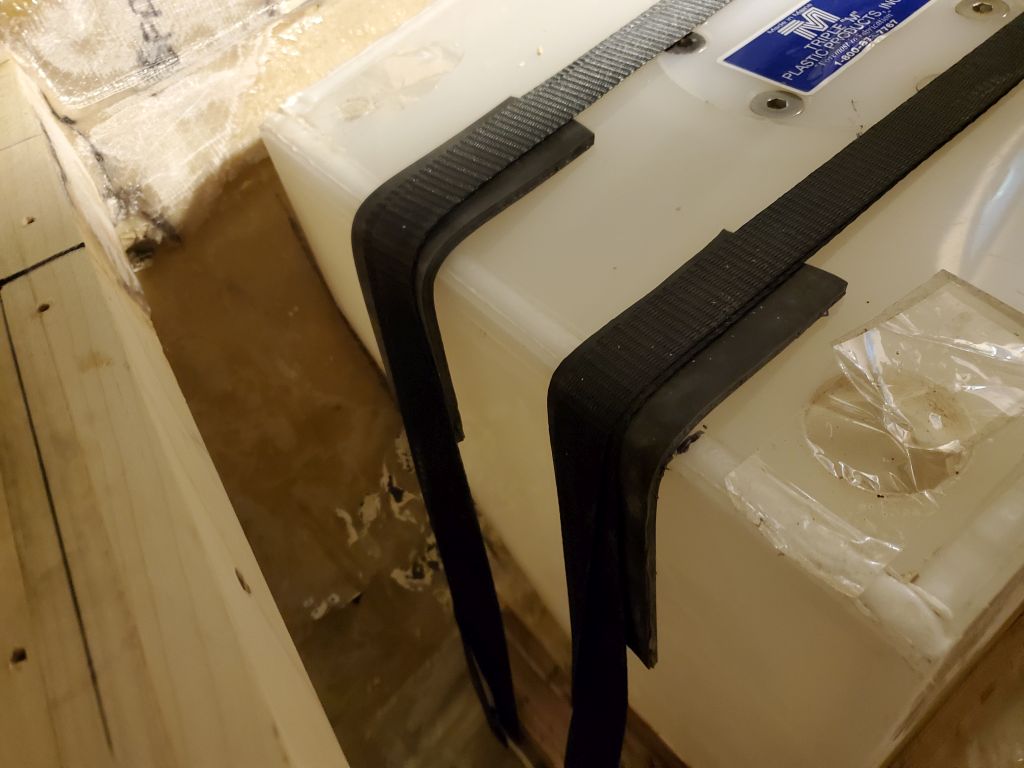
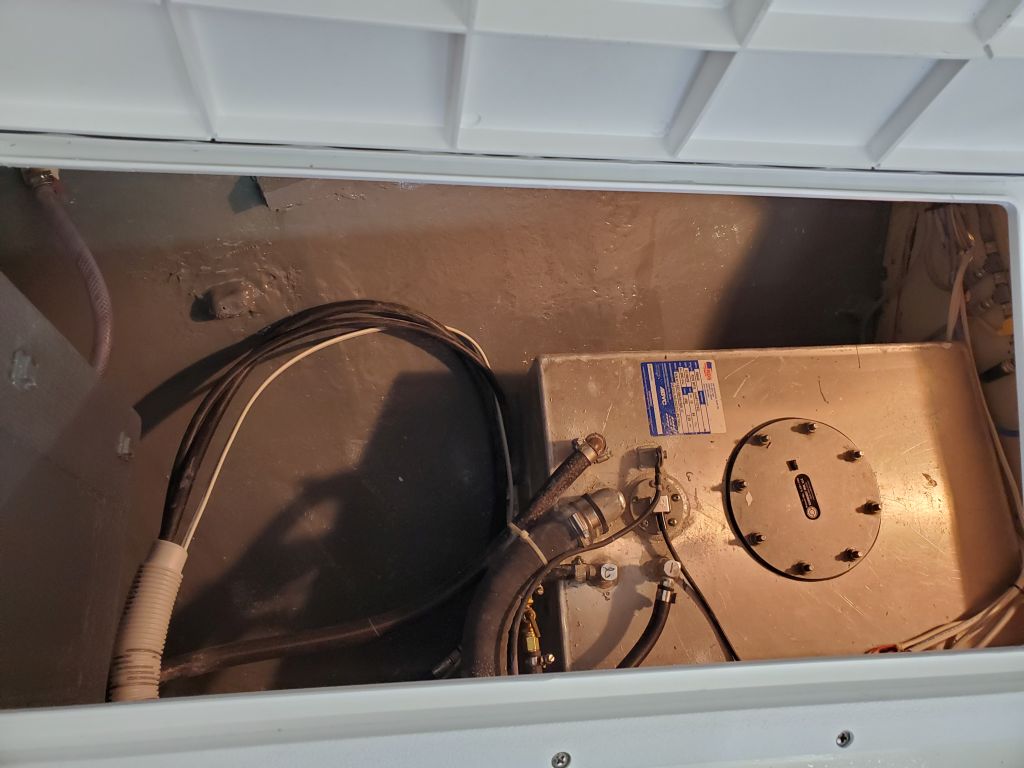
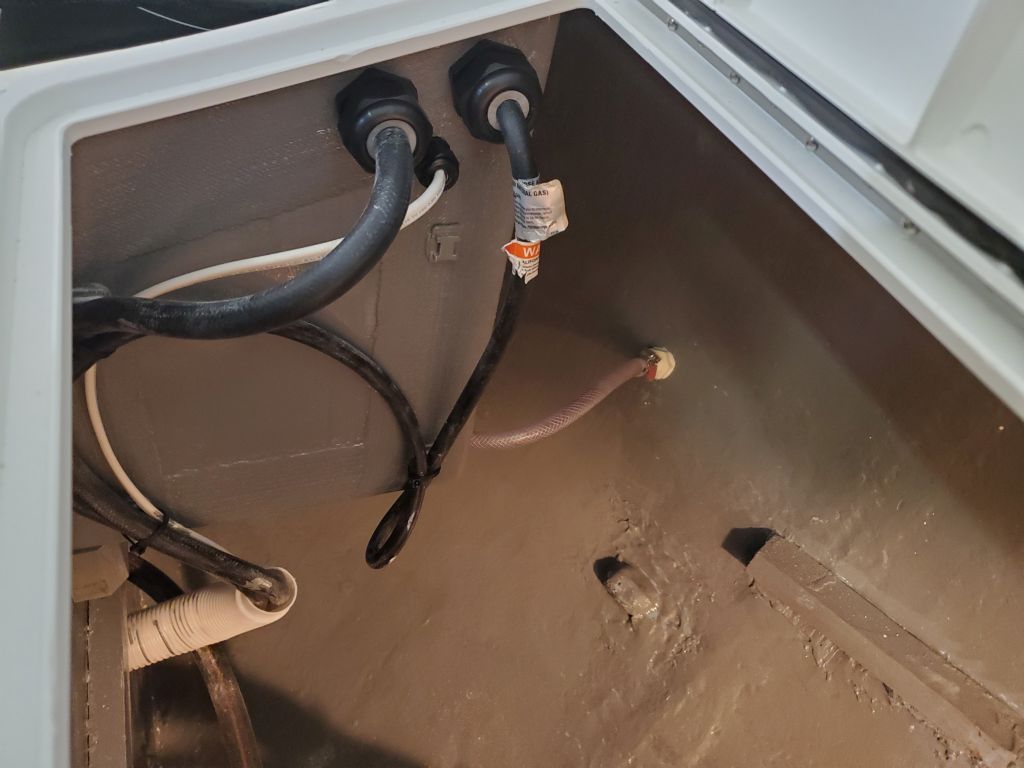
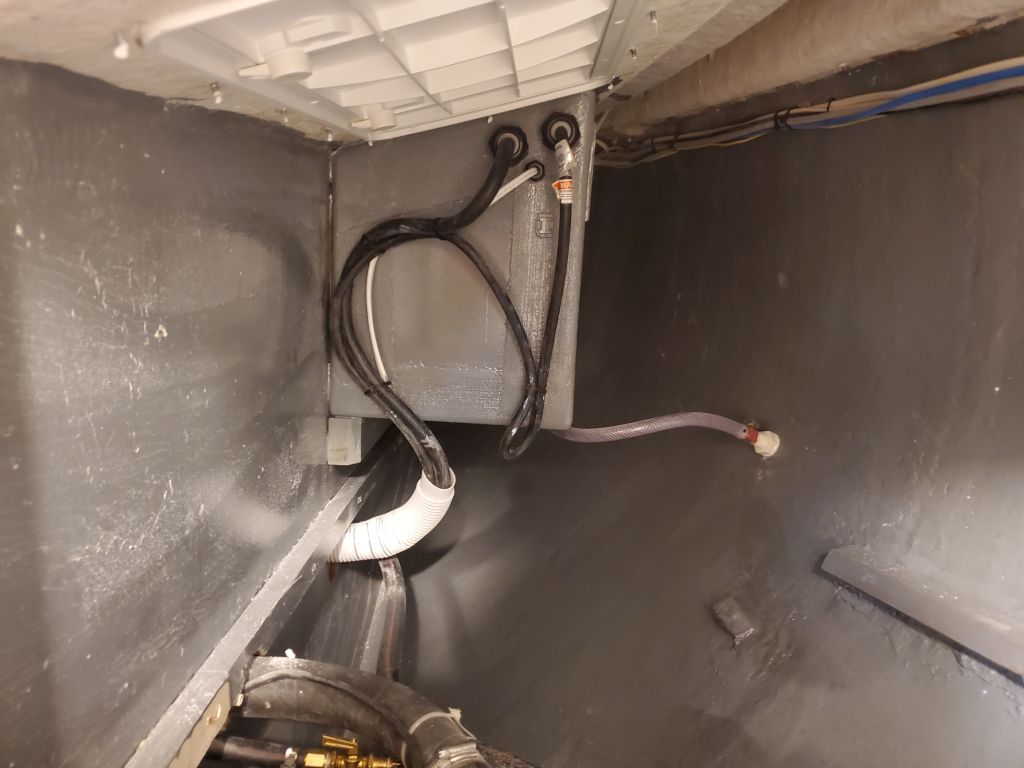
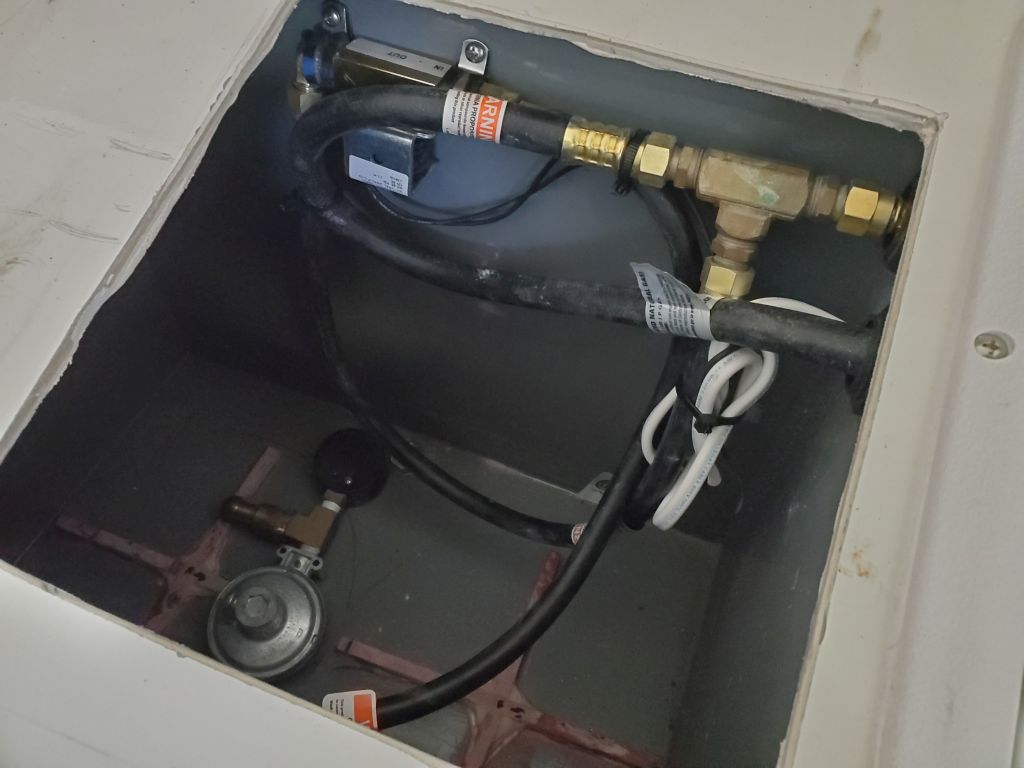
The photos below come from the other boatowner, and were useful in helping me determine a feasible way forward.  The main issue complicating the prefabricated box’s installation was the difficult access to the aft end of the quarterberth, and the impossibility of my doing any serious fiberglass work in that environment.  That was why I had originally conceived the top-down installation, which had been the working plan for some time but which ran into some issues when the realities of the installation location forced a change of direction in order to maintain the potential for the owner to have access to the forward part of this otherwise-empty locker.

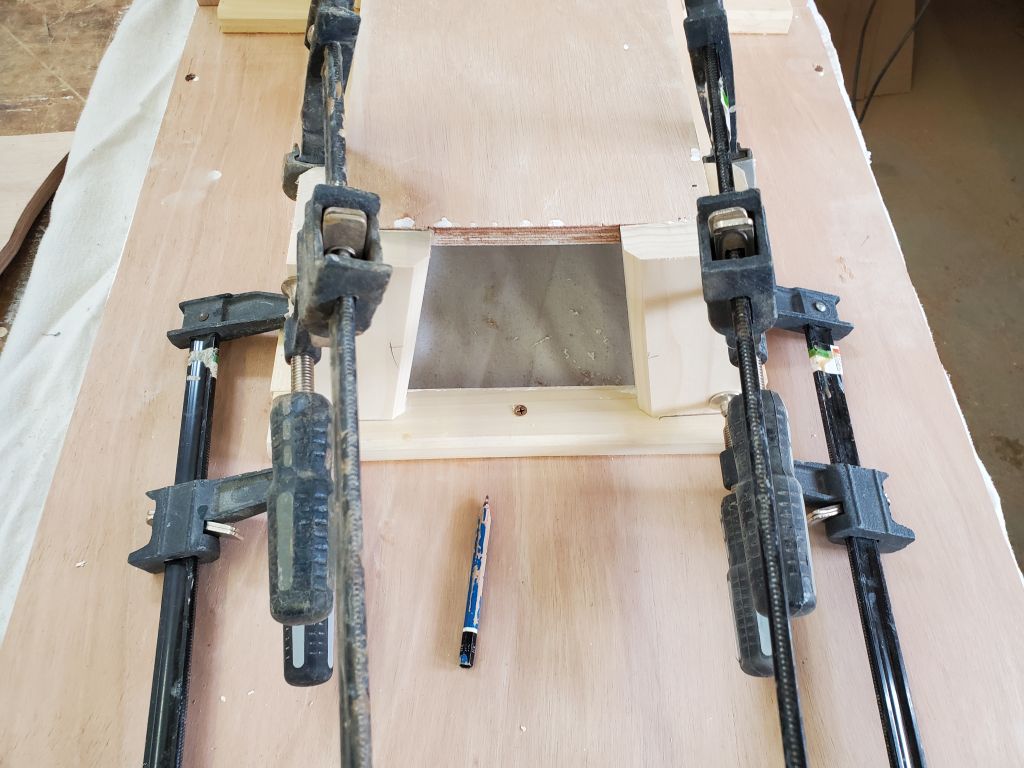
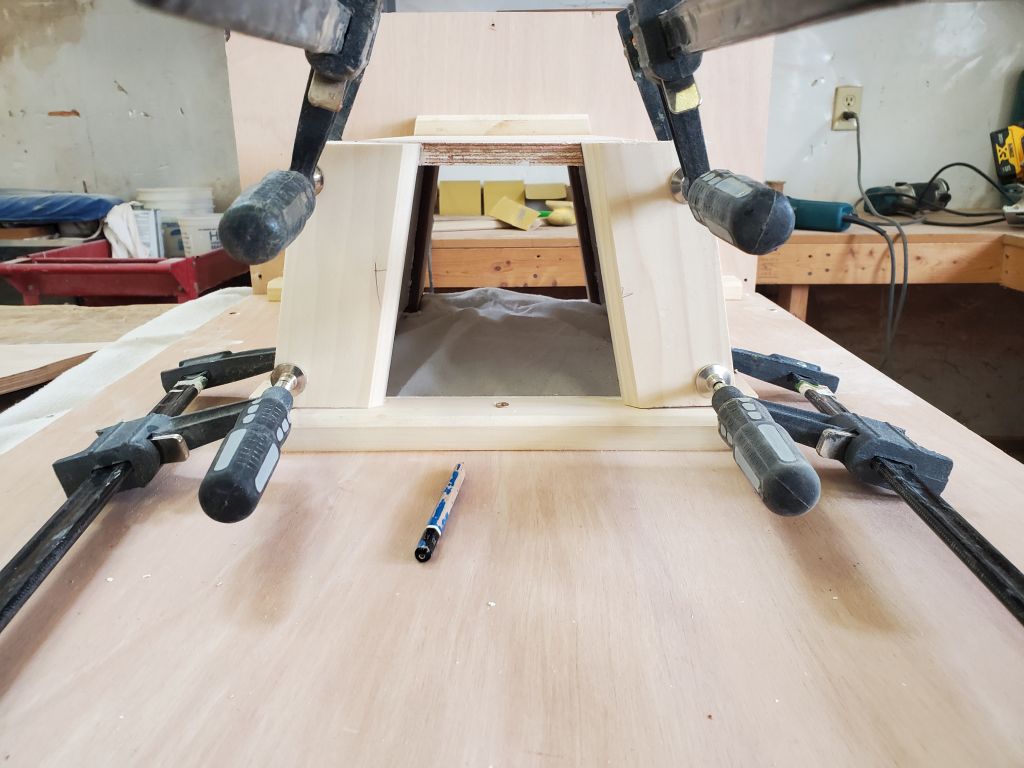
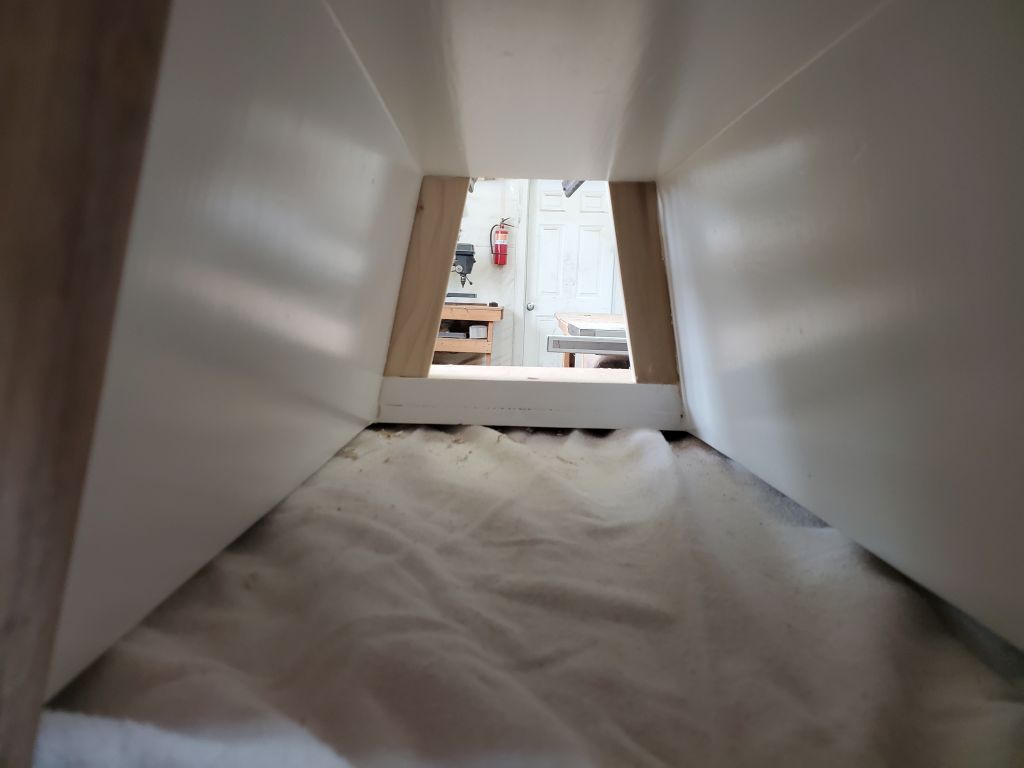
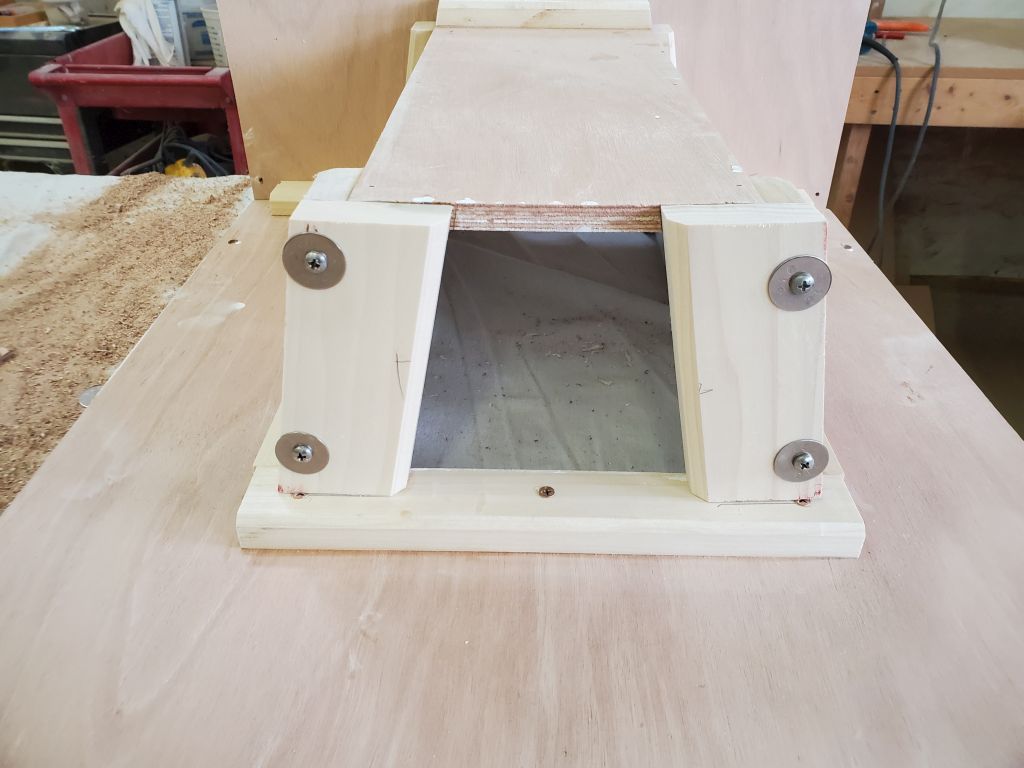
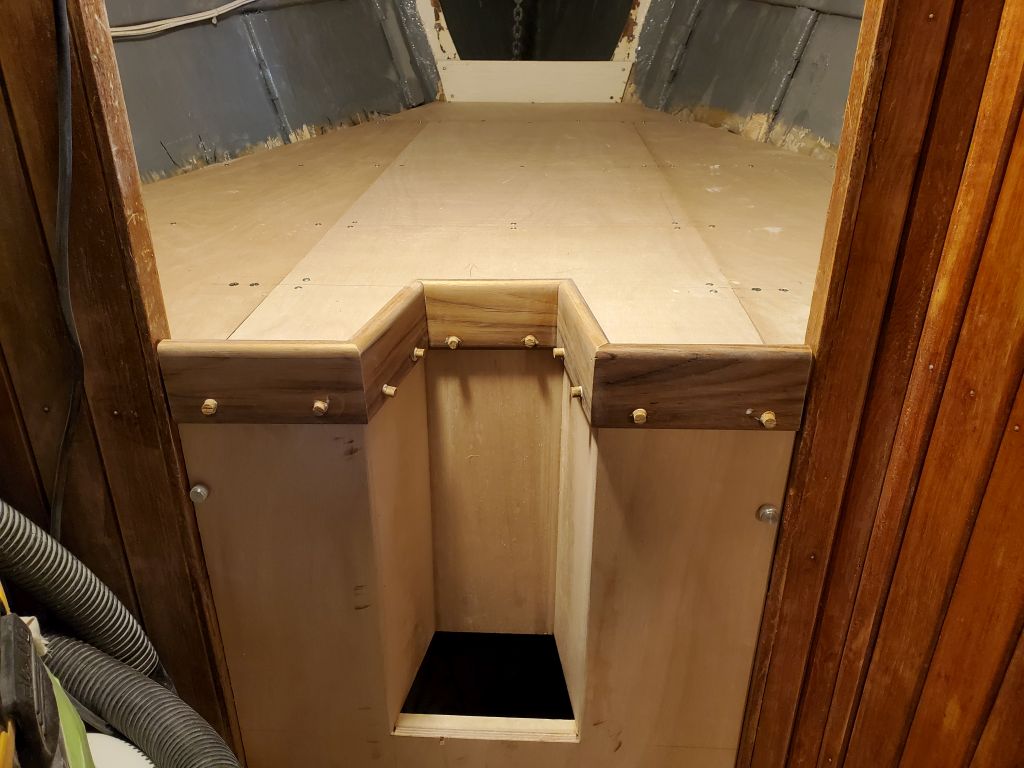
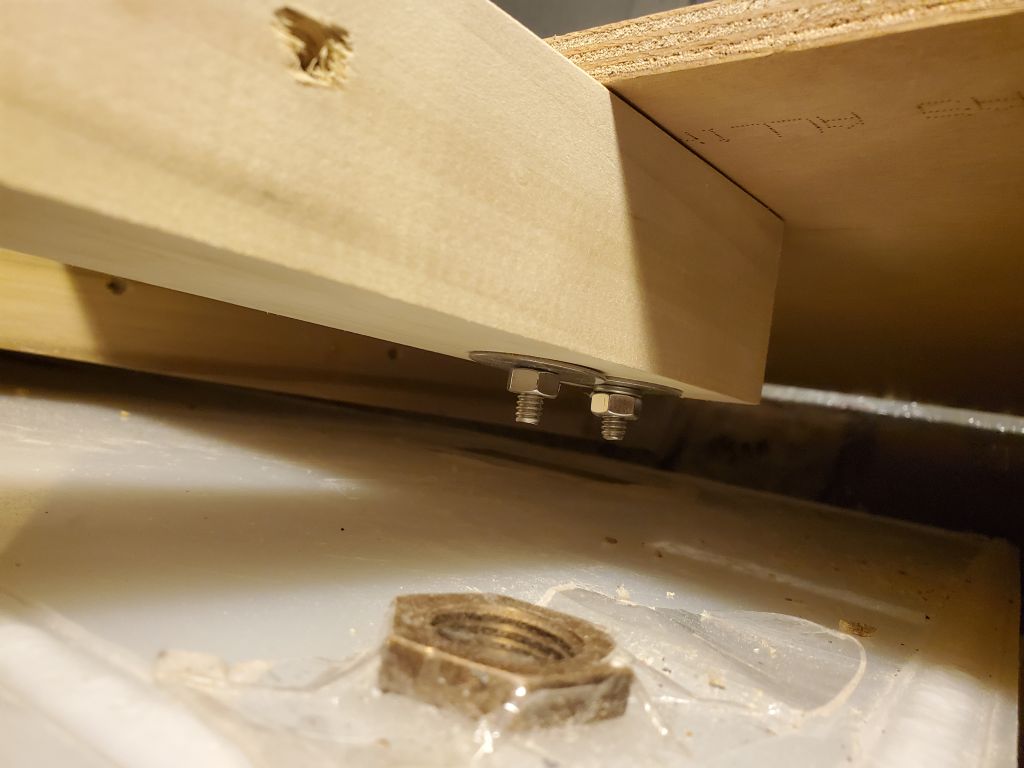
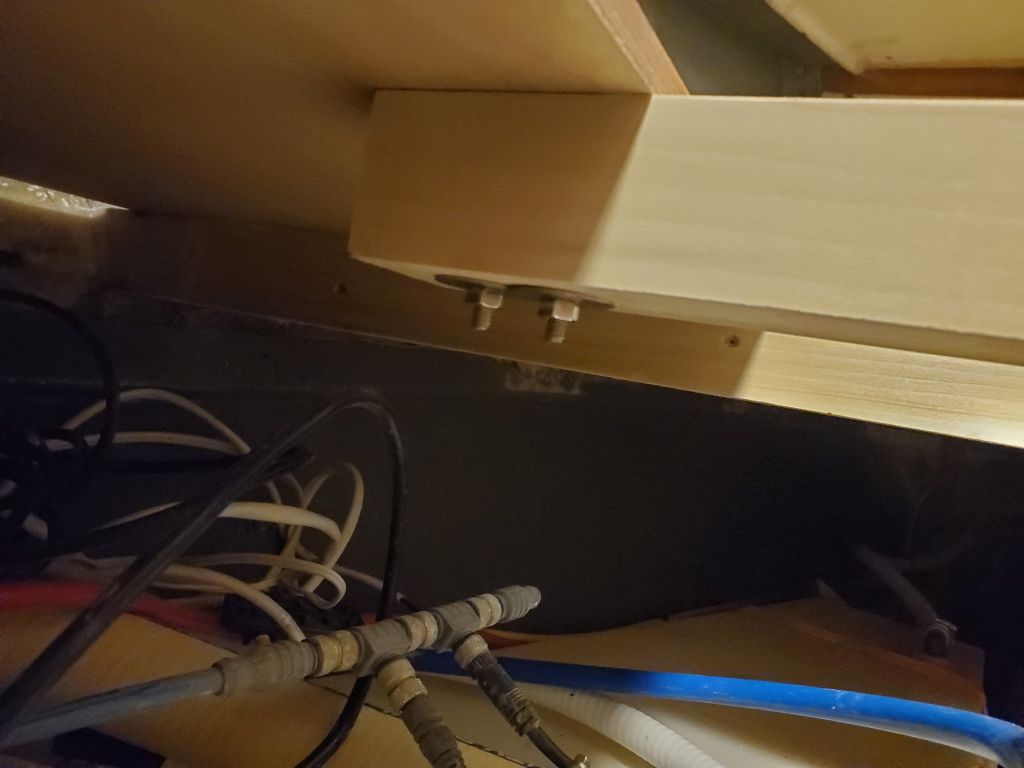
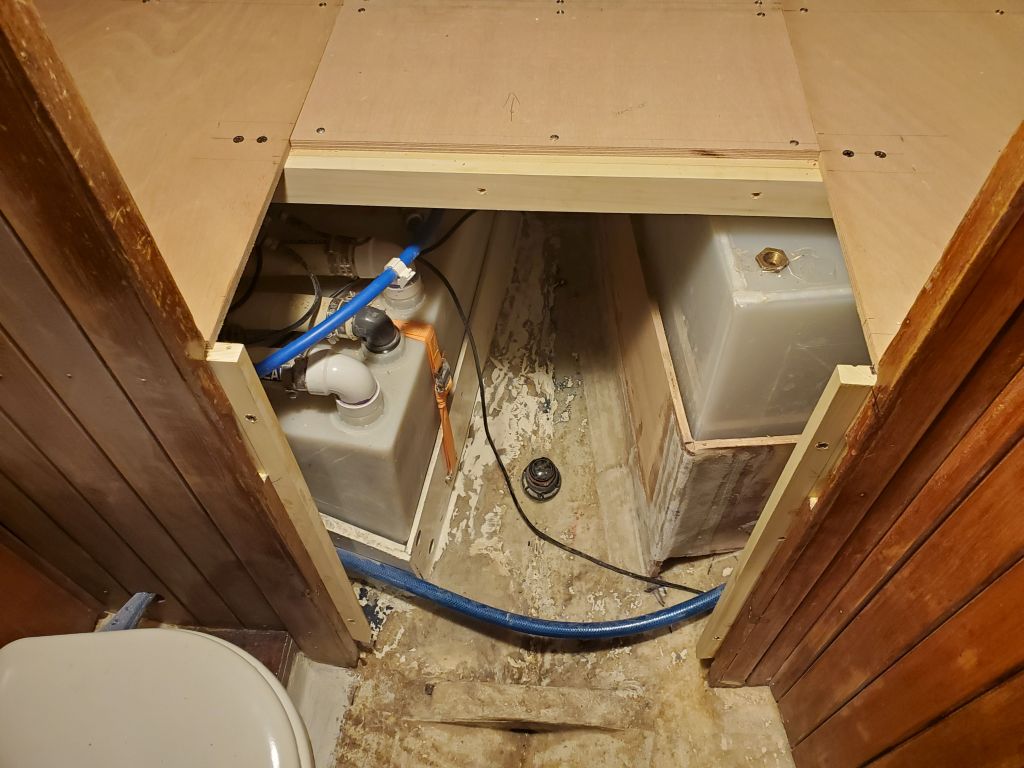
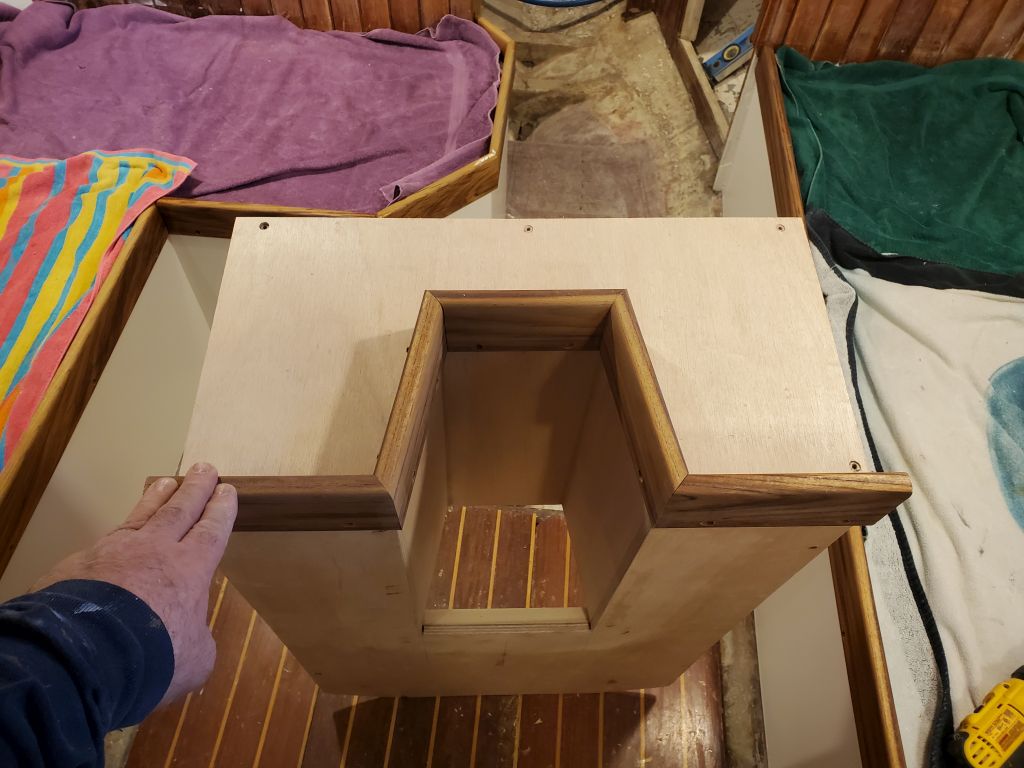
This series of photos shows a box designed for three of the small tanks, which looked identical in size to the two tanks for which I’d built the fiberglass propane box to fit, and the other elements of the installation were similar as well, including the installation of an opening hatch on the forward side.  Neither the owner nor I wanted to get into the difficulties, and cosmetic requirements, of a “real” hatch, complete with gutters, etc., though this would be the ideal scenario, probably, were time, budget, and access not factors in the choices made.  The box in these photos, made from plywood, featured a full top and then a (in this case) round access hatch to install the tanks within.  The locker hung from the bottom of the cockpit seat above, secured with a series of bolts that were visible in the photos.

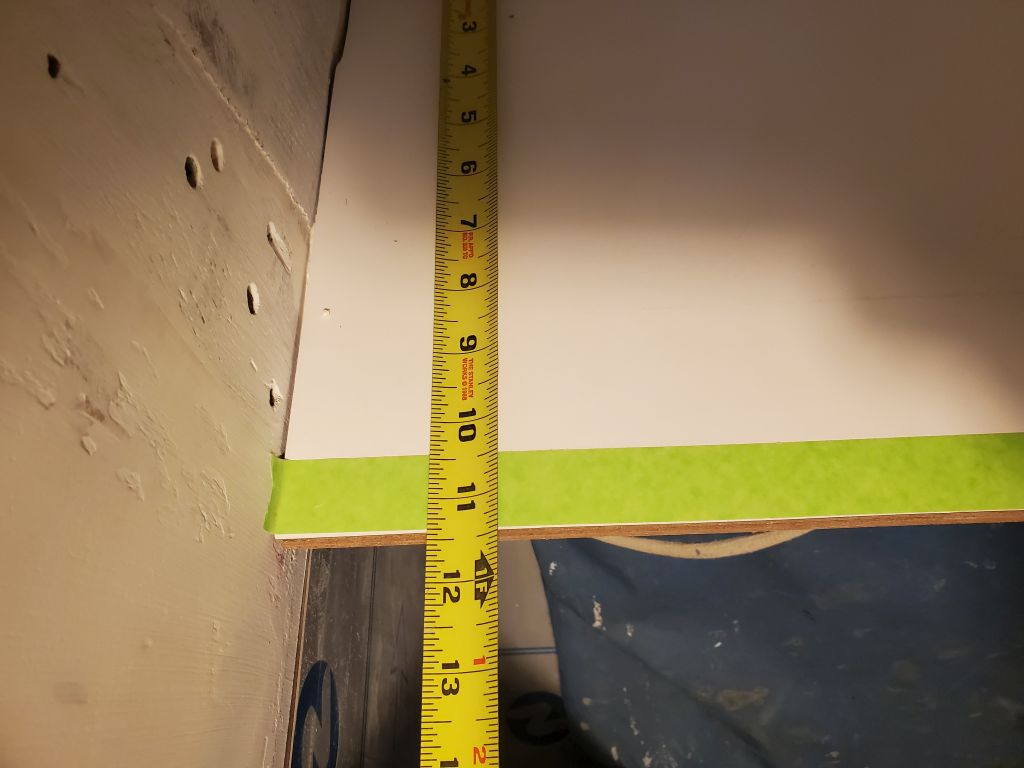
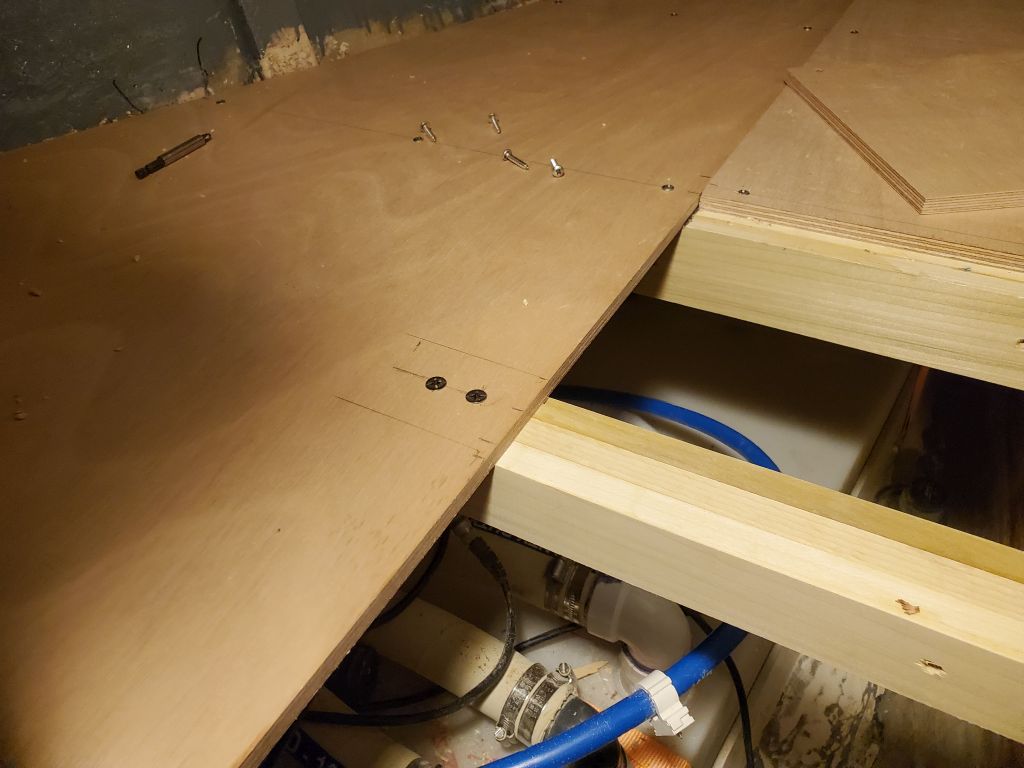
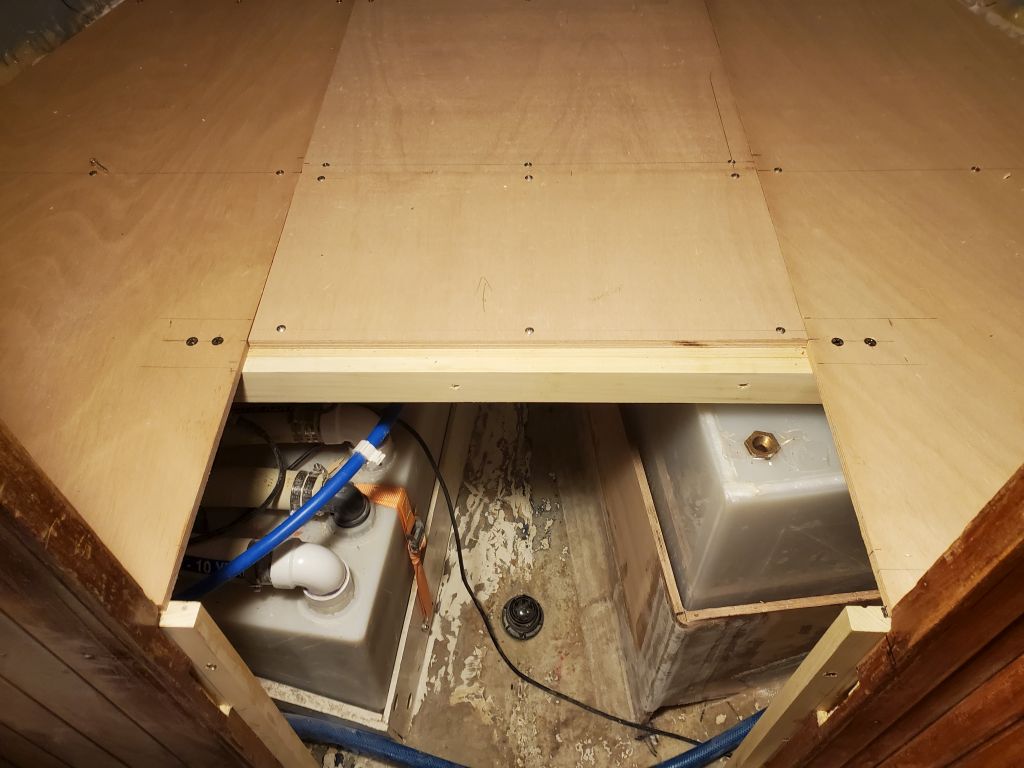
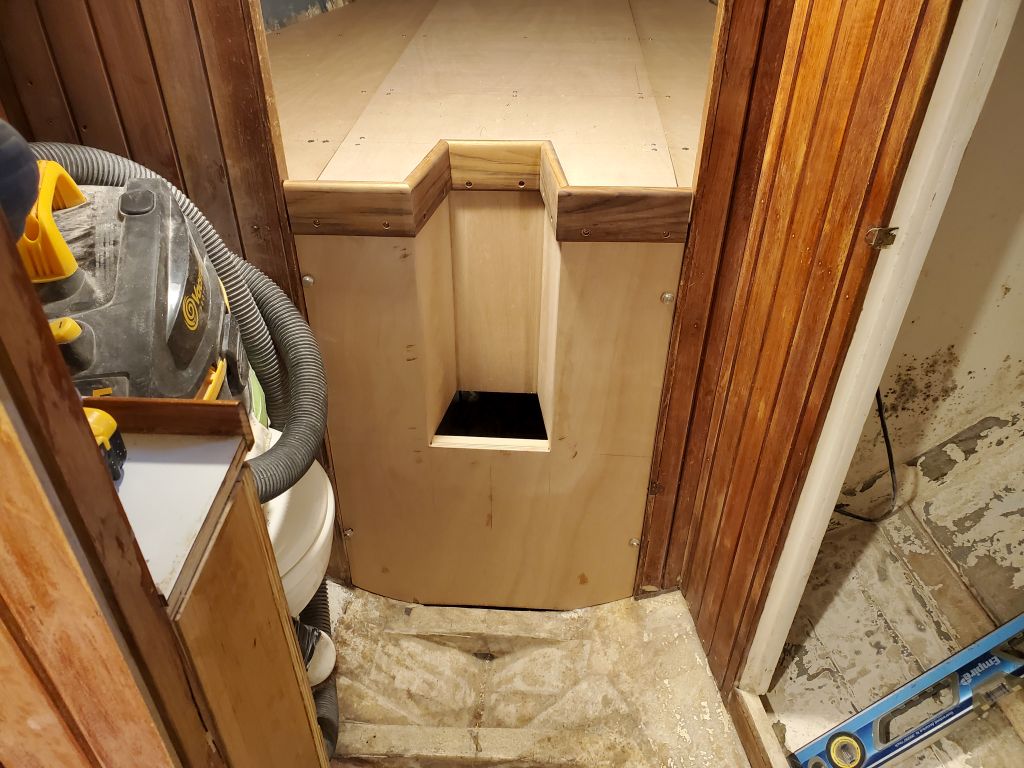
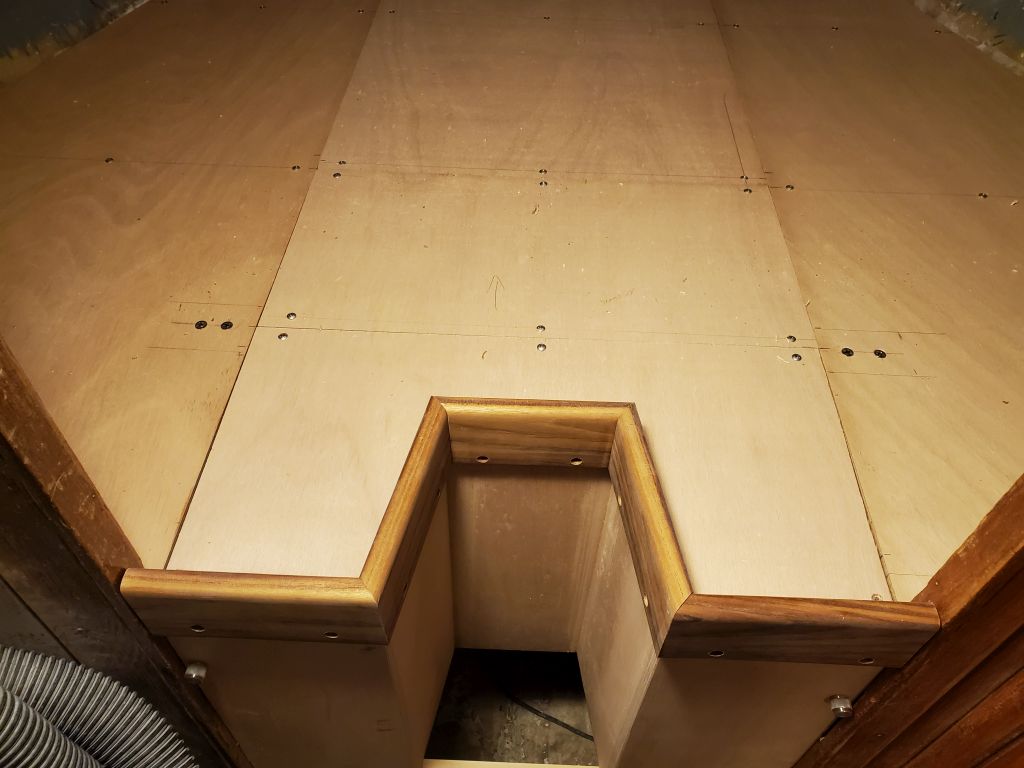
In the shop, I made a rough measurement from the aft end of the cockpit locker (from the cockpit) to show the position of the forward end of the locker if it were pushed as far aft as possible, about 20″ forward of the aft end of the space.  That’s the end of the tape measure in the photo.  However, I positioned a mockup of a square access hatch forward of that because, looking at the way the wooden locker lid above is built, and which has to close down on top of whatever I built beneath it, it made sense to choose a position for the locker opening where it interfered with as little of the cockpit lid structure as possible.  These structural supports on the lid can be seen in the photo, as well as marks on the gelcoat of the structural seat where these members bear.  So avoiding the main areas was a goal of the final location in any case.  This location still left room for a 24″ long hatch in the space forward, which fit the dimensions of one of the prefab plastic hatches the owner had brought to my attention and was interested in using.

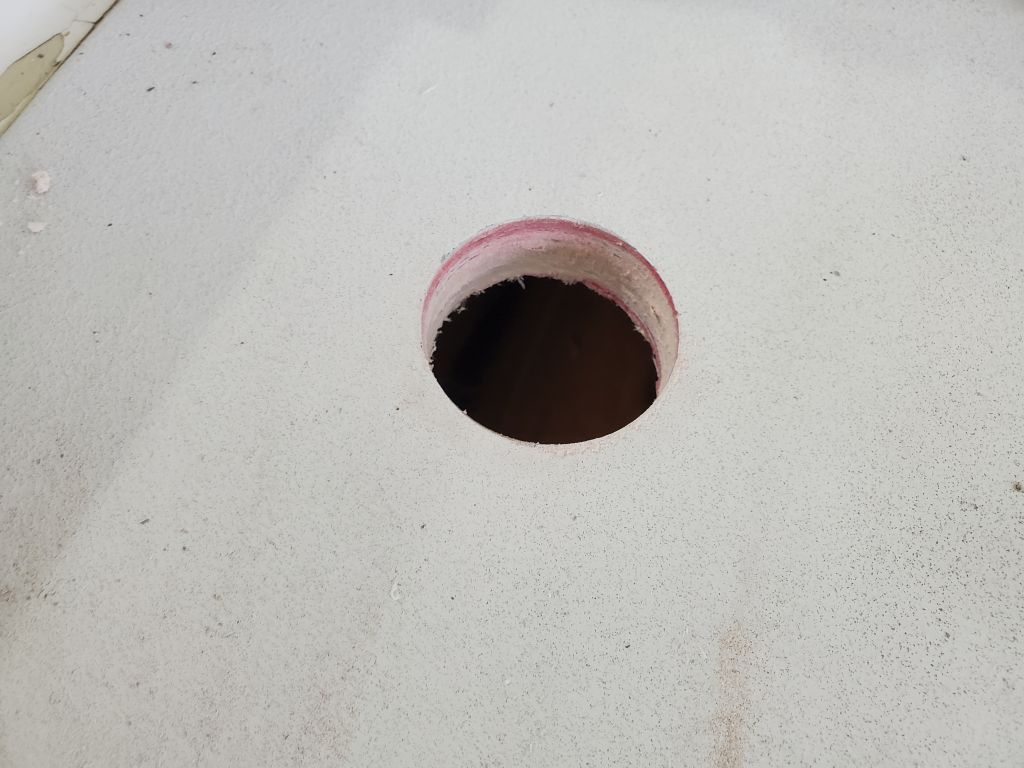
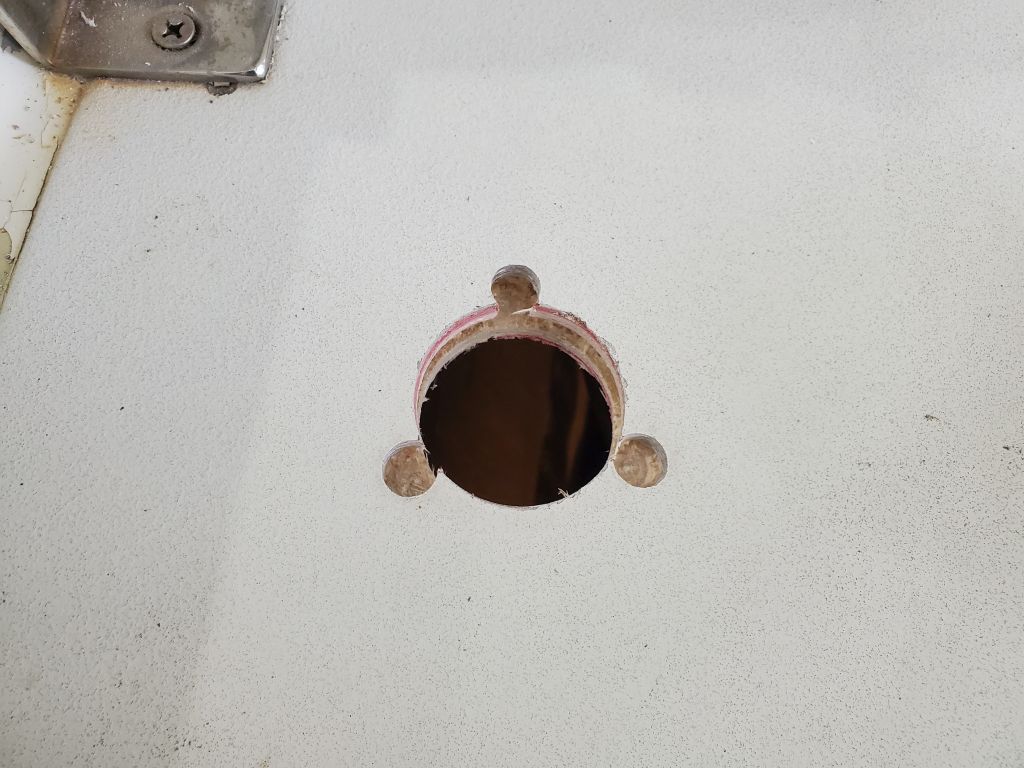
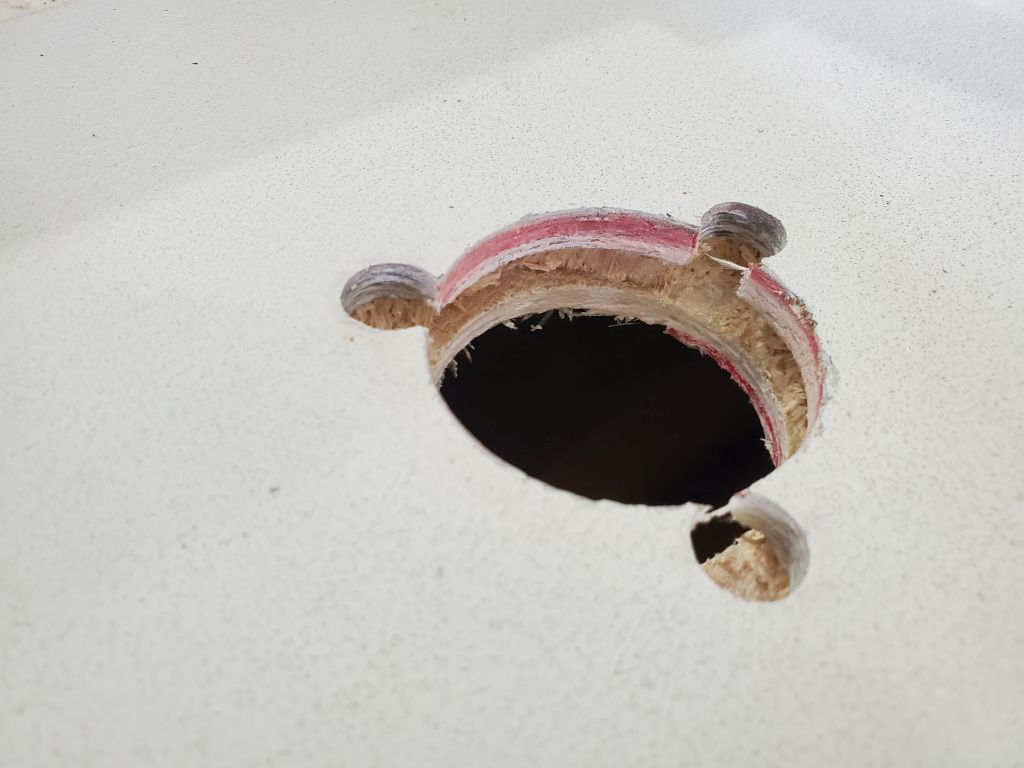
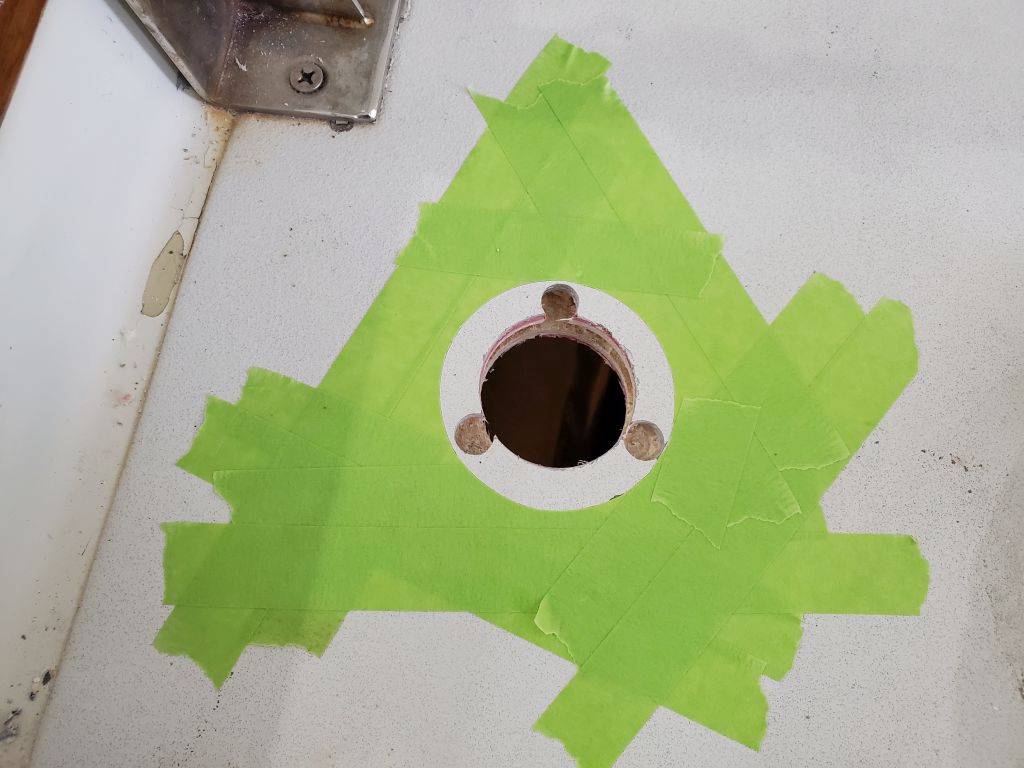
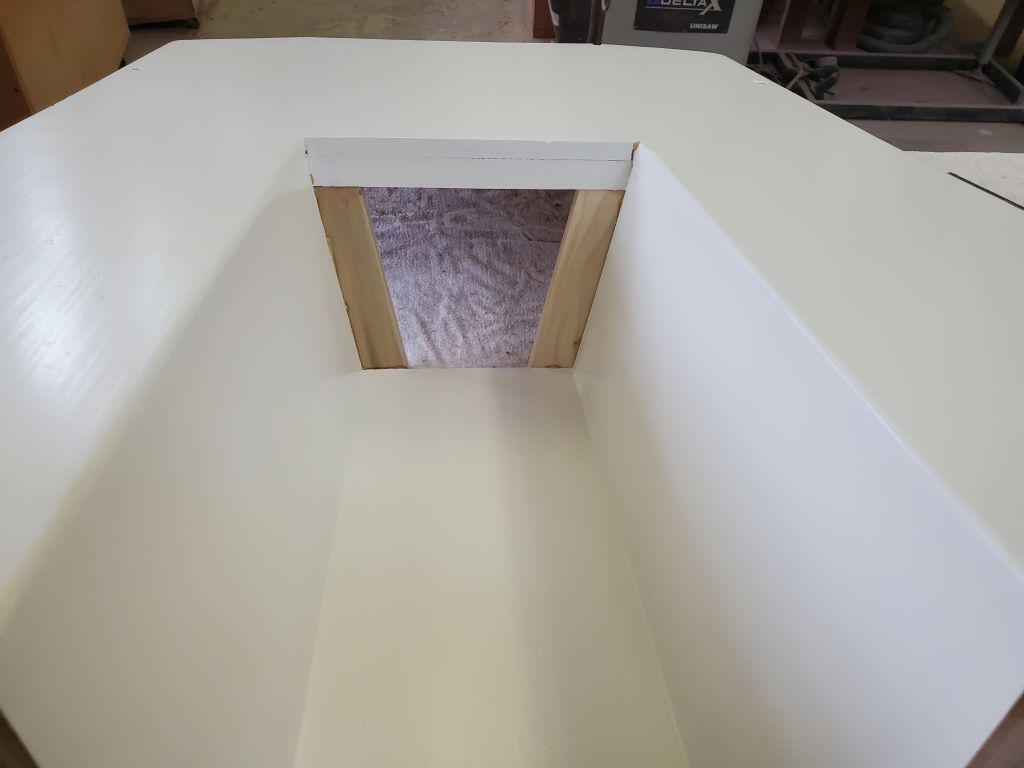
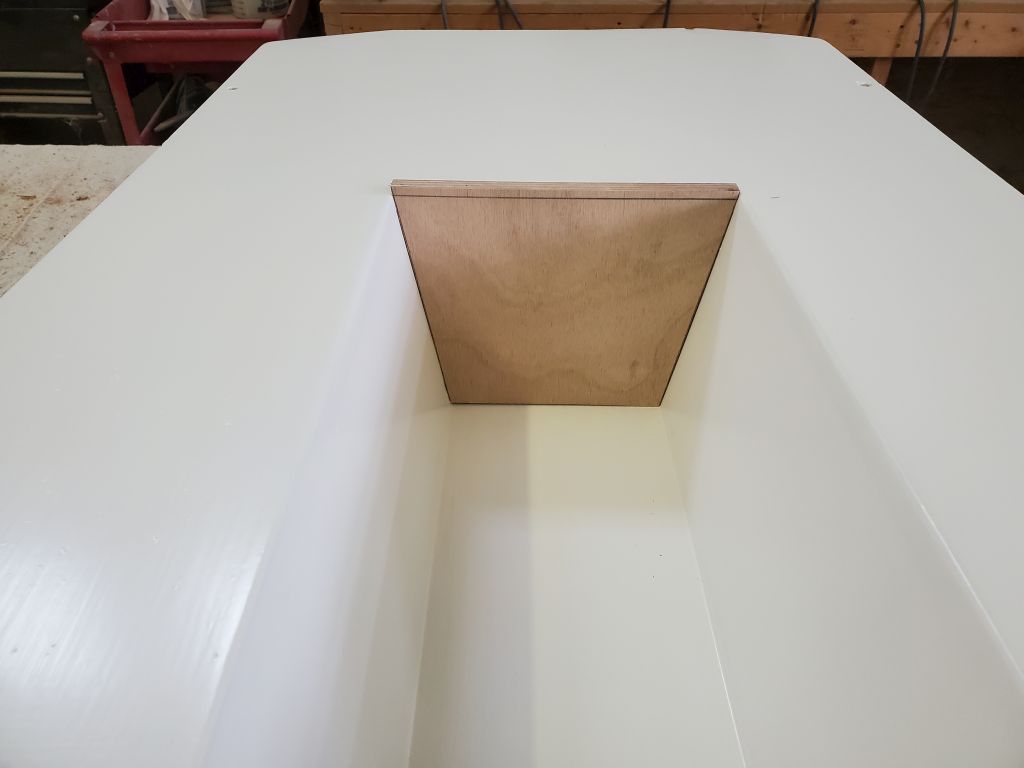
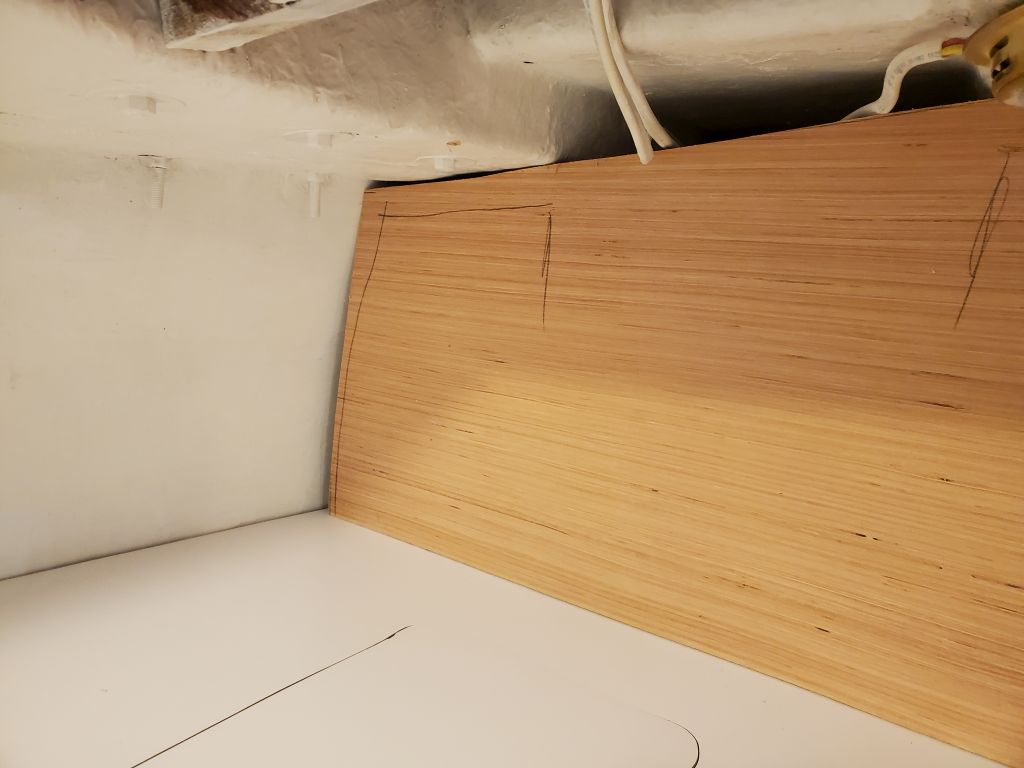
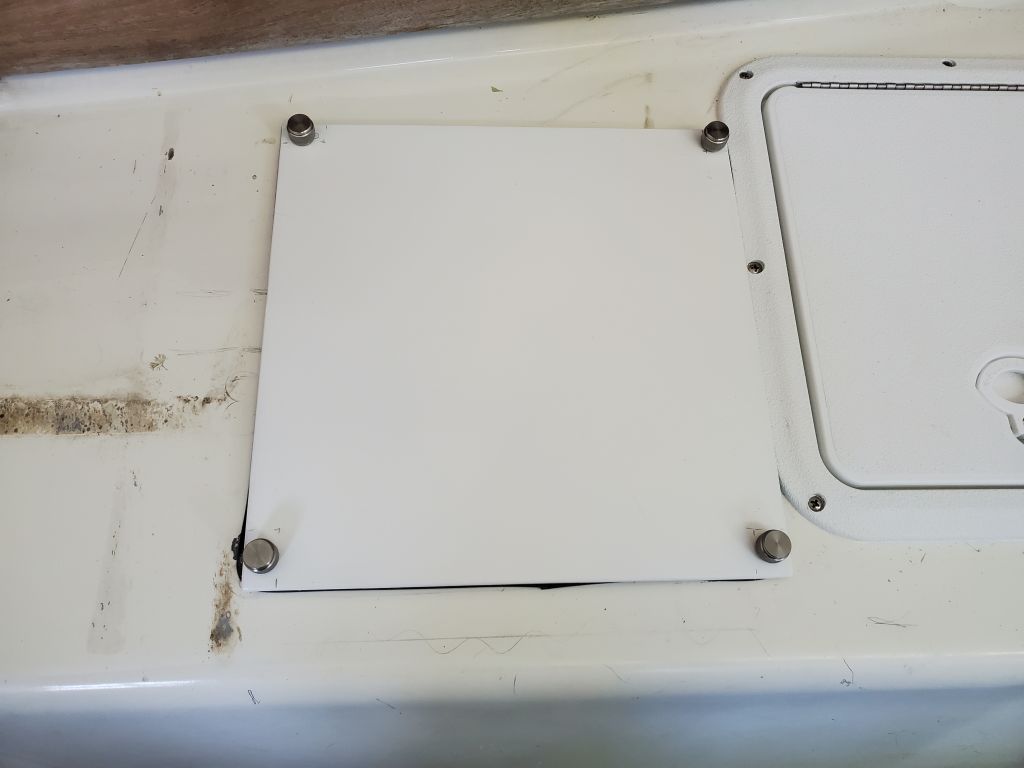
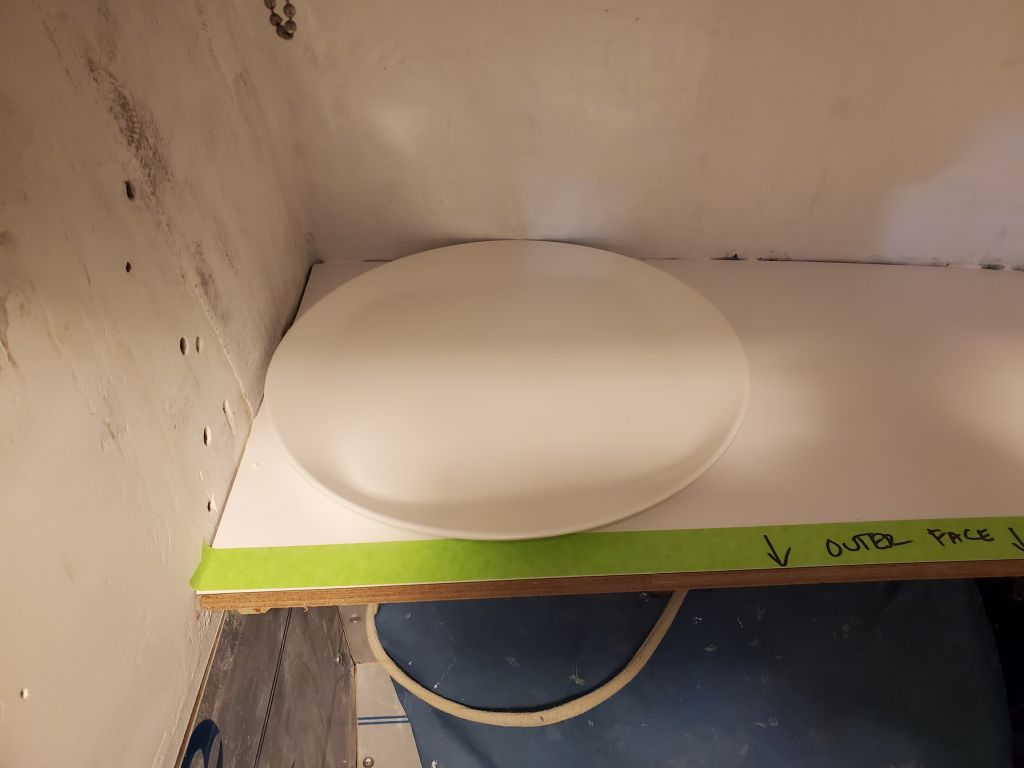
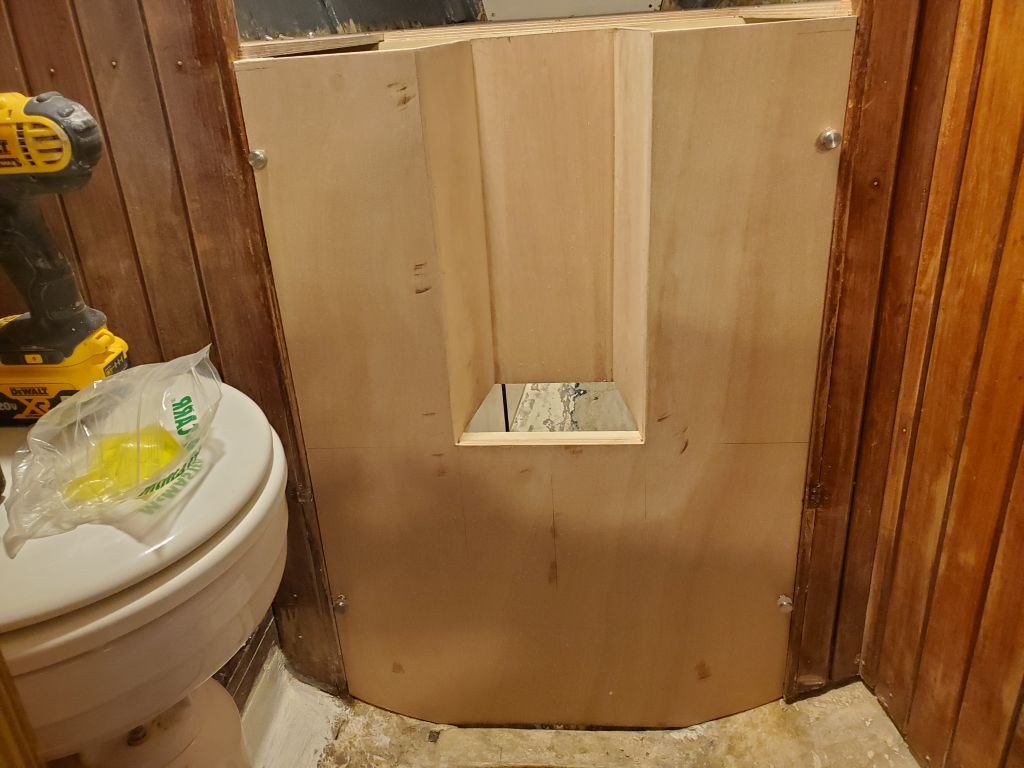
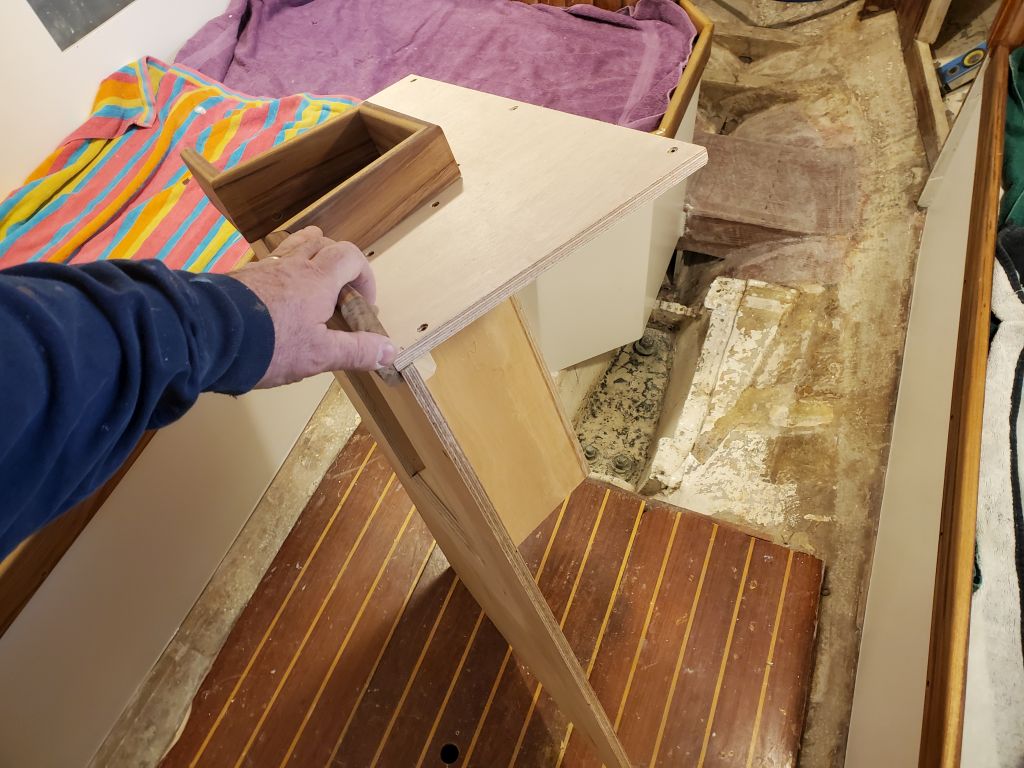
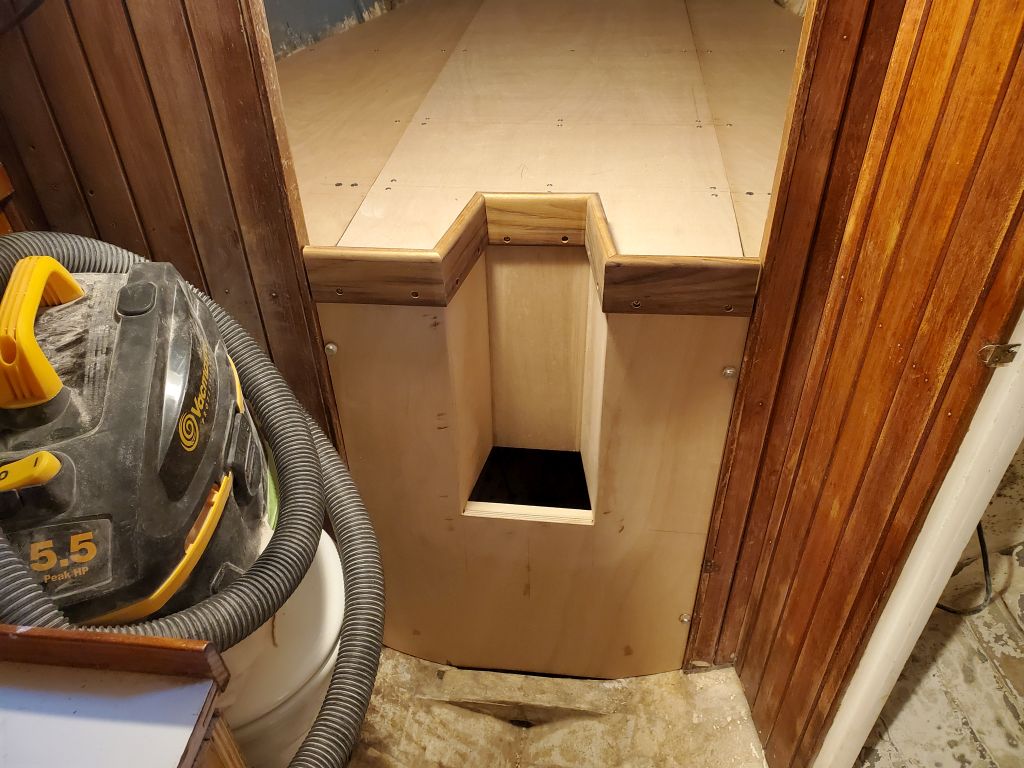
Now, I measured the angle of the seat and cut the LPG box to the correct angle, then made a plywood mockup of the top, which in the final construction would be made of sheet fiberglass like the rest of the box and fully glassed all around.  This mockup was slightly oversized for the moment.  I cut a rectangular hole to match the plywood template I laid on deck, which was about the practical minimum size of 9-5/8″ square to fit the tanks through and leave a bit of clearance space; the opening could be slightly smaller, but I saw no benefit to that, preferring decent access within.  The tanks fit easily, with ample room inside the box and through the opening for manipulating the propane connection and regulator.  The tank itself is about 9-3/8″ round, as seen in the round template.

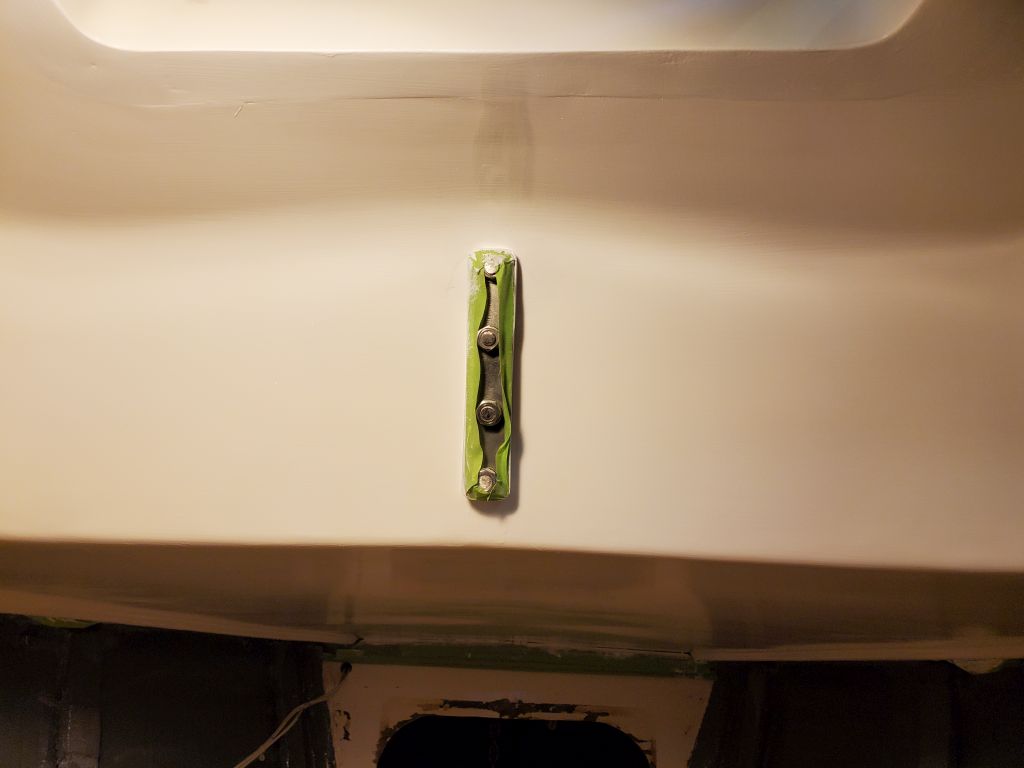
For installation, my plan was to secure the box, with its flat top pressed tightly to the underside of the cockpit, with 5200 between the top of the box and the underside of the cockpit.  The owner wanted to avoid bolts visible from the cockpit, so I’d have to come up with a way to hold the box securely while the adhesive cured, but I didn’t conceive of any problem with the adhesion of the polyurethane, particularly with the large bonding surface available.  The adhesive would have to be capable of supporting the weight of the box and two, ten-pound tanks, so 35-40 lb. total for the whole arrangement.  It would be possible to use bolts to augment the adhesive if needed, but the owner hoped that I could avoid that for appearance purposes.

This installation concept, largely thanks to the owner of a sistership who happened to get in touch with the boatowner at an opportune time, seemed feasible, as simple as possible, and workable with what I’d already accomplished with the box, and would leave enough space for the propane through-fittings for the two supply hoses, as well as the regulator, solenoid, wiring and related that would be inside the box.  With the new deck hatch opening just forward, there’d be good access to these hoses for installation and inspection going forward.

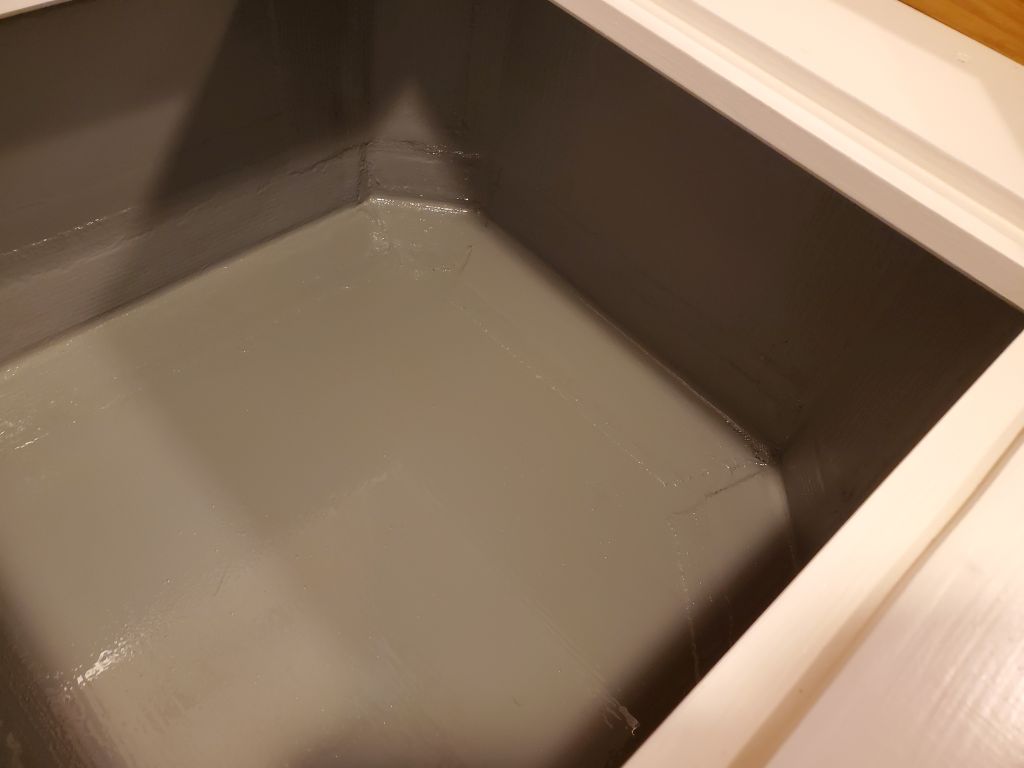
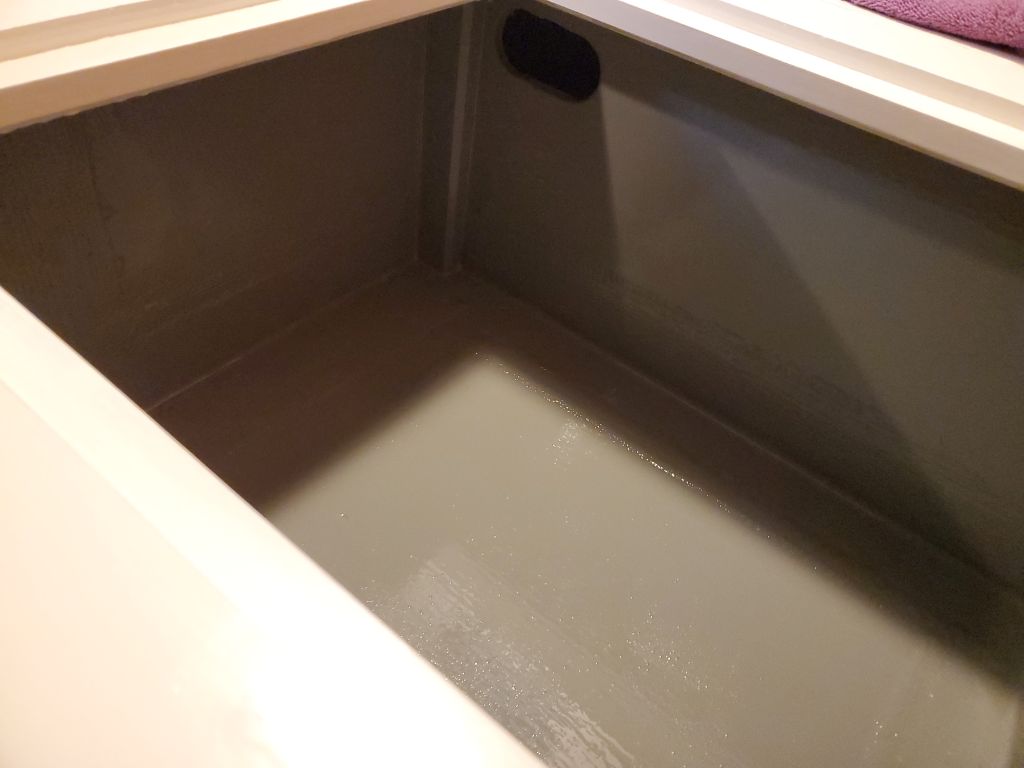
With approval of the concept, I continued work on the box, cutting a piece of fiberglass sheeting to fit (slightly oversized), and trimming it down to its final size.  I secured it with some dabs of hot glue so I could ease all the corners to prepare for fiberglass, after which I applied some lightly-thickened epoxy to fill the seam and fair in the existing tabbing for a smoother fit.  I left this initial application of epoxy to tack up briefly.

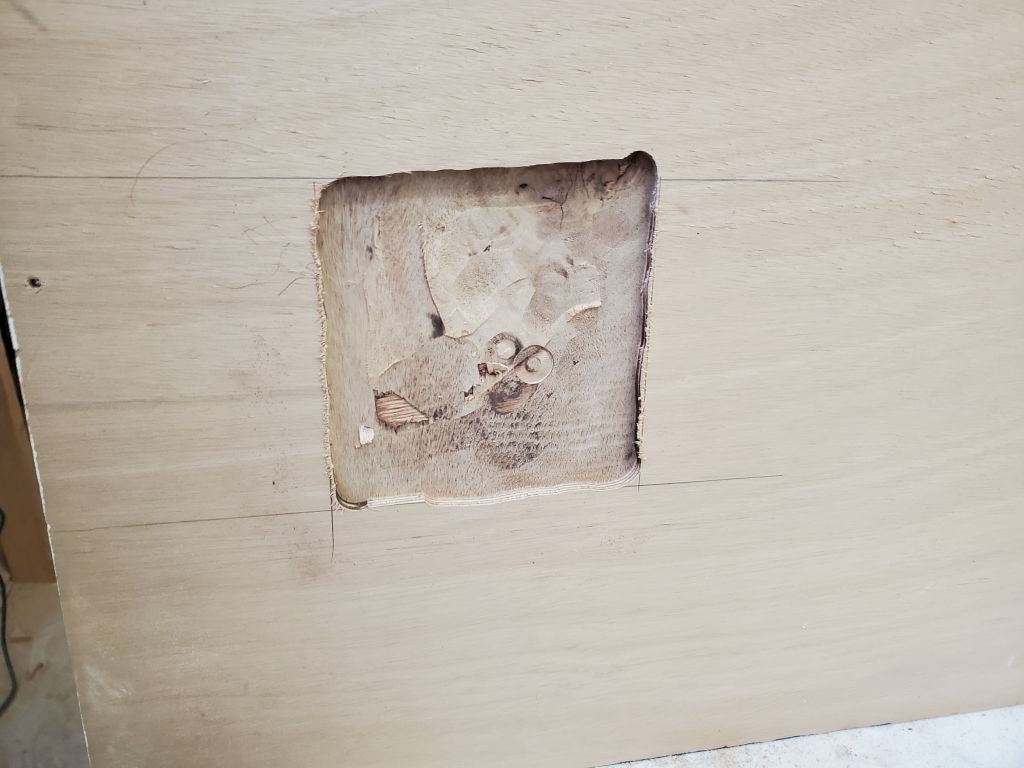
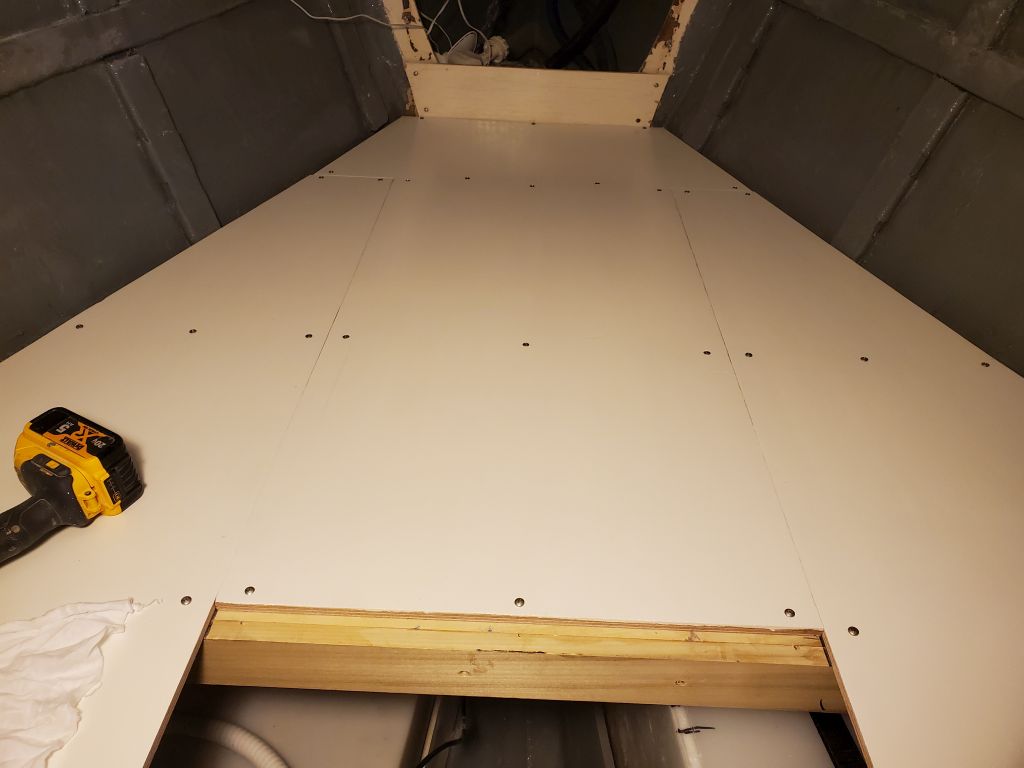
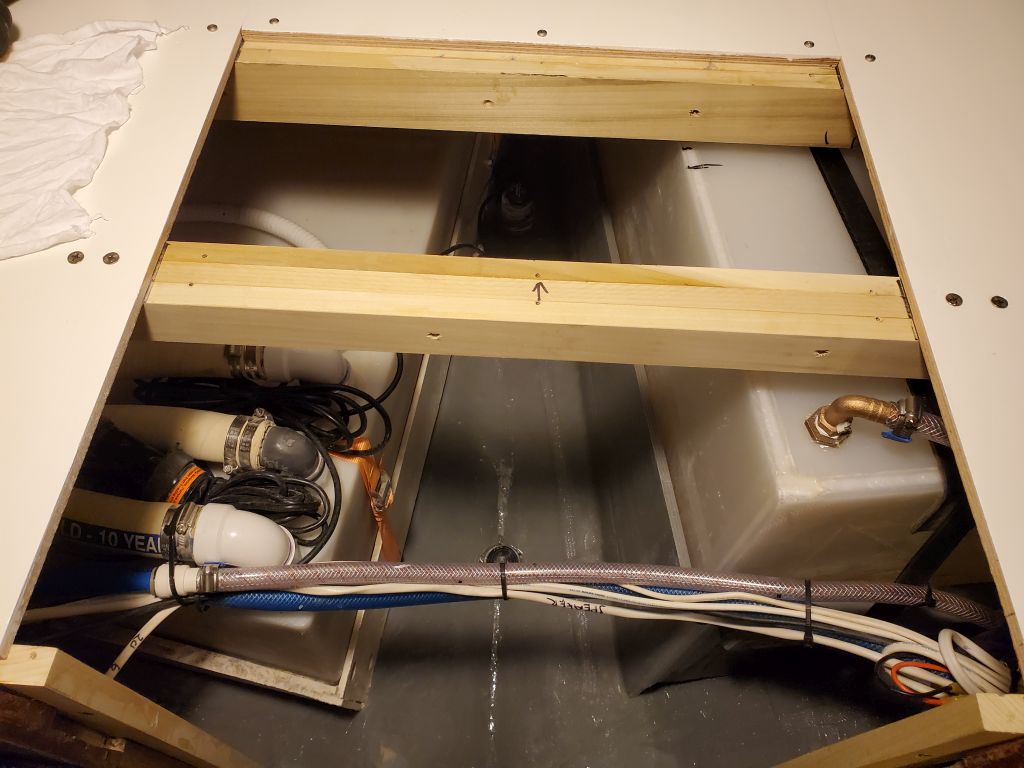
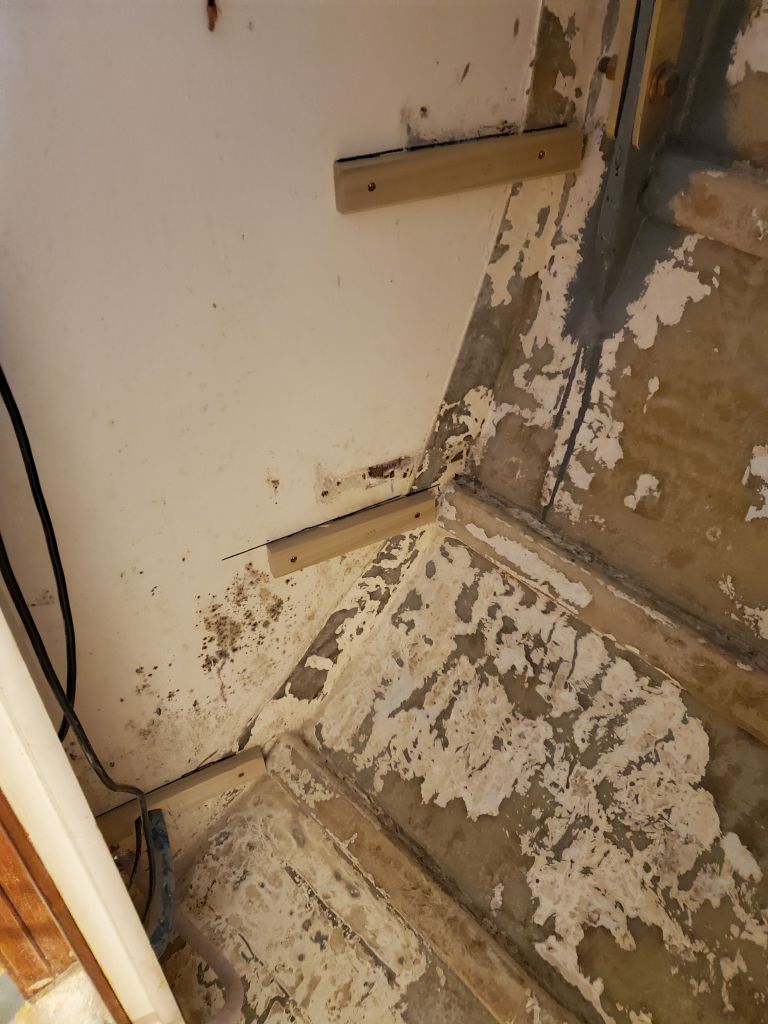
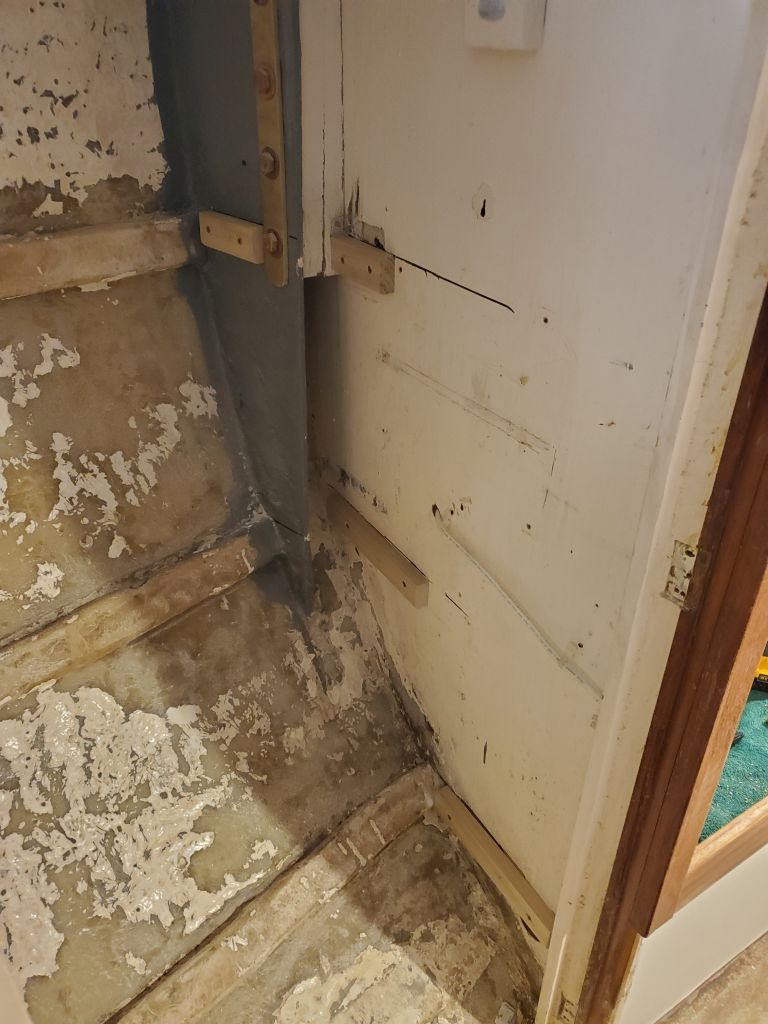
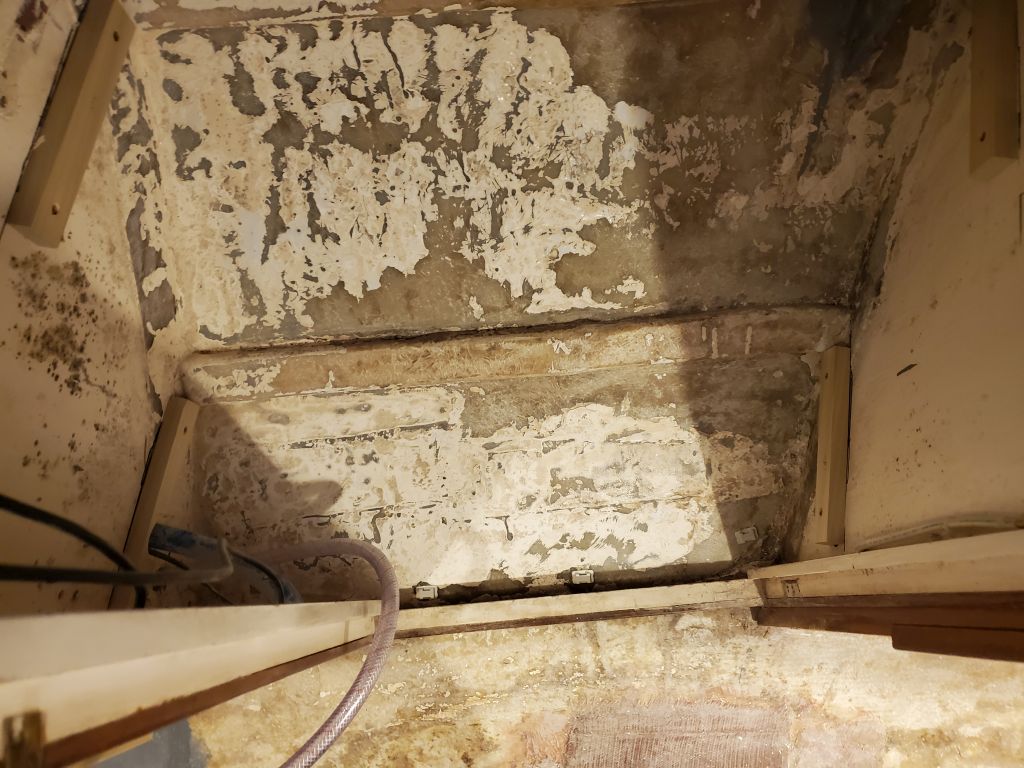
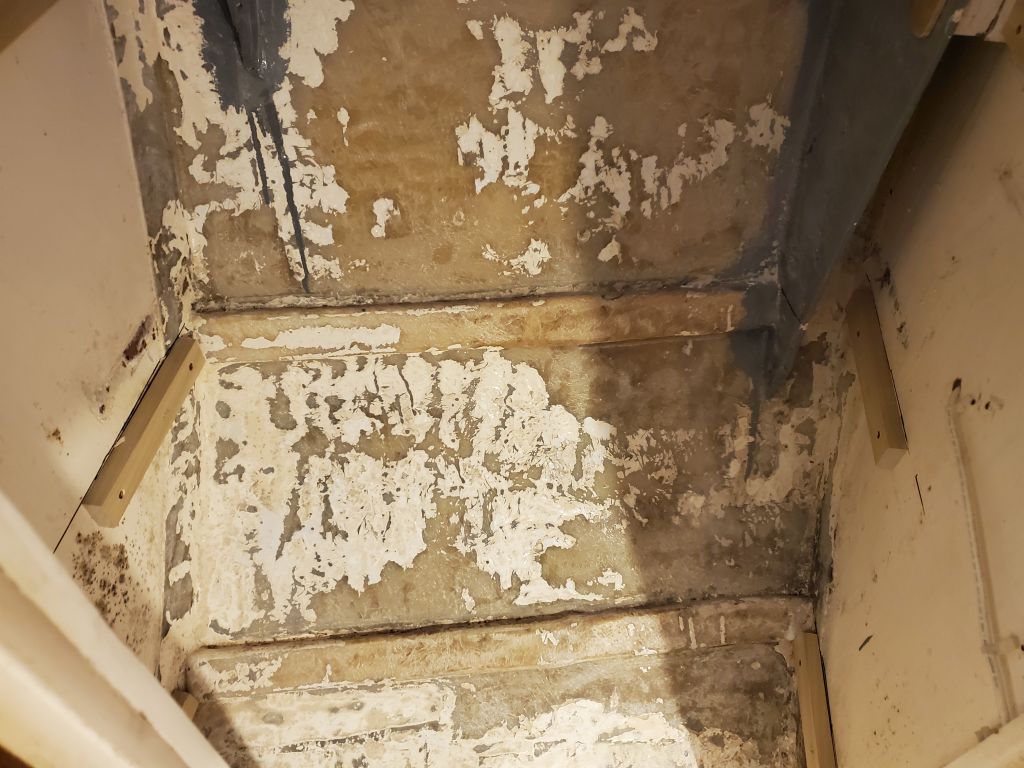
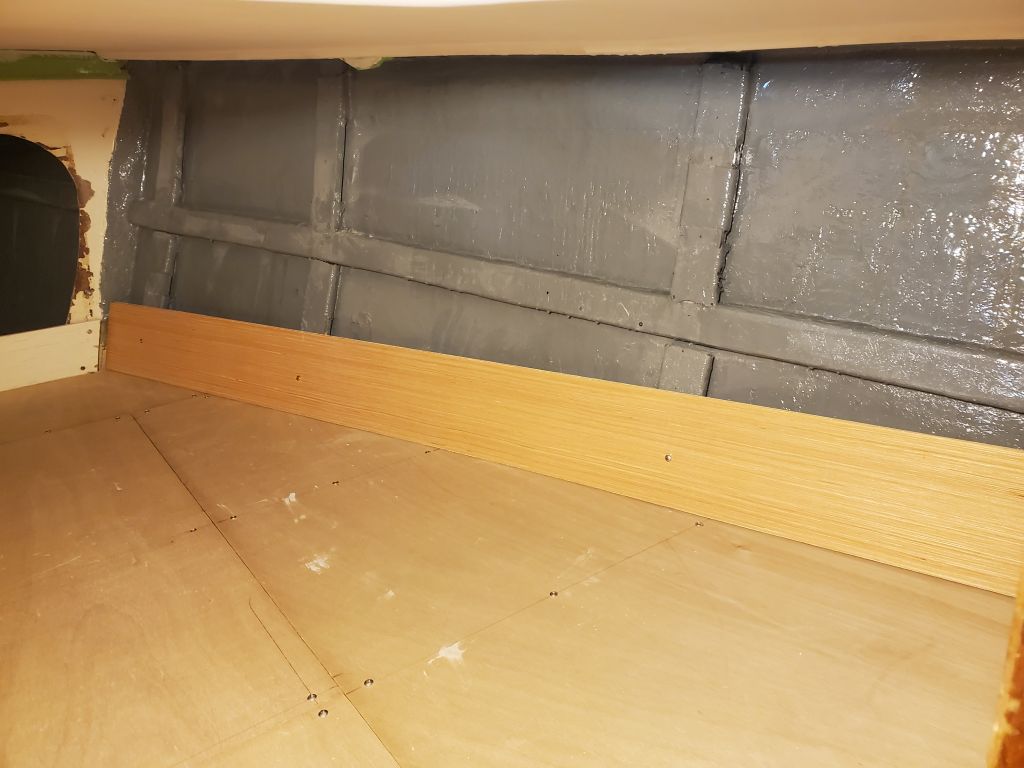
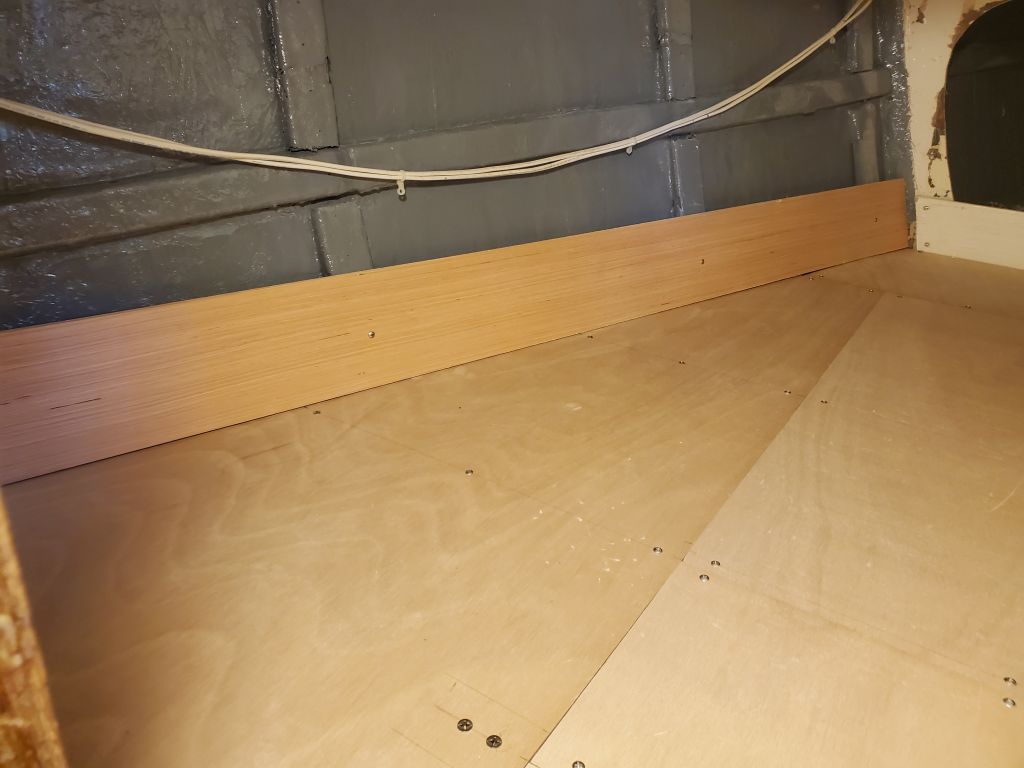
While that was underway, I prepared the underside of the cockpit seat from inside the quarterberth locker.  By removing the last of the galley supports, I had reasonable access for the task, which I took care of quickly, heavily sanding the laminate to remove unevenness and any coatings.  This area was gelcoated from the factory, so I didn’t have to remove all traces.  Later, I went back and cleaned up the sanding debris.

In between, I went back to the shop and installed tabbing over all the seams to secure the new propane box top in place all around, and make it vapor-and water-tight.  I installed fiberglass in the center portion of the top as well, so that the finished top would be smooth and even for good bonding when the time came.  I’d cut the hatch opening later.


Calliope Girl 72

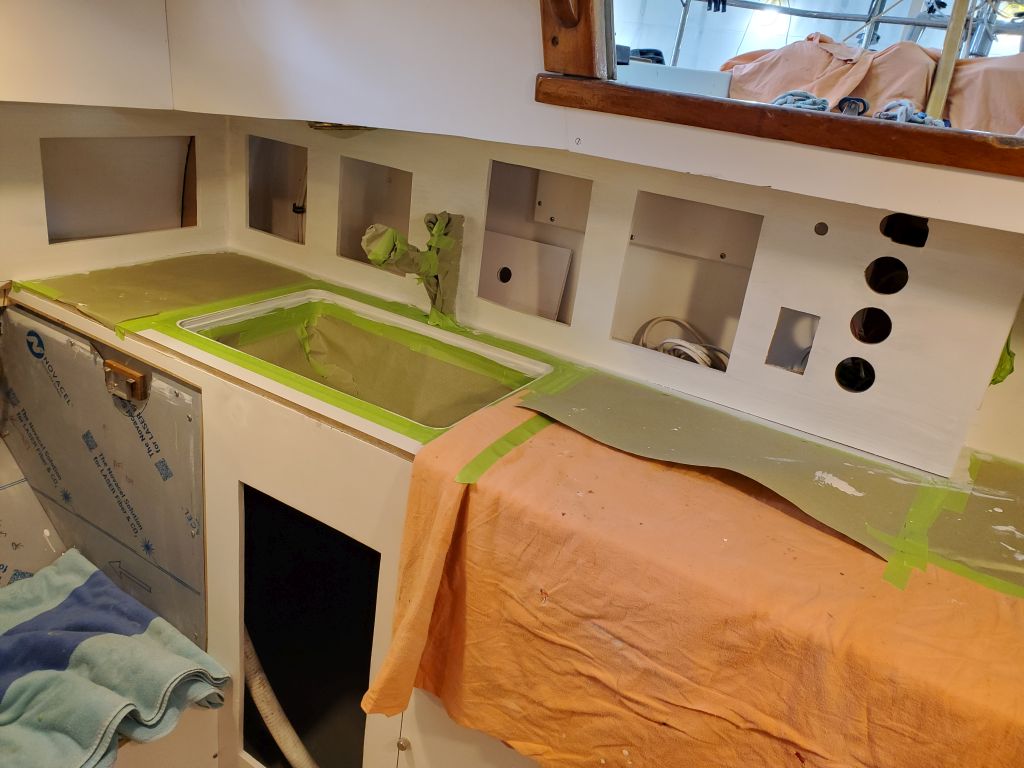
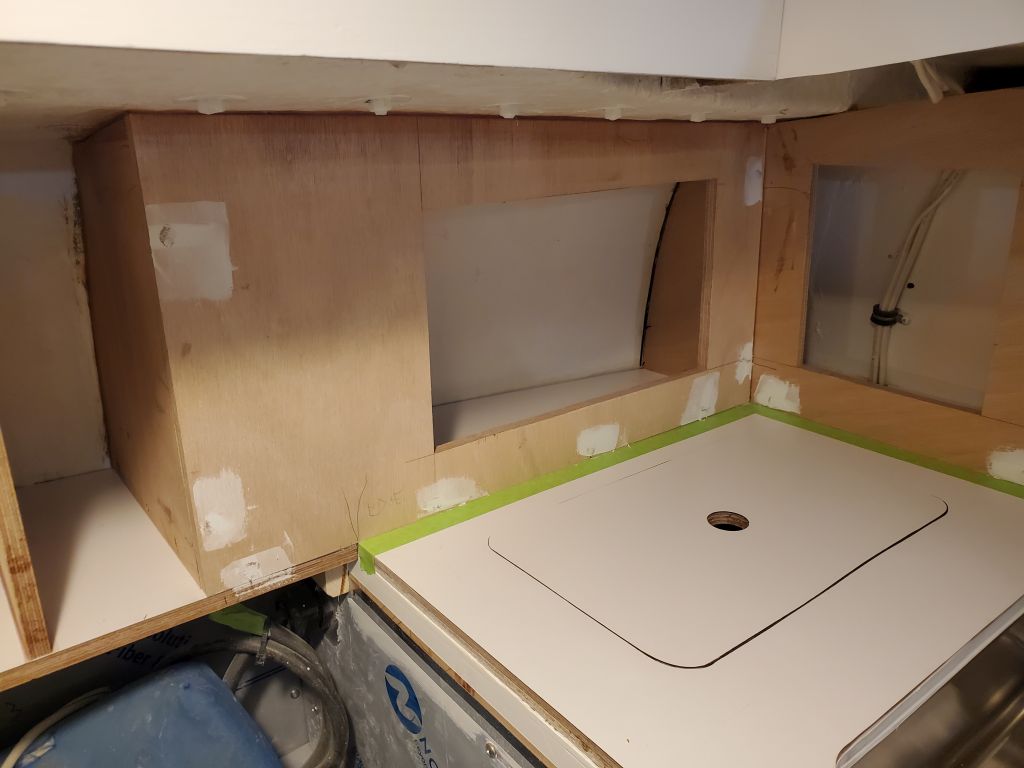
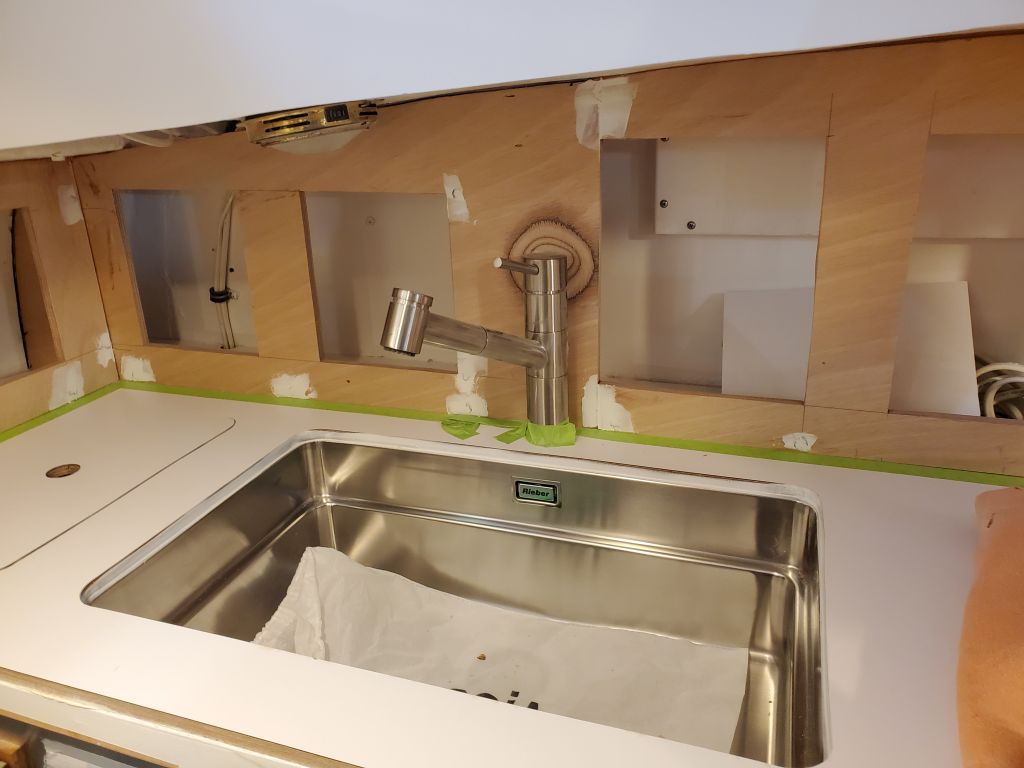
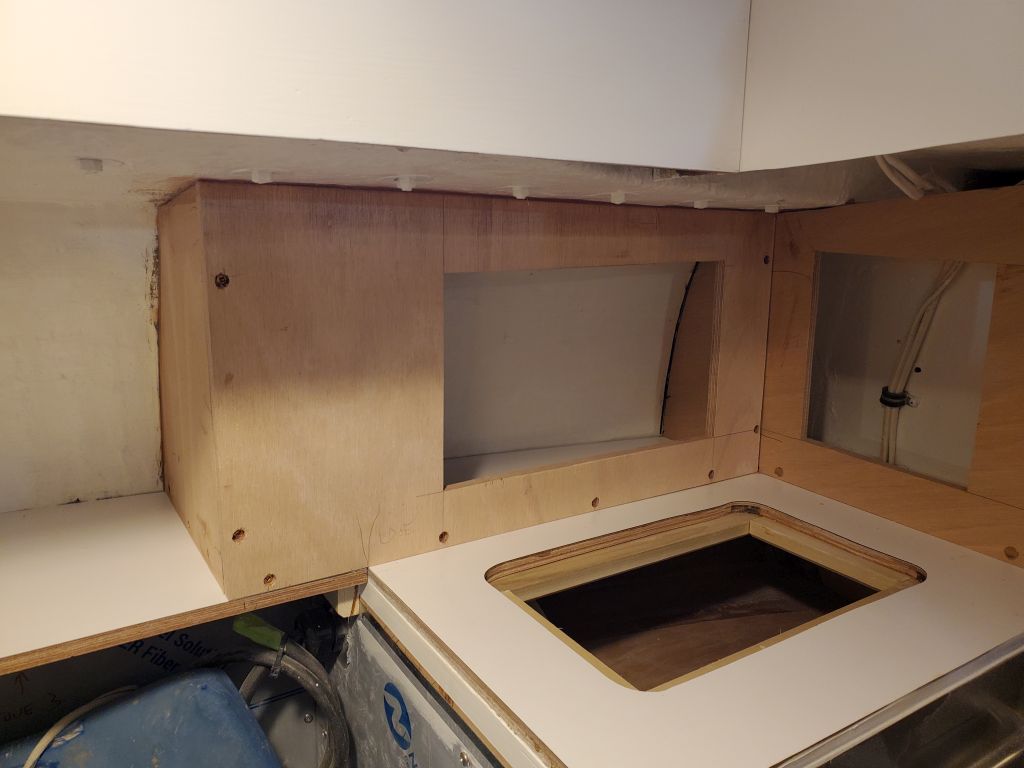
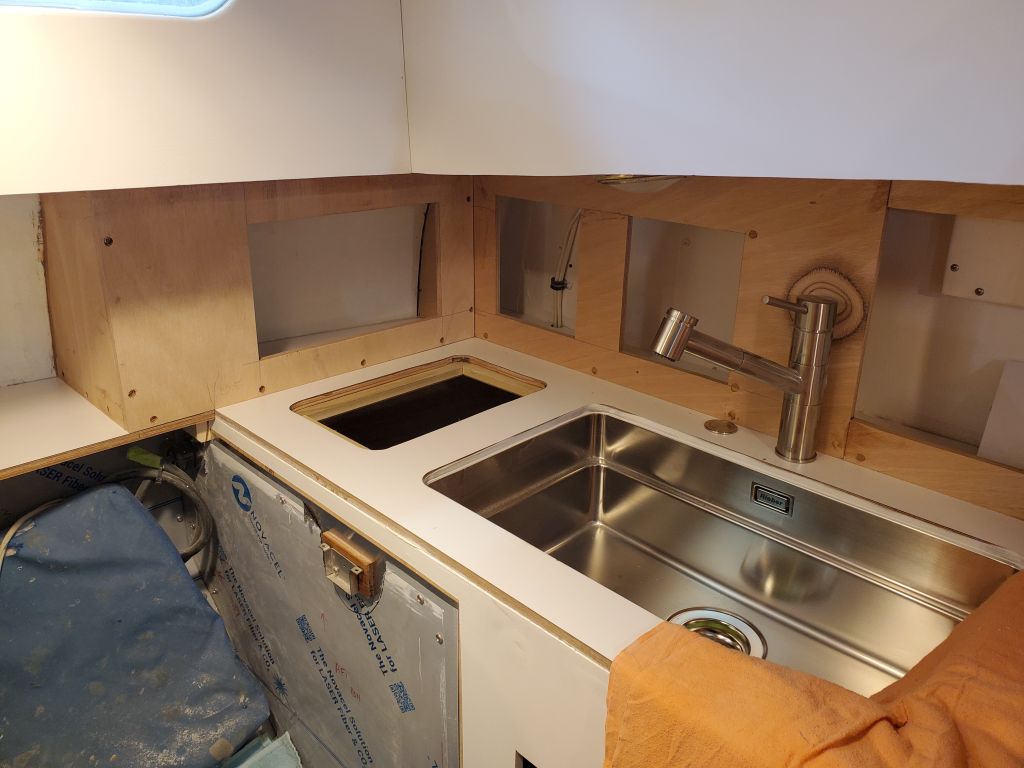
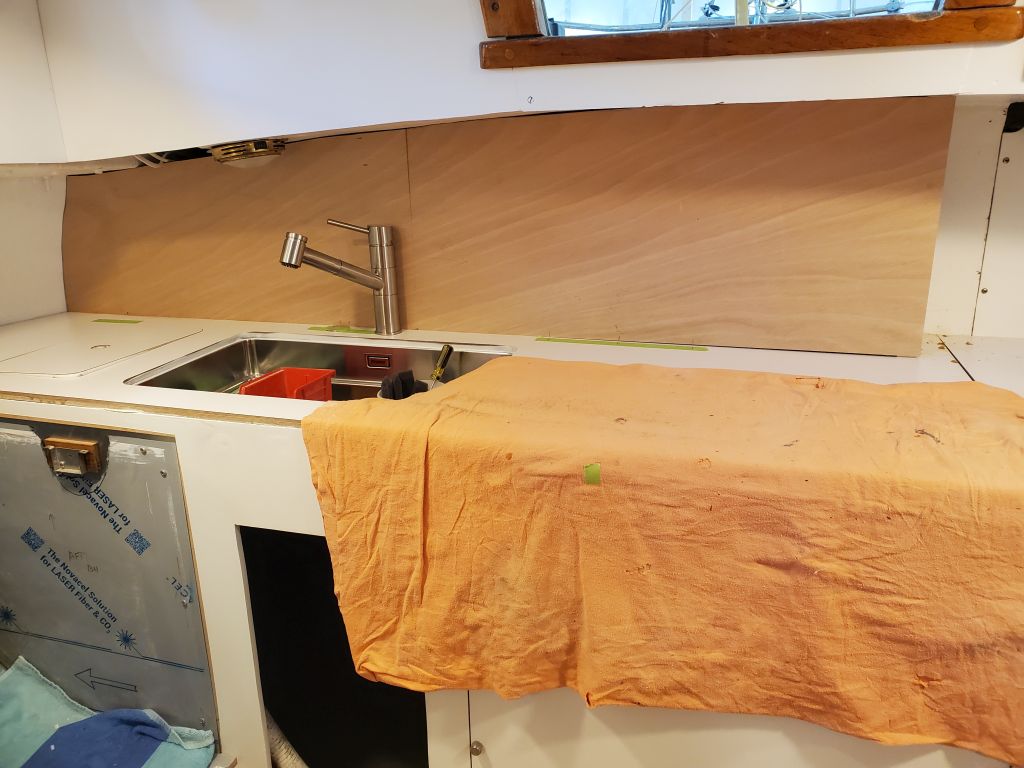
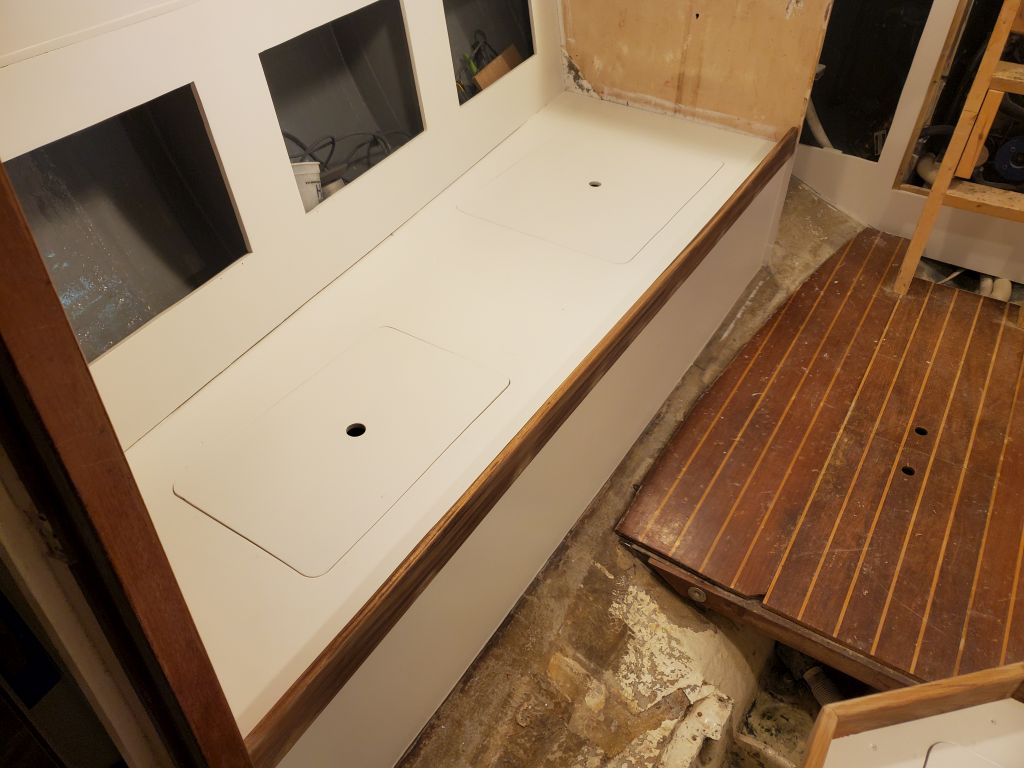
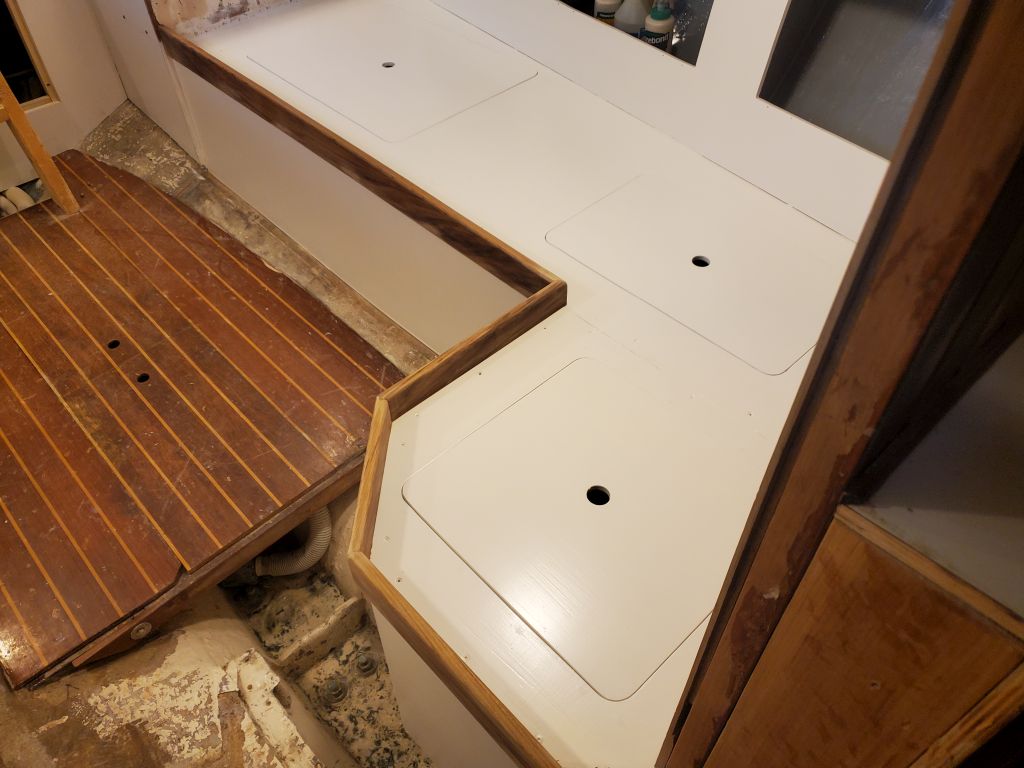
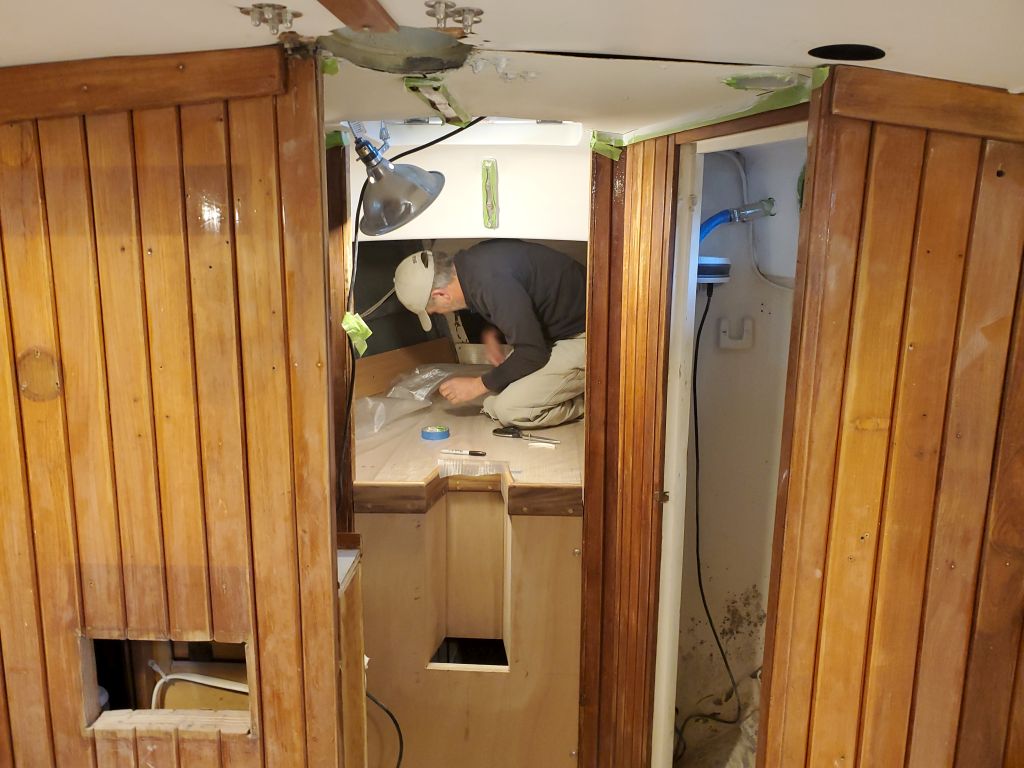
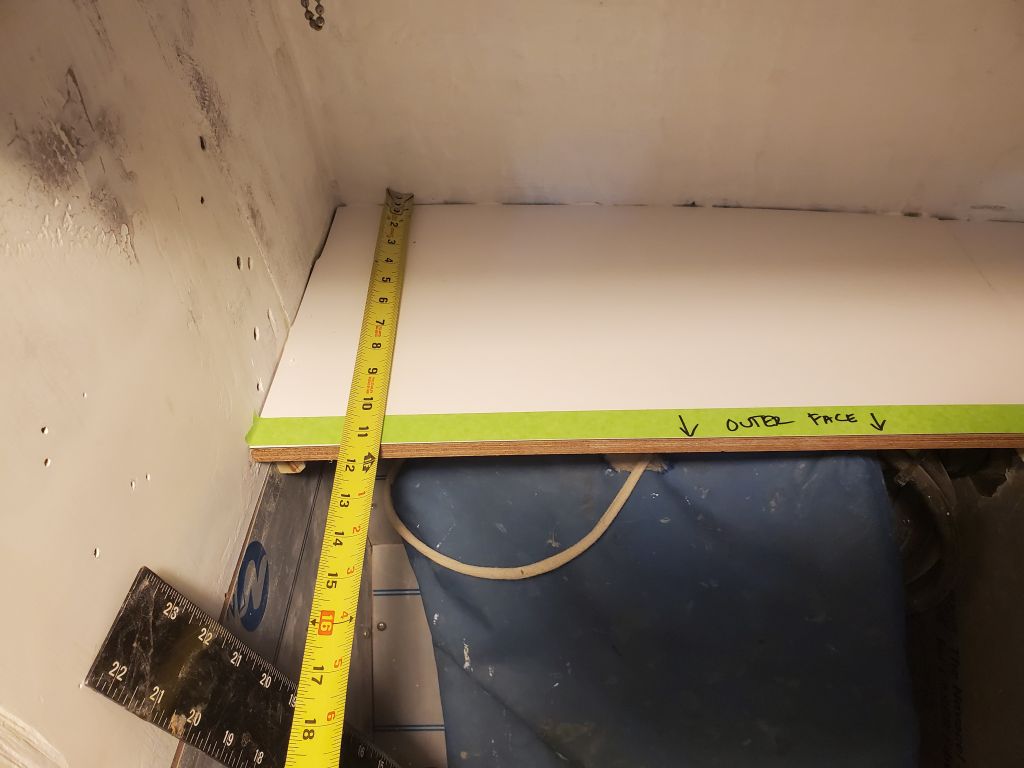
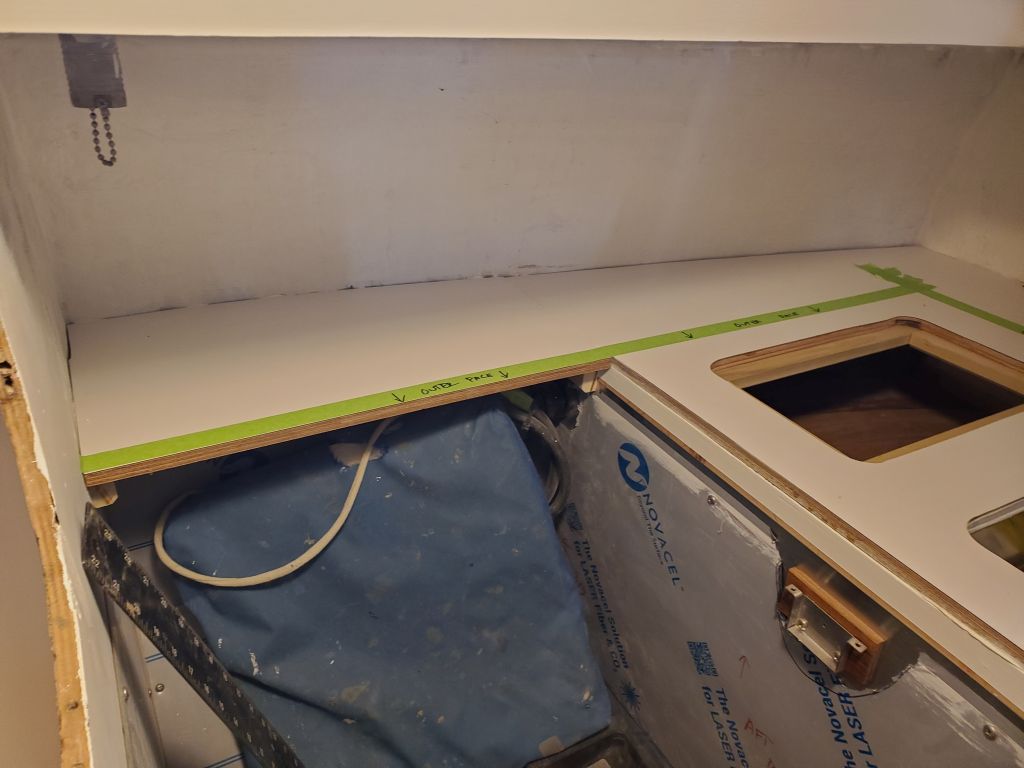
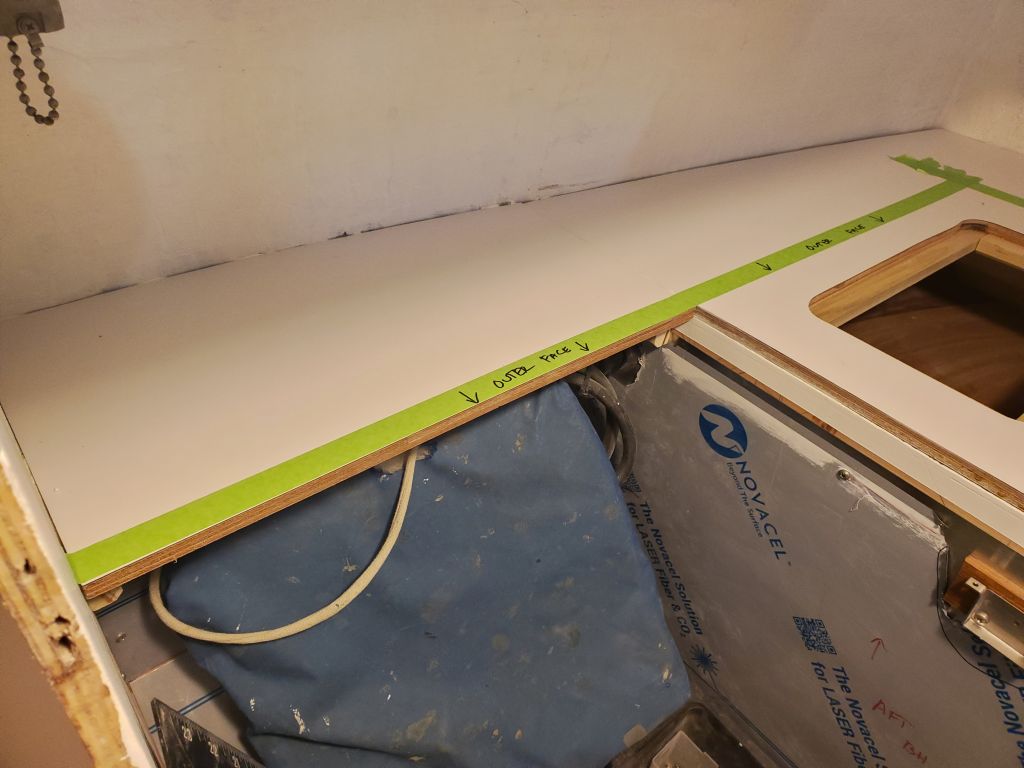
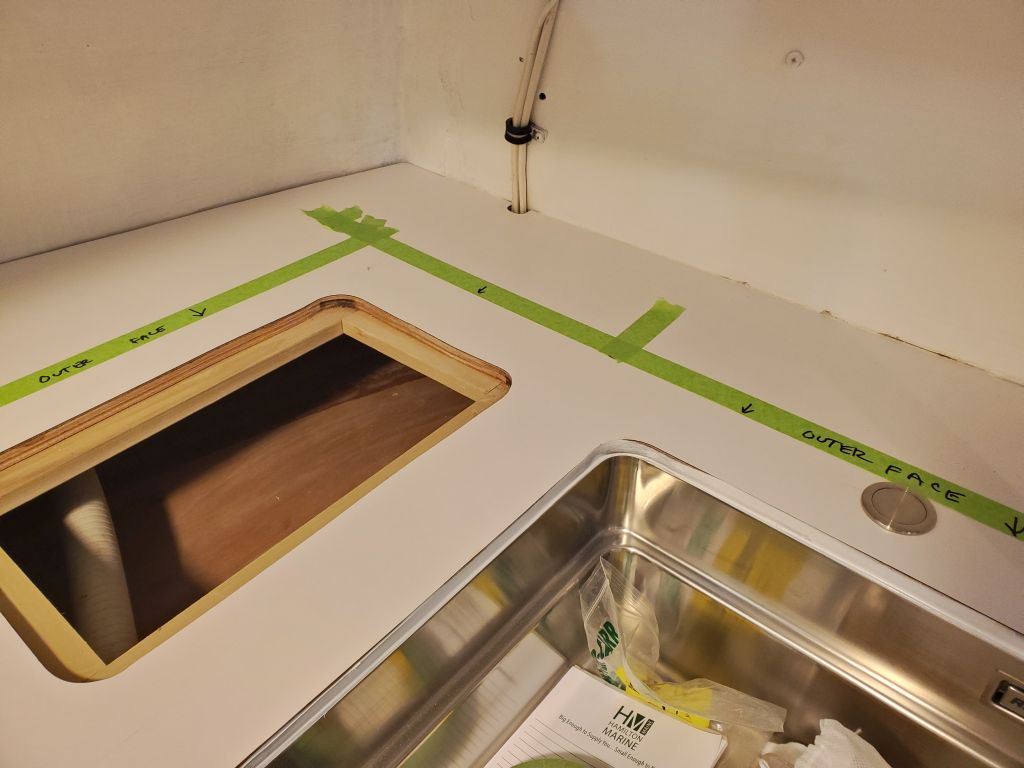
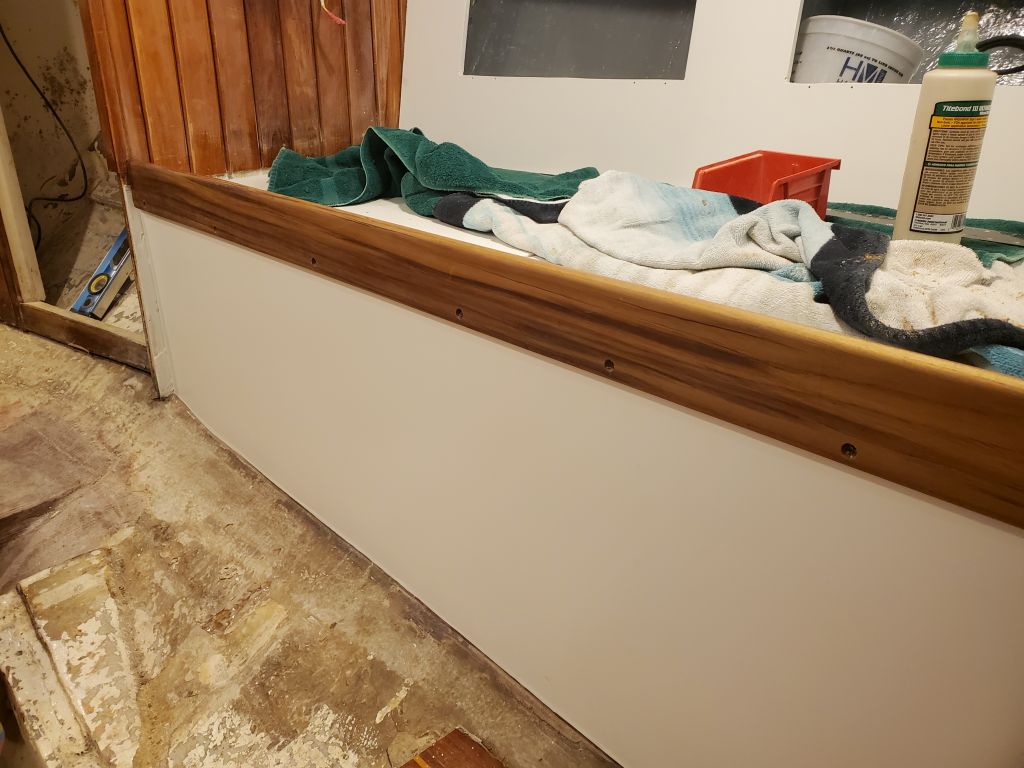
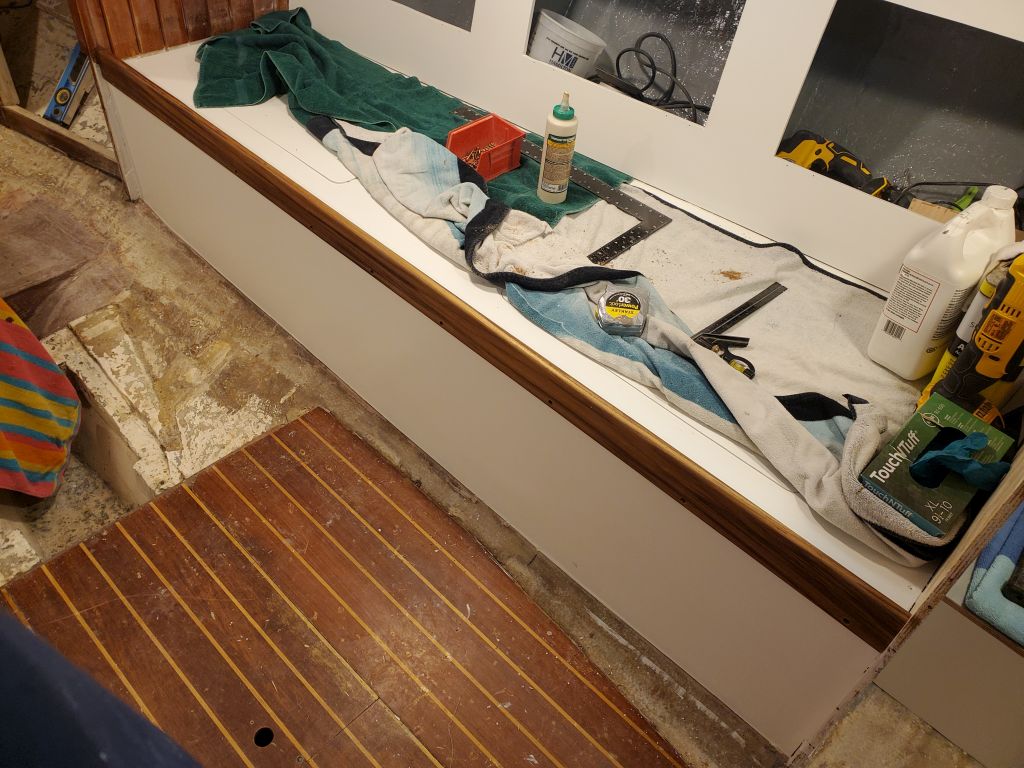
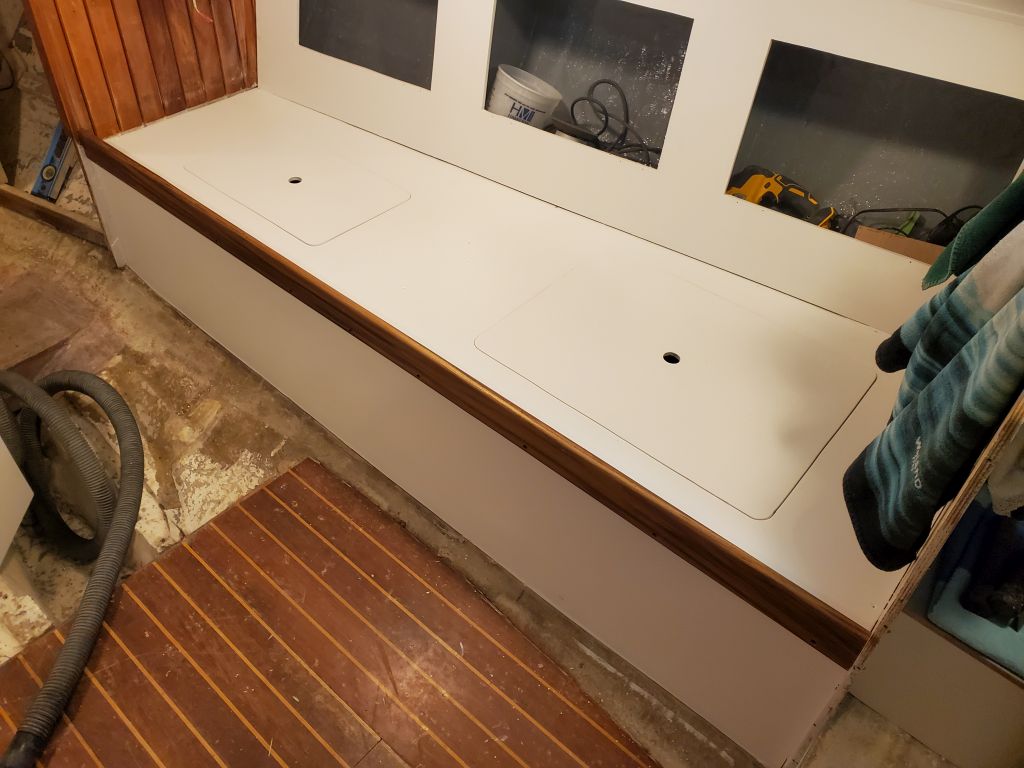
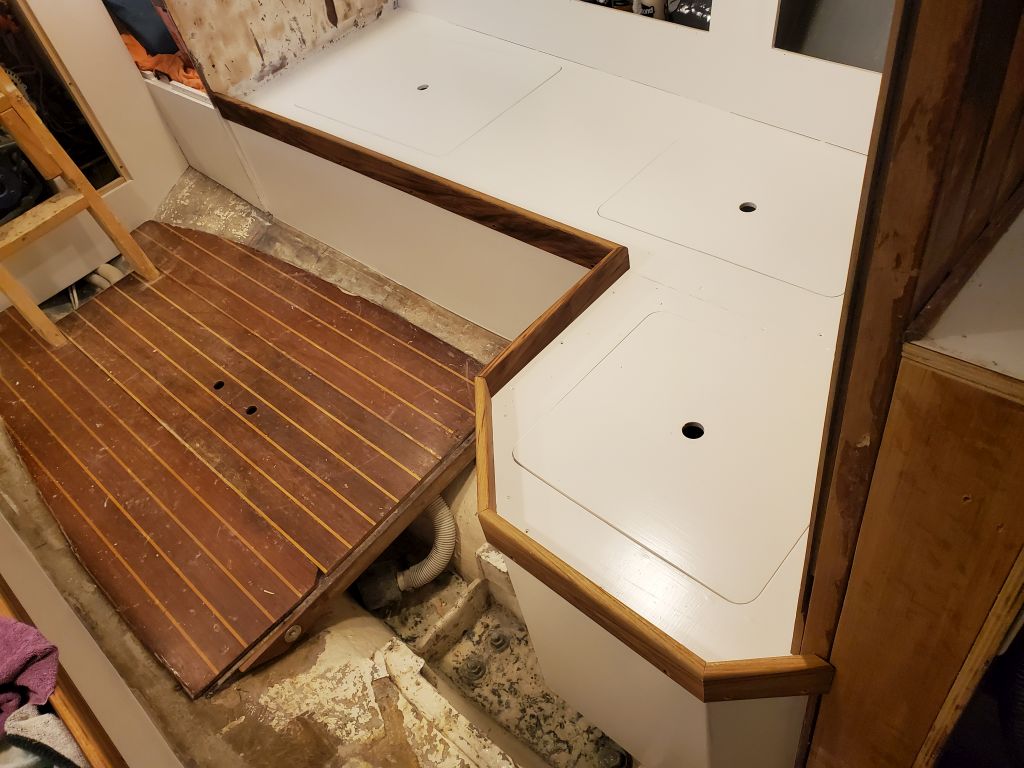
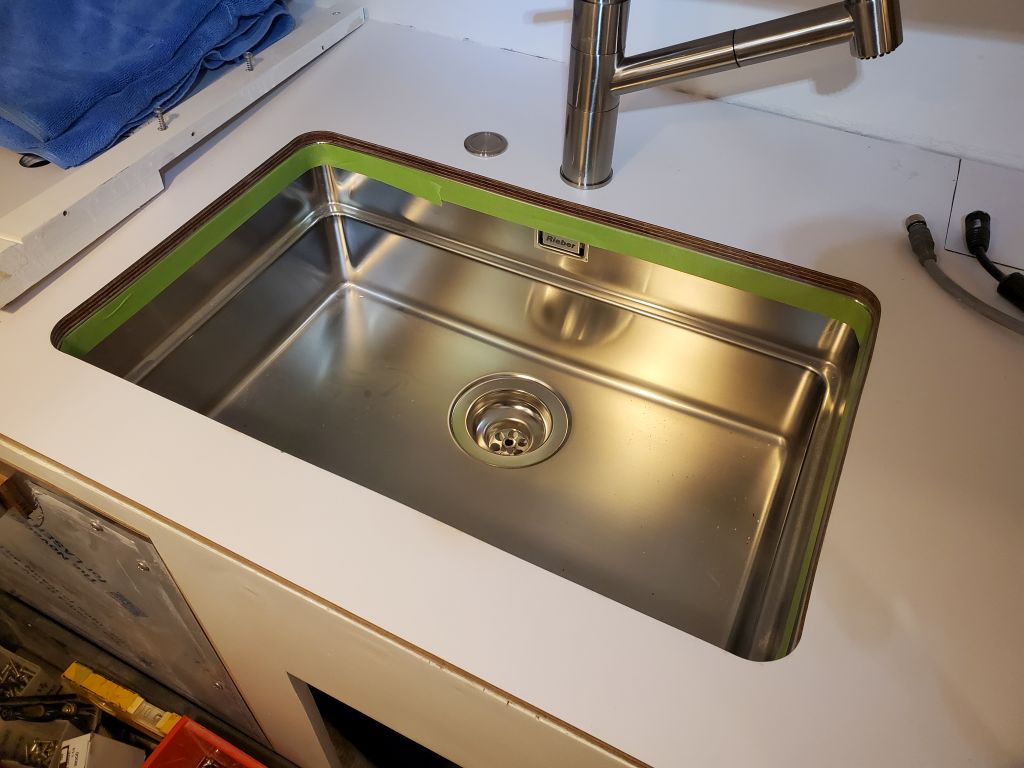
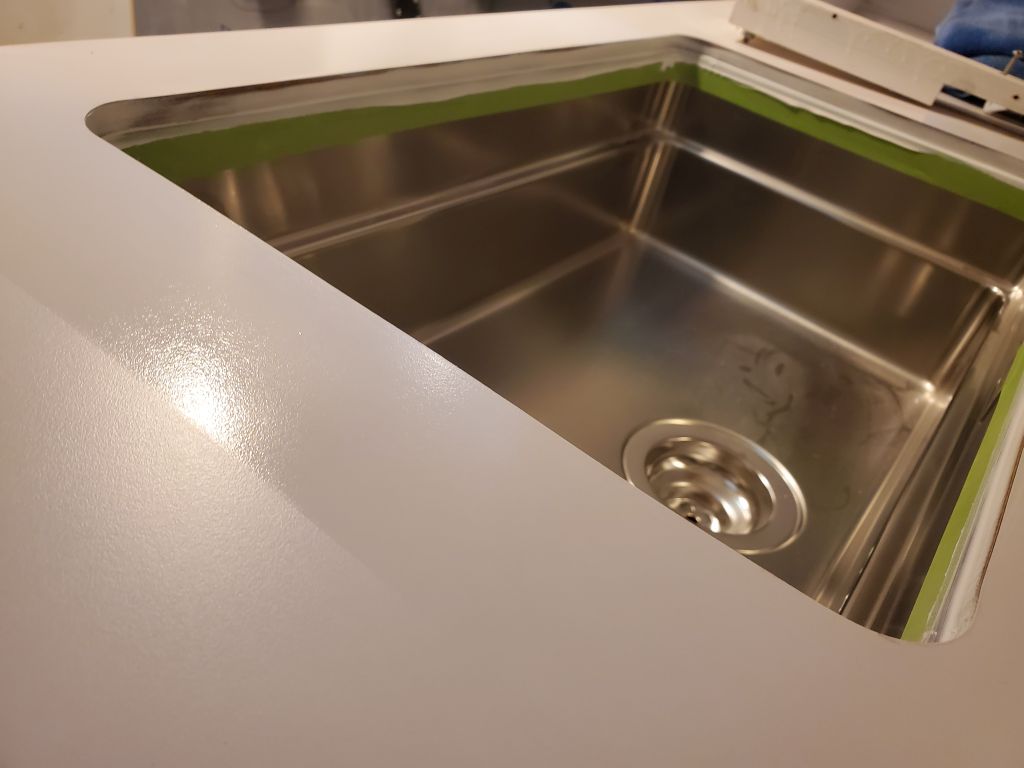
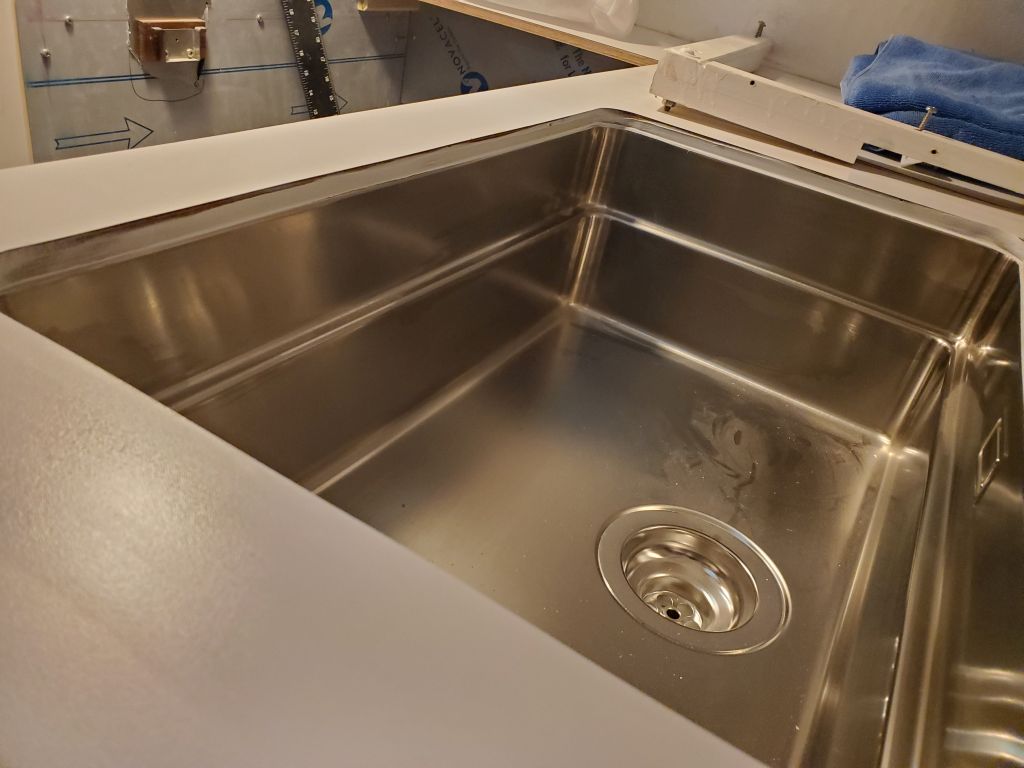
Job one was to install the large section of countertop, including the sink and faucet.  After final preparations, including making sure the various supporting cleats were clean and ready for bonding, I set the countertop in place dry.  I determined that I could move it enough to apply adhesive to the cleats for installation, then, with the countertop dry, I installed the faucet, working through the engine room from underneath.    It would have been more fun to install the faucet down on the bench, but it worked out fine and access even with the countertop in final position wasn’t bad.

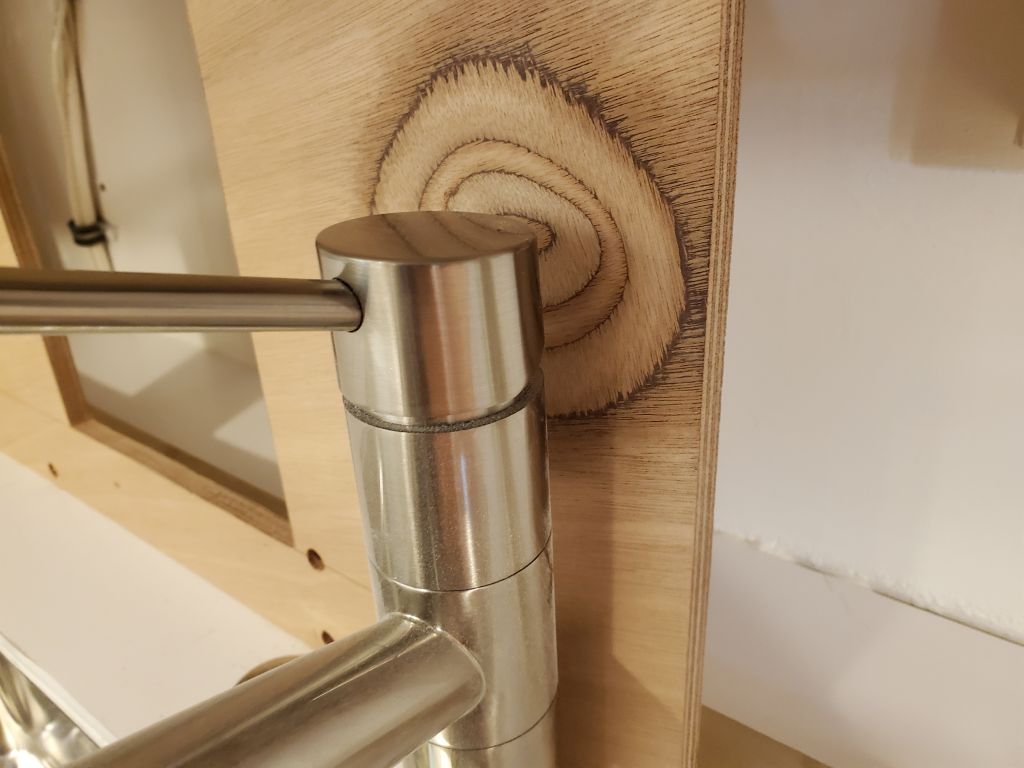
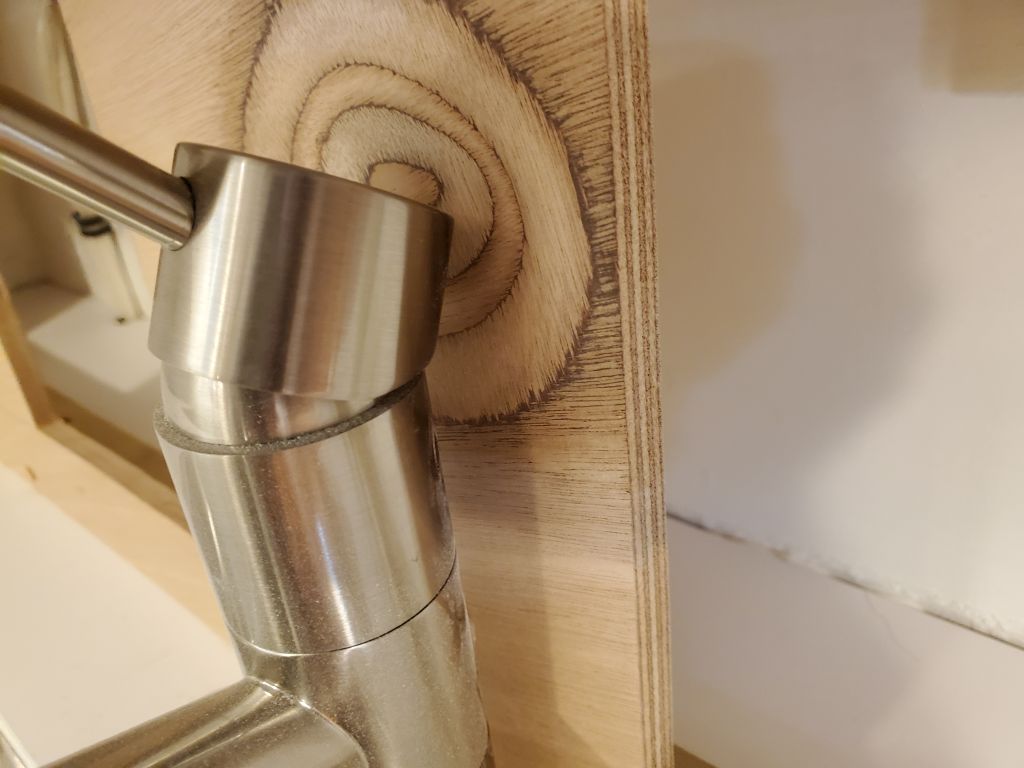
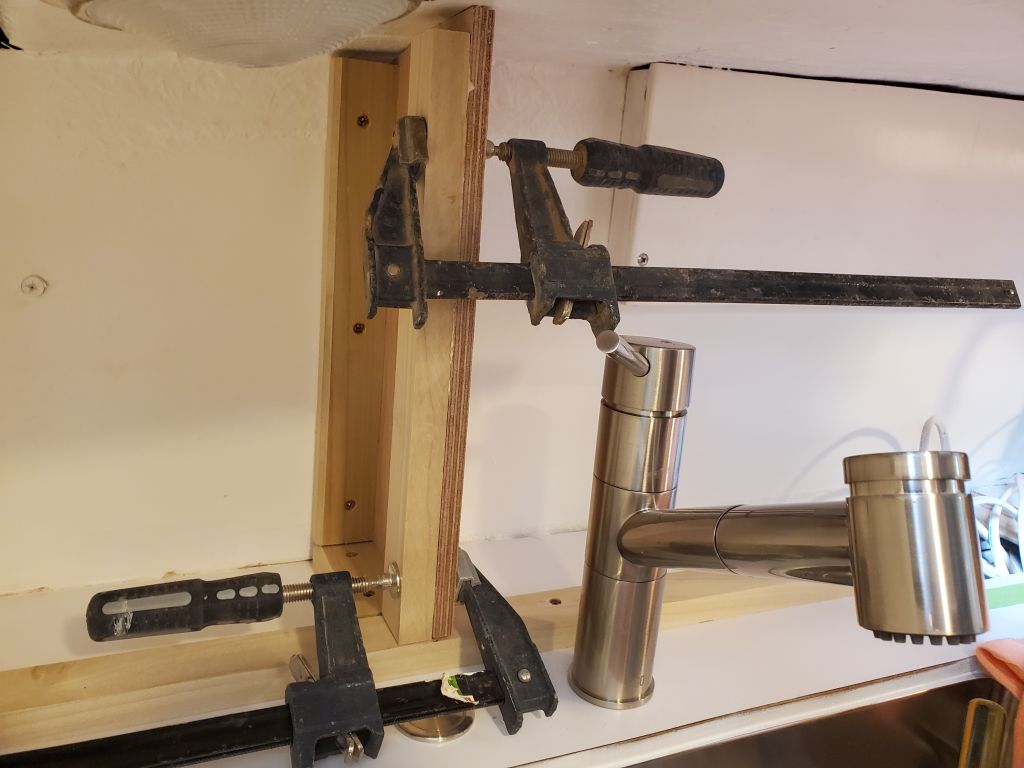
One small issue was with the braided supply hoses I’d purchased and installed on the faucet before installation.  These hoses adapted between the compression threads on the sink supply lines and NPT threads at the other end, which I needed to connect to a hose nipple and thence to the water supply hose from the tank (eventually) (and a plug in the hot water line).  However, when I tried to install the fixing nut and washers over these lines, along with the long sink hose that supplied the water to the pull-out faucet itself, I found that the total bulk was too large to all fit through the center of the fixing nut.  It would have been far too fussy to try and install these hoses to the short ends of the supply lines extending from the faucet body in the space and with the access I had, so instead I removed the faucet and replaced the hoses I’d sourced with the original braided hoses that came with the faucet, which were smaller diameter with smaller ends.  The minor down side was that I’d now have to go on a quest for the correct adaptation between the female compression end of the hose and the threads I needed, but I could take care of that later.  I had a large supply of various plumbing fittings on hand but, as usual, I didn’t have what I actually needed now.  The supply hoses hung down enough that I could reach the exposed ends easily for later connections.  The smaller original hoses are shown in the boxed photo of the faucet below; the ones I had hoped to use are in the second faucet photo.

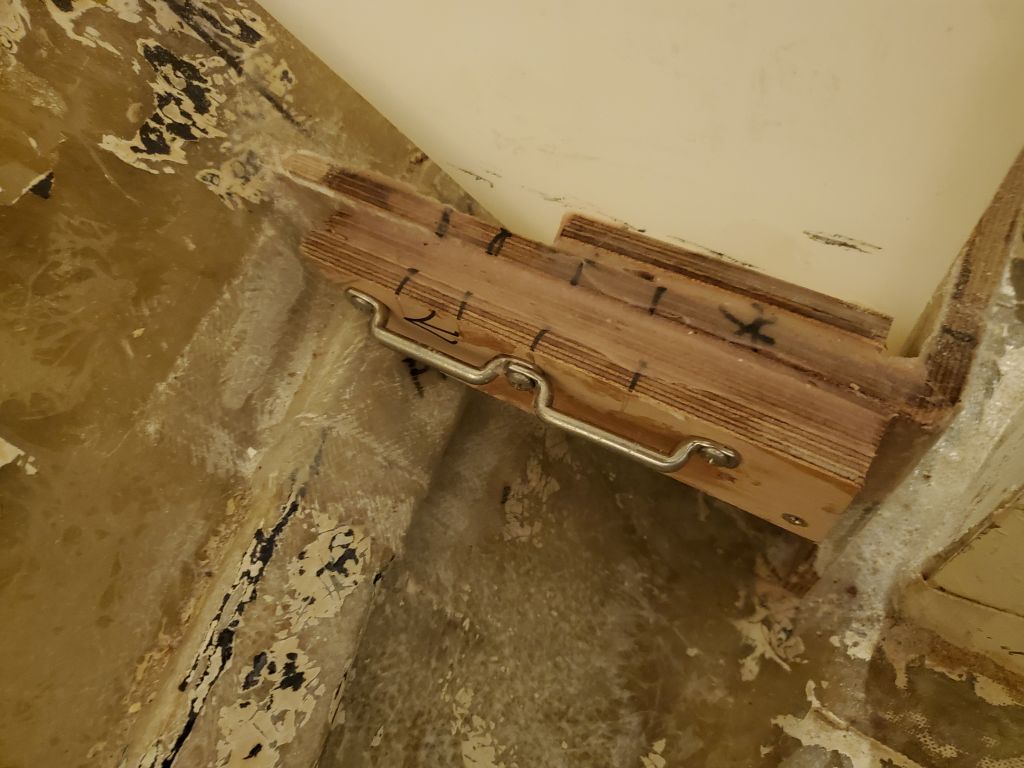
Plumbing thread frustration aside, the counter was now ready for final installation, so I moved it a bit as needed and applied adhesive sealant to all the faying surfaces of the cleats, using a generous amount and then chocking and clamping the countertop securely into position.

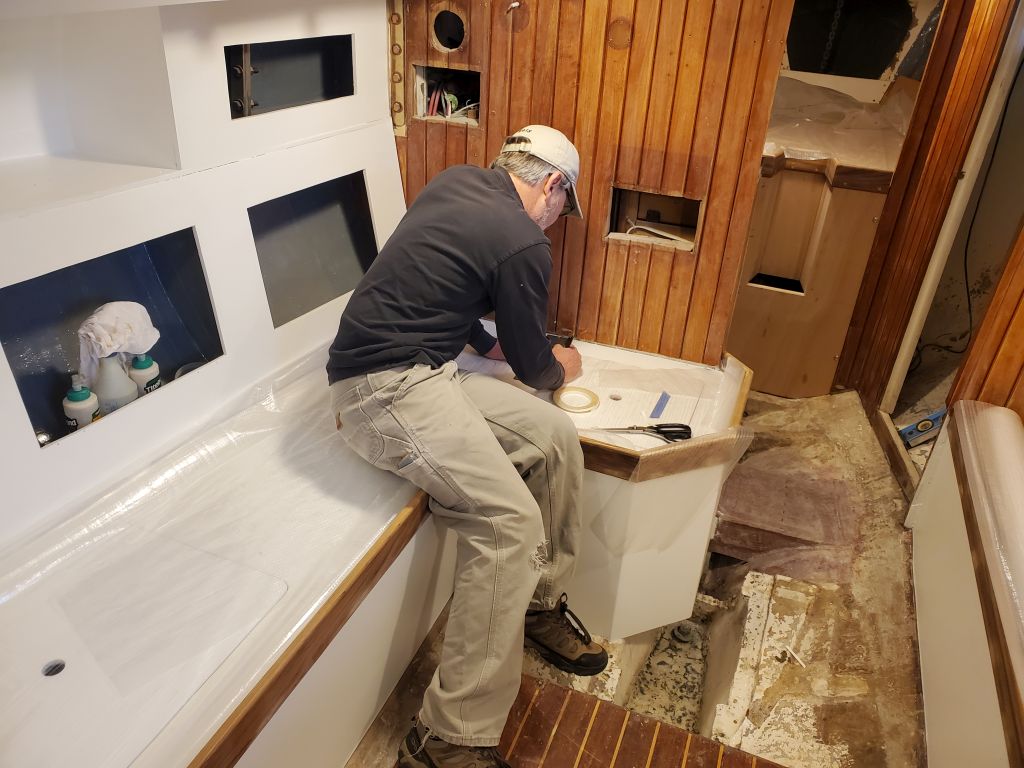
I realized I’d forgotten to Formicate the small section of countertop that extended across the back of the stove; I’d stored that small piece in a different pile and it had escaped notice till now.  So I took care of installing the laminate on this piece, then installed it in its final position with sealant and clamps to hold it securely.

I needed to give the countertop plenty of time to cure–this would happen over the weekend–and in the meantime there was little else I could do in the galley.  So I spent the remainder of the day on several smaller chores, starting with cleaning up the excess sealant (now cured) from the chainplates’ installation.  Afterwards, I cleaned up the boat a bit and reorganized the cockpit to give me access to the port side locker, where I would soon be working on the propane locker installation.  I also applied the second coat of finish paint on the back side of the refer locker front panel, completing that work.

I lightly sanded the interior tabbing I’d installed on the propane locker earlier, then made a quick plywood template of the box–including a 1-1/2″ wide flange around the edges to simulate the minimum flange I wanted to hang the box in place from the top–so I could check the fit on the now-accessible port cockpit locker.  The hope had been to keep this locker as far aft as possible (the space tapered severely from forward to aft), but I was disappointed and surprised to find that even the minimally-dimensioned box, kept as small as practicable to hold the two small tanks, ended up further forward than expected.  And the reality was that the opening would actually have to be a bit larger to allow the box to fit through at an angle.

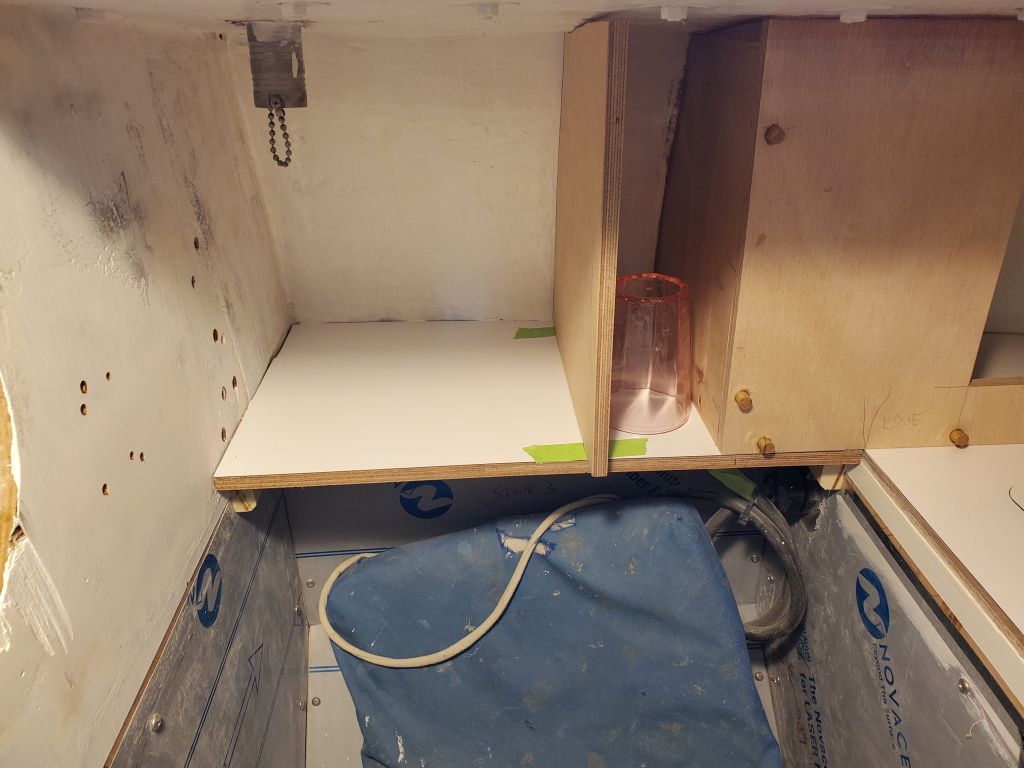
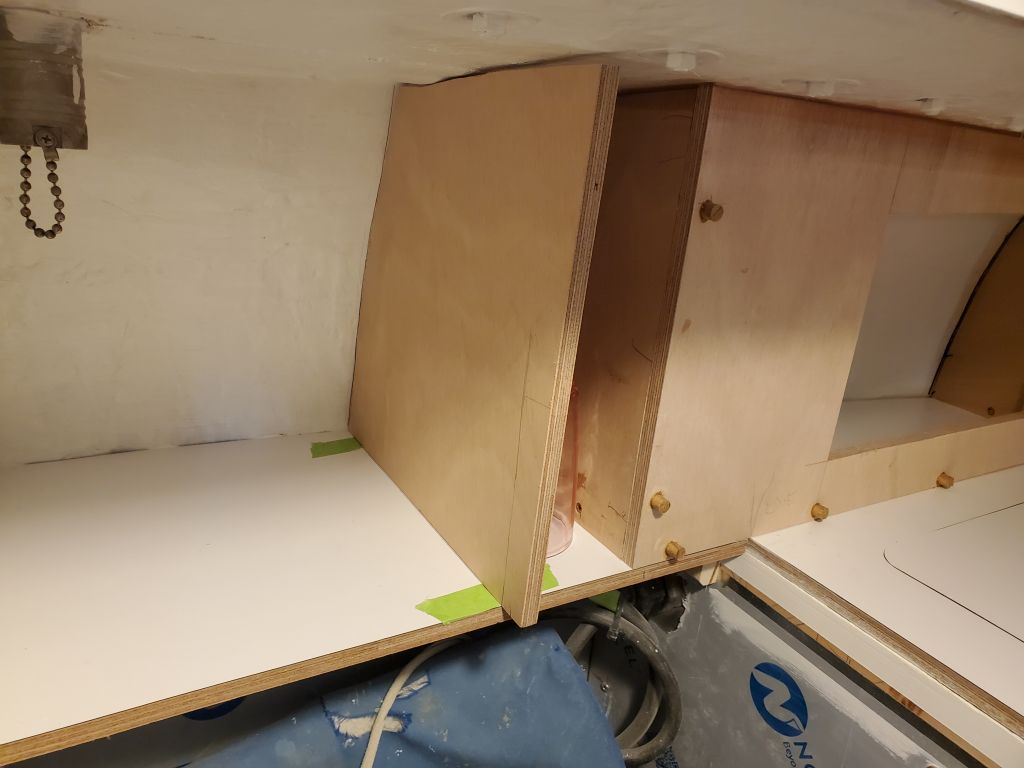
This was disappointing because the owner had hoped–and I had expected–there to be space forward of the propane locker for a new top access to the large space beneath, formerly known as the quarterberth, but now it looked like this wouldn’t be possible after all.    There might be space aft of the propane, but any potential opening there would be necessarily much smaller and less useful.

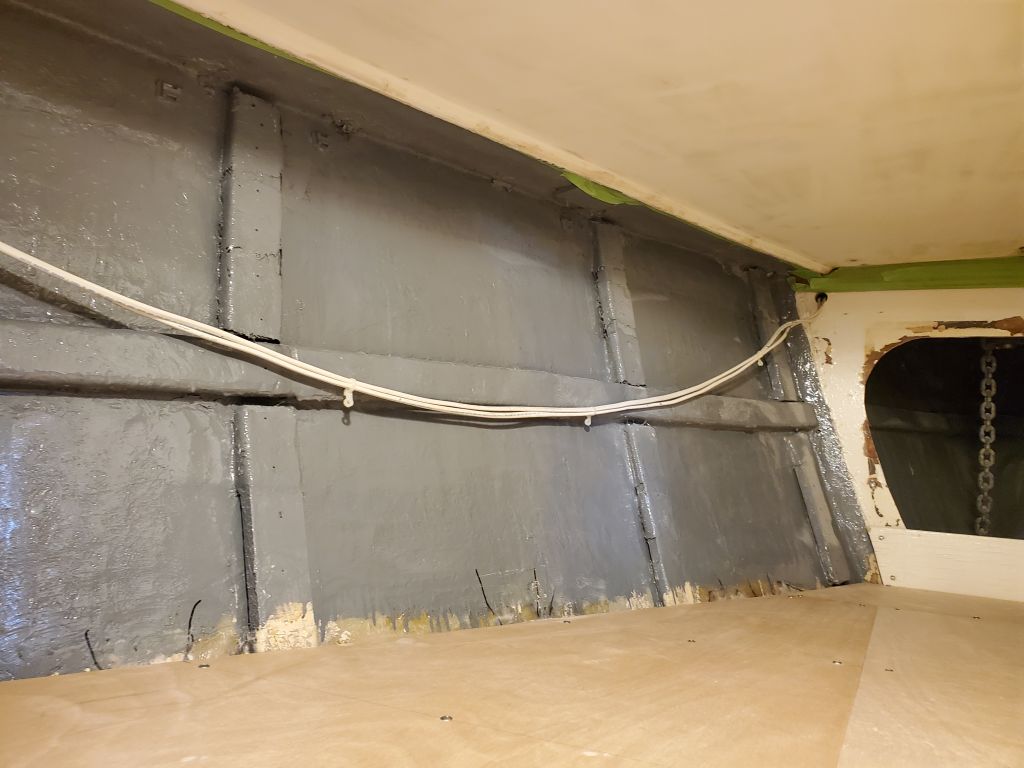
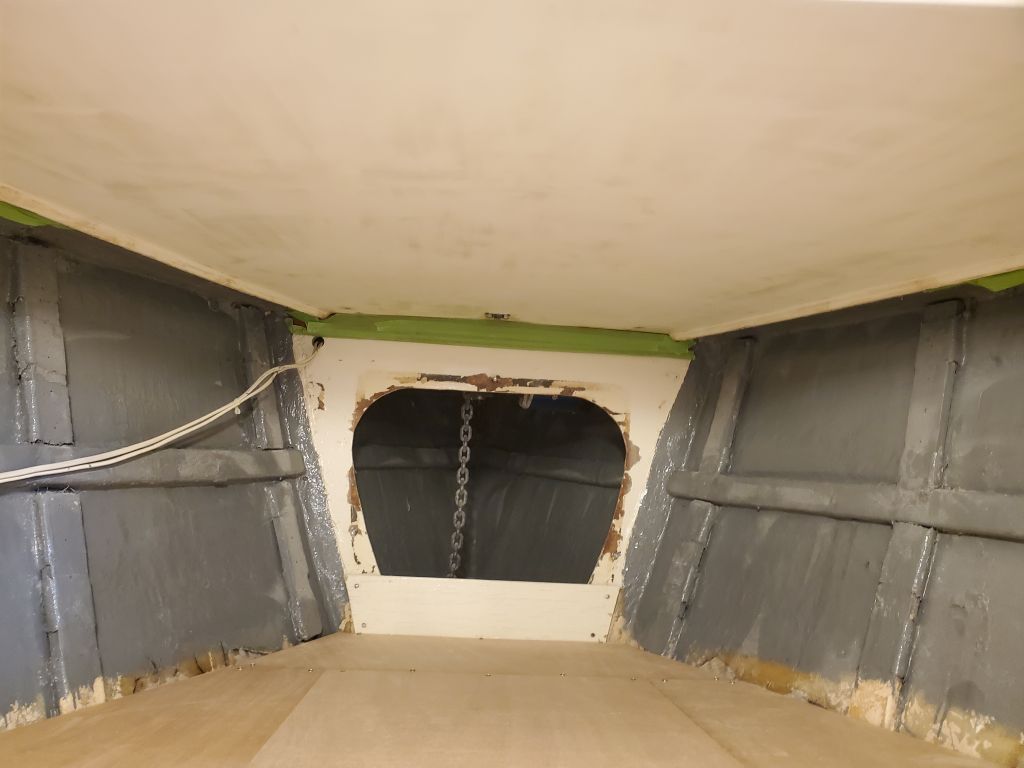
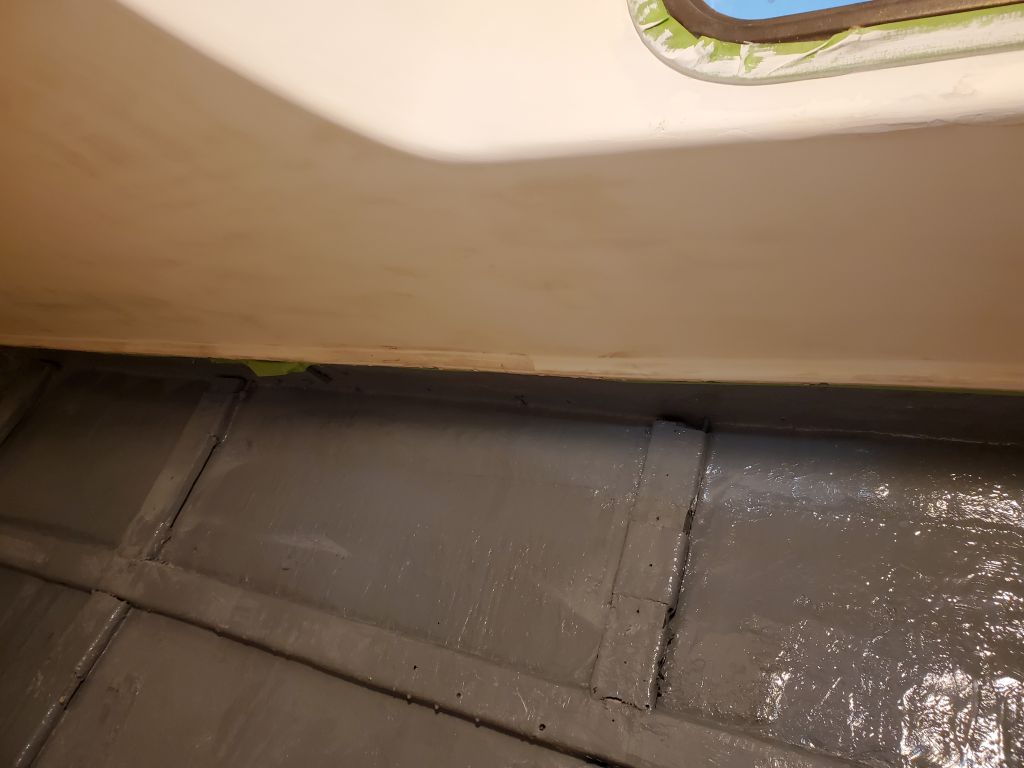
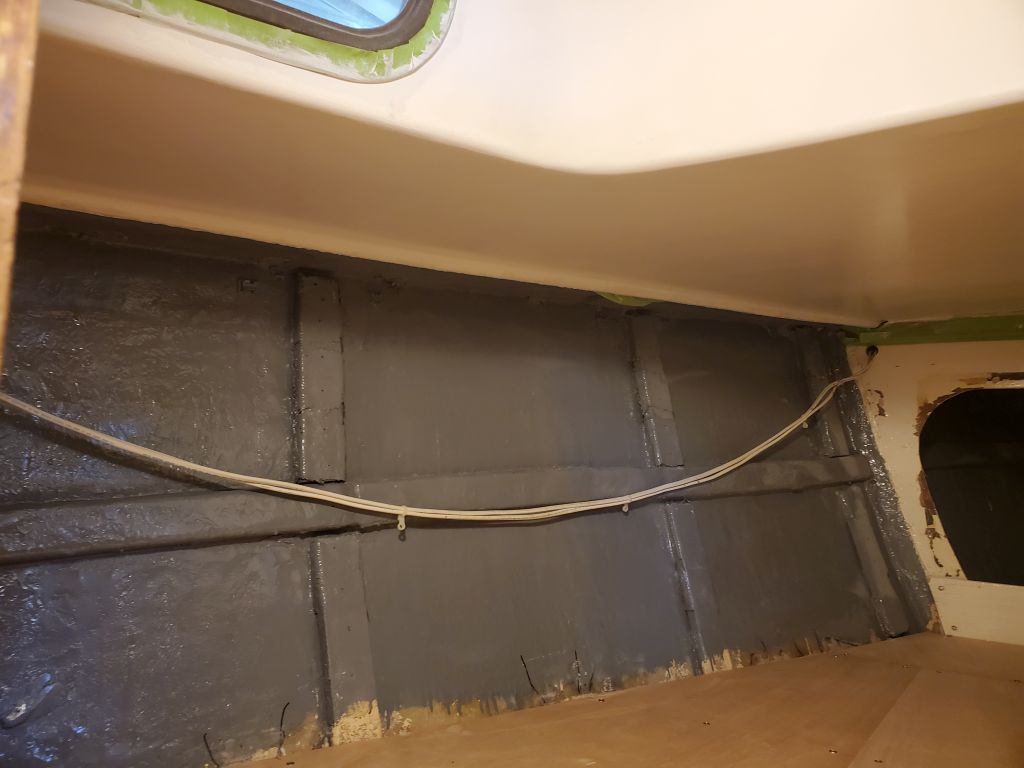
This was surprising because early in the project, after the owner suggested using the existing small pair of tanks rather than a new horizontal tank (which we had first considered), I had thought that given their seemingly diminutive size it seemed like they would have fit further aft in the space.  But this proved not to be the case.    At issue here really was an access problem:  while there was technically space for the tanks and locker further aft, there was no way to install it from above, given the space limitations, and the nature of the space from beneath was such that installing the box from below, with a smaller access lid atop, simply wasn’t practicable.  It was a tight and contortive space that would not afford the access required to do the work from beneath.  This is why I’d always planned a top-only approach.  I spent some time now re-evaluating this, but came to the same conclusion:  there just wasn’t space to try and do this work from beneath.  I could barely work in the old quarterberth space to paint and secure the old wiring, never mind messy and complicated glasswork above, around the bulk of the propane locker hanging down in the midst.

I’d actually hoped to begin the installation work by cutting out the cockpit seat as needed, but couldn’t proceed as is until I’d had a chance to discuss the findings with the owner.

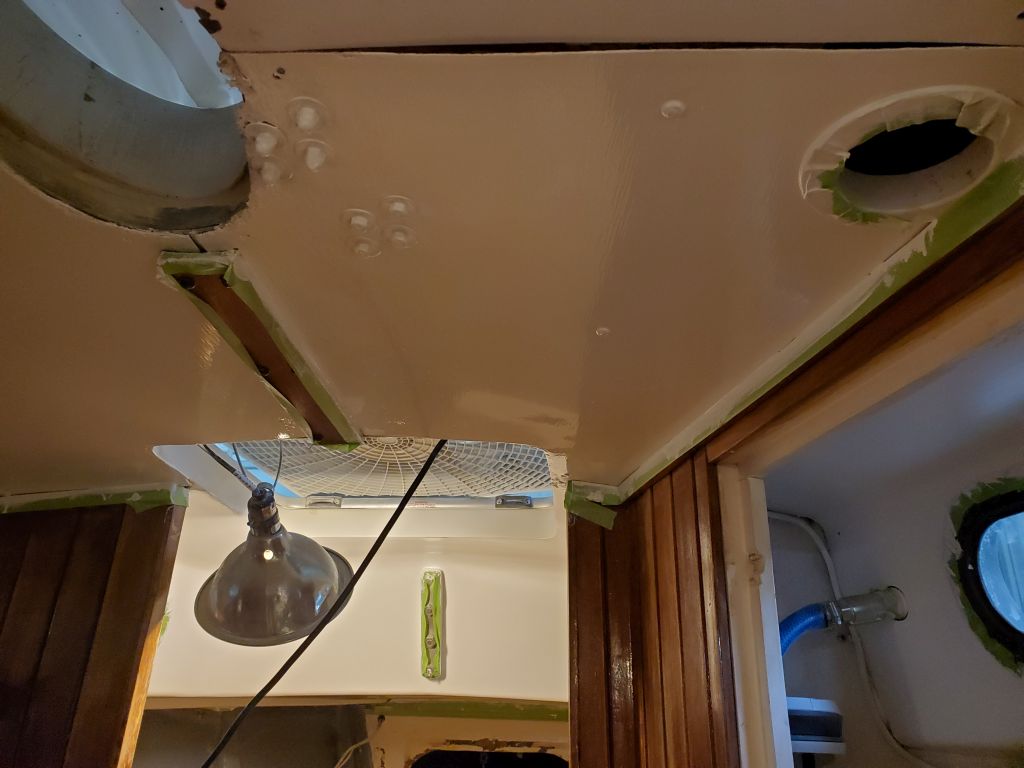
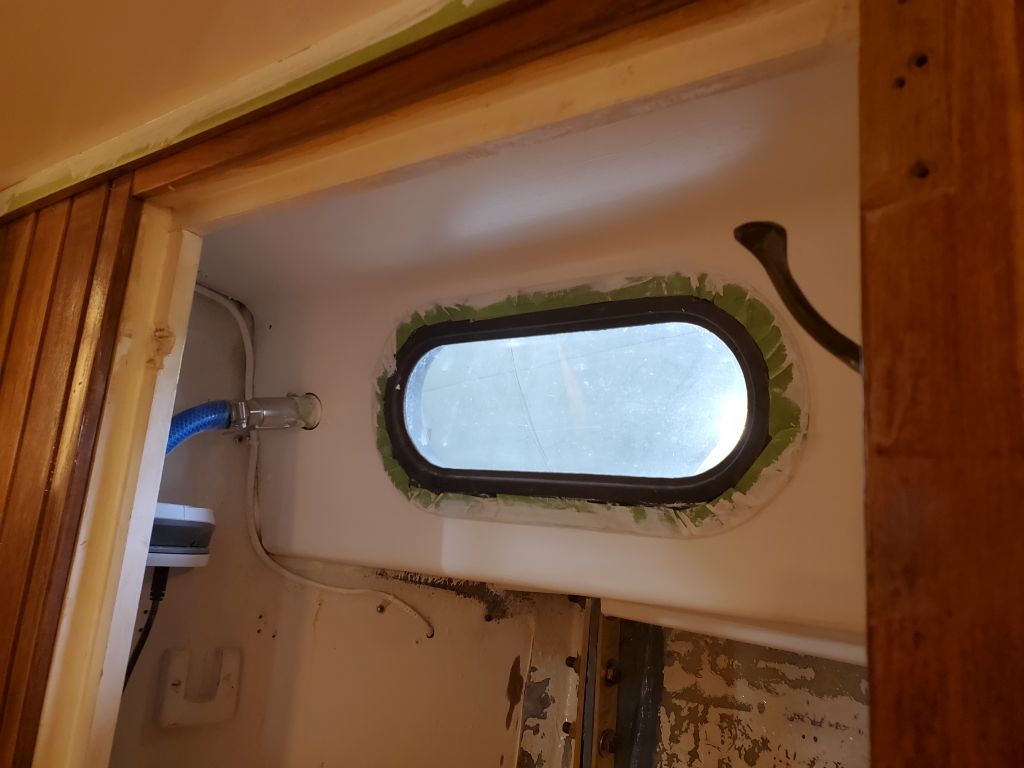
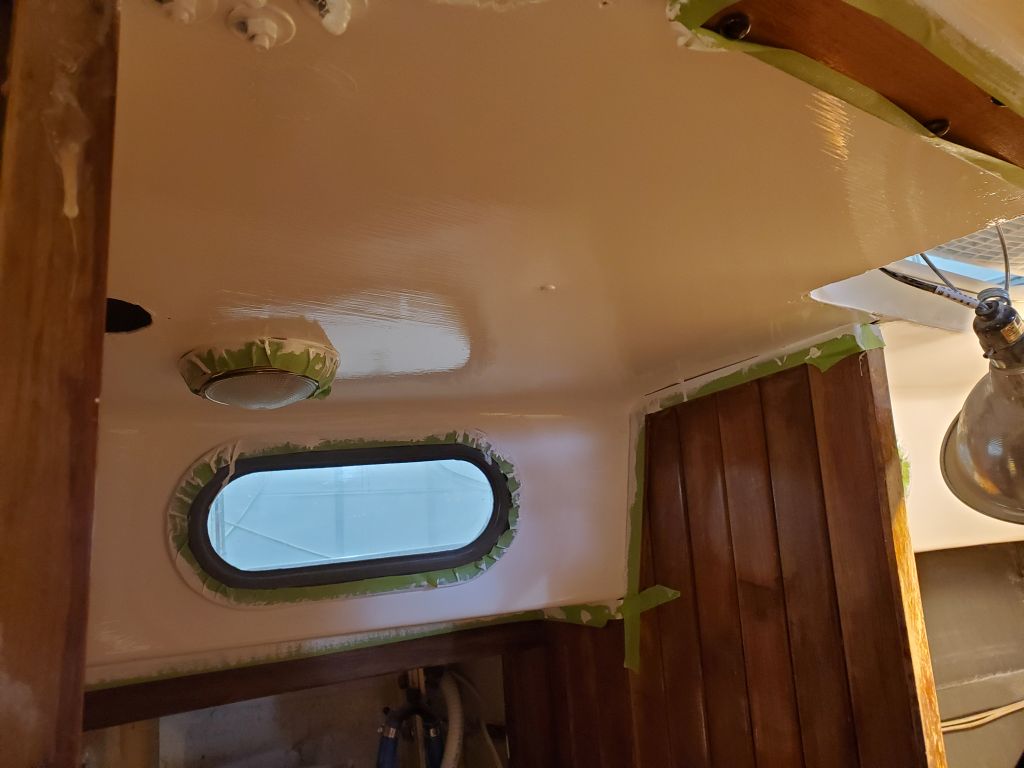
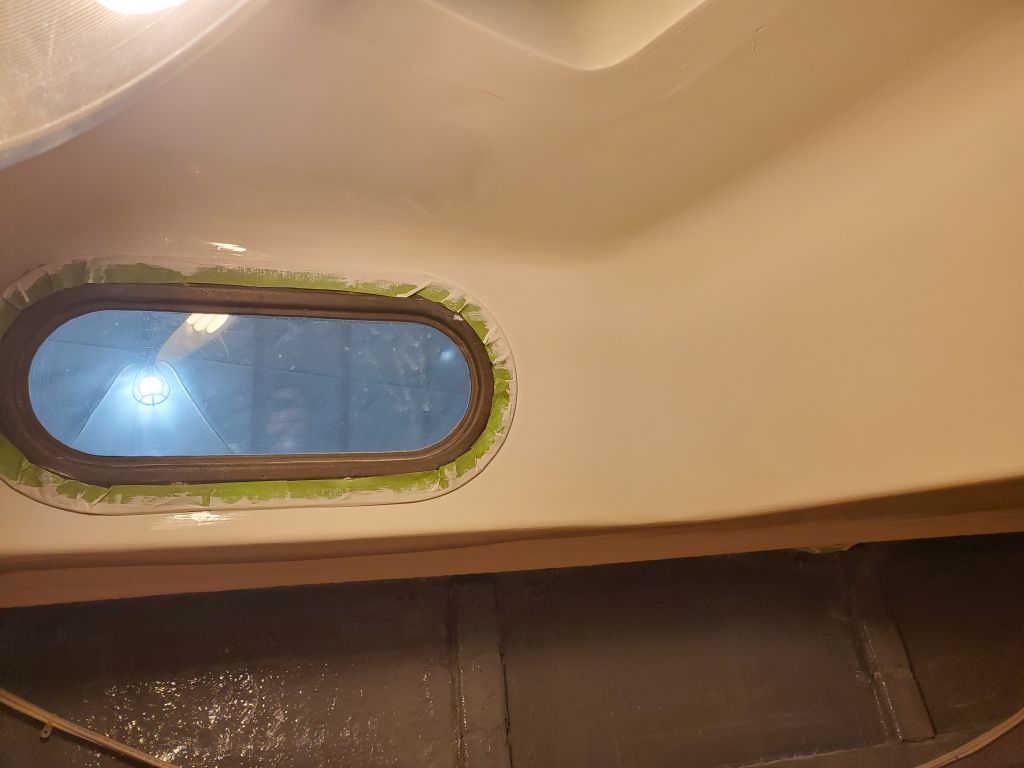
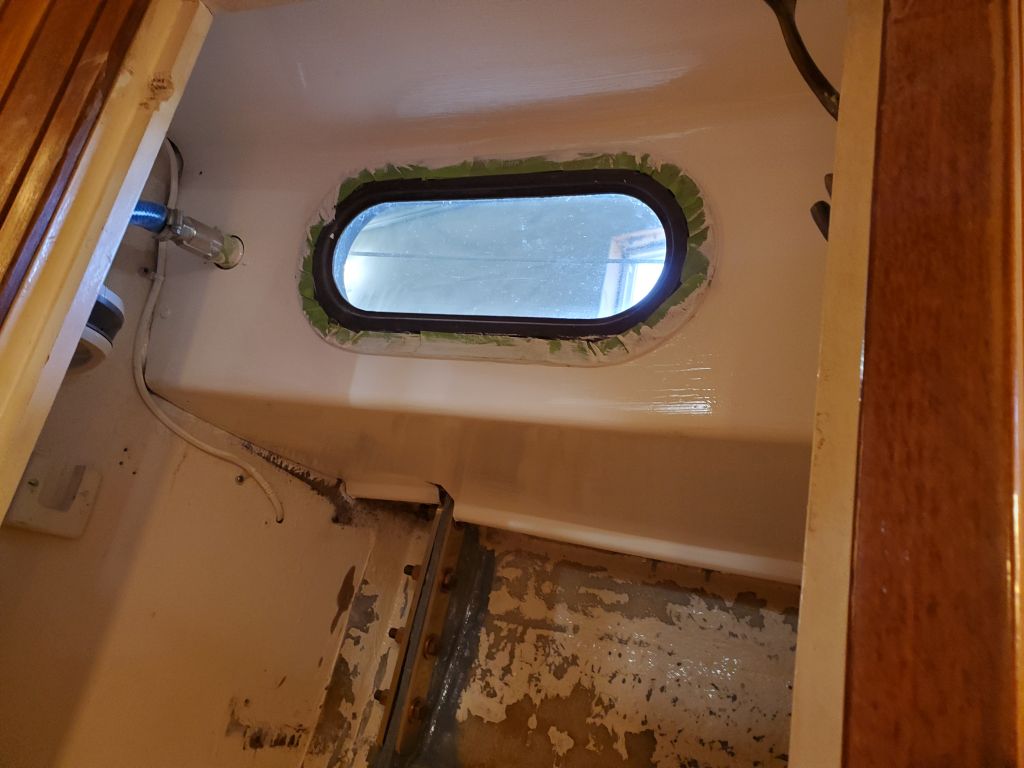
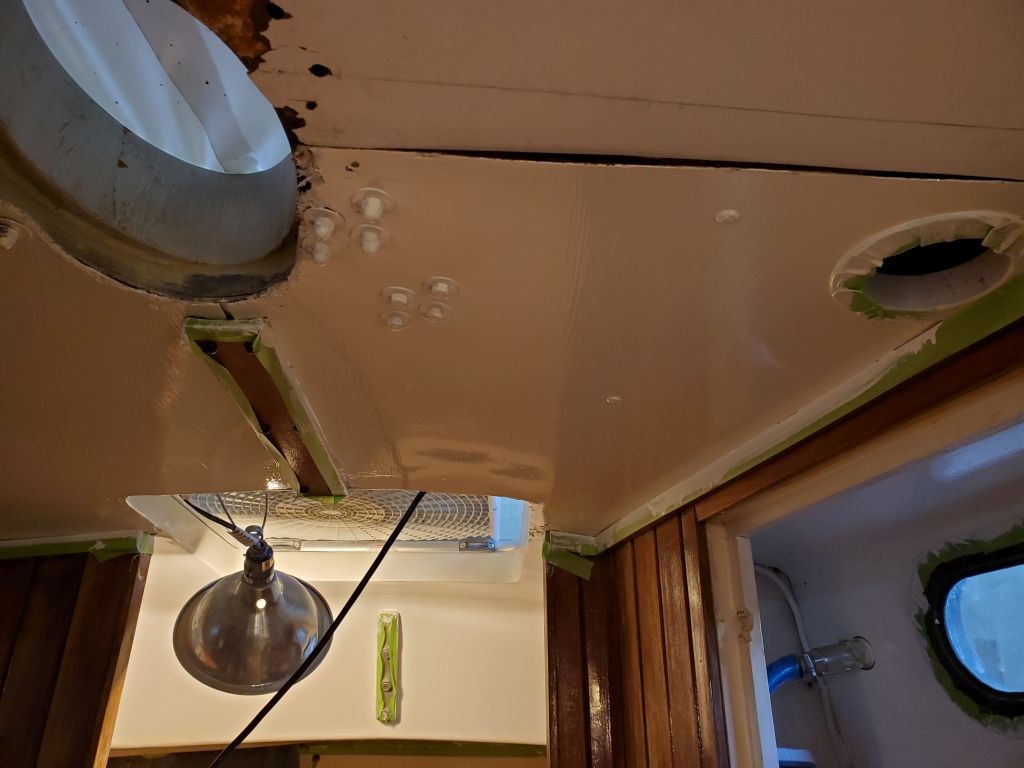
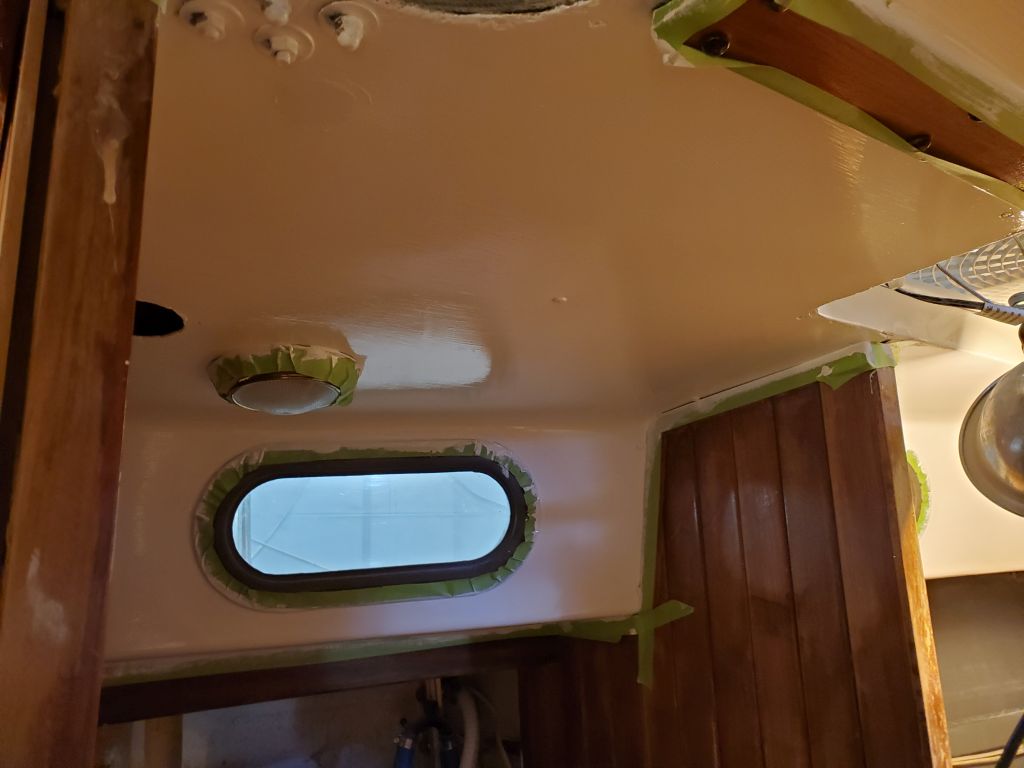
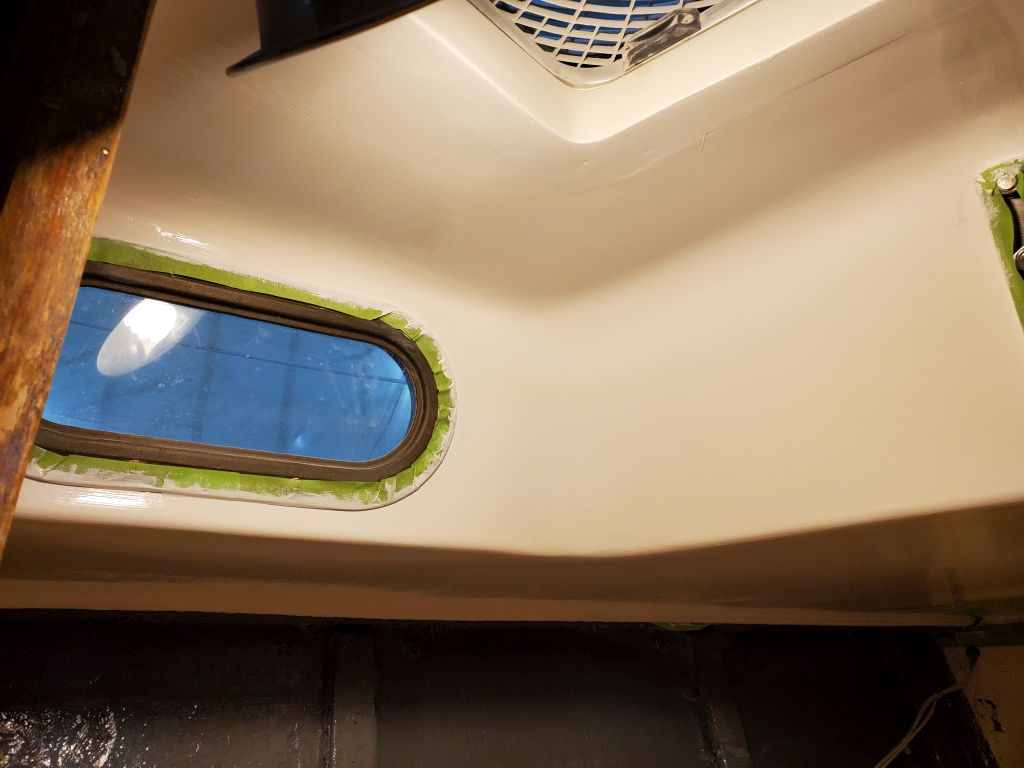
To round out the day, I filled what little time was left with some prep and masking work in the head and forward cabin, preparing the overhead and liners there for primer and paint in the near future.

Calliope Girl 71

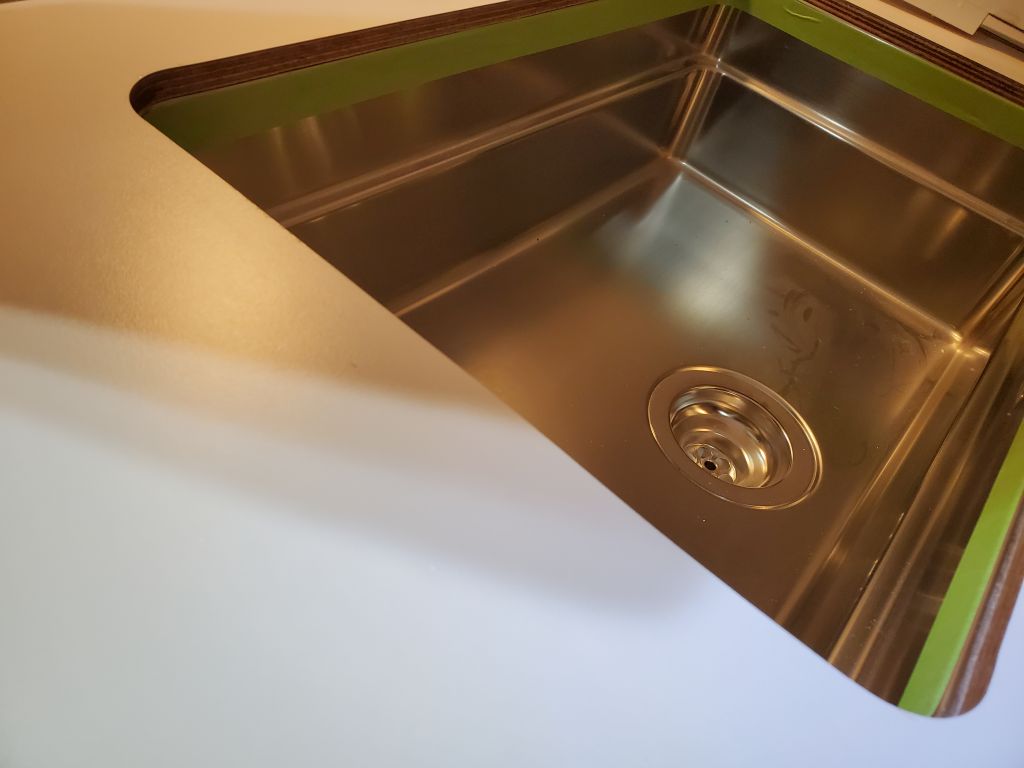
Working towards the goal of installing the large, fixed section of countertop, there were several tasks I had to complete first, beginning with installing the sink.  With the layout already done and the hole previously cut, now I aligned the sink with the marks I’d made on the bottom of the countertop, and installed it with the eight metal brackets supplied with the sink.  I secured the brackets with screws driven into the underside of the countertop, and these brackets pinned the sink tightly against the plywood.  Later, I’d apply some sealant to the exposed seam between sink and countertop inside the opening, but for now I moved on.  I noted the position of three of the support brackets as they’d require some relief in the galley structural members on which the countertop would sit.

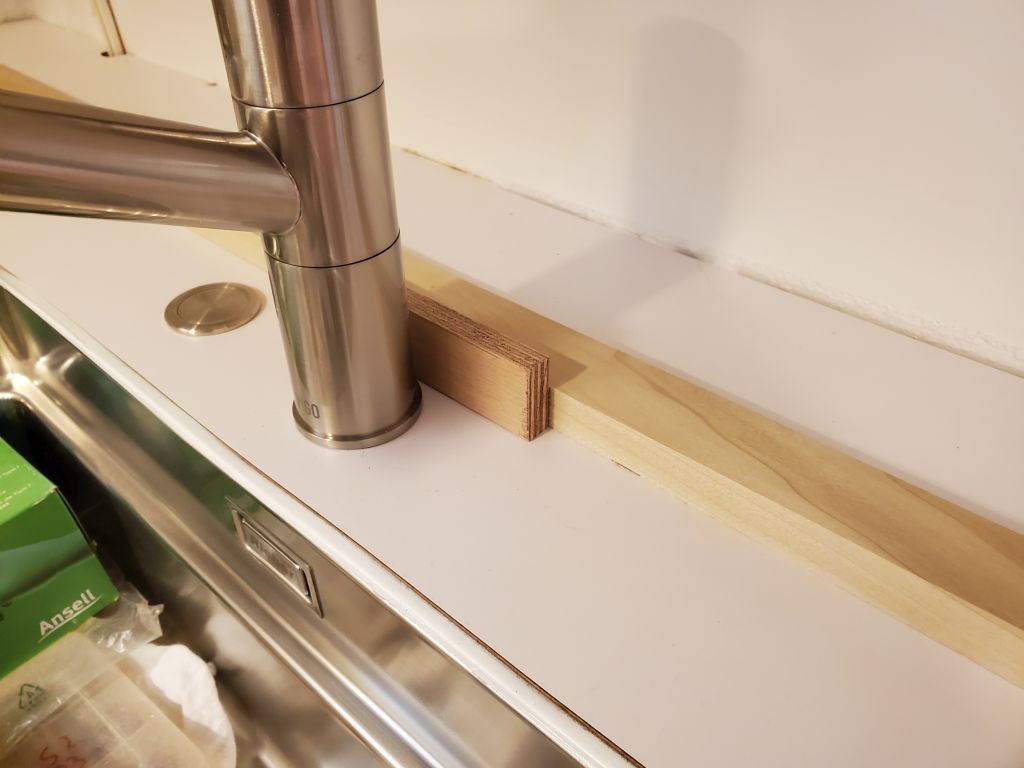
I worked on layout for positioning the faucet.  I found that the overflow drain arrangement I’d assembled earlier was extending further out (aft of) from the sink than was desirable, as its current position was forcing the faucet further from the sink than I wanted or had planned in order for the faucet body to clear the drain.    With all this in position now, I could see that I should have shortened the horizontal leg of the drain setup when I originally installed it, and fortunately this was straightforward to deal with now, as the ball joint connection point came apart with surprising ease when I tried.  I shortened the leg and repositioned the whole assembly as close to the sink now as possible, which allowed me to move the faucet significantly closer to the sink where it belonged–nearly a full body diameter, as seen in the circular marks on the plywood.  The closer circle is the final faucet position.

Next, I drilled for and test-fit the faucet, then drilled and installed the push-button, cable-driven actuator for the drain nearby.  I’ll admit I don’t really understand this feature, but it was part of the setup.

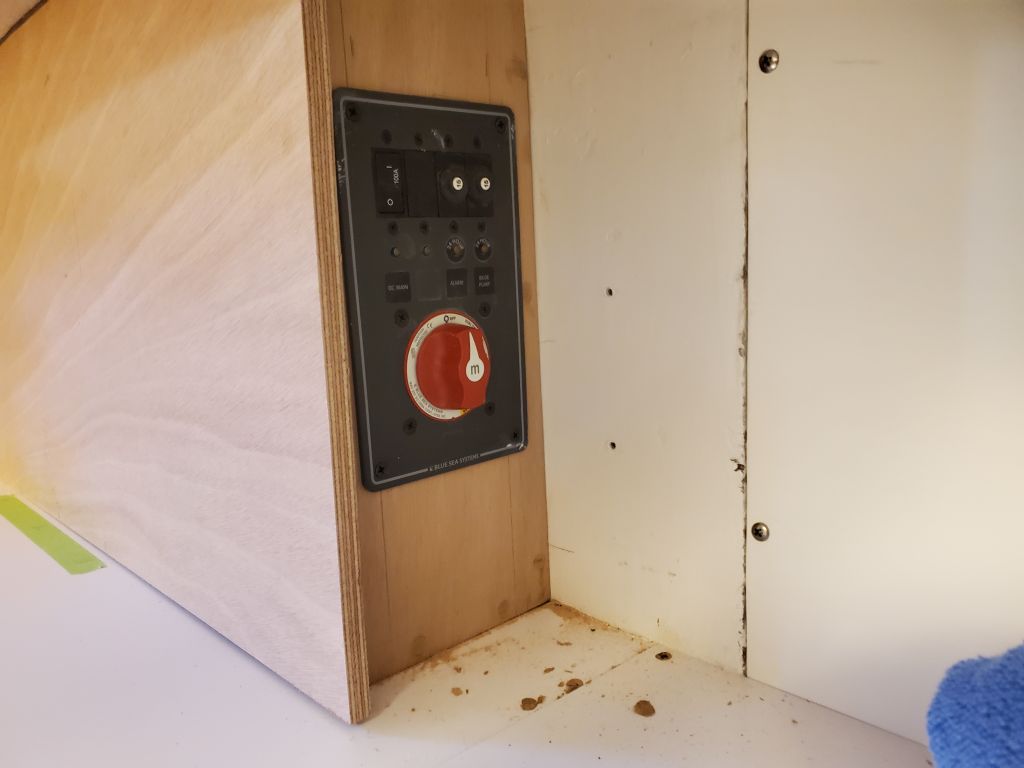
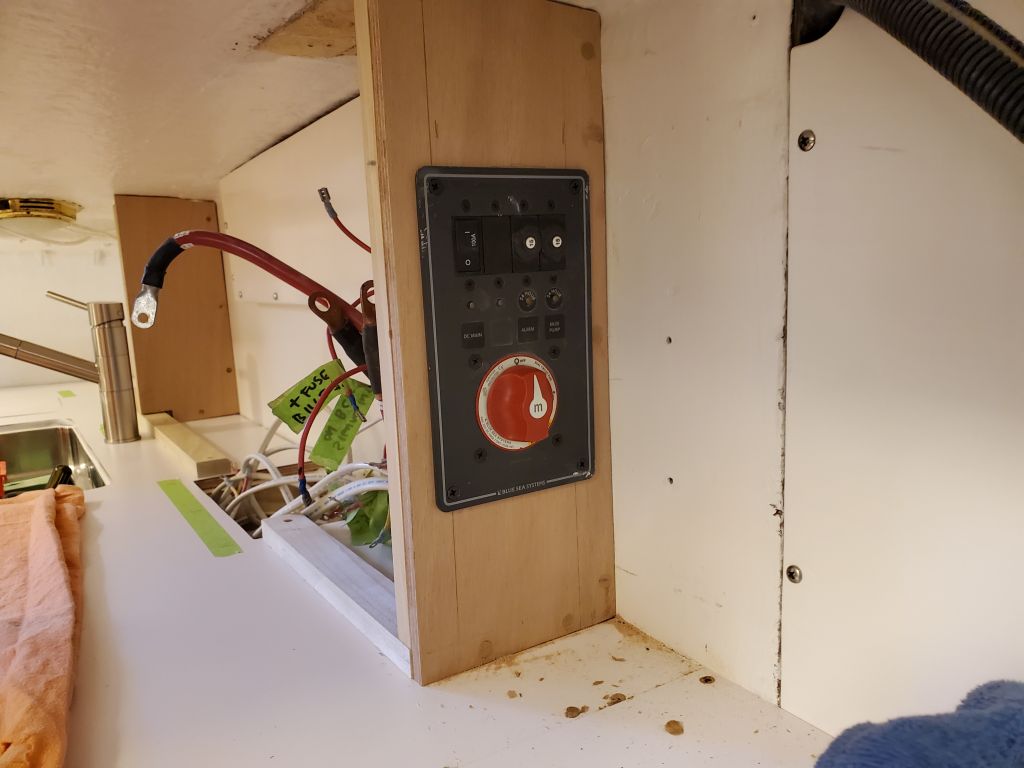
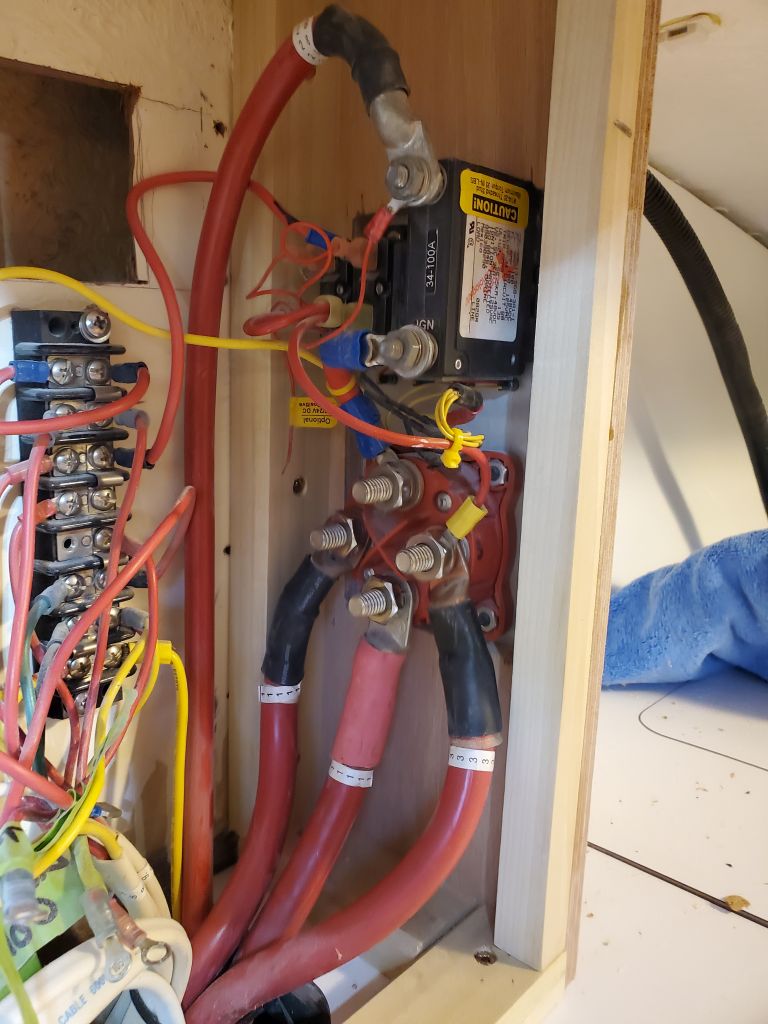
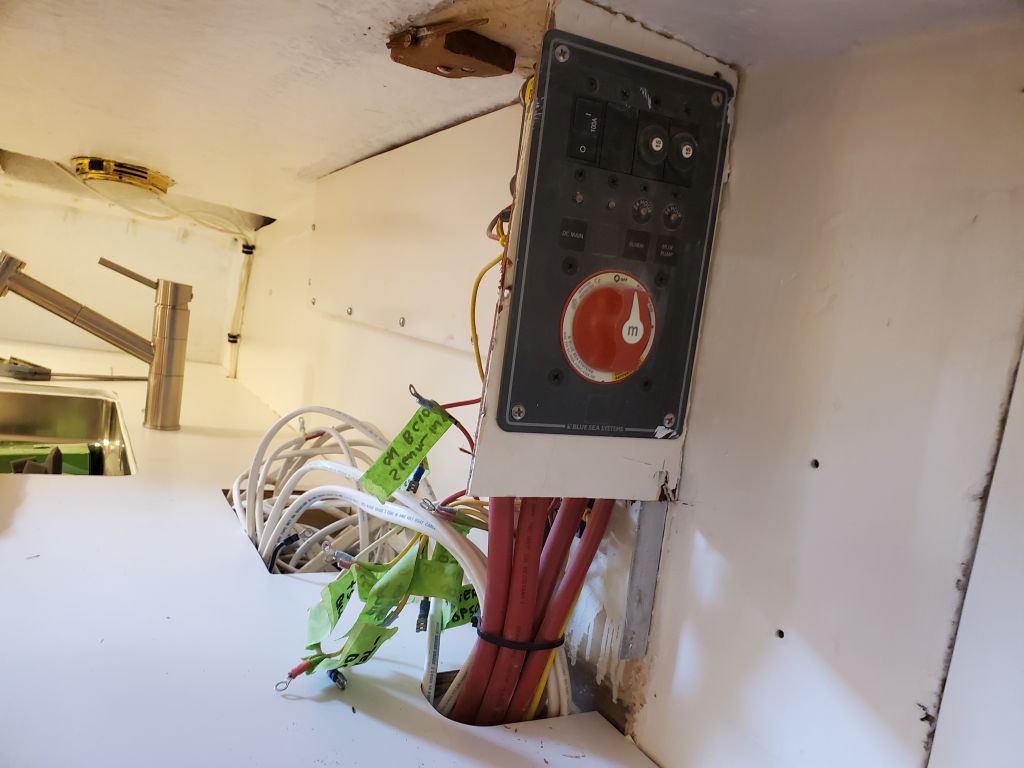
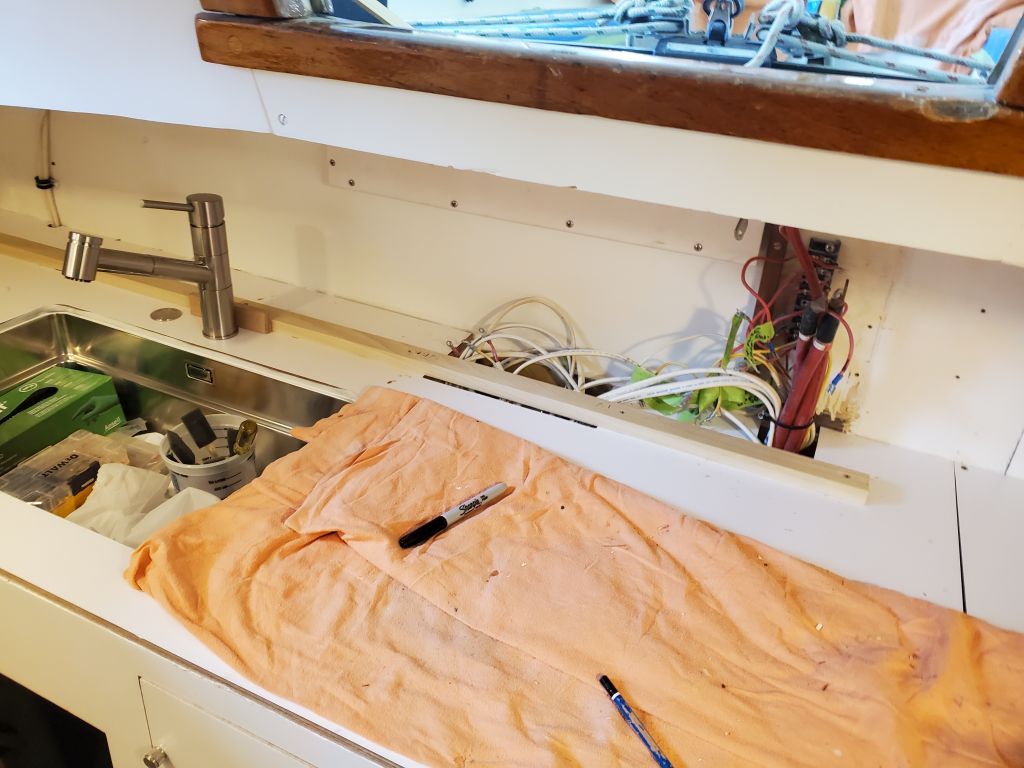
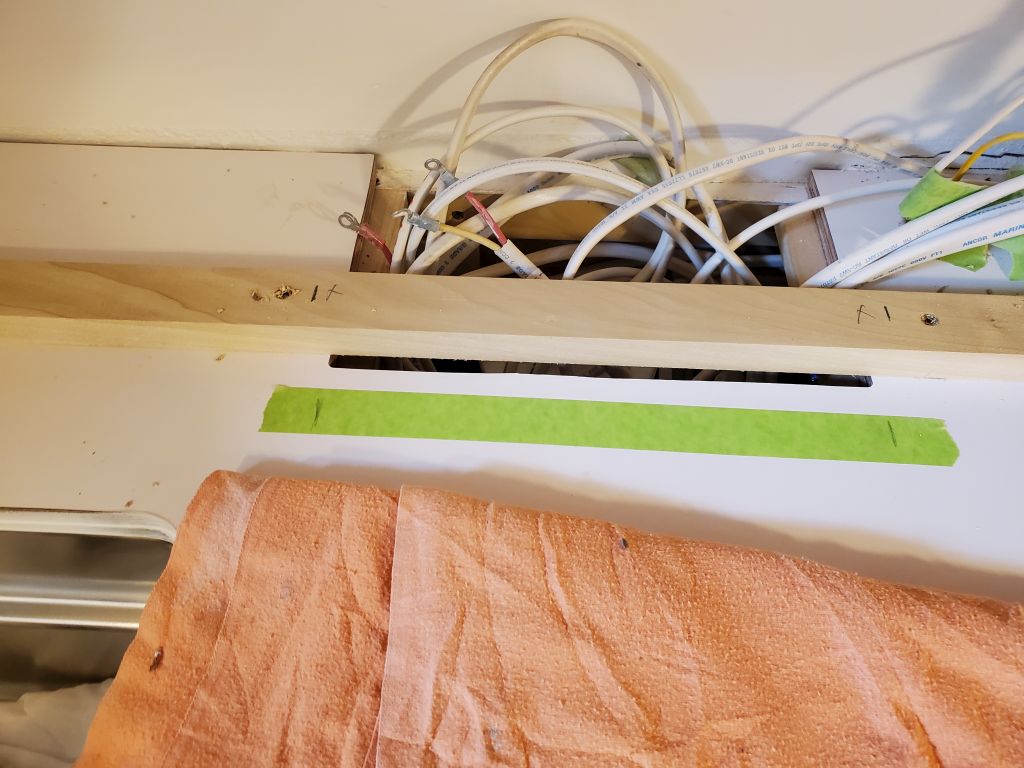
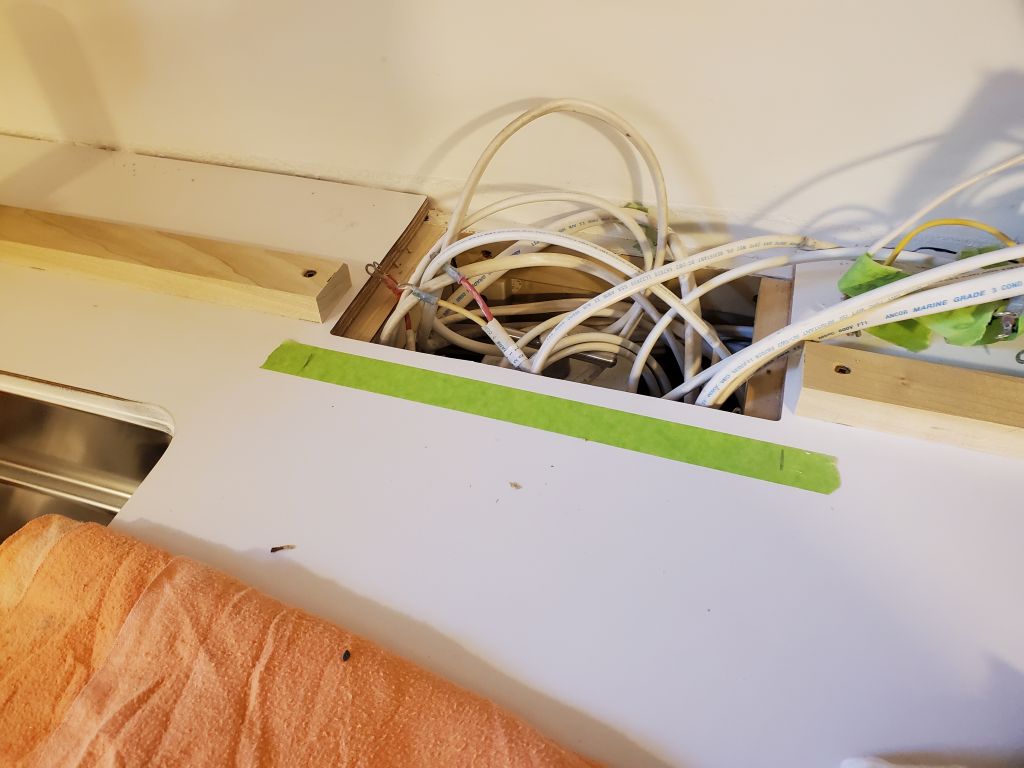
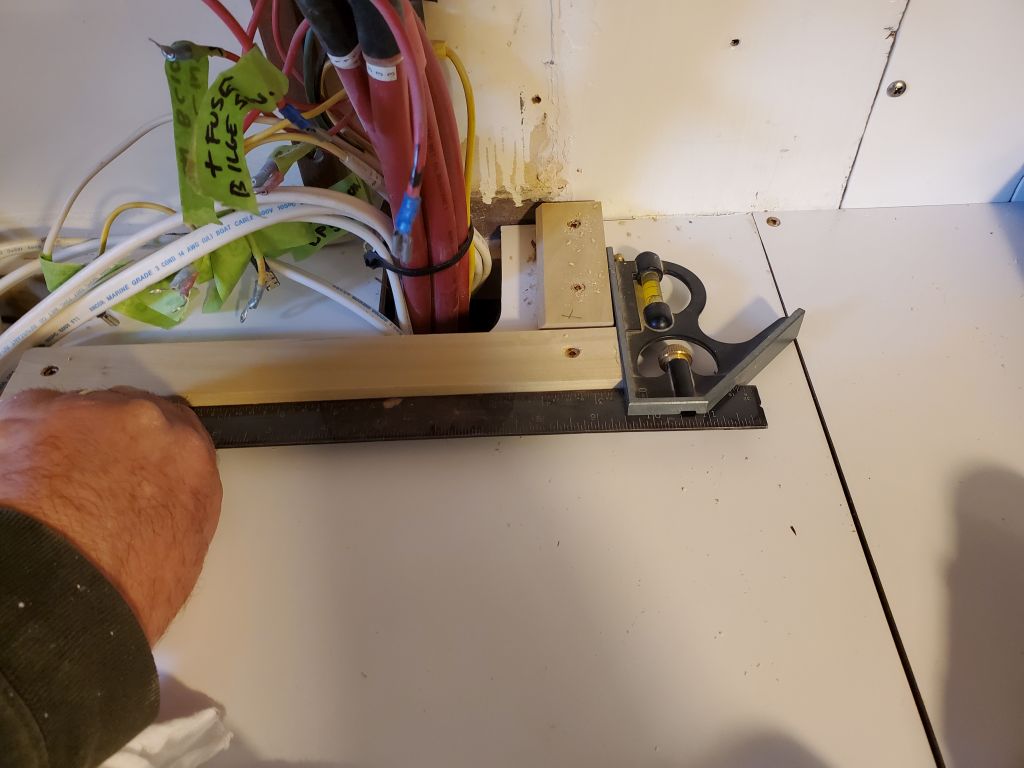
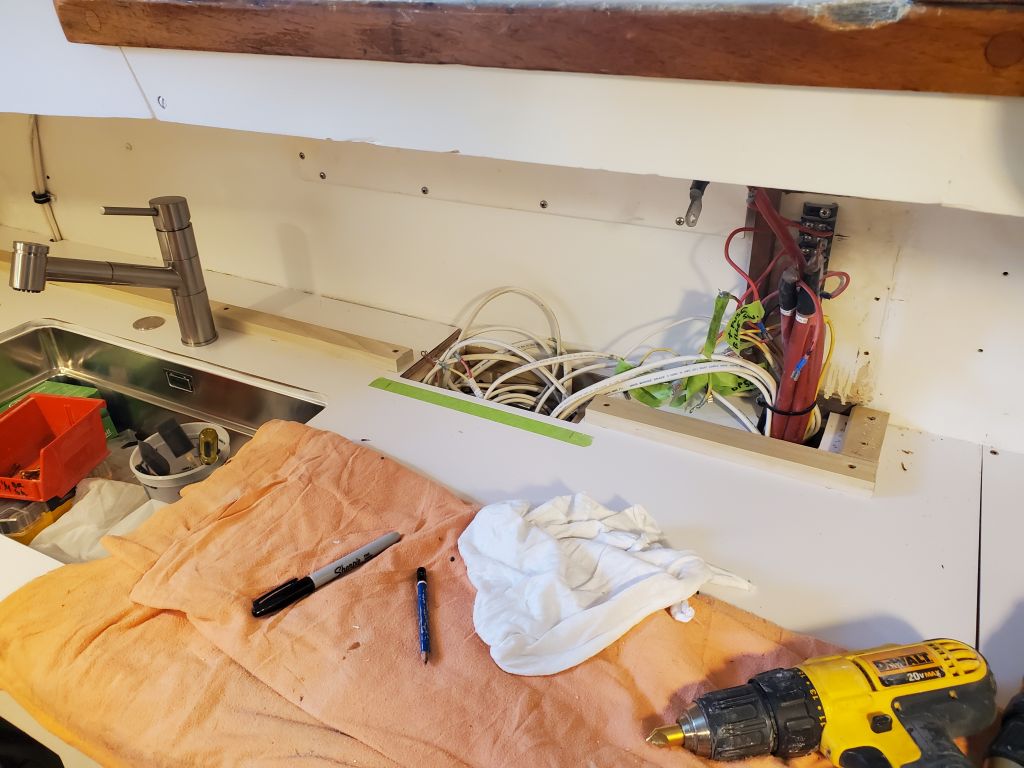
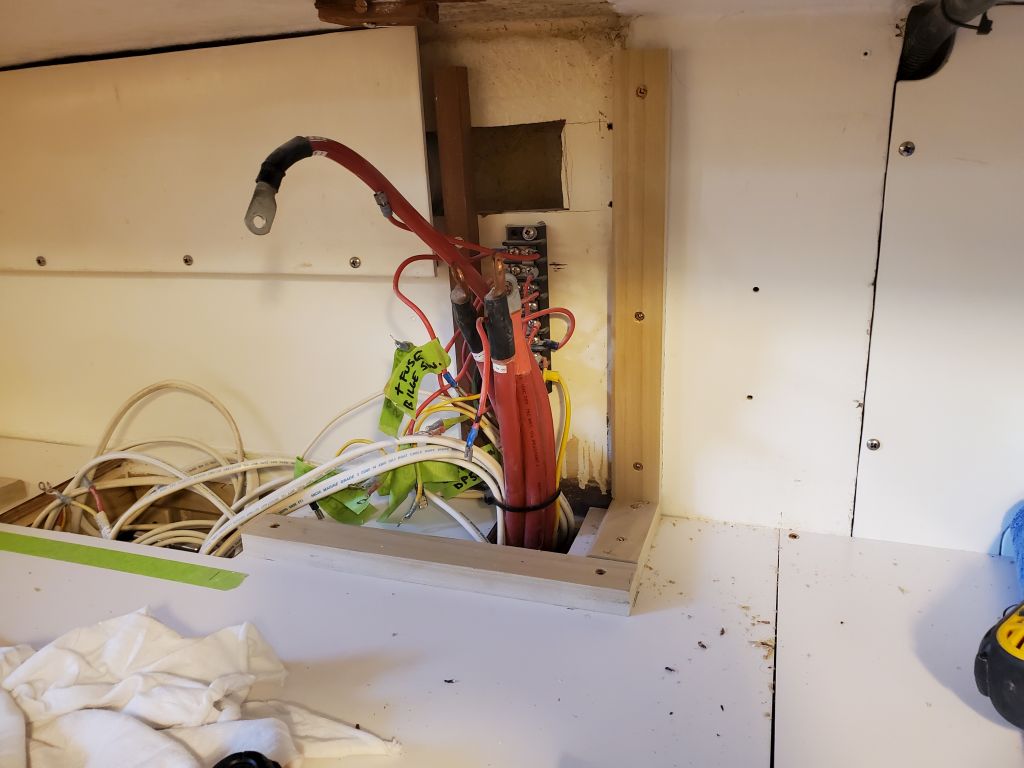
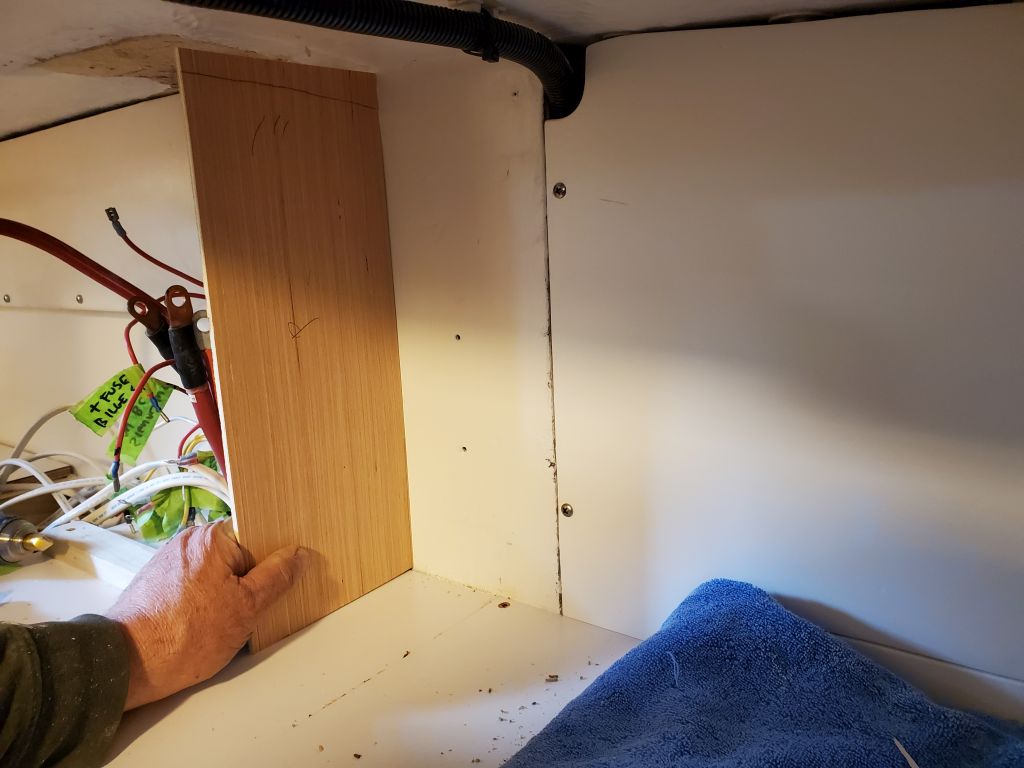
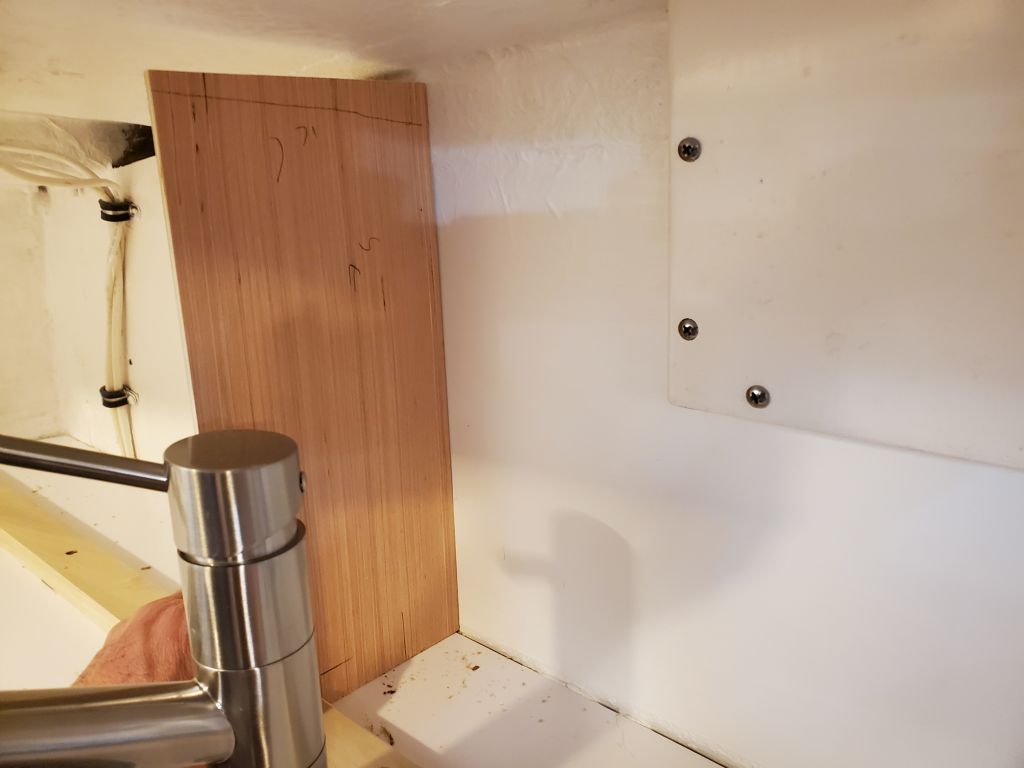
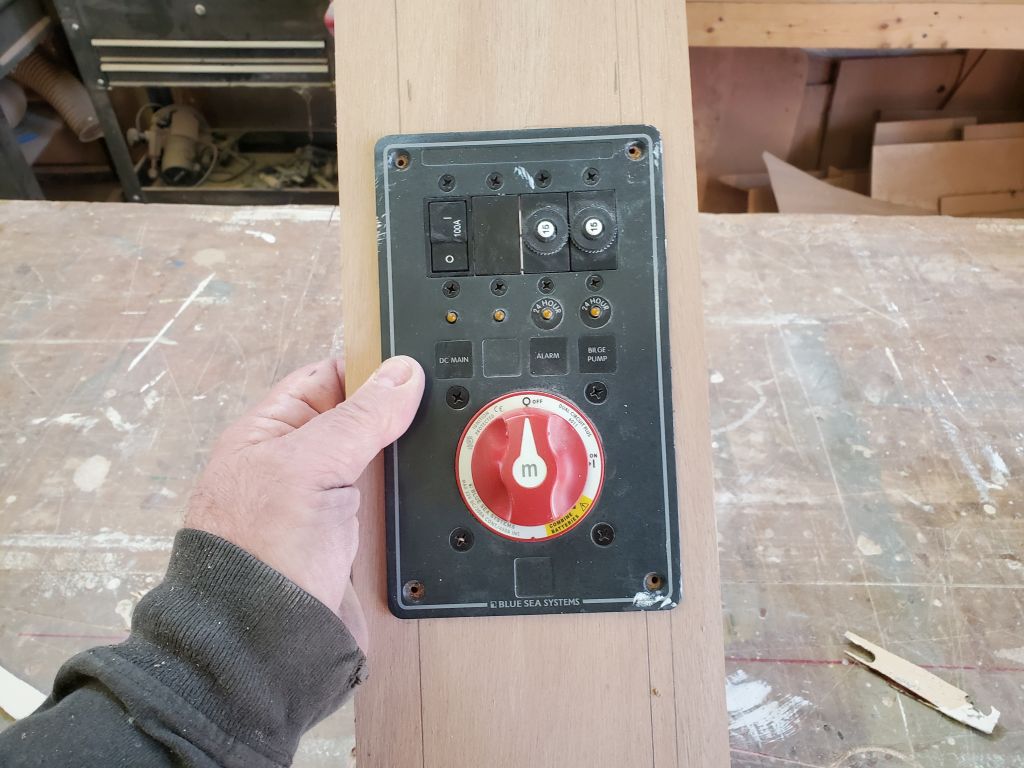
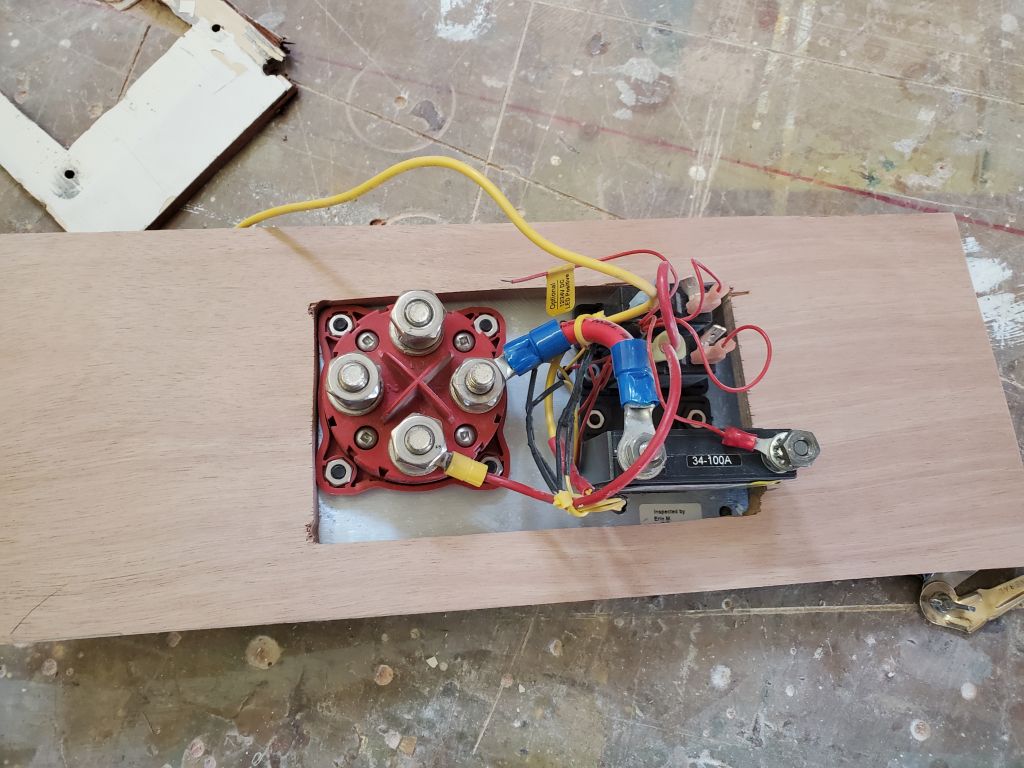
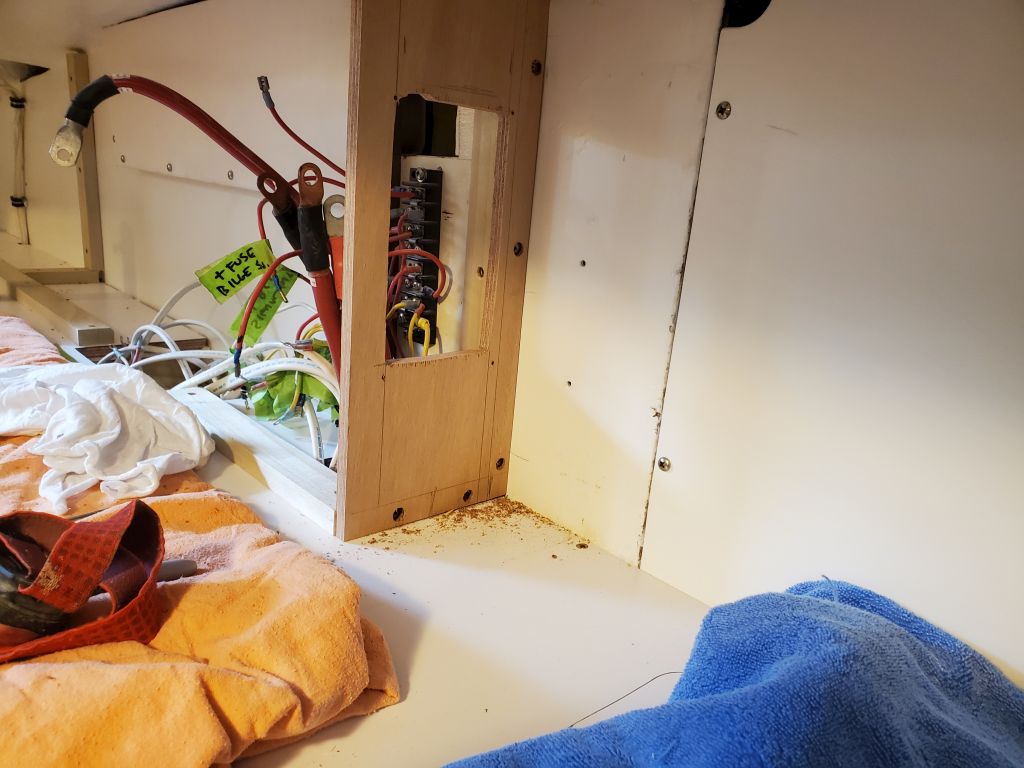
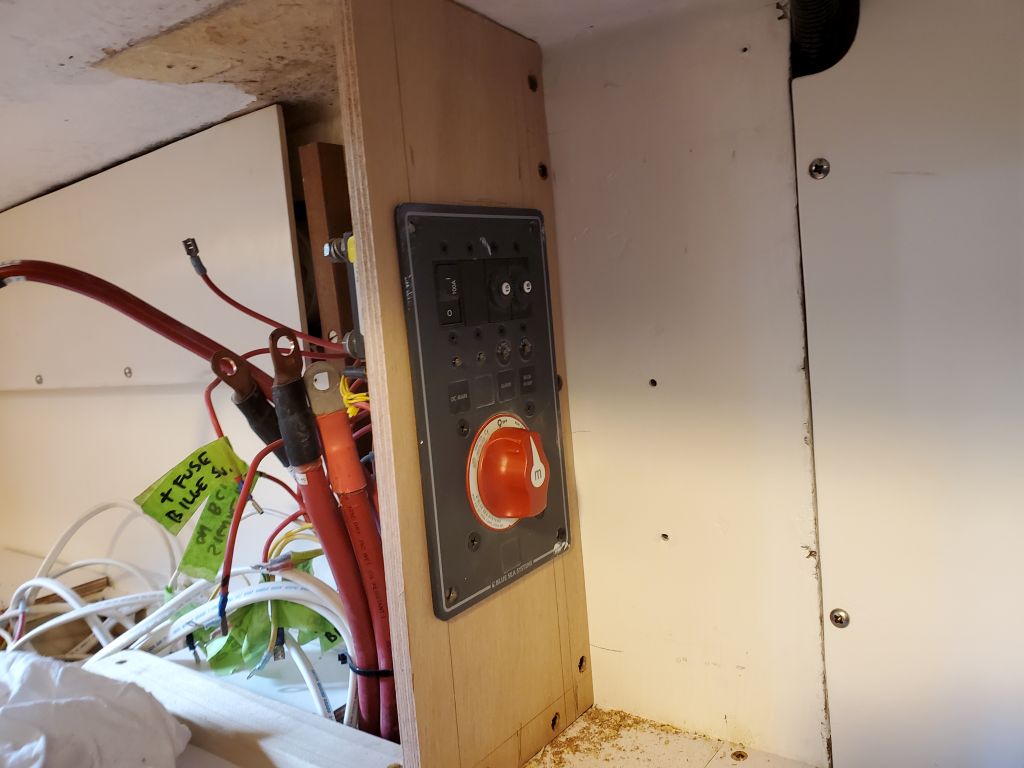
For convenience purposes, I had hoped to pre-install the faucet on the bench, before slipping the countertop into position in the boat, but with the depth of the sink, including the drain assembly, I didn’t think there’d be clearance for all this.  To check, I brought the countertop into the boat for a dry fit.   It was clear there was no way the faucet would be able to be pre-installed, but the good news was that with the countertop partially in place, as shown, I had reasonable access to the underside so I could finish the faucet installation before the countertop was in its final position.  The dry fit also highlighted a clearance issue with the bottom part of the little bulkhead still supporting one of the battery switch panels, which I’d left in place because reconfiguring all that wiring would be difficult and time-consuming, but fortunately this was an easy fix since the lower part of the bulkhead didn’t need to be there anyway, and I could (and did) cut it away to increase clearance for the countertop.

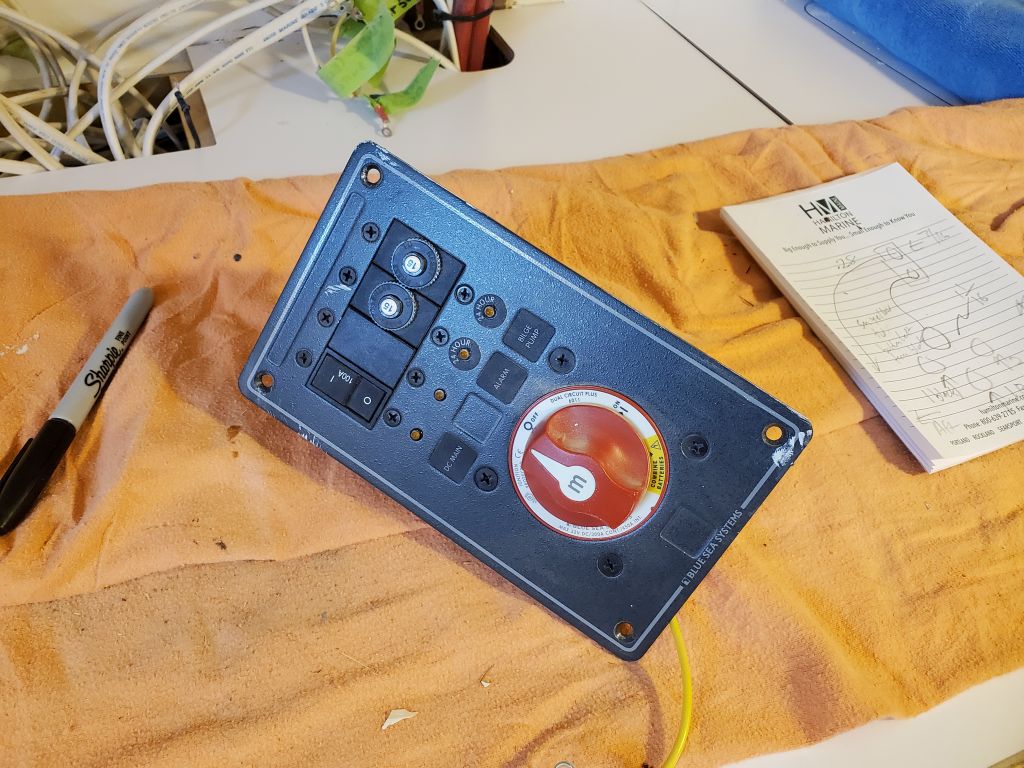
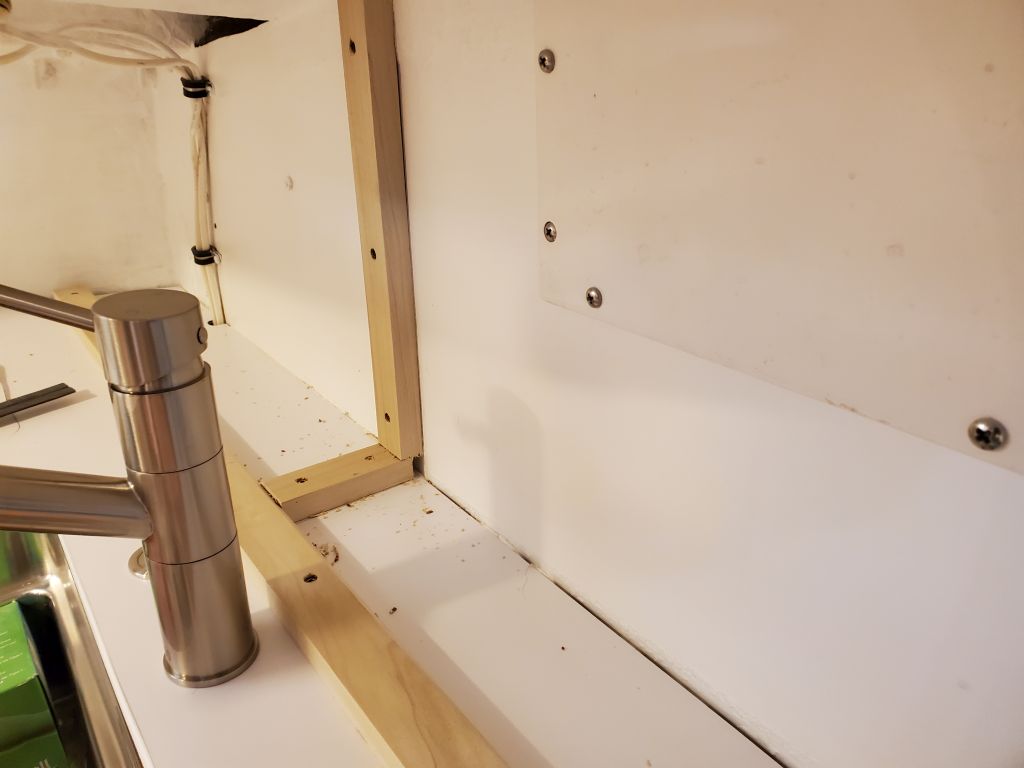
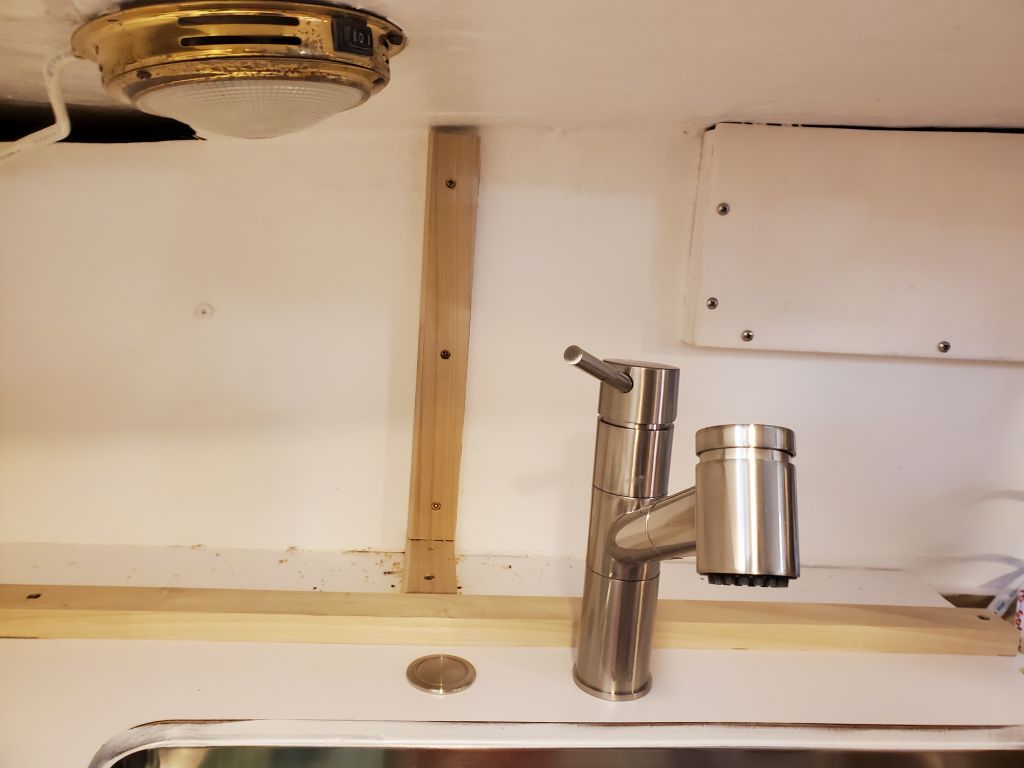
Removing the counter back down to the bench, I went ahead and marked and chiseled out the three sections of support beams where clearance was required for the sink brackets.  I also prepared and installed a plywood bracket to support the galvanic isolator, which had originally been mounted on the underside of the old countertop.  The engine room light fixture would be remounted beneath the countertop, and I had a plan for that too.

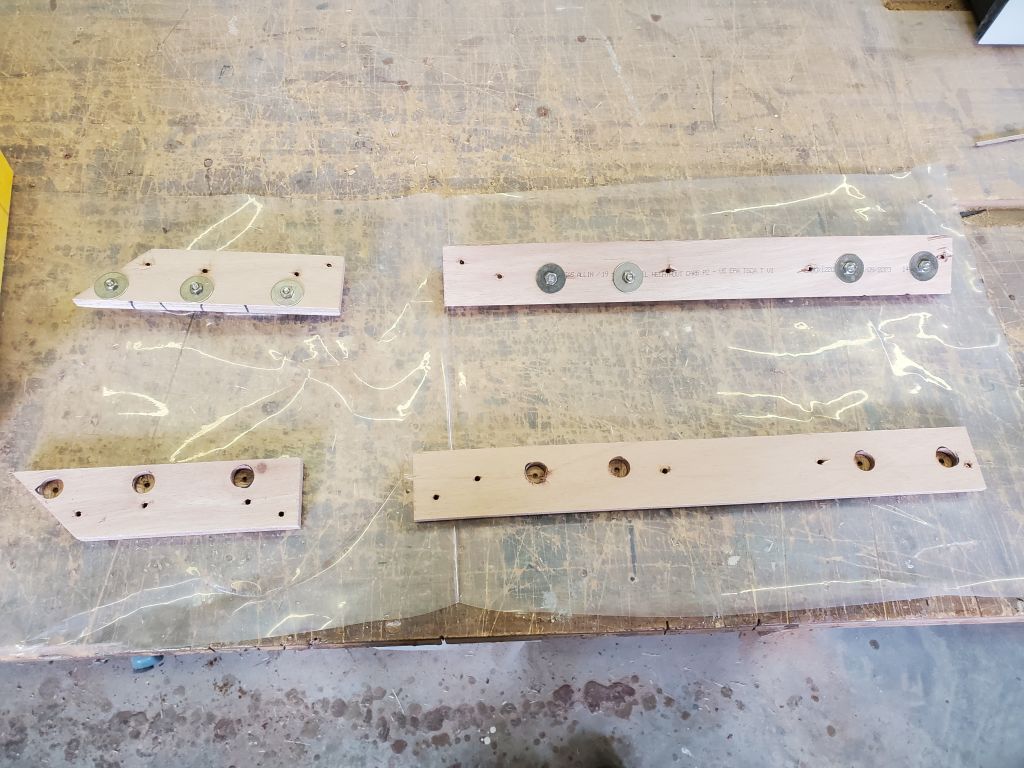
Because I planned sound insulation wherever I could in the engine room–this meant the overhead, the two removable side panels, and the front access panel–I needed to provide a mounting surface for the light fixture.  I’d marked the approximate position on the underside of the counter where the wiring would allow the fixture to go, and now I prepared a 1/4″ plywood panel to fit, and installed mounting studs to the plywood that would penetrate the sound insulation and give me a secure mount for the plywood, and thus the fixture.  These studs were designed to work with the 2-part adhesive used to secure wire mounts.  Once the adhesive had cured enough, I made a pattern for the sound insulation, then cut out and installed the self-adhesive insulation, securing the plywood panel over top to finish off the installation.  I was pleasantly surprised how well the adhesive back of the insulation worked; I’d expected to need to augment it with mechanical fasteners, but it seemed to really work as is.  While in the process, I also installed insulation on the other panels as applicable, covering all the edges with foil tape for as clean an appearance as possible.

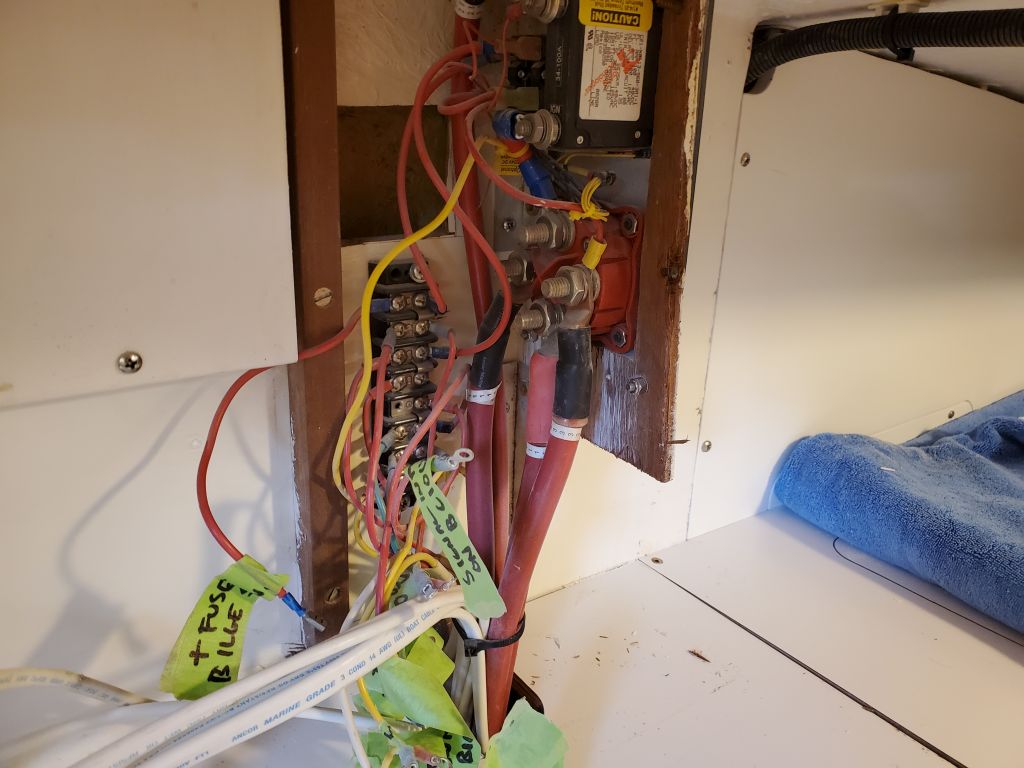
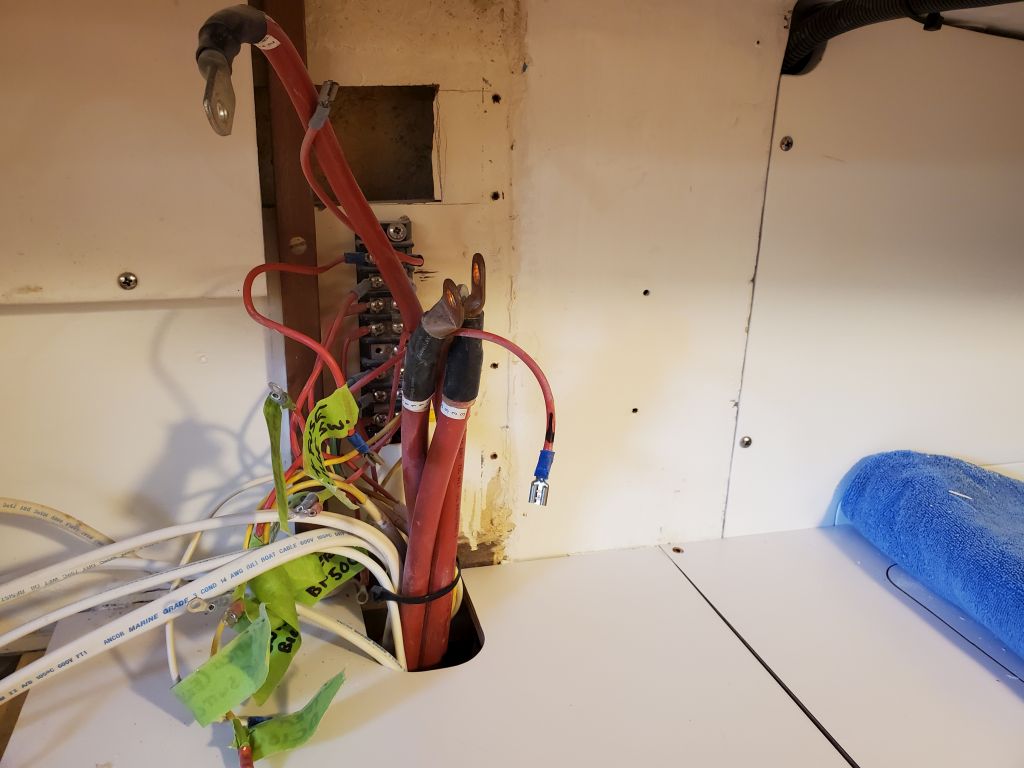
I would have liked to install the countertop, but I was awaiting delivery of some braided water hoses I needed to connect to, and adapt from, the sink faucet to the fittings required to connect to onboard water plumbing.  These parts eventually arrived, but by then it was too late in the day to get going on the final countertop installation.  So in the meantime, I worked on some loose-endy wiring and related projects in the starboard settee, making up a terminal block connection for the propane heater power source, which I’d needed to extend from the original length, and running in a length of potable water hose to service the galley from the new water pump (and tank) location forward, then securing all the wires, the water hose, and the propane line to service the propane heater.  This meant that I could also reinstall the base panel beneath the stove, now fully painted to match, and the settee locker covers.

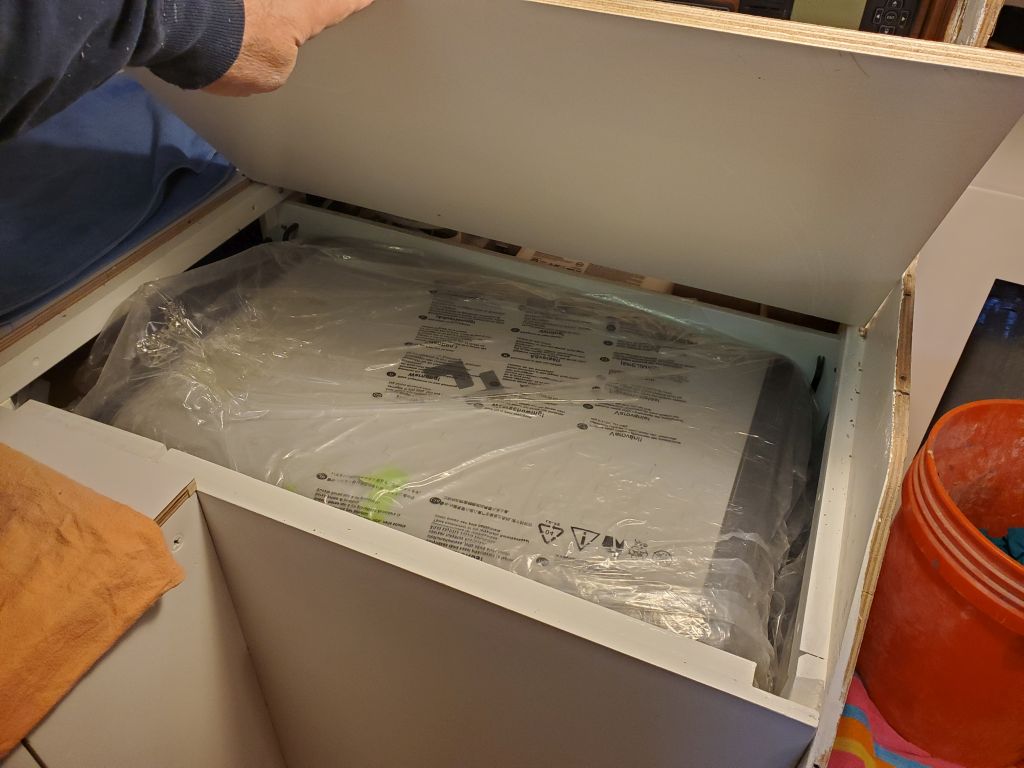
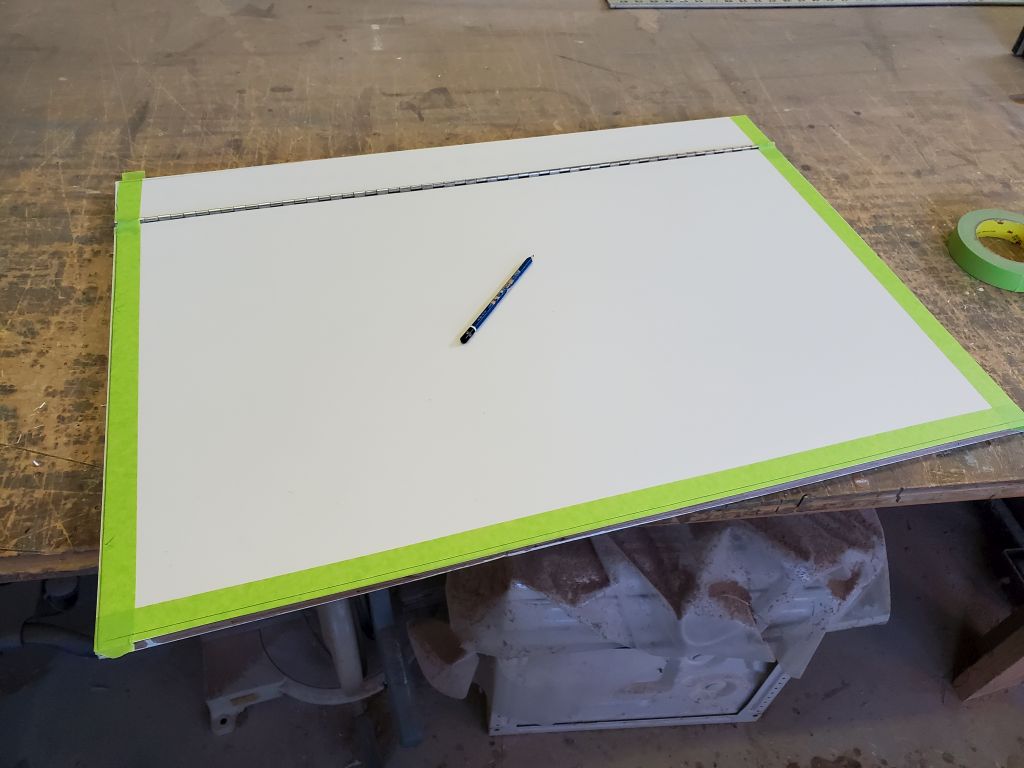
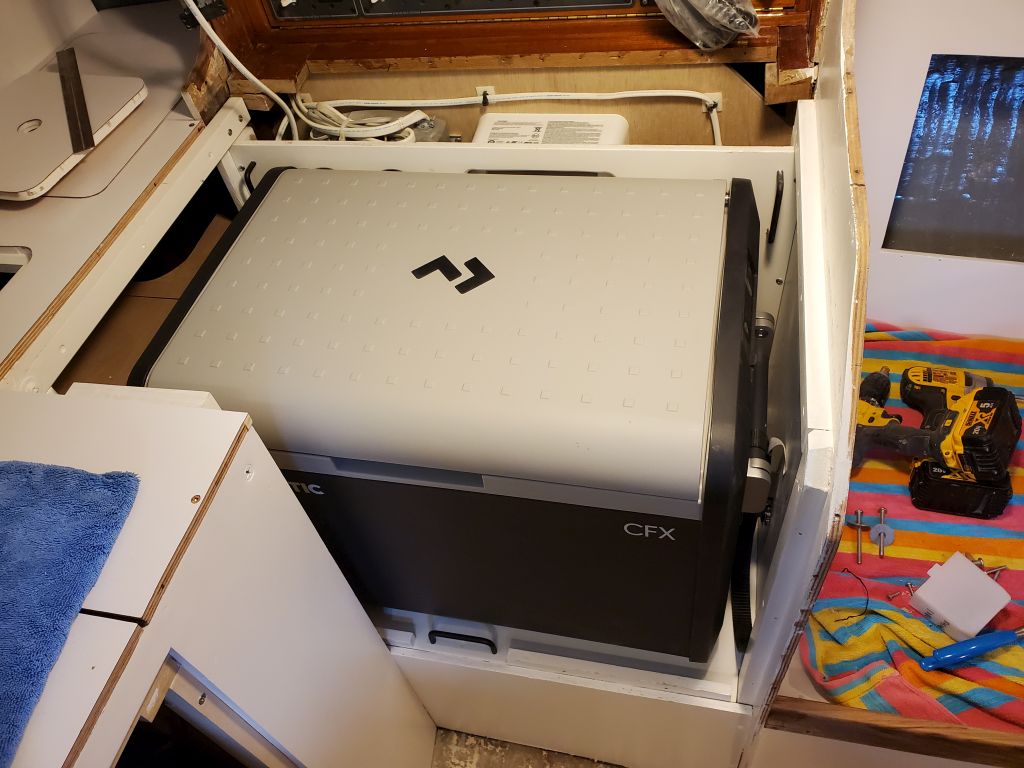
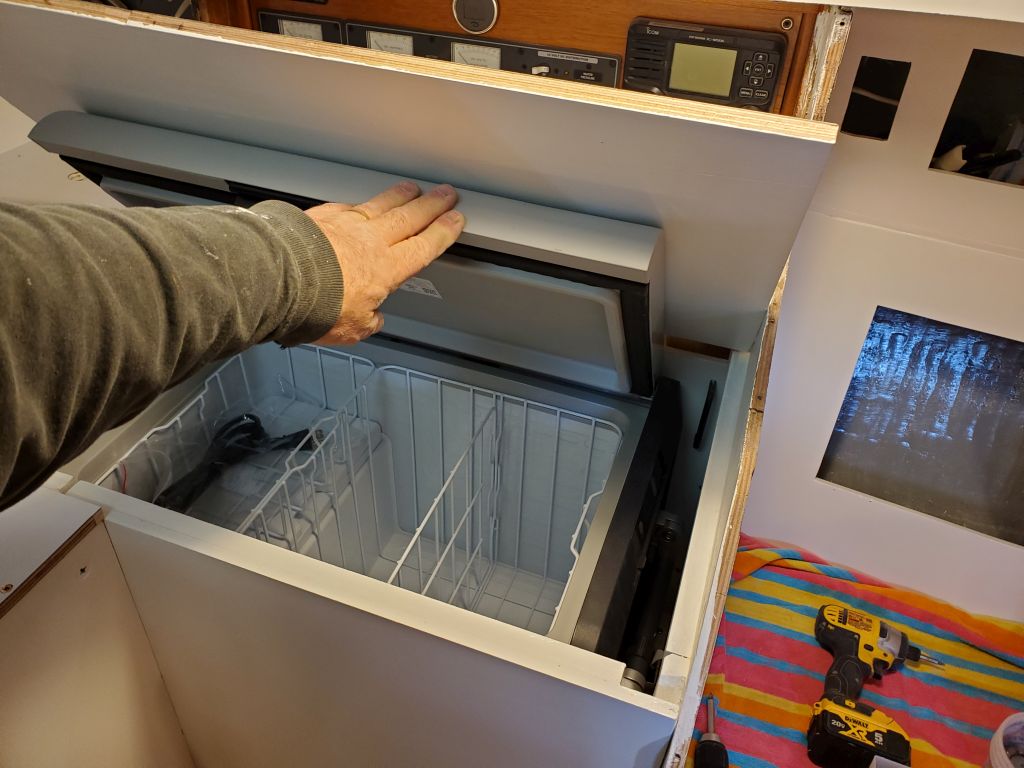
Another small detail I completed was to install a full-length piano hinge on the two parts of the refrigerator compartment lid/countertop.  I’d previously cut the plywood panel to form a lid and a narrow piece to be permanently affixed, and now I connected the two with a stainless piano hinge.


Calliope Girl 70

With the painting complete in the main cabin for now, I removed the masking tape.  I planned to avoid masking or covering the fresh paint, and avoid any significant work around it, for a few days to allow a full cure.

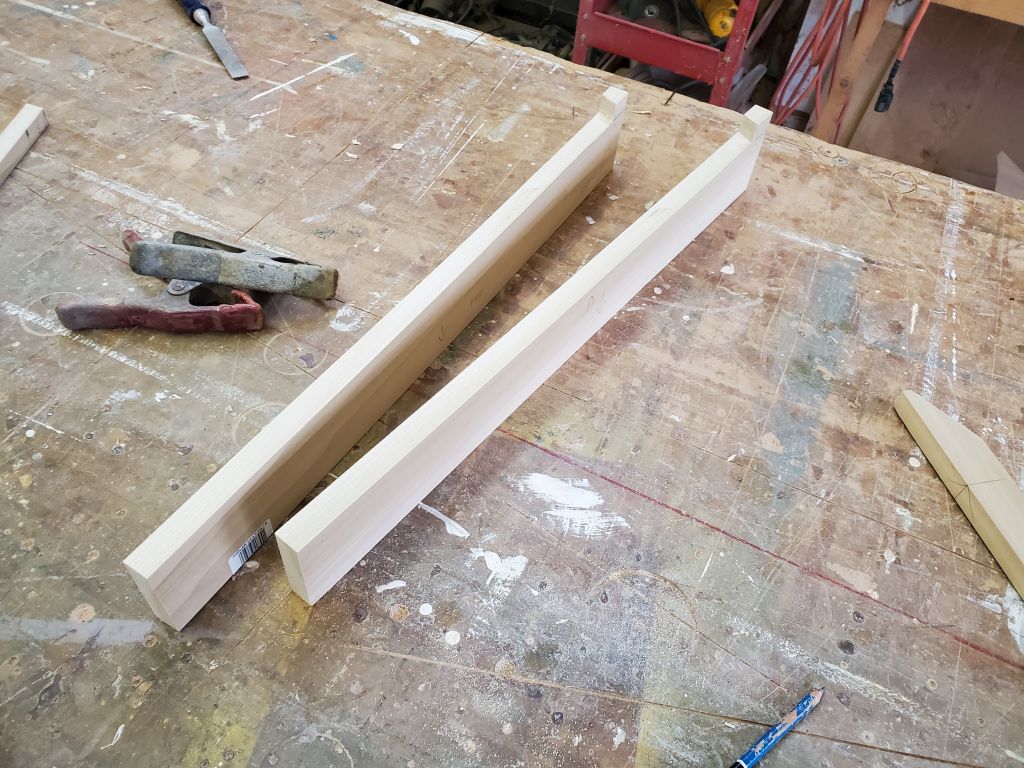
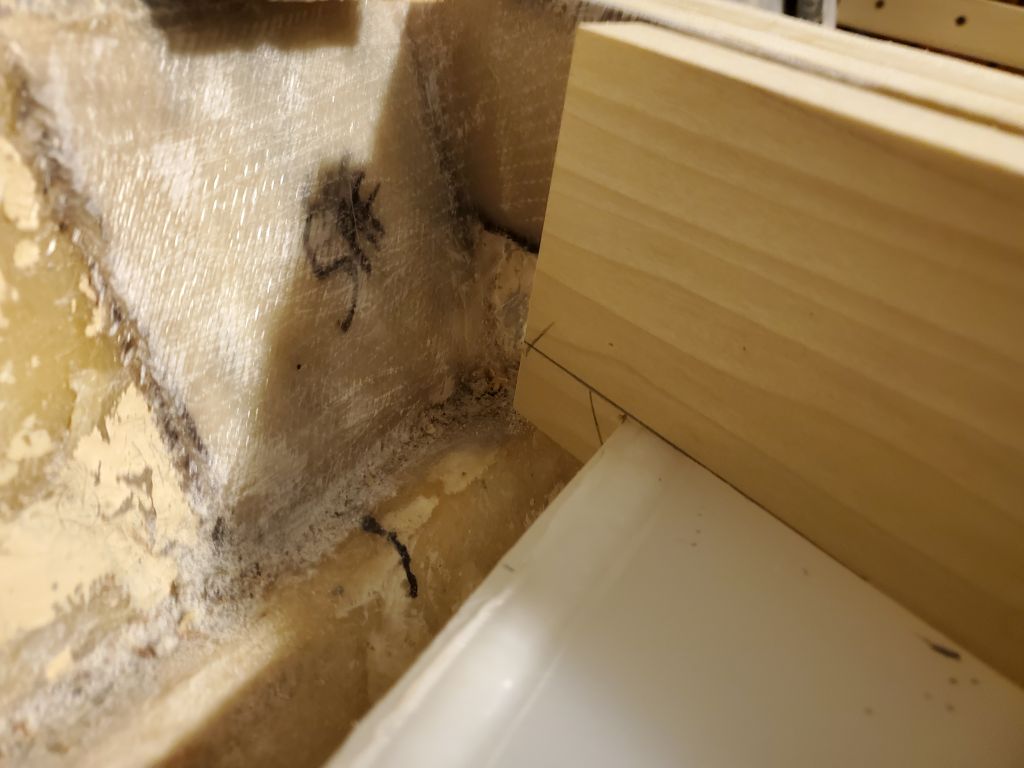
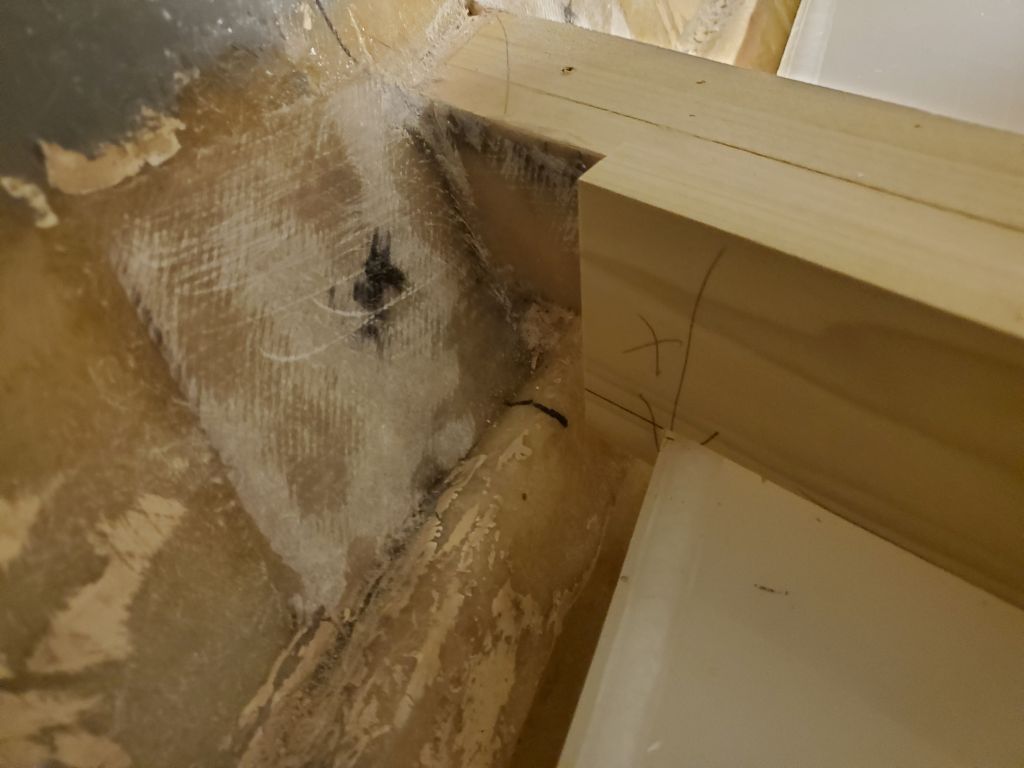
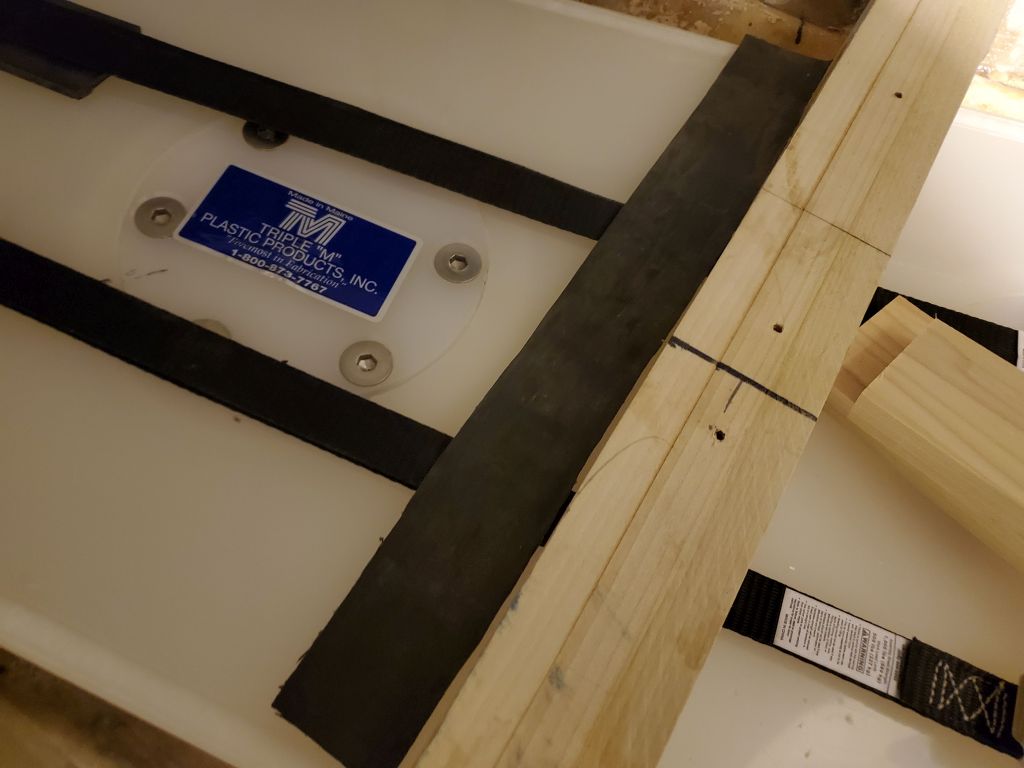
For access, it’d be easier to install the stove gimbal mounts before the galley countertop was permanently installed, and there was nothing else standing in the way of this task.  I didn’t plan to install the stove just yet, but the mounts would be ready to go.  When I built the stove surround, I intentionally made it a touch wider than the minimum to ensure there’d be no fitment problems, as it’d be easier and better to build some backing blocks rather than be faced with a space that was too narrow.  So to begin I made an accurate measurement stick from 12mm plywood representing the actual width of the stove gimbal points, working off the stove itself.   The stove mounting points on this stove are just large cheesehead screws attached to the side of the unit; these fit into bearings and machined mounts in the brackets that attach to the bulkheads.

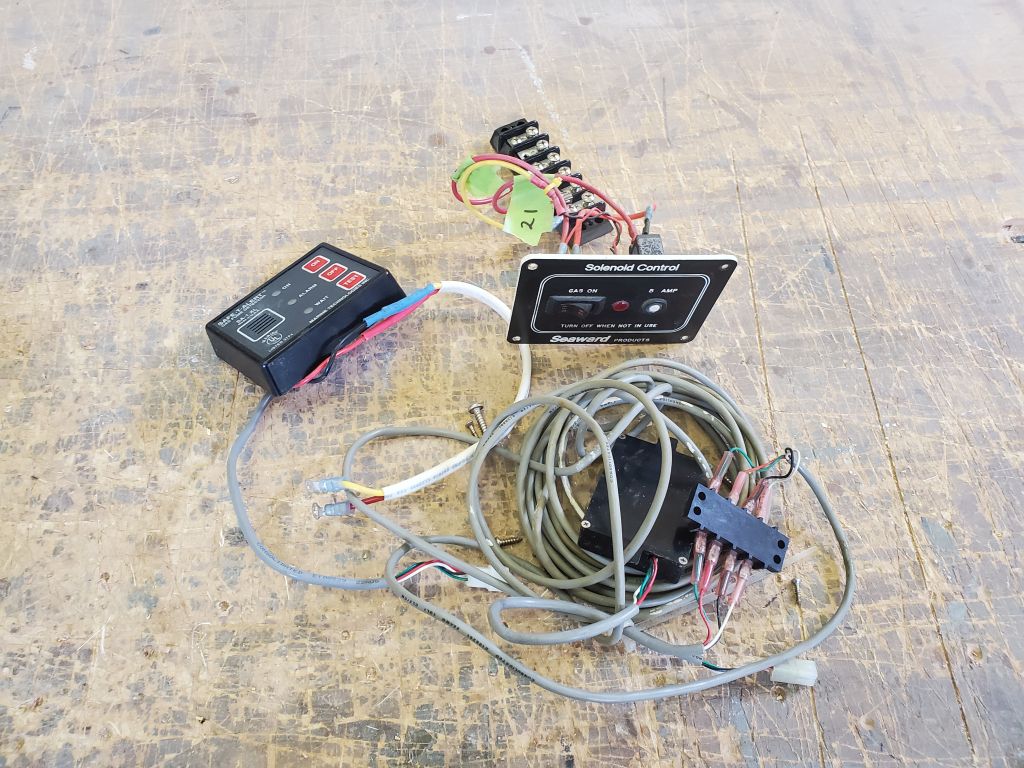
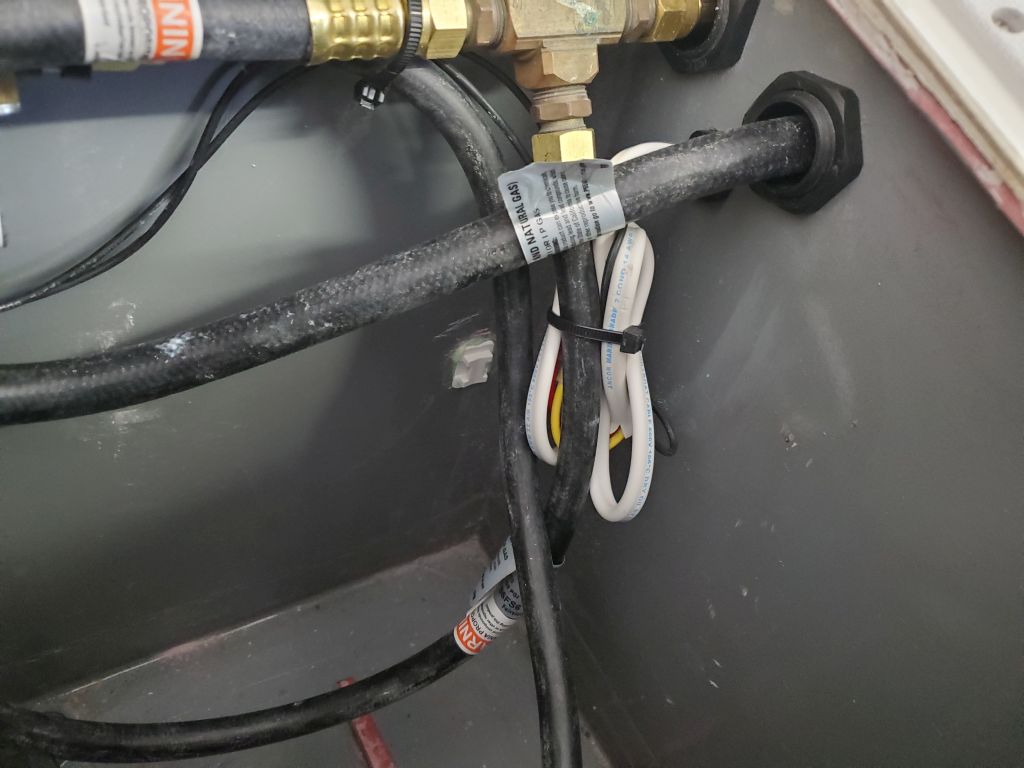
While I had the stove unpackaged and fully available, I took a moment to install the two fittings on the gas supply required to adapt to the standard US hose fitting.  (I’d also been working piecemeal on rebuilding the regulator/solenoid/tank attachment setup with new hoses and new fittings as required–more on this once complete.)

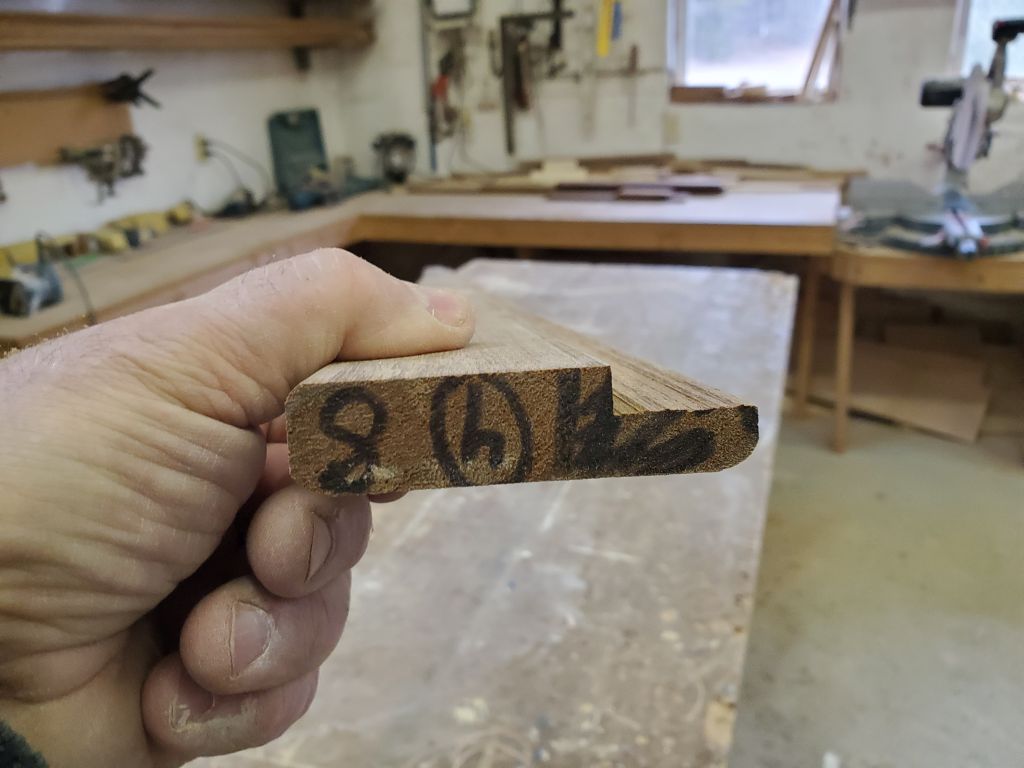
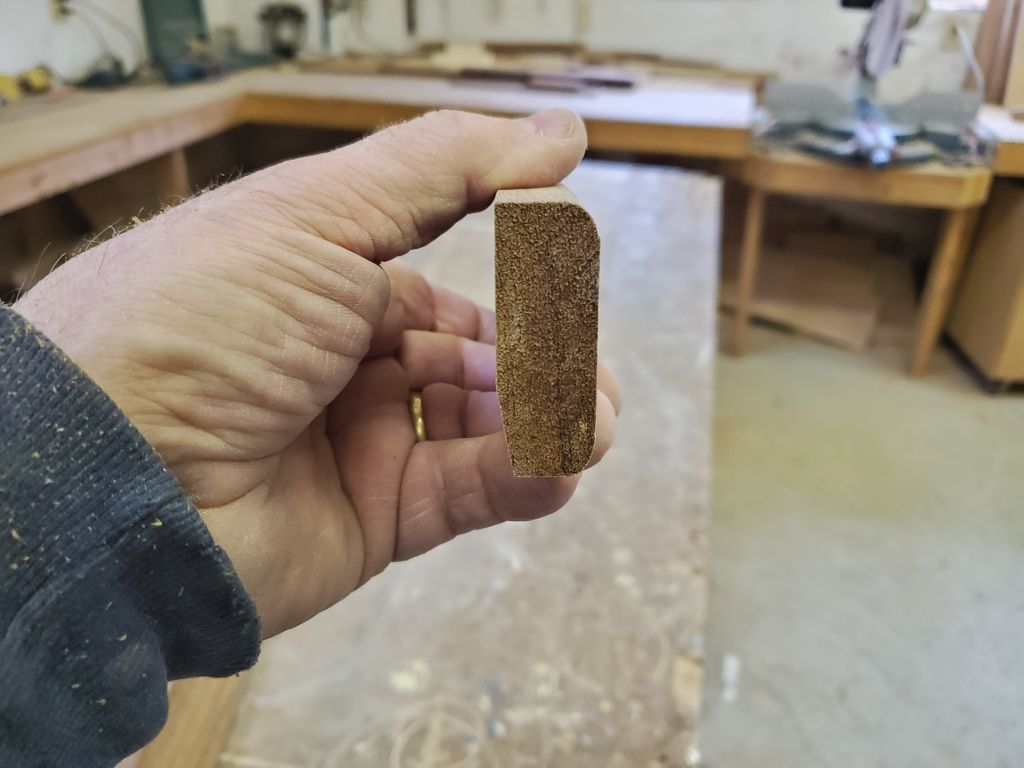
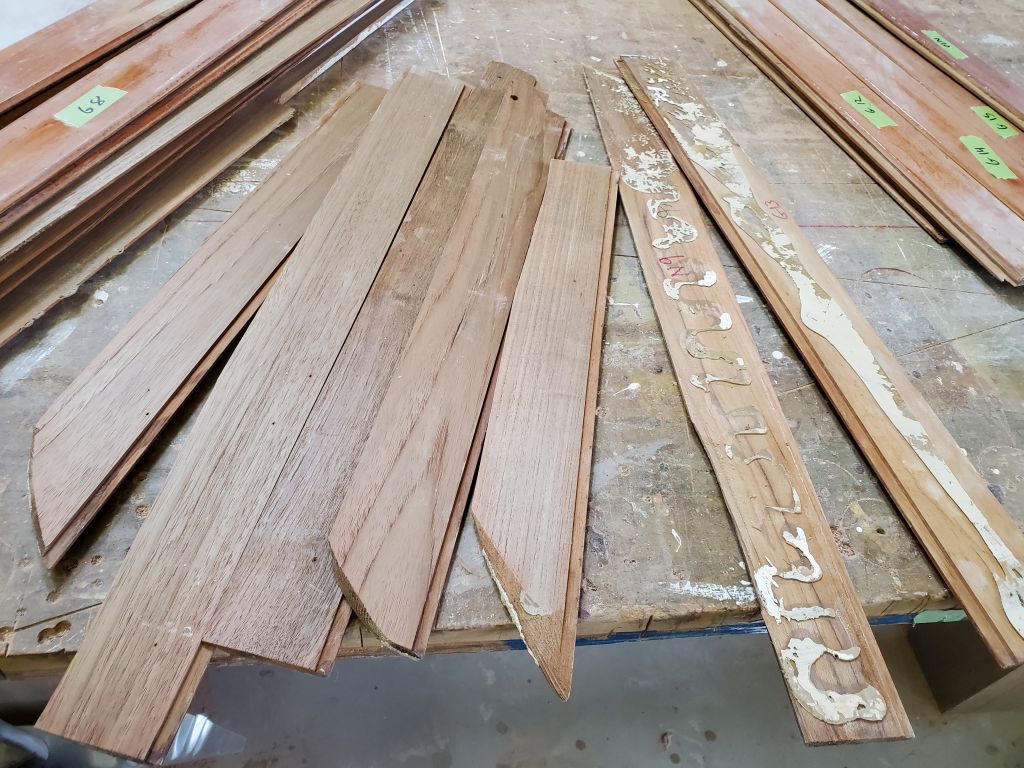
I determined the width between the bulkheads was about 1/2″ wider than it needed to be, so from some scrap teak I built two backing blocks 1/4″ thick and sized slightly larger than the footprint of the full gimbal bracket.  I applied a few coats of satin finish from a spray can, letting this cure through the morning while I worked on the countertops (described below).

Once the backing blocks were ready, I used my plywood stove template and some marks I’d made at the top edges of the bulkheads to relocate the critical center point of the gimbal, helpfully reprsented in the actual brackets with a small hole that made positioning the brackets straightforward with just a single reference point.  I center-punched the sheet metal, then secured each bracket with a temporary screw so I could level the brackets and mark the two bolt holes for drilling.

I punched and drilled the two fixing holes on each bracket, through the sheet metal and bulkheads as needed, then secured the brackets with their teak backing plates with bolts and large washers for support.  On the forward bulkhead, I recessed the washers and nuts so the cosmetic staving would pass over the top without issue; later I’d cut off the protruding length of the threaded bolt.  Now the mounts were ready for final installation of the stove whenever the moment was right.

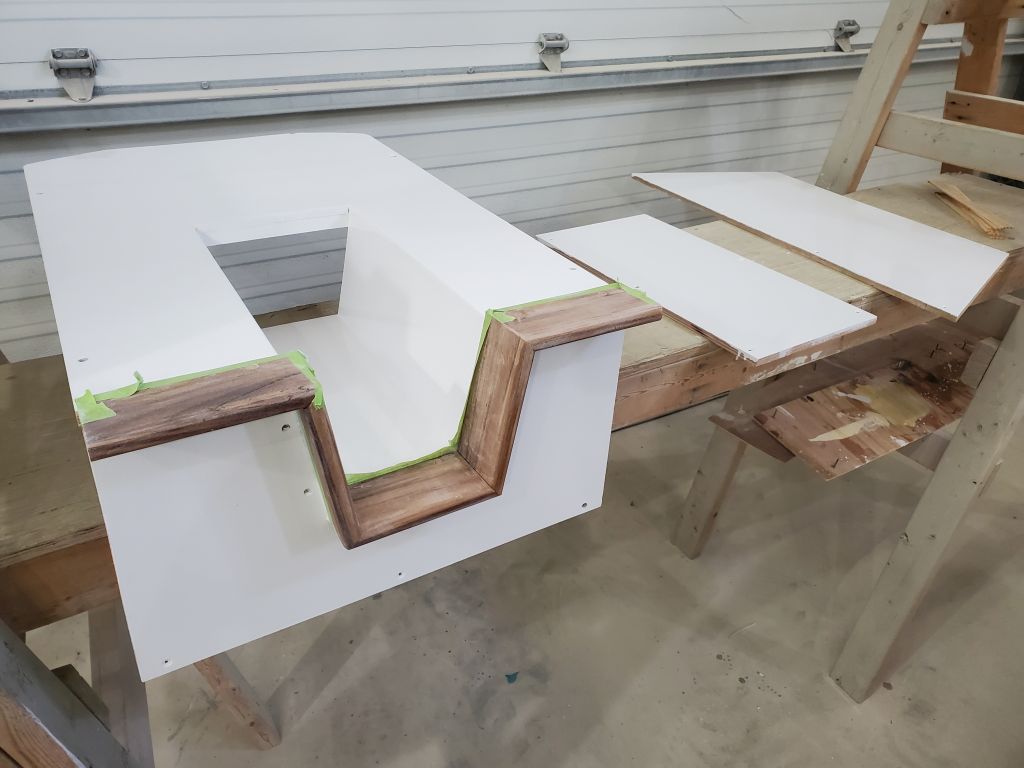
Throughout the day, and starting in between some of the steps above, I worked to prepare and install plastic laminate on all the galley countertop pieces.  (I call this Formication.)  I cut larger sheets of product to manageable pieces slightly oversized with laminate shears, then coated the mating surfaces with contact cement.  Once the first coat had tacked up, I applied a second coat on the plywood parts to ensure good coverage, since the plywood is more porous than the bottom side of the laminate itself.    Then I assembled the parts, rolling down the laminate securely, and trimmed the edges and openings with a router.

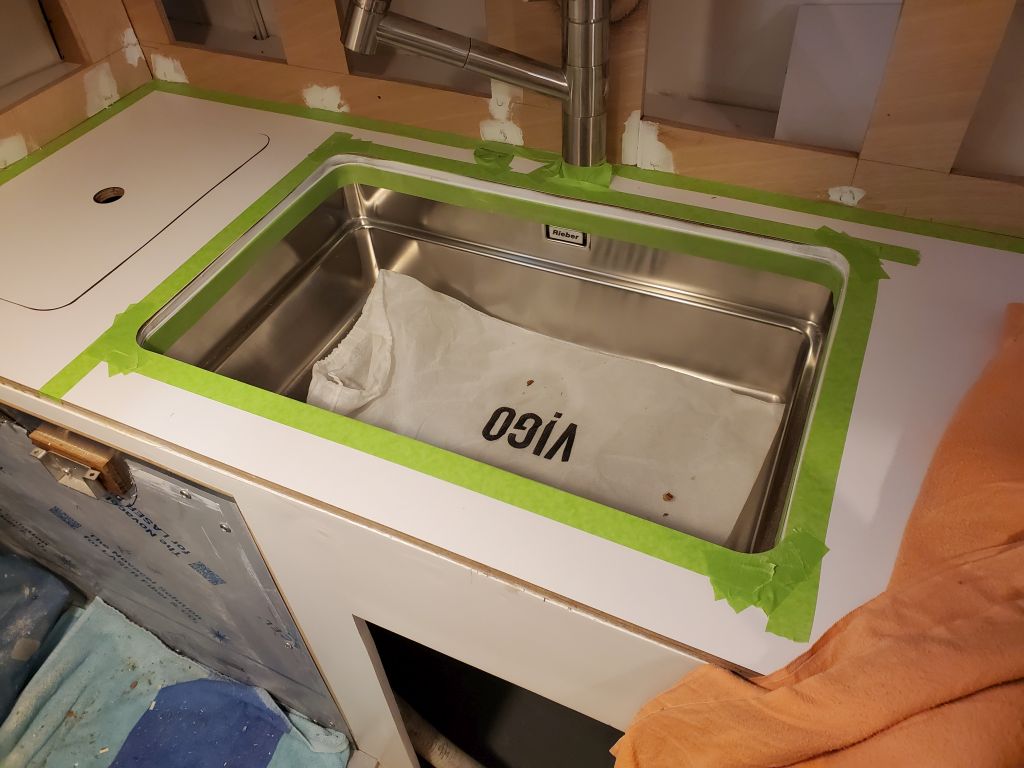
Once the laminate was in place on the main countertop, I masked off the sink opening and coated the exposed plywood grain with epoxy for waterproofing.  Later, I planned to paint this area white to match.

And somehow, that was the day.
Calliope Girl 69

I lightly sanded with 320 grit the first coat of finish paint in the interior, then vacuumed, solvent-washed, and tacked off to prepare for the second coat.

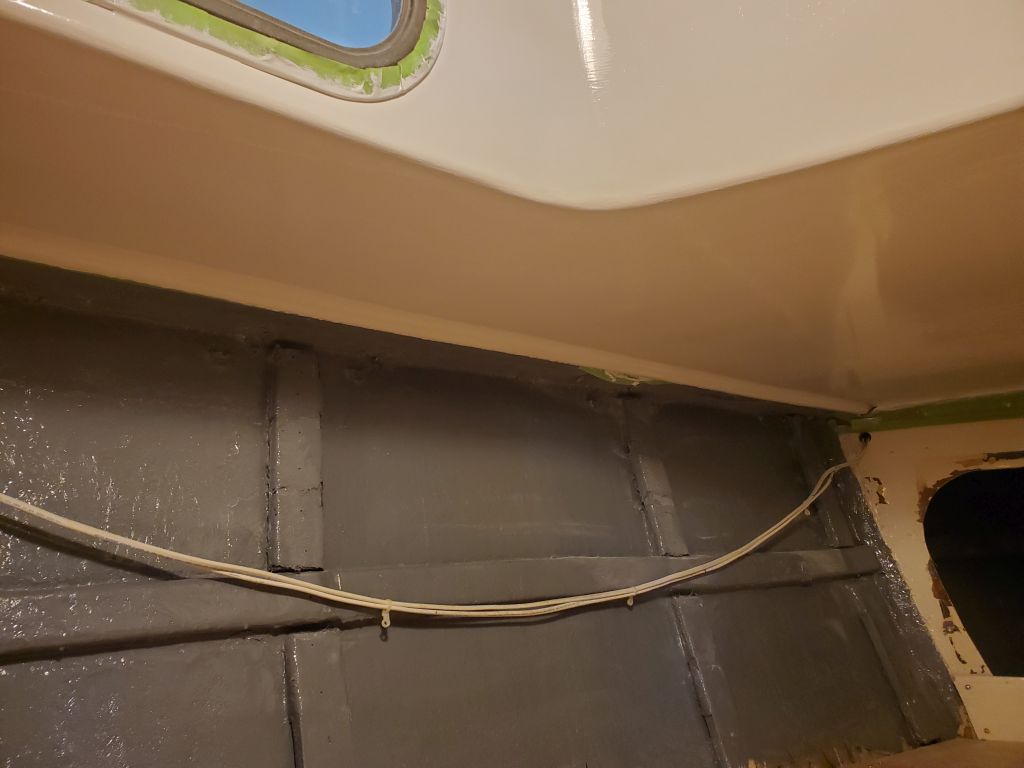
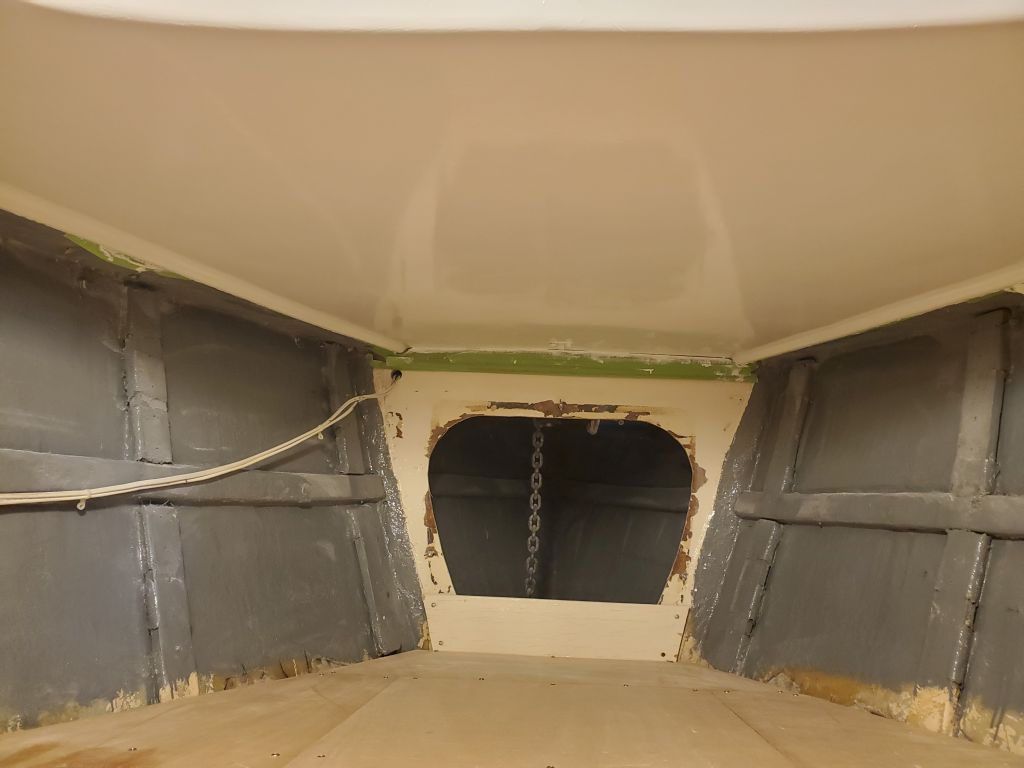
Next, I applied a second coat of semi-gloss white enamel to all areas of the interior, as well as the loose panels and hatches underway.
I lightly sanded the propane cylinder box to scuff the new fiberglass and remove any sharp edges, then, after removing the temporary glue blocks from within, installed some lightweight tabbing along the inside seams as well.

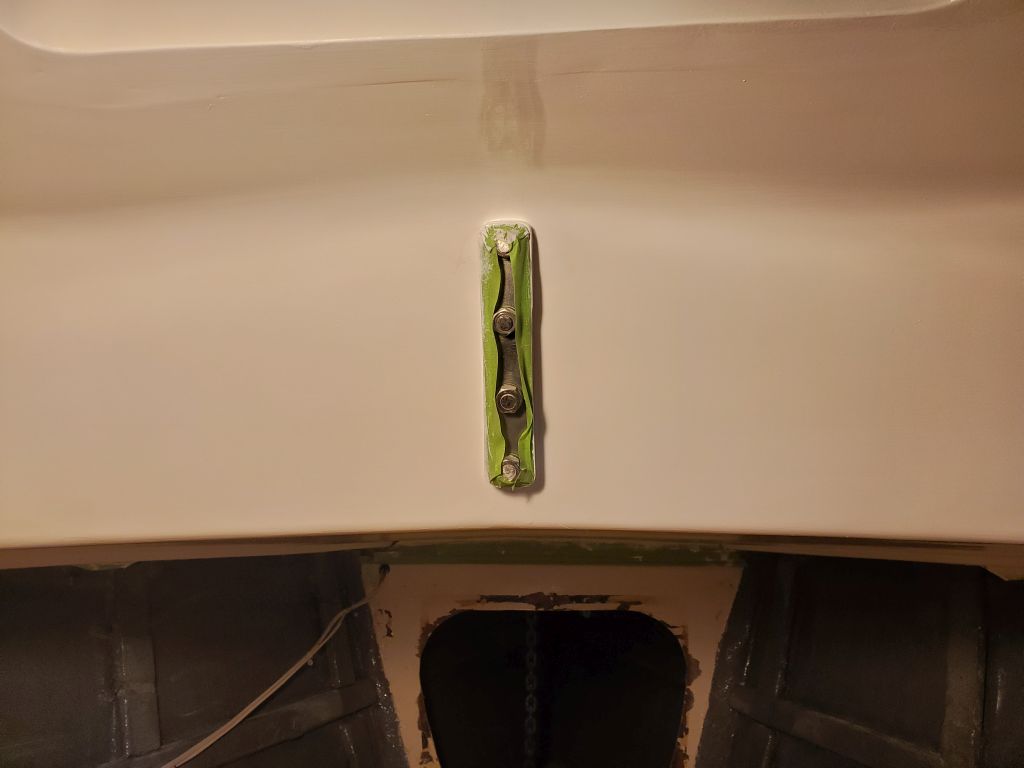
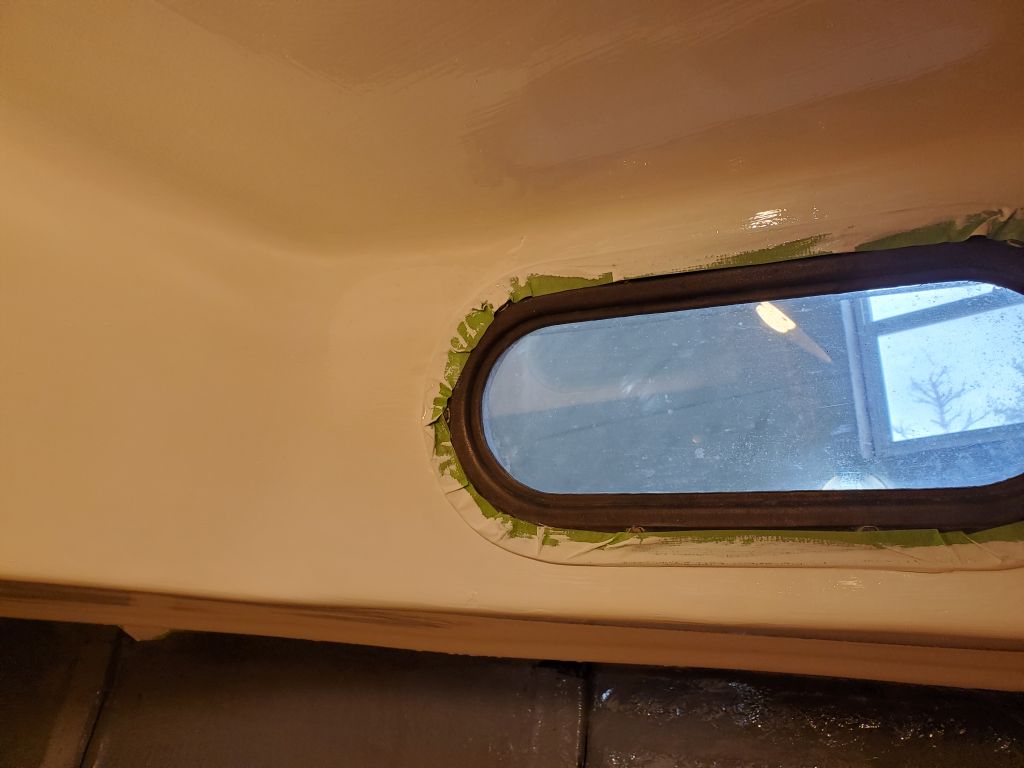
With new fasteners on hand, to finish up the day I installed the chainplate deck covers at all six locations, with heavy beads of sealant in the slots, around the chainplate, and along the bases and fastener holes in all cases.  With the adjacent decks protected with masking tape, I left the excess sealant squeezeout to cure for removal later.

Calliope Girl 68

I began by lightly sanding the interior primer with 220 grit paper, striving for a flat, smooth, even surface.  Afterwards, I vacuumed and solvent-washed to prepare for the finish coats.

Next, I applied the first of (expected) two coats of semi-gloss white enamel to all areas.

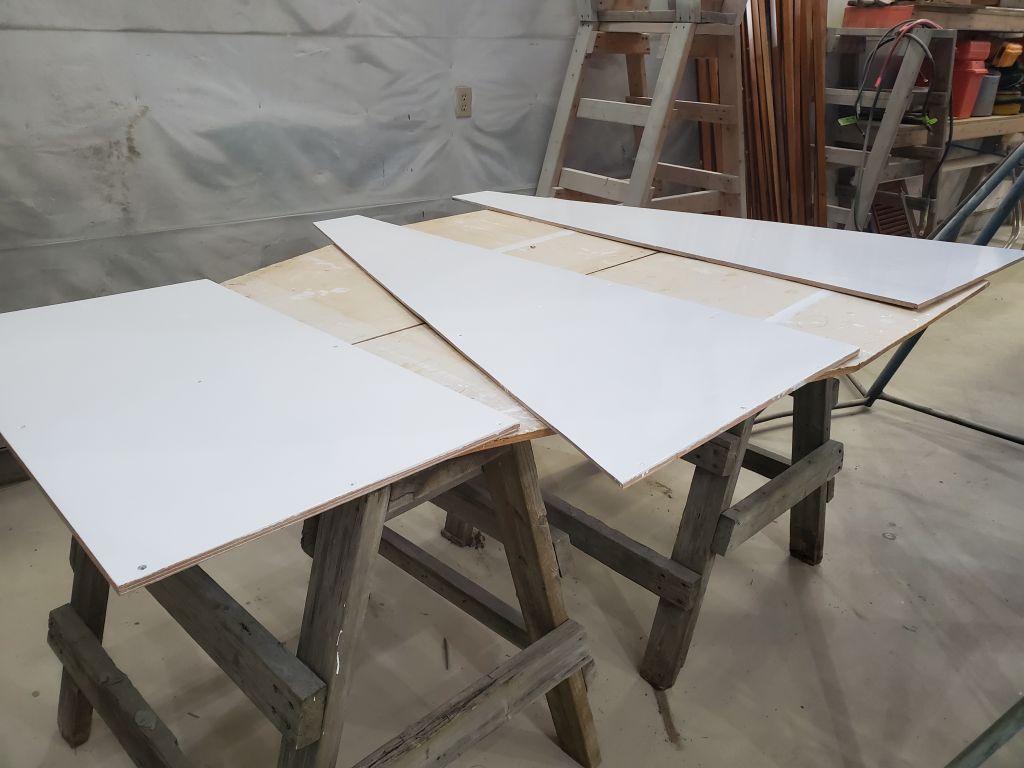
I also applied the finish paint to the settee berth access panels, and other loose panels down in the shop still undergoing treatment.

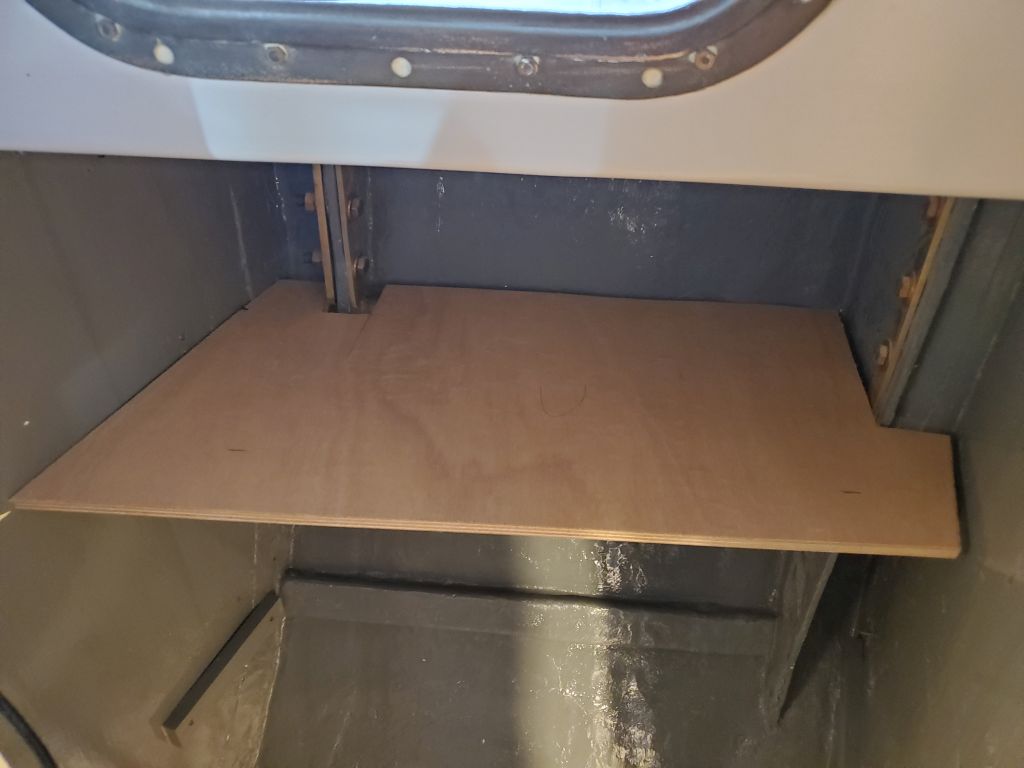
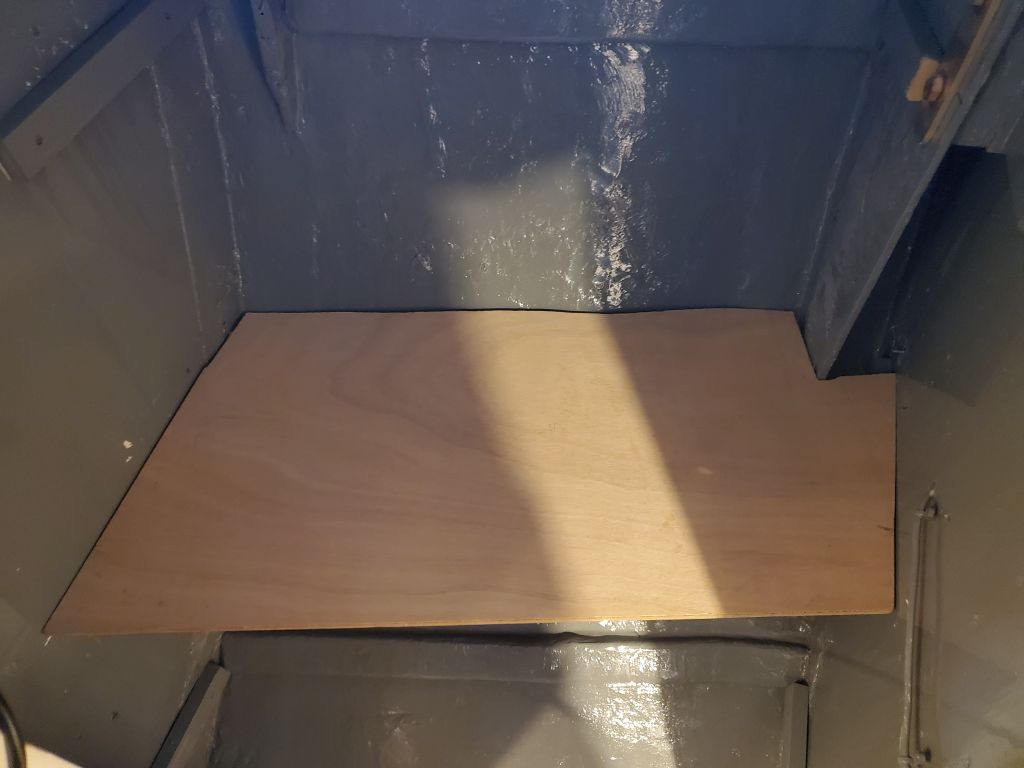
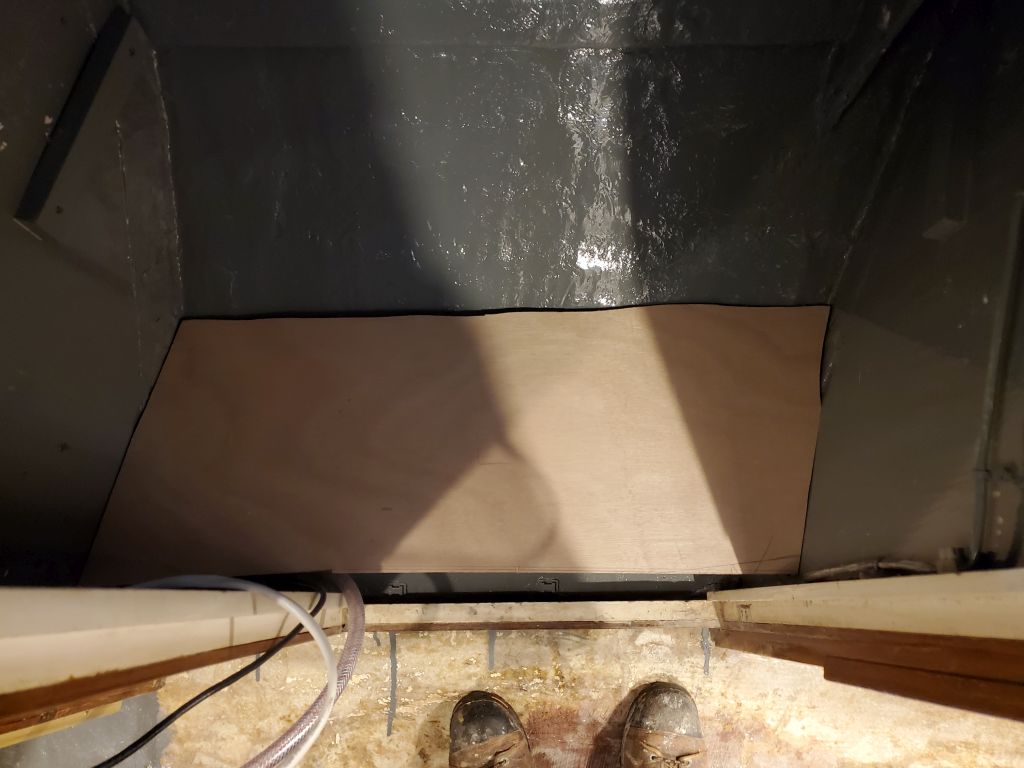
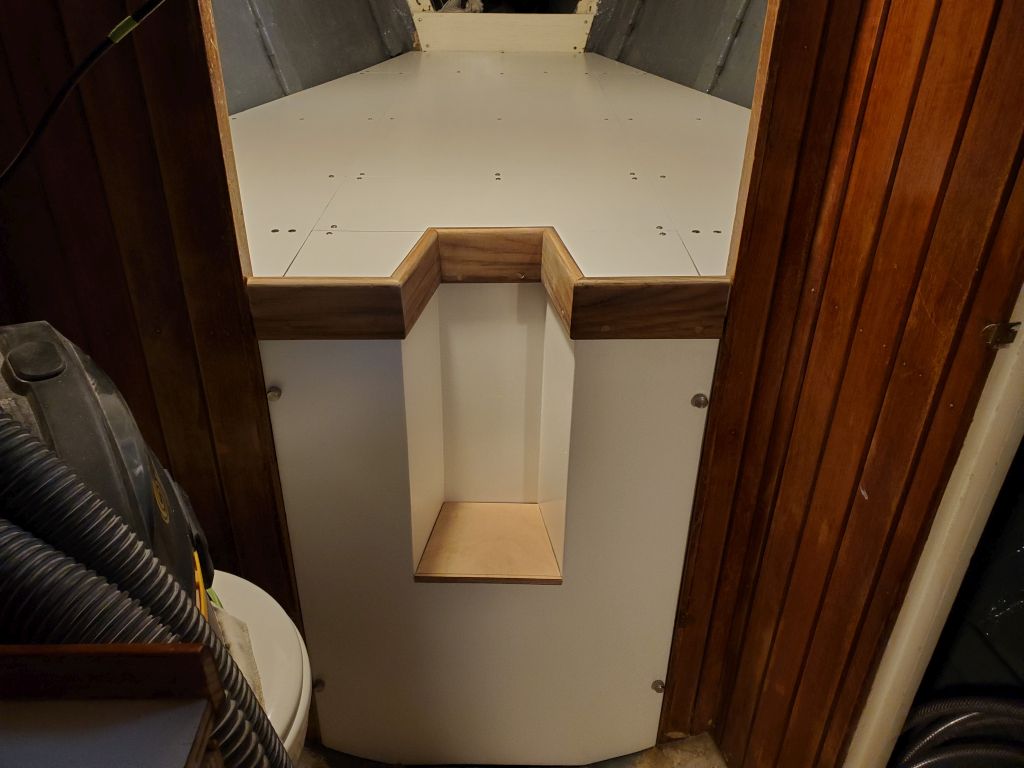
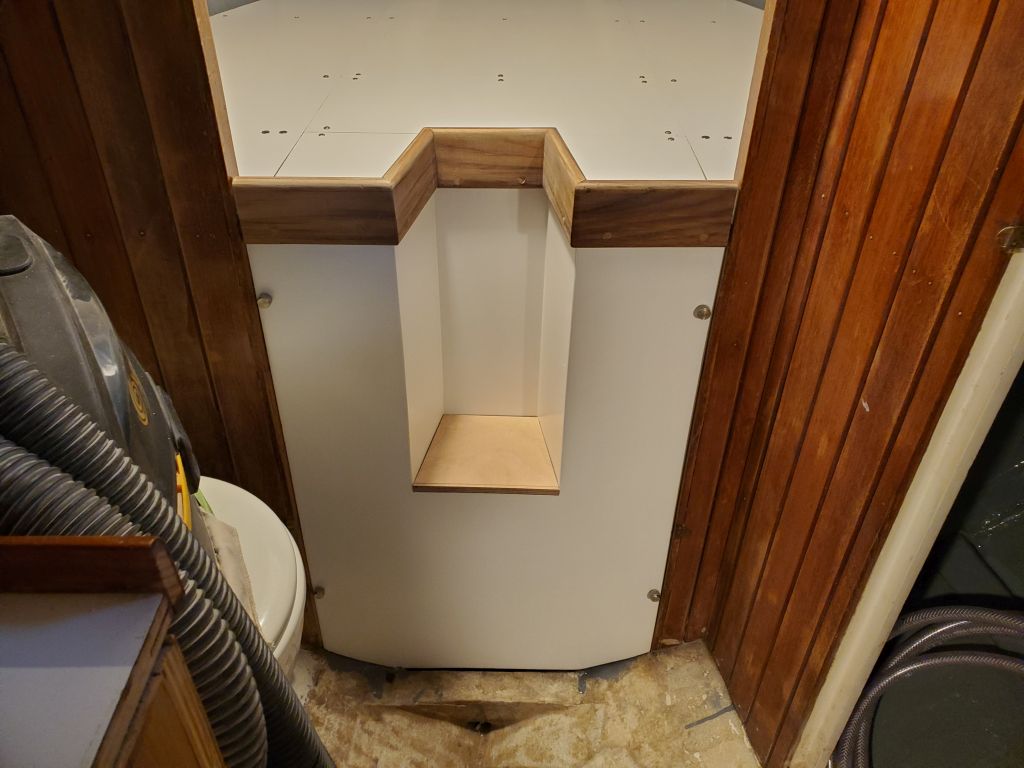
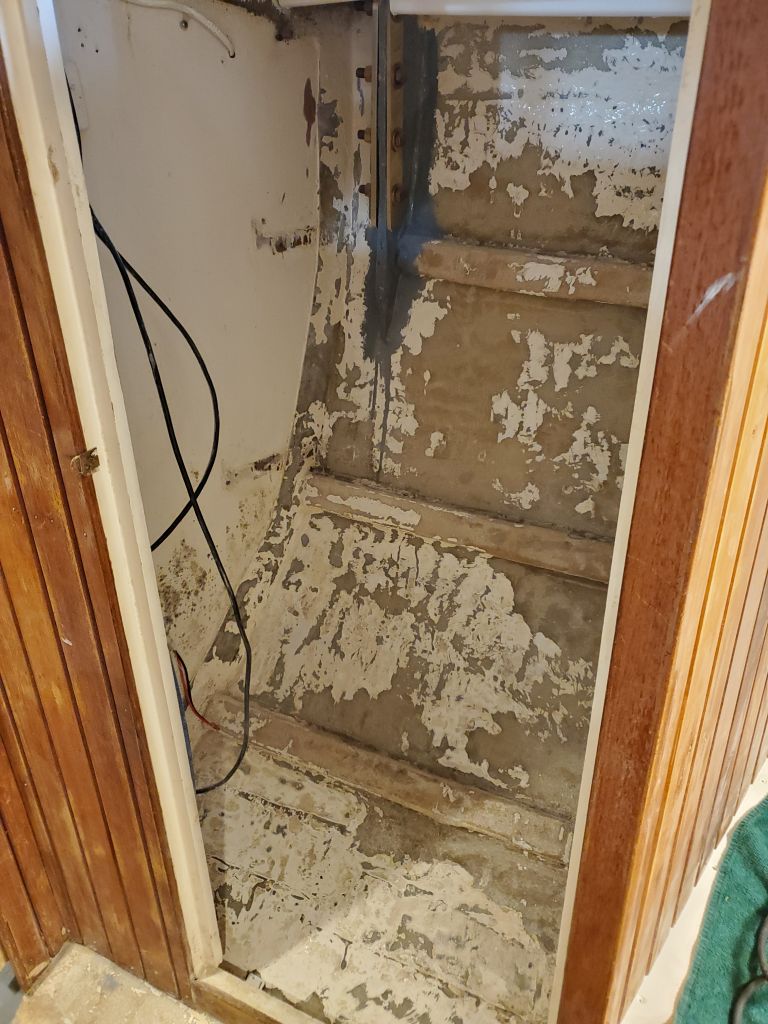
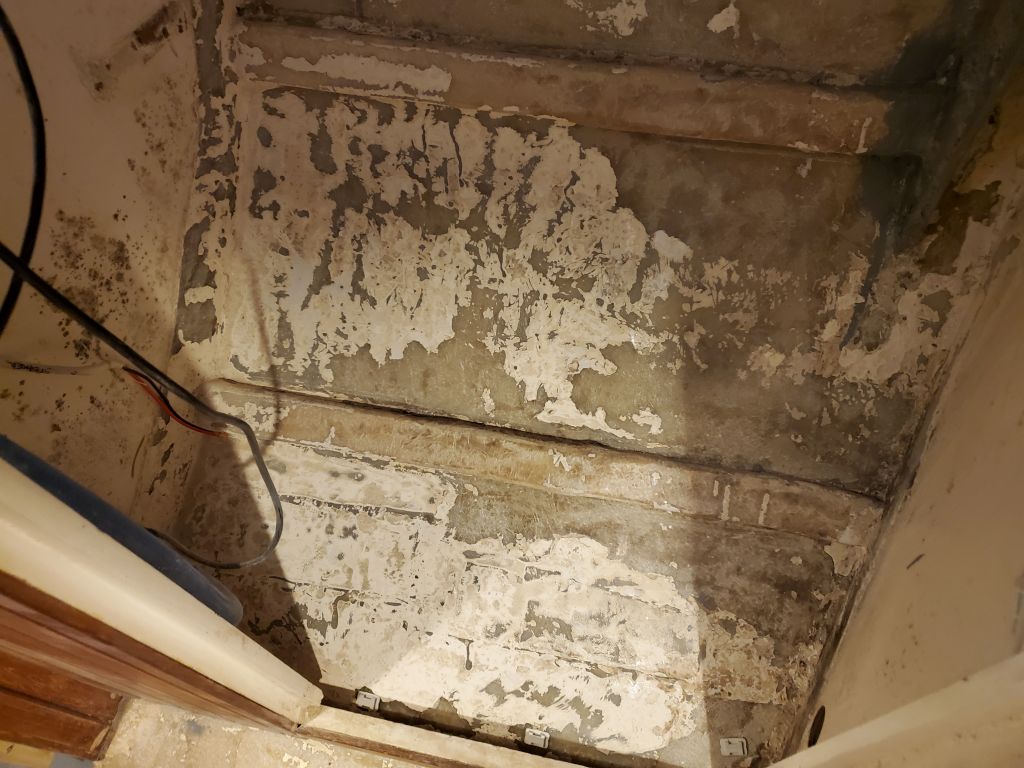
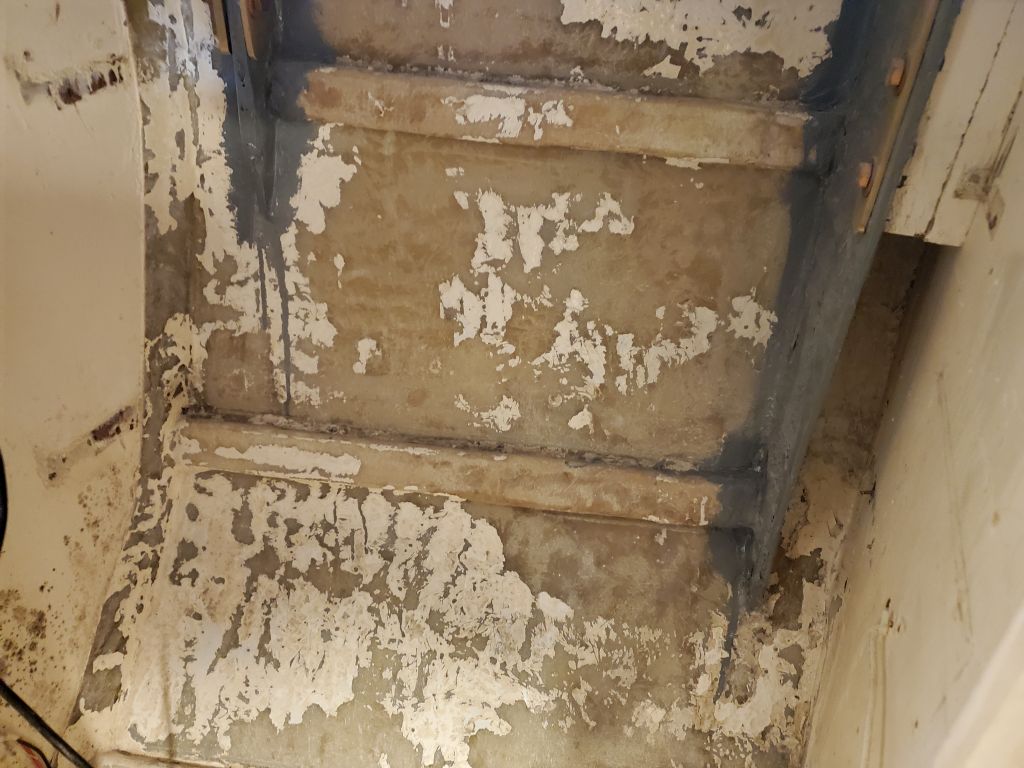
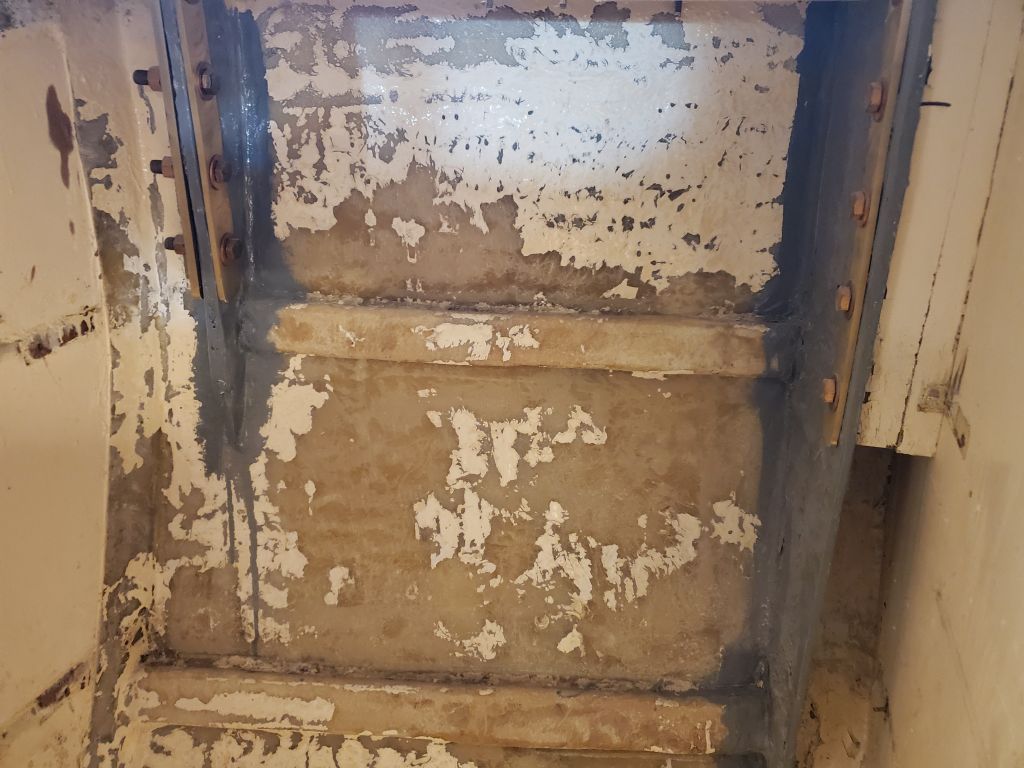
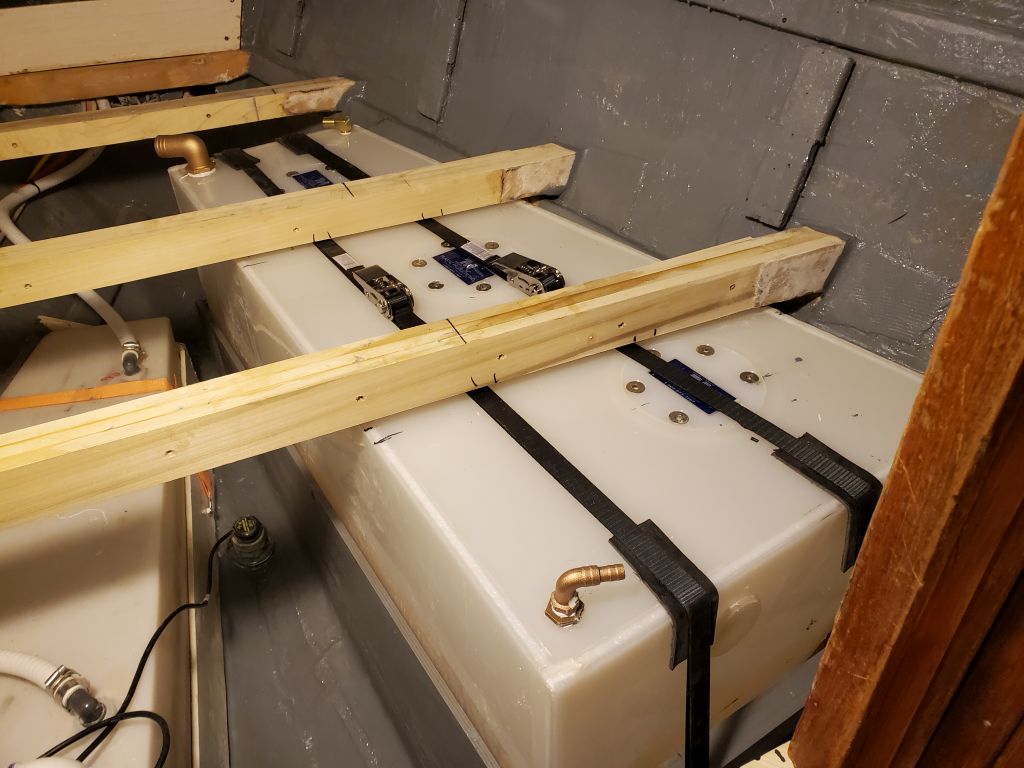
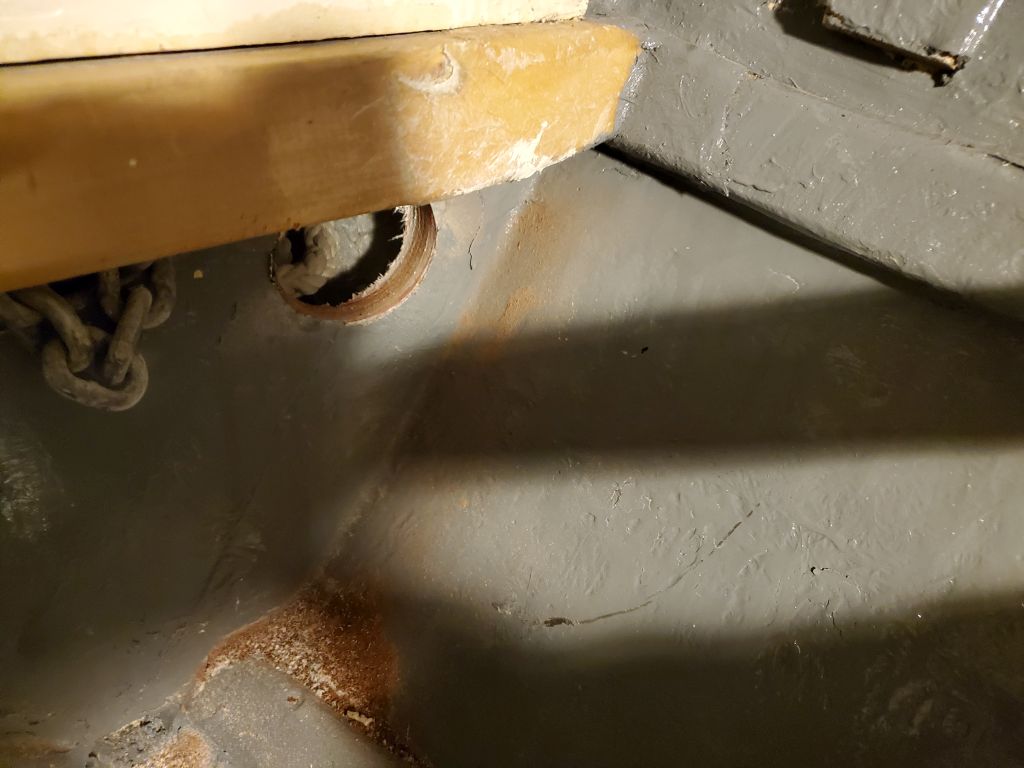
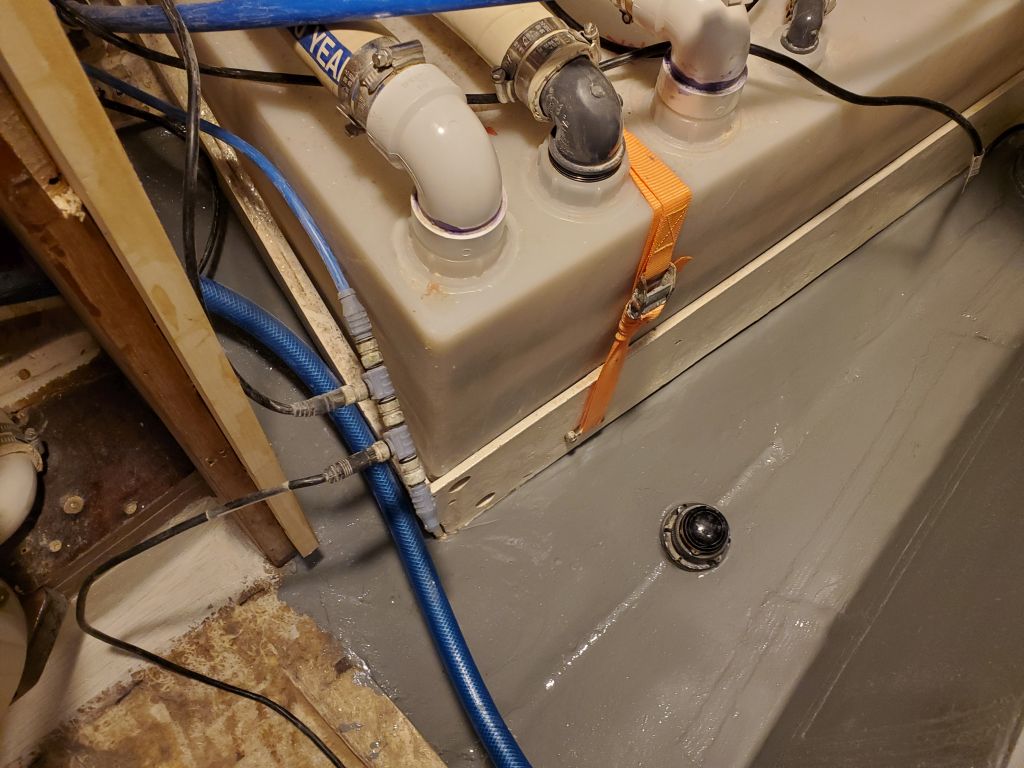
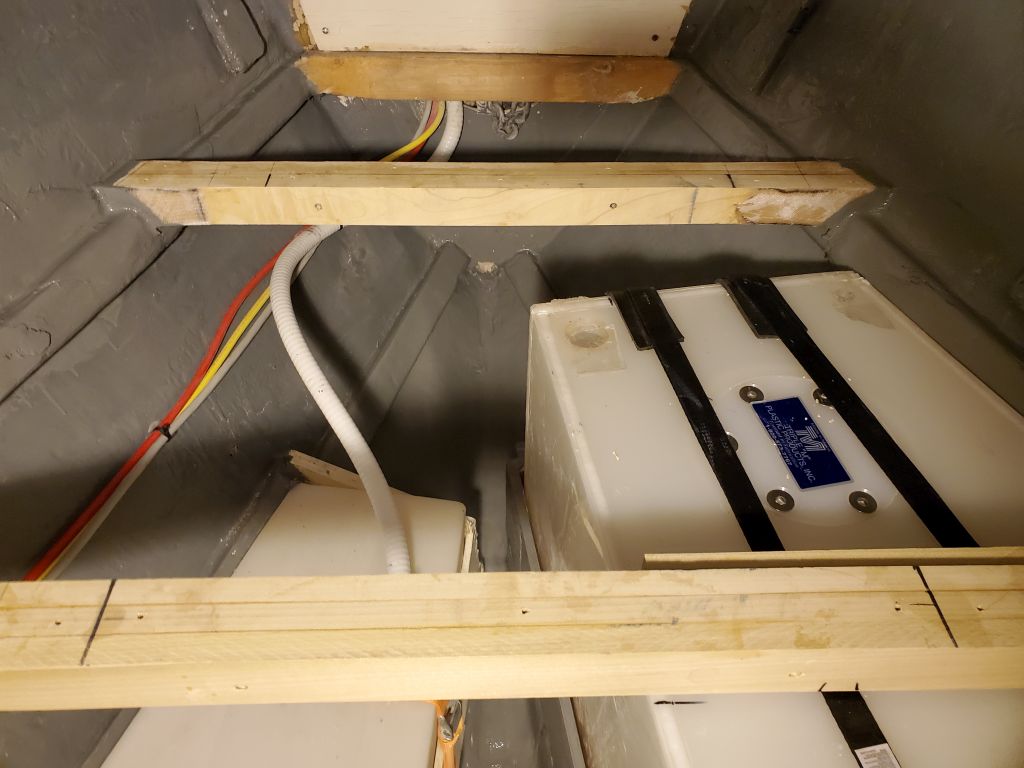
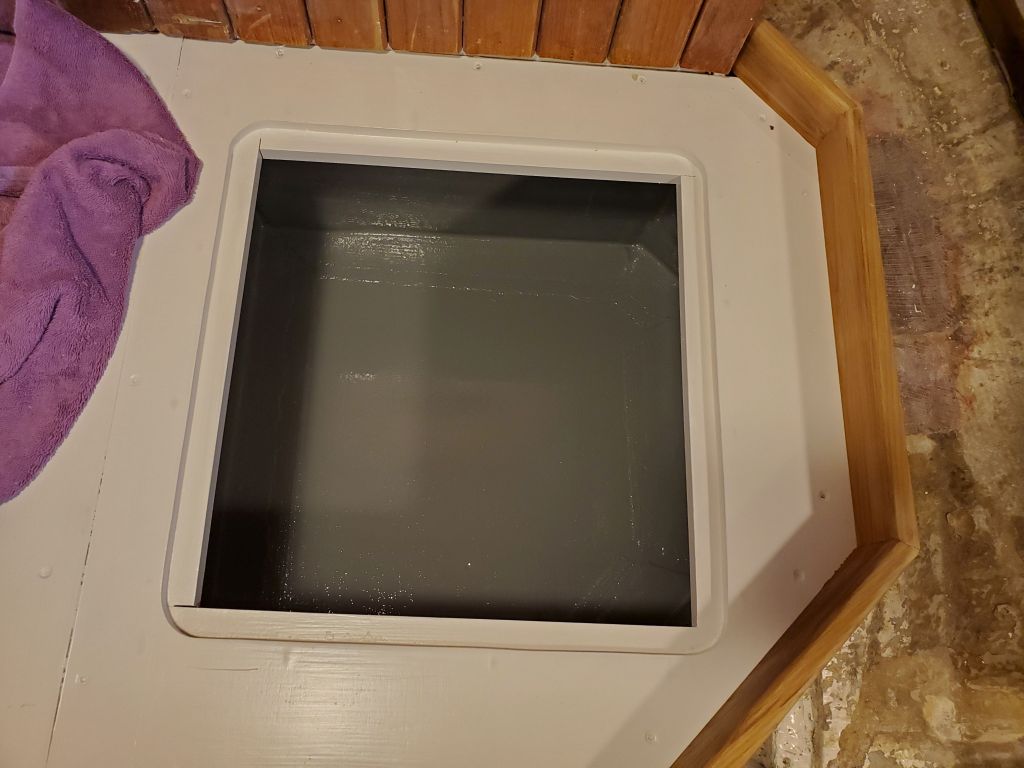
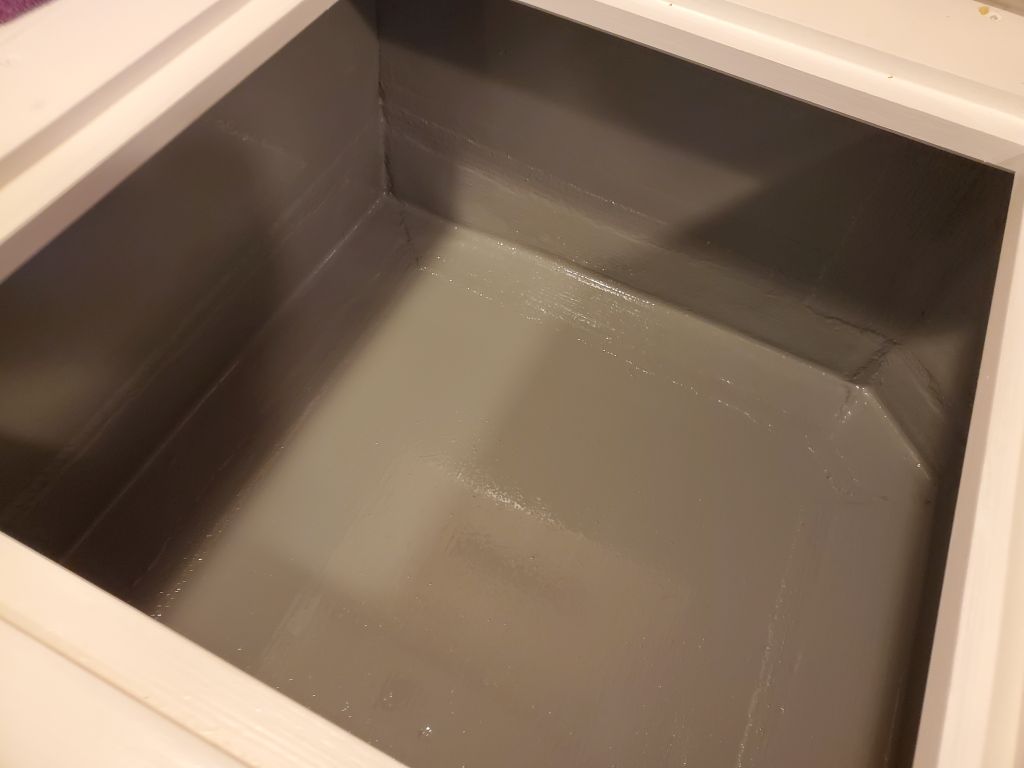
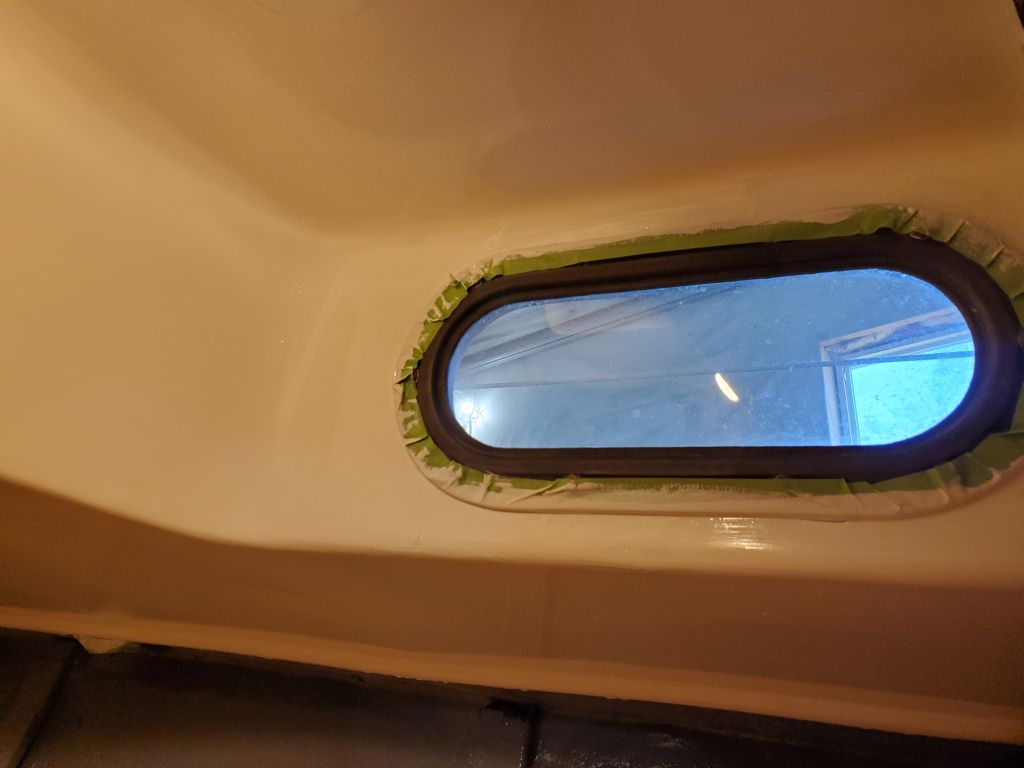
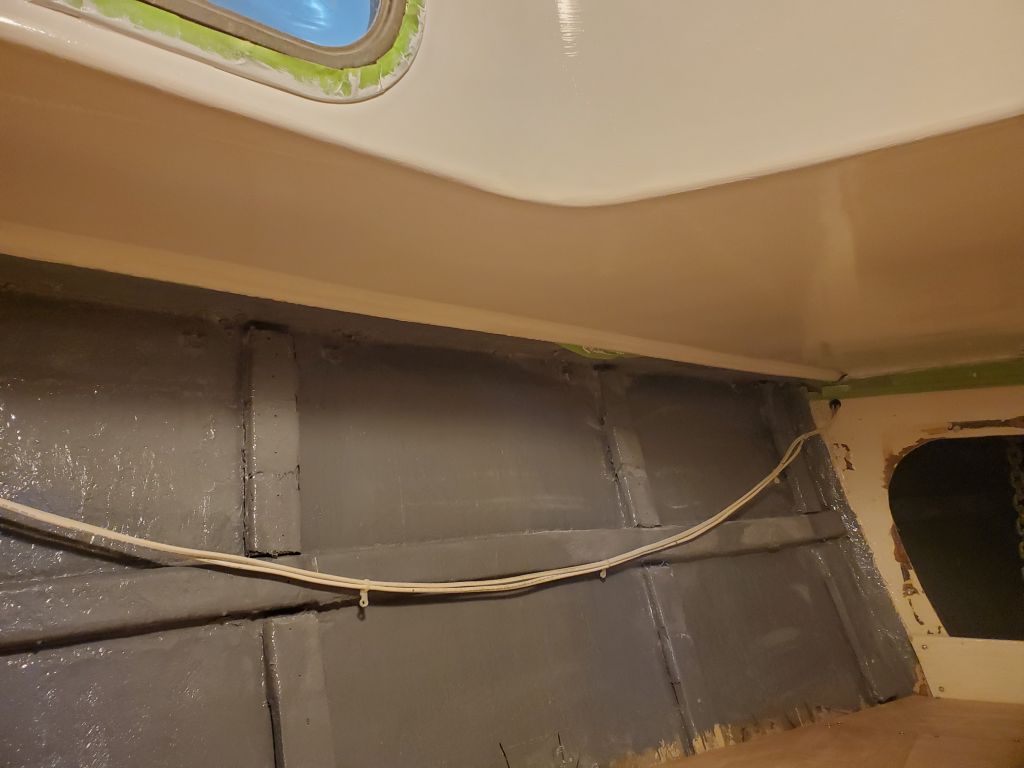
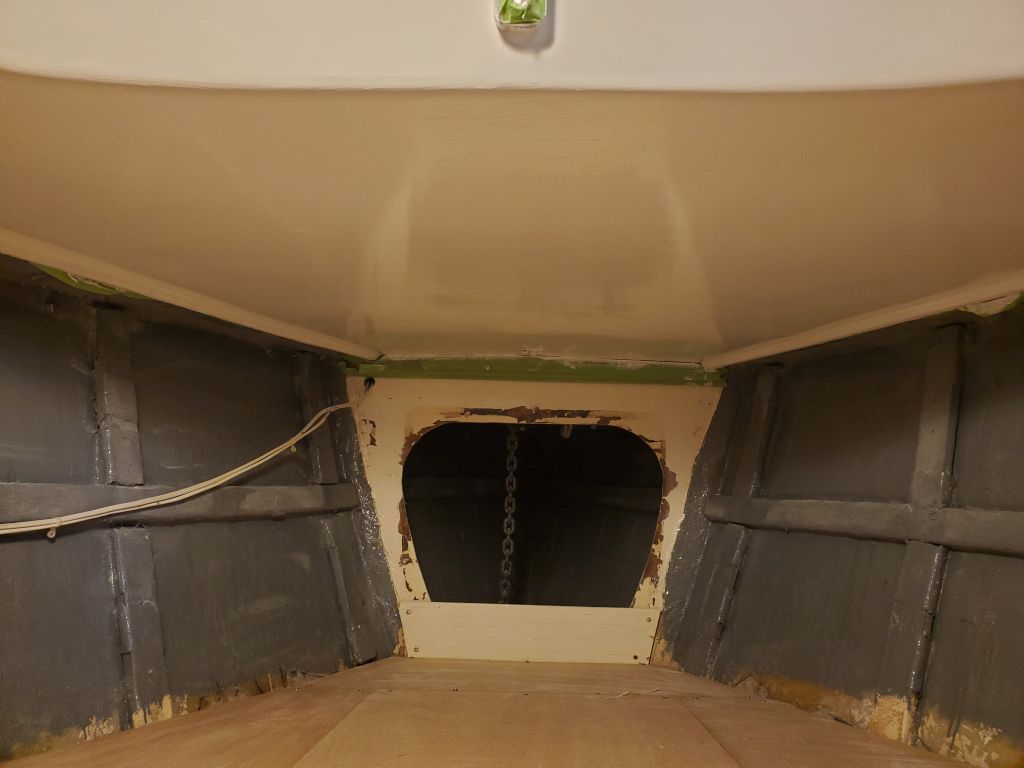
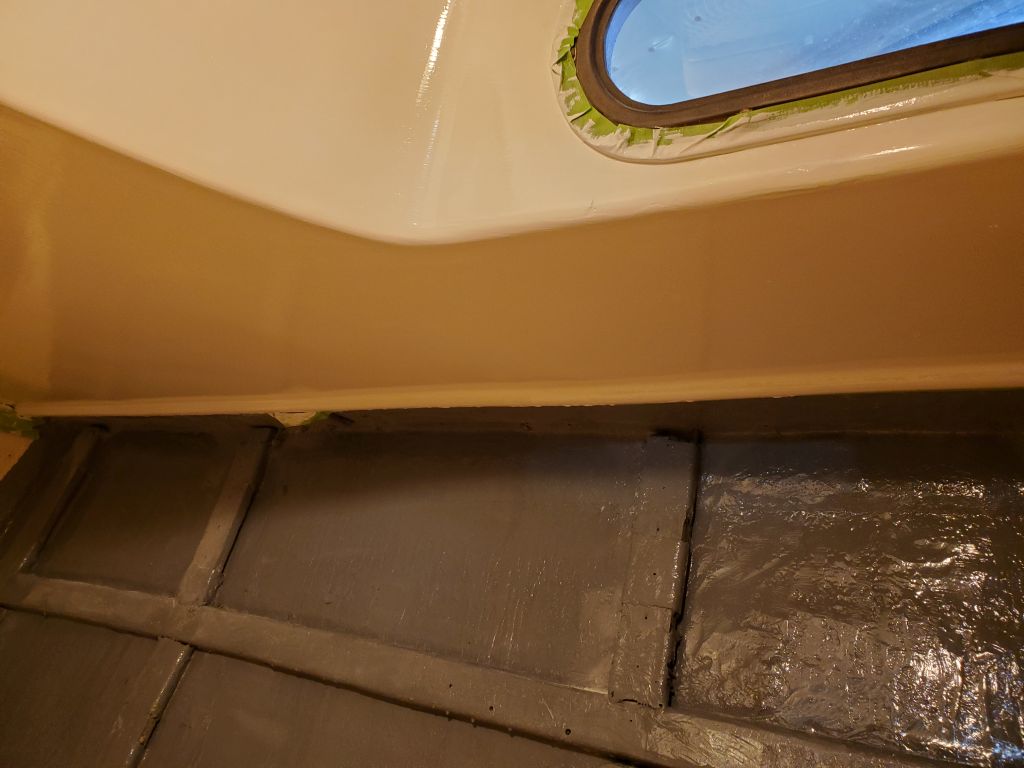
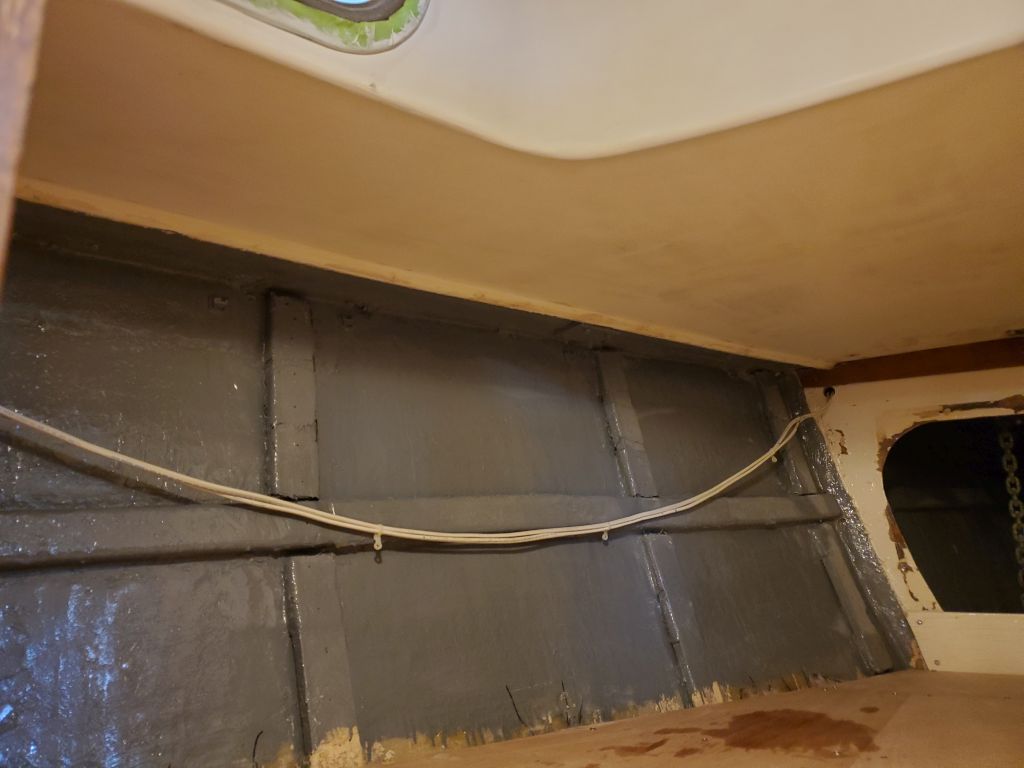
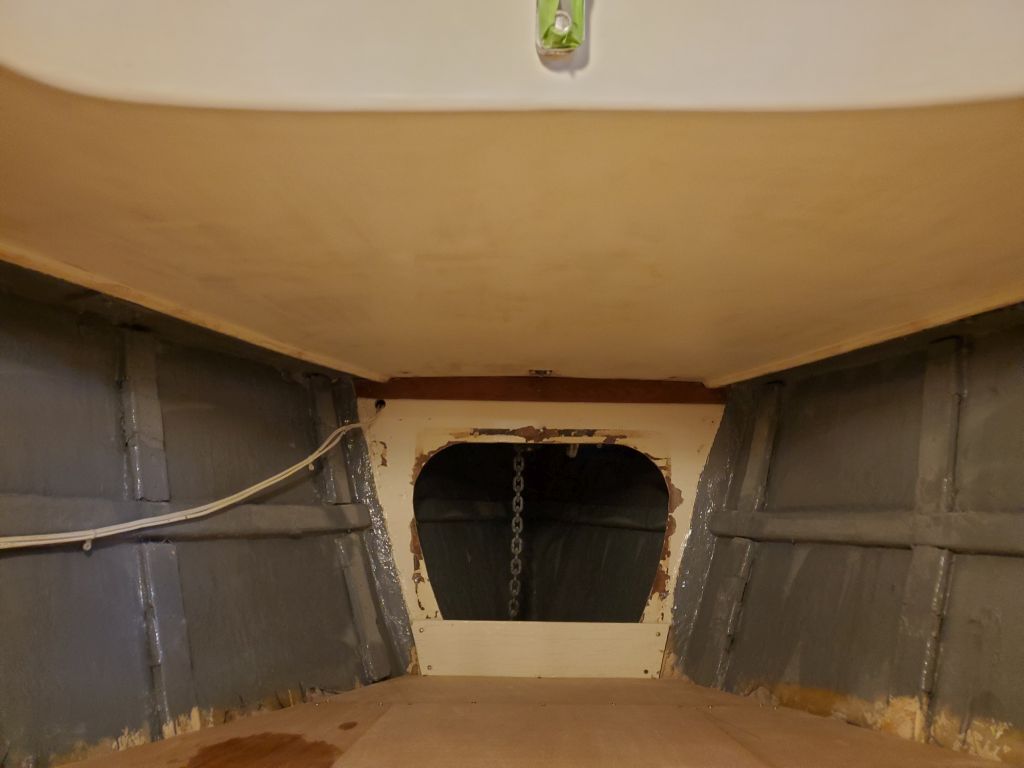
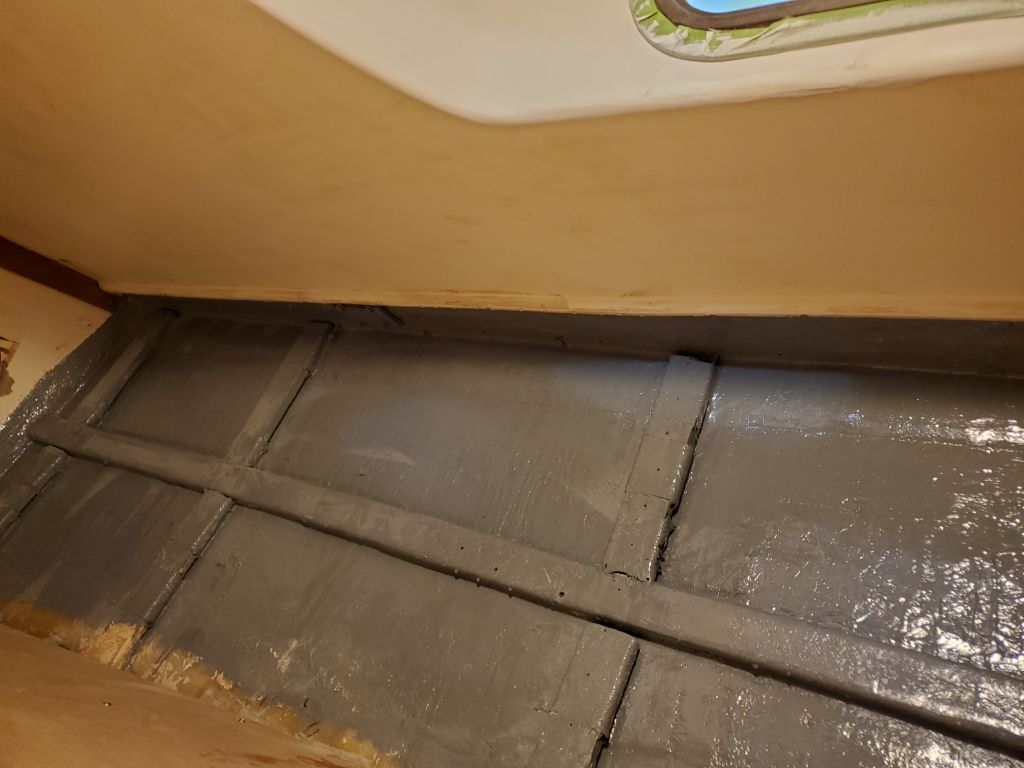
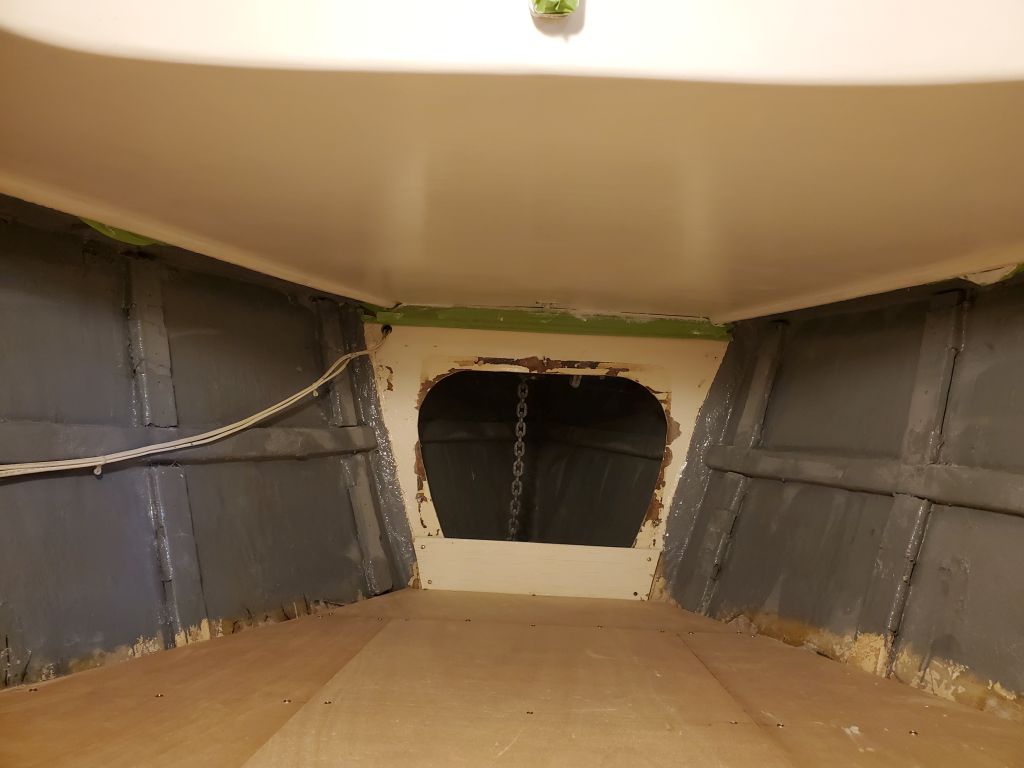
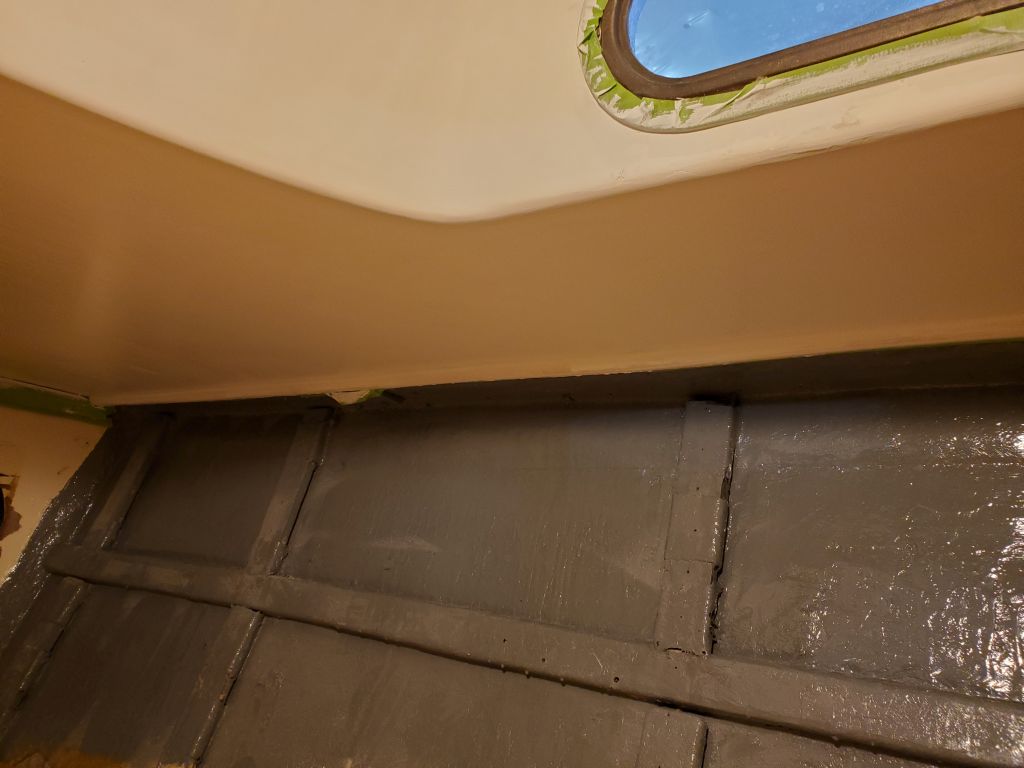
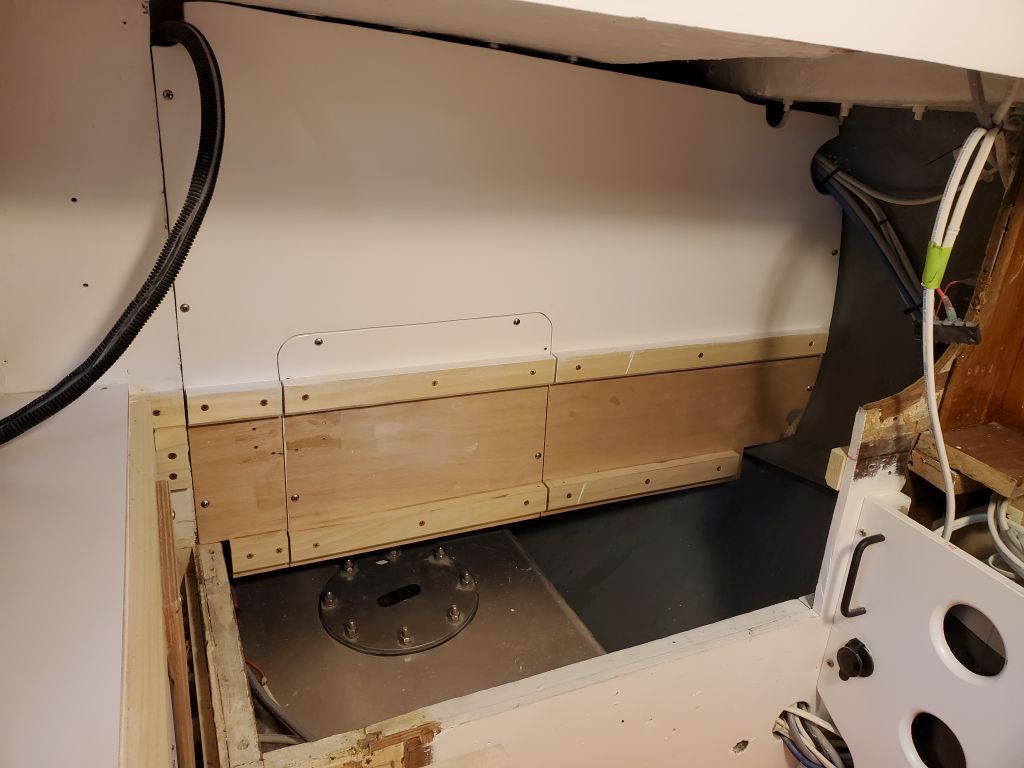
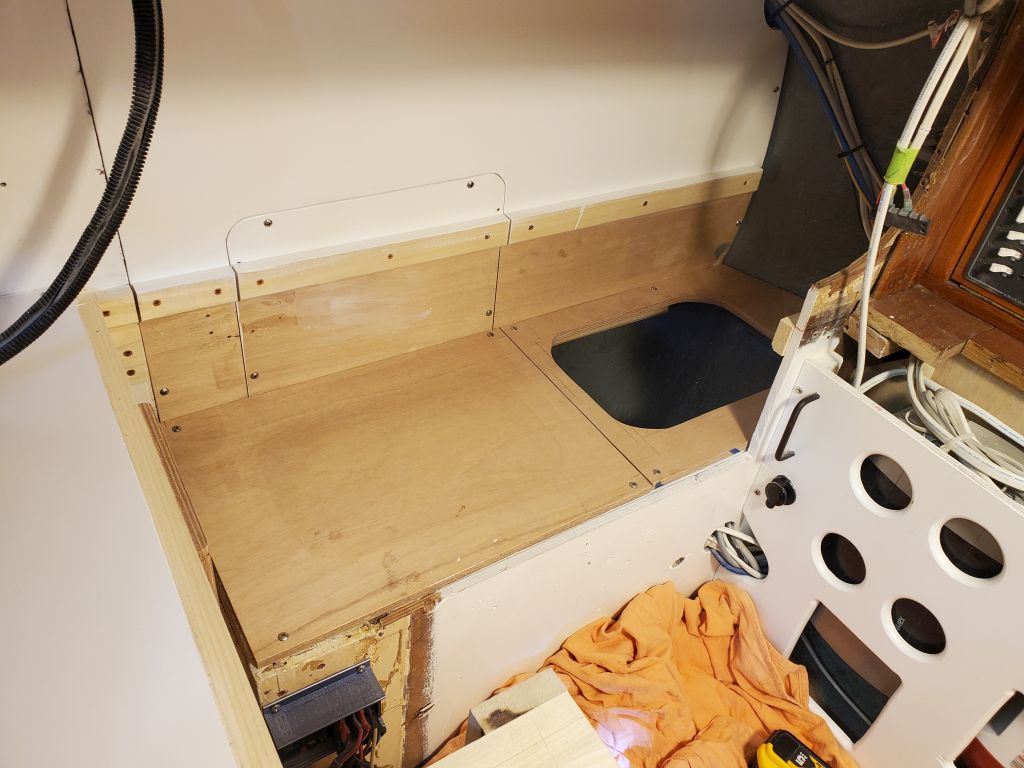
After a trip out in the world to pick up the countertop material, I got to work on the propane cylinder box.  The owner and I had decided some time before that the new propane locker would be mounted in the after part of the port cockpit seat, which featured an angled, molded top beneath a hinged wooden seat platform.  These photos date from some early planning stages back in October 2023 and are for illustration only, as now the cockpit was full of tools from the interior and I couldn’t easily access the area.  To hopefully maintain (and actually create) access to and storage within in the remainder of the locker that was once the quarterberth, the new locker would mount as far aft (to the left in these photos) as possible, leaving whatever space remained for a top-opening locker lid to be constructed later.  The second photo in this series shows that from the inside (lowest) corner of the locker to the location of the existing (now closed off) vent from the old locker on the starboard side was 13″ below this point.  This location, seen in the third photo of the same vintage, was several inches above the waterline, leaving a bit of room for the requirements of the new locker, but not much, as this vent had to remain above the static waterline.

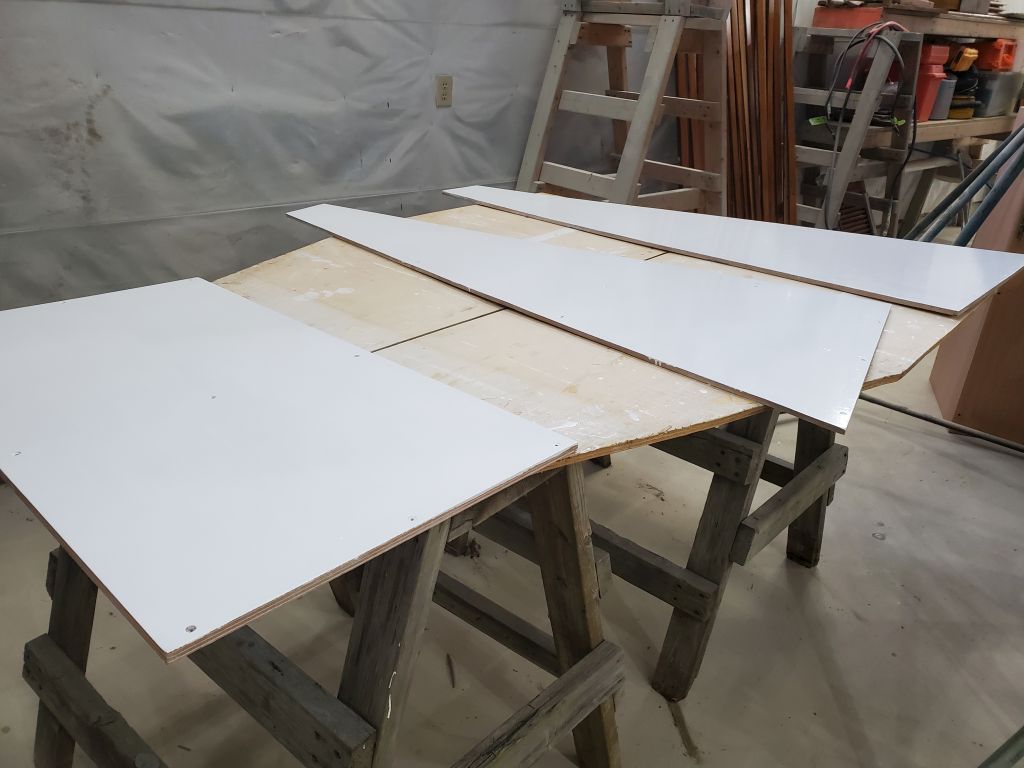
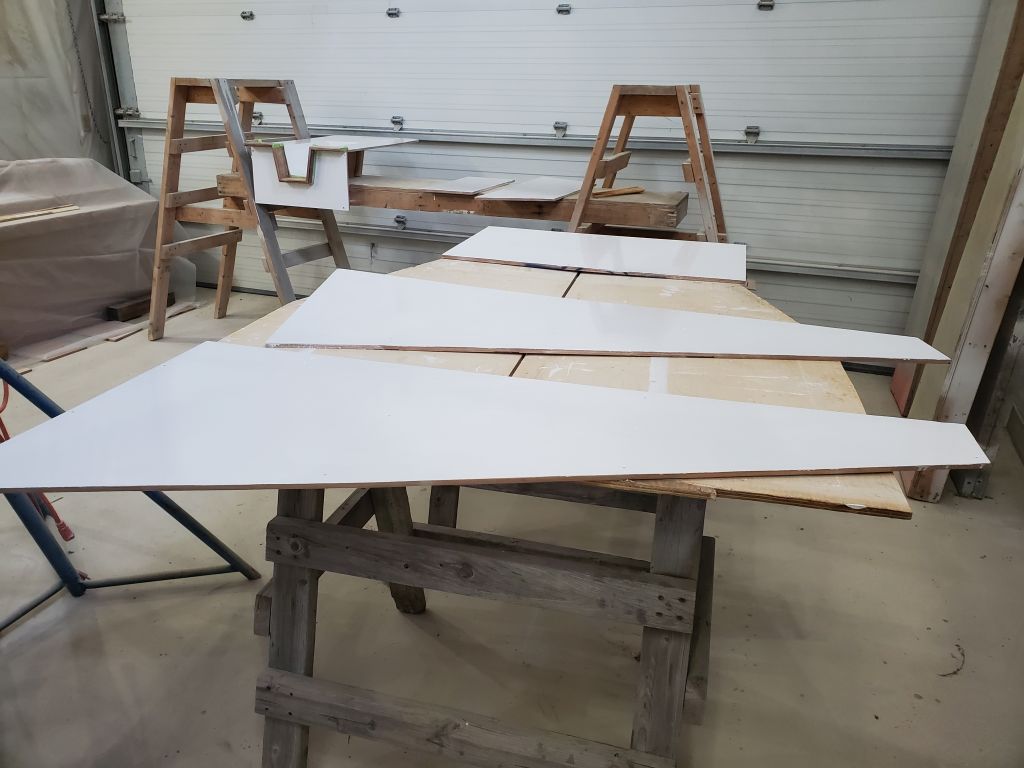
The owner also decided to continue to use the pair of small steel propane tanks he had been using, which were under 12″ tall and were otherwise acceptable.  Originally, we’d discussed using an expensive horizontal tank, the dimensions of which might have taken up more of the valuable space in this locker, but in the end the pair of smaller tanks made good sense to use in the new plans.  With all this information in mind, I’d come up with an idea for the locker and, some time before, had purchased some materials to use in its construction, which had been awaiting the right moment to be assembled.  This was now.  I’d previously prepared the prefabricated fiberglass panels for construction by roughing up the smooth factory finish, so they were ready to cut and assemble as needed.

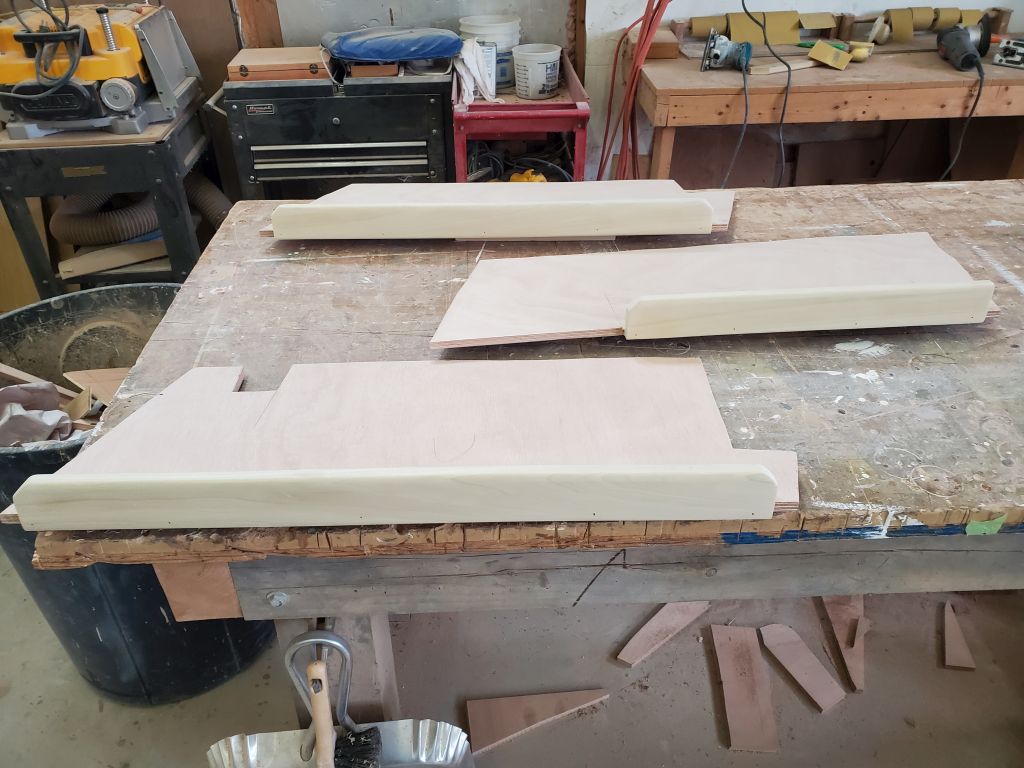
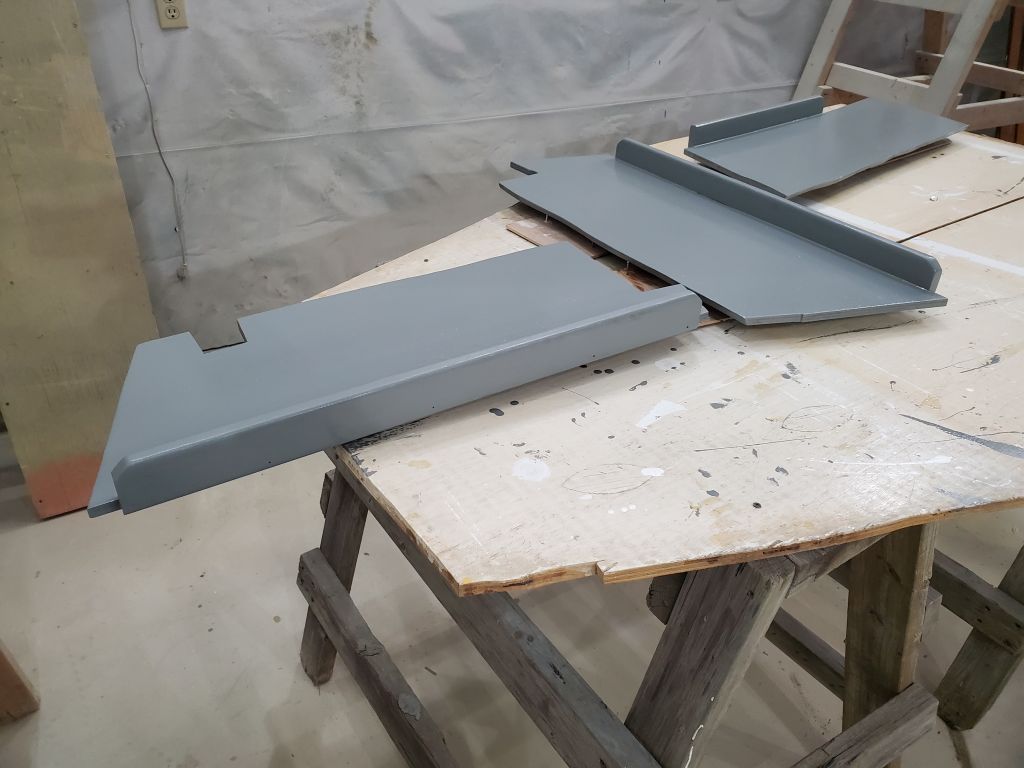
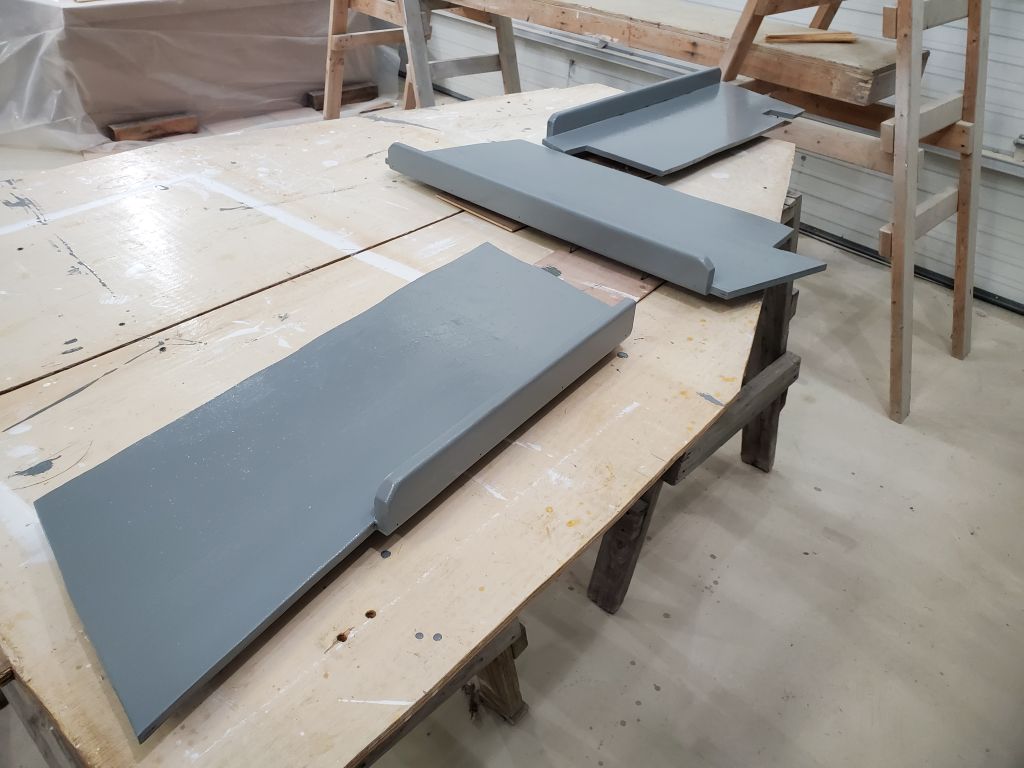
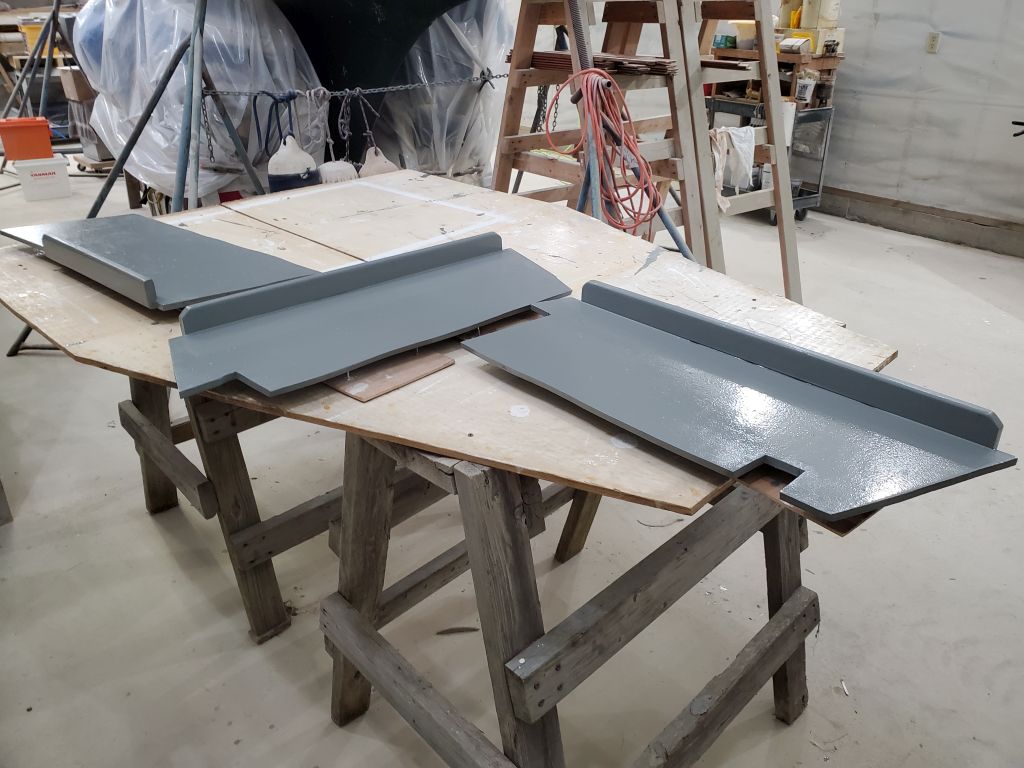
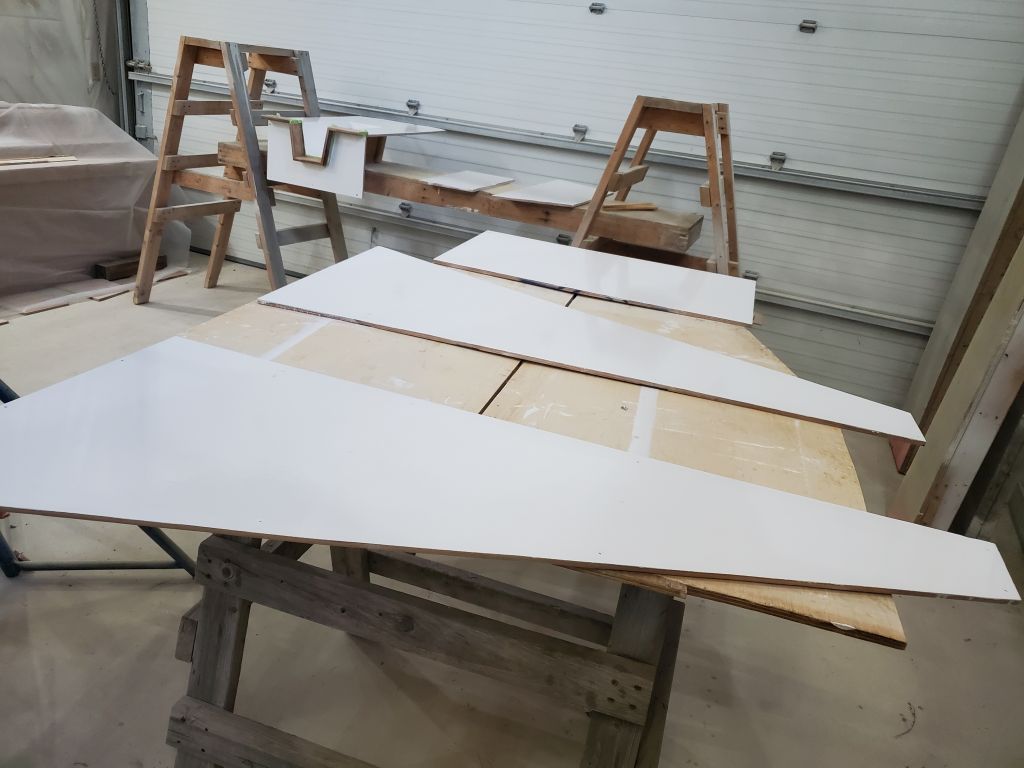
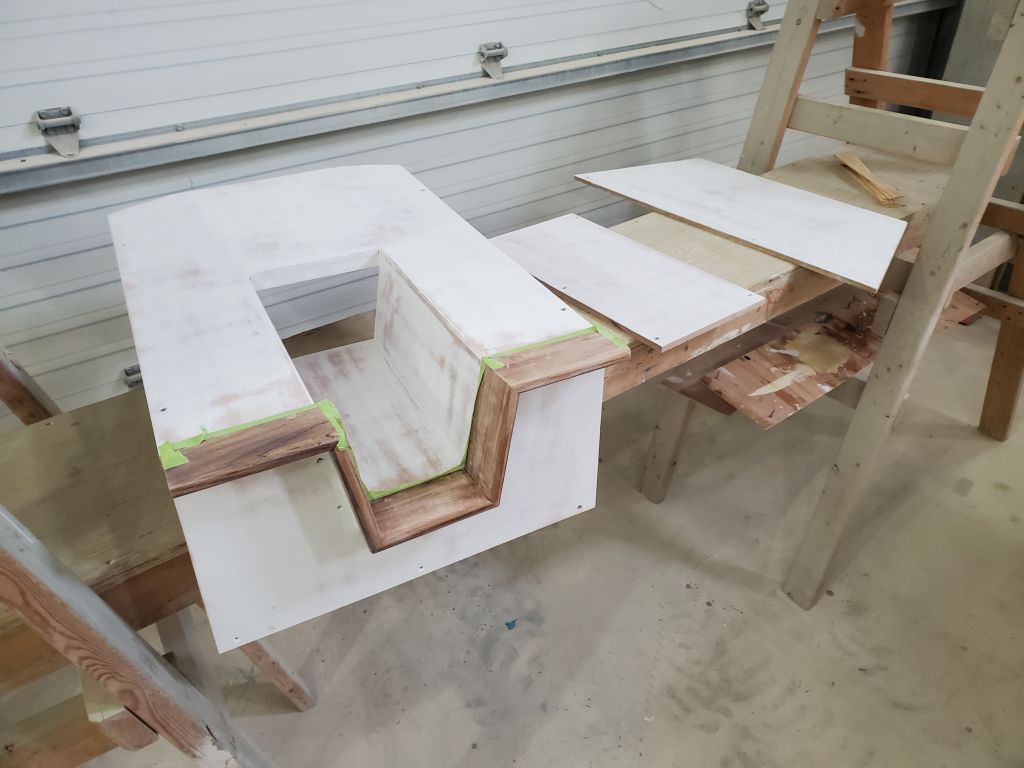
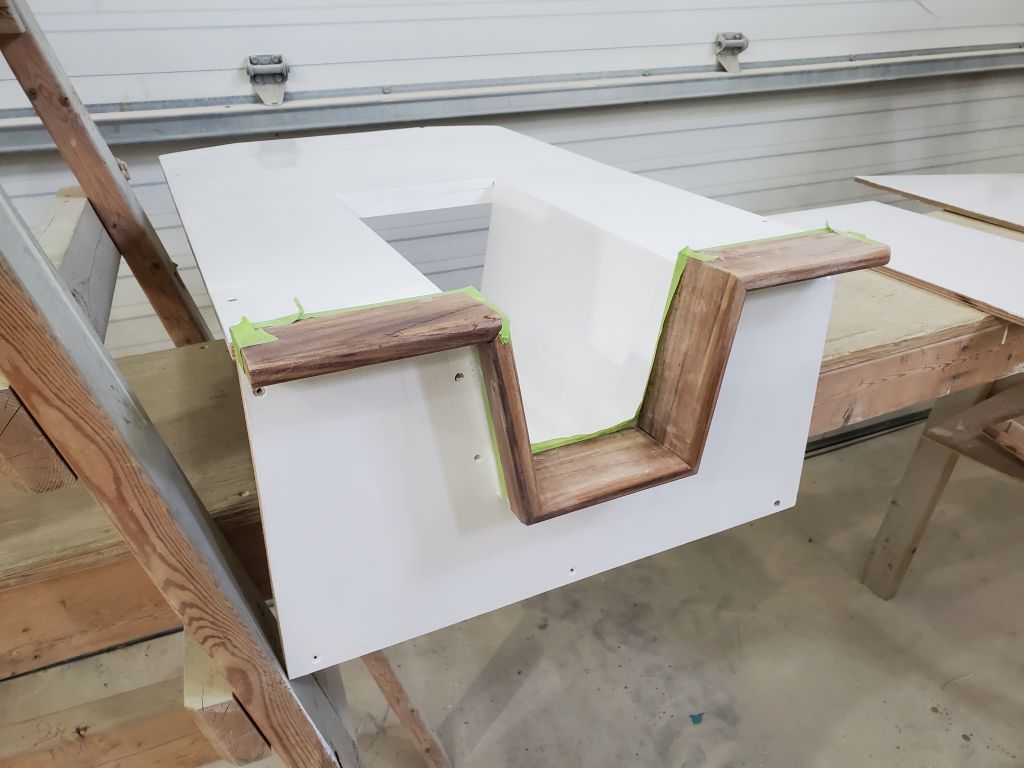
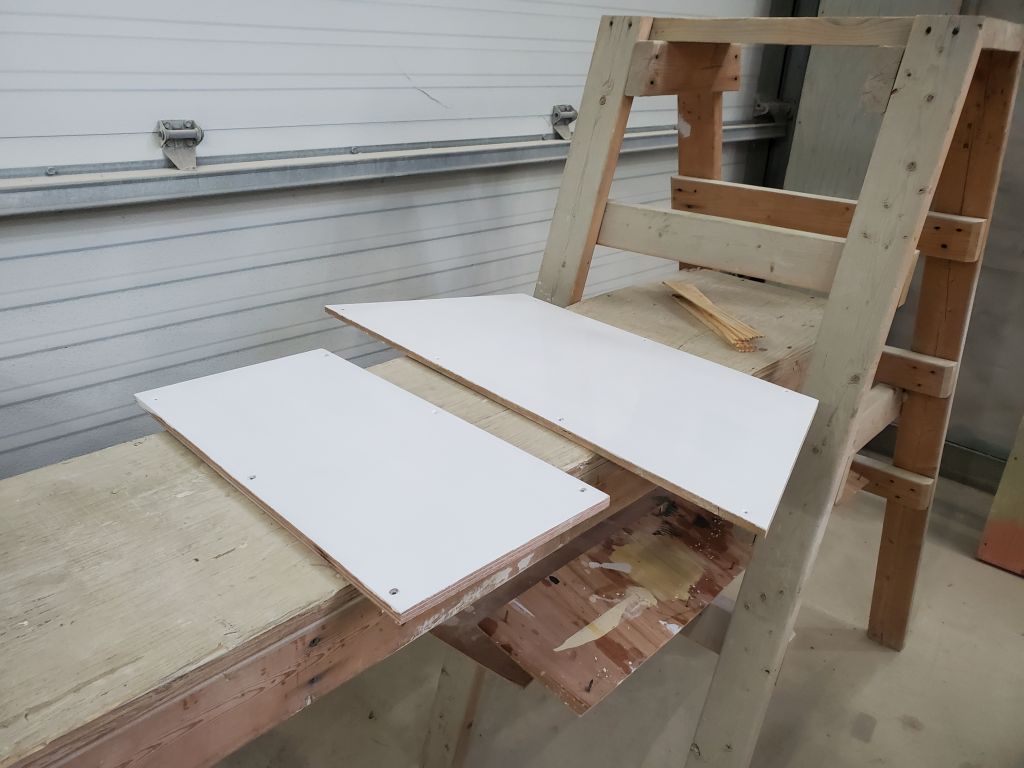
With the two tanks, I determined the length required for the box (19″), and, to leave some space for the tank-mounted regulator, hoses, and other requirements, kept the width at 12″, the stock measurement of the panels I’d ordered.  Two 12″ x 24″ panels formed the sides, shown here “stitched” to the base with some wire ties, as initially I’d thought of assembling the box with stitch-and-glue, though I decided against it for reasons I’ll describe momentarily.  These side panels, and the back panel that I cut to fit, were substantially taller than they’d need to be, but because of the angle of the cockpit locker (roughed out in pencil for illustration on the final photo in this series), I didn’t know exactly how tall; I planned to figure this out in situ later, but couldn’t do it right now because of the cluttered cockpit and fresh interior paint (which prohibited cutting holes in the boat at the moment).  So I chose to assemble the back three sides of the box with extra height for later trimming.
However, the front (i.e. inboard) side of the box would be dictated by the clearance required for the tanks, all the while striving to keep the locker as shallow as possible in order to maximize the distance between the waterline and the vent fitting, which would run out of the bottom of the locker.  The tanks were 12″ tall, so I cut the front panel to 12-1/2″, which seemed a practical minimum.  Once I could insert the actual box in position through its new cutout in the cockpit, I’d mark the final angle and position and cut the remaining sides accordingly.
I abandoned the idea of stitch and glue in this case because this method would have had me installing epoxy fillets inside the box at all the corners/junctions between panels to secure the parts together, and there frankly wasn’t floor space for these fillets given the design of the tanks, which extended straight all the way to the base with no recess like the well-known 20 lb. BBQ tanks.  So with my goal of keeping the locker as small as possible, I needed a flat floor all the way to the sides.  Plus, there was really no need to assemble the box in this way, as I had other means at my disposal that would secure the pieces together for the initial stages.
Instead, I secured the panels with small glue blocks inside as needed, which held the box together securely and would be easy to remove later for interior finishing.  This method gave me an unencumbered exterior so I could fiberglass the whole thing together easily.  First, though, I rounded all the corners slightly to ease the hard edges and make fiberglassing easier.

After final preparations, I installed strong tabbing over all the seams and joints to permanently secure the box, adding small pieces of fiberglass at the four bottom (i.e. top in these photos) corners so the entire assembly would be gas-tight when complete.  I stopped the long tabbing on the back panel before the “bottom” (aka top) because later I’d be cutting this off somewhere.  I left the fiberglass to cure overnight; later, once the exterior was cured, I planned to tab the inside seams too.  The final installation would have me adding flanges to the top (once cut to the proper height and angles) that would rest upon, and be secured to, the molded cockpit, with a gasketed lid to sit atop this beneath the wooden hinged seat covers, which could be modified slightly as needed to clear the new hatch.  I’d not yet worked out any details for the proposed storage lid forward of this, awaiting the finalization of the critical propane solution first.

Calliope Girl 67

In the main cabin and galley, I masked off various places as needed, mainly around certain portions of the overhead (plastic laminate panels that would not be painted), deadlights and ports, and where the settee cabinetry met up with the varnished bulkheads and elsewhere.

Thusly masked, I was ready to apply white primer to all areas, basically starting at the top and working down and through all areas in as logical a way as I could.

Back on the shop floor, I primed the hatches from the settees, and a few other things that needed the primer as well, such as hatch openings and the edges of some panels.

Later, I installed the two forward chainplates permanently.  I’d planned to install and bed the deck cover plates as well, but discovered as I was preparing the original four (to remove old sealant) that I didn’t have the correct little screws on hand for attaching the plates to the deck, so final work on the chainplates would have to wait till another time.

After some odds and ends and general shop cleanup, the day and the week was done.

Calliope Girl 66

The forward chainplates had been lingering on my list, so I decided to get those installed and off my mind.  After marking the width of the  chainplate inside the boat, with a drill and a long 1/4″ bit (using the long bit for this job allows a straighter and more accurate hole position next to the knees), I drilled holes through the deck at the ends of the marked space, then, from above, finished out the slotted cut with an oscillating tool.  I measured the other chainplates to see how much protruded above deck, then marked the new chainplates and, holding them temporarily at the correct position with locking pliers from above, returned below to clamp the chainplates against the knees in their final positions.

Next, I drilled the four bolt holes on each side, making sure the backing plates fit correctly and running the bit through both pieces.  I installed all four bolts on each side as I went, just to ensure the alignment would remain correct.  Afterwards, I removed the bolts and chainplates so I could prep and then epoxy-treat the slotted deck openings.  I’d finish up and finalize the installation once the epoxy cured.

The main focus of the day was surface preparation in the saloon and elsewhere.  After getting set up with tools, supplies, and breathing equipment, and cleaning out the tools leftover from the chainplate work, I got ready to sand the new cabinetry in the saloon and galley, along with the cabin sides, overhead,  and main bulkhead staving in the main cabin, plus the overhead and bulkheads in the head.  These photos show the condition of things at the beghinning.

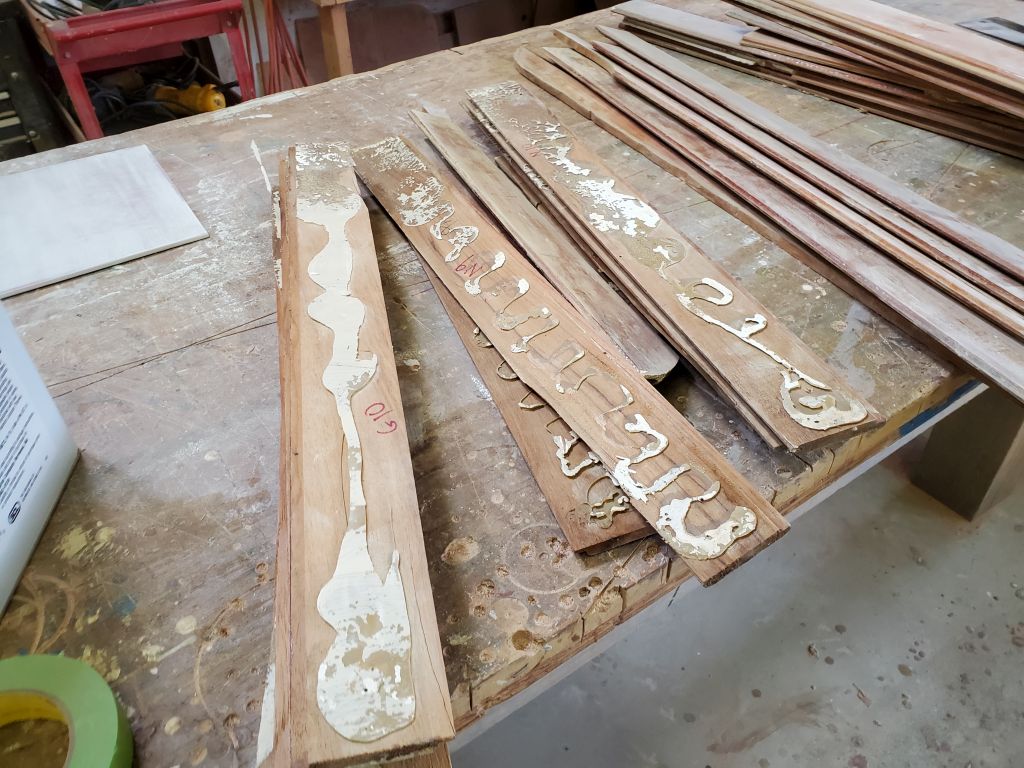
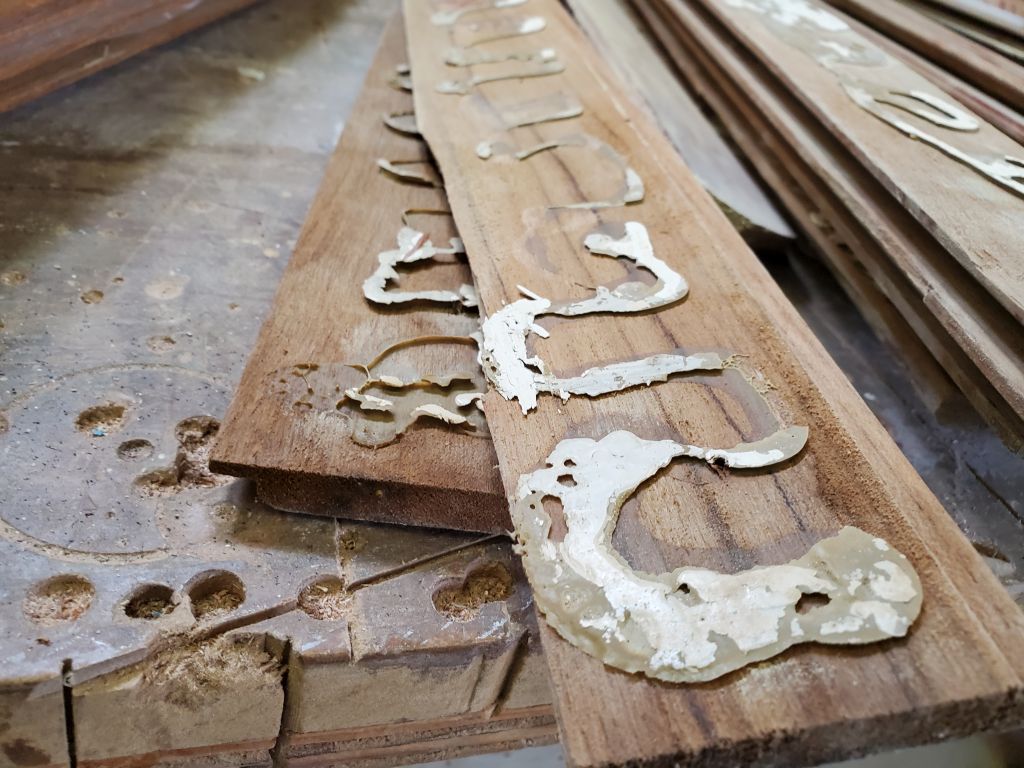
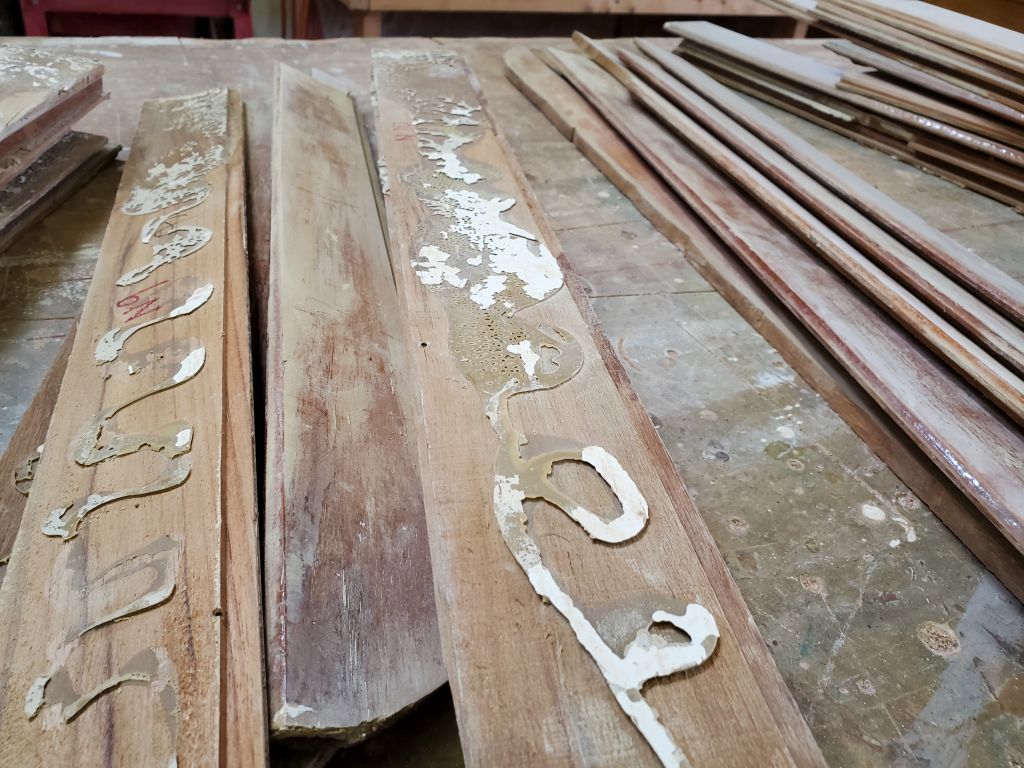
Over the course of the day, I sanded all applicable areas with 120 grit paper, cleaning up the fresh plywood cabinetry a bit and evening the texture of the wood, and creating a smooth, proper basis on the varnished bulkheads (to be renewed with varnish), cabin sides, and overhead liner.  On the bulkheads at the forward end of the galley, I cleaned up old adhesive leftover from the staving (staving would be reinstalled on the forward sides of these bulkheads), and elsewhere made efforts to prepare for primer and paint.  The aft face of the bulkhead next to the stove would require a little more work, but for now I prepped it in kind.

With the saloon sanded, I continued in the head and hanging locker, sanding the glossy overhead liner to prepare it for paint, and also the varnished staving.  With uncomfortable access in the forward cabin, for the moment I just sanded the cabin sides and overhead, leaving the area beneath the foredeck and the staving to do another time.

Once all the sanding I planned to do now was complete, I vacuumed and solvent-washed all areas to prepare for the next steps, which would be primer on all the new wood and applicable portions of the overhead and cabin sides.

Calliope Girl 65

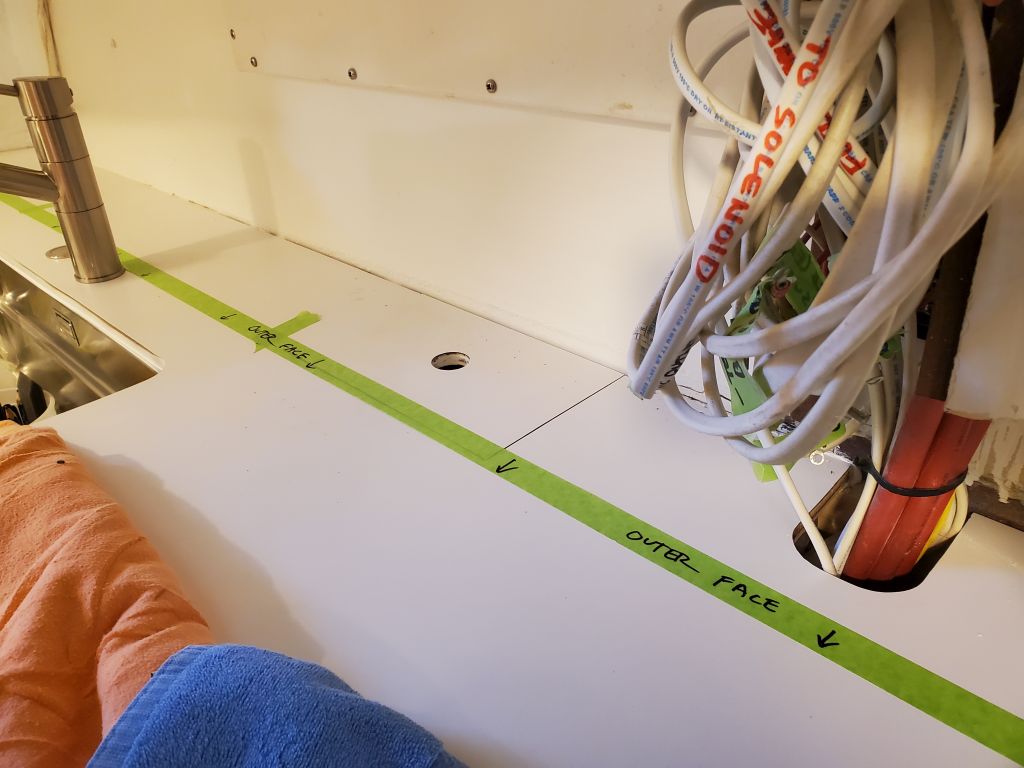
I got started with the final countertop hatch opening, located outboard of the sink on the main countertop.  Afterwards, I test-fit all the countertop pieces one more time to ensure everything fit correctly and as intended at this time.

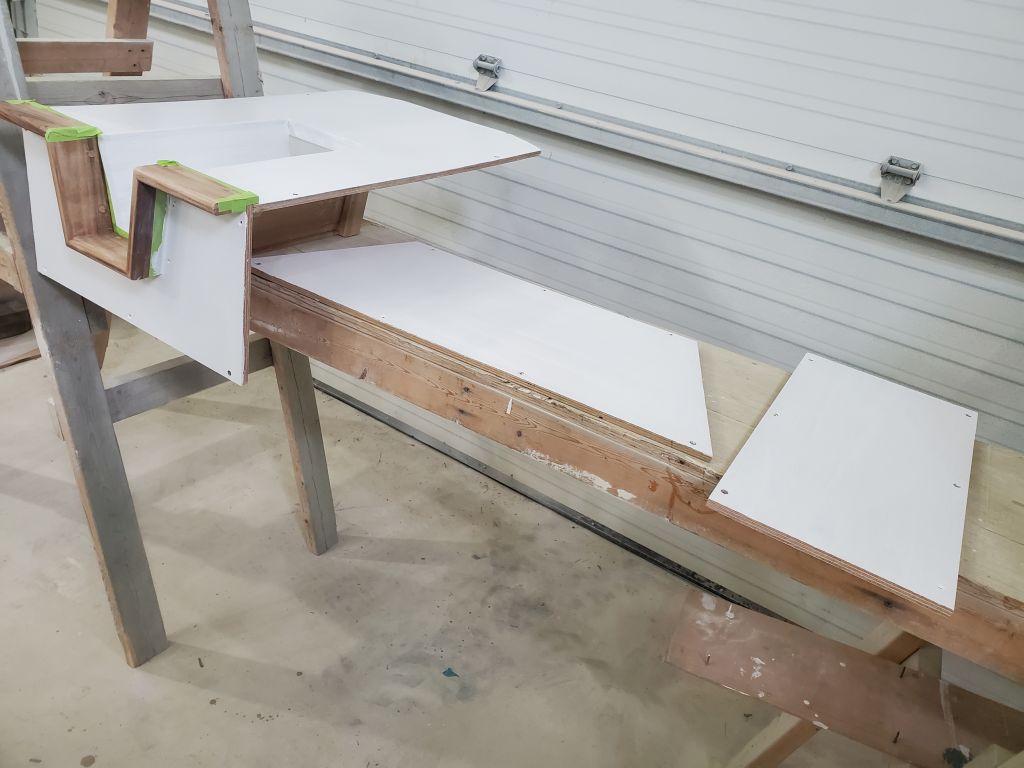
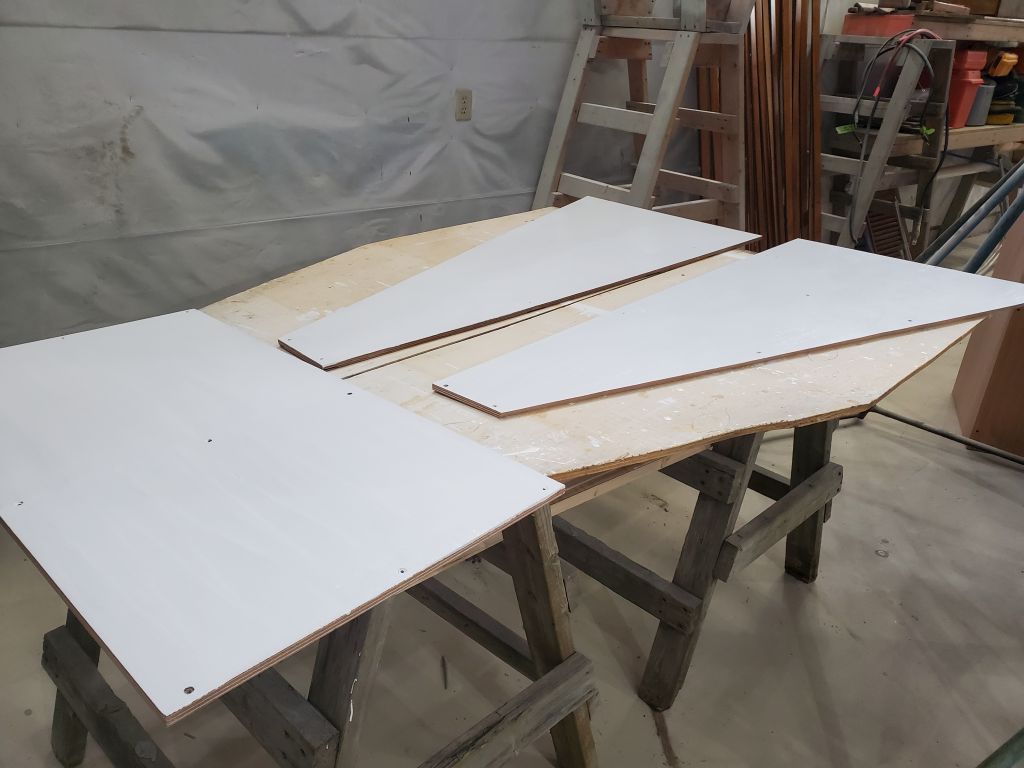
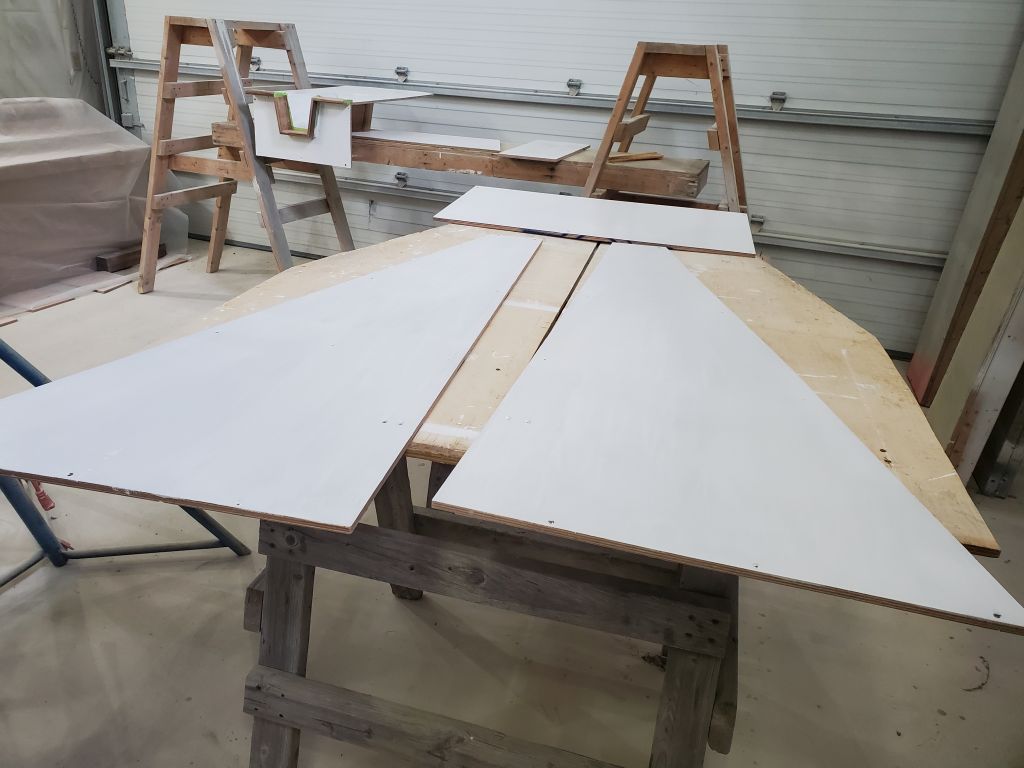
Next, I removed portions of the port galley so I could prep and paint them down on the bench.  I applied primer to these panels, and the second/final finish coat on the three panels I’d been working on earlier.

In the main cabin, I removed a few things that were still installed on or in the way of the nearby cabin sides, specifically an oil lantern from the starboard side, and a couple wooden blocks covering the winch installations on the coachroof above, as well as the swing arm mount for the electronics.  Removing these items would allow proper preparation and painting of these areas, which was coming right up.  I also started to move out some of the tools and supplies from the main cabin to the cockpit or even off the boat entirely, again to make way for the upcoming surface prep and finishing in the main cabin.

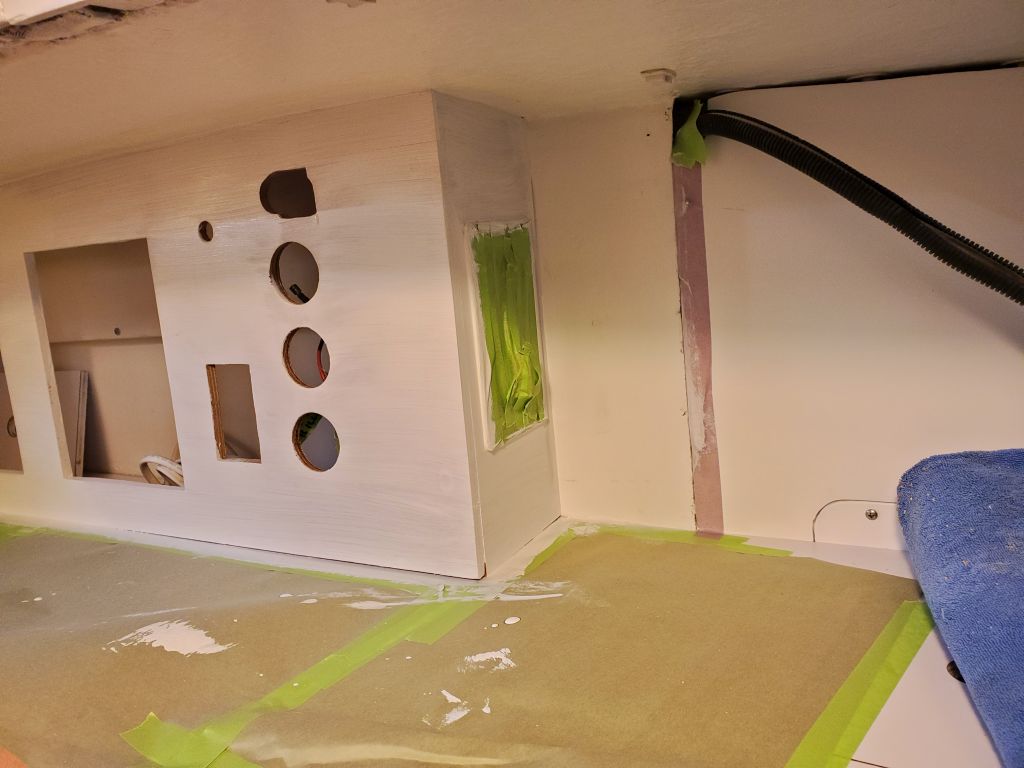
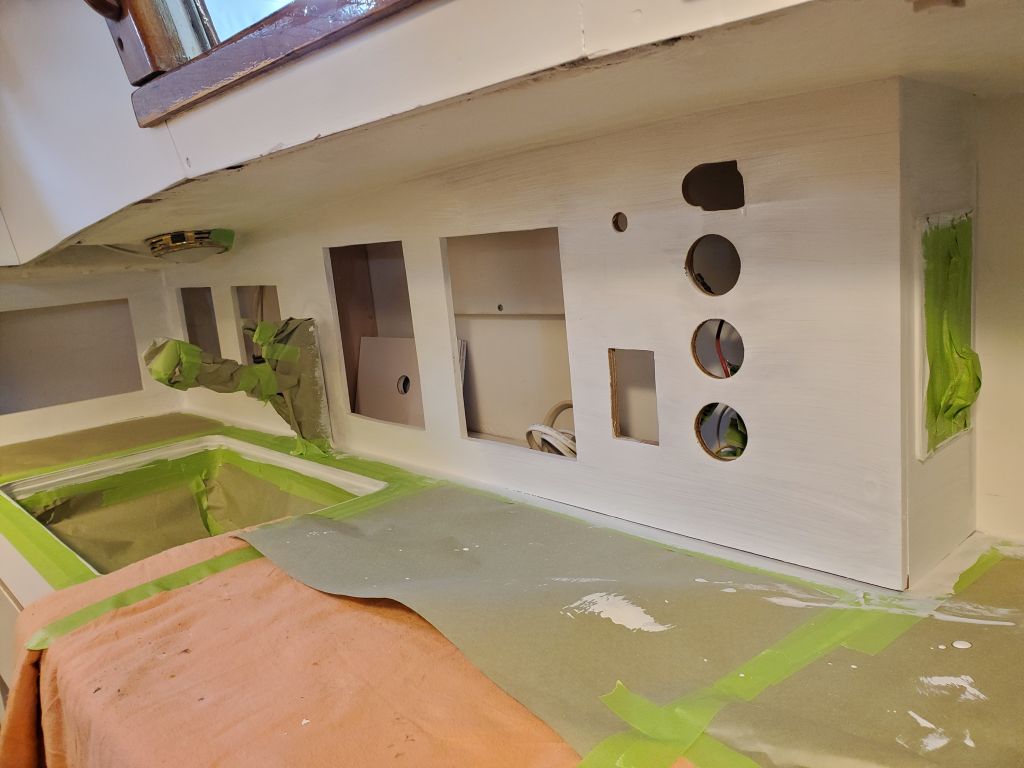
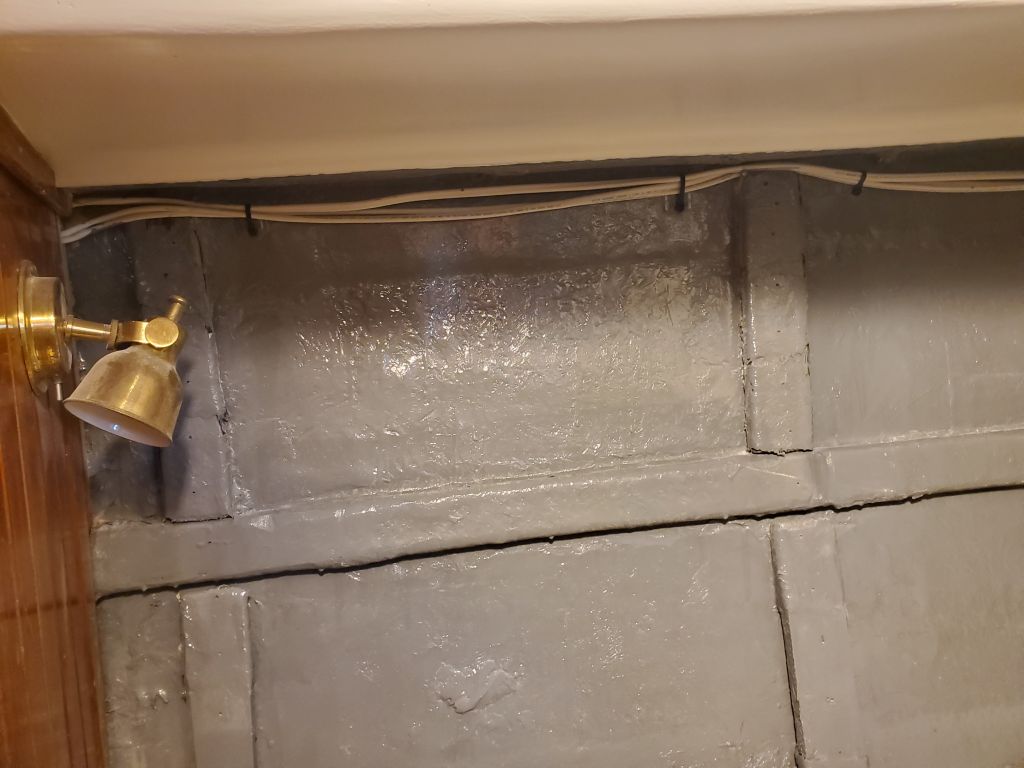
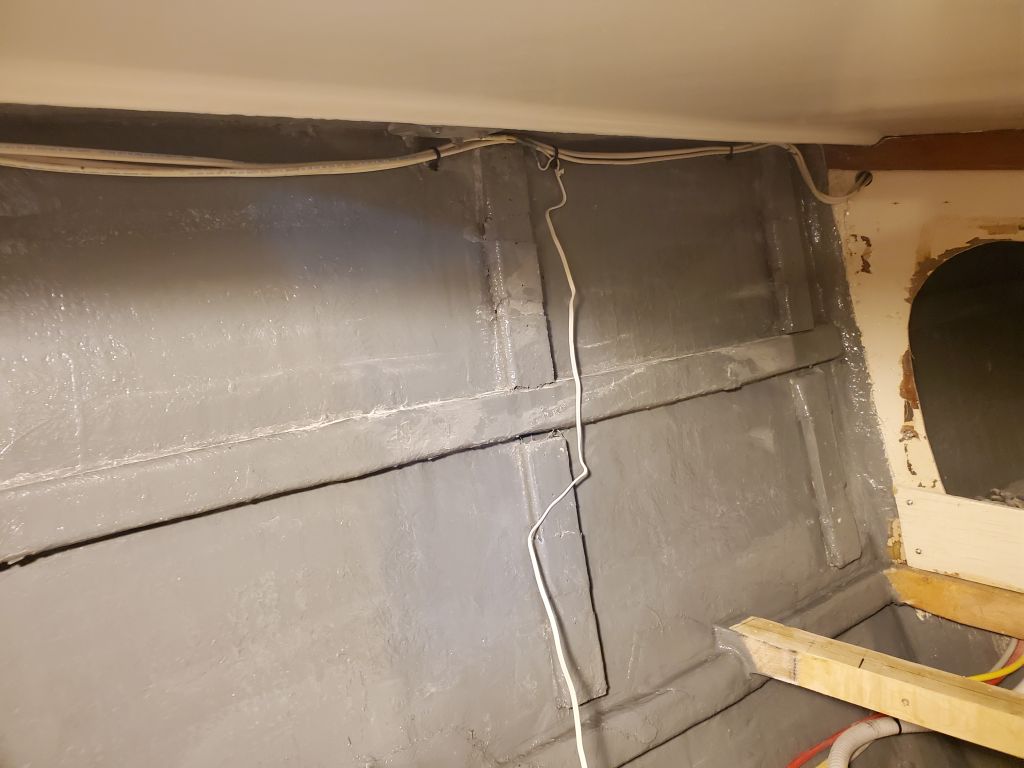
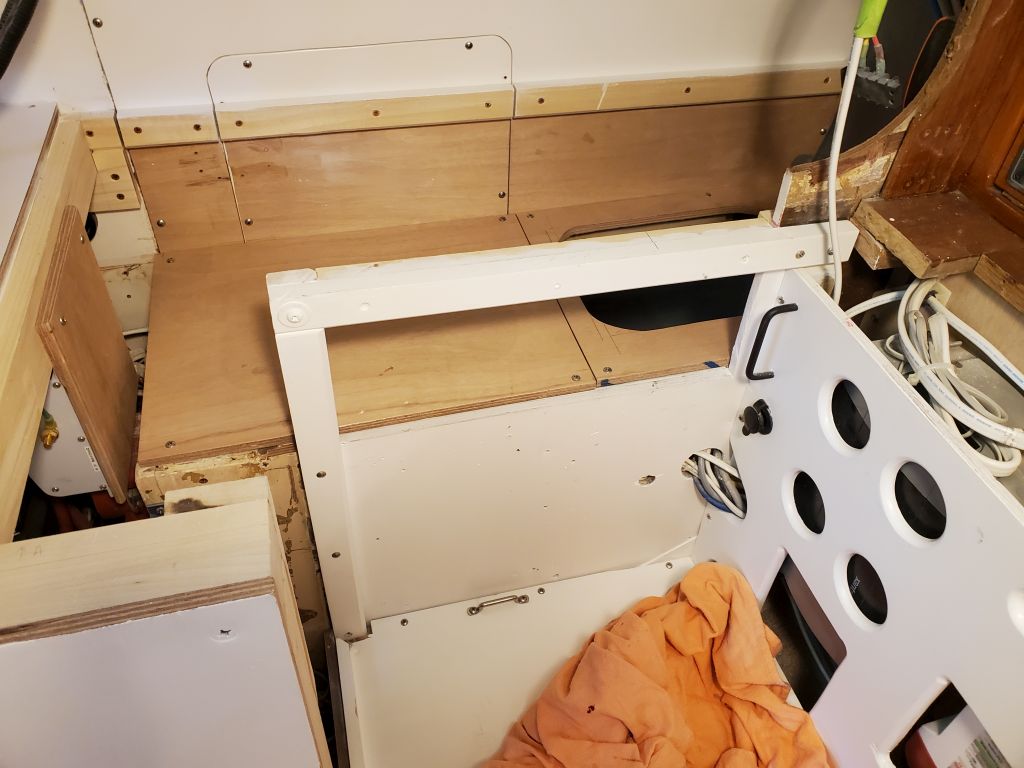
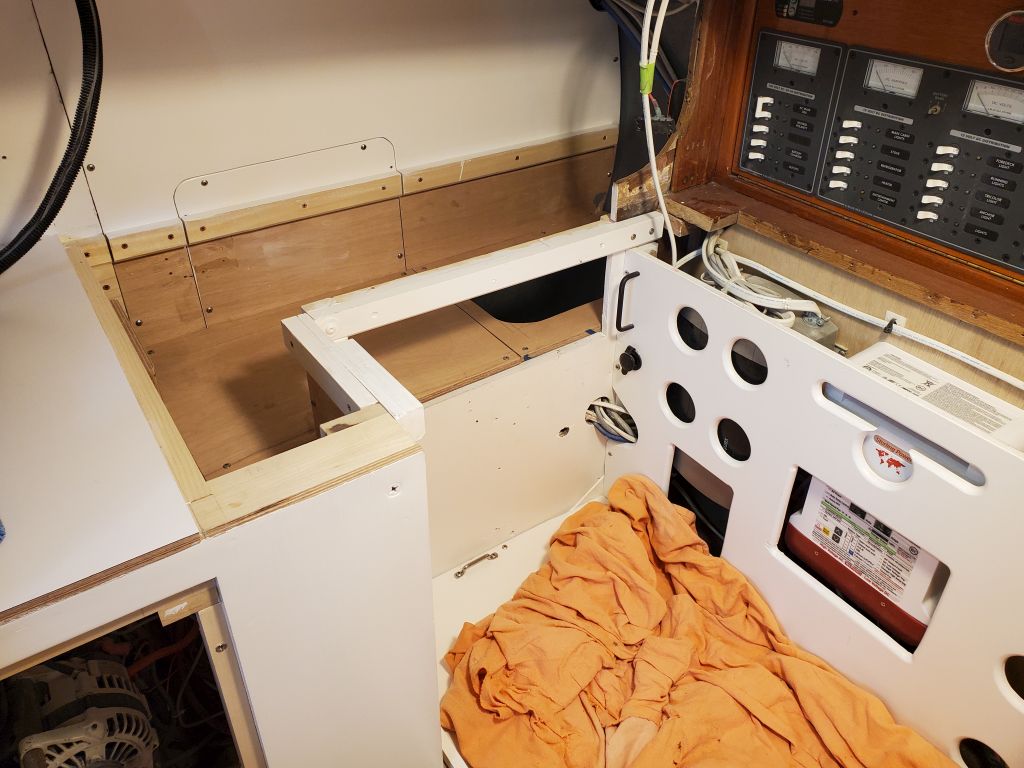
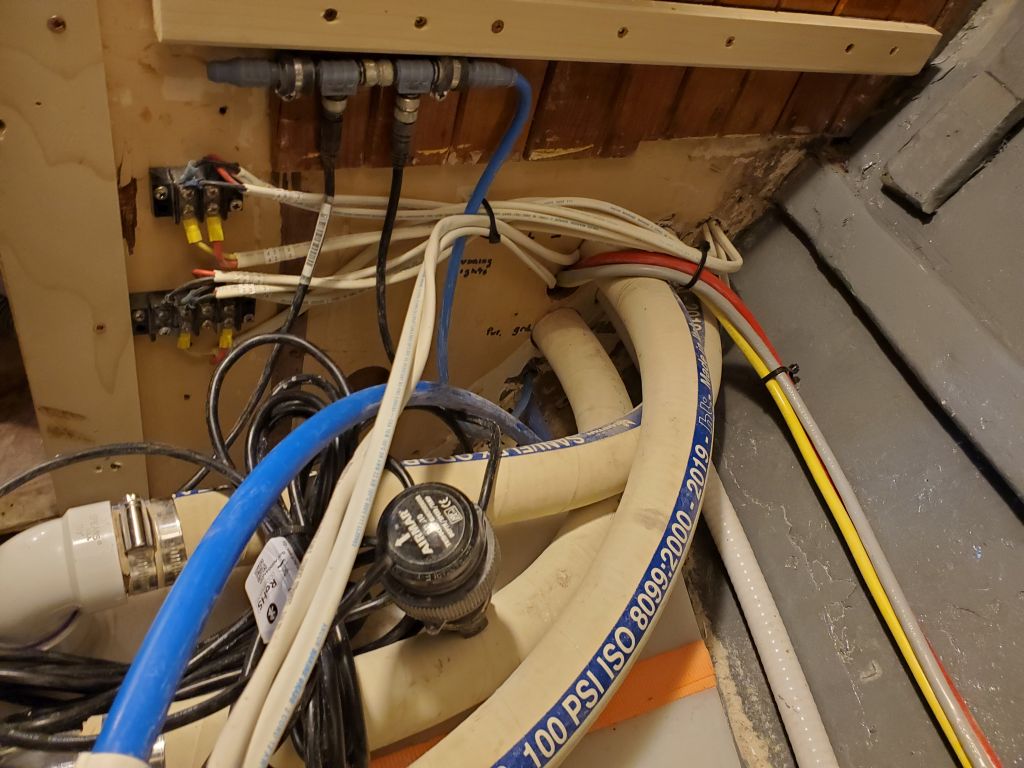
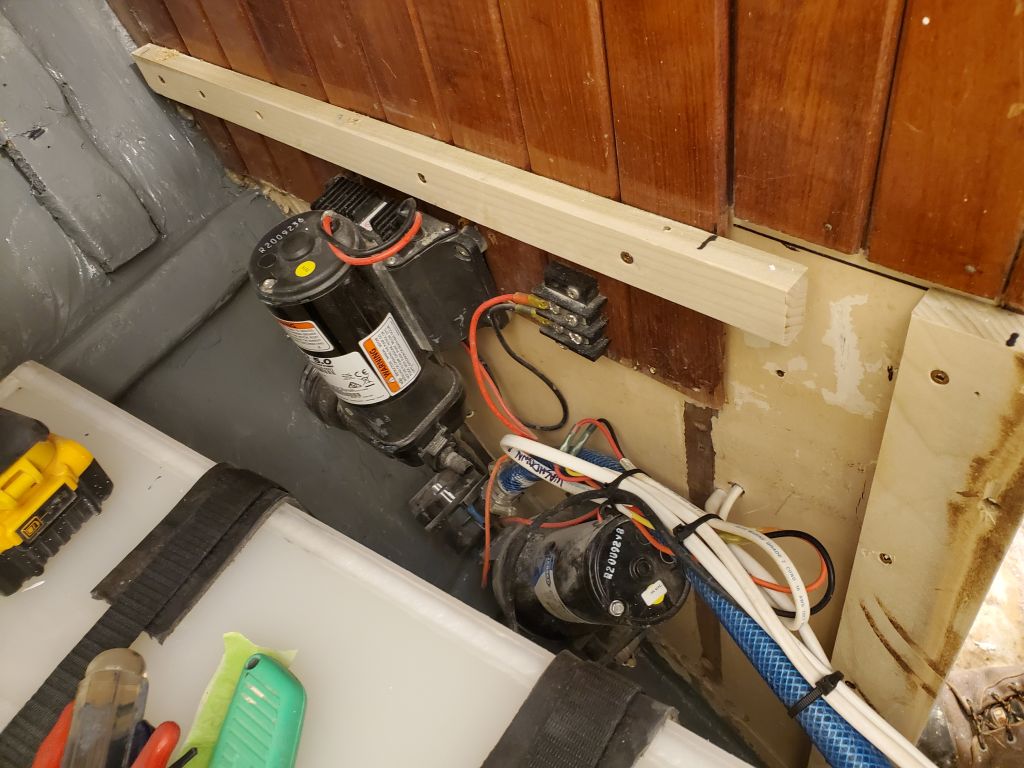
Removing the port galley also gave me access once more to the locker space beyond, which was the right opportunity for me to lead in the new propane lines (two–one for the stove and one for the cabin heater) and a wire pair for the propane solenoid.  During an earlier phase, I’d cut an access hole in the bulkhead beneath the cockpit, and now I snaked in the hoses and wiring from beneath the cockpit, leading them though a length of flexible conduit mainly to keep them neat and out of the way on their relatively short run between the port cockpit locker and the galley on the starboard side.

I pulled in ample lengths of the hose for later connection to the new propane locker and tanks within, and left them in the after portion of the former quarterberth for retrieval later on.  In the galley, I secured the hoses and wires as needed to run them where they had to go:  the wires up to the clustered wiring area above the countertop, and the two hoses forward to the stove enclosure and, for the longer heater hose, through the utility space beneath and into the starboard settee, where I’d later continue its run forward to the heater.

I’d first thought of running the stove supply through a spot near the base of the enclosure, but soon decided to move it to the upper outboard aft corner, where I could be assured that there would be no interference issues with the swing of the stove, since I didn’t really know how much space there’d be once the stove was installed.  I used a gas-tight through-bulkhead fitting to run and secure the hose through the panel since it offered a convenient and clean way to install and protect the hose.  I left a good bit of extra hose to allow connection to the stove and enough slack for the motion of the stove when gimballed.  On the back side, I kept the hose clear of the area (which happened to be right where that unused wire mount is located in the final photo) where the gimbal mount would eventually (actually soon) be throughbolted.


Calliope Girl 64

I started by lightly sanding the freshly-primed panels currently underway, then, after final prep, applied the first coat of semi-gloss white finish enamel.

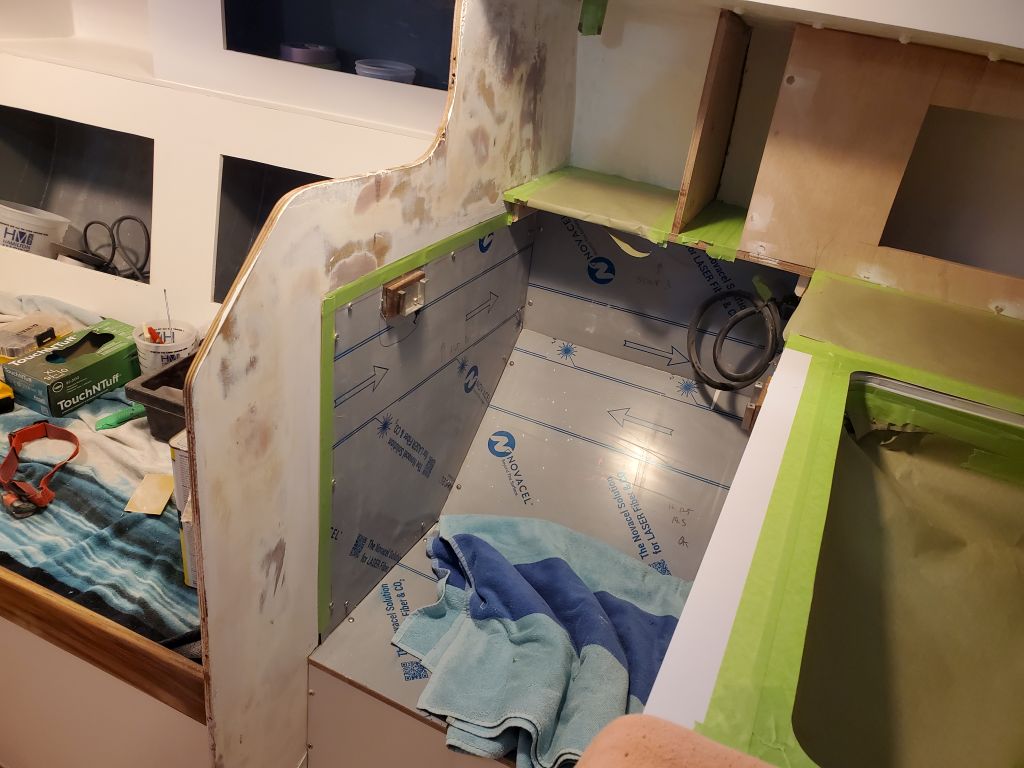
With the area behind now painted and ready, I installed the three faceted panels of the stove surround.  I double-checked the position of the stove on each side using my plywood template, and made a couple additional reference marks at the tops of the bulkheads since I’d be covering up most of the layout lines with the sheet metal and would need to re-create the mounting centers for the gimbal brackets.  Afterwards, I made paper patterns of the forward and after bulkheads so I could cut the side panels to the correct size and shape.

I transferred the patterns to the sheet metal, which I’d ordered cut to the basic rectangular dimensions of the space.  I kept the top and inboard edges about an inch in from the edges of the actual space defining the stove enclosure, so that I could later install trim to transition between the stainless steel surround and the adjacent surfaces.  I cut the panels to size, test-fit them and marked screw locations, then, after center-punching and drilling for fasteners, I installed the vertical panels, leaving all the protective plastic in place for now; the finished surface, seen on the back side of the panels, was typical #4 brushed finish.

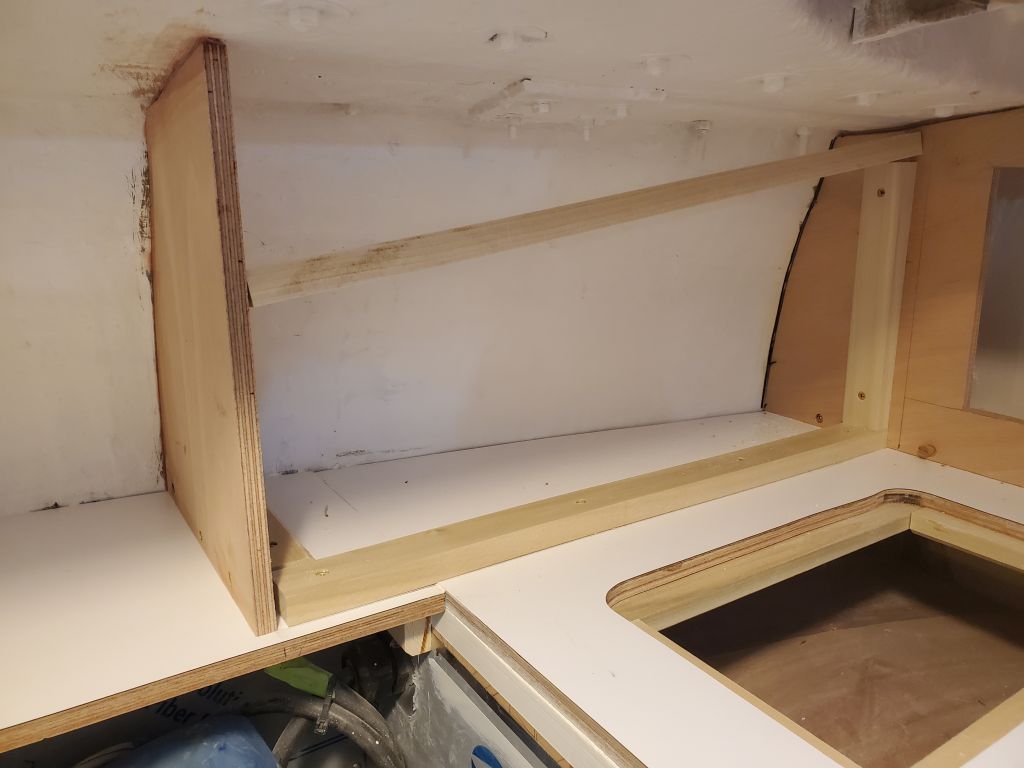
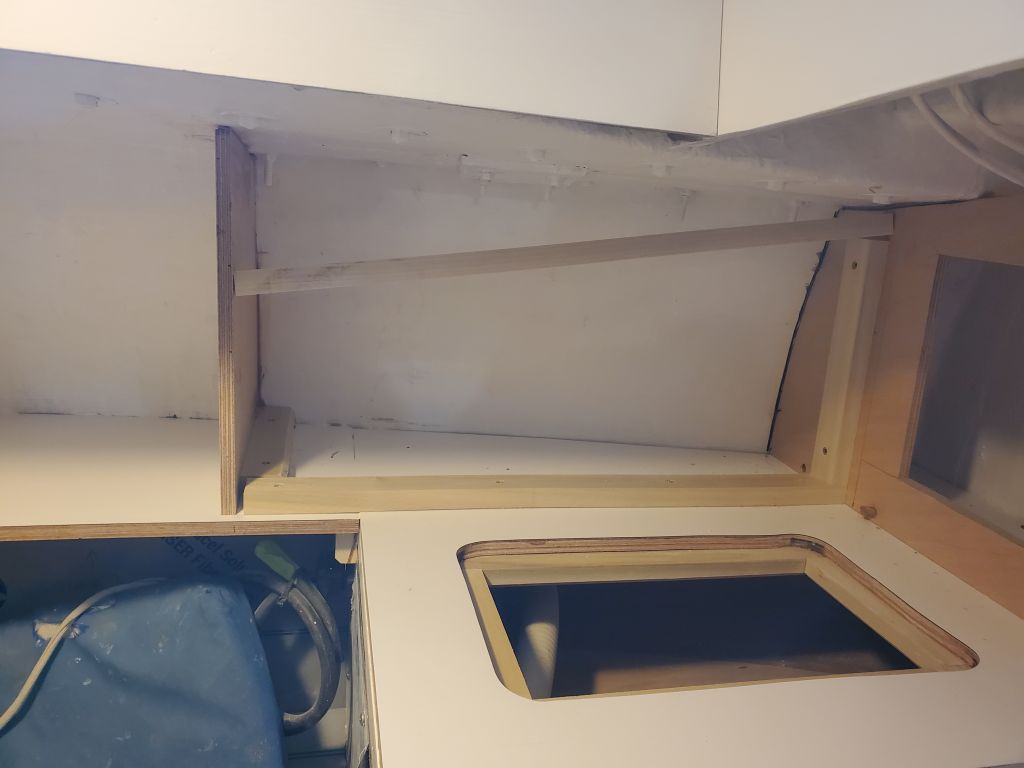
With the sheet metal now in place, I could cut and install the support cleats needed at the top outboard edge to support the small countertop running across this area.

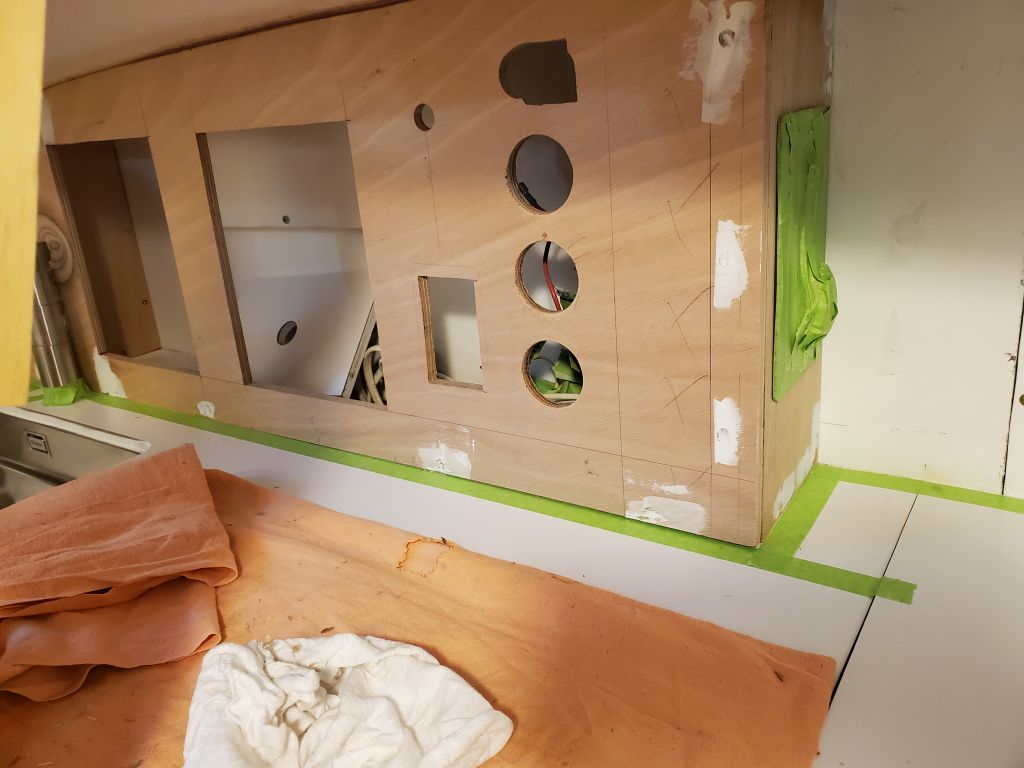
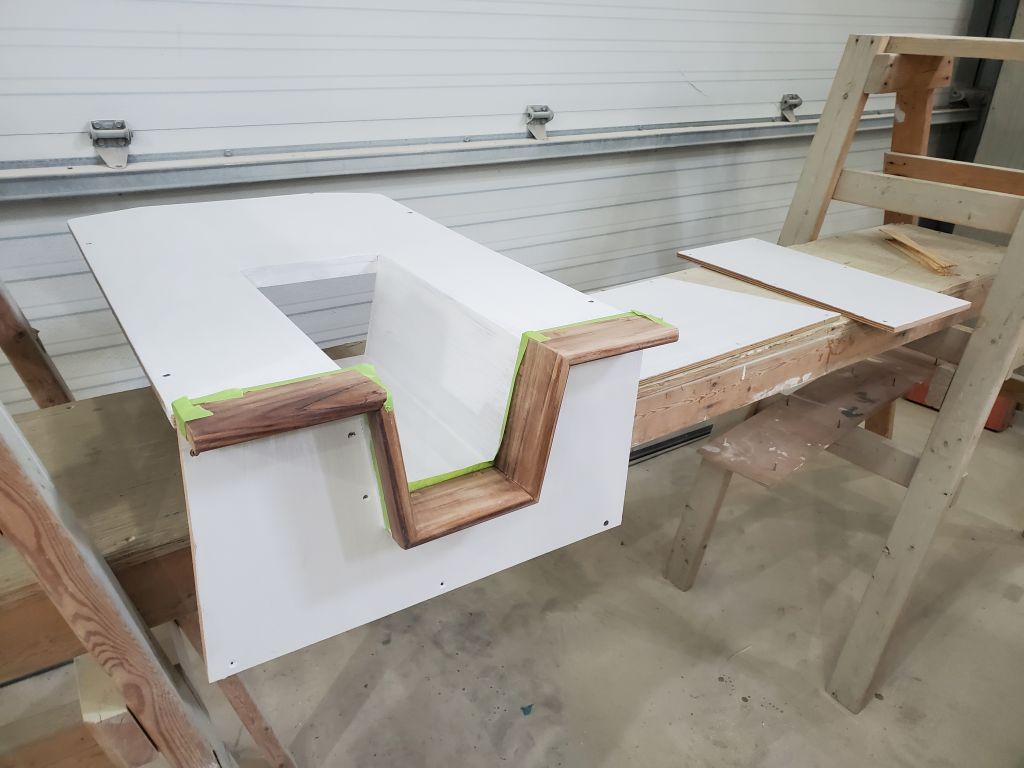
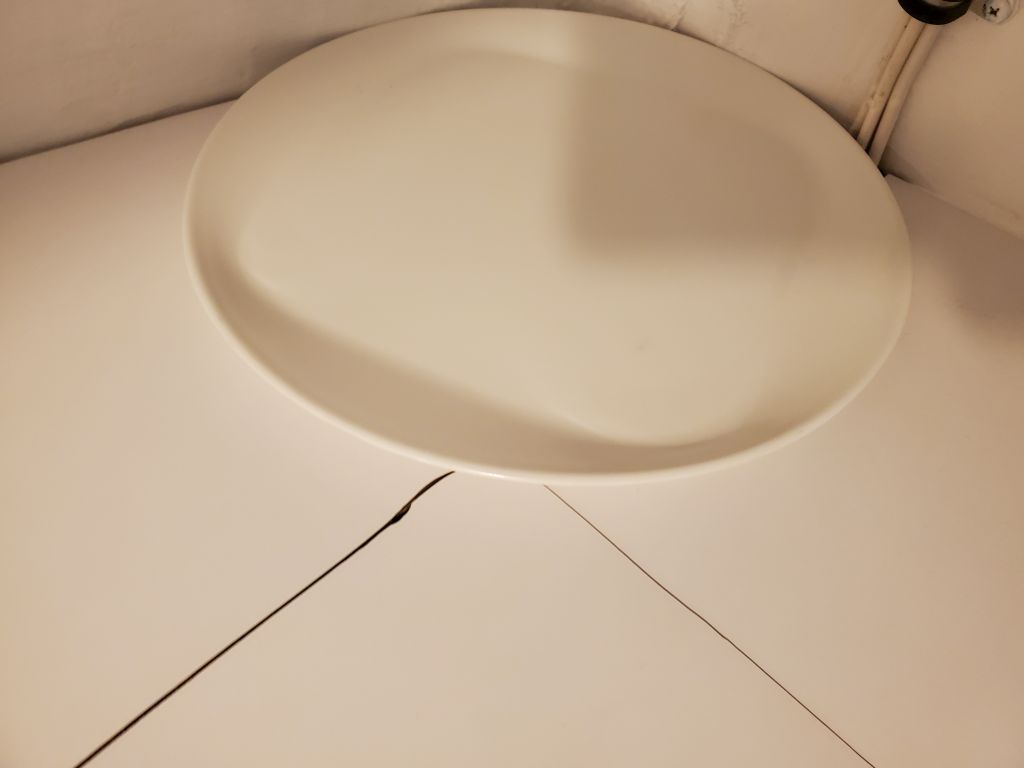
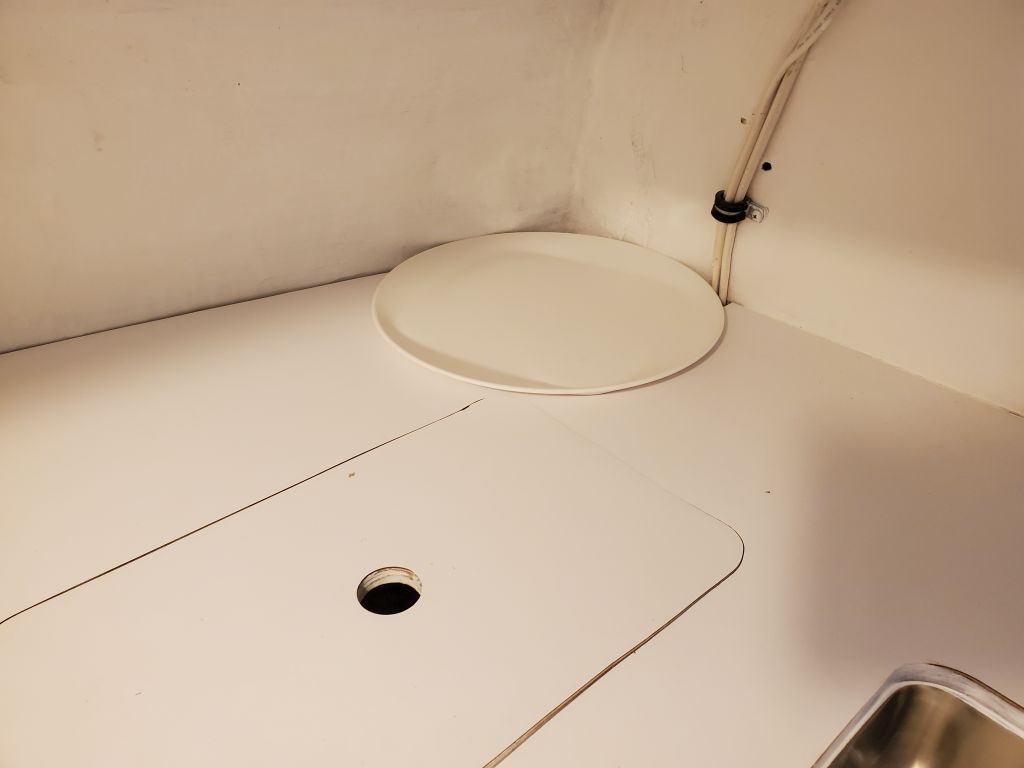
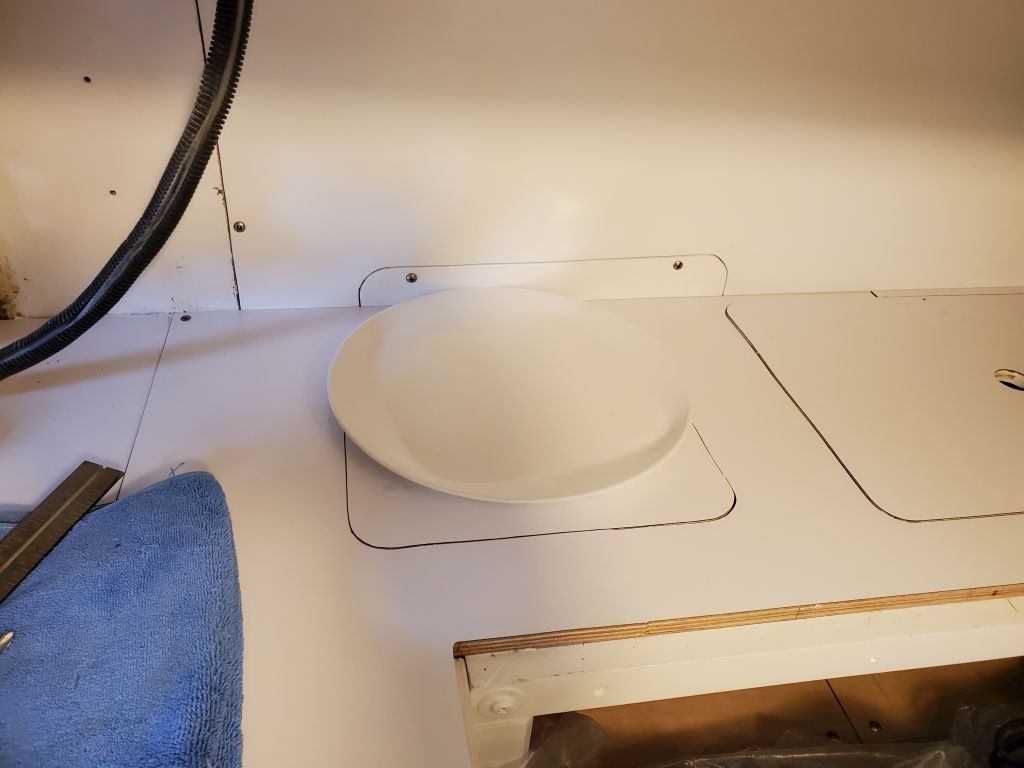
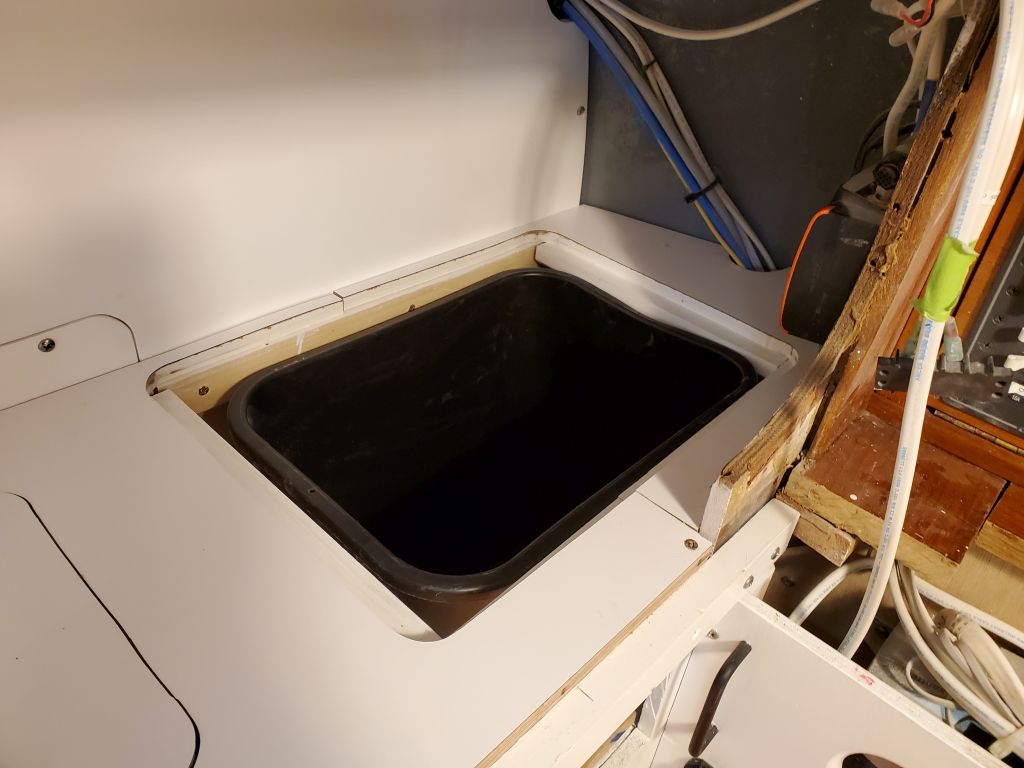
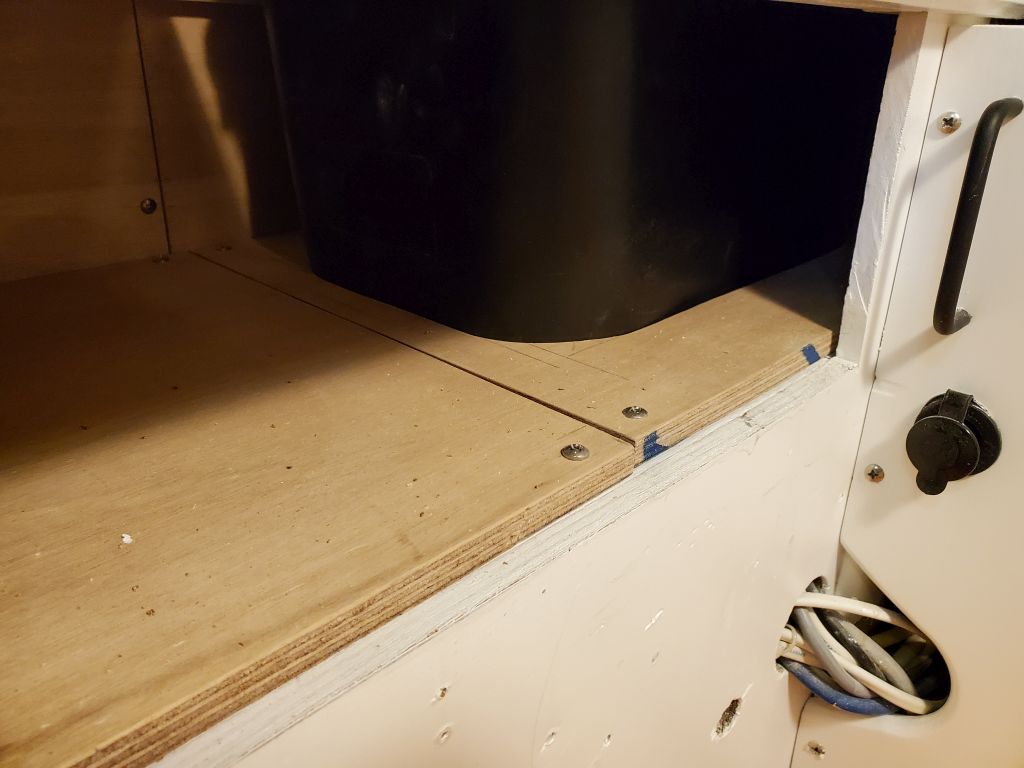
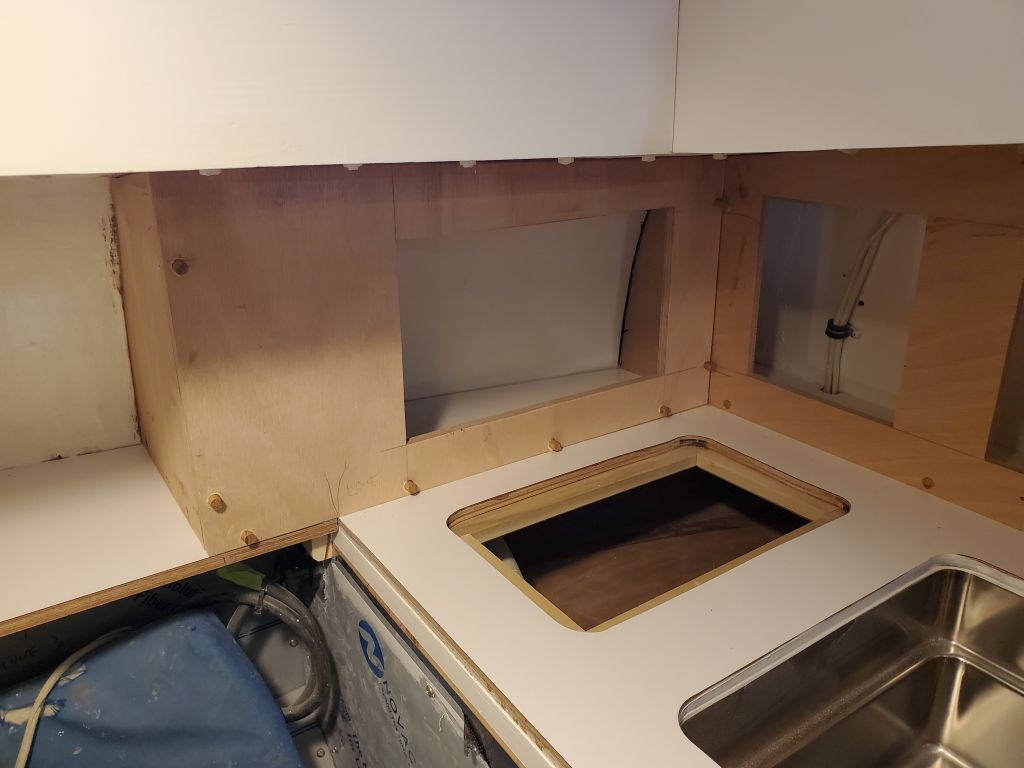
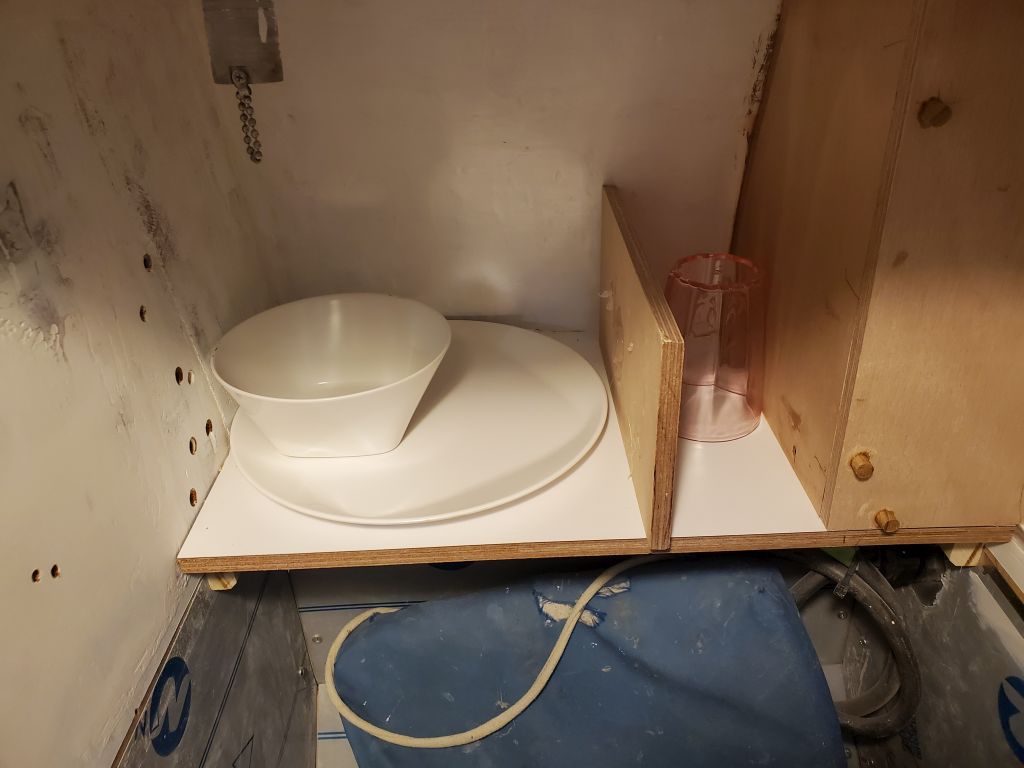
On the port side of the galley, I decided to combine the two smaller sections forming the aft part of the countertop, after considering how the whole space was going to work going forward.  I also wanted to include an additional access hatch to the space beneath, inboard of the trash container.  With little clear space available, I wanted the cleats that held  together the two plywood panels to also serve as the support cleats for the new hatch, so I spent some time on the correct layout and transferring measurements to the top of the sheets so I could make the cutout, all the while keeping the pieces pinned together for proper alignment.  Because whatever upper cabinetry we added to this part of the galley would also necessarily be removable, this meant that the hatch opening was feasible since whatever storage was placed atop (the owner was currently considering some kind of tableware/utensil storage) would be removable when or if access was required to the space beneath.  And the large opening over the trash container had to remain exposed for regular use.

I also added another support cleat to the engine side of the space, at the top of the panel leading to the refer locker.

Countertop material was on order and I expected it soon, but in the meantime this gave me time to finalize the substrates and make advances in other parts of the project.

Gearing up for some upcoming surface prep and beyond in the main cabin, I applied some lightweight filler material to various places, mainly over a few panel seams and bung locations to fill minor plywood splintering that had occurred during panel installation.  By installing some of the fairing material now, I’d have a head start once I lightly sanded all the surfaces to prepare for primer and paint.  I did the same on the cabin sides, where there were a few old screw holes to fill and some existing bung locations that required dressing; I’d also be priming and painting the cabin sides and overhead liner here.

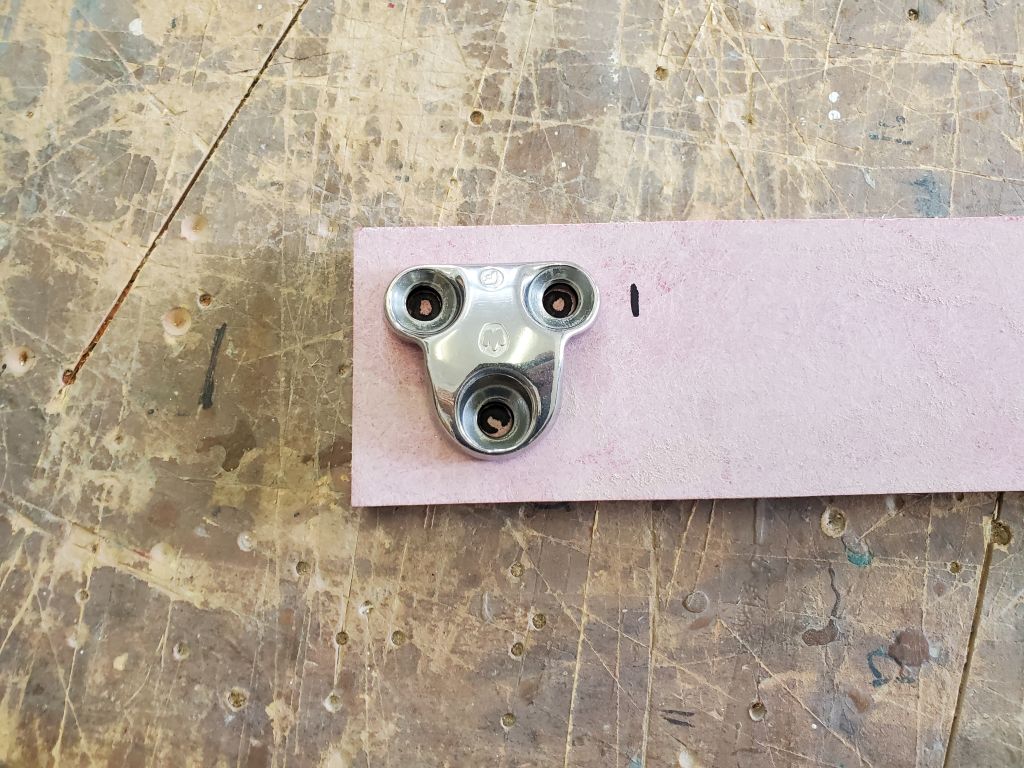
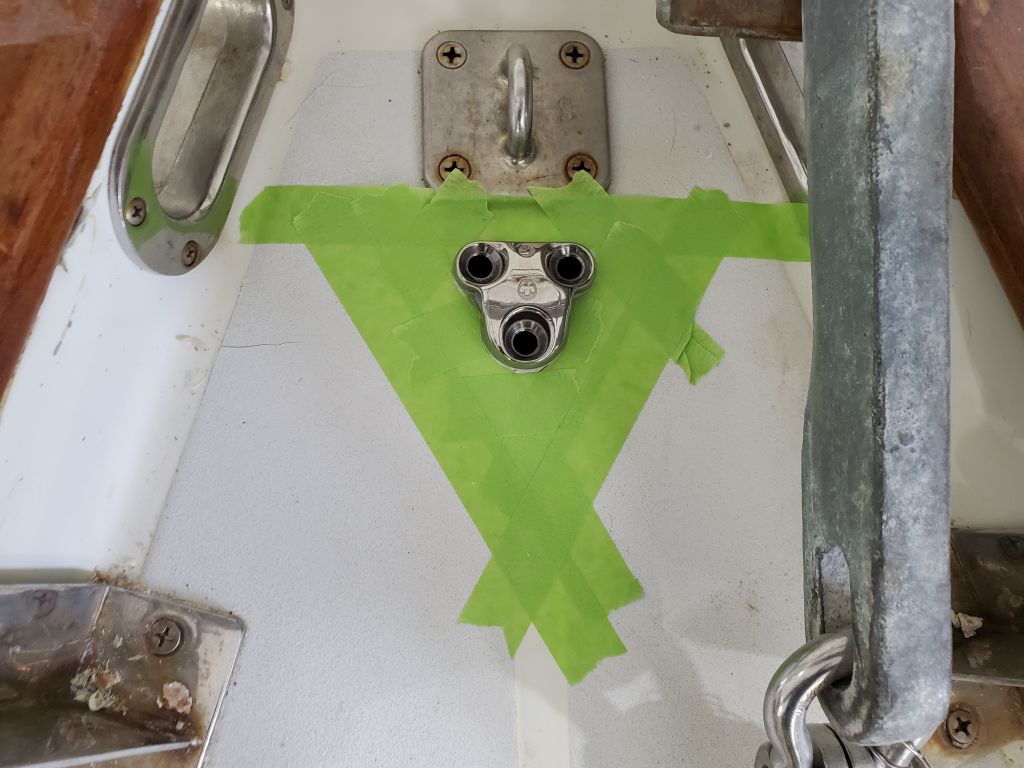
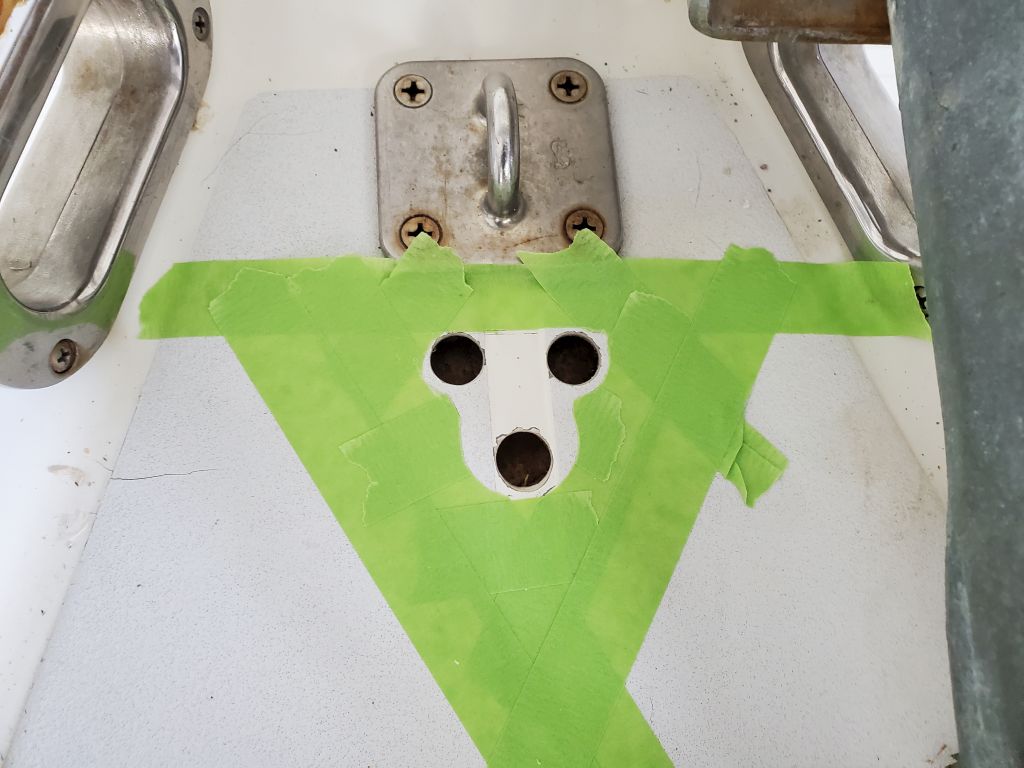
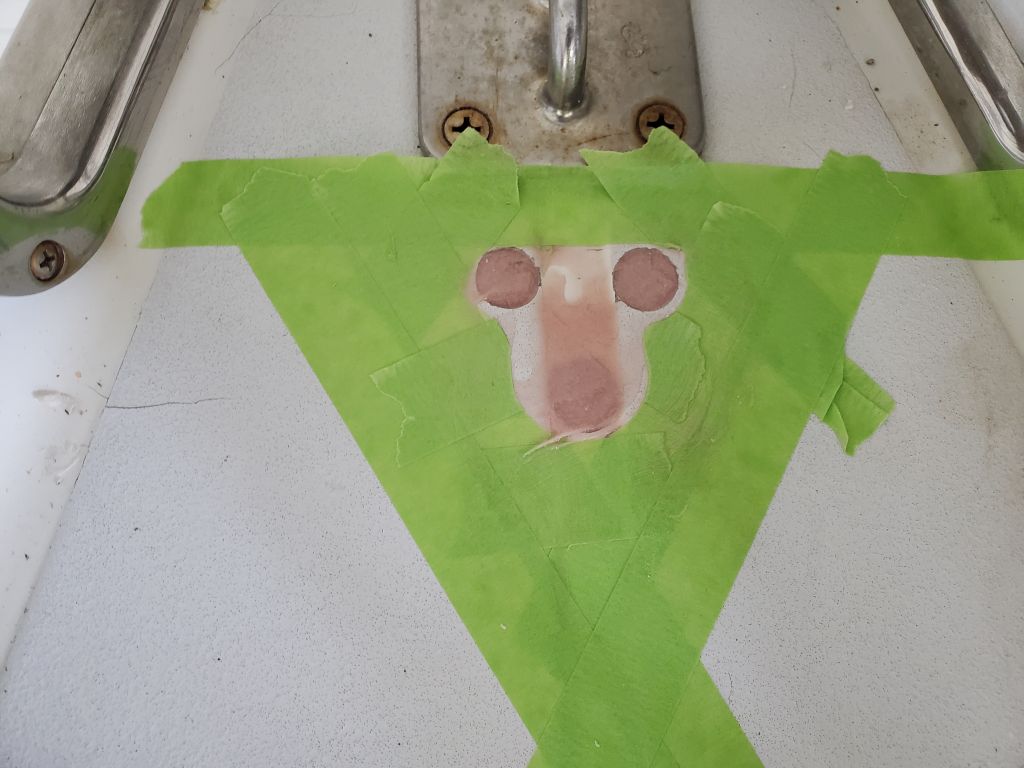
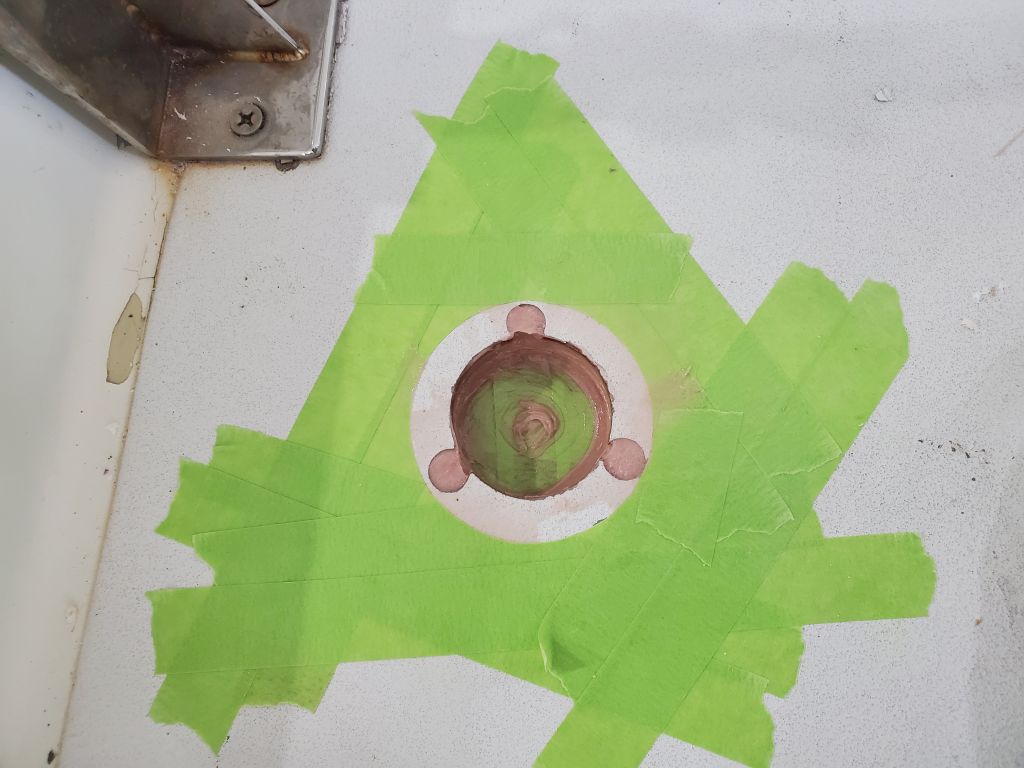
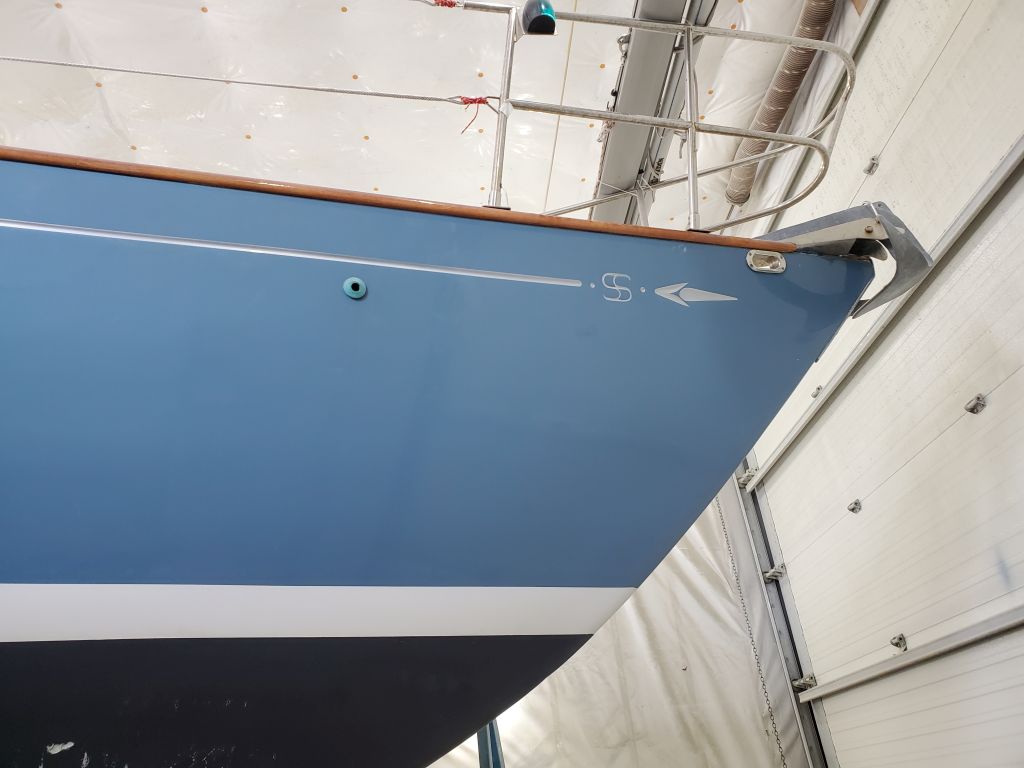
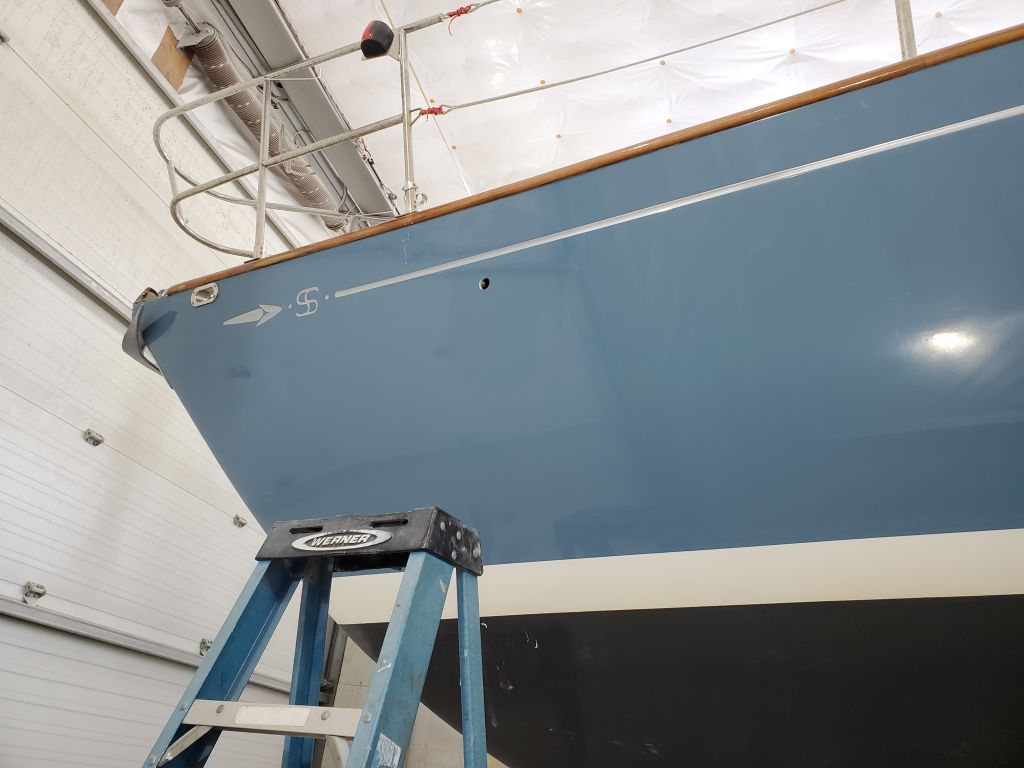
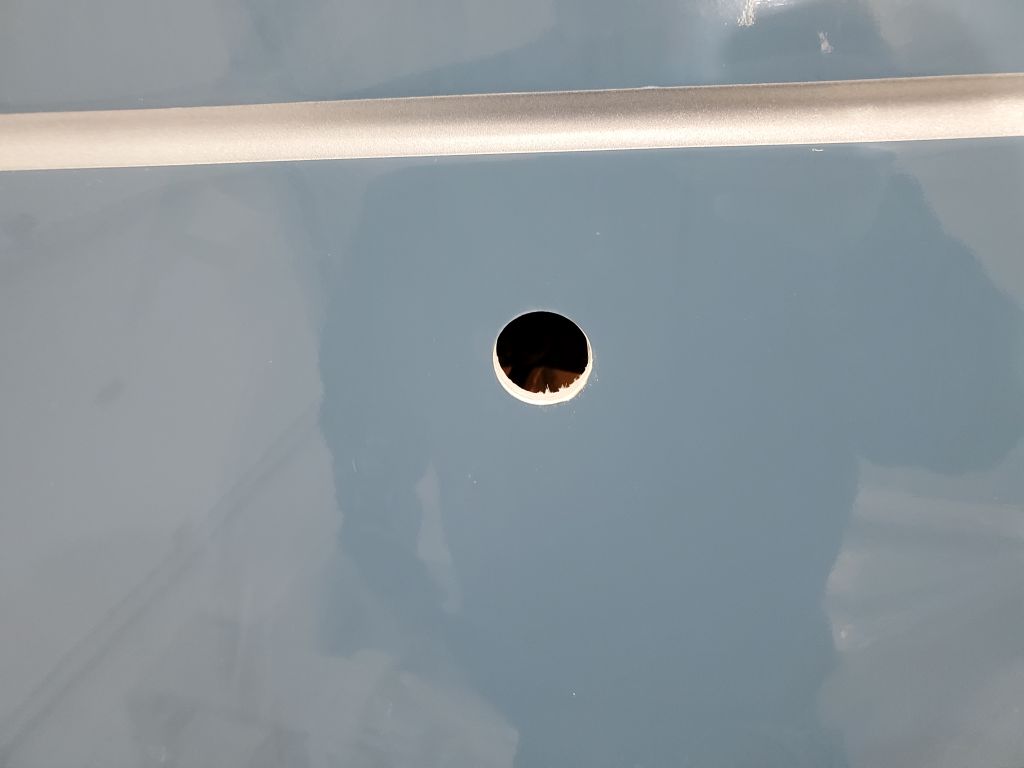
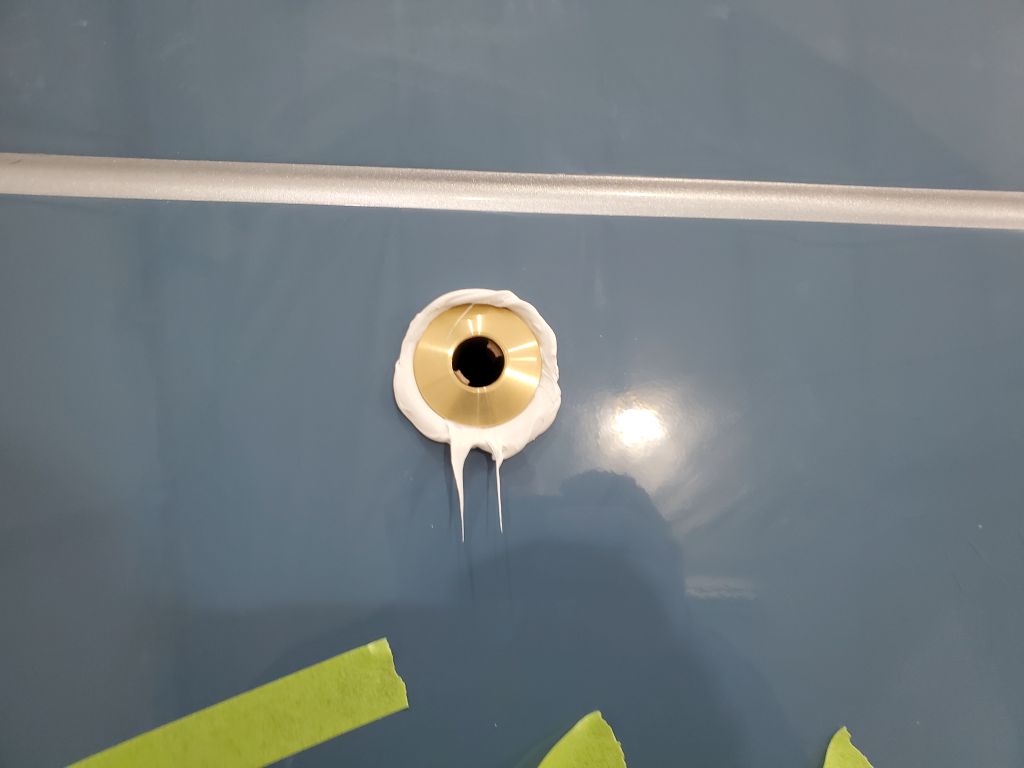
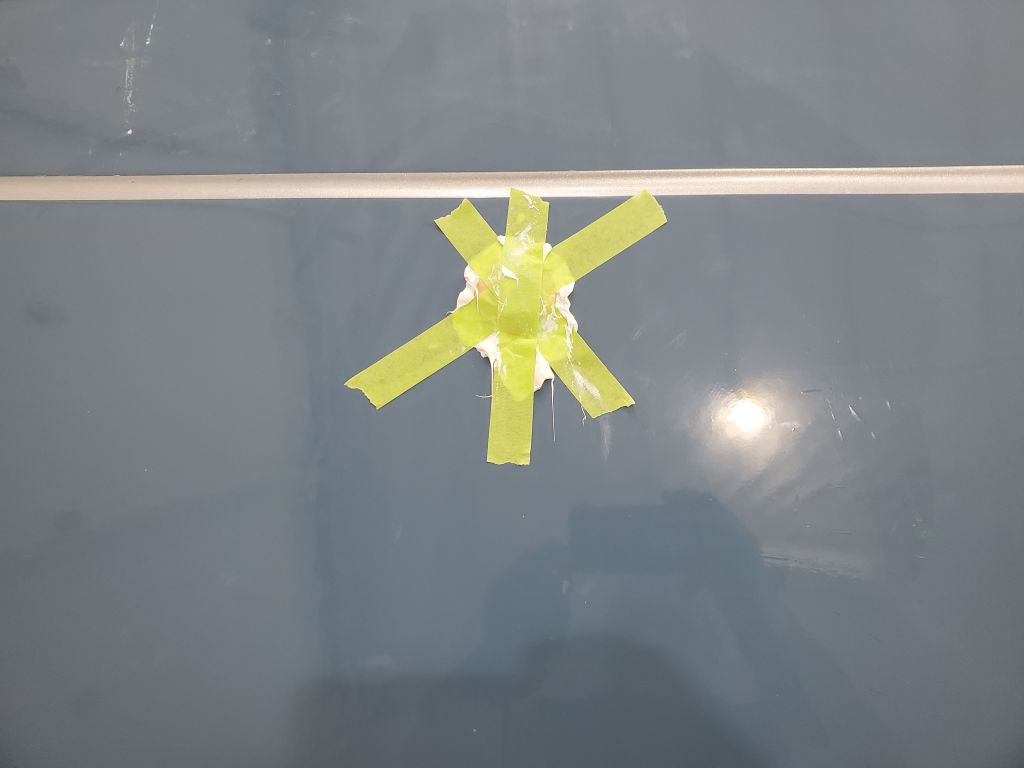
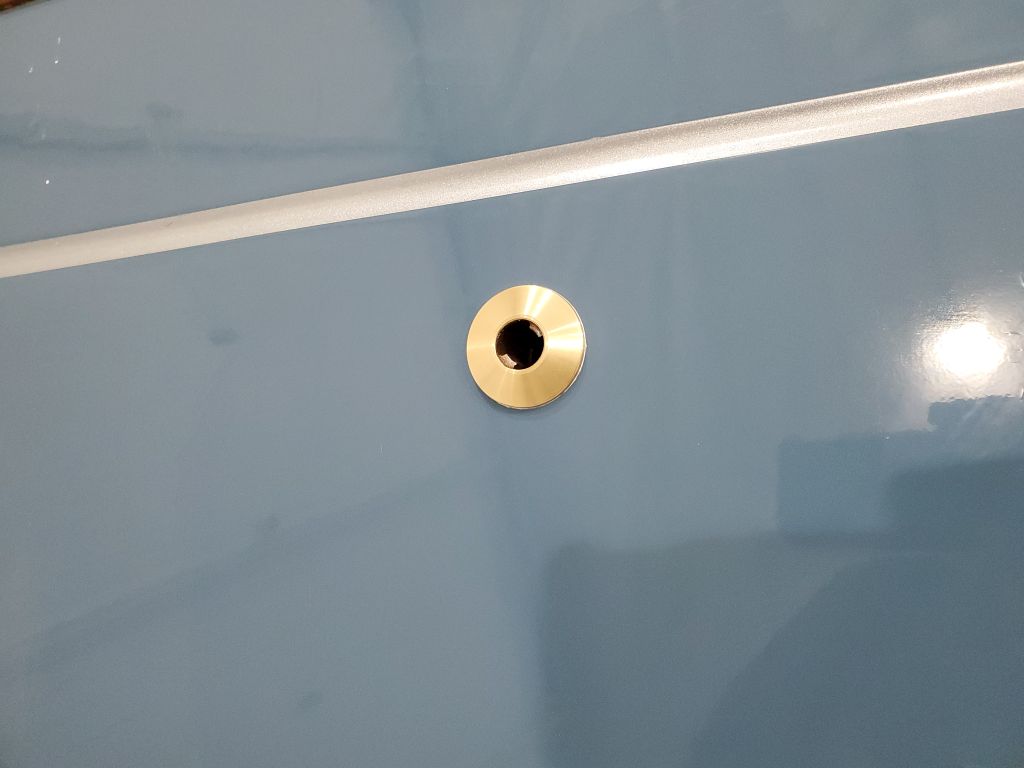
Finally, the engine through hull bolts locations required a minor second coat of fairing compound to finish up.

Older posts Newer posts