
(page 98 of 165)

Scupper 109

Tuesday

To start, I finished up another round of light sanding and spot-filling on the companionway sliding hatch, now nearly complete.

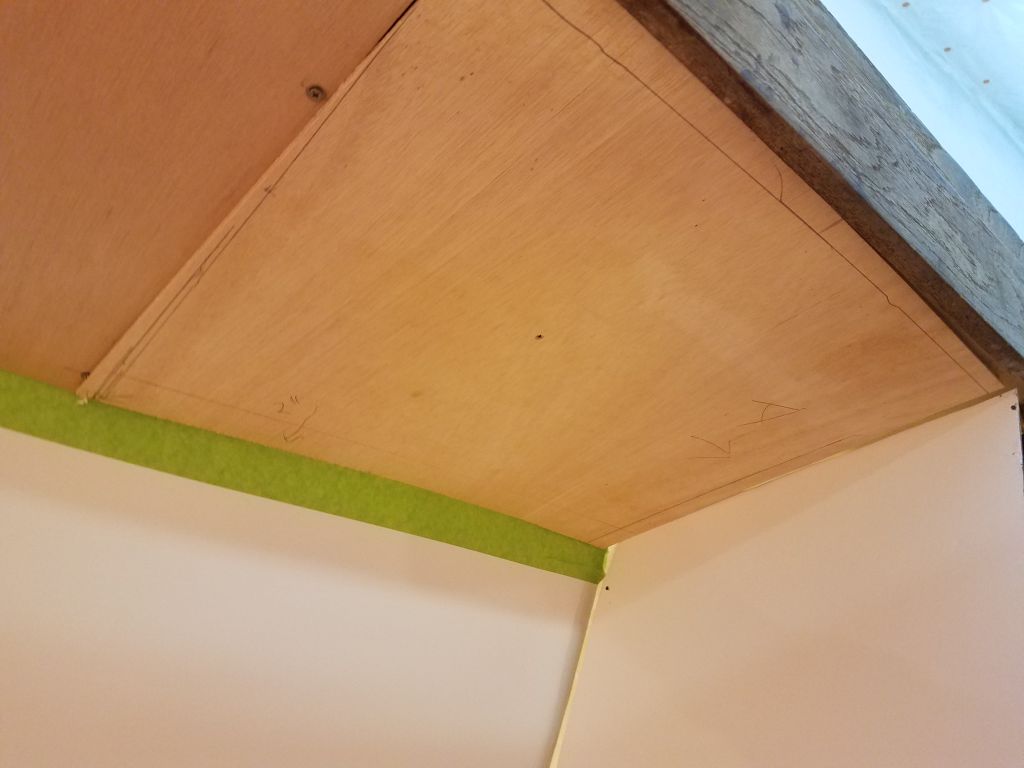
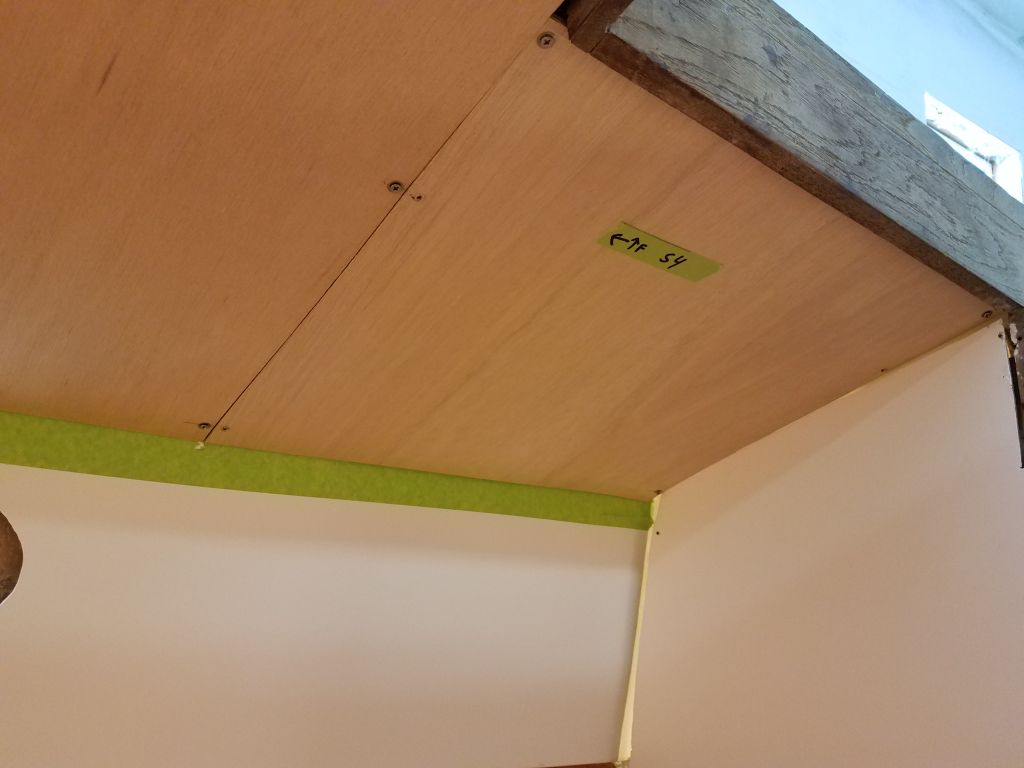
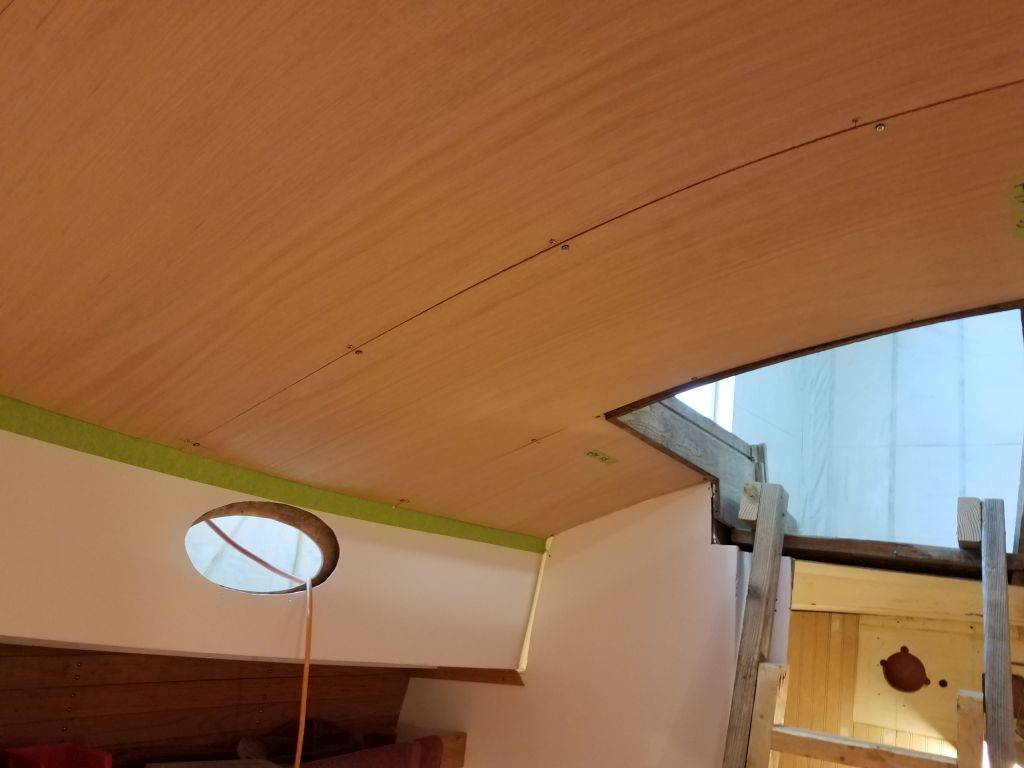
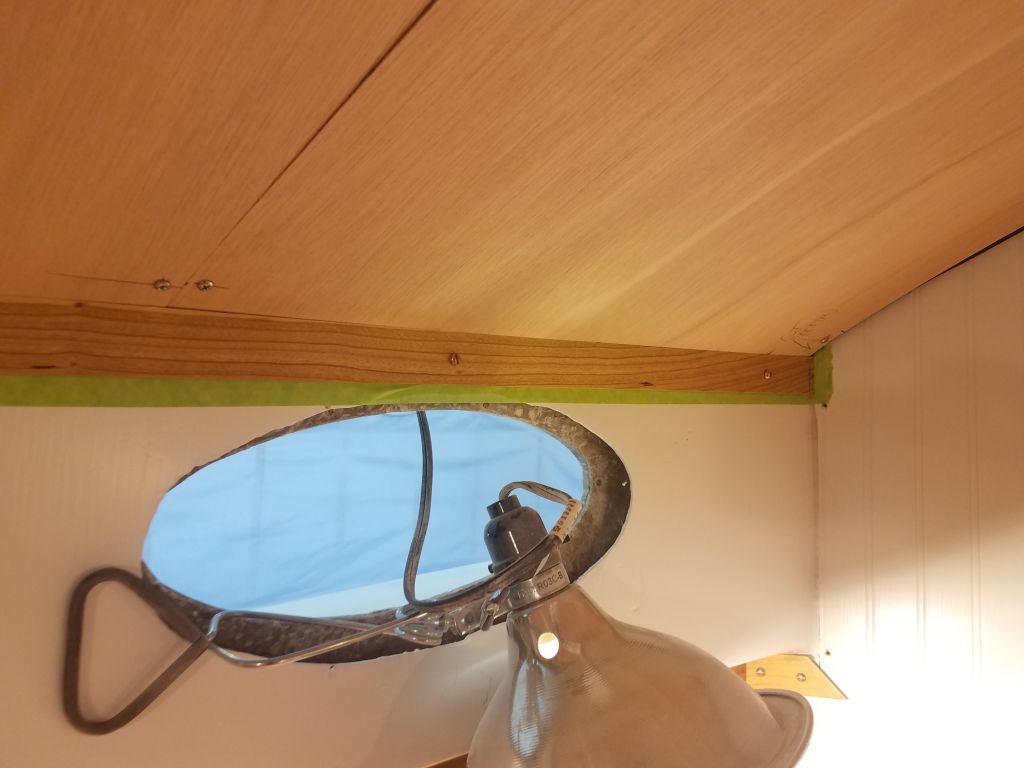
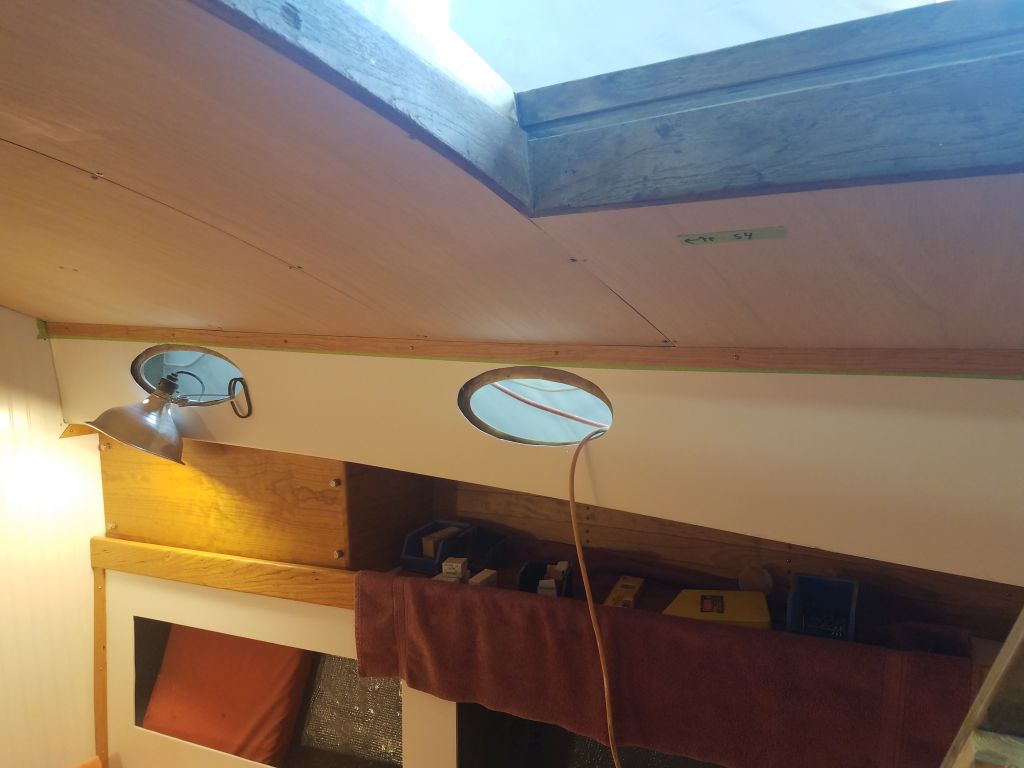
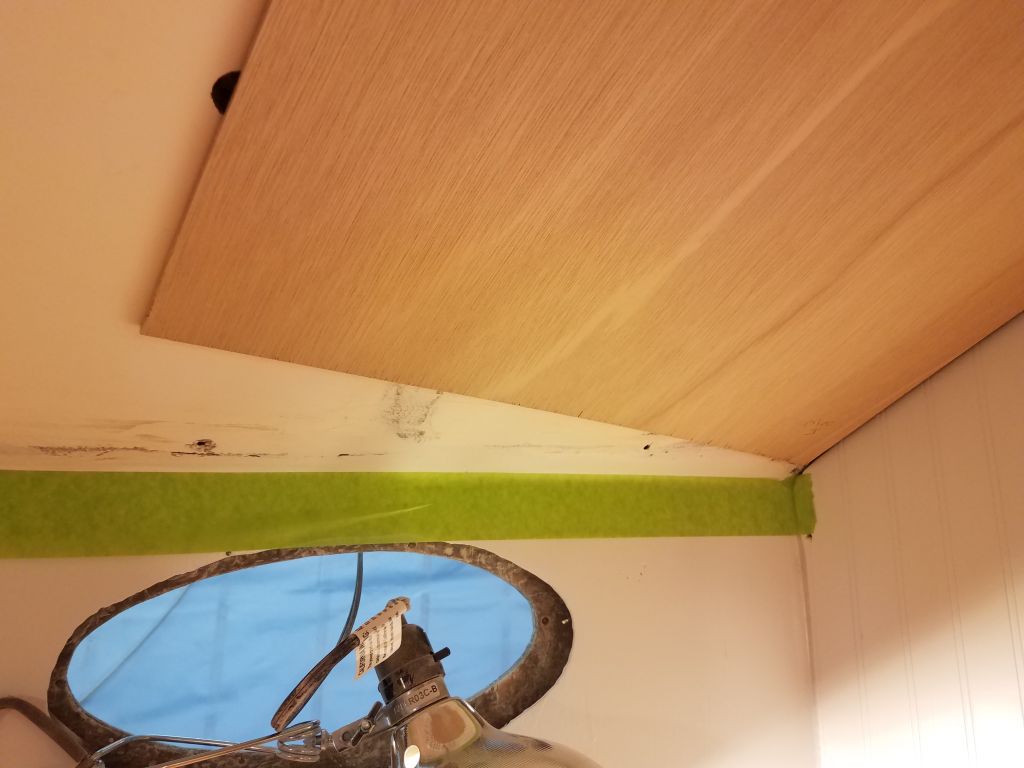
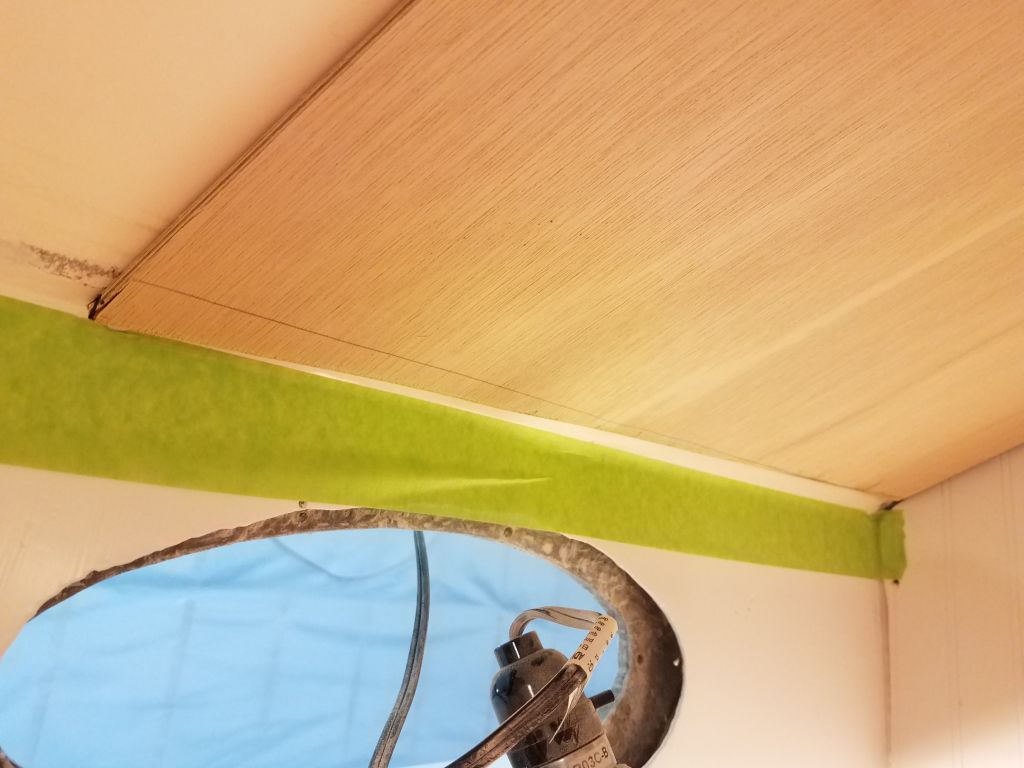
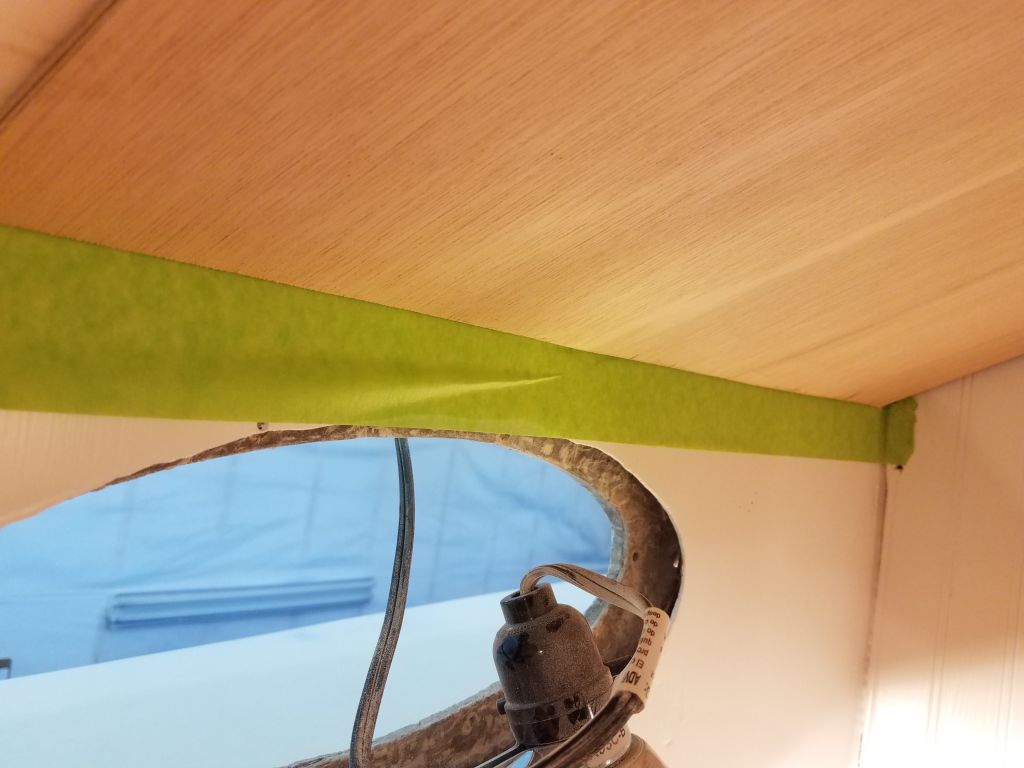
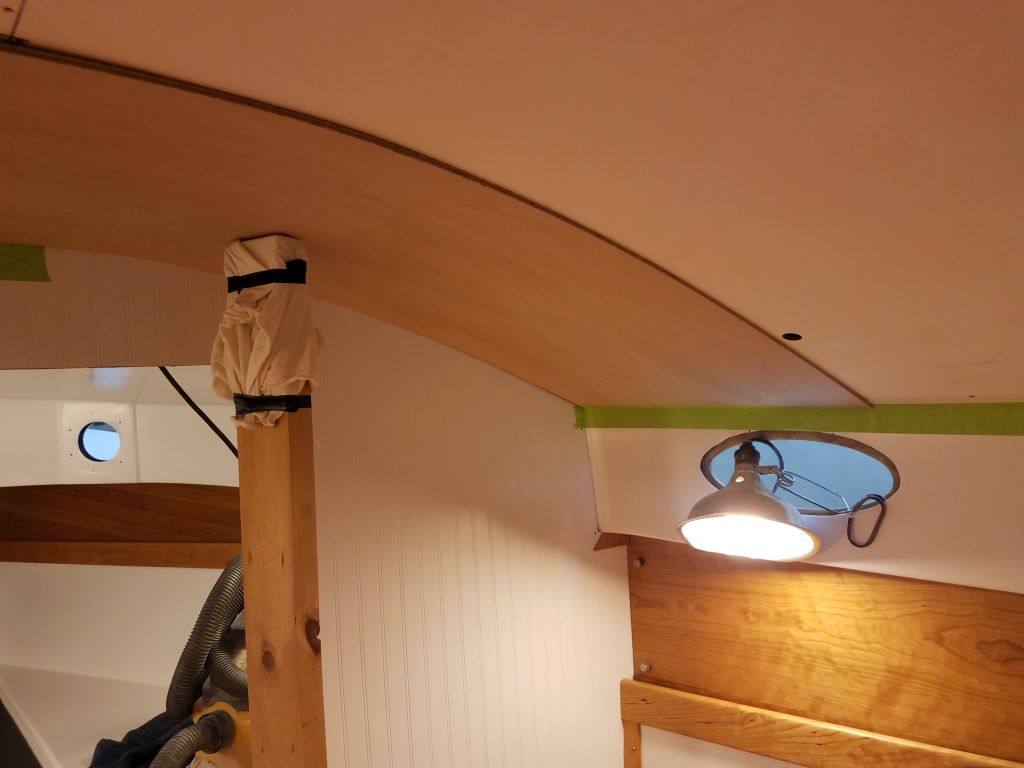
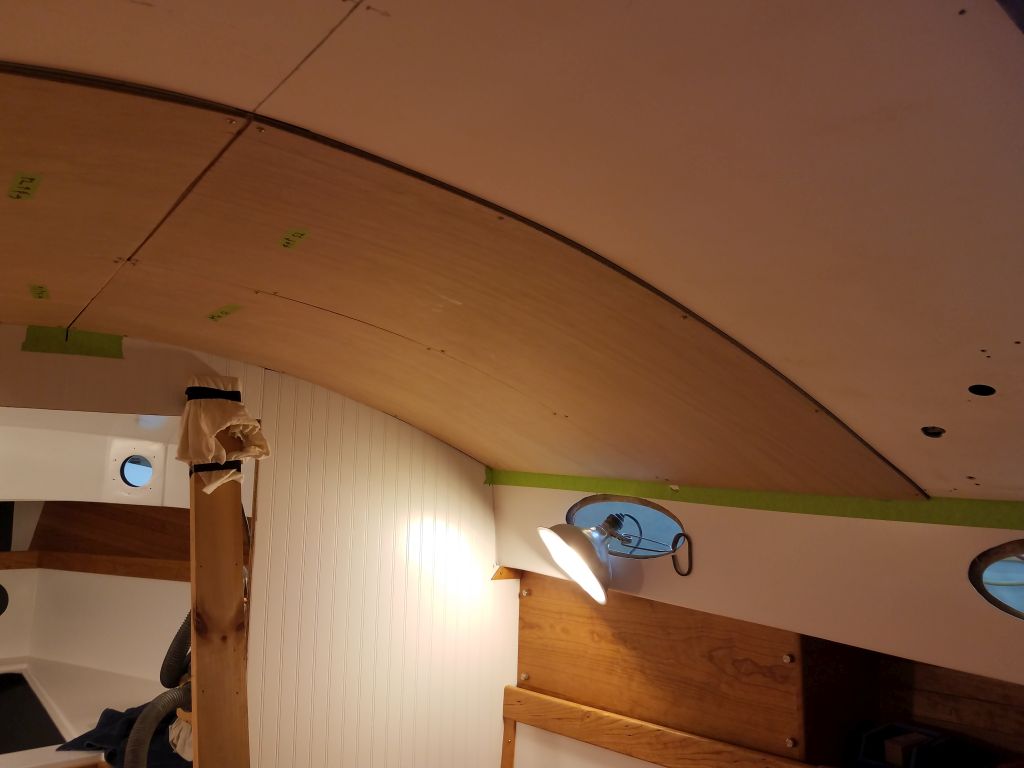
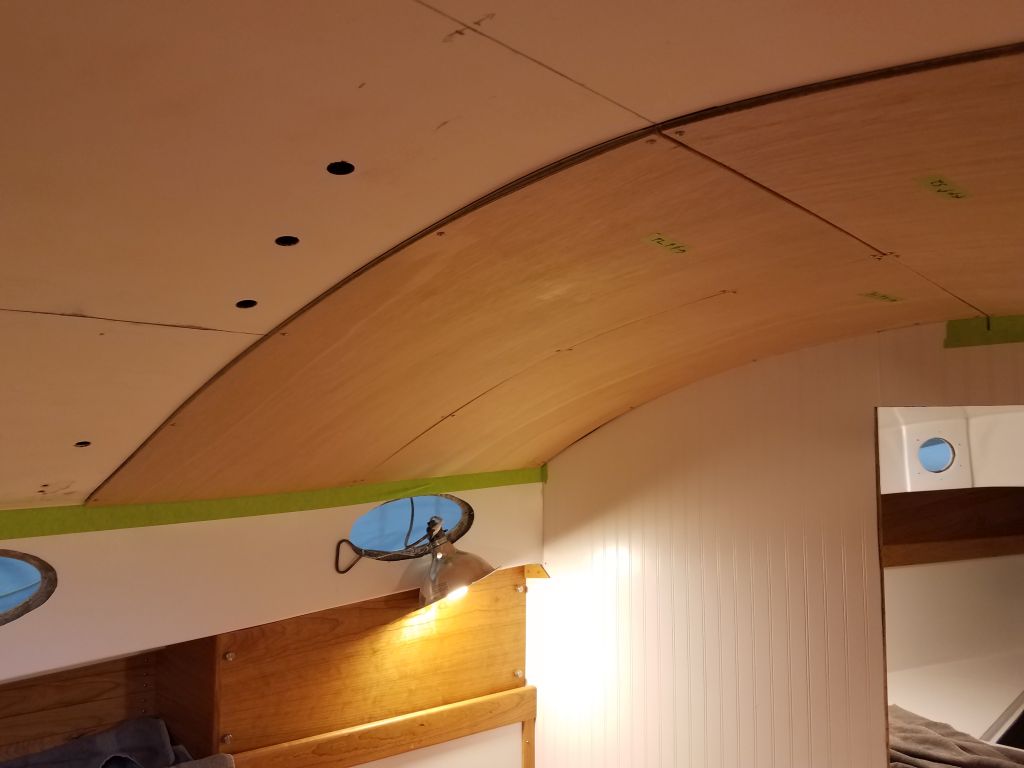
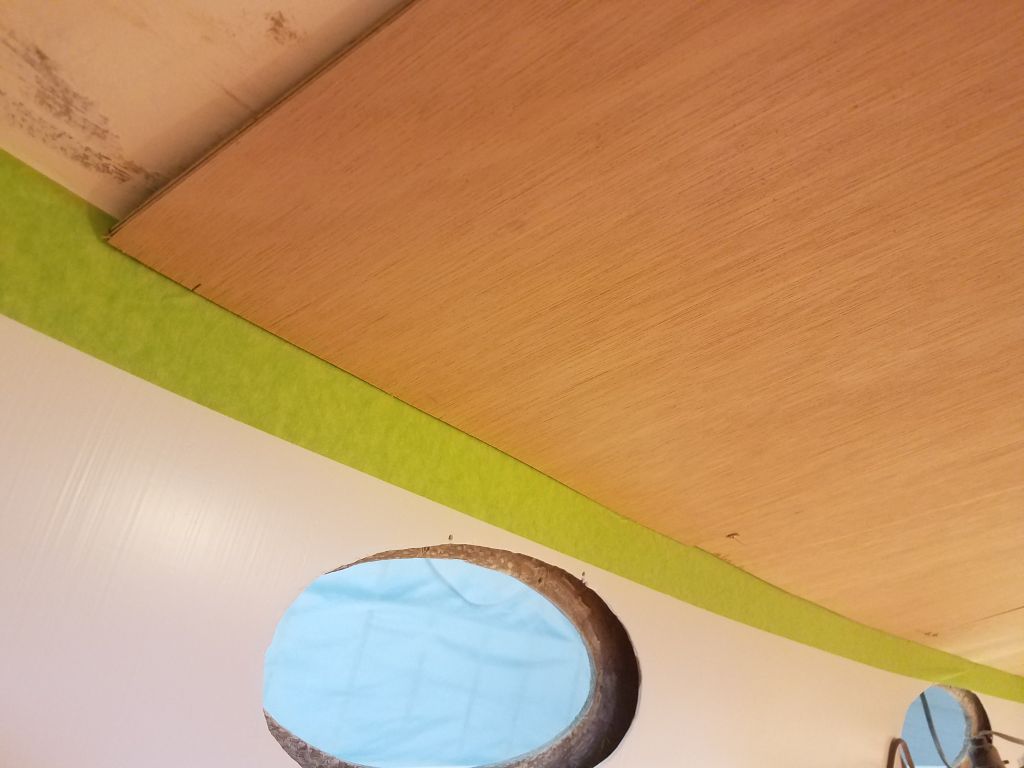
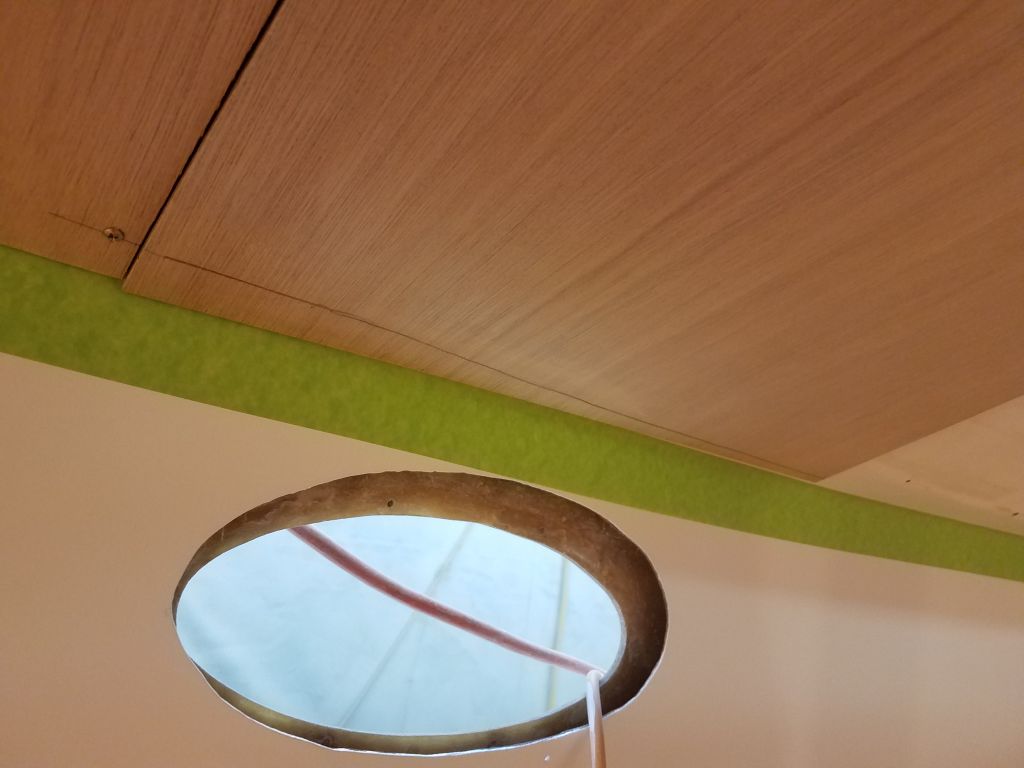
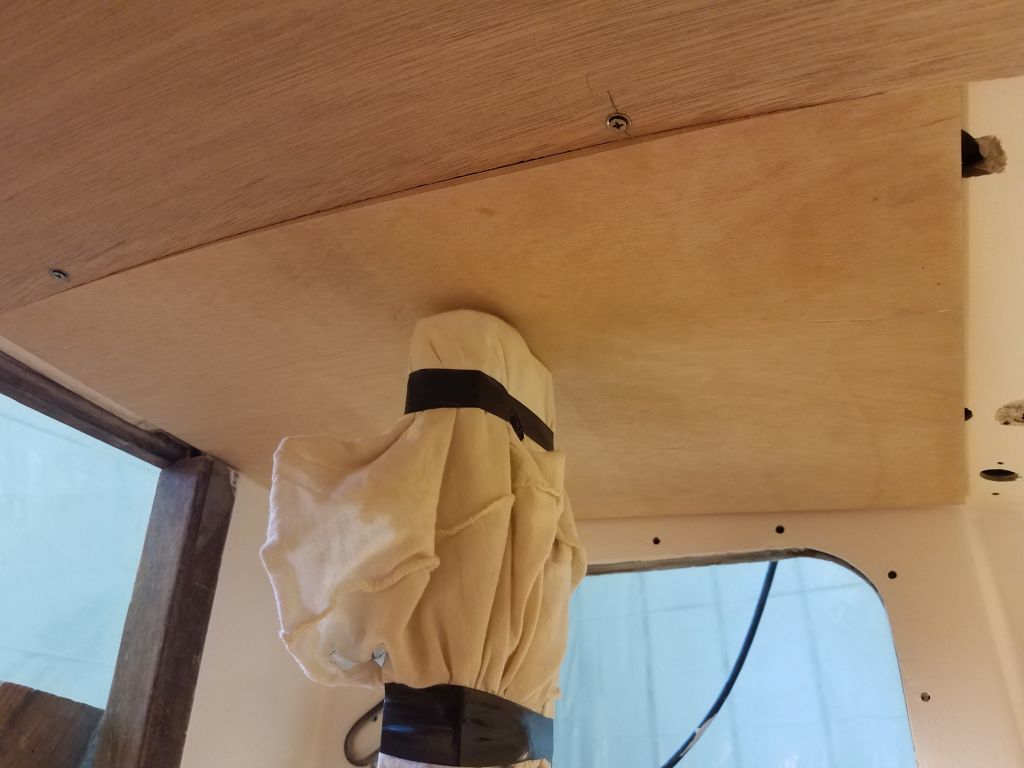
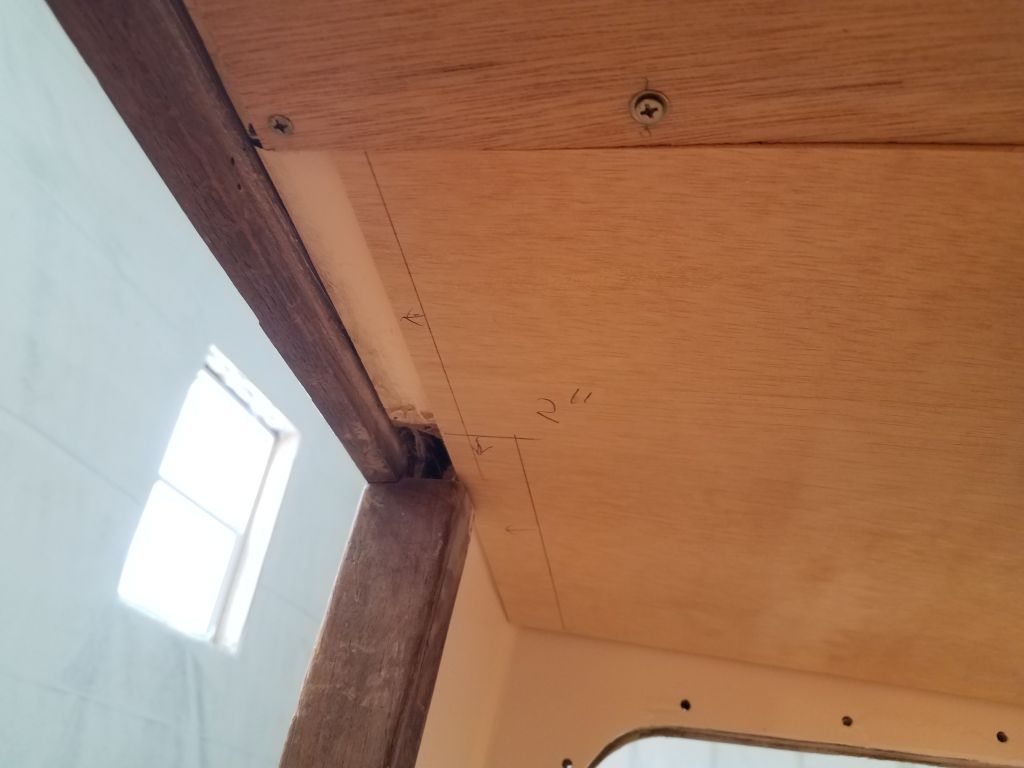
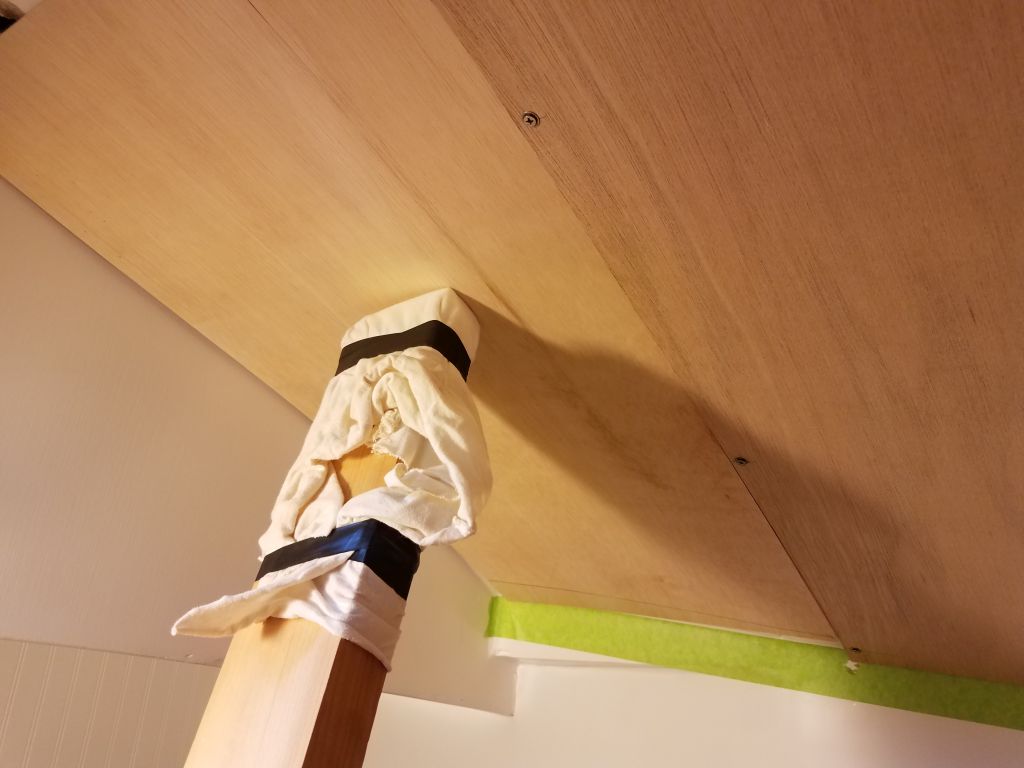
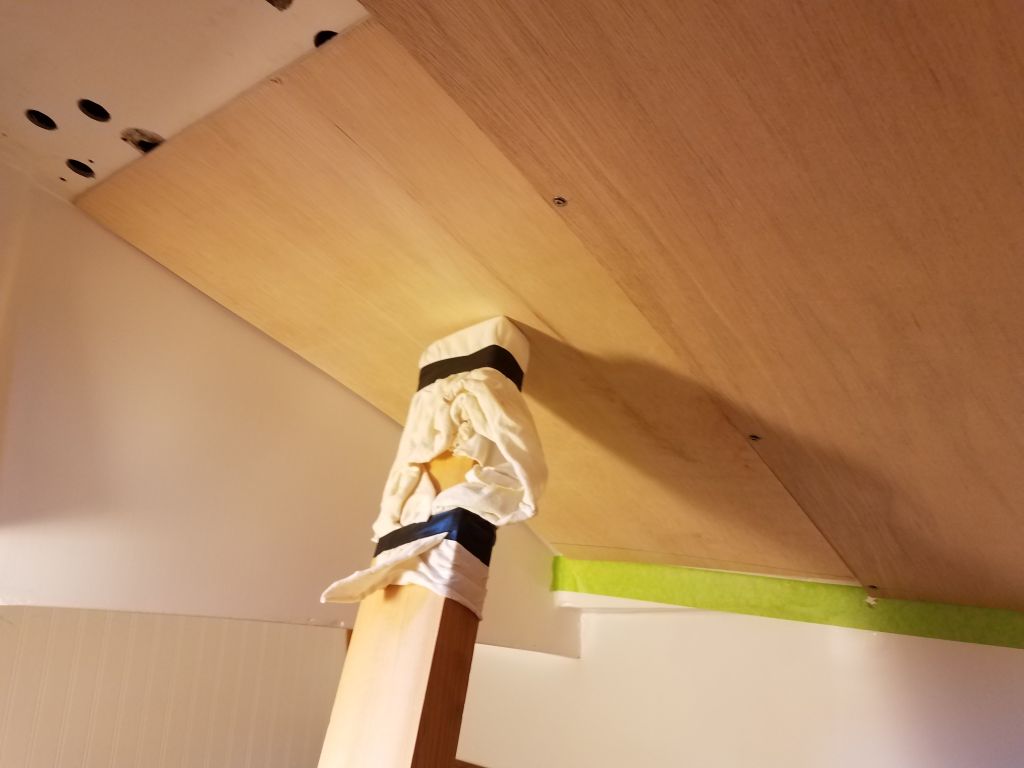
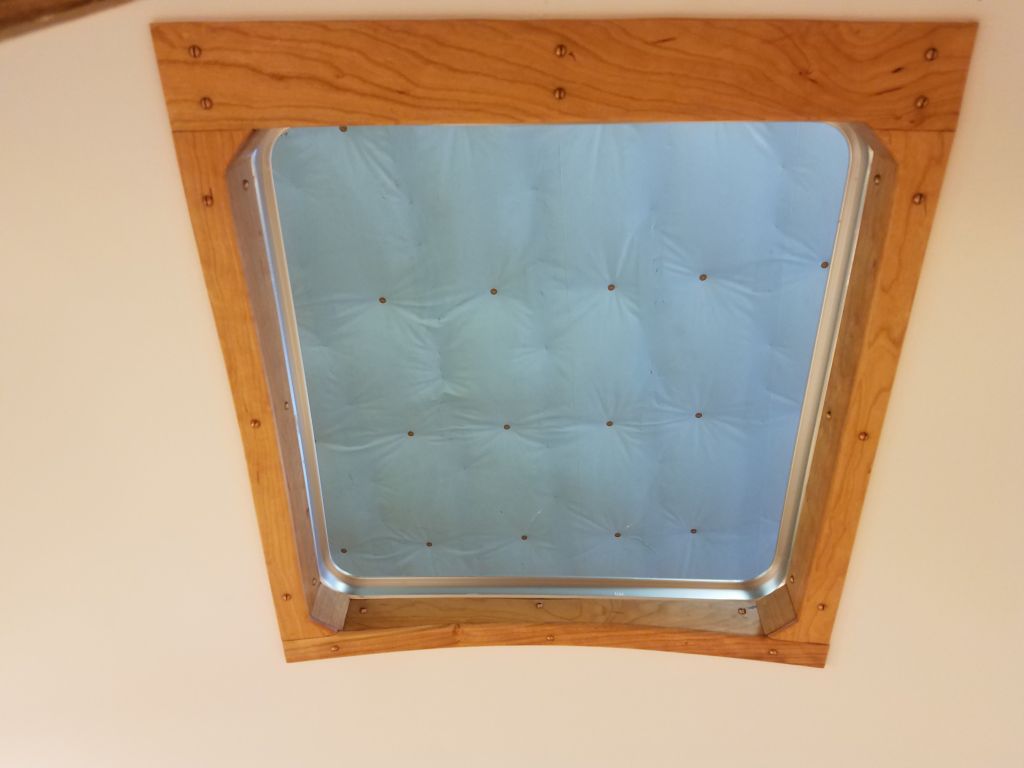
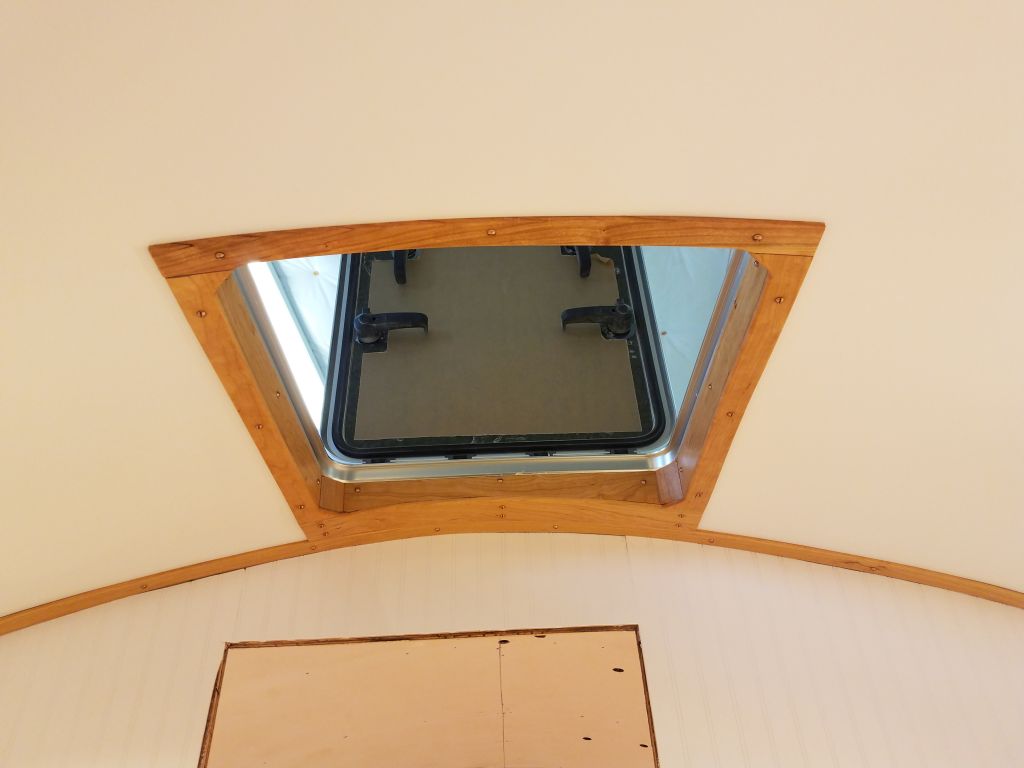
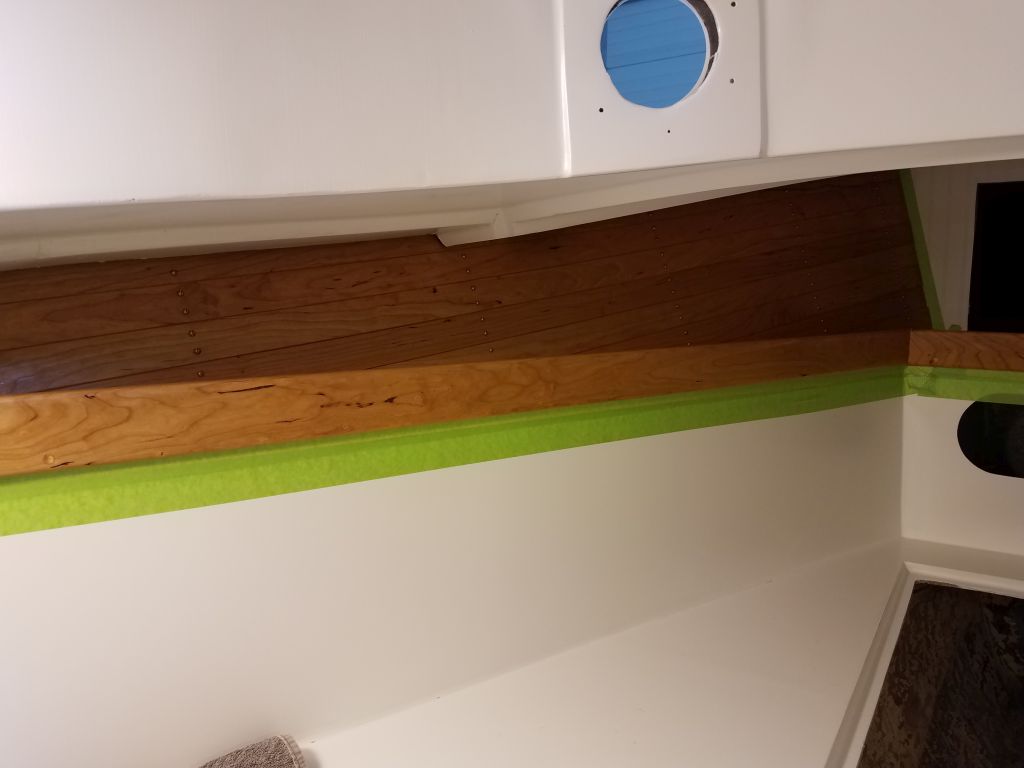
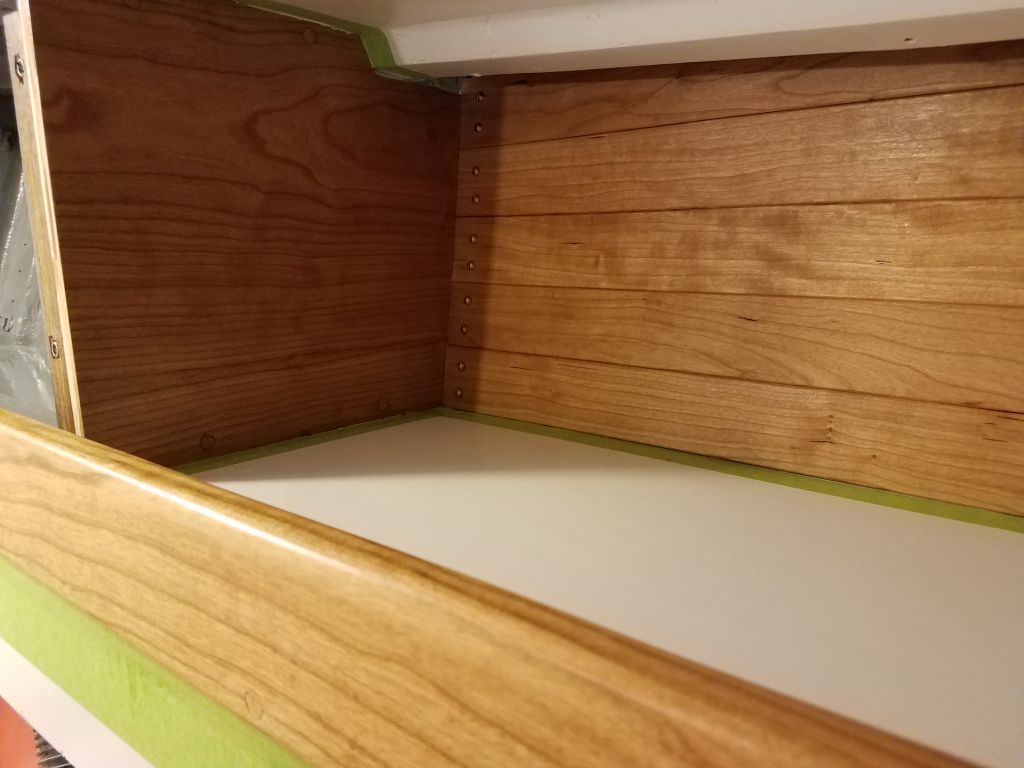
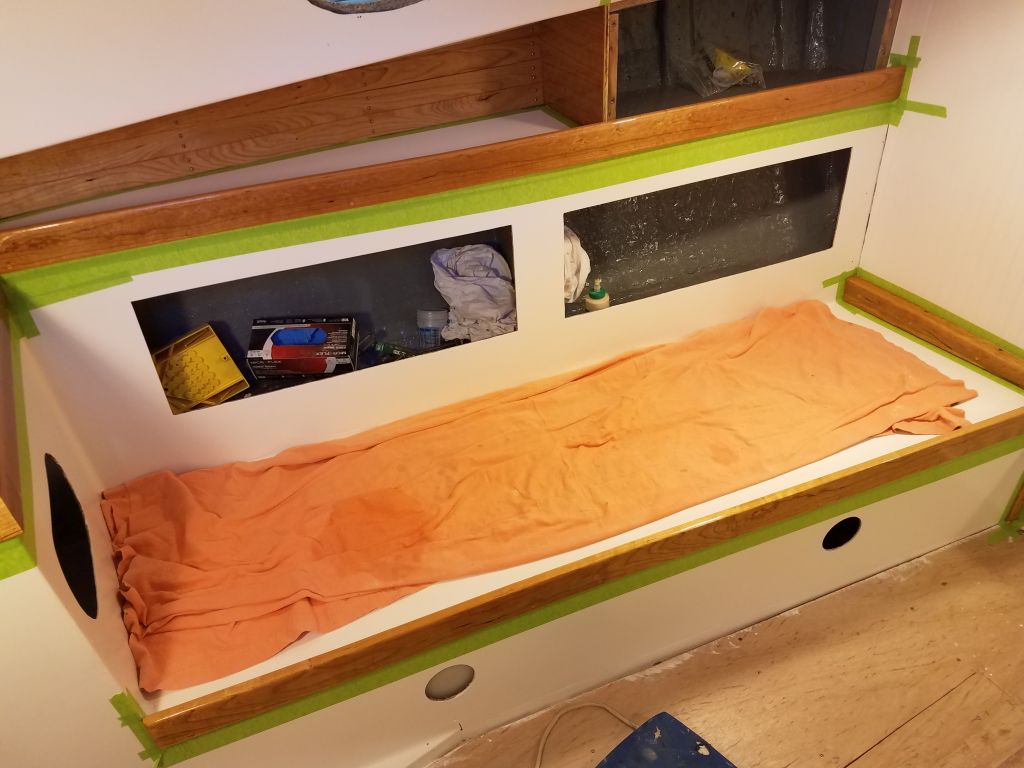
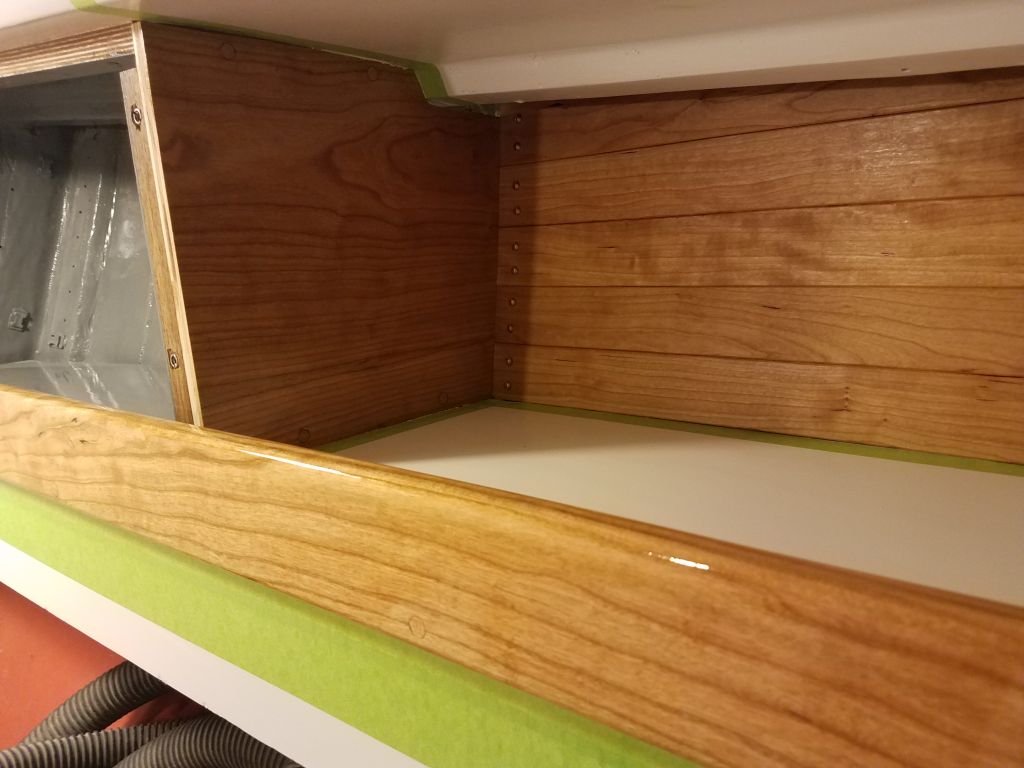
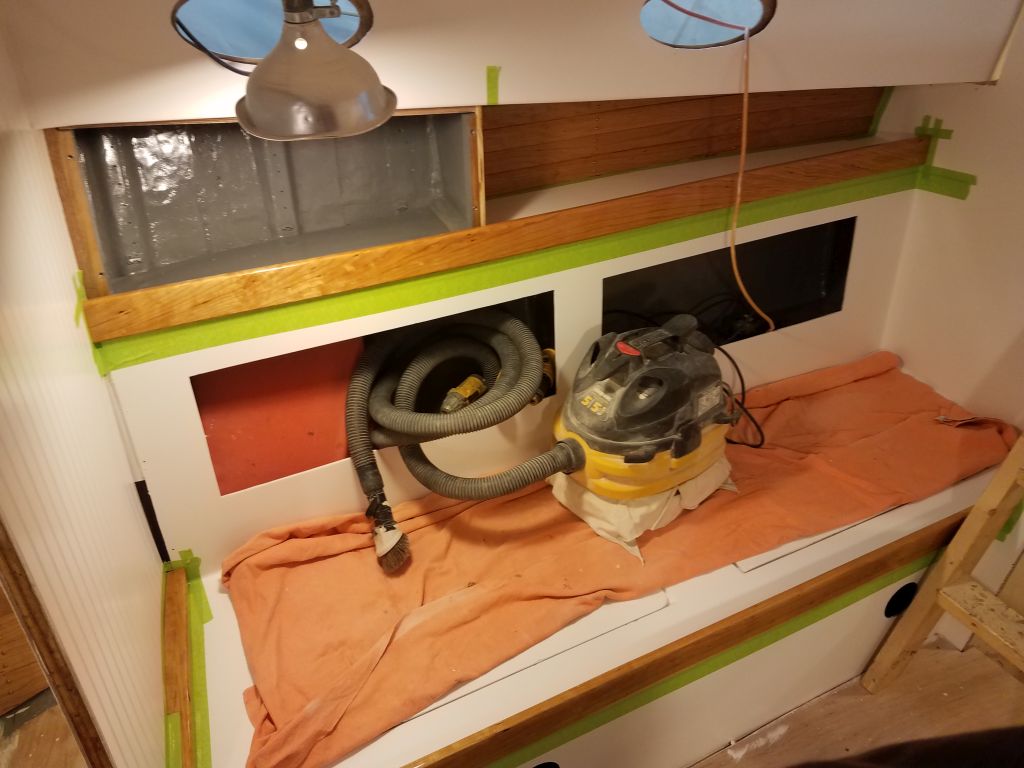
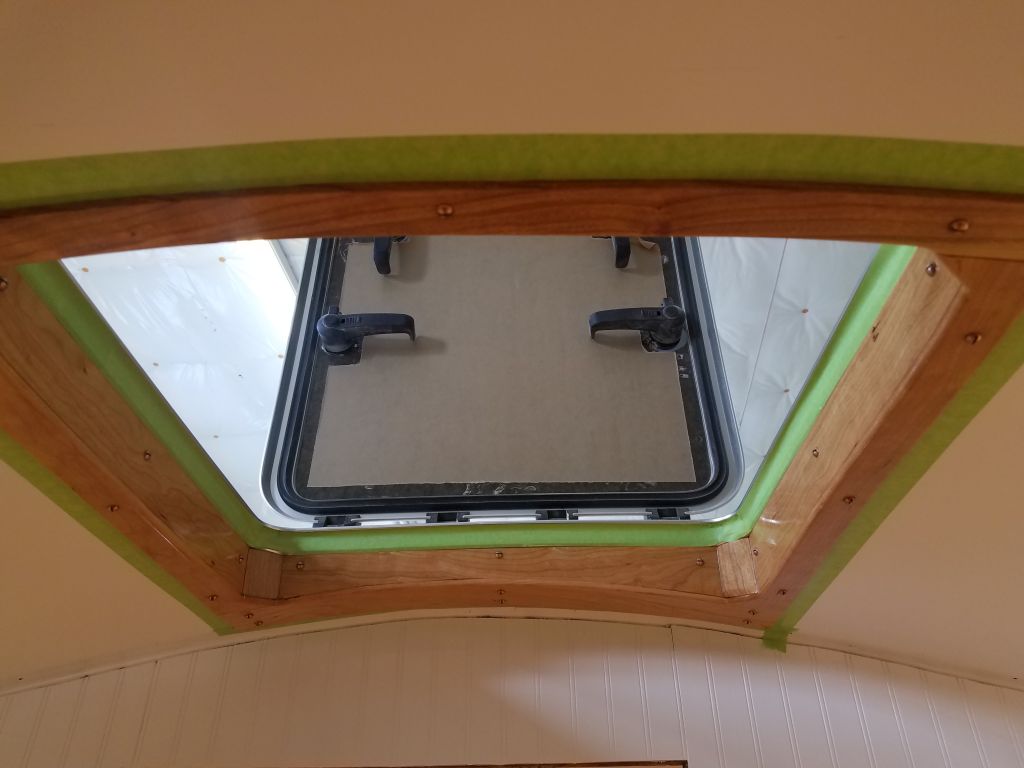
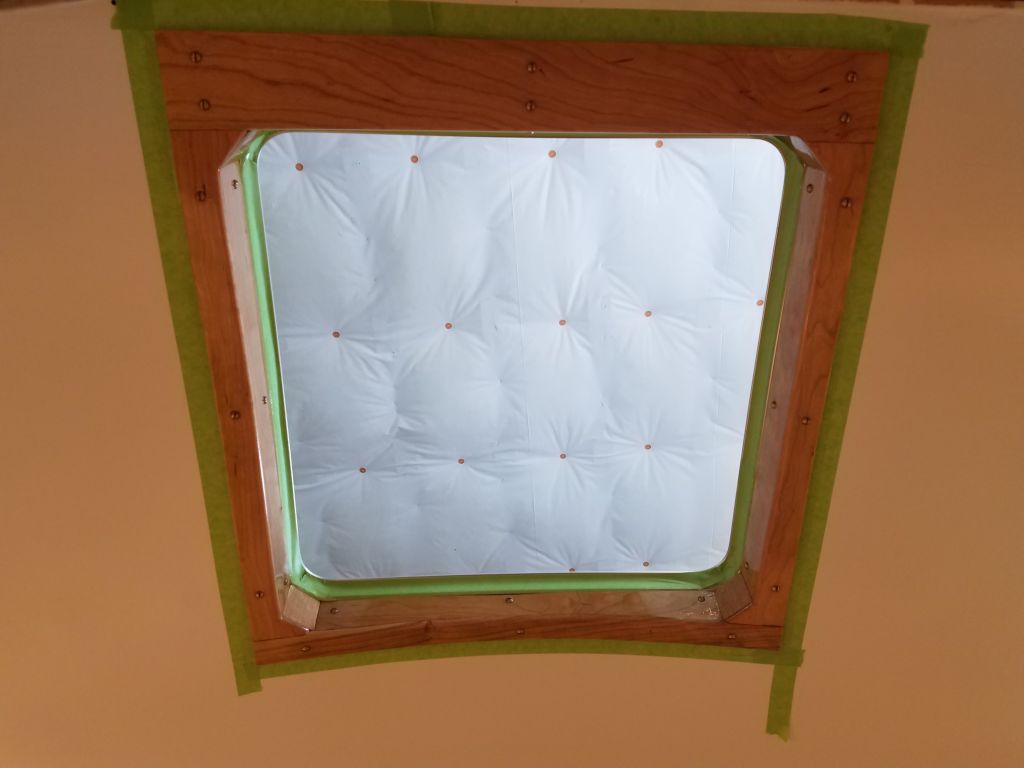
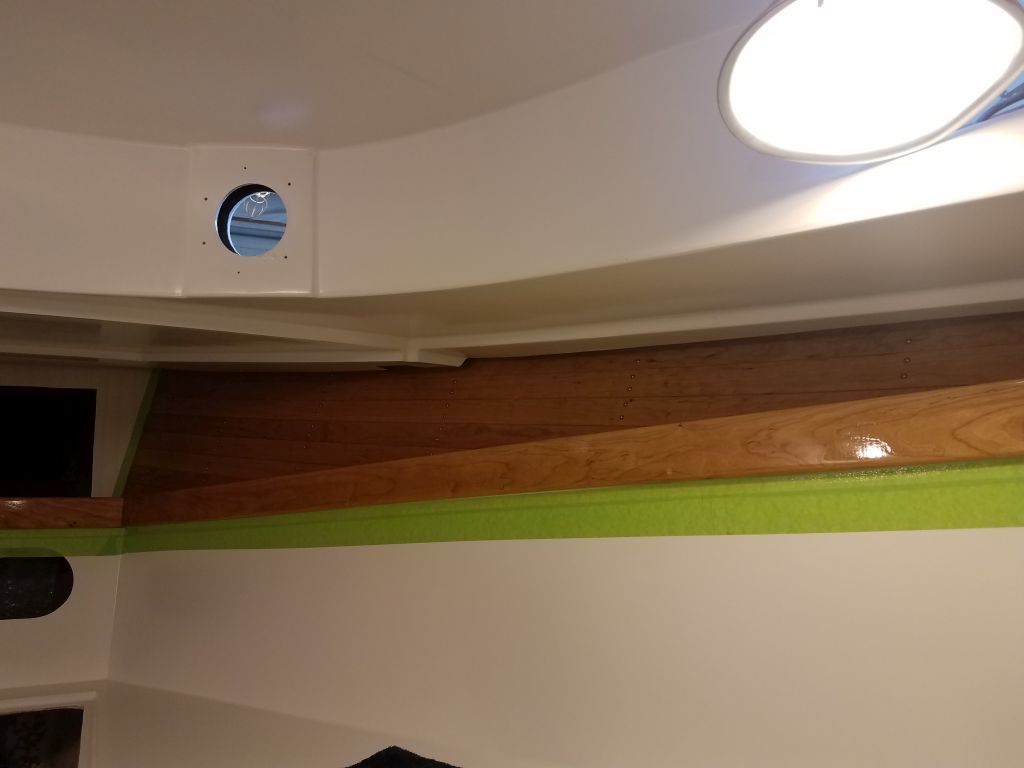
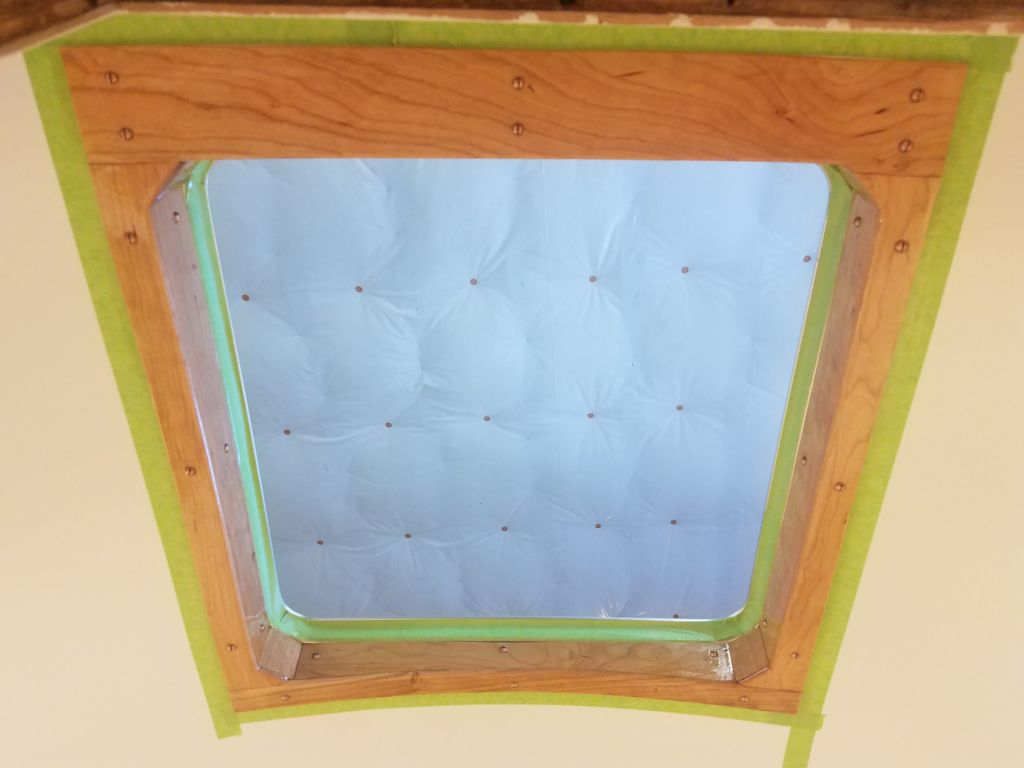
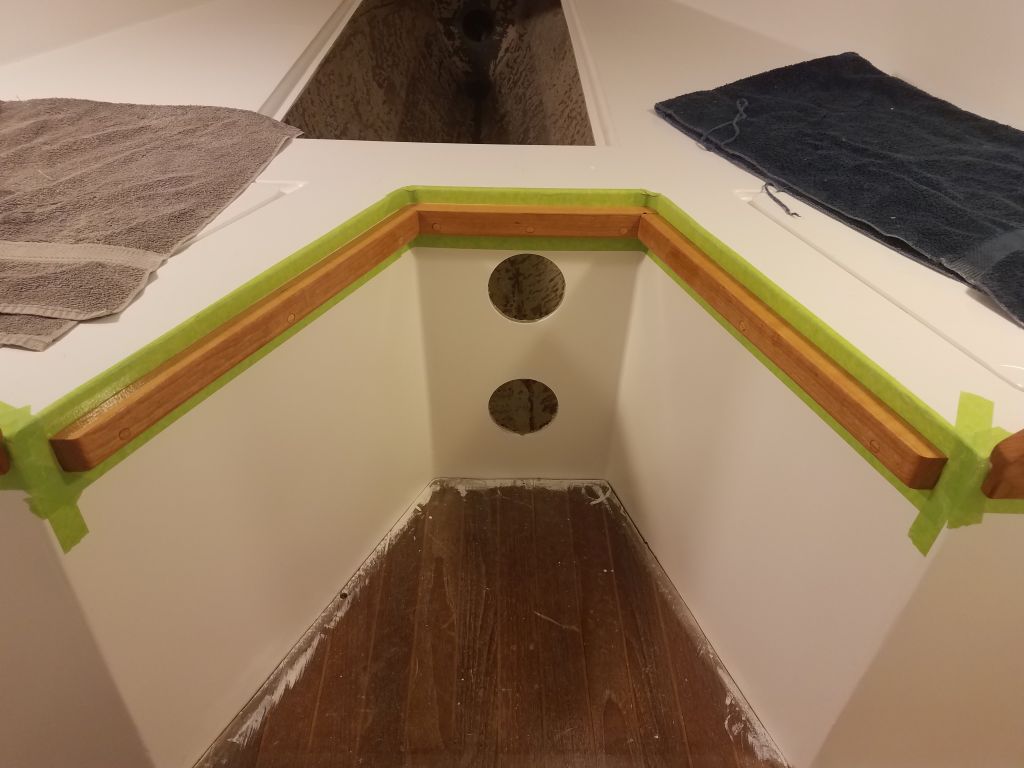
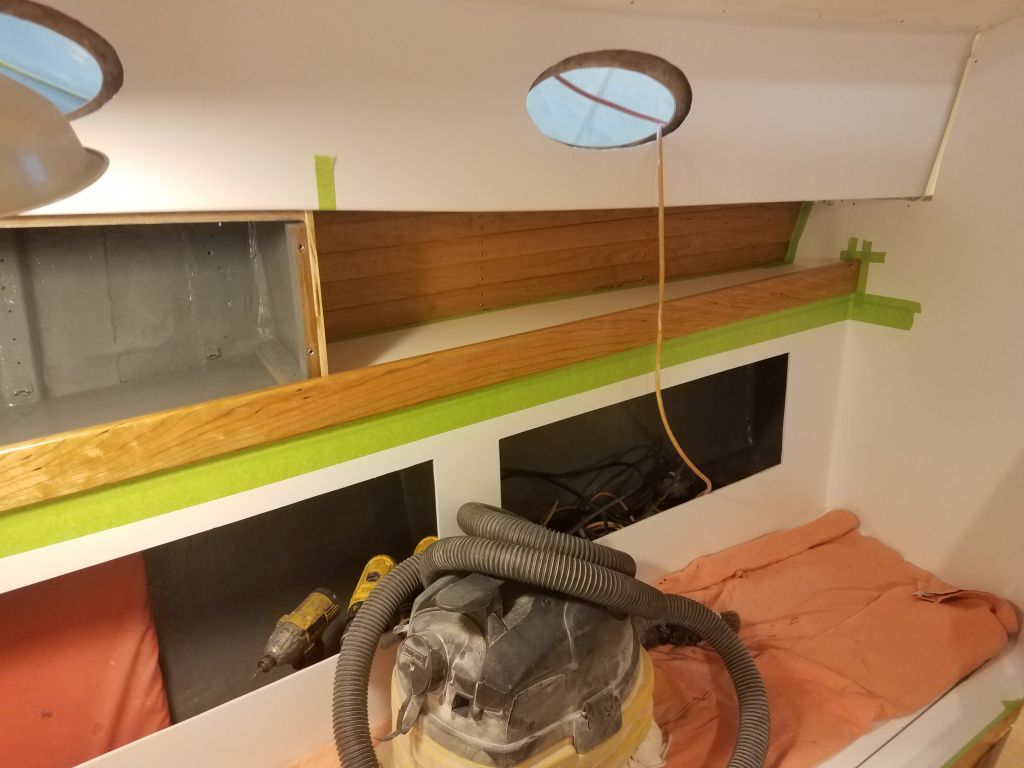
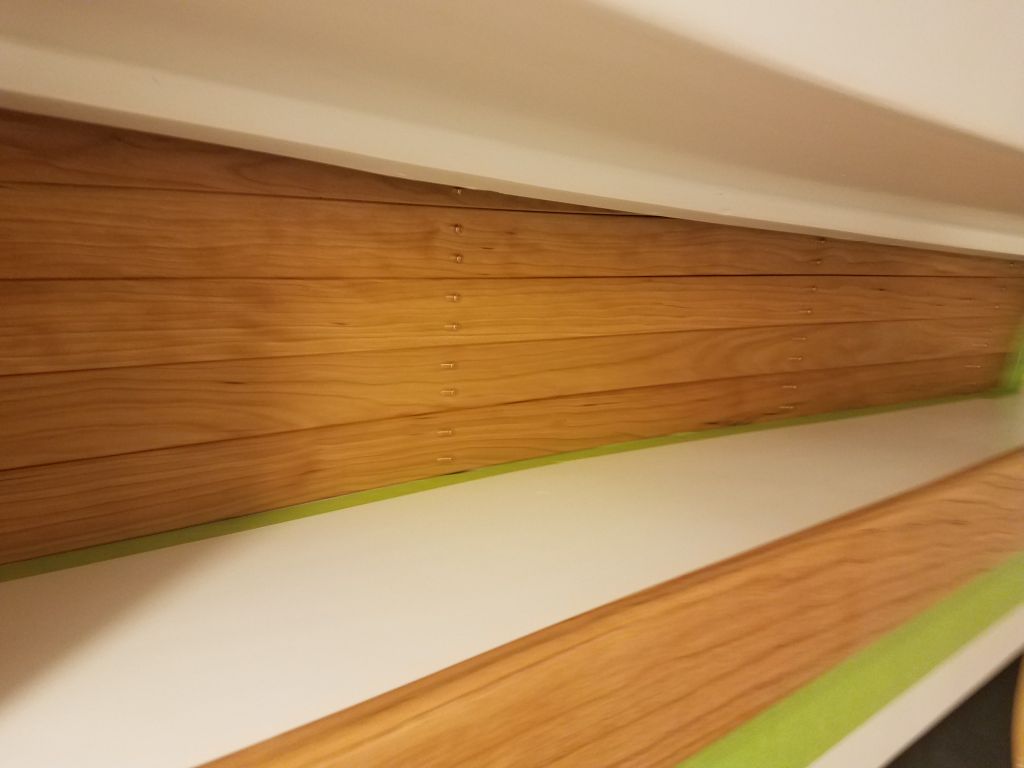
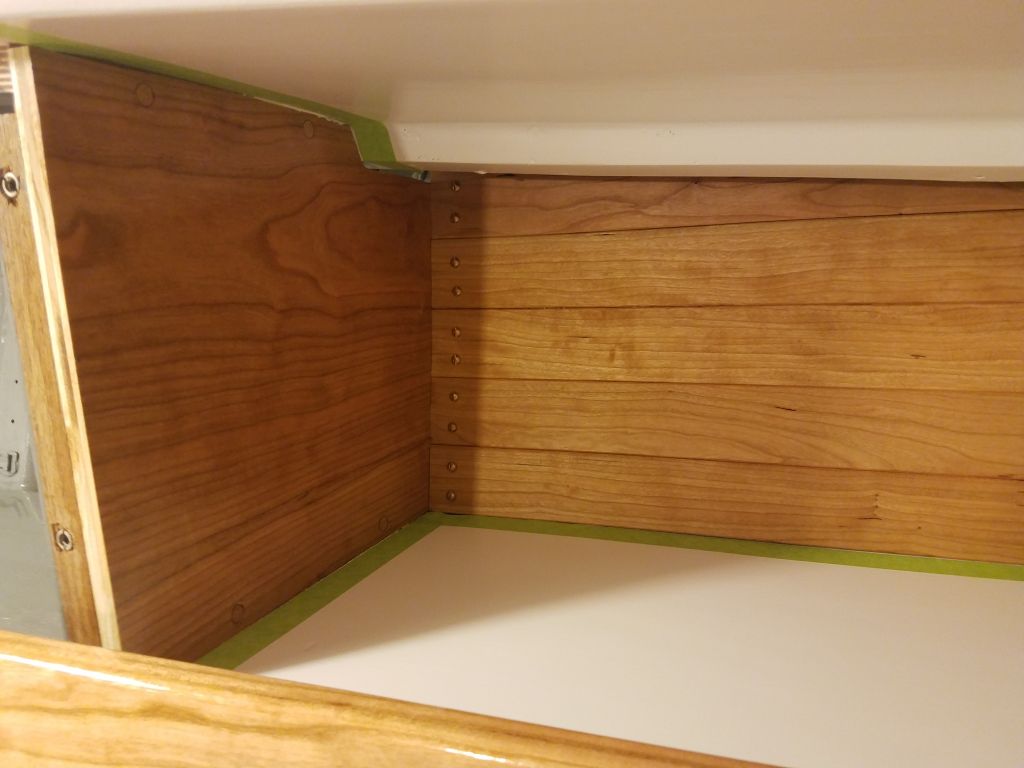
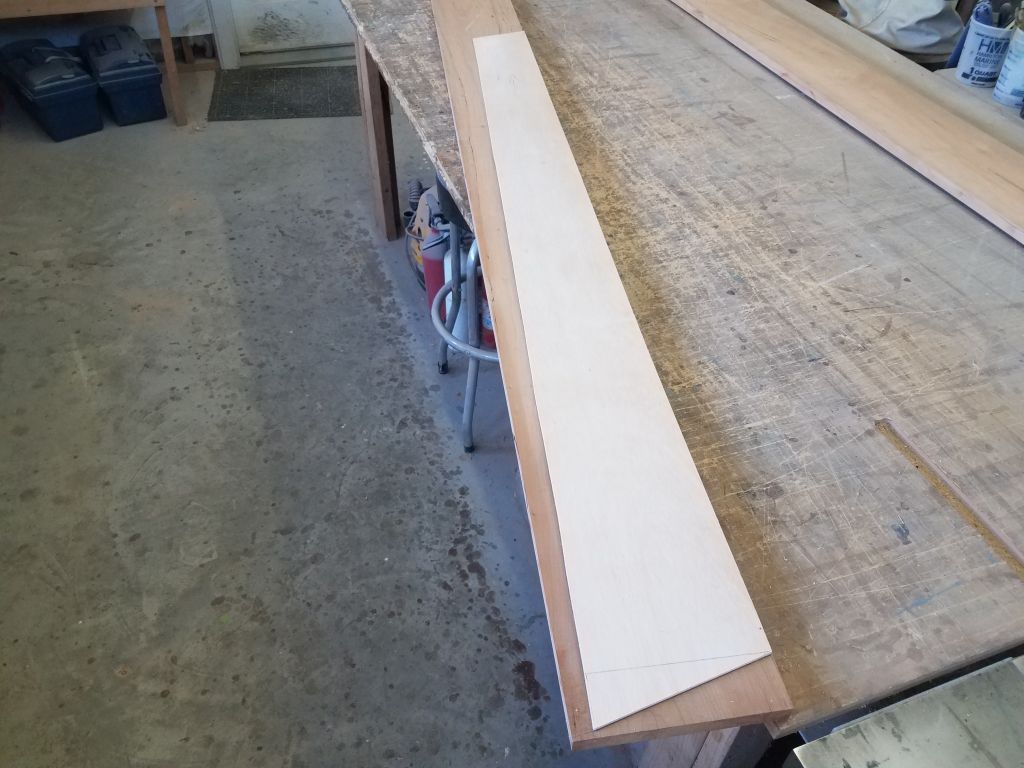
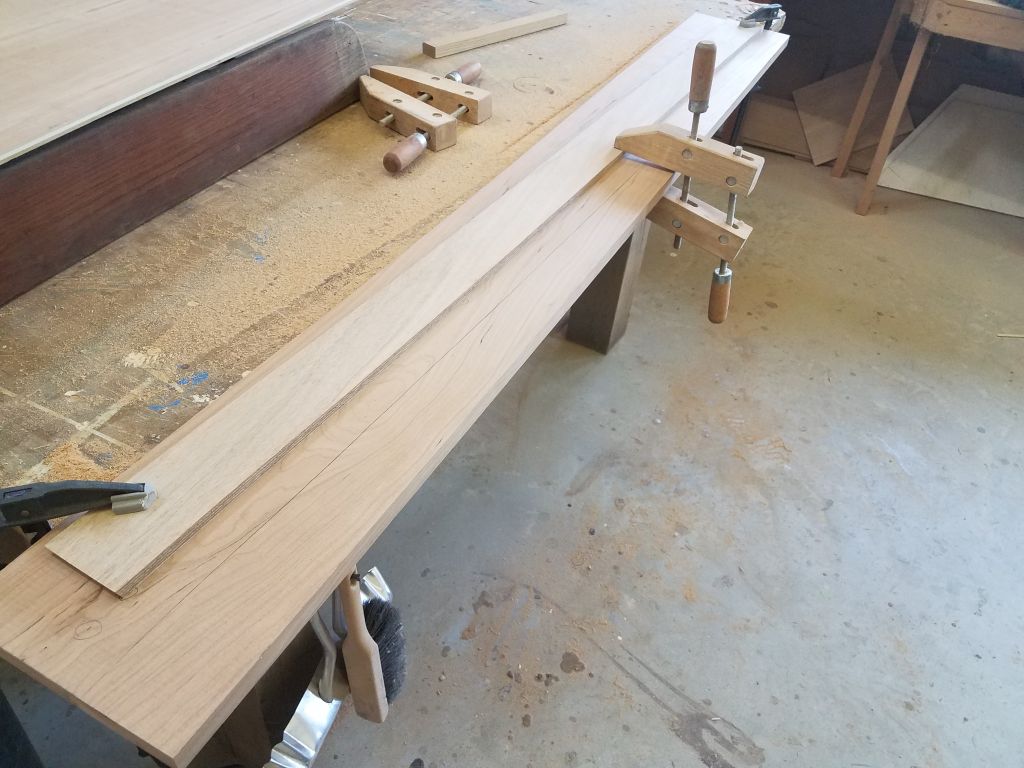
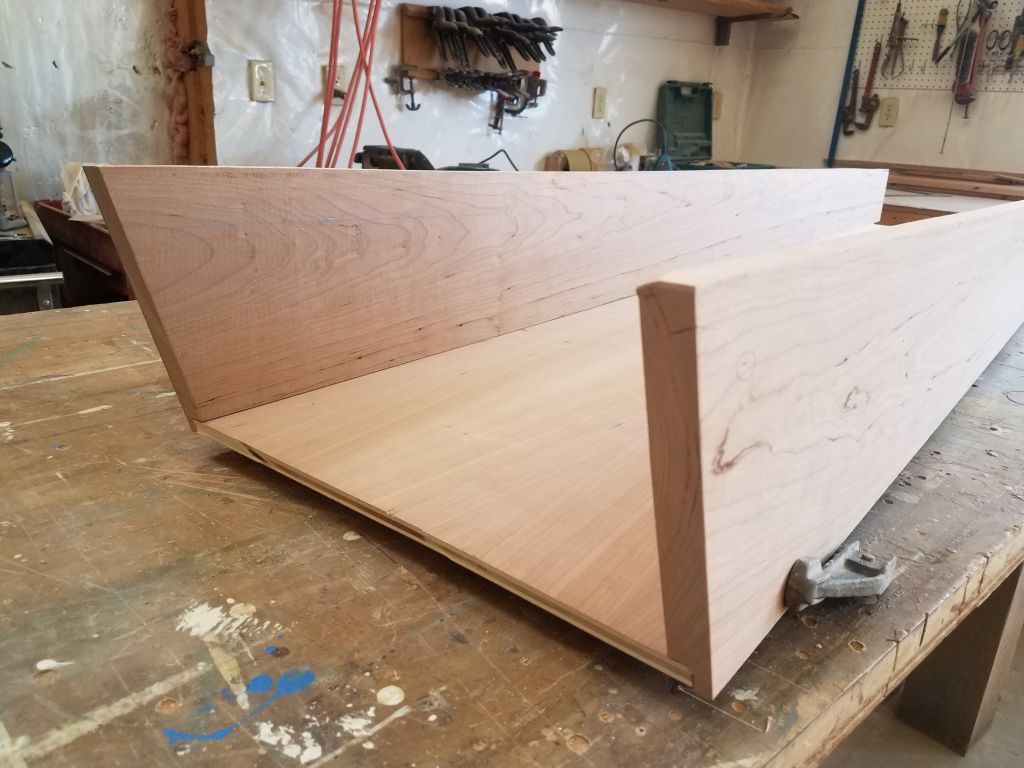
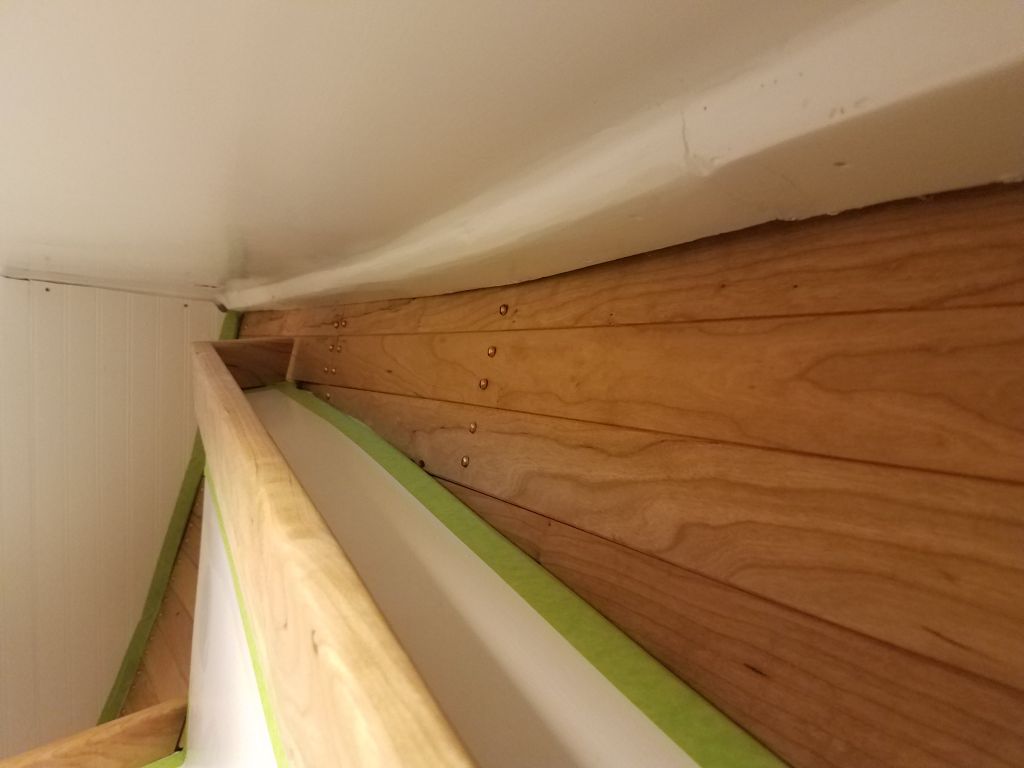
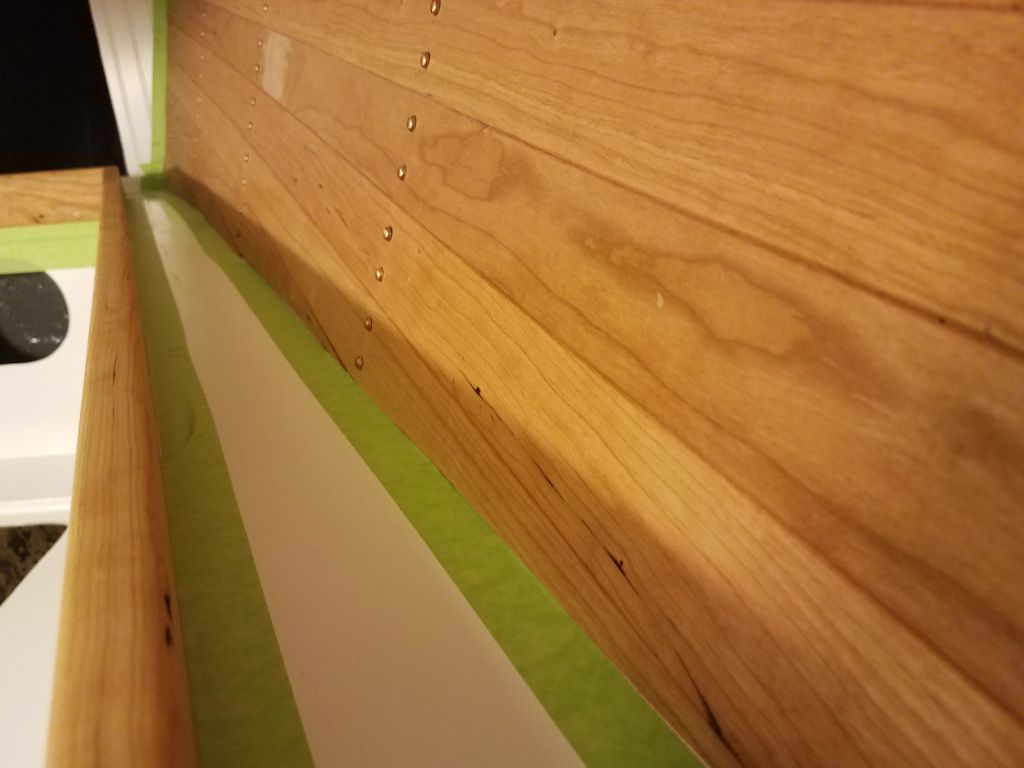
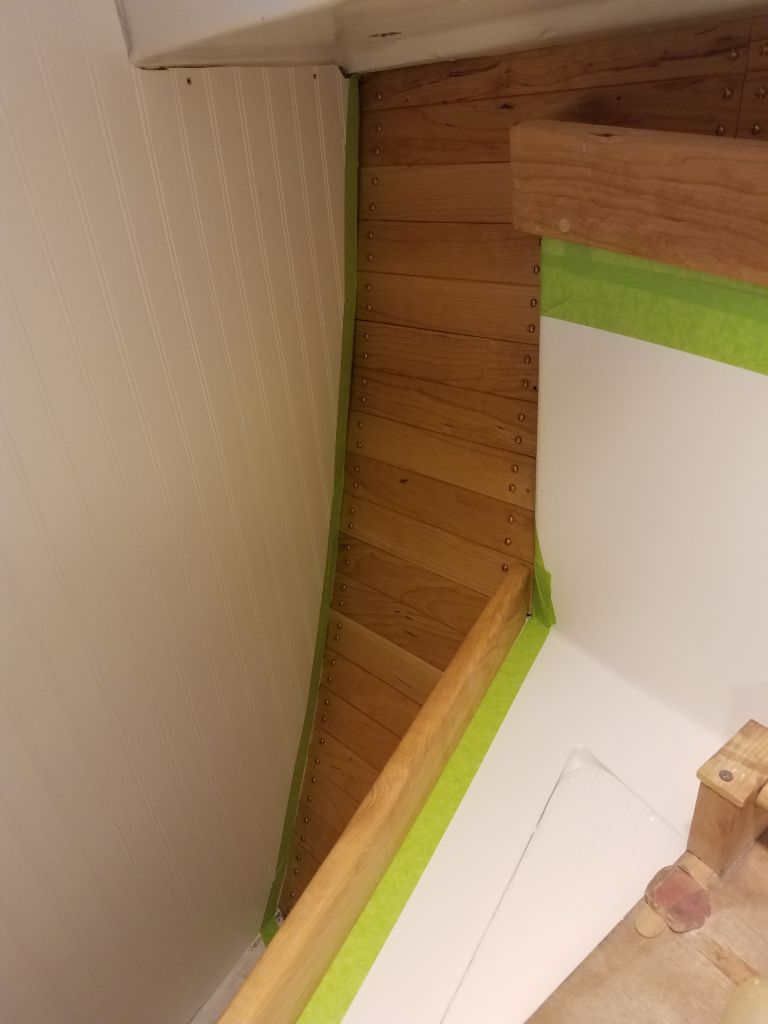
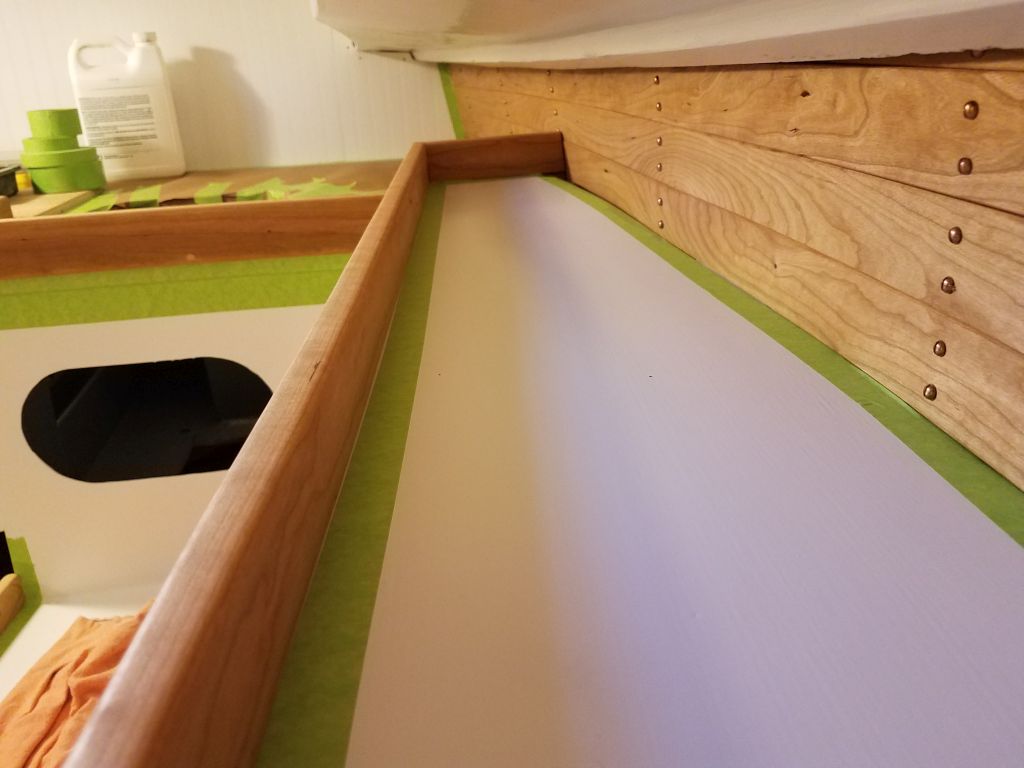
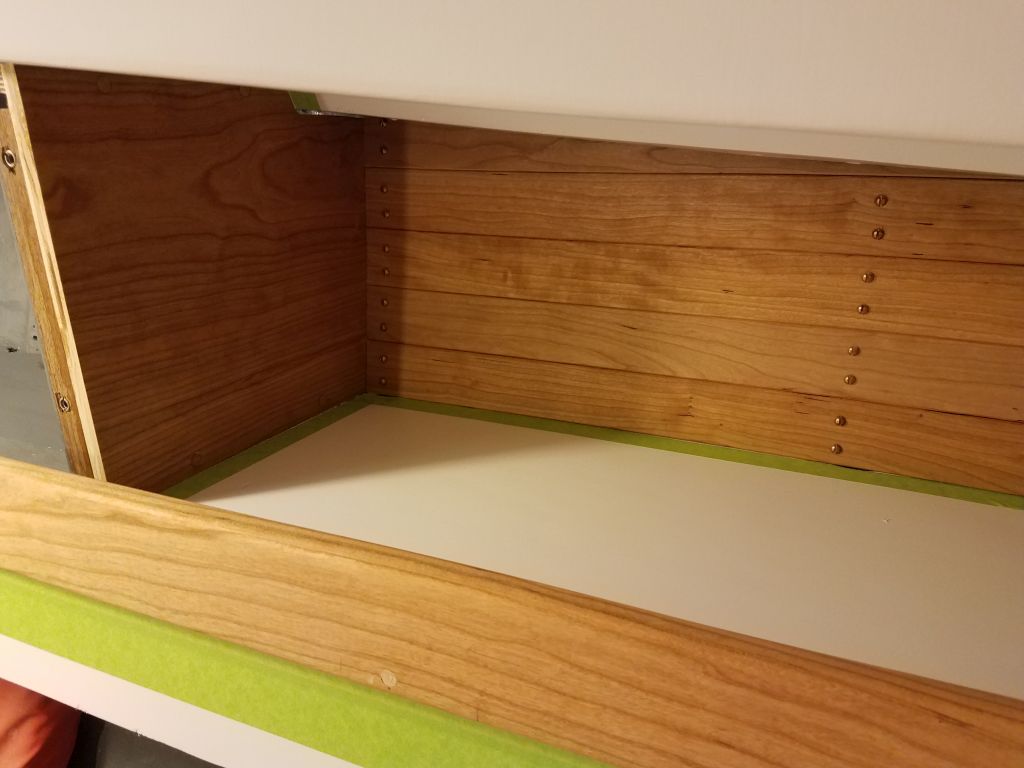
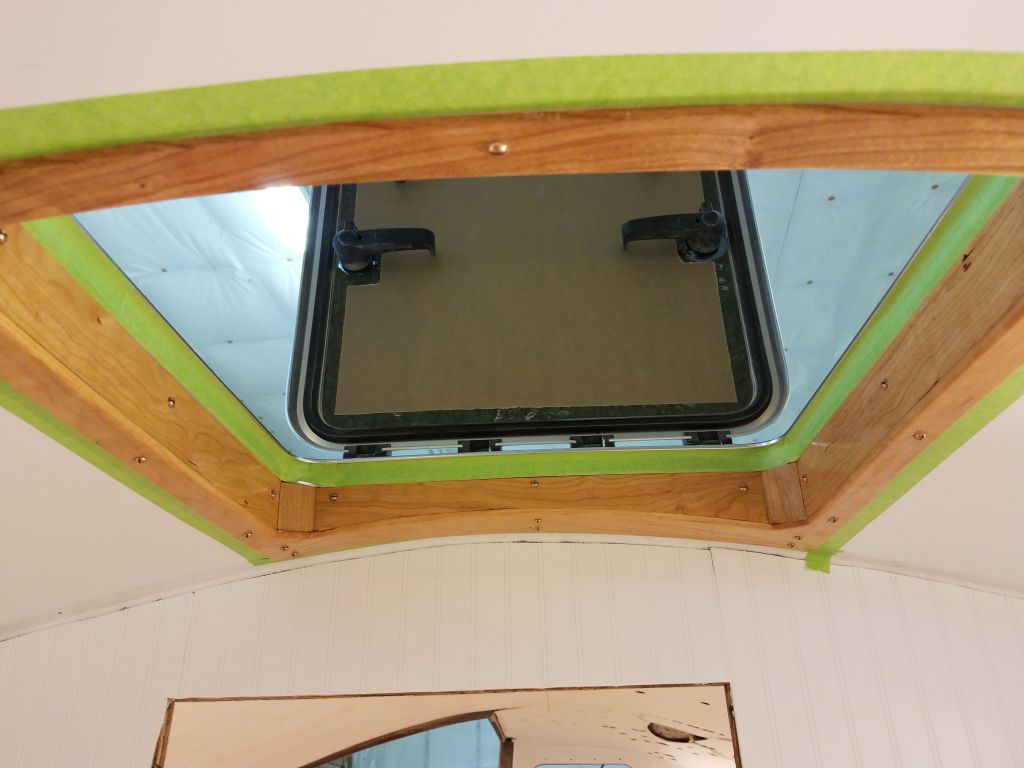
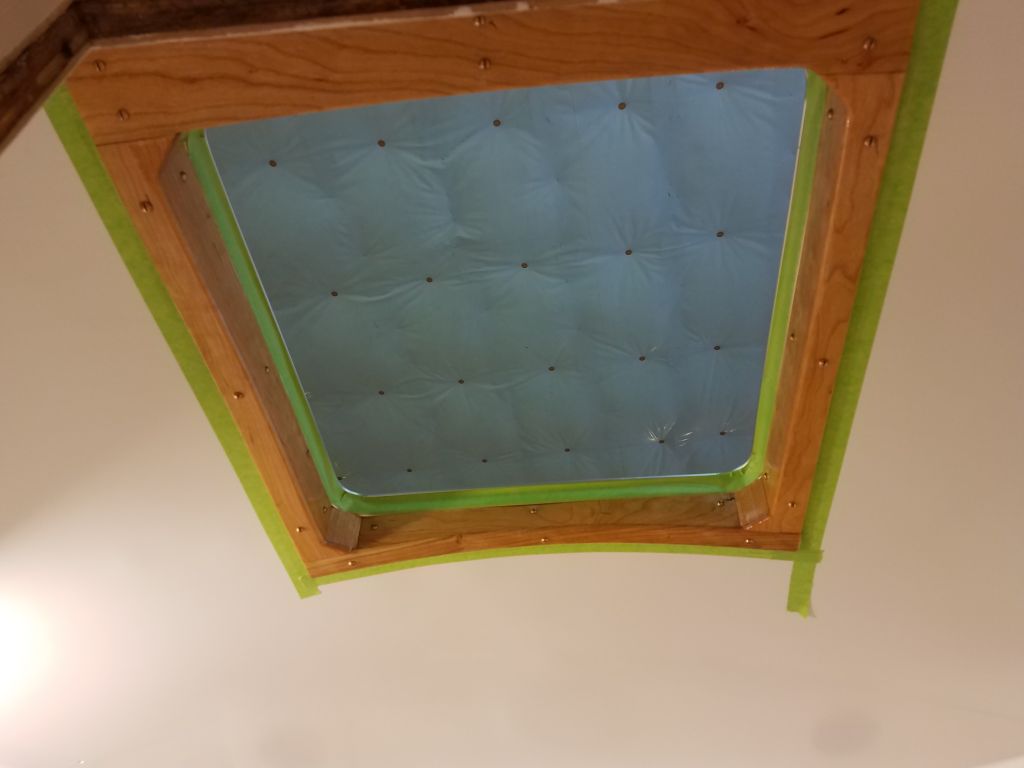
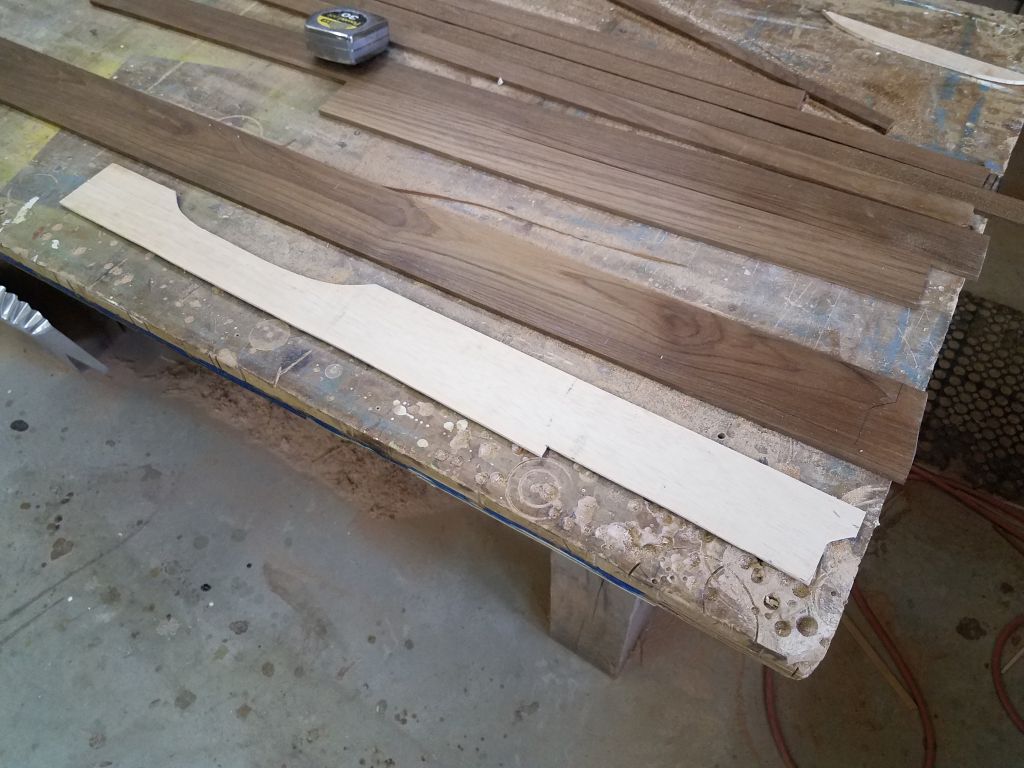
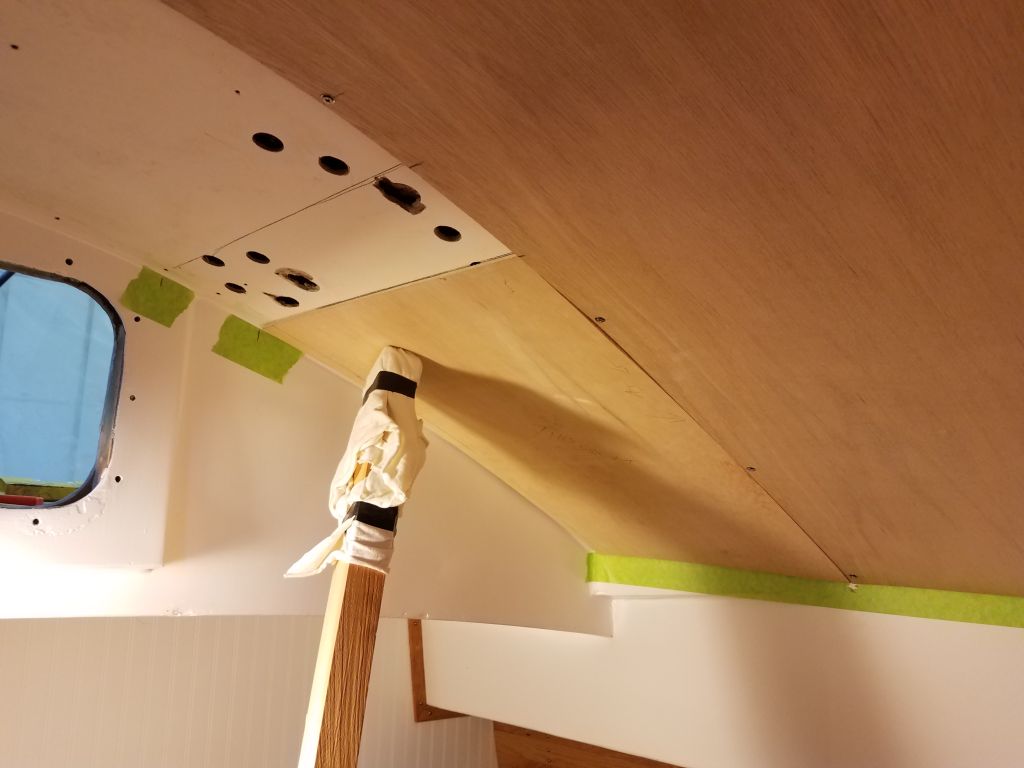
Beginning with some 3″ wide pieces of 1/4″ plywood, I made simple templates of the inside of the forward hatch frame, and used these templates to cut solid cherry to the correct lengths and angles to fit on each side of the opening, just below the hatch itself.  These fit up against the angled corners of the opening, and, securing them with screws into the sides of the opening, I let them hang down below the liner for the moment.

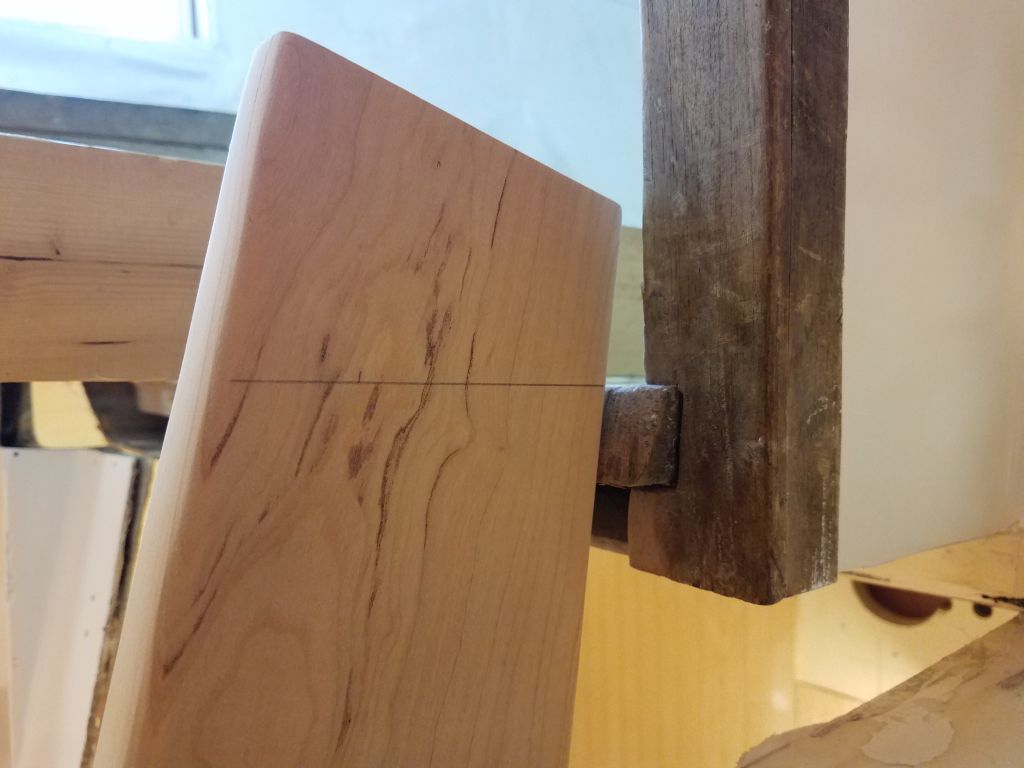
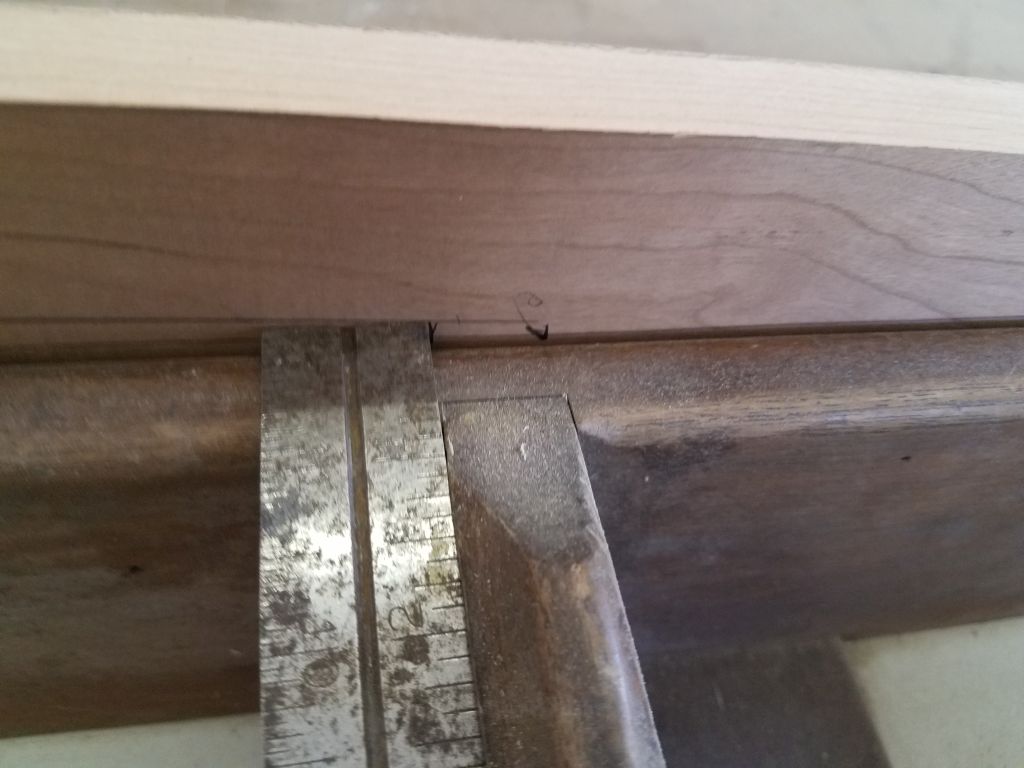
To mark the overhanging trim where it met the liner, I used a scrap of 1/4″ cherry held in place along each of the four sides to scribe a mark on the hatch trim.

I planned to let the side trim, which would cover the space between the liner and the hatch opening, run over the bottom edge of the inner trim, so after removing the four pieces, I transferred the scribe marks 1/4″ up, and made the cuts with a saw before reinstalling the trim permanently, now flush with the liner on all sides.

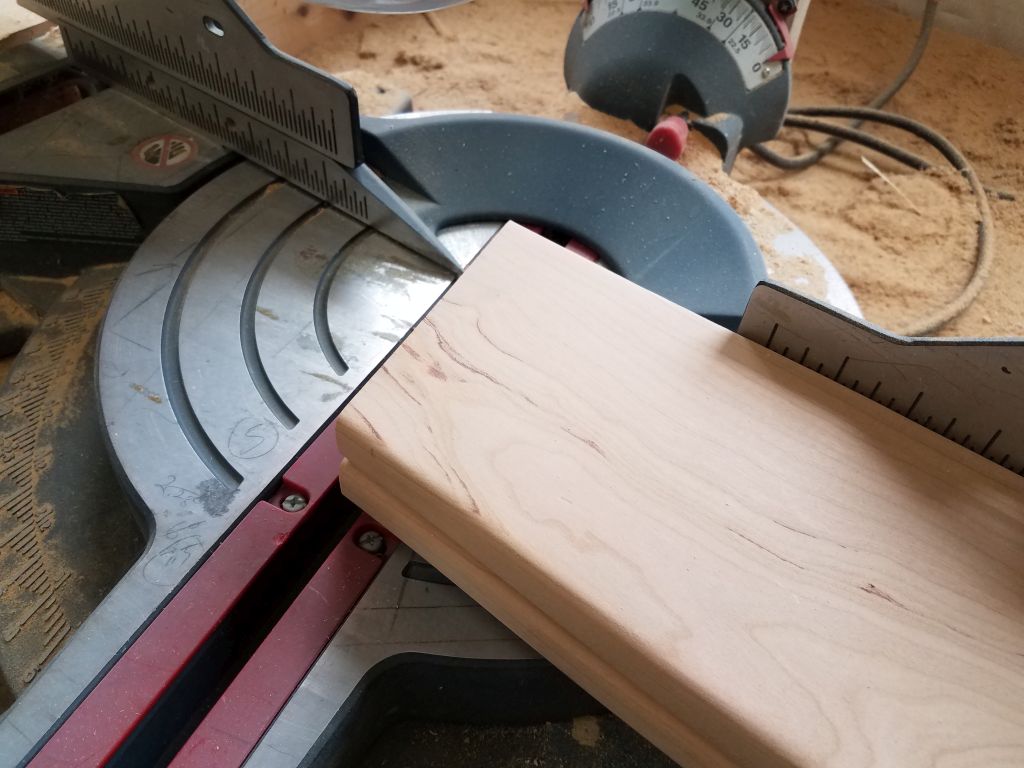
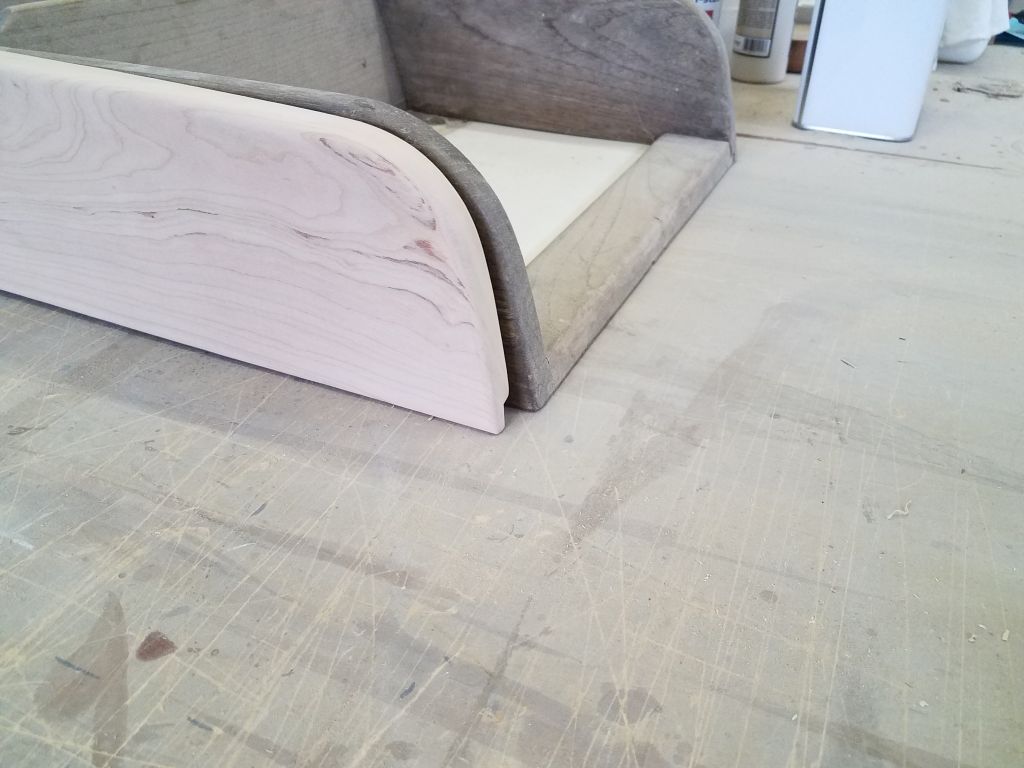
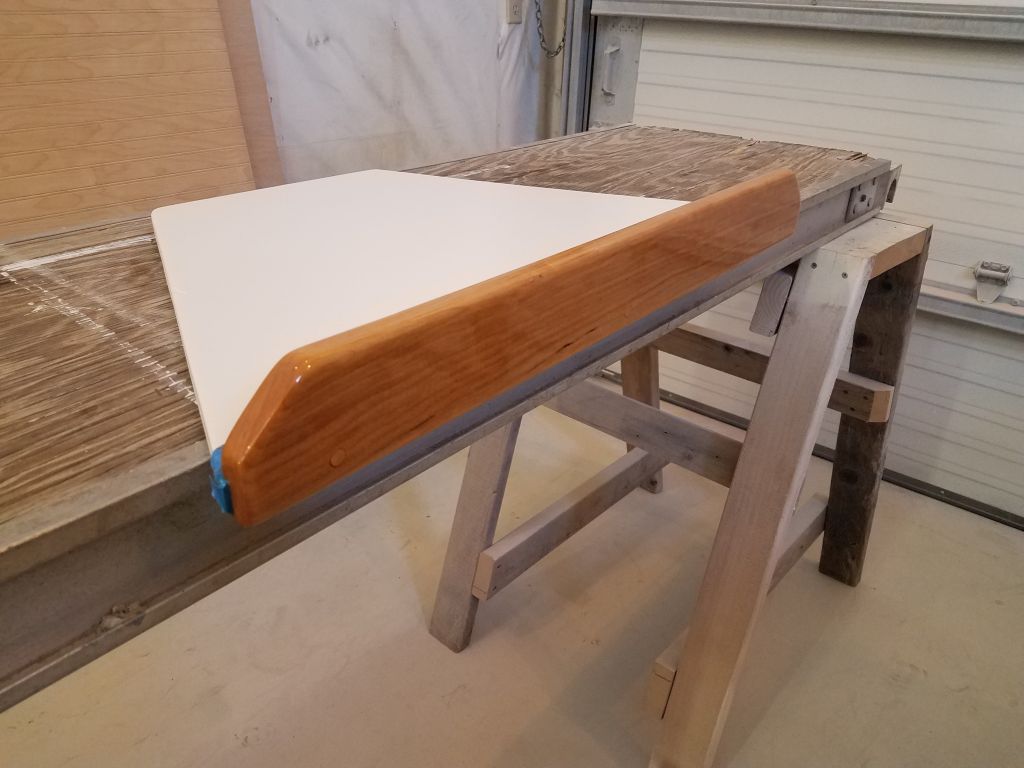
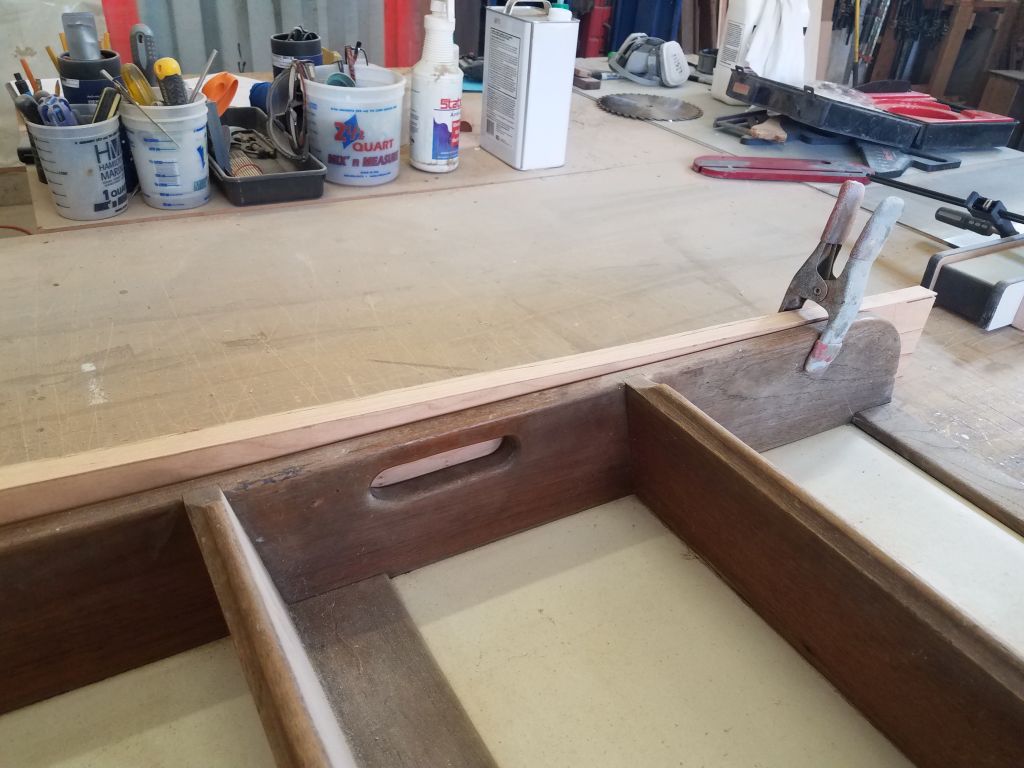
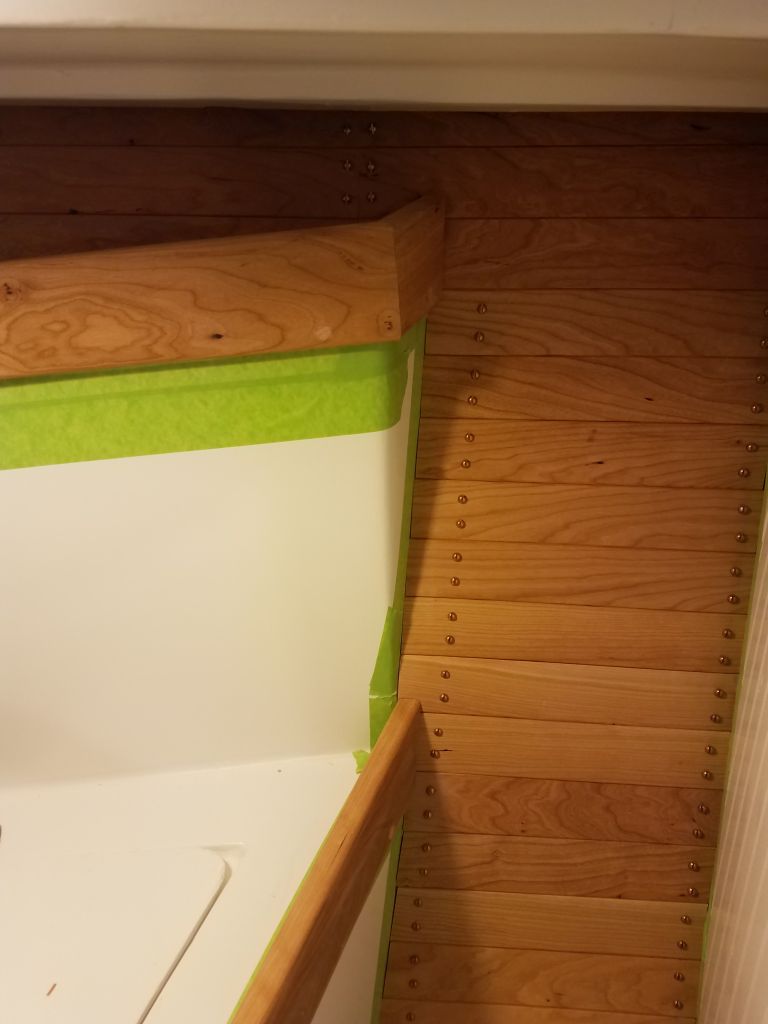
To complete the angled corners, I prepared a piece of 1/4″ stock with 45° angles on both edges, and cut small pieces to fit each corner, securing them with glue.  I used tape to hold these in place while the glue set.

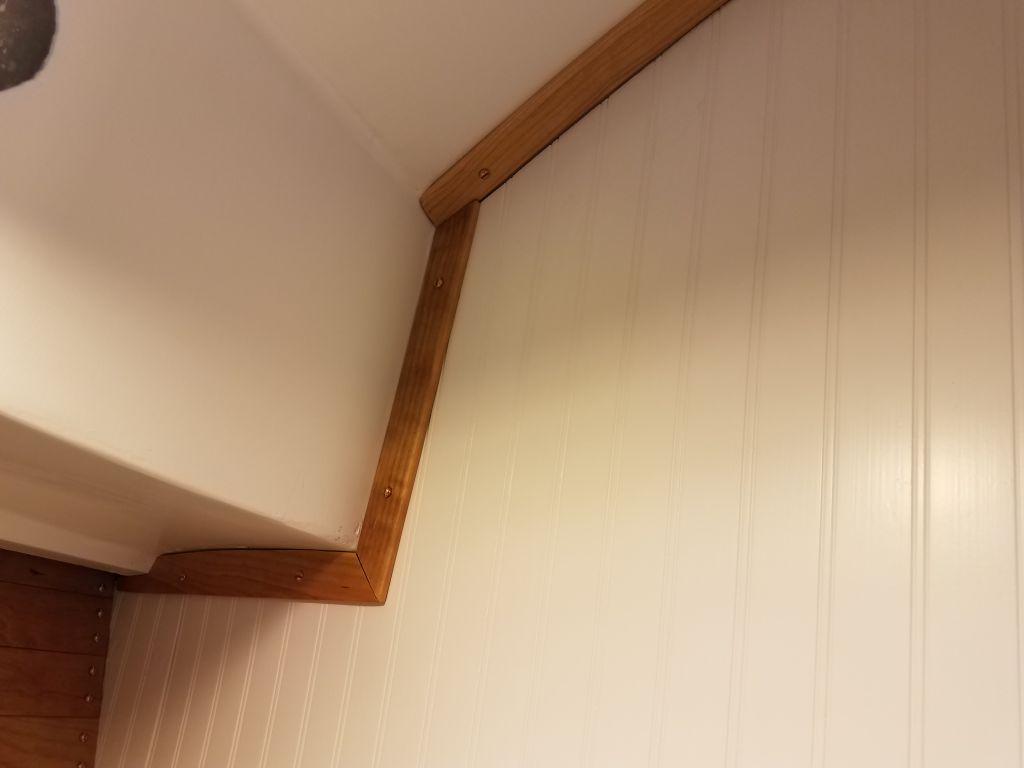
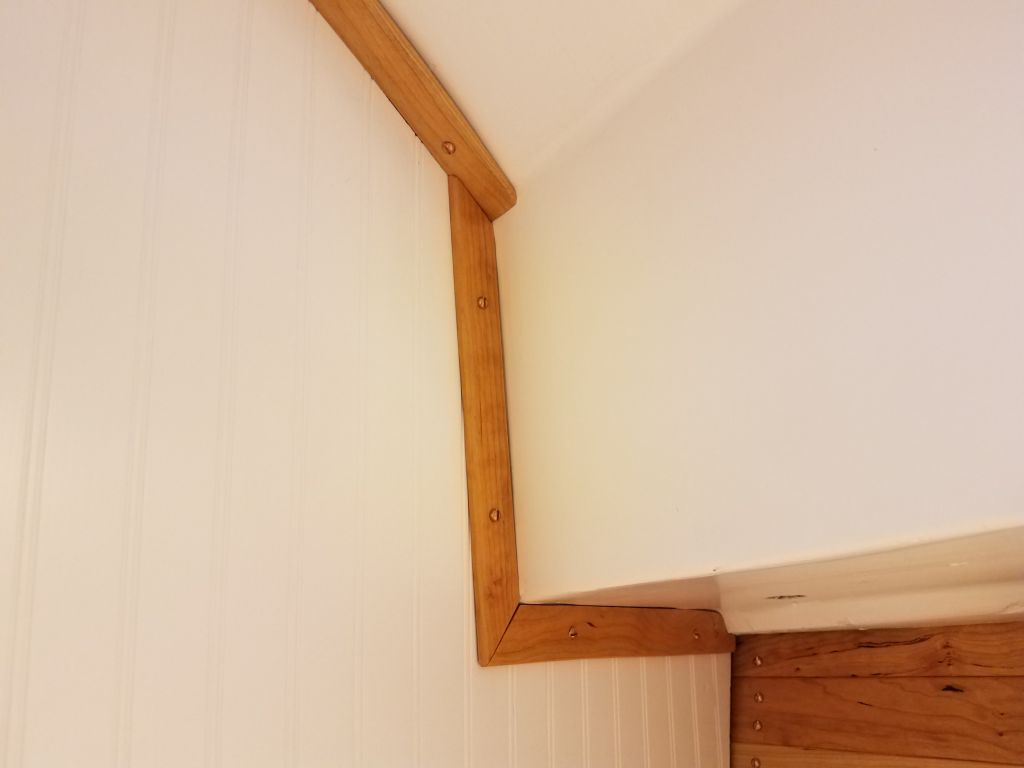
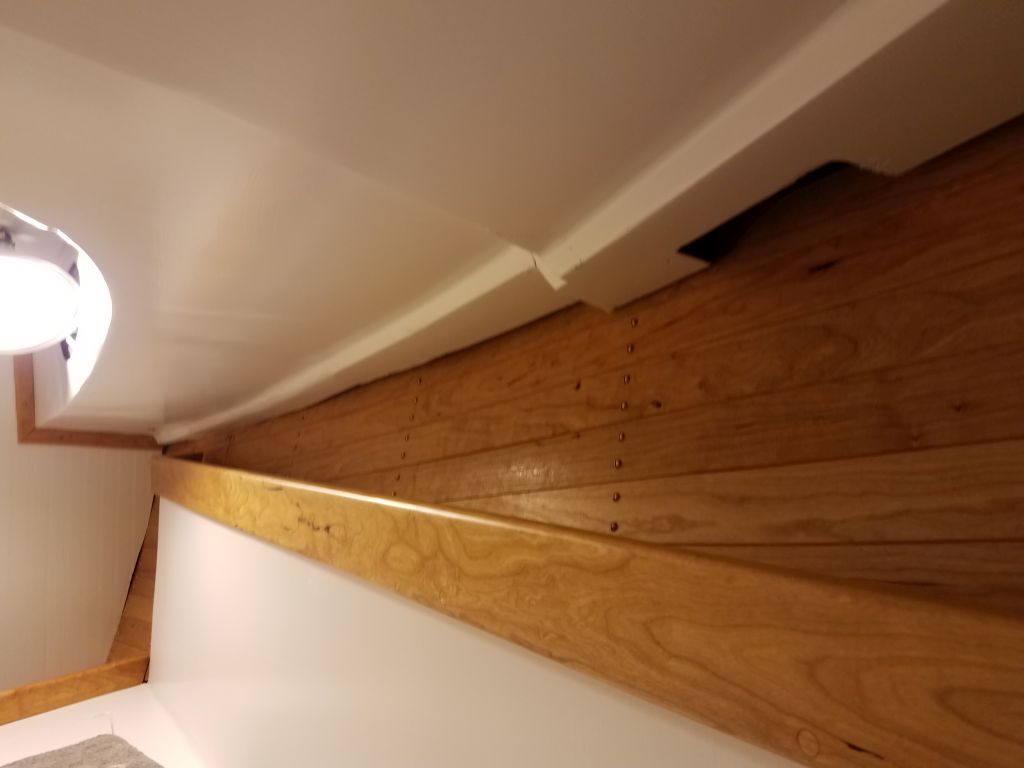
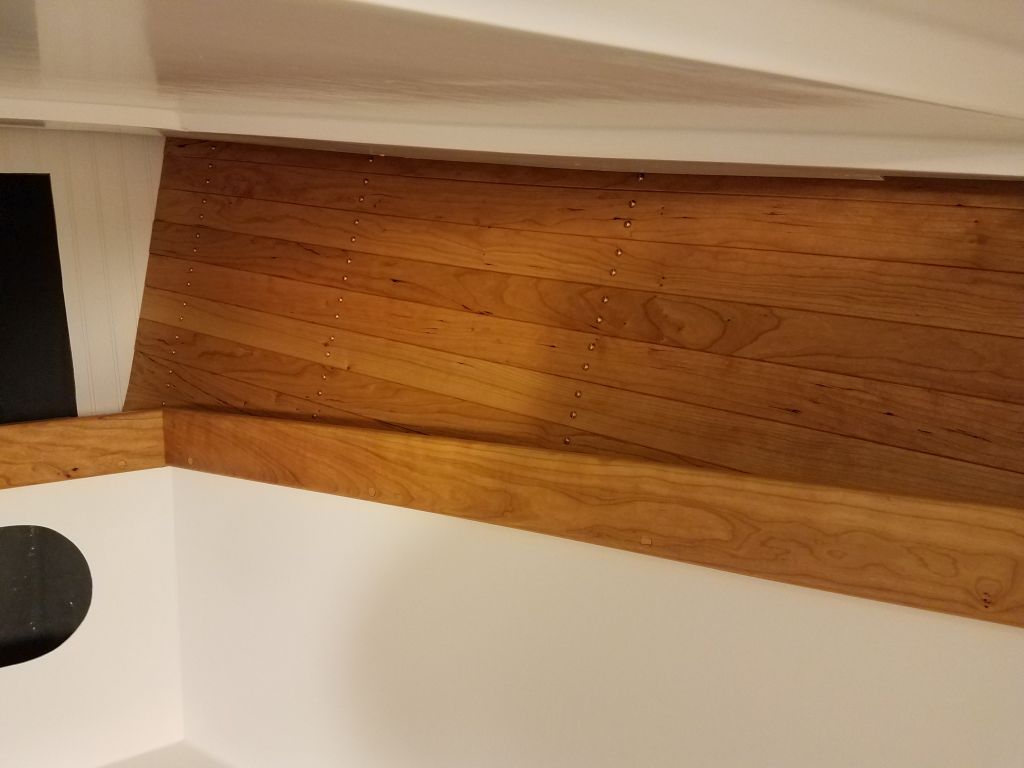
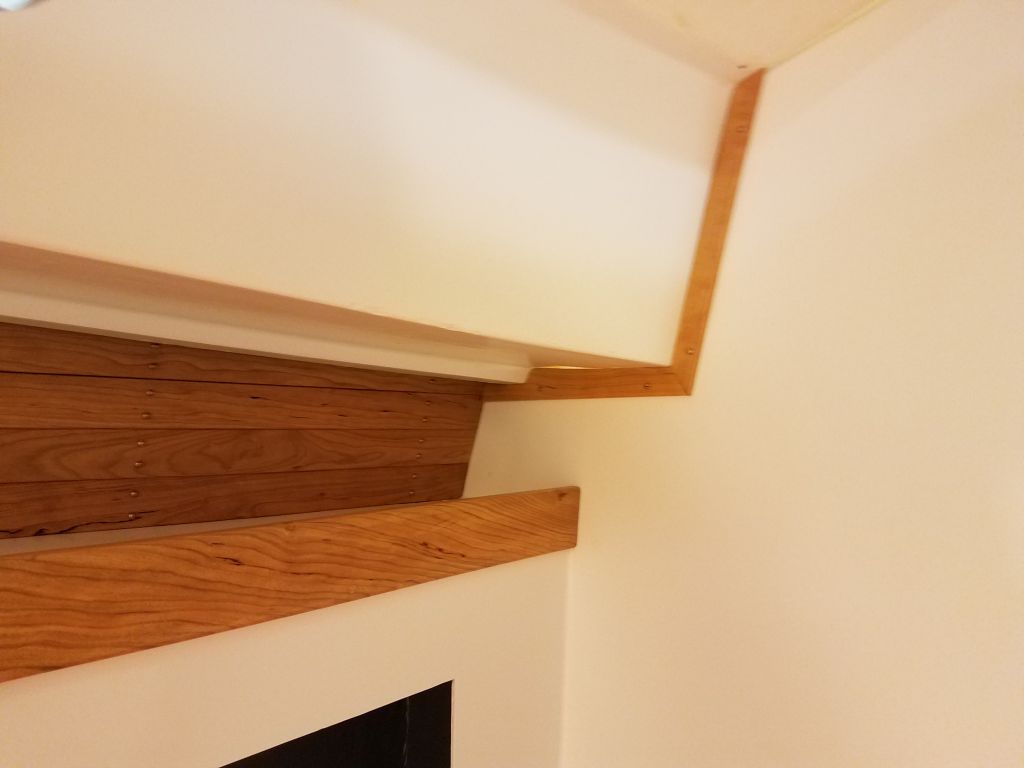
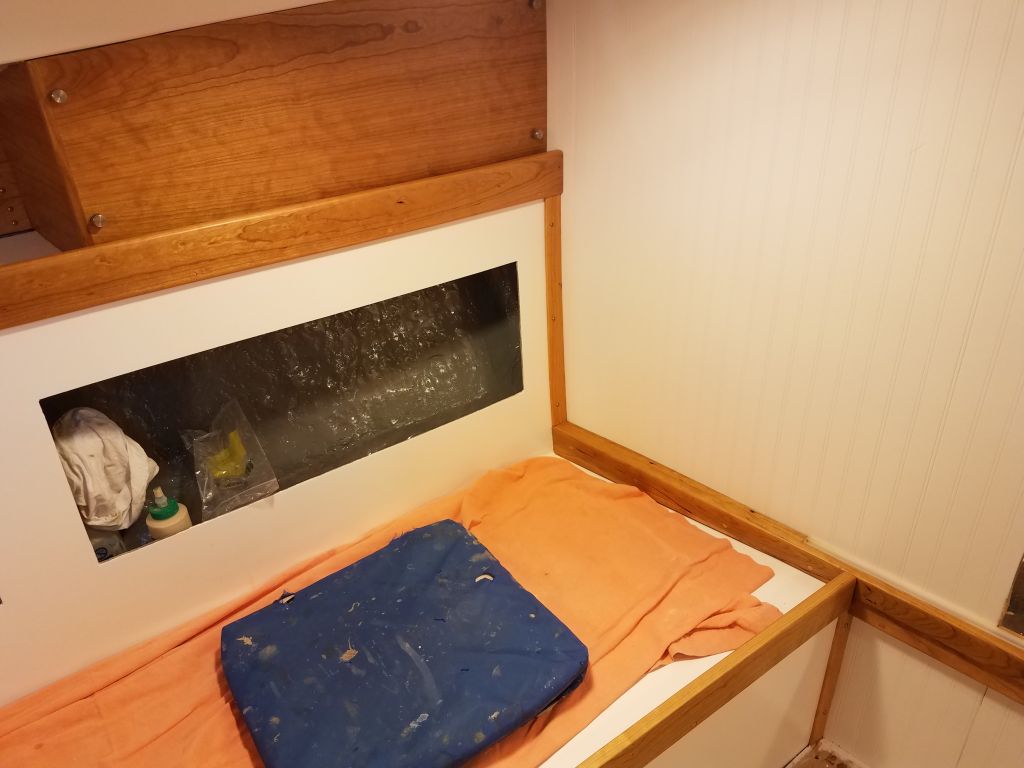
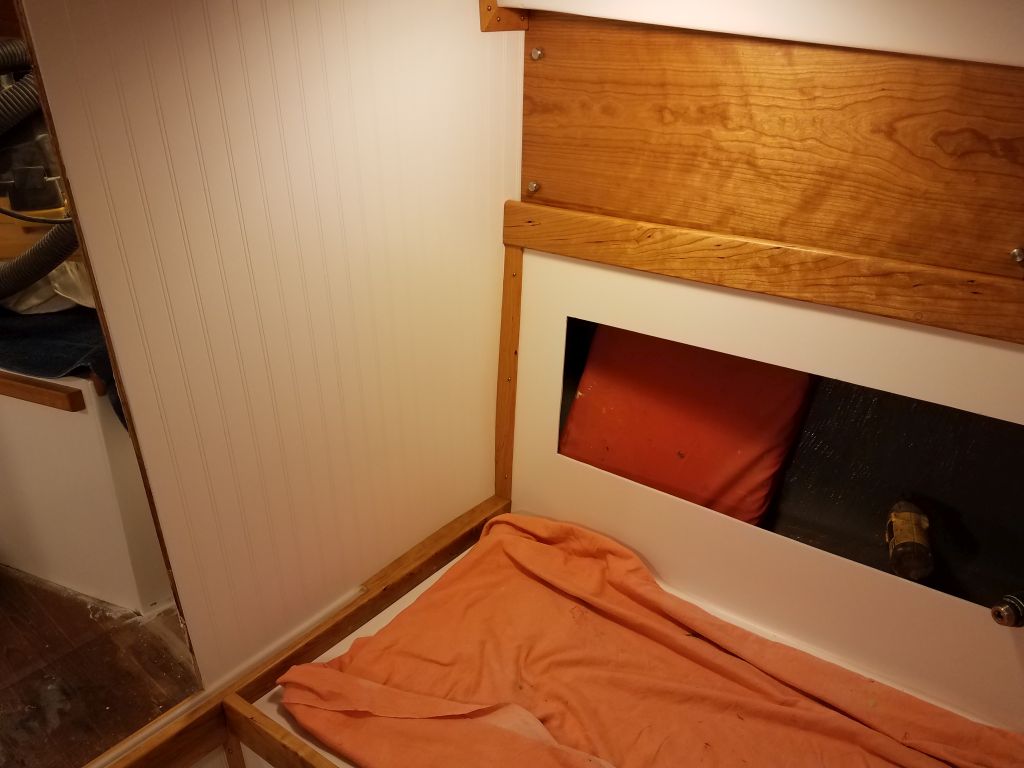
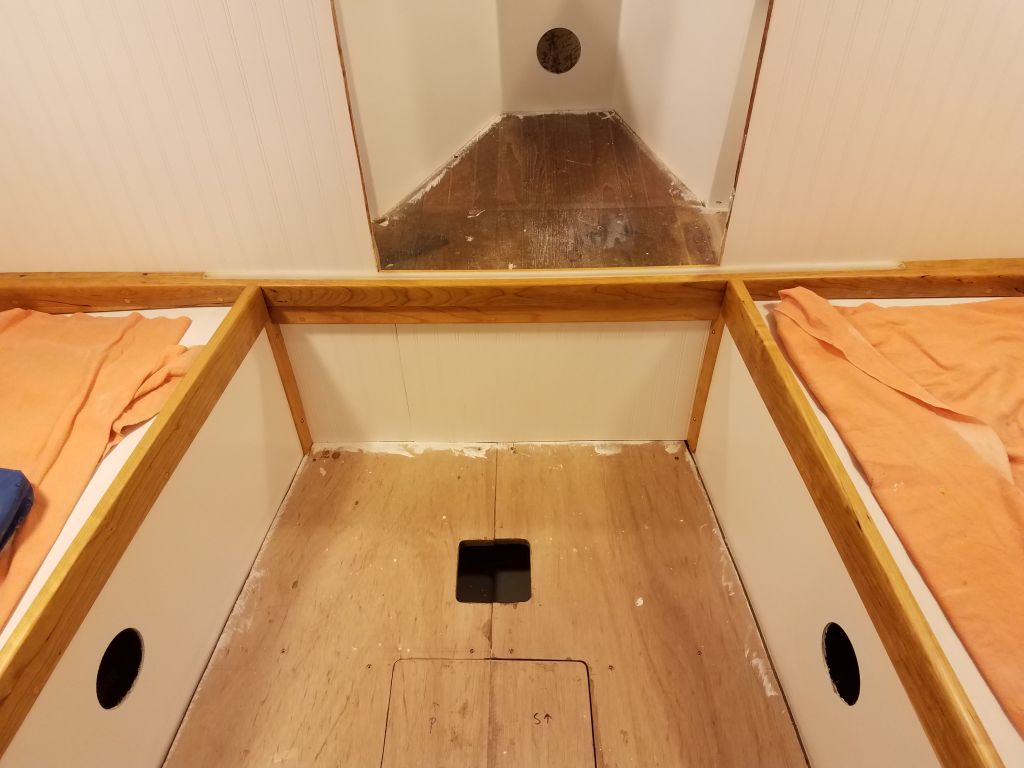
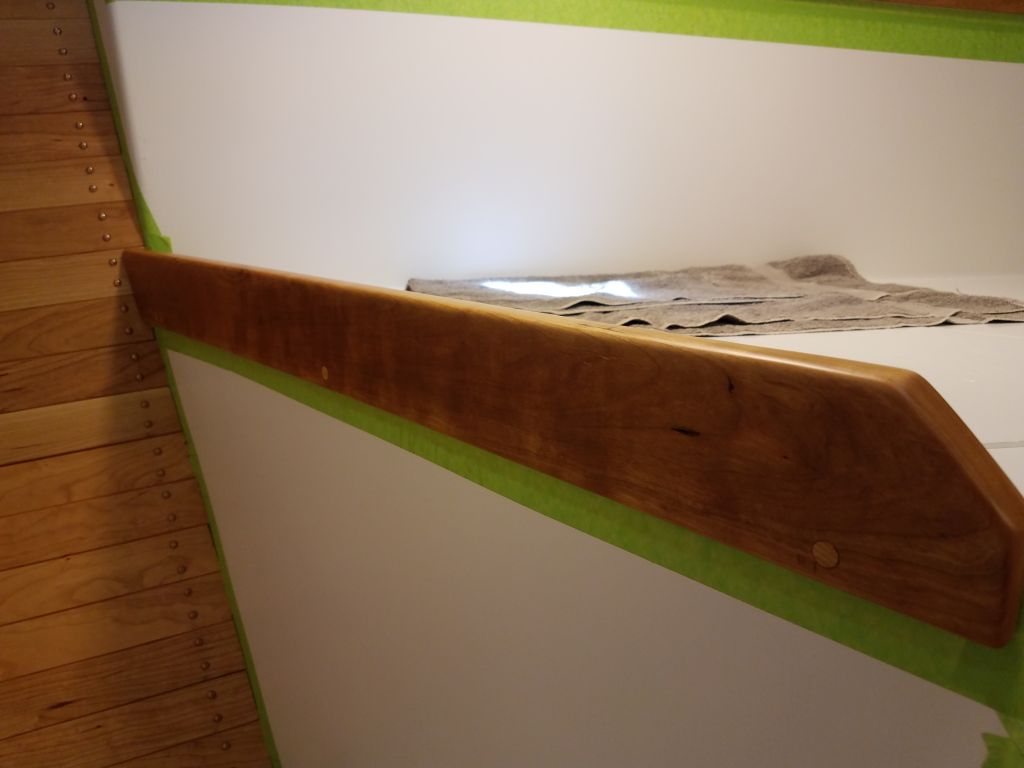
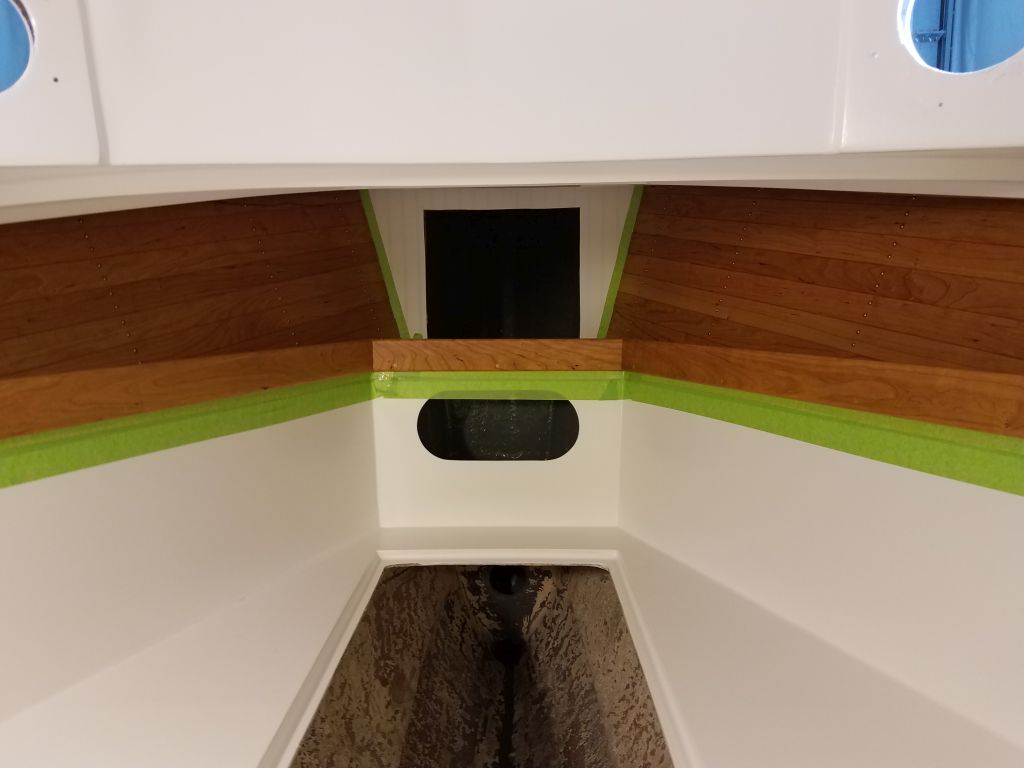
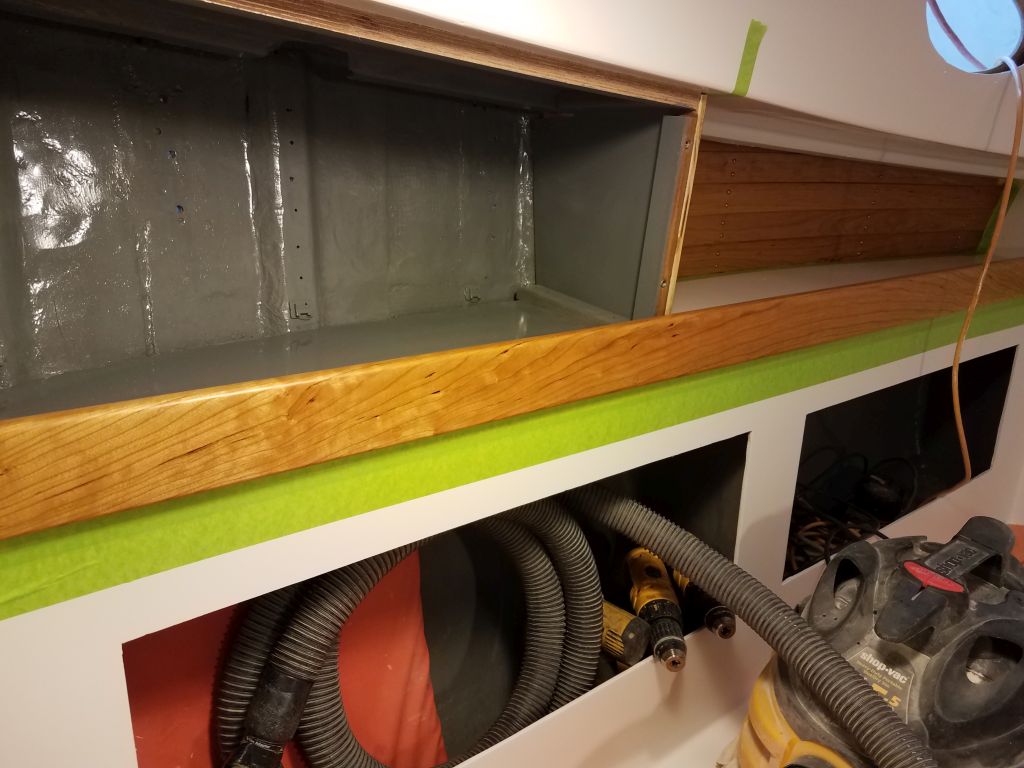
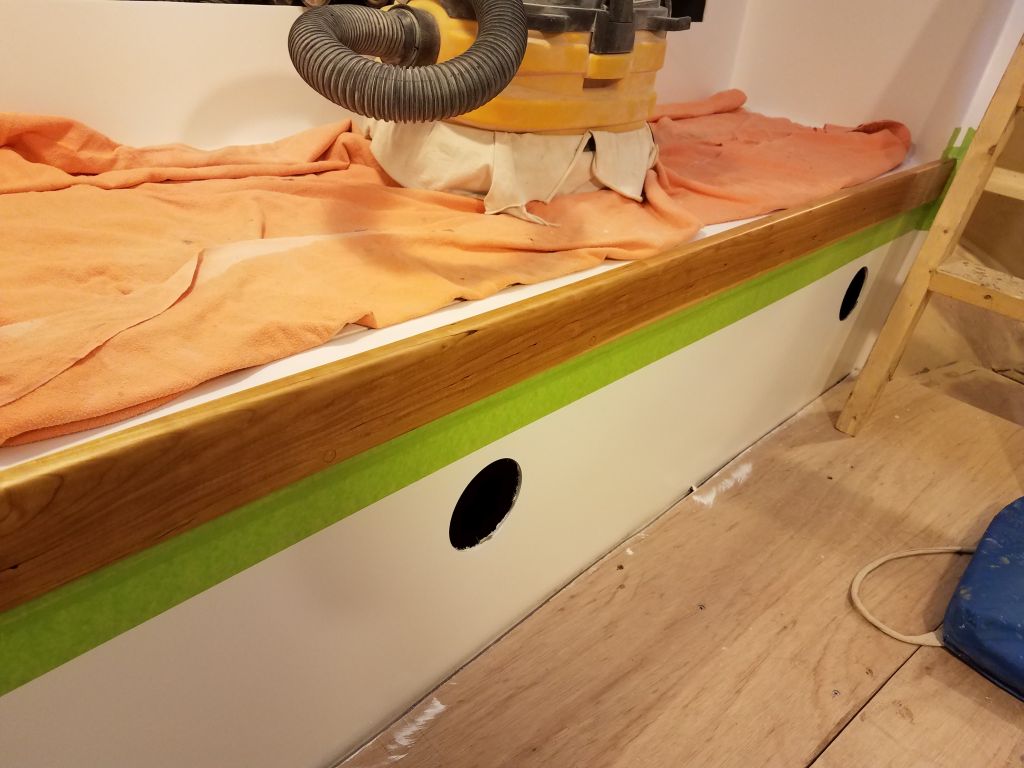
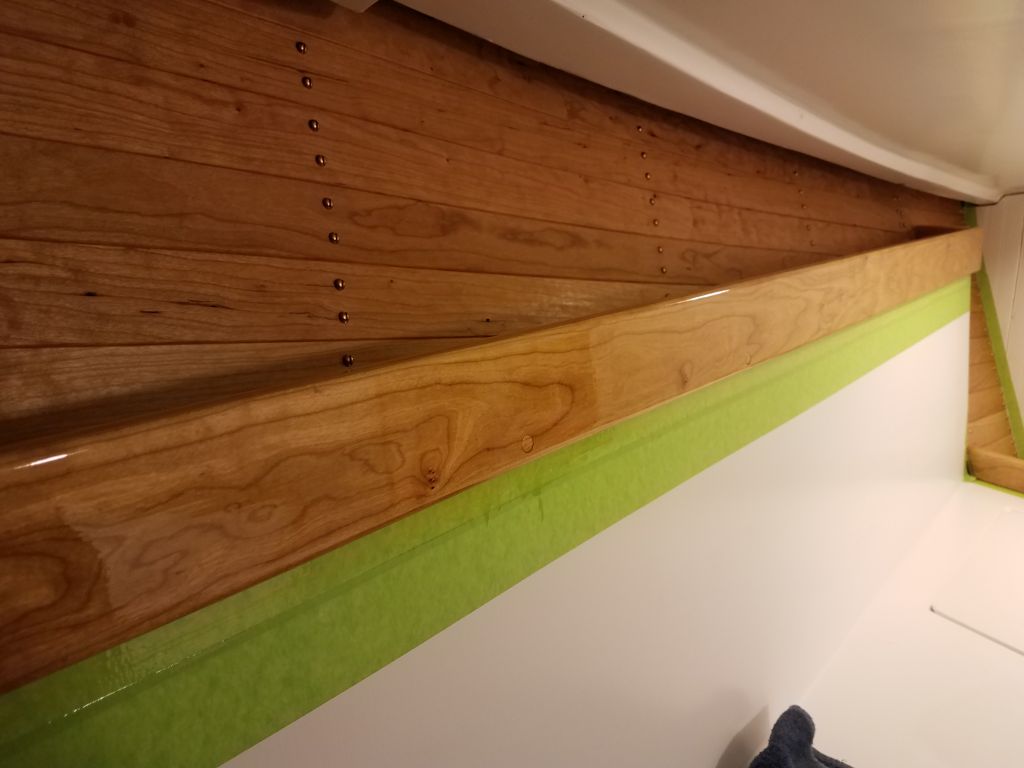
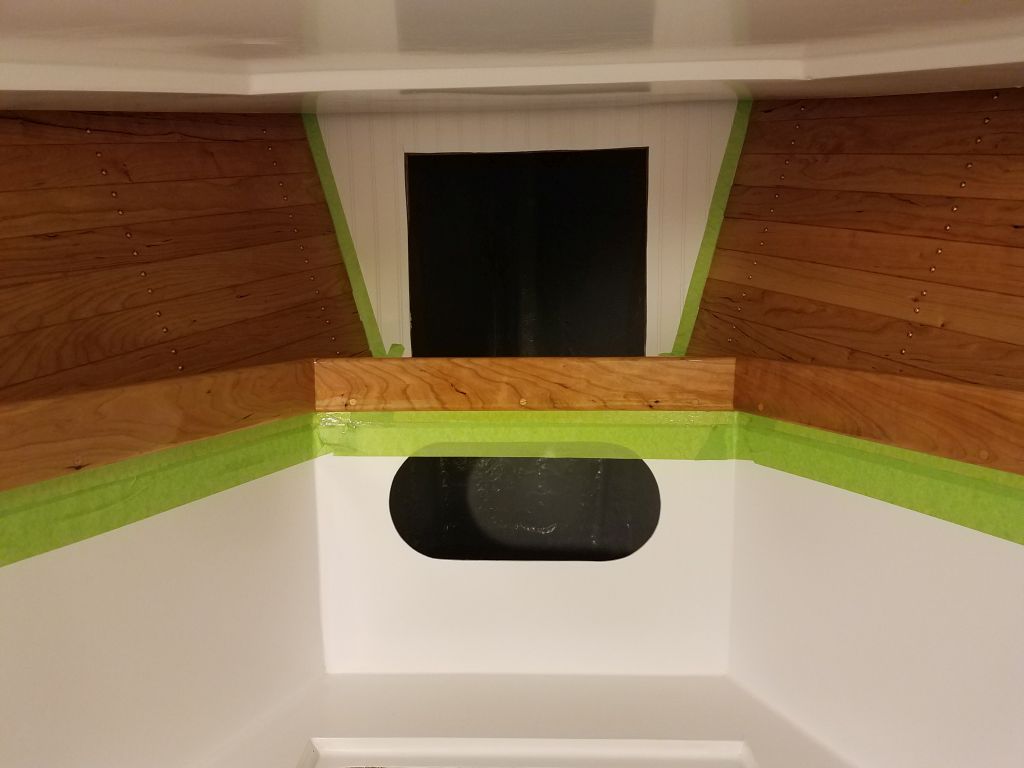
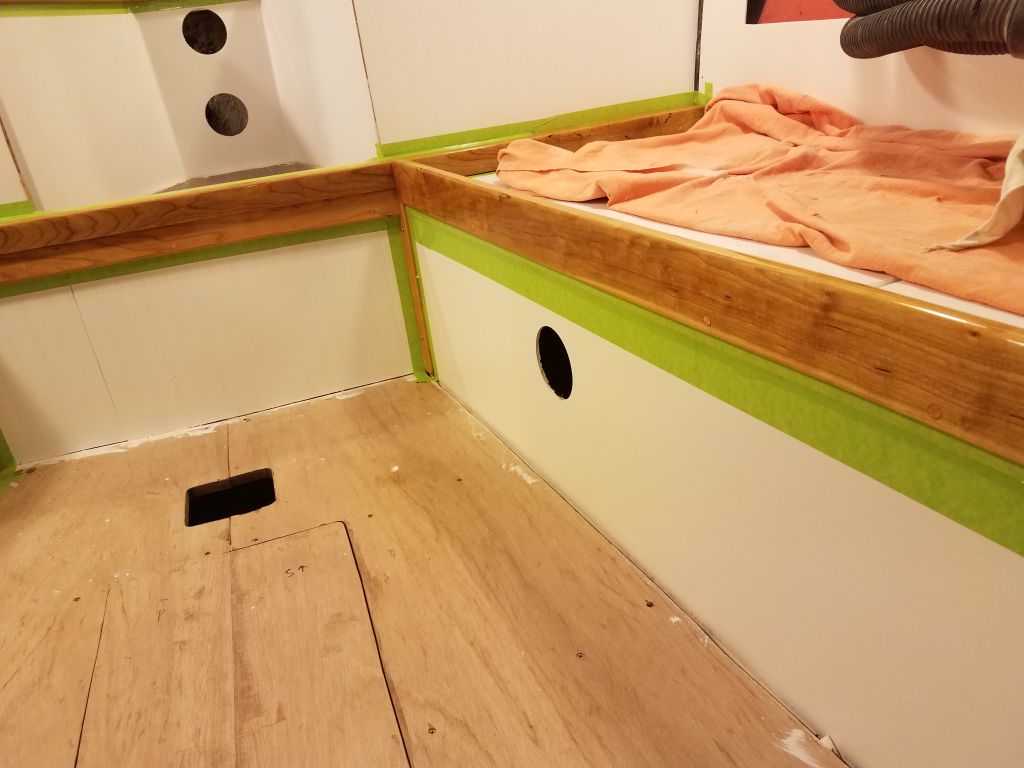
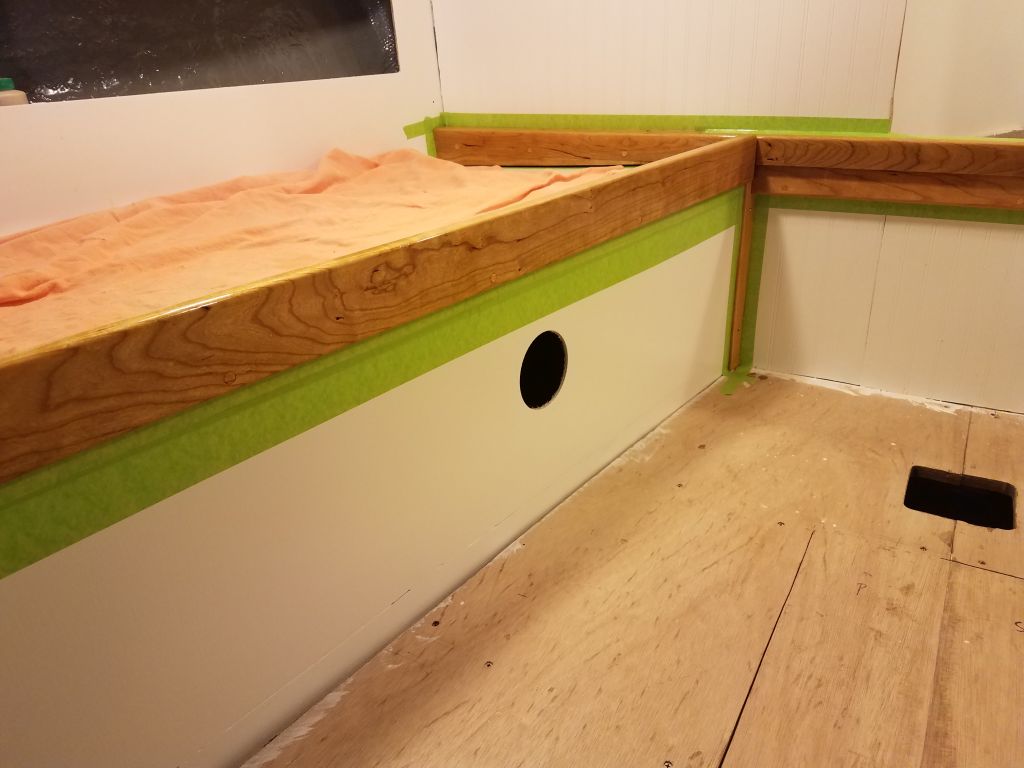
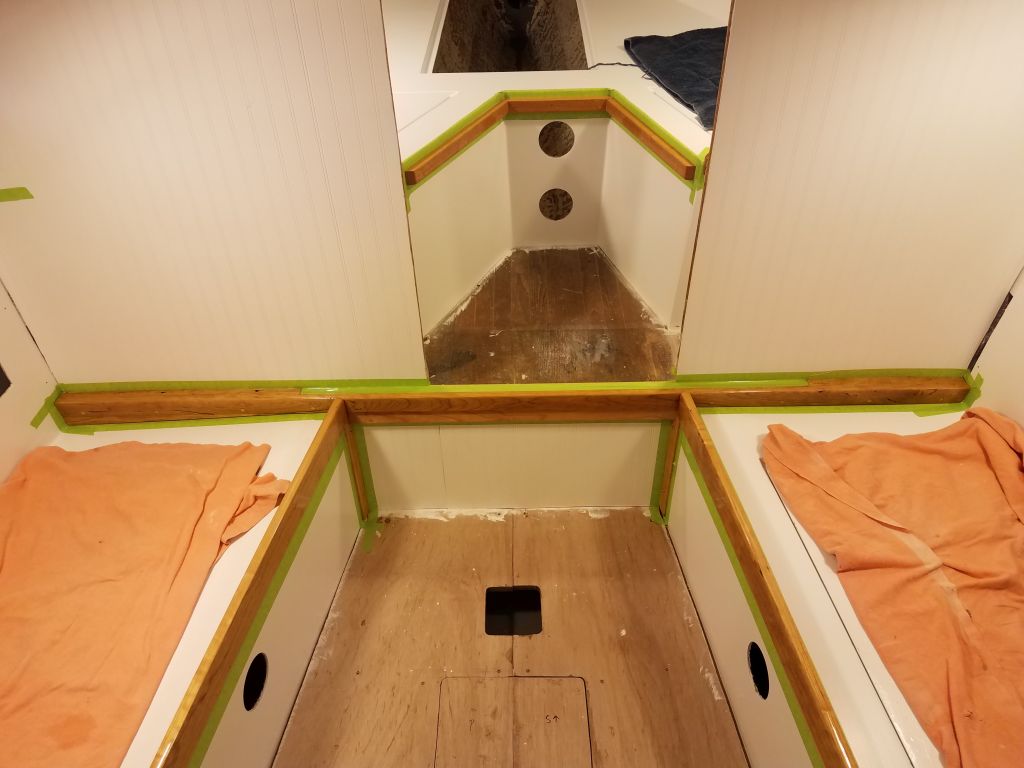
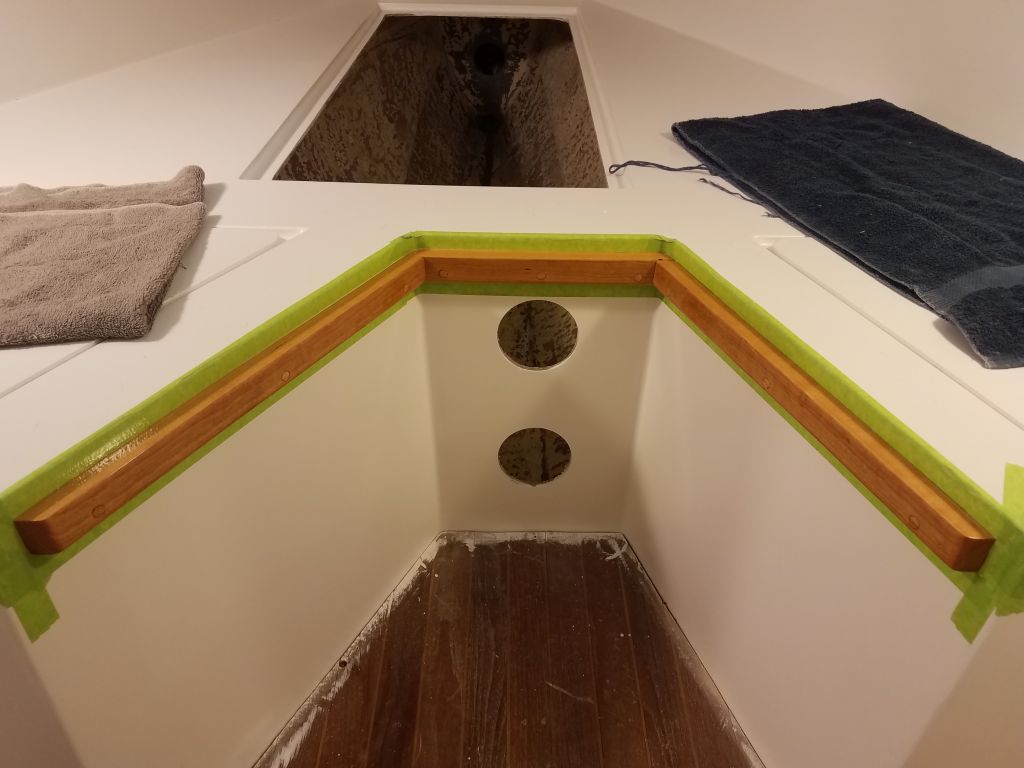
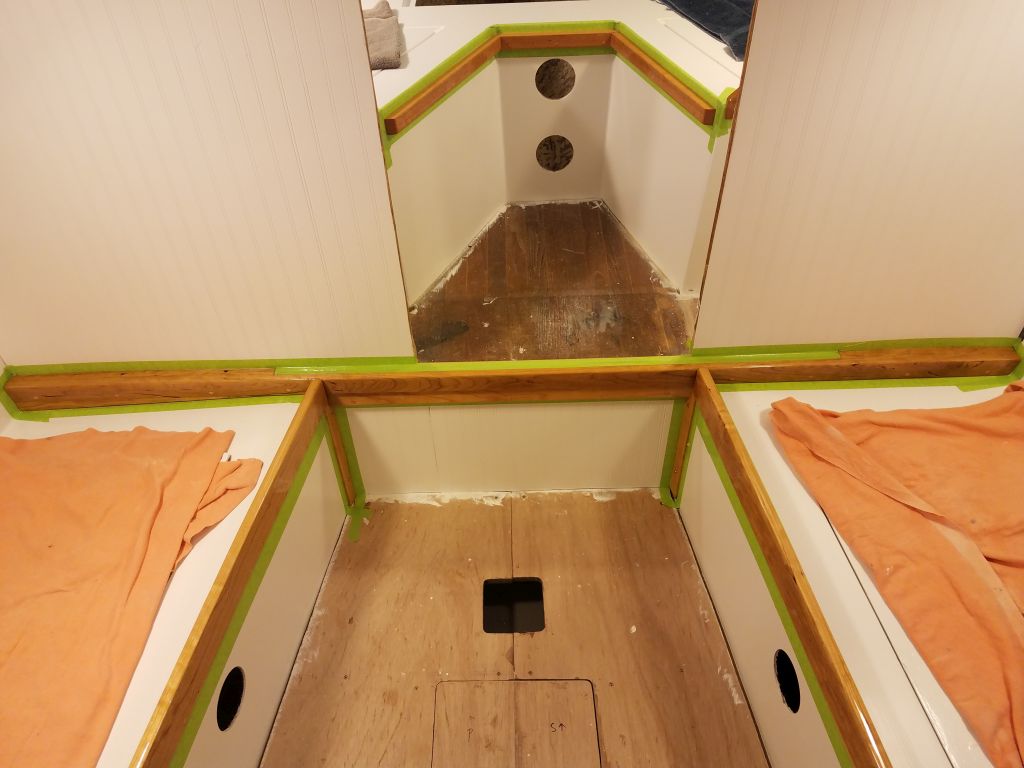
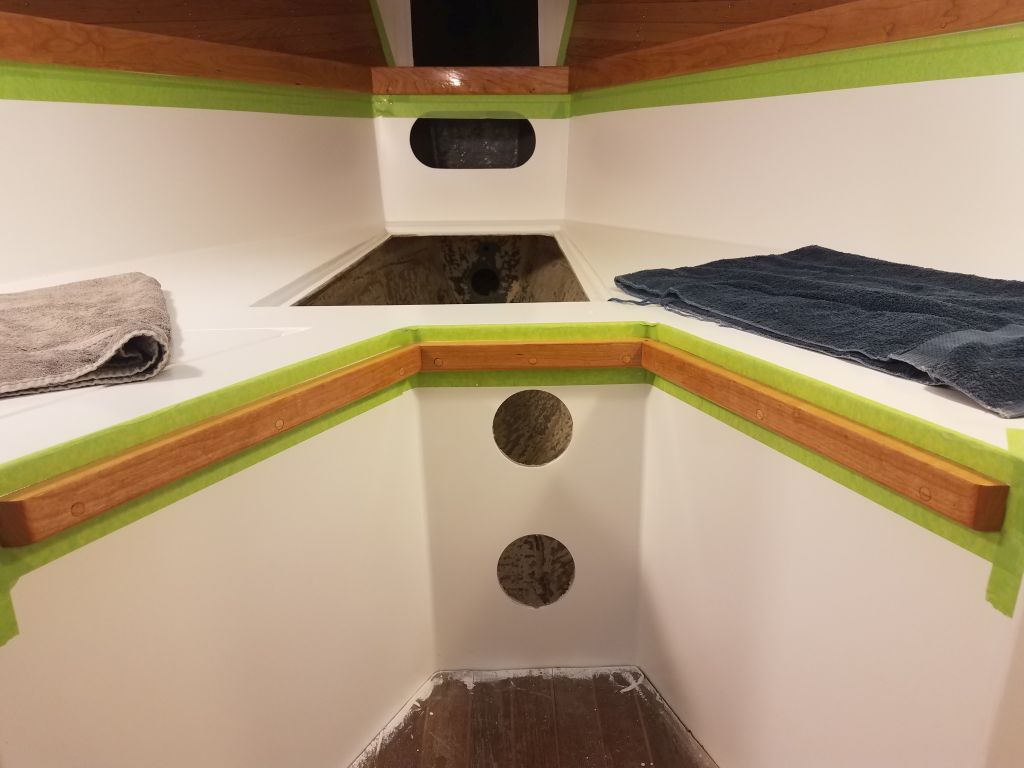
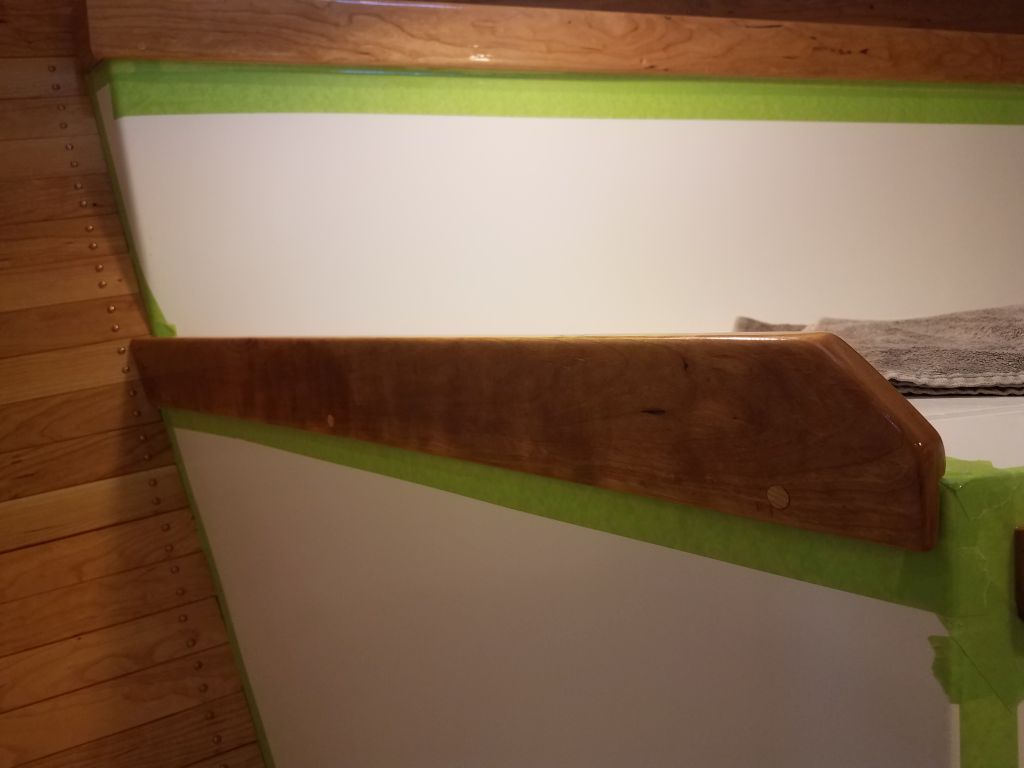
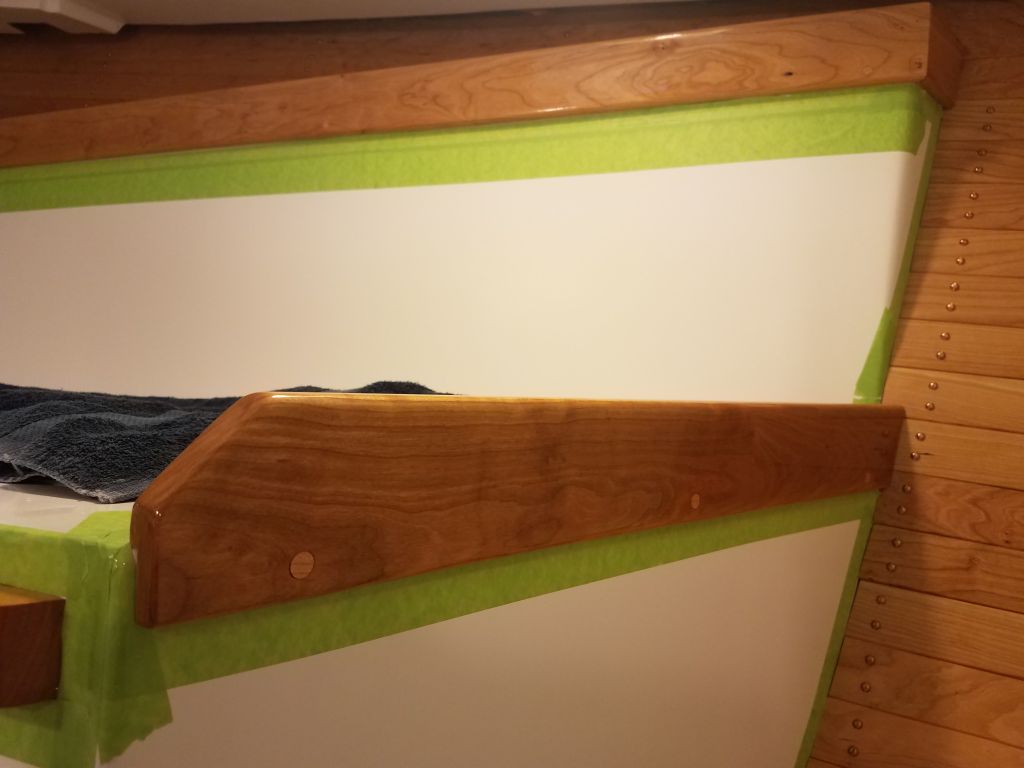
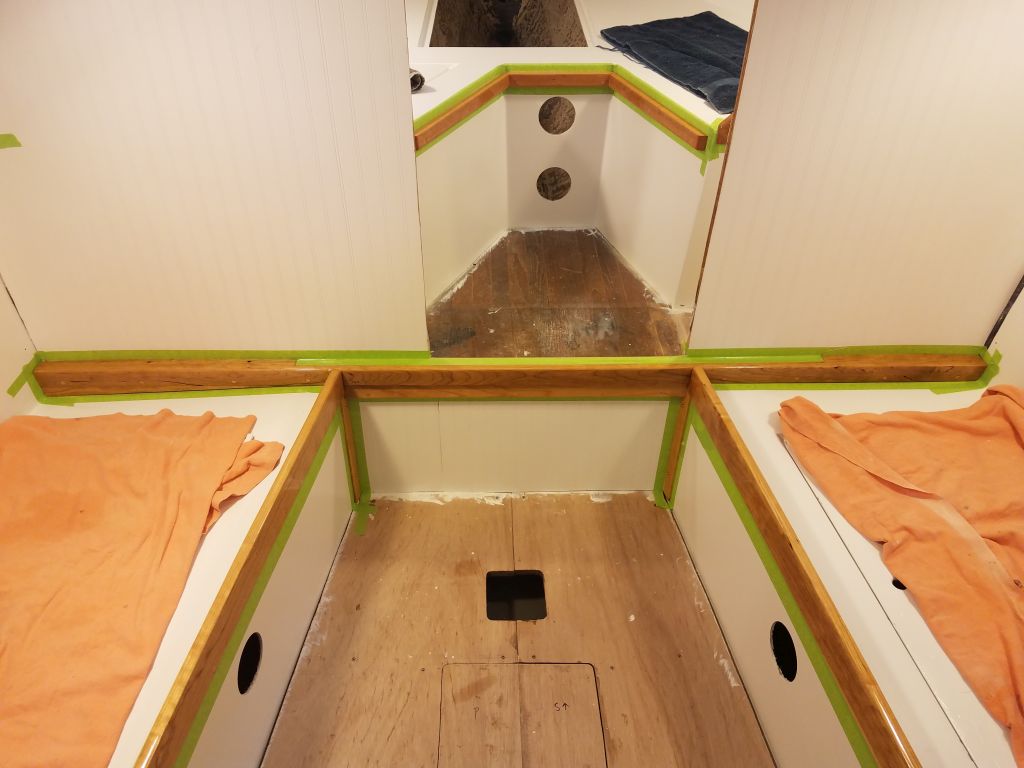
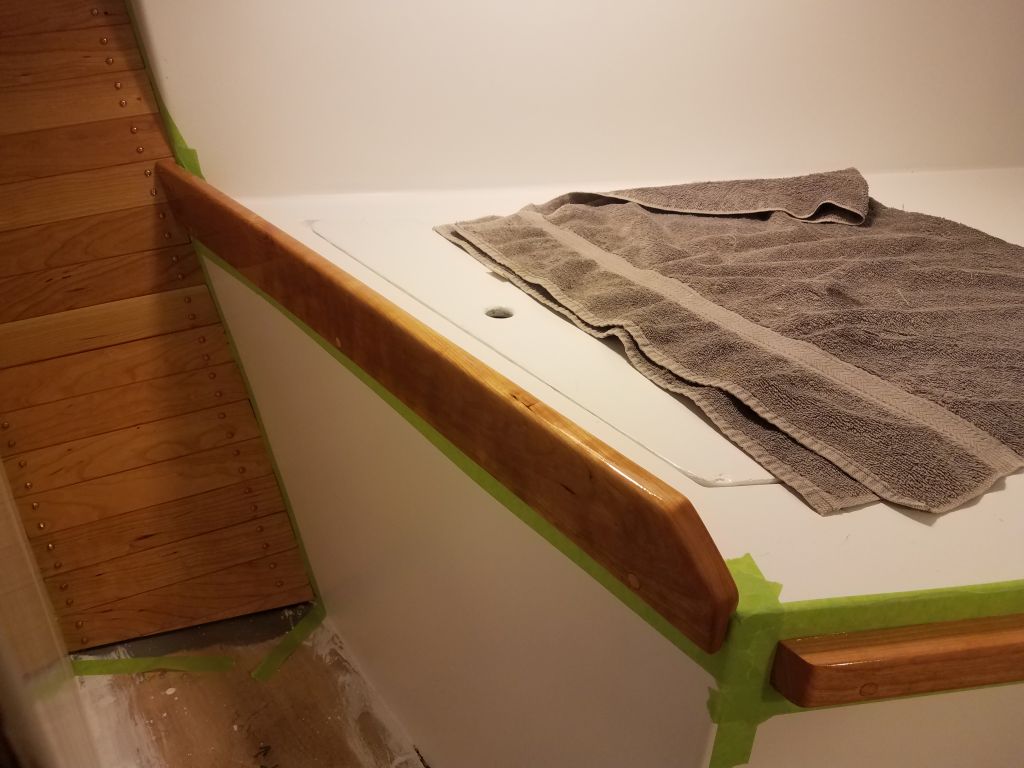
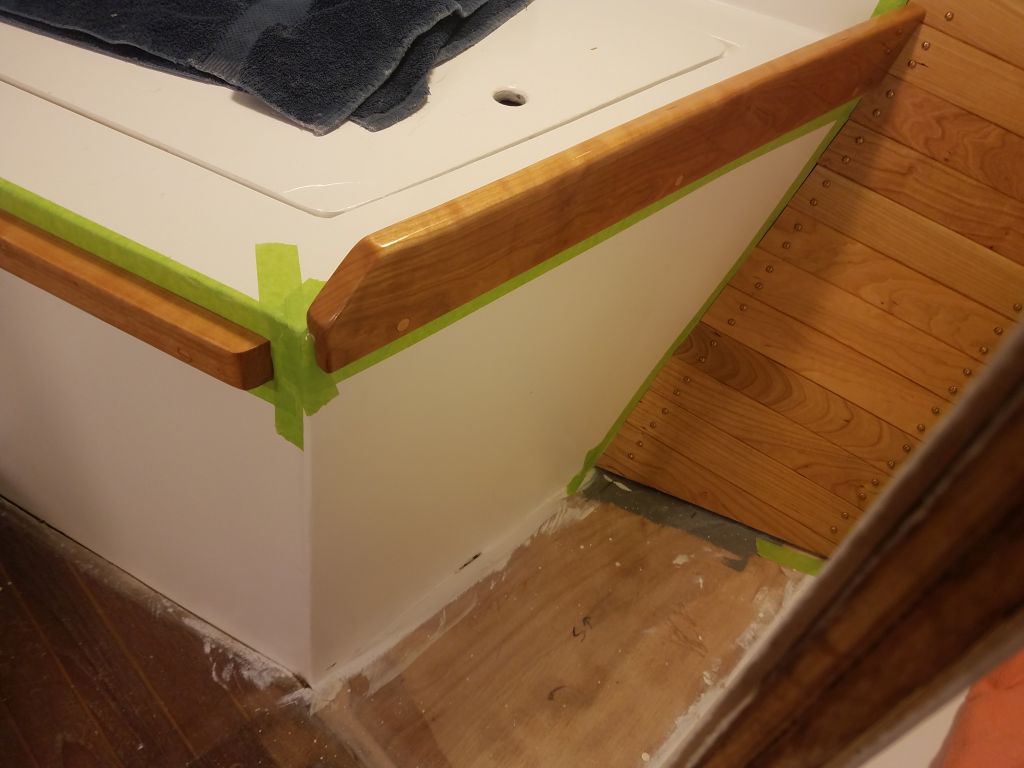
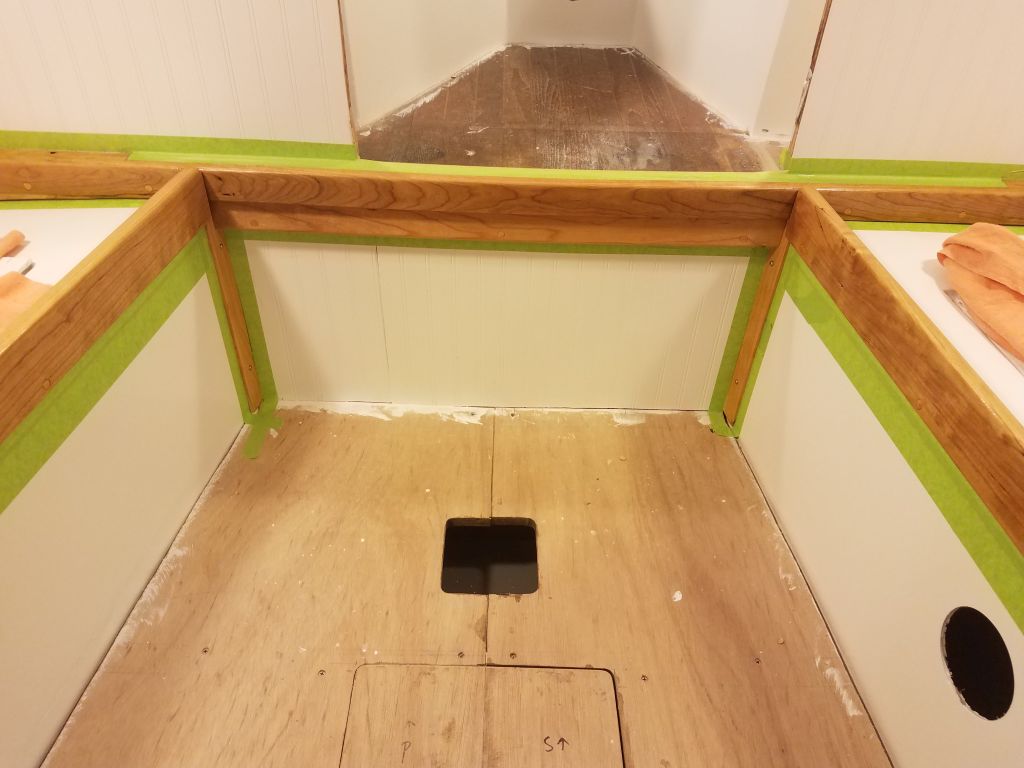
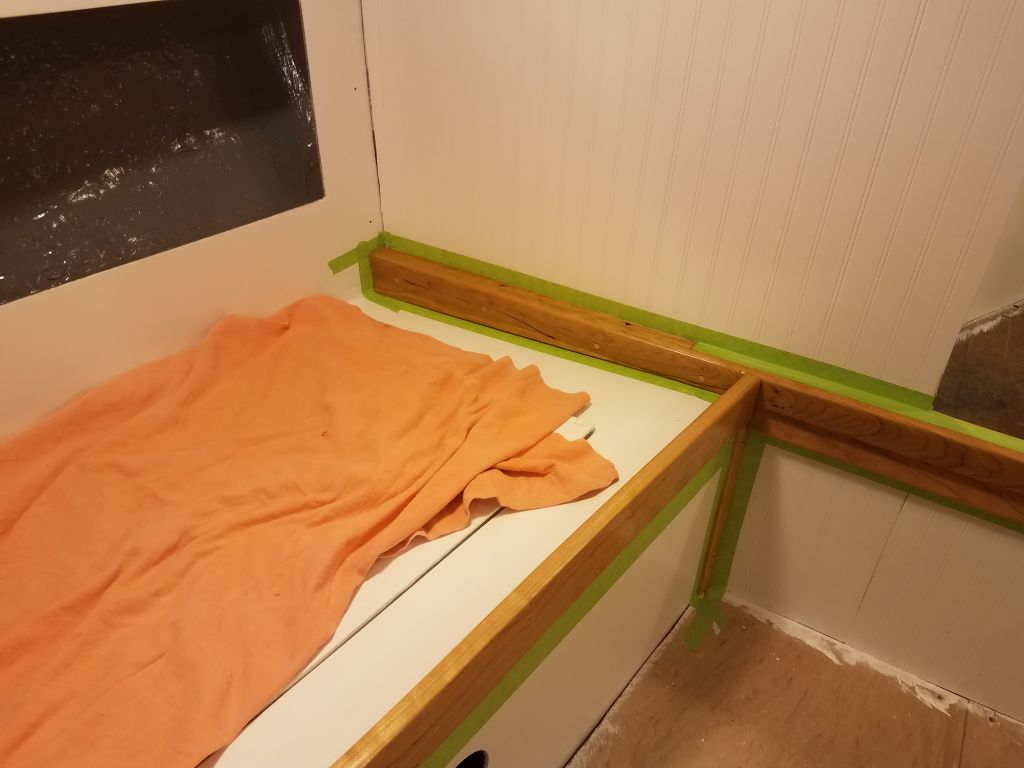
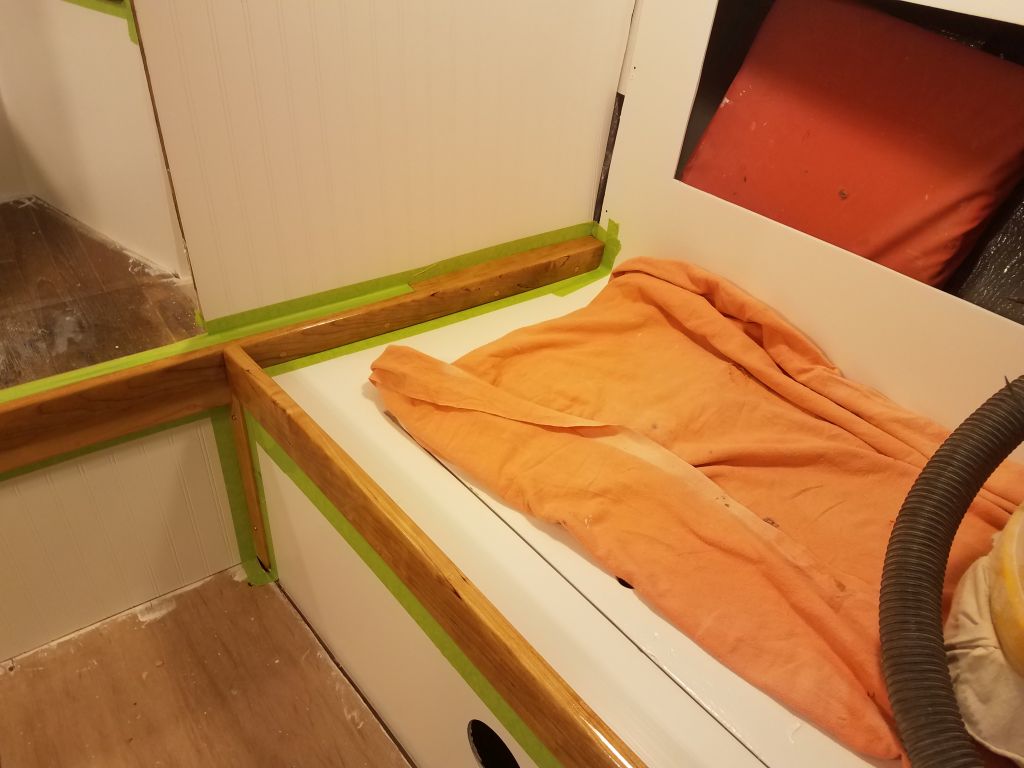
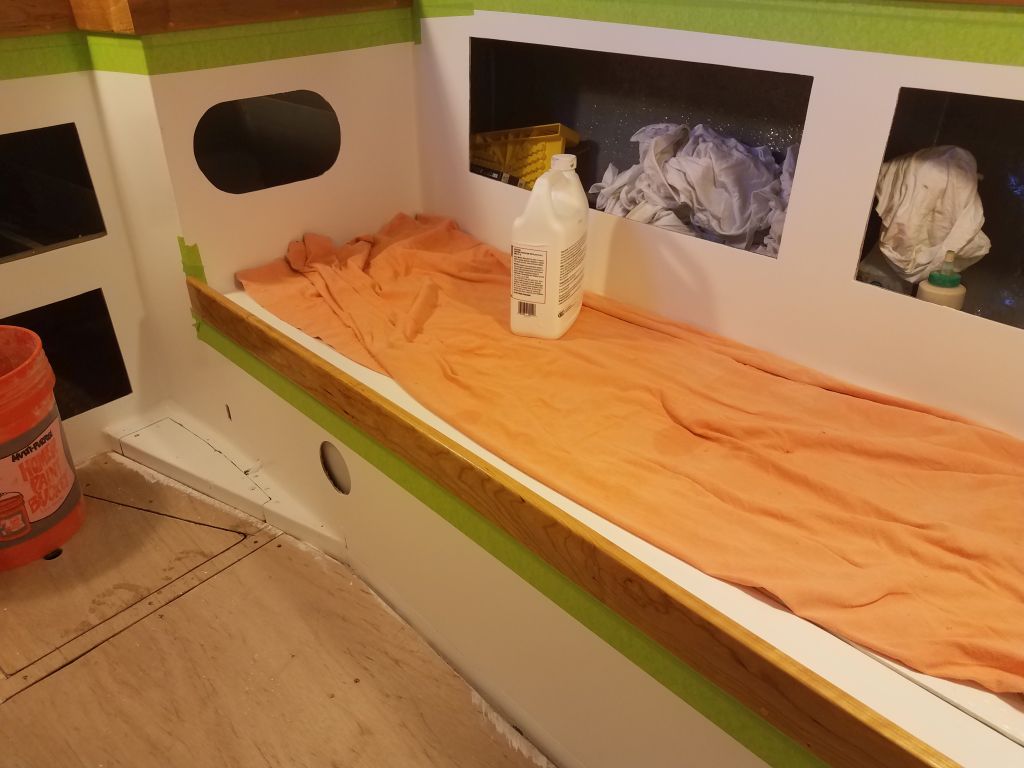
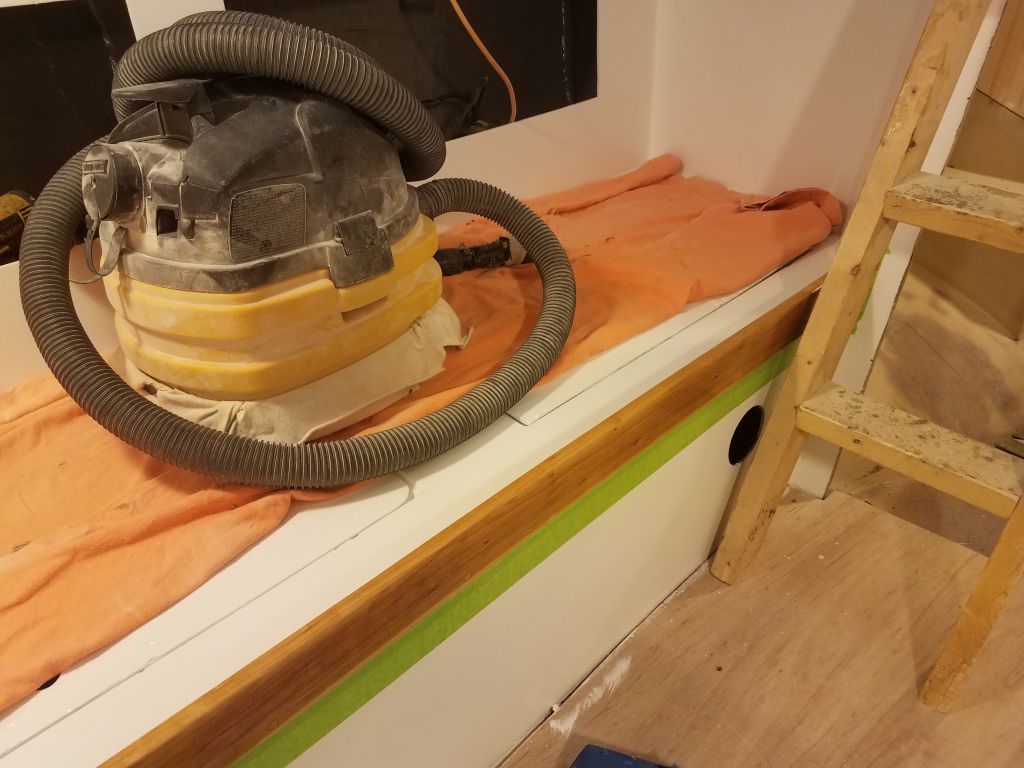
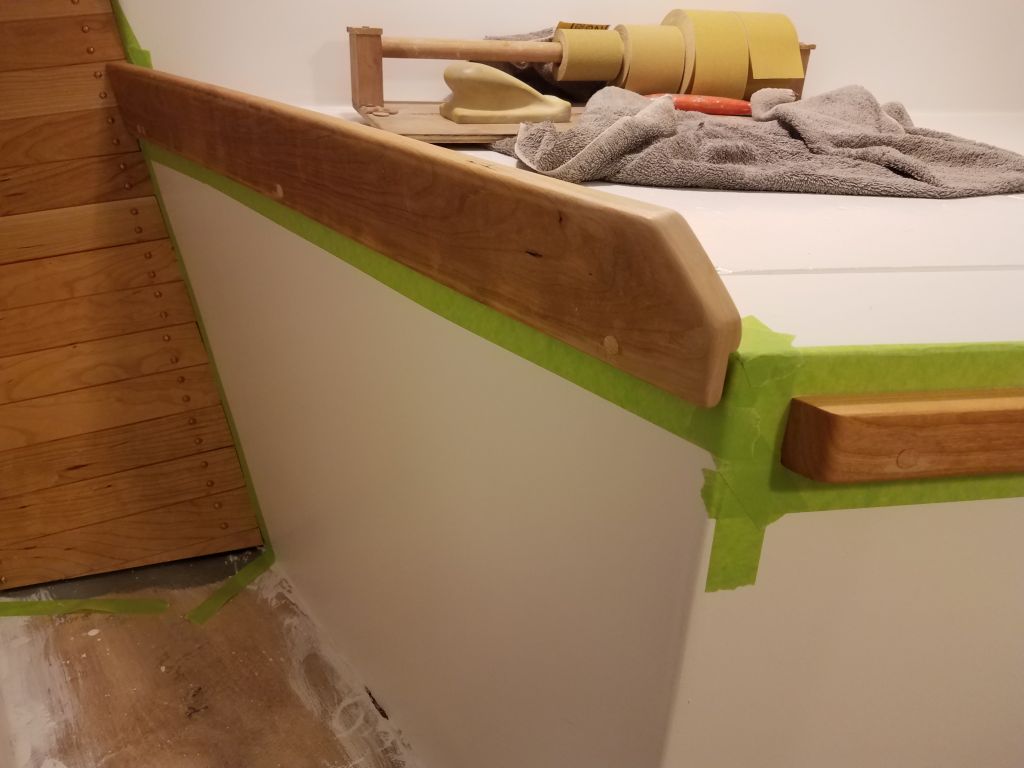
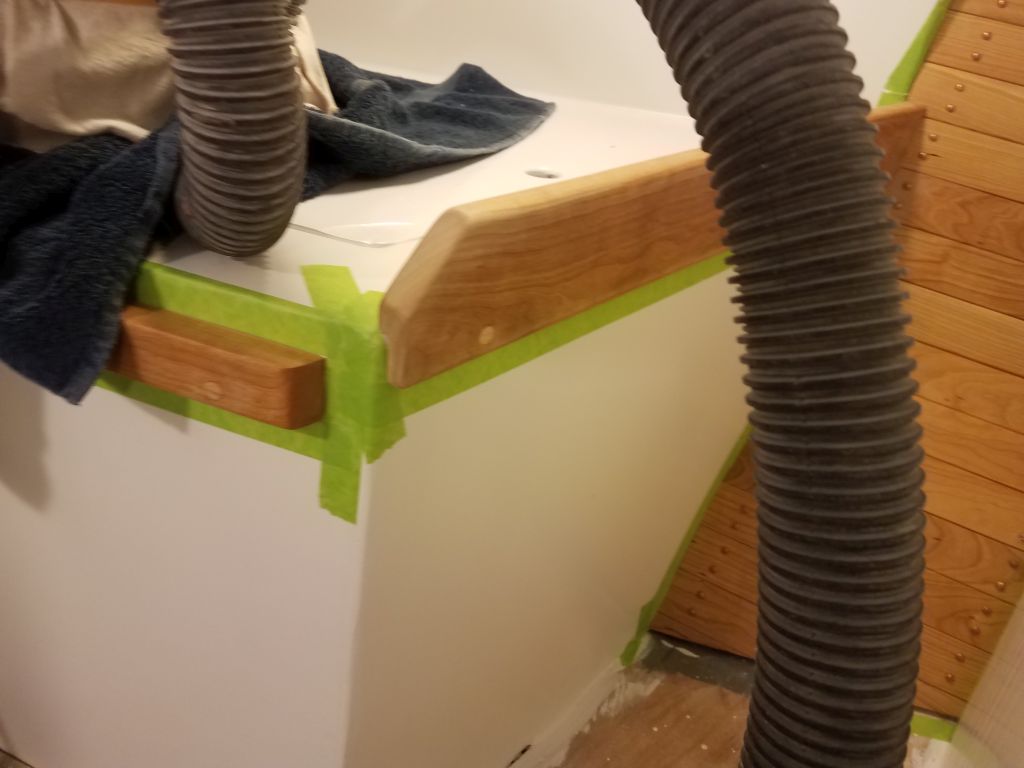
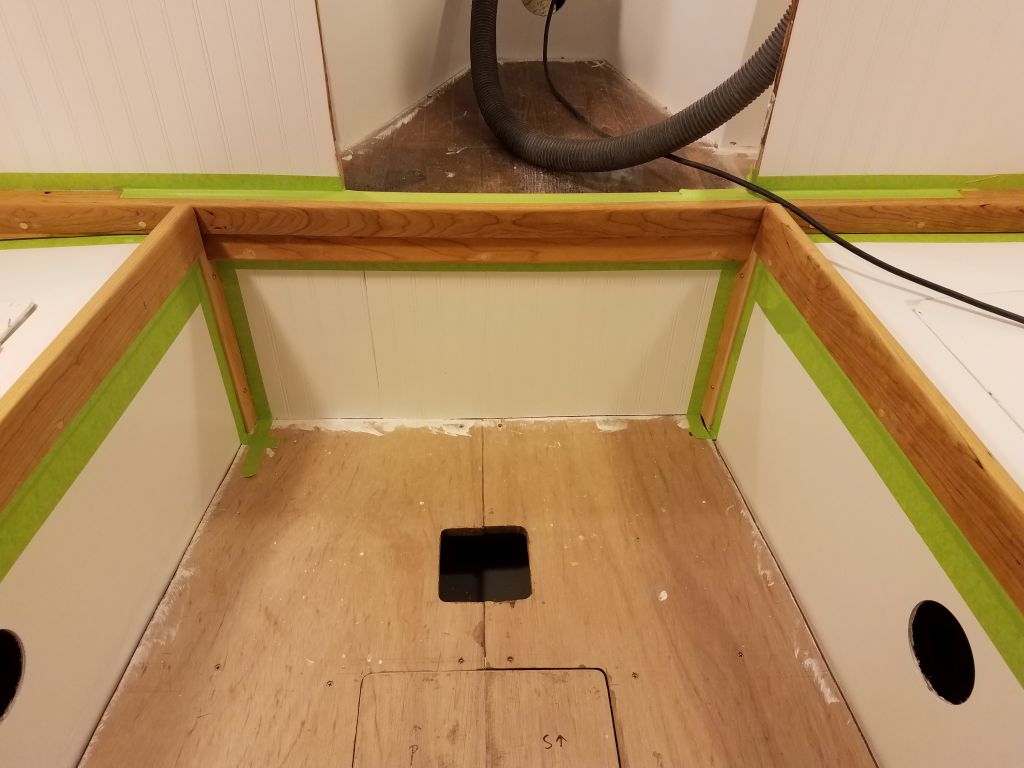
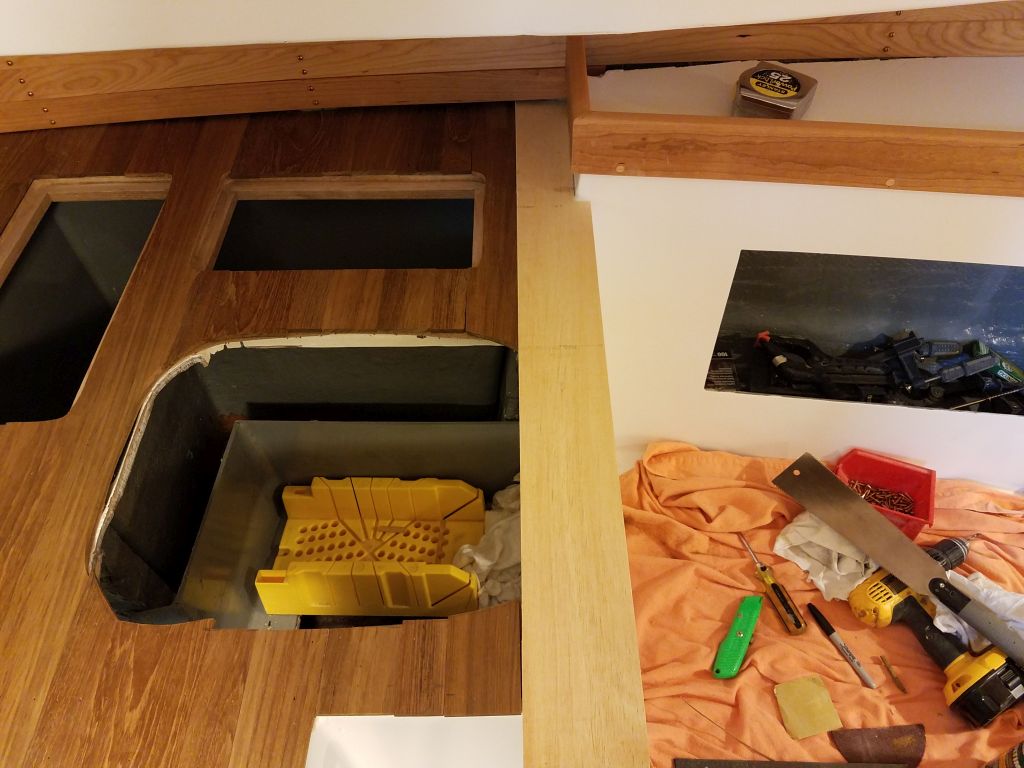
While I waited for that, I decided to install the lower door trim across the main bulkhead, at the forward ends of the settees.  I secured this with four screws into the bulkhead on each side.

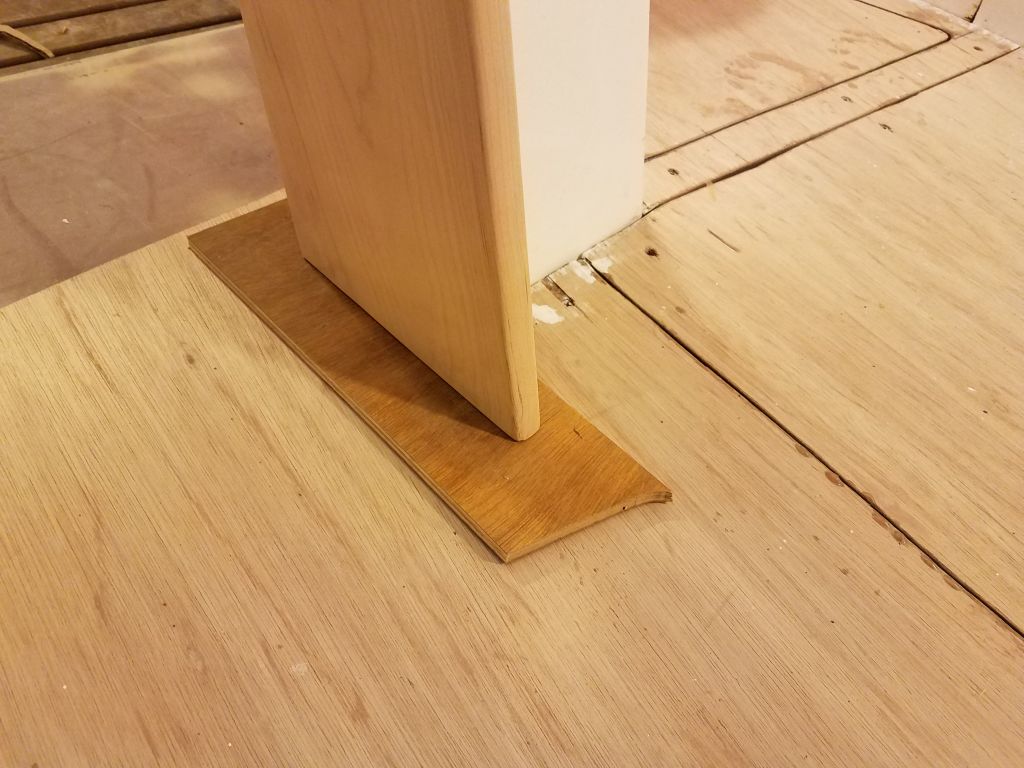
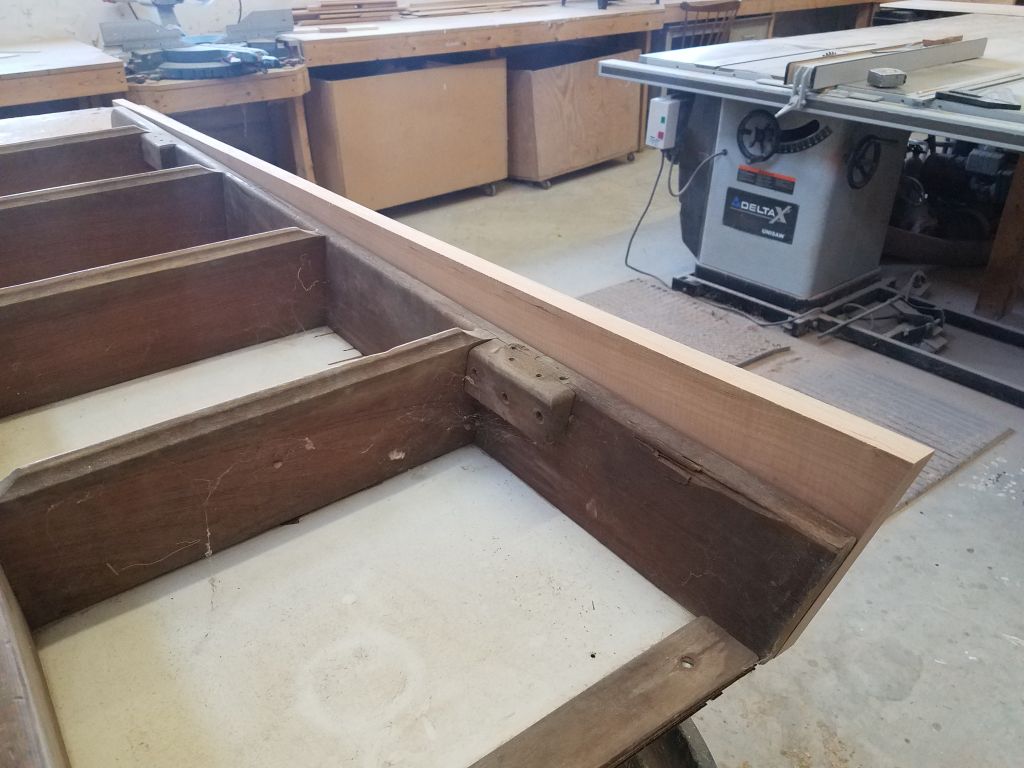
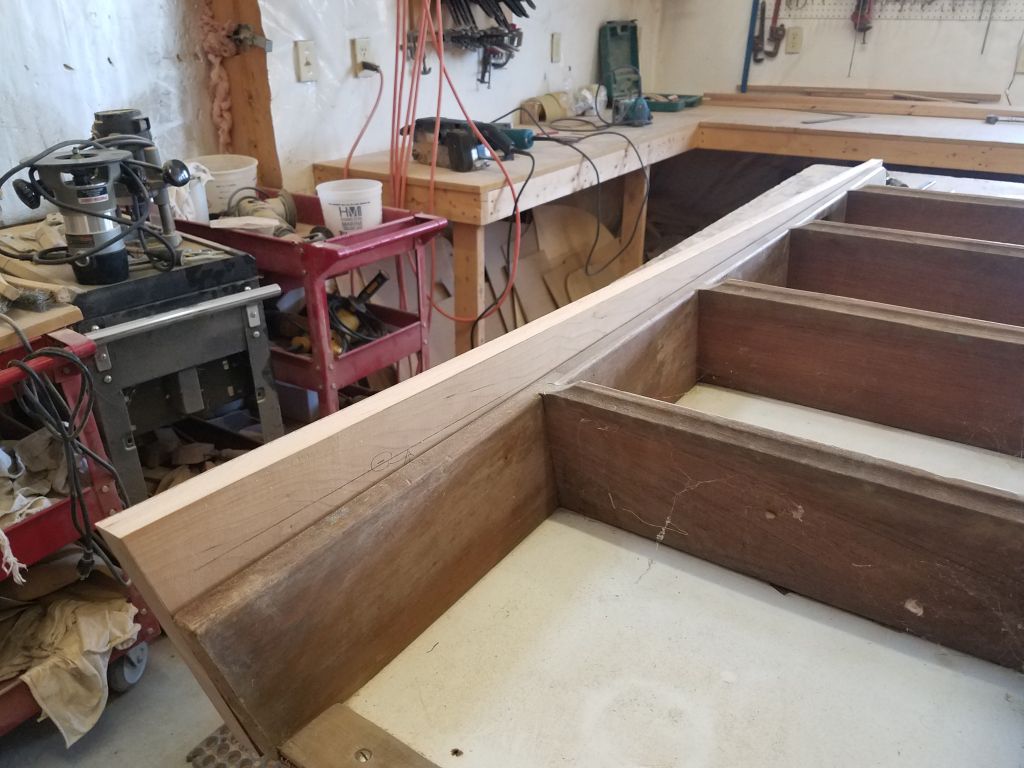
The shape of the port settee meant that with the trim level, there was a wedge-shaped gap between the bottom of the door trim and the berth top.  During construction of the beam, I’d considered, then discounted, the possibility of shaping the beam itself to fit this, as it would have taken out too much of the beam material, and since this area would be hidden by the interior cushions, I decided I could trim it out later.  Later was now, and I cut a small piece of trim to fit inside the gap and glued it in place, holding it up with some wedges from beneath while the glue cured.  The starboard side fit closely and didn’t require additional work.

By now, after lunch, the corner pieces on the forward hatch were ready for more work, and I began by trimming them flush to the adjacent trims with a saw and a little sanding.

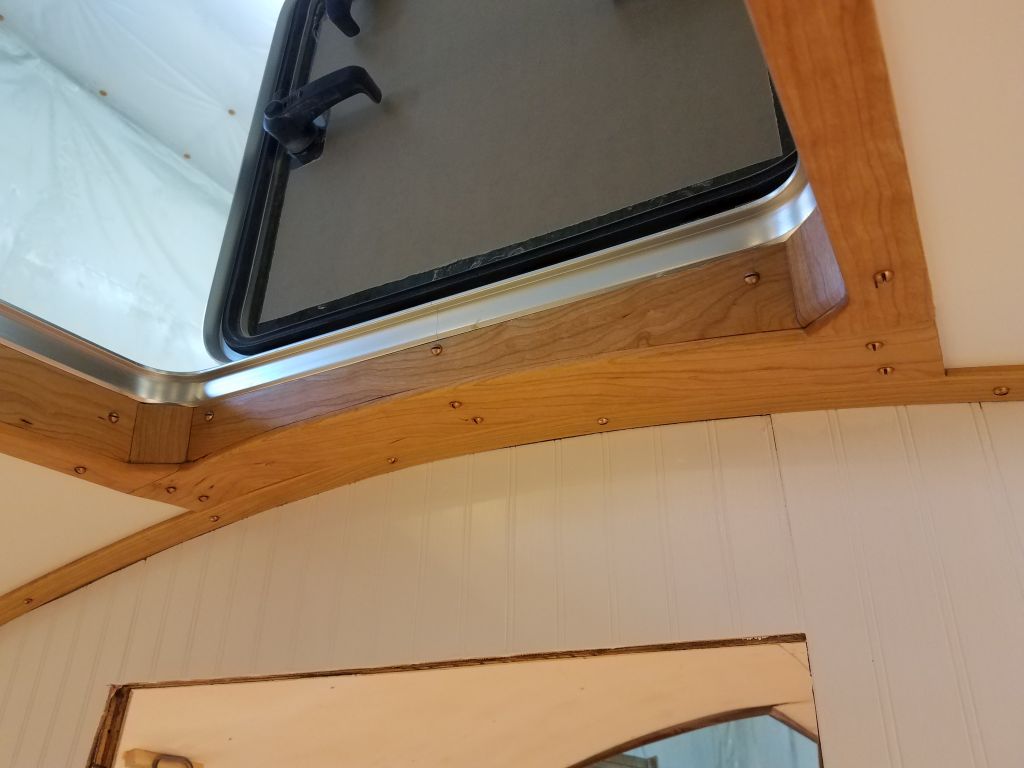
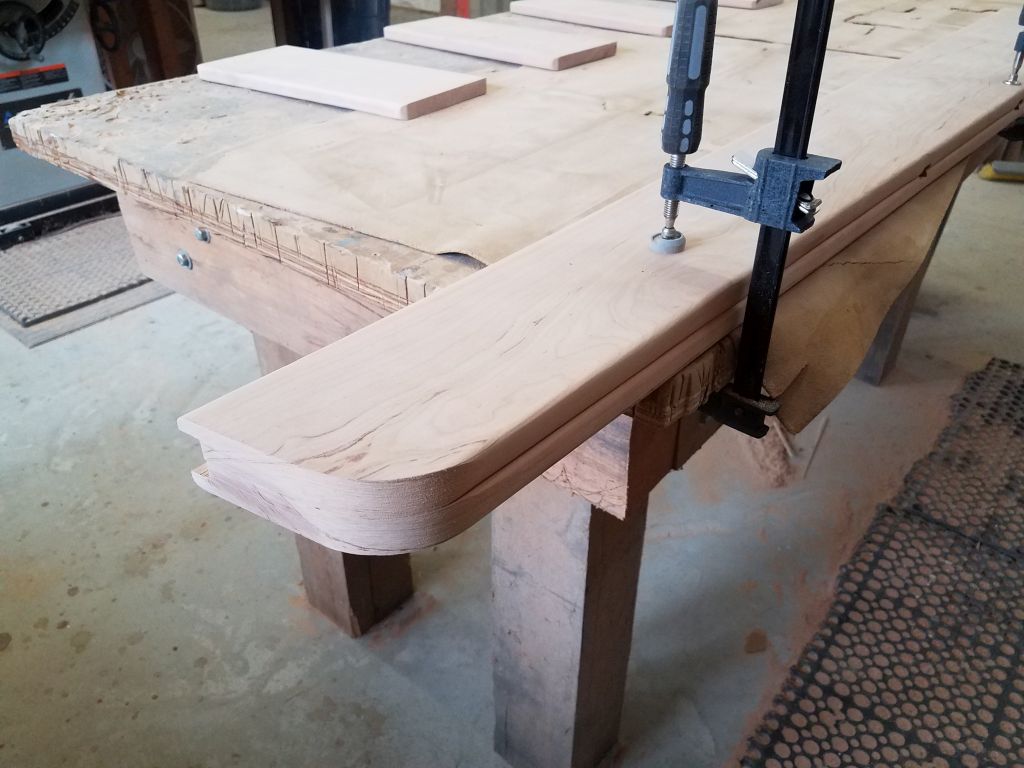
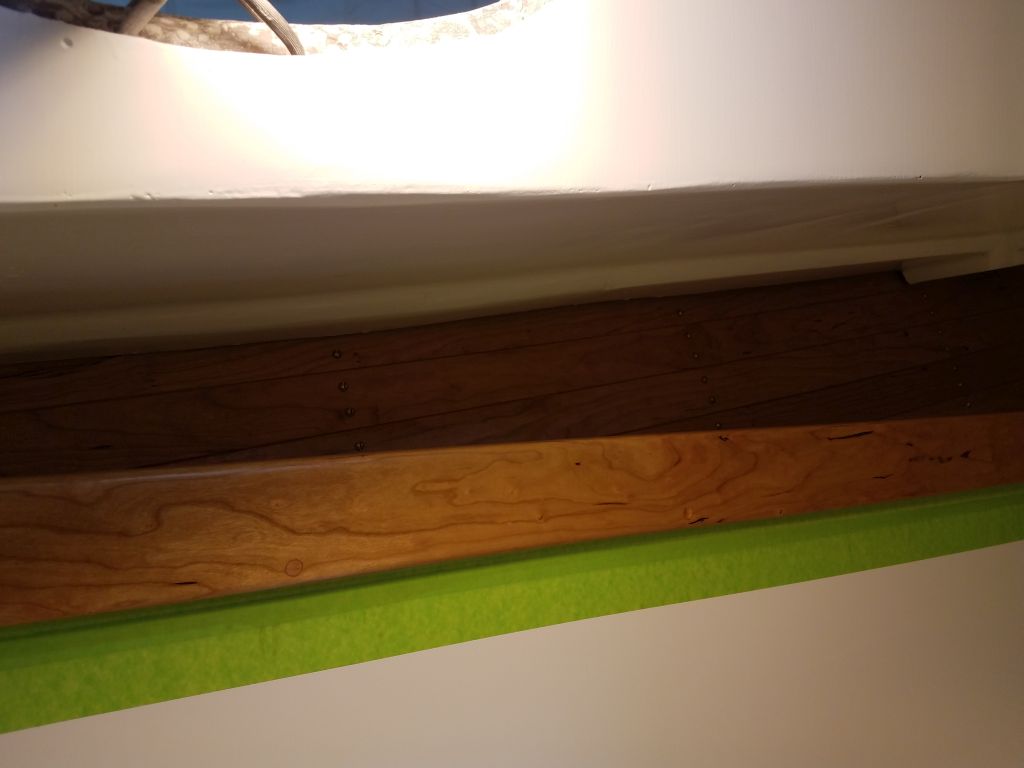
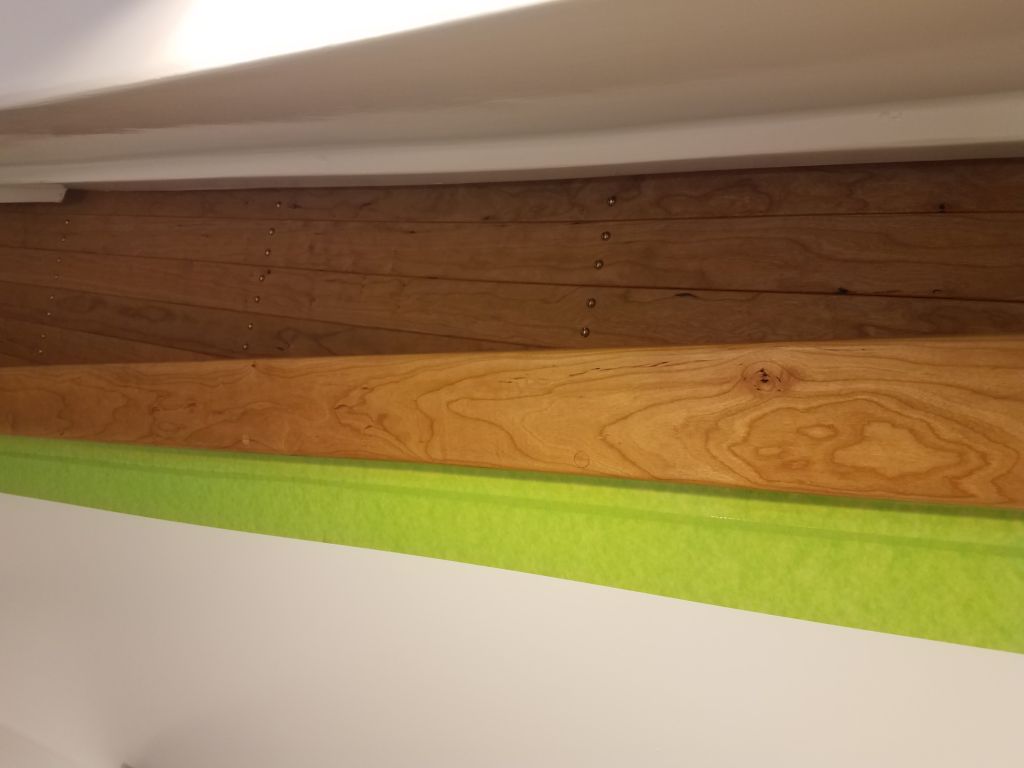
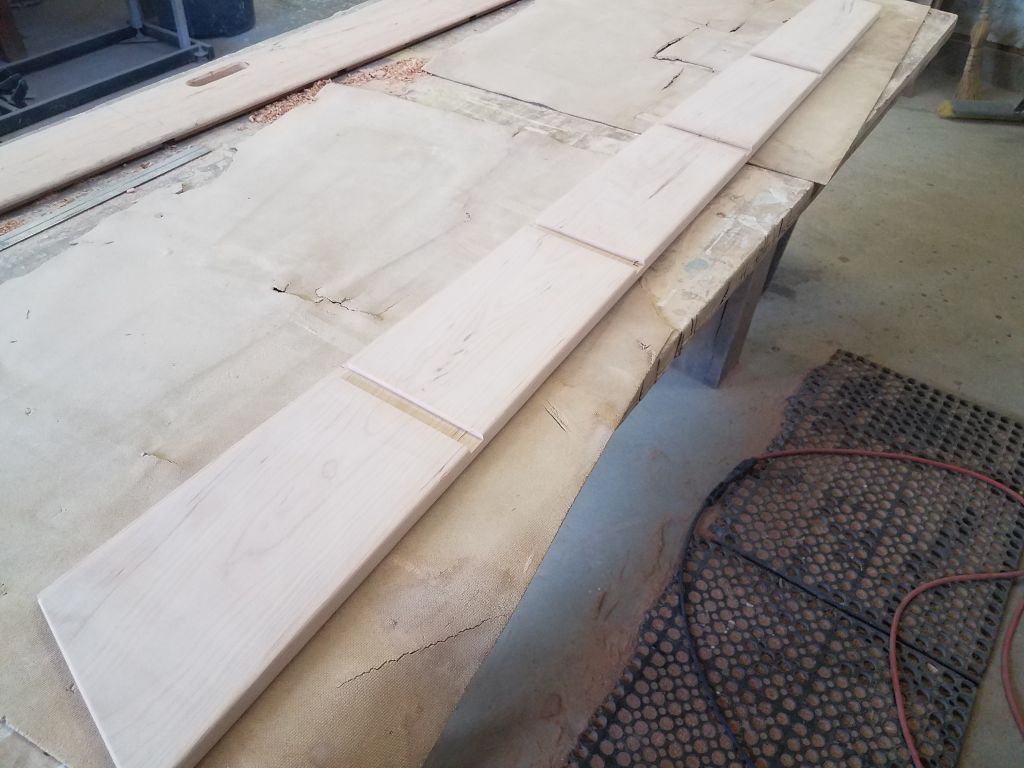
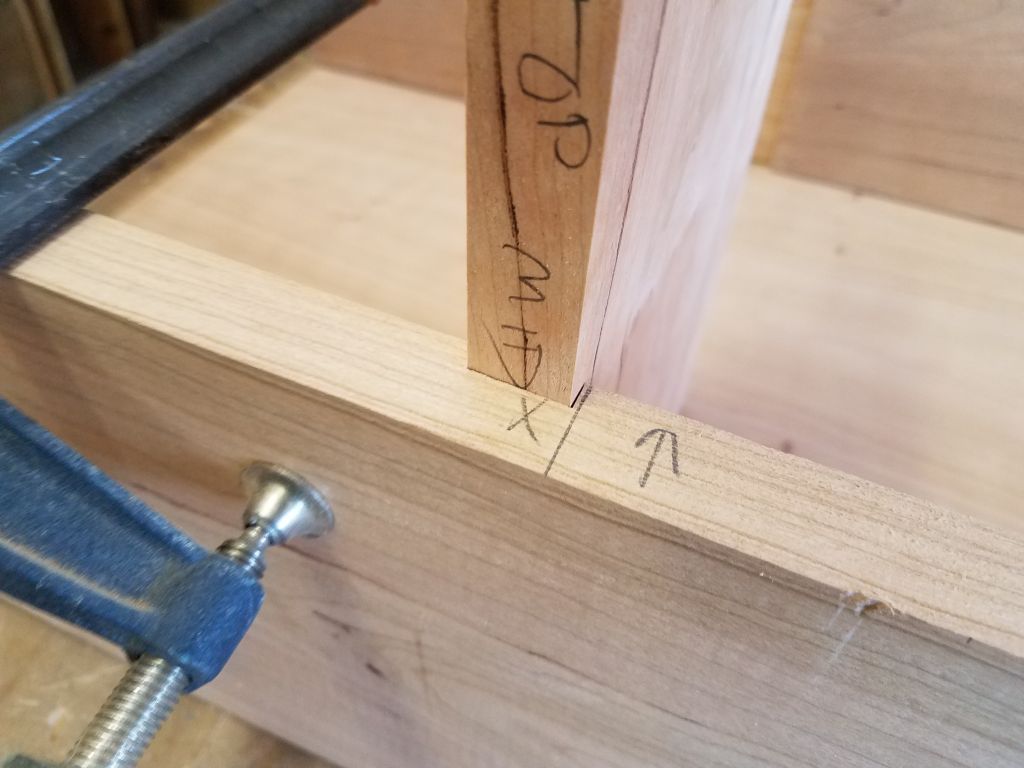
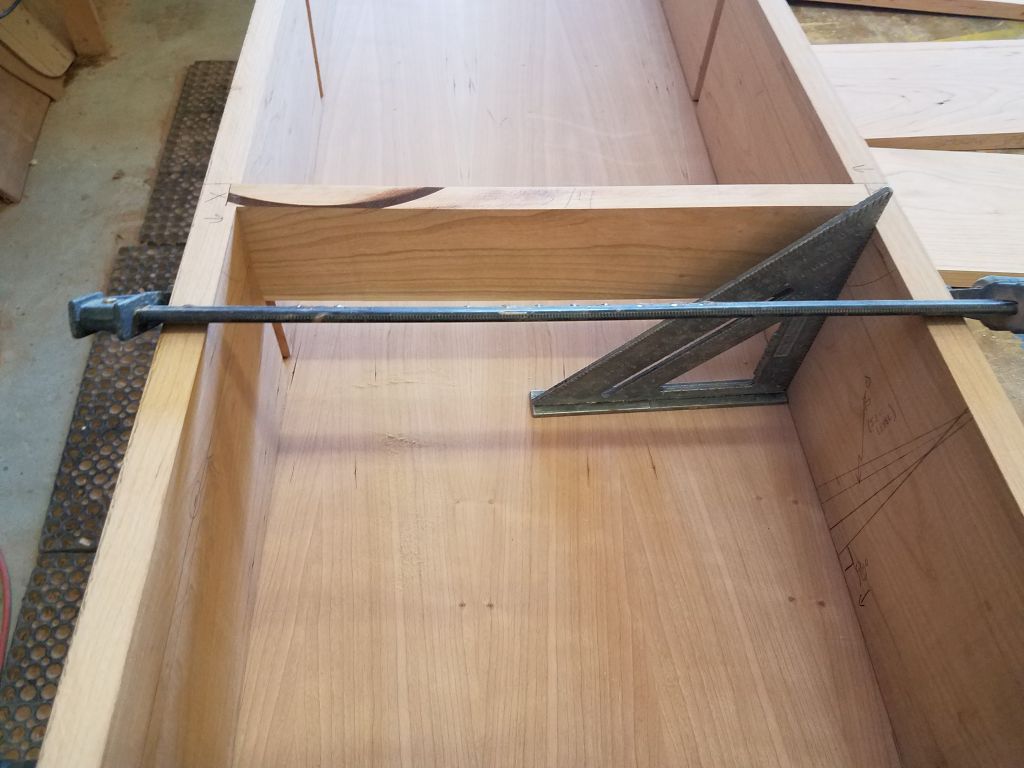
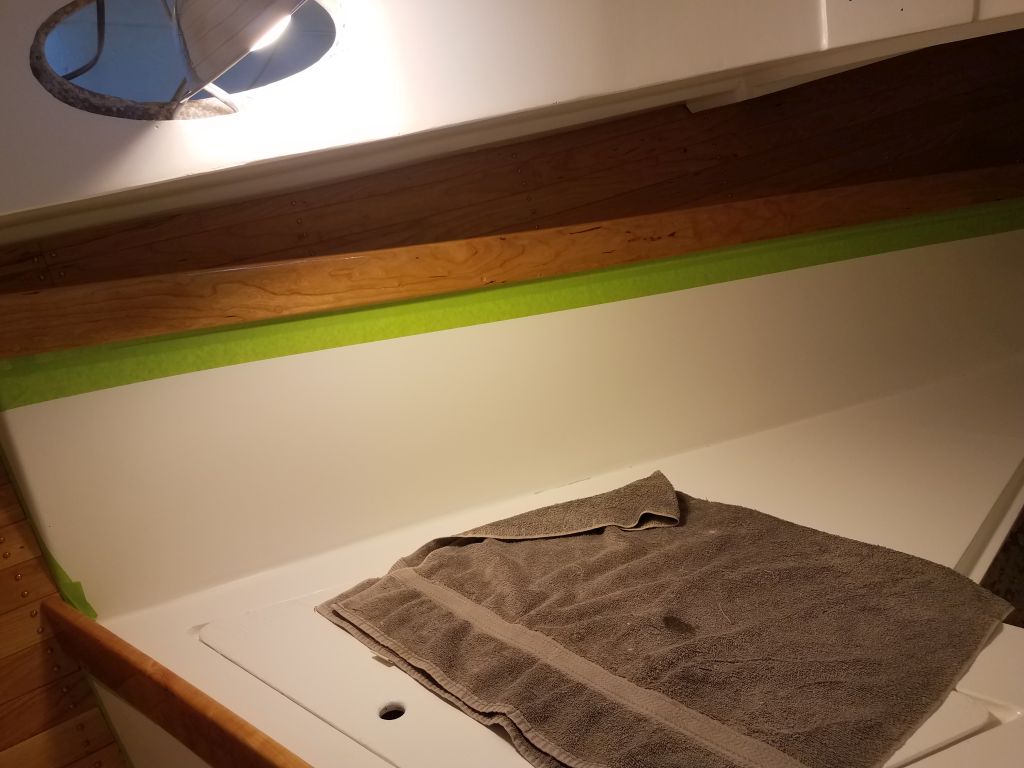
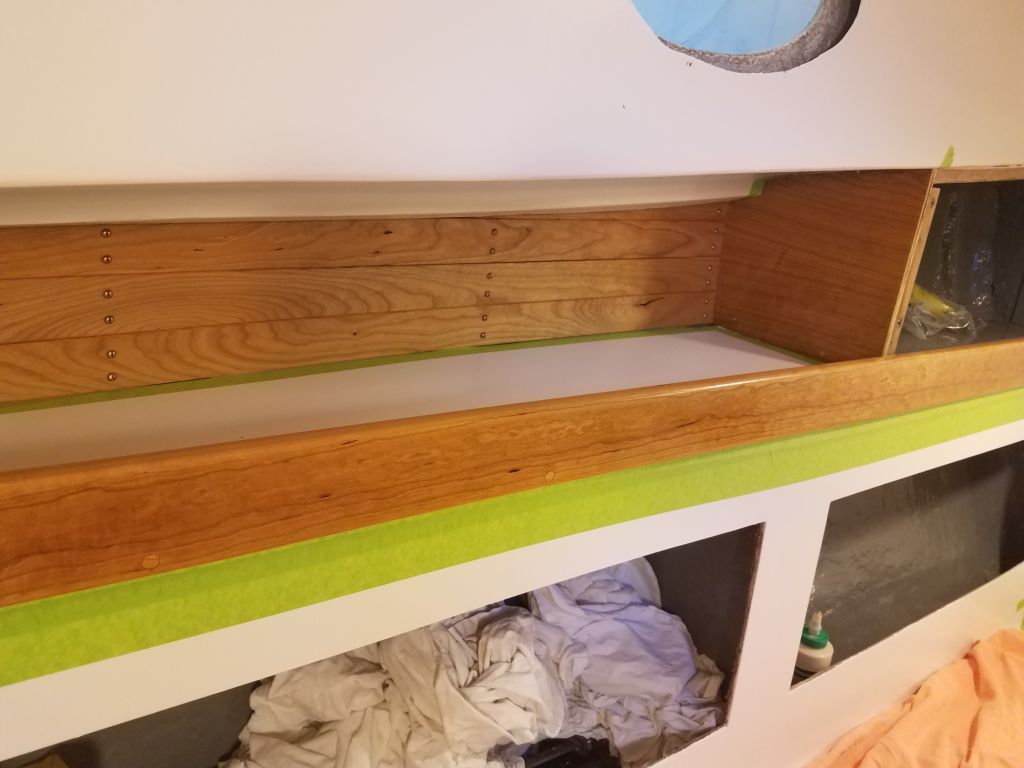
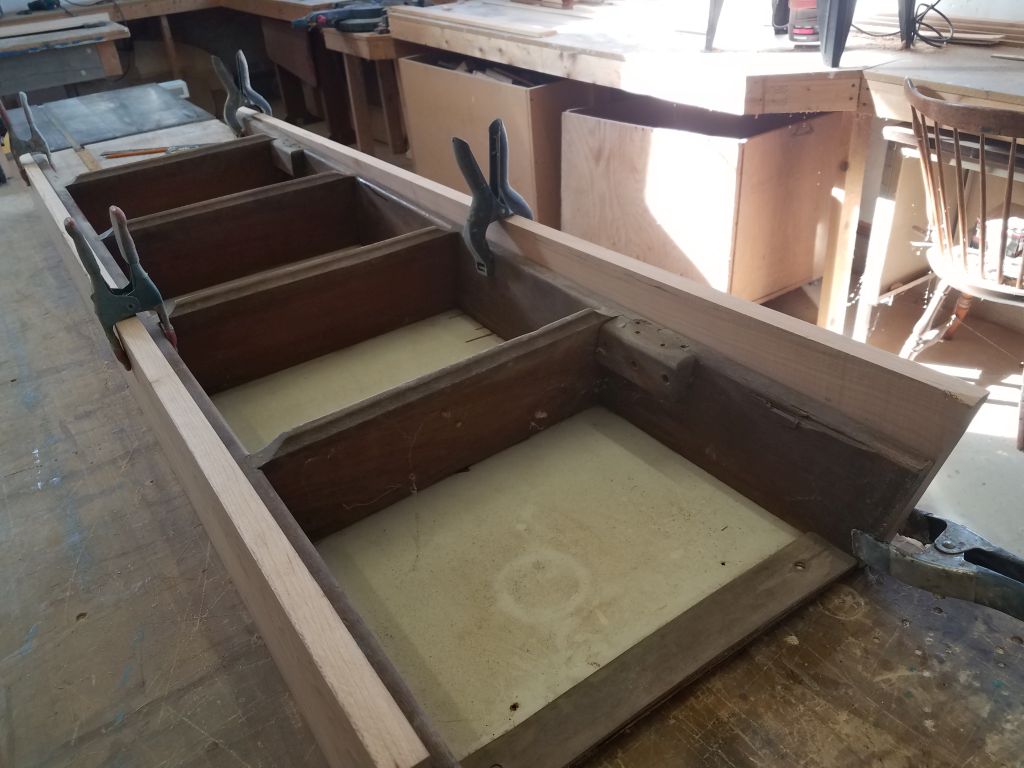
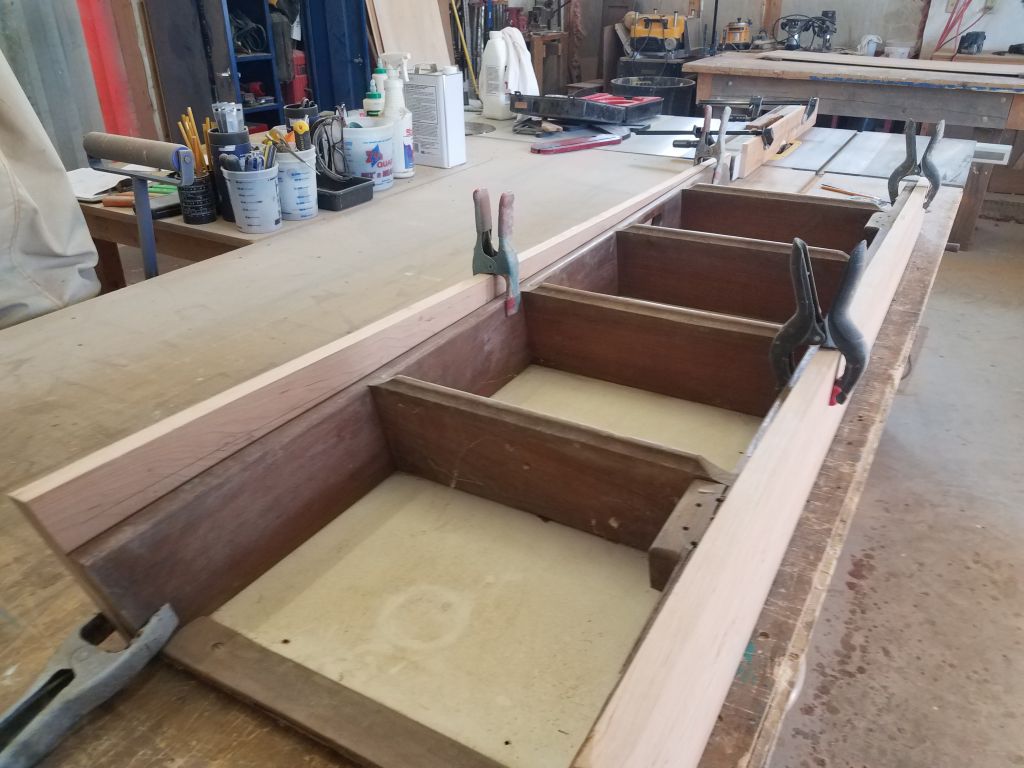
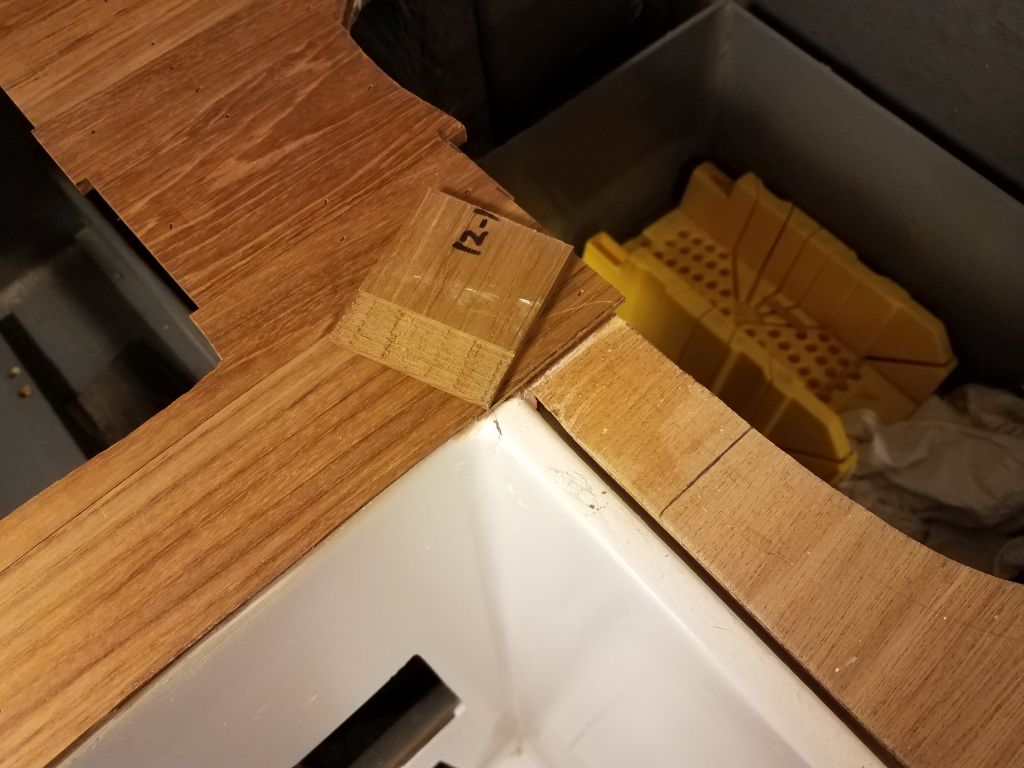
I spent most of the remainder of the day cutting and fitting the horizontal (more or less) side trim to complete the framing of the opening on all sides.  I marked a distance 1-1/4″ out from the inside trim on all sides (the general size of the edge trims I was using elsewhere), and, using wider stock, marked and cut each piece, starting with the after, widest piece that butted up against the bulkhead trim I’d installed last time.  I apparently didn’t take photos of the various steps, but I let the horizontal trim extend just a bit proud of the inside edges of the opening (for later flush-trimming), and glued the trim to the edge of the inside trim, holding it with clamps.  For the moment, I secured these pieces with clamps only while the glue set, but later I’d add screws as well.

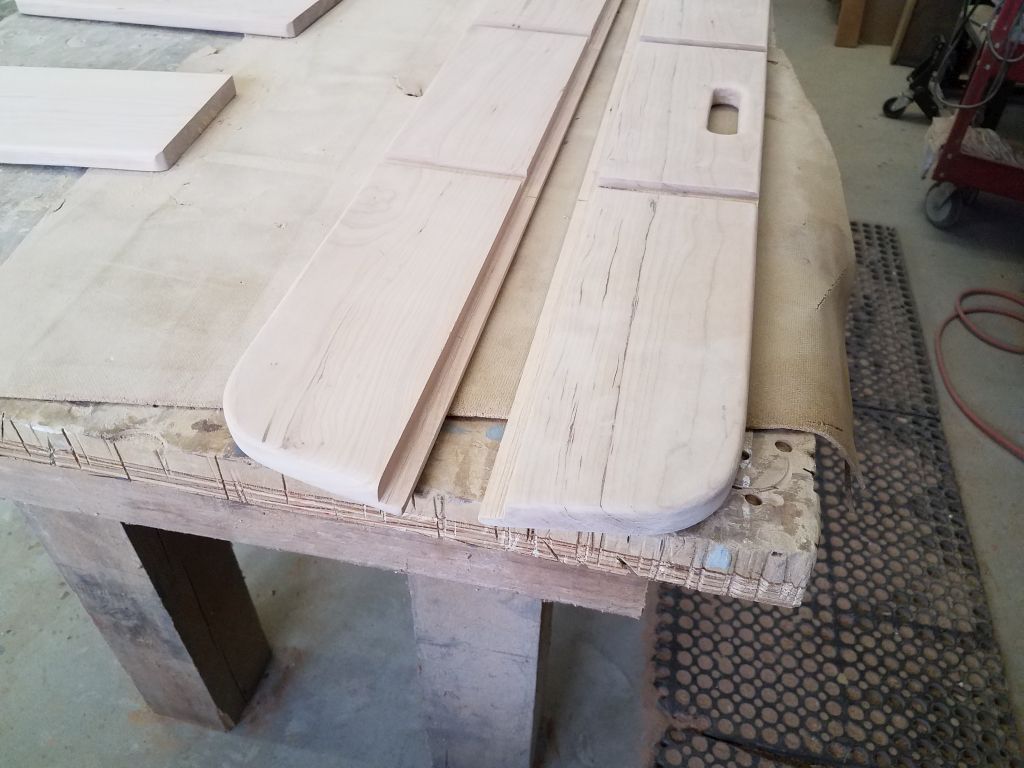
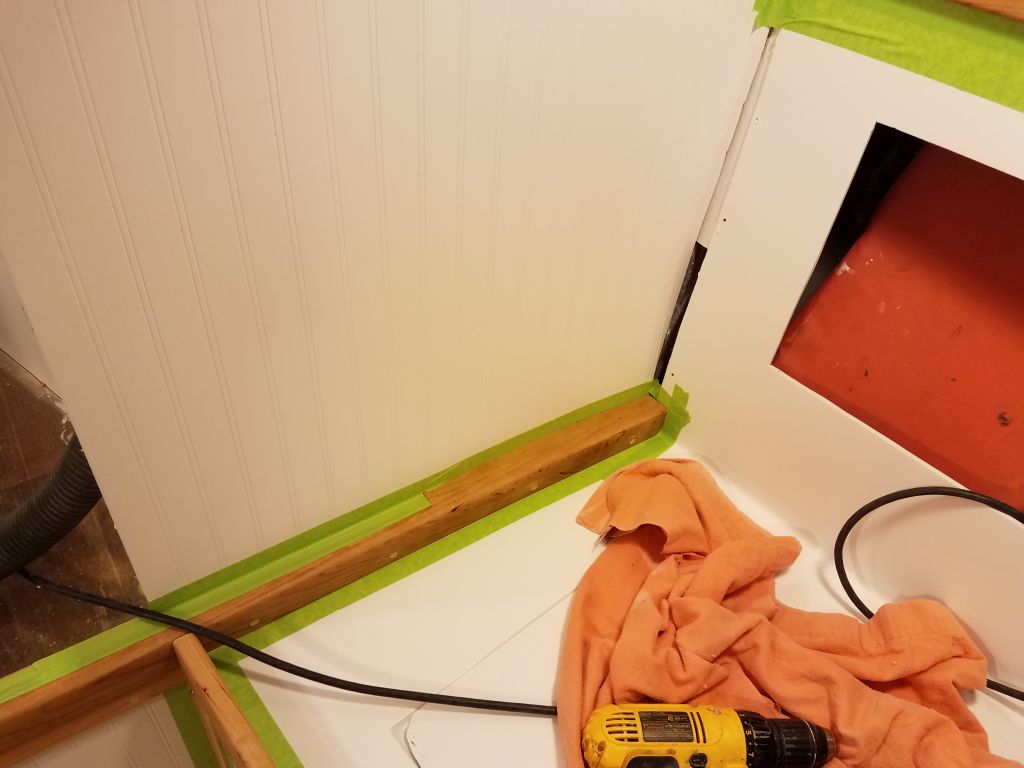
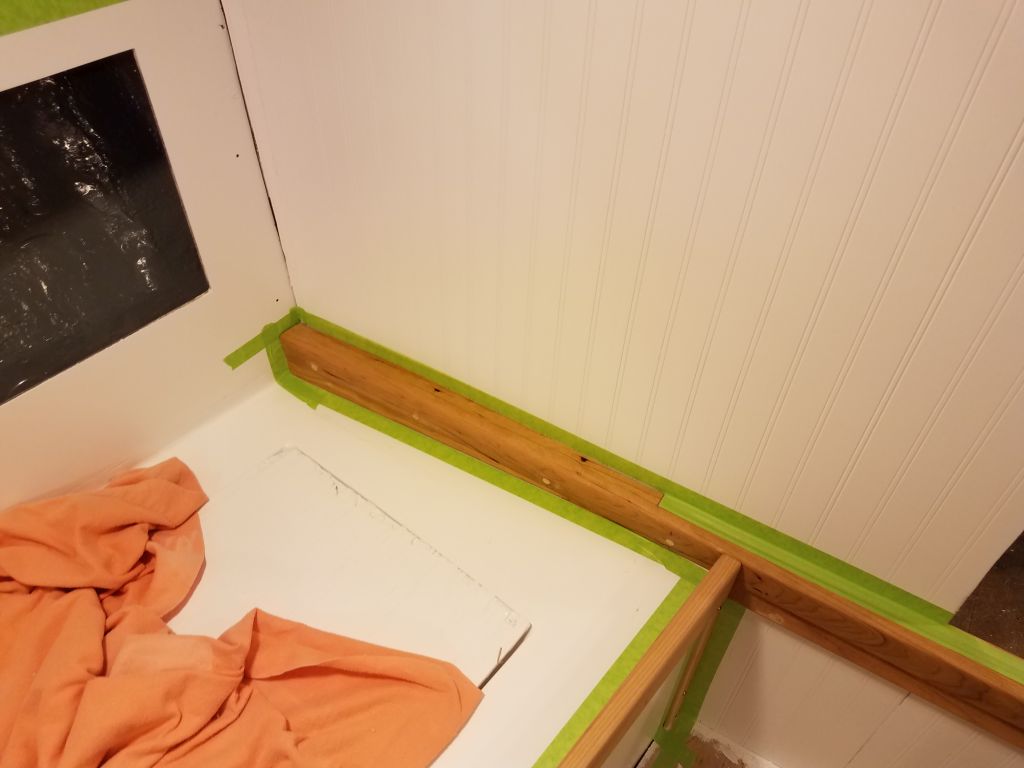
Throughout this cutting and fitting process, with its numerous trips back and forth, I also worked on some additional trim in the main cabin, including trim between the new lower door trim and the settee shelf fiddles, along the forward edges of the backrests on each side.   These trims required scribing to the shape of the bulkhead, and then a final cut to the proper width to match that of the lower door trim.  I also shaped and sanded the exposed edges, and drilled holes for eventual screws, though I didn’t bother with the screws now since I planned to remove these small bits of trim for varnishing off the boat.

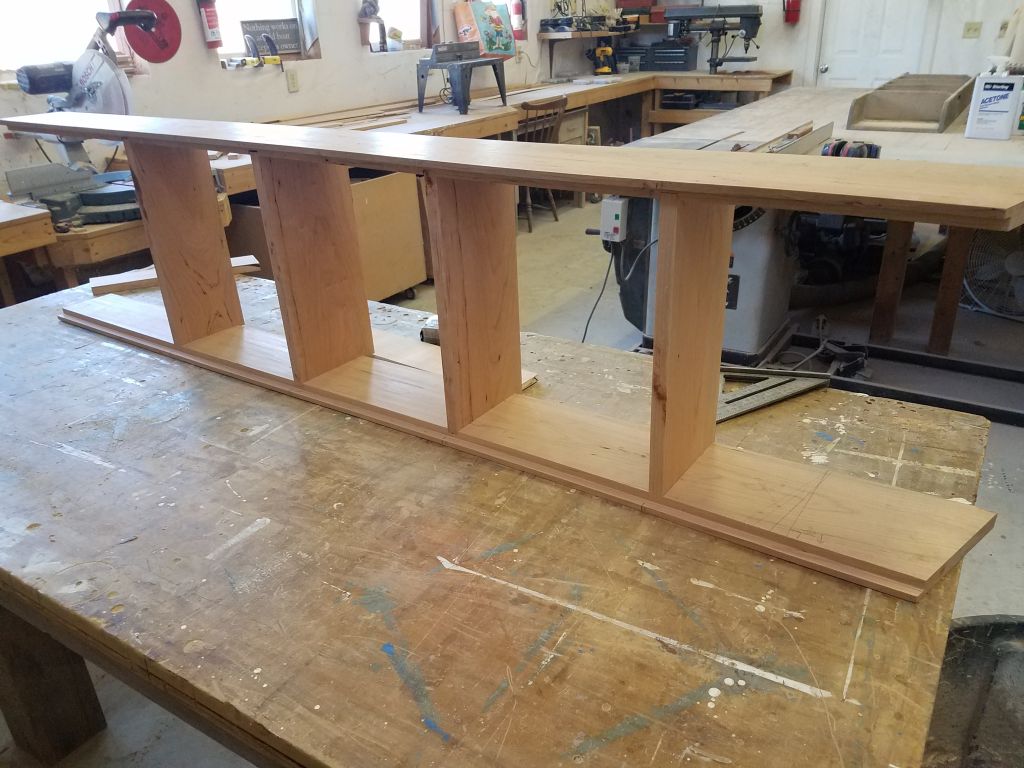
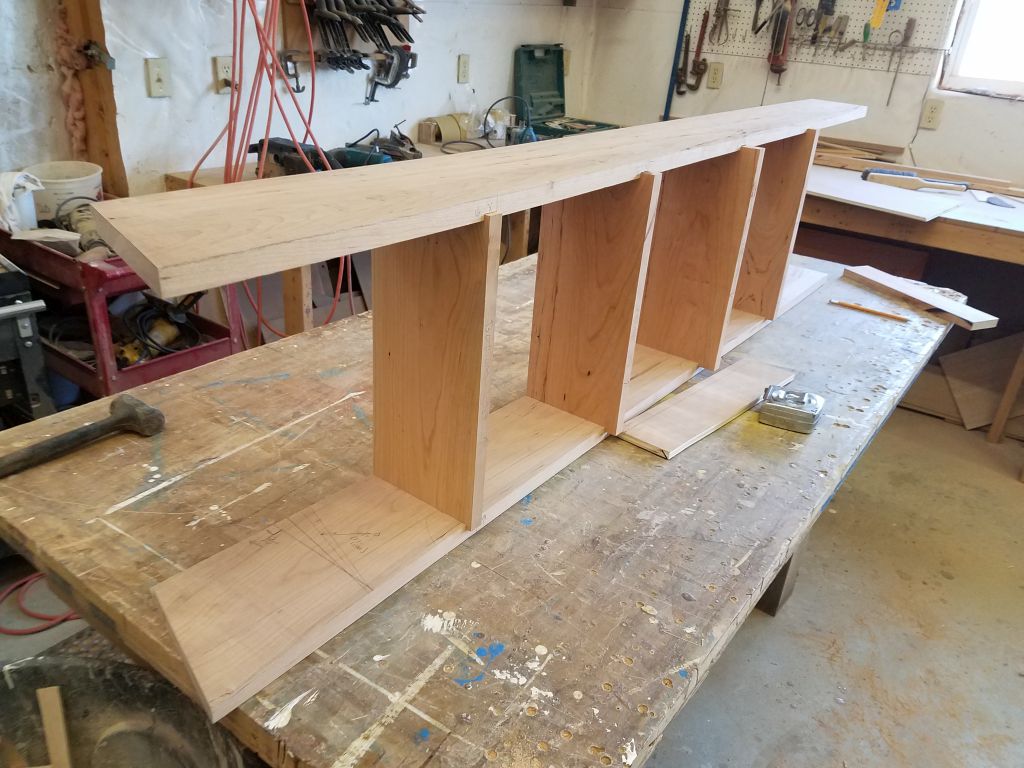
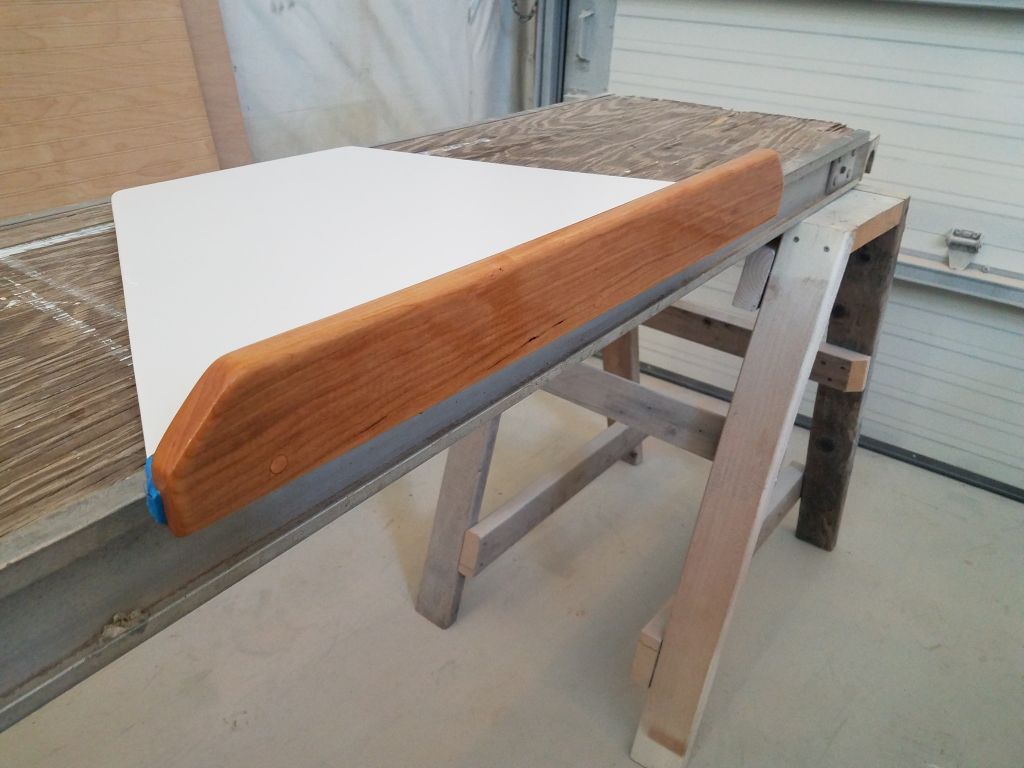
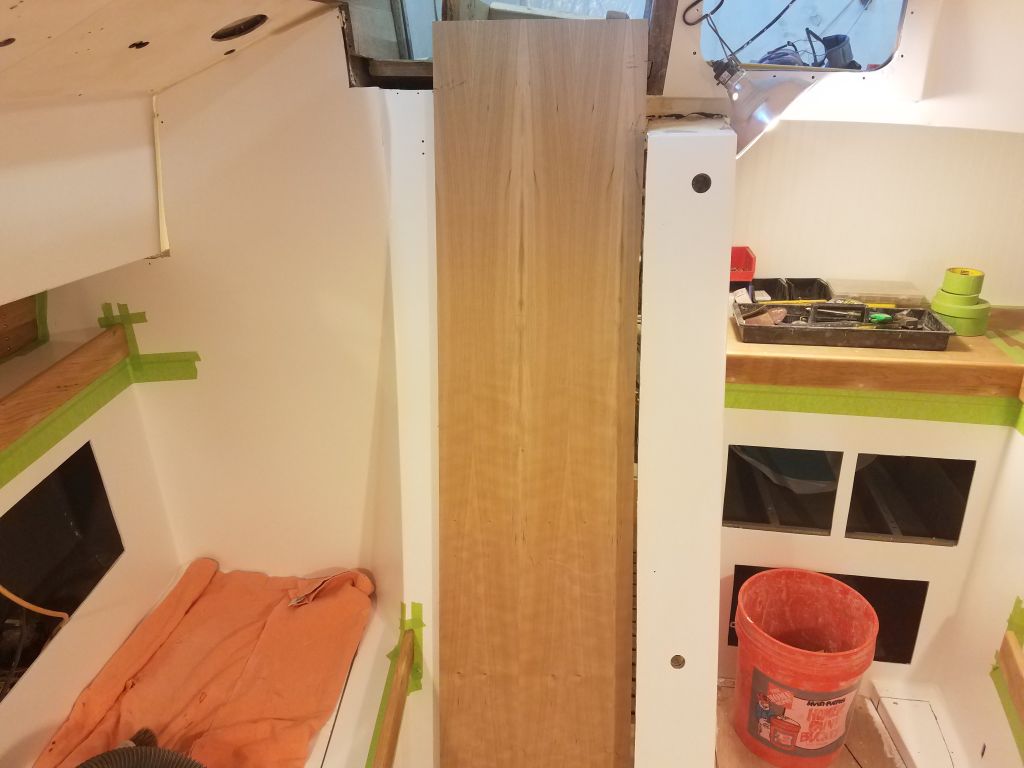
I also cut to length, and to the proper angles on each side, a piece of 3/4″ x 2″ wide stock to fit below the door trim and cover the gap at the bottom of the door opening.  I’d do the final installation soon, but since the piece was still bare wood, I held off till I could apply varnish to all sides.

Total time billed on this job today:  8.5 hours

0600 Weather observation:  12°, clear. Forecast for the day:  Sunny, 37°

Scupper 108

Monday

I got started by removing the excess bungs from the v-berth filler cleats, port settee shelf fiddle, and the starboard berth fiddle.

The port berth fiddle, which I’d milled and test-fit last time before removing it for a coat of varnish, was now ready for final installation, which went quickly since all the real work had already happened.

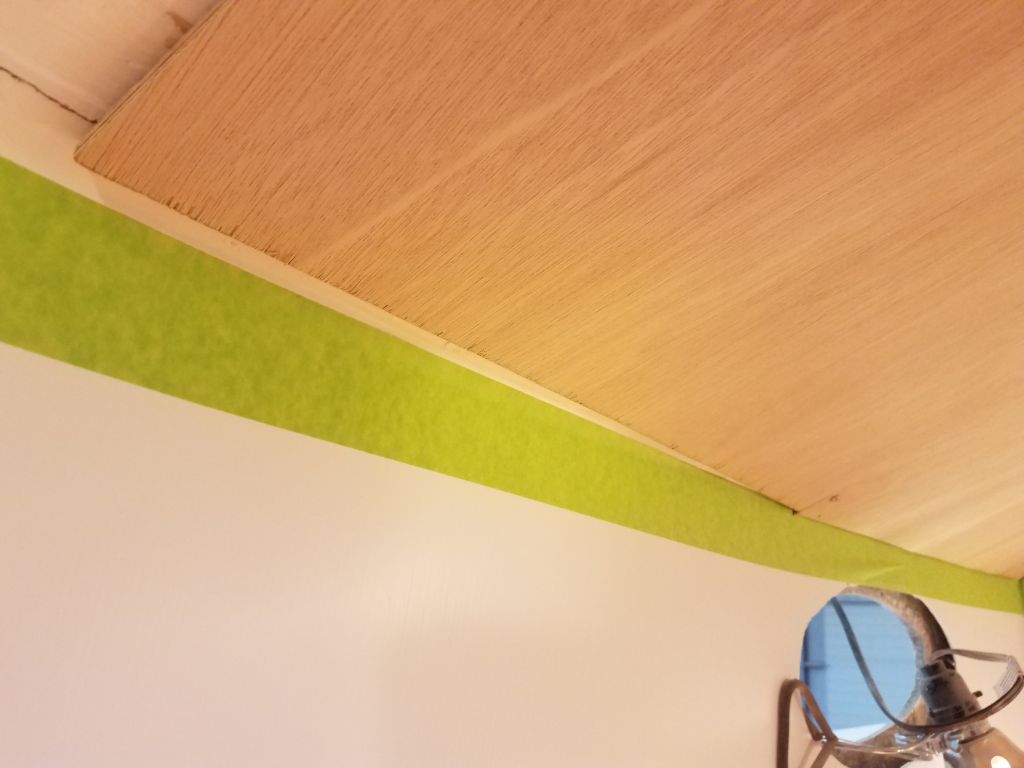
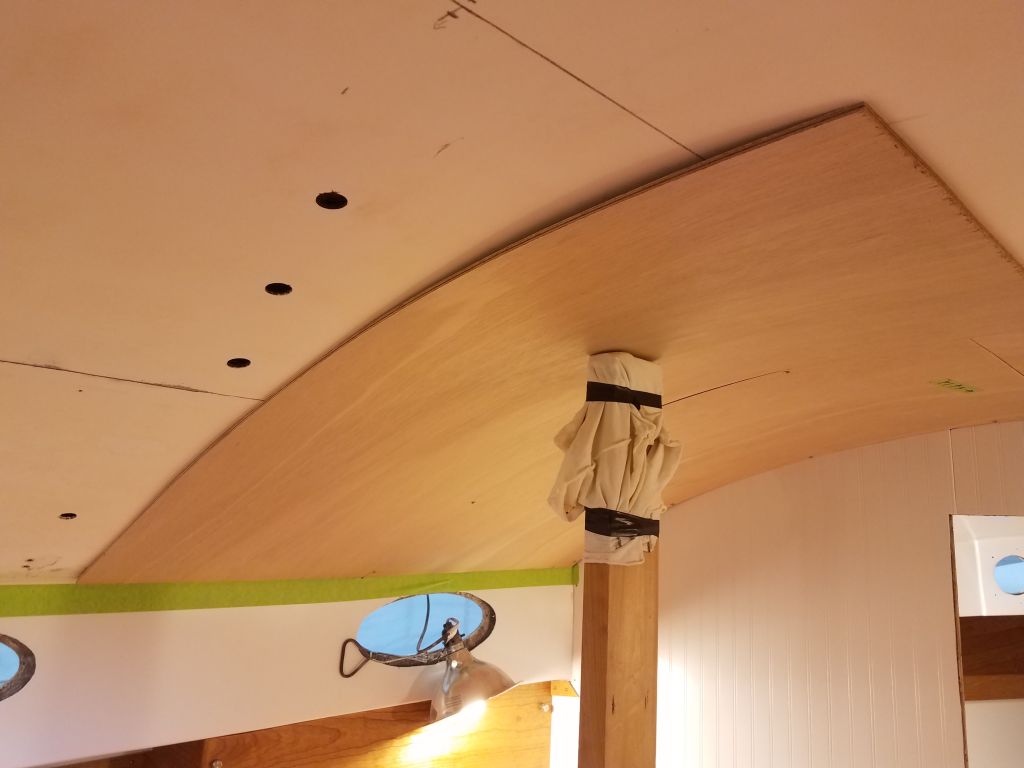
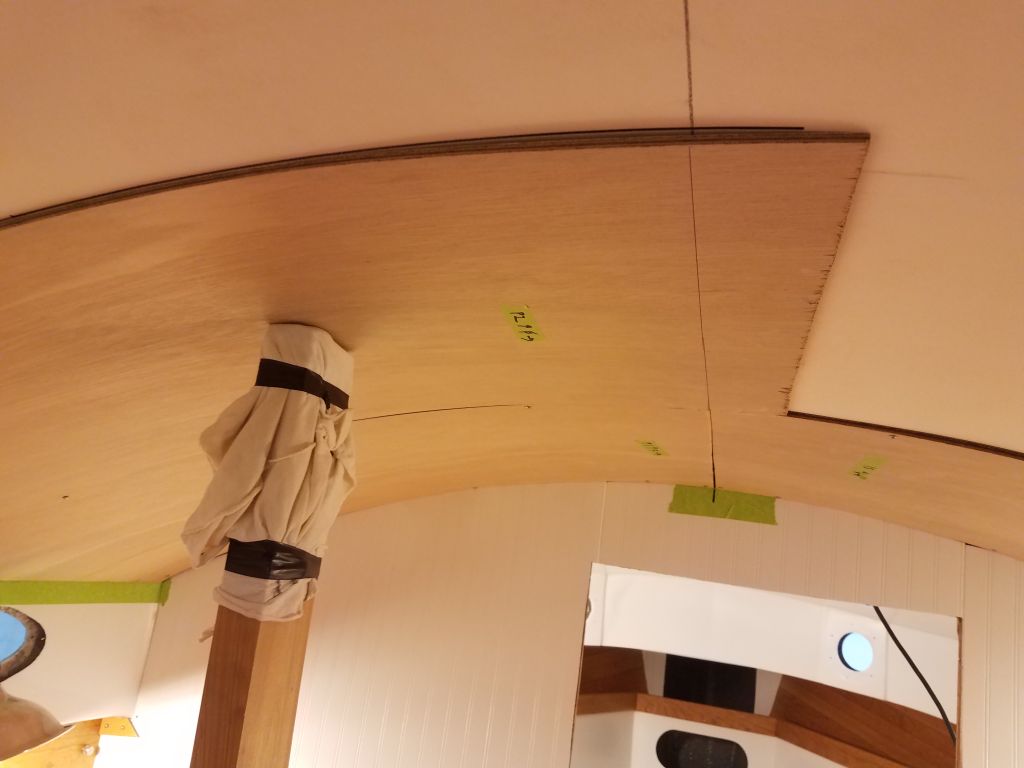
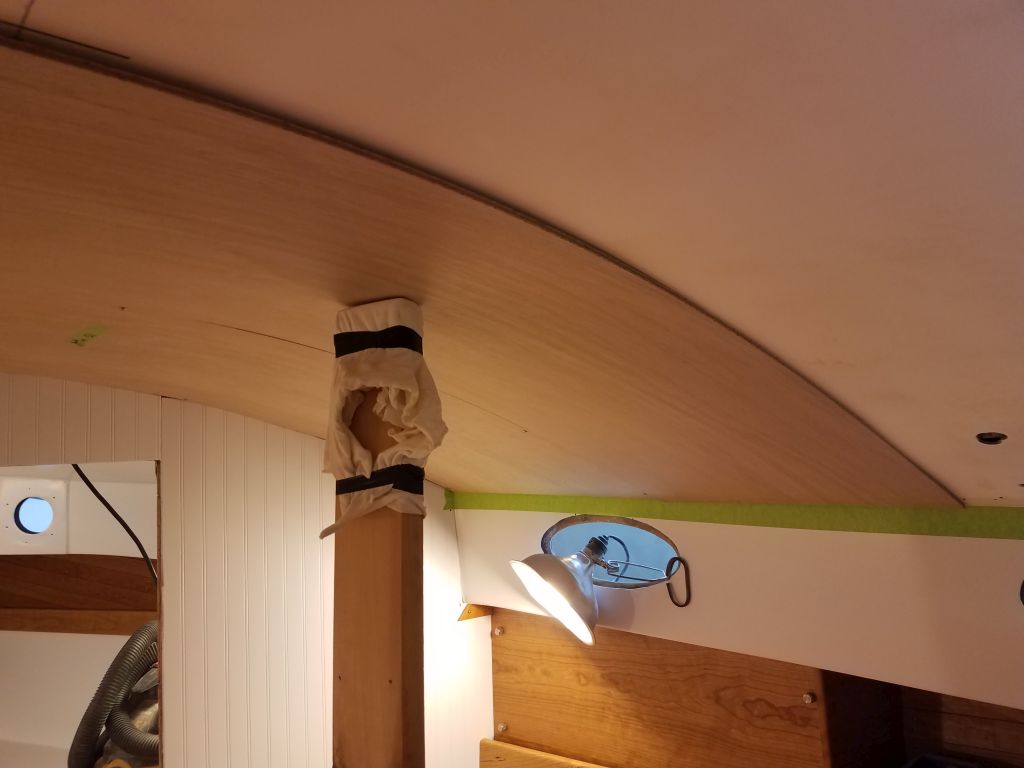
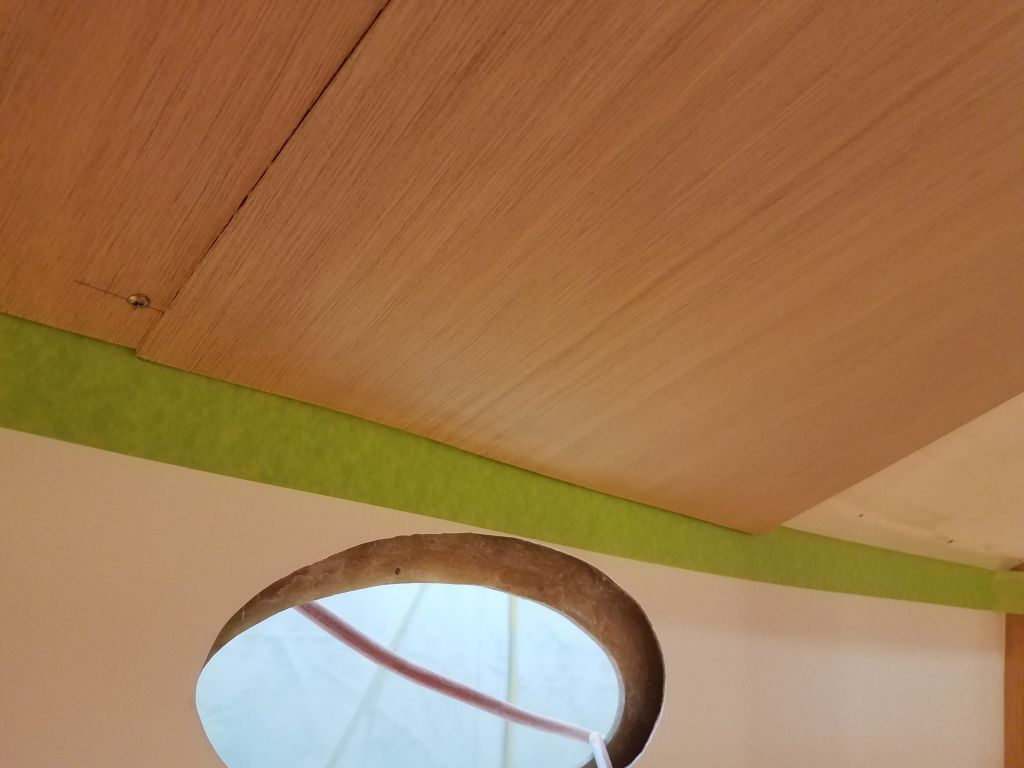
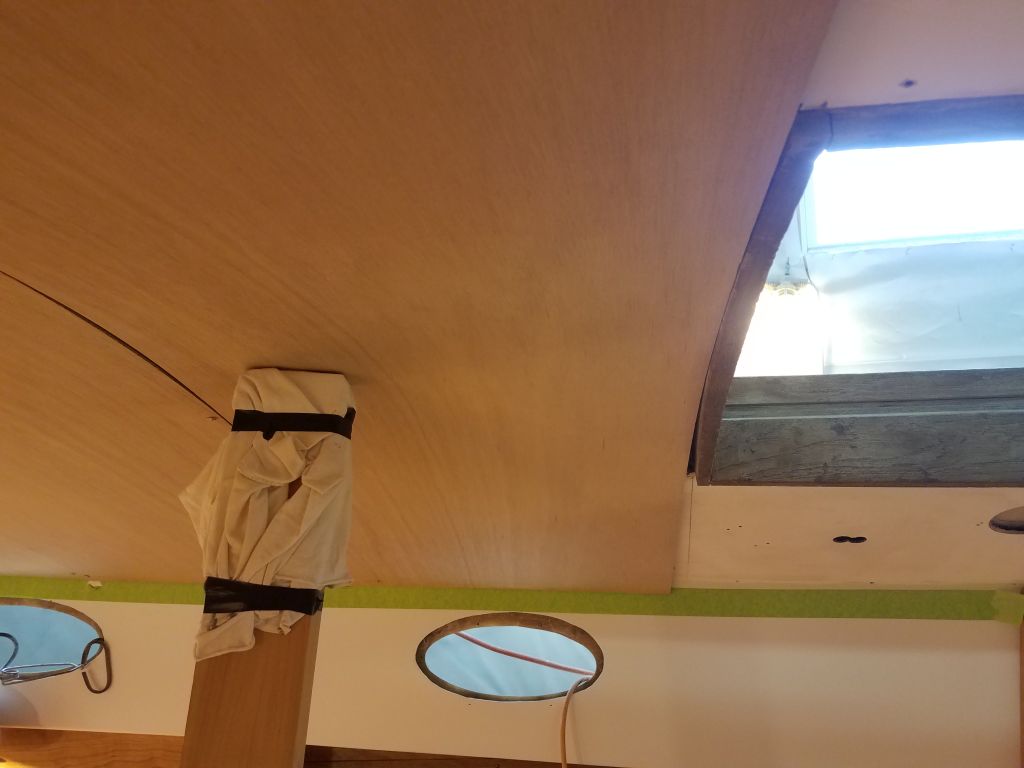
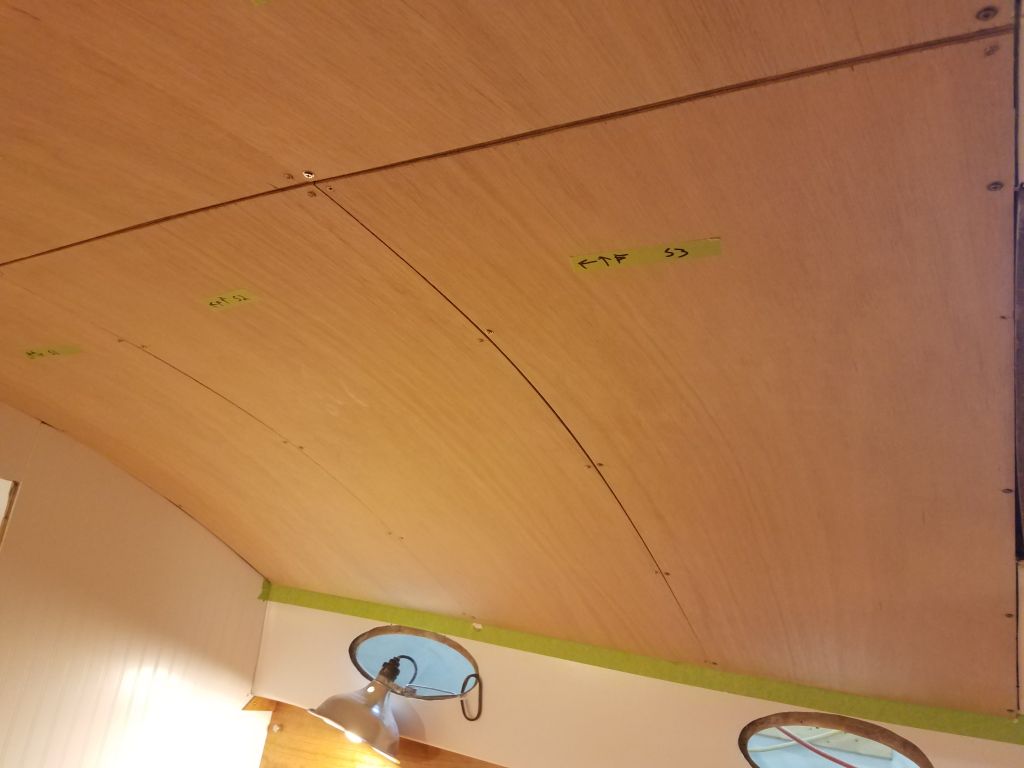
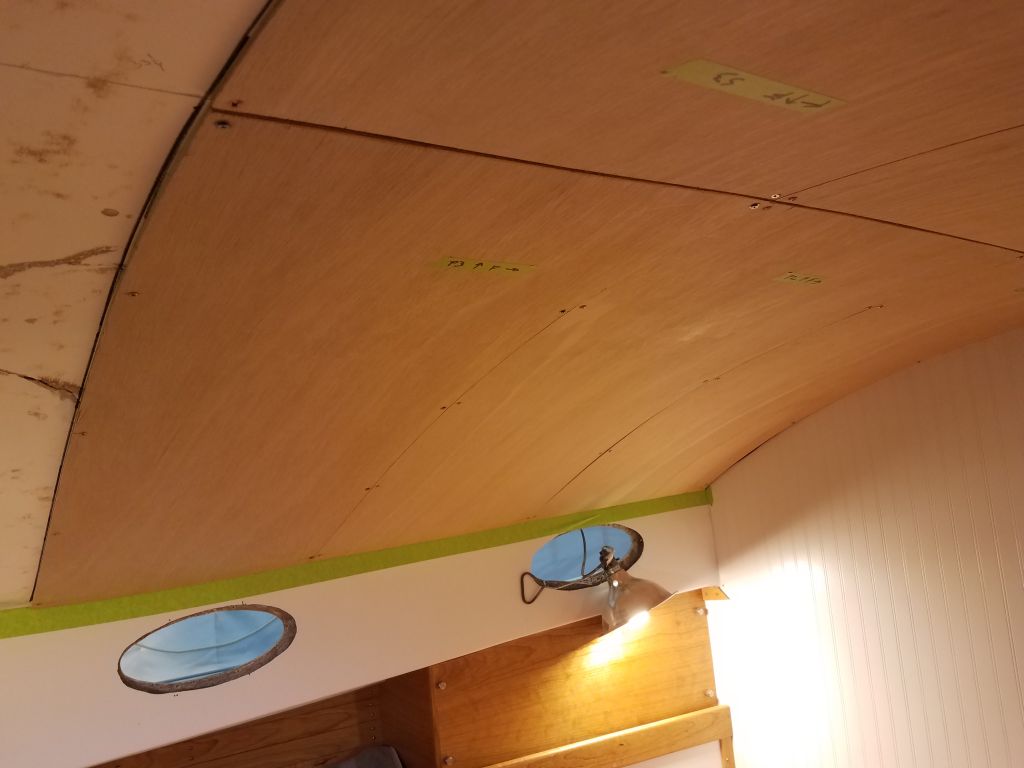
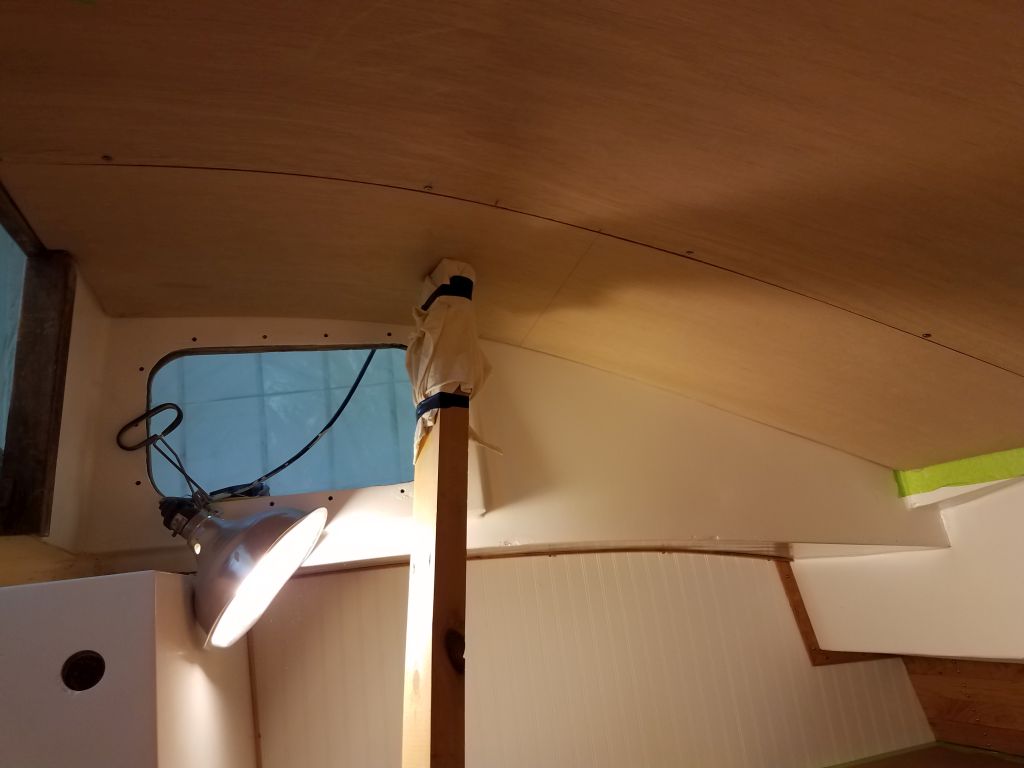
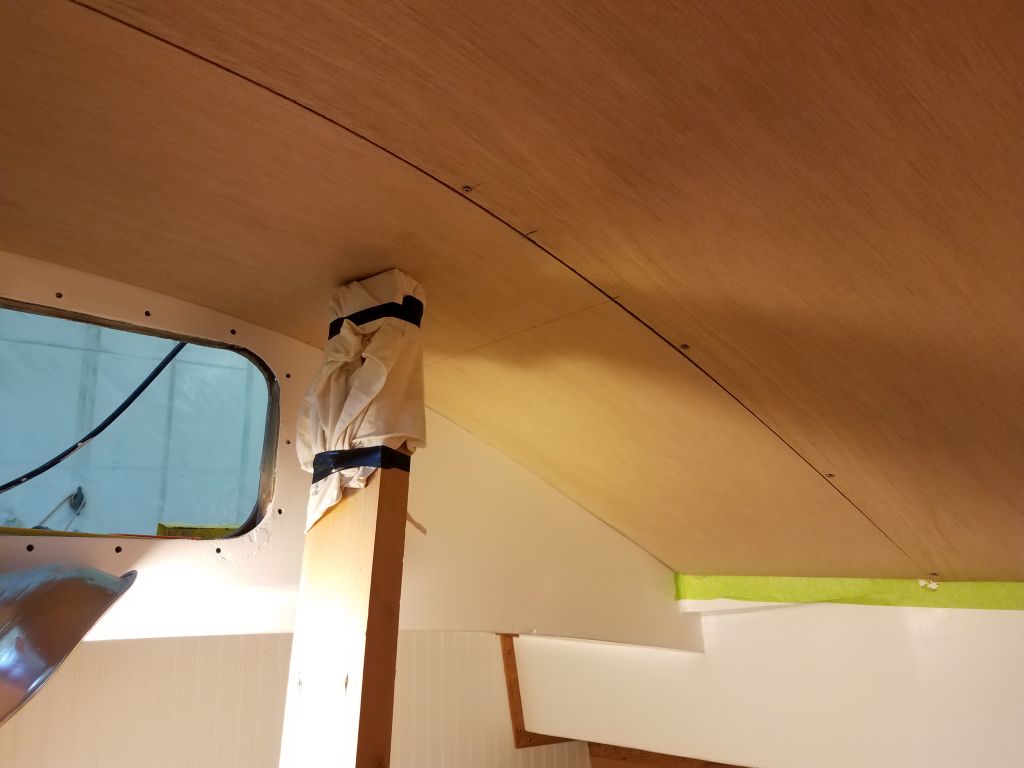
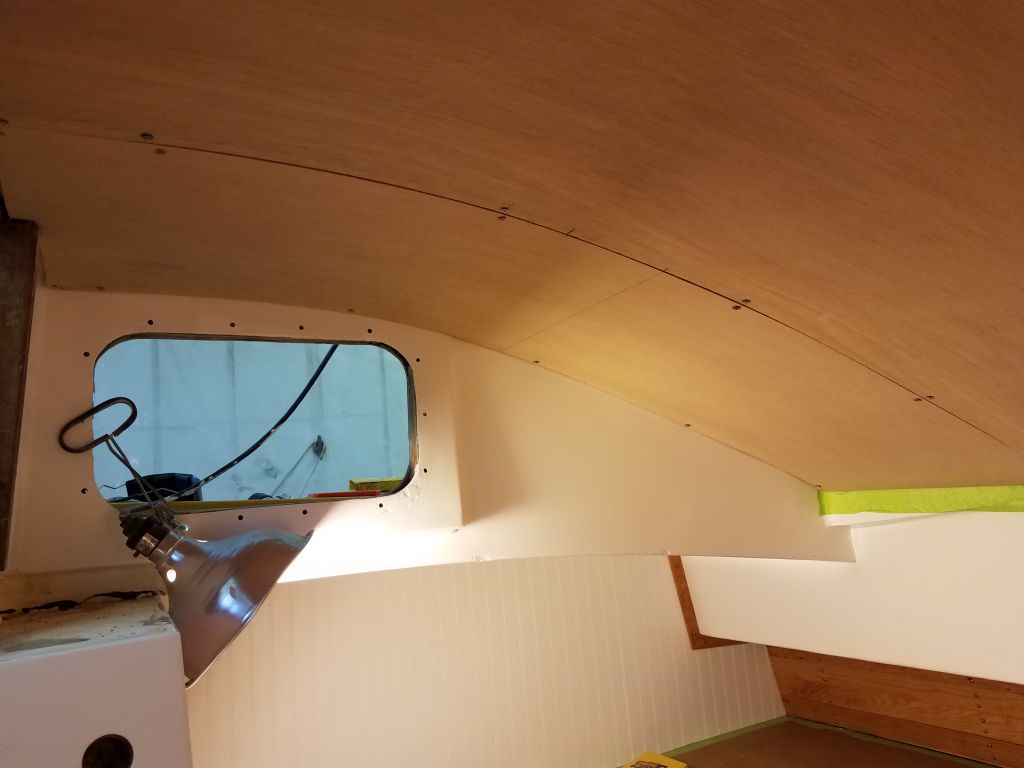
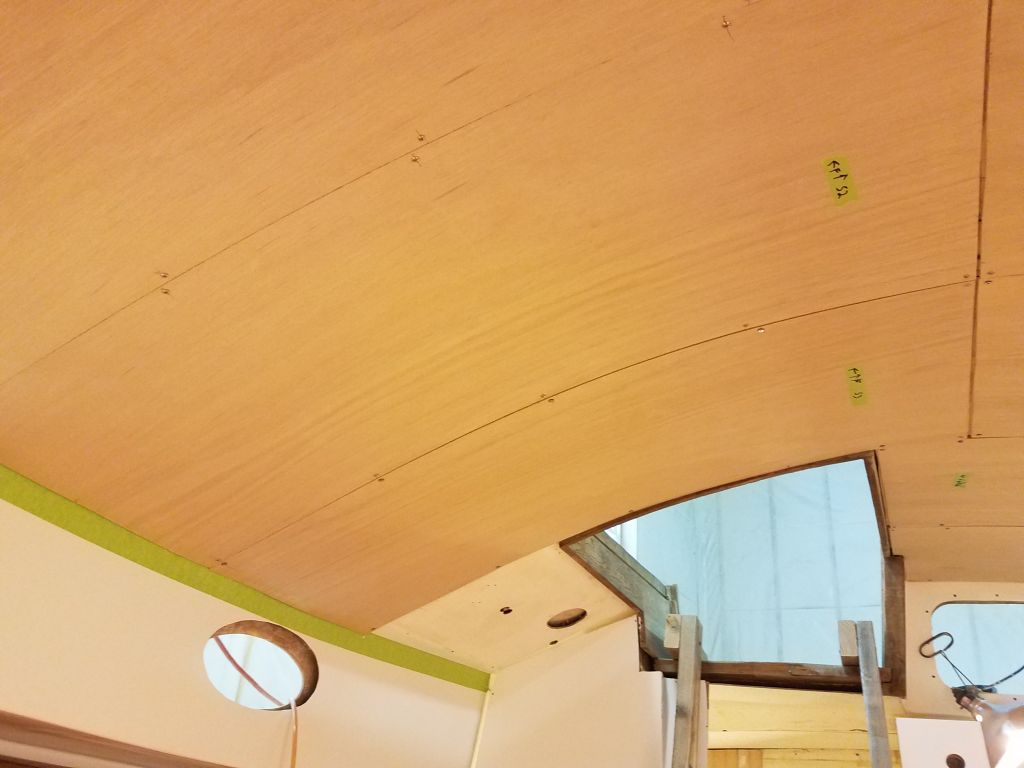
I planned to install the lower door trim at the forward edges of the two berth fiddles soon, but for the moment, with work ongoing in the forward cabin, it made more sense to leave it off till that was complete.  With new ceiling trim milled and seal-varnished on all sides, I spent most of the rest of the morning completing the narrow ceiling areas aft of the berth on both sides, bringing the ceiling down to the final board where it died into the cabin sole.

The angles involved meant that at the forward end of this space, the area was wider than at the aft end, and again this would require some small pieces of the ceiling trim to completely fill it in.  Since the small angled pieces at the forward end would otherwise be too small to install on their own–plus the support cleats ended just above–I started by templating and fitting the last full-length strip; then, removing the pieces, I edge-glued on another piece of the trim beneath and set these assemblies aside to cure in the clamps for a while.

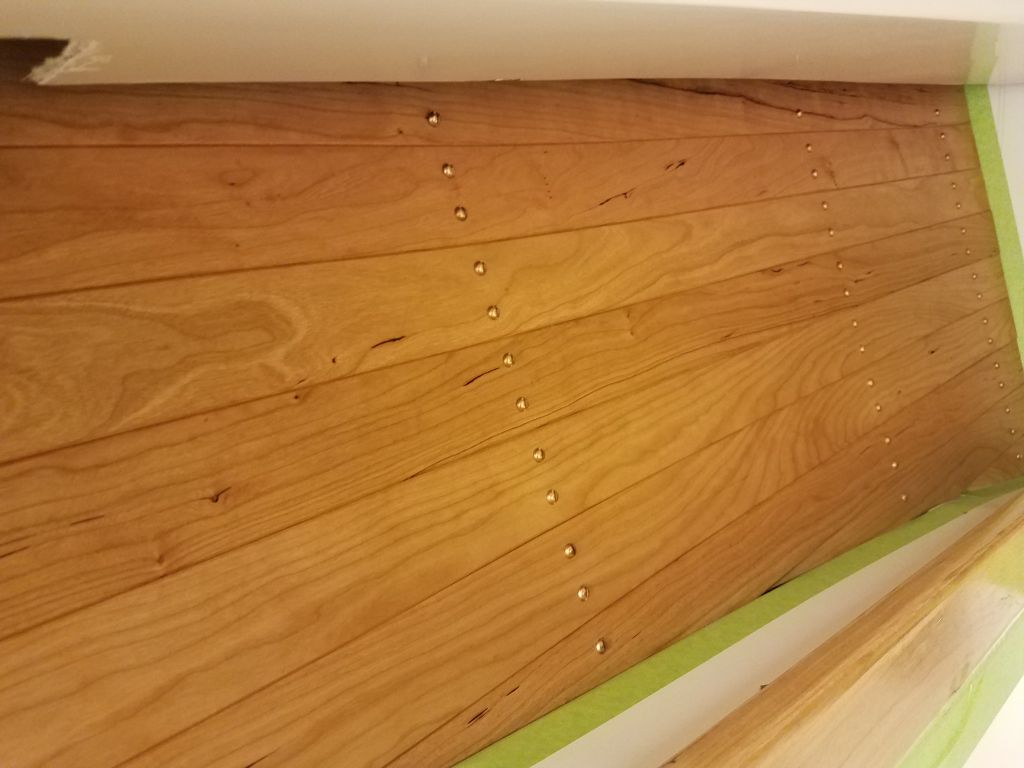
While the trim was gluing up, I prepared to install the forward hatch.  I wanted this in place now so I could complete the trim inside the hatch opening.  With the hatch properly positioned in its opening, I drilled and  tapped all the fastener locations in the solid fiberglass hatch surround to accept 10-24 x 1″ machine screws, and milled small countersinks at each hole location to better accept sealant.  After final cleanup, I applied heavy beads of sealant and installed the hatch with 20 screws.

By now, my ceiling glue-ups were ready for more work, and using angles and measurements I’d determined earlier, I trimmed the bottom edges and fit the pieces.  To allow the future cabin sole to slip beneath the ceiling at the edges, I used a scrap of the sole material (same as the ceiling) to mark the height at the lower edge of each ceiling and, removing the boards one more time, trimmed off the excess to the line.  This completed the ceiling, other than final finishing, which I’d start soon.

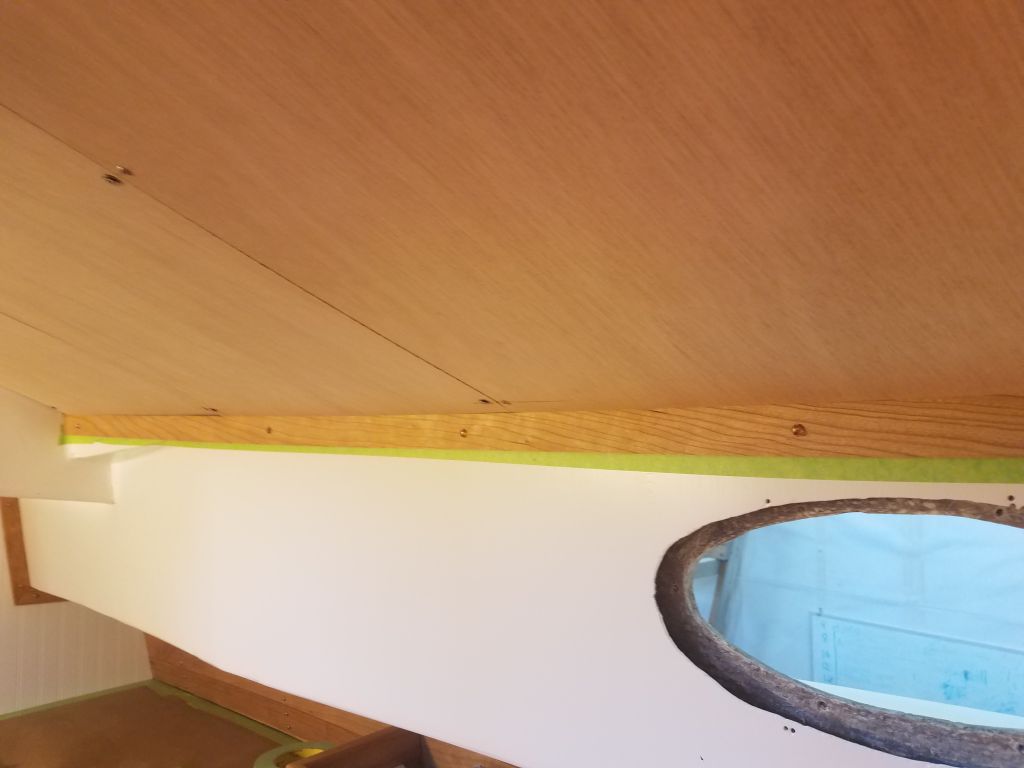
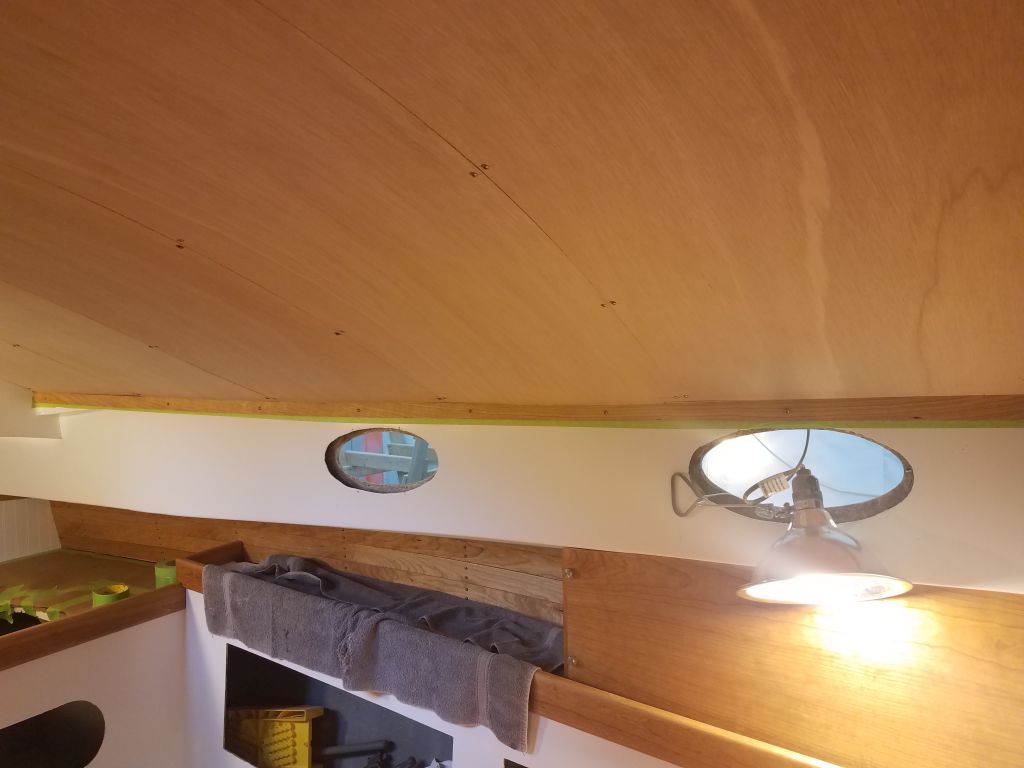
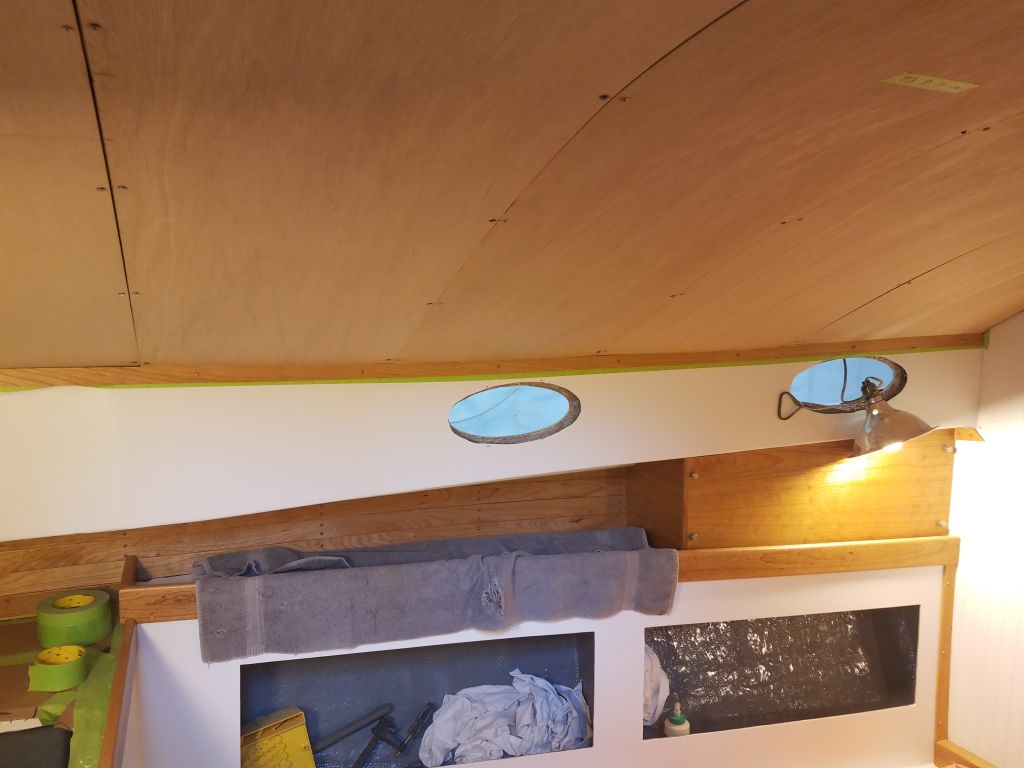
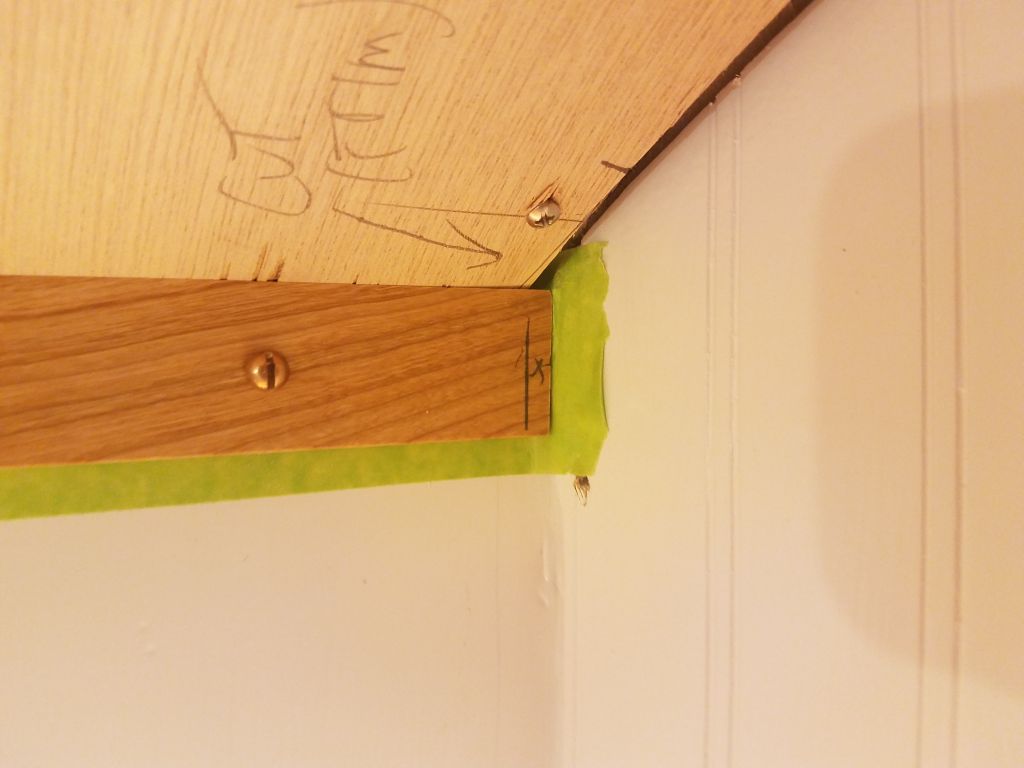
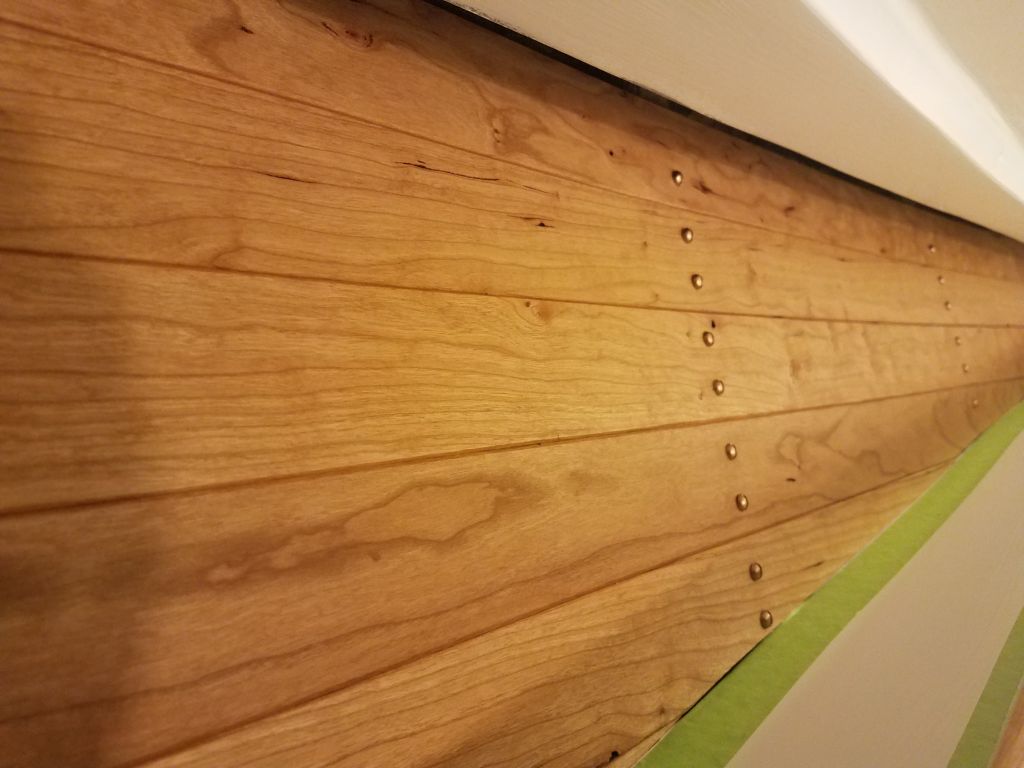
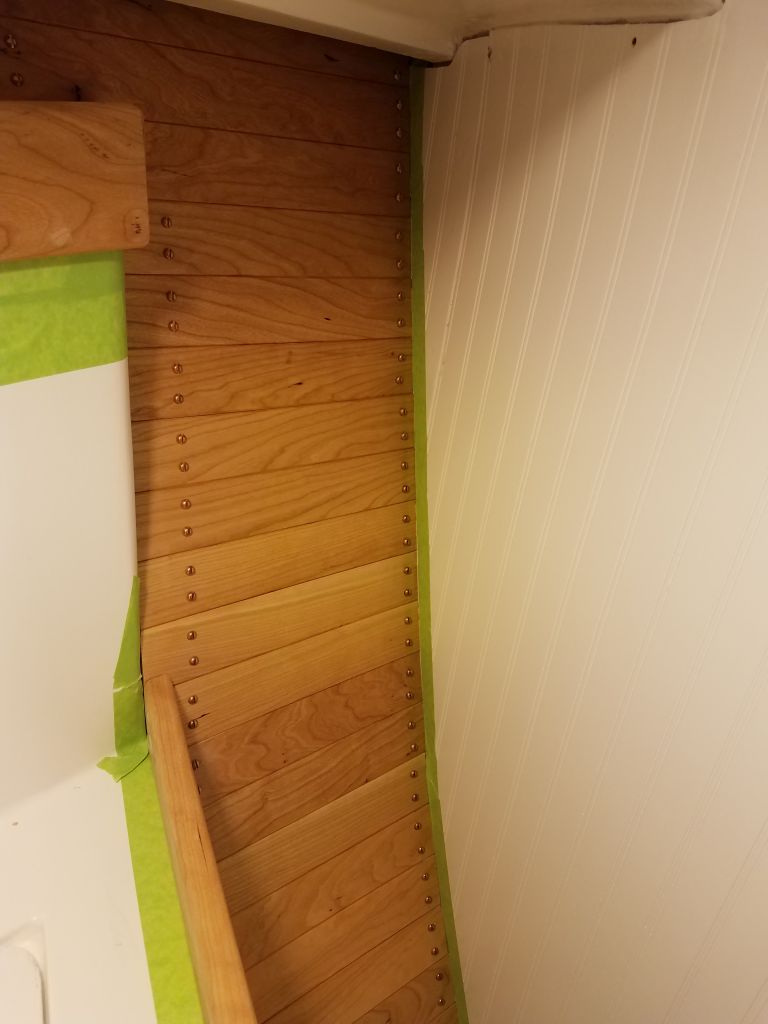
Next in the forward cabin, I turned to the trim between the bulkhead and the overhead or cabin liner, starting with a long strip along the top edge of the bulkhead.  I used 1-1/4″ wide cherry that I’d milled earlier, and after various test cuts and measurements, eventually fit the long piece in place and secured it temporarily with bronze screws into the fiberglass liner above.  I planned to remove this and the other small pieces of trim for final varnishing once I’d cut and fit all of them.

Continuing, I worked on the remaining trim along the bulkhead on both sides, down the sides of the cabin trunk and beneath the sidedecks, and completing the dry fit on both sides took me through the end of the day.

Total time billed on this job today:  8.25 hours

0600 Weather observation:  32°, clear. Forecast for the day:  Sunny, 38°

Scupper 107

Saturday

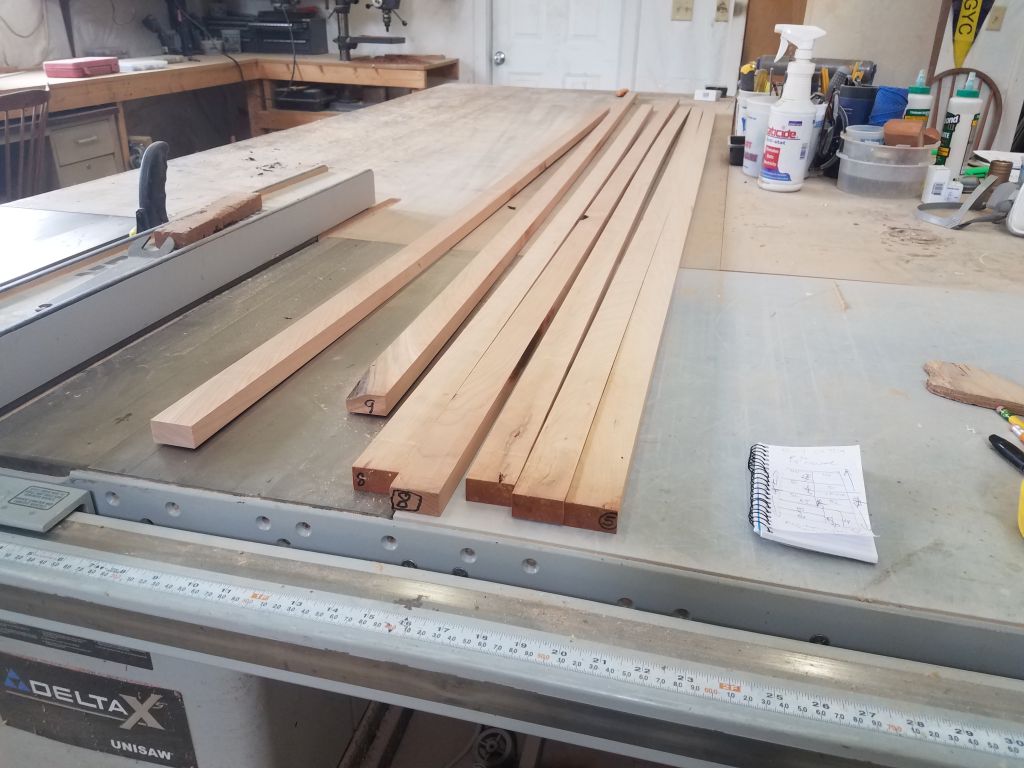
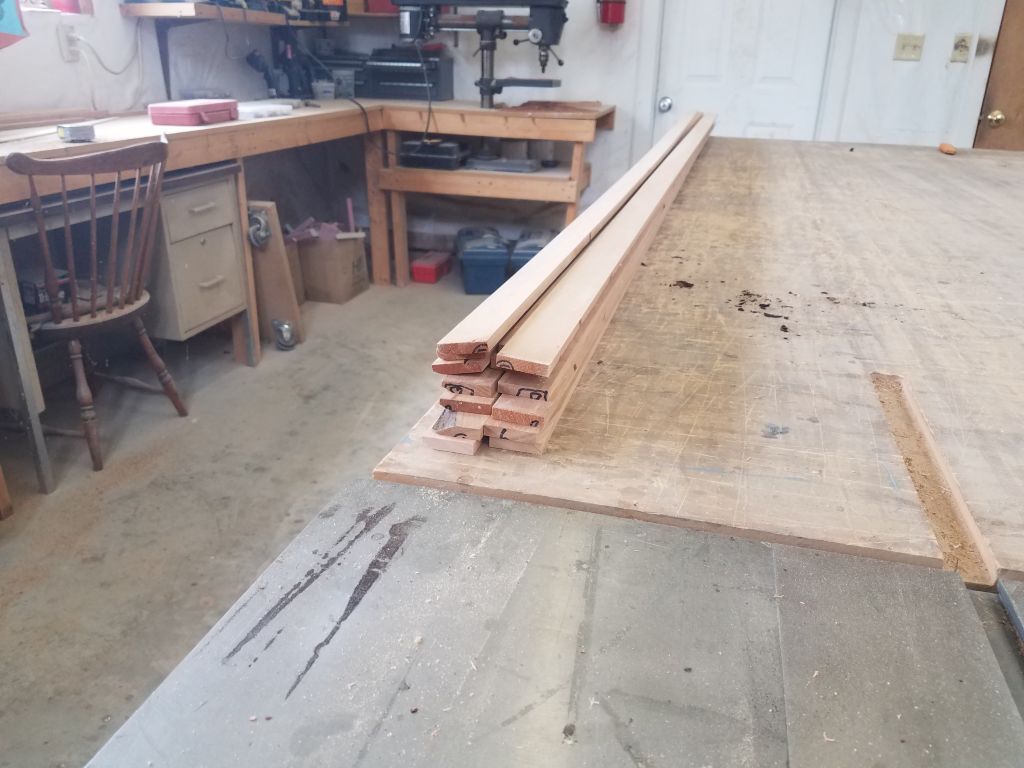
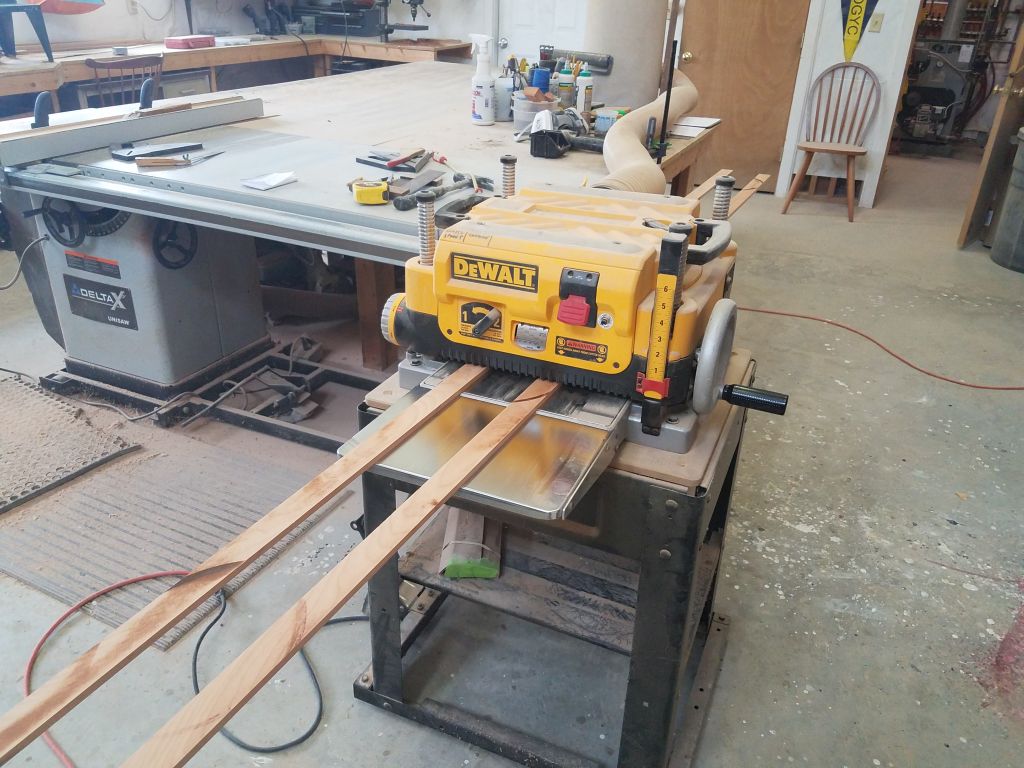
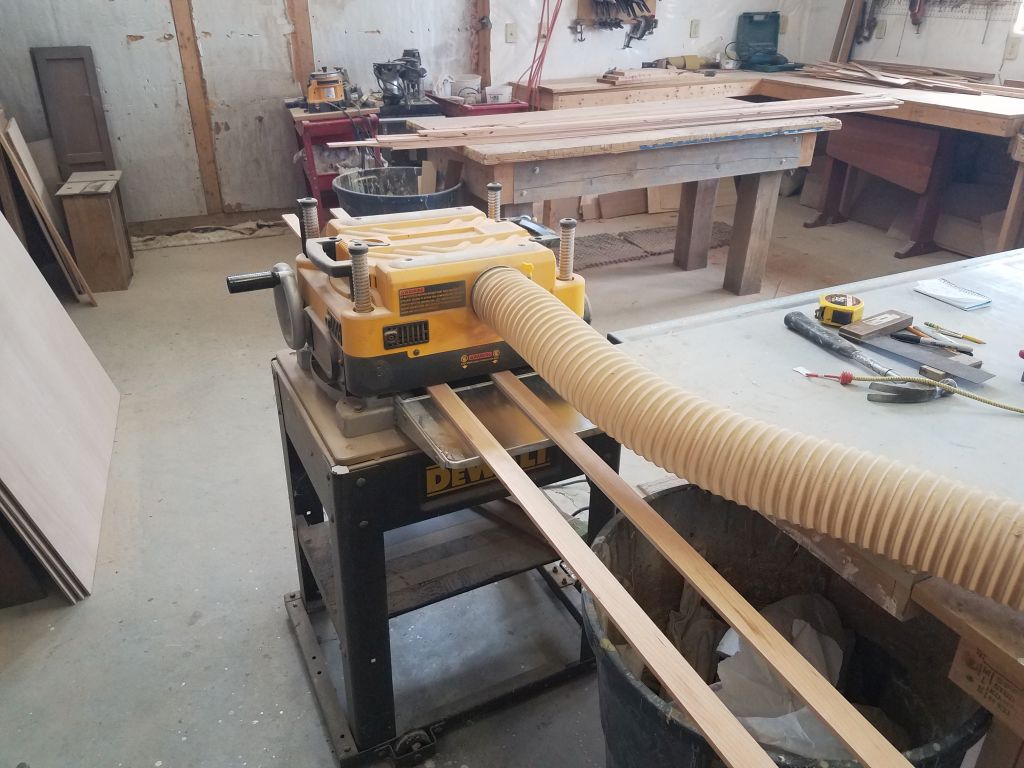
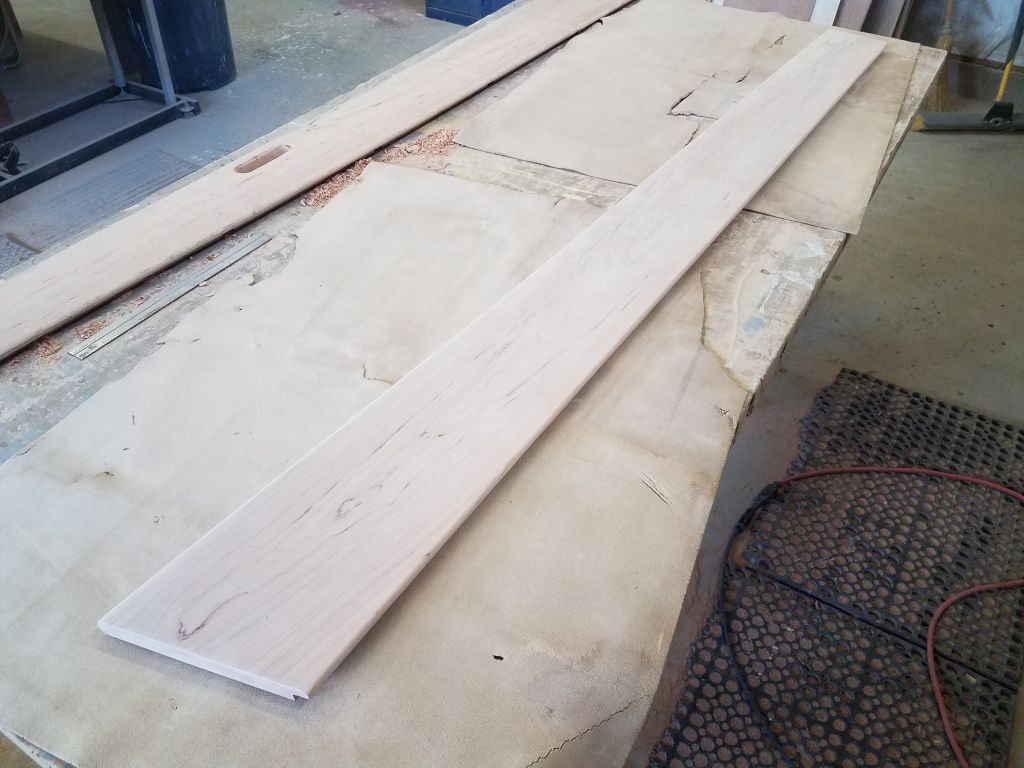
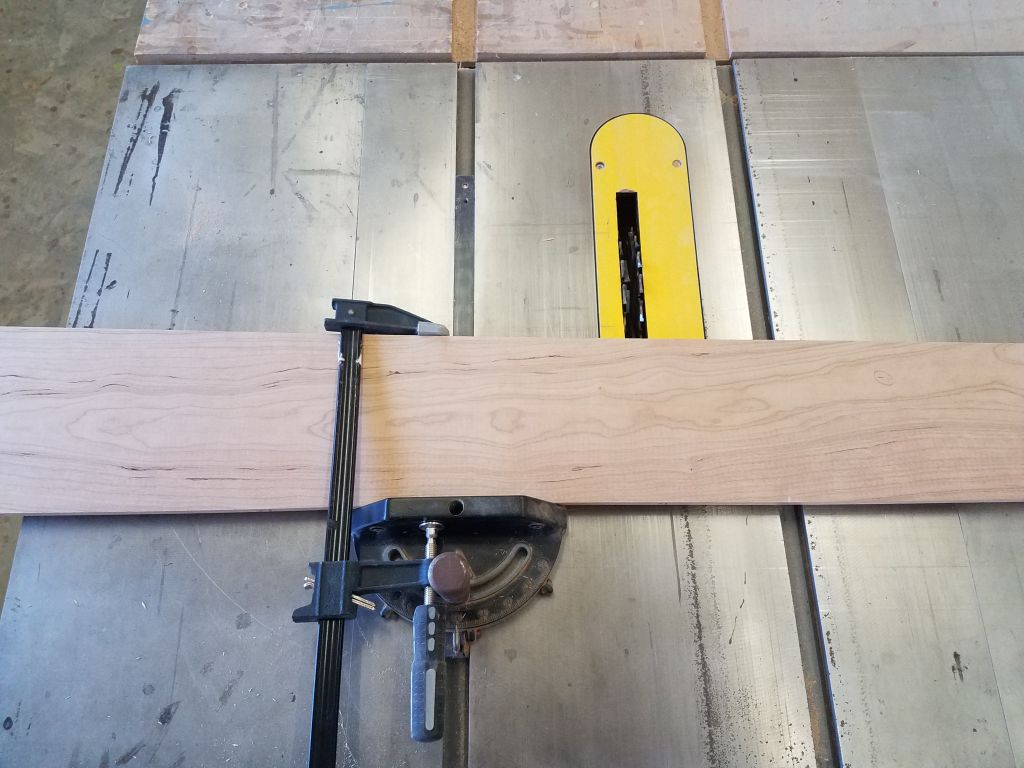
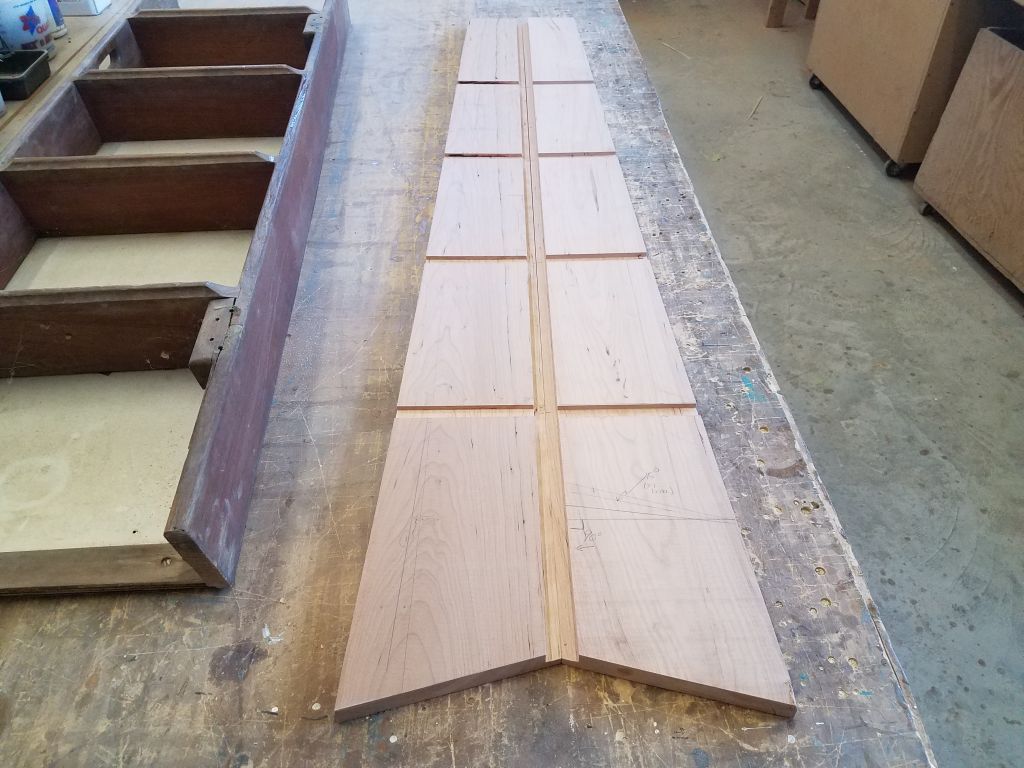
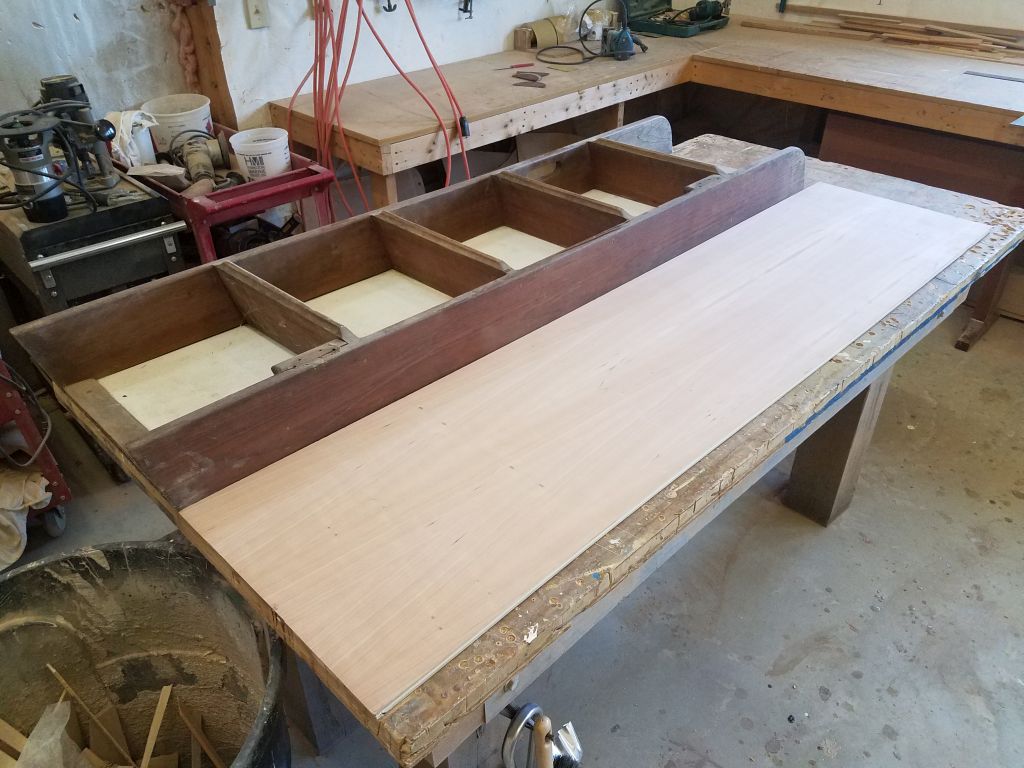
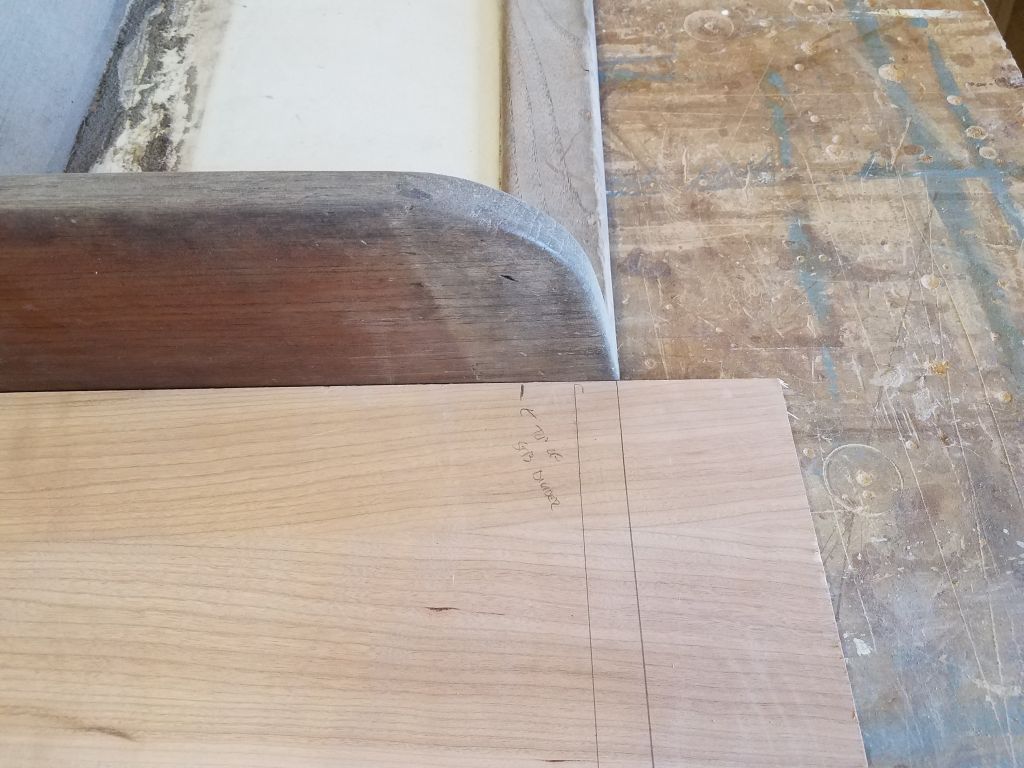
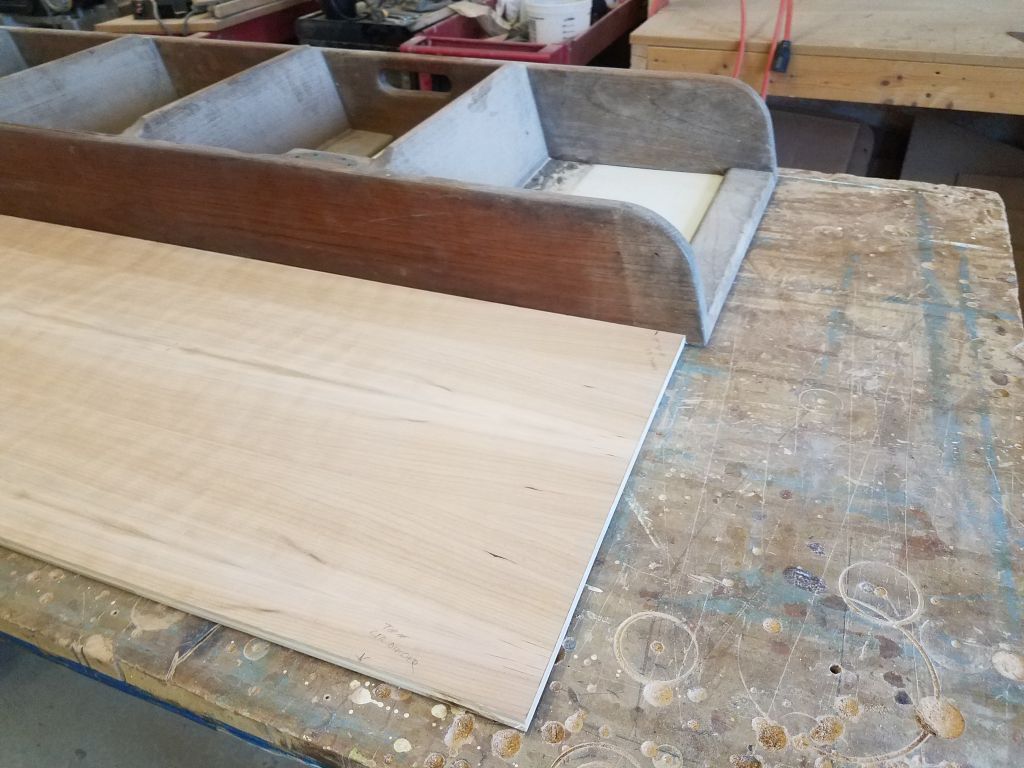
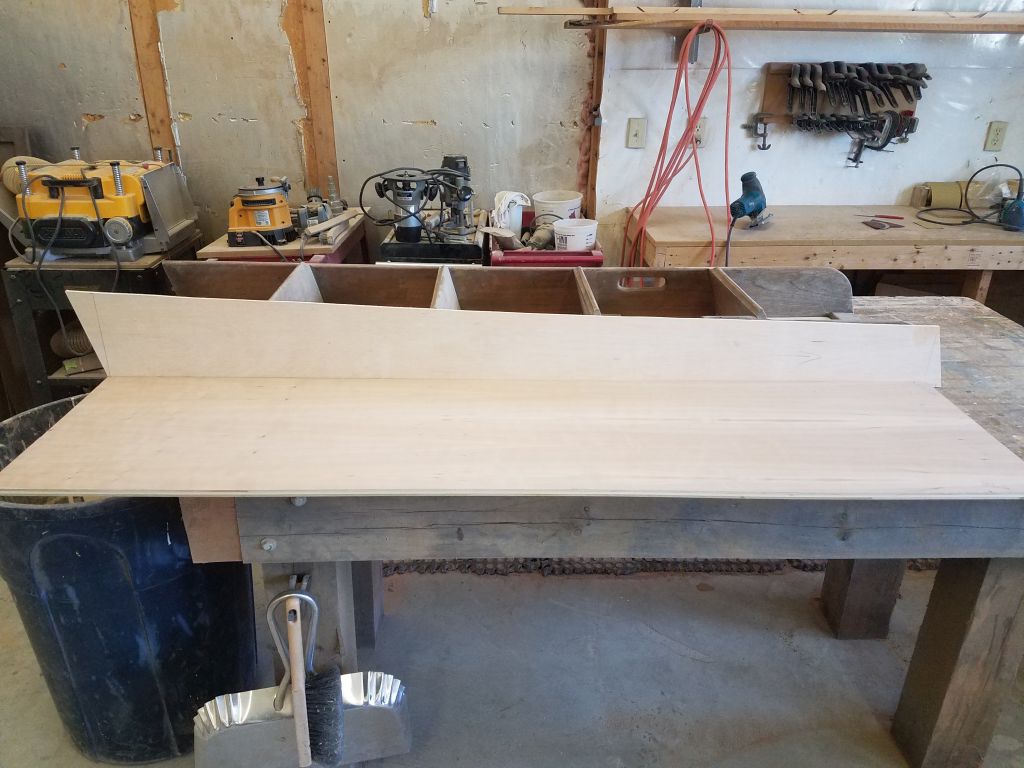
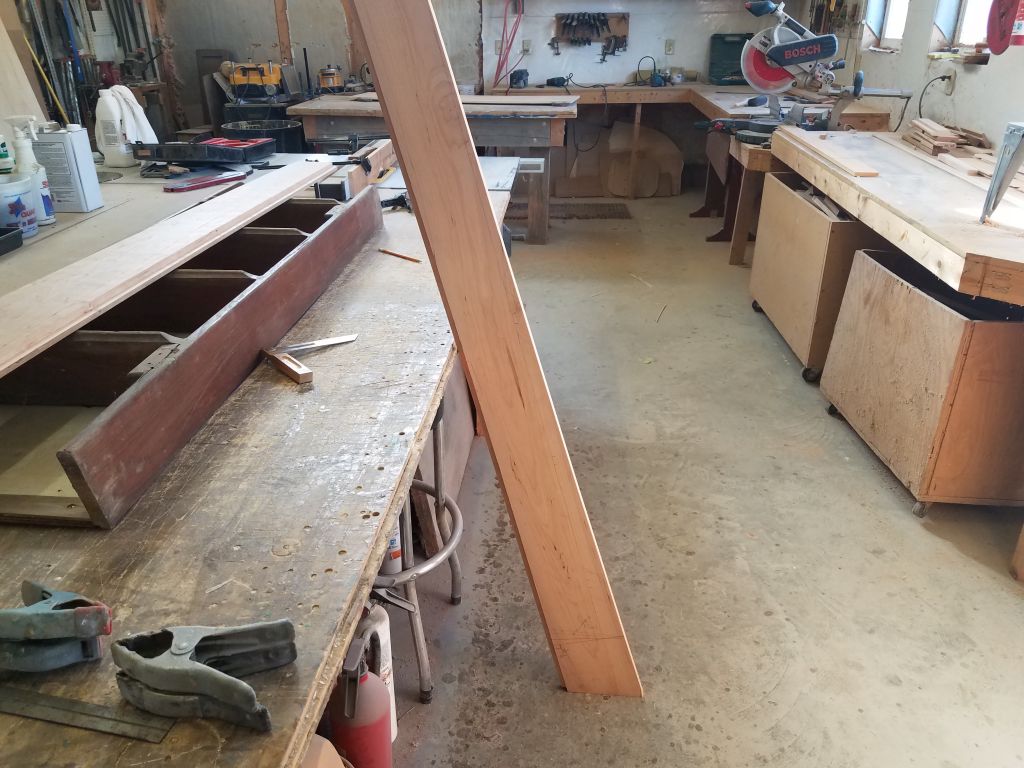
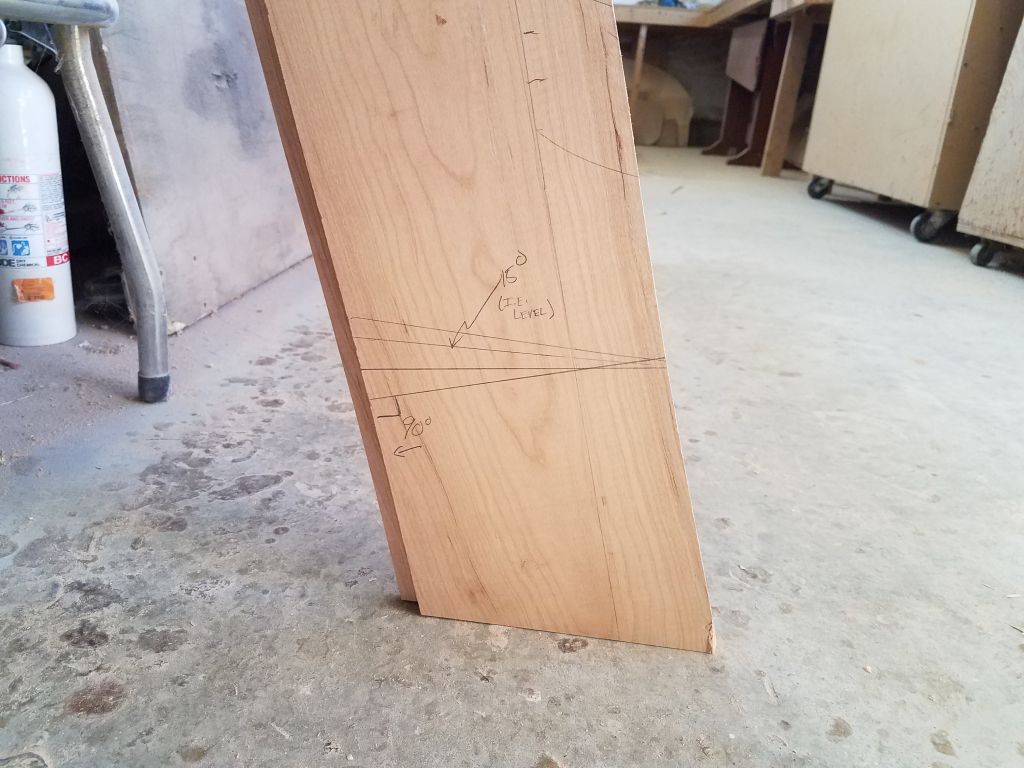
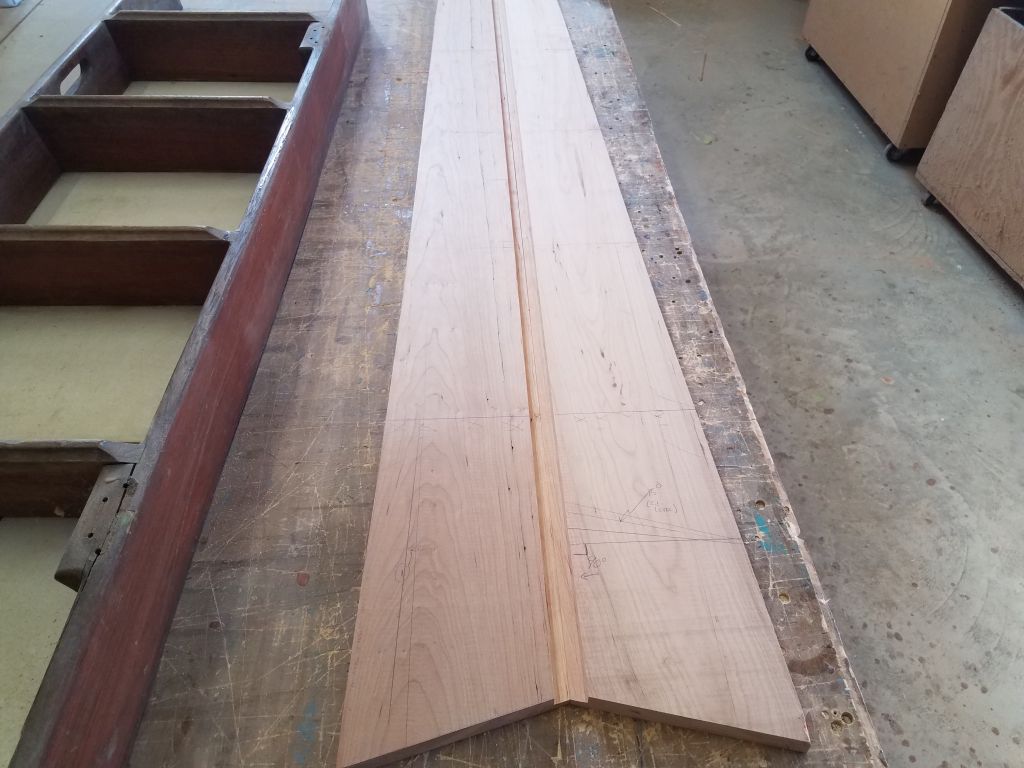
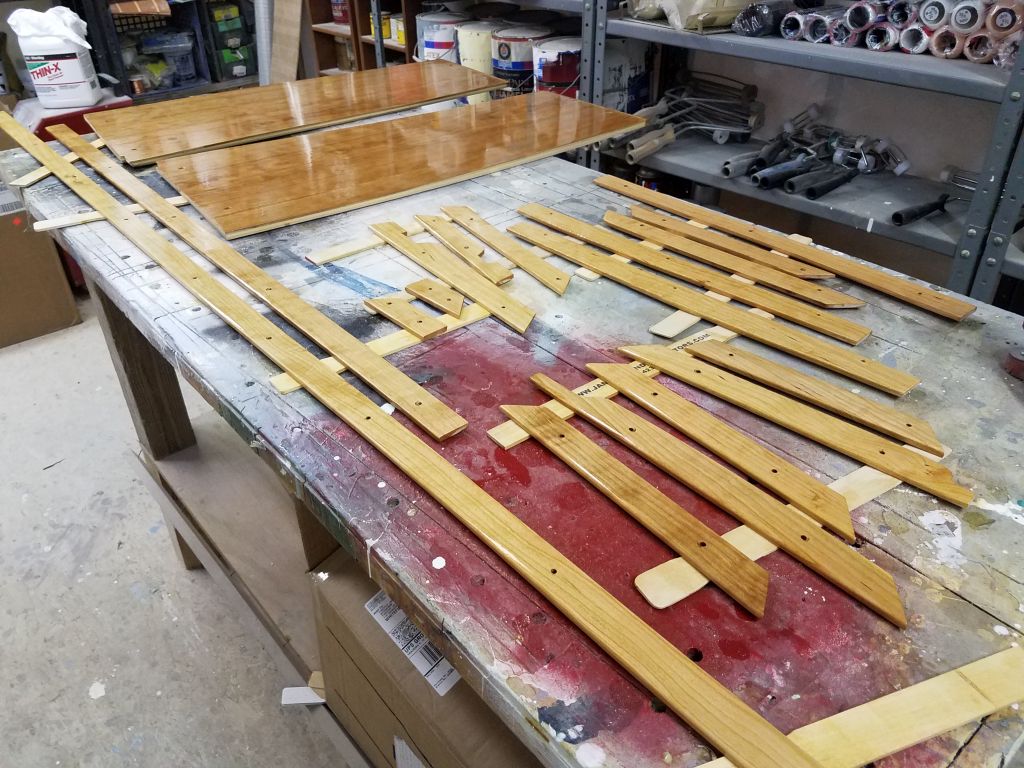
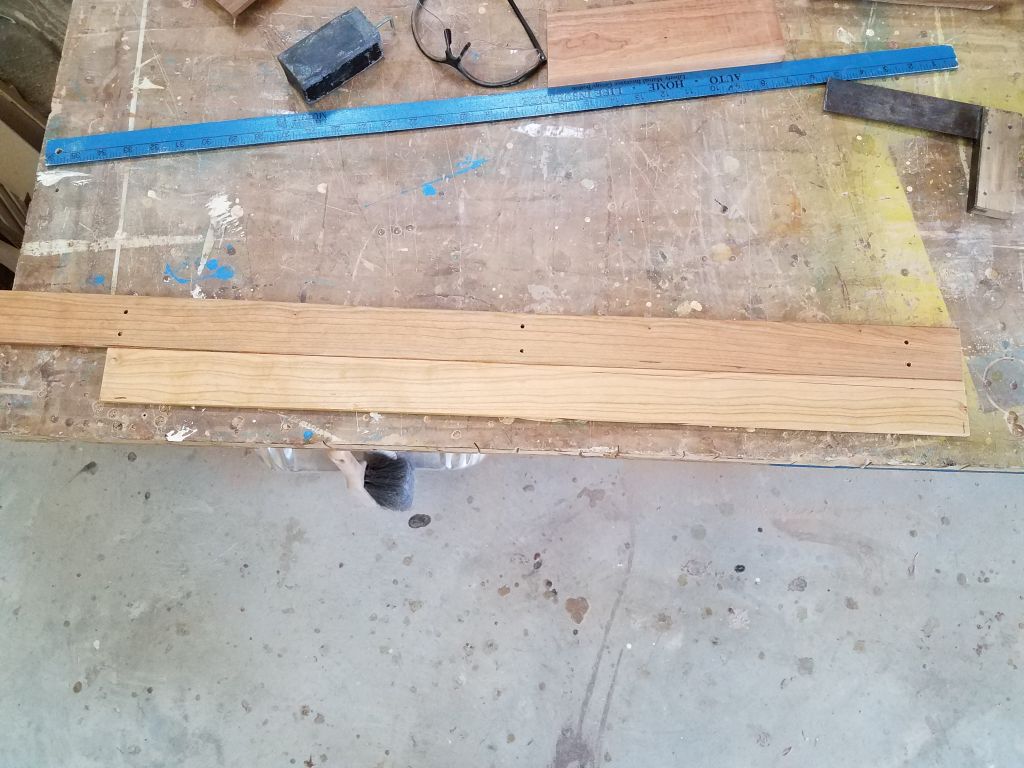
I’d used up most of the trim pieces I’d previously milled, so in order to keep moving ahead on trim it was time to prepare more stock.  From my stock of cherry on hand, I proceeded through various milling steps to straighten and rip the boards to appropriate widths–2″, 3″, and 1-1/4″, in this case–and then resawed each board in half across its thickness, creating a series of planks just over 5/16″ thick.  I kept a couple of long lengths of 2″ stock at full thickness to use for door stiles and rails for various interior doors later.

From here, I used the planer to dimension each piece to the final desired thickness of 1/4″, smoothing both sides in the process.   Then, I sorted through the pieces and chose the best side of each, and, for the moment, marked it with a scrap of tape so I could keep track.

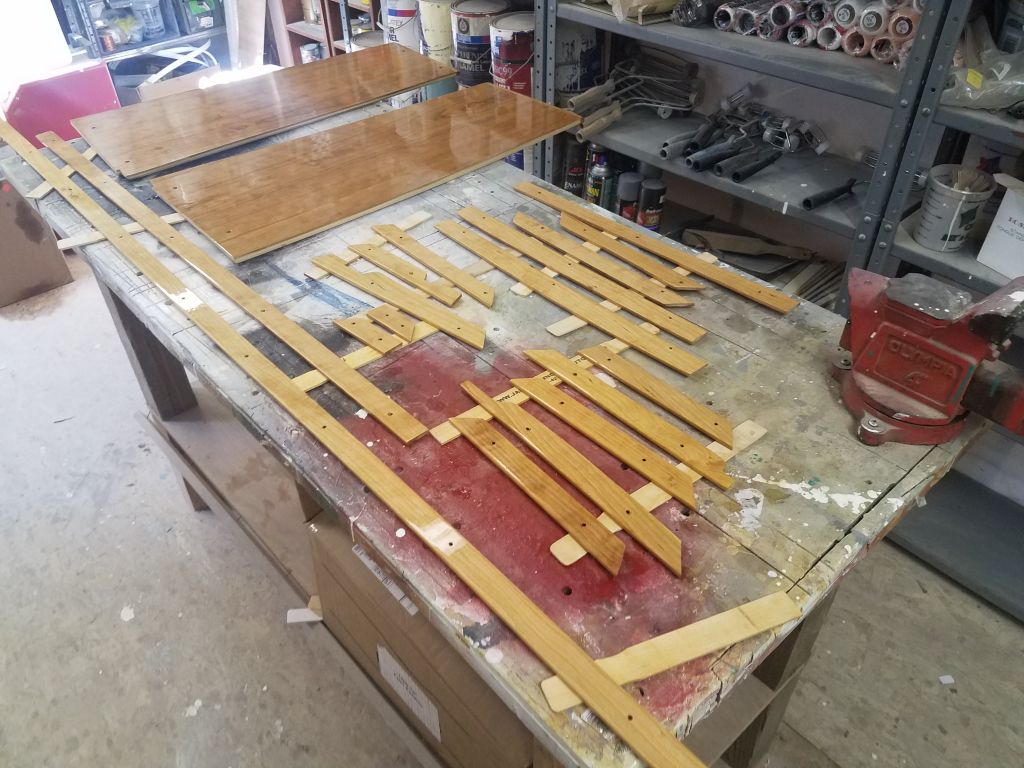
I picked four of the planks to use as ceiling material in order to finish off the forward cabin, and on these I used my sanding block to create the small chamfers on the two top edges, as I’d done on the other ceiling boards, and, since these were my immediate priority, cleaned them with solvent and took them up for their sealer coat of varnish while I continued work on the remaining stock.

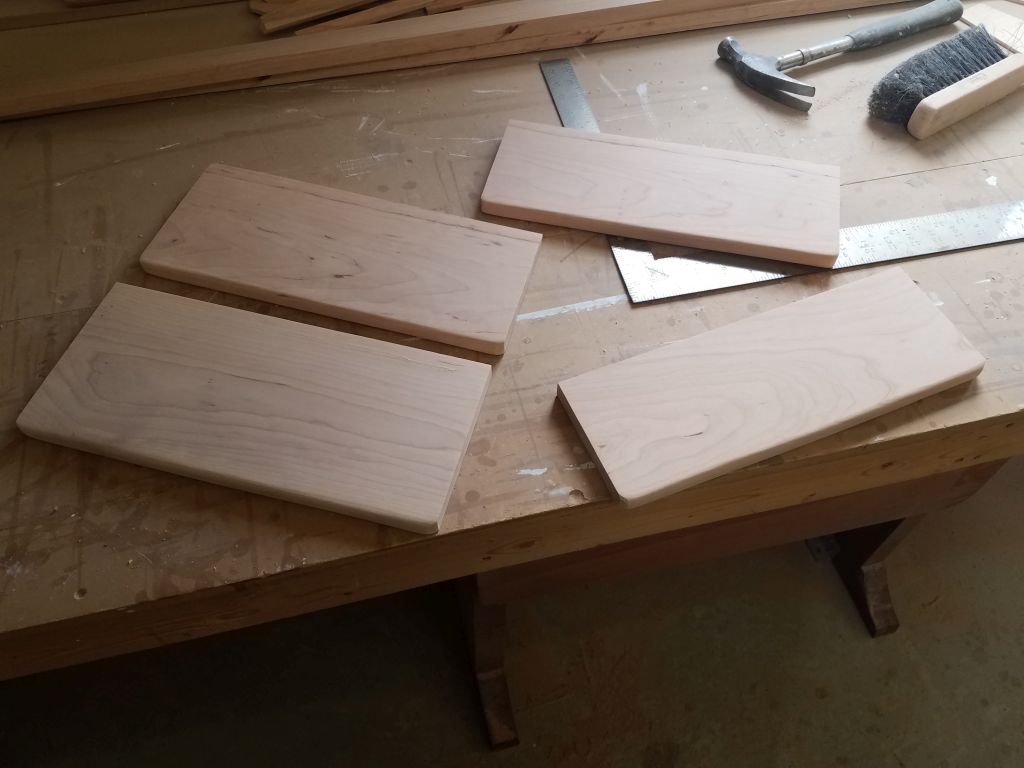
Any leftover pieces of the ceiling stock could be repurposed later for either the cabin sole, or for other trim as needed.  I’d also milled additional 2″ wide stock to have on hand, as well as some 3″ wide pieces for the forward hatch trim, and a series of 1-1/4″ wide pieces that I planned to use to trim between the bulkheads and overhead throughout the boat.  I hoped I’d milled more than enough for everything planned, but also didn’t want to overdo the amount of wood that I turned into small pieces.

In any event, the remaining trim needed the edges sanded to remove tool and burn marks from the milling process, since at least some of these edges would ultimately be exposed, so I took care of that and, afterwards, cleaned and applied thinned varnish to all sides of all the pieces.  Now with all this prepared trim on hand, I thought I’d have no trouble staying busy in the boat for quite a few days.

total time billed on this job today:  4.25 hours

0600 Weather observation:  36°, cloudy. Forecast for the day:  Slow clearing and windy, 40s

Scupper 106

Friday

Not wanting to let the companionway hatch languish incomplete, I started off the day by sanding the second coat of fairing compound, then cleaning up and applying additional fairing compound to those areas necessary.

With the v-berth filler cleats now seal-coated with varnish on all sides, I installed them permanently with screws, and bunged the screw holes.

Bungs are tedious little things, and since I didn’t like to let their numbers–during either installation or the final paring–get too far ahead of me, I went around with a chisel and cleaned off the excess bung length from the fiddles in the forward cabin and the starboard settee shelf in the main cabin.  Now these areas would be ready for a light sanding, masking, and varnishing at will.

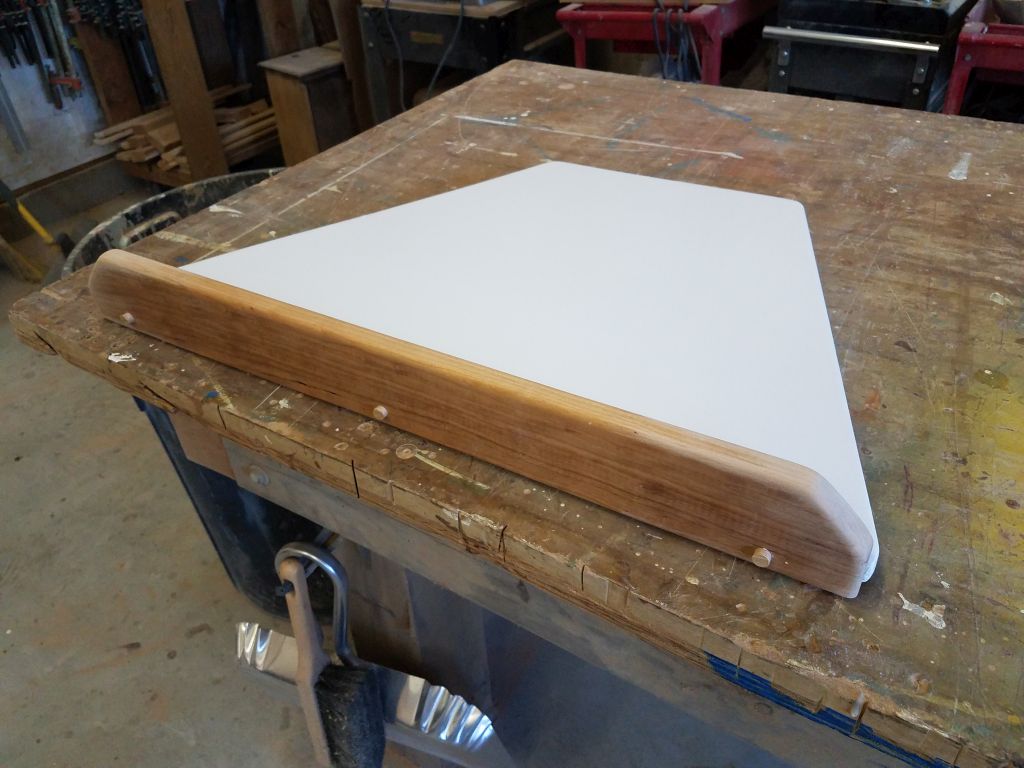
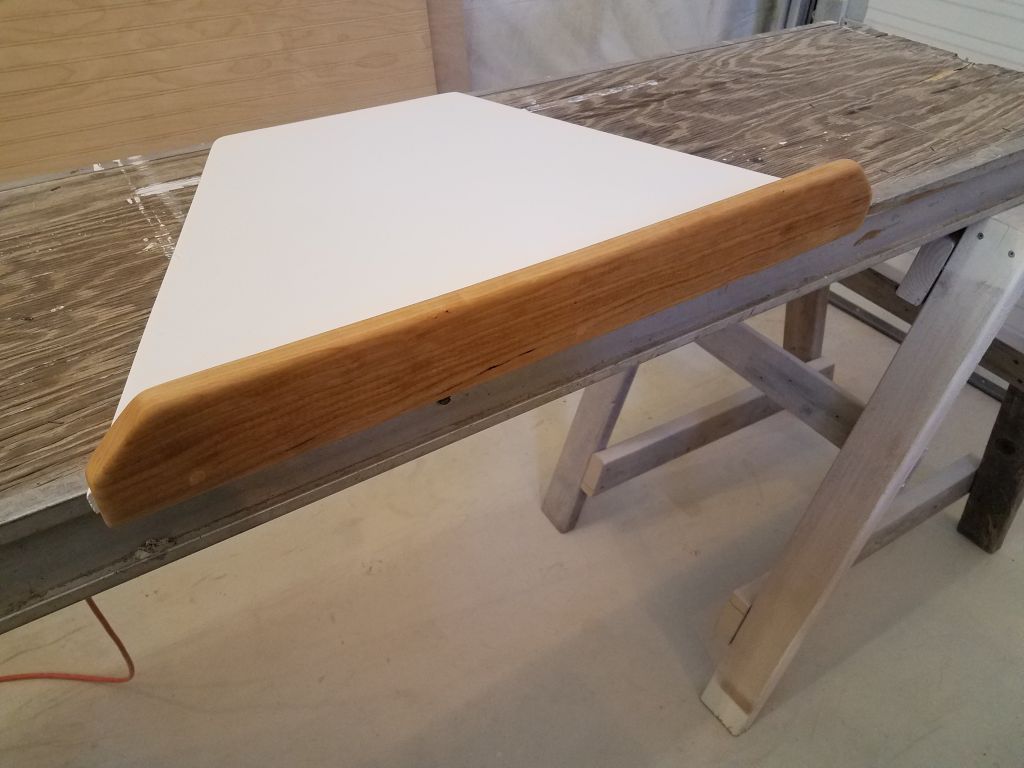
I continued in the main cabin with the fiddle trim on the port settee shelf, which required an L-shaped return across the aft end as well.  After various careful test-cuts to achieve the final length required, I installed the two pieces in concert, and bunged the screwholes forthwith.

Next, I cut and fitted the berth fiddle on the starboard side.  At this point, I had two longer pieces of the fiddle trim remaining, as well as some shorter offcuts.  I thought the shorter of the two long pieces might just work here:  initial measurements suggested it would, but by the time I cut the angle required at the aft end, where it met up with the angled section leading to the head, I found that it was just barely too short to actually work–about 1/2″.  So close, but alas.  So I used the other, longer piece to create this fiddle, which fit just behind and met up with the lower sliding door trim I’d built earlier, and which now I dry-fit in place.

Because I’d discarded one of the long pieces of trim I’d milled for this purpose, not liking the grain appearance, now I needed to mill an additional length to complete the final long fiddle on the port berth.  I had enough previously-milled pieces to complete the galley countertop fiddles when the time came, so I needed only one more length, which I milled and sanded now before cutting and dry-fitting it in place, as per the opposite side.  Then, I removed it and applied a thinned coat of varnish to all sides so I could finish the installation next time.

Whenever I work on long pieces of trim in the woodshop, I often have to spin the pieces around to gain access to the other side and edge.    With tall ceilings that allow me to easily spin even long lengths of wood vertically, I can’t help thinking of those guys from ZZ Top in their 80s videos.

Now that the cleats were in place in the center part of the v-berth, I scribed a cardboard template to fit the space, then transferred it to my last bit of 18mm plywood.  As I suspected, the scrap was barely large enough to accommodate what I needed, but accommodate it it did…if by the closest possible margin.

After final fitting in the space, I prepared a length of the fiddle trim for the aft edge of the new panel, though I wouldn’t install the trim till after paint.  To get that process going, I applied a coat of primer to all sides of the new plywood, drawing to a close another day and another week.

Total time billed on this job today:  7 hours

0600 Weather observation:  32°, mostly clear. Forecast for the day:  Rain, maybe mixed with snow and sleet before 0900, 39°

Scupper 105

Thursday

Continuing in the forward cabin, I turned to the narrow shelf surrounding the v-berth, which required a fiddle.  Laying out the several pieces of fiddle trim stock I’d milled and seal-coated with varnish earlier, I selected the appropriate pieces for the job.  I’d previously chosen the milled trim for its intended location in the boat based on available lengths of clear, usable wood (i.e. no knows or sapwood), and in this highly theoretical ideal I’d milled enough trim, supposedly, for all the berth, shelf, and countertop fiddles, but now, judging the appearances after a coat of varnish, I could see that one of the boards I’d milled had some weird grain that I didn’t like much, so I sacrificed that board to become the short forward center piece in the v-berth (out of the clear section in the middle of the board, and used the remainder as templates to help me work through the angles required for these and other trims.

After some measuring and test-cuts to determine the proper length and miter angles at the ends, I installed the first piece of trim at the forward end of the shelf.

From here, it was a relatively simple matter of just time to cut and fit the two long side fiddles, which had to meet the forward center piece at the corner and also a short length of fiddle at the after ends.  This required numerous trips up and down to cut the boards to, eventually, their final lengths to satisfy the installation requirements on each side.  I secured the trim with bronze screws in recessed holes to accept plugs. I cut the short fiddles at the after ends to match the angle of the hull, but held the trim back enough from the ceiling boards so that one could remove the short pieces of ceiling to access the chainplates as needed.

With the shelf fiddle complete, I bunged the screw holes with cherry bungs.

The exposed aft ends of the berth required fiddles to hold the eventual cushions in place, and I cut and installed these next.

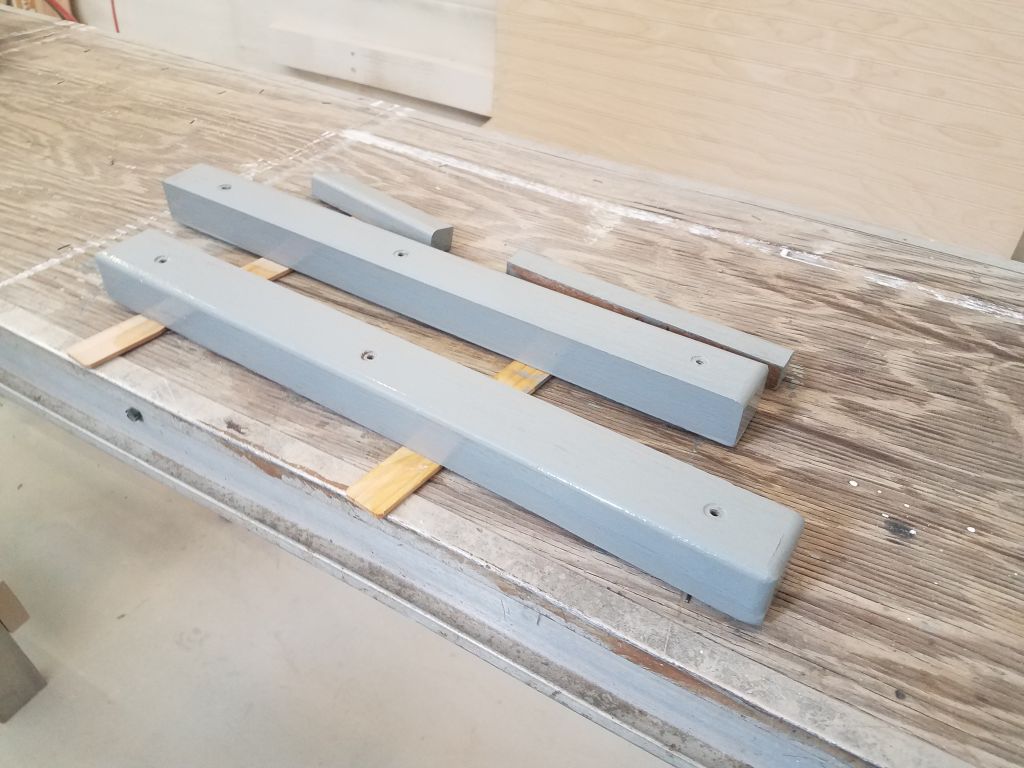
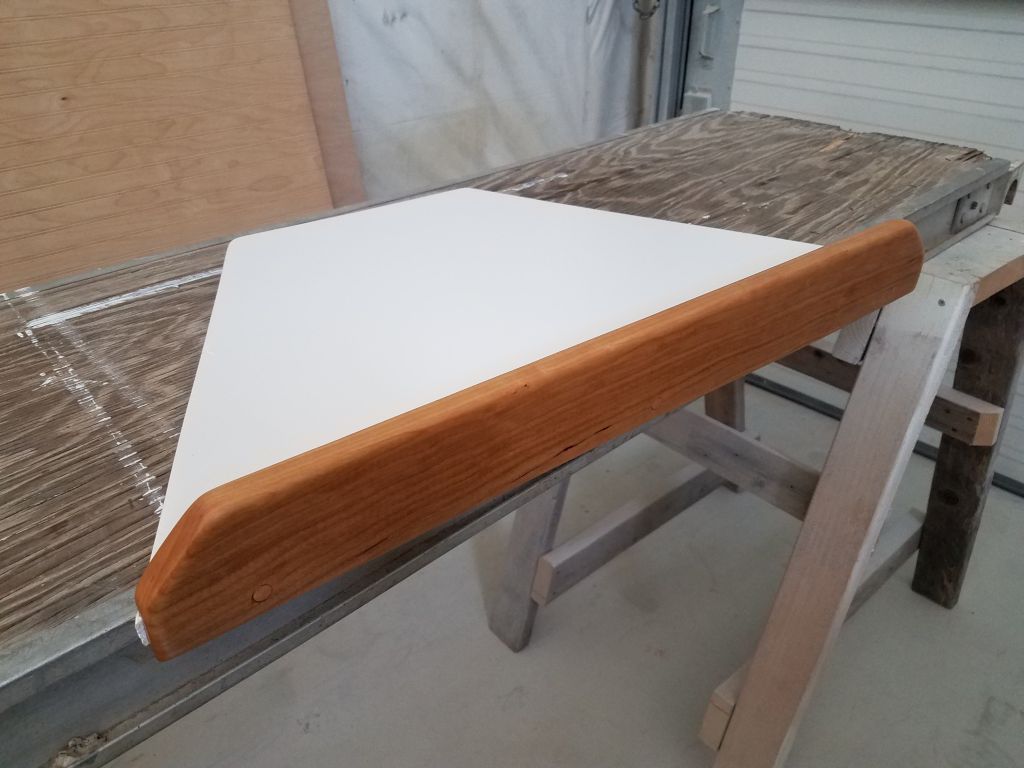
In the center of the V (not actually the center, come to that), there’d be a removable filler piece, and to support this small panel I used some offcut 1-1/2″ wide cherry stock to prepare the cleats required.  I cut, fit, and performed the basic milling at this point, but since the stock was unsanded and as-yet unfinished, I only completed a temporary installation before removing the trim and sanding and seal-varnishing it accordingly.  I’d install these next time and, like all the other trim, the final finishing would occur in place.

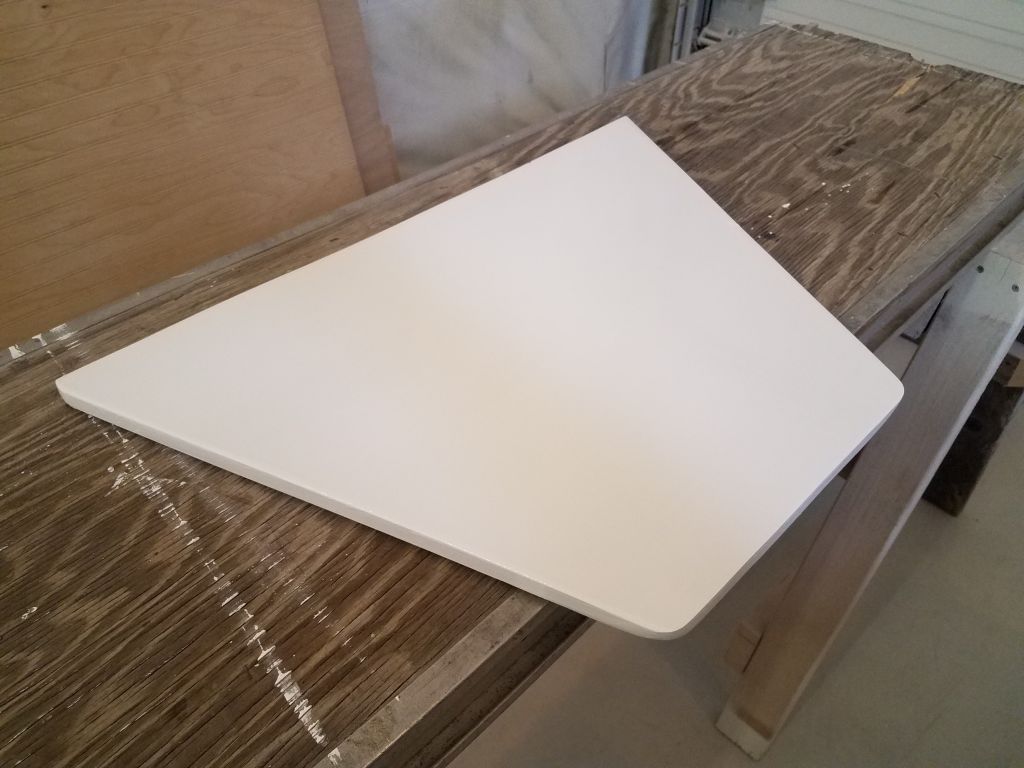
The old plywood filler piece that had been here originally was too small in all dimensions (because of the way the original trim had worked with it), but it looked like I had juuuuust barely enough of the 18mm plywood leftover from the cabin sole substrate to make a new piece.  I’d template and cut the new piece once the cleats were in place permanently.

Now fairly late in the day, I had enough time to measure, cut, and install the starboard shelf fiddle in the main cabin, running full-length at the top of the backrest.

Total time billed on this job today:  8.25 hours

0600 Weather observation:  25°, mostly clear. Forecast for the day:  Partly sunny, 46°

Scupper 104

Wednesday

Before getting back to work in the trim inside the boat, I took a few minutes to lightly sand, as necessary, the first coat of fairing compound on the  companionway hatch.  Afterwards, I applied a second coat of epoxy fairing compound with a broad trowel to conform to the overall shape of the hatch’s curvature and smooth in the low areas formed by the original surface.

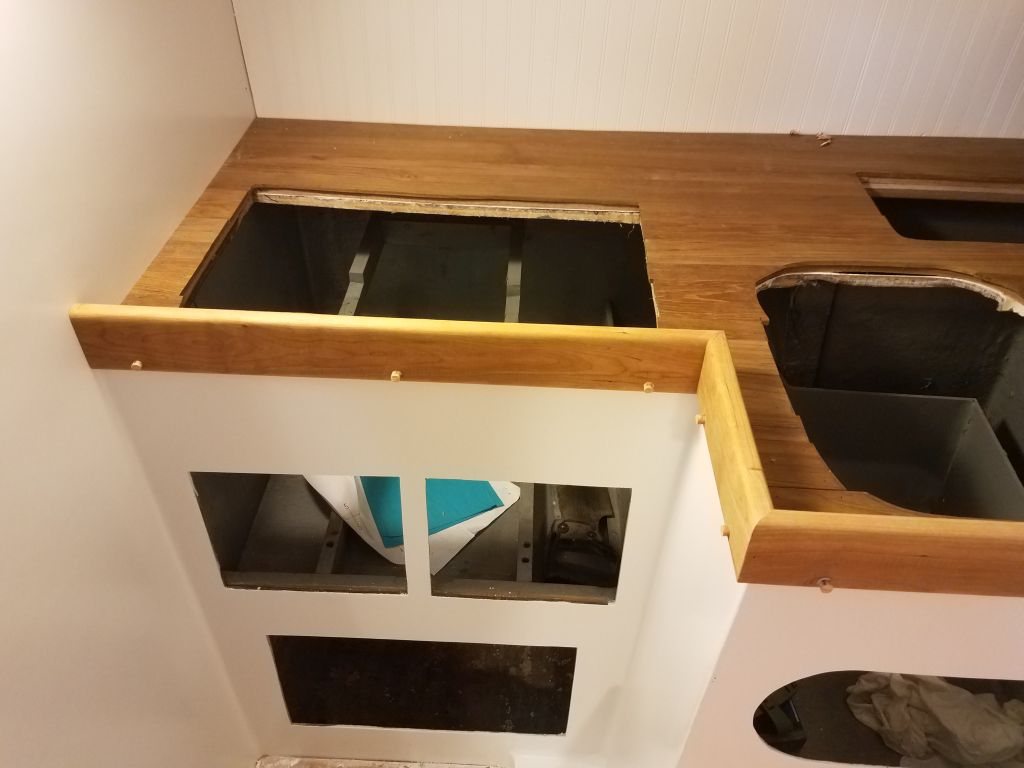
Back in the boat, I finished up the port side of the main cabin ceiling, beginning with the final full-length board with its short extra width attached at the aft end.  This left only a short piece at the forward end to complete the work here.  I made a template of the curve at the outboard corner of the settee shelf where it met the ceiling, since I needed to prepare some trim to cover some of the uneven fiberglass edge on the shelf, but at the moment I didn’t have stock ready for the trim, so I set aside the template till another time.

Now, with all the long pieces of ceiling in place, I could get back to work in the forward cabin, where I spent most of the rest of the day cutting and fitting as many of the short pieces of ceiling at the aft ends of the space as I could, using two remaining longer boards on hand and any offcuts from earlier that were long enough.  Short as the pieces were, it took just as long and required nearly the same work to install these little strips as it would have if they’d been longer, since most had to be individually measured and cut; I did have some success cutting two at a time, using the first as the marker for the second, but generally the spaces required more individual attention for each piece.

I worked on both sides to bring the new ceiling down below the level of the berth top, since this would allow me to continue other trimwork in the space, but I ran out of suitable ceiling stock before I could finish, so the rest would have to wait till I could mill some additional 1/4″ x 2″ stock for this purpose, as well as other uses like the cabin sole and other trimwork.

Total time billed on this job today:  7.75 hours

0600 Weather observation:  10°, clear. Forecast for the day:  Sunny, 43°

Scupper 103

Tuesday

The way the liner met the hull on the starboard side didn’t leave enough space to slide the ceiling boards neatly behind it, as I’d done on the port side, so I’d have to cut a steep angle on the end of each new board where it died out into the liner shelf as I moved forward.  To help with this, I made a template using the 2″ wide plywood strips, and I could use this template to not only help determine the final lengths of each remaining board, but also to mark and cut the angles in each case.

While this meant an extra cut, and a little additional care, I found that it didn’t otherwise slow down the process significantly, and by the end of the morning I’d reached the last piece at the bottom forward corner.  The height here was just a bit more than a single board width at the forward end, and the tiny piece required beneath would be too small to live on its own, much less  secure to the cleats, so after cutting a template of the shape needed out of my junk plywood, I glued up two pieces of the ceiling stock along their narrow edge, from which I could later cut out the final piece as one, thus completing the main part of the ceiling on the starboard side.  I’d return soon to finish up the short boards at the aft end on each side.

I continued the ceiling  installation in the main cabin, starting with the small section on the starboard side.  Here, I decided to start at the bottom and work up, allowing the boards to follow the plane of the shelf rather than the sheerline and allowing a full-width board along the bottom.  This made sense given the shape and size of the shortened space, since the new locker at the forward end covered over the more extreme part of the boat’s sheerline that, had it all been exposed as in the forward cabin, I’d have wanted to follow here as well.

To cut the first board, I used one of my plywood templates, cut just a little short of the overall length, to  template the angles on each end, and then, afterwards, to determine the final length.

From there, it was pretty quick to fill in the rest of the space, with only the top tier requiring any additional cutting to slip behind the overhead liner and fit beneath the deck above.

On the port side, the space was longer, leading aft over the galley, but otherwise similar in shape and concept, and once more I registered my first board against the top of the shelf, and extending aft from there.  Here, the shelf/liner had some ragged cutouts on its outer edge, so I’d have to add some additional trim later to cover the raw edge, since the ceiling boards couldn’t hide it.

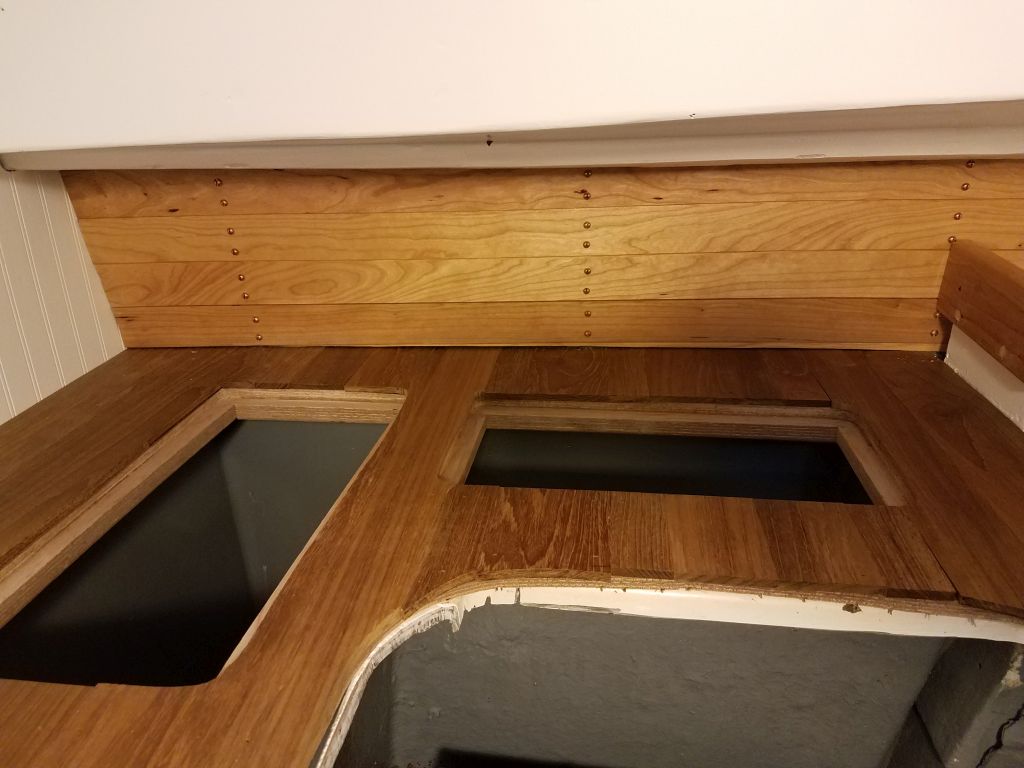
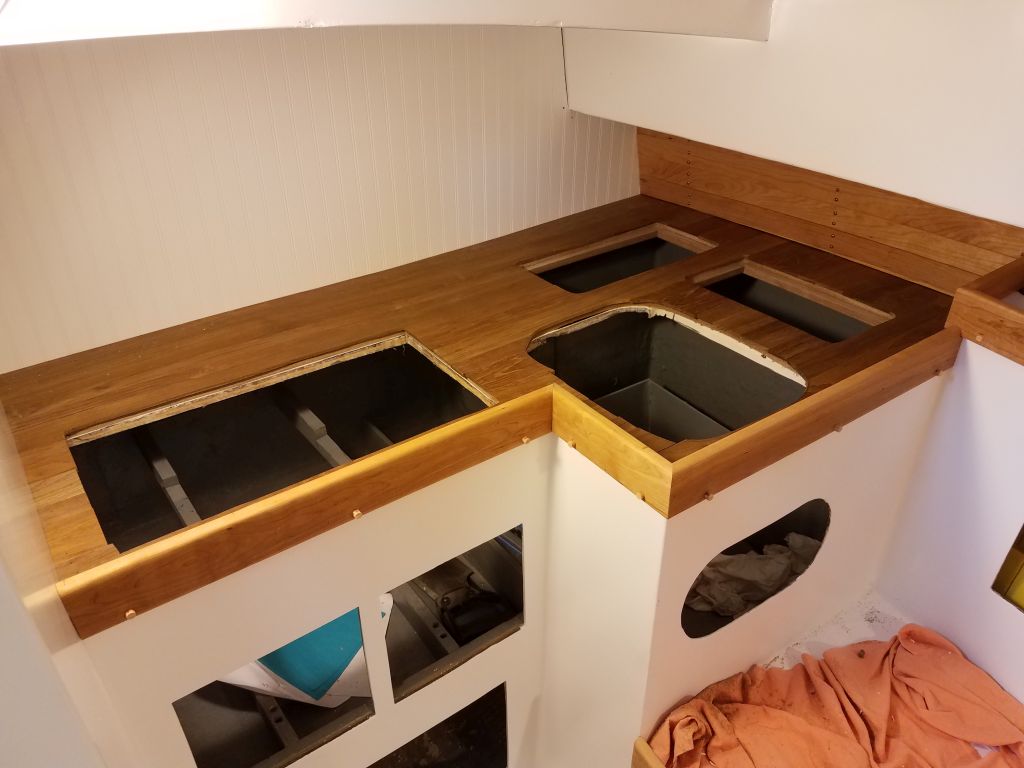
Before the end of the day, I had time to fit and install a second full-length board above, and also a shorter board below the first one in the galley, which left a small space beneath that would allow the countertop boards to slide beneath.  I’d figure out final trim details in that area once the countertop was complete later.

Checking the fit for the next board in the series, I could see that the way the overhead liner was cut and configured at the aft end over the galley meant that from certain angles, the eye could see up farther than in other areas, so the cherry ceiling would have to extend a bit higher there.  I could also see that it was going to require another narrow strip that would be hard or impossible to secure on its own, so before closing for the day I prepared another glued-up section with an additional width secured to the top edge of the third ceiling board with glue, which I left clamped up overnight.

Total time billed on this job today:  7.25 hours

0600 Weather observation:  11°, clear.  Forecast for the day:  Sunny, 38°

Scupper 102

Monday

To start the day, I spent a few minutes on the lazarette hatch and companionway hatch.  To smooth and completely fair the now-glassed surface of the companionway hatch, I had to apply a coat of fairing compound over the whole thing, the first of several that would be required.  Meanwhile, I applied some of the fairing compound to a few areas on the new lazarette hatch as needed.

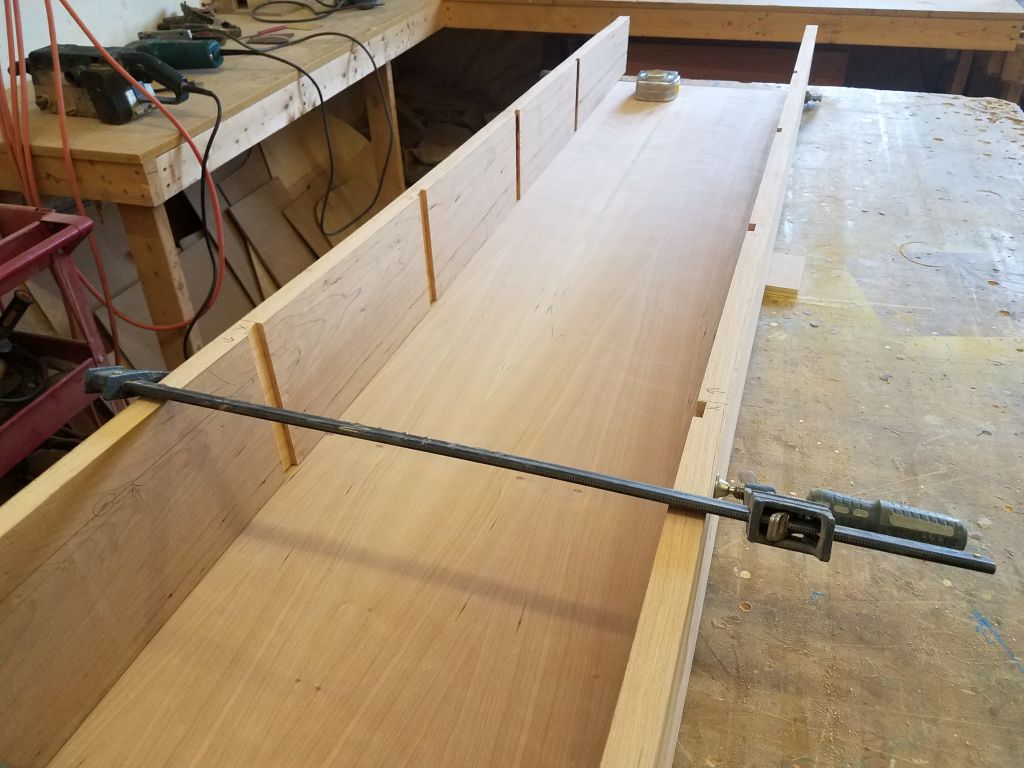
I spent the remainder of the day working on the ceiling installation in the forward cabin.  These were the longest sections of ceiling, so I wanted to be sure to use the longest pieces of the cherry that I’d prepared first, and for other reasons it was most logical to start here and work back to other areas.

To begin, I ripped a series of 2″ wide strips from some junk 1/4″ plywood.  I could use these as stand-ins for, and templates of, the ceiling boards as needed.  Then, I spread out most of the cherry ceiling strips on a bench to allow me to easily pick and choose based on length and wood features.  For the moment, I set aside some of the “worst” boards, that is boards featuring a lot of sapwood that would only be good for short lengths to stay away from the undesirable grain or coloration features.

Beginning randomly on the port side, I worked on the layout for the first piece, which took the longest, of course.  The space was sharply angled from bow to stern, which meant that only a few boards would be full-length; the rest could die out against the fiberglass berth liner.  The overhead liner featured two levels, and I had to align the first board in such a way as to properly fill the whole space from beginning to end, while remaining accessible enough in all areas for fasteners to hold it in place, and at the same time not drop beneath the edge of the overhead liner on the way aft.  This required some shuffling and layout, but eventually I determined the proper position for the board and, using my plywood fakes, made some reference marks as needed.

Normally I would have made the boards full-length from bow to stern in this space, but I actually had to leave access at the aft ends so the forward chainplate could be installed and, later, inspected or serviced as needed.  This was in the space formerly occupied by the built-in tall hanging lockers that I’d removed.  To accommodate this, I ran the top board aft to the nearest cleat, and cut it halfway across the width of the cleat.  This then left a short space that I filled in with the remainder from the original full-length board stock, keeping the grain and color consistent.  While I would have avoided this if possible, it actually made installation more straightforward since I didn’t have to perfect both ends of a single board at the same time in order to fit.  I secured the boards with bronze screws for appearance.

With the first board in place, the remainder went more quickly, since alignment was now a foregone conclusion with each board butted beneath the one above.  The second board was also full-length and required the short piece at the aft end, but from there, all the boards conveniently passed just outside the fiberglass shelf so their cut ends were hidden beneath, meaning at least on this side I didn’t have to make a lot of fussy end cuts.  Even so, each board required several trips back and forth through the boat and ladder to the shop, and with a pair of screws at each cleat location, took some time to install.  I used a little marking block to keep the screws aligned with the cleats (and the screws above), and properly spaced on each board.

Eventually, I reached the bottom of the space and fitted and installed the final, small piece in the forward corner.

With the port side complete for now (I left the short space at the aft end of the berth for later, once I’d finished all the long pieces of ceiling in the boat and could thus use up and cut the shorter lengths required), I continued on the starboard side, following the same basic process, although this time I knew better what to expect with the topmost board, so its fitting went more quickly.  From there, I managed two additional strips before the end of the day.  Since the shape and position of the two liners (overhead and berth) were slightly different from side to side, here the top three boards passed by the end of the shelf, so in the morning I’d be working on progressively shorter boards to fill in the rest.

Total time billed on this job today:  8.5 hours

0600 Weather observation:  11°, clear.  Forecast for the day:  Sunny, 37°

Scupper 101

Friday

To get started, I inserted all four through hull mushroom fittings in their respective holes (marking each accordingly),securing them temporarily with tape from outside.

Inside, I marked where each fitting came through the backing pad, then screwed on the flange base as far as it would go to determine whether I’d have to shorten the threaded fittings (expected and almost always necessary), and by how much.  With these references, I’d be able to mark and cut off the excess thread length to allow the two pieces to be properly and tightly connected together in the final installation.

With all the fittings removed once more, I threaded the supplied backing nuts all the way on (I’d need these to clean up the threads once cut), and for each fitting marked the cutline with masking tape, before cutting off the excess length and cleaning up the threads to ensure that the fittings would easily thread into the flange base.

Once more, I dry-fit the mushroom fittings through the hull with tape, and, at each location, threaded on the flange base fully, then drilled the 5/16″ through-bolt holes through the base, pad, and hull, cleaning up afterwards.  Once all the holes were drilled through, from outside I milled countersinks at each bolt location to accept the flat-head machine bolts that would secure the bases to the boat.

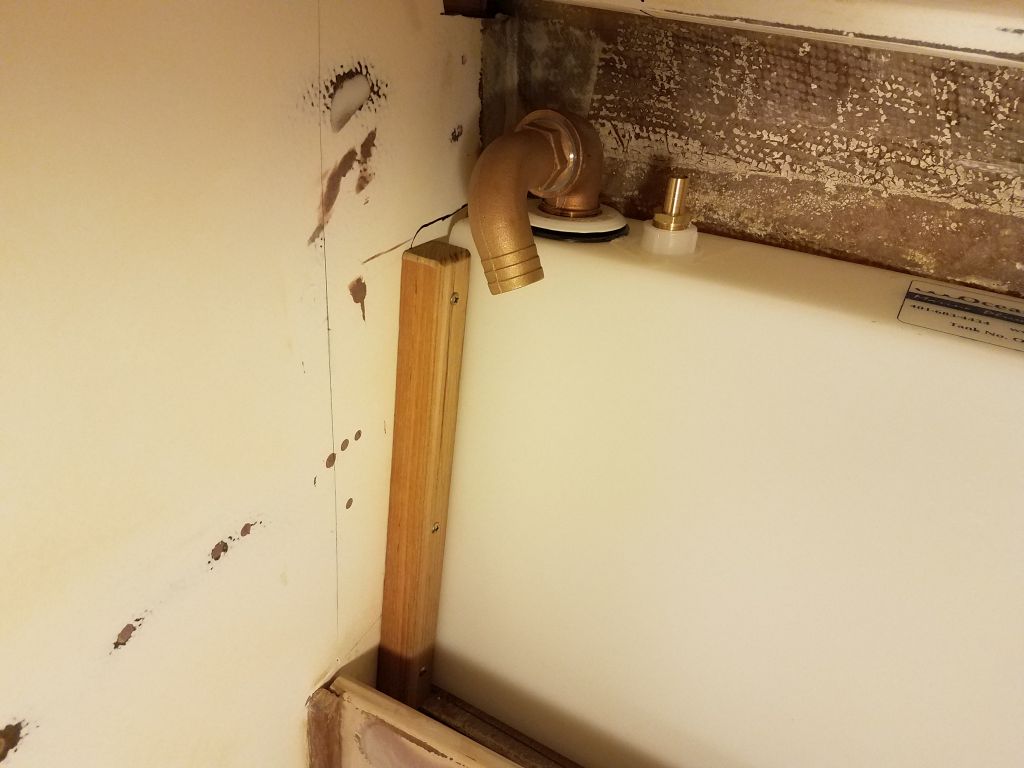
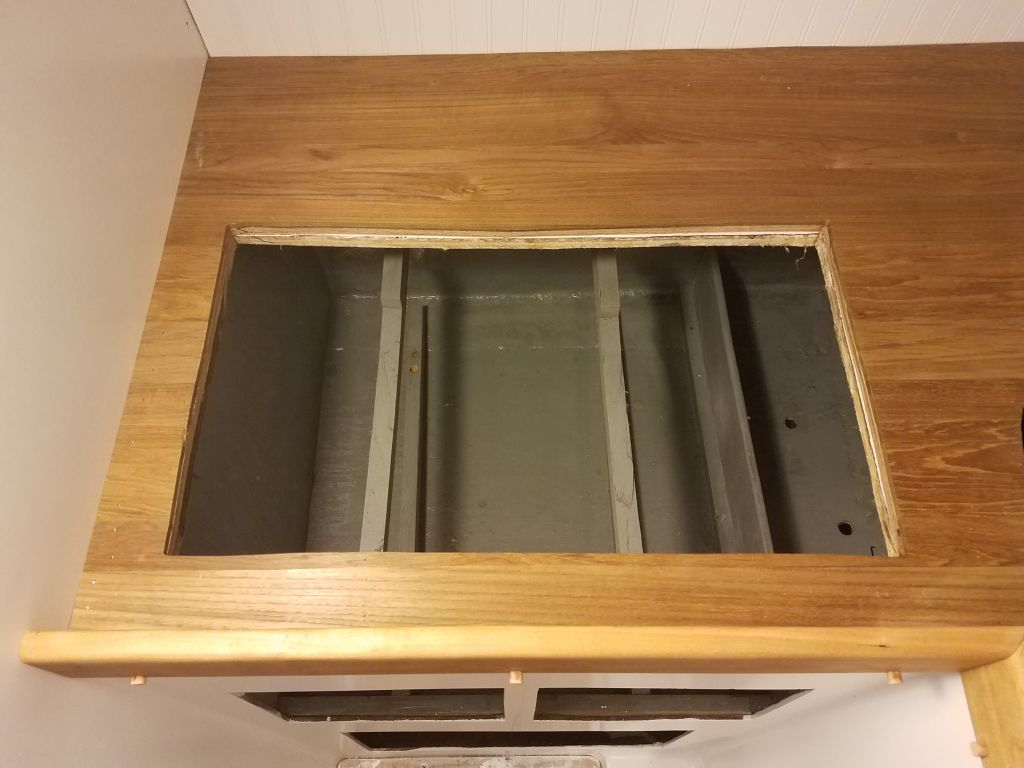
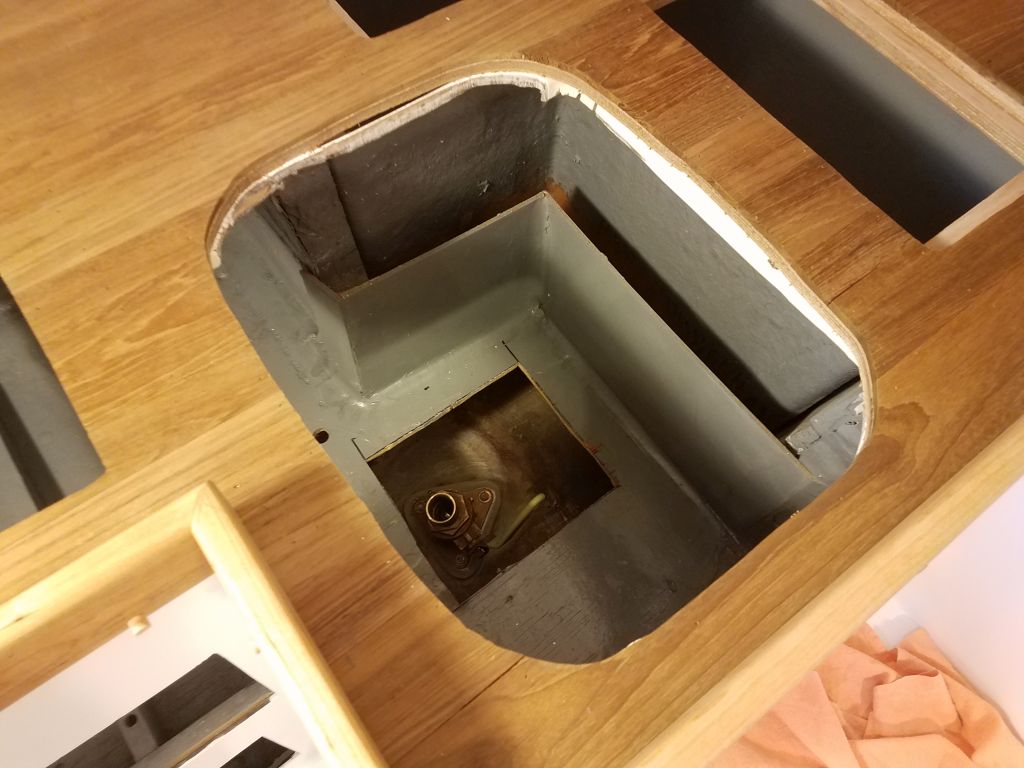
In the galley, I soon found that attempting the installation with existing access was not possible, so I cut a larger opening in the plywood cabinet above the fitting location to improve access for now.  Later, I’d cut and install a new plywood base above to clean up the final installation.

Now, for each of the four fittings in turn, I applied heavy sealant to the mushroom fittings, and installed them from without, securing them with tape.  Scampering back into the boat, I applied additional sealant around the protruding threads, and on the backing pads, before threading on the flange base and pinning it in its proper position with temporary and sacrificial bolts from inside.  Then, hurrying back outside again, I replaced the temporary bolts with the proper bronze, flat-head machine screws, which I gooped up heavily, and, with the bolts in place, threaded in the through hull fitting tightly with a special tool.  At this point, I could clean off most of the excess sealant from outside.

Finally, back inside the boat, I installed bronze washers and nuts and tightened the three through bolts, completing the basic installation other than final sealant cleanup.

With that done, and any excess bolt length removed from within, I completed the installations by installing the ball valves and pipe-hose connections at each location.  While this step didn’t strictly have to happen now, I saw no reason in this instance to postpone it either.

After cleaning up and getting reorganized after this flurry of activity, I prepared to reinstall the rudder permanently following its various repairs, which had taken place sporadically since I dropped the rudder for this purpose some months before.  The rudder had been more or less ready for some time, just awaiting the right time–which apparently was now.

Before raising the rudder back into position, I filled the packing nut with four rings of new graphite packing, then, inside the after steering room, reinstalled the nut on the packing box glassed inside the hull.  I also slipped over the rudder shaft a bronze steering arm that I’d obtained as part of a newly-conceived rudder stop system, which would ultimately prevent the rudder from being over-turned and crushing against the hull, a previous design flaw that had directly led to and caused the damage to the upper part of the rudder blade that had required me to remove the rudder in the first place.

Now, I could raise the rudder back into position with a jack, which process went smoothly and without issue.

With the rudder all the way up, I heavily applied sealant to the bronze shoe casting (which I’d previously cleaned up), and reinstalled it with new bronze bolts.

In the boat’s previous iteration, a rudder stop system had either failed, or not been in place to begin with, and this allowed the rudder to turn nearly 90 degrees to each side.  This caused the top of the rudder blade to hit the hull above, and this ultimately caused failure of the rudder laminate.  While the rudder was now whole again, the overturning problem hadn’t gone away.

The steering system now was to be a simple tiller, so to prevent the oversteering from occurring in the future, I came up with a rudder stop system based on the existing situation and with as simple a design as possible.  The existing rudder shaft featured two machined grooves leftover from the old steering quadrant, and with these as a basis, I found a hefty bronze steering arm that fit my design brief–way overbuilt for this particular task, but pleasingly reasonable in cost–that I could fit to the keyway in the rudder shaft.  I did have to modify a length of 3/8″ brass key stock, since the keyway in the shaft was 3/8″, but the corresponding key in the bronze arm was just 1/4″.  This was easy enough to do with the brass stock, and soon I had the key stock modified to the point that it would fit and lock the bronze arm in place, facing dead aft.  This, along with the pinch-bolt and a cupped setscrew that I tightened against the shaft, would hold this assembly securely.

From here, to complete the system I planned to install lengths of cable between the steering arm and the bulkheads on each side, the cables’ lengths to be determined based on how far the rudder could safely be turned to each side.  This would prevent oversteering in a simple yet effective way.  I’d complete and install the final portions of the system later, but the steering arm had had to be installed while the rudder was still down.

To finish up the day, and the week, I lightly sanded the new glasswork on the companionway hatch, removing the excess material that I’d let hang down during the glassing session.  Now it would be a straightforward matter to smooth and fair the final surface.

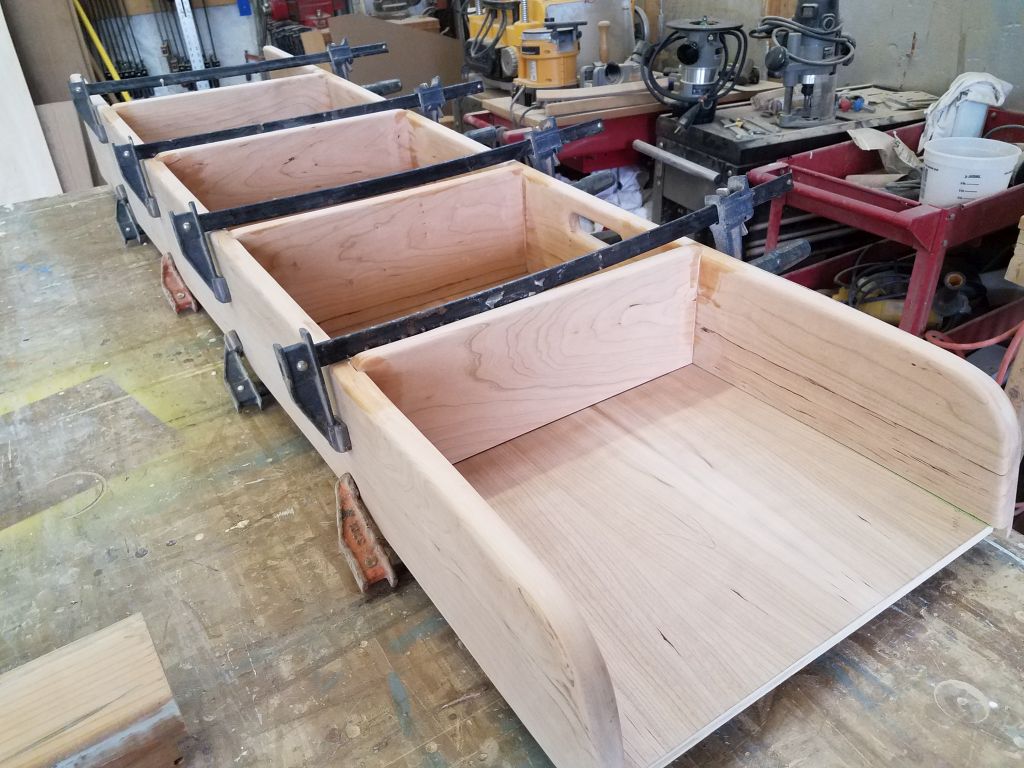
Finally, I unclamped and sanded the new lazarette hatch, smoothing the seams and rounding the exposed corners.  There’d be some final fitting and scribing to allow the hatch to fit the deck properly, but that was for another time.

Total time billed on this job today:  8 hours

0600 Weather observation:  40°, cloudy.  Forecast for the day:  Rain showers and fog, 52°
Scupper 100

Thursday

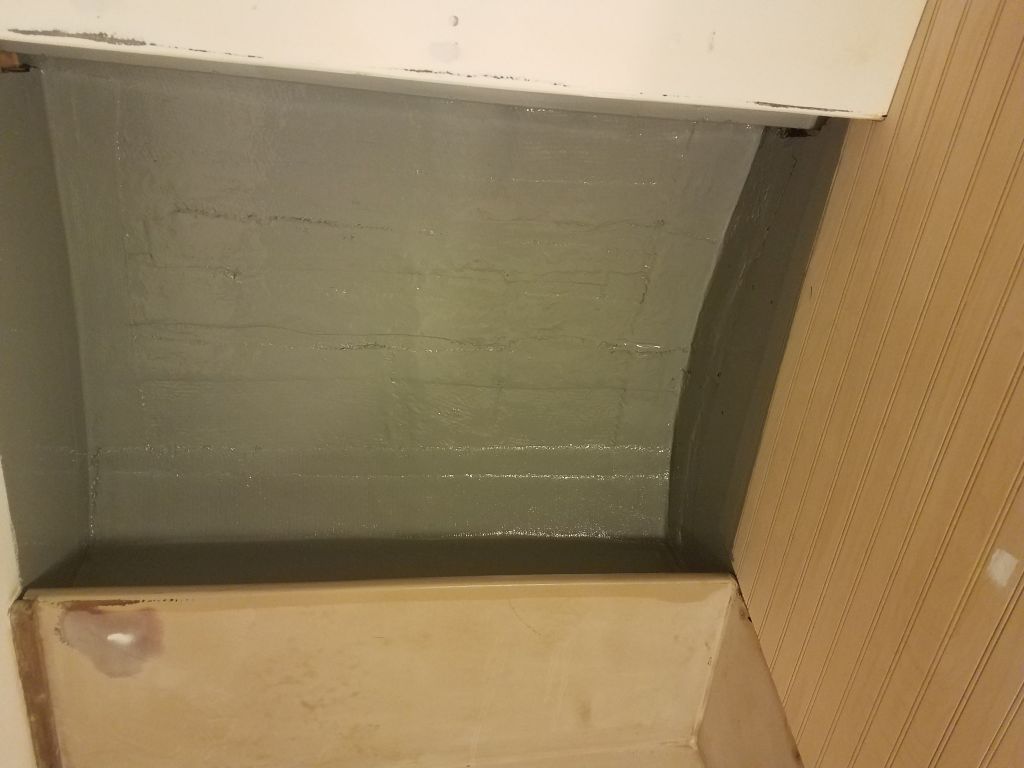
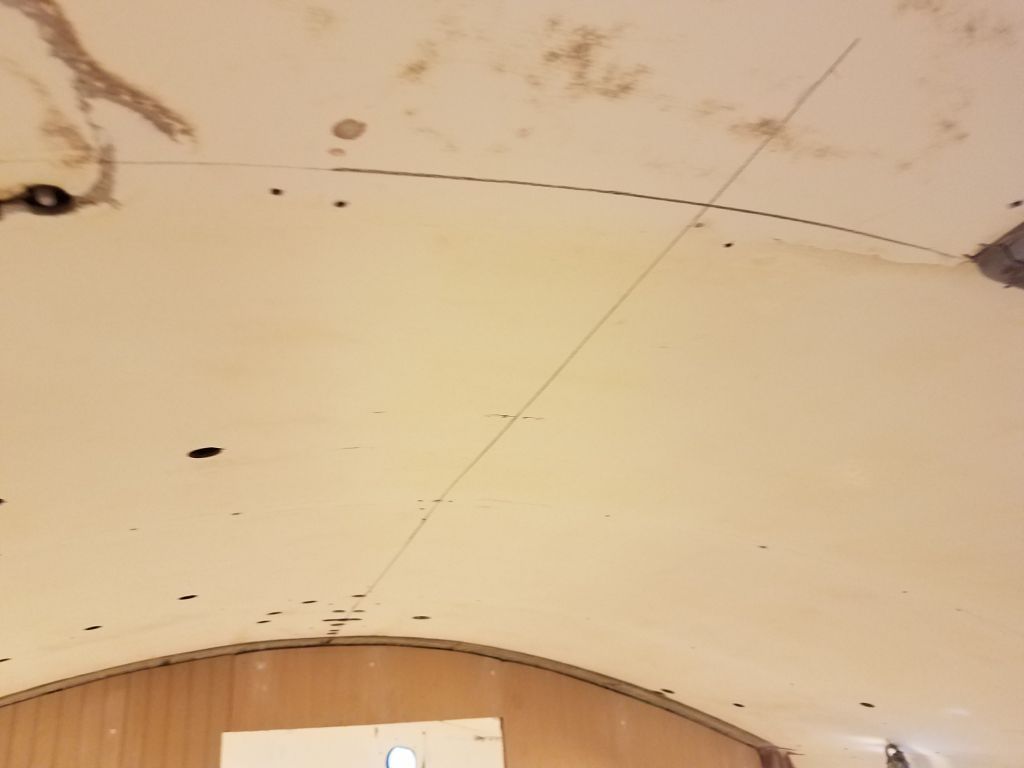
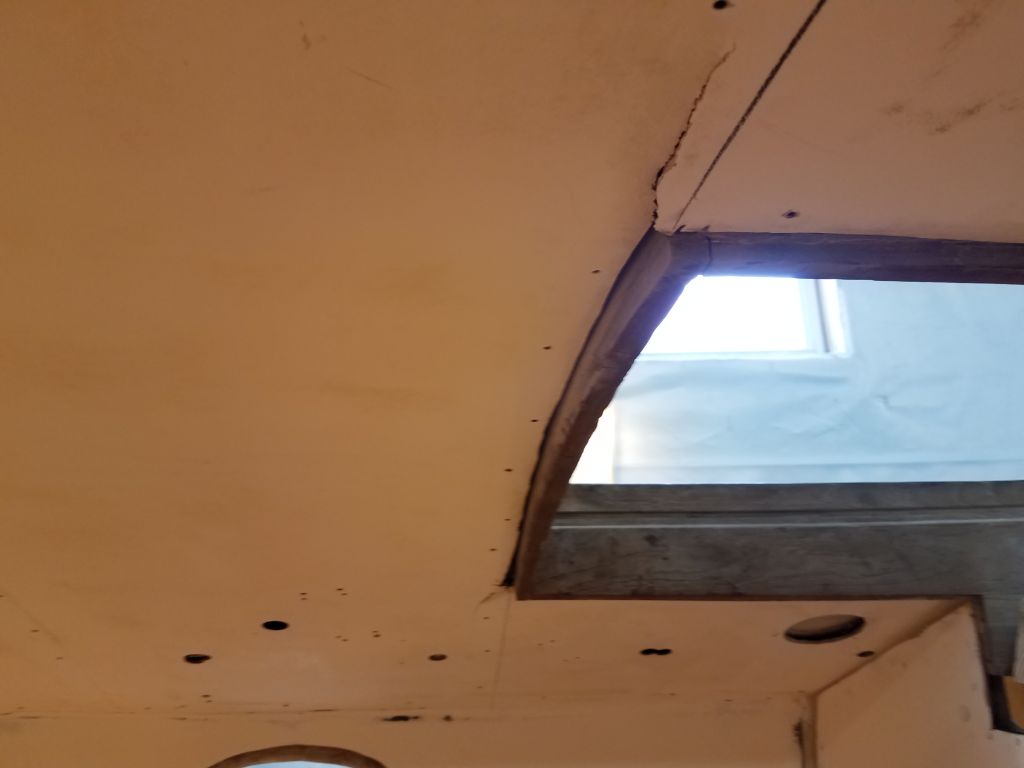
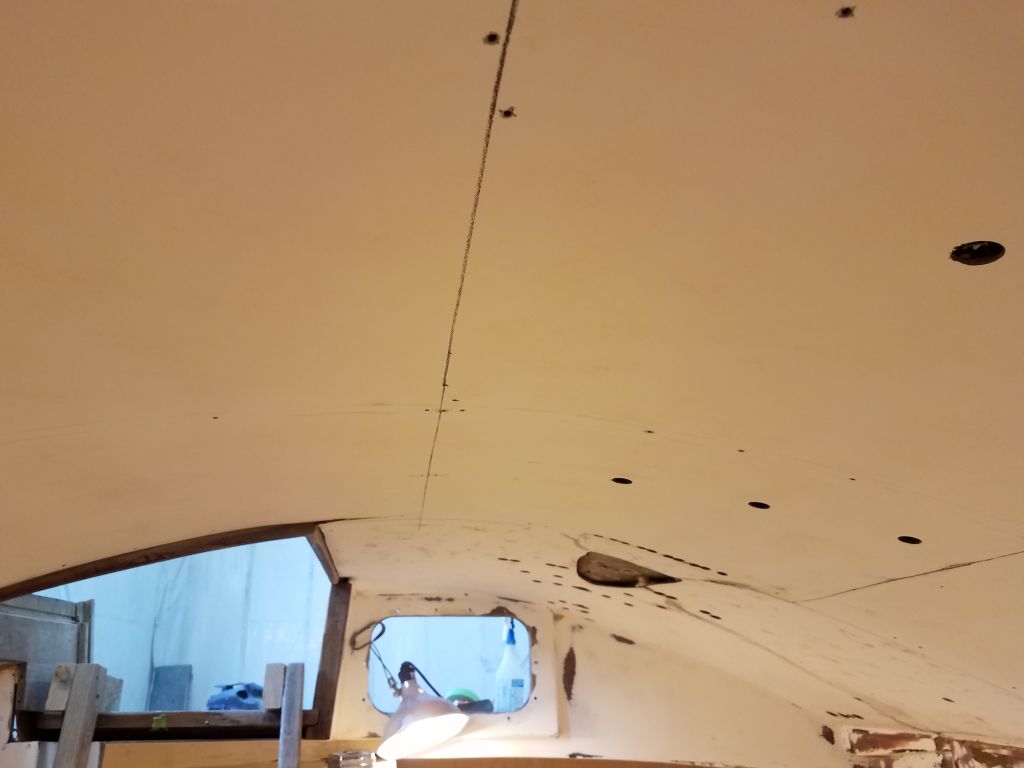
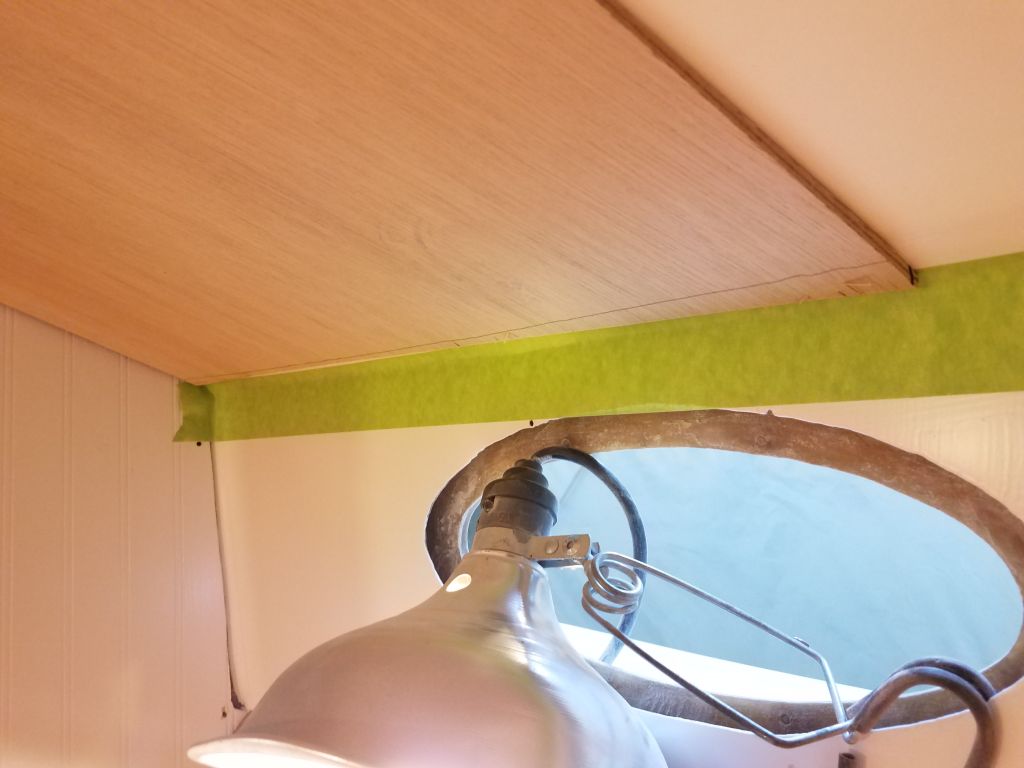
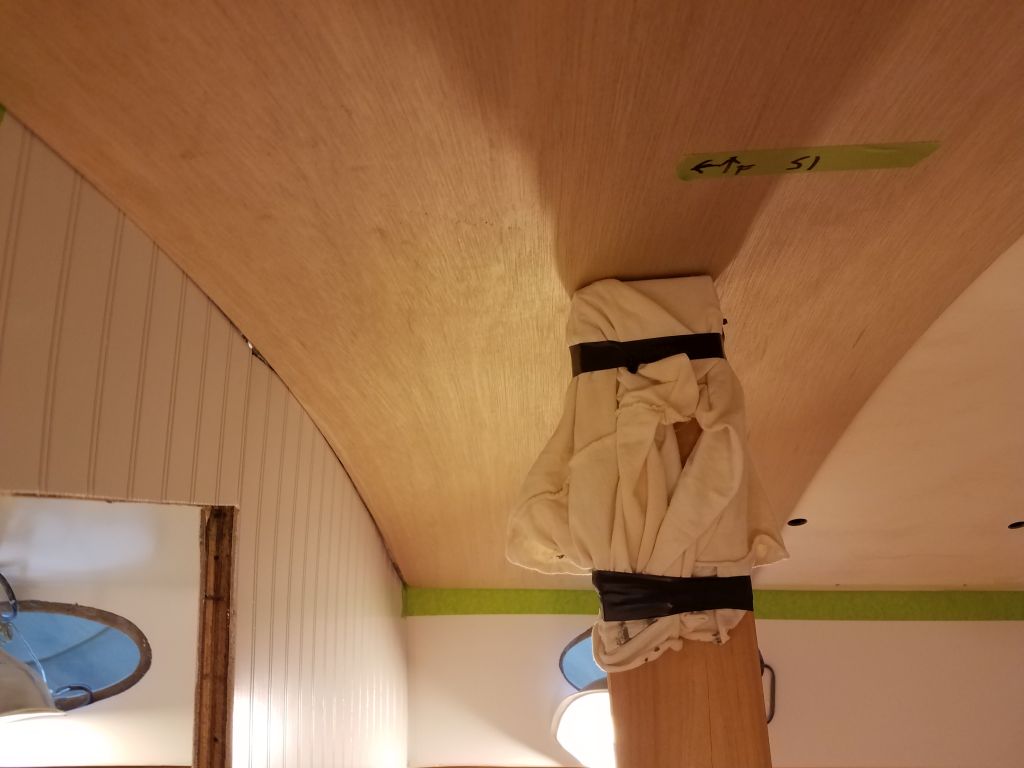
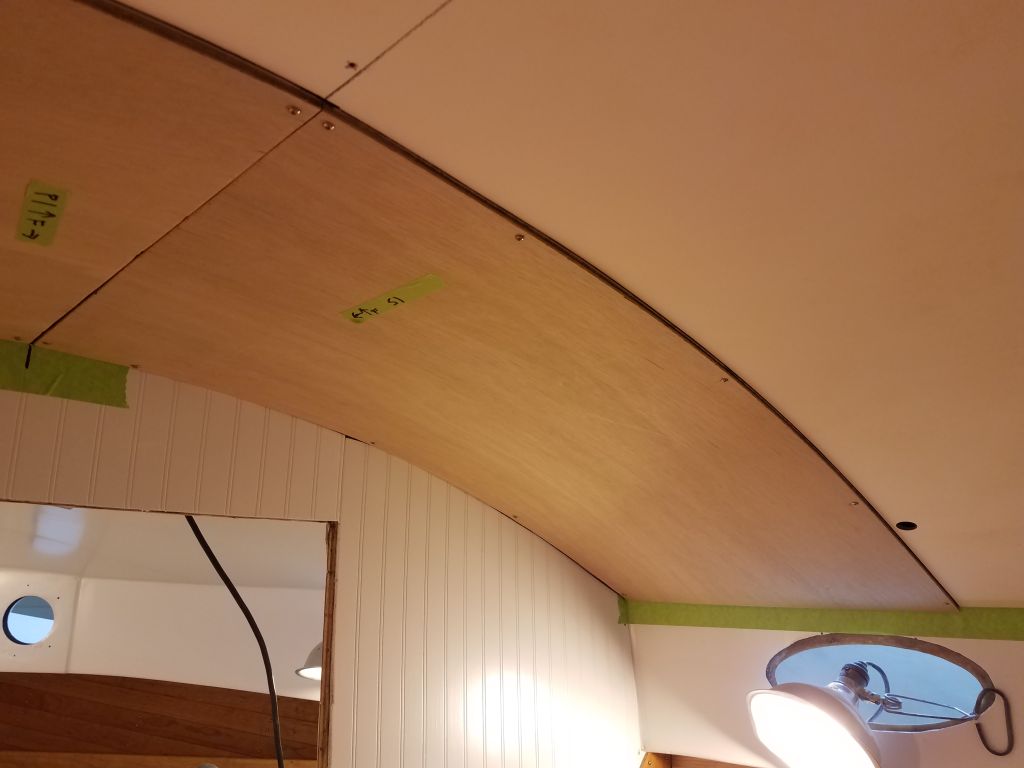
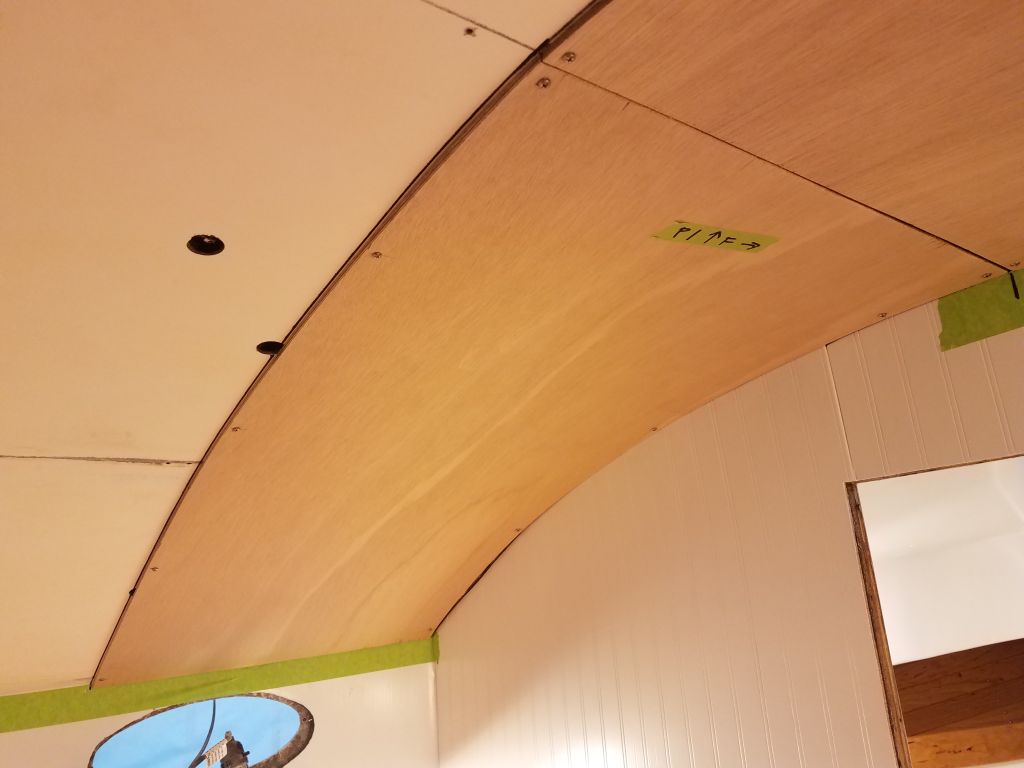
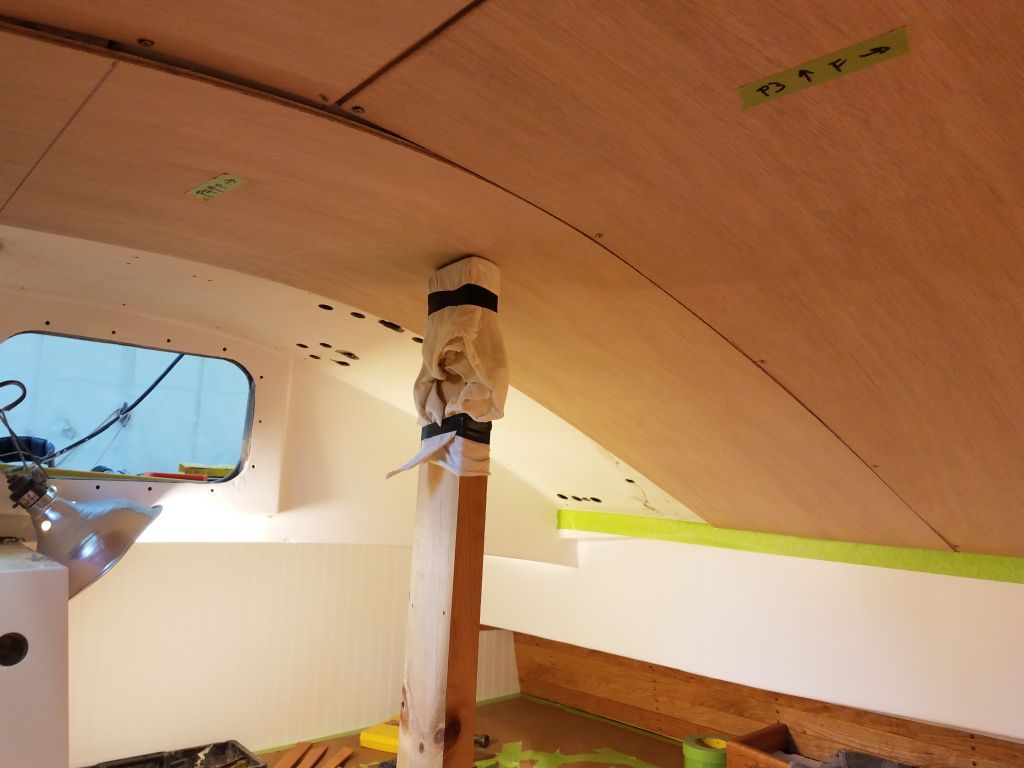
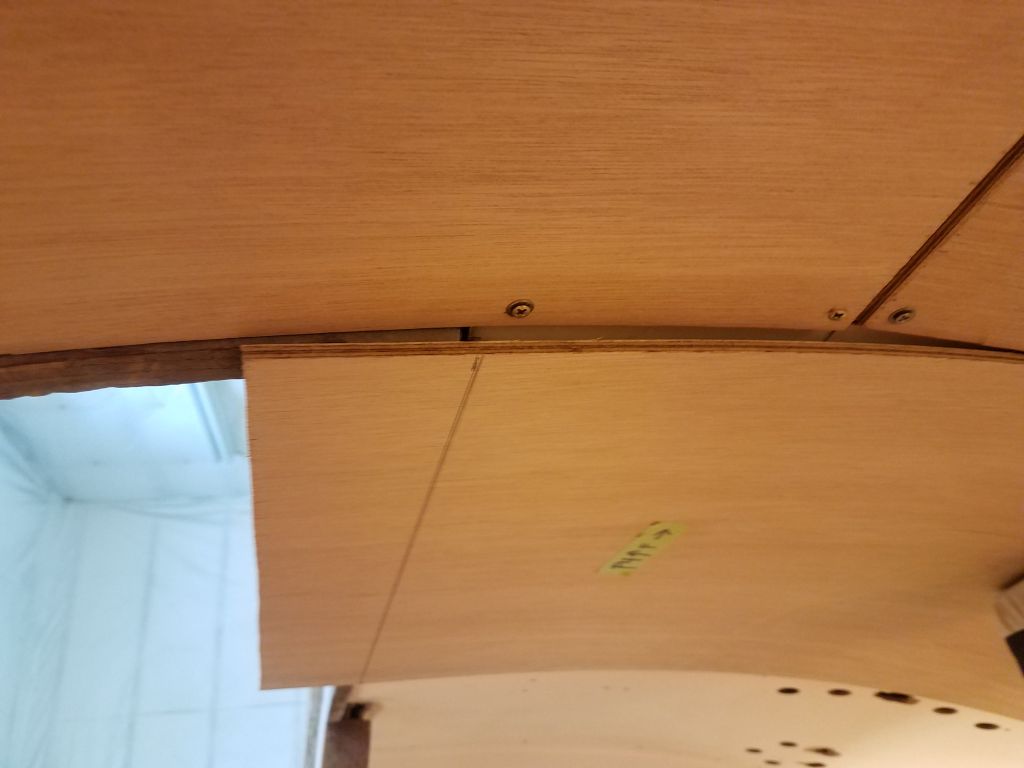
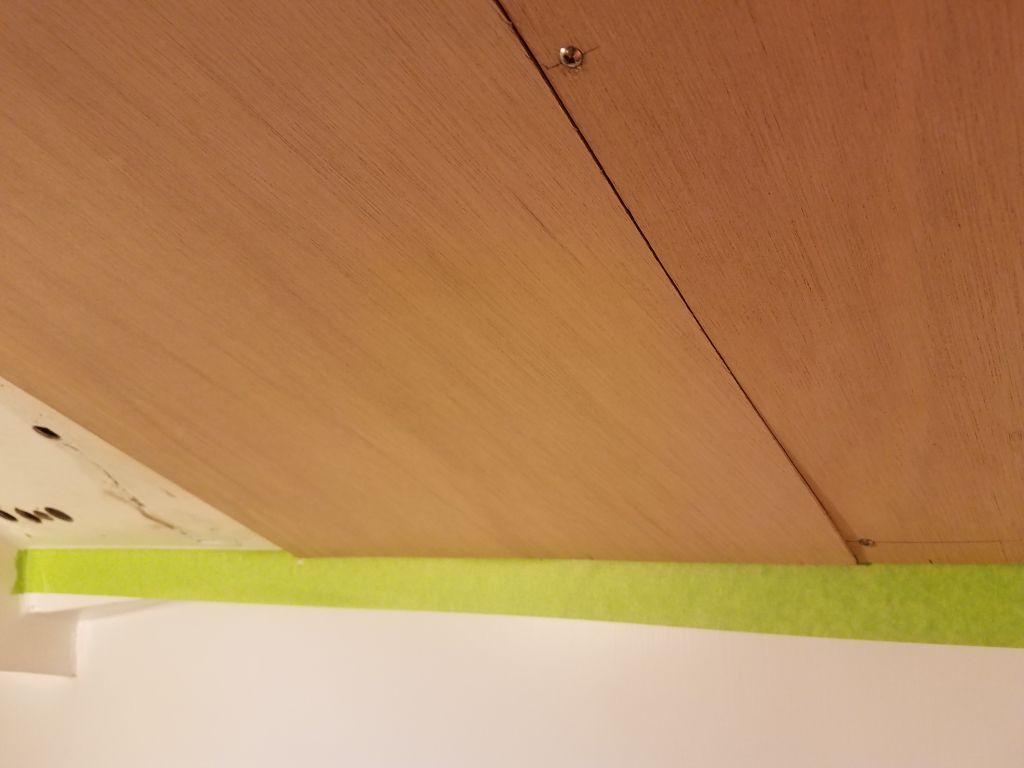
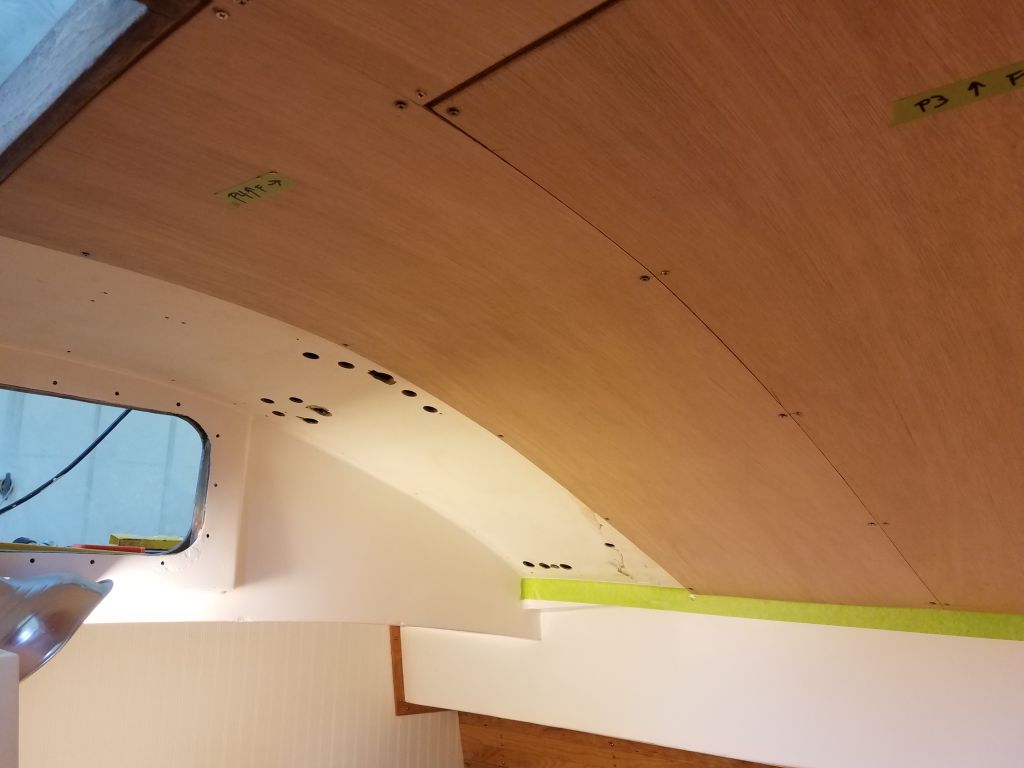
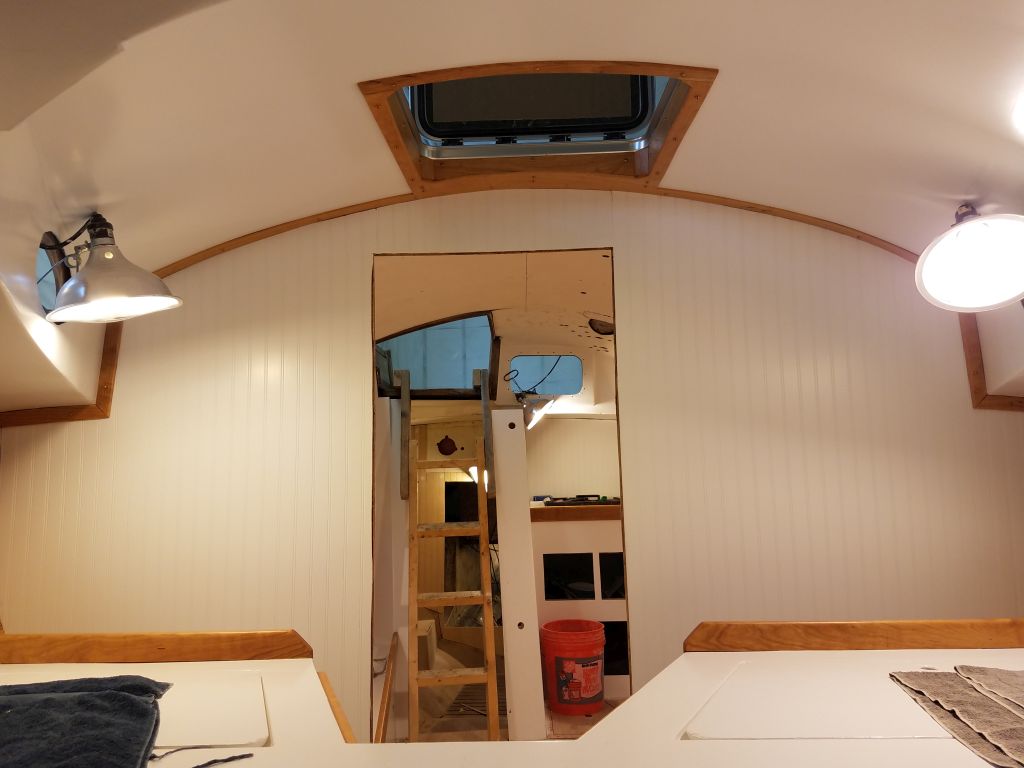
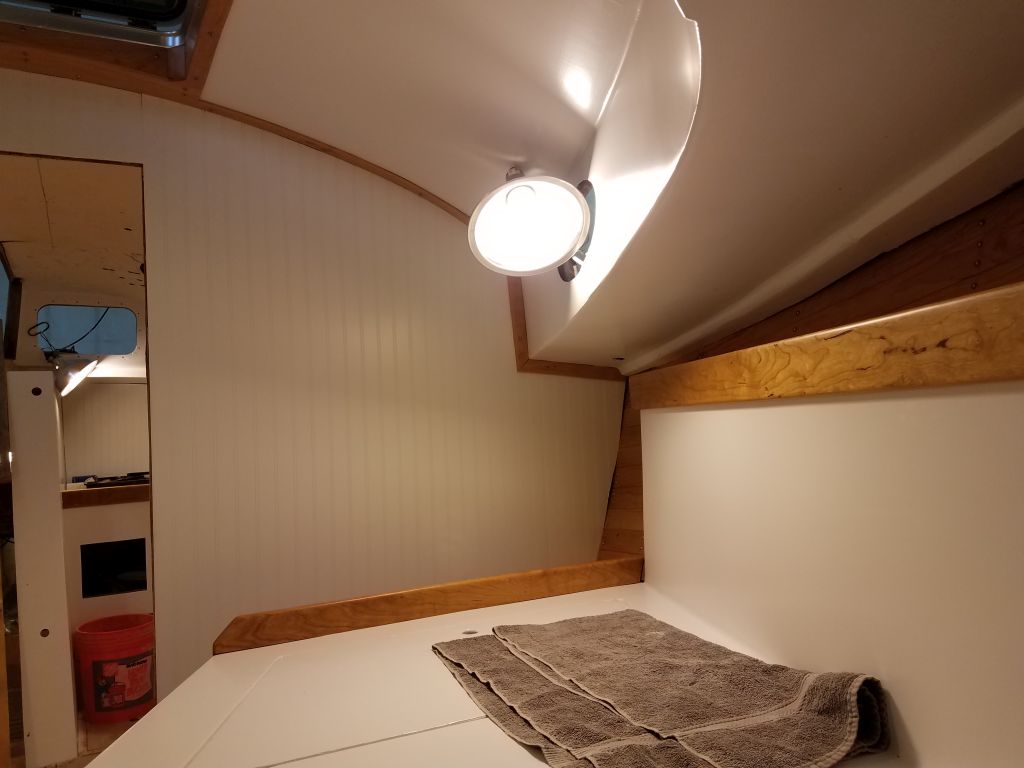
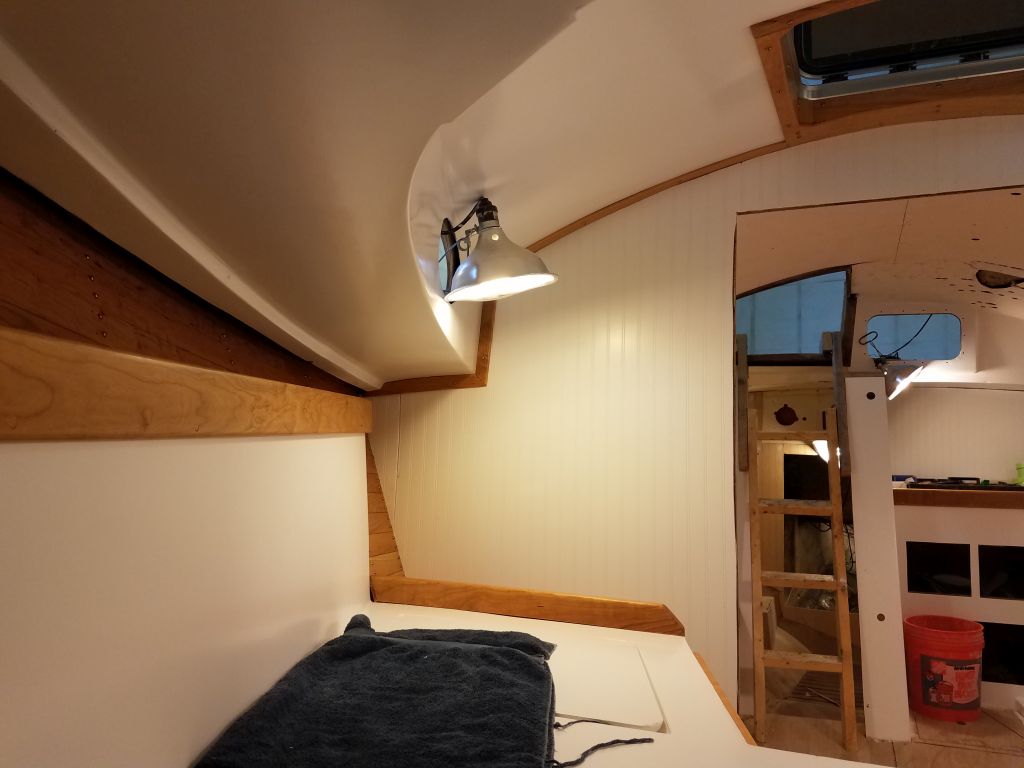
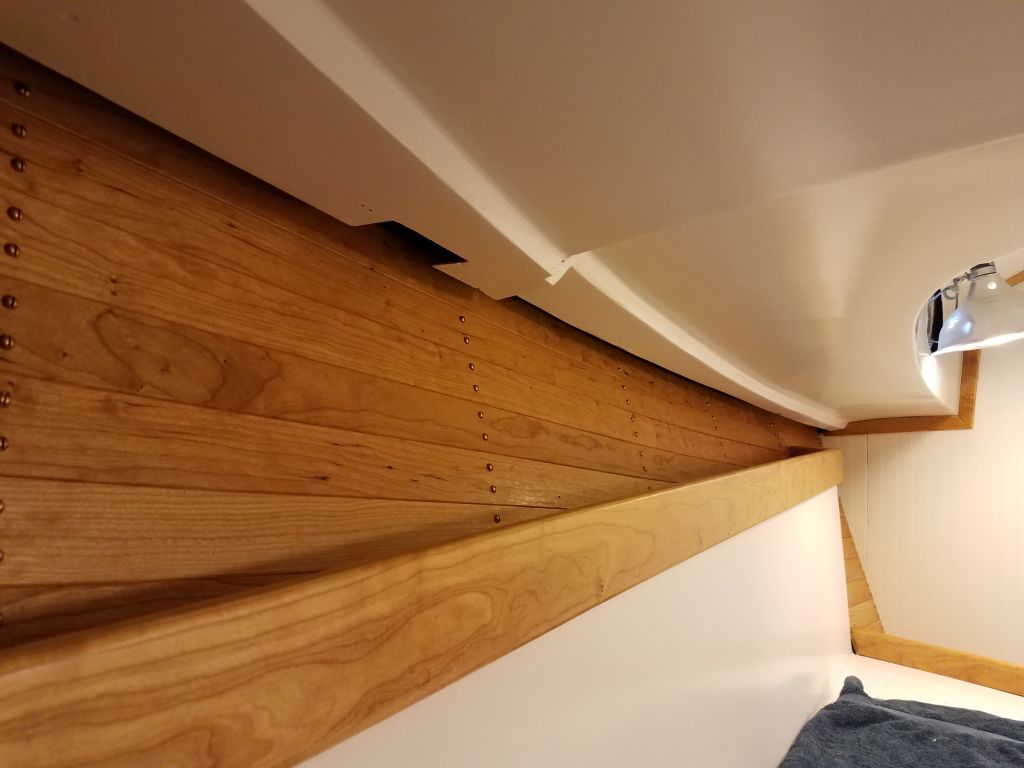
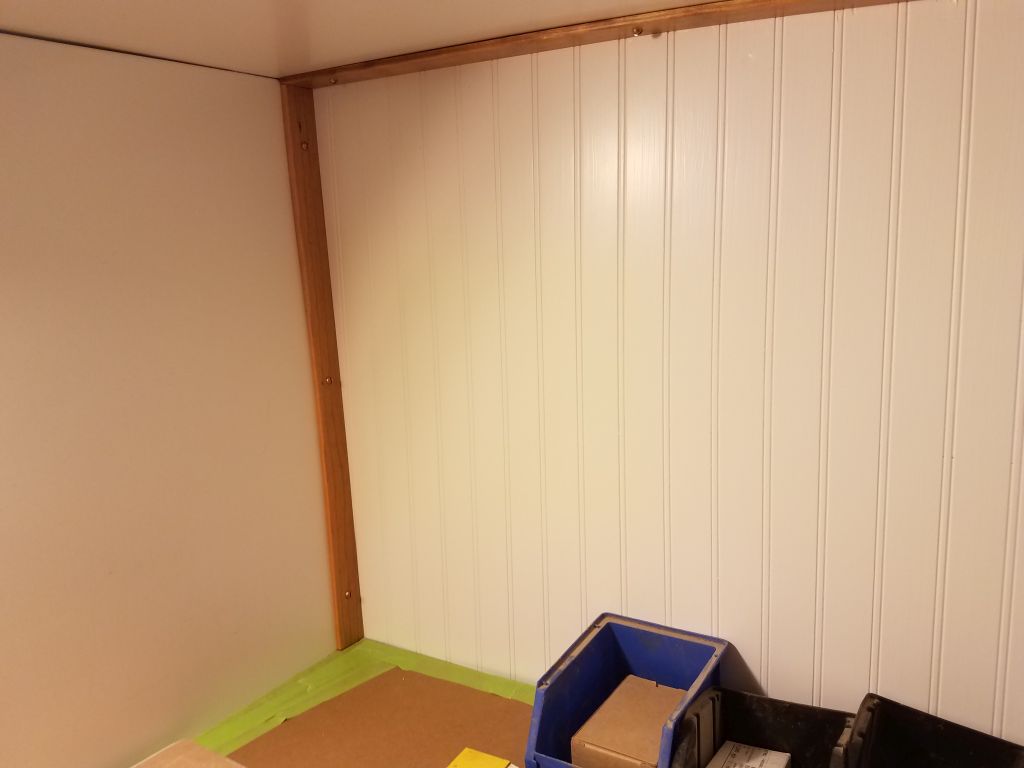
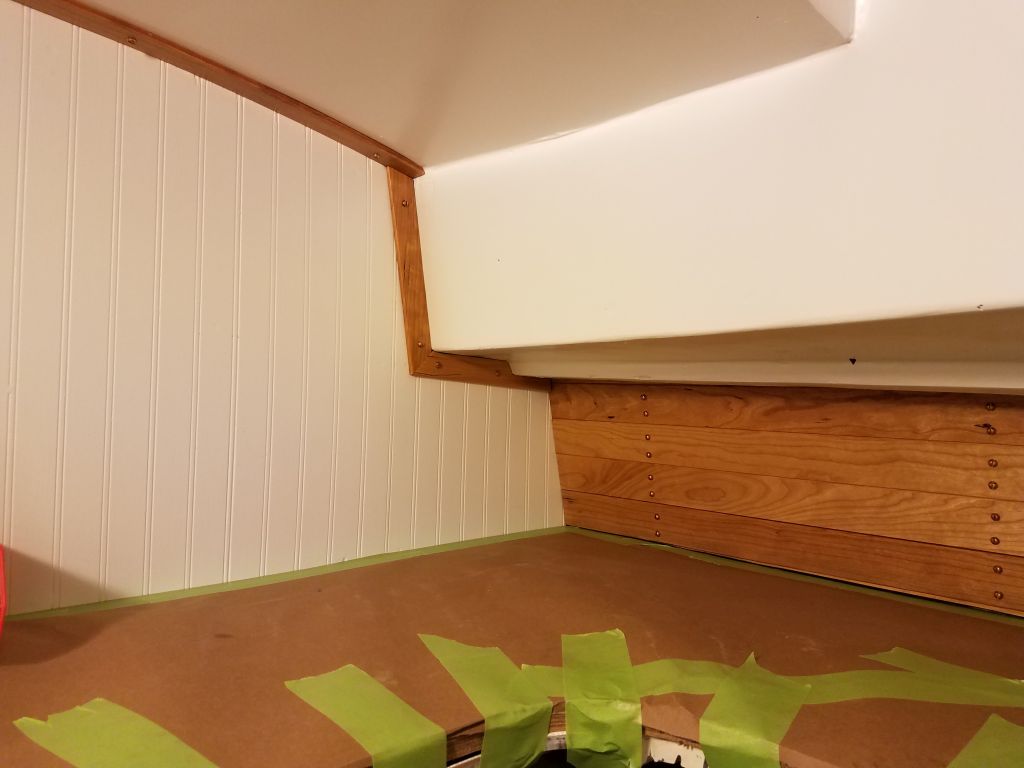
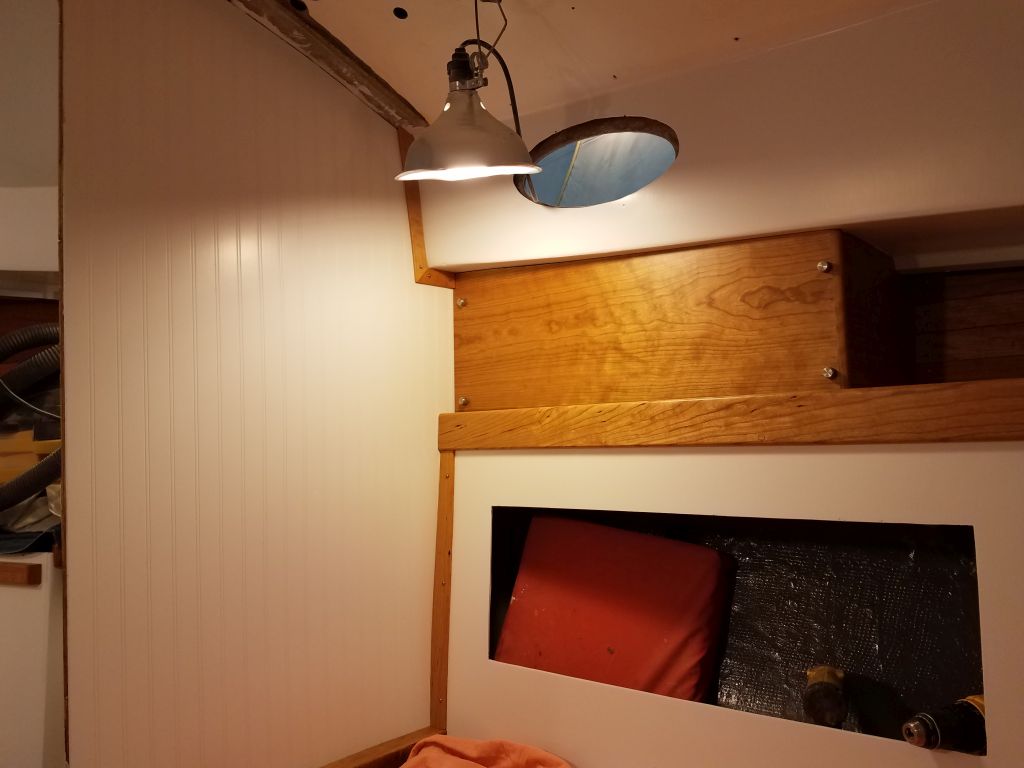
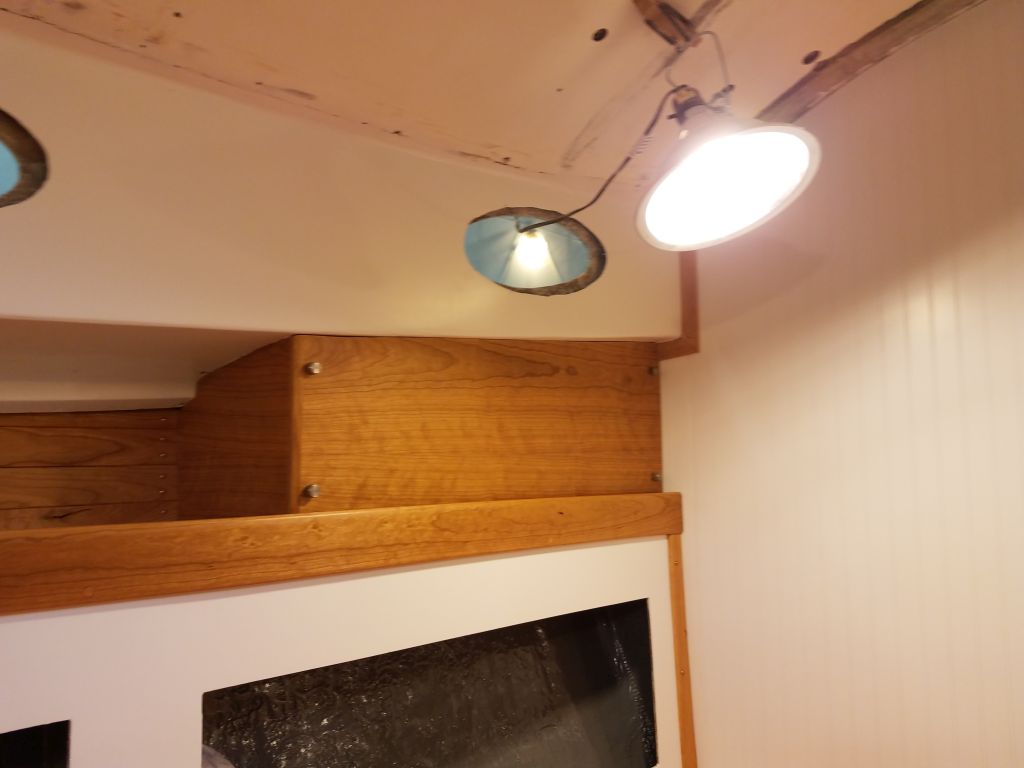
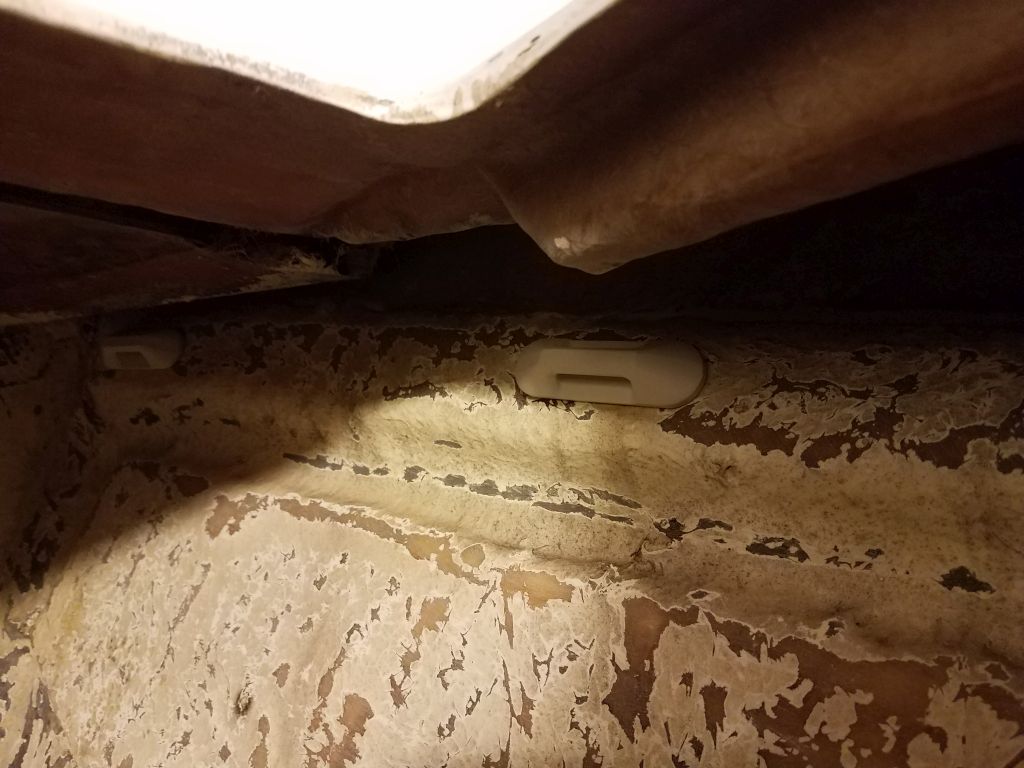
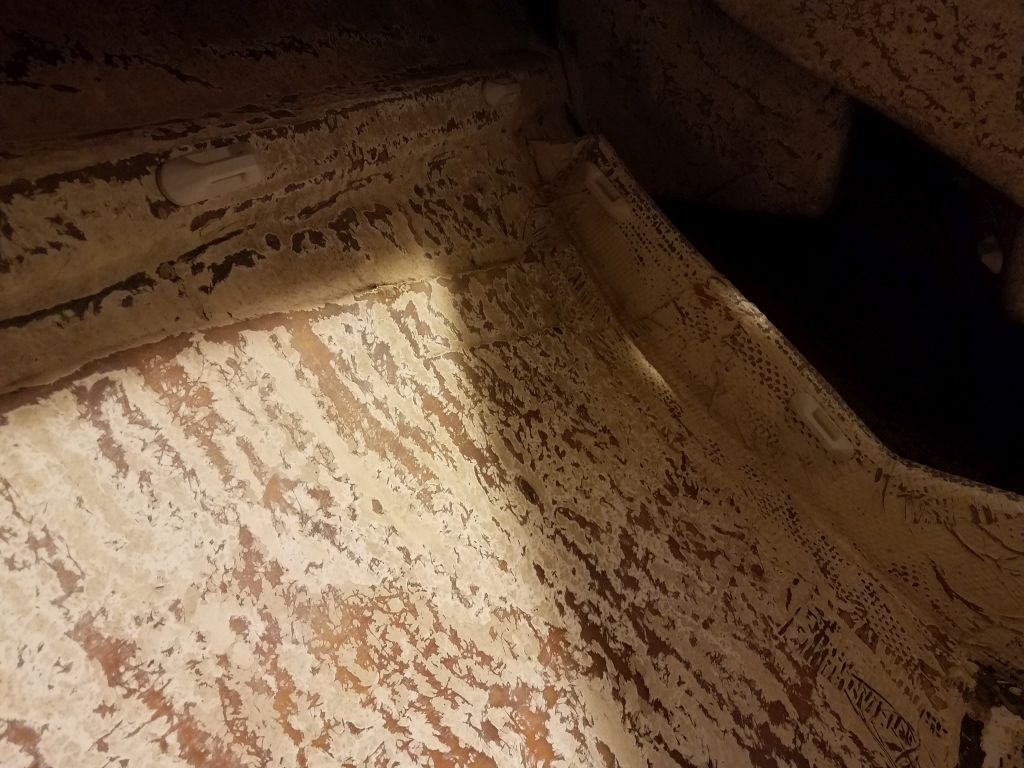
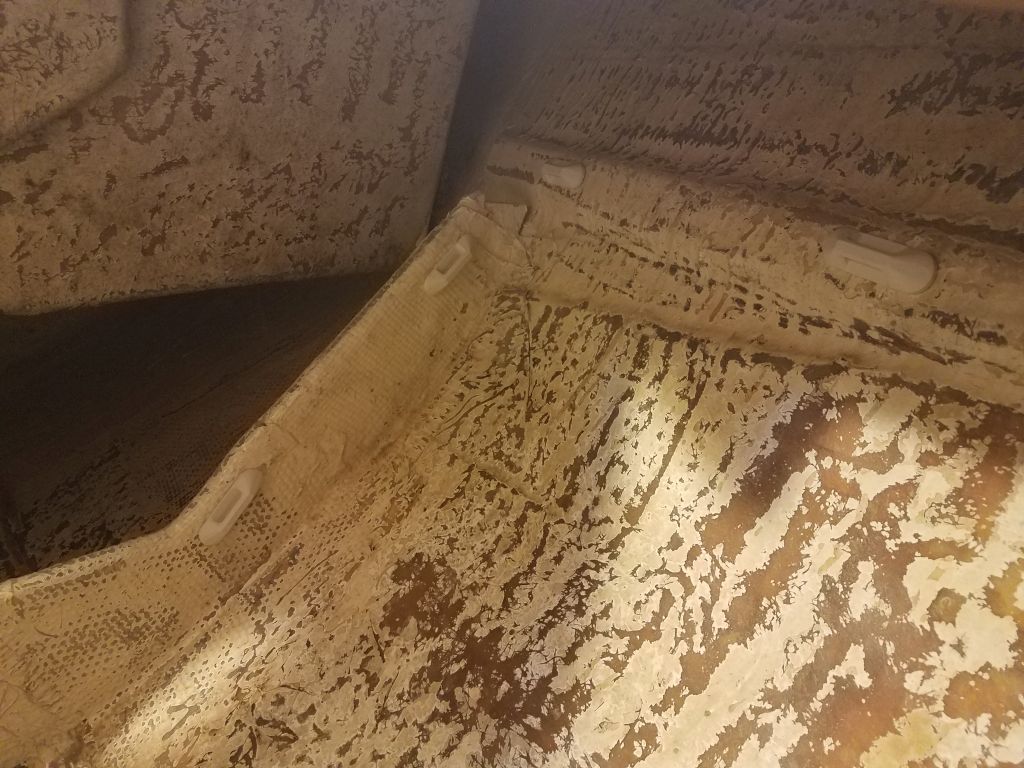
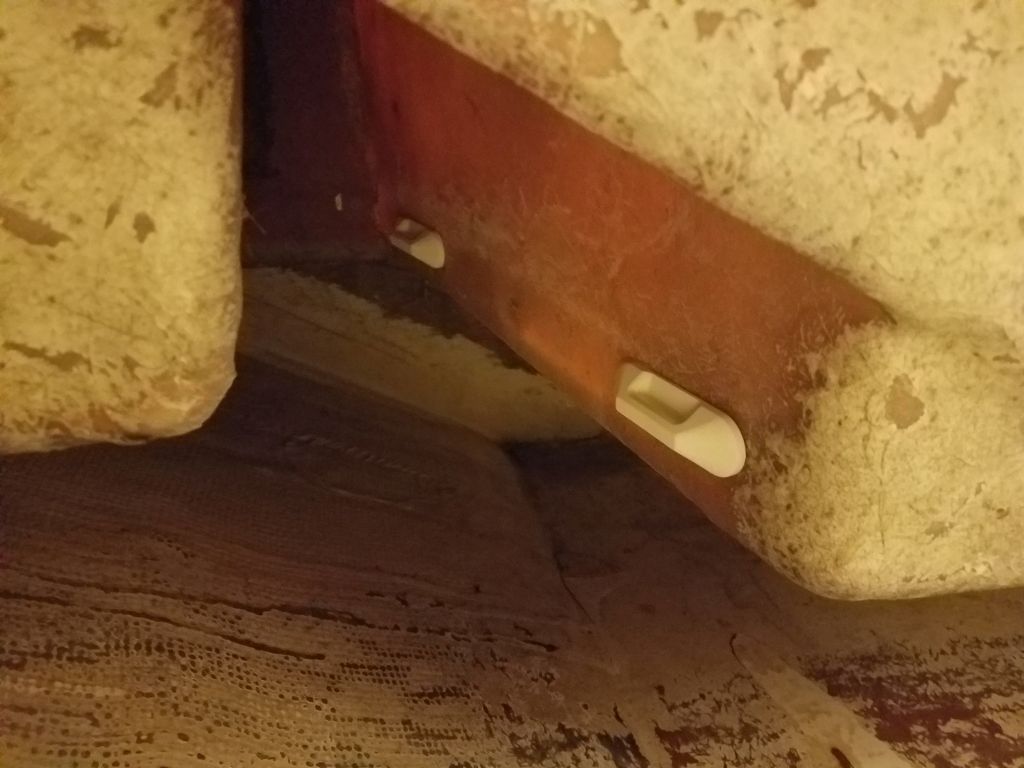
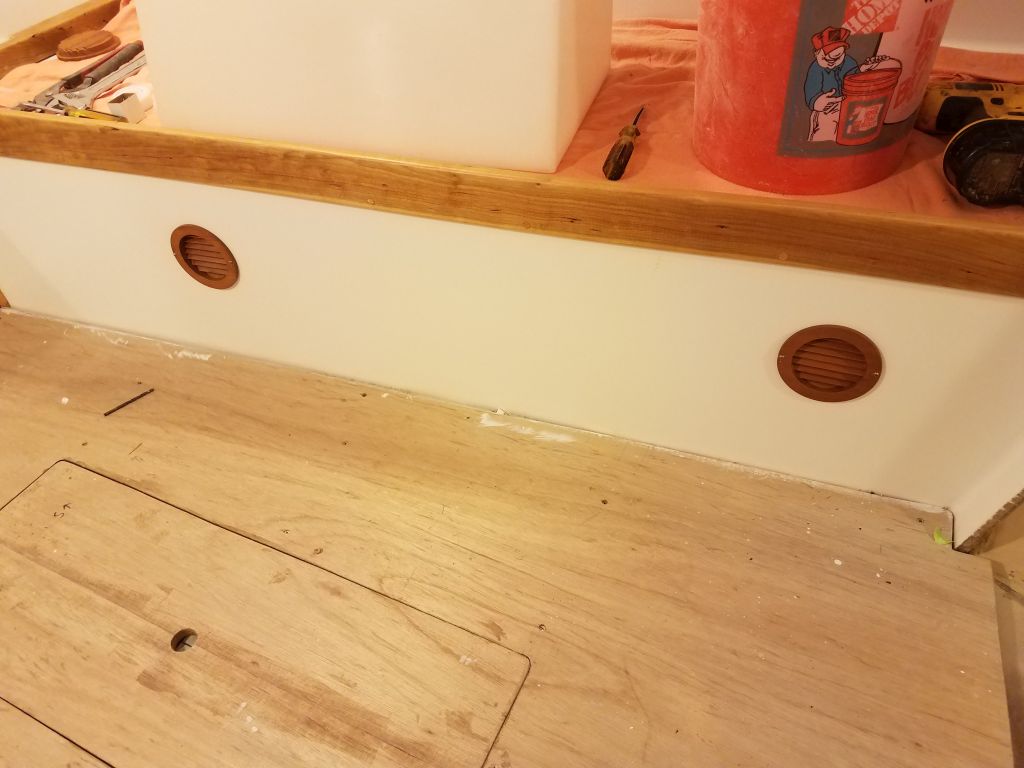
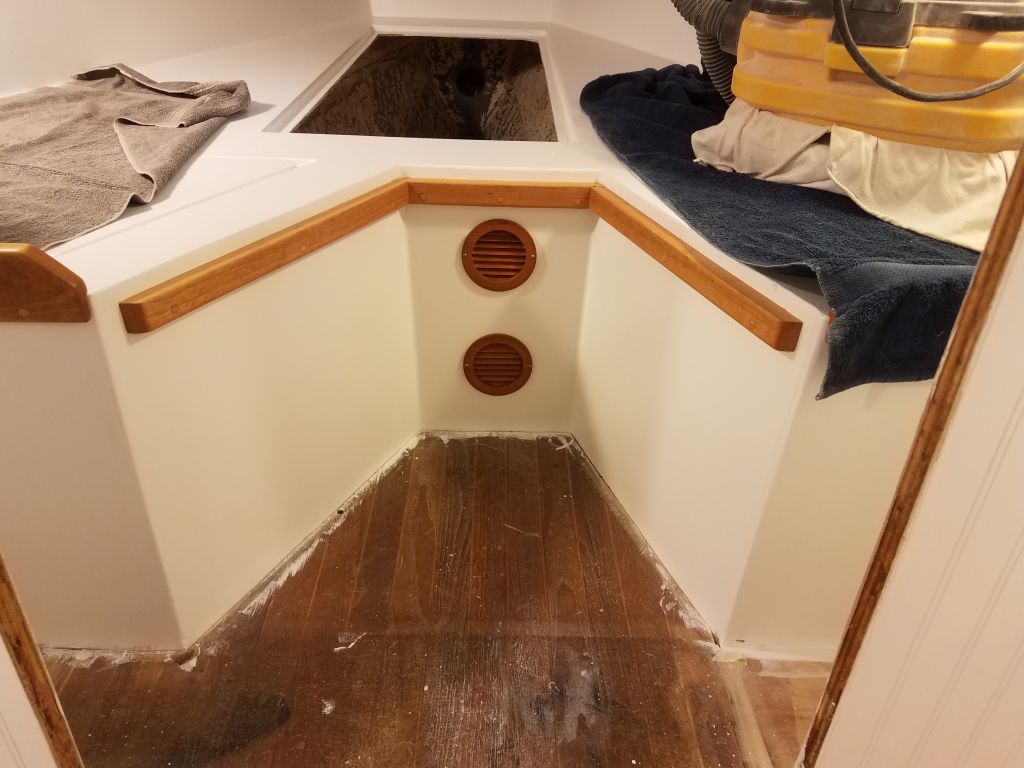
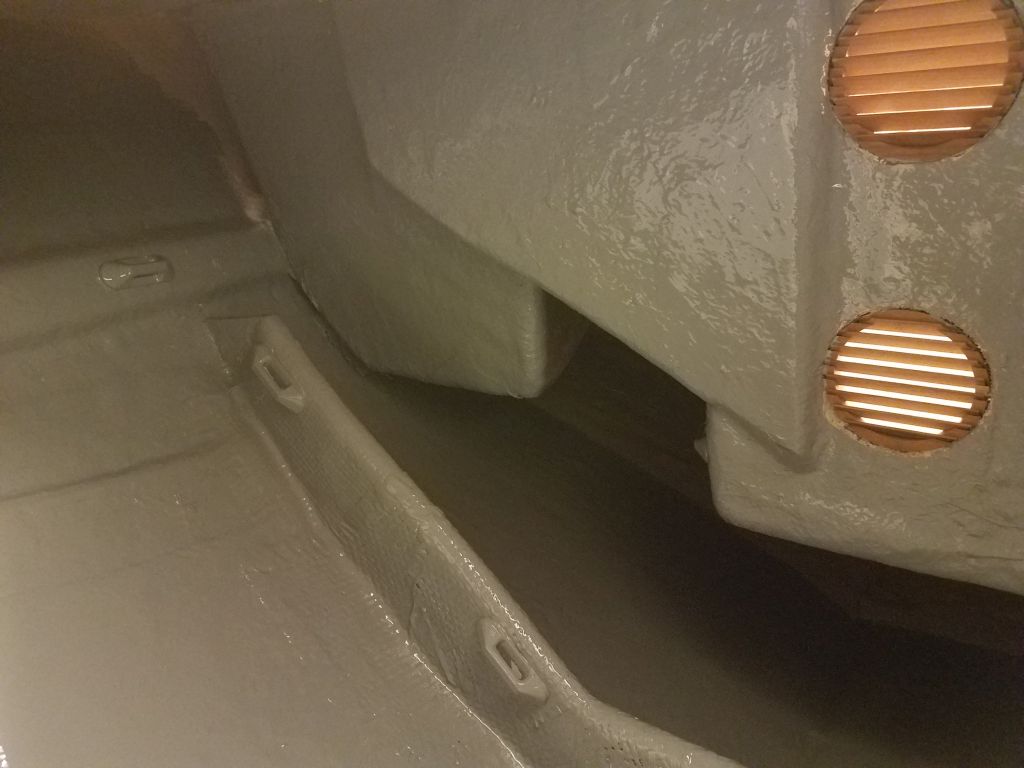
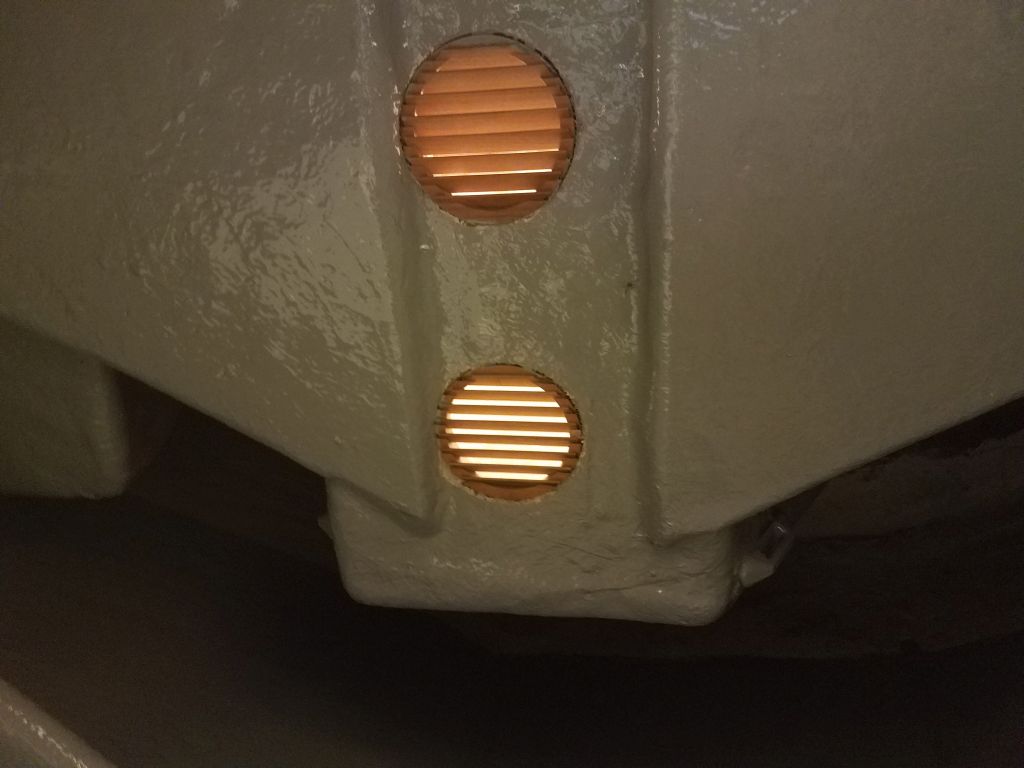
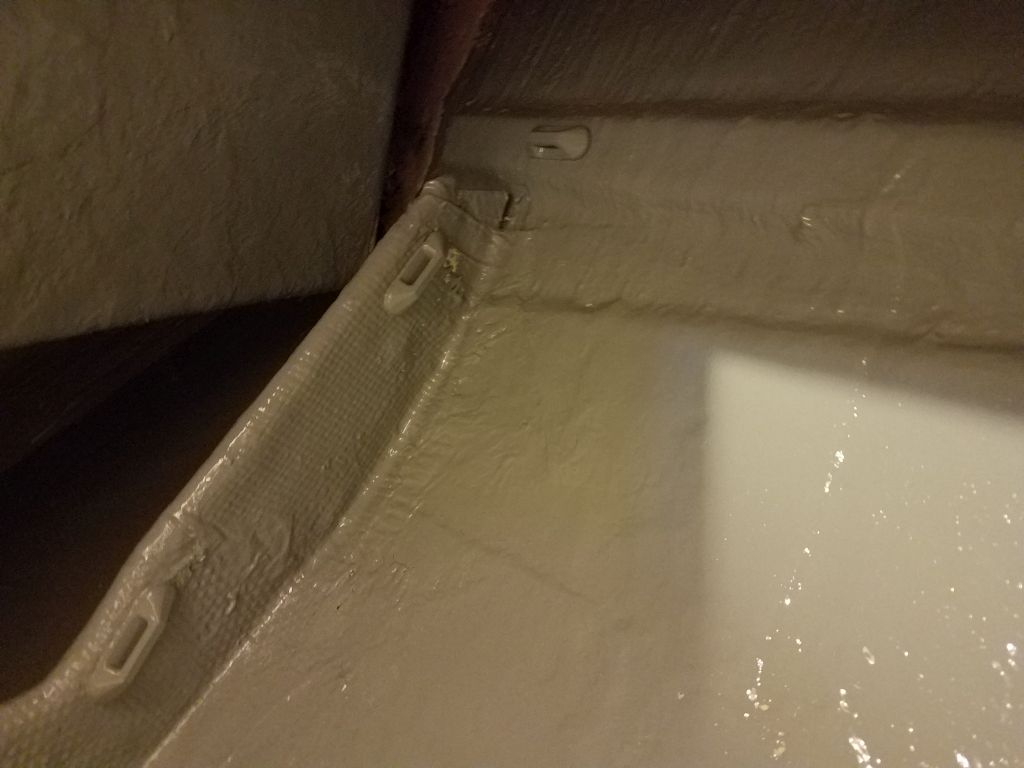
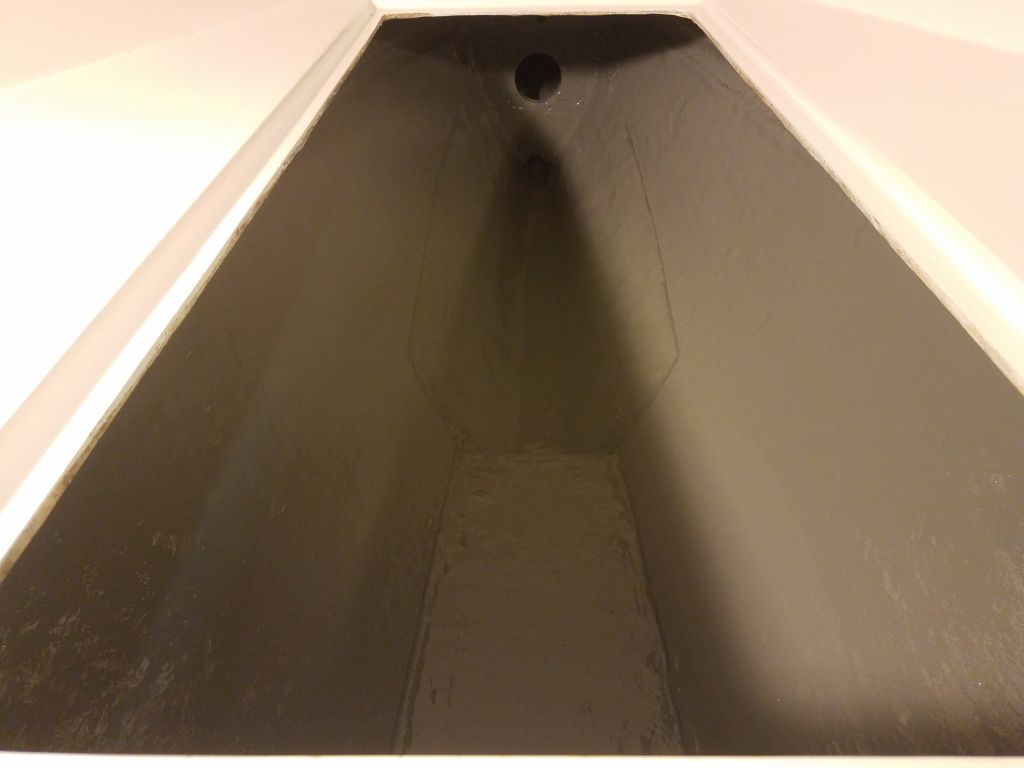
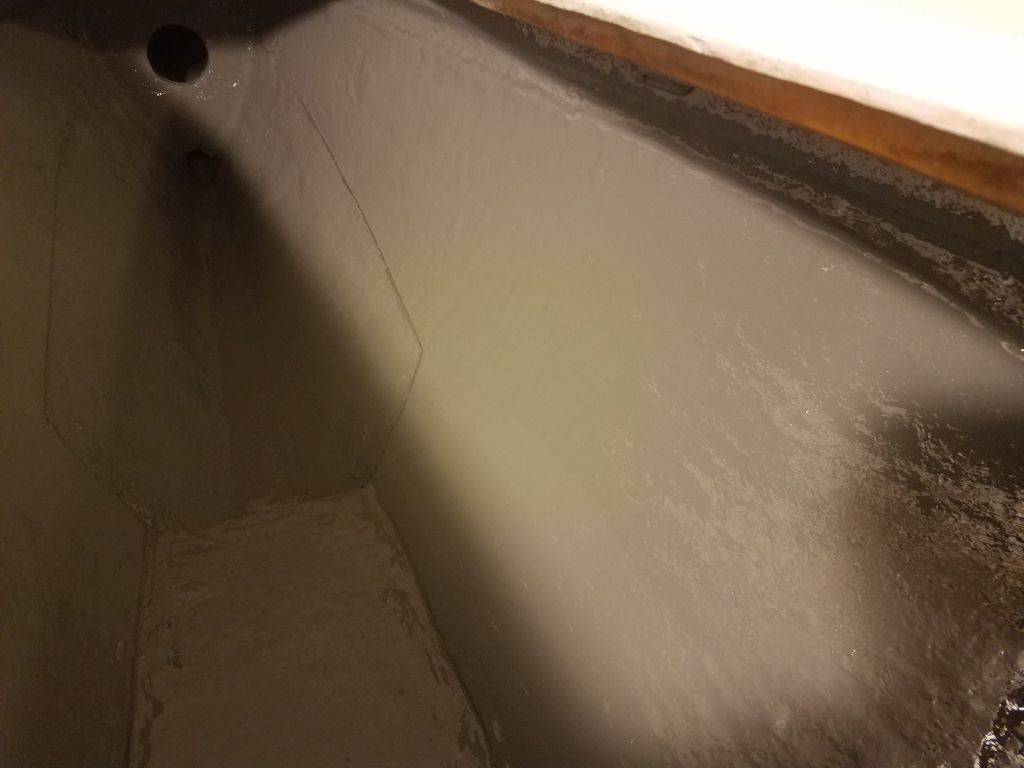
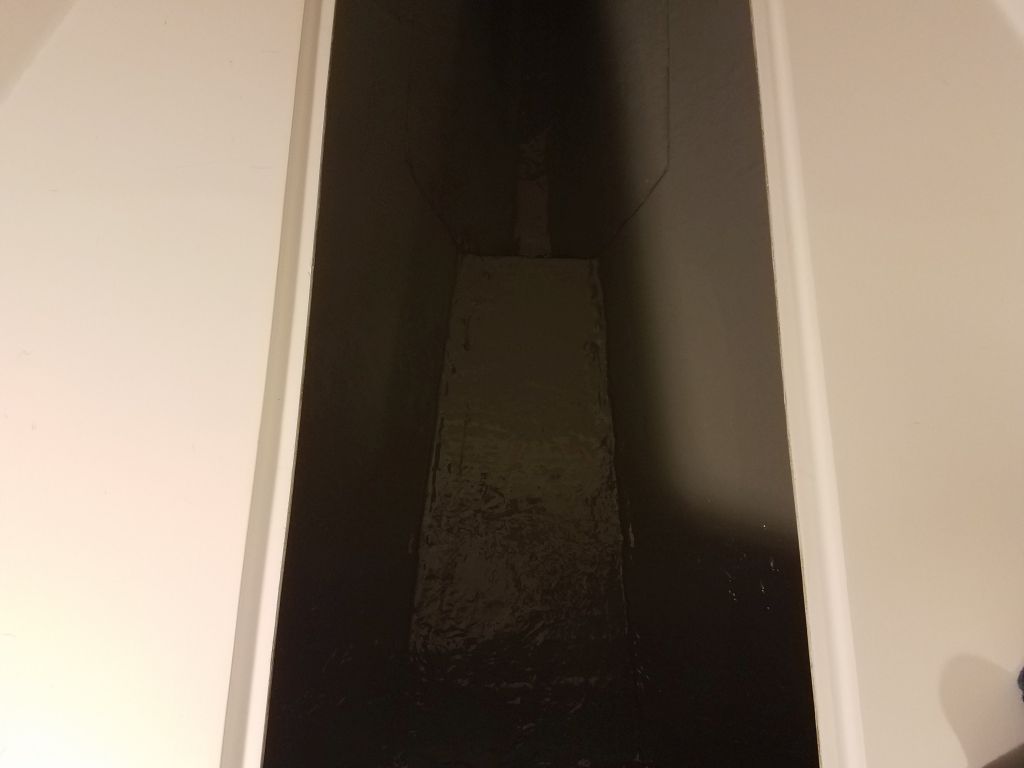
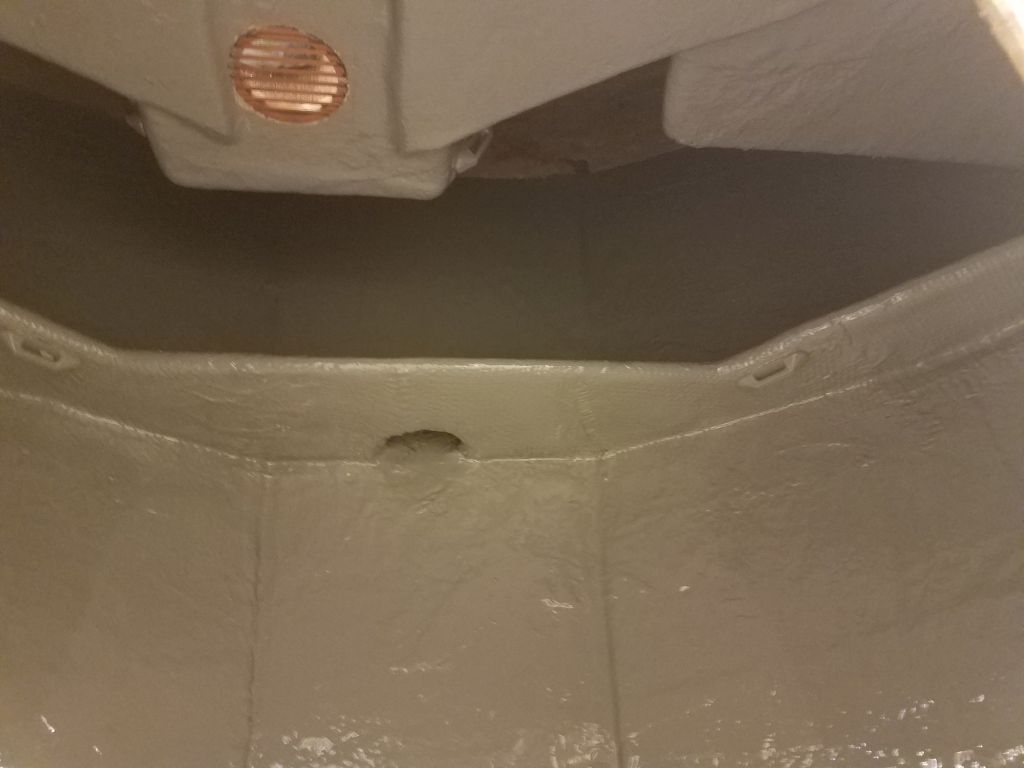
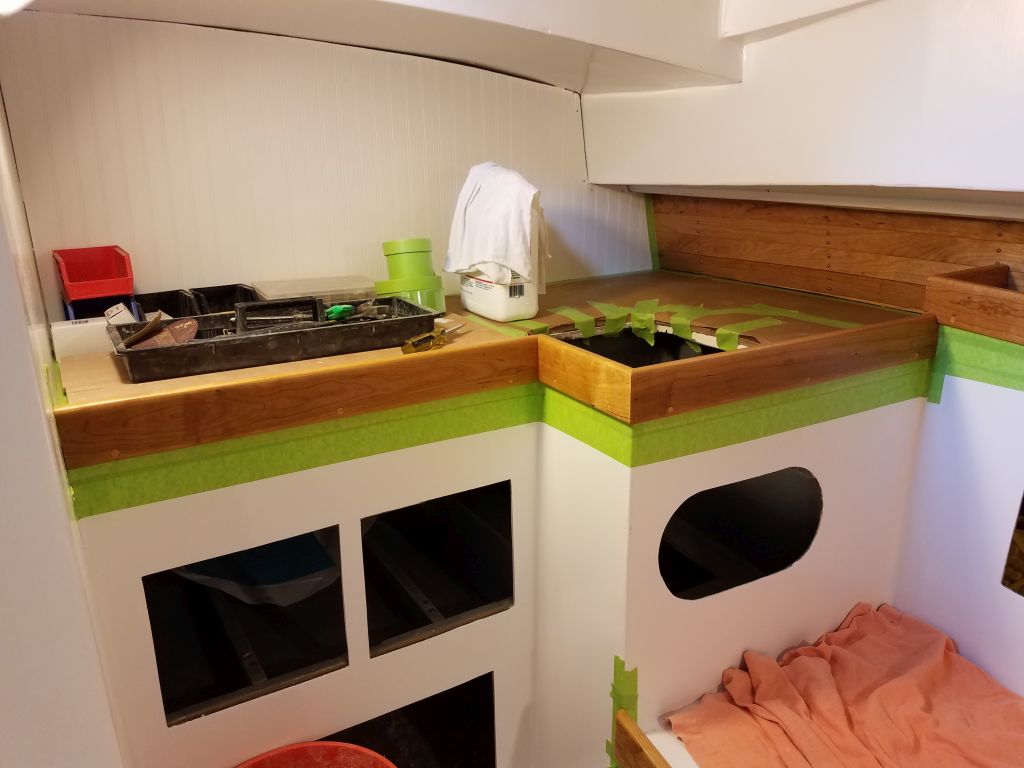
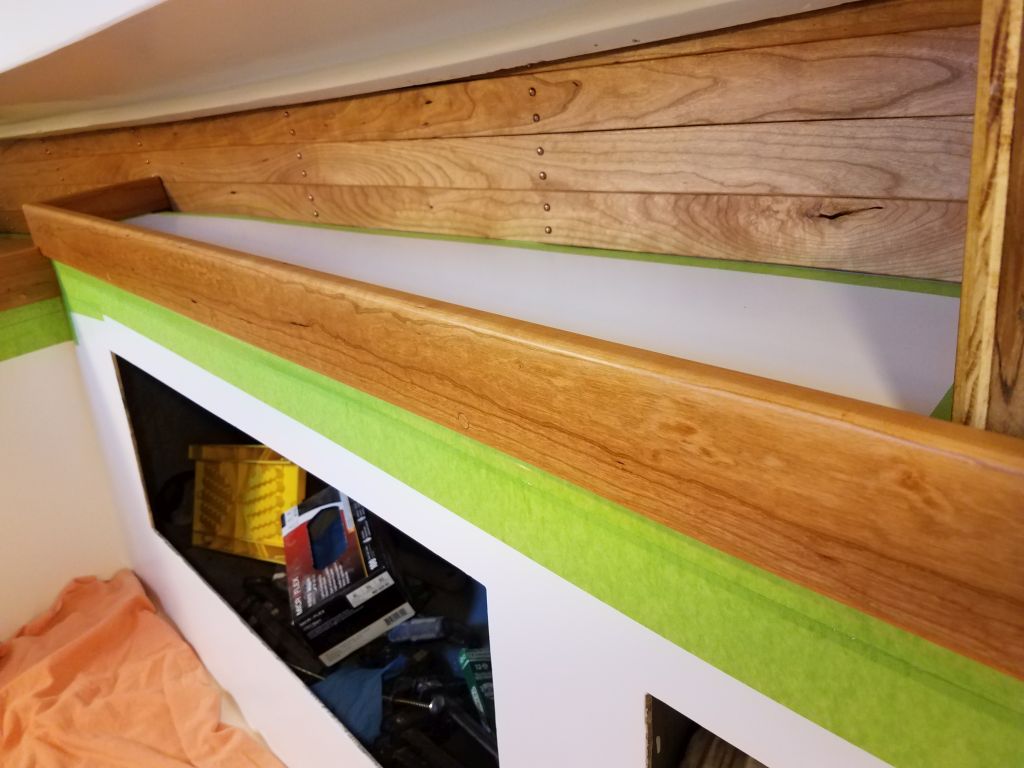
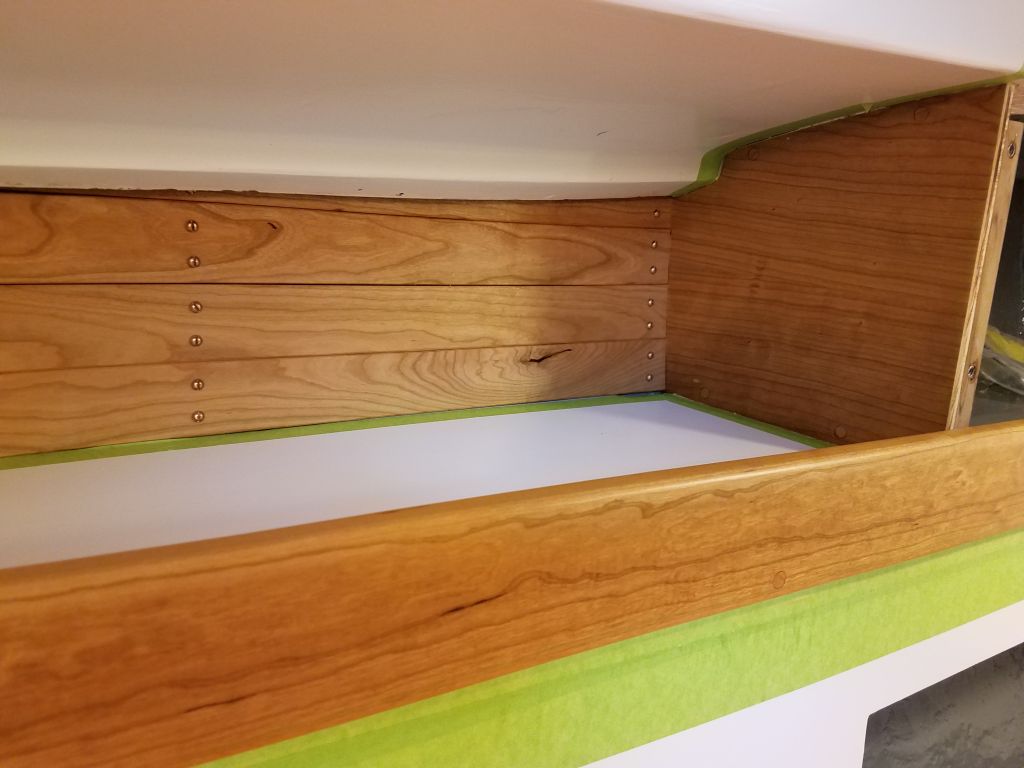
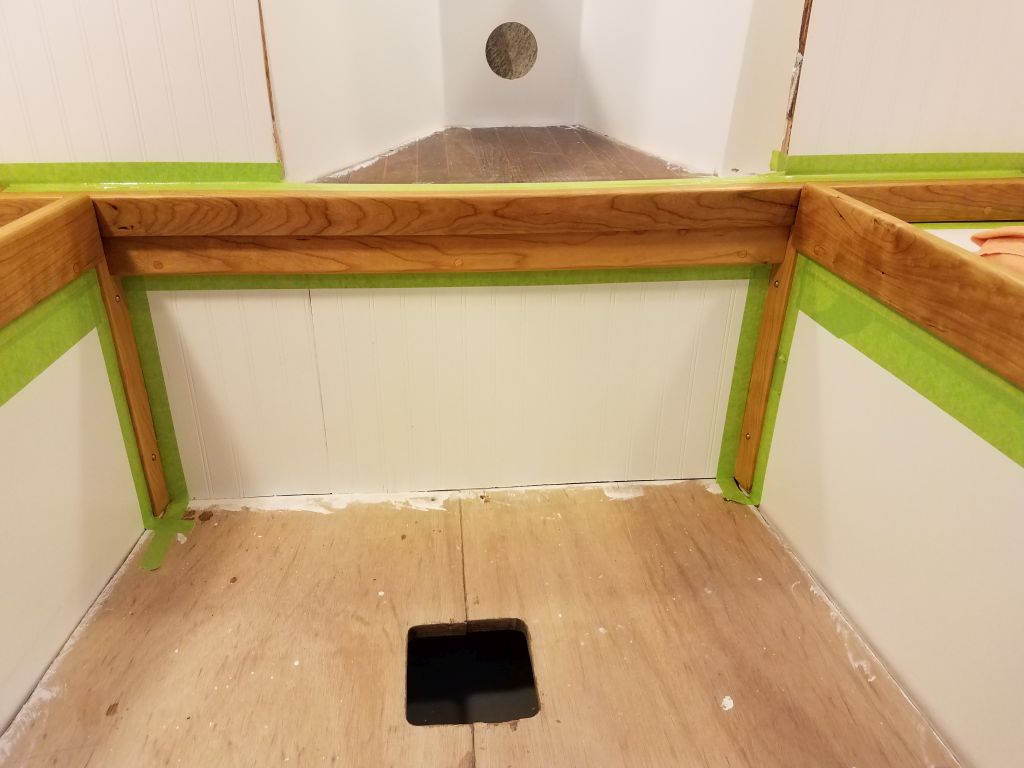
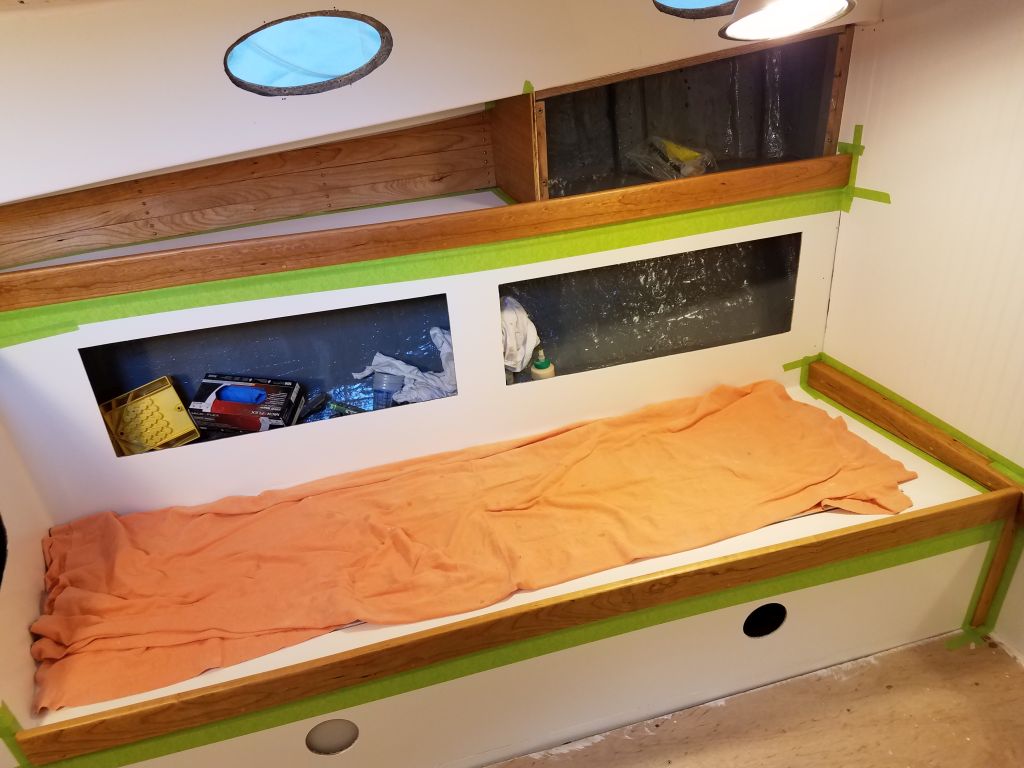
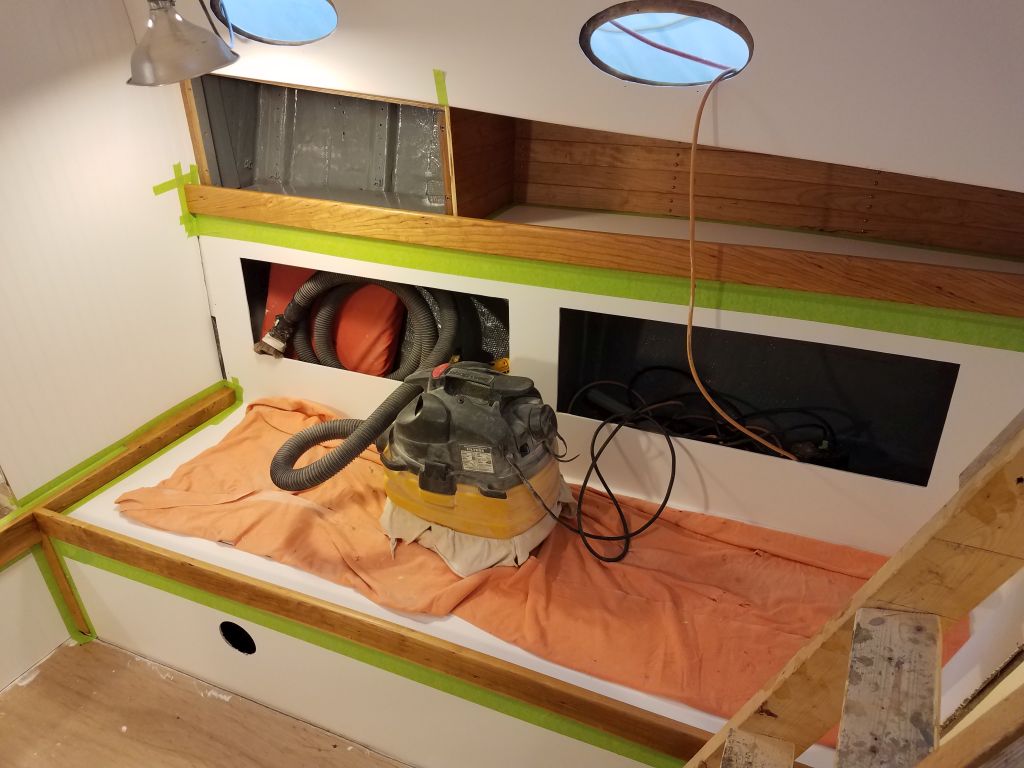
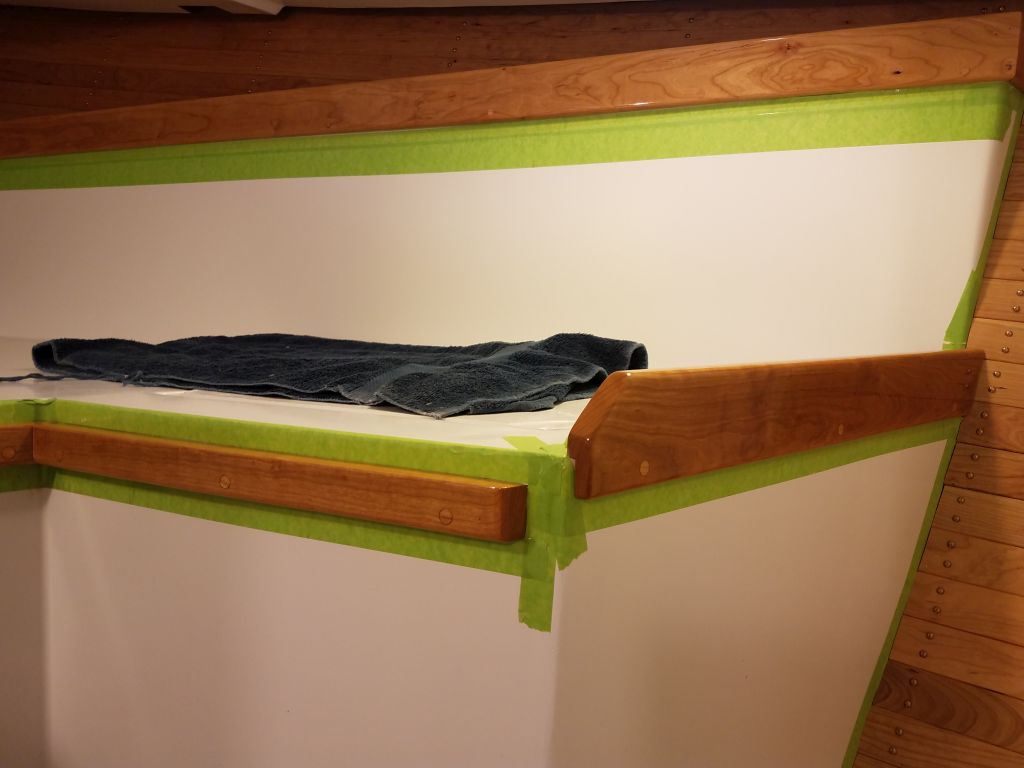
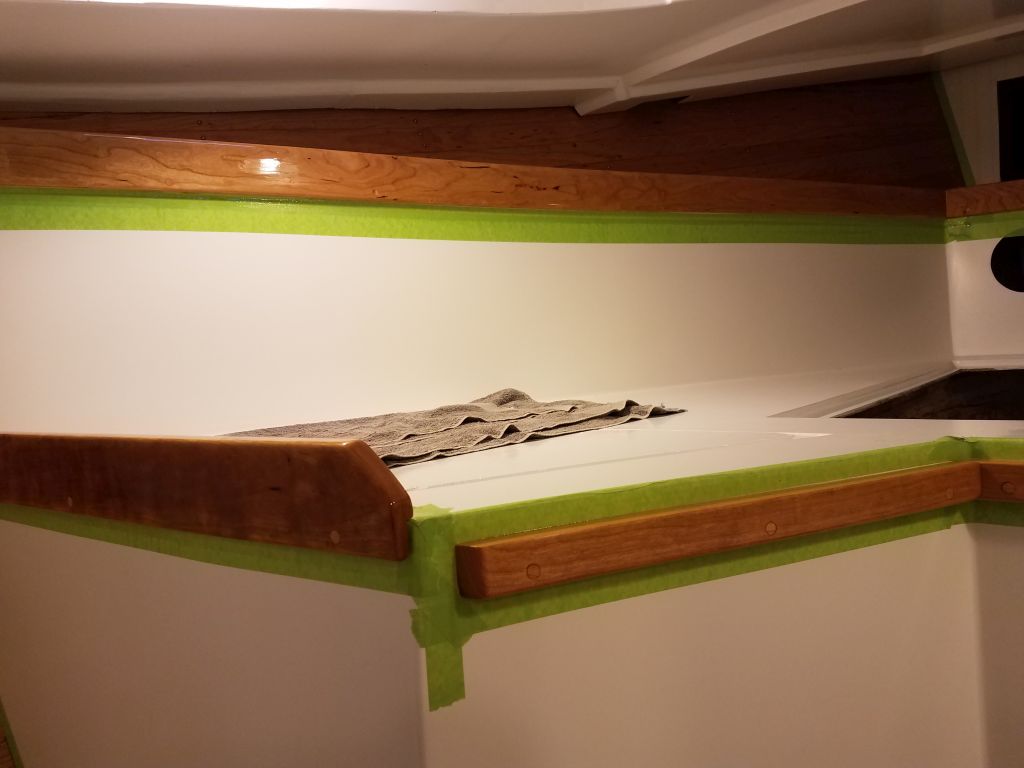
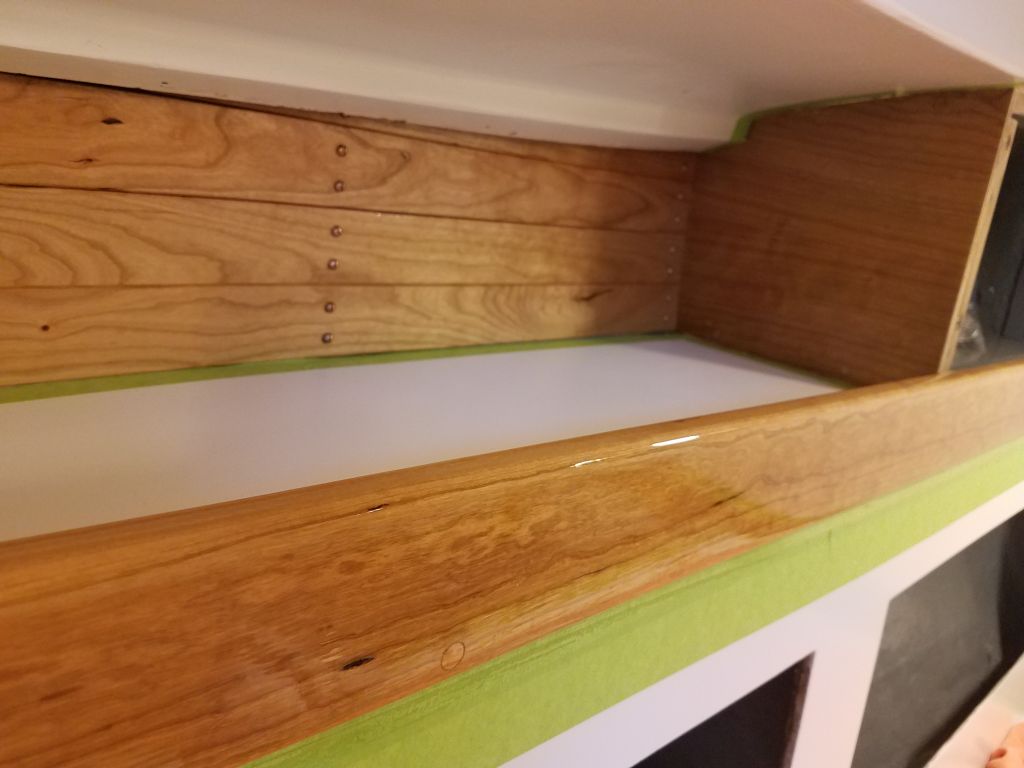
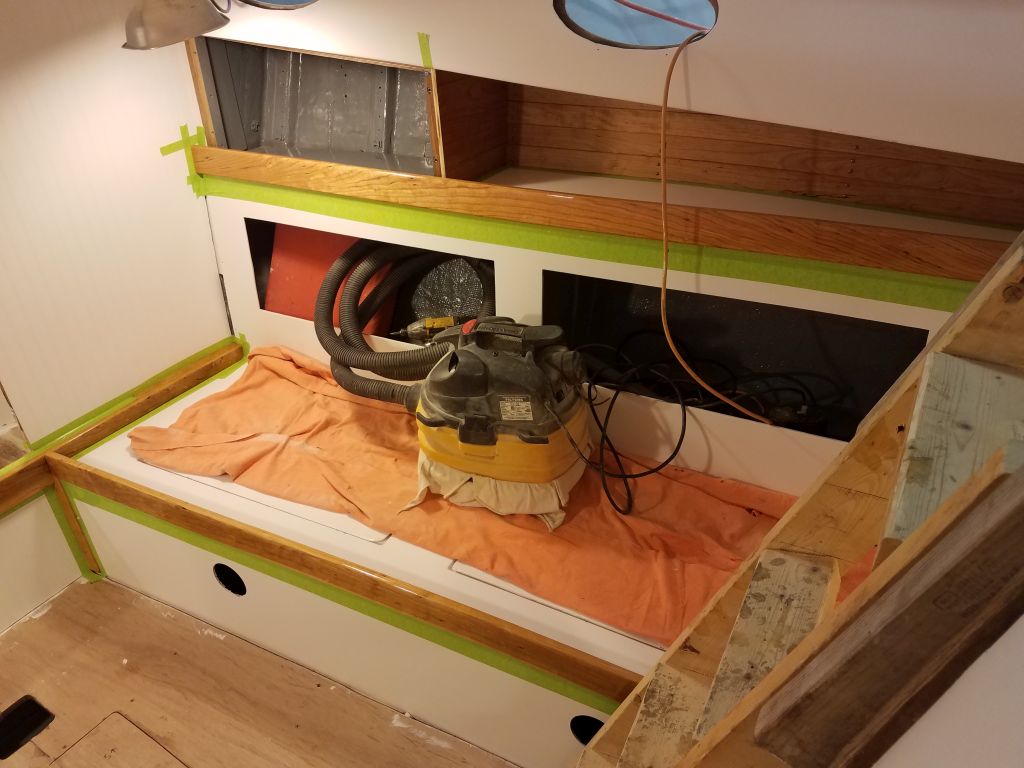
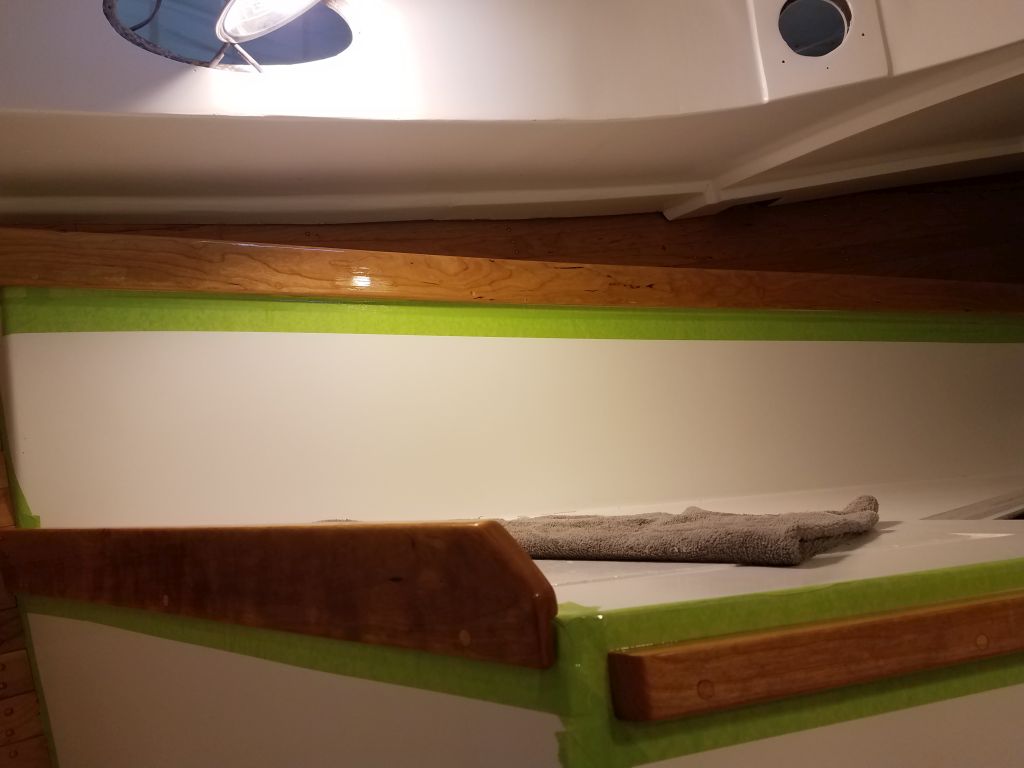
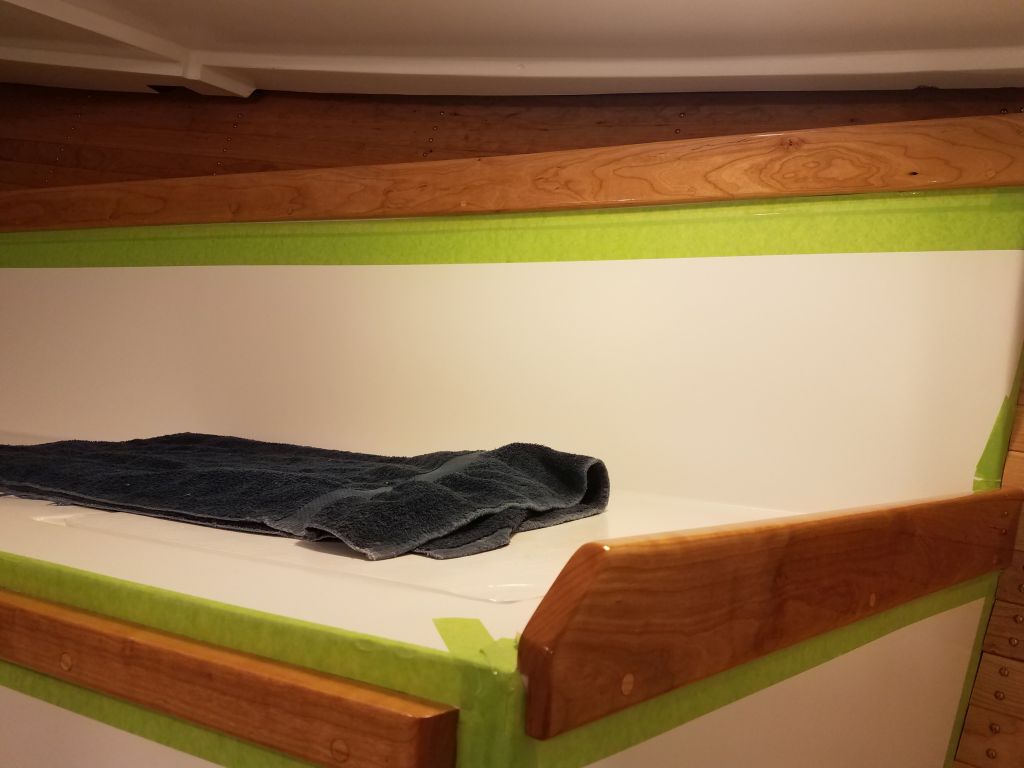
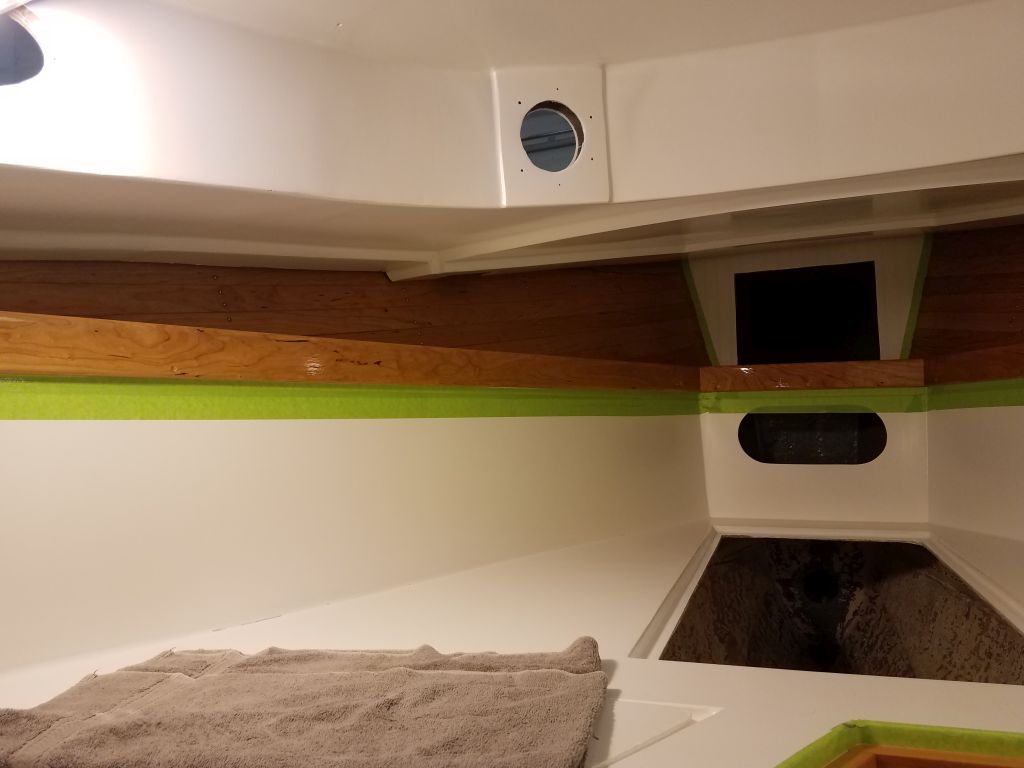
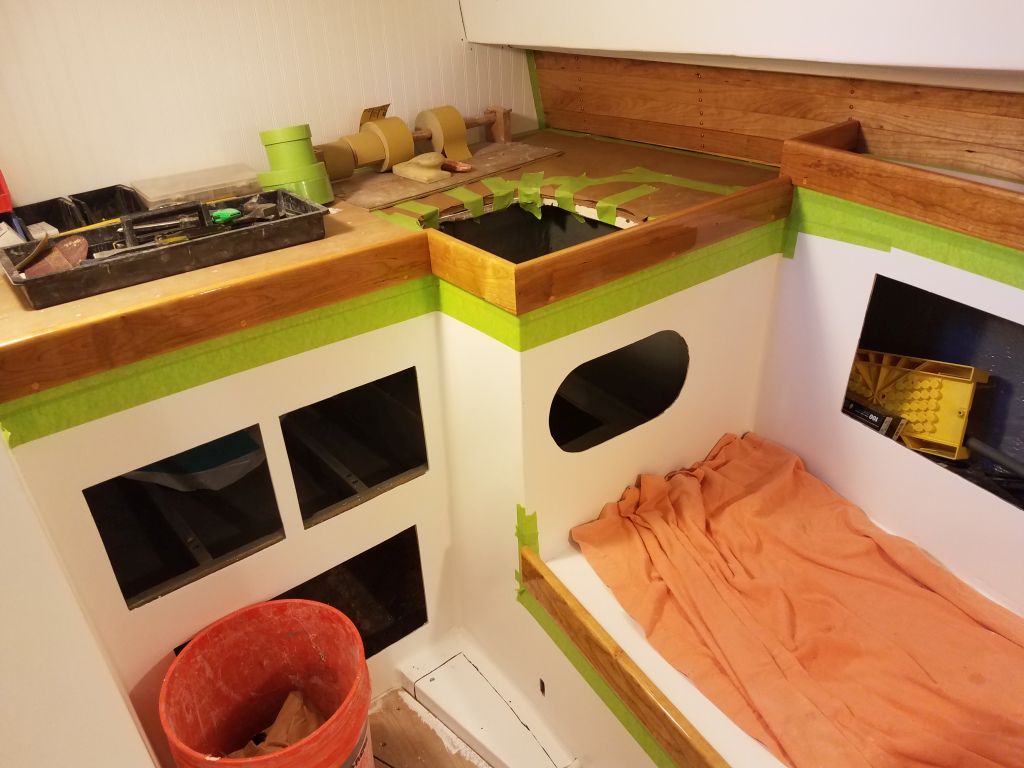
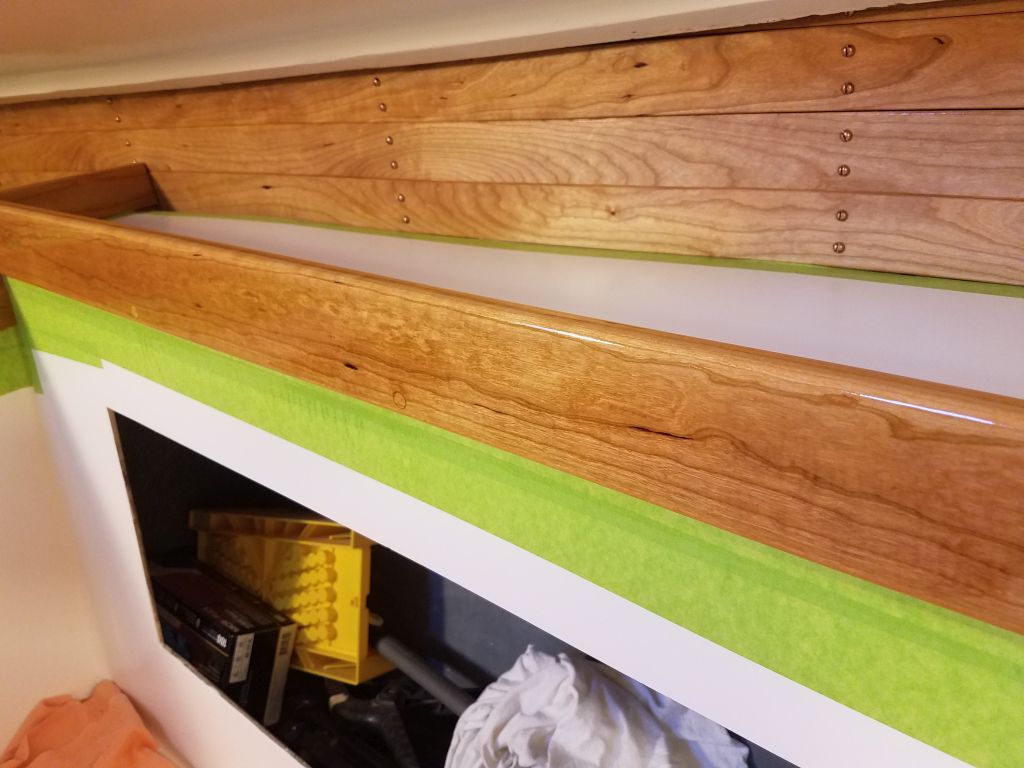
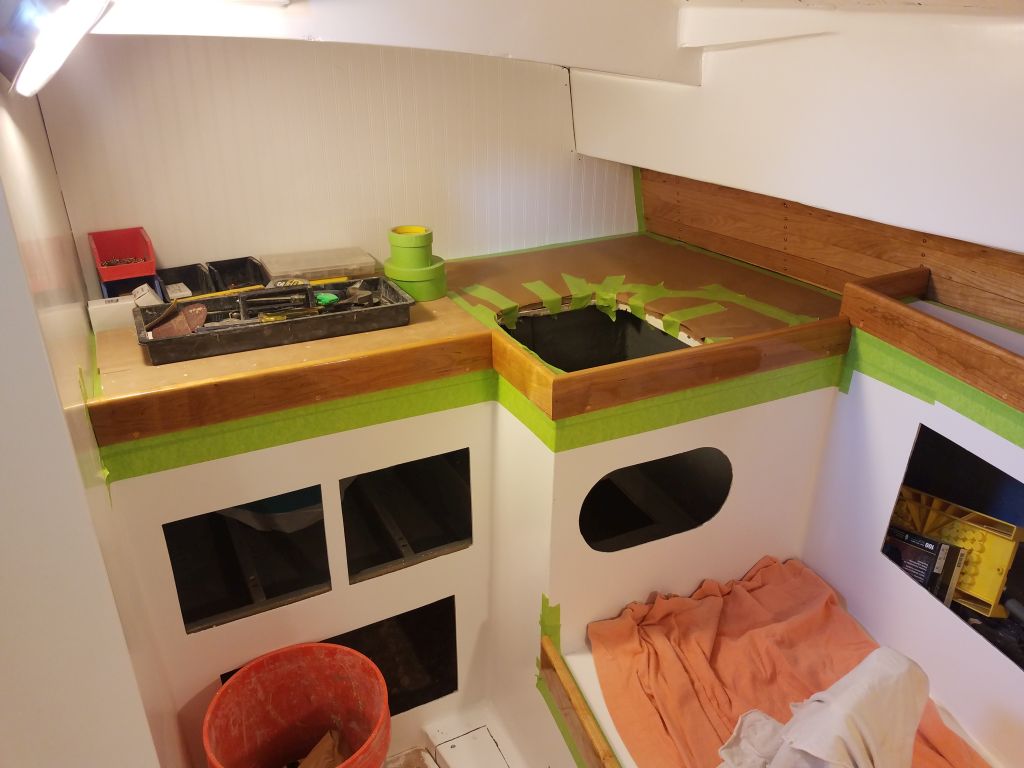
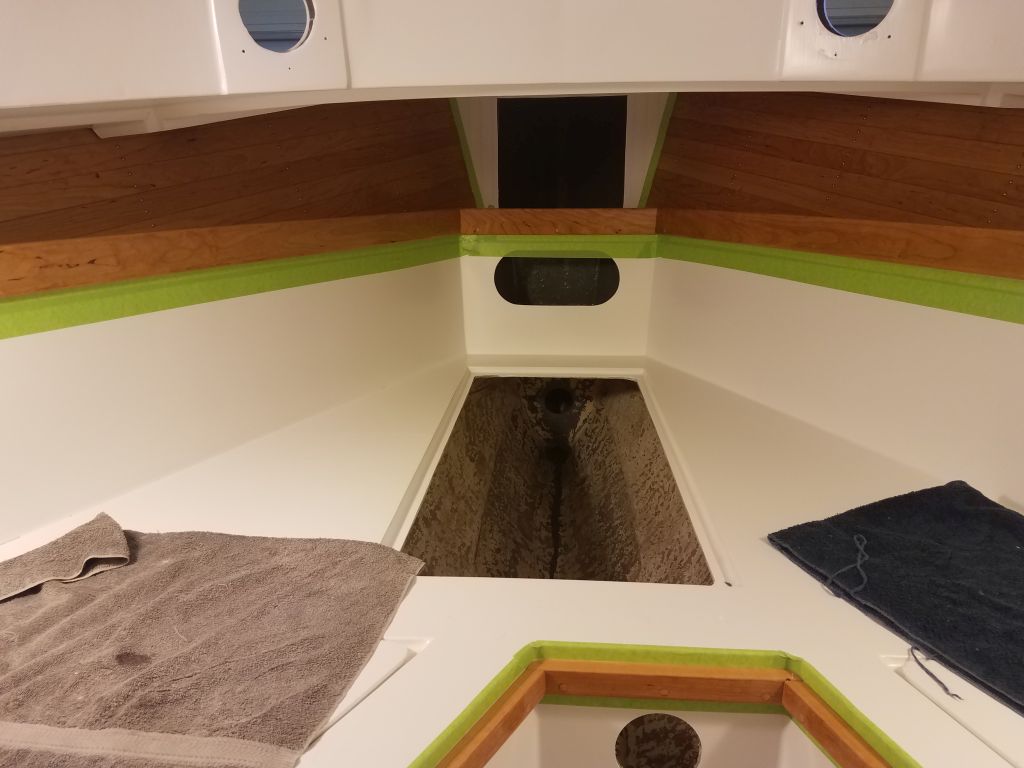
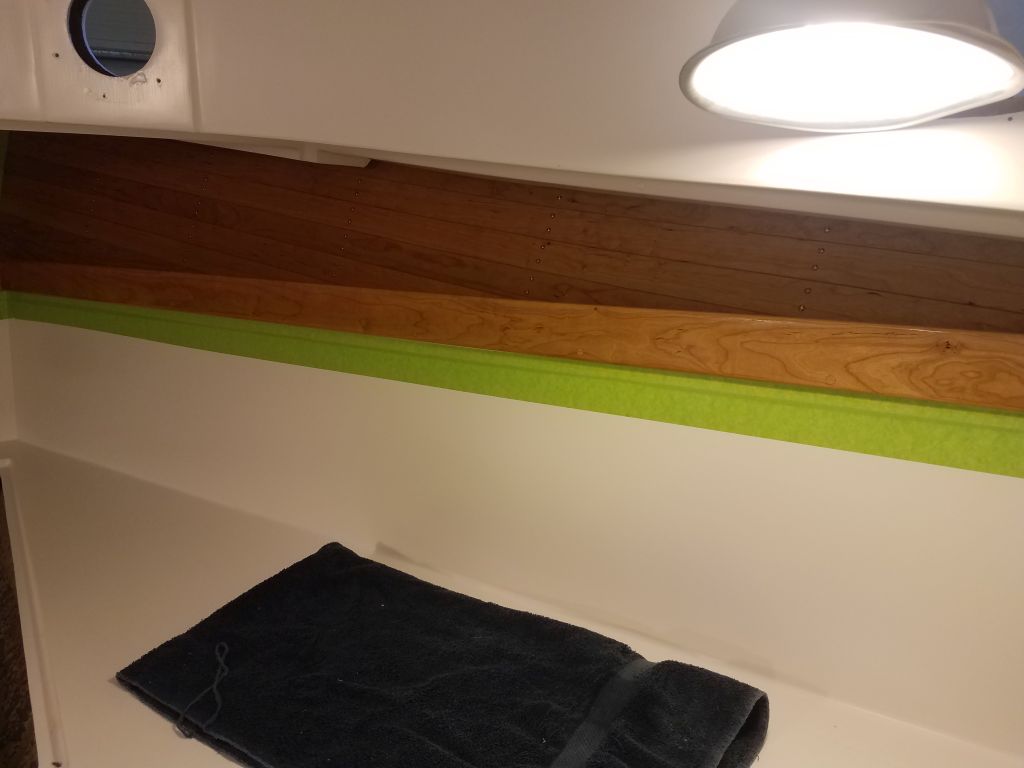
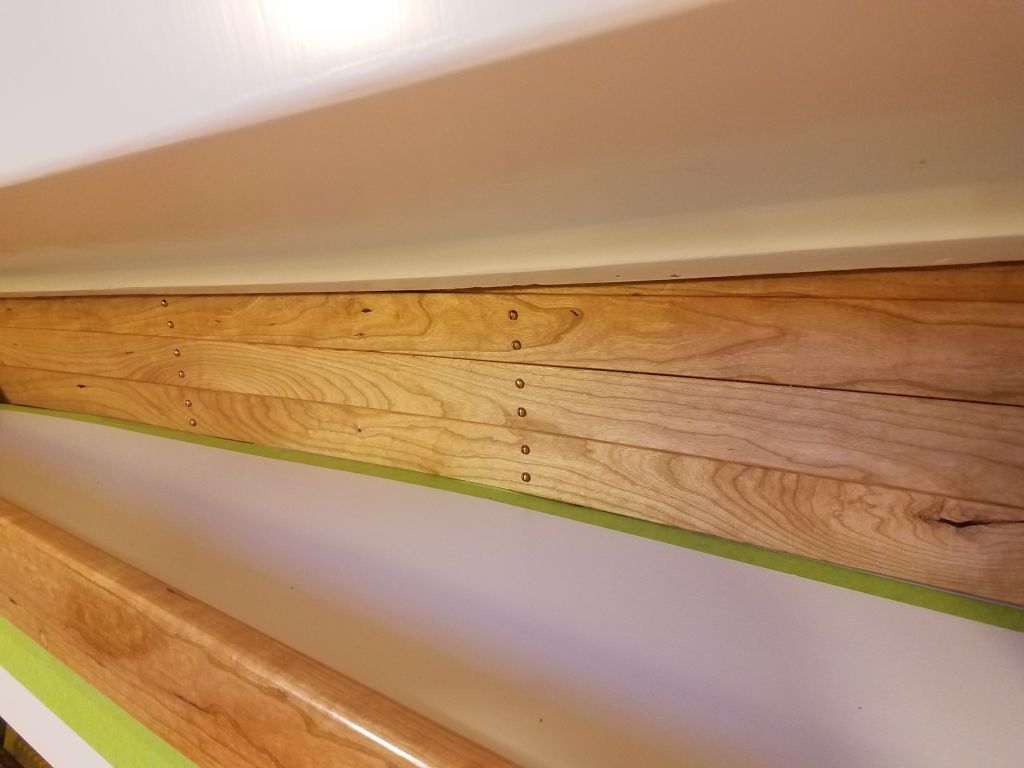
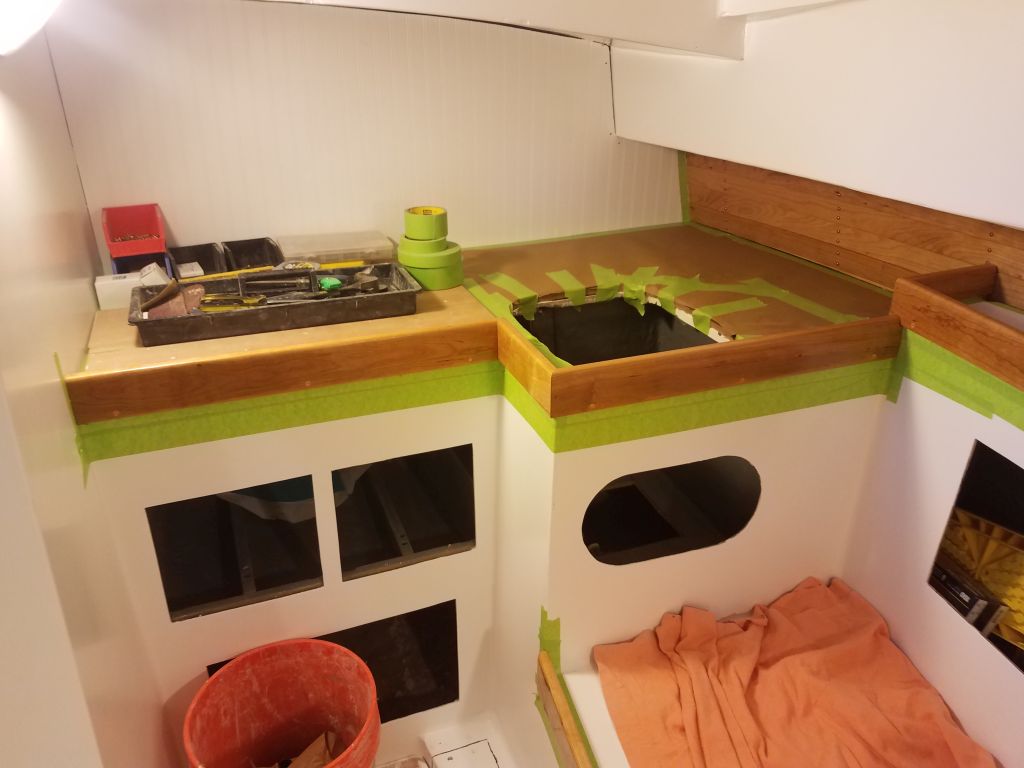
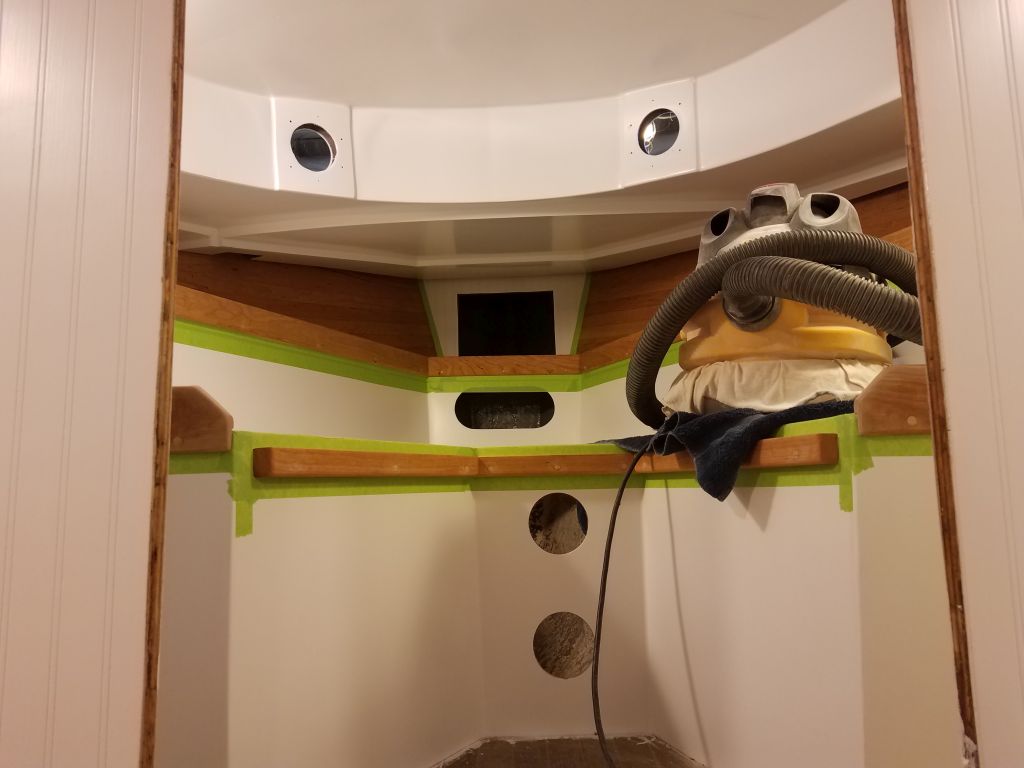
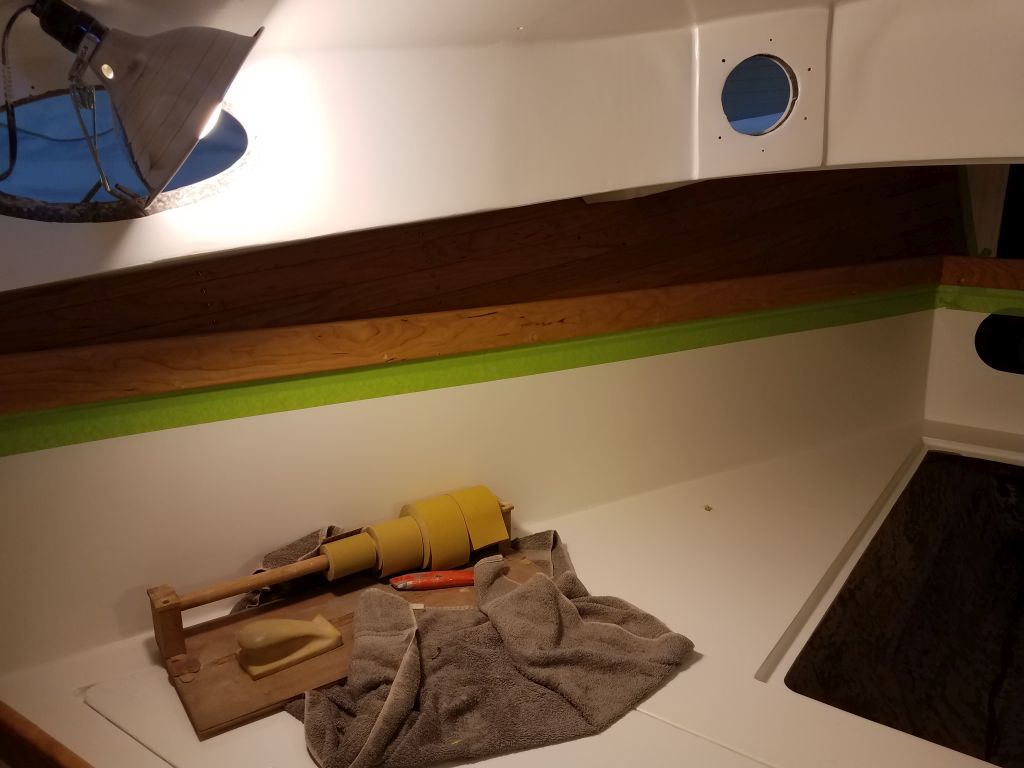
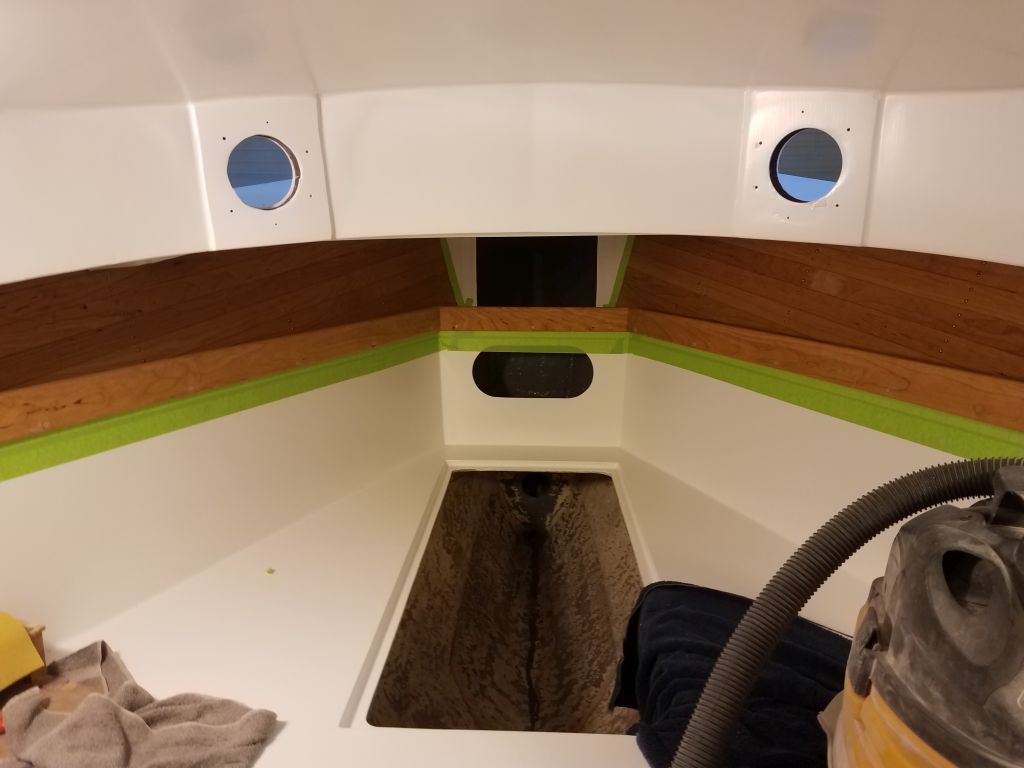
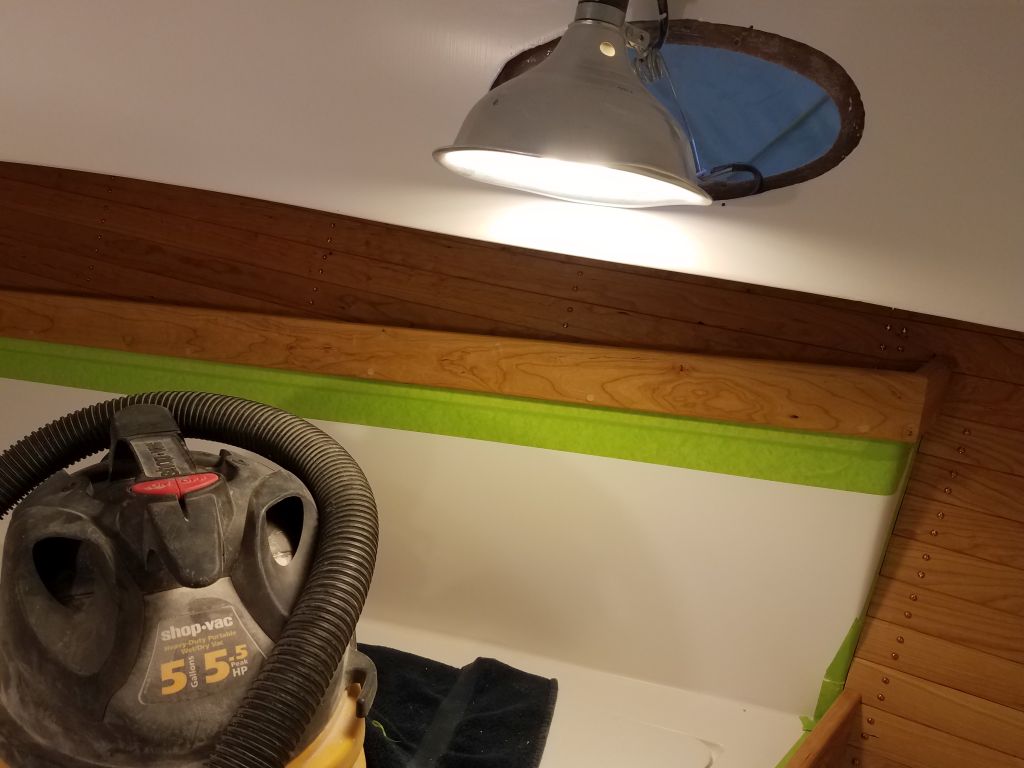
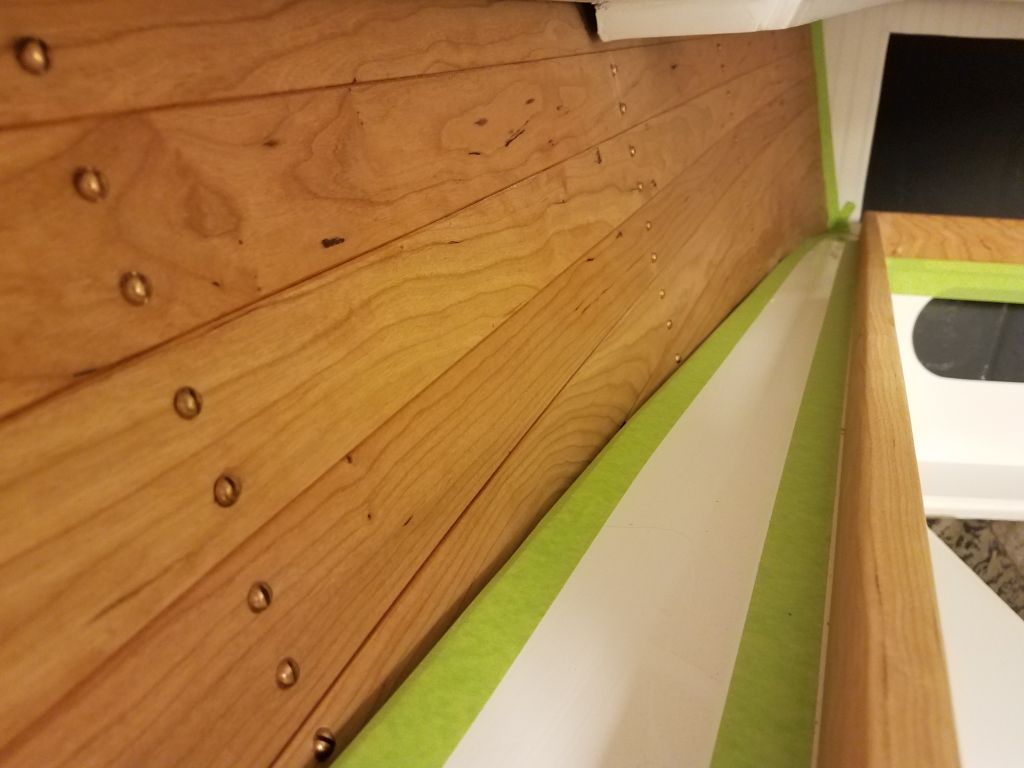
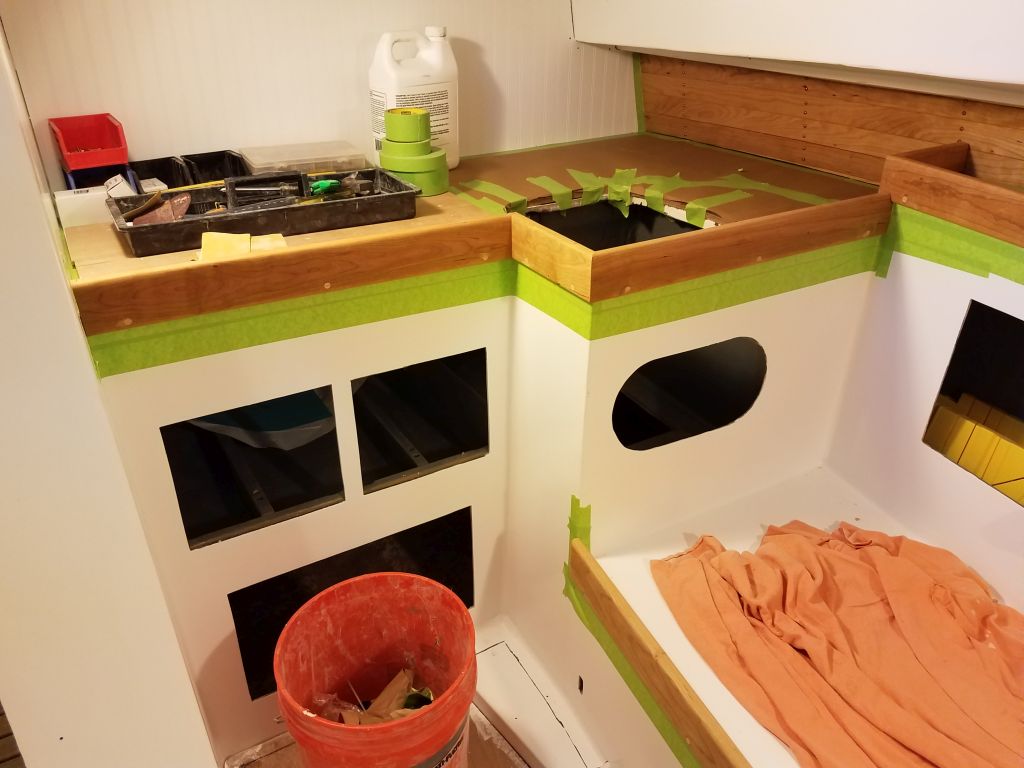
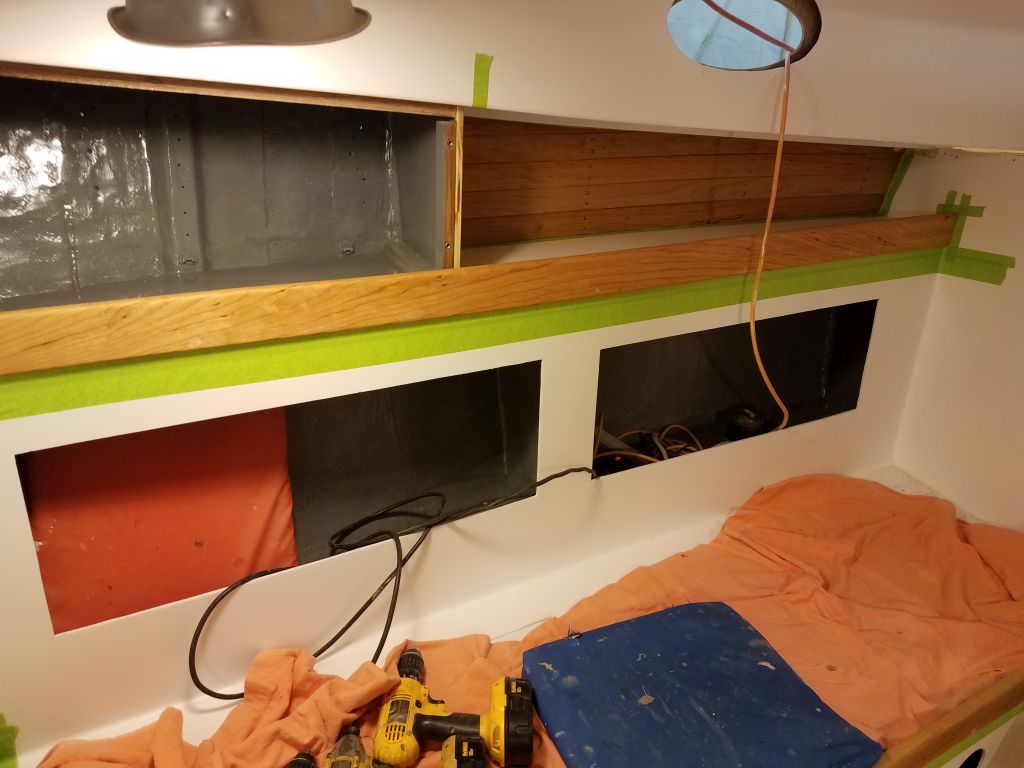
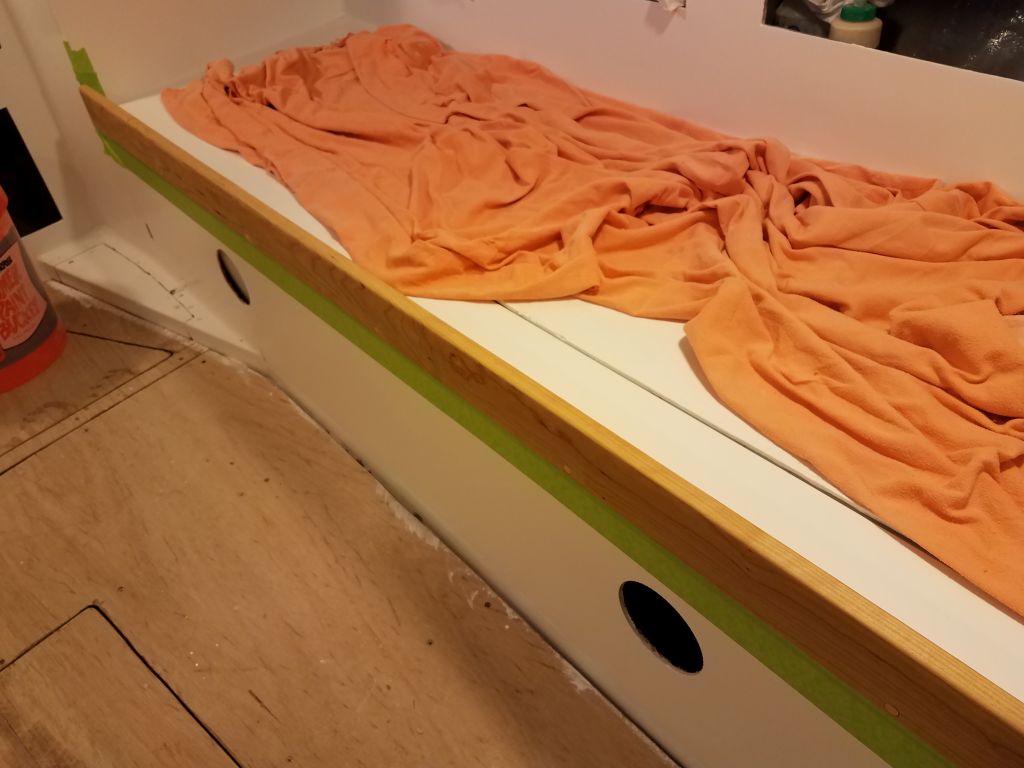
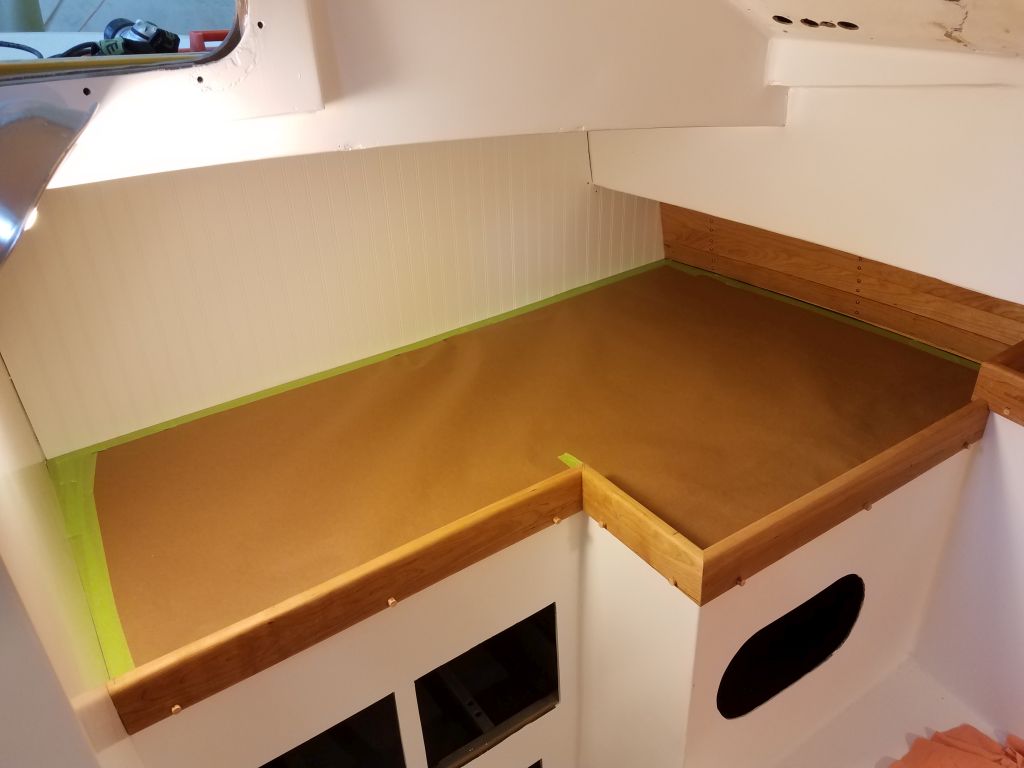
These photos show the new interior paint work after the second coat, and with the coating cured and in its final appearance.

To allow the fresh paint plenty of time to fully cure and harden up, I planned to more or less stay out of the cabin for the rest of the week, which gave me time to continue to focus on some of the cherry trim preparations and other tasks.

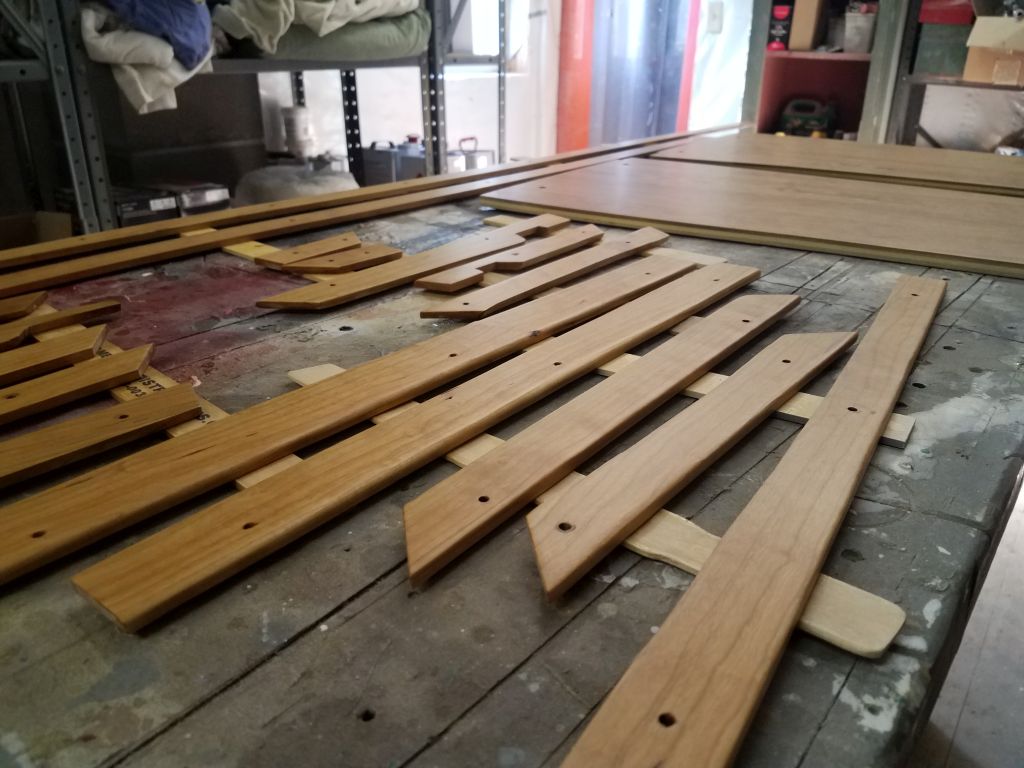
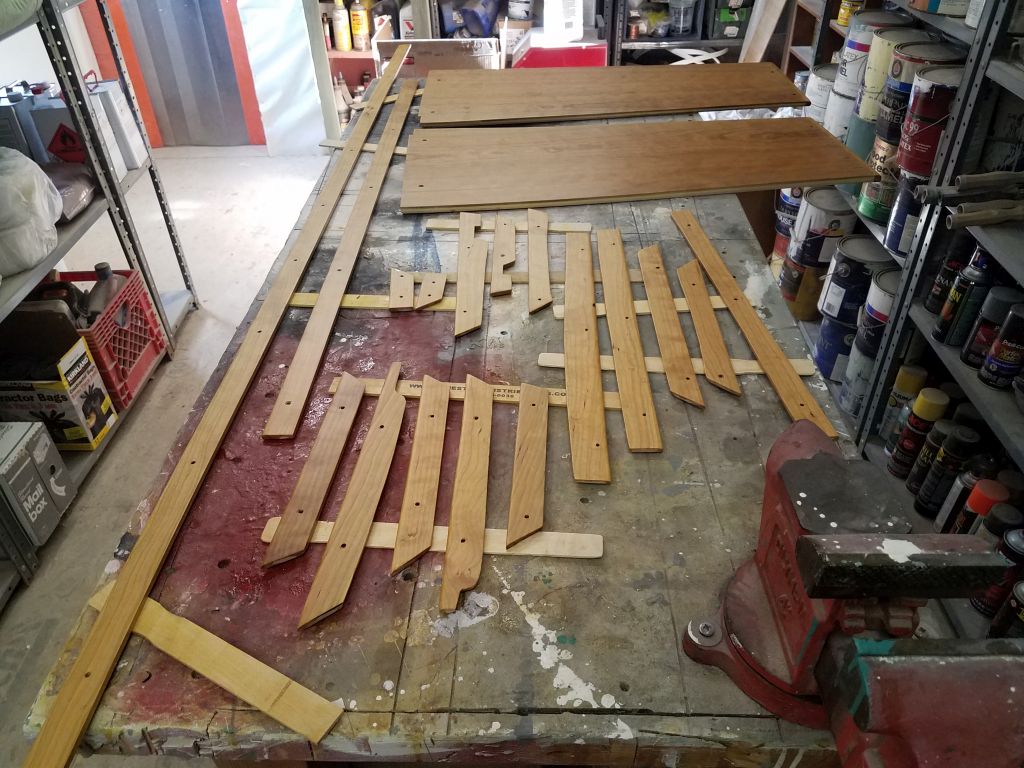
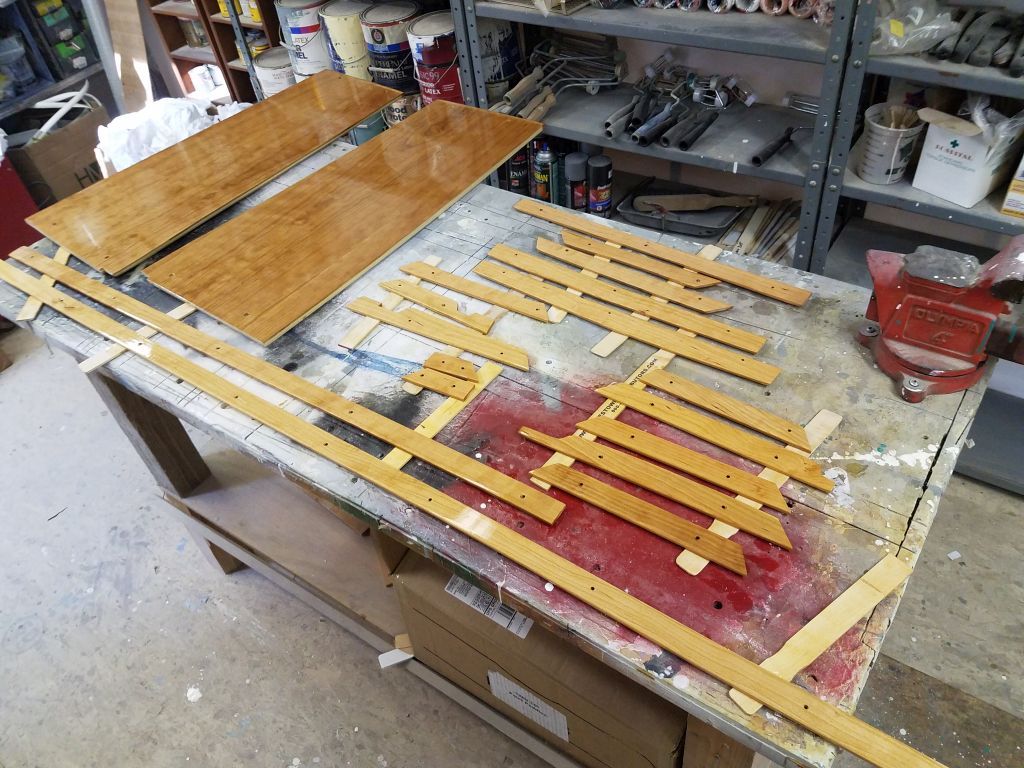
To that end, I cleaned all the new ceiling boards I’d cut earlier, and set them up on three separate benches so I could apply a thinned coat of varnish to all sides of all the pieces.

The new hatch opening I’d cut and prepared in the poop deck required a hatch cover.   Since the boat was to have no exterior woodwork (all future exterior trim would be made with “vegan” wood or other substitutes), I chose to build the new hatch from fiberglass, which would eventually receive paint to match the rest of the deck.  Using prefab 3/8″ fiberglass sheeting, I cut a lid of appropriate size, and 1″  tall strips of the same material for the edges of the hatch.  The fore and aft ends would require scribing to match the deck camber, but I planned to to that later, after assembly.

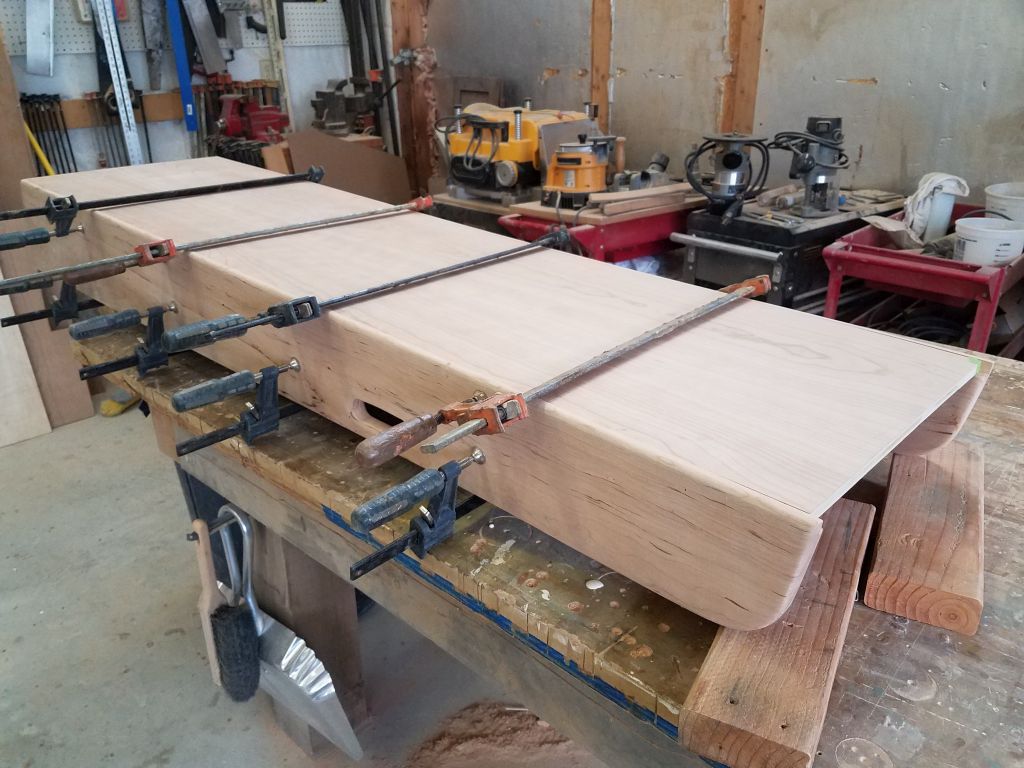
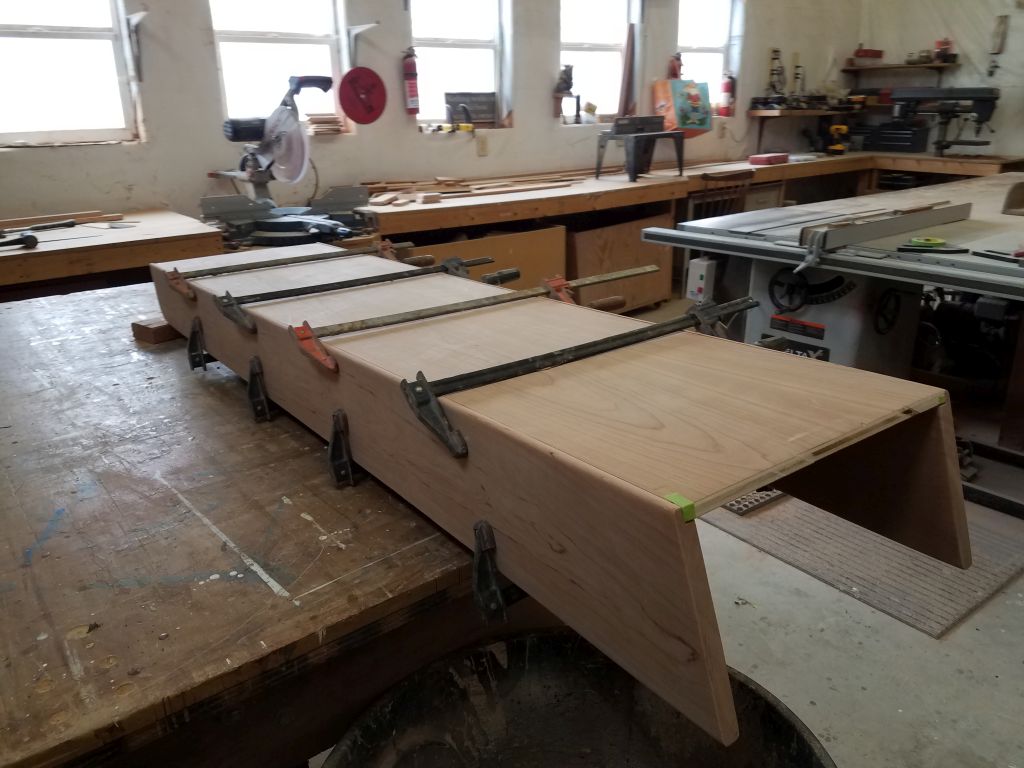
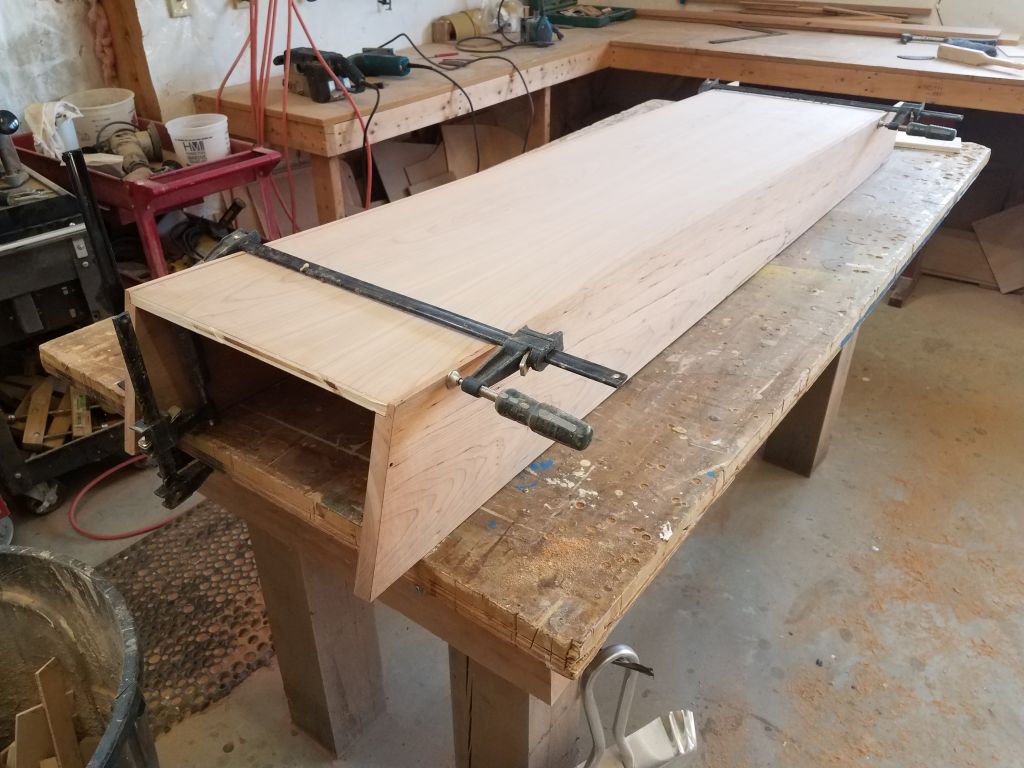
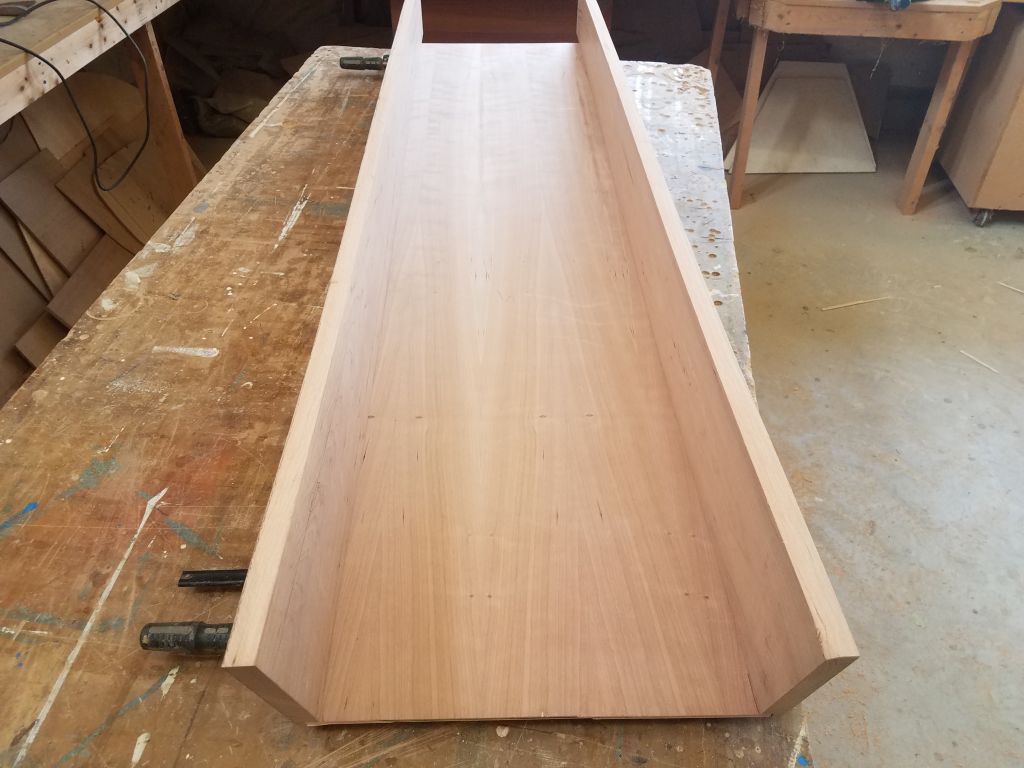
I epoxied the pieces together into a hatch shape and set the assembly aside.

The original sliding companionway hatch was a massive assembly of plywood and teak strips, and was in sound structural, but poor cosmetic, condition.  The old teak, neglected for years, was heavily weathered and rough, and unsalvageable from a cosmetic standpoint, though it remained solid all around.  During earlier discussions, the owner and I agreed to try sheathing and painting the existing hatch, in keeping with the no-wood mantra.

To prepare the surfaces for the work ahead, I sanded the hatch with coarse paper, exposing fresh wood in many areas.  The black sealant between the wood strips was generally quite a bit lower than the wooden surfaces, so by skimming the sander across I eased the hard edges to bring the surface into general fairness and smooth enough for what was to come next.

I applied a coat of unthickened epoxy to the wood and, after allowing that to sink in for a little while, applied a coat of epoxy fairing compound, mainly over the curved top surface of the hatch to fill in the seams and smooth the surface. I also used the filler to smooth any grain patterns in the sides and ends of the hatch, as needed.

Next, I installed a layer of 10 oz. fiberglass cloth that I’d previously cut to the appropriate size.  I allowed the cloth to drape below the edges of the hatch in all areas, and sheathed the top, sides, and wrapped around the bottom edges of the side and end rails where possible and as necessary.  It would have been nice to come back sometime later with the epoxy in a green state to trim the excess cloth, but the timing didn’t work out for that so I’d cut and sand off the excesses once the epoxy cured fully overnight.

To round out the day, and prepare ahead for one of my planned tasks next time, I used a drum sander to ream out all the through hull holes, removing any excess epoxy that had squeezed out when I installed the interior backing pads.  Then, I took care of various pedestrian–but necessary–tasks with the bronze through hull hardware itself, removing too-sticky pilfer-proof labels (that is, labels that only come off in tiny pieces to prevent removal and  transfer to another item)  from the pieces and replacing the bronze plugs in the valves with the supplied zerk grease fittings, and otherwise getting in order for the through hulls’ installation.

Total time billed on this job today:  7.75 hours

0600 Weather observation:  32°, cloudy, 2″ sticky new snow overnight.  Forecast for the day:  Mostly sunny, 46°
Older posts Newer posts