
(page 88 of 165)

Scupper 209

Friday

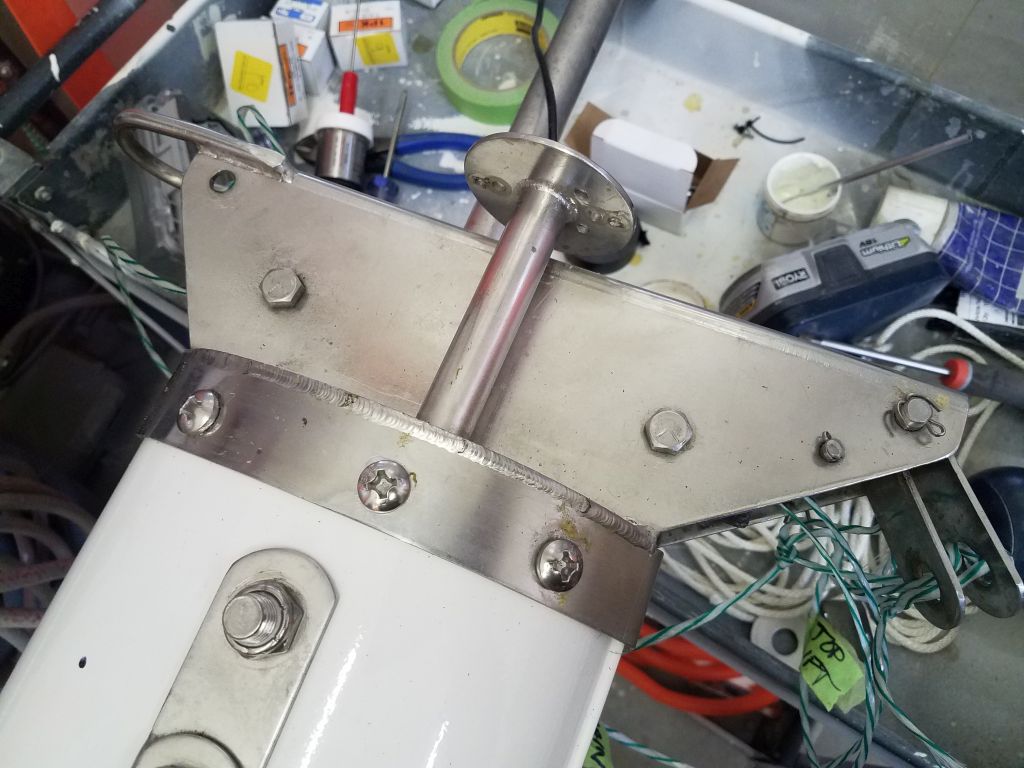
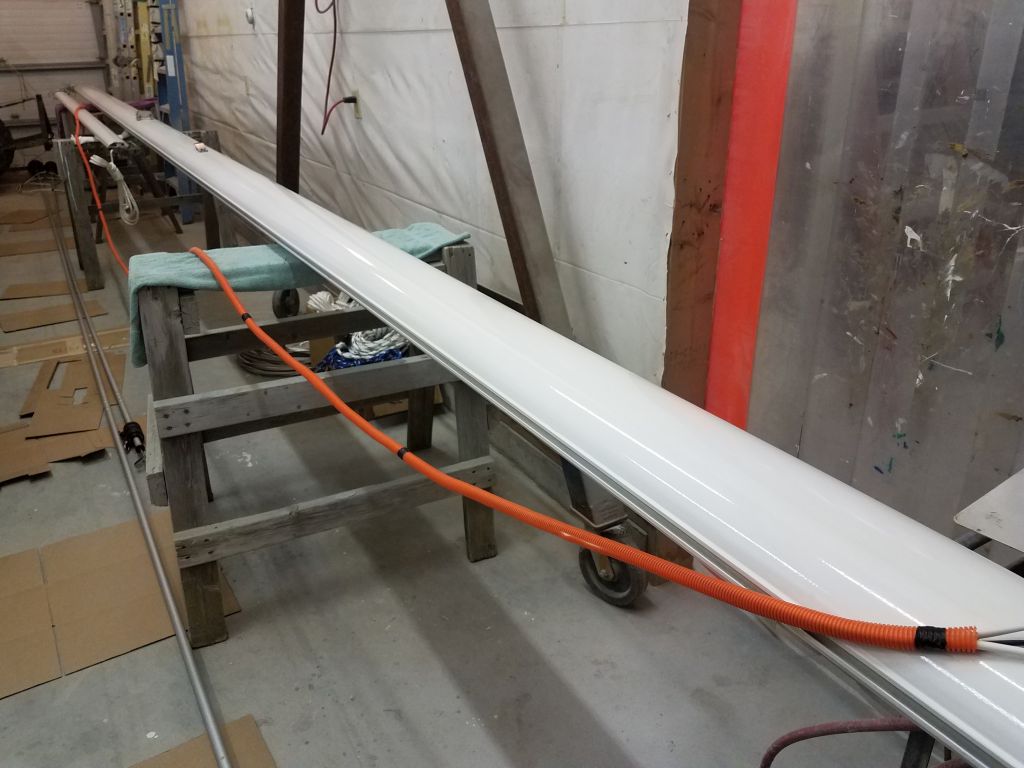
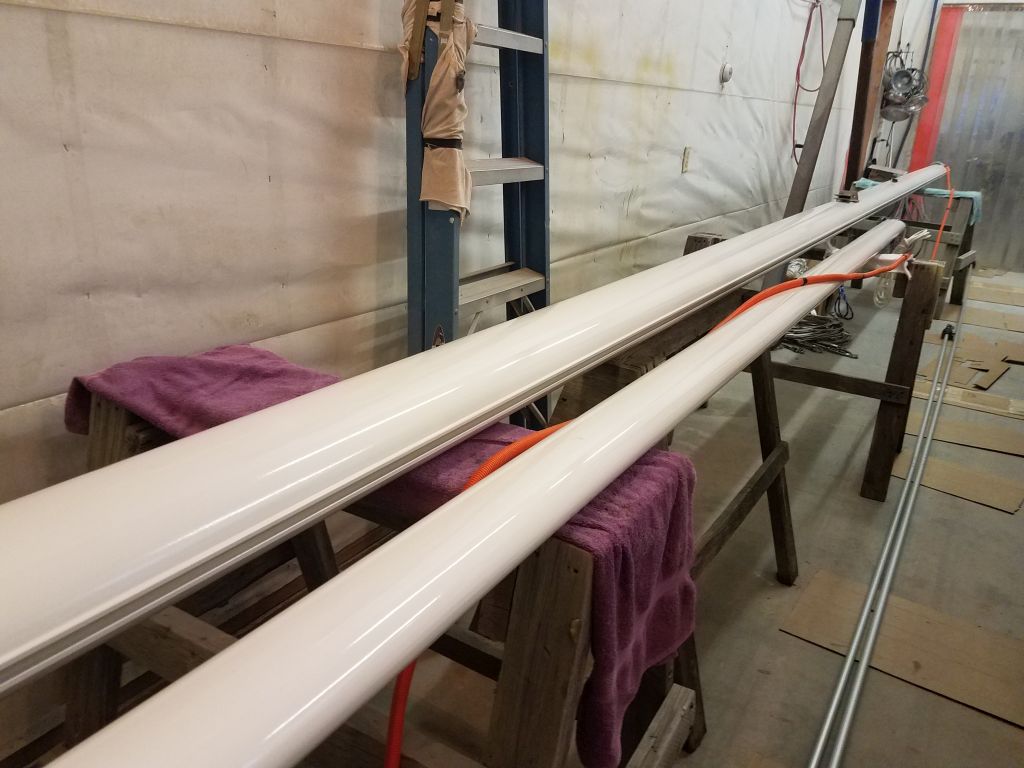
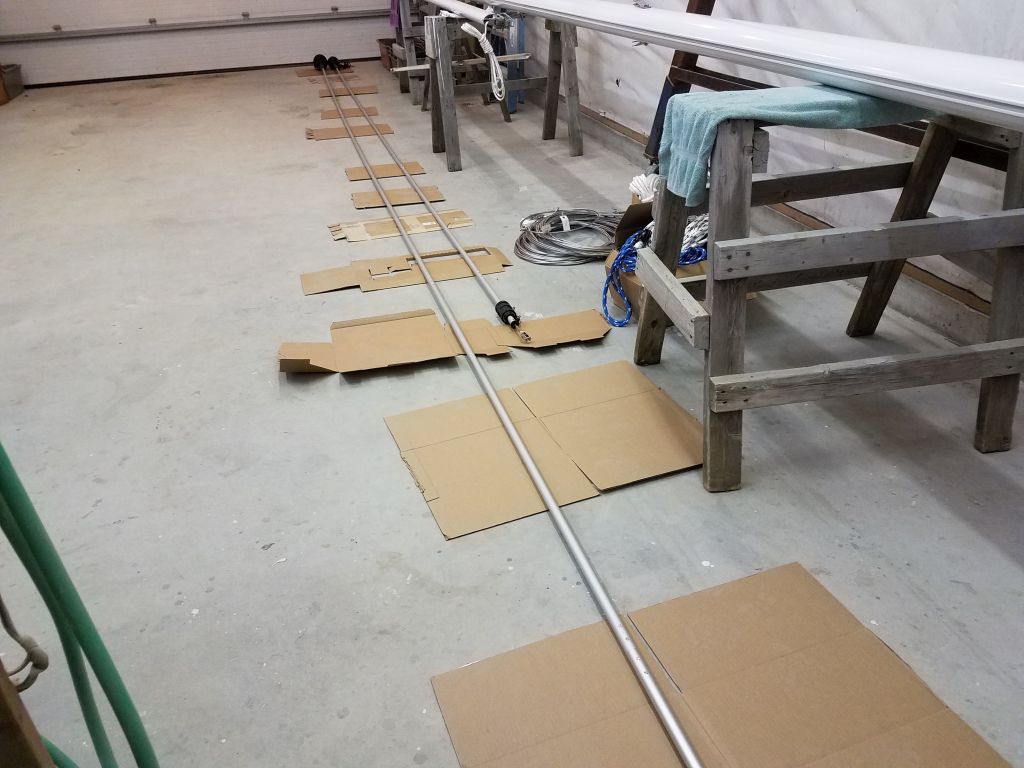
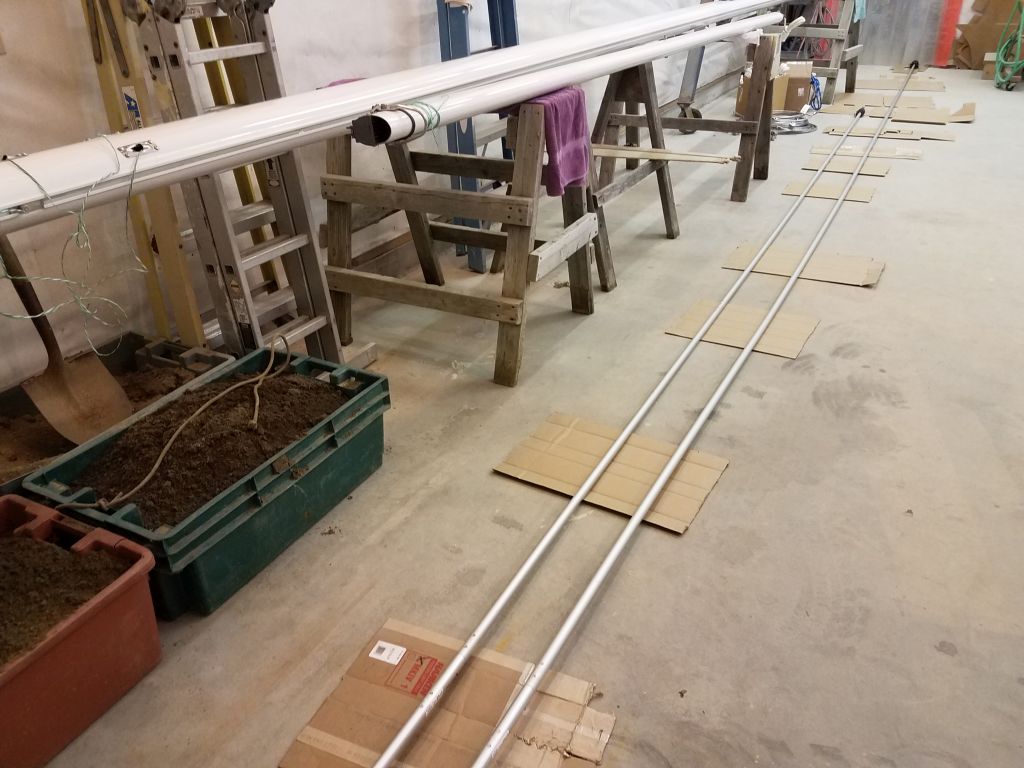
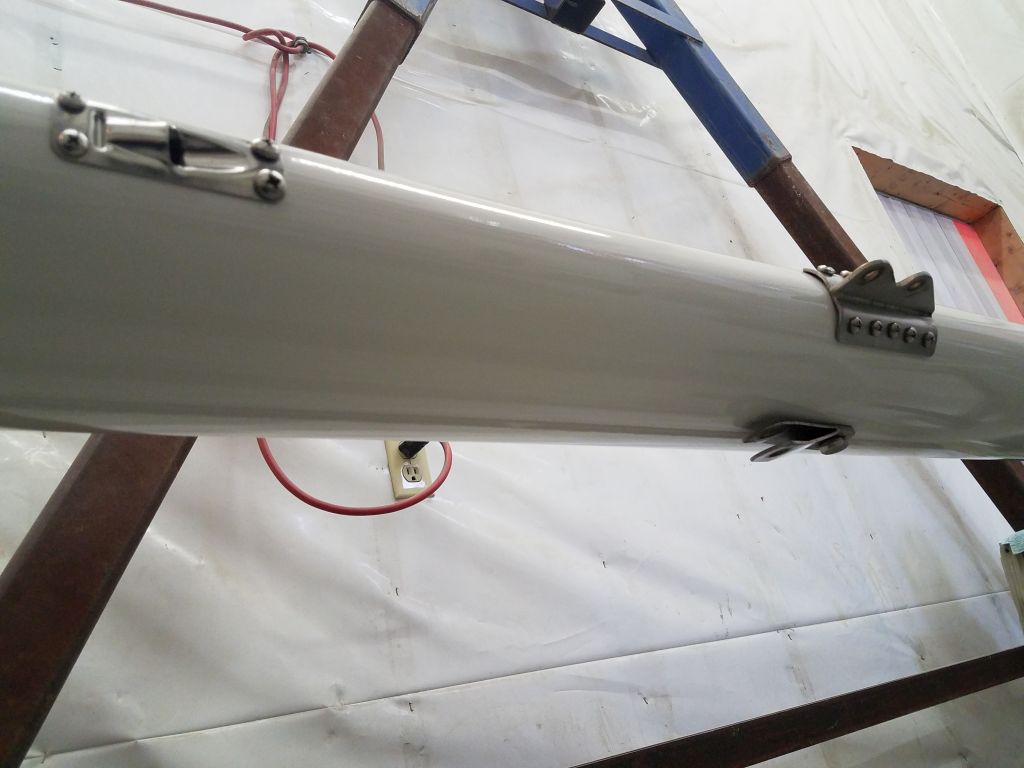
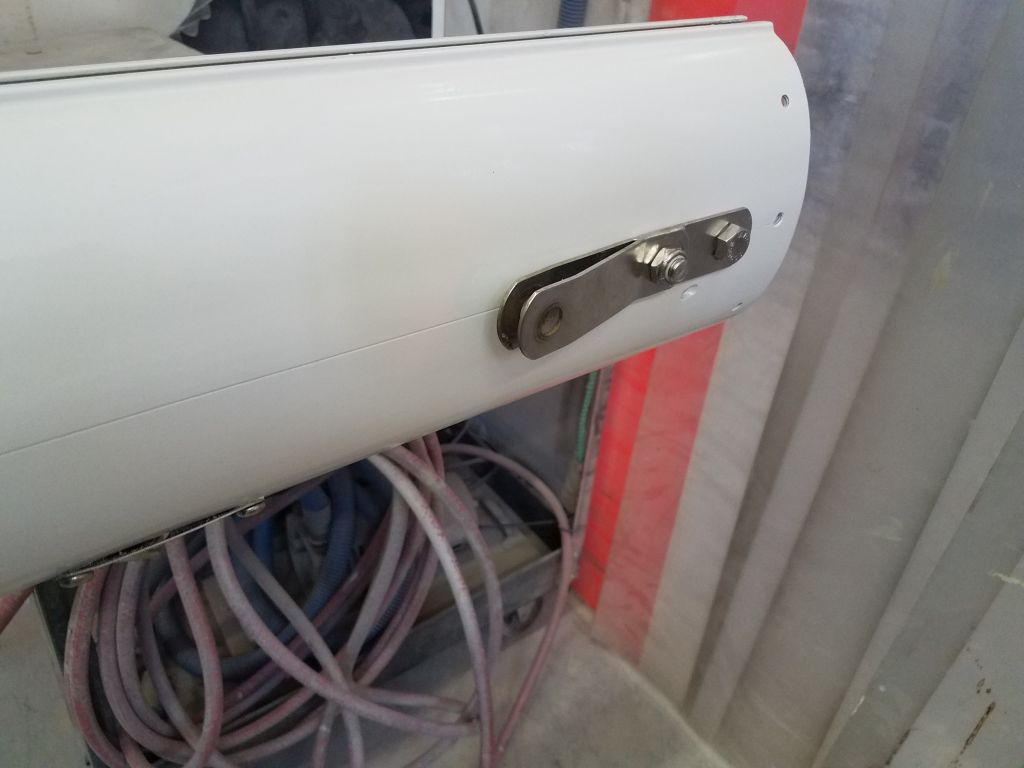
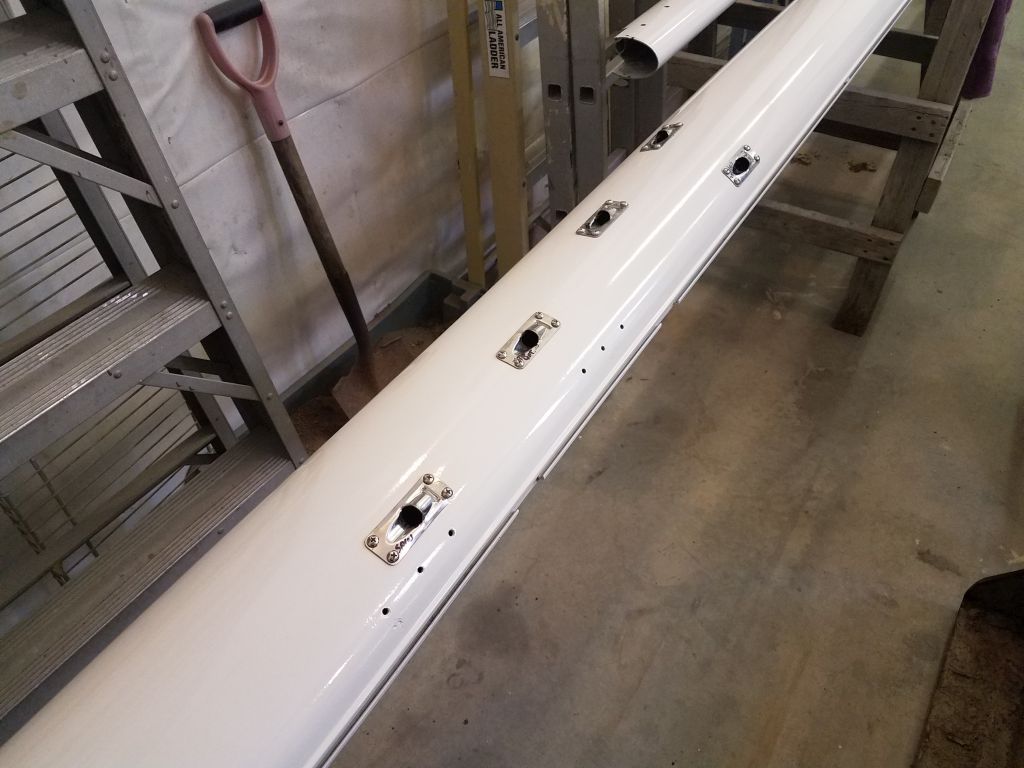
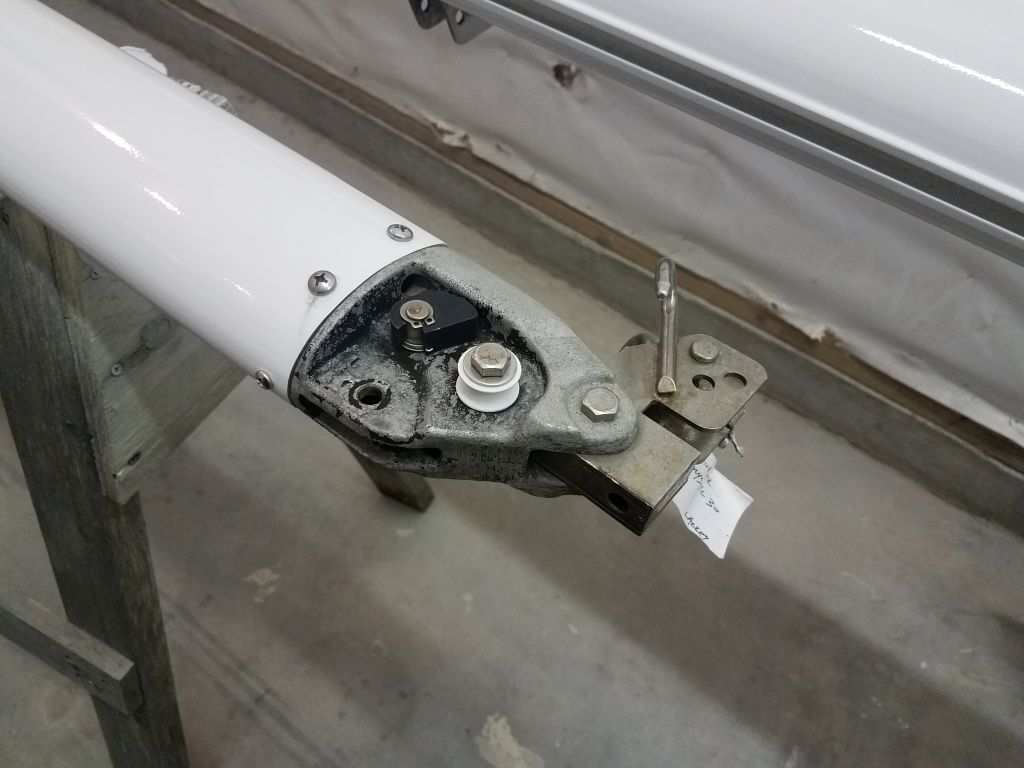
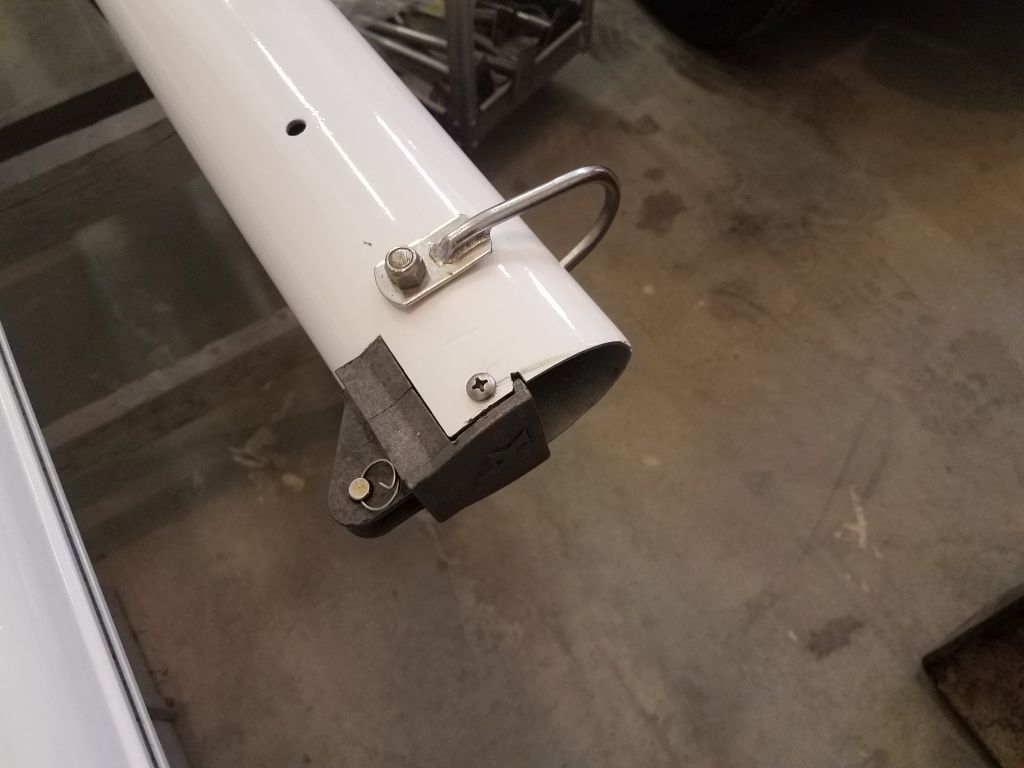
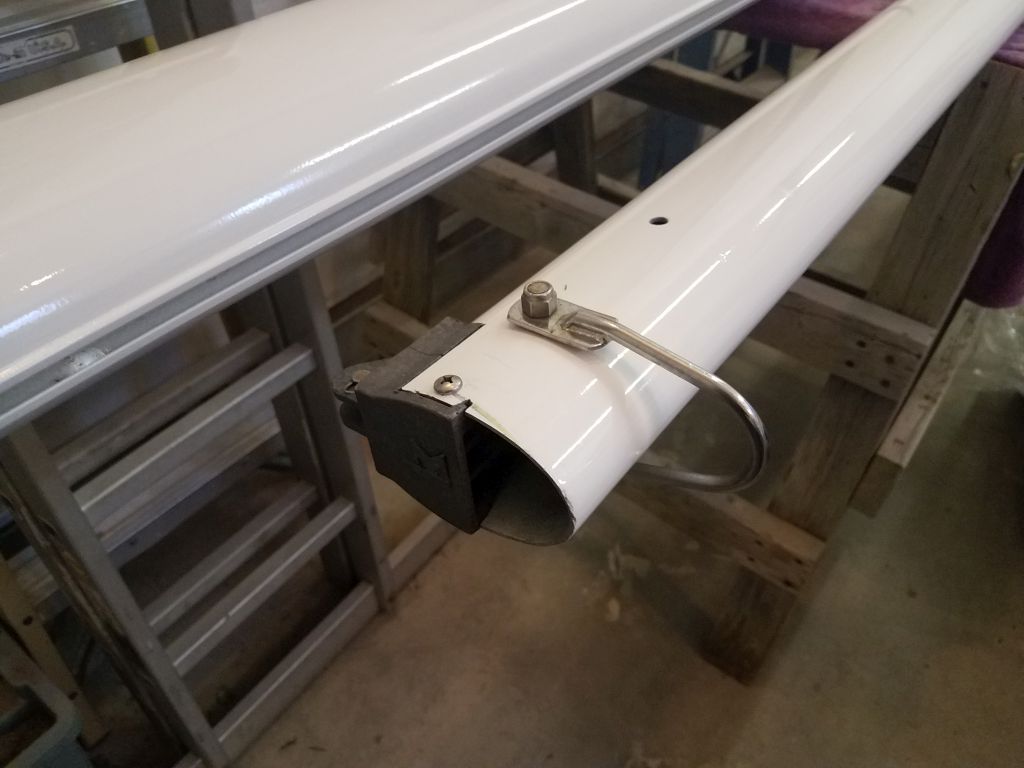
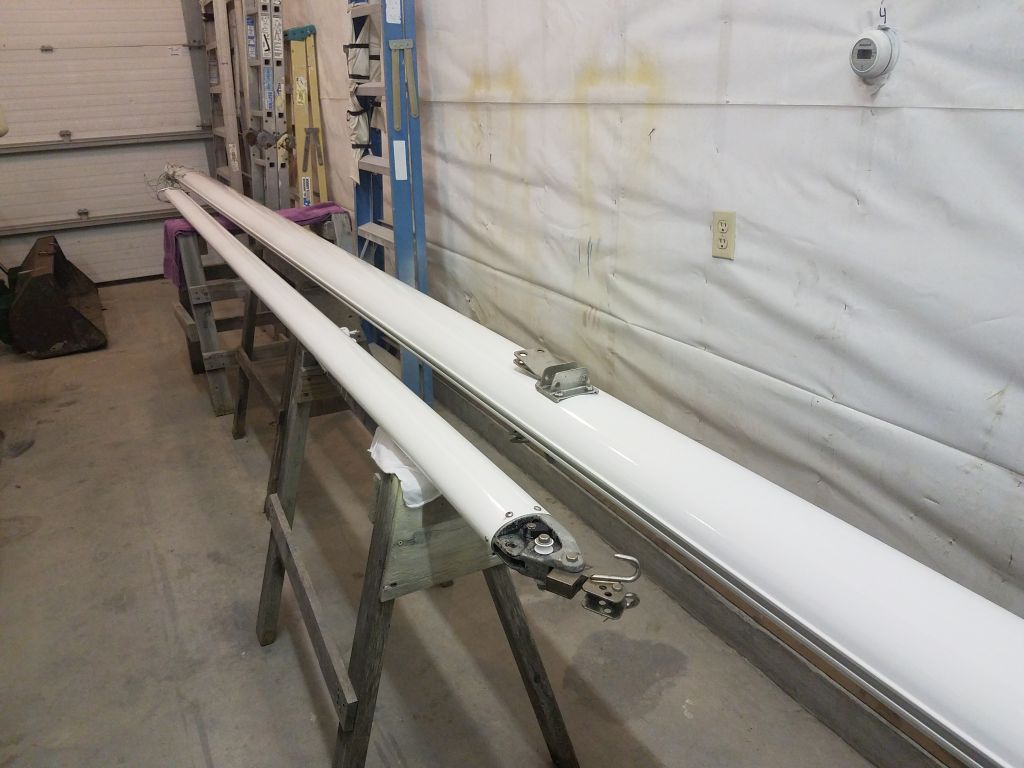
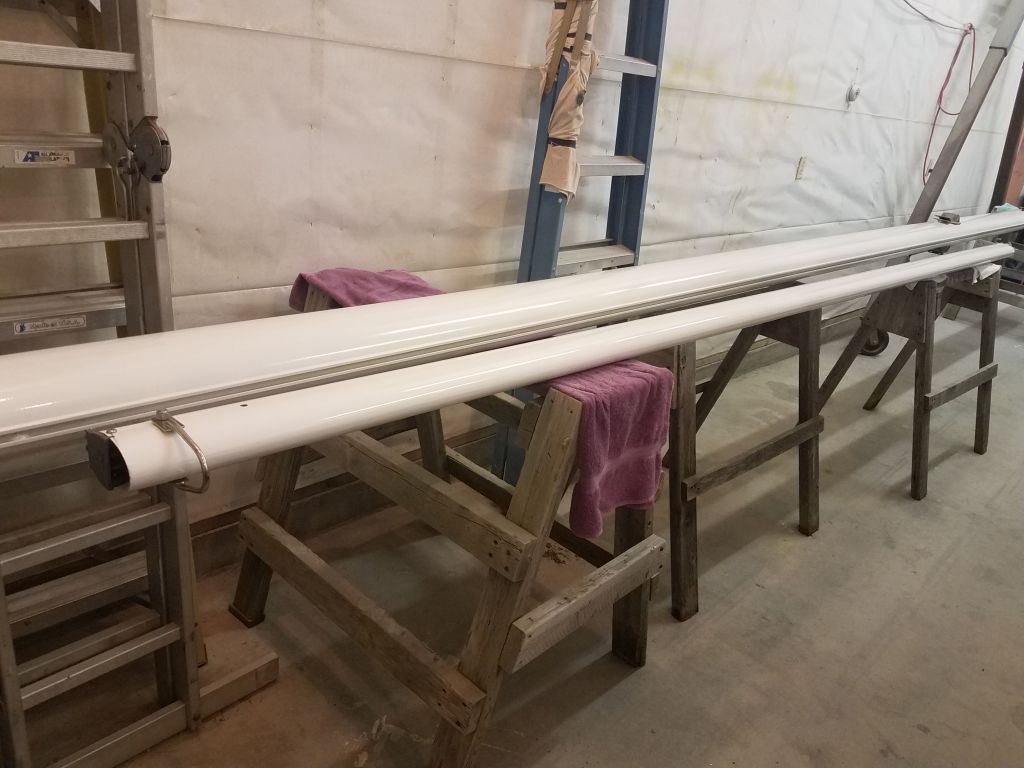
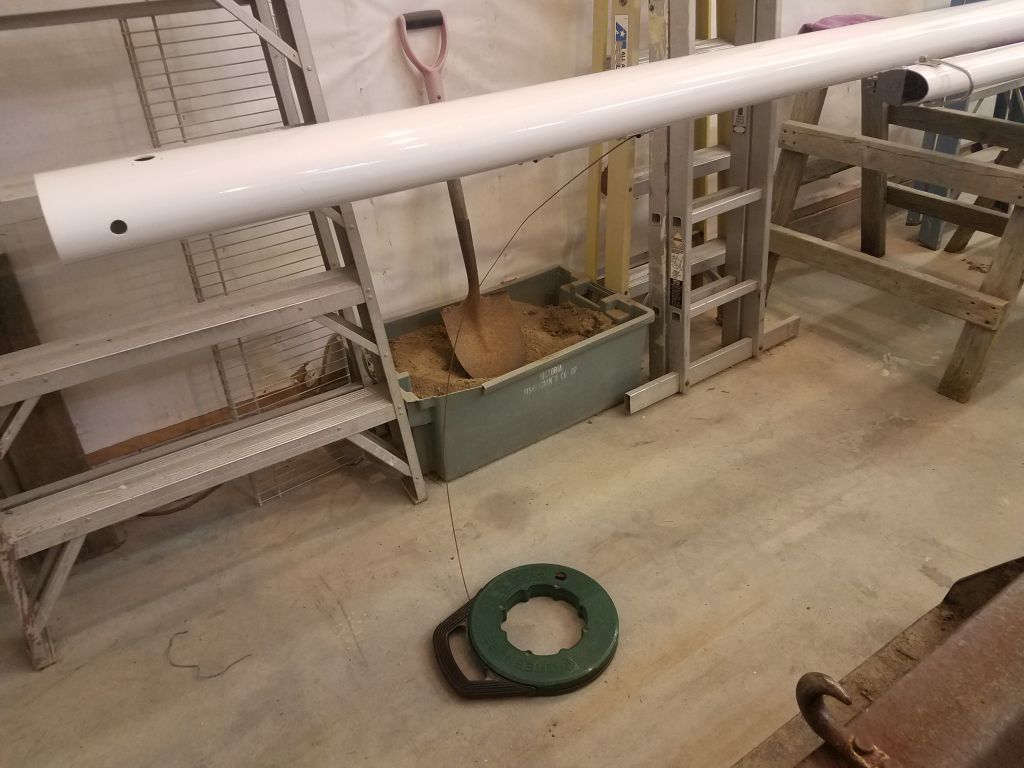
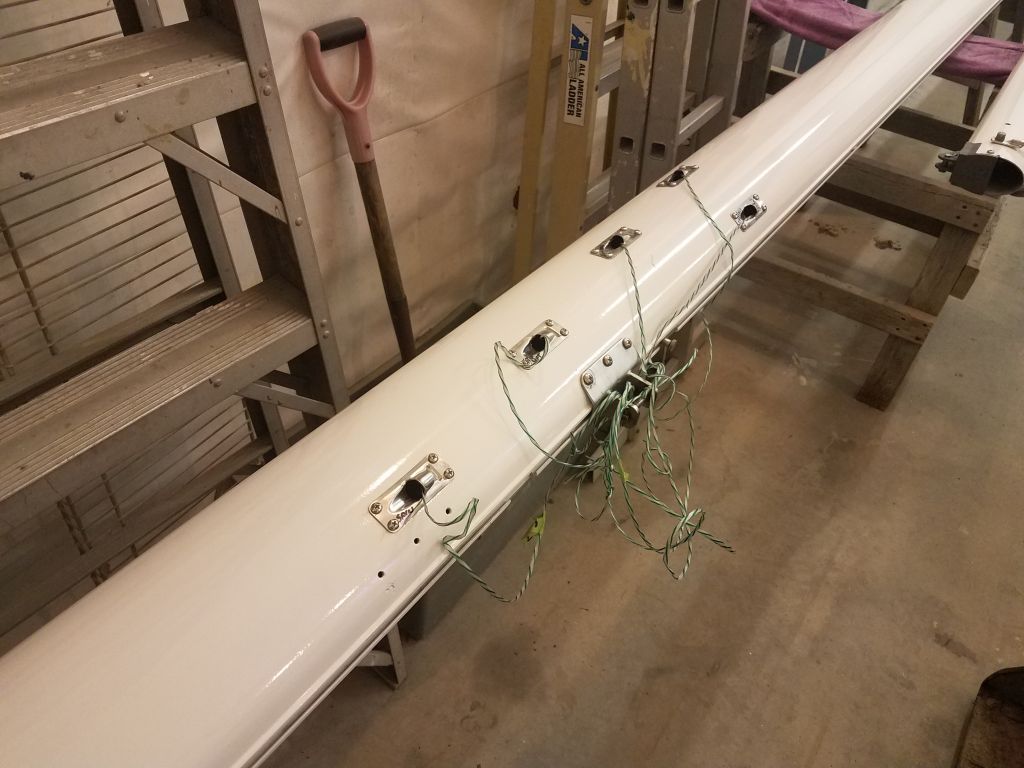
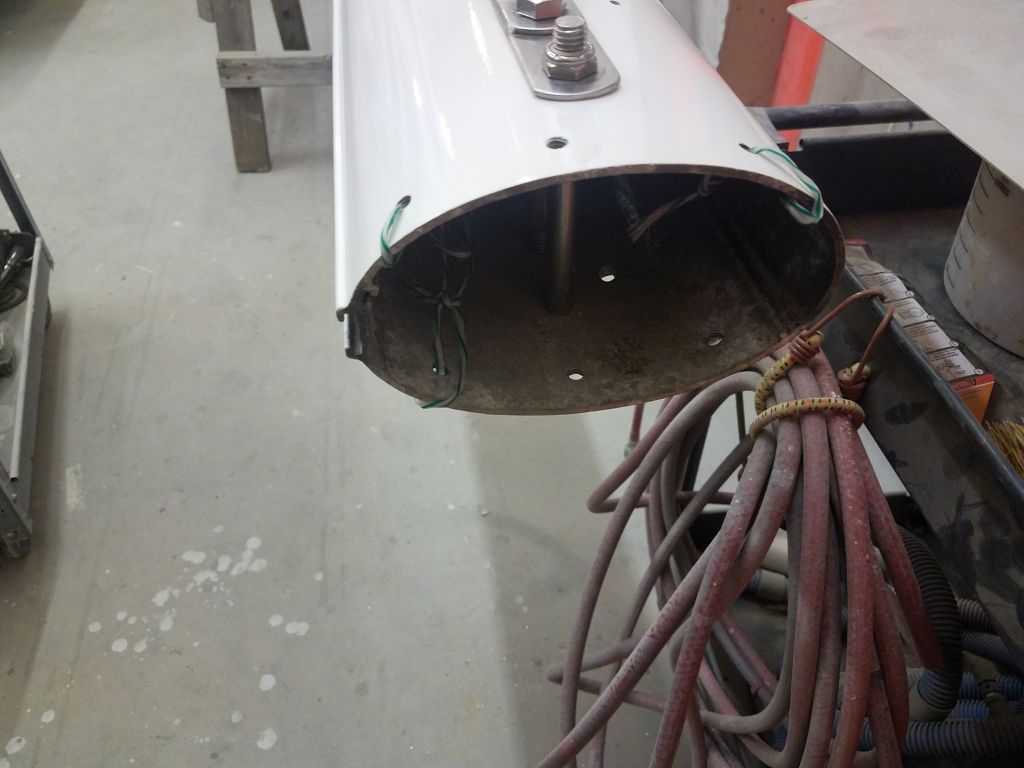
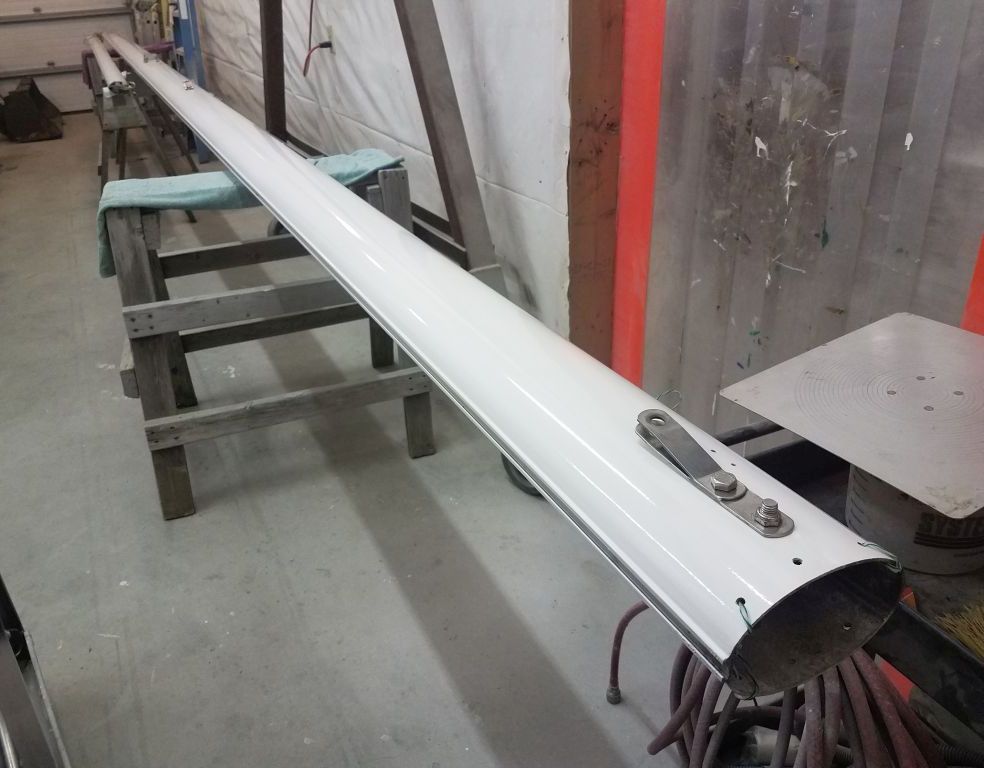
I spent the day preparing the mast and boom for primer and paint, beginning by stripping the old paint off the spars.  To do this, I sanded with 40 grit discs, removing the old paint and primer and abrading the aluminum beneath.  With the mast resting on saw horses, I worked my way down one side from masthead to base in this manner.

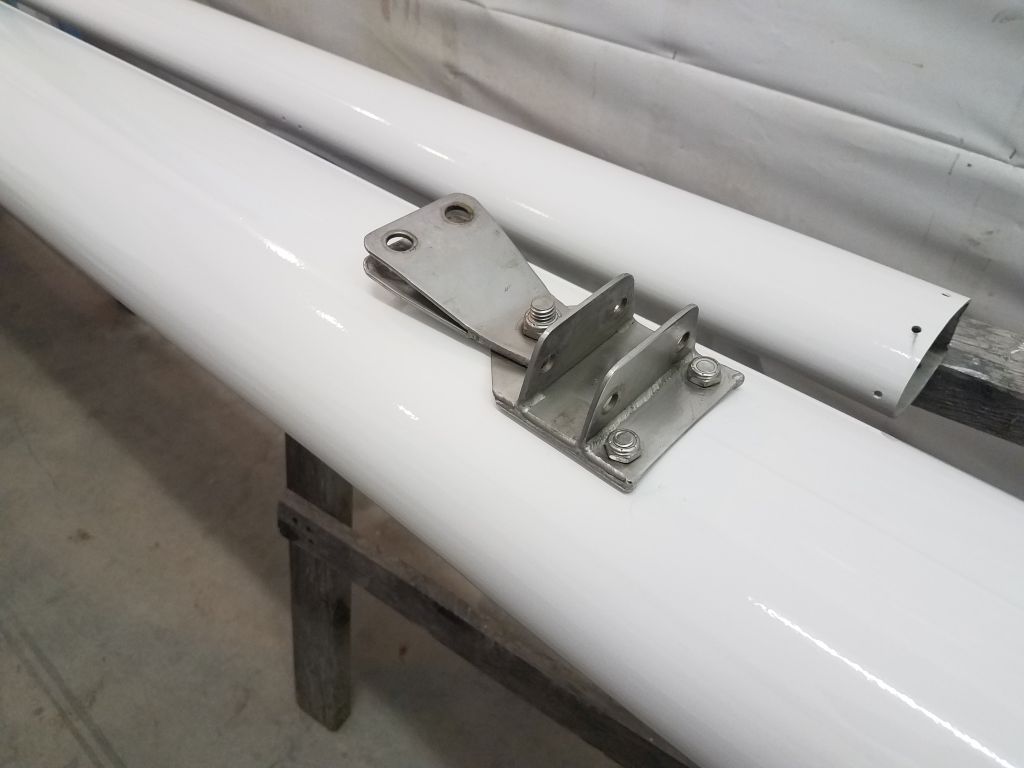
Once I’d reached the bottom part of the mast, I was faced with a decision.  Despite repeatedly soaking for a couple weeks the six remaining bolts holding the spinnaker pole track to the mast, I had come no closer to removing them cleanly.  In fact, they were so stuck in place, even with half a can’s worth of penetrating oil, that each time I tried to remove the screws, I simply shattered my driver bit in my impact gun.  It was clear those bolts were not going to budge.

I seriously considered leaving the track in place and working around it for the paint, and almost certainly would have done so if I’d not been able to remove all but six of the screws.  But it seemed so close to removal, and it would be better for the mast prep and paint if I could remove the track entirely–even though at this point it meant destroying the track–so eventually I decided to remove the track through whatever means.

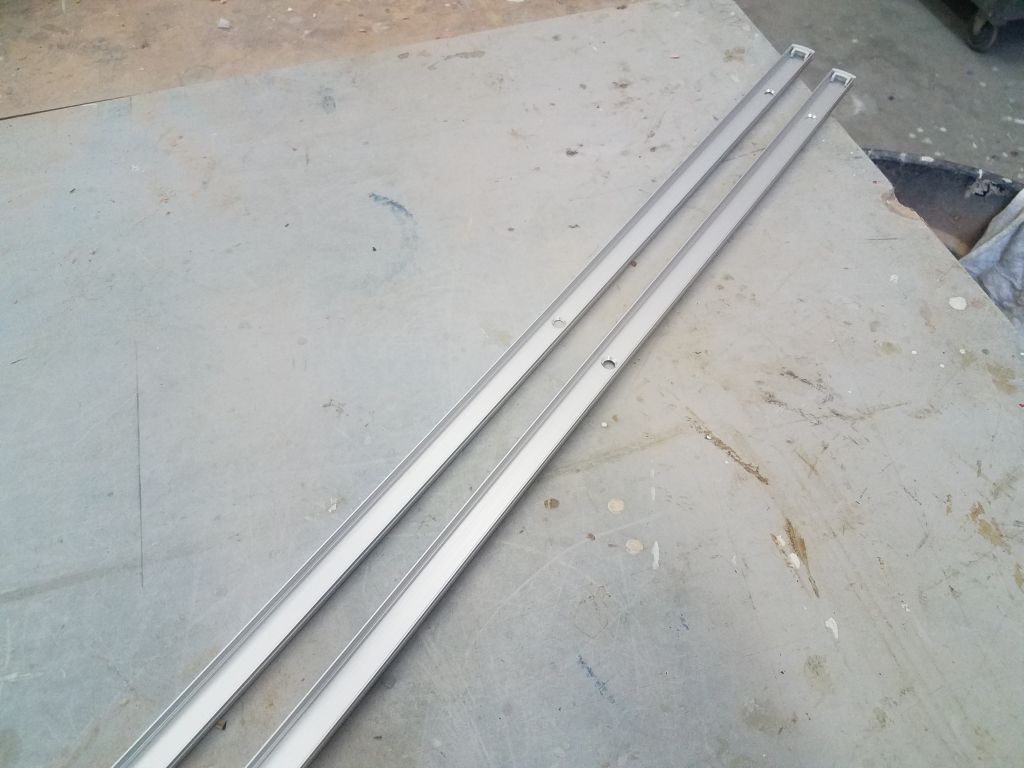
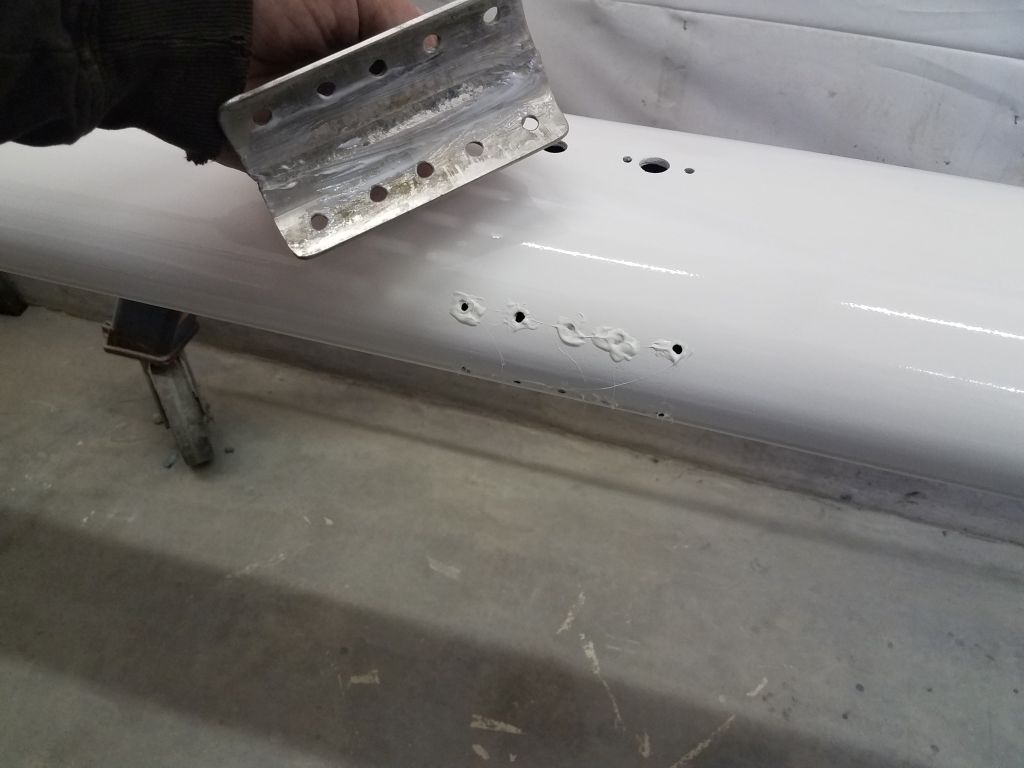
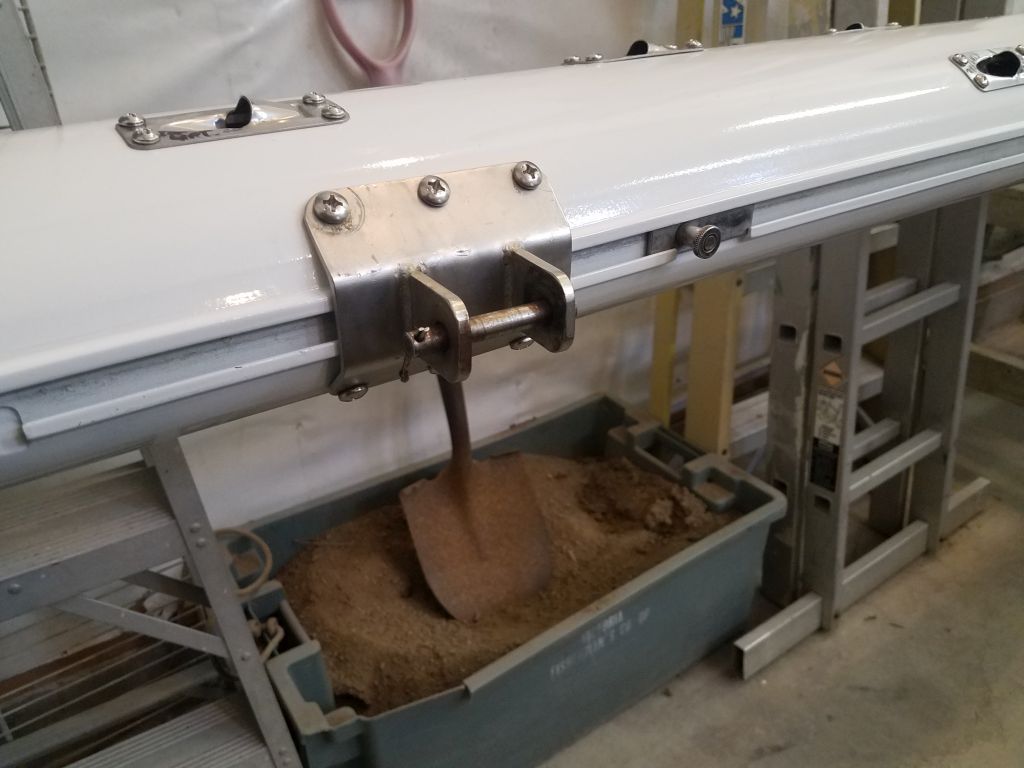
Almost immediately, I rued this decision, as I found the track was extremely difficult to cut through, even though it was aluminum.  It was a heavy, 1-1/4″ T-track that dated to the spar’s original construction. I tried grinding through the heads of the screws, but they were stainless steel and extraordinarily tough, and in any event the threads were still well welded in place through the aluminum track itself.  I tried using the grinding wheel to cut through the track and screw studs, but this was difficult and dangerous, and I didn’t want to risk damaging the spar.  I tried using a reciprocating saw, but again, the track was too difficult to cut through, and too time-consuming.  Ultimately, I employed some combination of these techniques, along with a pry bar to bend and break away the track in sections, finally exposing each screw so I could then grind them flush.  The track was tough enough that it broke the end off my flat pry bar that I was using to help bend and break the track at the cuts I’d made.

With the track successfully–finally–and cleanly removed, I turned the mast over and sanded off the paint from the other side.  The spar was in good condition beneath the old paint, with some minor surface etching here and there where the old coating had failed long before.

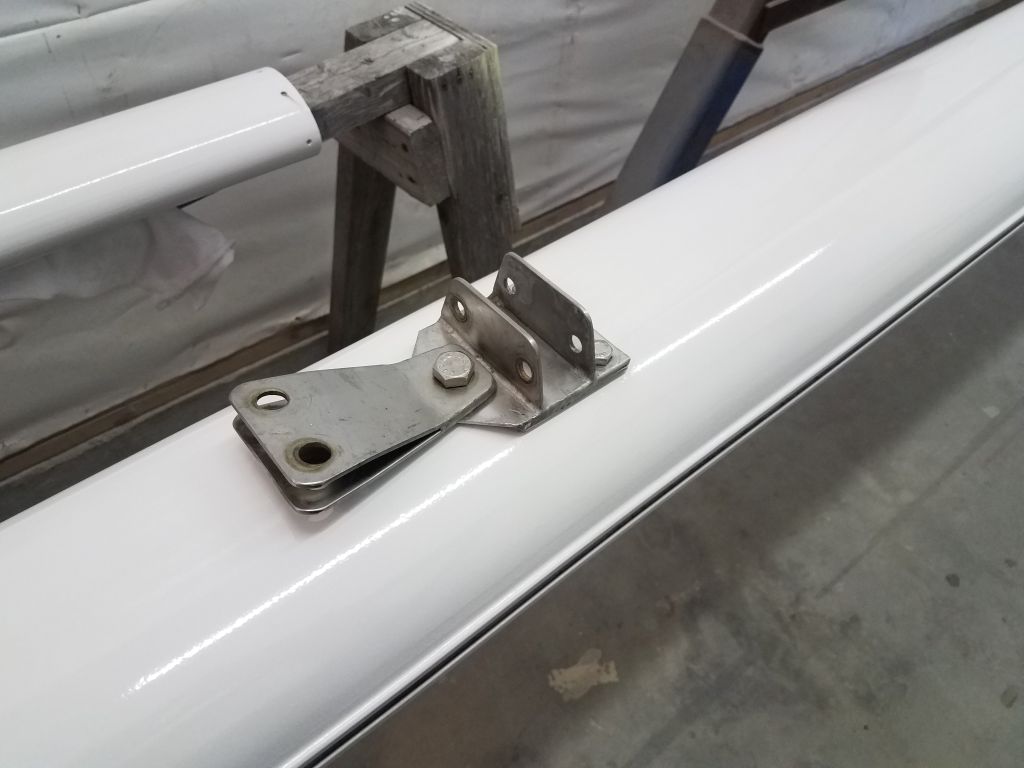
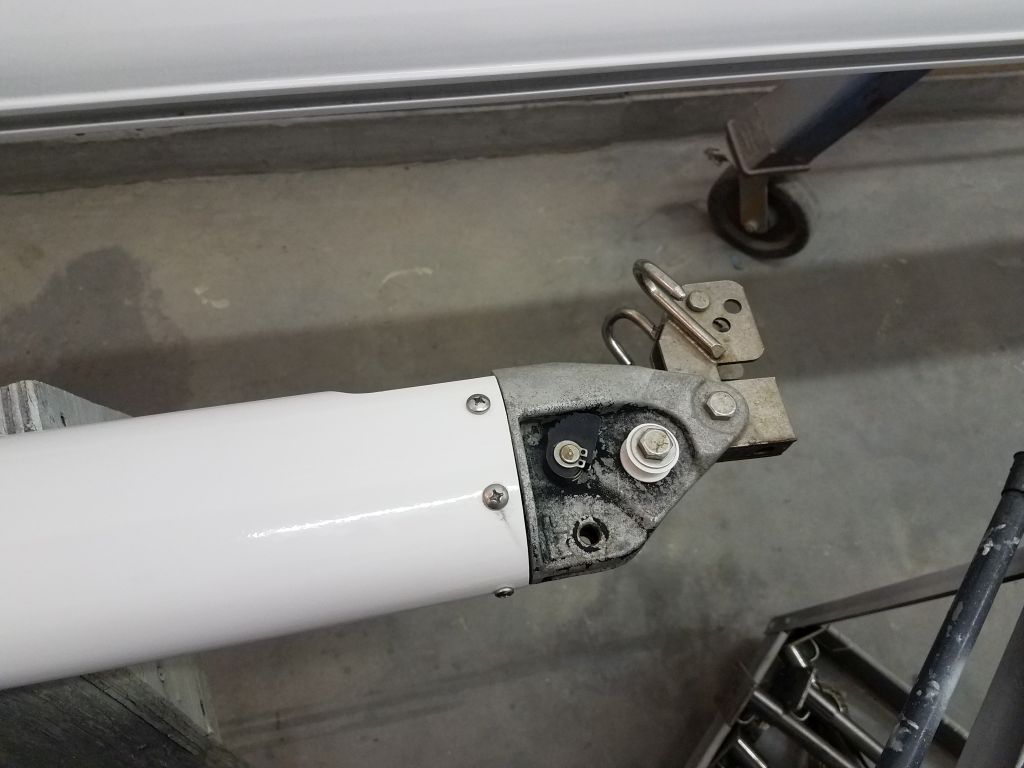
Next, I turned to the boom, beginning by removing the end caps and remaining hardware.   This was easy and quick since the riggers had already had these off in order to remove the bits of the old outhaul arrangement and plan for the replacement.  Once the hardware was gone, I set to work sanding away the old paint and primer.  Once I’d reached bare, white (silver) metal and finished the sanding with the 40 grit paper, I switched to 80 grit and sanded the entire boom again, to get closer to the final surface I’d need before applying the corrosion-resistant primer I planned to use.  The bare aluminum would oxidize rather quickly, so I planned to finish the sanding with 120 grit on the day of the primer application, which would finish the spars’ preparation and clean the metal one last time just before the primer.

With the boom complete through 80 grit for now, I returned to the mast and sanded it with the 80 grit as well.

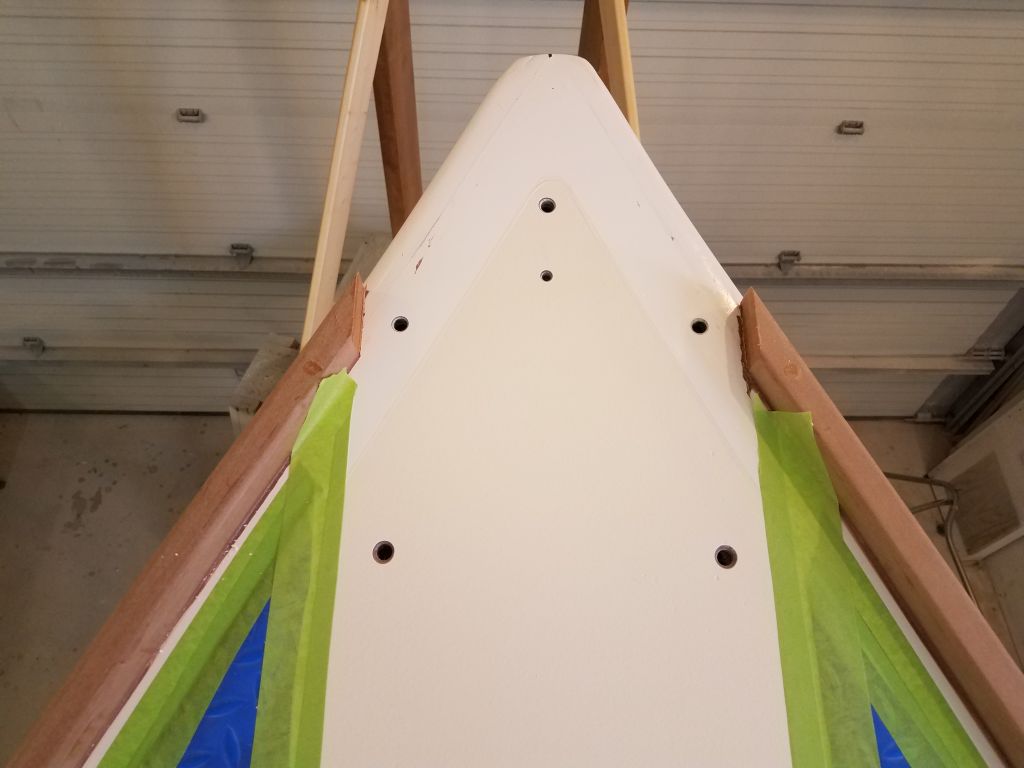
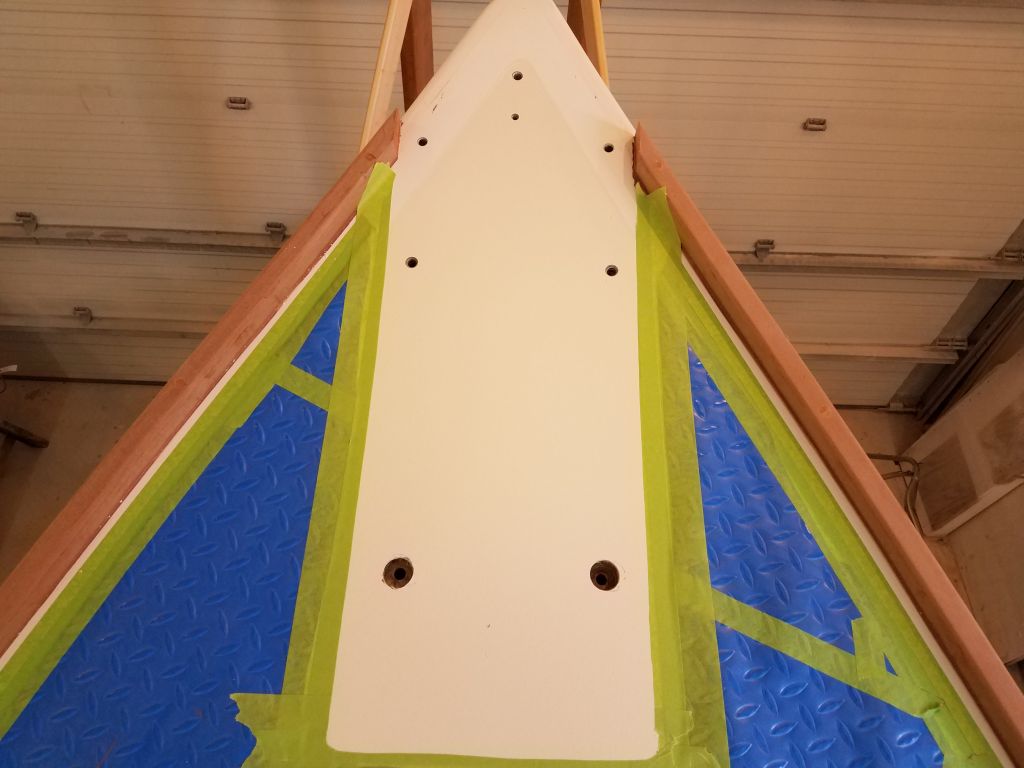
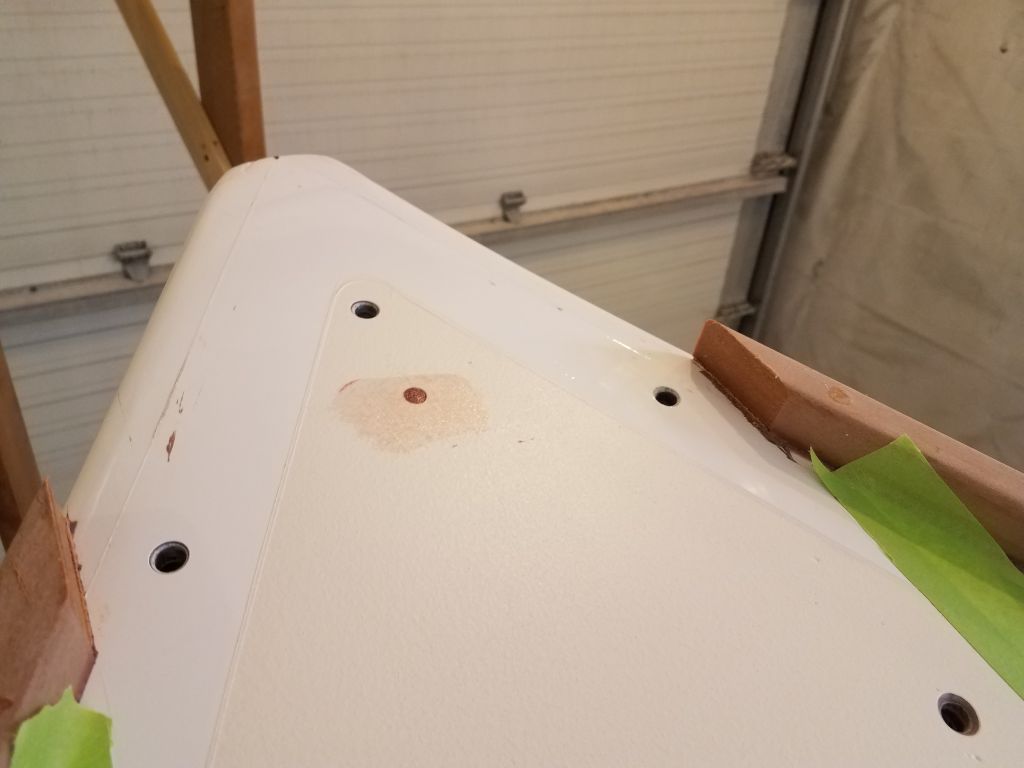
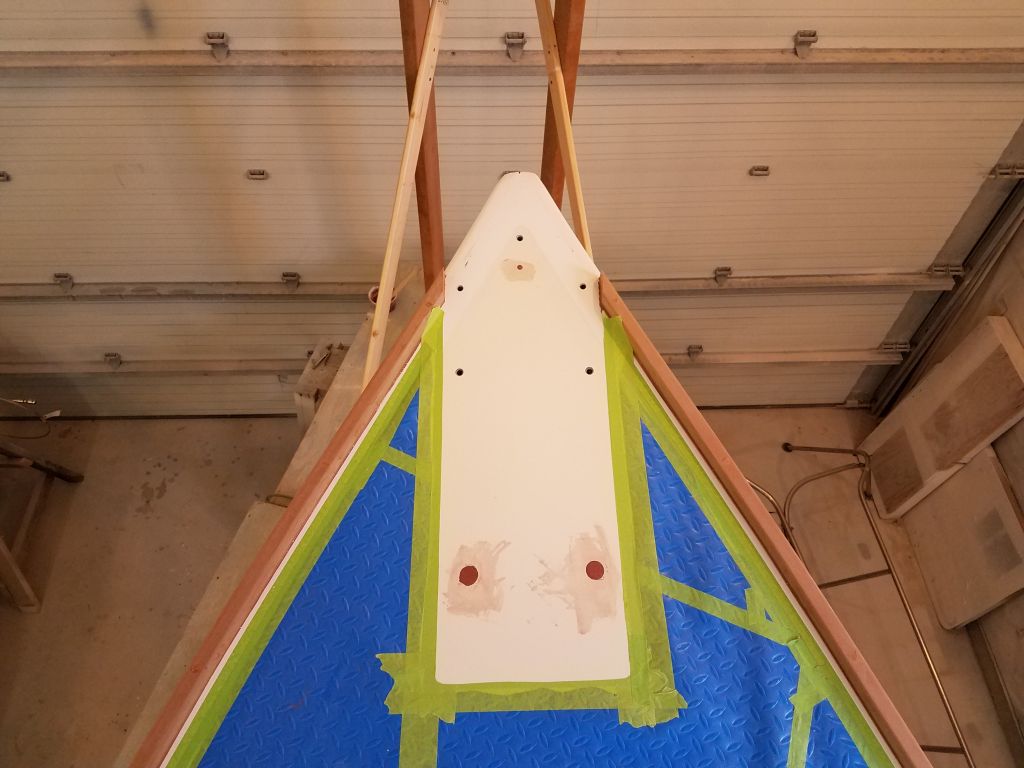
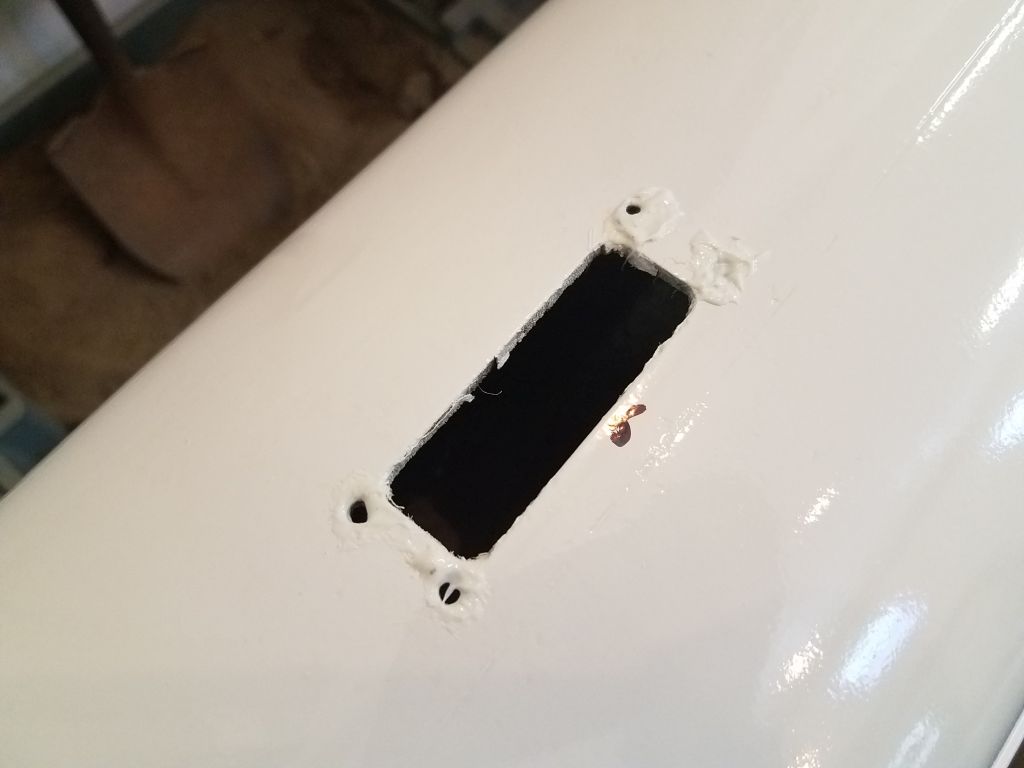
To round out the day, I decided to fill the old screw holes left from the spinnaker pole track, so I used a countersink to bore them out a bit, then, after cleaning with solvent, filled the holes with an epoxy mixture, choosing to leave the fill high in the hopes that I could do the job in one round only.  The old bolt studs at the bottom of the track had ended up flush with the mast, but I applied some fairing compound over them as well, just because.

Total time billed on this job today:  6.25 hours

0600 Weather Observation:  28°, light freezing rain.  Forecast for the day:  Freezing rain and sleet, then rain, 37°

Scupper 208

Monday

As a sort of break and change of pace, I chose to focus for a day on some ancillary, yet still critical, portions of the project that could otherwise tend to be pushed aside in favor of some of the larger ongoing jobs.

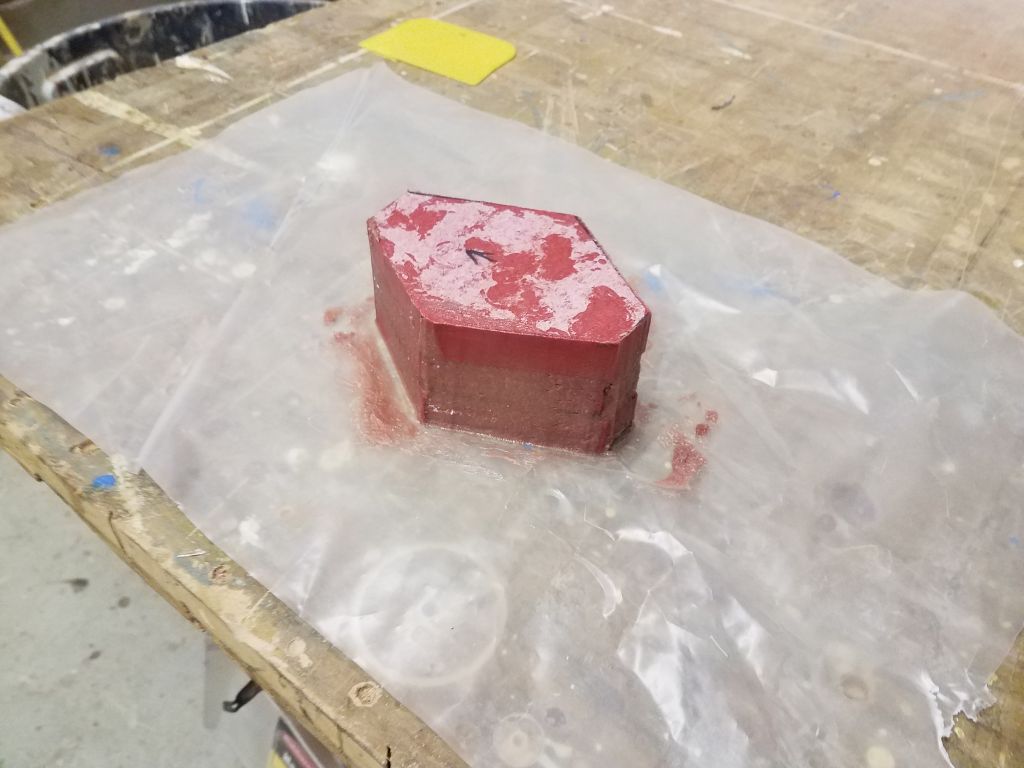
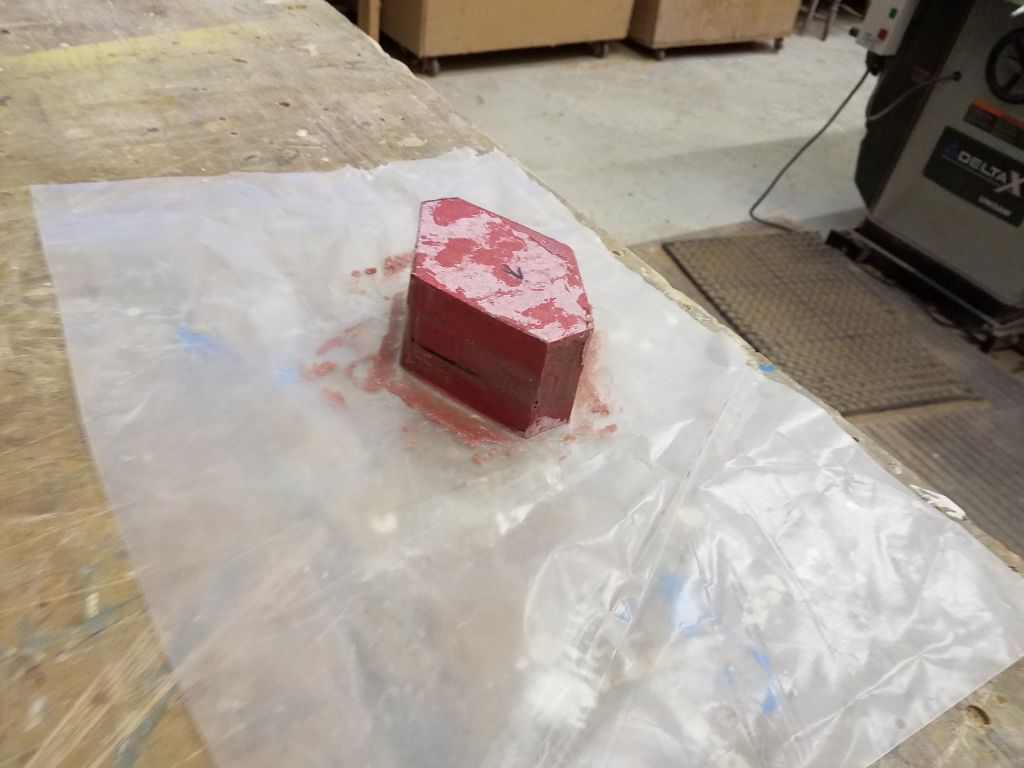
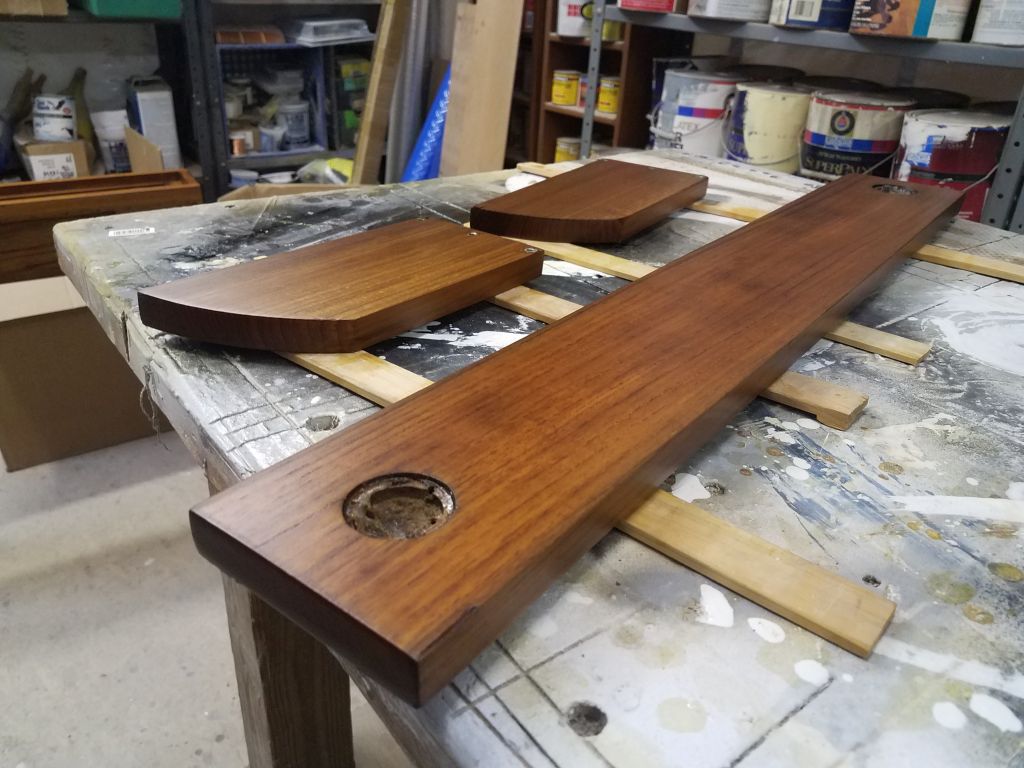
To begin, I checked the fit of the after bilge switch platform I’d glued up last time, and found that indeed it would still work fine even though I’d mistakenly glued the top piece on backwards, so I went ahead and sanded the two platforms as needed to clean them up for paint and final fitting.  I added wire tie mounts near the top of each platform to help guide the switch wires, then painted the platforms with bilge paint.

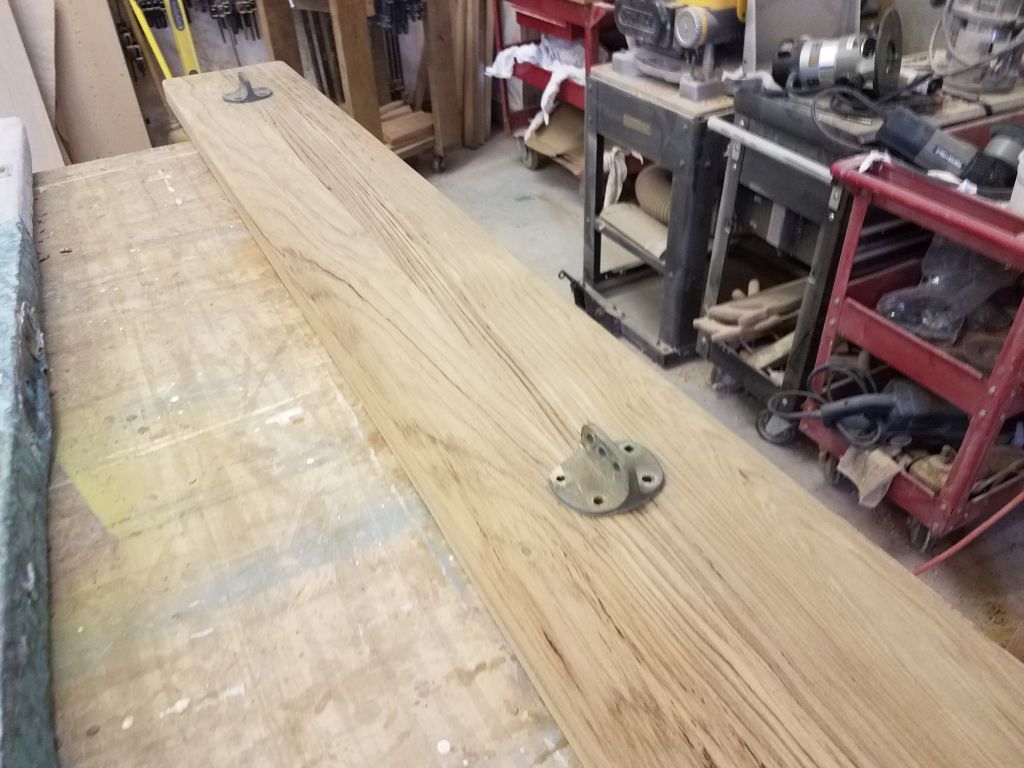
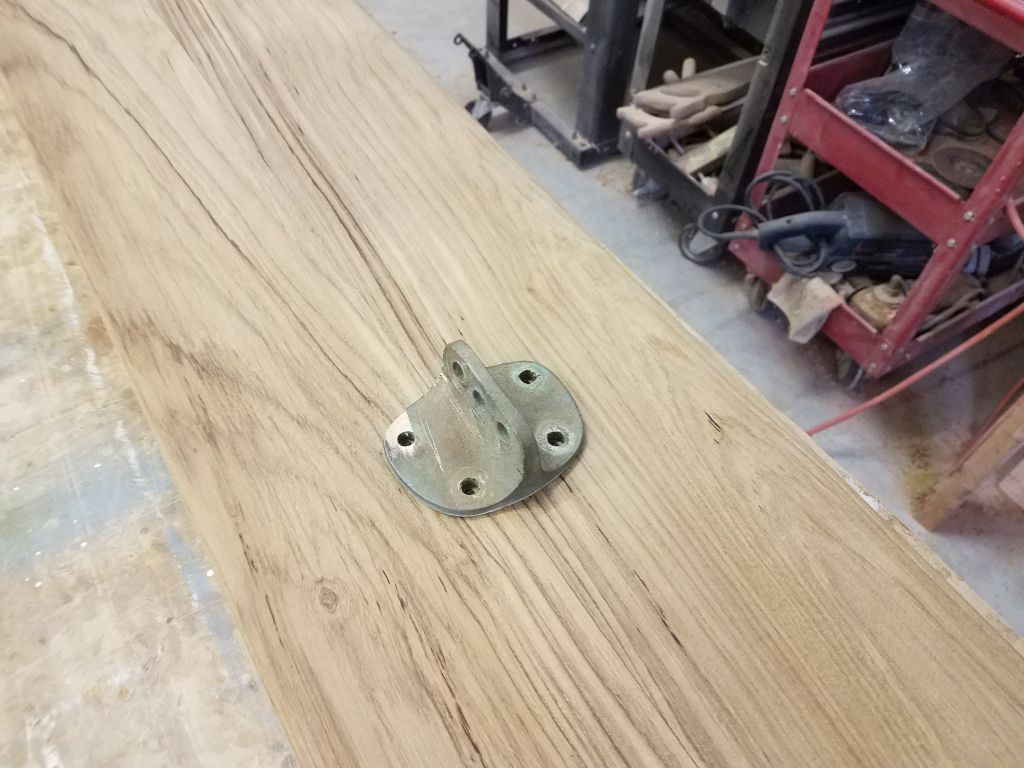
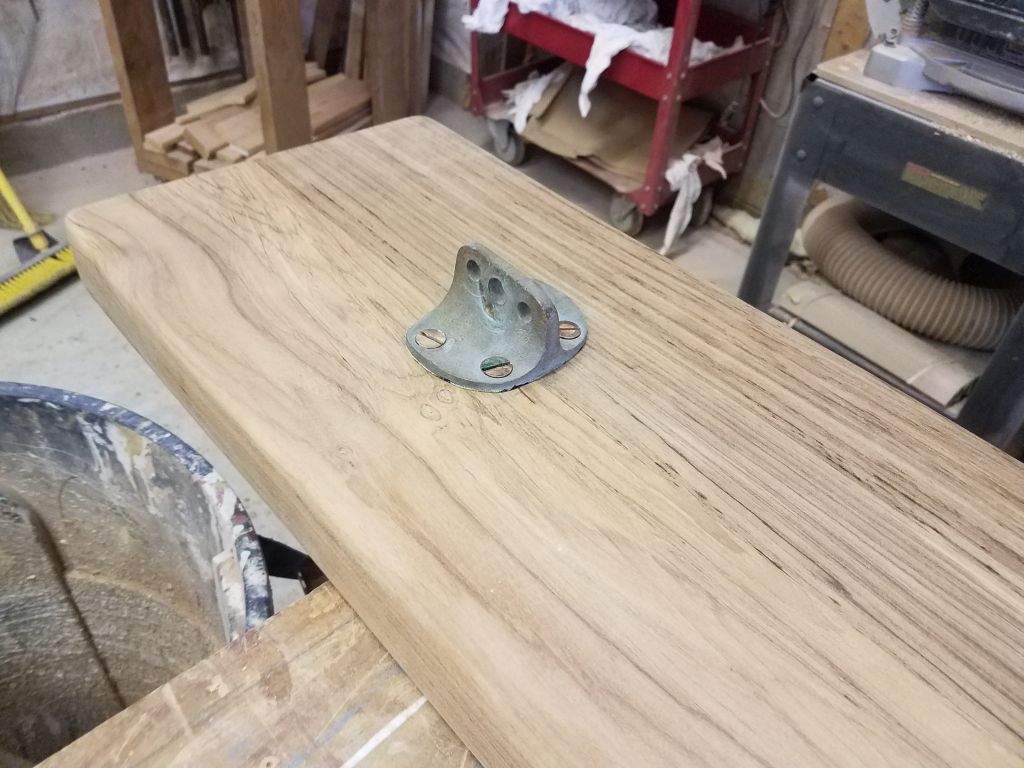
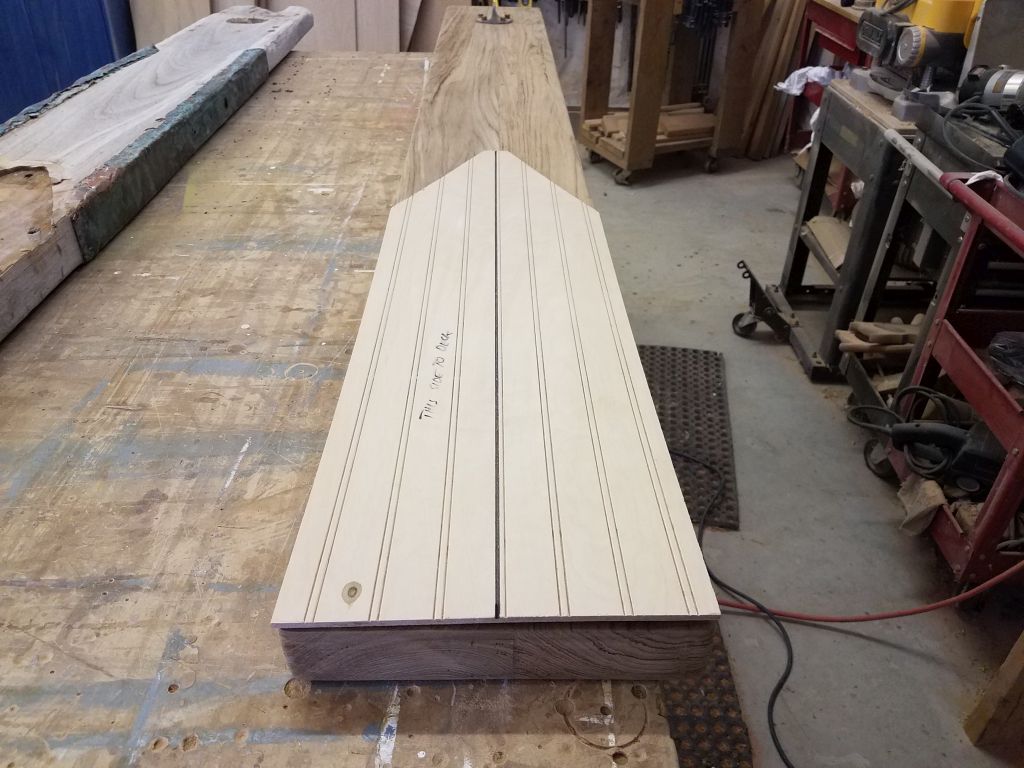
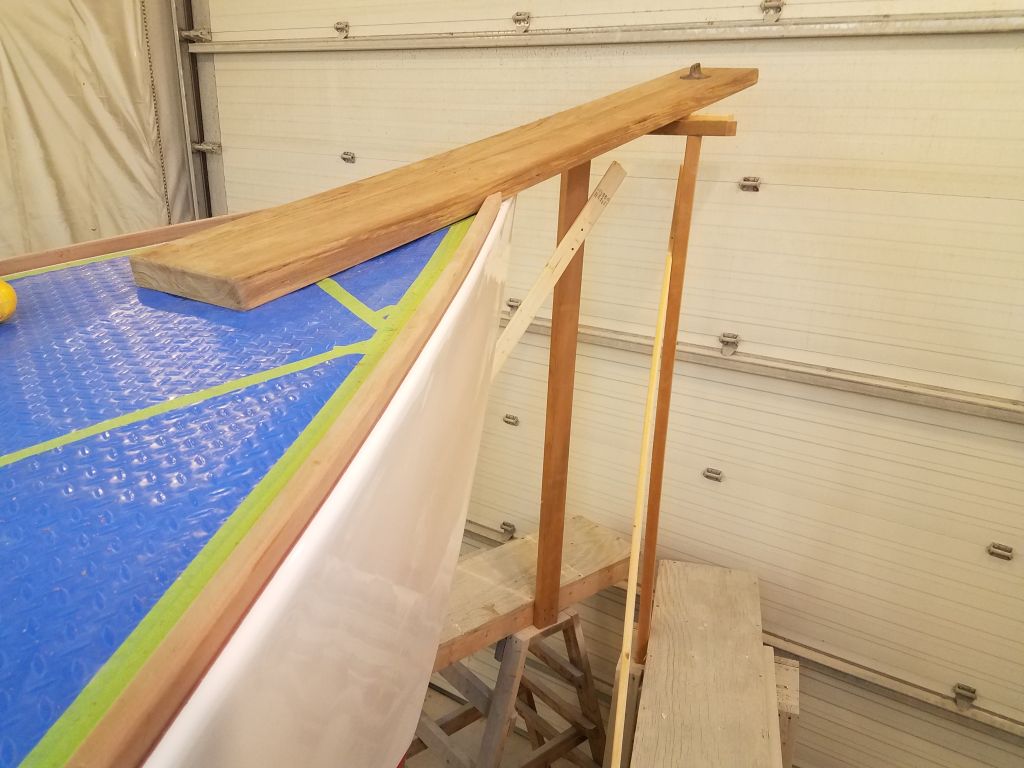
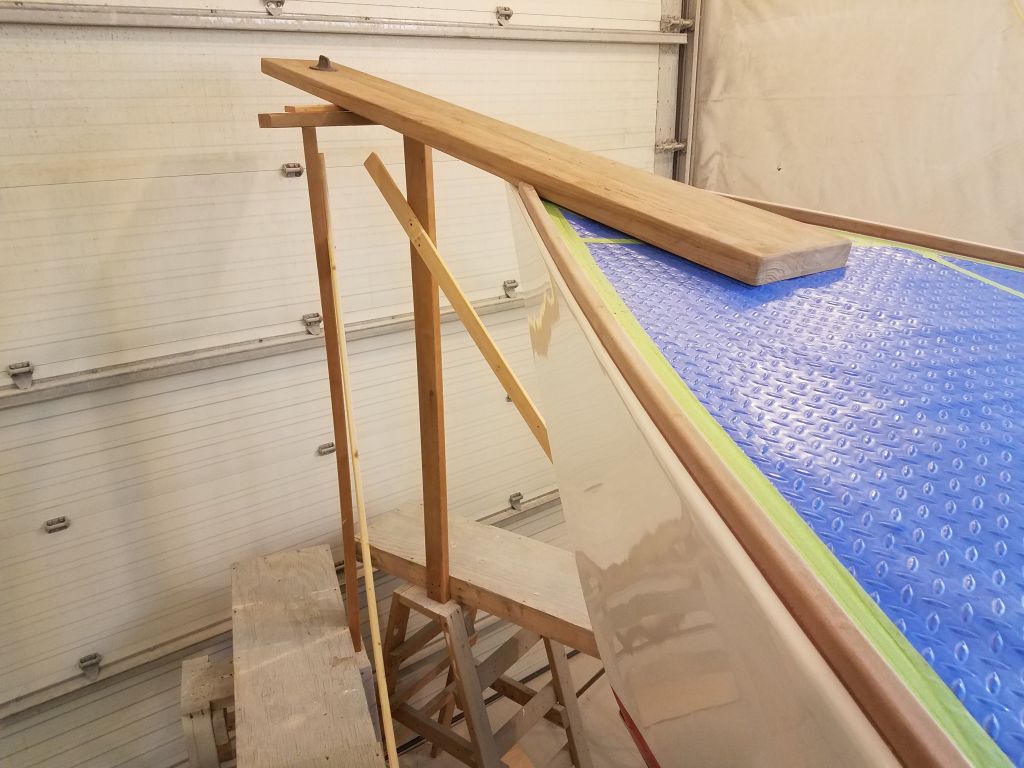
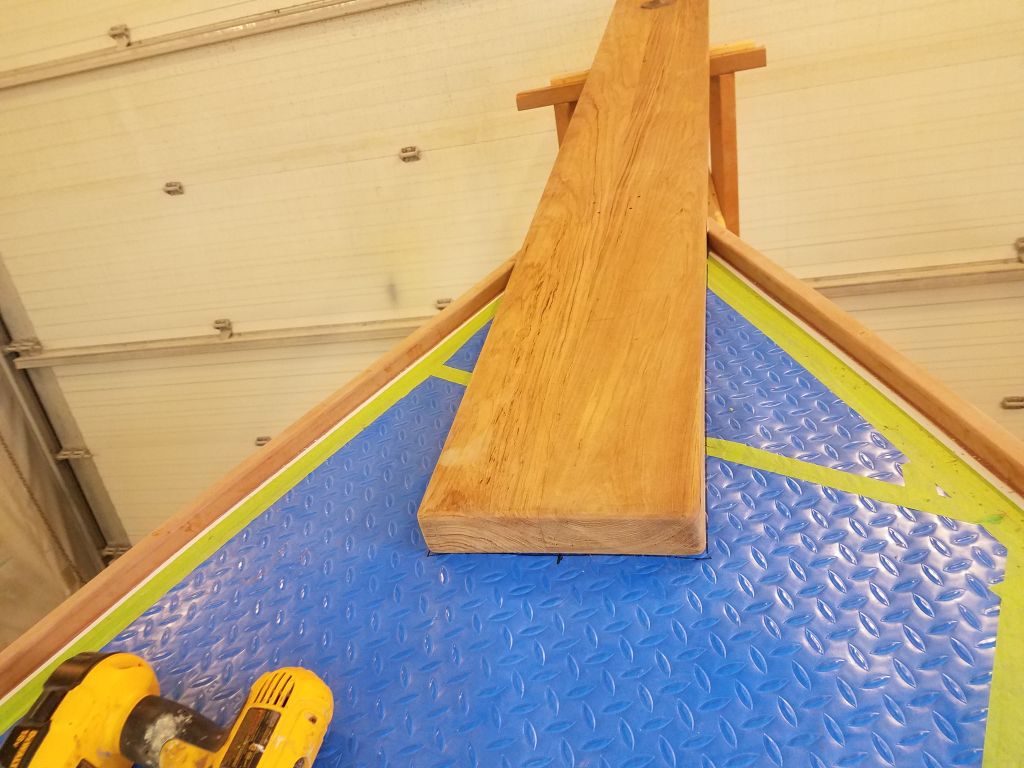
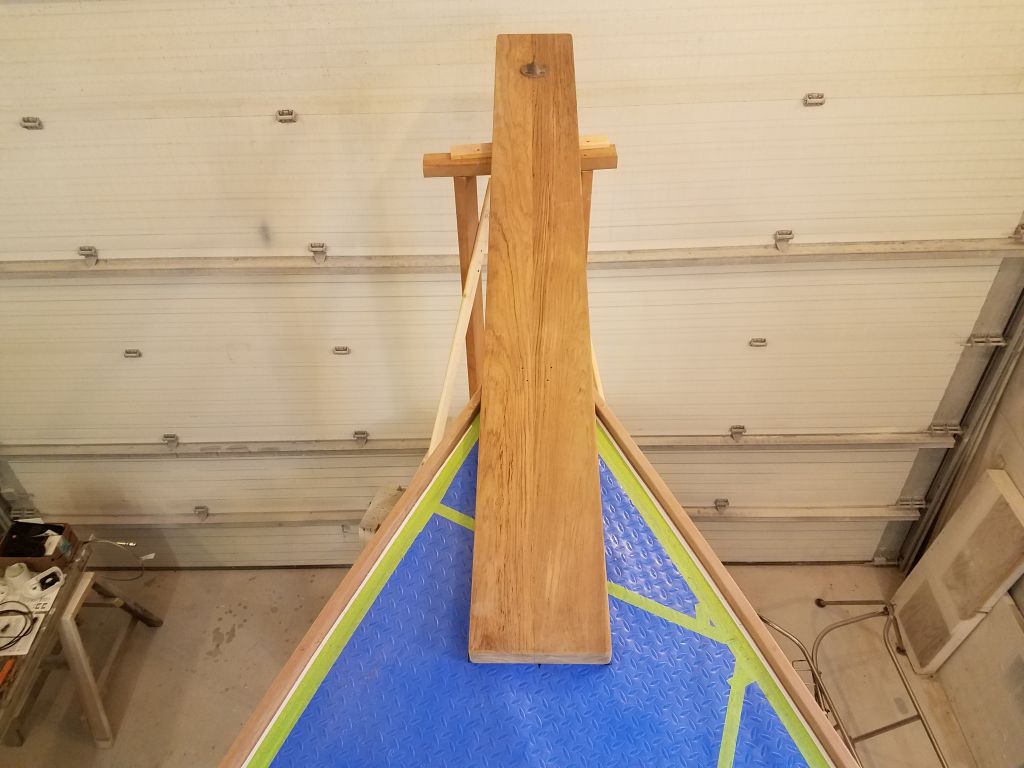
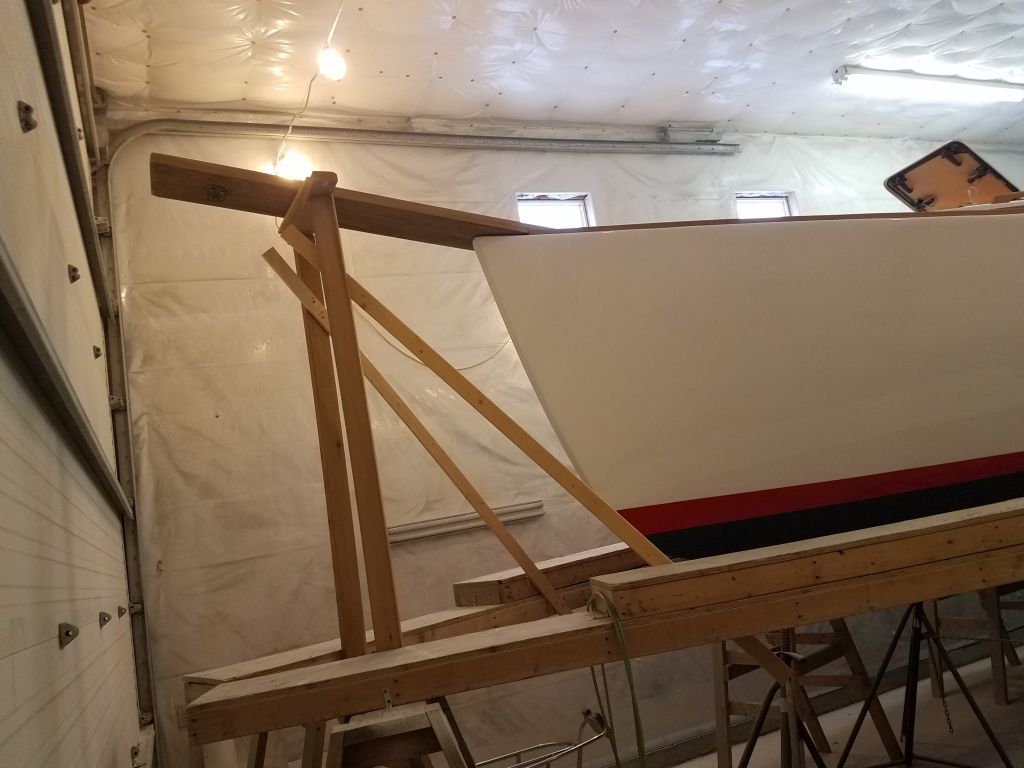
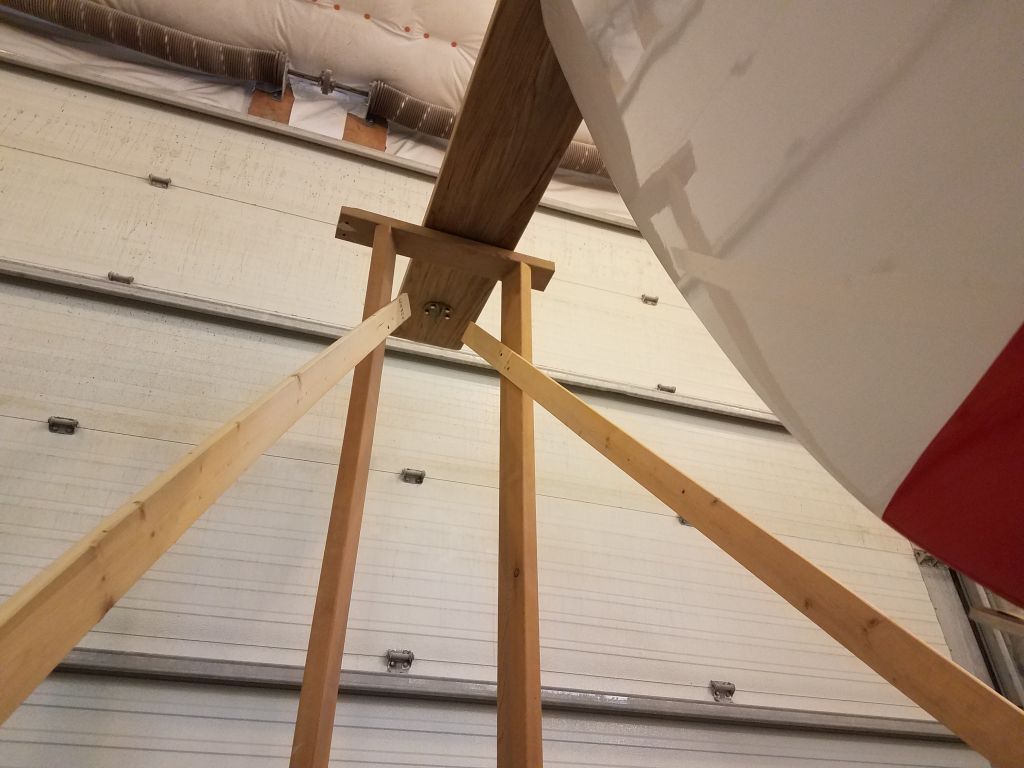
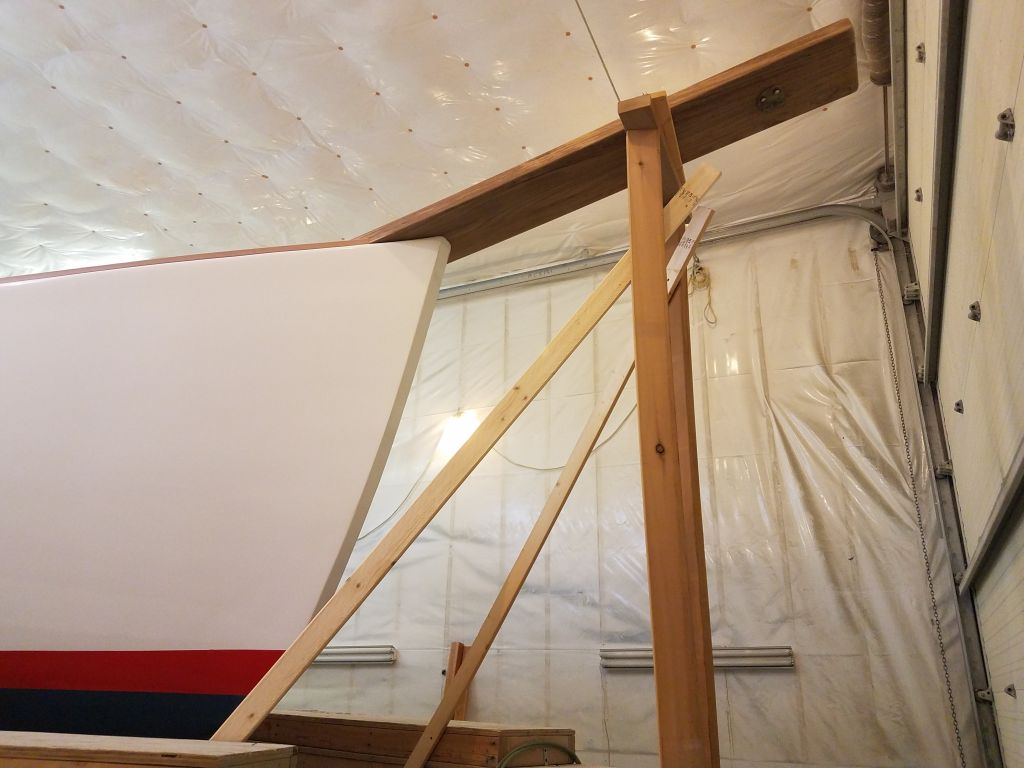
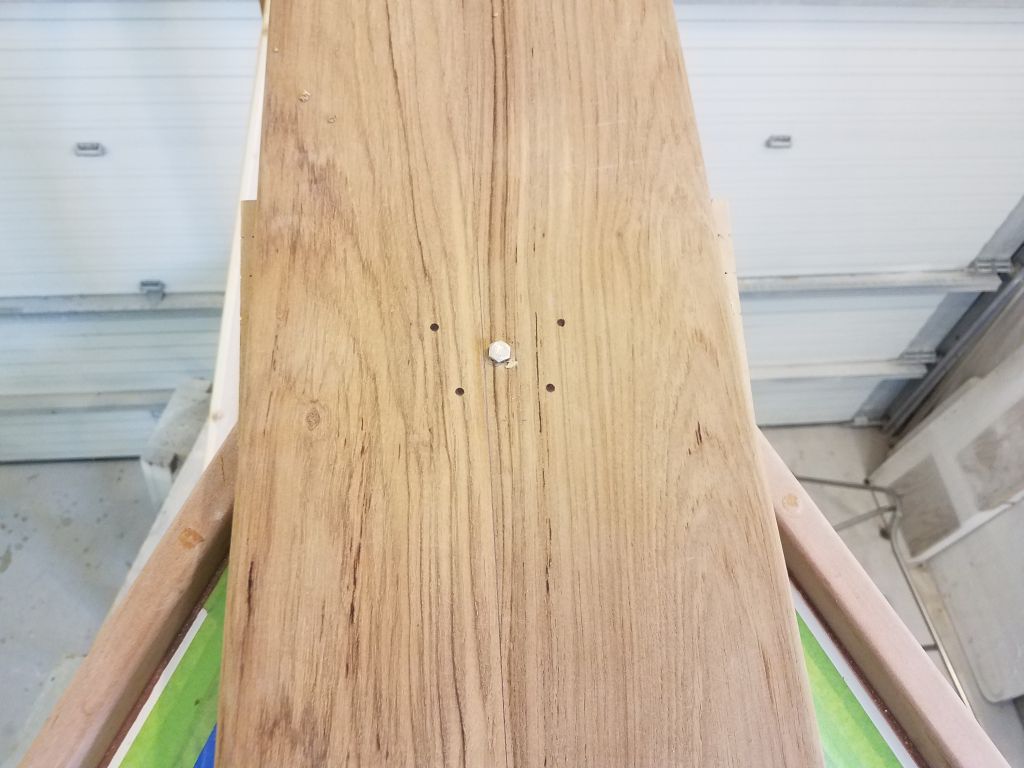
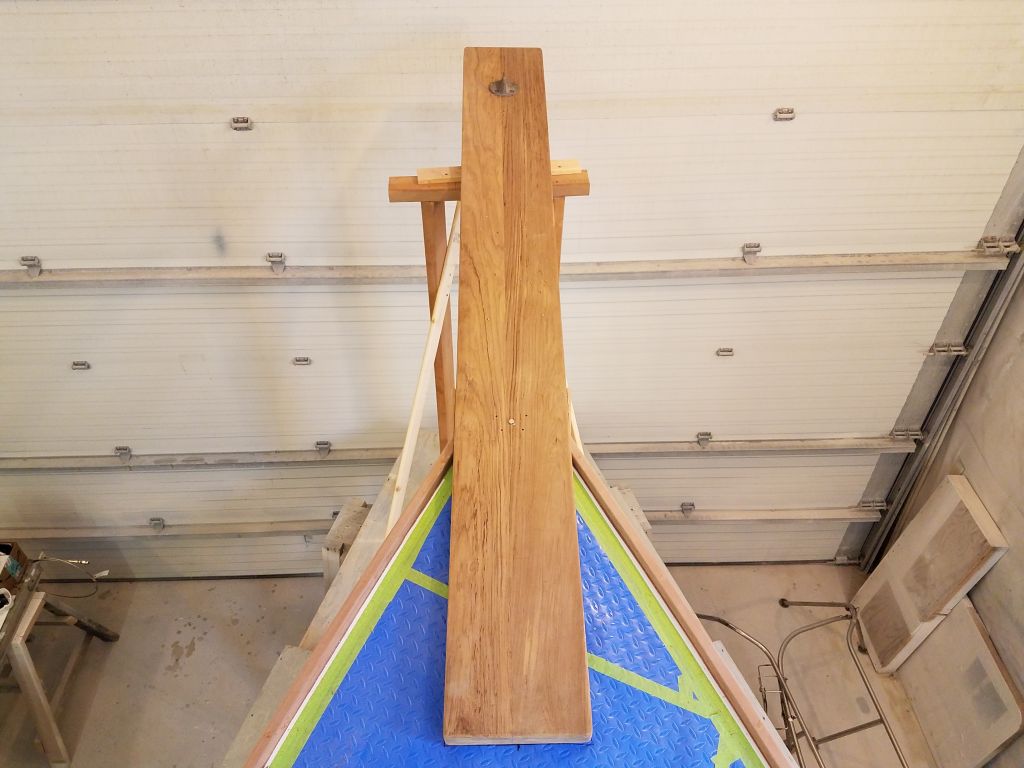
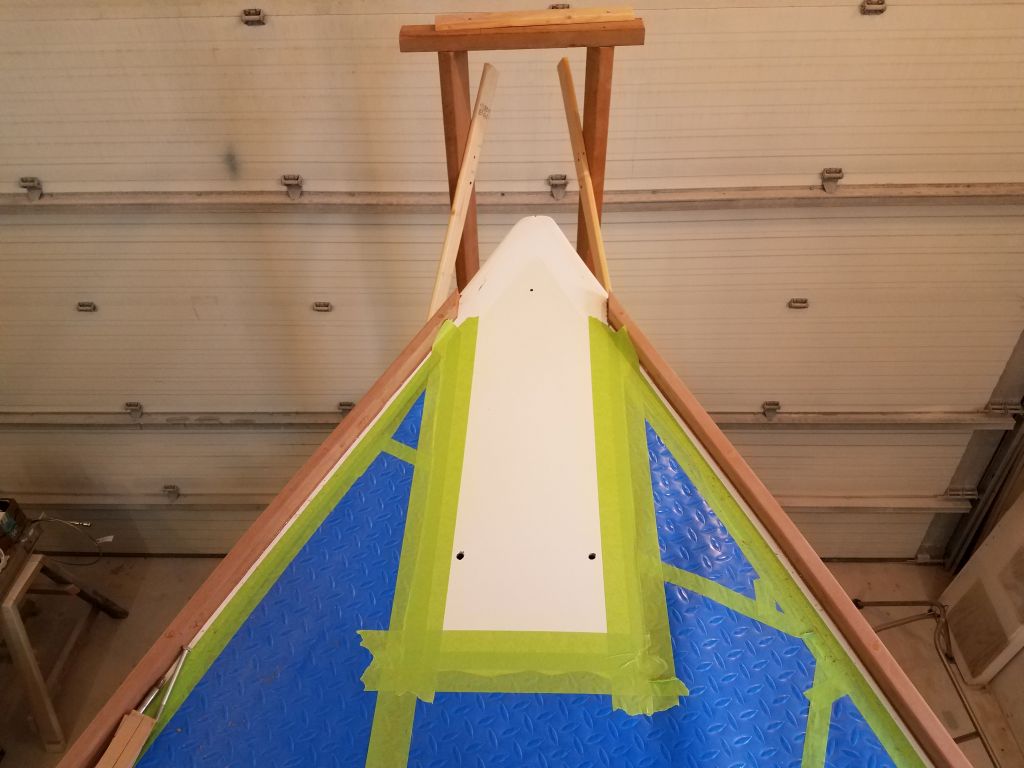
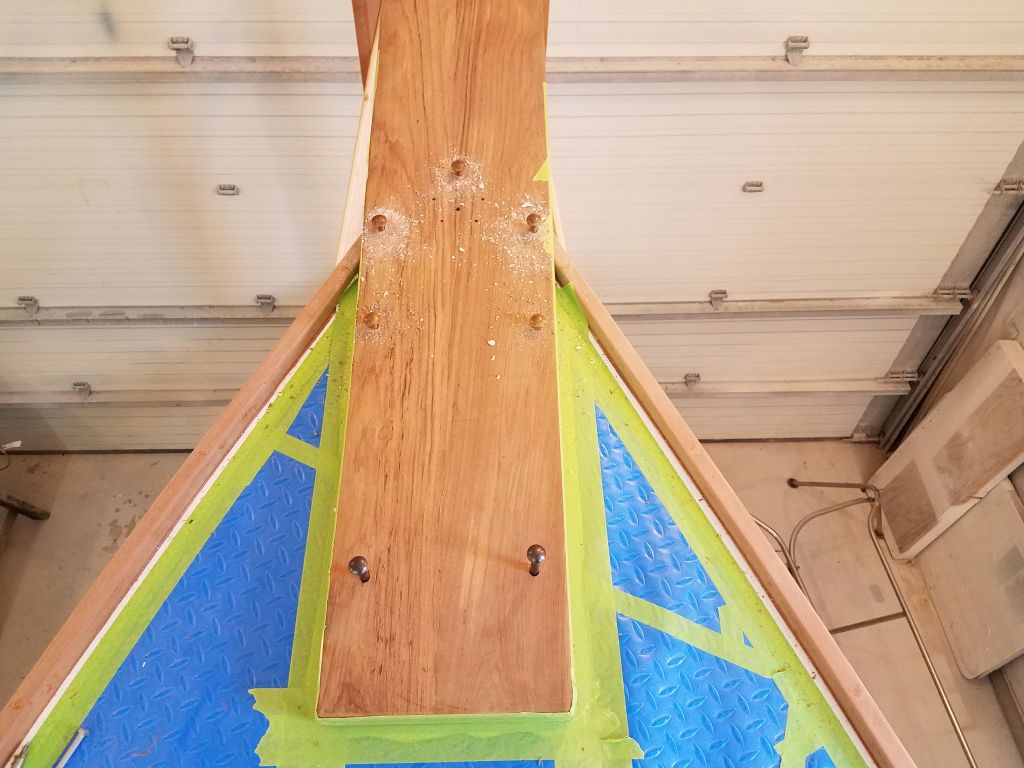
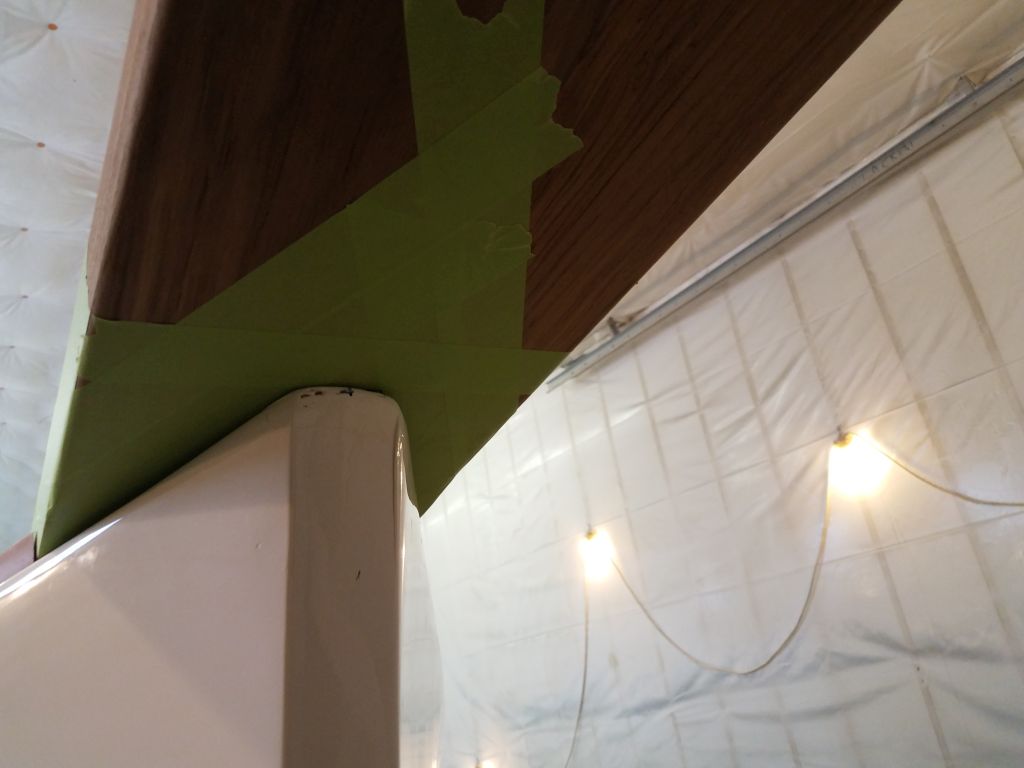
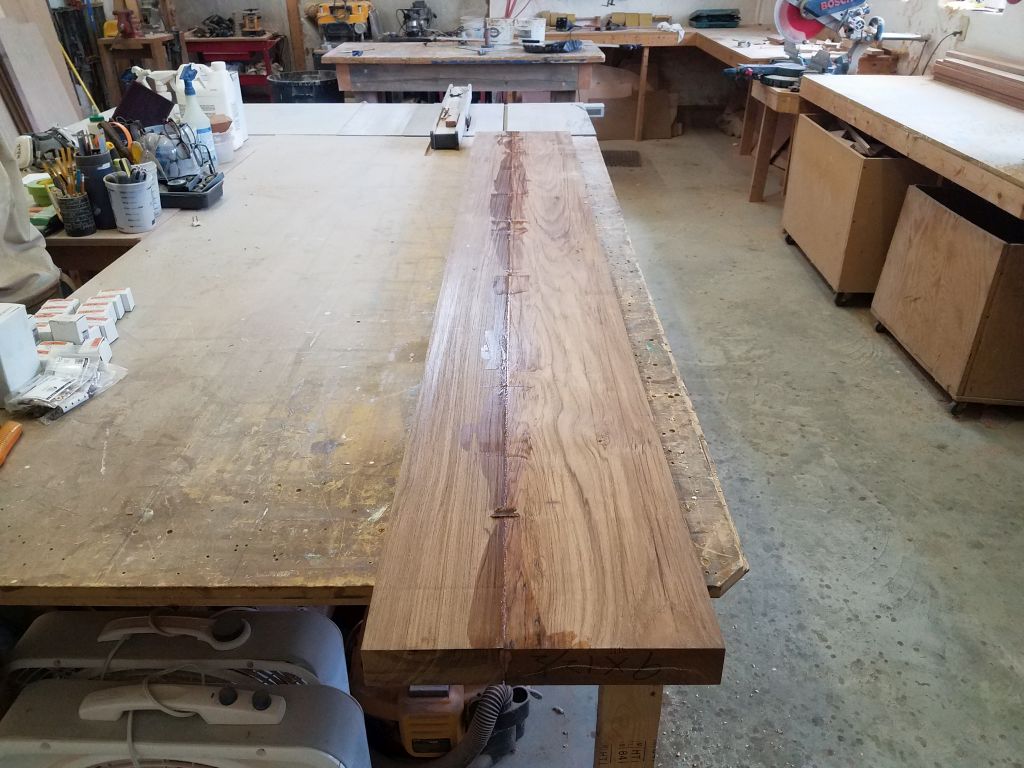
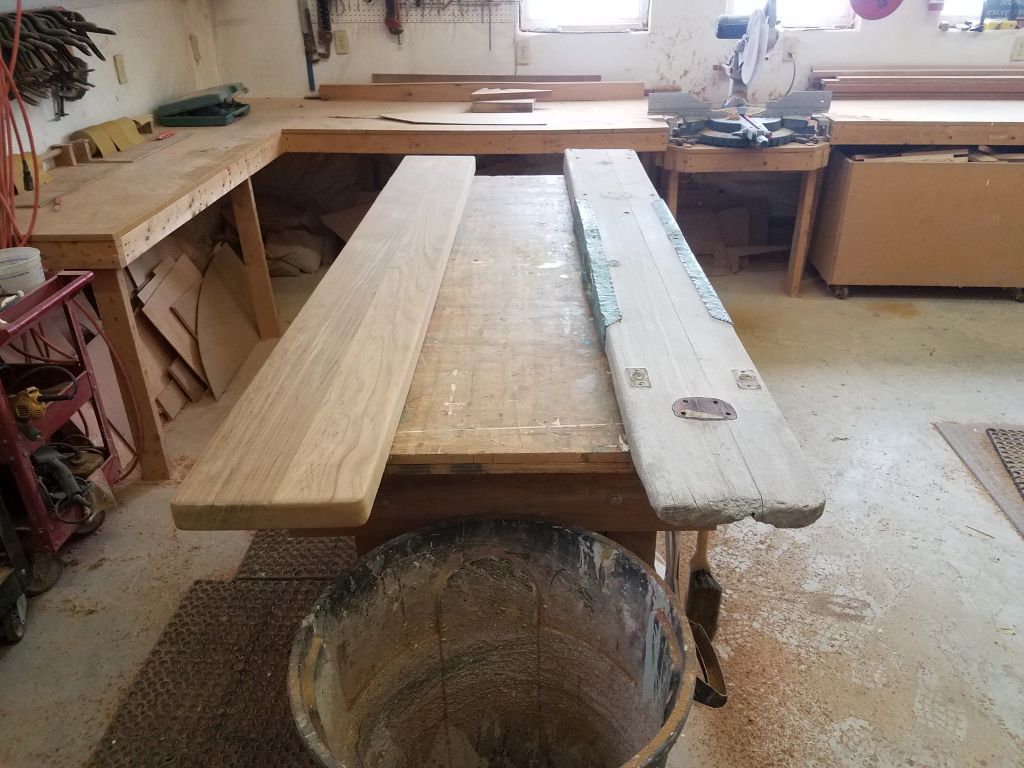
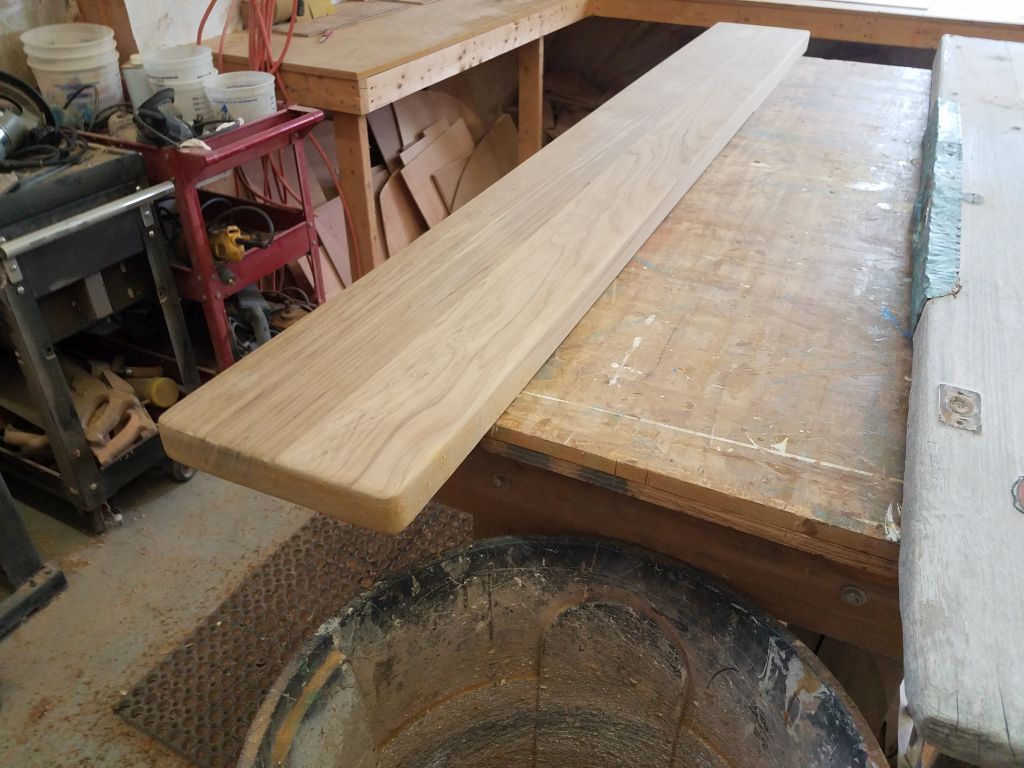
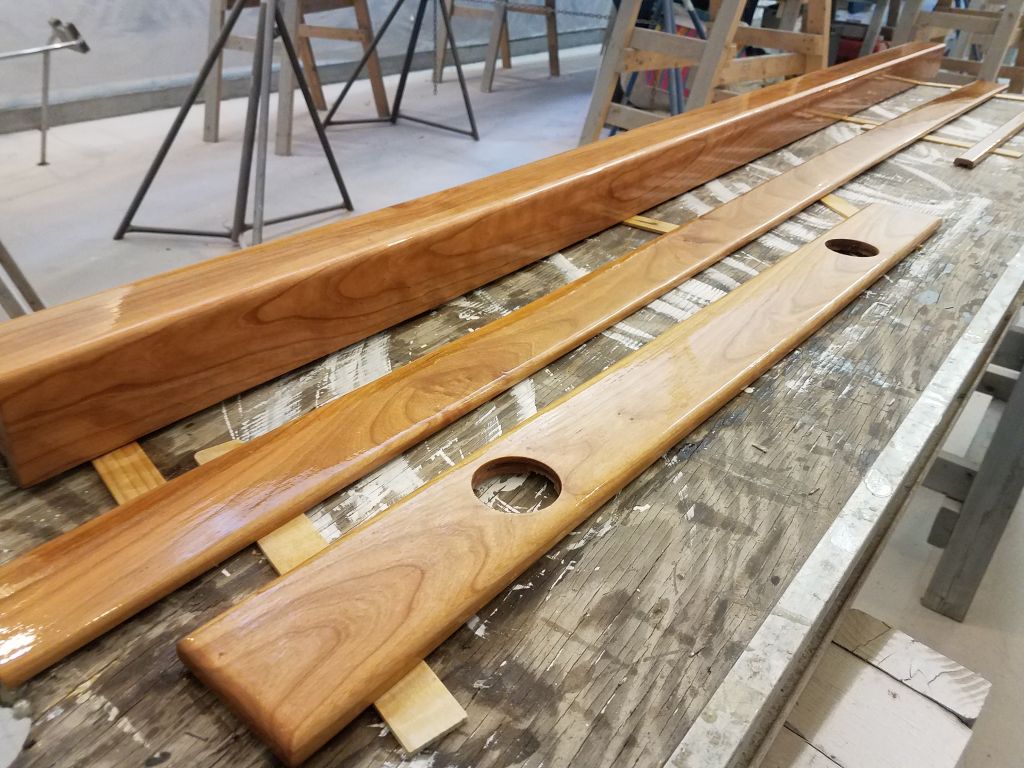
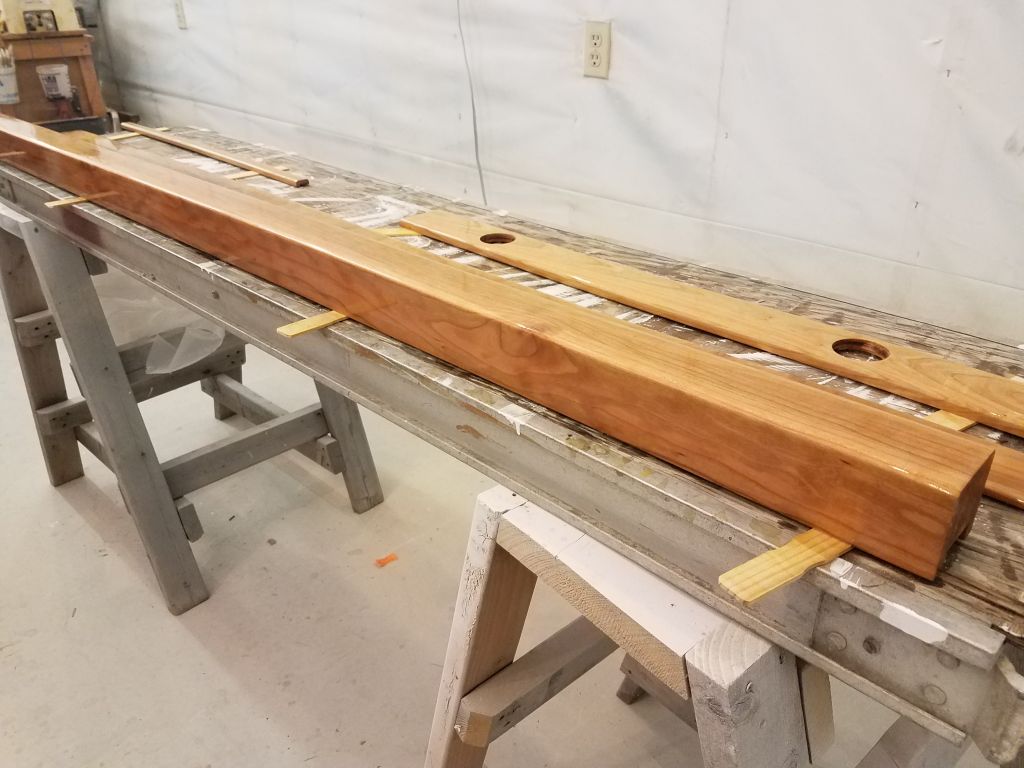
I surface-planed some rough teak 8/4 stock as needed to smooth the sawmill marks, and dimension the wood as needed for the bowsprit.  Afterwards, I straightened one edge with a simple plywood straightedge and a circular saw, then trimmed the opposite edges of the two boards on the table saw to prepare for gluing up into a blank wide enough for the new bowsprit.

Afterwards, I glued the two board together and clamped them securely.

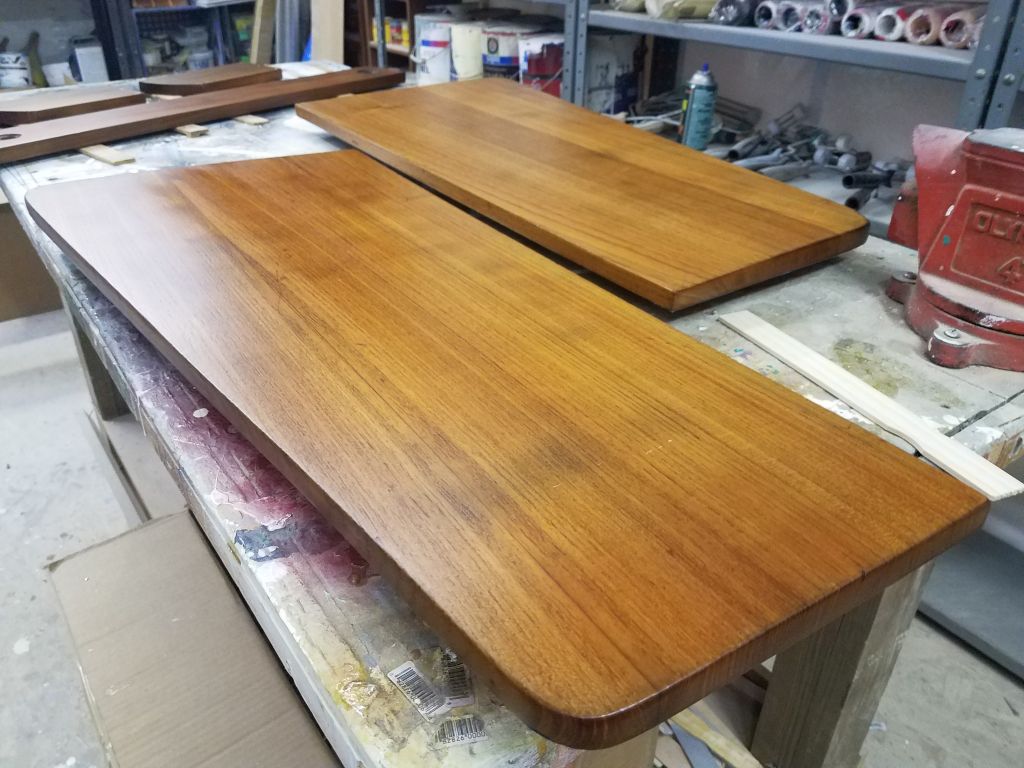
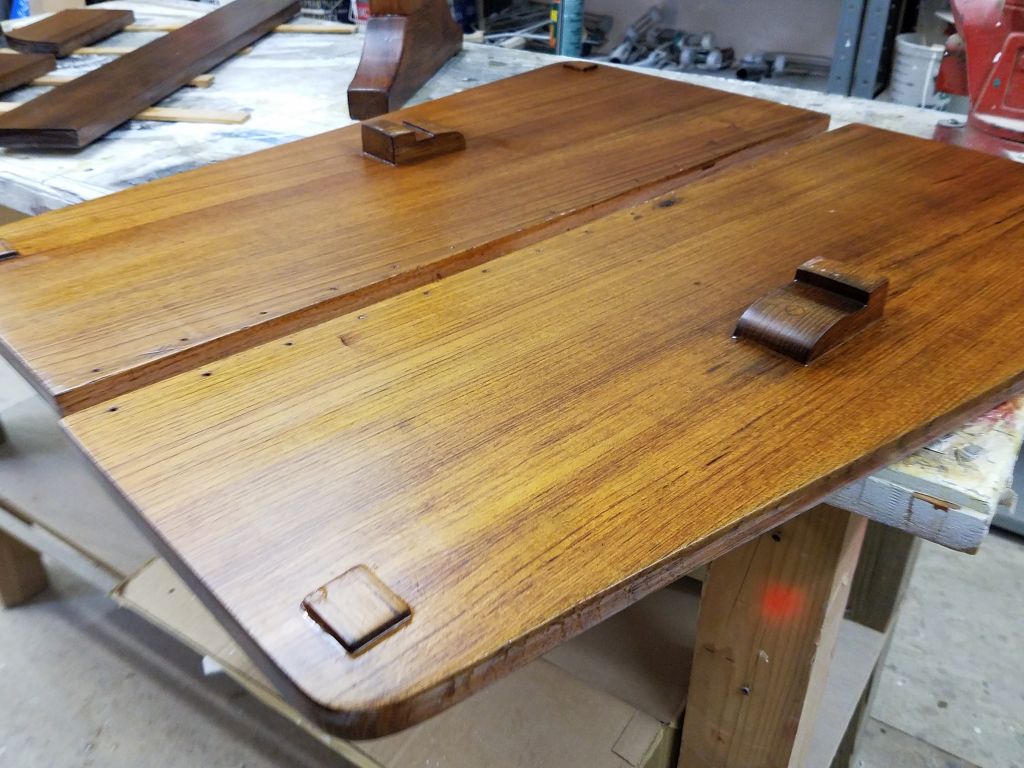
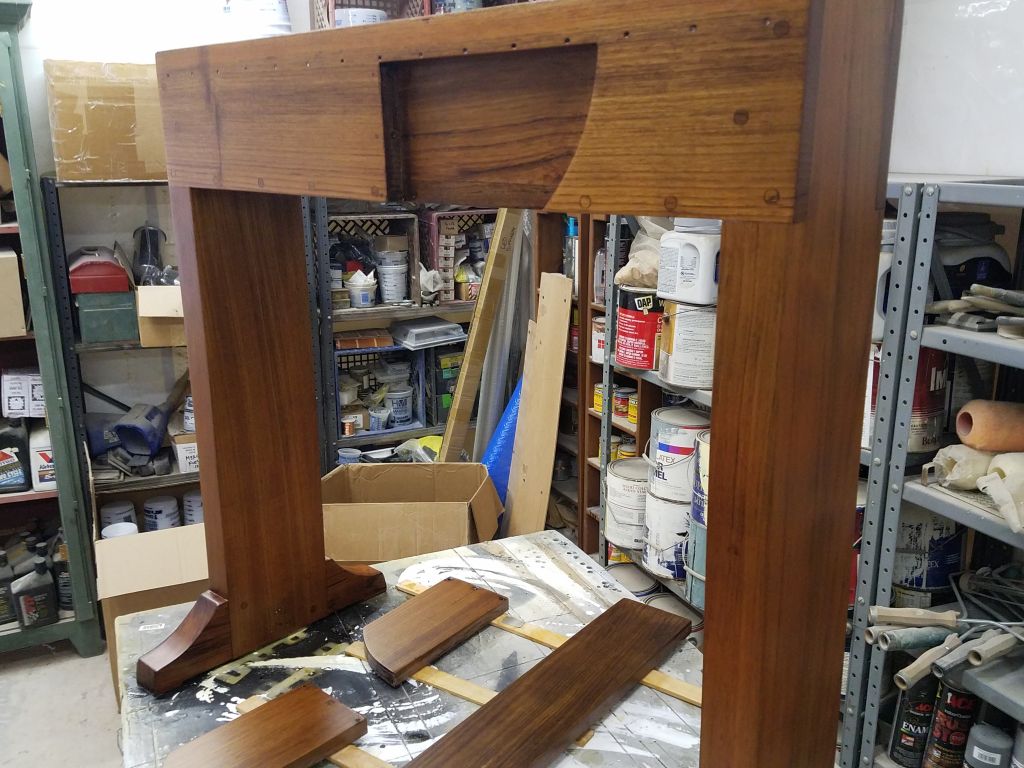
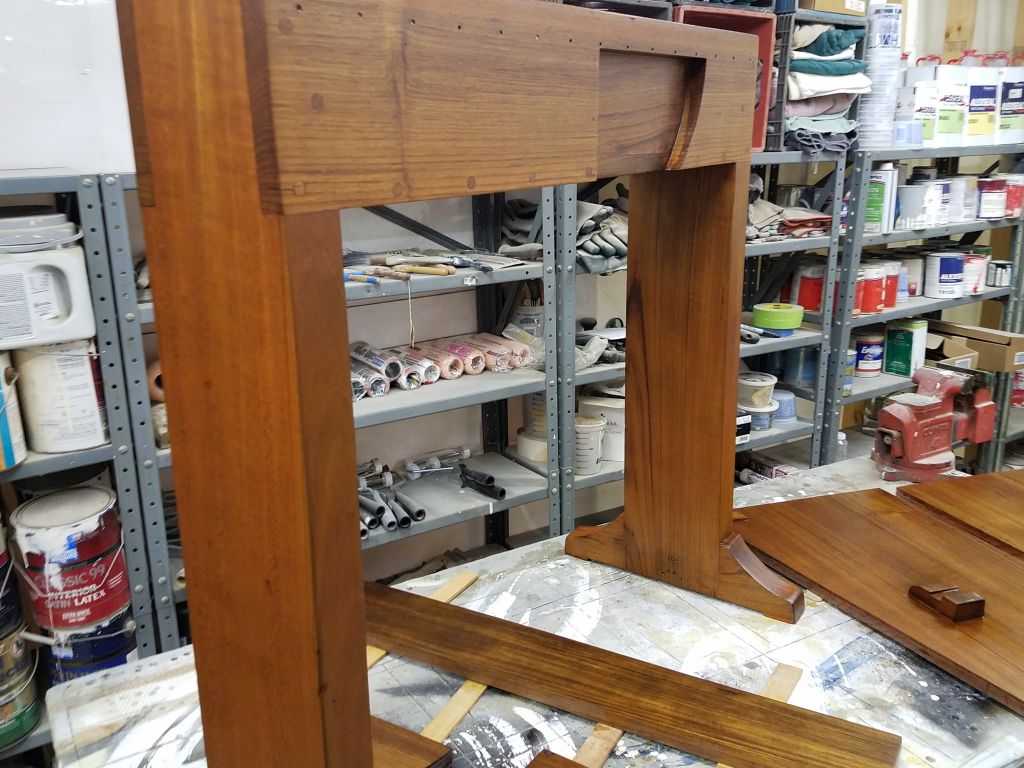
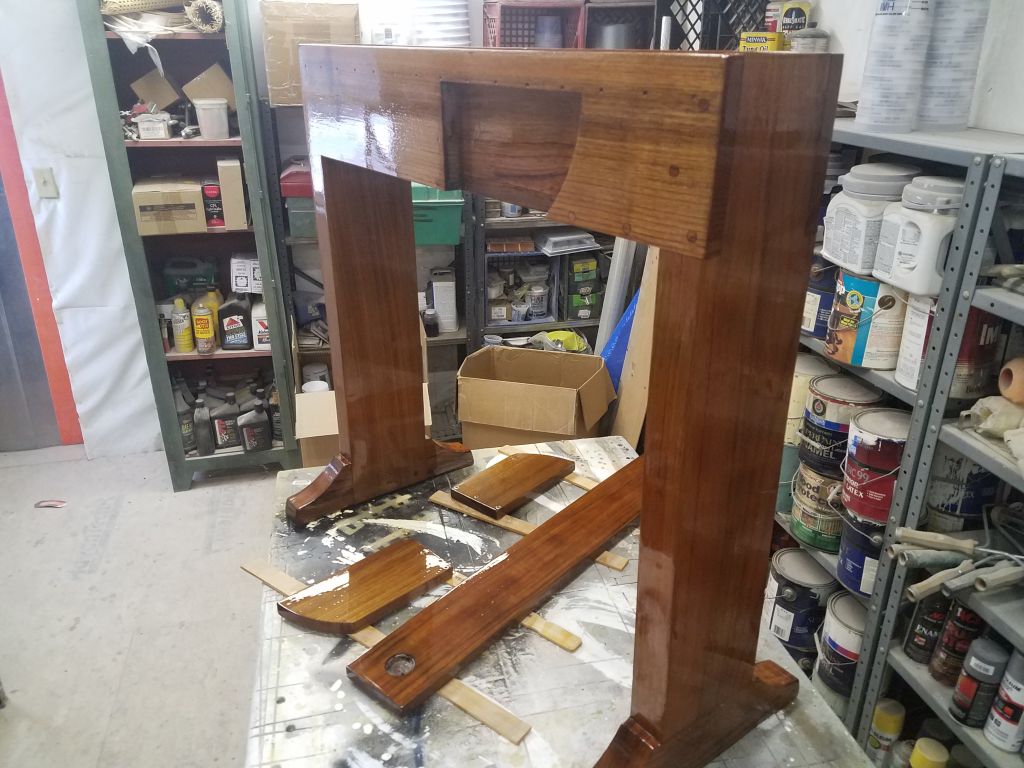
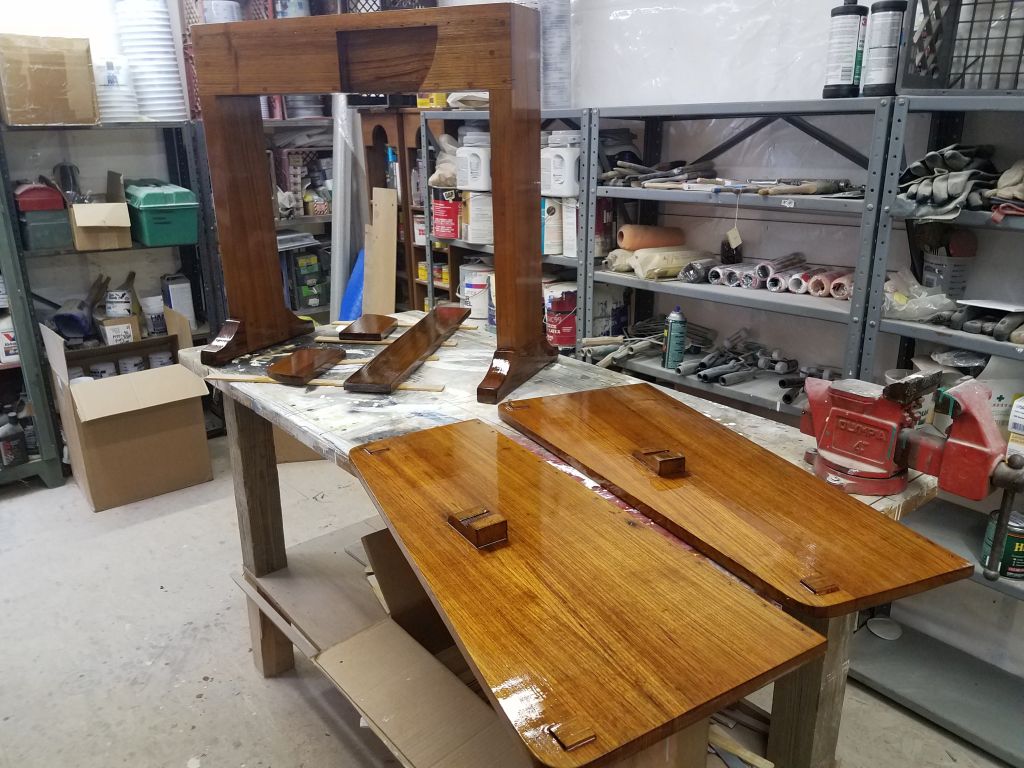
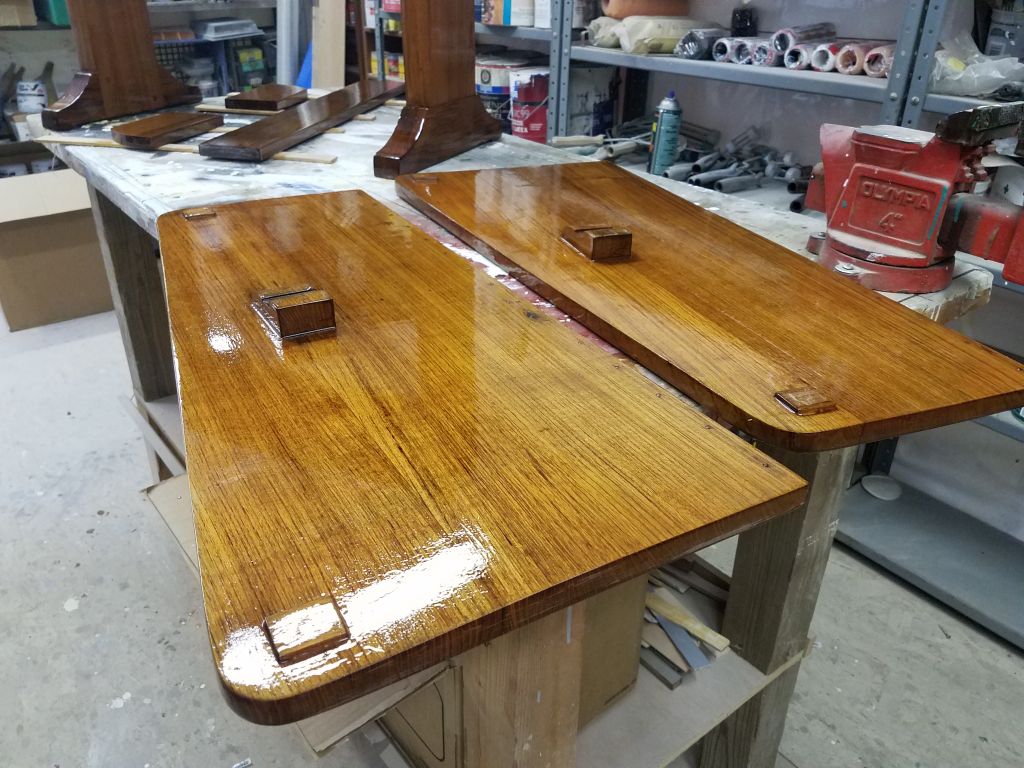
After setting the assembly aside to cure, I got back to work on the original cabin table, which I’d stripped and mostly sanded during the end of Phase 2 earlier in the year.  Now, I went over the table base, leaves, and top and sanded everything with 220 grit to prepare for finishing.  Then, after vacuuming and solvent-washing to remove dust, I applied a sealer coat of varnish to all sides of all pieces.

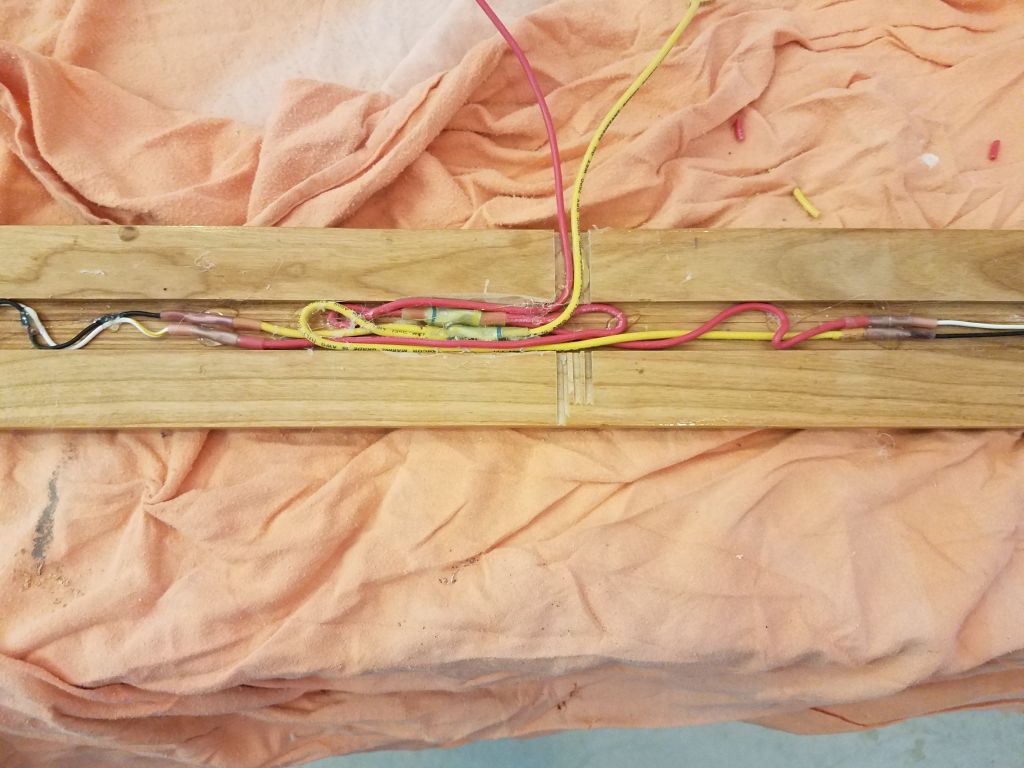
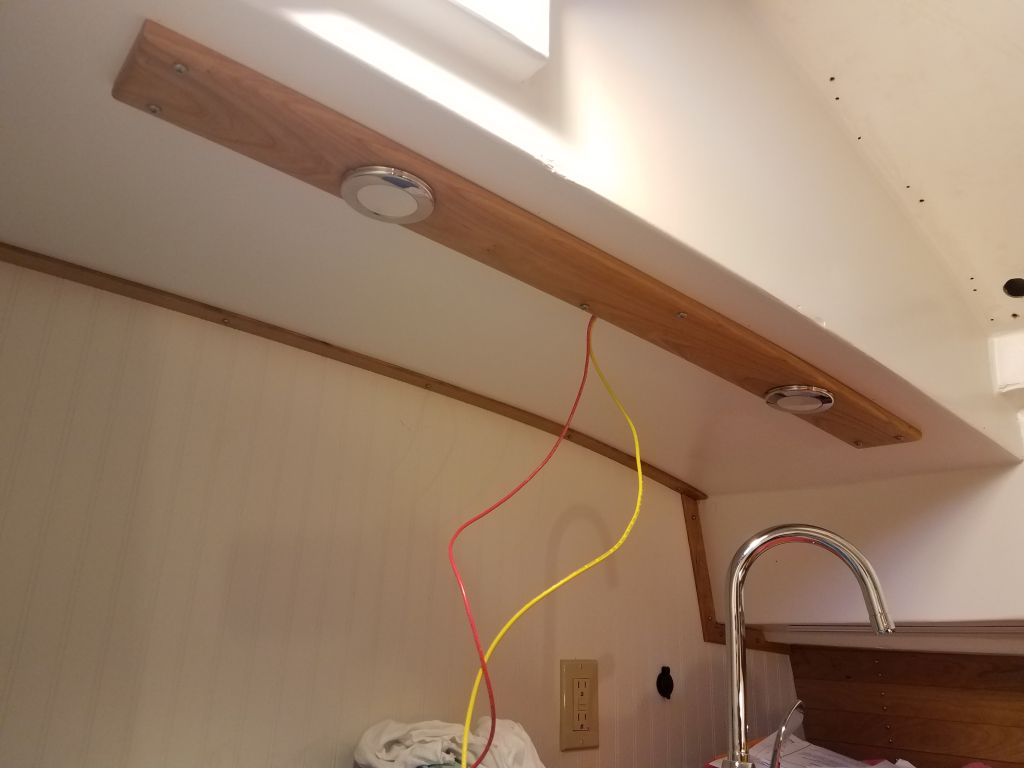
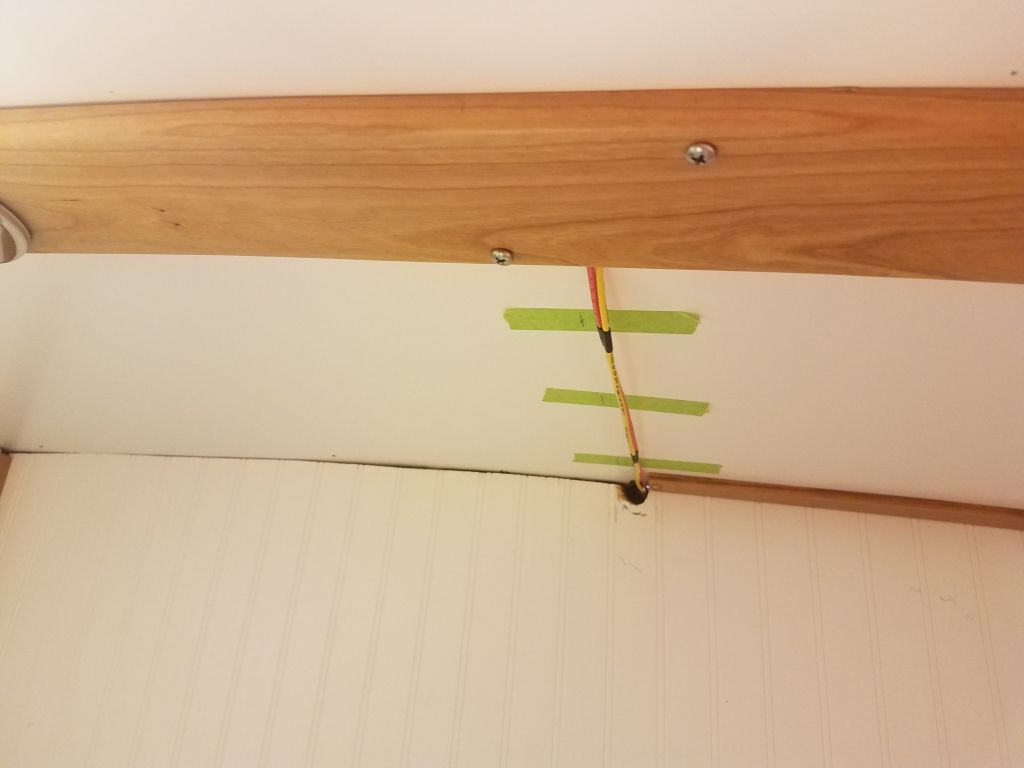
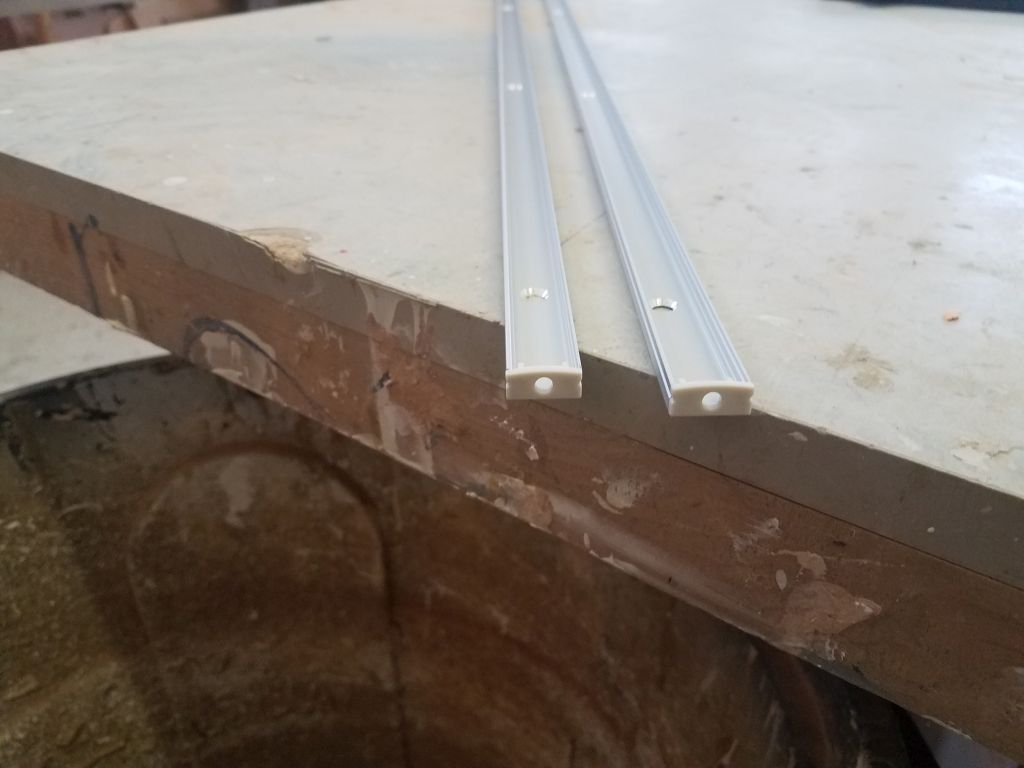
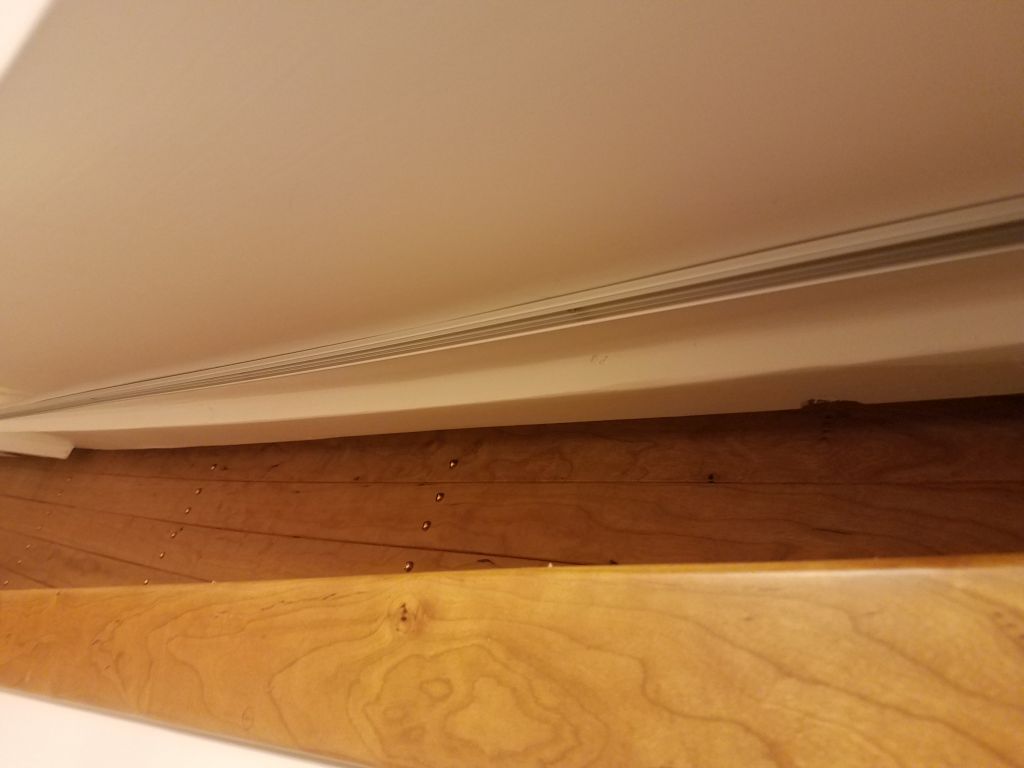
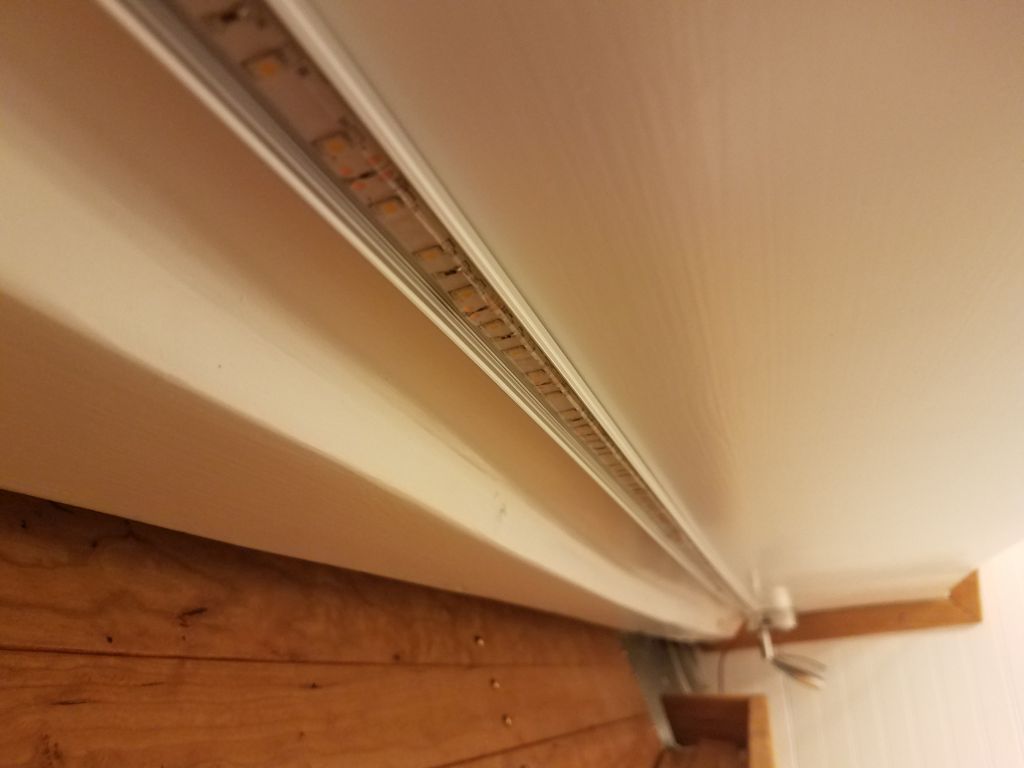
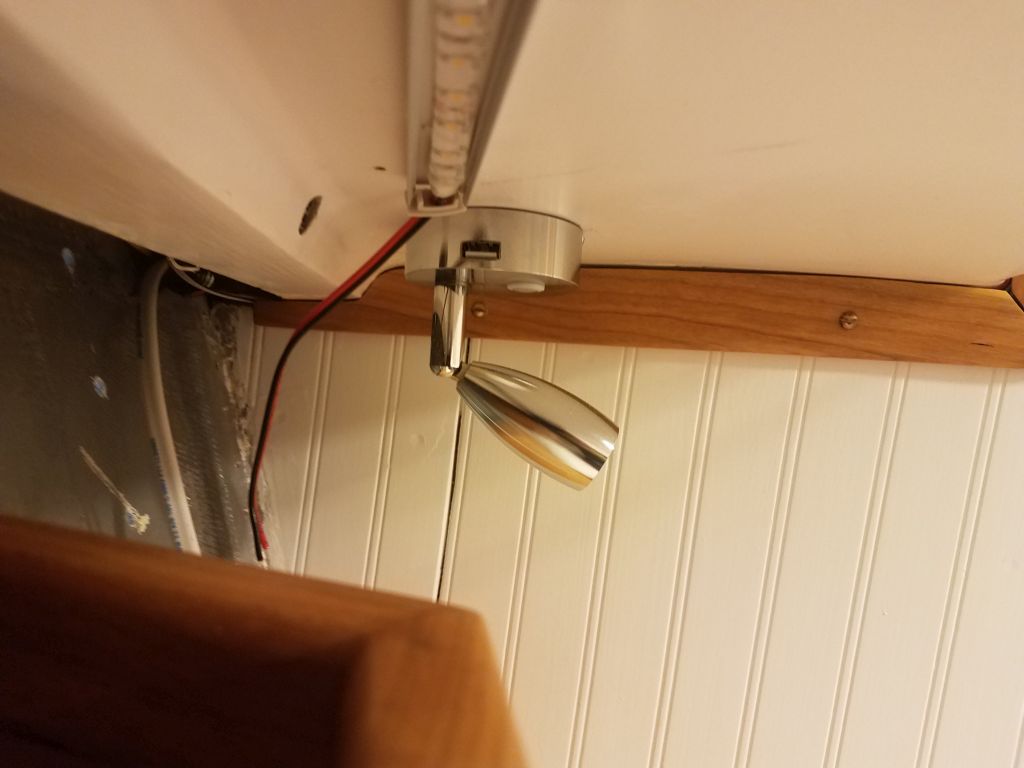
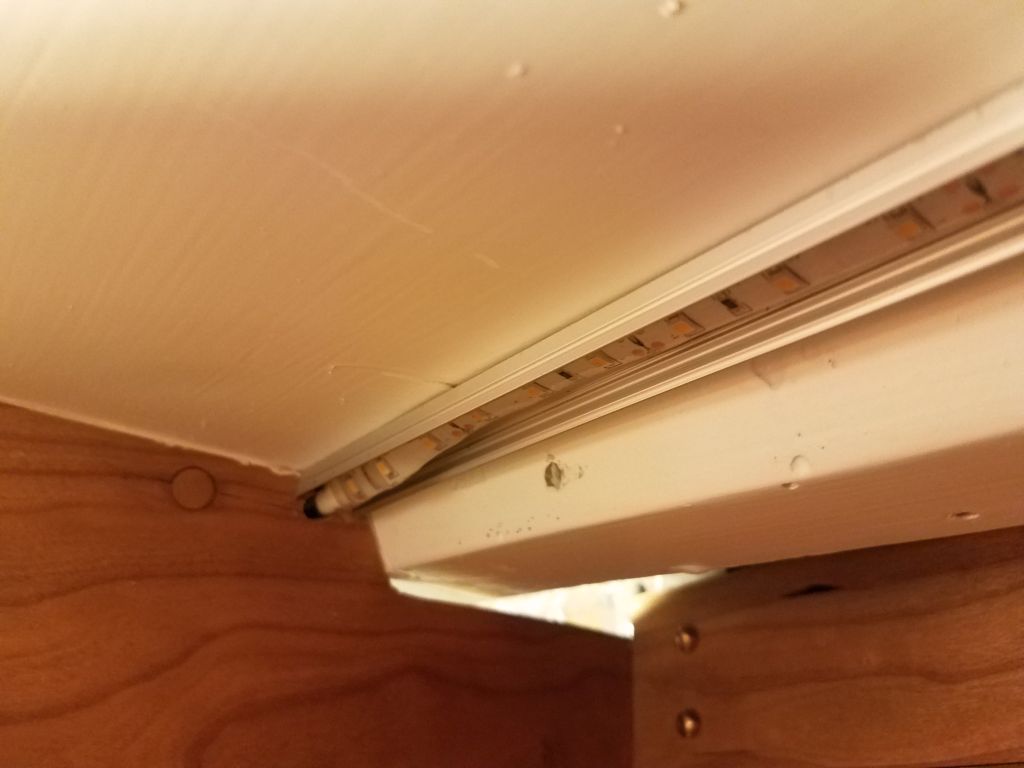
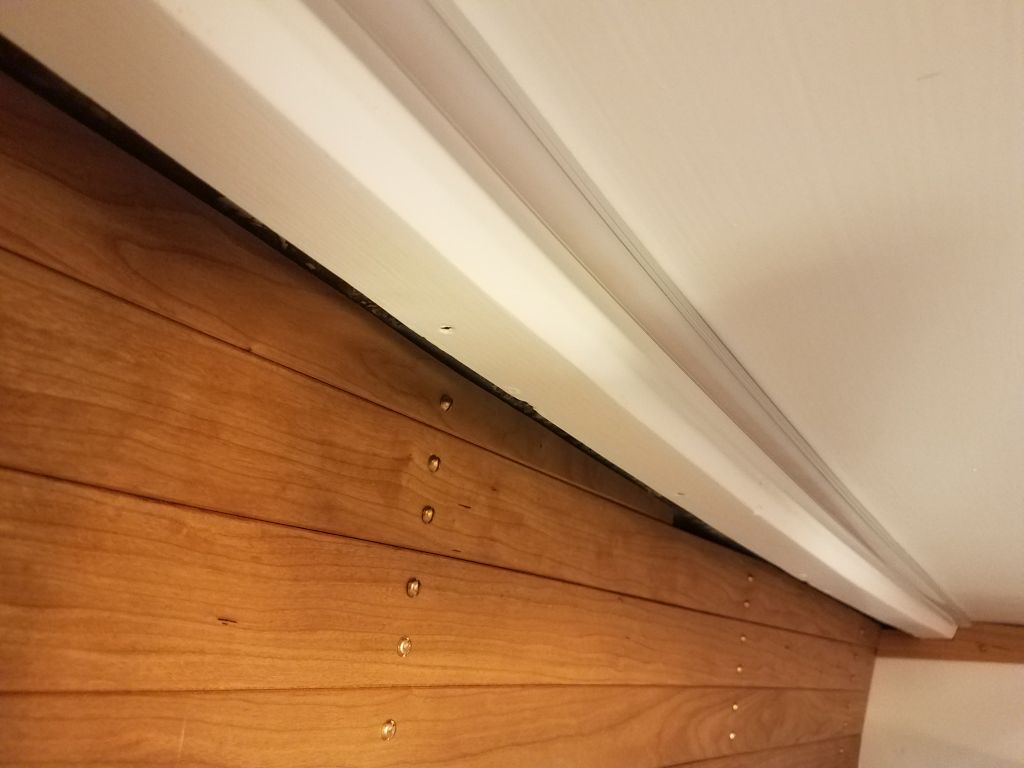
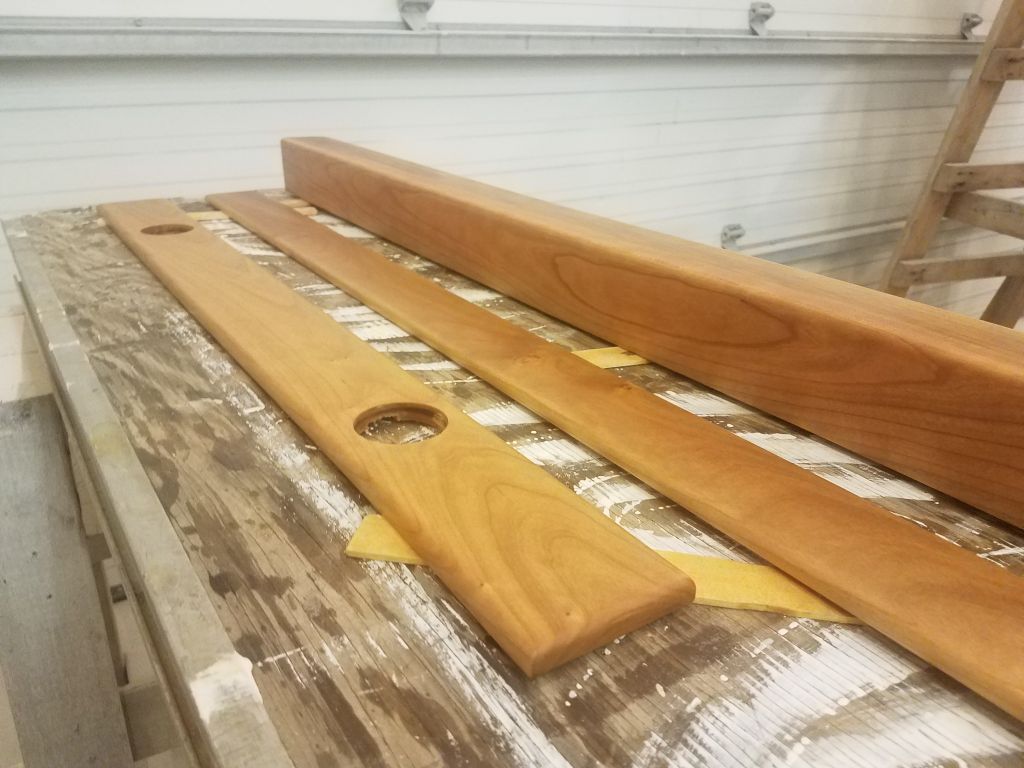
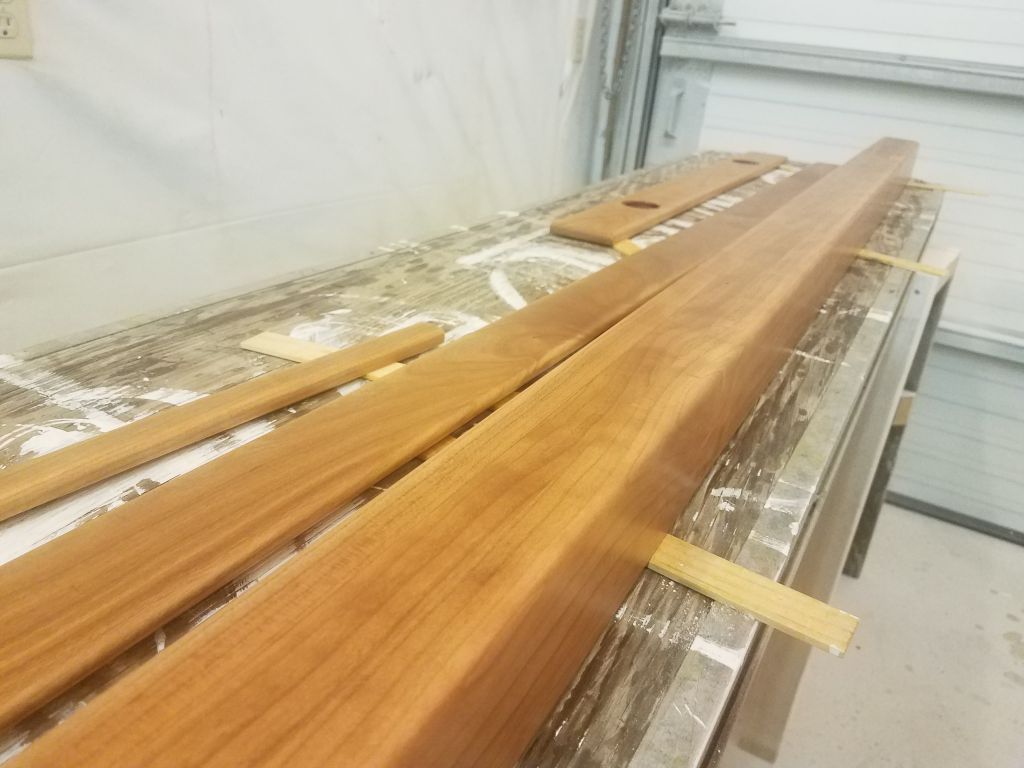
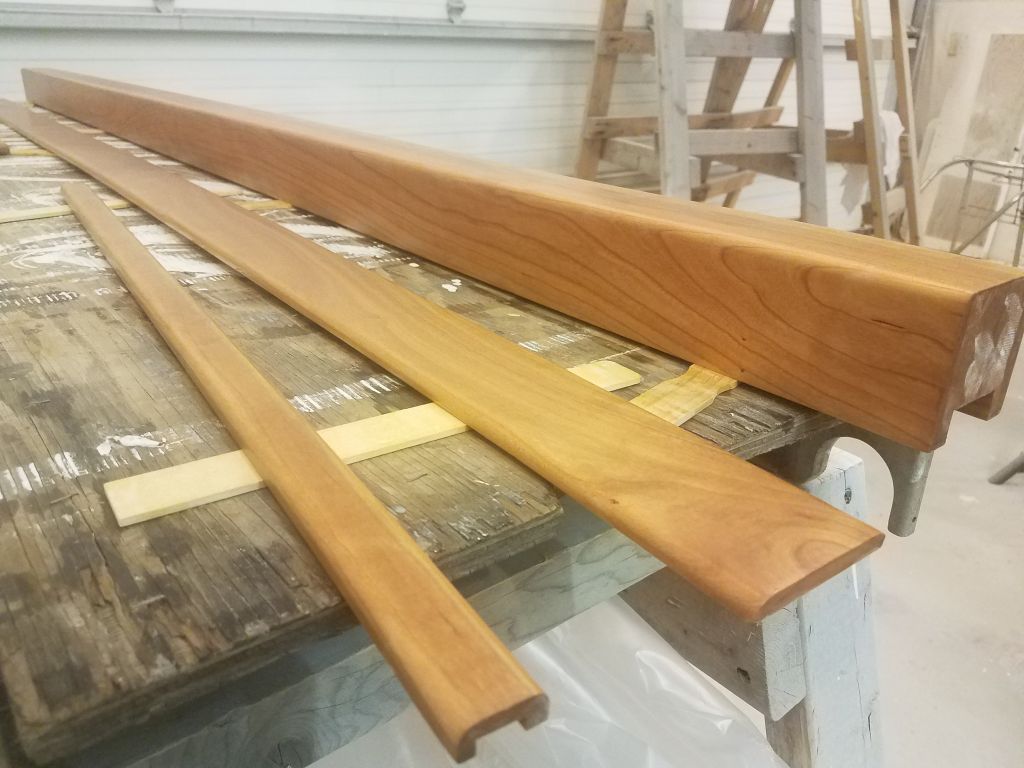
To finish up some of the lighting and wiring in the cabin, I required a few additional trim pieces, including the following:

During the rest of the day, I milled, sanded, and otherwise prepared these trim pieces as required, so that by the end of the day I had everything ready for primer or sealer coats of varnish as needed.

Total time billed on this job today:  6.5 hours

0600 Weather Observation:  18°, partly clear.  Forecast for the day:  Mostly sunny, 42°

Scupper 207

Friday

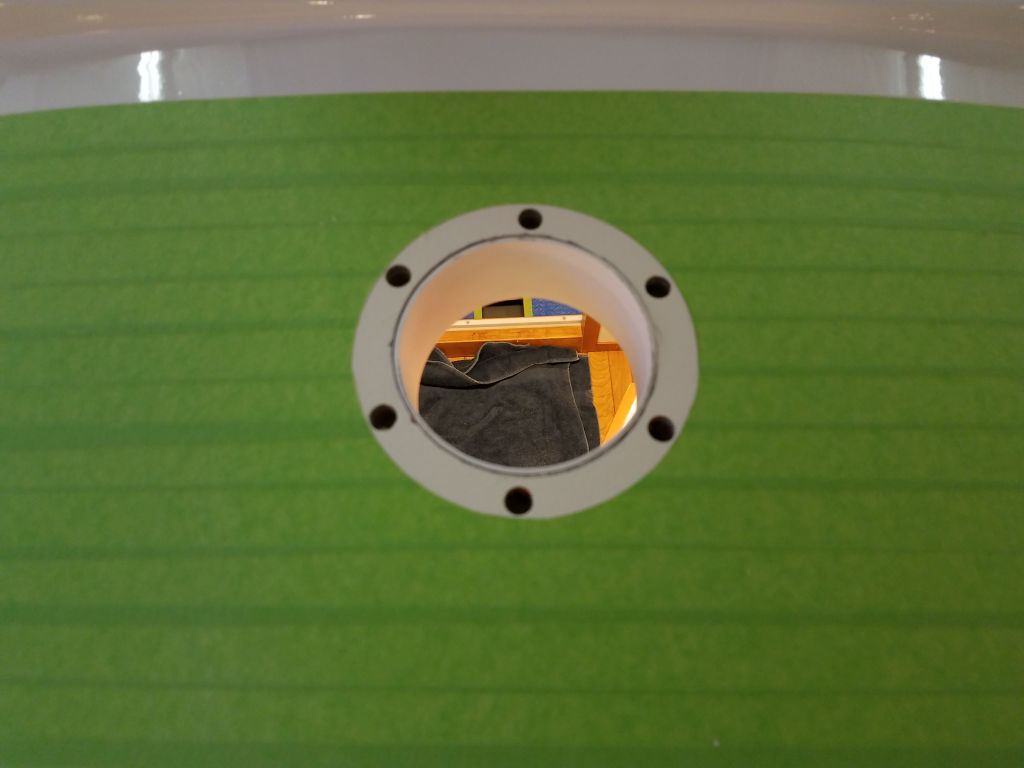
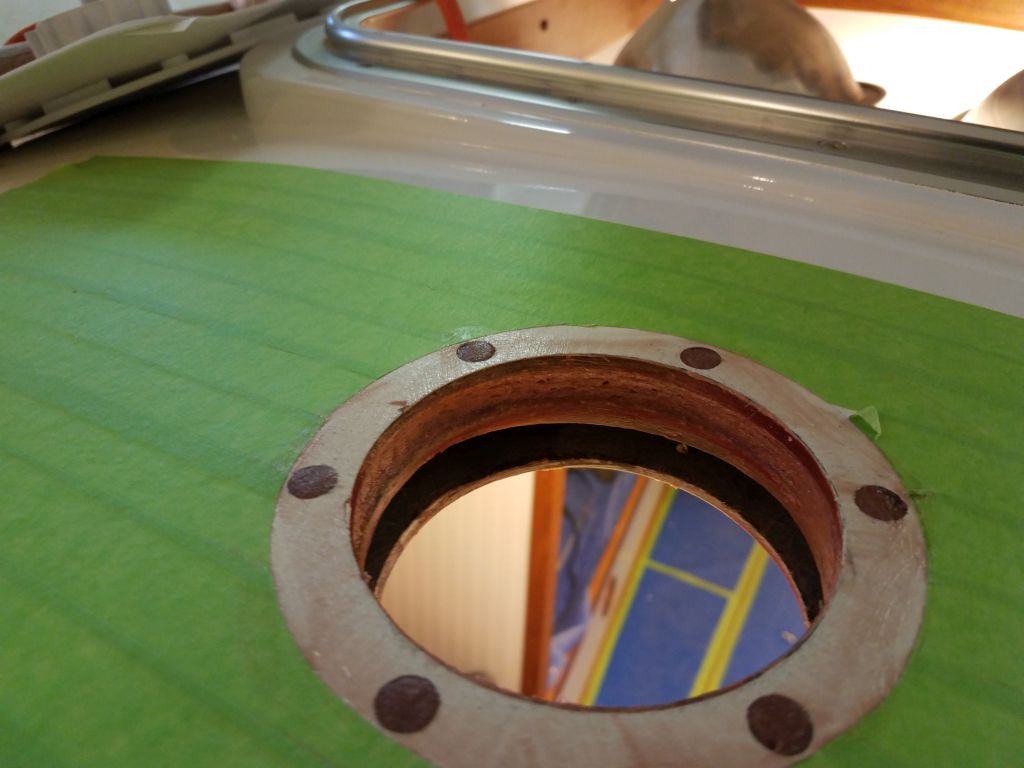
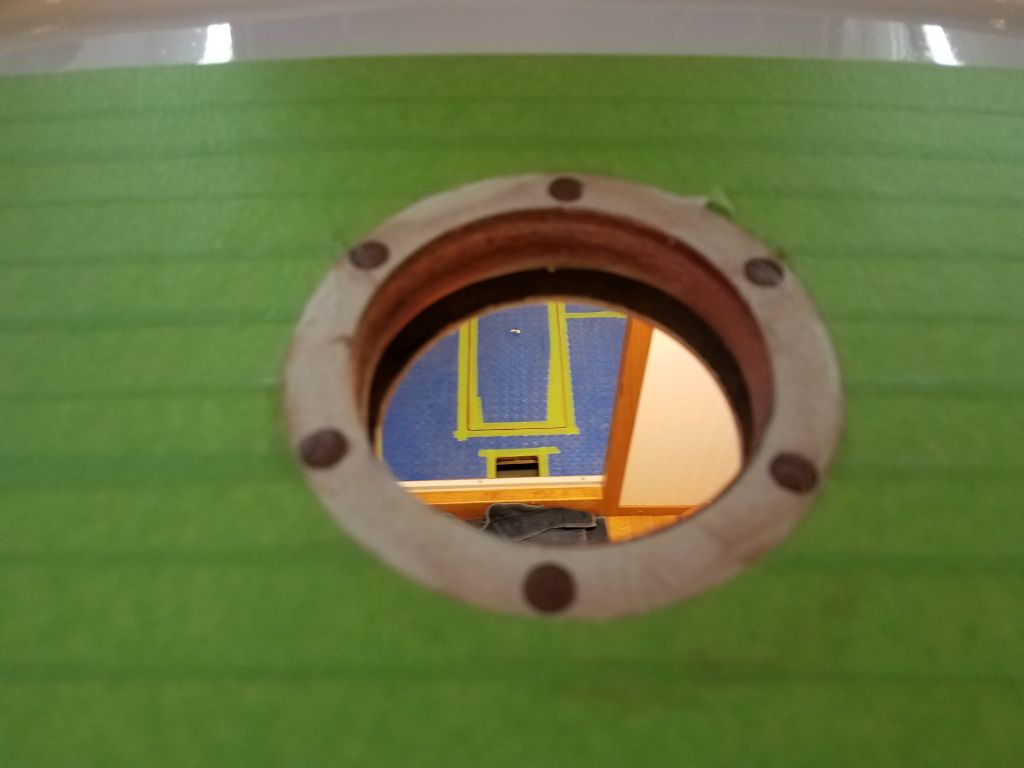
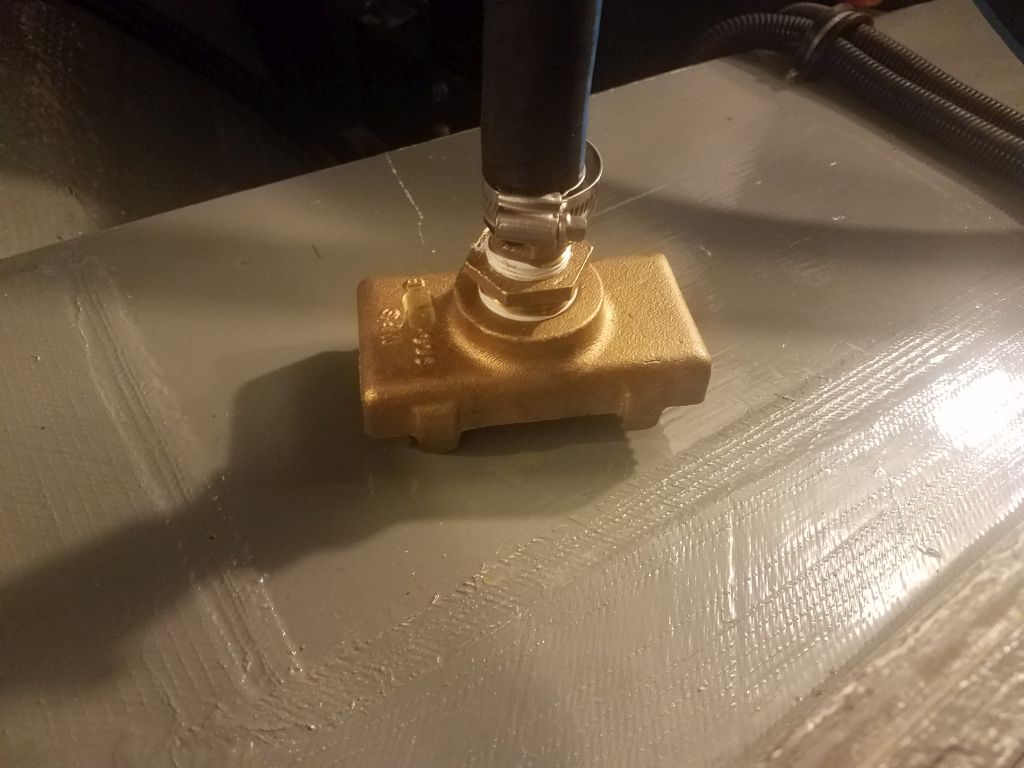
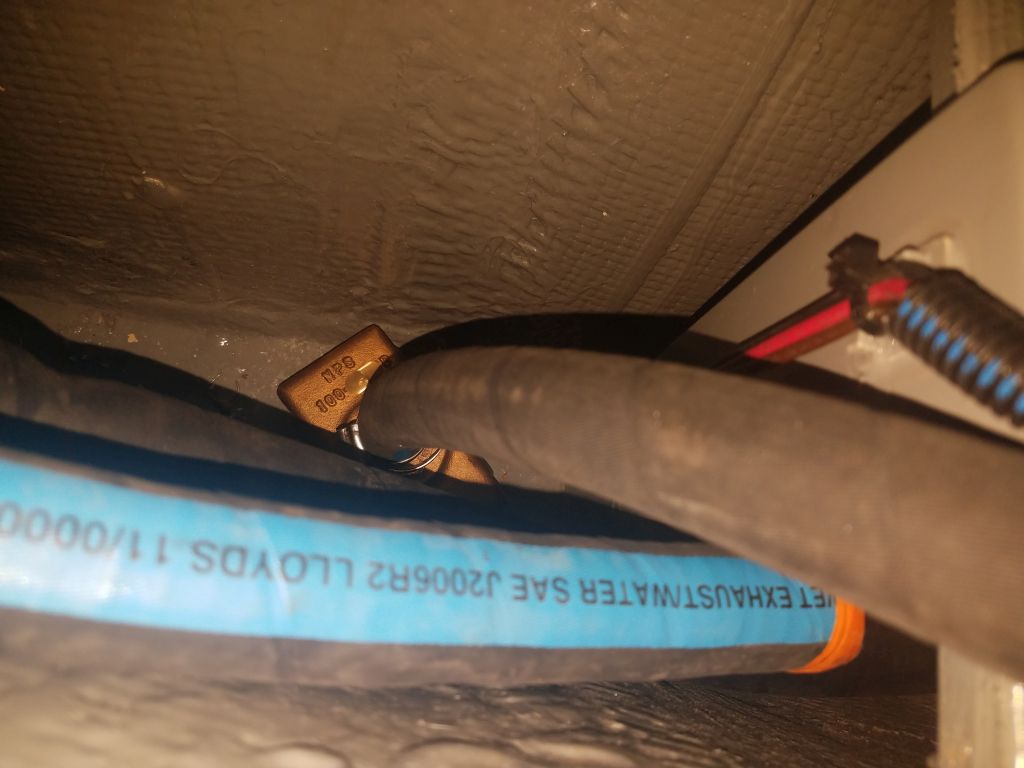
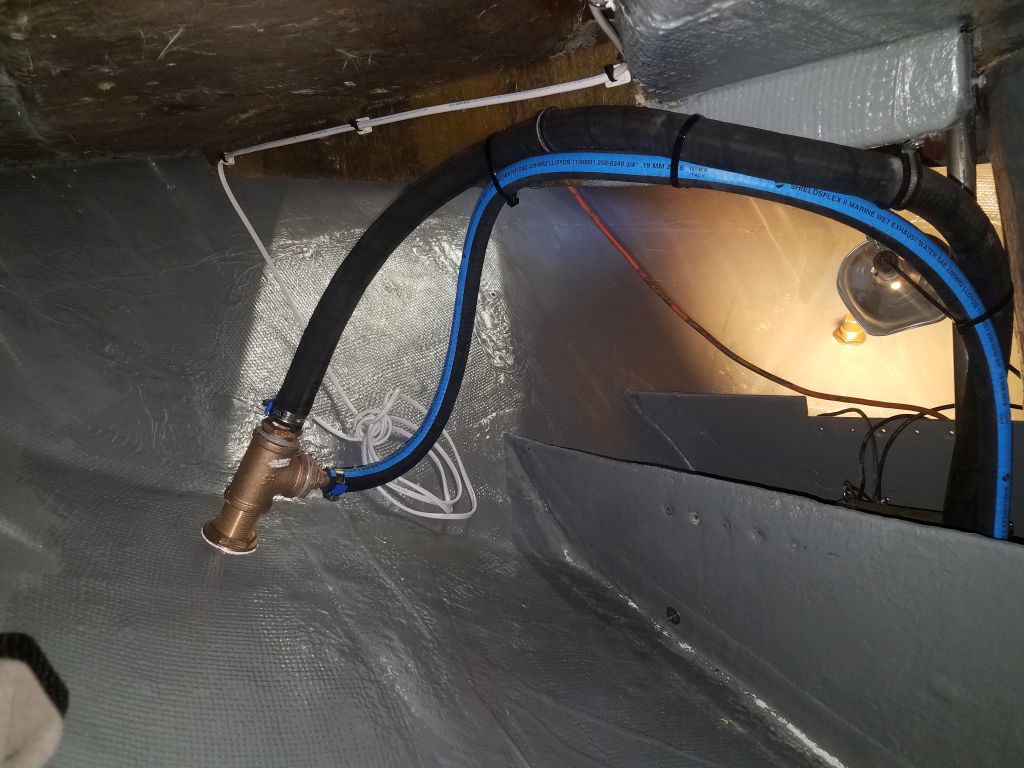
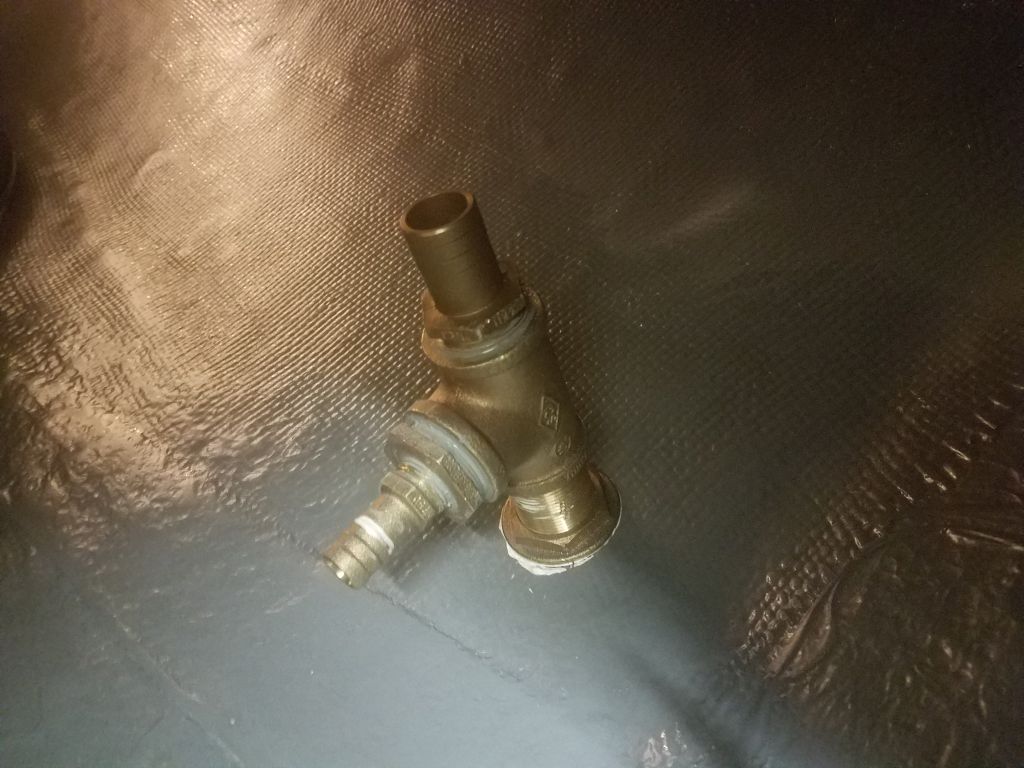
I got started by installing the replacement vent I’d ordered for the water tank.  This one was long enough to still work after passing through the thickness of the hull.

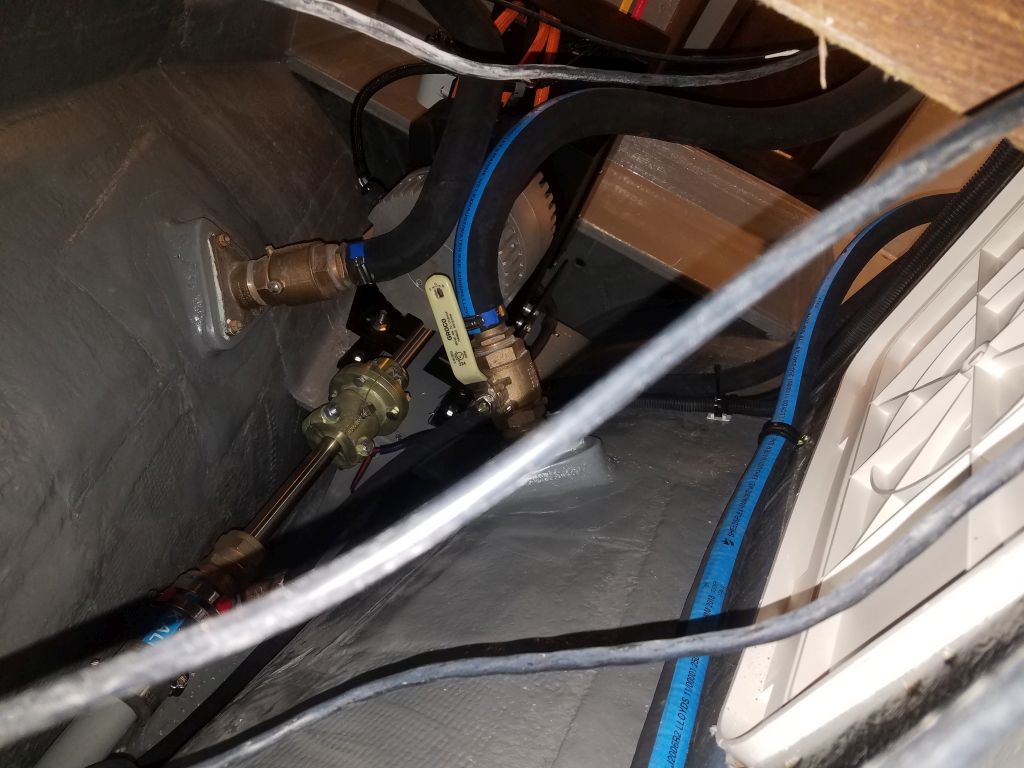
Sticking with the plumbing theme for now, I finished up the water hose run leading from the water pump aft, first through a tee fitting on the port side to accommodate the cockpit shower, then across beneath the cockpit and eventually through the bulkhead into the head area, where the water hose would eventually supply the fresh water flush toilet.  Near the end, I reduced the supply line from 5/8″ to 1/2″ to accommodate the nipple on the toilet intake.

I had expected to install a few more wires from the toilet control box to the head, but found that the wires needed were pre-installed inside the back of the toilet itself, so running them to the control box would happen later on, when I installed the toilet permanently.  For now, I didn’t want to do that as I wanted to be sure I finished up as much related (and other) work in and near the head before filling the space with the throne.  For now, I put the cover on the control box in the engine room and left it be.

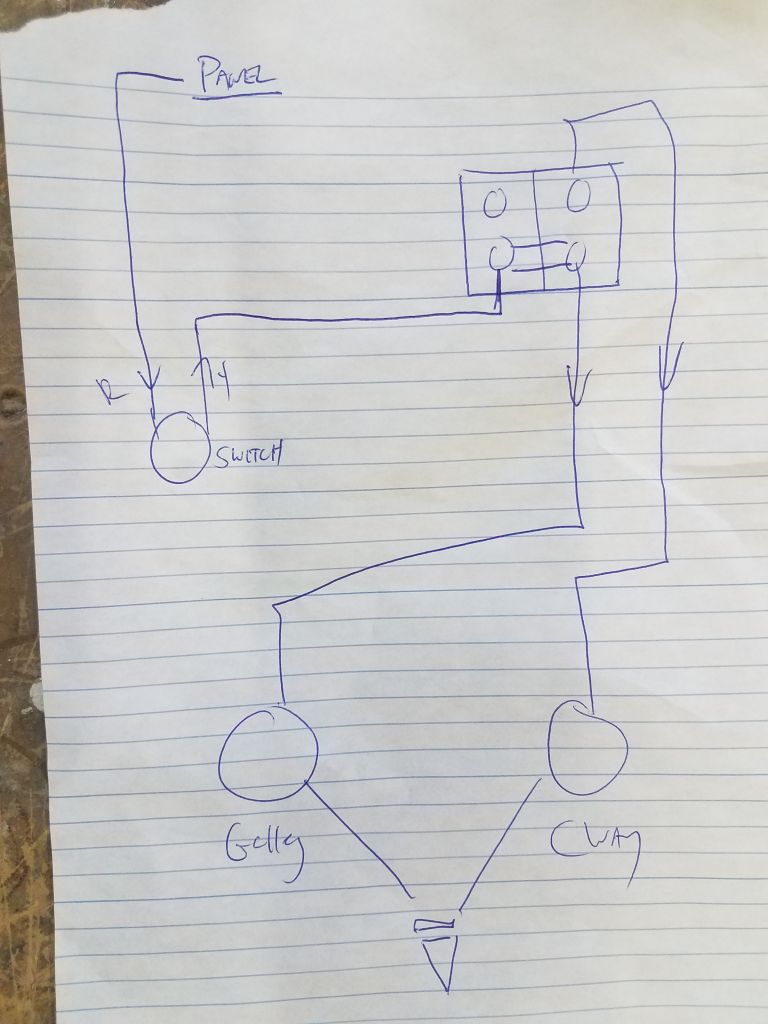
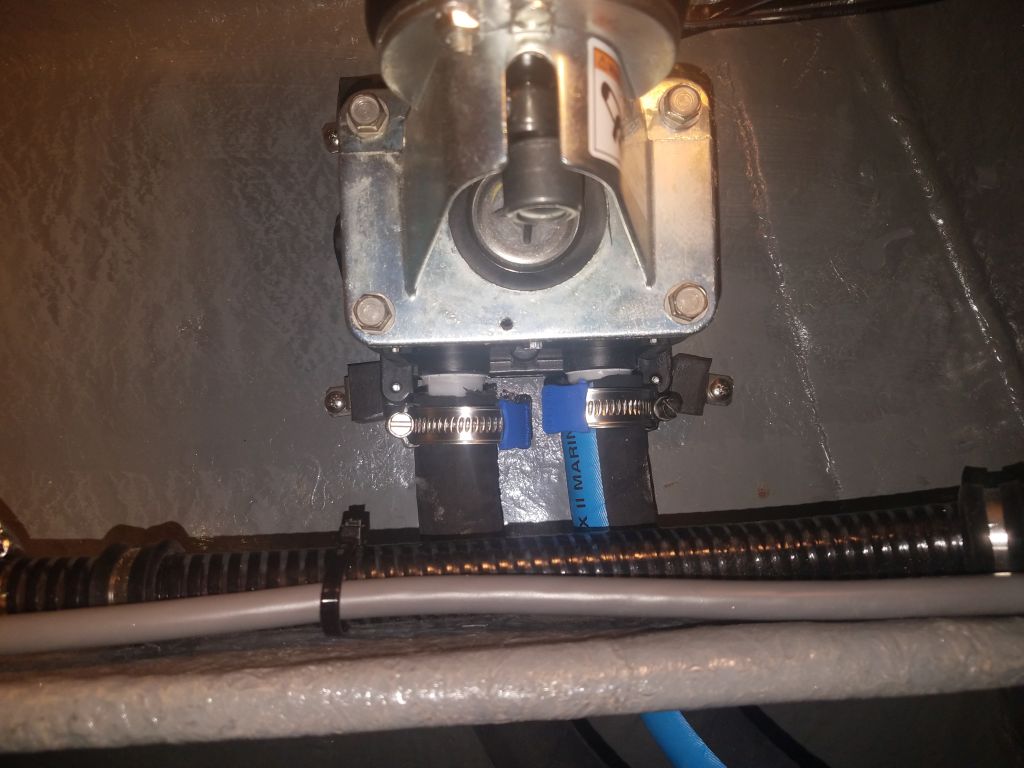
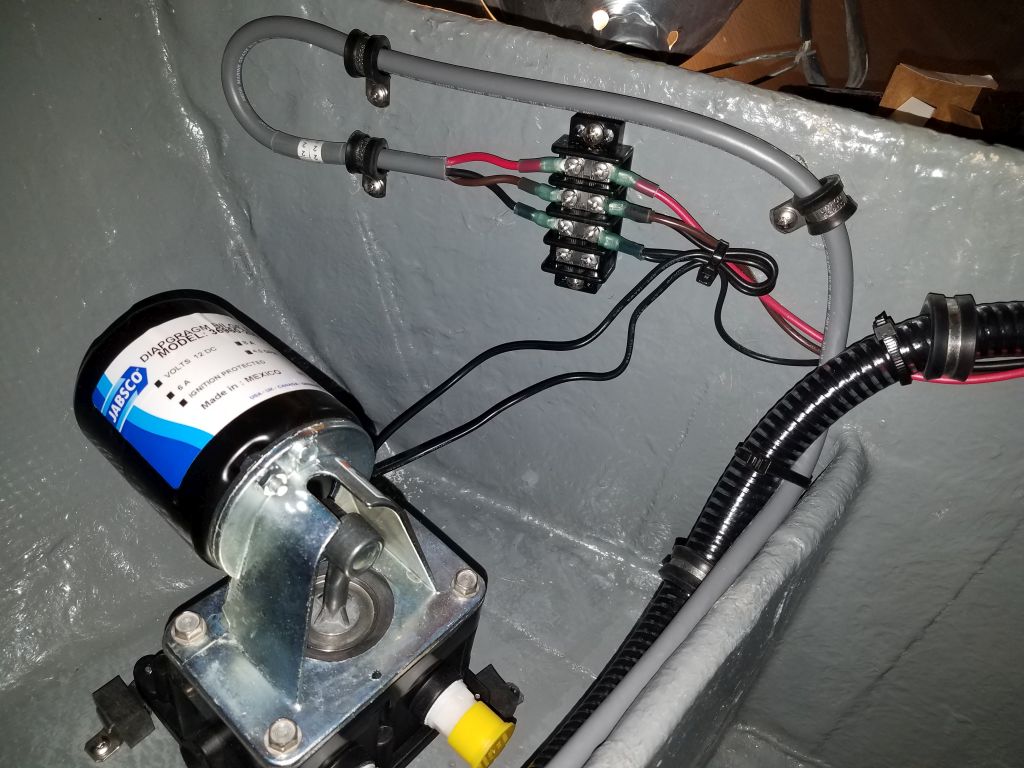
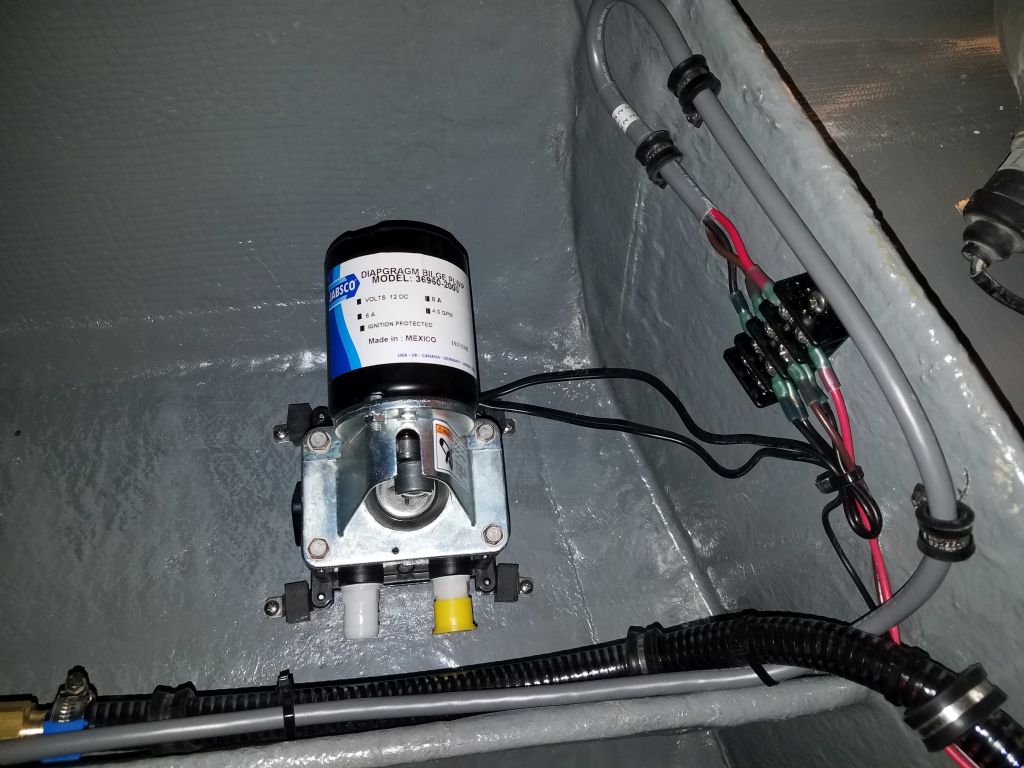
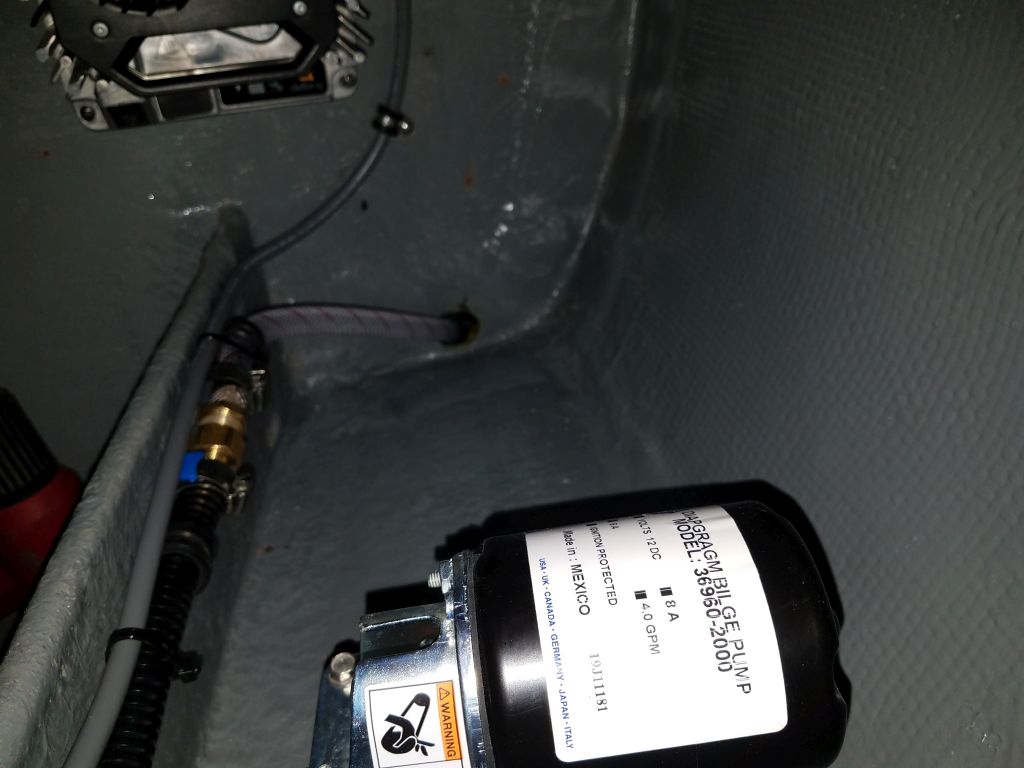
Next on the agenda was the two electric bilge pumps.  I planned a diaphragm pump for routine dewatering.  This pump, which would be mounted high and dry away from the depths of the bilge, had a smaller flow capacity, but with its diaphragm pumping action and hose to the deepest part of the bilge sump in shaft alley, it would work well to keep the bilge as dry as possible, and wouldn’t allow backflow when the pump stopped.

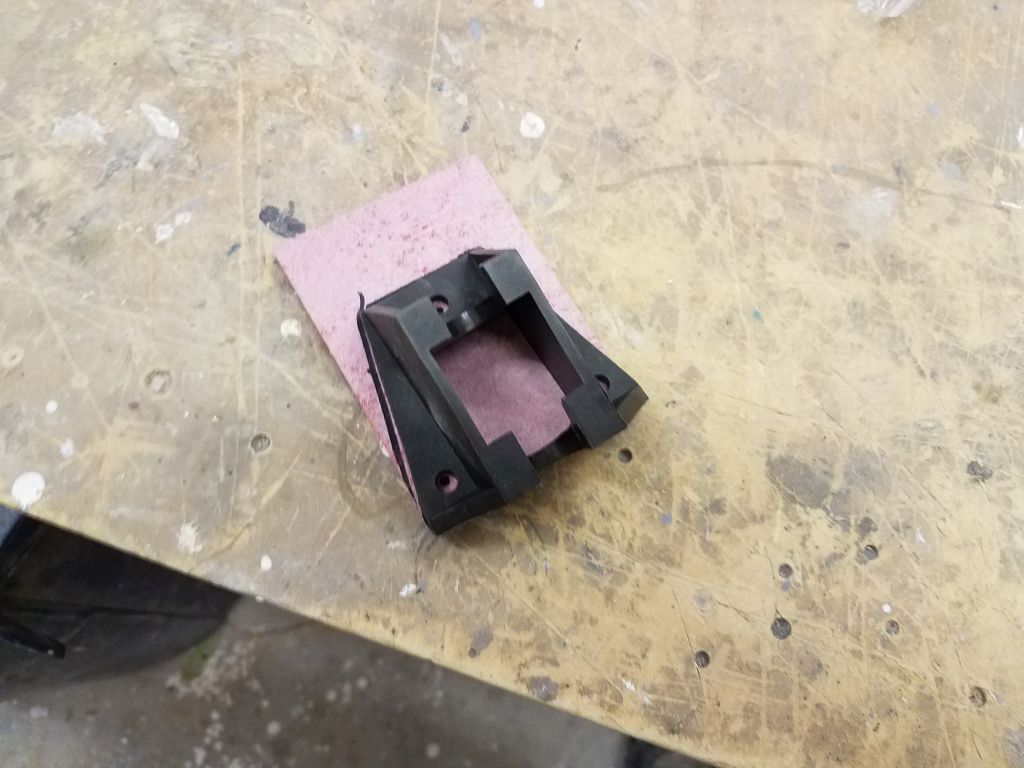
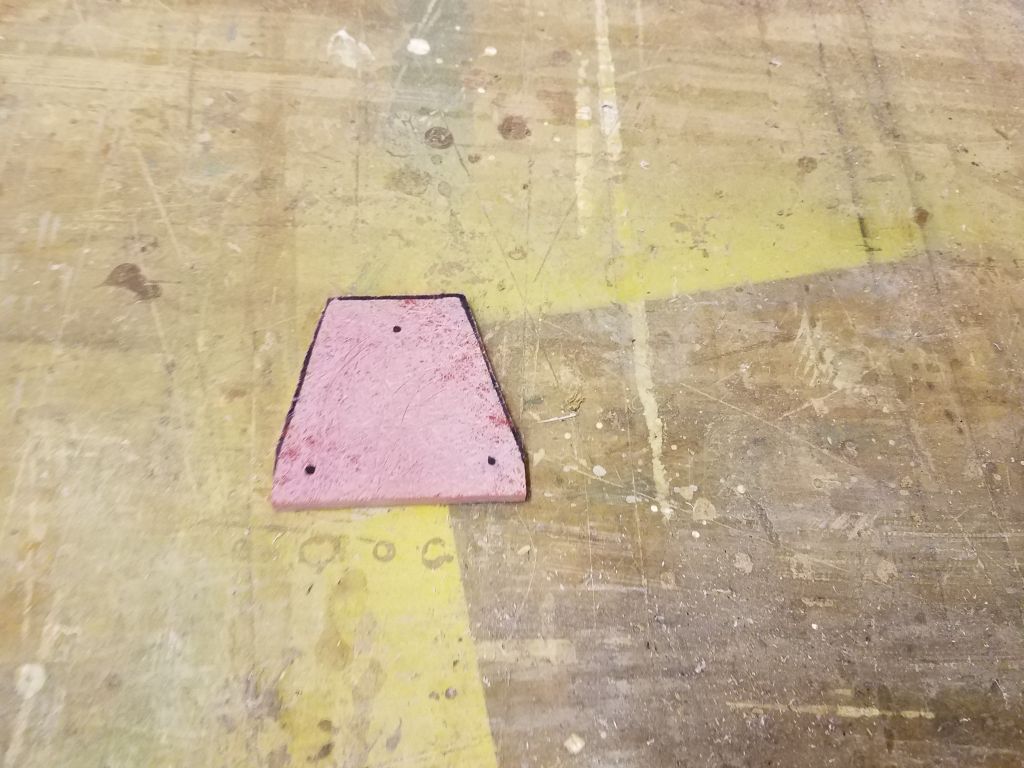
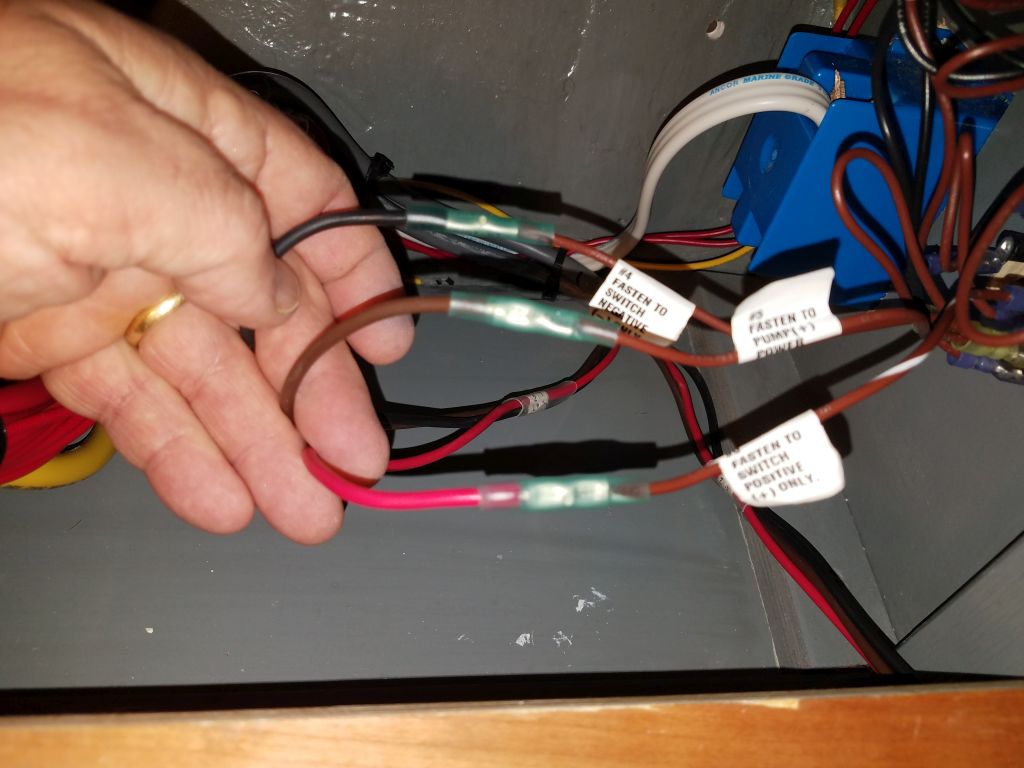
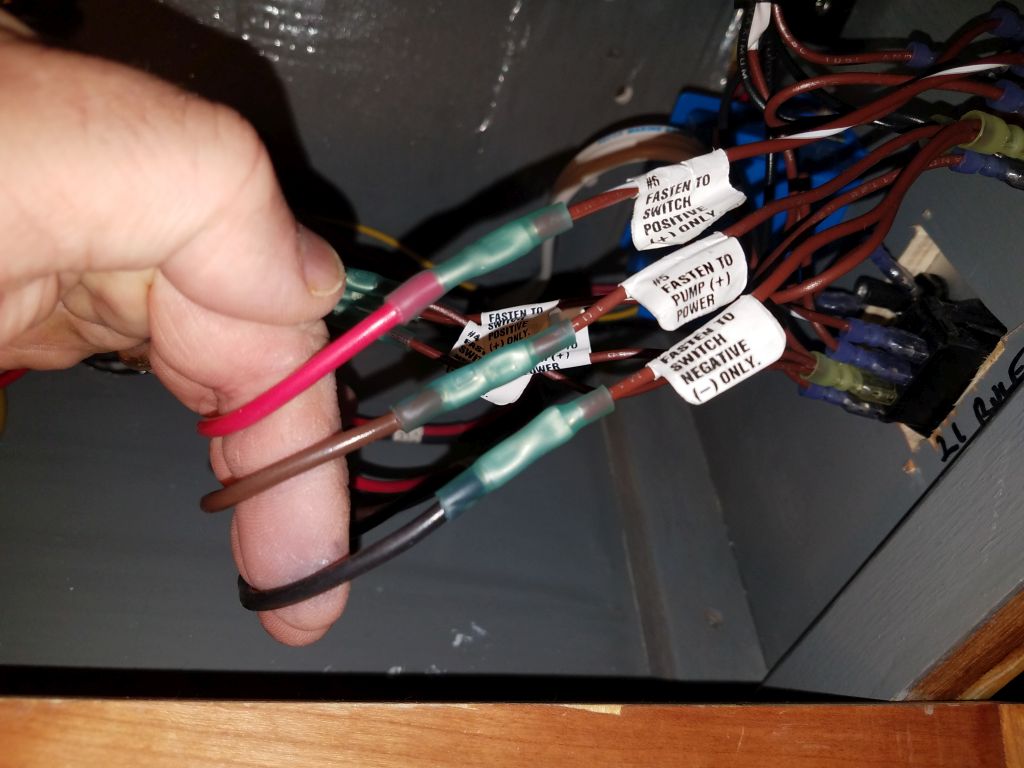
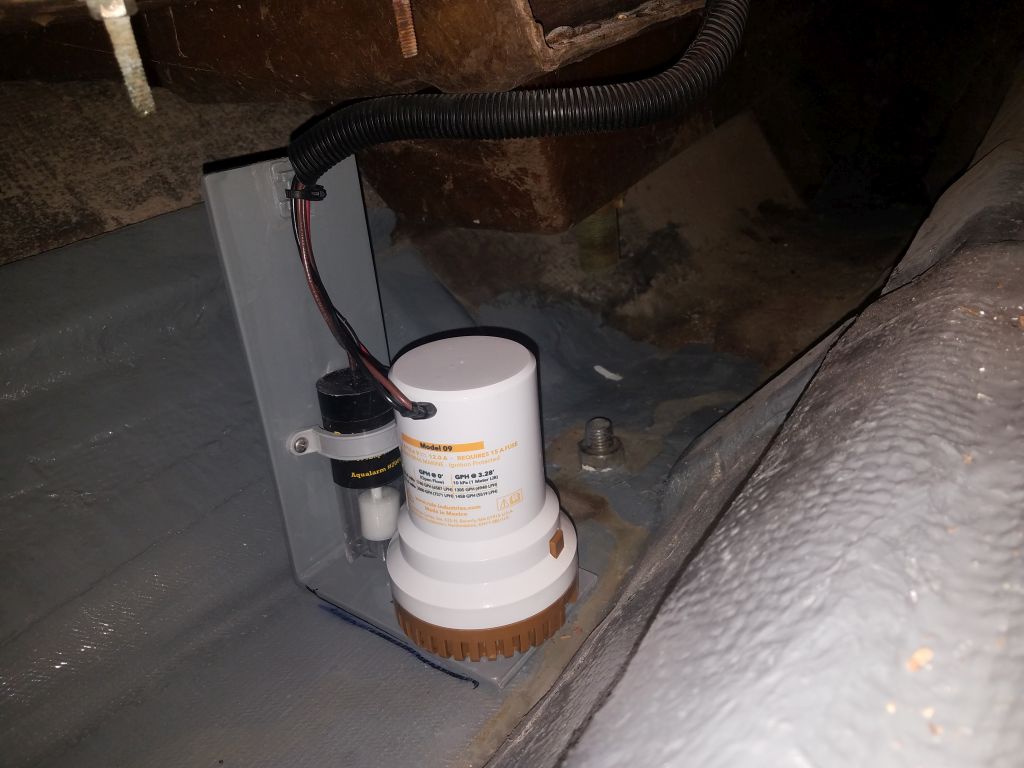
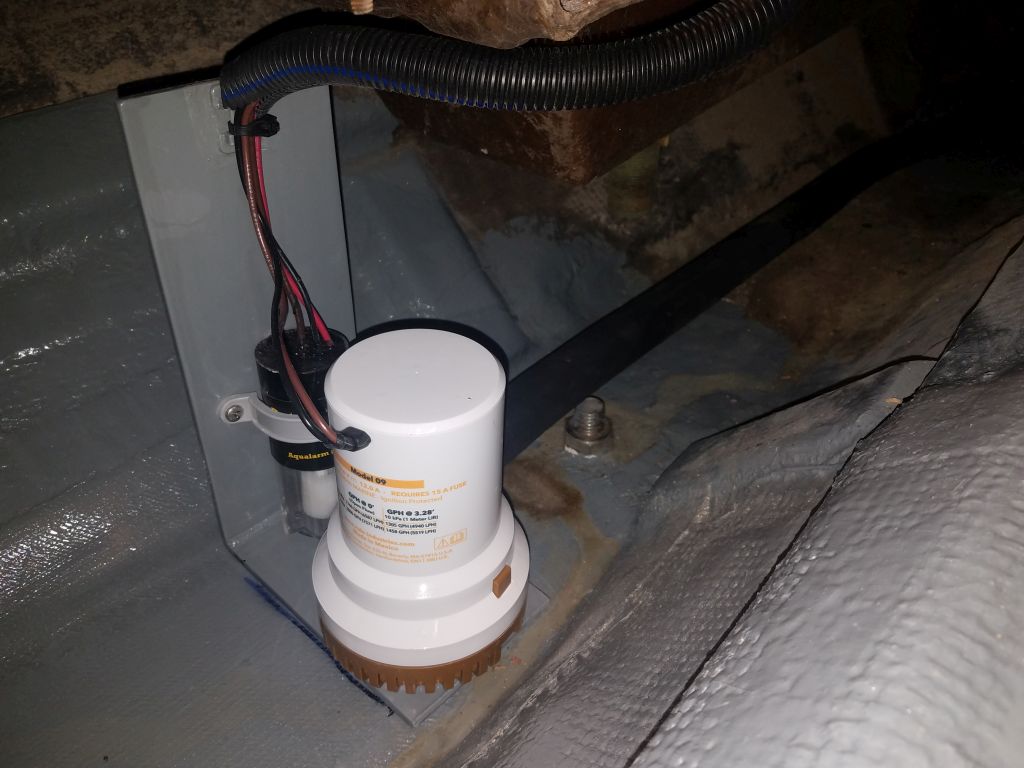
In order to mount an automatic float switch, I needed to build a little platform to secure the switch and be able to lower it into the bilge sump, since this area was mostly inaccessible and there was no way to secure the switch directly to the boat in any event.  After measuring the depth required, and allowing for a means of securing the little platform to the engine beds, I built the simple arrangement from prefab fiberglass panels.  The switch I chose was a cylindrical fully-enclosed type that hopefully would work consistently without clogging, and was designed to be held in place with a u-shaped bracket; the width of this bracket determined the width of the support I built, but I also included a little base platform on which the pump could rest so it couldn’t slide out of its bracket.  I glued up the new bracket with epoxy and left it to cure.  I realized later, as I reviewed the photos, that I’d glued the top piece–the smaller chunky piece–on the wrong side.  I’d meant the L-shaped bracket to face aft, and for the chunky top to fit over the aft side of the engine platform to accept screws.  That said, I thought the bracket would work even turned around, but I’d soon find out.

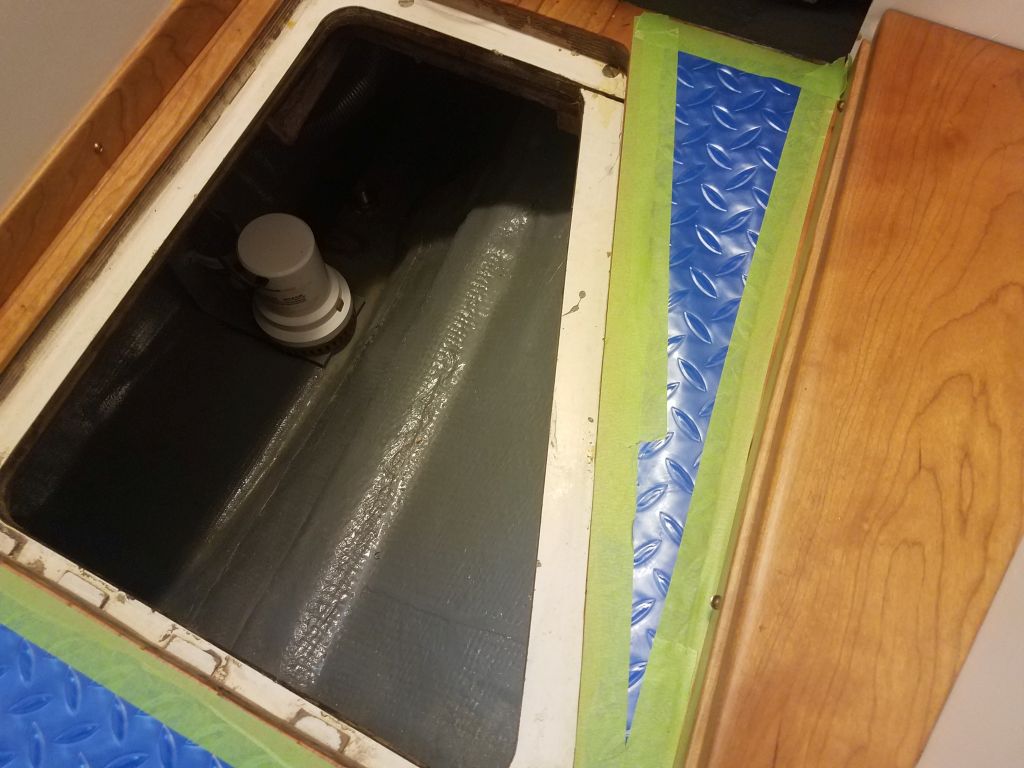
As a backup, and for more potentially significant electric dewatering, I also planned a 2000GPH (0′ head) centrifugal bilge pump to be mounted further forward, in this case in the space accessible through the bilge hatch in the galley.  To secure this pump, along with its automatic switch, I built another simple platform, which here I planned to adhere directly to the flat base of the bilge through this locker opening, providing a place to screw in the pump strainer/base and the float switch’s bracket.  I made the vertical part of the bracket tall enough to provide a mounting point for the wires, to keep them elevated out of the bilge, and glued up the simple bracket with epoxy.  There’d also be, of course, a manual bilge pump to come.

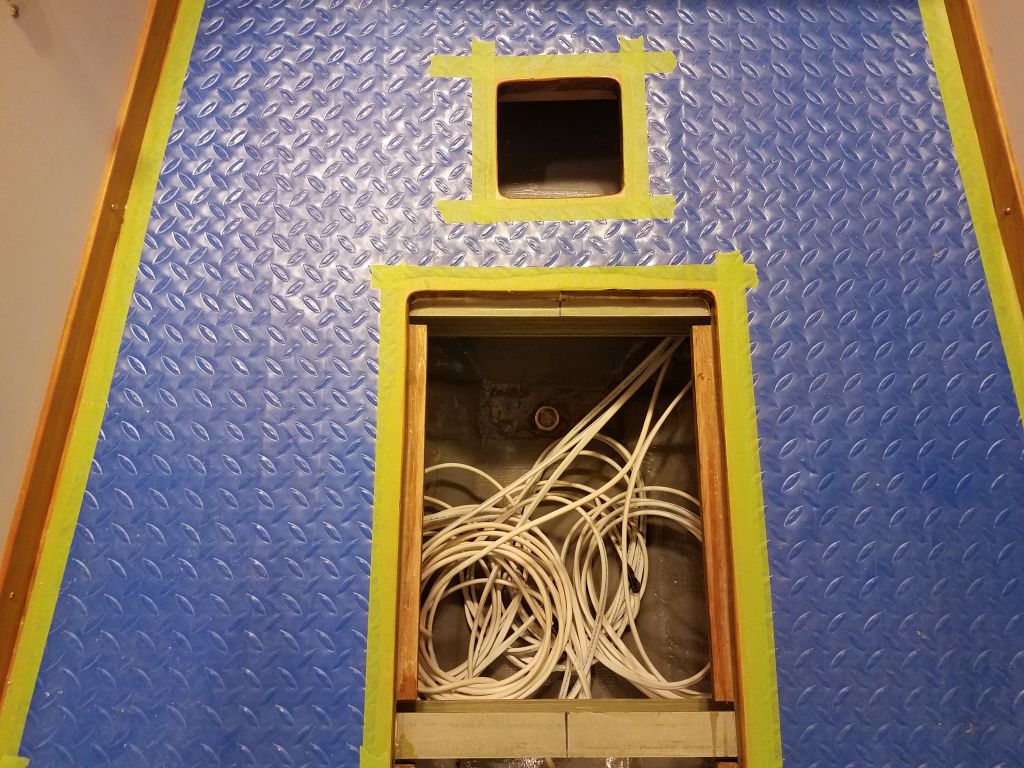
Speaking of bilge access, in order to install the final wiring runs for the mast and some related wiring that would lead from the compression post, I needed to regain access to the forward part of the bilge, which access hatch had been covered for much of the construction with protective paper.  In addition, the paper had seen better days, and I’d been patching numerous rips and tears as they occurred.  Now, though, I removed the old paper and installed new protective plastic (same as on deck) to the sole, keeping the covering separate over both bilge access hatches so I could come and go as I pleased in the coming days and weeks.

I eased out of the day and the week by looking in some detail at potential anchor windlasses for the boat.

Total time billed on this job today:  6.5  hours

0600 Weather Observation:  4°, clear. Forecast for the day:  Sunny, 26°
Scupper 206

Thursday

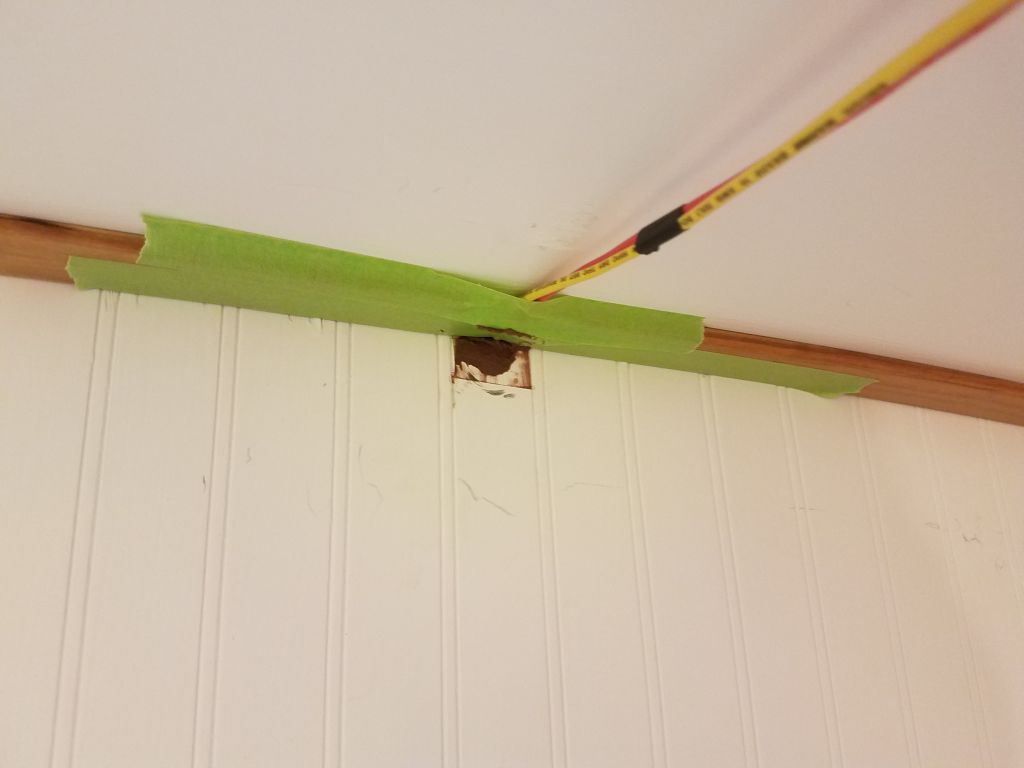
Working in the forward cabin, I continued with the second fan, which I located on the starboard side in the upper corner of the bulkhead (where it was near the wiring from the starboard bulkhead light in the main cabin), and secured the wiring for both appliances behind the trim at the edges of the bulkhead before leading it aft into the electrical locker. I found that a little butyl tape was handy for holding the little wires in the groove behind the trim.  As with the port side, I’d make a piece of trim to cover the exposed wiring on the bulkhead in the near future.

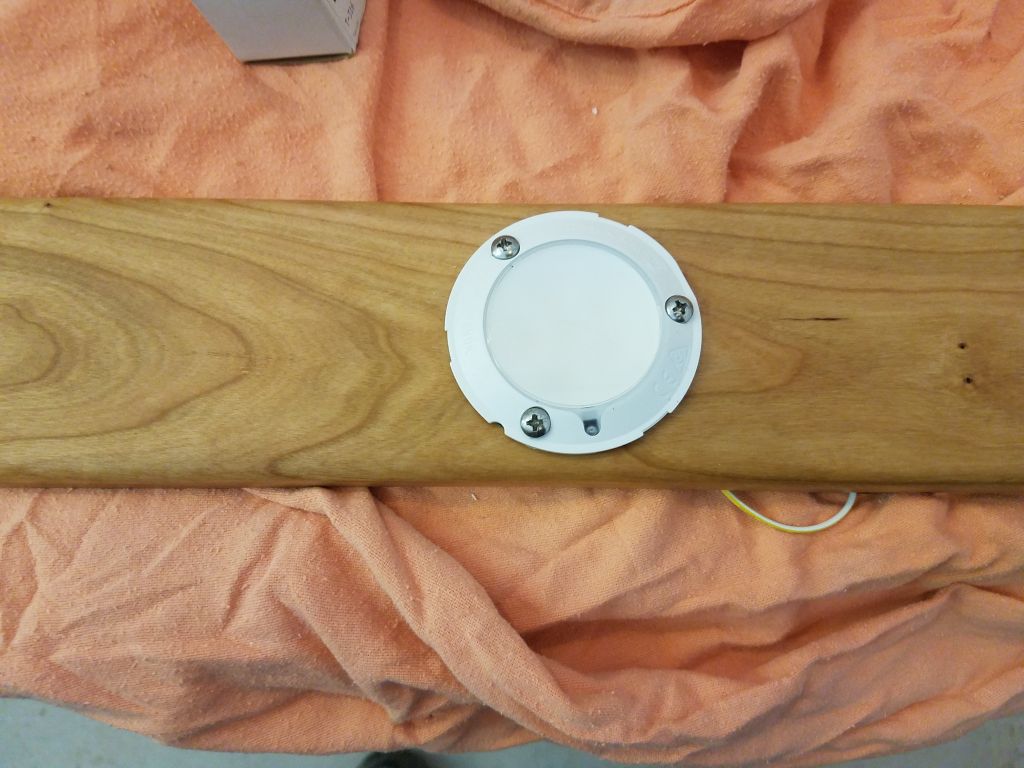
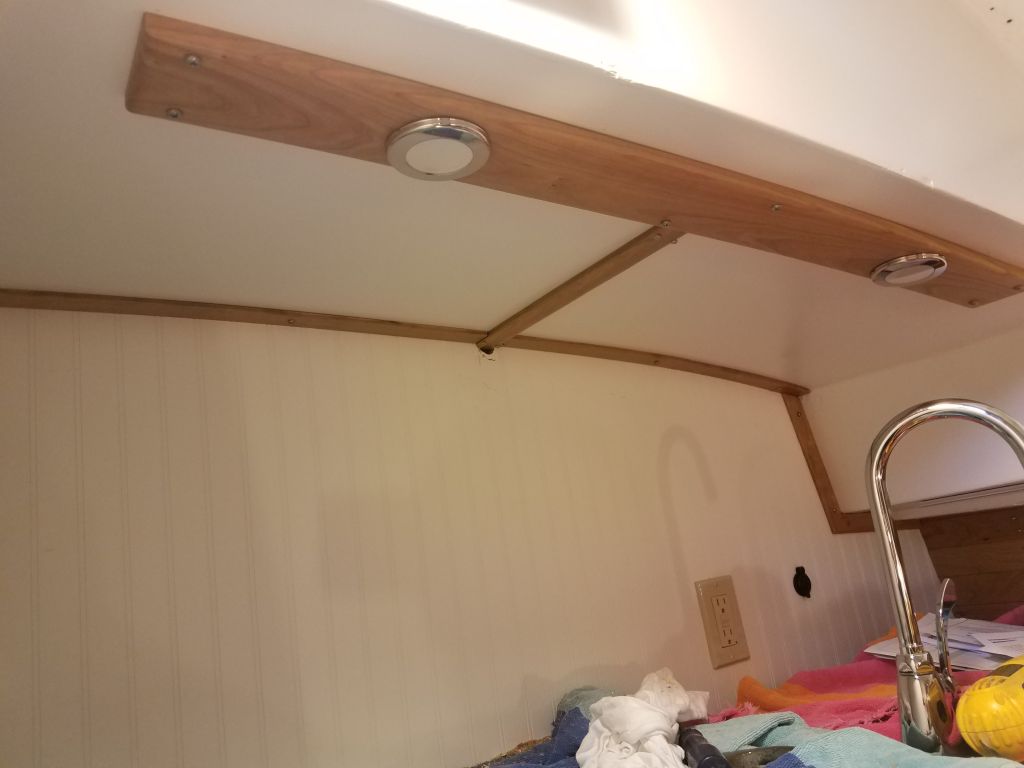
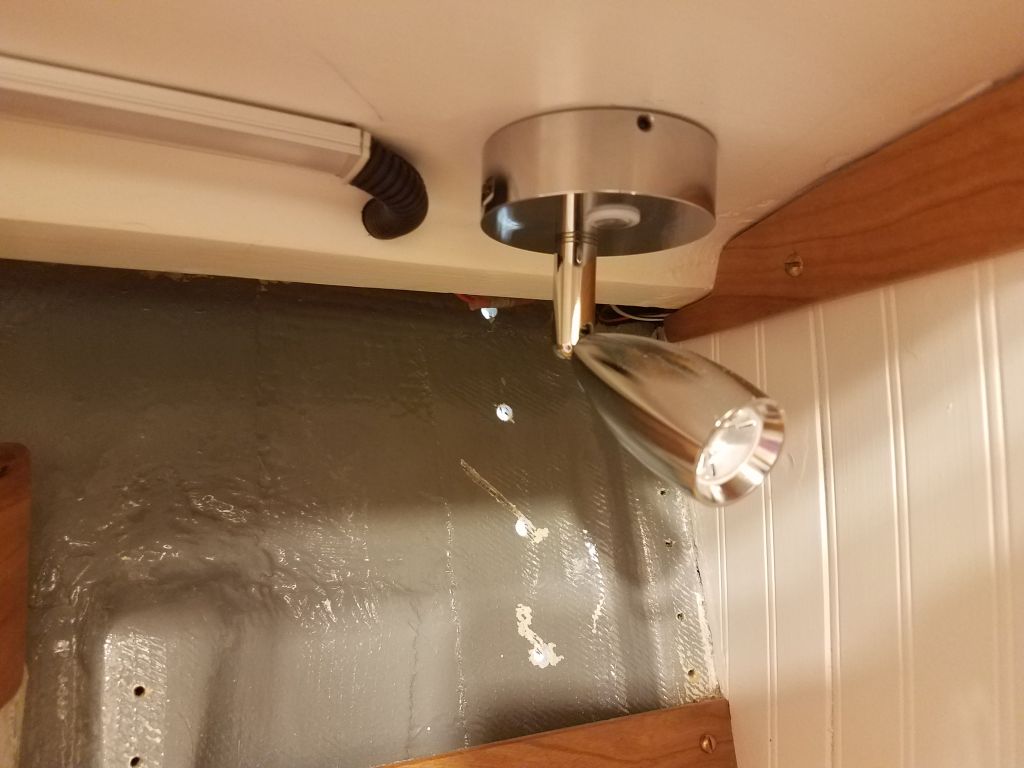
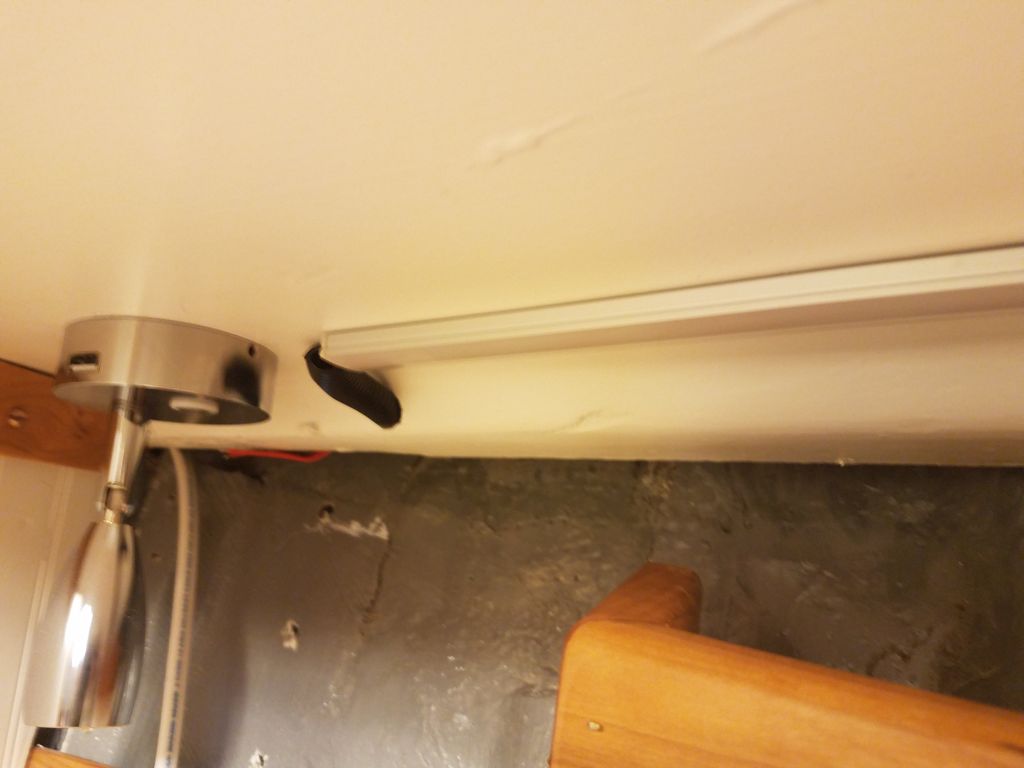
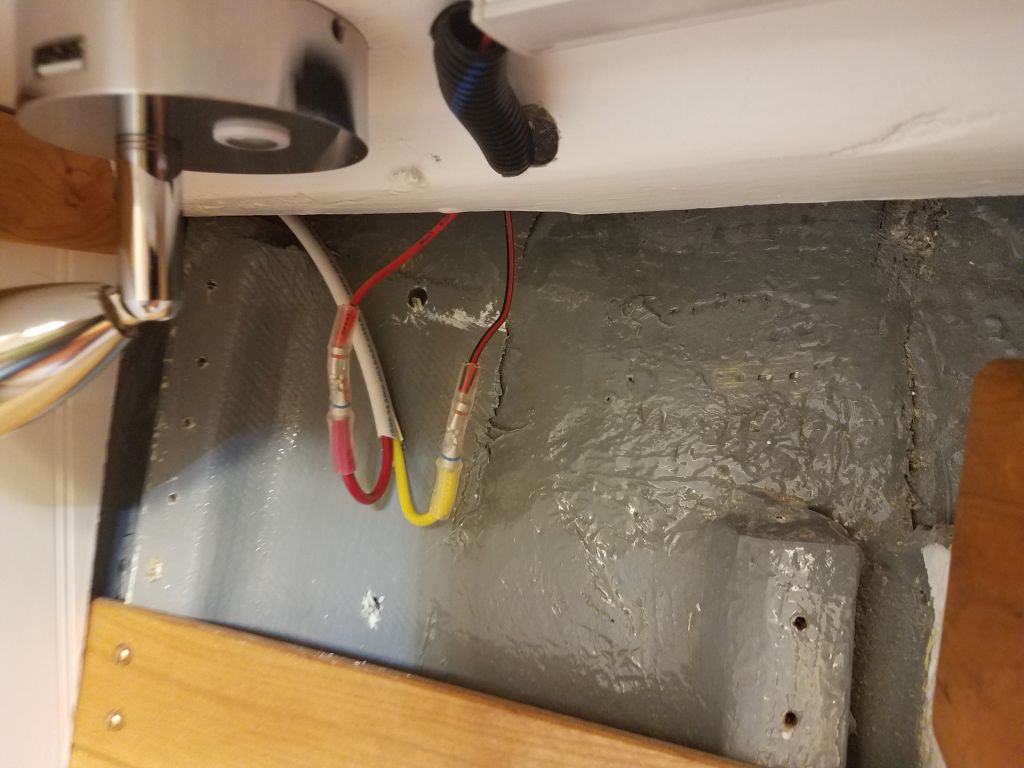
After considering and rejecting various locations, and taking into account the owner’s wishes and the physical requirements of the spaces, I eventually installed the two small berth lights (one per side) under the sidedecks just aft of the berths, where there was open space, relatively convenient for hidden wiring, and to keep the lights out of the way.  These lights also incorporated built-in USP ports, and swiveled in all directions.  On both sides, I was able to run the wiring the short distance beneath the liner and then aft to the main wiring areas.  Note that those top few ceiling boards on both sides will be replaced as soon as I finish the wiring and install the forward chainplates.

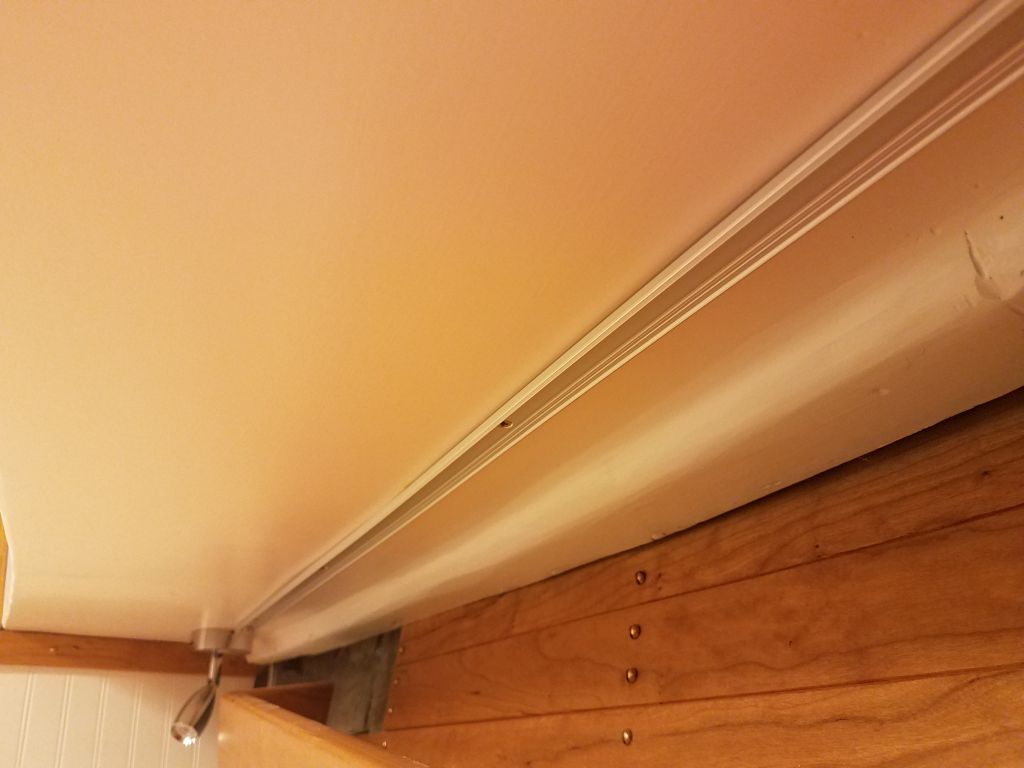
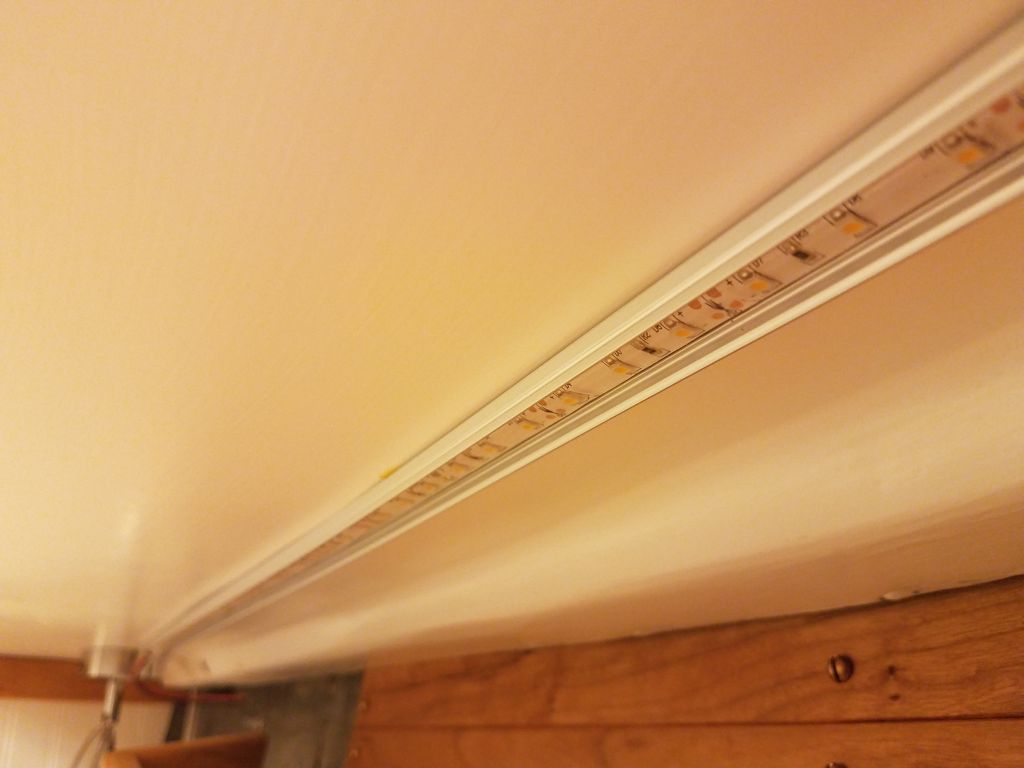
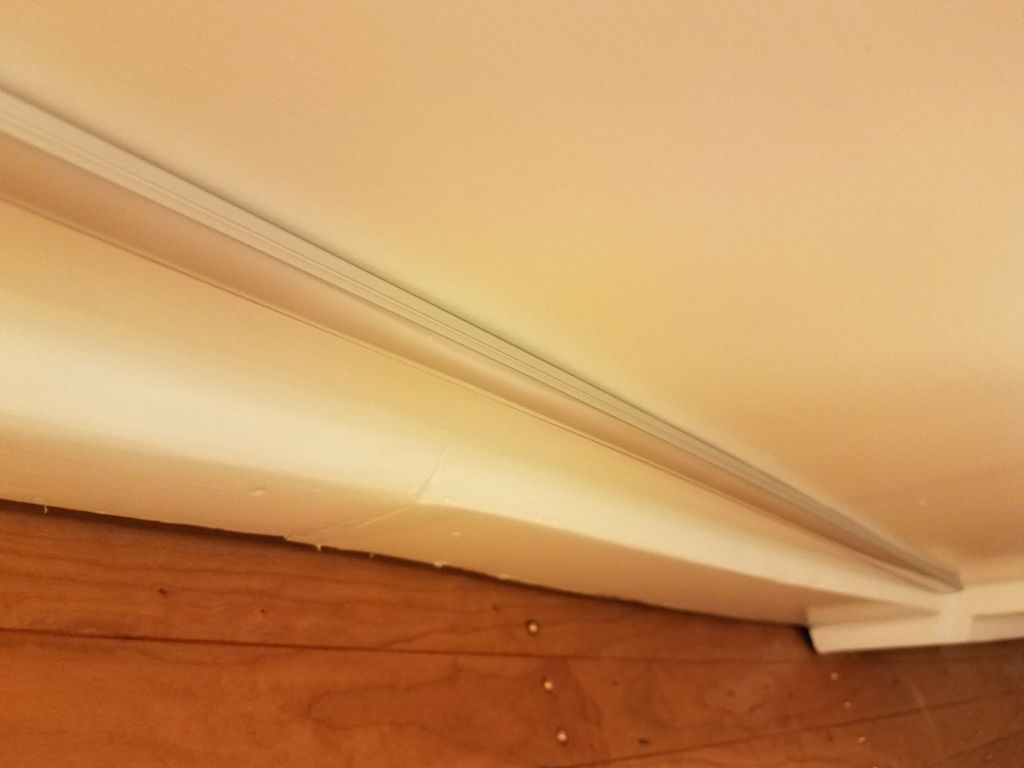
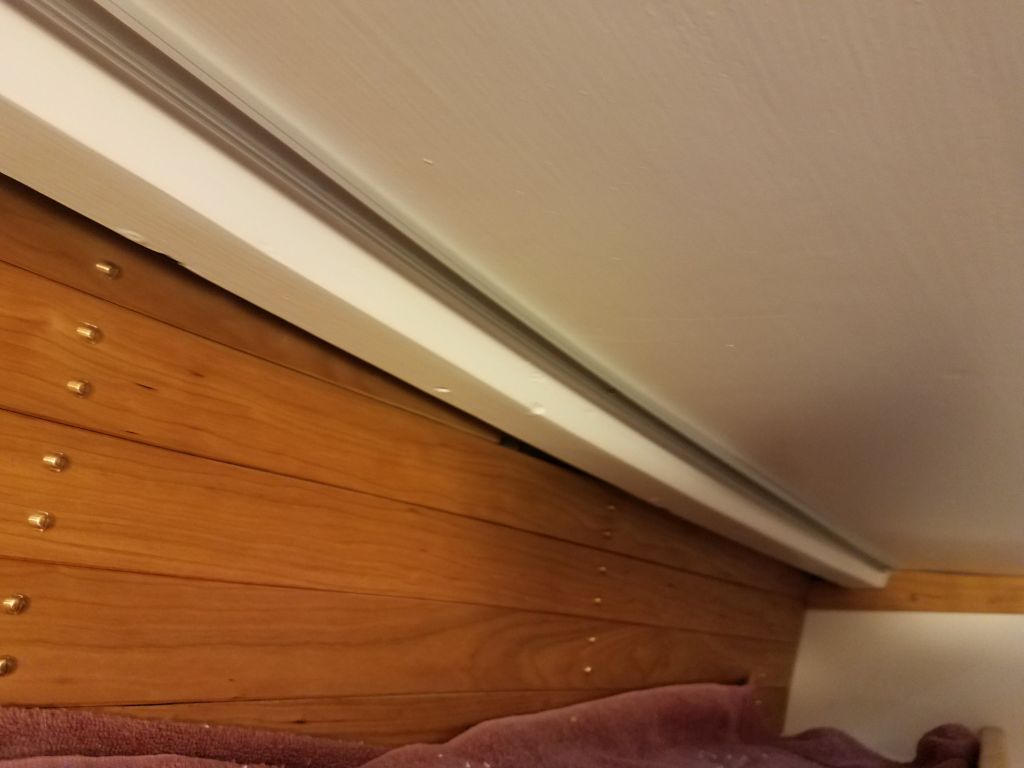
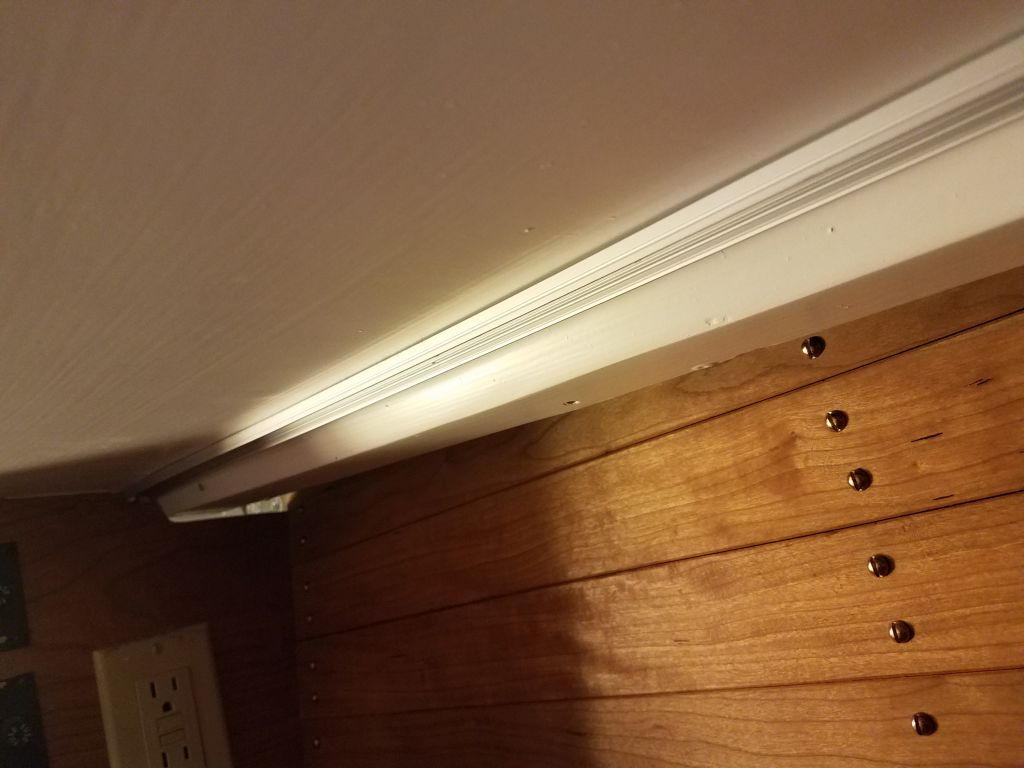
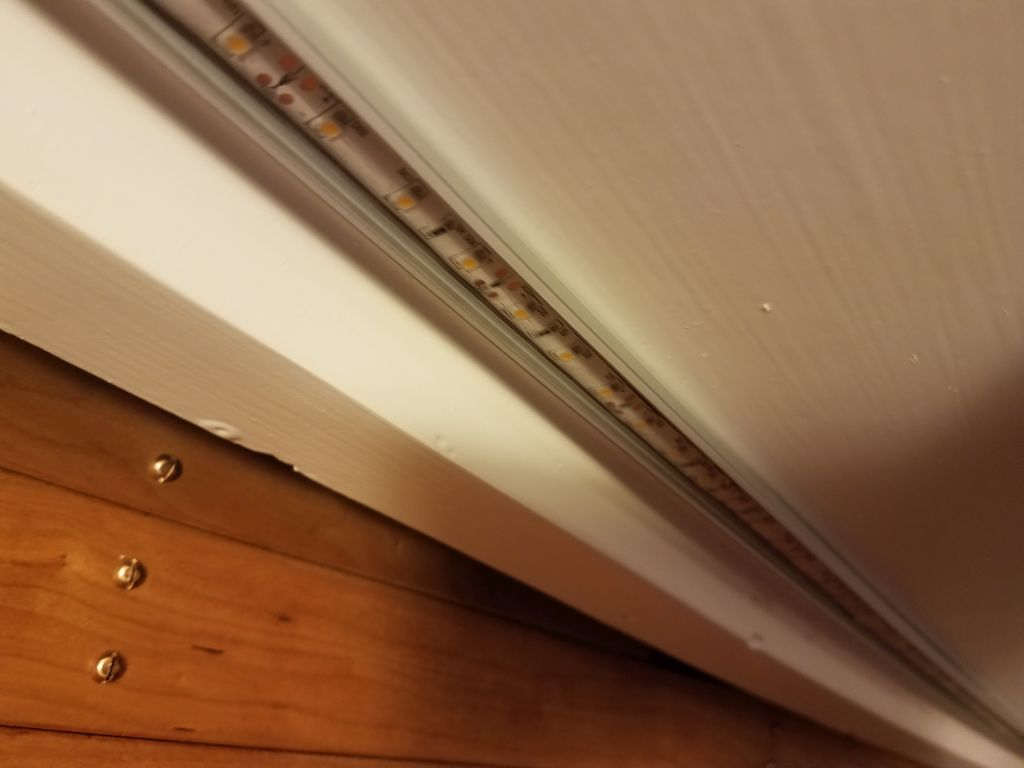
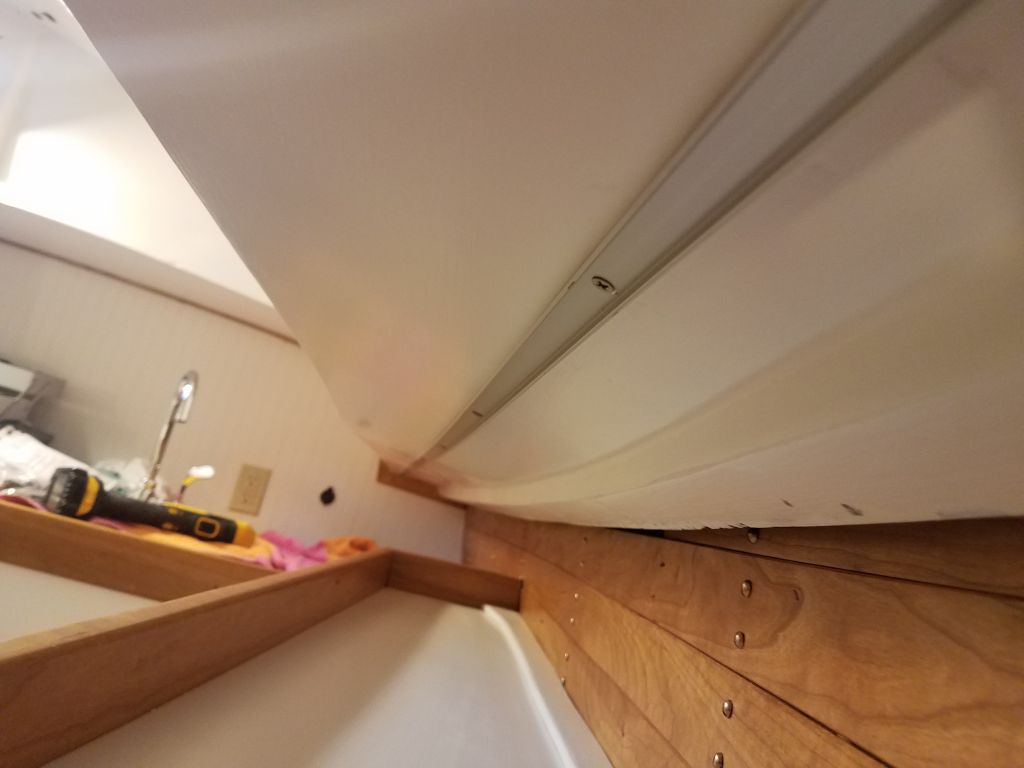
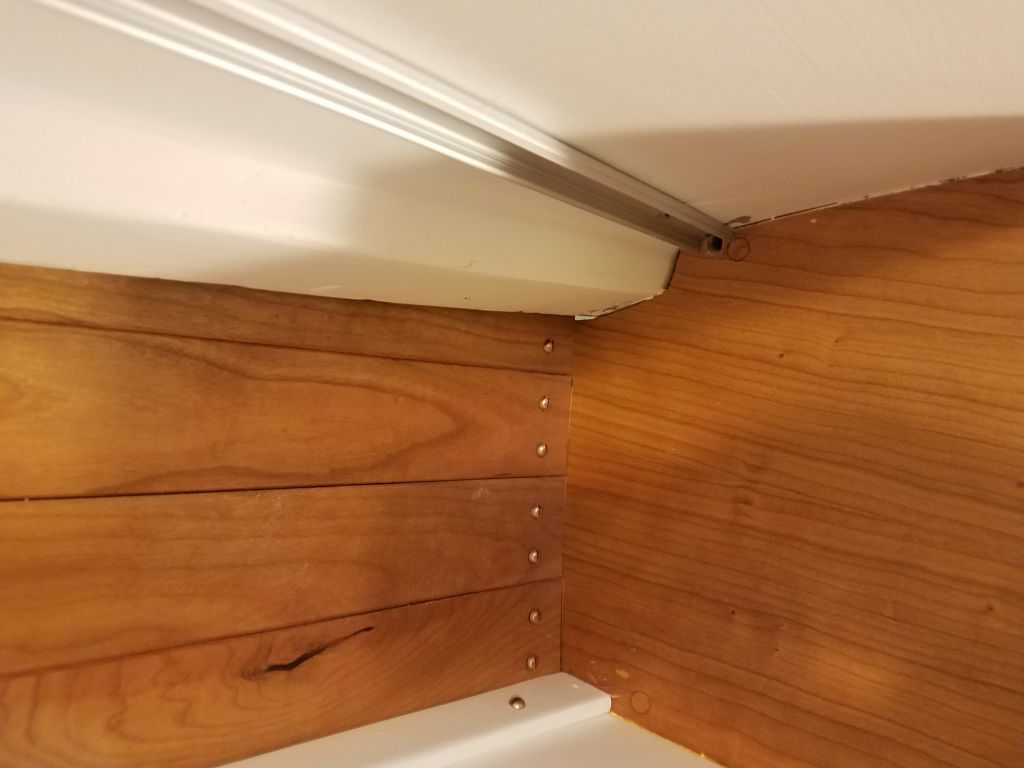
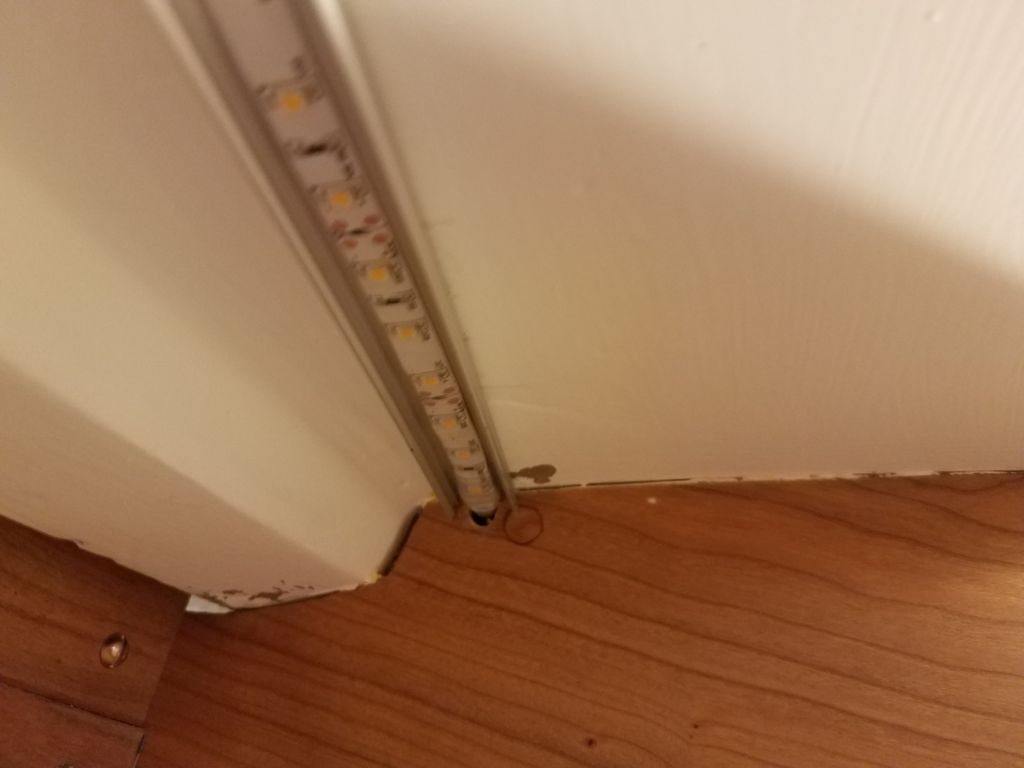
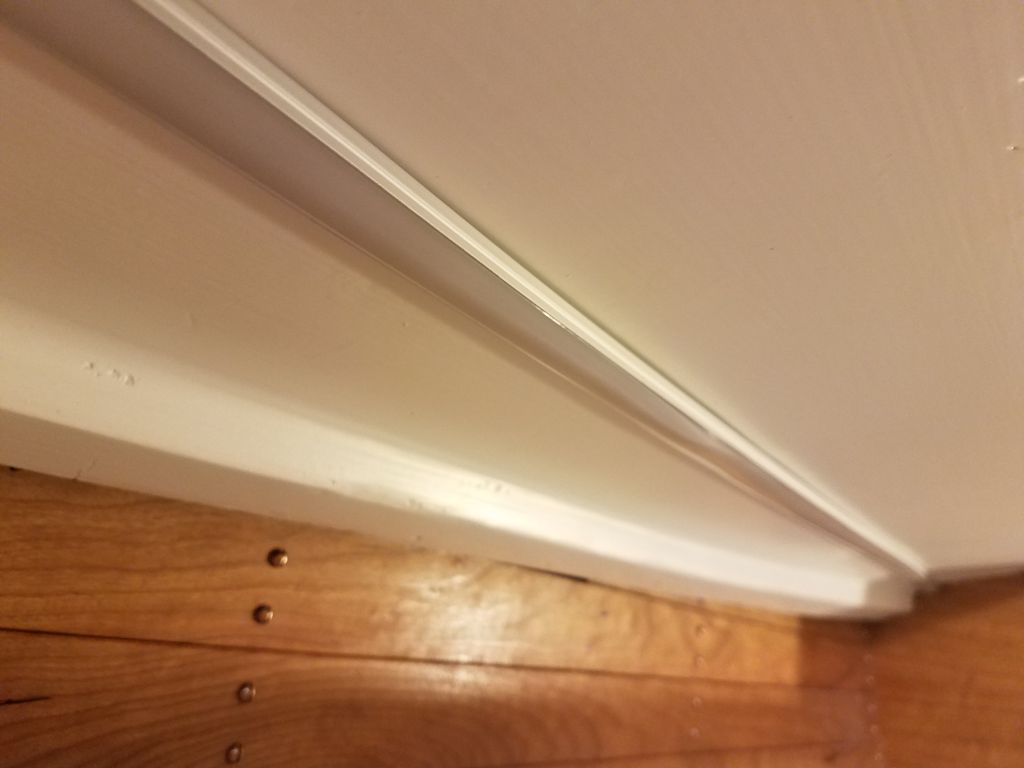
I had hoped to begin installing the underdeck secondary lighting, i.e. LED strips, as I’d recently received all the materials I thought I needed, but I found that the diffuser covers I’d selected didn’t work with the LED strips that I had, so I spent a little time sourcing replacement diffusers and would await installation till another day.

Instead, I turned to the battery chargers again, and in the forward cabin, armed with new supplies, I installed an outlet box, wired in the AC outlet, and finished the charger installation.  After discussion, the owner had decided not to install the poorly-executed indicator lamp that came with the charger, since it would have been an eyesore and the digital battery monitor would provide all the salient information anyway.  Once I’d finalized the battery box and house battery location, I could run the charging wires from the charger to the box, but for now left them coiled aside.

The 48-volt charger for the electric motor power supply was a different manufacturer and design, and was easier to handle and install.  I chose a location on the starboard engine room bulkhead that was out of the way yet accessible, and left room for an outlet box for the 110-volt supply to the charger.  On this outlet, I added an external cover to protect the plug, and secured the generous excess power cord out of the way next to the box.  Once the engine batteries were in place, I’d complete the charger wiring, which would include a temperature sensor along with the charging wires.

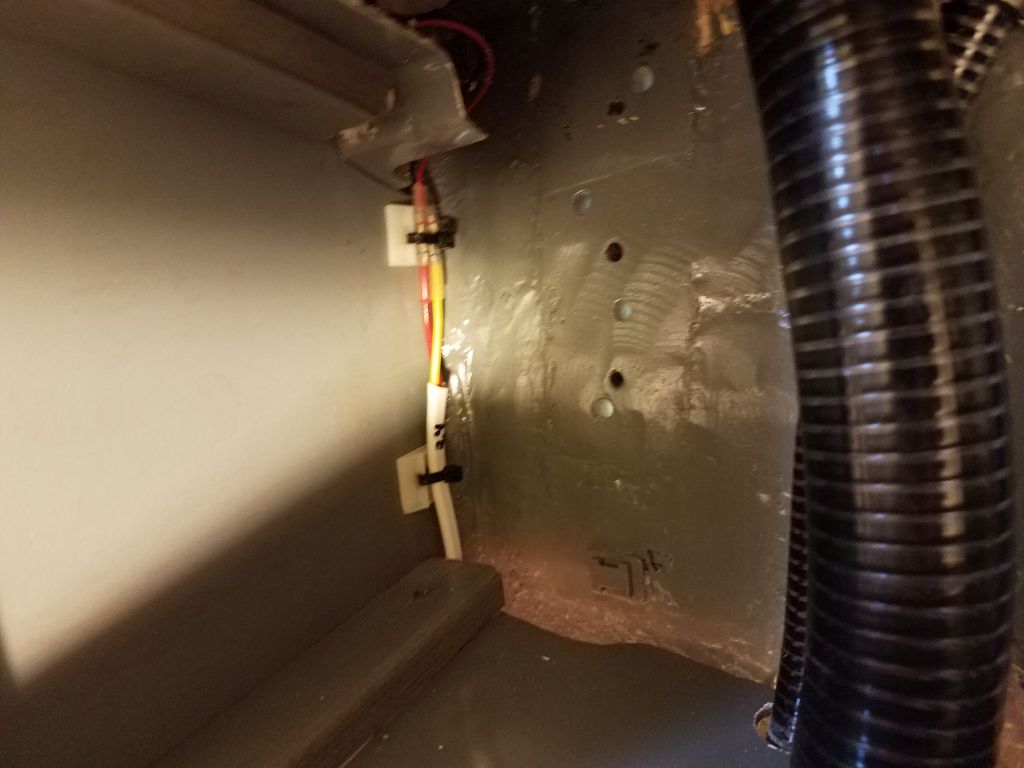
For future expansion, I’d run one extra circuit aft into the engine room, and now I coiled up and secured this excess cable.

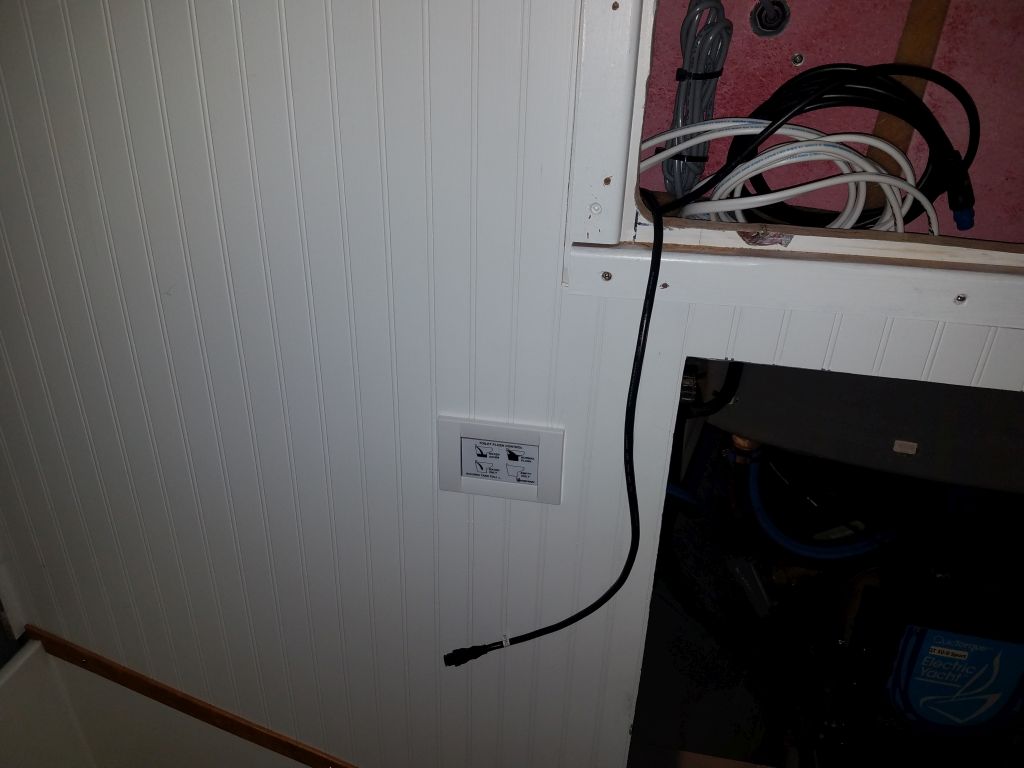
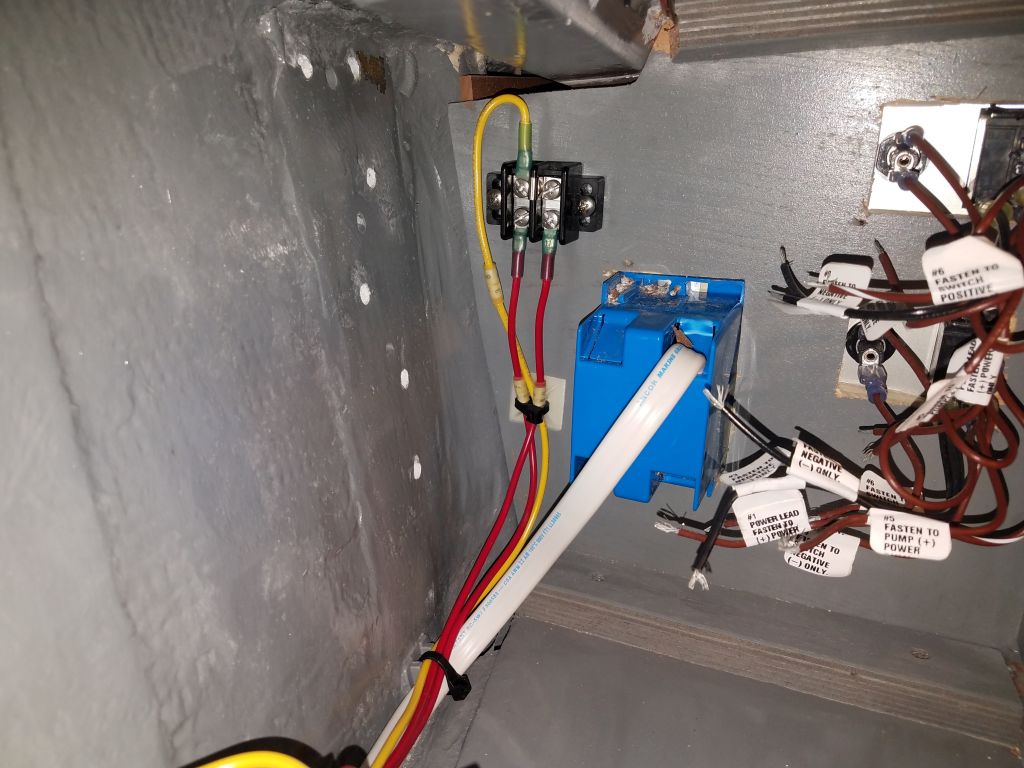
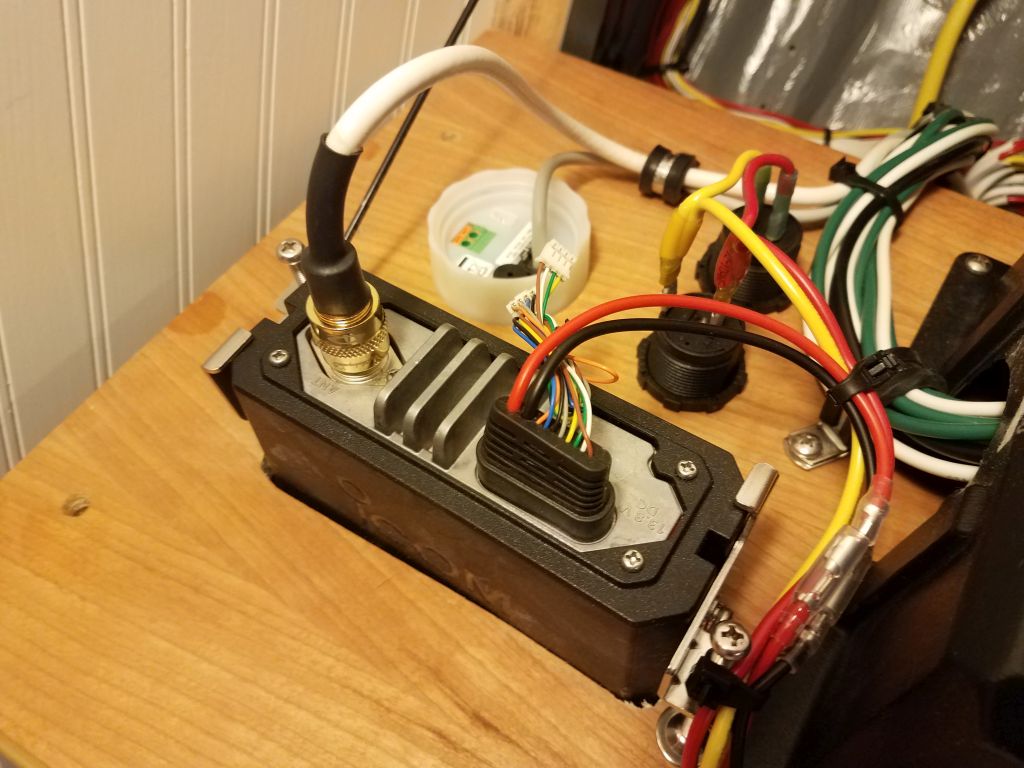
It made sense to continue in the engine room and finish up what was needed to terminate and secure the remaining few wires, starting with the large 8AWG wire pair required for the electric head controller.  With all components of this system now on hand (the toilet itself had been backordered for a couple weeks), I felt ready to begin the installation, starting with the small control panel in the head itself.  After confirming measurements of the throne, and working within existing limitations of the space and the opposite side of the bulkhead, I chose a location for the control and drilled the large hole required for its installation, then installed the panel and its Ethernet cable that would connect it to the control box.

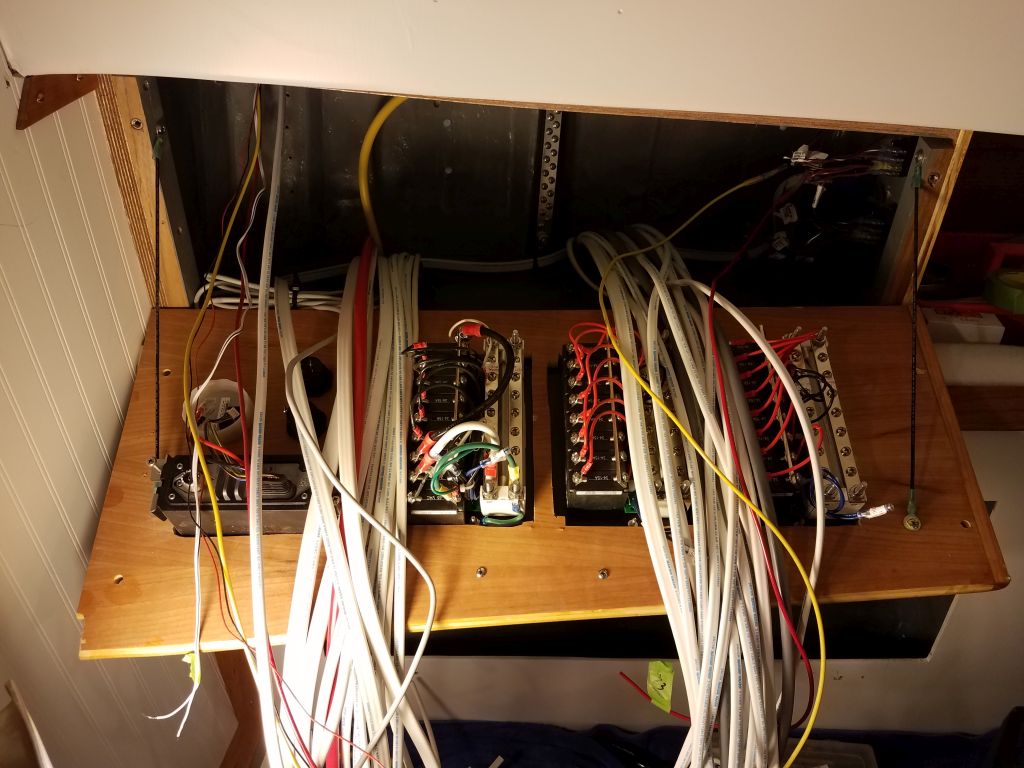
Next, I chose a location for the control/wiring box, keeping it out of the way of the eventual battery boxes yet close and convenient to the main wiring.  With the box in place, I could terminate and connect the main power cables, and also the Ethernet cable from the control panel.  There were a few additional wires required that would run between this control box and the toilet itself,  and I’d continue installing these wires next time, but for now the day was done.

Total time billed on this job today:  8.25 hours

0600 Weather Observation:  14°, mostly clear. Forecast for the day:  Sunny, windy, 17°
Scupper 205

Wednesday

I started the day in the cockpit, where I installed a new compass in the molded recess at the forward end.  The large hole I’d drilled there long ago to remove the engine was the perfect size to accommodate the new compass.  Installation was straightforward with the supplied gasket and three screws, and afterwards I made up the wiring for the compass light belowdecks.

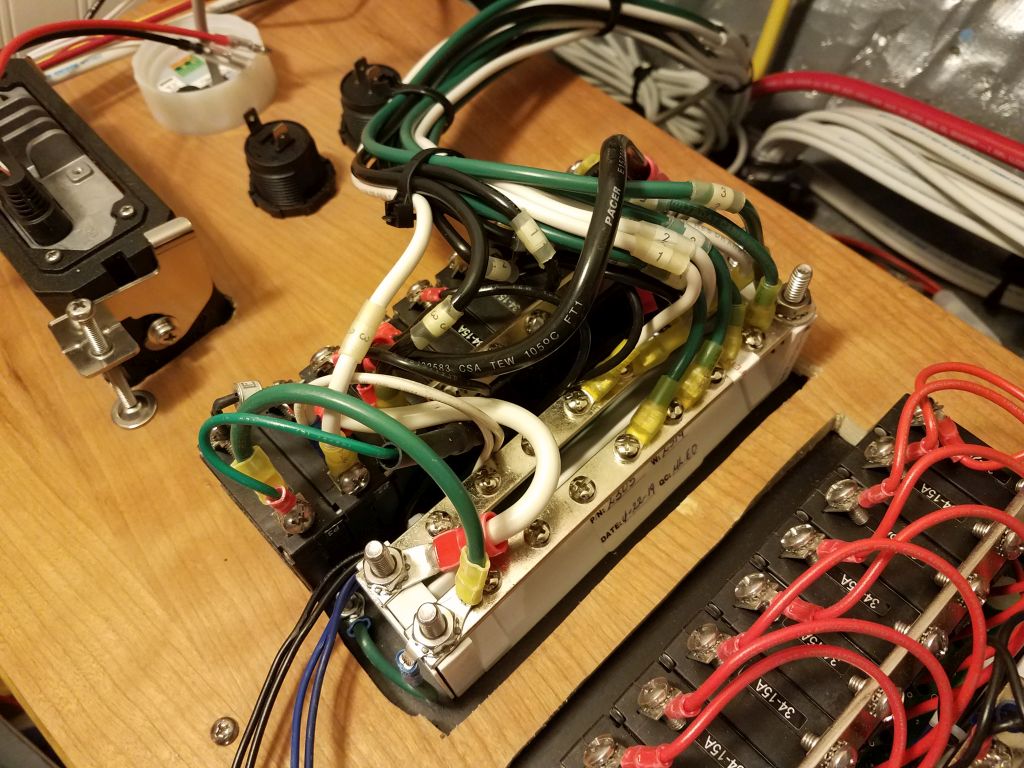
In the galley, I prepared to install both a 110-volt and 12-volt outlet, and cut the required openings for their installation.  I installed an outlet box and completed the wiring for the 110-volt outlet, and similarly installed the simple 12-volt socket and completed its wiring as well.

I connected the newly-arrived transducer extension cable and led it the short distance up to the area where the display would soon be installed (no pictures).  Then, I moved into the main cabin, where I decided to install the starboard bulkhead light fixture.  Because the doorway to the forward cabin was off-center to starboard, I mounted the light at the same height and as close to the same transverse position as on the port side, while accommodating the open doorway.  For now, I just led the wires through the bulkhead for later attention.

While I’d been working below the v-berth over the past couple days, I’d pre-selected the location for the charger for the house battery bank, and now I went ahead with its physical installation.  The location I chose was on the port side, on the forward face of the port storage locker below the berth.  There was ample room on that surface, plus the bolts to secure the charger would be out of sight inside the locker.

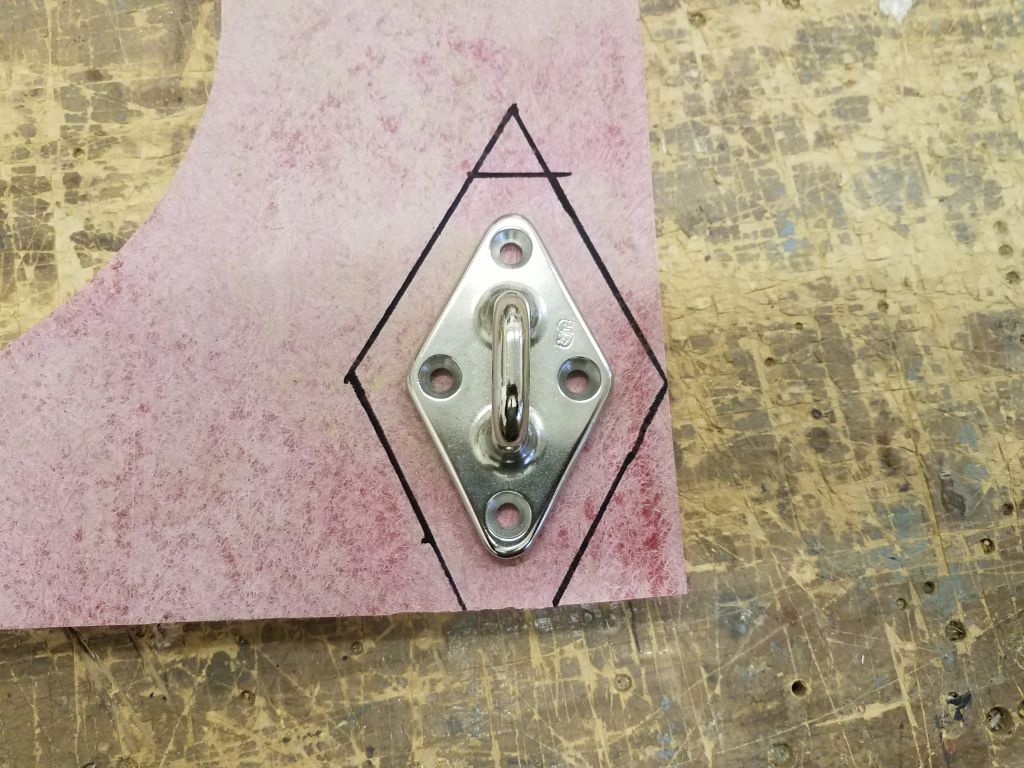
The charger was extremely heavy, and to ease installation I made a simple template of the base design and the overall shape of the charger to help me position the holes.

In the boat, I collected all the tools I’d need and got set up in the v-berth, then drilled the mounting holes according to my template.  Then, with some difficulty thanks to the weight of the charger, I secured it to the bulkhead with four 5/16″ bolts, incorporating larger washers on the inside of the locker.  I positioned the charger so that its short power cord would be within reach of the outlet box I planned to install (and had arranged accordingly during earlier “thought sessions” while working elsewhere up there), and its included battery cables were of ample length to reach the battery box once installed.

Appended to the power cord was a short length of wire with a rudimentary “remote” indicator light attached.  This cable was only 18″ or 24″ in length, vastly limiting its remote-installation capabilities, and the entire thing was somehow inelegant and poorly planned, with an ugly stud required for mounting and only a basic lamp as an indicator, all crudely attached to the most minimal circuit board imaginable, and with a thoughtlessly-short length of cable to allow mounting options.  The indicator lamp built into the charger was not accessible for regular or even sporadic viewing in the charger’s location.

This meant the only feasible mounting location, when considering the cable length and the other realities of the available space (including, not unimportantly, access from within and the thickness of the various surfaces), was the forward section of the v-berth cutout, where the fiberglass panel was about 3/16″ thick and could potentially accommodate the light.  As of this writing, installation details were under review.  The good news is that I installed (or am technically still installing) a nice battery monitor for the house bank, so this monitor would more than obviate whatever minimal information the charger indicator light might provide.

Next, I installed the house battery switch, choosing a location in the port settee base.  After drilling the required 2-5/16″ hole, I flush-mounted the switch from behind, making up the cable ends and securing them as required to the switch before installing the back protective cover and installing the whole switch with four bolts, which I’d return to later to remove the excess length.

I pulled the excess cable forward and secured it below the v-berth unit, and finalized the connection for the “downstream” cable leading from the switch to the positive distribution buss.   I left the other cable unterminated for now, as it would eventually connect to the battery positive but I didn’t yet know how long to make the cable.

Total time billed on this job today:  8 hours

0600 Weather Observation:  25°, cloudy. Forecast for the day:  Snow showers, cloudy, 31°

Scupper 204

Tuesday

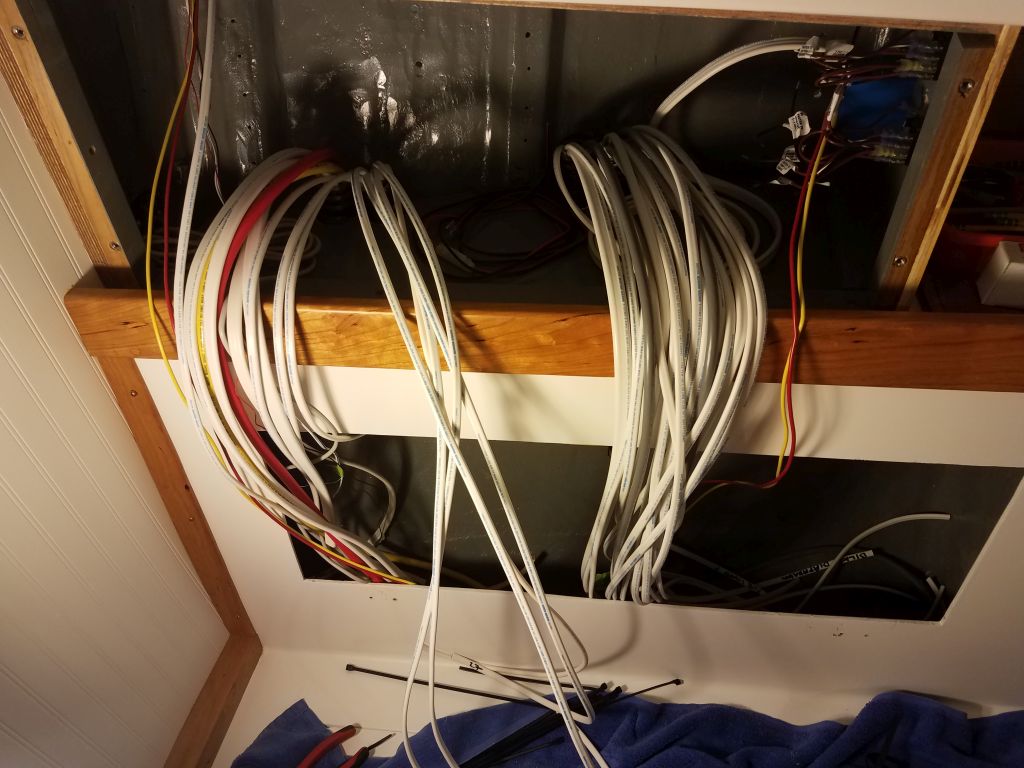
Working my way from the starboard settee up through the backrest and into the electrical locker above, I finished securing the cables and wires running from the forward part of the boat–a fair challenge given the narrow space and tough access and the bulk of the cables.

Next, starting just forward of the engine room in the head and working my way forward to the electrical locker, I tightened, straightened, and secured the wires I’d recently run aft to and through the engine room.  This included the transducer cable, which I actually had to tighten and secure in the opposite direction (starting forward, but it ended up making it just into the engine room, where I left it to await its extension cable that would take it the rest of the way to the GPS/sounder display.

This finalized the wiring on the starboard side aft of the electrical locker, and greatly improved the related disarray.

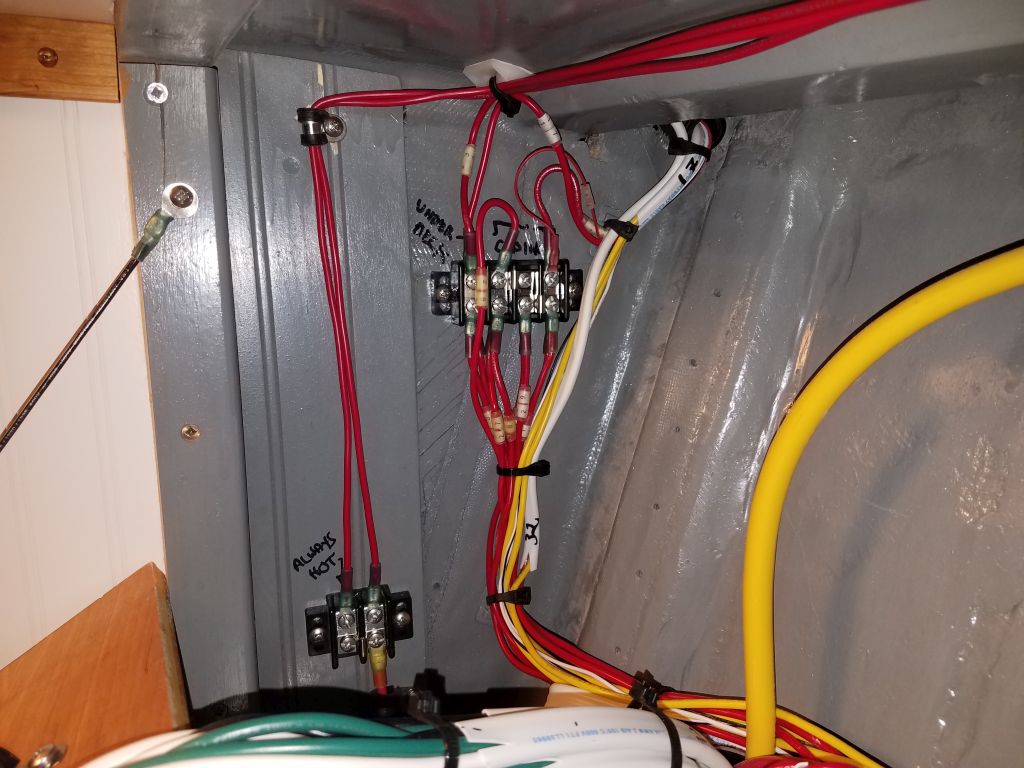
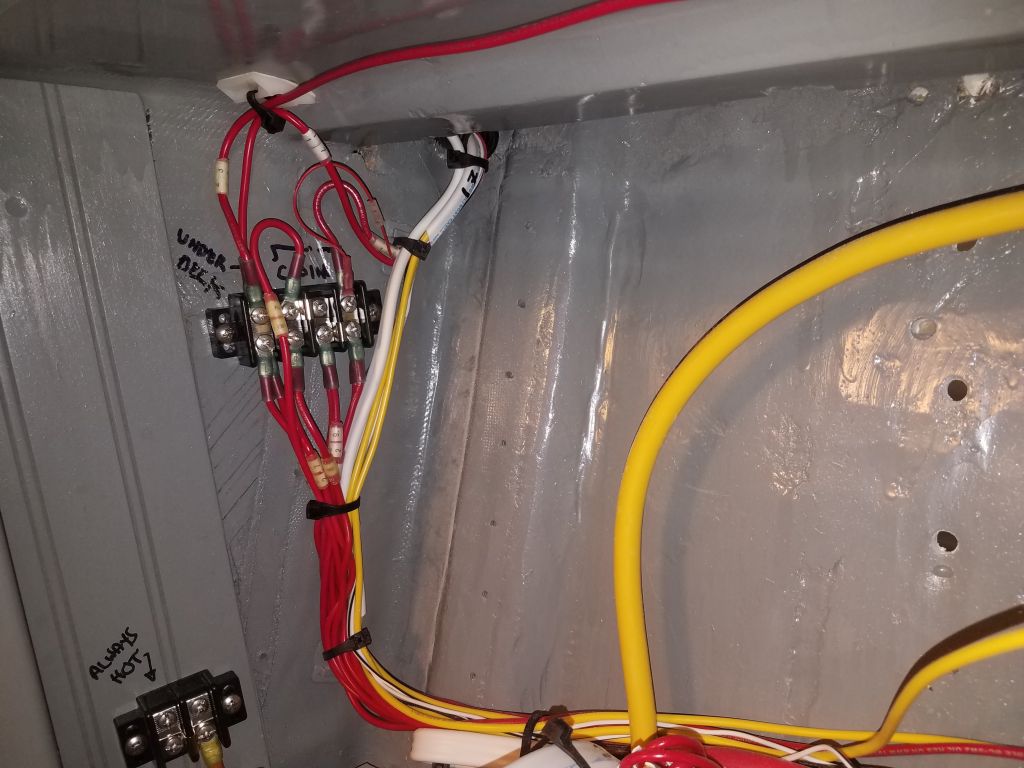
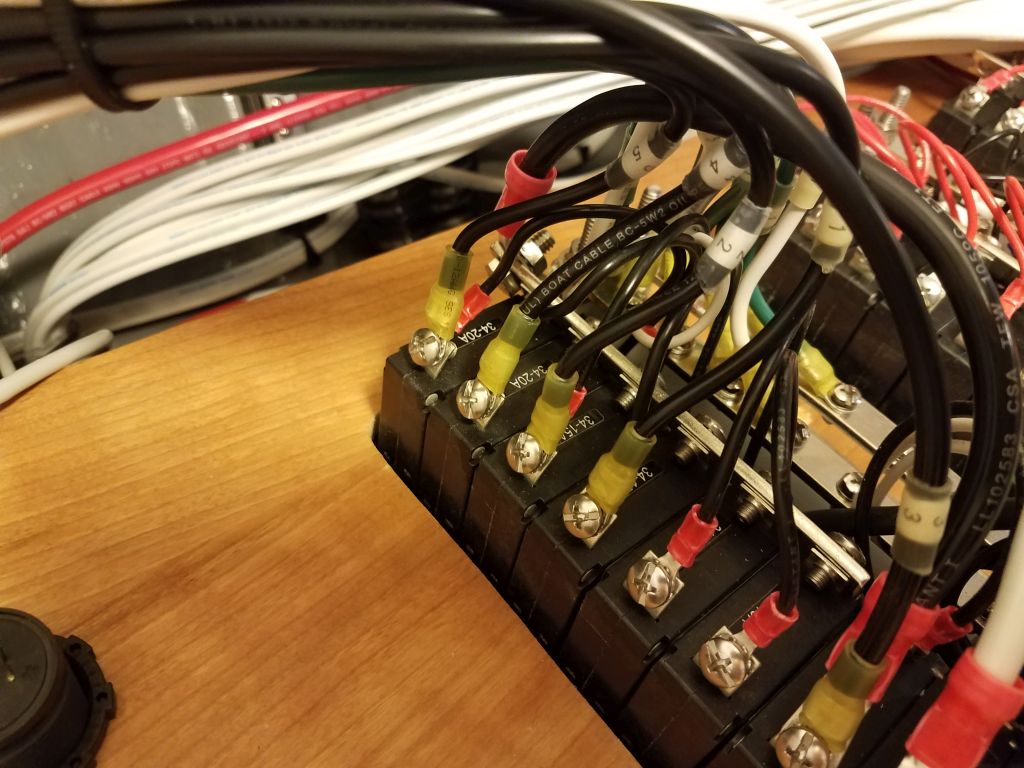
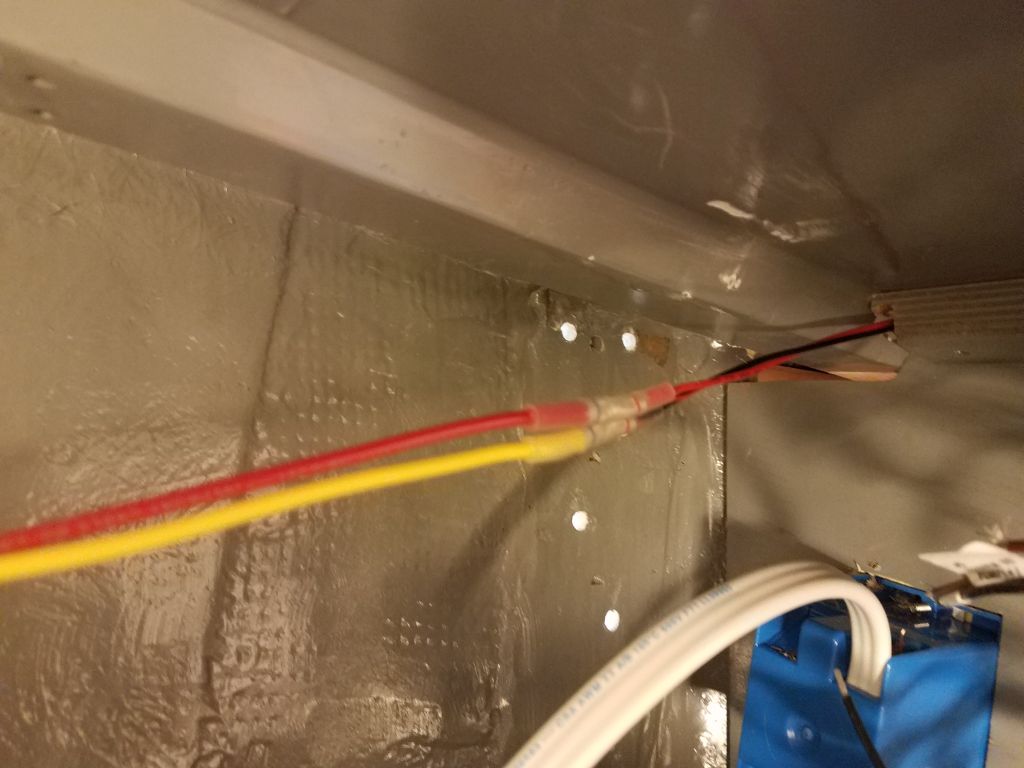
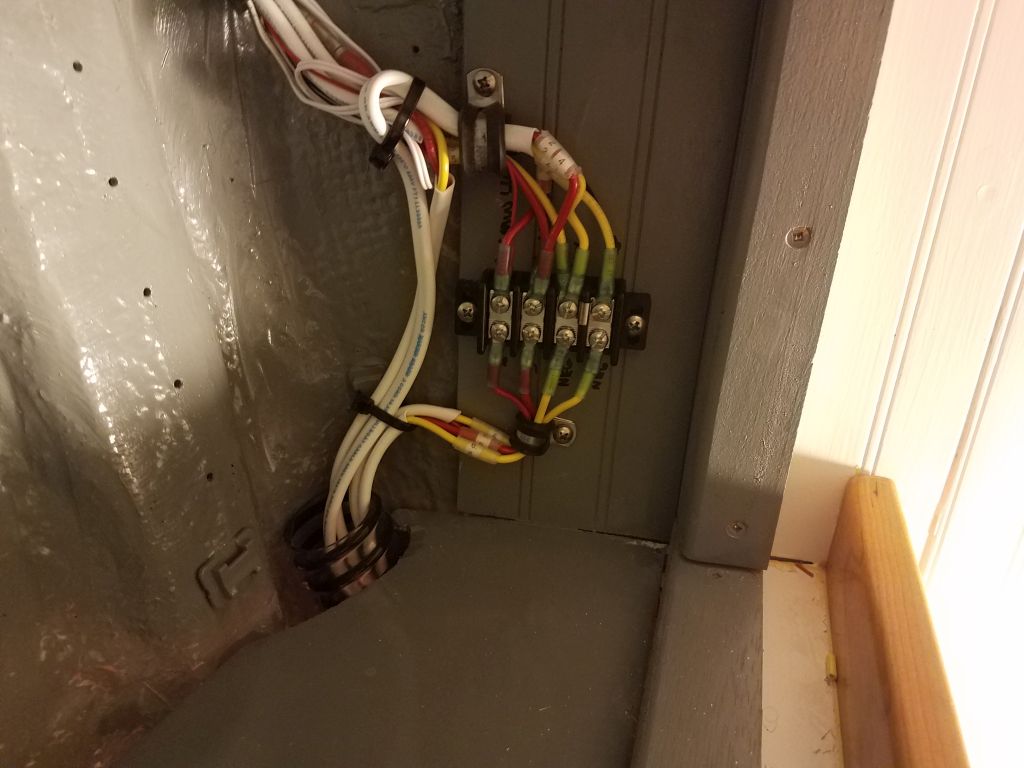
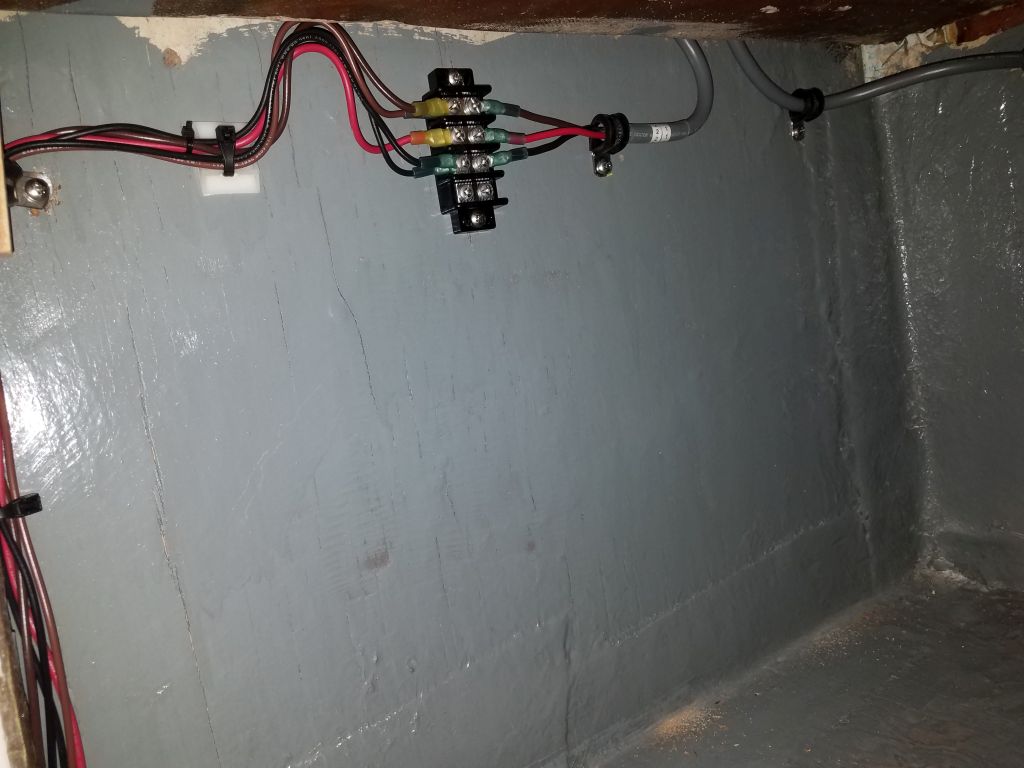
Next, I turned to the wiring for the lighting and fan circuits required on the port side.  To streamline the wiring and minimize wiring bulk, I led in three separate wire pairs (circuits):  one each for the cabin lights and under-deck secondary lighting (LED strips–on order); and one for the fan to be mounted on the port bulkhead in the main cabin.  Another fan would be mounted in the forward cabin, but on the starboard side.   I led these wires from the starboard electrical locker, through the space below the forward cabin, and then through the port settee and settee back into the port locker, where I terminated the two lighting circuits in a terminal block that would make it easy to connect two cabin lights (a berth light forward and a bulkhead light in the main cabin) and the two sets of under-deck lighting (main cabin and forward cabin).  I used short lengths of cable to then lead forward from the new terminal block and into the forward cabin, where I left the ends for now pending installation of the underdeck and berth lights.

Then, I could clean up the wiring through the spaces and back to the electrical locker.  On the starboard side, there’d soon be more wiring running through these spaces (leading to the mast), so for now I considered the current result temporary in nature.

The owner had selected and purchased the various light fixtures and fans (one on hand) for the boat, and with no time like the present I decided to go ahead and install the fixtures on the port bulkhead in the main cabin, starting with the fan.  After dry-fitting in several locations, and ensuring full rotation of the fan housing in all directions, I chose the location near the upper port corner, in an attempt to keep the fan out of the way as much as possible.  I led the wire through the bulkhead into the forward cabin.

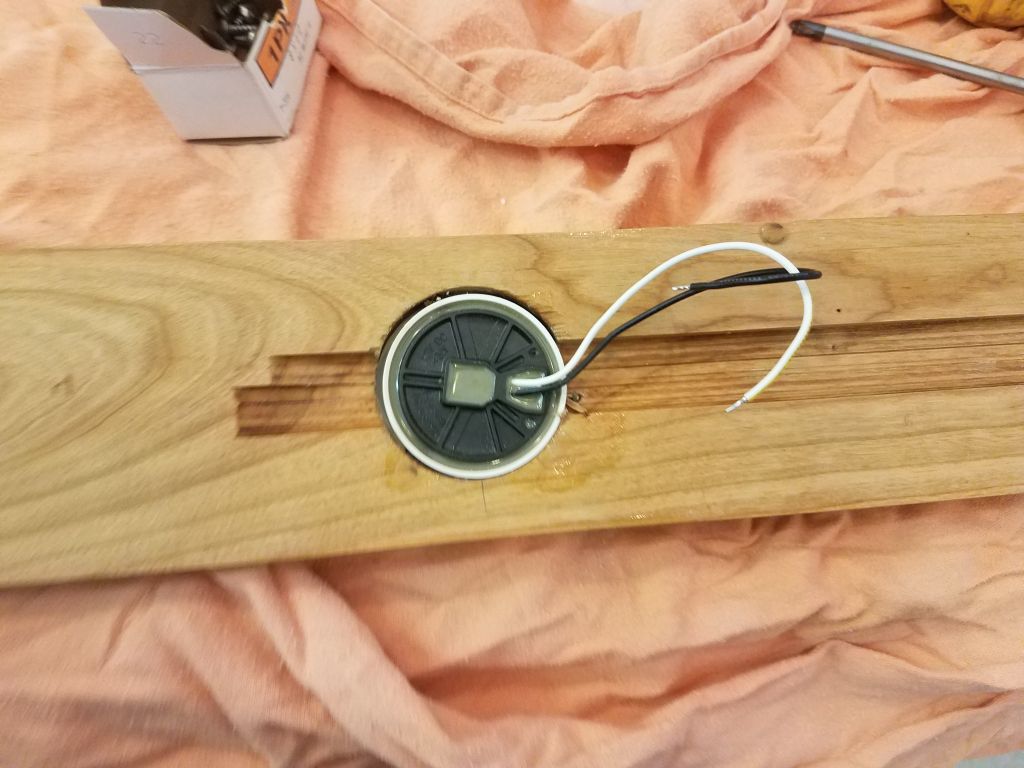
The LED light fixture destined for this space was a small domed, downward-facing unit with which I was unfamilar, so to ensure its eventual location would properly light the berth below, I temporarily hooked it up to a battery in a dim space.  The light was quite bright, and easily illuminated the bench below my test area.

I chose to mount the fixture near the fan and at the same level, and more or less centered directly above the berth below.  Installation was a simple surface mount, with the wire leading out through the bulkhead to the forward side, where I’d have to secure and hide it as best as possible.

The light fixture came with a good length of wire attached (as did the fan), and it looked like these wires would be long enough to run along the forward bulkhead and back to the aft side, where the lighting terminal block was located.  This also meant I could dispense with the 14/2 wire pair I’d run forward for the fan circuit, so I removed that.   Both sets of wires from these fixtures were quite small, and I thought I could hide them beneath the existing trim pieces at the edges of the bulkhead in the forward cabin, which turned out to work pretty well.  I’d have to mill a piece of trim to cover the wires where they were still exposed across the bulkhead, but I’d get to that a little later.

This meant I could go ahead and make up the wiring for the bulkhead light on the terminal block (cabin lights circuit), as well as the fan on its own separate circuit.  There’d be more wiring here soon when I added the final wiring for the underdeck lights in the saloon, but for now I secured the wires a bit pending some changes later when all the wiring here was finished.

Total time billed on this job today:  7.25 hours

0600 Weather Observation:  22°, cloudy. Forecast for the day:  Snow, 2-4″ expected, 28°

Scupper 203

Monday

I spent most of the day wiring, starting with the final transducer installation.  The epoxy securing the tank to the hull had had quite a few days to cure, so now I filled the reservoir with mineral oil and installed the transducer and gasket atop.  It would have been nice if there had been a fill line inside to suggest how much oil to install, since the transducer was designed to extend into the tank and would displace a certain amount of the liquid.  I knew if I filled it completely I’d have a mess on my hands, but using one of the spare (differently-angled) tanks that came with the unit, I estimated a reasonable level based on how far the transducer extended in, and when I secured the transducer only a small amount of excess oil was pushed out, minimizing the mess but also confirming that the transducer was completely submerged within.  I was at the ready with rags.  I planned to come back later and touch up the gray paint around the transducer.

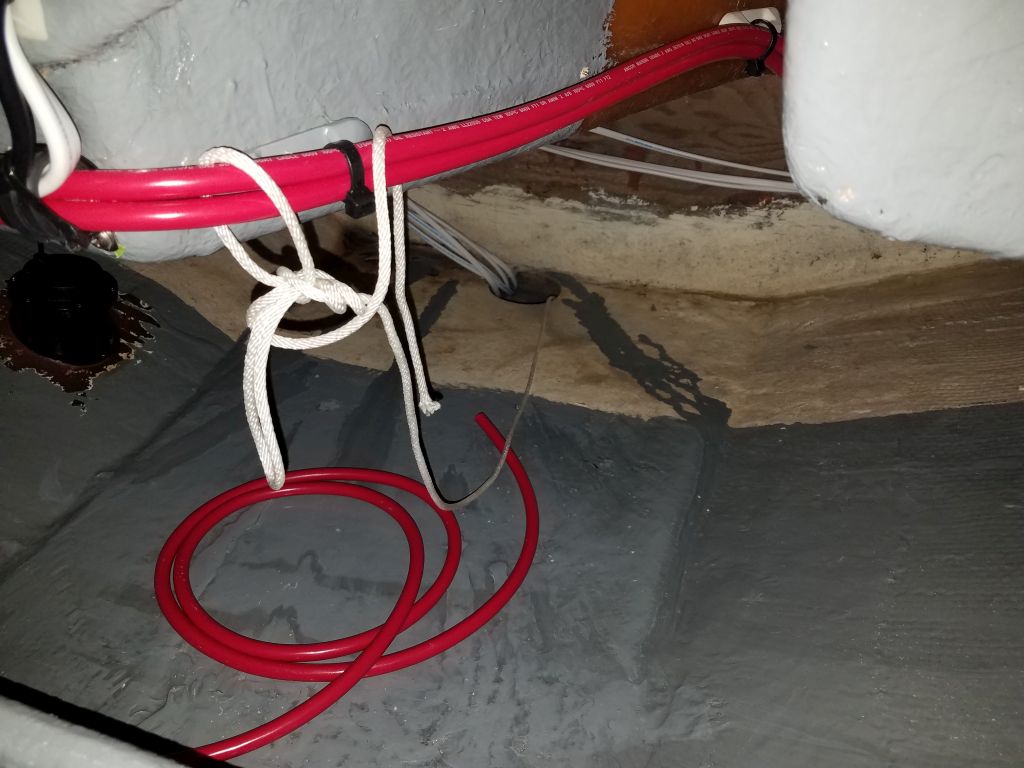
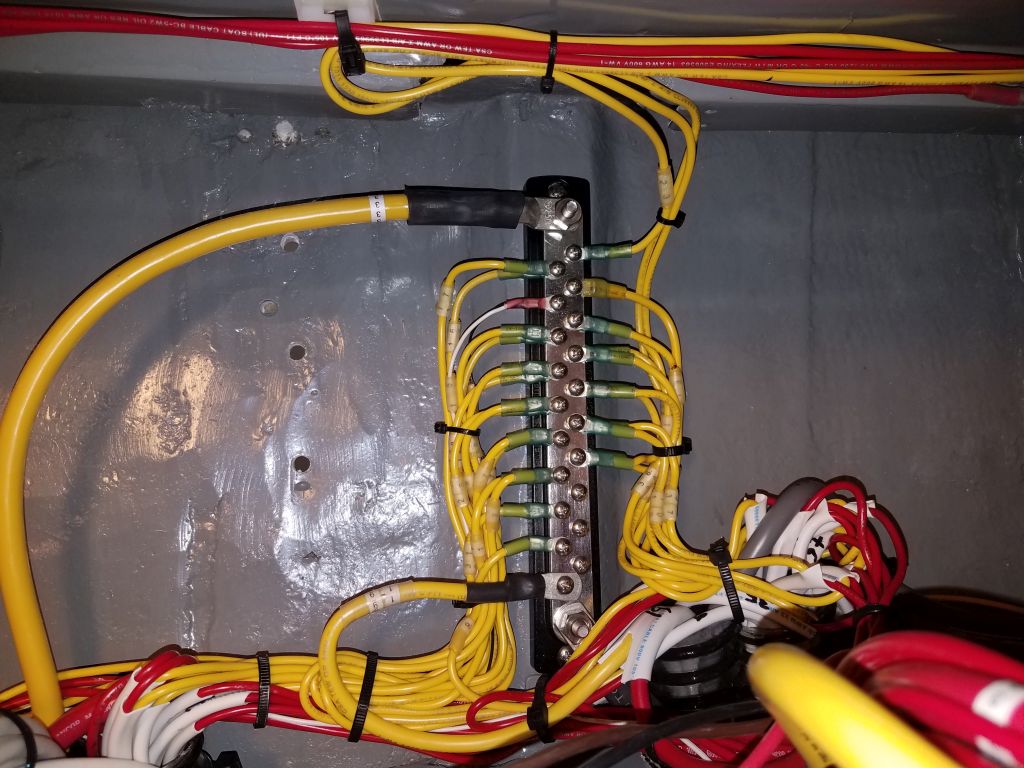
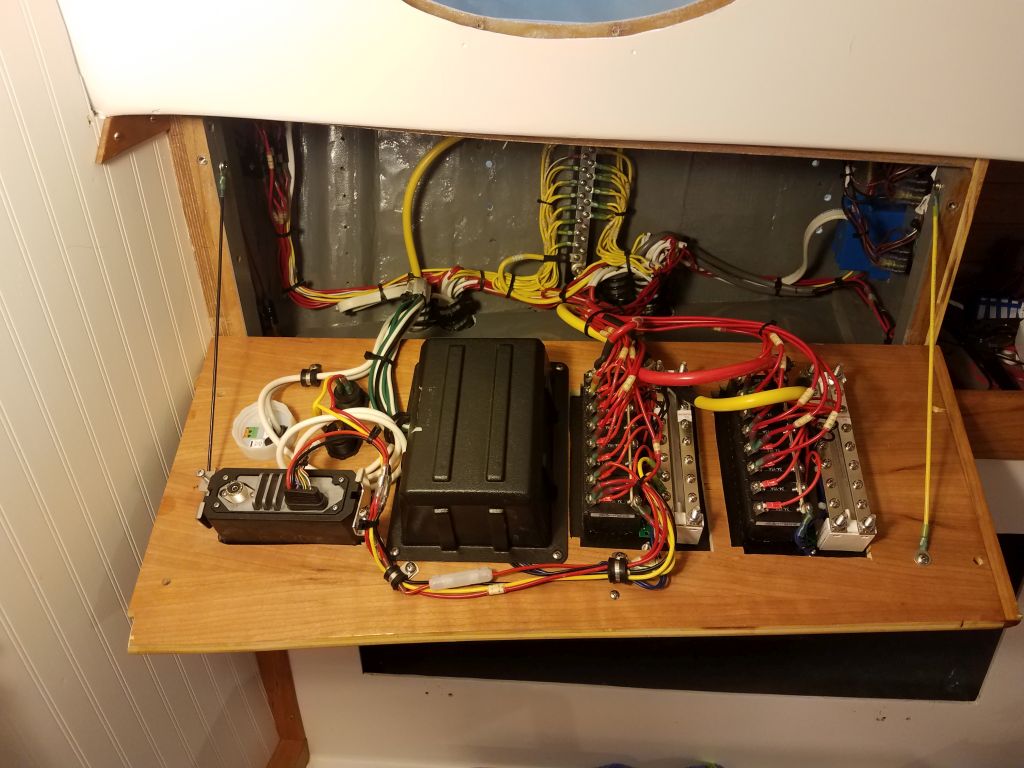
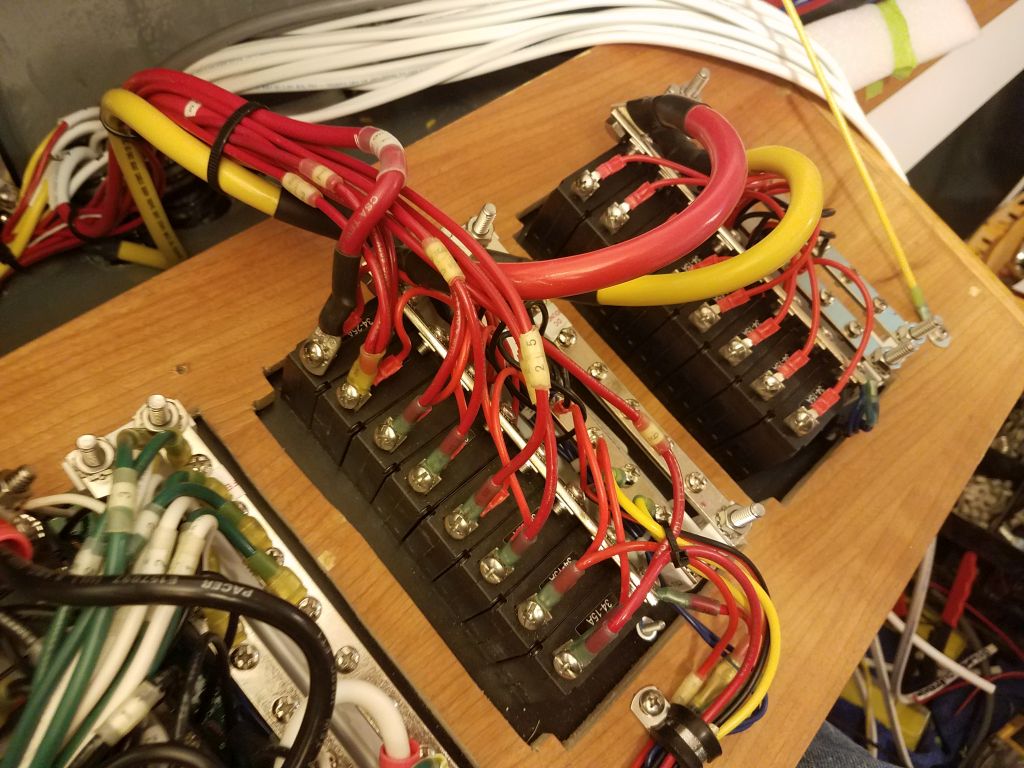
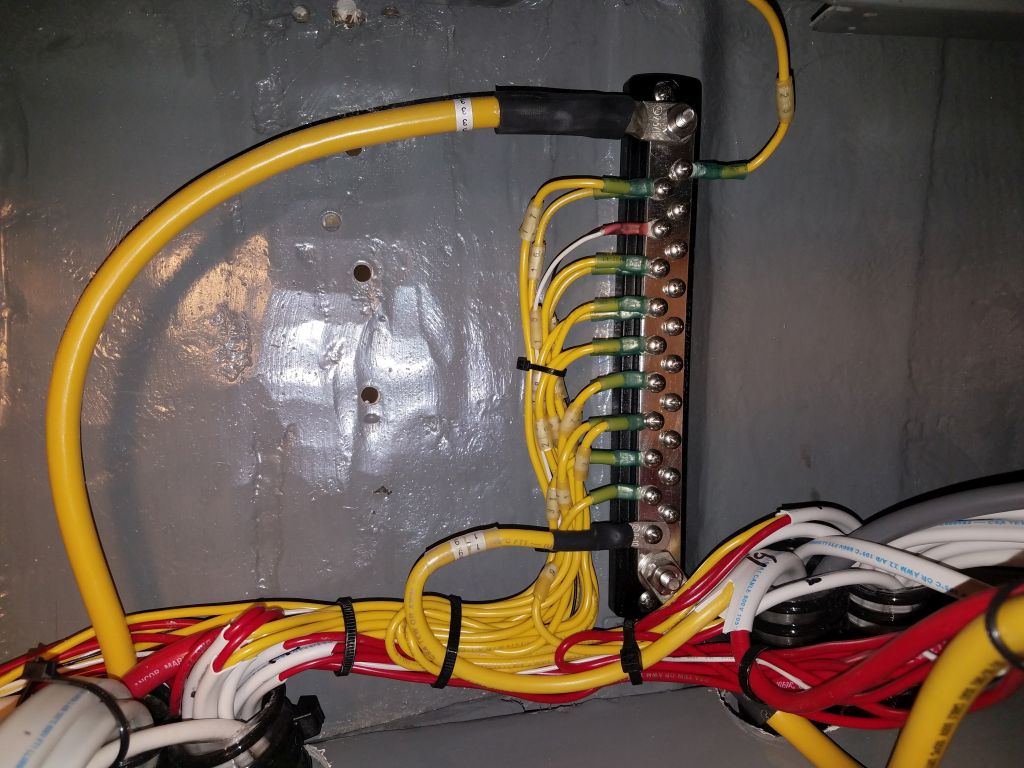
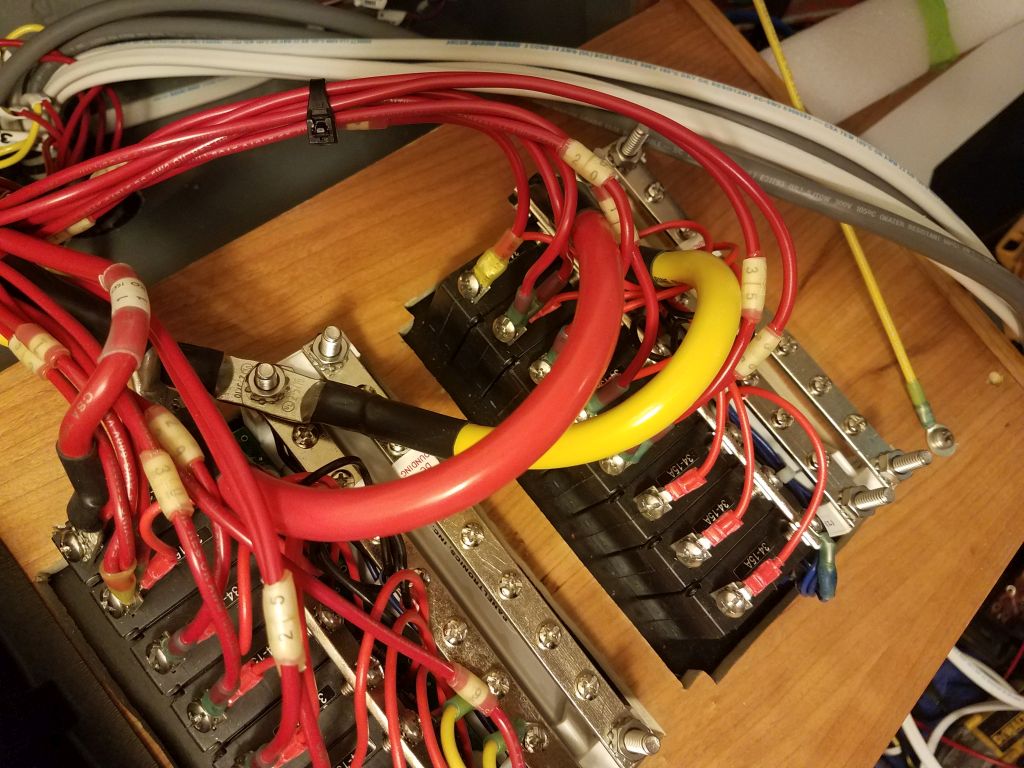
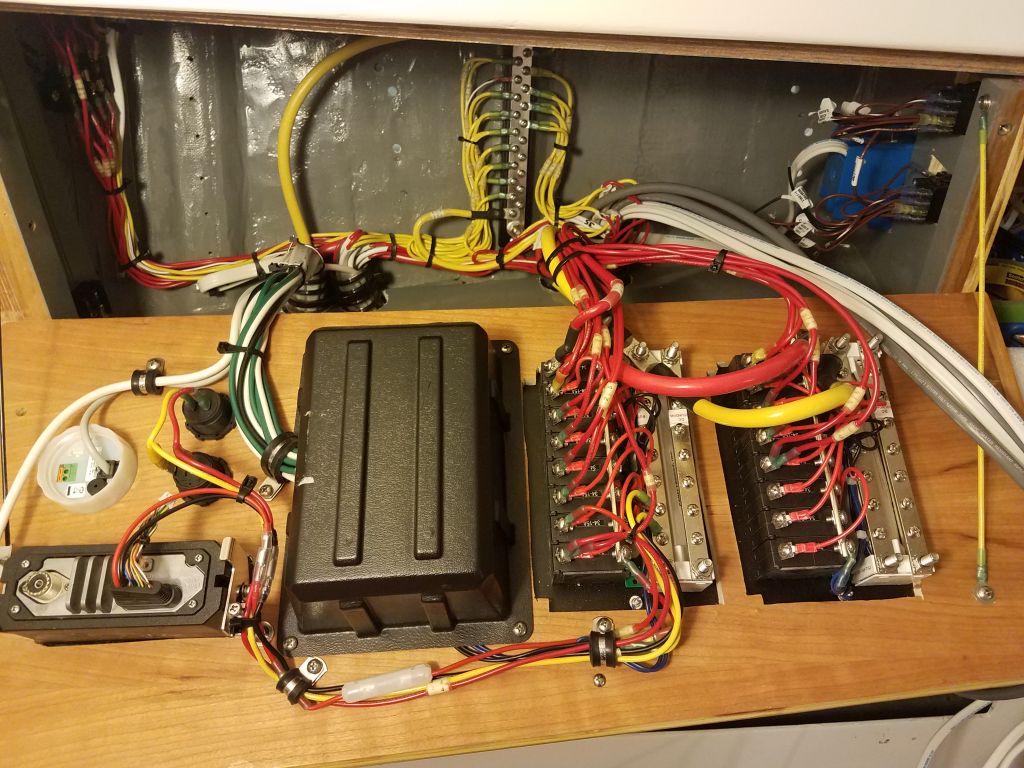
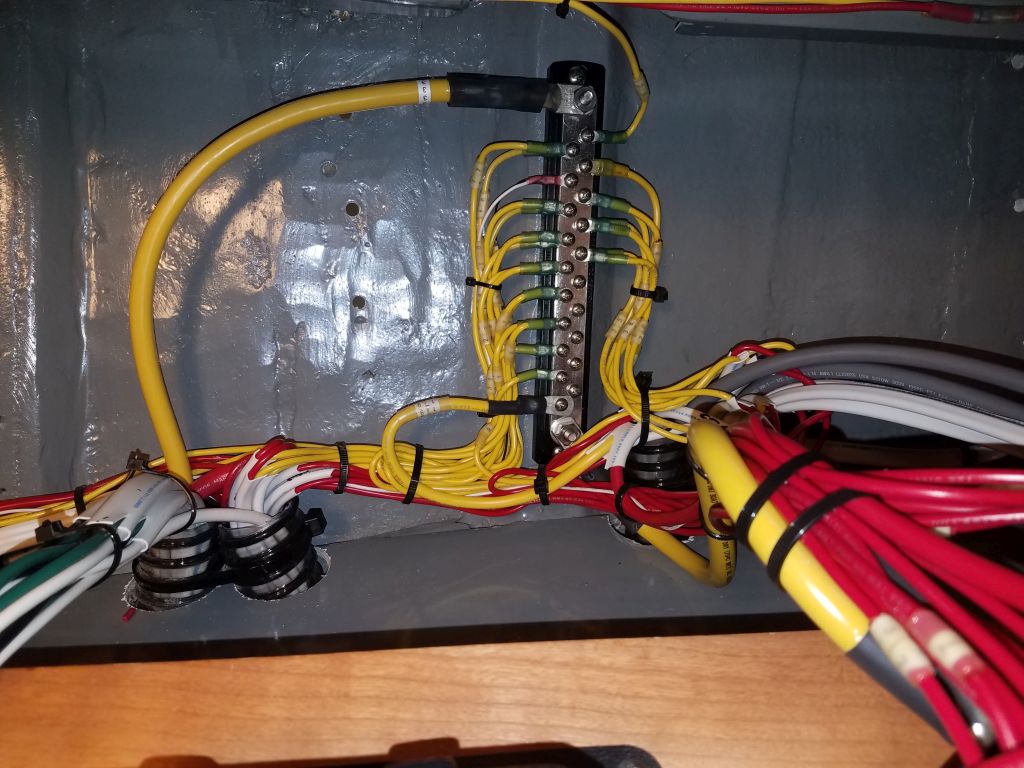
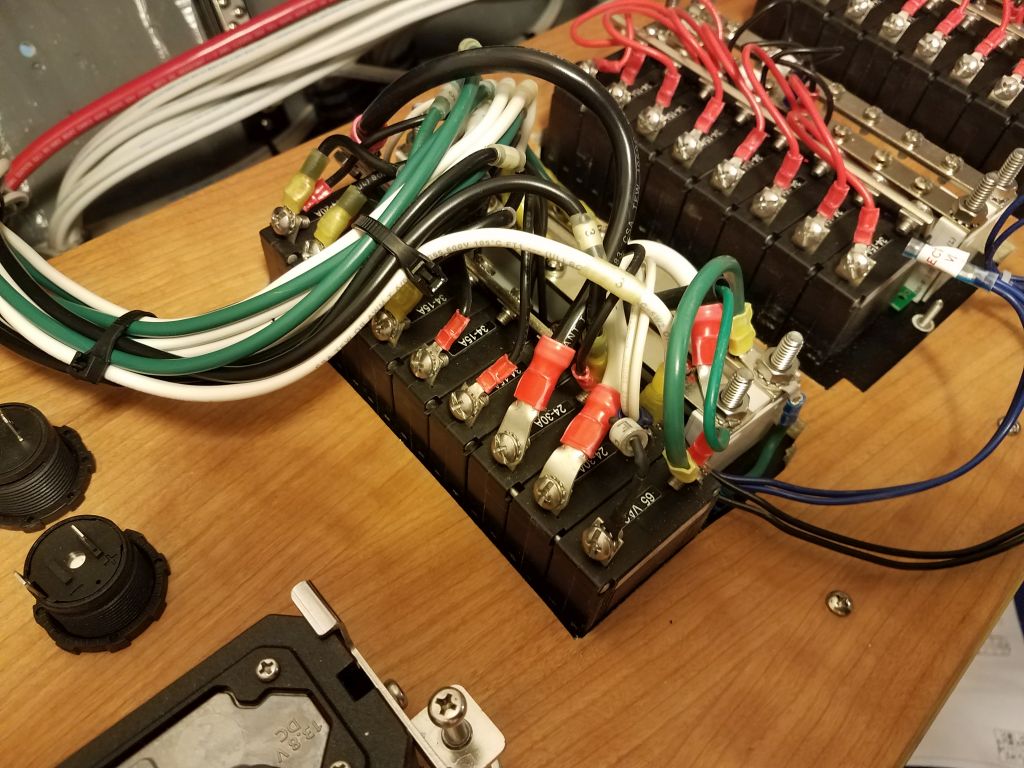
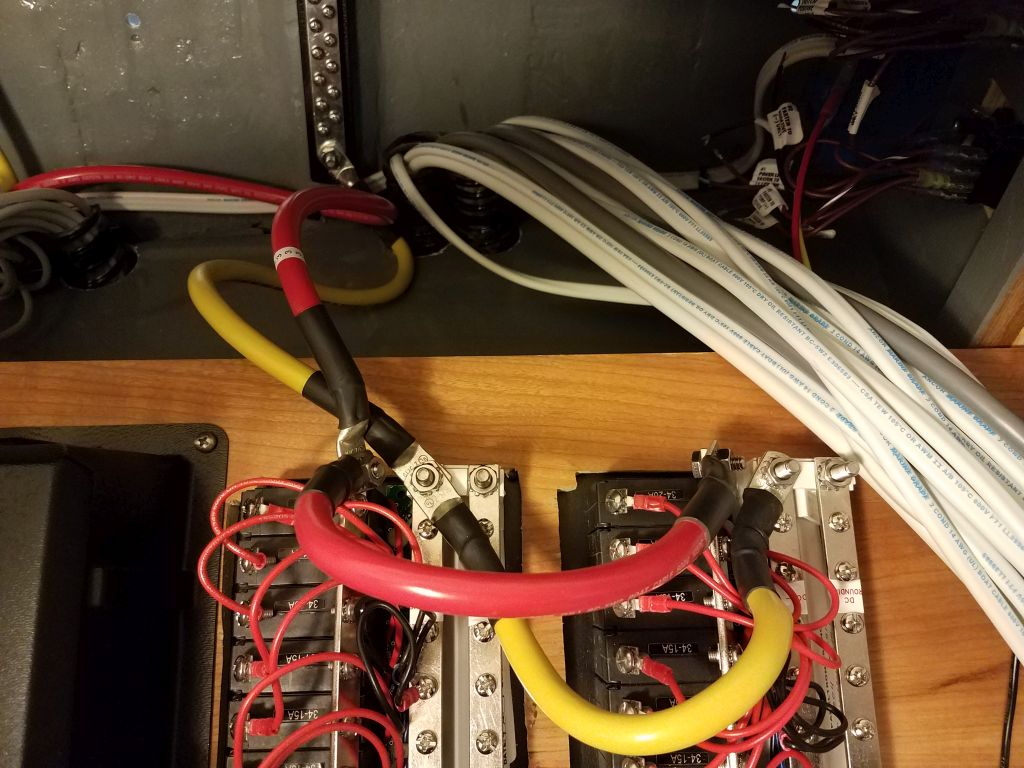
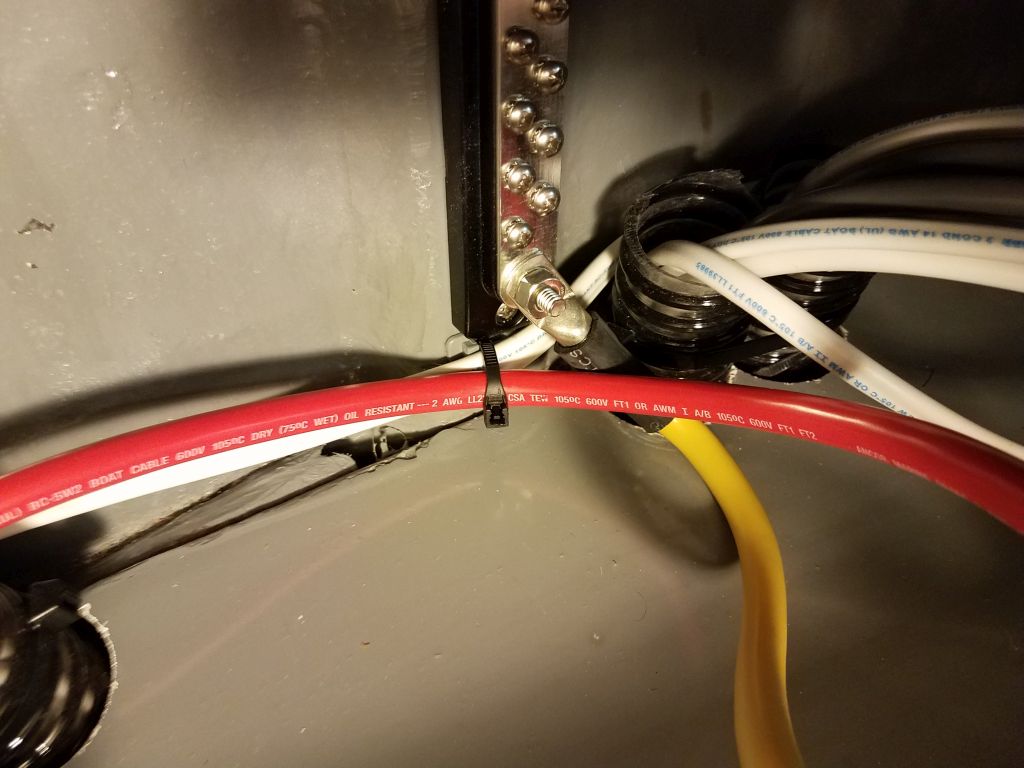
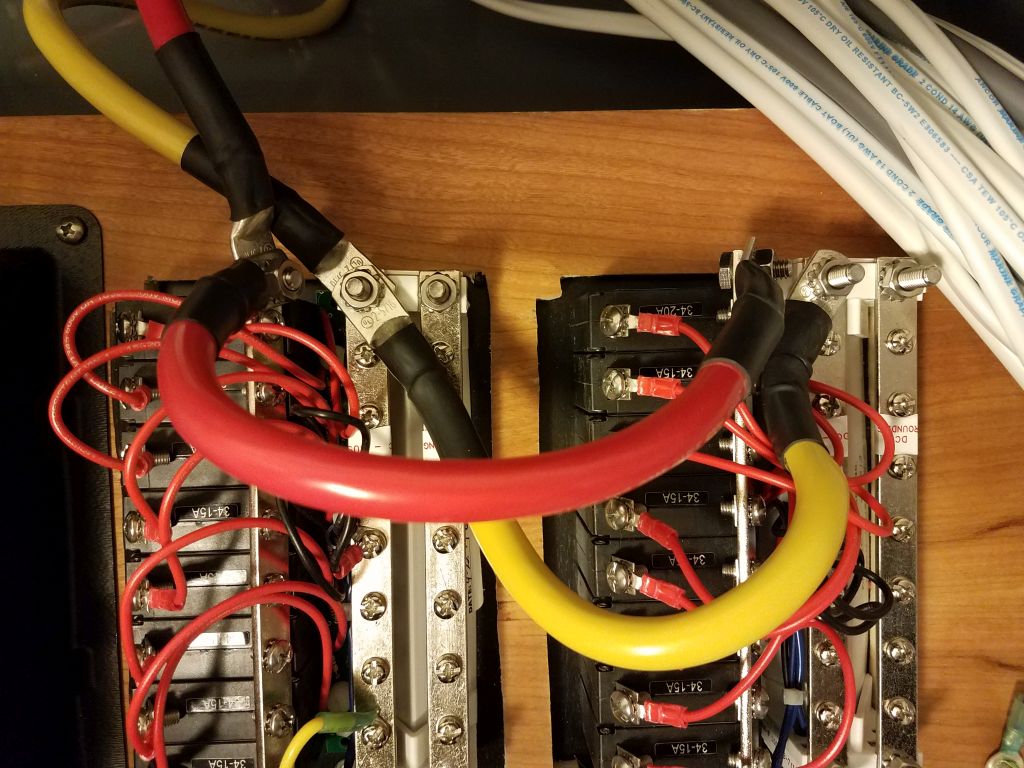
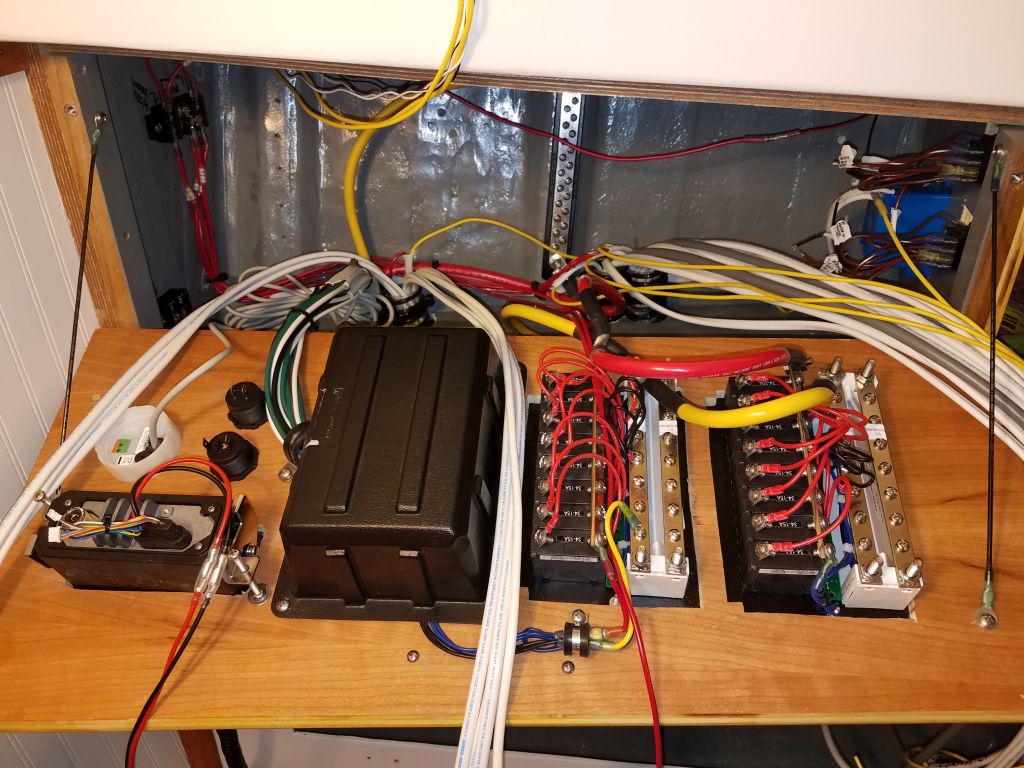
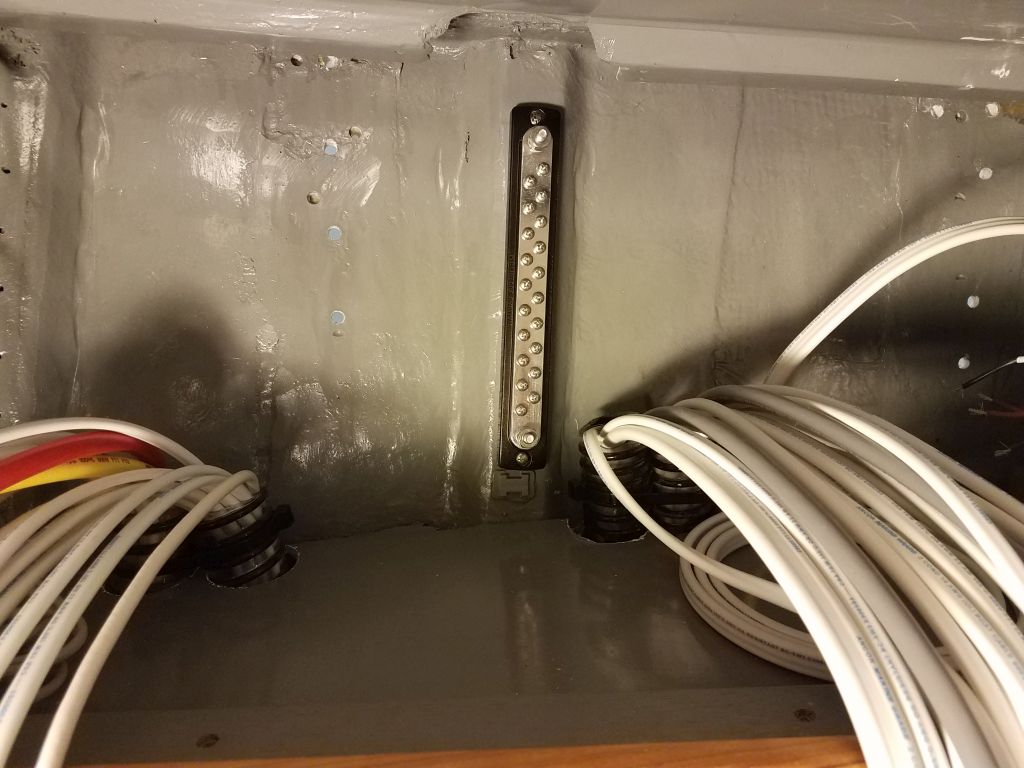
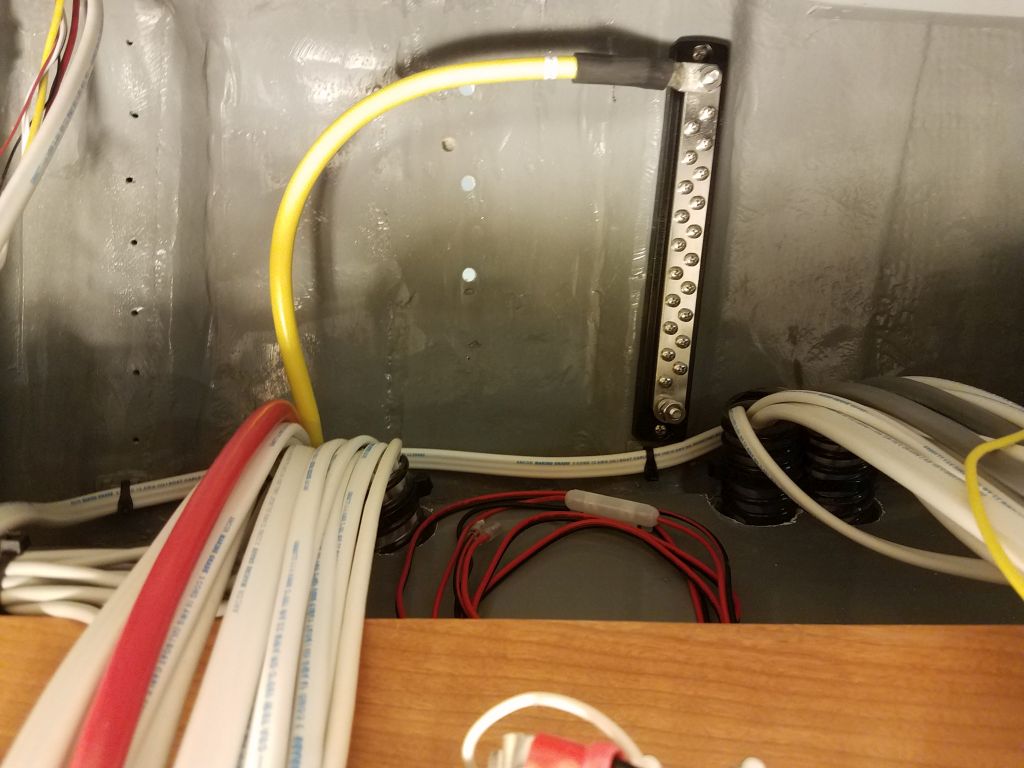
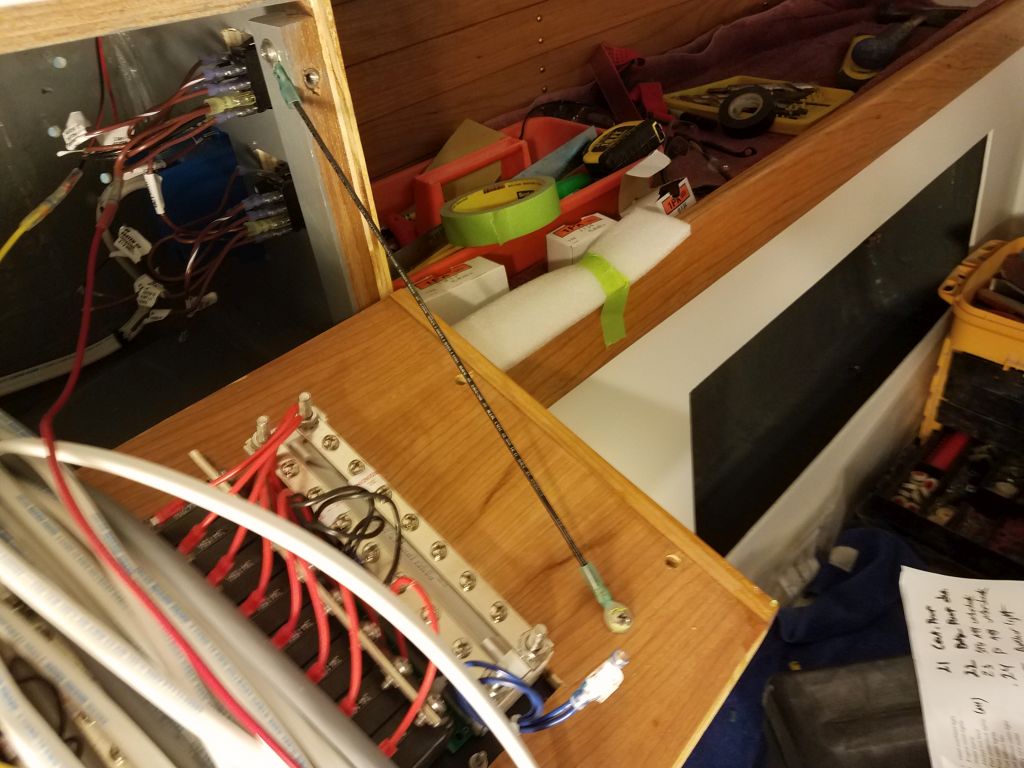
Now that the wiring runs leading aft along the starboard side were all roughly in place, I continued the wiring project with various wires and cables leading from the electrical panel area forward into the storage and utility space beneath the v-berth.  Here, there would eventually be a completely separate house bank of batteries to service  the lighting and all other loads unrelated to the propulsion system.  I began with a pair of #2 battery cables that would provide the main power supply from the house battery to the panel, sized to be substantially larger than required for the anticipated electrical loads.  In the forward locker, I chose a location for the two main distribution busses and installed them, then made up the cable ends before pulling most of the slack back into the electrical panel area for later termination.  The distribution busses were an ongoing work, and one might notice the cables’ positions changing through the remainder of the day’s work.

The distribution busses were to be on the downstream side of the main house shutoff switch, and I spent some time considering where the switch should be mounted.  It needed to be accessible, yet out of the way so as not to be an eyesore, and also required access to the back for installation and wiring.  The design of the molded forward cabin unit obviated all of my first choices, and eventually and at some length I settled on the forward end of the port settee base, which satisfied all the requirements.  I chose the port rather than the starboard side because it was a bit more out of the way (i.e. not as immediately visible in the finished boat with the table in place), and there was also a lot more going on in the starboard locker with the main wiring runs, and I didn’t want to add the extra clutter.

To this end, I ran red battery cables between the switch location and the battery location beneath the v-berth, preparing ahead for the switch installation, which would have to wait a day since I didn’t have the correct hole saw on hand for a flush installation.  The switch I chose was a small, basic one that fit the requirements of this system, and also happened to be the same as the one in the engine room for the electric motor.

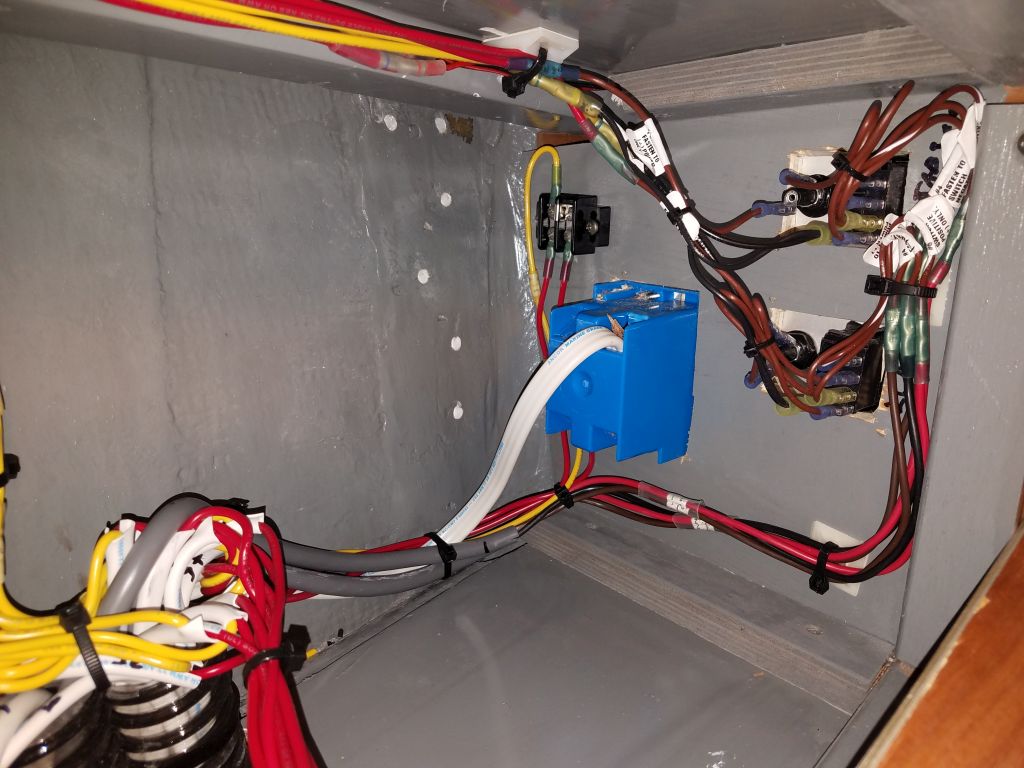
To connect such items as electric bilge pumps, which needed to operate at all times regardless of the position of the main battery switch, I ran in a 10AWG cable from a small distribution buss in the electrical panel area; this wire would later be connected directly to the battery positive.

I had on hand enough heavy 2/0 battery cable to make the run forward from the battery distribution buss to the chainlocker, where these cables would eventually connect to an electric windlass.  I left the excess cable coiled up forward while I contemplated how best to run them into the tight chainlocker.

Two regular circuits also needed to run forward to supply the running lights, and a chainlocker light, and I now led these forward from the electrical panel, again leaving ample slack for their final runs and connection.

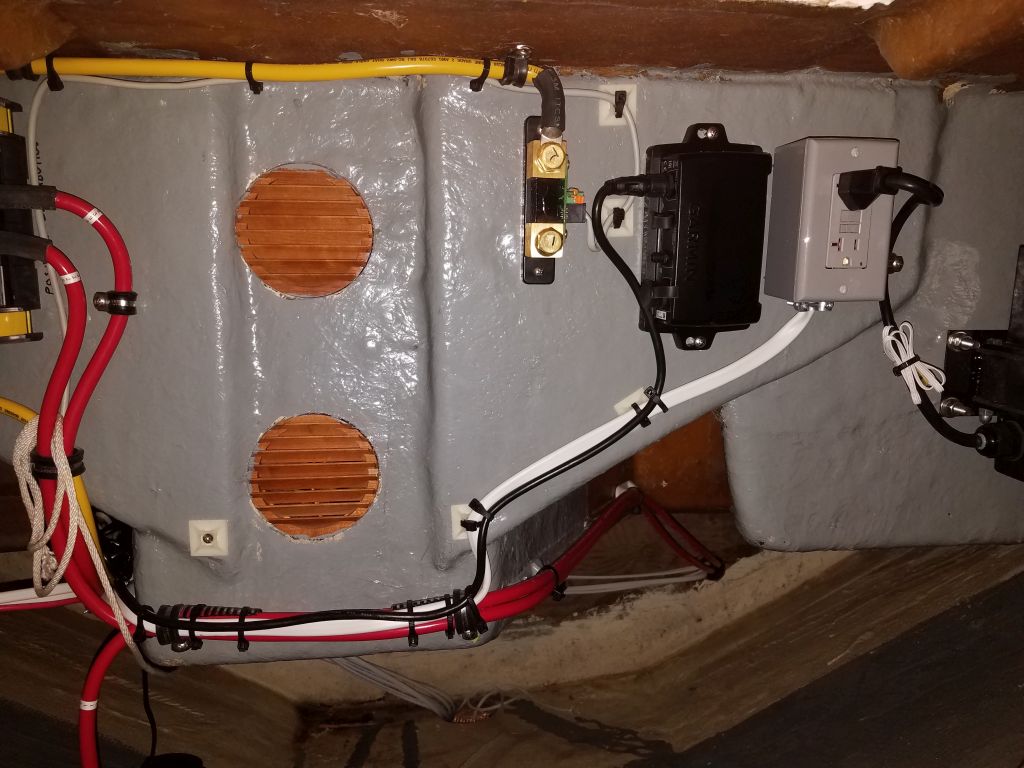
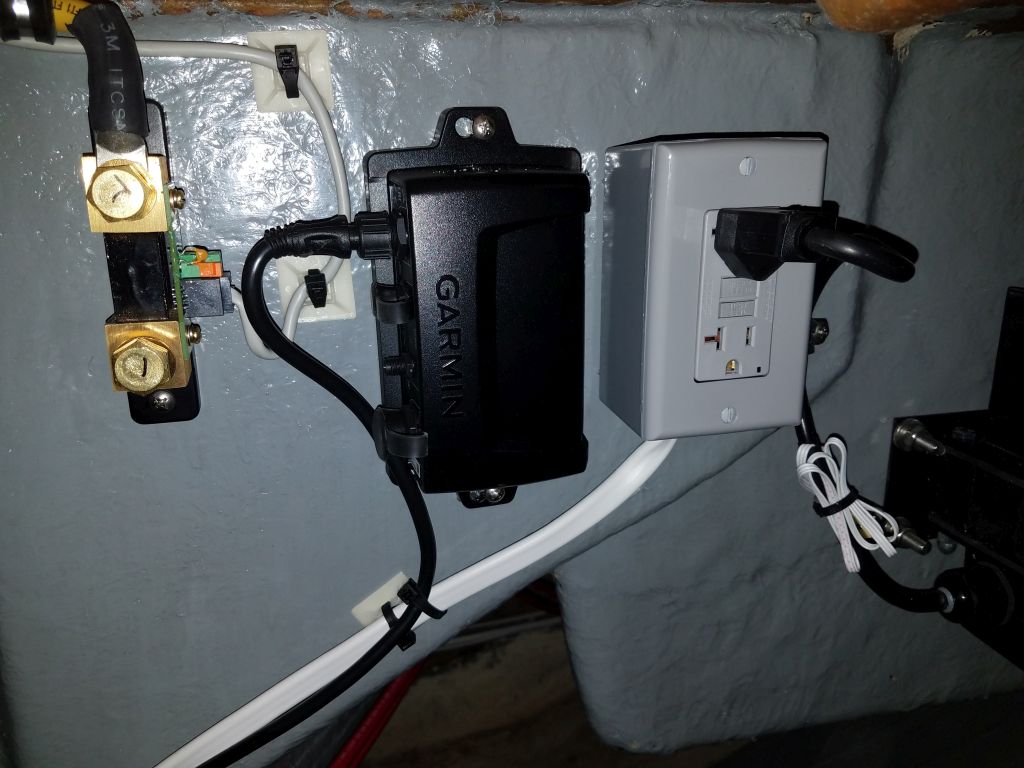
The last wires I needed to run along the route from electrical panel to the forward battery area were the control cable for the battery monitor (an Ethernet-type cable) and a 12/3 cable to power the house battery charger.  Also required for the battery monitor was a small shunt, which needed to be installed in the negative battery cable between the battery (not yet on hand) and the load side, which in this case was the negative distribution buss, so I made up that length of cable and installed it and the shunt in a convenient spot.

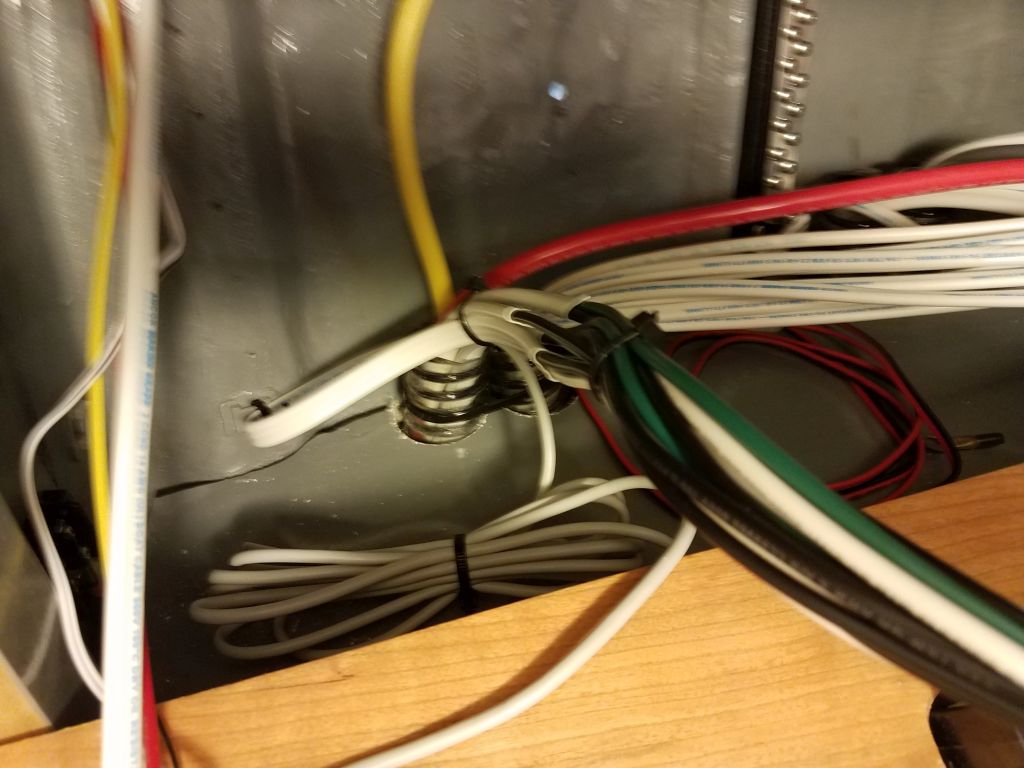
Now, working down and aft from these new installations, I secured the cables and wires as needed, using pre-installed mounts that I’d glued in long before during another phase of the project, and adding new mounts and supports as needed for the specifics at hand.  I secured most of the excess bundle of Ethernet cable for the battery monitor along with the other wire and cable runs leading aft, and secured the transducer cable into the bundle with a small stress-relief loop below.

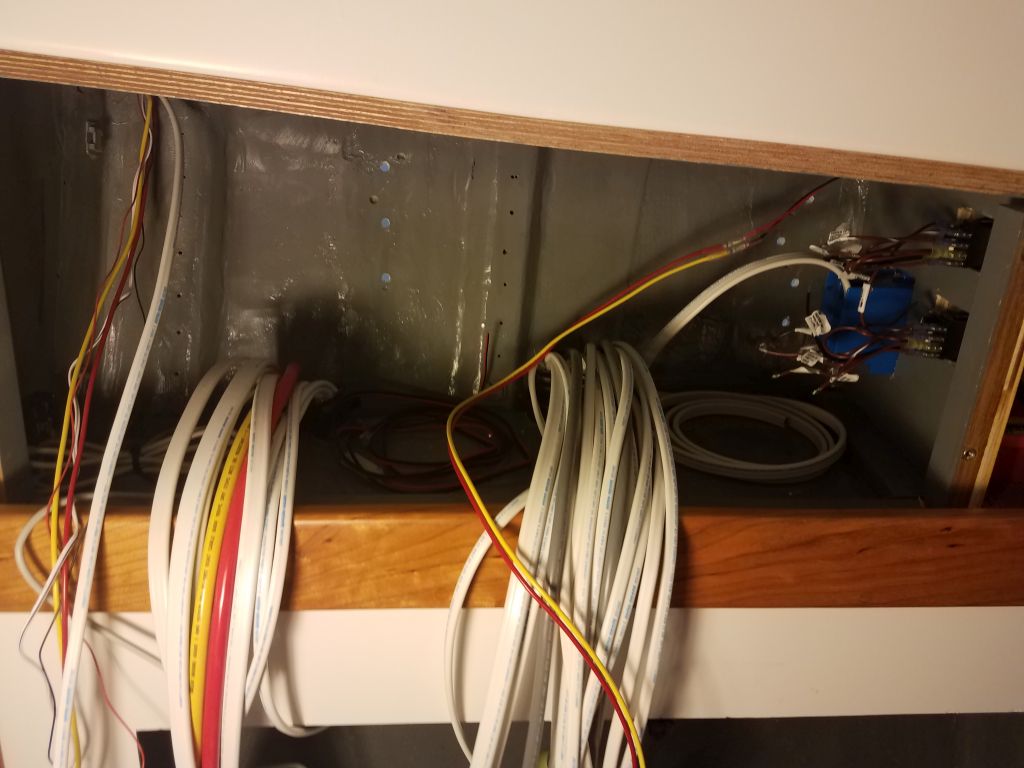
In the locker beneath the starboard settee, I pulled in the remaining slack and secured this large cable bundle in several places along the base of the bulkhead and leading to the wire chase to the settee back before the end of the day.  This left me with a bit of organized chaos at the electrical locker and in the settee back, but I’d continue the organization and securing next time before continuing with the final wire runs required over to the port side of the boat.

Total time billed on this job today:  8.75 hours

0600 Weather Observation:  20°, clear. Forecast for the day:  Sunny, 30°

Scupper 202

Friday

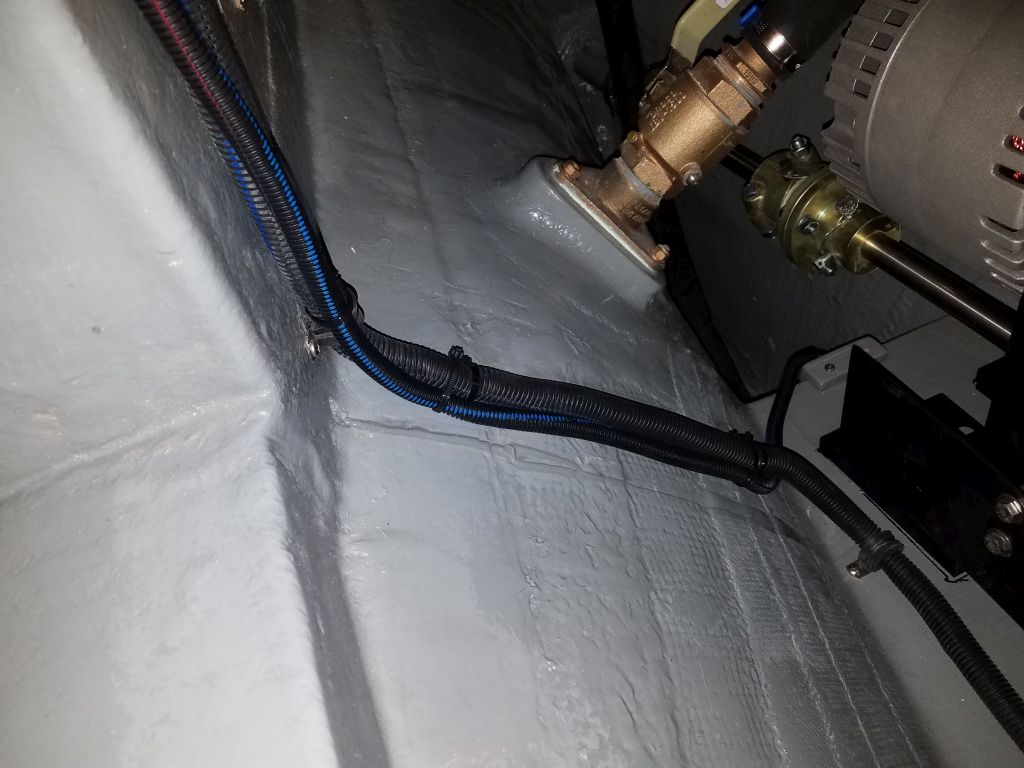
In the engine room, I finished up securing the new wires in their run across the forward, upper edge of the space, and leading the larger wire pair for the new potable water pump (12 AWG to accommodate the amperage draw) down the bulkhead and through the conduit I’d installed earlier into the space beneath the galley. (The conduit is there, but slid forward since it wasn’t yet secured.)  I left the other two circuits unsecured at their very ends pending final leads and connections to the galley 12-volt outlet and galley lights, which installations would come soon.

To accommodate the requirements of the fresh water flush toilet the owner selected, I chose a hefty water pump with more than ample capacity.  After preparing the hose fittings on the bench, I brought the pump up to install it in the galley.  However, I found that the size of the pump, including its end fittings, made it an awkward fit anywhere on the shelf beneath the sink, which is where I’d imagined installing it, and after trying various locations I finally settled on the bulkhead at the back of the space, not where I’d hoped to install it, but workable for wiring, hose runs, and maintenance access while keeping the rest of the compartment more or less free for storage.

With the pump finally secured to the bulkhead, I finished up the wiring and hose runs, incorporating a tee fitting to service the galley faucet above, and with the discharge line continuing back aft and through into the engine room where it would ultimately service the cockpit shower and fresh water toilet.  I led in the supply line from the water tank and secured all the hoses and wiring as needed to complete the installation.  There was access to the pump and the intake filter through the drawer openings, though for installation I removed the cooktop from the countertop, which provided good access.  I’d continue the hose runs in the engine room soon, but required another hose fitting that I didn’t have on hand.

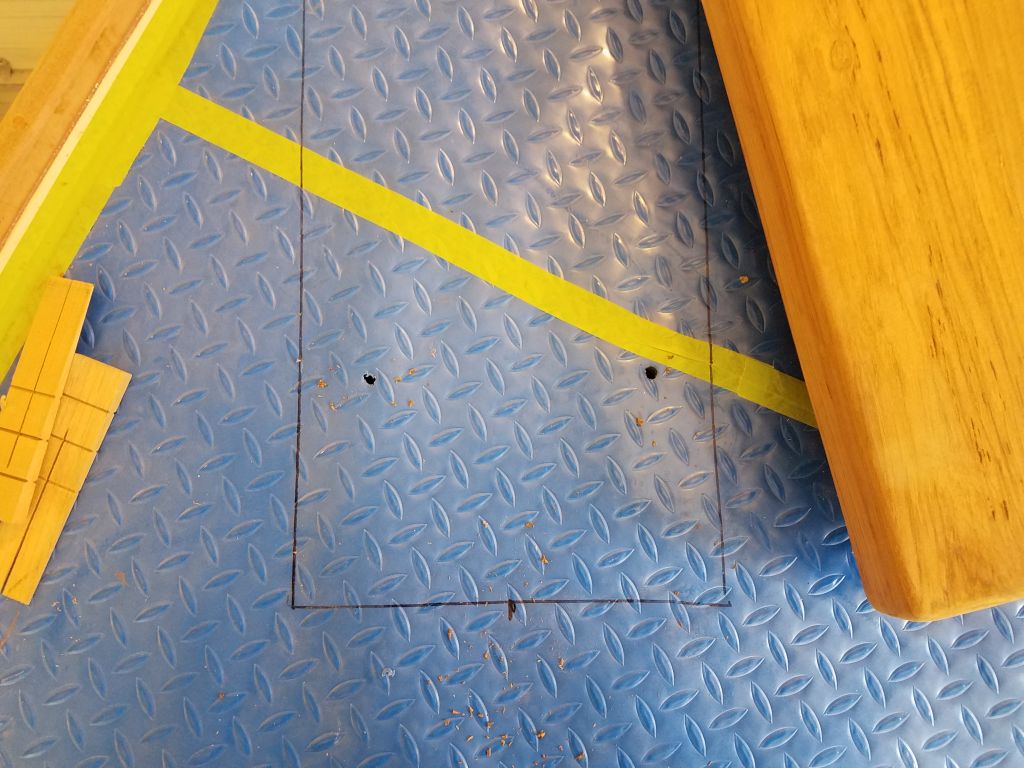
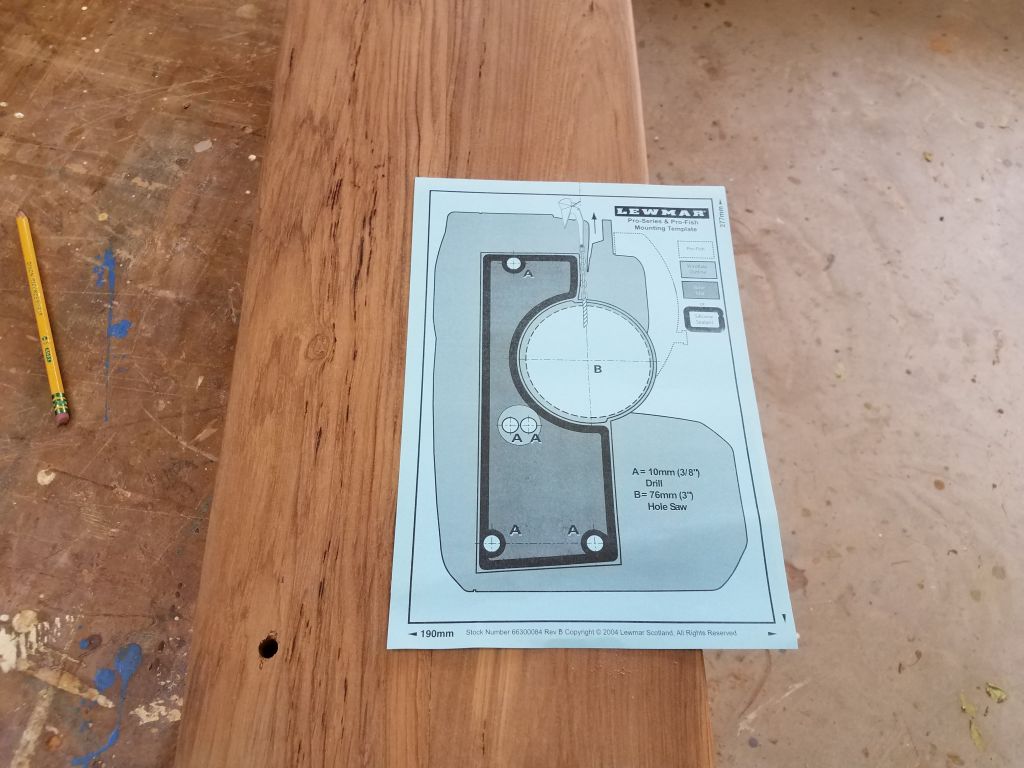
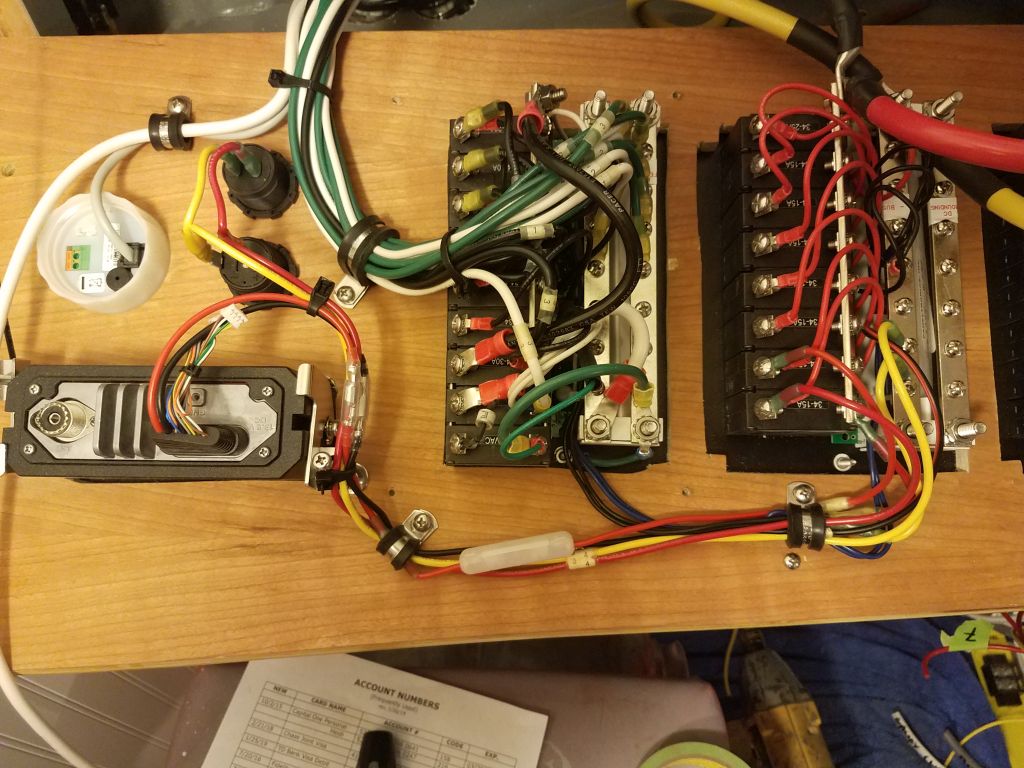
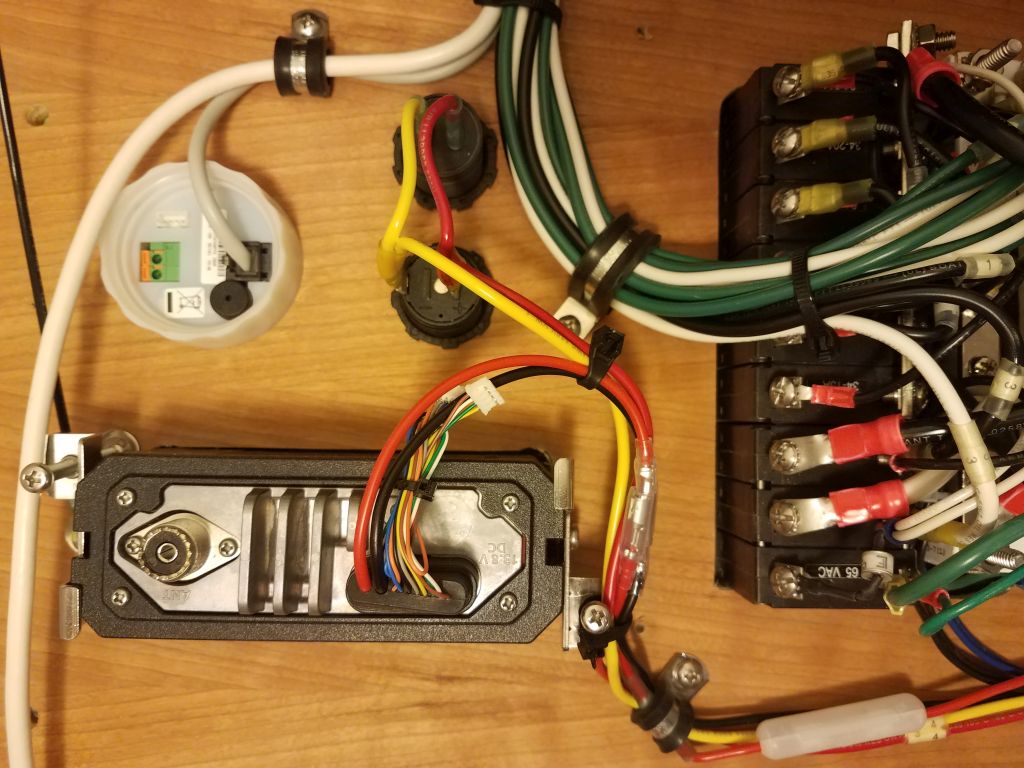
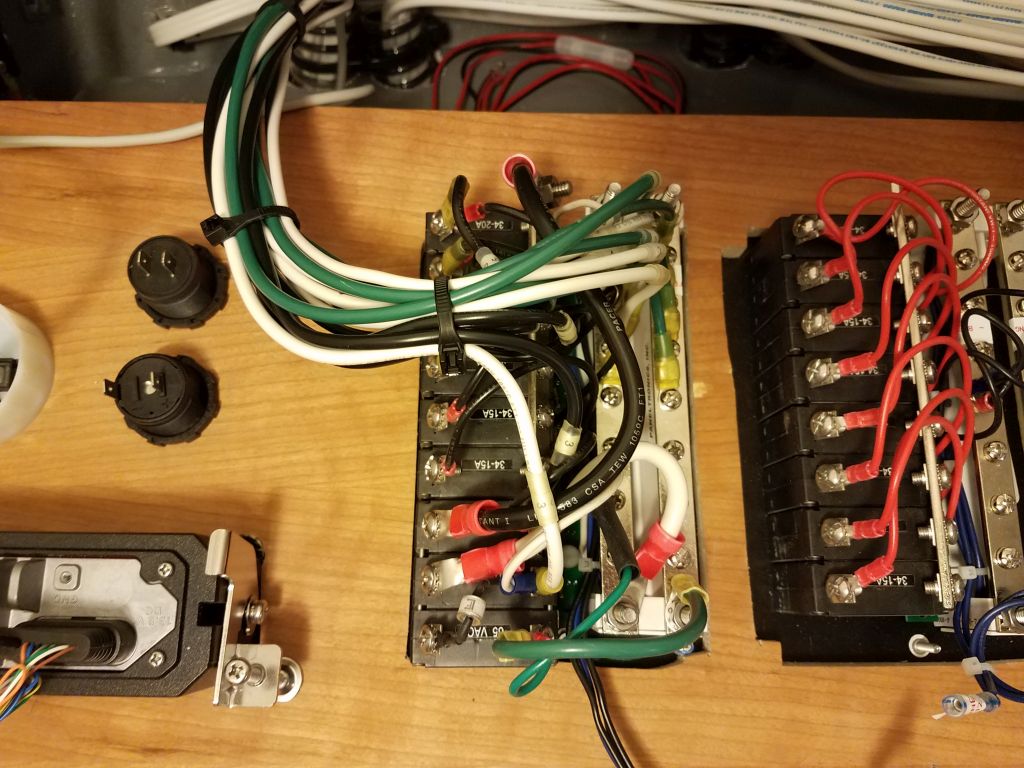
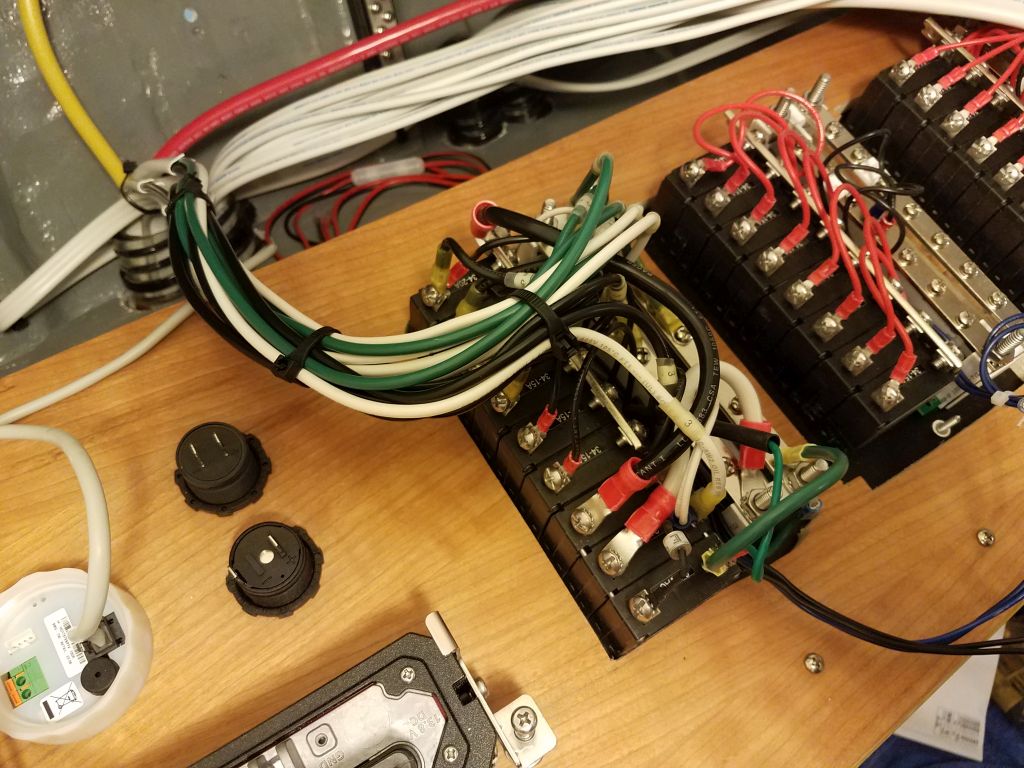
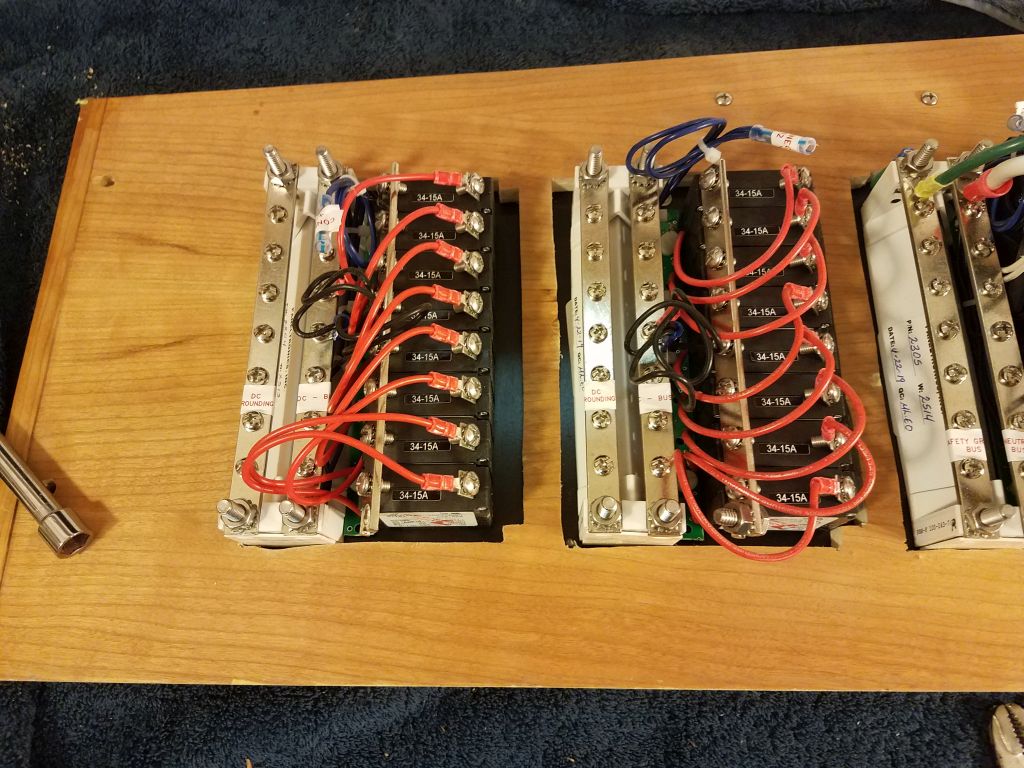
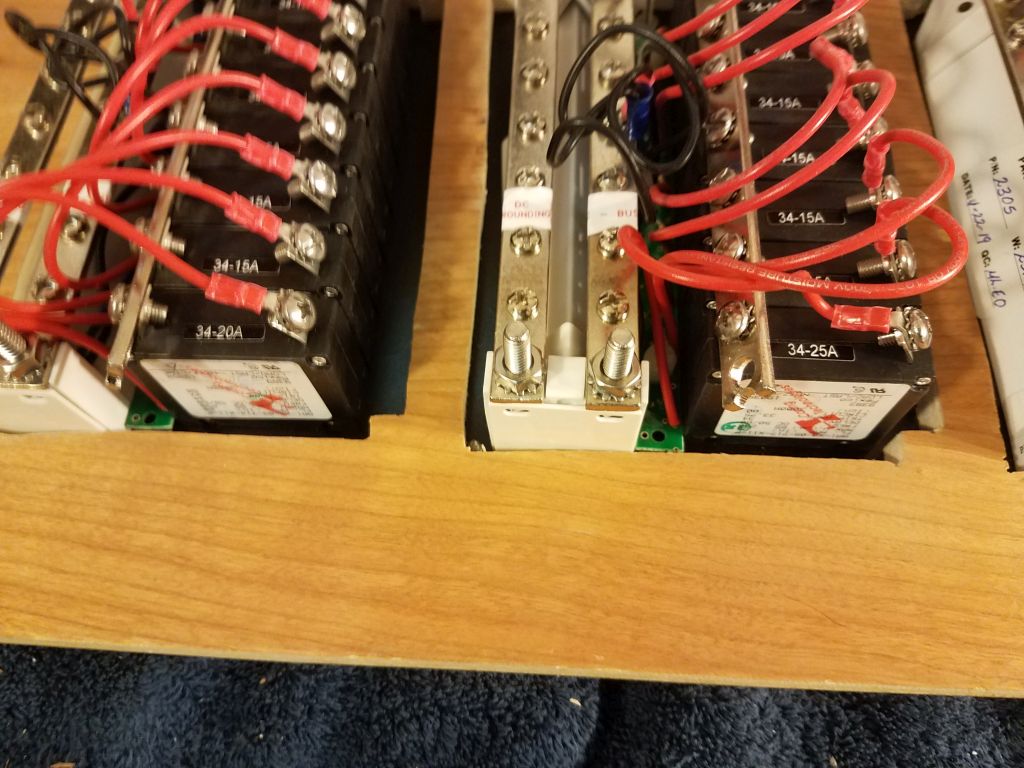
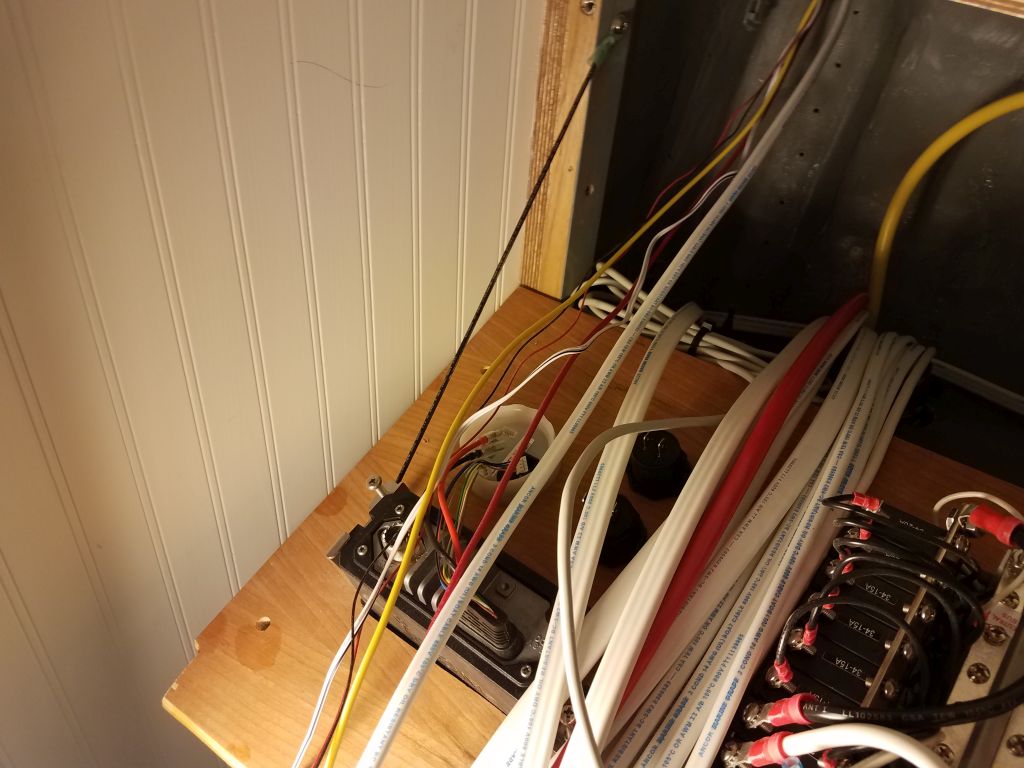
That whole process took up the entire morning, so in the afternoon I turned to the electrical panel area, where I needed to install some fittings in the aft side:  two bilge pump switches and a 110-volt outlet.  I wanted to do this now before I got started on any of the final wiring inside the locker.  It might have been nice to cut these openings before the little bulkhead was permanently installed, but that was a different phase of the project many months before.  Since I only had one chance to make the cutouts right in this finished bulkhead, I chose to make a layout template to ensure I got the holes cut just so, so working from an initial paper template I made a template from some scrap 1/4″ plywood that served my purpose to replicate the size and shape of the bulkhead.

After making some templates of the cutouts required for the bilge pump switches and outlet box, I laid out the plywood template accordingly, taking into account various constrictions on the space, and cut the openings as a mockup.

After covering the bulkhead with tape, I transferred the holes from the template onto the tape, then cut out the openings as needed, which allowed me to install the switches and the 110-volt outlet, to which I connected a short length of 12/3 cable that I’d presently lead back to the AC service panel when I got to that stage of the wiring project.

After straightening up the boat and my tools and supplies, I called it quits for the day, and for the week.

Total time billed on this job today:  7.5 hours

0600 Weather Observation:  21°, partly clear. Forecast for the day:  Mostly cloudy, chance of drizzle late in the afternoon, 41°

Scupper 201

Thursday

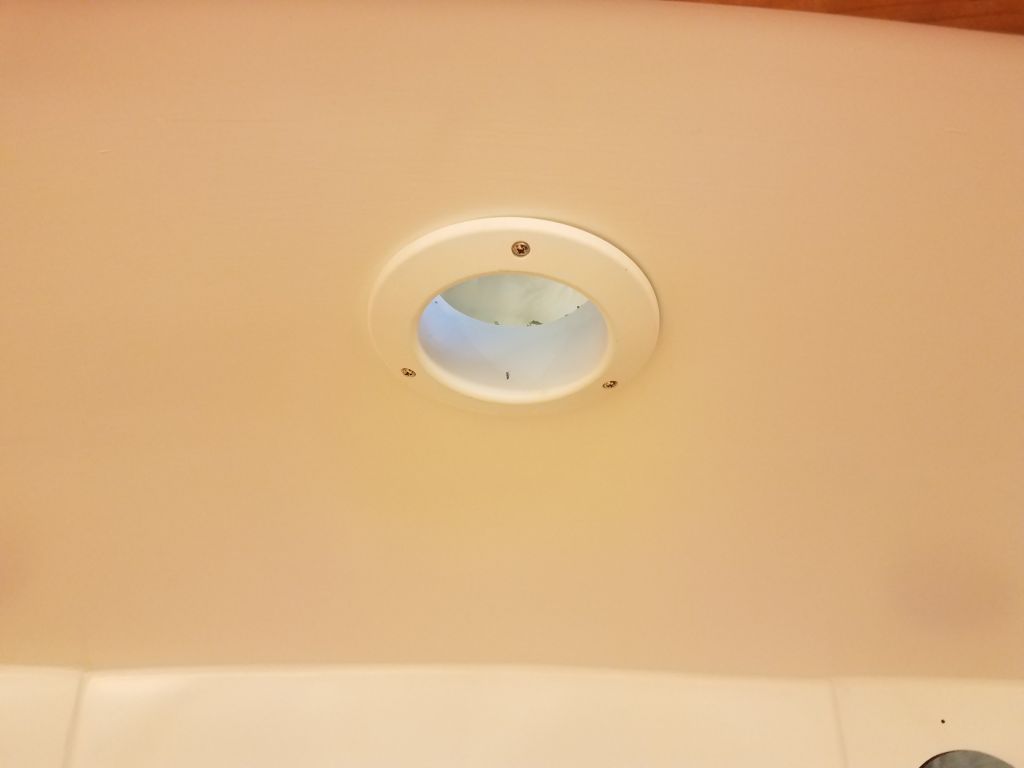
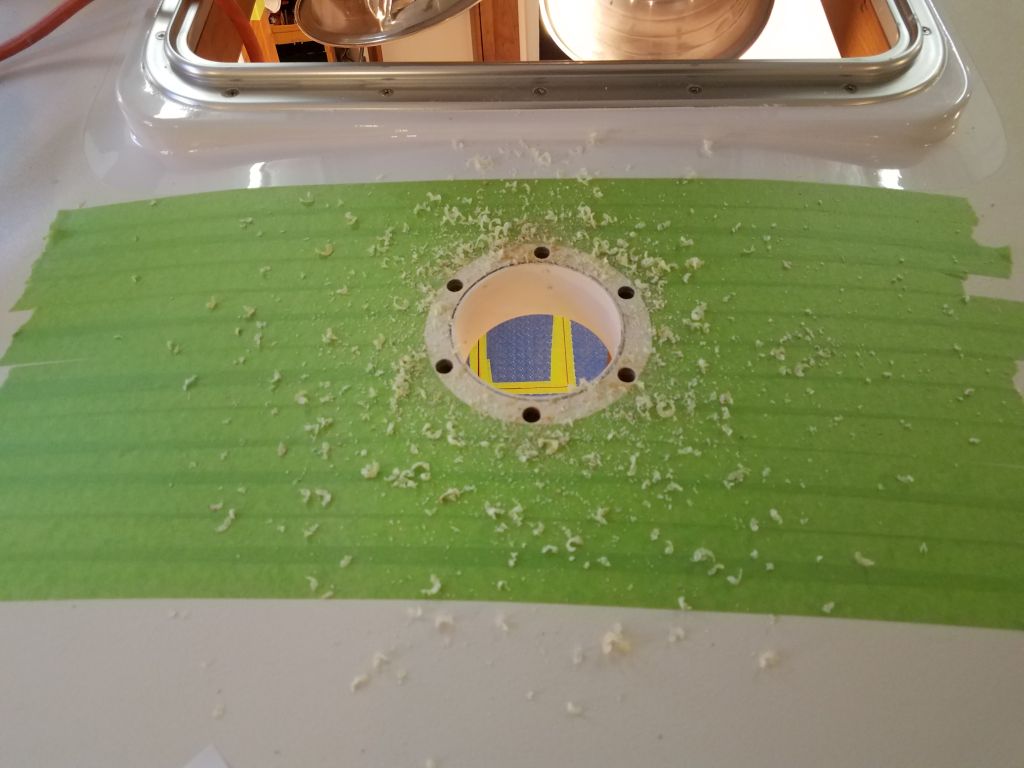
After an early morning commitment elsewhere, I got back to the shop in time to finish up the installation of the solar vent in the companionway before lunchtime.  This was a straightforward installation with sealant and three screws.  Because of the lack of clearance beneath the hatch when it was installed, I couldn’t use the provided trim ring at the underside of the hole, so later I planned to come back and touch up the paint a bit.

Now that the vent was installed, I could install the hatch for good by reinstalling the two stainless steel tabs that held it in place by sliding in grooves in the companionway rails.

I spent the rest of the day working on the electrical system, starting again with the transducer.  I wanted to give the epoxy some additional cure time before I filled the reservoir with the required liquid, but to help me run the transducer cable I temporarily installed the transducer with a couple of its screws to hold it in place.

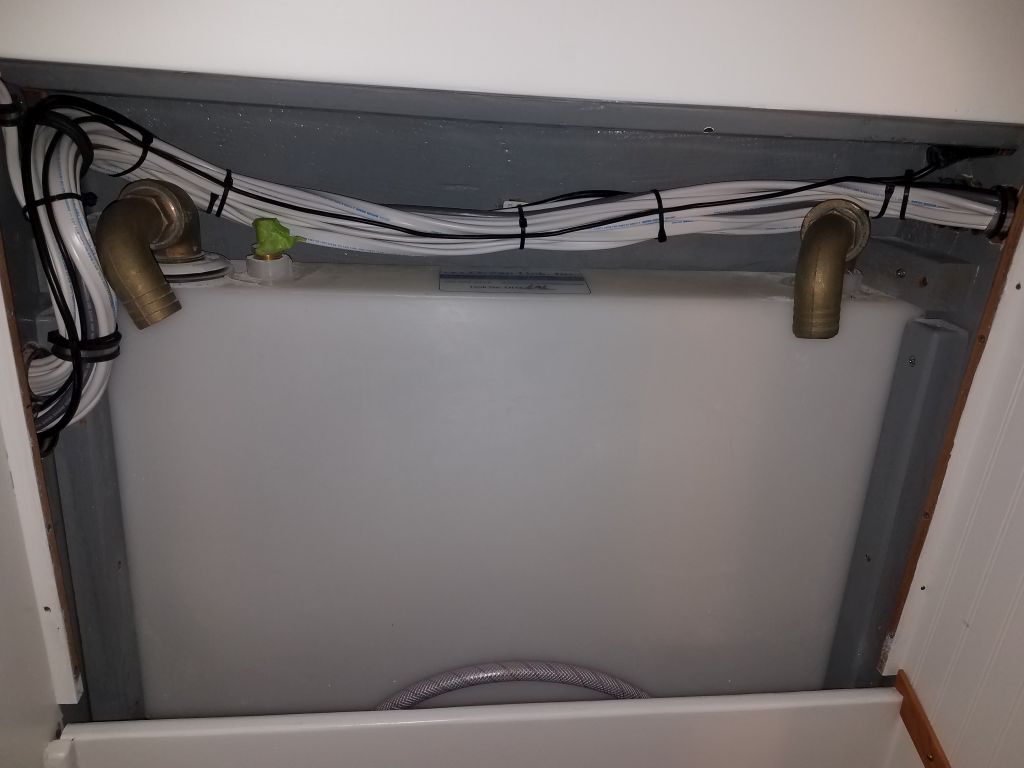
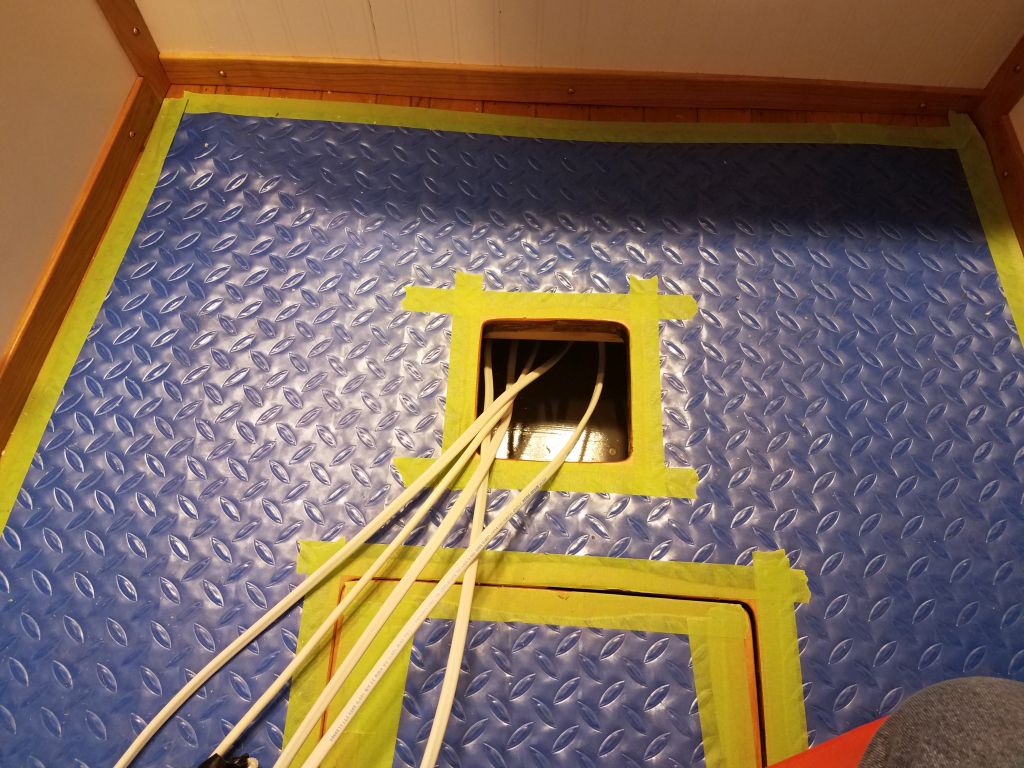
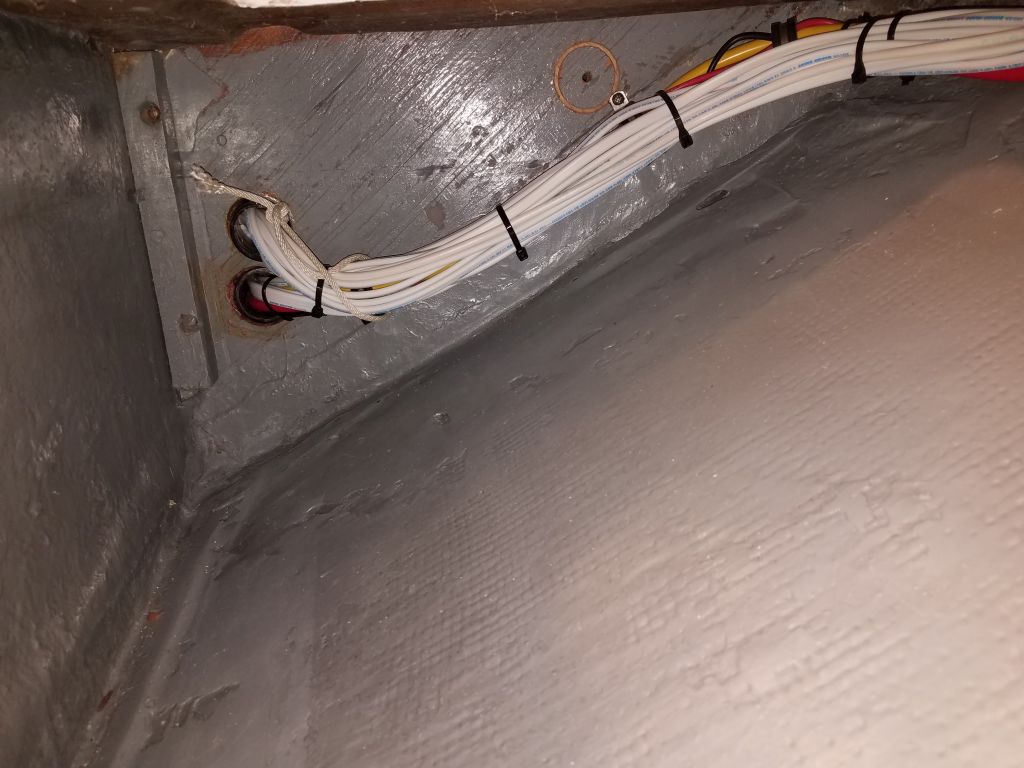
Before beginning the cable run, I drilled another set of holes as needed in the settee back and holding tank area to accommodate this and additional cable runs alongside the full run of cables from a few days earlier.  I was pretty sure from the getgo that the supplied length of transducer cable wasn’t going to be enough to travel the convoluted distance between the transducer and the display, and I soon confirmed this as I led the cable loosely through the new conduits leading to the starboard settee and wiring area, then aft into the holding tank compartment, which was as far as the cable would reach (allowing ample slack in order to be able to later secure it properly).  I ordered an extension cable that would allow me to lead the cable the rest of the way to the location of the display, but I’d have to wait a few days for its arrival.

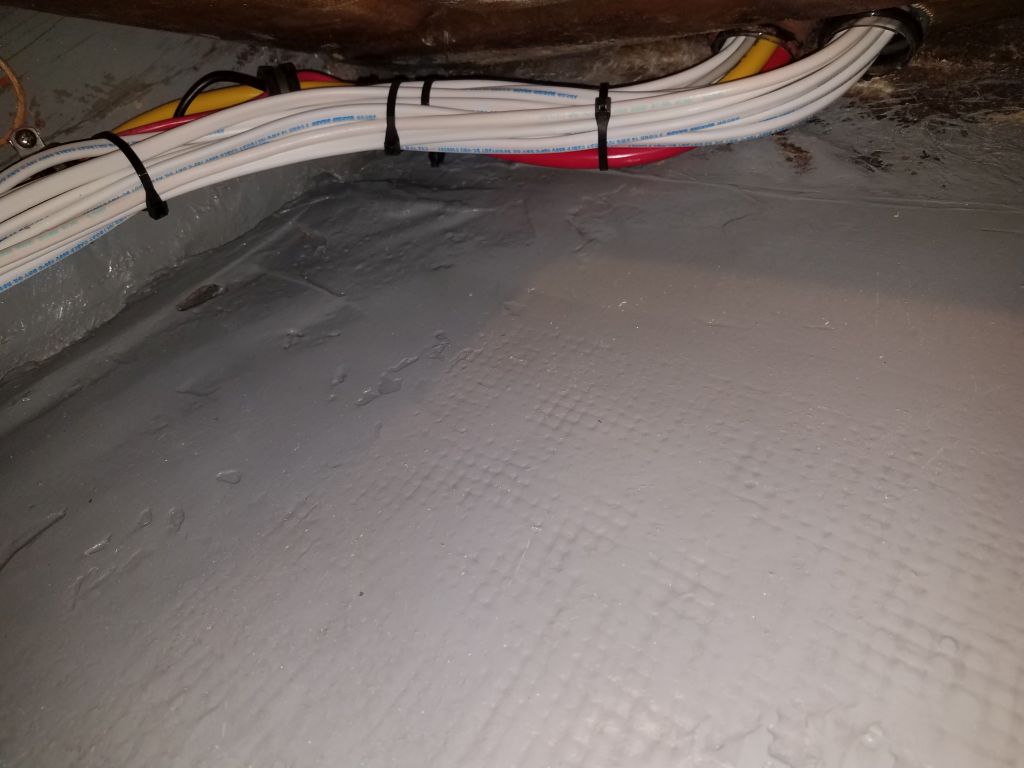
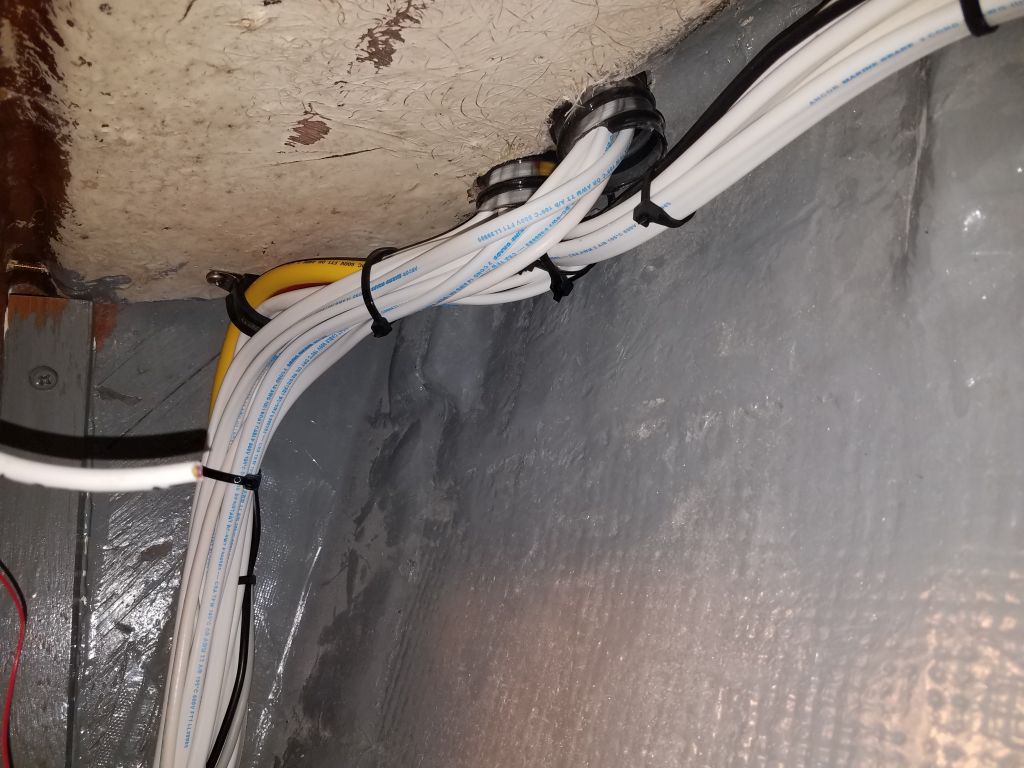
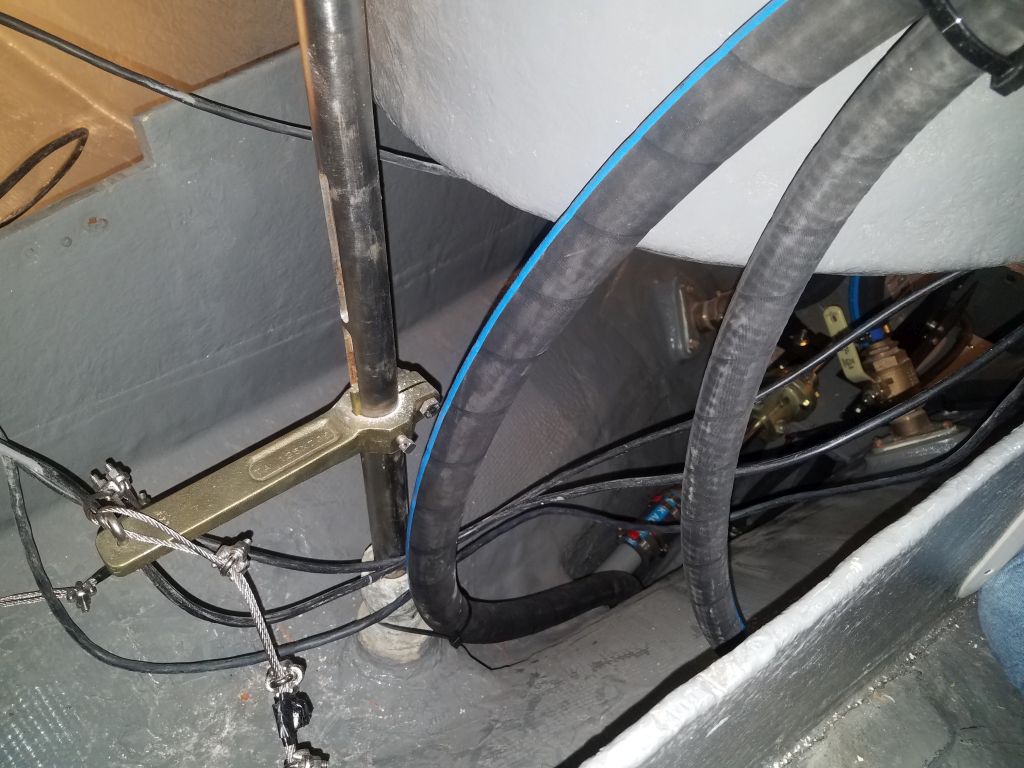
Meanwhile, I led a series of additional cables aft along the starboard side, as I’d decided that it made the most sense to string the wires needed for the galley lights, galley-mounted 12-volt outlet, and the potable water pump through this route instead of through the forward/port route.  Since I already needed another conduit opening along the starboard side to accommodate the transducer cable and some large wires to power the electric head, there was plenty of room to run some of the other wires which, upon reflection, seemed the best route after all.   I strung these wires leaving ample slack that would allow me to clean them up and secure them in place once all the new wires were in place.  I also ran the power cables for the second electric bilge pump, which I planned to mount in the bilge beneath the galley/head area, which was accessible through a hatch in the galley.

With all these new wires leading into the starboard side of the engine room, I thought my cable runs on this side were now complete, and at the end of the afternoon I finished up by beginning to secure these cables inside the engine room, using the cable run I’d already installed during the earlier wiring session.  There were still a few wires from the first runs that weren’t yet made up, including a large triplex for the eventual 48-volt battery charger, plus wires for the diaphragm bilge pump I planned to install on a platform in the engine room, but for now I left those alone for later attention.  To accommodate the new wires running across to the port side, I removed the existing wire clamps as I went and replaced them with larger ones as needed to hold the larger bundles, and by the end of the day I’d secured and cleaned up the new wiring in the engine room as far to port as I could reach easily from the access door, leaving just the final couple feet to take care of later from the port cockpit locker.

I also drilled a hole into the galley sink compartment to accommodate the 12/2 wire for the electric water pump, and this new opening would also allow passage of the water hose later.  For the new bilge pump, which would be a larger pump designed more as an emergency, larger-capacity pump to kick in only if the water level got high enough, I led the wire in to the upper reaches of the cooler storage compartment beneath the galley, leaving lots of loose wire there for eventual routing to the bilge and the pump once I had it on hand.

Total time billed on this job today:  5.75 hours

0600 Weather Observation:  21°, clear.  Forecast for the day:  Sunny, windy, 26°

Scupper 200

Wednesday

Things that take a long time:

  1.  Working in boats with molded liners
  2.  Doing anything with a hole saw
  3.  Hose

Any project combining this holy trinity is bound to take inordinate amounts of time, and so it proved to be once again as I continued where I left off with the water tank fill and vent runs.  Finishing up the installation of the new water deck fill was straightforward enough to start though.  With the epoxy cured in the new opening and around the screw locations, it didn’t take long to prepare the fastener holes (drill and tap for #10 fasteners, then mill the countersink at deck level) and install the fitting in a heavy bed of sealant.

Inside the boat I found that the molded liner hid most of the fill neck, so I expanded the opening that I’d drilled previously, ultimately cutting out a large section of the liner inside the locker above the port settee, which was hidden from view so the liner didn’t make any difference.  I actually cut the liner in several increments, enlarging each time, to finally provide better access to the after chainplate, the tank fill neck, and room for the water tank vent.  I’d have to touch up the gray paint in the newly-exposed area.

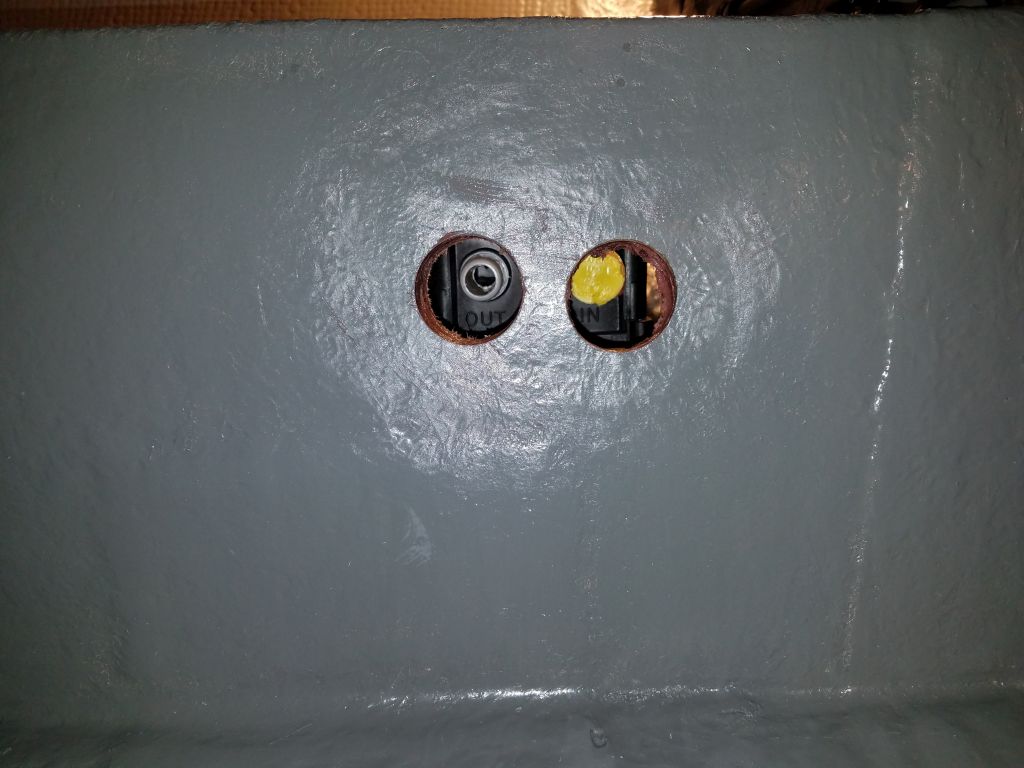
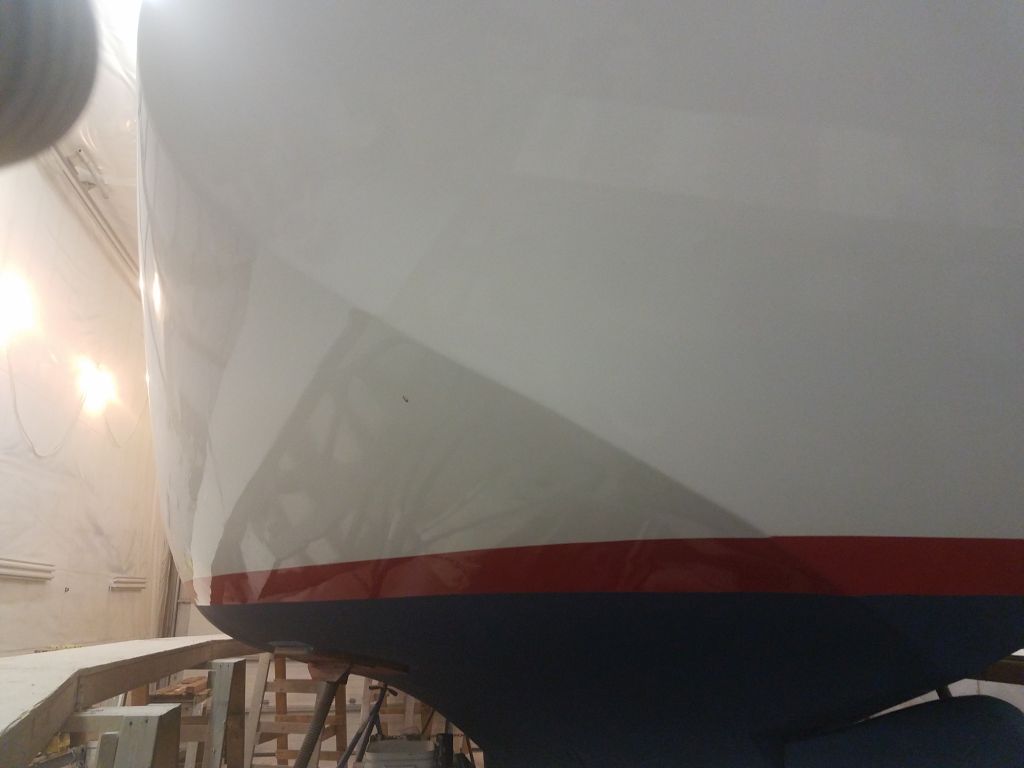
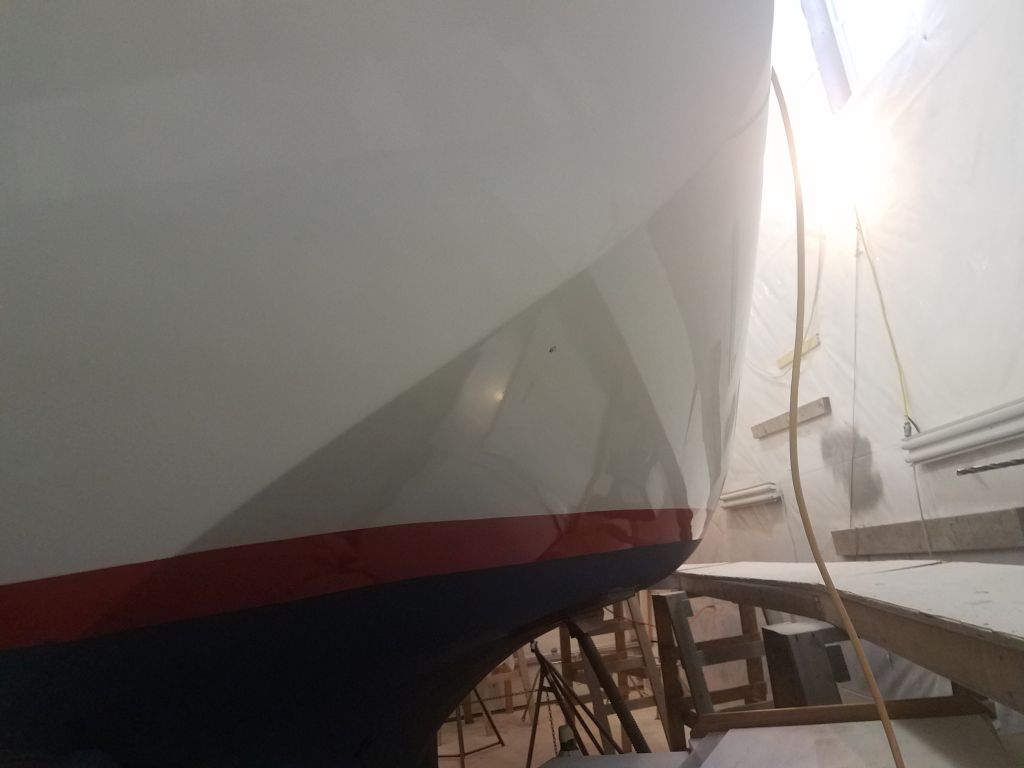
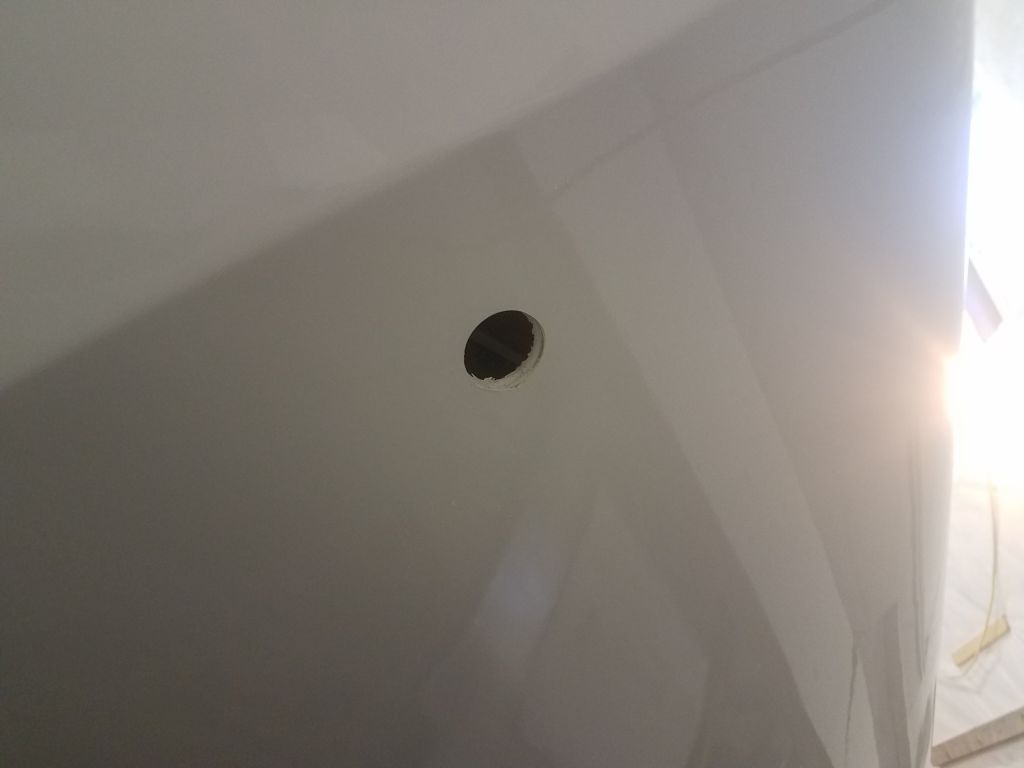
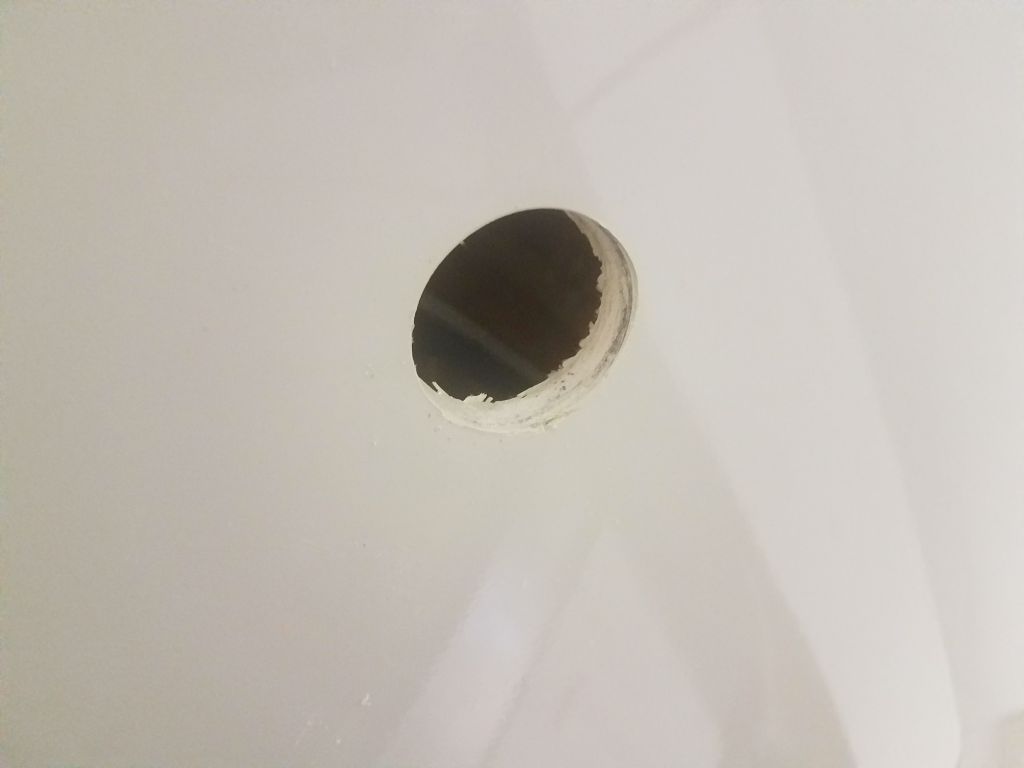
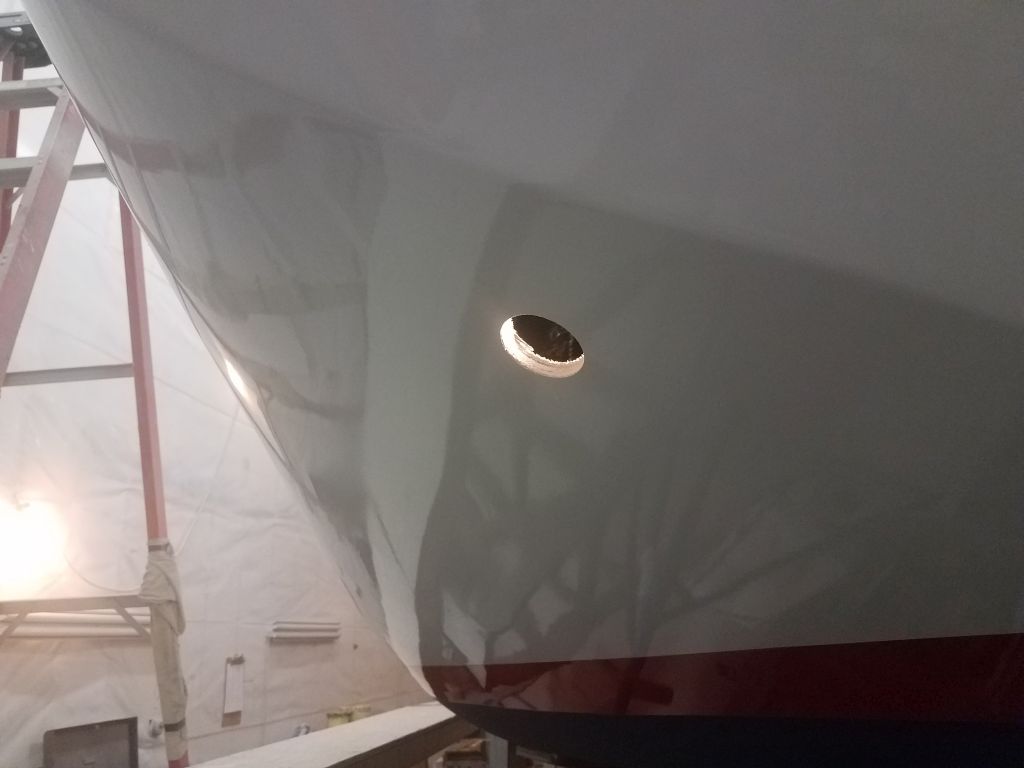
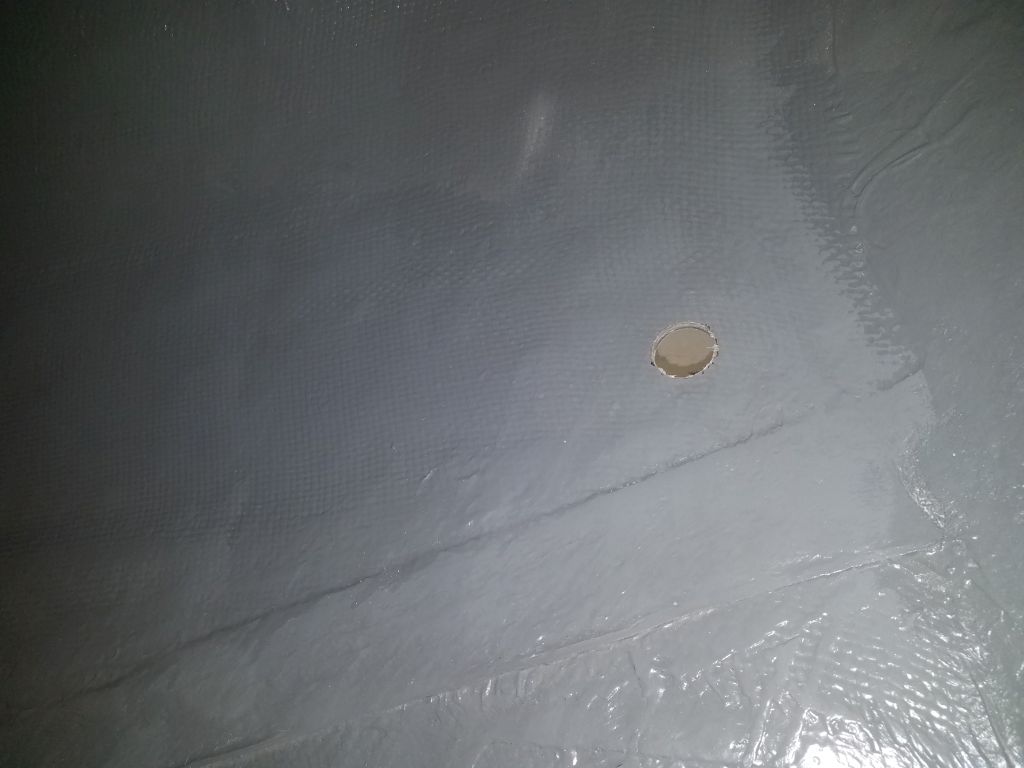
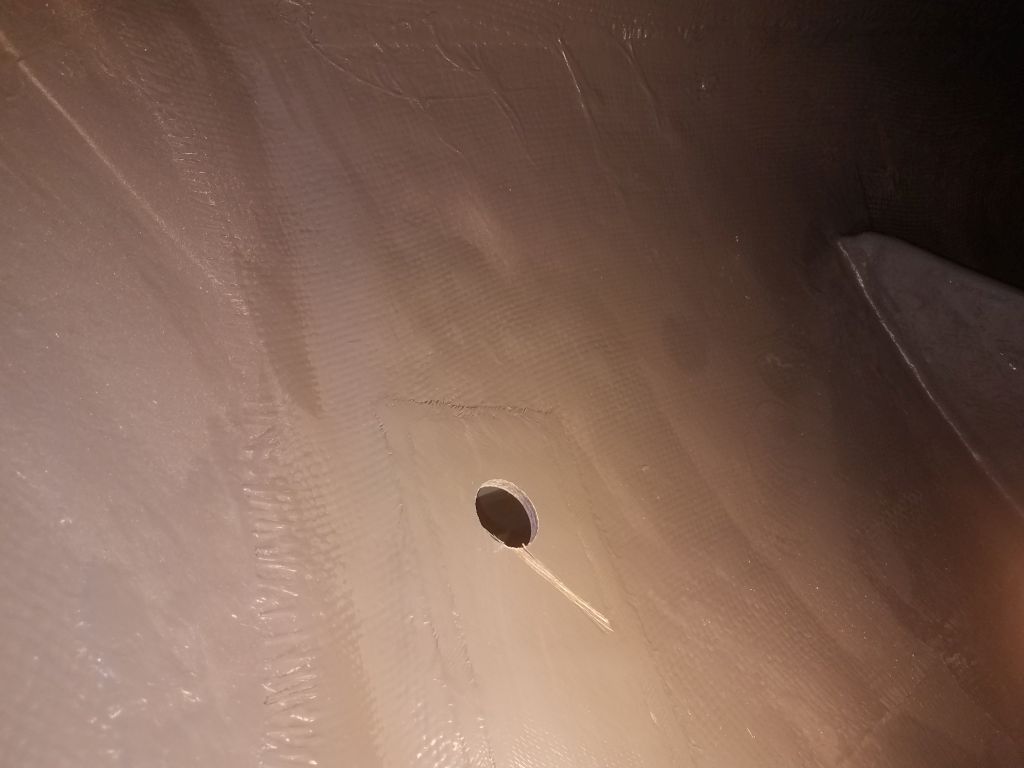
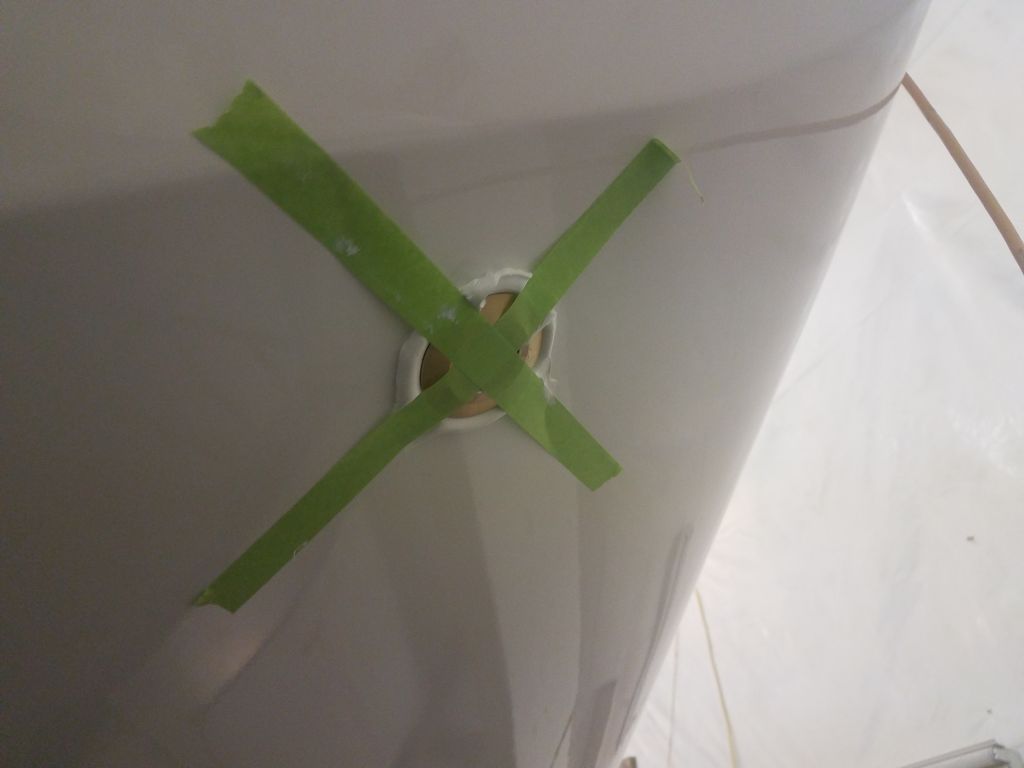
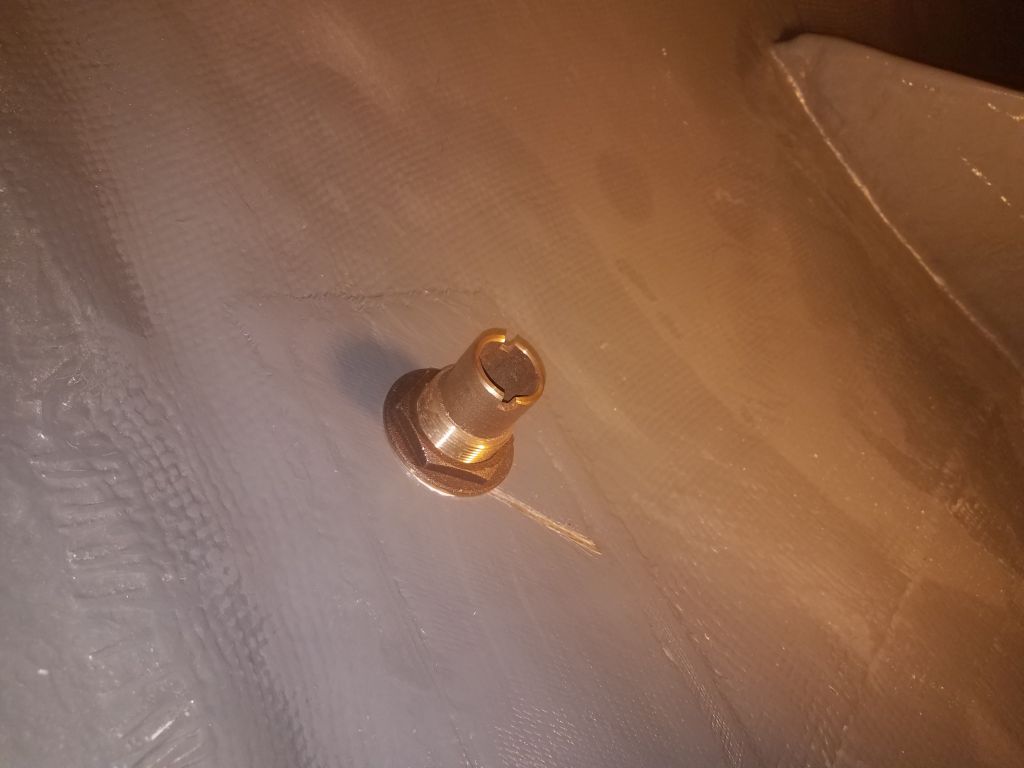
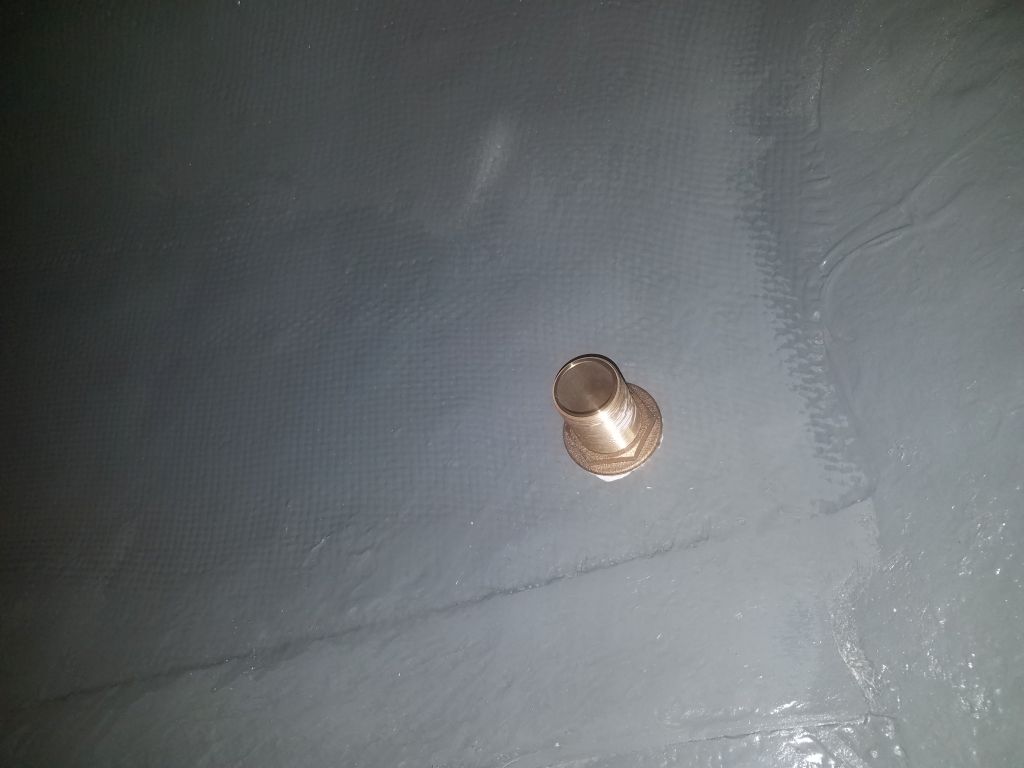
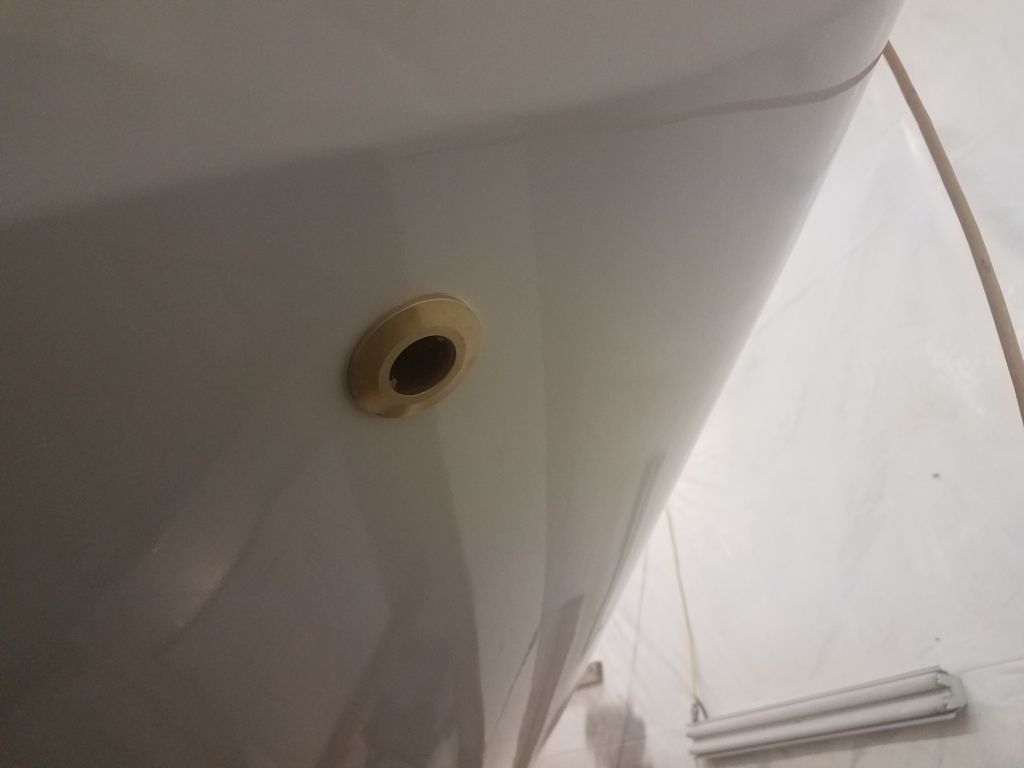
In preparing the hole for the vent (requiring frequent stops to dismantle completely and clean out the small hole saw I was using), I discovered the hull here was substantially thicker than I expected, undoubtedly because of the long-previous repairs that had been done in this area in the boat’s distant past.  Those repairers had definitely been of the “never use one nail where 12 will do” school of construction, but even so it never occurred to me that I’d find 1-1/4″ of solid fiberglass when I knew the working thickness of the hull elsewhere was about 3/8″ or perhaps 1/2.  Unfortunately, this meant that the vent fitting I had on hand was not long enough to work here, but I found and ordered another one that I thought would have long enough threads to pass through the hull and be secured properly.

While I was frustrated at the delay, installing the new vent fitting later would be (he said hopefully) straightforward enough, so I continued with the hose runs from the tank, through the lockers, and up to the new fill fitting.  The hose I used, a new type I was trying out (hoses for water systems seem either to be flexible yet weak and cheap, or strong yet impossible to work with), turned out to be stiff and difficult to work with in the confining spaces available, but at some length I managed to successfully lead the hose more or less how I wanted it, and made the connections at both ends.  I ran the smaller vent hose without issue, and left sufficient extra at the top for final connection to the vent fitting once it arrived.

Moving on, I turned to the new depth transducer, an in-hull type designed to use one of a series of differently-angled housings, or “tanks” to secure it to the inside of the hull.  The best and most logical location for the transducer was in the hull forward of the keel, somewhere in that semi-accessible area beneath the aft part of the forward cabin.  After determining the deadrise angle and choosing the correct tank (20°), I picked the mounting spot on the starboard side, nearly as far aft as I could comfortable reach and safely out of the way of whatever else might be going on in the forward lockers.  I removed the paint from a section of the hull, and otherwise prepared it as dictated in the installation instructions.  Then, I installed the tank in a bead of epoxy, smoothing the adhesive inside and out to ensure a good bond and seal, and left this to cure overnight.

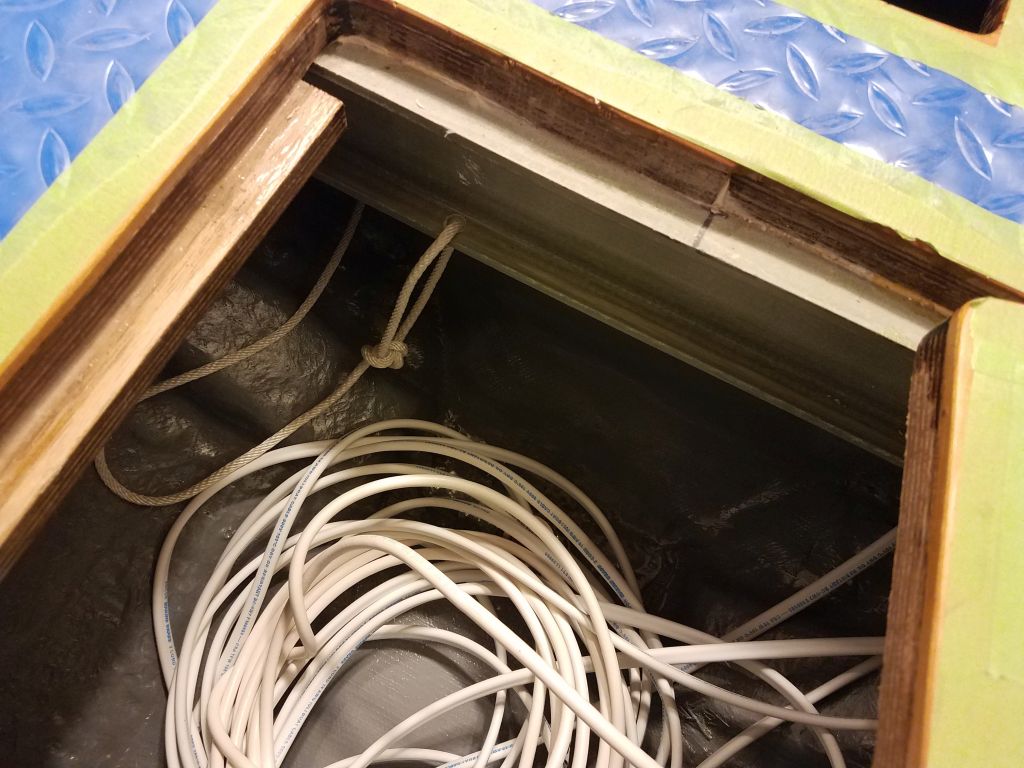
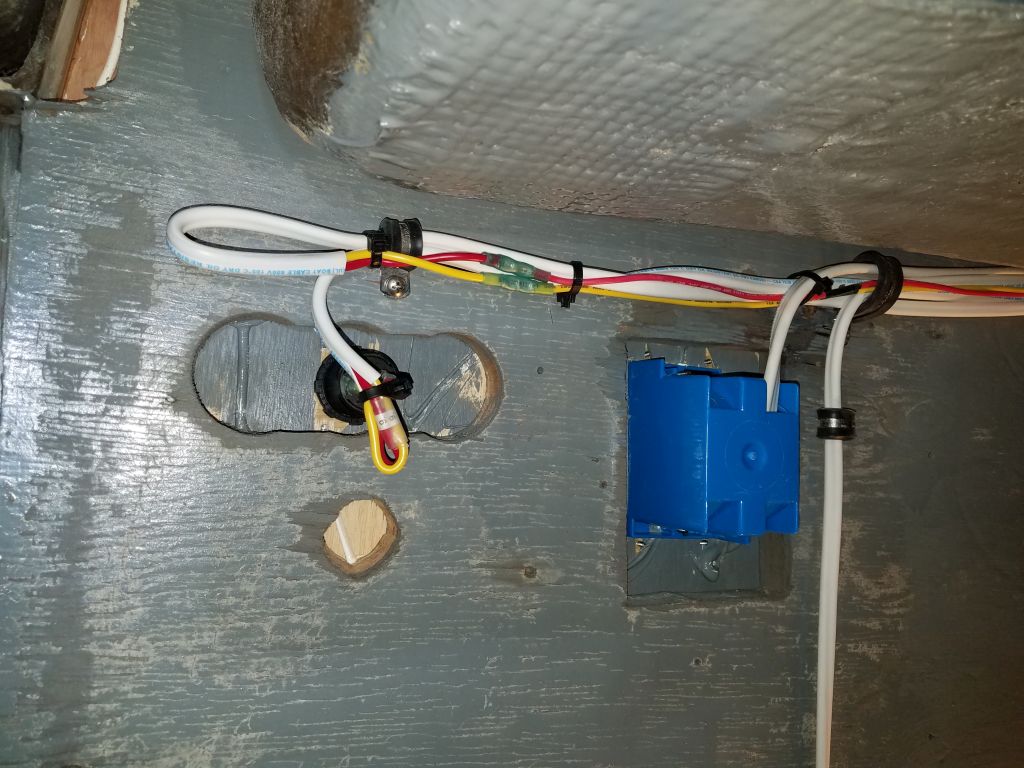
Meanwhile, I prepared several more openings for future wiring runs, leading from the starboard settee into the forward utility space, and a similar hole on the port side for return wiring there.  I also drilled holes between the areas beneath the settees and the settee back lockers, where the wiring would need to run to and from the service panel to starboard and similarly on the port side for the wiring runs leading aft.  I sealed the new raw wood in the bulkhead cutouts with epoxy leftover from the transducer installation, then installed short lengths of hose as conduit and chafe gear through the various openings, using more of the epoxy on hand to secure them.

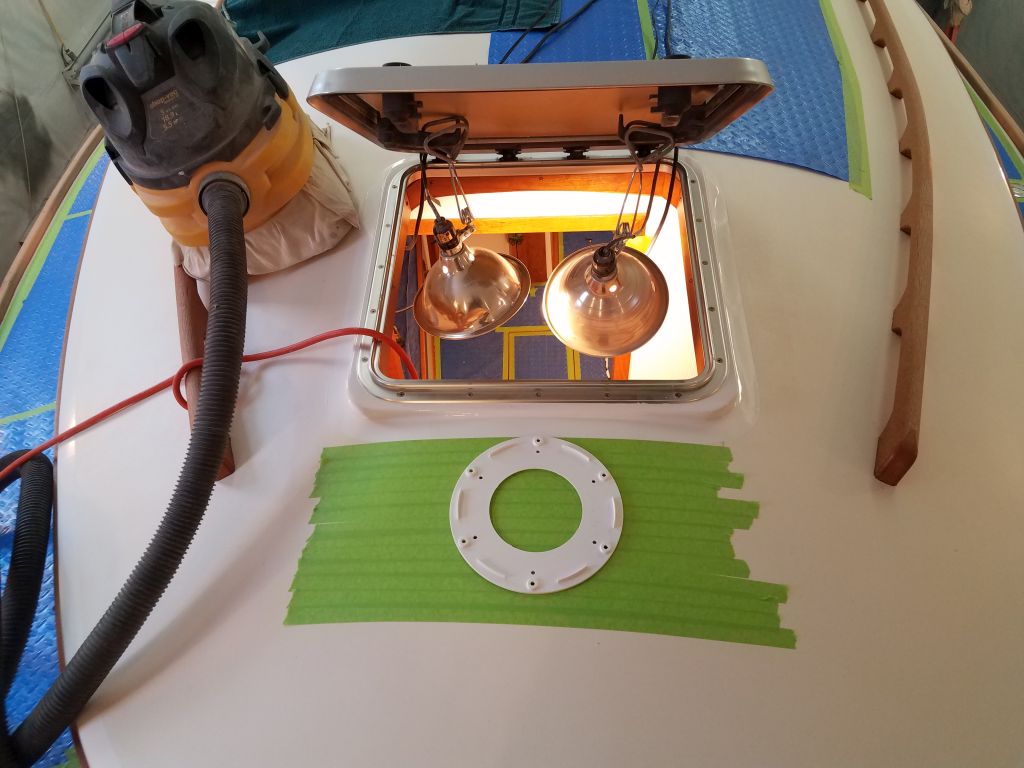
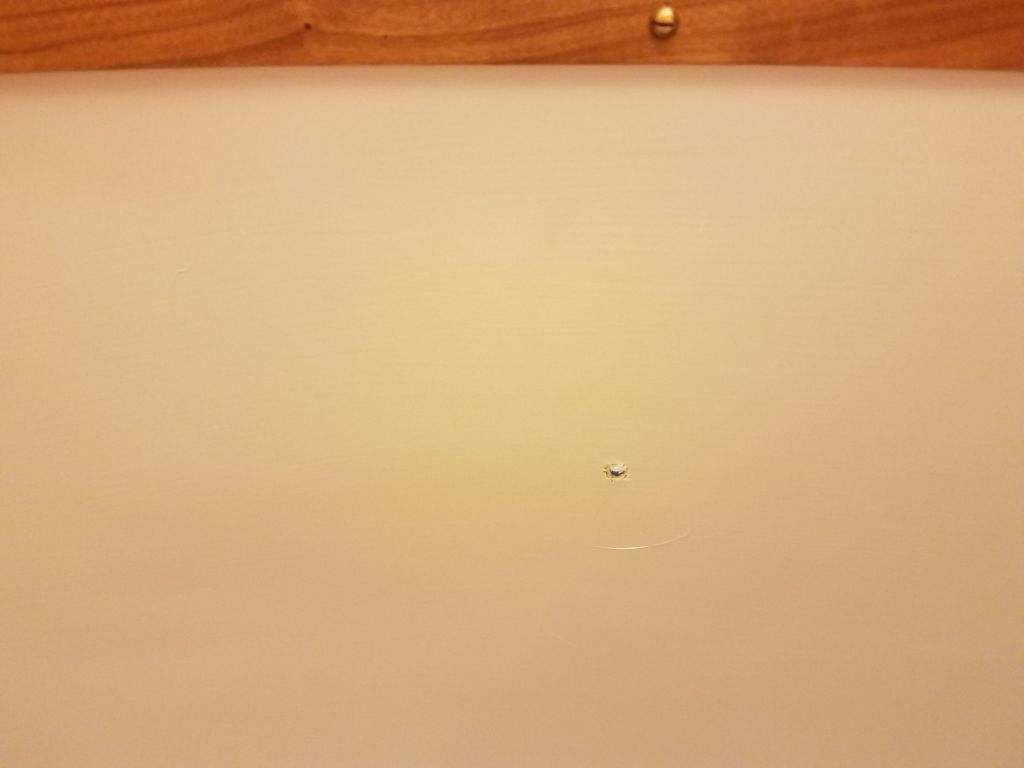
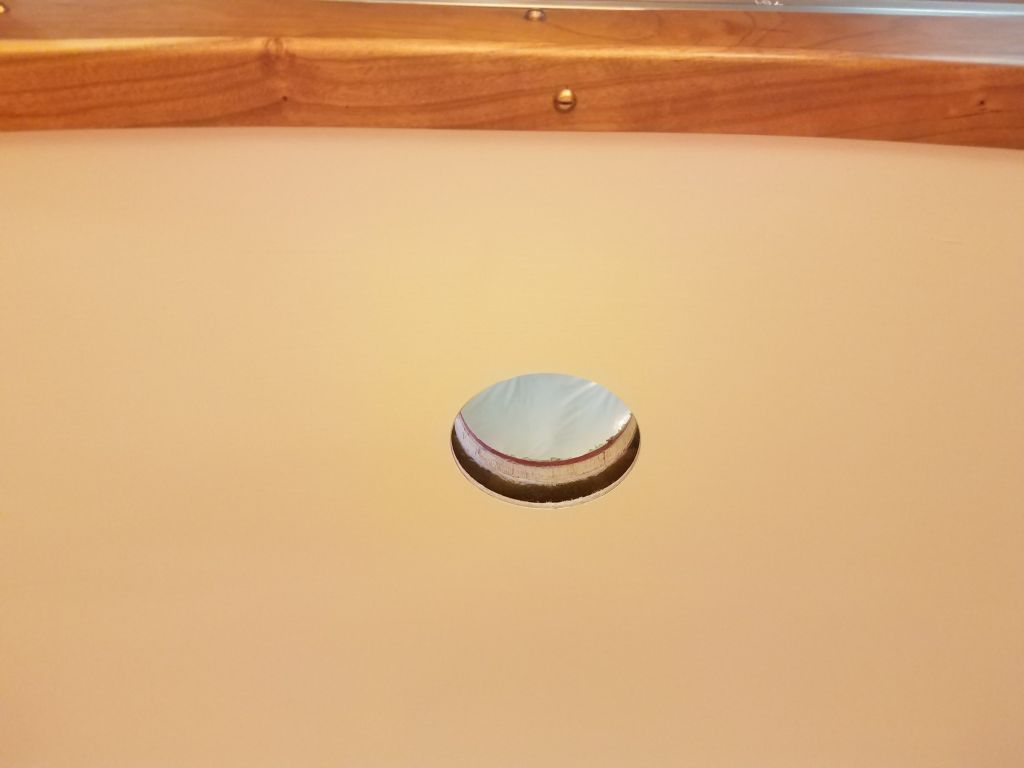
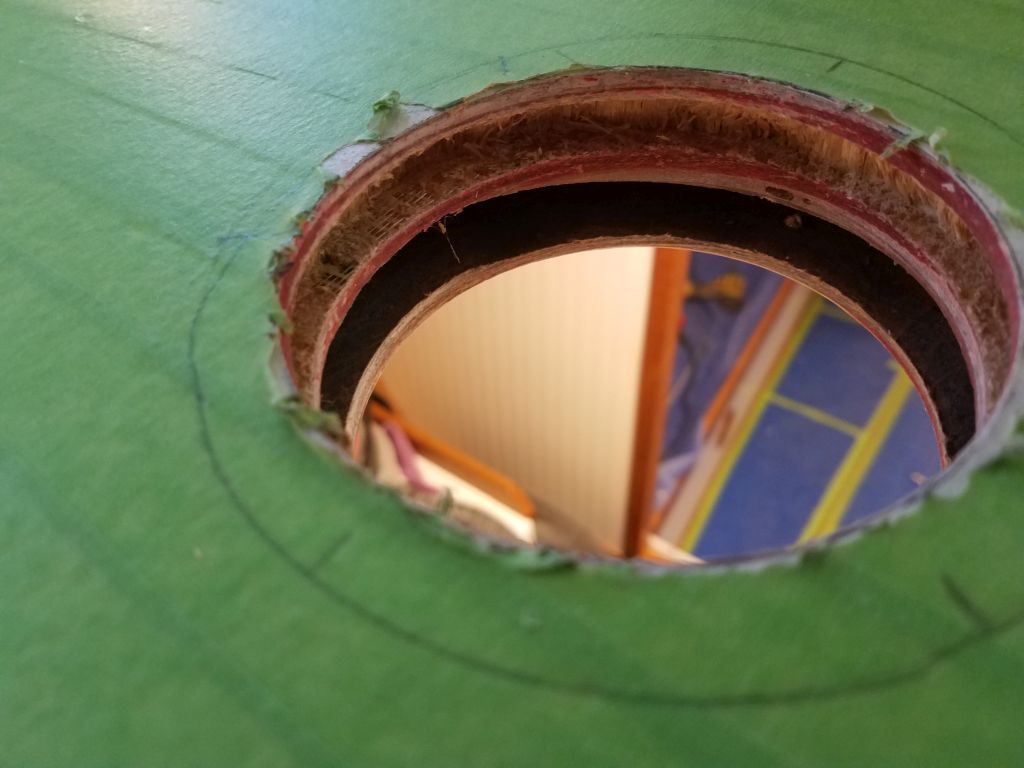
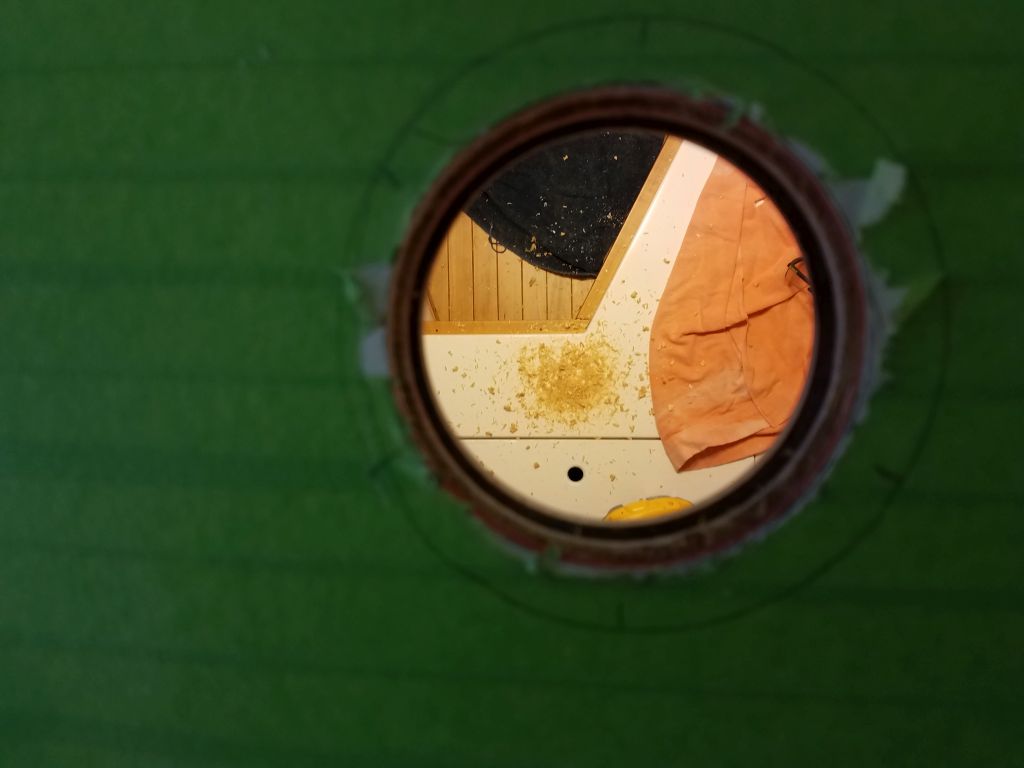
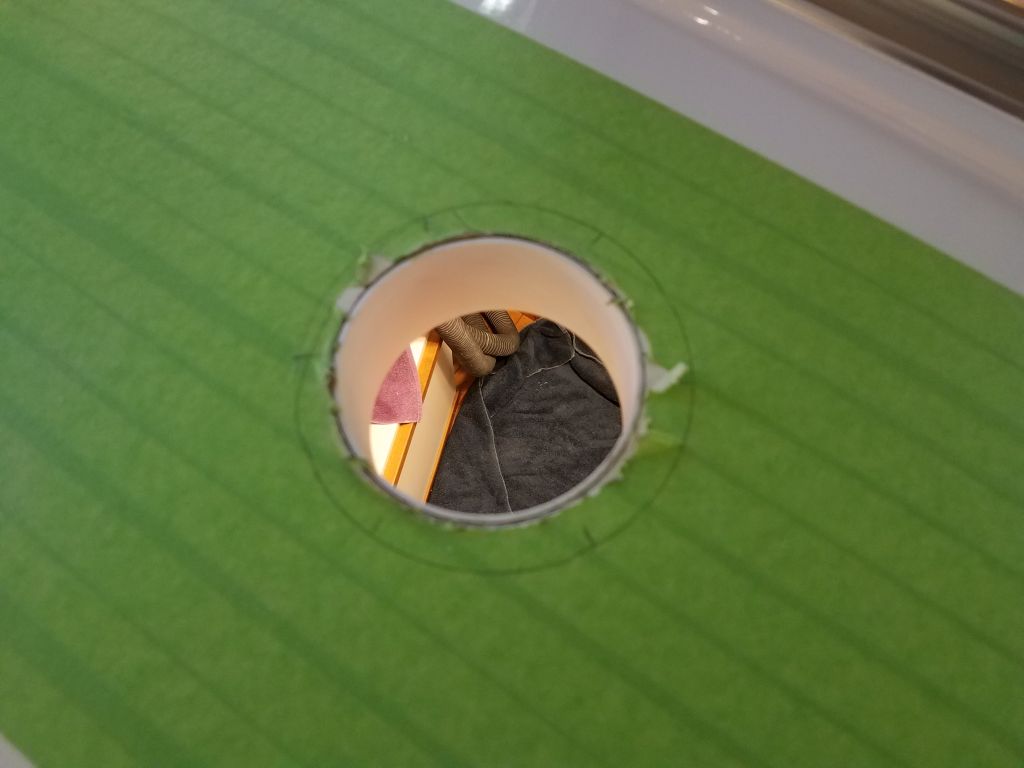
With just a little time left before I had to leave for the day, I decided to give the solar vent in the companionway another try.  I’d returned the original one I’d purchased, which turned out to be much too large and deep for this application, and exchanged it for a smaller, more logically-scaled version that would work in the under 1″ thickness of the companionway hatch.  I taped over the center of the hatch and made a center mark, then drilled the 3-3/4″ hole required for the fitting, starting from the top and finishing from the bottom for a clean cut.

A test fit showed that no portion of the vent–neither the trim ring nor the vent housing itself–protruded below, or in fact even very near, the underside of the hatch, which is what this application required since the hatch had virtually no clearance above its coamings when installed, so I proceeded with final installation steps and coated the inside of the new hole with epoxy to protect the raw plywood within.  Once that cured overnight, I could easily finish up the vent installation and then permanently reinstall the sliding hatch.

Total time billed on this job today:  5.5 hours

0600 Weather Observation:  32°, cloudy. Forecast for the day:  Cloudy, then gradual clearing, 28°

Older posts Newer posts