
(page 56 of 165)

Skeedeen Phase 7-4

Monday

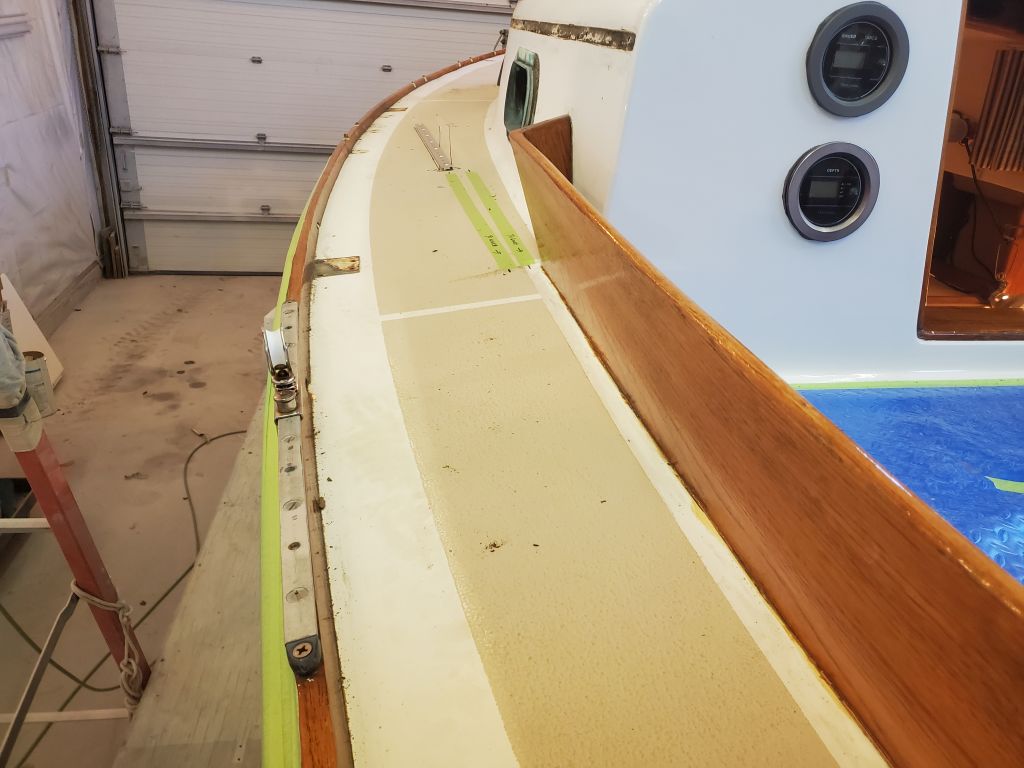
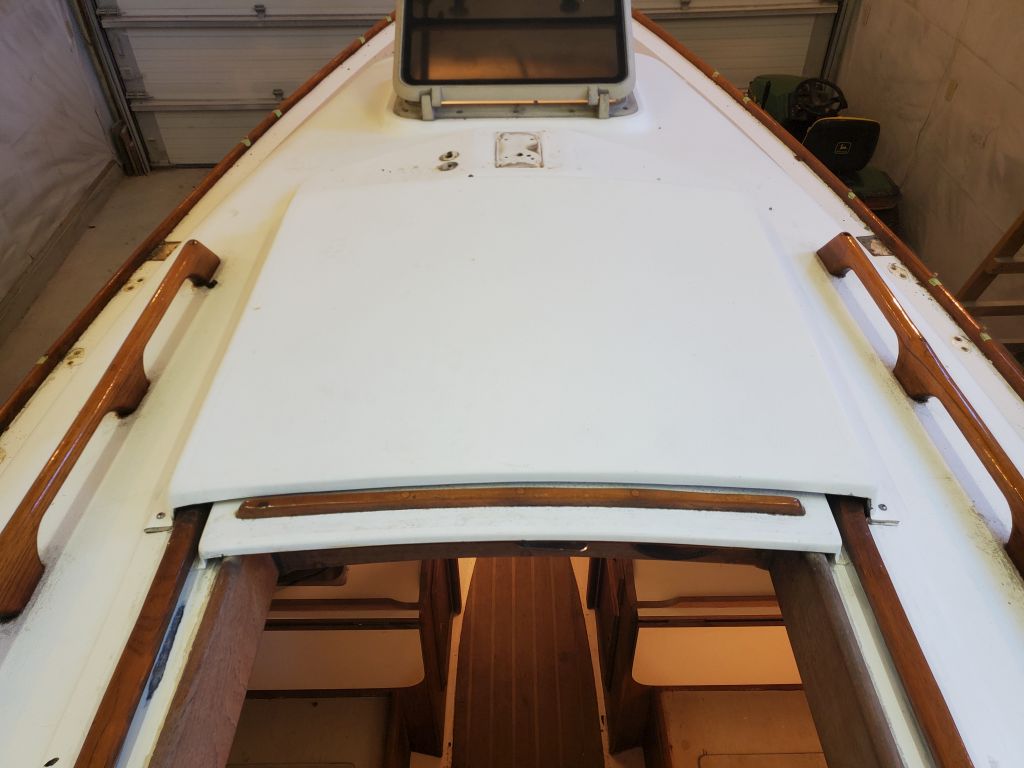
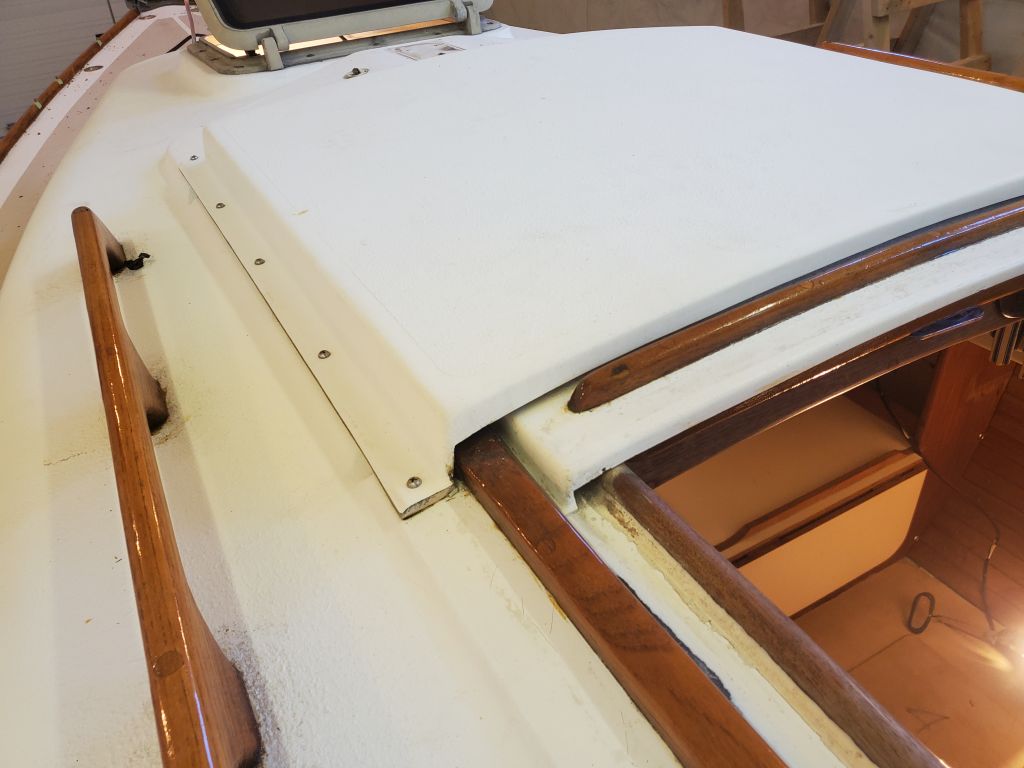
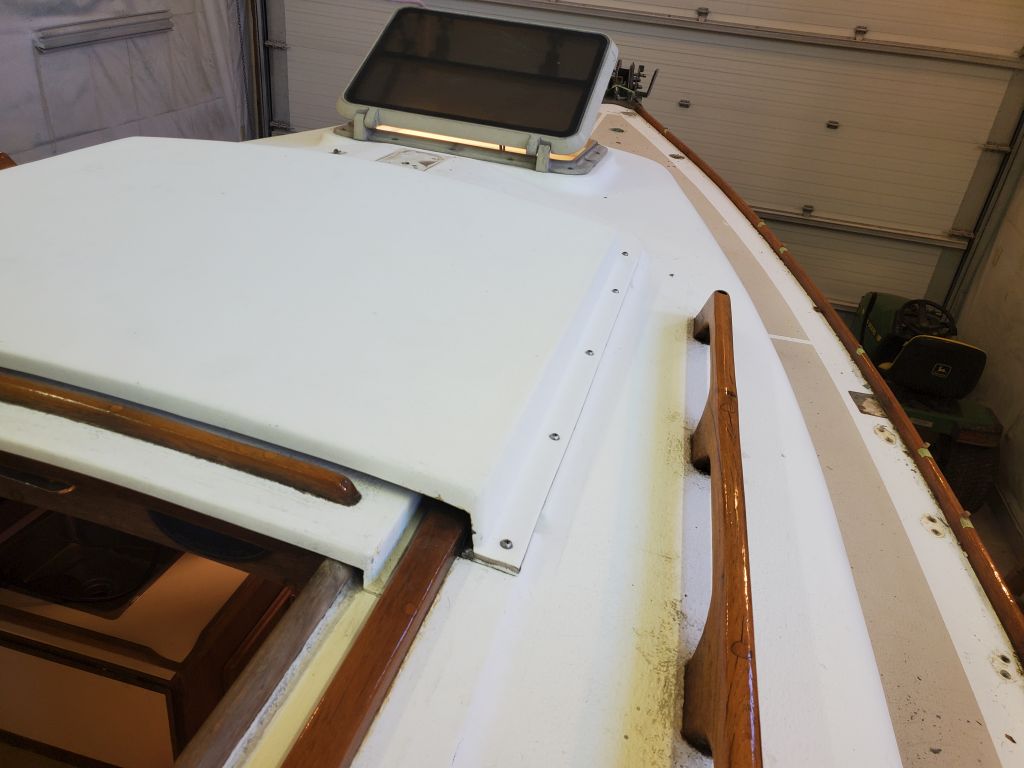
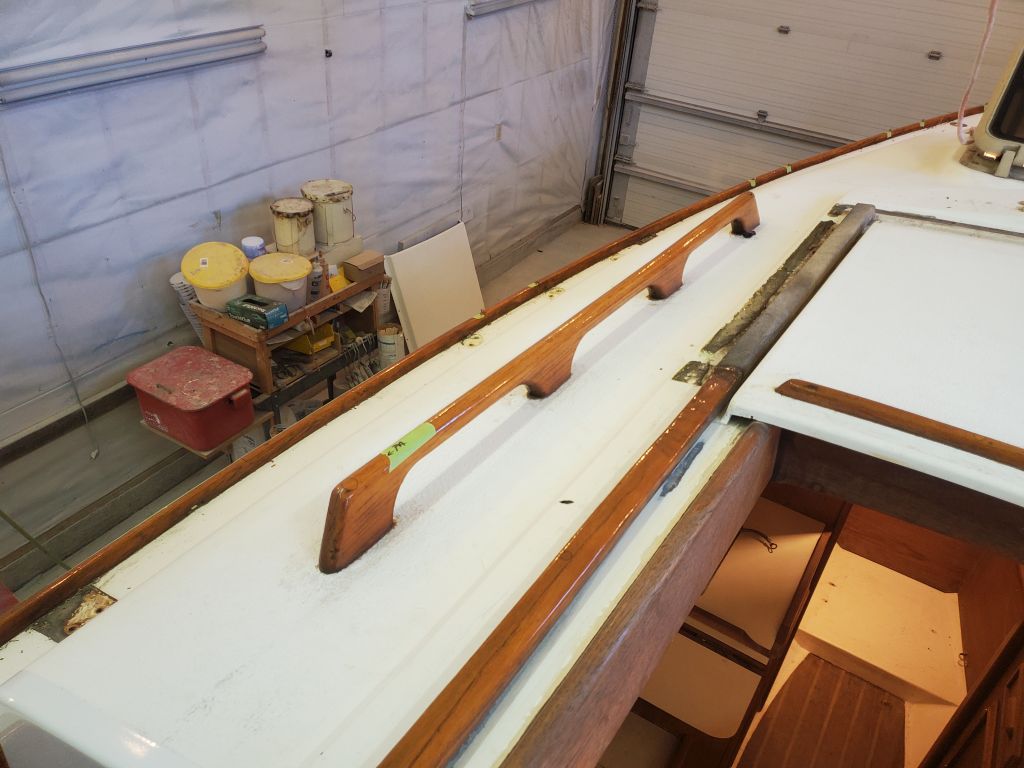
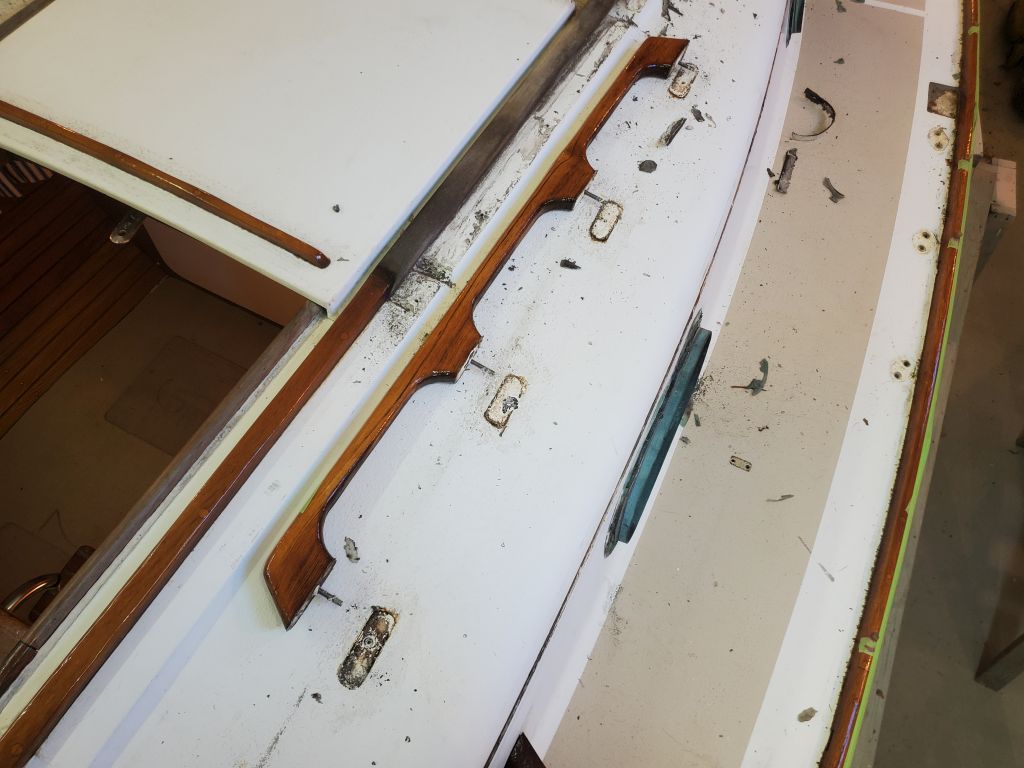
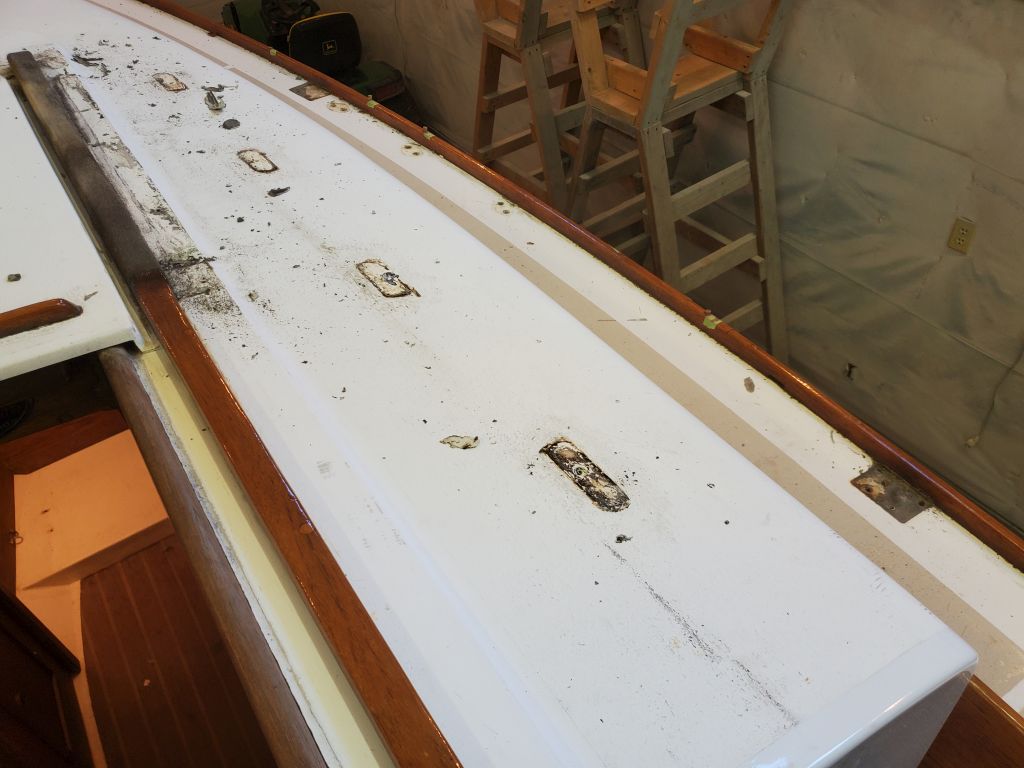
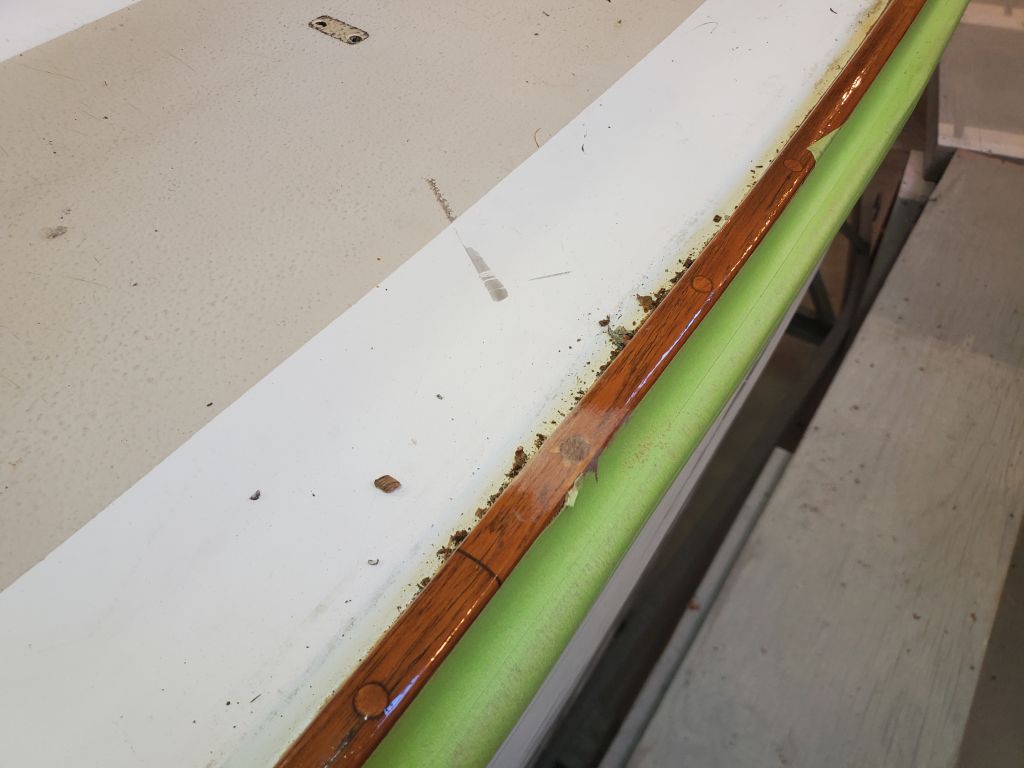
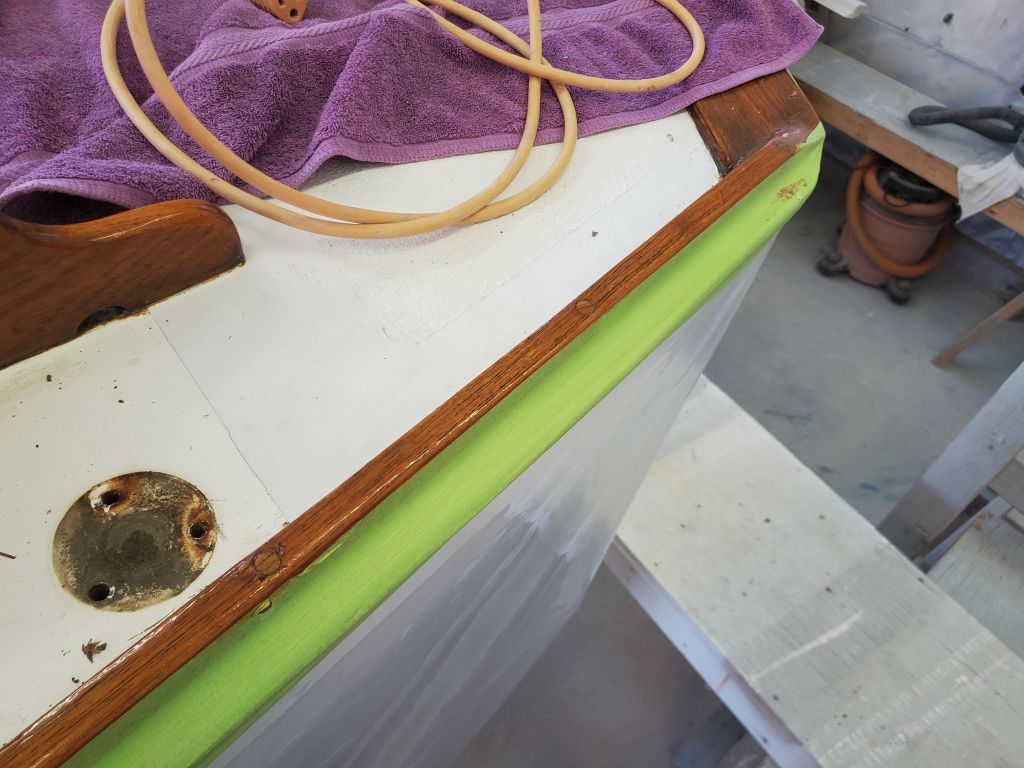
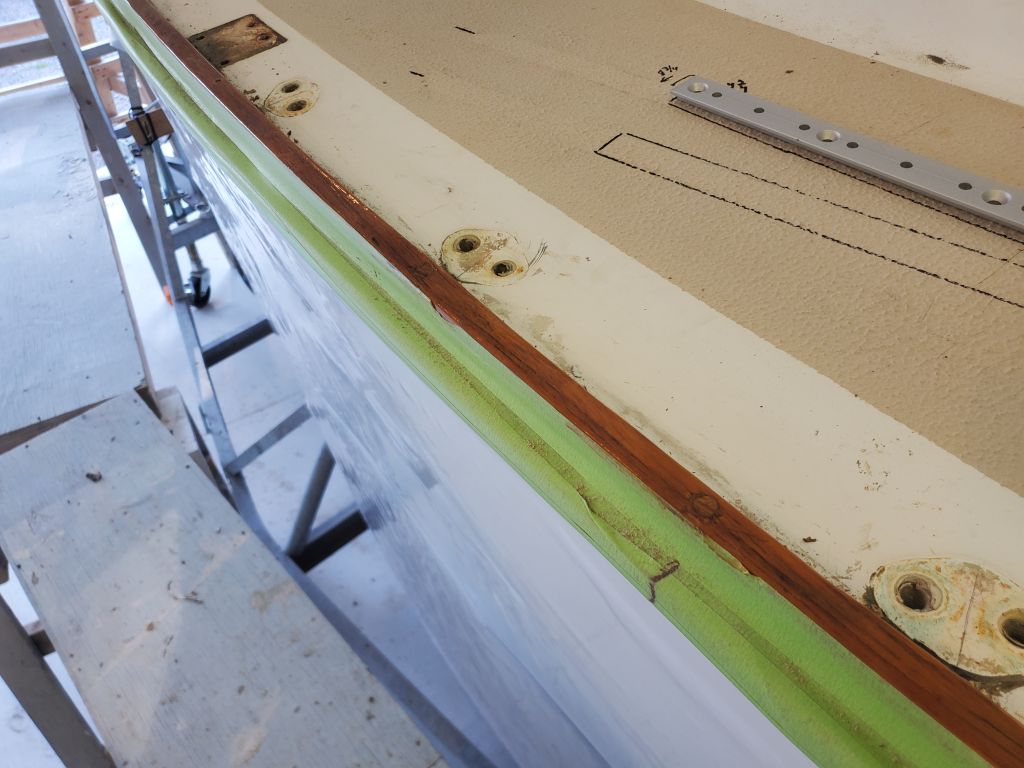
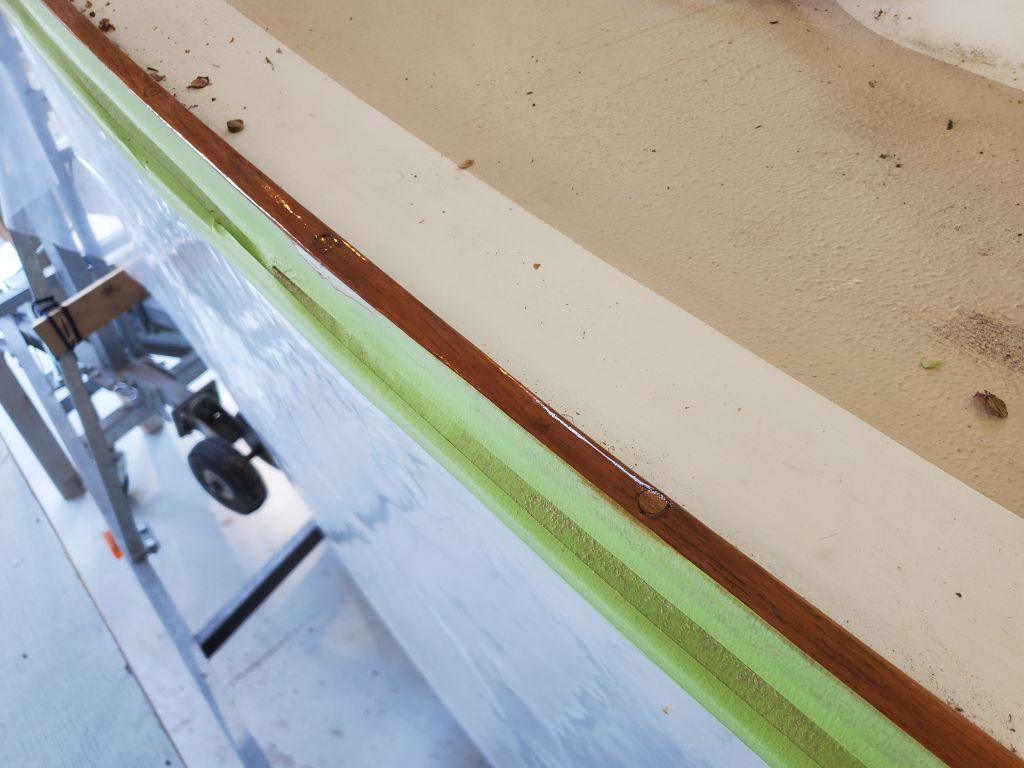
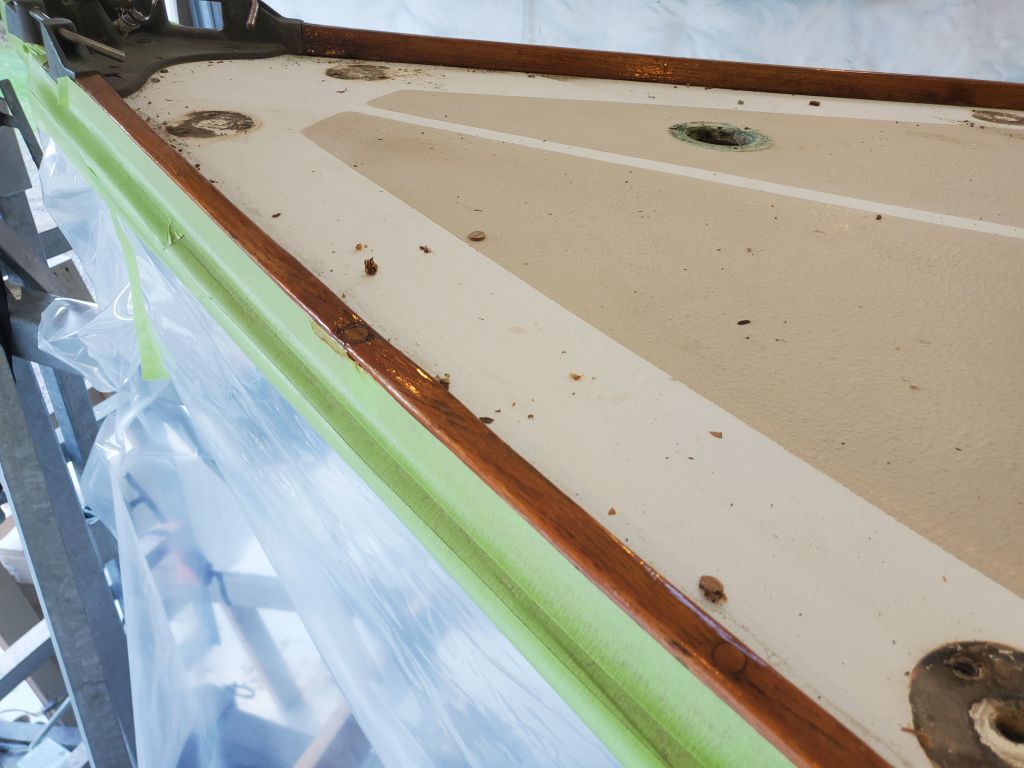
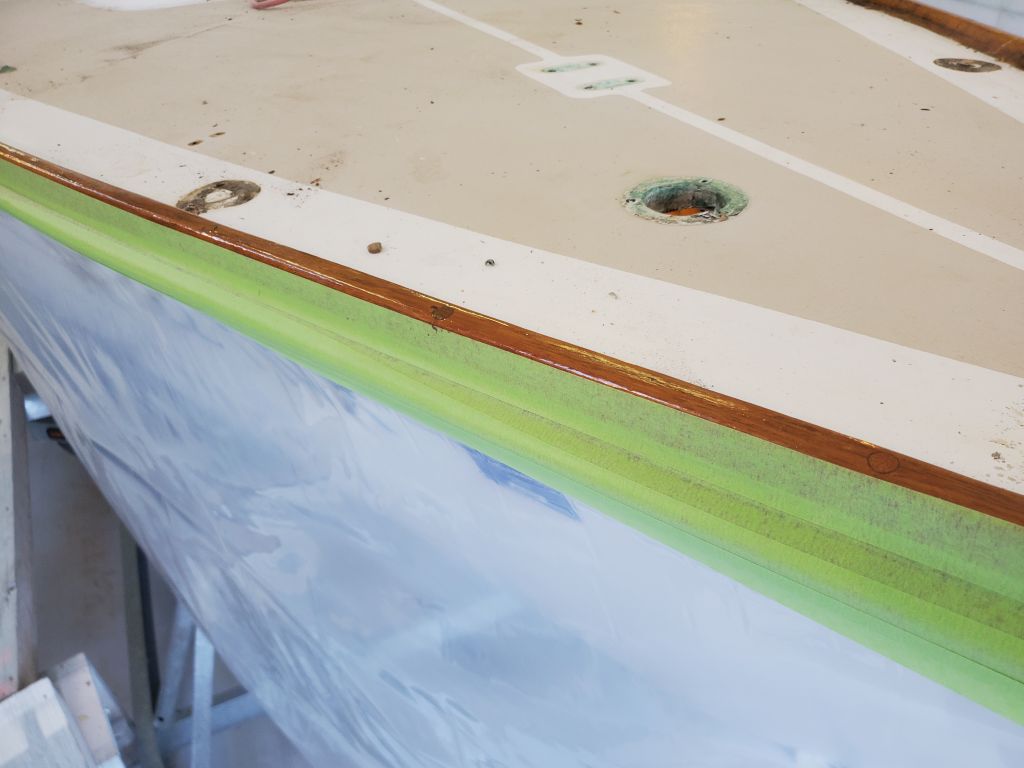
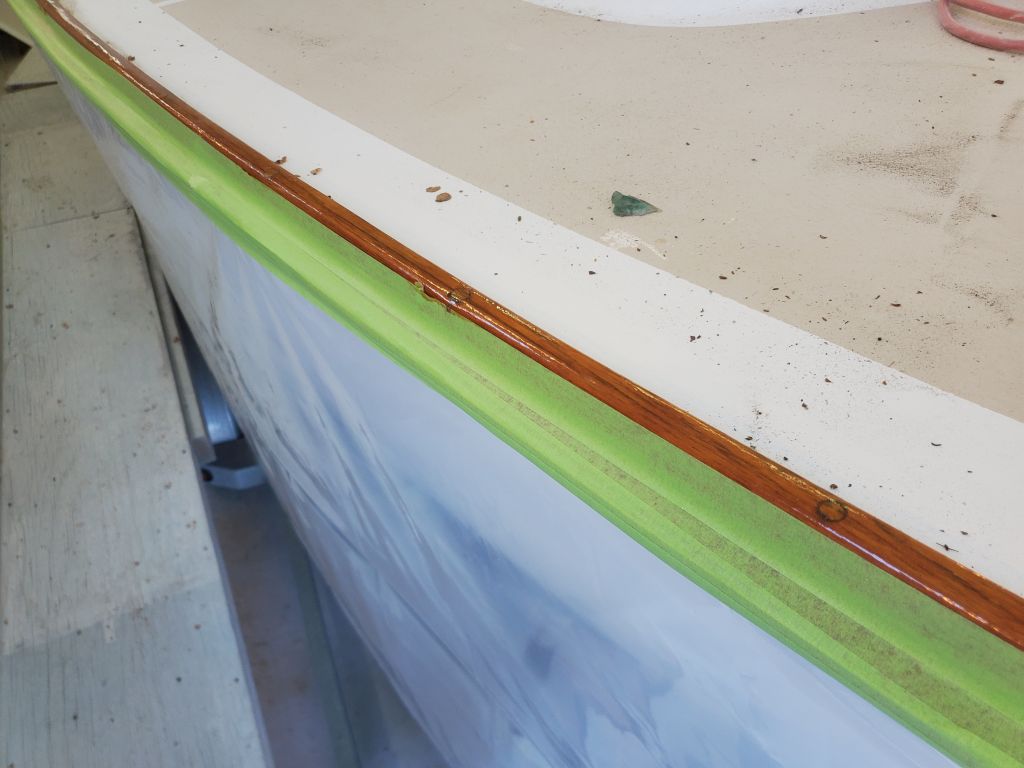
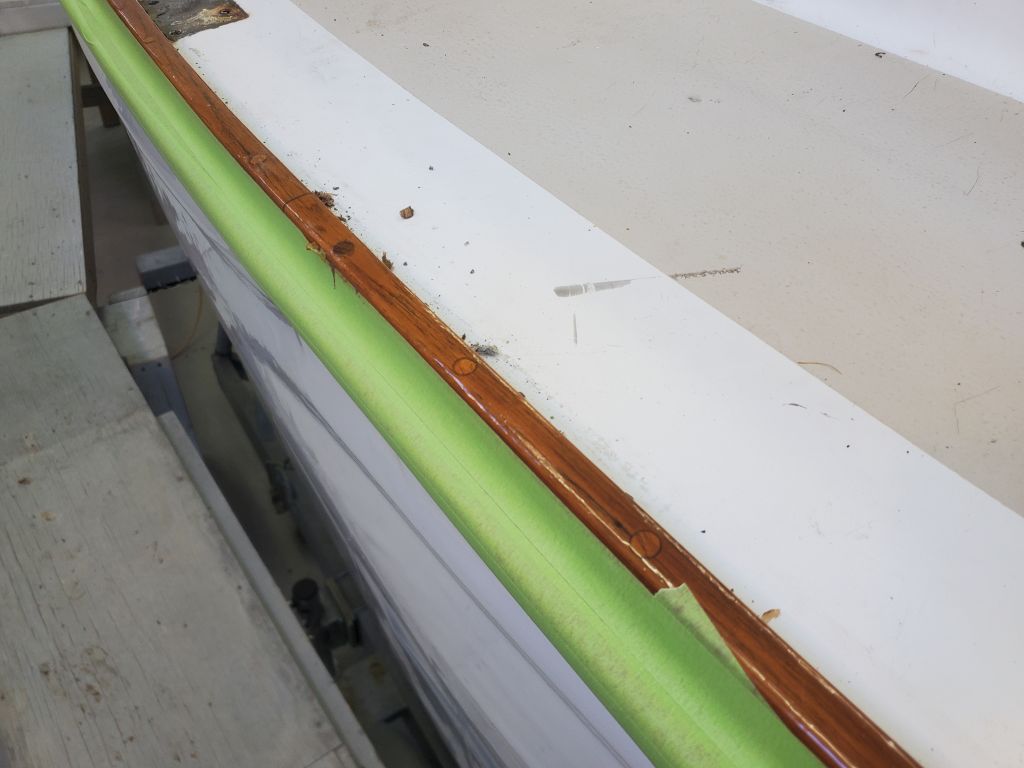
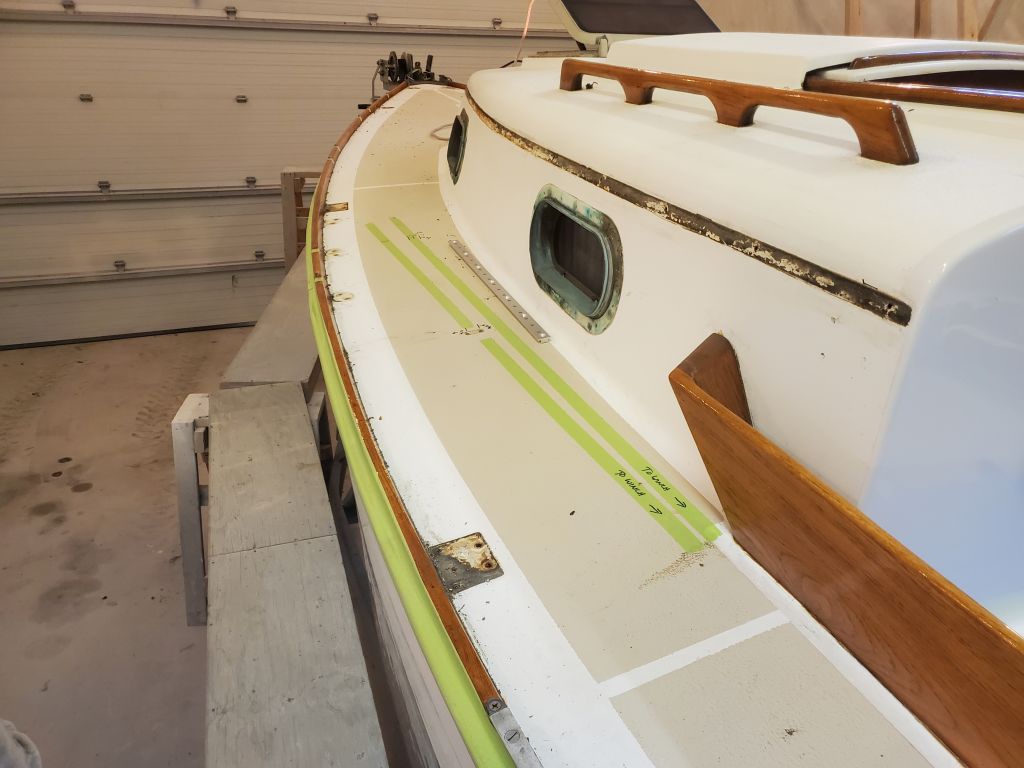
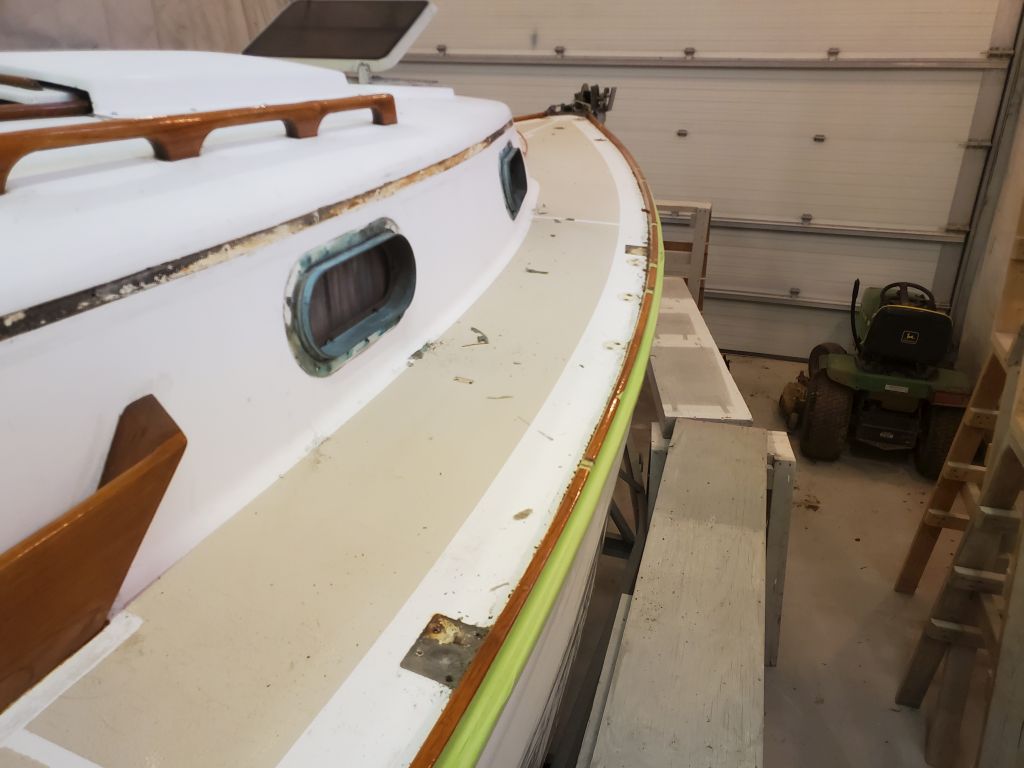
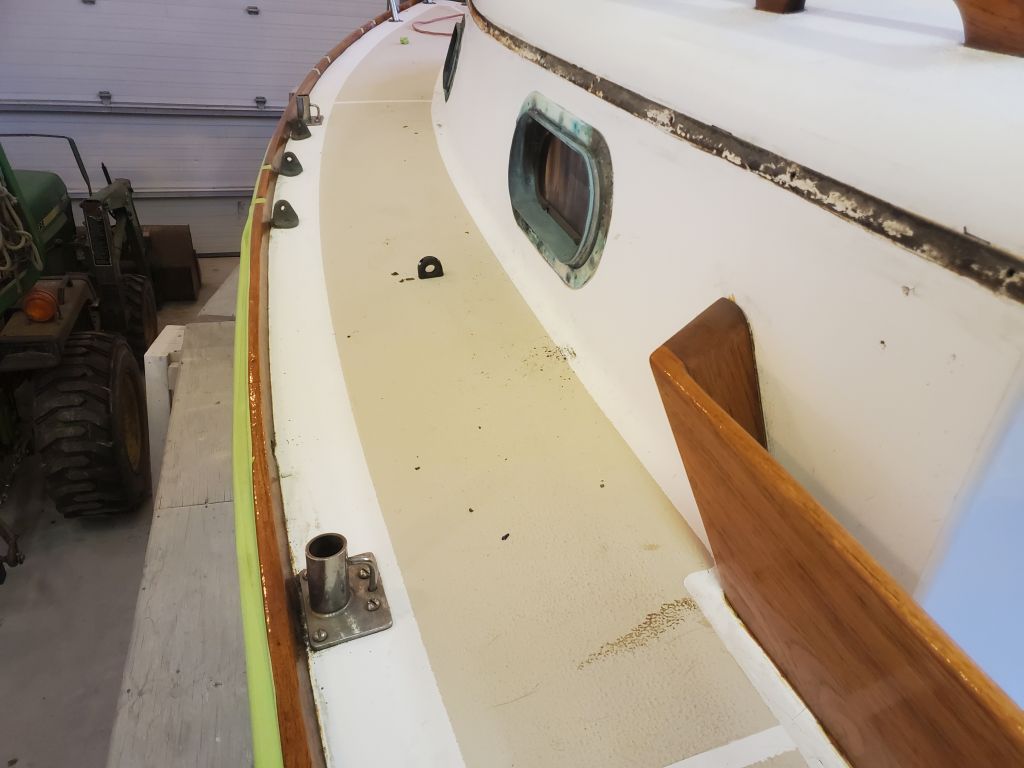
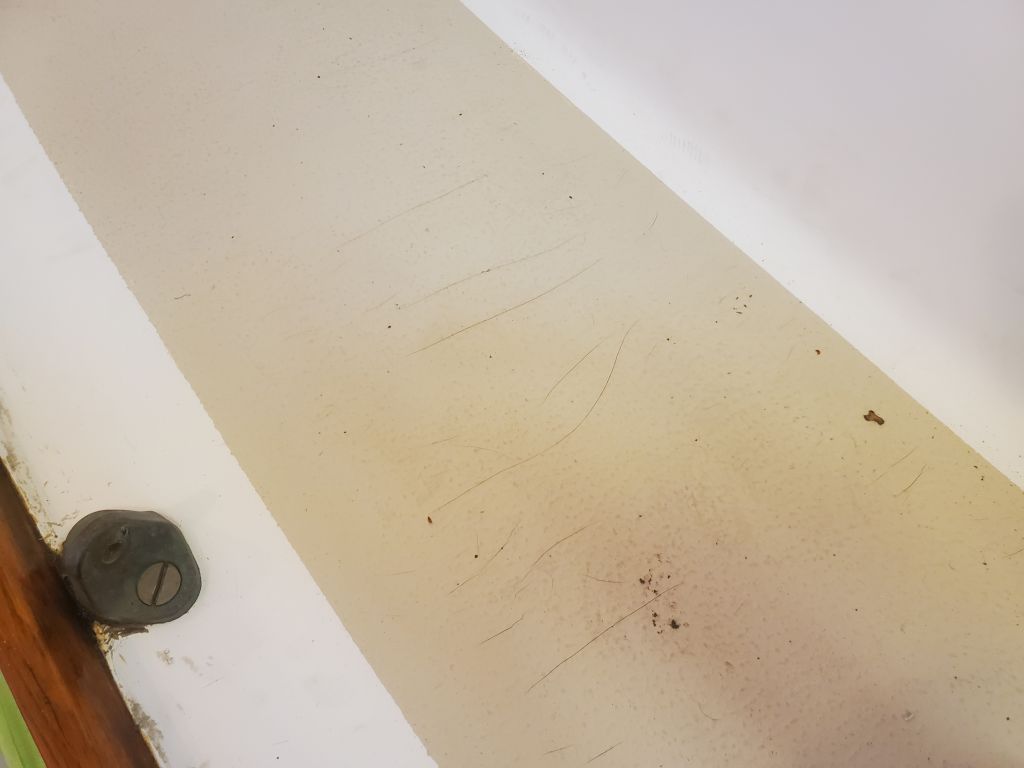
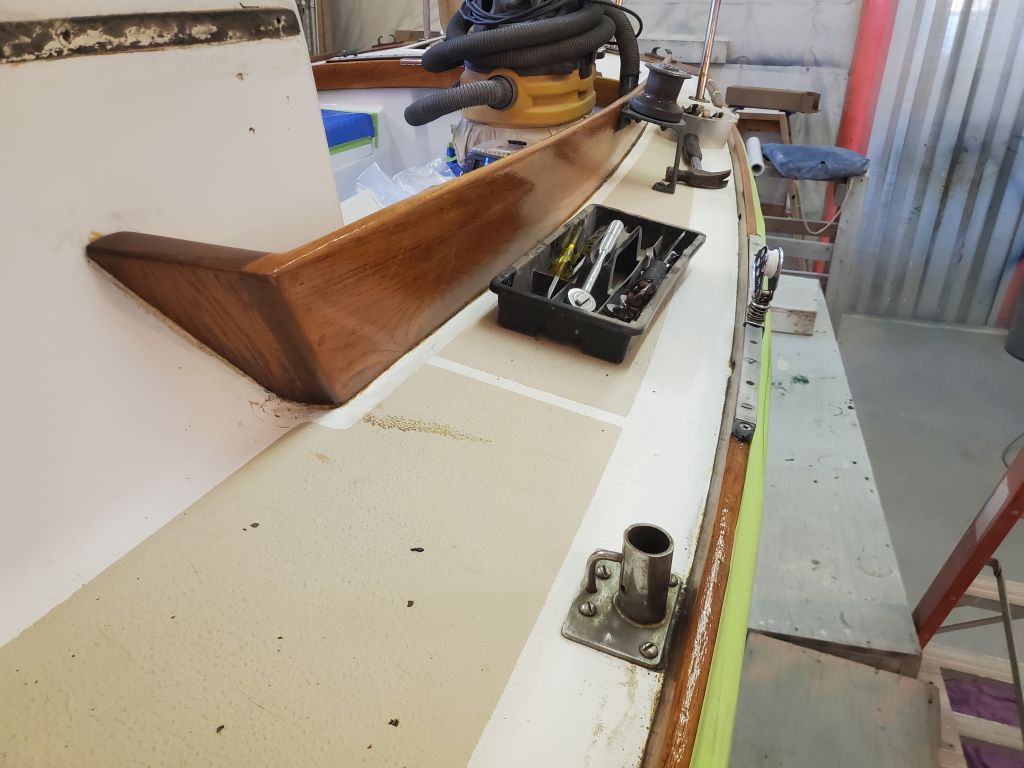
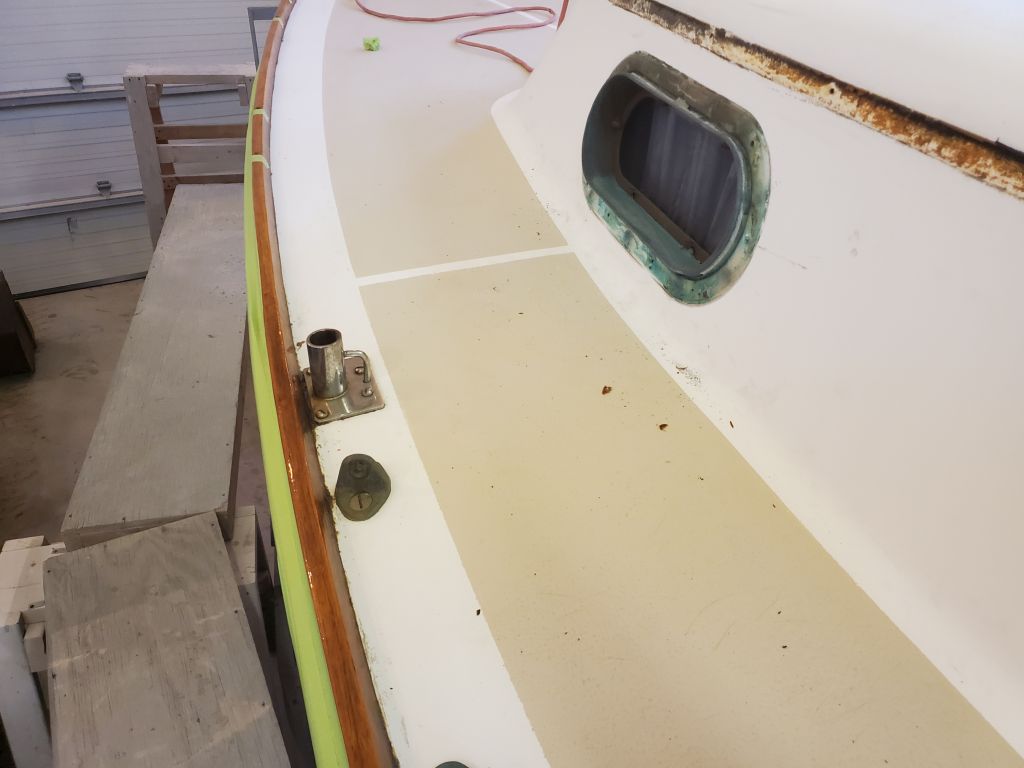
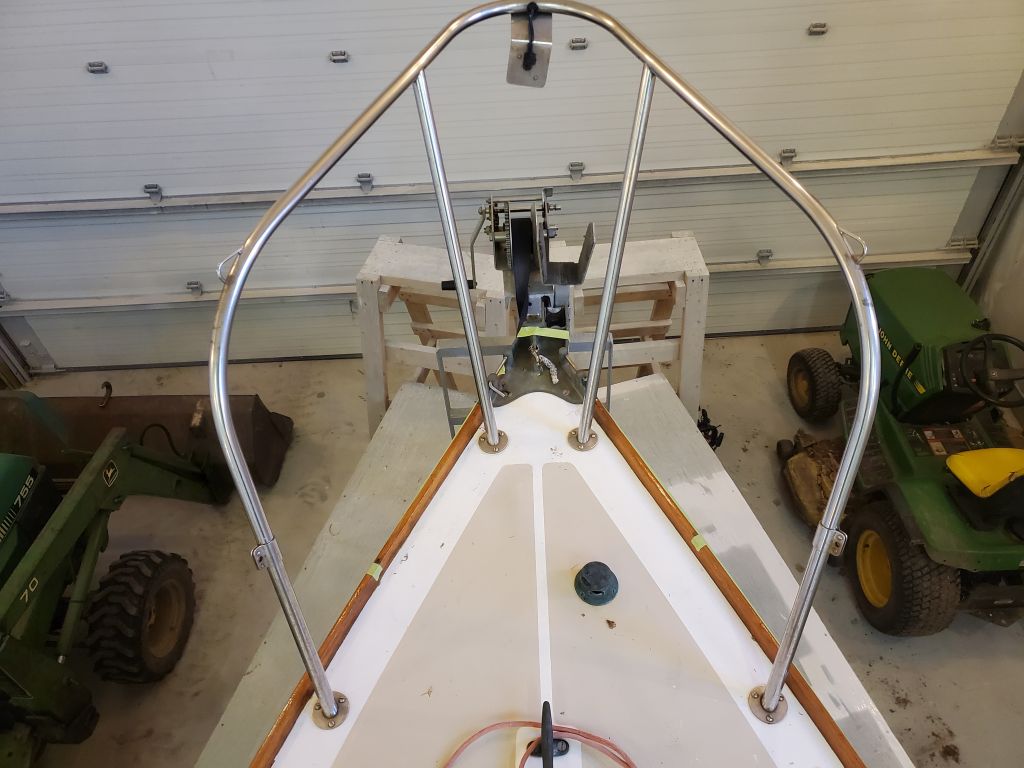
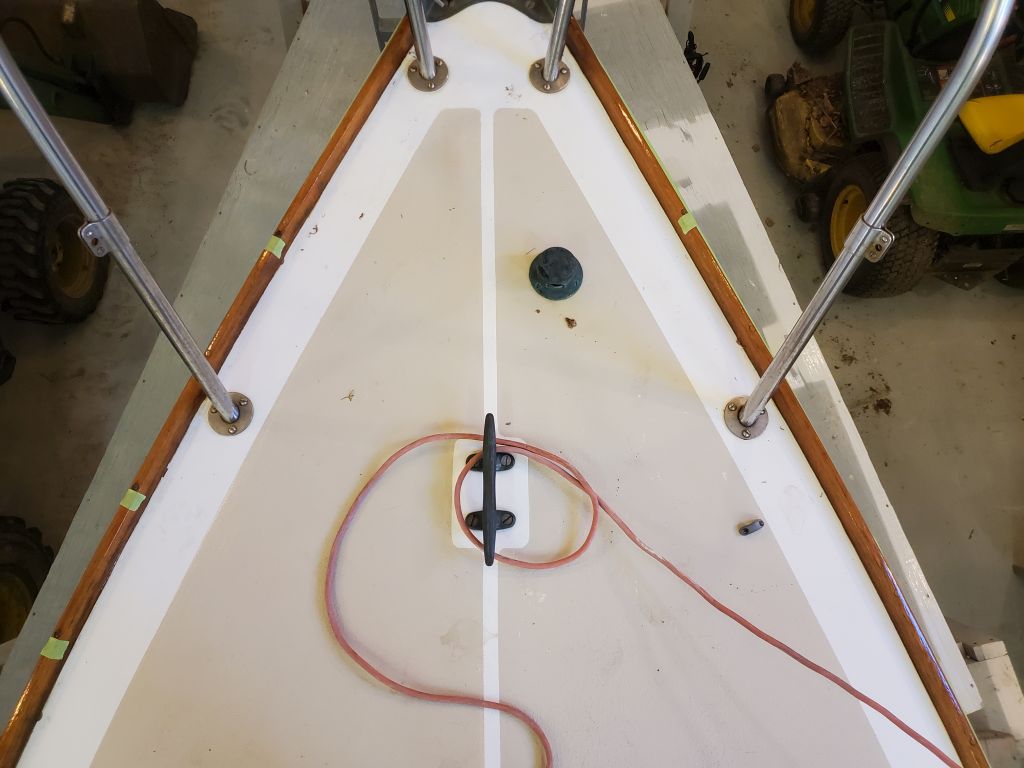
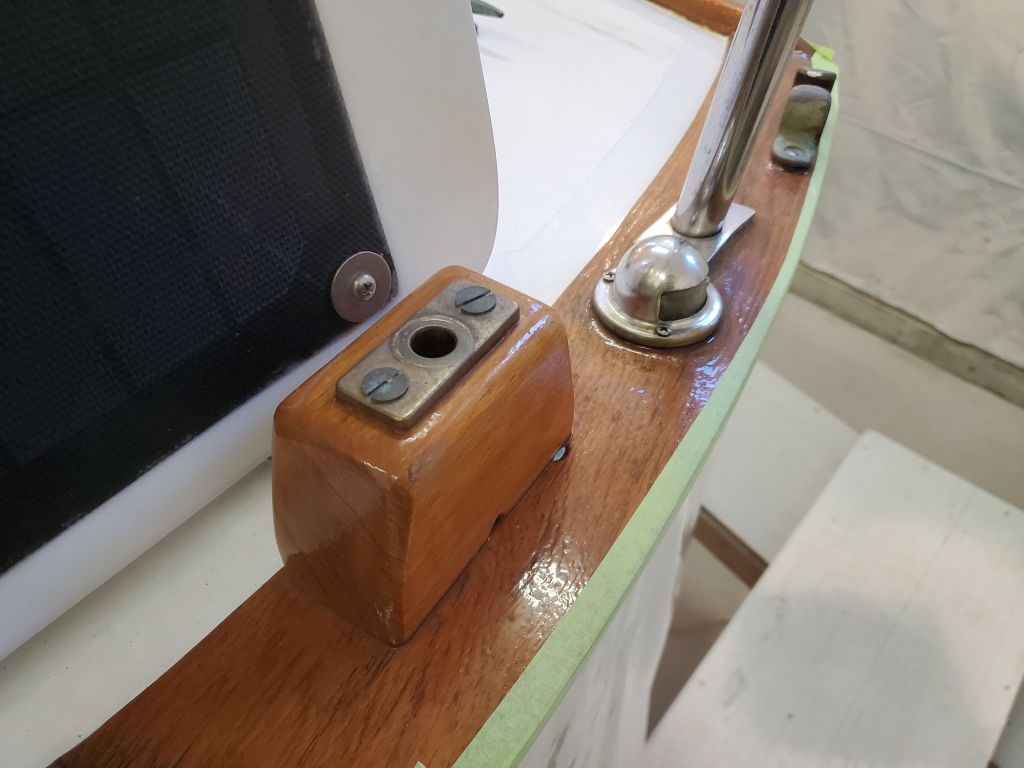
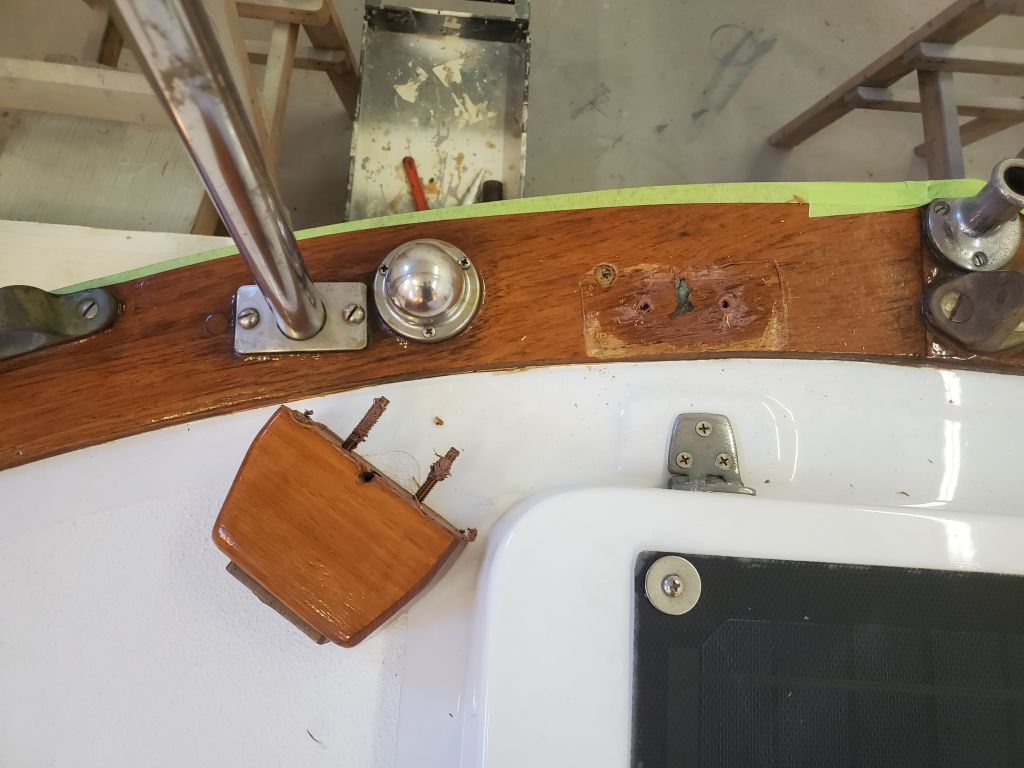
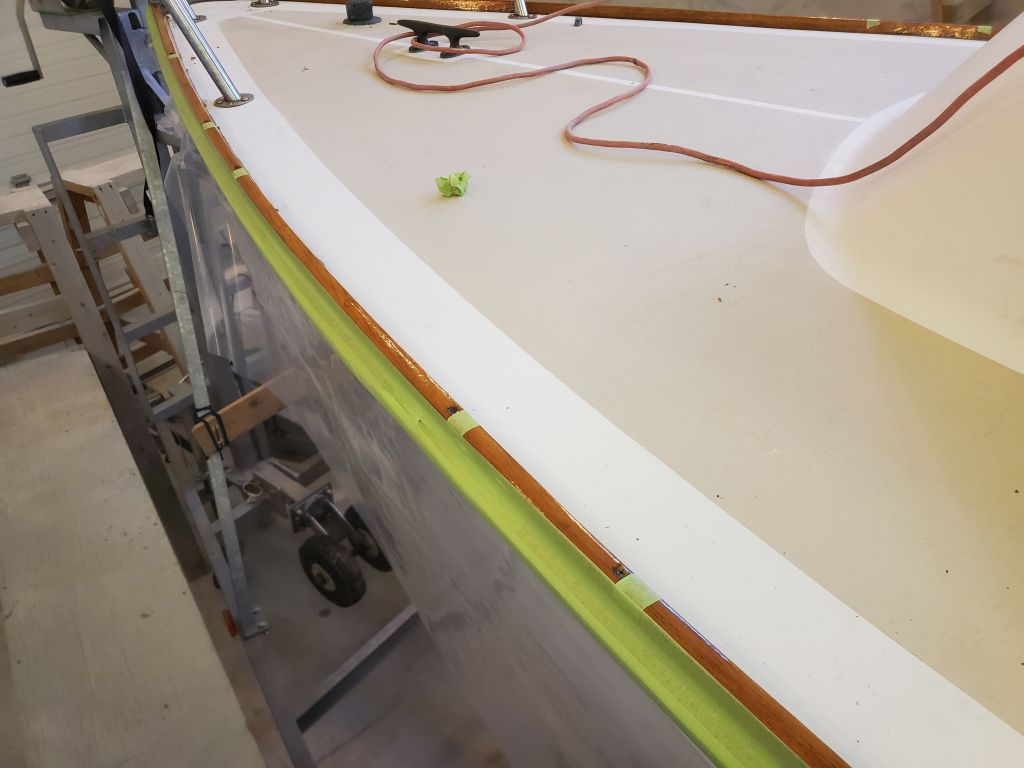
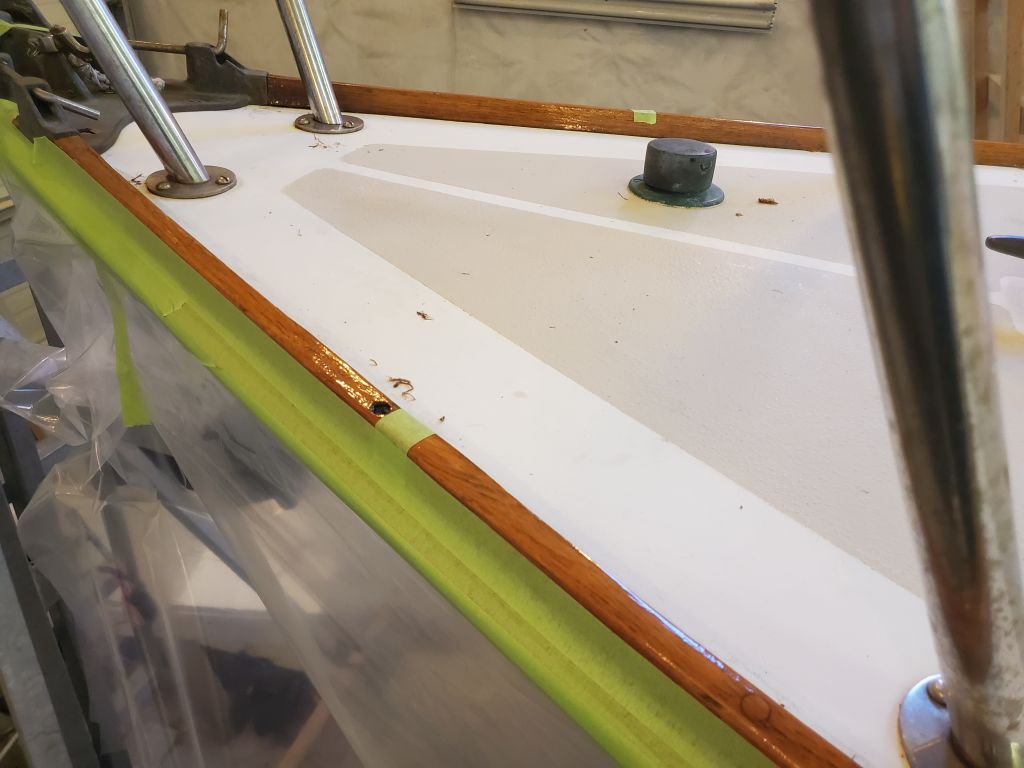
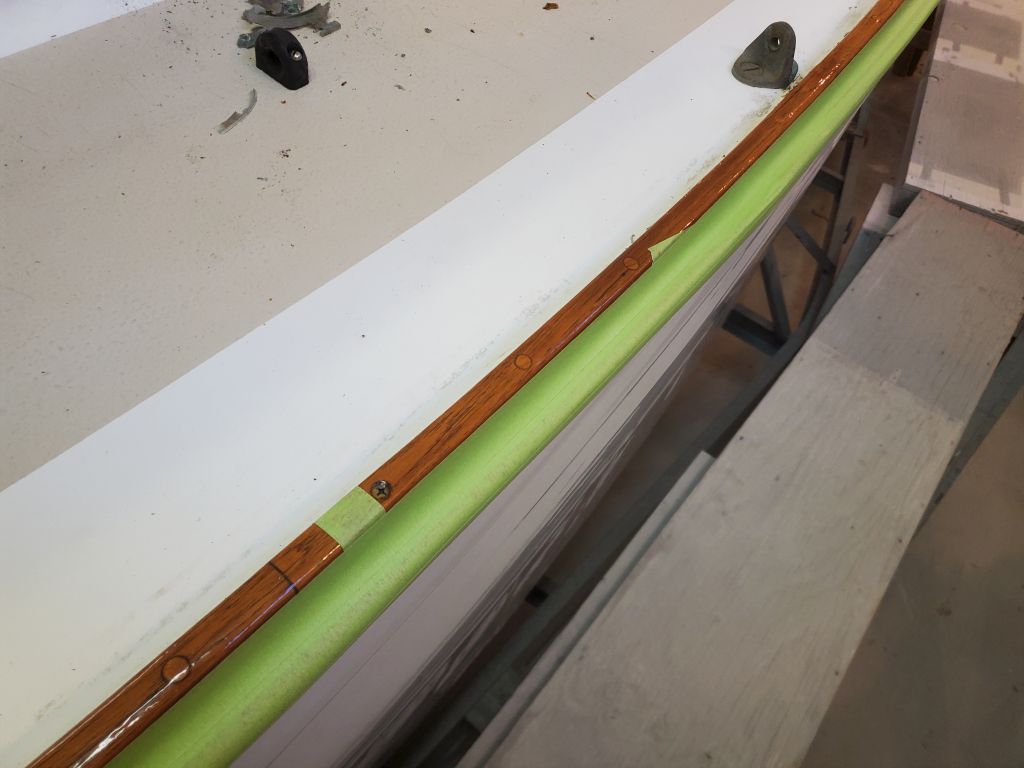
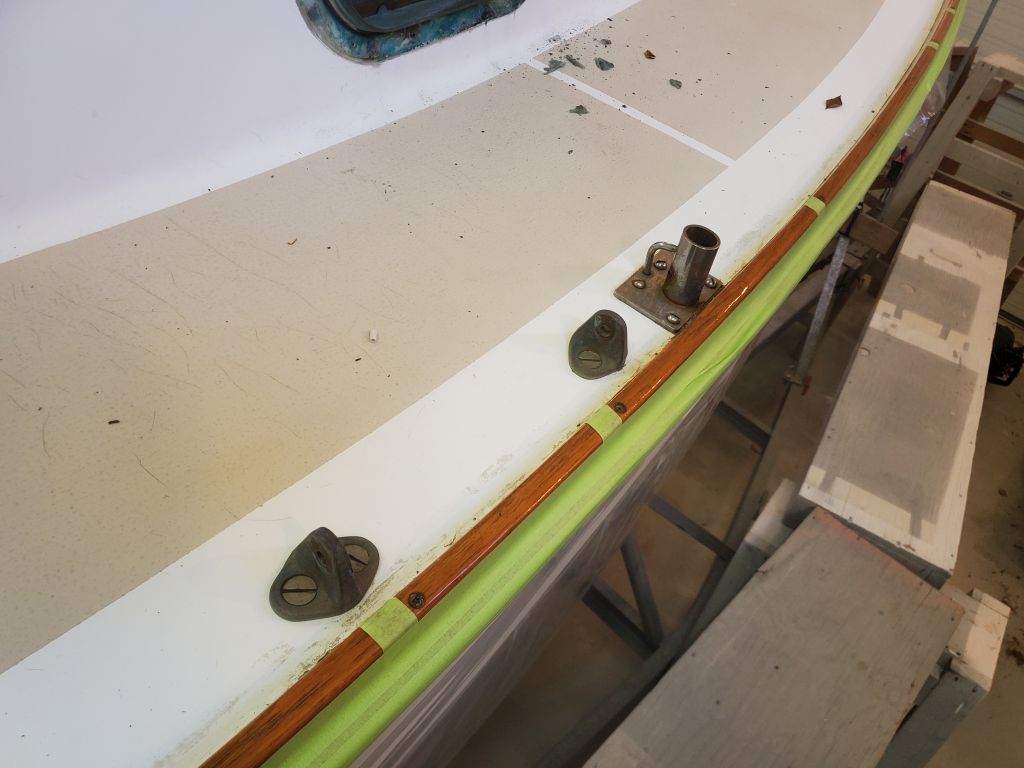
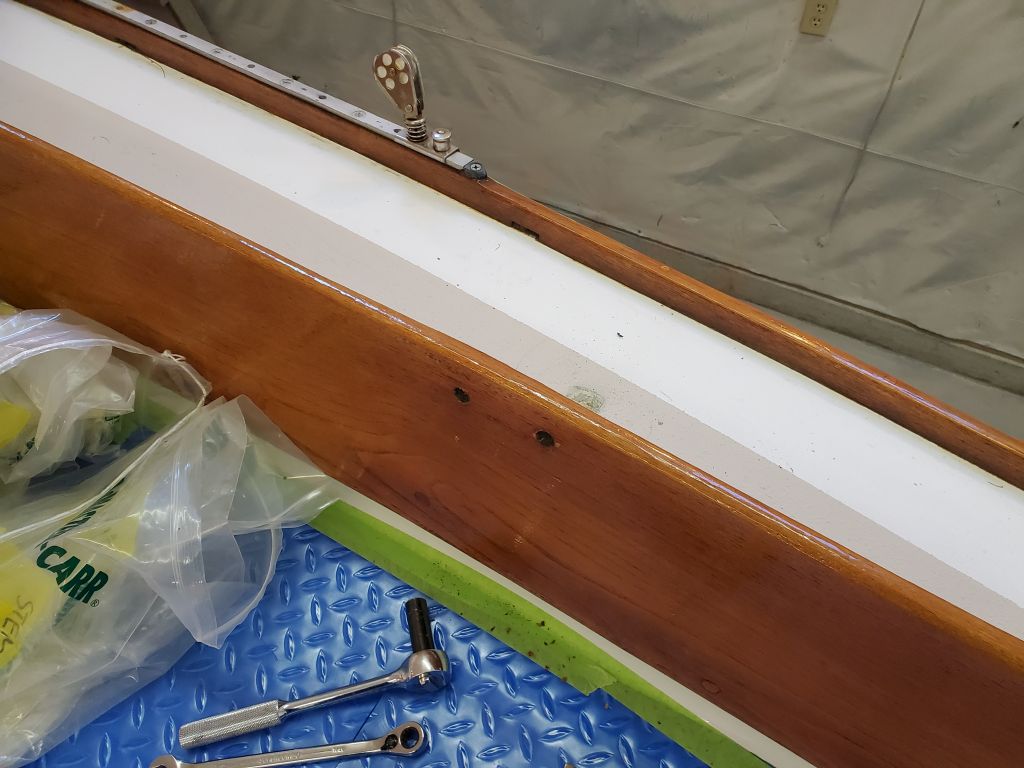
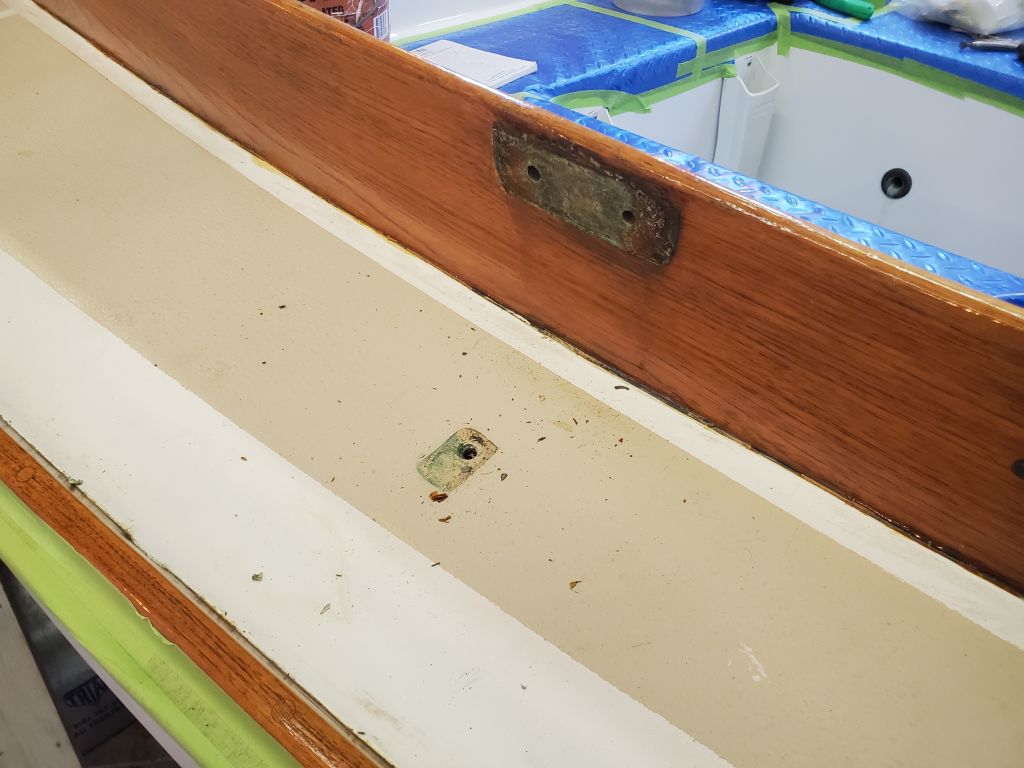
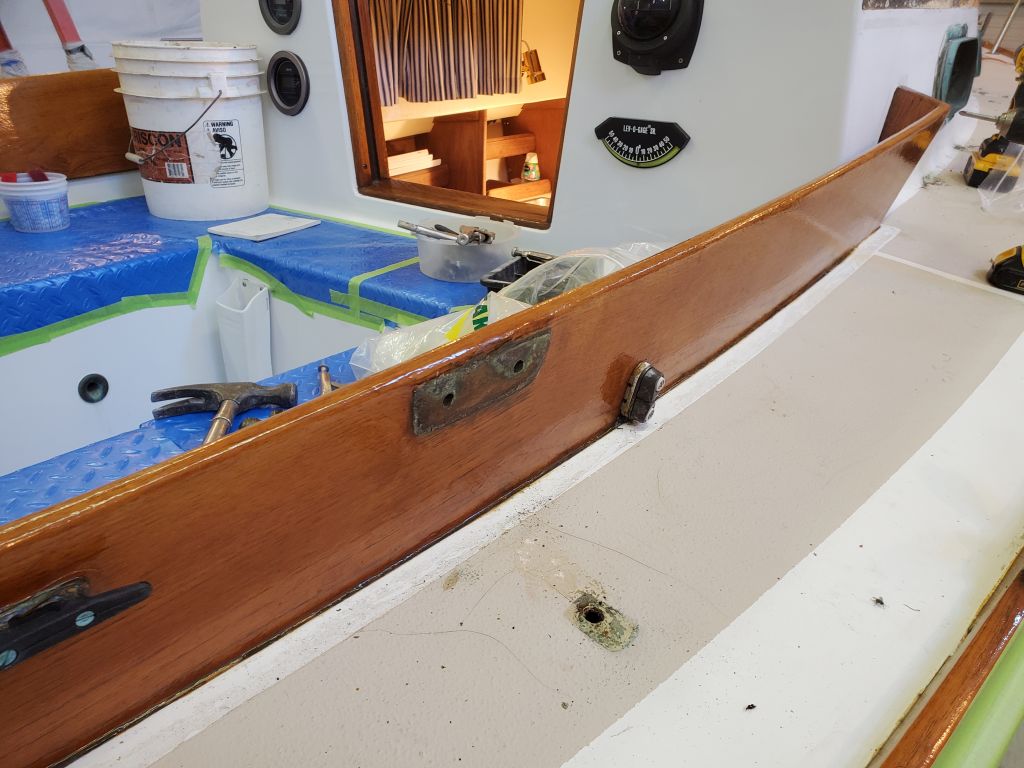
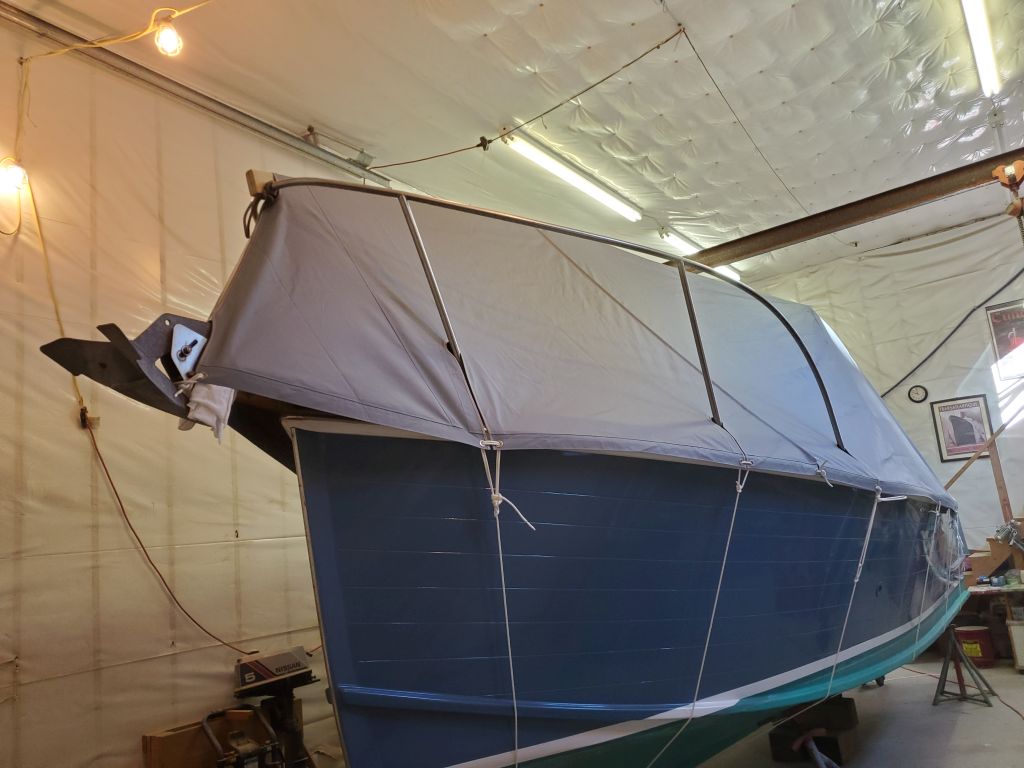
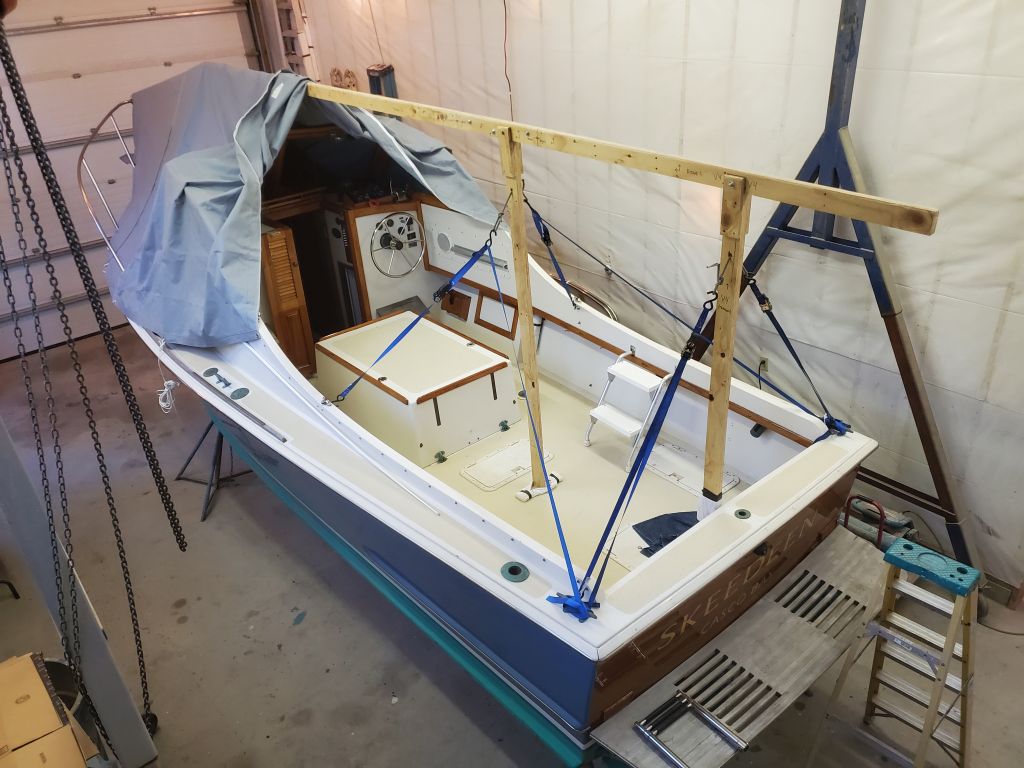
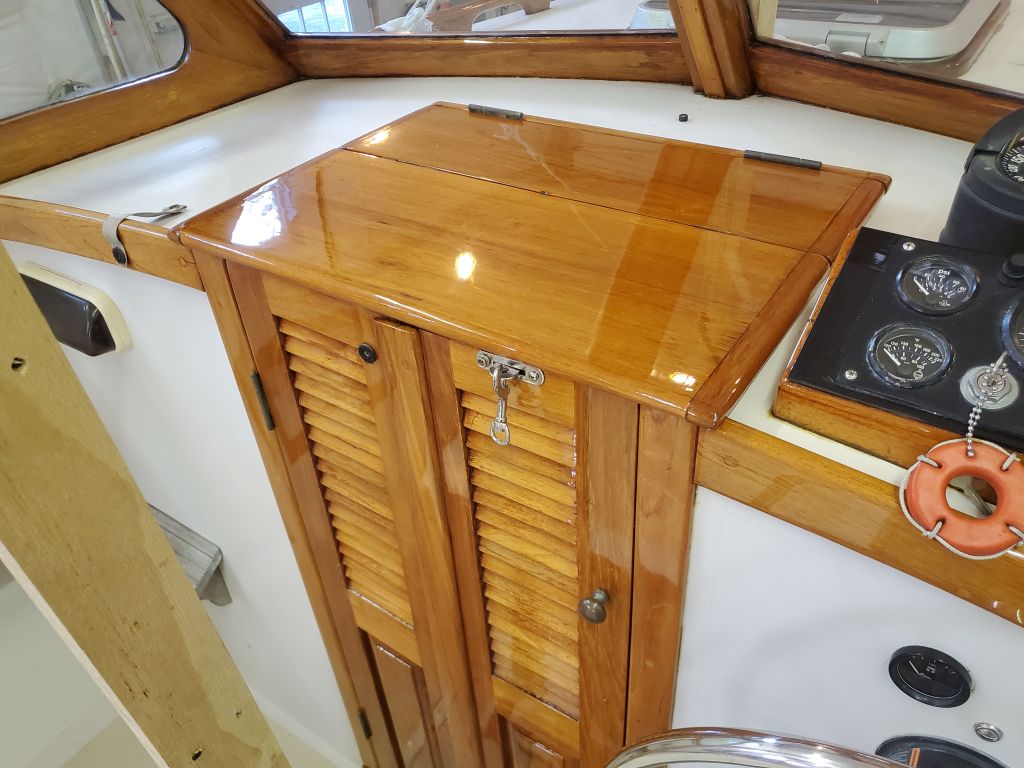
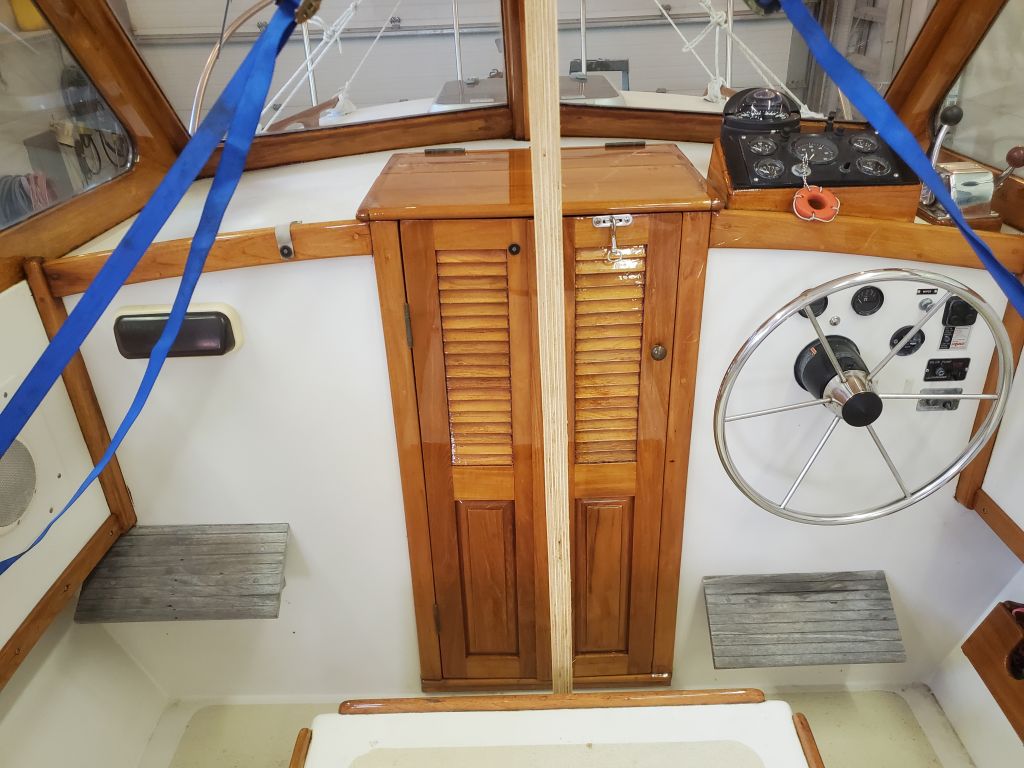
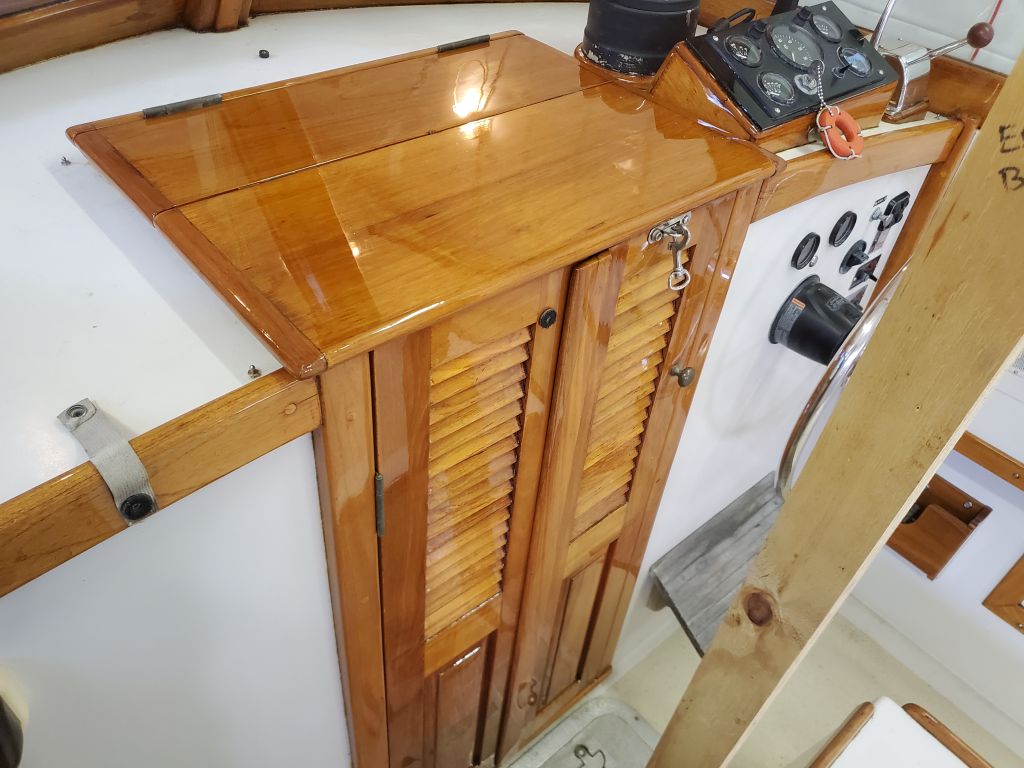
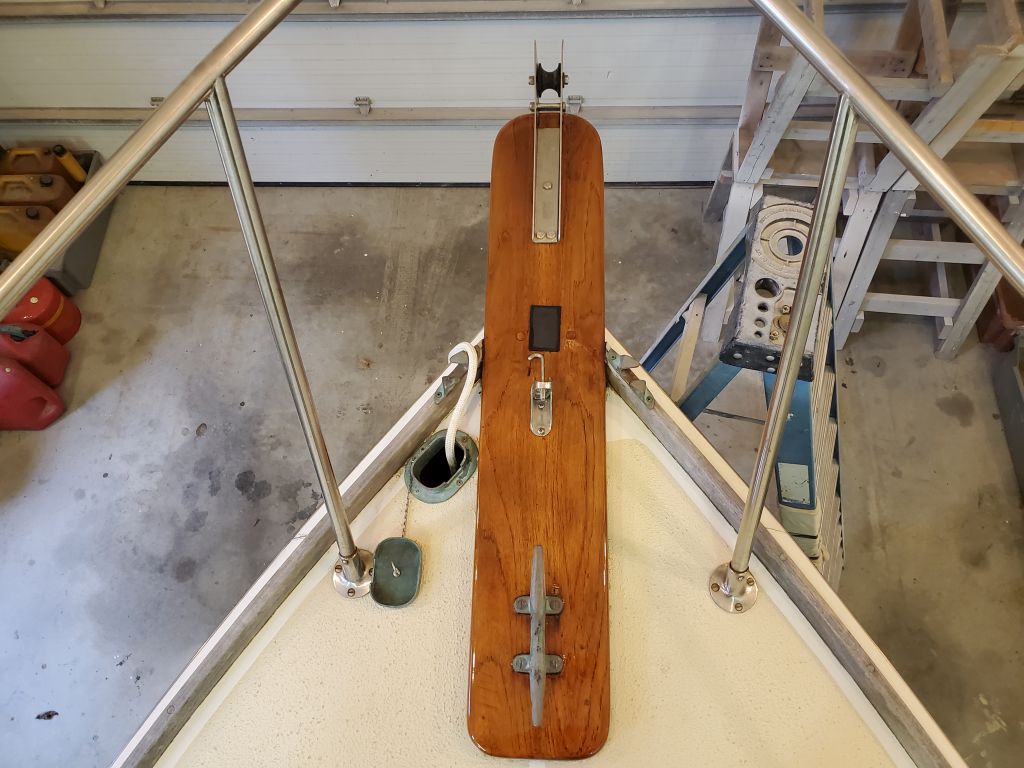
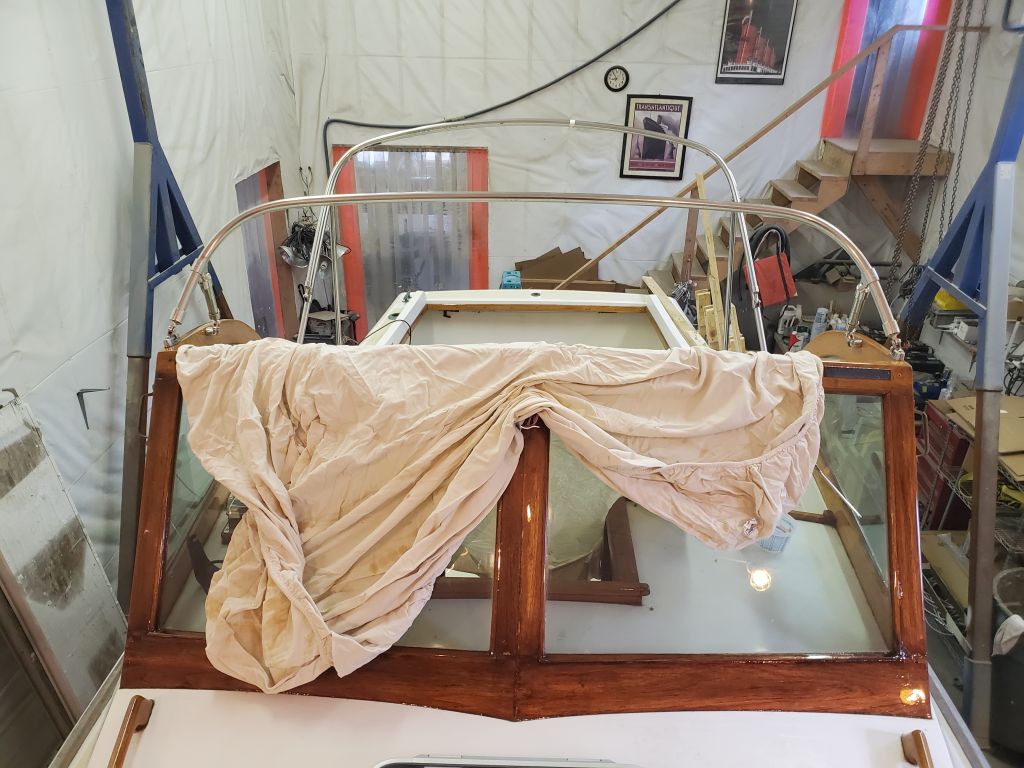
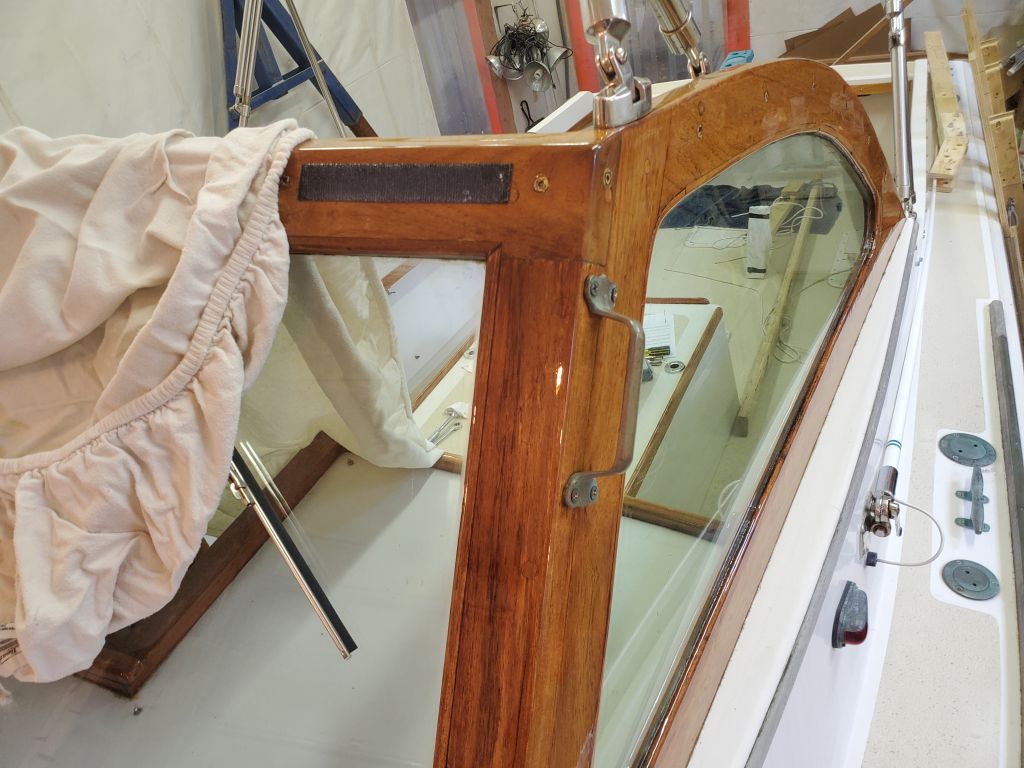
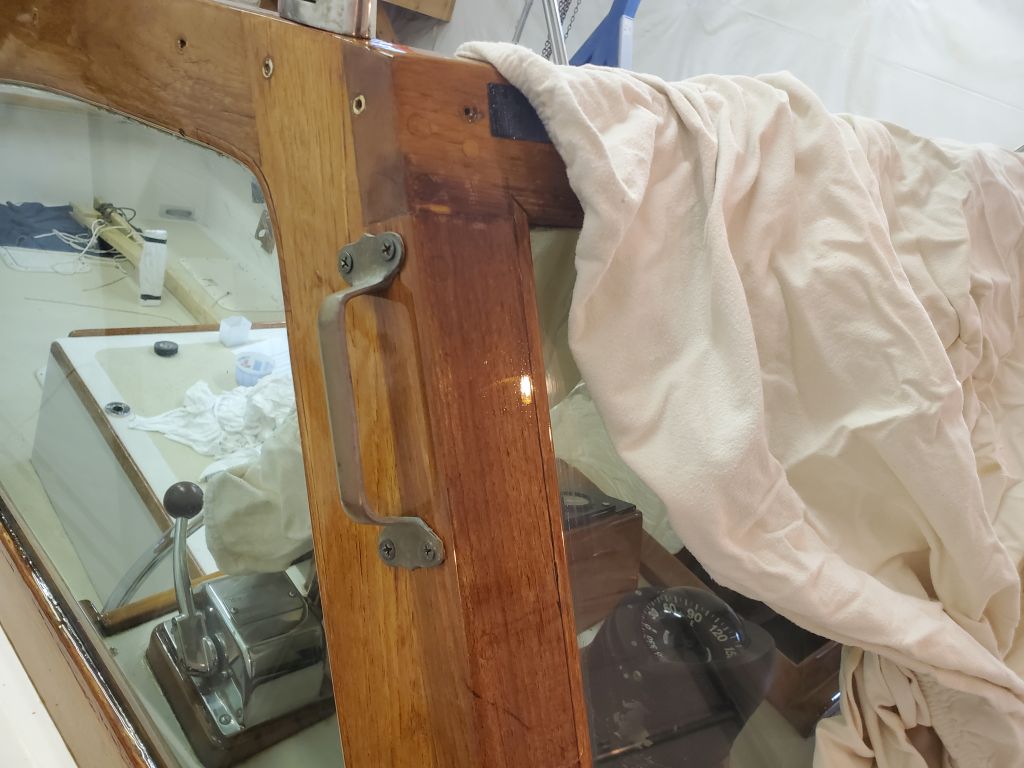
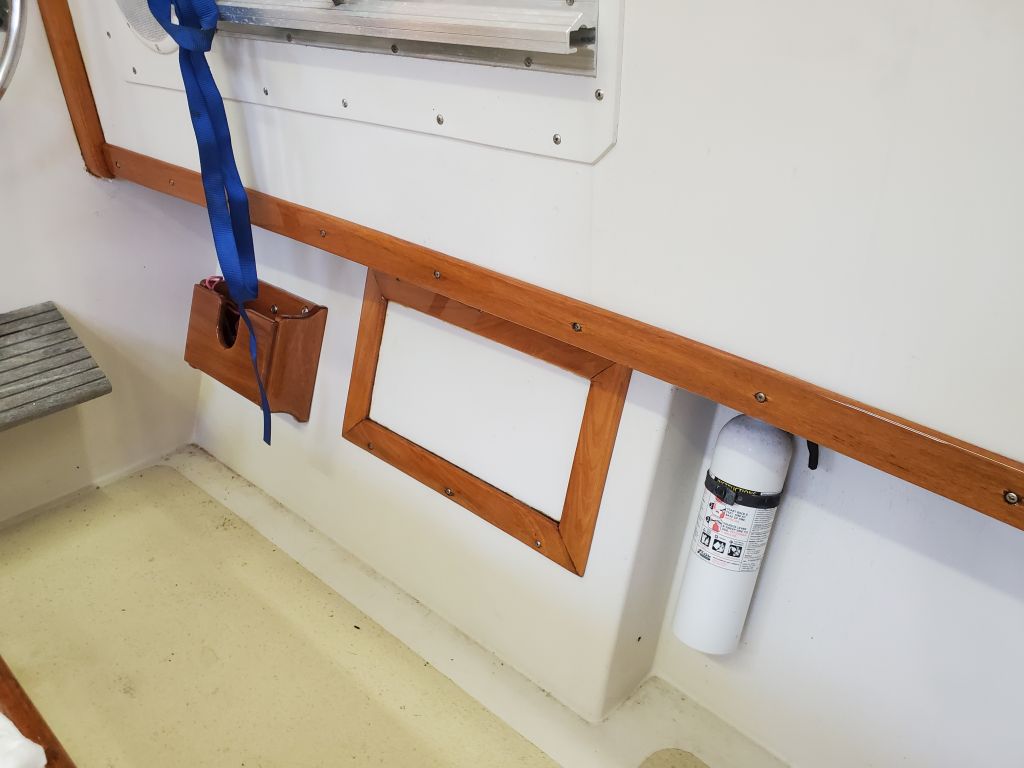
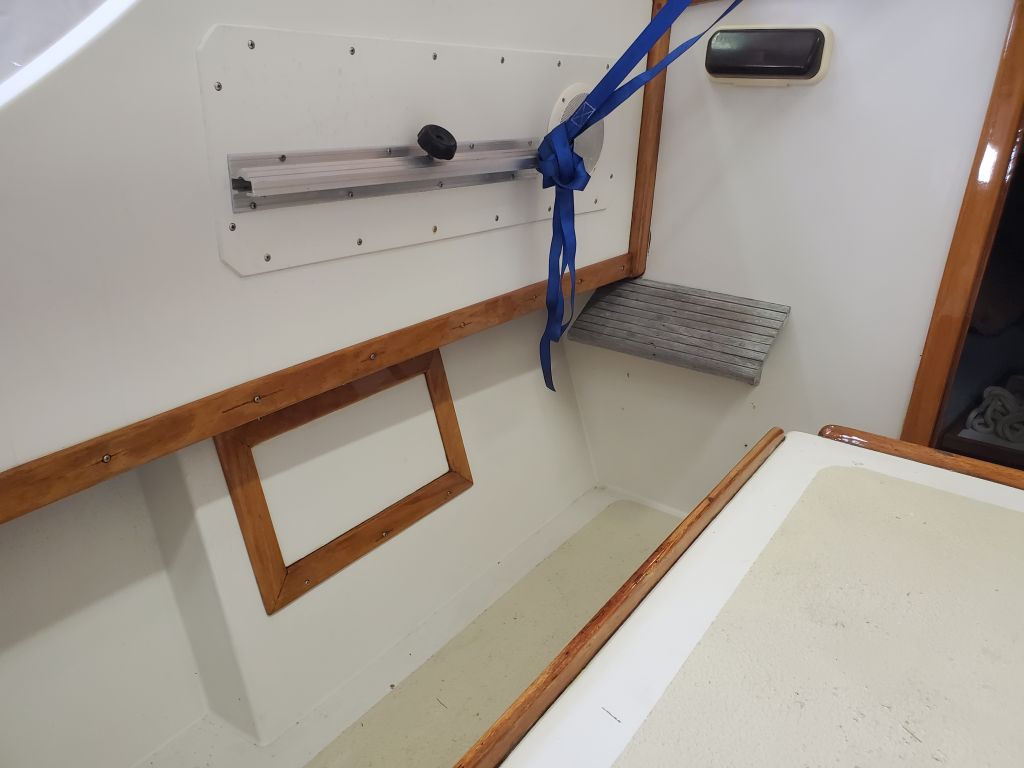
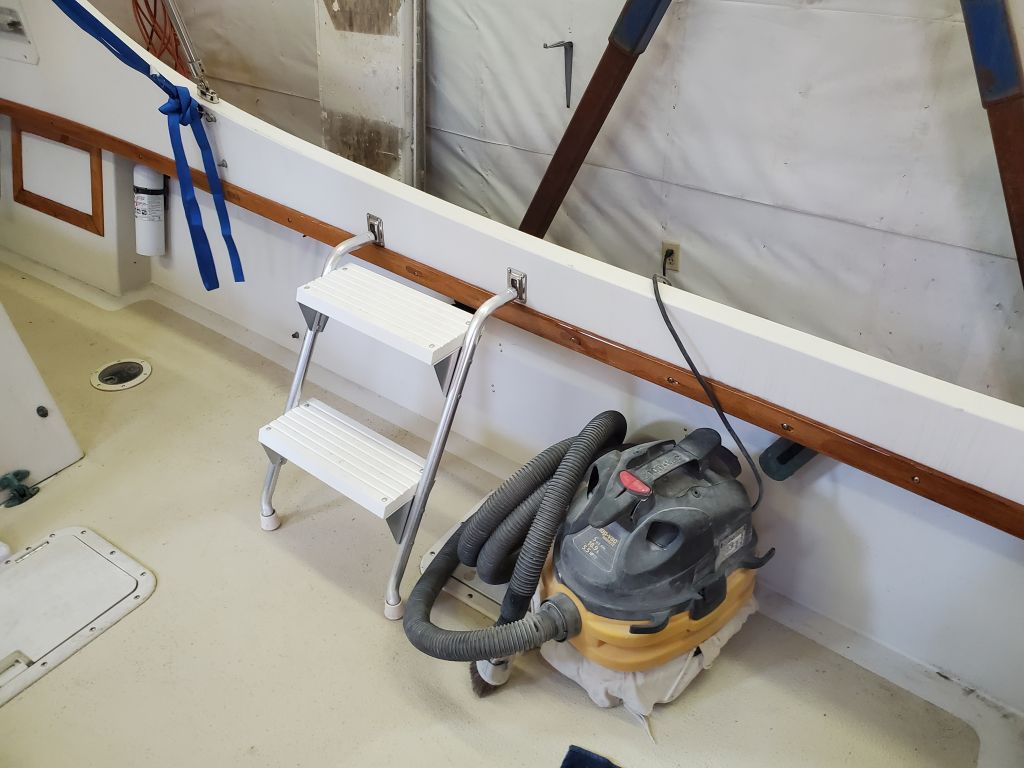
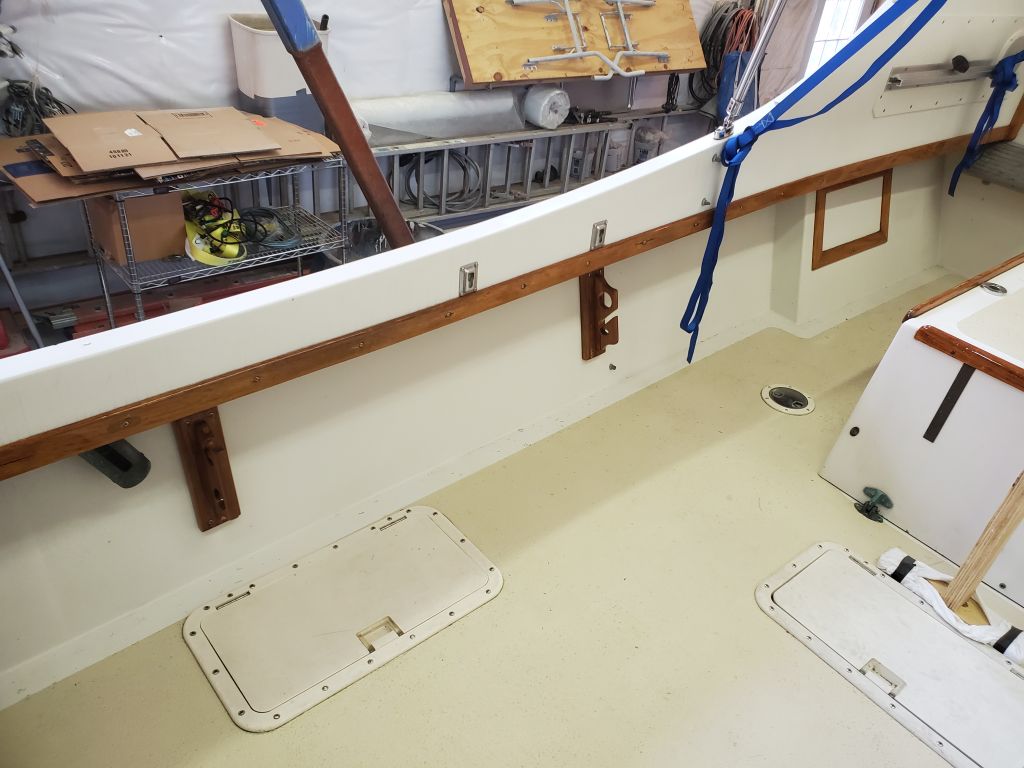
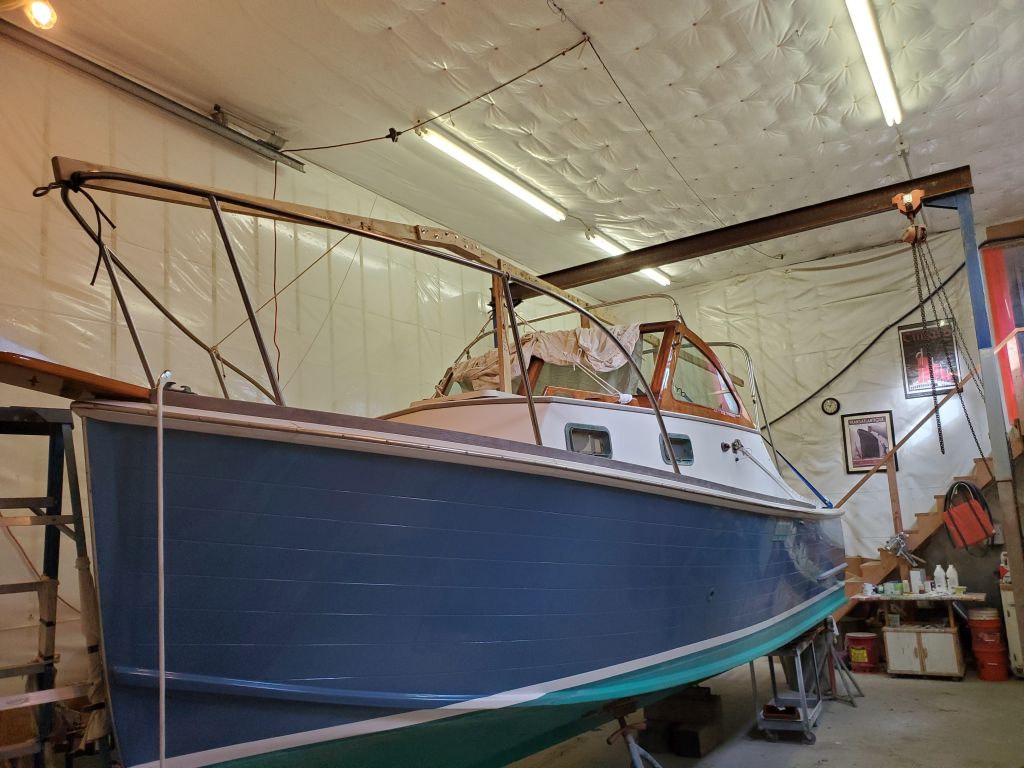
Starting early, I lightly sanded the first coat of varnish on the windshield, handrails, forward hatch, bow platform, and other trim on the boat, preparing it for the second coat ahead.    Afterwards, I vacuumed and solvent-washed the prepared surfaces and nearby to remove dust.

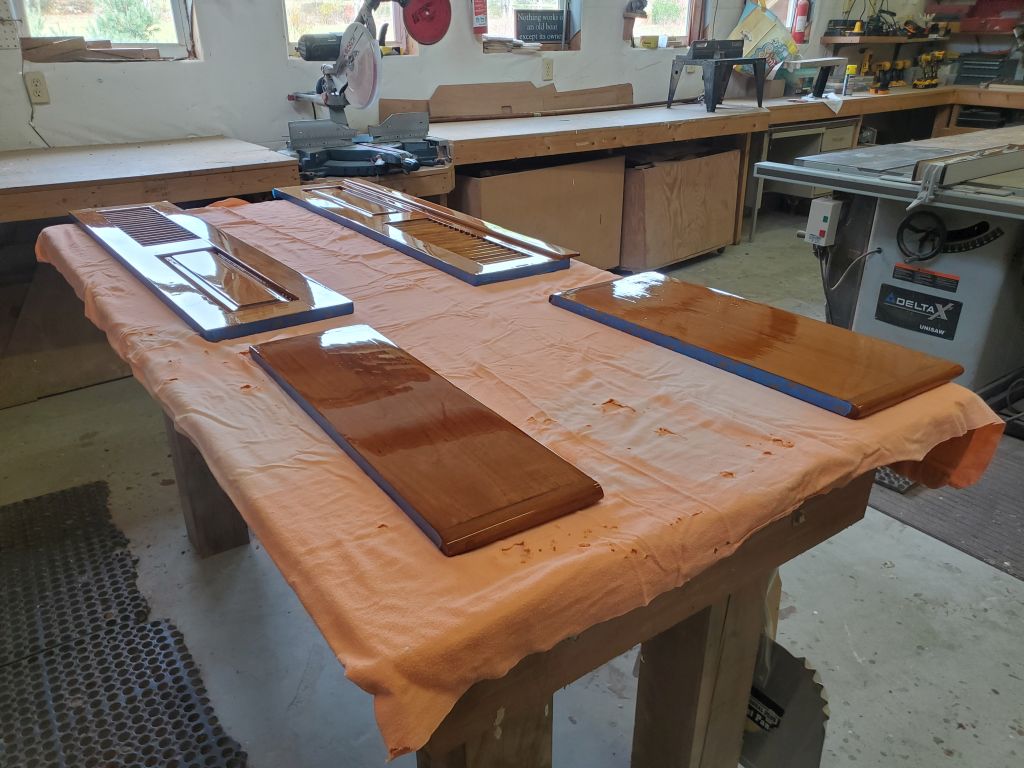
I had to leave the shop for an appointment, but upon my return I tacked off the wood I’d sanded earlier, then spent the remainder of the day applying the second coat of maintenance varnish to all the on-board trim.  I didn’t have time to continue with the doors, hatches, and other trim that I’d been working on at the bench, but would resume work there next time.

Total time billed on this job today:  3.25 hours

0600 Weather Observation:  Fair, 46°.  Forecast for the day:  Mainly sunny, 53°

Arietta Phase 2-2

Wednesday

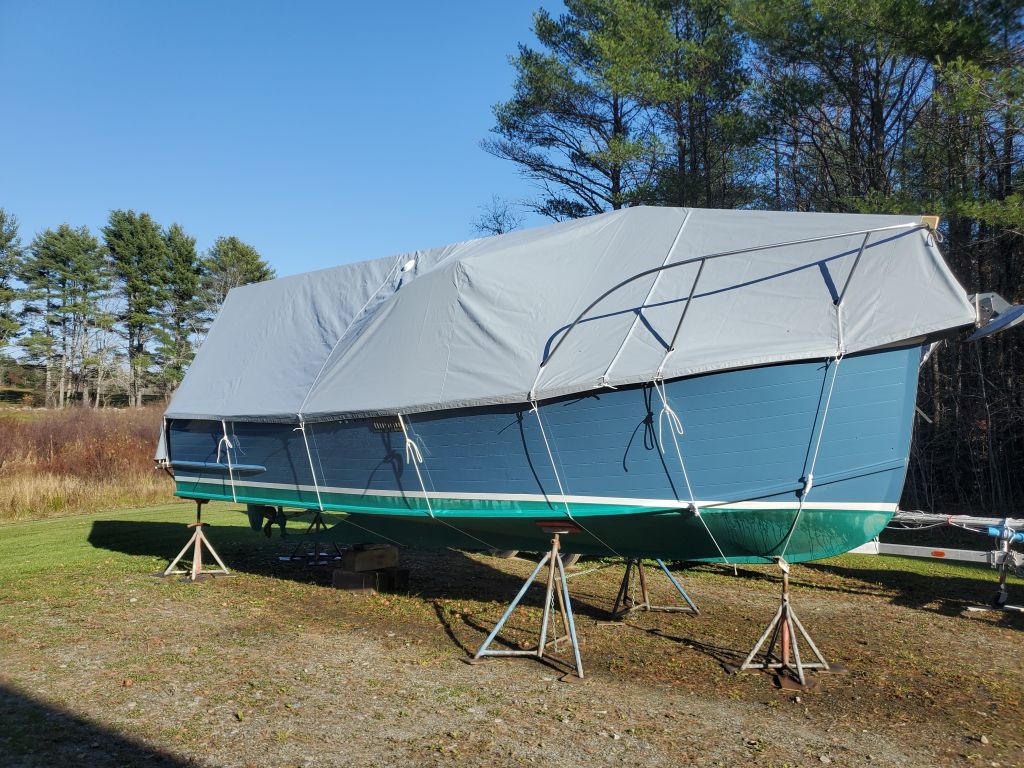
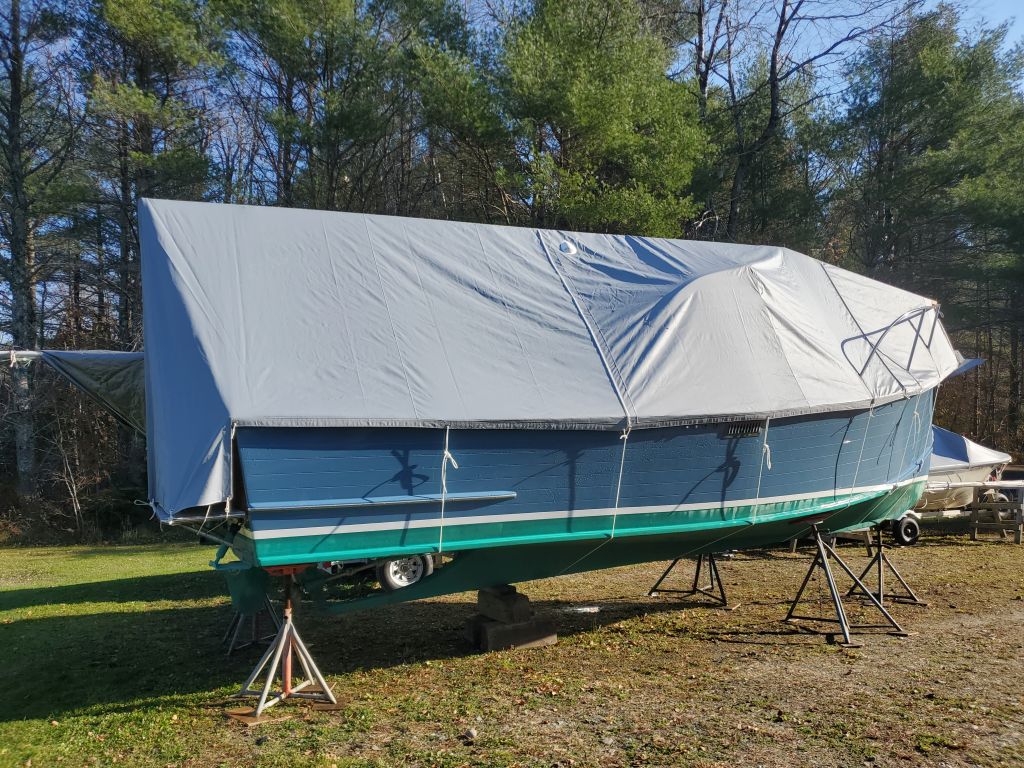
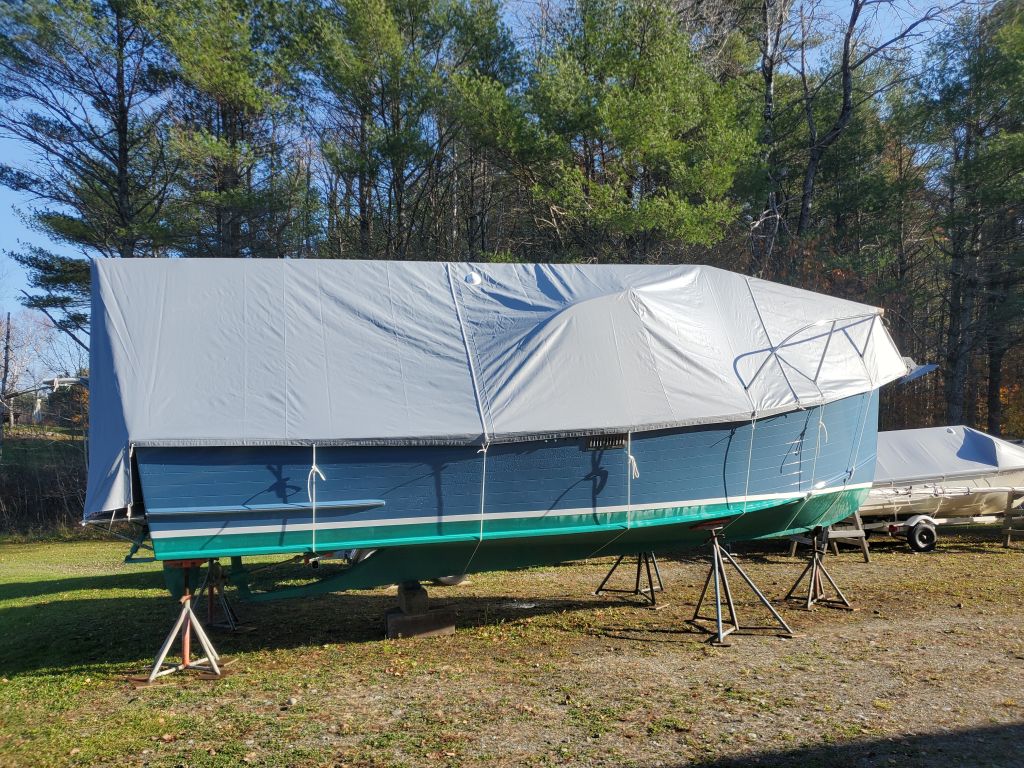
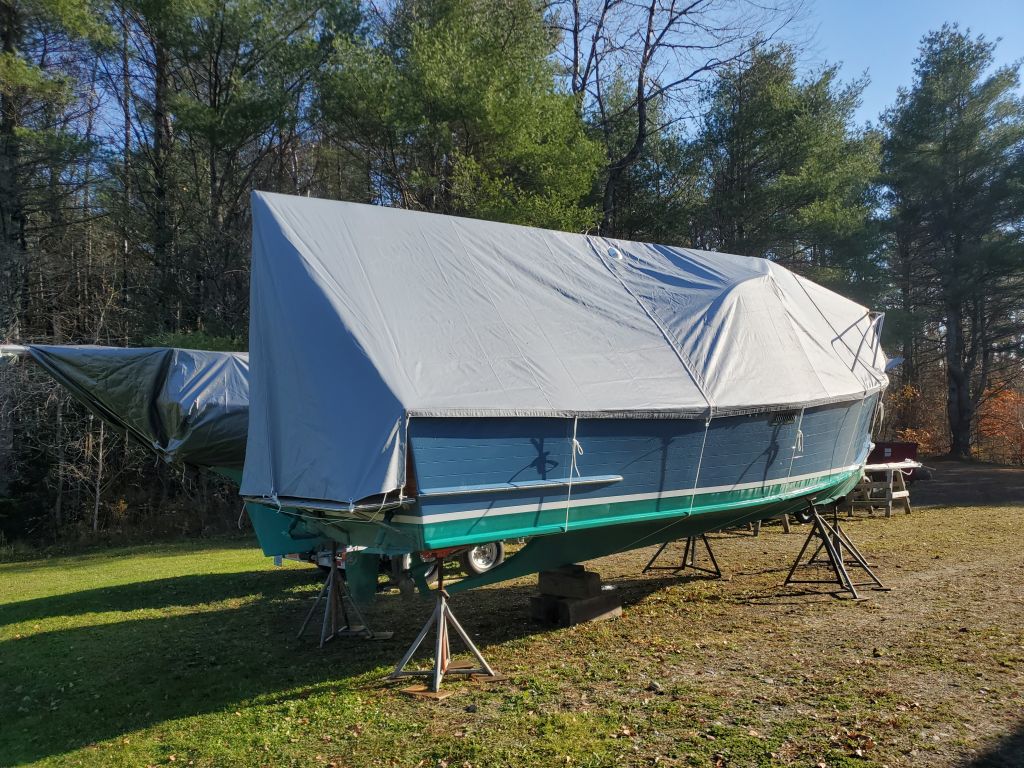
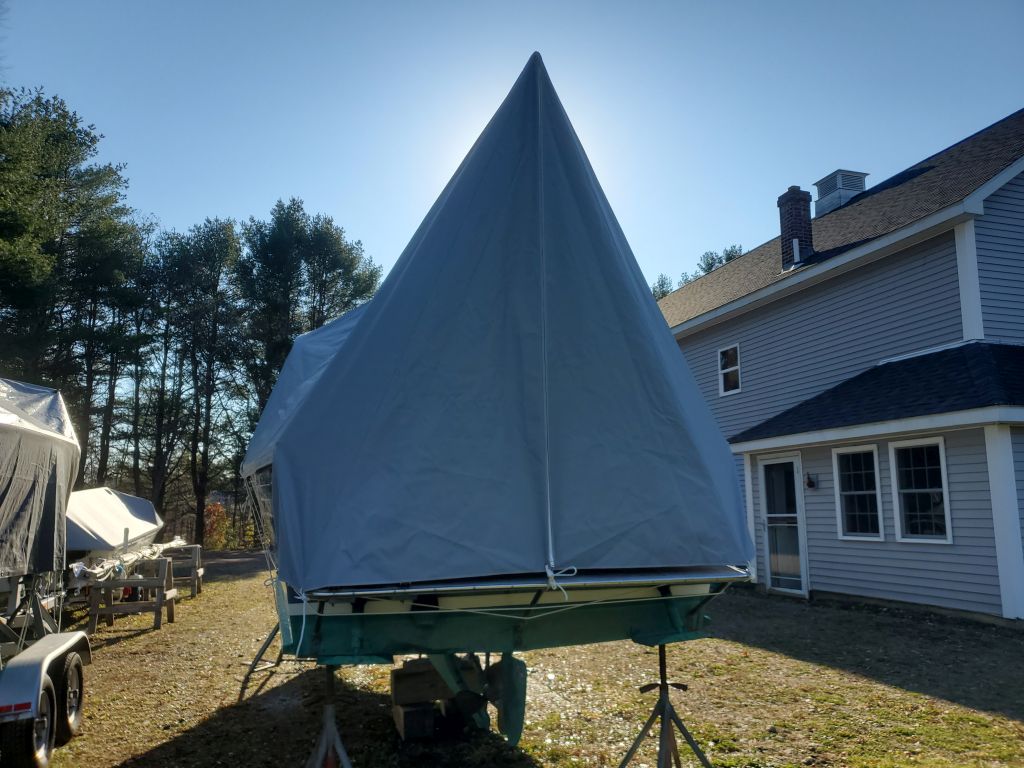
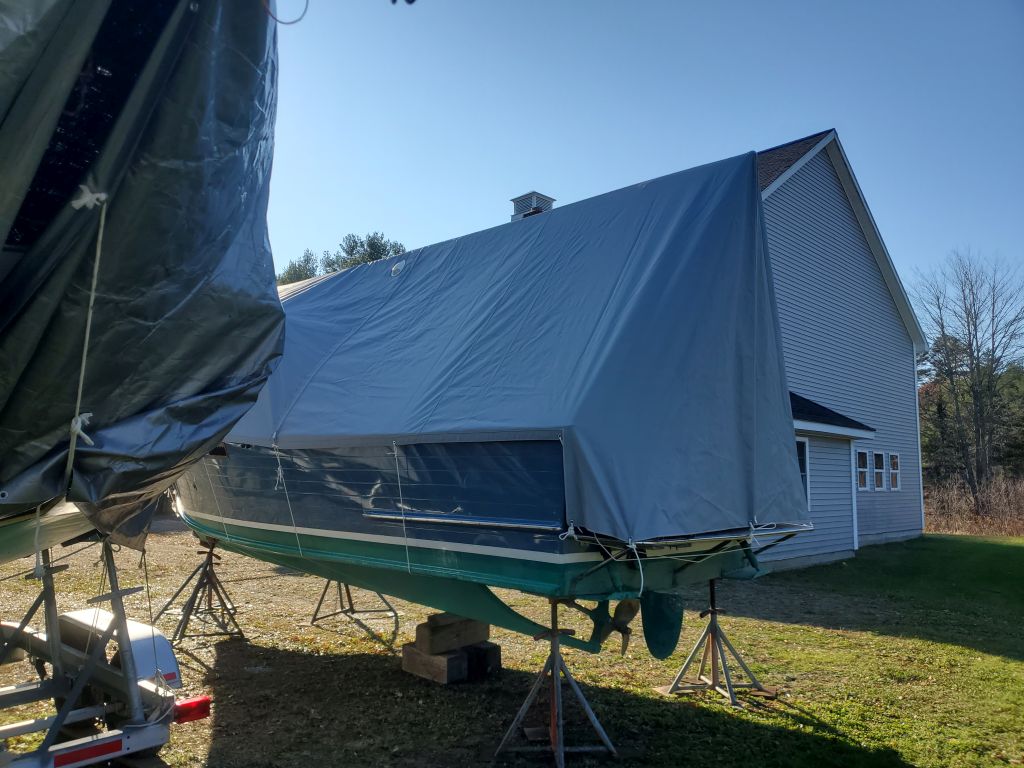
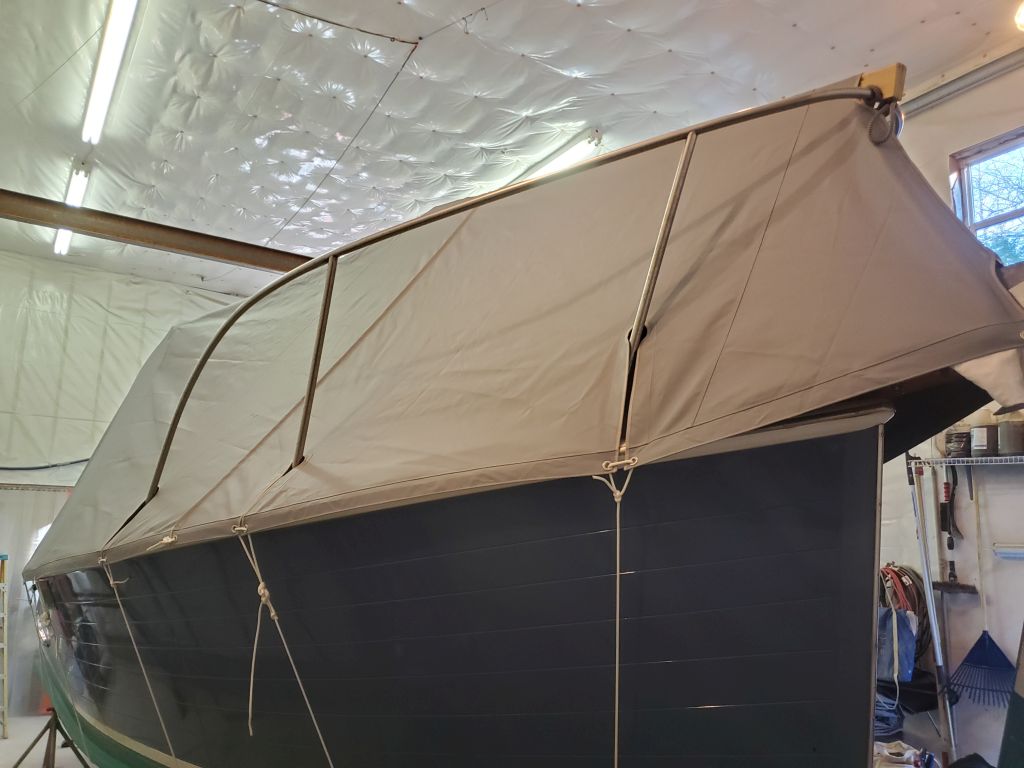
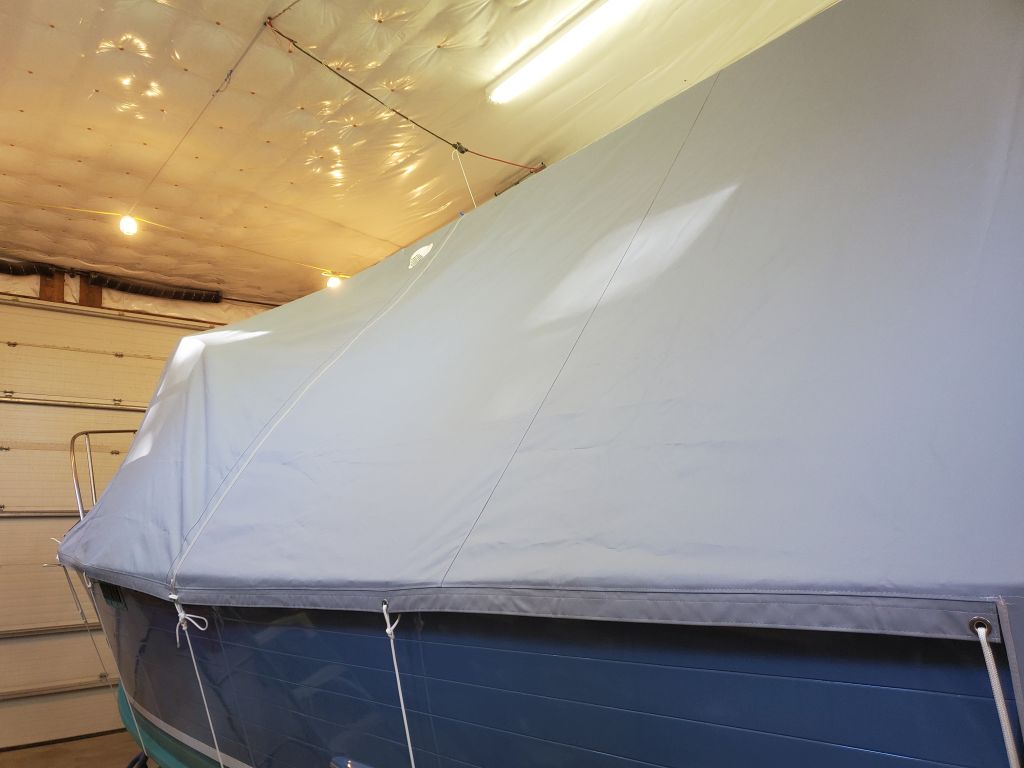
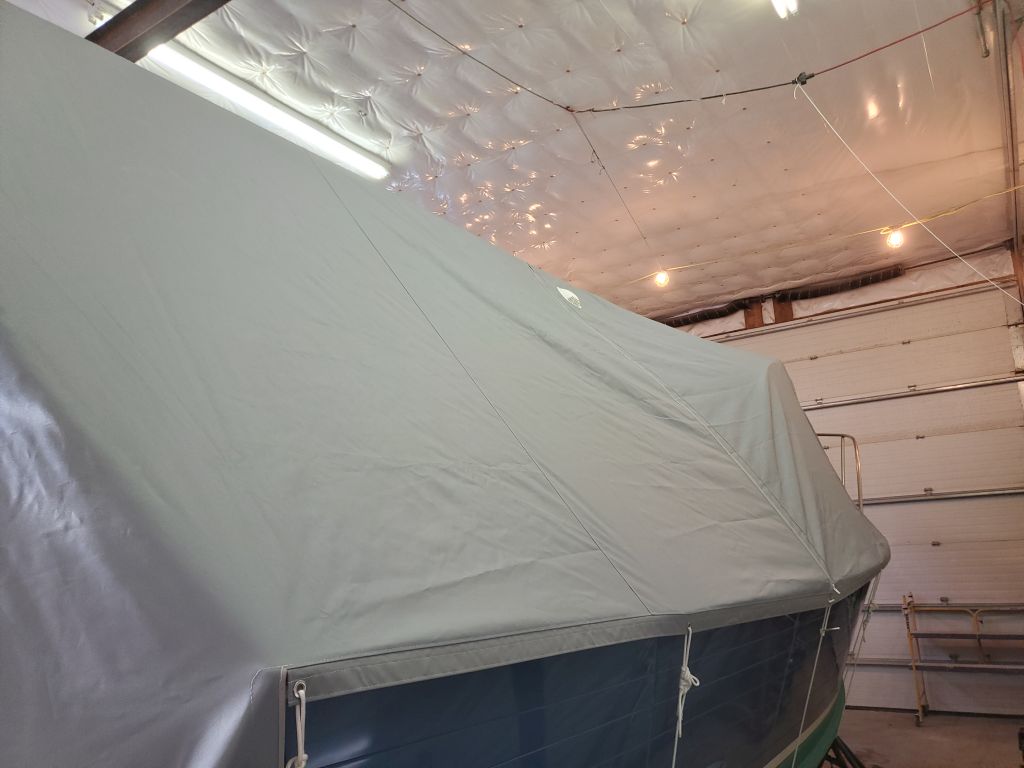
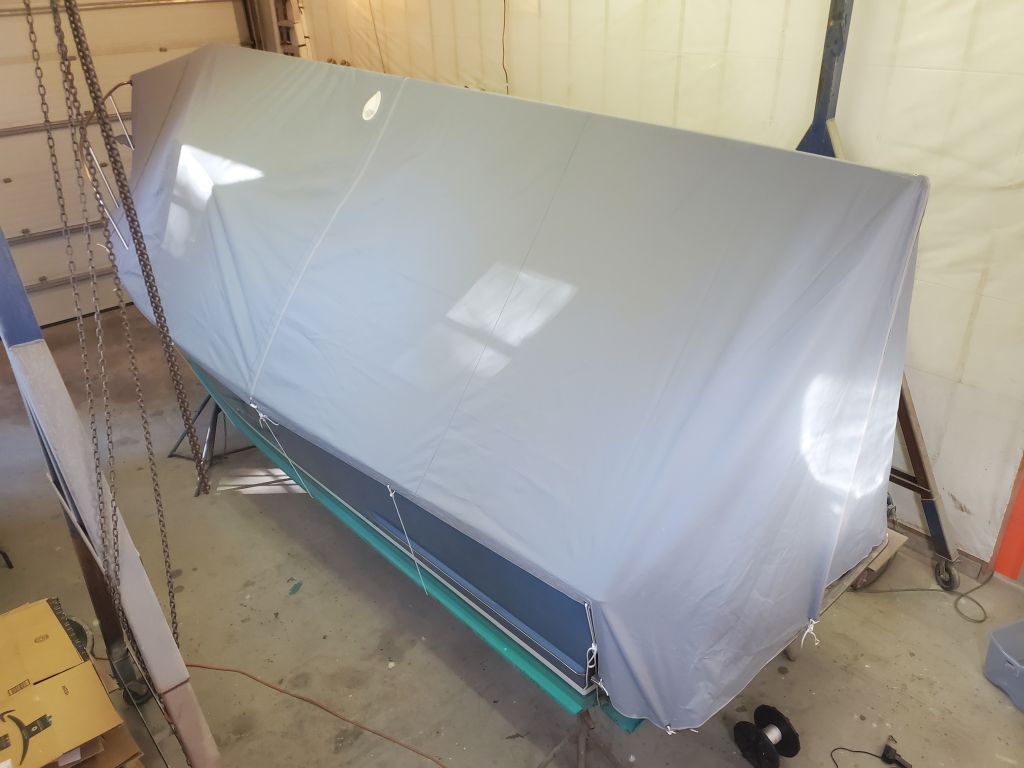
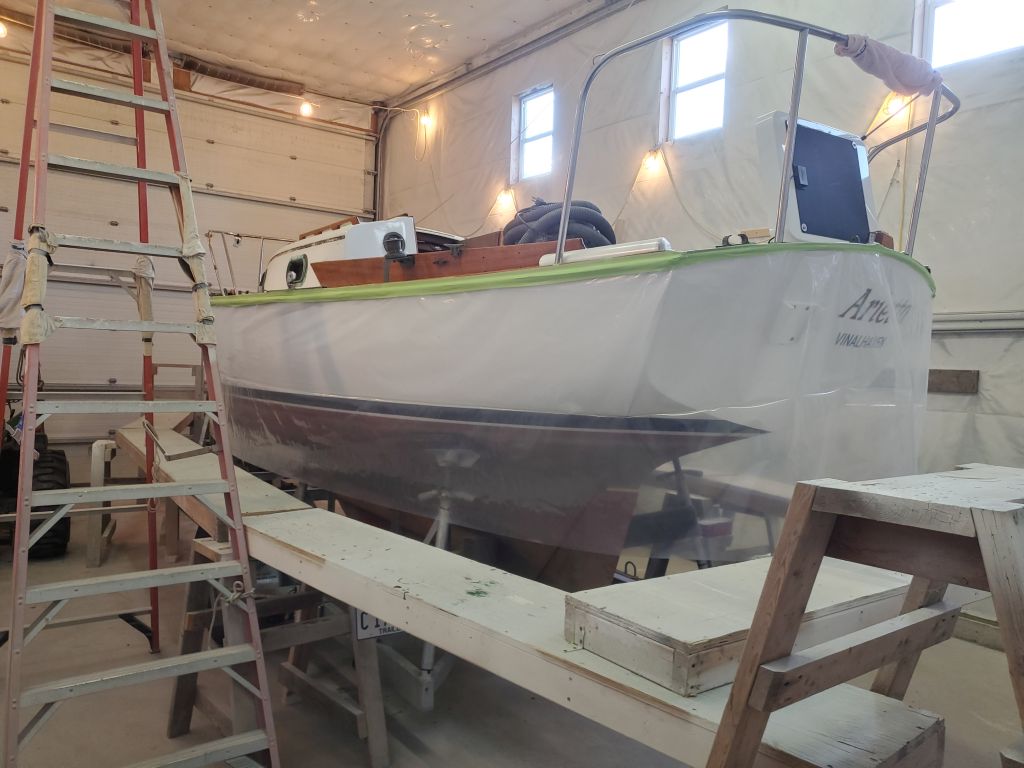
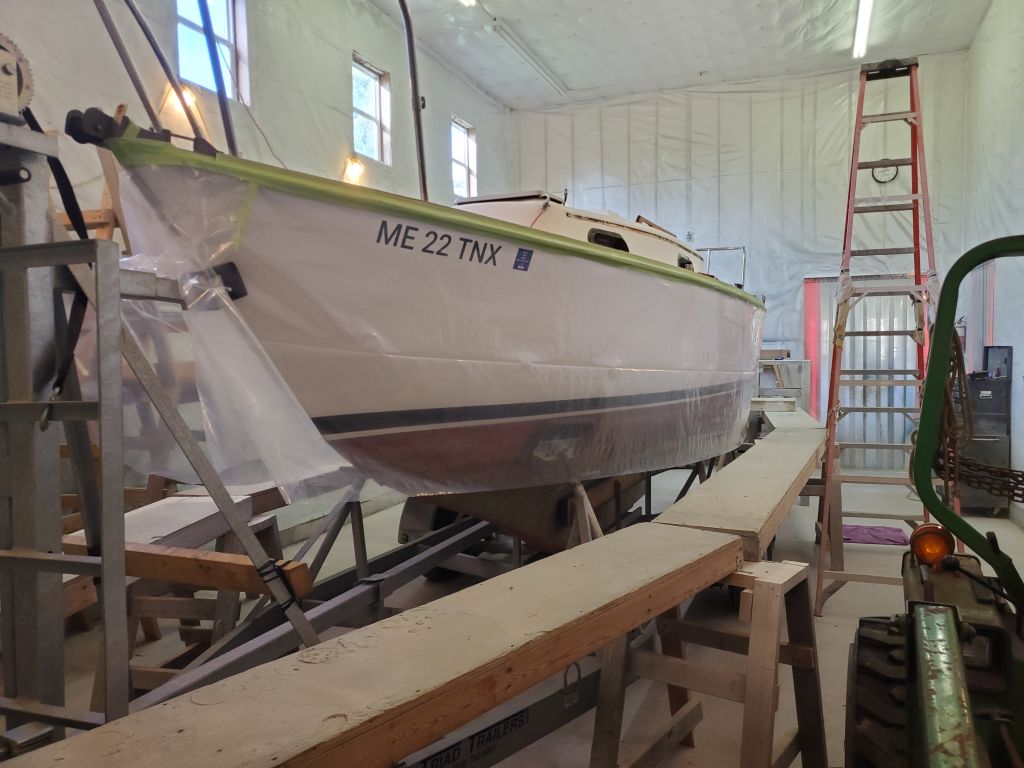
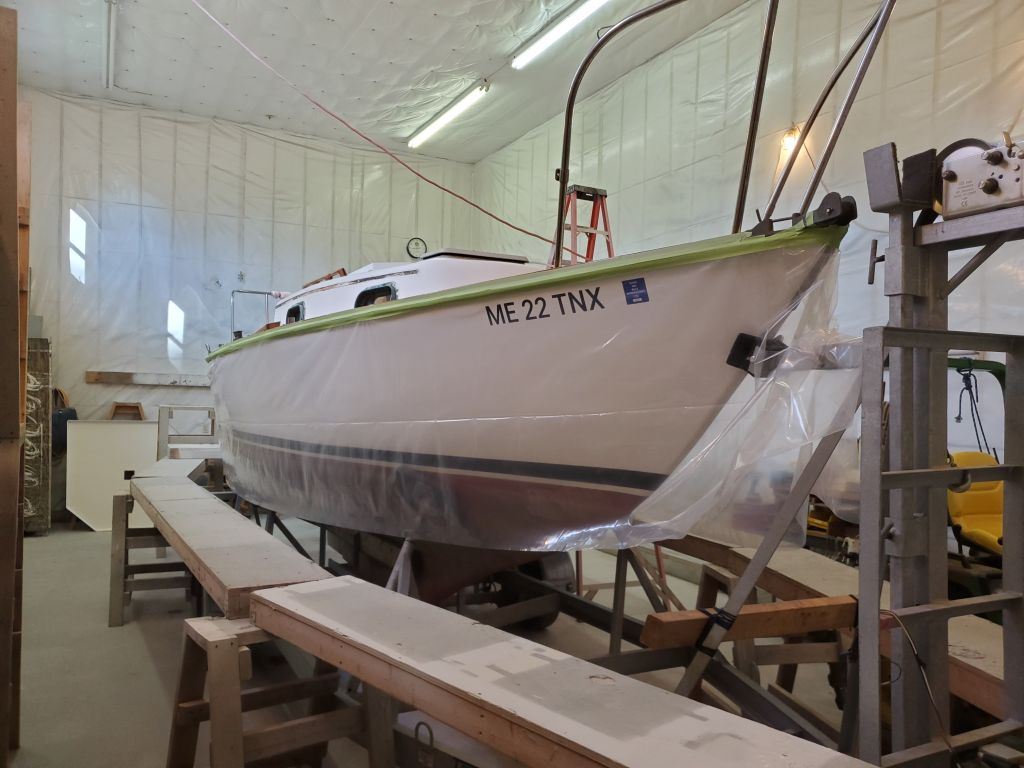
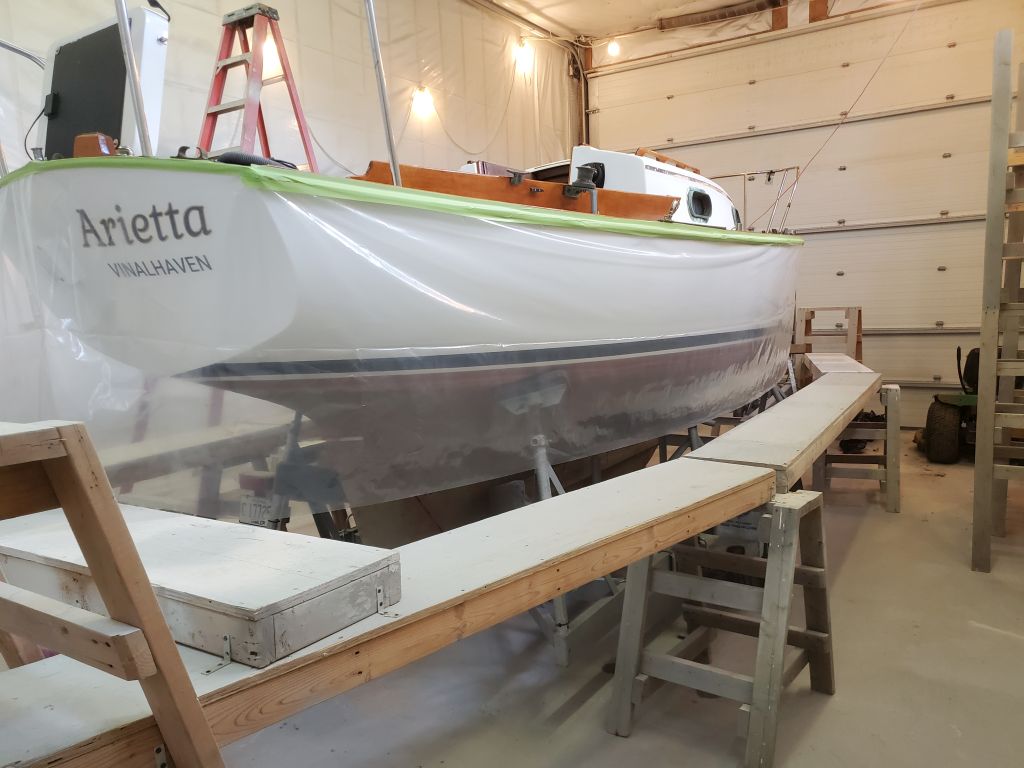
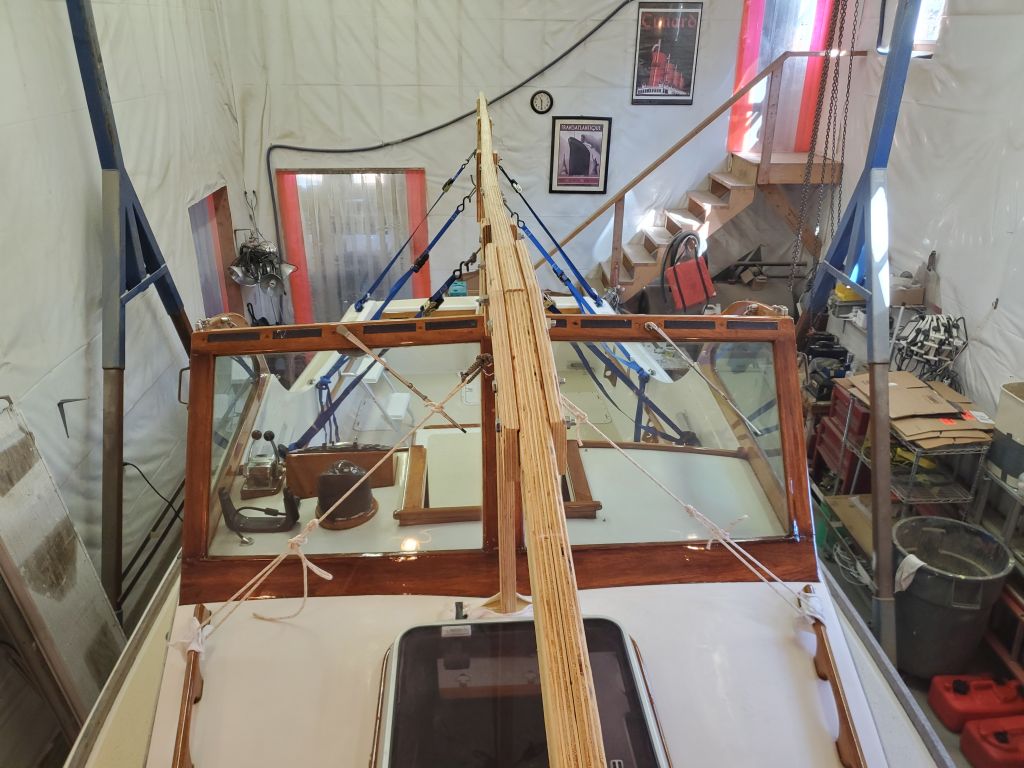
Having sewed together a blank of cover material roughly 30′ x 13′, Jason returned to perform the initial templating for the new winter cover.  This process looks awkward, but works out in the end with a cover that fits the boat tightly and accurately.

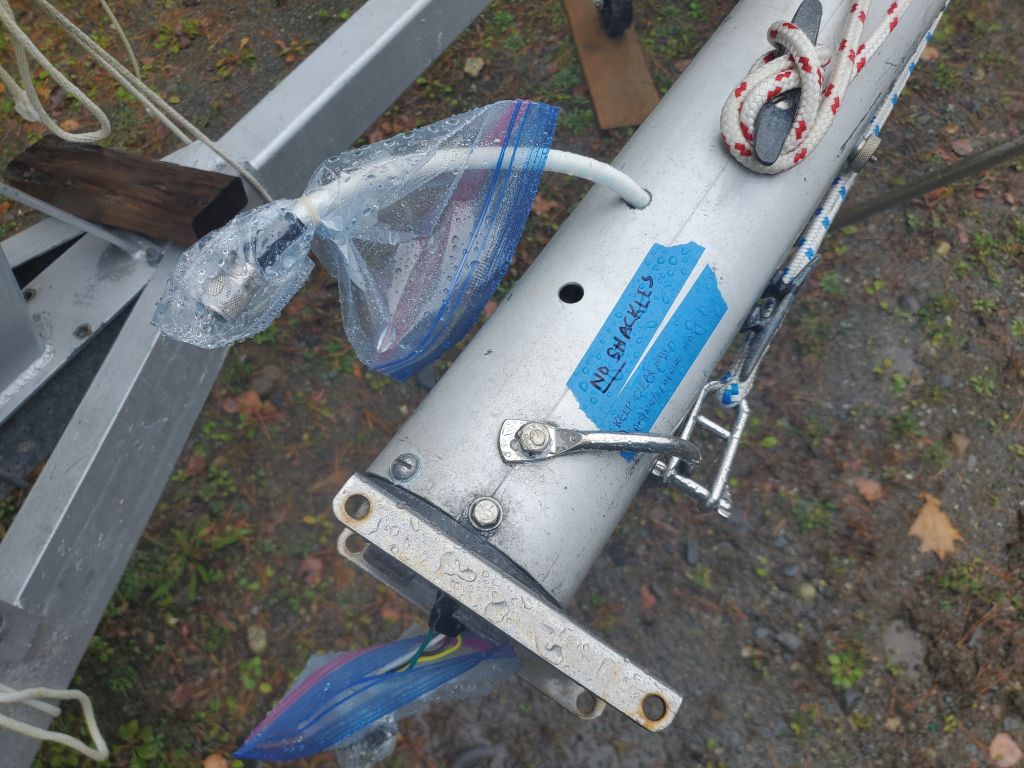
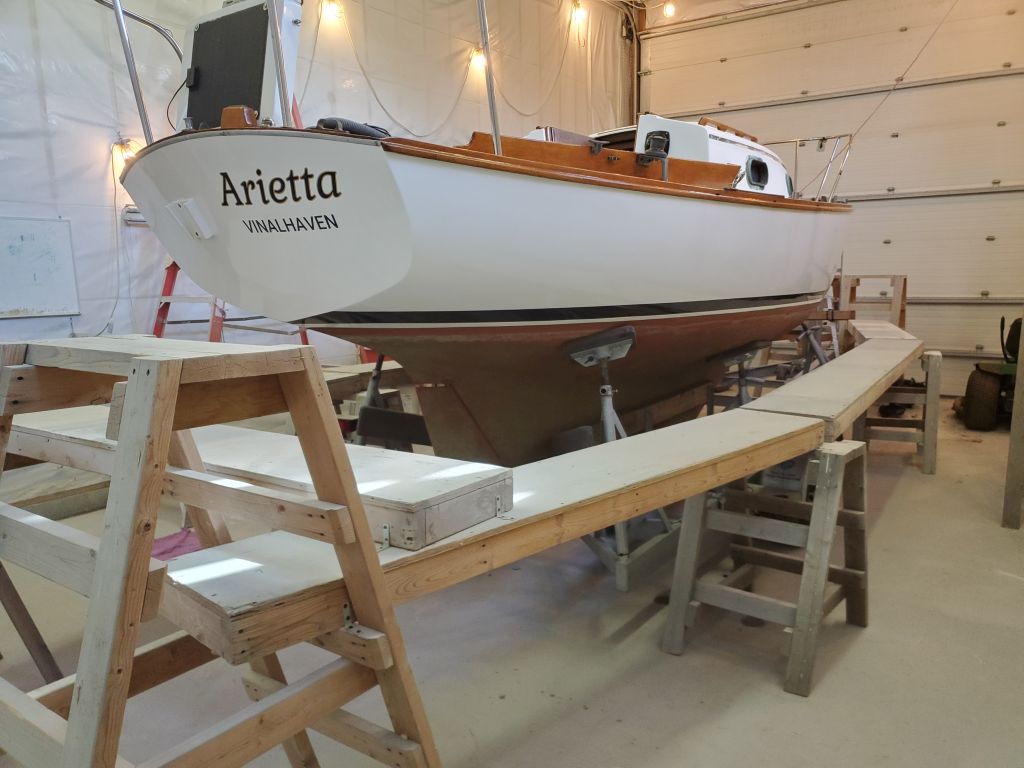
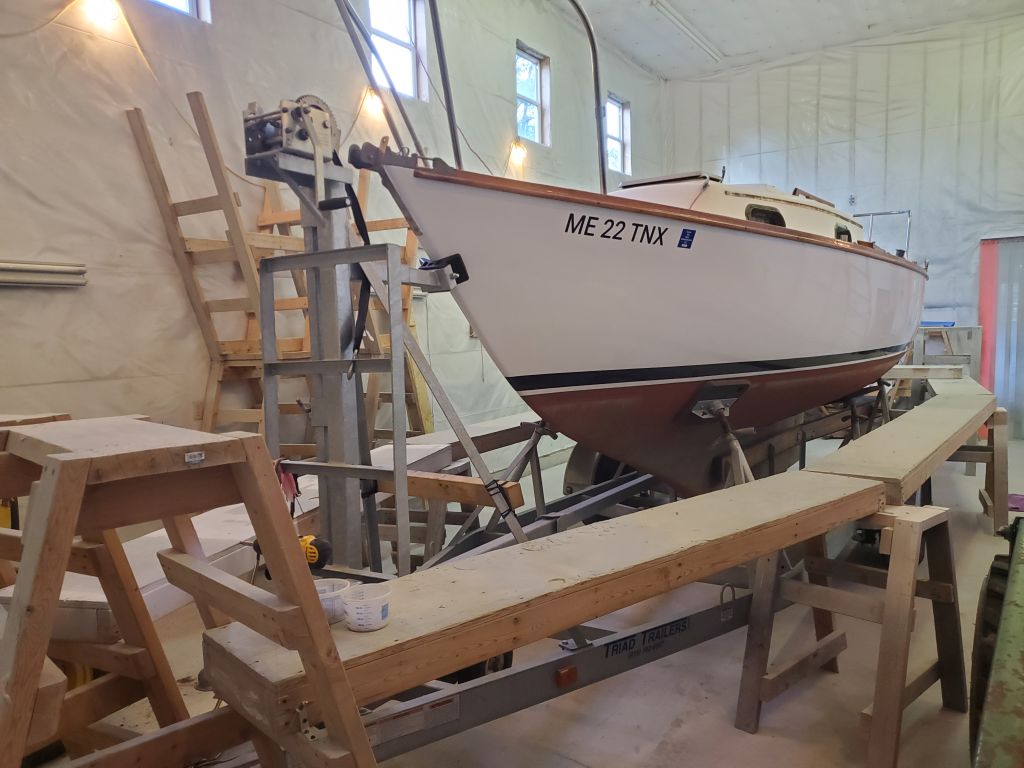
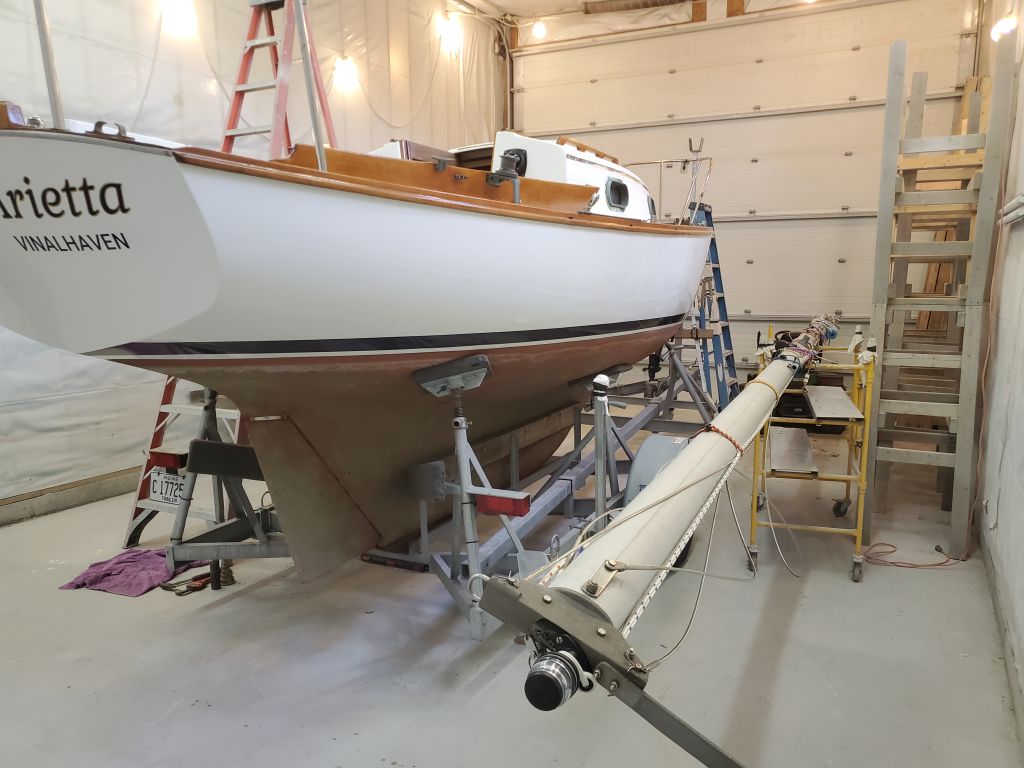
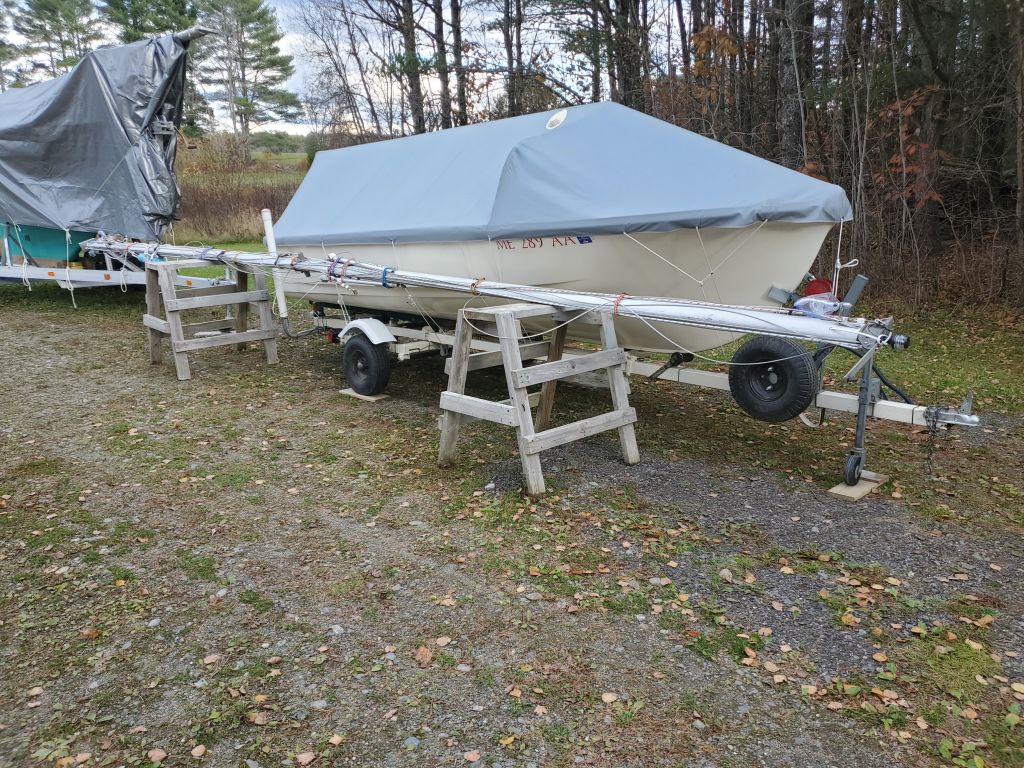
We began by repositioning the mast a bit further aft, which gave better extension beyond the transom to improve the cover’s coverage and create better lines for the aft termination.  This mast position would be crucial in the future, as the fitment of the cover would require the same mast position each time.  Fortunately, this was straightforward:  The mast was positioned so the halyard cleats at the base were tightly against the forward mast support on the trailer.

Now, with the blank centered and draped over the boat, Jason used a few temporary grommets and lines to pull the centerline tight, and also secure the blank amidships at the widest point of the boat.  From there, he let the blank tell him what it wanted (the Tarp Whisperer), and in this case the cover did fairly settle right into its desired contours, at least once the magic happened back at Jason’s shop.  With temporary darts stapled in place (and duly marked), and key points marked on the blank itself (e.g. the edge of the rubrail, stem and stern, etc.), the process in situ went swimmingly and rather quickly.  The stapled darts would ultimately become tight seams, and the ends would eventually become trimmed and neat terminations with simple lacing.

We won’t likely see the finished result till the end of the project in some weeks’ time.  With this step out of the way, now I could think about removing the mast and getting to work for real.

Total time billed on this job today:  1 hour

0600 Weather Observation: 43°, clear, windy.  Forecast for the day:  Partly sunny, 53°

Skeedeen Phase 7-3

Thursday

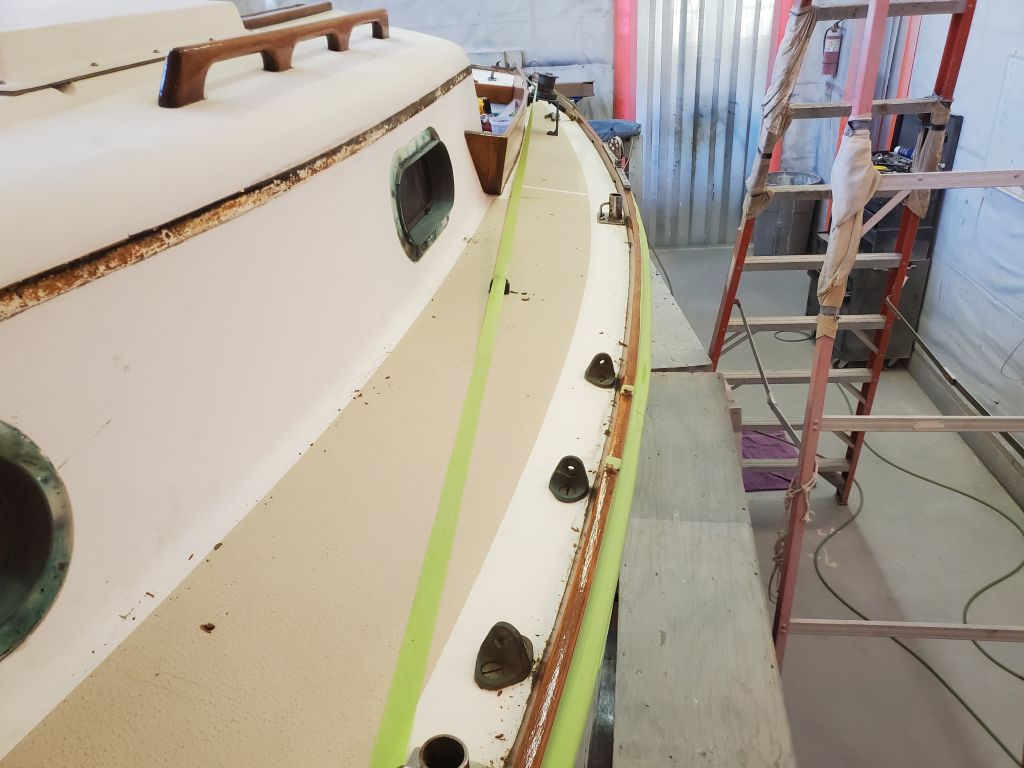
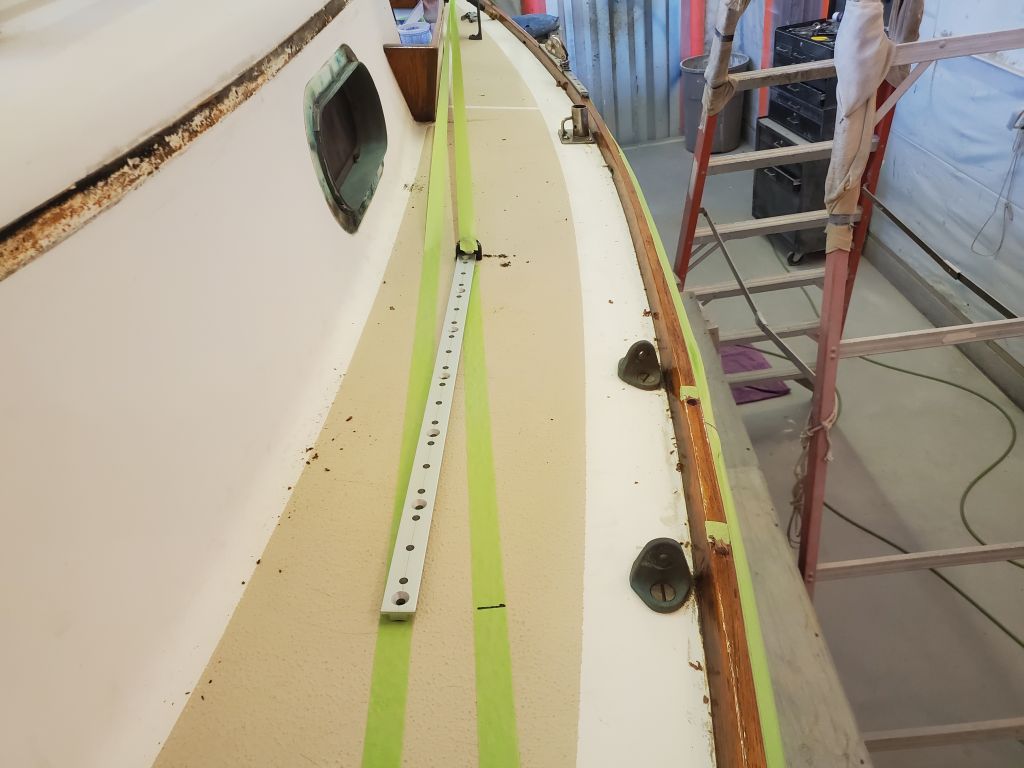
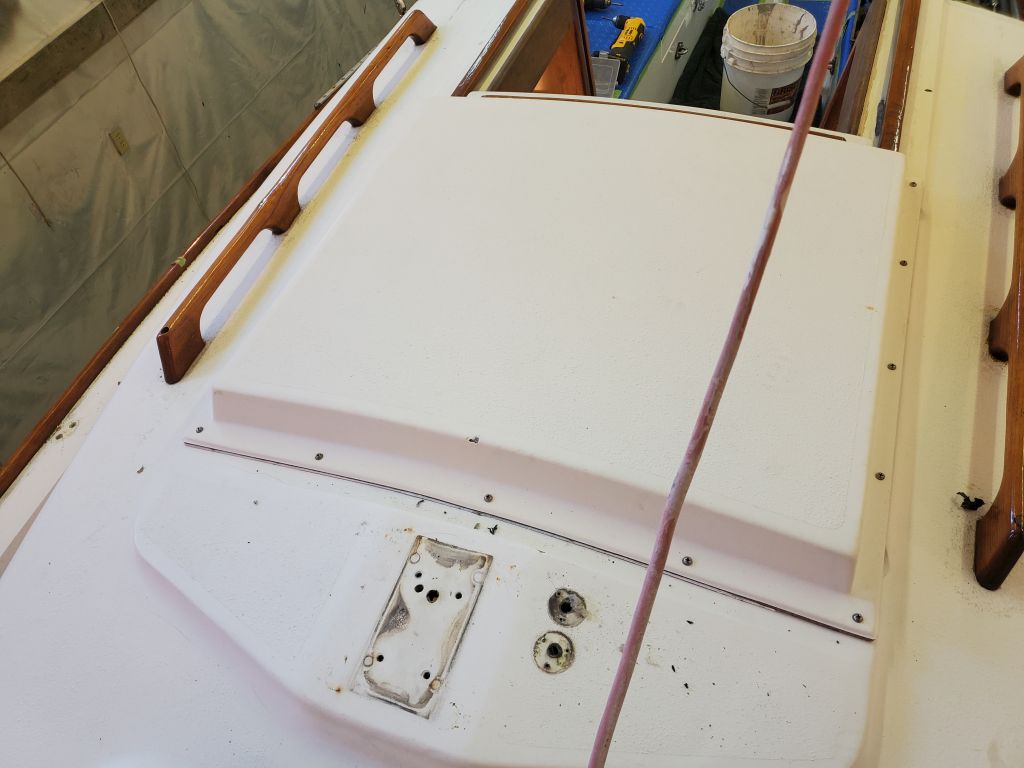
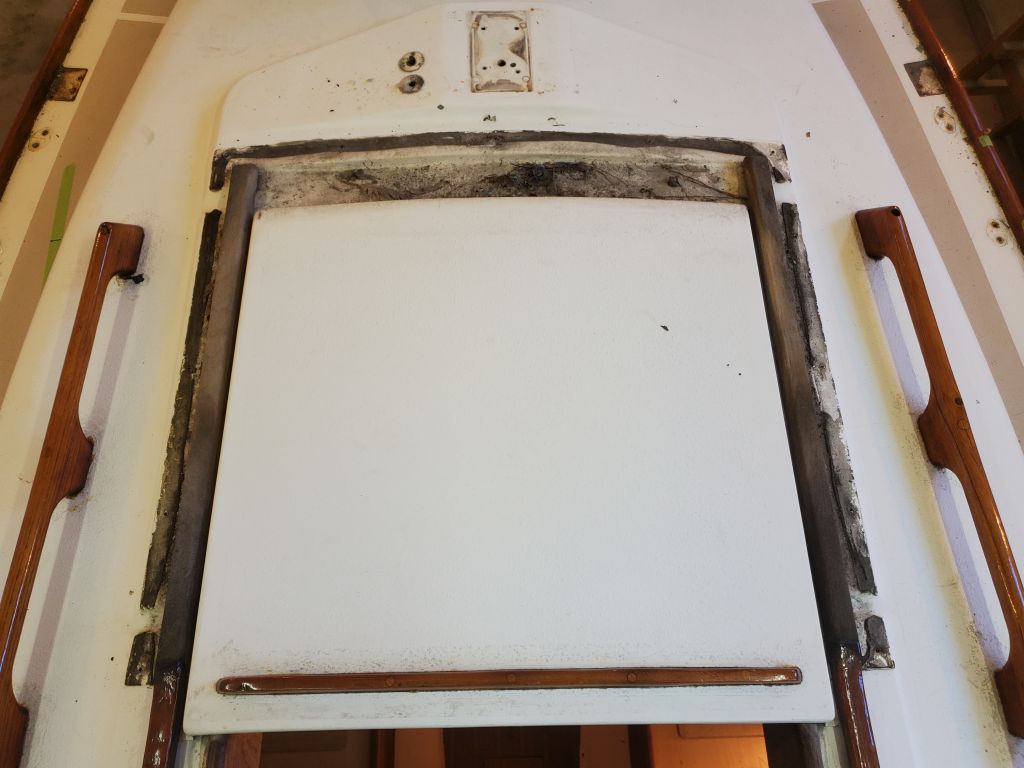
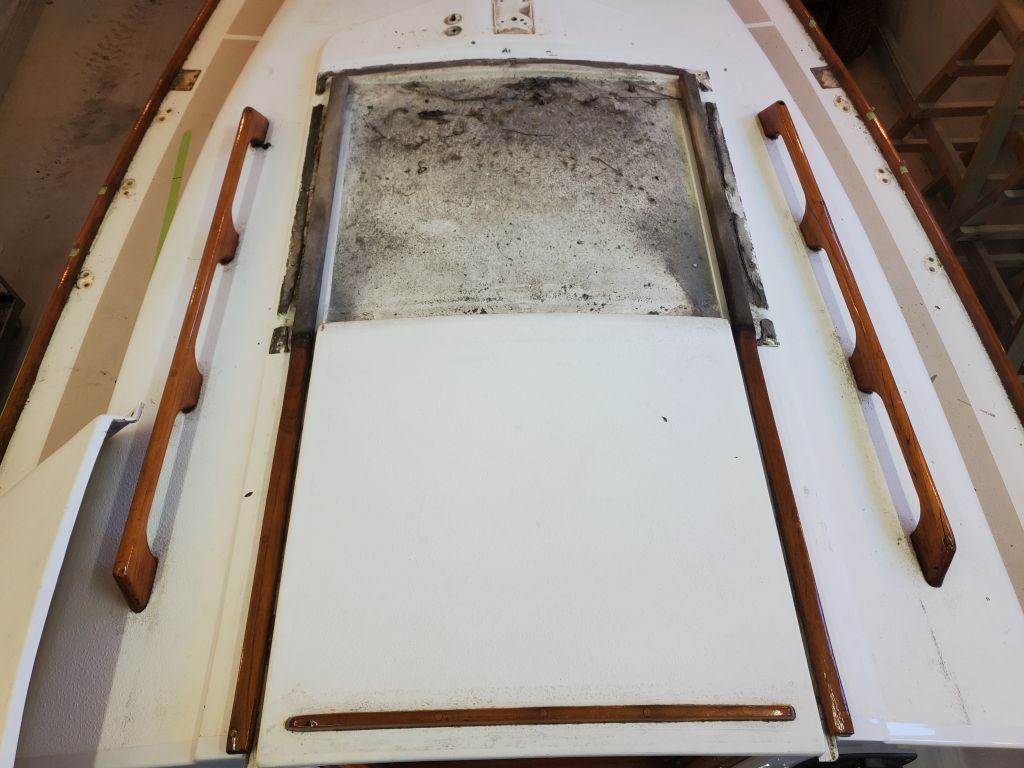
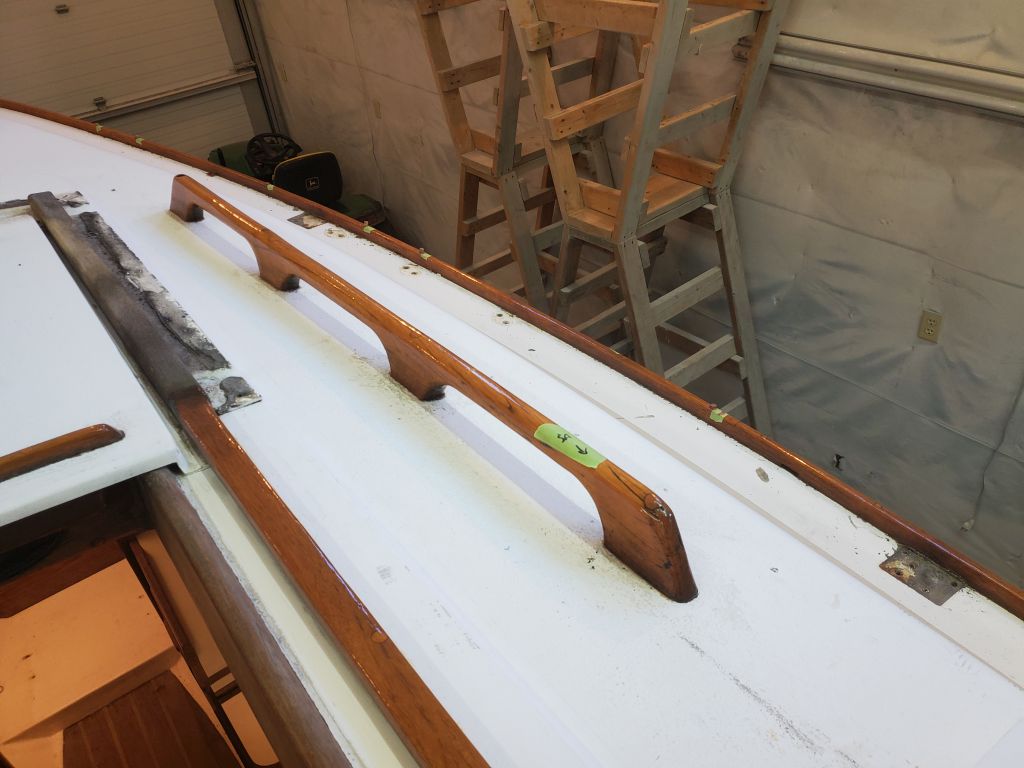
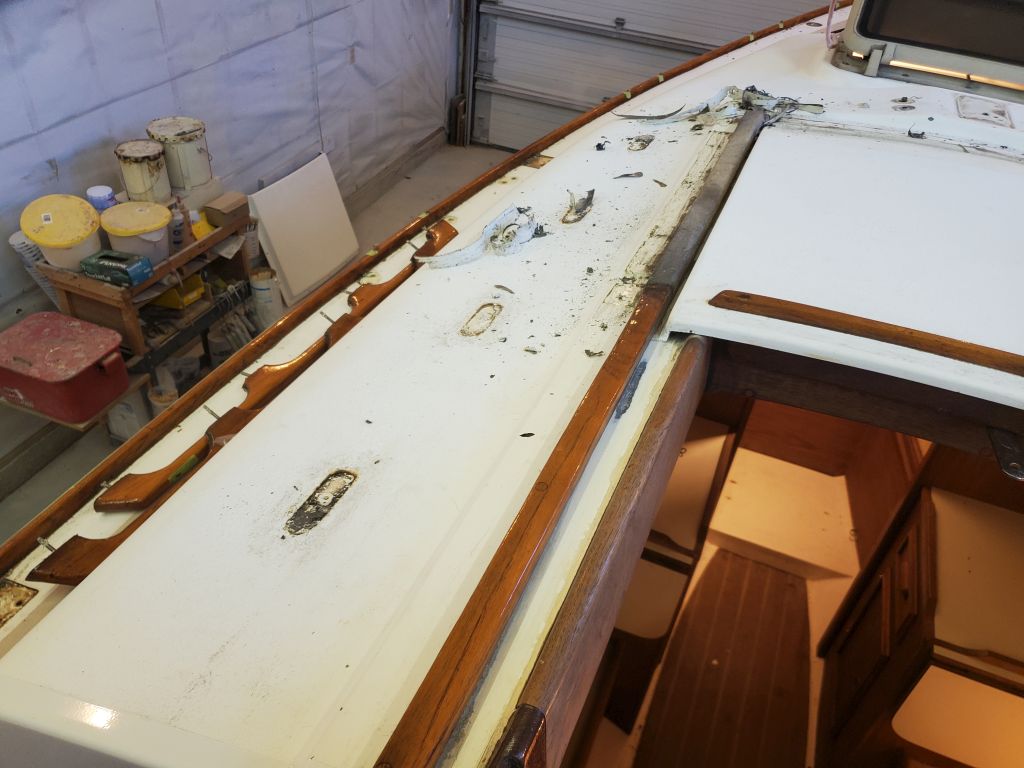
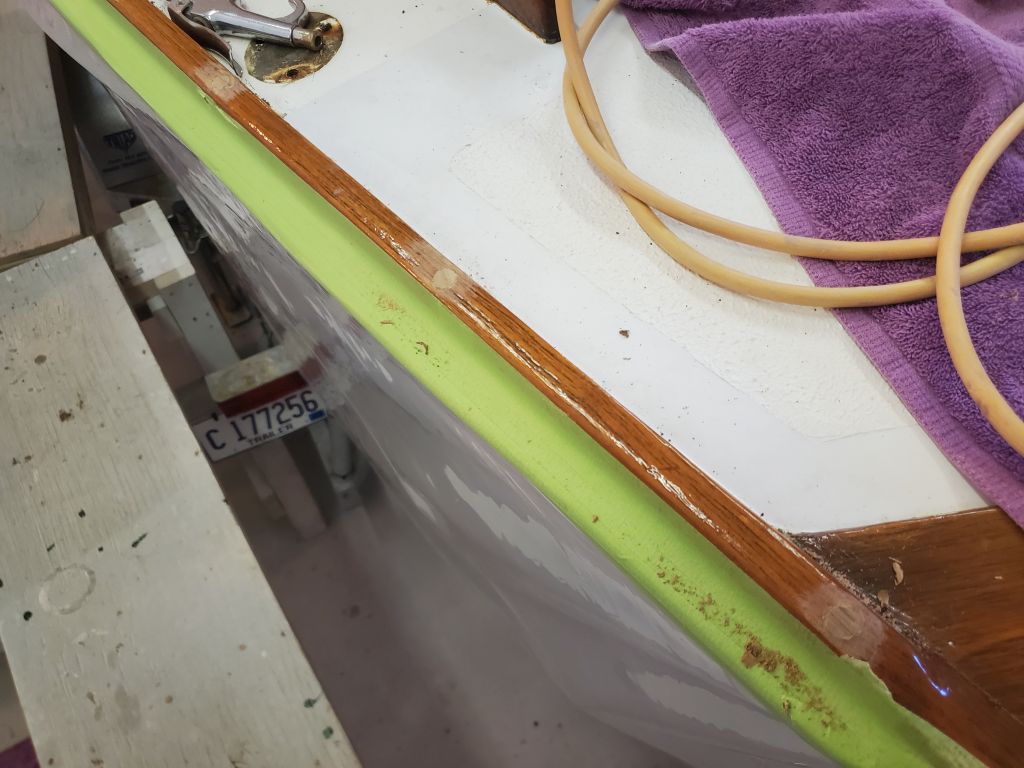
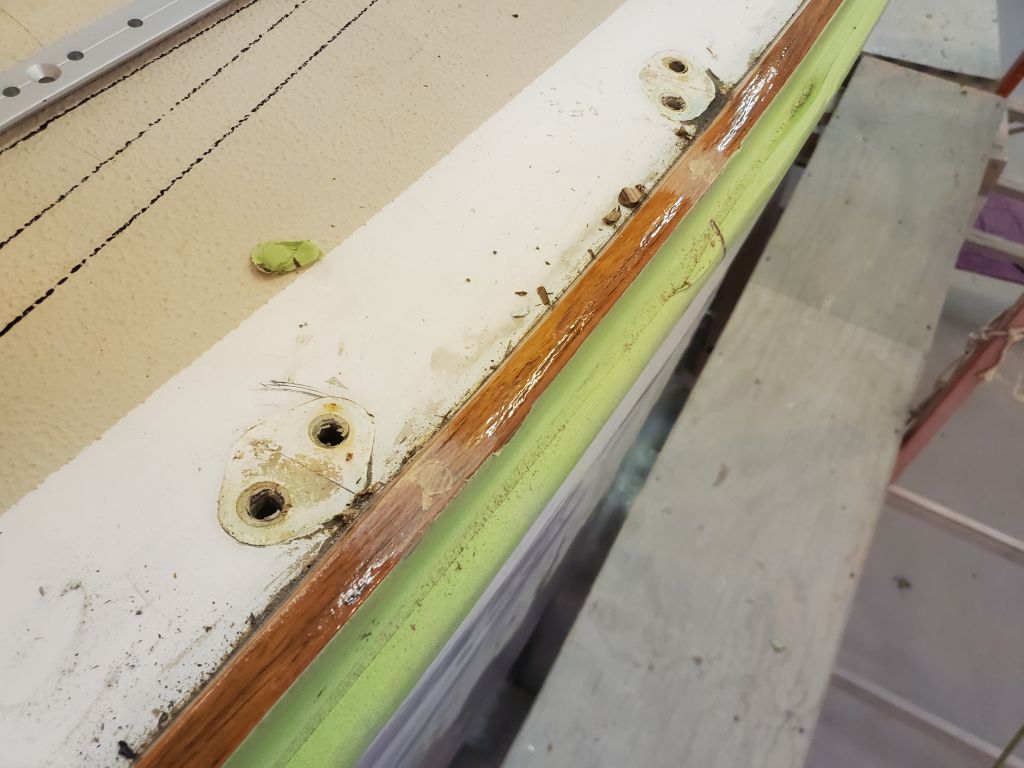
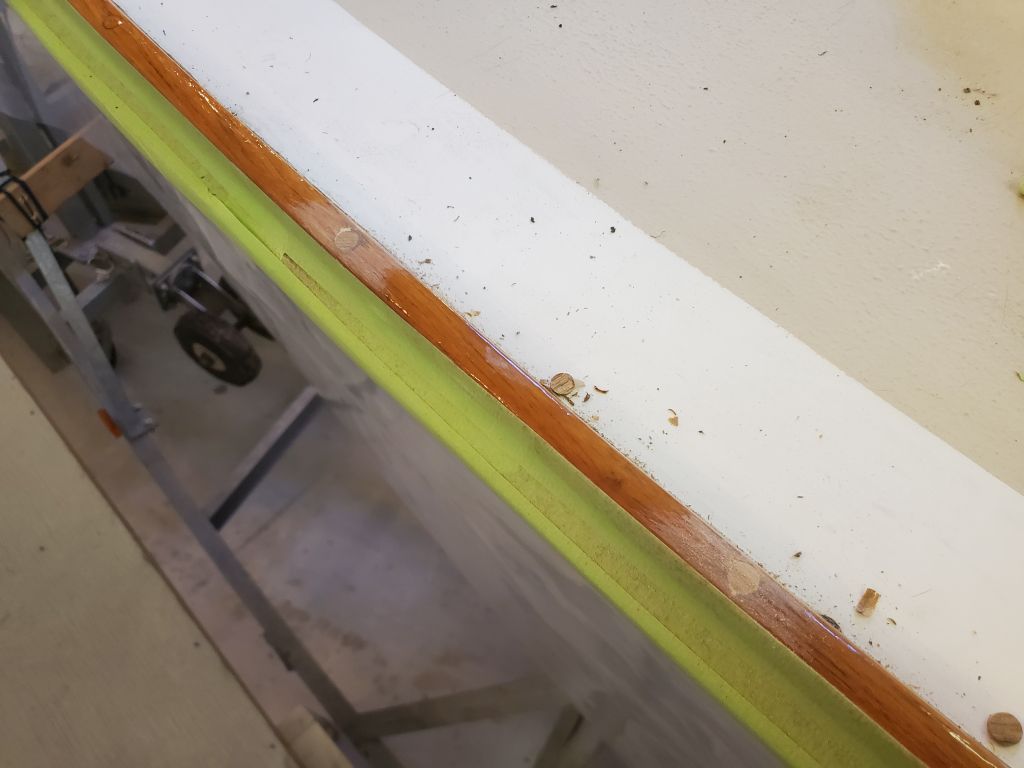
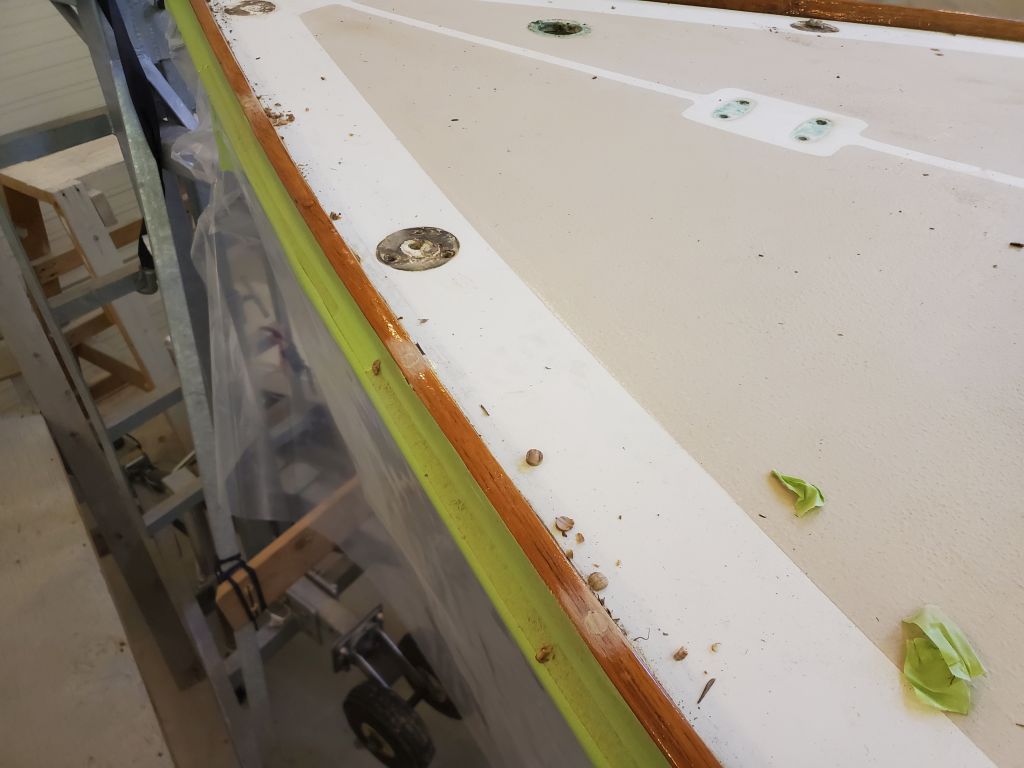
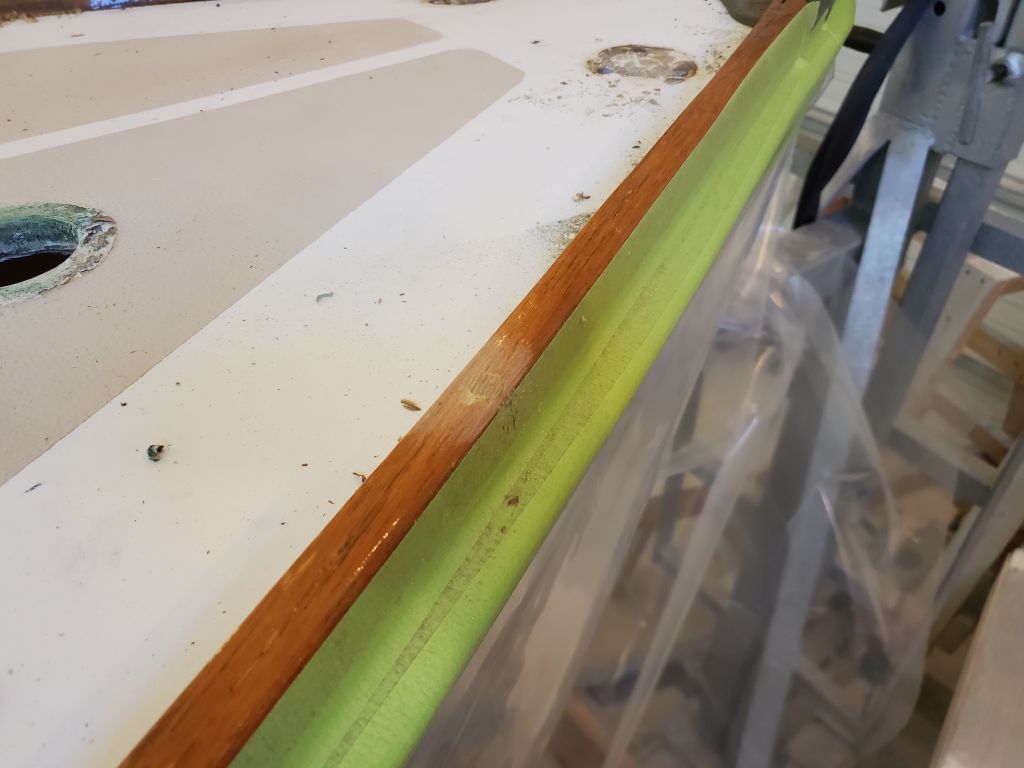
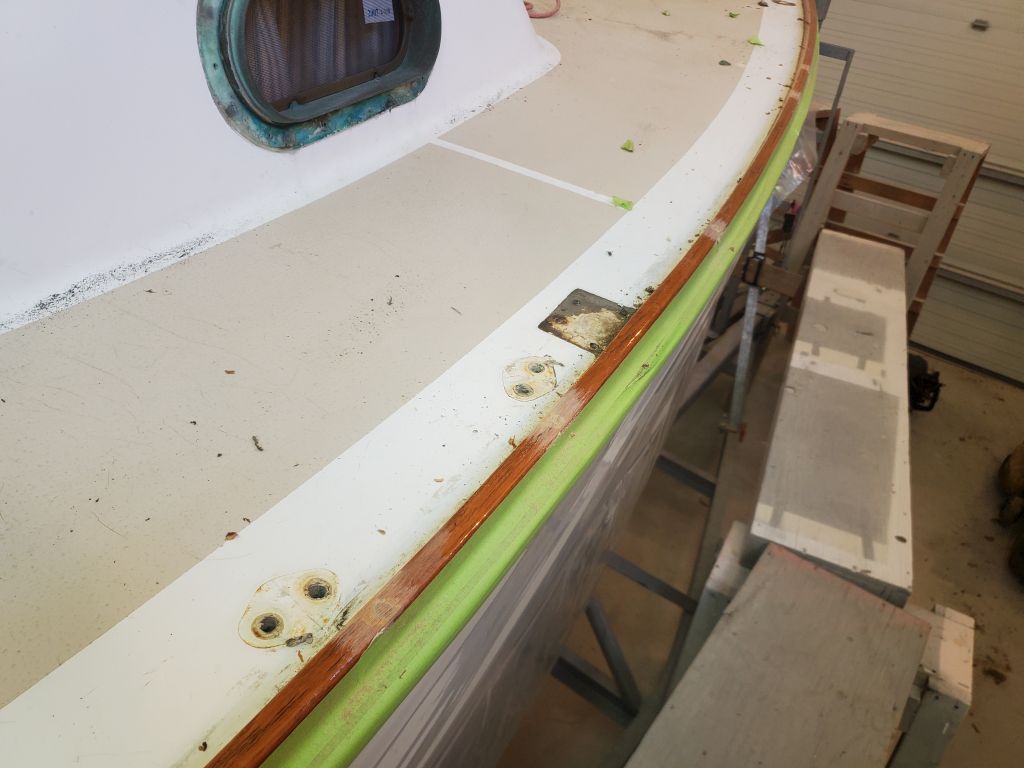
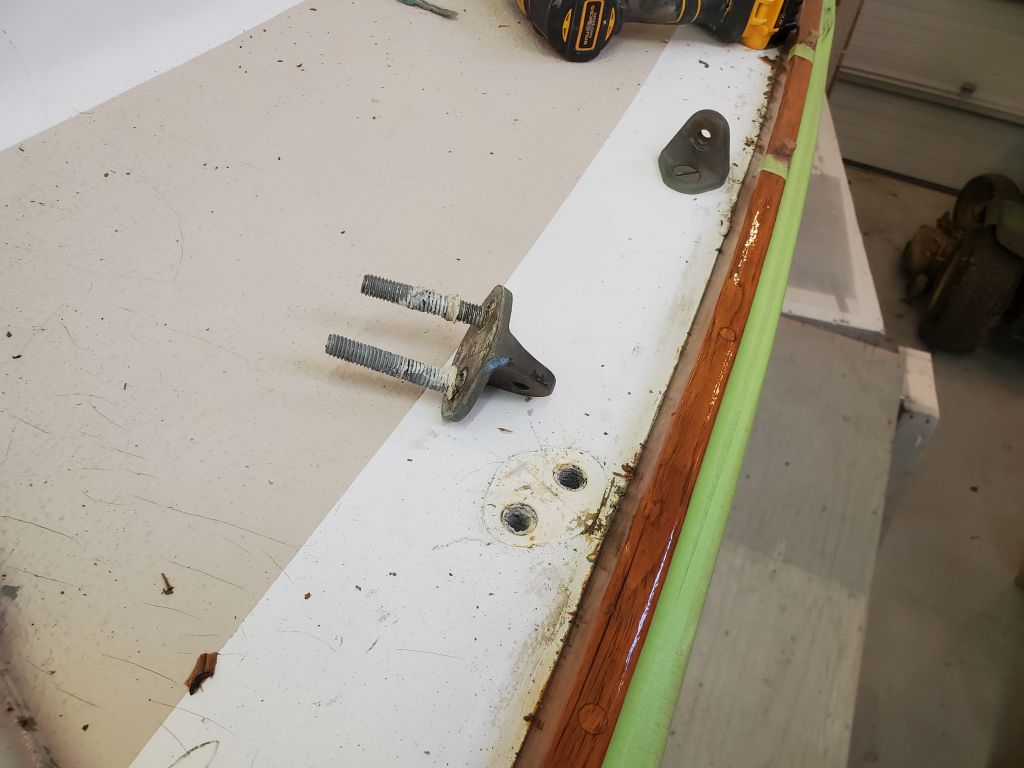
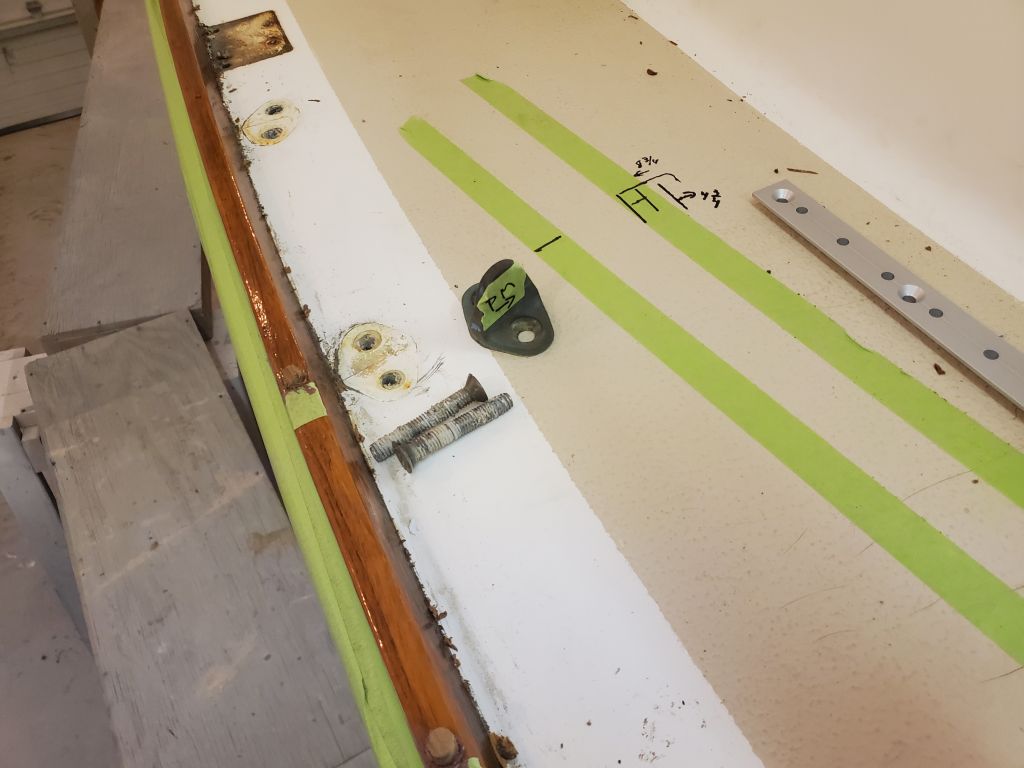
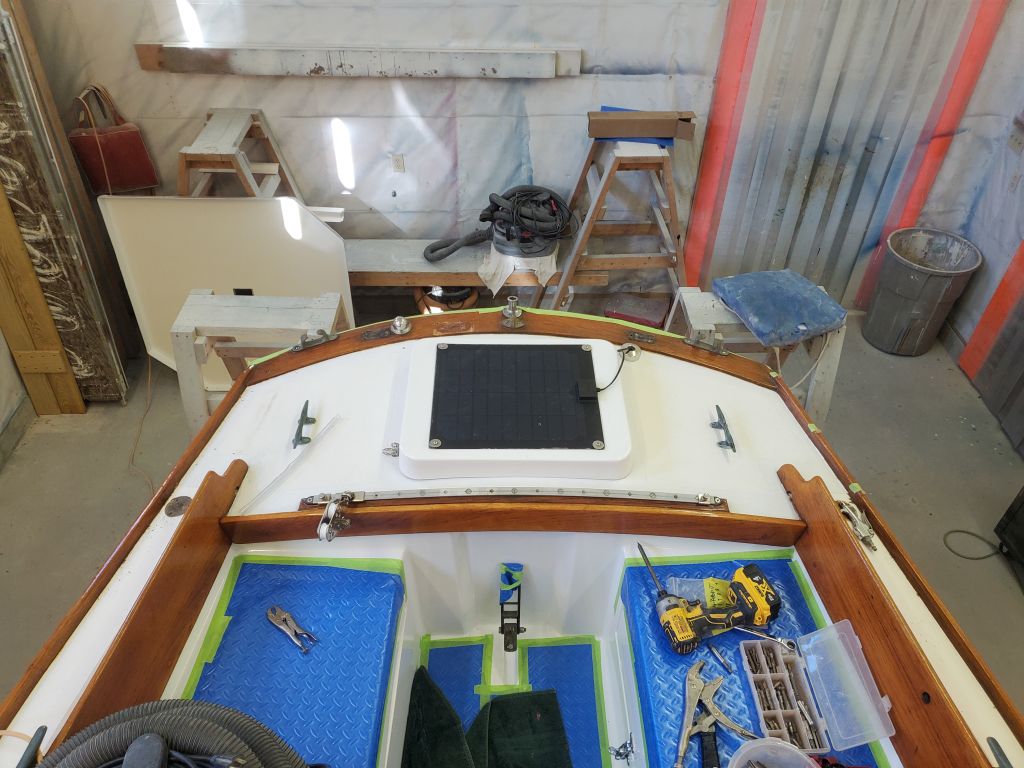
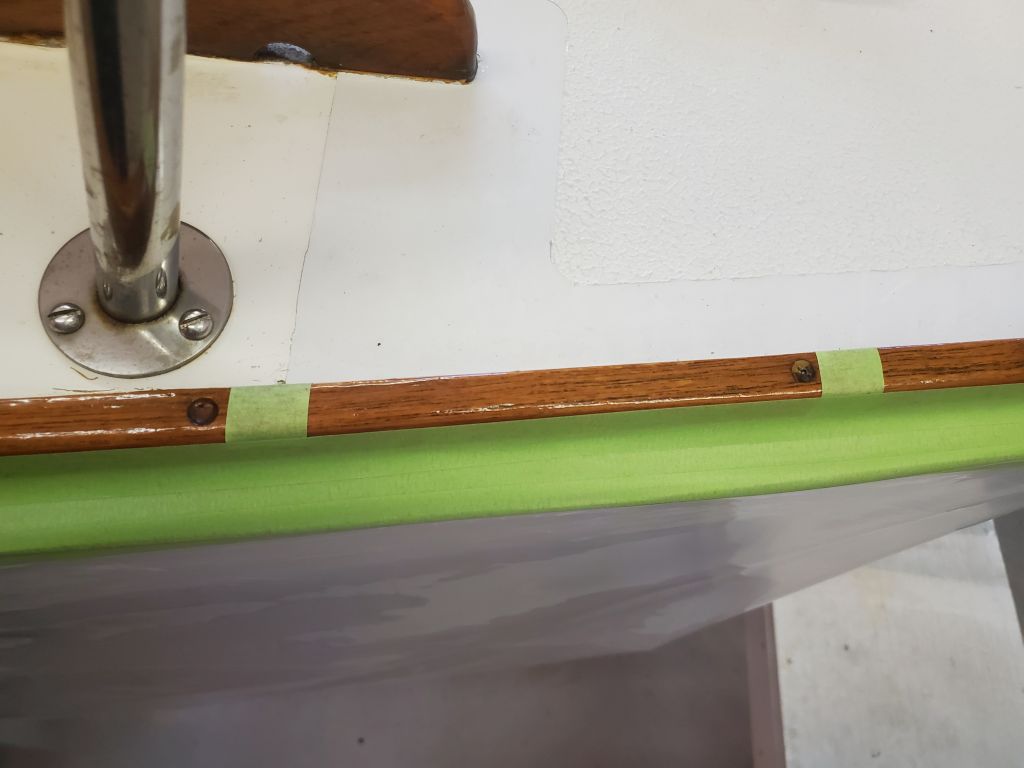
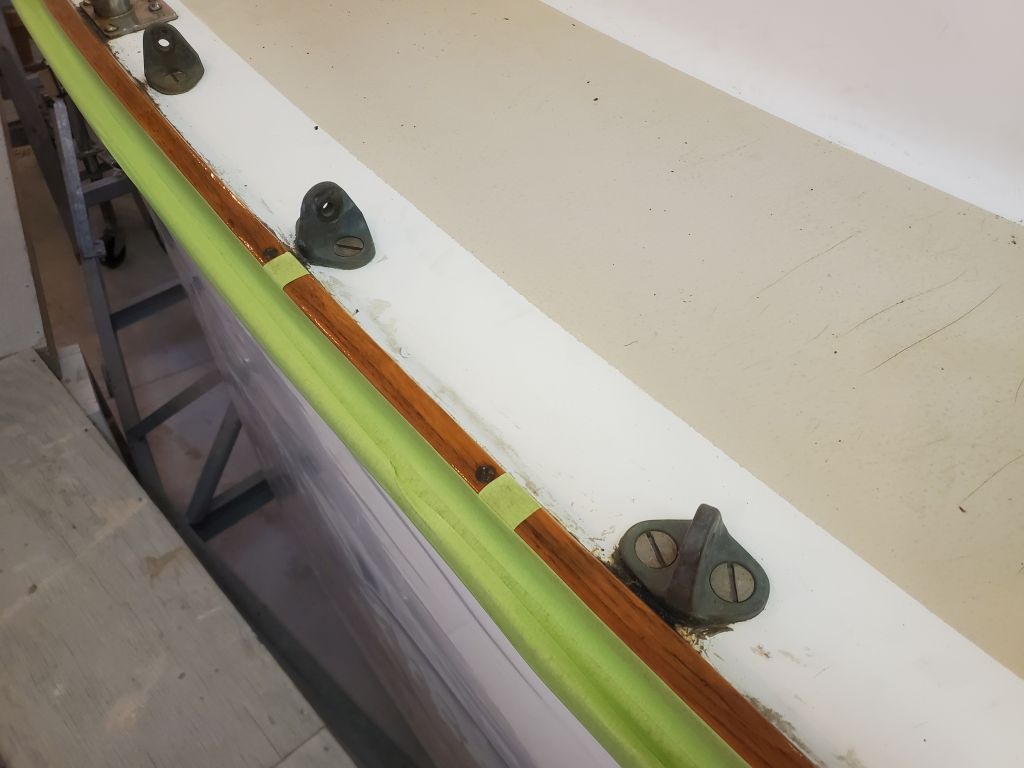
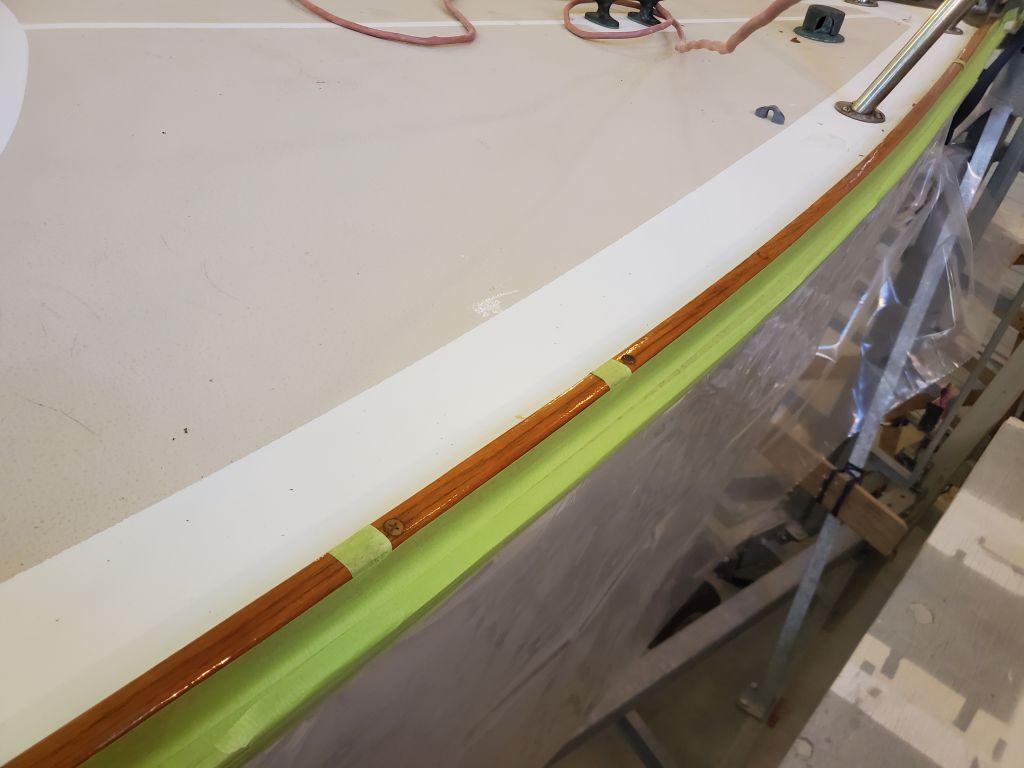
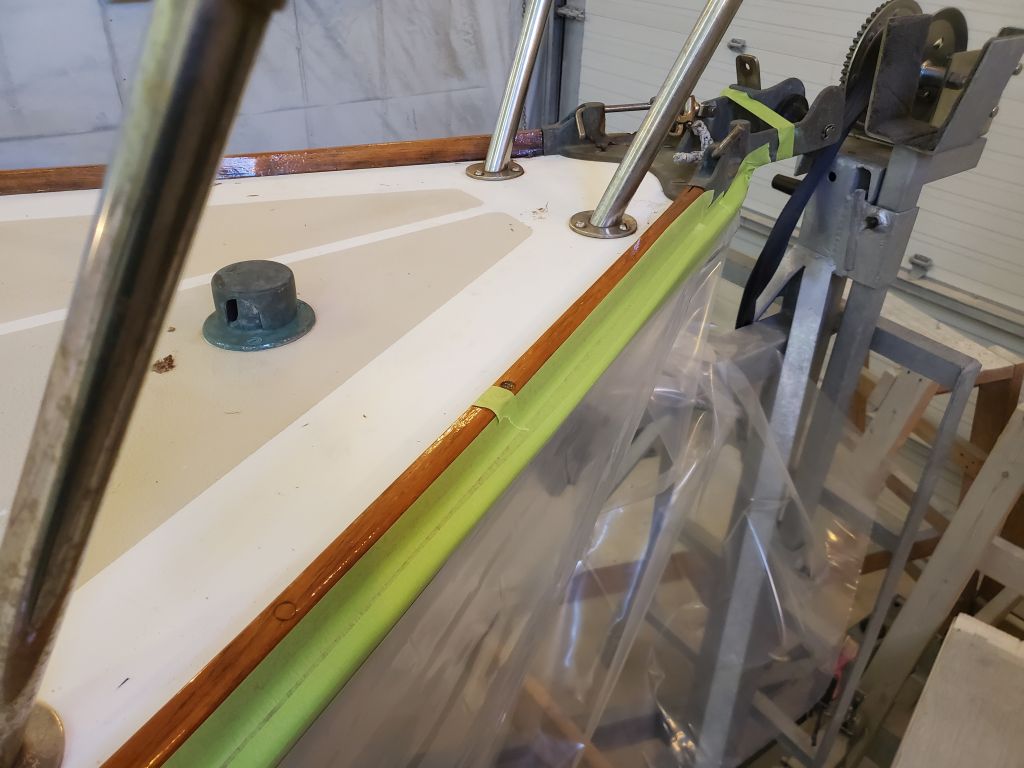
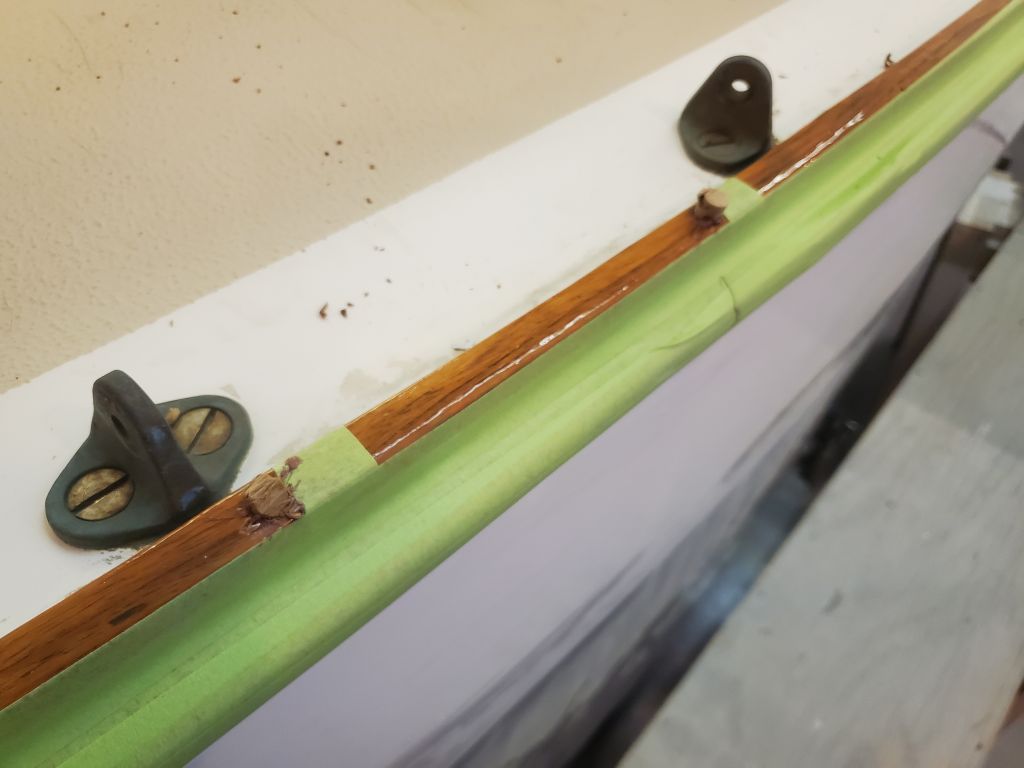
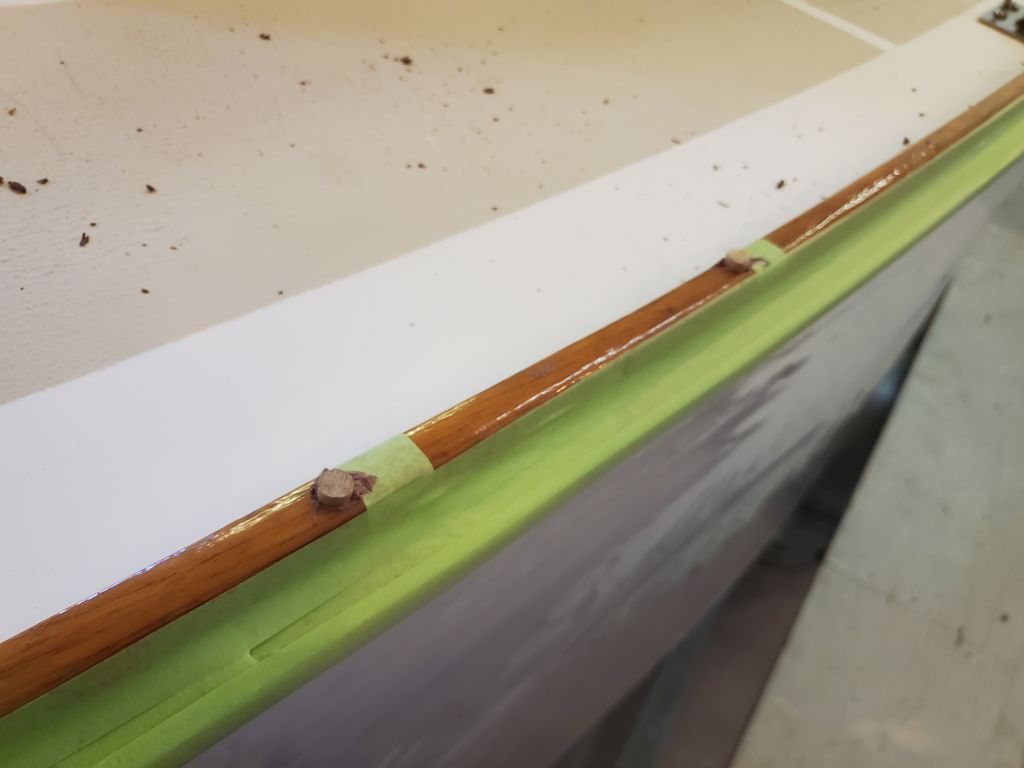
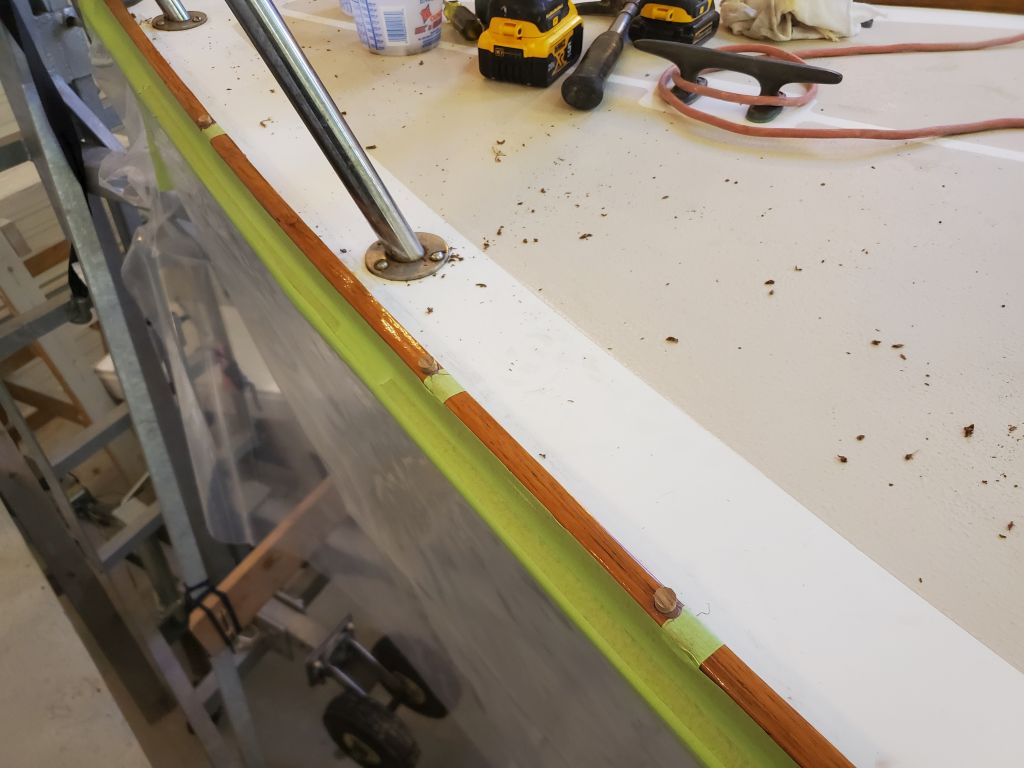
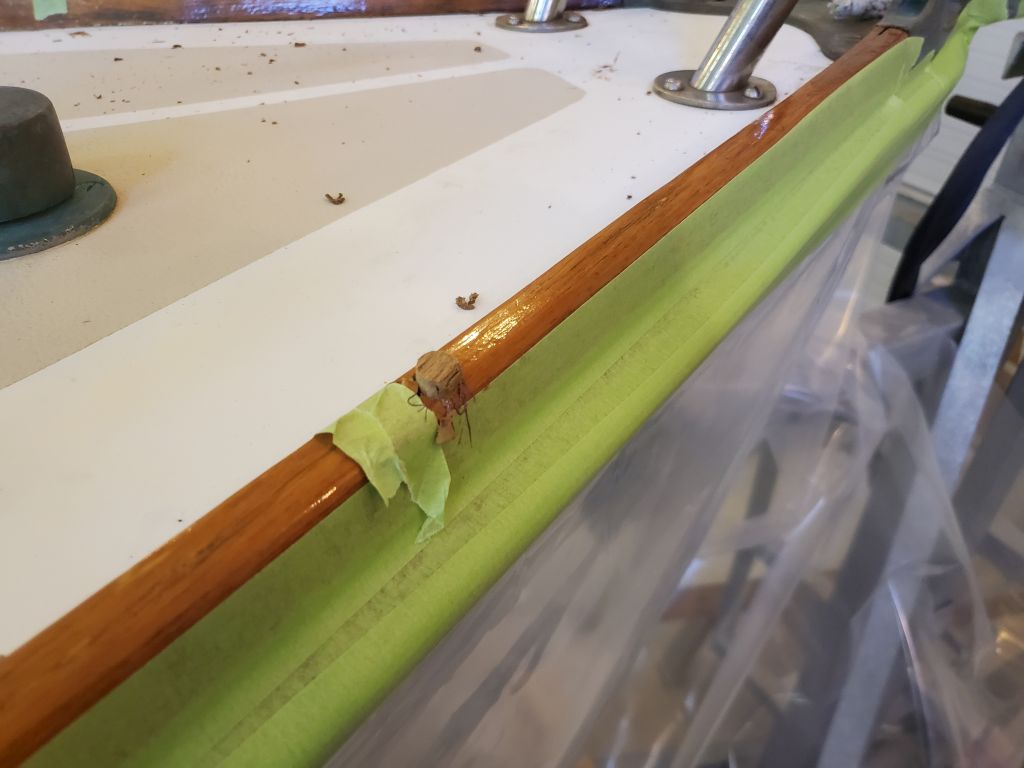
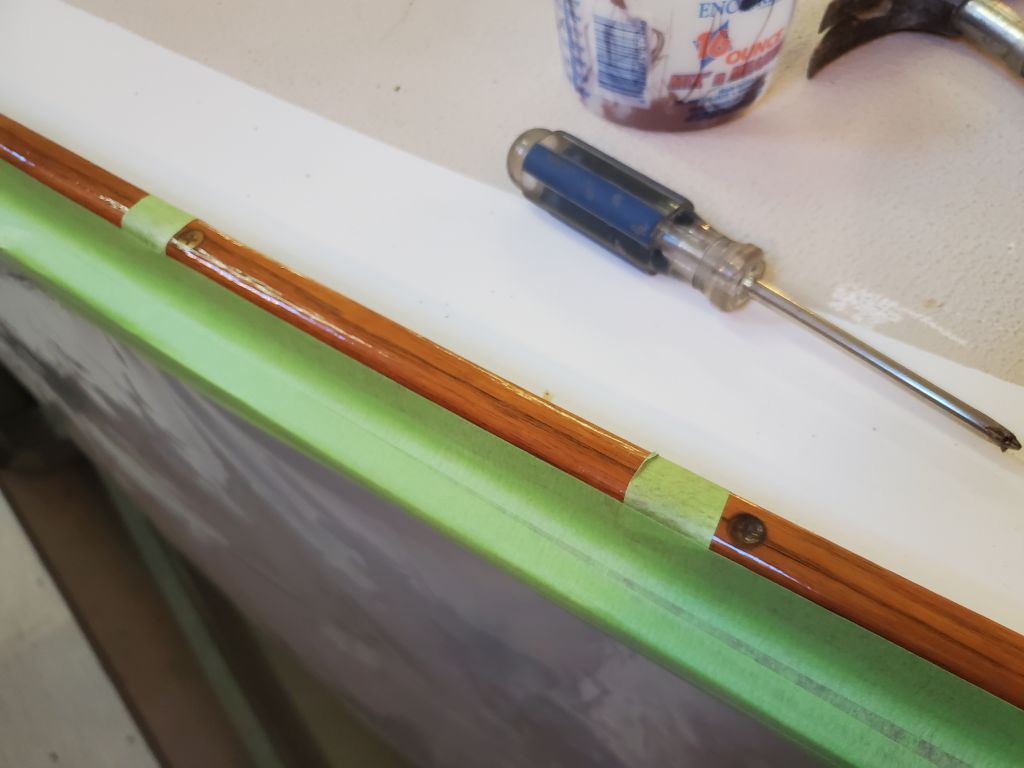
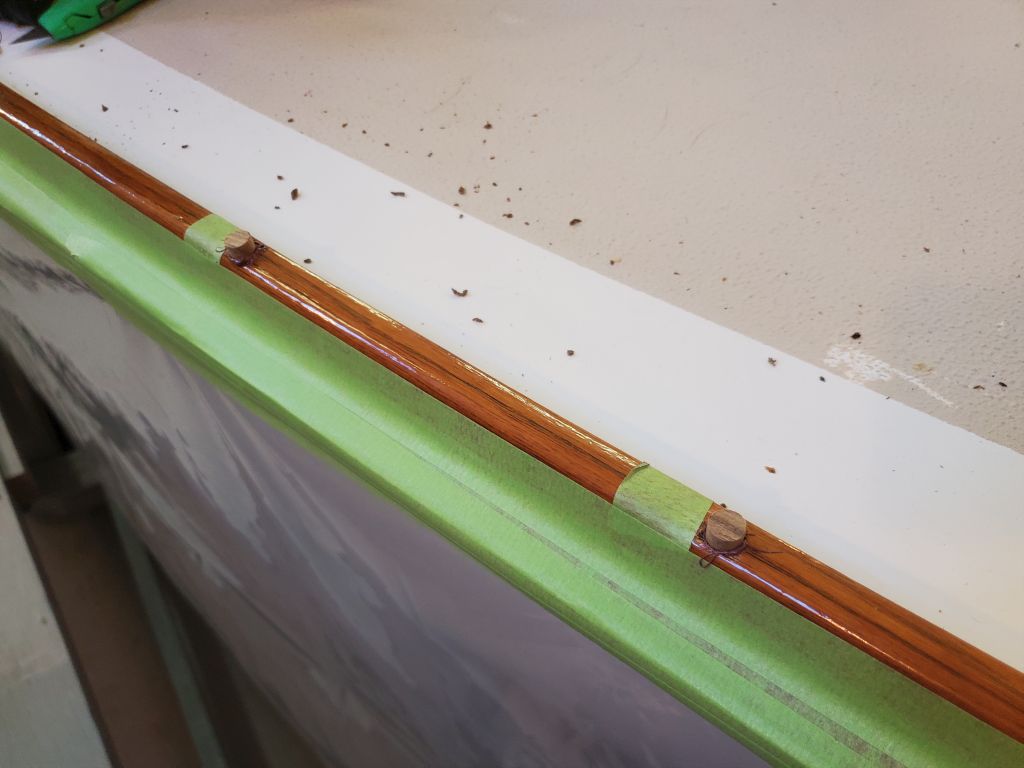
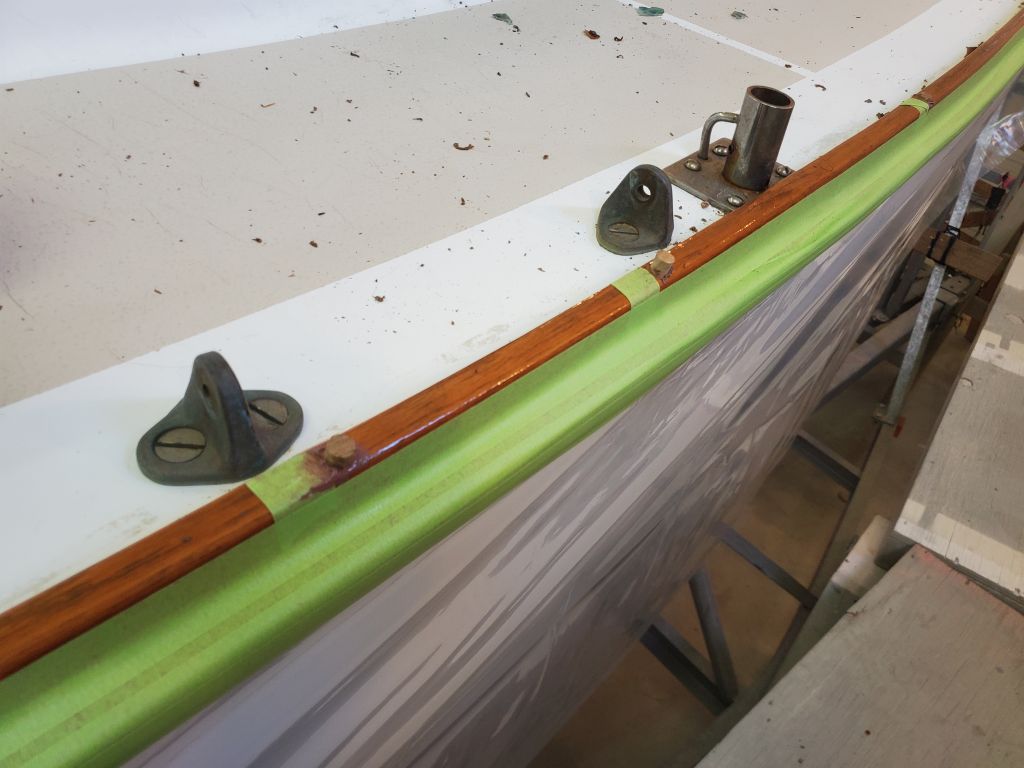
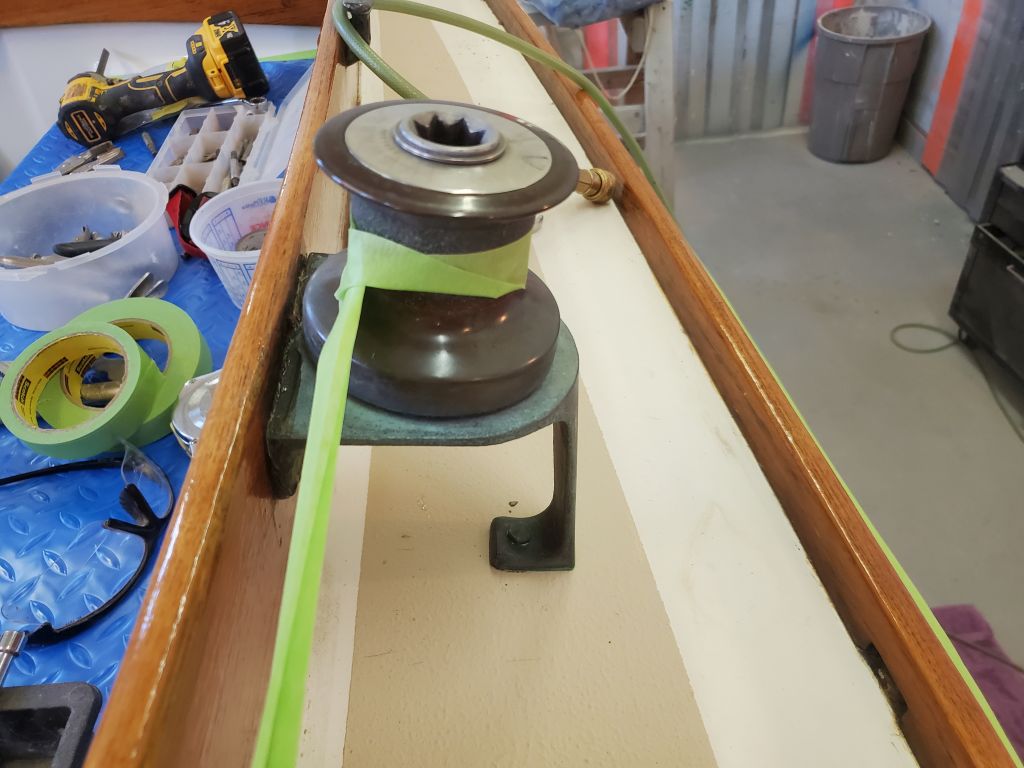
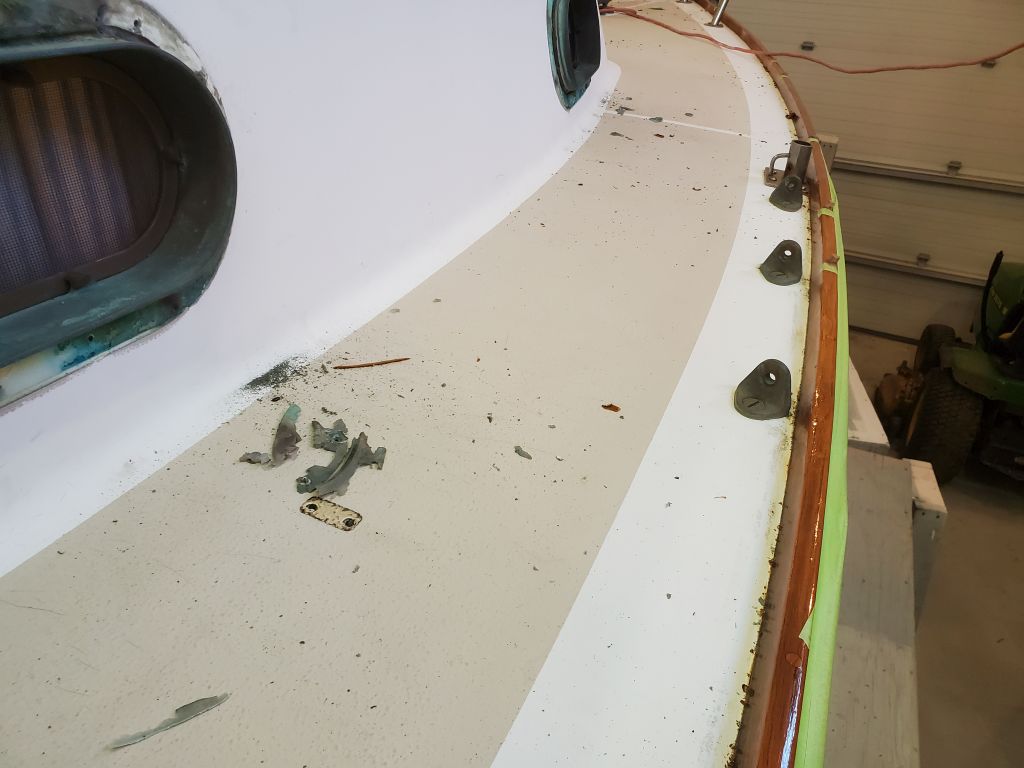
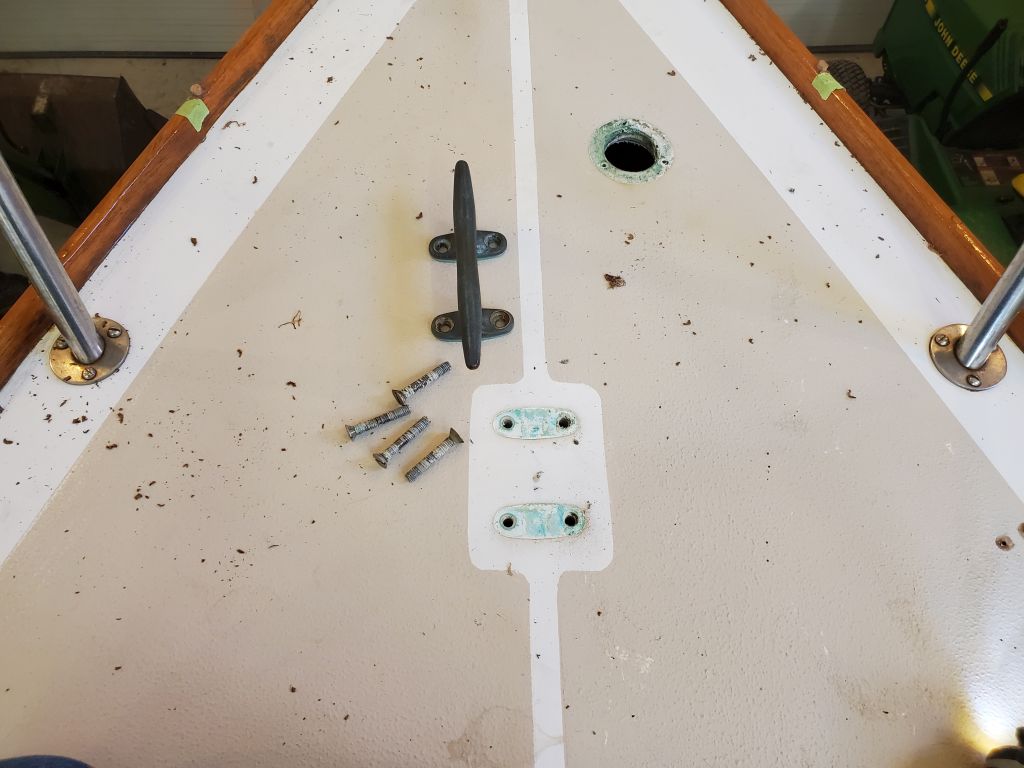
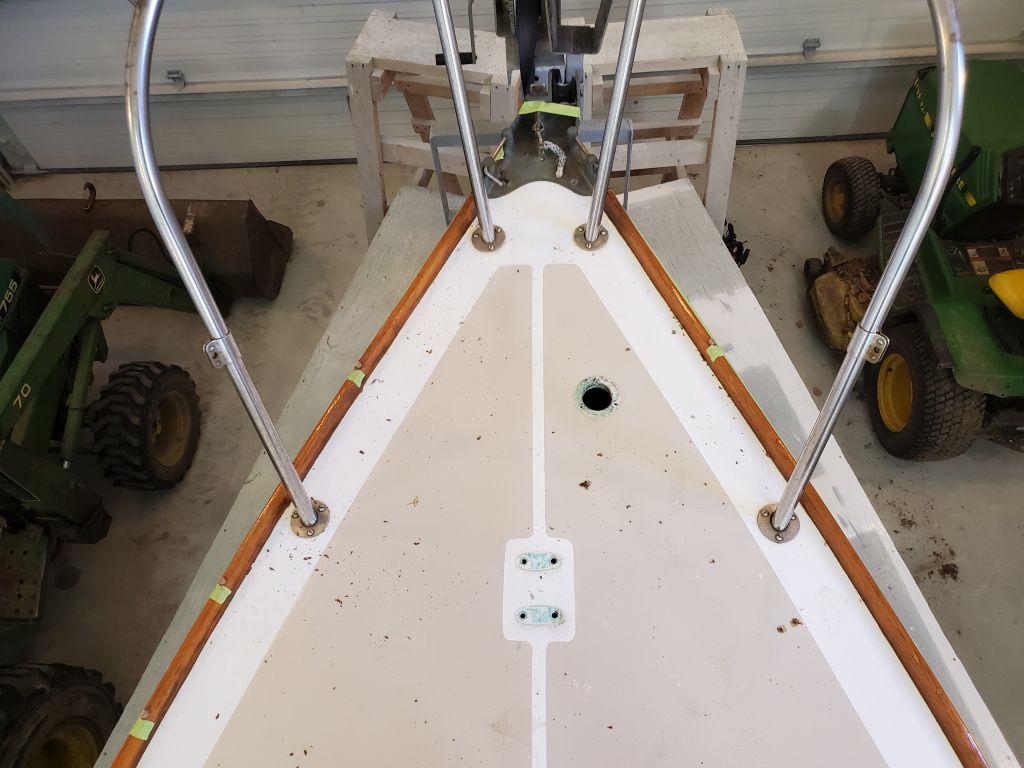
With the existing brightwork sanded and cleaned, my next step was to mask off around the wood as needed, on the windshield, helm area, engine box, around the handrails, forward hatch, and anchor platform.

After final preparations and tacking off, I applied a coat of varnish to all these areas on the boat, as well as to the loose hatches and trim pieces down in the shop.

Total time billed on this job today:  5.25 hours

0600 Weather Observation:  43°, clear, windy.  Forecast for the day:  Partly sunny, 53°

Skeedeen Phase 7-2

Wednesday

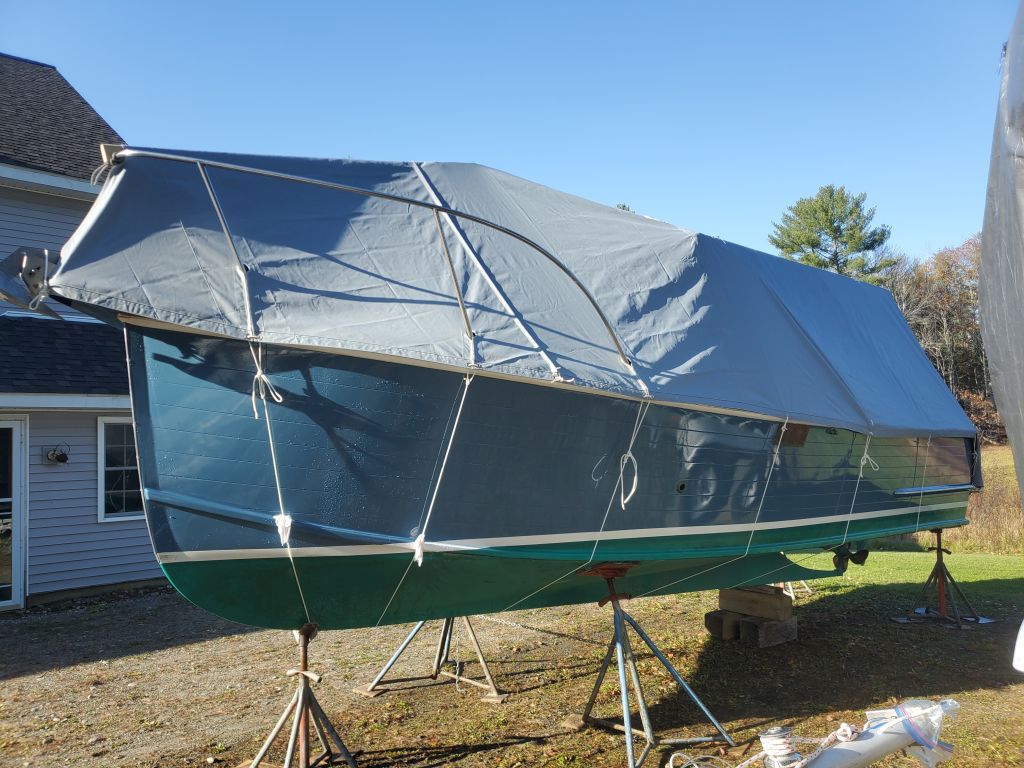
Jason was on hand during the morning to pattern the new top for the canvas enclosure.  After examining the old canvas, then making some minor adjustments to bring the existing frame back into symmetry, and set up properly for the new work, he prepared a new pattern from plastic material in the usual way, working forward to aft in sections to make an accurate pattern that, while so much gibberish to the uninitiated, would make sense to him back at his shop.  He preferred to do the side panels only after the top itself was built, so for now he focused only on the top.

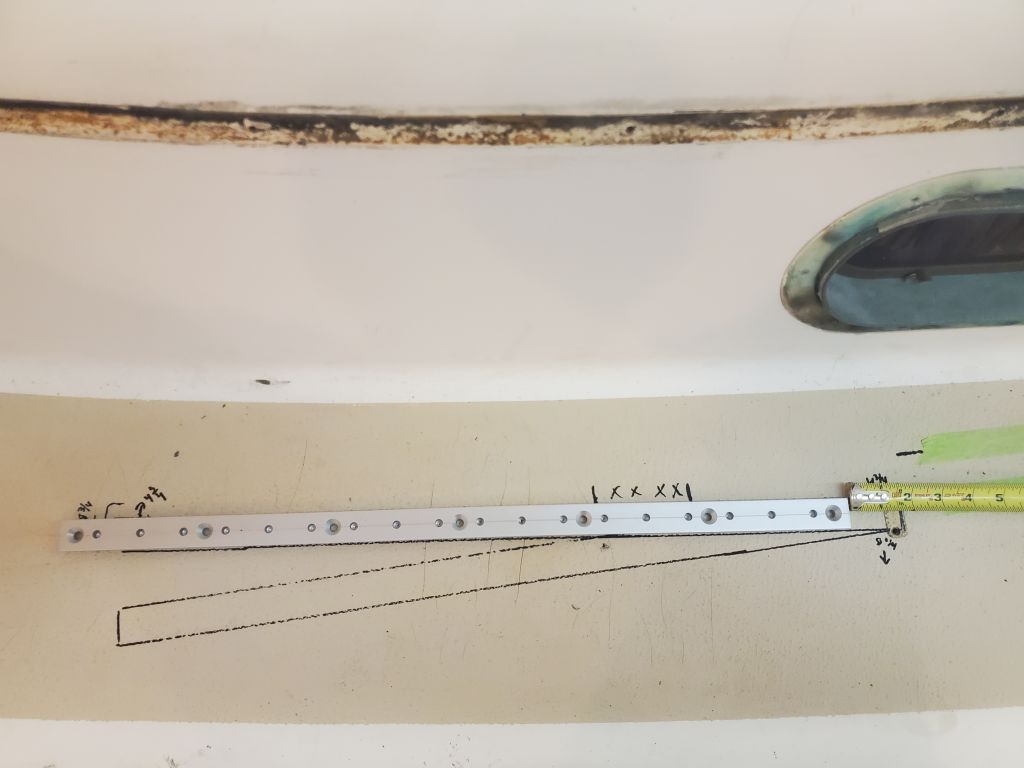
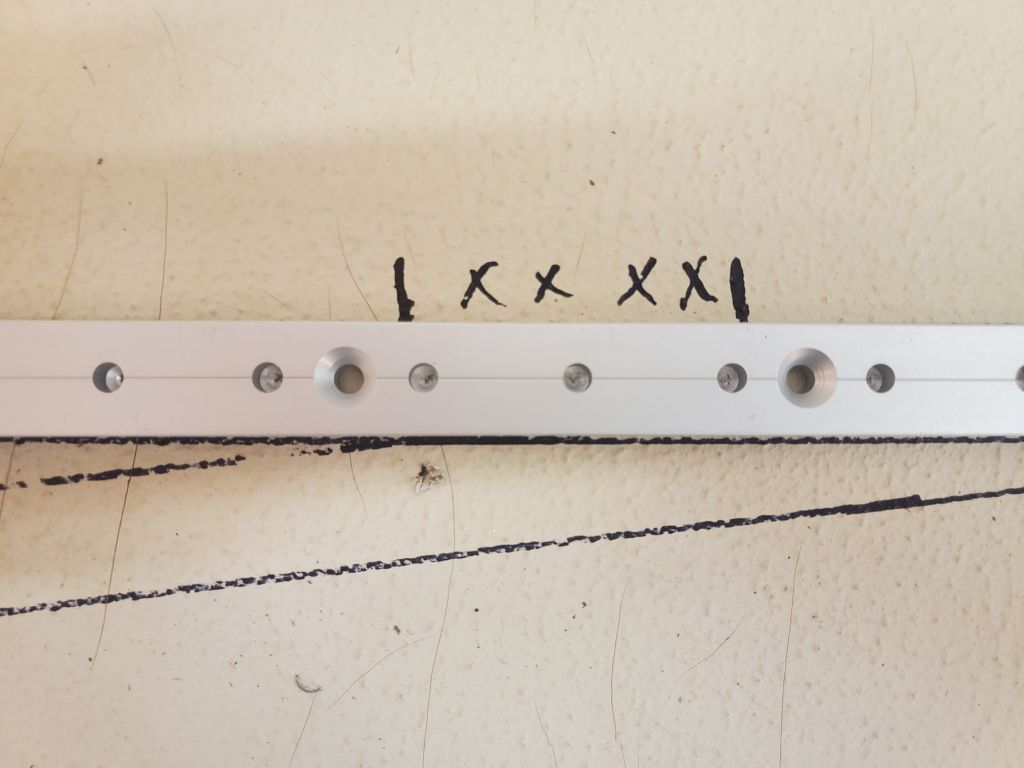
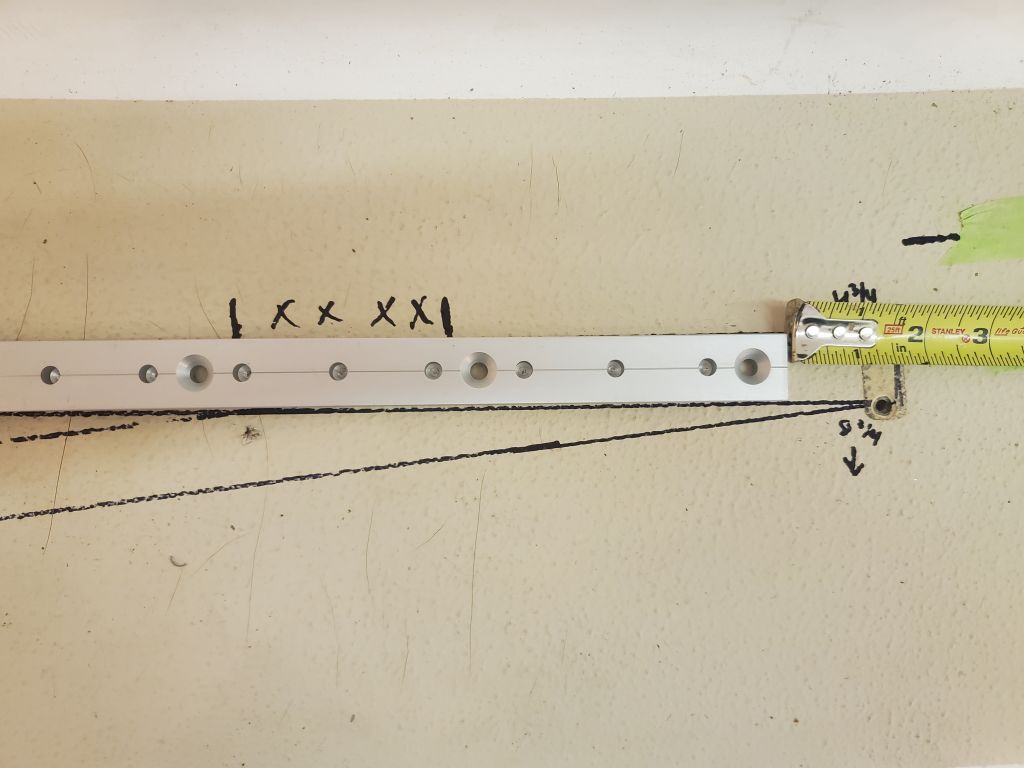
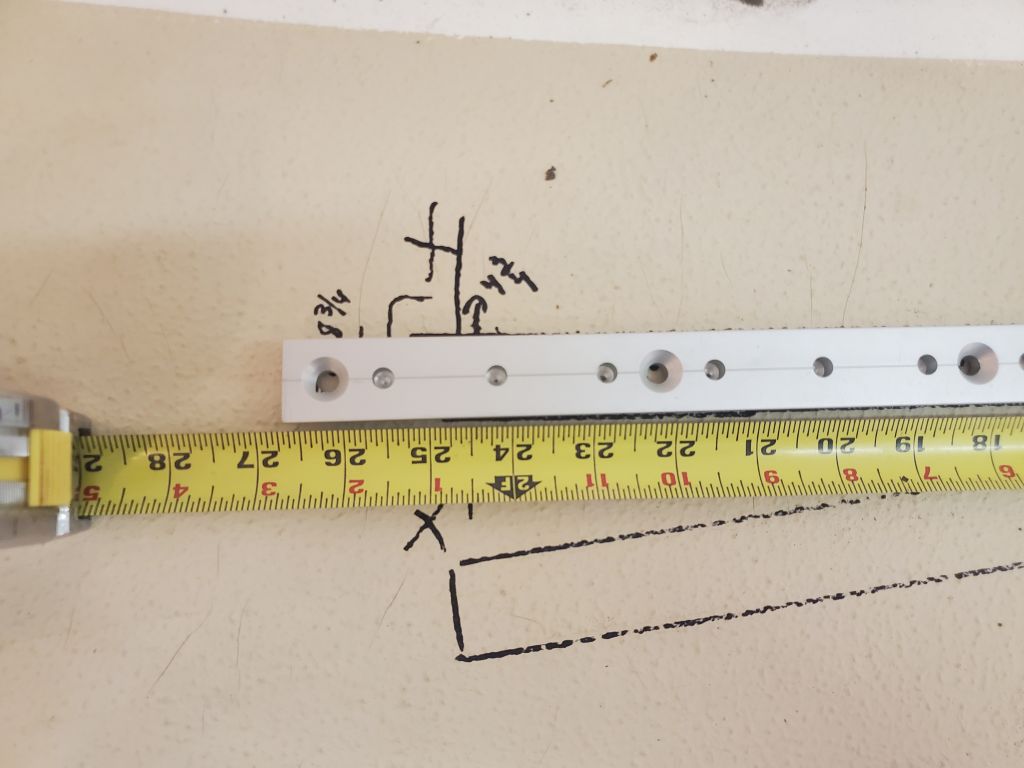
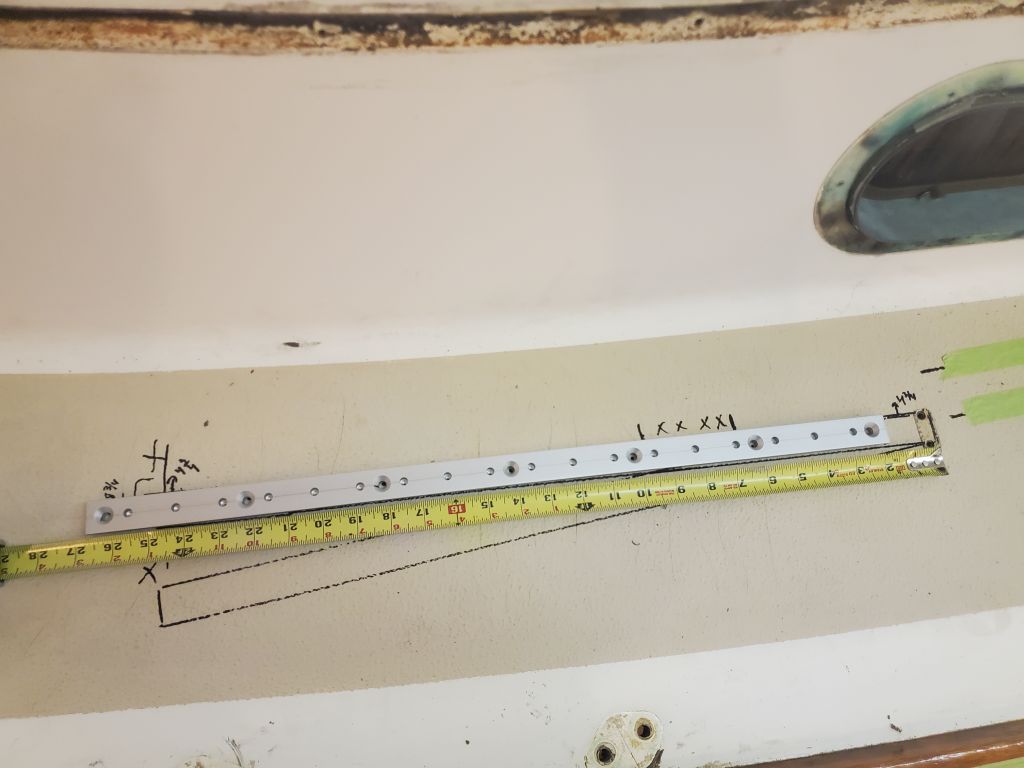
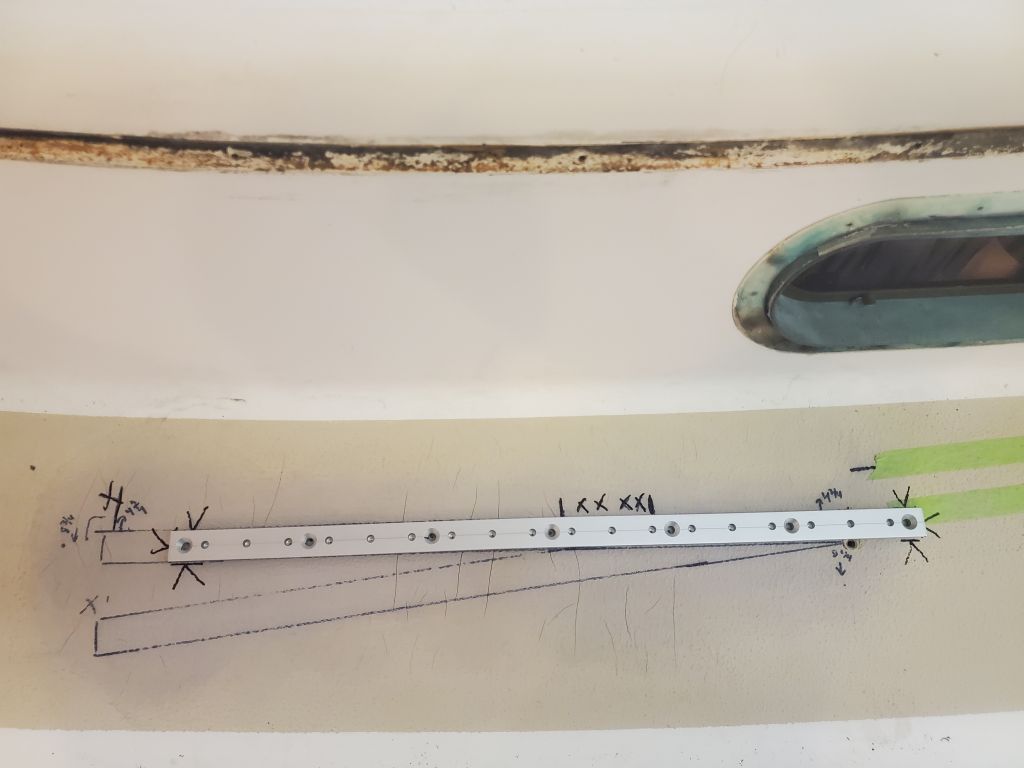
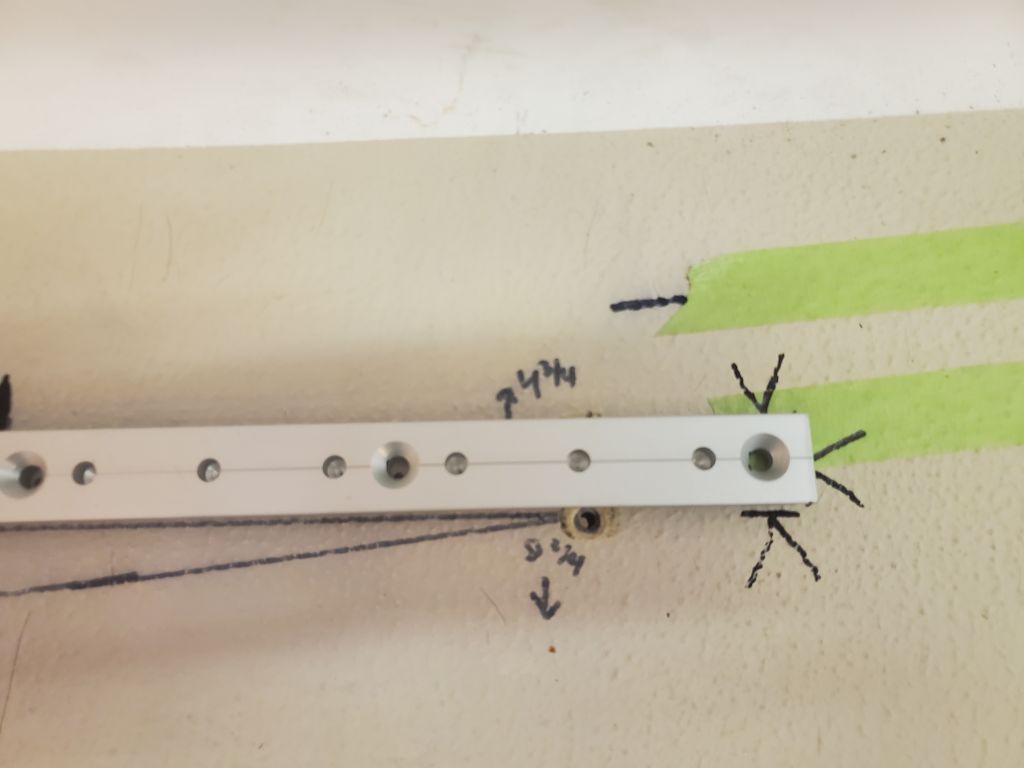
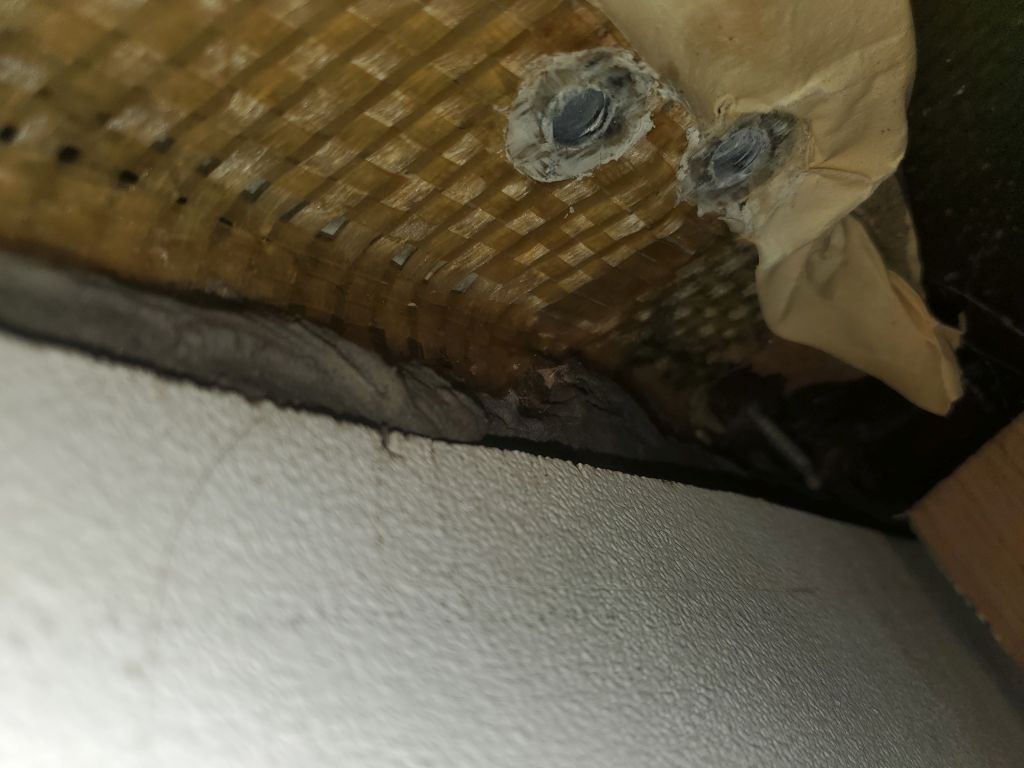
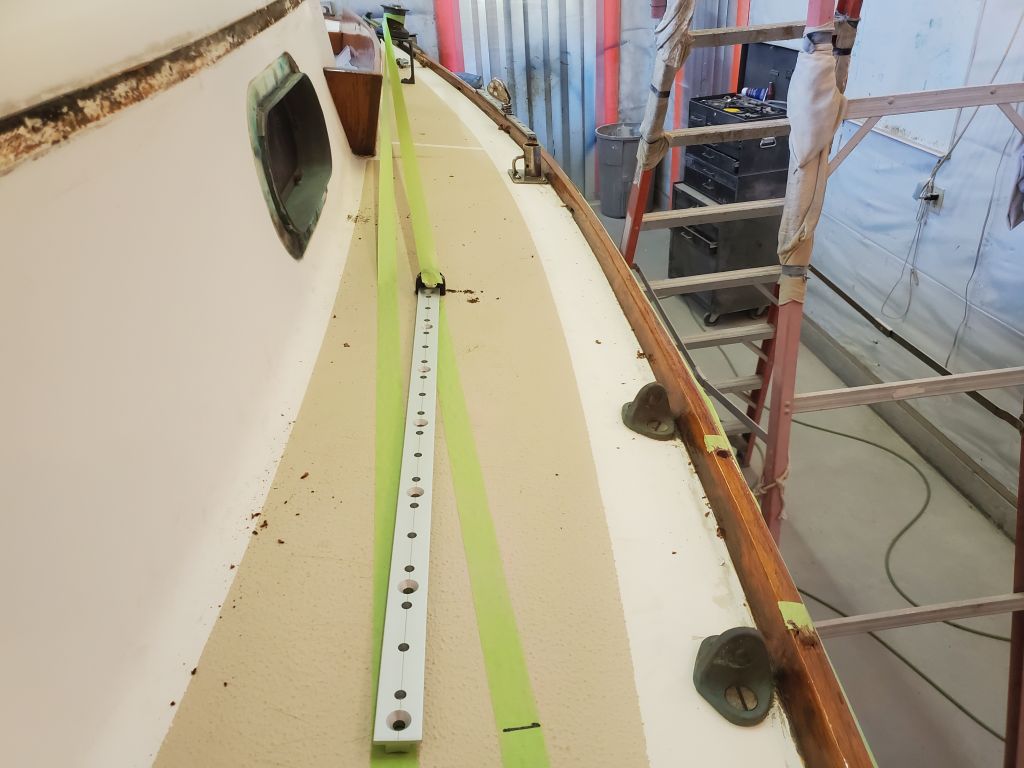
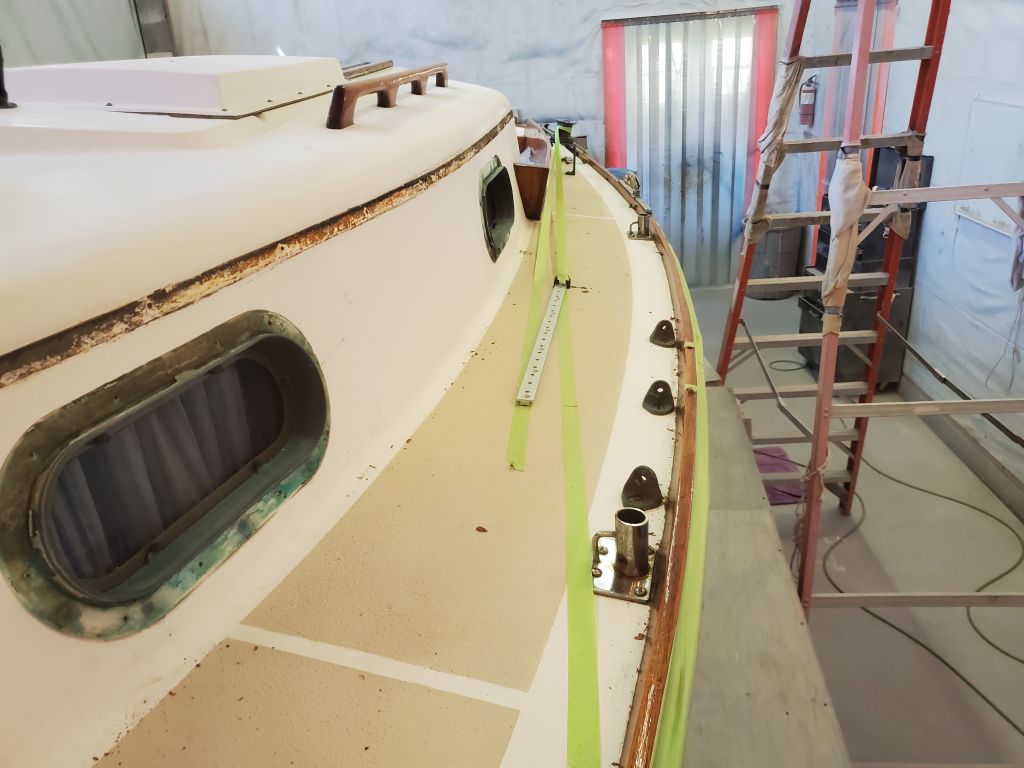
The old top had a problem where the bimini ended and the side curtains zipped on, in that the inherent tension in the top, and the position of the break, caused the top to curl when the side panels were removed (as they often were).  The owner requested that we try and address this issue, so to that end Jason roughed out a new line, shown here in a black dash mark, where the new top should end, just below the curves of the frame and less affected by the design and tension of the top, while not so low as to look strange.

Meanwhile, I continued with my own tasks with the brightwork, beginning by disassembling as needed the companionway doors and hatch, then sanding all the loose pieces to prepare them for maintenance coats.  The existing coating was in good condition on all these parts.  I cleaned and, as needed, masked the parts and set them aside to await delivery of my new varnish supply.

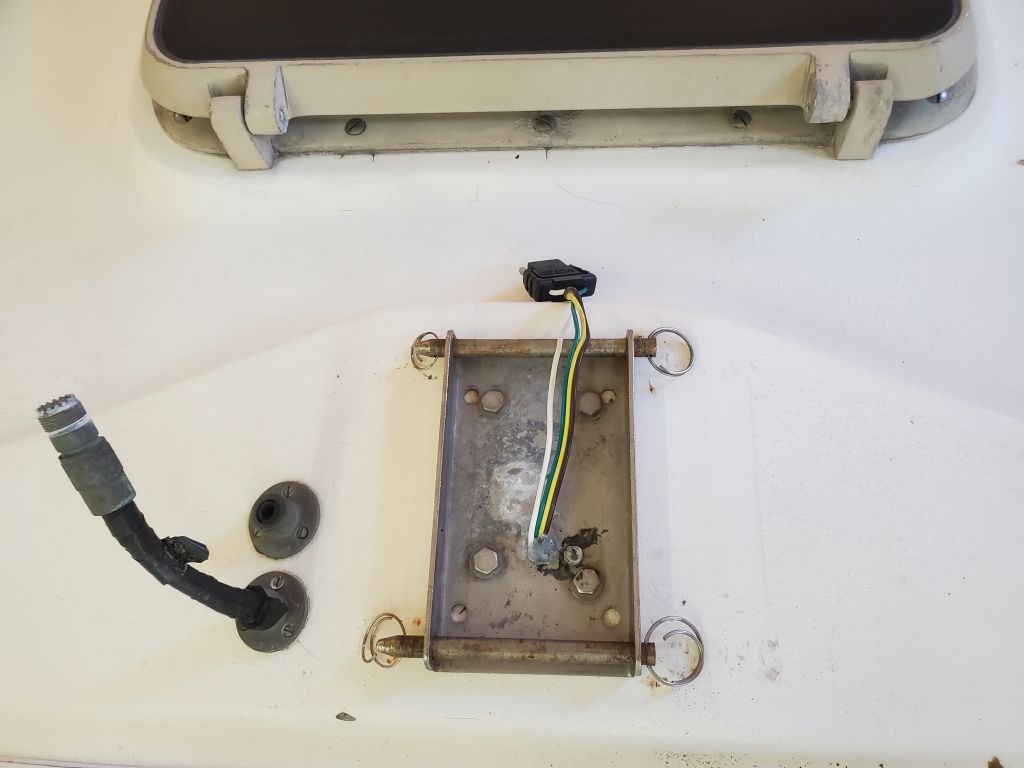
Once Jason was finished with the pattern, I could get back to work on the windshield and other on-board brightwork, removing the remaining hardware and sanding and cleaning all the woodwork.  Most of the existing coating was in good condition, but the windshield, as usual, had a few places near the seams where the varnish had lifted in small areas, and the trim atop the engine box had suffered when the box was moved around repeatedly during some engine work over the past year.  These areas required a bit more prep, and would require additional varnish to rebuild.  By the end of the day, all the wood was prepared, vacuumed, and solvent-washed, and ready next for masking and the first of the maintenance coats.

Total time billed on this job today:  6.25 hours

0600 Weather Observation:  Cloudy, windy, showers, 46°.  Forecast for the day:  Rain, windy, 51°

Arietta Phase 2-1

Tuesday

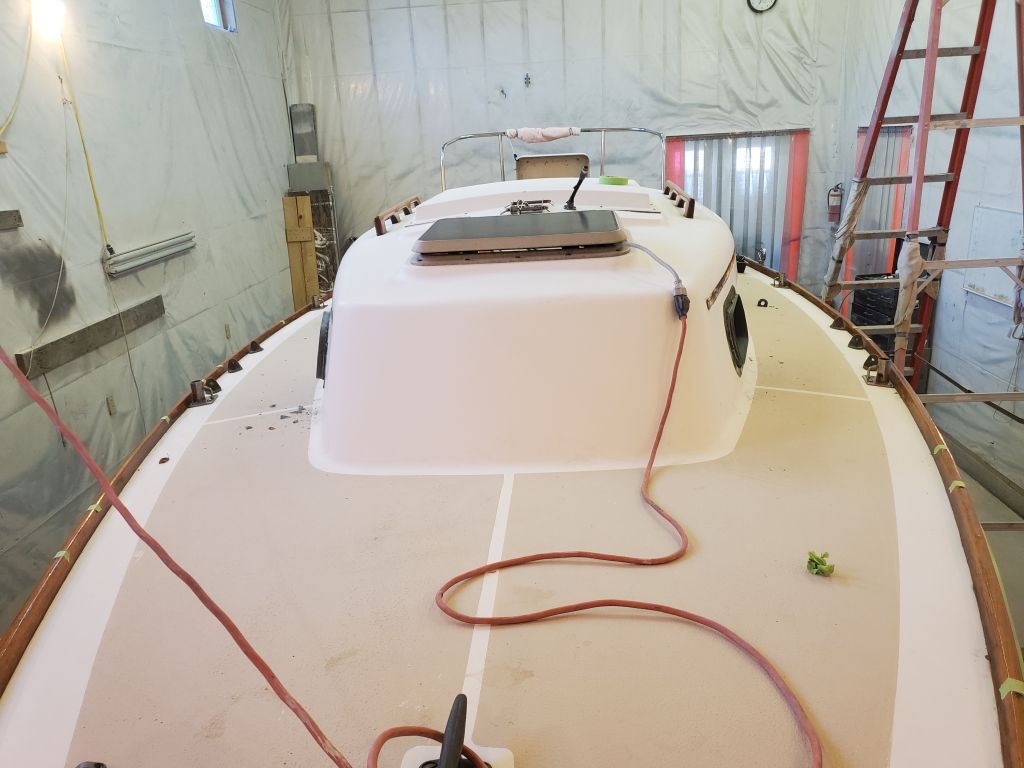
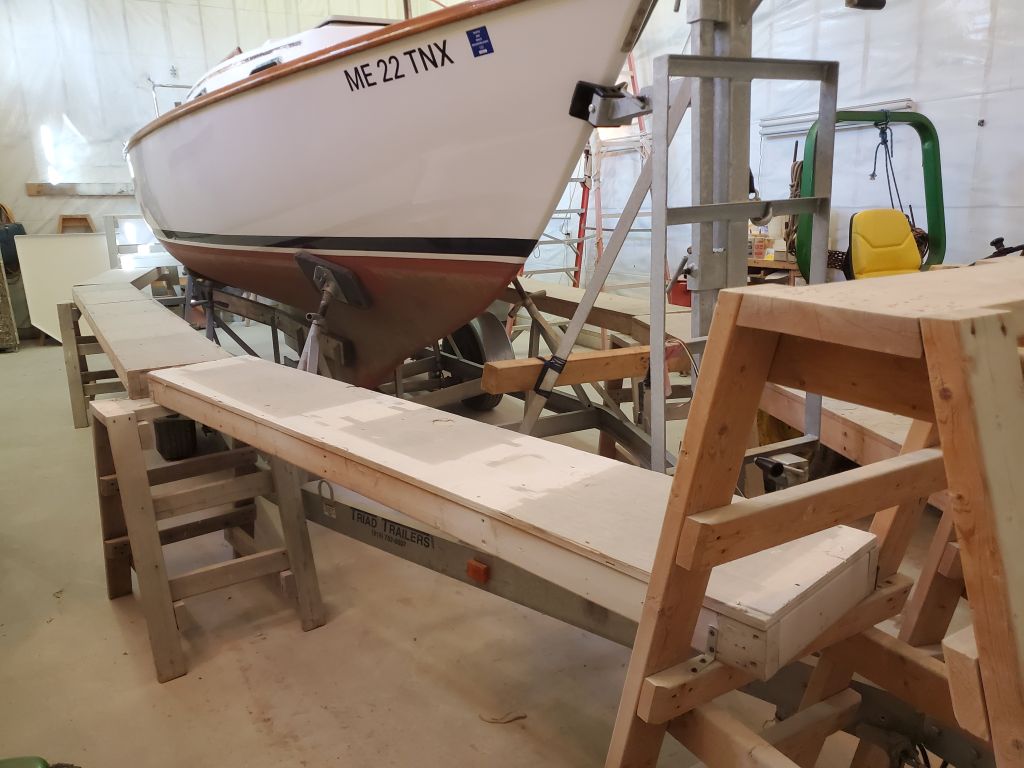
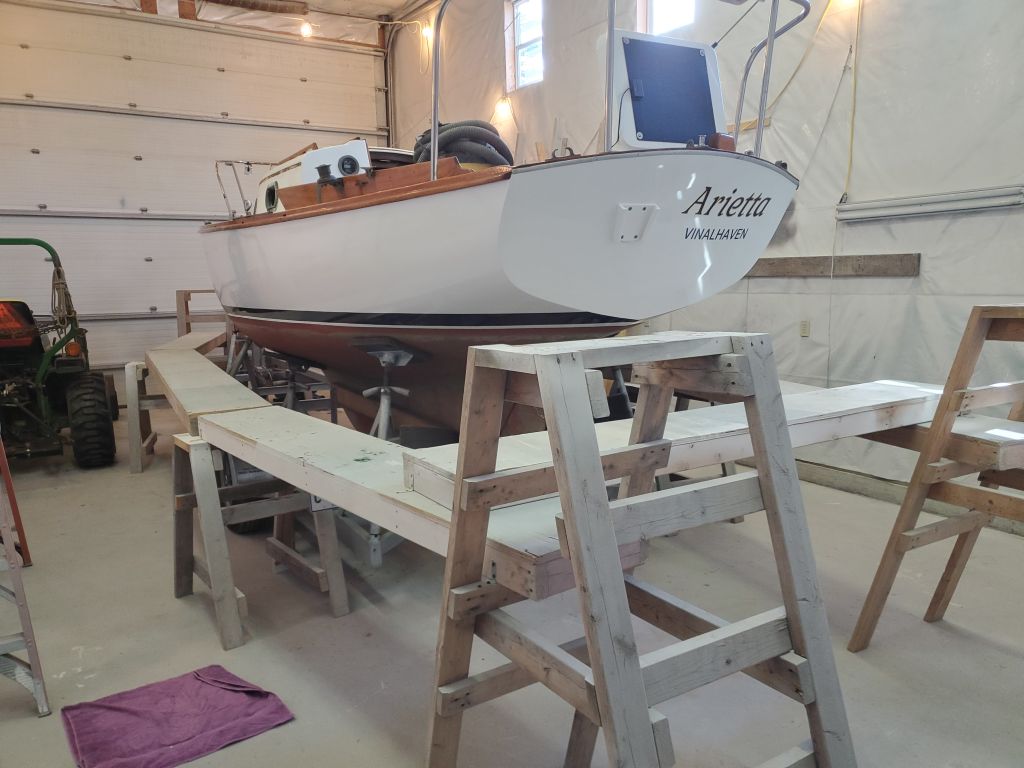
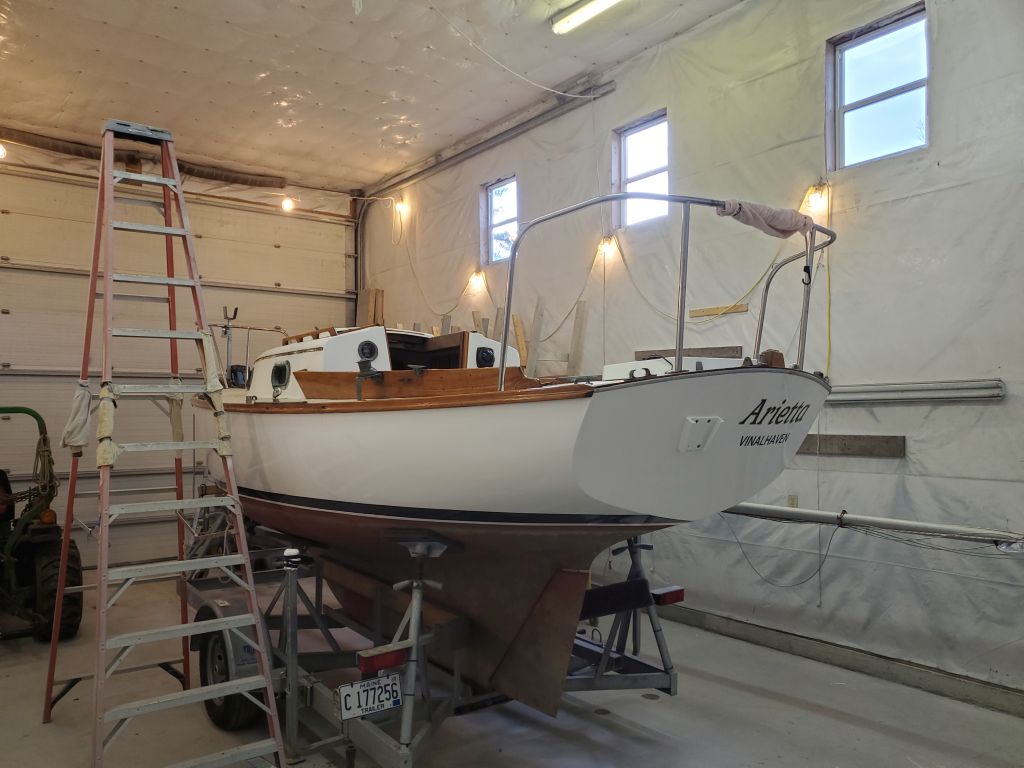
Arietta was back for another round of work, this time focused mainly on completing the remainder of the deck refinishing, after completing the cockpit and hull phase last year.  After clearing space in the shop following summer break, I moved her indoors and prepared to get to work.

The first order of business this season was to get the preliminary work done on a new winter cover, which Jason, my canvas subcontractor, would be taking care of.  The new cover would use the mast as a ridgepole, and until the initial fitting was done, the mast had to stay in place on deck.  After an initial consultation and some basic measuring, Jason had the information he needed to build a rough blank for the cover, and now I’d wait till that was complete and patterned before I could get into the bulk of the deck work.

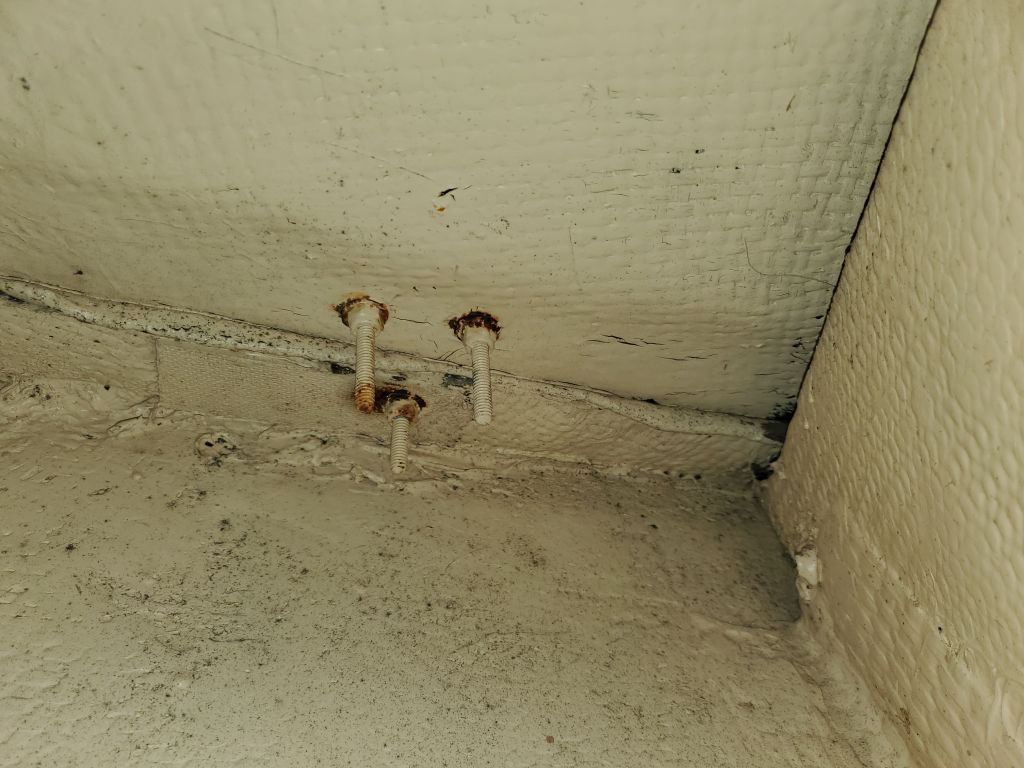
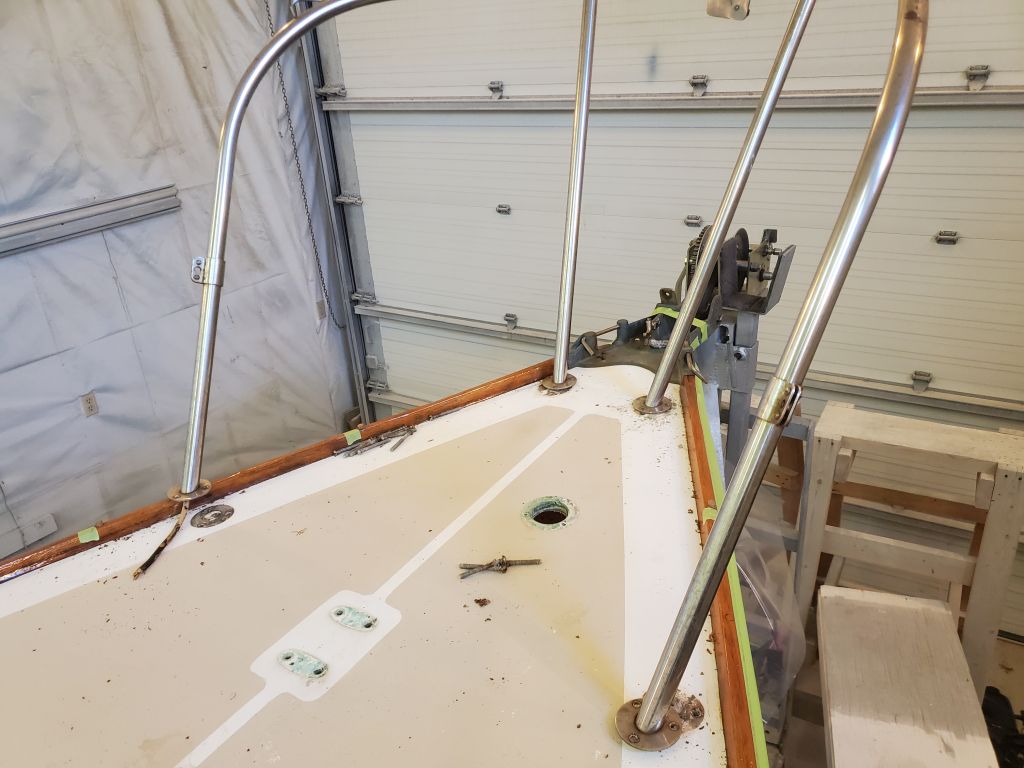
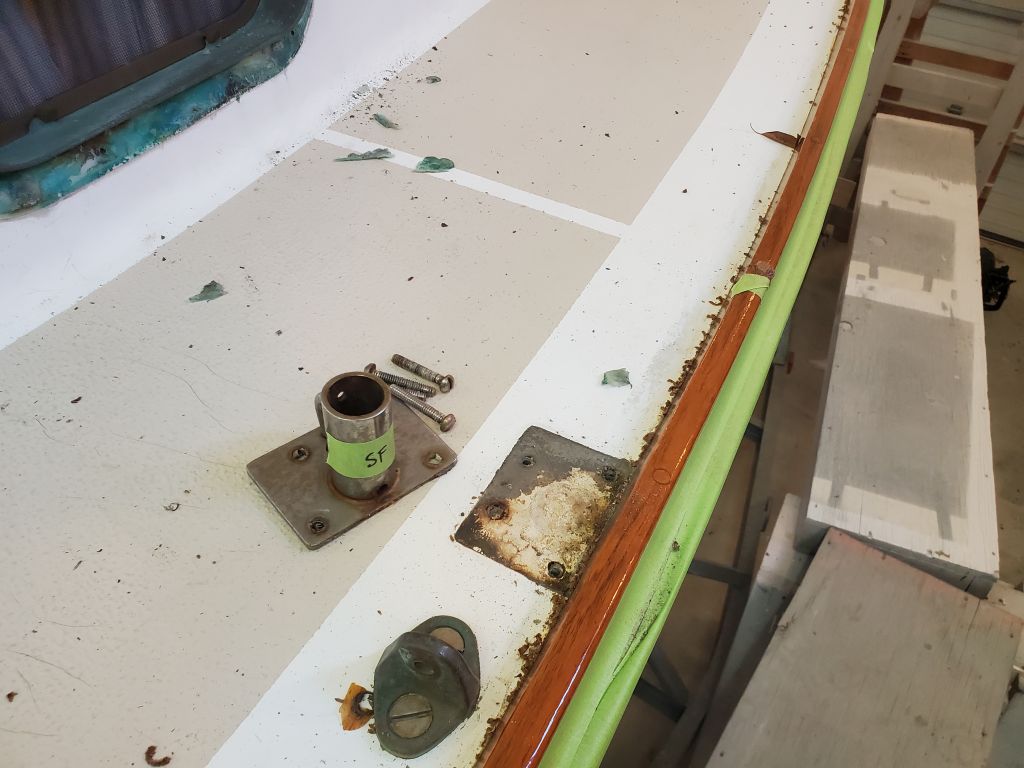
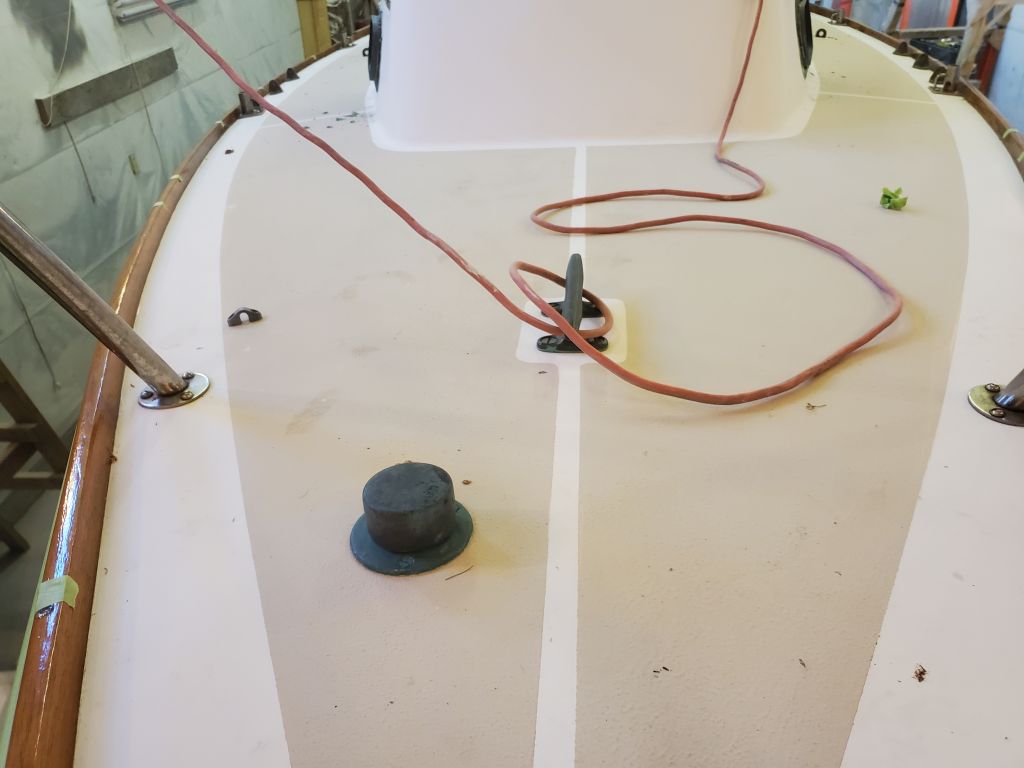
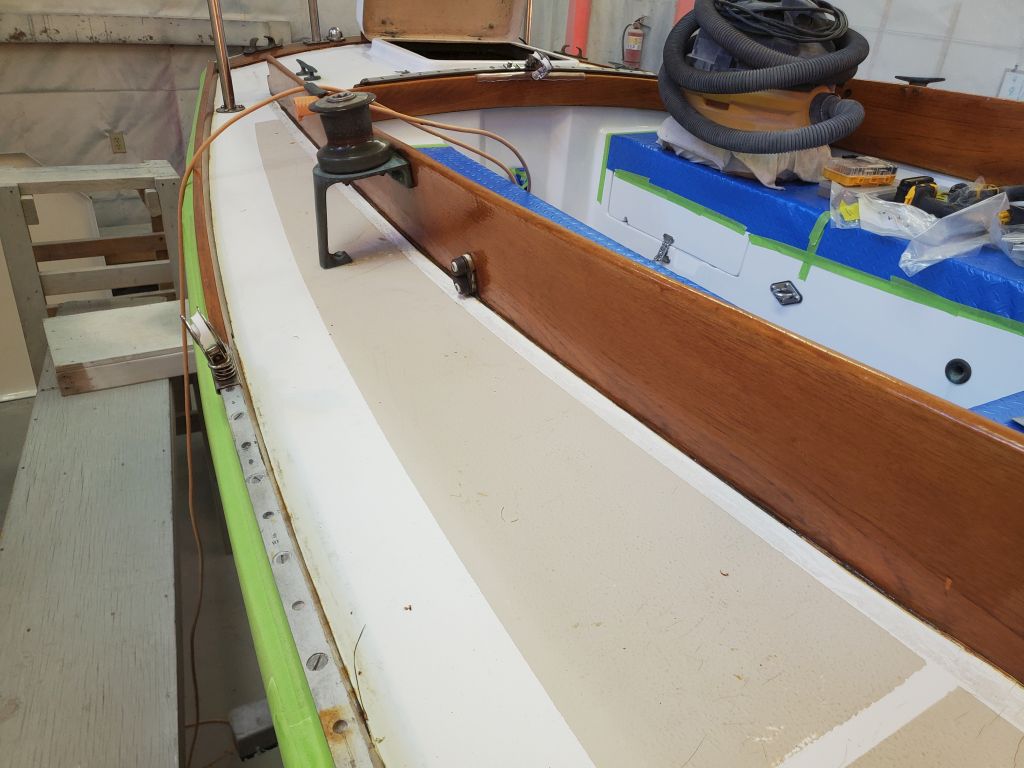
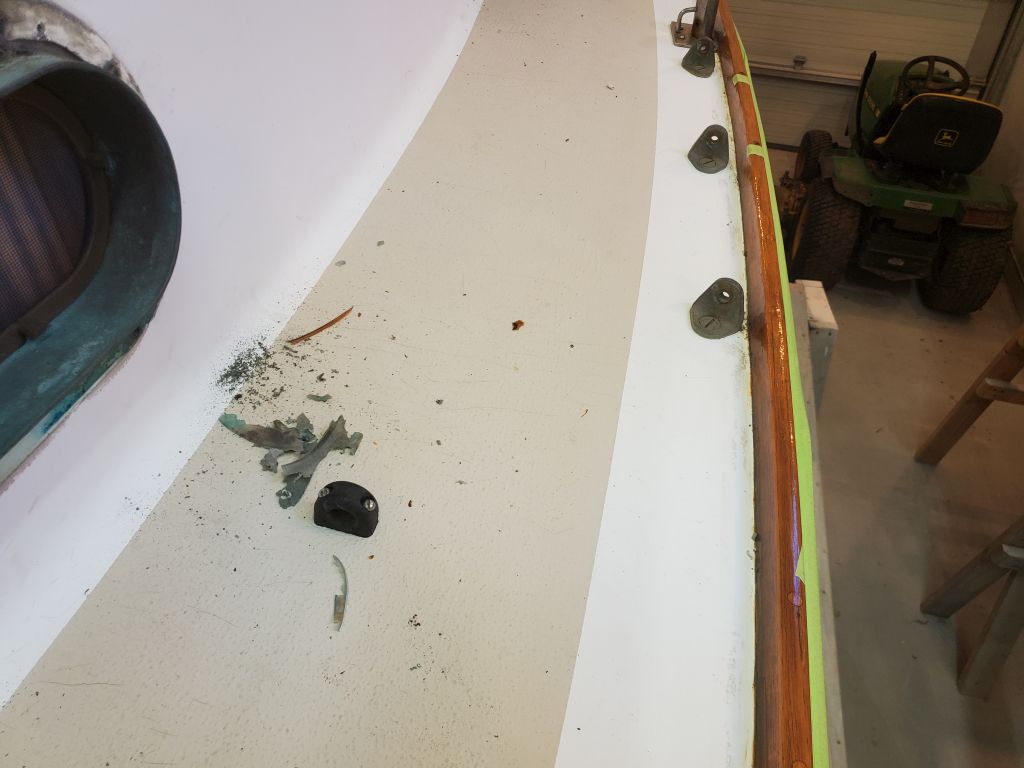
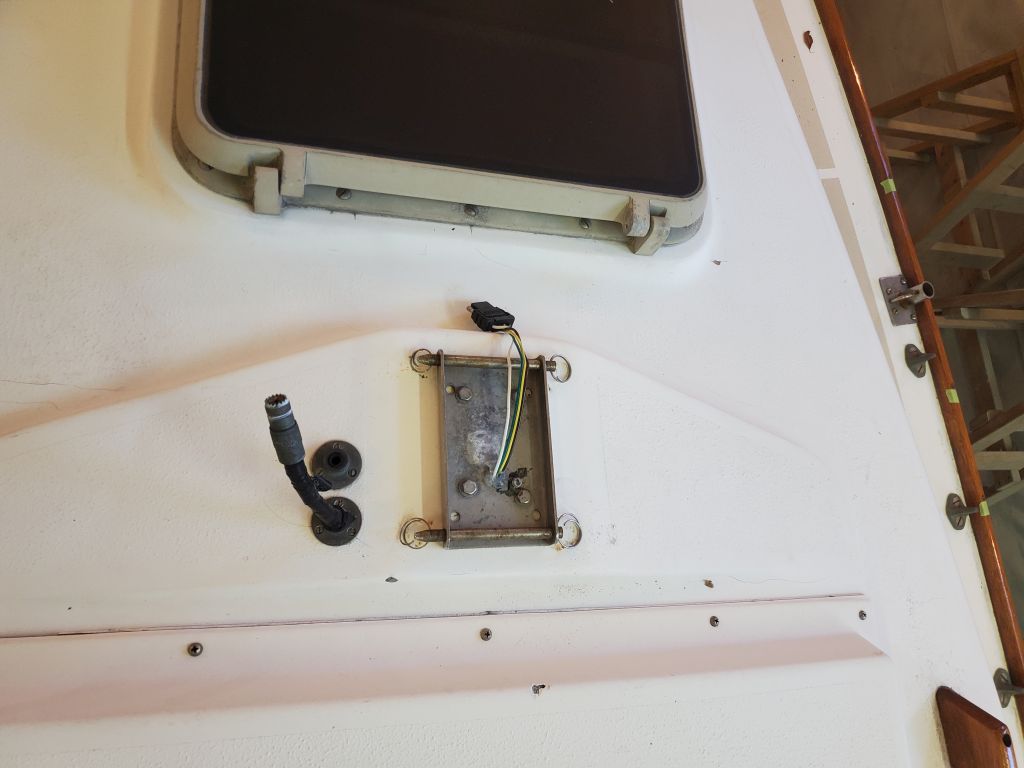
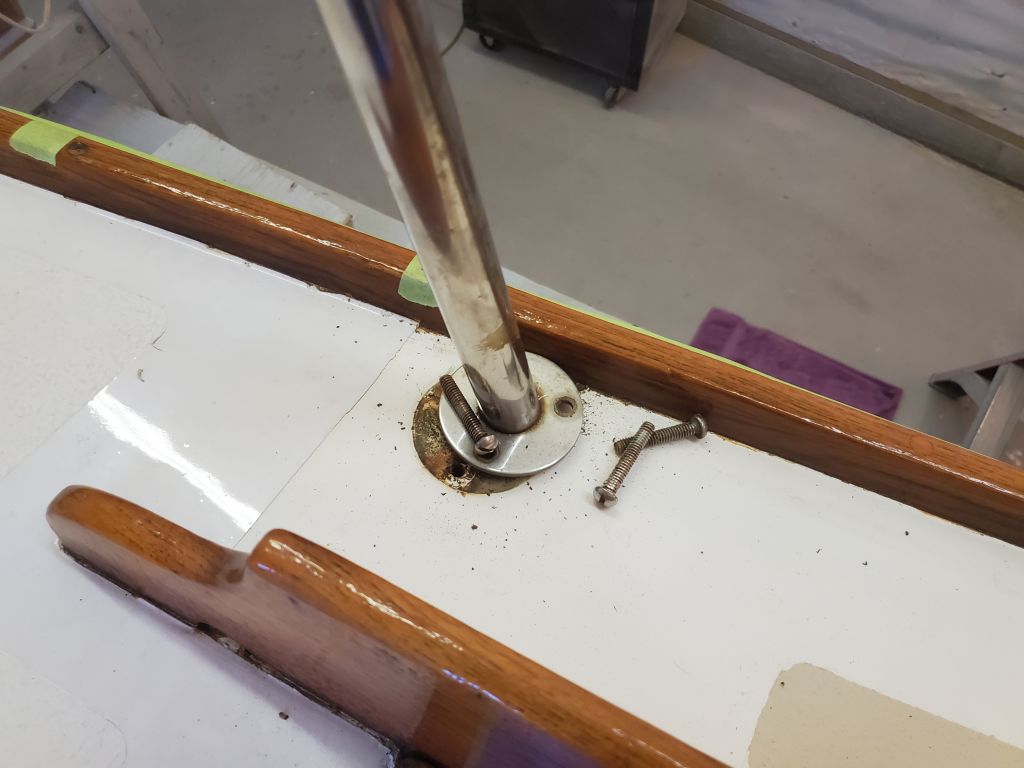
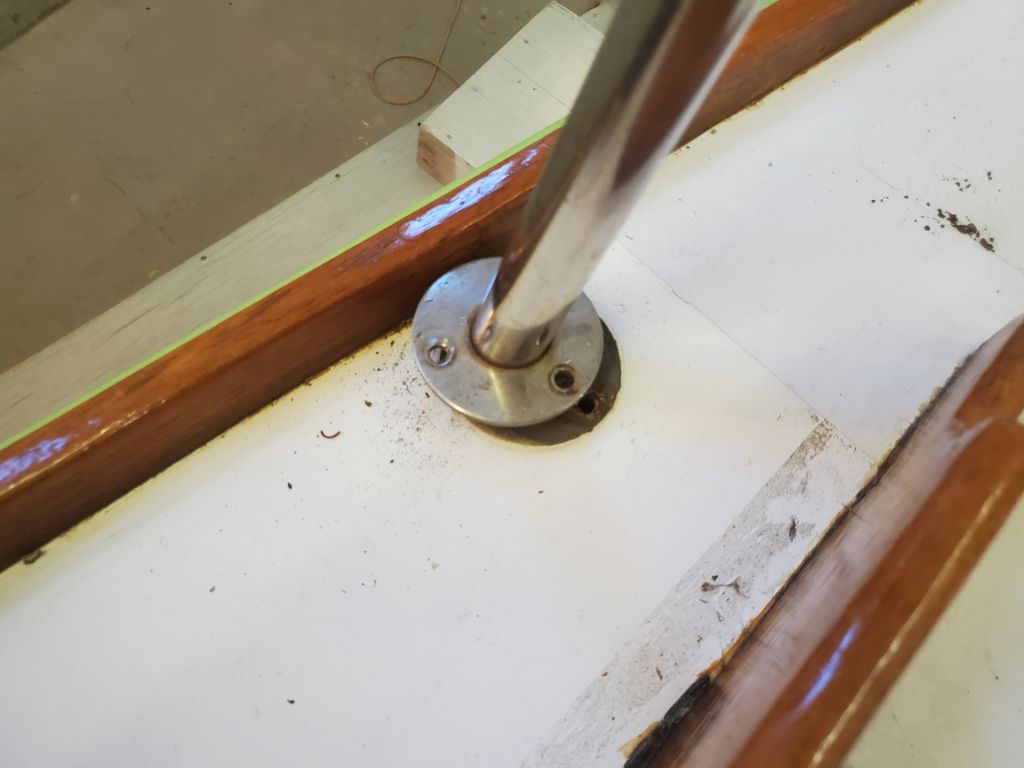
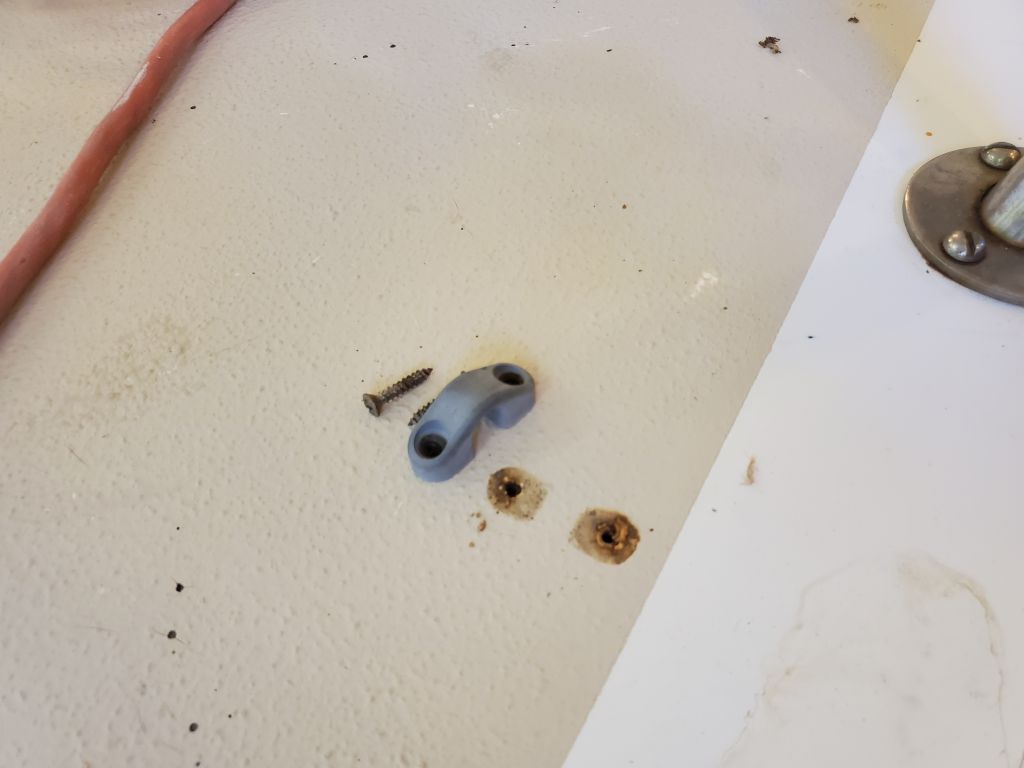
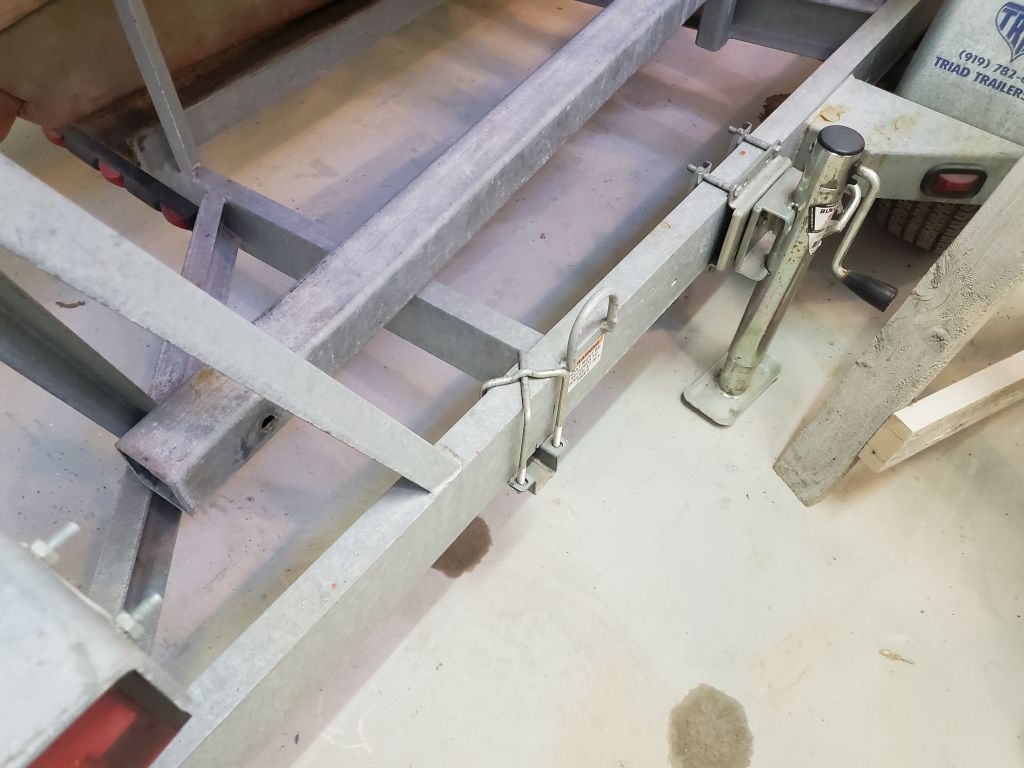
In the meantime, however, I planned to pick away at the work list and get done whatever I could in advance, so I started by removing the lifelines and stanchions, which needed to be out of the way for the cover in any case.  I also removed and secured some rigging that had arrived still attached to the chainplates, preparing not only for the new cover work, but, afterwards, for the removal of the mast during the bulk of the project.

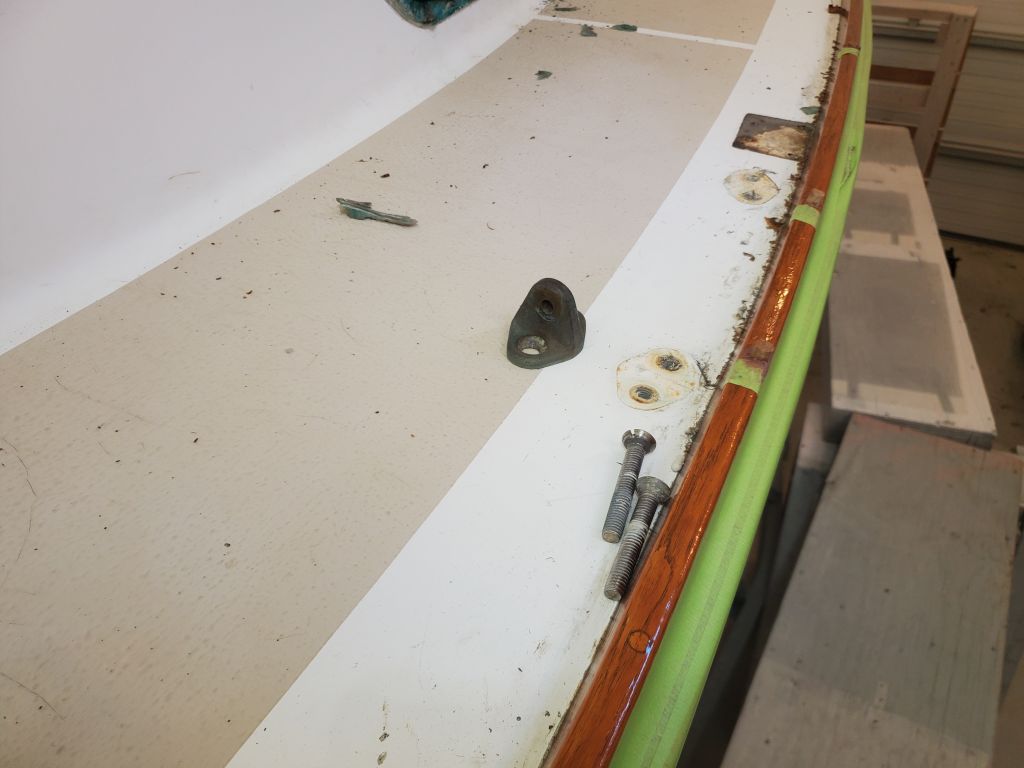
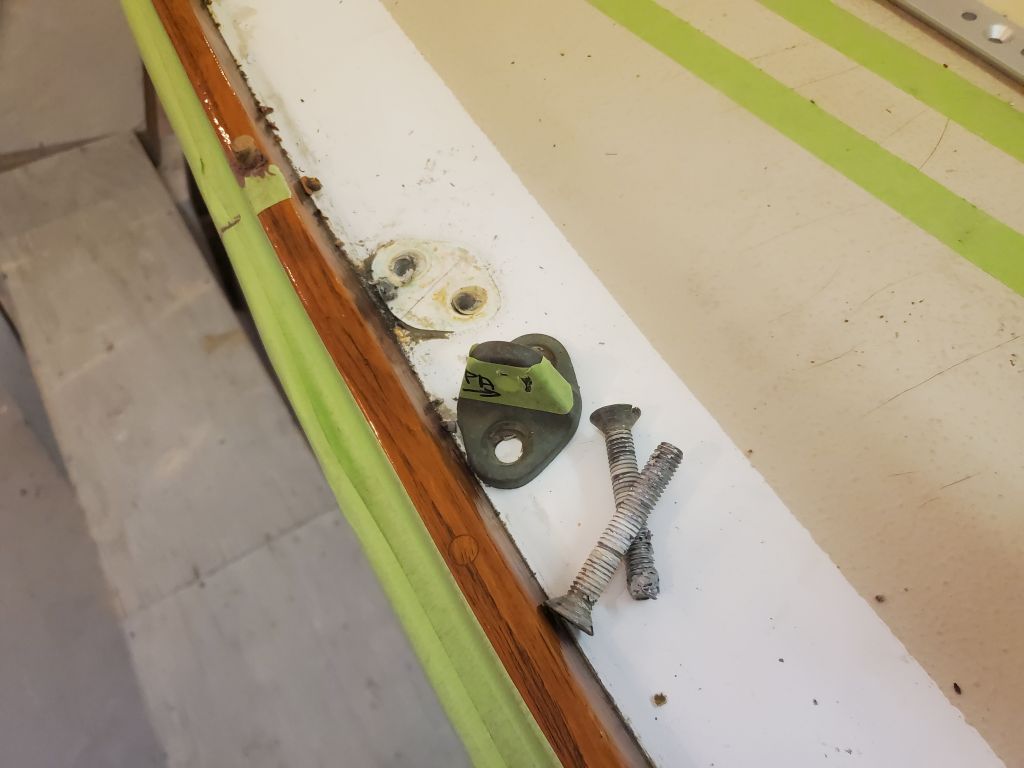
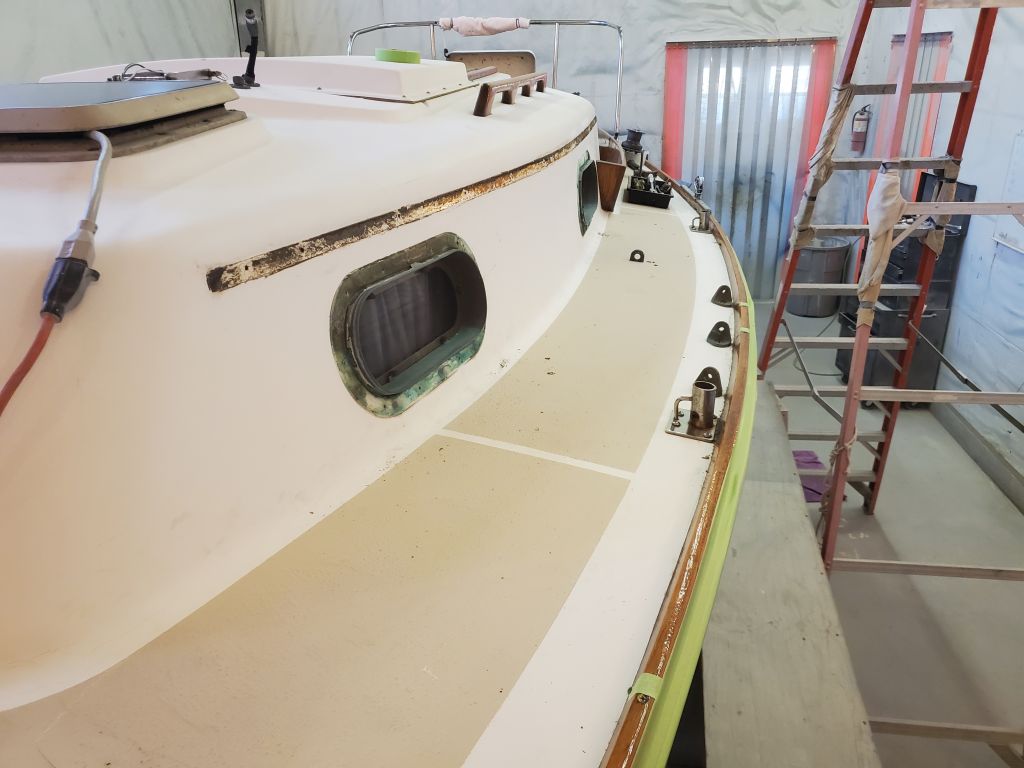
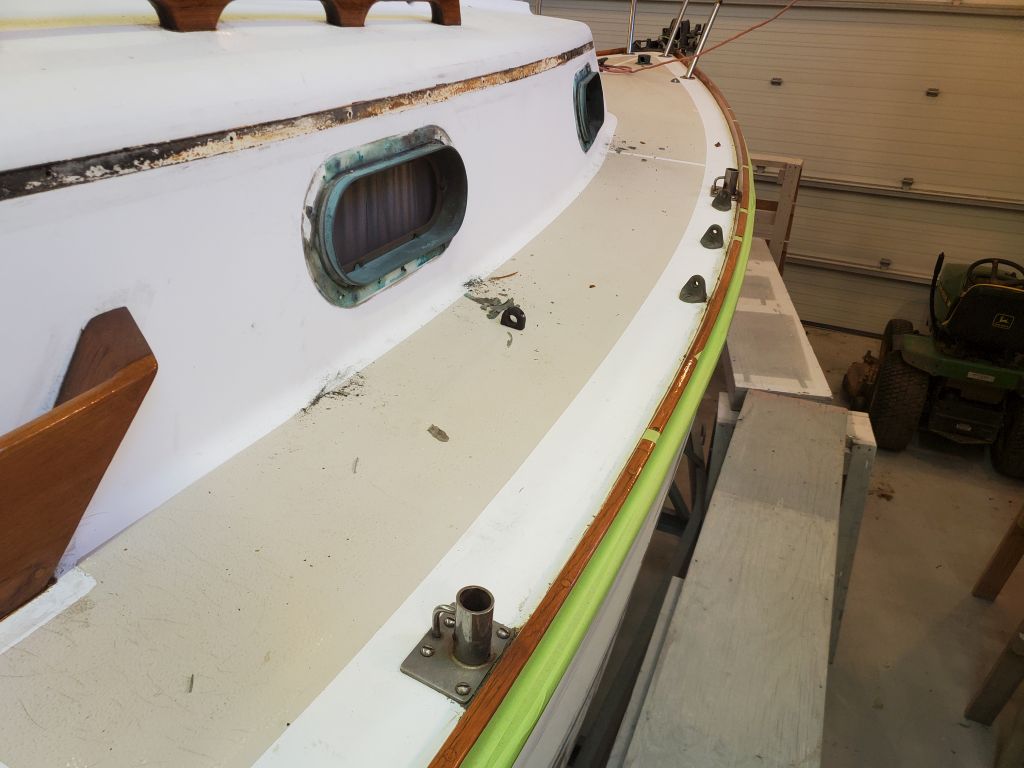
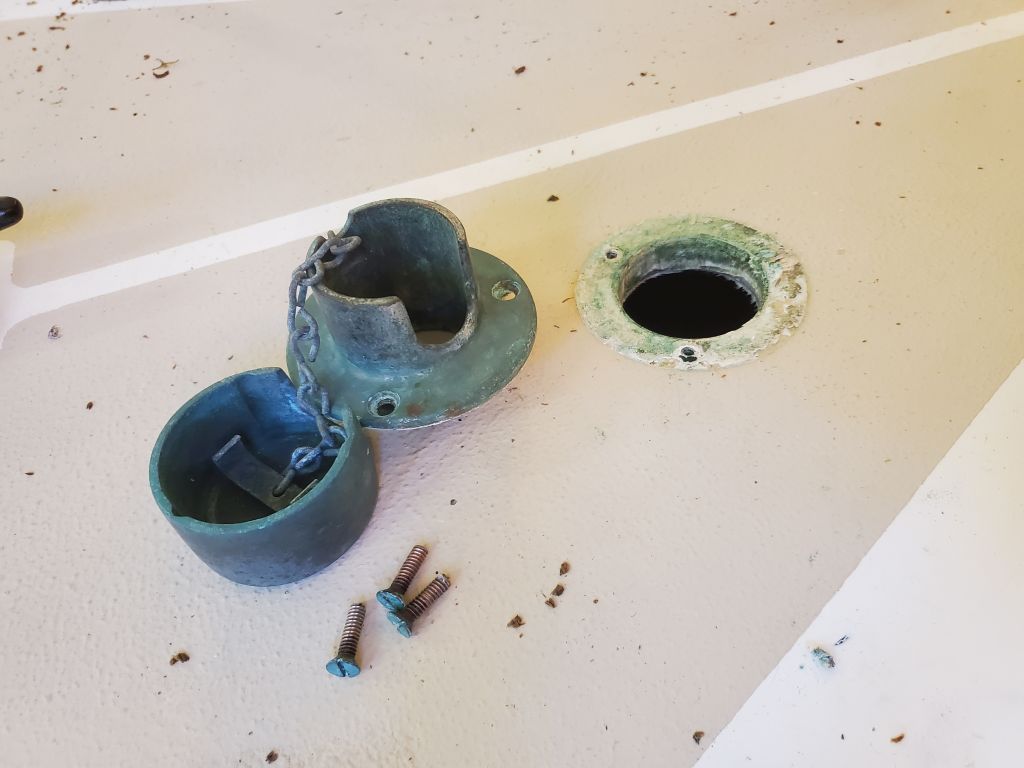
Next on my list of early projects was to remove the bronze port trim rings in advance of the deck preparations and painting.  These were secured with bronze screws from outside, and removal was straightforward.  The trim rings had been bedded in abundant silicone, which I’d later have to remove.  The trim rings were in good condition and would require minimal cleaning, since the bulk of the old sealant had remained on the gelcoat.

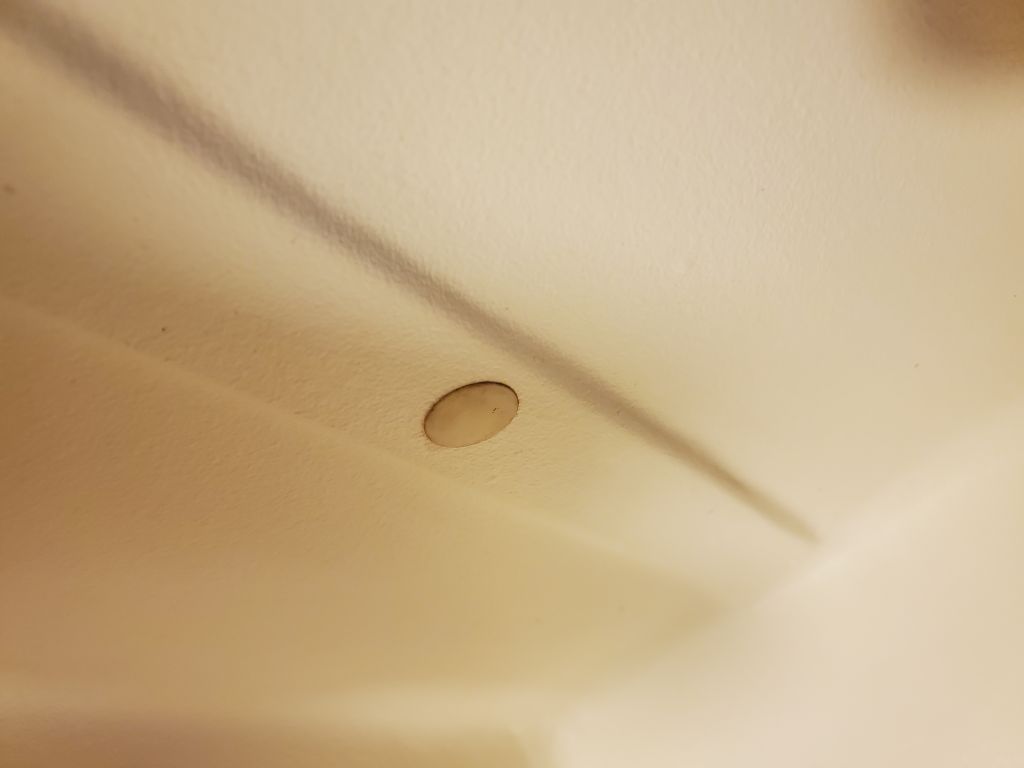
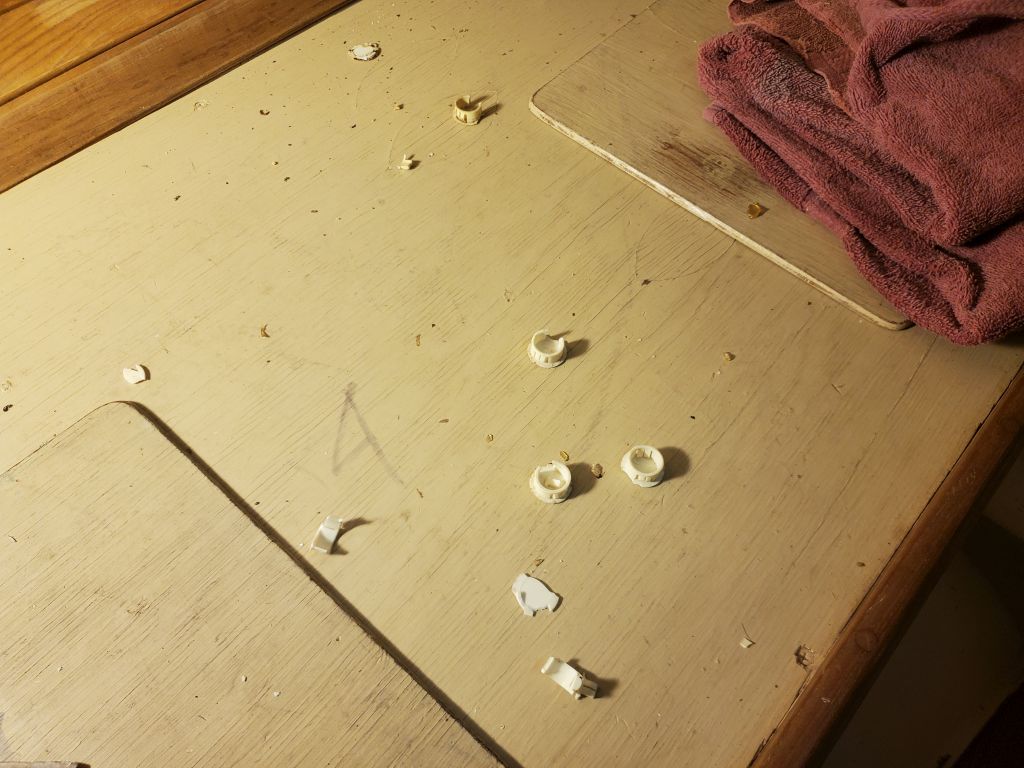
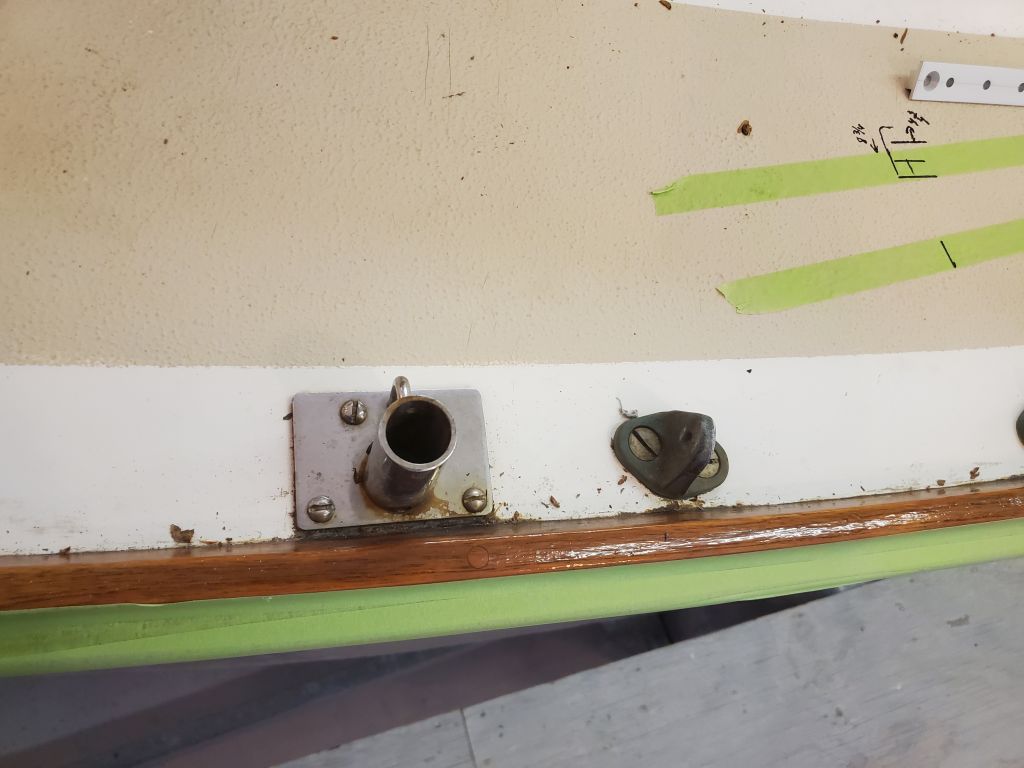
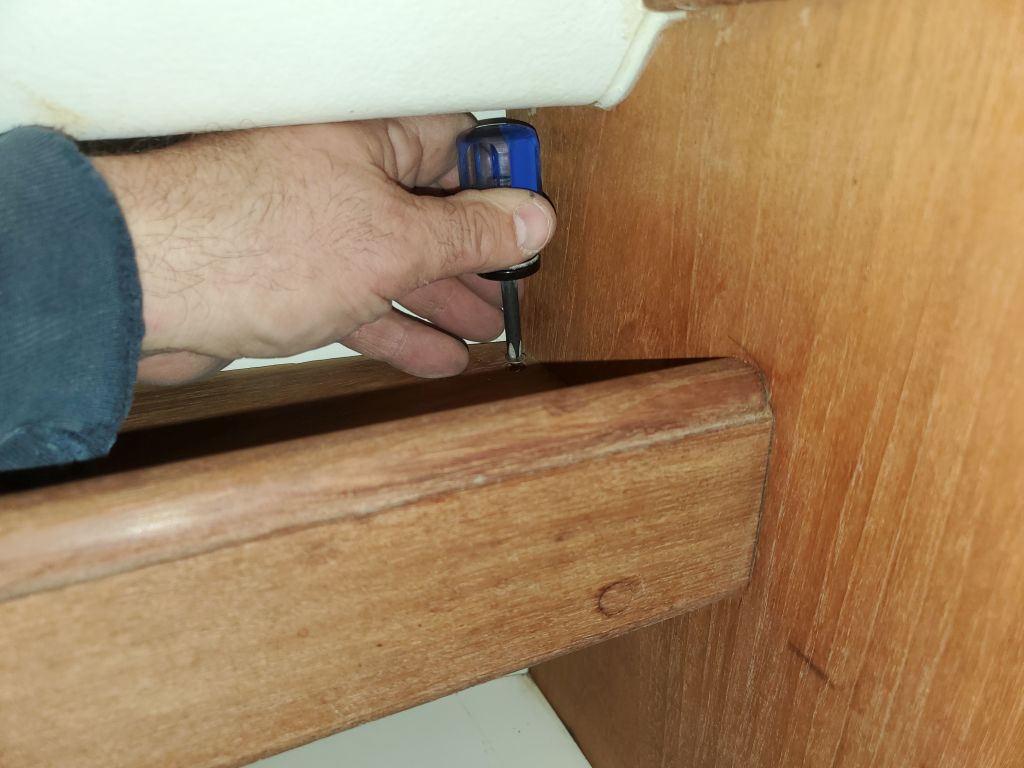
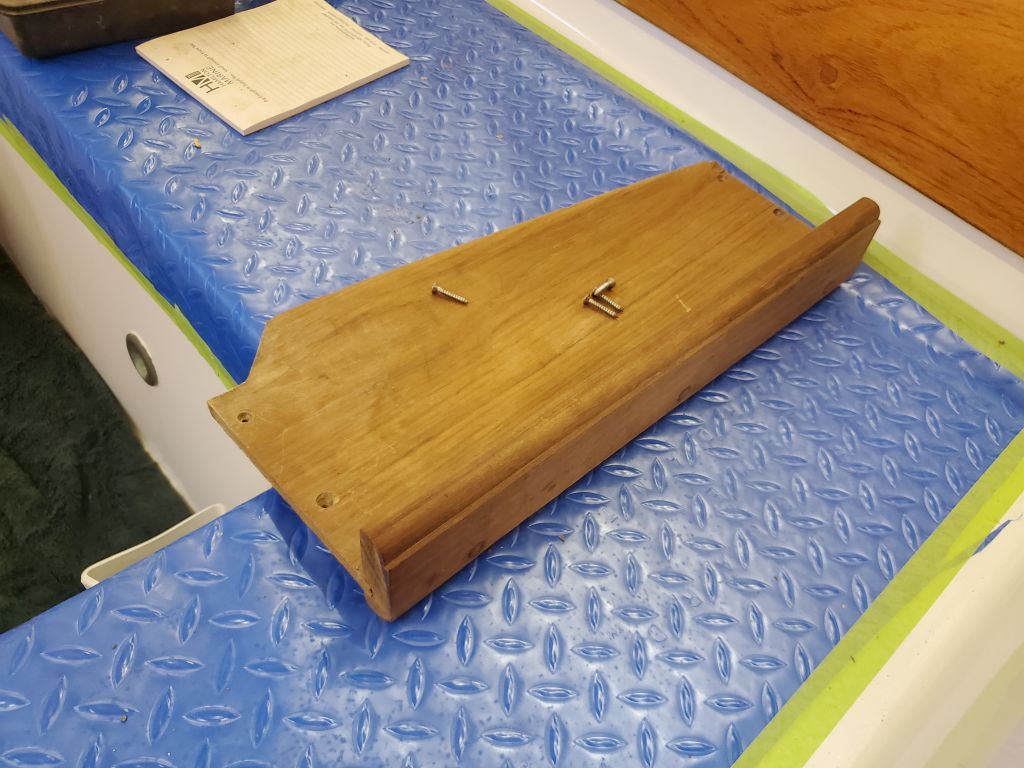
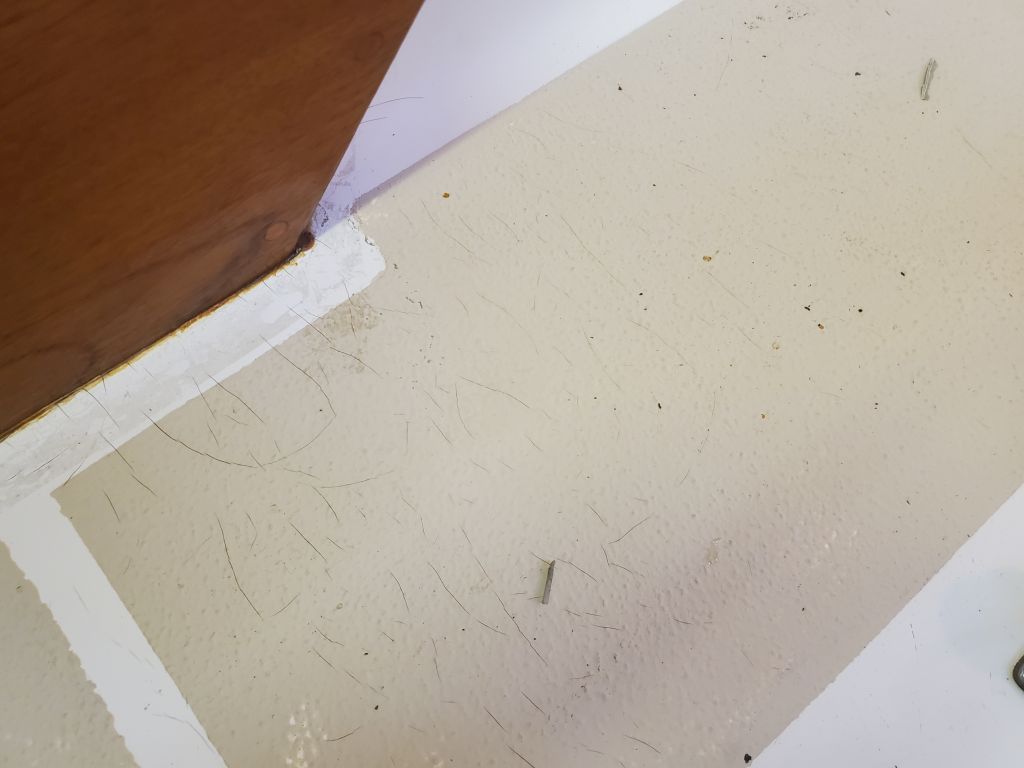
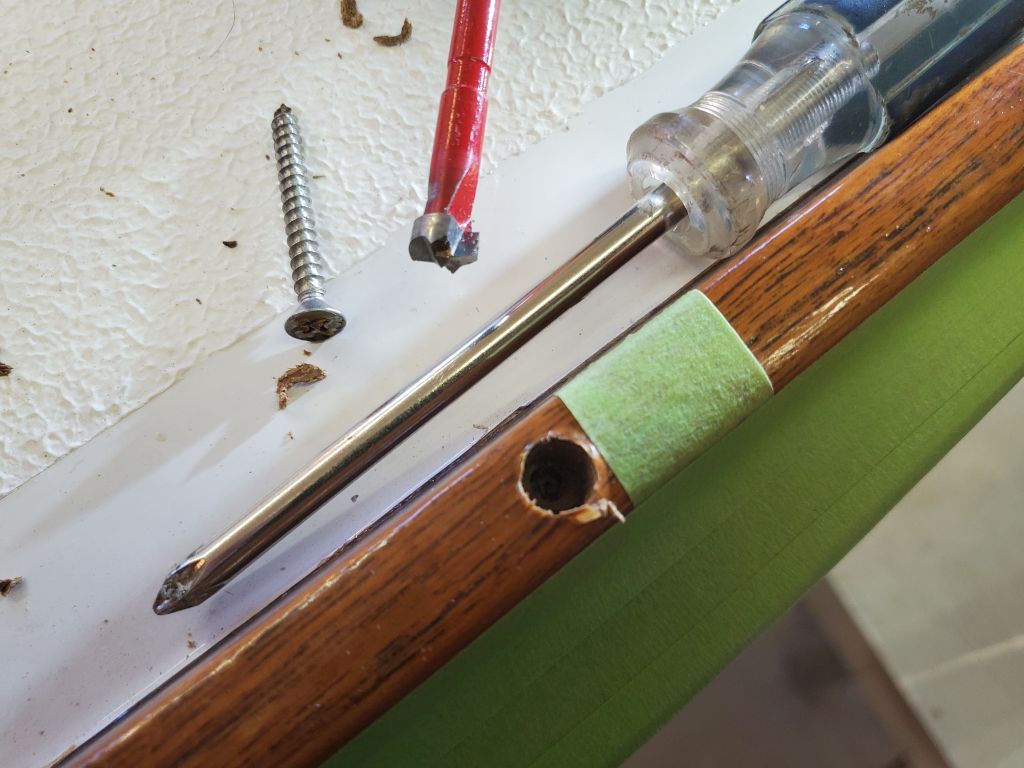
Next, I removed the teak eyebrow trim from both sides of the cabin.  All the screw heads were exposed (but buried beneath a substantial coating of finish) except for one I found on the port side that still had the last vestiges of a bung, suggesting that at one time all the screw holes had been bunged.  This trim was easy to remove, and other than the inevitable damage to the gummy coating as the screws came out, remained intact.  However, I planned to mill new trim here, since it would be quicker and easier than attempting to save and restore the old trim; this would also allow bunging the screw holes during installation.

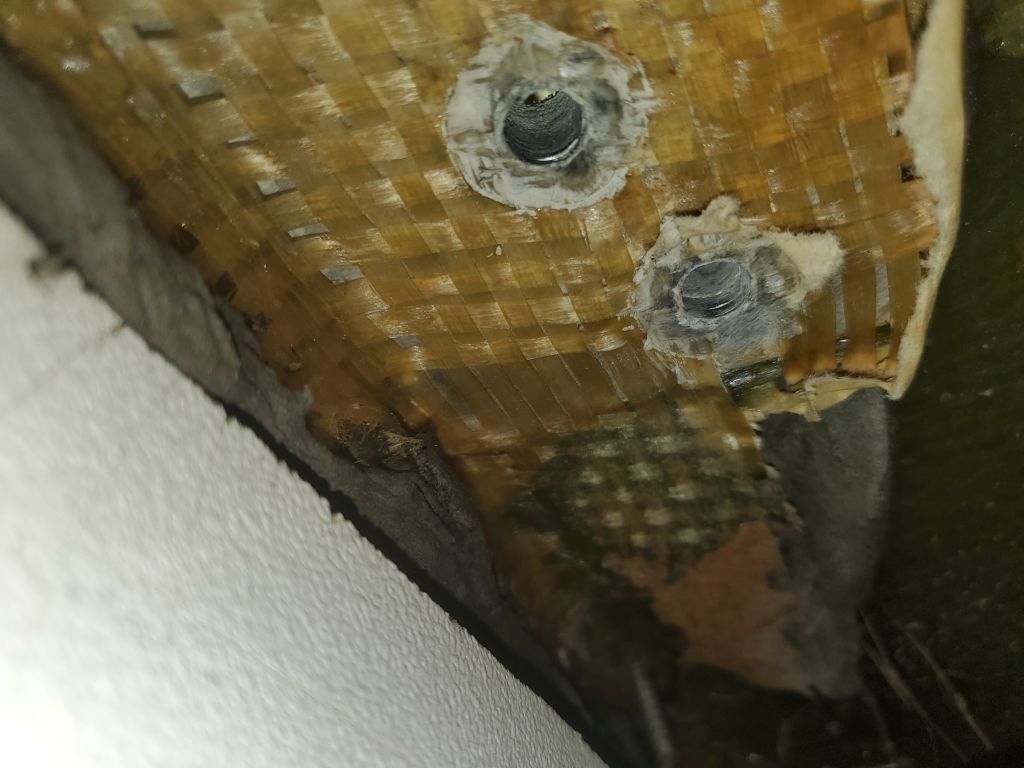
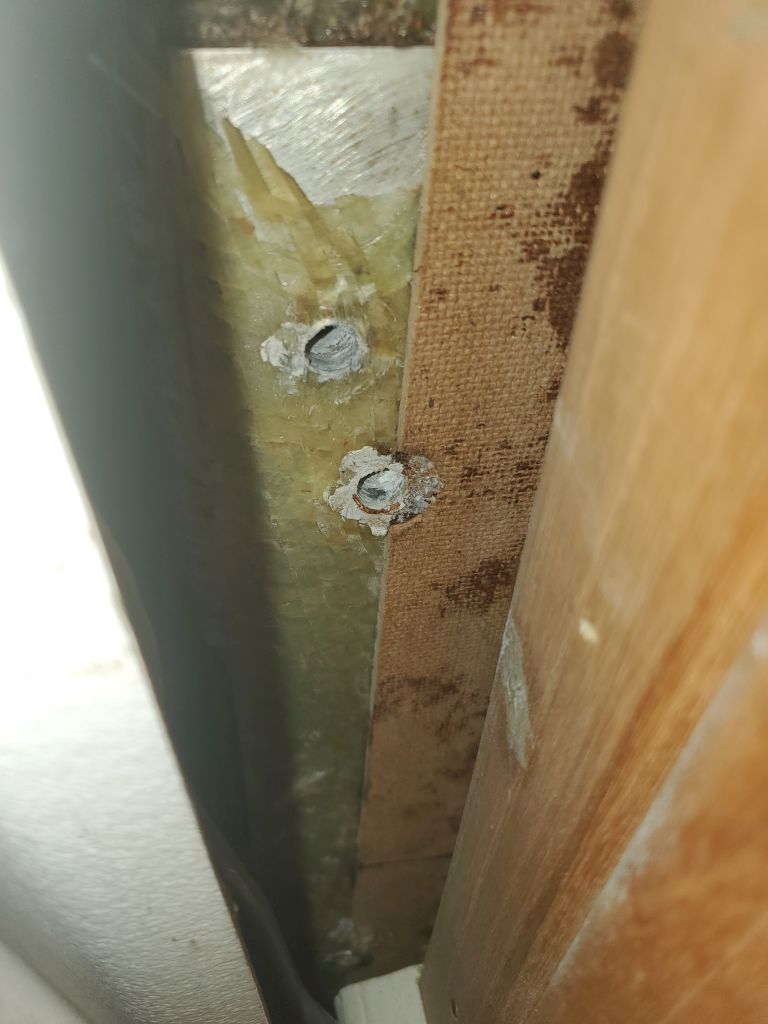
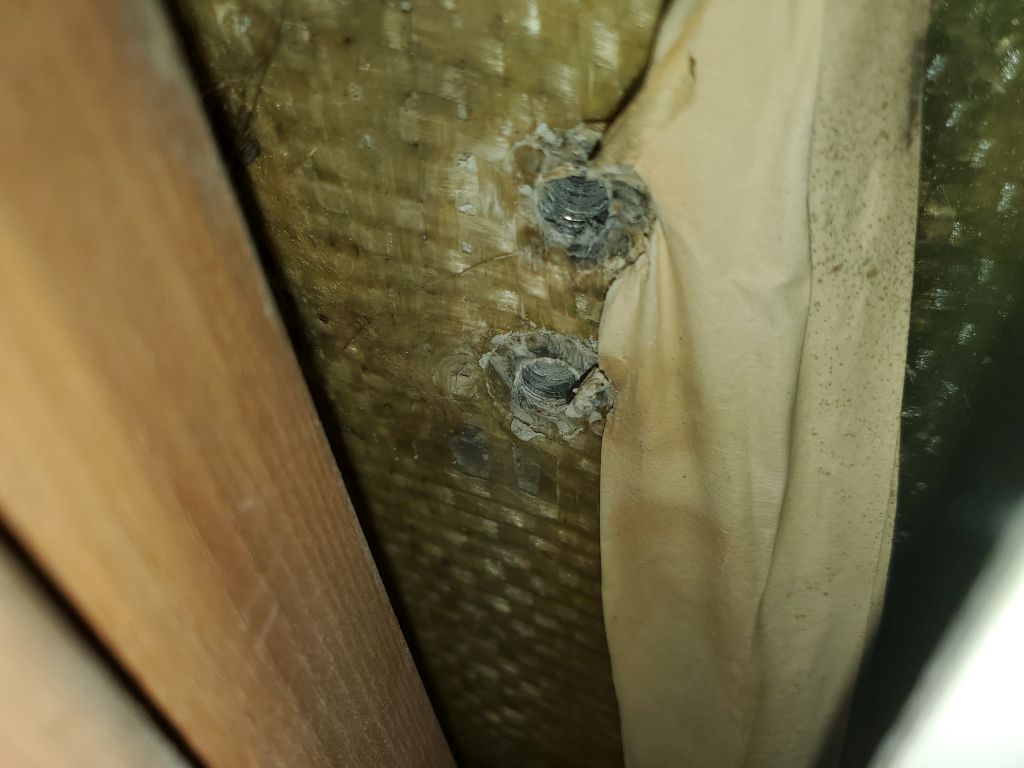
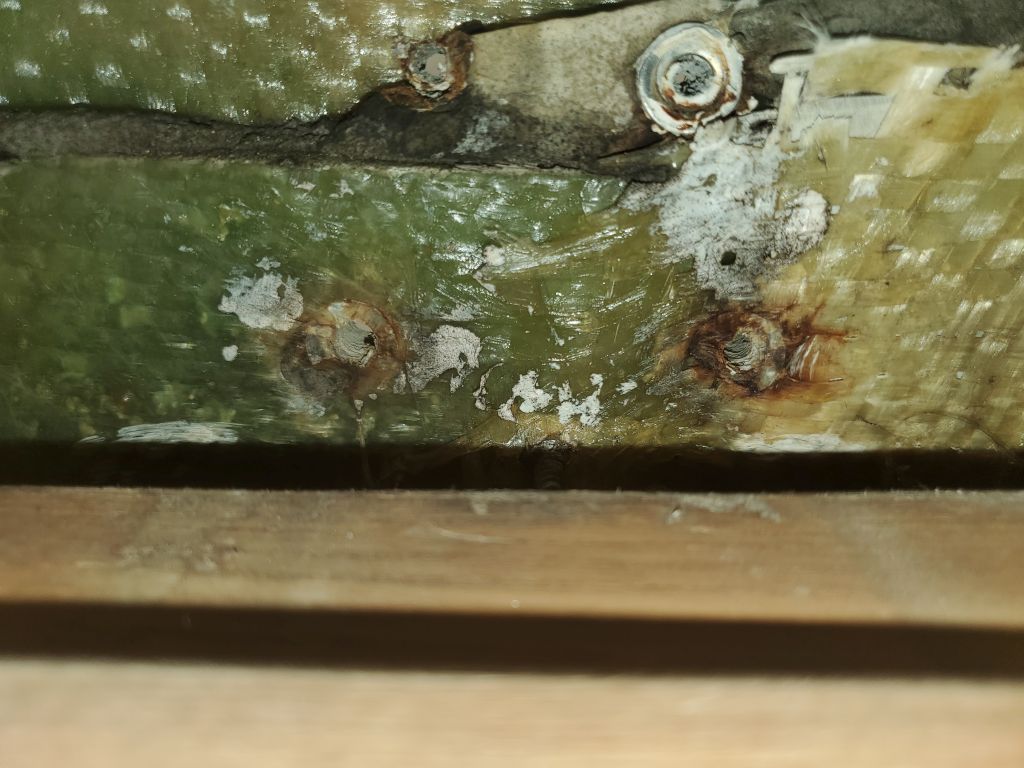
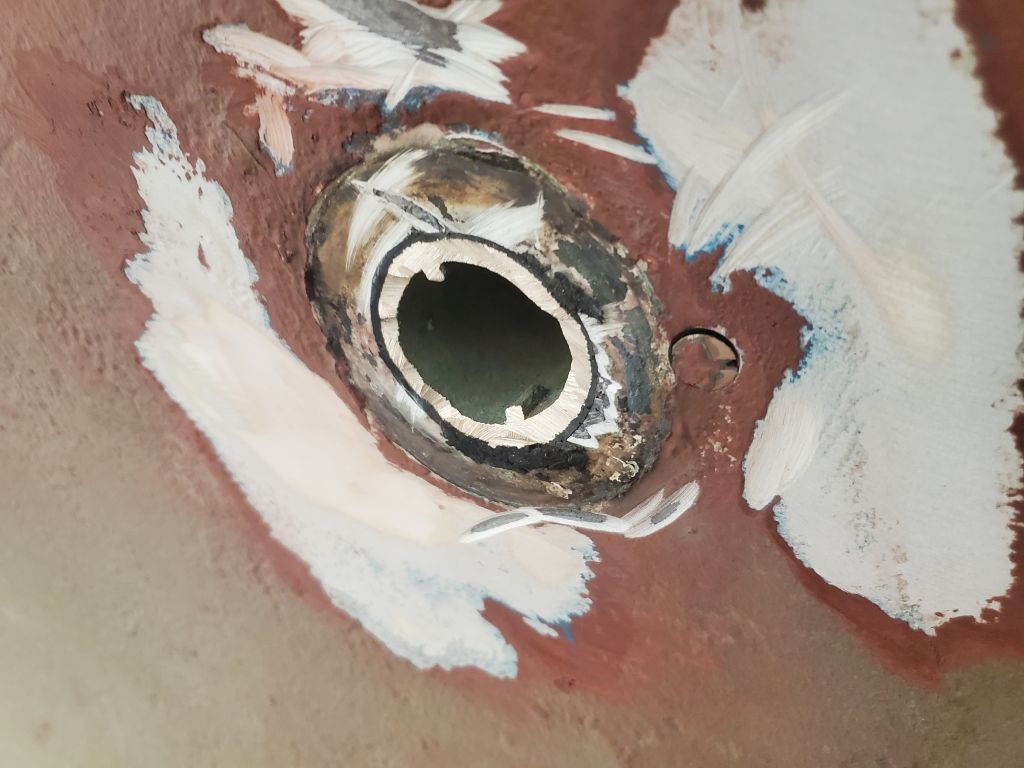
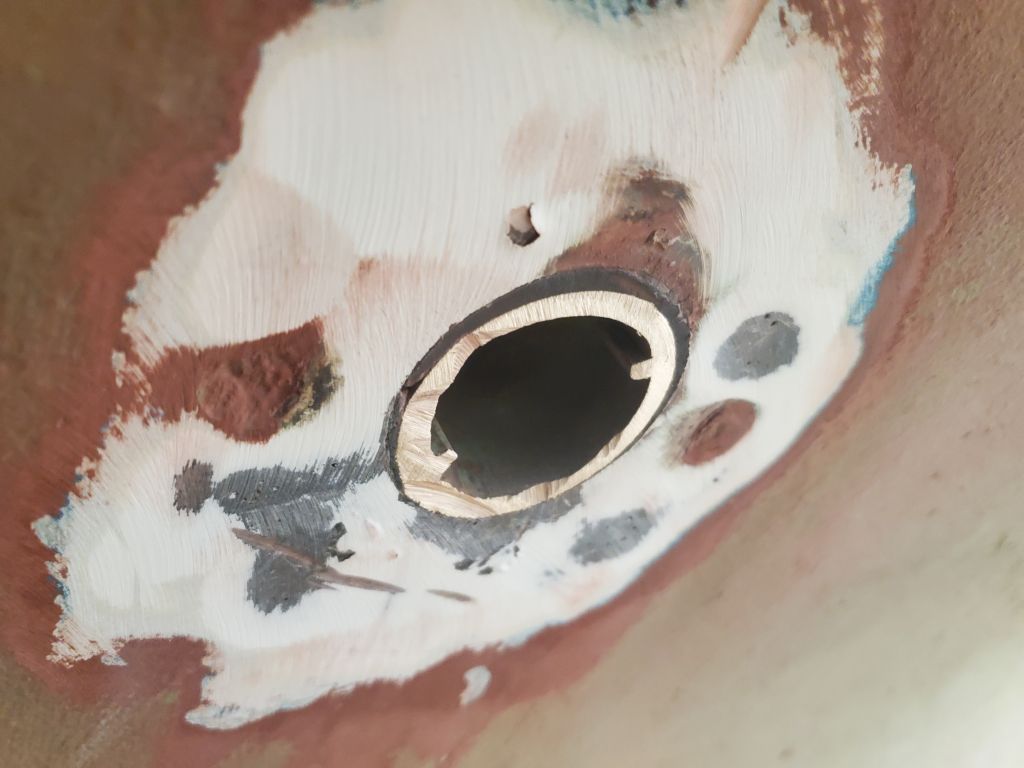
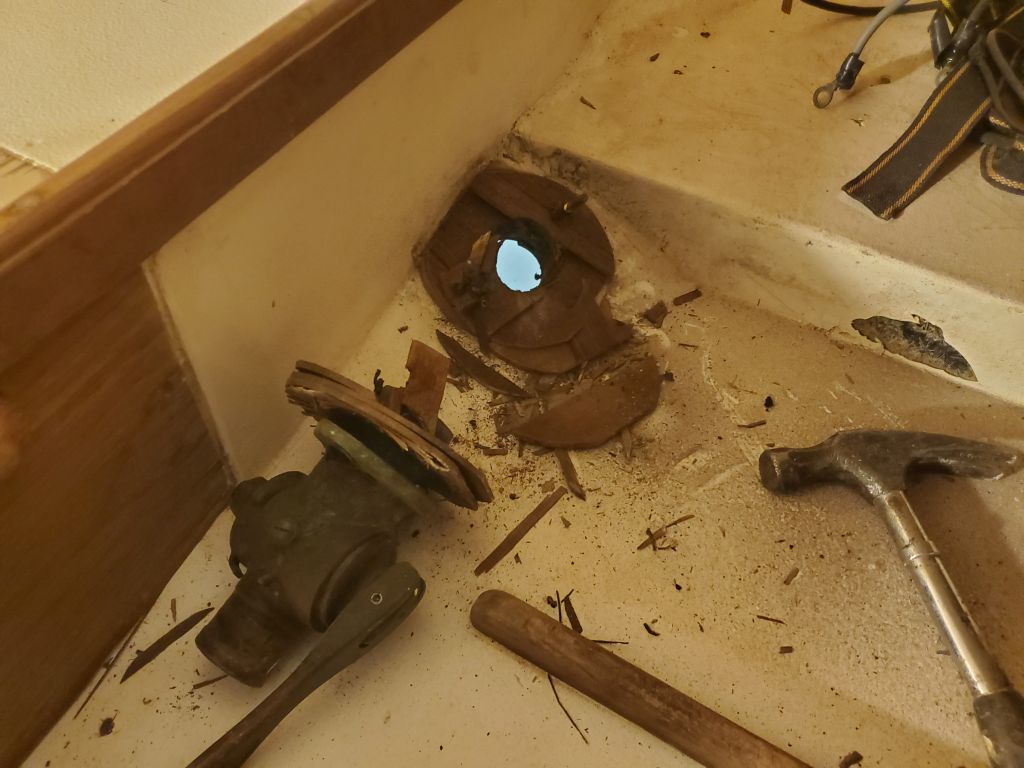
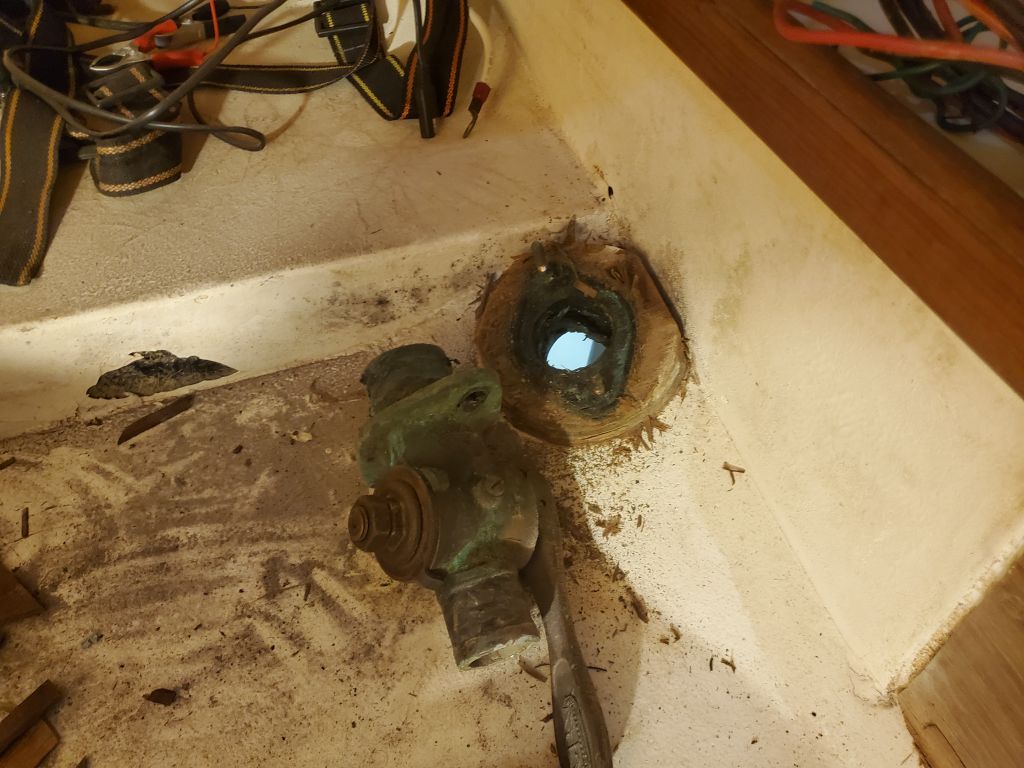
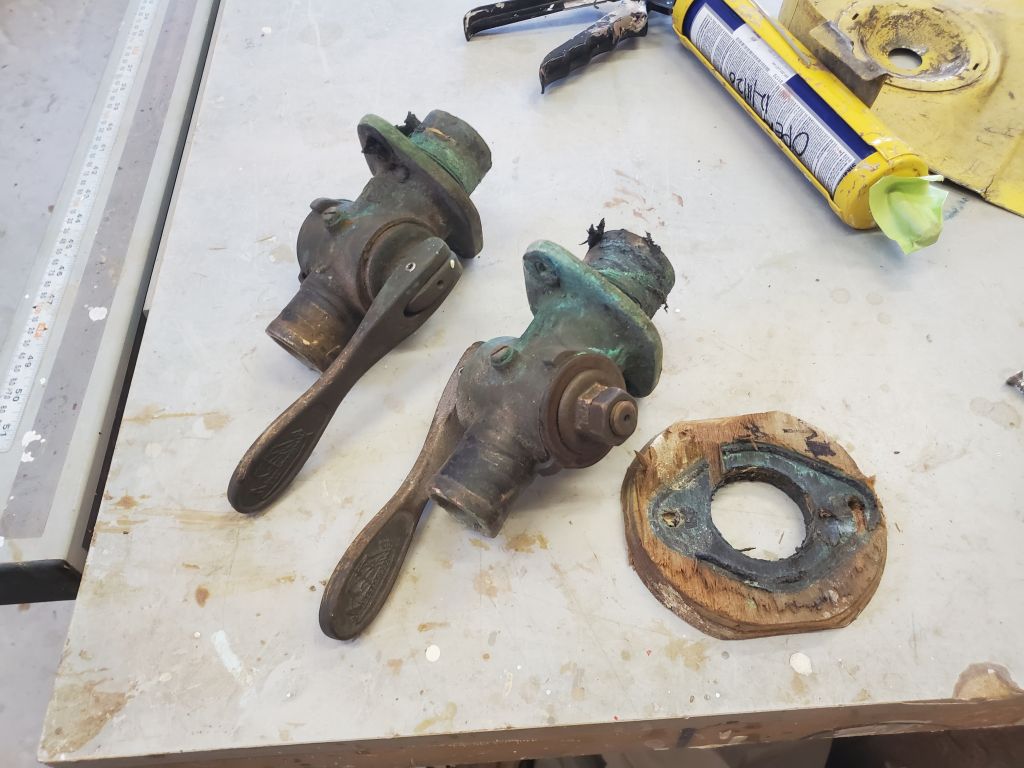
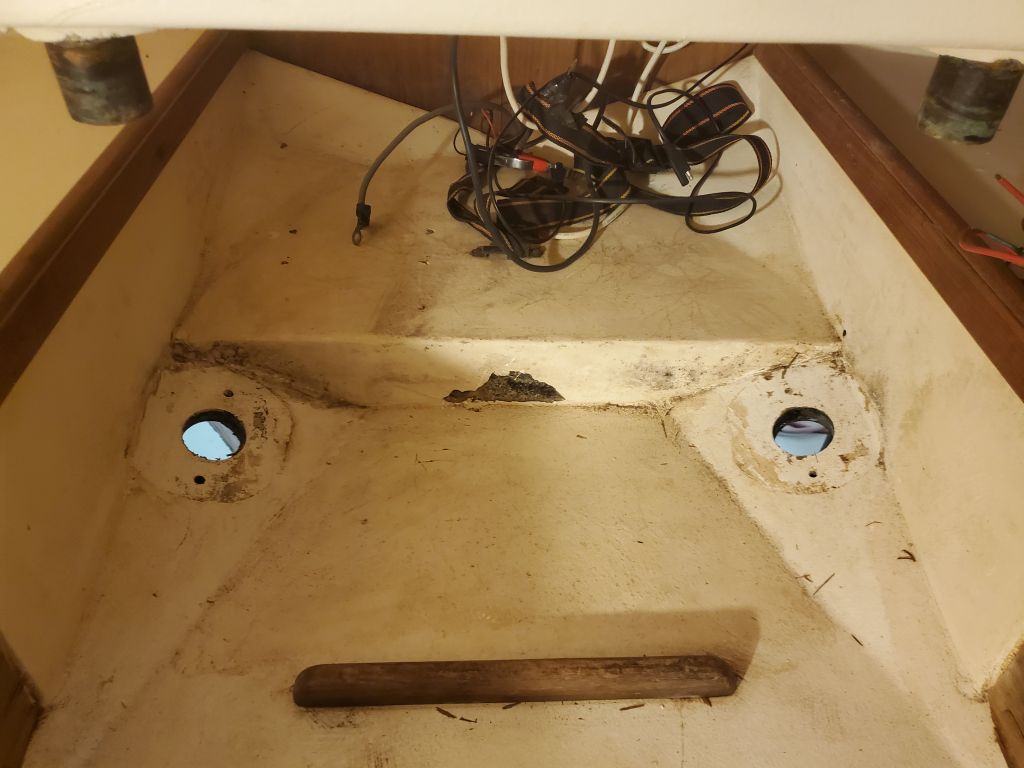
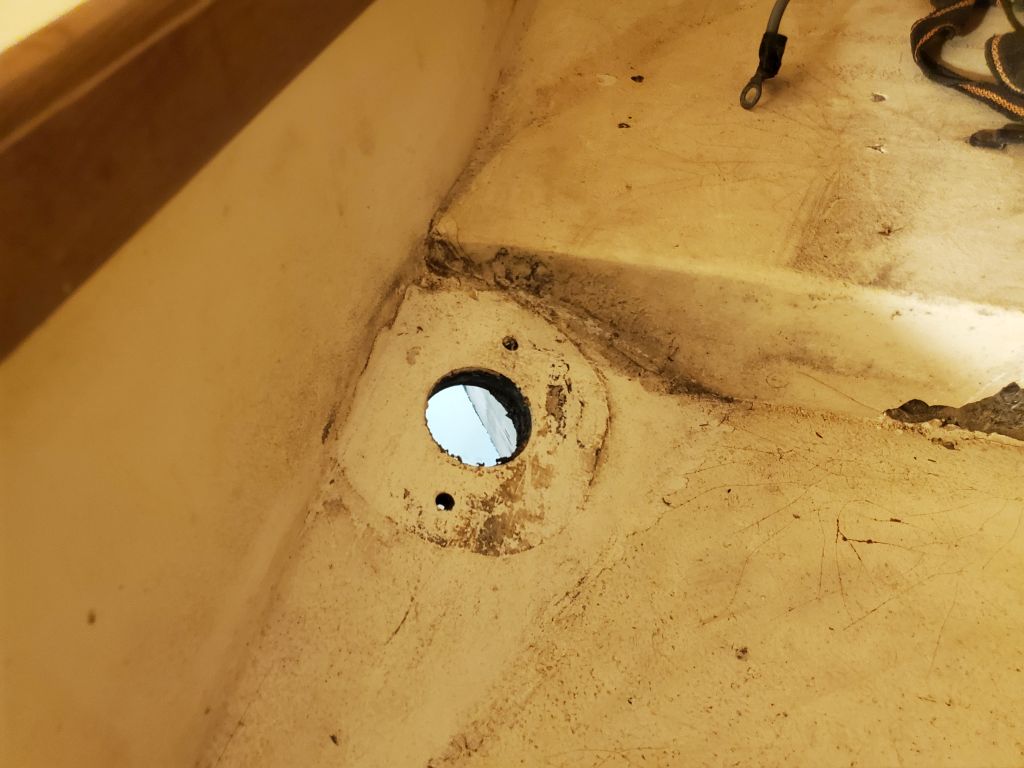
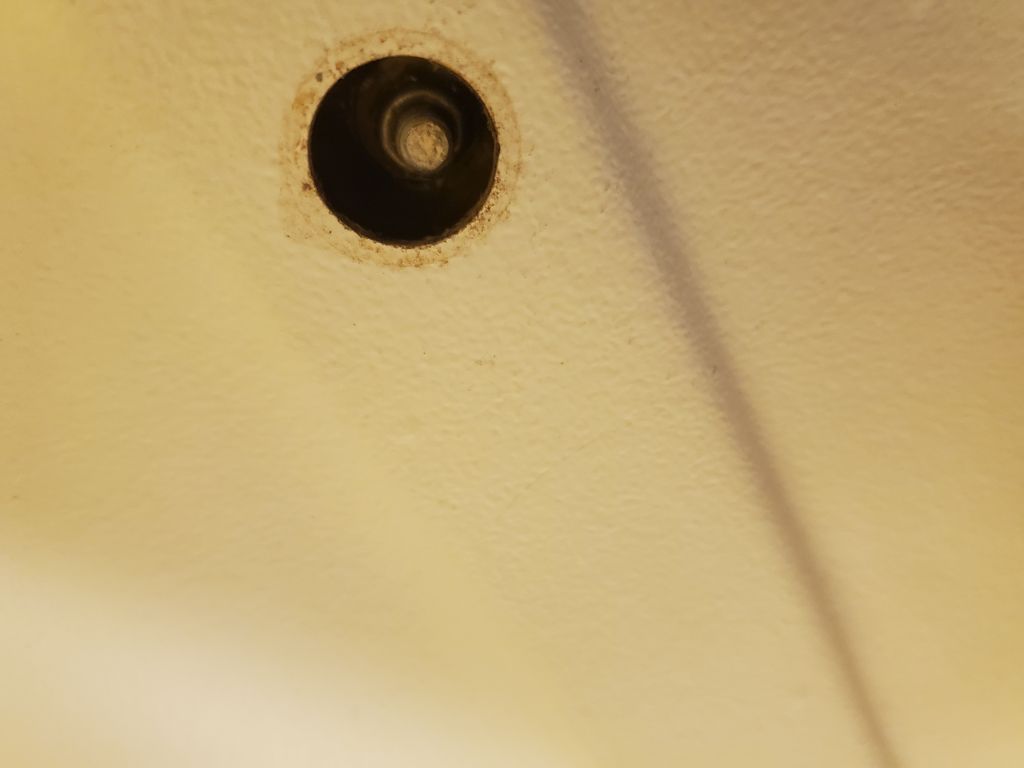
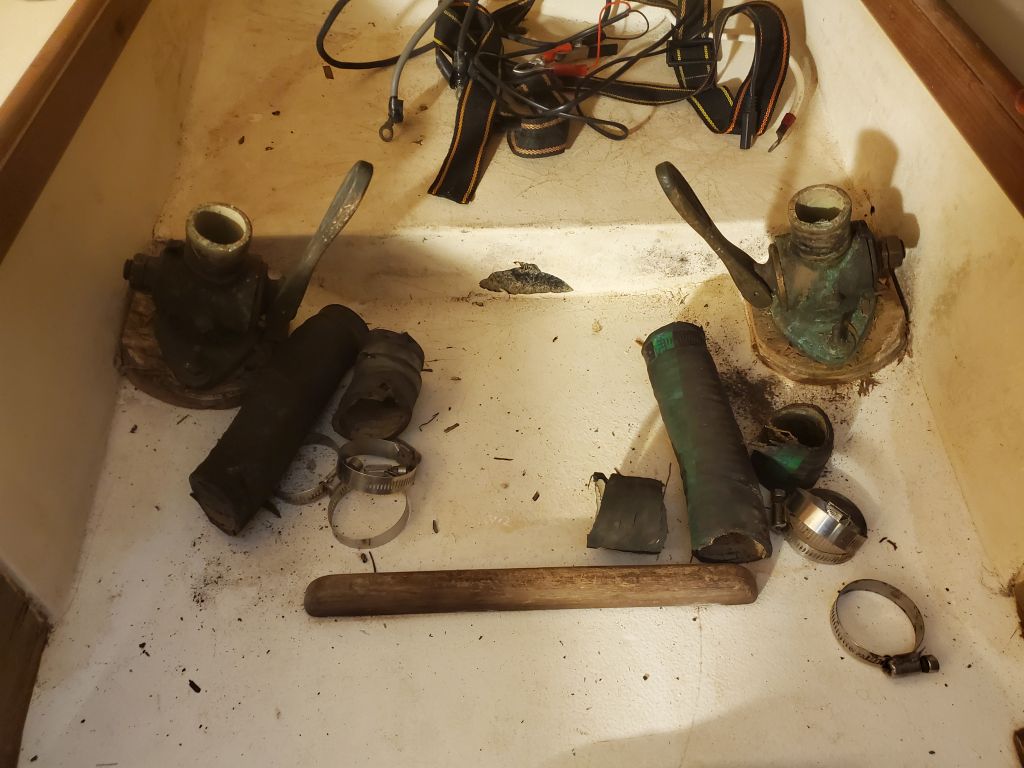
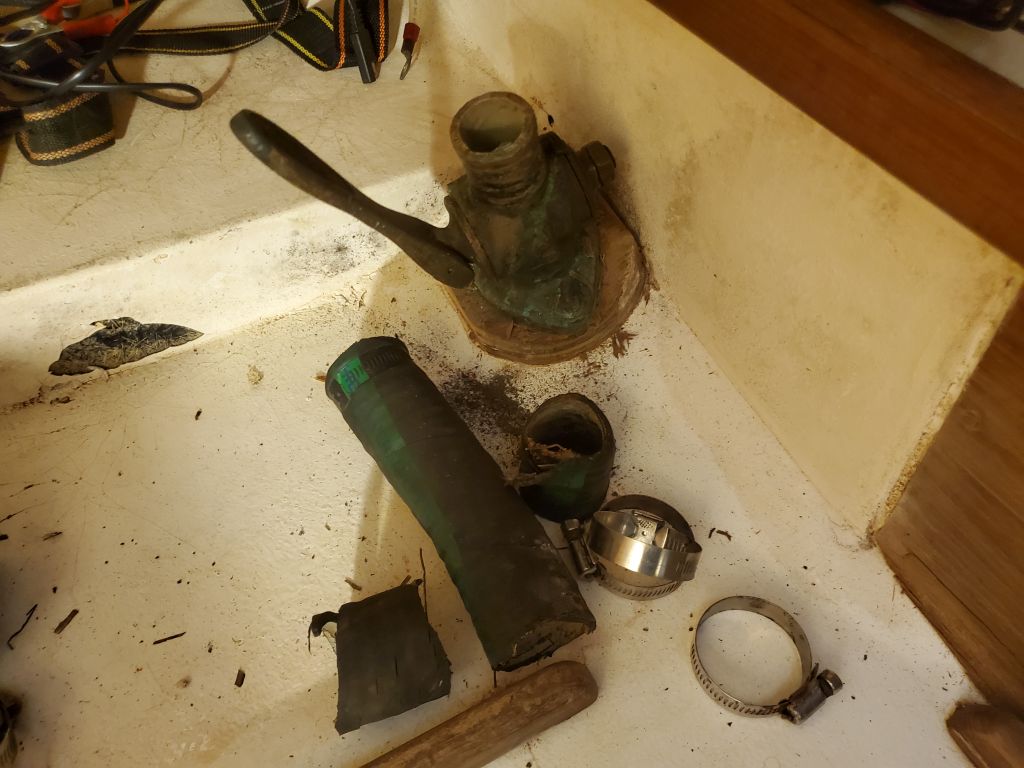
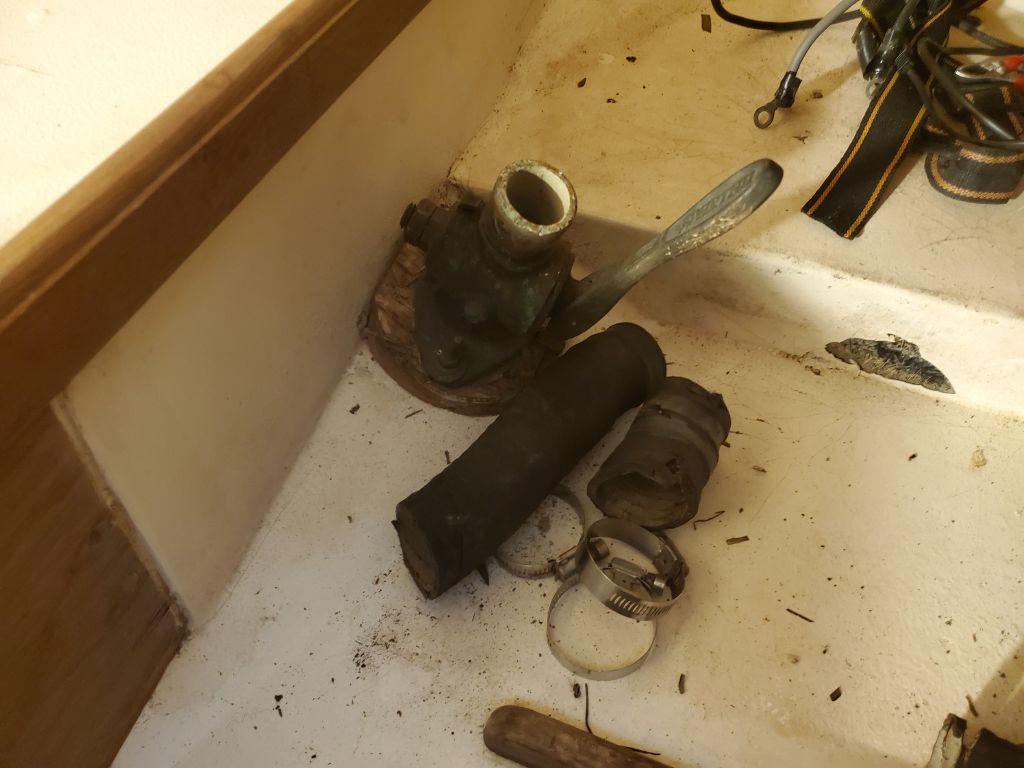
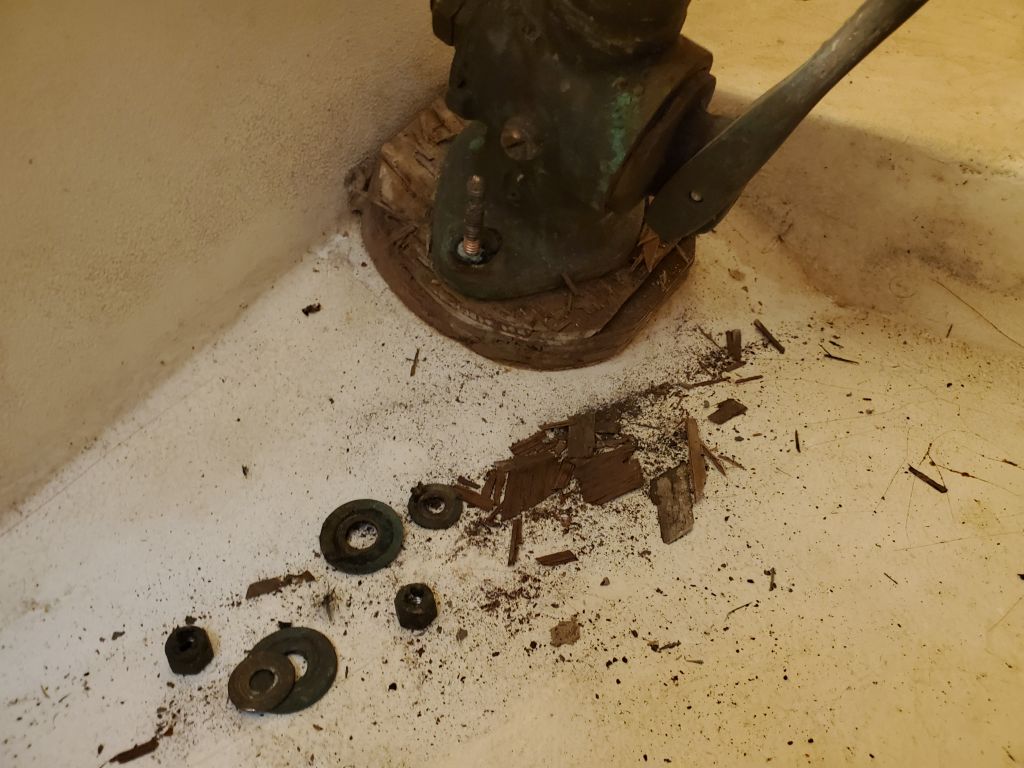
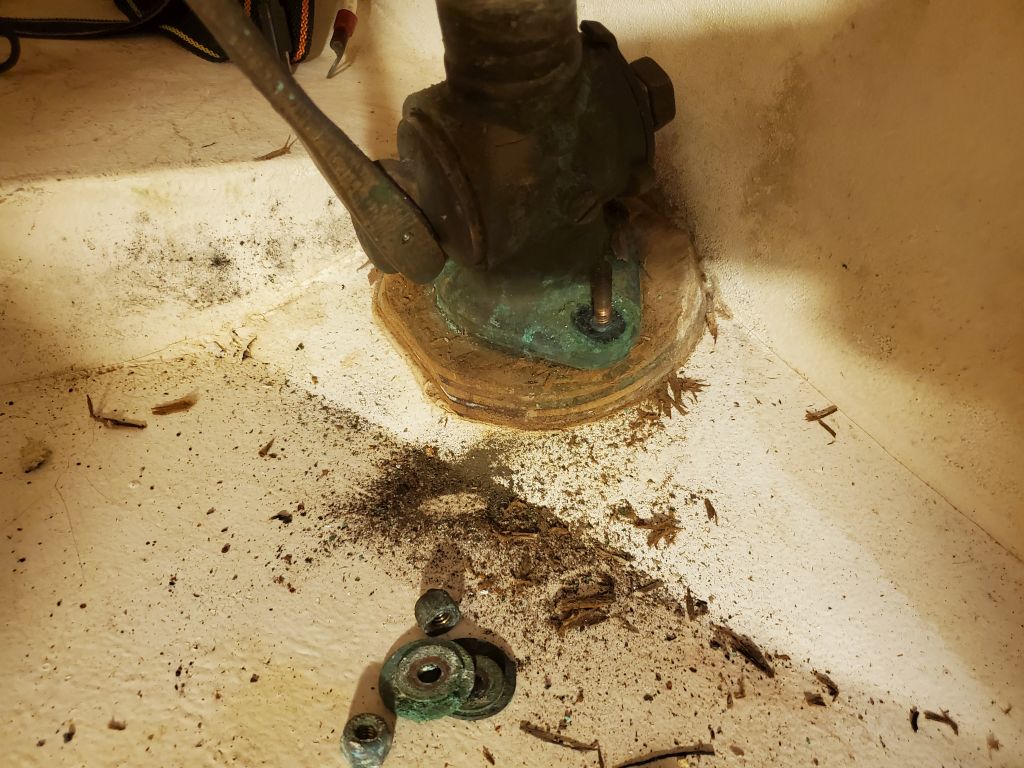
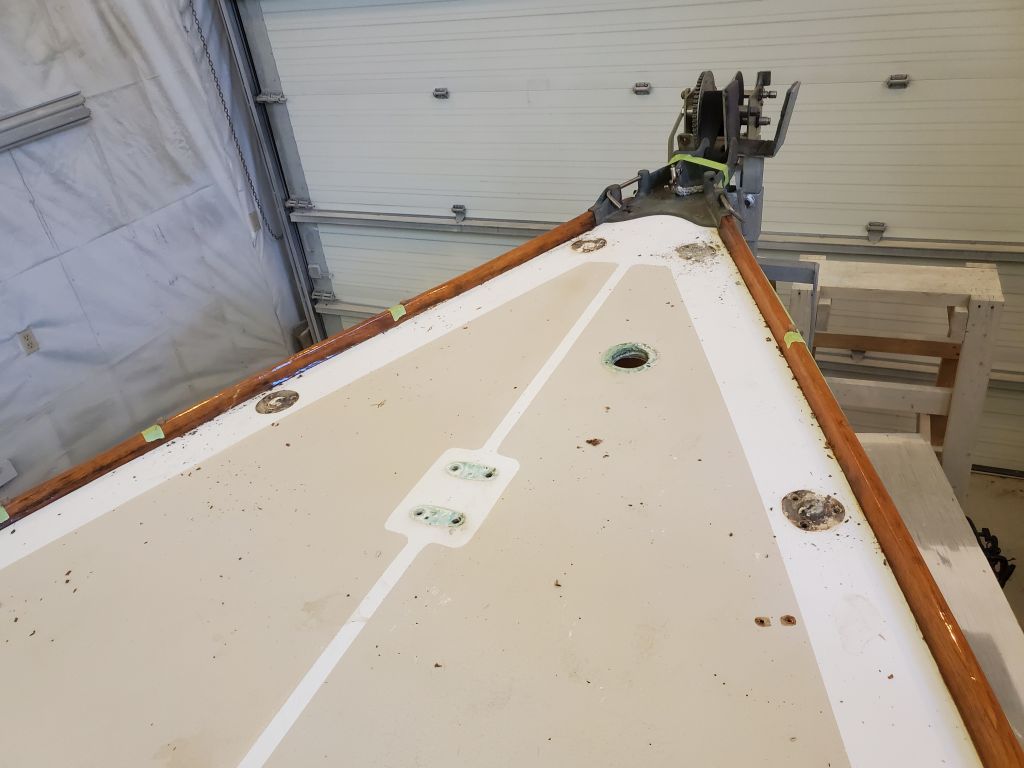
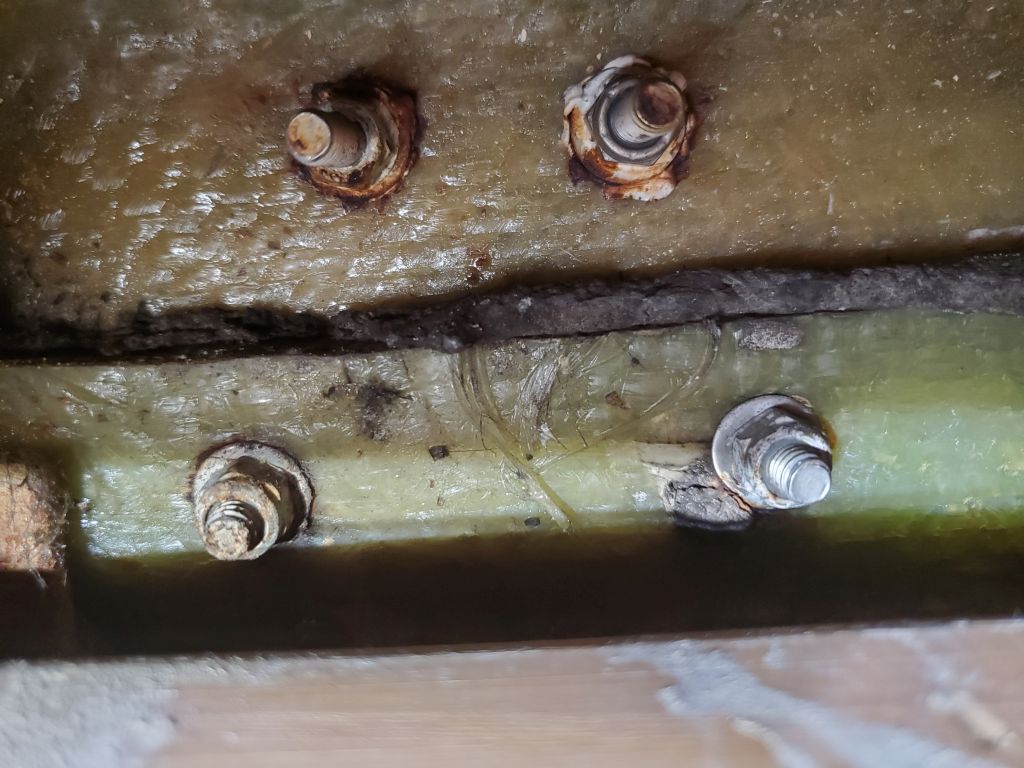
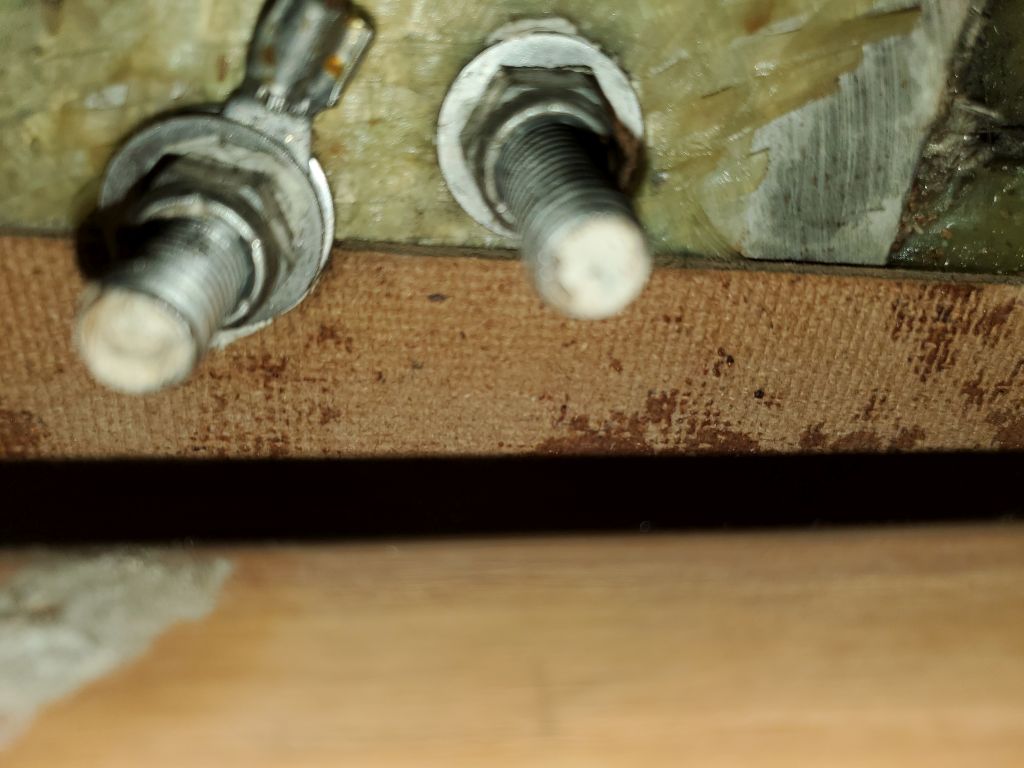
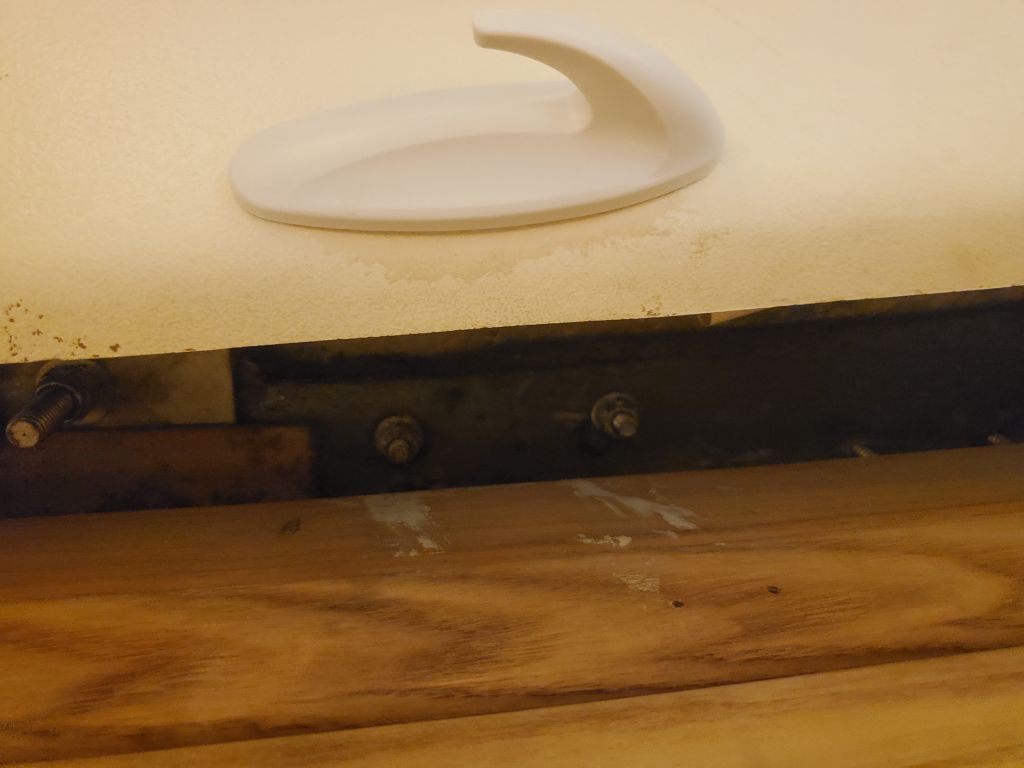
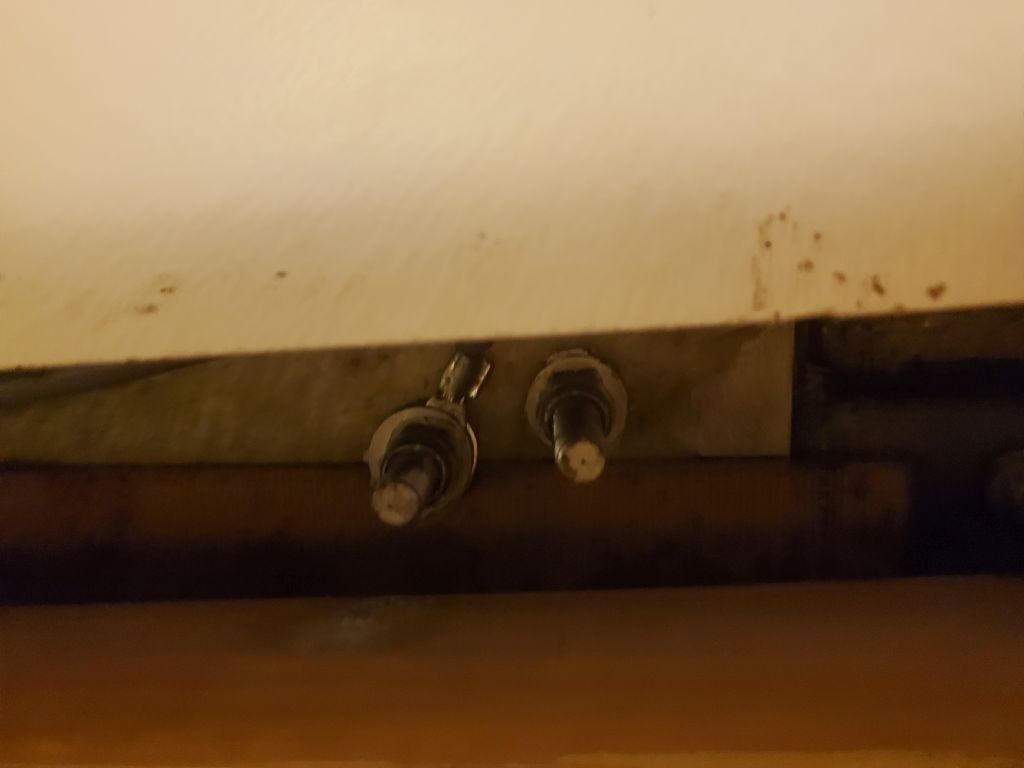
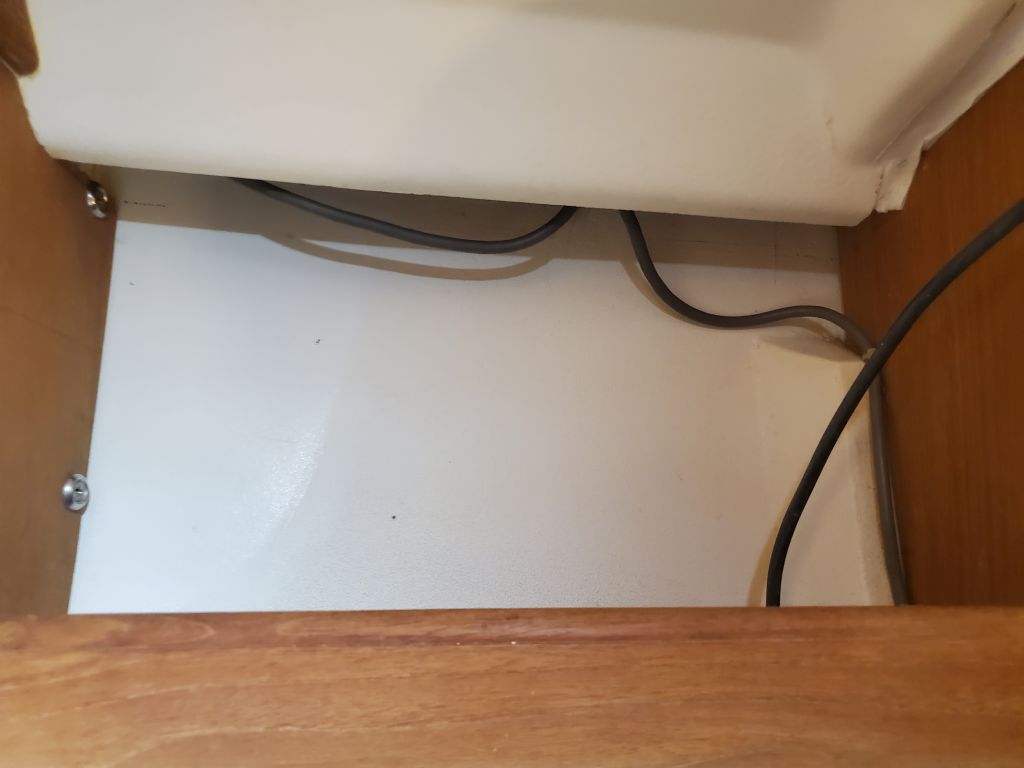
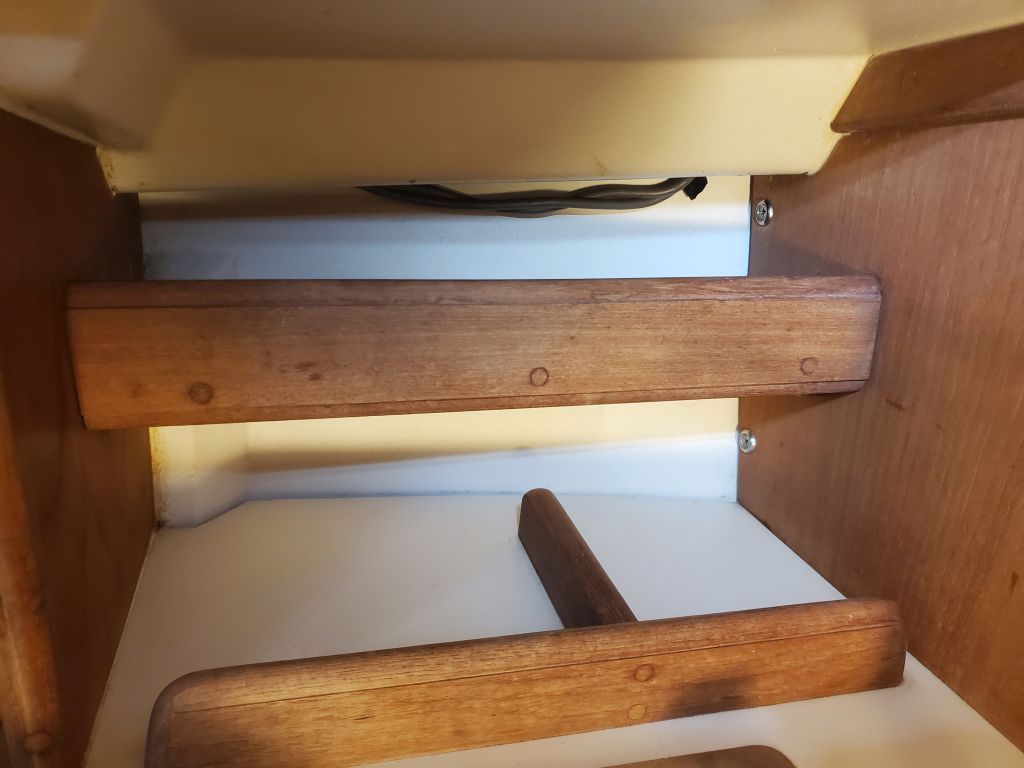
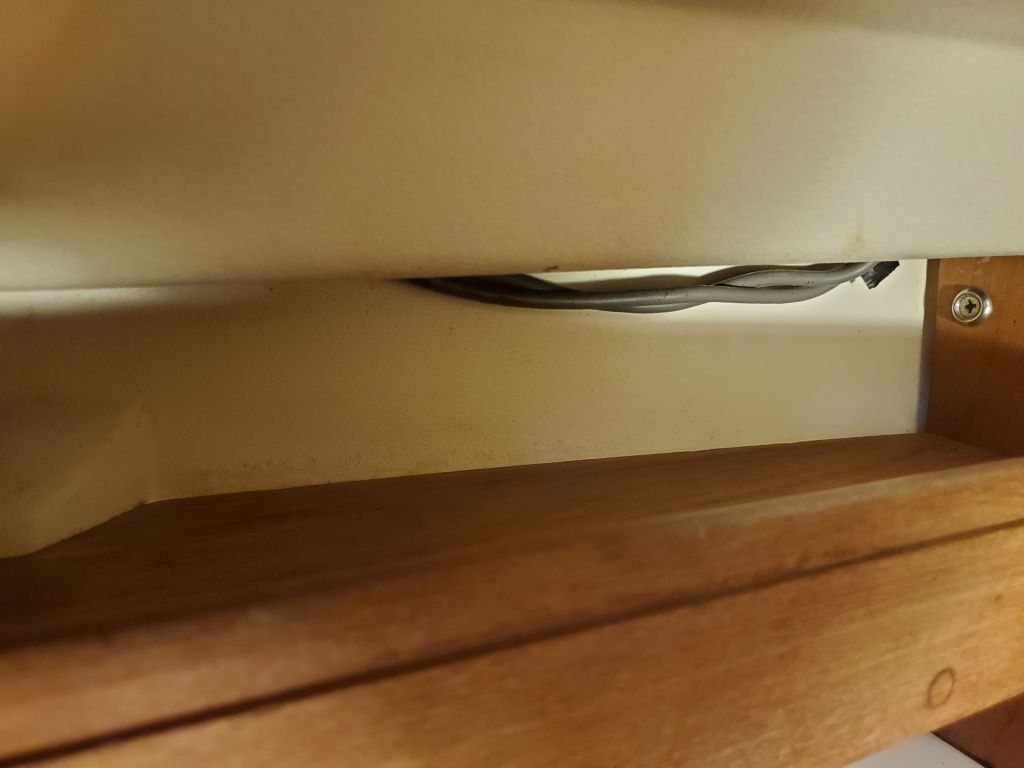
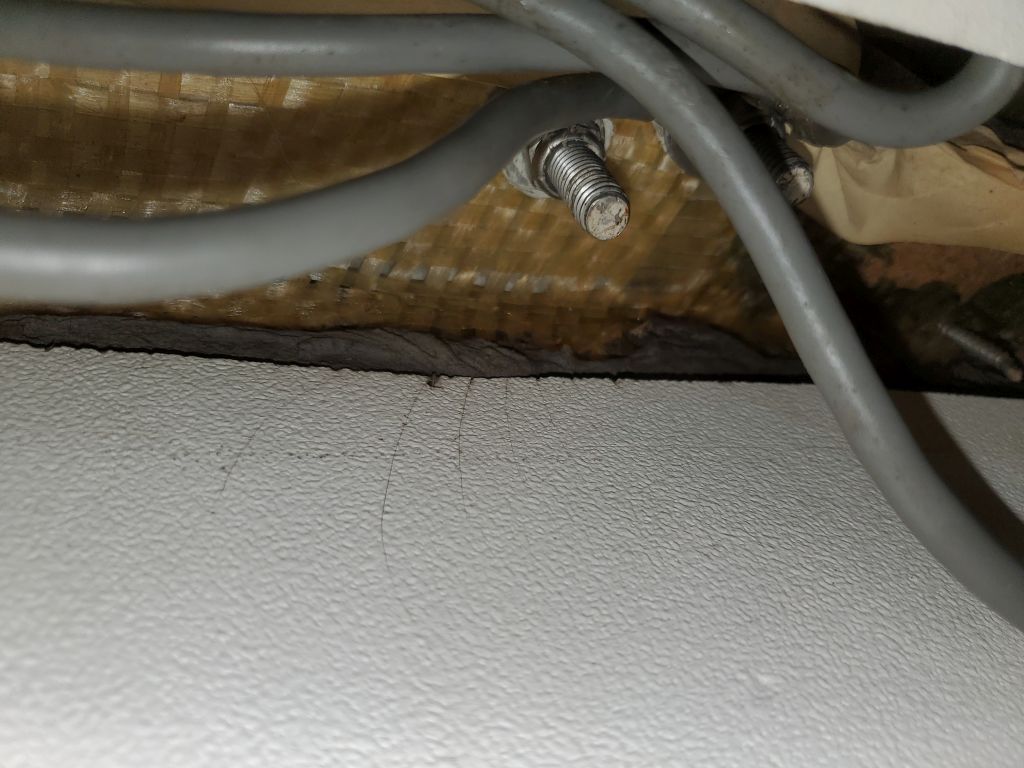
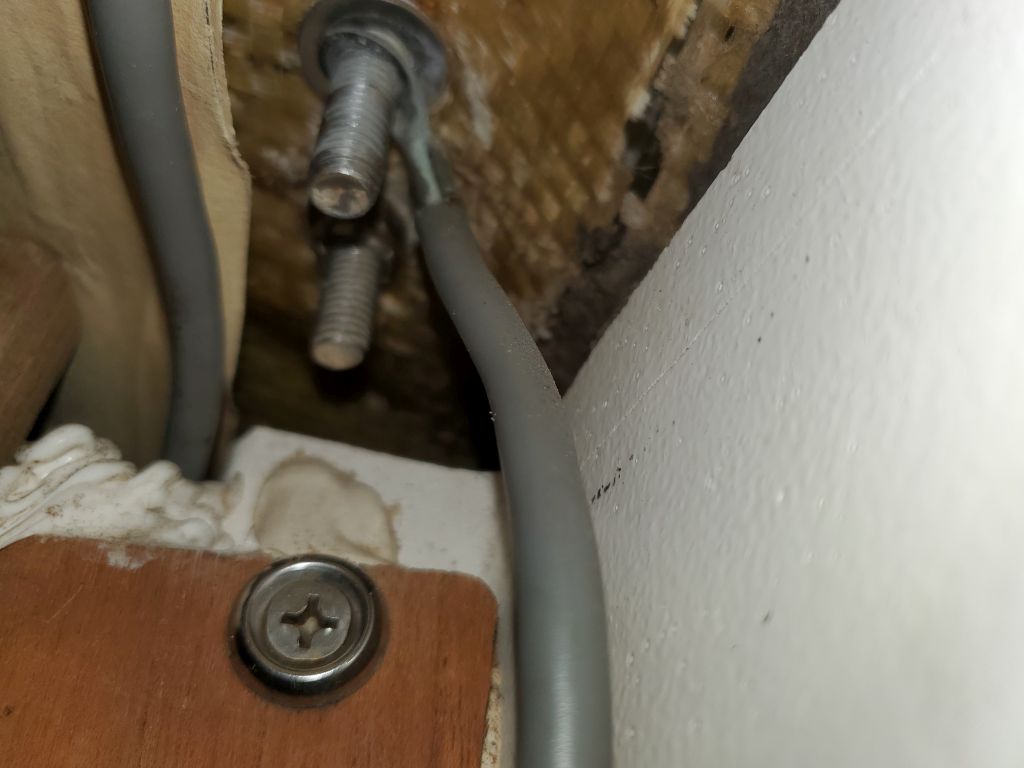
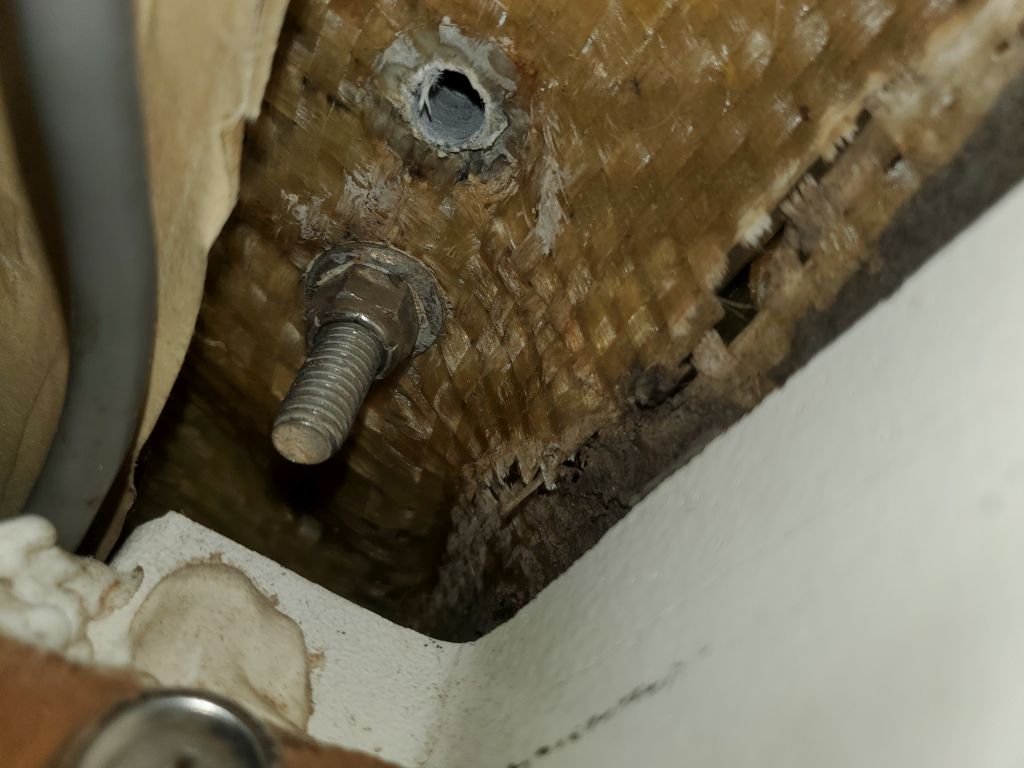
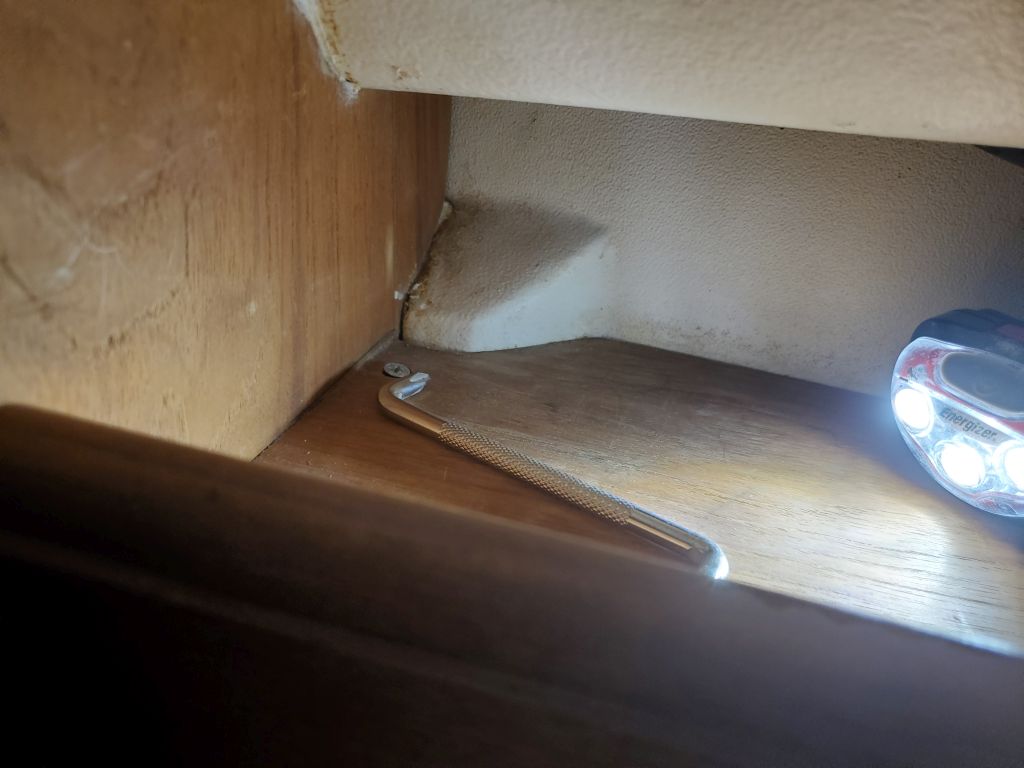
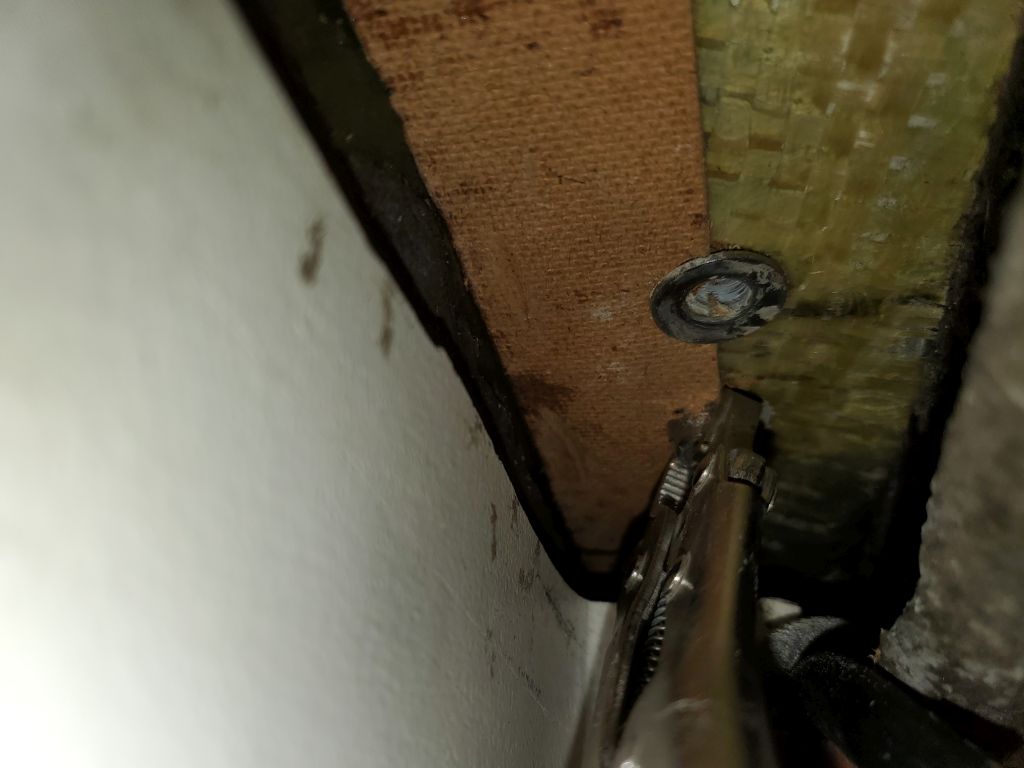
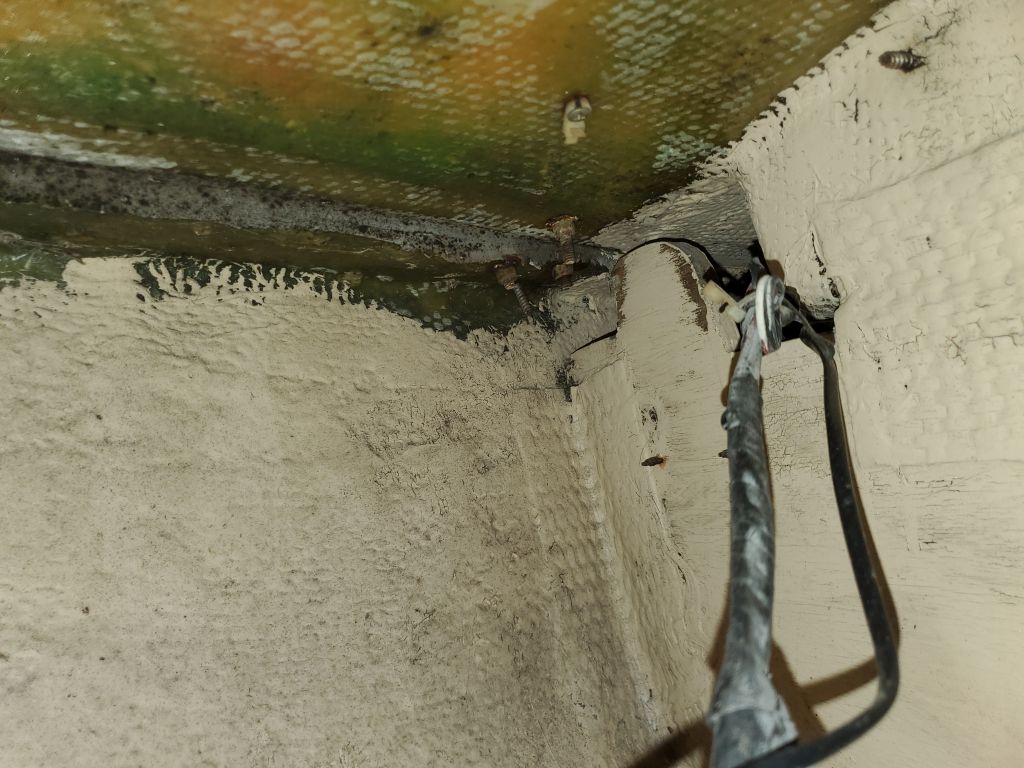
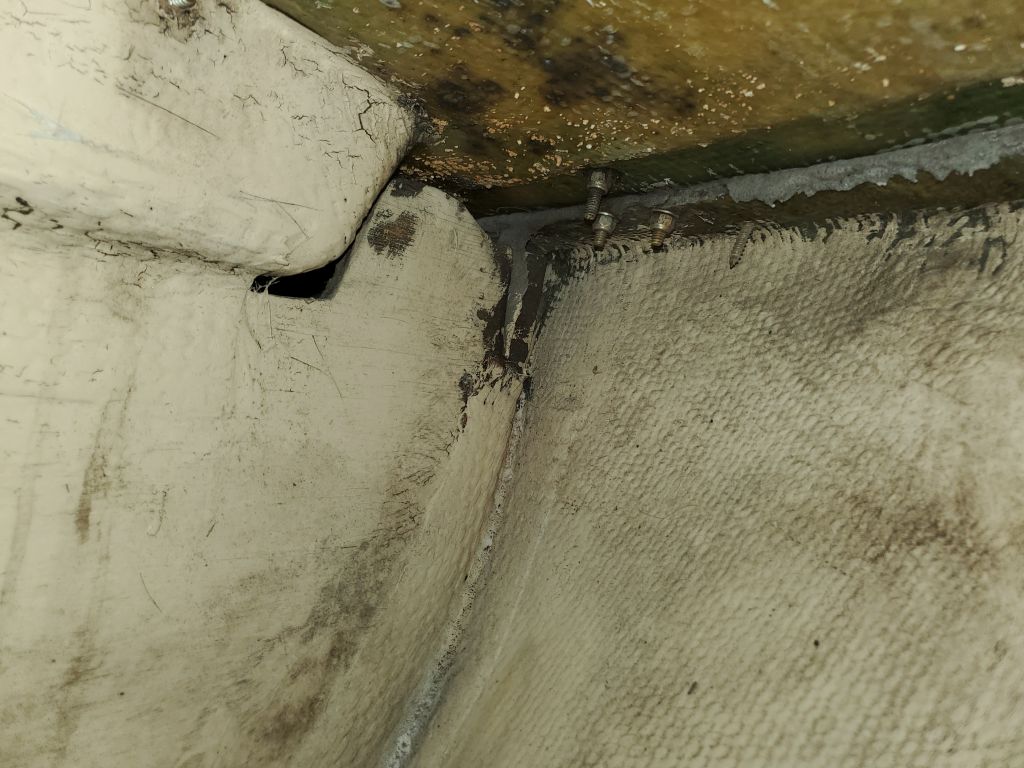
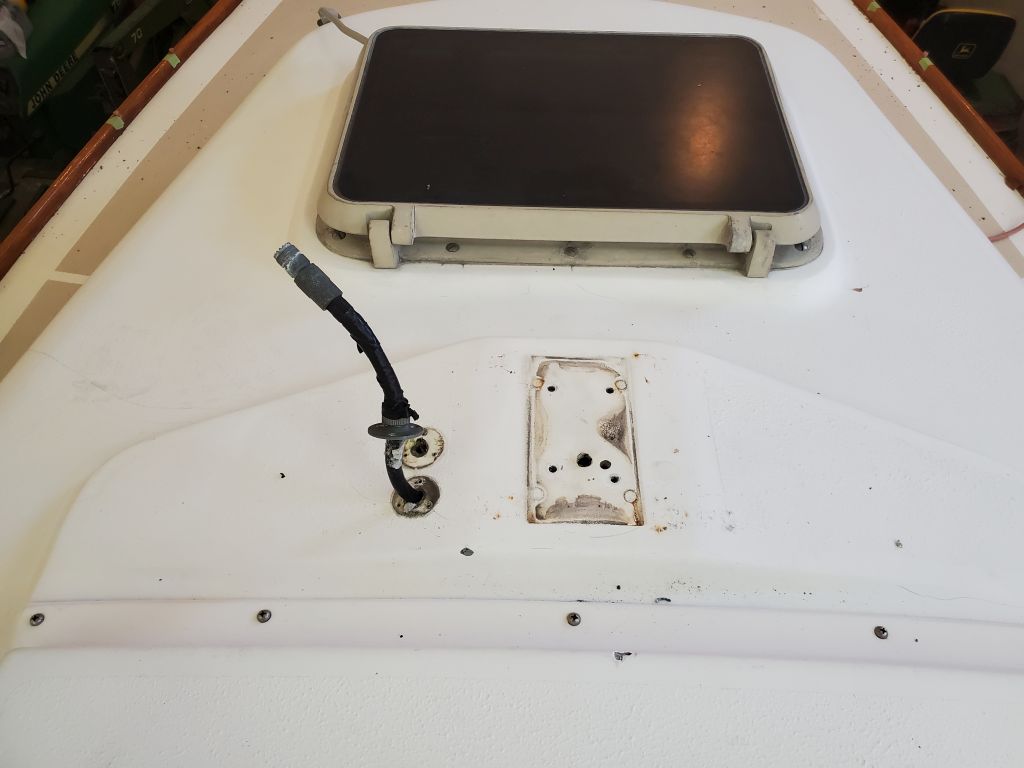
With a bit of time later in the day, I began to assess another one of the projects on the list:  Replace the backing pads beneath the scupper seacocks.  The original pads of plywood, while still generally sound, were beginning to deteriorate after years of moisture and condensation.

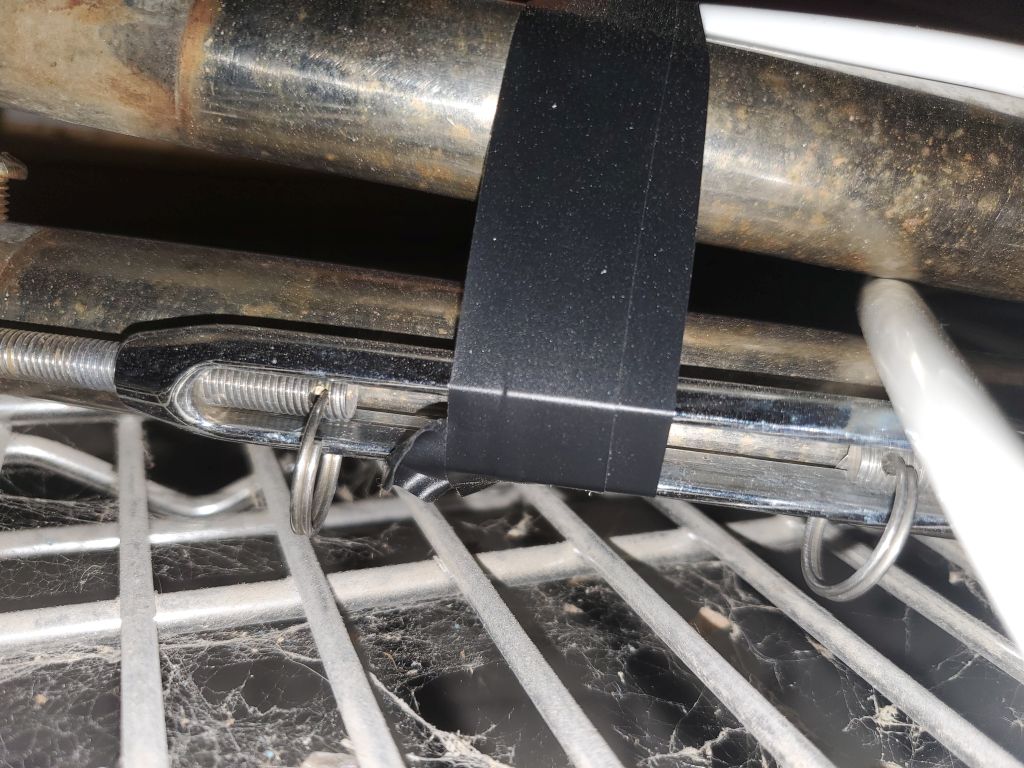
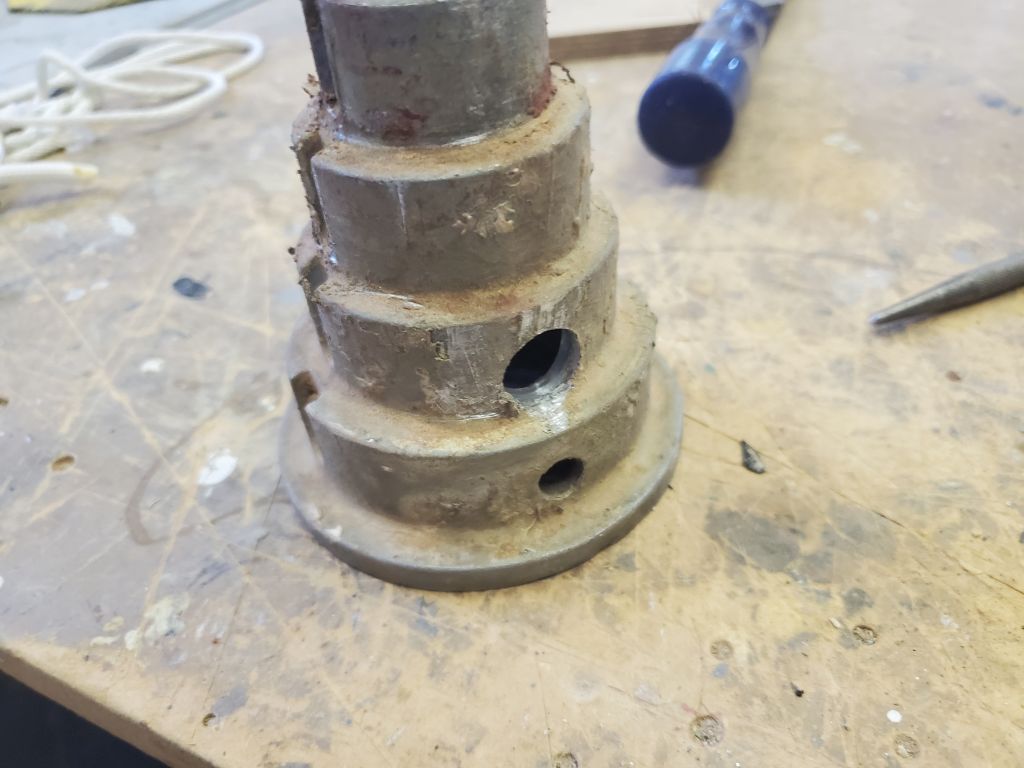
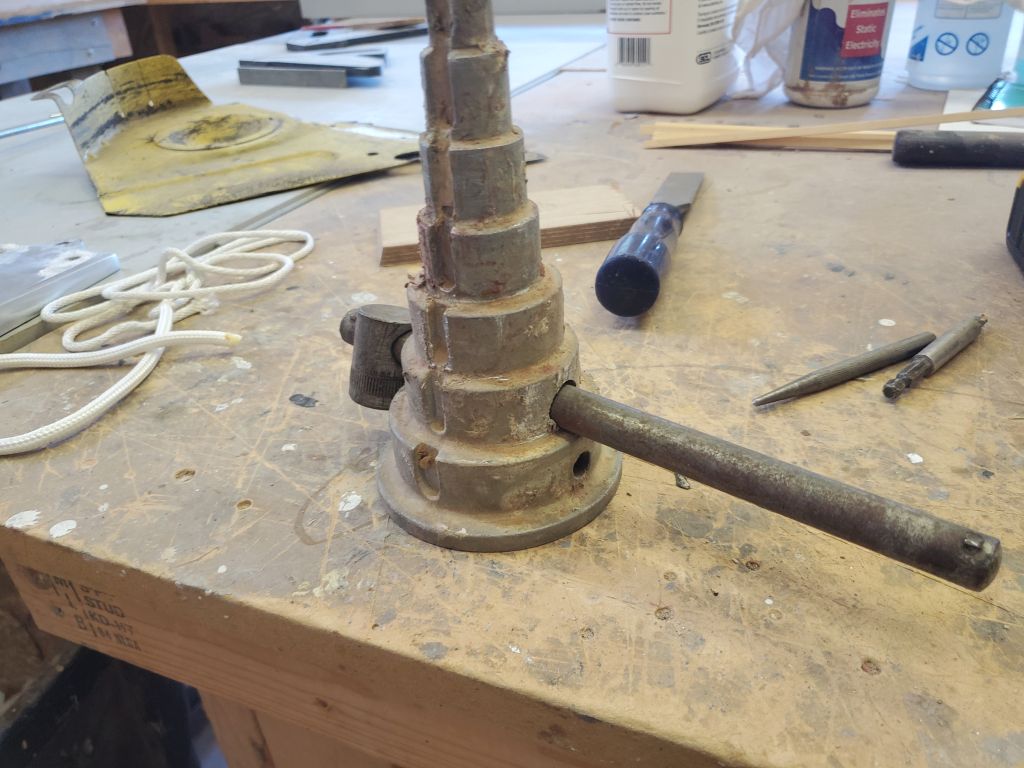
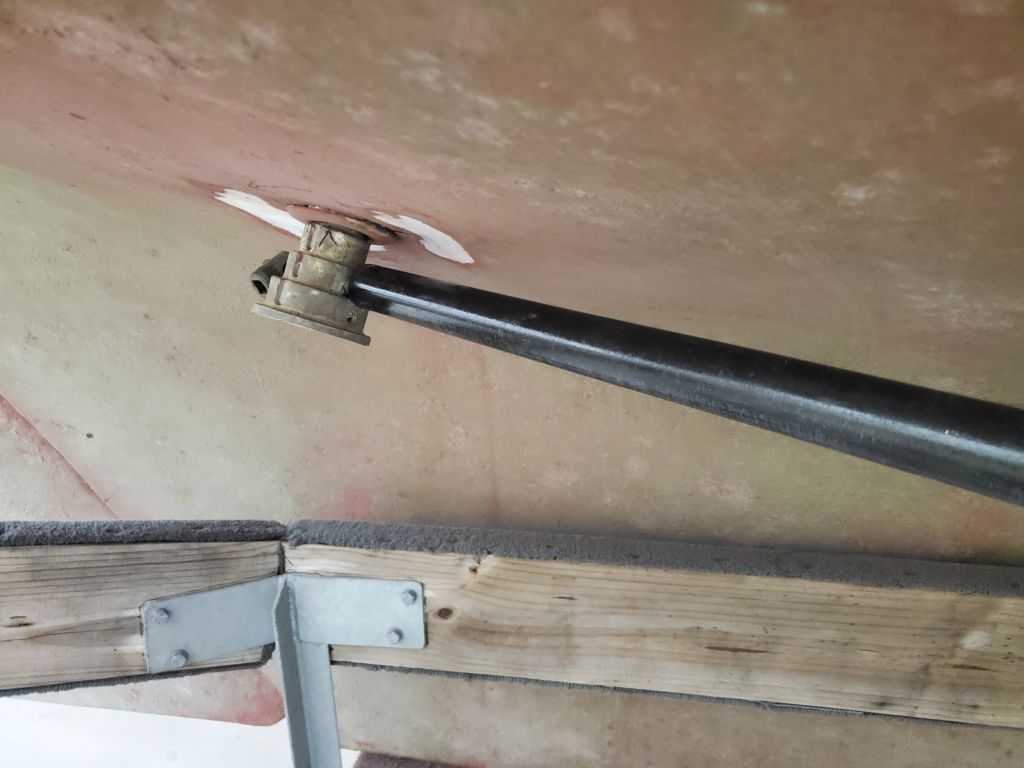
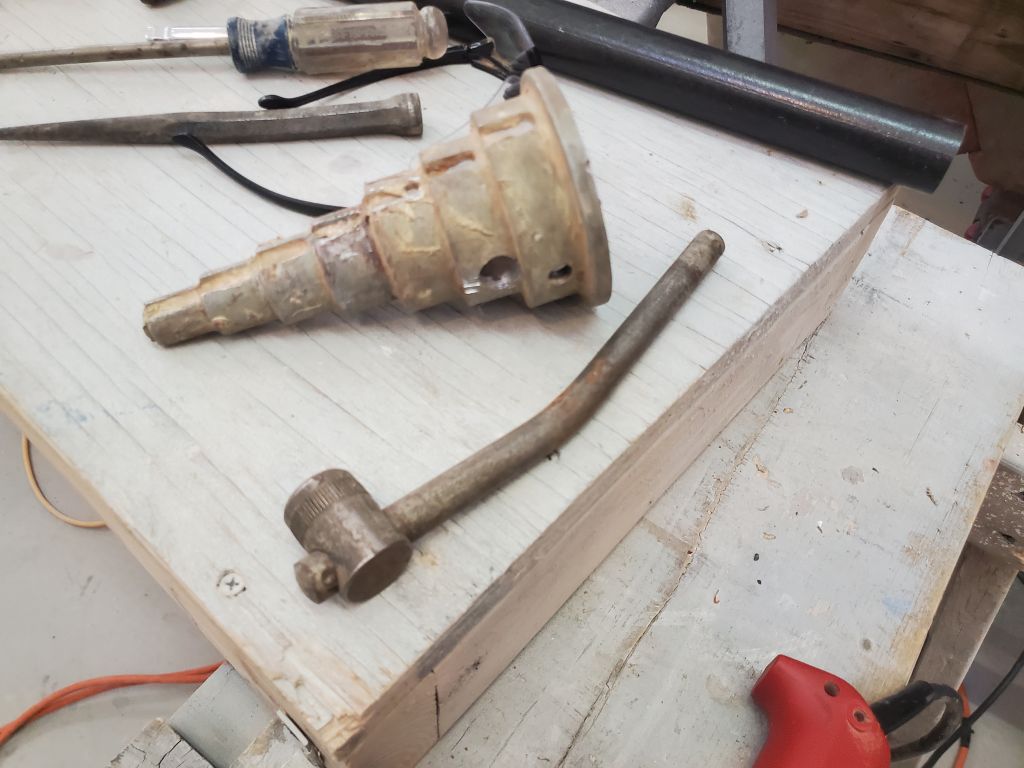
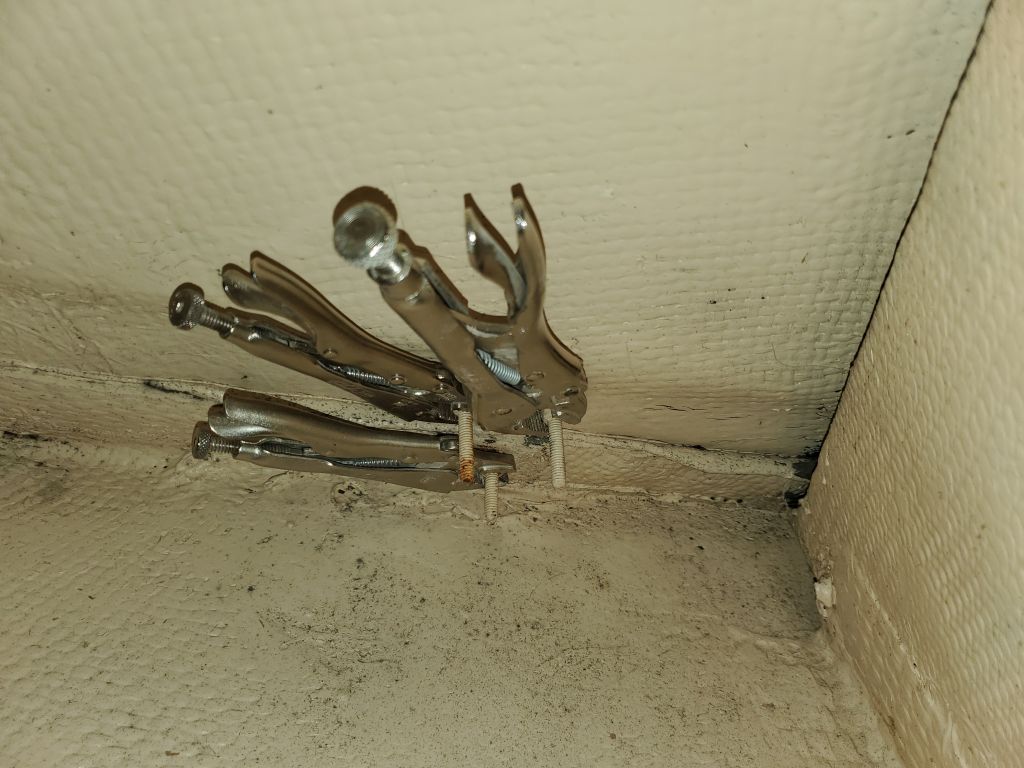
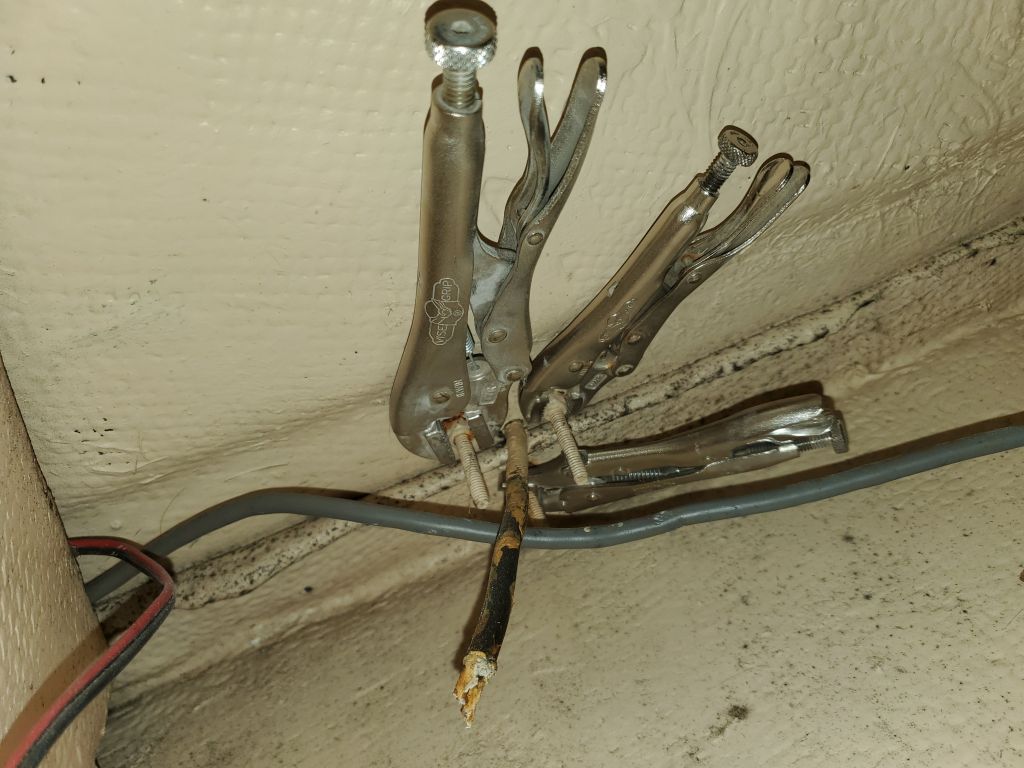
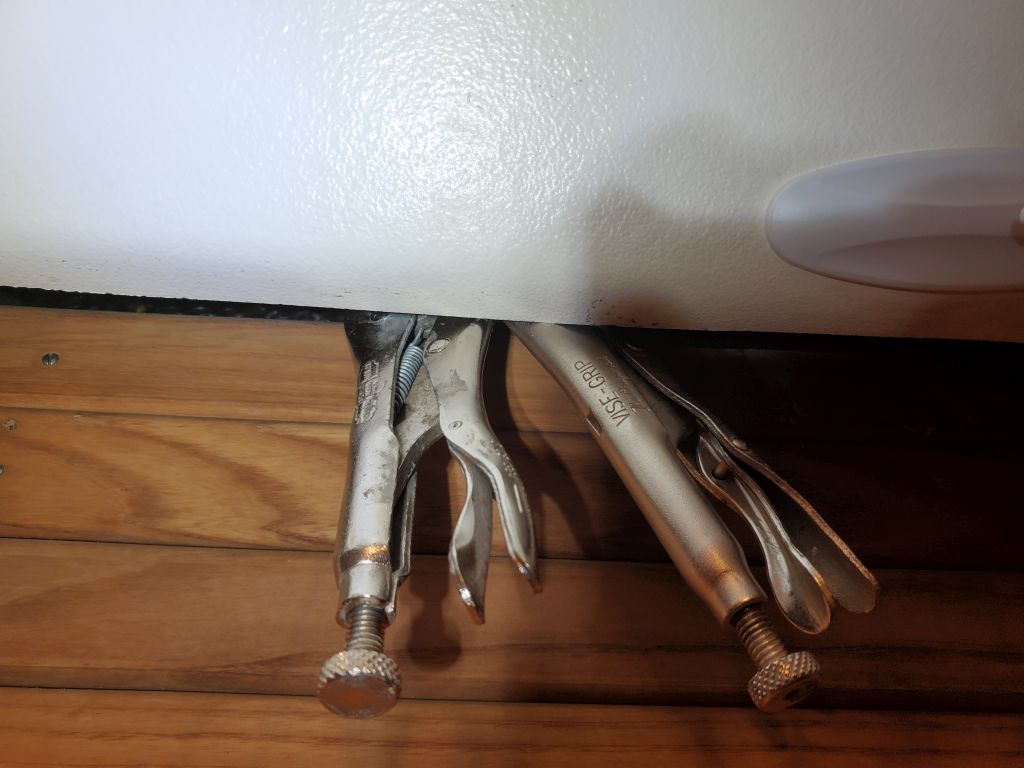
This would require removal of the hoses, valves, and through hulls.  I hoped to be able to unthread the through hull mushrooms from the valves from outside, after which I could unbolt the valves and replace the pads as needed.  However, the through hull installation wrench I had, and which works well for new installations, wasn’t suitable for removing these fittings, as I found I couldn’t apply enough leverage to break free the threads.  After a fruitless attempt, I ordered what I hoped would be a better tool for the job, one to which I could apply a wrench, and set this project aside for the time being till the new tool arrived.

Total time billed on this job today:  2.75 hours

0600 Weather Observation:  Cloudy with showers, 43°.  Forecast for the day:  Rain, 50°

Skeedeen Phase 7-1

Monday-Tuesday

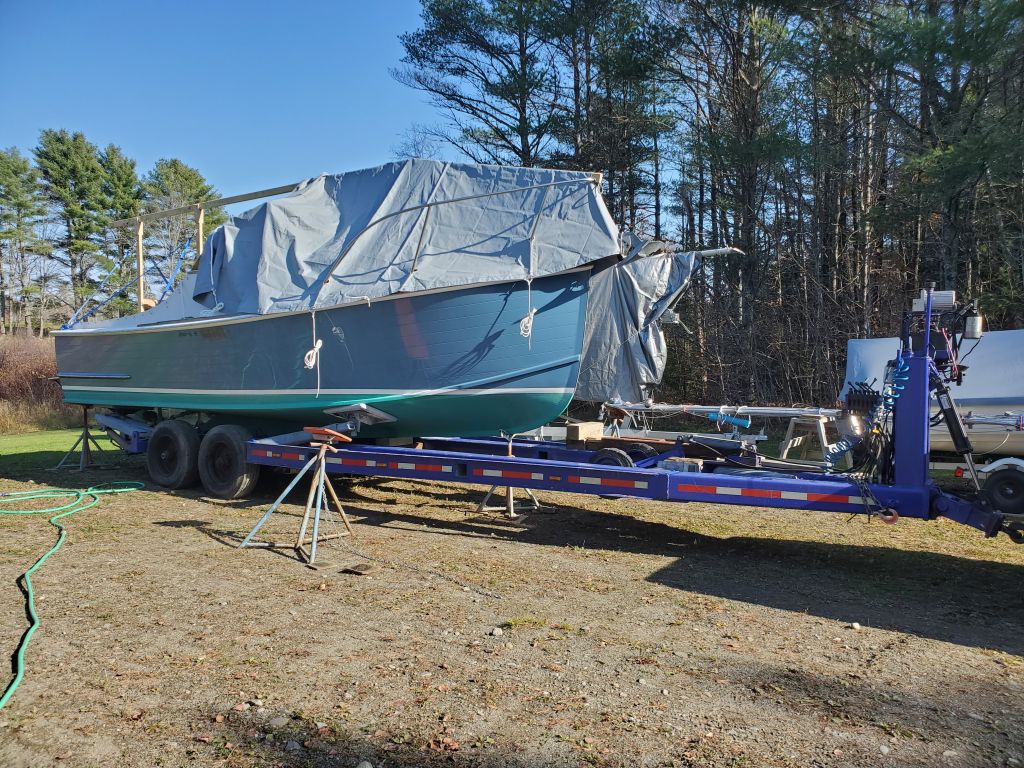
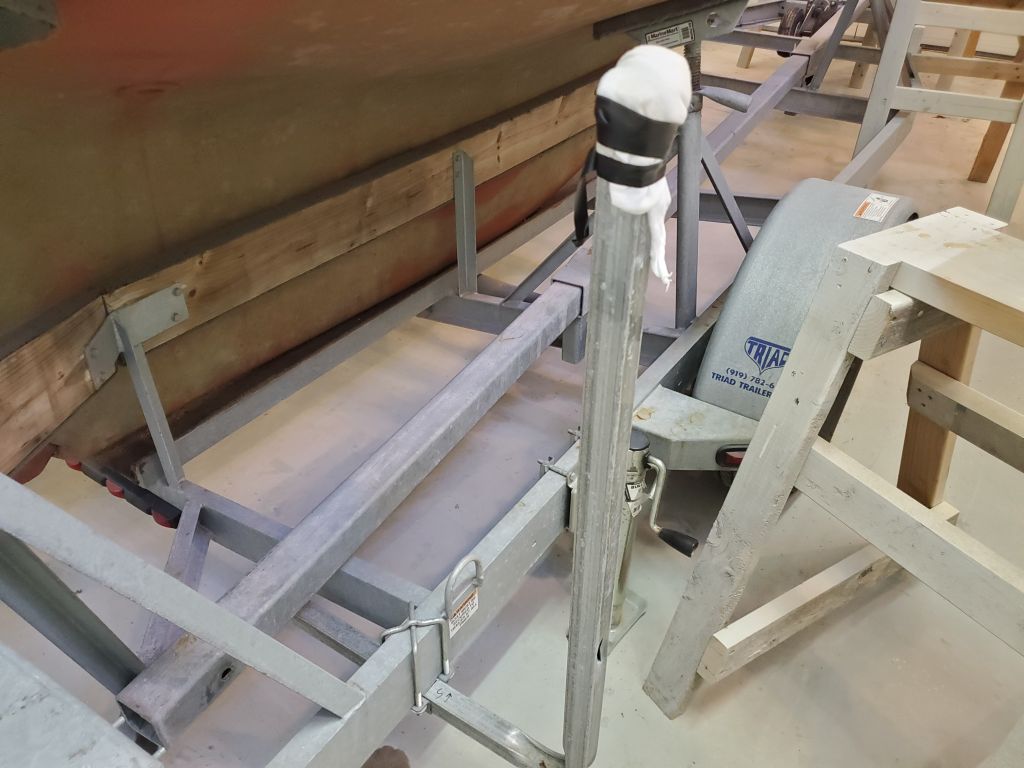
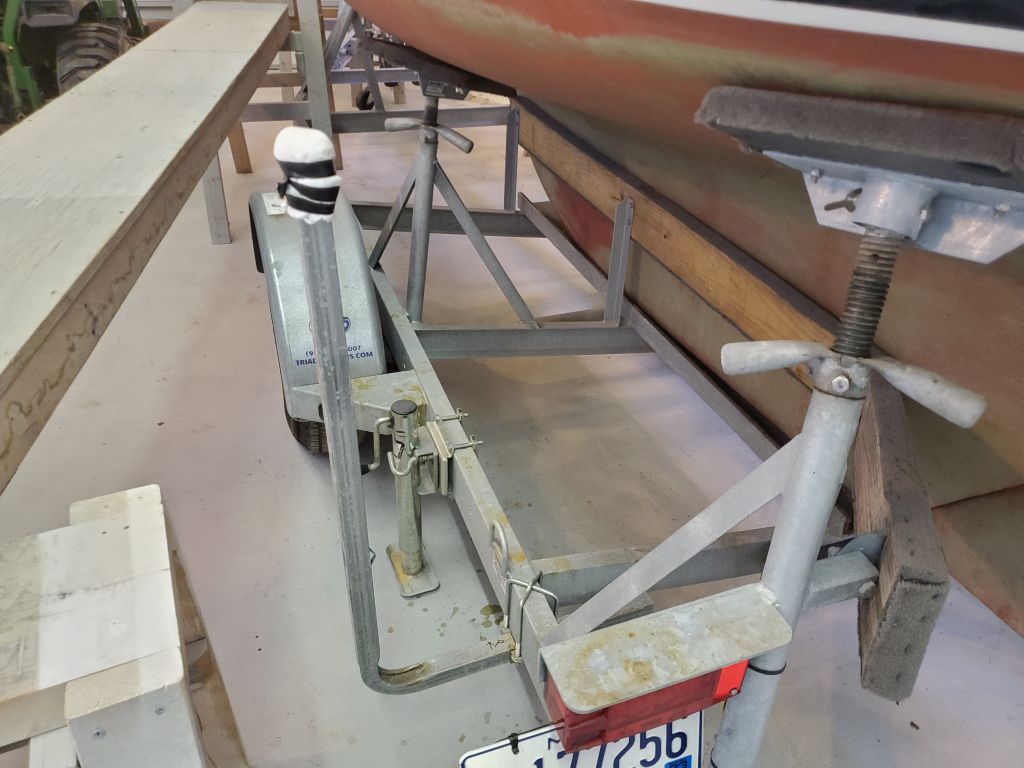
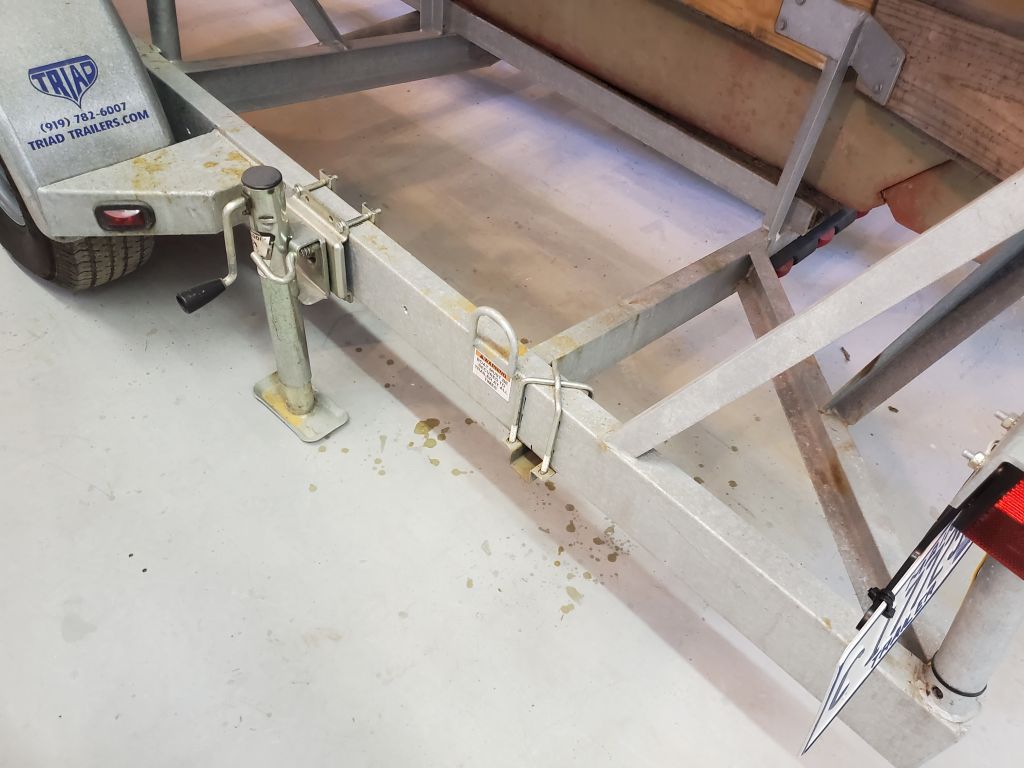
Easing back into the routine after summer break, I got started early in the week by getting things back into order around the shop, clearing out temporary storage and other projects to make room for boats again.  With this done, and after a preliminary meeting with Jason, my canvas  subcontractor, to discuss the immediately-upcoming role he’d play in a couple of the several canvas projects lined up here for the winter, I elected to move Skeedeen, which had been delivered some weeks previously, into the shop for Jason’s convenience in patterning a new canvas enclosure for the helm area, as well as to get going on my own standard mostly-seasonal maintenance work on the brightwork.  With what appeared to be a break in the rain (it wasn’t), I jumped at the opportunity to get her indoors so Jason could get to work, and before the even worse rain arrived over the next several days.  The boat was blocked a little low for my trailer, and I had to make some adjustments before I could load the boat.

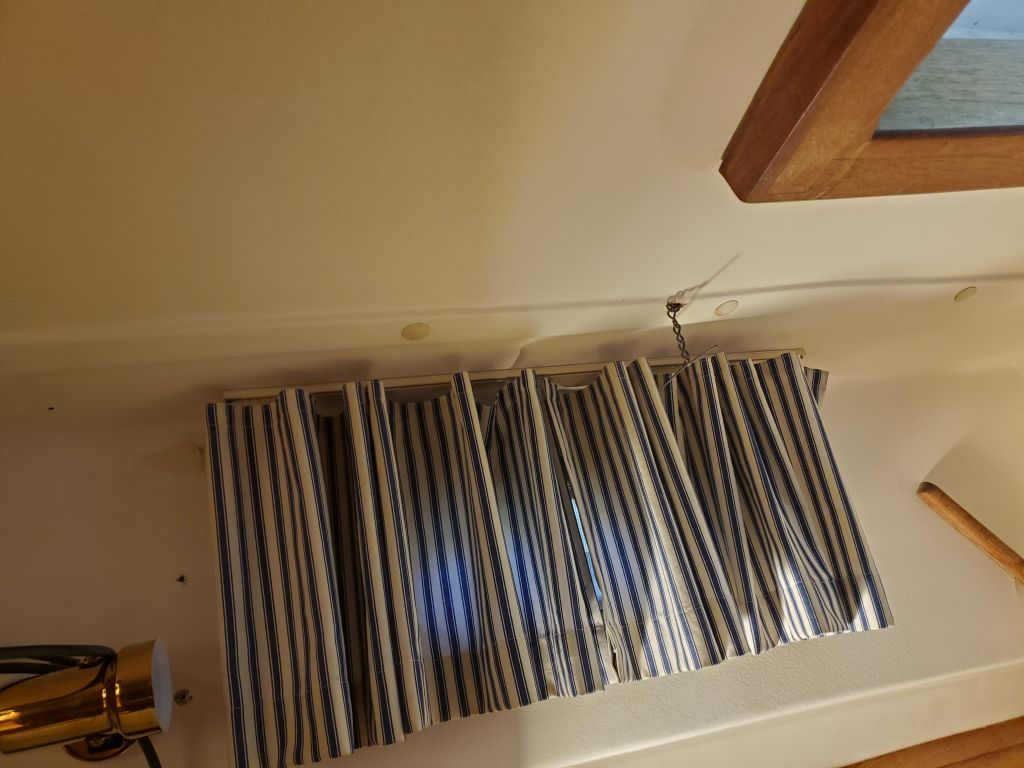
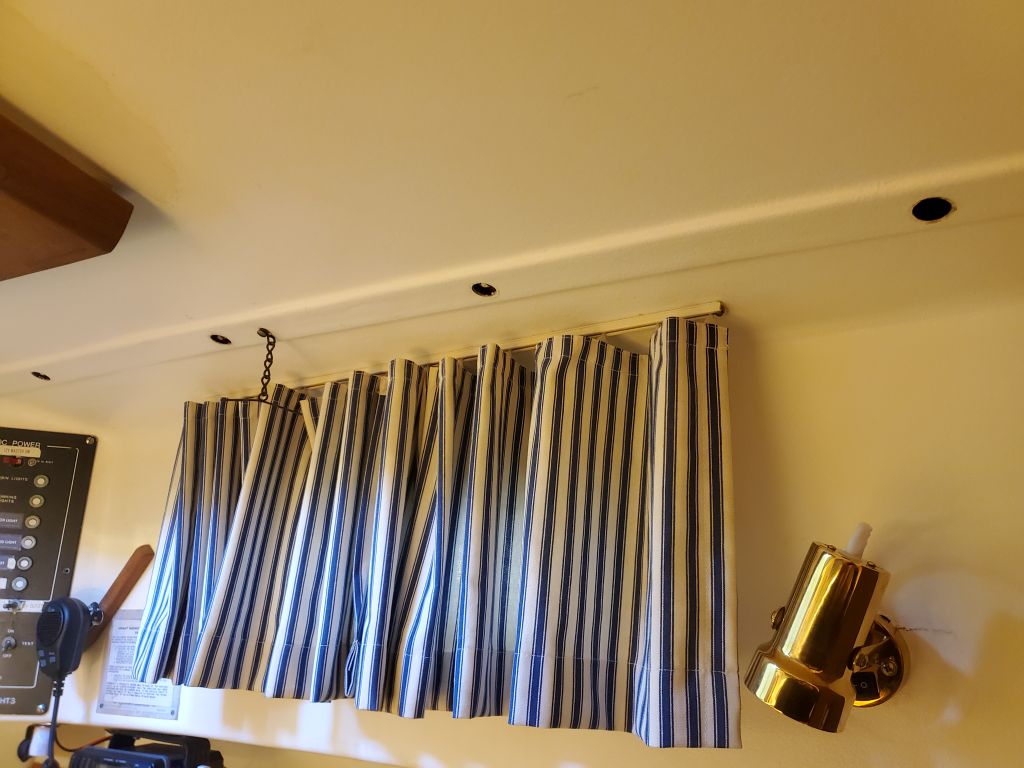
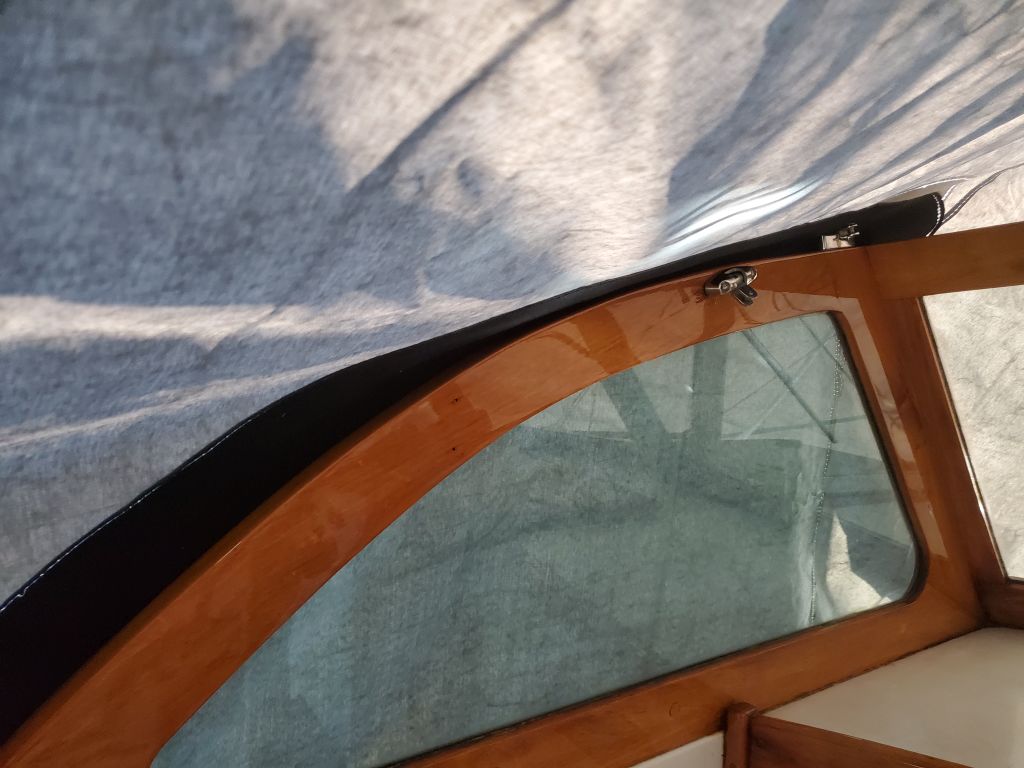
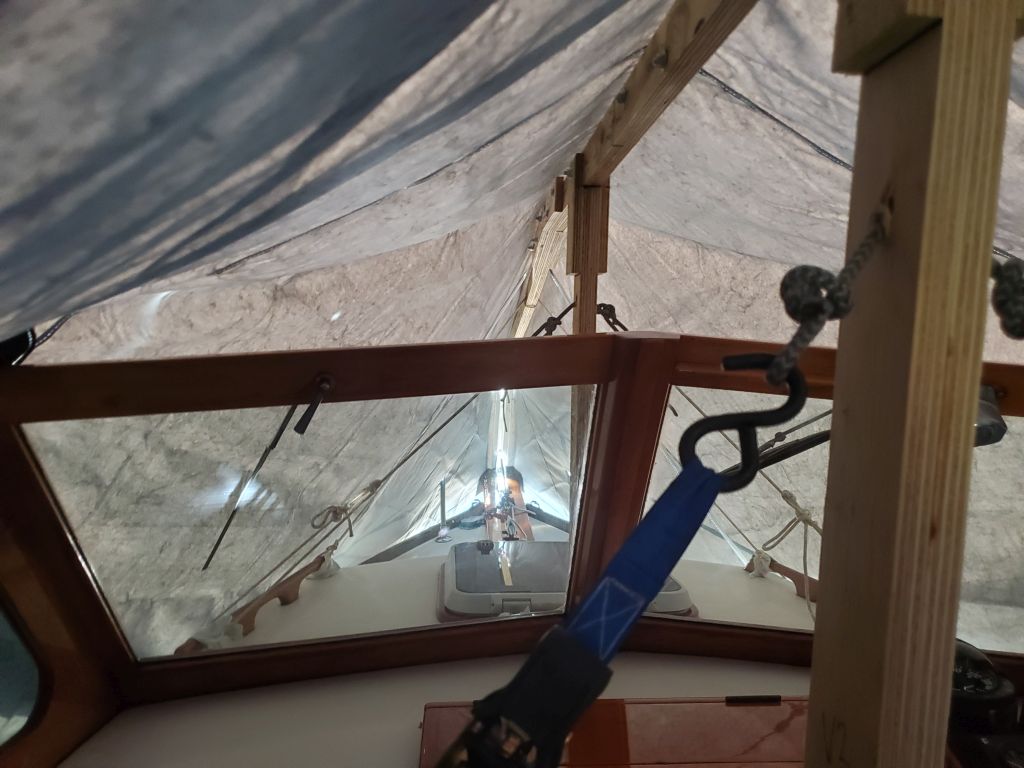
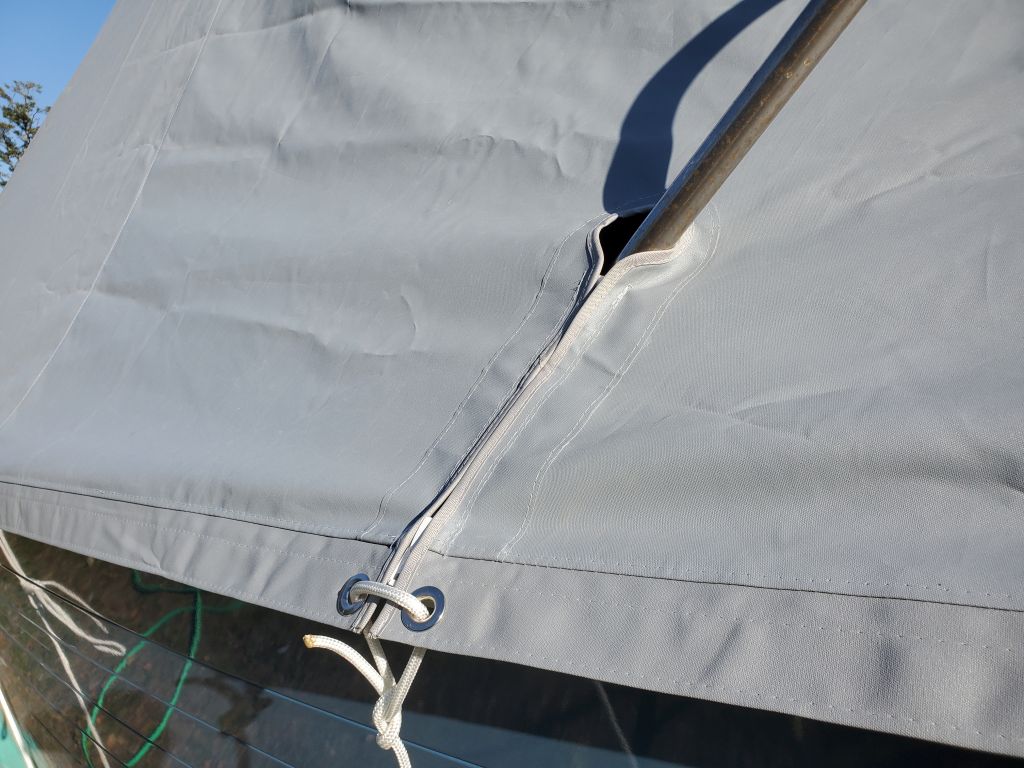
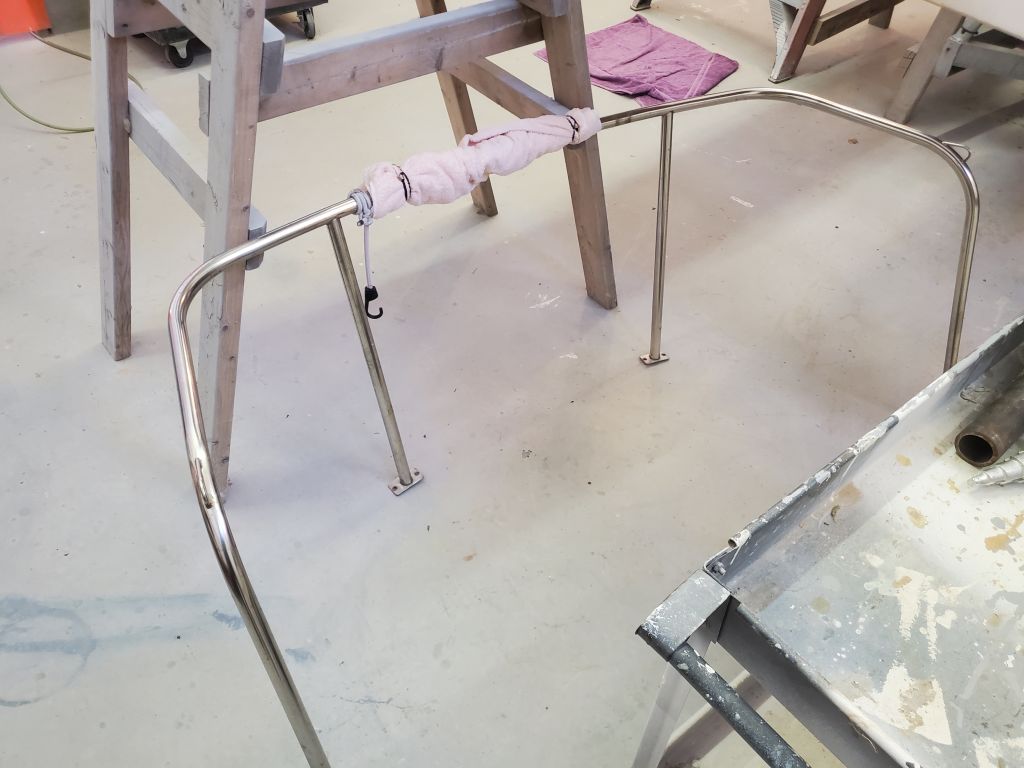
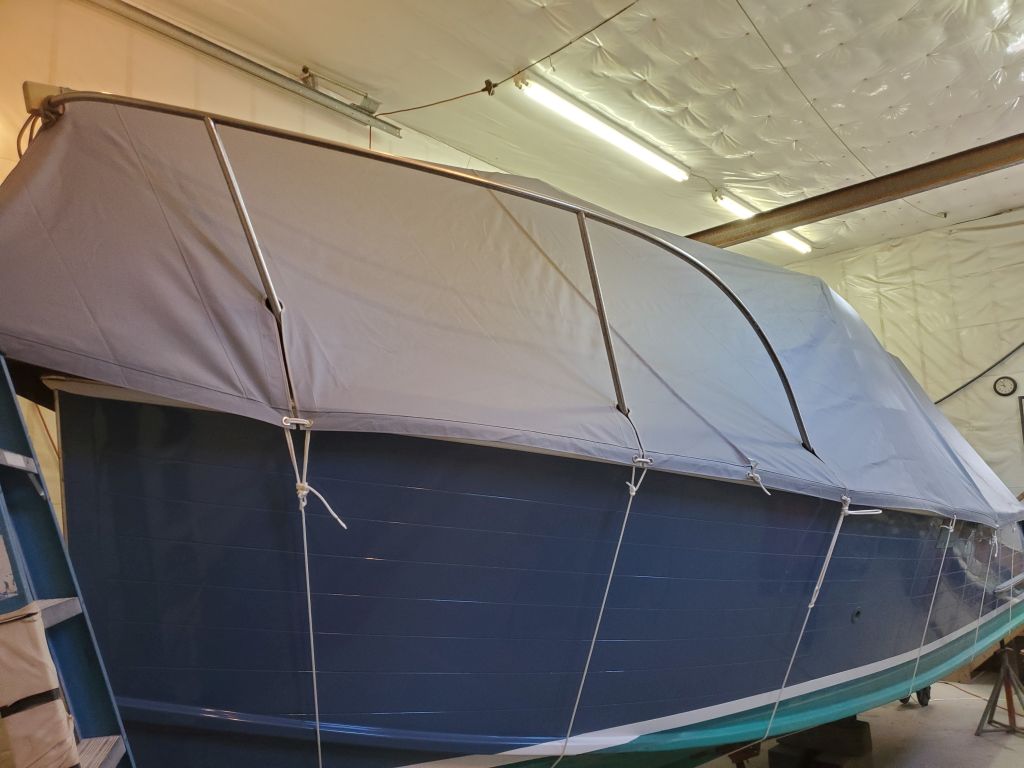
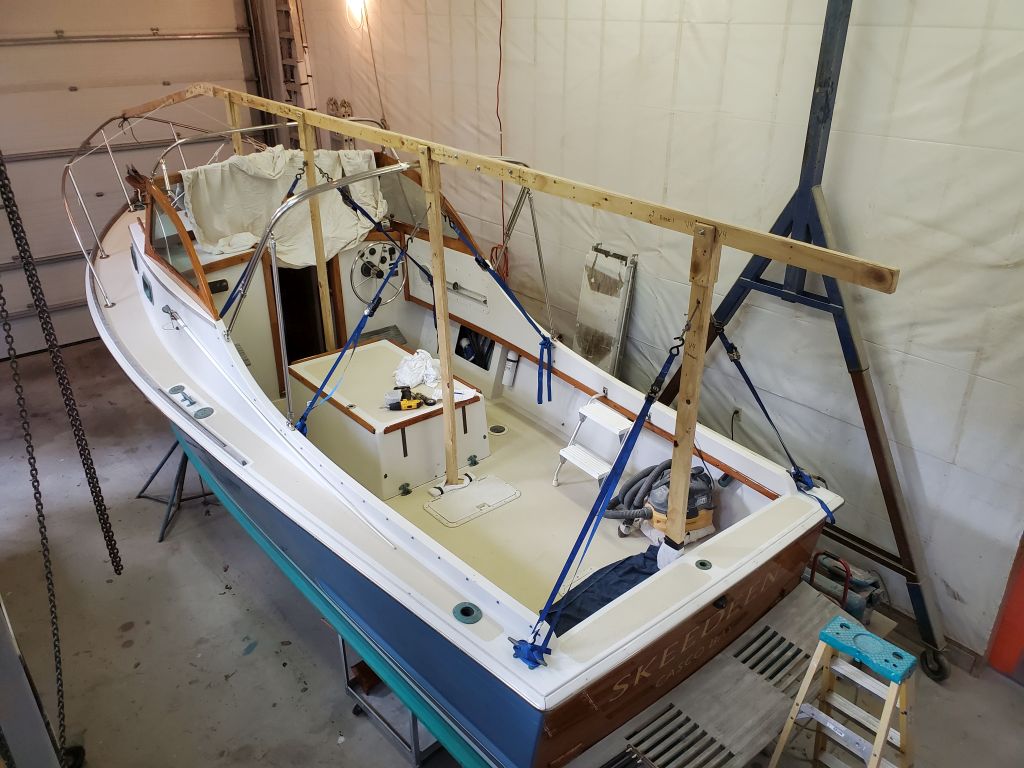
The next day, I got started by installing the old canvas top on the frame for reference.  This top was over 10 years old and had held up fairly well, but was overdue for replacement.  These photos are for general reference only.  I hadn’t seen the canvas in some time and was amazed how faded the original color had become.

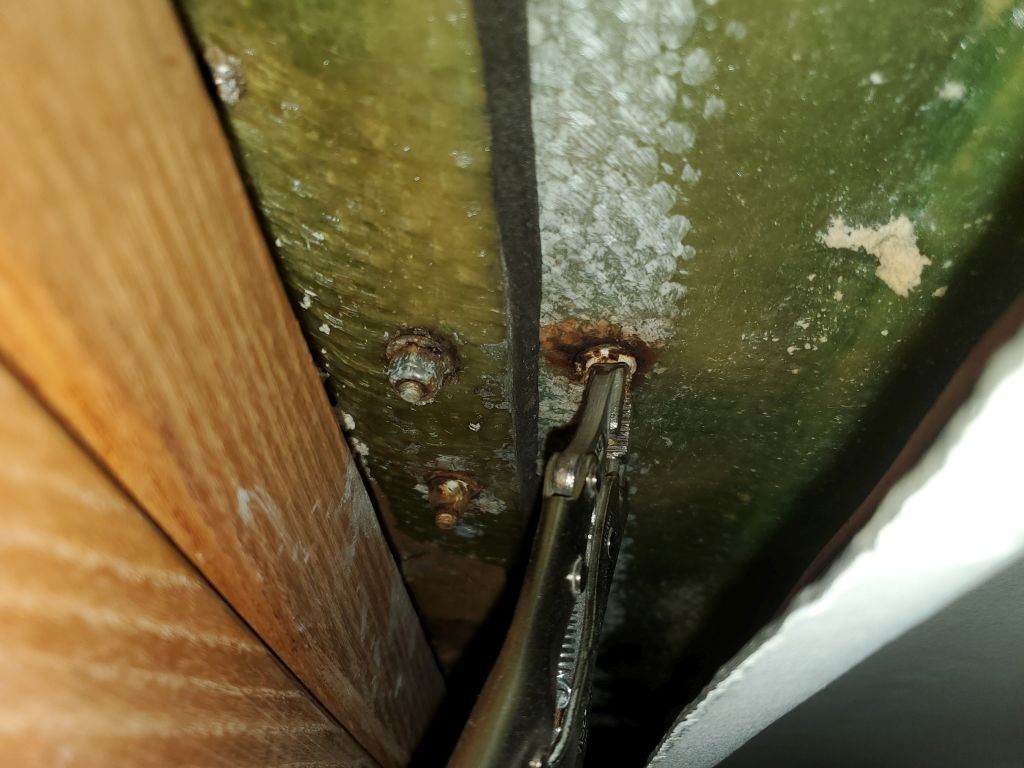
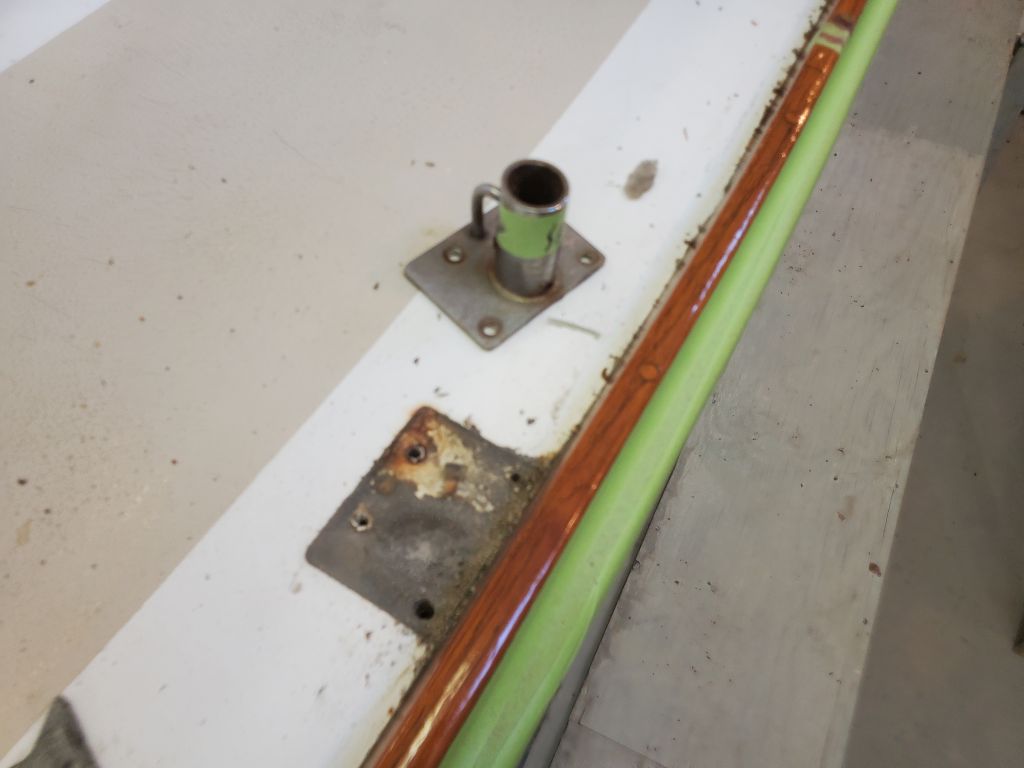
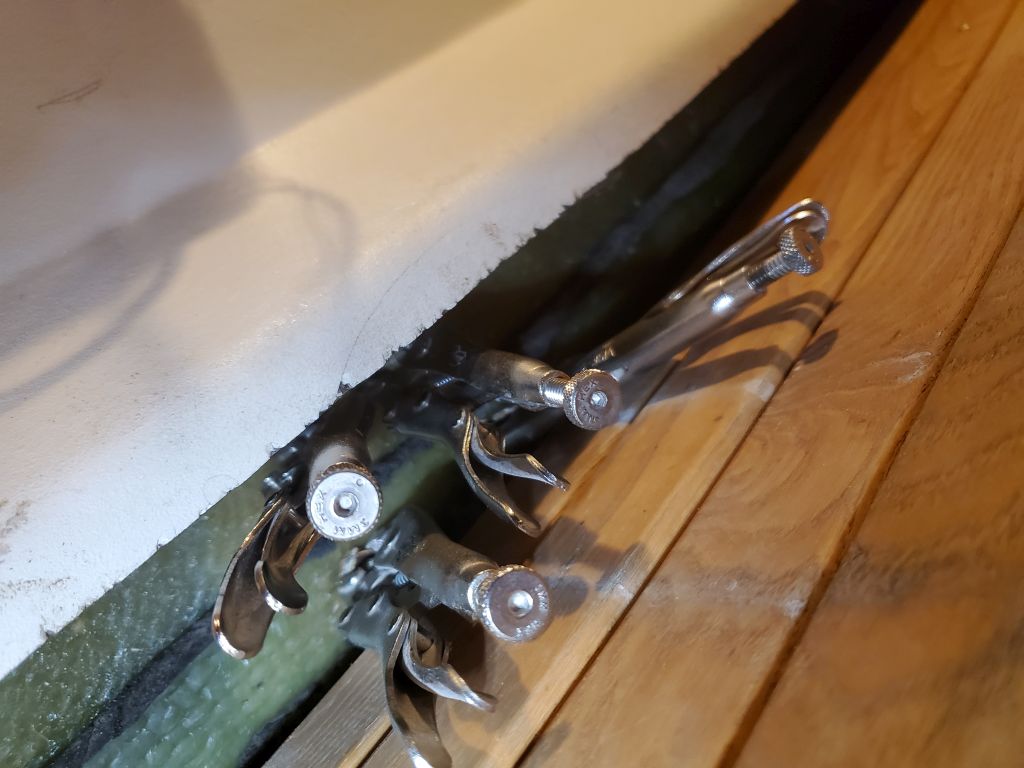
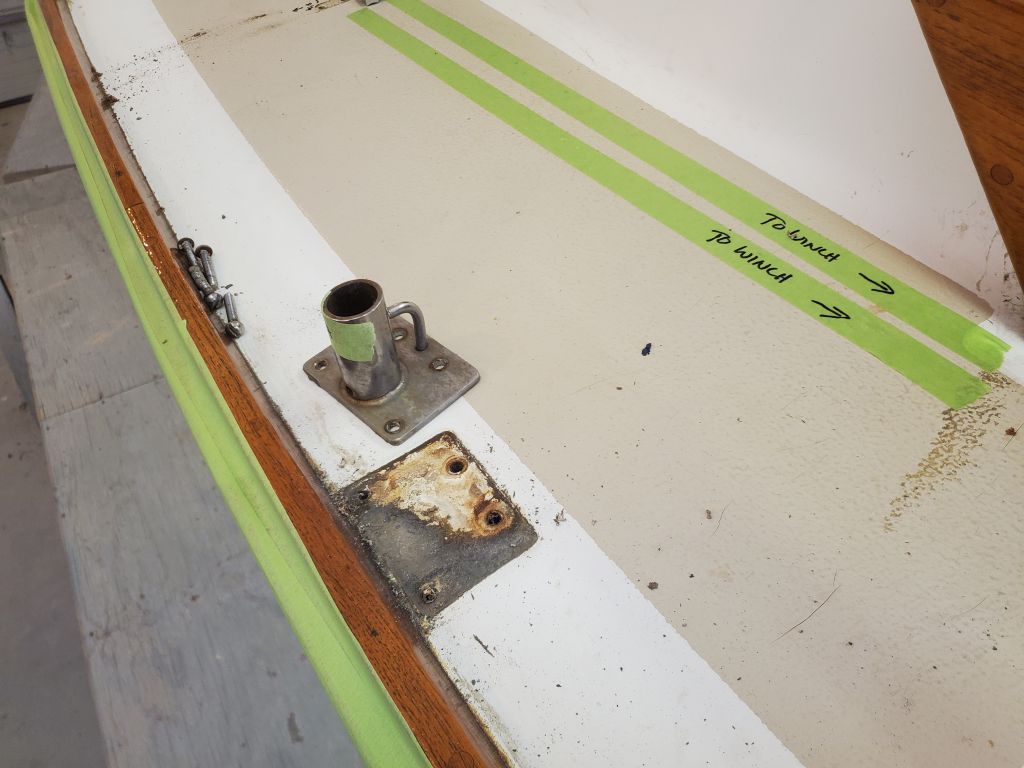
Meanwhile, preparing for the brightwork maintenance work ahead, I removed all the pieces I could, including the companionway hatches and cockpit trim.  Later, once the initial work on the new canvas enclosure was complete, I’d continue and remove the hardware from the windshield.

Total time billed on this job today:  2.5 hours (over both days)

Tuesday 0600 Weather Observation:  Cloudy with showers, 43°.  Forecast for the day:  Rain, 50°

Lyra 76

Monday

Late in the week, the valve for the new through hull in the head arrived ahead of schedule, so I finished up the installation with the valve and hose adapter.

With that, everything was ready for Lyra to depart for a couple weeks at the owner’s home where he’d finish a few chores before launching near the end of the month.

Total time billed on this job today:  n/a 

0600 Weather Observation:  42°, clear.   Forecast for the day:  Sunny, 72°, chance of showers and thundershowers

<Back to Lyra

Lyra 75

Thursday

The backing block for the new head through hull was ready after an overnight cure and a light sanding to clean up the inside of the hole, so I began with a dry fit of the through hull and flange base, not only to check the fit (fine) but so I could drill the bolt holes through the flange and hull.  With the fittings secured together and positioned correctly, I drilled each hole in turn, installing a temporary bolt in each from the top to hold the alignment.  This done, I removed the fittings and, outside the boat, countersunk the holes to accept the machine screw bugle heads.

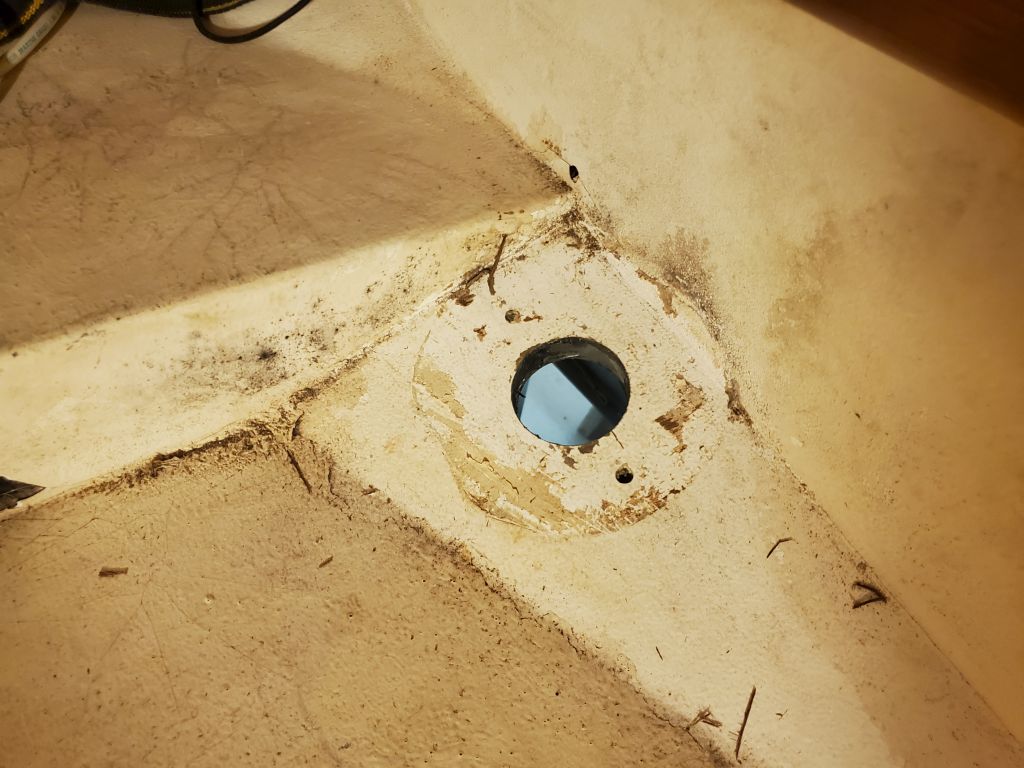
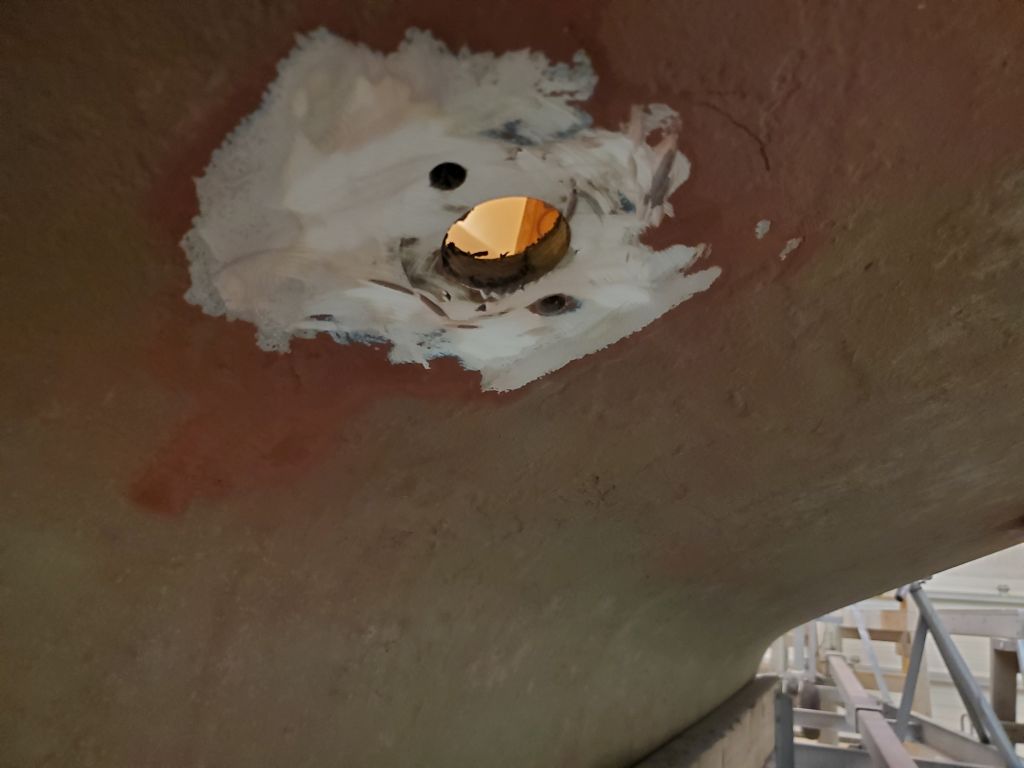
With everything cleaned up and otherwise prepared, I installed the through hull with lots of sealant (4200), with some tape over it to prevent it from falling out (though the sealant was heavy and dense enough to hold it pretty securely in any case).  Inside, I added sealant around the exposed through hull neck and at the boltholes and edges of the eventual flange position, then threaded on the bronze flange base, aligning it with the existing bolt holes, through which I installed temporary bolts from above to hold it securely.  Then, back outside, I installed the flathead bolts from outside, applying sealant heavily and pushing out the temporary bolts in the process, before tightening the through hull completely from outside.

I finished up the installation with nuts and washers on the bolts, and cleaned up the excess sealant inside and out.  The fitting just awaited its valve and hose adapter on the inside.

This wrapped up my current work list, and I finished up by removing the last of my tools and so forth, cleaning the boat, and loading in the various boxes of equipment the owner had originally sent over with the boat.  Lyra would be back in the fall to do the rest of the much-needed job on the decks, including some additional coring work (mainly the forward portion of the coachroof) and to bring the rest of the decks into compliance and appearance with the new cockpit.

Total time billed on this job today:  1.5 hours 

0600 Weather Observation:  35°, clear.   Forecast for the day:  Sunny, 68°

Lyra 74

Wednesday

After a day mostly working on other things while I awaited delivery of some materials I needed to finish up a short, add-on work list the owner had requested, I got back to work, starting with reinstalling (physical and plumbing only, no wiring) the existing, operable bilge pump and auto switch.  I located the pump in the deepest portion of the bilge, with the auto switch located nearby.  With enough solid fiberglass lining the bottom of the bilge, I could use short screws to secure the pump strainer and switch, with sealant at all locations.  I arranged the pump so the outlet faced aft, ready for the discharge hose.

I led a new length of 1-1/8″ bilge pump hose between the hull outlet on the starboard quarter (a fitting dry-installed by the owner and later bedded and permanently installed here) and the pump, leading the hose through the space beneath the cockpit and below the propulsion motor, securing it with wire ties and clamps as needed.  Where the hose passed over the engine foundation, I added a piece of offcut hose for chafe protection, securing the hose to keep it well clear of the shaft and couplings.

In the past couple weeks, the owner had finished up work on the final two bronze opening ports and shipped them to me, so now I turned to their installation.  He’d also found a way to remove the pins securing the opening part of the ports, which meant I could install the port bodies without the hassle of the operating section hanging in the way and adding weight and complexity.  This, coupled with the experience from the one I’d installed on the opposite side of the boat, made the process much easier this time.  Note that while both of these ports were labeled as “starboard”, they were actually the port ports.

With the removable parts removed, I aligned the body in the opening, ensuring that the screw holes lined up properly through the cabin side, then, after applying sealant around the body and beneath the trim ring, used longer-than-needed screws (3/4″) to secure the pieces together, before then removing and needed the screws one at a time to replace with shorter ones, since the screws passed right through the port and into the still-empty gasket recess.  First the one in the head, then the one in the forward cabin.  Interestingly, and head-scratchingly, I noticed that the trim ring for the port in the head (like its counterpart to starboard) was thicker at the ends of the port, and thinner in the center–but the ostensibly identical port in the port forward cabin had a trim ring of consistent thickness around the whole thing.  This caused confusion when I found that on this installation, the screws at the ends of the trim ring had to be shorter than the ones in the middle, which didn’t make any sense till I figured out that the trim ring was different.

With tbe ports bedded and installed and cleaned up, I temporarily resecured the opening parts, reinstalling the pins only enough to hold the pieces securely for now since the owner wanted to remove them again for installing the gasket material once he had the boat back home again (where it was headed–hopefully briefly–after leaving here before launching for the season in a few weeks).

The final task on my slightly-extended work list was to install a through hull on the starboard side of the head, as the owner had become intrigued by the idea of a small vanity and sink there.  I’d ordered the bronze fittings required, which all had arrived except for the ball valve required, which caused me to hesitate since I was wary of installing a new fitting sans valve without knowing for sure whether the valve could be obtained in time.  Fortunately, the owner lived near a good marine store and was able to find the valve required, so with that question satisfied I proceeded with the through hull installation.

Digging around for a piece of solid fiberglass to use as a backing block, I found what I thought might be a perfect piece already cut (the center cut, or hole saw spoil, of a trim ring I’d built for a heat stove pipe on another project).  At 1″ thick, however, I worried it might be too thick for the through hull neck, given the generally-known thickness of a Triton hull, so to check it I drilled a hole through the center, then marked and drilled through the hull in the appropriate position and installed the through hull from inside so I could easily check the threads exposed on the outside.  While I could have made this work if I’d had to, there weren’t as many threads exposed as I wanted, and, with ample extra threading room available inside the flange body of the fitting, I decided instead to cut one of my traditional backing blocks from a piece of 3/4″ fiberglass instead.

With that decision made, I cut and cleaned up the new backing block, and after roughly marking its position on the inside of the hull, sanded away the paint there to prepare for bonding; I also removed the bottom paint from around the exterior of the fitting, leaving the barrier coat beneath untouched.

After cleaning up, I installed the backing plate in a bed of thickened epoxy, leaving it to cure overnight before continuing.

Total time billed on this job today:  4 hours 

0600 Weather Observation:  42°, mainly cloudy.   Forecast for the day:  Scattered showers, 60°

Arietta 33

Monday

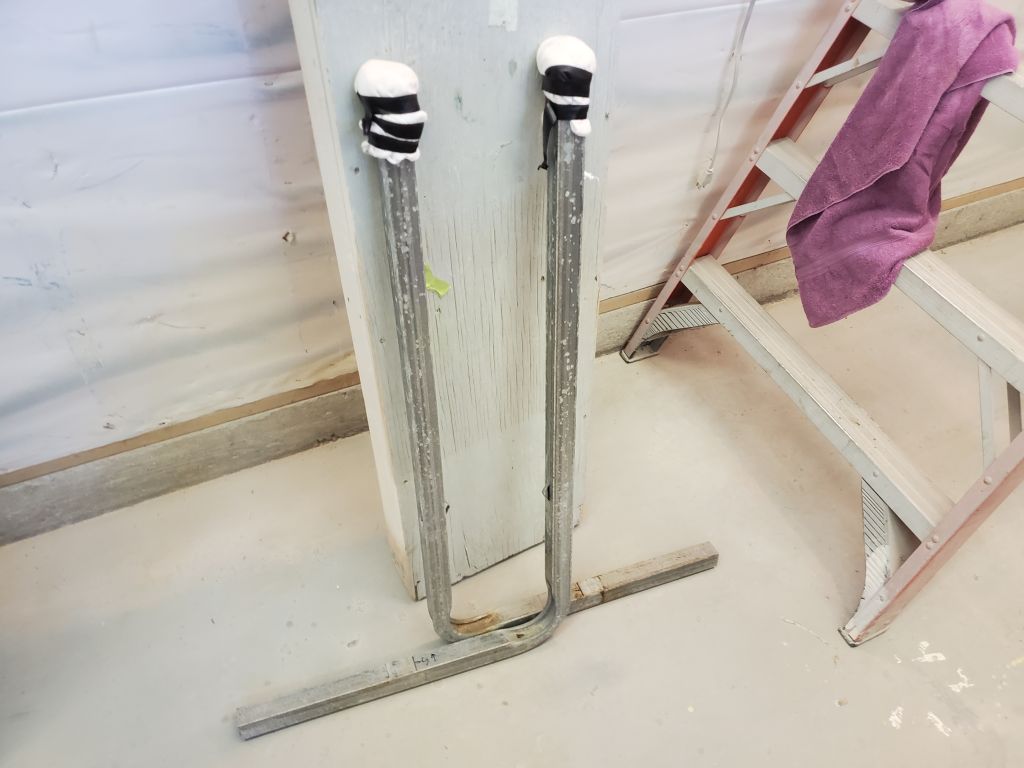
Preparing for the season, I took advantage of a slow afternoon to finish up the project and paint the bottom.  I’d moved the boat indoors earlier to give me the chance to do the work regardless of the weather.  This was a straightforward task except for the need to remove the trailer’s keel guides for access to the sides of the keel.  This posed no problem on the starboard side, but to port, the keel was pressed tightly against the guide and I couldn’t budge it.

I decided to go ahead and paint all the bottom, including the starboard side of the keel, leaving the port side of the keel alone for now.  Then, after painting, I reinstalled the starboard keel guide and used a small jack and some scrap lumber to push the keel (and the boat) sideways just enough to release the pressure from the port keel guide, allowing me to remove it and finish up the painting there.

Afterwards, I released stands as needed to finish up the paint in those areas, then reinstalled the keel guide and moved the boat back outdoors to await her eager owners.

Total time billed on this job today:  2.5 hours

0600 Weather Observation:  50°, cloudy with a sprinkle.   Forecast for the day:   Chance of showers, gradual clearing, 64°

<Back to Arietta

Older posts Newer posts