(page 42 of 165)

Holby 23

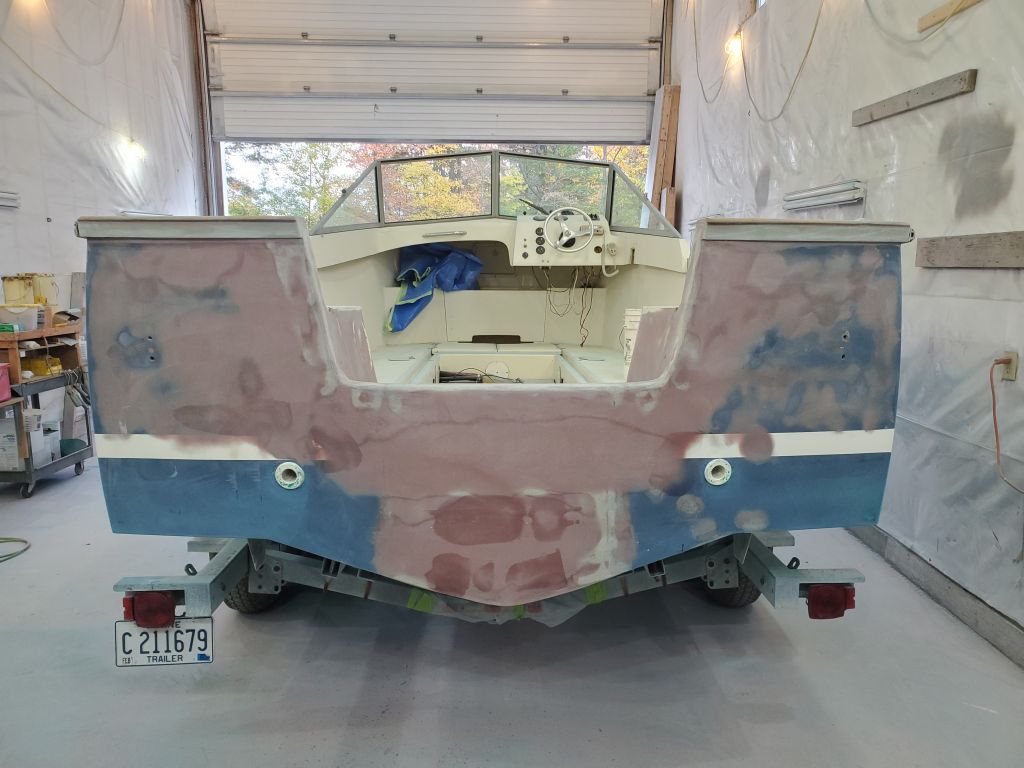
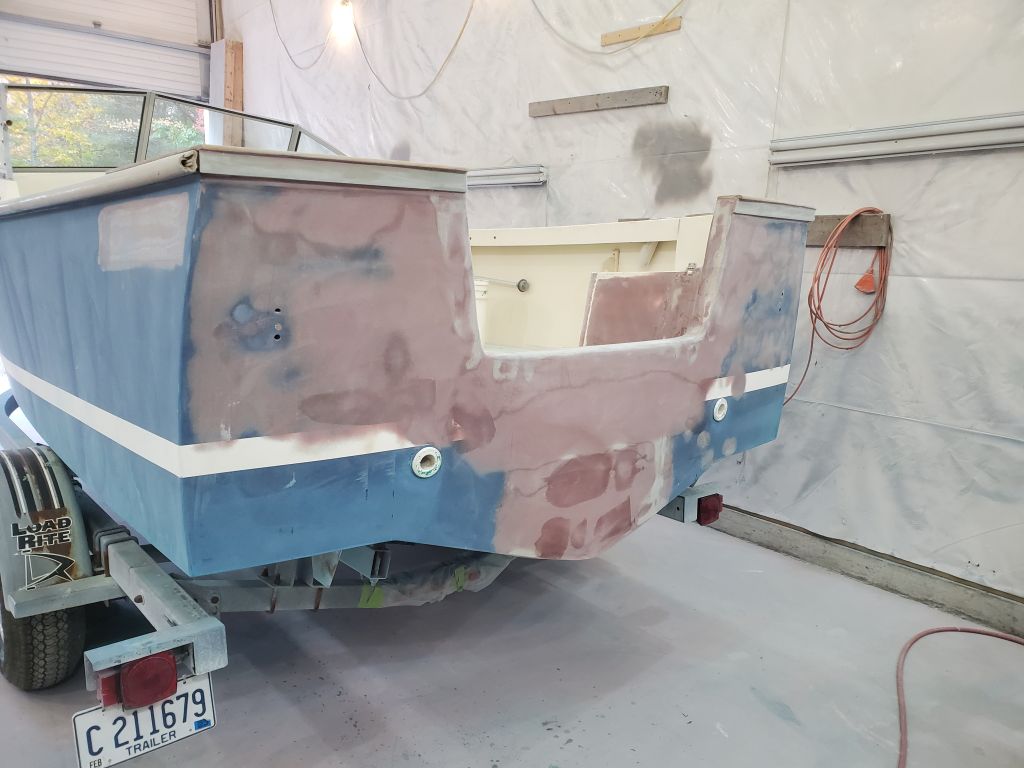
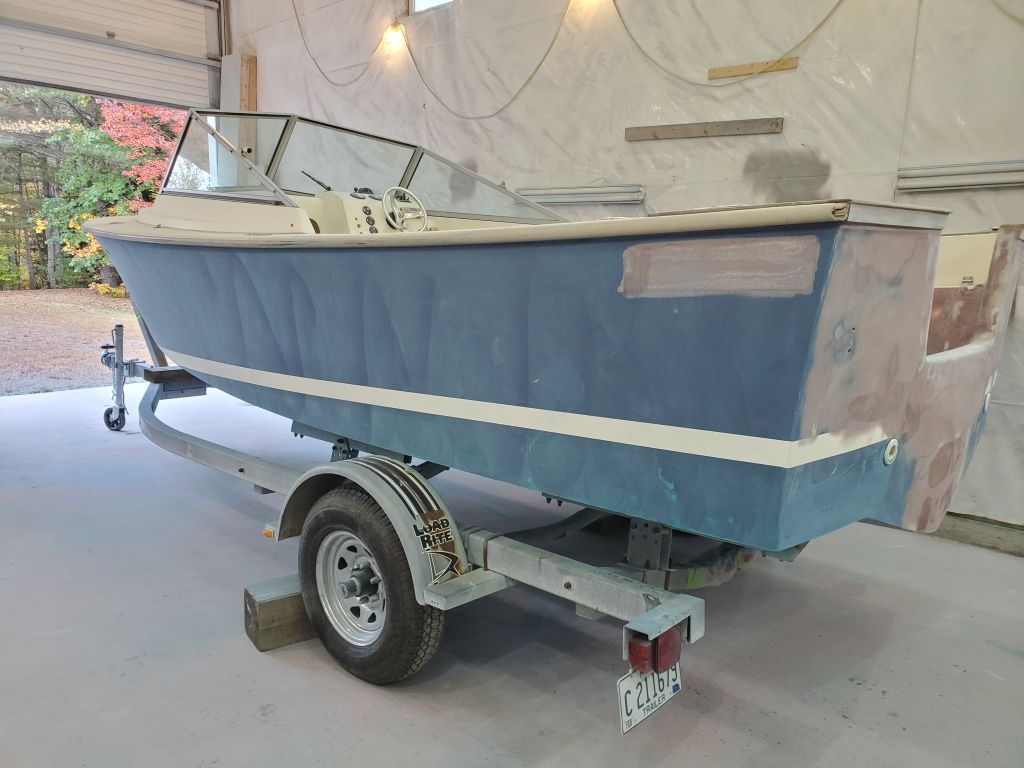
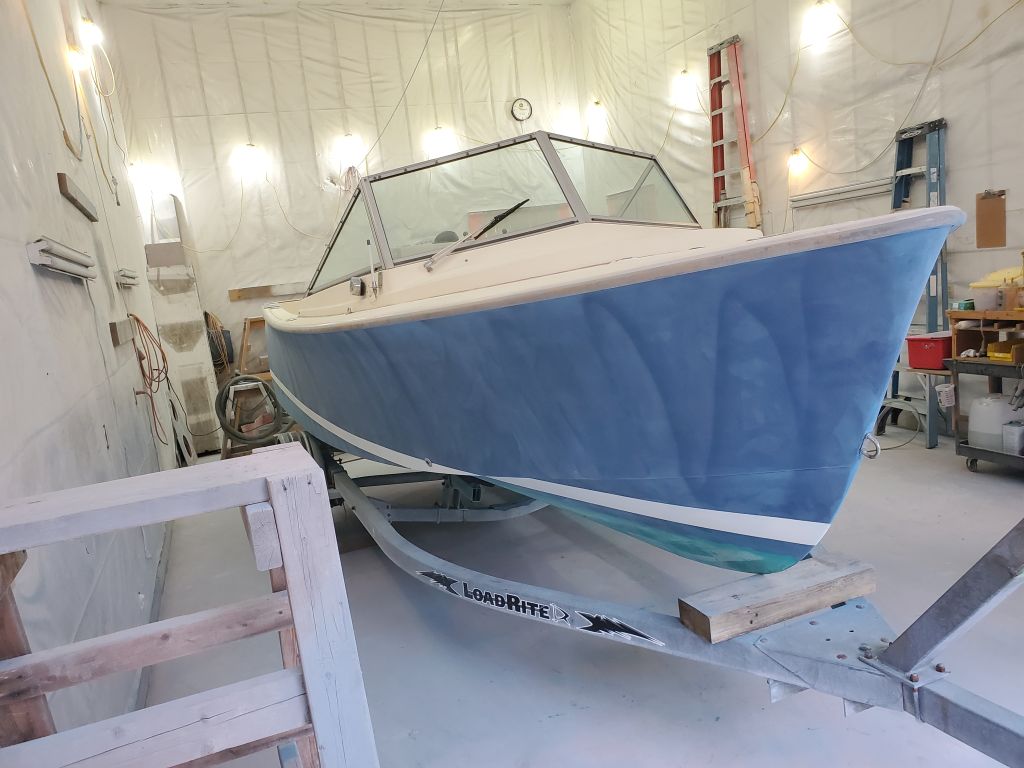
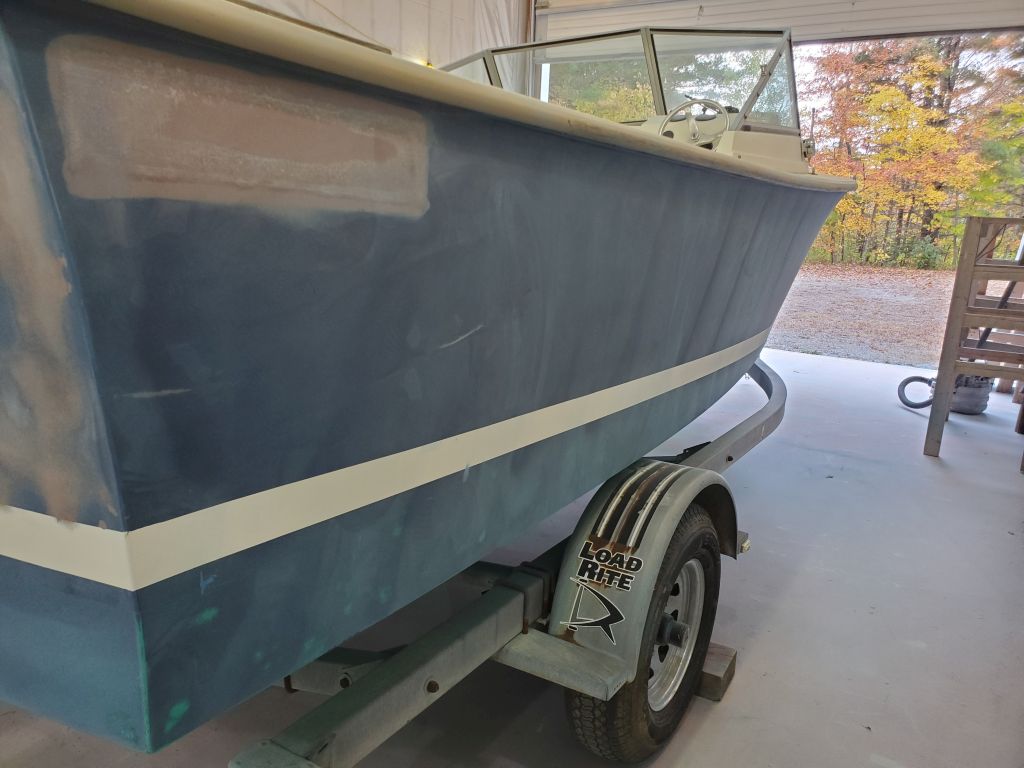
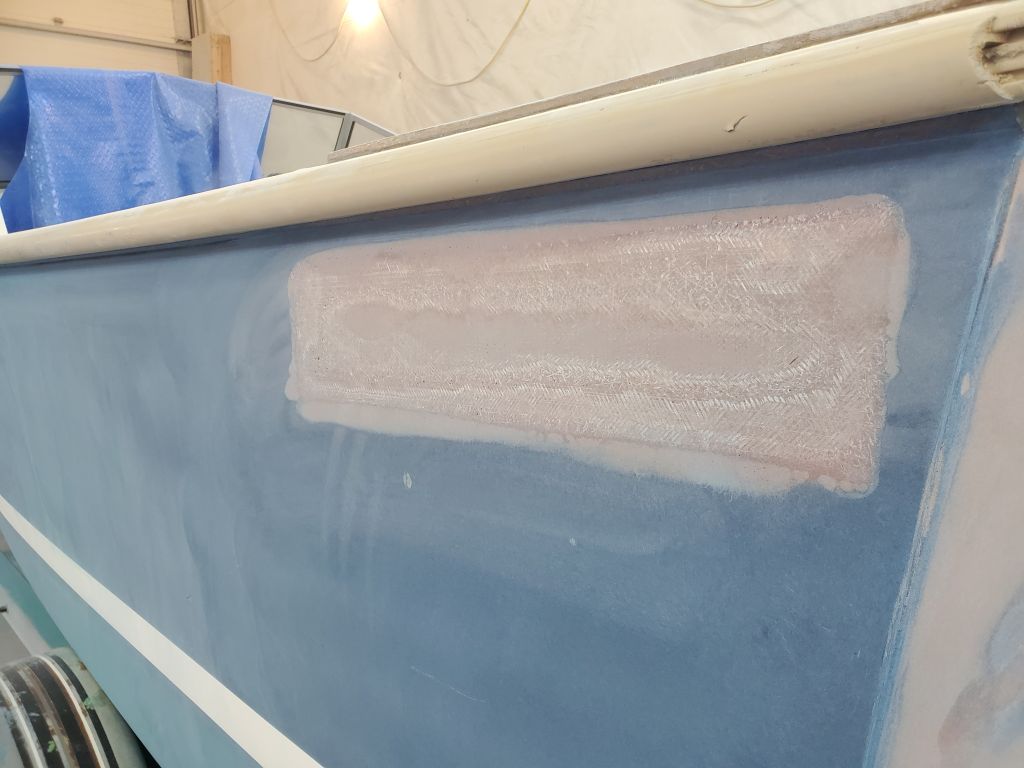
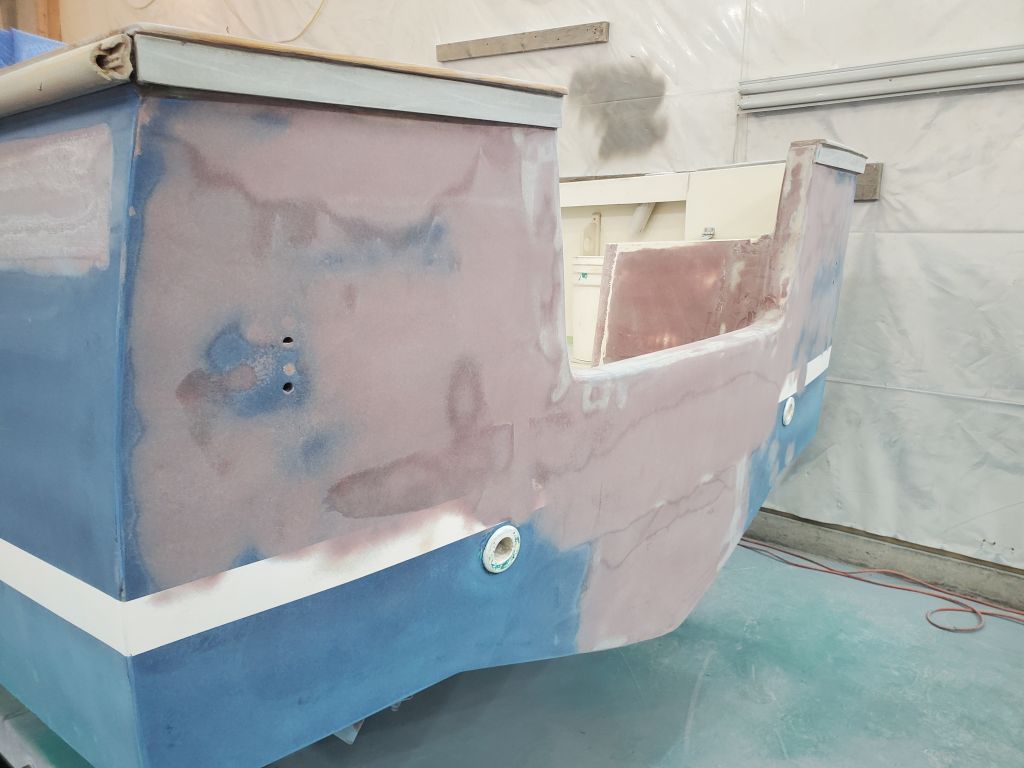
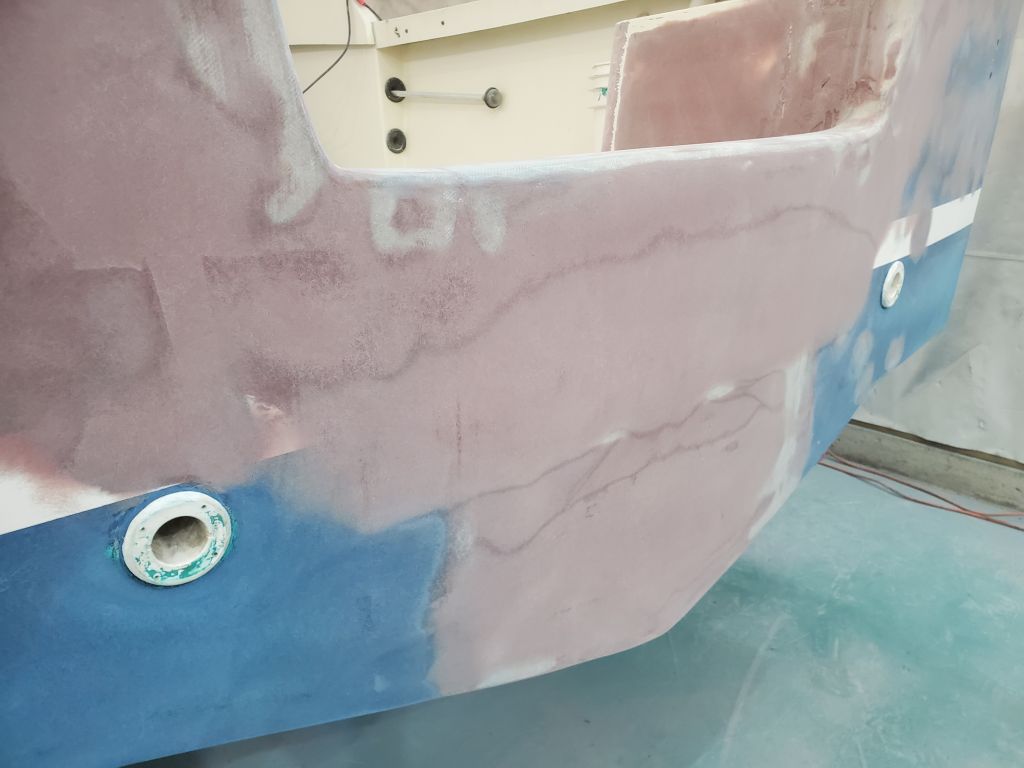
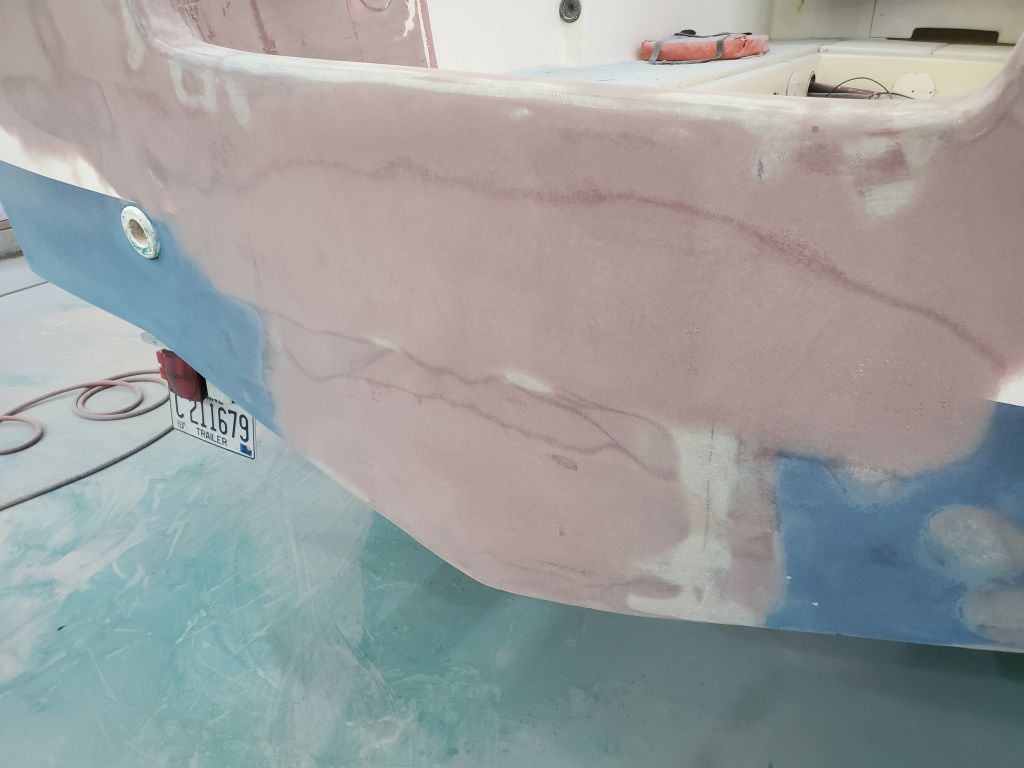
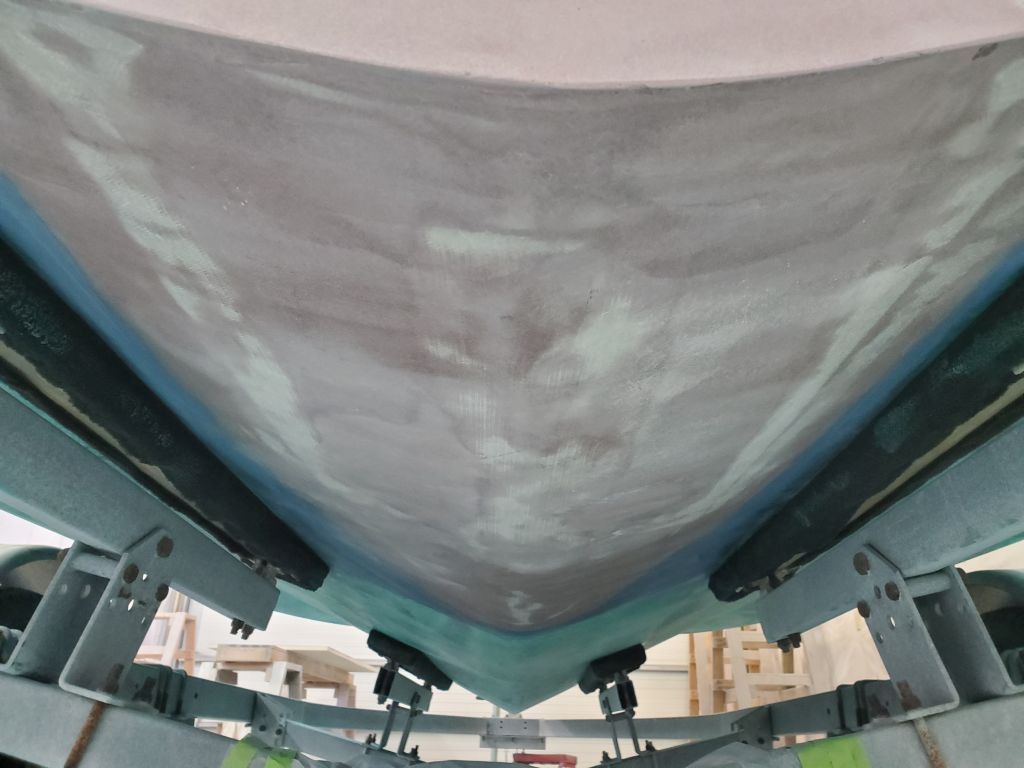
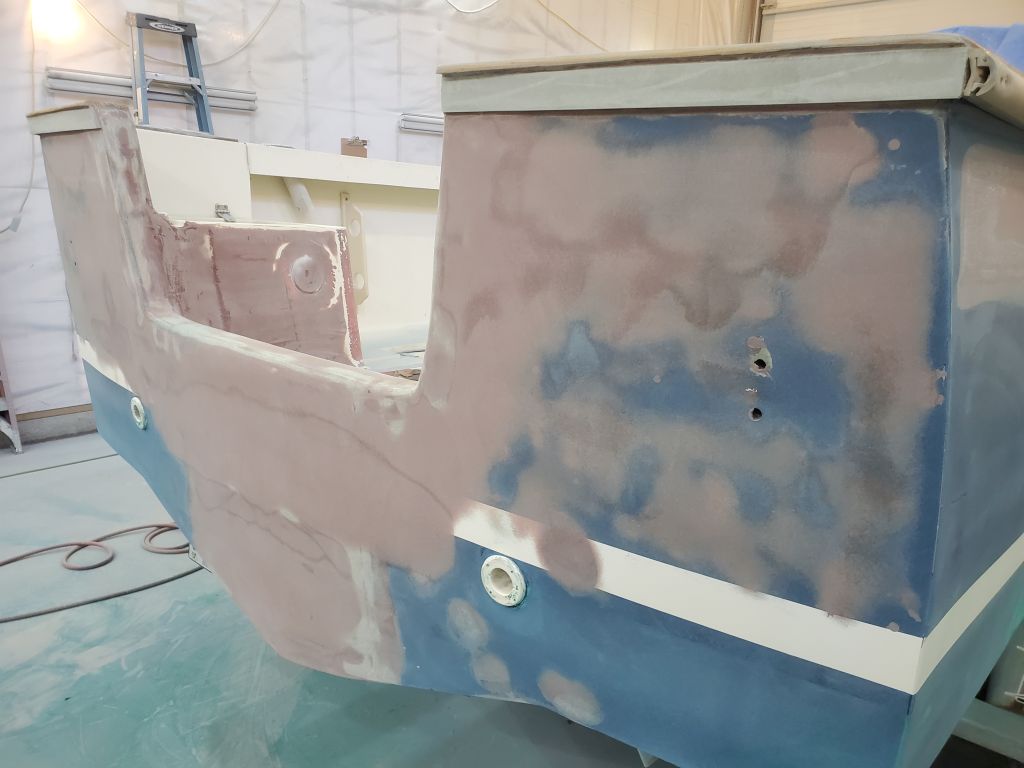
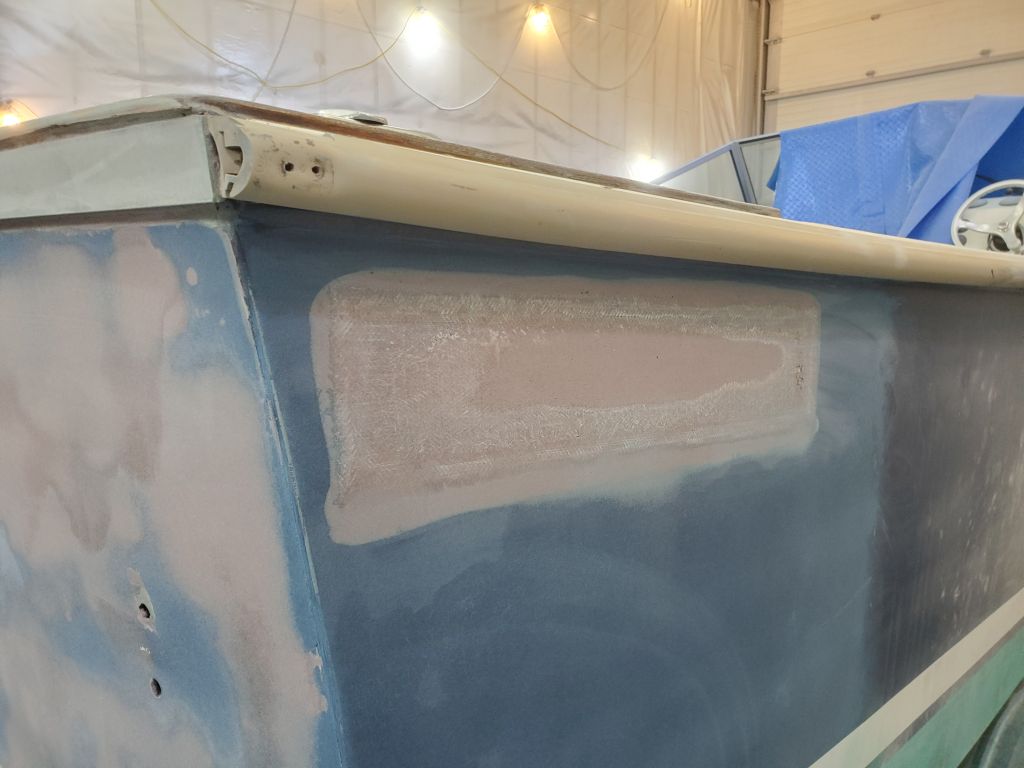
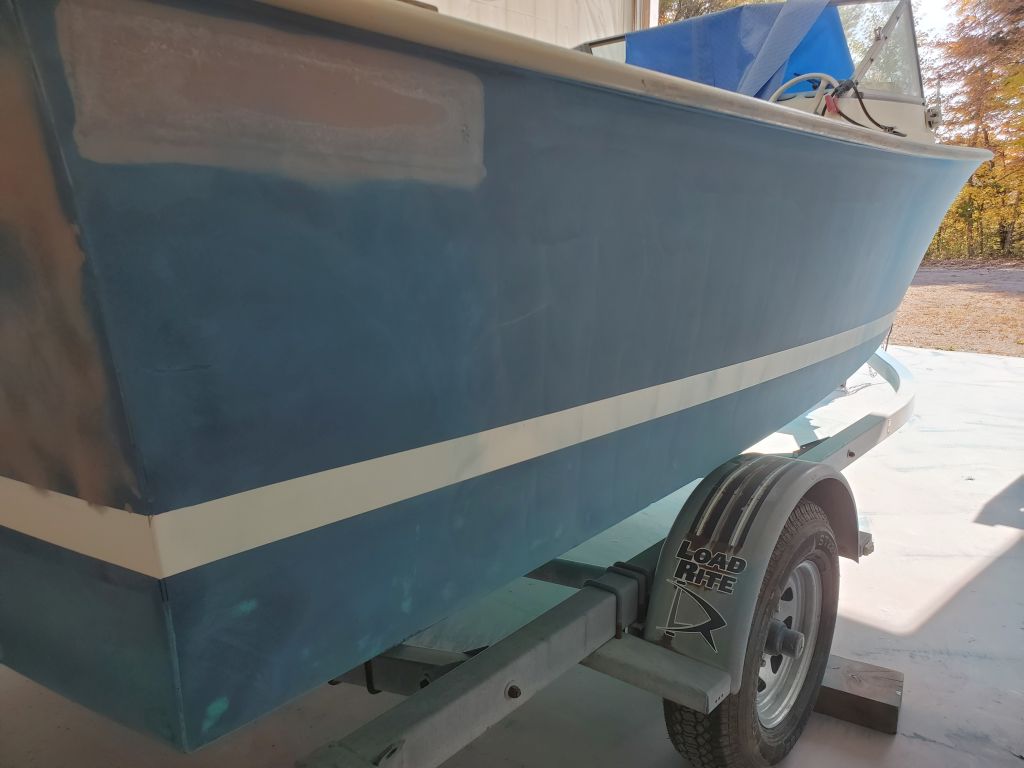
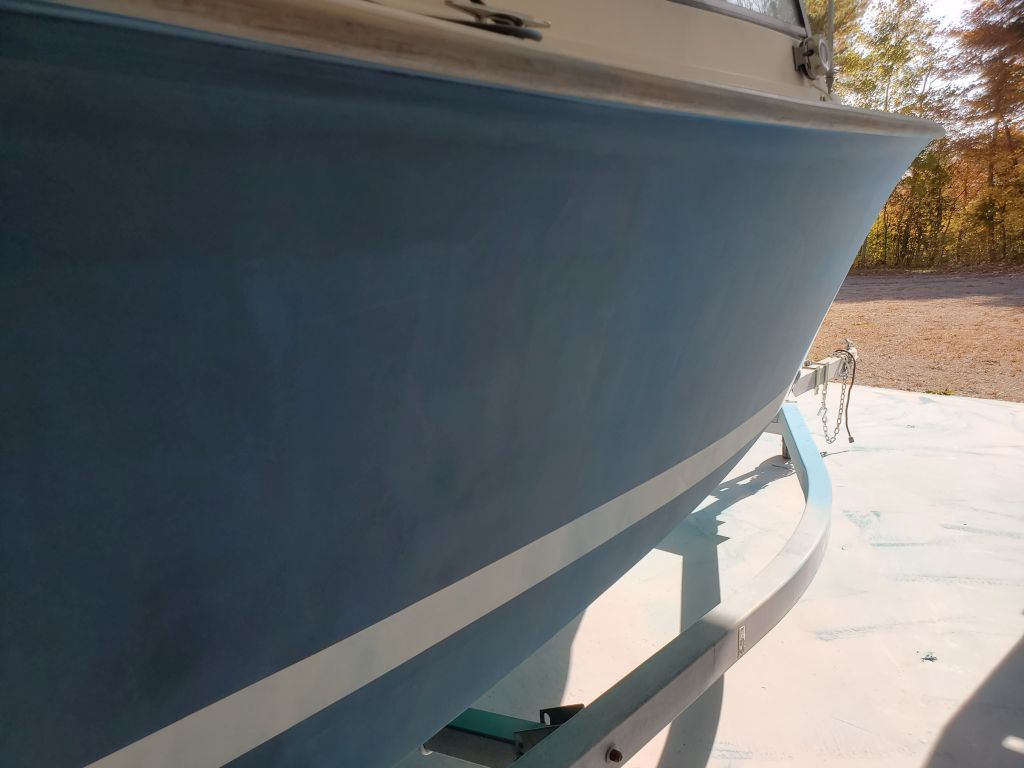
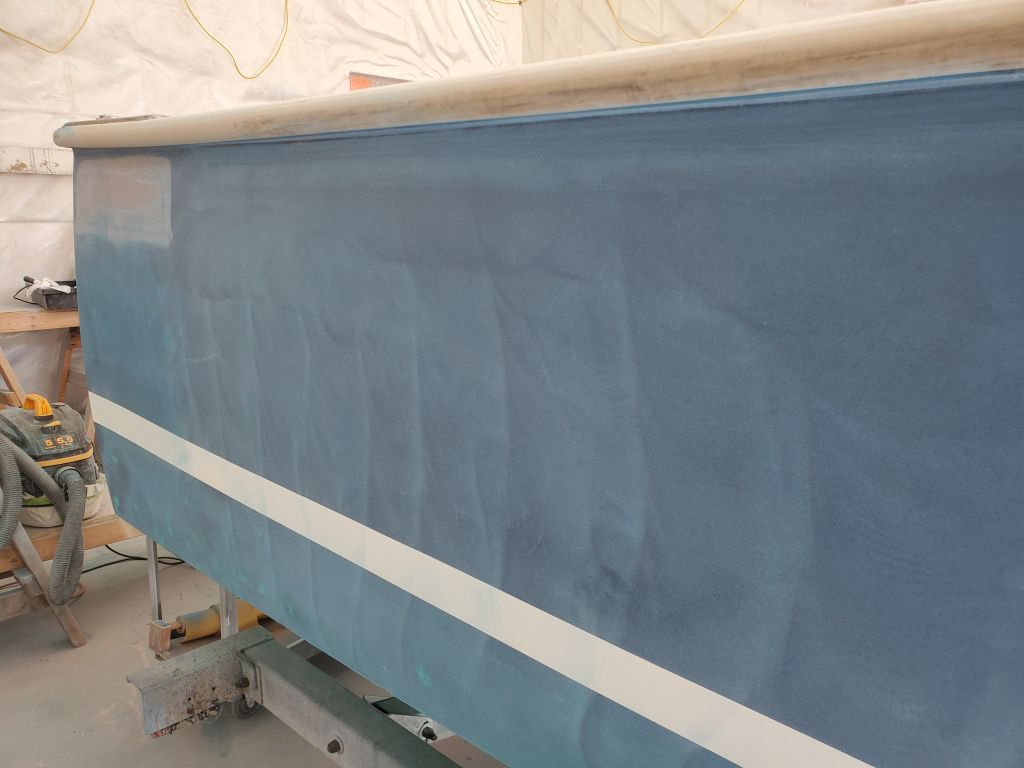
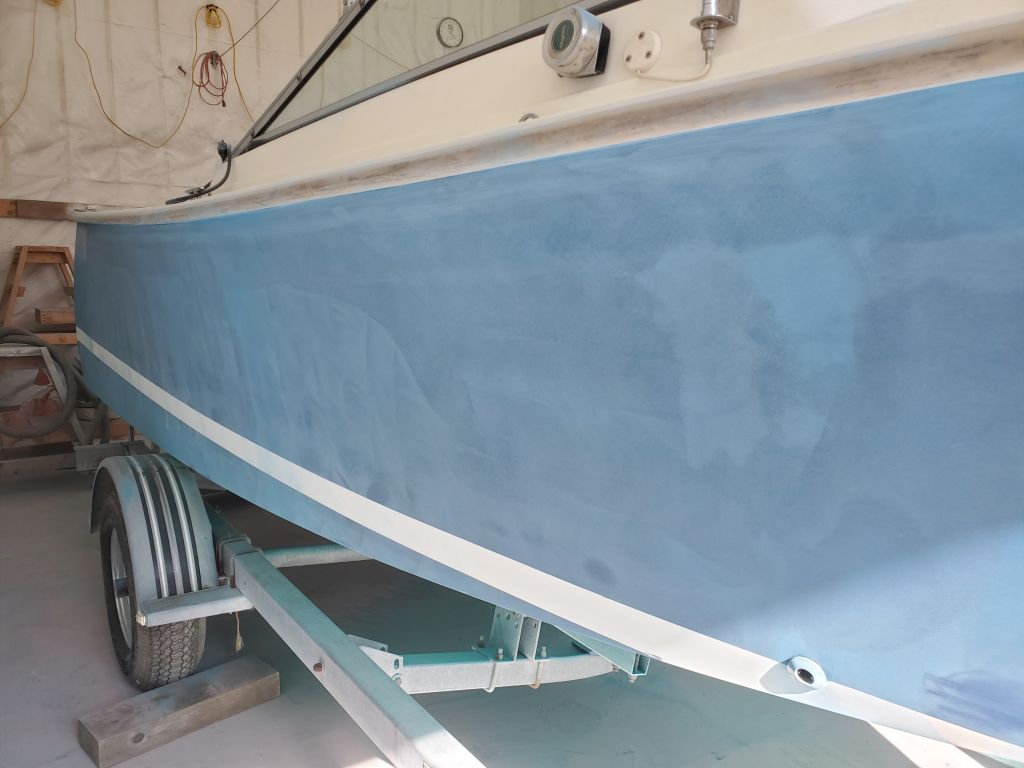
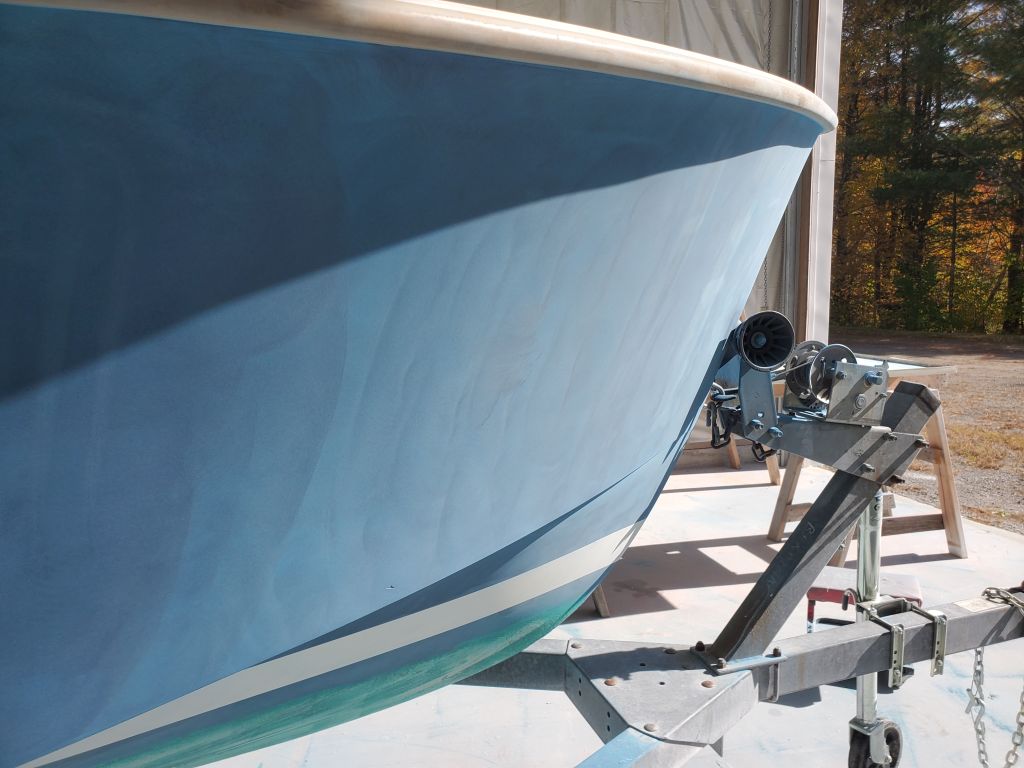
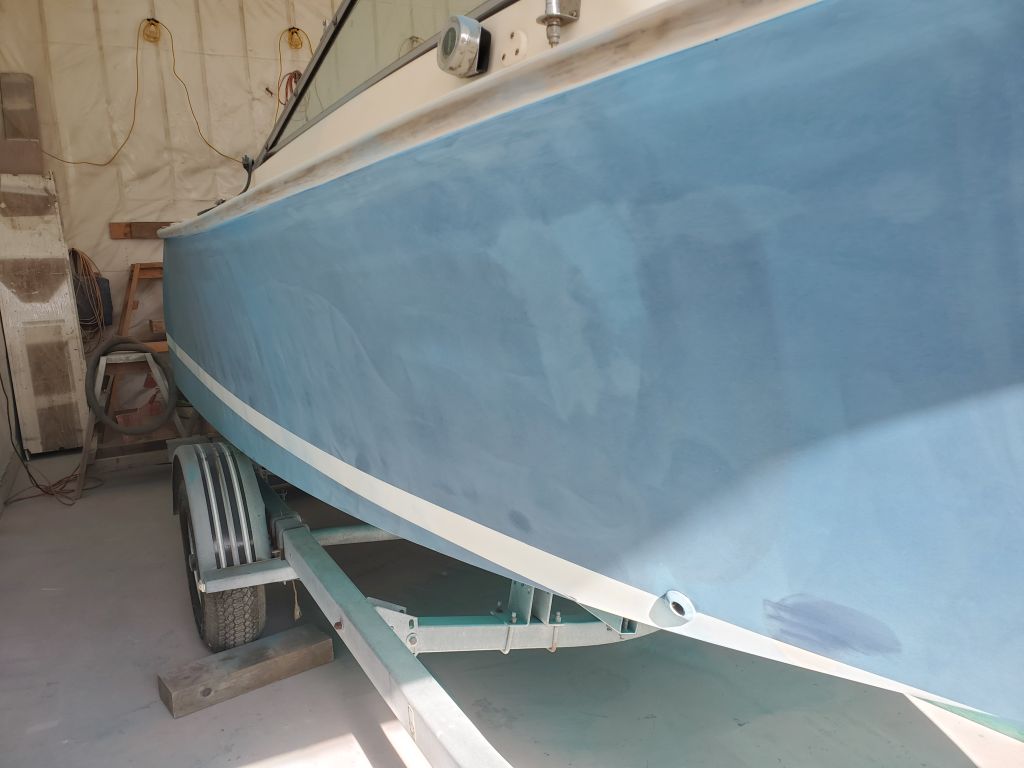
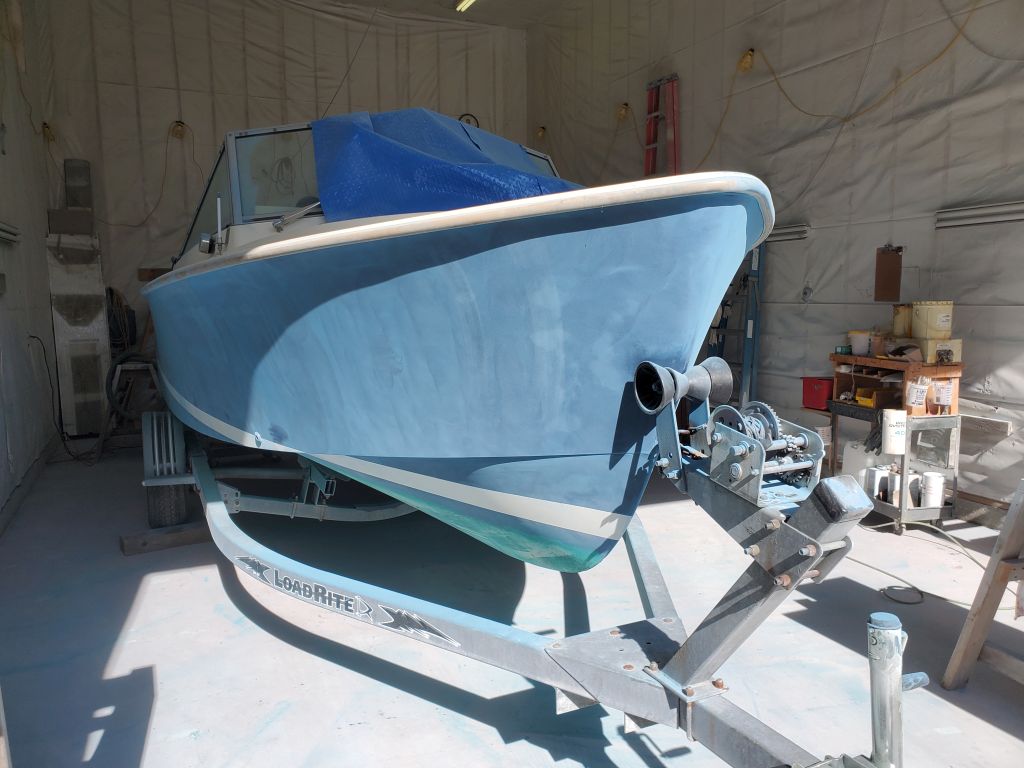
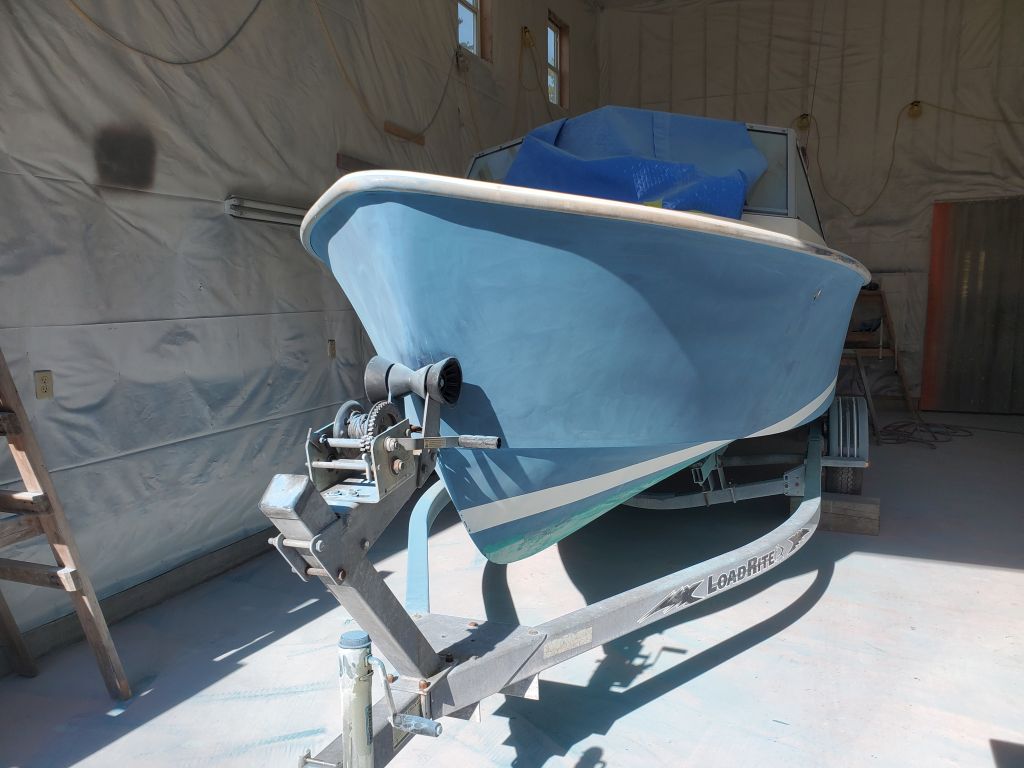
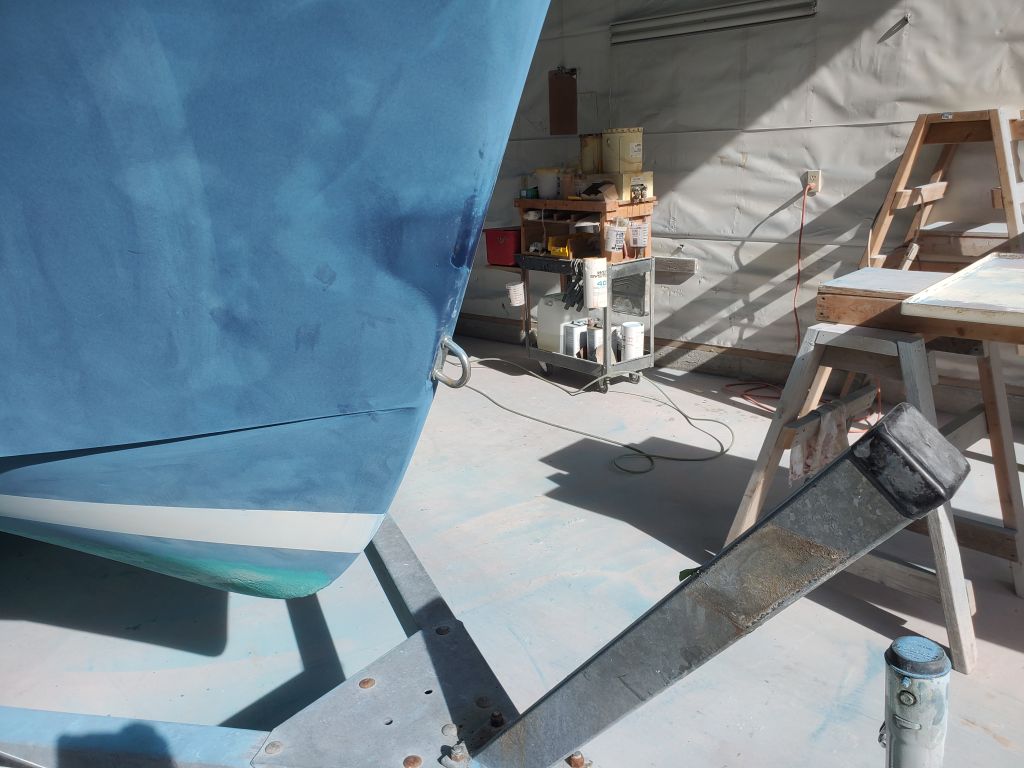
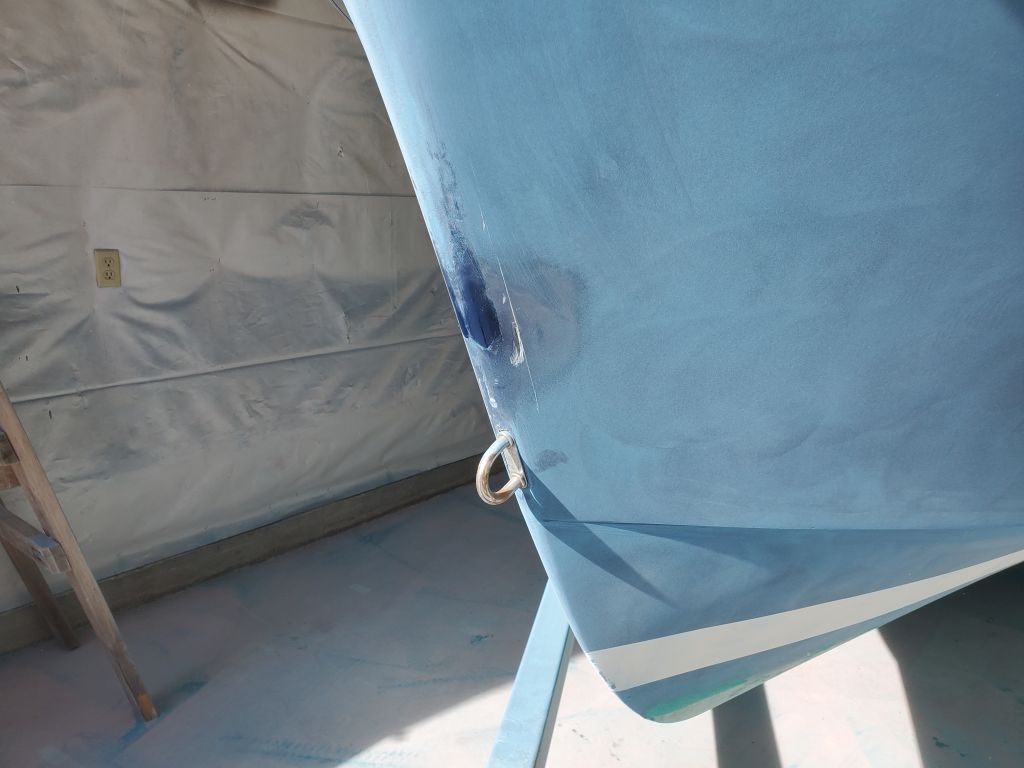
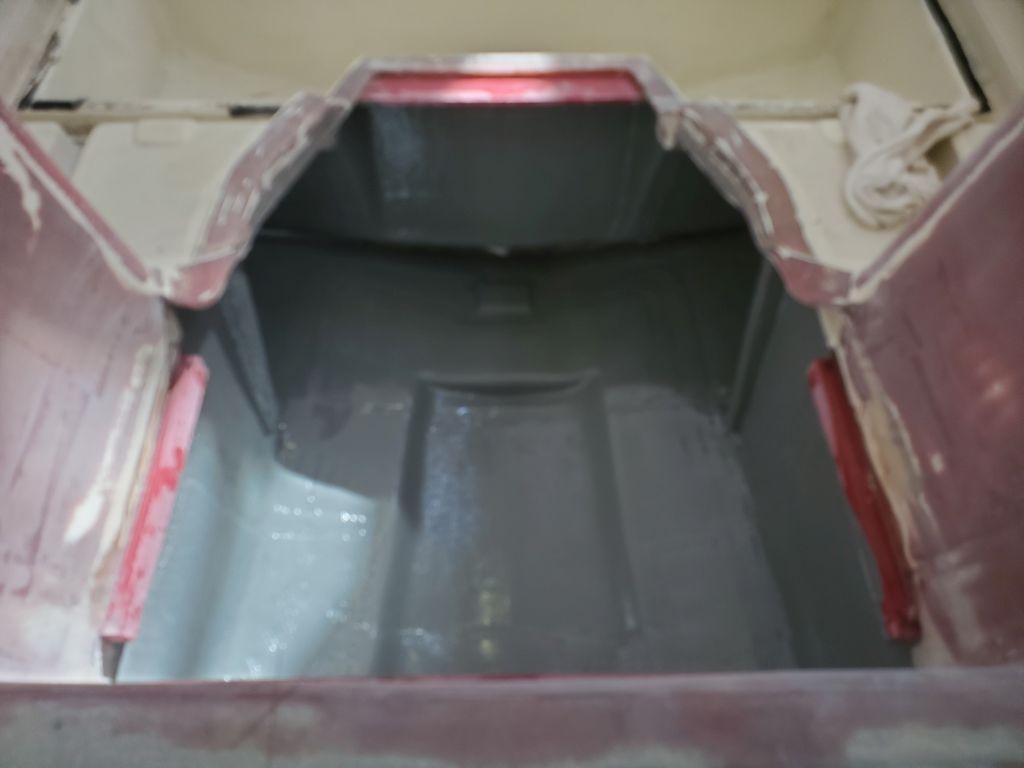
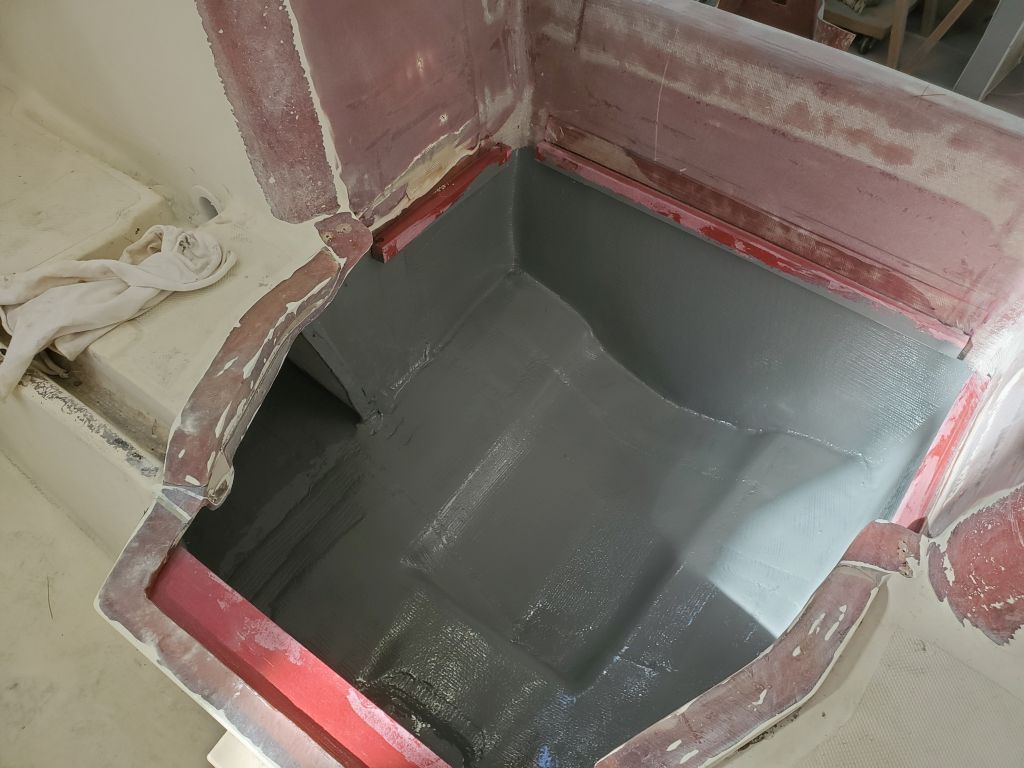
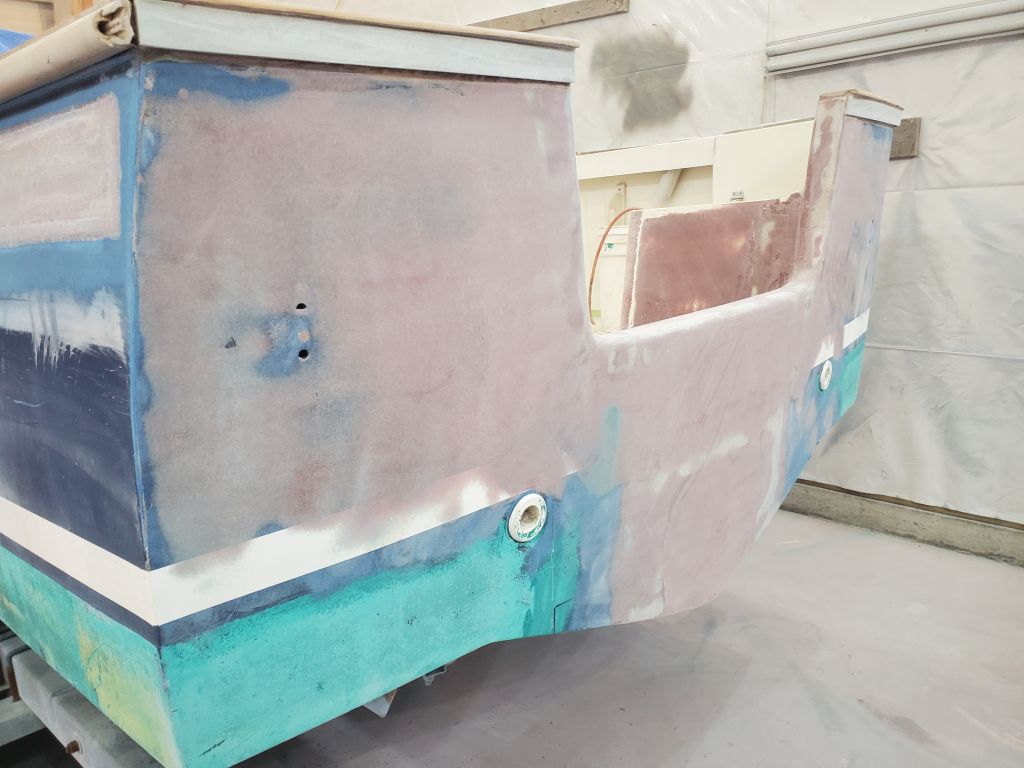
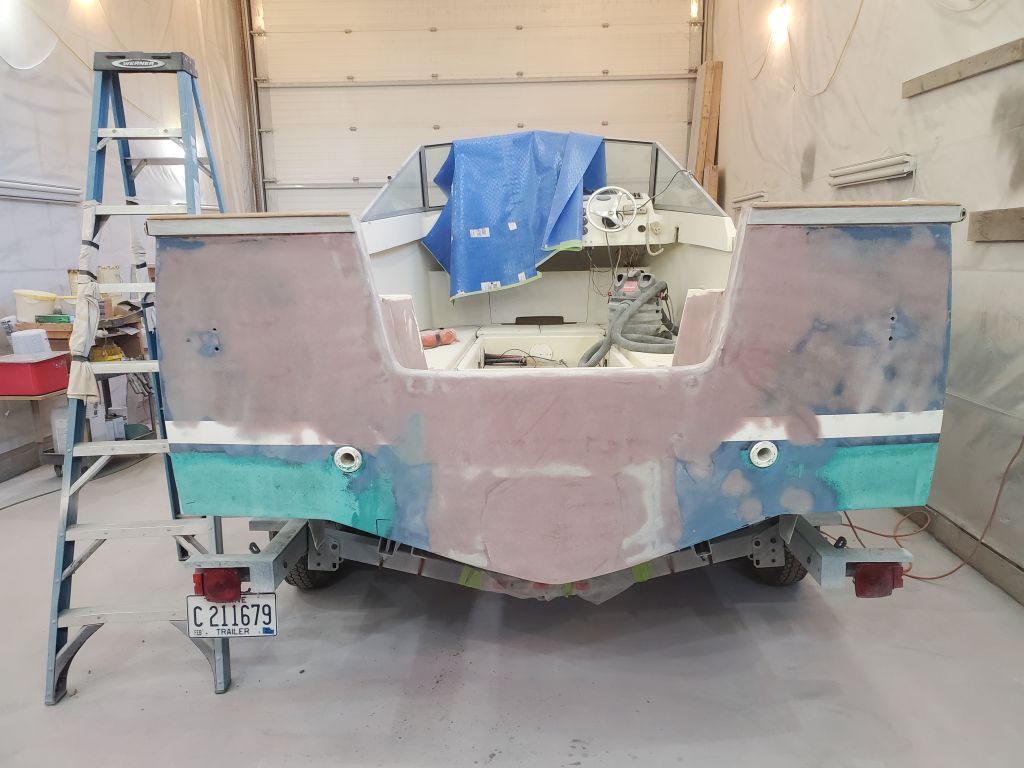
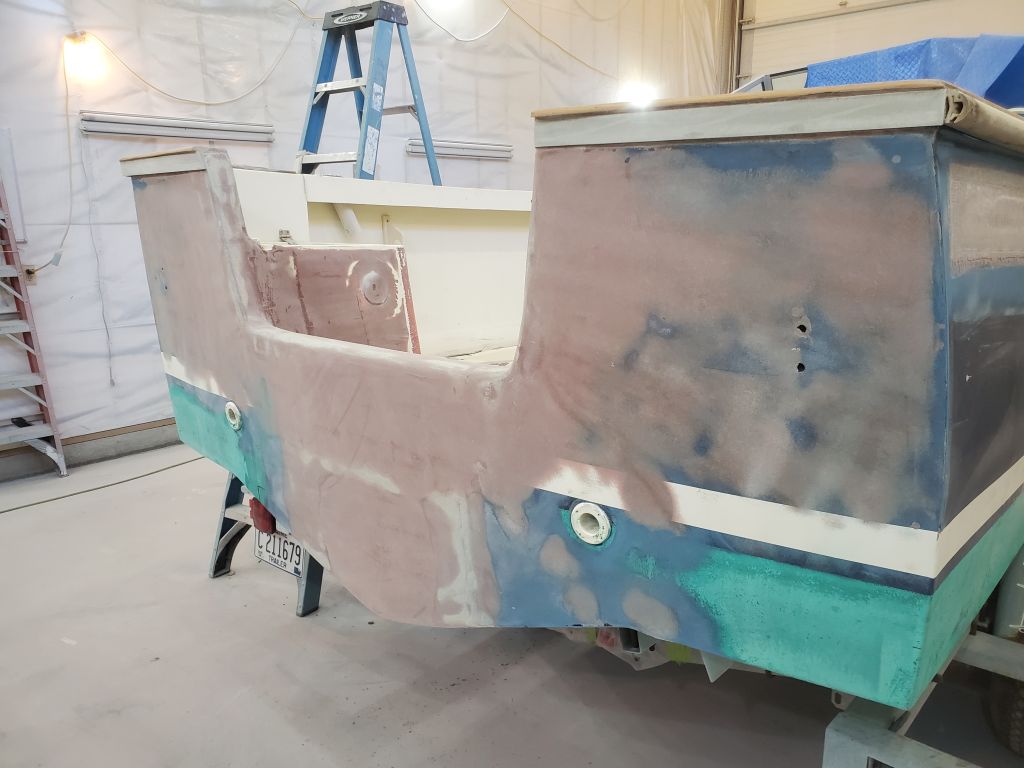
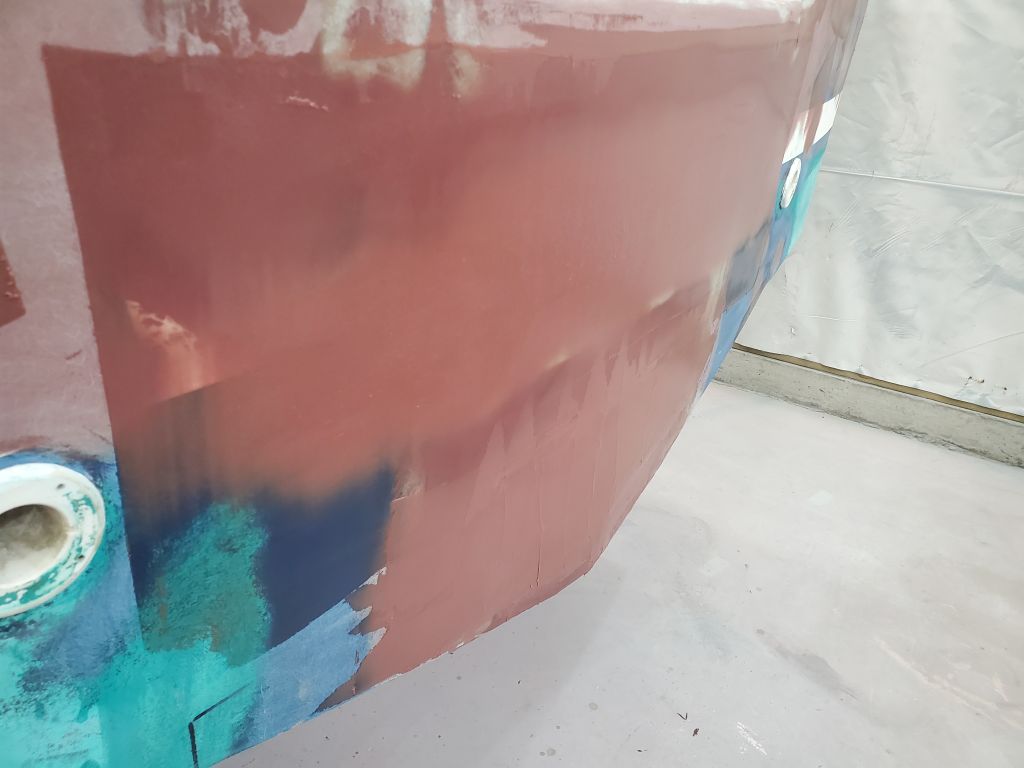
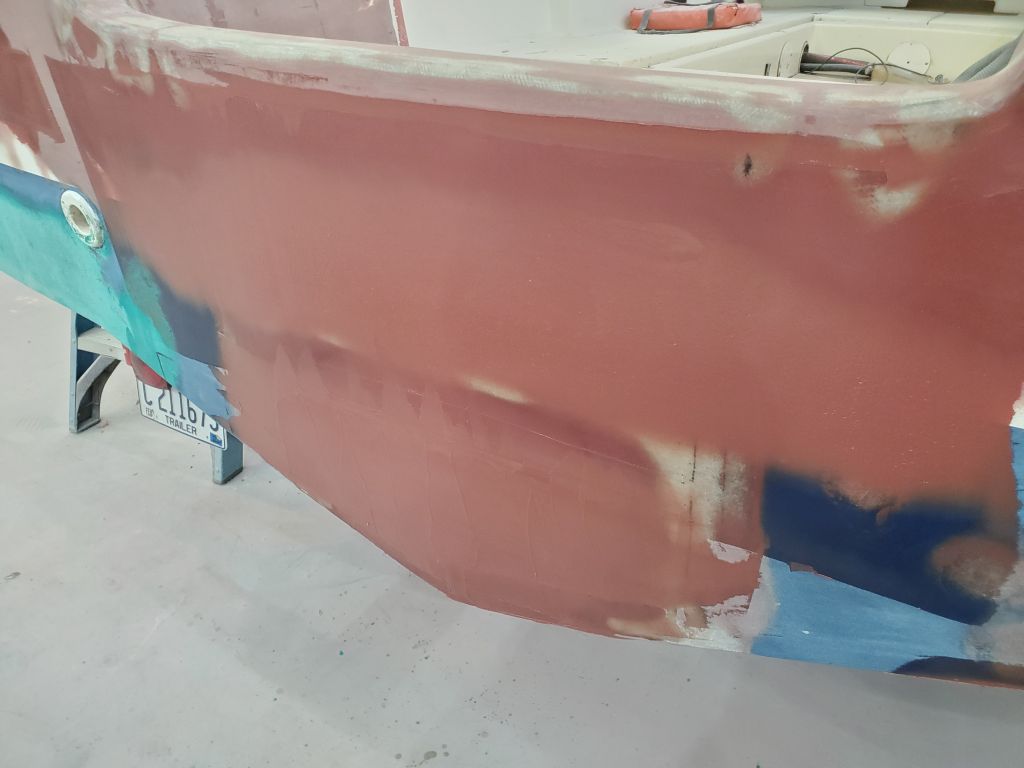
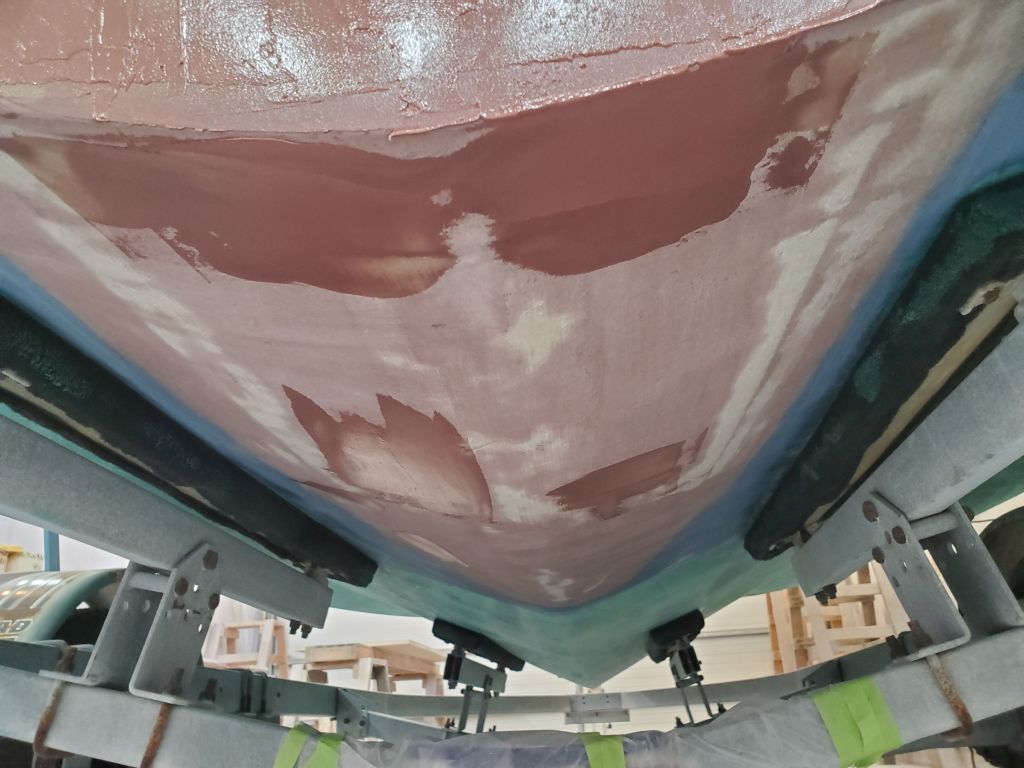
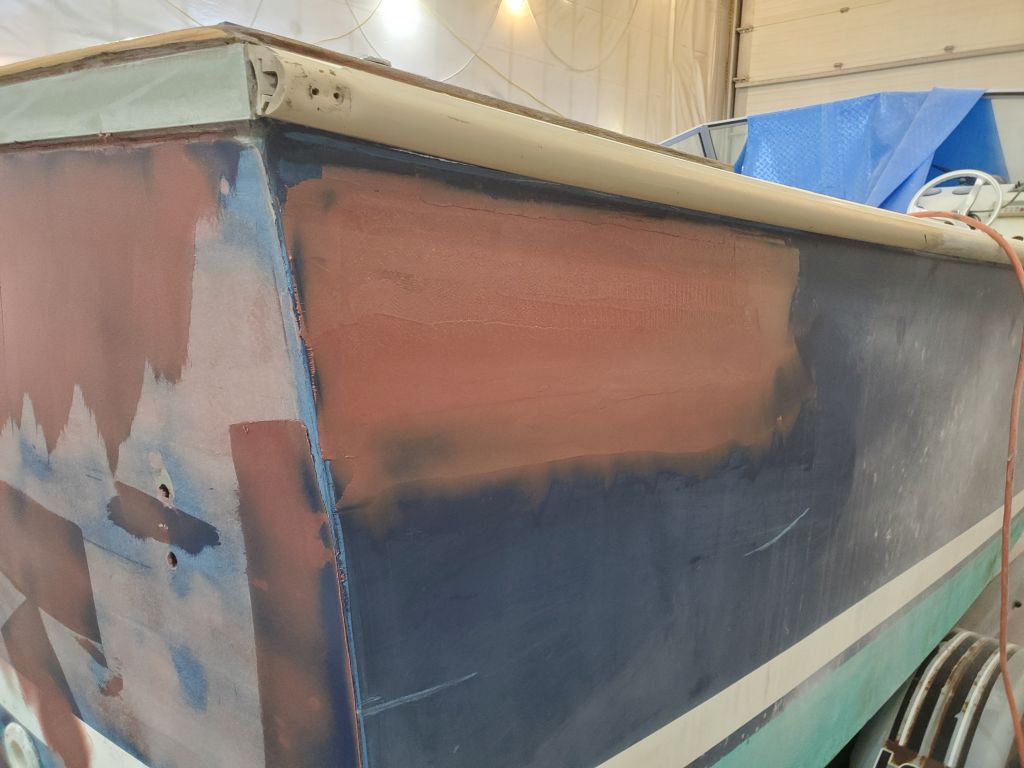
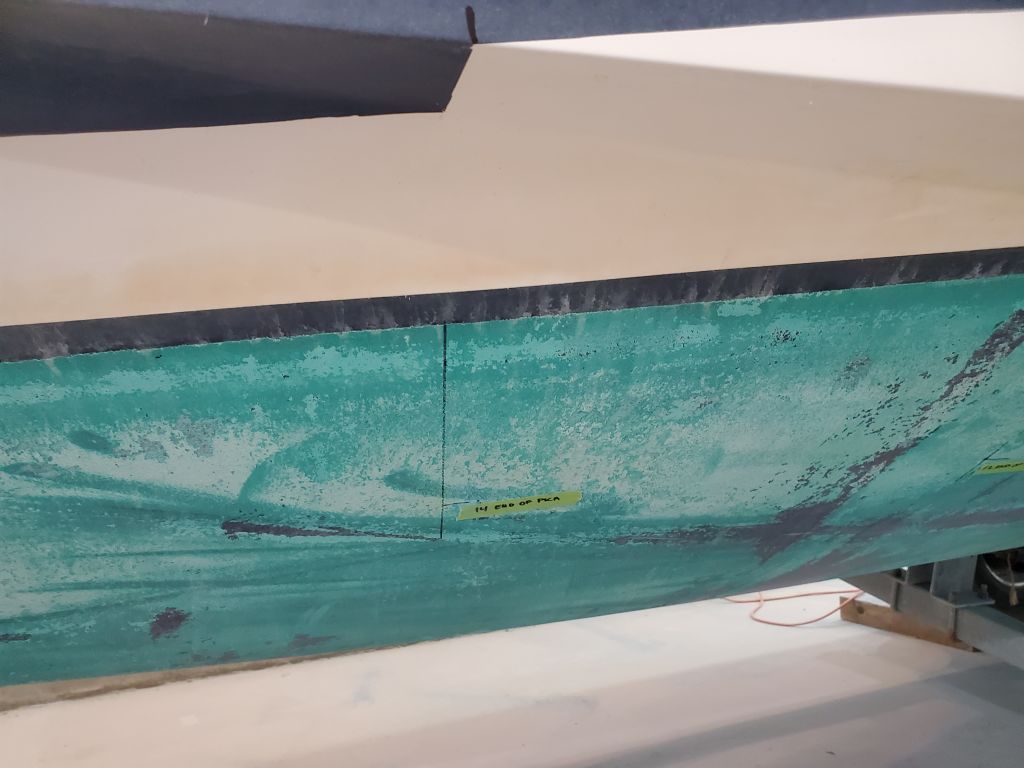
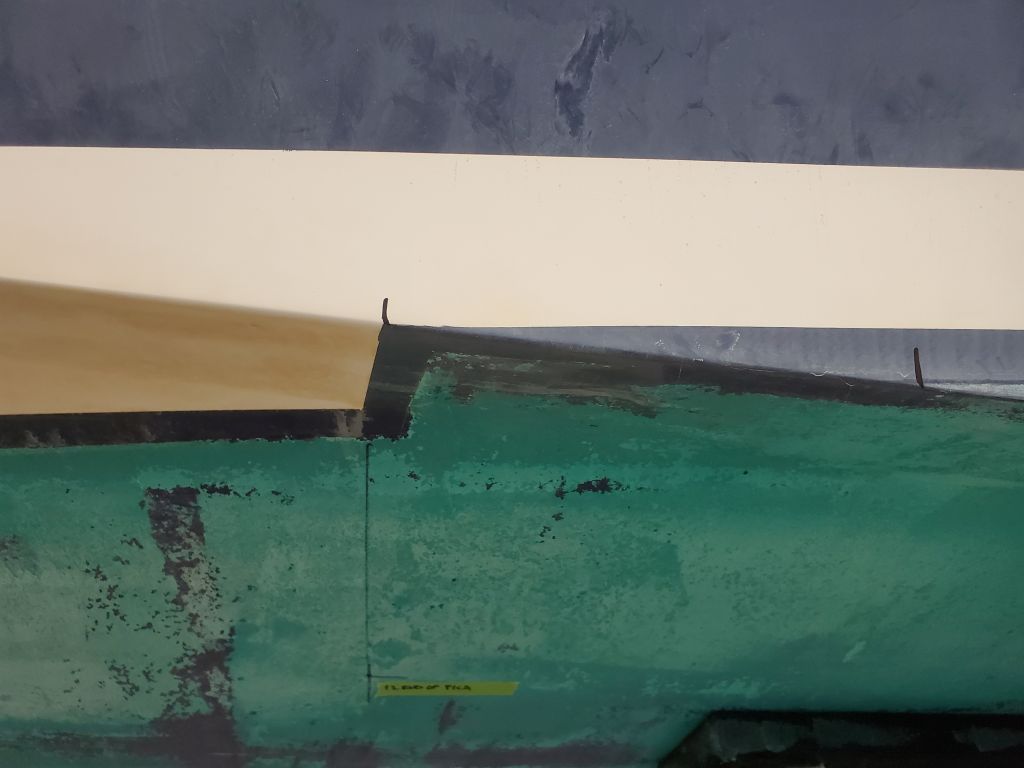
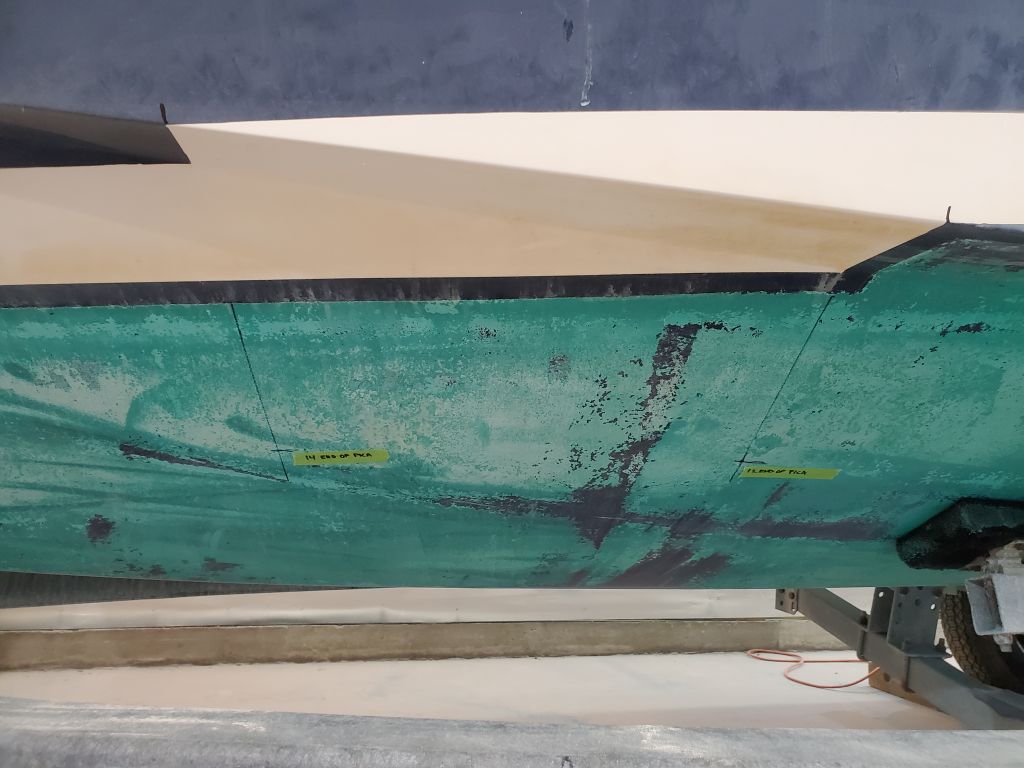
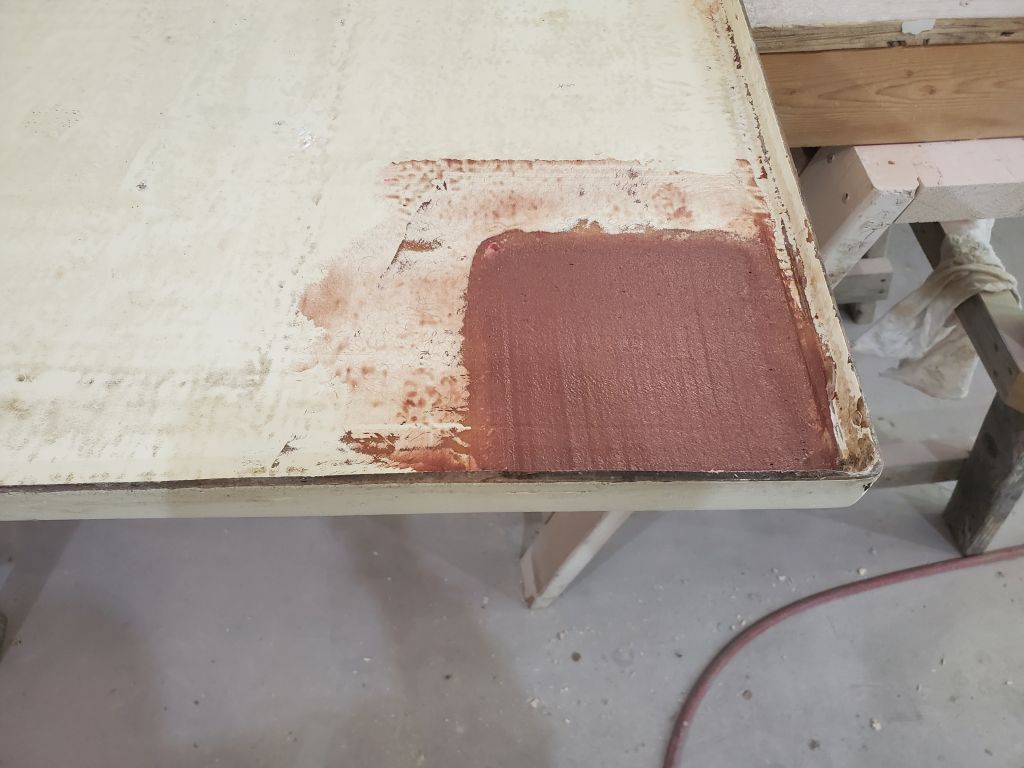
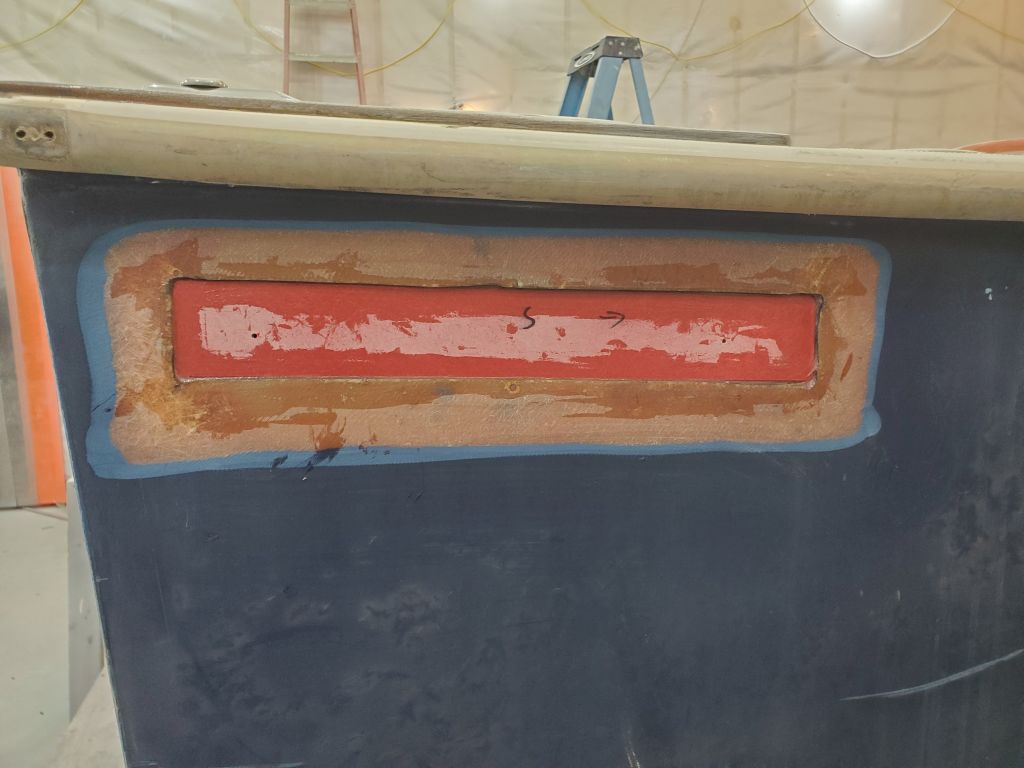
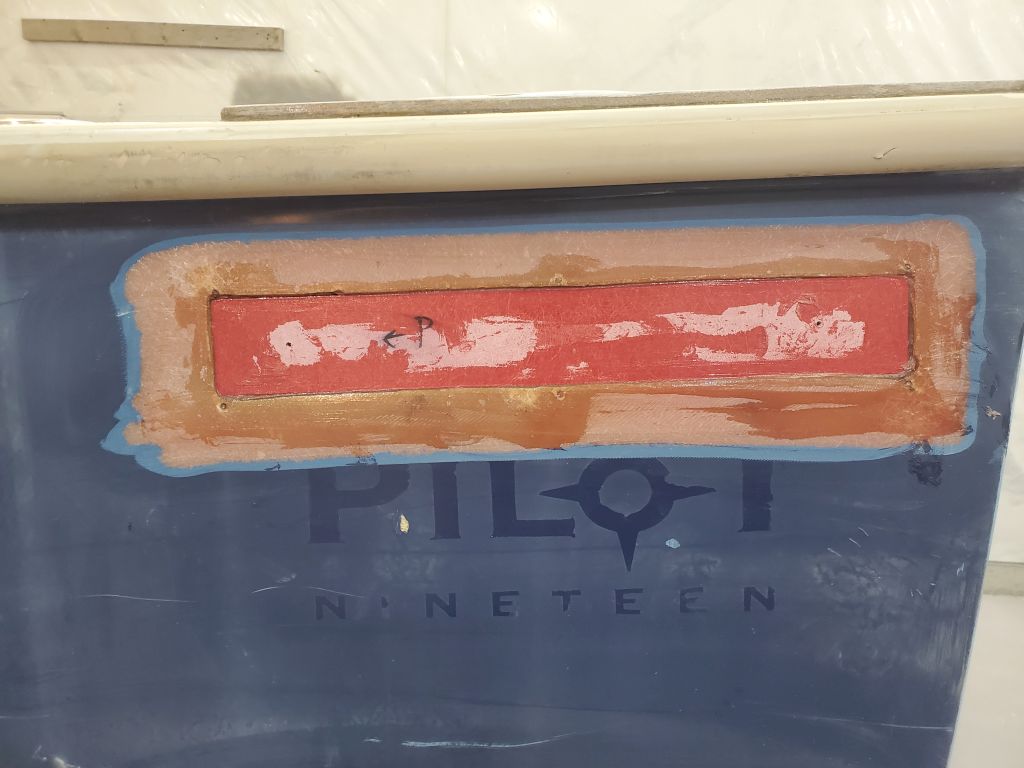
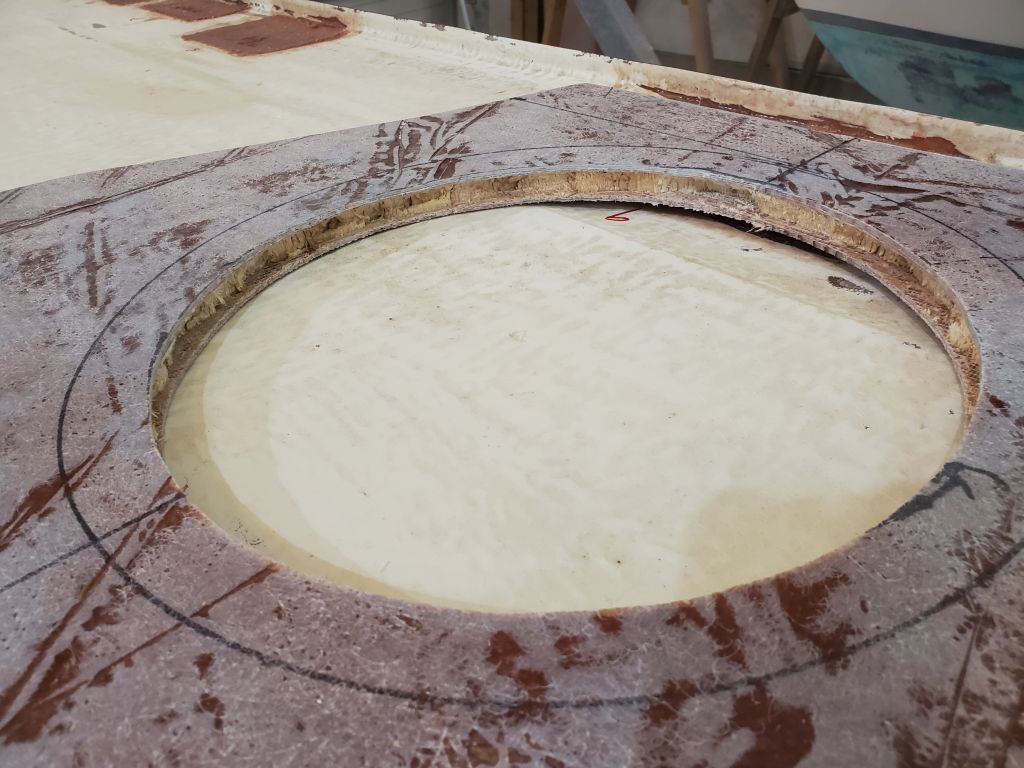
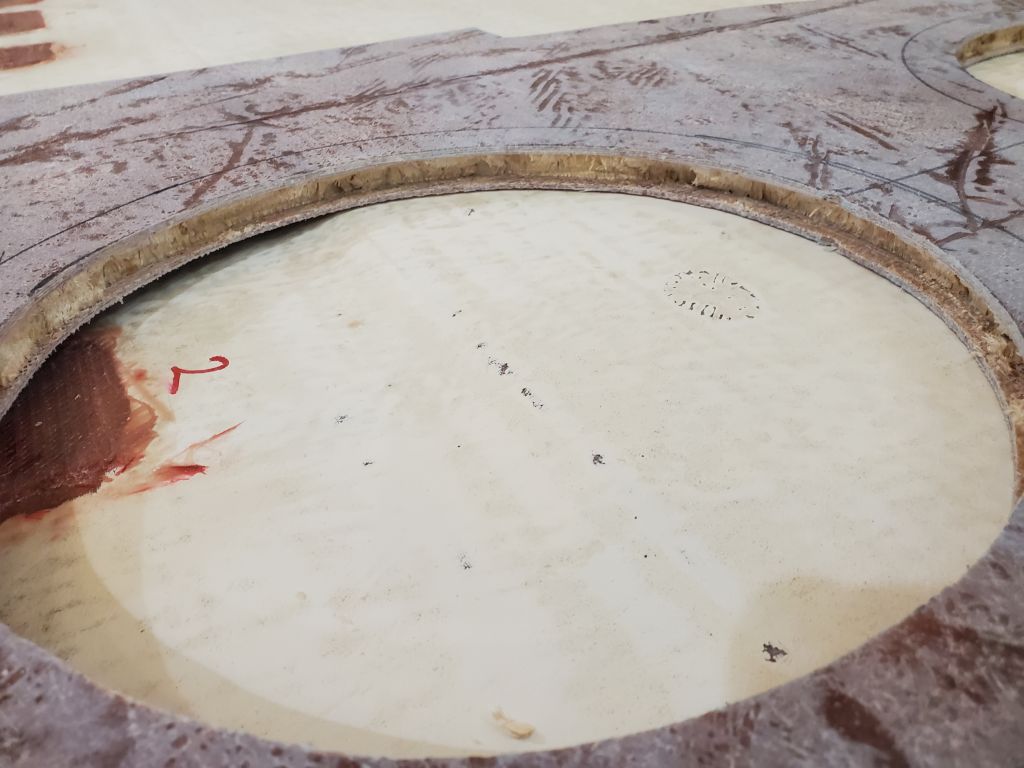
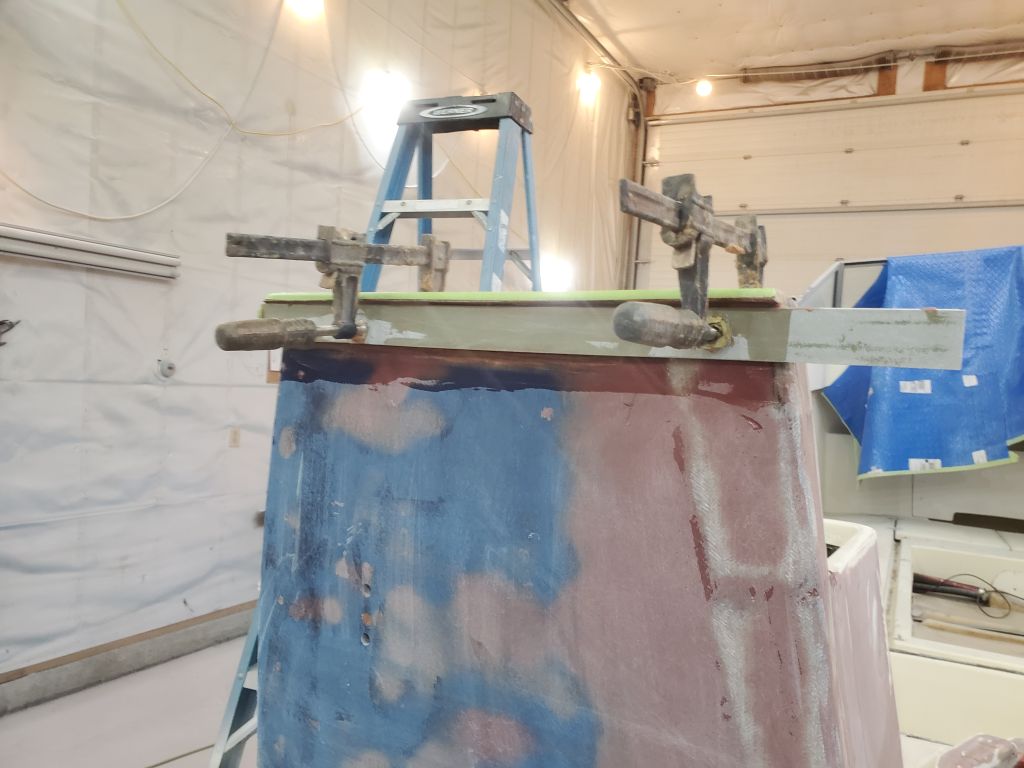
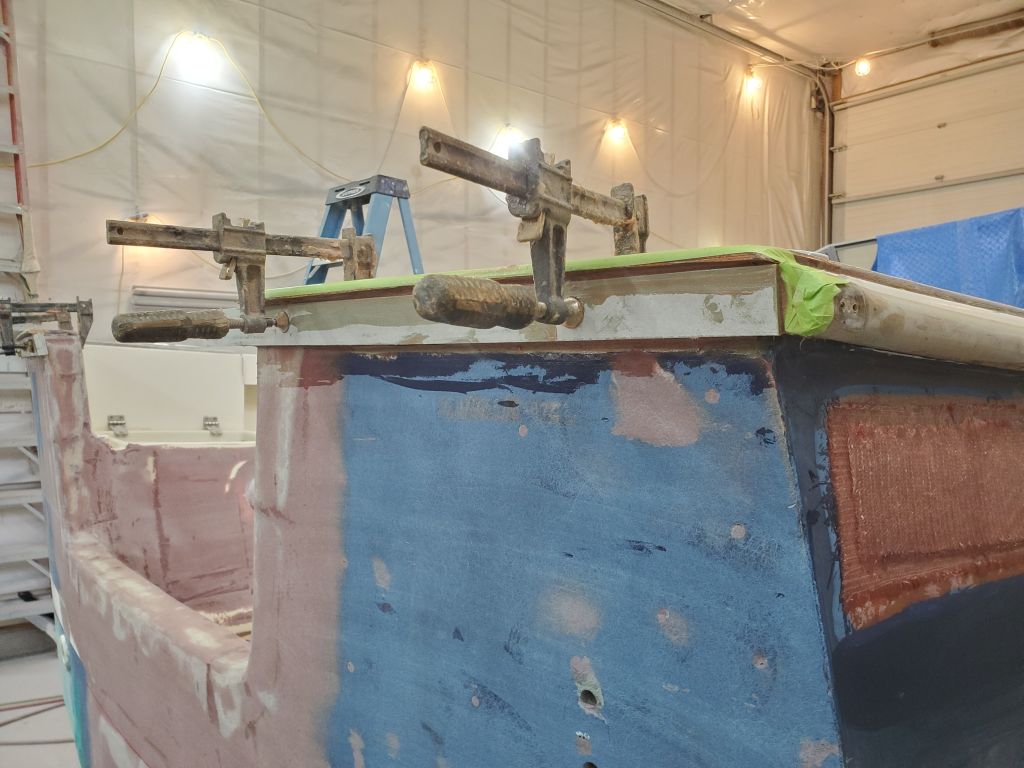
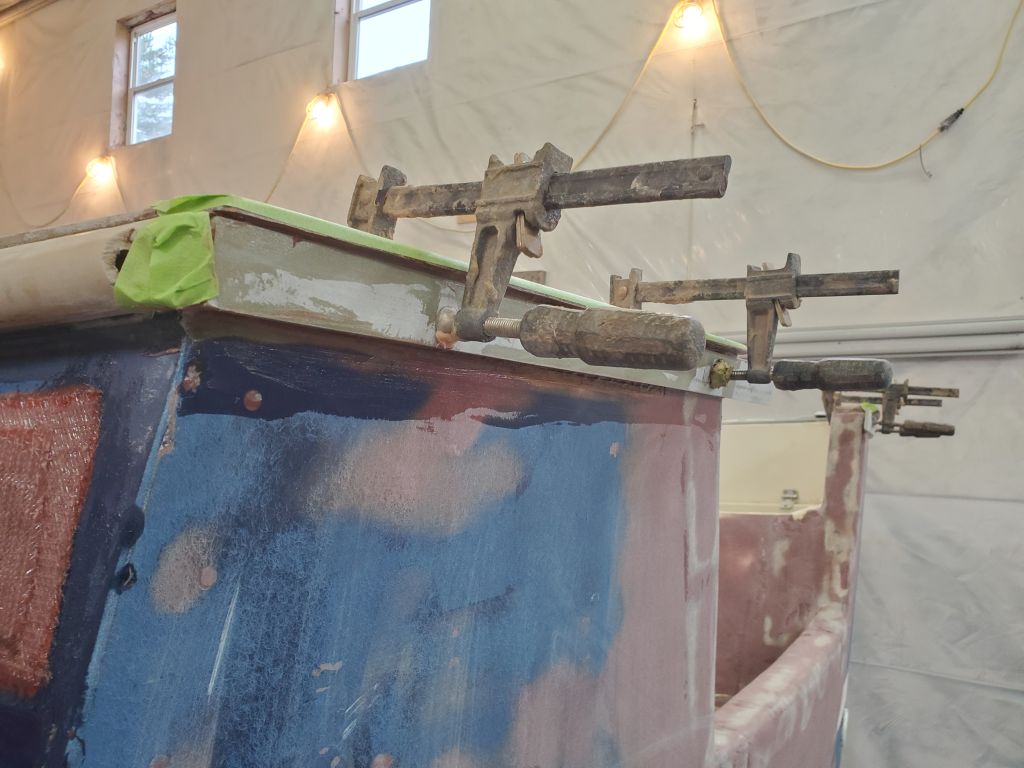
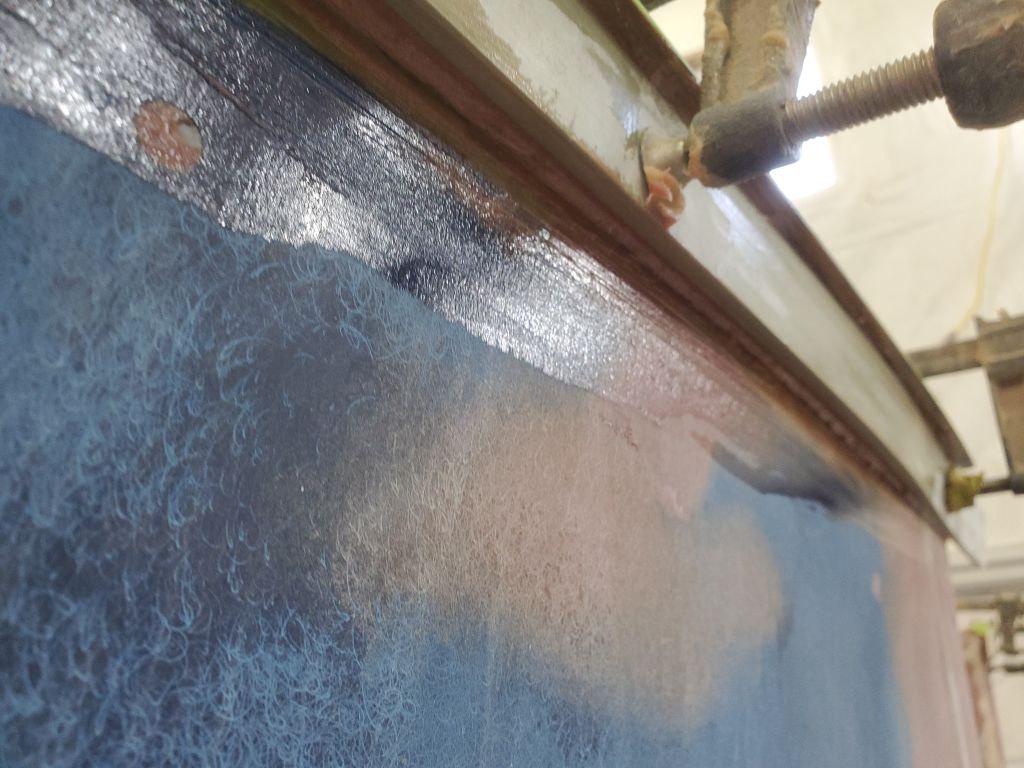
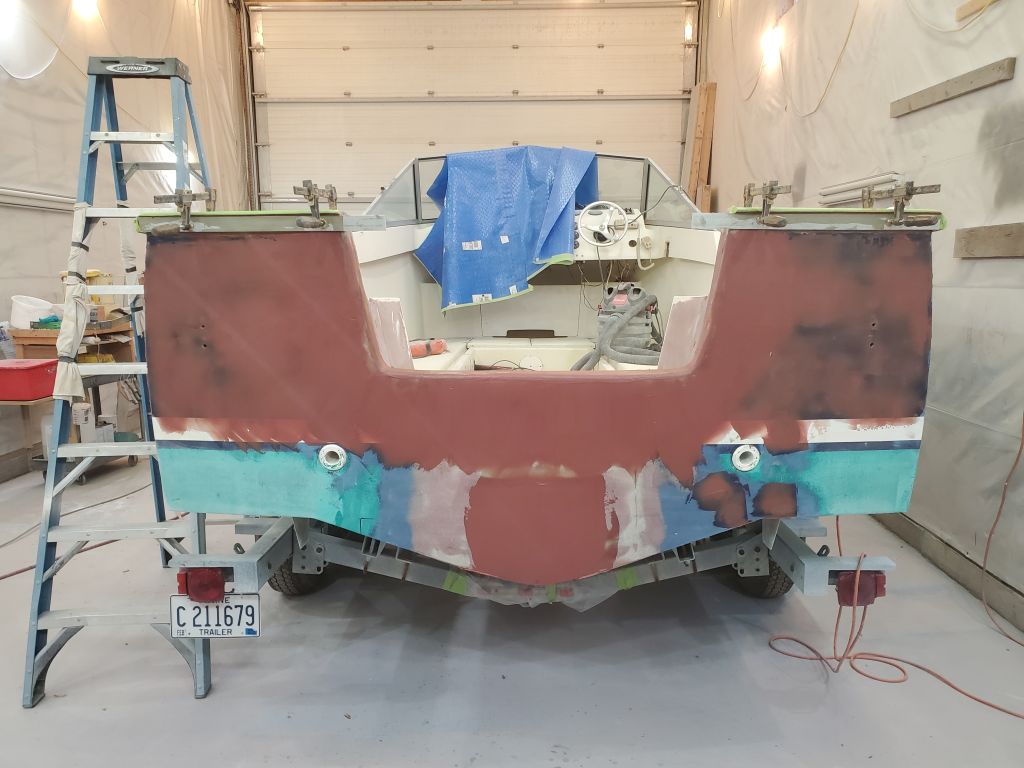
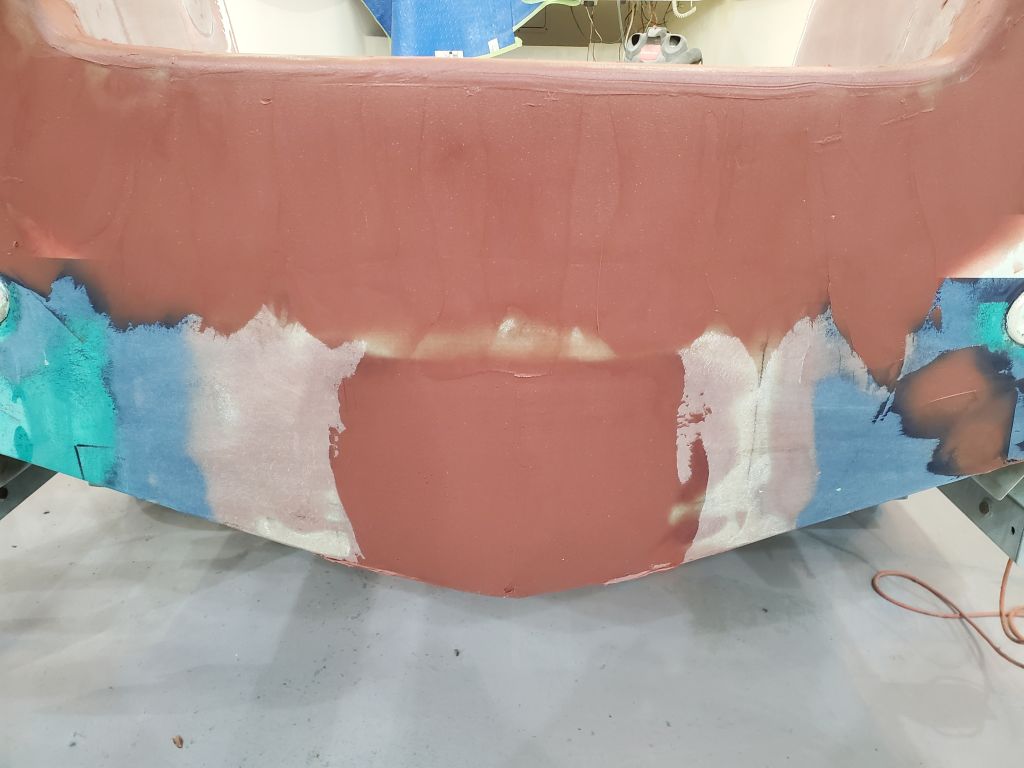
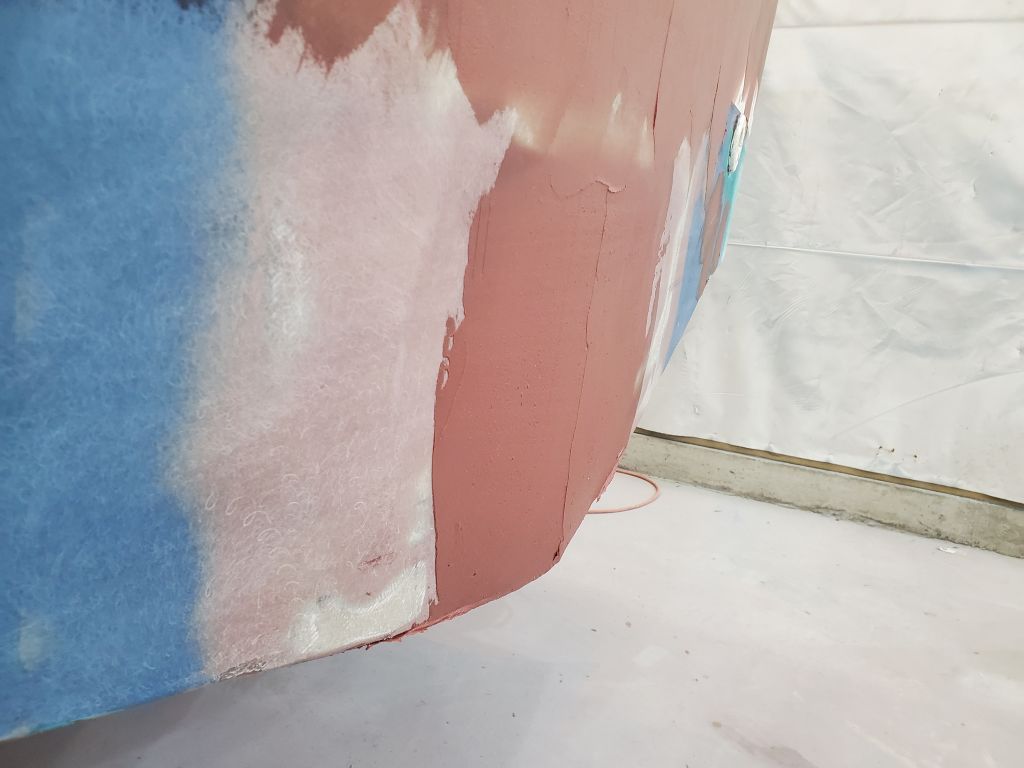
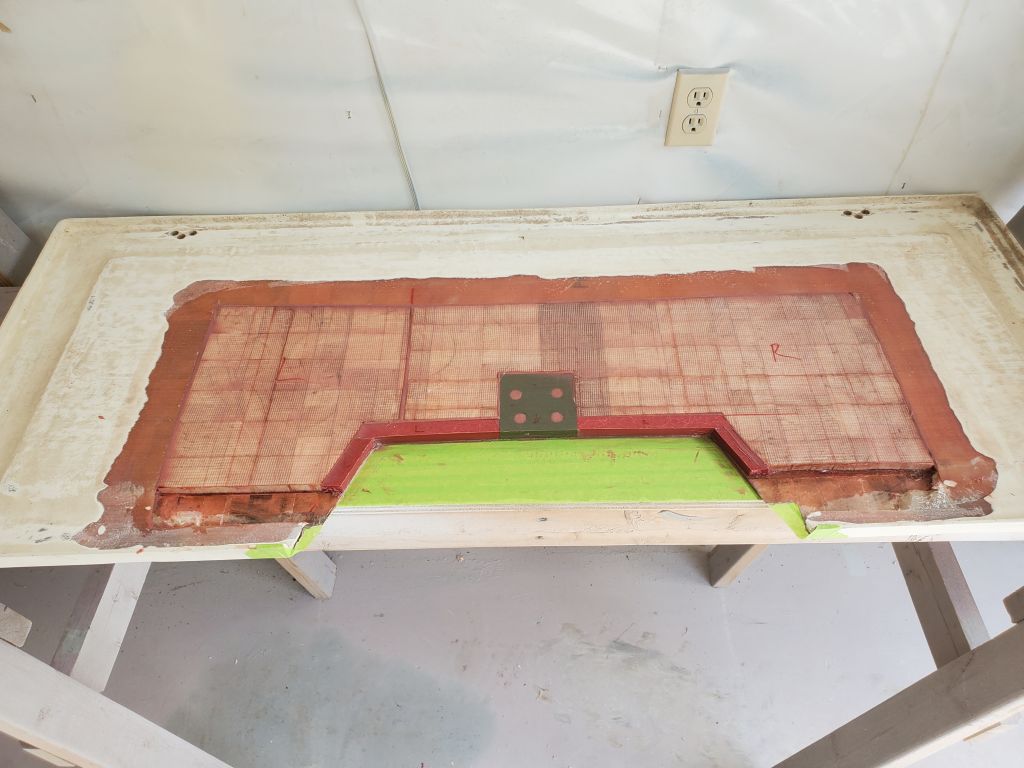
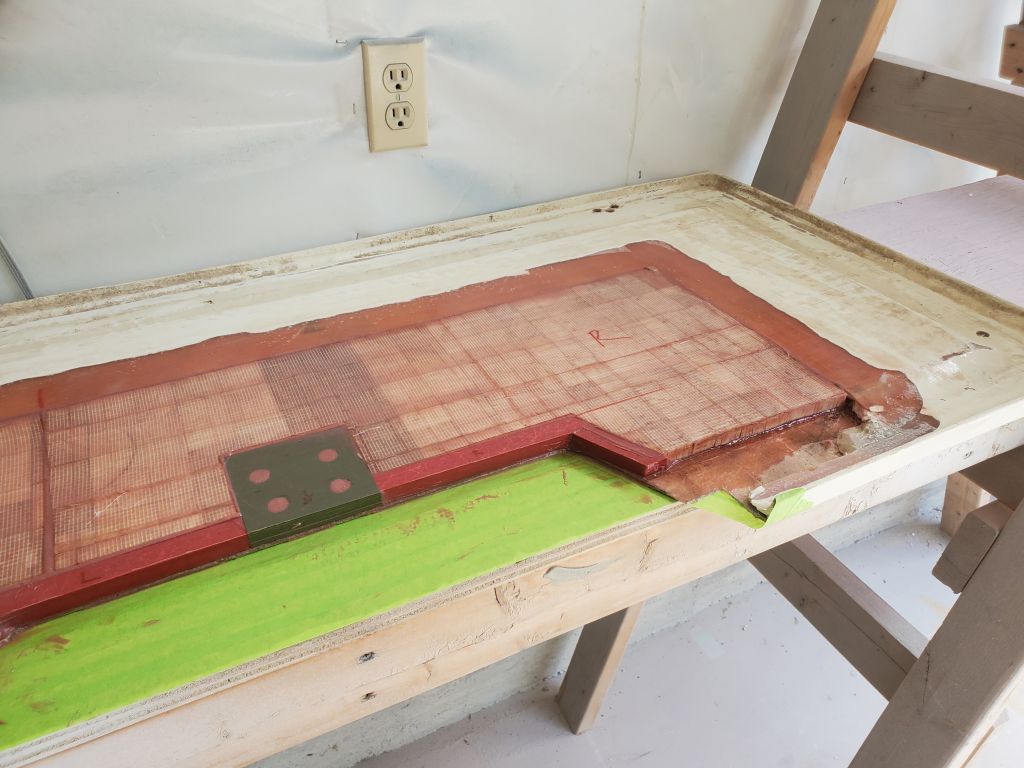
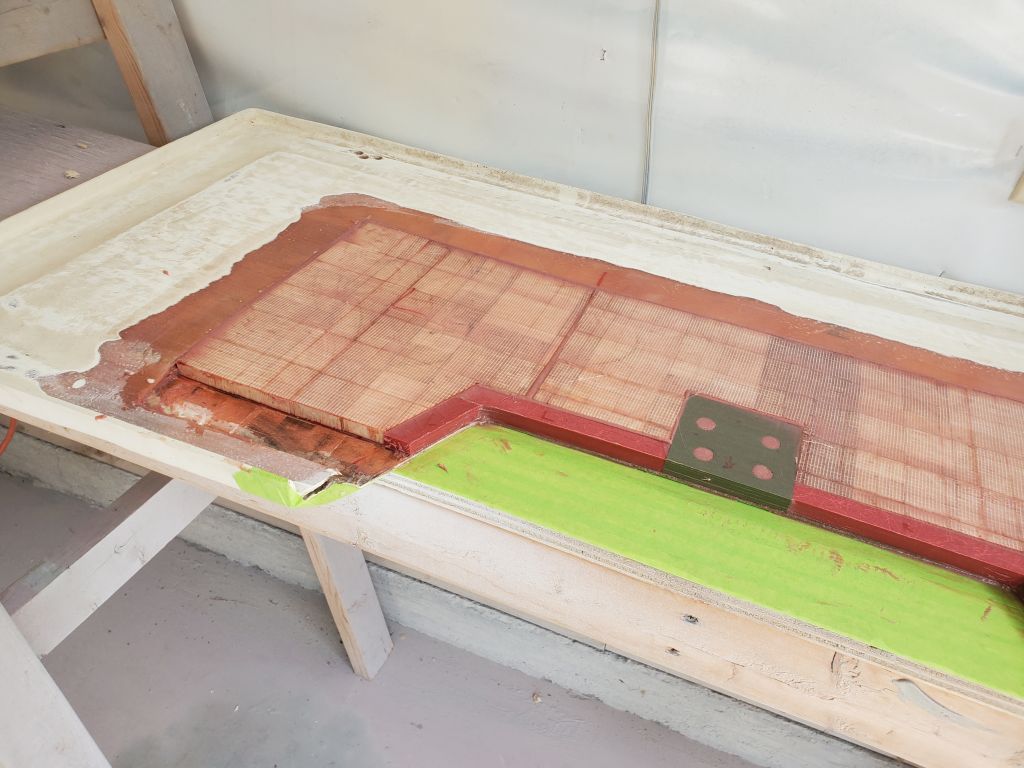
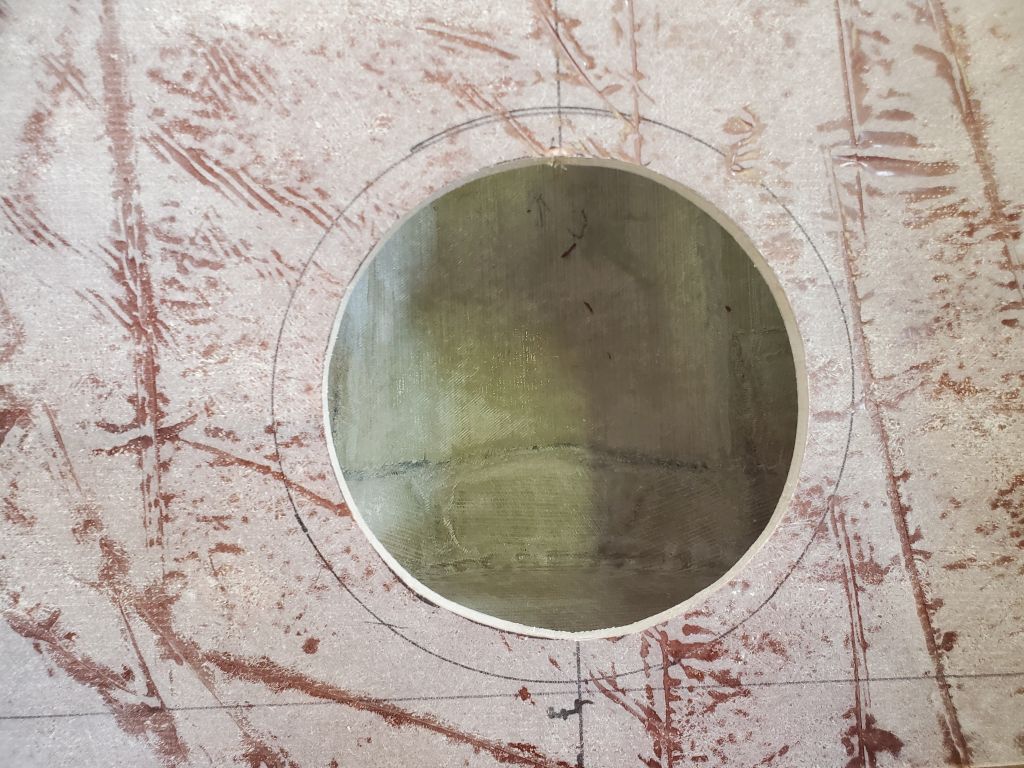
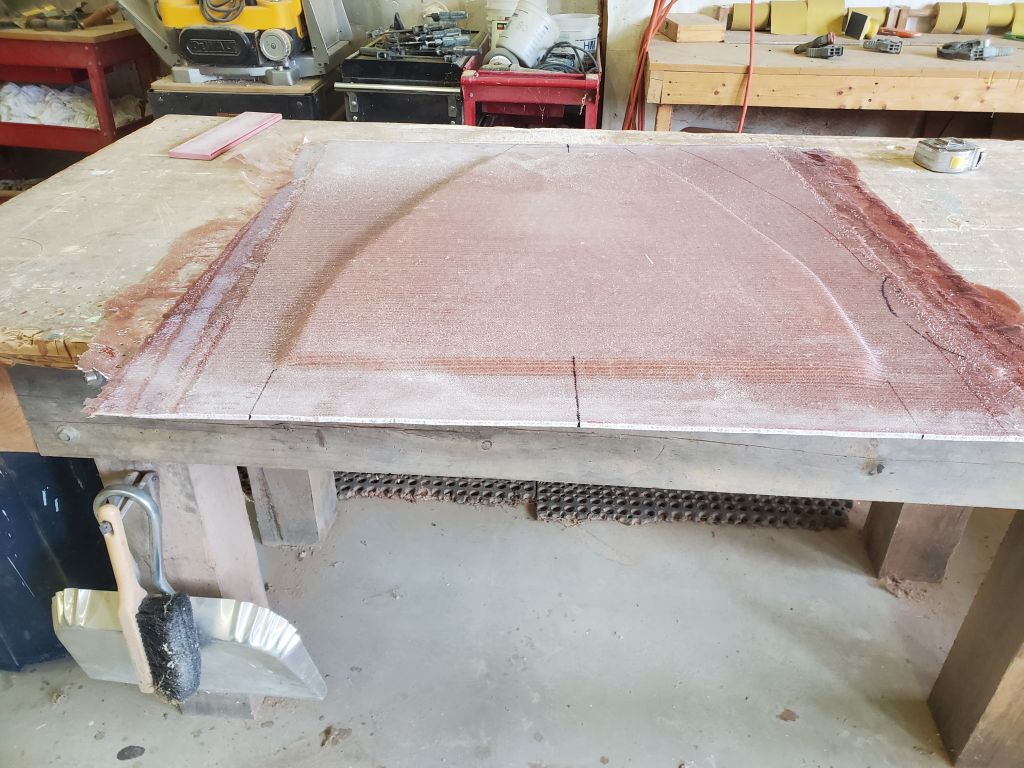
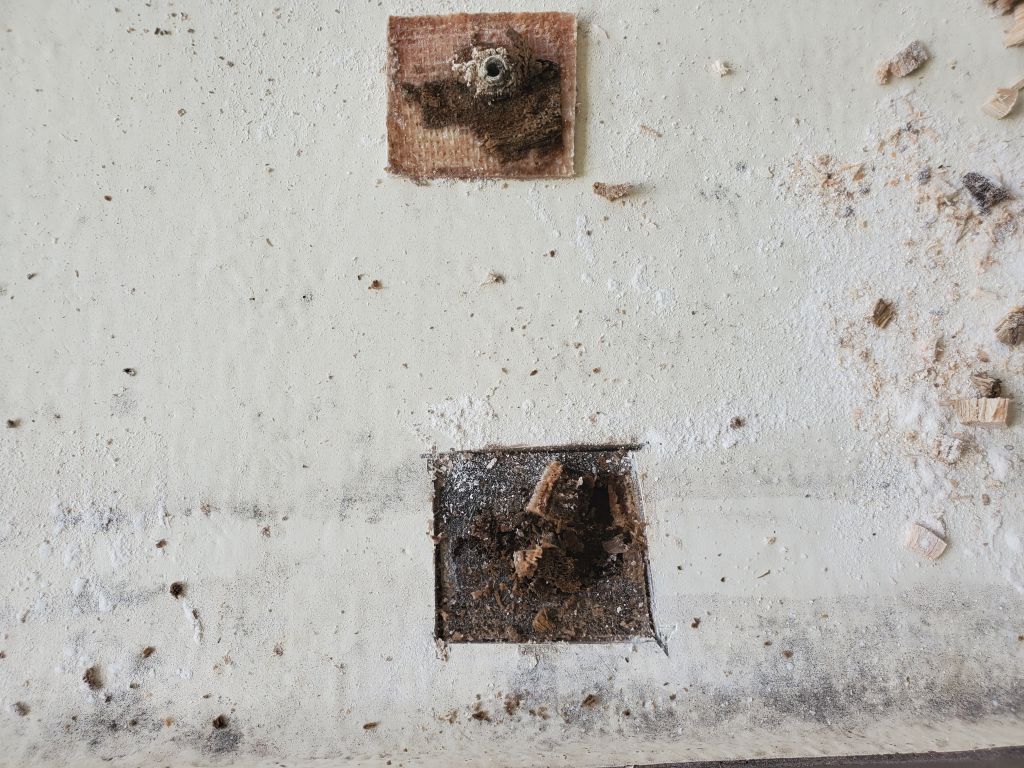
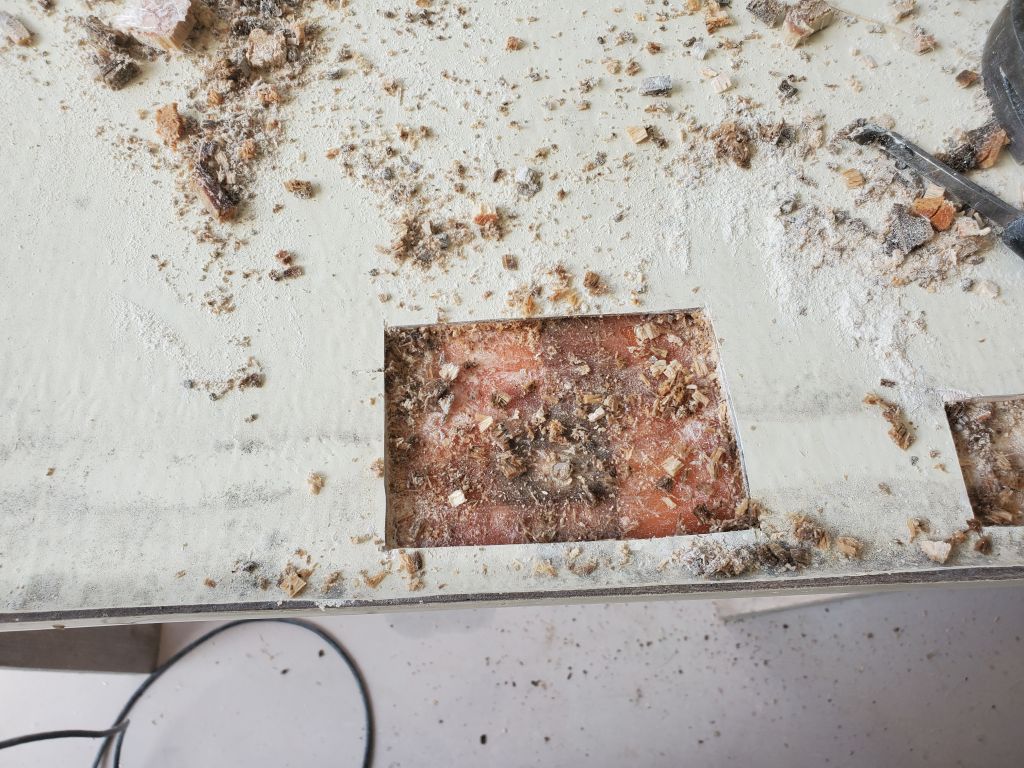
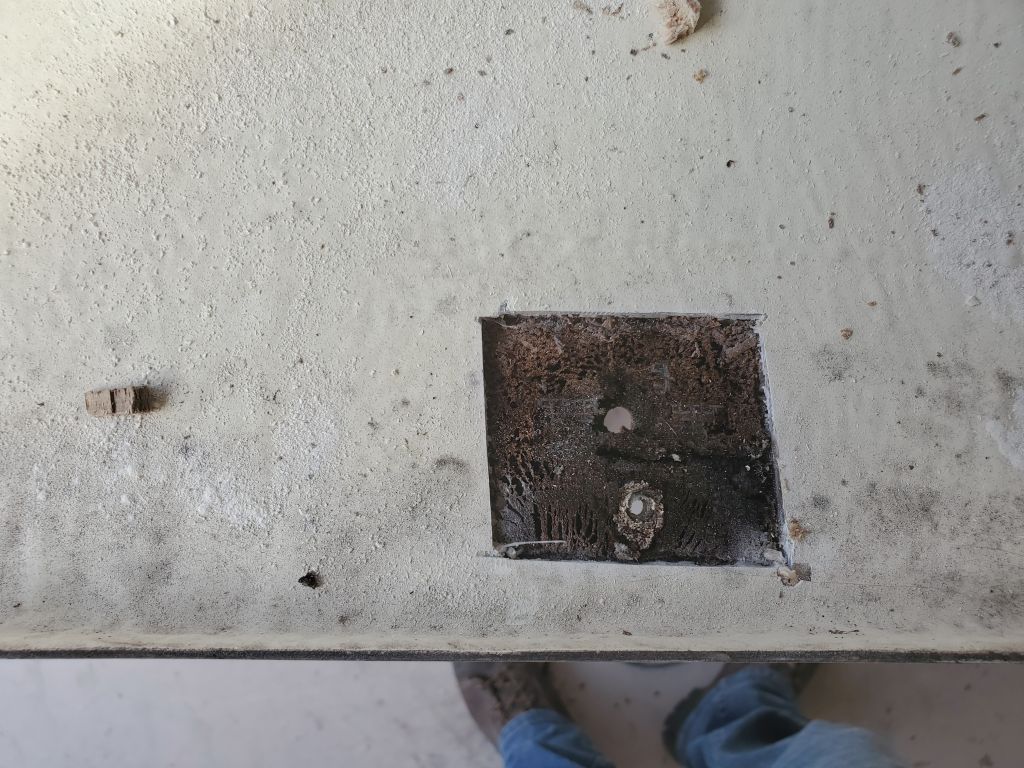
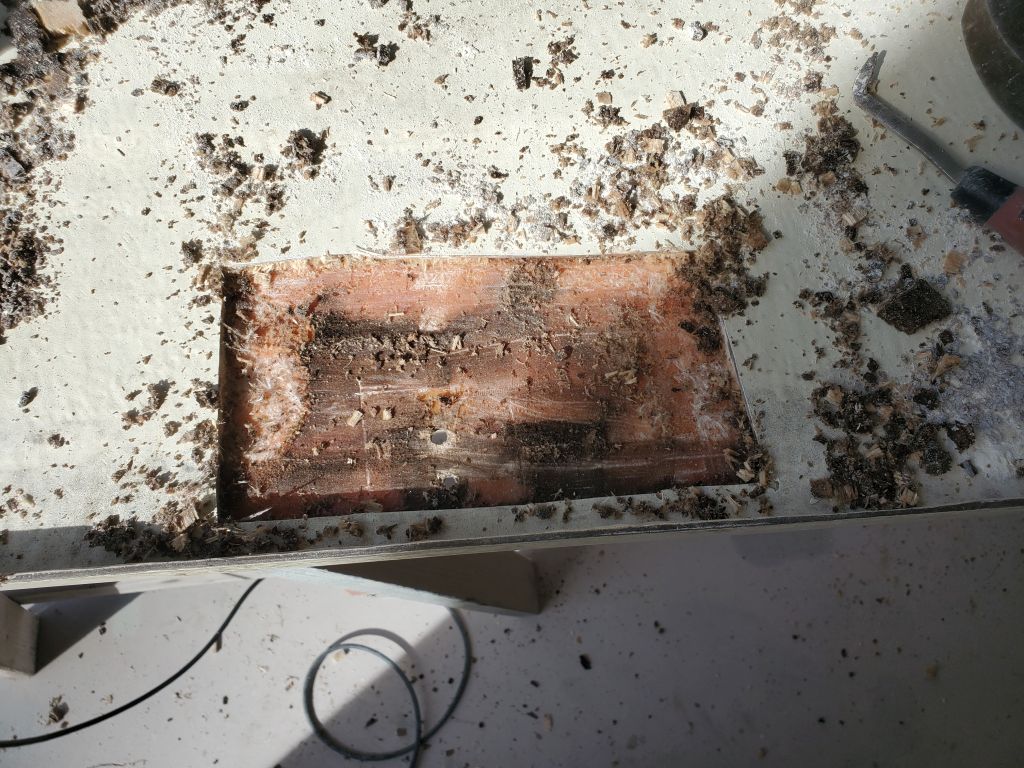
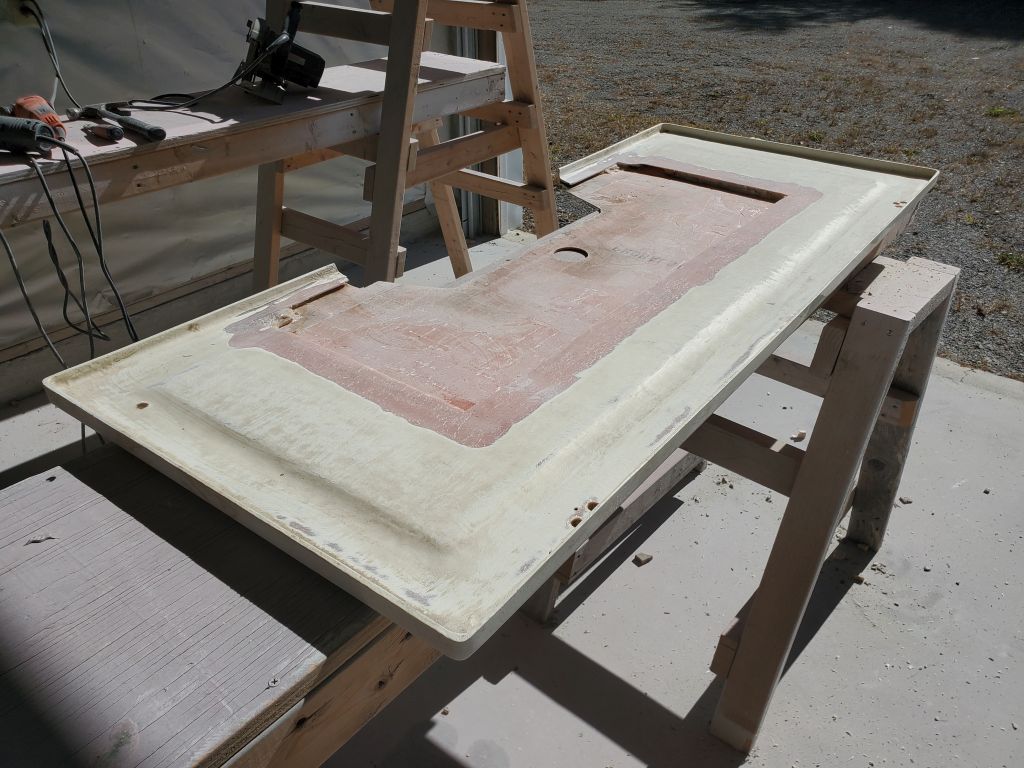
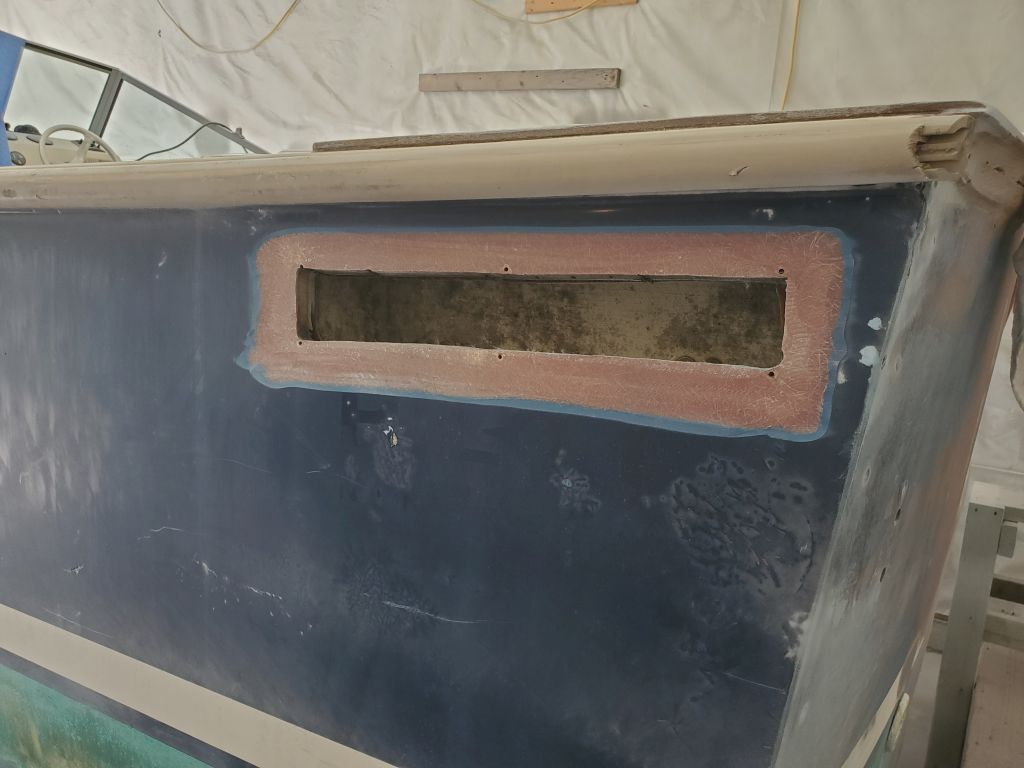
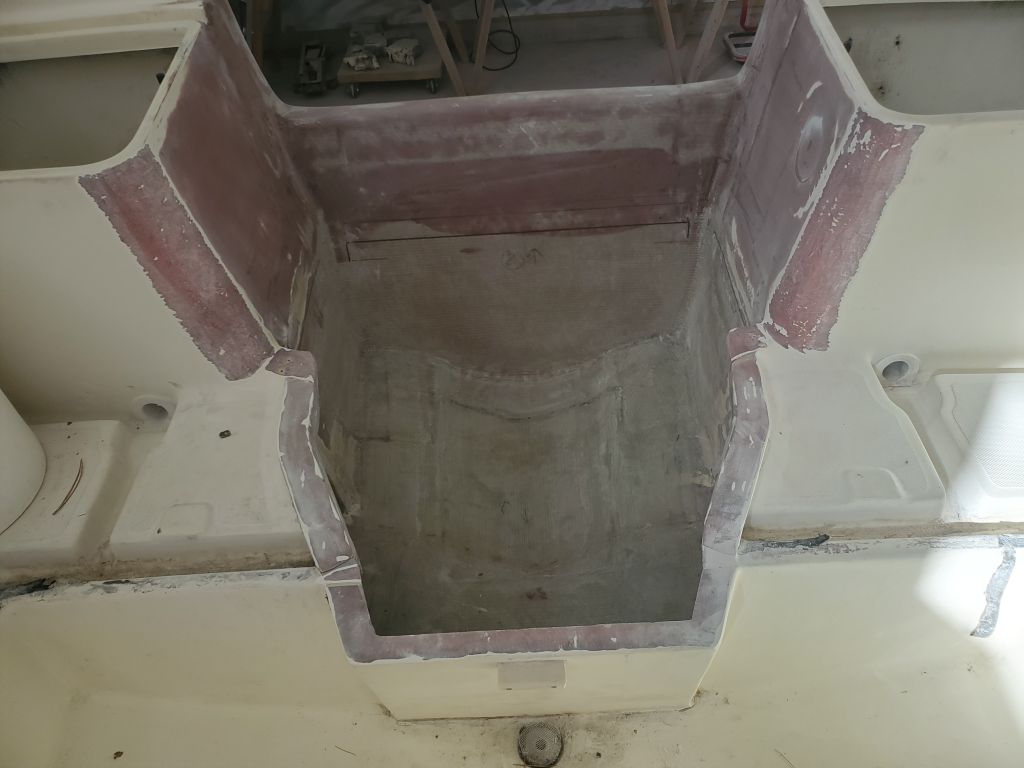
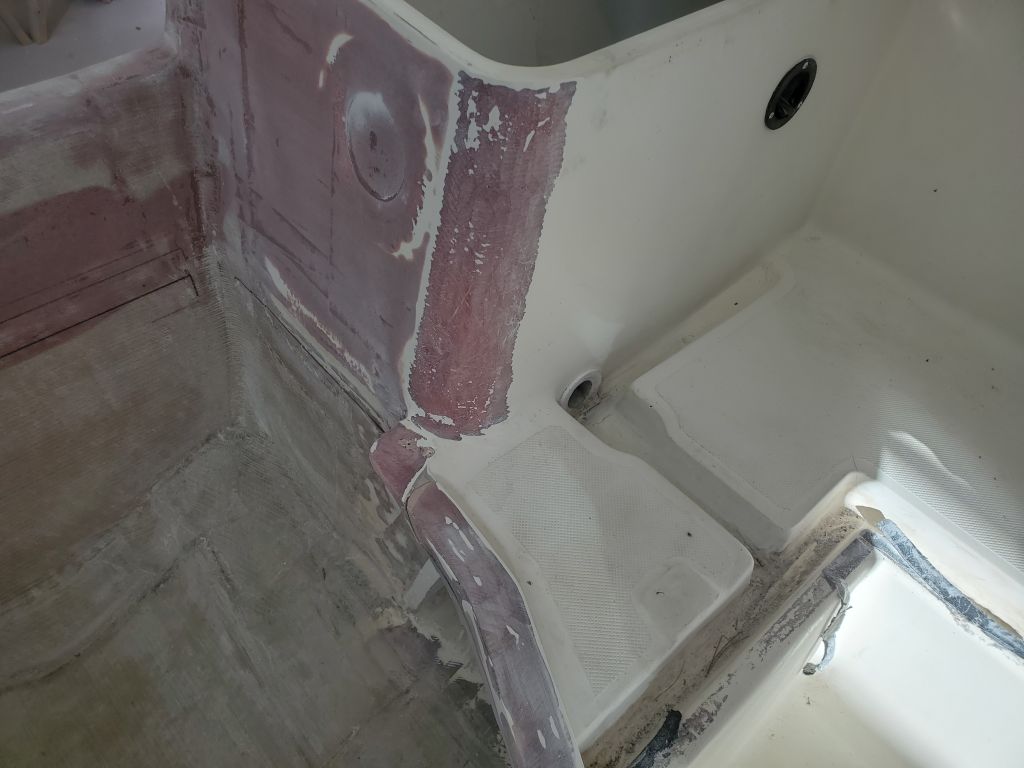
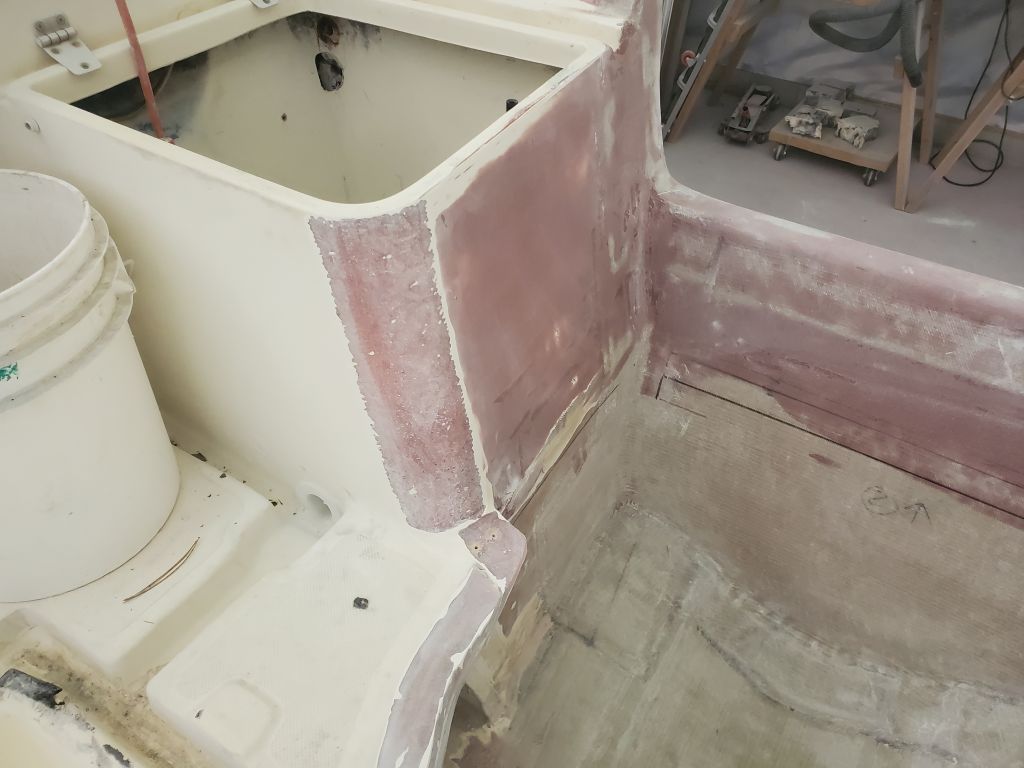
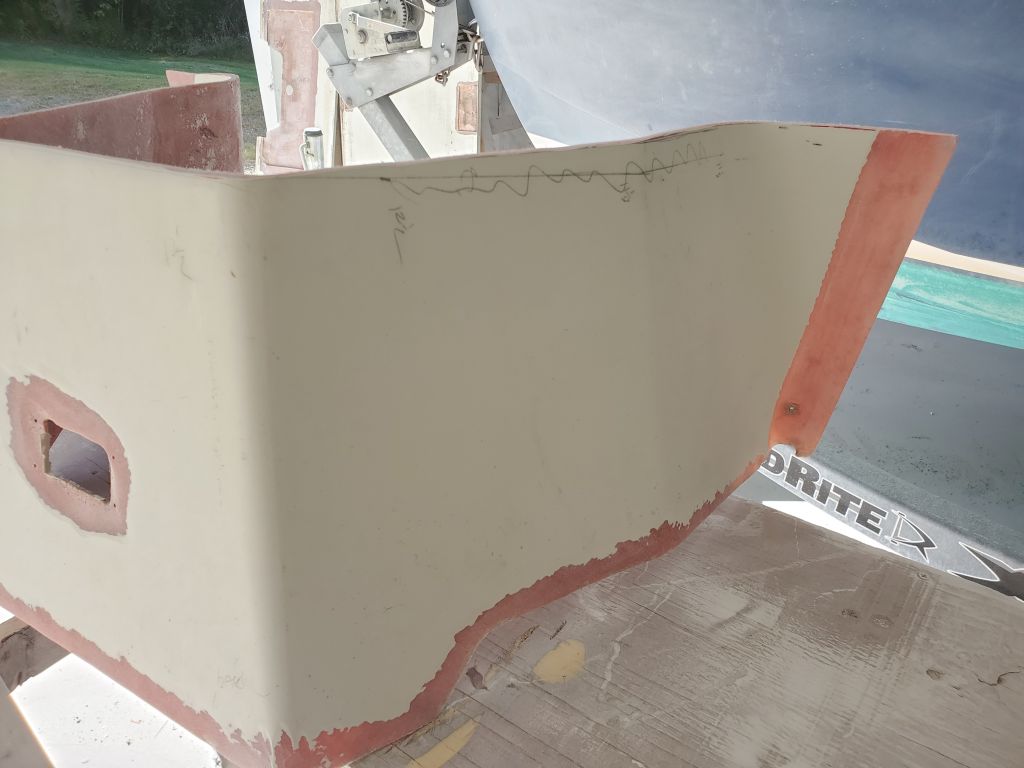
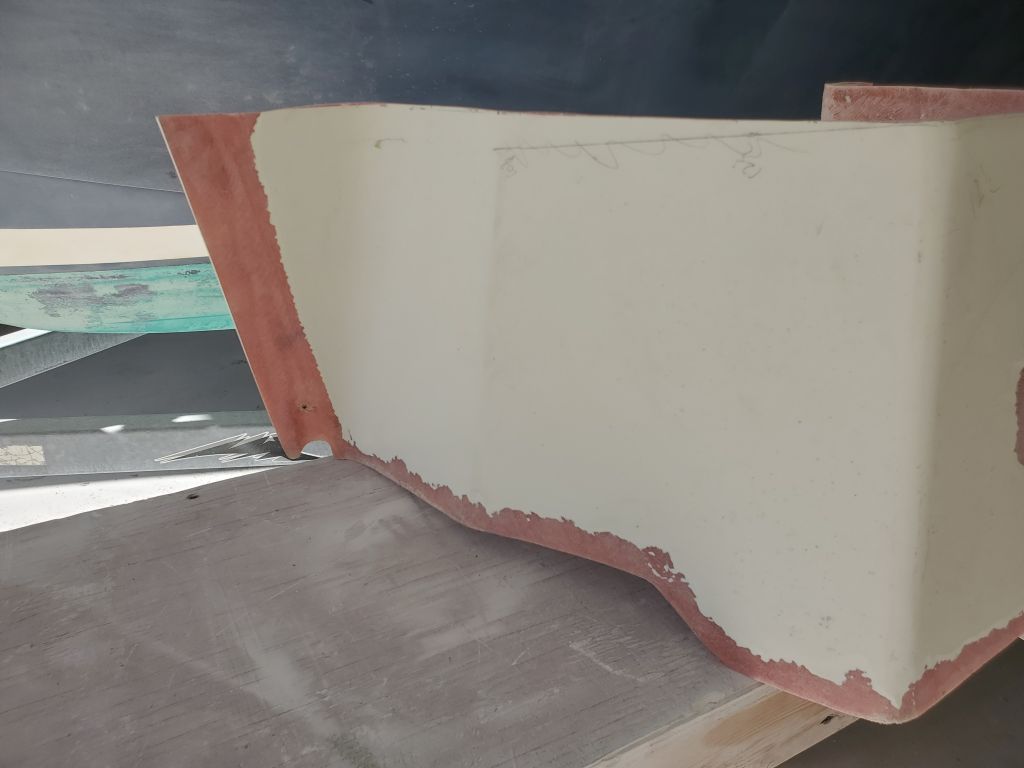
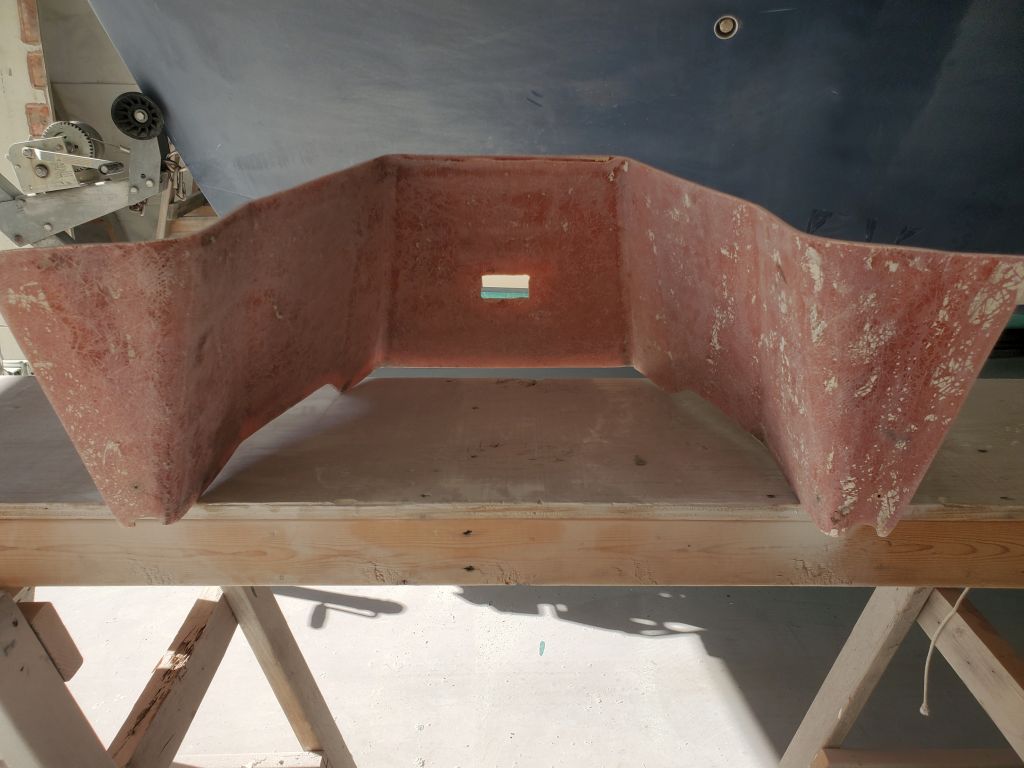
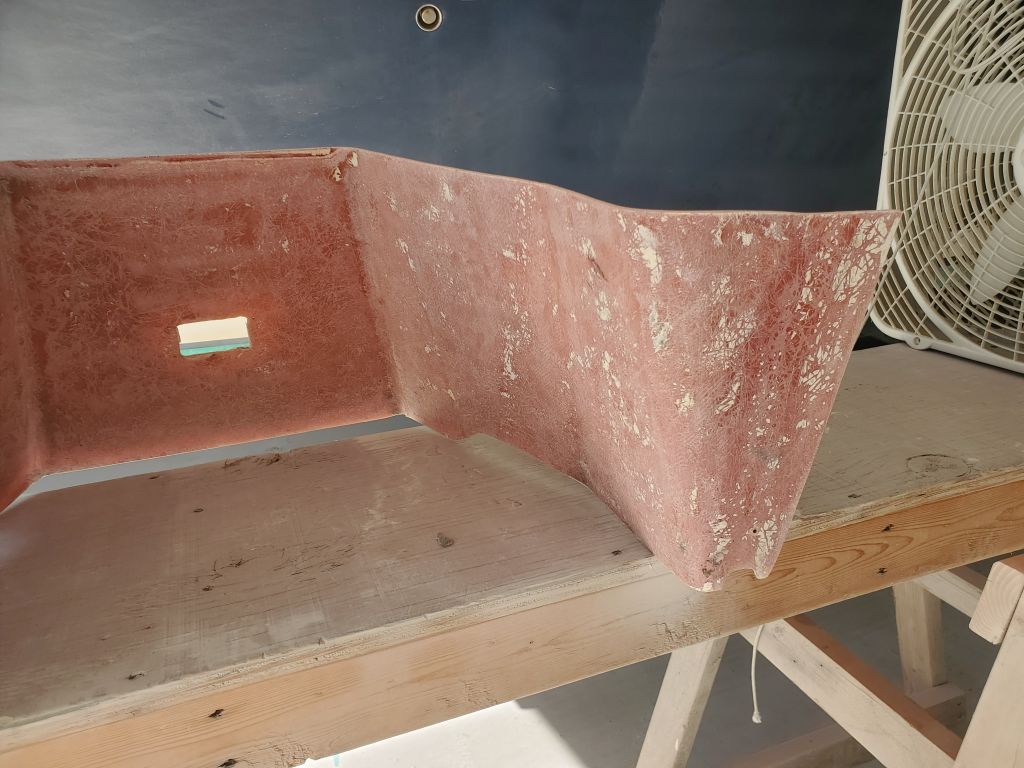
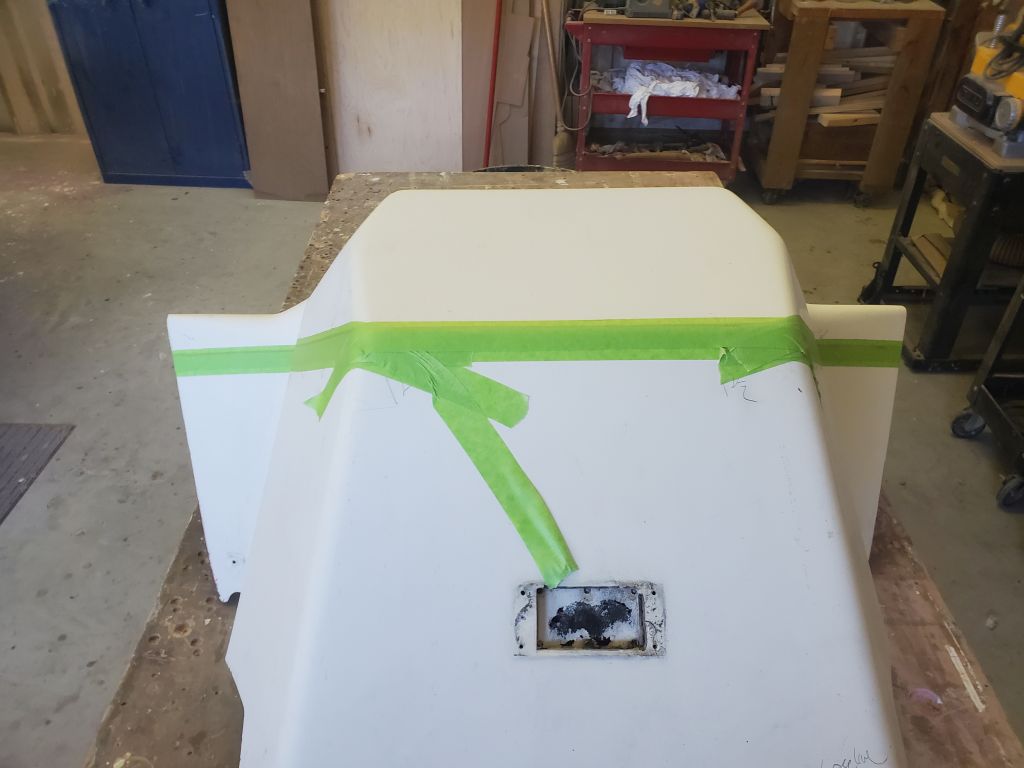
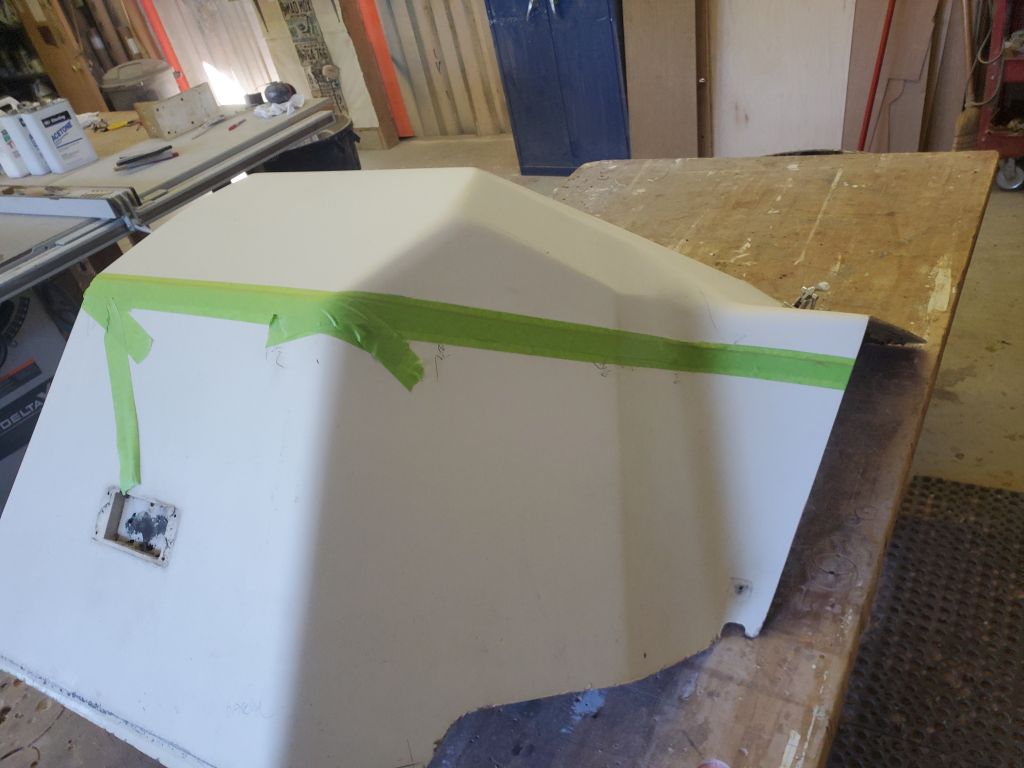
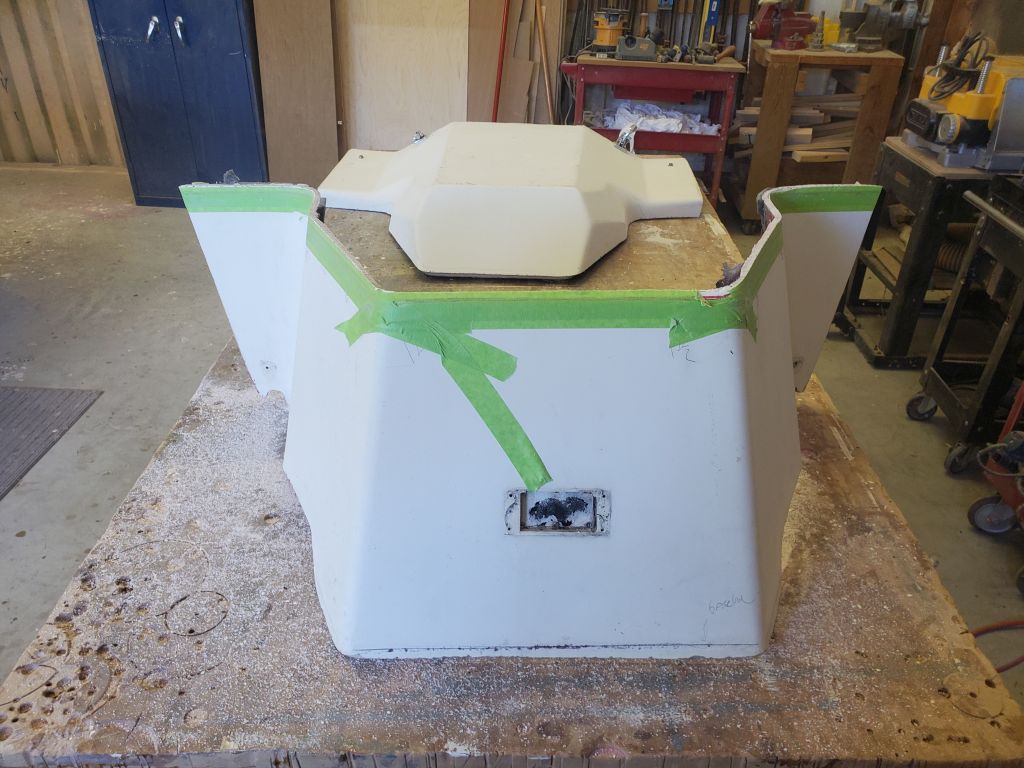
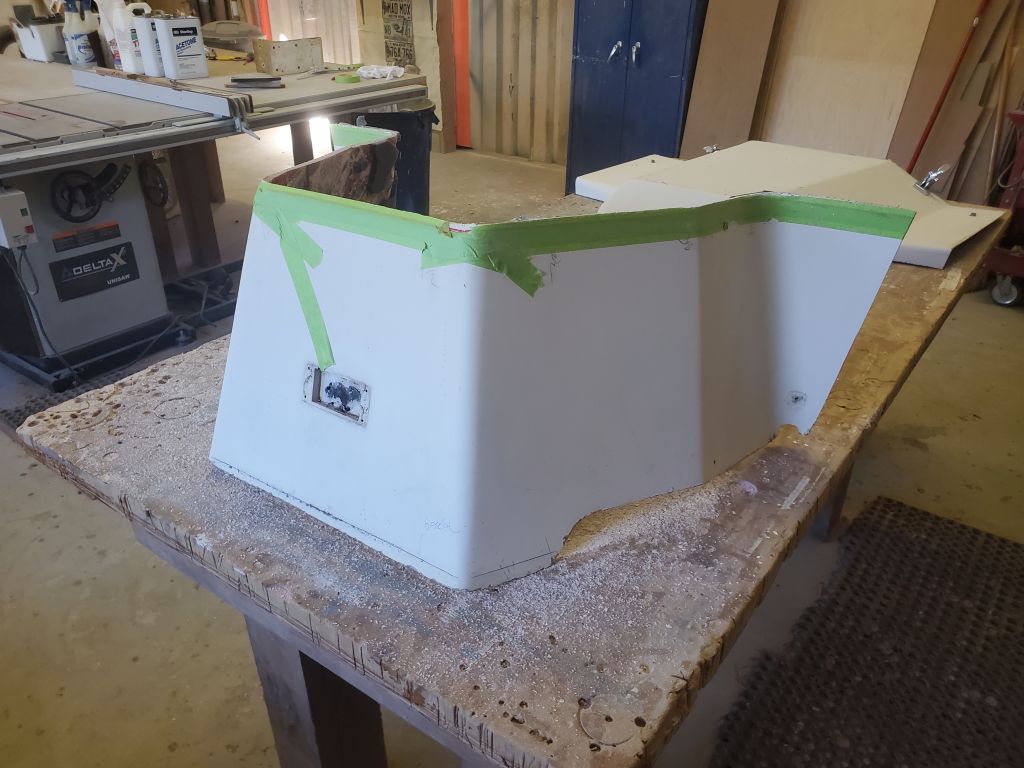
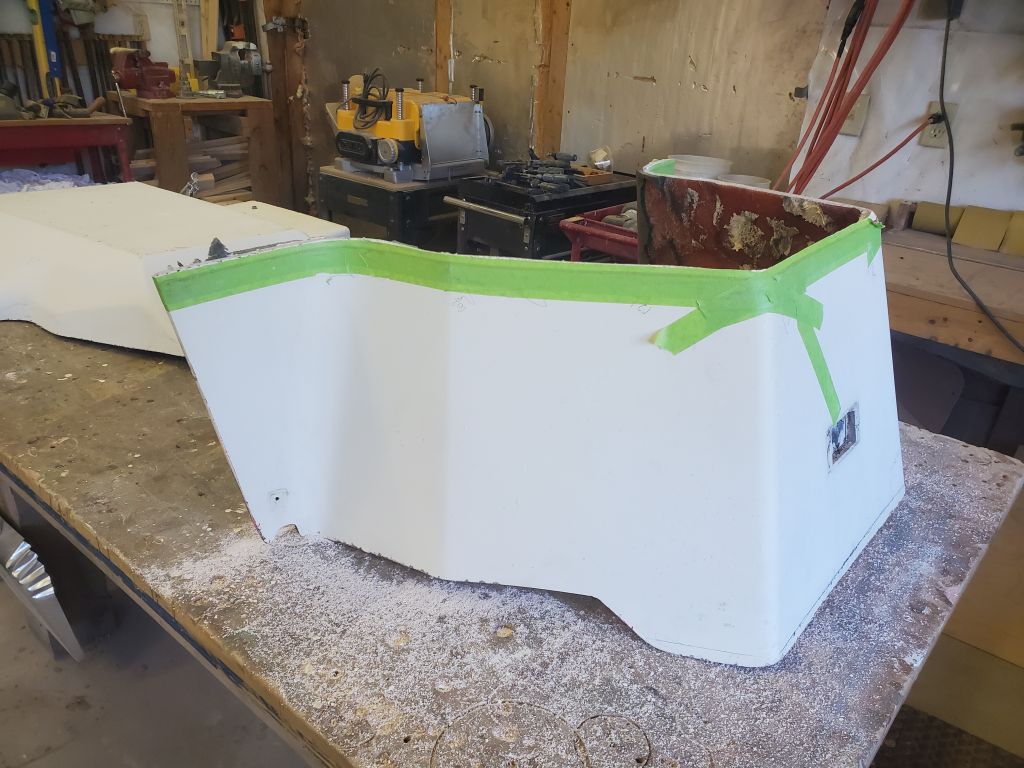
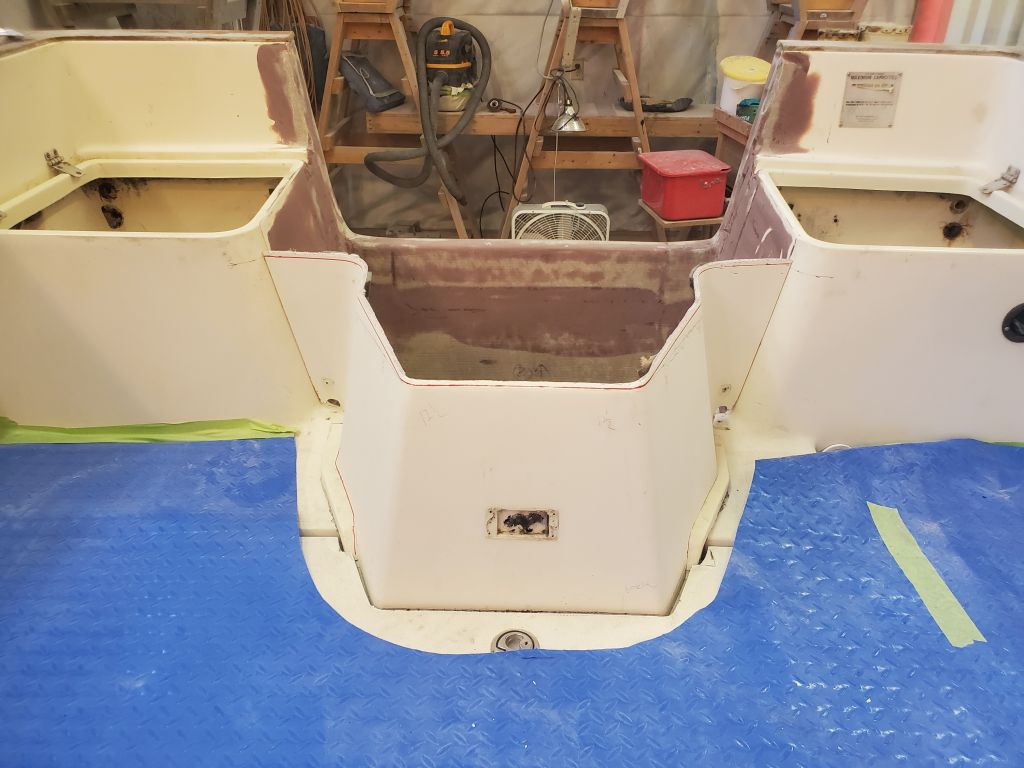
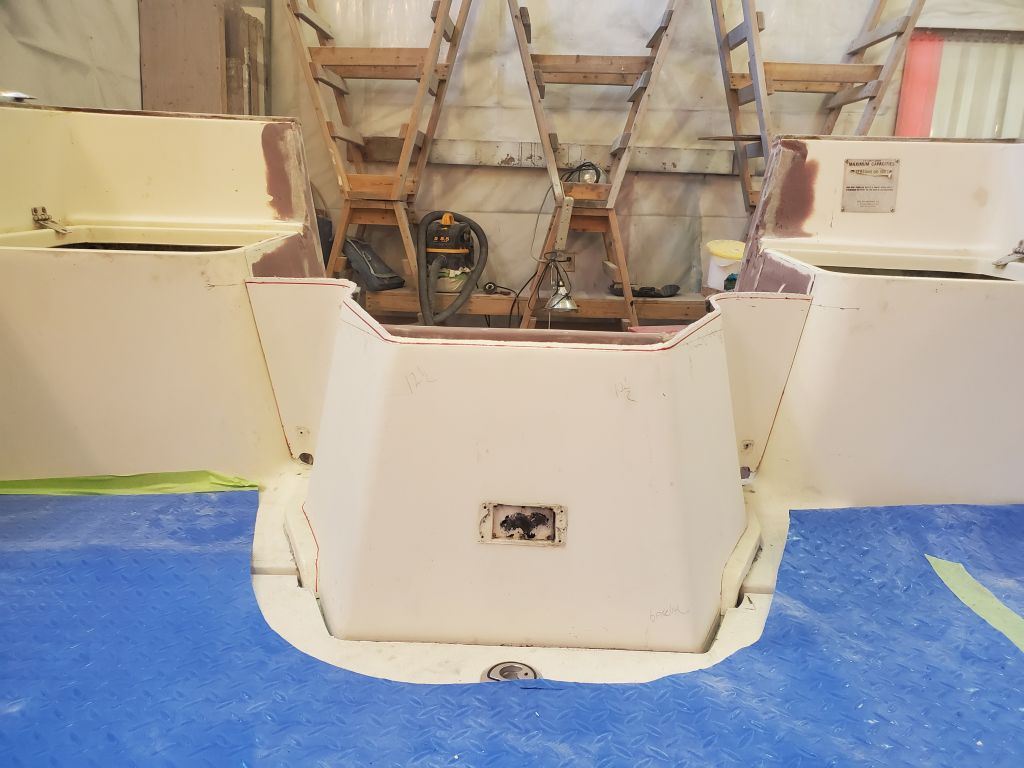
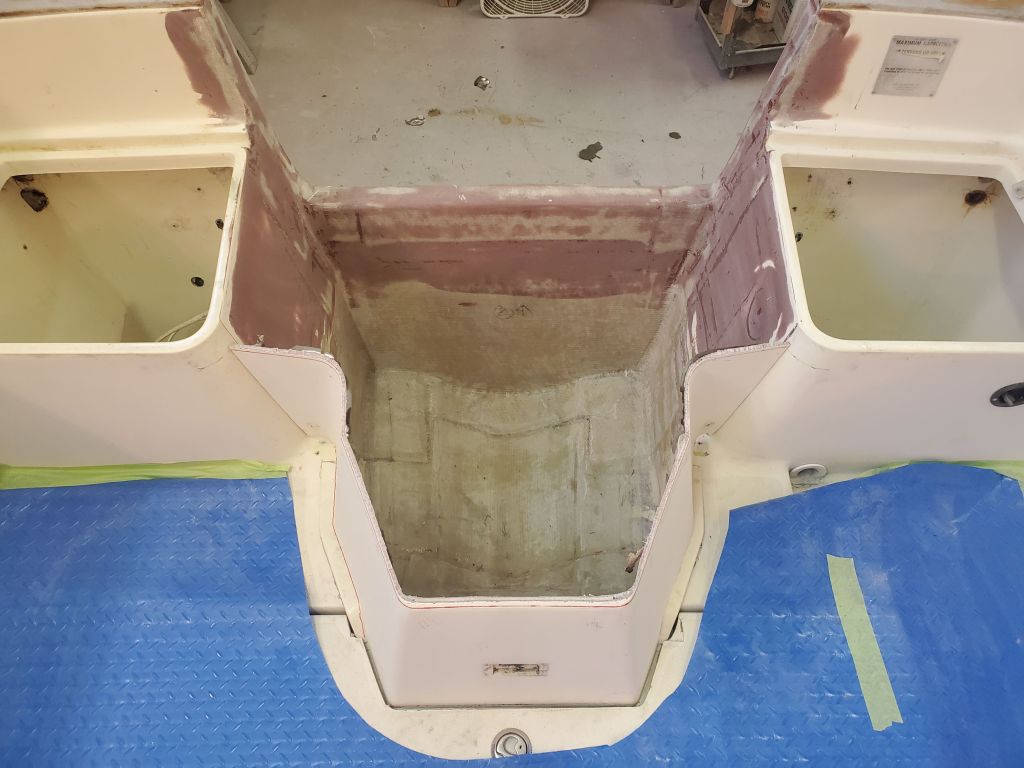
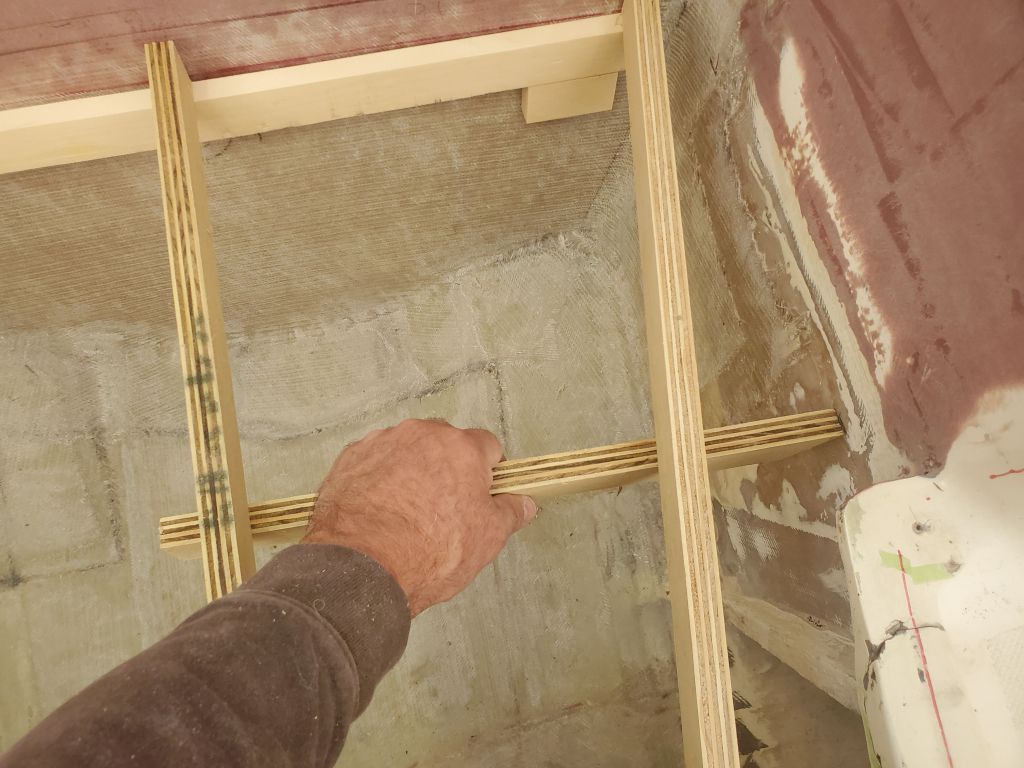
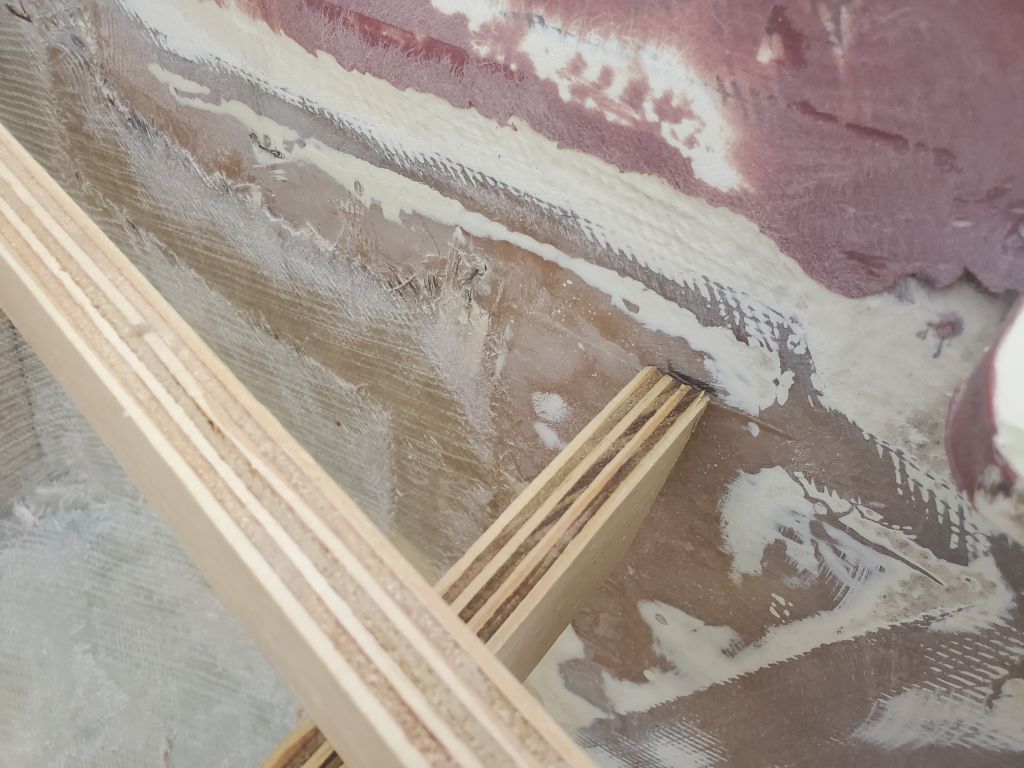
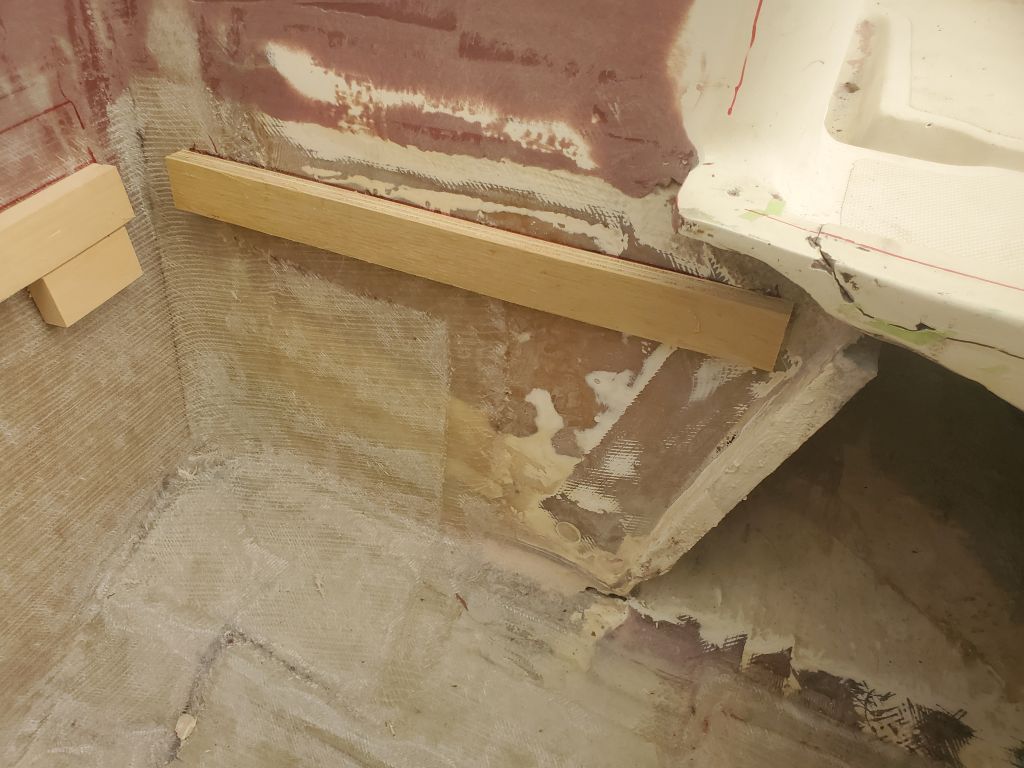
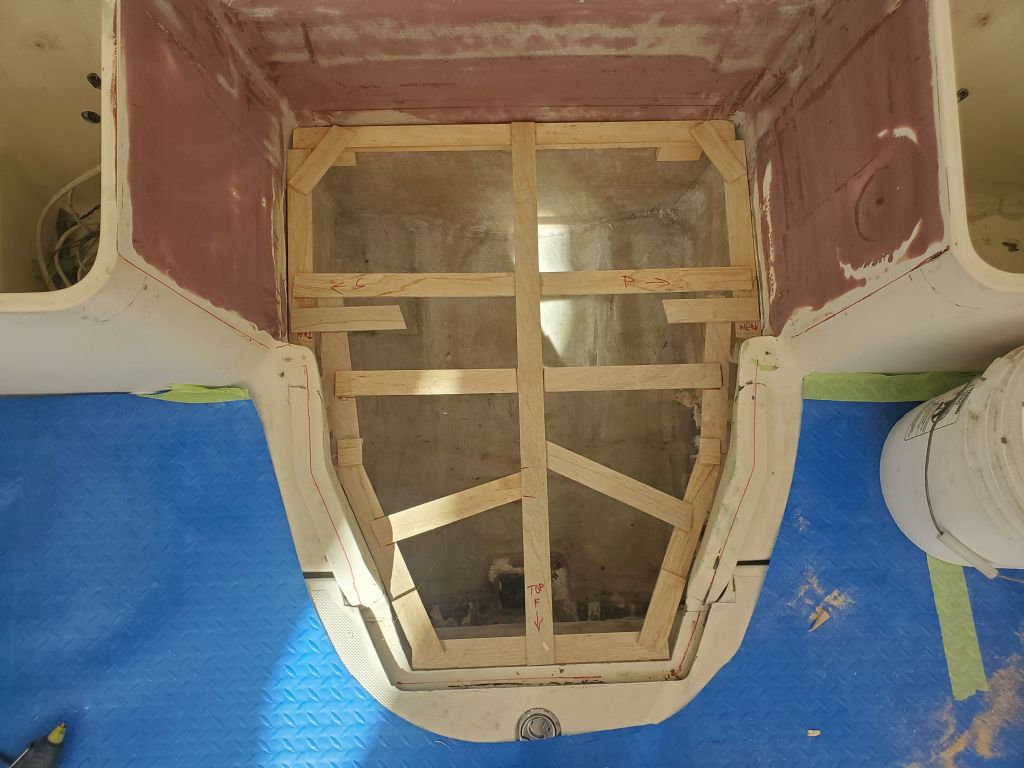
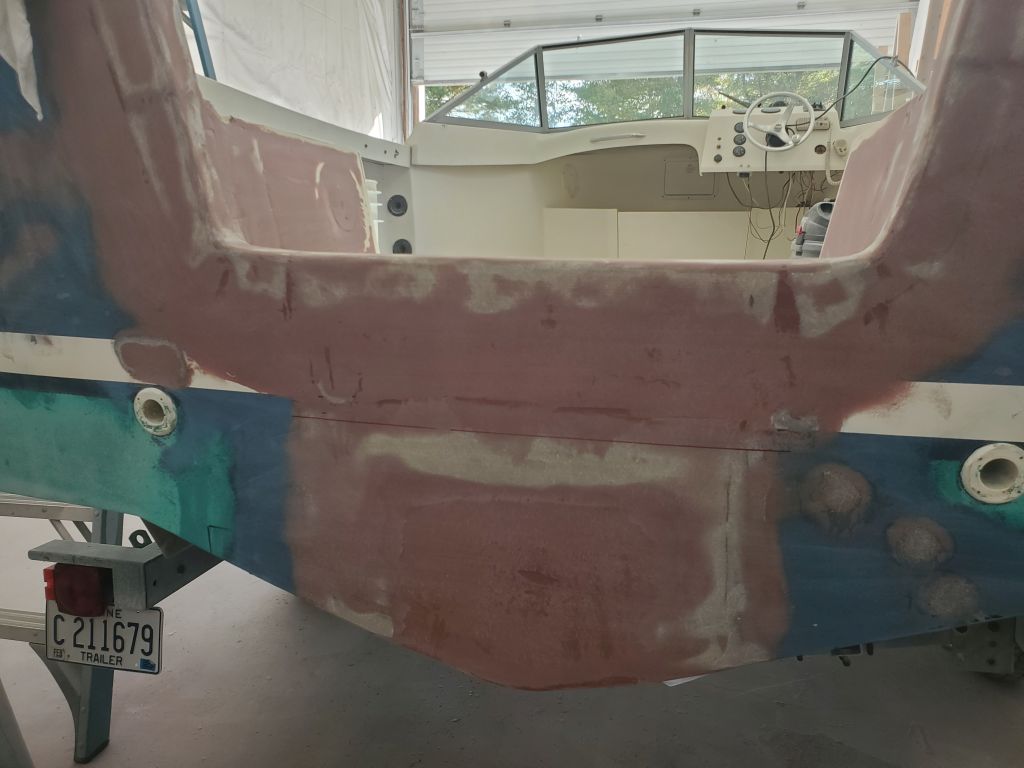
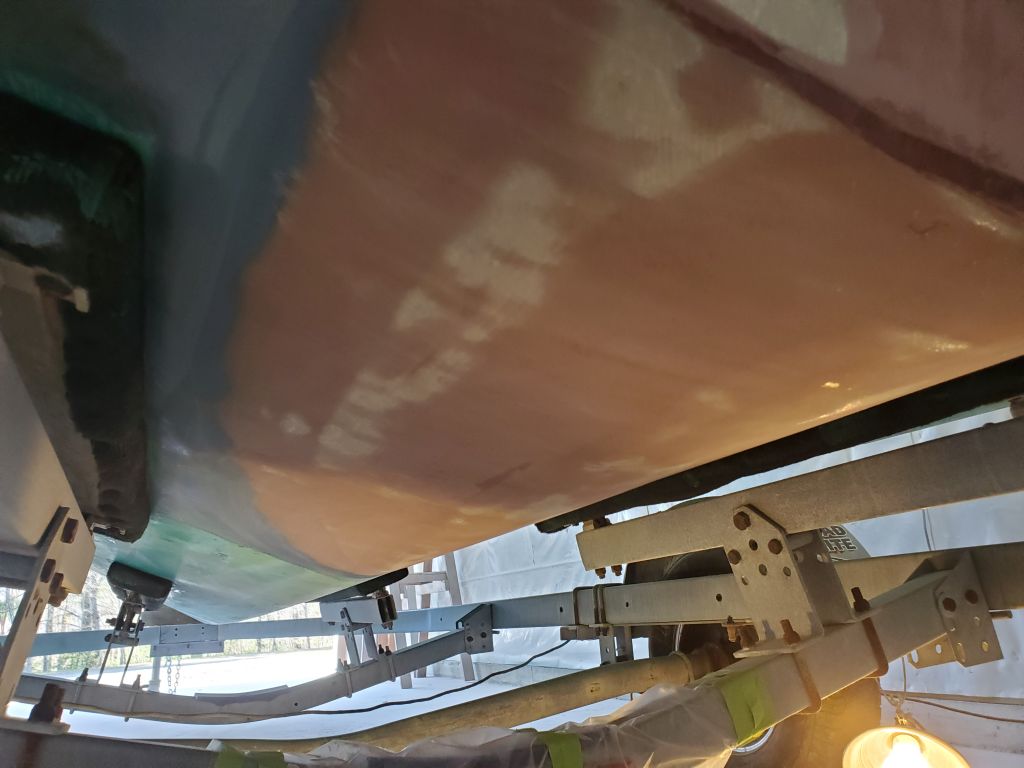
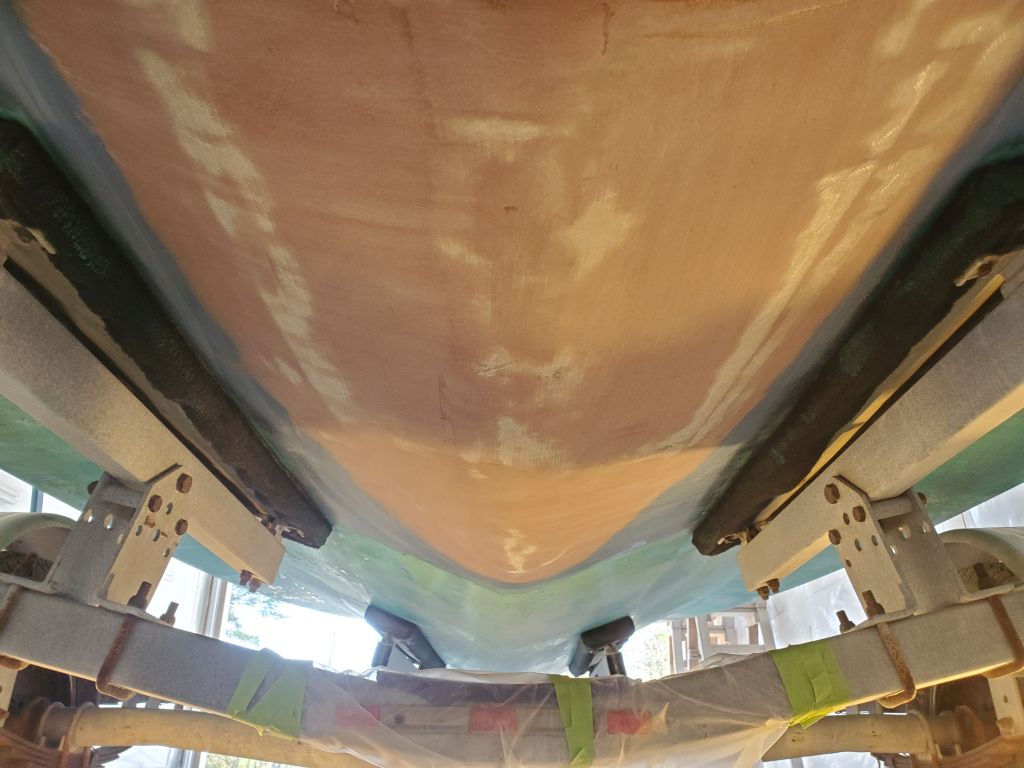
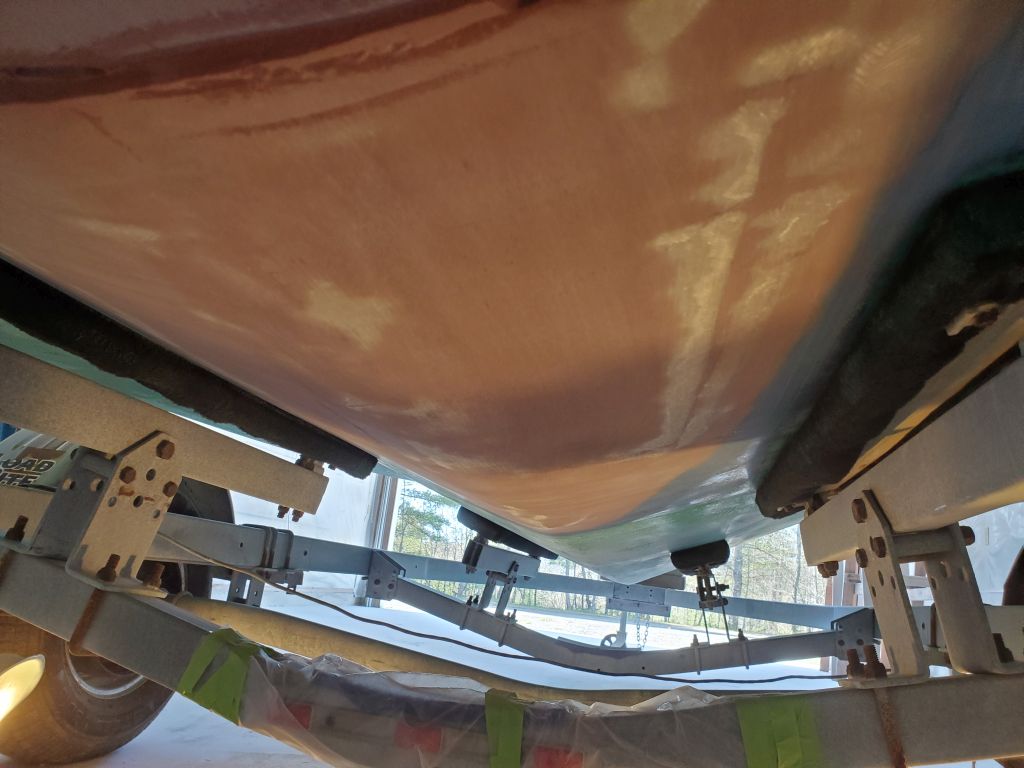
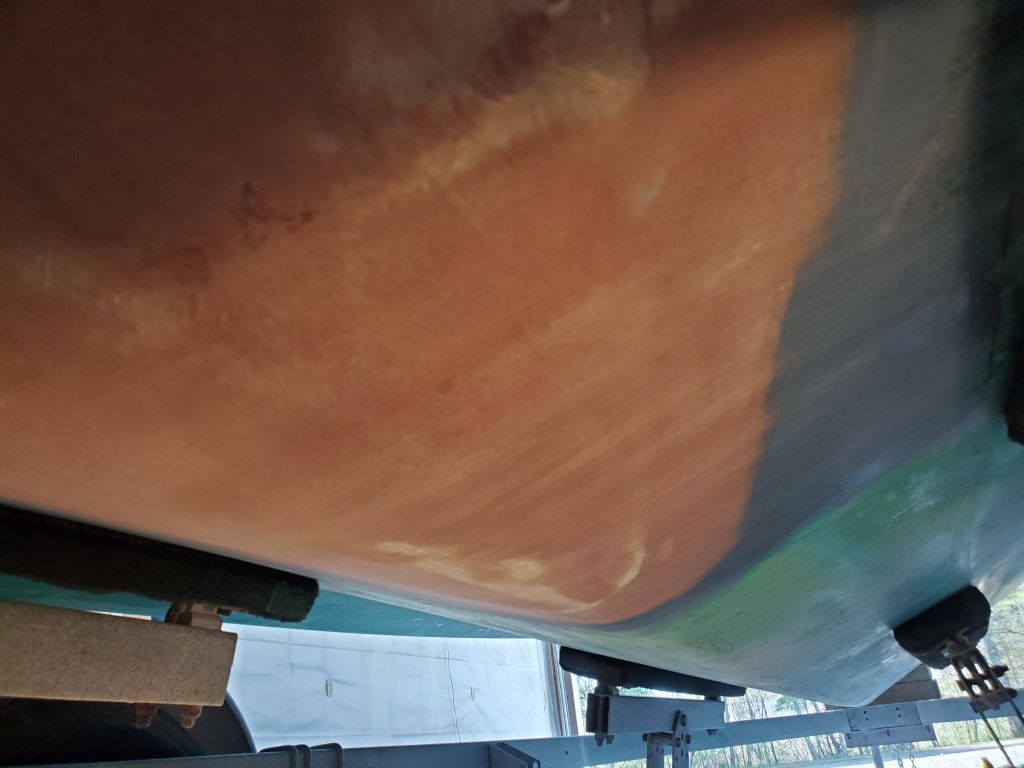
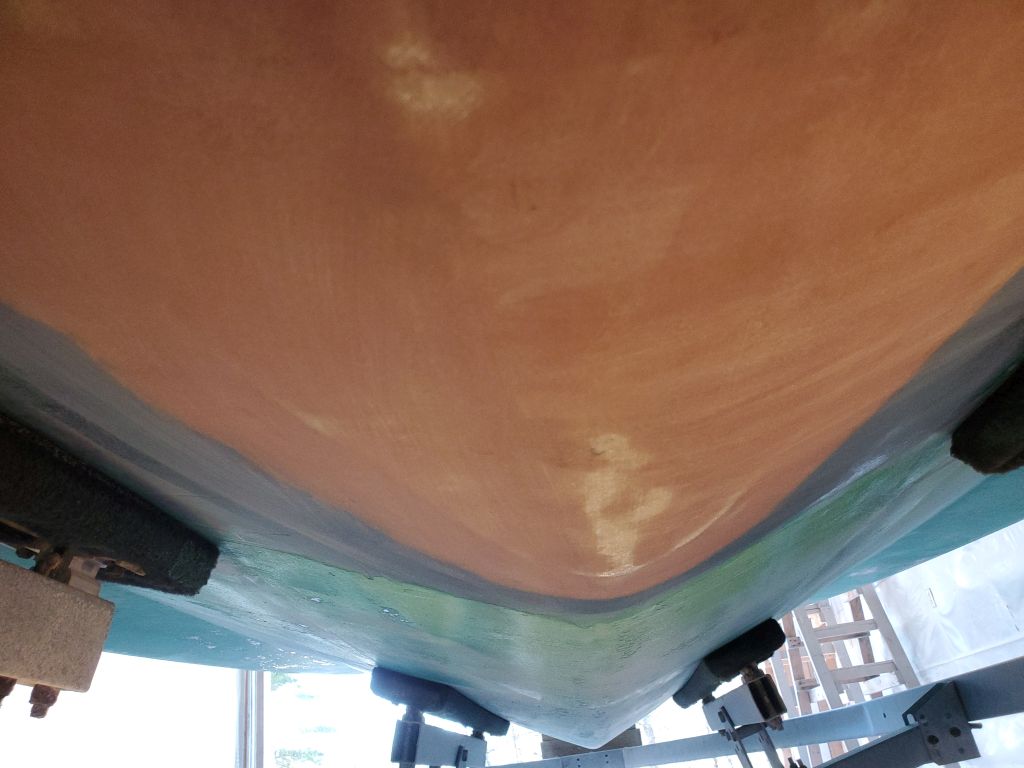
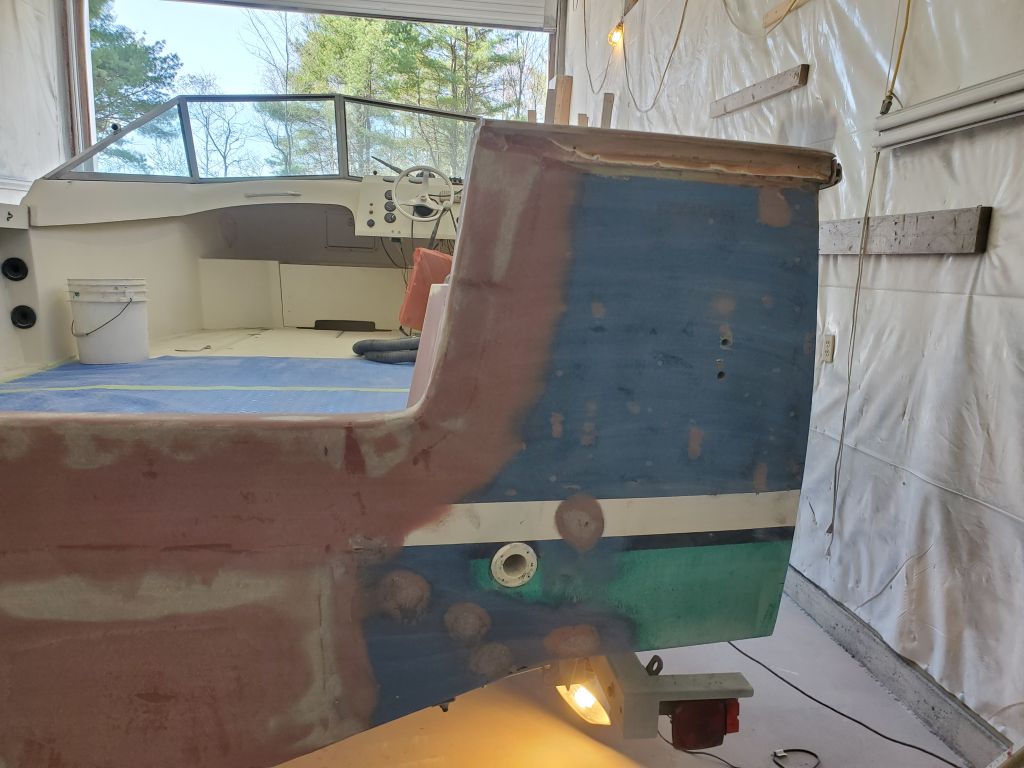
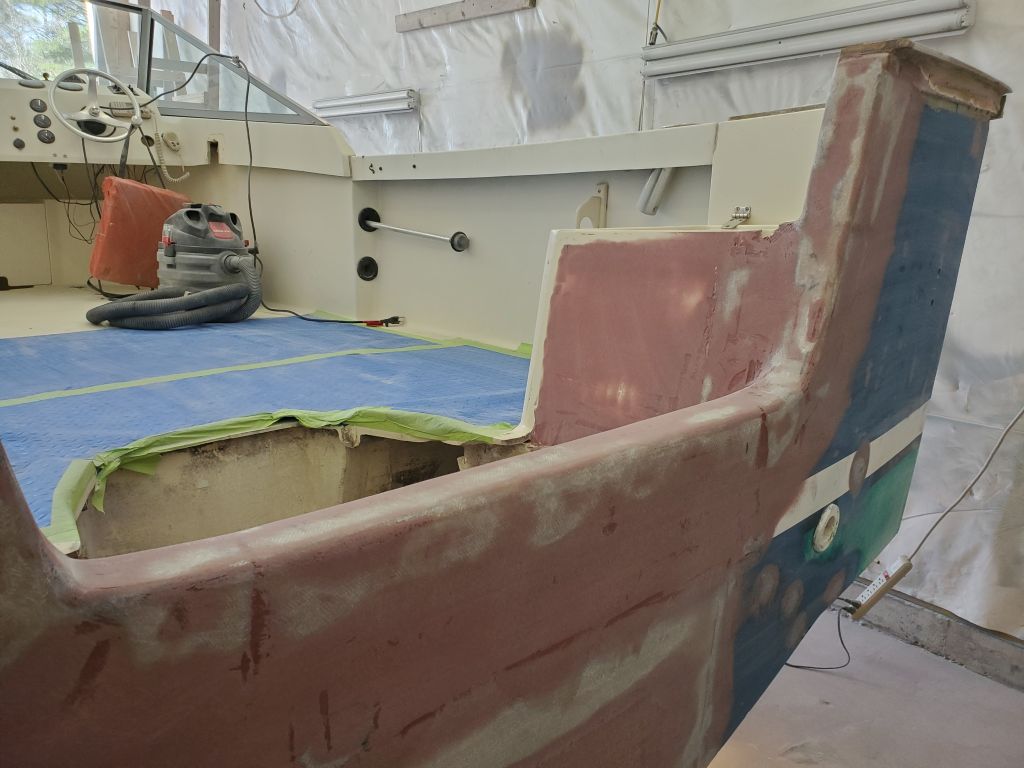
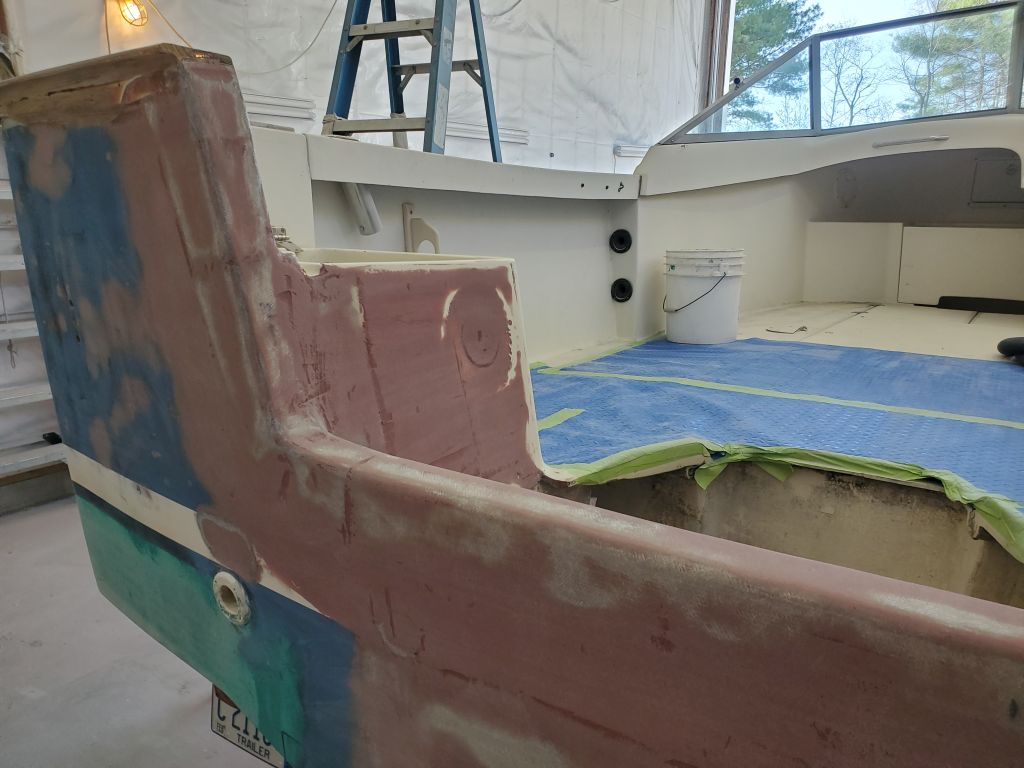
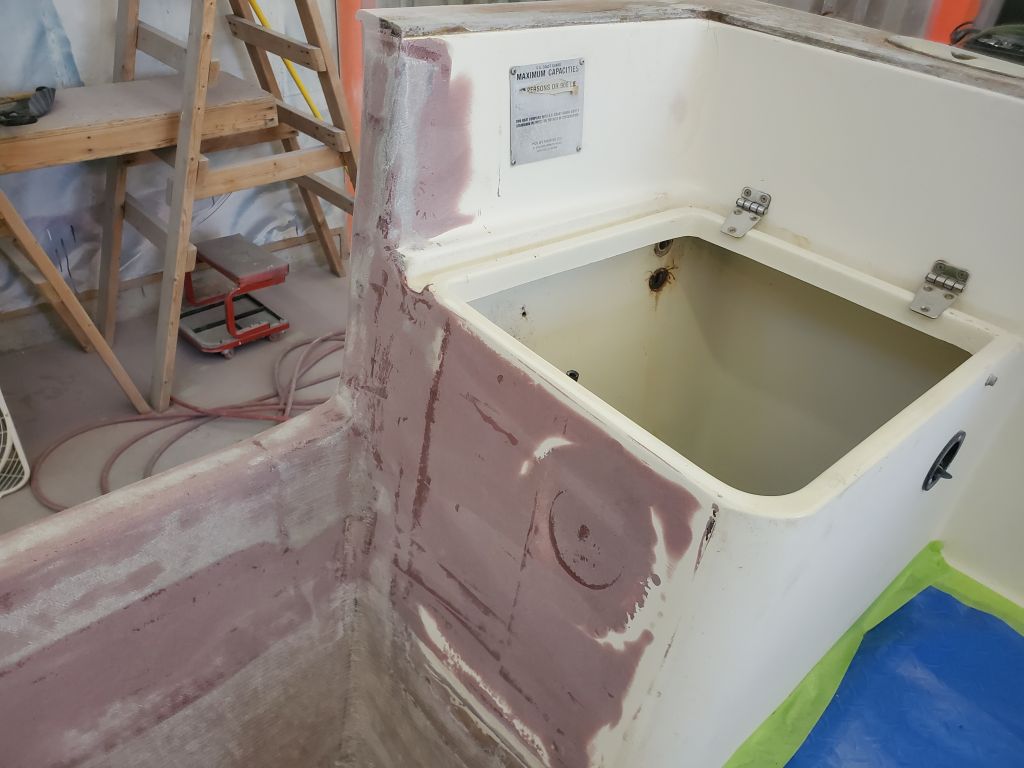
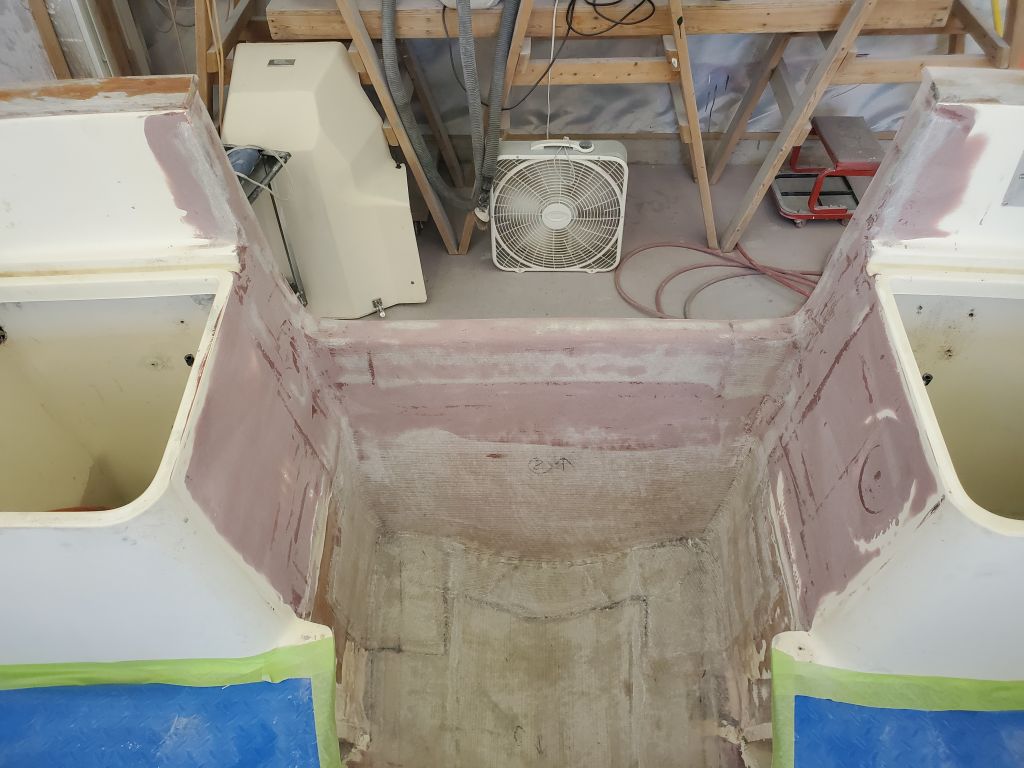
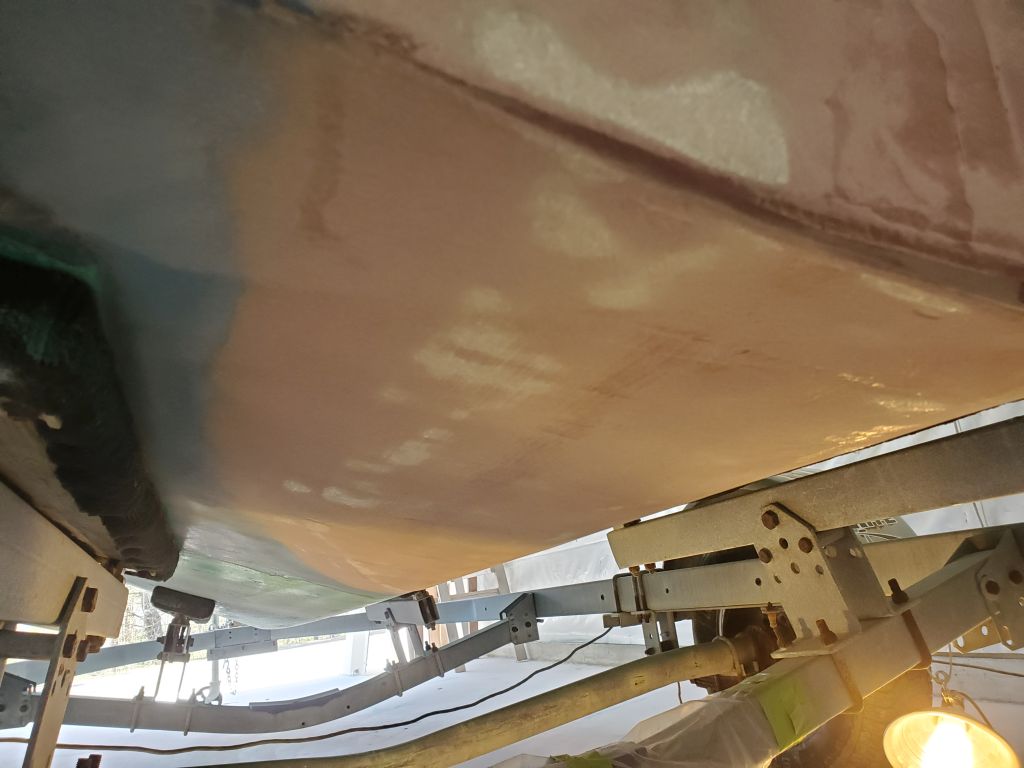
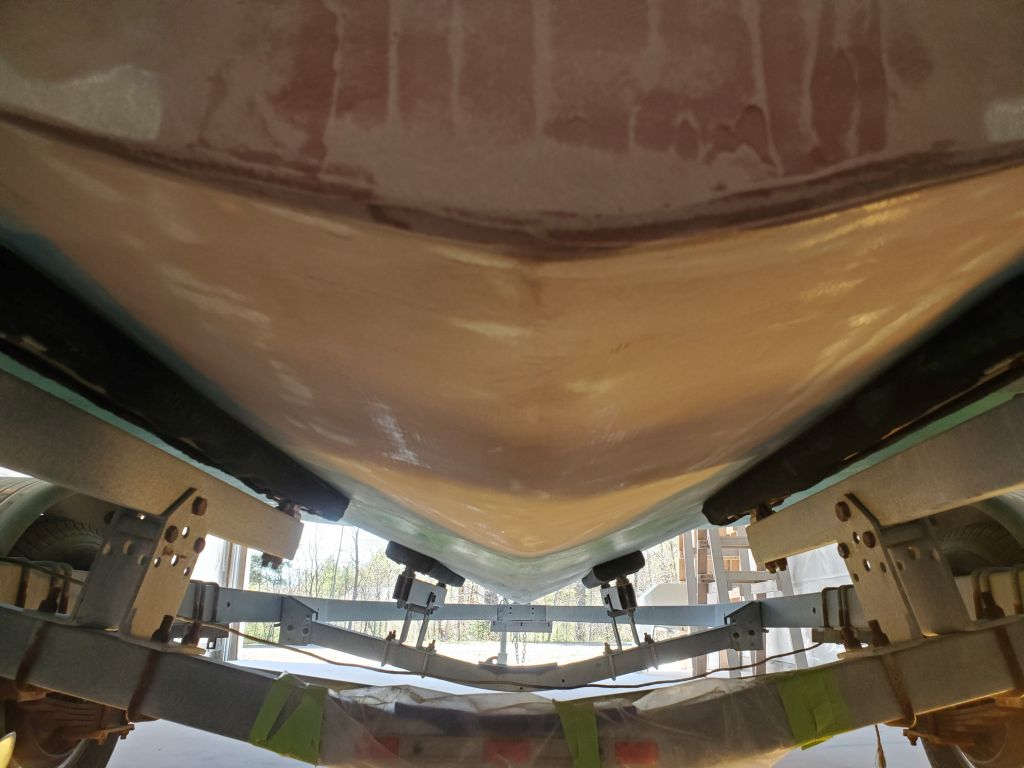
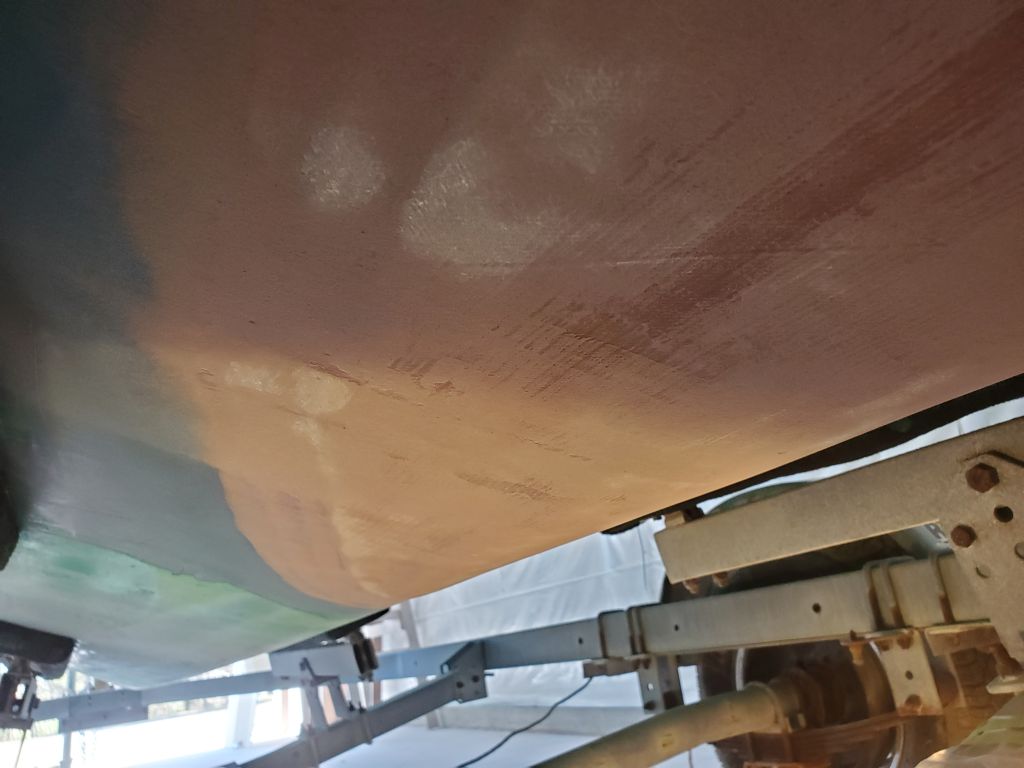
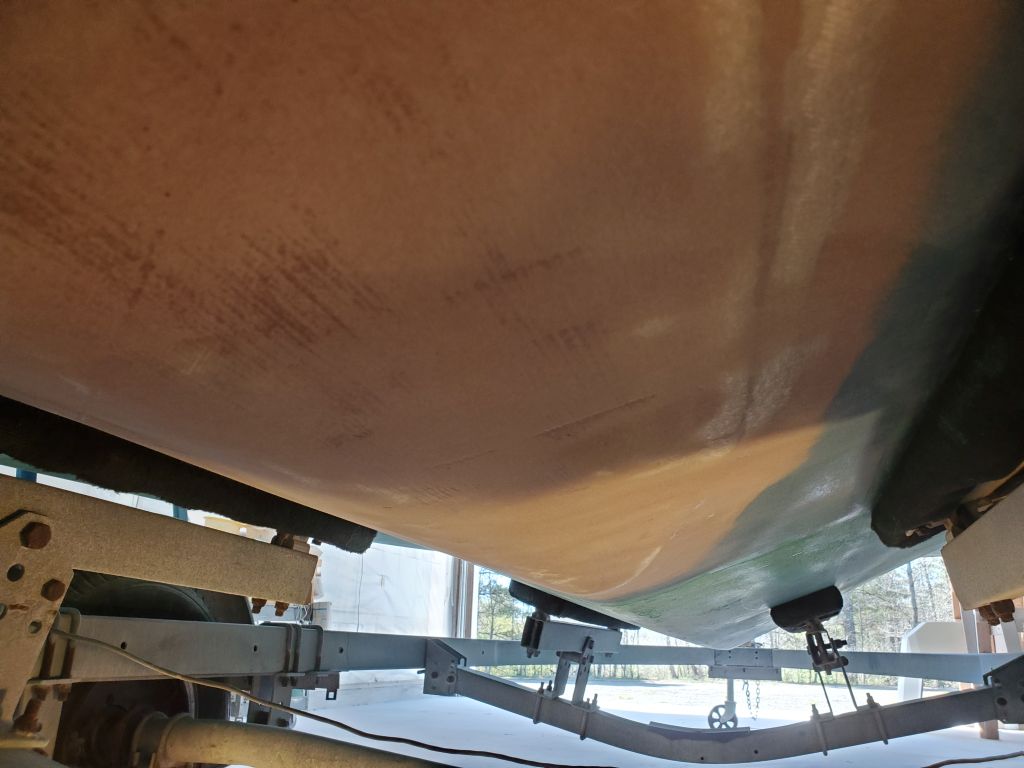
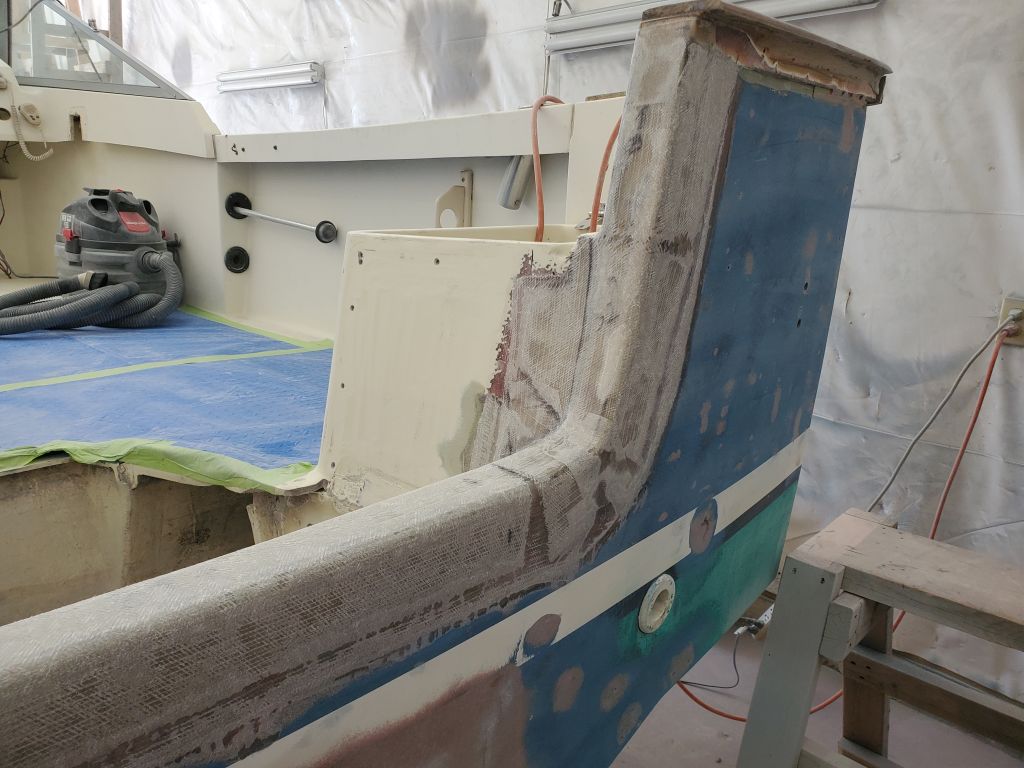
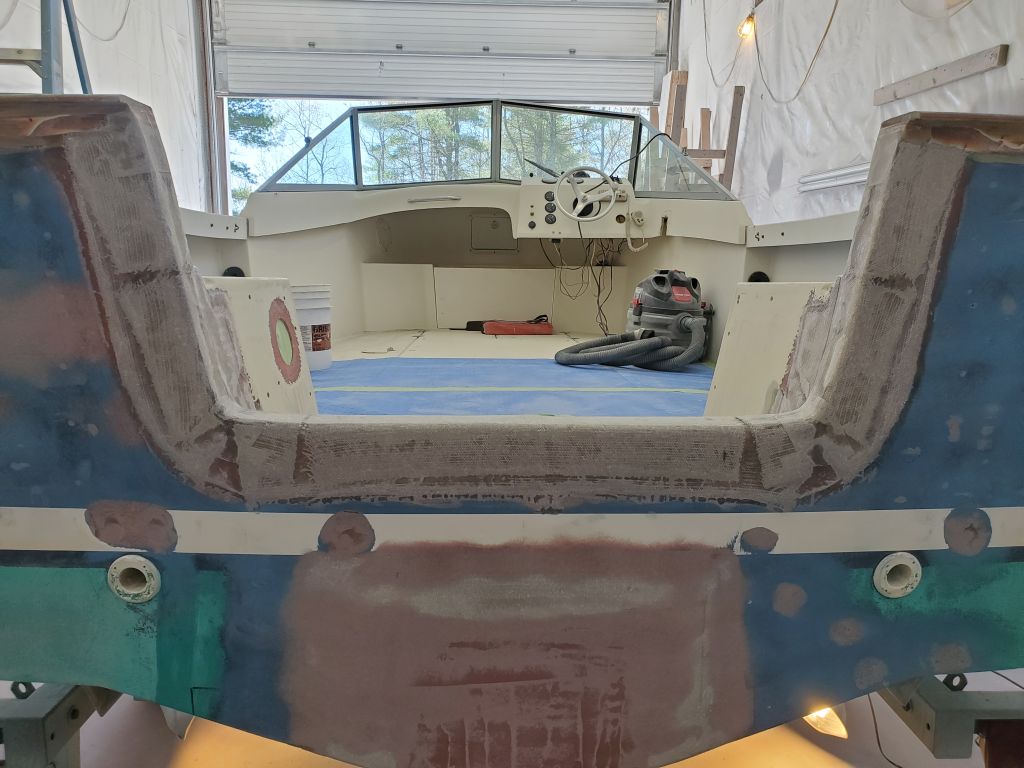
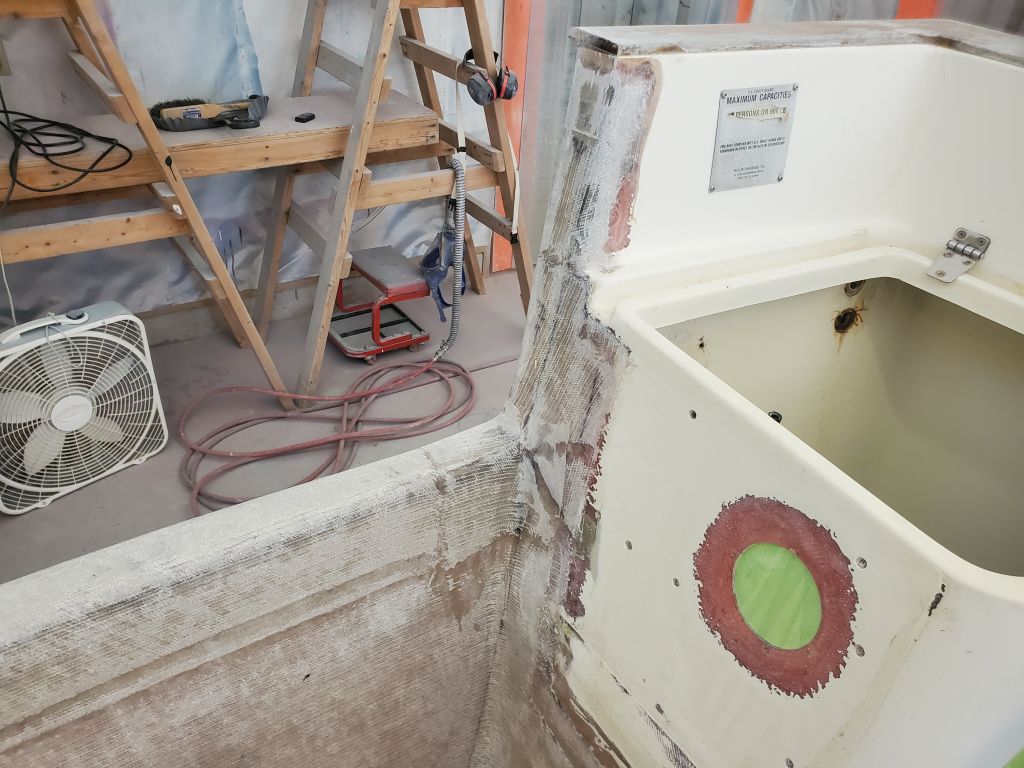
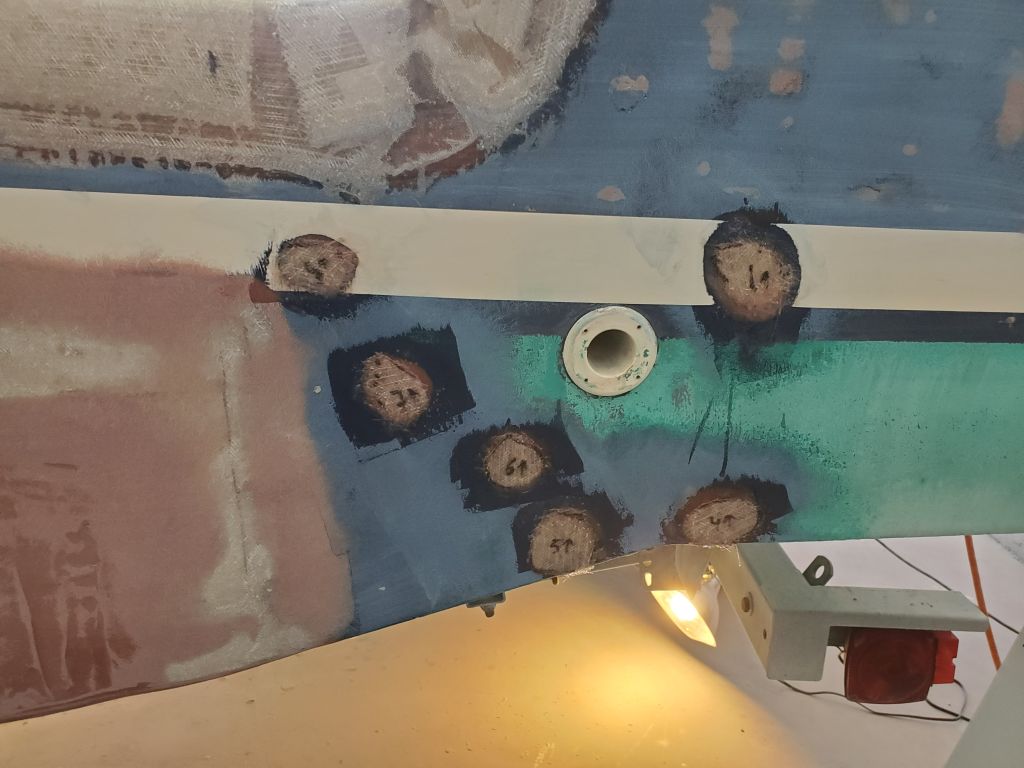
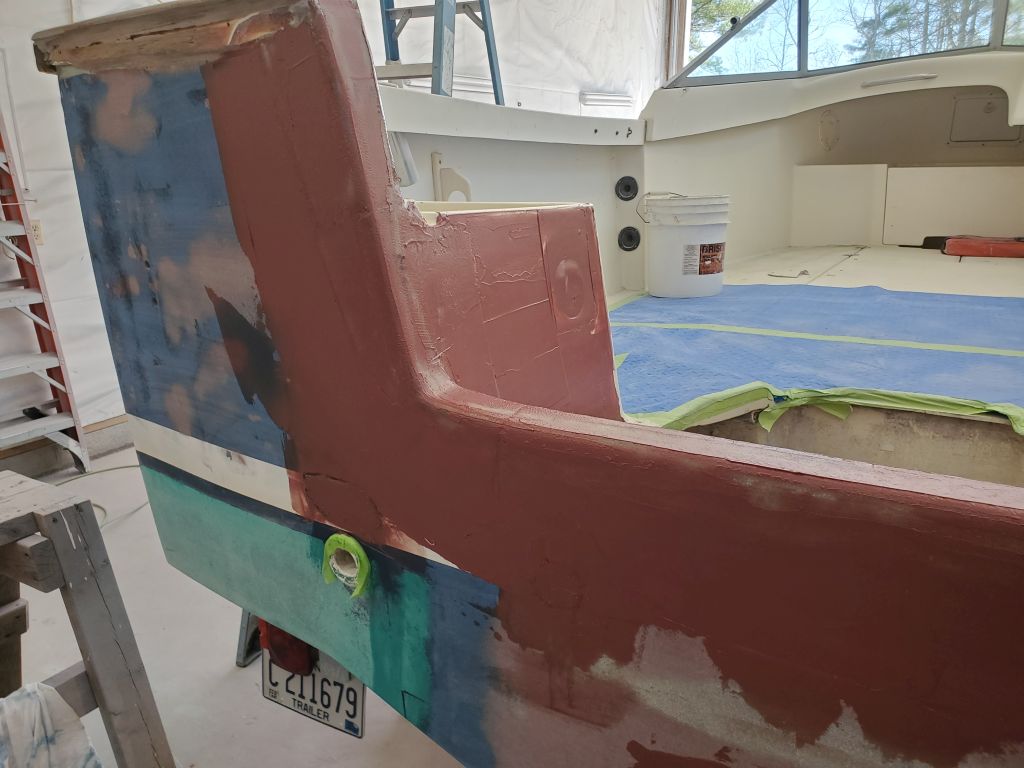
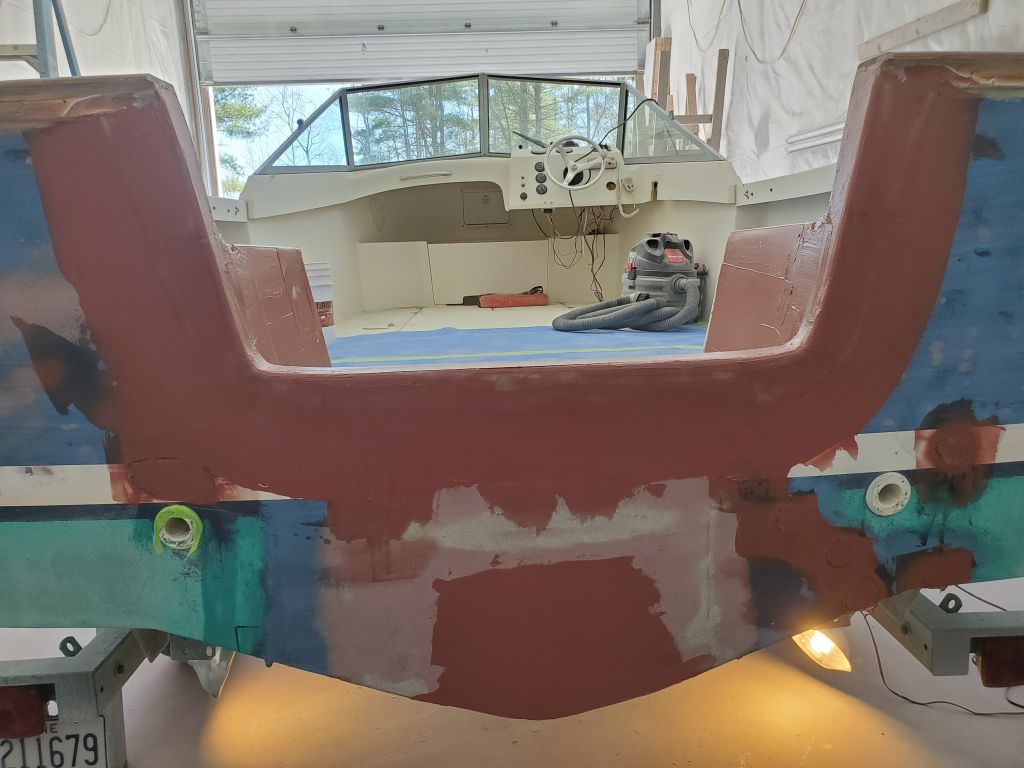
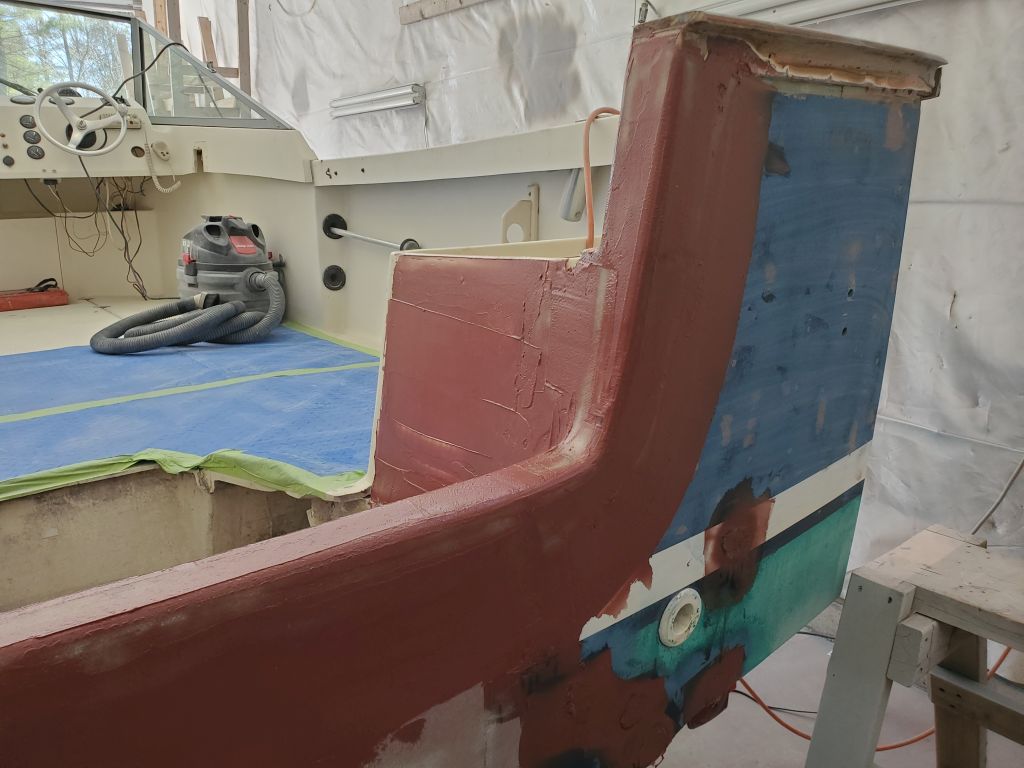
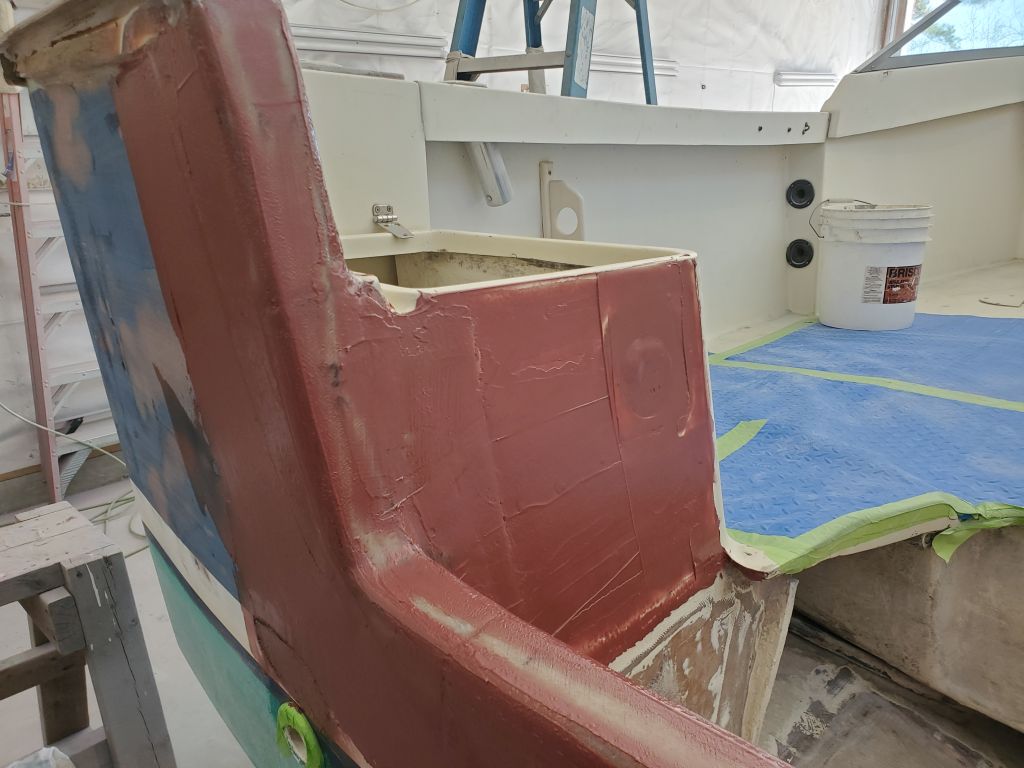
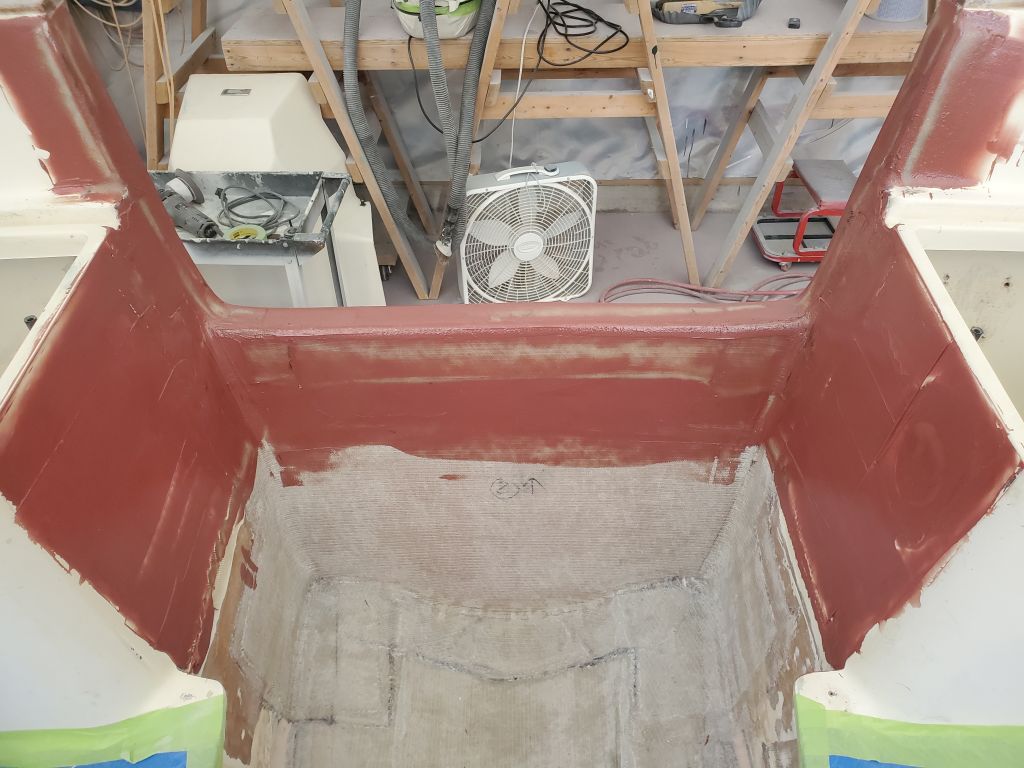
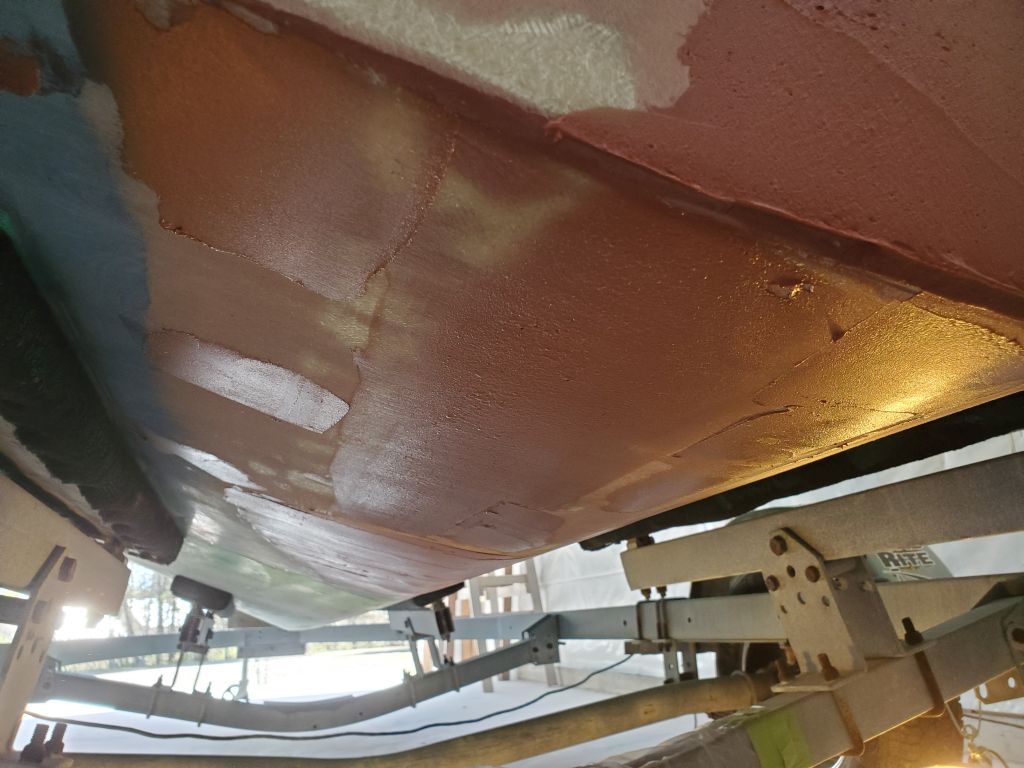
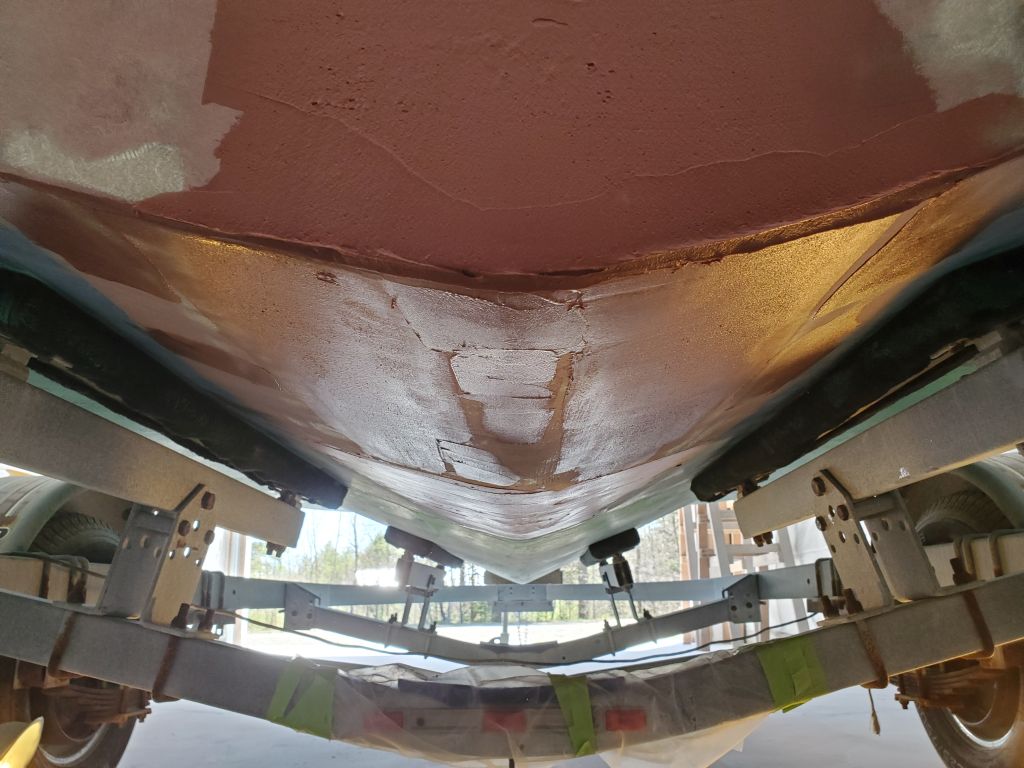
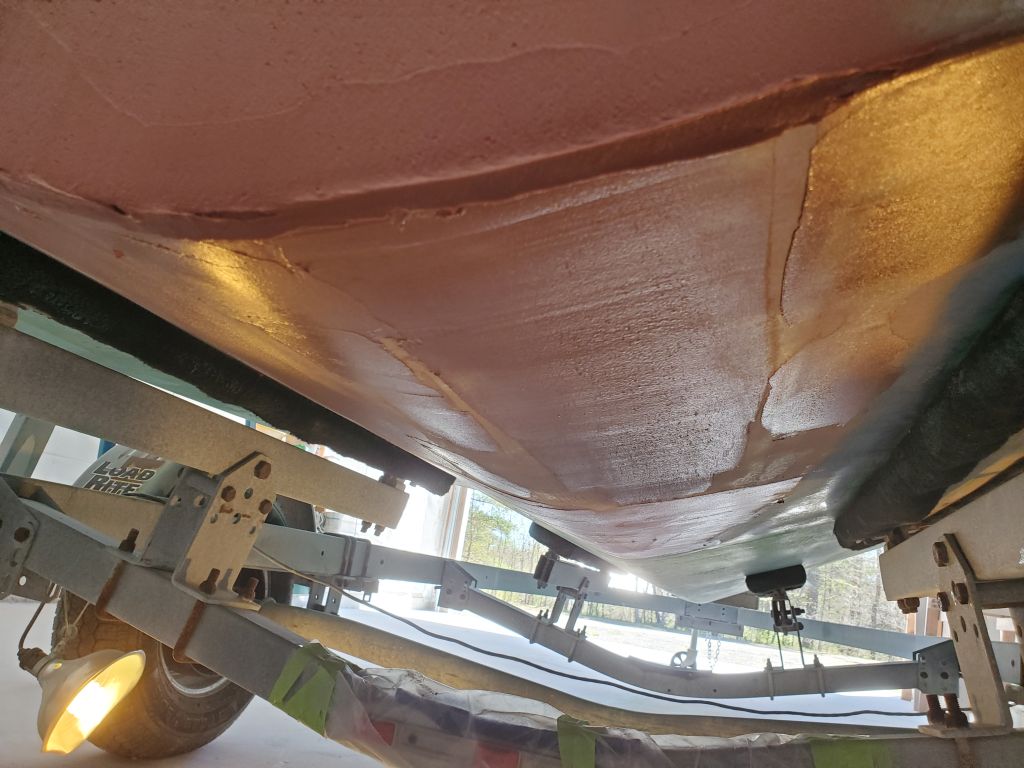
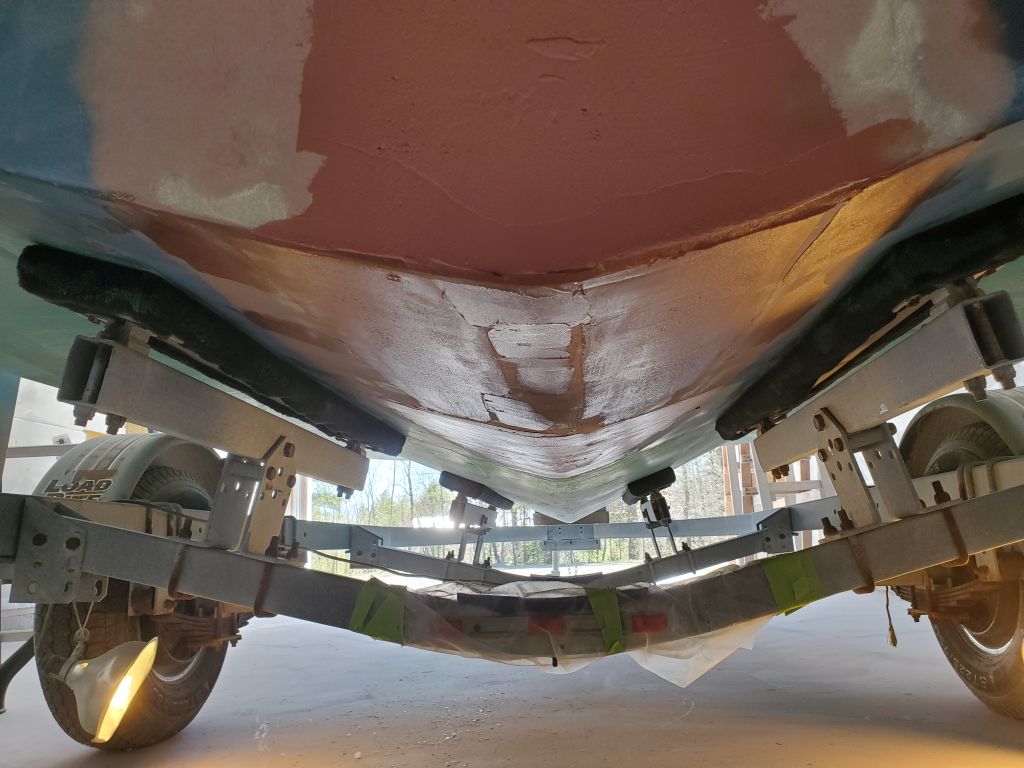
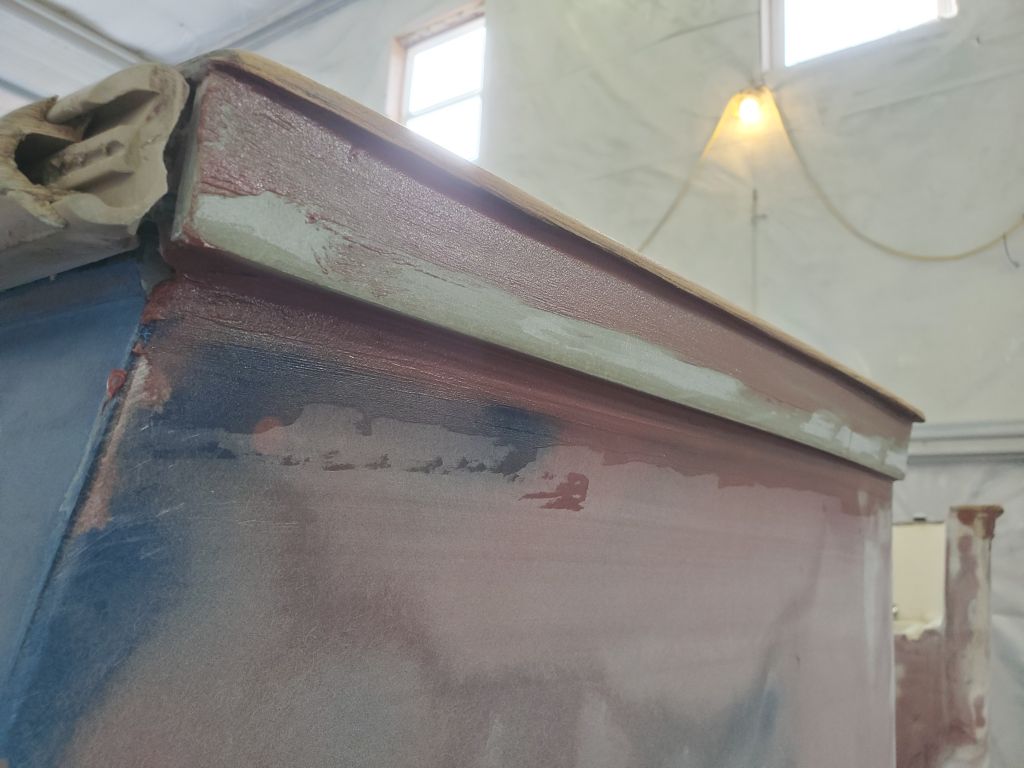
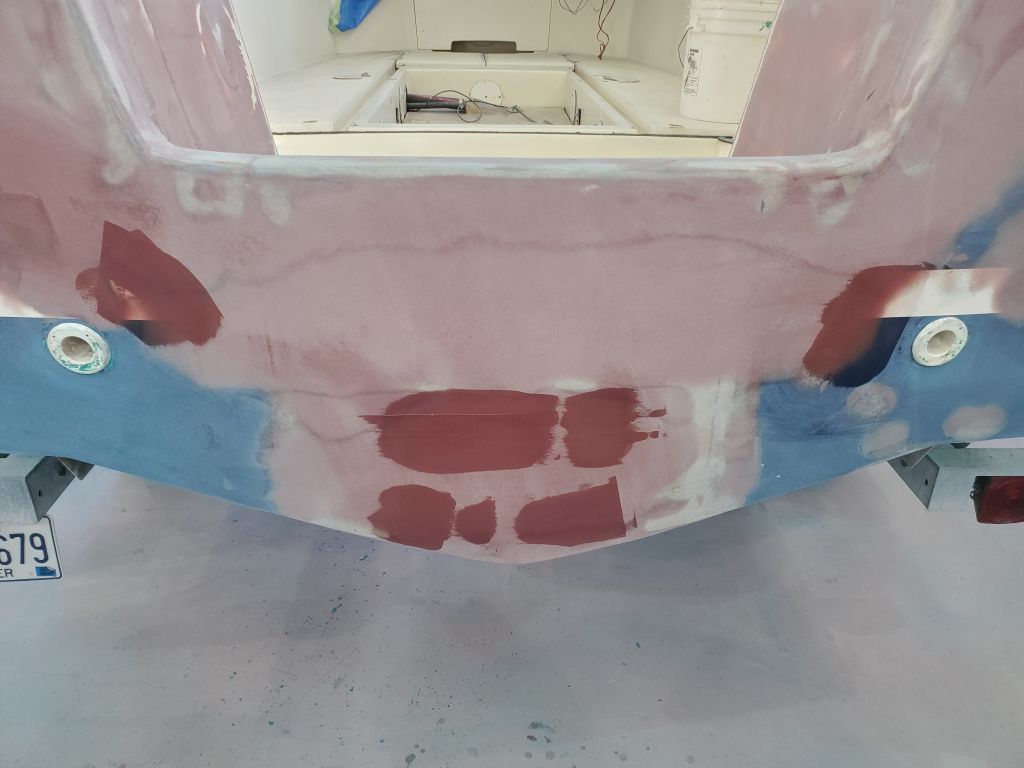
Continuing the work on the combined transom and bottom repair, I started the day with a round of sanding to prepare the fresh fiberglass on the transom portion of the jet tunnel for the next stages of work, as well as to sand and lightly shape the forward part of the bottom vee, forward of the jet tunnel where the boat had originally had the flat area to transition to the tunnel.

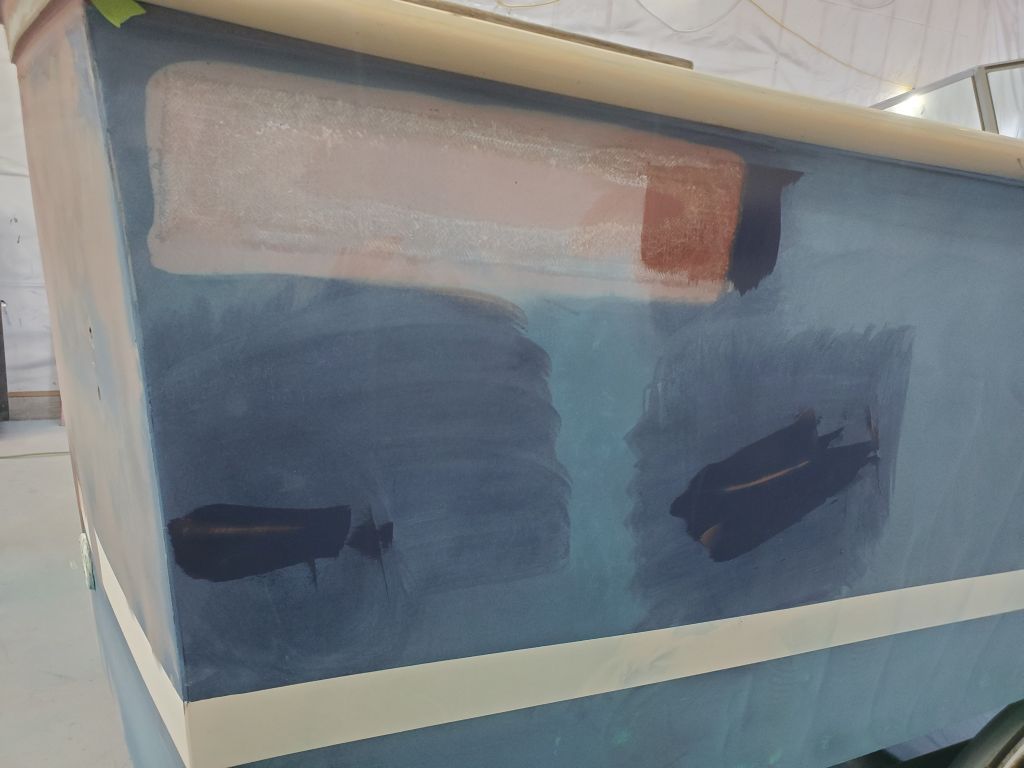
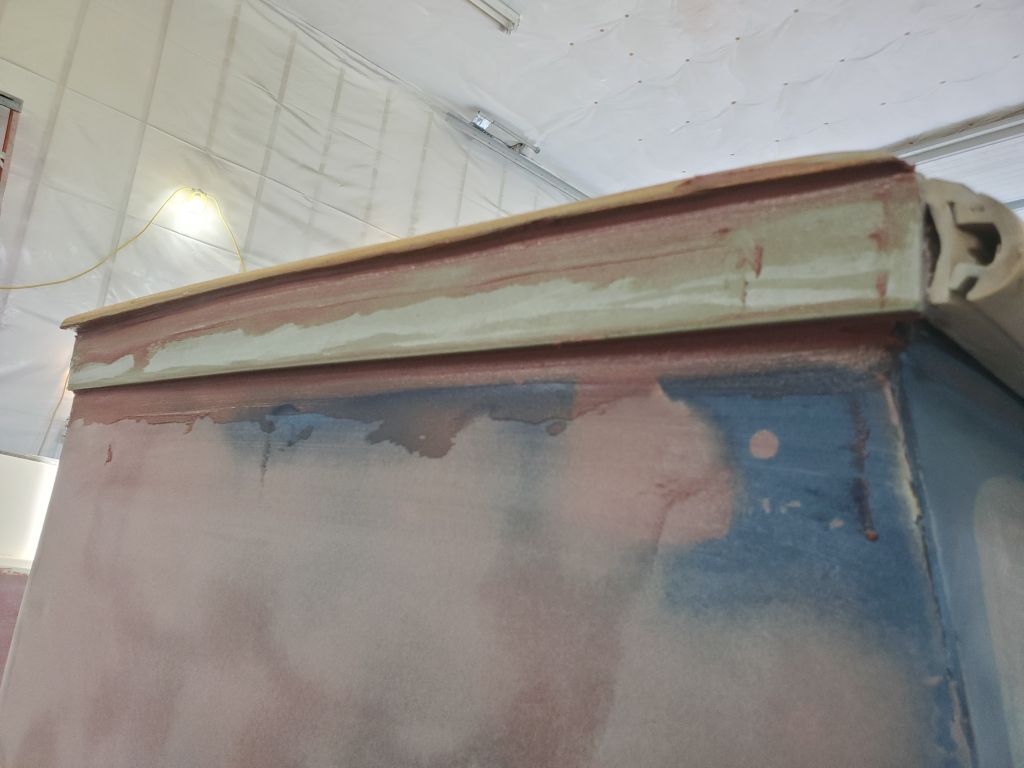
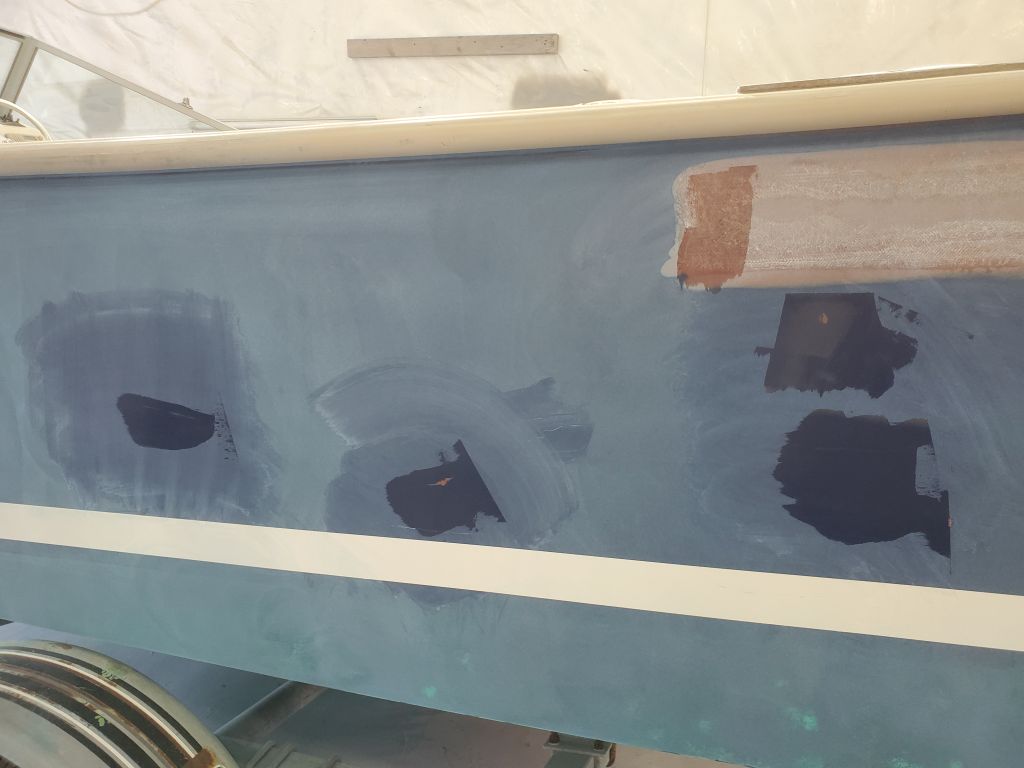
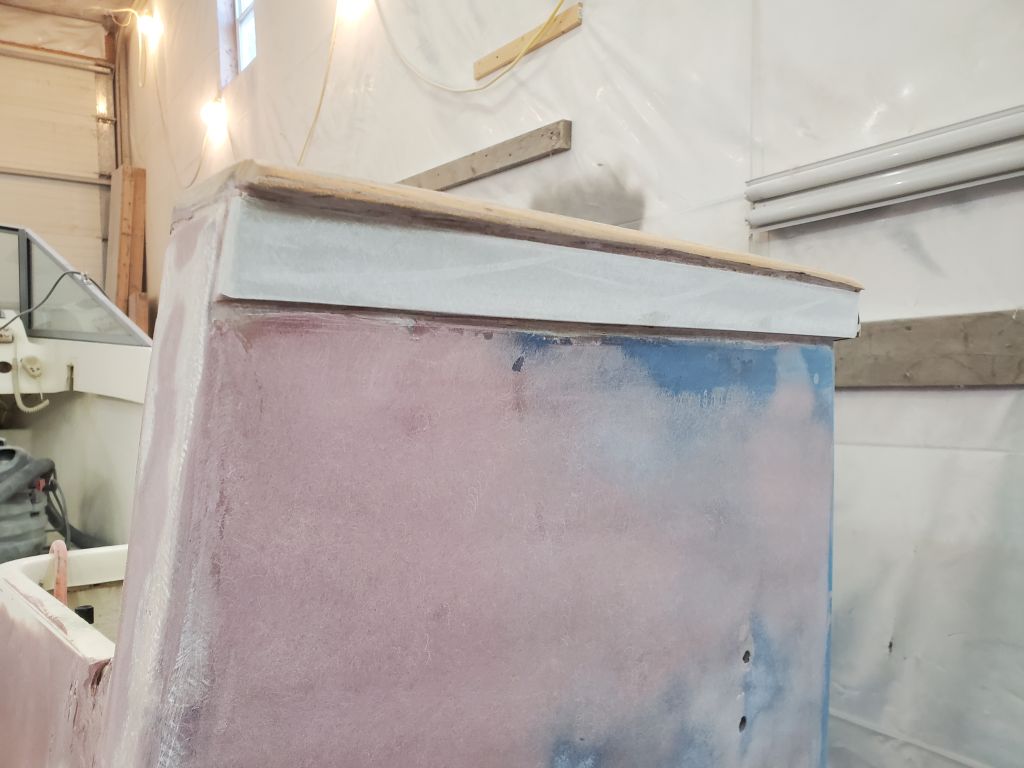
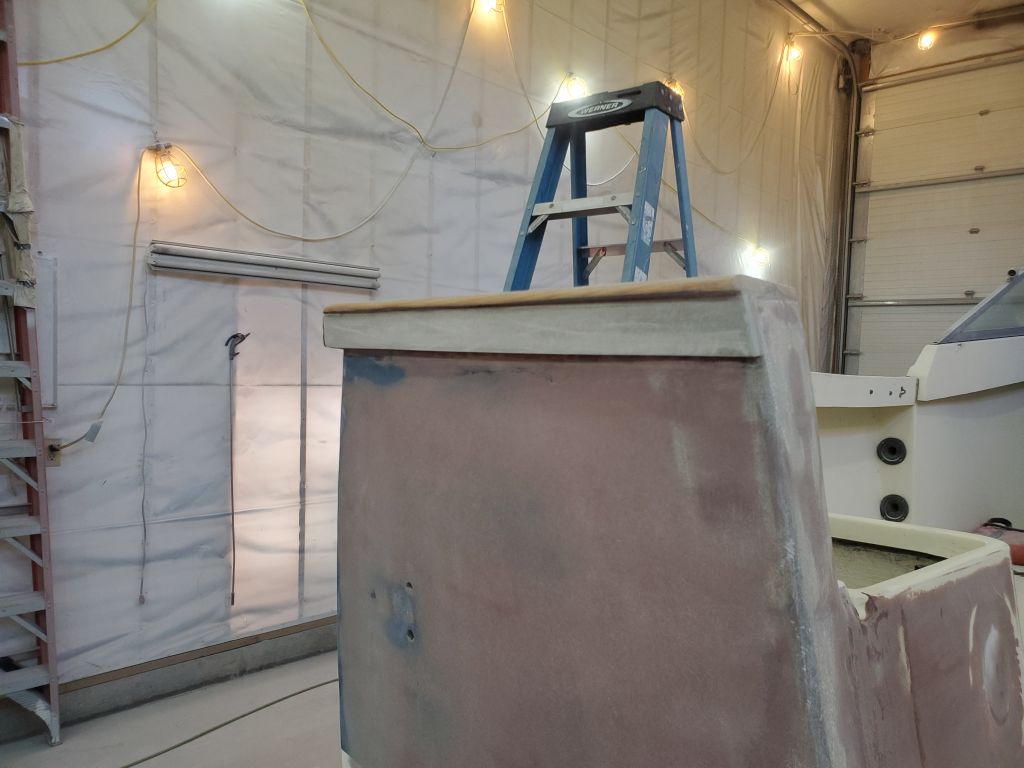
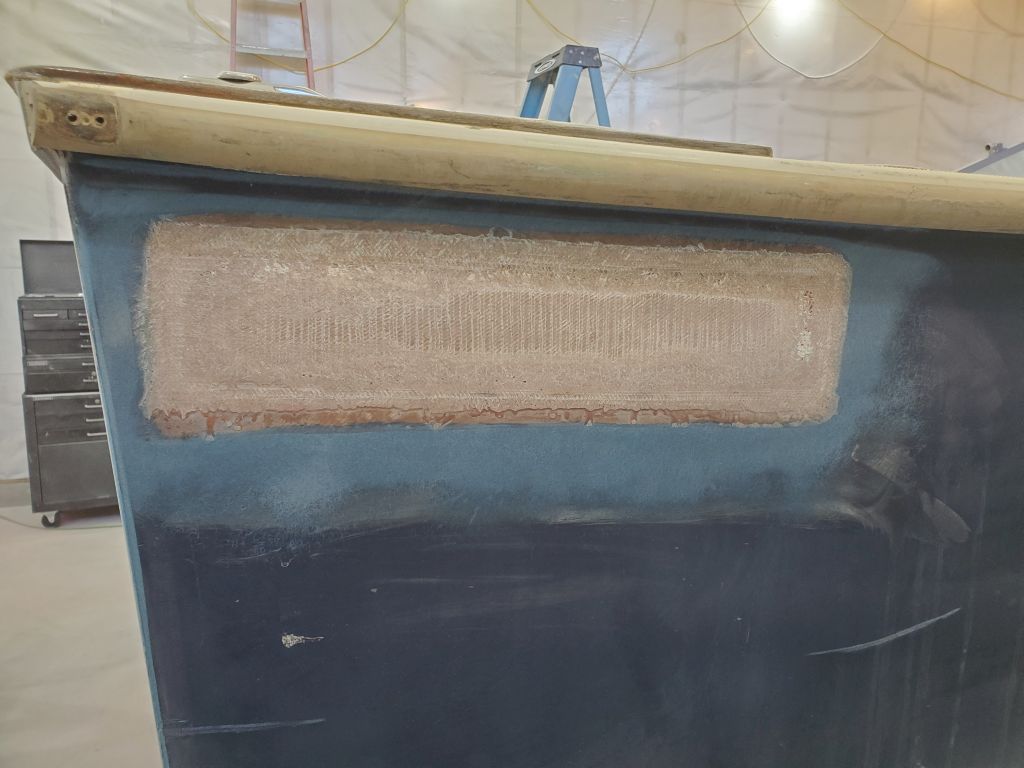
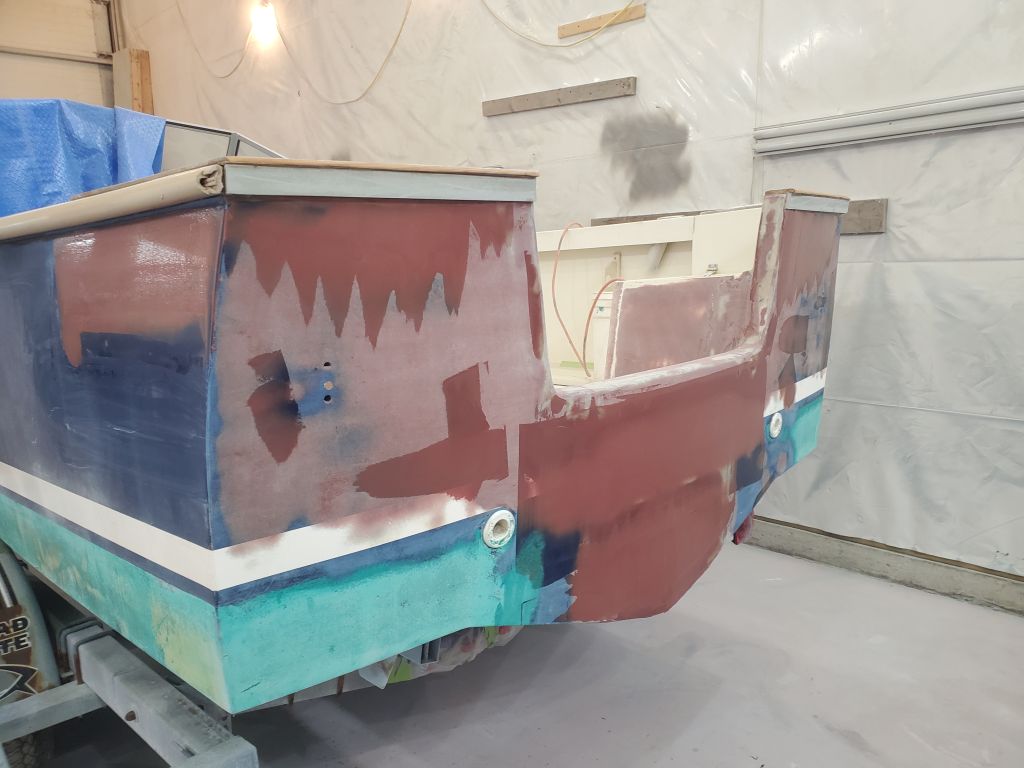
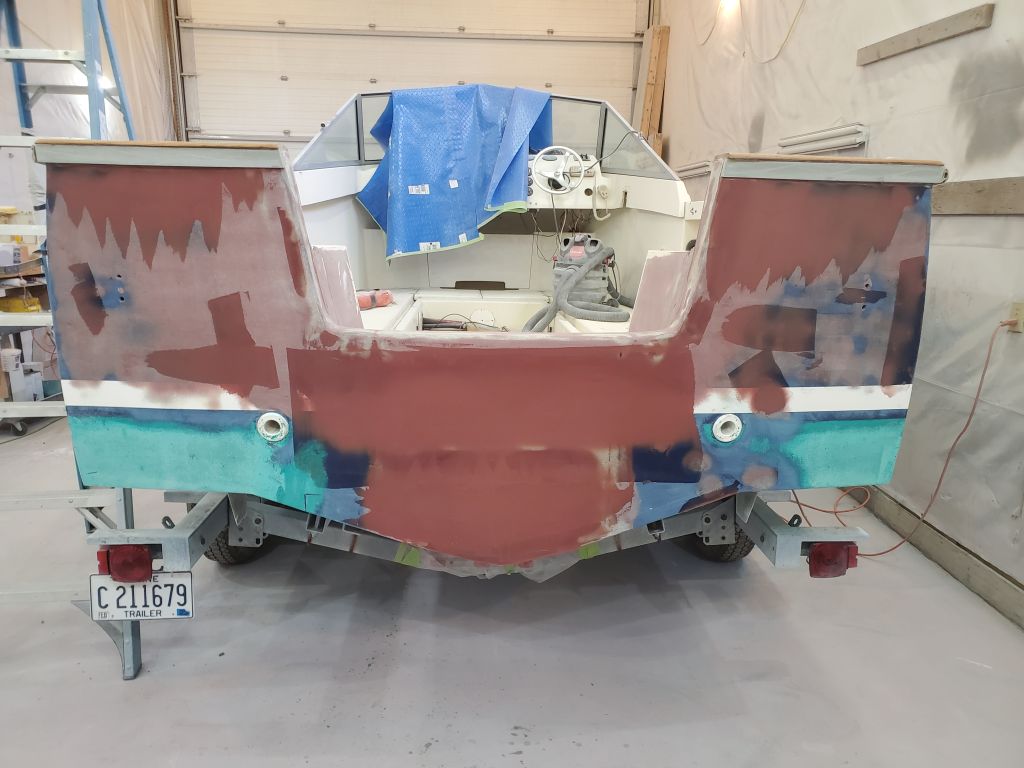
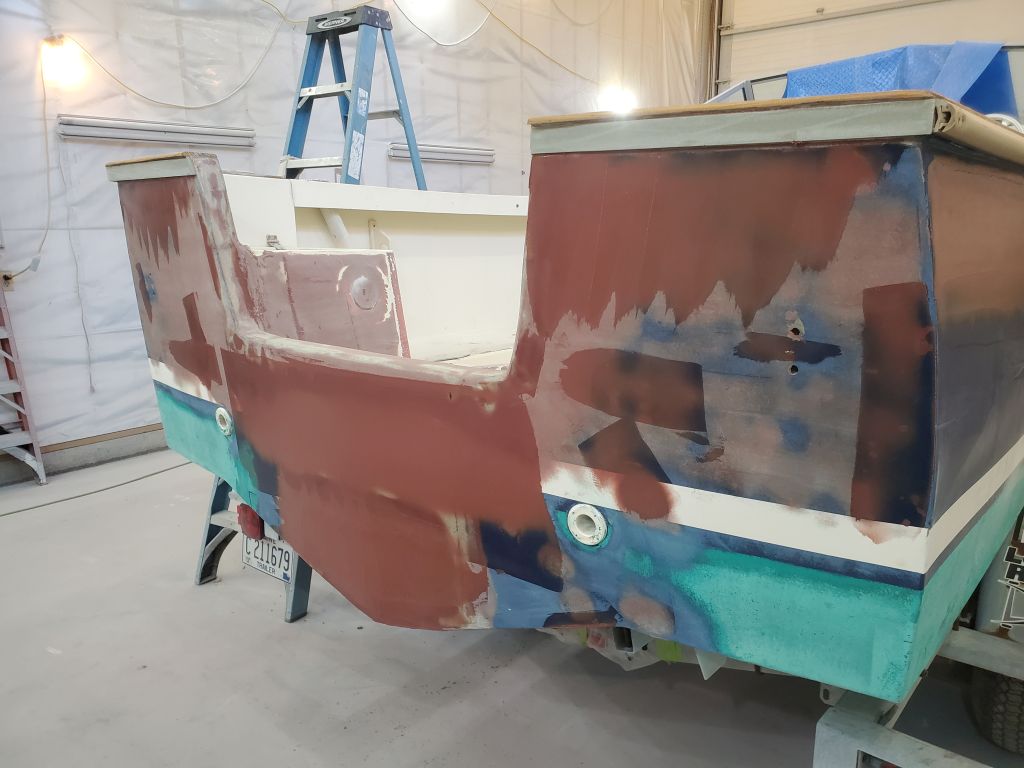
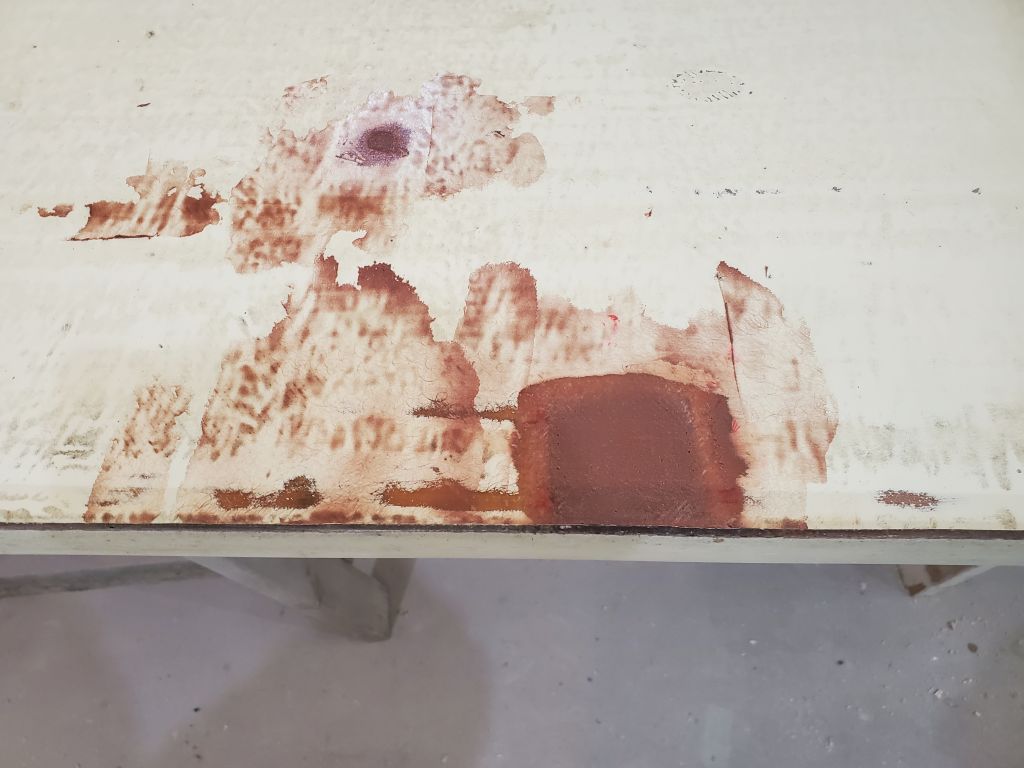
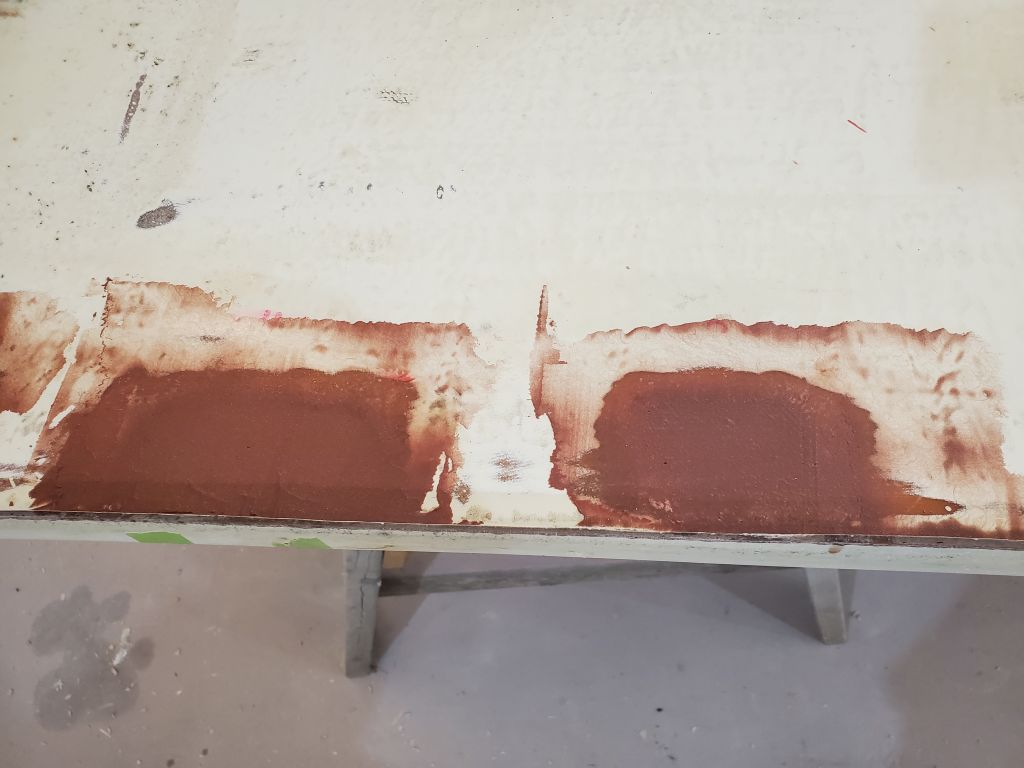
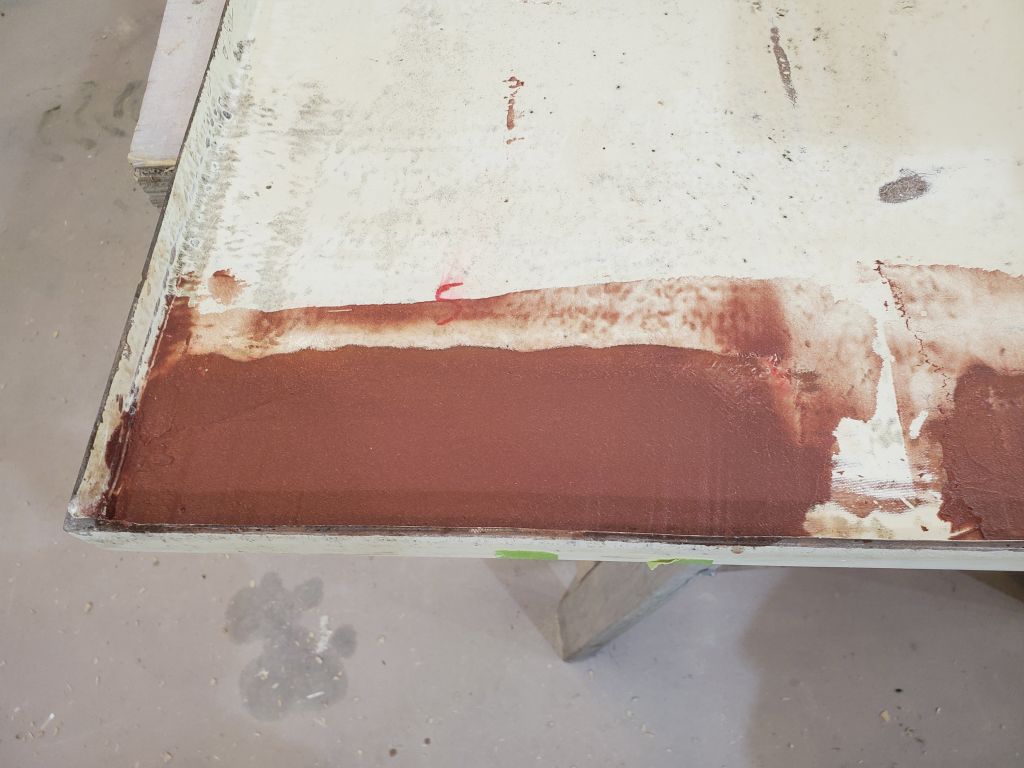
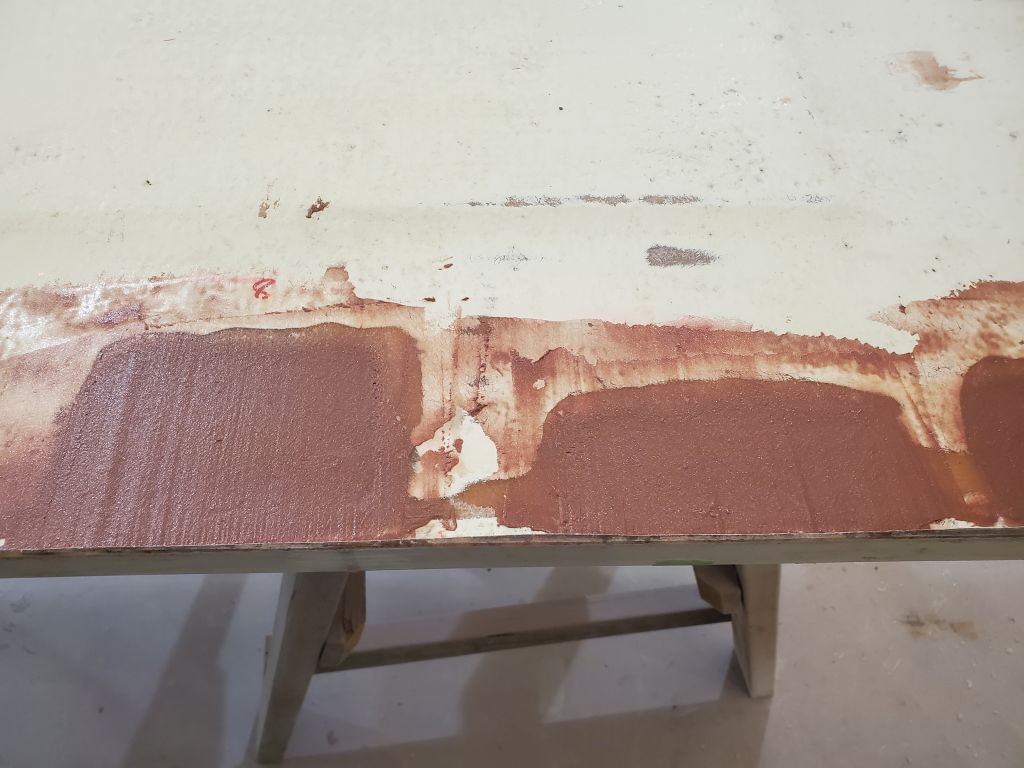
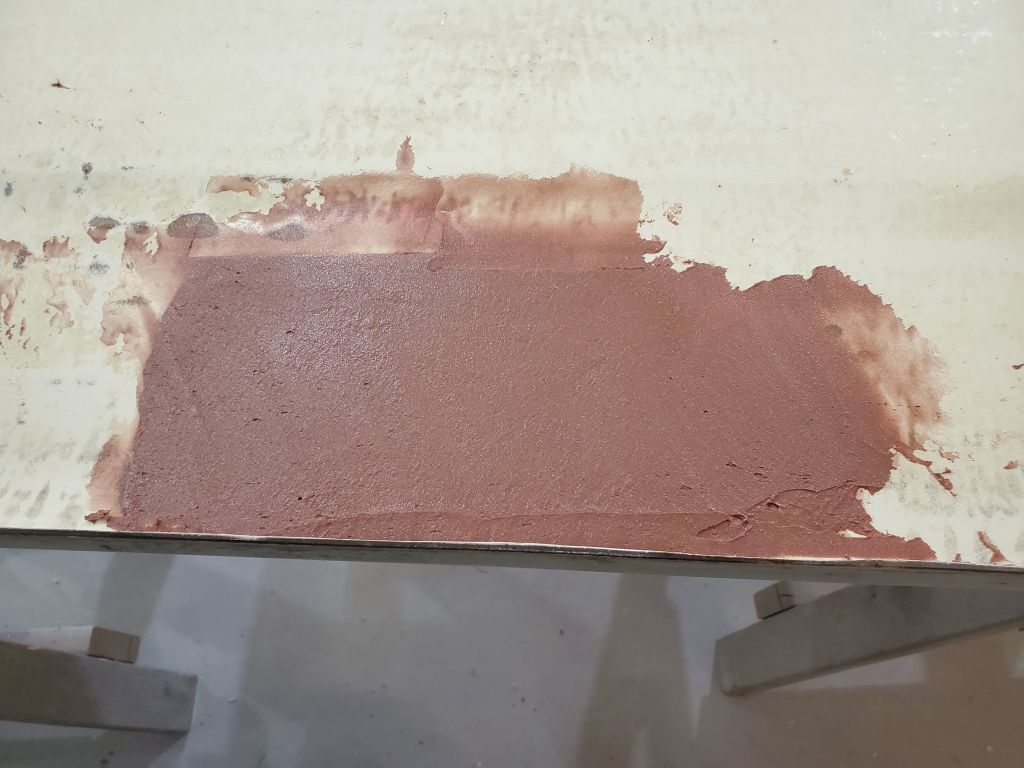
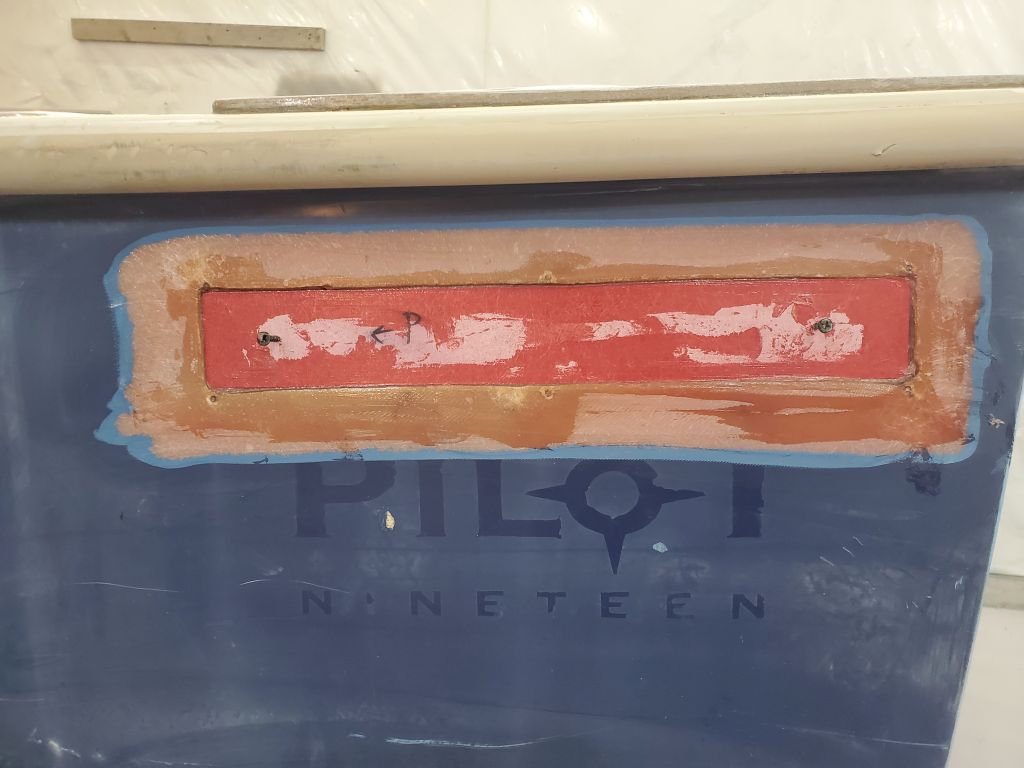
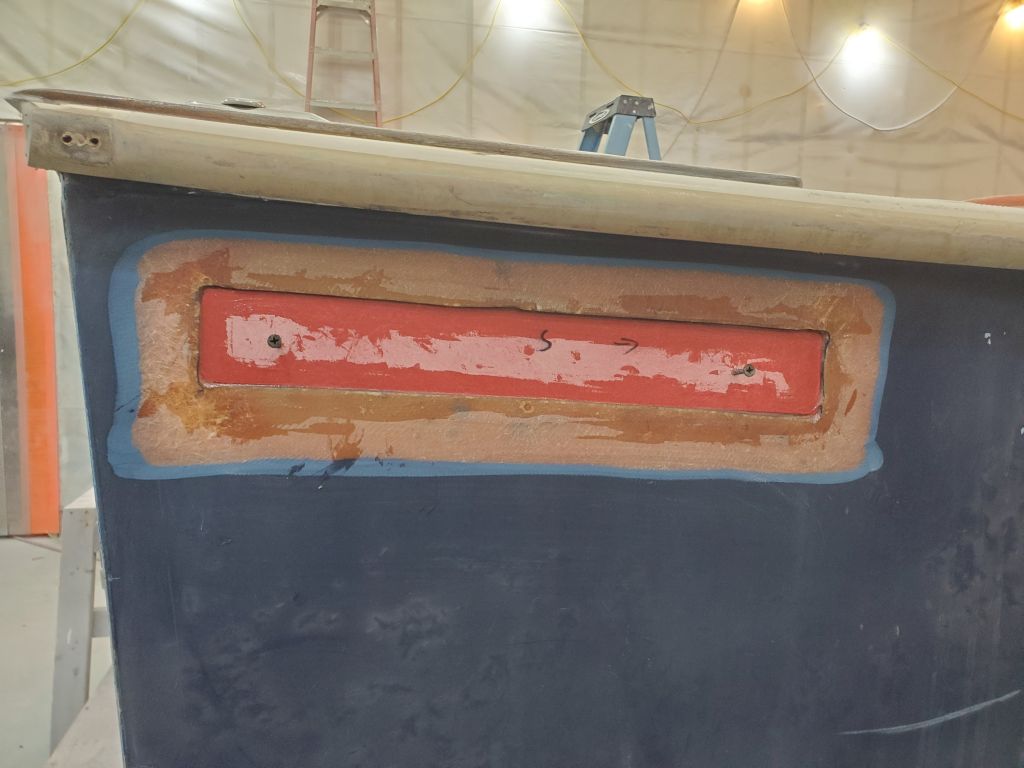
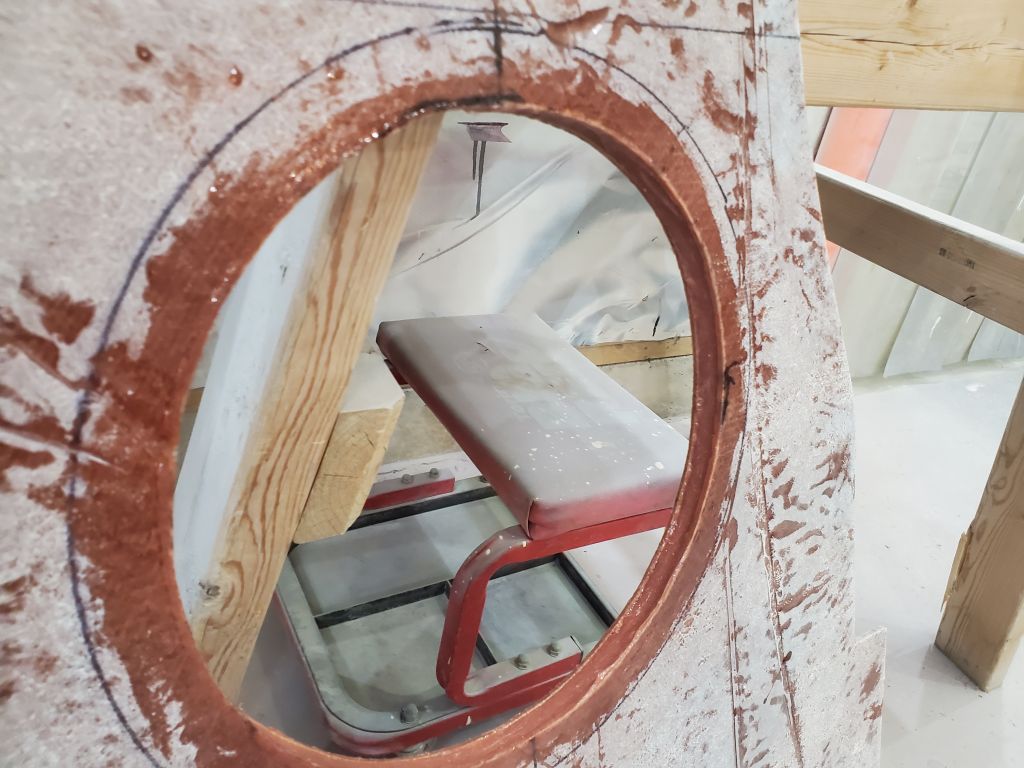
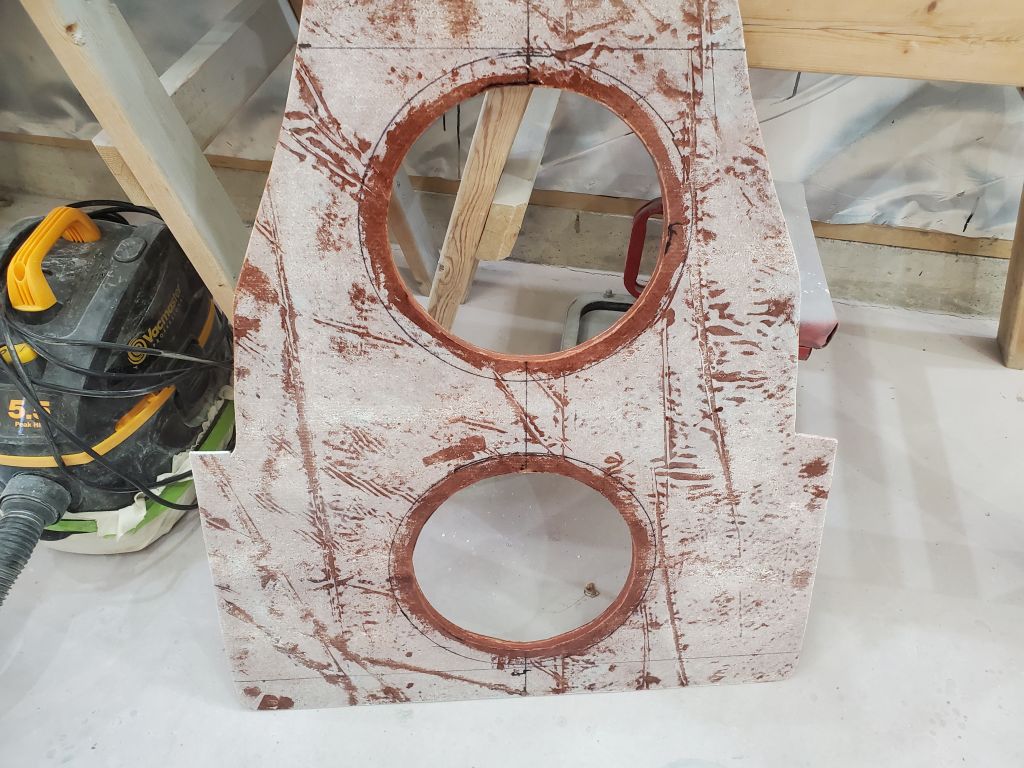
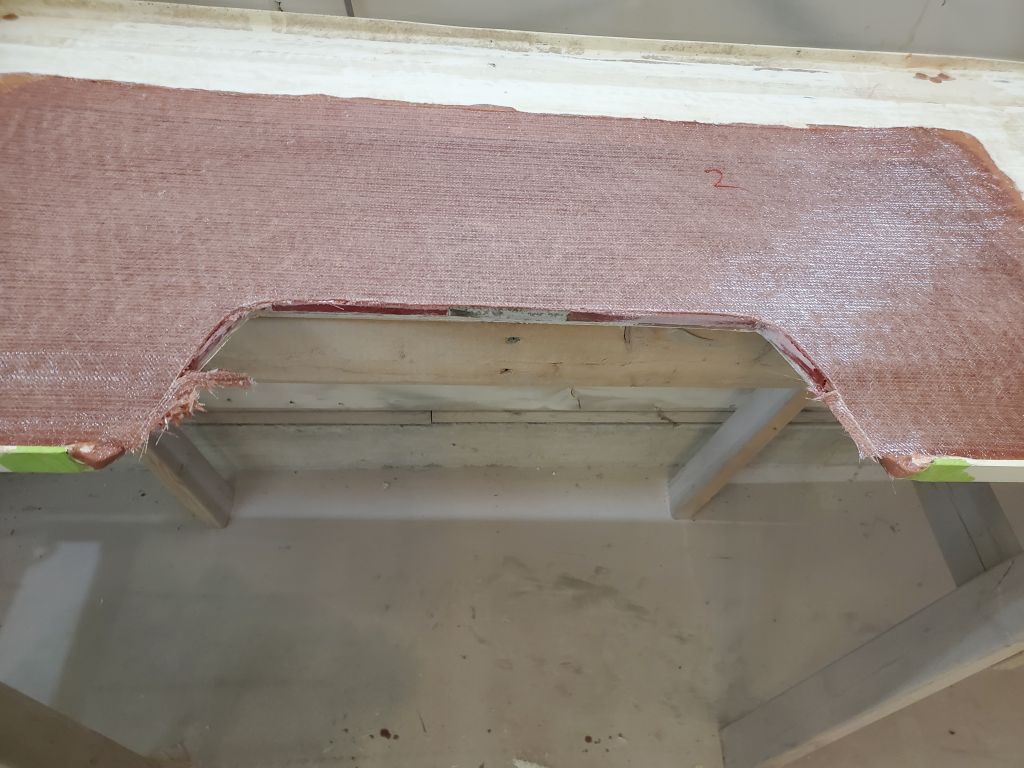
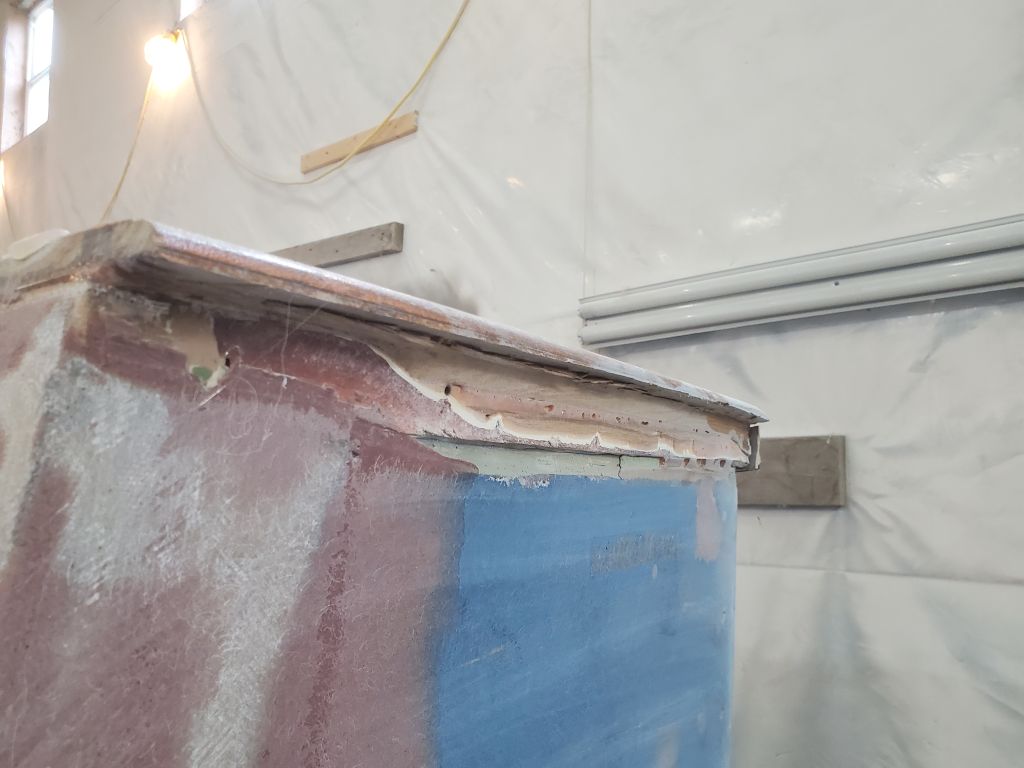
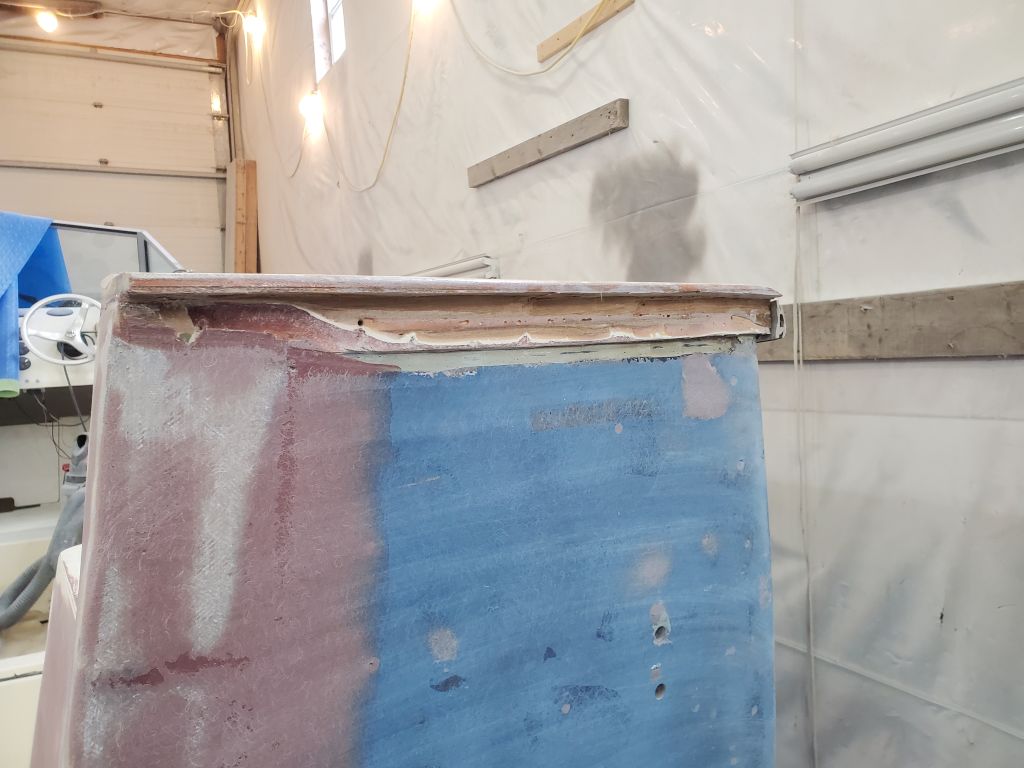
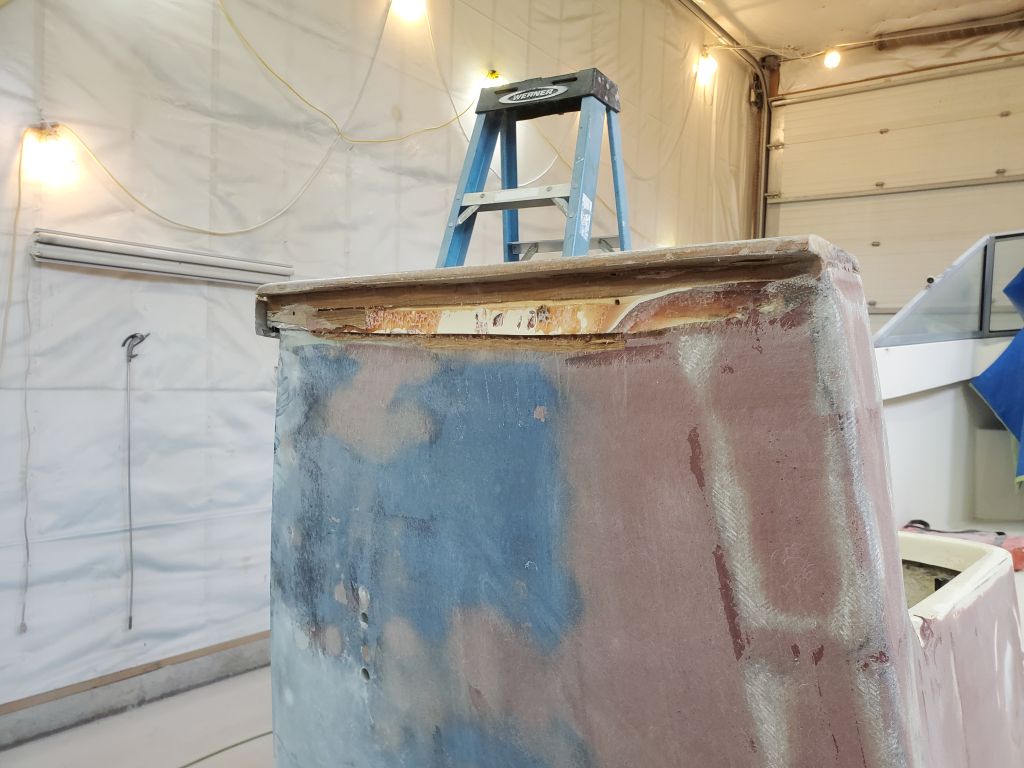
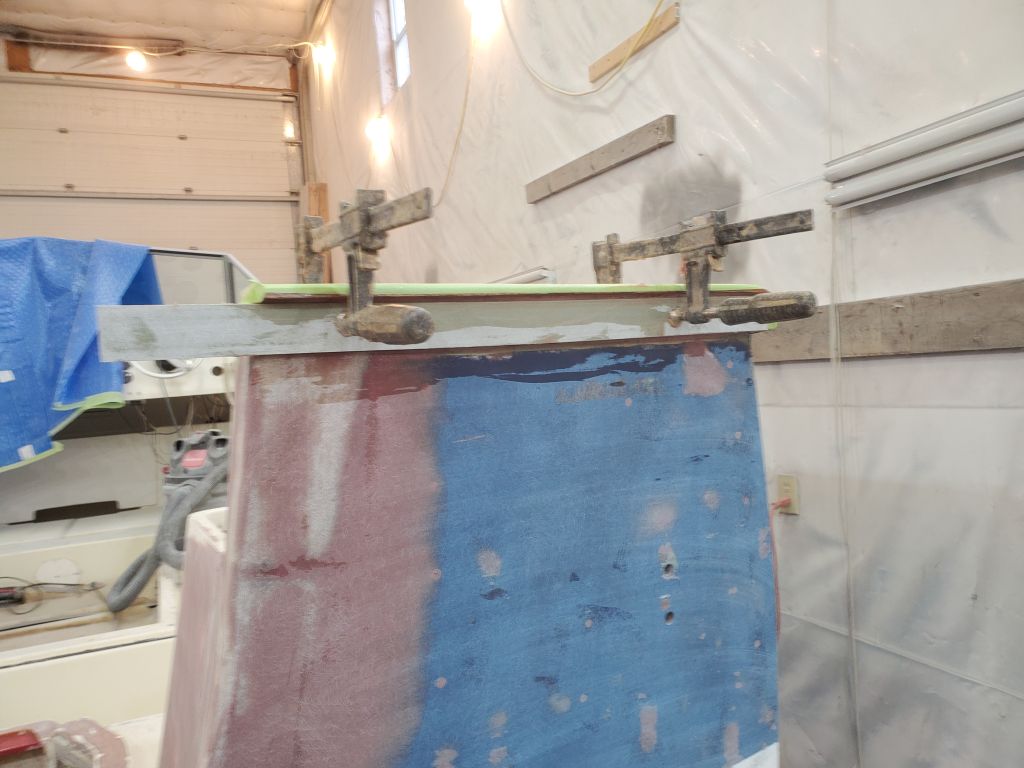
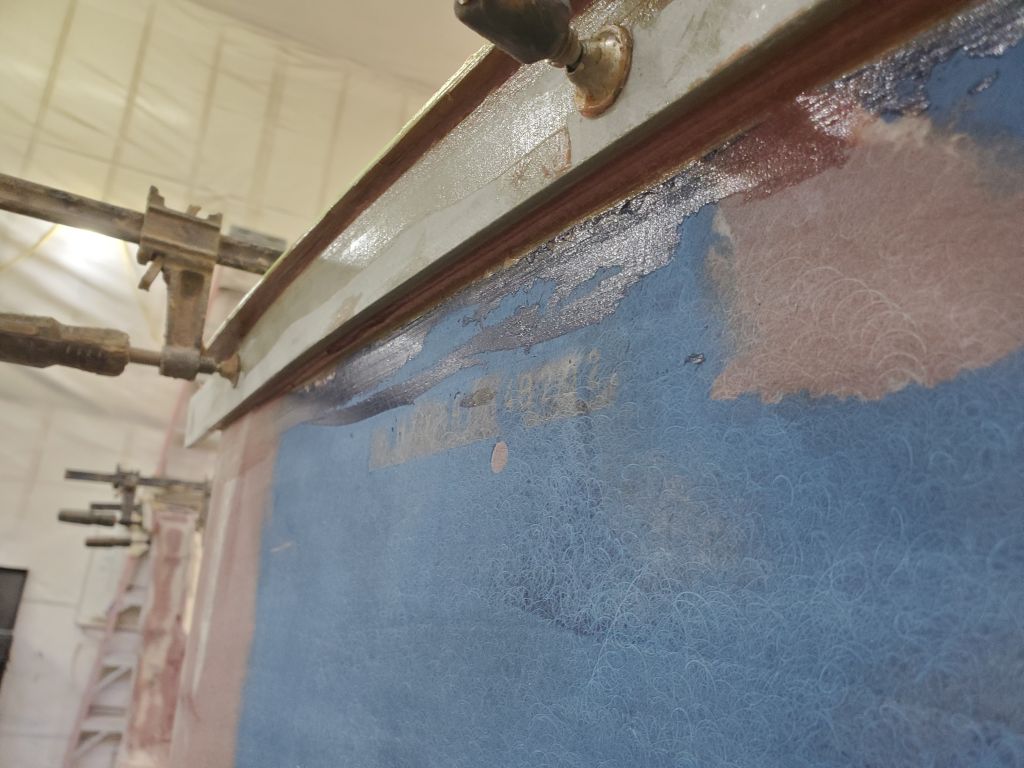
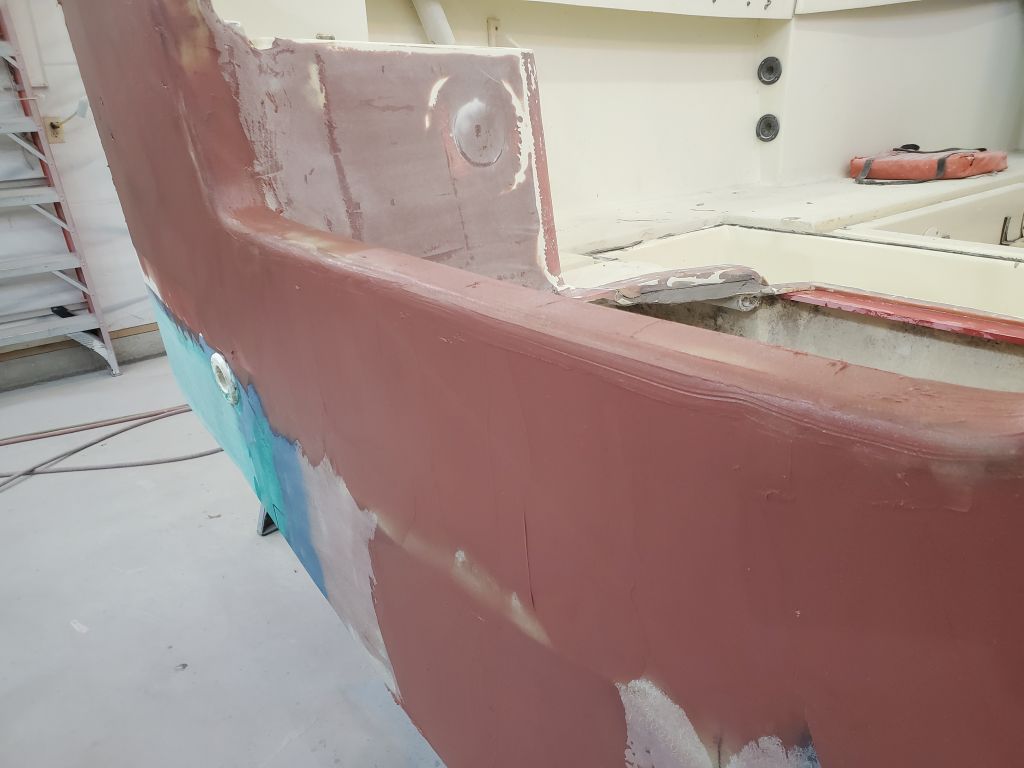
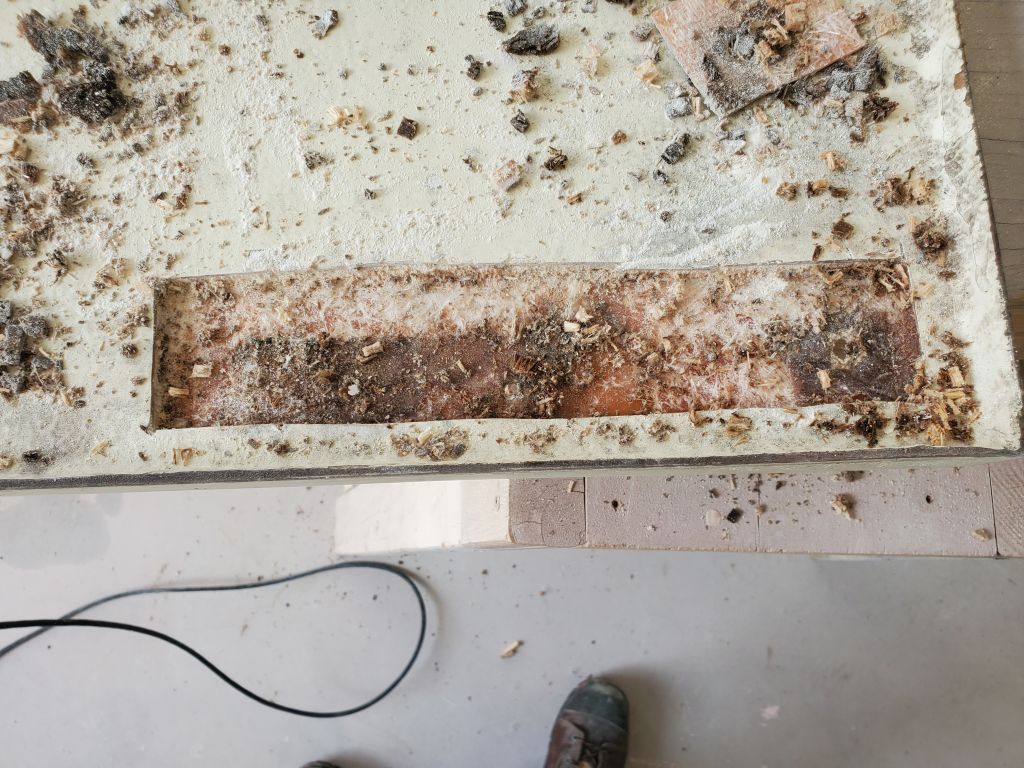
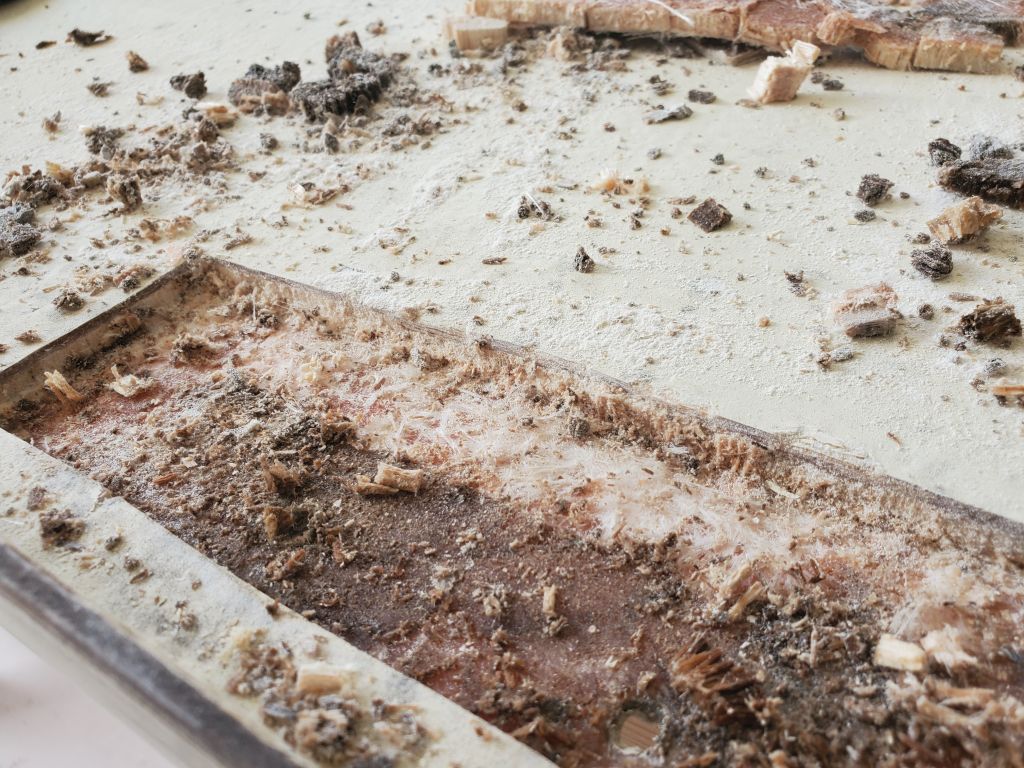
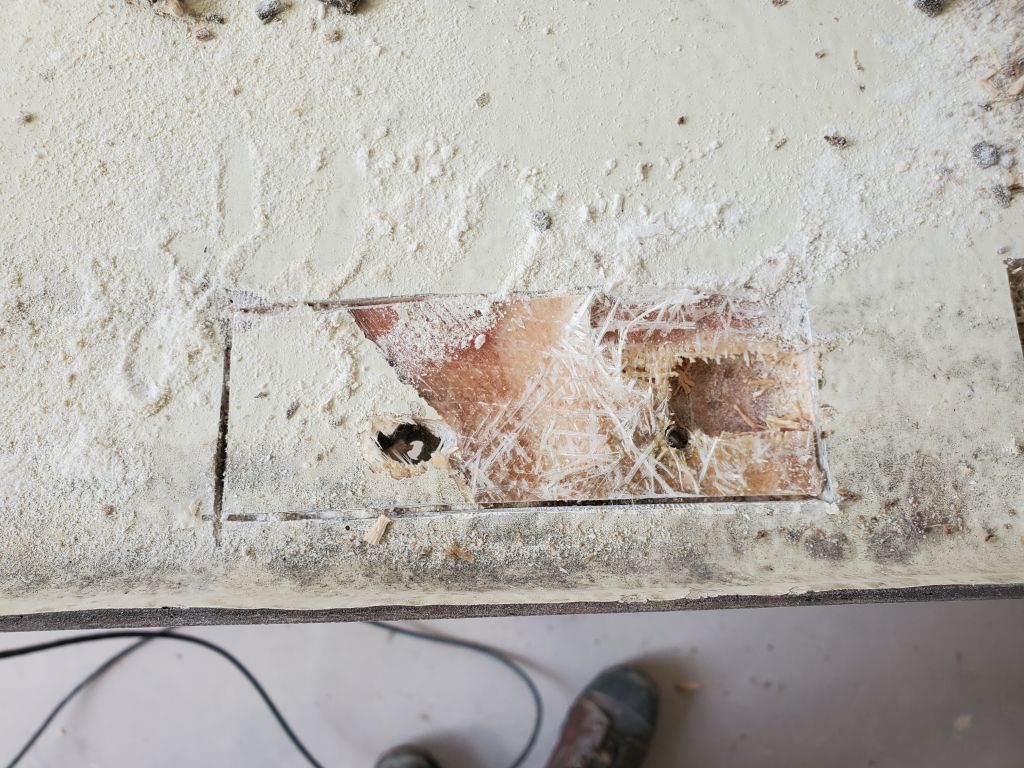
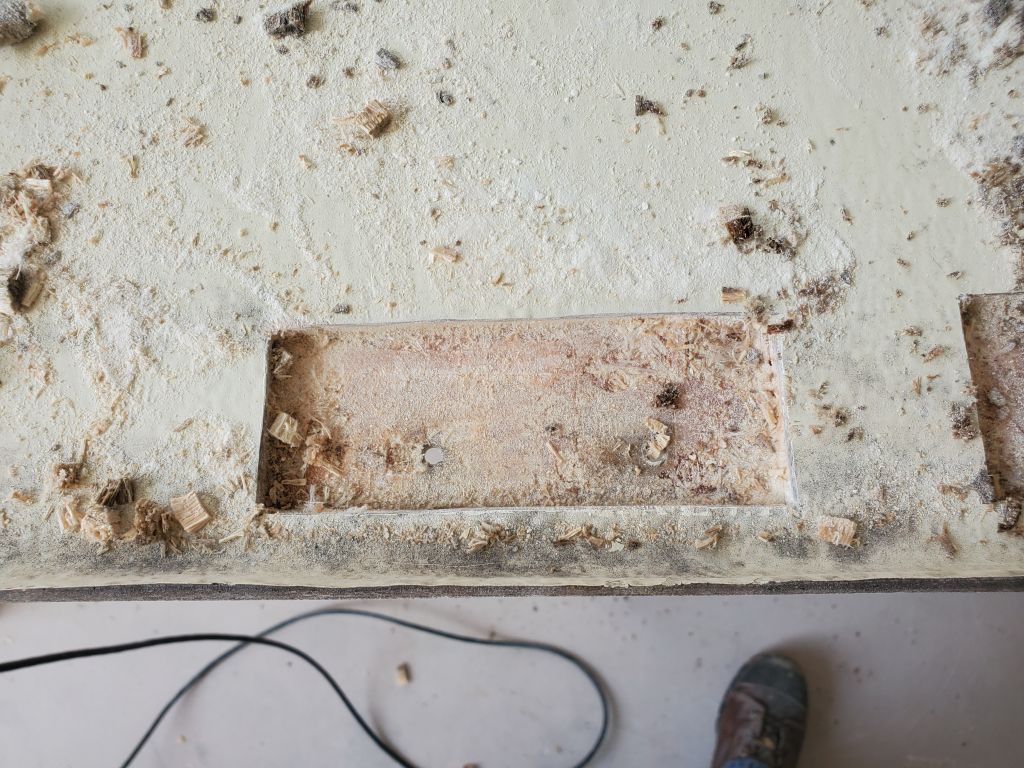
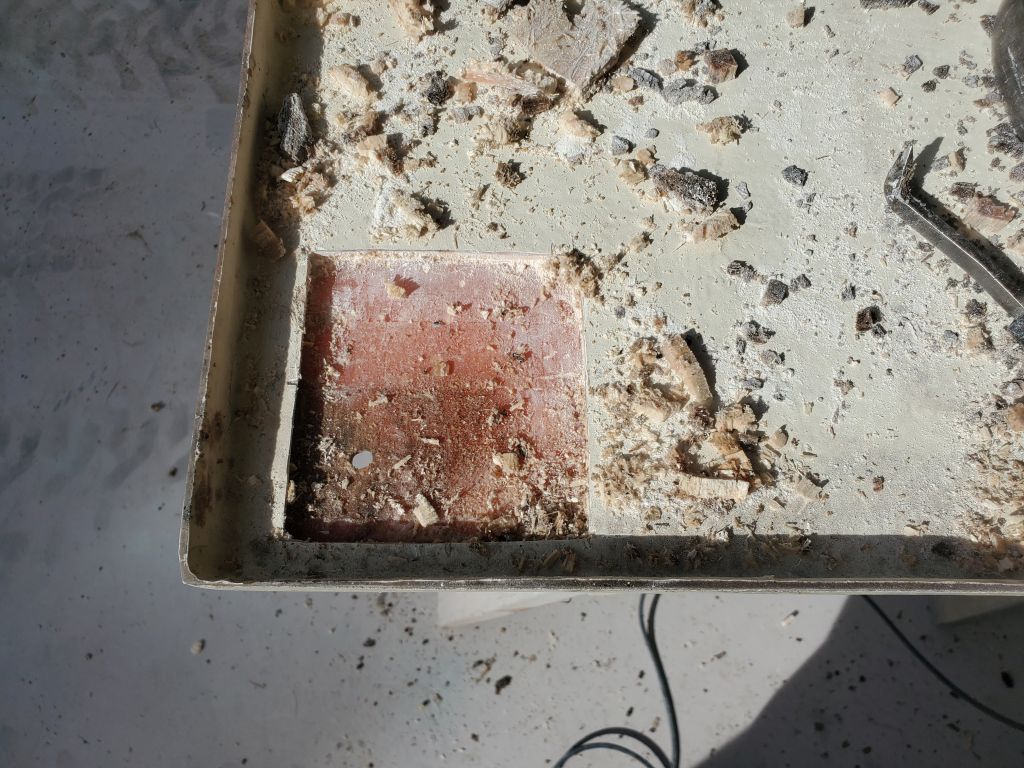
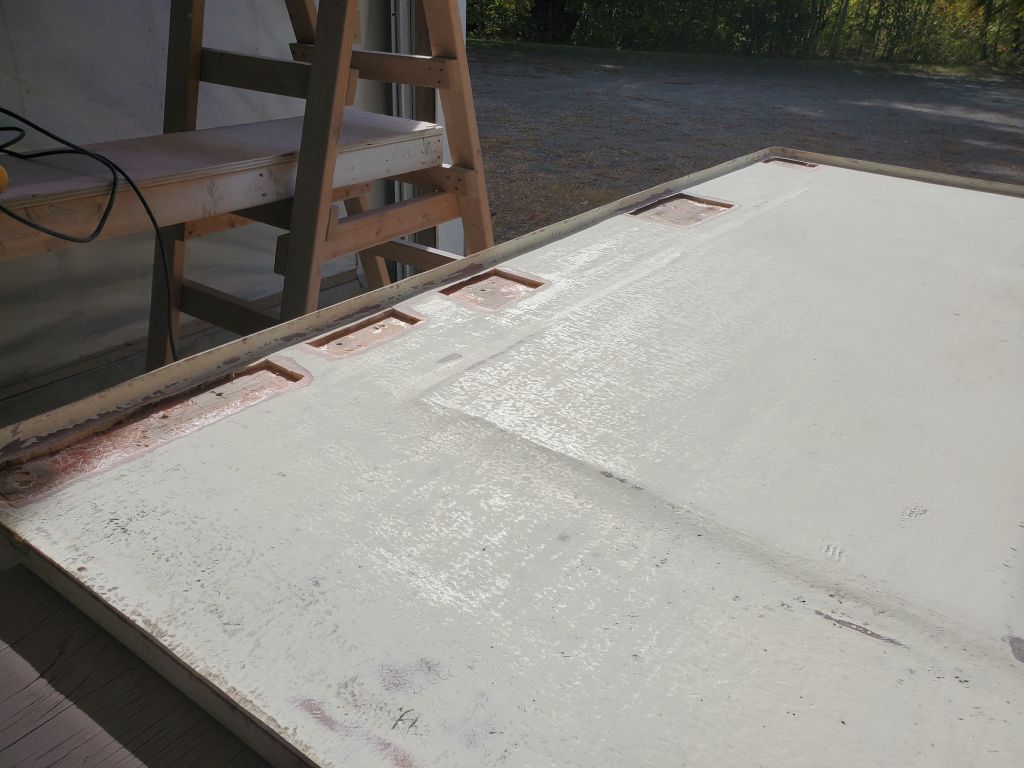
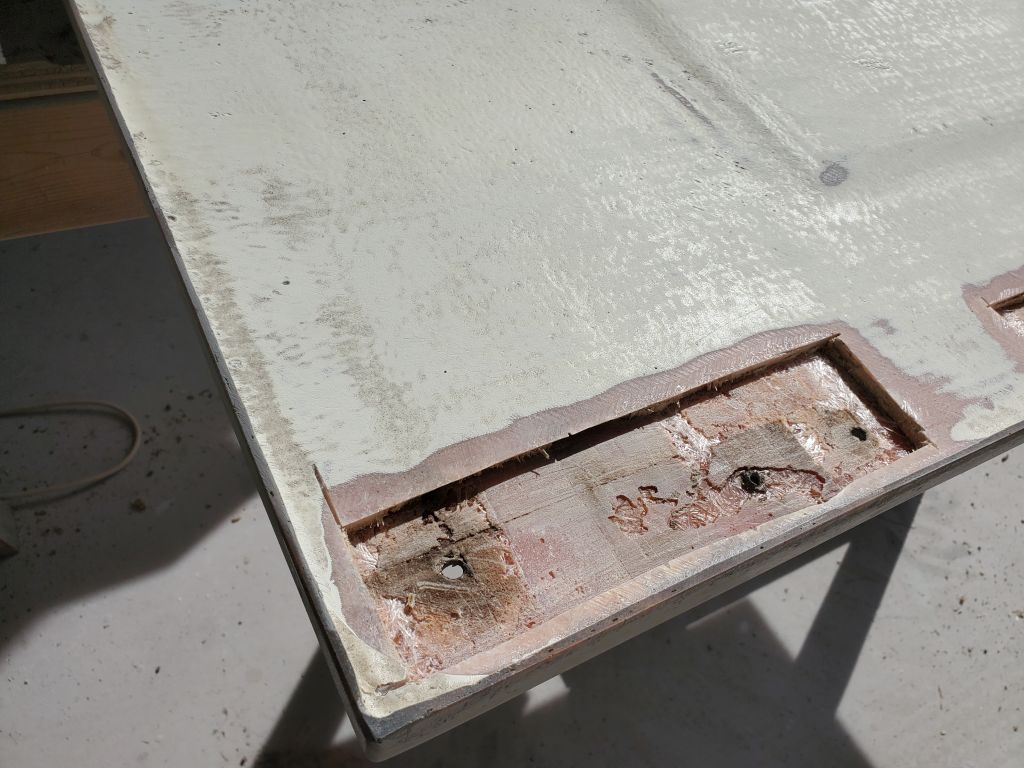
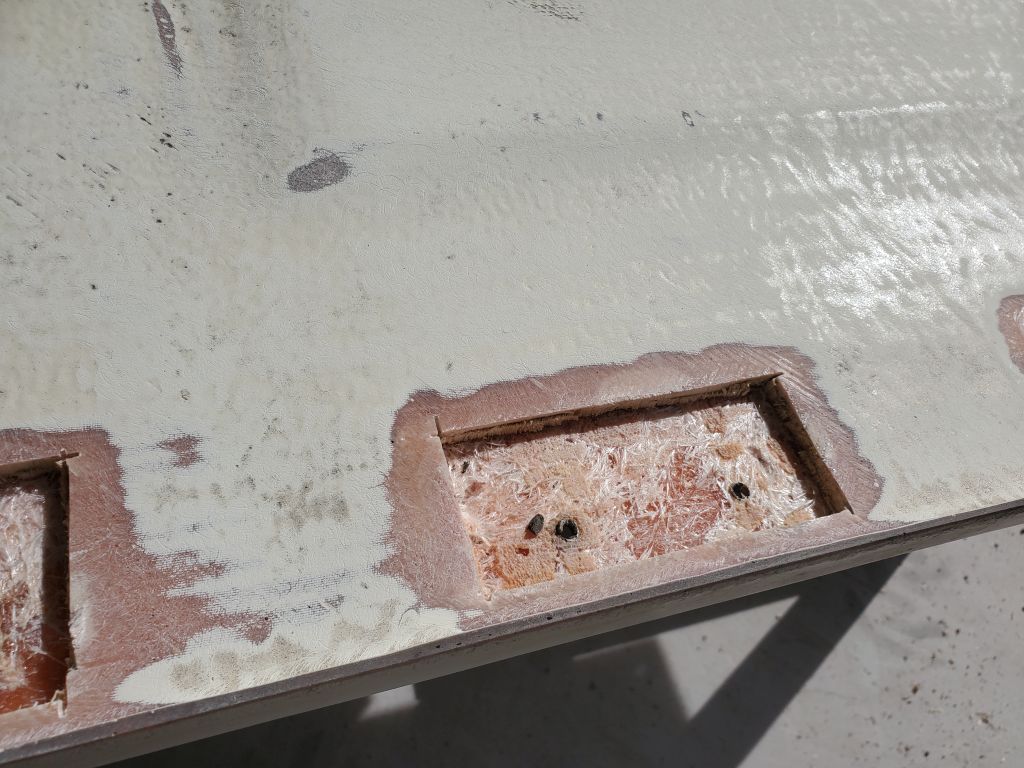
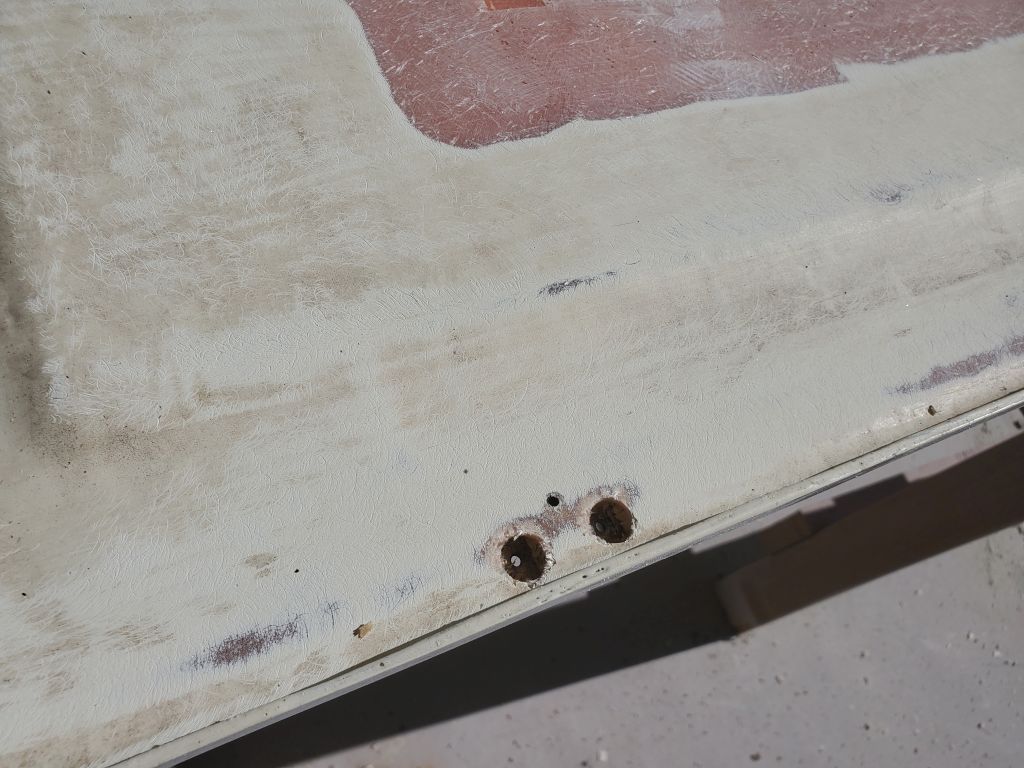
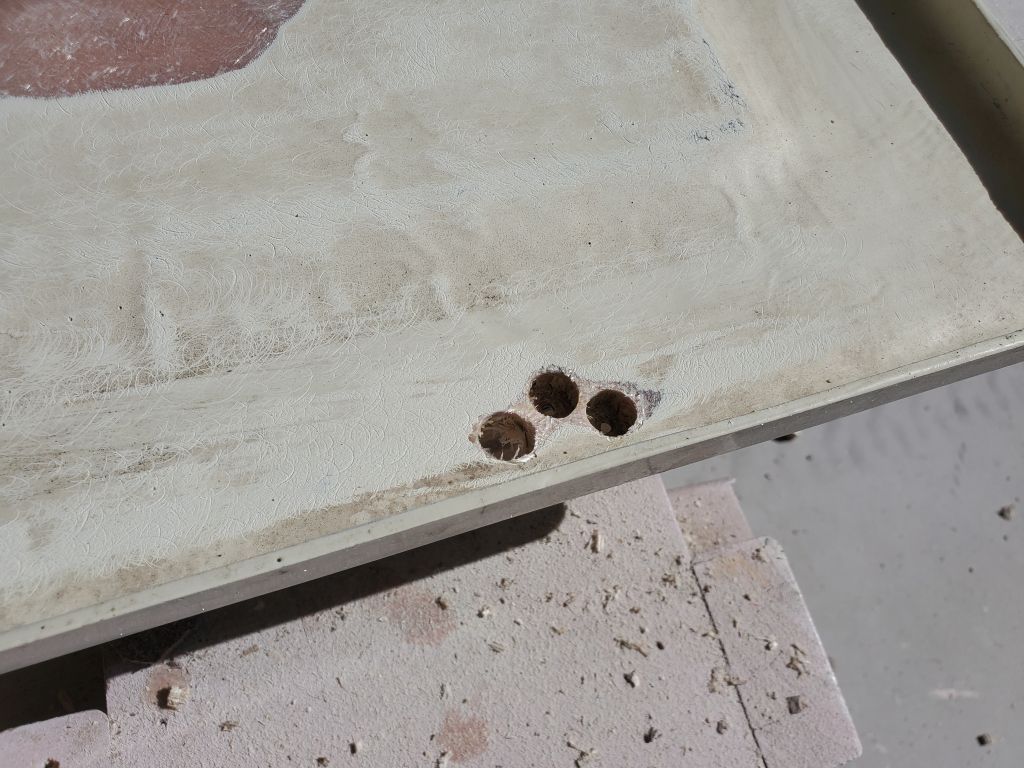
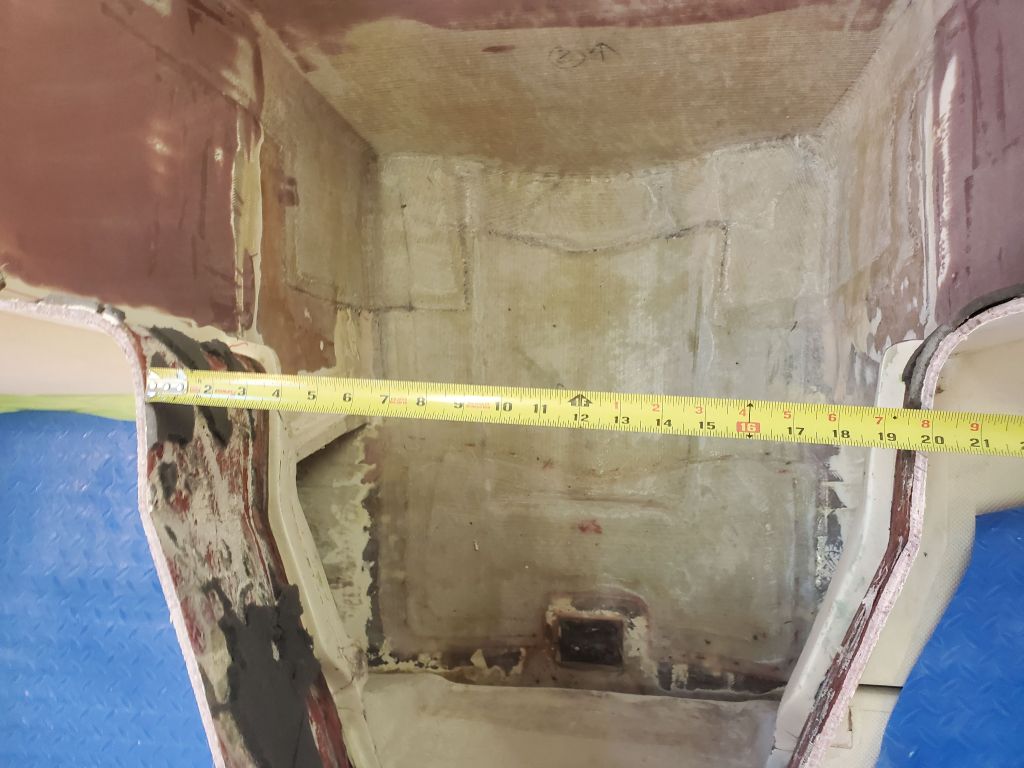
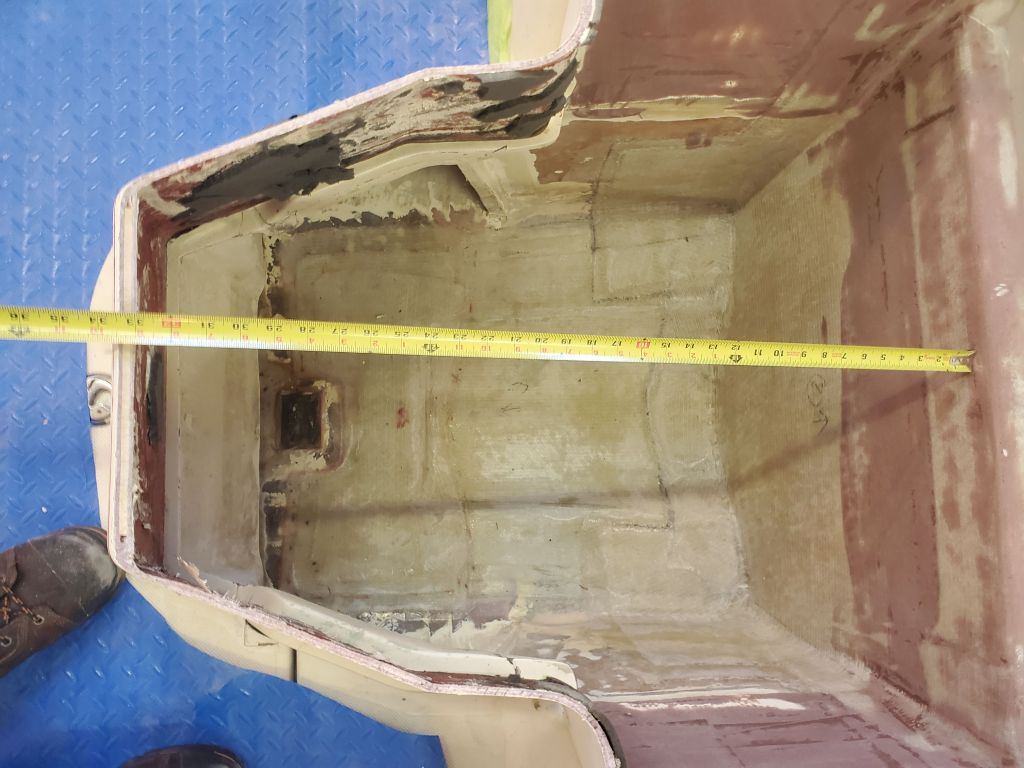
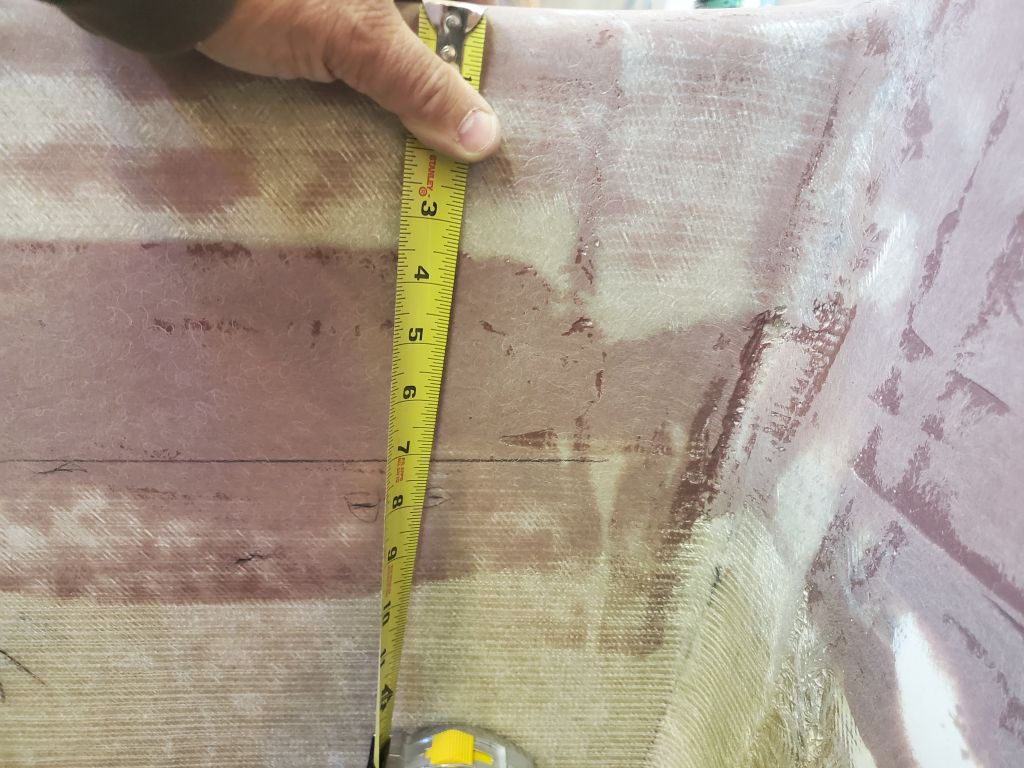
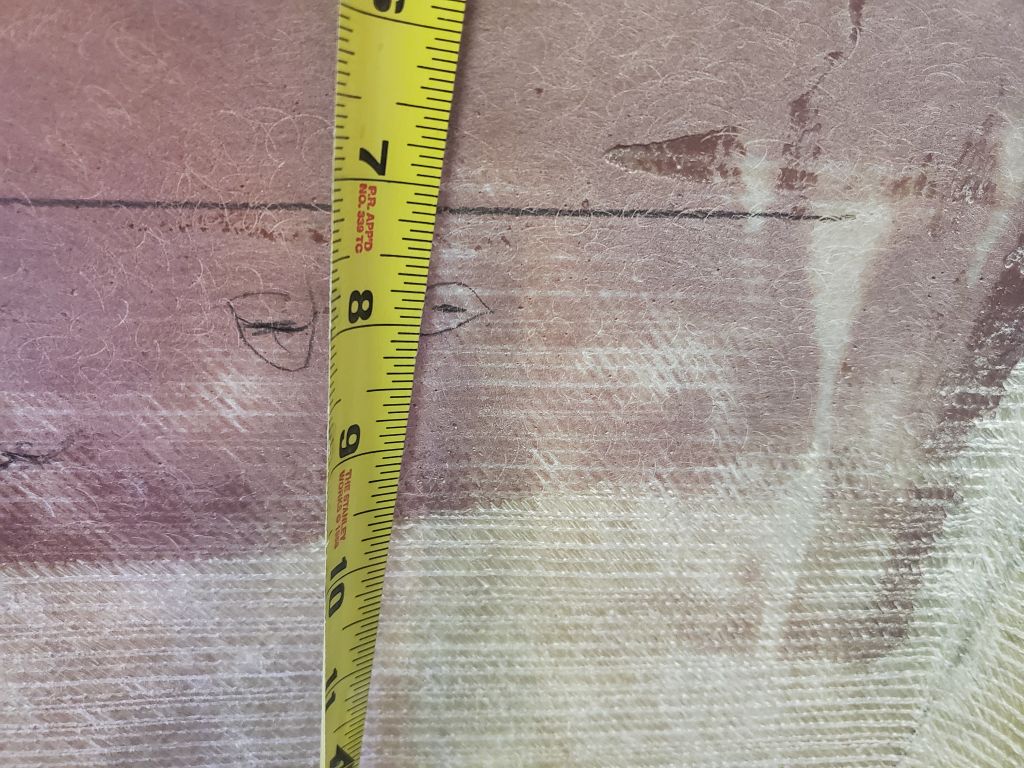
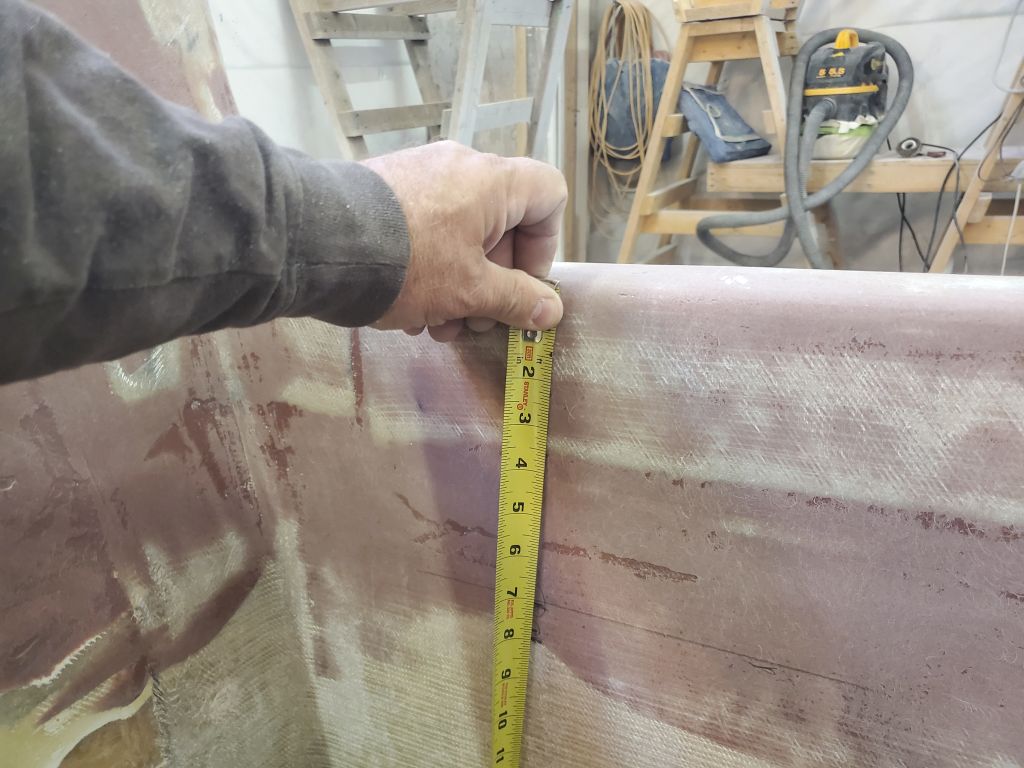
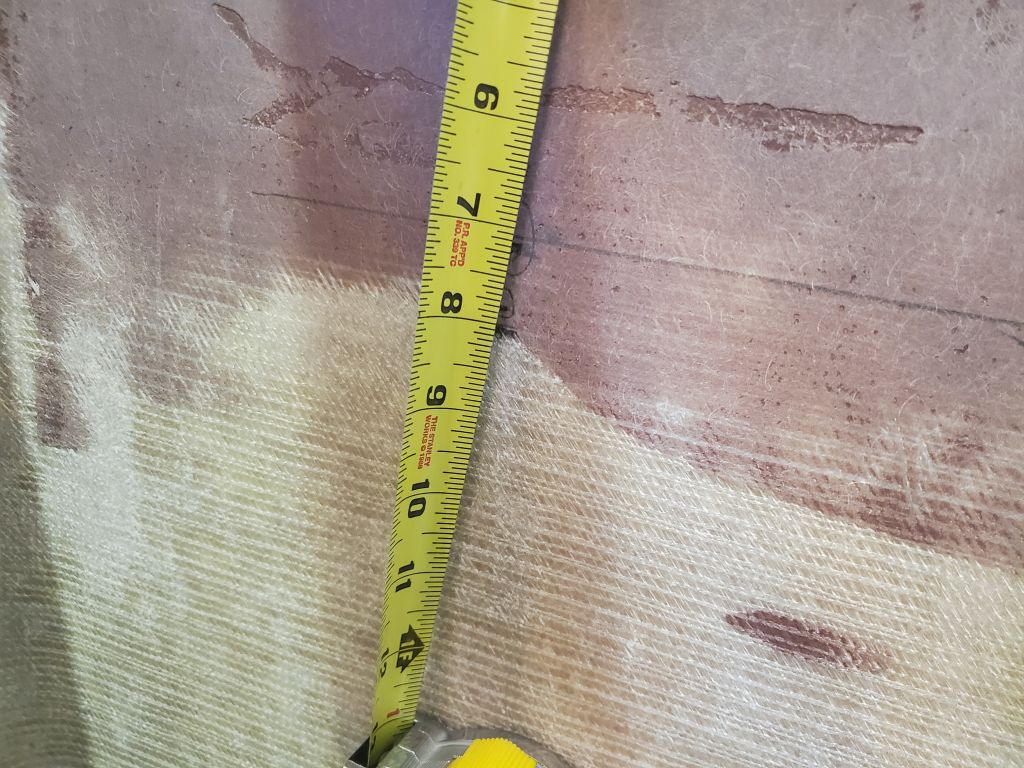
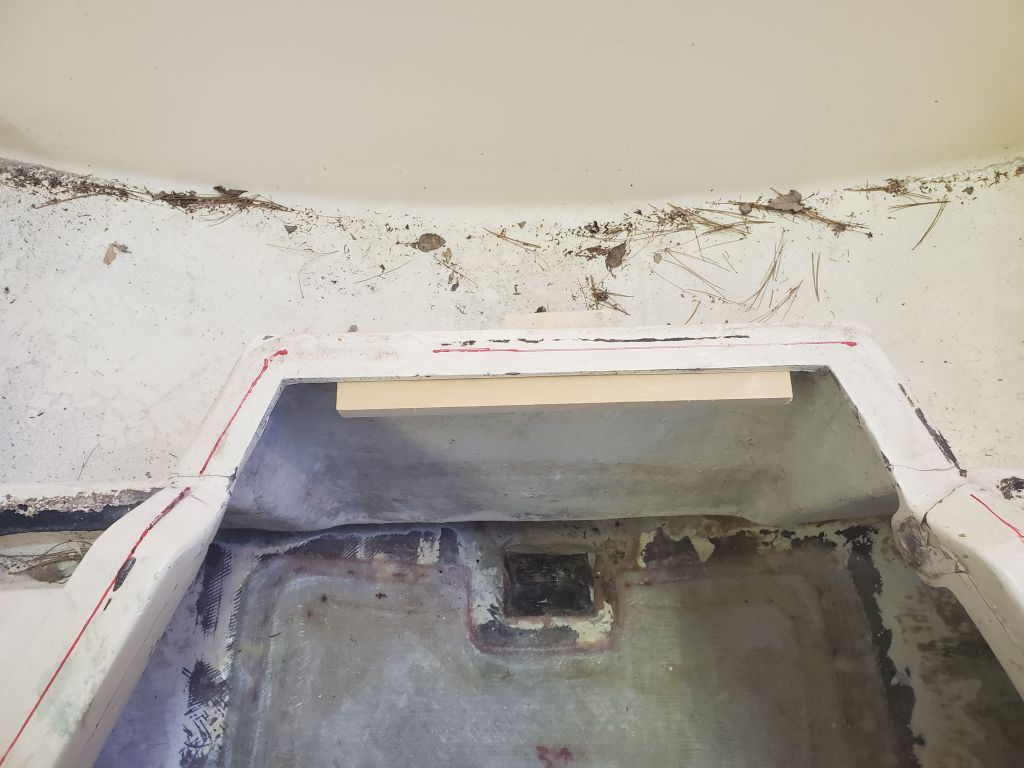
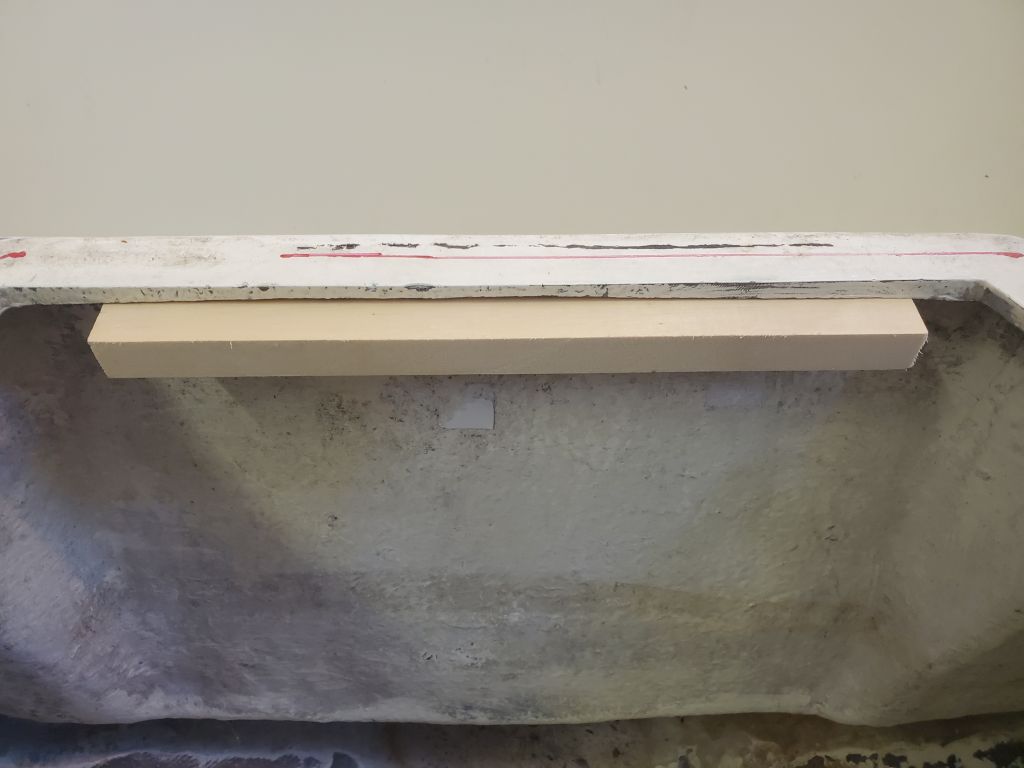
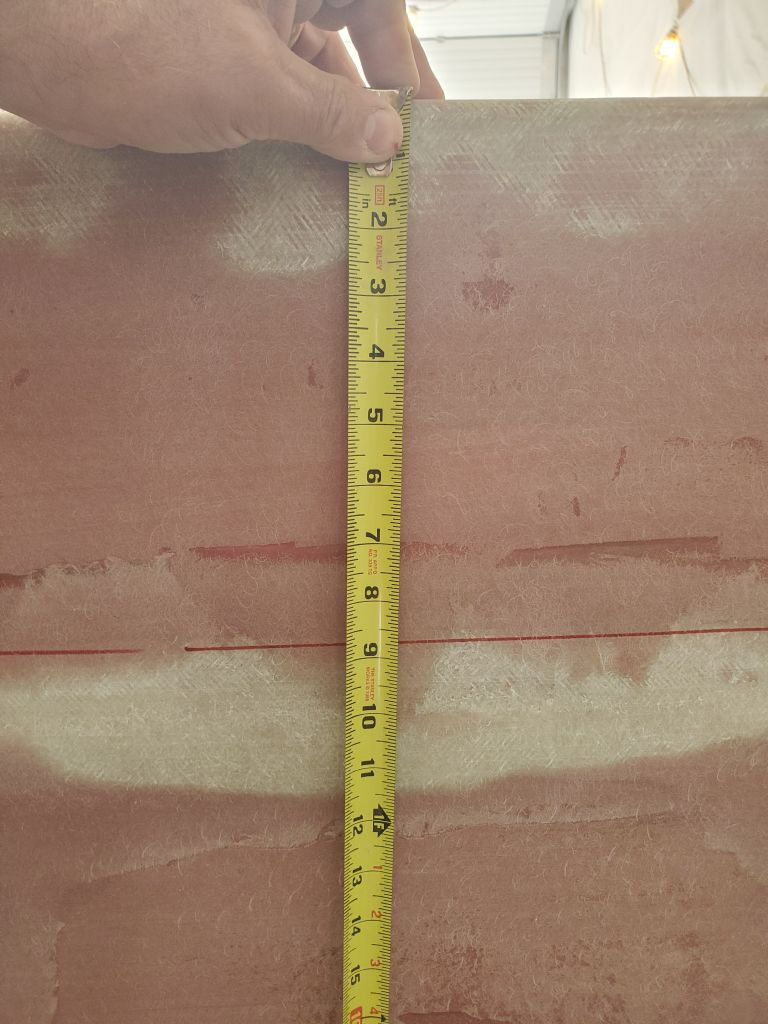
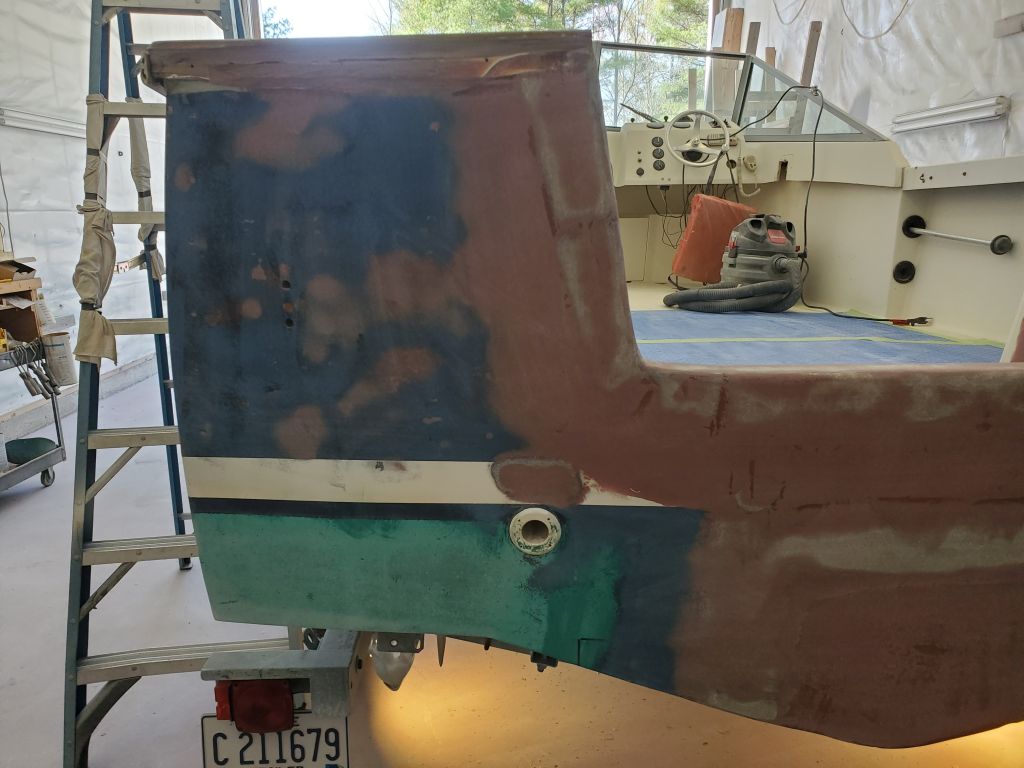
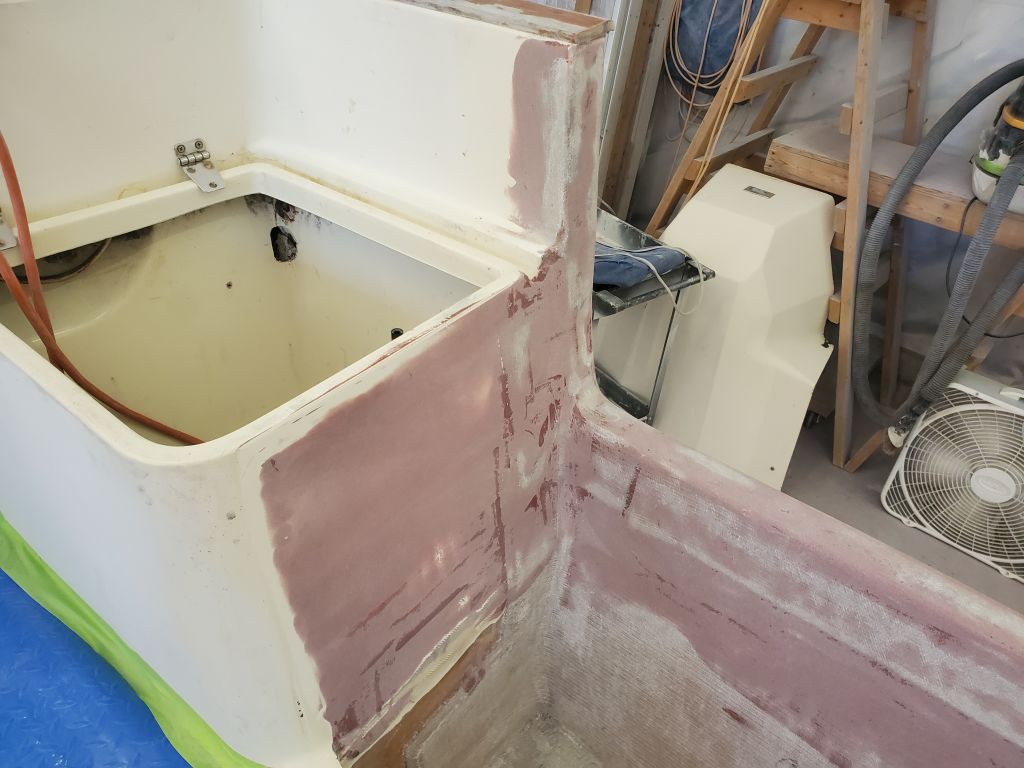
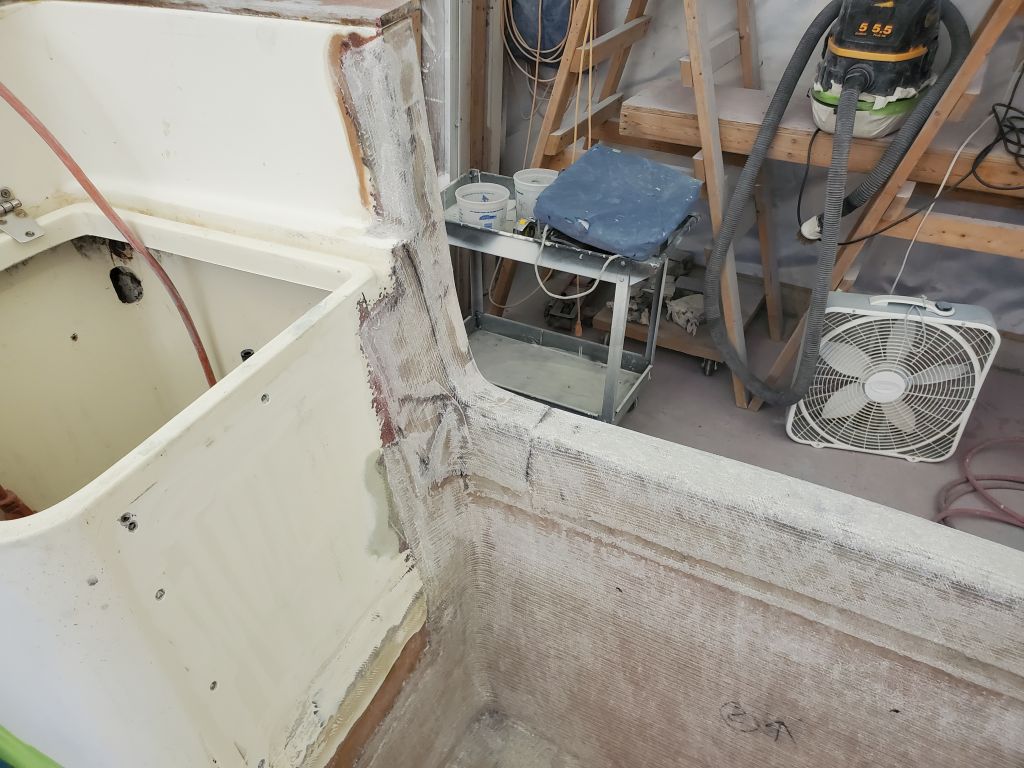
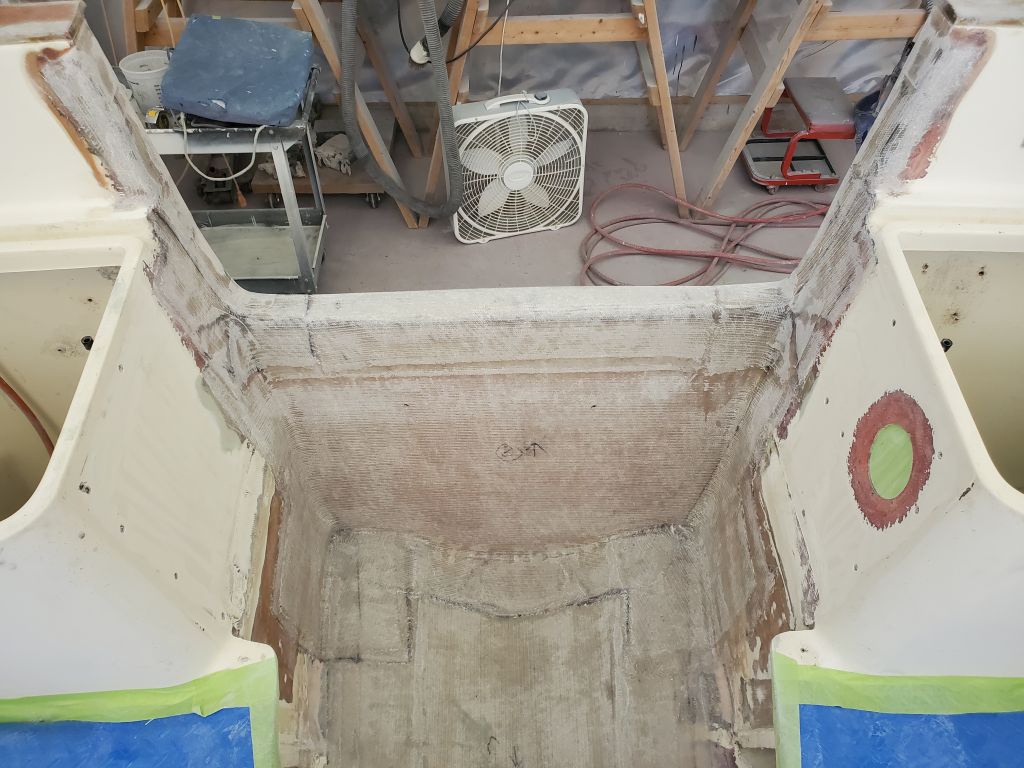
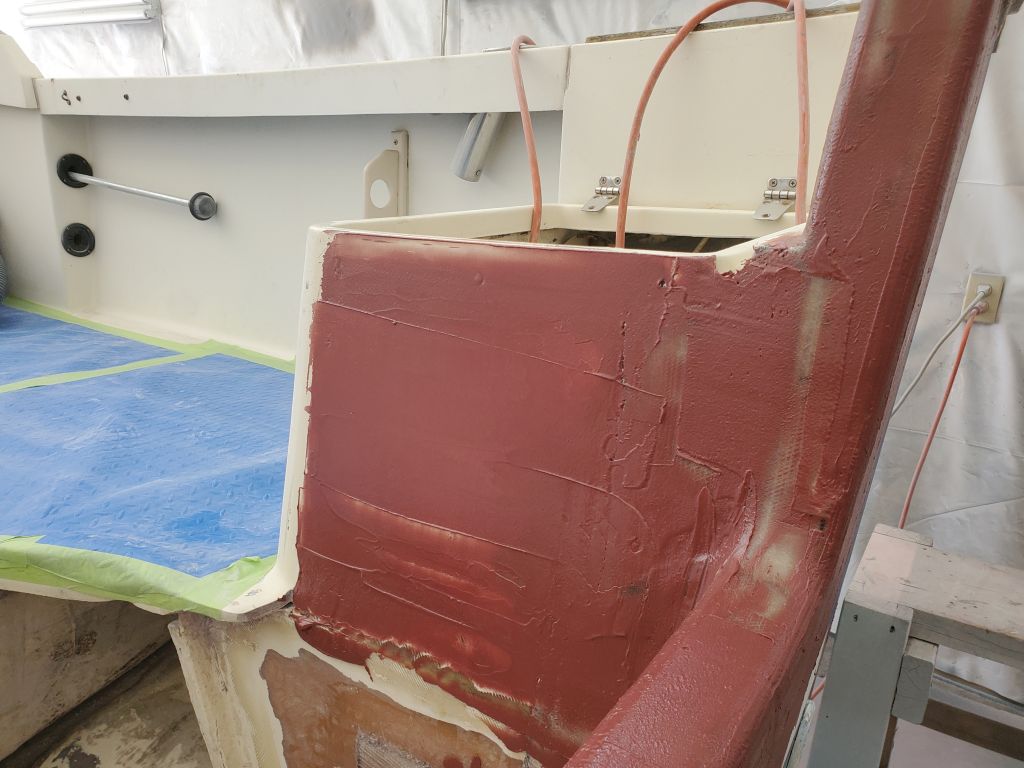
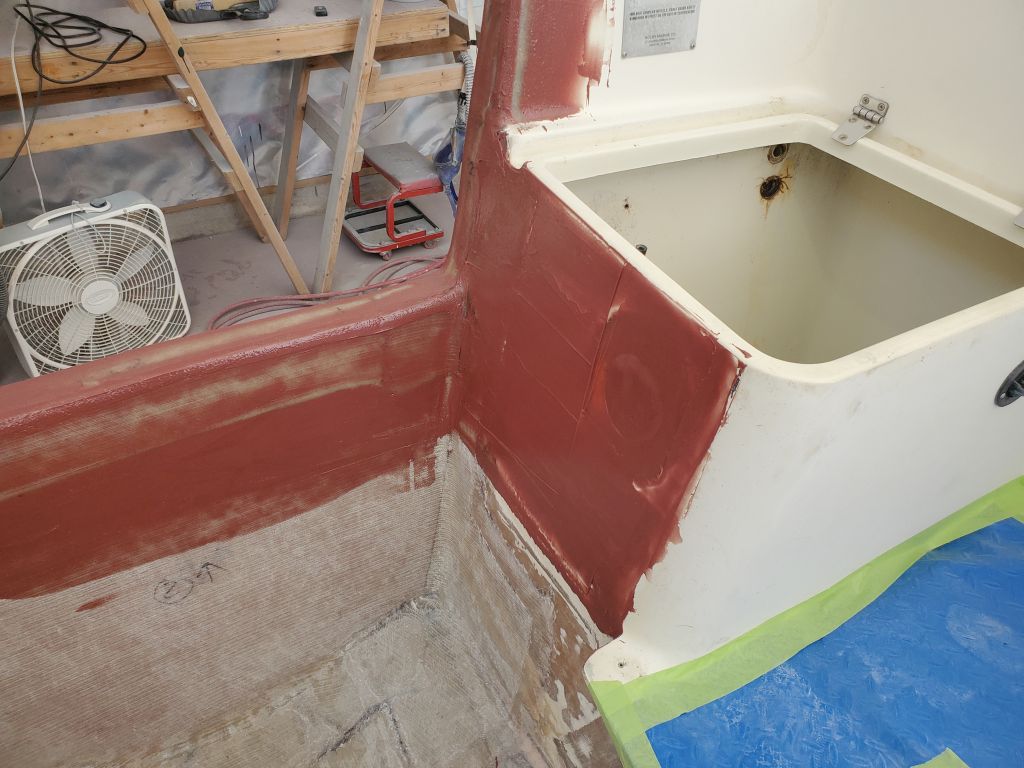
I sanded smooth and flush the extra layers of fiberglass I’d added to the new transom cutout to raise its height a bit, bringing it now to about 23-3/4″ from the center of the bottom vee; the final height was to be 24″, and the extra 1/4″ would be made up by the final tabbing to wrap over the cutout and tie it in with the surrounding surfaces.  Meanwhile, I also sanded smooth the first round of fairing filler I’d applied to portions of the transom on each side; there’d be more to come.

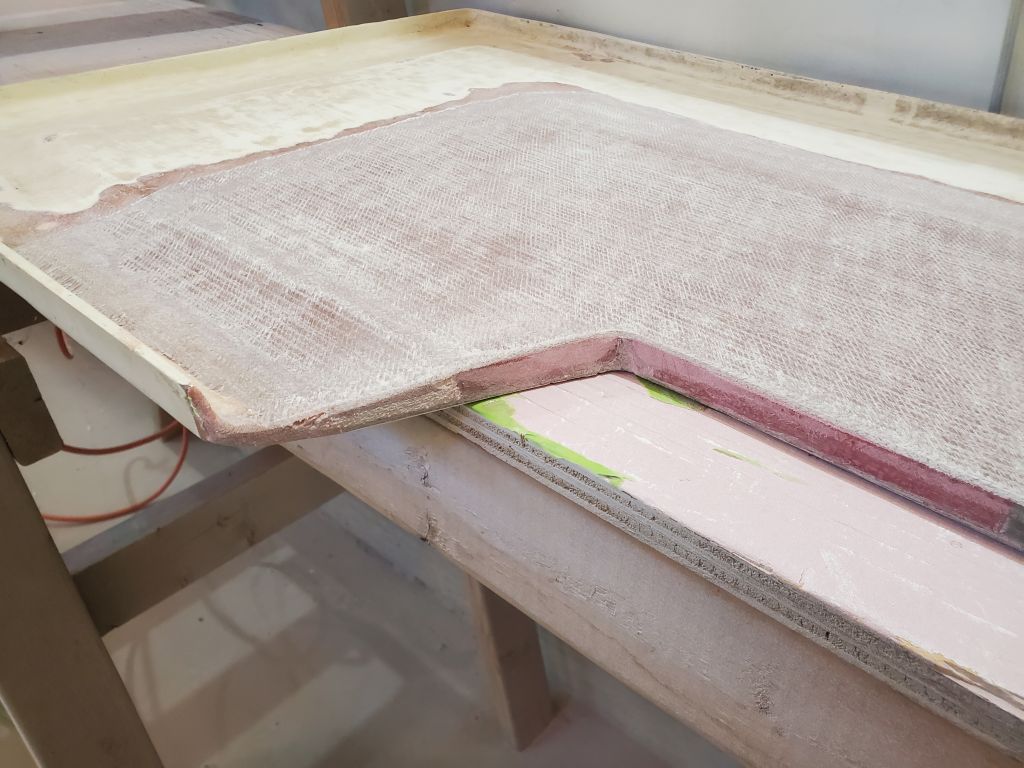
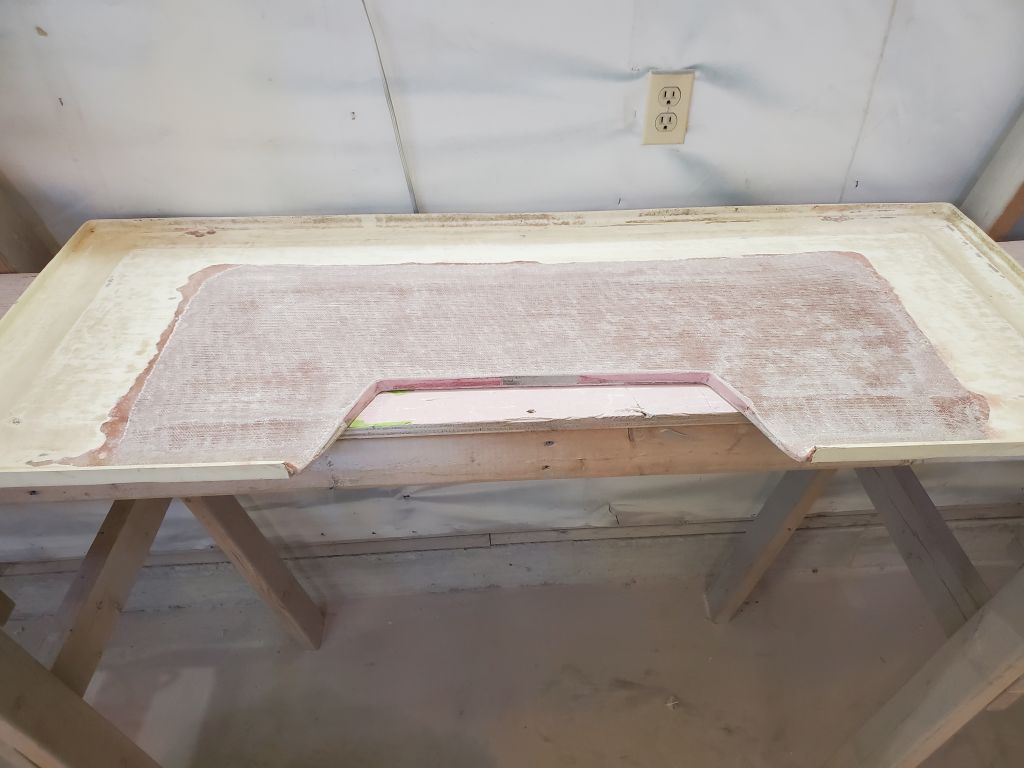
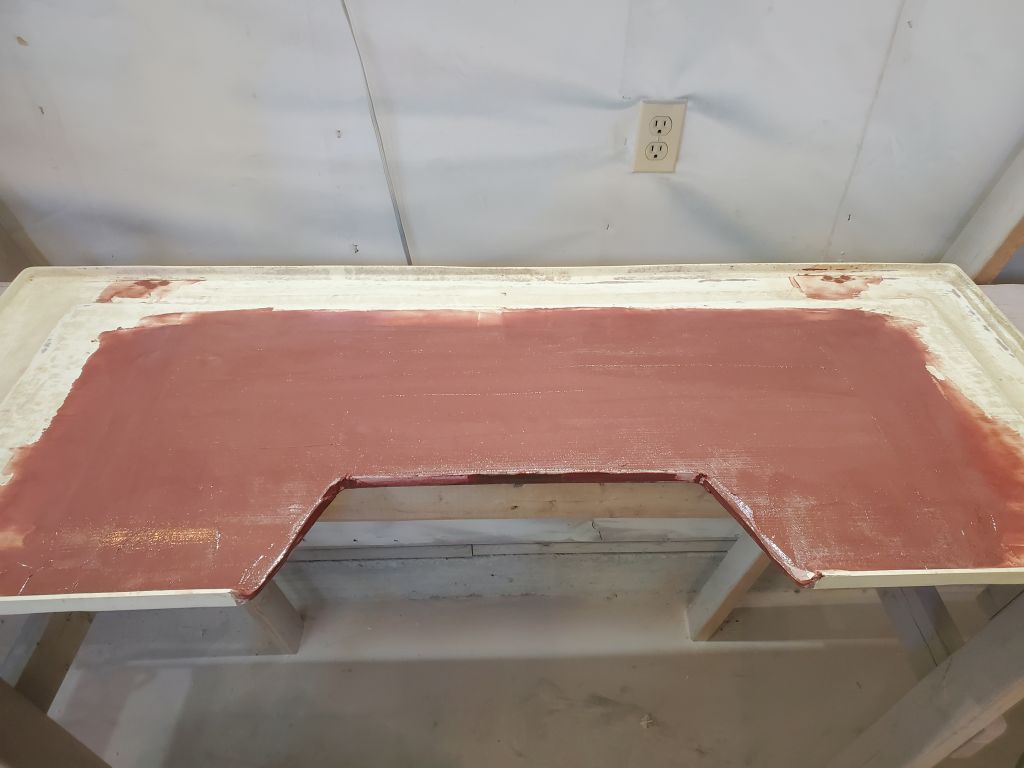
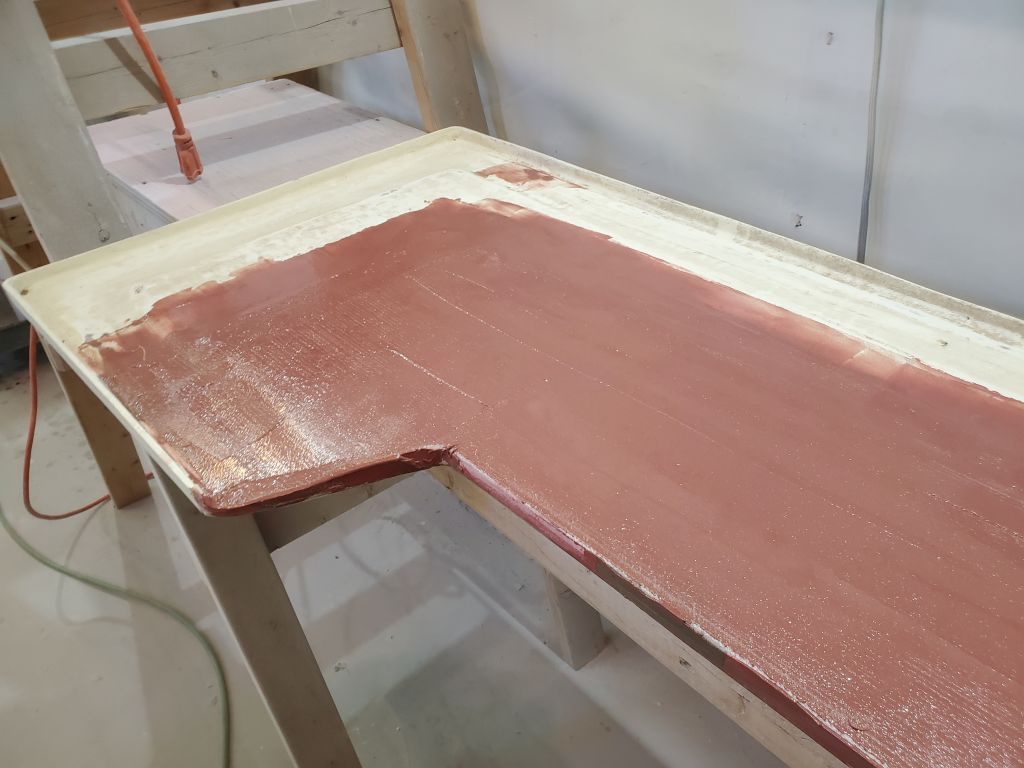
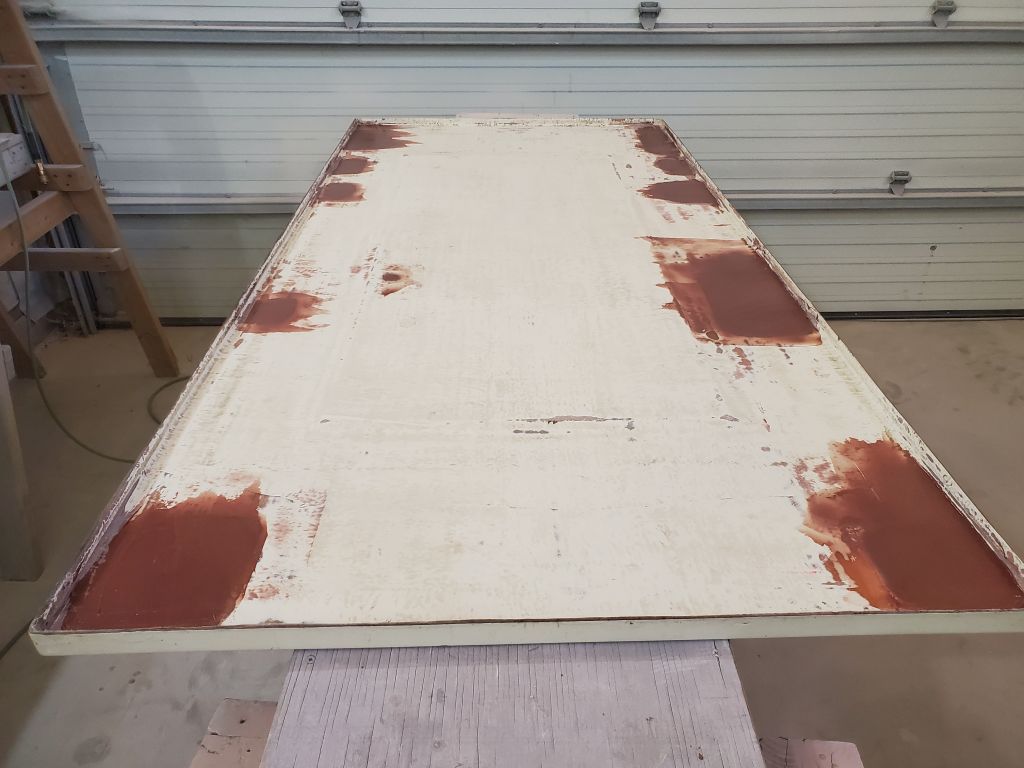
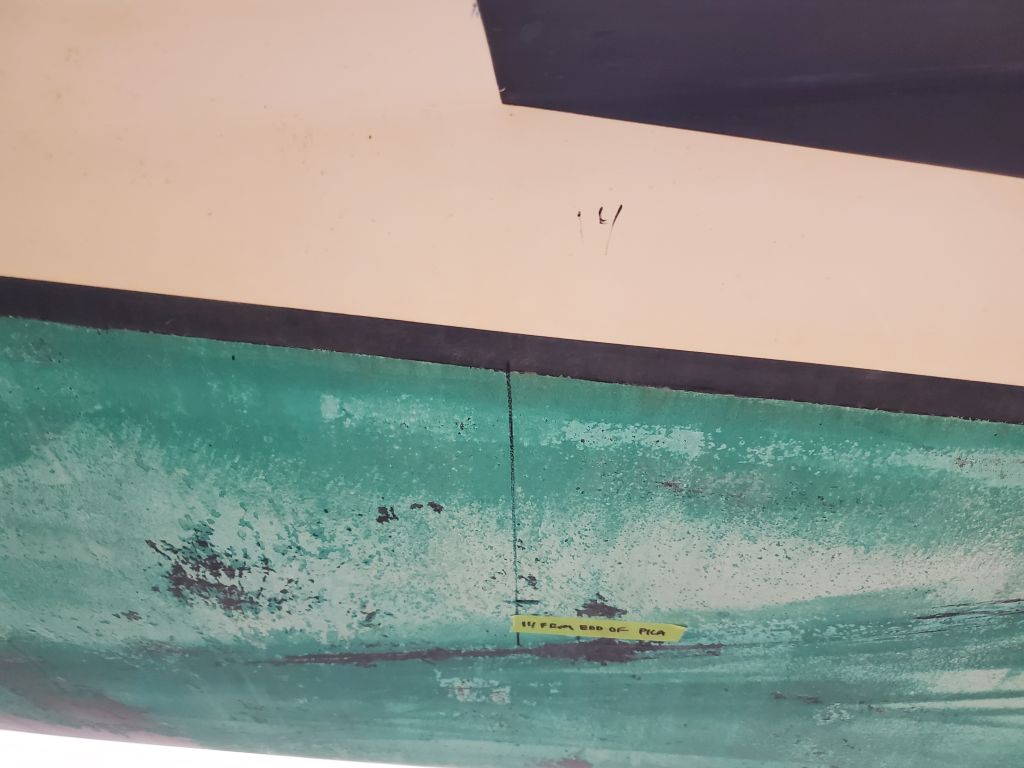
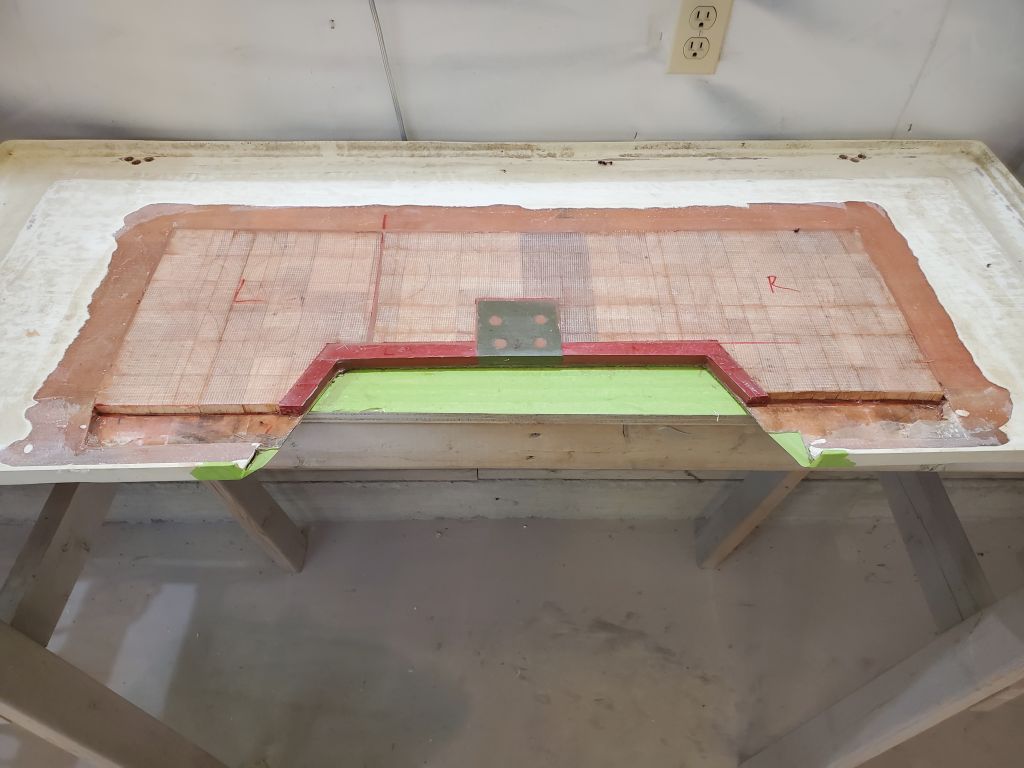
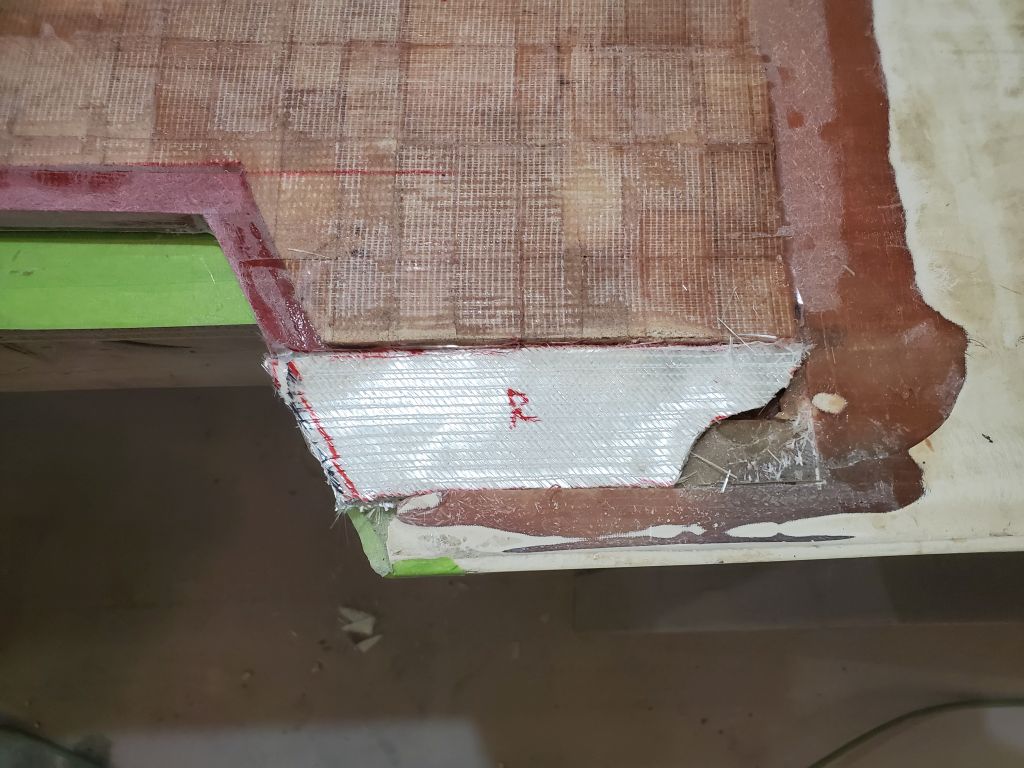
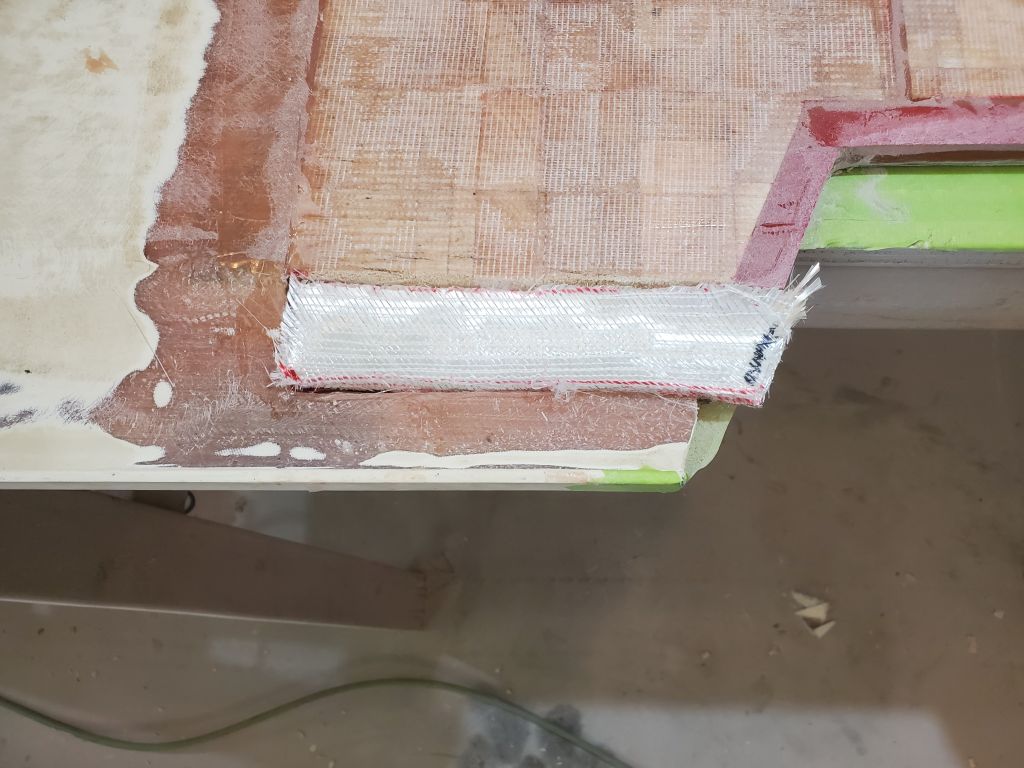
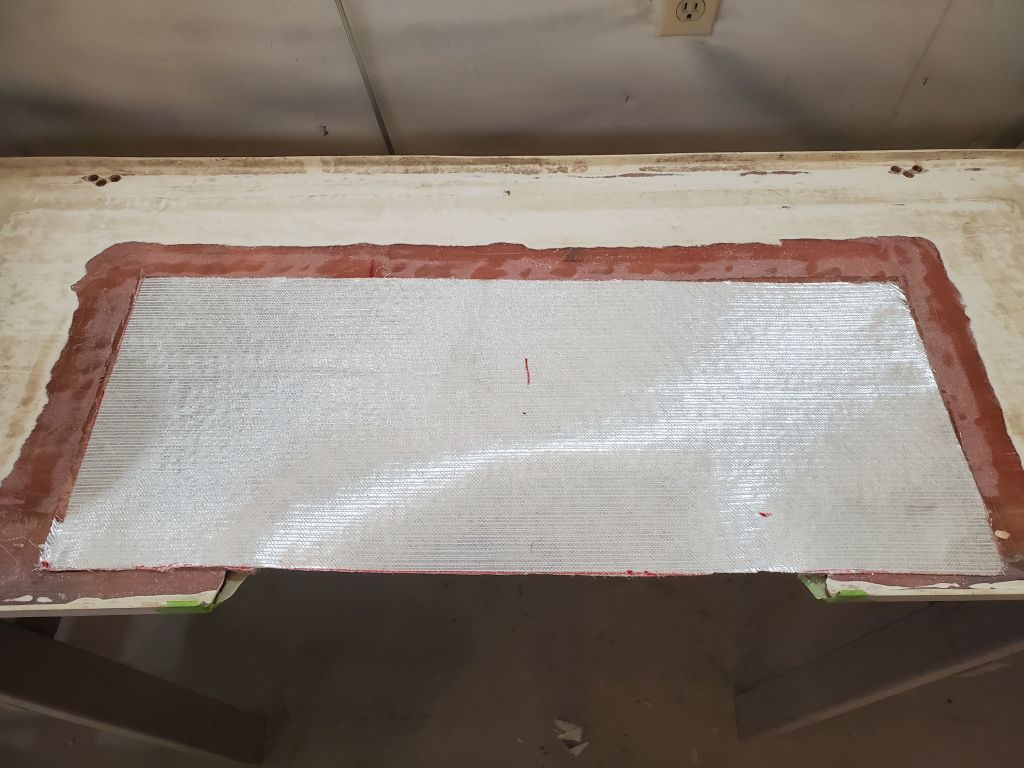
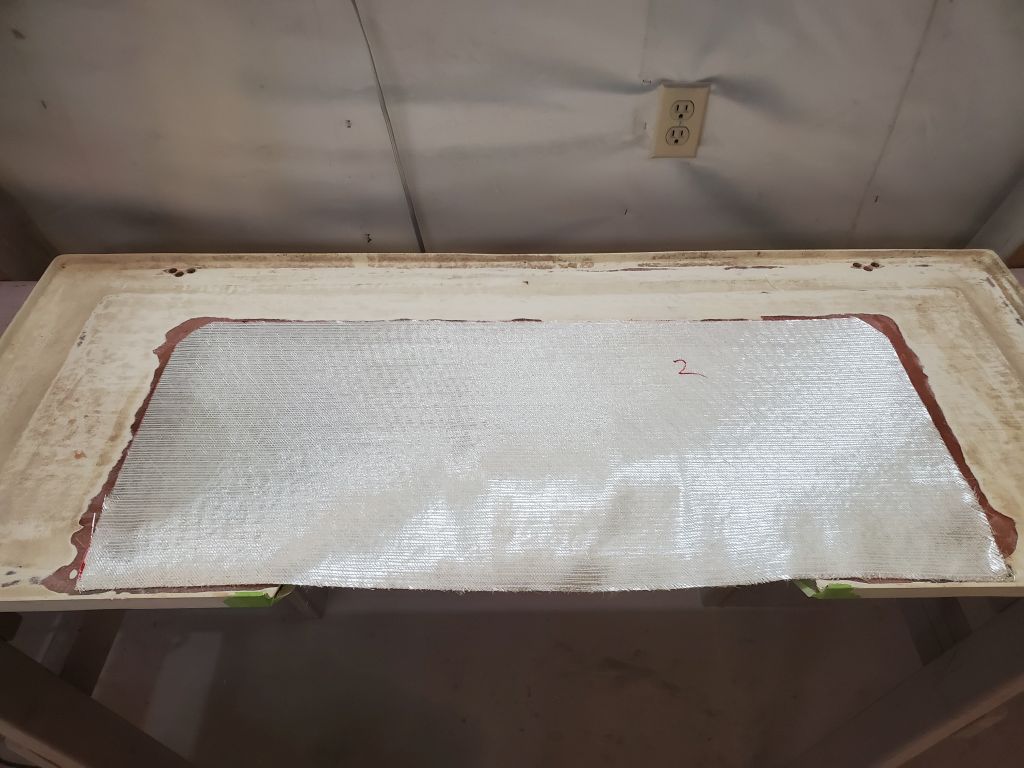
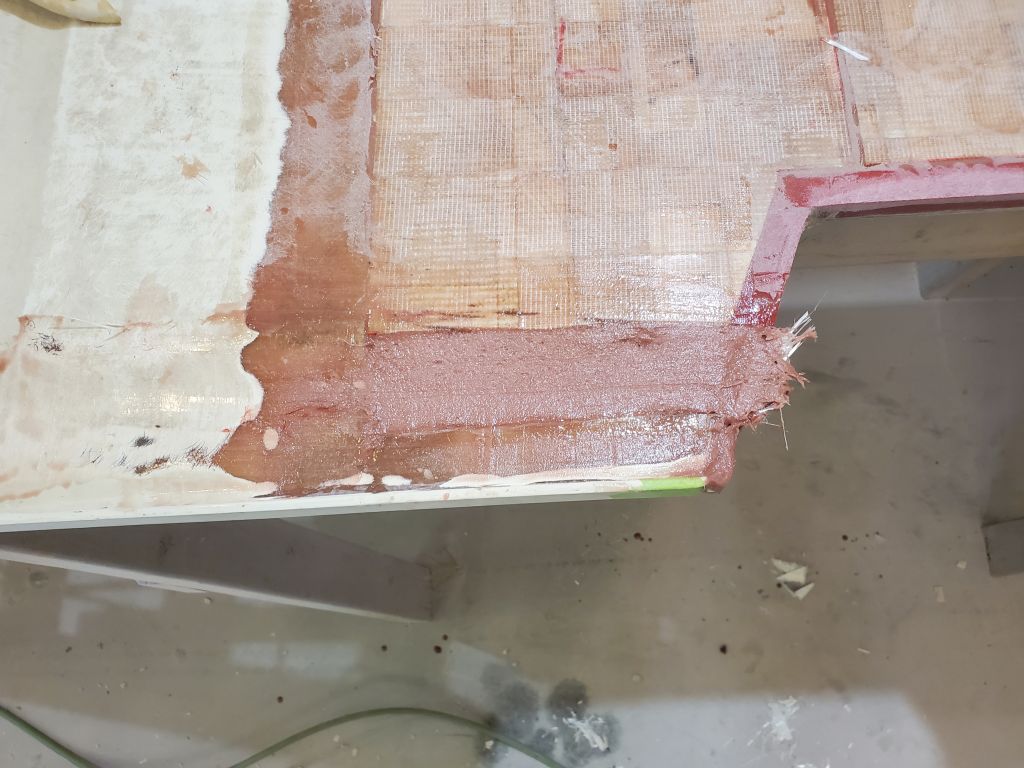
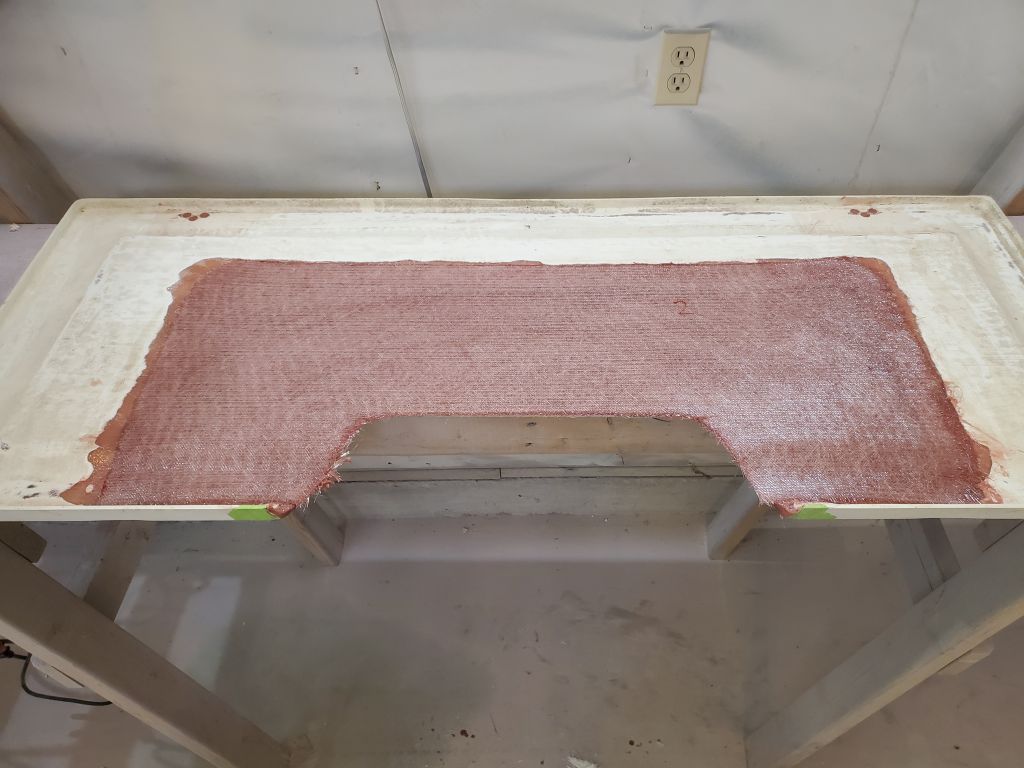
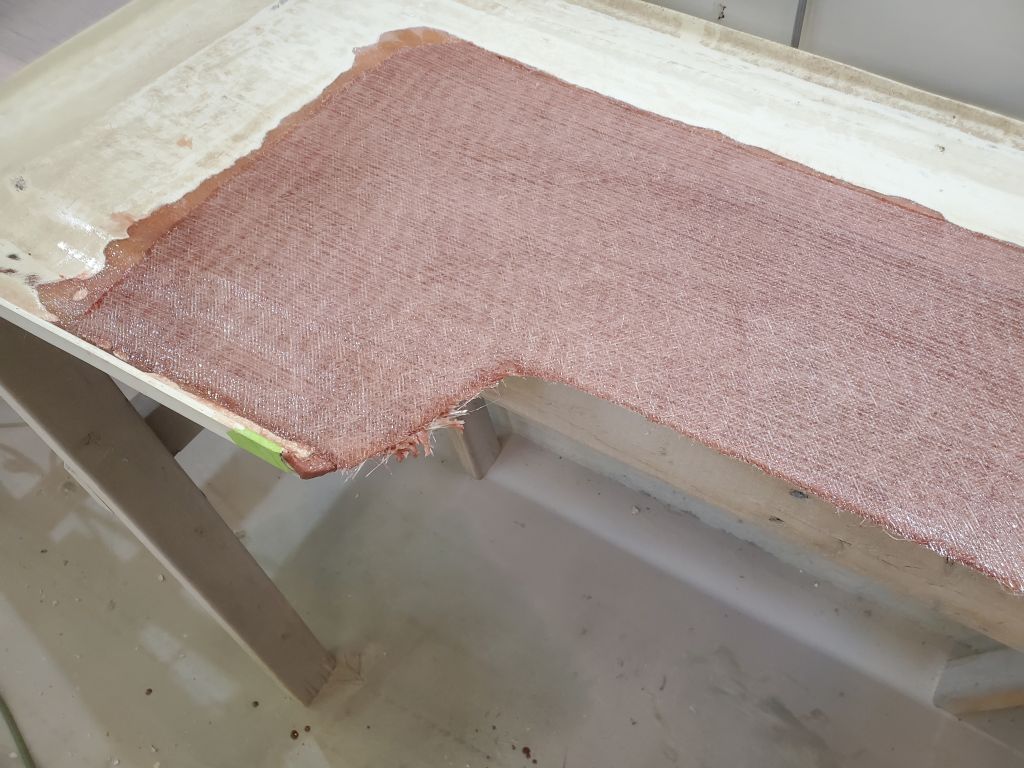
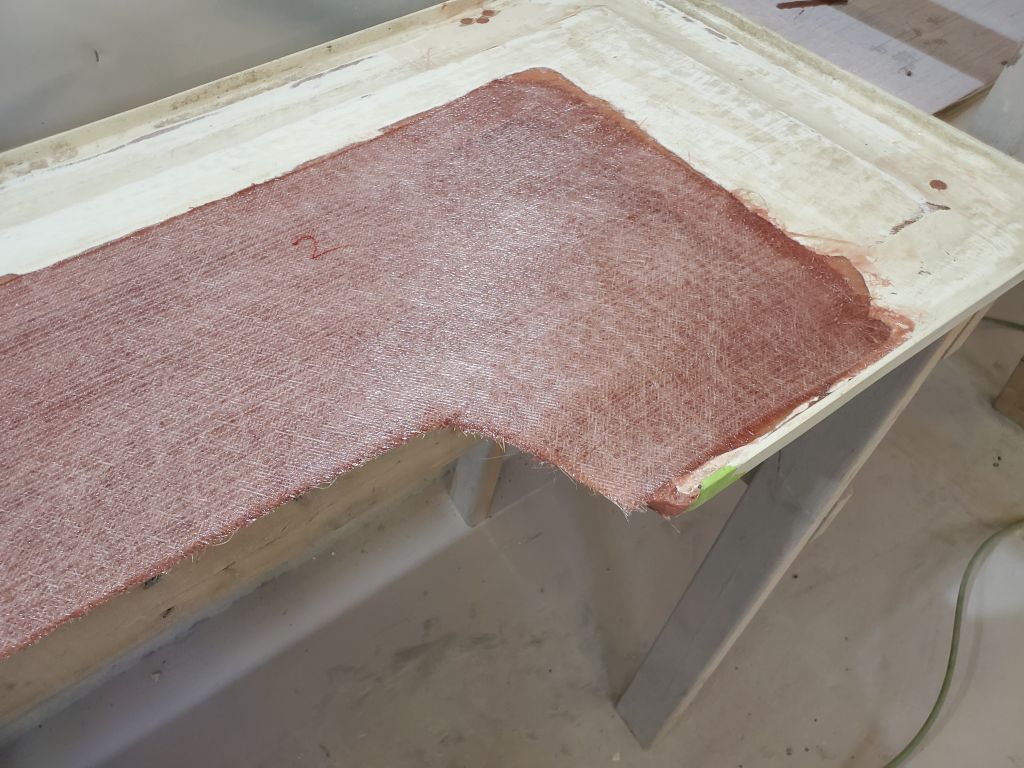
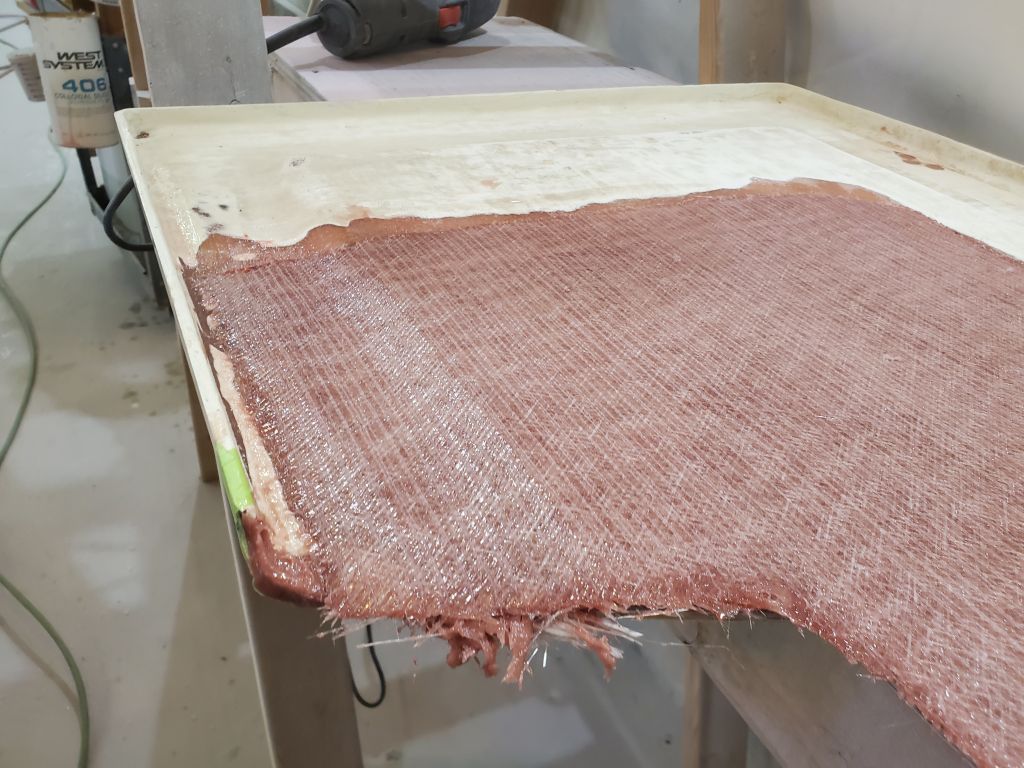
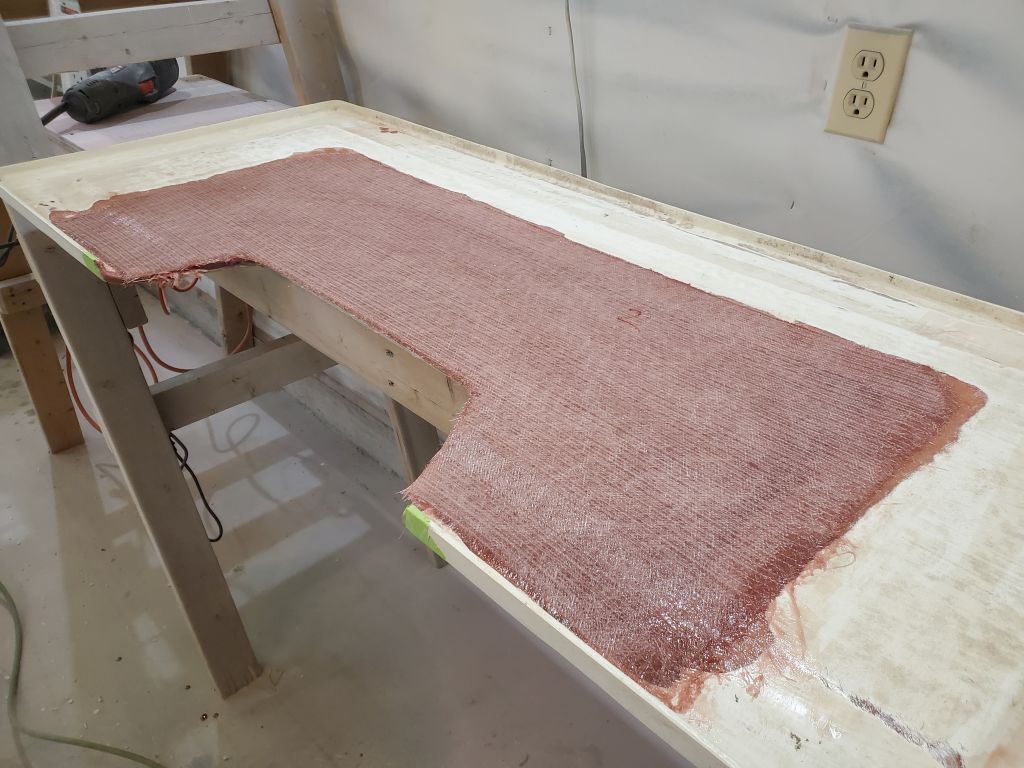
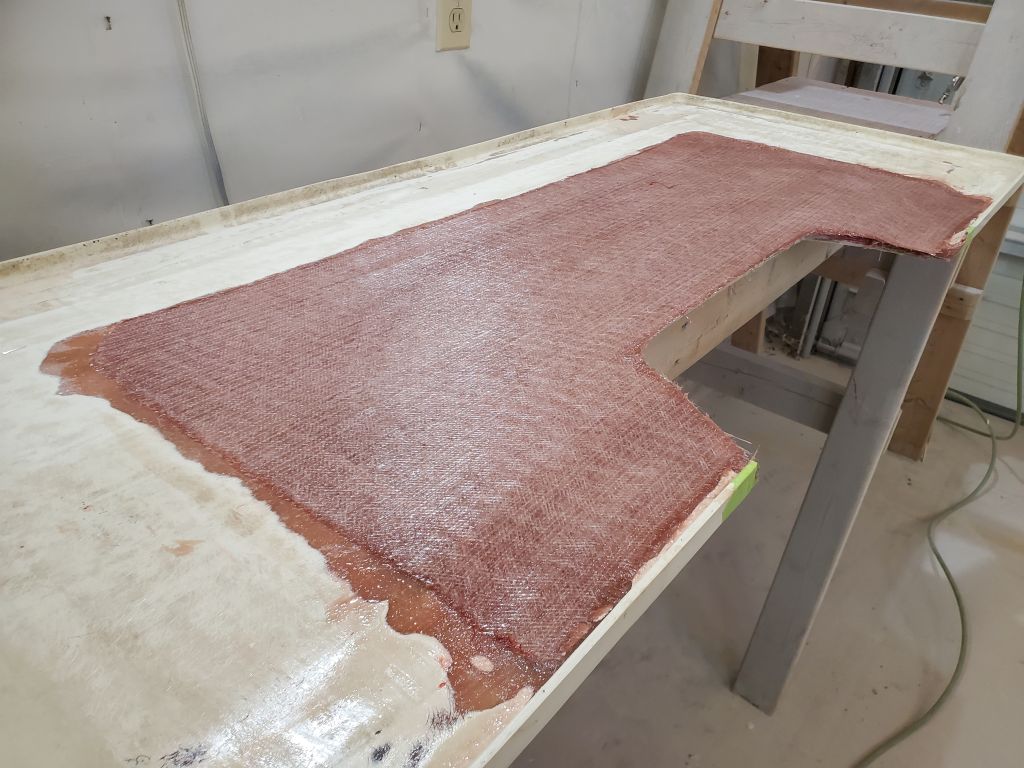
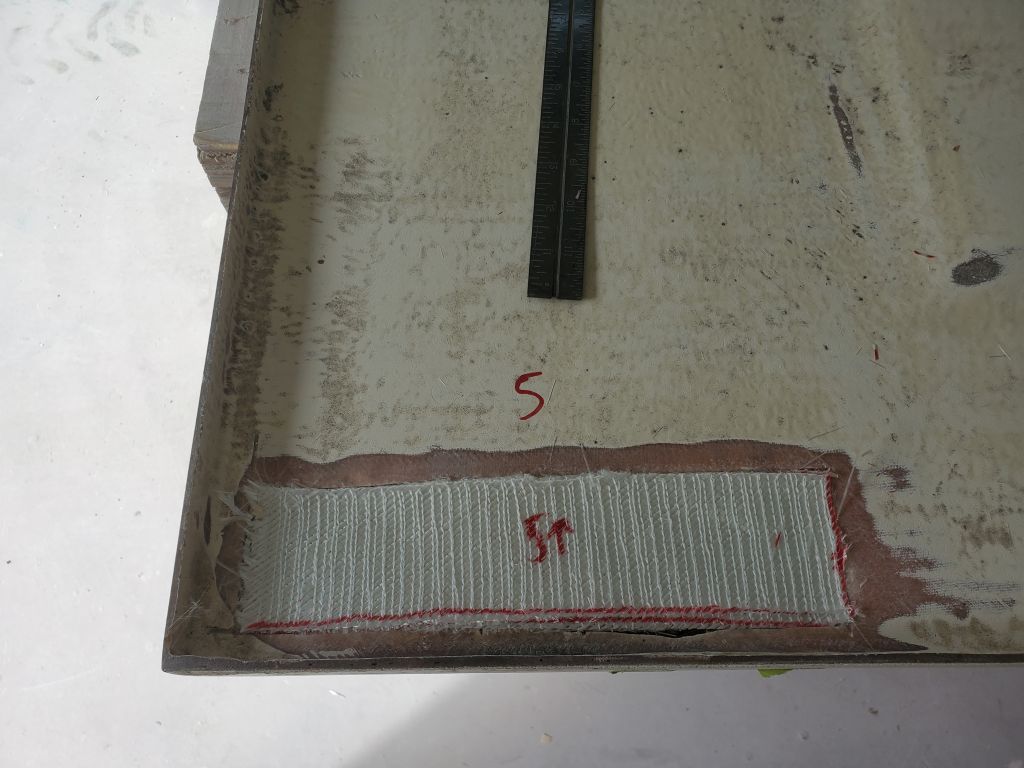
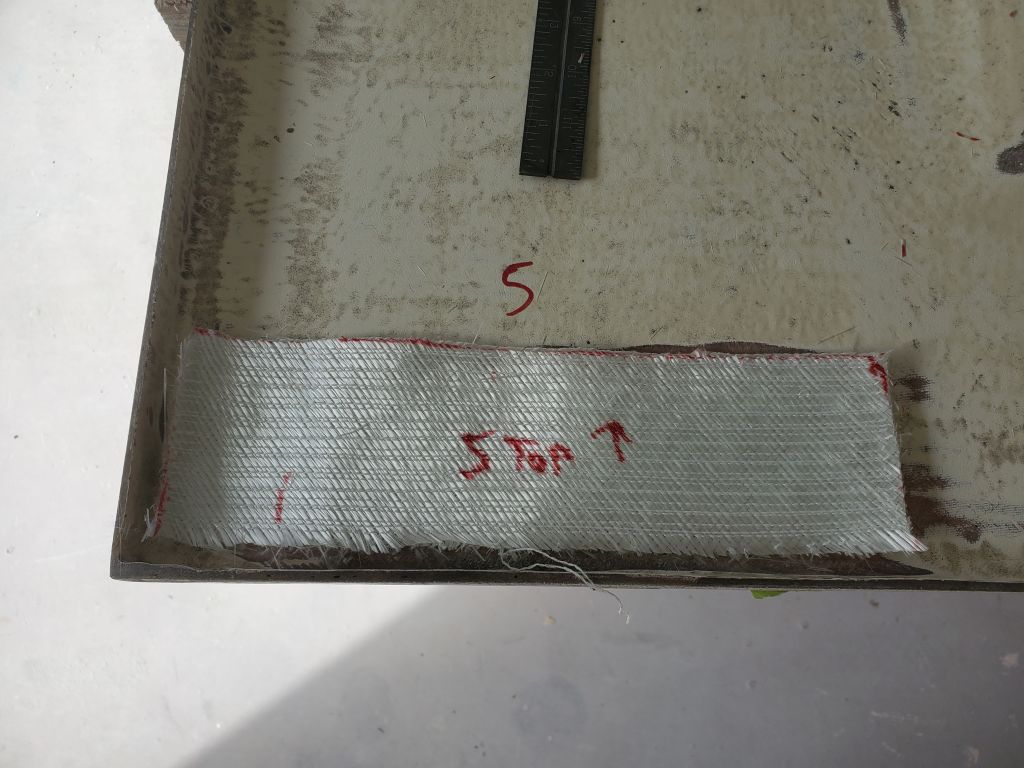
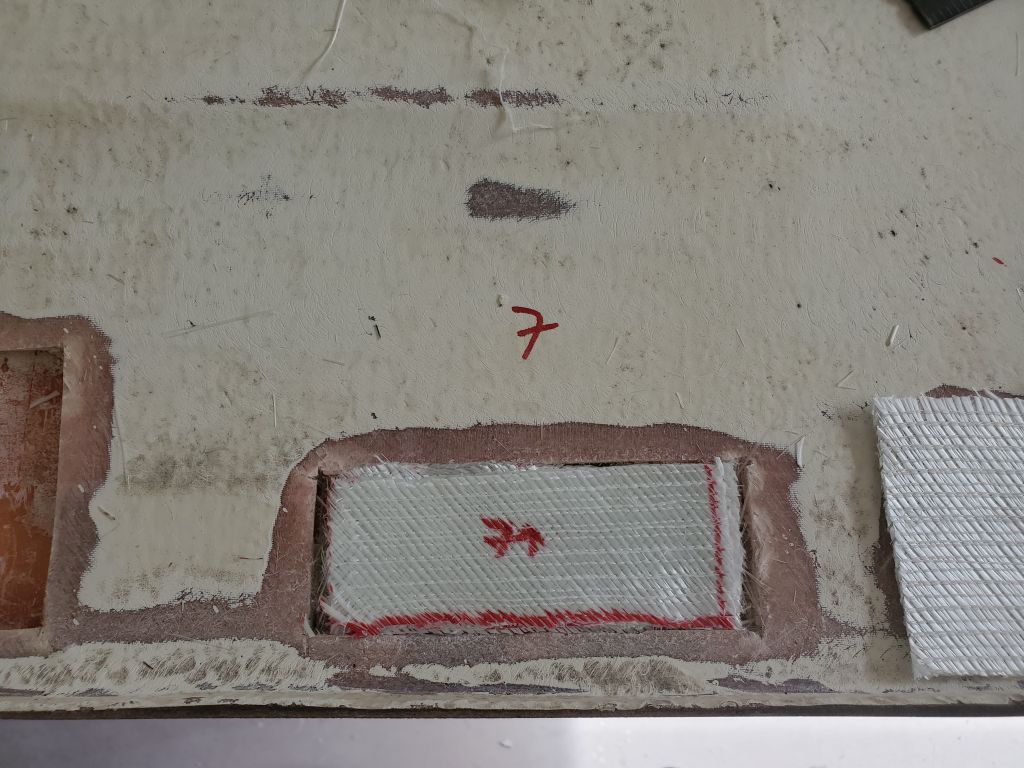
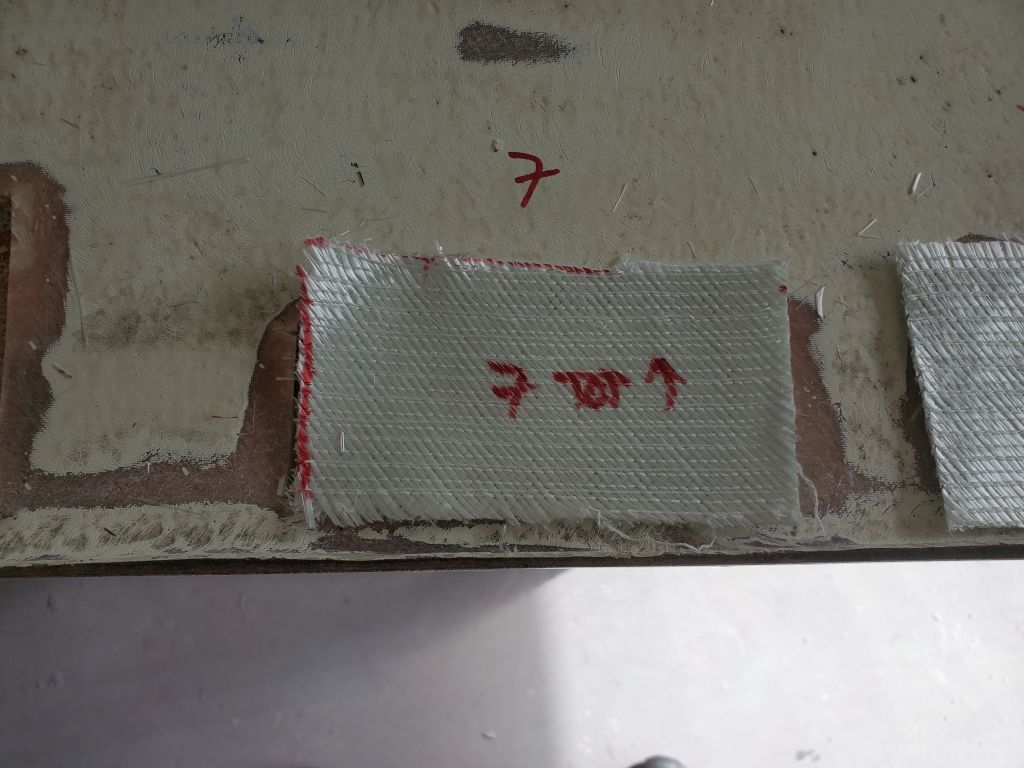
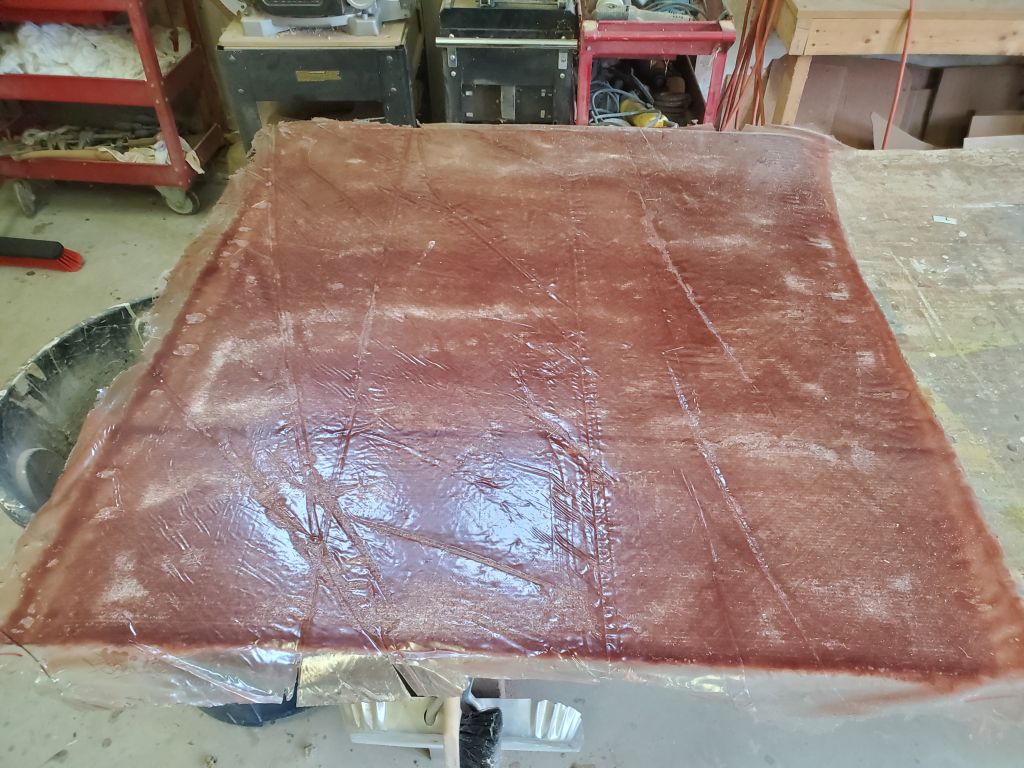
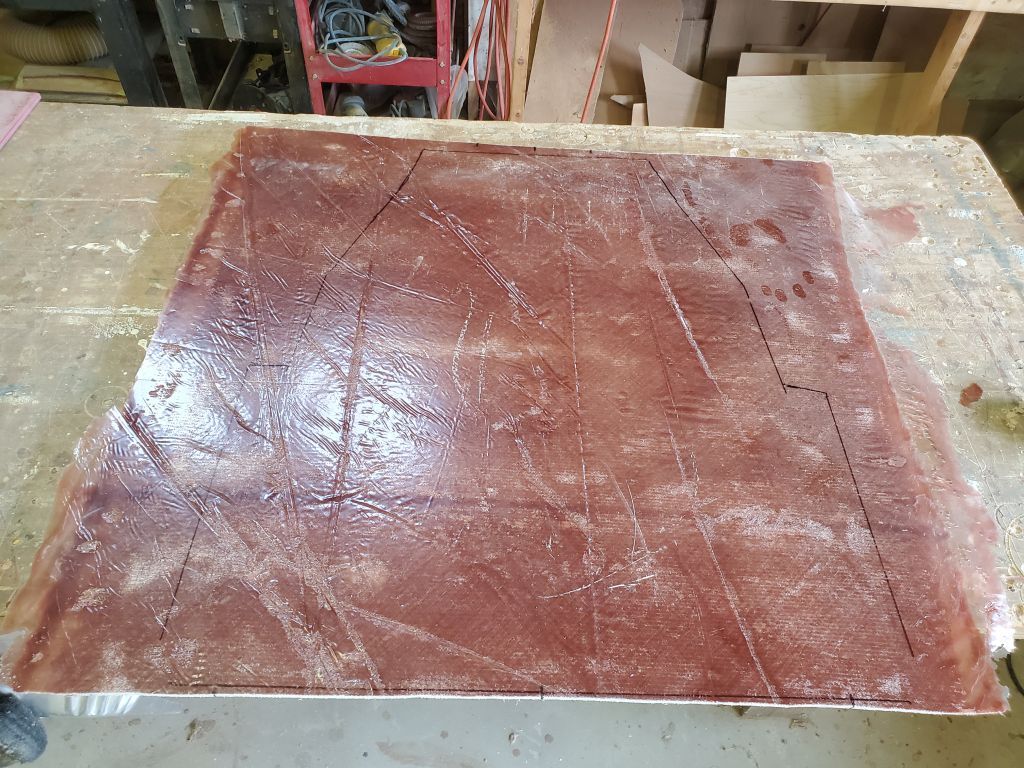
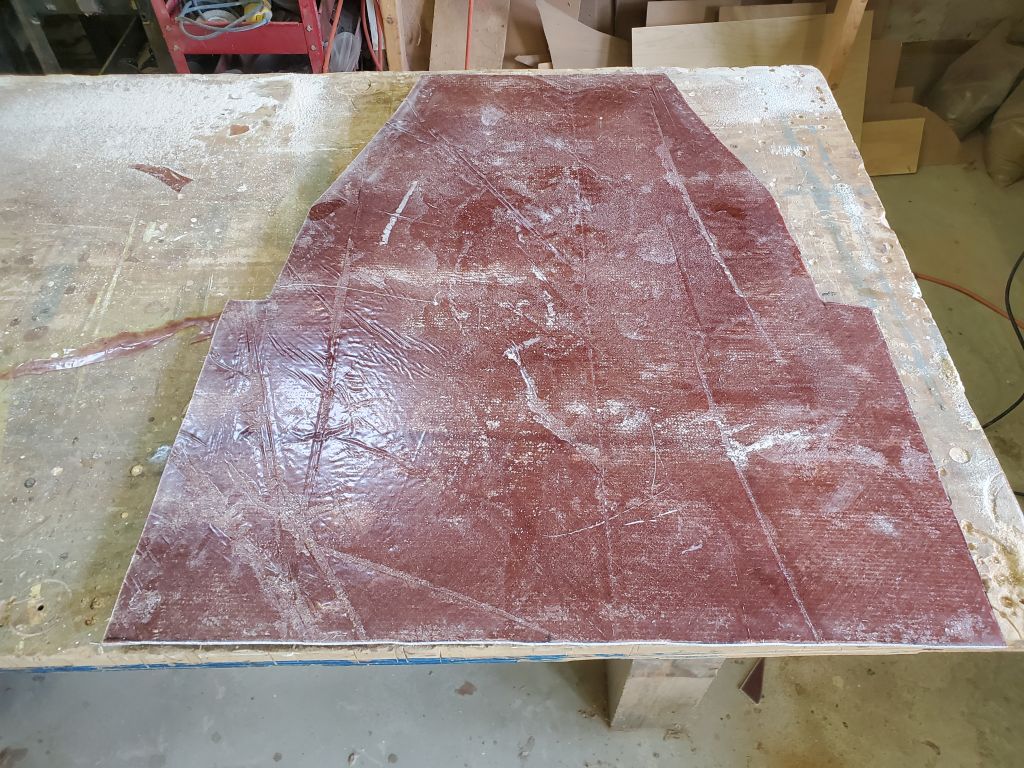
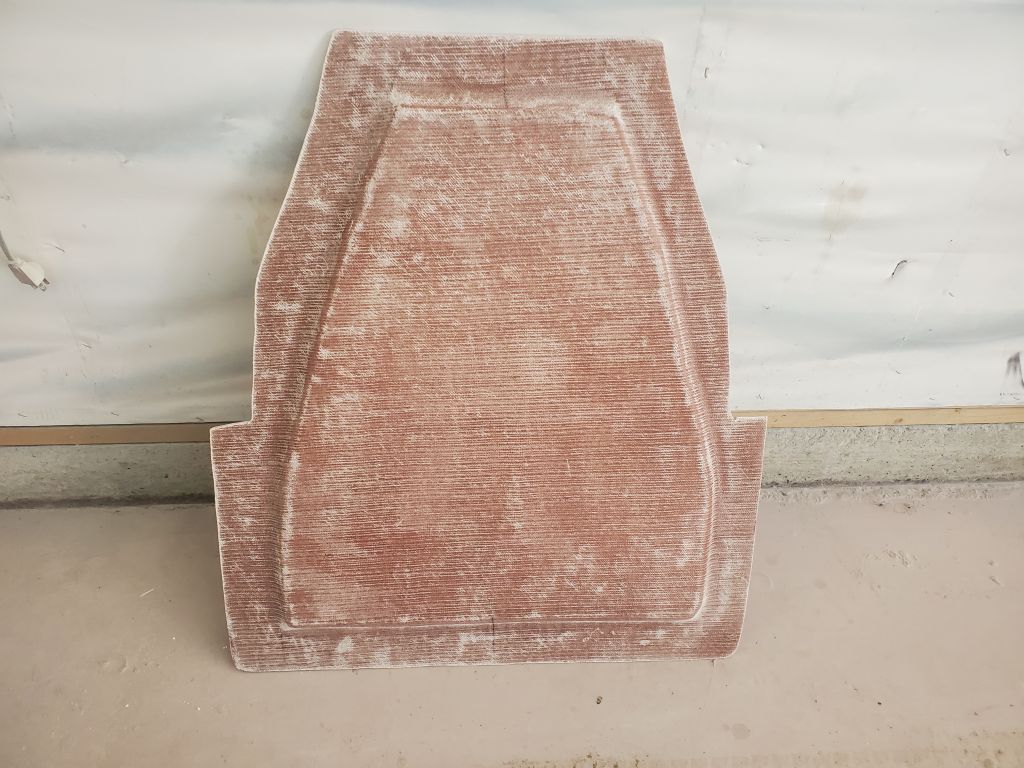
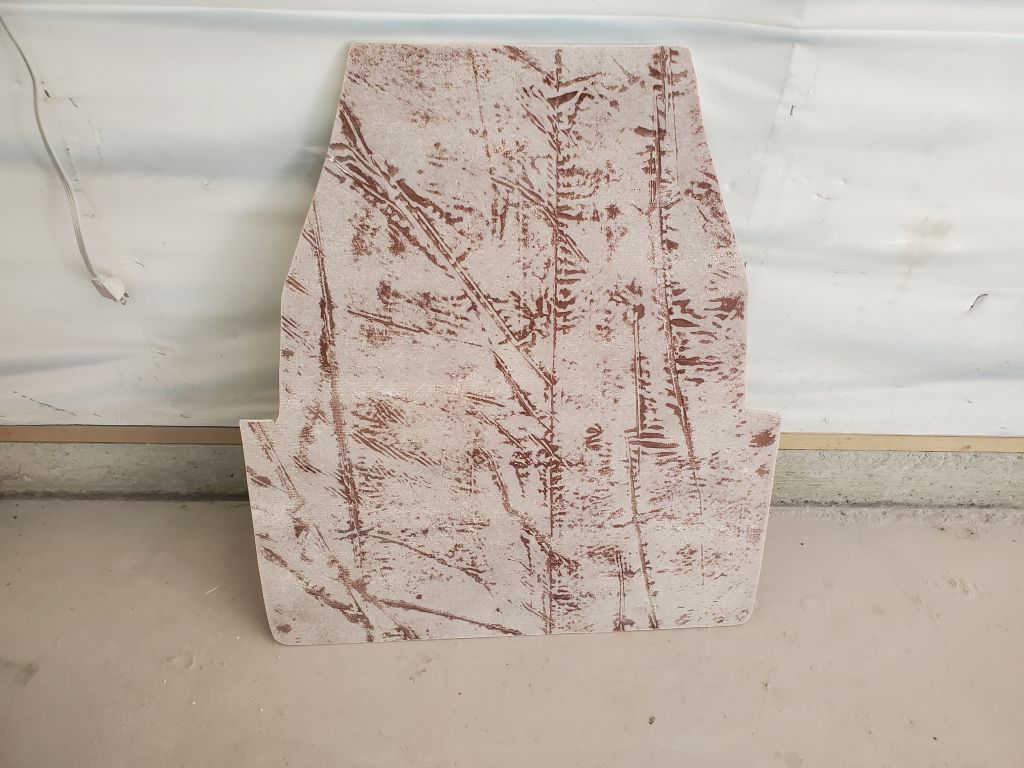
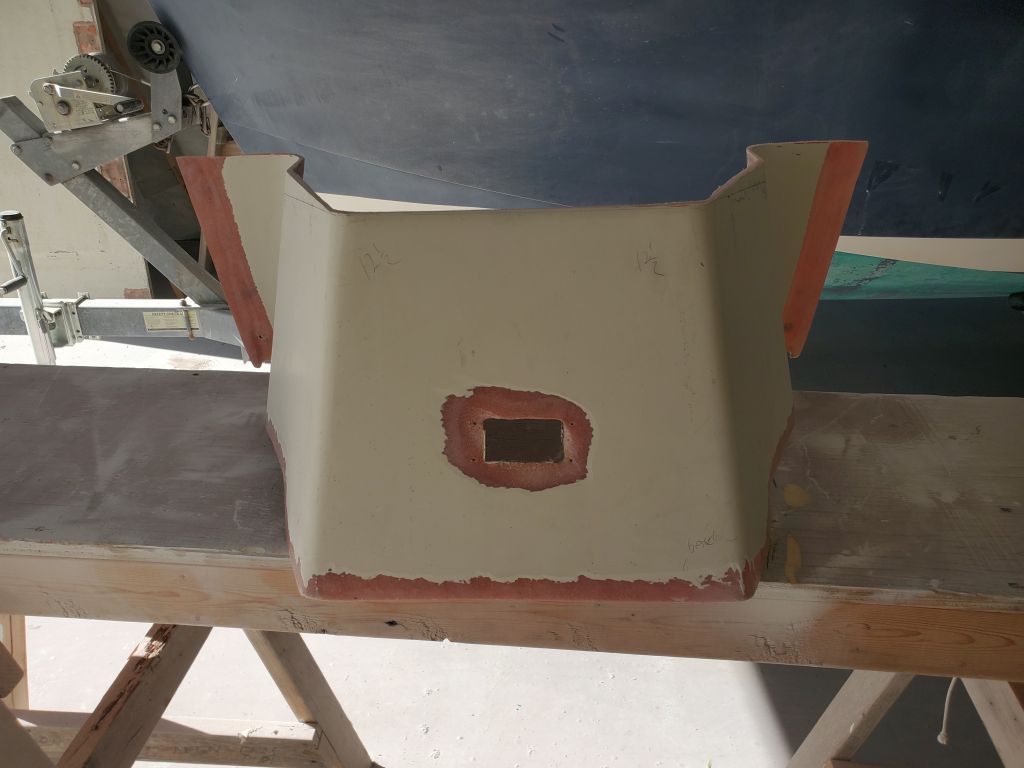
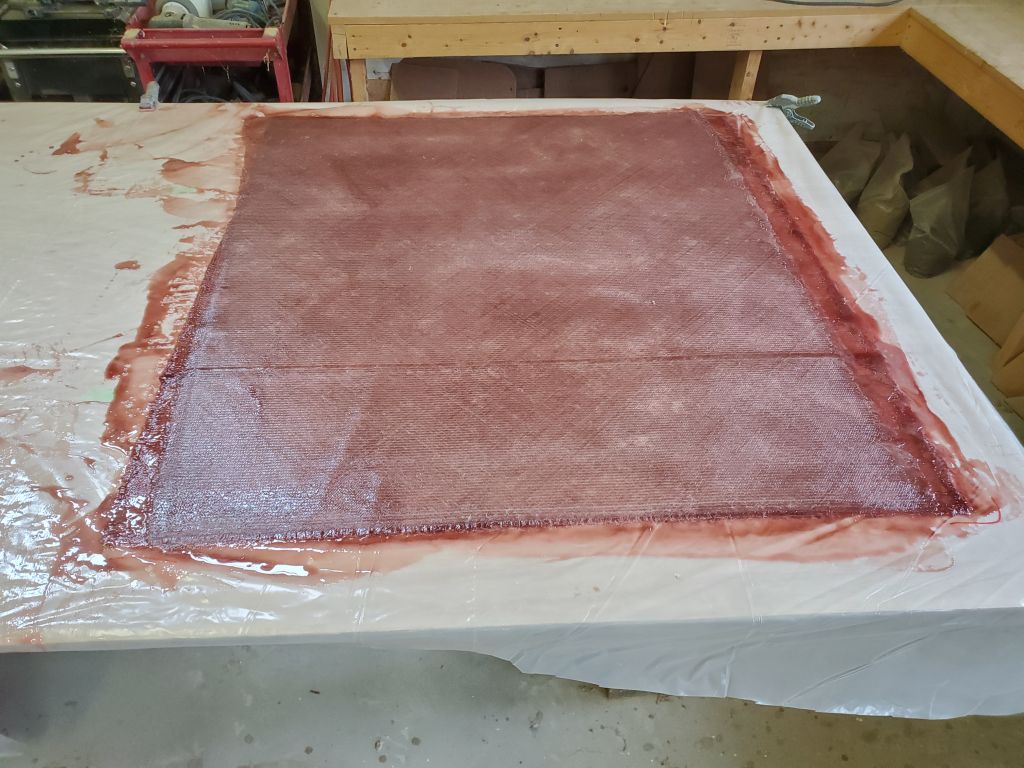
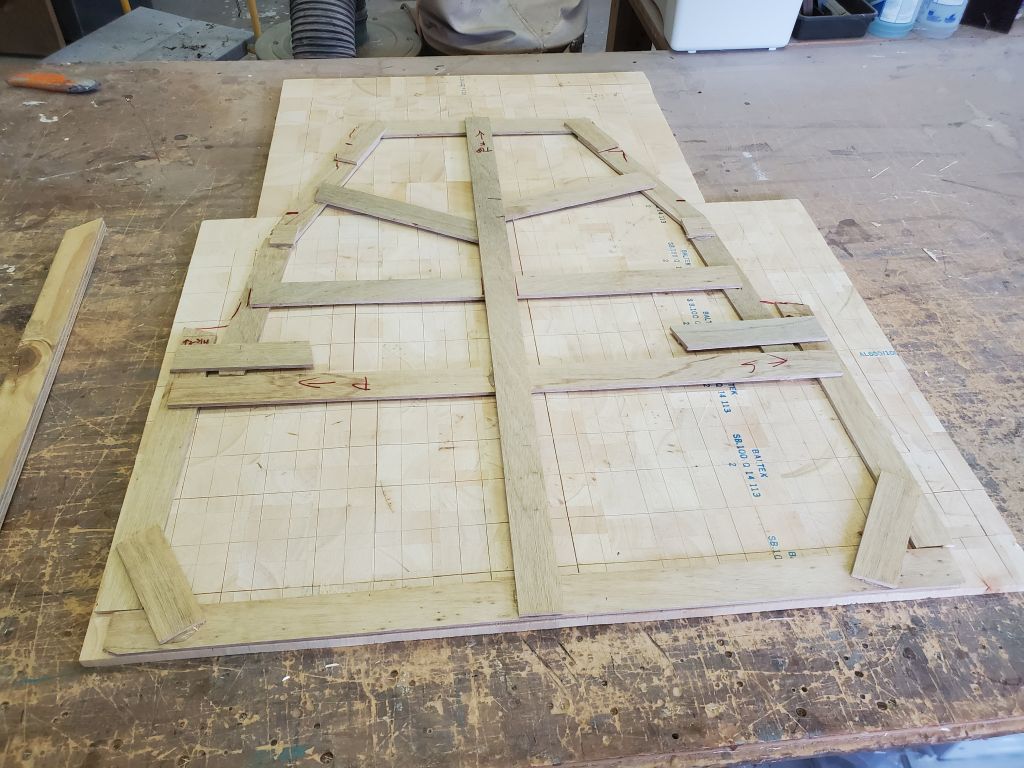
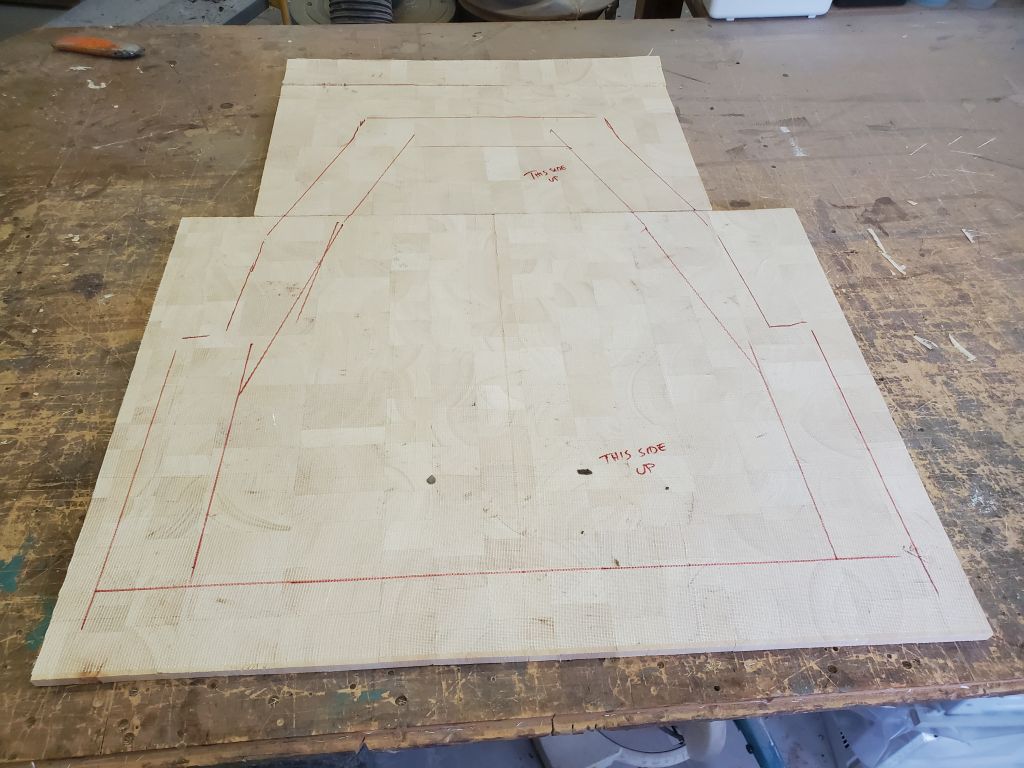
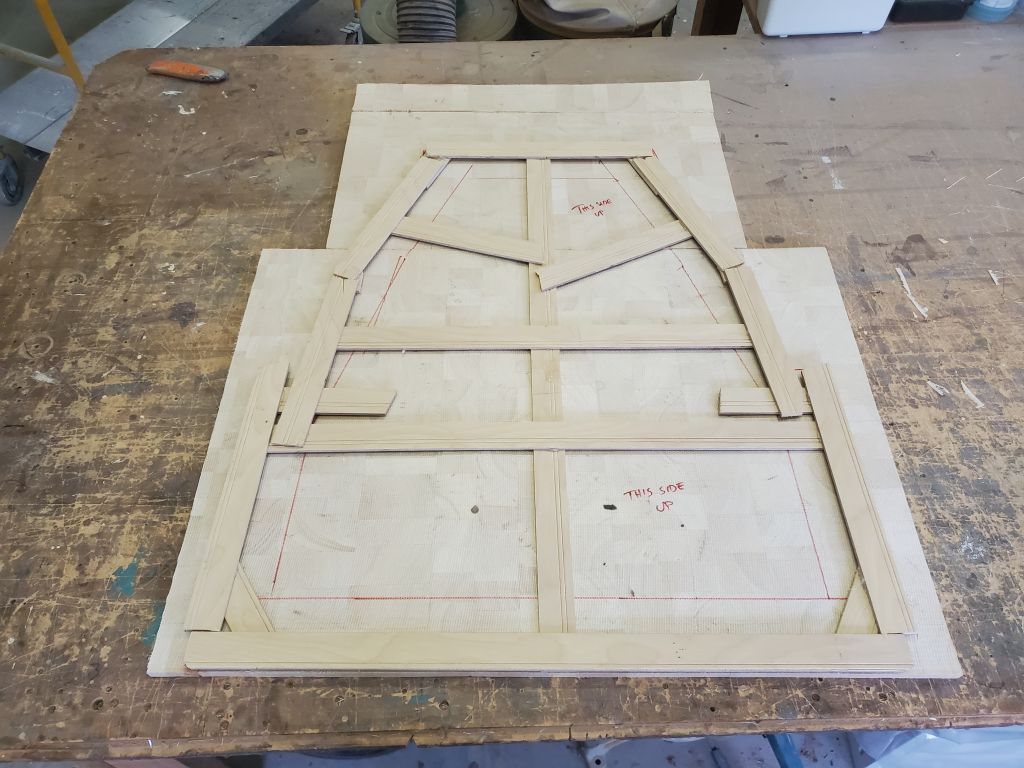
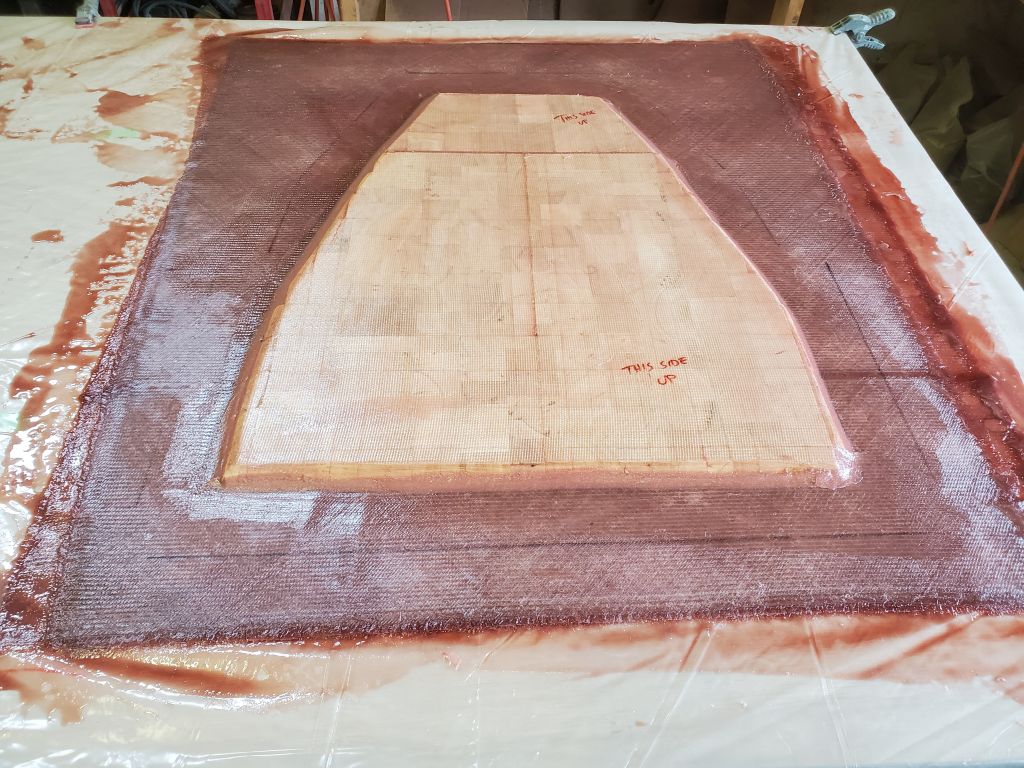
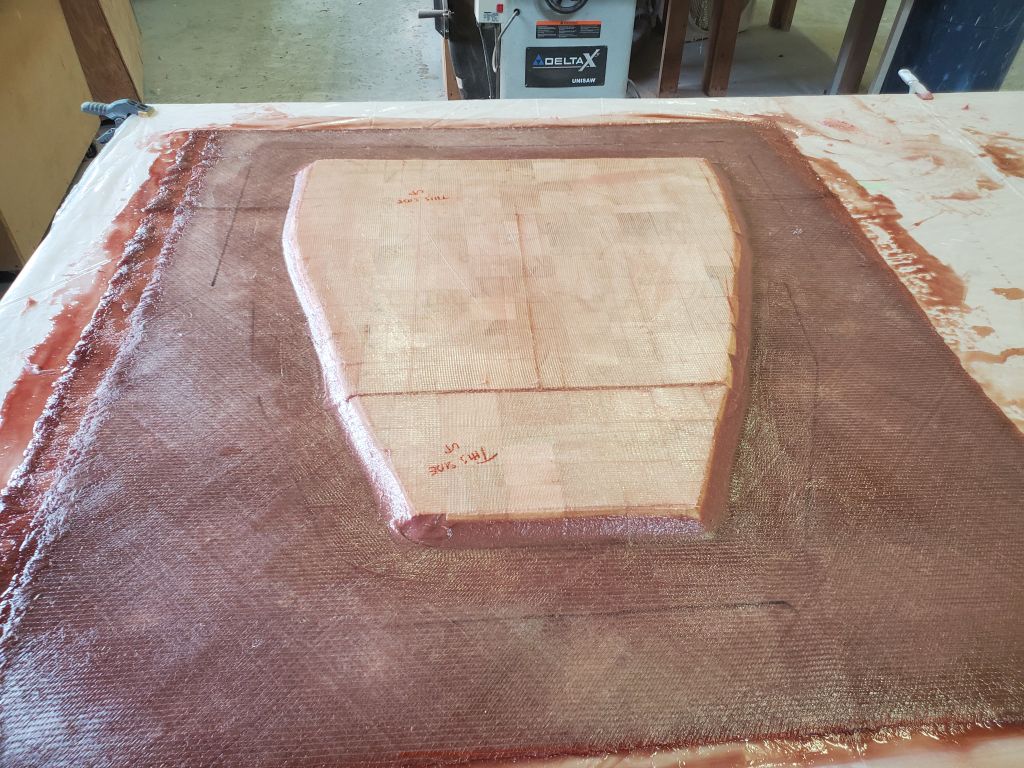
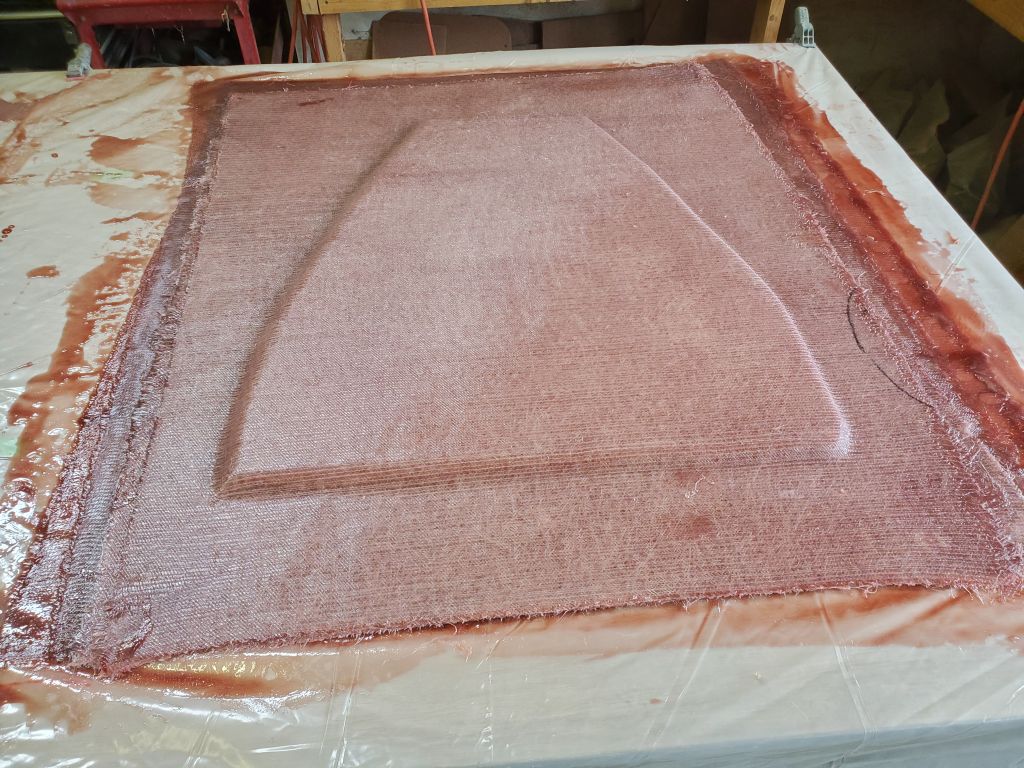
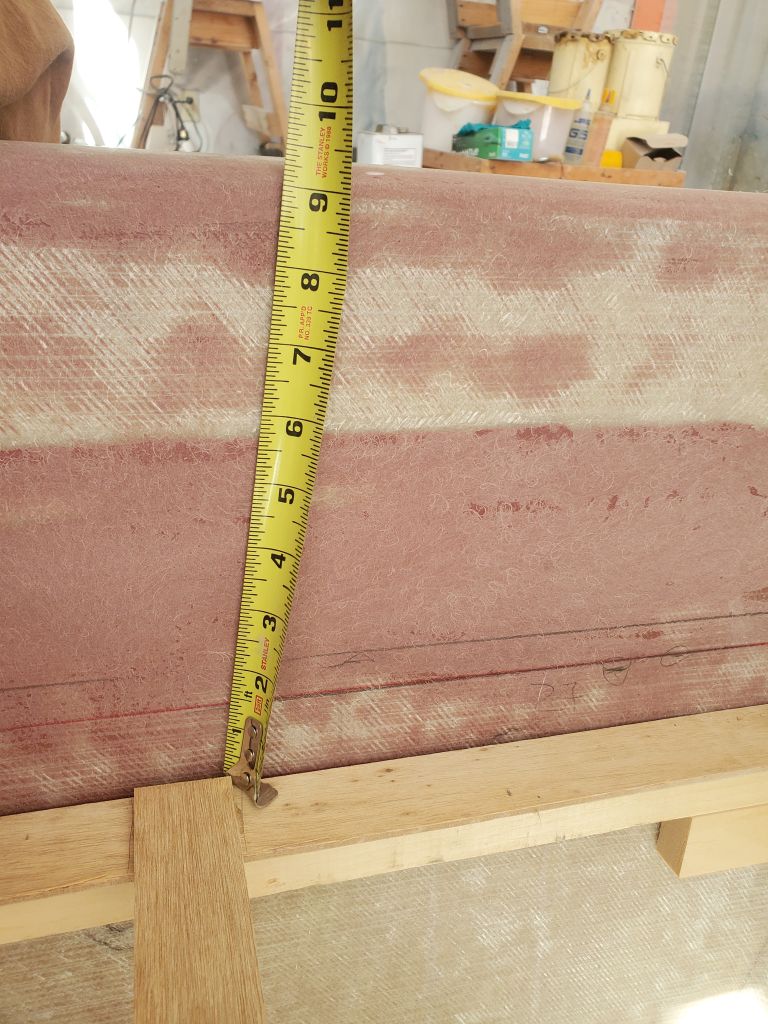
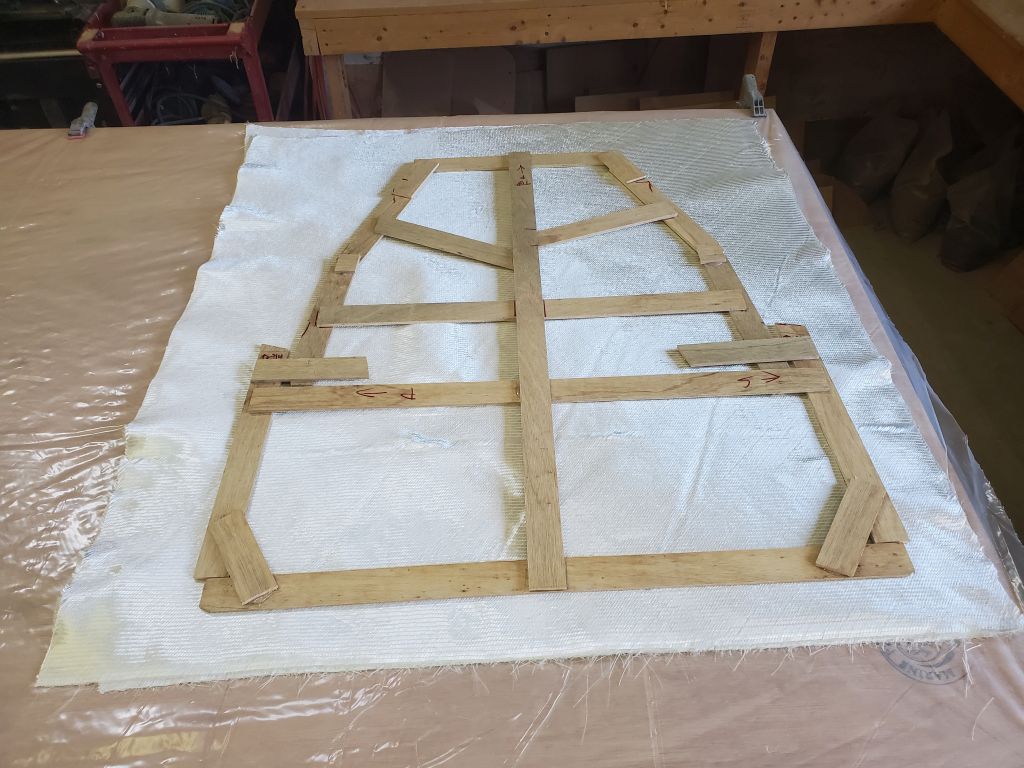
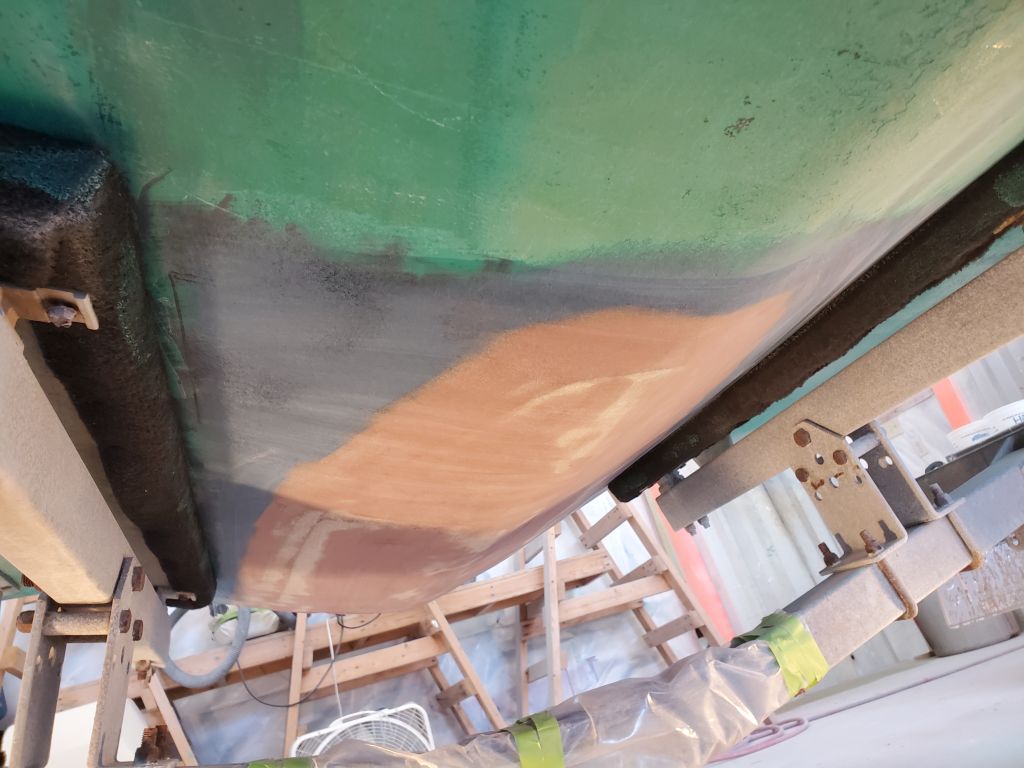
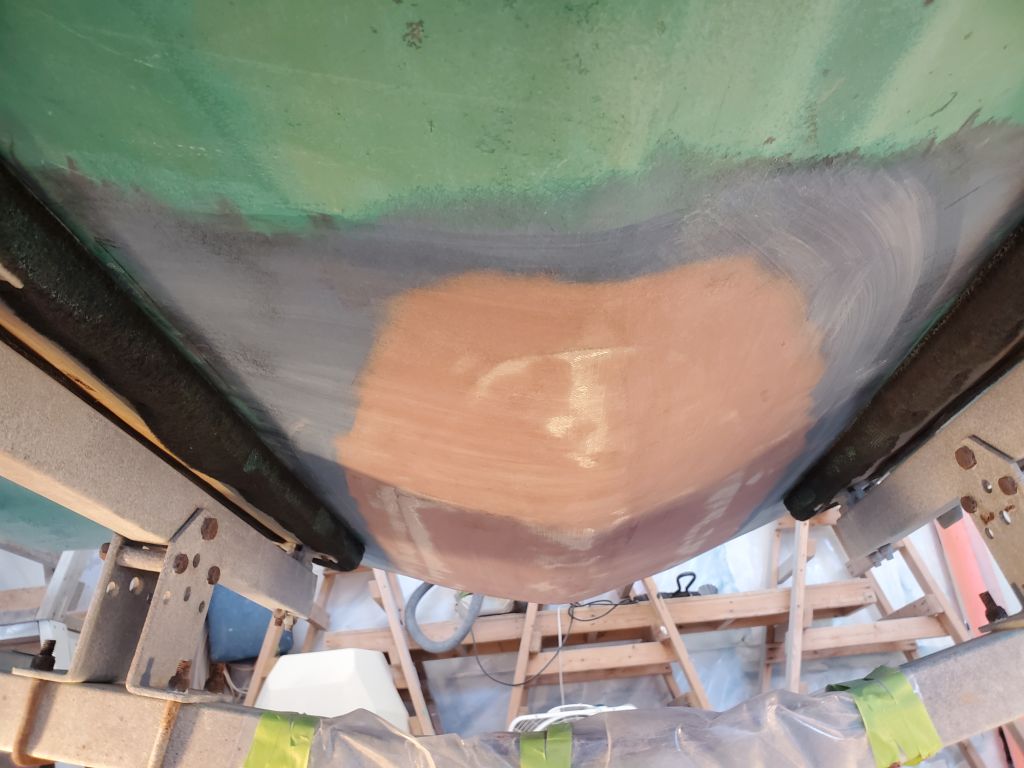
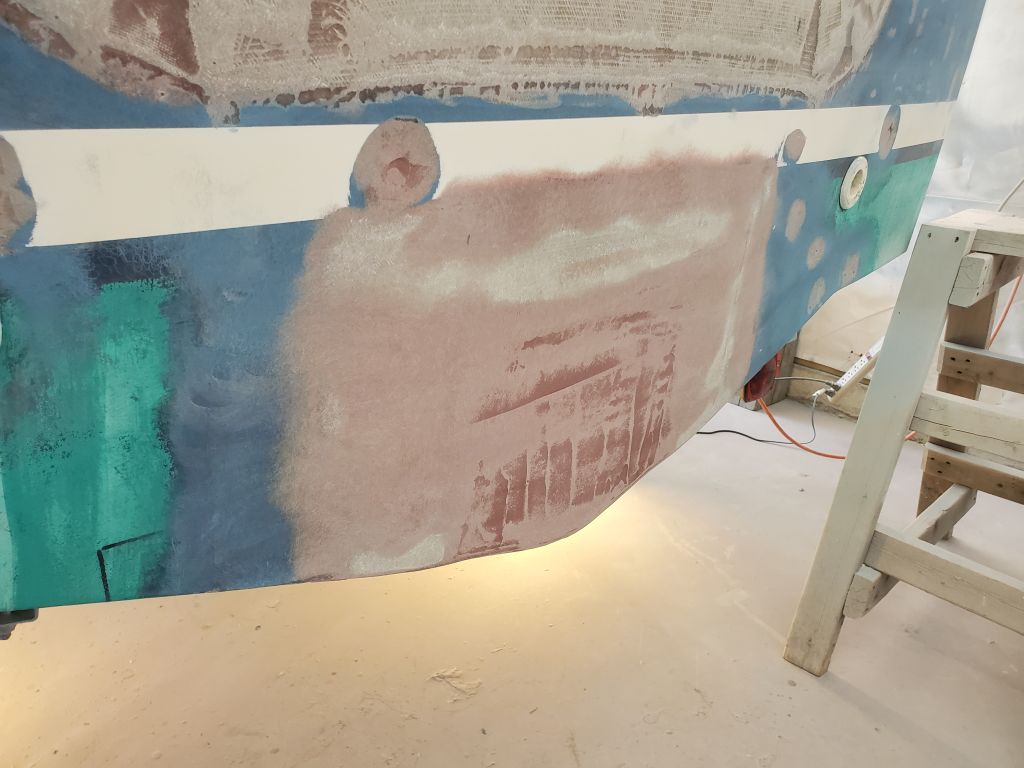
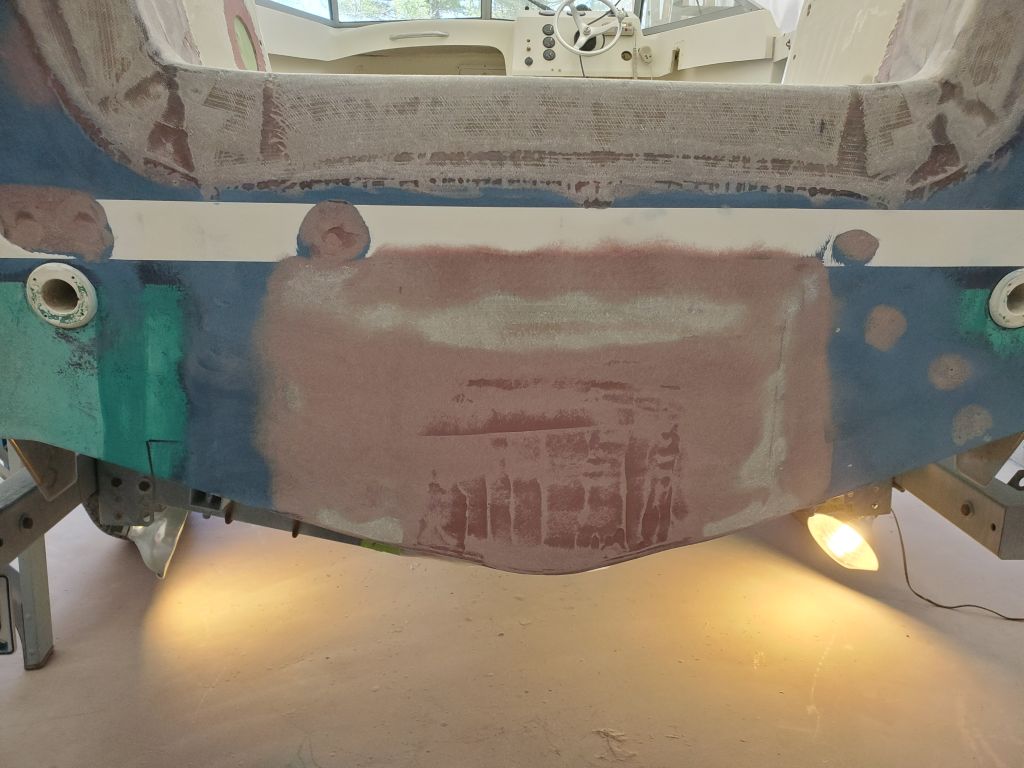
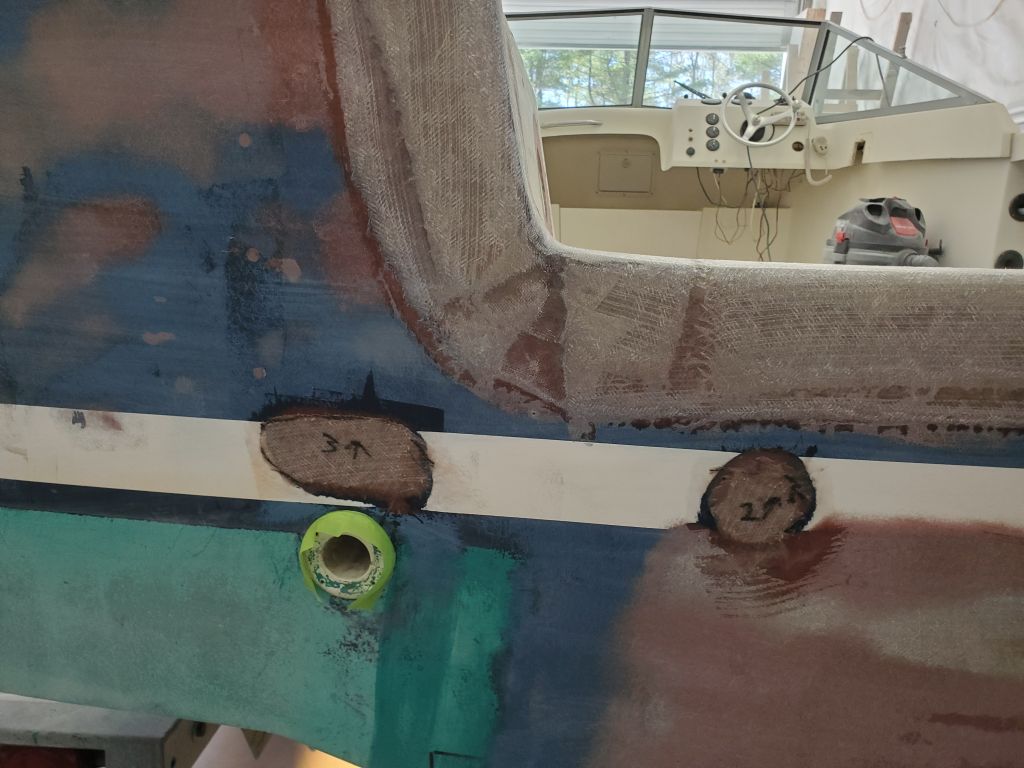
After cleaning up, I prepared a pattern of the remaining fiberglass patch required on the bottom, which would extend from the transom (where I’d set up the fiberglass with a series of 3″ steps between layers to allow for overlap) forward to a point just ahead of the area formerly known as the flat, and which new layers would extend out onto the hull several inches on each side to complete the tying in of the repair work with the existing hull.

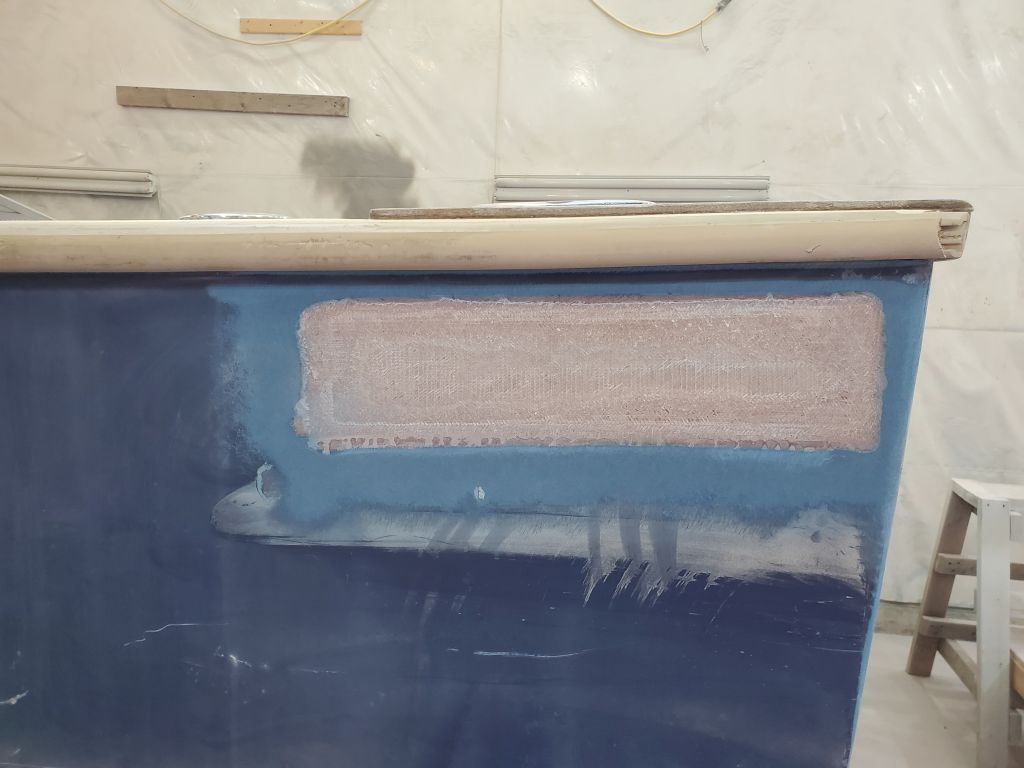
Because I’d never be able to handle such large pieces overhead, I divided the fiberglass into two manageable sections:  The first extended from the new transom glasswork to a point 9″ forward of the old tunnel location; the second section finished off the laminate from there.  In each case, subsequent layers were staggered and overlapped by 3″.

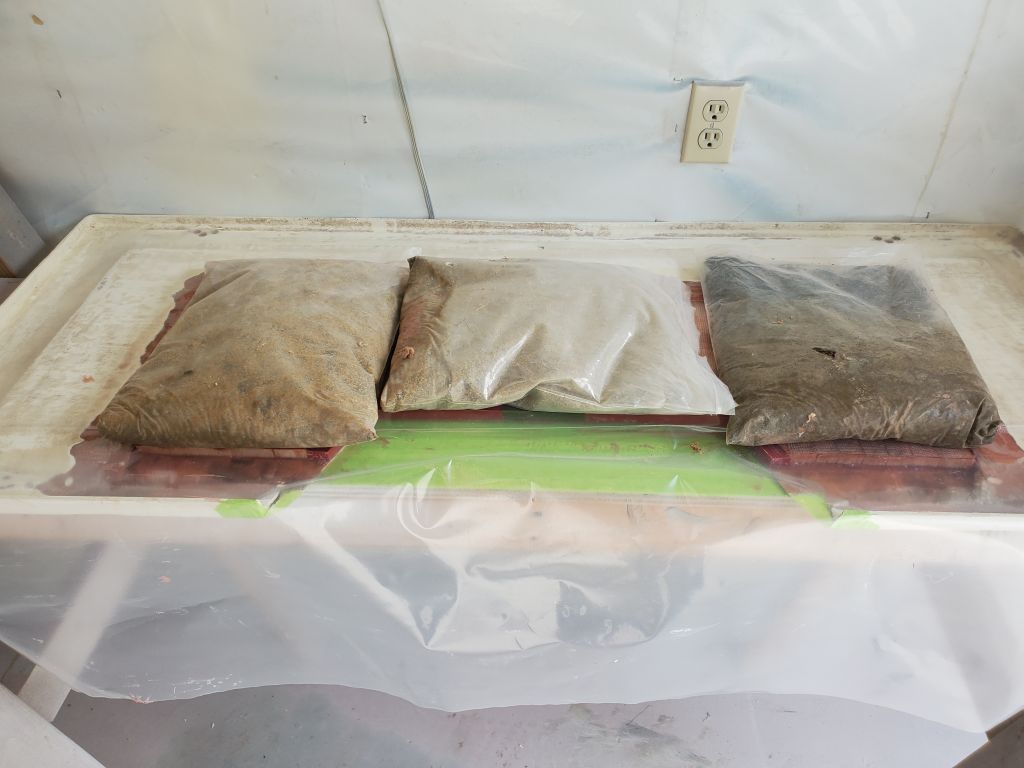
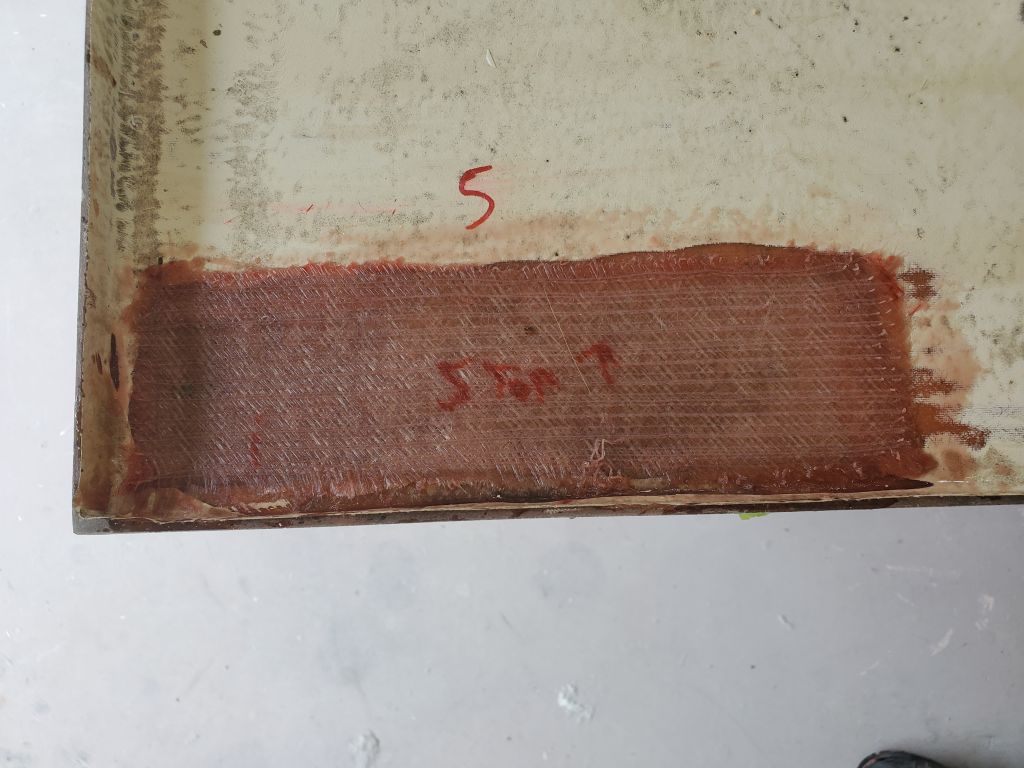
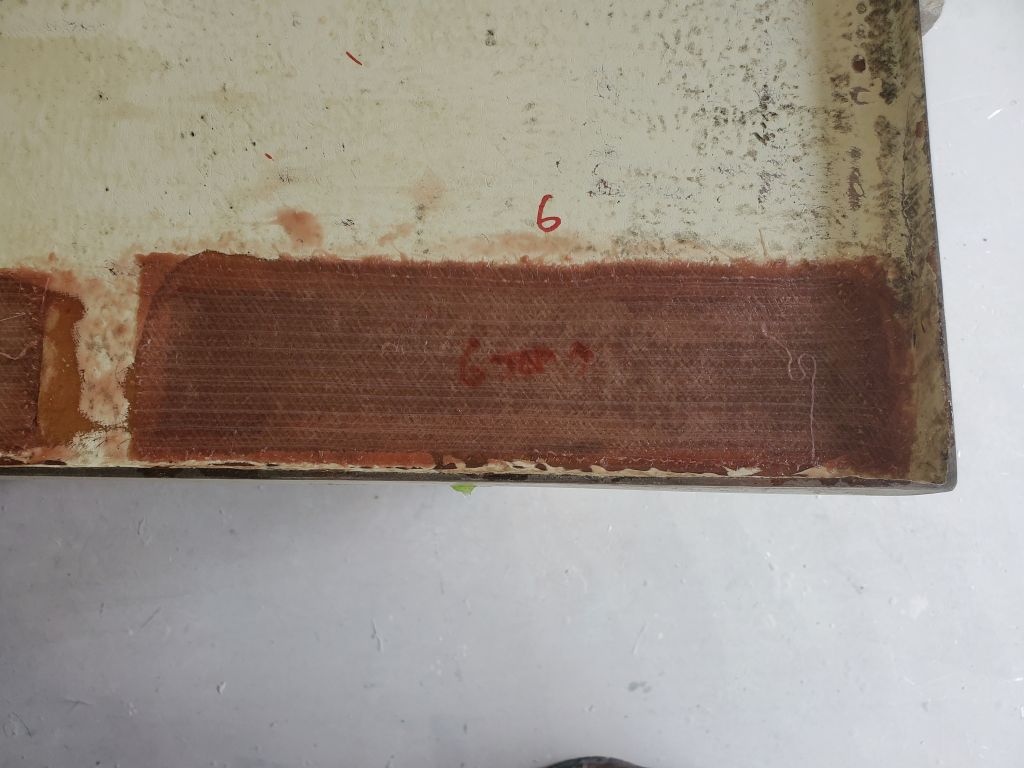
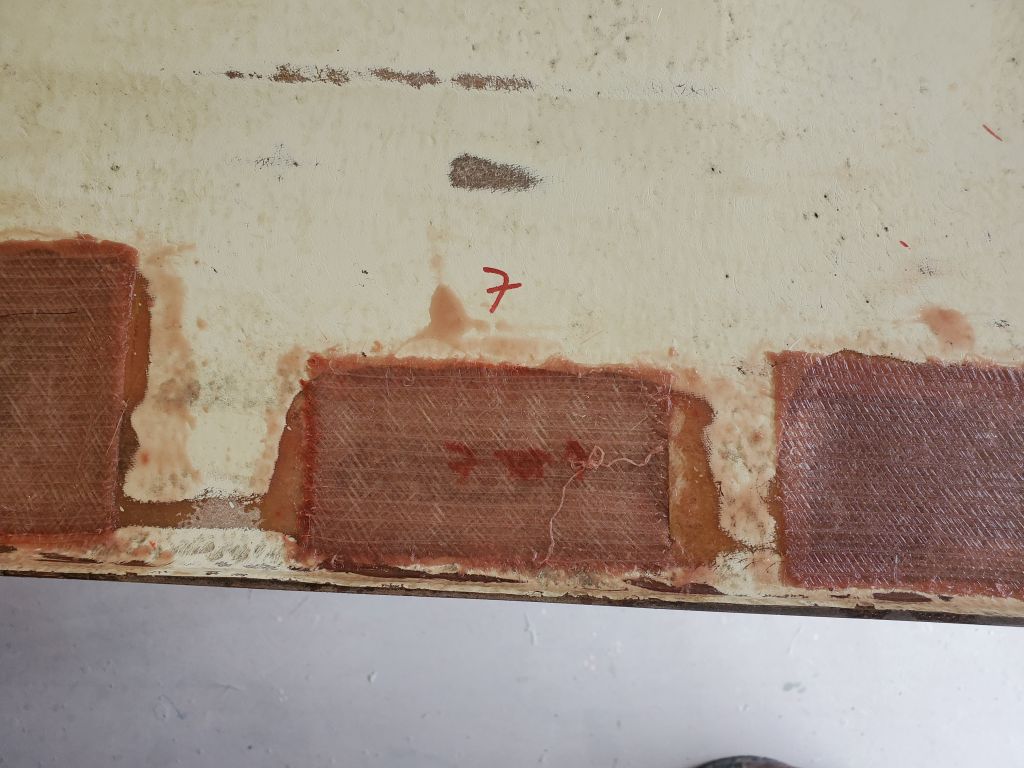
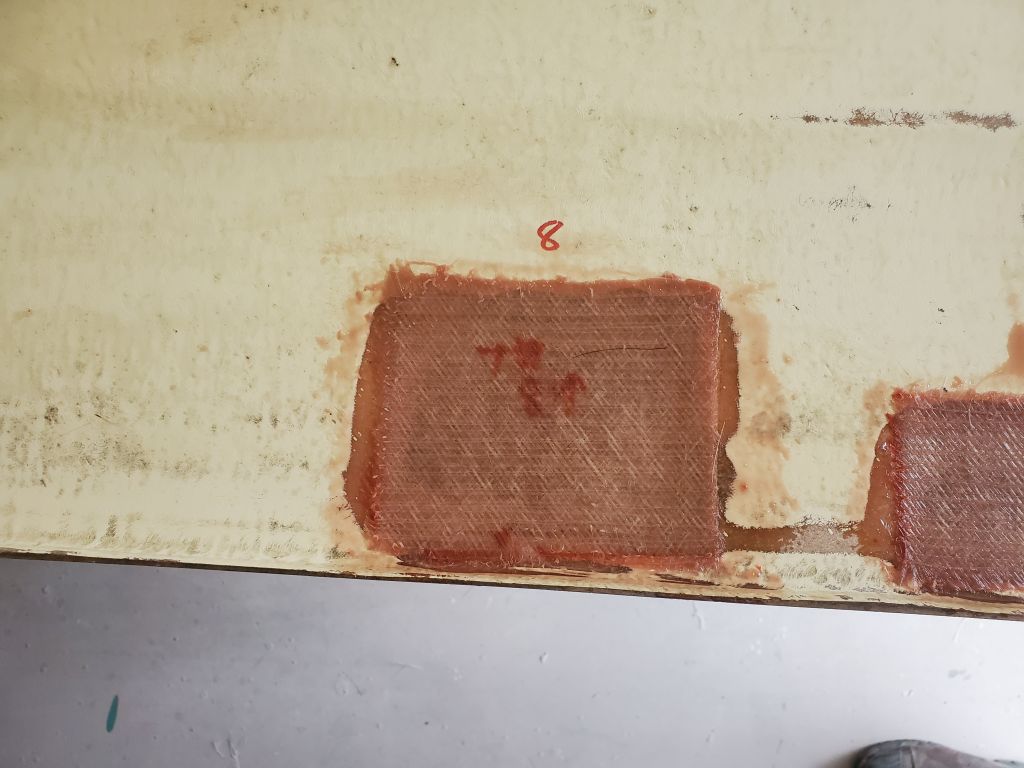
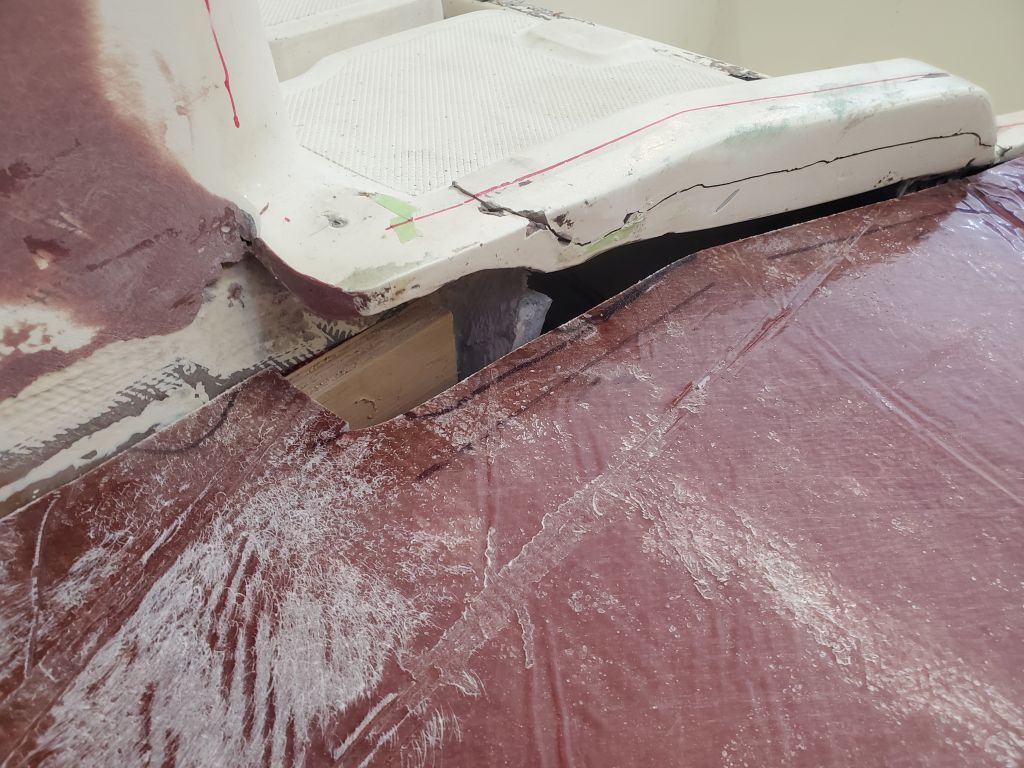
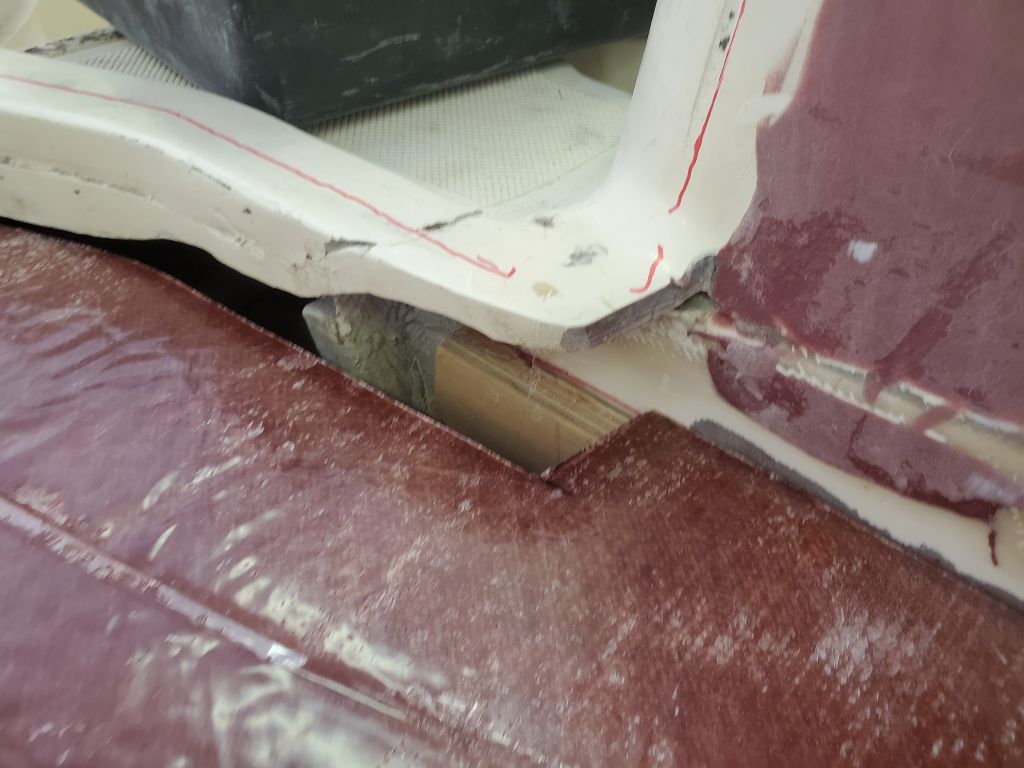
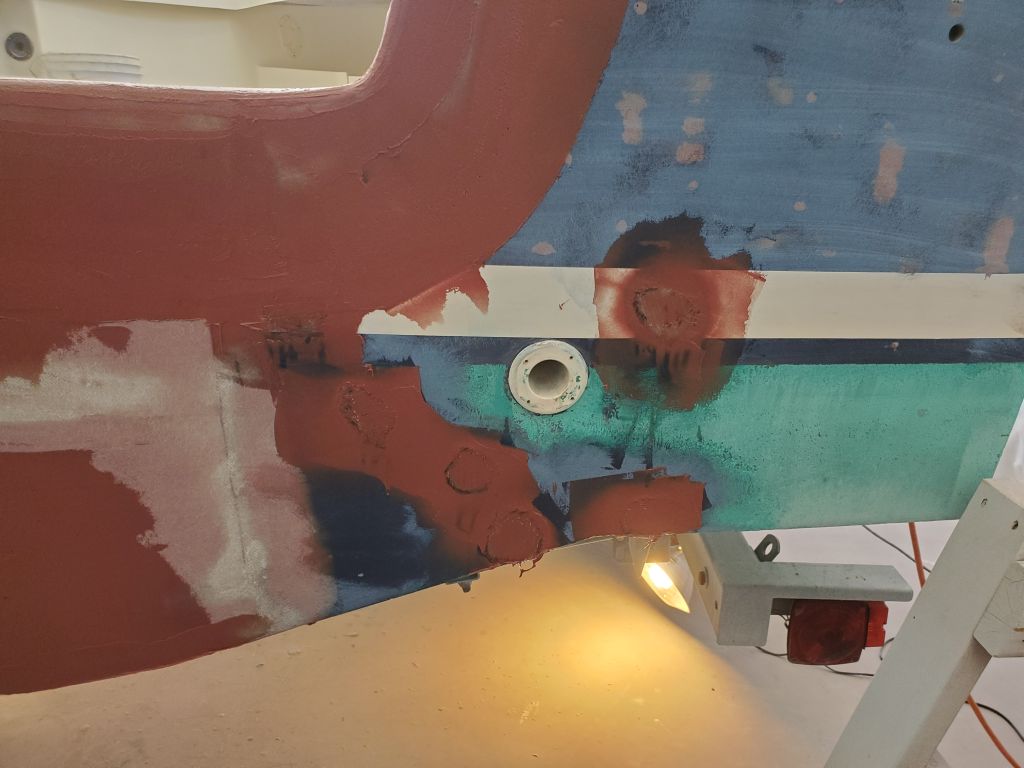
After final preparations, I installed the six new pieces on the bottom, completing the major fiberglass laminates of this repair.

To complete the day, I applied a first round of epoxy fairing filler over the vertical part of the transom repair, filling the cloth weave and low areas, and filled a small void beneath the new fiberglass on the transom cutout, bringing it flush since the cut had been rounded over before I applied the new layers.

Holby 22

After a light sanding and other preparation at  the forward vee portion of the repair, I applied a second round of fairing filler to take care of t he low spots left by the first-round troweling.  These efforts were designed to recreate the basic shape of the previously-flat spot on the hull, and with the second round it appeared close to the final shape needed before I could fiberglass over the whole area.

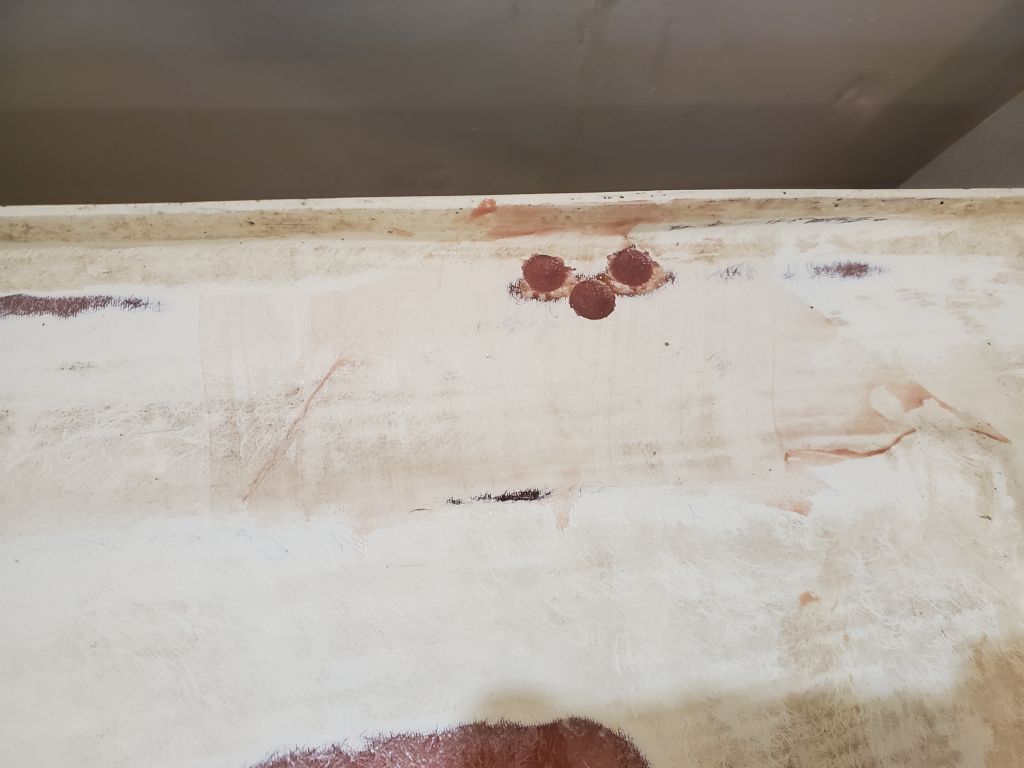
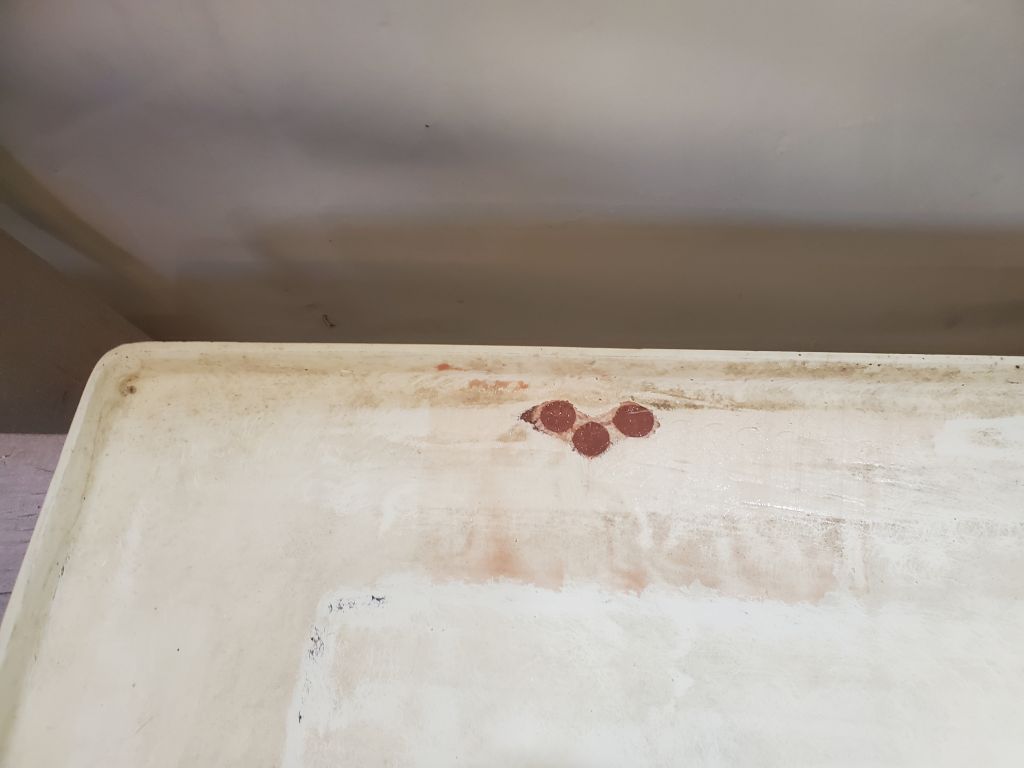
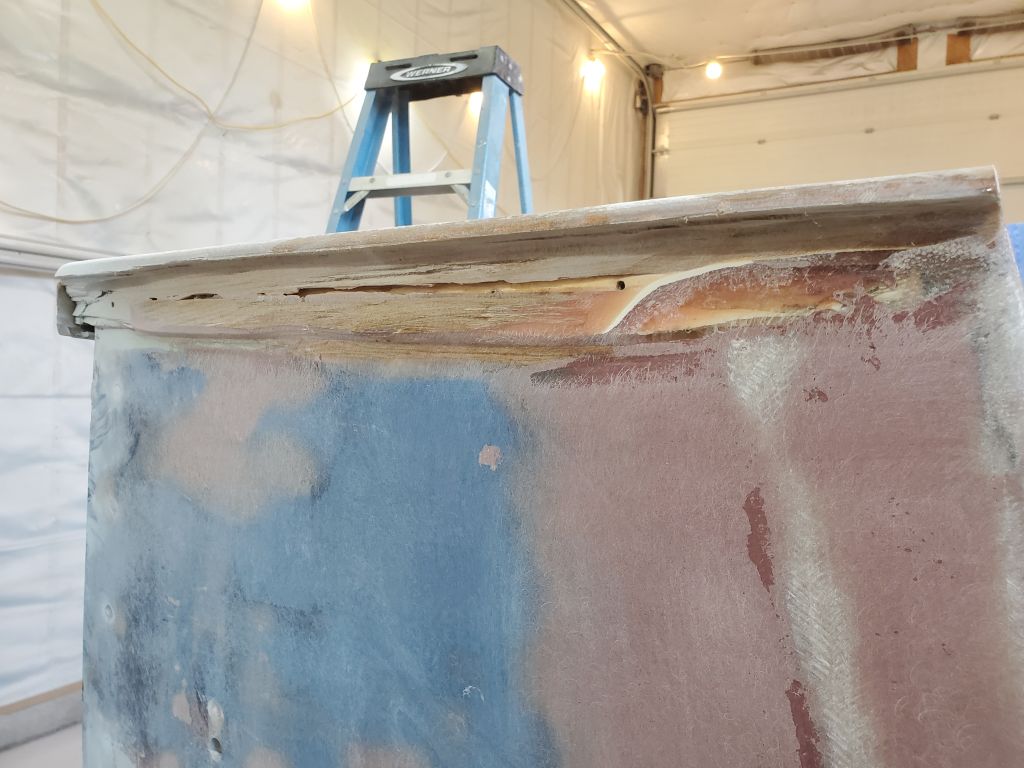
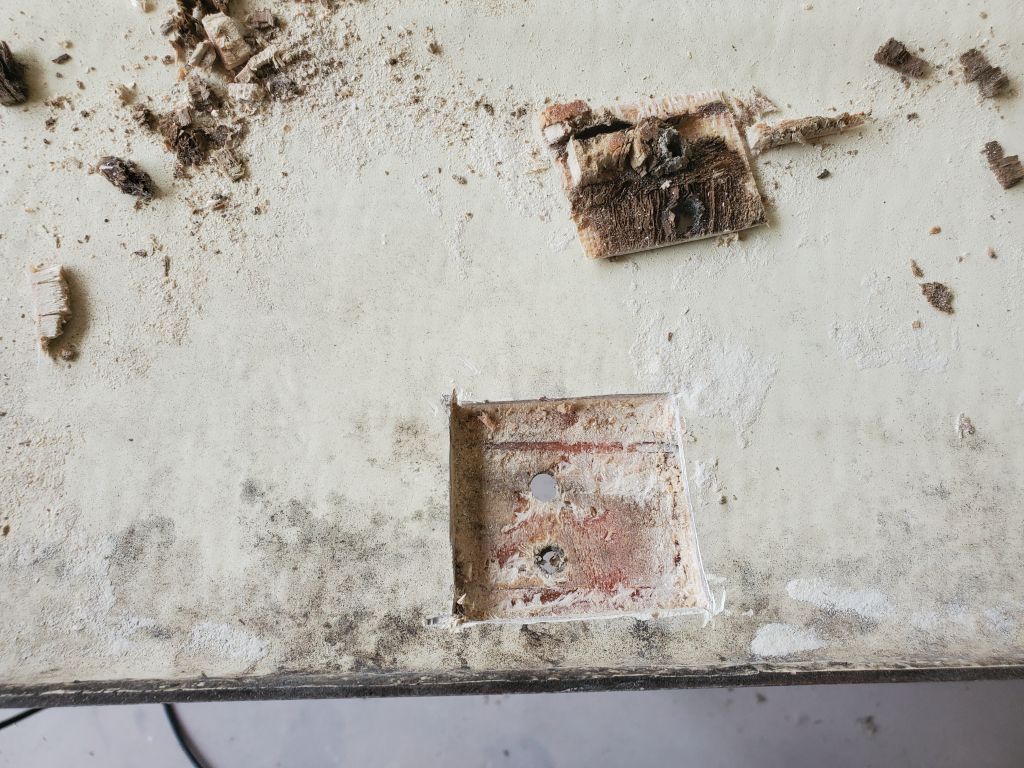
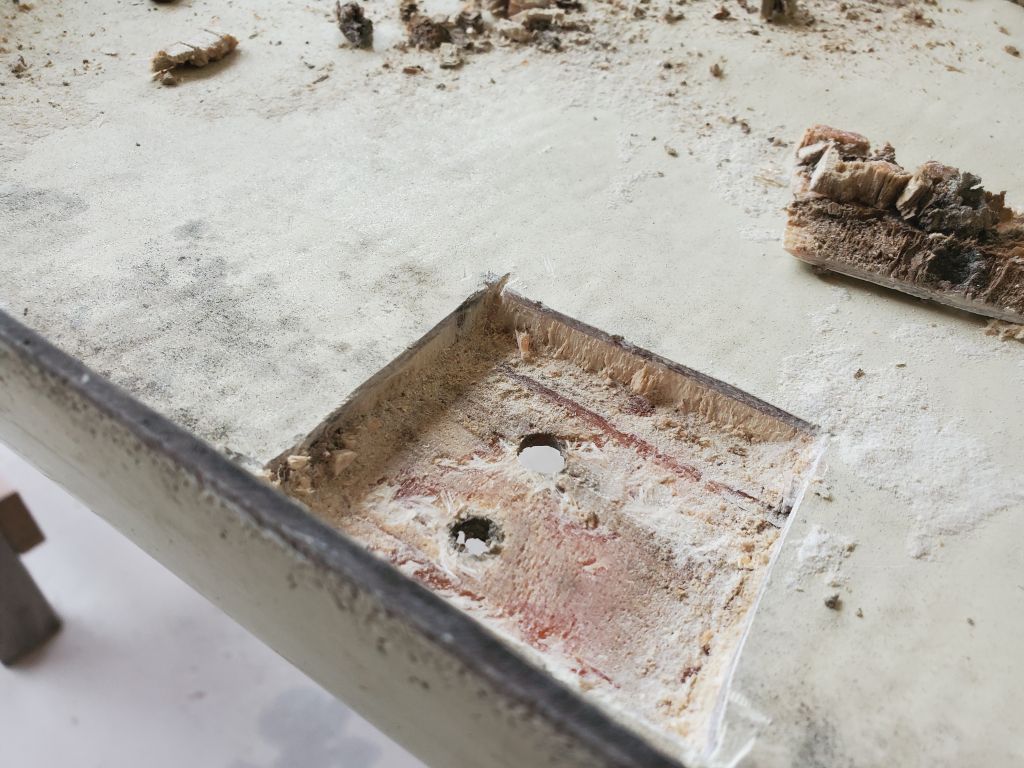
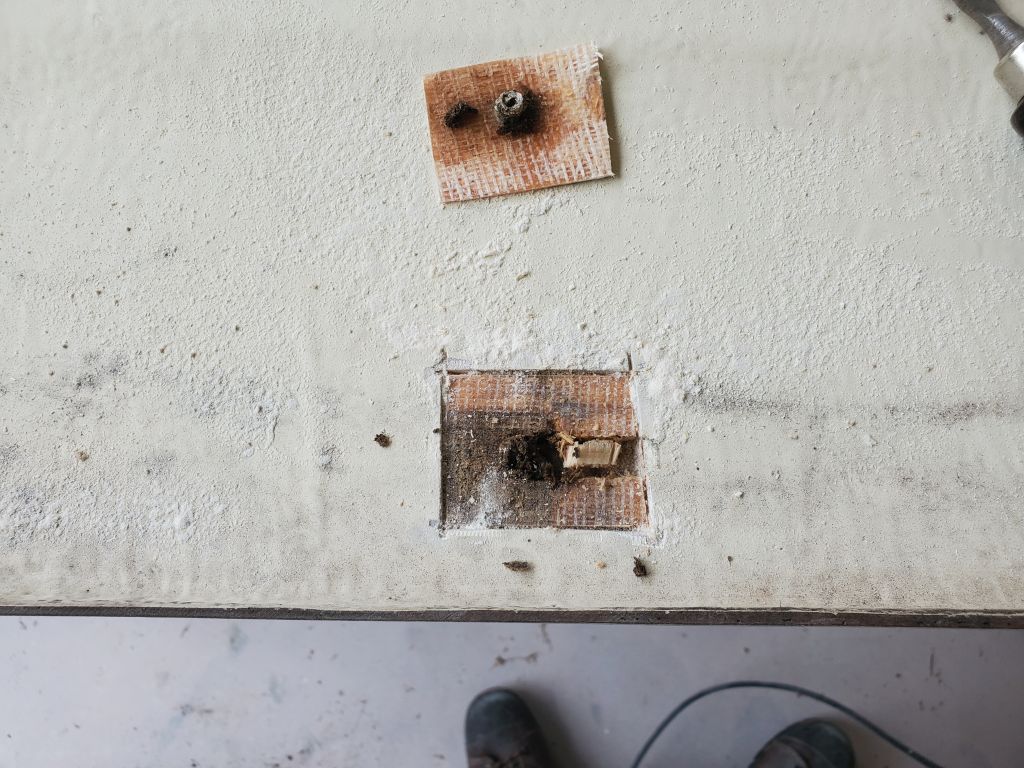
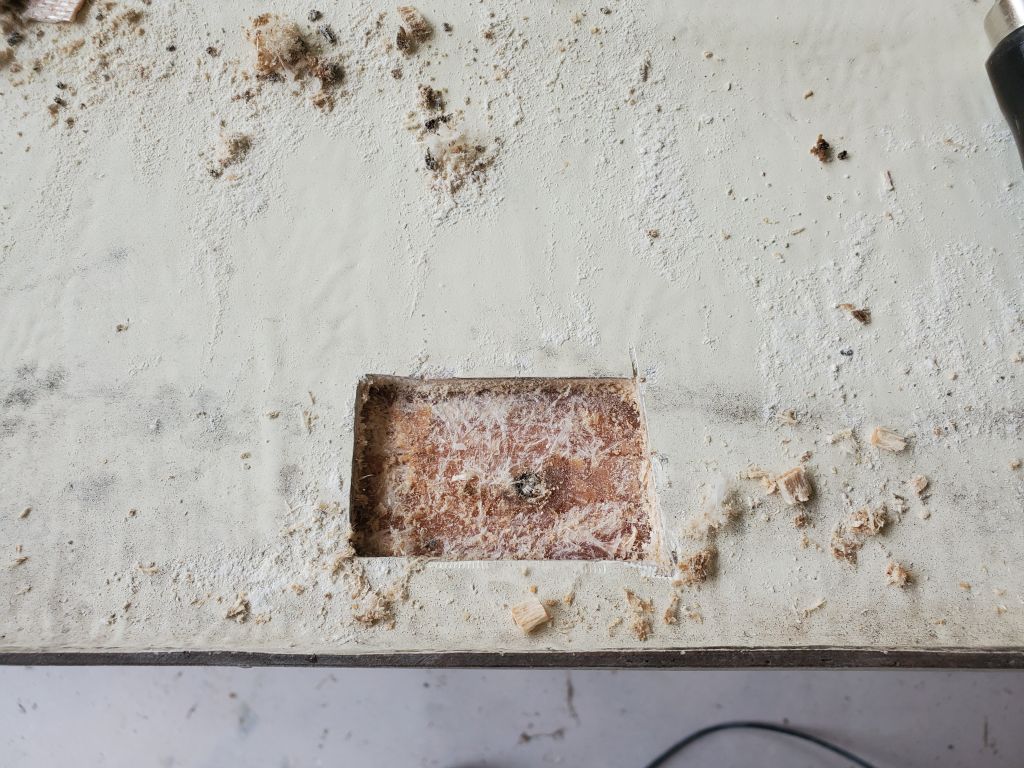
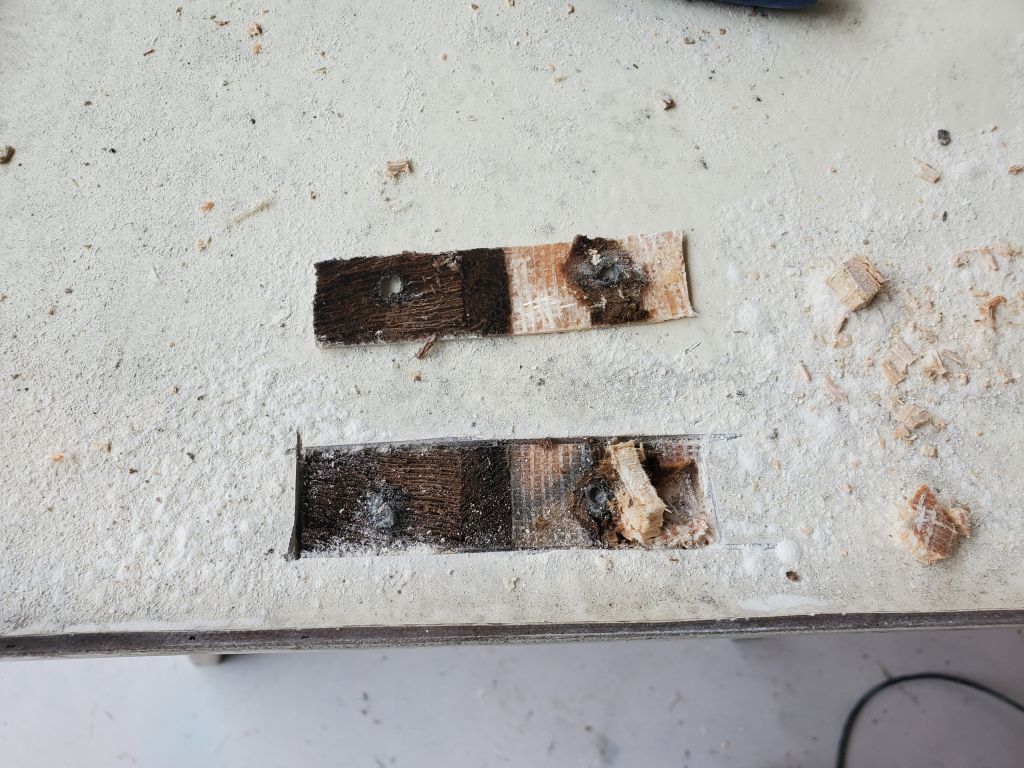
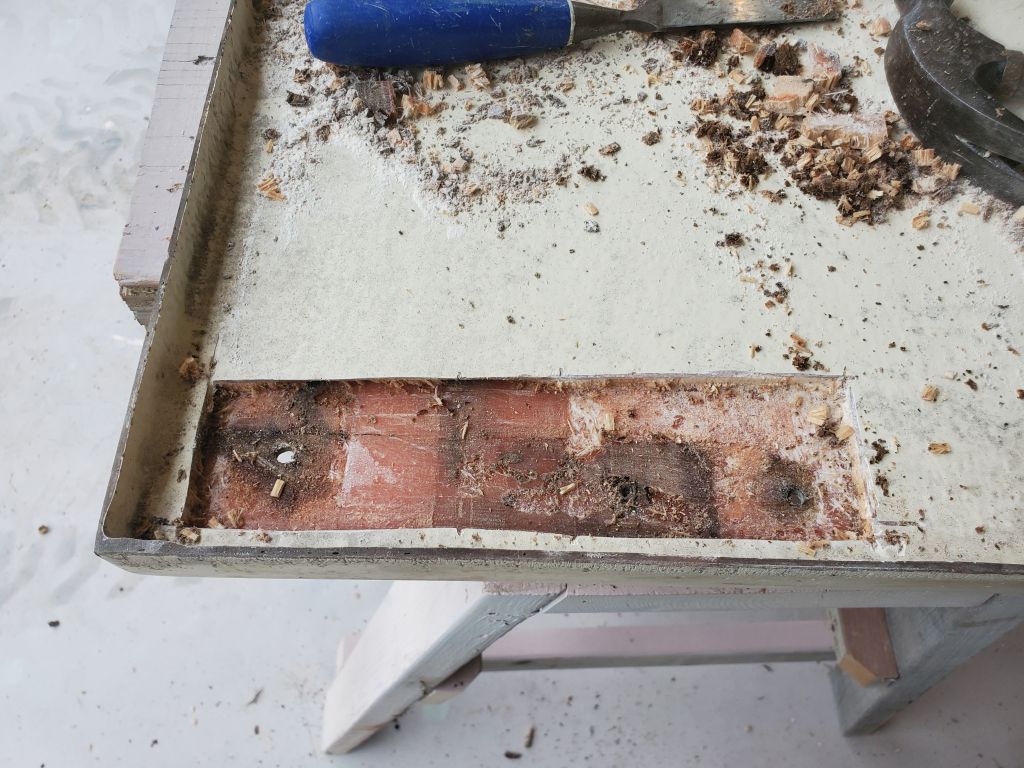
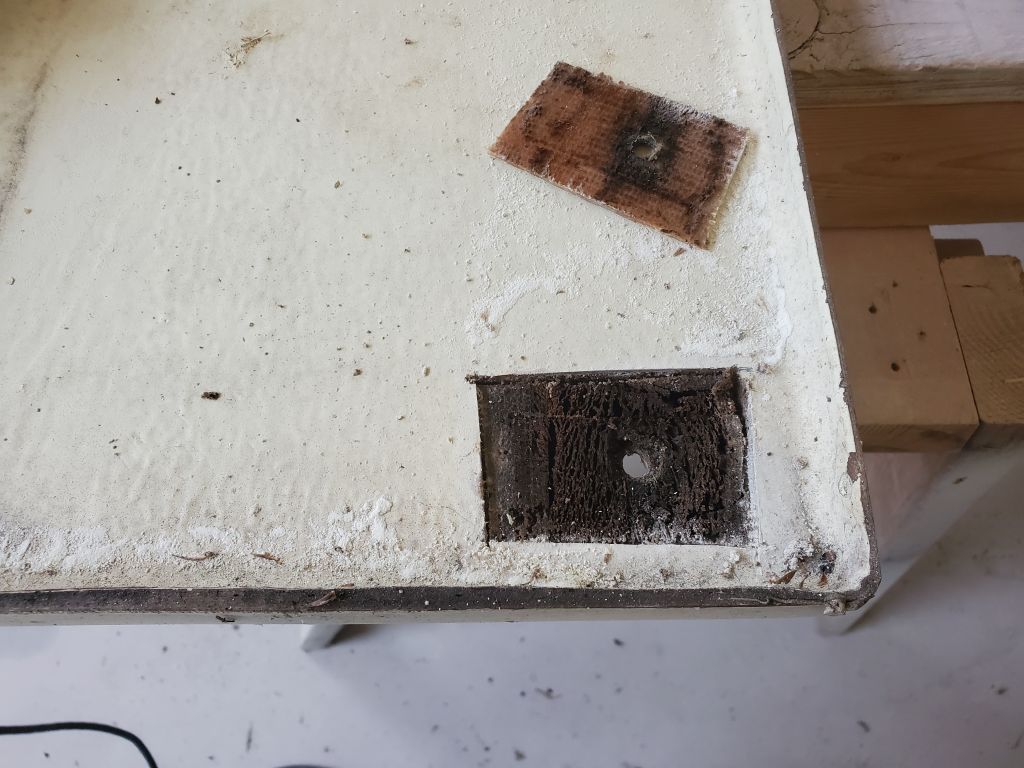
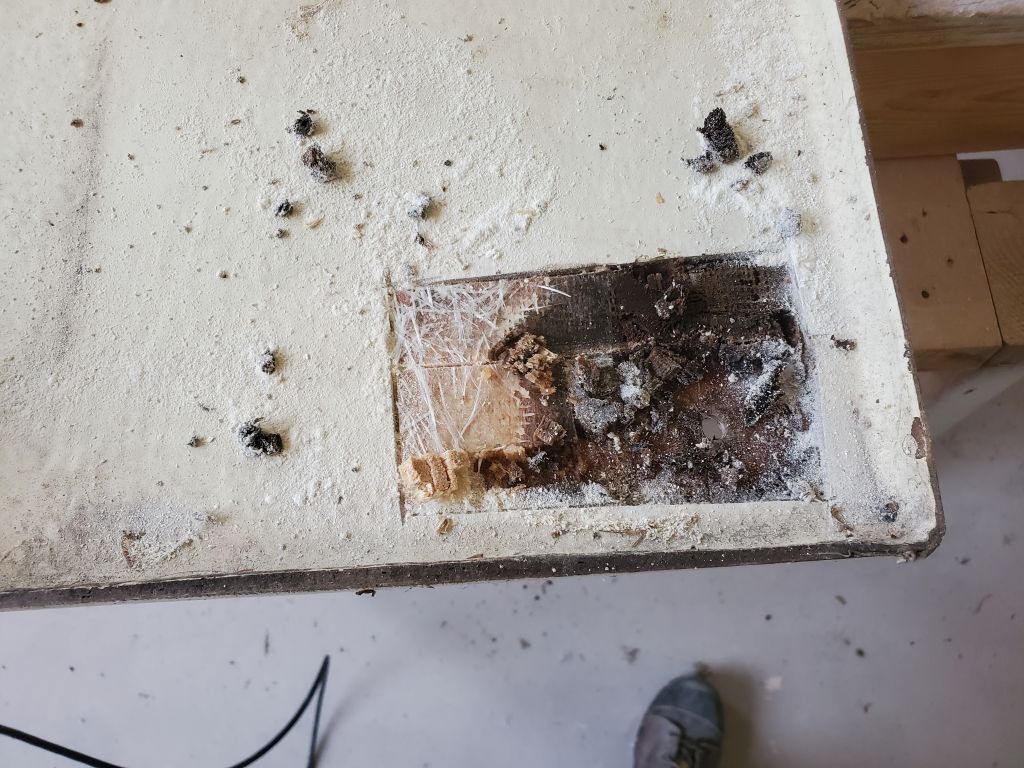
I had some fairing compound leftover, so I applied it to portions of the transom that were damaged during the wood veneer removal.

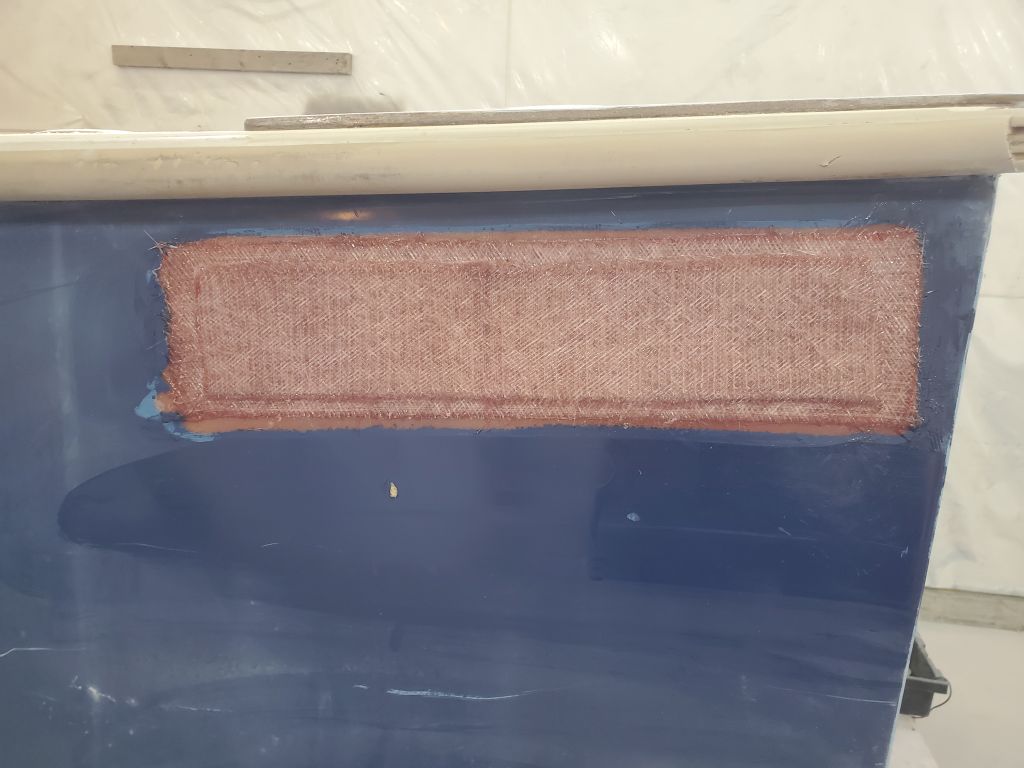
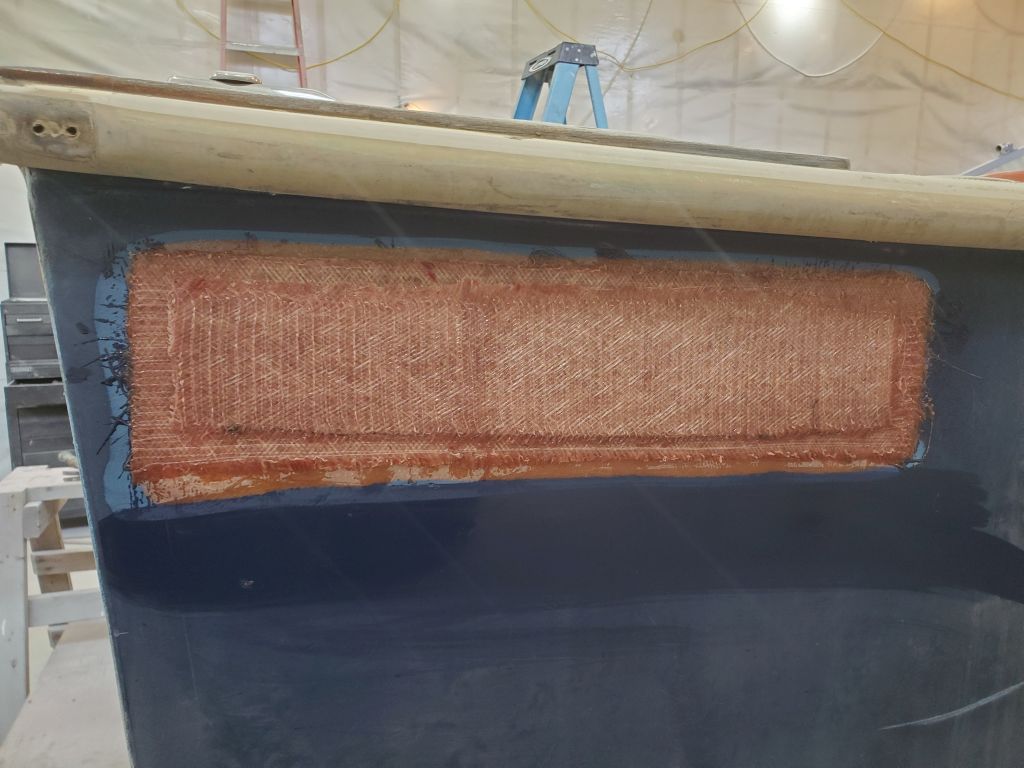
At the transom, I’d hoped to laminate three layers of cloth over the entire vertical transom repair, and overlapped 9″ onto the bottom, which would allow me to offset the three layers by 3″ each to provide overlapping room for the fiberglass to continue forward over the remainder of the bottom repair.  However, I simply couldn’t make the cloth take the required shape, what with the V-shape, not without huge and unwanted darts and cutouts in the cloth, so I changed my plan to one that would work.  I kept the 9″ overlap on the bottom (with the subsequent two layers spaced 3″ back in each case), but reduced how far up the vertical transom they came, with the largest layer extending 3″ up, and the remaining two staggered 1″ down.  I could make the cloth conform to this shape.

Above this, I installed three layers over the vertical part of the repair, butting the first layer against the upturned bottom layers, then overlapping the subsequent two layers appropriately over their staggered counterparts below.  I finished off the transom fiberglass for now with two smaller layers that filled the slight depression over the vertical part of the old jet tunnel, bringing this area nearly flush with the surrounds.  I let these layers hang just below the bottom for later trimming.

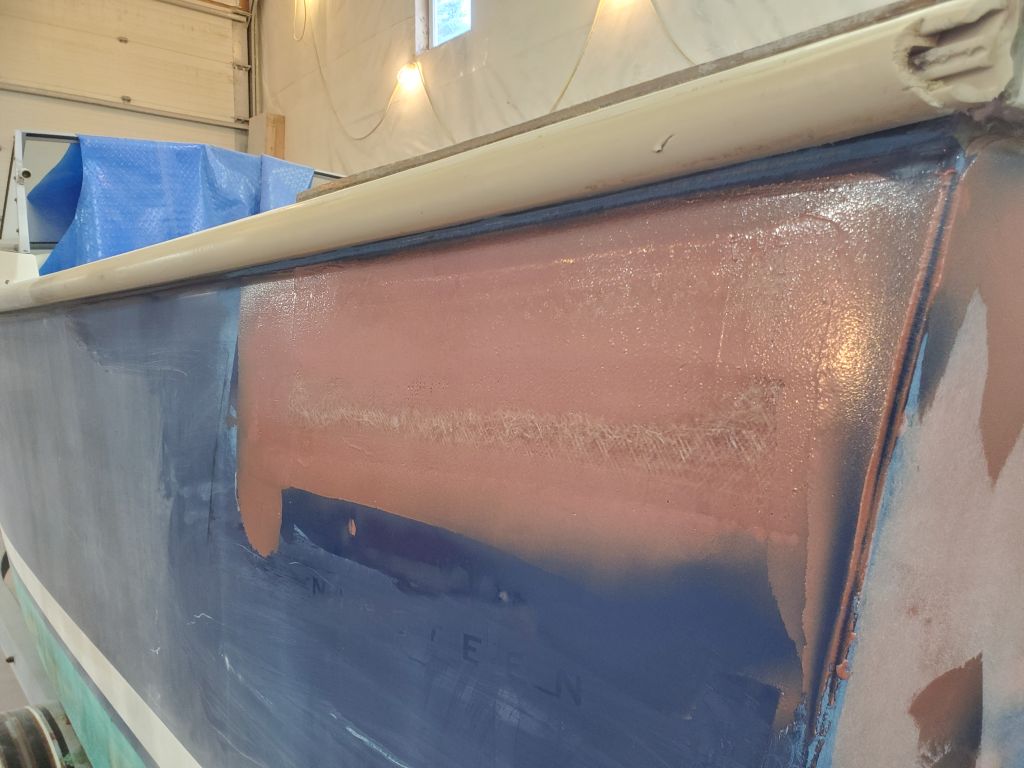
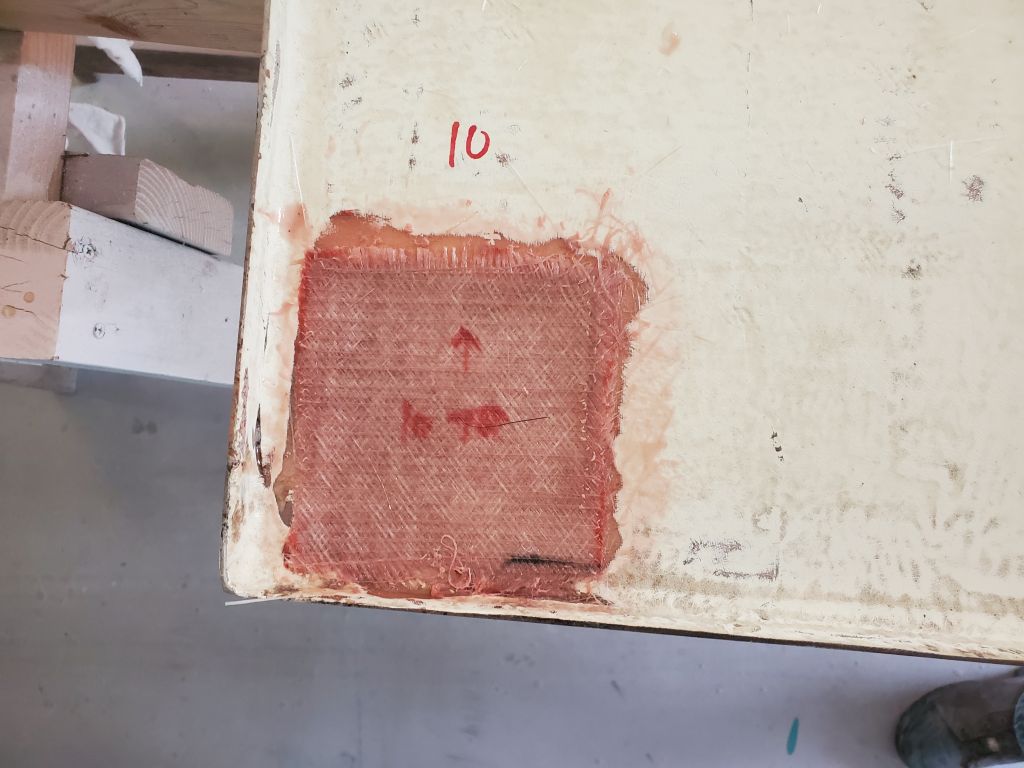
To round out work for the day, I installed six layers of 1708 over the top edge of the transom cutout, which would increase the height a bit to bring it closer to the required 24″ from the bottom of the vee when all was said and done.  Later I’d wrap more fiberglass over the entire cutout, which would bring the height up to the final dimension as well as tie it in the new cutout and complete the work there.  I let the strips of fiberglass overhang the opening a bit for later trimming, and used some thickened epoxy at the ends to reform the curved shape at each lower corner.


Holby 21

Before heading off to a morning appointment, I sanded all the new work from last time, starting with the forward vee.

At the transom, I sanded as needed to bring the new layers of overhanging fiberglass flush, and to prepare the new core and environs for future steps.

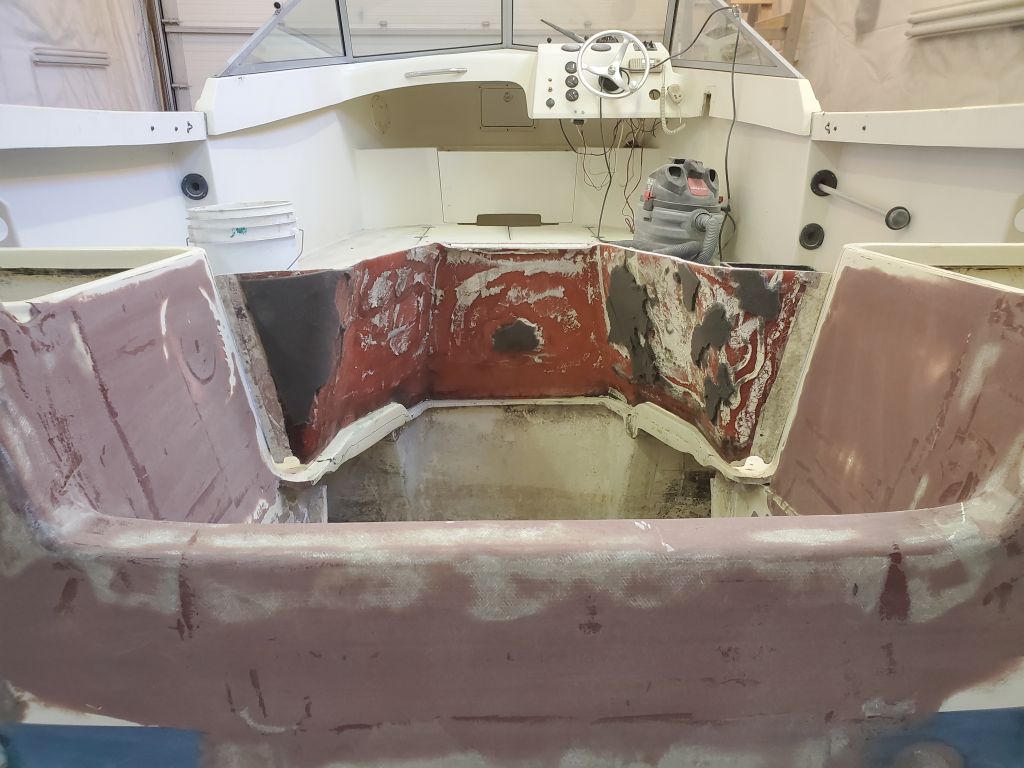
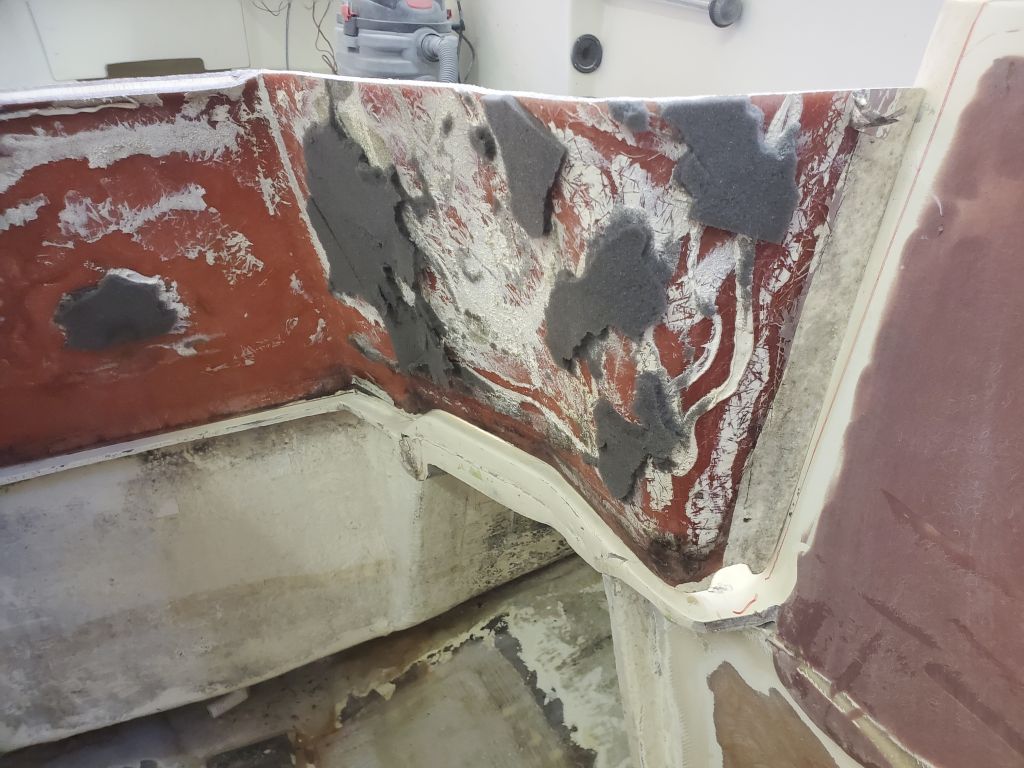
Inside the boat, I lightly sanded the new glasswork on the inside of the transom.

Later, upon my return, I applied a coat of fairing filler to the forward vee, using an improvised 24″ long batten to span between the ‘known” hull shape at the forward and after ends of the space previously known as the flat.  The many layers of fiberglass I’d applied had mostly filled the space, but now I could use fairing compound to finalize the shape before laminating over top.  This early round of filler was slightly rough because of the imperfect batten, but did its job of defining the shape well enough that the next round of filler would come close to establishing the shape required before fiberglassing.

Preparing for eventual fiberglassing at the transom and over the bottom of the tunnel patch, I started with a pattern of the vertical transom and onto the bottom going forward 9″.  I’d eventually stagger three layers of fiberglass over this area, conjoined with three adjoining and subsequently overlapping layers over the remaining part of the bottom patch.

Holby 20

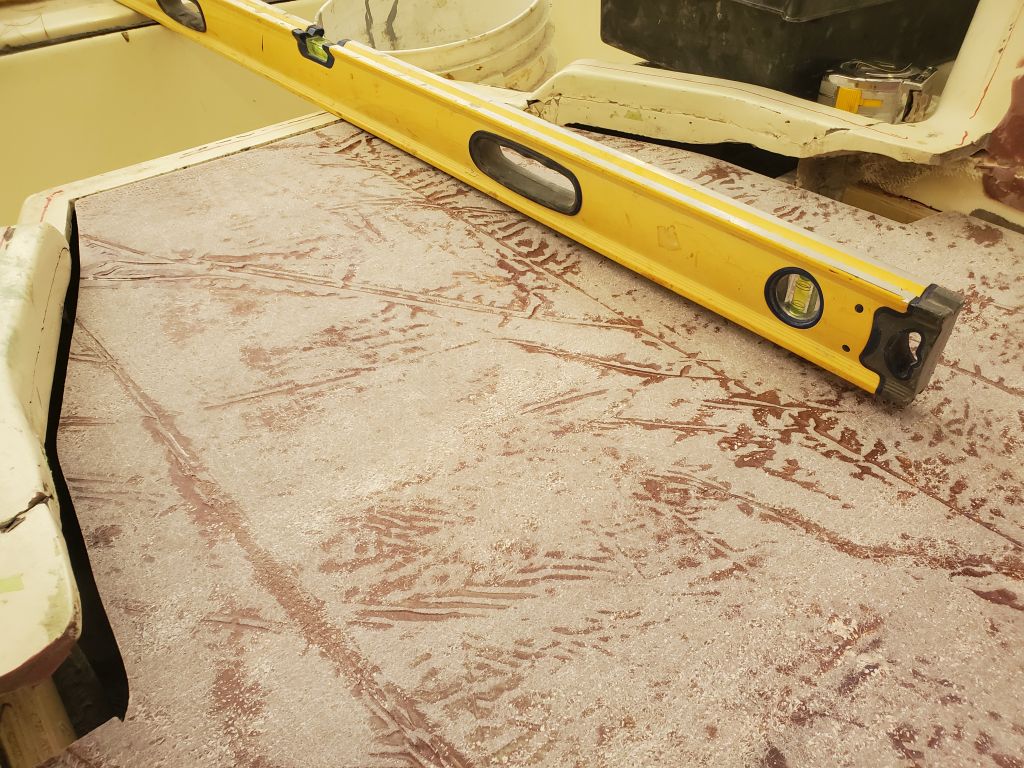
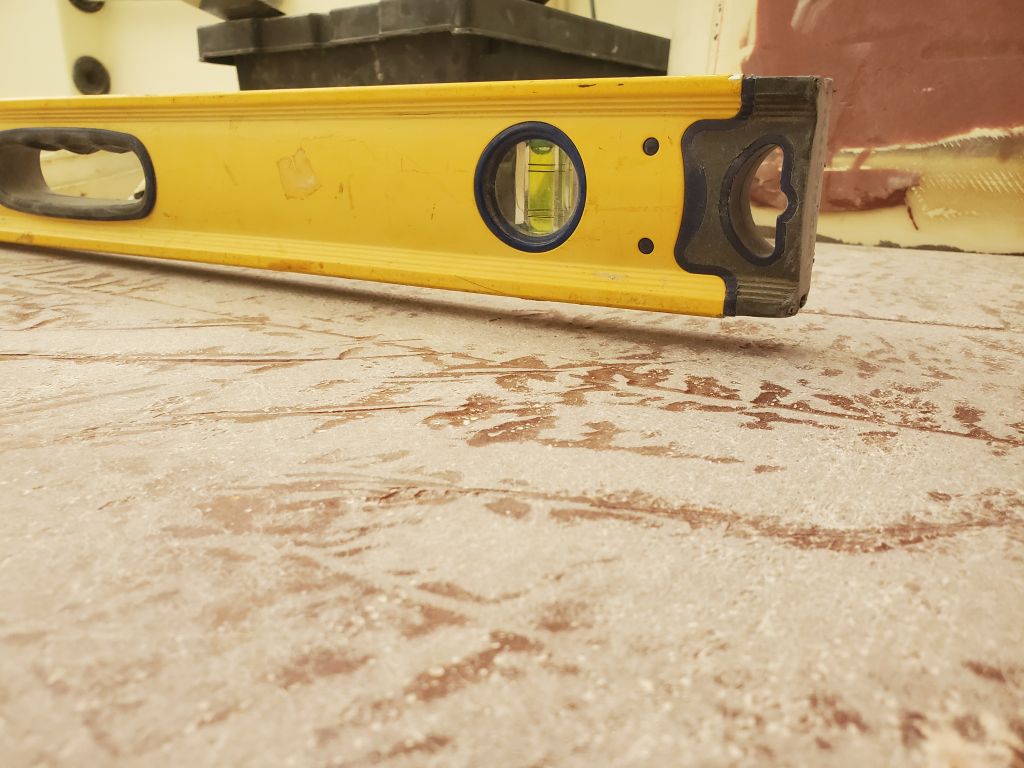
I lightly sanded the new fiberglass on the forward vee part of the bottom, then, after cleaning, used a straightedge to check how I was doing, height-wise.  Obviously I knew it was low at the aft end, but this gave me an indication where the additional layers should stop at the forward end; I also used the straightedge to determine how wide the new layers should be at the aft end, i.e. where the existing fiberglass was already close to the proper geometry.

With this information, I made a new pattern and cut seven new layers, this time keeping the aft ends’ widths more constant while continuing to taper back the forward sides and end.  Because the new layers would overlap the stacked, tapered layers beneath, I skim-coated some thickened epoxy over the existing patch just to ease the transitions between the cured layers.

Afterwards I wet out and installed the seven new layers, which brought the finished rough shape close to what I needed, and just low enough that I could finalize the shape with fairing compound once cured and before fiberglassing over the whole area.

Meanwhile, I made a pattern of the inside of the transom for layers of fiberglass that would cover the entire transom and extend onto the bottom of the hull and along the sides to tie everything together.  Once I had the pattern made, I installed epoxy fillets as needed around some of the corners and wet out the whole area, leaving this to tack up while I cut two layers of fiberglass according to the pattern; then I wet out and installed them.

Continuing the work on the vertical part of the jet tunnel in the transom, I cut 10 layers of fiberglass to fit, as I still had an inch and a half or so of depth to fill.  I prepared epoxy fillets along the bottom corners to ease the transition beneath the core pieces I’d installed earlier, then, in stages, installed the 10 layers of fiberglass in the space.

Later in the day, this had cured enough that I could install another layer of 3/4″ Corecell over the fresh laminate, bringing the area out nearly flush with the surrounding fiberglass.  I installed a couple braces to hold the core tightly along the bottom, where it wanted to spring out slightly.   From here, once cured, I could start installing the fiberglass over the whole area that would finish off the repair and tie it in with adjacent structures.

Holby 19

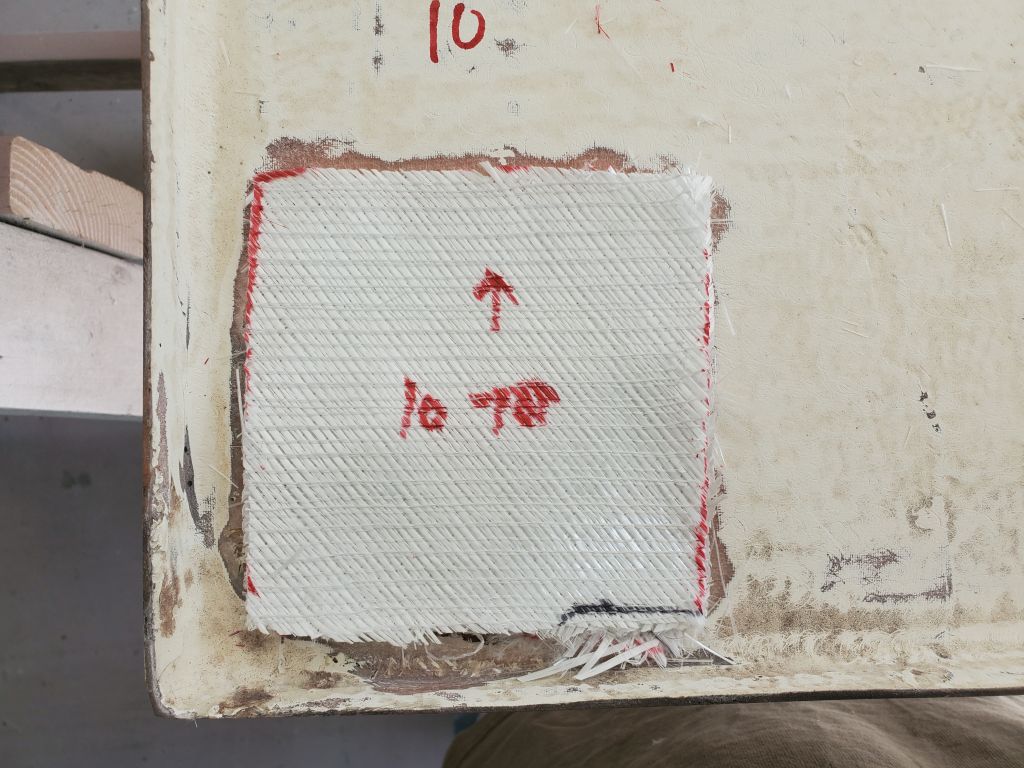
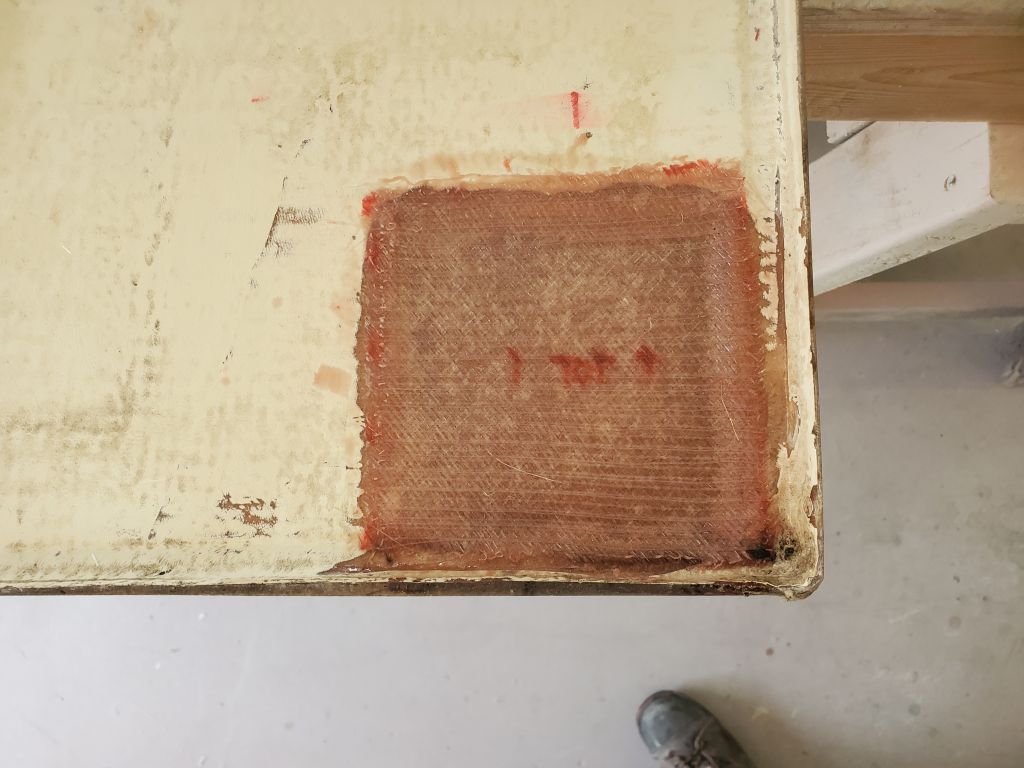
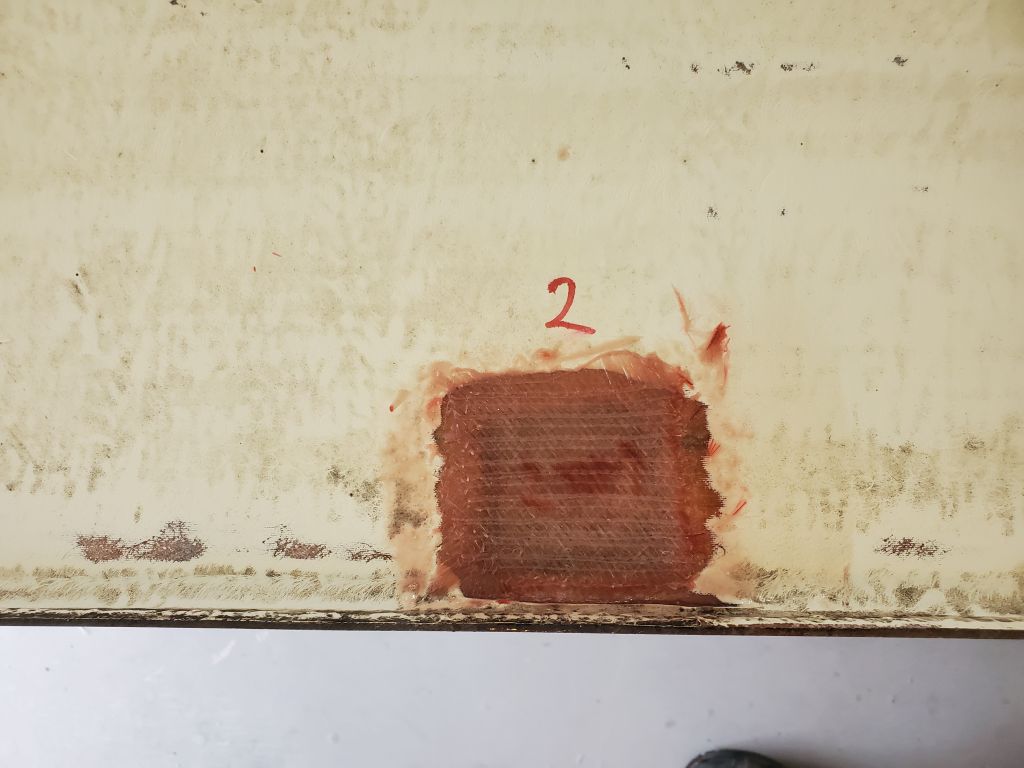
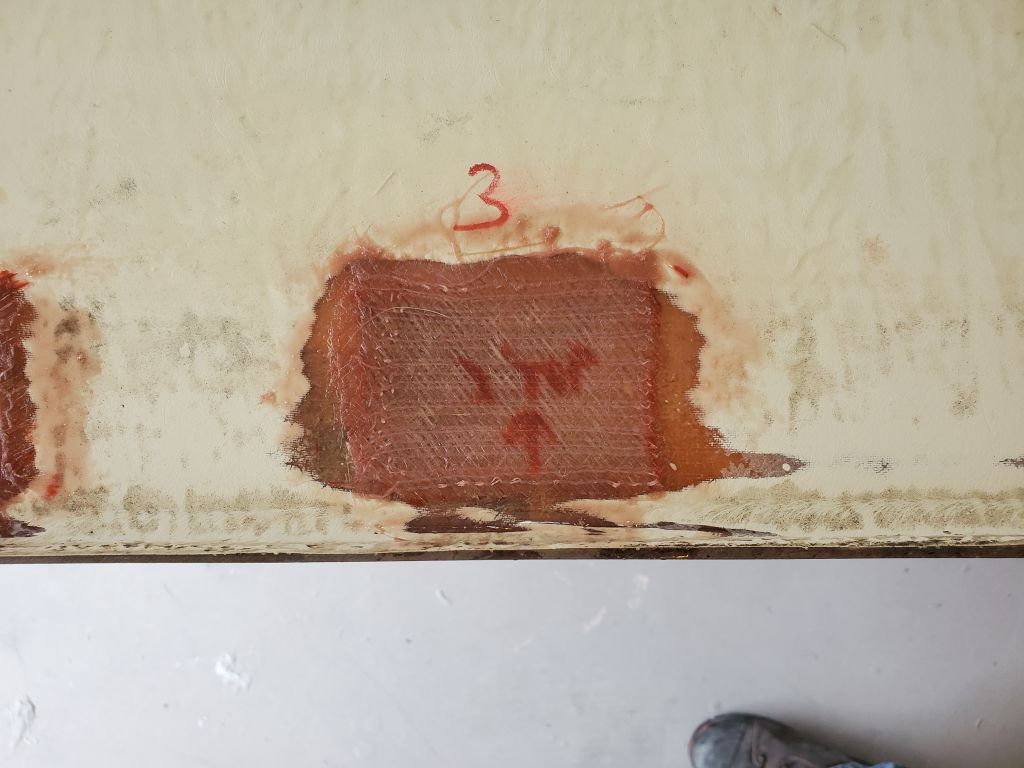
Another (unintentionally) short day, as I got sidetracked with unrelated things.  But I started hopefully with the flat area forward of the old jet tunnel, creating a pattern of the area on some plastic, then cutting eight layers of fiberglass, tapered at the sides and forward end, to fit the space. Each subsequent layer was roughly 1/2″ smaller on each side, except the aft side.  The height required at the aft end was just about one inch, and eight layers would be roughly half that, so I thought I’d install these and see about adding more as needed.

Preparing the pieces for installation reminded me of a Coneheads reunion.  After wetting out the layers, I installed them, four at a time, in the space forward of the patch.  It turned out that I should have tapered the aft ends less than the forward end, as the layers got too narrow too quickly and the stack didn’t adequately fill the space from side to side as much as I’d hoped, so for the moment this stalled my plan to add more layers today; I decided it would be better to let this cure, lightly sand, then figure out the final stack of layers required to fill the space enough at the aft end, without adding too much at the forward end or elsewhere.

I’d planned to do more fiberglassing on other parts of the stern throughout the day, mainly the inside and outside of the transom, but somehow, and without intention, the day was lost from here on other, unrelated tasks.

Holby 18

I lightly sanded the new interior fiberglass work in the usual way, just lightly scuffing to remove sharp edges and prepare the surface for future steps.

Now, beneath the boat, I prepared the bottom in and around the new repair for its final fiberglass work by grinding a tapered area 4-5″ out from the patch, from gelcoat at the outside to about 1/4″ down at the borders of the new patch, bringing the existing hull there flush with the new repair I’d completed from above, and as designed.  This would provide the space required for the new fiberglass to tie in the repair work with the existing hull from beneath.

Around the vertical transom opening, I created a similarly-prepared area for tying in the eventual new fiberglass required to complete the transom patch.

From here, I planned to start with installing new fiberglass forward of the patch to fill in the slightly-flattened area left from the old tunnel configuration, which I’d complete before installing fiberglass over the whole area to recreate the hull shape and finish the structural repair.  At the transom opening, I planned to fill in with solid fiberglass, and eventually incorporate the final layers with that of the bottom.  Meanwhile, inside the boat, I still had to fiberglass the new transom structure into the sides and bottom of the boat, then, finally, fiberglass over the new cutout in the transom to complete the overall repair.  I’d take care of these steps over the coming days.

Holby 17

After a quick water wash, I lightly sanded the new fiberglass in the aft bilge, previously known as the engine room.  This was only a light scuff to ease any sharp edges and prepare the fiberglass for the next steps; I also took the time to prepare and round over the top edge of the forward micro-bulkhead, as well as a light sanding at the new fiberglass transom to finish off the top edge from its installation a few days earlier, and to round this over for future tabbing work as well.  Additional laminate on the inside of the transom, as well as over the edge of the new cutout, would be coming up sometime a little later.

Next, I removed the mold from the bottom of the hull, starting carefully with the plywood transom template, which I removed separately for further use.  The plywood panels came off with ease, as they were held only with blotches of hot glue wherever.  The bent piece of plywood from the inside of the mold stayed in place; the screw heads pulled clean through as I removed the main part of the mold.

The inner section of bent plywood came off easily from there, leaving behind the masking tape, which was well-stuck to the laminate, as anticipated, but had done its job of preventing the wood from sticking.

The end result was just what I’d been going for:  Shaped in accordance with what the hull needed to be, but inset a fraction of an inch to allow room for the final laminates from beneath, which would further tie in and reinforce the whole repair when all was said and done.  Eyeballing the shape of the vee down the centerline, the new work lined up well with the unmodified shape forward of the repair area.

Now I removed the bits of hot glue from the hull, along with the mold putty and, as much as possible for now, the masking tape from the bottom of the fresh laminate.  The residue would eventually get sanded away, but that was for some other time.

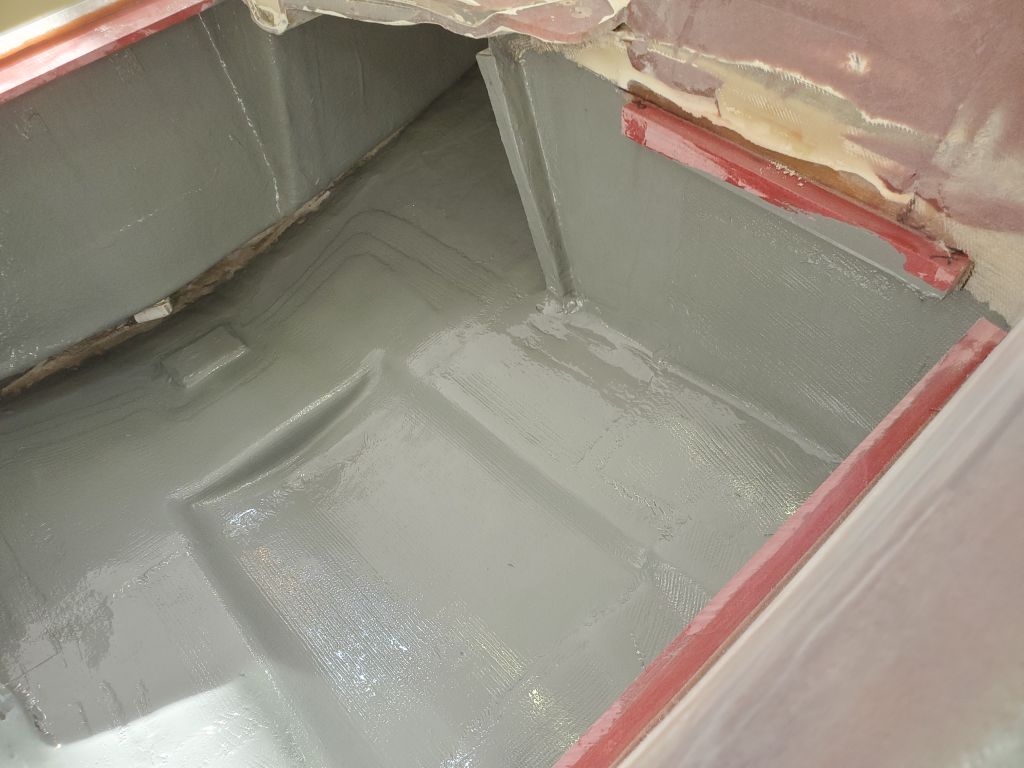
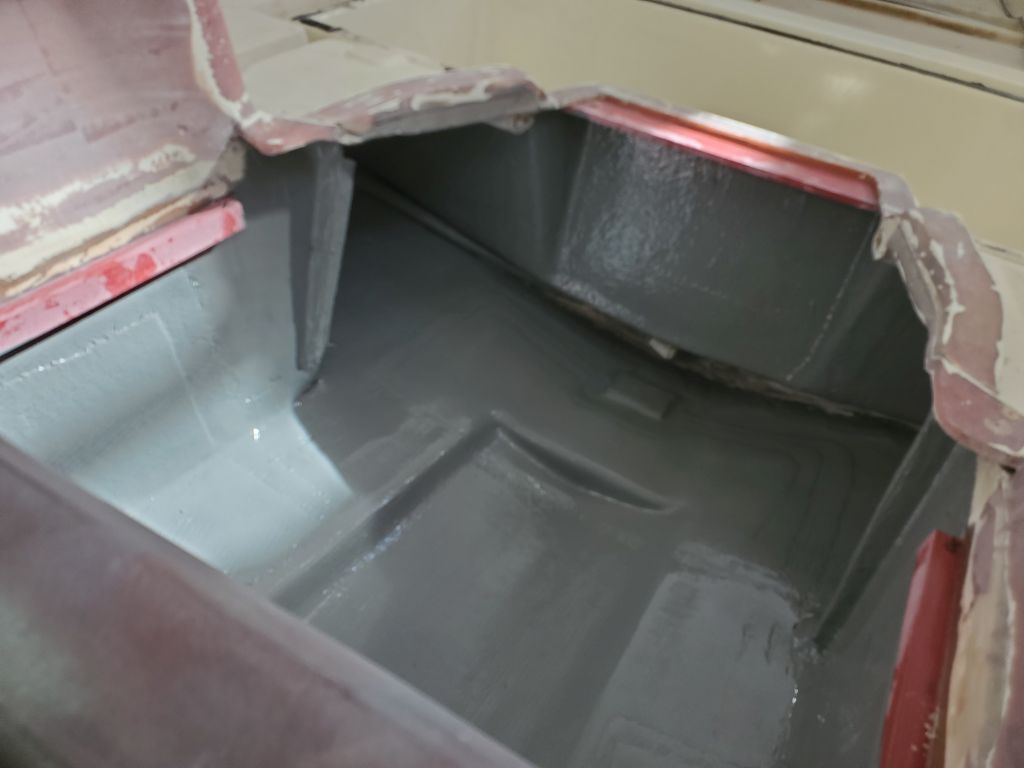
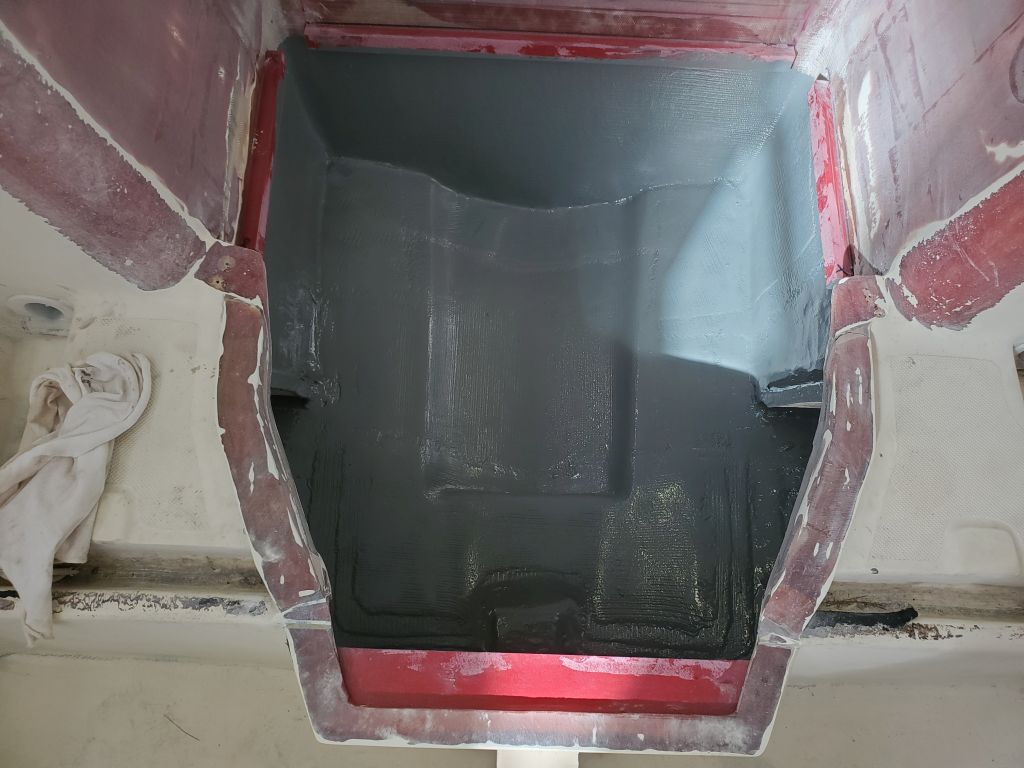
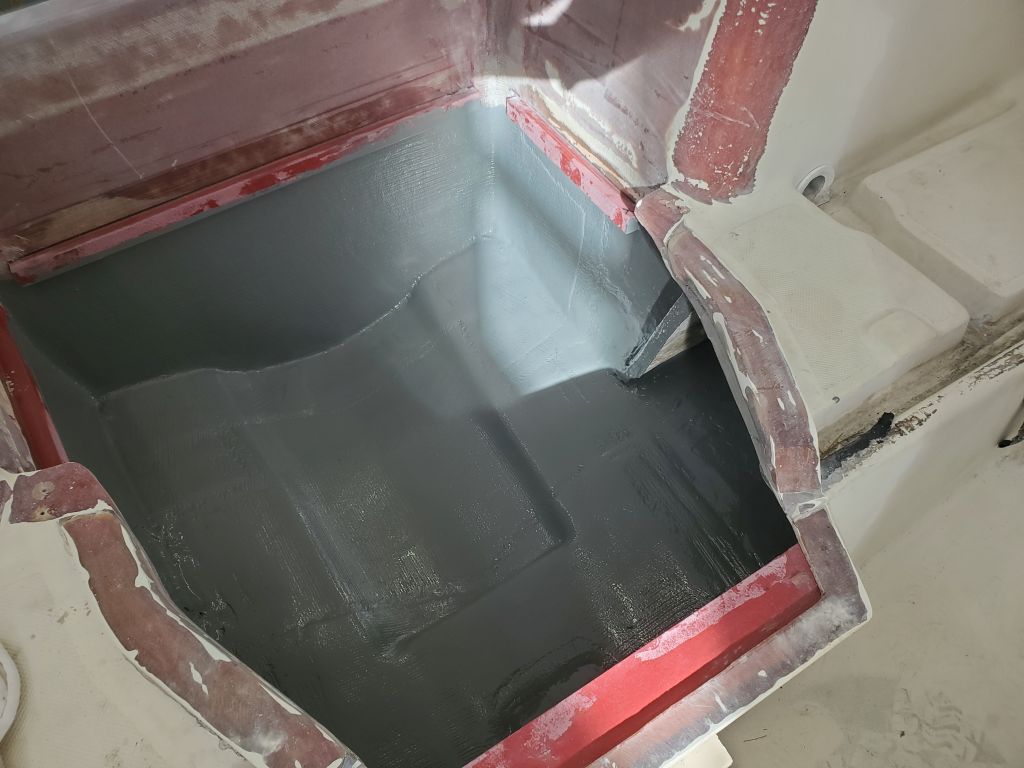
Turning back to the interior for now, I laid out a trial piece of fiberglass to complete the forward section of the repair.  The glass confirmed well to the shape, so no darts or cuts would be needed.  Satisfied with the pattern, I cut two additional layers, each just a touch smaller on the sides and forward end.  After installing a thickened epoxy fillet along the bottom edge of the micro bulkhead, I installed the three new layers in epoxy resin.  This overlapped the adjacent new work by a few inches, and extended well forward to tie the whole thing together as much as possible.

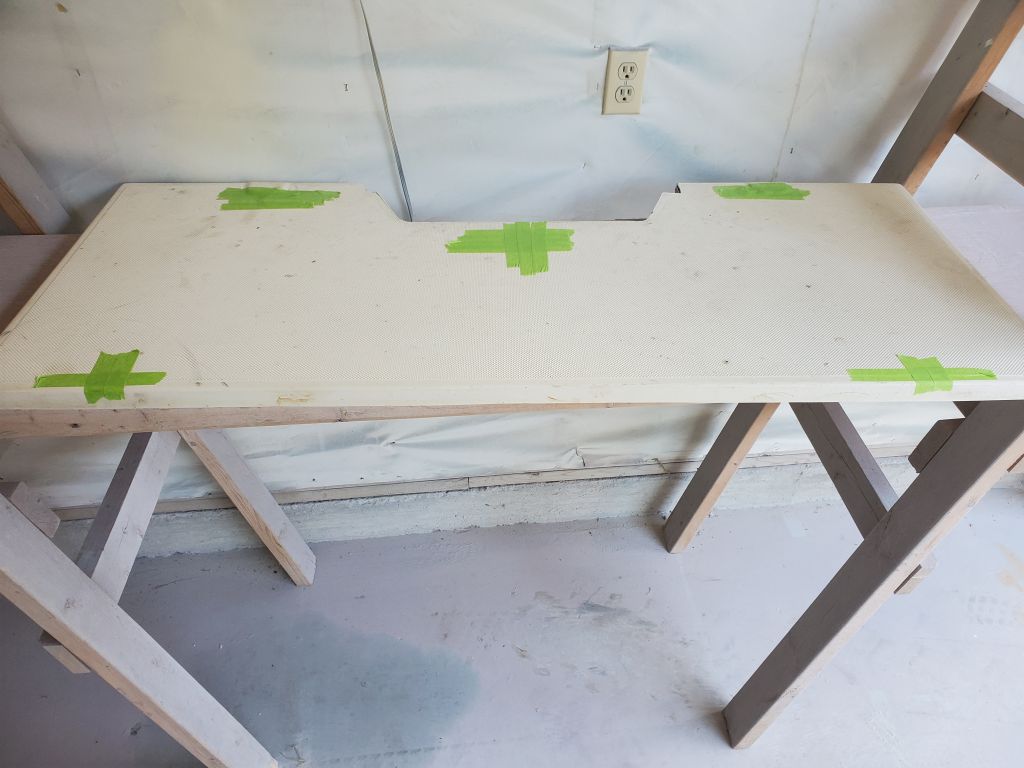
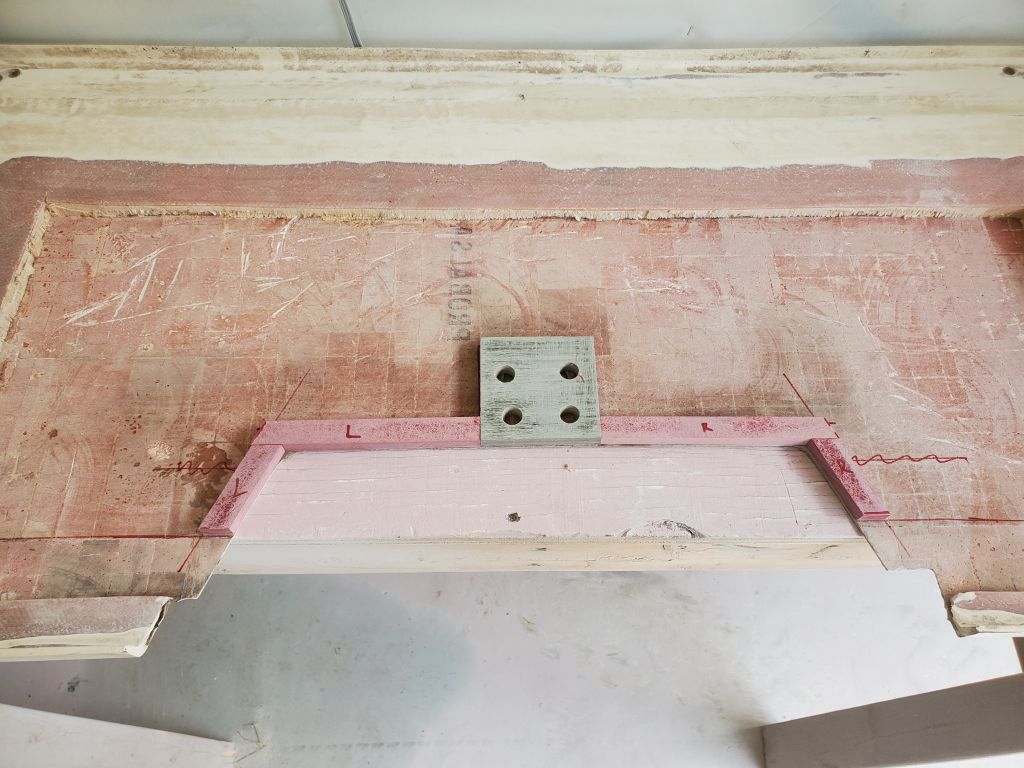
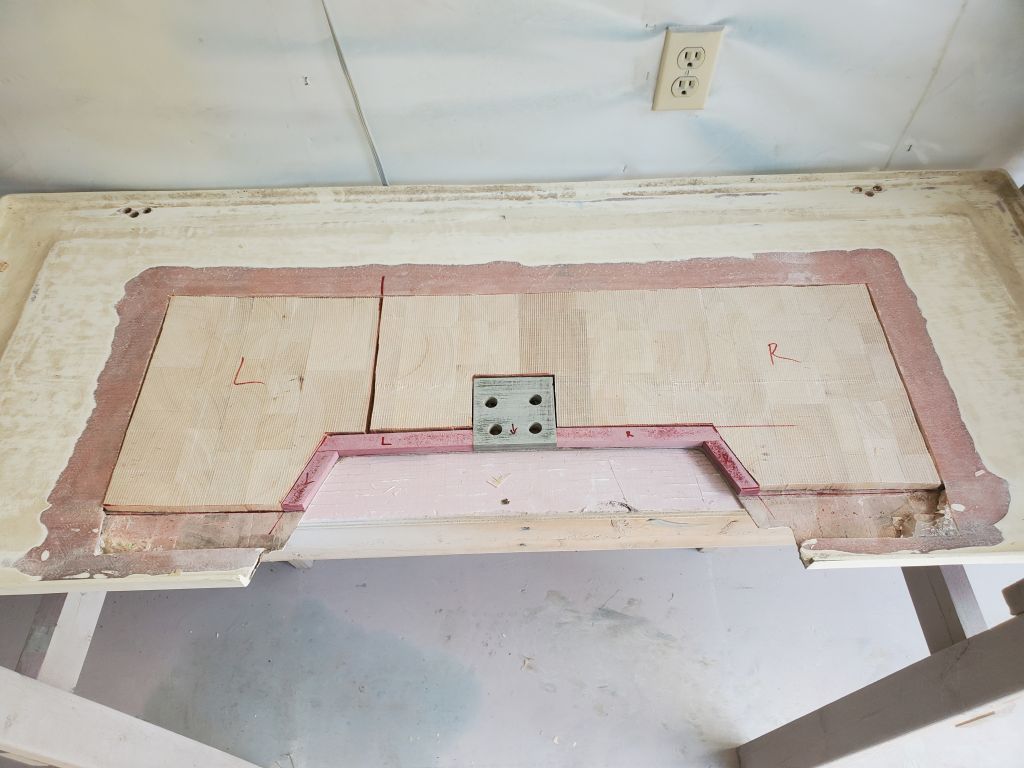
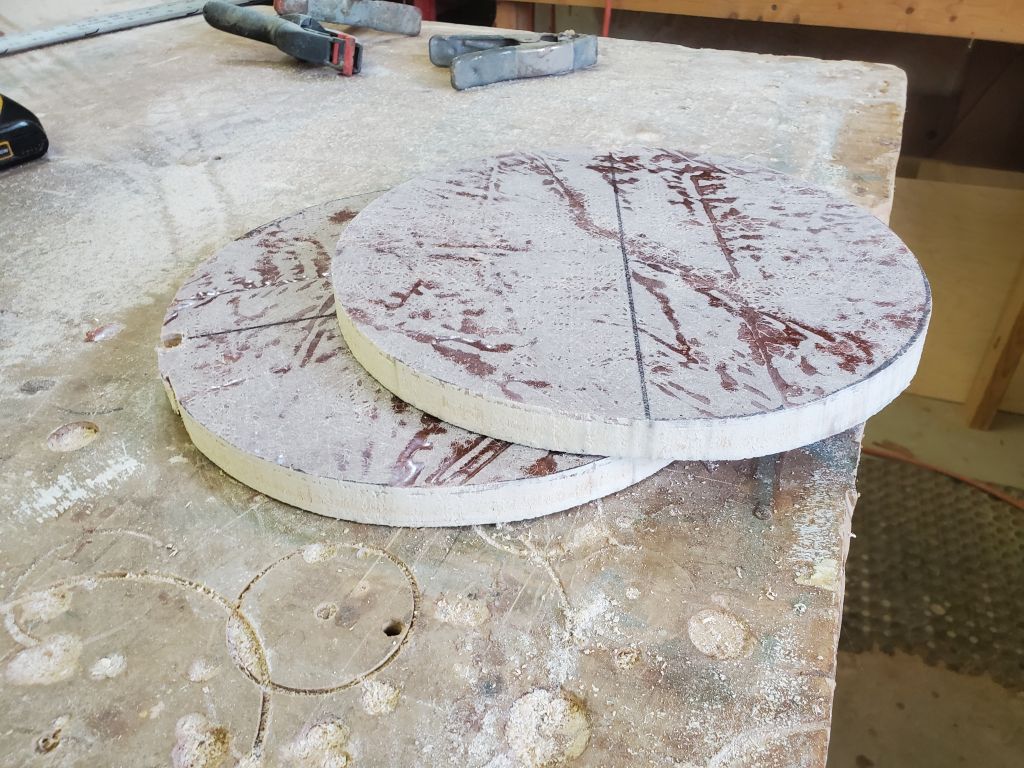
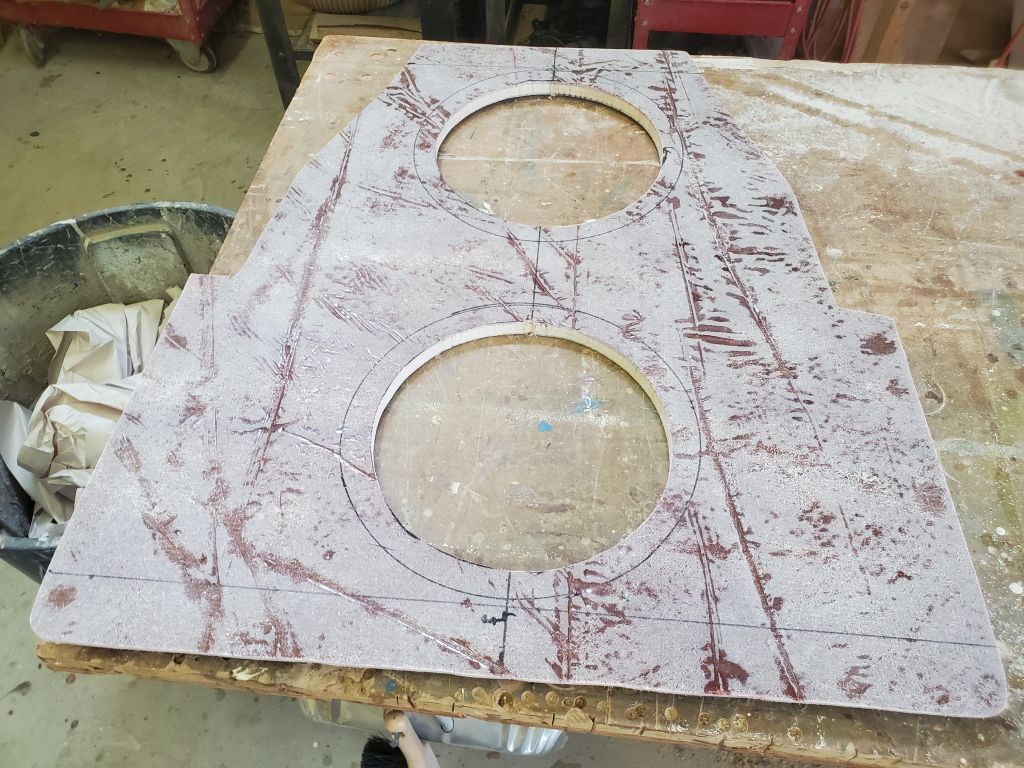
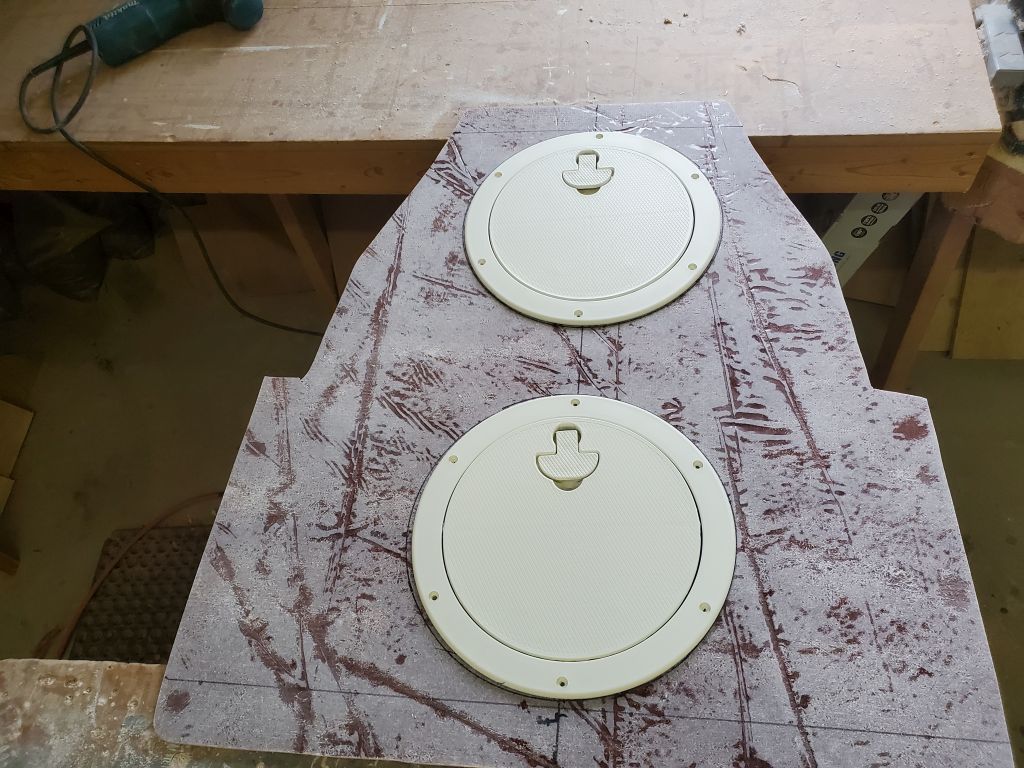
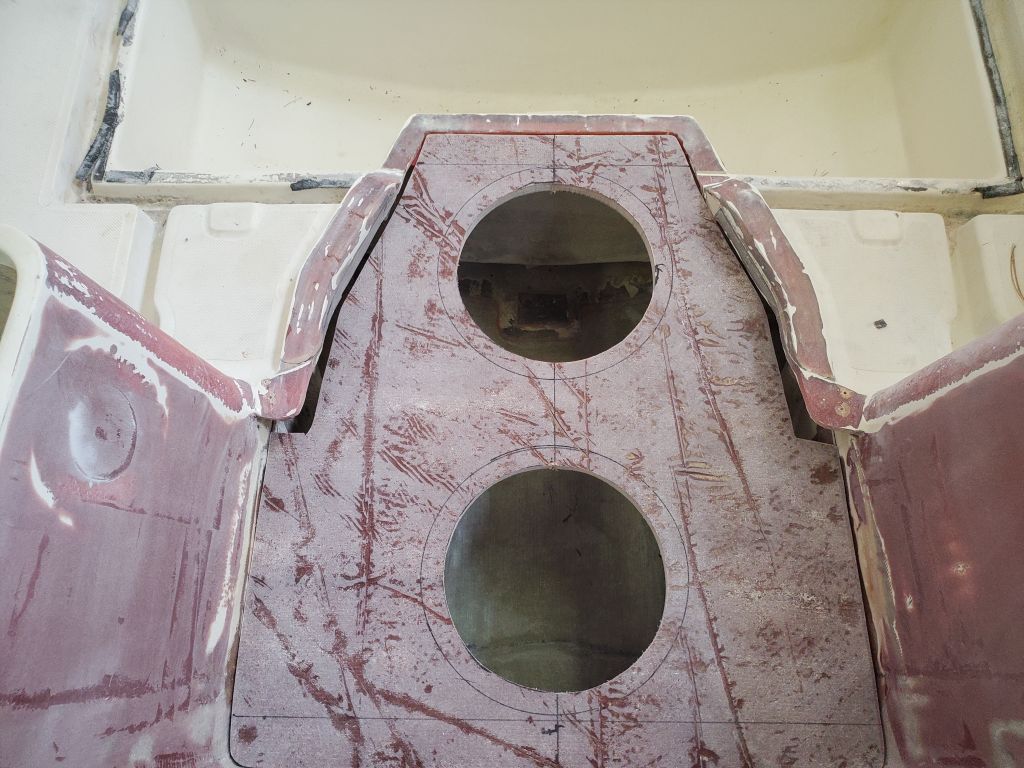
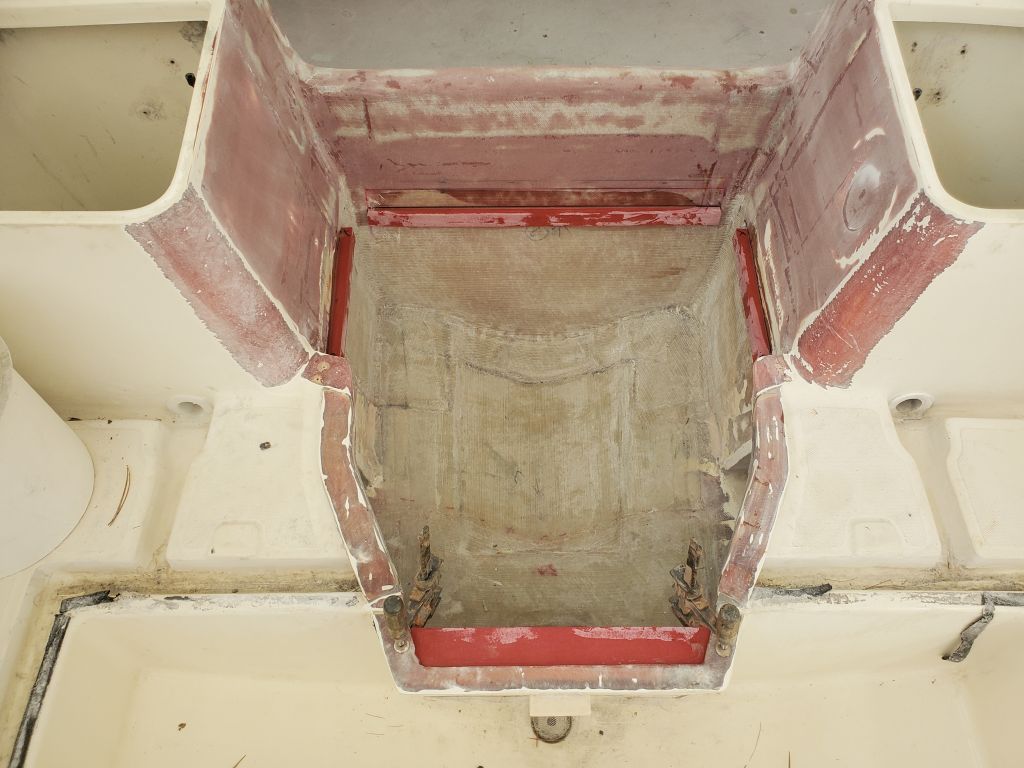
With a bit of time left before I had to depart on other tasks, I decided to begin work on the transom section of the jet tunnel.  Using my plywood pattern, I cut two layers of 3/4″ Corecell, a good material I happened to have on hand, and, after some minor adjacent prep work, including filling the edges of the opening against the fiberglass laminate sheet I’d installed on the inside of the transom, I set the two layers of core in place in epoxy adhesive, filling all edge gaps and the kerfs in the scored core.  I held the bottom edge of the core up flush with the notched part of the jet tunnel so I could fill in the bottom with solid laminate before tying the new hull bottom laminate into that.  Eventually. I’d fill the remaining depth of the transom opening with either solid glass (to be extended out onto the hull around the opening once I prepared said hull).

And so we edge closer to the final stages of this rather extensive hull repair.

Holby 16

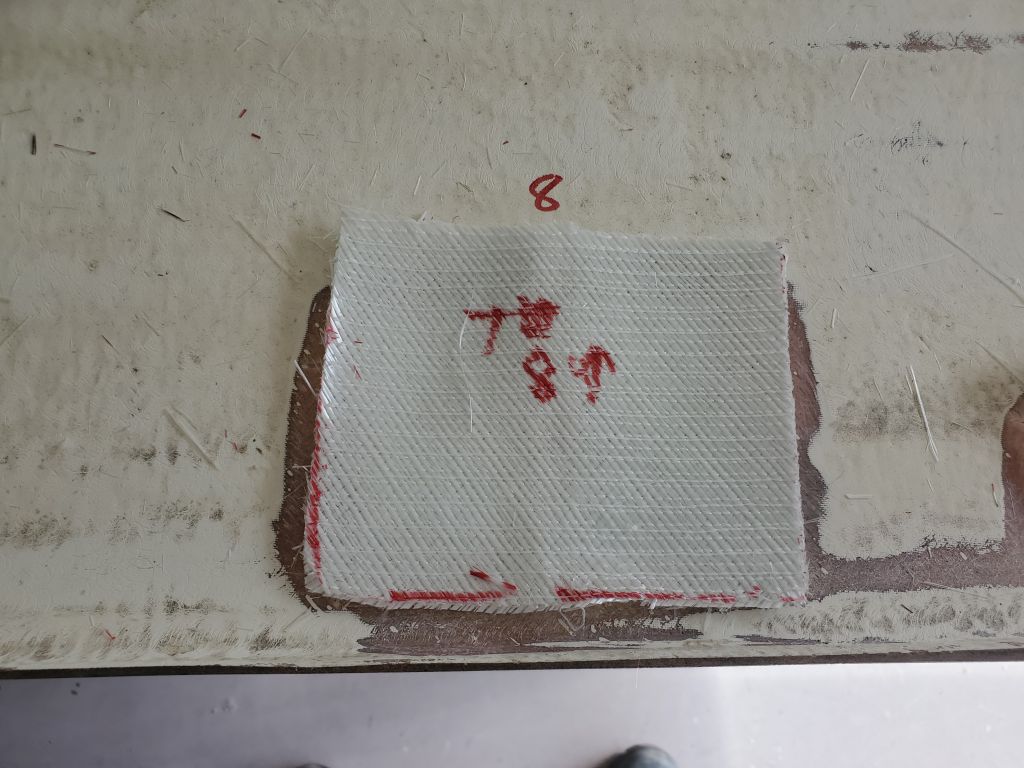
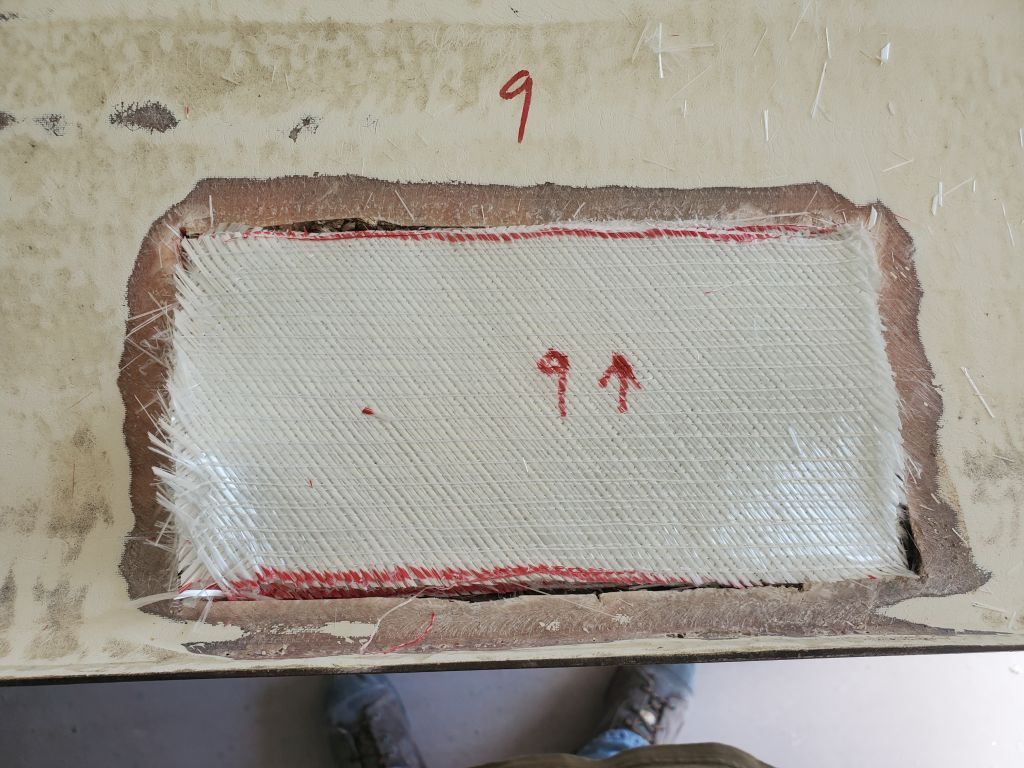
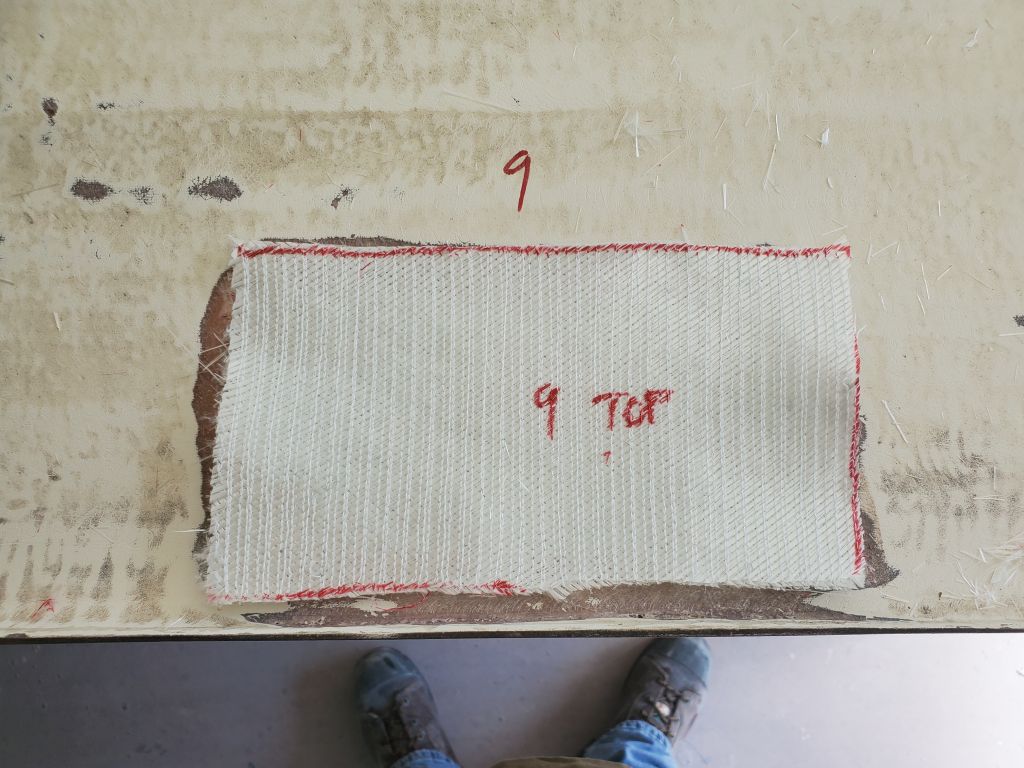
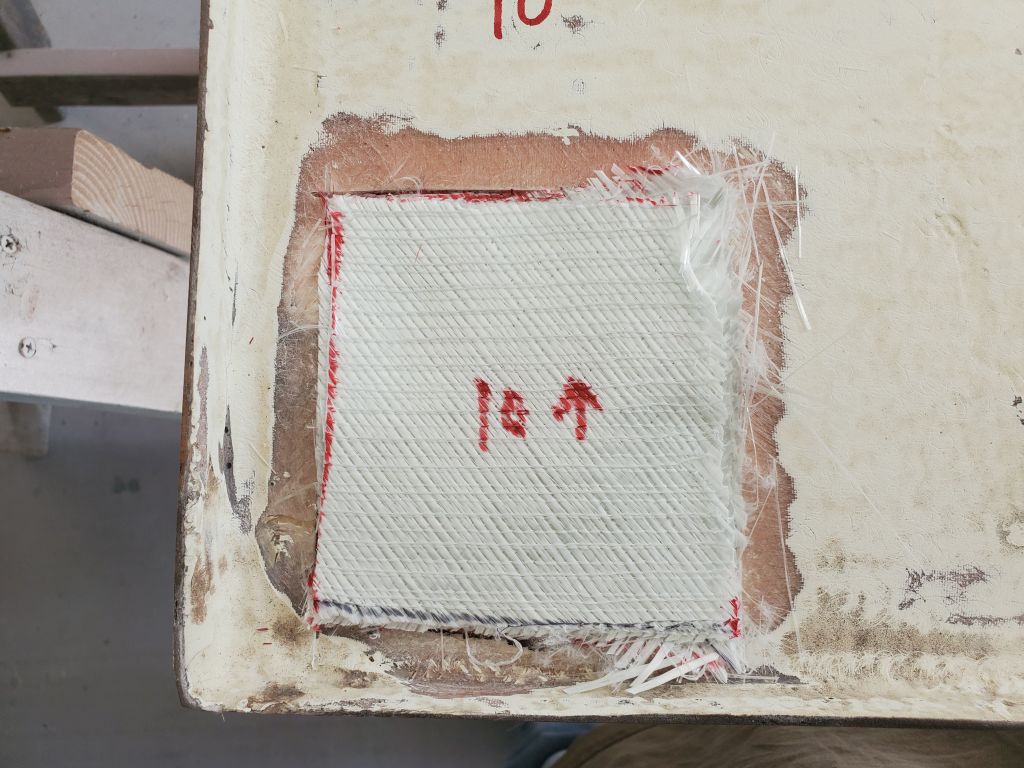
Beginning, I patterned and cut five layers of fiberglass to fit within the now-molded opening in the bottom of the boat, plus three additional layers sized to extend up and onto the adjacent hull on each side.  I followed this with final preparations to the space as needed.

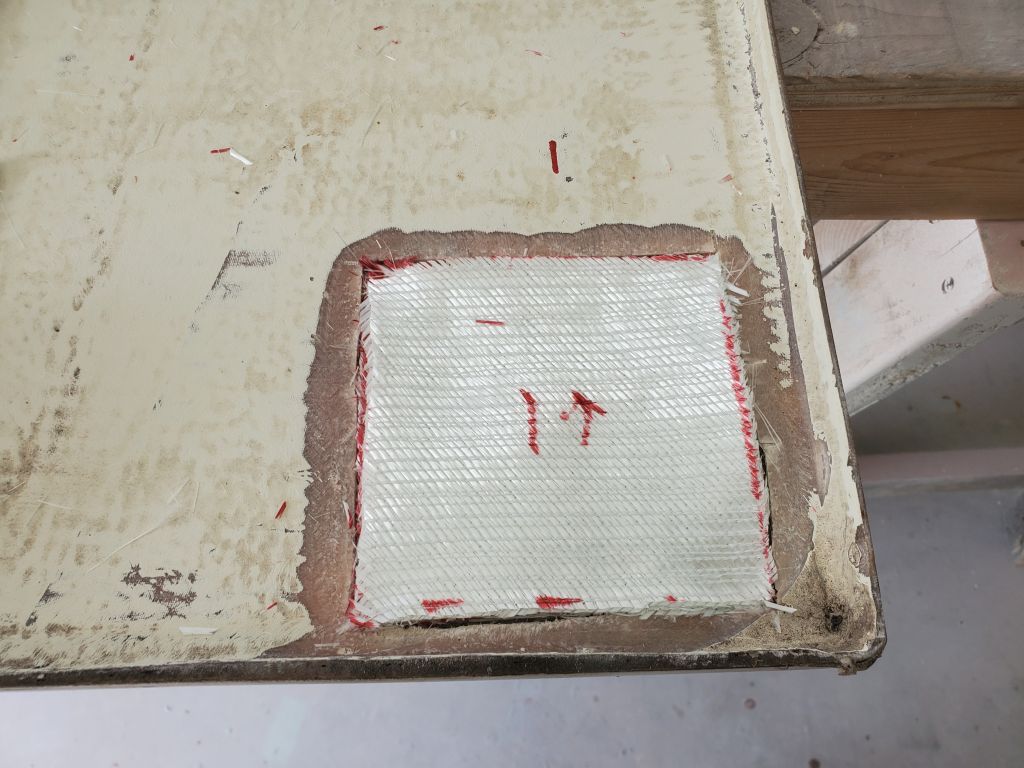
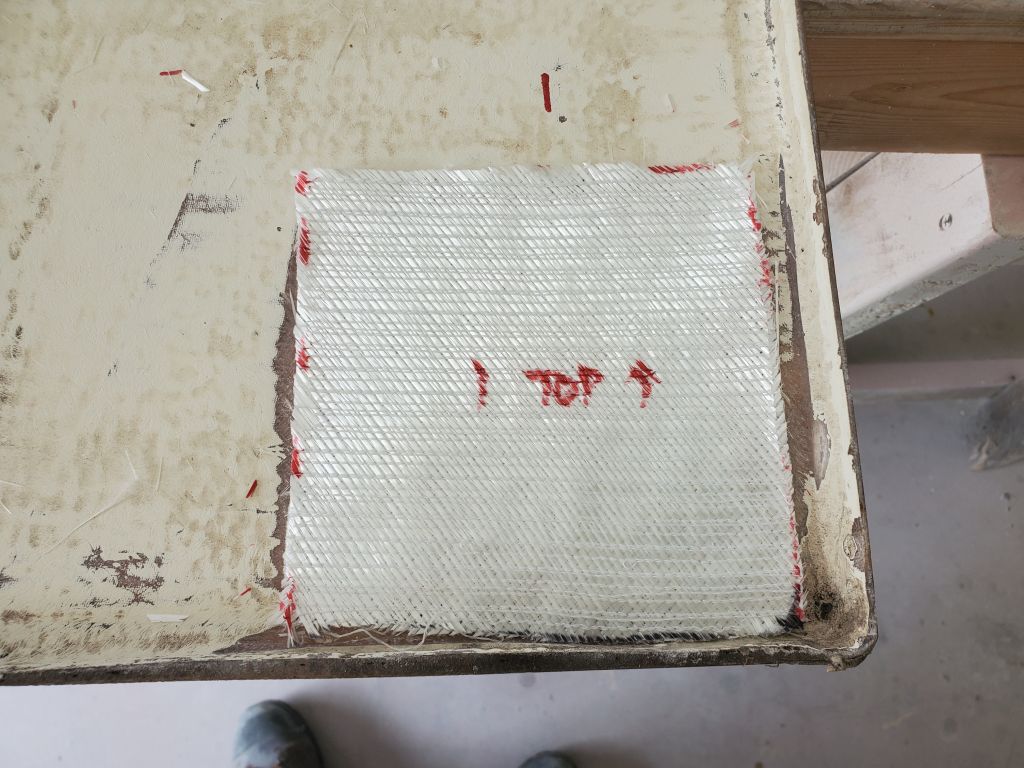
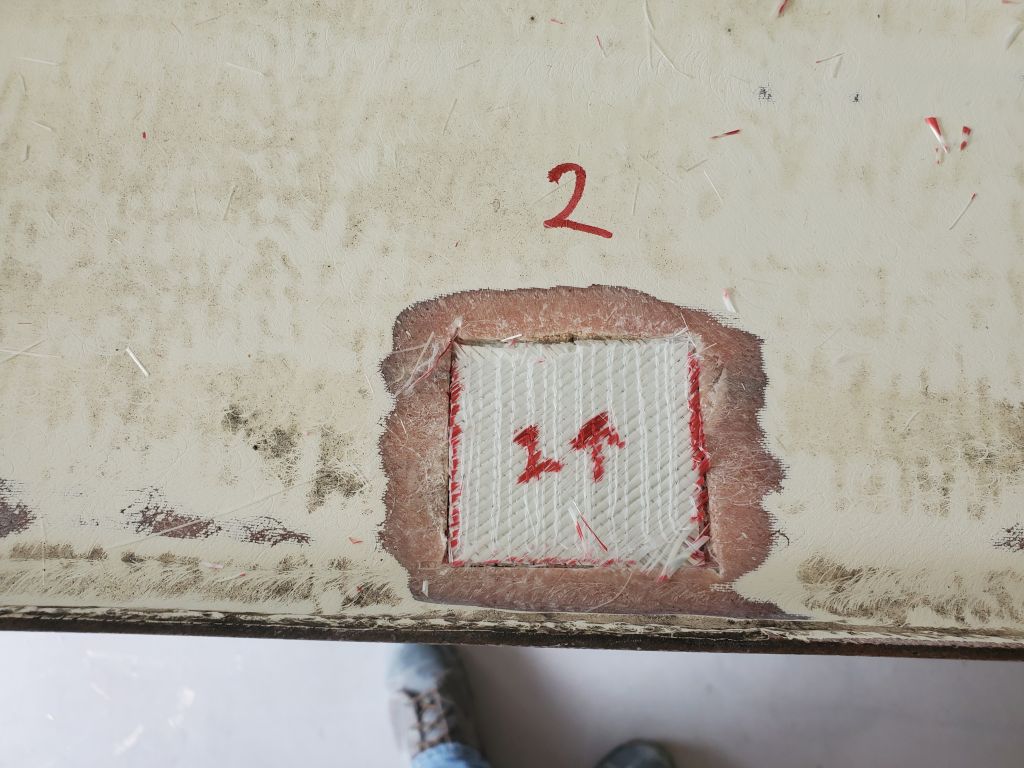
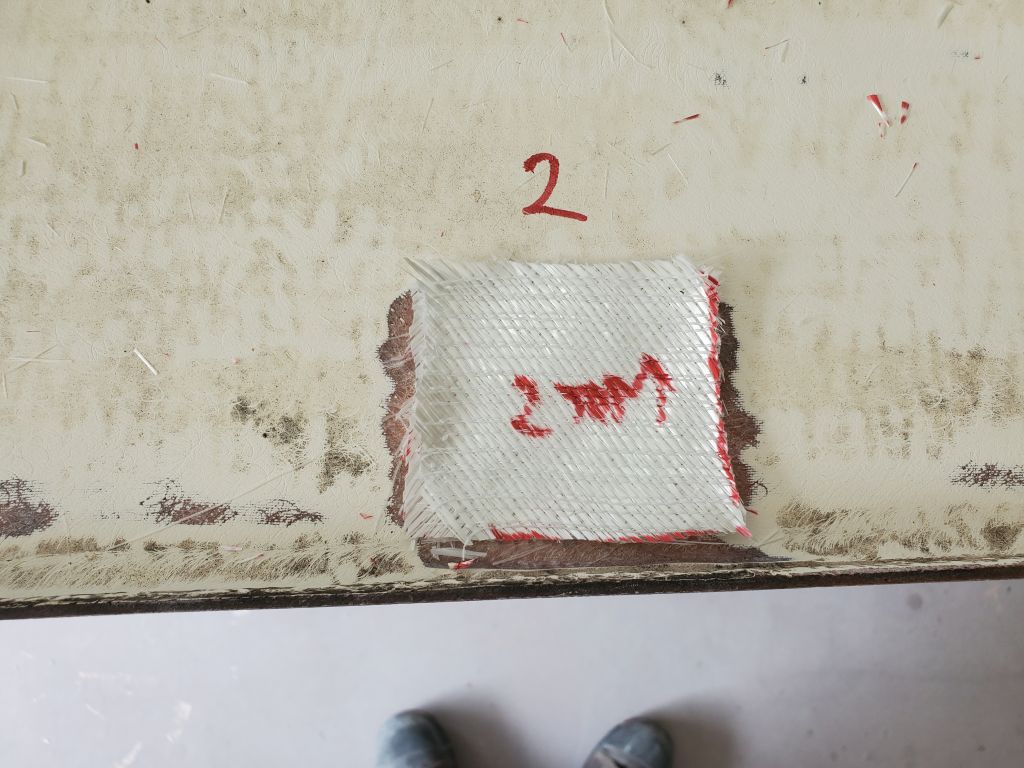
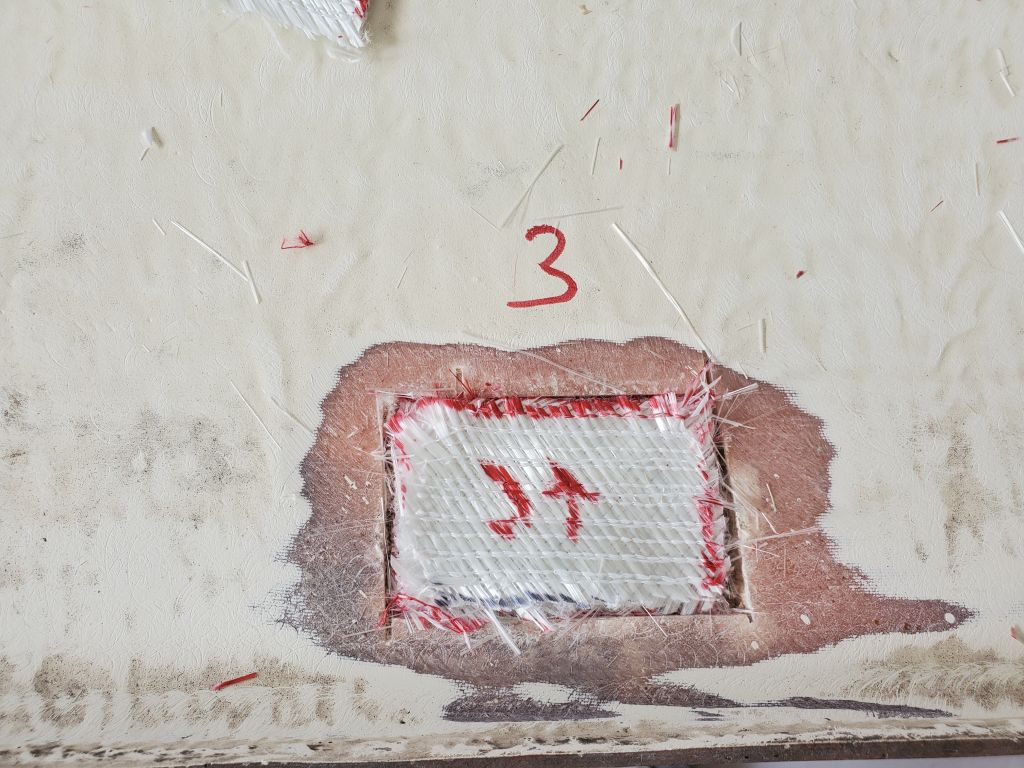
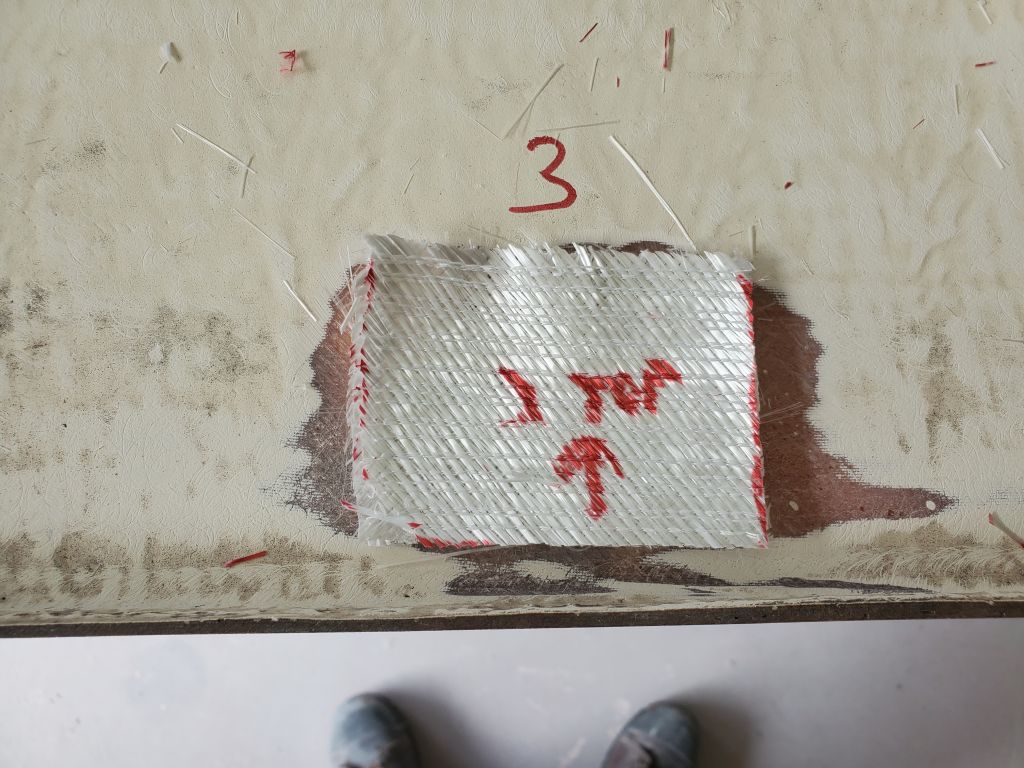
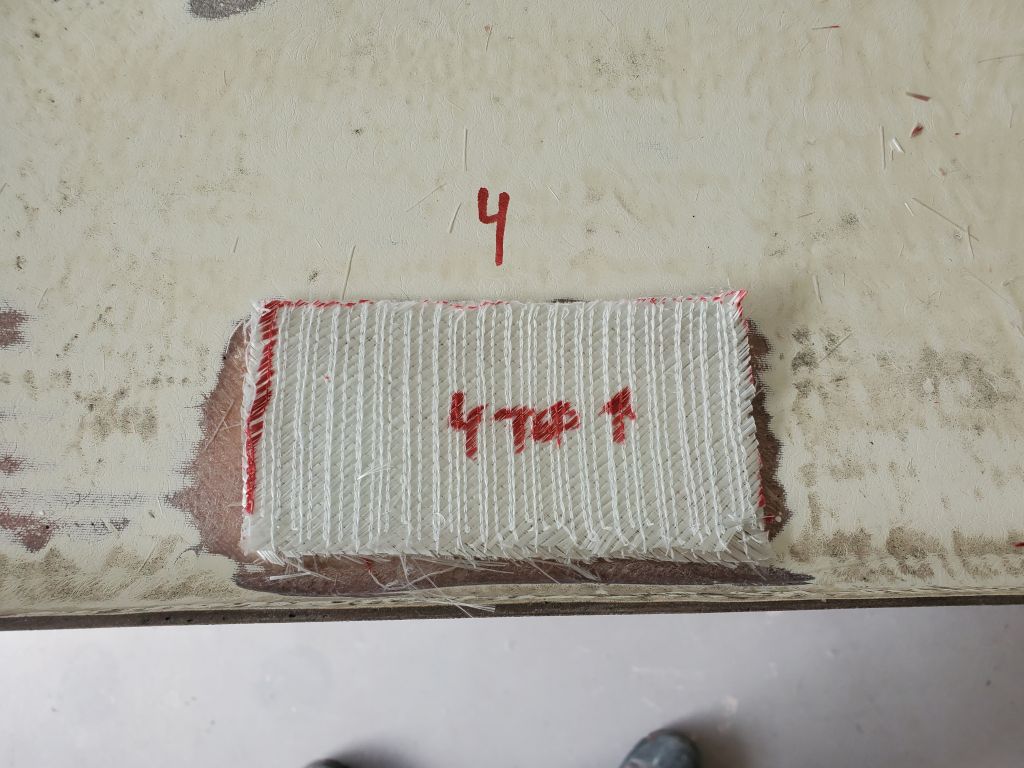
I installed the five layers of cloth inside the opening (the one on top says “4”, but that’s only because I stacked the final two in the wrong order), filling much of the void.  I left these to partially cure for a while.

When the initial layers had gelled sufficiently, I dressed up the edges with substantial epoxy fillets to ease the path for the larger, overlapping layers to come.  I also filled minor voids along the edges of the existing hull where I’d previously chipped out some old bondo-type filler.  I left the new epoxy to partially cure over lunchtime.

With the epoxy cured enough to continue, I finished up the day’s fiberglass work with three overlapping and staggered layers over the patch and out onto the hull.  There’d eventually be additional glasswork at the forward end of the patch, which I might have liked to do now, but alas, there was a hard corner on the tiny bulkhead that I’d not thought to ease beforehand, so the tabbing would have to wait till today’s fiberglass had cured.  The after end would also receive more fiberglass when I fiberglassed over the inside of the transom, all of which would  be heavily tied into all adjacent surfaces.  But that was an operation for another time as well, and, much as I wanted to do more at the moment, there was simply nothing more I could practically do.

Holby 15

I test-fit the new plywood hull-shape pattern I’d made, which fit closely at the forward end of the repair area, which it should have since this is where I scribed it to fit.  However, the shape of the hull at the aft end/transom was slightly different, something I’d already surmised after making the new pattern, with a minor flattening of the deadrise and a slight longitudinal upturn in the shape of the centerline.  This meant that the new pattern would not be suitable for use at the aft end after all, so I planned to revert to using the original plywood template I’d made.

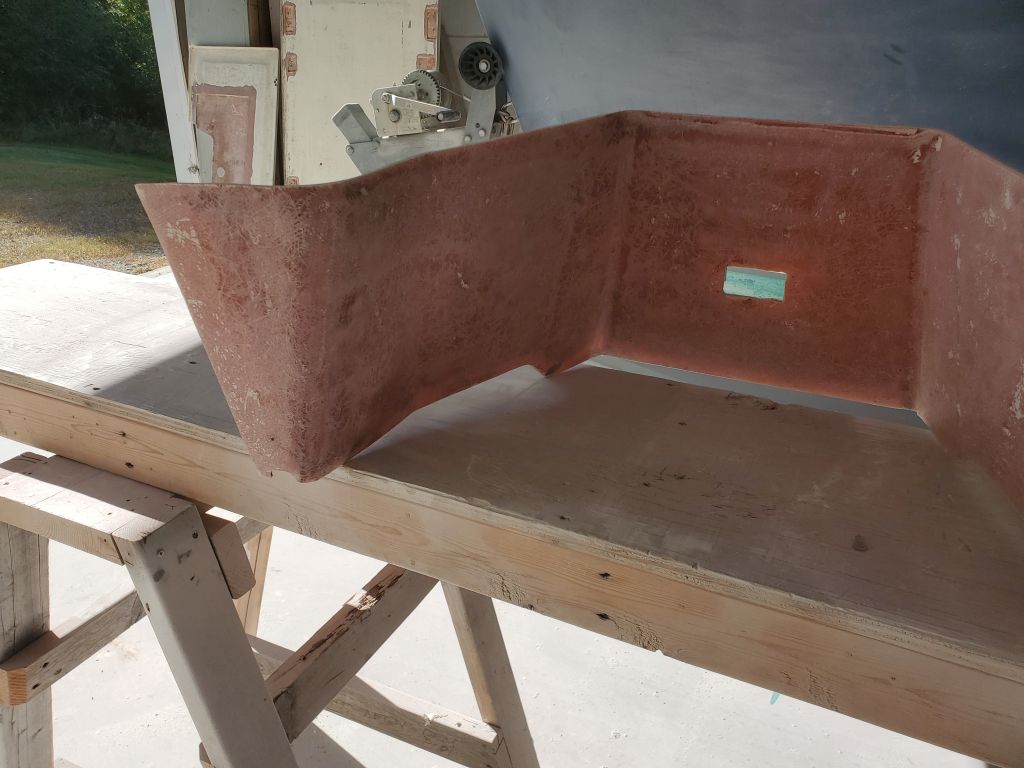
Meanwhile, while I still had access, I made a plywood template of the now semi-enclosed transom portion of the jet tunnel, shaping it to fit closely at both the forward and after ends of the roughly 3″ deep space.  I’d use this pattern later to cut core and fiberglass to fill the void.

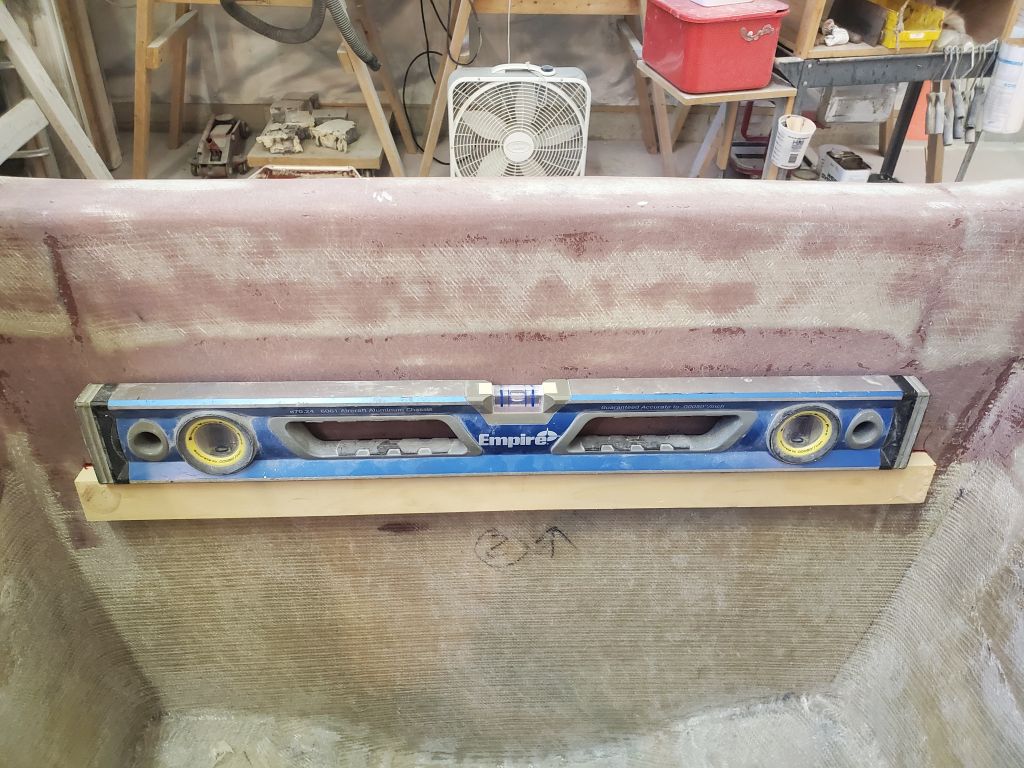
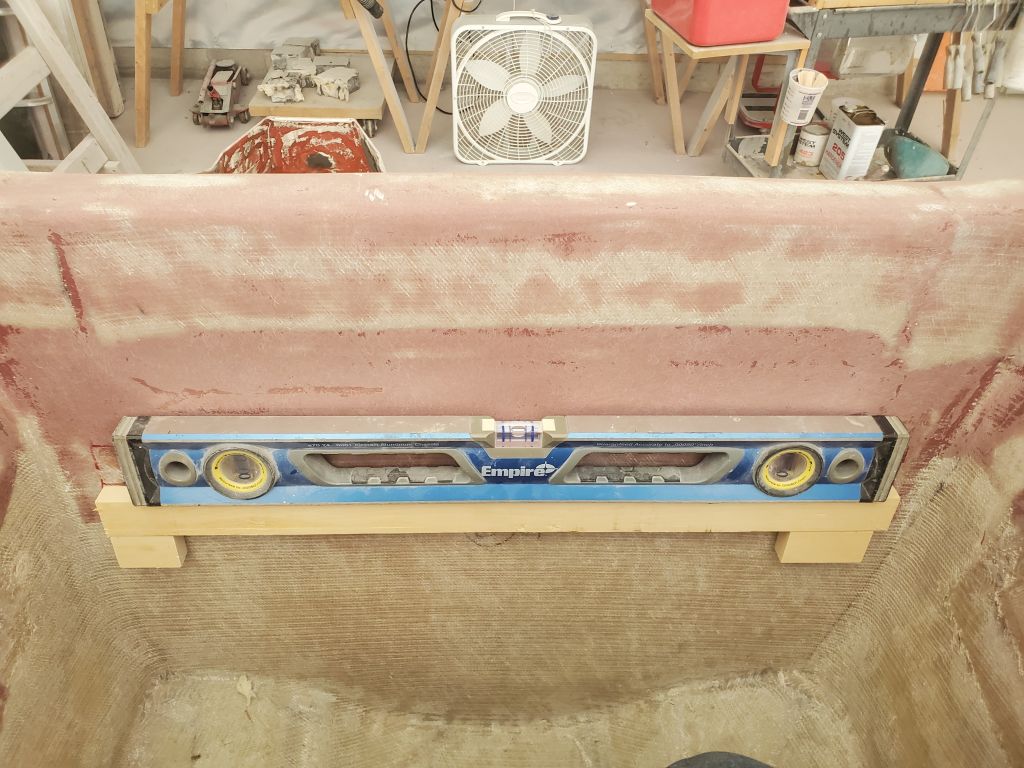
To ensure the plywood transom pattern was properly aligned with the bottom of the hull on the sides, I temporarily glued a couple blocks to the hull, upon which I rested the template while gluing it in place.  Double-checking the existing transom height from the template once more, I confirmed that it was now 23-1/2″ high, with the final height to be 24″ from the centerline of the hull vee.  I’d build up the surface slightly and make up the rest of the height as intended with the tabbing over the new cutout.

With the transom in place, I marked and cut the hull shape on the bottom edge of the jet tunnel pattern to complete it.

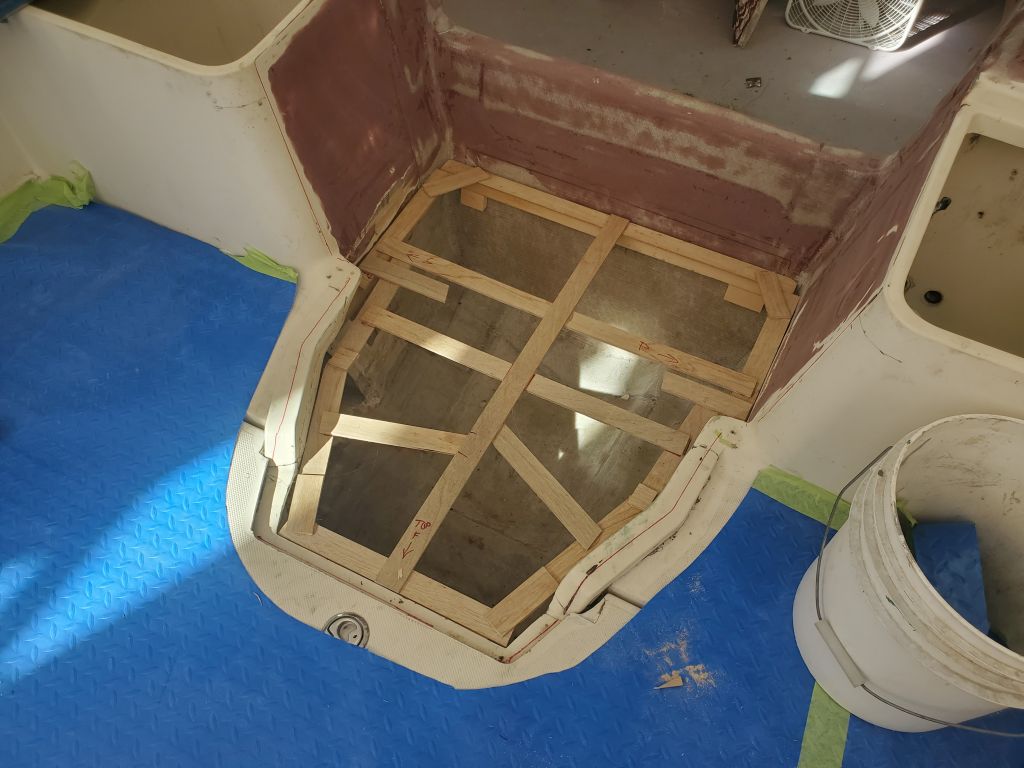
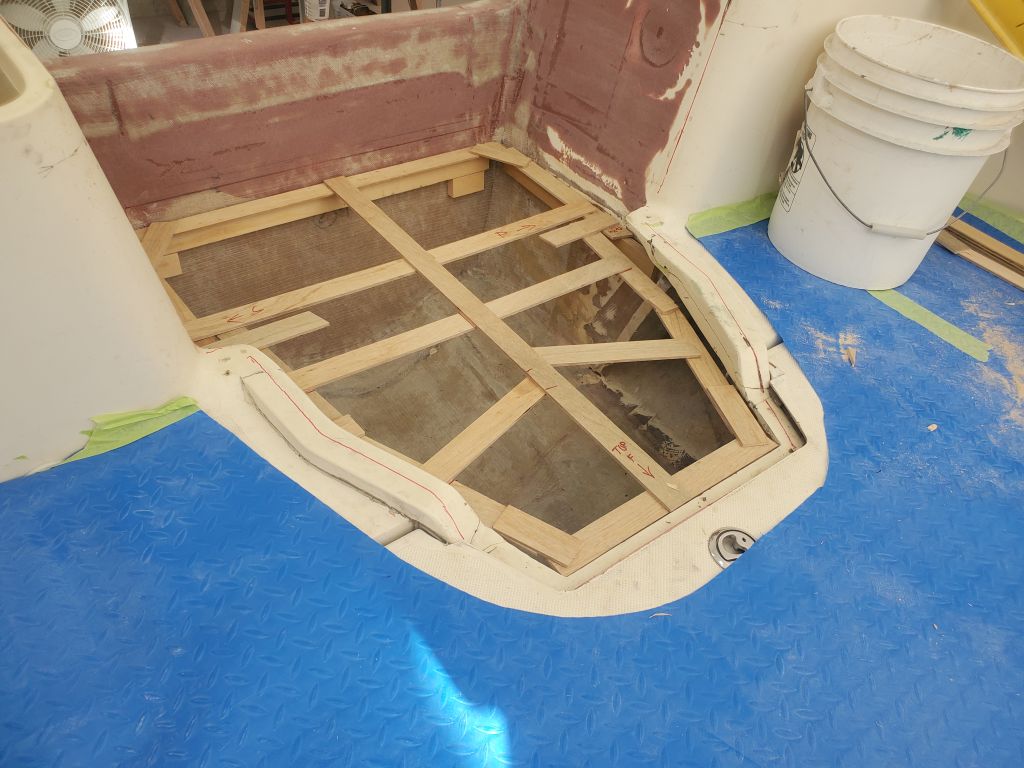
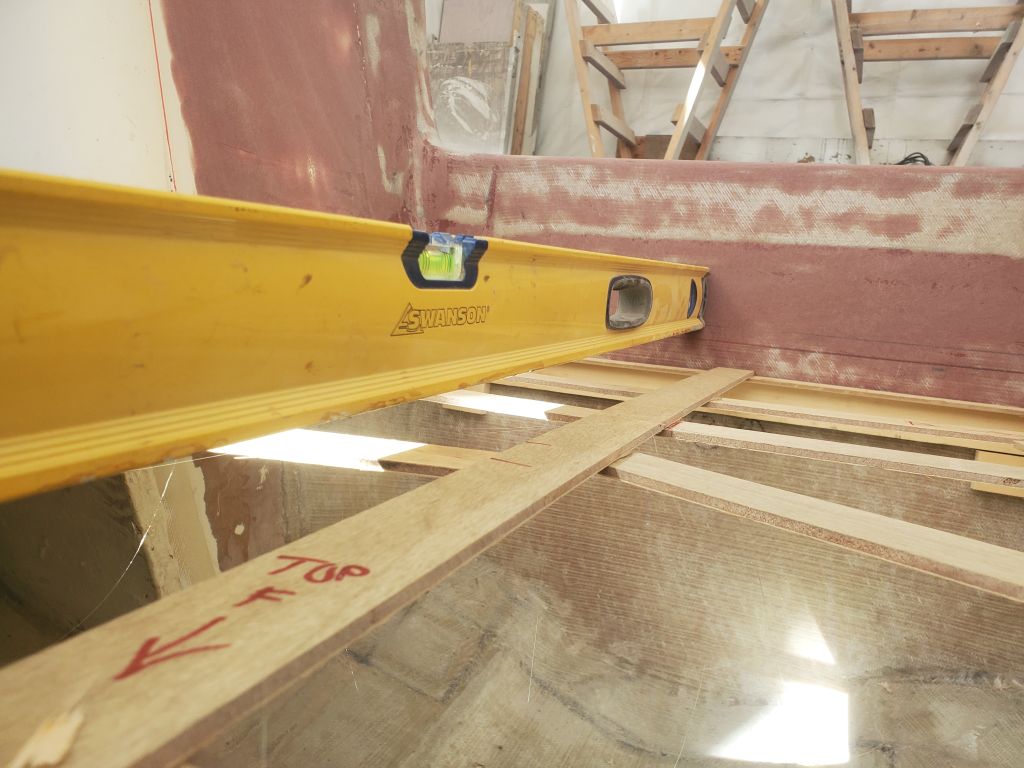
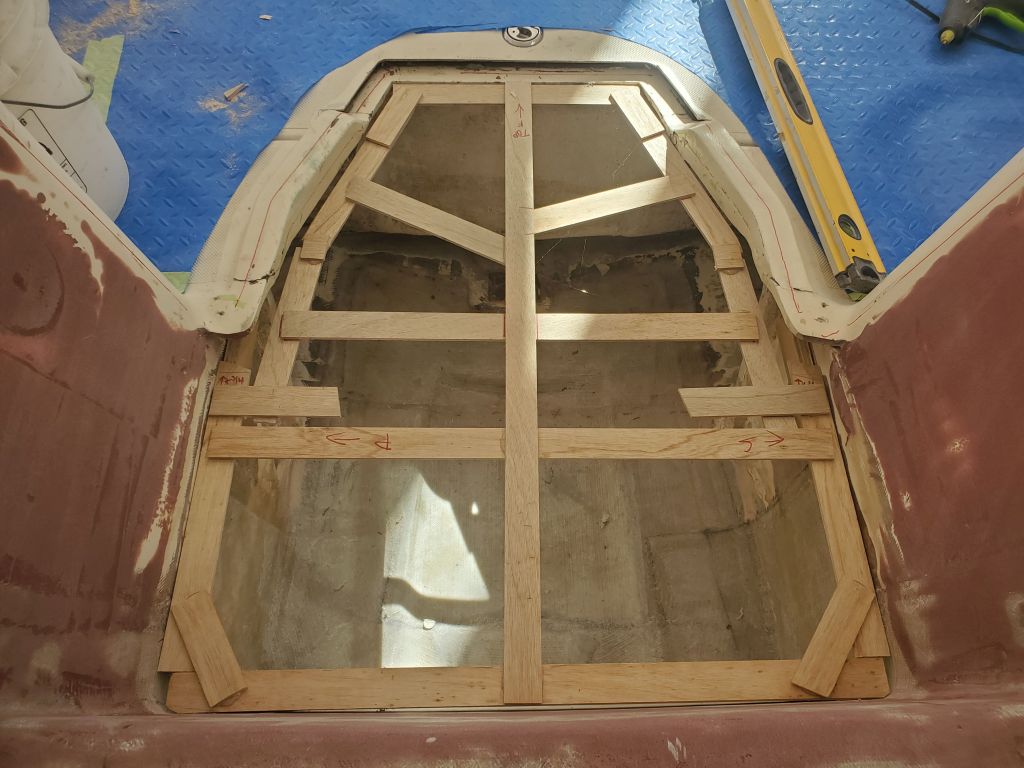
Now I could get on with making the hull mold that would allow me to start rebuilding the hull from the inside first. After marking the centerline on the hull forward of the repair area,  I started with two pieces of 6mm plywood cut to 48″ long and 14″ wide, which spanned the repair on each side of centerline, extending far enough onto the known and adjacent hull to dictate the shape of the new hull in the void.  After some test-fitting and basic alignment, along with the assistance of some glued-on alignment blocks, I hot-glued the plywood to the hull as needed to secure it and define the shape of half the repair.  The plywood rested flat on the adjacent, intact hull along the sides of the opening, at the forward end forward of the slight flattened area in the hull, and, after more glue and clamps, along the bottom edge of the plywood transom template.

I repeated the process on the port side, leaving me with a generally v-shaped surface inside the opening in the hull.  To help align the two plywood halves in the center, I added a couple braces from beneath, just to even up the two edges.

To define the shape of the forward end of the space, since there was that void between the existing hull and the mold in the flattened area leading up to the drive tunnel, I patterned and built a fiberglass “bulkhead”, using the forward plywood hull template as a guide for the shape.  Then, after installing some tape over the plywood as a mold release directly beneath, I installed the new piece with epoxy adhesive against the forward end of the tunnel opening.  Filling in the void forward of this would be part of the repair that would be completed from outside, once the inner repair was complete.

To create the curved profile of the bottom of the vee, as well as to keep the interior repair laminate slightly elevated from the actual level of the “real” hull to provide space for the new exterior laminate to come, I prepared a thin plywood panel cut to fit within the void space, which I pushed down in the center to create the curved shape; I used a few screws to secure the bend in place.  This bend aligned with the curvature of the forward and after bulkheads, and the 3/16″ or so thickness would give more than adequate space outside for the final laminates once the interior repair was in place and I removed the mold.

Along the edges of the plywood, since I had to undercut the panel a bit in order to get it into place, I filled the voids with some spackling putty, just to bring the edges even and prevent future epoxy or laminate from bonding to the plywood.  (Clay would have been nice for this, but I had none.)  This material would all be removed from beneath once I took apart the mold.

To finish off the mold, I covered the whole area with masking tape as a mold release.  This would be adequate since it would prevent bonding to the wood, but since I’d have access from beneath once the mold was removed I could easily remove and sand away any tape residue that did semi-adhere.  Now the mold was ready for new laminate next time.
Holby 14

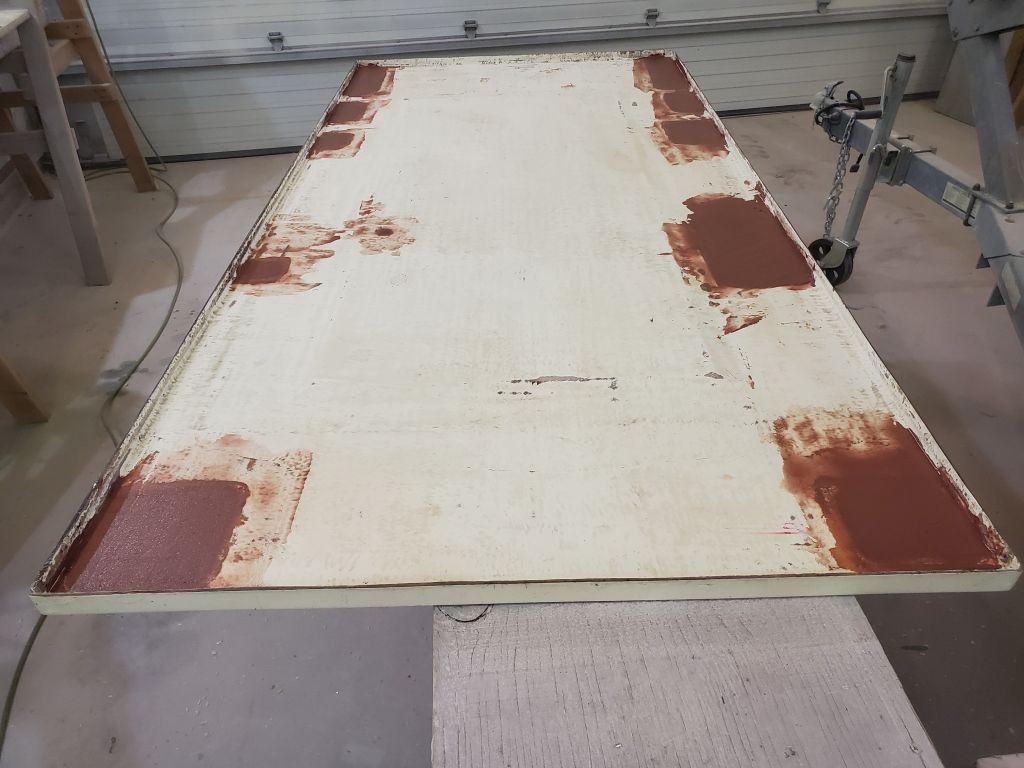
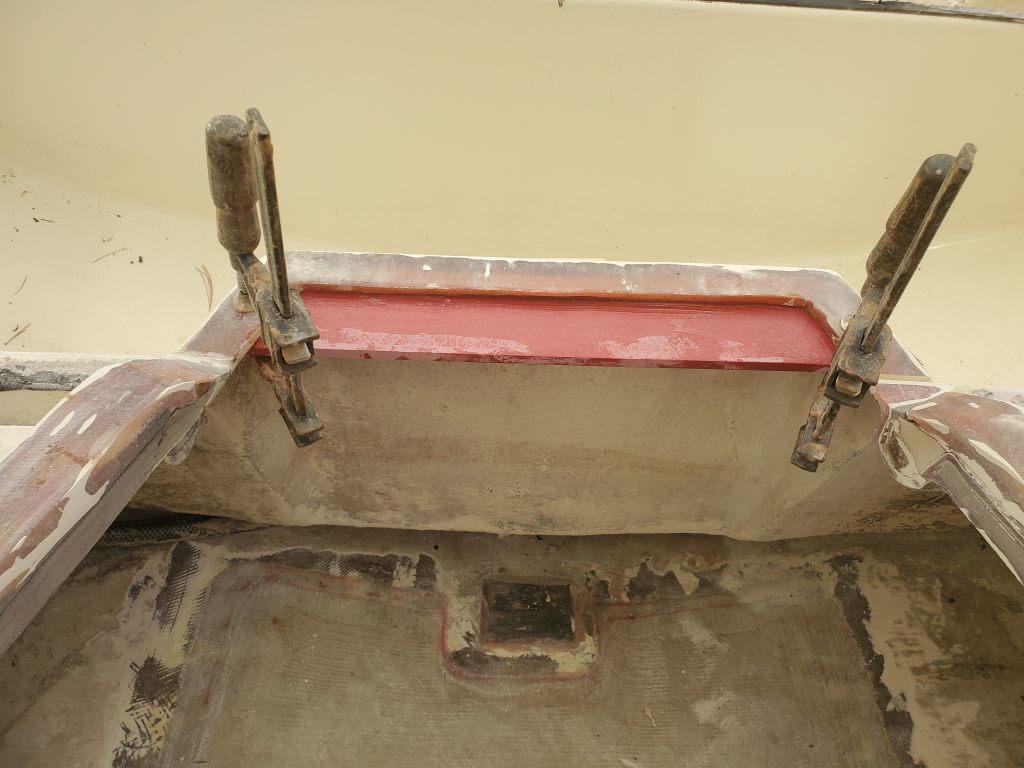
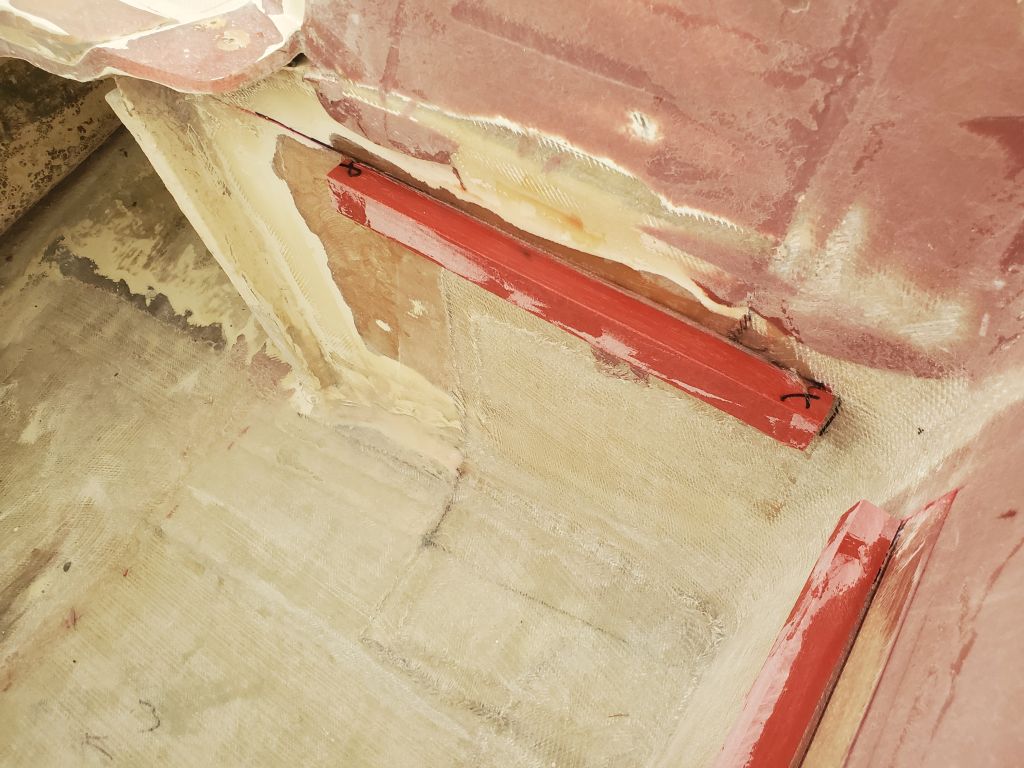
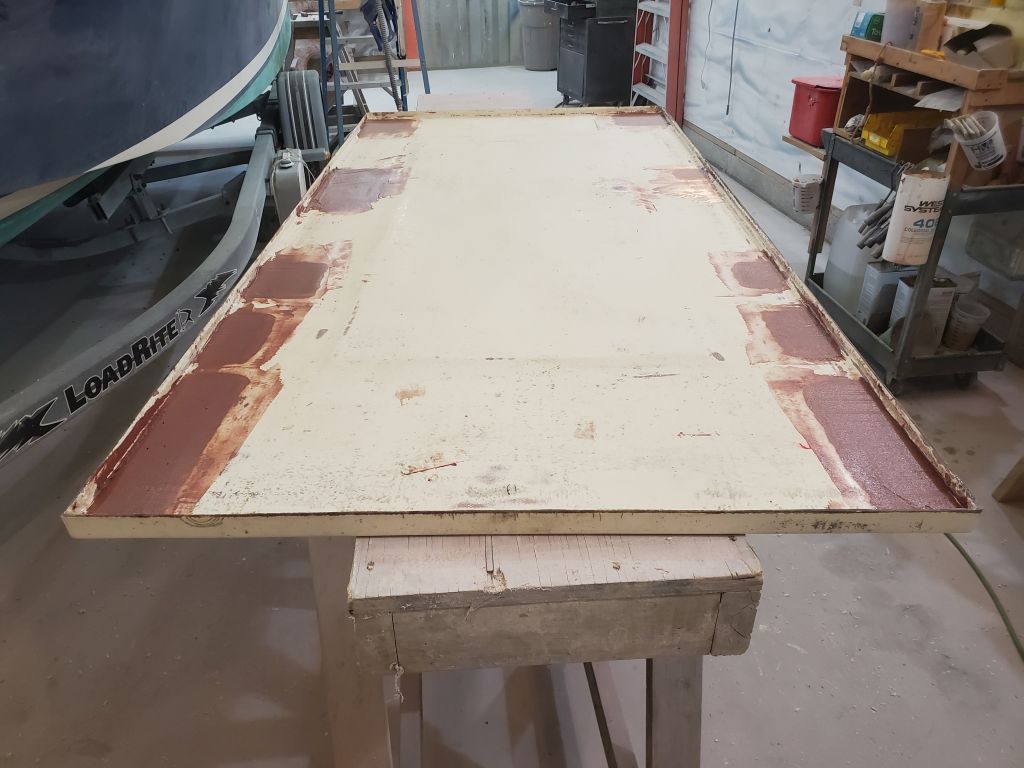
After some final preparations, mainly cleaning of the transom, surrounding areas, and new fiberglass panel, I installed the panel permanently in a thick bed of epoxy adhesive that I troweled onto the inside of the transom, along the bottom and side edges, and otherwise as needed.  With a large area and some unevenness around the bottom edge and the vertical portion of the jet drive tunnel, it required several batches of mixed epoxy, so there was no time to pause for reflection nor pictures of the adhesive application.

Once the panel was in place, I secured it with clamps along the top edge, which pulled it into the slight curve of the transom shape, and more clamps at the bottom edge through the tunnel opening.

Next, I mixed more of the adhesive epoxy mix and formed broad fillets along the sides where the panel met the existing structures, and slightly smaller fillets at the bottom edge where it met the existing hull.  The fillets increased bonding area and, more importantly, would provide a clean rounded corner to ease application of fiberglass later.

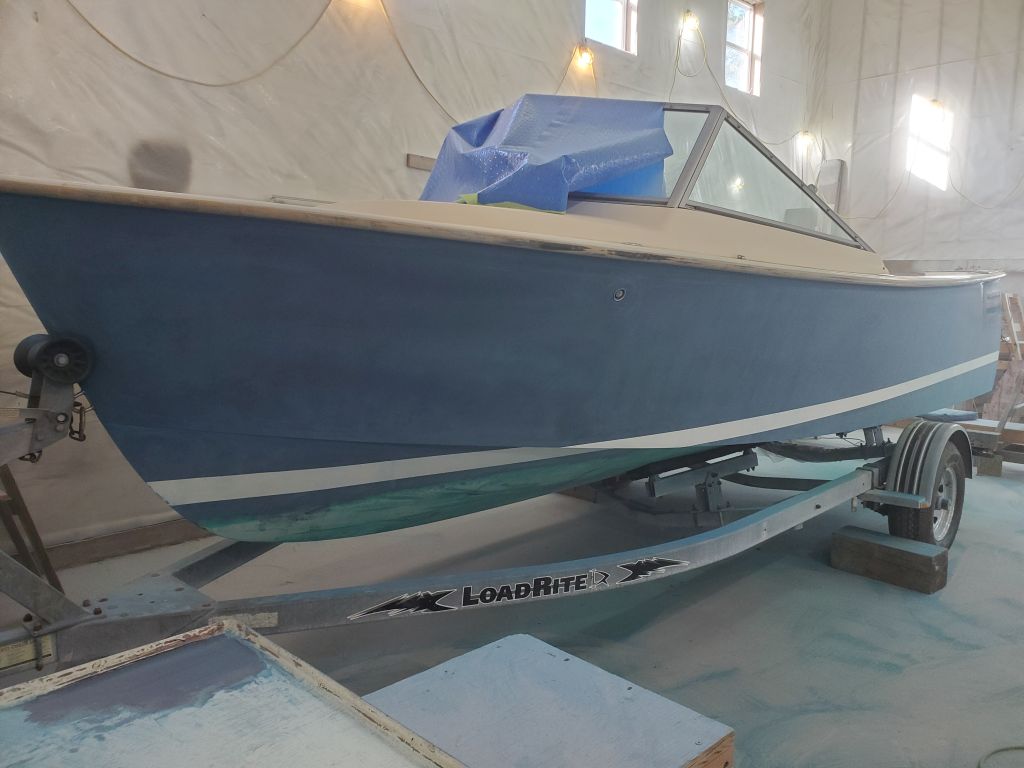
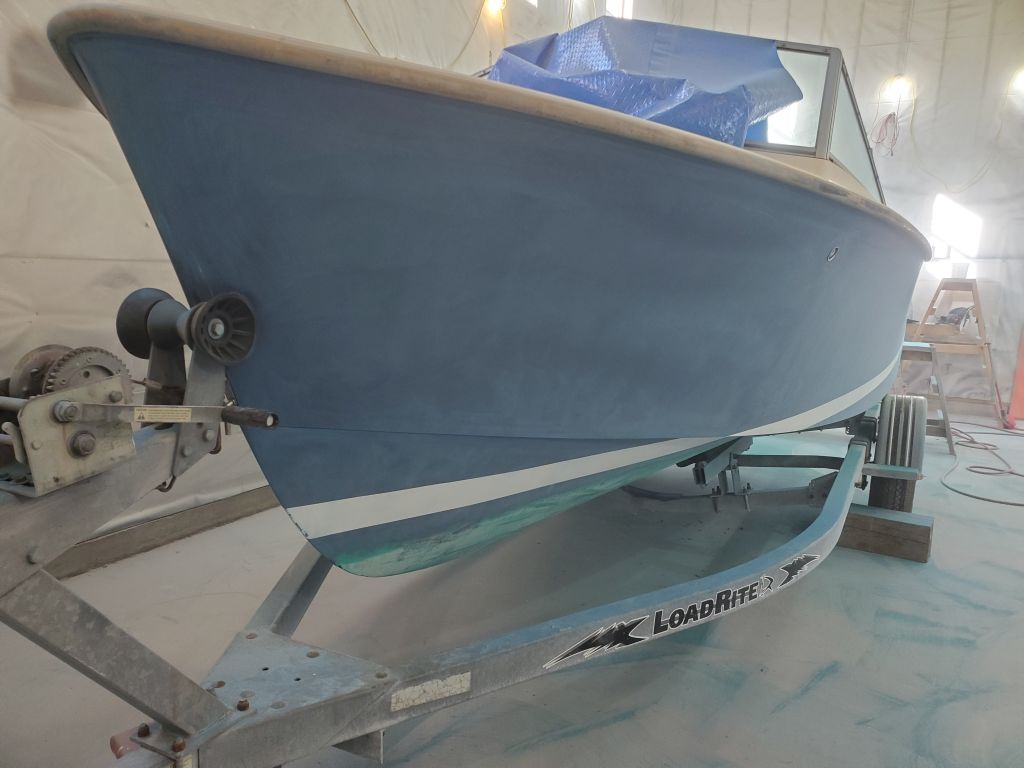
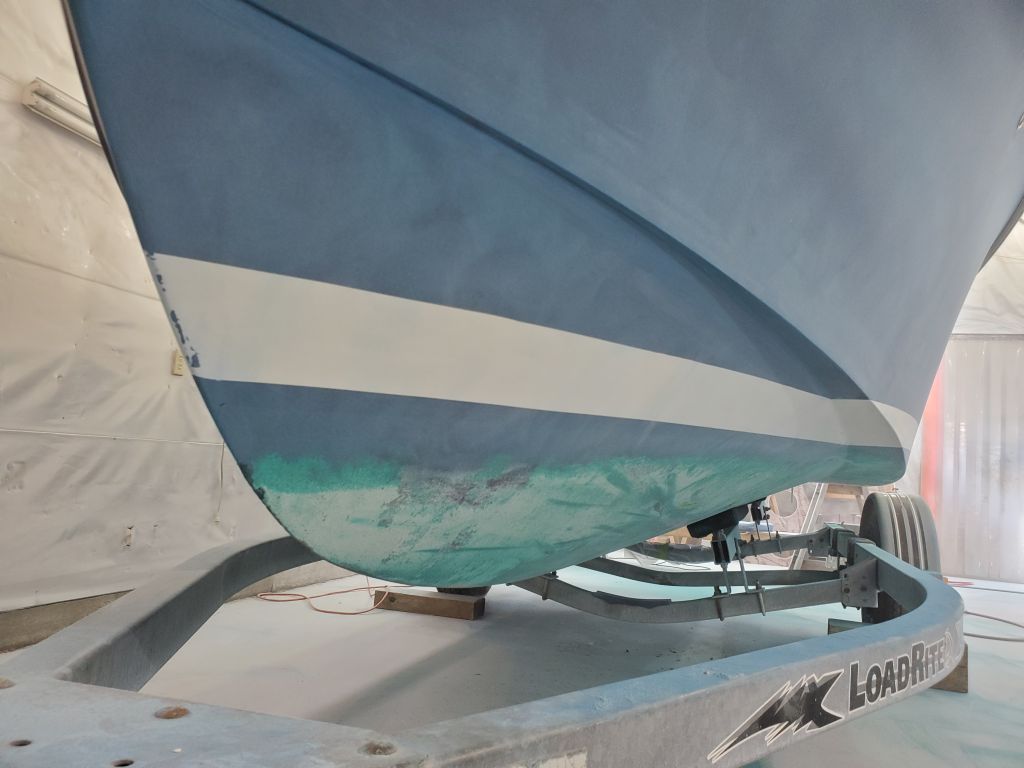
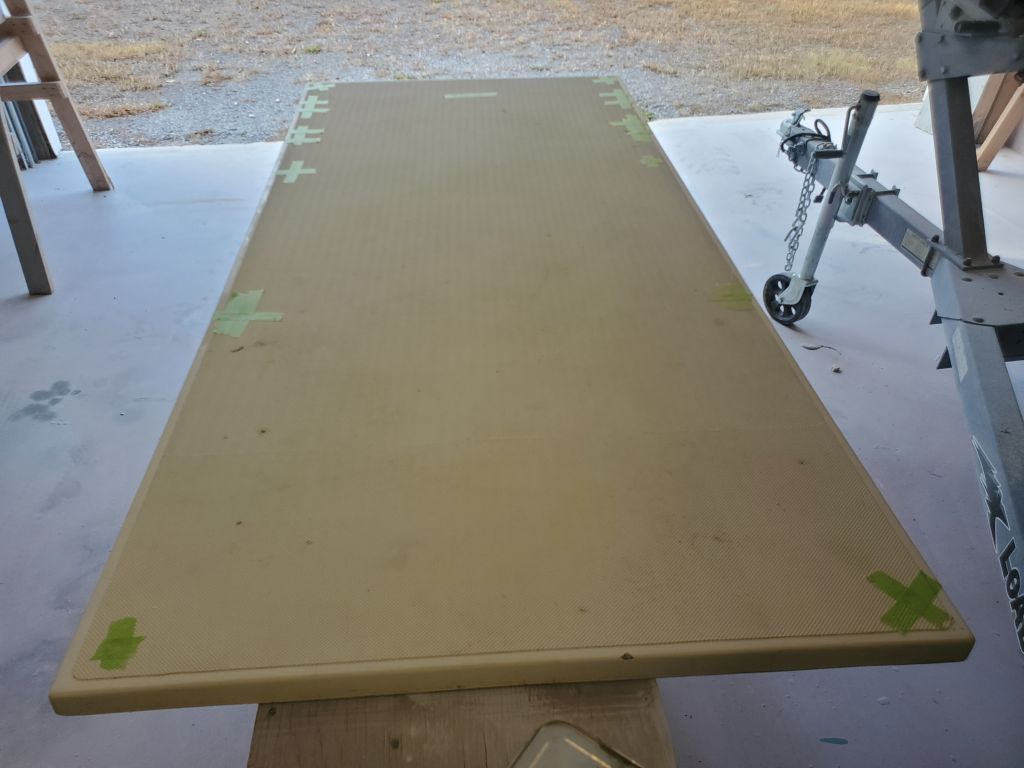
It was time to start focusing on molding the repair work to fill in the bottom portion of the jet tunnel.  This repair would be effected from both inside and out, but first I needed to create a temporary mold of the shape of the bottom, using the adjacent and known hull shape as the guide.  To prepare the surrounding hull for the first steps in the process, I began by scraping away the old bottom paint all around the work area from beneath, which was quick and easy since the old paint was poorly adhered anyway, and age had dried it out to the point that it was essentially falling away on its own.  Removing the paint would give hot glue, which would probably be a crucial part of my mold work,  a chance to actually stick to the boat.  Eventually I’d have to sand/grind the gelcoat and laminate on the underside as well, but not till I’d created the initial laminate from the inside of the boat, as I needed the existing hull shape as is to build the mold.
I couldn’t begin the mold itself till I unclamped the transom, but for now, and with only a half day planned anyway, I built a female pattern of the hull shape, starting with the male transom template I’d made earlier, then using an intact section of the hull just forward of the repair area to scribe closely and fine-tune.  The deadrise and shape looked consistent over the area of the repair, though there might be some increase in the angle as it went forward, but in any event the female pattern would allow me to check the shape once the fiberglassing was underway.  Hopefully this would all come together in the near future so I could make the hull whole once more.
Older posts Newer posts