
(page 99 of 165)

Scupper 99

Wednesday

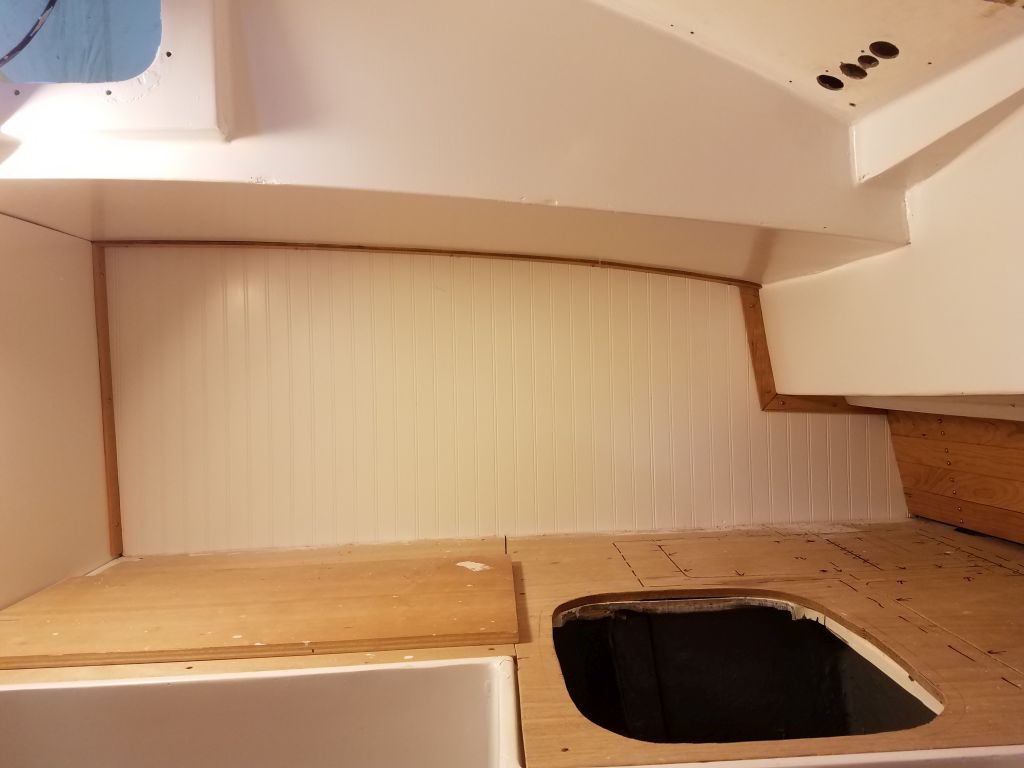
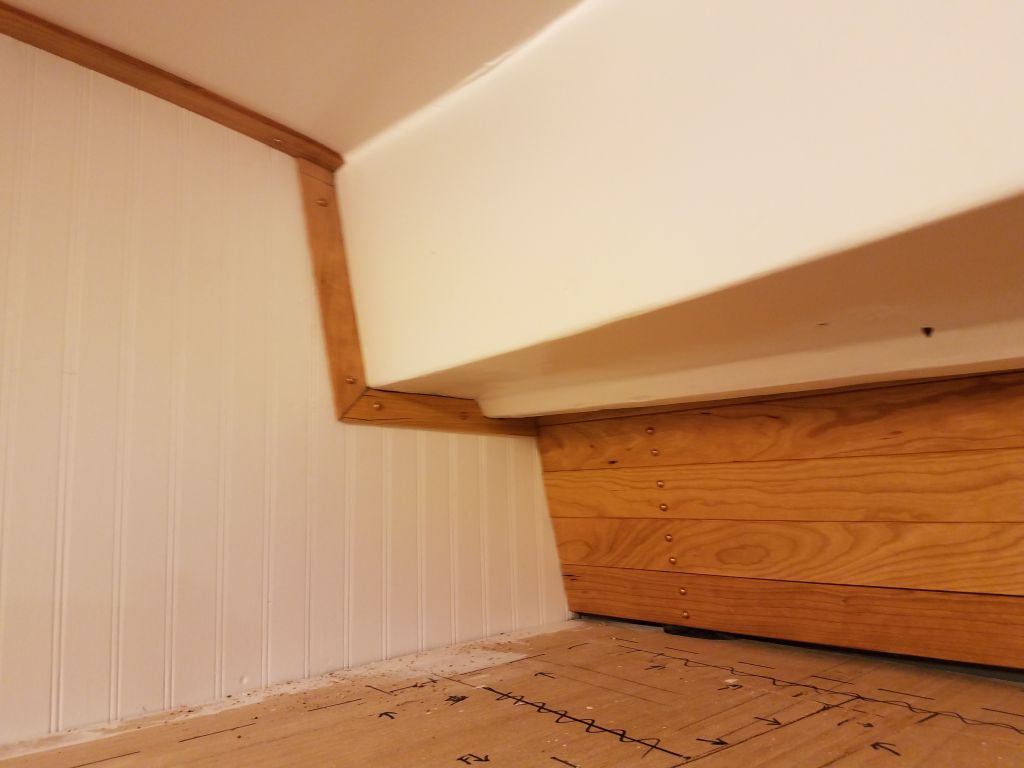
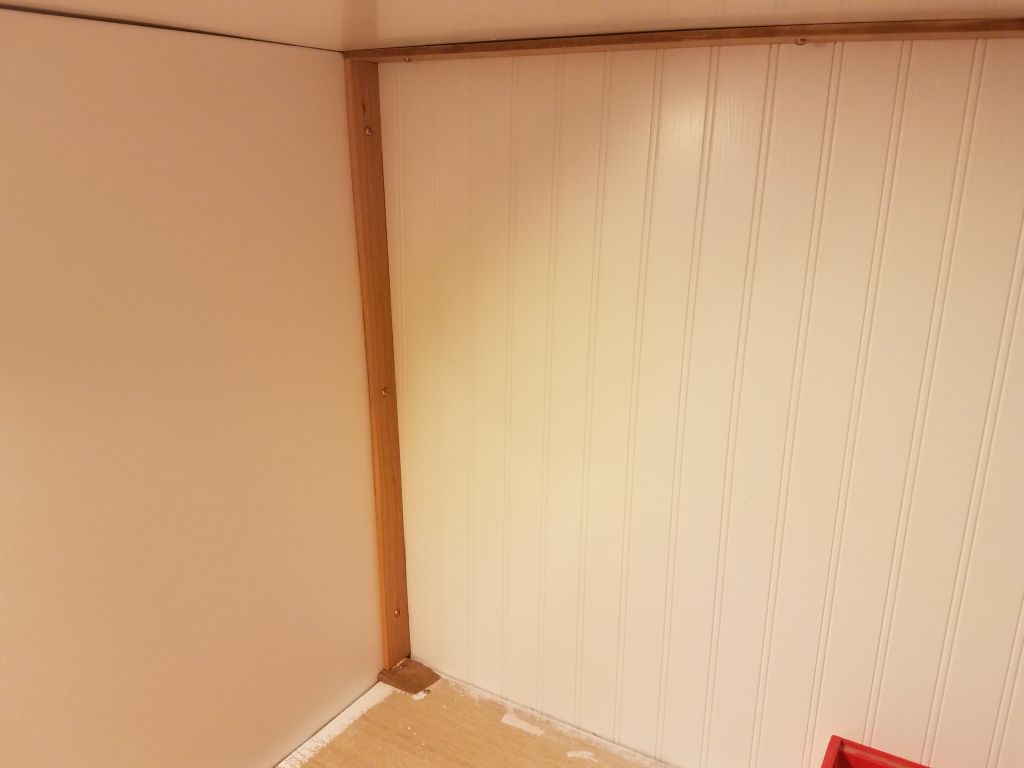
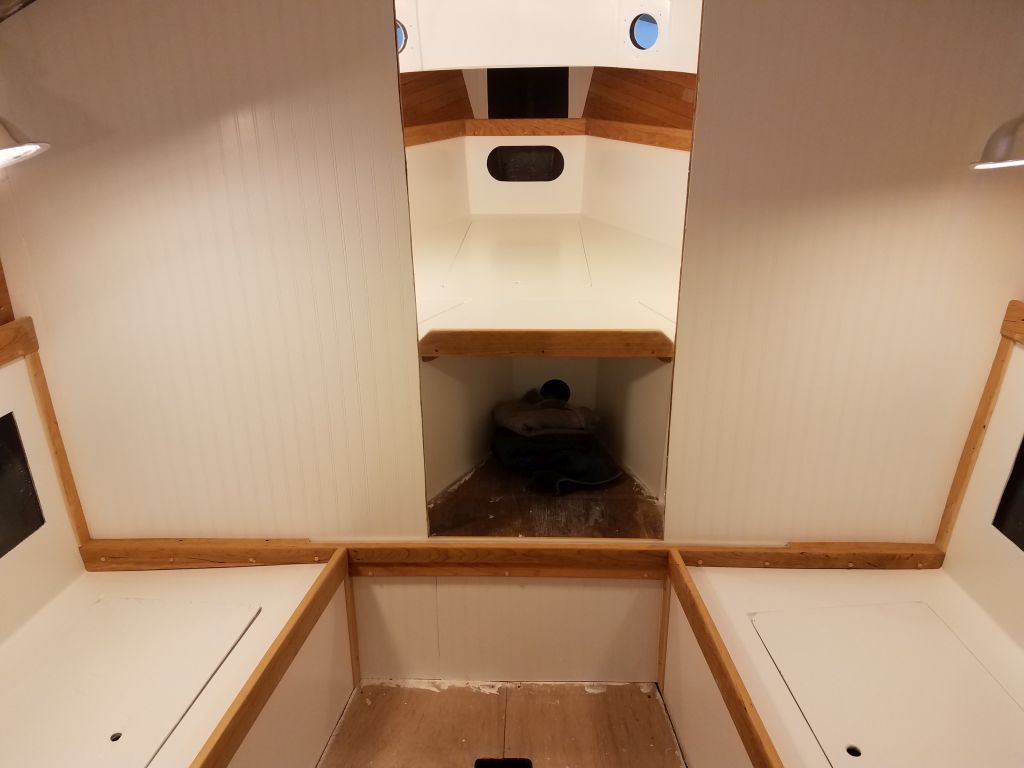
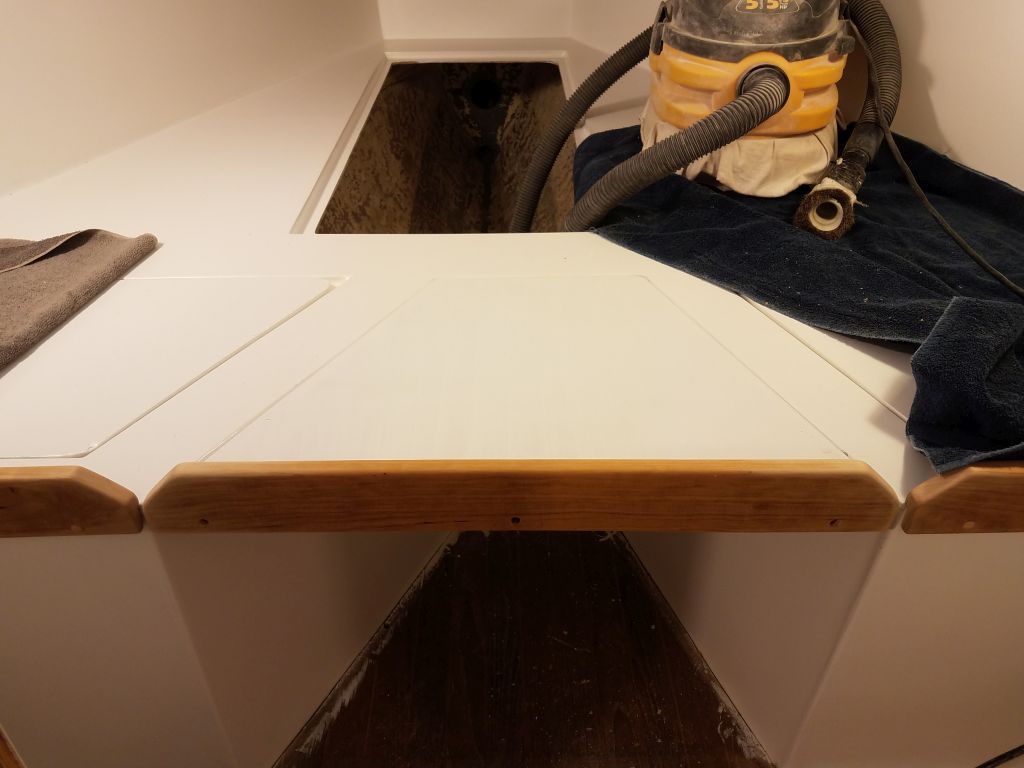
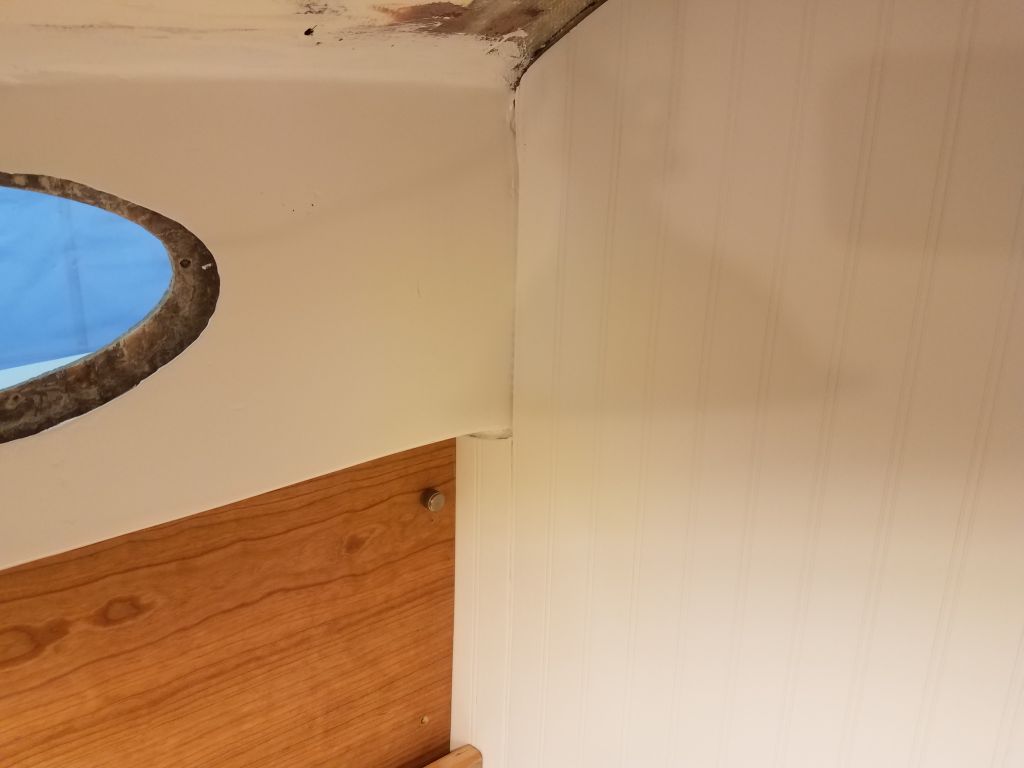
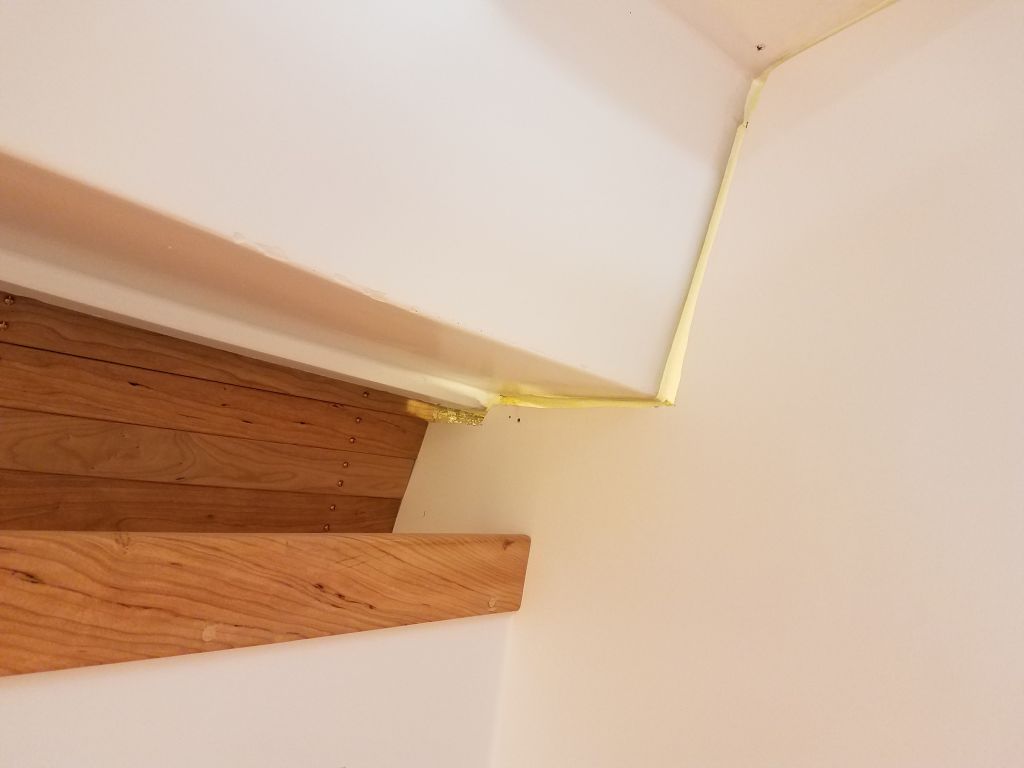
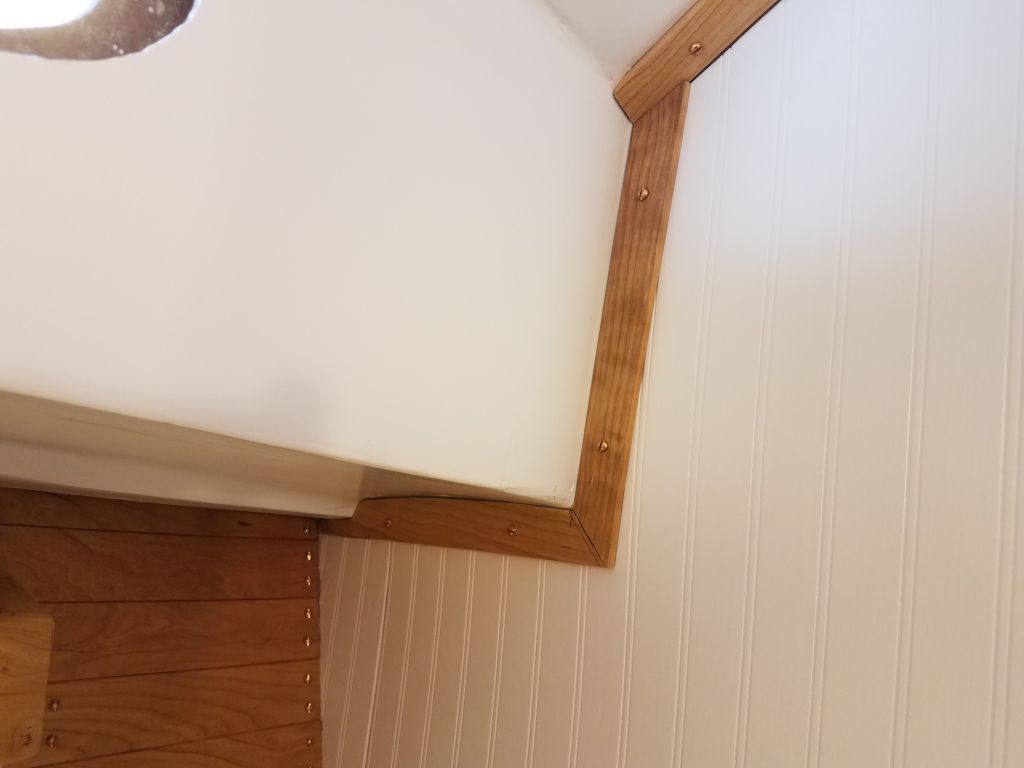
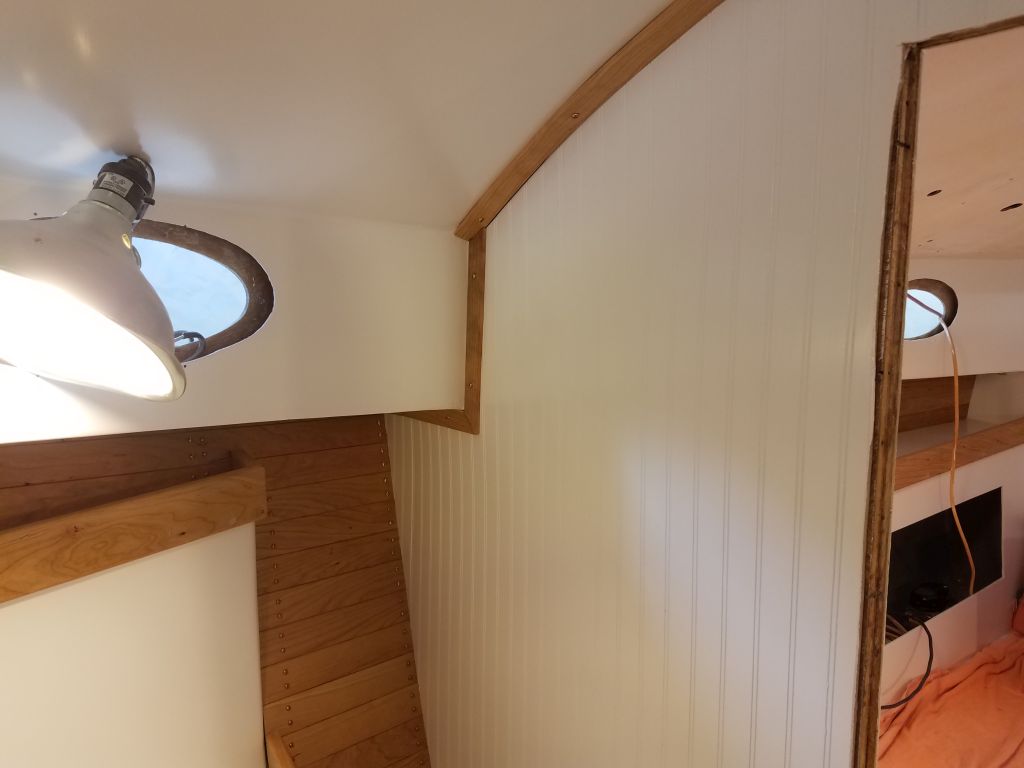
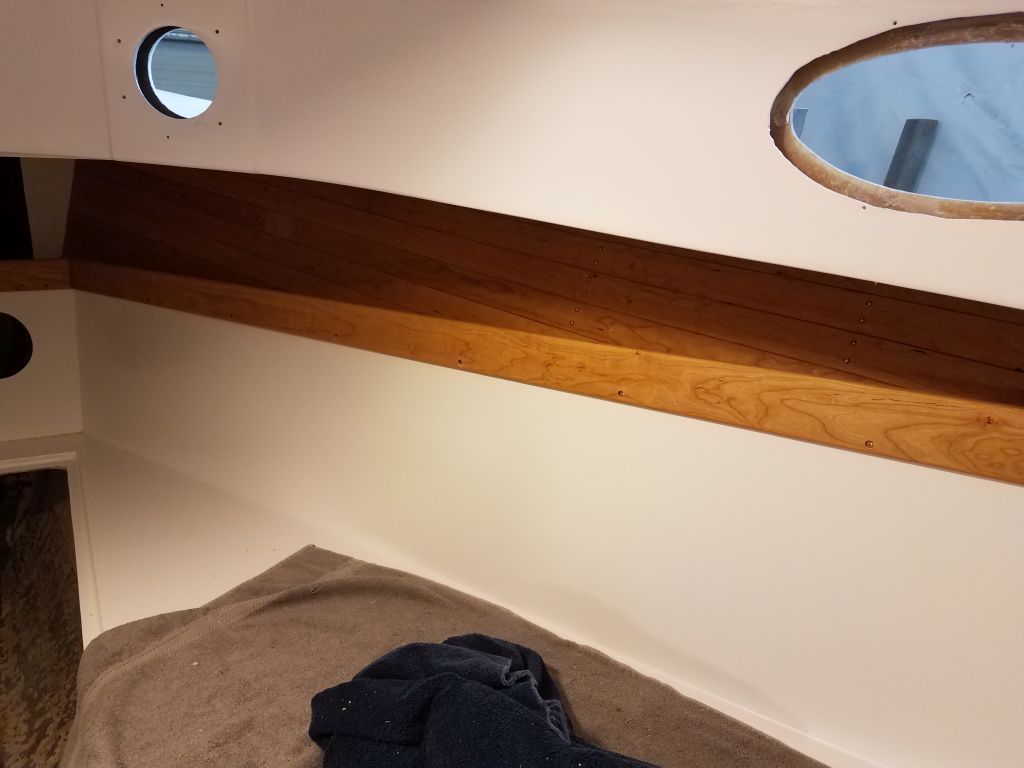
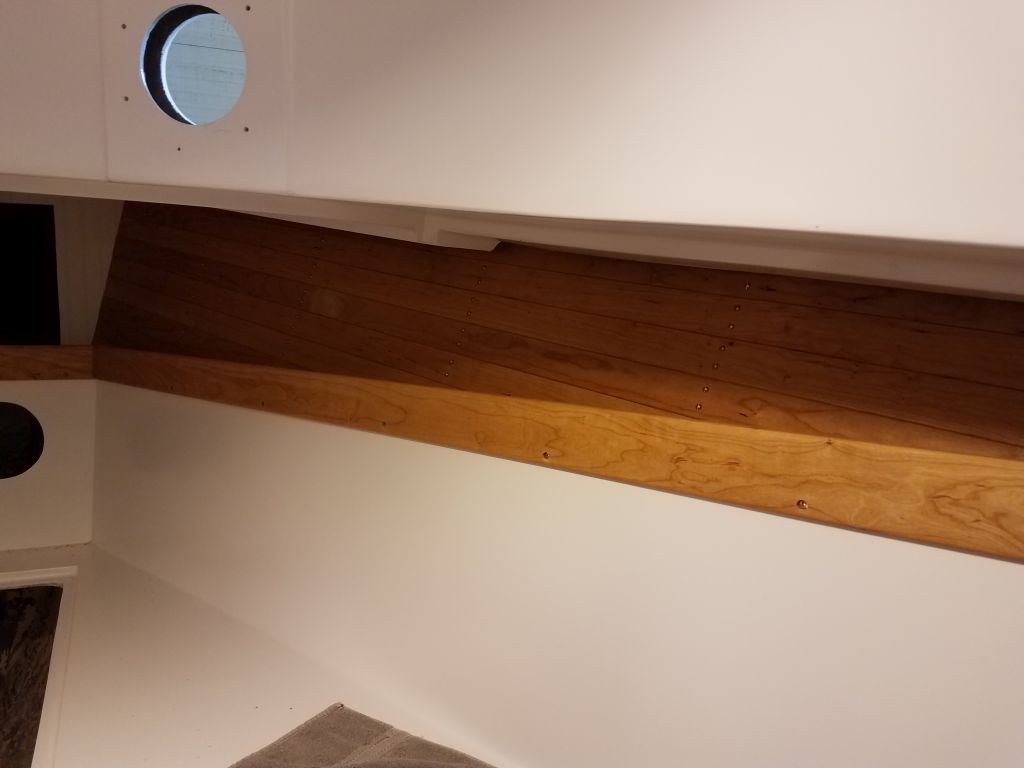
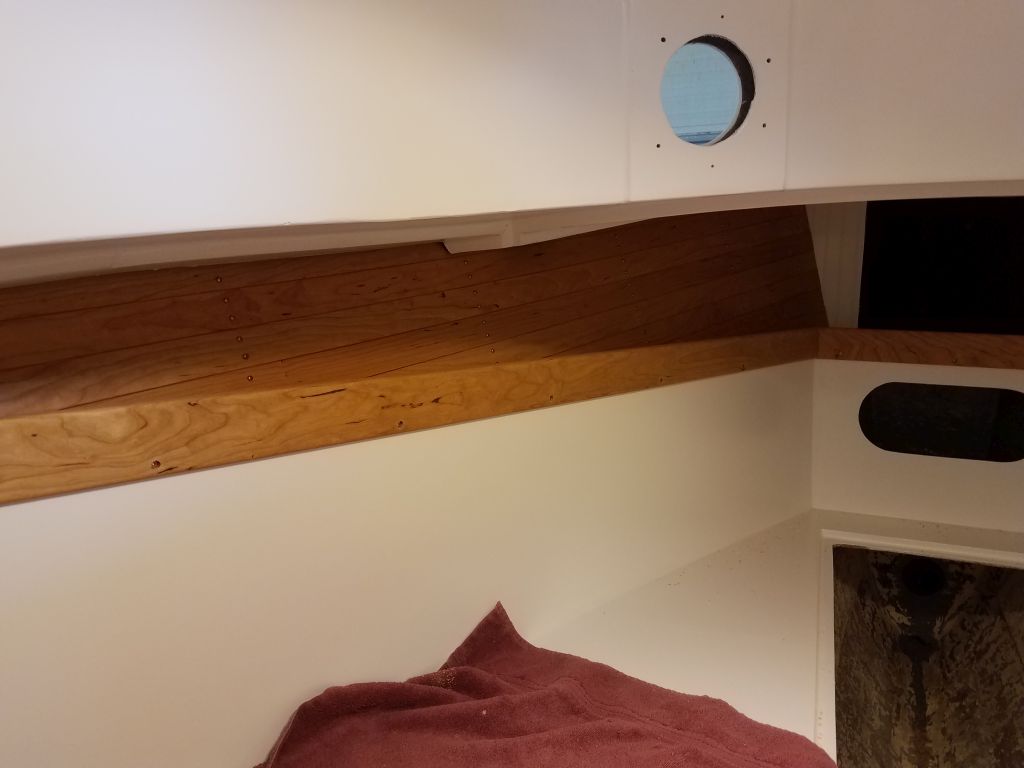
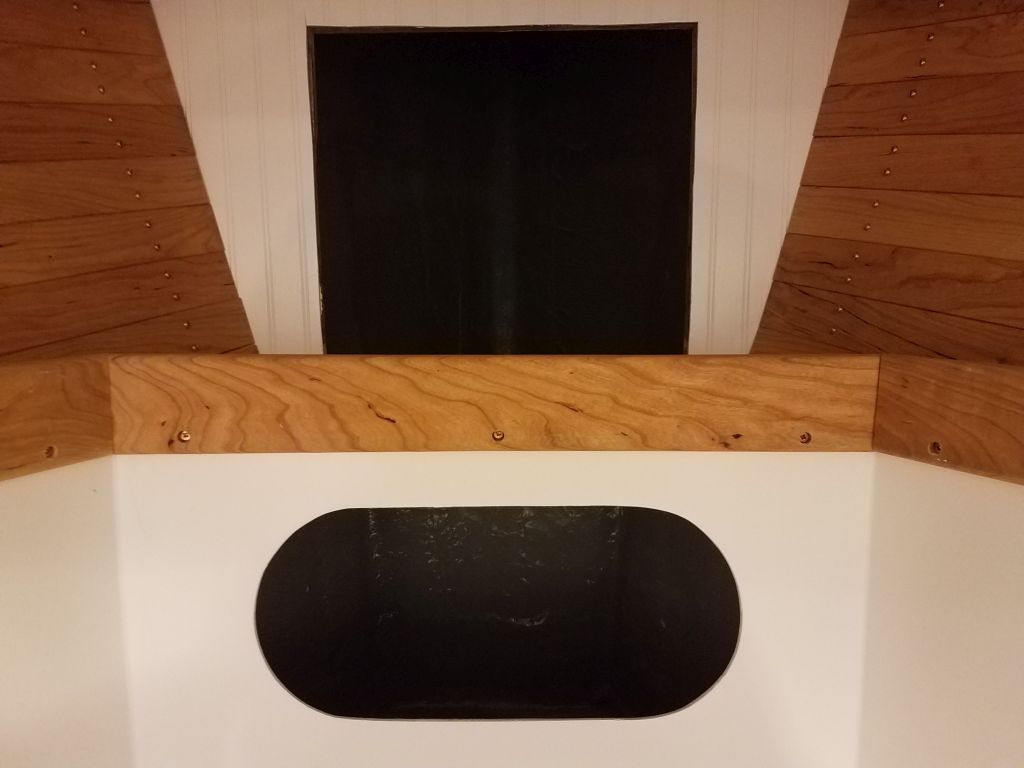
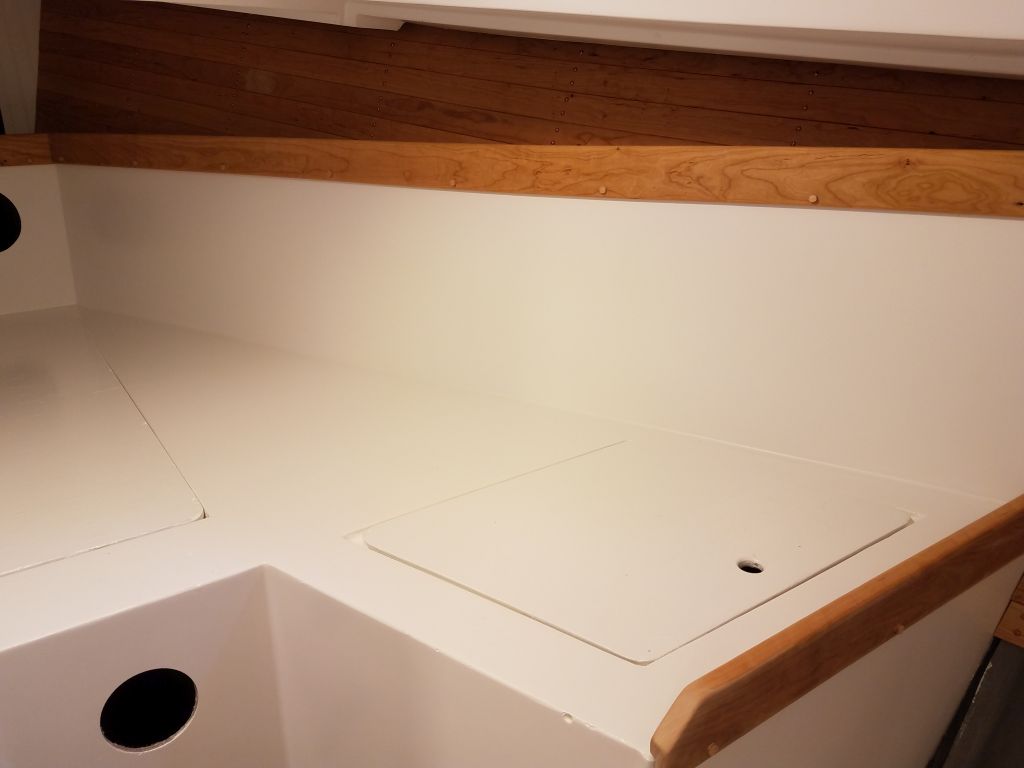
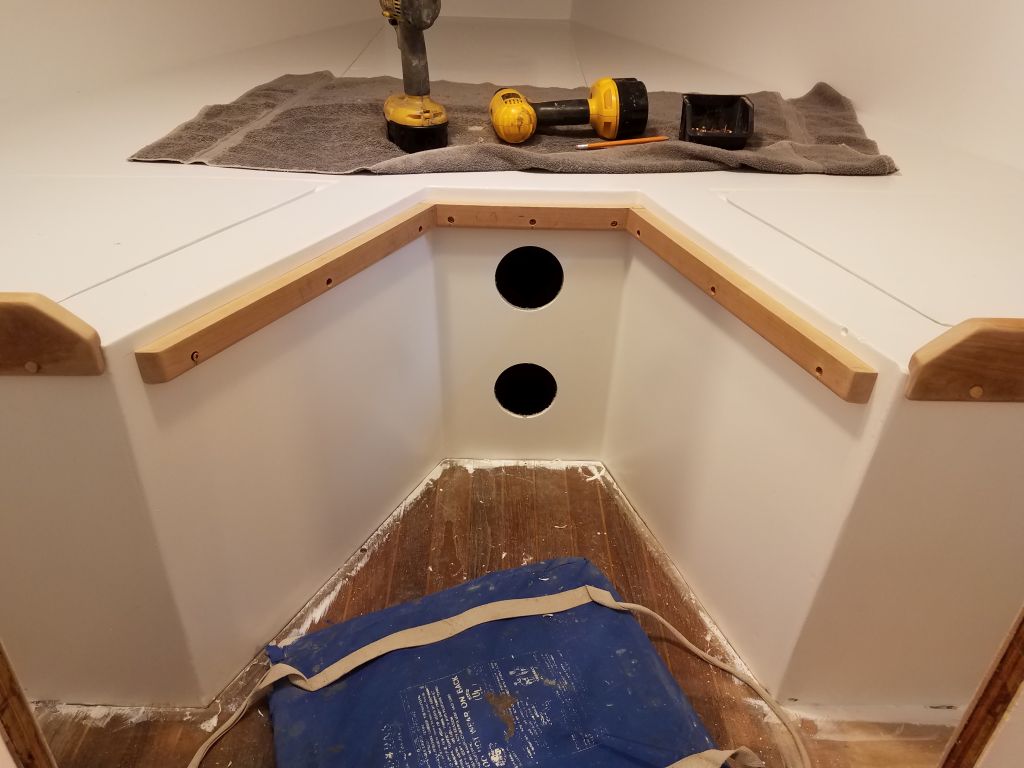
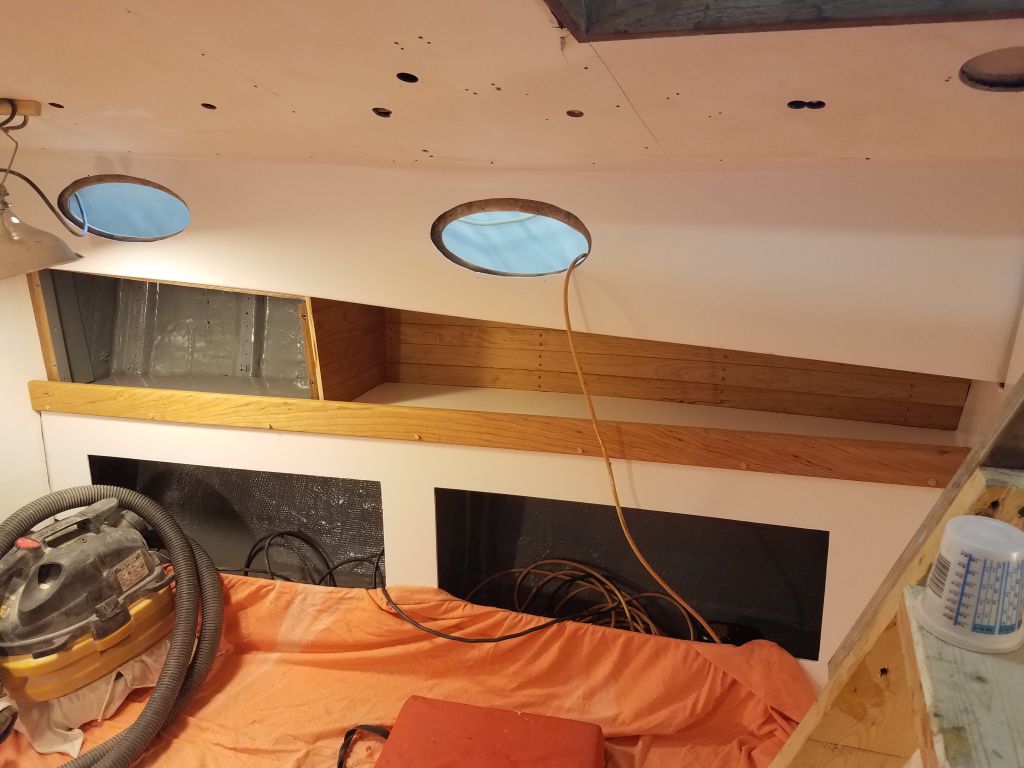
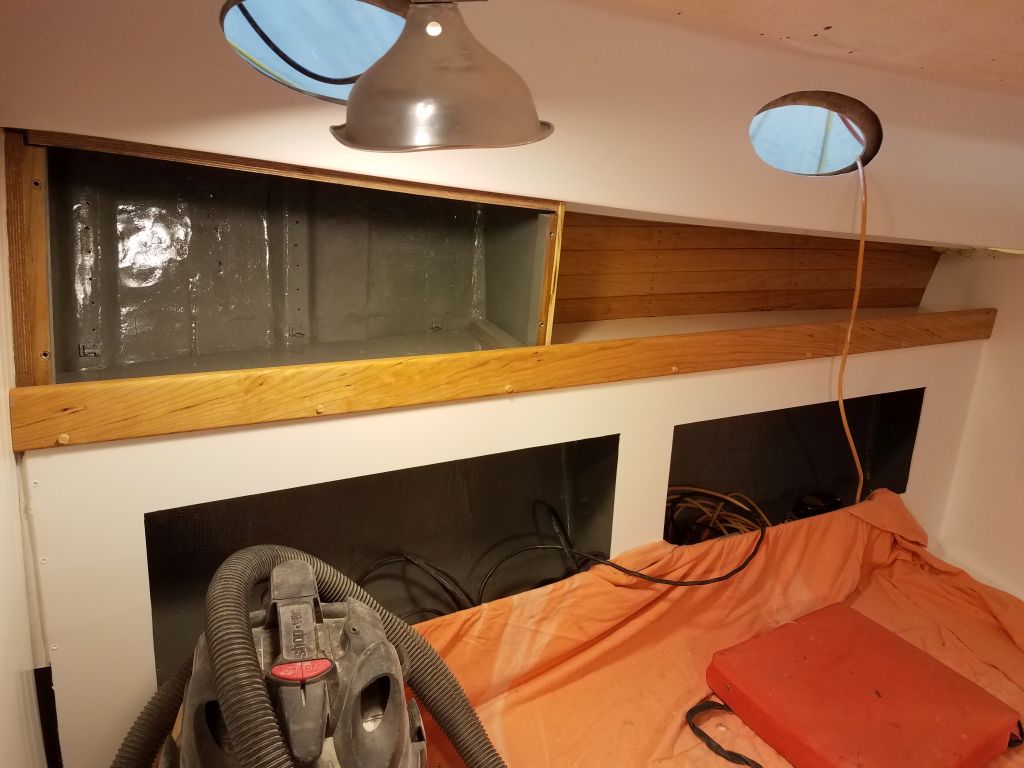
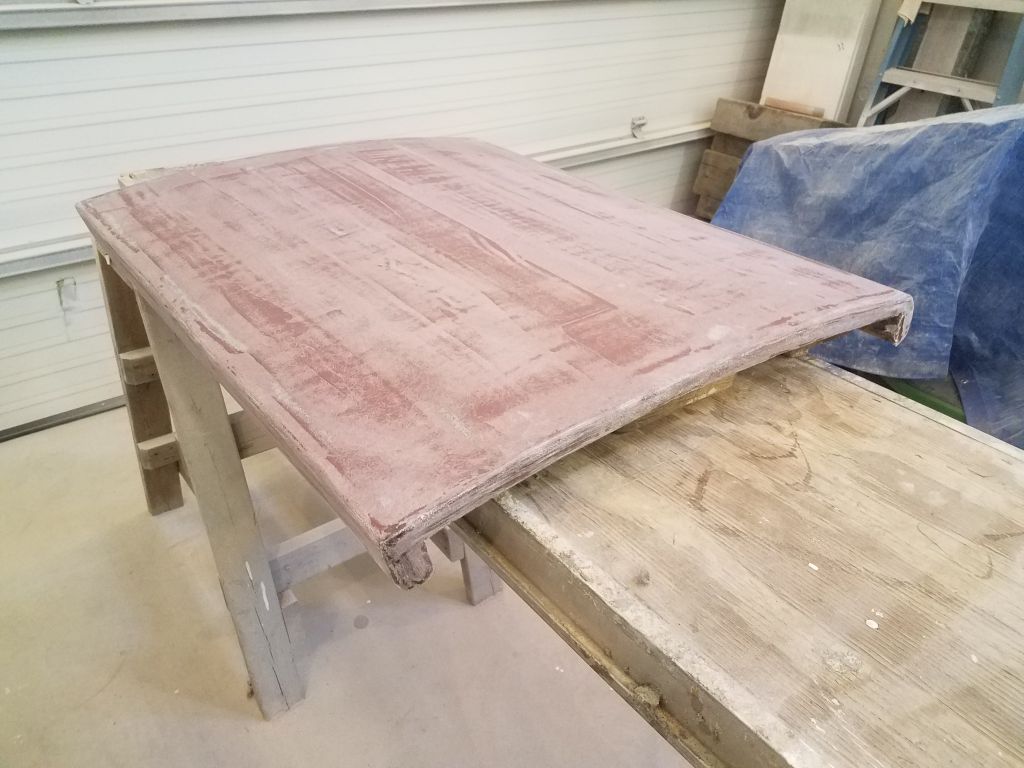
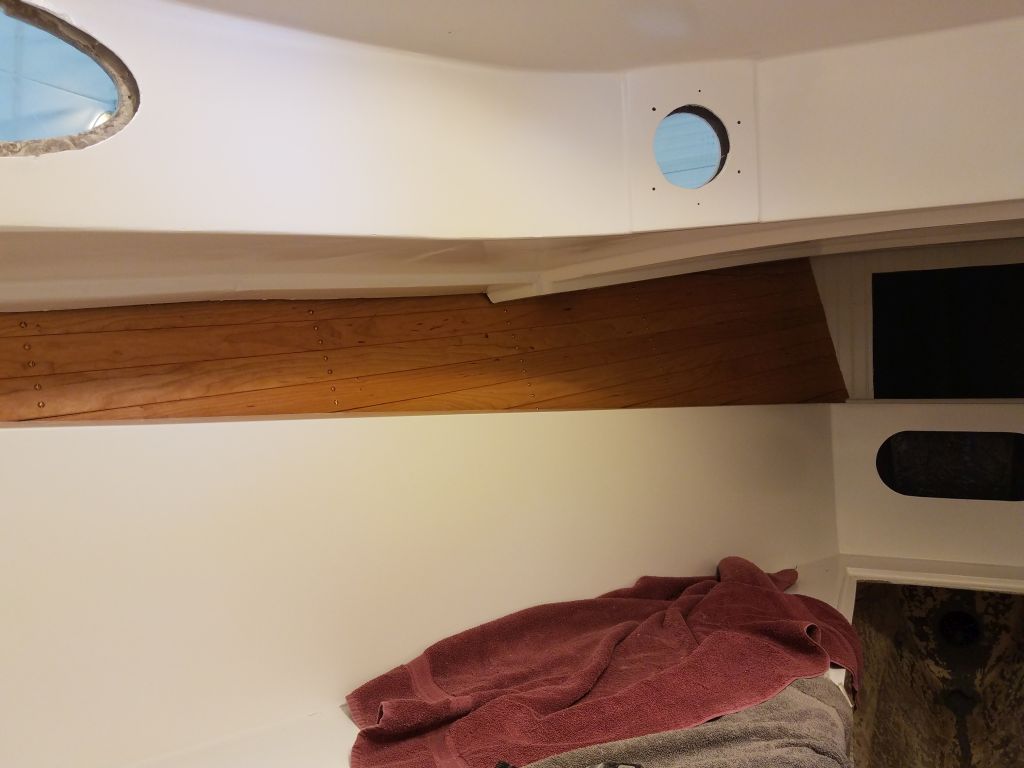
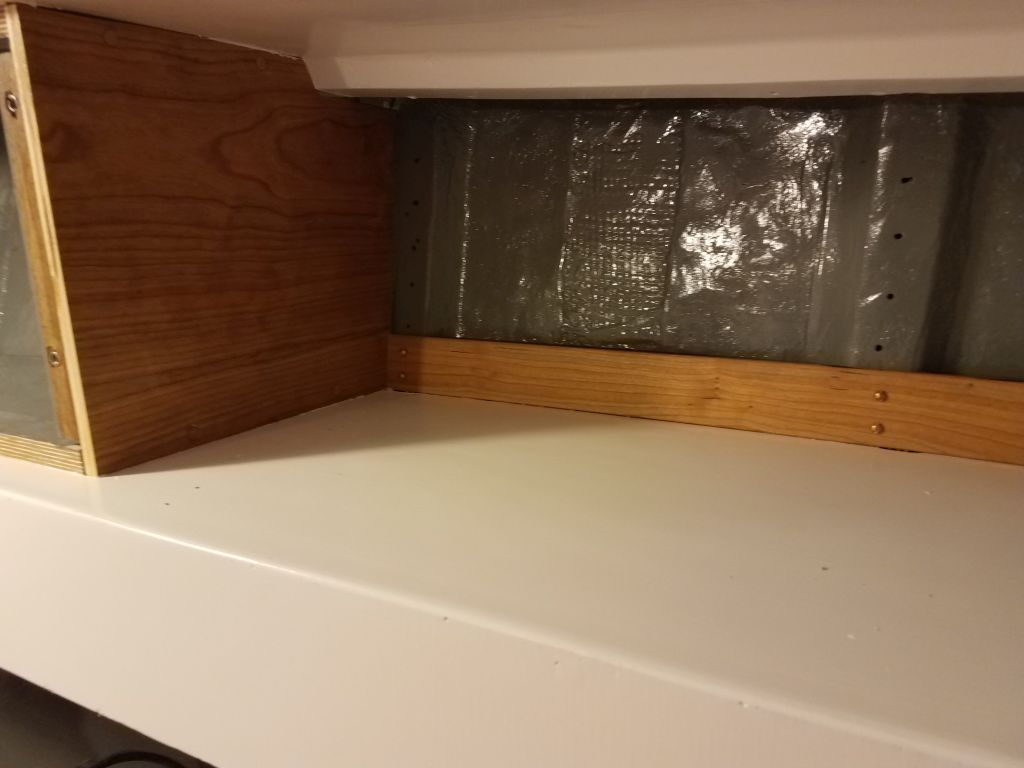
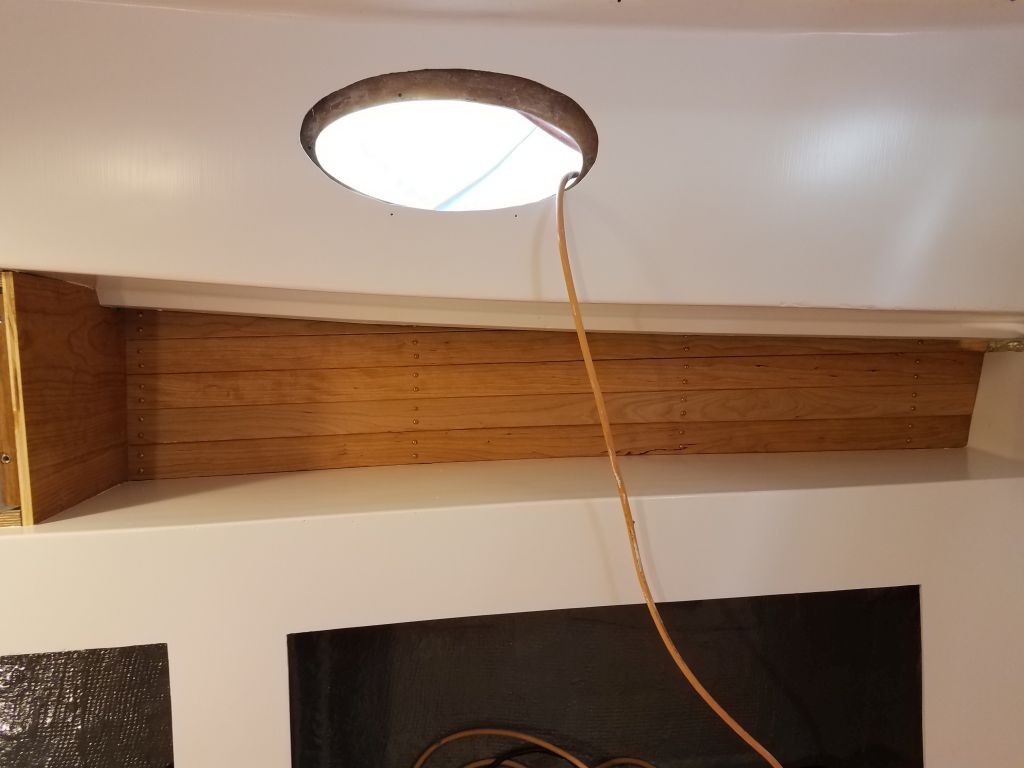
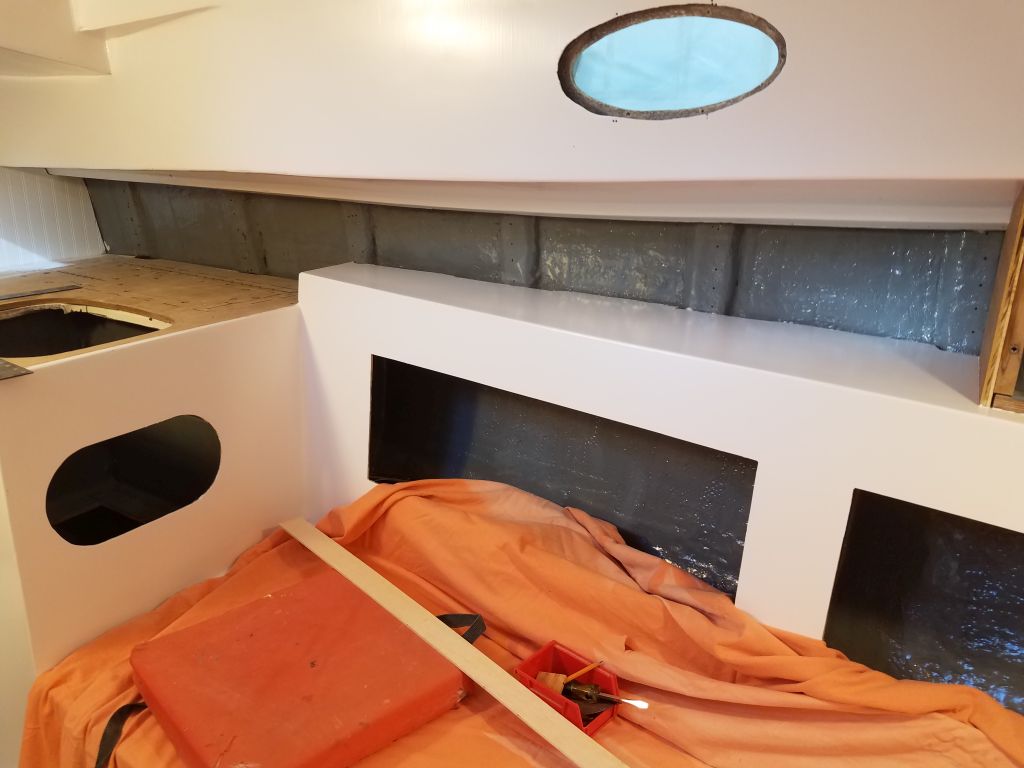
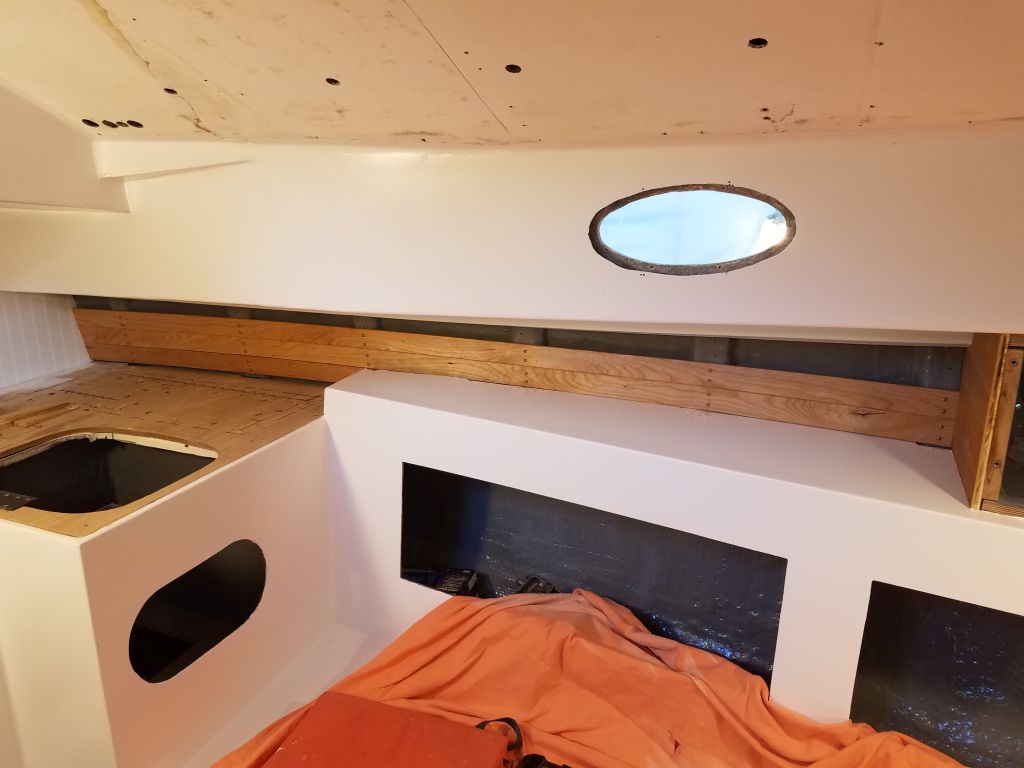
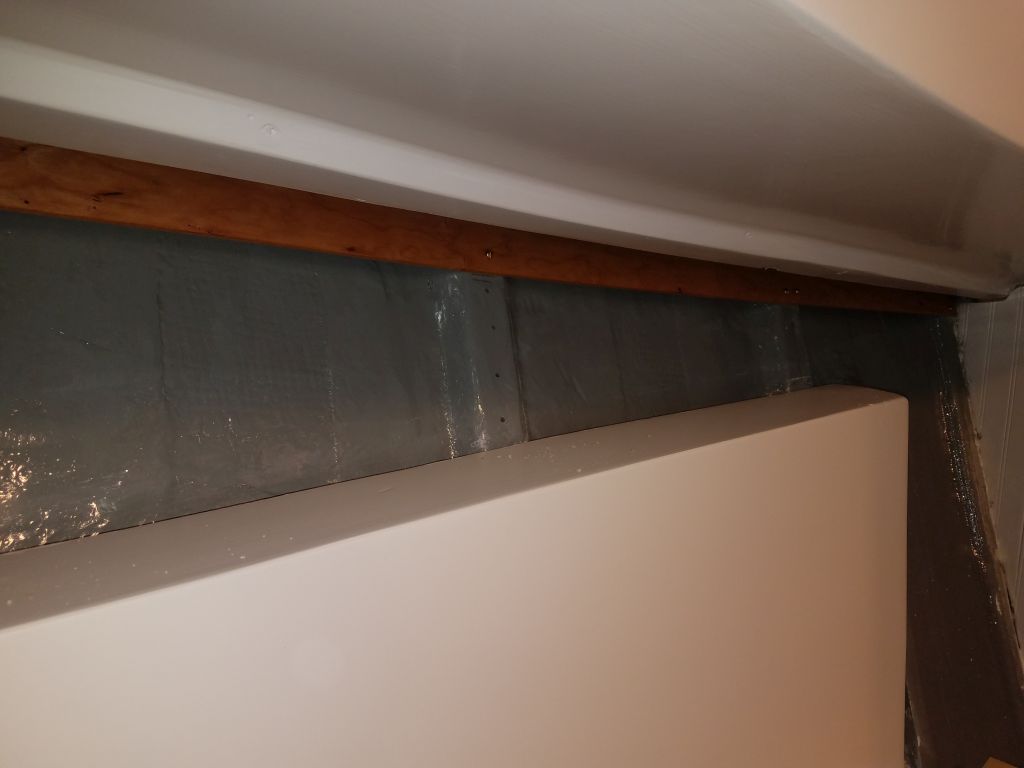
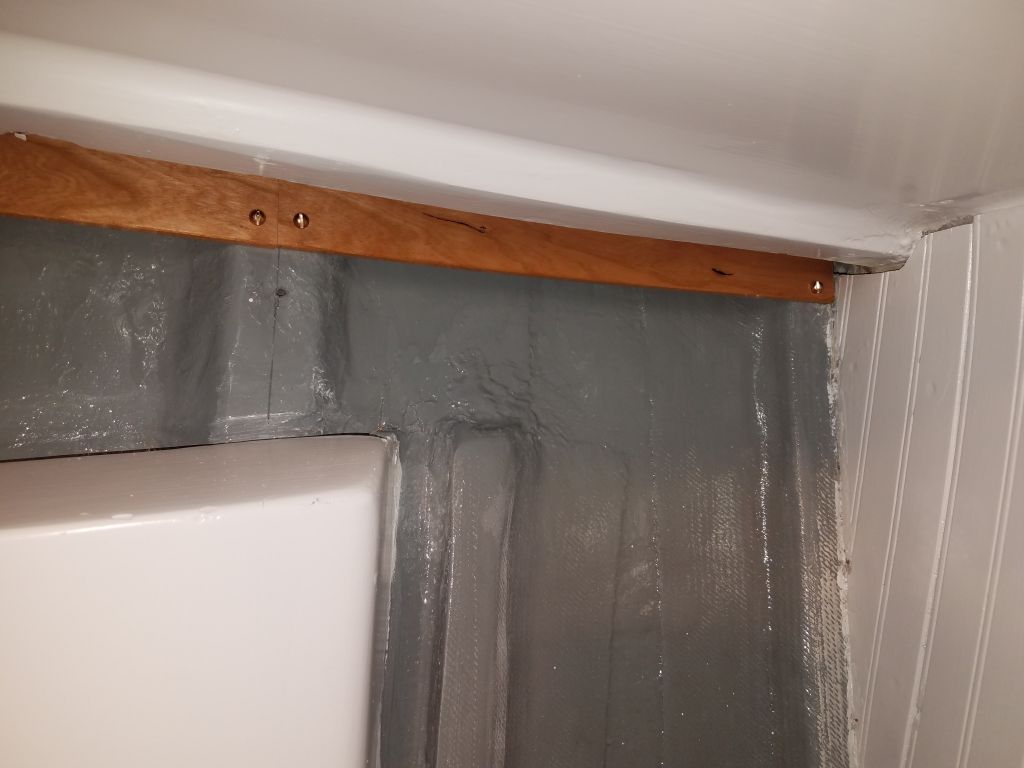
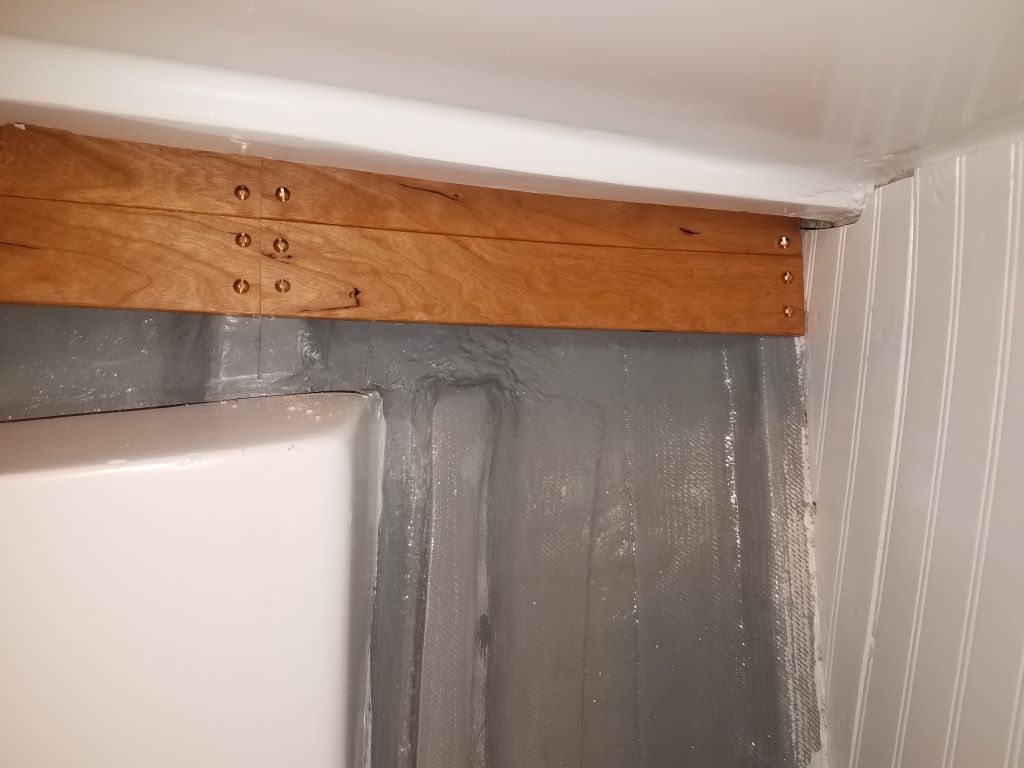
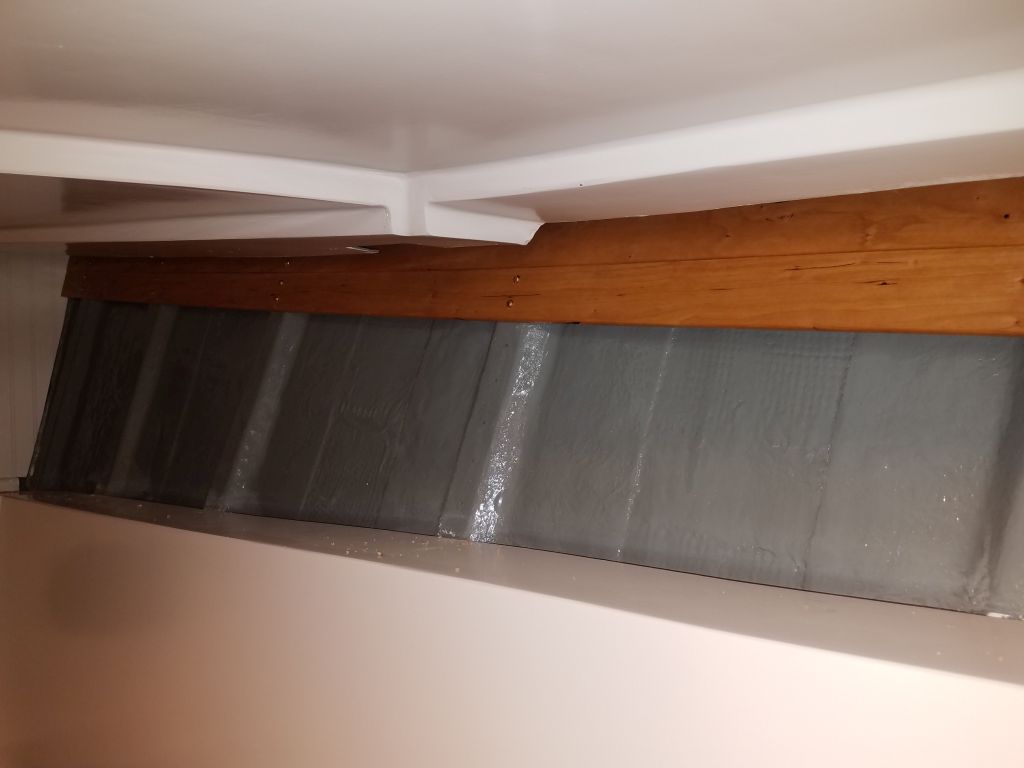
To begin the day, I applied a second coat of the semi-gloss white paint to the cabin areas and loose hatch covers.

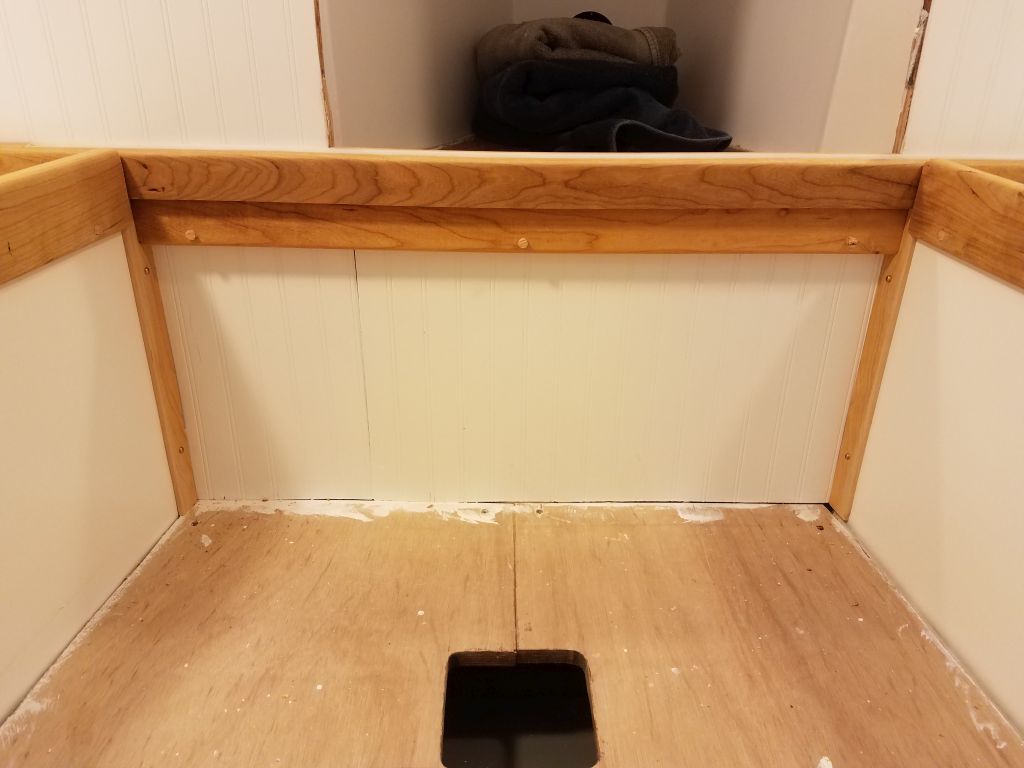
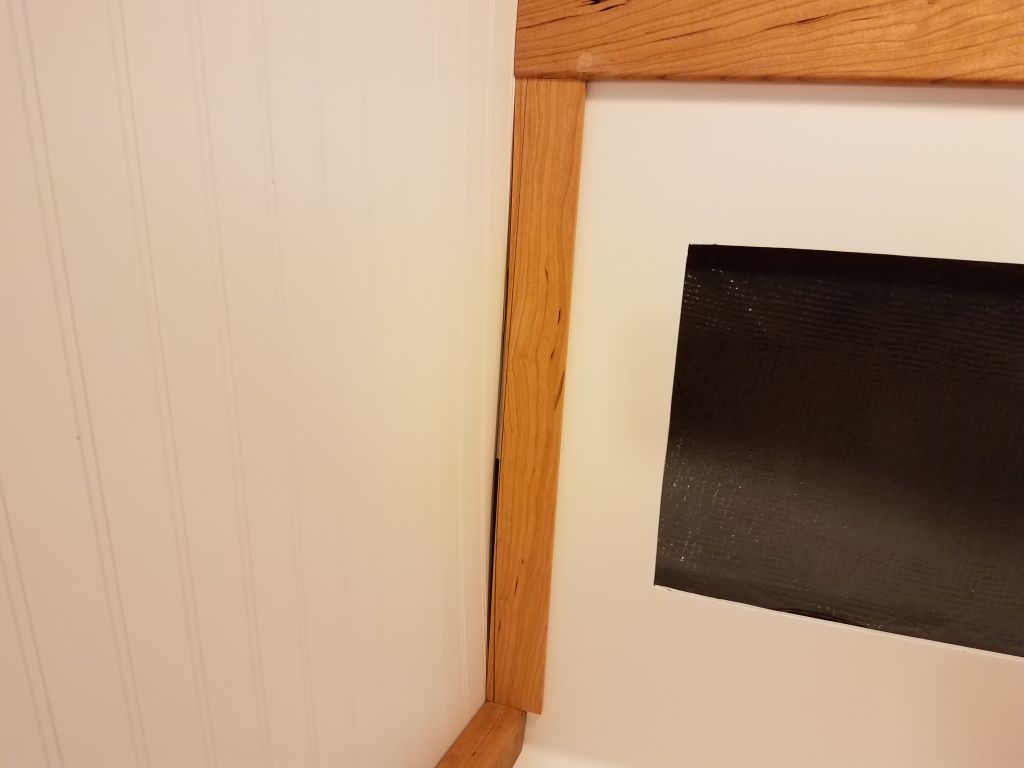
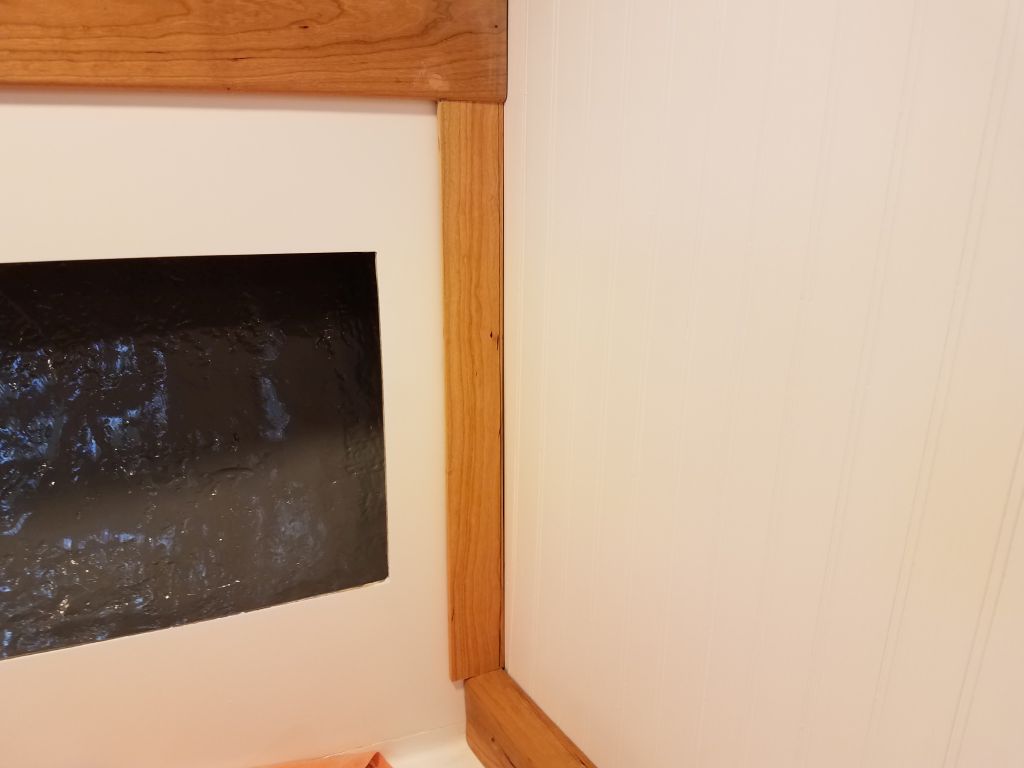
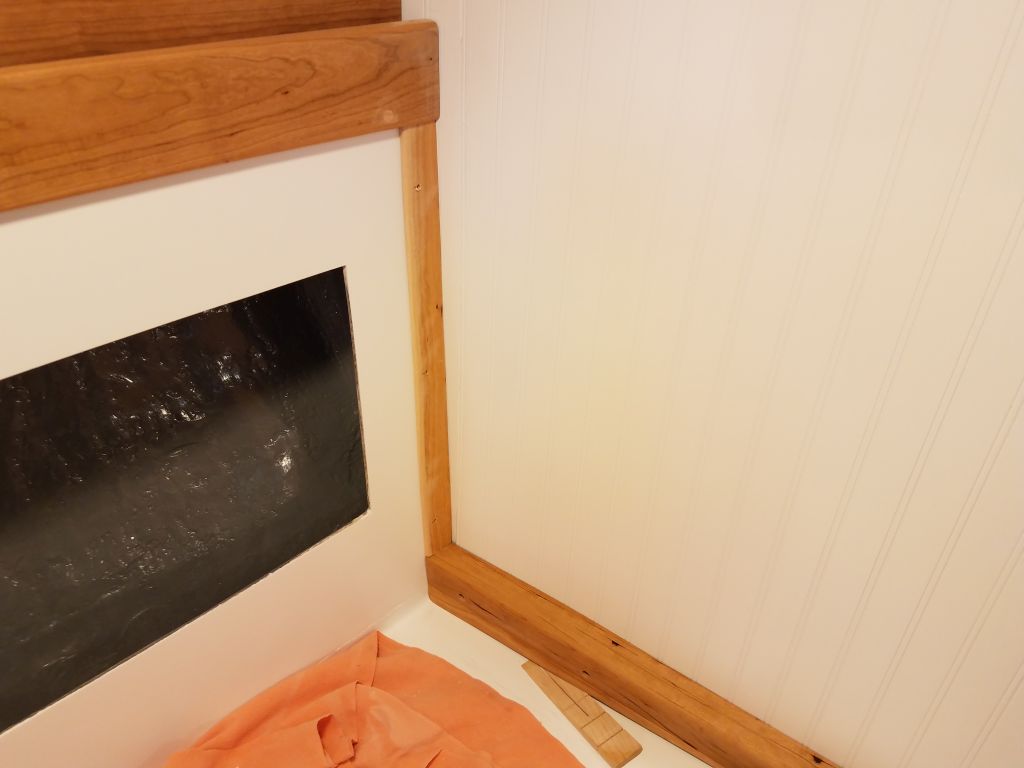
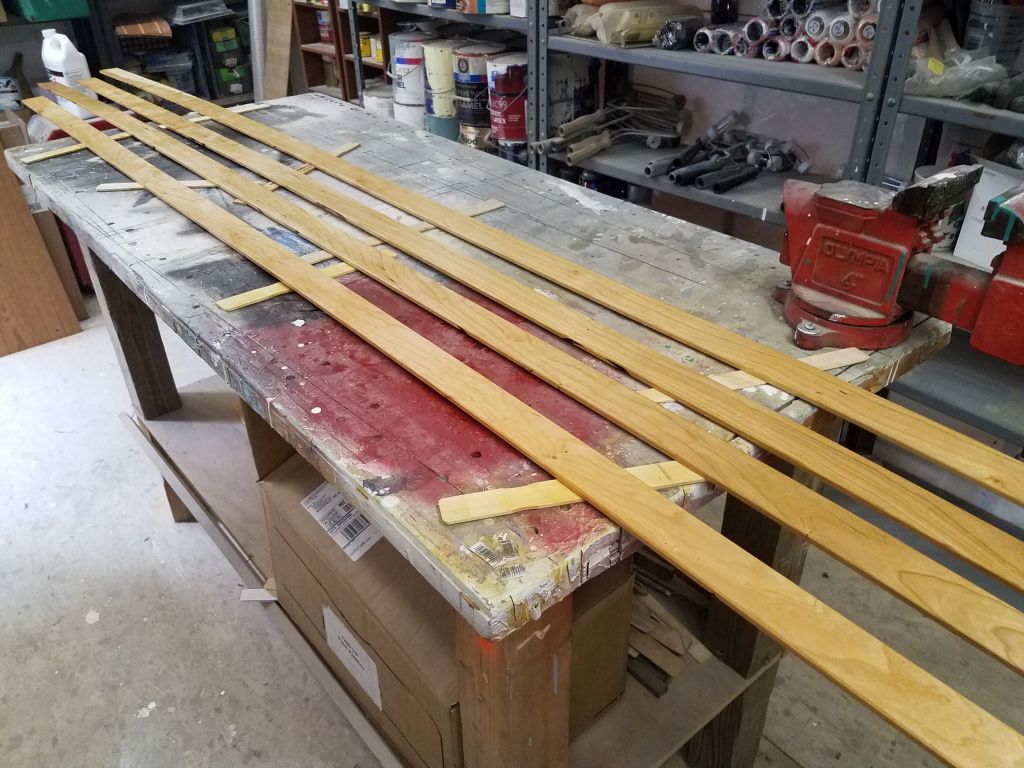
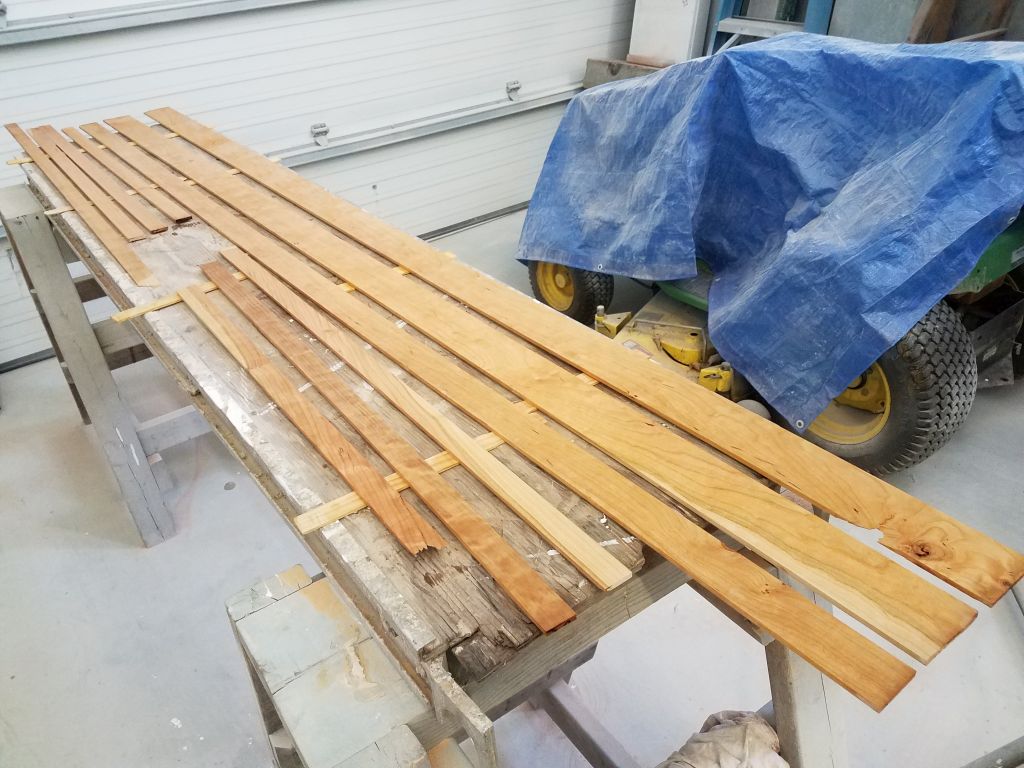
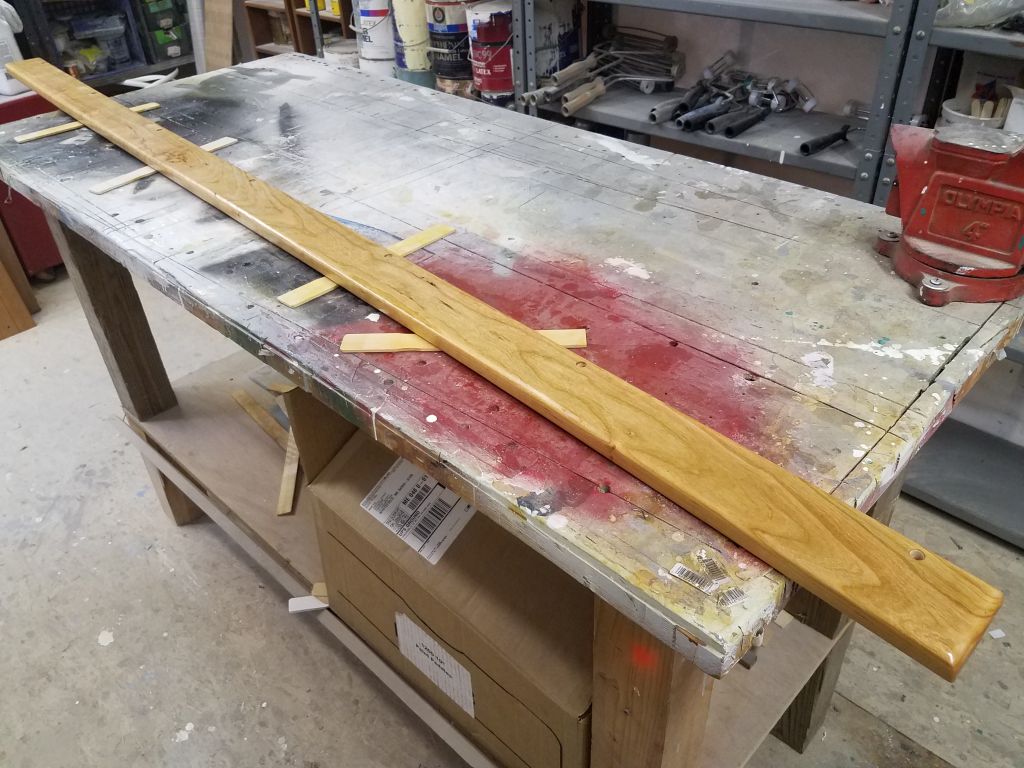
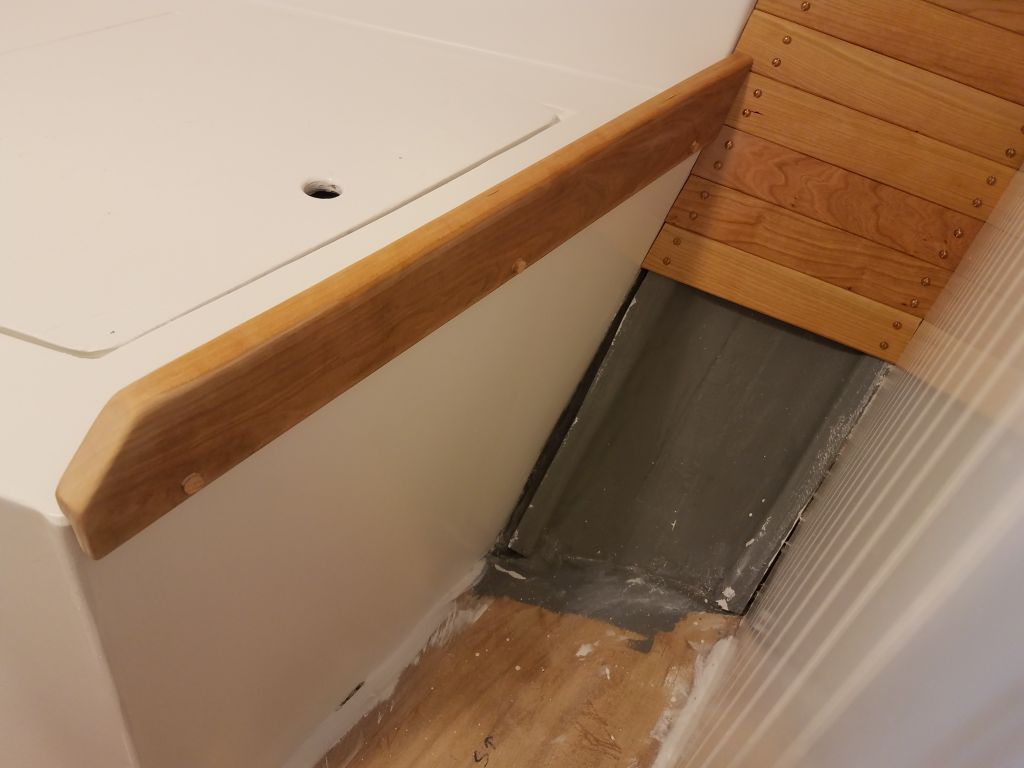
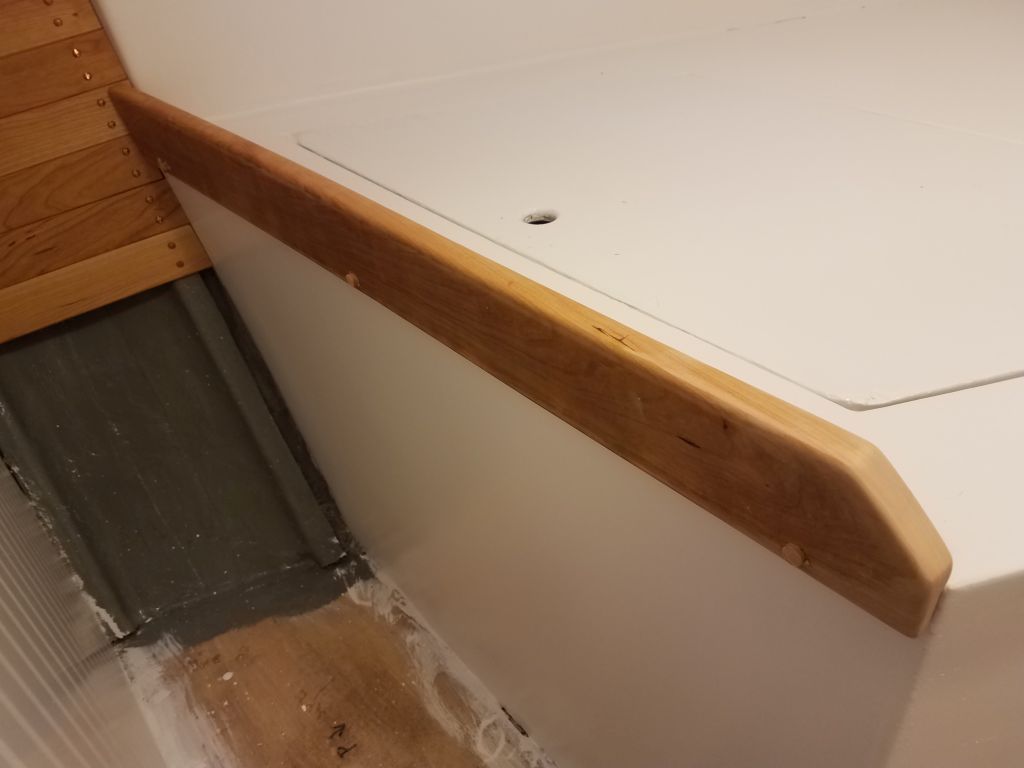
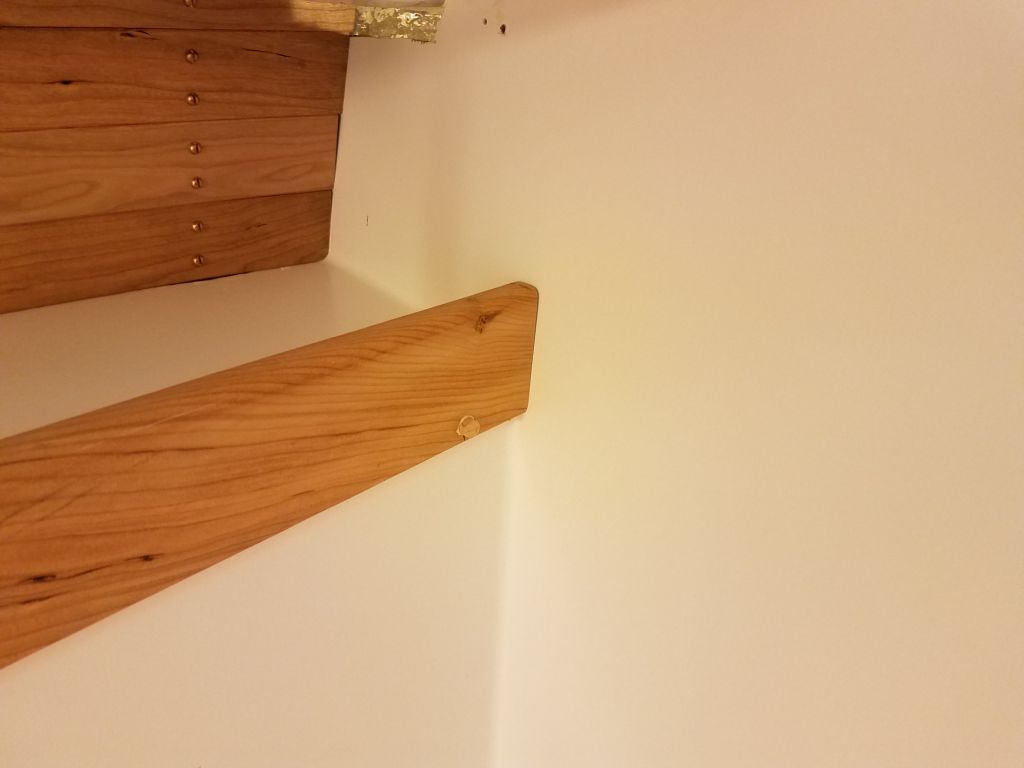
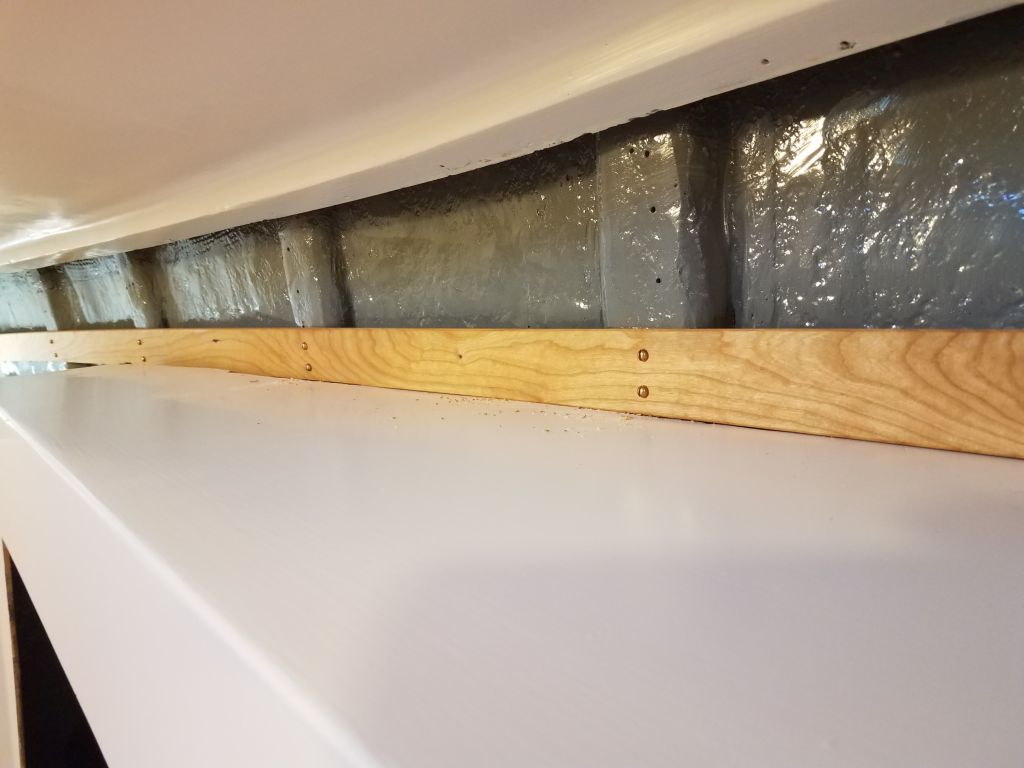
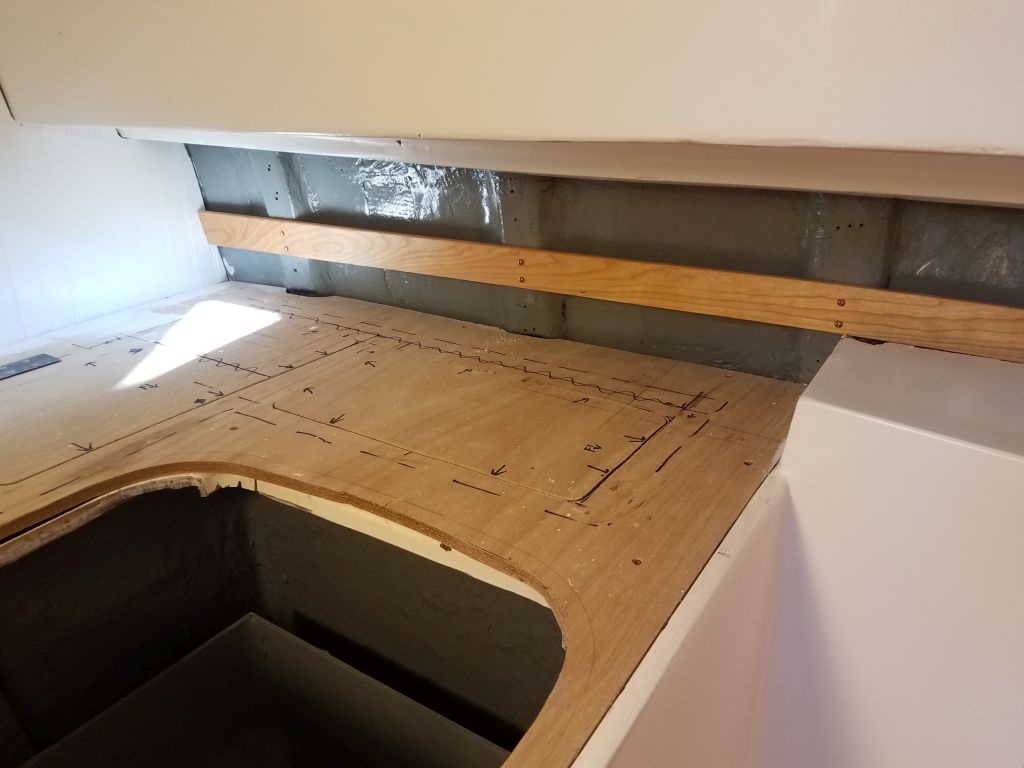
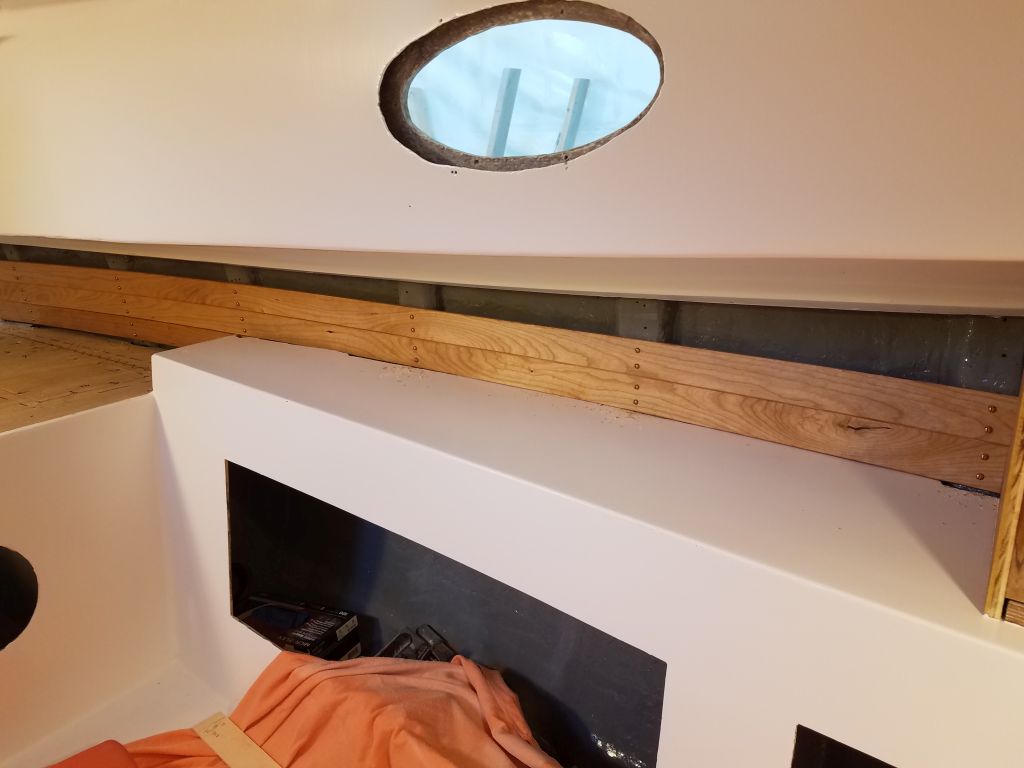
After solvent-washing the new cherry fiddles, I applied a highly-thinned sealer coat of varnish to all sides of the various pieces.

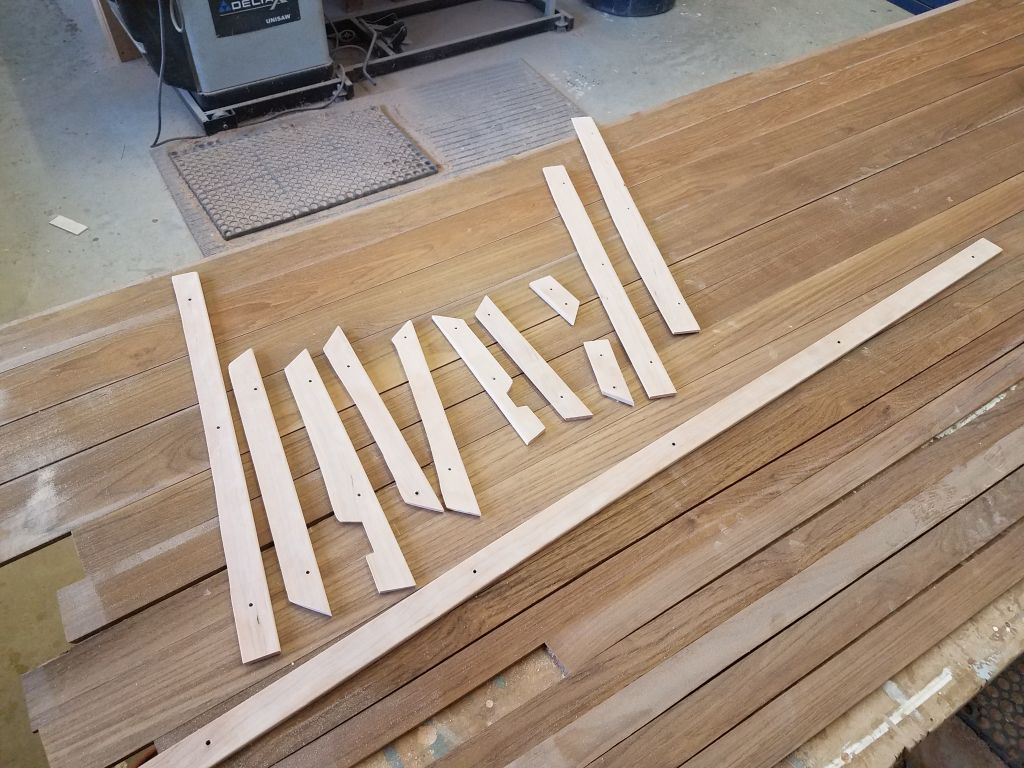
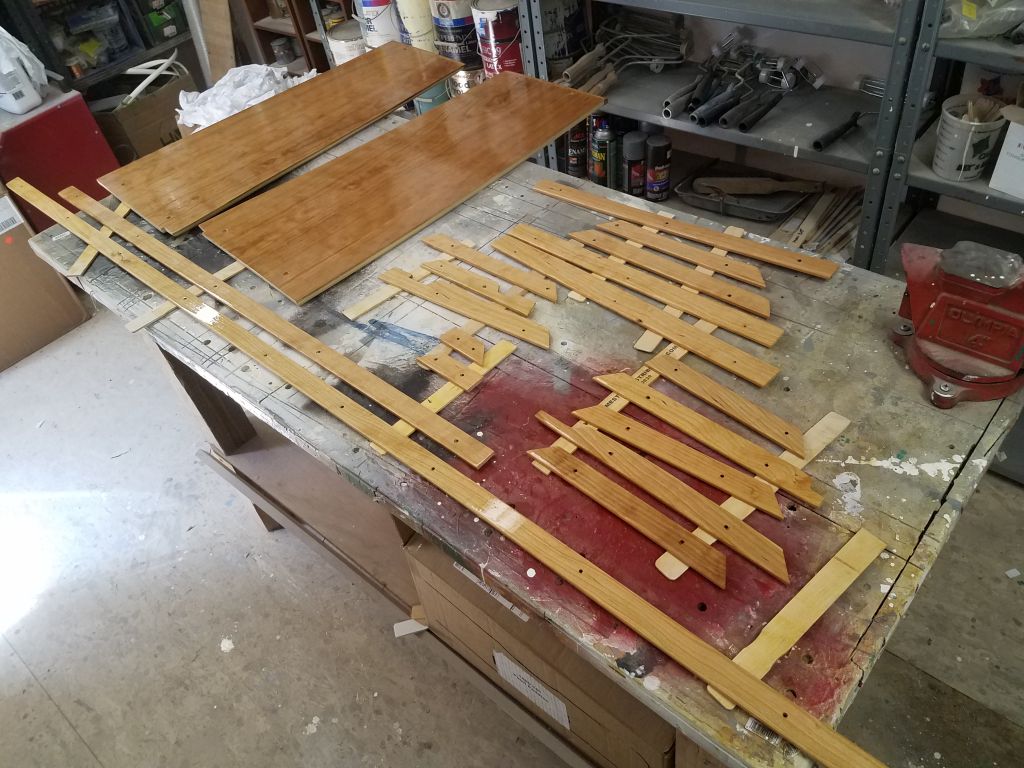
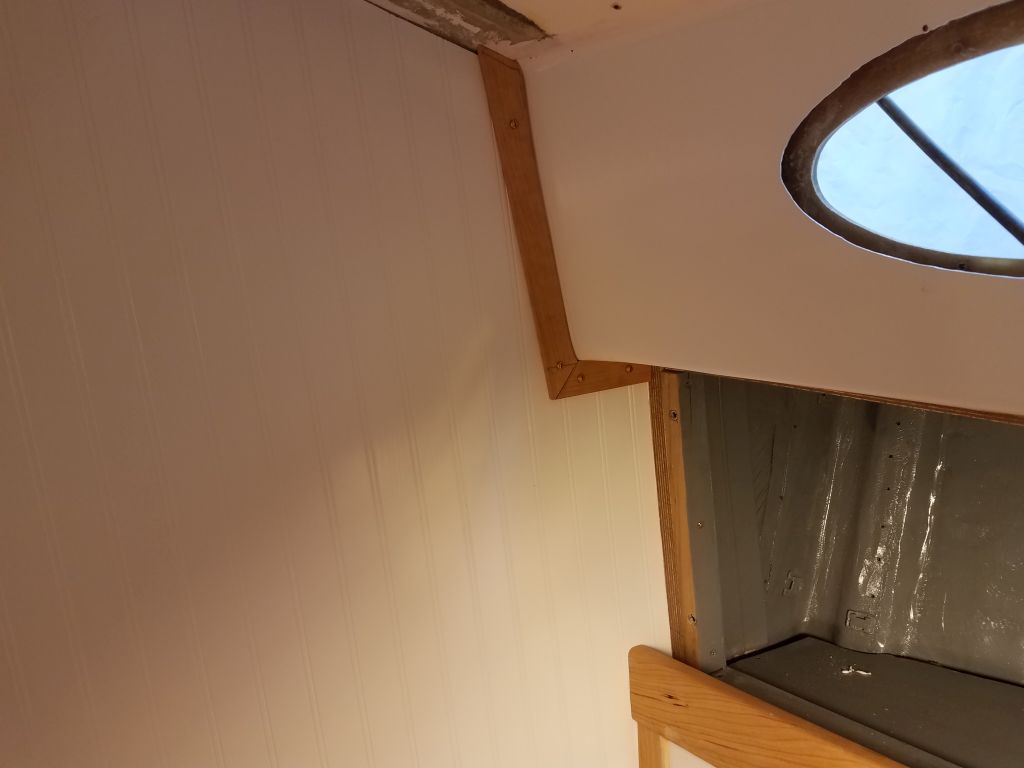
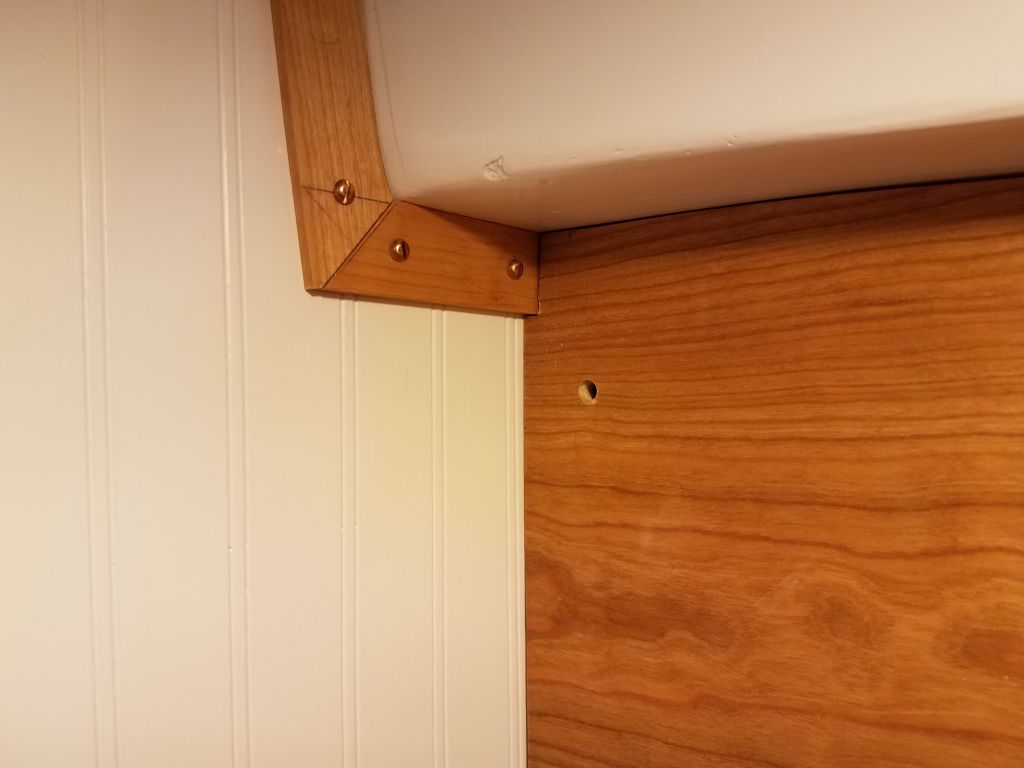
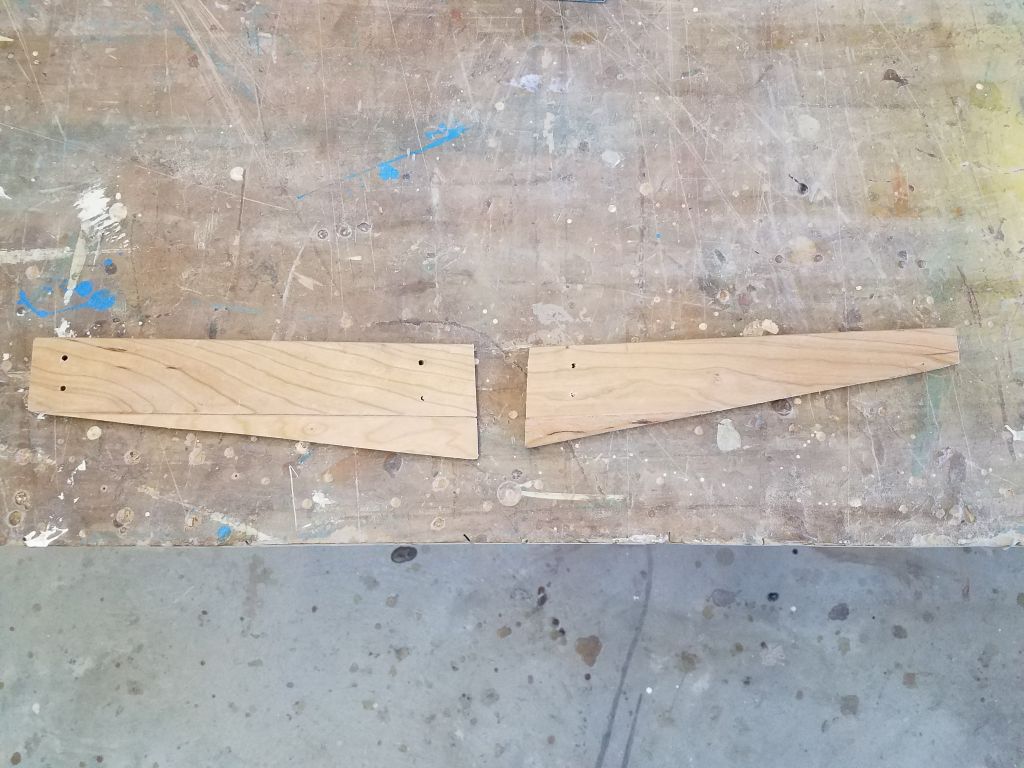
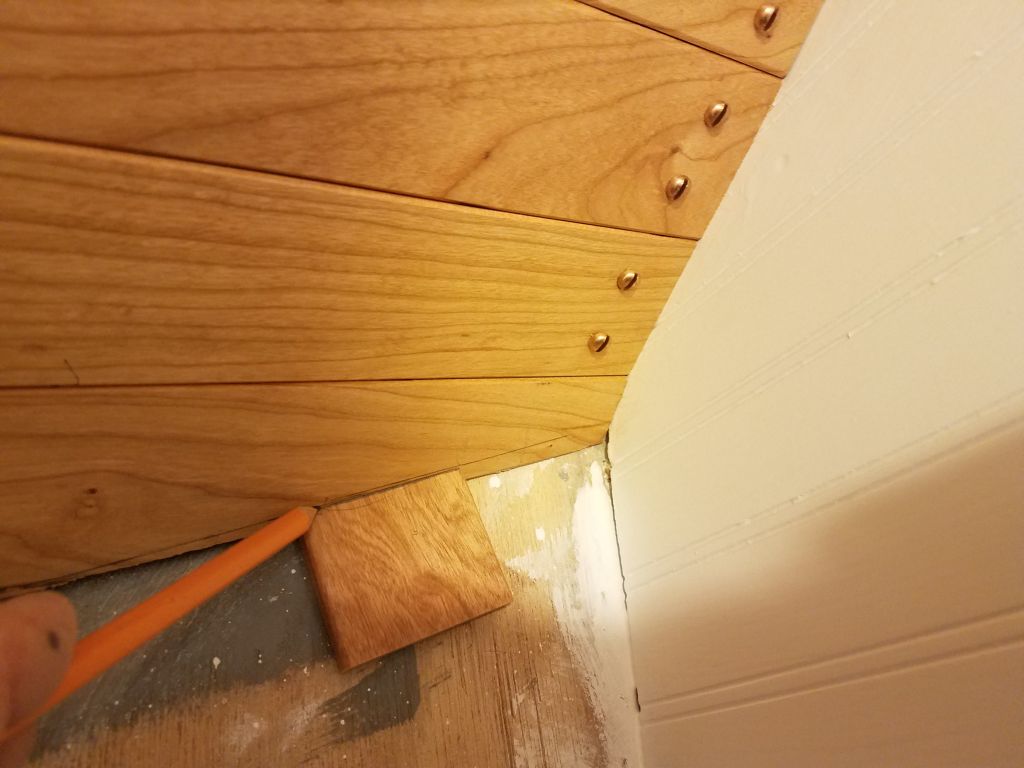
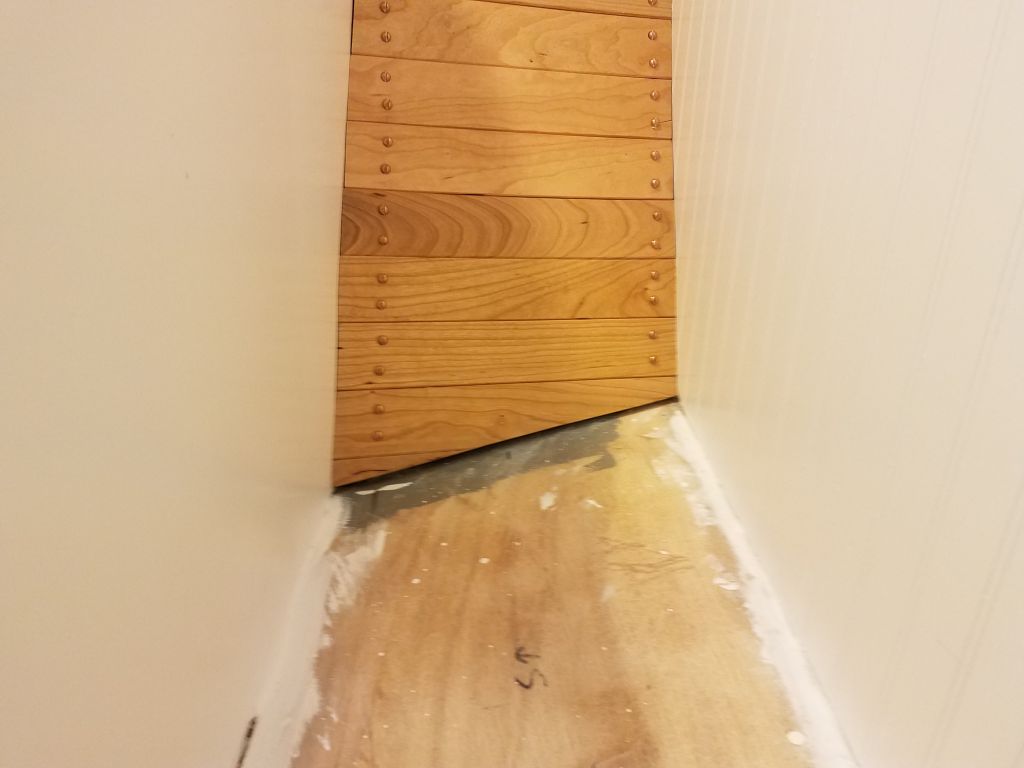
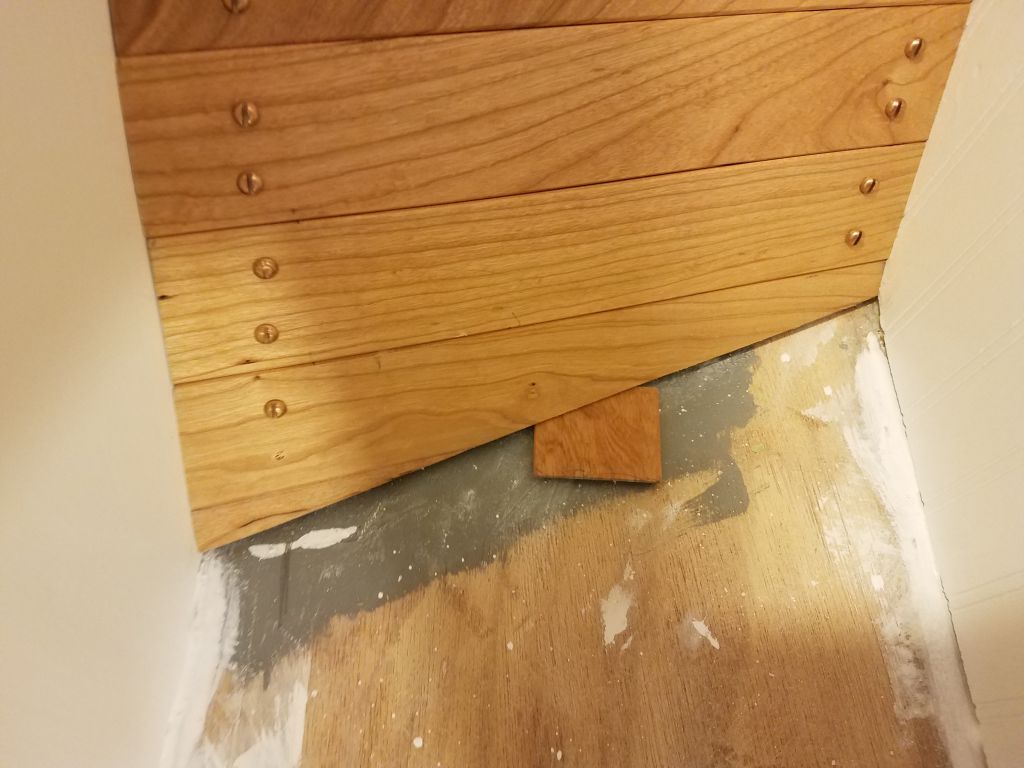
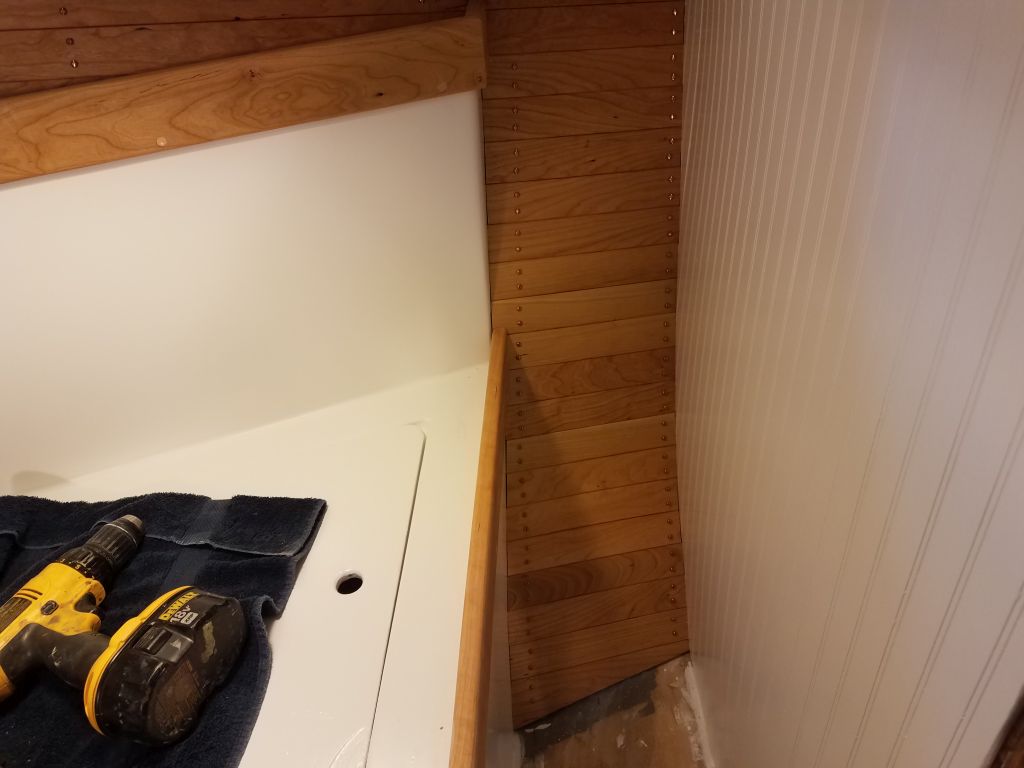
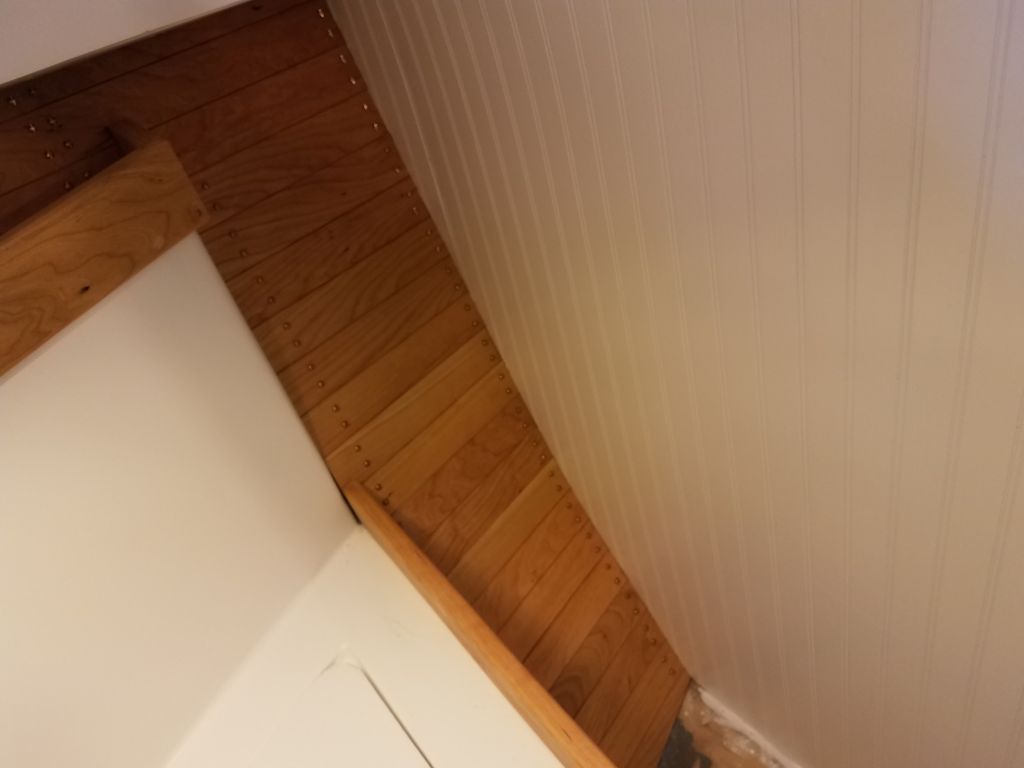
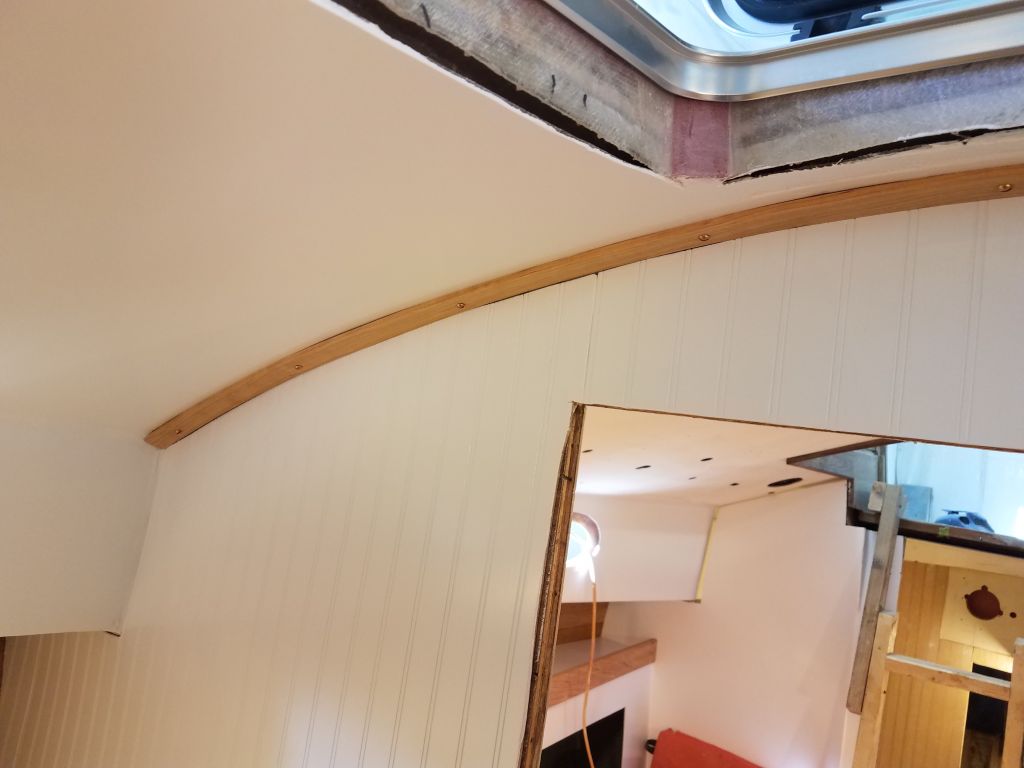
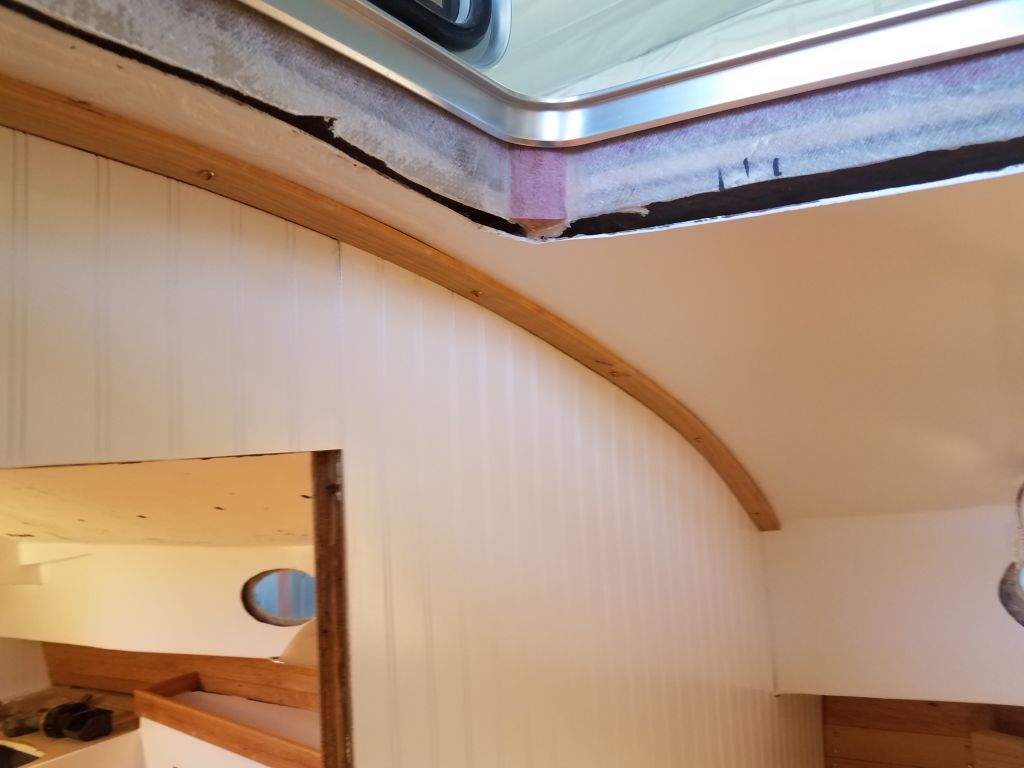
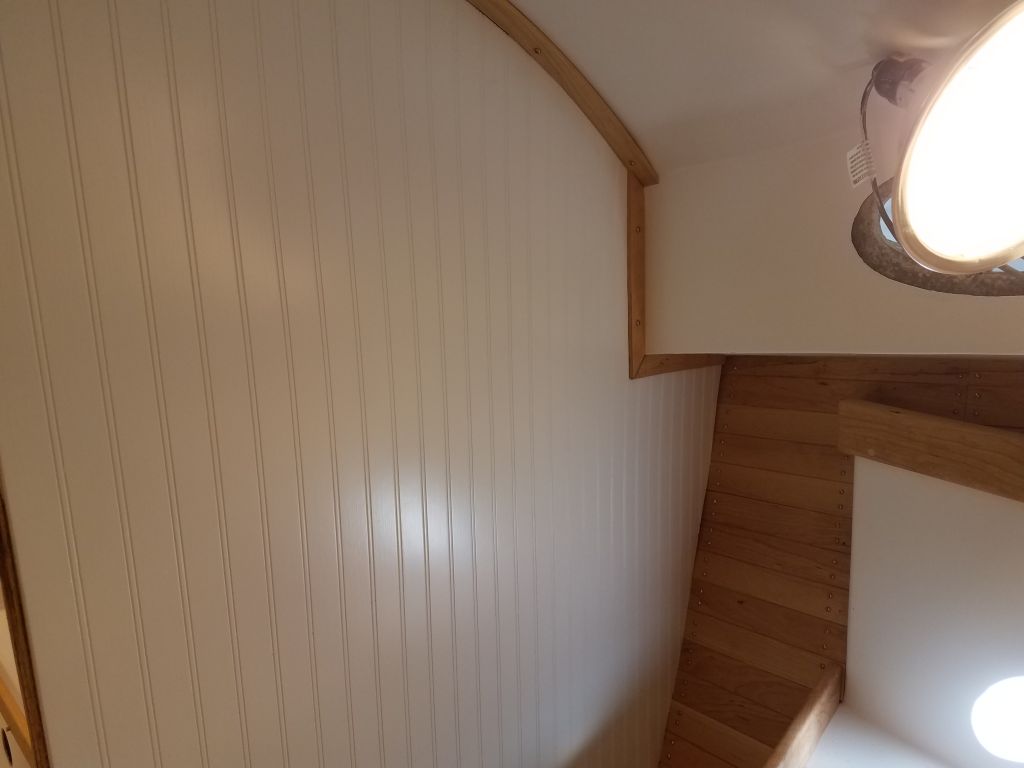
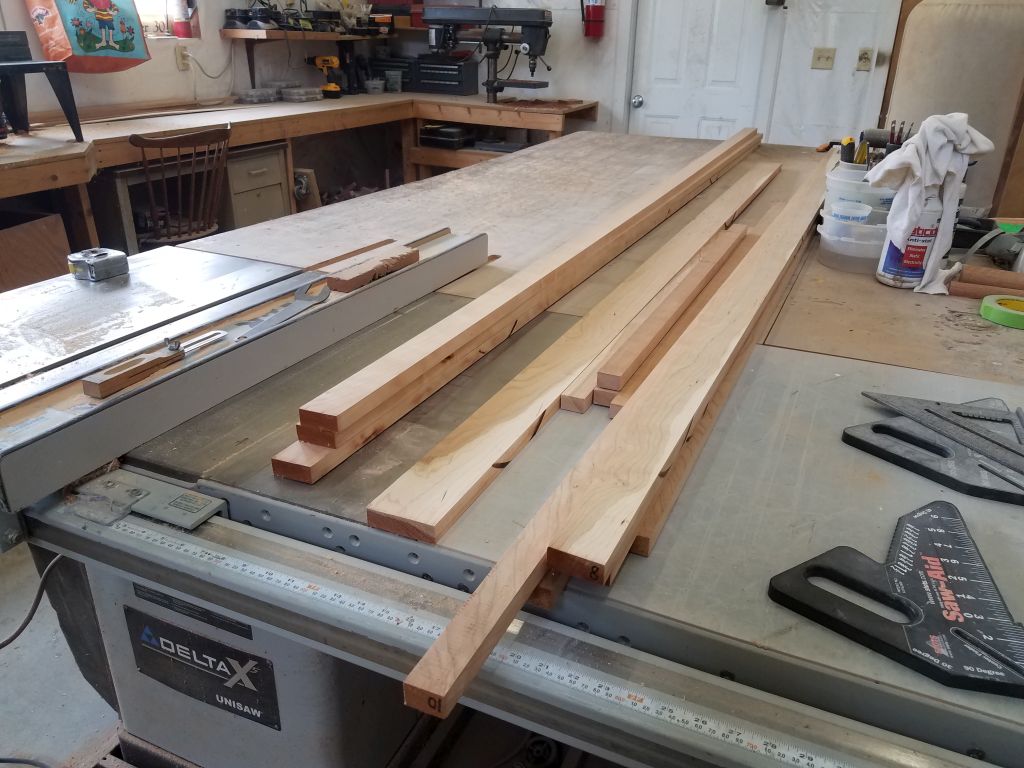
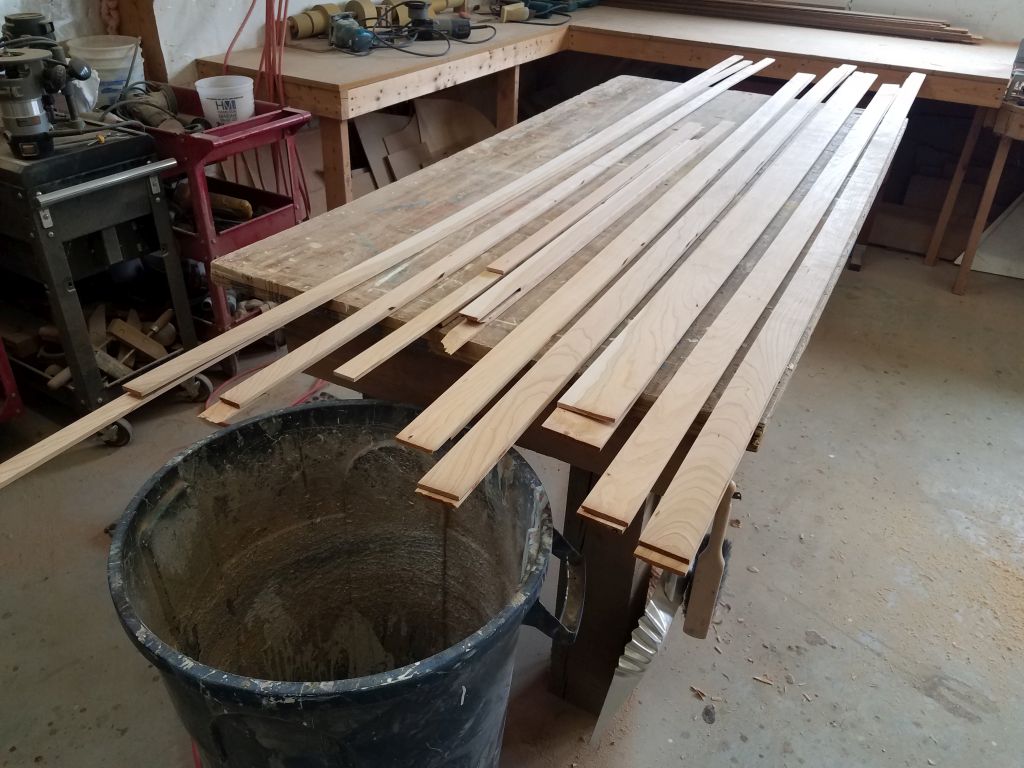
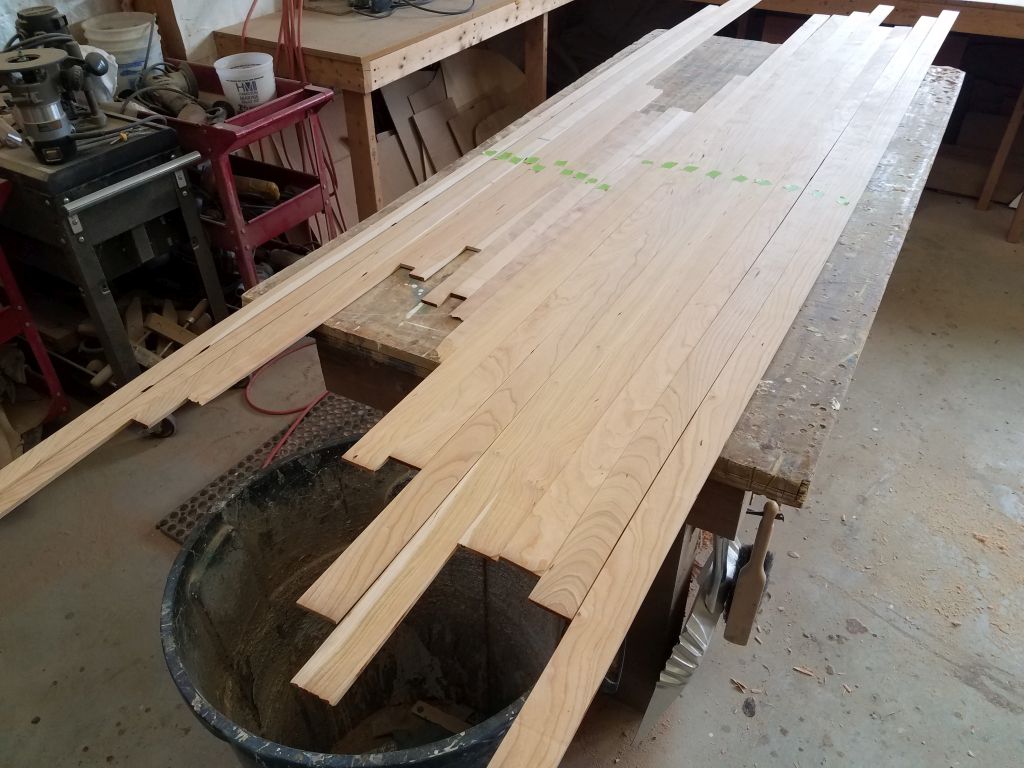
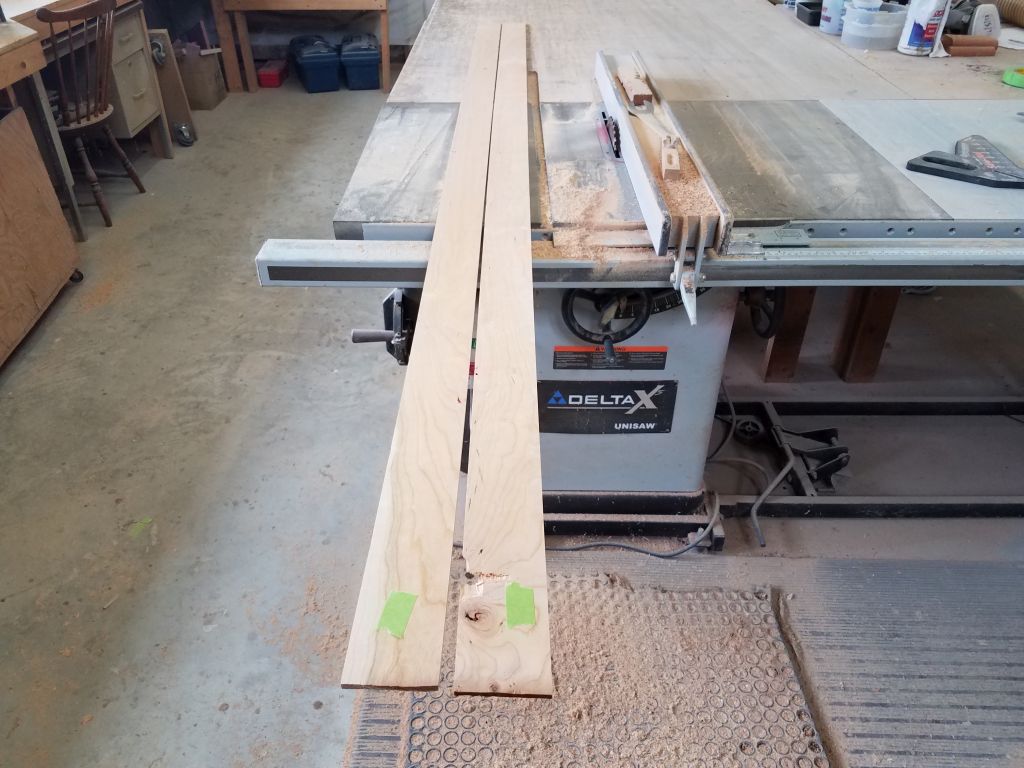
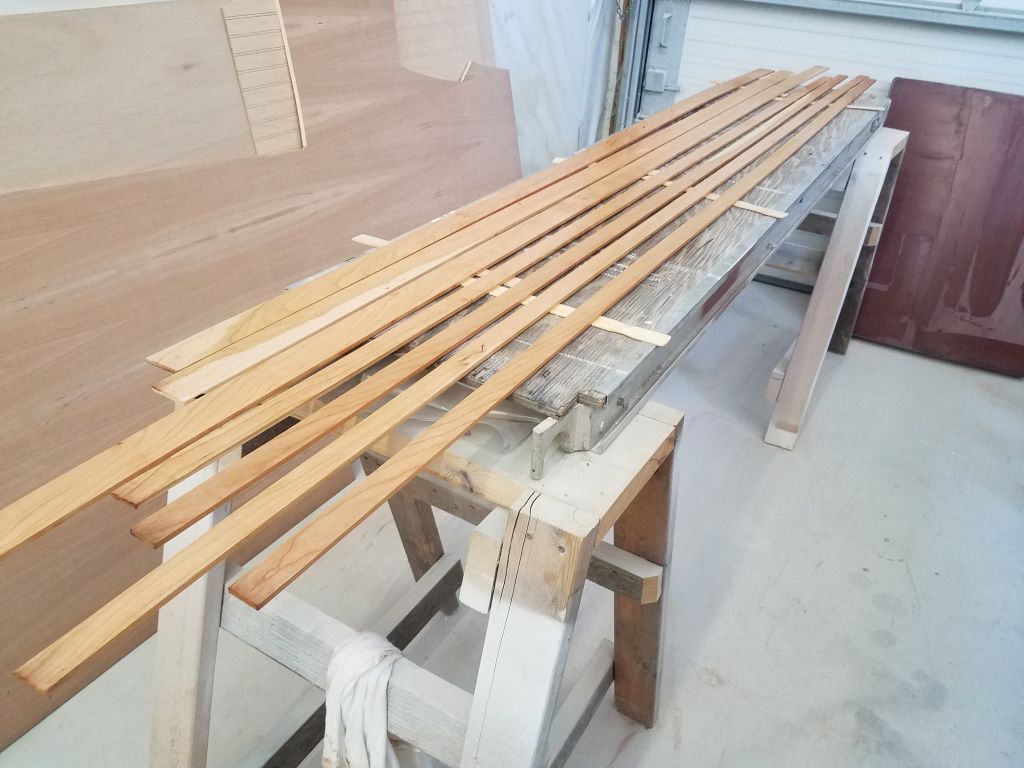
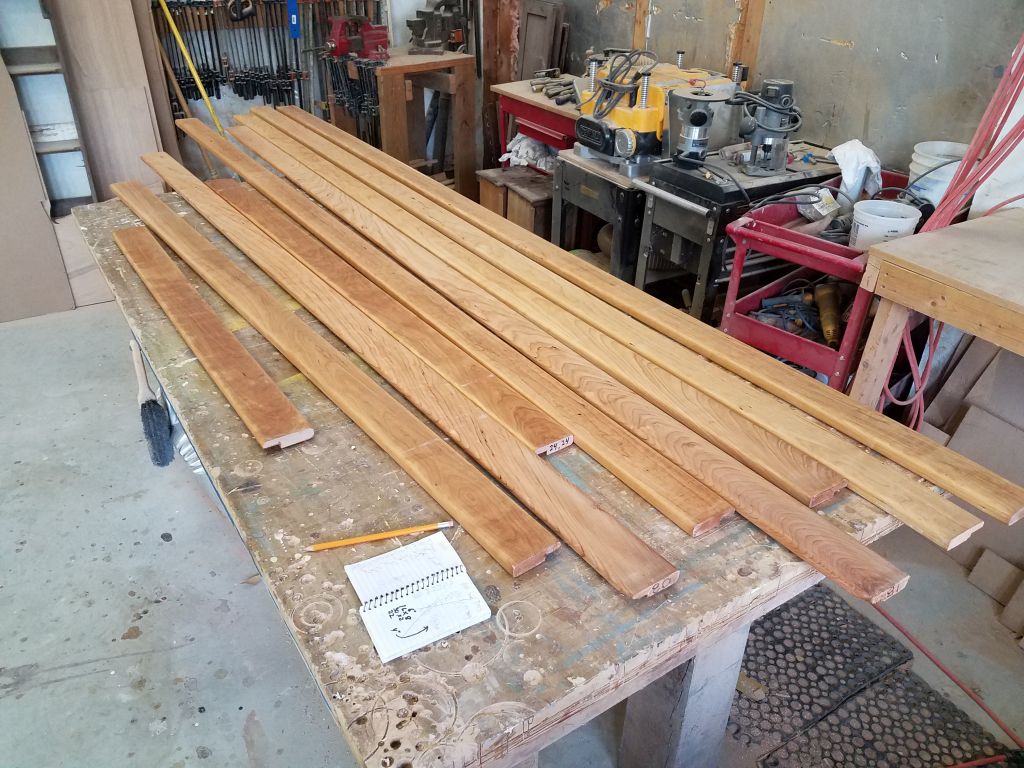
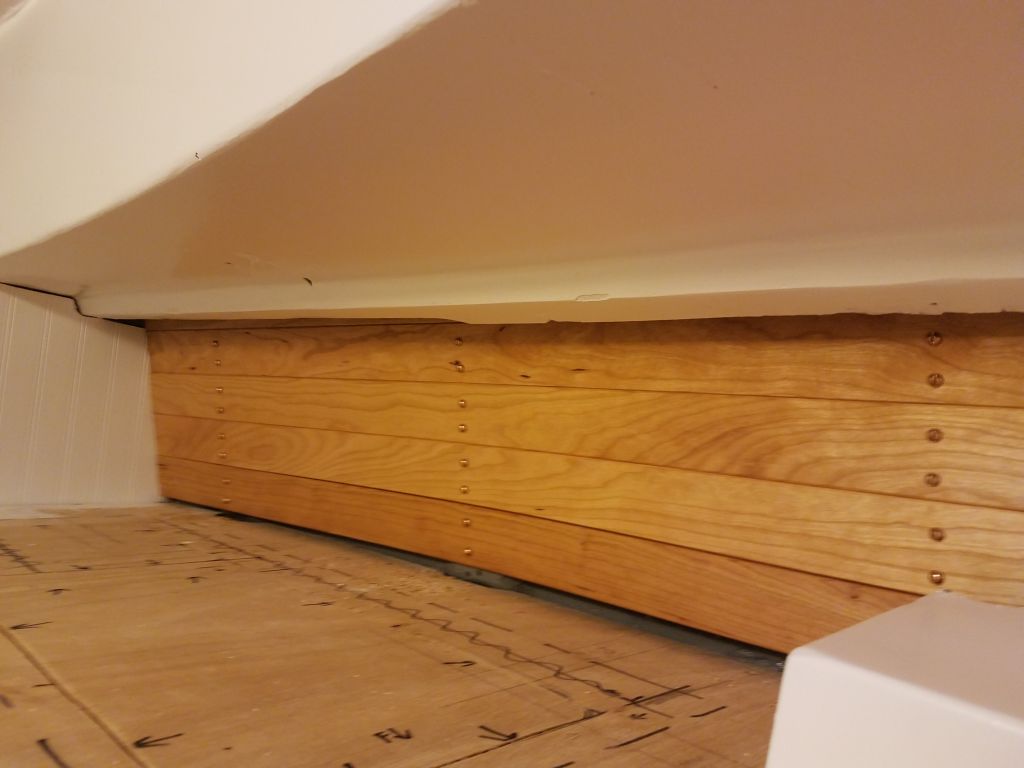
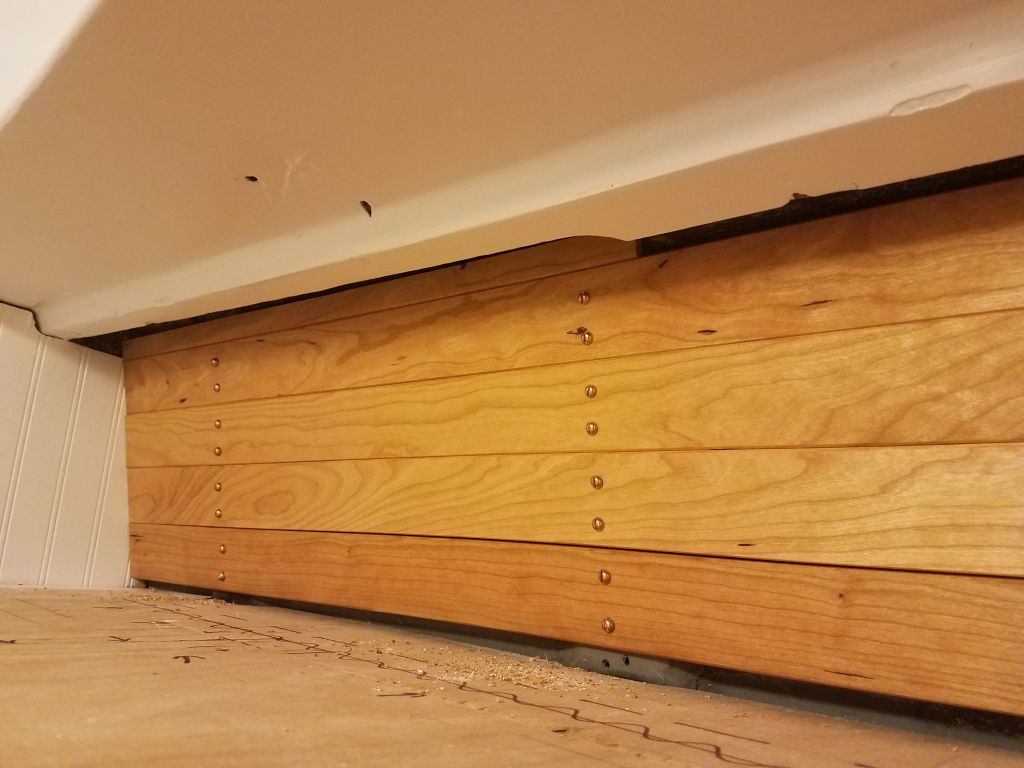
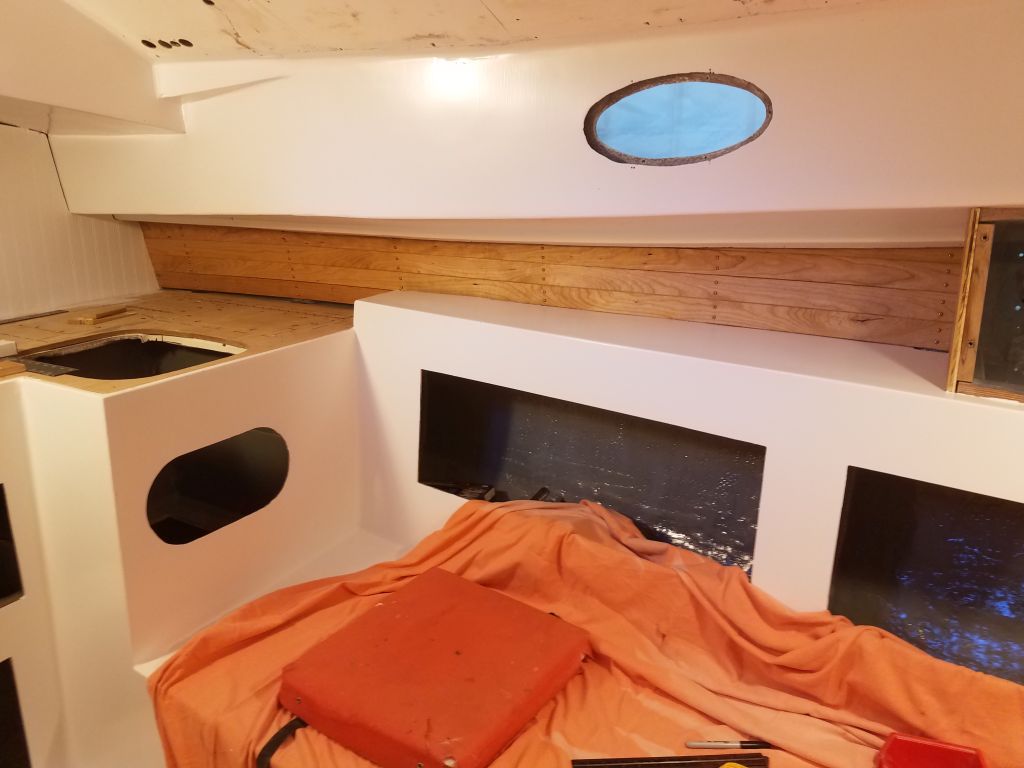
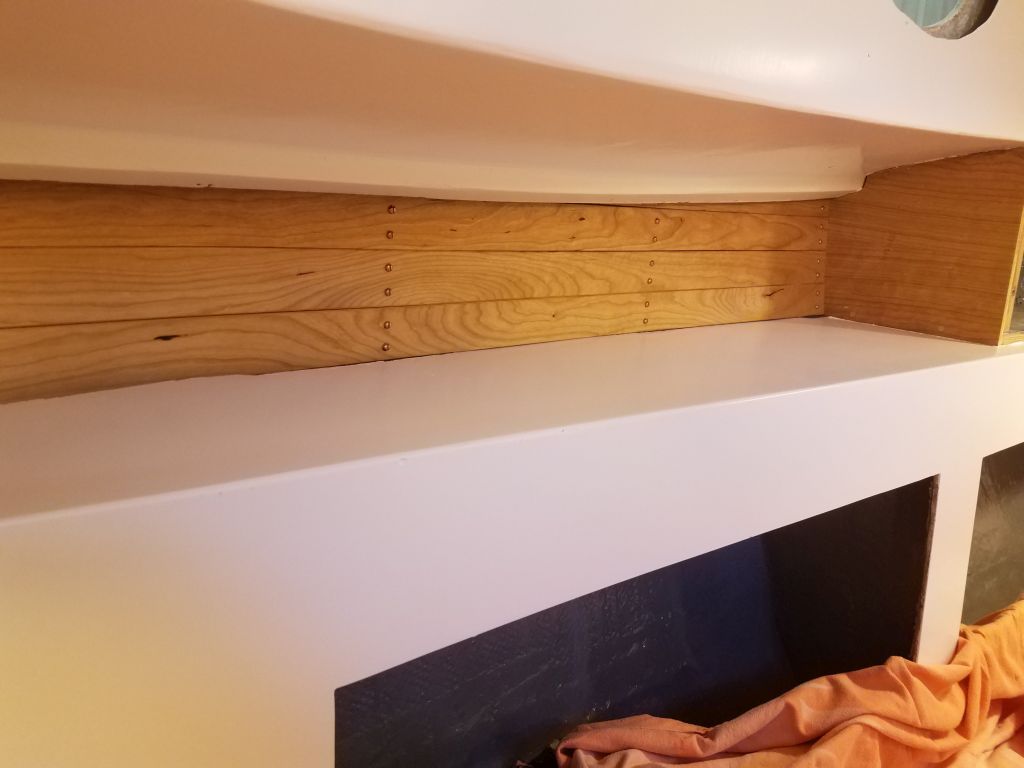
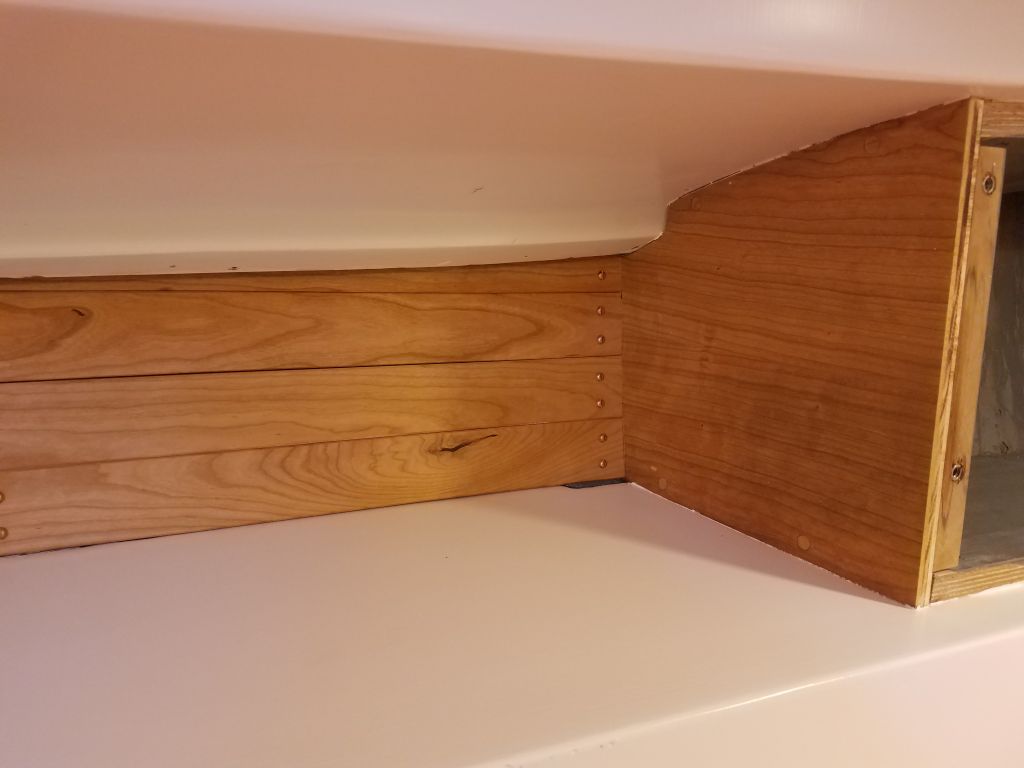
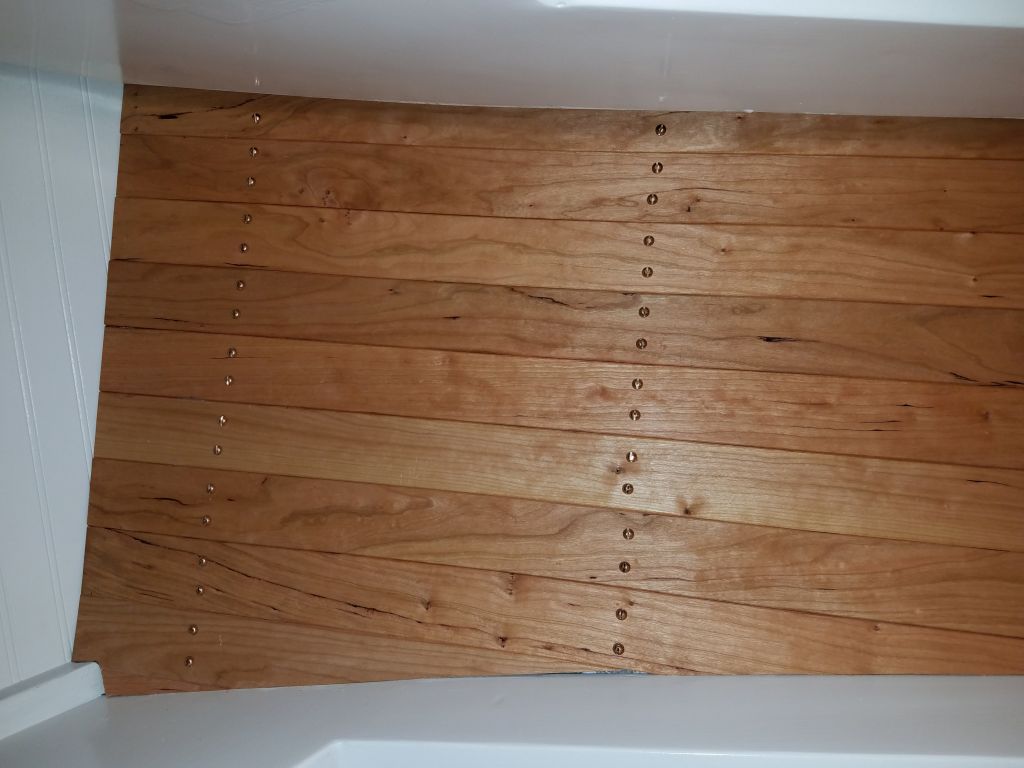
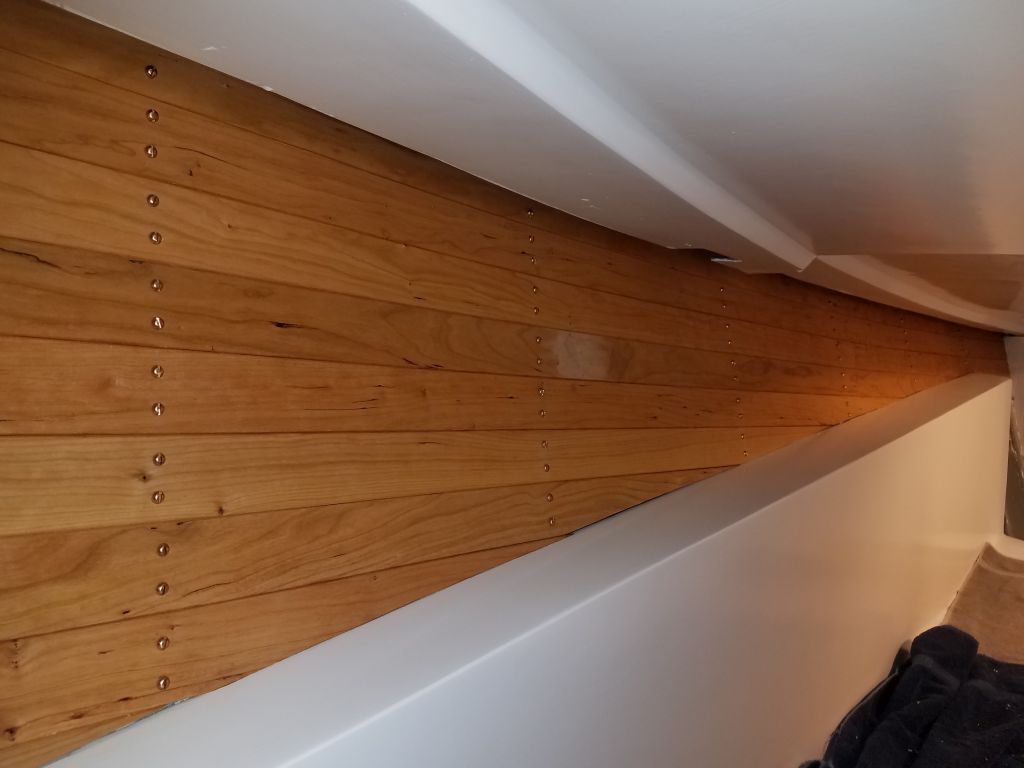
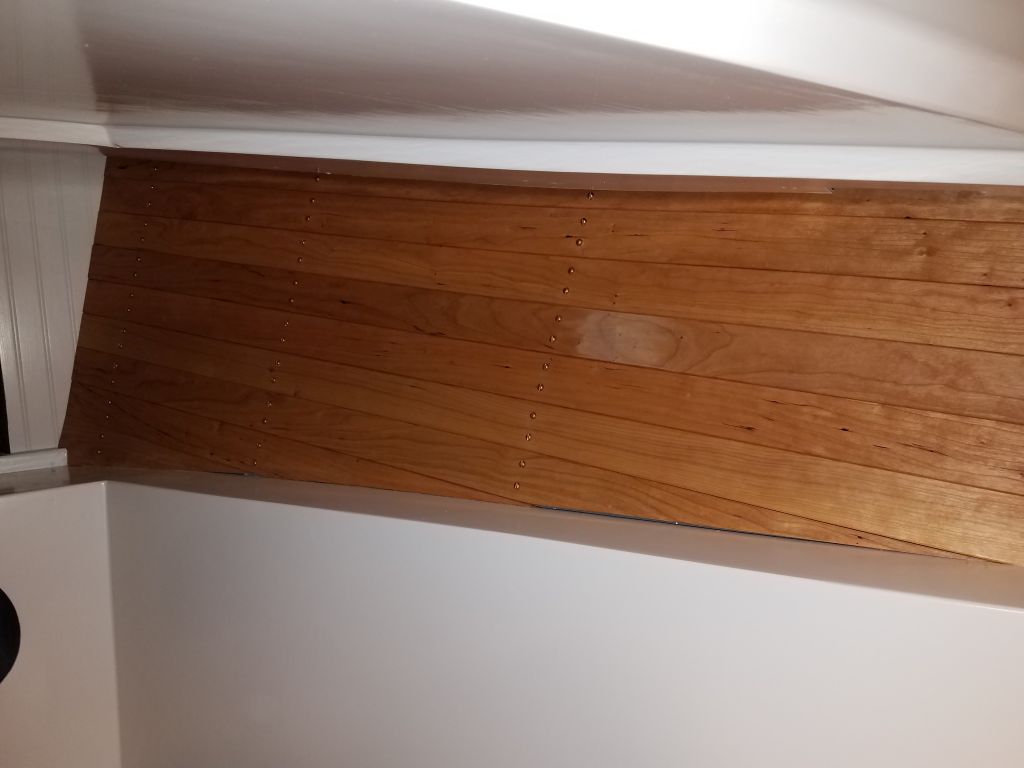
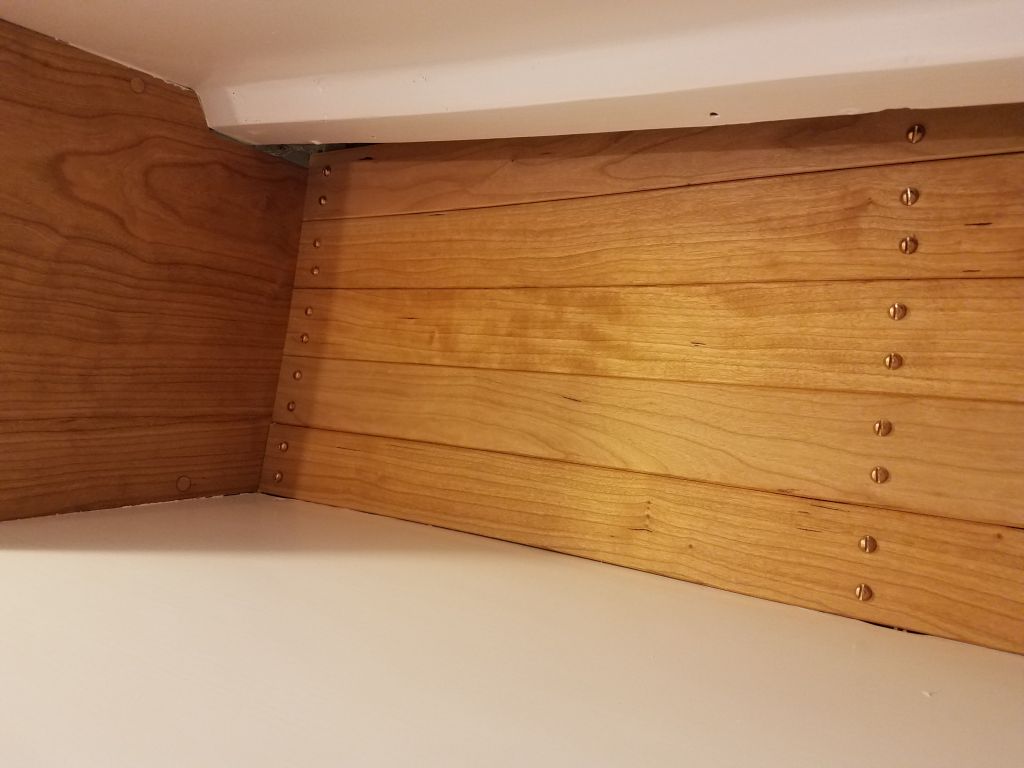
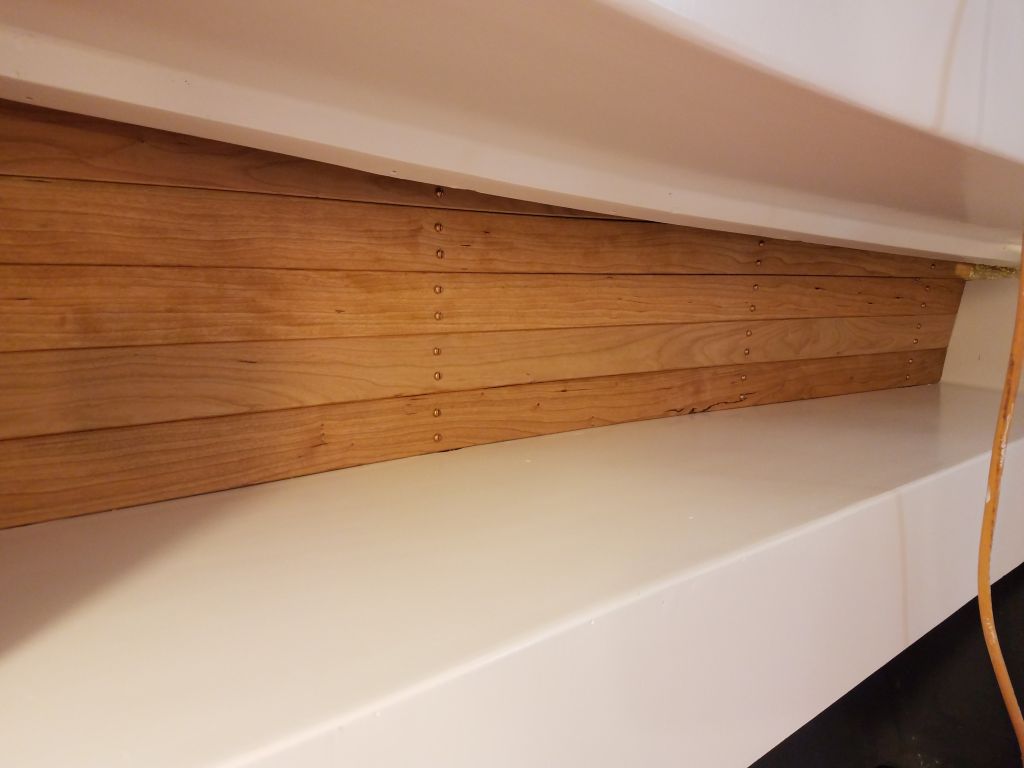
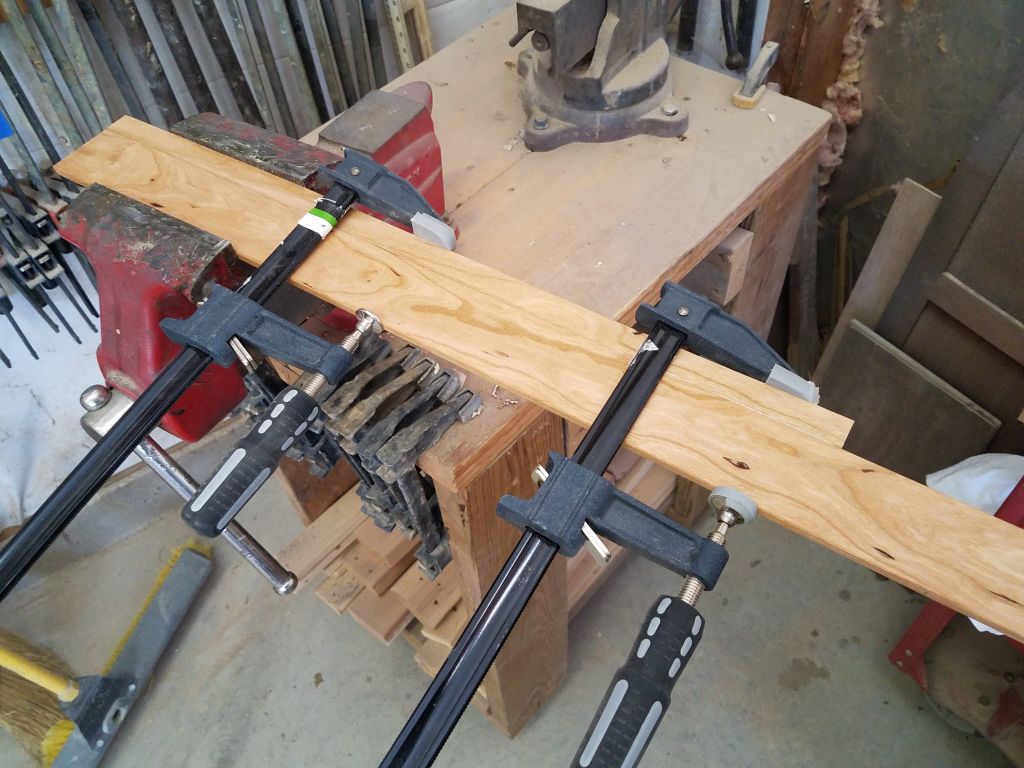
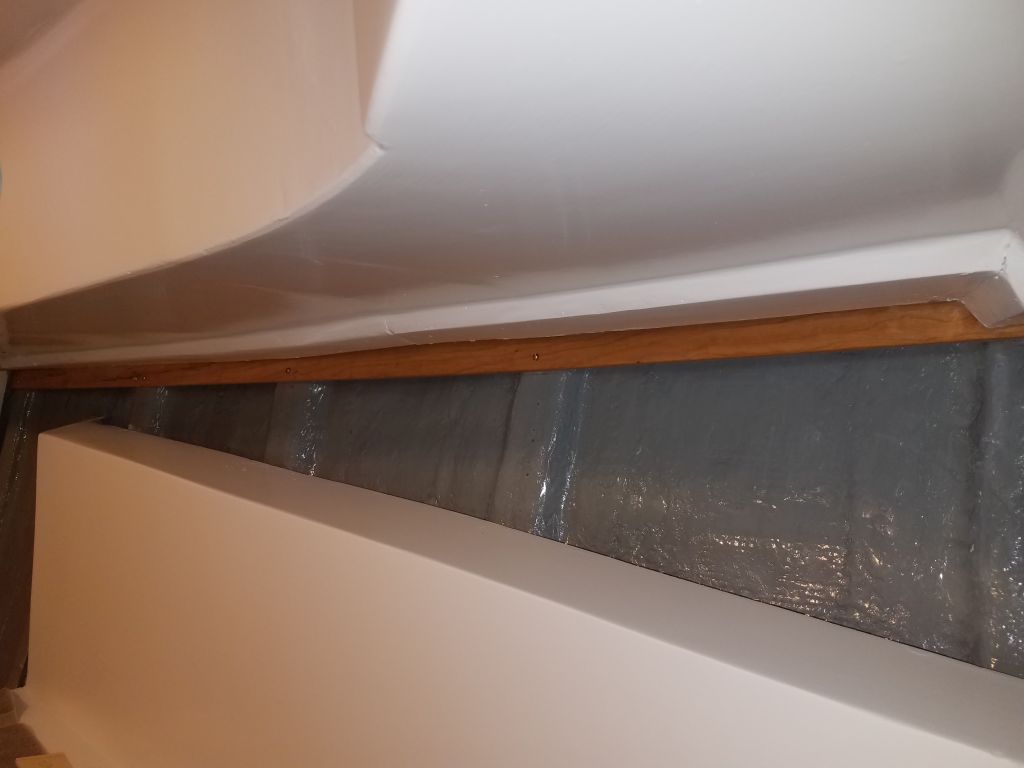
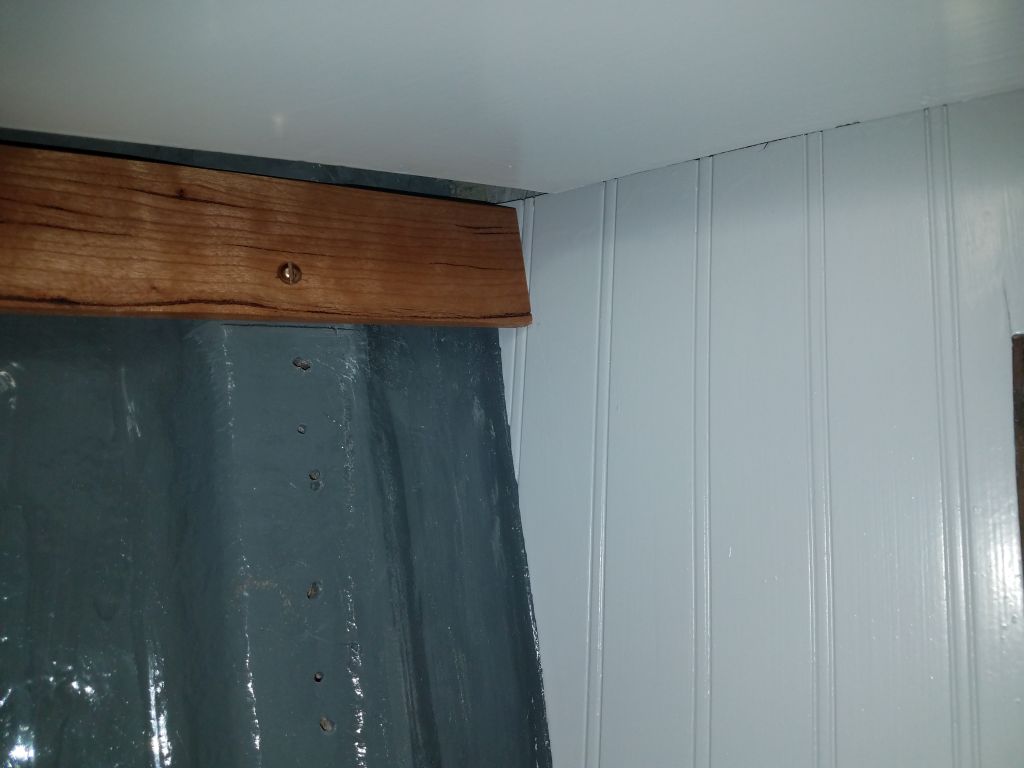
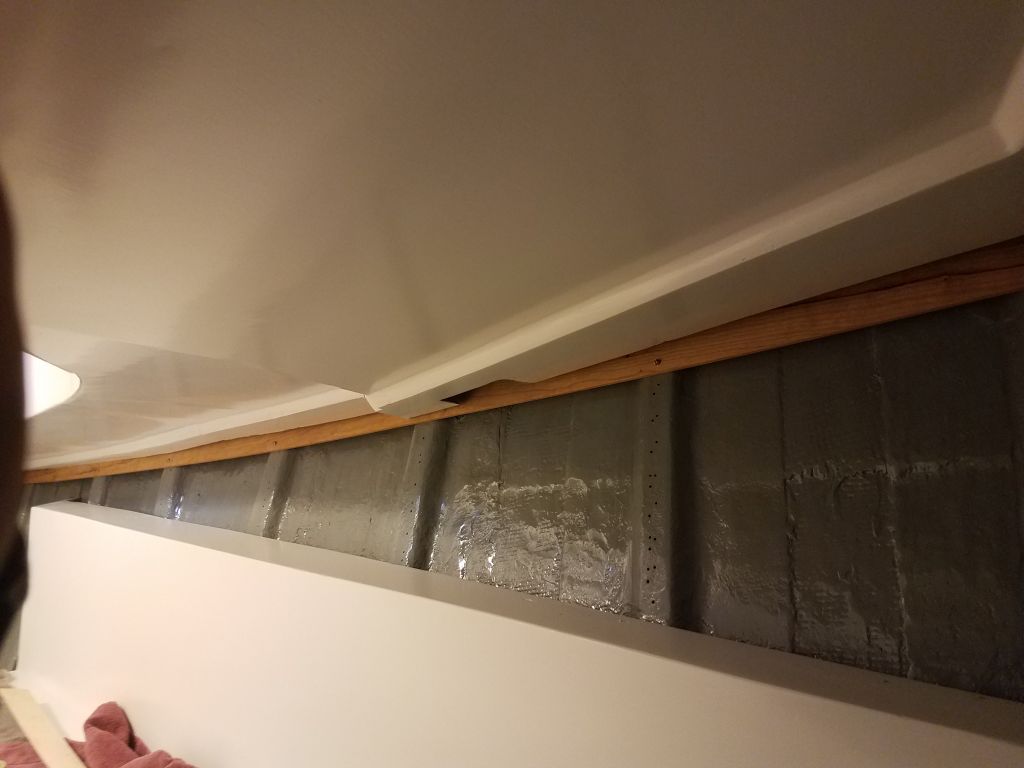
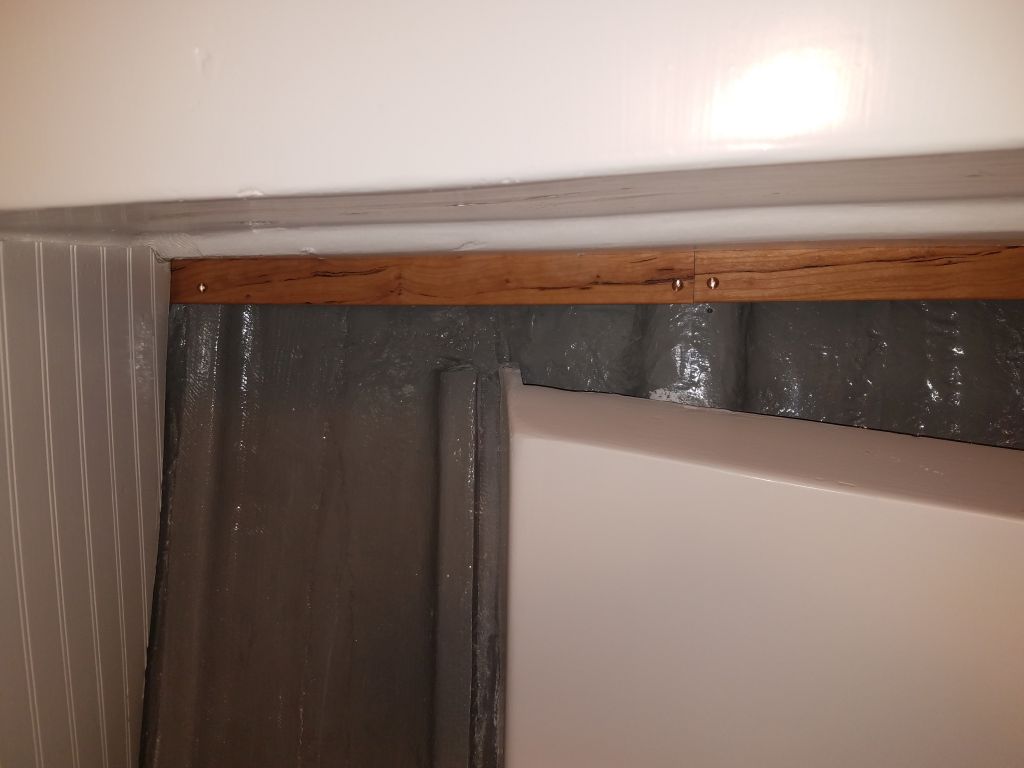
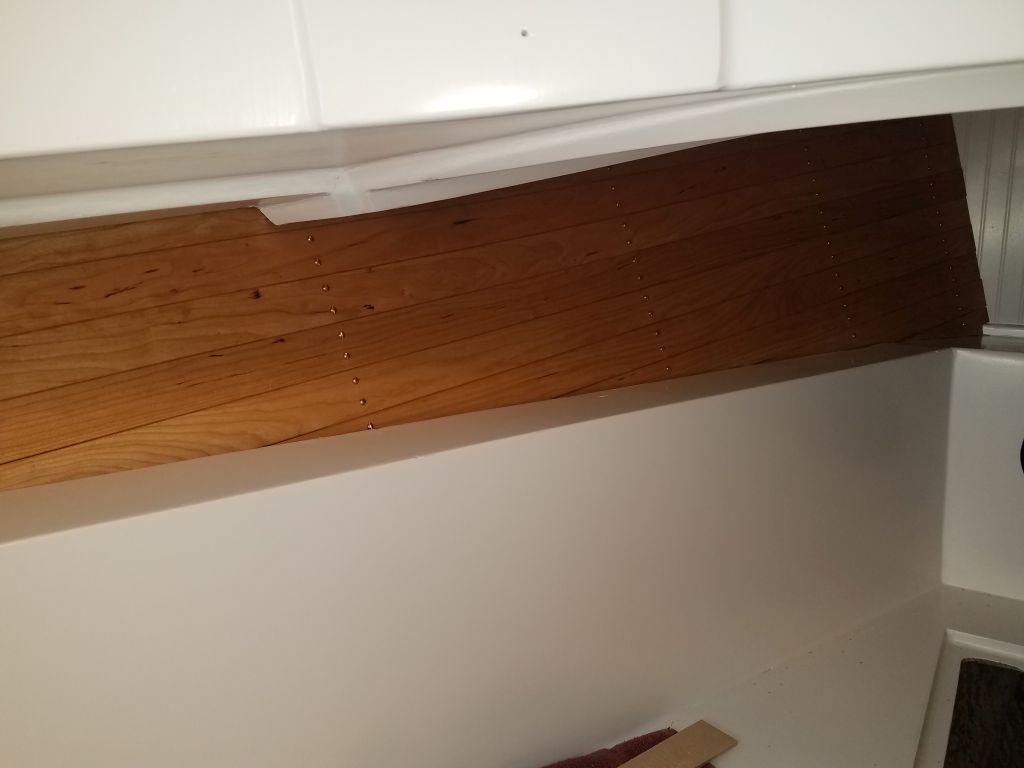
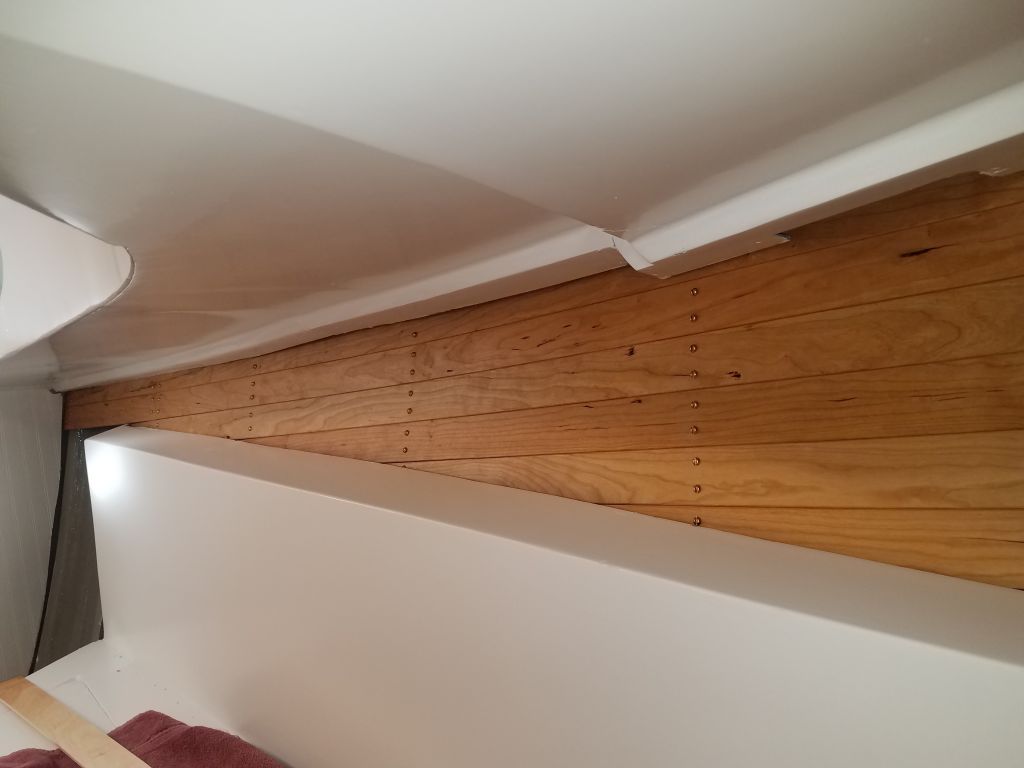
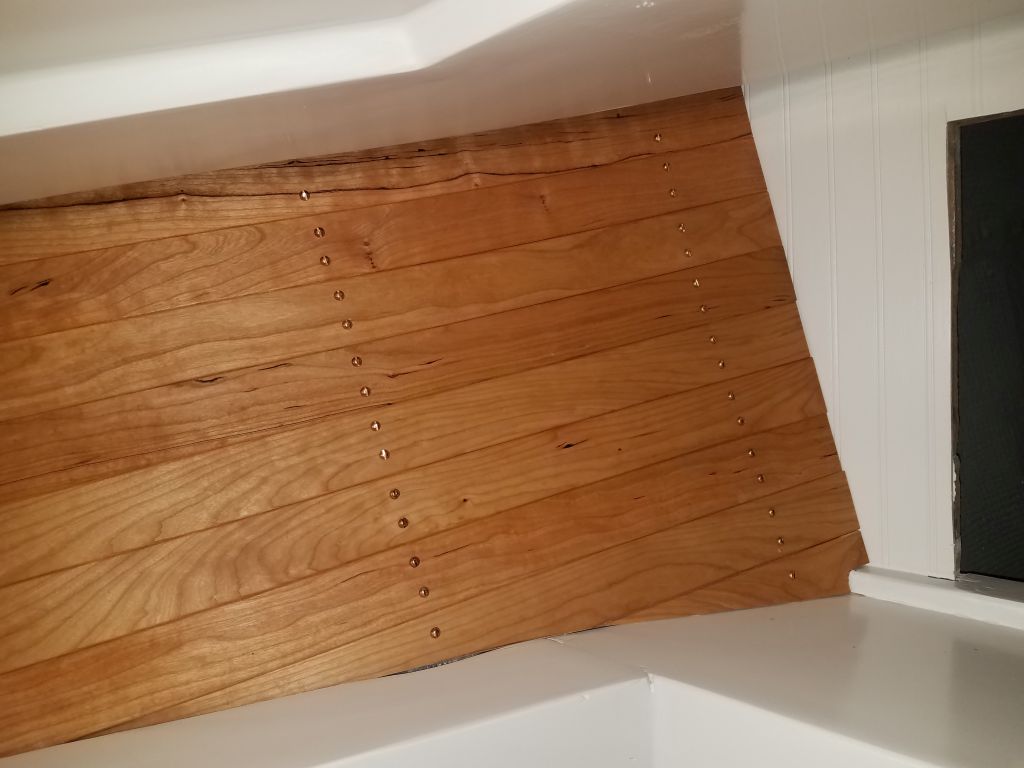
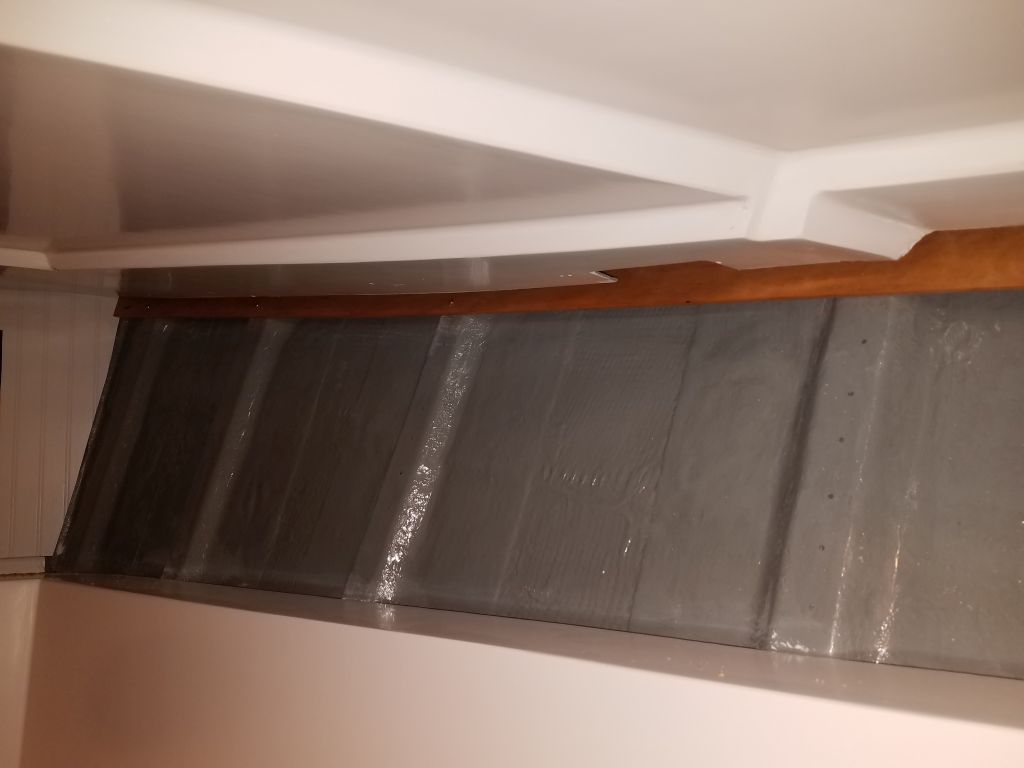
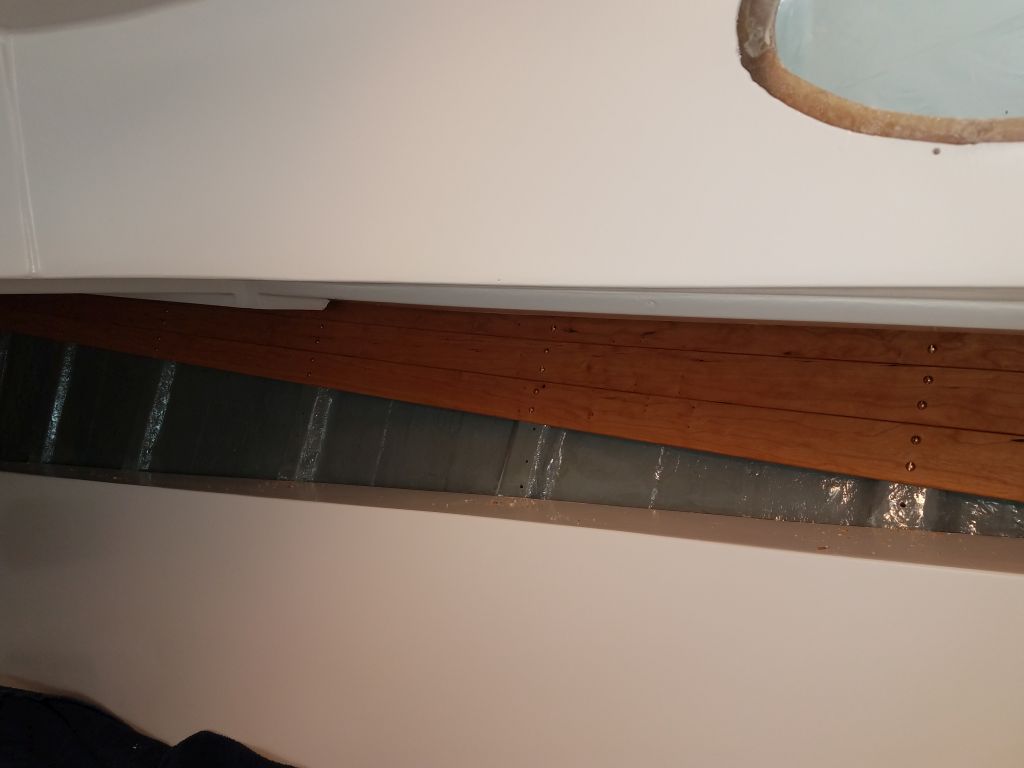
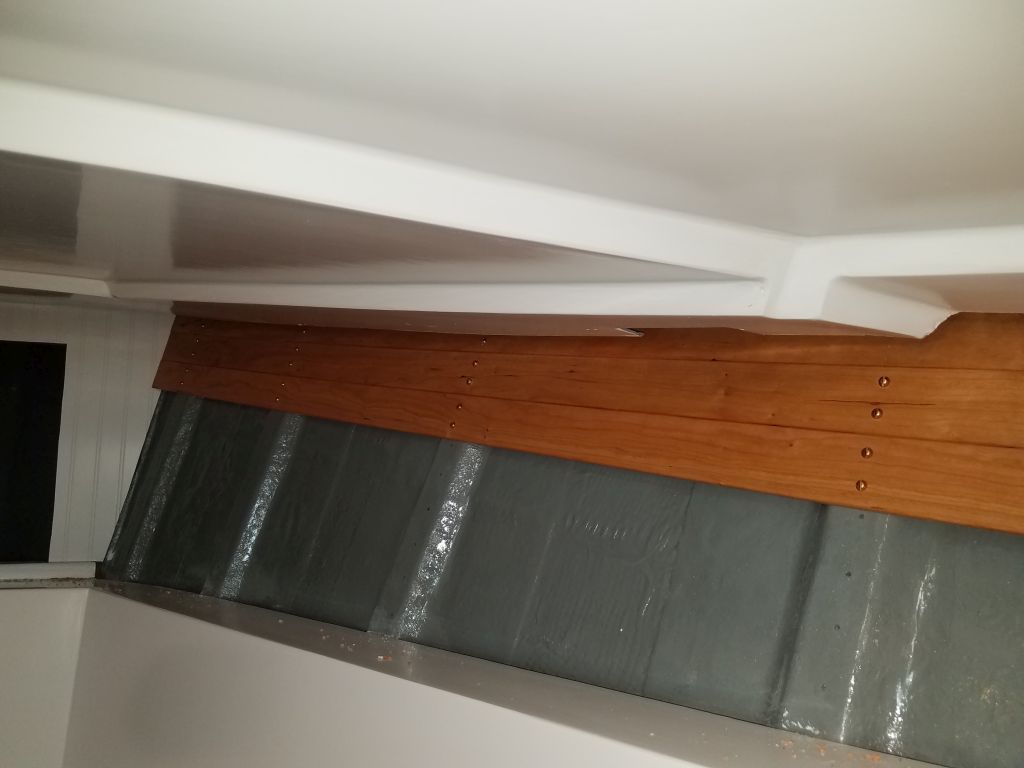
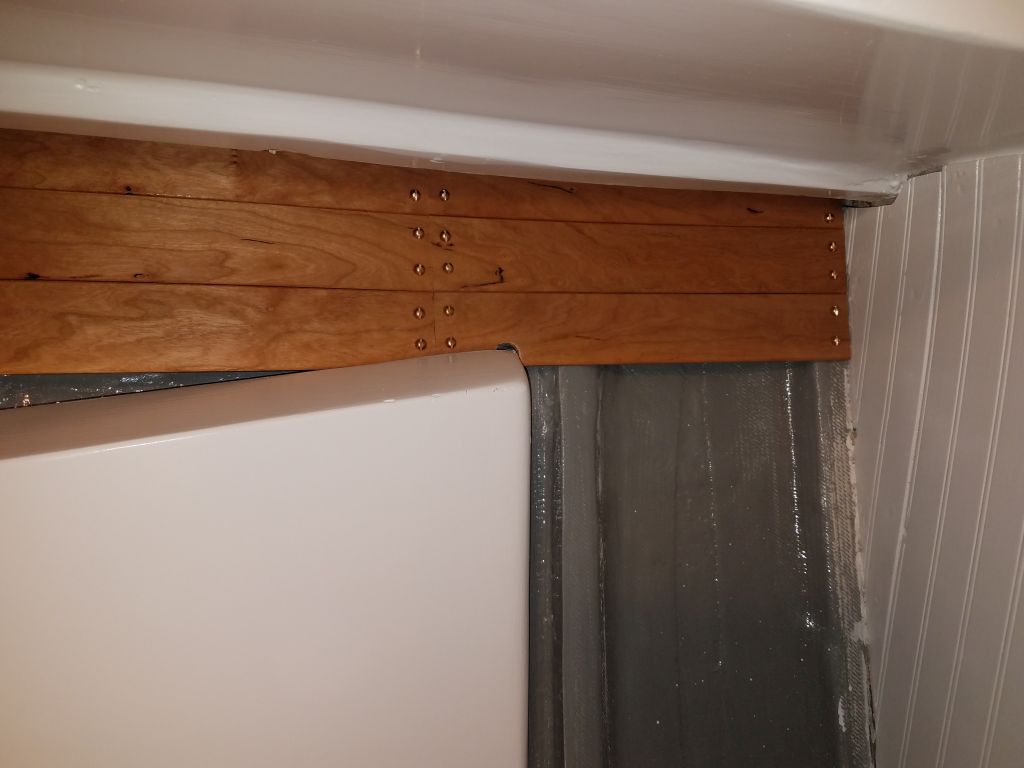
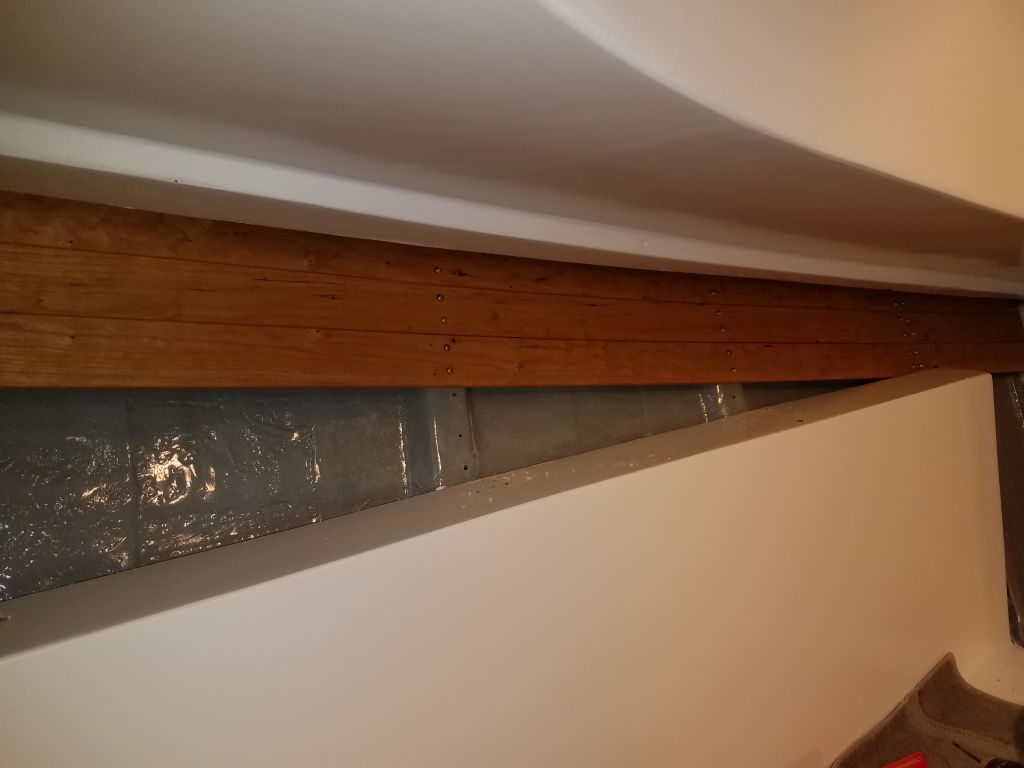
Next on my list of trim to mill and prepare were the ceiling strips, or hull liners for the forward and main cabins.  Using some rough measurements of the spaces that I’d taken earlier, I chose enough cherry boards for the job (I hoped) and, in a series of steps, milled 2″ wide blanks from the boards (plus a couple 1″ wide pieces as by-products), then resawed each blank more or less in half  to create two thinner pieces of roughly 5/16″.  The two halves ended up slightly different thicknesses, and I could have made another saw pass on the thicker pieces, but that was unnecessary since my next step was to clean up and dimension all the planks to 1/4″ in thickness using the planer.  It took a couple extra passes on the thicker pieces first before I could run all the blanks through the planer to achieve the final thickness.

The planer left the surfaces smooth and clean and ready to go, but to finish the work on the blanks, I used a block sander to ease the top edges of each piece, creating a small v-groove between boards that looked nice and would help hide any inconsistencies in the planks in whatever installation lay ahead.  Sanding these small chamfers on all the blanks took me through the close of business.

Total time billed on this job today:  8.5 hours

0600 Weather observation:  12°, clear. Forecast for the day:  Mostly sunny, 41°

Scupper 98

Tuesday

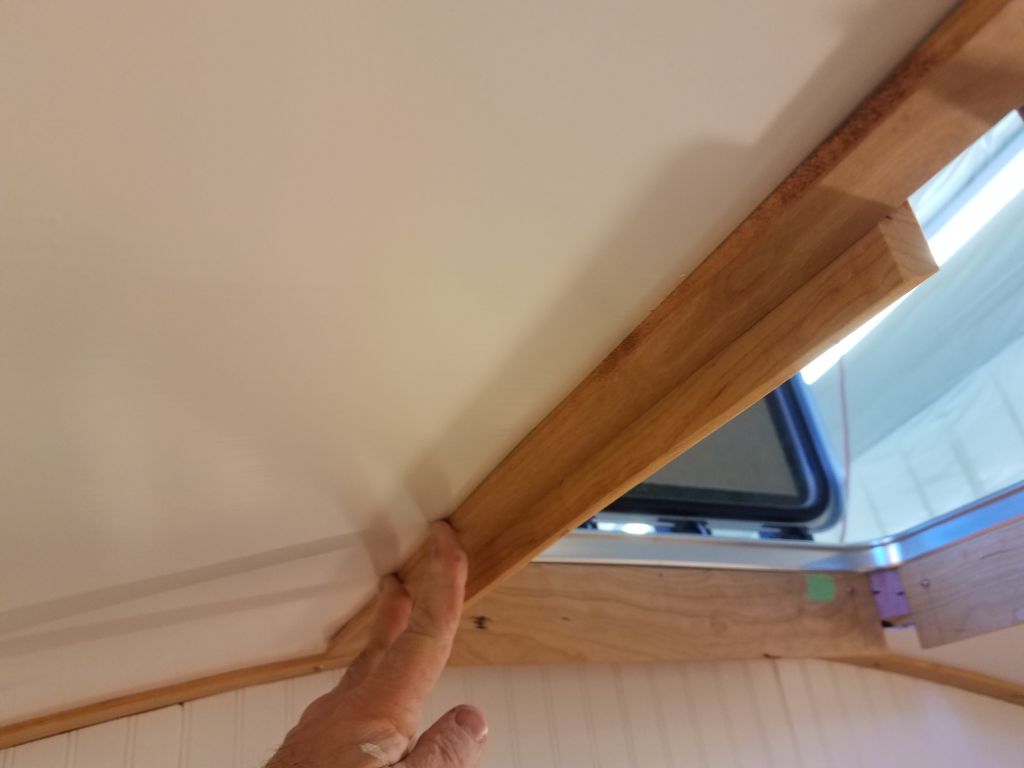
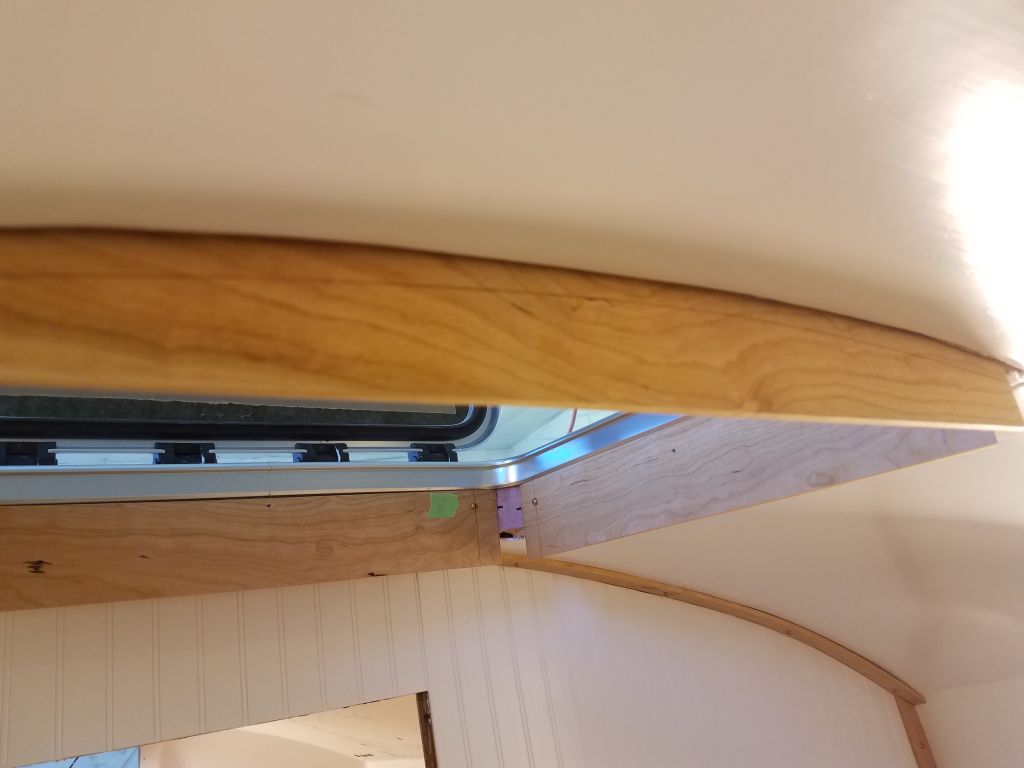
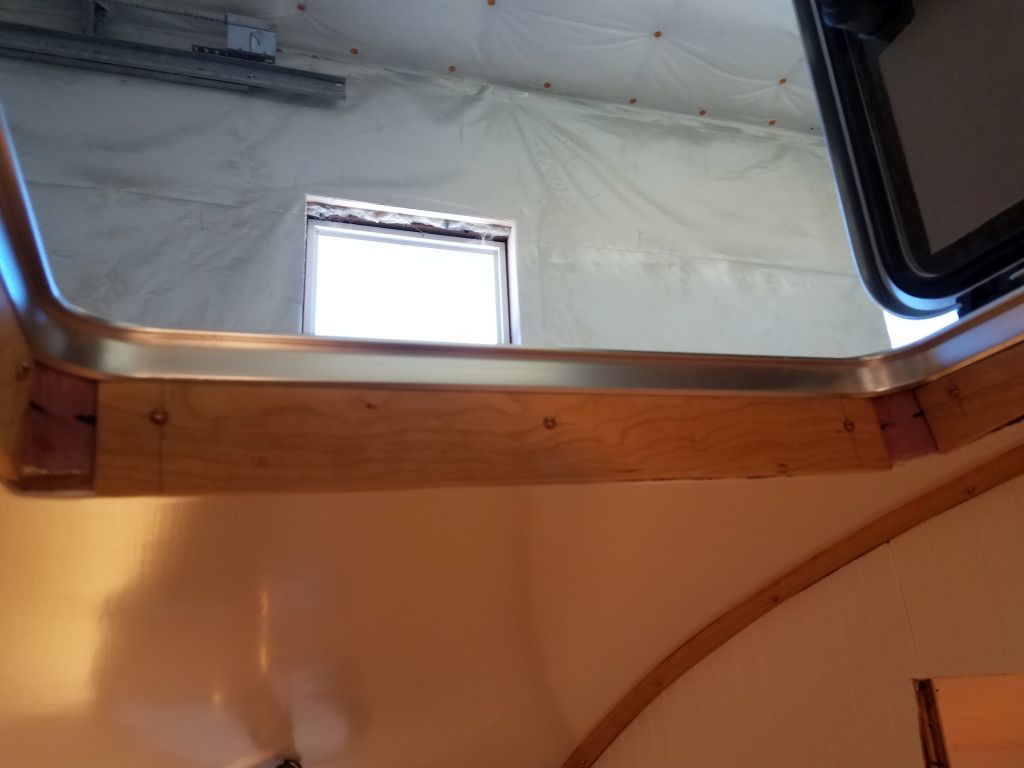
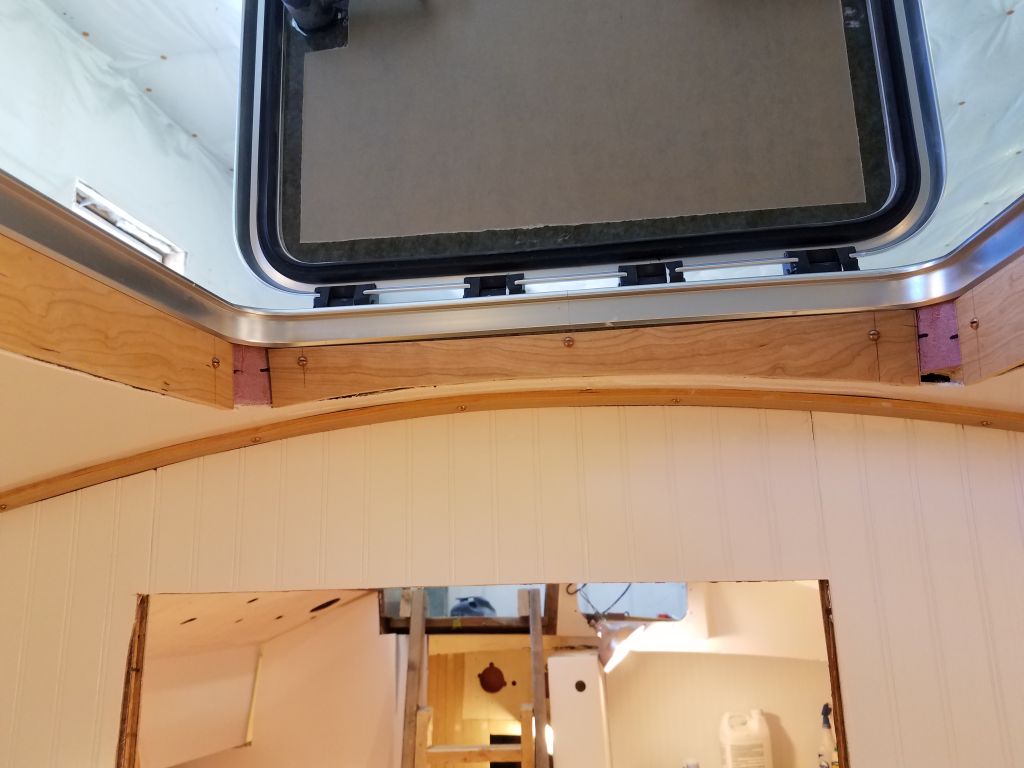
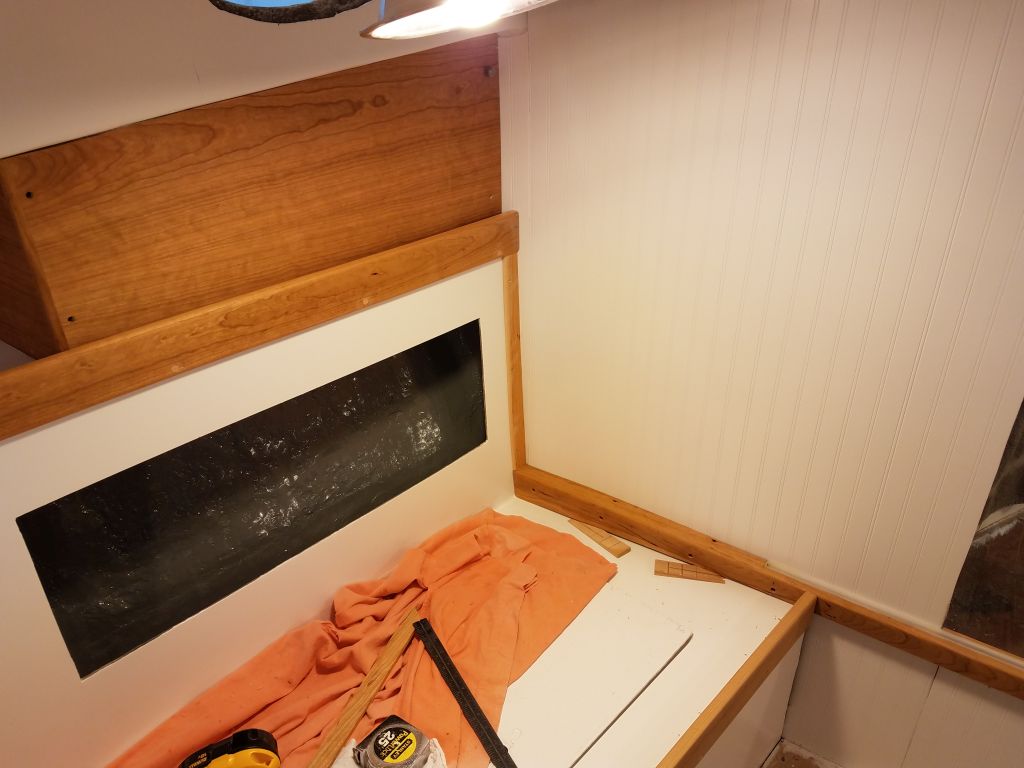
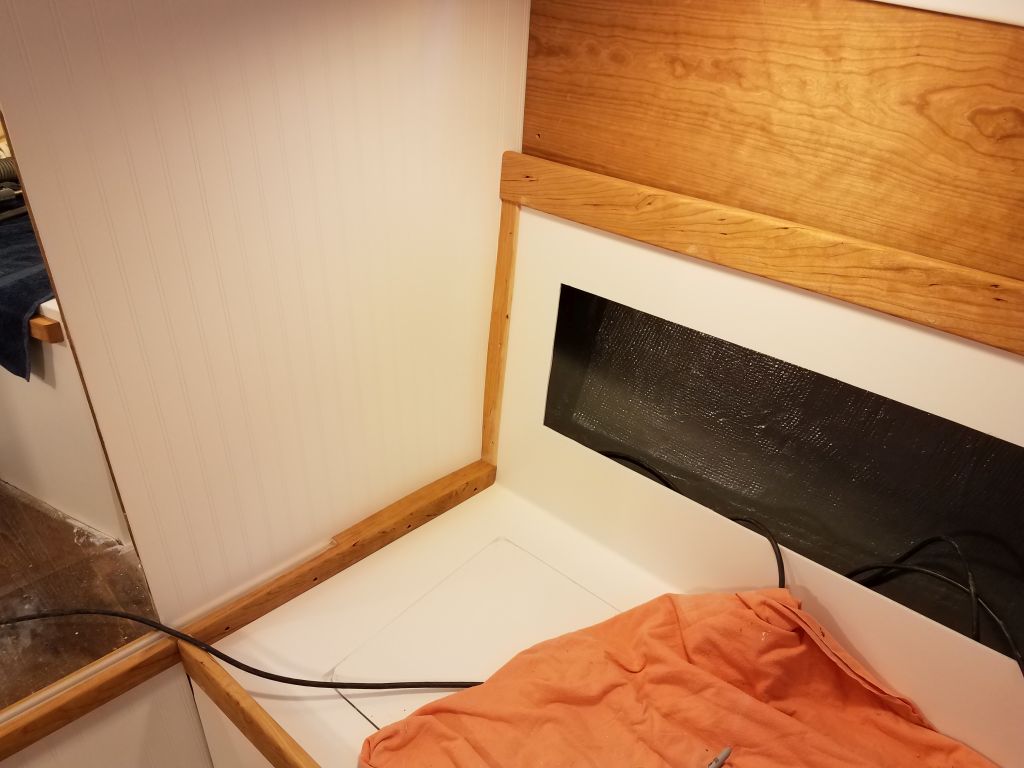
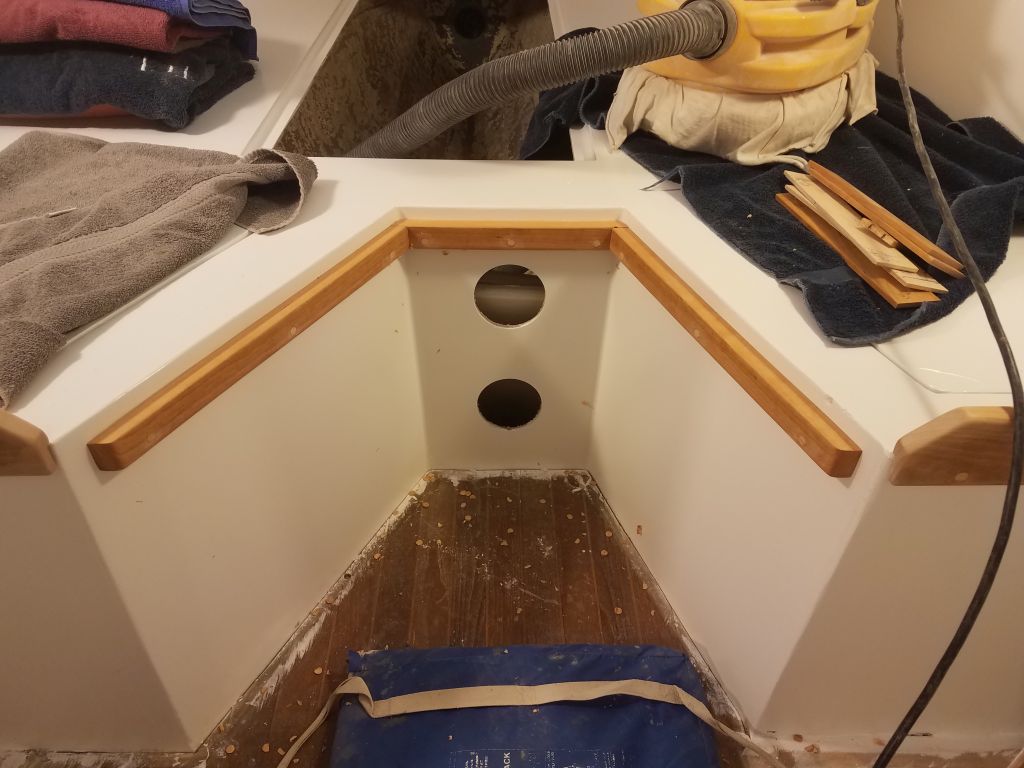
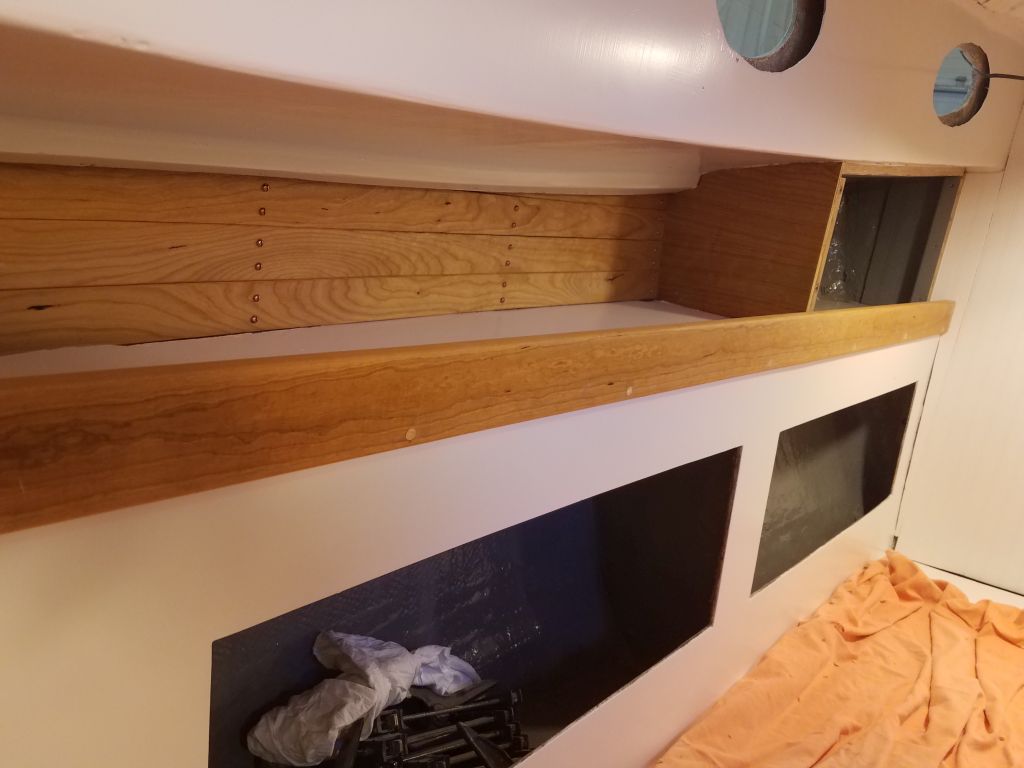
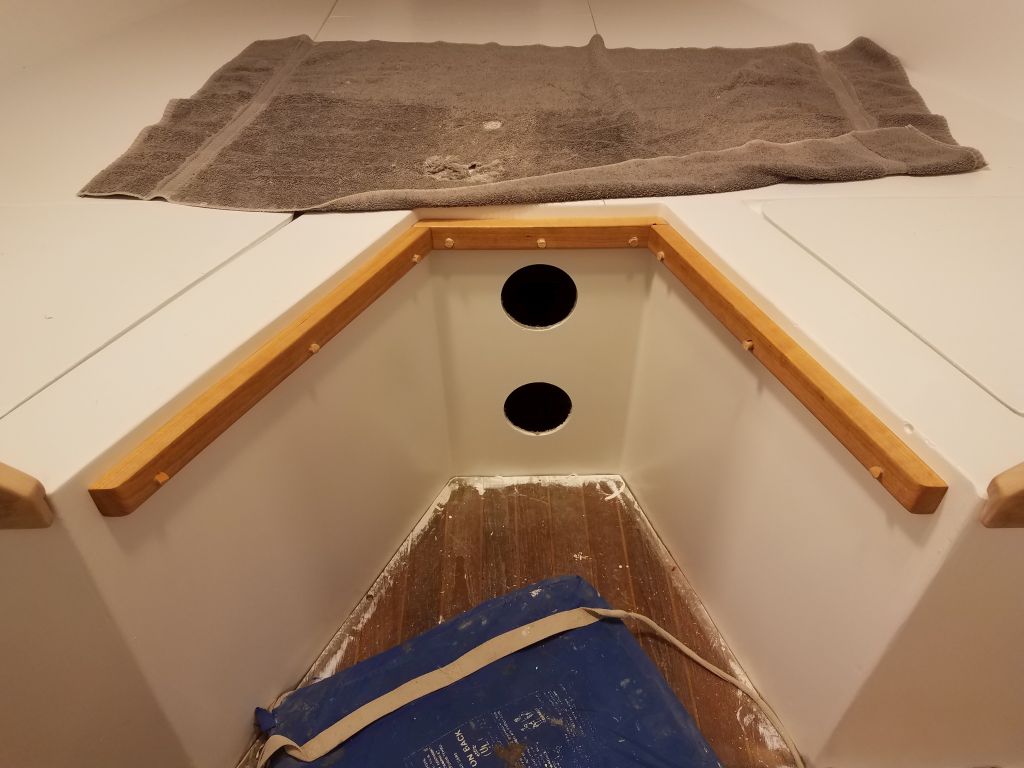
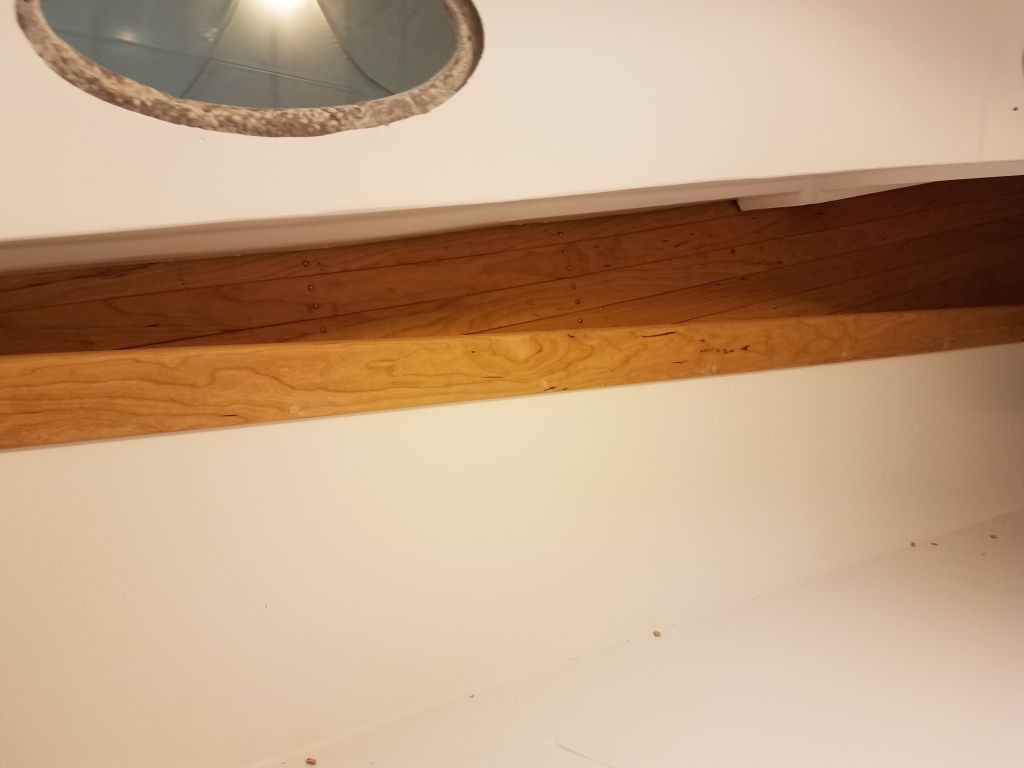
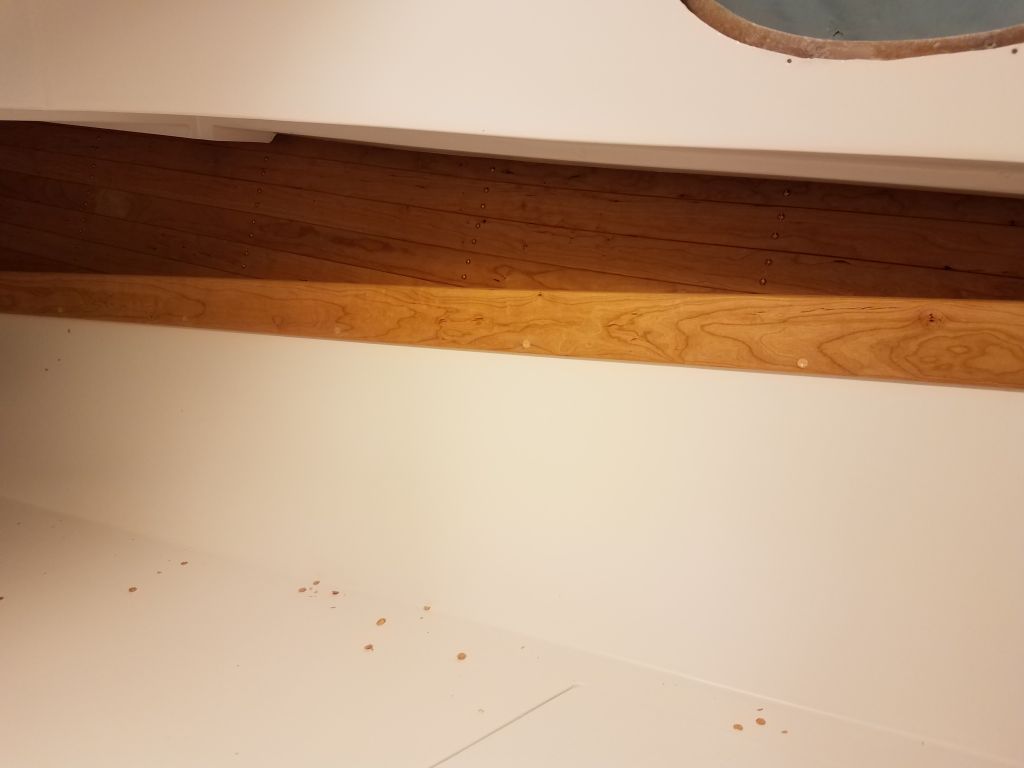
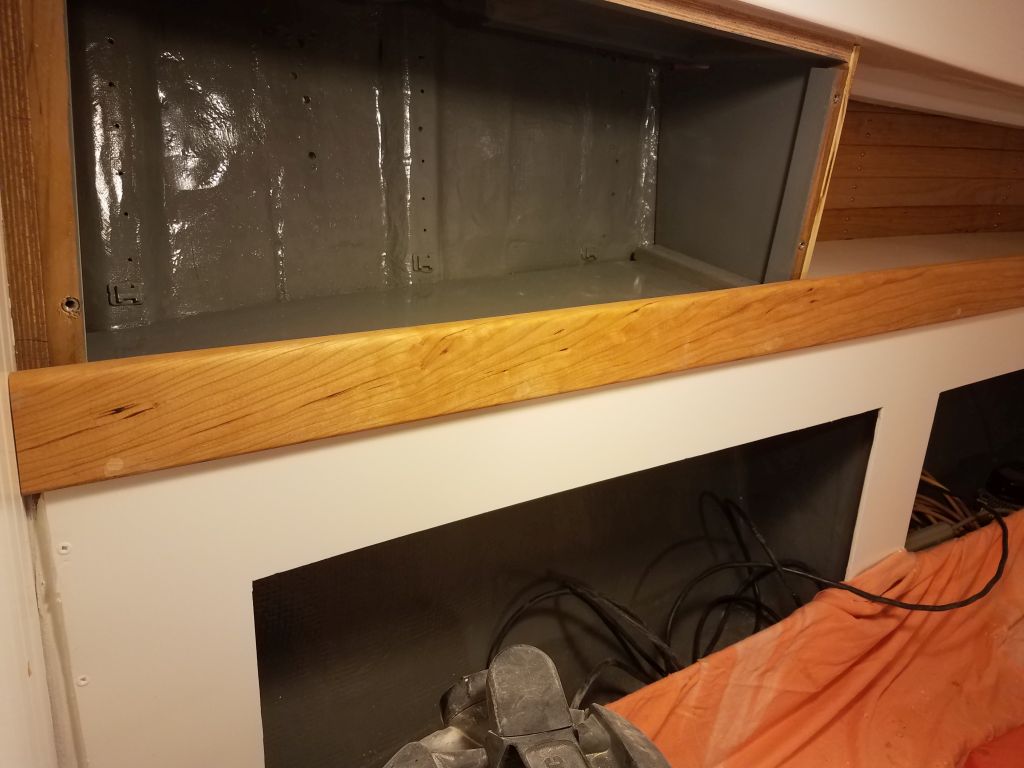
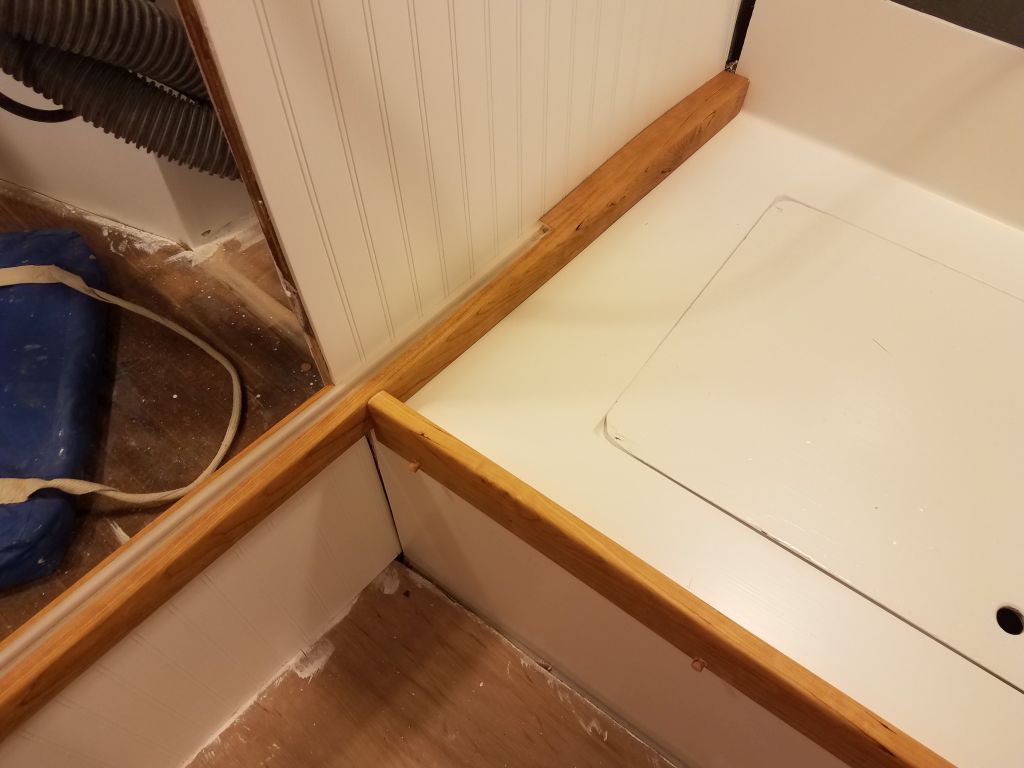
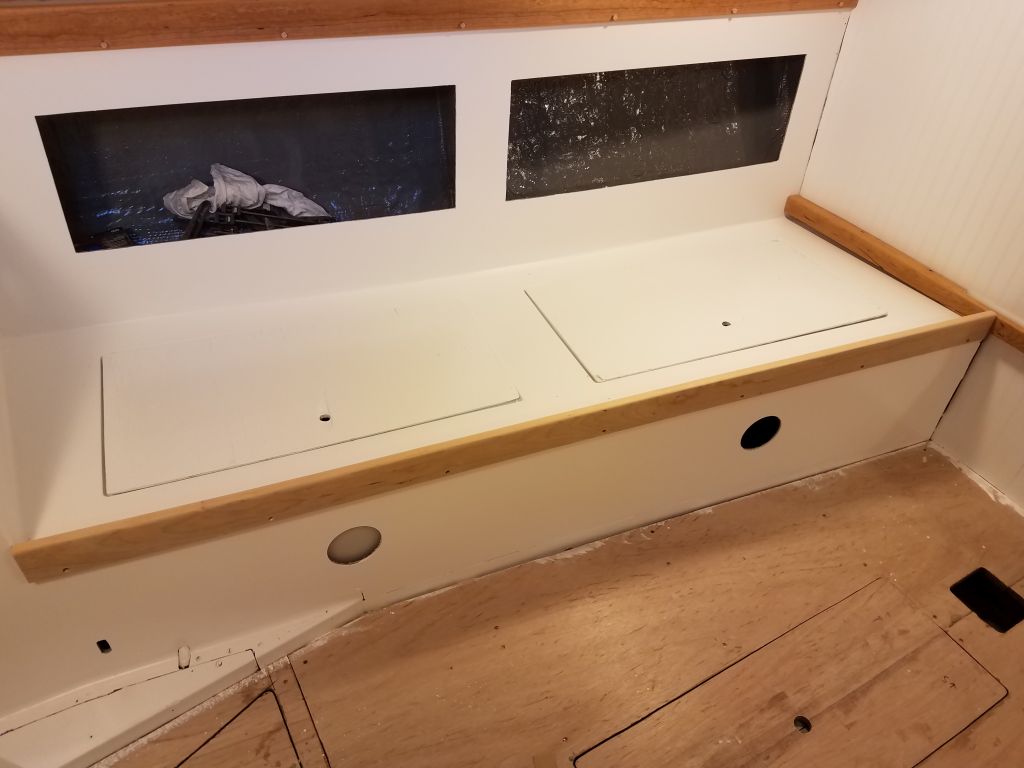
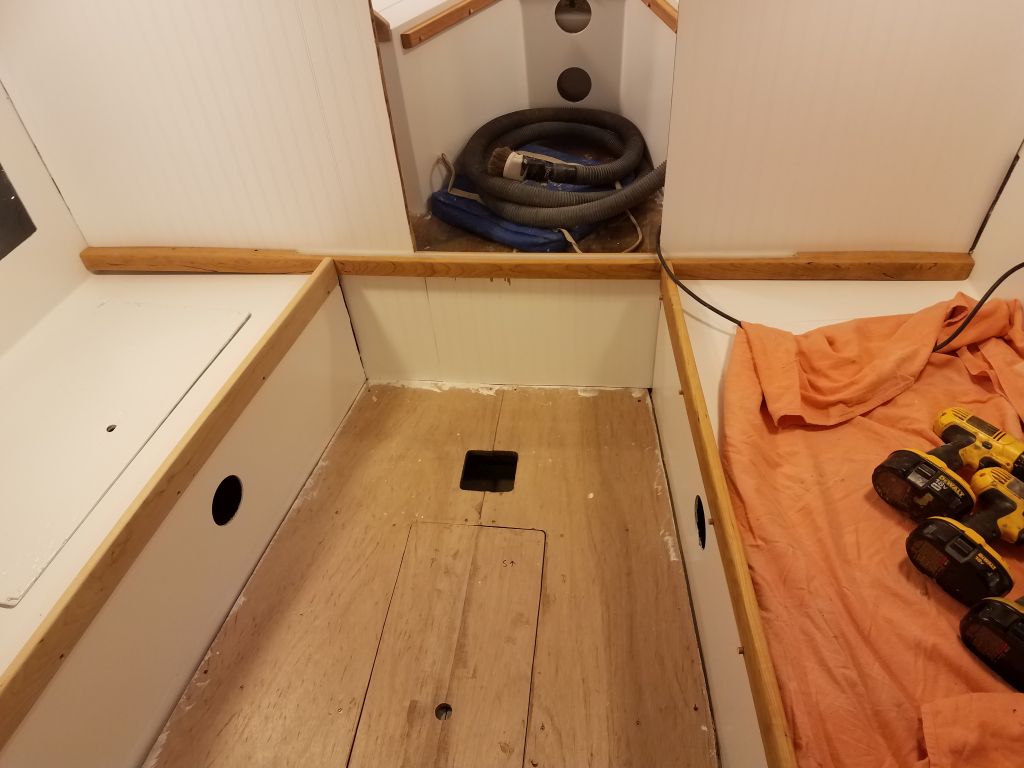
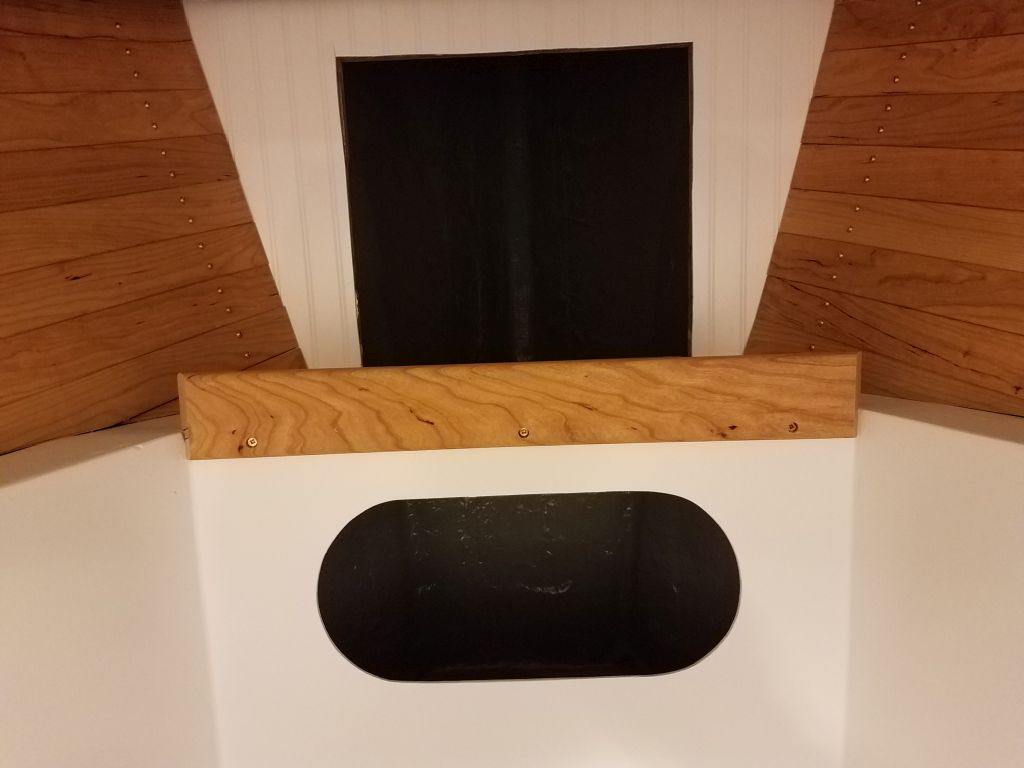
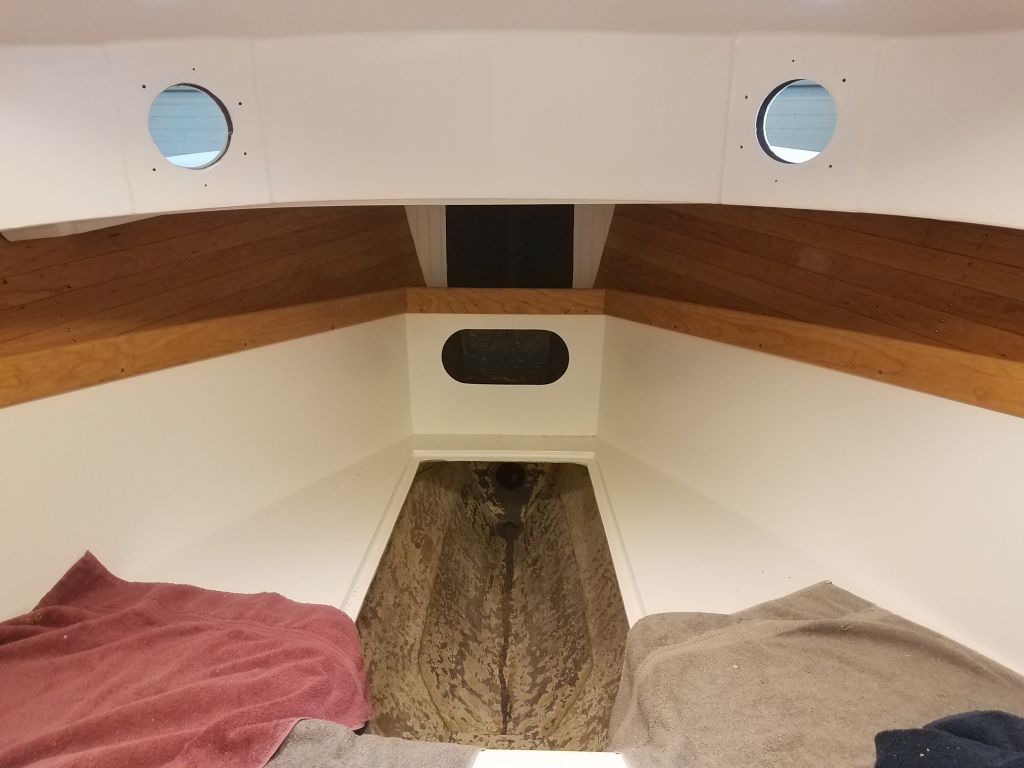
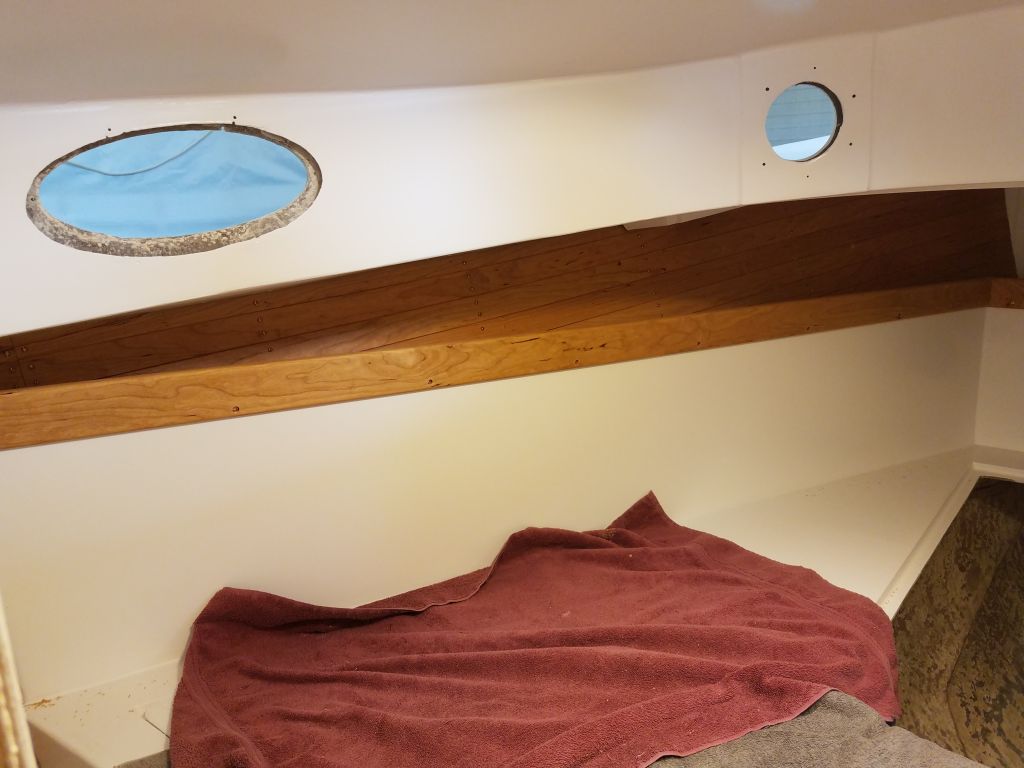
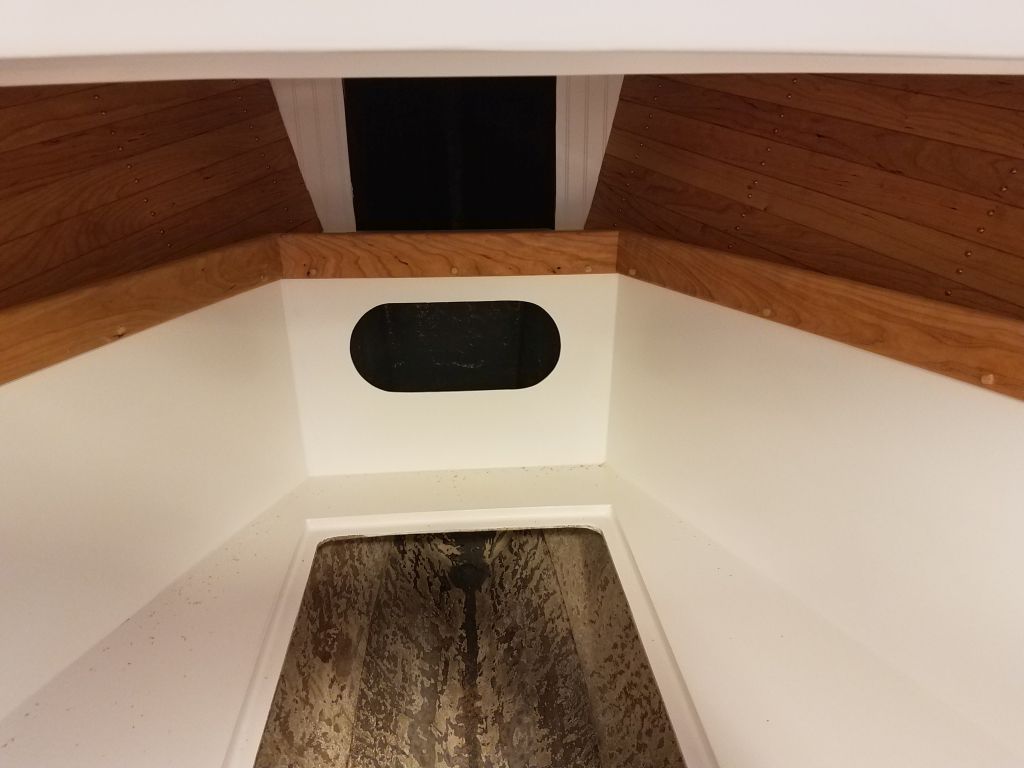
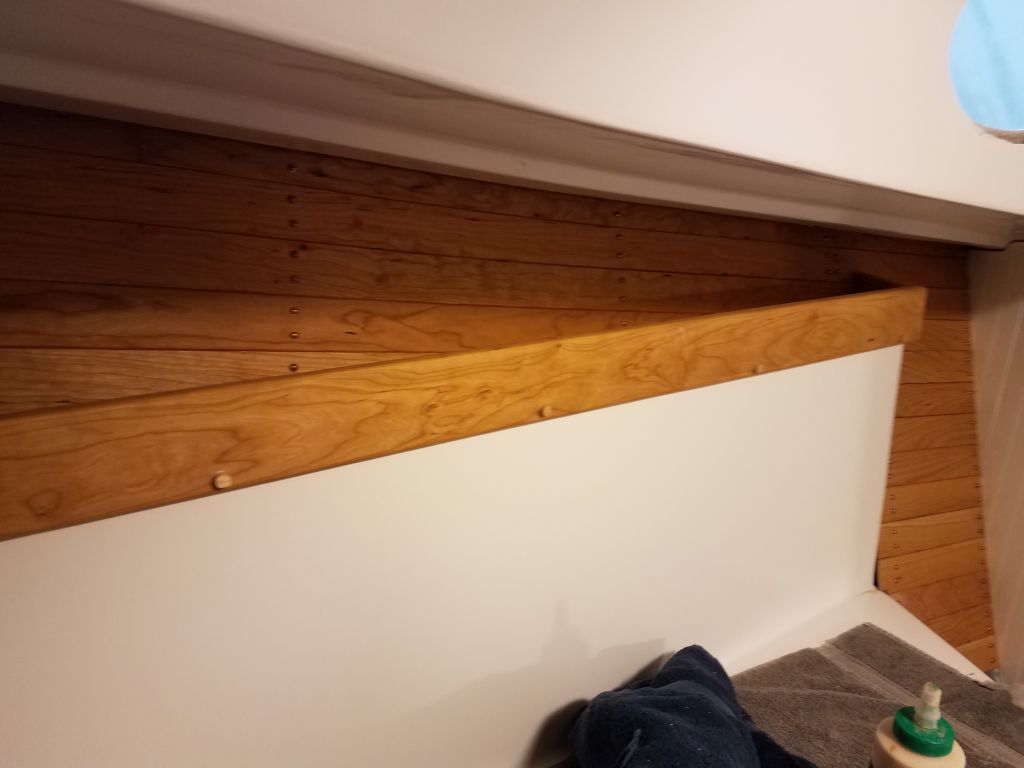
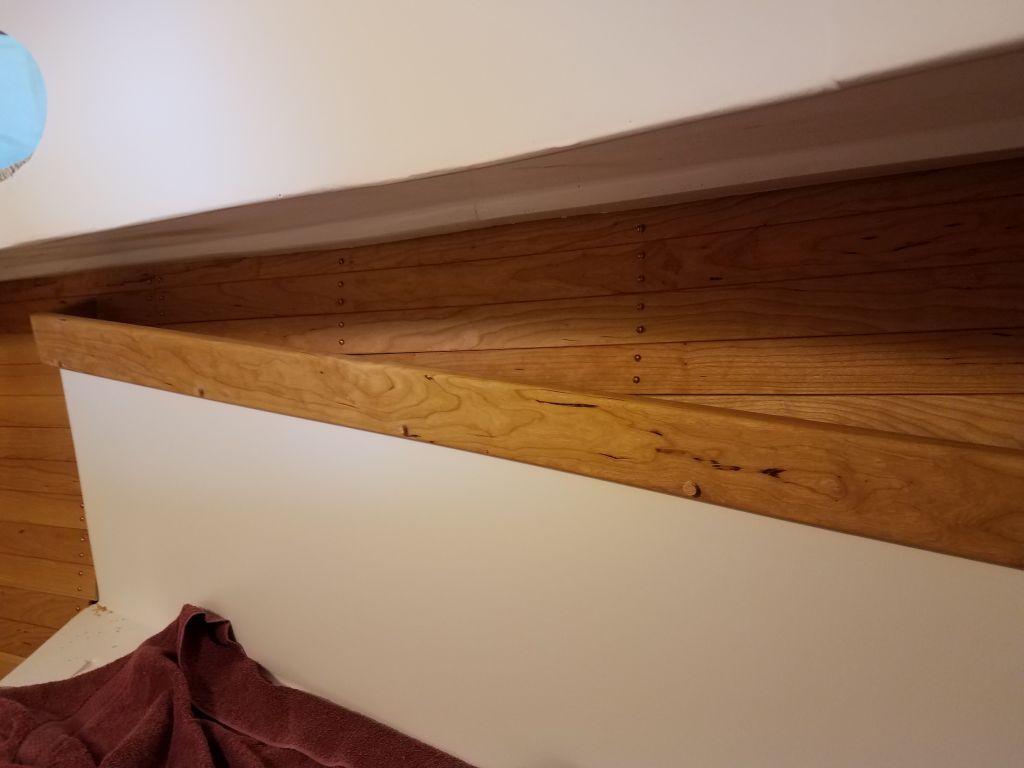
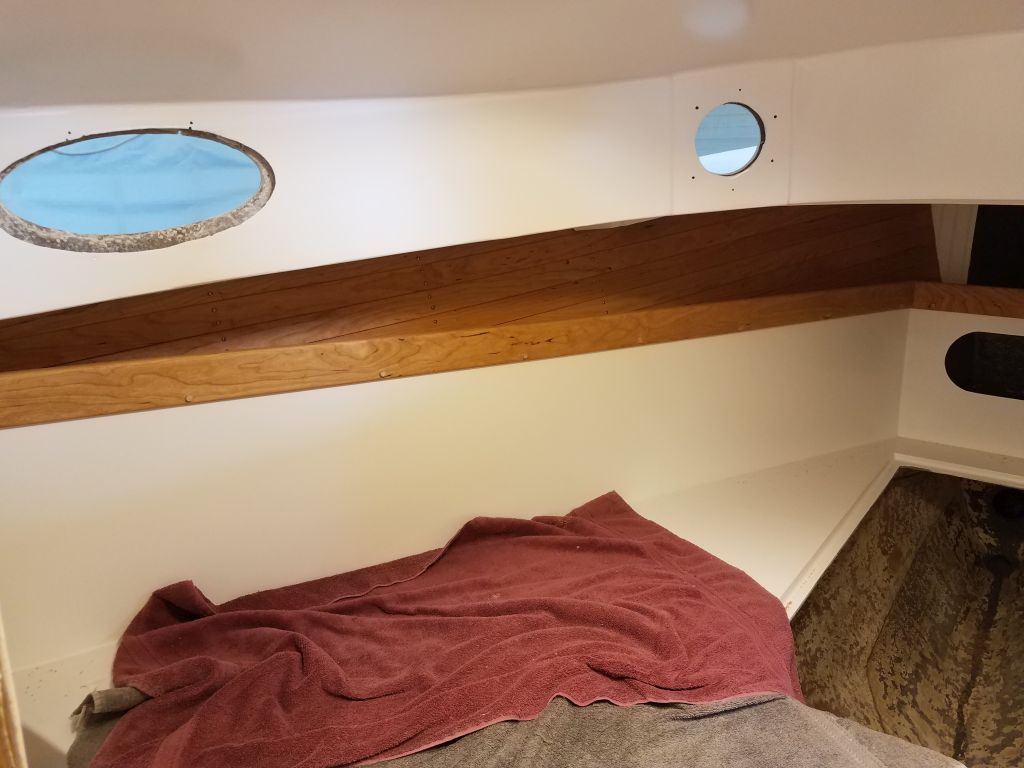
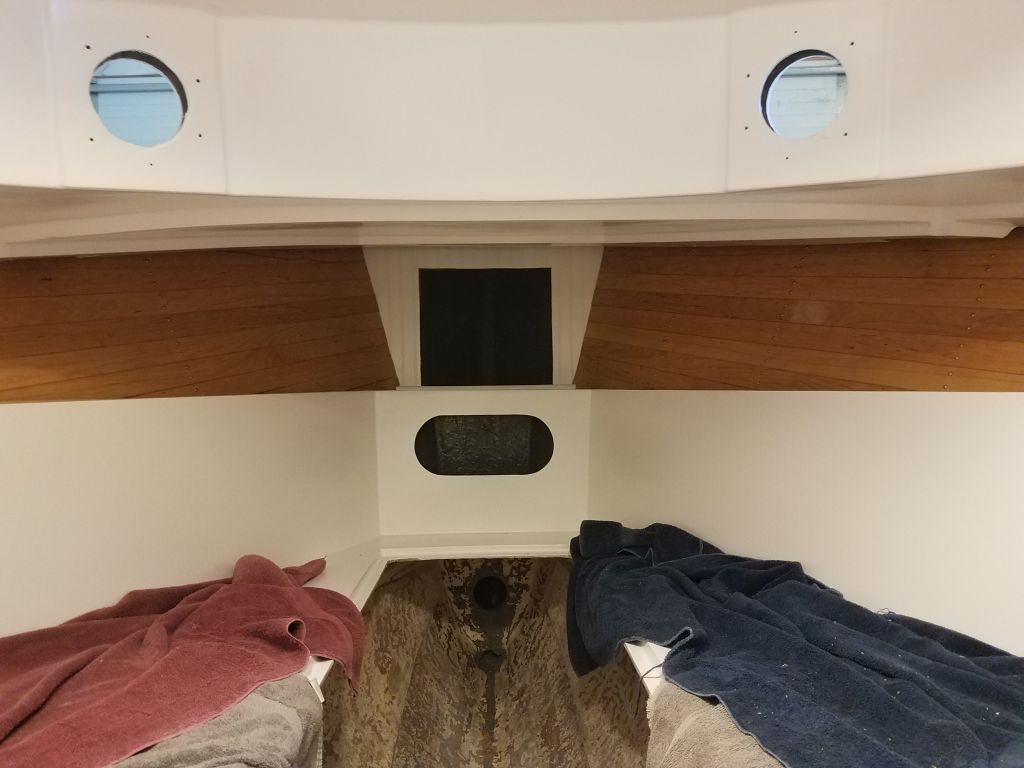
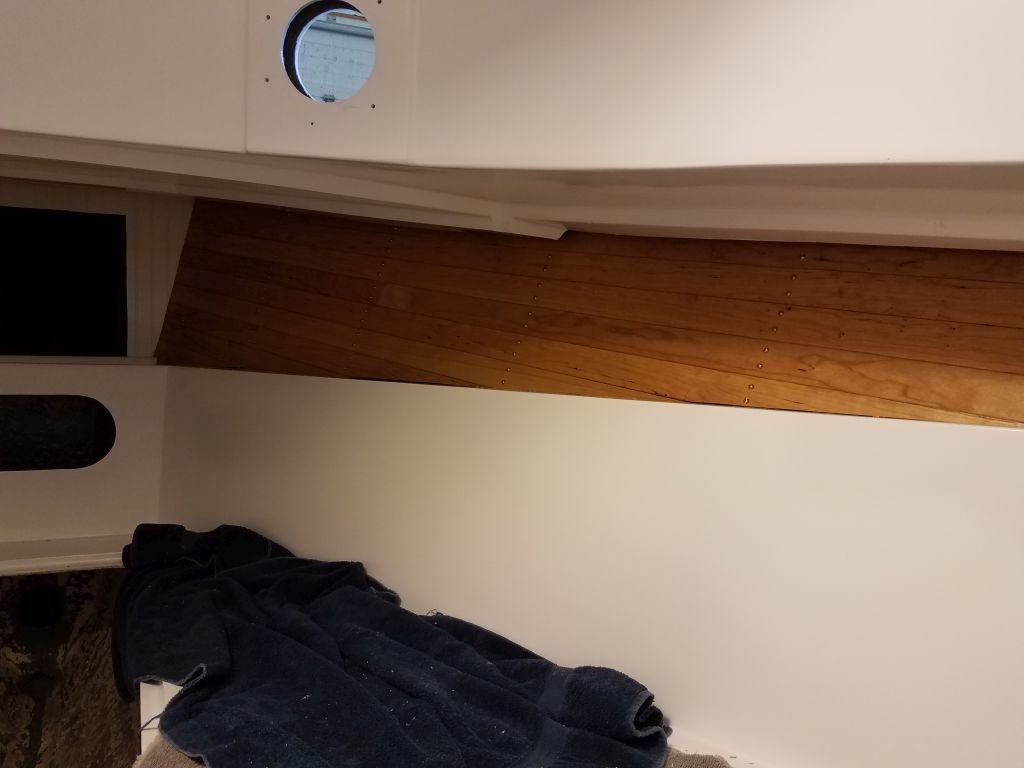
I spent the morning hours applying the first coat of semi-gloss white enamel to all interior surfaces in the forward and main cabins.  While it appears glossy in the just-applied photos, the paint would cure to a pleasing soft sheen.

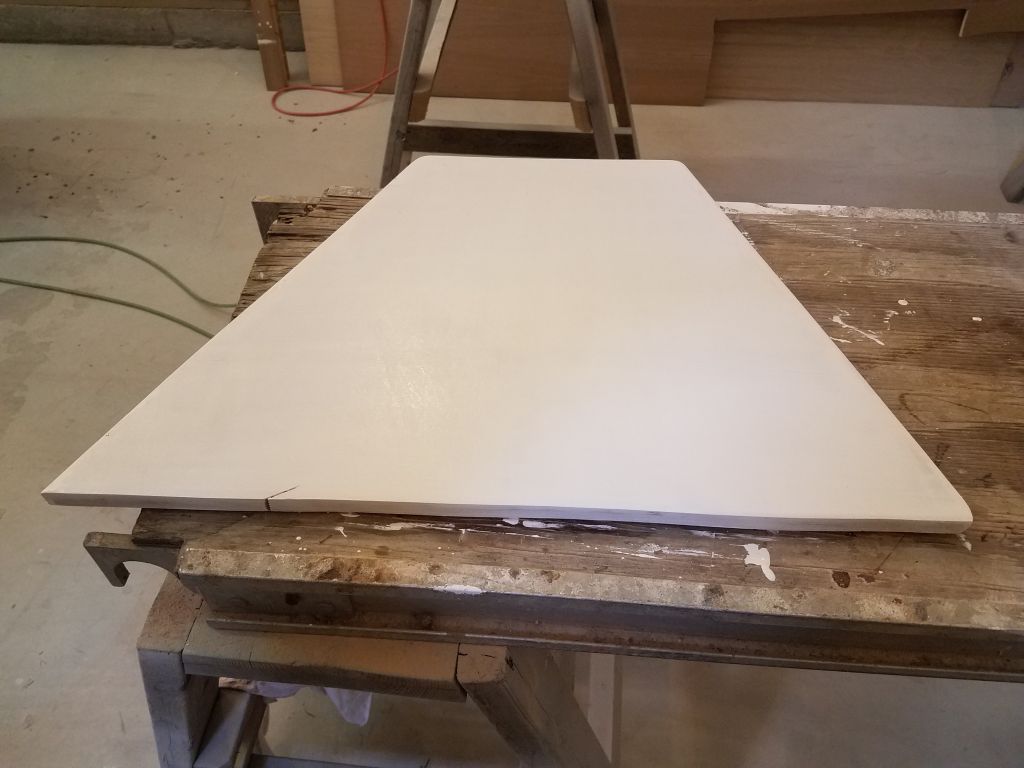
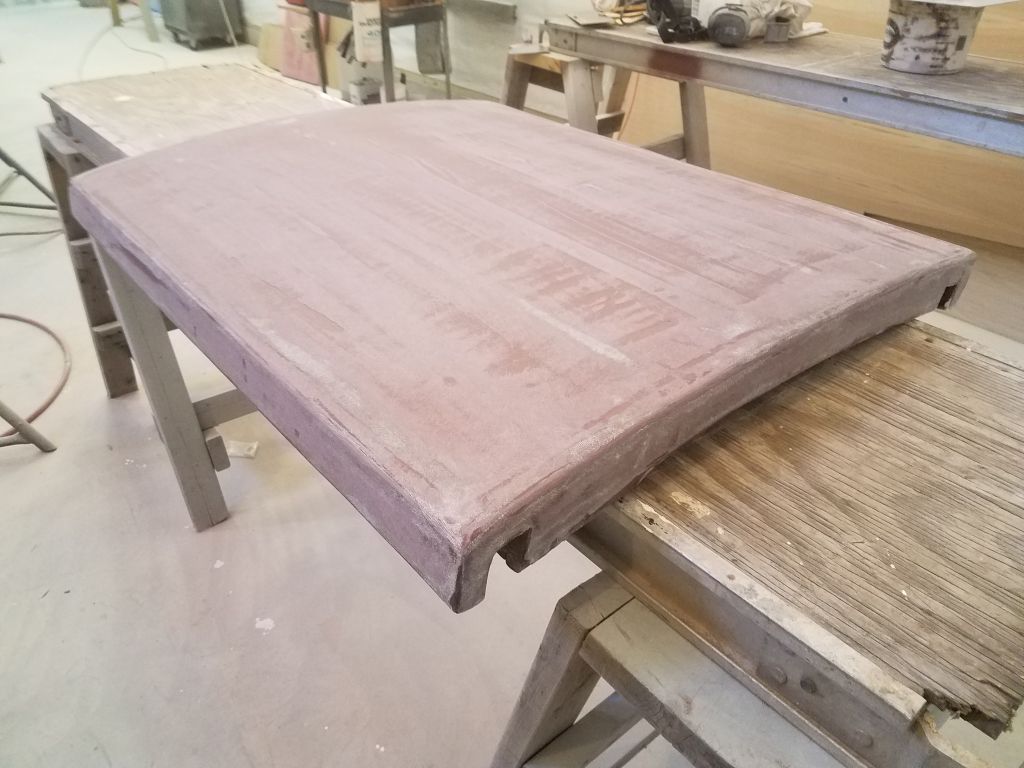
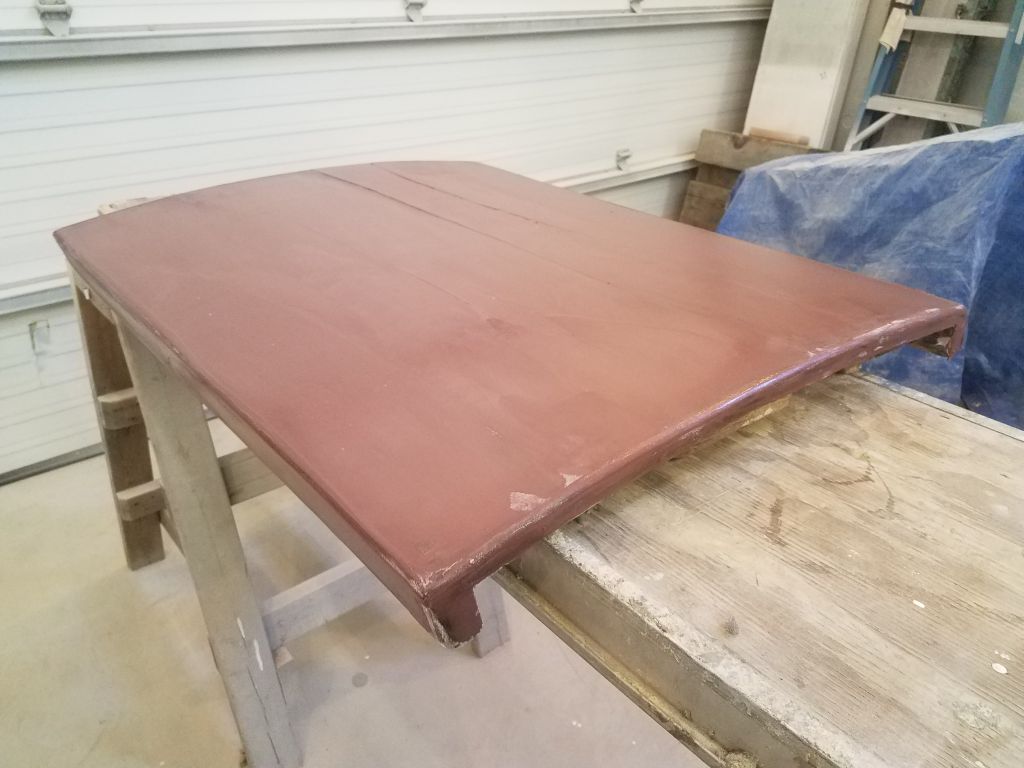
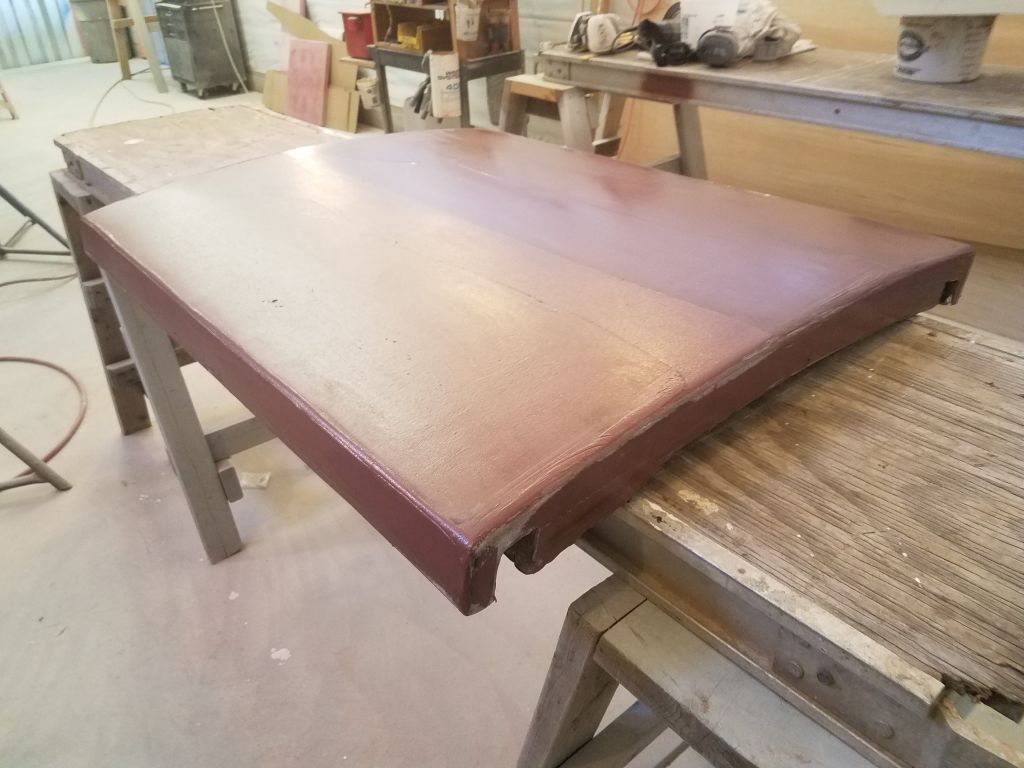
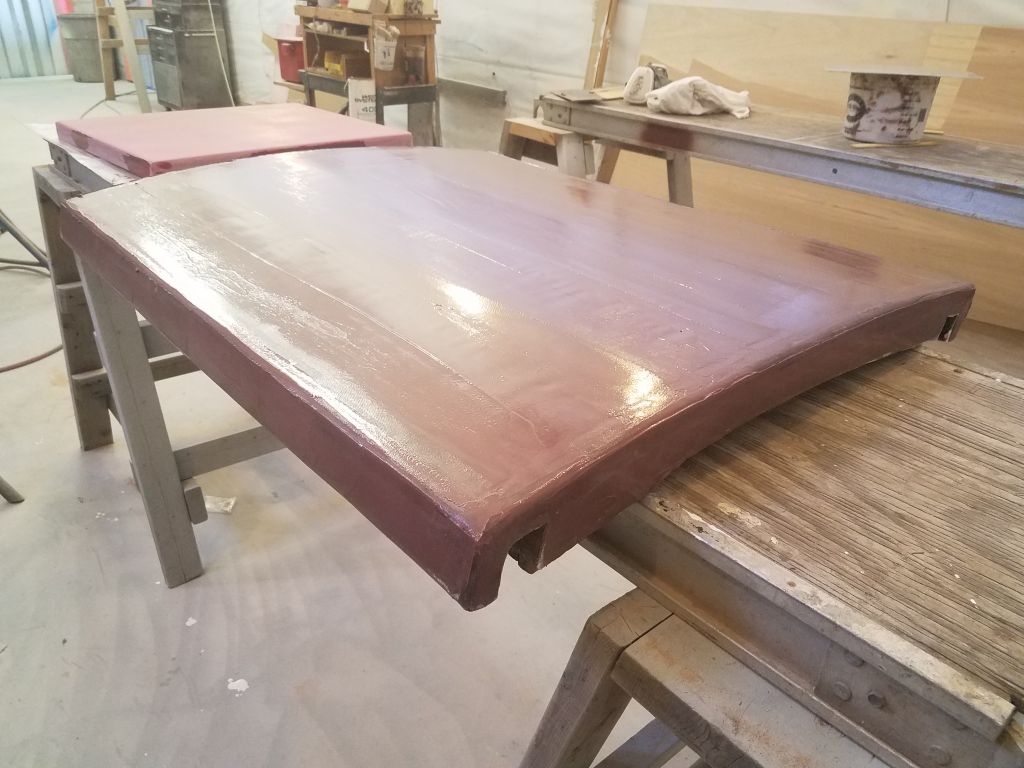
Next, I applied a coat of the enamel to the top sides of the various loose locker lids.

During the afternoon, I sanded all the newly-milled trim pieces, working through the grits from 80 to 220 to remove tool marks and smooth the wood to prepare for finishing.

Total time billed on this job today:  7.5 hours

0600 Weather observation:  26°, mainly clear.  Forecast for the day: Partly sunny, 37°
Scupper 97

Monday

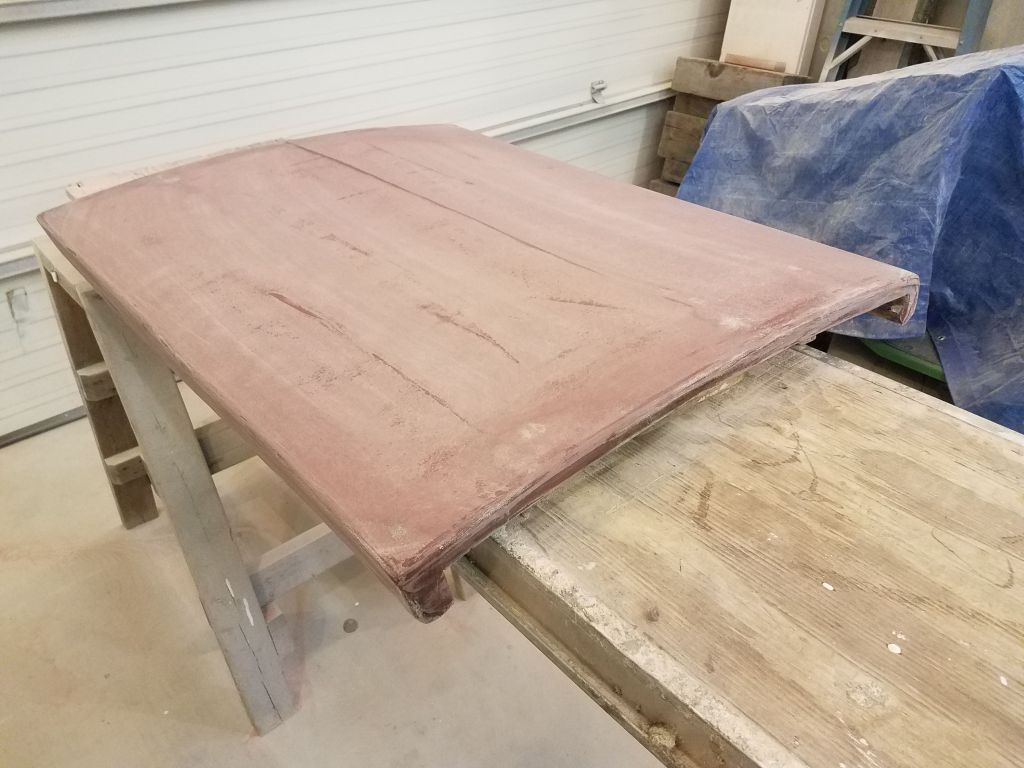
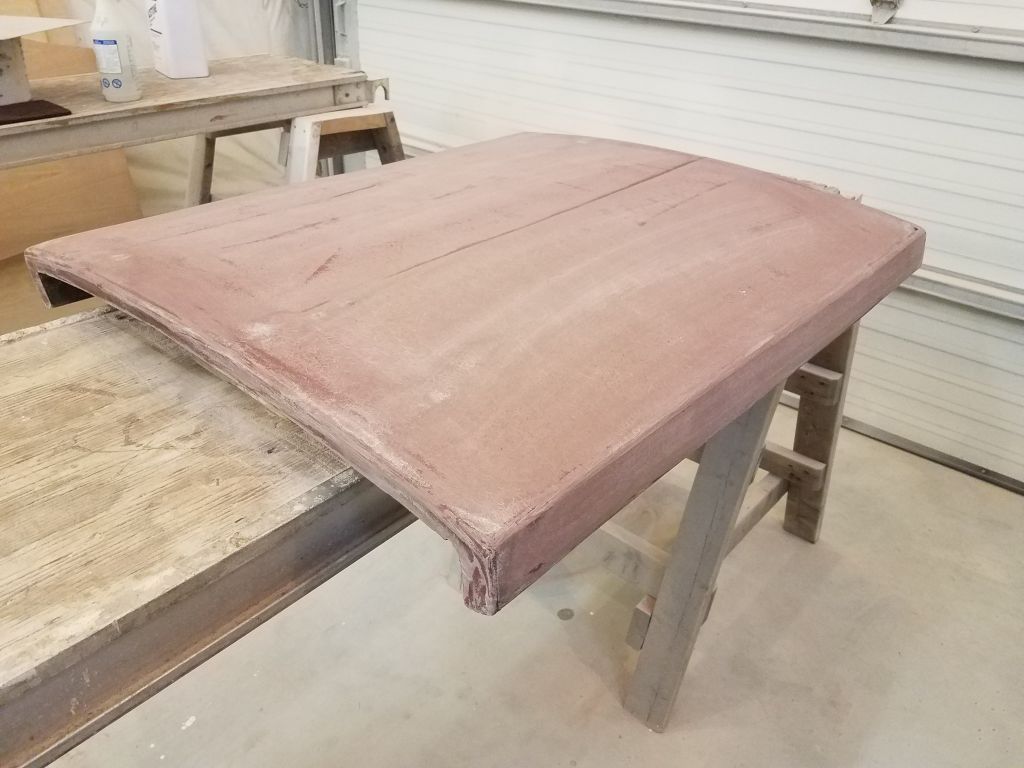
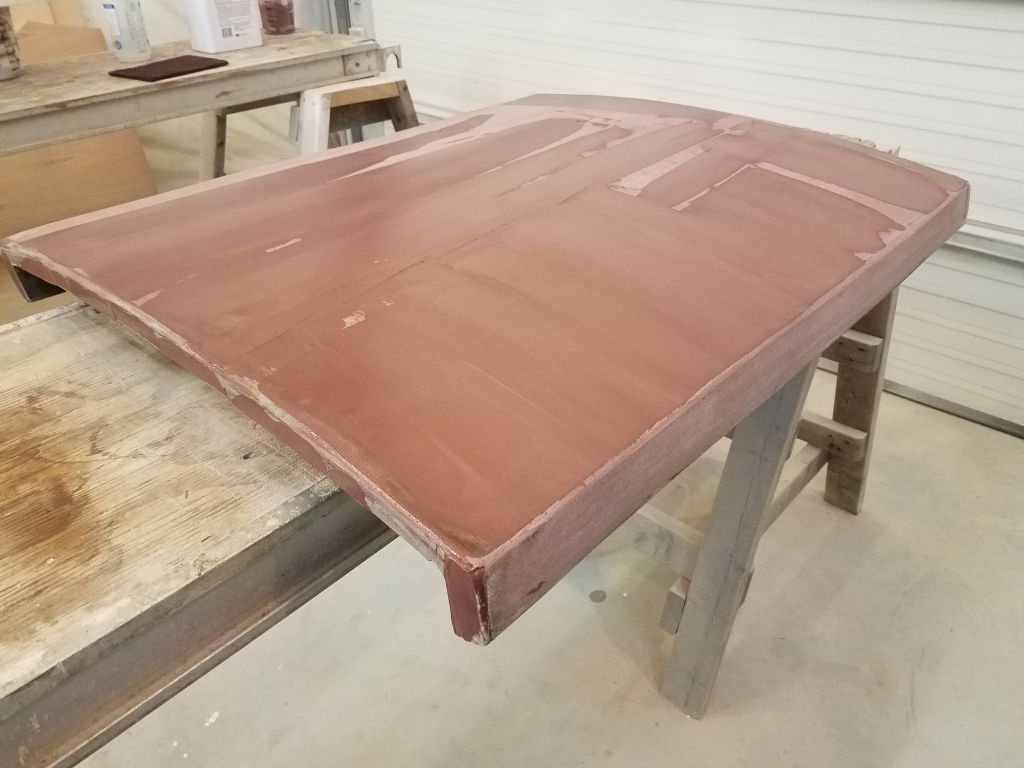
With the primer well-cured after the weekend, I spent the morning lightly sanding all areas with 220 grit, with subsequent vacuuming and solvent-washing.

I identified a few areas requiring some filler touch-up, mainly a few of the filled fastener holes in the paneling, along with an edge here and there on the fiberglass liner, so I applied the filler and then, after lunch, sanded it smooth and cleaned those areas again as needed.  This left the interior ready for finish paint coats, which I planned to apply the next morning when there was ample time.

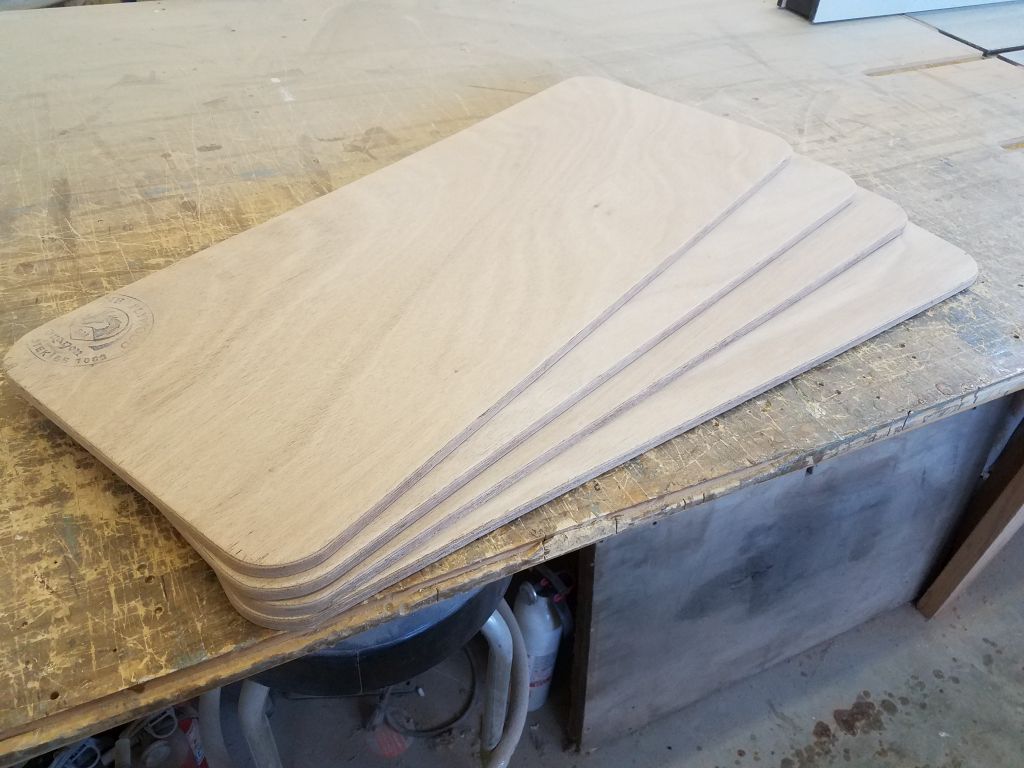
When I primed the plywood locker lids, I’d not worried about setting the wet primer on the lids’ bottom sides on the stickers, but for the finish coats I’d need to do one side at a time, so to jump-start the process, I applied a coat of semi-gloss white enamel to the lids’ bottom sides.

I spent the rest of the day in the woodshop, where I milled enough cherry to use for the various fiddles throughout the boat:  berths and shelves, galley, and elsewhere. I’d purchased wood that was surfaced on three sides, which saved me from a long day at the planer, but I’d planned the time in and around the interior paintwork to mill and prepare most or all of the millwork.

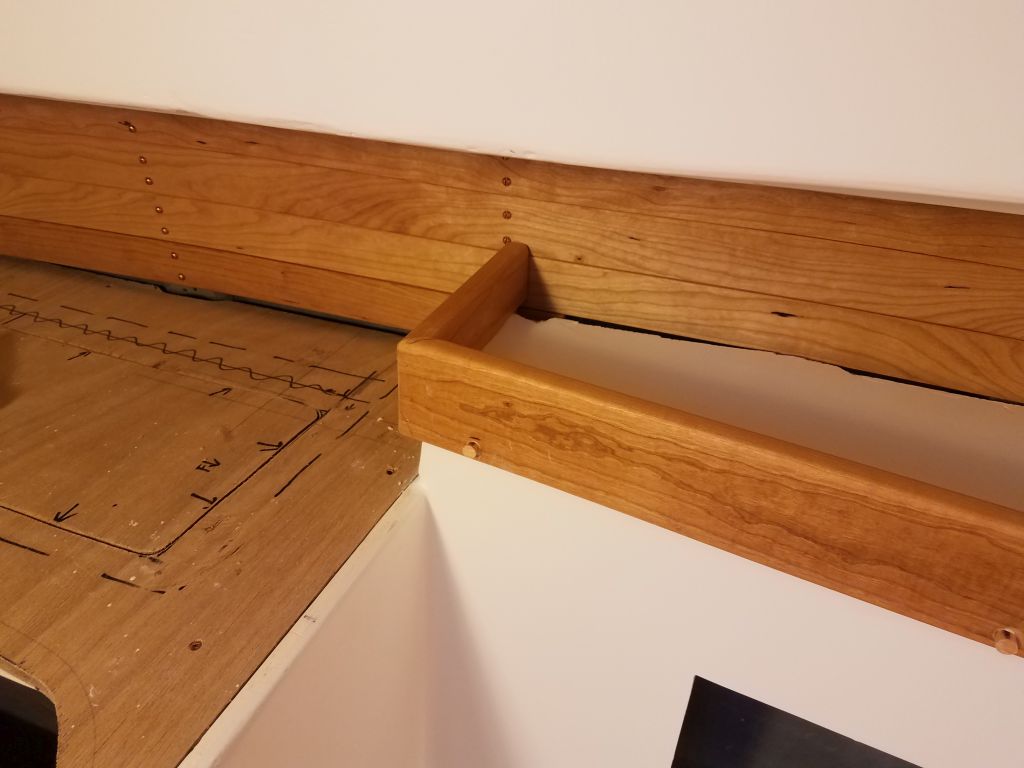
With a short cut list detailing the various raw lengths I needed for the fiddles, I chose boards that would provide the rough dimensions required with the least waste, and as needed I straightened edges and milled the blanks to the correct width for the fiddles.  Afterwards, I used a router to mill rounded edges on three of the four corners of each board.

The final milling step for these pieces was a 1/4″ x 1″ dado on the inside lower edge of the boards, to allow the fiddles to cover and slightly hang down beneath the edges over which they’d be installed.  This brought me to the end of the day; next, all these fiddles would require sanding and sealing, and then there’d be other trim pieces to prepare.

Total time billed on this job today:  8 hours

0600 Weather observation:  32°, mainly clear with fog.  Forecast for the day:  Partly sunny, 45°
Scupper 96

Friday

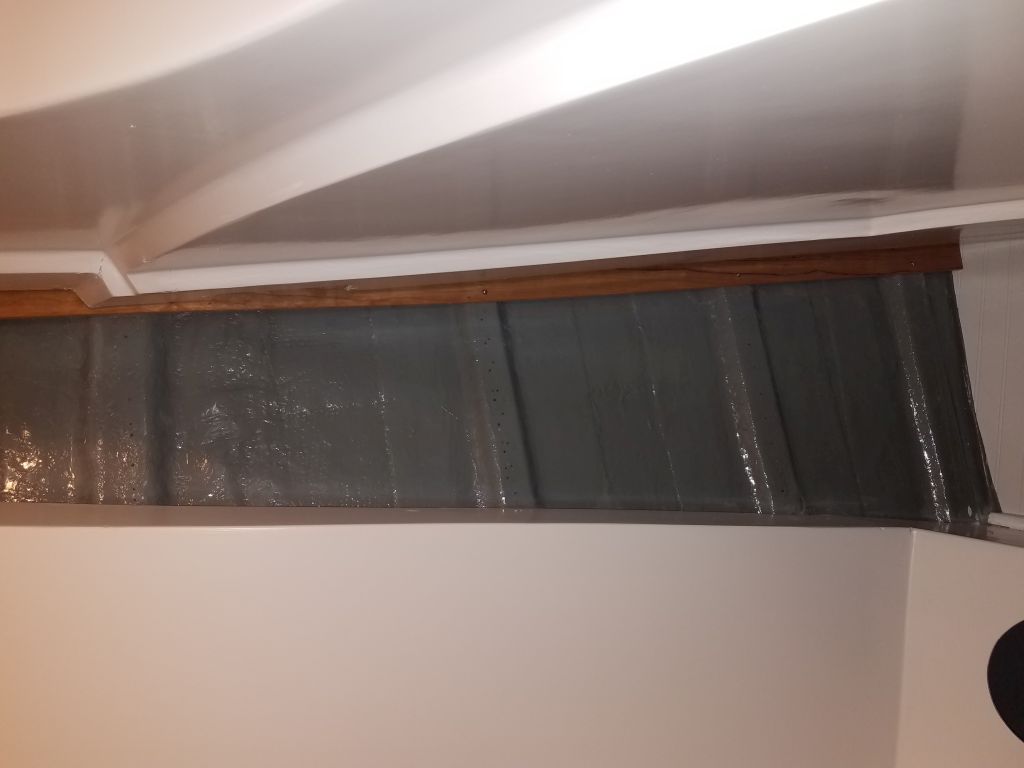
The day’s main event was to be the primer on the interior, and I got right to it, priming all surfaces in the forward and main cabins that required it, including the bulkhead paneling, overhead (forward cabin), cabin trunk, galley, and settees.  The main cabin overhead, as it stood, did not require painting as it would be covered with a cosmetic veneer later.  I left the head compartment for a separate operation some other time.

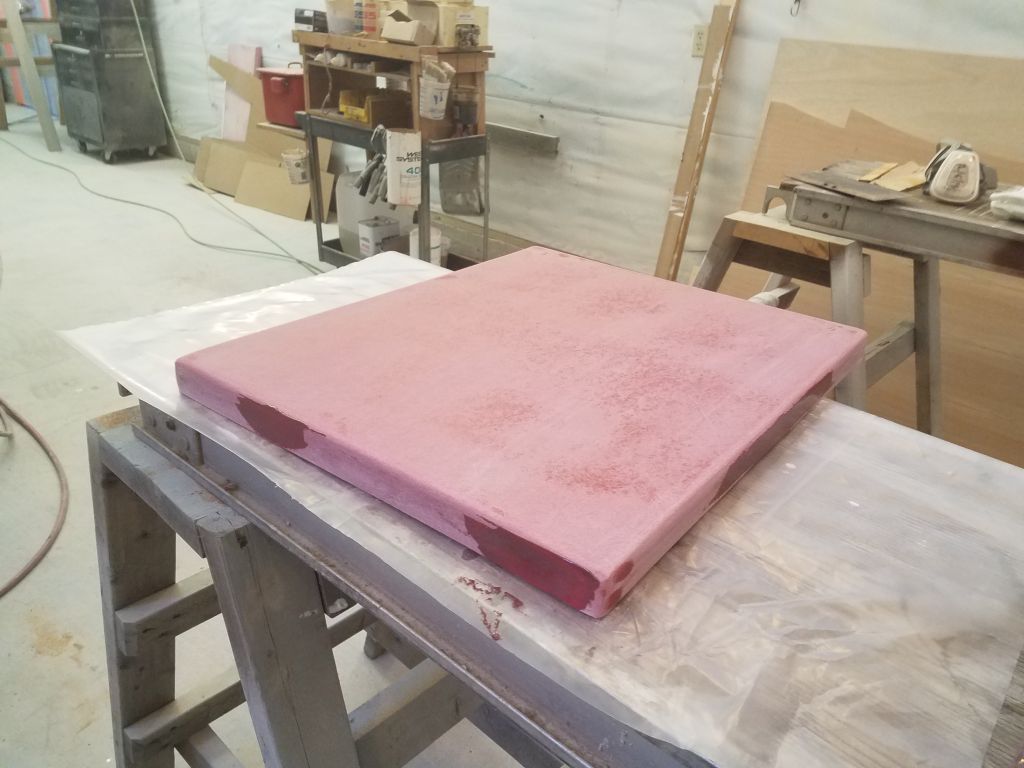
After a break, I primed both sides of all the loose locker hatches from the settees and forward berth, except the large center pieces from the berth, which I’d left in the storage area beneath the forward berth and would finish later.

The owner and I had a conversation about the battery placement, and ultimately decided upon a plan with four of the batteries across the centerline of the engine room, and two additional on each side, with the two house batteries to be located forward, beneath the v-berth, to help with weight distribution.

Meanwhile, I finished up work on the forward cabin door trim.  After unclamping the UHWM inserts, I lightly planed the surfaces smooth and flush again before setting up the dado cutter for a 5/16″ groove, which I then milled in the appropriate location down the new plastic.  As before, I chiseled square the curved ends of the plunged-cut bottom rail.

Afterwards, I milled rounded edges on the trims where necessary, and sanded them smooth and clean before applying a sealer coat of varnish.

Total time billed on this job today:  7 hours

0600 Weather observation:  -8°, clear. Forecast for the day:  Mostly sunny, 32°

Scupper 95

Thursday

Starting in the engine room, I lightly sanded the new support platform and cleaned up the results.

With a couple cardboard “shelves”, I tried out some various battery placement configurations in the engine room, starting with a potential shelf running across the very forward end of the space, with battery overflow onto the existing platforms on each side.  This might have been nice in some situations, but here, with the only access to the space through the doorway from the head, the batteries, were they to be placed as shown here, would intrude too much on the doorway opening and make access difficult to the other parts of the space. It would also make construction, installation, and maintenance more difficult because of the way it limited access. This configuration assumed the full-width shelf would be at the same height as the adjacent platforms.

A close alternative idea was to run a shelf between the two side platforms, but down at hull height, several inches lower.  This limited space to five batteries on the shelf, with the remainder to be distributed on the two platforms on each side.  While the extra inches would improve access through the door, all the other pitfalls remained.

Ultimately, I thought the best probable solution was also the simplest:  Divide the batteries into two banks of five on each side of the boat, using the existing platforms.   Because of the way the existing dividers were configured, this plan would require modifications to the port side to increase floor space, and because of some curvature to the platforms because of their existing height, which died into the hull as they moved outboard, I’d have to raise slightly the platforms on both sides, just enough to provide sufficient space for the five batteries.

For now, the port platform held only three batteries, but imagine it in an expanded state and identical to the larger starboard side.

I’d probably choose to orient the outboard pair of batteries in the other direction to save space and better fill the floor plan.  Access would be straightforward, but out of the way, and weight distribution would be equal.  It’d be as simple as possible to enclose and/or cover the battery areas as needed.  Regardless, this was a fair bit of weight to add here, somewhat  more than the original diesel installation when all was said and done, but there was no other–and no better–location for the substantial battery banks in this case.

Moving on, I had a meeting with my upholstery contractor to discuss early details about the interior work, and start the process in motion.  More on this to come soon.

Next, I got back to work on the forward cabin door trim.  After some final layout, I set up the table saw with a dado cutter and milled the grooves required to accept the UHMW inserts in the two trim pieces.  The shorter upper trim was straightforward, as the plastic insert could run from end to end, but the long bottom piece required a blind plunge cut that started and ended well inside of the ends of the trim, but with some additional layout work the process went as expected. I intentionally milled the dados just smaller than the plastic to allow final trimming to the exact size desired.

To finish off the ends of the dado in the long trim, which were arced because of the circular saw blade, I chiseled them square to accept the 3/4″ square plastic.

Finally, I roughed up the two bonding sides of the plastic inserts for the trims, and epoxied them into place.  Despite the anti-adhesive nature of the plastic, I hoped that this would prove sufficient for the requirements here, but later, should it be necessary, I could install screws through the final groves that I’d cut later once the epoxy was cured.

I chose the locations for the four new through hull assemblies.  The pair of cockpit scuppers would go back in the same location as original, more or less, and I marked the locations outside the hull based on the flattest section of the area to best accommodate the mushroom fitting.  The galley sink drain would be centered beneath the opening in the cabinet above, so this was also a simple fitting to locate.

For the new holding tank discharge fitting, I tried a few locations in the starboard settee locker, using the loosely-assembled seacock, base, and hose connector to determine the final location based on available headroom and, with the hull angle, clearance to the side of the compartment.  I also wanted to keep the fitting, and its eventual hose run, clear of the remaining space and as unobtrusive as possible.  I had hoped to place the fitting well aft, but there turned out to be insufficient headroom and other clearances there.  In the end, only one location really fit the bill:  directly in the middle of the locker between the two hatch openings.  This worked in all ways, including keeping the bulk of the space clear for other uses, and the ability to hide and secure the hose run directly above and away from the locker openings.

After vacuuming up the spoils and solvent-washing the inside of the hull at each location, I laid out the new 3/4″ backing pads, centering them over the new holes in the hull.  To help hold the pads in place while they were being secured, I hot-glued little blocks beneath each to keep them from slipping down the hull.  There’s no photo of the galley fitting dry-fit this way because initially I thought the hull there was flat enough that it wouldn’t require a glue block, but later I found I needed to hastily install one after all.

With all preparations complete, I installed the pads in a bed of thick epoxy, smoothing fillets around the pads with the excess as needed.  Where the hull was well-curved at the scupper locations, I kept the pads basically square to the holes through the hull so the through hull fittings would seat properly.

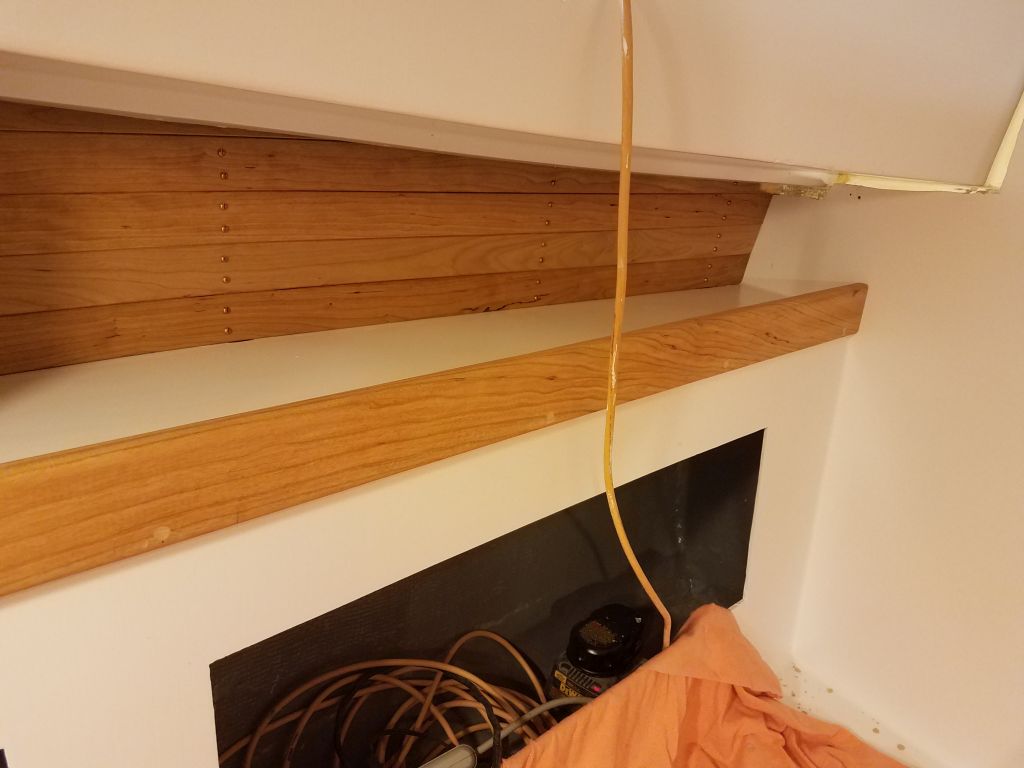
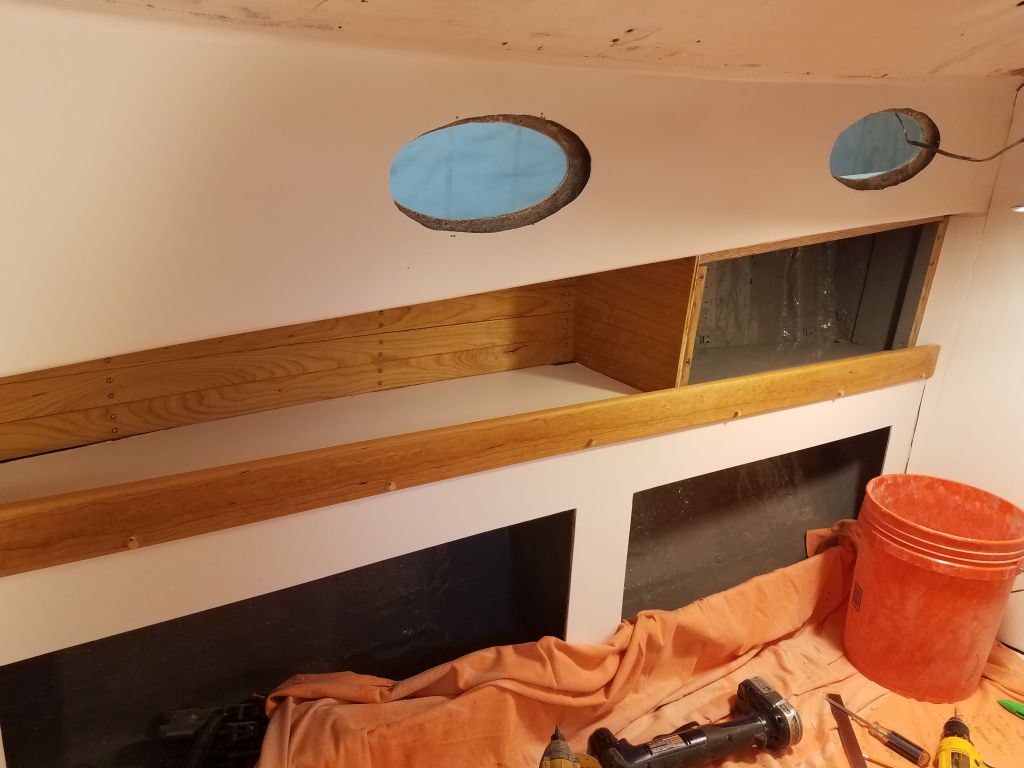
The main event for next time was to be the interior primer, so to prepare for that I cleaned up the cabin, moving all tools and supplies out of the way and thoroughly vacuuming and solvent-washing all surfaces to be primed (which was more or less everything).  There was minimal masking to complete around the new cherry lockers above the settees.

Total time billed on this job today:  8 hours

0600 Weather observation:  -8°, mostly clear.  Forecast for the day:  Mostly sunny, 20°

Scupper 94

Wednesday

After unclamping the laminated electric motor platform, I cleaned up some epoxy squeezeout from the edges, then test-fit the platform in the engine room once more, double-checking it for level and against the alignment marks I’d put on the hull and also in relation to the shaft string, which I set up again for a final check.

I used the platform itself to create a pattern for the fiberglass that I’d use to secure it to the hull, and with that done I coated the bottom side of the platform with epoxy, then installed the platform in a bed of thickened epoxy adhesive along the edges and atop the vertical brace in the bilge beneath.  I installed a lavish fillet along the edges where the platform met the hull, and used excess epoxy to coat the top of the platform and the adjacent hull areas as well, before cutting out four layers of 1708 fiberglass and installing them with epoxy resin.

Next, I lightly sanded the new holding tank shelf in the head, completing work there for the moment.

The epoxy primer in the other parts of the cabin had now cured enough so I could continue lightly sanding those areas as required, then cleaned up the spaces, particularly the forward cabin, where I planned to do some painting later in the day.  I had to depart the shop for a couple hours, but with a little time on hand before then I started some rough layout for the planned battery bank for the electric propulsion system, which would consist of eight six-volt batteries to make up the 48-volt bank required.  In addition, there’d be two separate batteries to make up the 12-volt system for the ship’s basic services (lighting, etc), but that pair didn’t pose any installation issues.

With a series of paper cutouts I made to the overall size of the chosen batteries, I set up and measured a few layout alternatives so I could better measure the spaces in the engine room and, in concert with the owner, determine the desired placement for the batteries, after which I could move forward with constructing whatever was needed for that purpose.

When I returned in the afternoon, I got to work in the forward cabin and painted the chainlocker and insides of the hull on both sides, along with the interior of a small locker at the end of the berth.

I now had all the bronze and other supplies for the four new through hulls required (two cockpit scuppers; galley sink drain; holding tank pumpout), and it seemed a good time to prepare the 3/4″ G-10 backing plates, which I cut out to fit each base.  I’d be continuing this installation in the near future.

To round out the day, I spent a little time on some layout for the forward cabin door trim.  The original doors simply slid in a milled groove in the wood, but I thought I could improve upon that with some UHMW plastic inserts, which would make the operation slipperier.  First, I’d have to mill a large dado to accept the 3/4″ square strips of UHMW, and then mill the door groove in that.  For the long bottom piece, this would require a cut that started well in from the end of the trim, and ended before the other end, since this new trim extended all the way across the bottom of the bulkhead, and this required some additional layout steps that I worked on now, though I chose not to do the millwork this late in the day.

Total time billed on this job today:  6 hours

0600 Weather observation:  0°, clear.  Forecast for the day:  Sunny, 23°

Scupper 93

Tuesday

I began the day by finalizing the details on the two new tanks required (water and waste), i.e. determining the desired locations for the various fittings and then submitting the details and the order to the tank manufacturer.

With that done, I prepared to lightly sand the new “tie coat” primer I’d applied in the cabin, but found that it was not yet ready for sanding:  it clogged up the paper immediately.  So I left that job for another time and decided instead to build the support platform for the holding tank in the head.

Using my plywood mockup, I placed the tank in the desired location outboard of the head and made some marks on the two adjoining bulkheads where the ends of the tank fell, which would give me a starting reference point for the new platform’s location.  From there, I created a cardboard template of the space, first with a rough piece on which I could scribe, then a more accurate template based on the first go-round.  Once I was satisfied with the template, I transferred it to 12mm plywood and cut out the platform itself, leaving 1-1/2″ extra width inboard  of the tank width itself to allow for support cleats and minor adjustments.  This left some open space within the locker that would be required for hose access and the like.

After marking the ends of the platform on the bulkheads (with the platform level in both directions), I removed it and used a hole saw to cut a large hole through the forward bulkhead and into the space beneath the starboard settees, where the overboard pumpout through hull would eventually be located.  To comply with discharge requirements, all waste would be routed into the holding tank first, but from there would be the option of evacuating the tank to a shoreside facility (through a deck fitting) or overboard via a hand pump when the boat was in waters legal for such behavior.

After cleaning up the space, I installed a pair of hardwood cleats for the ends of the platform, securing them to my marks with epoxy and screws, before installing the platform on the cleats and against the hull with more epoxy, and a pair of screws into the cleats just to hold it.  I coated both sides and all edges of the platform with epoxy before installation, and smoothed in a nice fillet along the hull and at any gaps at the ends.

To complete the installation, I installed two layers of heavy fiberglass over the platform and up on to the hull.

Now that I was on a roll, and anxious to finish up structural and epoxy work in the boat’s various compartments, I decided to work next on the new support platform for the boat’s electric propulsion motor (and please forgive me if by habit I lapse into calling anything here an “engine”).  With the basics of the system chosen by the owner now determined, I was ready to figure out the motor placement and also where the large battery bank would be stored.

To begin, I set up a string through the shaft log so I could determine the shaft position and angle, which, as always, was the key reference point for such an installation.

A great benefit to electric propulsion motors from my standpoint is that, because the motor is compact and lacks all the protrusions and low-hanging  transmissions and oil pans found in diesel engines, it can be mounted on a simple flat platform, and in this particular boat such a basic platform worked well with the given space in the engine room.  Using the reference drawing of the chosen electric motor, and the measurements contained therein, I chose as a starting point 5″ below the shaft centerline, which was well within the requirements of the motor installation itself and would also give ample room for minor adjustments in height later.  If, during final installation, I found it beneficial for whatever reason to add height to the platform, it would be straightforward to do easily and accurately, but the mounting system with this motor provided substantial adjustment capability for myriad situations.

To transfer a starting baseline down from the shaft centerline, I cut a pair of plywood  pieces to 5″ in height, and wide enough (and with sharp angled ends) to extend from hull to hull in a couple different positions along the shaft line.  With the angled ends resting on the hull, I could level the plywood and then use a small straightedge held tight to the bottom edge to transfer a mark to the hull at the new, lower height.  I drew a line between the two points on each side with a flexible metal ruler.  Positionwise, I planned to begin the platform just at the forward edge of the old scupper locations (which would soon have new seacocks installed), and extending 18″ forward from there, which happened to be the overall length of the electric motor and housing, but mainly this platform size would give me final mounting options later, as the full length wasn’t required for the mounts themselves.

The line ran into the V-shaped small bulkhead that was leftover from the original engine installation, so as best as I could I transferred the new line around the support and cut off the top with a saw, which I found to be difficult in the small space, leading to bent blades and, on the starboard side, an inaccurate cut–but for the moment it was good enough.  Now I could continue the line forward as far as needed, after which I measured for and cut a basic plywood template to fit.

My first cut on the old support had allowed the cardboard to pass by, but I wanted the final platform to rest just on top of and wrap around the existing support so as to incorporate it into the new structure.  I planned to build the platform from a laminate of 2 thicknesses of 12mm plywood, so I made new marks on the top of the support using a scrap of the plywood as a guide, then cut to the new marks with a grinder and cutoff wheel, which was accurate in the confining space  but created lots of wood smoke from the support’s plywood core.

Now I transferred the template shape to one sheet of 12mm plywood, and after some minor adjustments fit the piece in place, level from side to side, in the proper longitudinal position, and 5″ below the shaft centerline.

My last task before knocking off for the day was to use the first piece of plywood to transfer the shape to a second layer, which I glued to the first layer with epoxy adhesive after cutting out little notches in the bottom layer to fit around the engine room bilge support.  I used temporary screws to clamp the two pieces together while the epoxy cured overnight.

Total time billed on this job today:  8.25 hours

0600 Weather observation:  8°, clear.  Forecast for the day:  Sunny, 24°

Scupper 92

Monday

Preparing ahead to be sure we were on the right track in the head, I printed out a full-size template of the owner’s chosen unit, the Marine Elegance, so I could test its fit in the head compartment.  I used the included measurements to check the accuracy of the size of the printout and then cut out the template, which I then test-fit in various positions on the platform in the head compartment.  The cutout, which represented the overall size of the bowl and base together, seemed to fit well in any of the possible positions, and with room for adjustment in the final position, so with that step out of the way we could continue planning accordingly.  Actual installation would be some time in the future.

Much of my work in the cabin during this week would focus on various chores required before I could begin the primer on all the paneling and fiberglass surfaces, and this meant taking care of numerous smaller tasks throughout the spaces with this overall goal in mind.

In the forward cabin, I lightly sanded the new fiberglass over the ceiling support cleats at the aft end of the space, completing the basic work there.

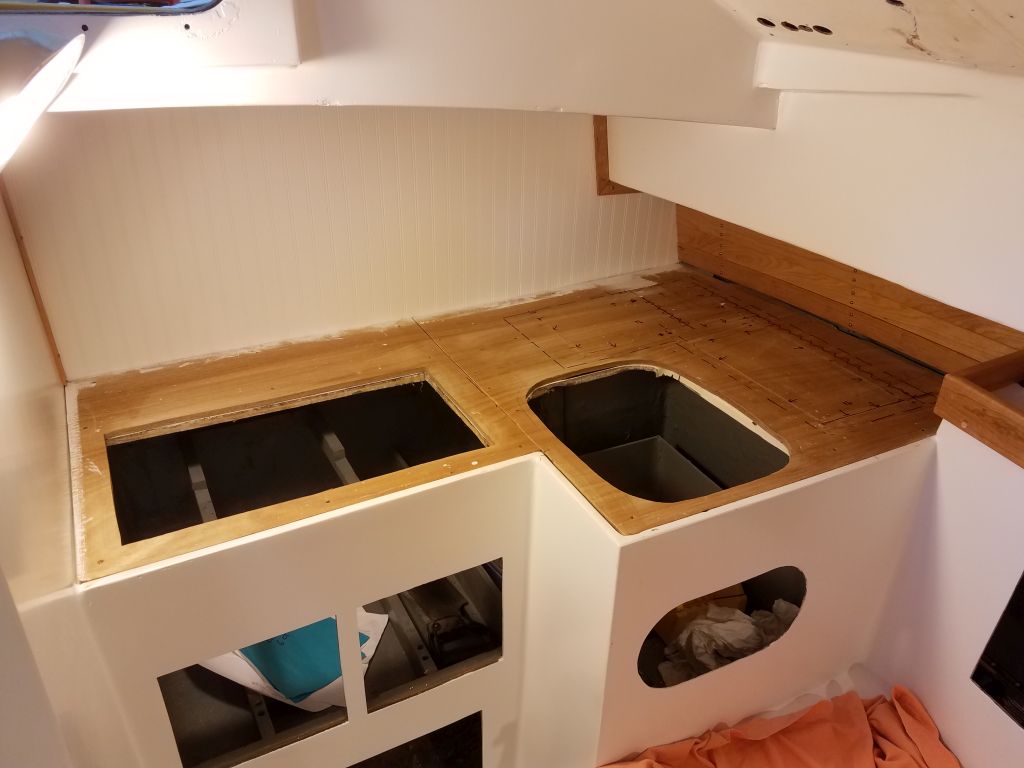
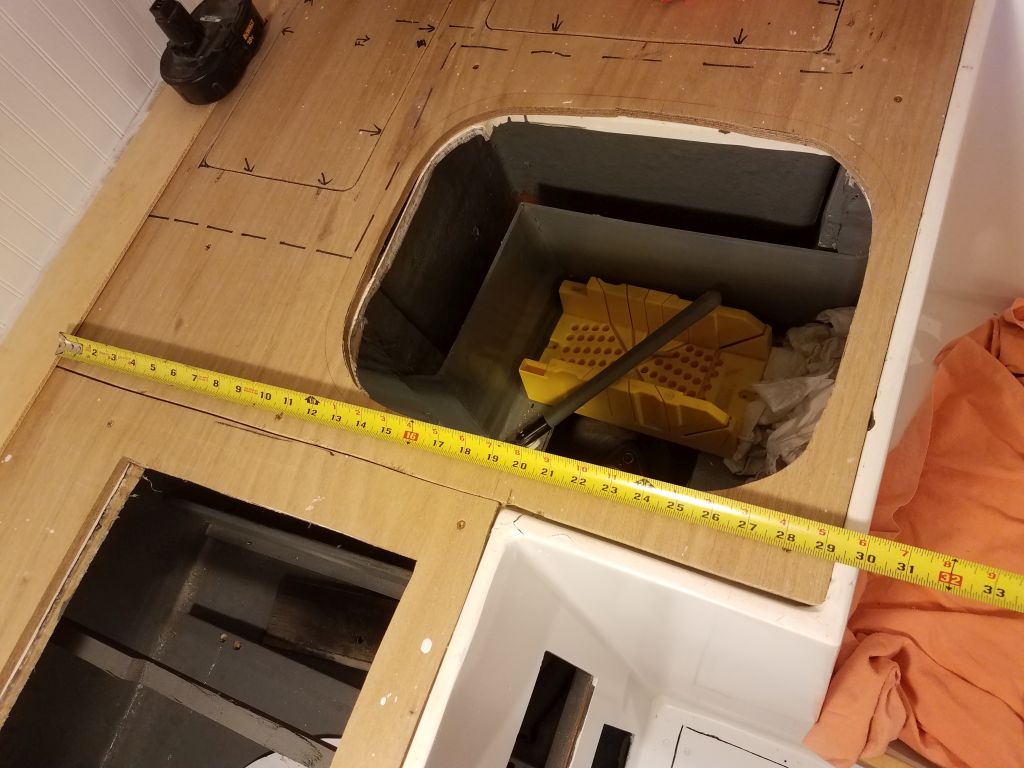
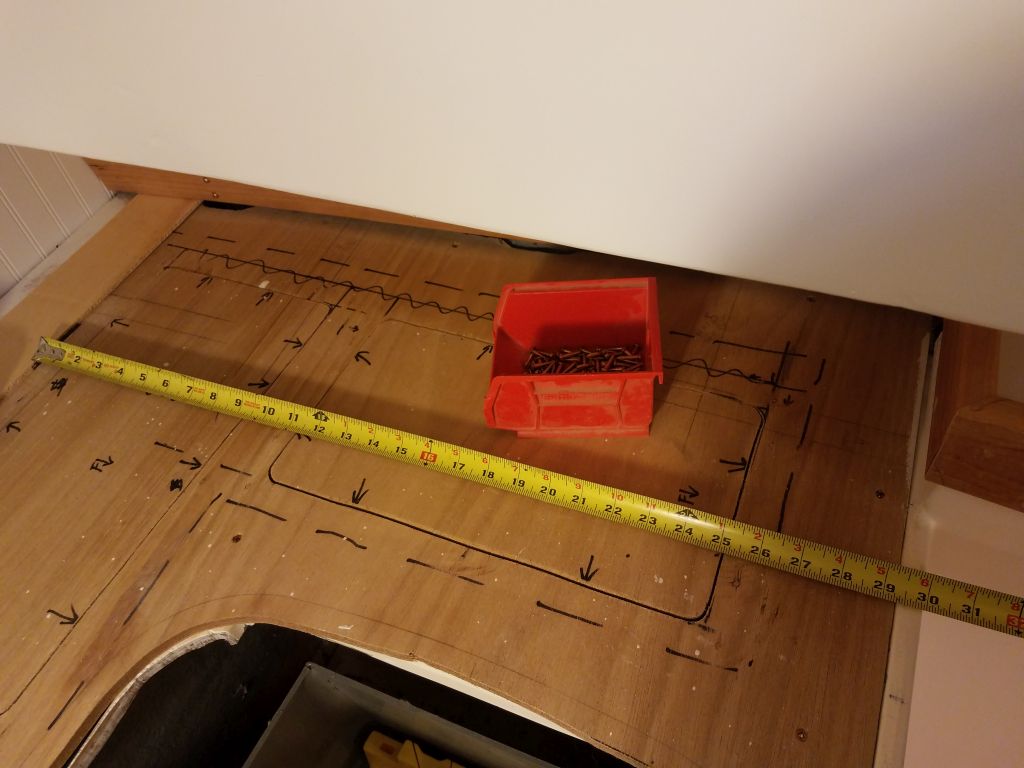
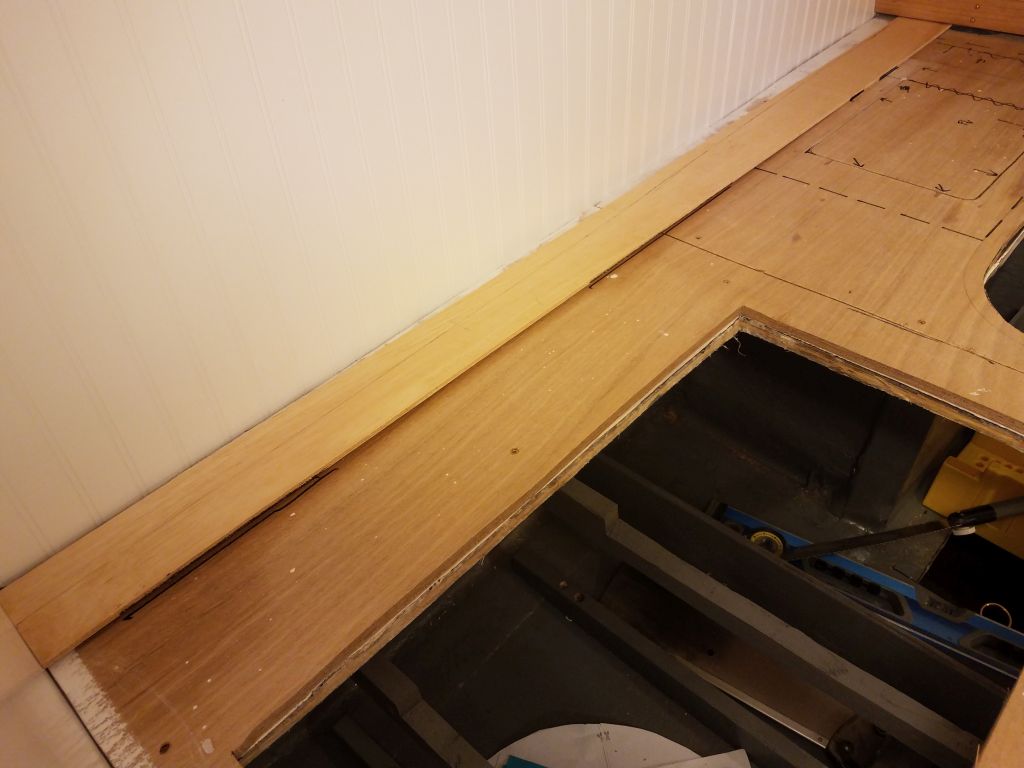
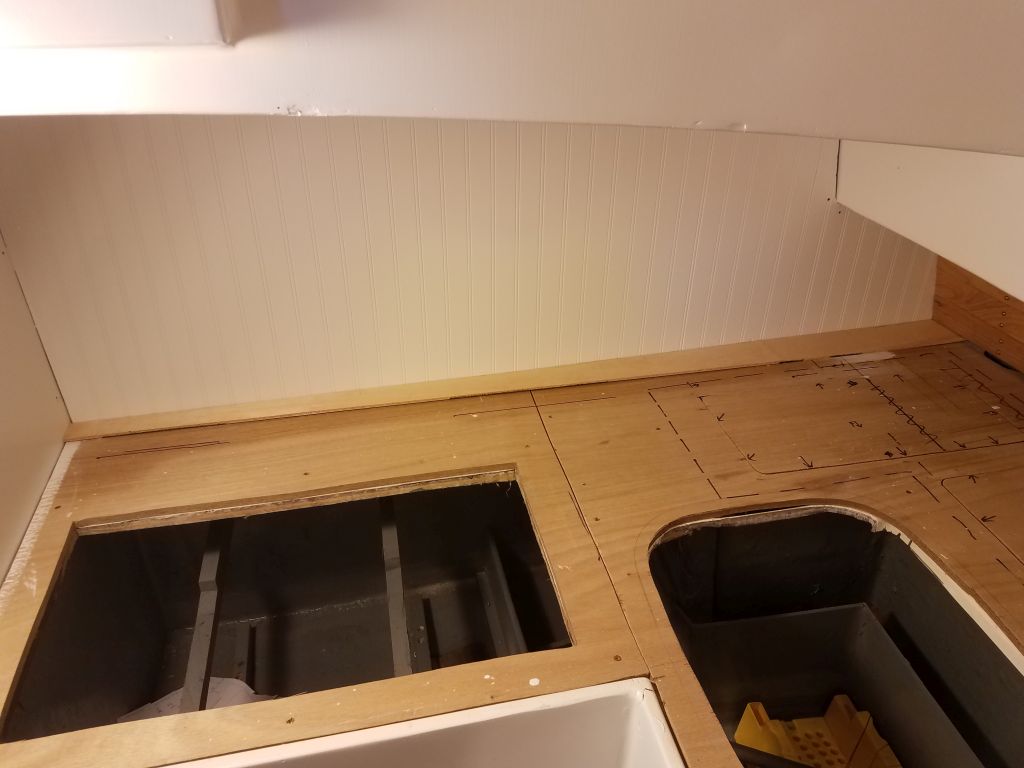
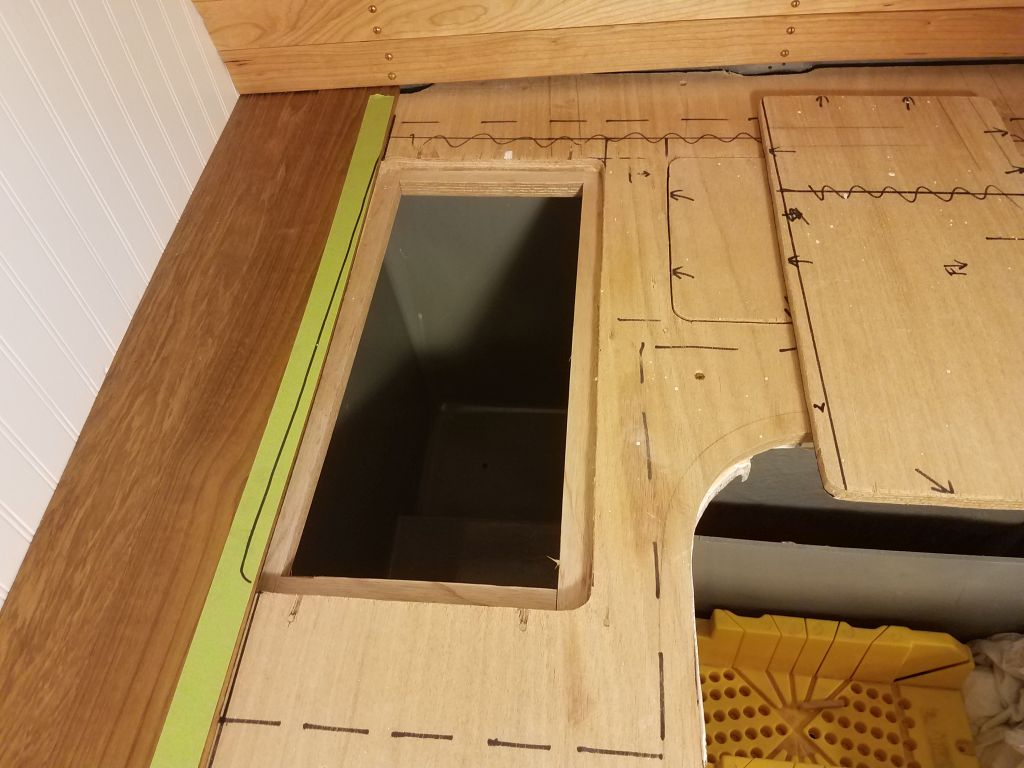
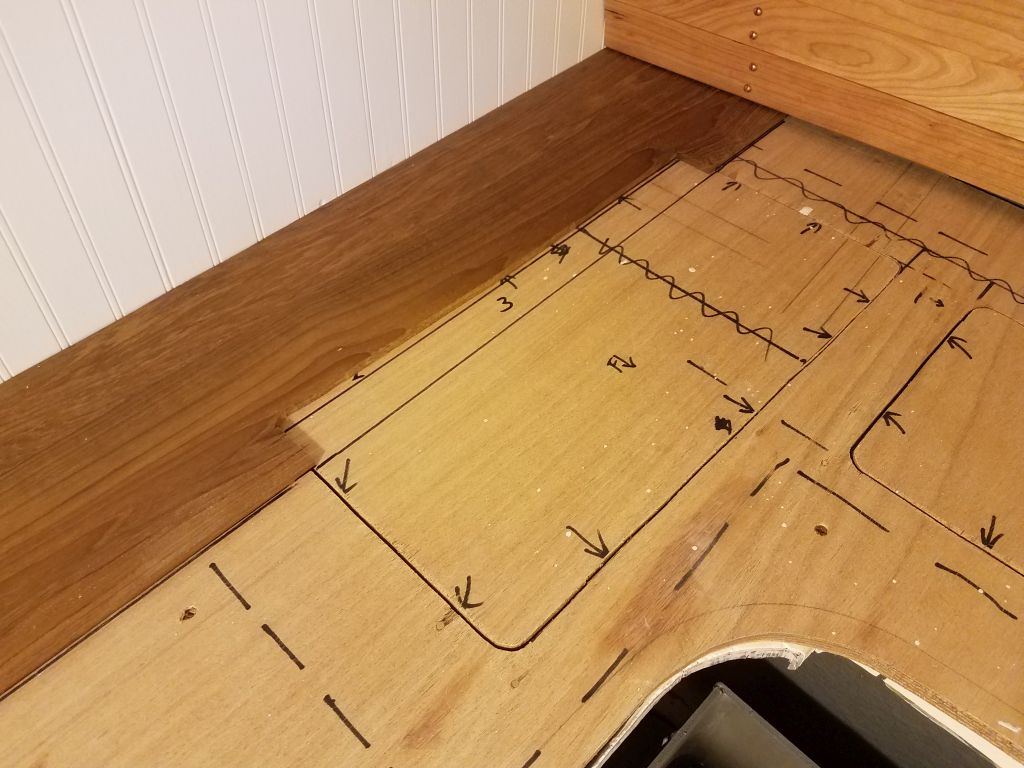
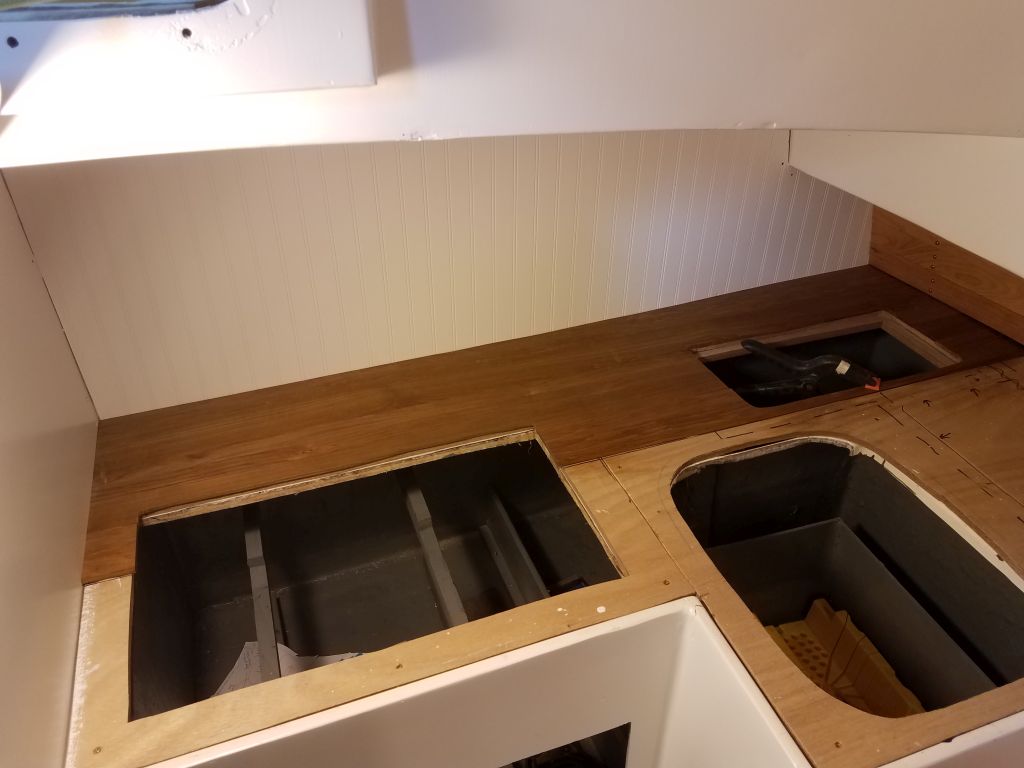
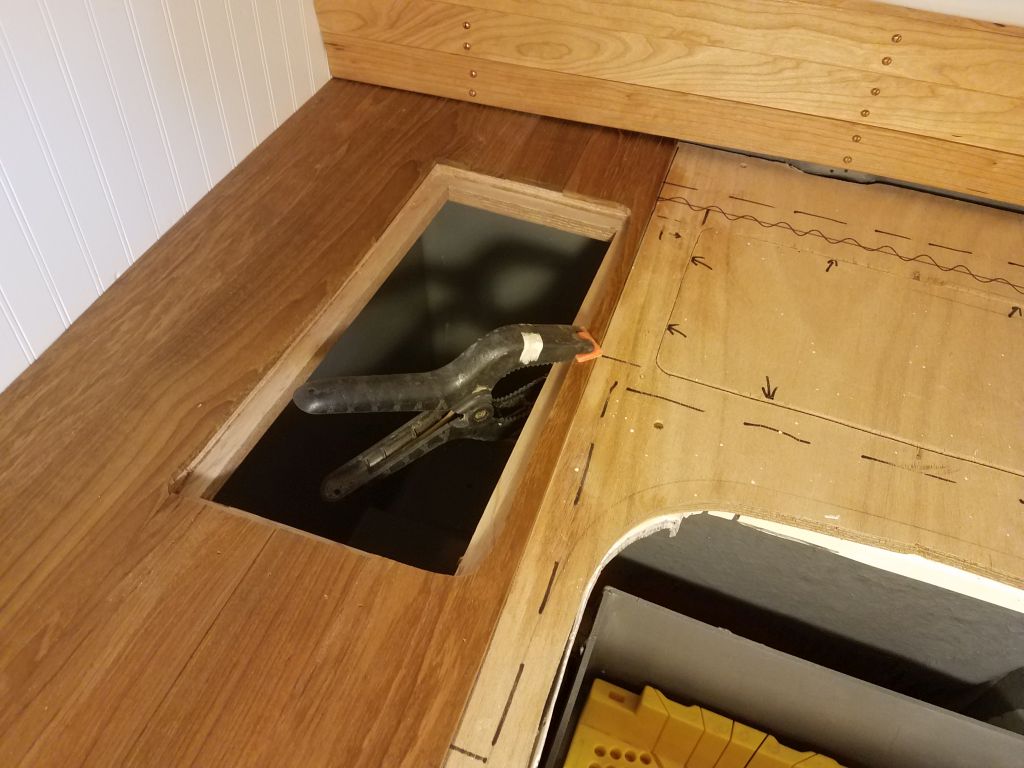
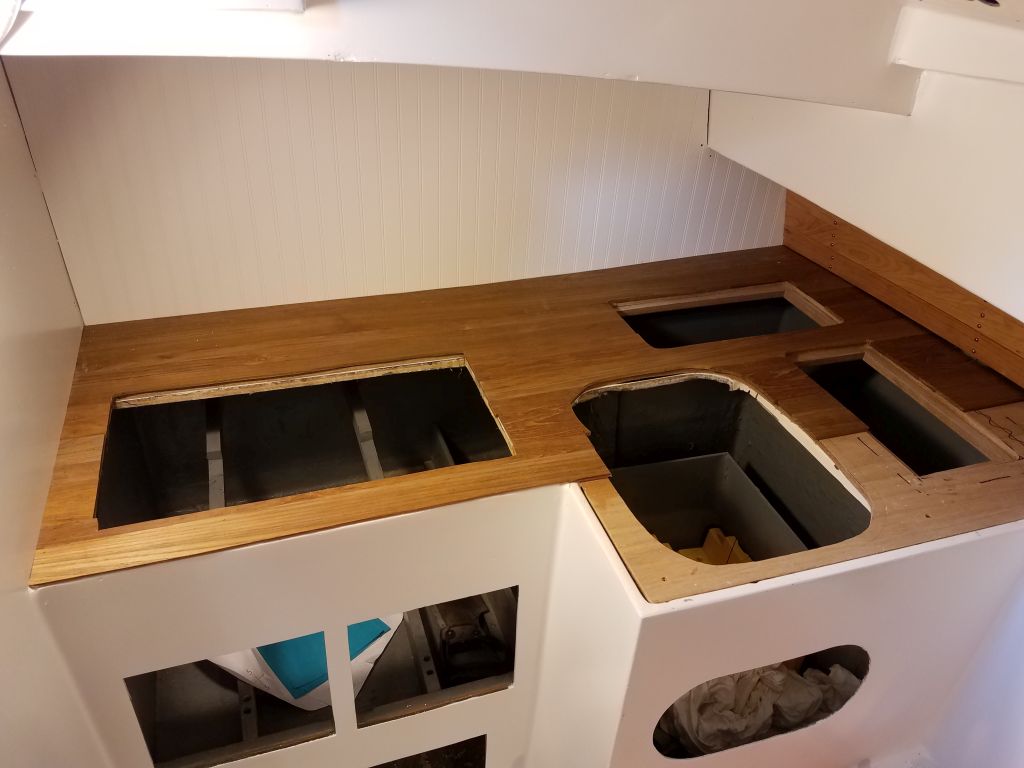
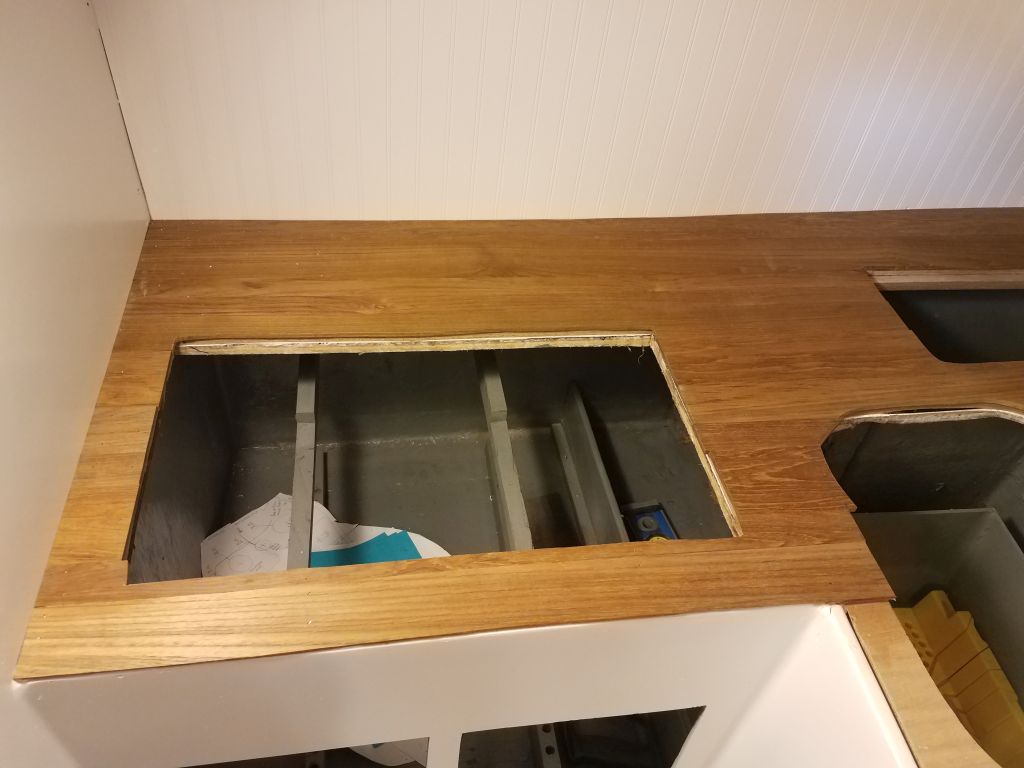
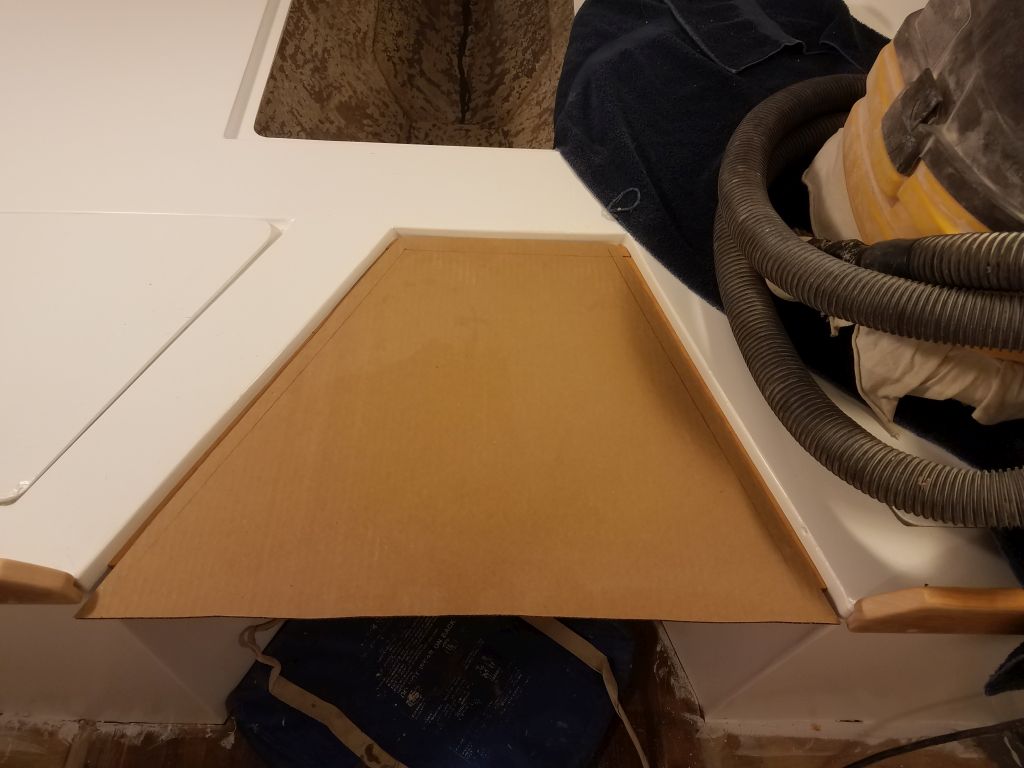
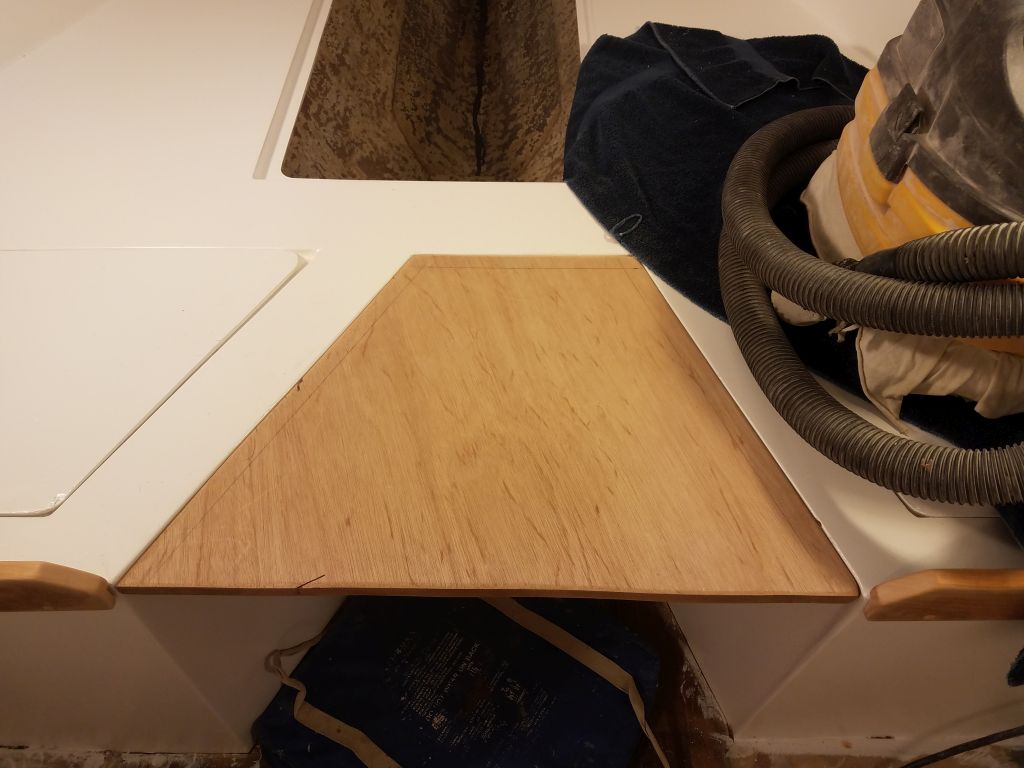
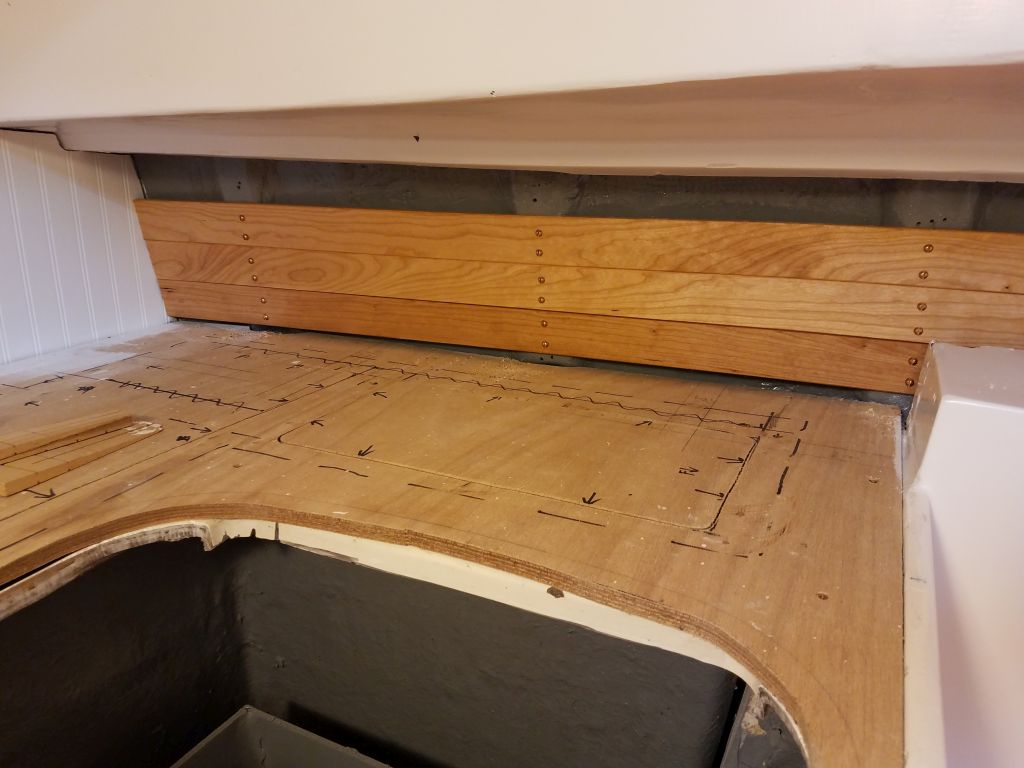
Next, I turned to the galley countertop.  Using marks I’d made on the bottom of the substrate earlier, I cut out the opening for the stovetop and then, with nothing else standing in the way of final installation, secured the plywood substrate to the fiberglass galley with polyurethane adhesive and screws.  The finished countertop surface would come a bit later.

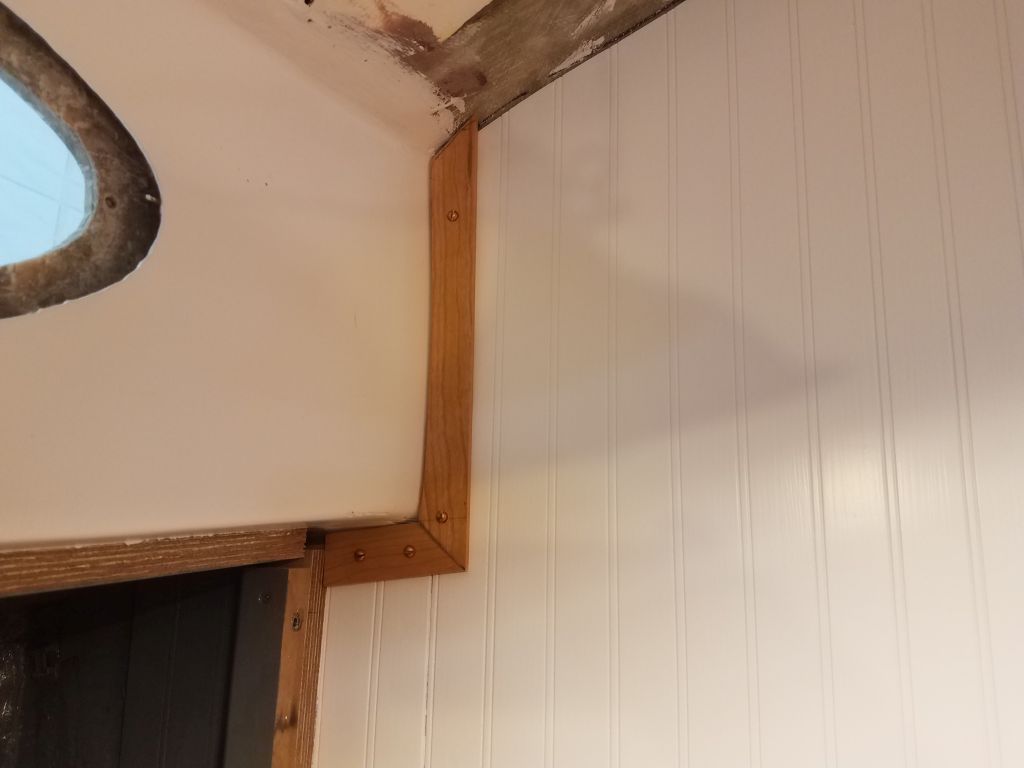
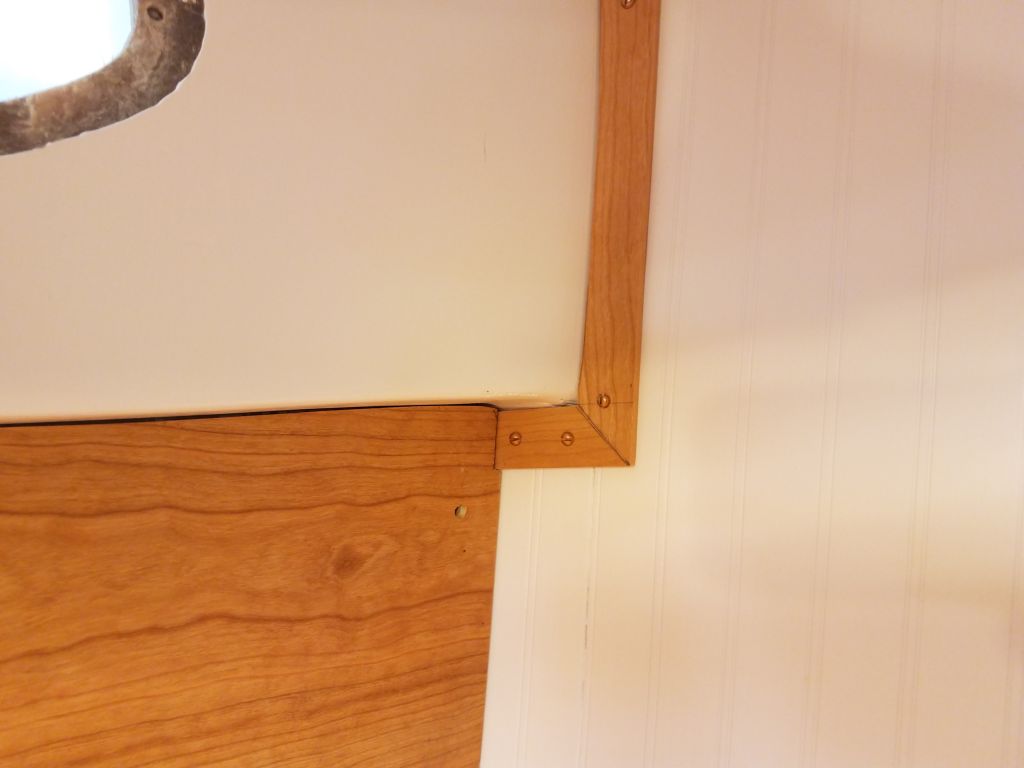
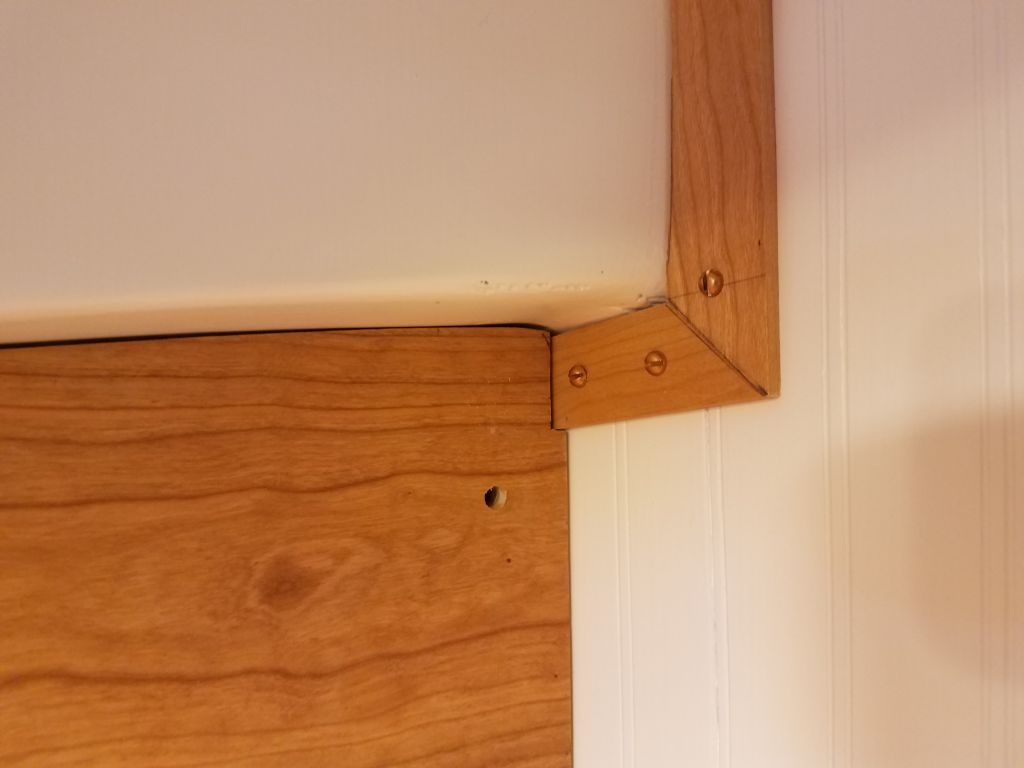
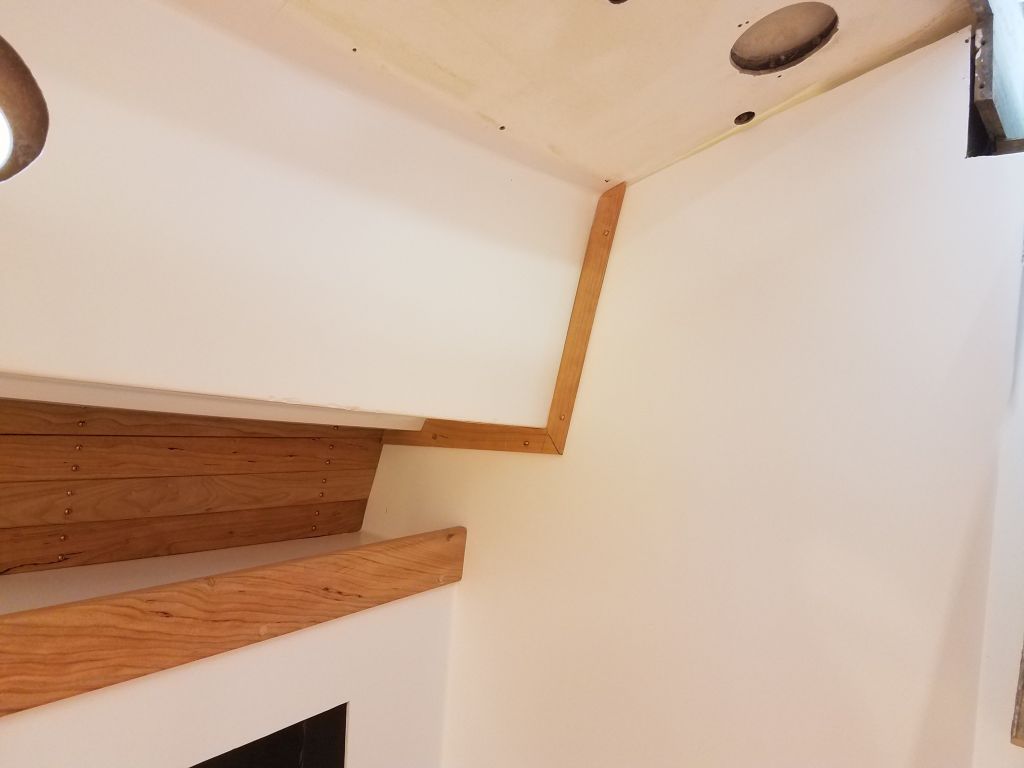
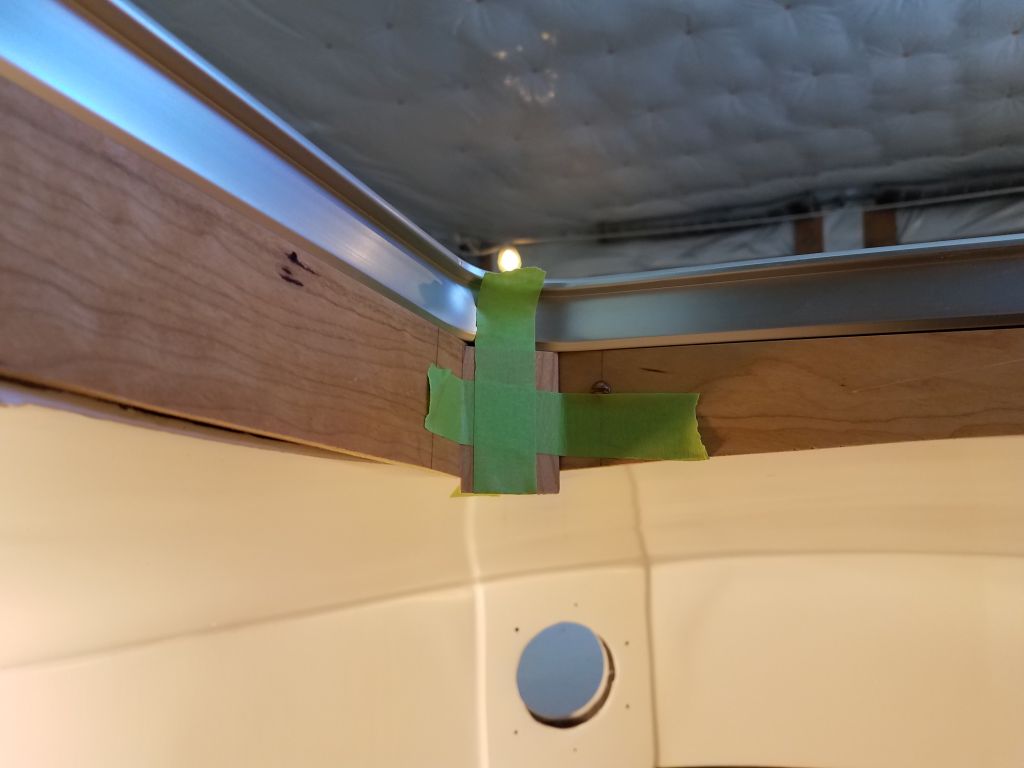
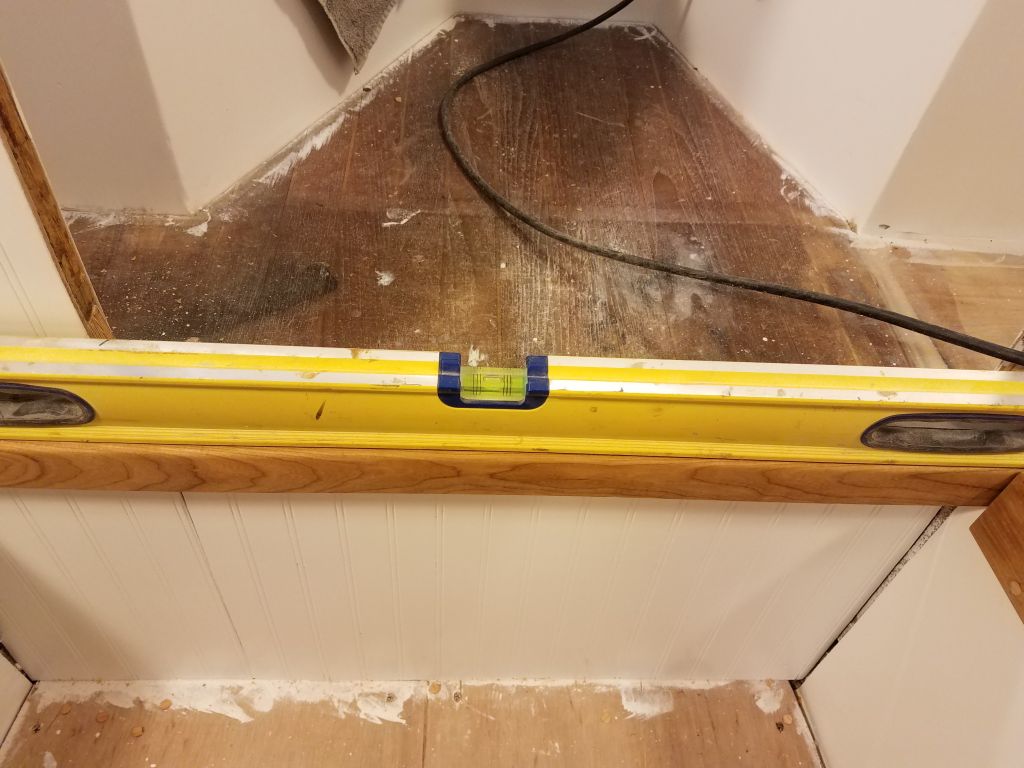
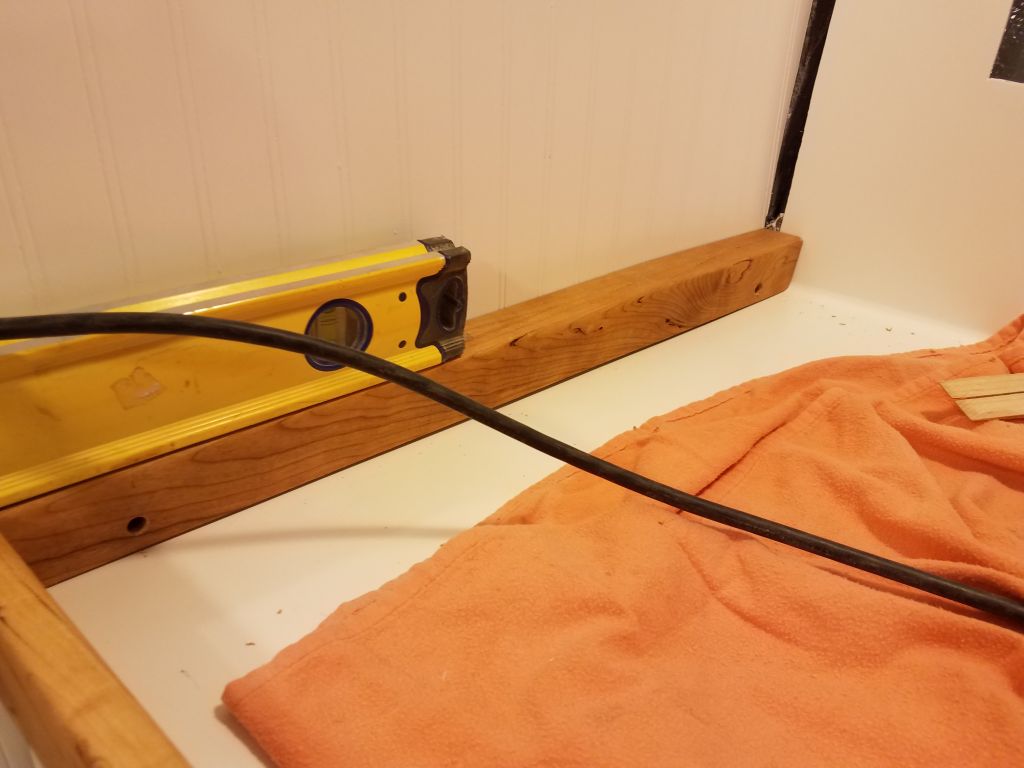
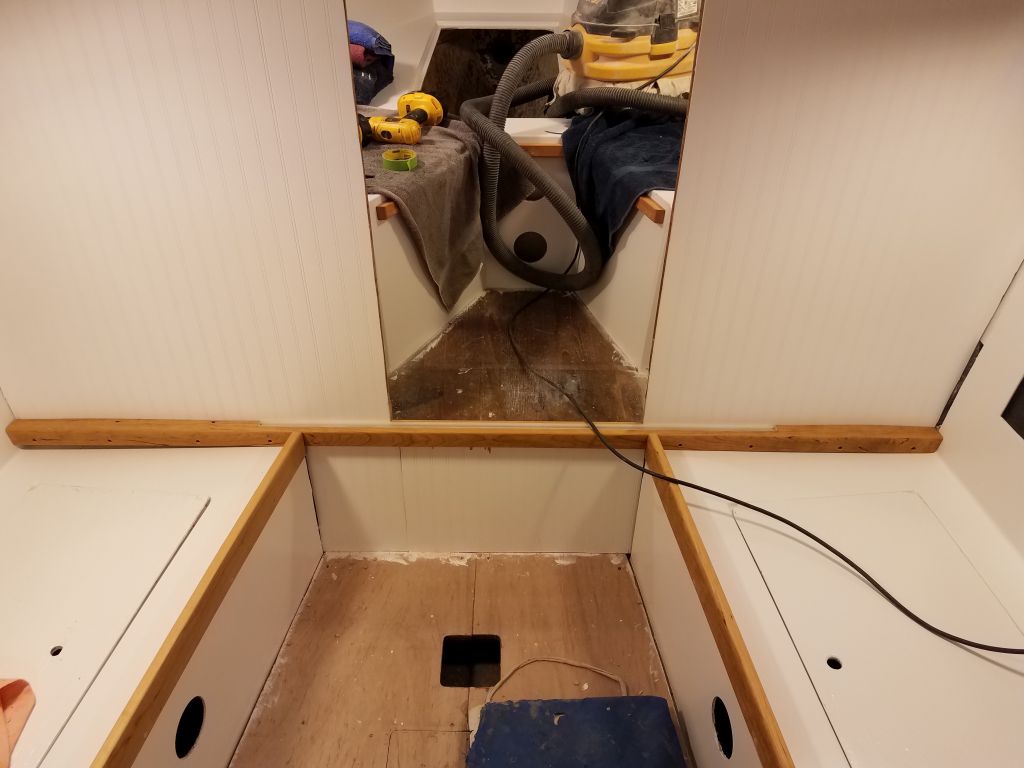
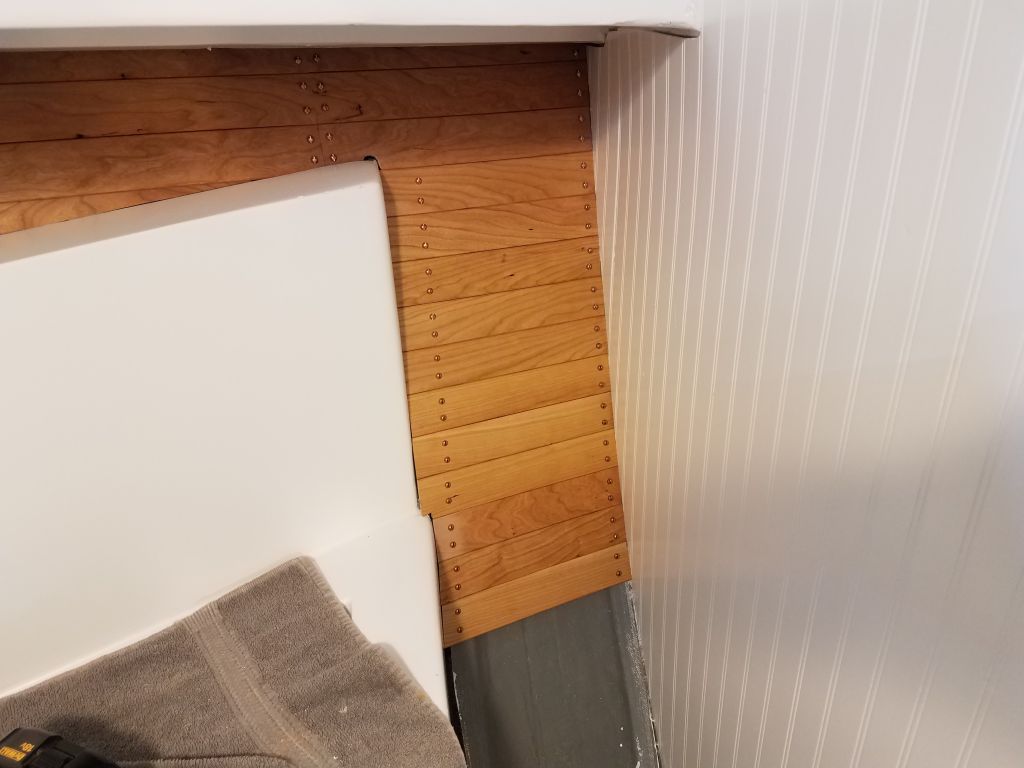
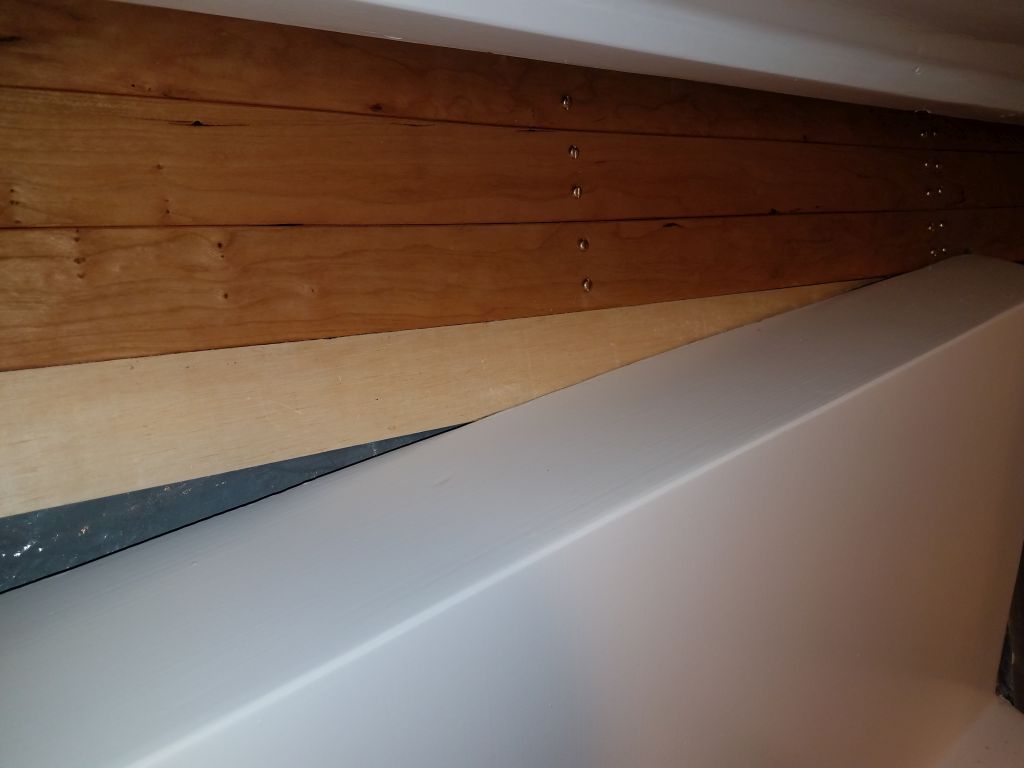
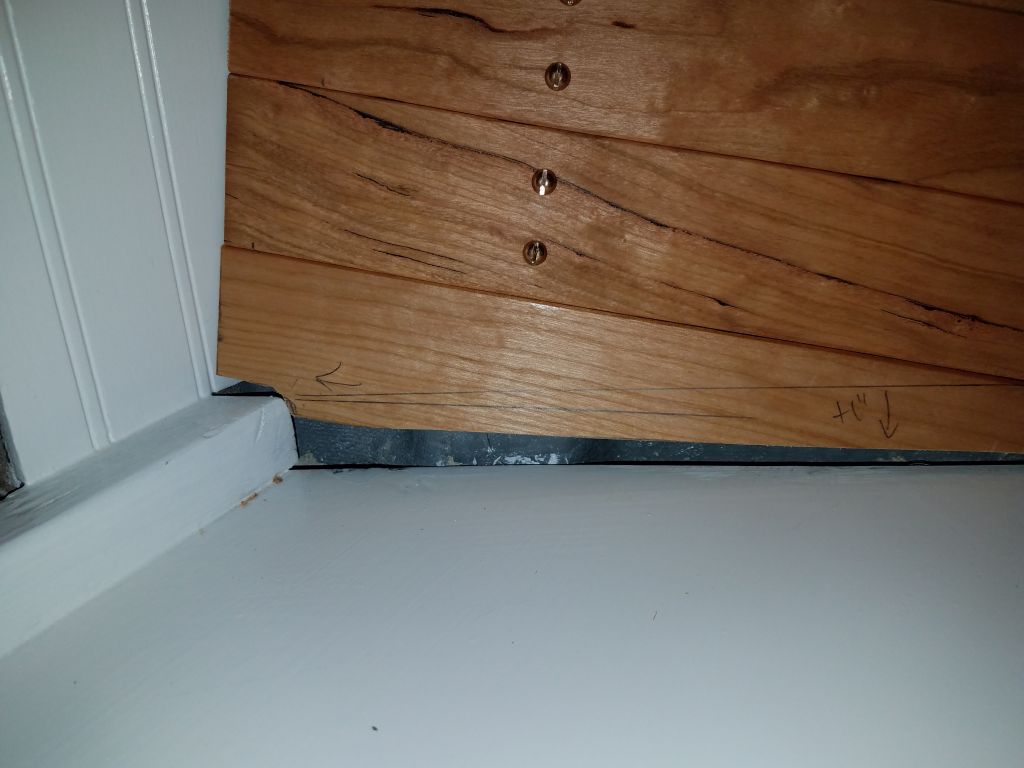
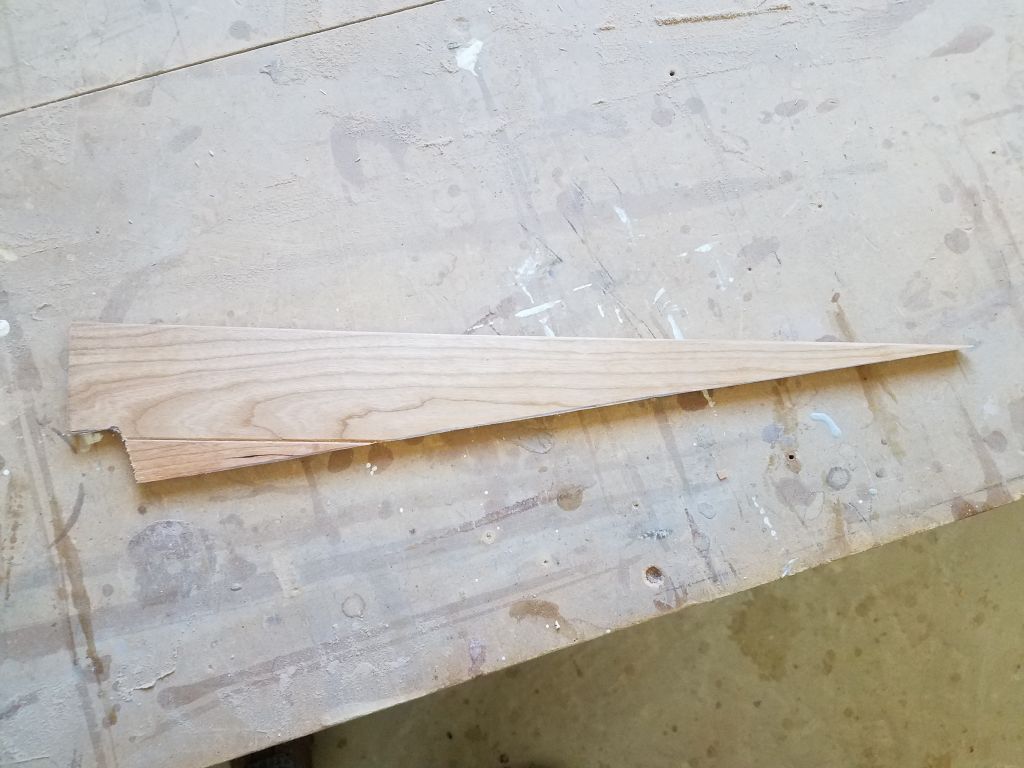
At the main bulkhead, relating to the new sliding door trim, I made various measurements and recorded some compound angles for the ends, then transferred these to the ends of the trim blank I’d made earlier till I could fit the piece in position.  The bulkhead itself had some curvature at its lower edge, which I’d known in advance and planned for in making the blank so I could scribe it to the actual shape.

After scribing the bulkhead to the new trim, I cut the trim as needed and eventually achieved a decent fit in all areas as required.  There’d be some additional milling work on the trim to prepare the grooves for the doors, which groove I planned to line with slippery plastic for better operation, but that would come in just a bit once the new materials I required arrived.

I also worked briefly on the companionway ladder.  Using the old one as a general guide, I prepared a piece of new 12mm plywood for the backing for a new replacement ladder (and head doorway).  I chose to do this now because I needed some of the plywood for other uses soon, but first wanted to set aside the large piece required for the ladderway.  I’d continue working on the ladder later, but for now I set it and its new plywood backing aside.

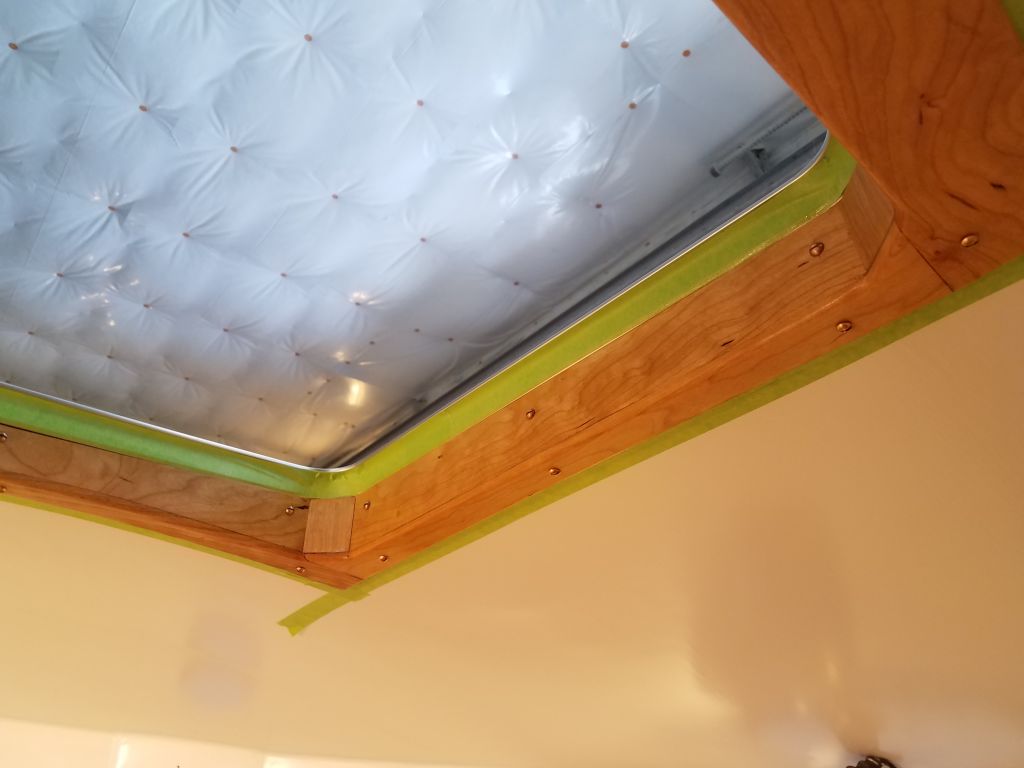
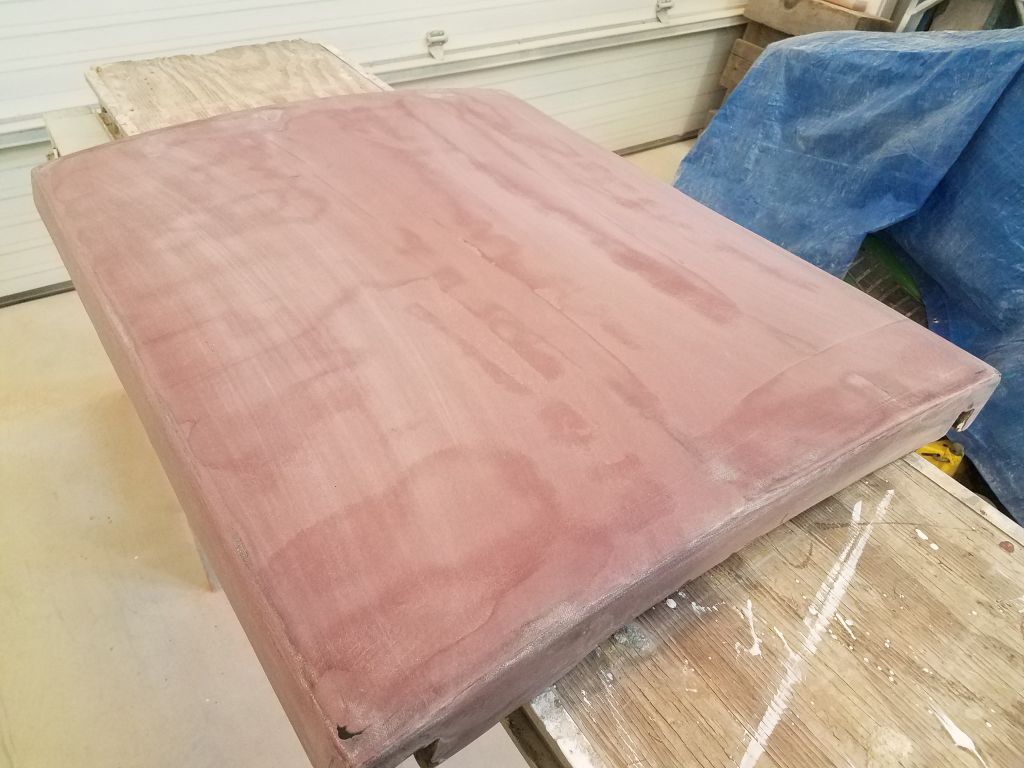
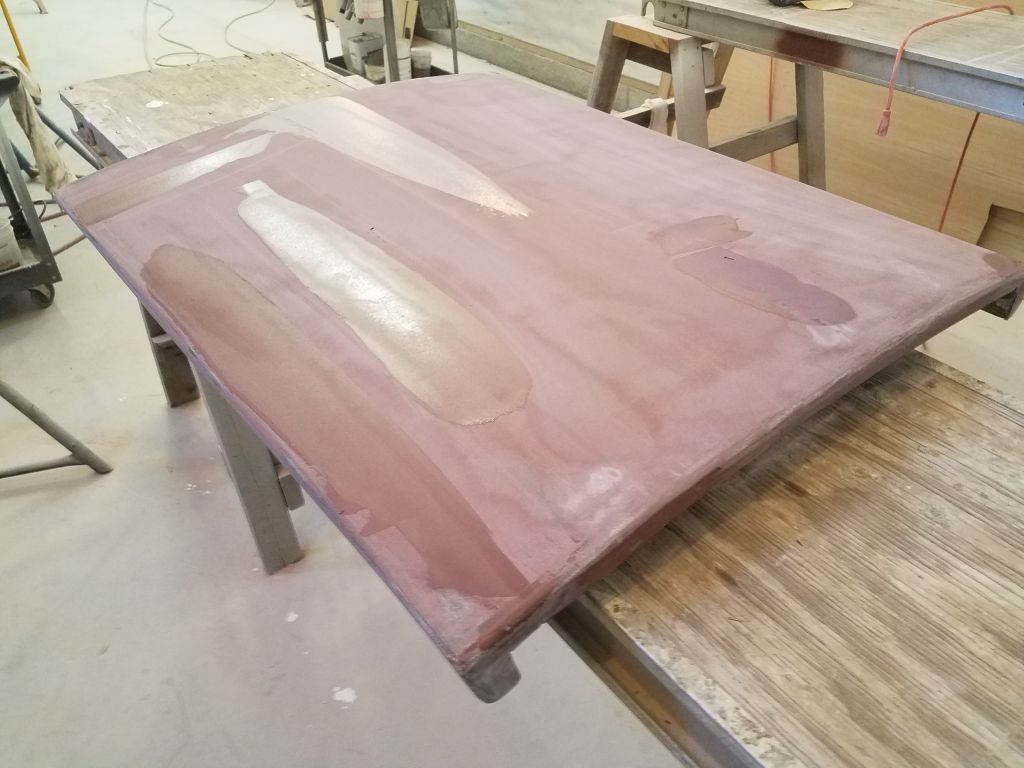
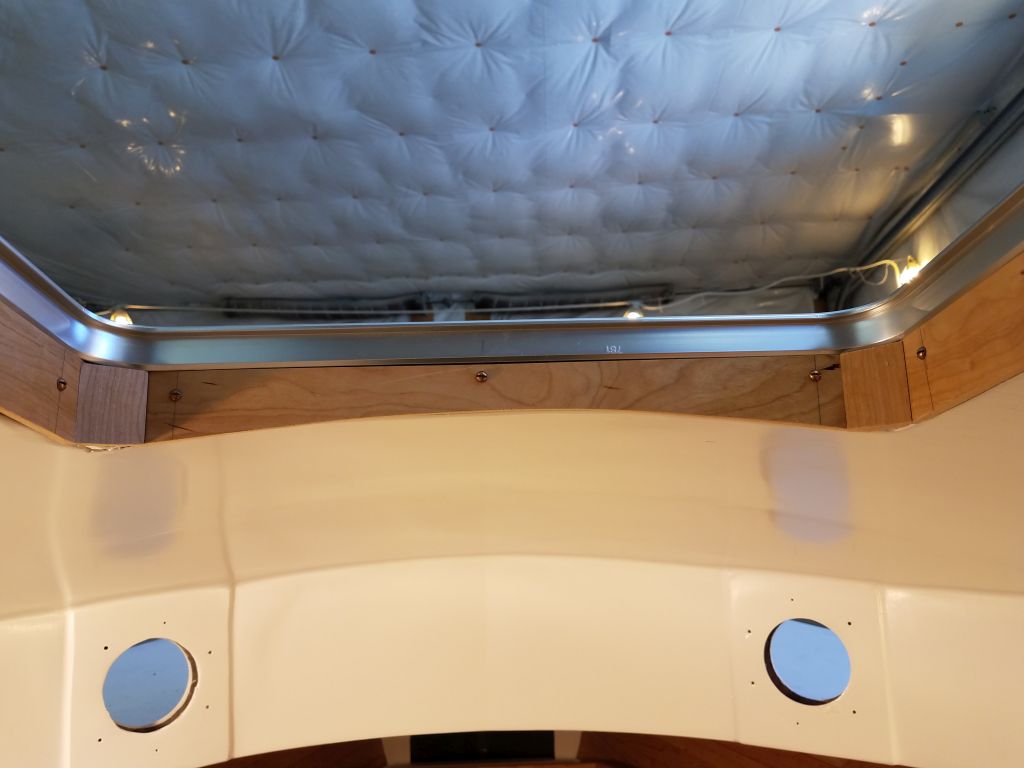
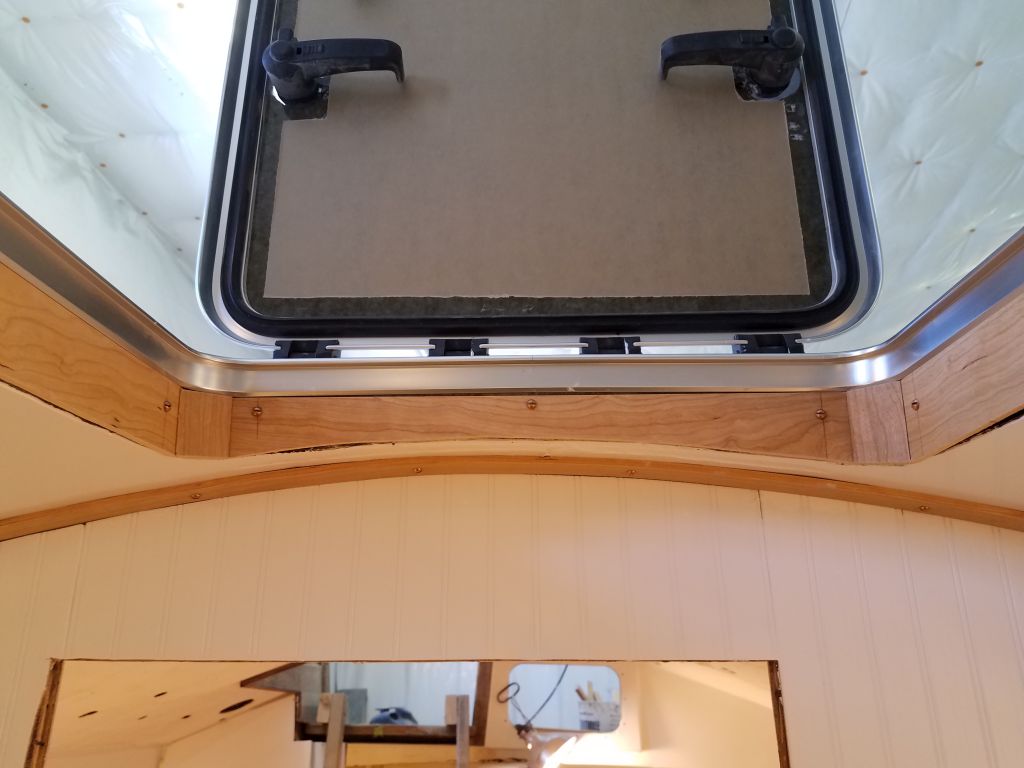
There were many directions I could go and projects I could do, but as I was having a little trouble focusing while I impatiently waited for the snow to end so I could head out and clean up from the storm, I spent a little time beginning the layout for the main cabin overhead, which required a cosmetic veneer of painted plywood to hide the existing fiberglass liner, which was riddled with holes and poor repair work.  I laid out a longitudinal centerline, along with a known seam location corresponding with the companionway opening, then began to work out other seam and trim locations that in the end would make the overhead look good.  More to come on this project soon.

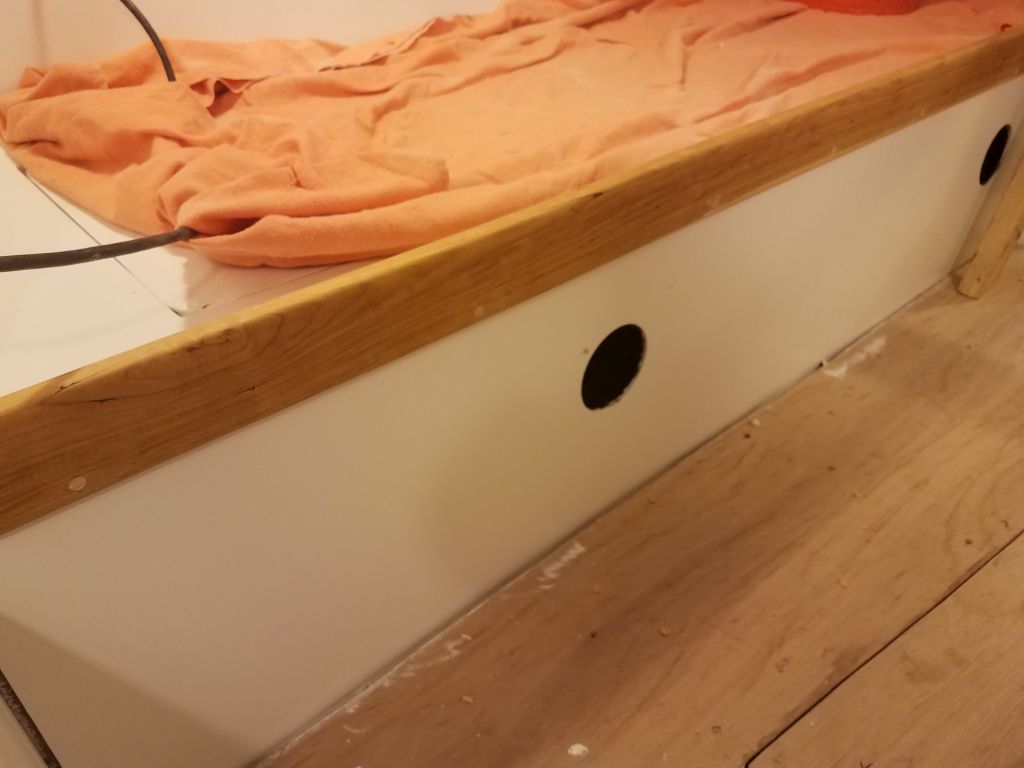
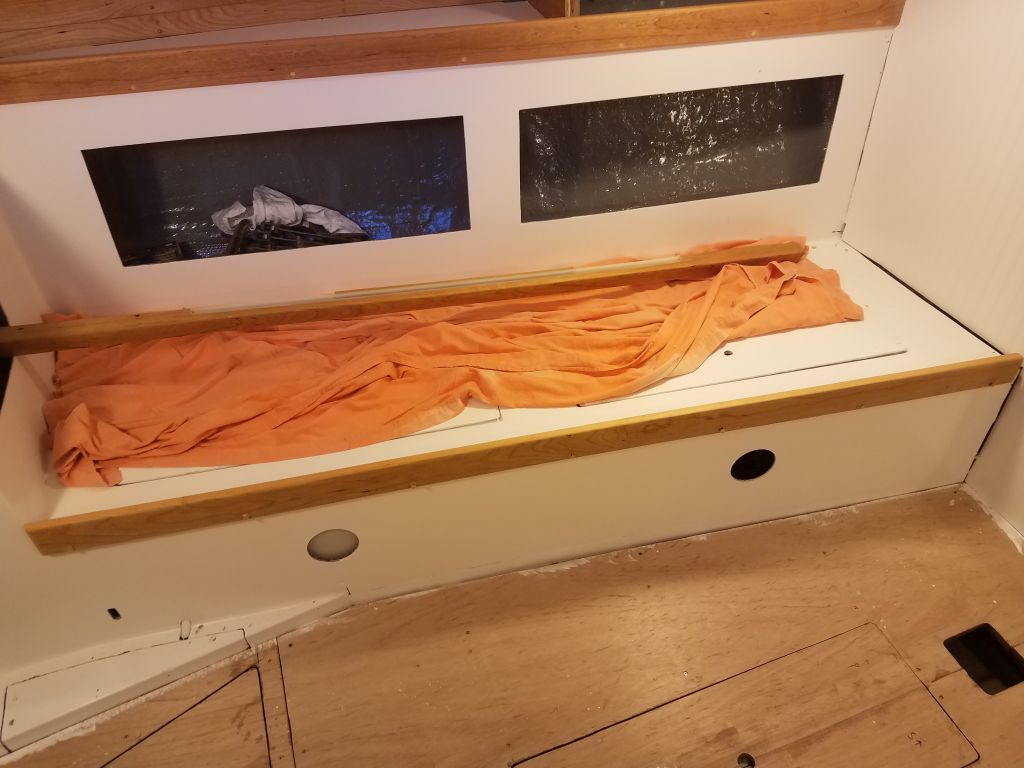
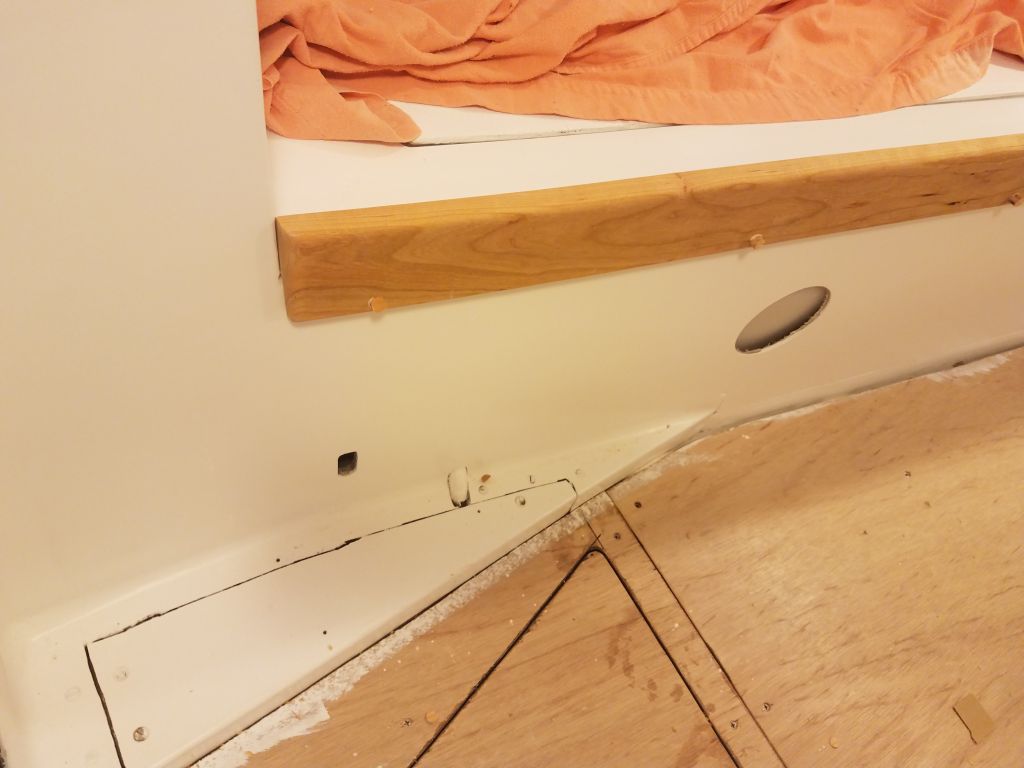
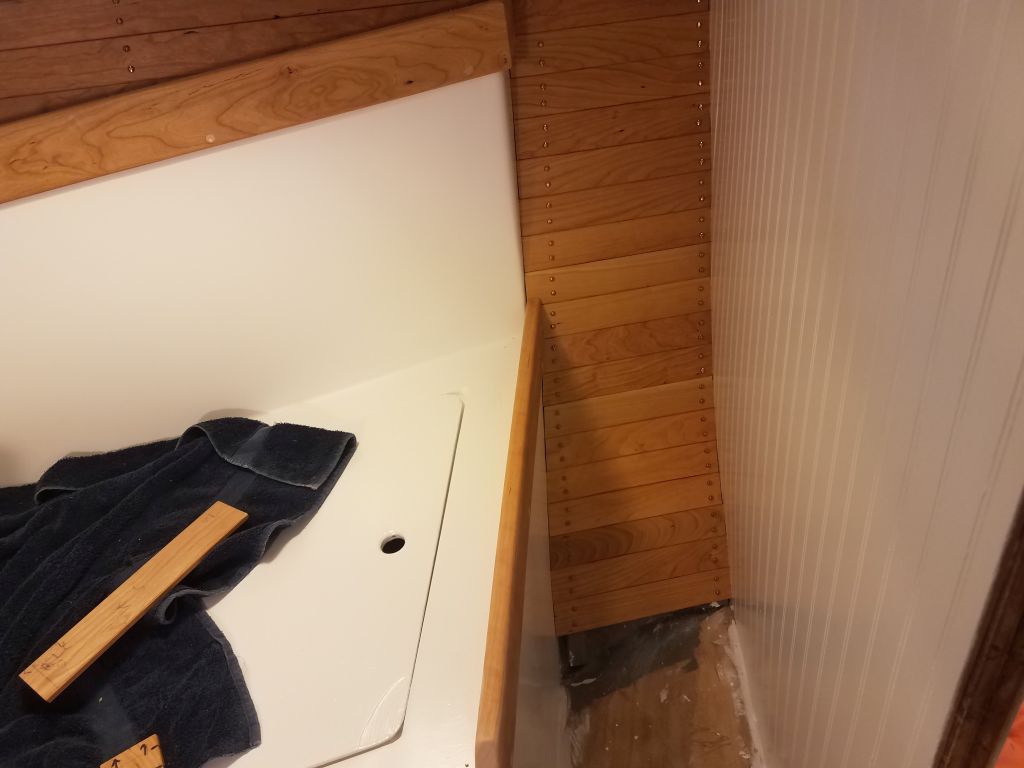
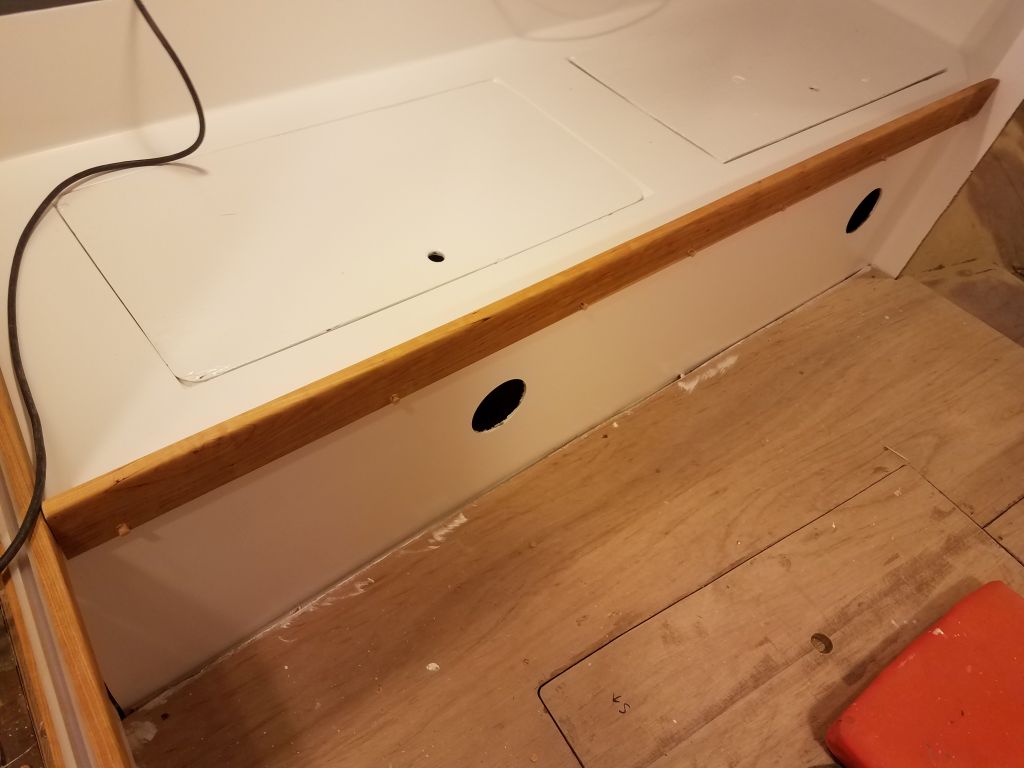
With snow over with and cleanup outside complete, I returned to the shop in mid-afternoon, with an hour or so to kill before I could start the epoxy pre-primer work on the new fiberglass in the forward cabin and elsewhere (I left this till the end of the day because of the strong paint fumes), so I decided to cut holes in the settees and v-berth for some little vents that I’d bought to satisfy the owner’s request for natural ventilation through all the lockers.  I chose round louvered vents made from cherry to match the rest of the cabin trim, and now armed with an appropriate hole saw, I laid out for and drilled six holes (two in each main cabin settee, and two in the v-berth) for the 4-1/2″ round vents.  I’d pre-finish the vents and install them permanently later, once the cabin paintwork was complete.

After final preparations, I went through the forward and main cabins and applied a coat of epoxy-based primer to all the recent glasswork and fairing compound, including the new chainlocker floor, bulkhead tabbing, v-berth ceiling cleats, and other areas throughout.  This primer coat was required  in order to allow one-part paints to cure over the fresher epoxy (some of the work was old enough that it wouldn’t likely be a problem, but I pre-primed it regardless).

With just a bit of time left in the day, I worked in the woodshop to select several cherry boards that I’d soon begin milling into the various fiddles and other trim for the cabin.

Total time billed on this job today:  7.75 hours

0600 Weather Observation:  30°, snow, an inch or two down.  Forecast for the day:  Snow, 4-8″ total, then clearing.

Scupper 91

Friday

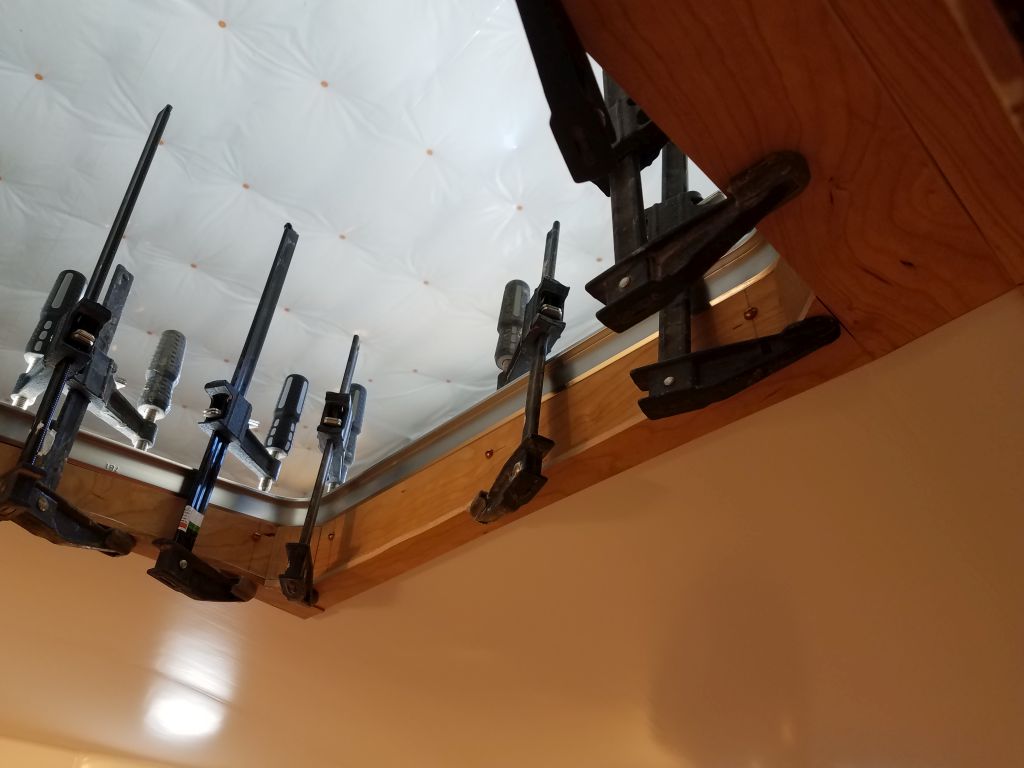
After removing the braces and temporary glue blocks from around the cleats in the forward cabin, I touched up all areas with a sander to slightly ease the edge of the wooden cleat and prepare the now-cured epoxy fillets for additional work.  Then, after appropriate cleanup, I filled in the gaps in the fillets in those areas where it was necessary (where I’d worked around the glue blocks earlier).

Meanwhile, I prepared tabbing to lay over the cleats and fillets, and once I’d cut the pieces I wet them out and installed them on both sides.

In the main cabin and galley, I focused my efforts on final preparations for painting out the inside of the hull and some of the lockers.  I chiseled away the excess bungs from the cherry panels at the aft ends of the new lockers, and sanded the plywood smooth before vacuuming and solvent-washing all areas to be painted.  I moved most of my tools and other supplies into the forward cabin for now.

Preparing ahead for the eventual electrical wire runs to the new cabinets above the settees, I installed glued-on wire tie mounts throughout the lockers and wherever I thought they might be needed or handy later; since these mounts don’t stick to paint, I had to do it now.

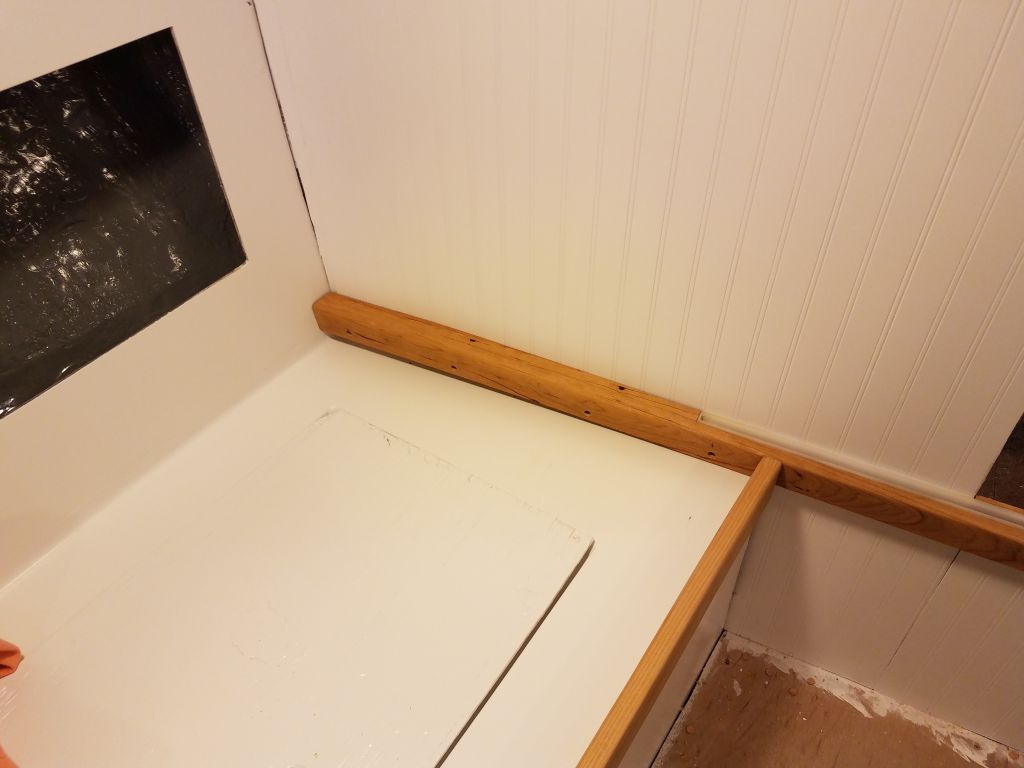
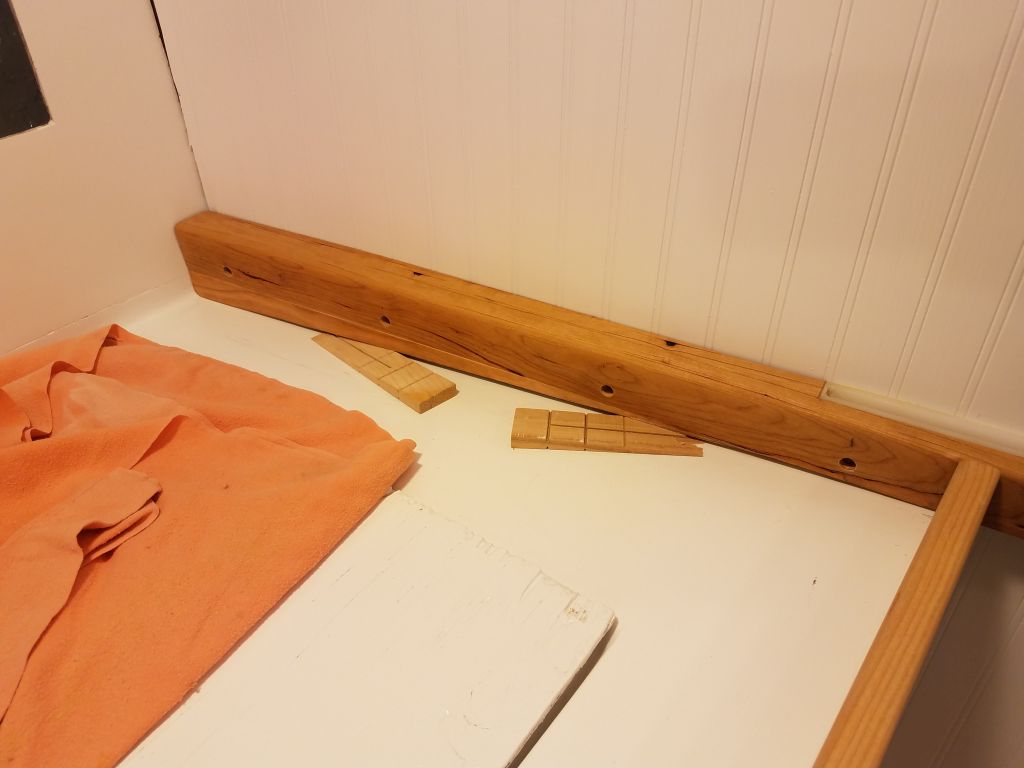
One of my favorite steps in any large project like this is when it comes time to start painting the raw, sanded hull and lockers with bilge paint–often one of the first true finishing steps that signals the beginning of a new direction.  Now, I painted the exposed areas of the inside of the hull in the main cabin, along with the insides of the new electrical lockers I’d built, plus the upper cabinets behind the settee backs.  I also painted out the upper areas of the galley cabinets, including the drawer area and sink cabinet.

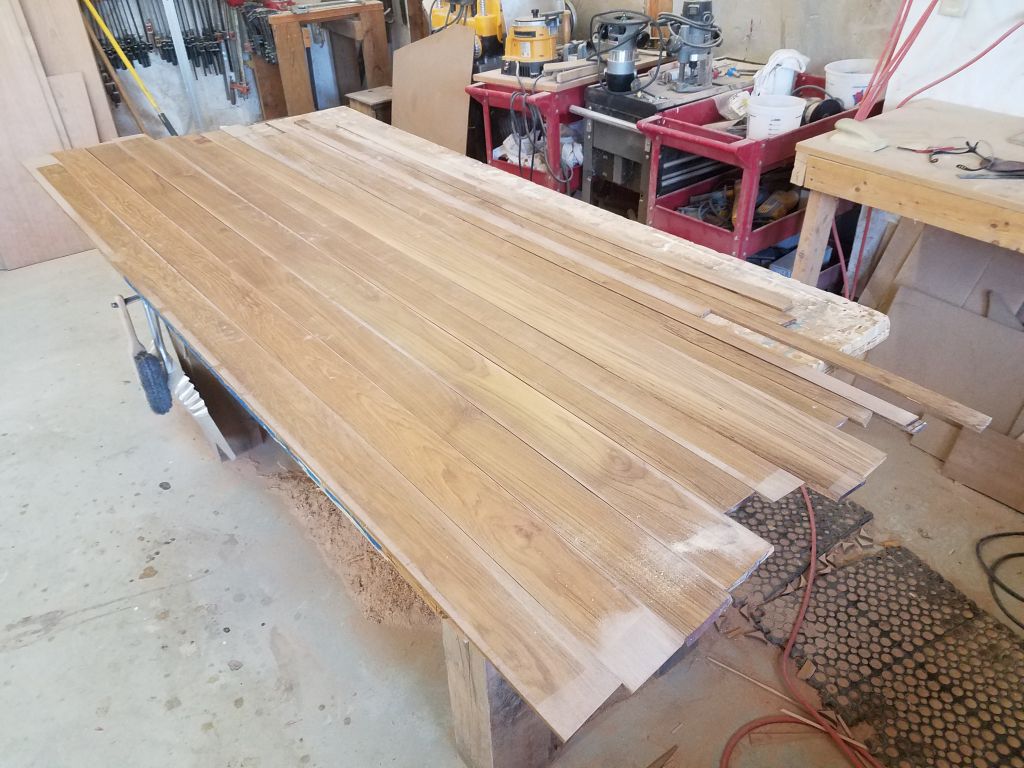
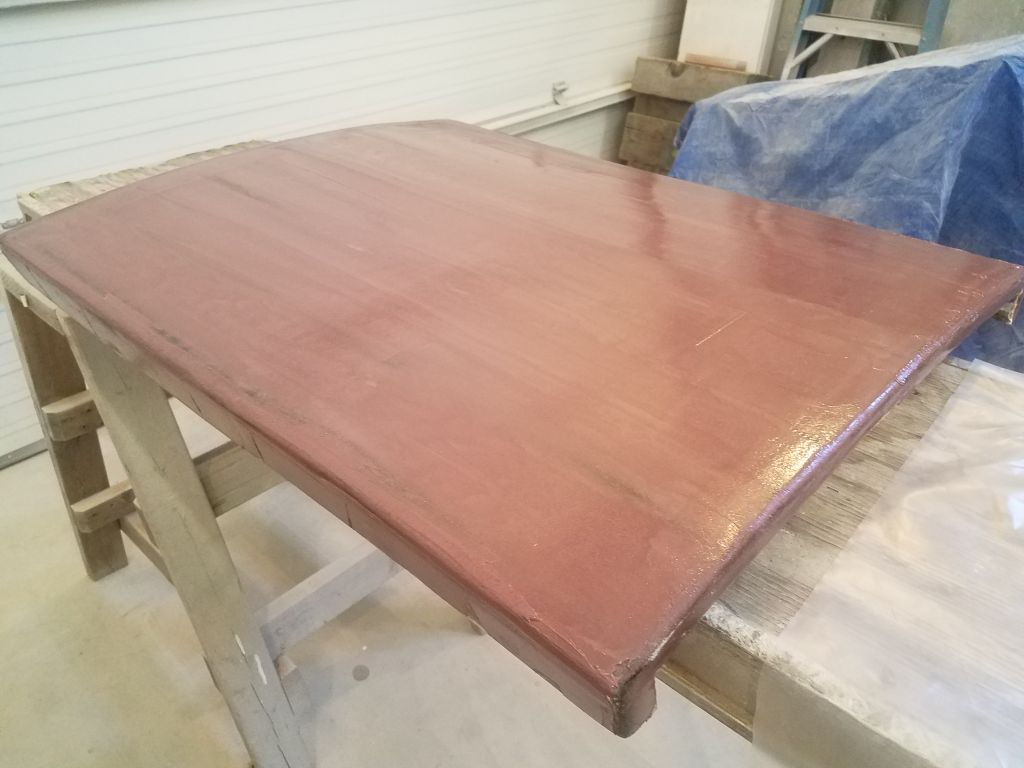
I used the day’s remaining time to set up my planer and plane smooth and clean all the teak I’d reclaimed from the old trim, and which I planned to use for the galley countertop.  I began with a pass over the saw-cut side of each plank, then flipped them and ran them all through the planer to remove the old surface and finish and dimension each piece identically to 1/4″ thickness.  The wood beneath the old finish looked terrific.

Afterwards, I trimmed each piece on the table saw to remove the edges as required, leaving me with a nice stack of teak ready for installation.

While the planer was out, I also cleaned up the newly laminated cherry stock for the forward cabin door frame.

Total time billed on this job today:  7.5 hours

0600 Weather observation:  0°, clear.  Forecast for the  day:  Sunny, 30s

Scupper 90

Thursday

In the forward cabin, I removed the braces from the port ceiling support cleats, which stayed in place despite the challenges in their initial installation.

With lessons learned, I turned to the starboard side.  Here, once I dry-fit the cleats and braces, I added some hot-glued support blocks here and there to help hold the cleats in place once I’d applied the adhesive during installation, since slippage of the cleats had been the biggest issue on the opposite side.

Now I applied the adhesive to the cleats and reinstalled them with their braces, with no drama nor difficulty this time.

Leaving the forward cabin alone for now while the starboard cleats had a chance to set up, I briefly sanded the various hole patches on the bulkhead paneling in the main cabin, galley, and head.  I’d reassess all areas once I’d applied primer and refair any of the holes should it seem necessary then, but for now I called it good.

Behind the top corner of the starboard settee back, sometime earlier I’d removed an old, nasty, and ineffective support cleat.  Now, I prepared a new hardwood cleat to help support this area, and installed it with adhesive and screws.  Since I had the polyurethane right on hand I used it for the installation.

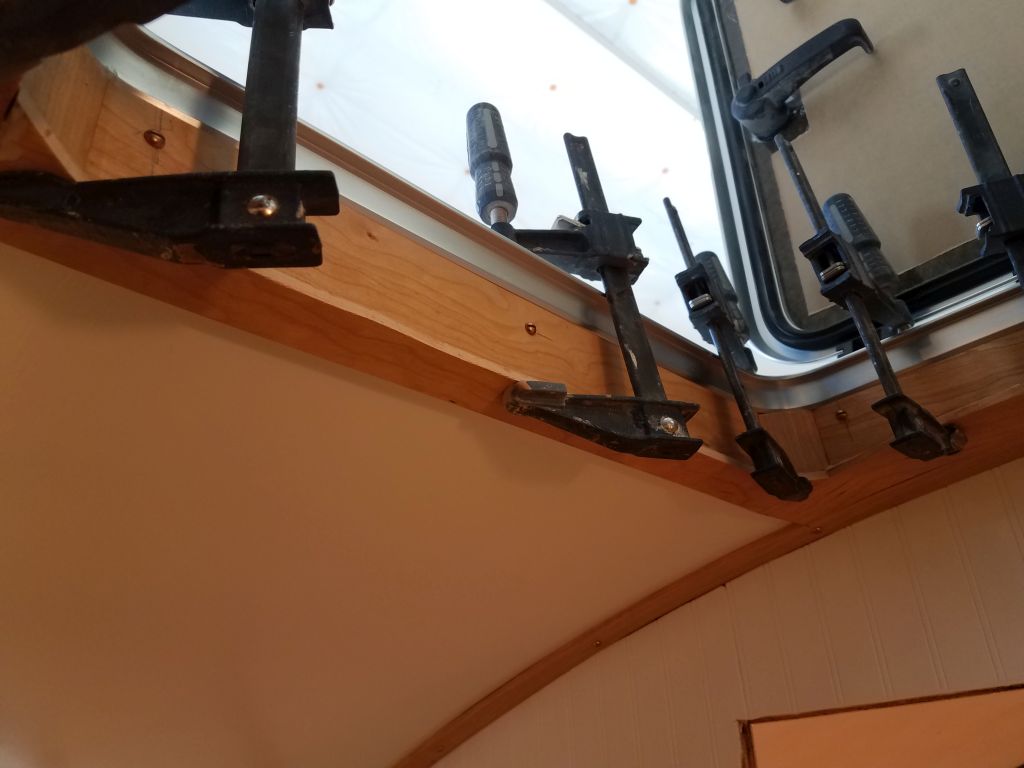
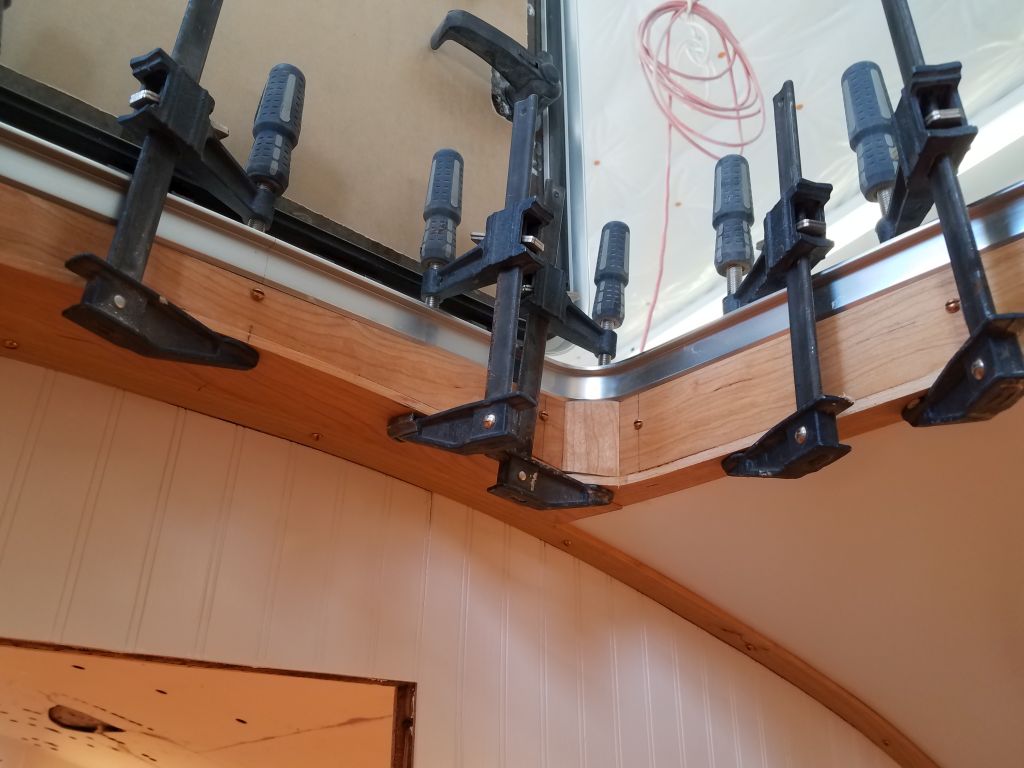
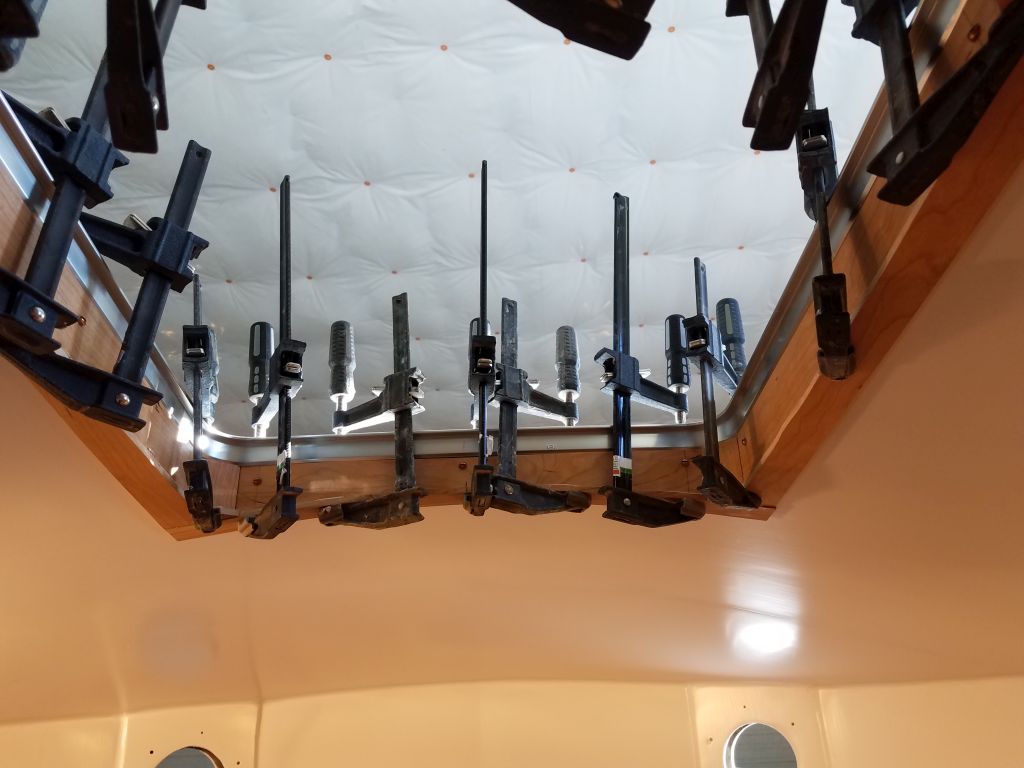
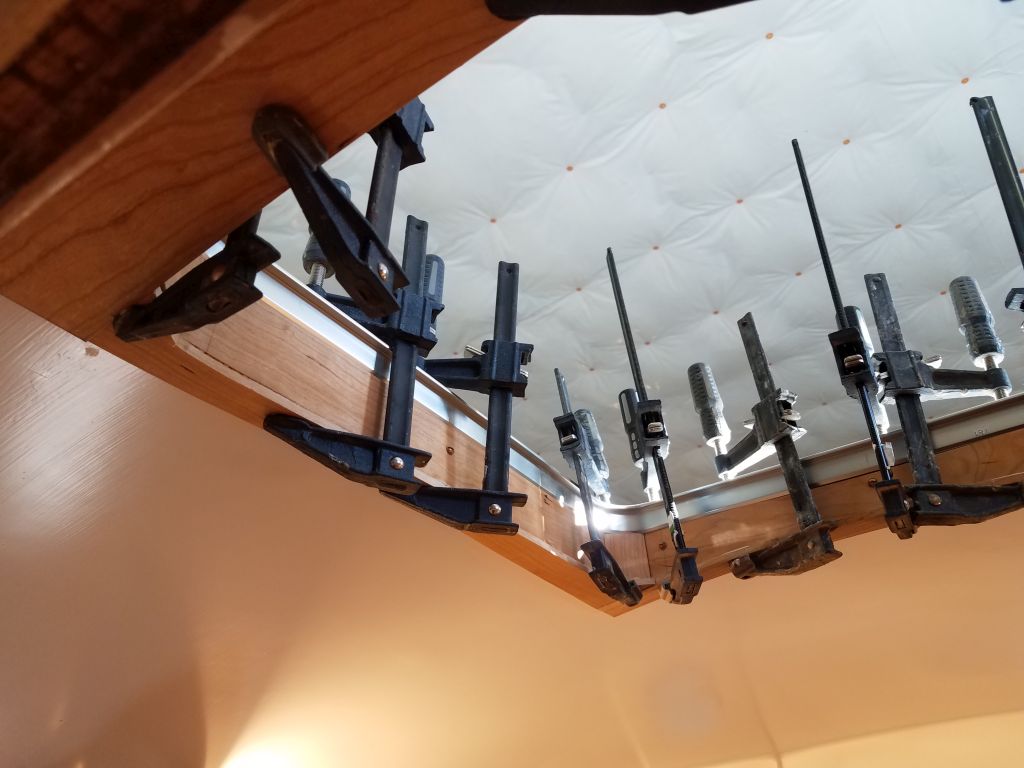
Down in the shop, I unclamped the edge banding I’d installed on the face panels of the new upper cabinets in the saloon, and trimmed the top and bottom flush and shaped as needed so I could test-fit once again.  I’d left the solid cherry edge a bit wider than it needed to be so I could mark it exactly to the aft bulkhead and cut to the proper size, which I did now.  Then, I rounded the outer edge and sanded the panels and edges smooth.

To secure the panels but allow for easy removal for electrical access and the like, I planned knurled hand fasteners and threaded inserts.  To give me a place to install the inserts securely, I added teak cleats inside the opening, at the forward and after ends.  I secured the forward cleats to the existing plywood cleats with screws, but at the aft end I glued and clamped the cleats in place to avoid fasteners through the cherry bulkhead.

While I had the glue out, I installed cherry bungs in the fastener holes that secured the after sides of the lockers.

By early afternoon, I was ready for some more work in the forward cabin.  On the port side, I added epoxy fillets to the new cleats, not only adding additional strength to the installation but also easing the transition to the hull for easier fiberglassing later.

The adhesive to starboard wasn’t fully cured enough to allow removal of the braces and blocks, but I felt I could work around the area a bit, so I added fillets in all the available spaces, working around the little glue blocks for now.  This meant that next time, I’d be able to simply fill in the missing areas and continue with fiberglassing along with the port side, getting me caught back up with where I wanted to be on this installation.

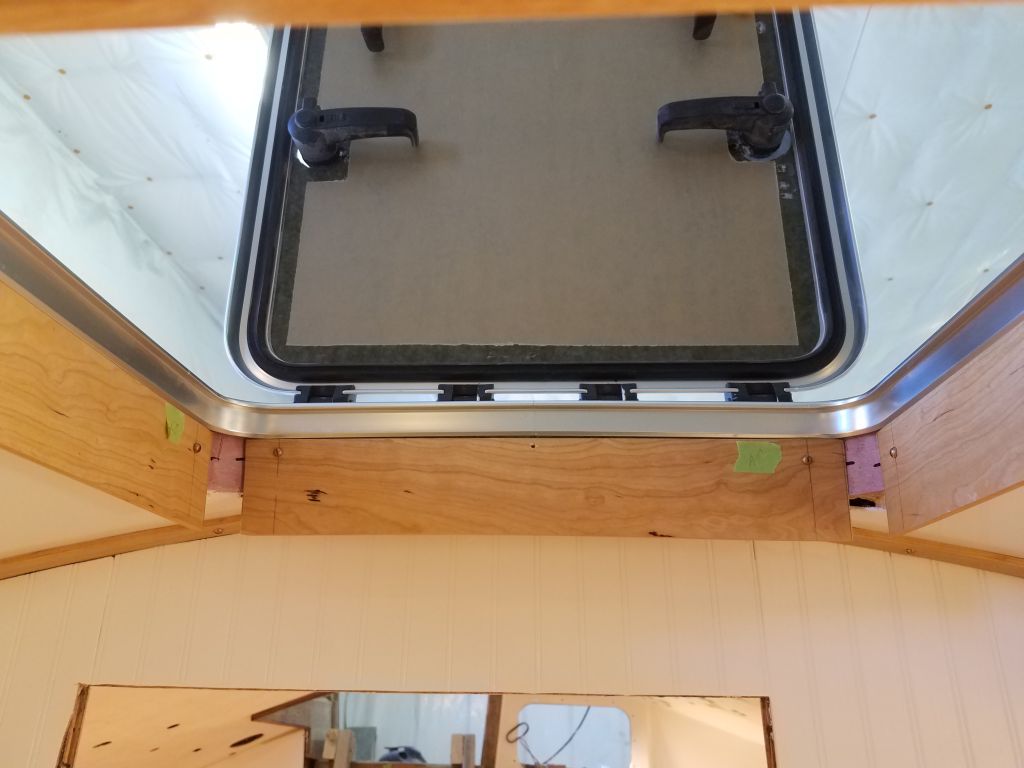
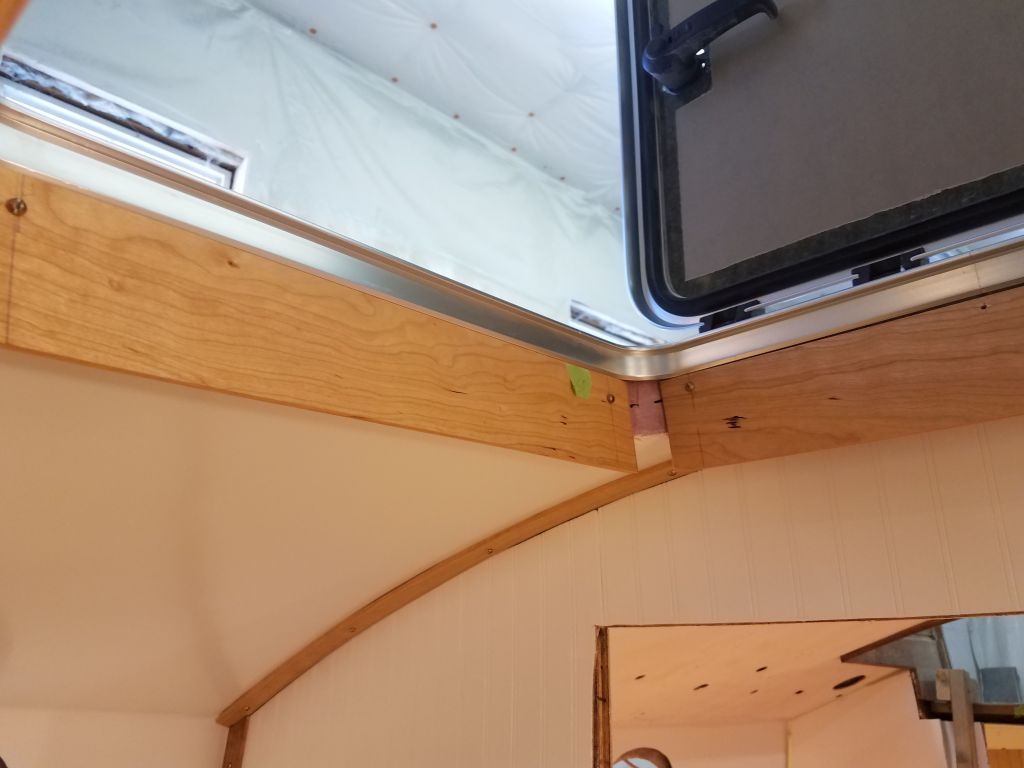
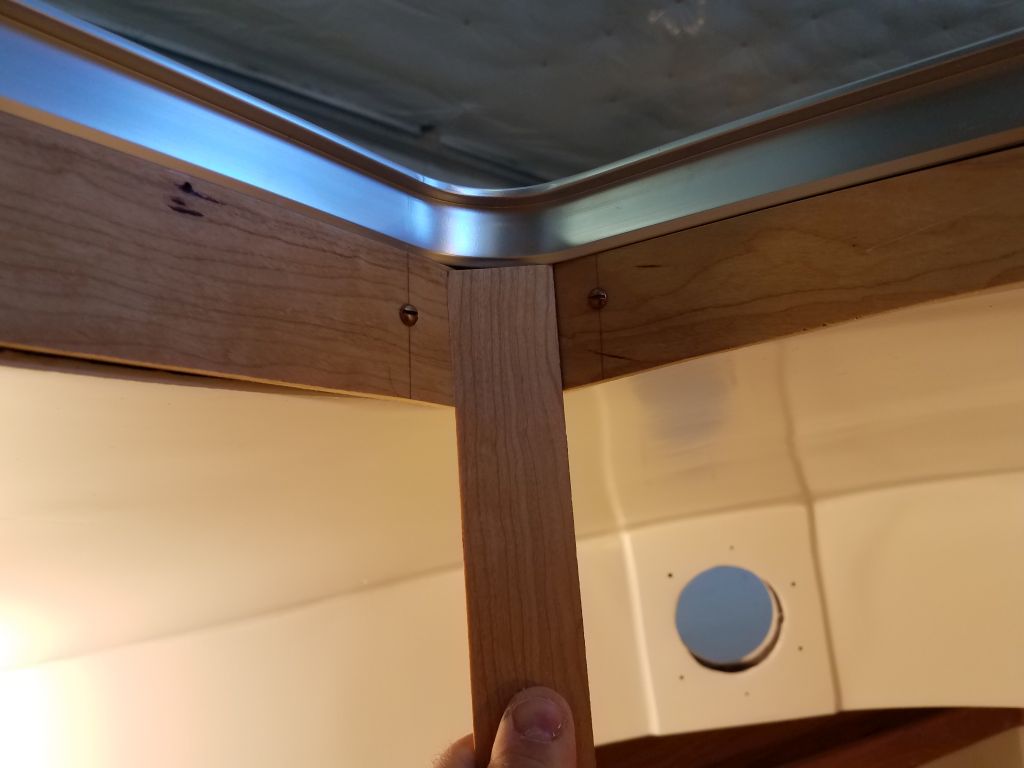
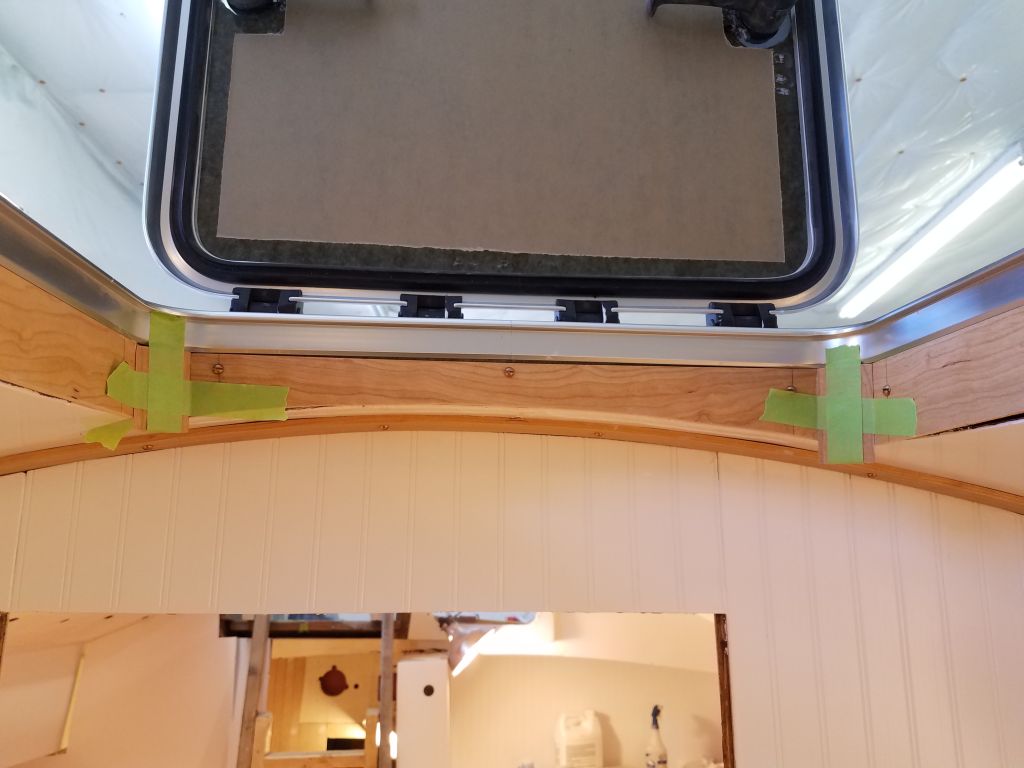
Most of the jobs I’d chosen this week were designed to finish off various tasks required before I could apply primer (and eventually paint) to the whole cabin, but for the moment there wasn’t much more I could do to advance that specific goal, so I turned to the first of the new cherry trim for the cabin.  For various reasons, I chose to start with the lower (and upper) trim pieces for the doorway to the forward cabin.  Since I’d cut the opening down to sole level in the forward cabin, the new lower trim would not only incorporate the sliding mechanism for the doors, but would also extend all the way across the forward edges of the settees to double as the edge trim there.  Since we were starting to think about the interior cushions and upholstery, this extra trim piece would factor into the cushions’ design themselves, so even though I might not install it permanently for a while, it made sense to get started here.

The original door trims, which I’d saved for reference purposes, were one-piece milled with a groove for the doors to fit in, and I planned to emulate though not exactly duplicate the details.

To prepare blanks for the new trim, I needed to glue up a thicker blank from the 4/4 stock I had, so after various measurements I milled two long lengths for the lower trim (extending from settee back to settee back across the forward end of the cabin at berth height), and two shorter lengths for the upper trim, which would remain more or less the same length as the original.  Then, I glued up the pieces to create a thicker blank from which I’d eventually mill the new trim.  I used waterproof wood glue for the glueup.

The glue securing the new cleats in the saloon cabinets had now cured enough to remove the clamps, so I moved on with the installation of the panel fasteners and threaded inserts.  After taking some measurements to locate the desired positions of the fasteners, I laid out the panel fronts accordingly and drilled holes for the 1/4″ knurled-head fasteners.  With the panels in place in their proper positions, I marked the hole locations on the new teak cleats, then drilled for and installed the threaded inserts.   These required a 3/8″ hole, and for the installation itself I had a nice little installation tool to easily and accurately install the stainless steel inserts.

With the inserts in place, I could install the panels with their four fasteners.  I had some handles that I intended to install to help a user remove the panel easily later, but for the moment I decided to hold off on installation till I had a better sense of where the handles should go.

To round out the day, I removed one pesky last piece of original trim that I’d left inside the doorway to the head for some unknown reason.  This trim needed to go before I got to the primer application throughout the boat.  This required first removing a hook that was still in place, and then I quickly broke out the old trim and removed the screws once the wood was out of the way.

Total time billed on this job today:  8 hours

0600 Weather observation:  8°, high clouds.  Forecast for the day:  Becoming mostly sunny, 28°

Older posts Newer posts