
(page 41 of 165)

Holby 33

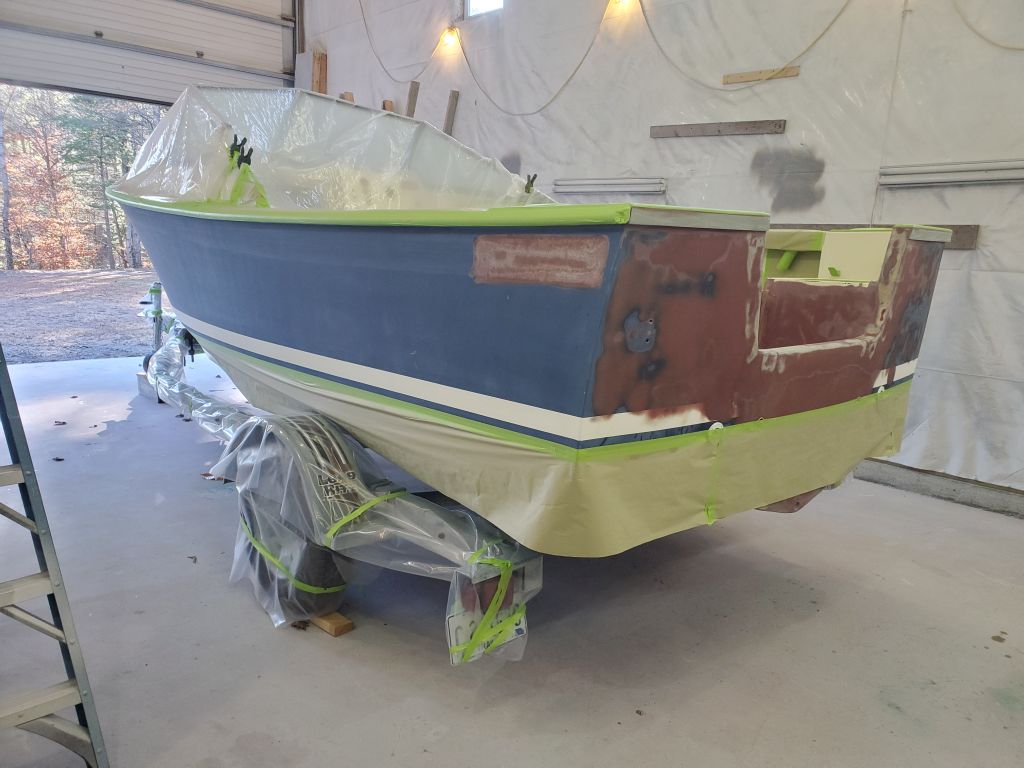
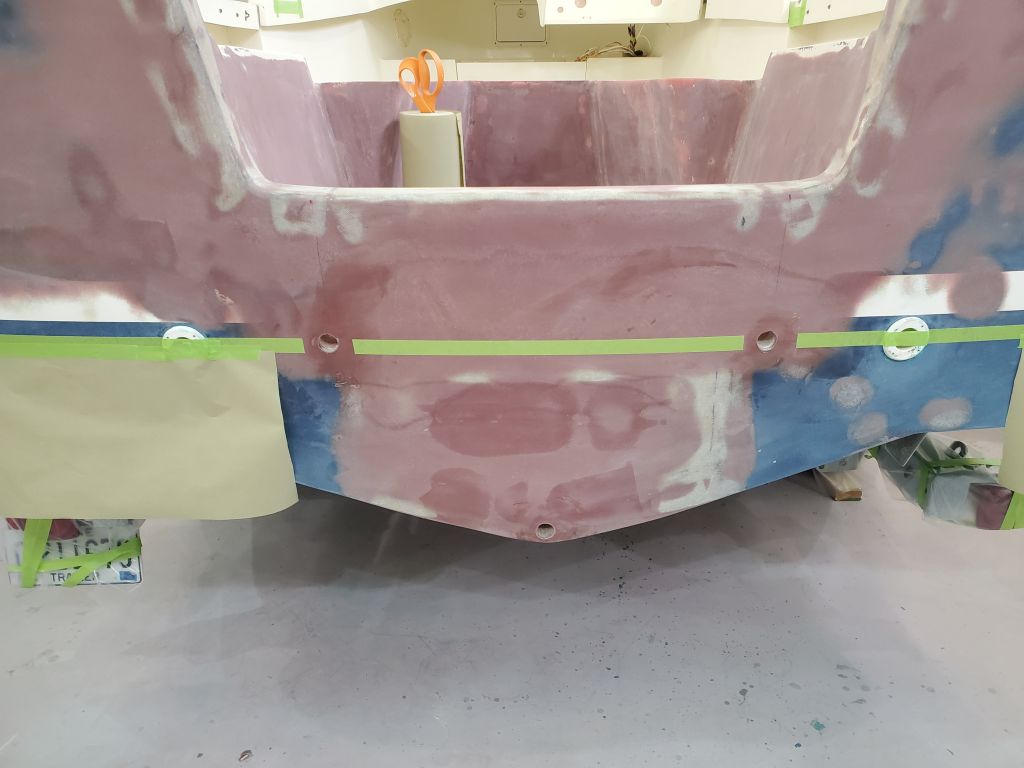
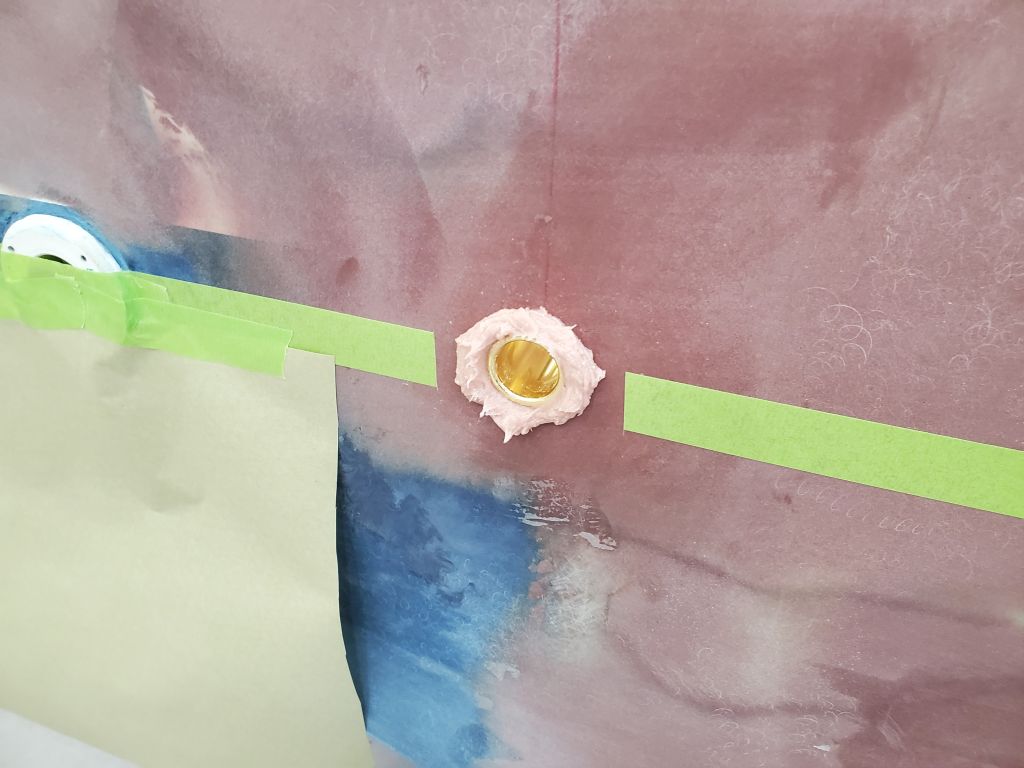
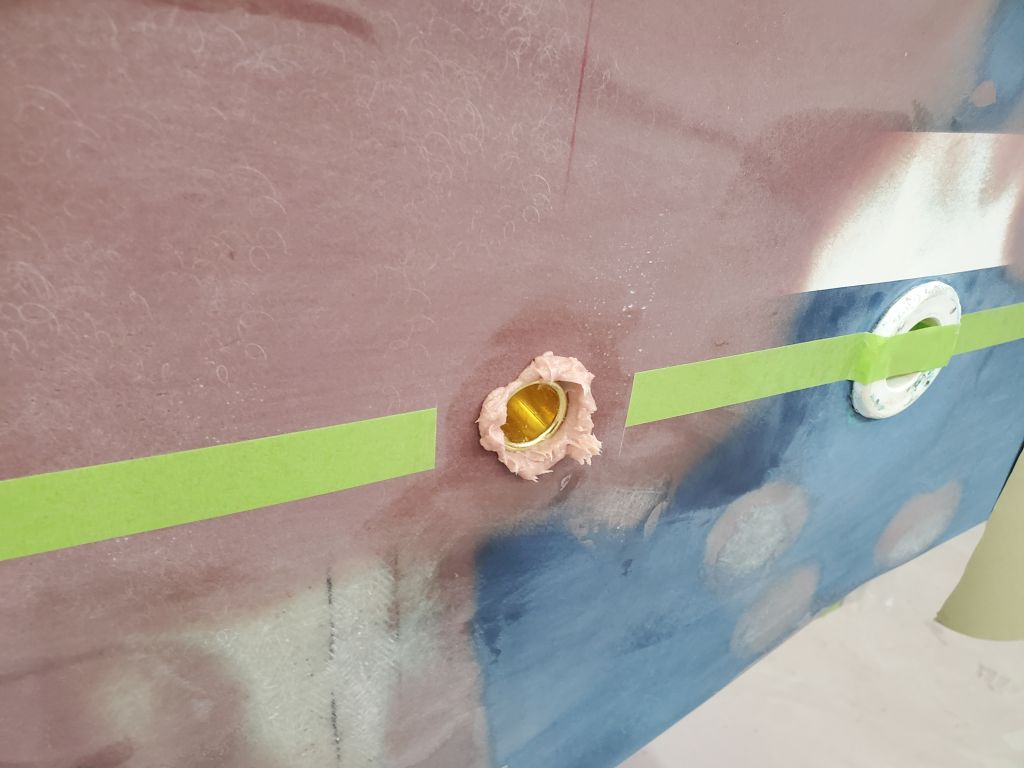
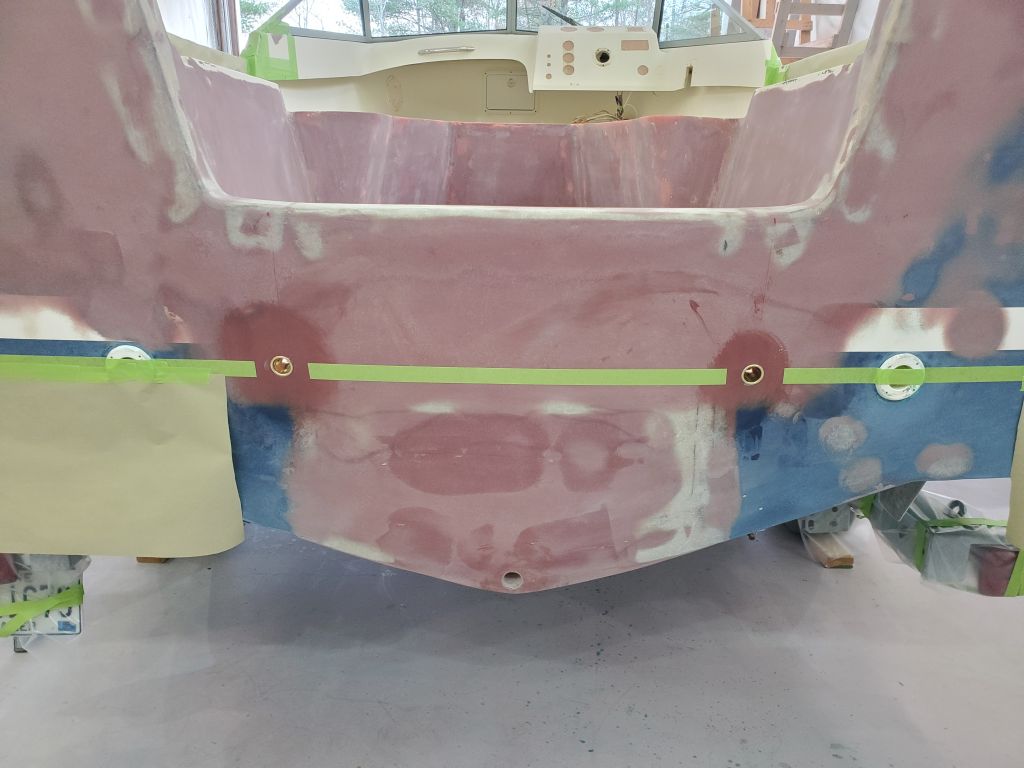
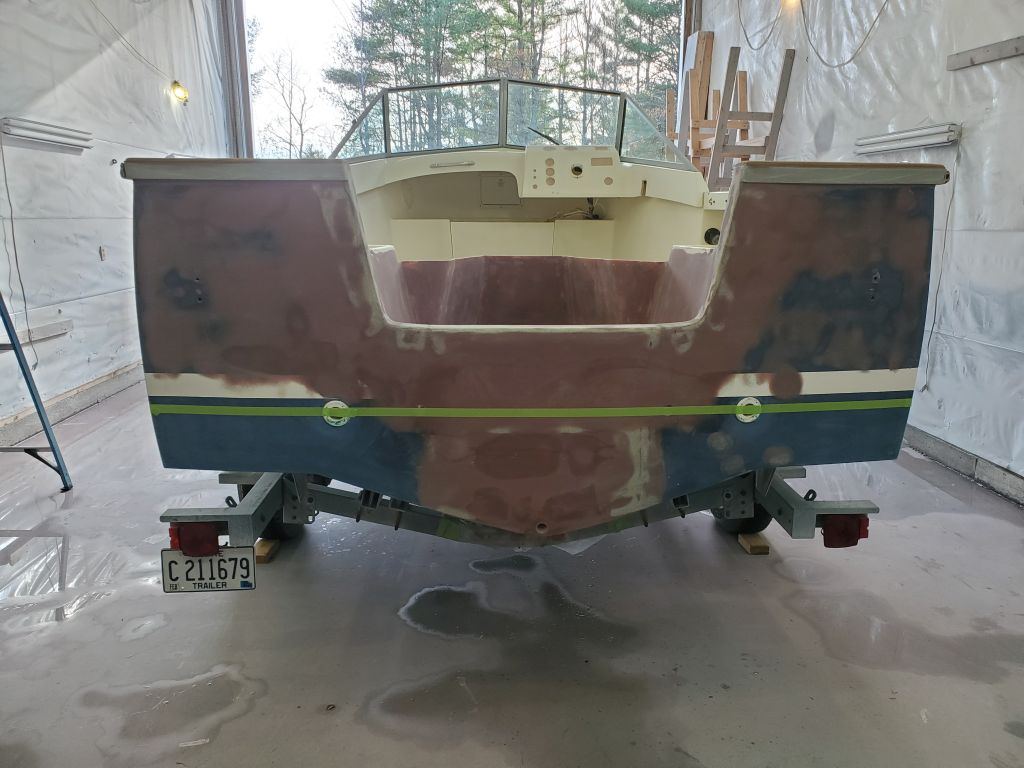
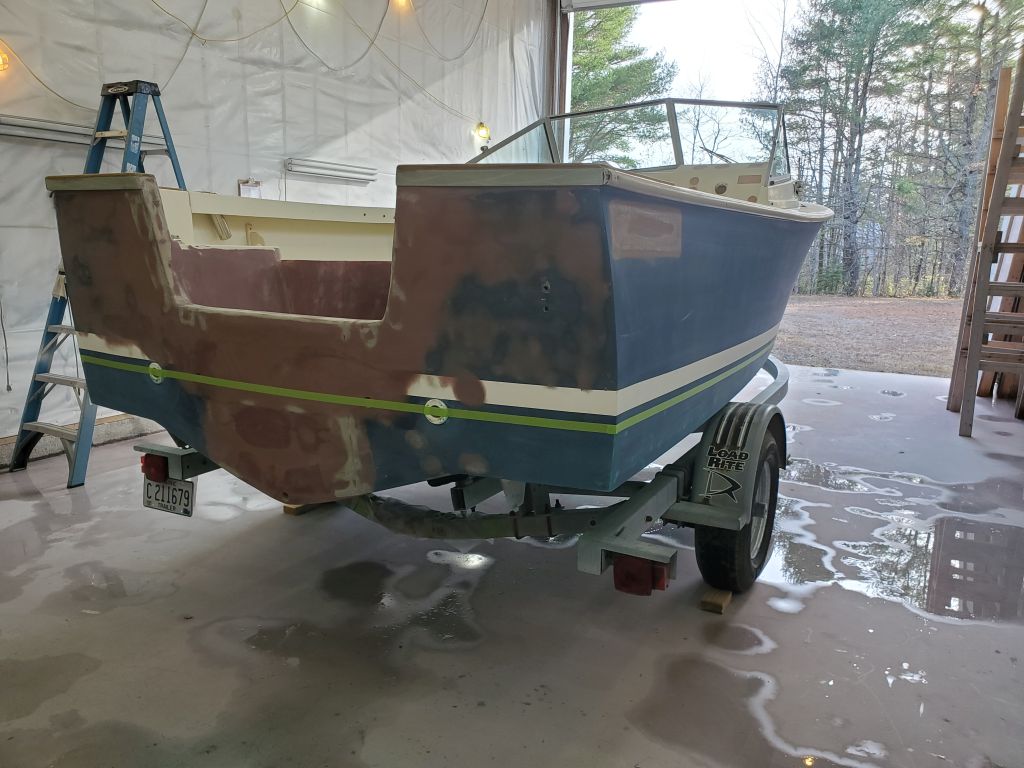
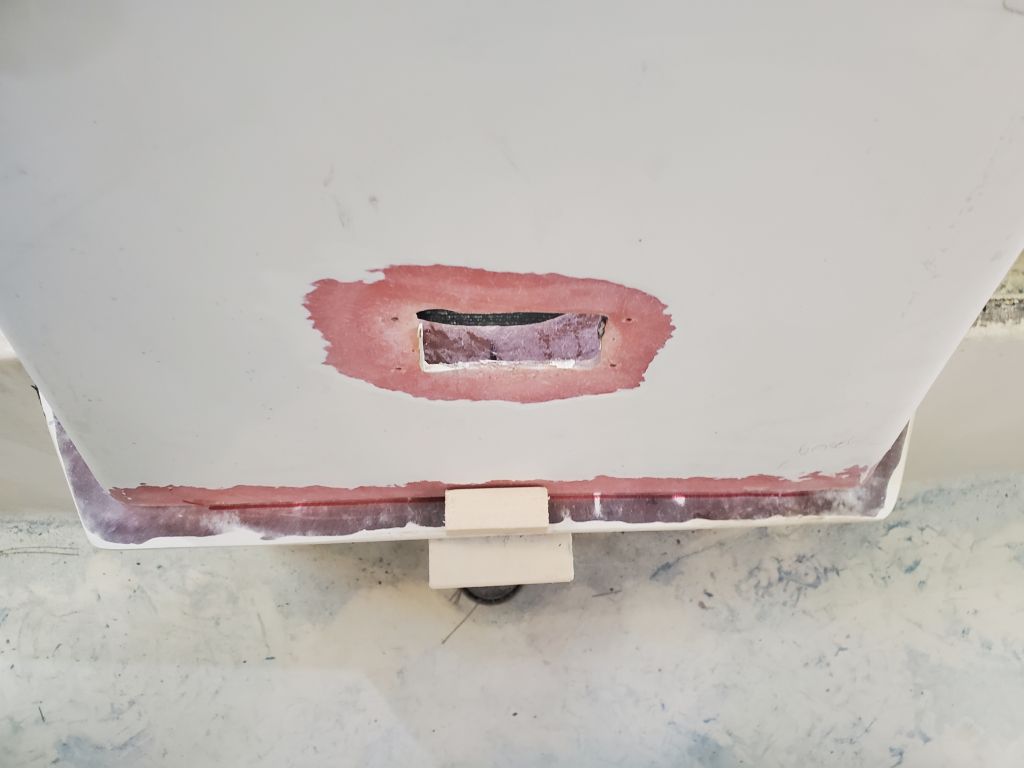
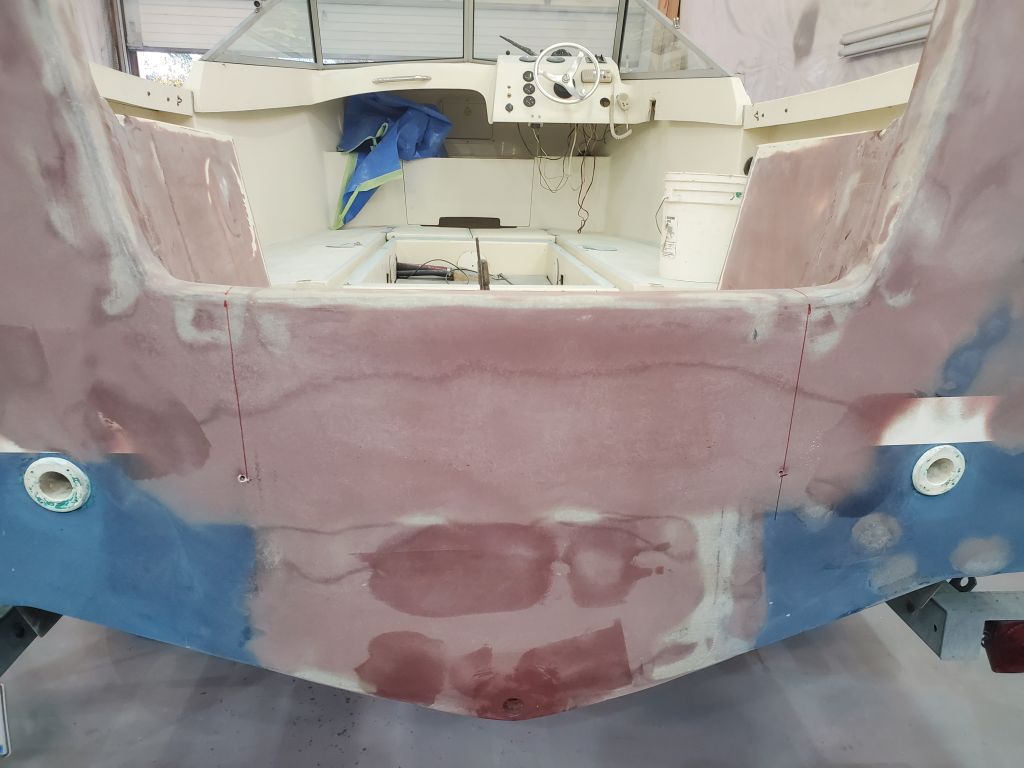
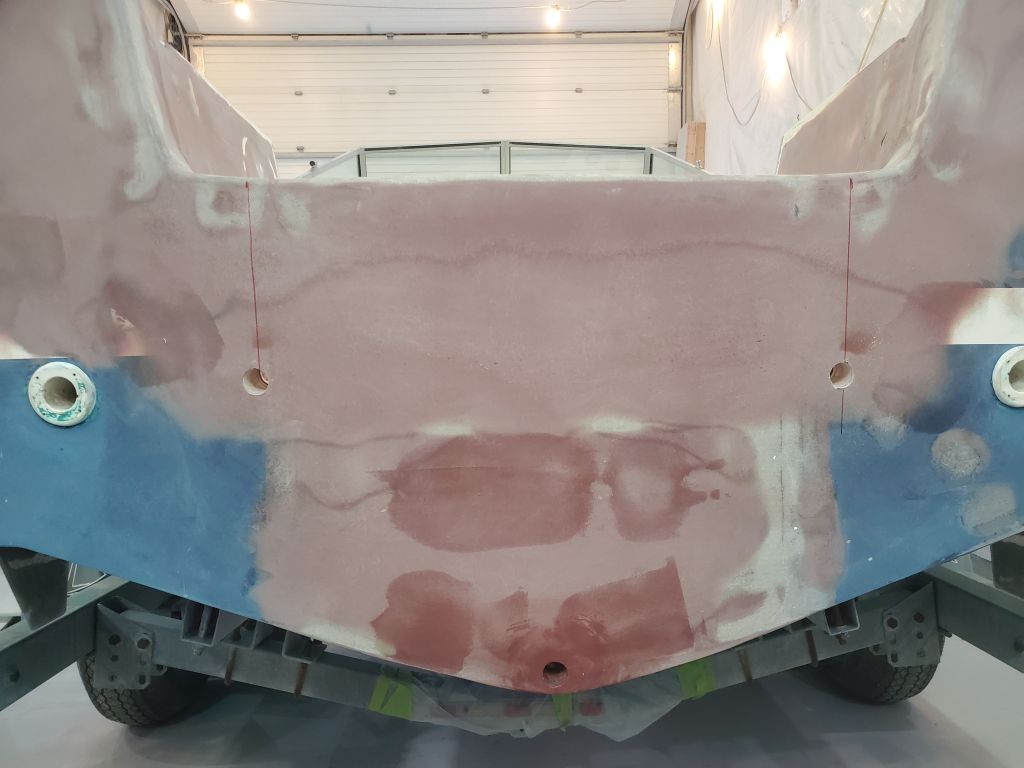
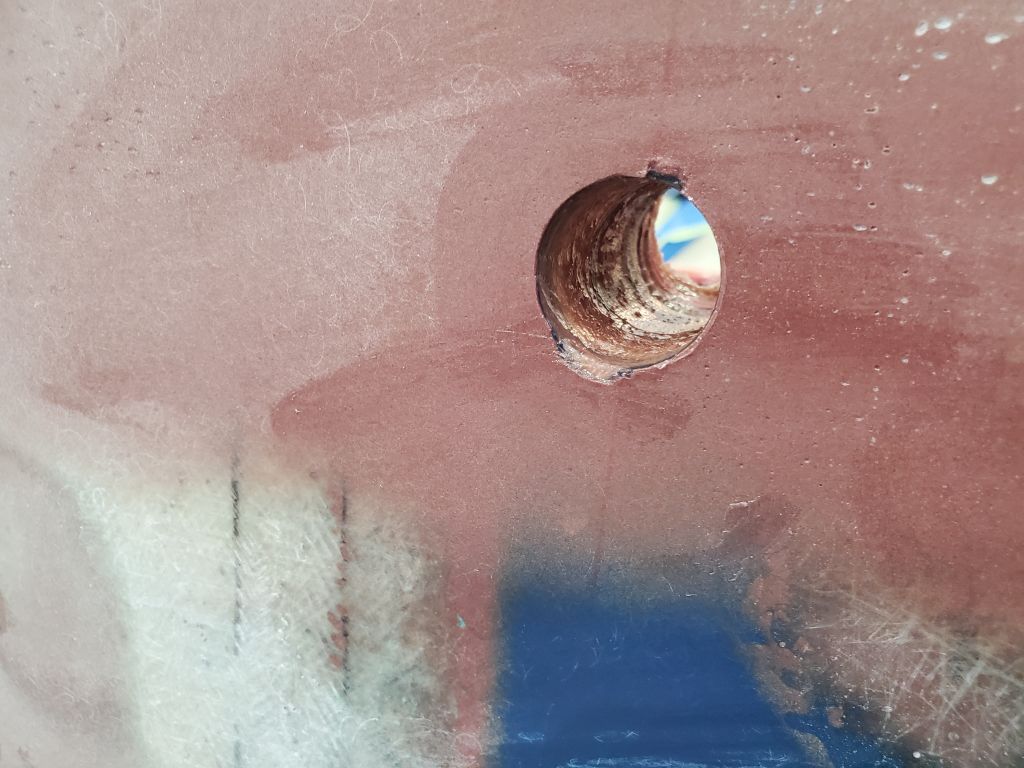
My day began, as it so often does, behind the sander controls.  Working now mainly with finer grits as the various surfaces approached final contours, I began with the transom and hull sections, cleaning up the most recent round of fairing material, as well as at the now-patched engine room vent openings.  This round of sanding brought things nearly to completion other than some minor inconsistencies here and there.

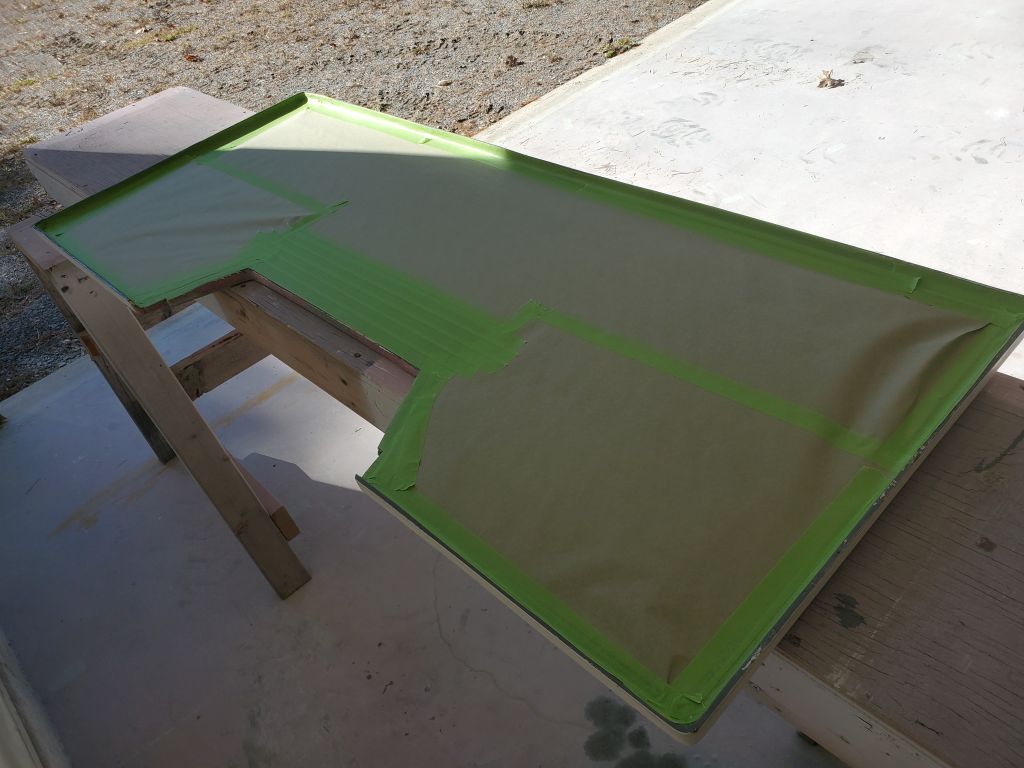
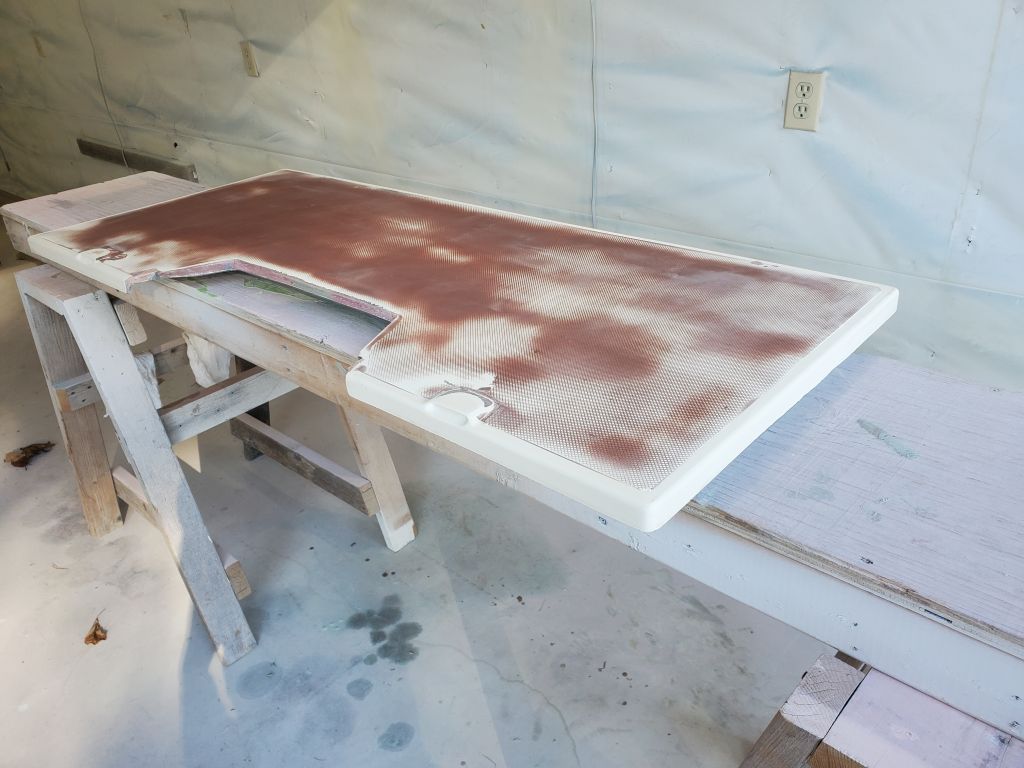
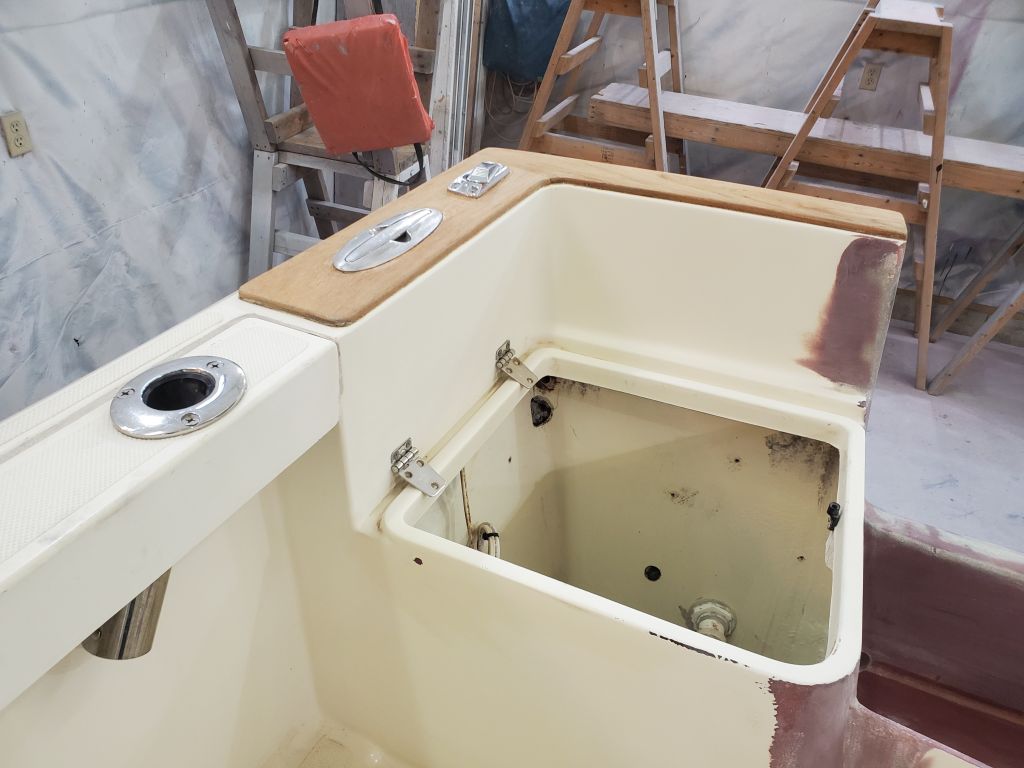
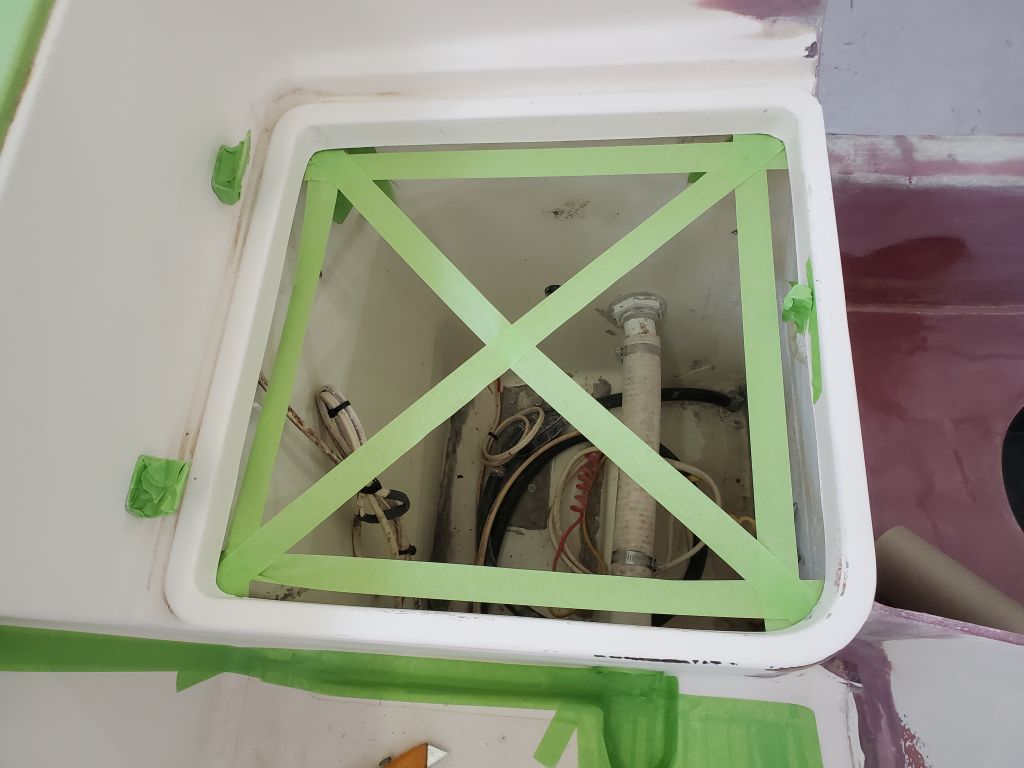
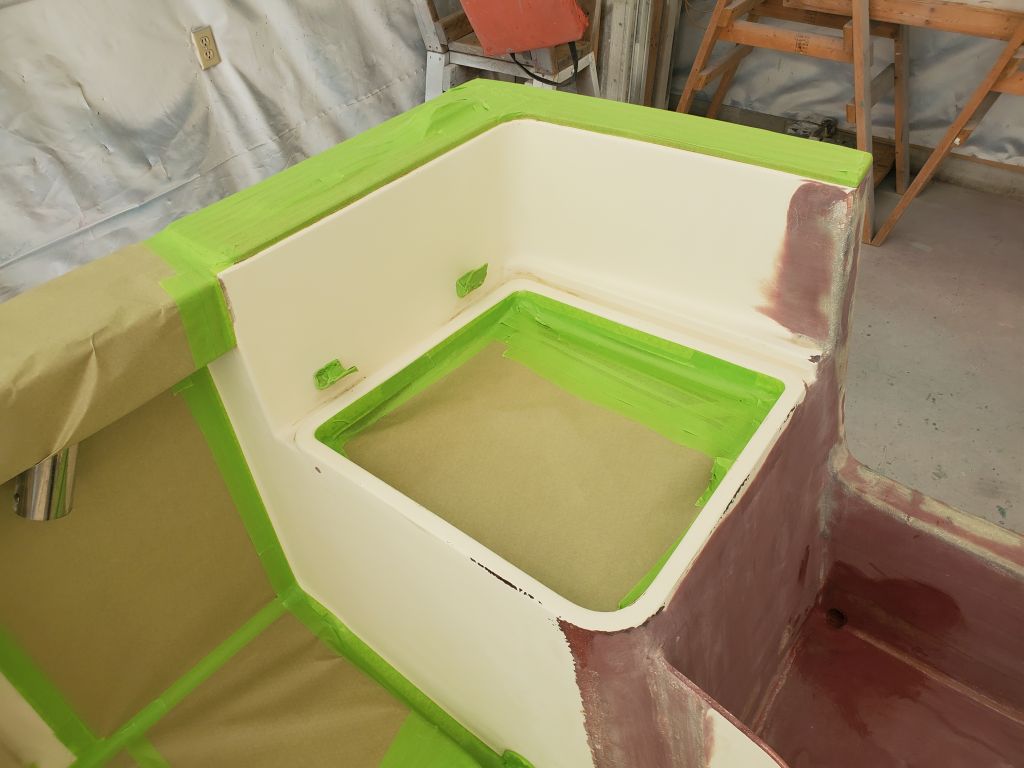
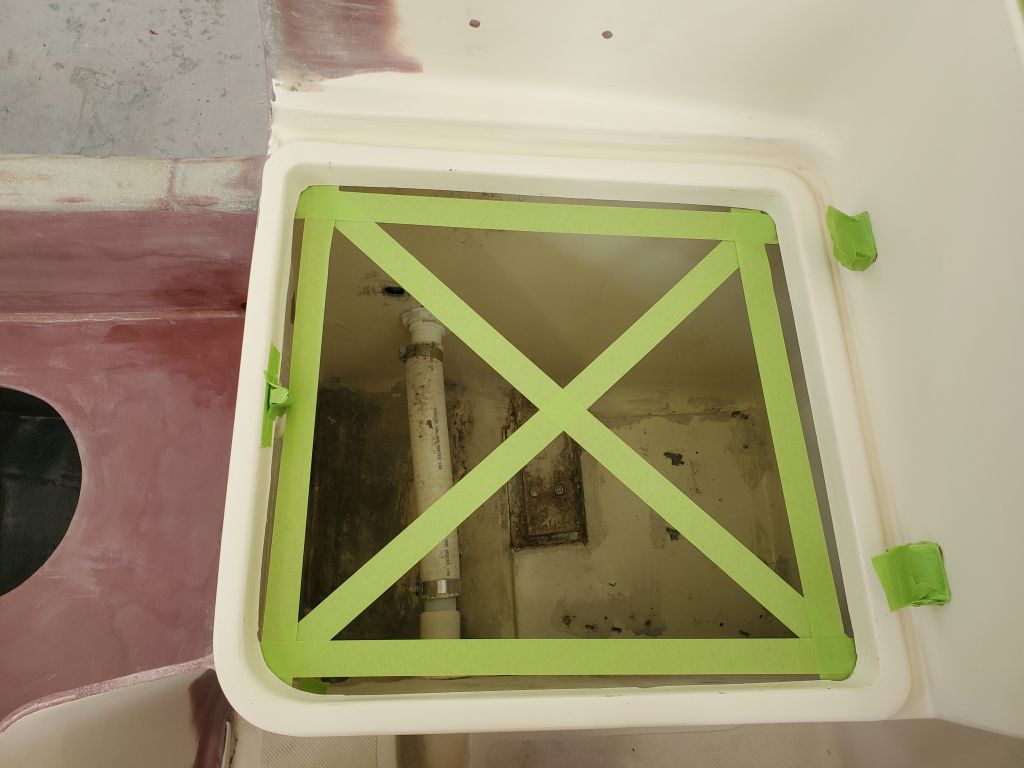
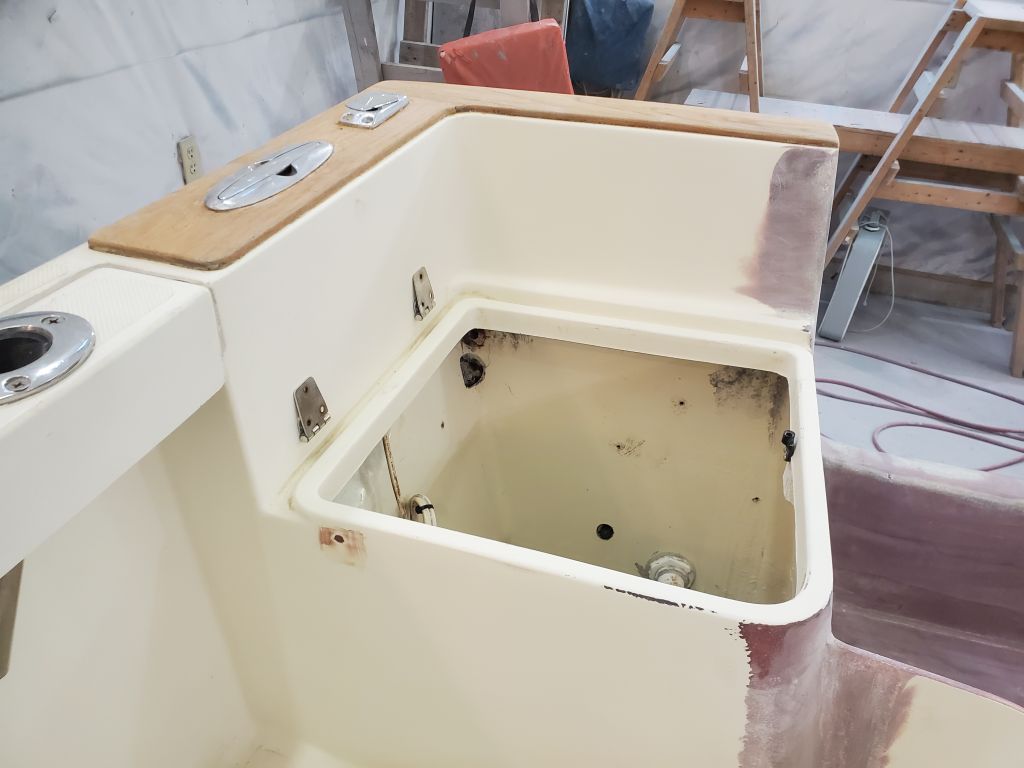
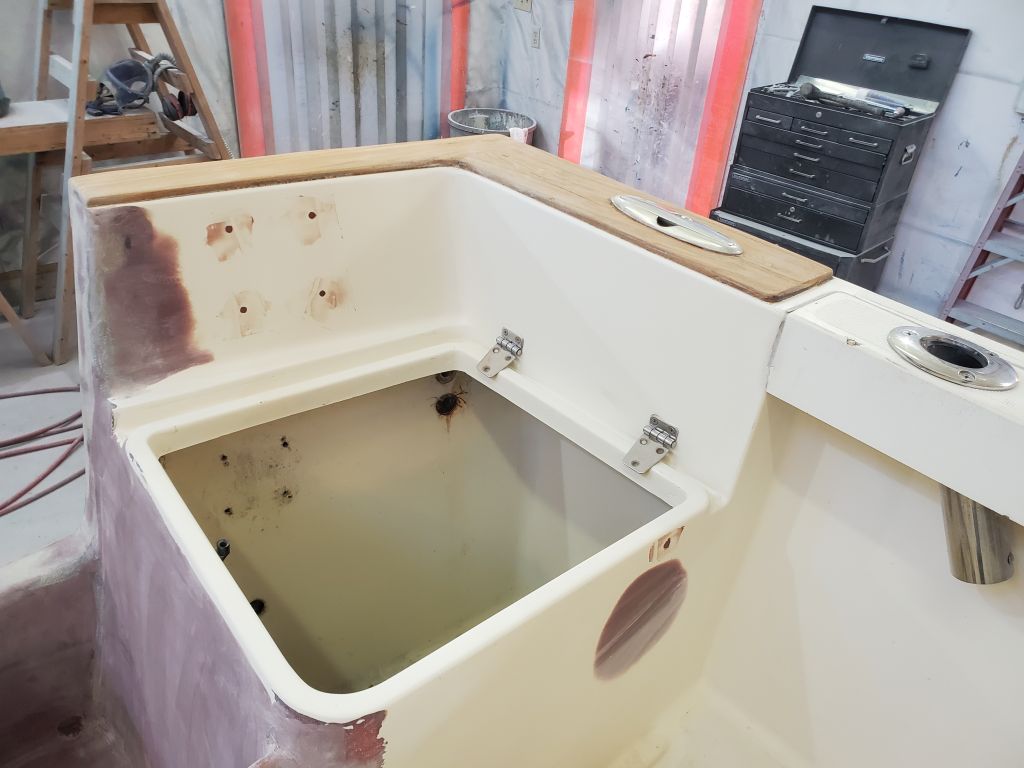
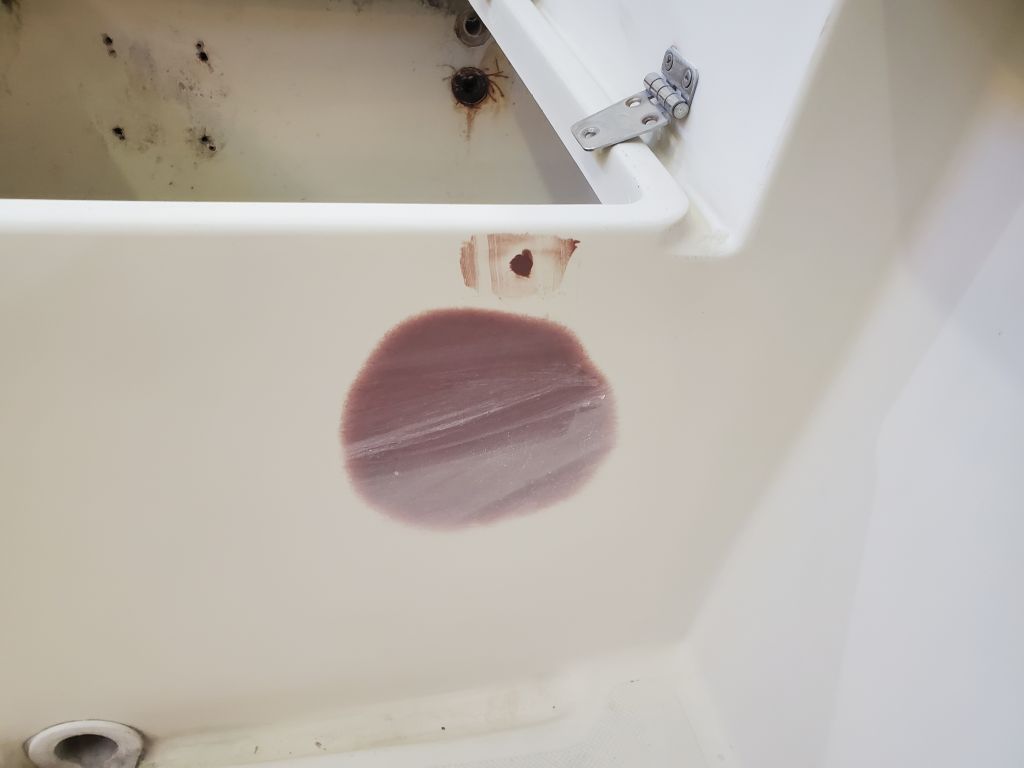
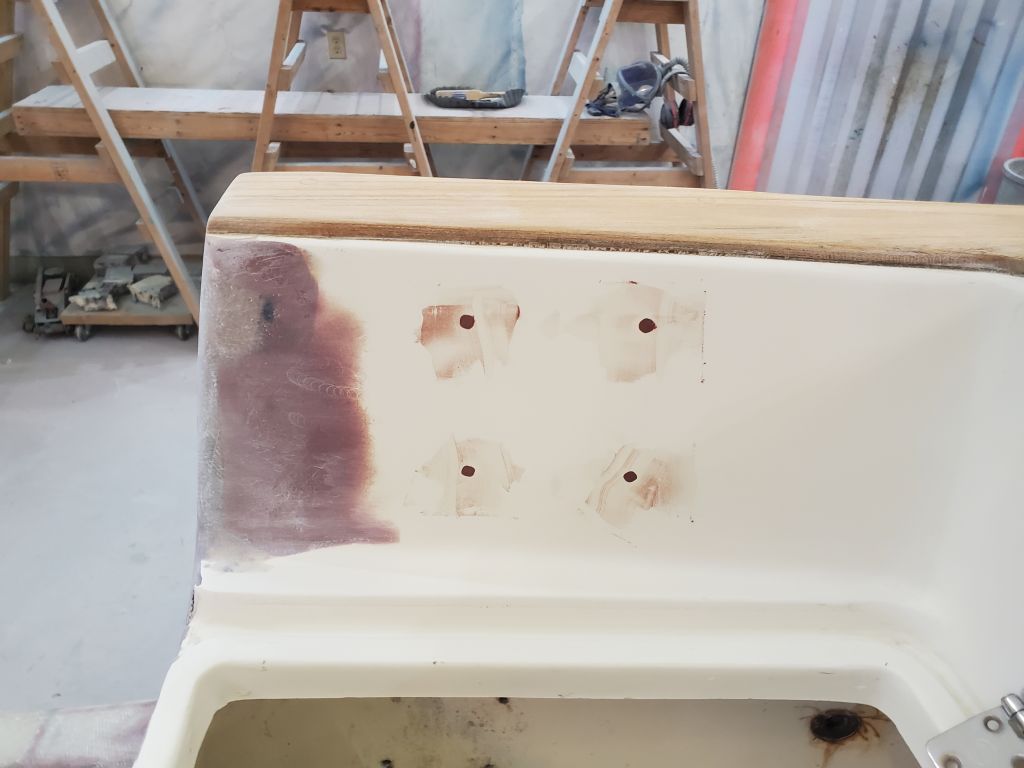
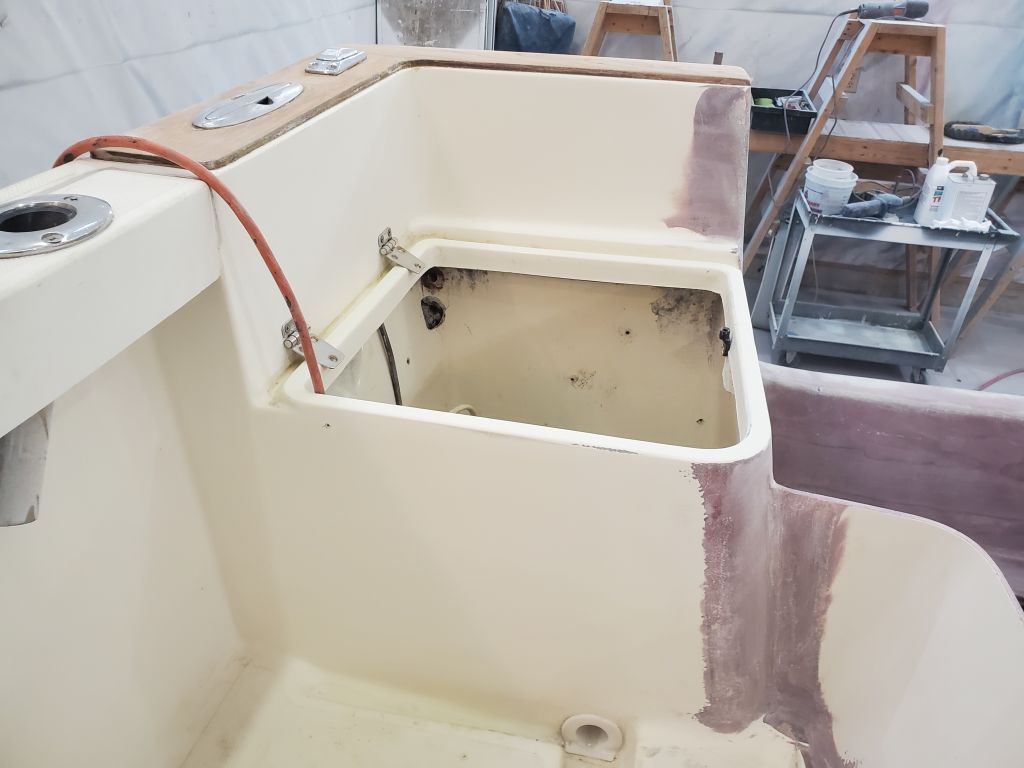
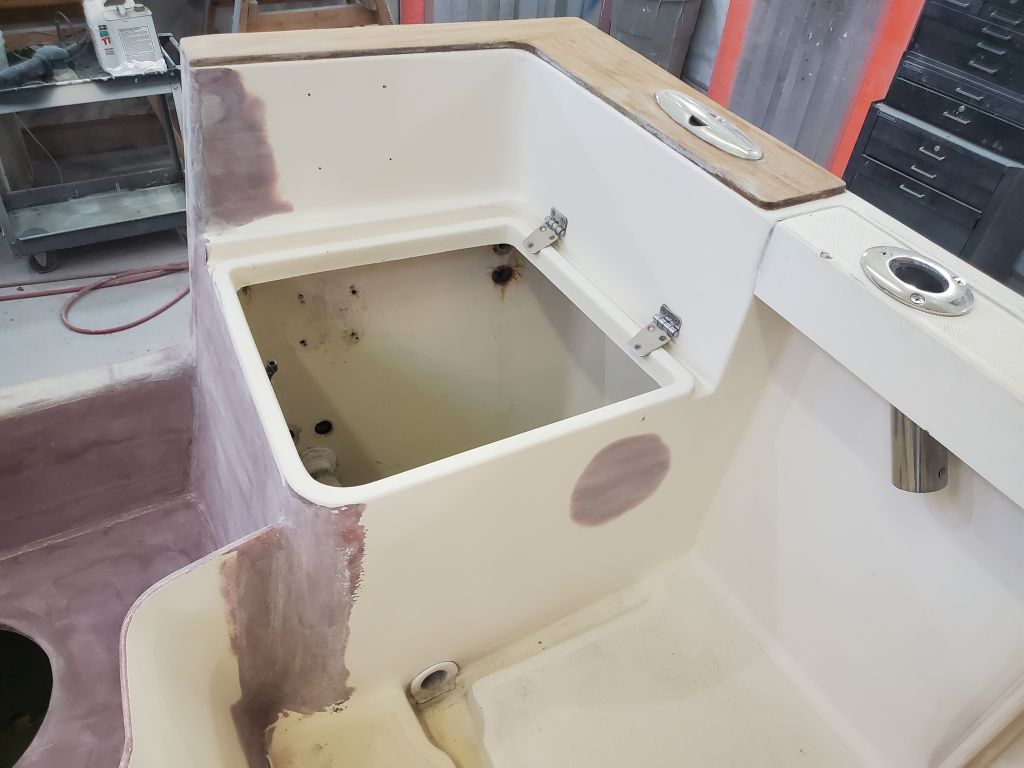
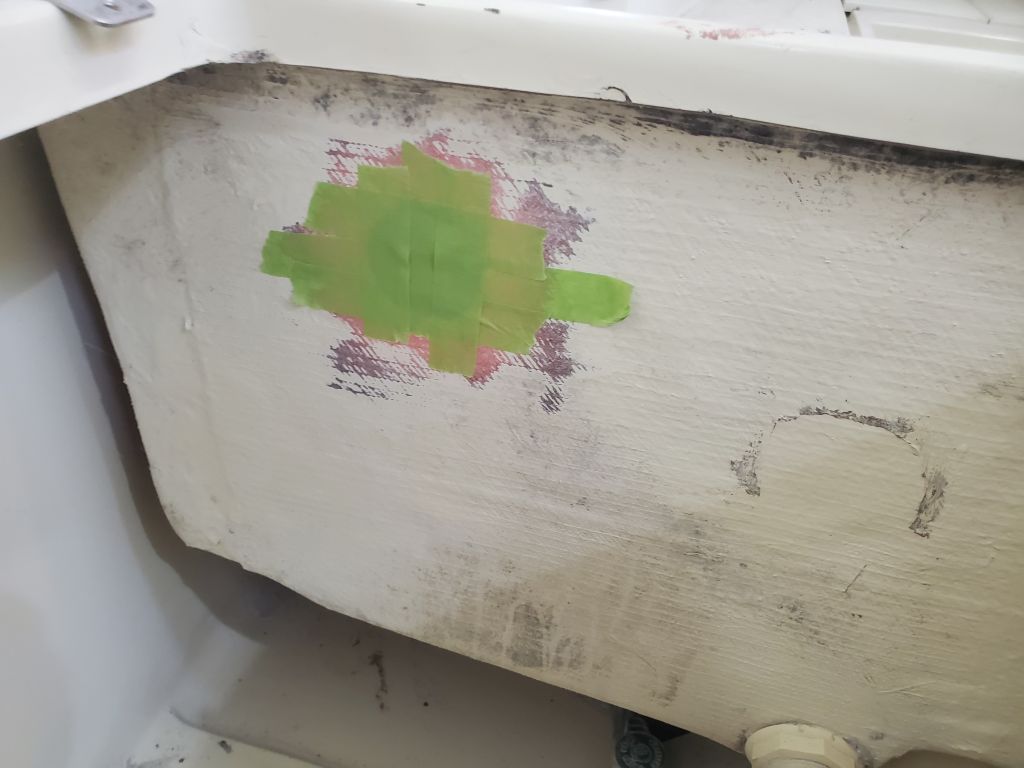
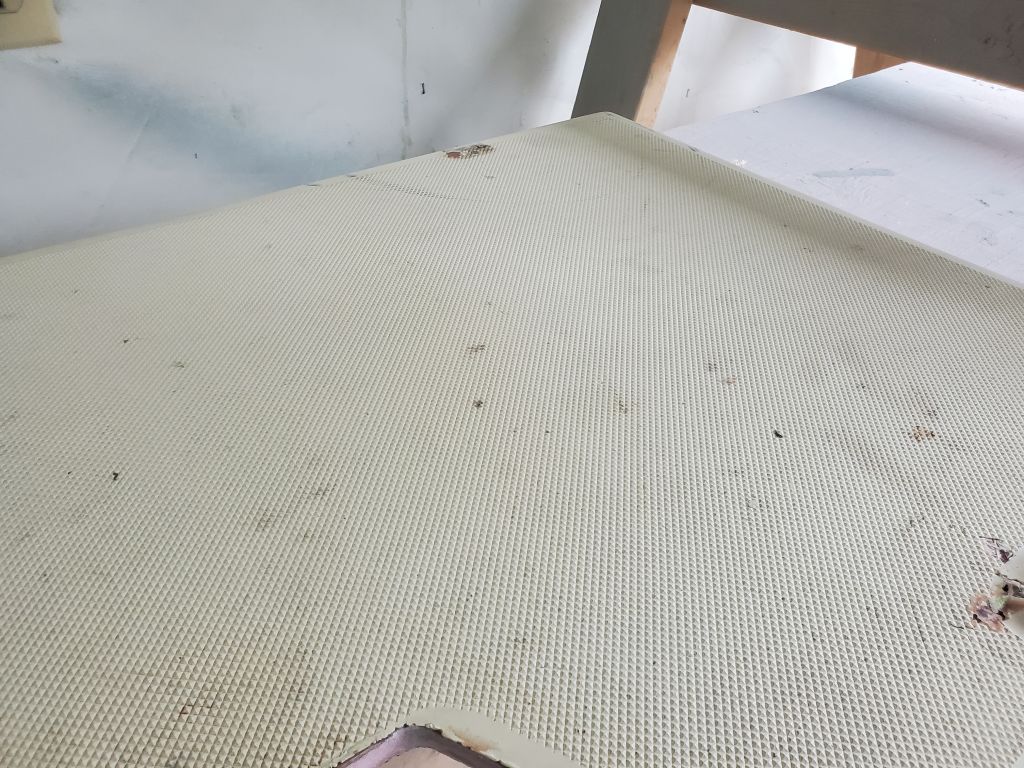
I also sanded the undersides of the livewell hatch and fuel tank hatch, smoothing the latest–and last–round of epoxy filler there, but it seems I never took a picture, perhaps because my sander started blowing up near the end.    I finished the last small epoxy patch on the fuel tank hatch by hand and, after cleaning up from the morning’s round of sanding, apparently never got back for photos.

(An aside:  With my discovery, earlier this year, of the apparent discontinuation of my favorite major sanding tool, the Porter Cable 7345 (previously known as various other model names that I can’t recall),  which tool I  have been using various versions of since the tool was first marketed in 1990 and can’t imagine working without despite its poor track record of longevity in more recent times–earlier this year I scoured the internet and bought enough of a supply to keep me in sanders for as long as I might need them–or so I thought.  These sanders tend to fail in various inconvenient, if non-permanent ways, so it’s been my policy for years to always have a new spare on hand so as never to lose working time.  I have a couple older ones on hand still awaiting inspection and repair, but it’s always easier to grab a new one.

So it was to my great dismay that earlier this fall, just a few days ago in fact, one of the new ones that I’d started using only in the spring began vibrating dramatically for no immediately apparent reason.  I set it aside and opened a new sander, which, after all of a day’s use, began to vibrate in the same (or worse) alarming manner as I finished up the hatches.  A bit of digging into the problem revealed that the screw securing the eccentric housing to the shaft had loosened on both of these tools, nearly right out of the box. I tightened the screws and both sanders seemed to work properly again. So the good news is I don’t have to retire just yet, as my sanders still work.  The bad news is I can’t justify retiring yet because my sanders still work.  But I’ll clearly have to check and tighten those screws right out of the box from now on, and probably regularly through normal use of the tool.)

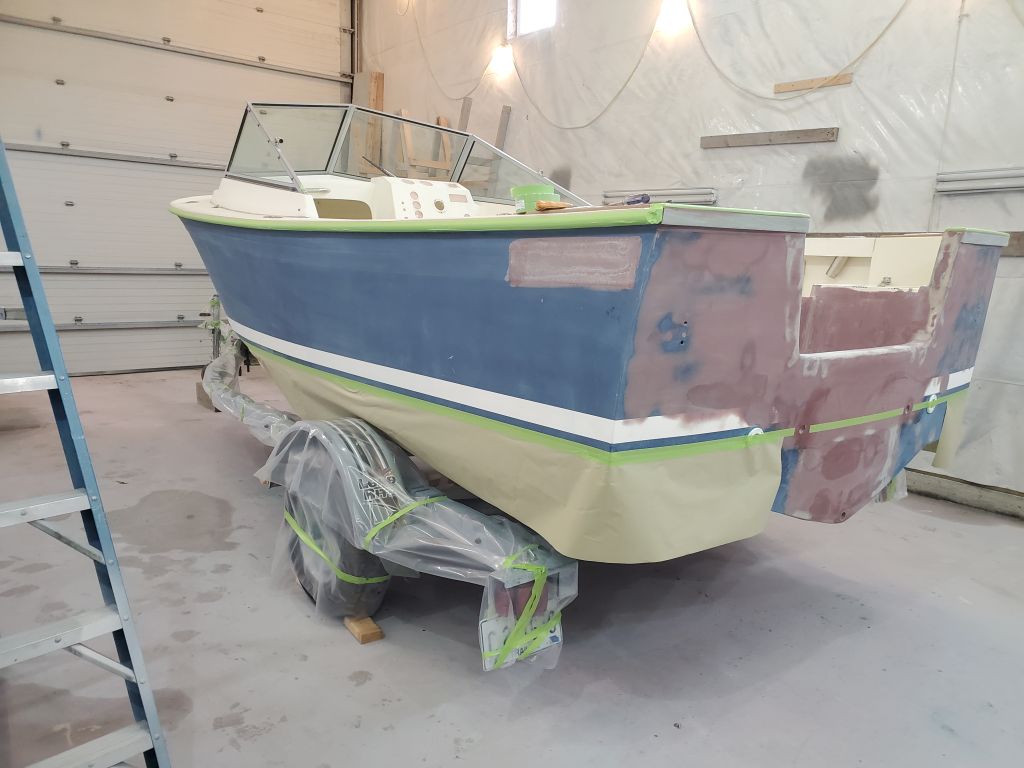
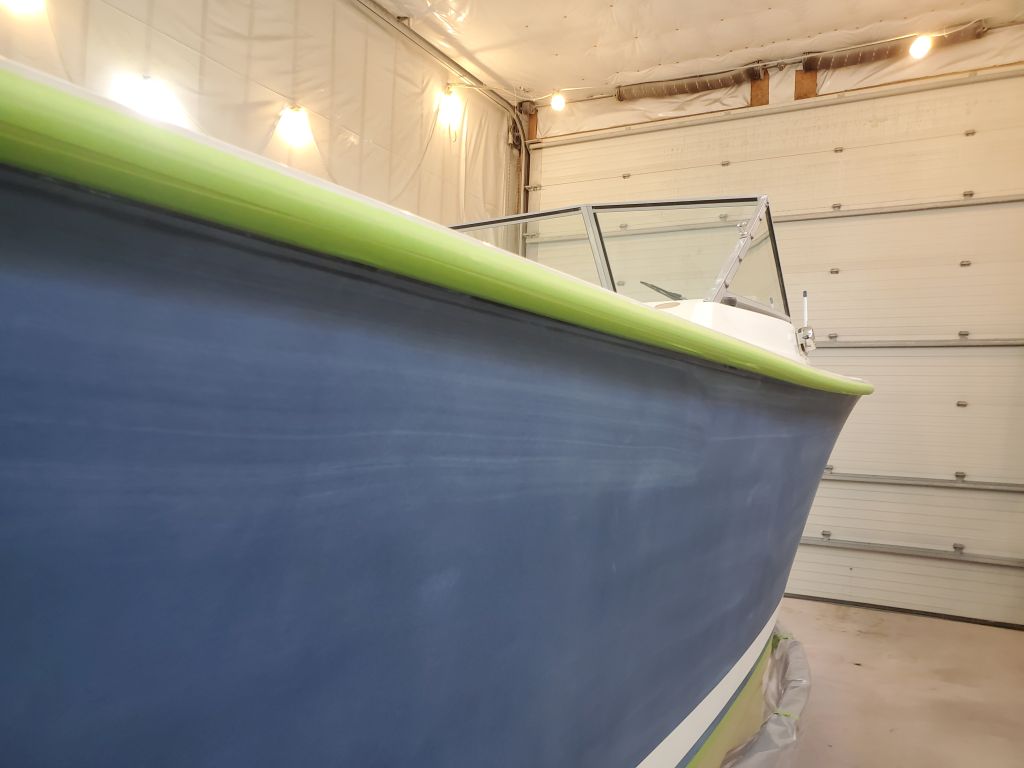
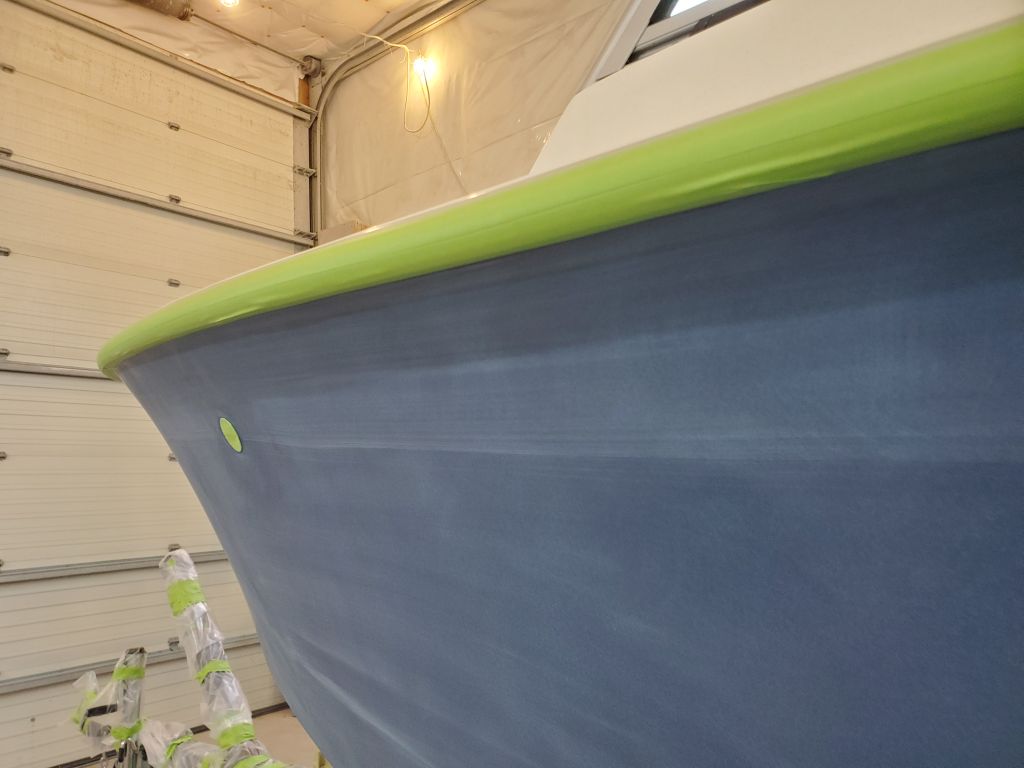
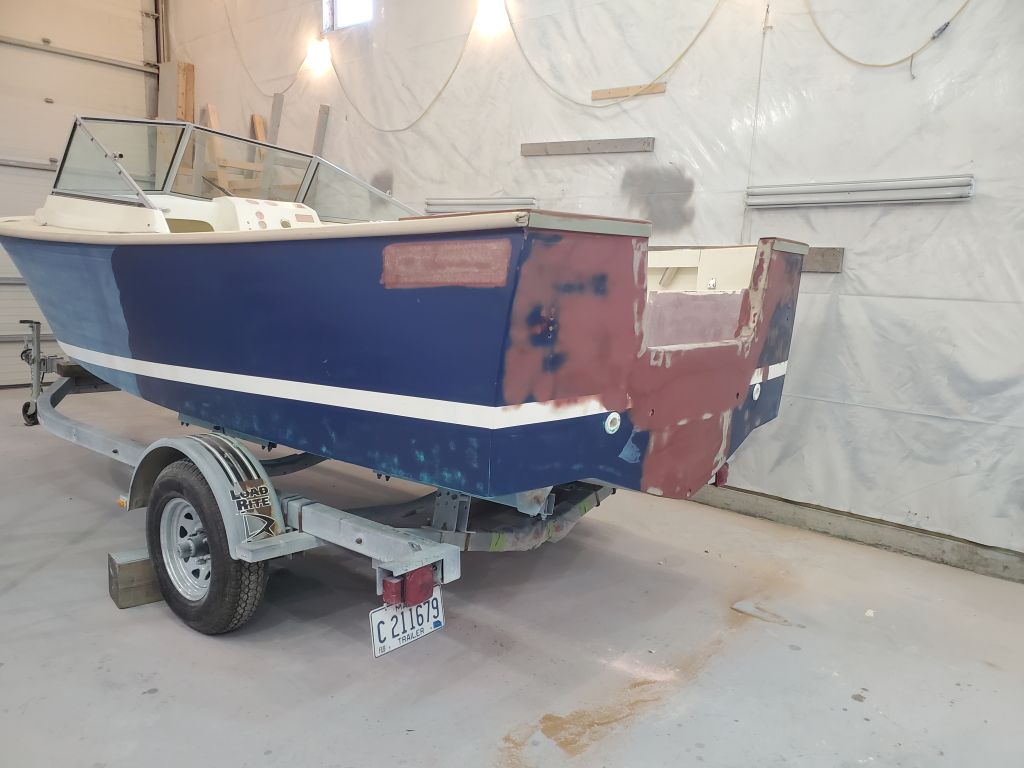
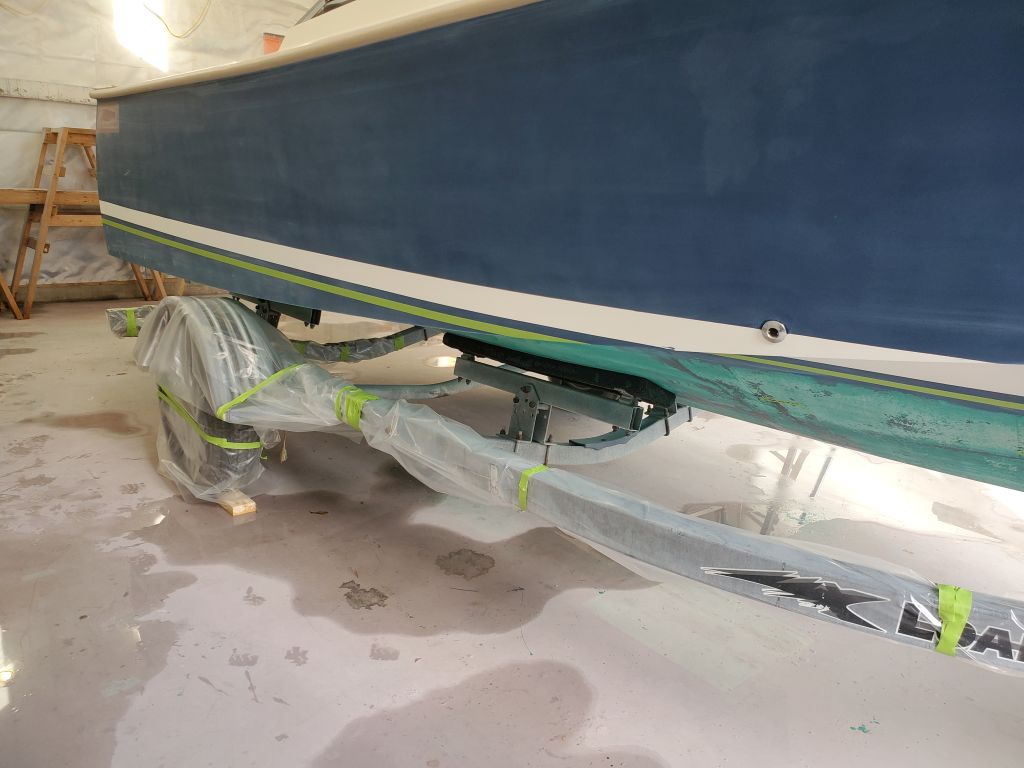
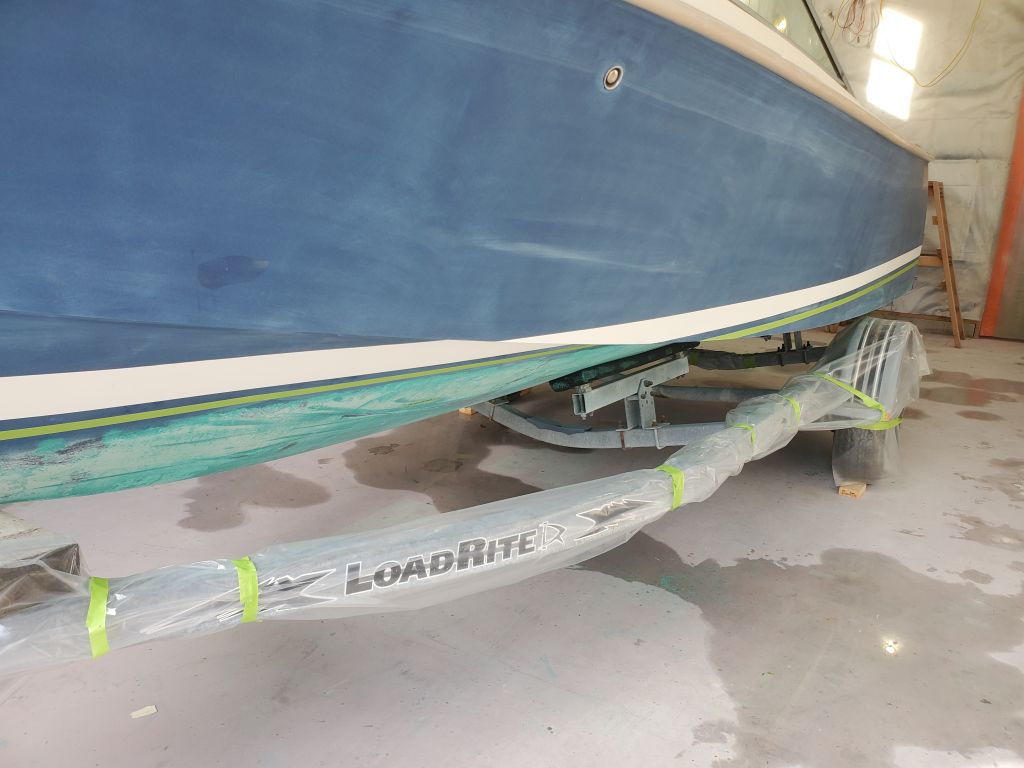
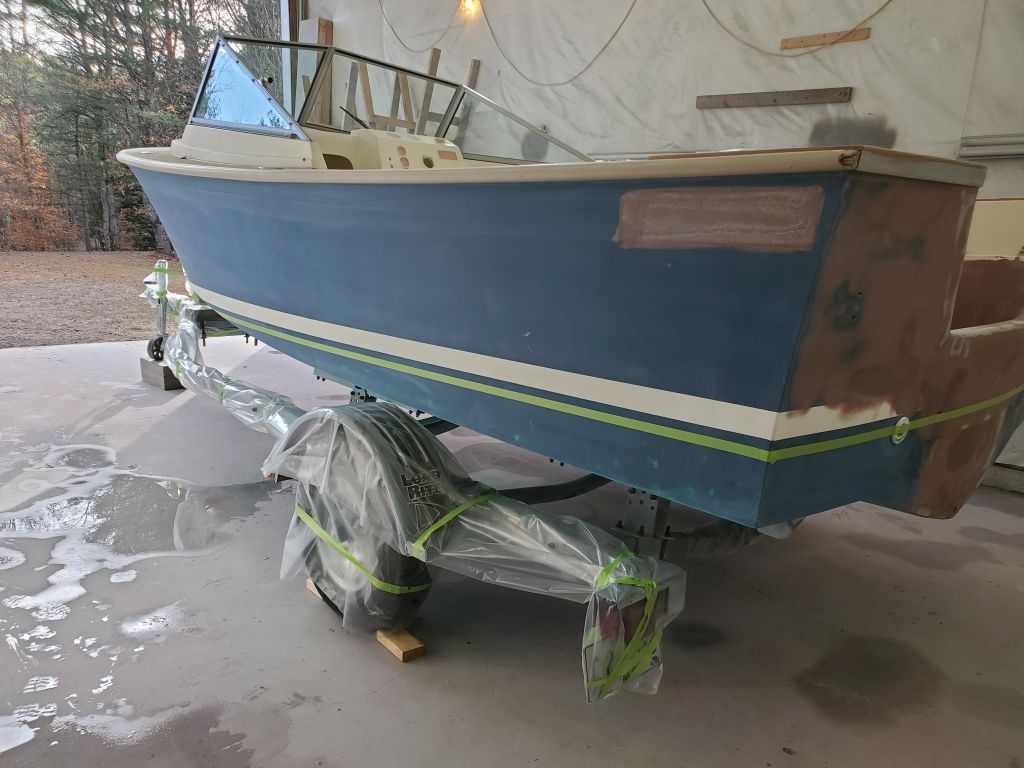
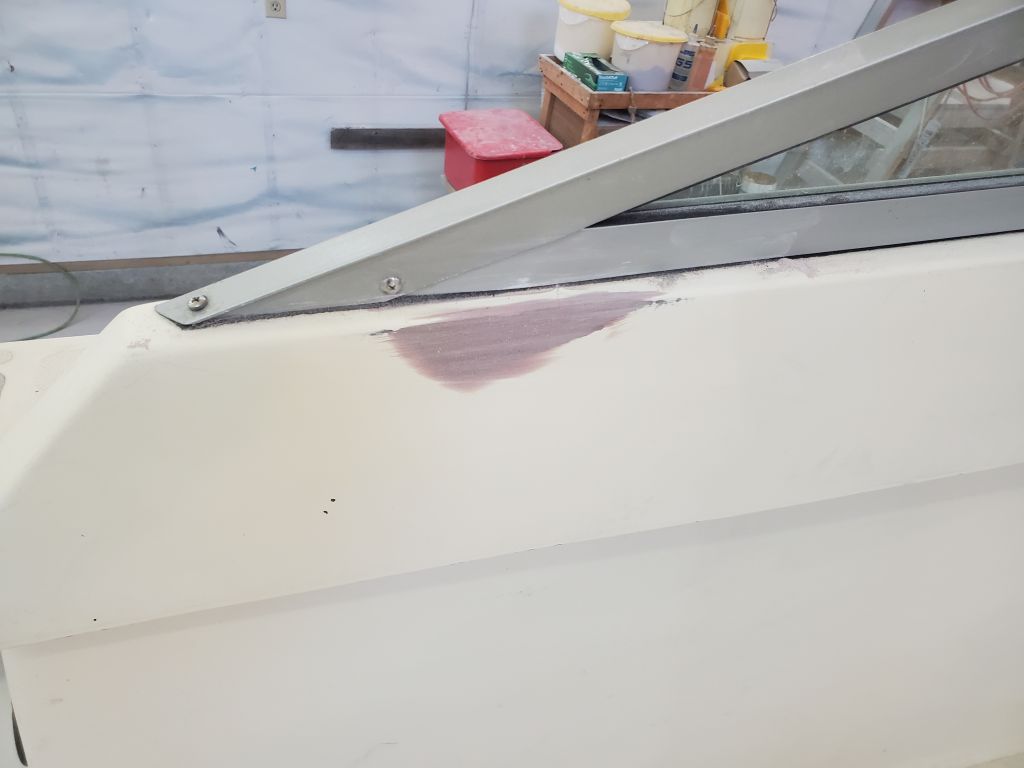
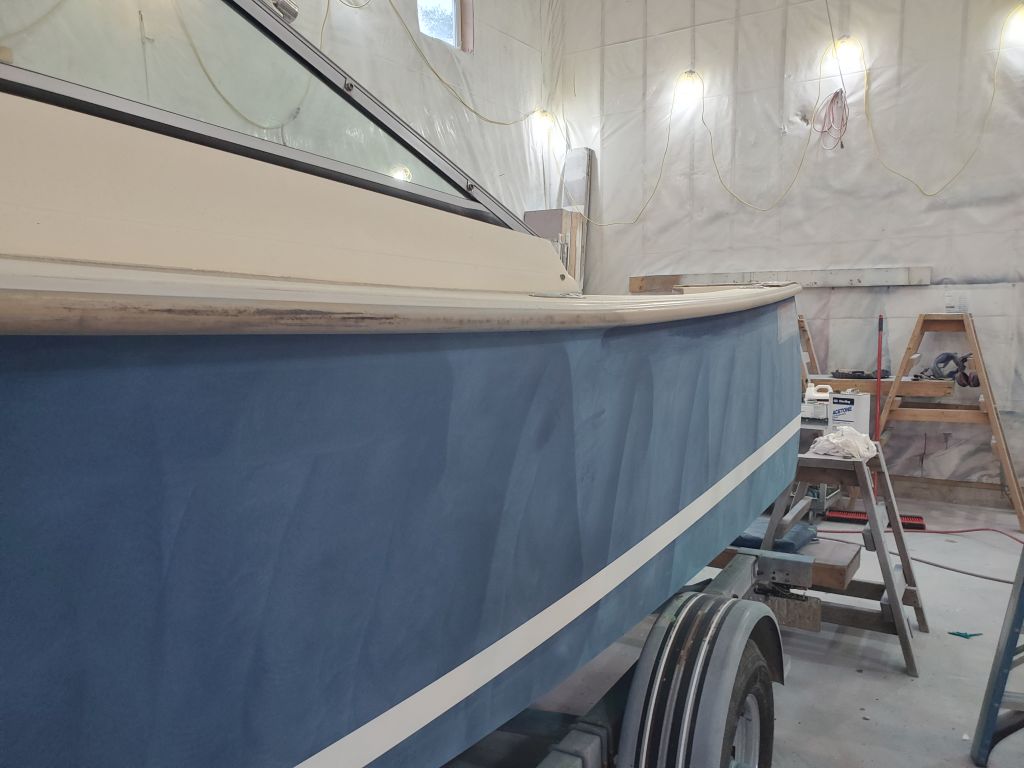
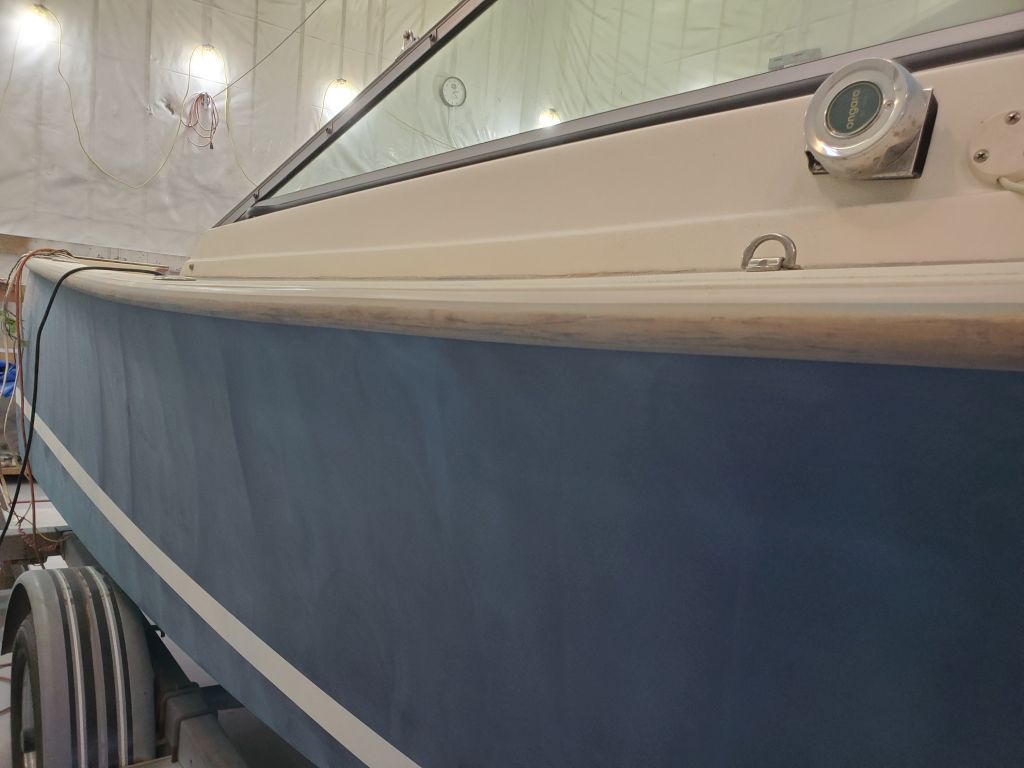
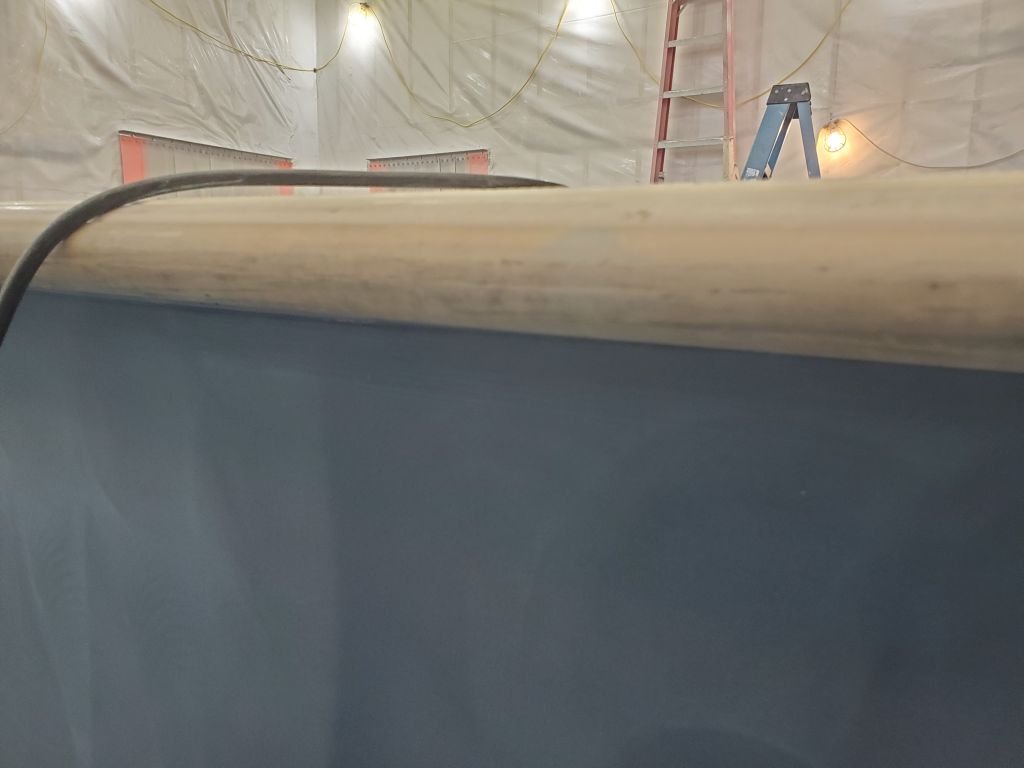
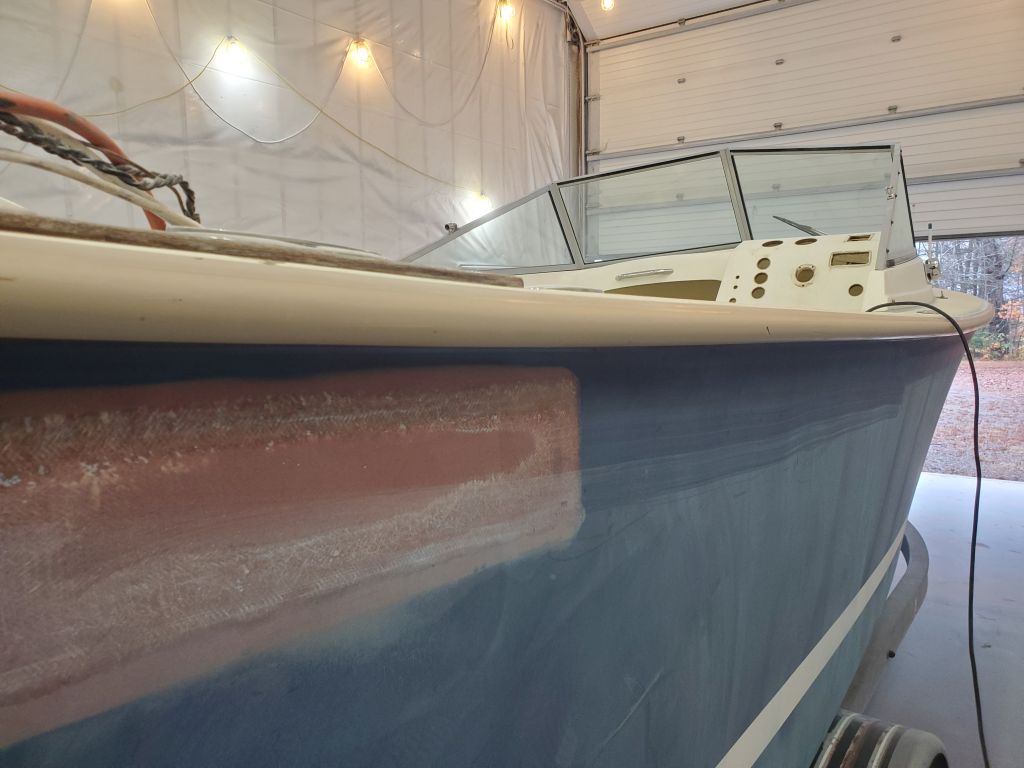
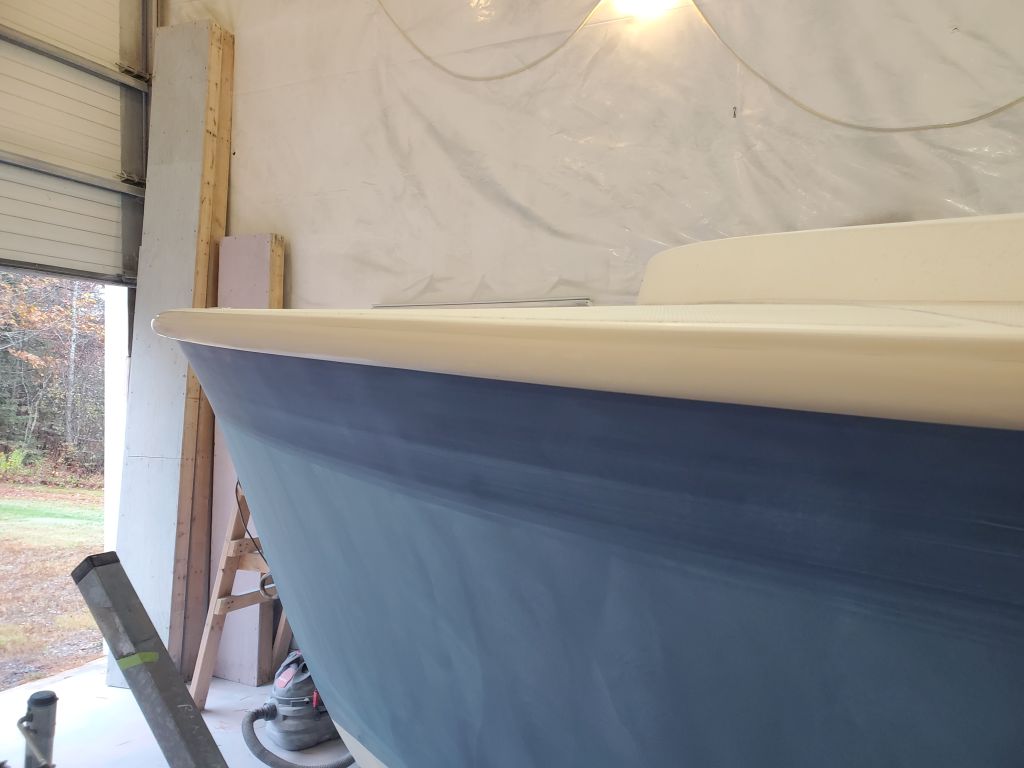
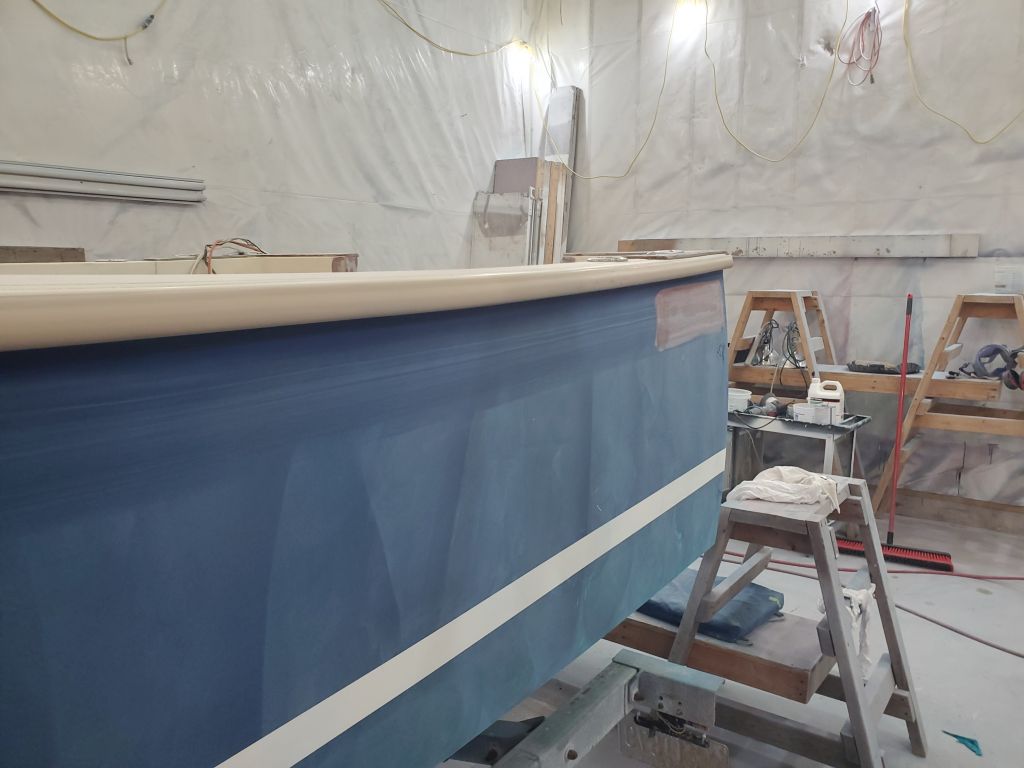
Continuing, I turned back to the starboard side of the hull and sanded the gelcoat, as before, with 60-80 grits on my 6″ orbital finishing sander that I like for broad surfaces requiring little in the way of material removal.  I also worked the tool and grits over the new vent patches and the entire transom.
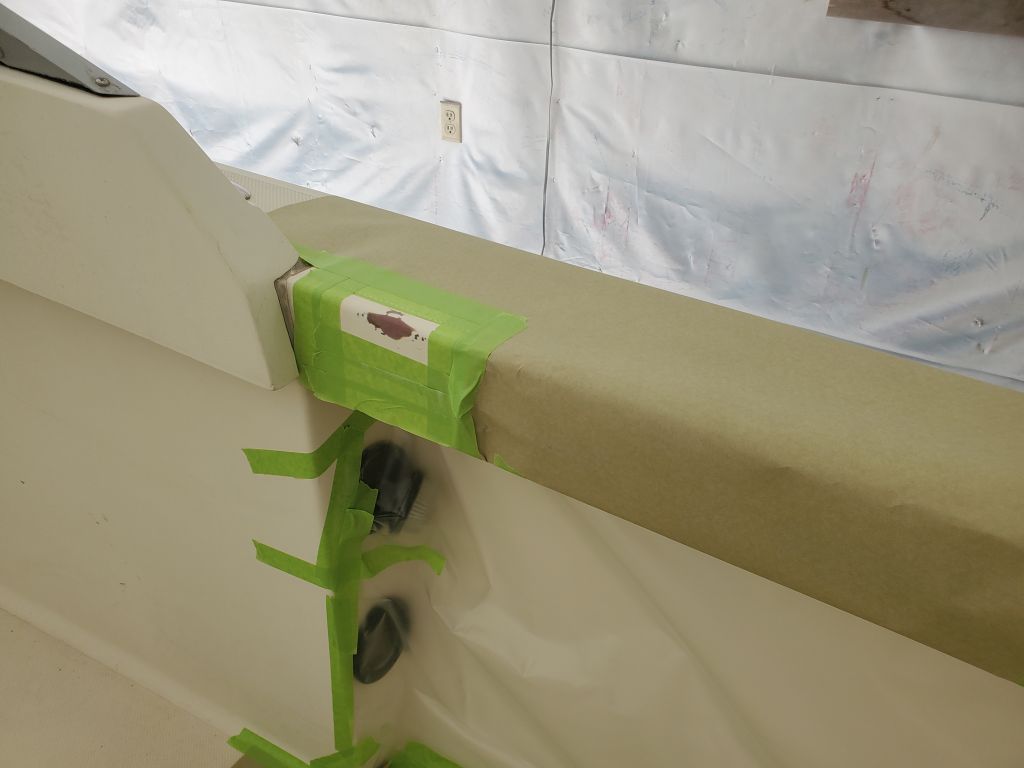
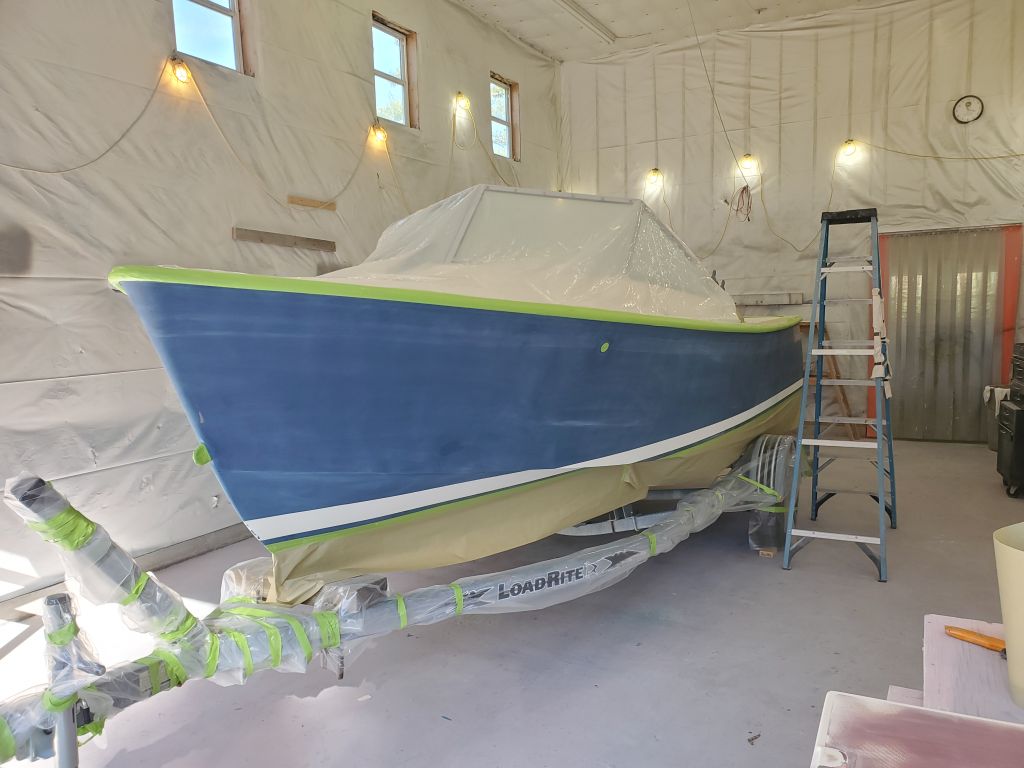
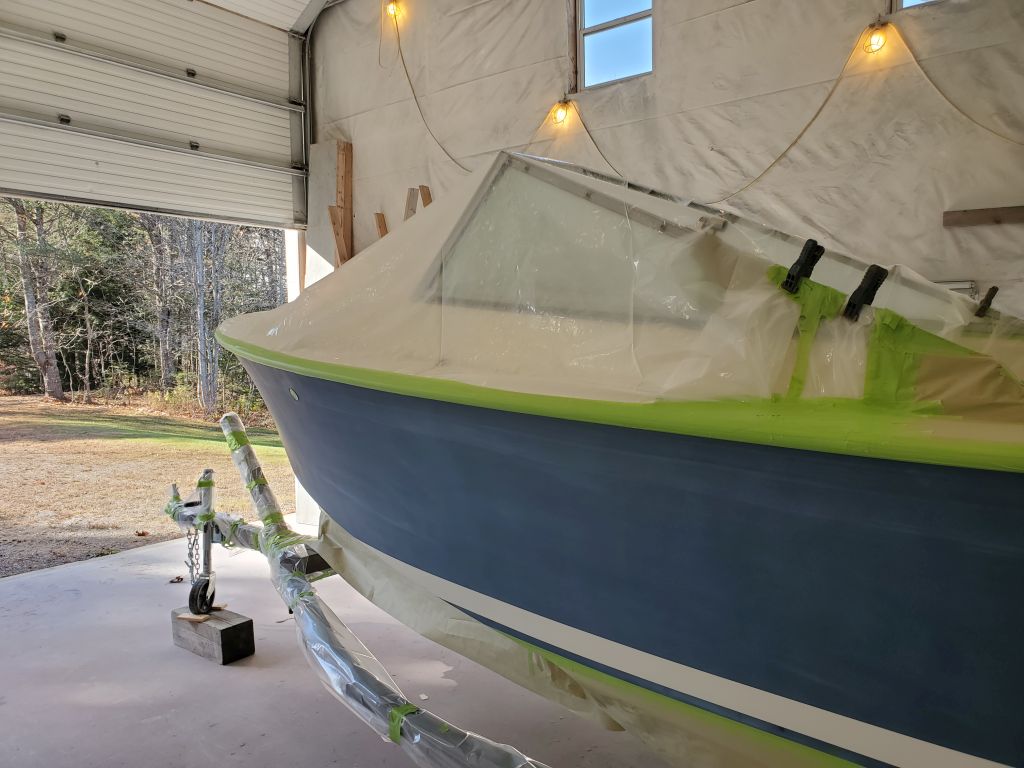
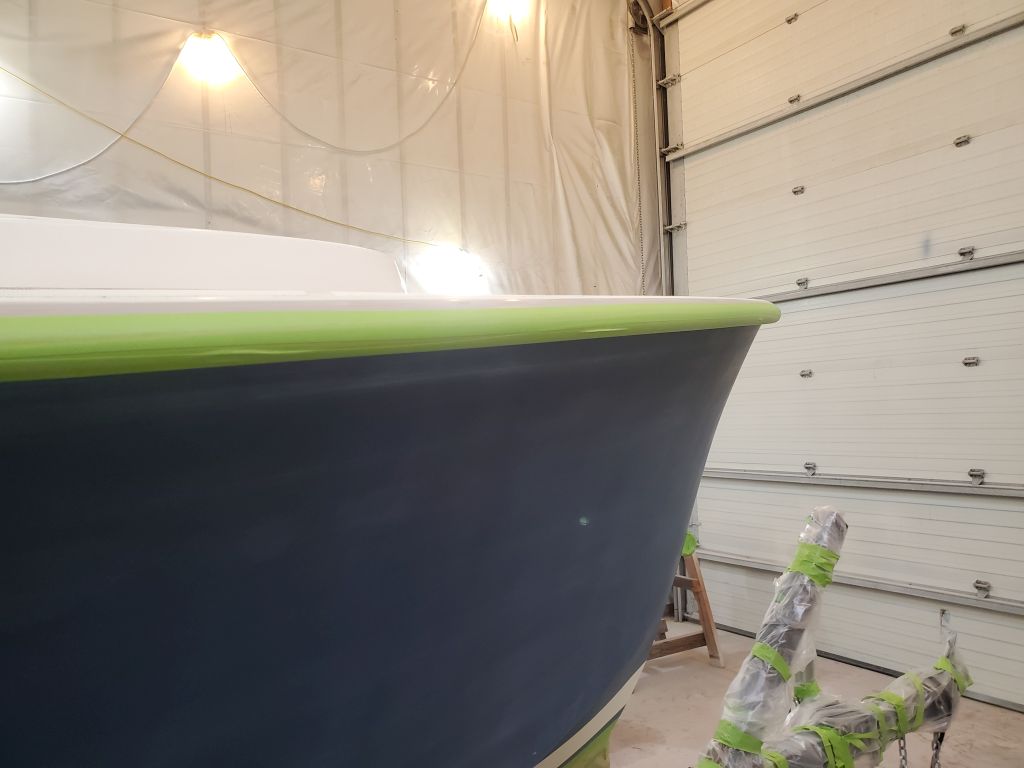
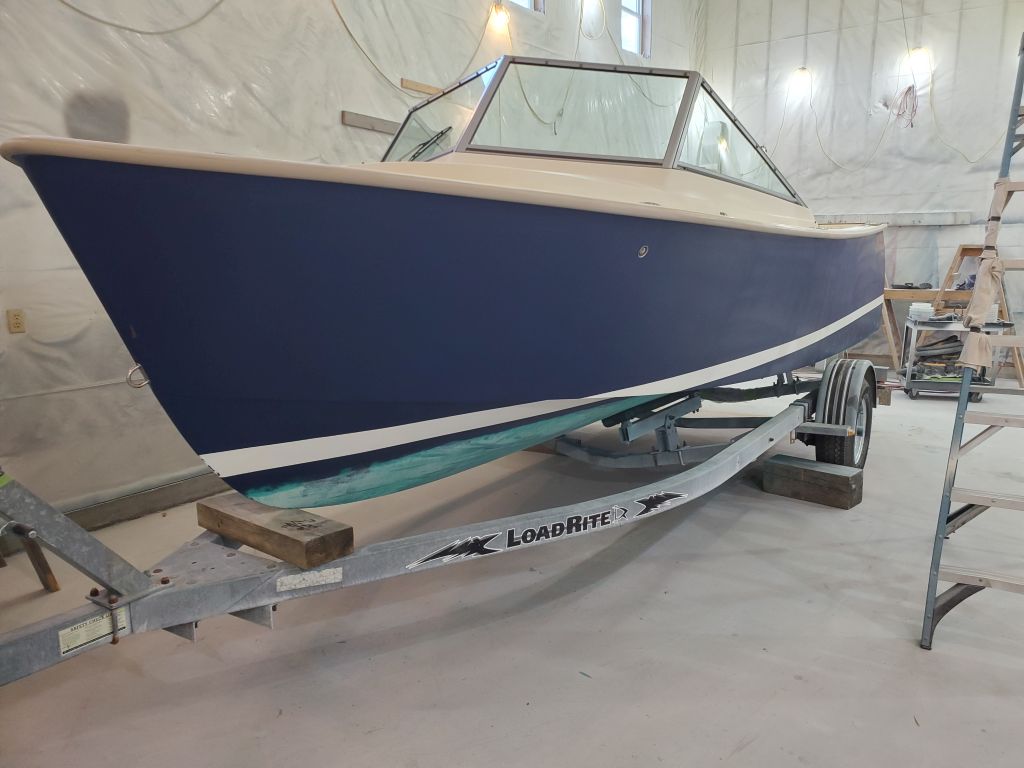
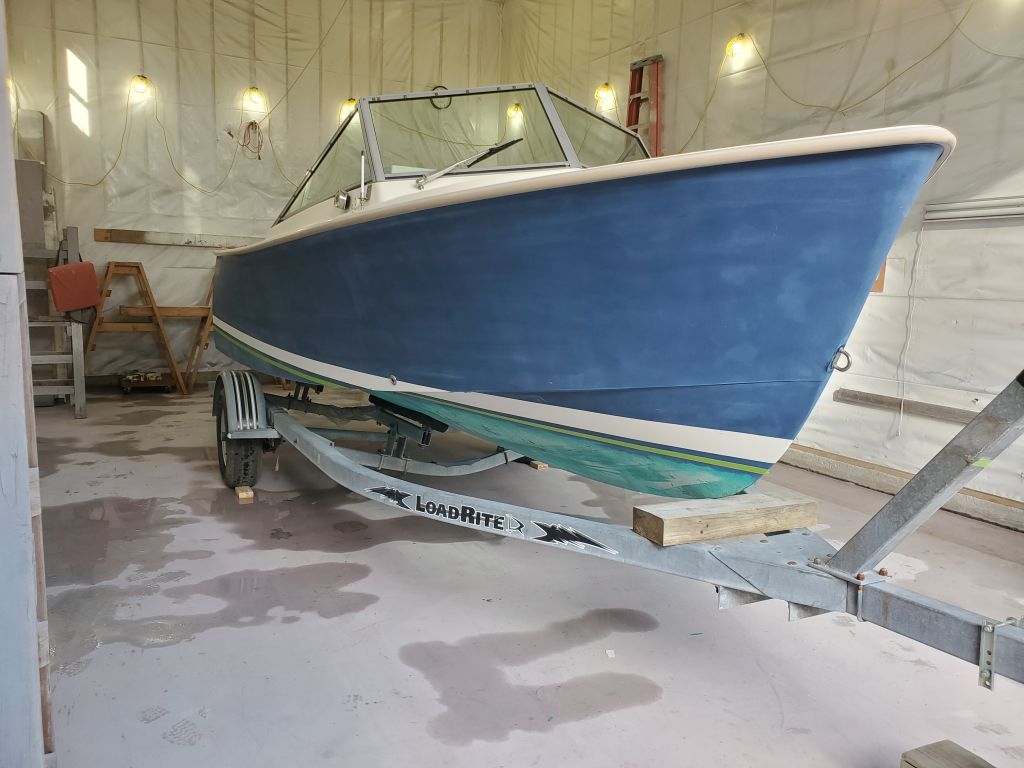
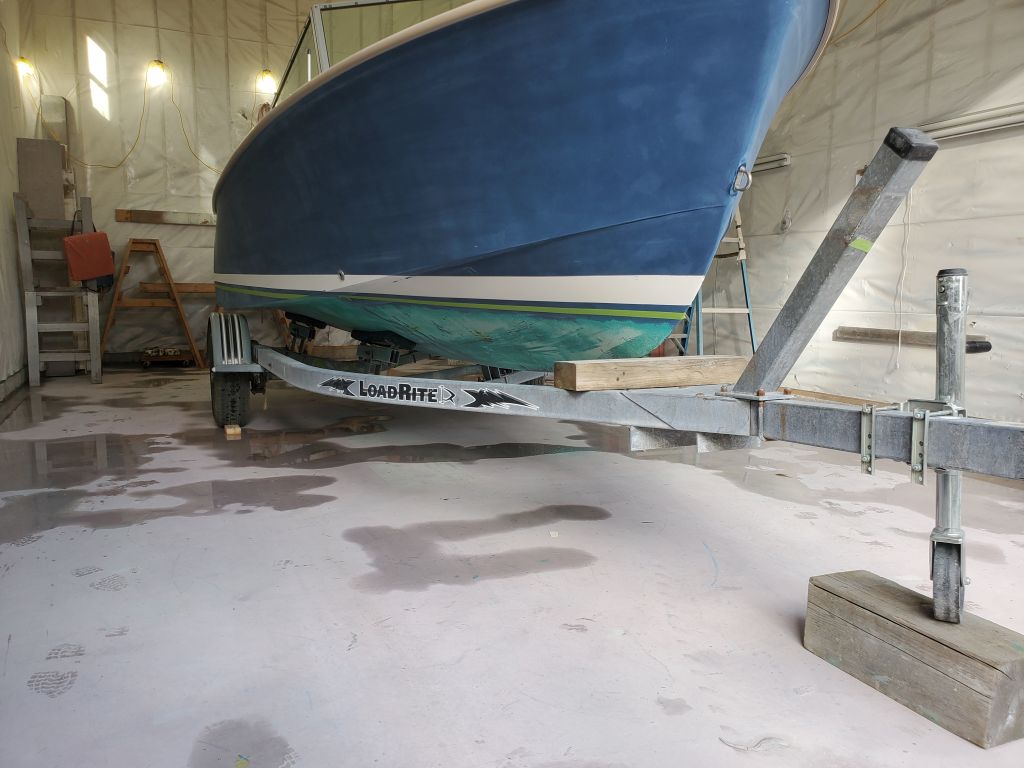
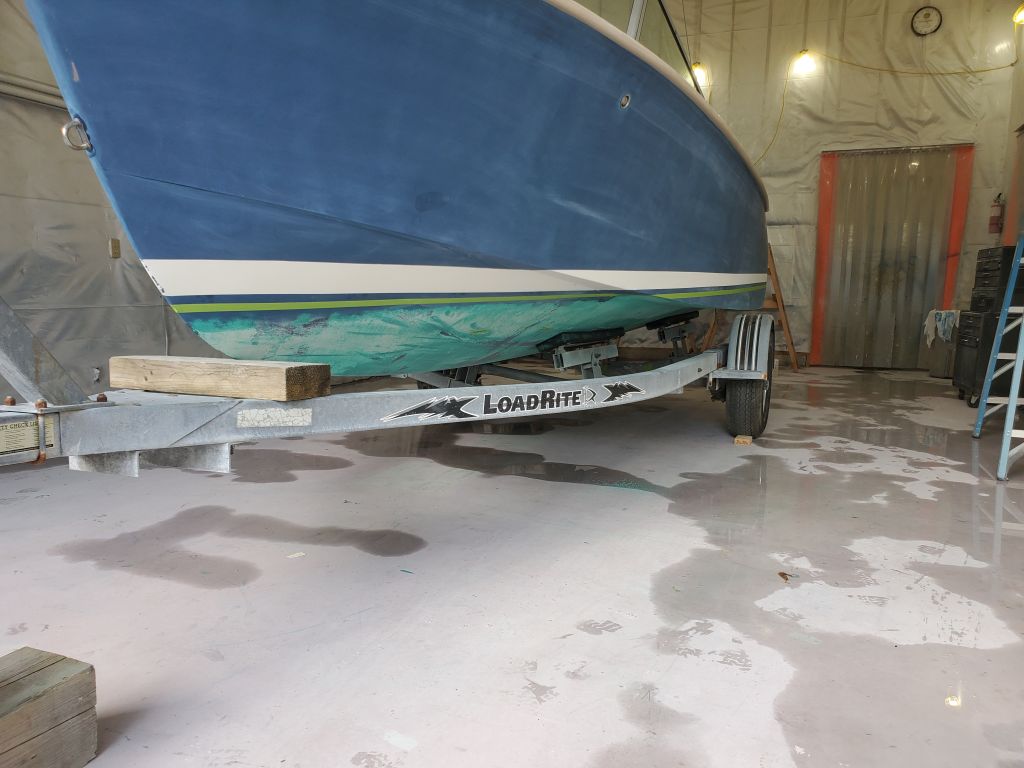
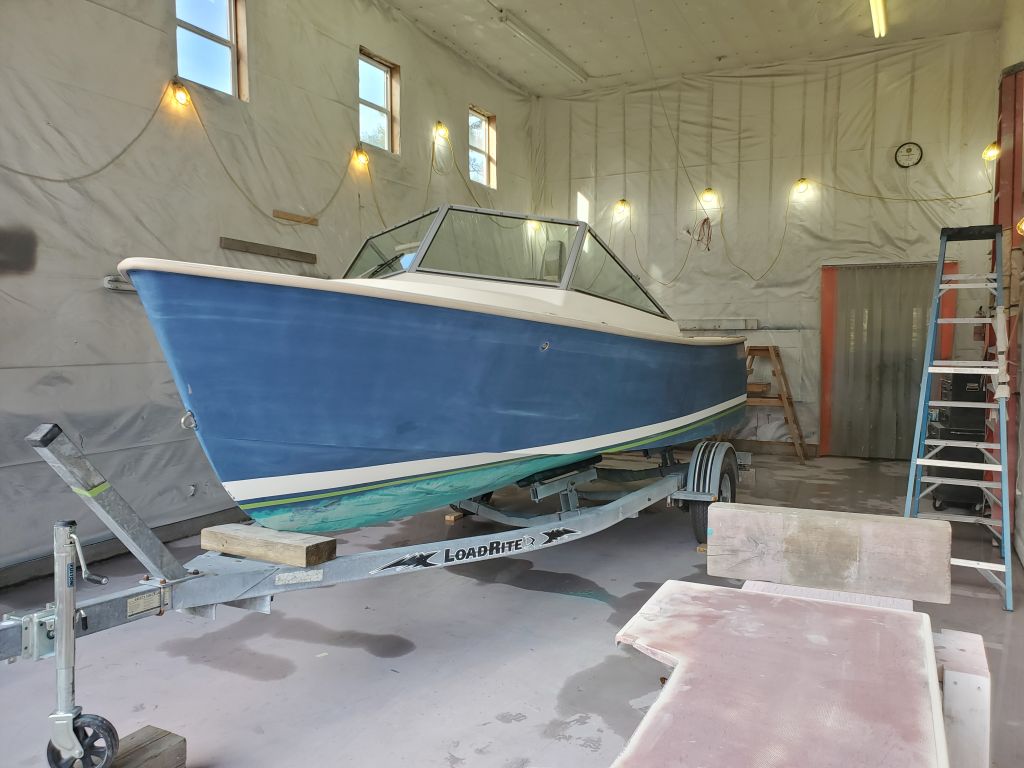
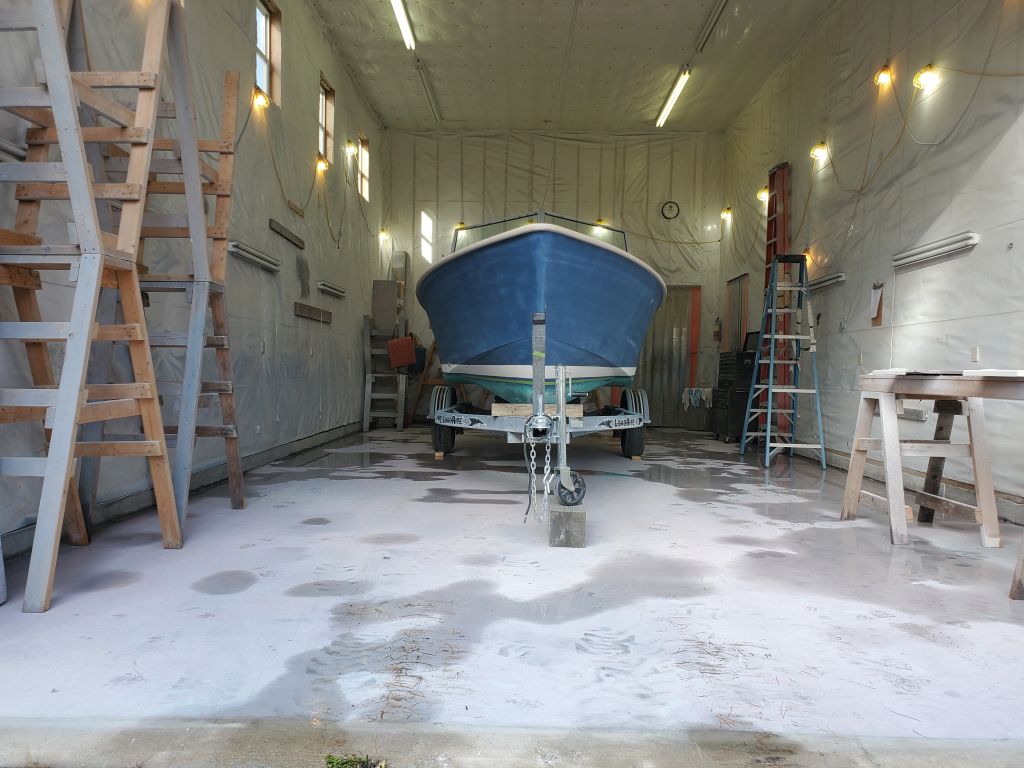
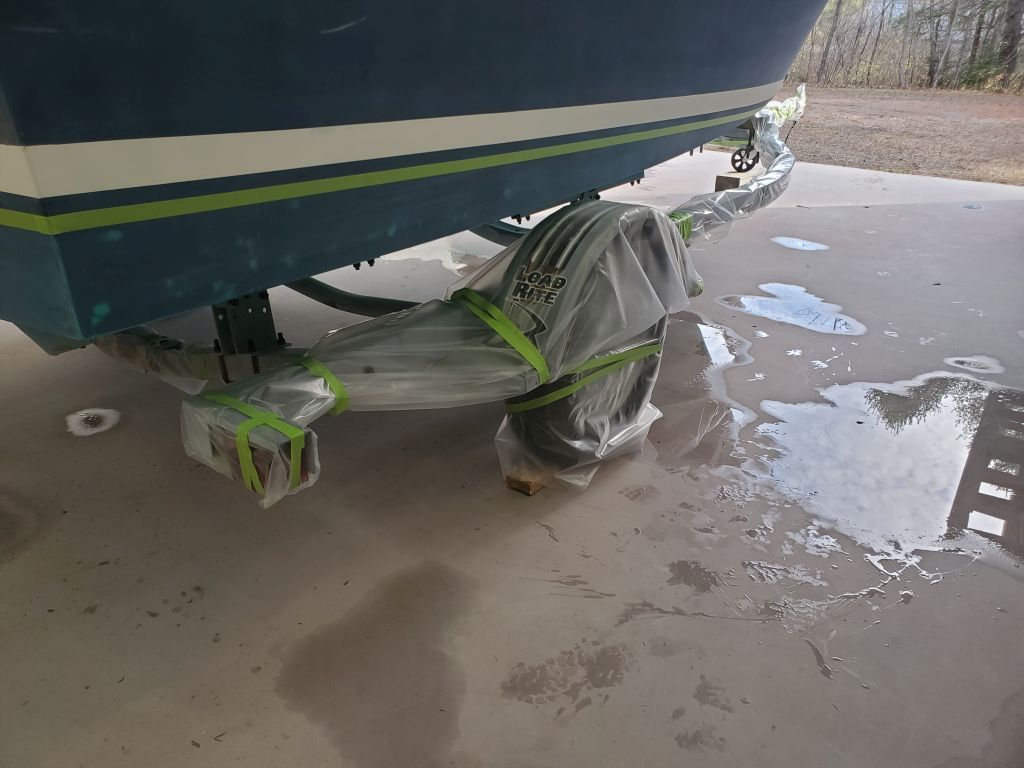
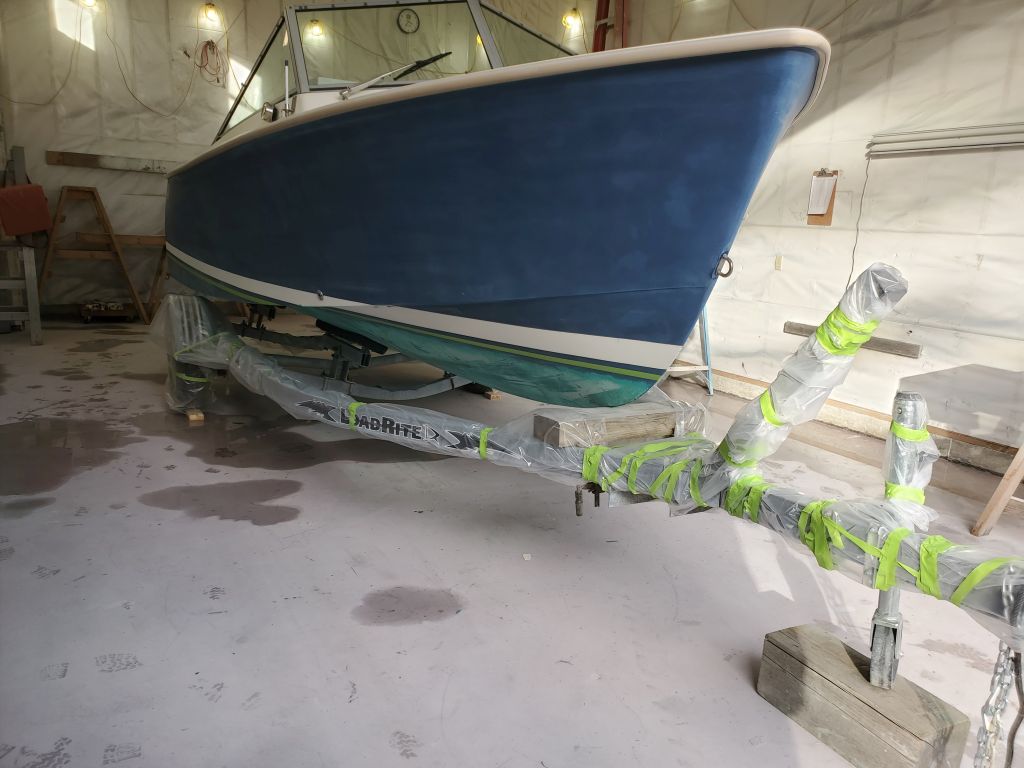
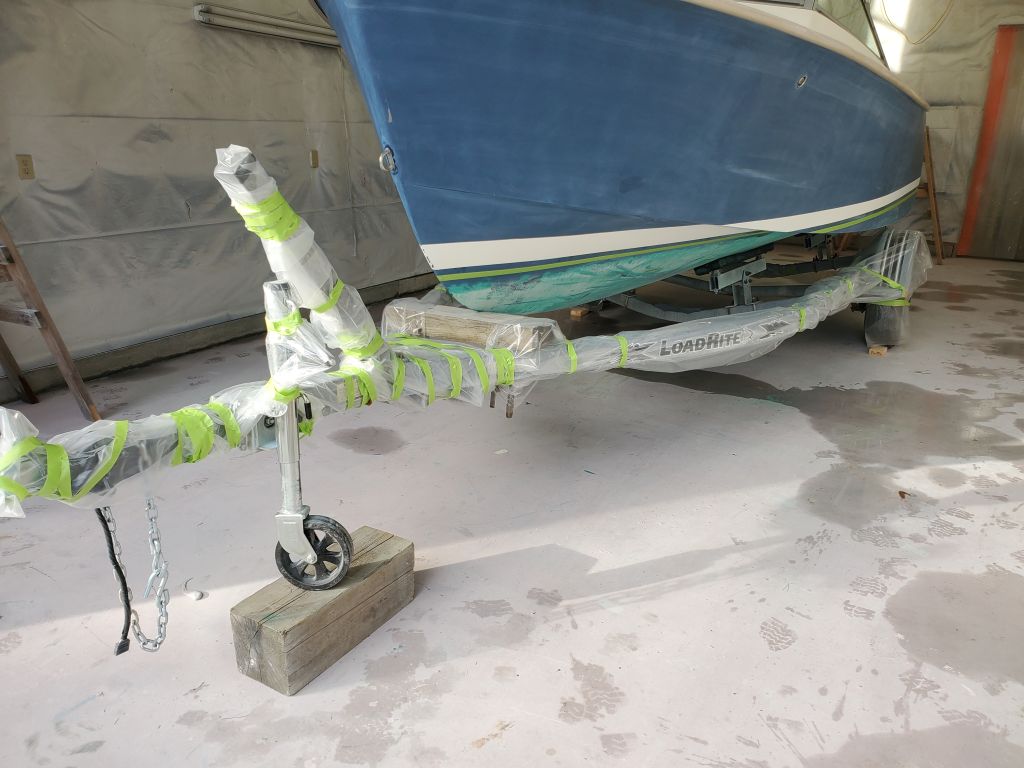
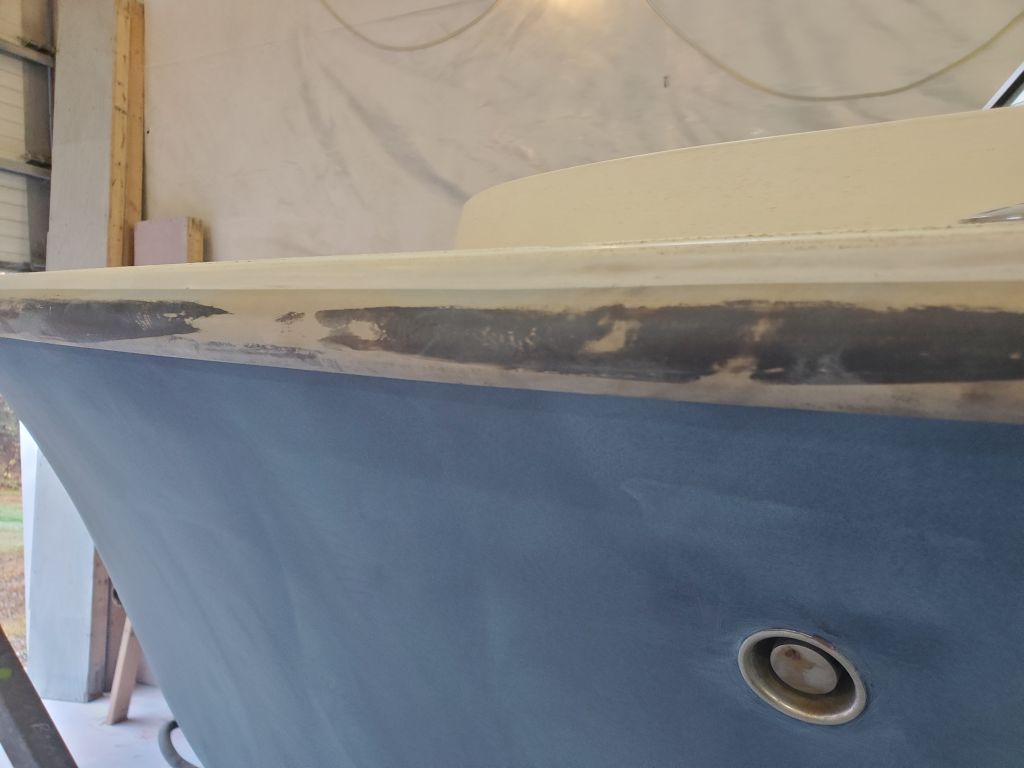
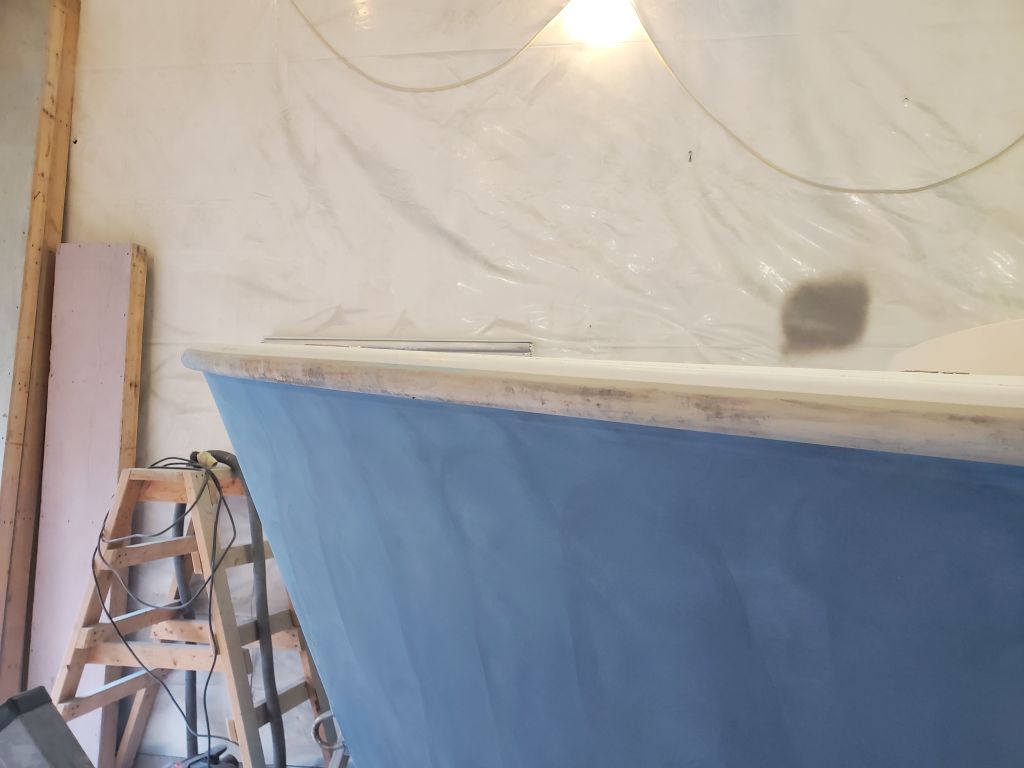
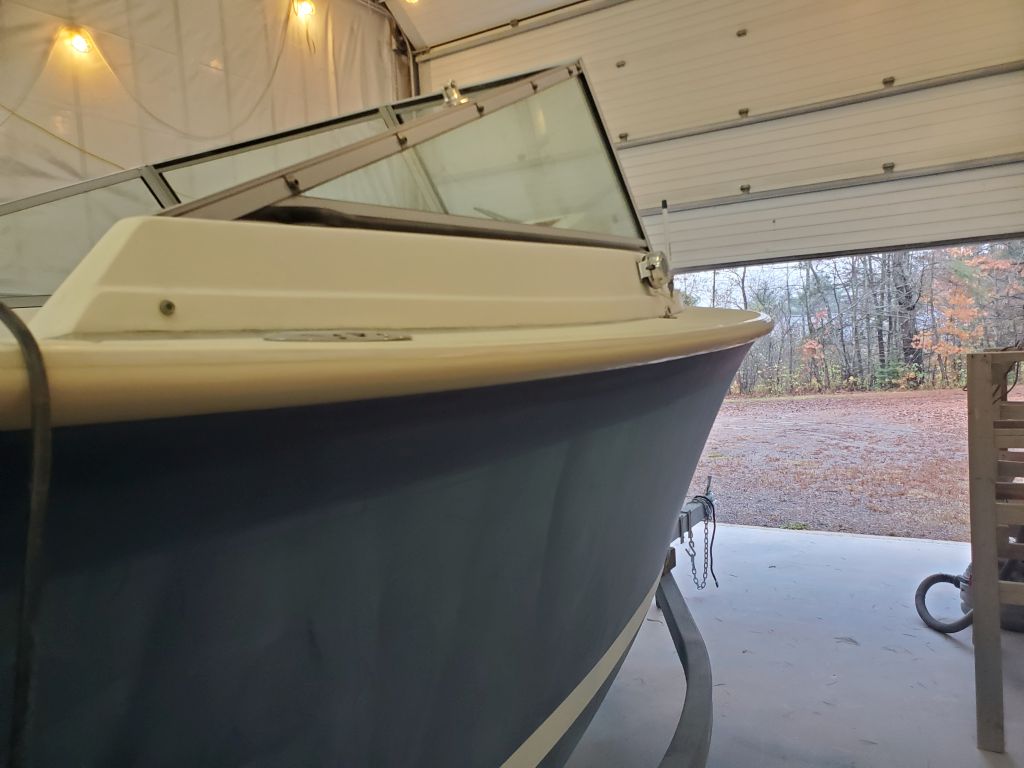
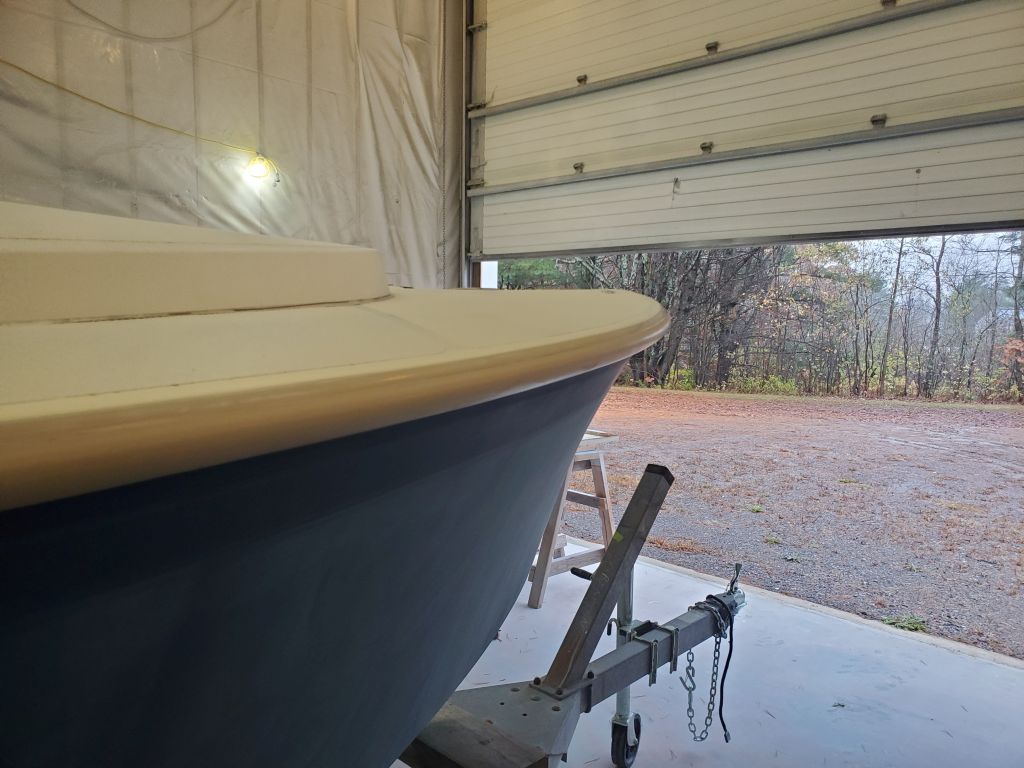
Later, I removed the winch and bow support assembly from the trailer to expose the middle portion of the stem, which would require a bit of sanding to bring it to the same state as the rest of the hull.  I found the boat was a little bouncy on the trailer afterwards, so I chocked in a block beneath the bow to hold her steady.

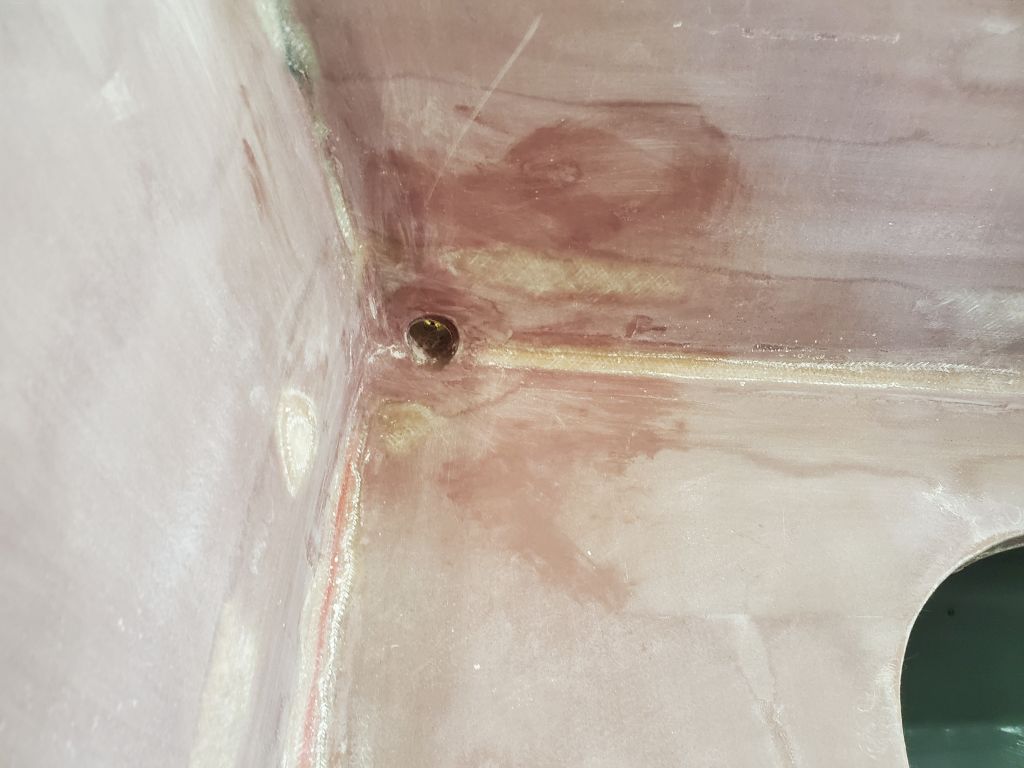
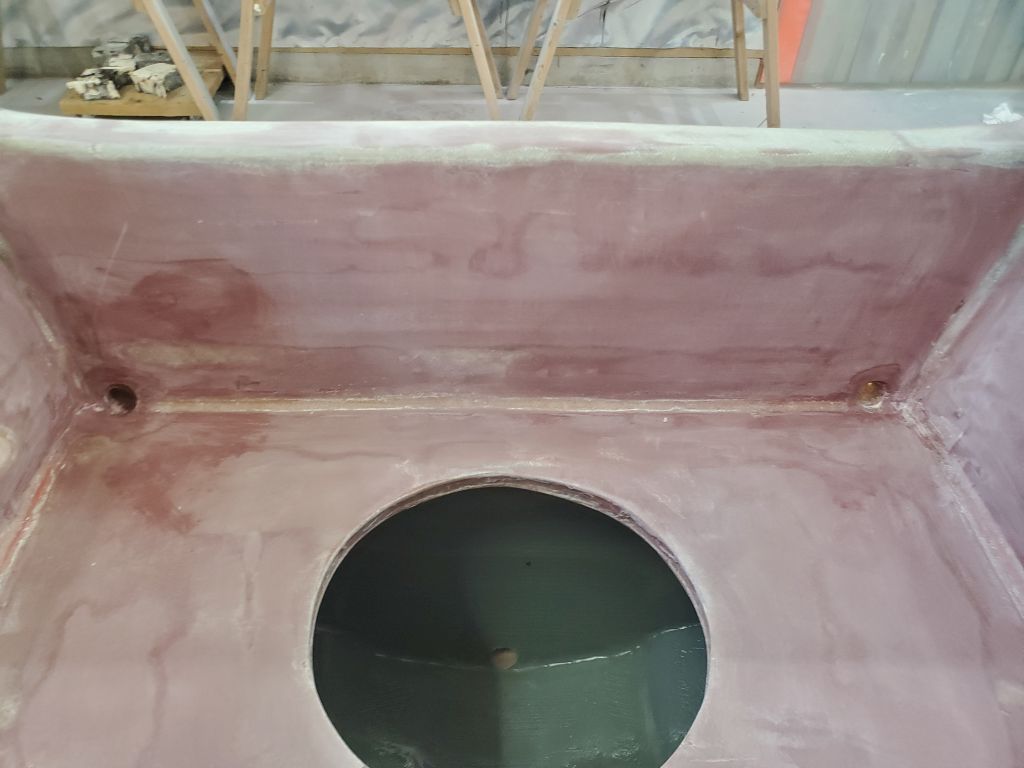
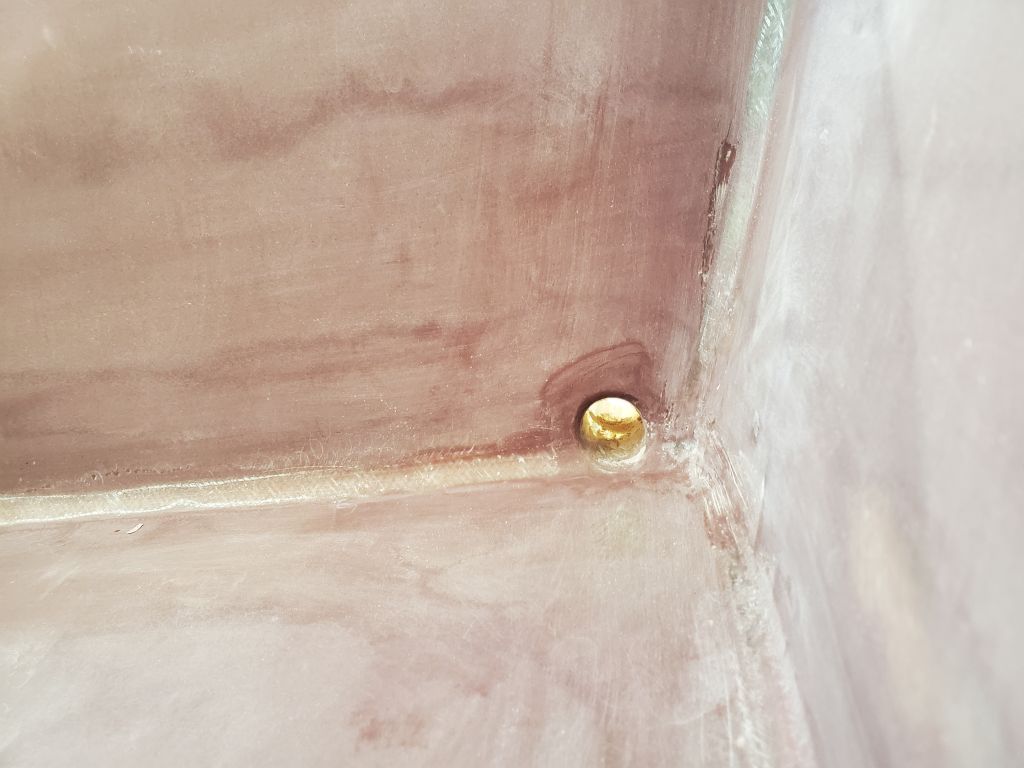
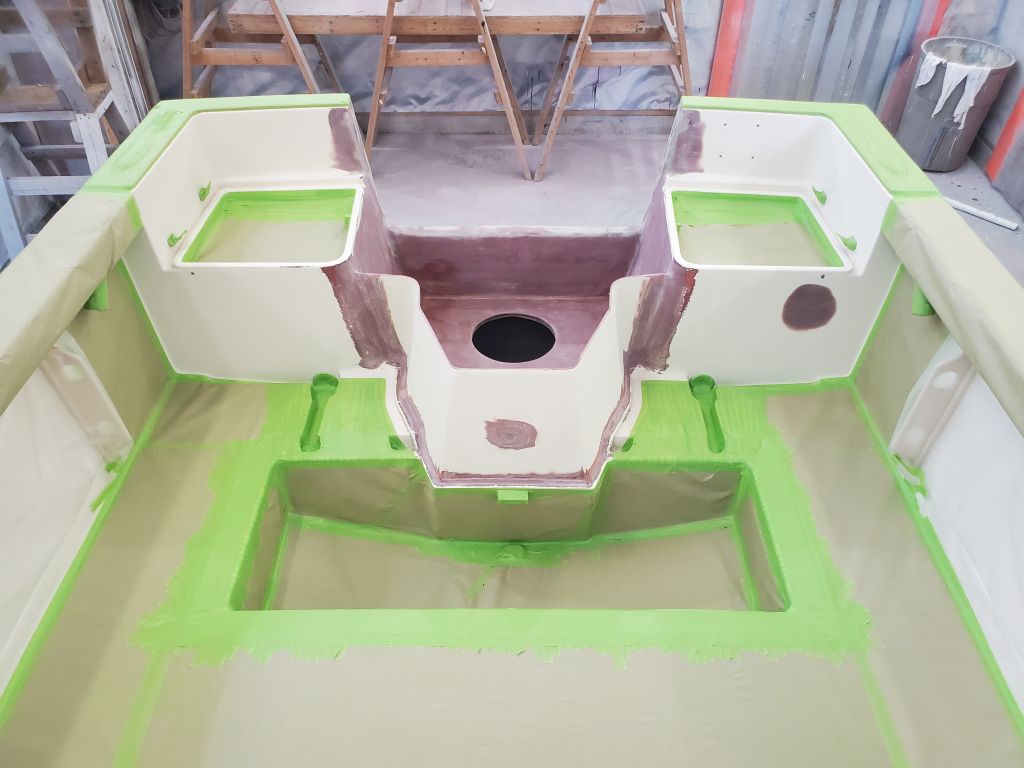
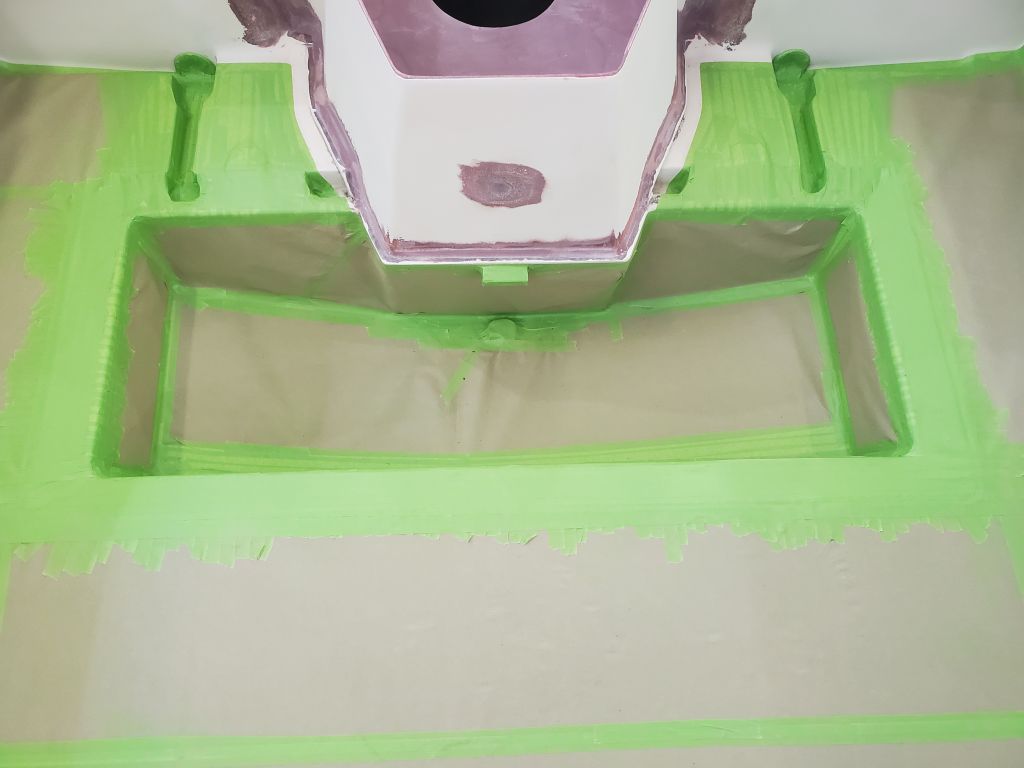
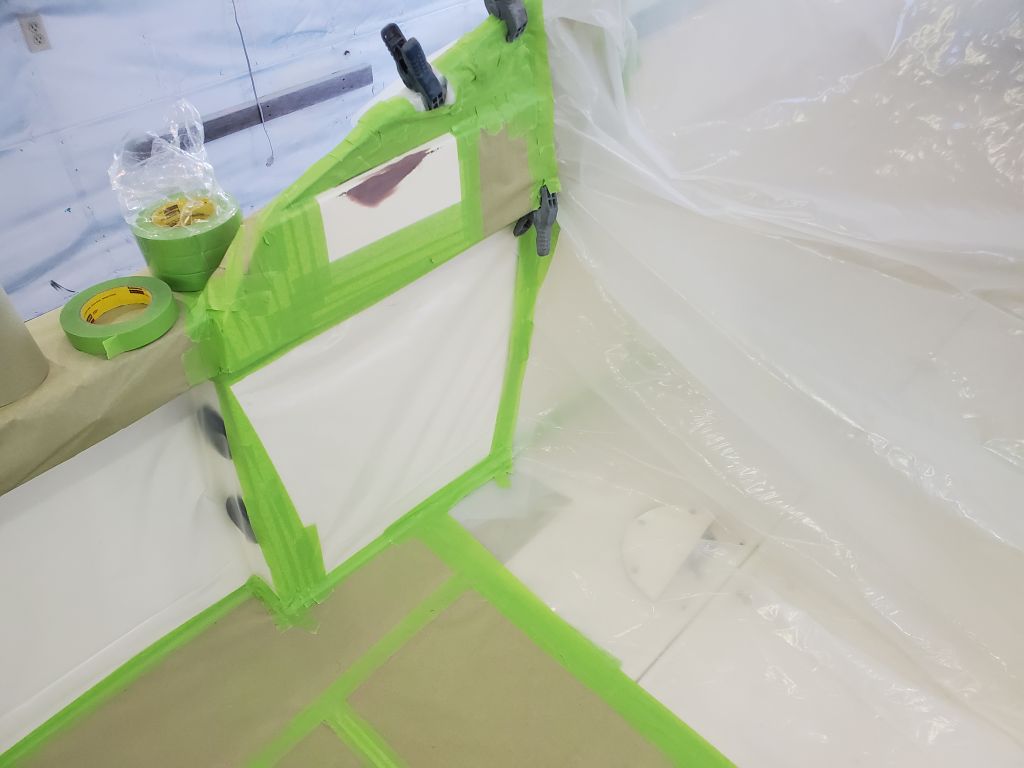
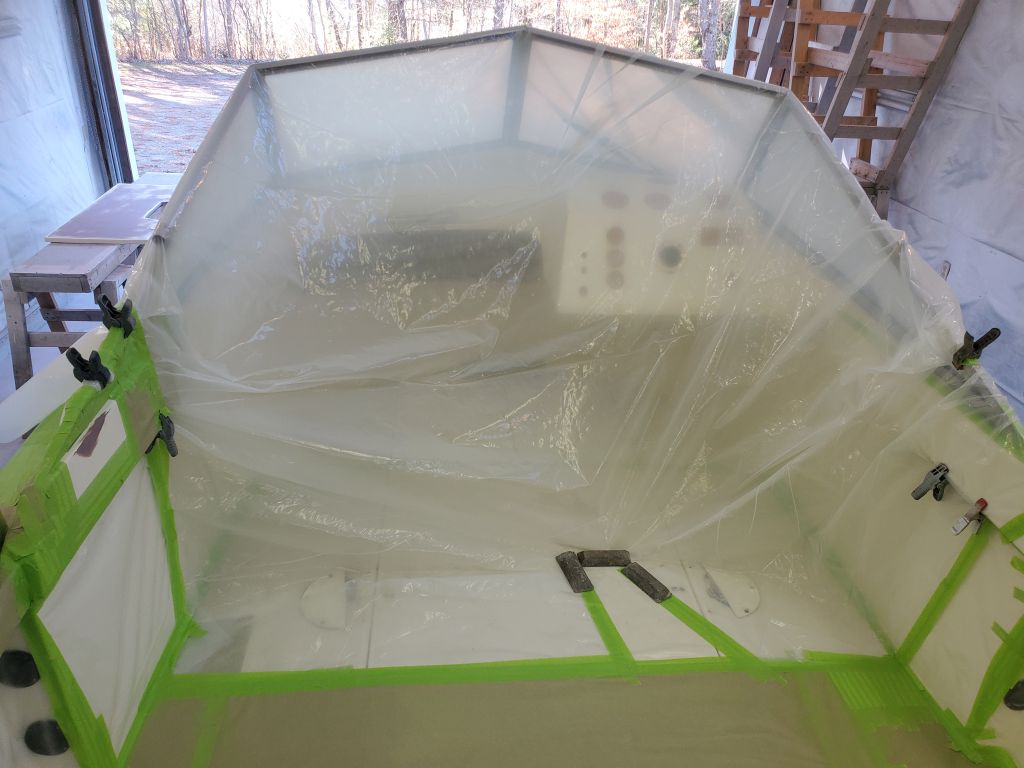
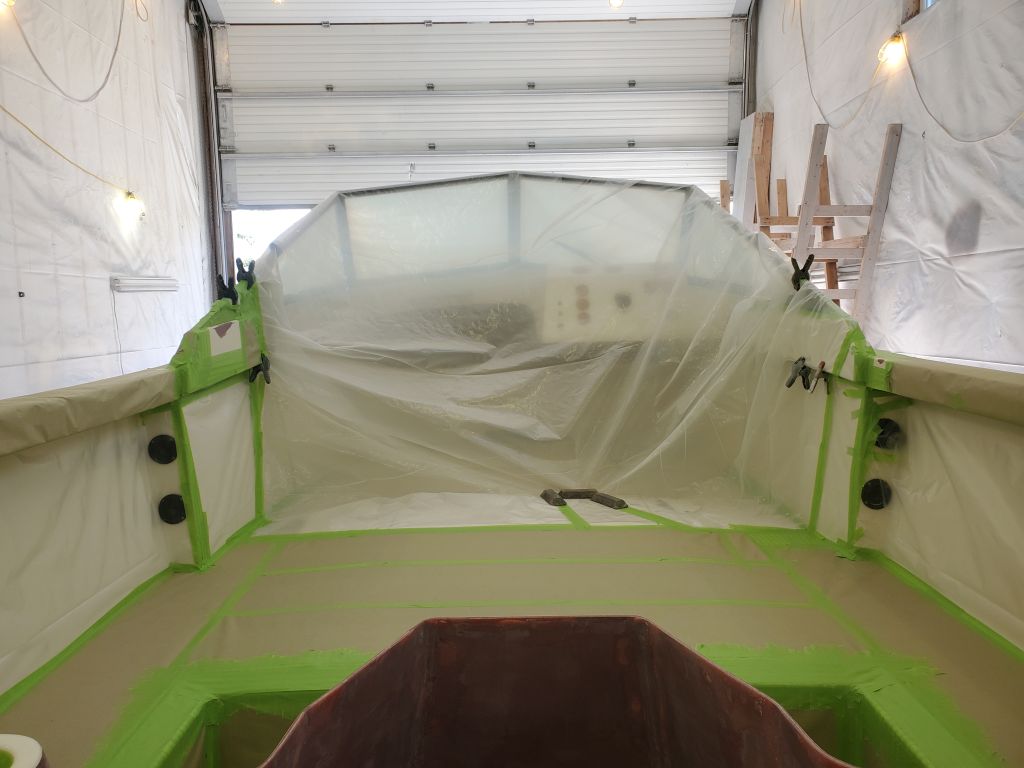
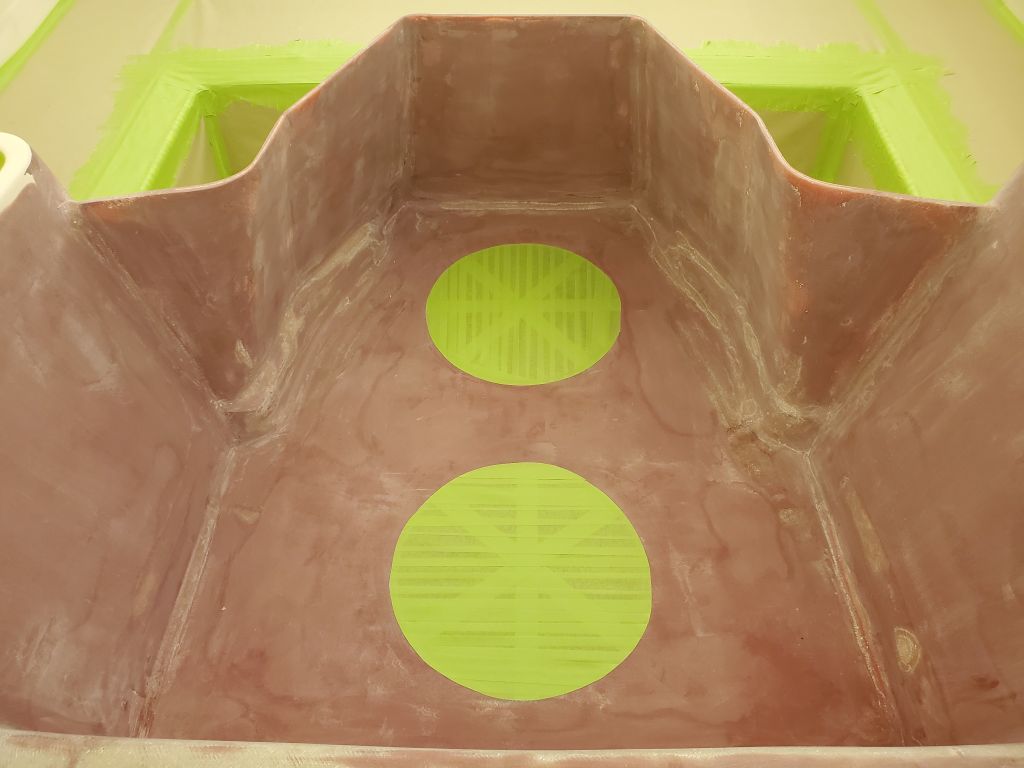
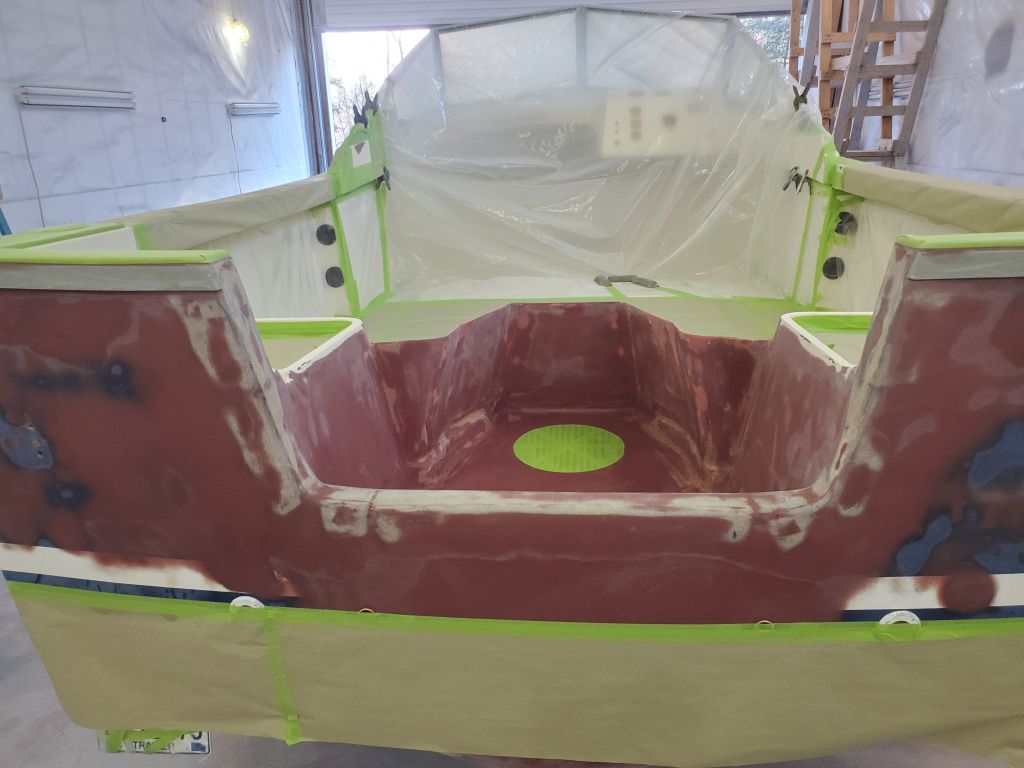
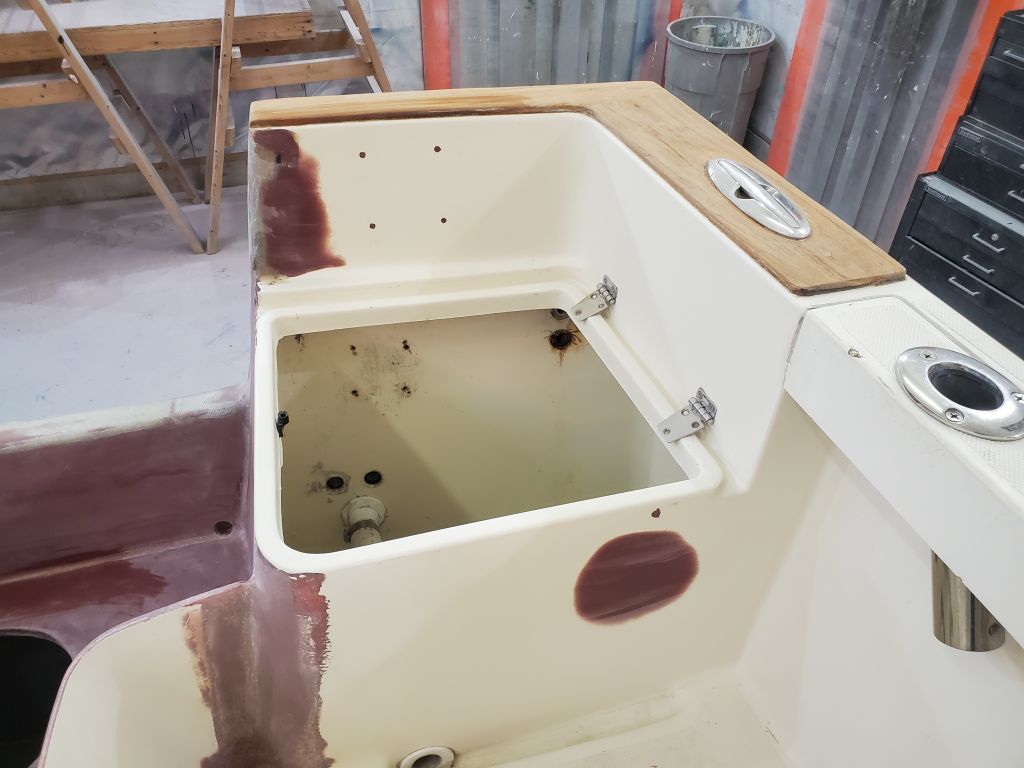
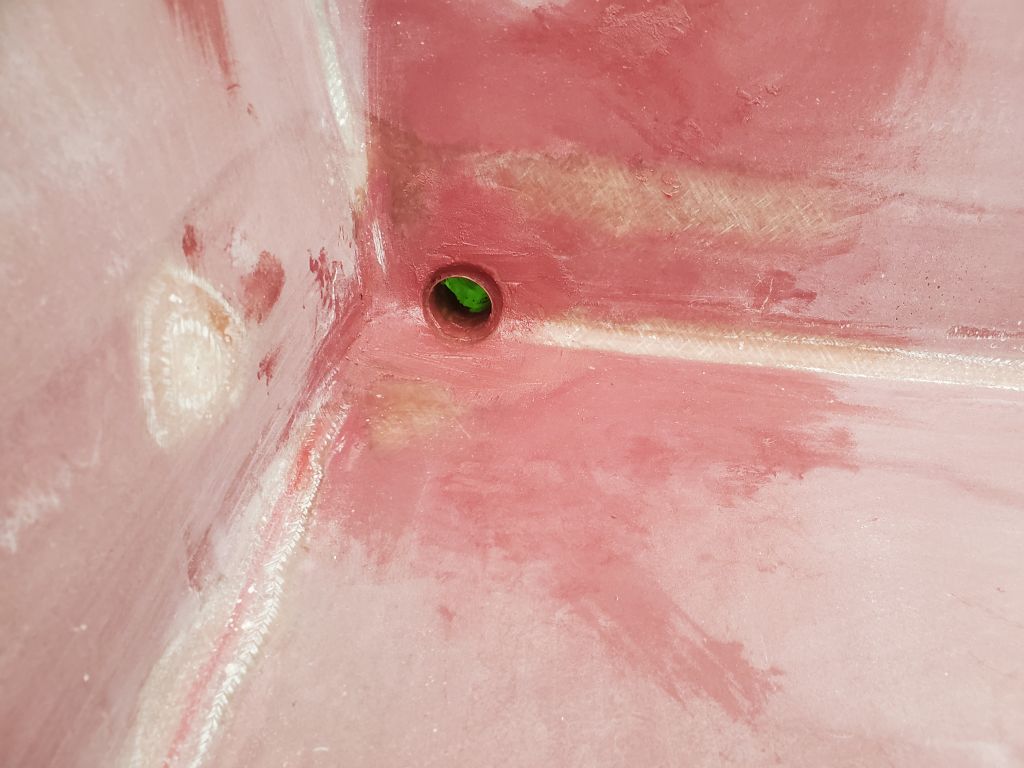
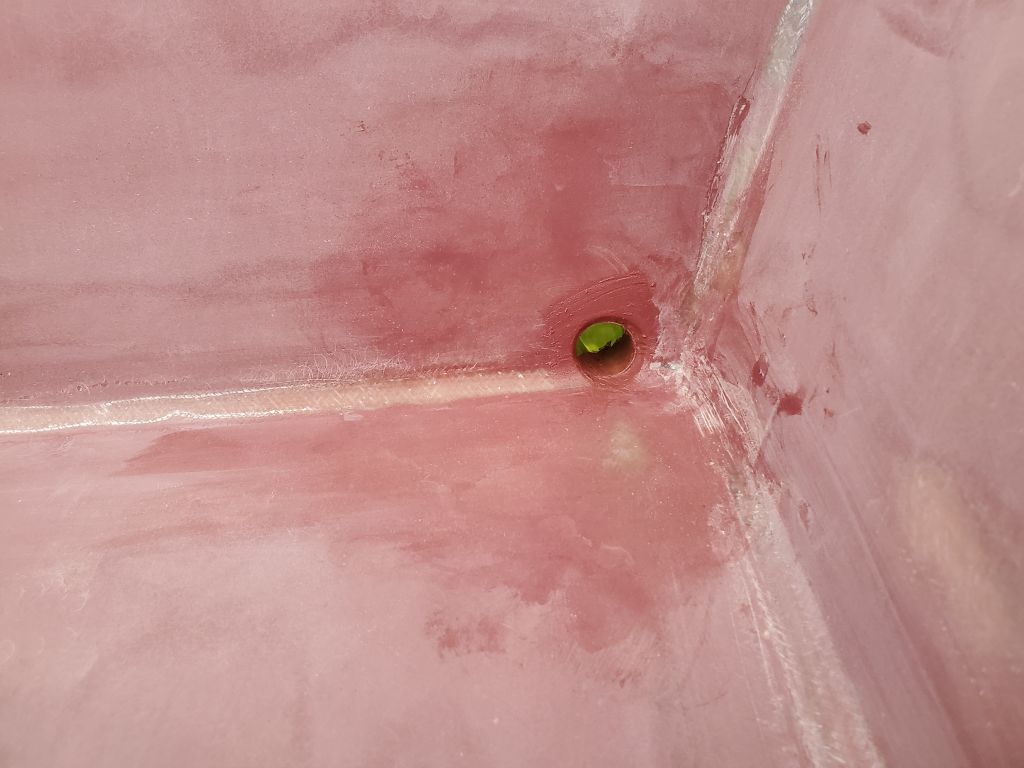
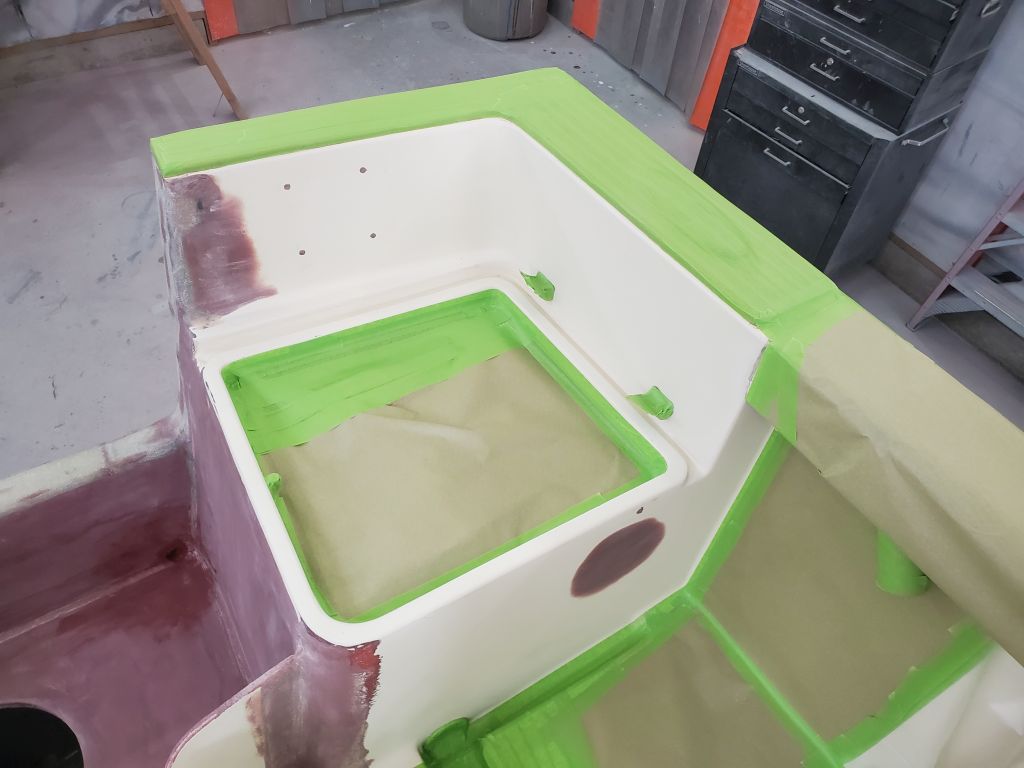
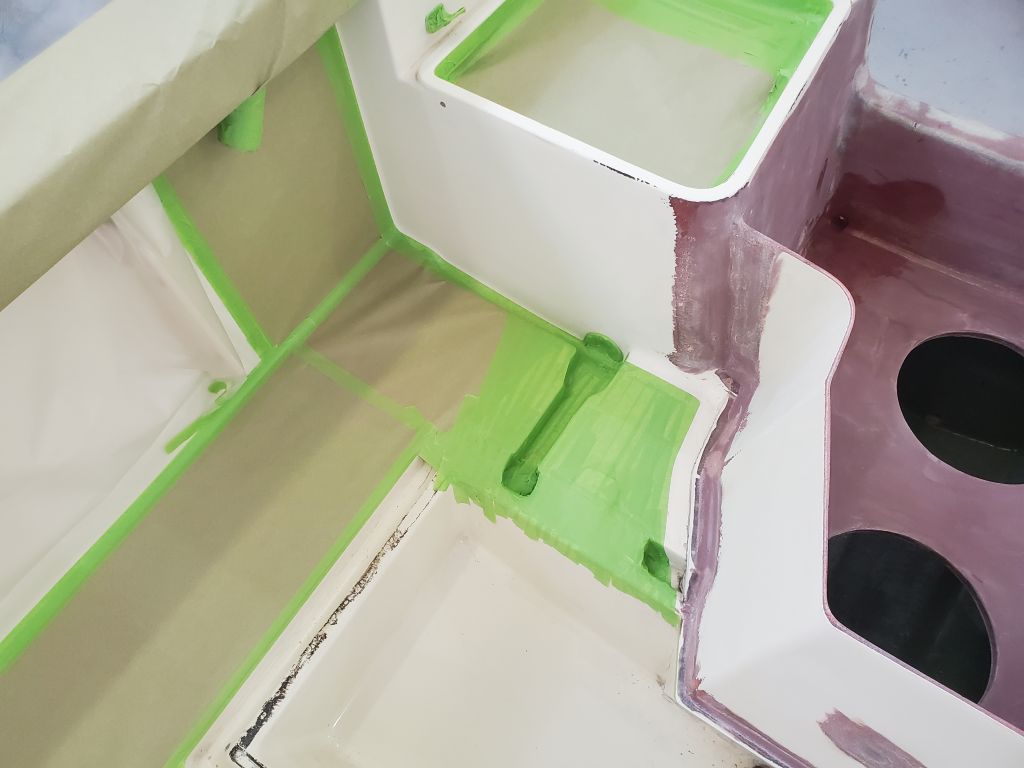
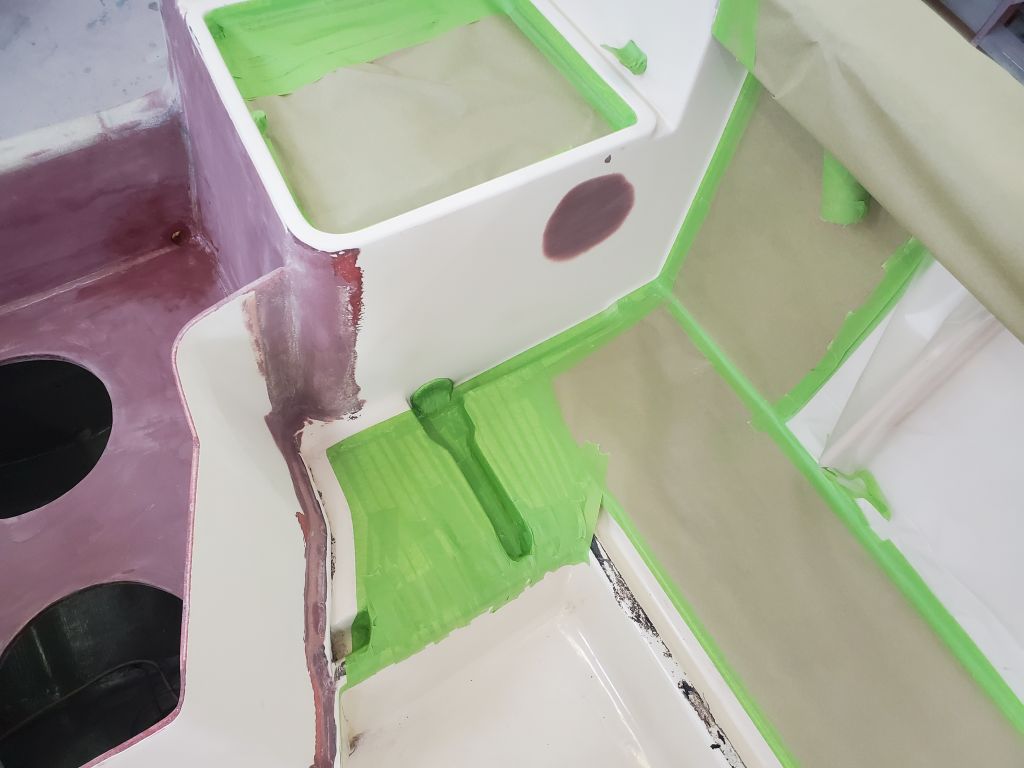
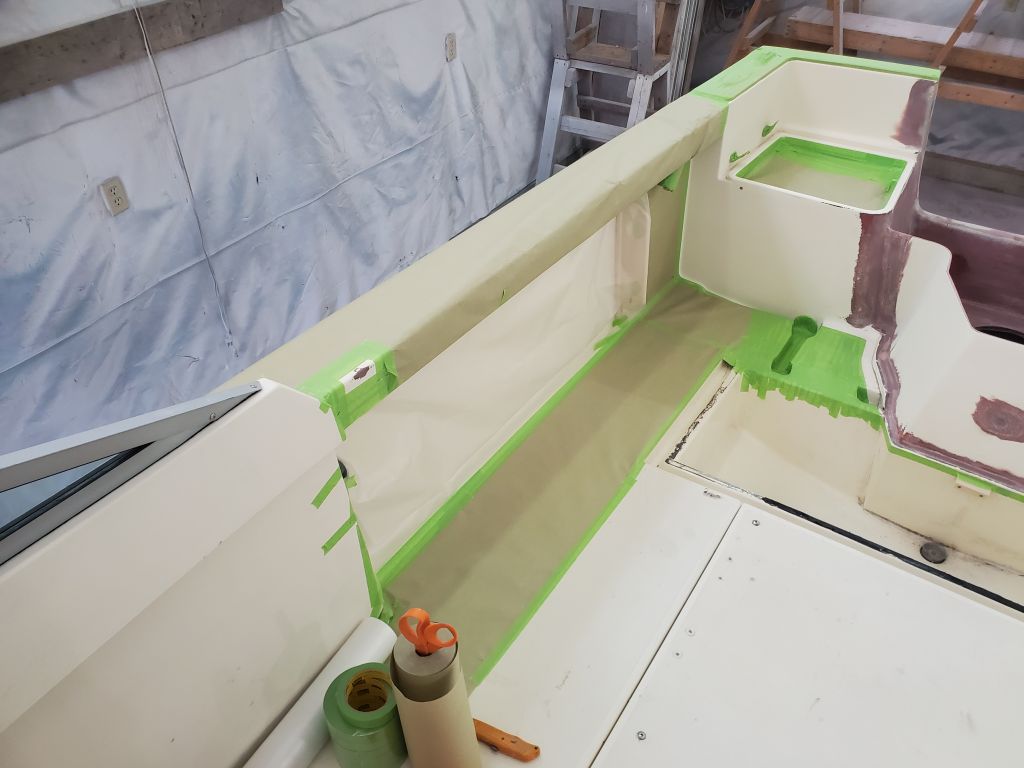
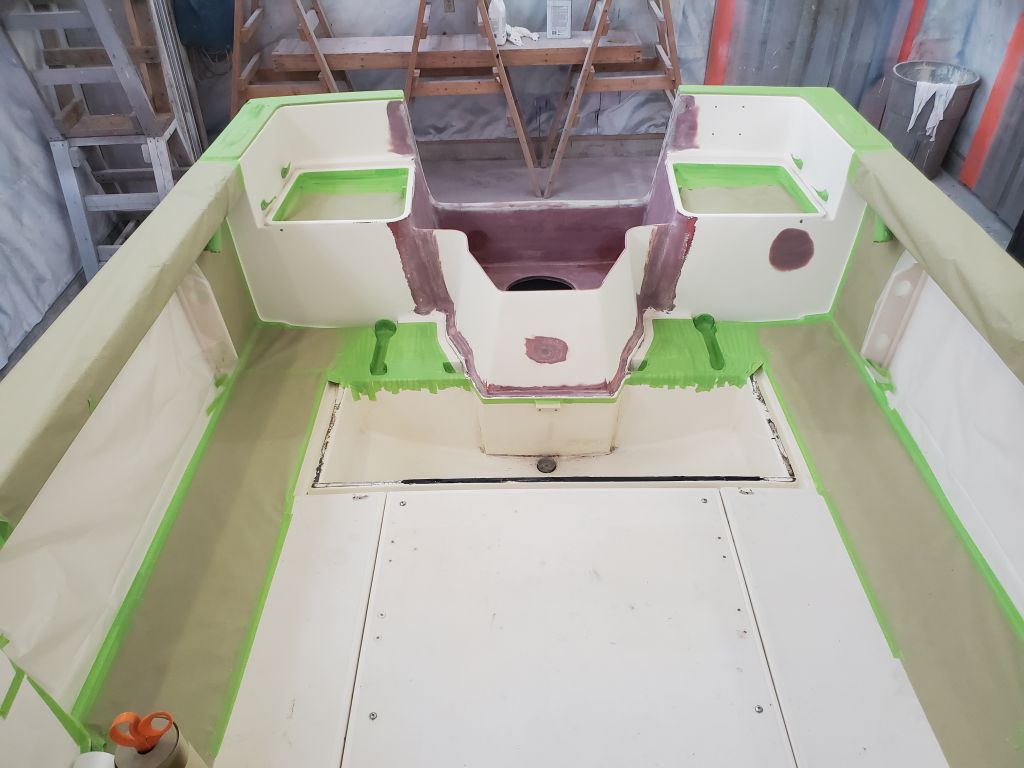
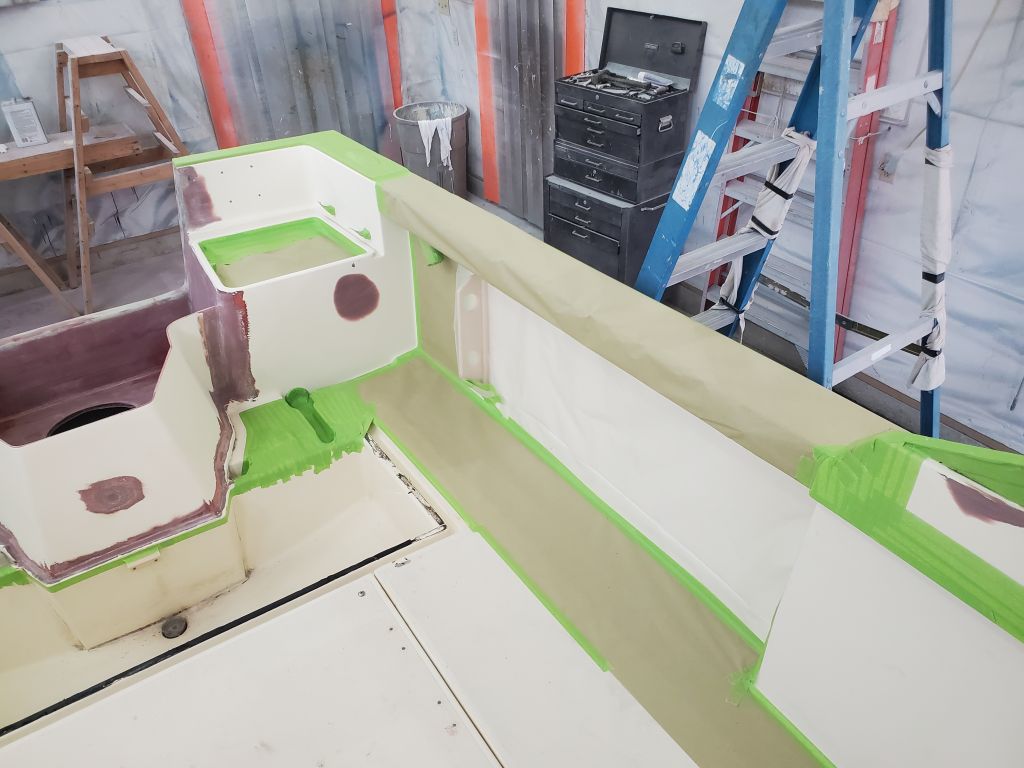
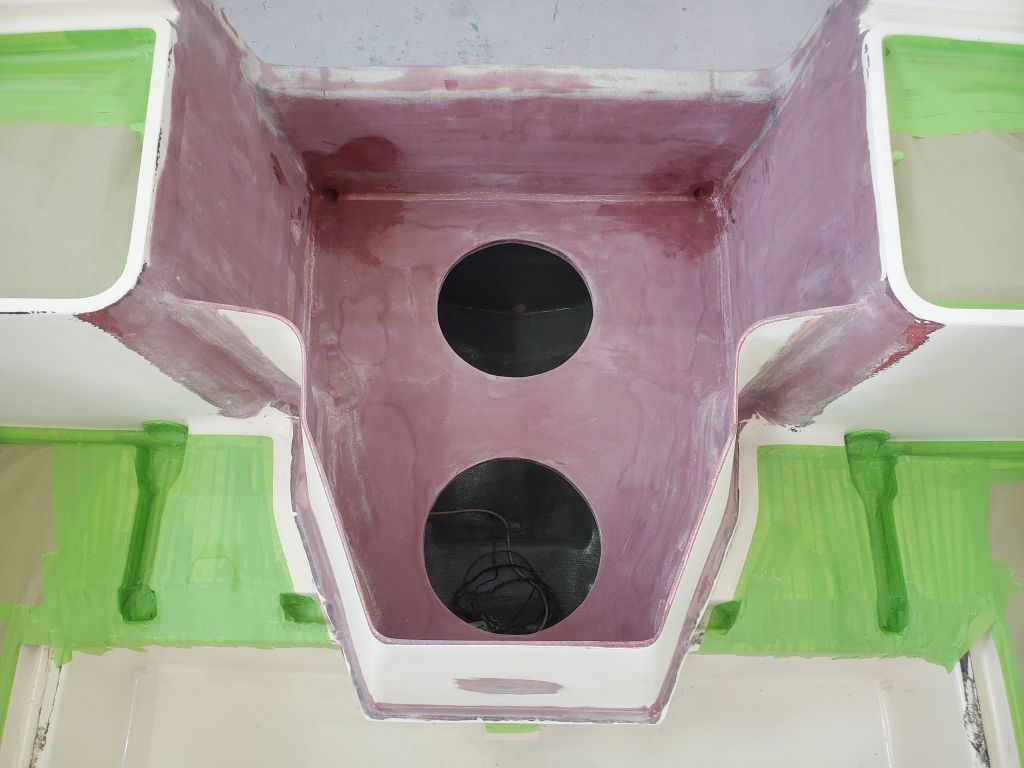
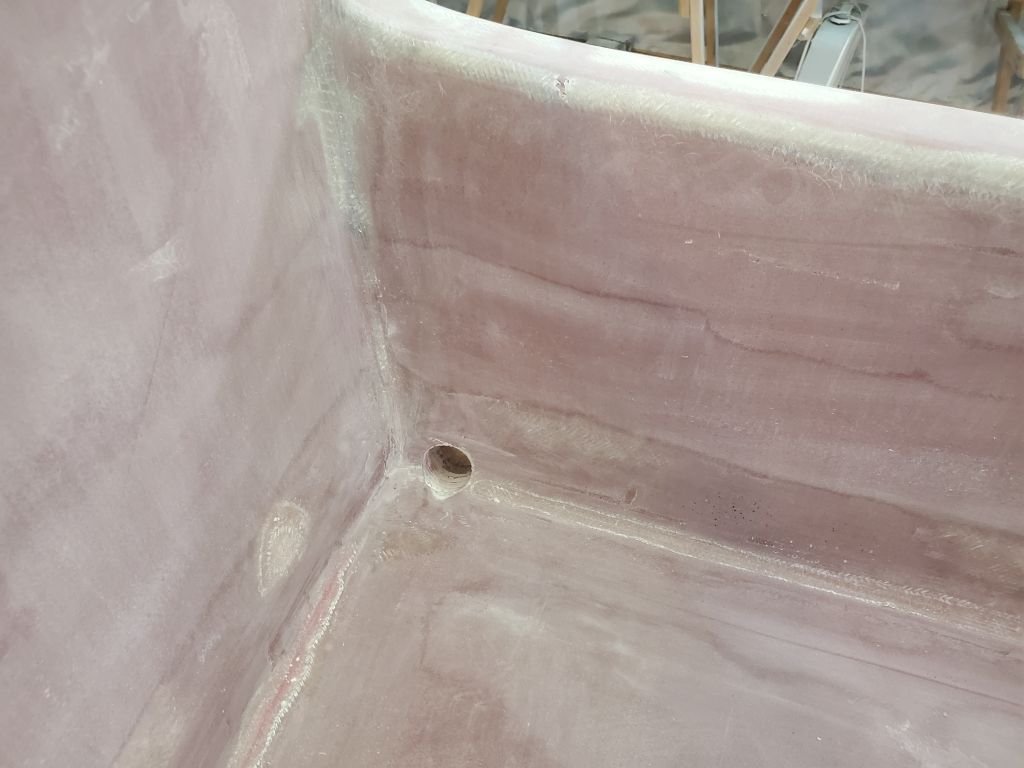
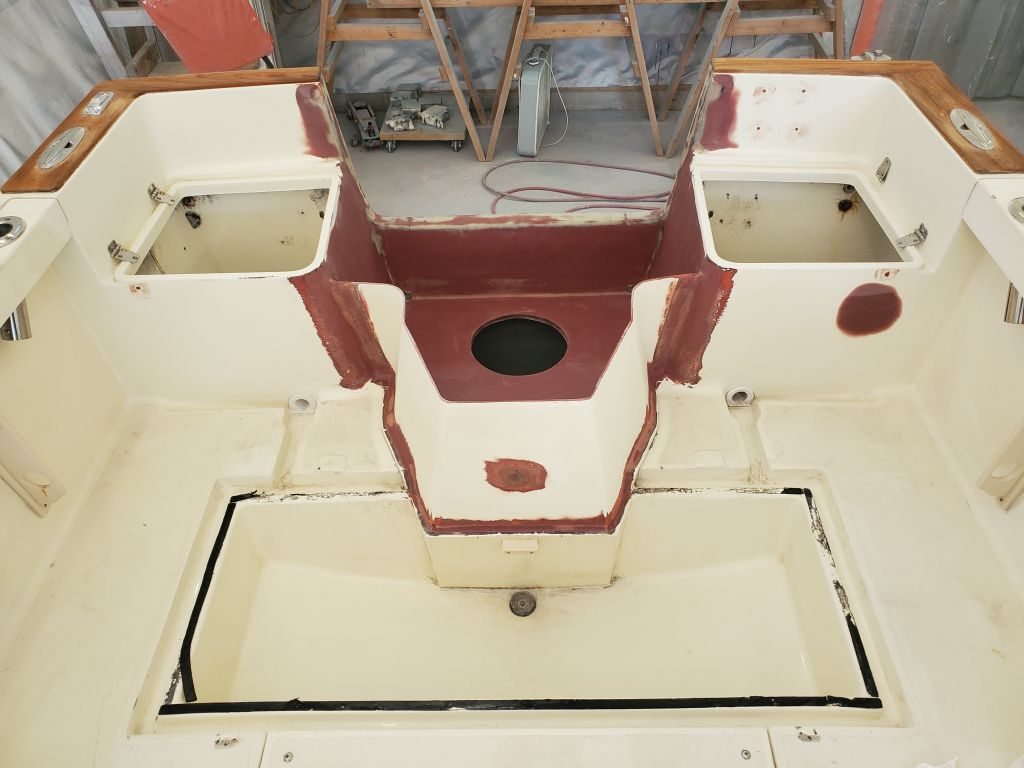
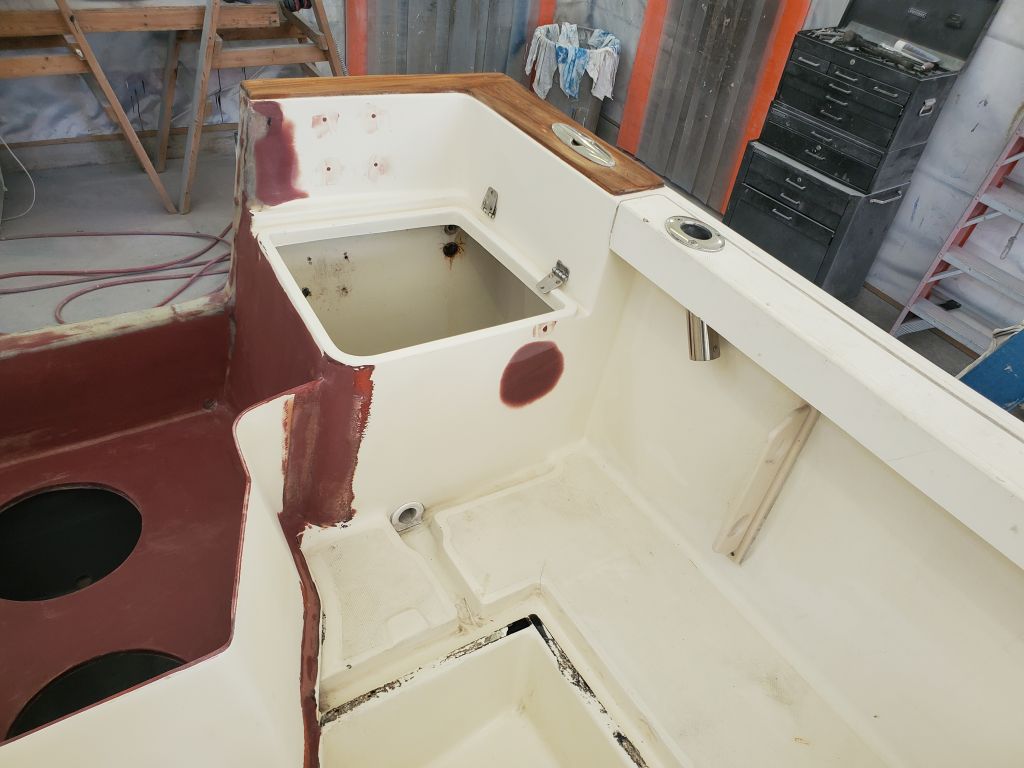
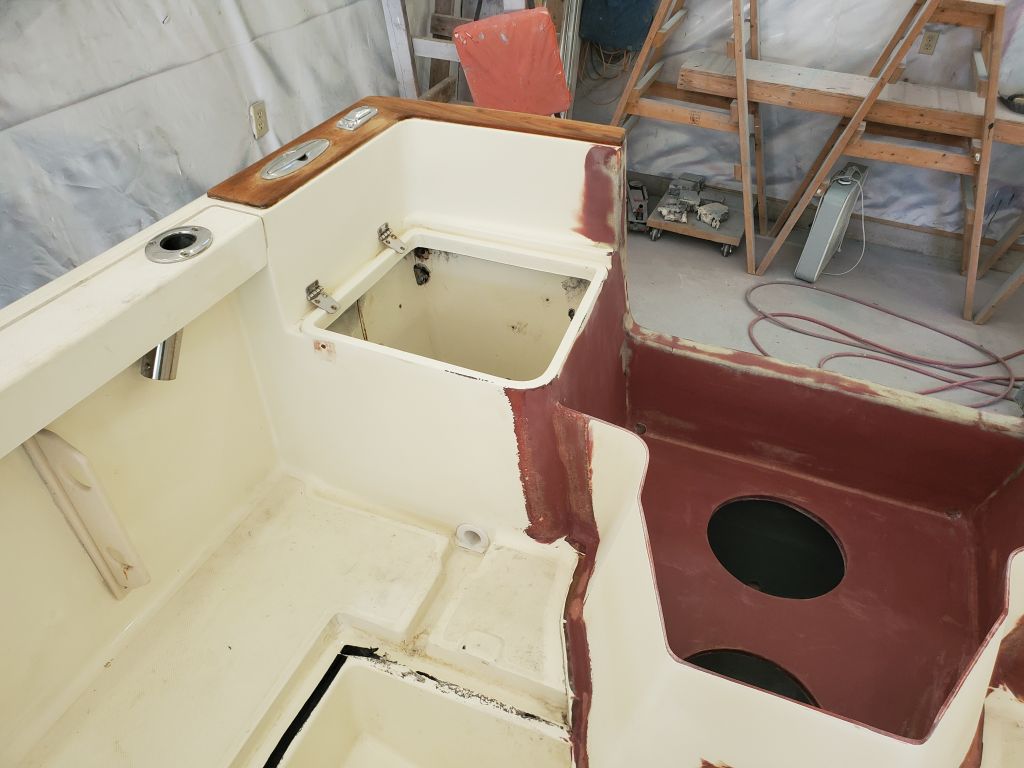
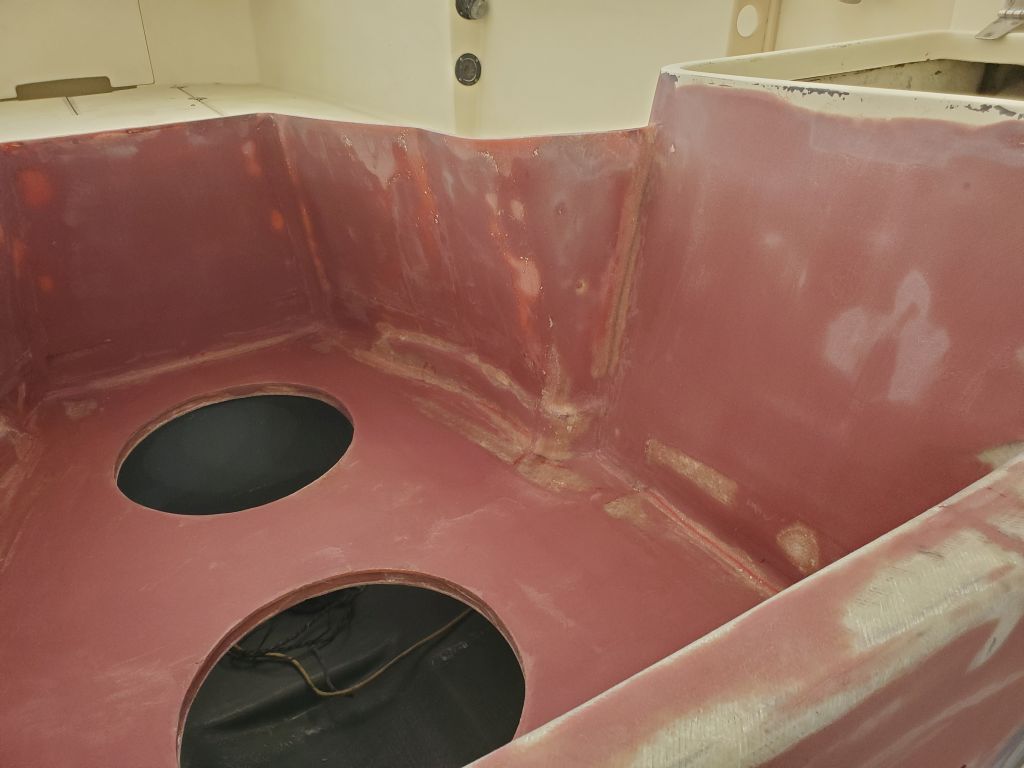
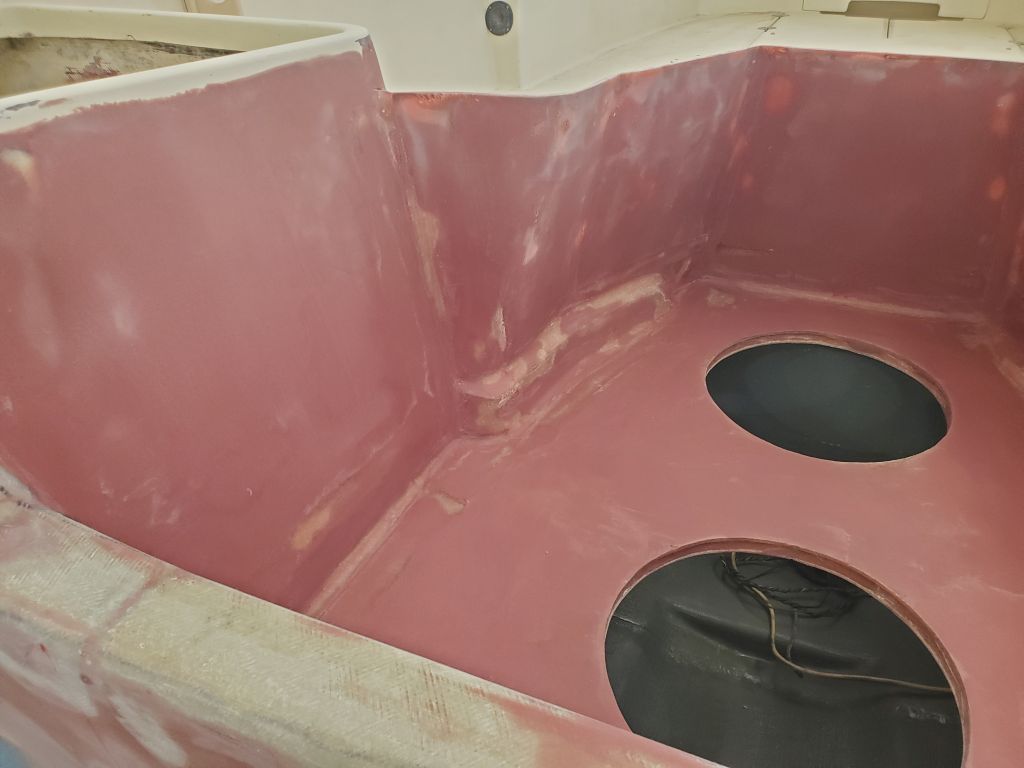
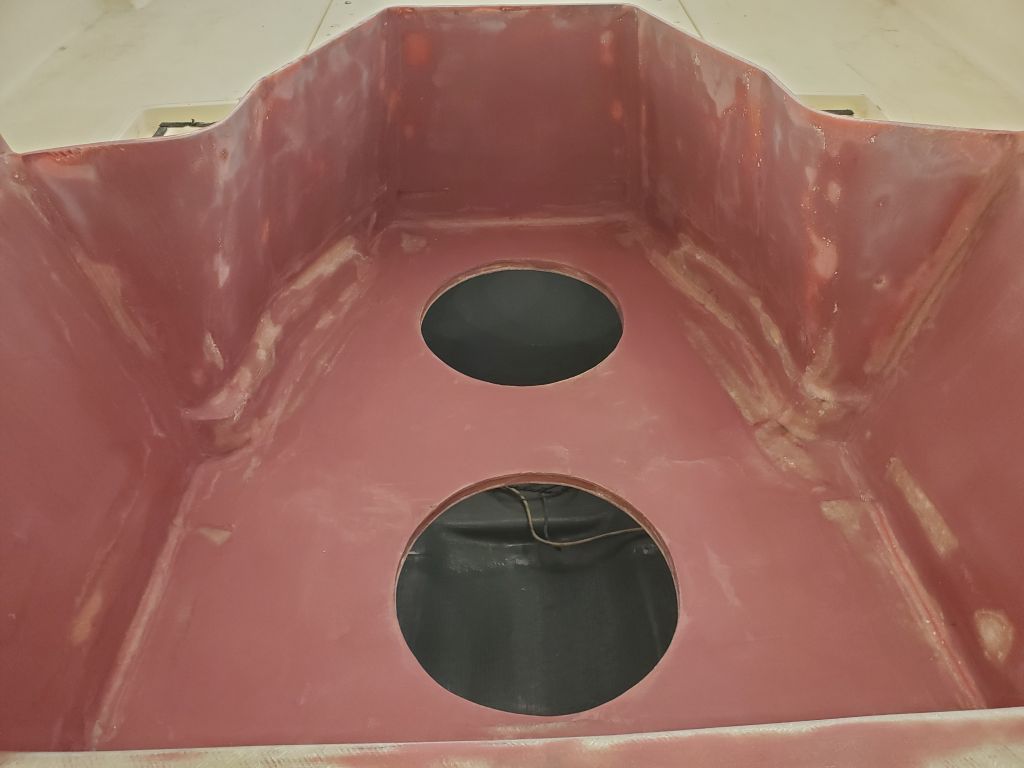
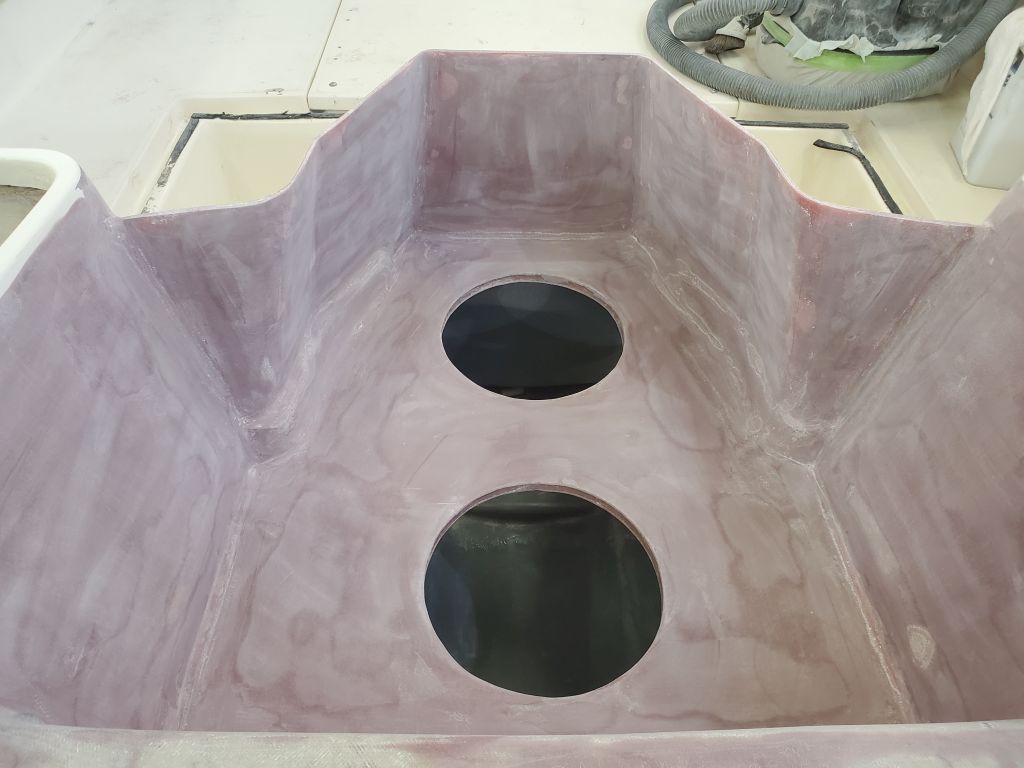
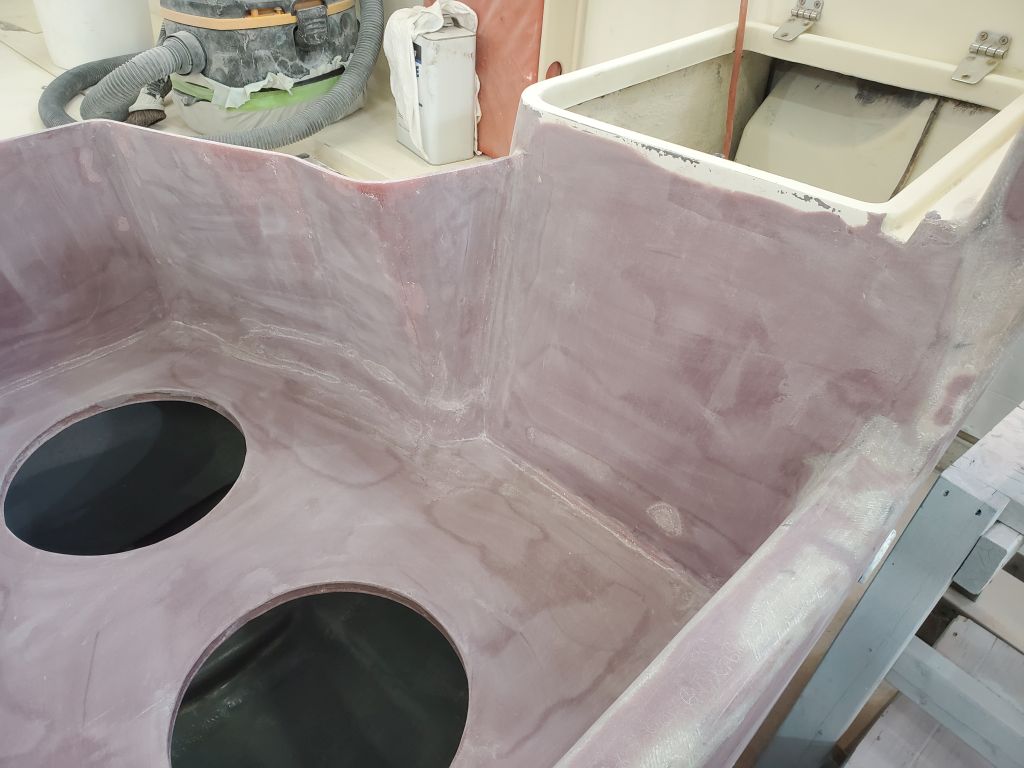
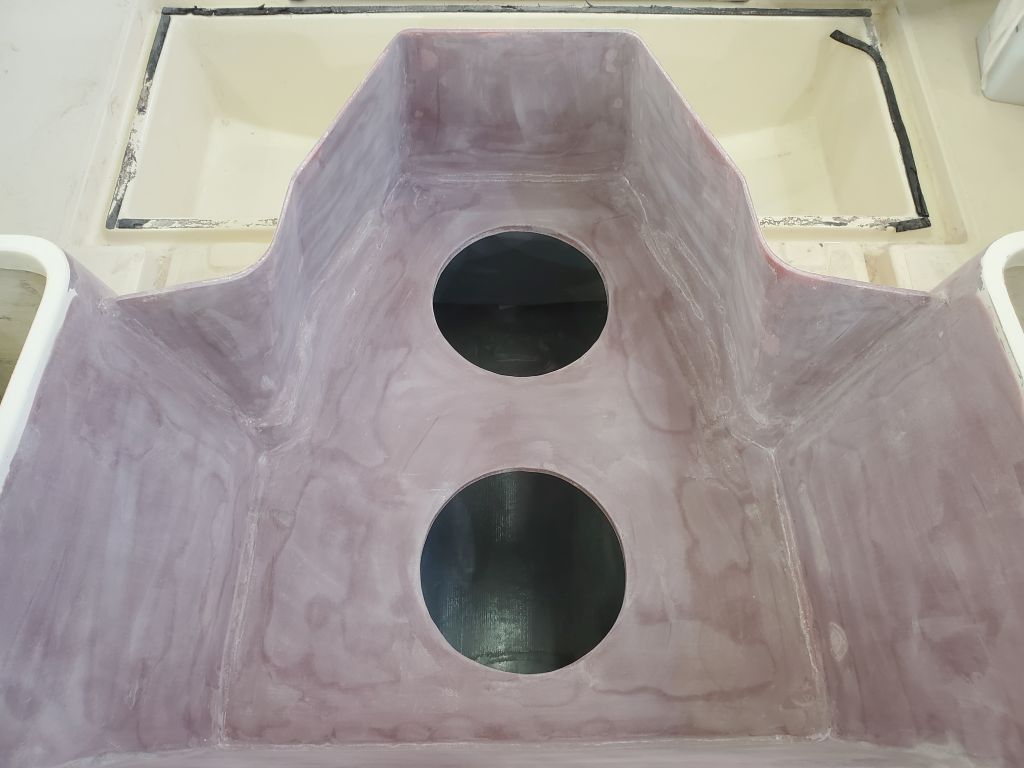
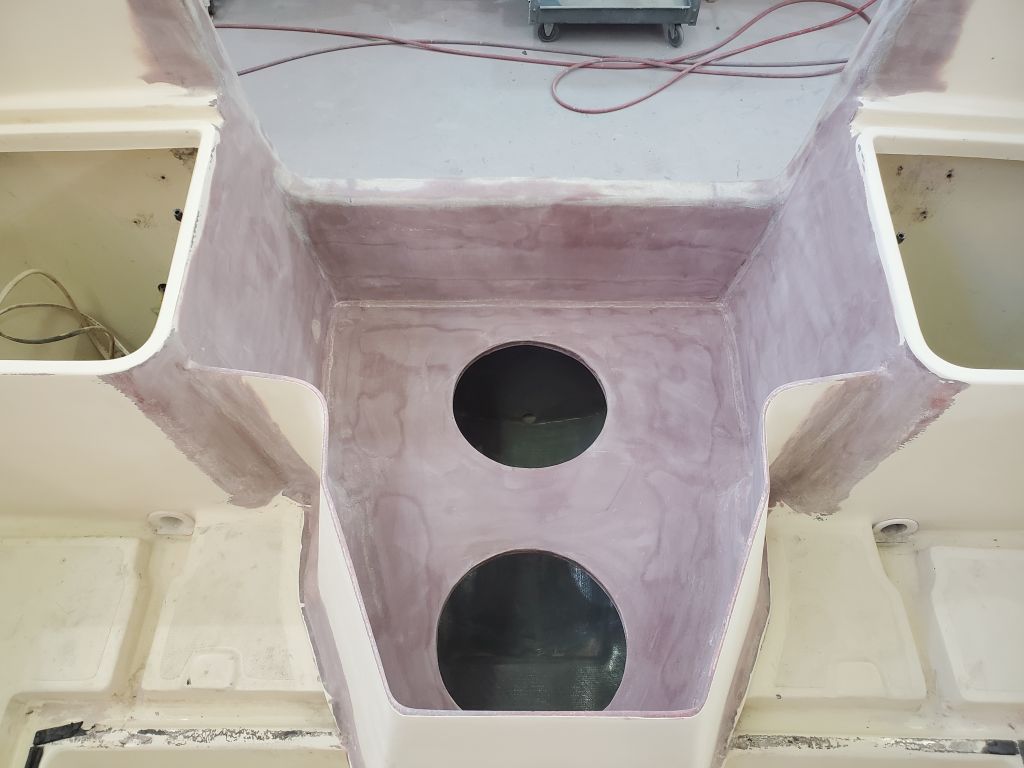
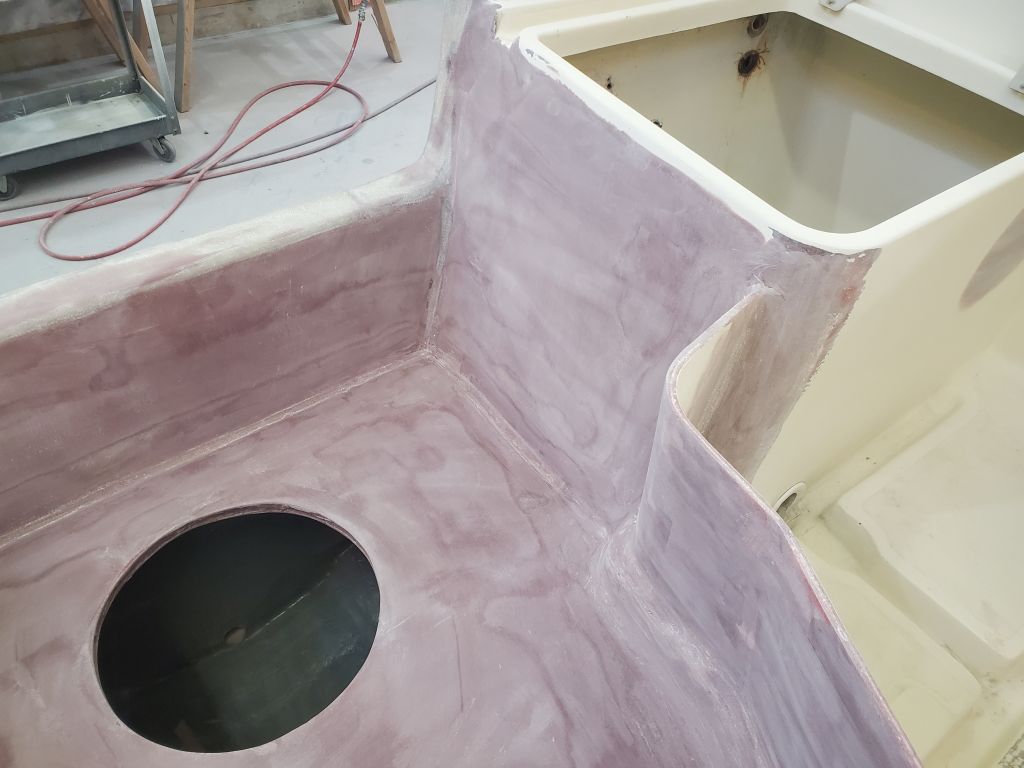
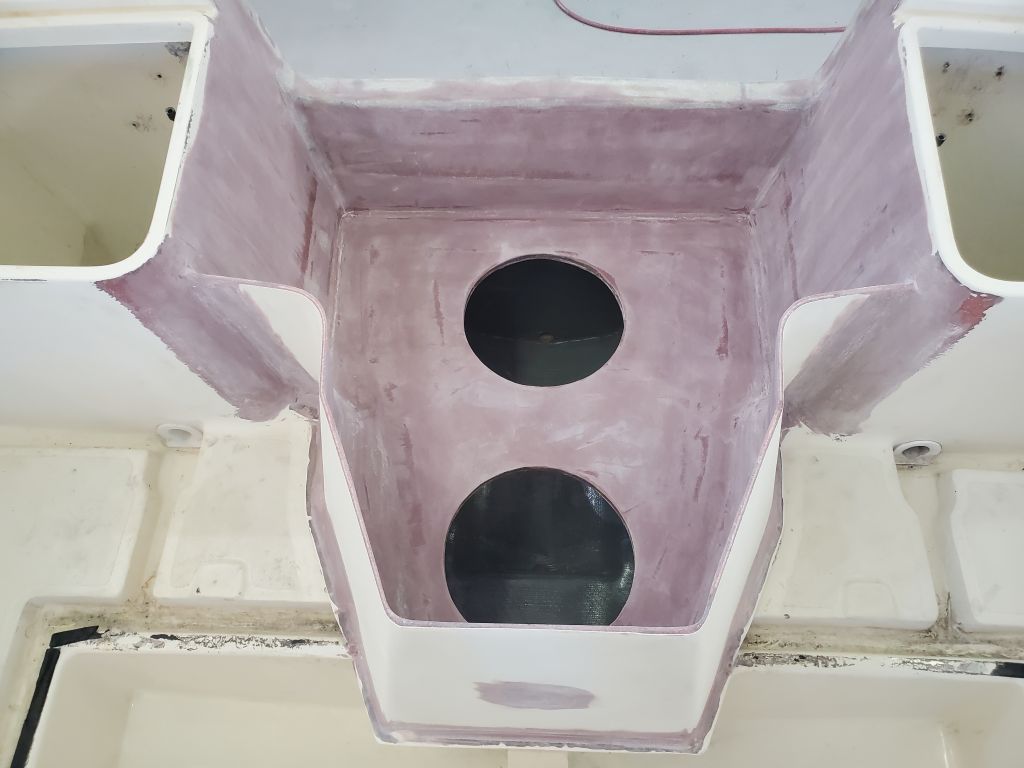
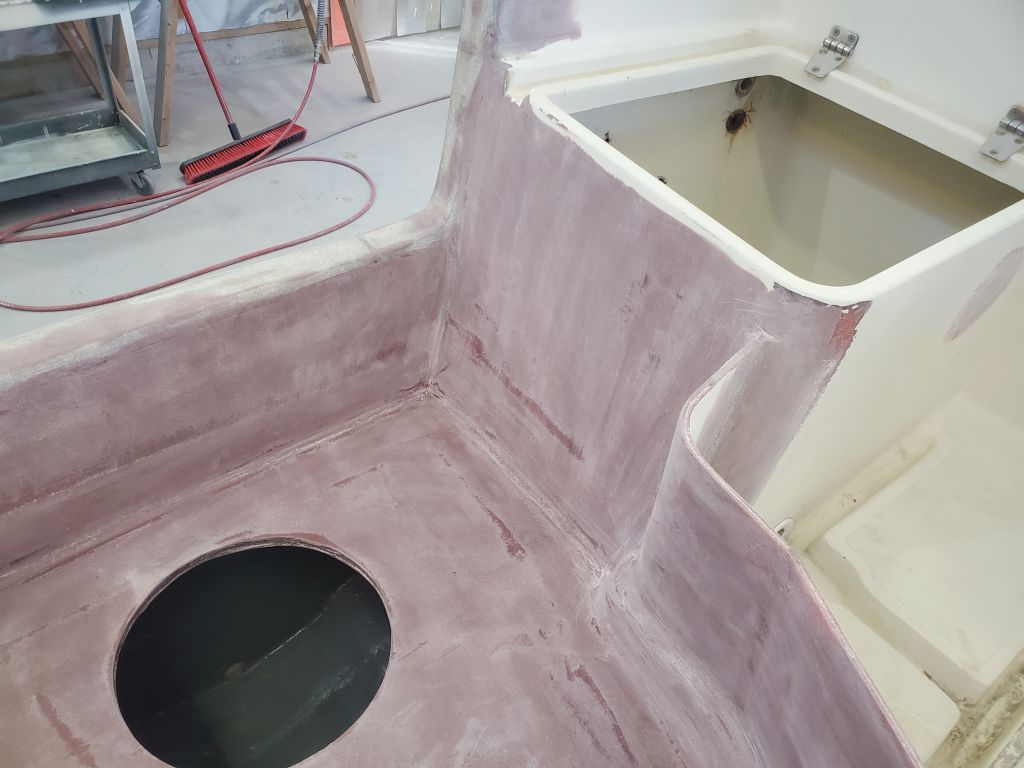
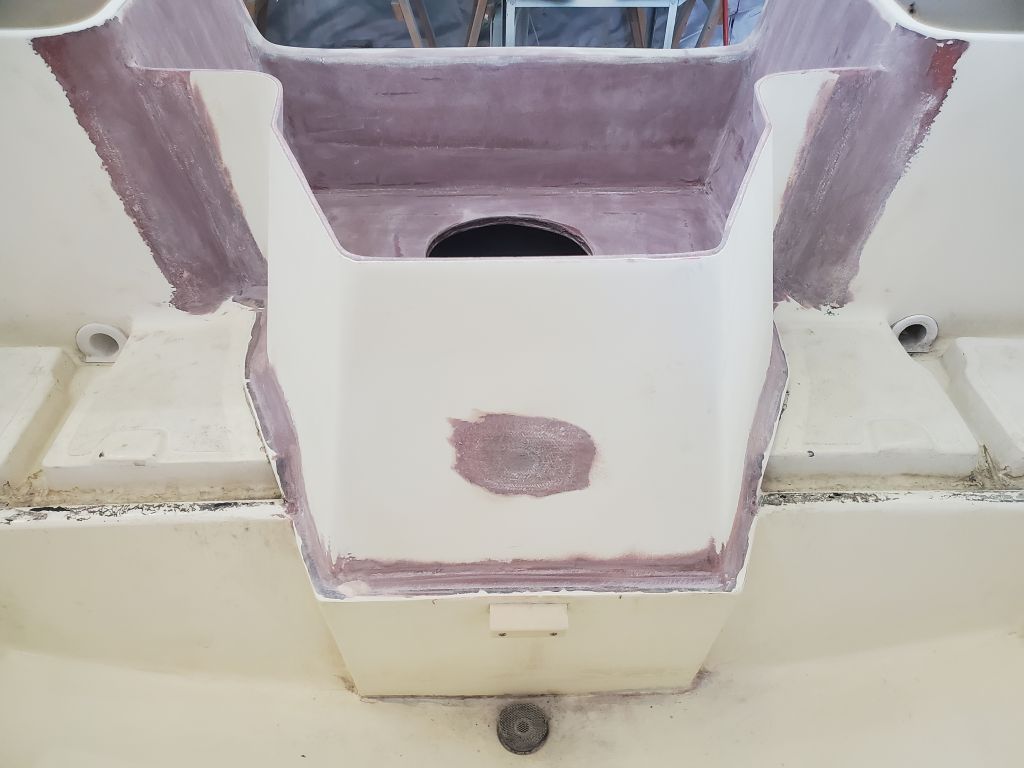
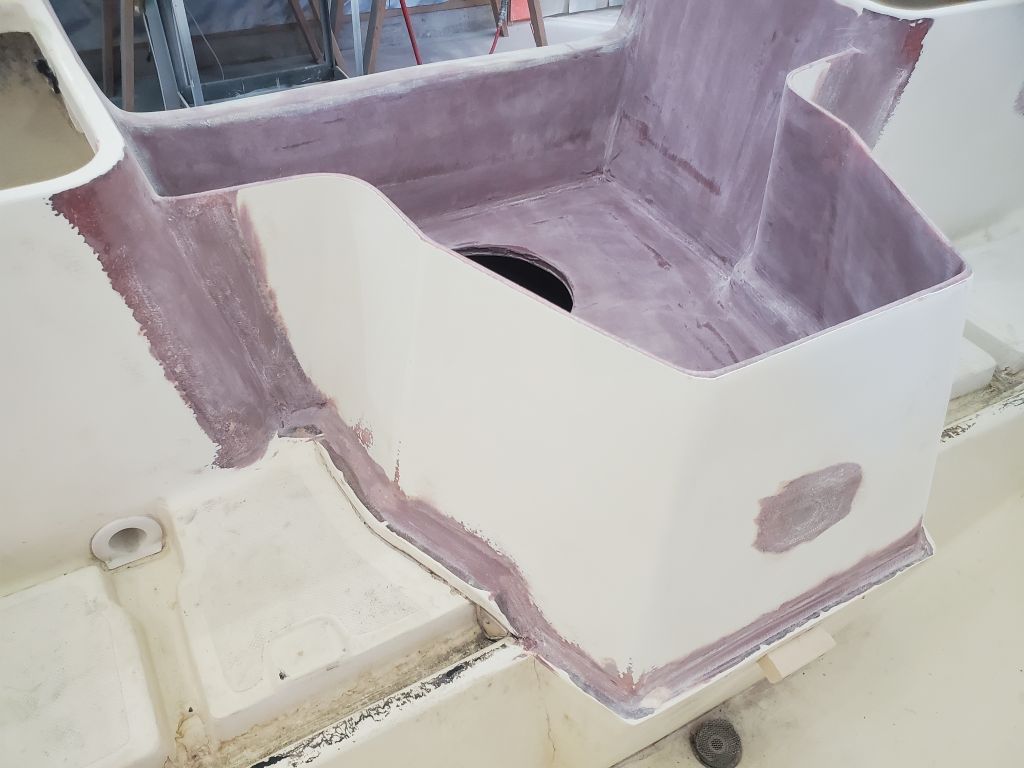
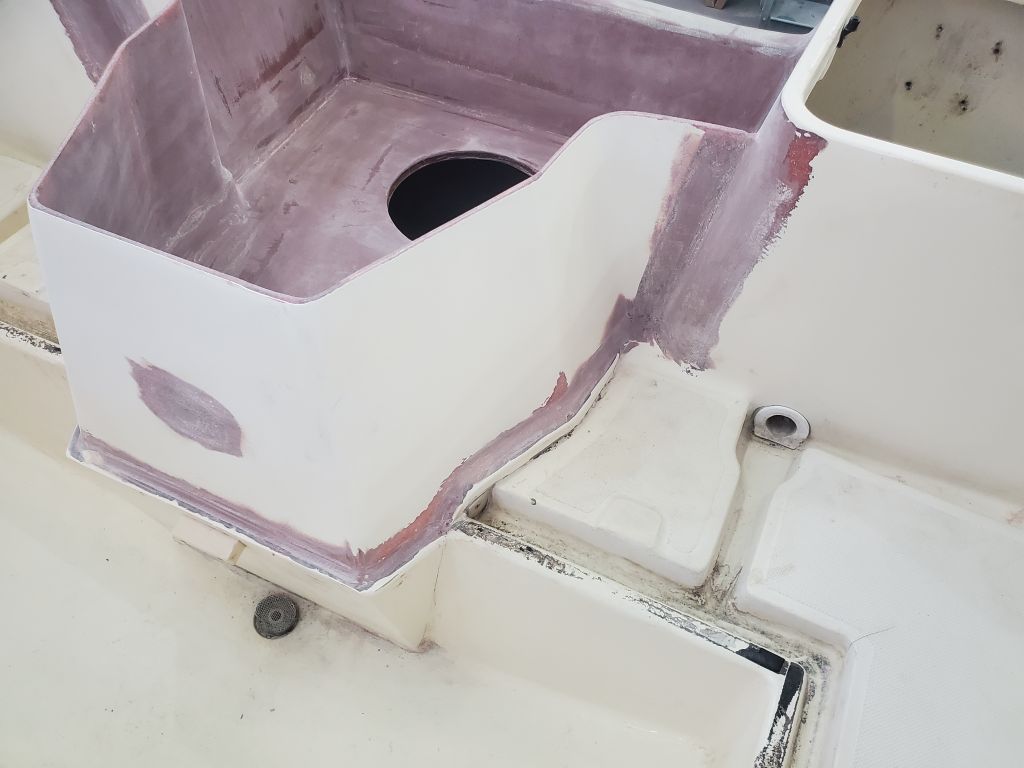
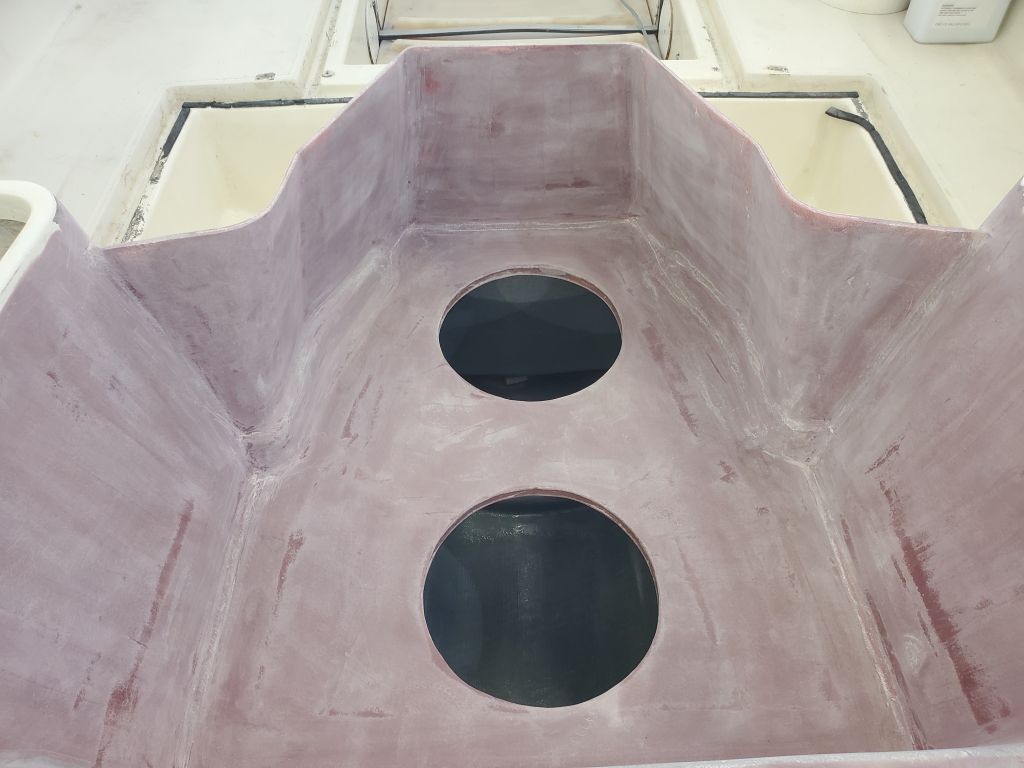
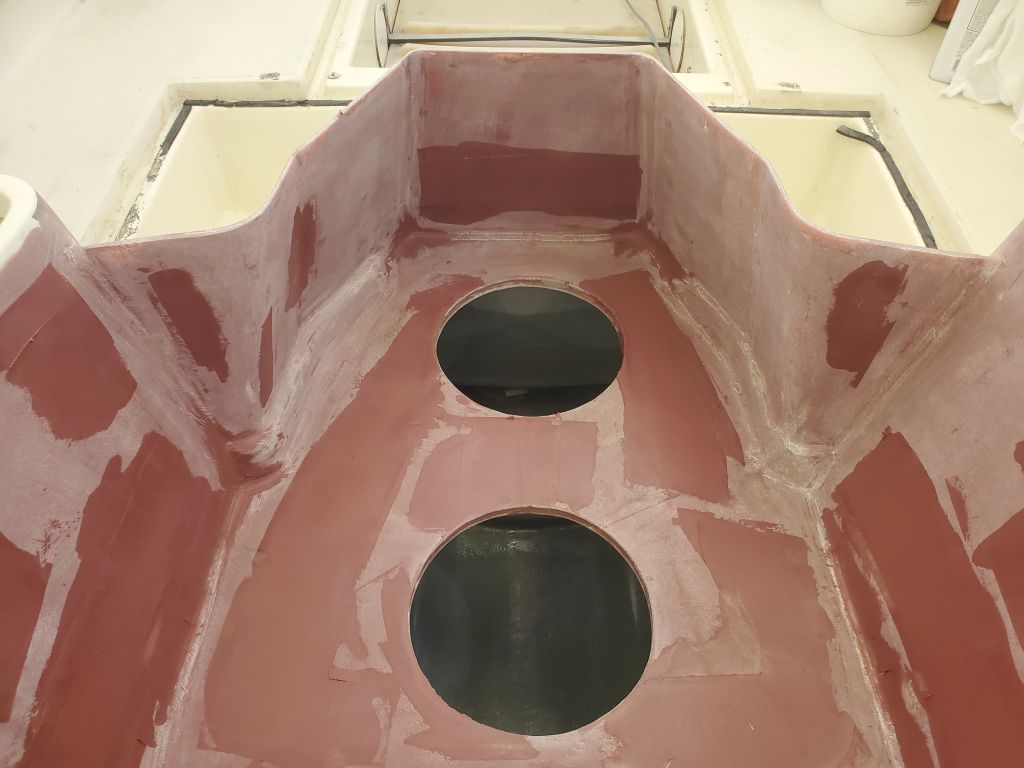
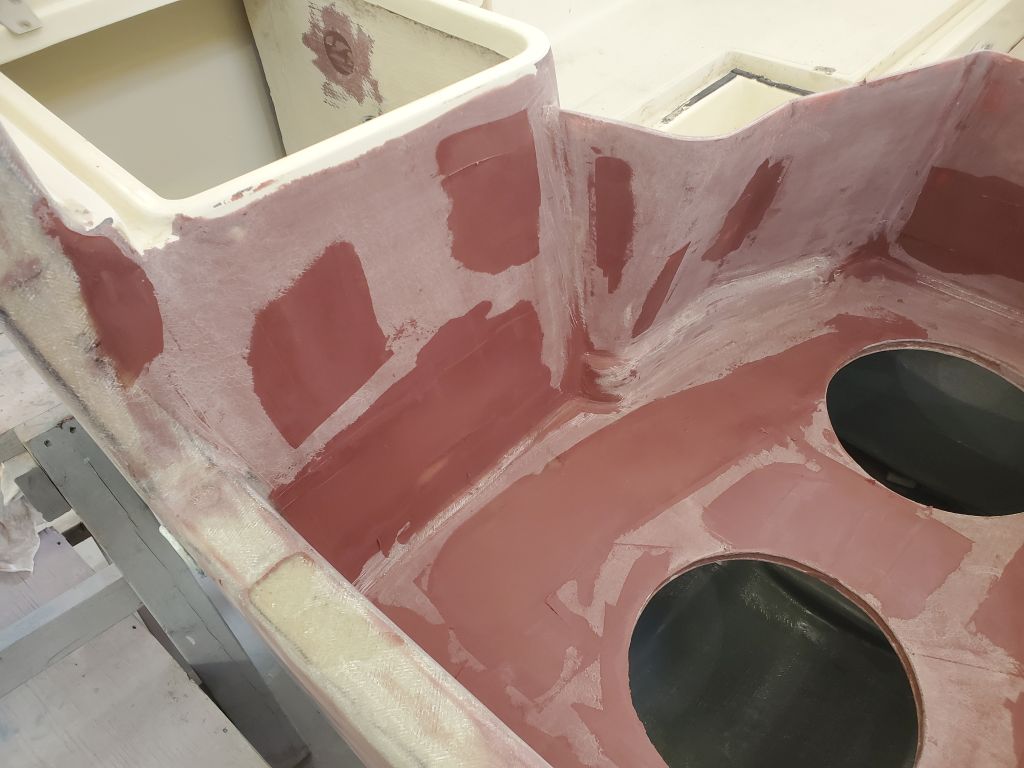
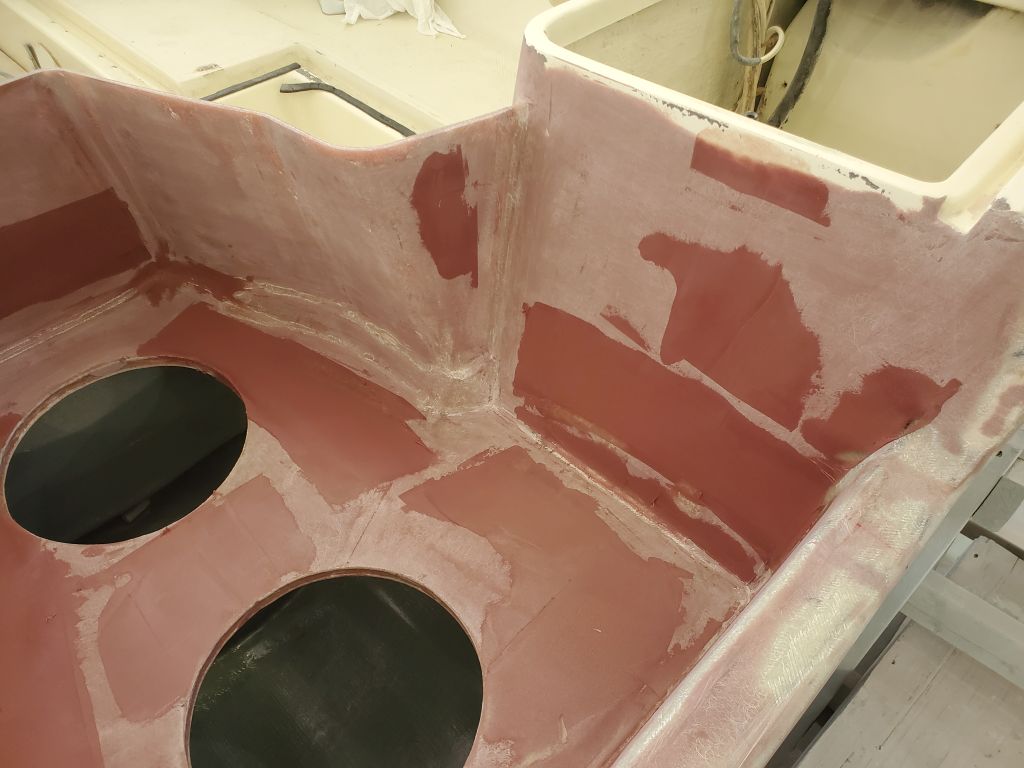
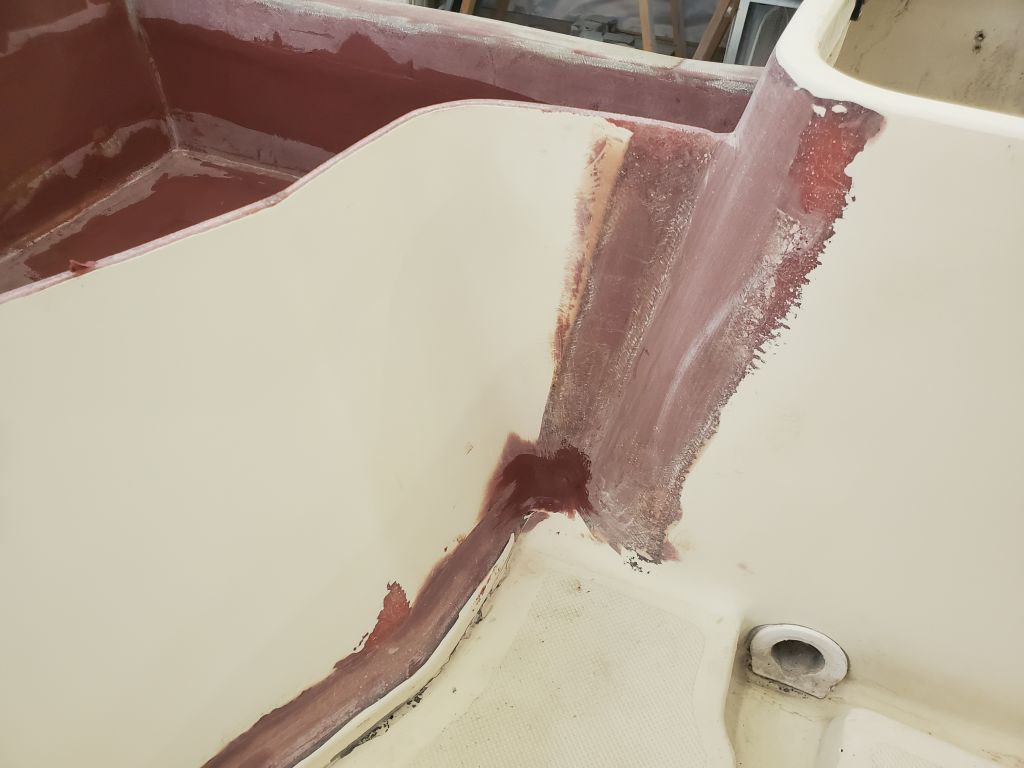
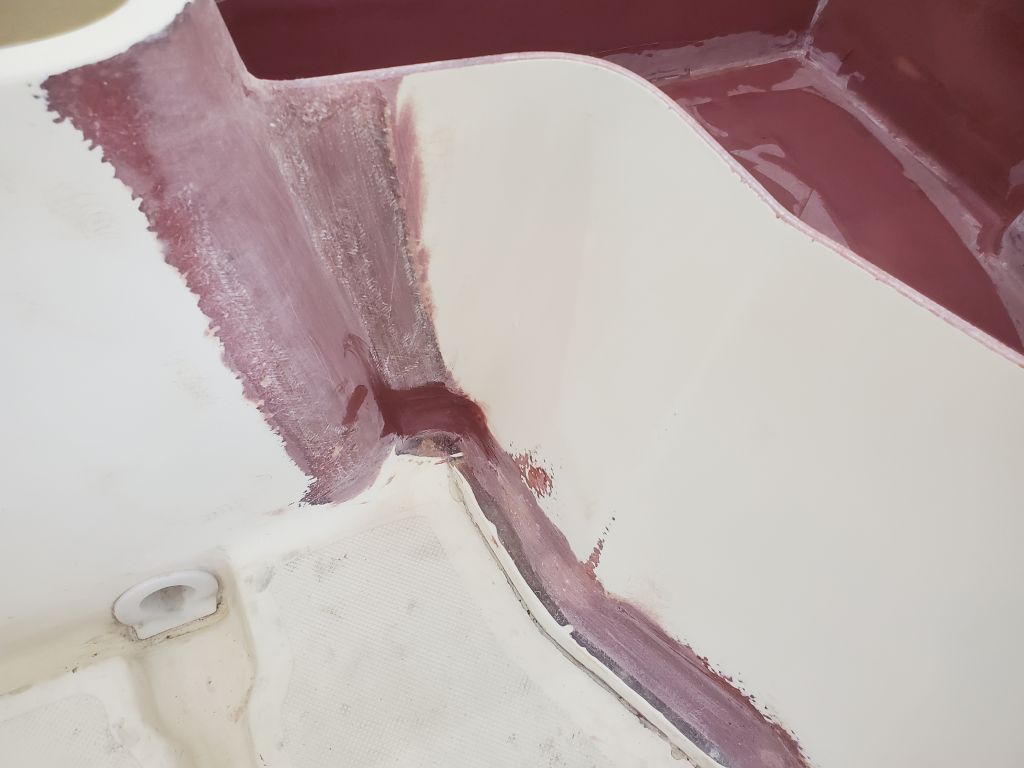
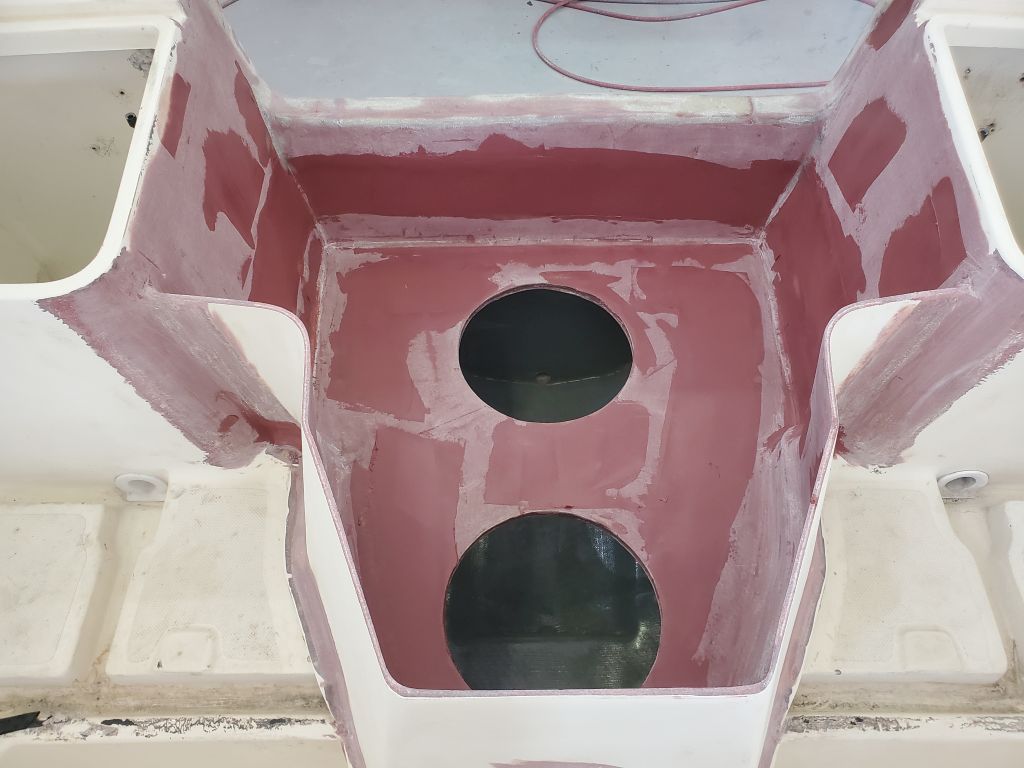
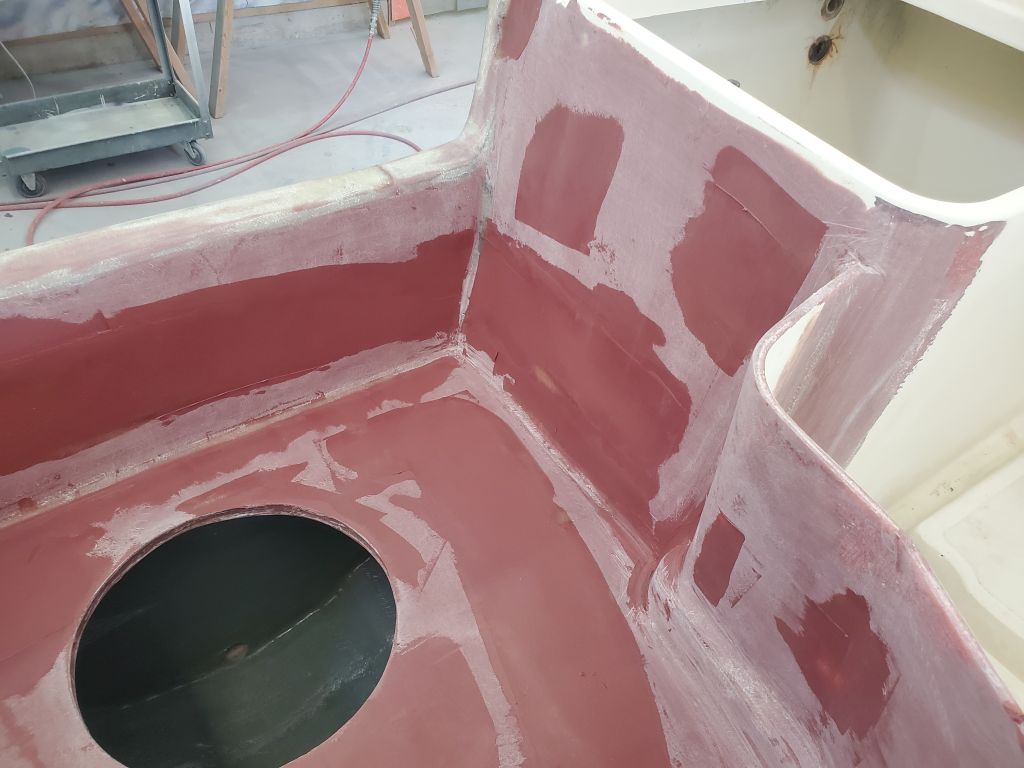
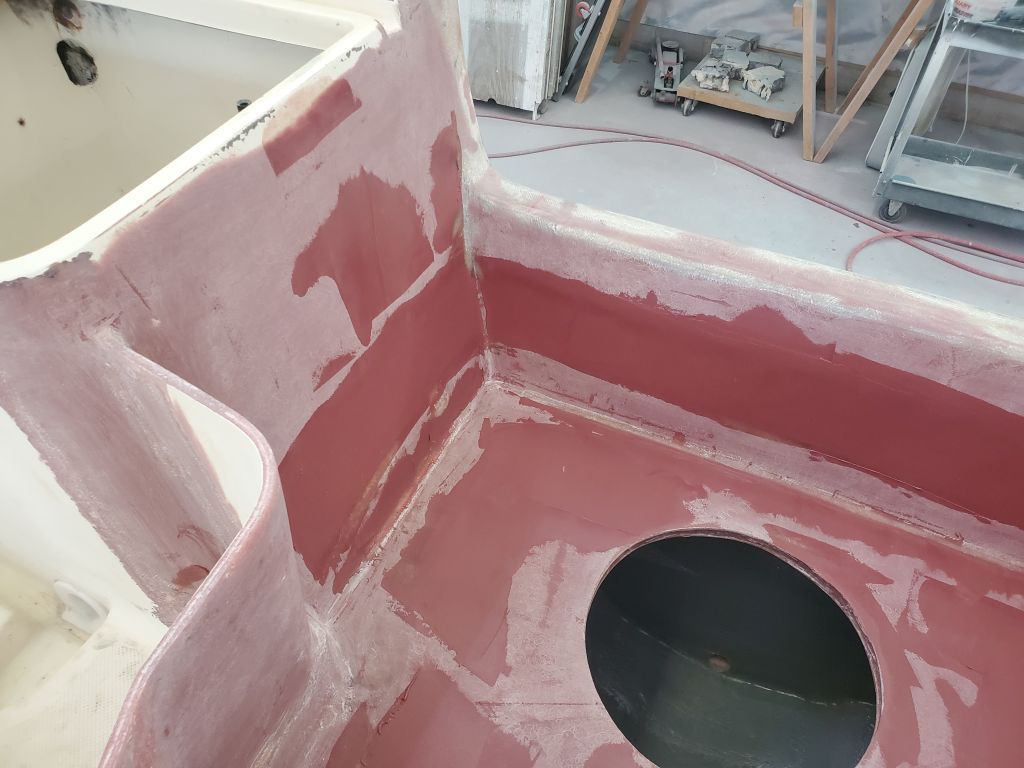
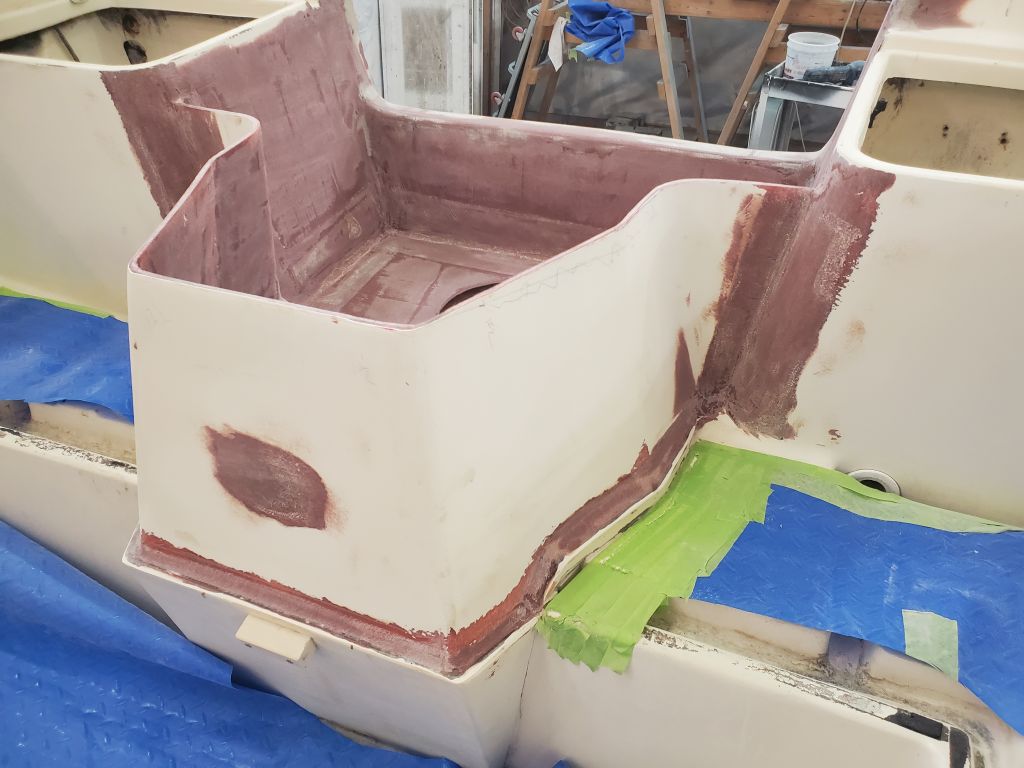
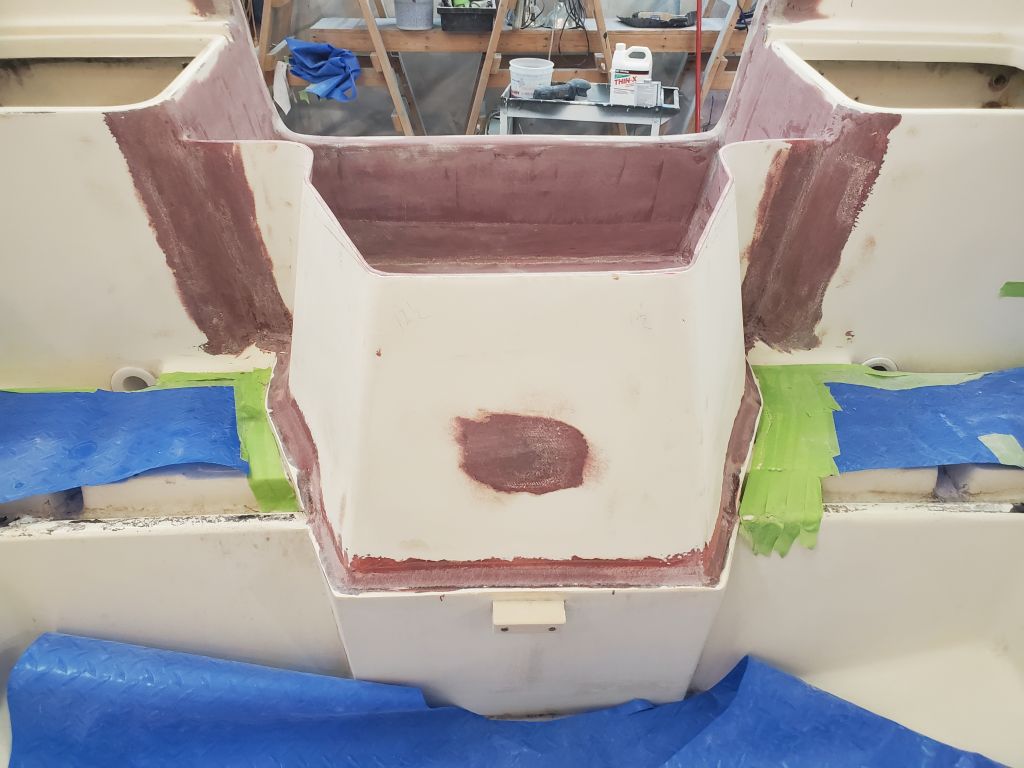
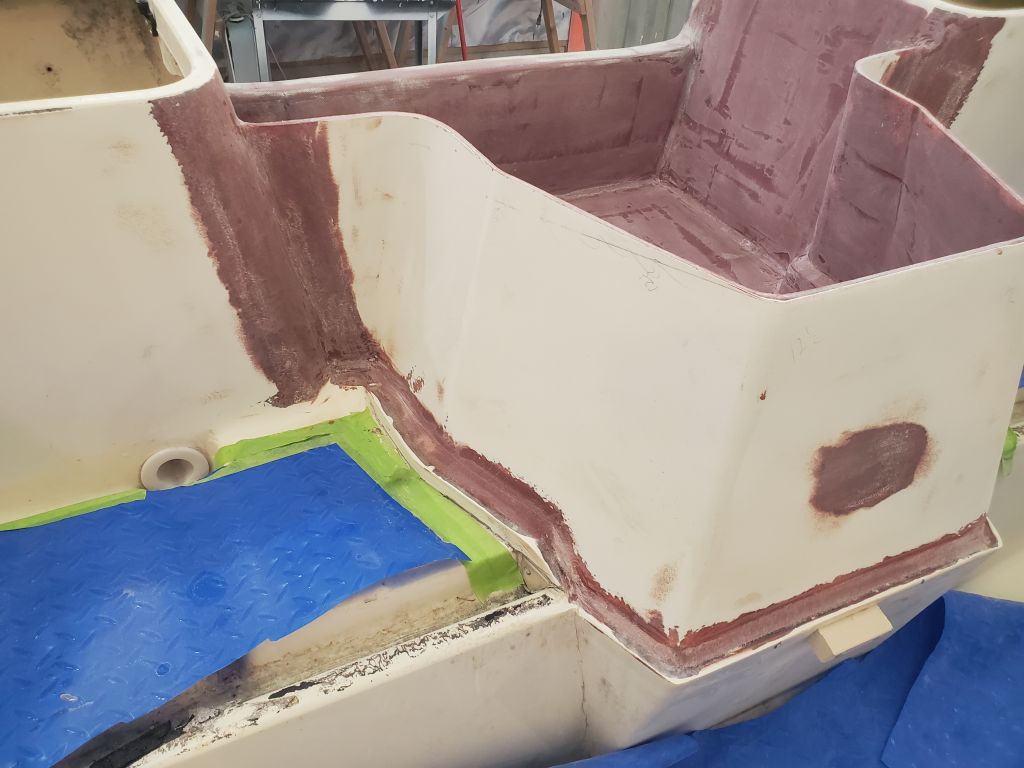
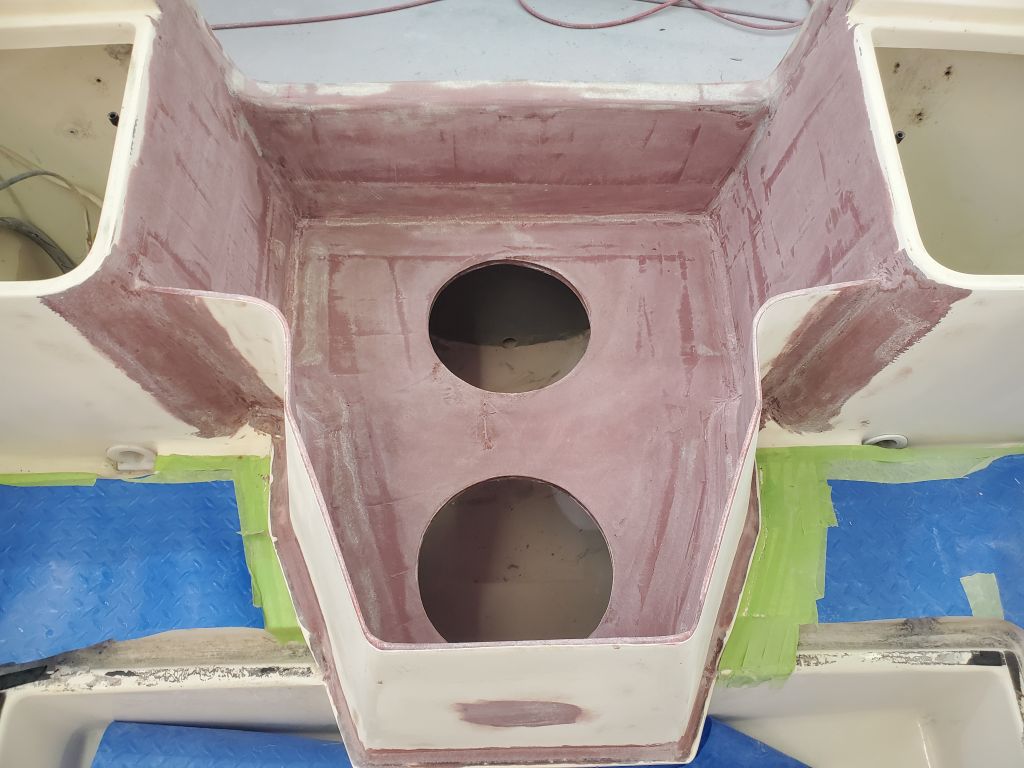
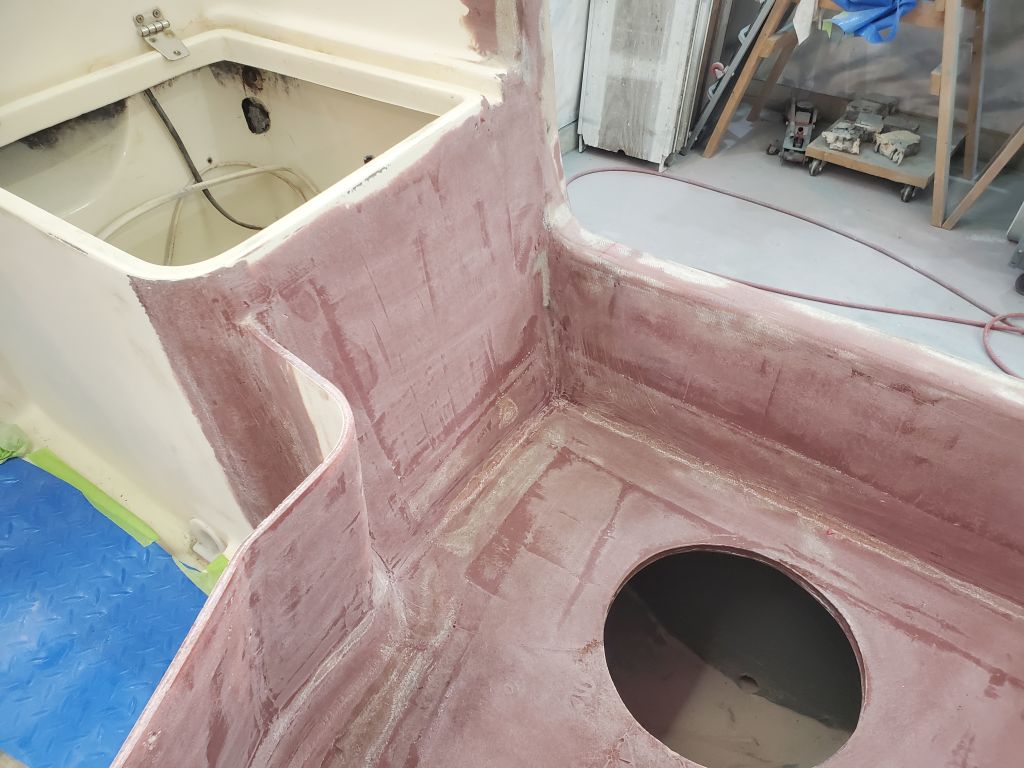
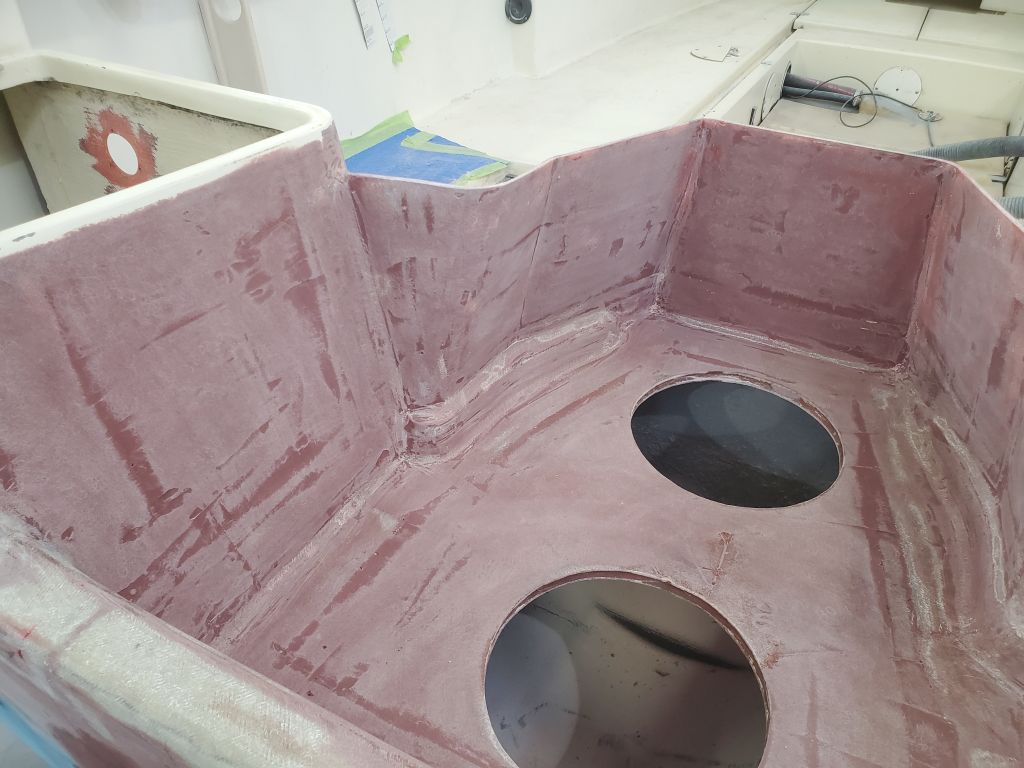
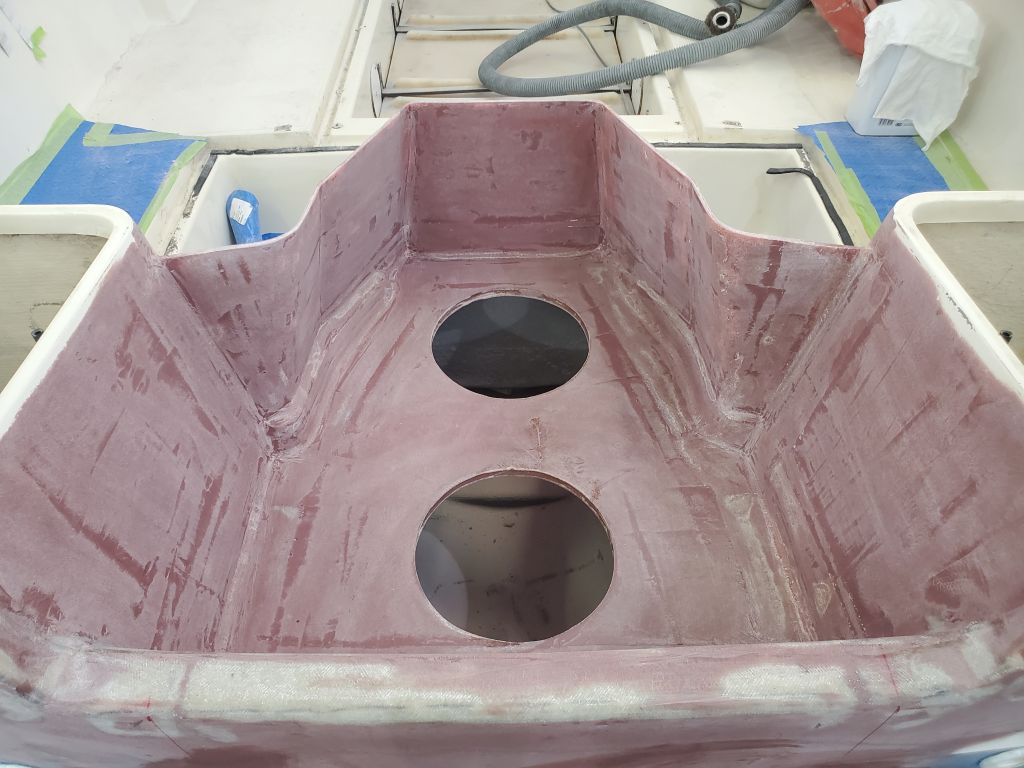
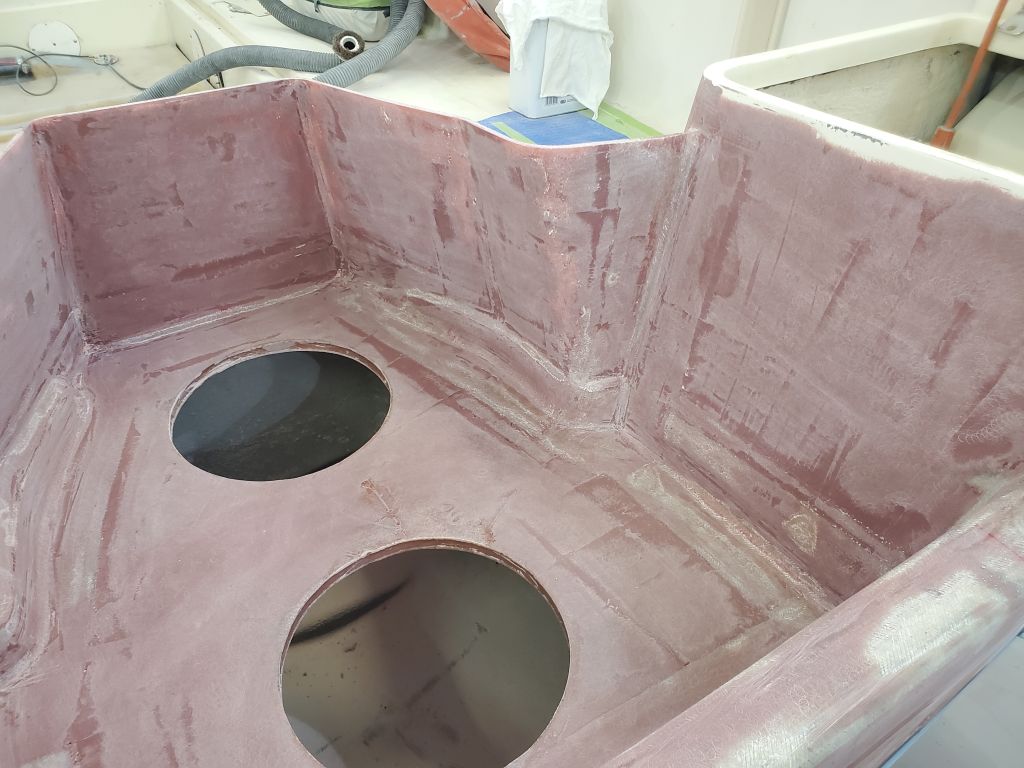
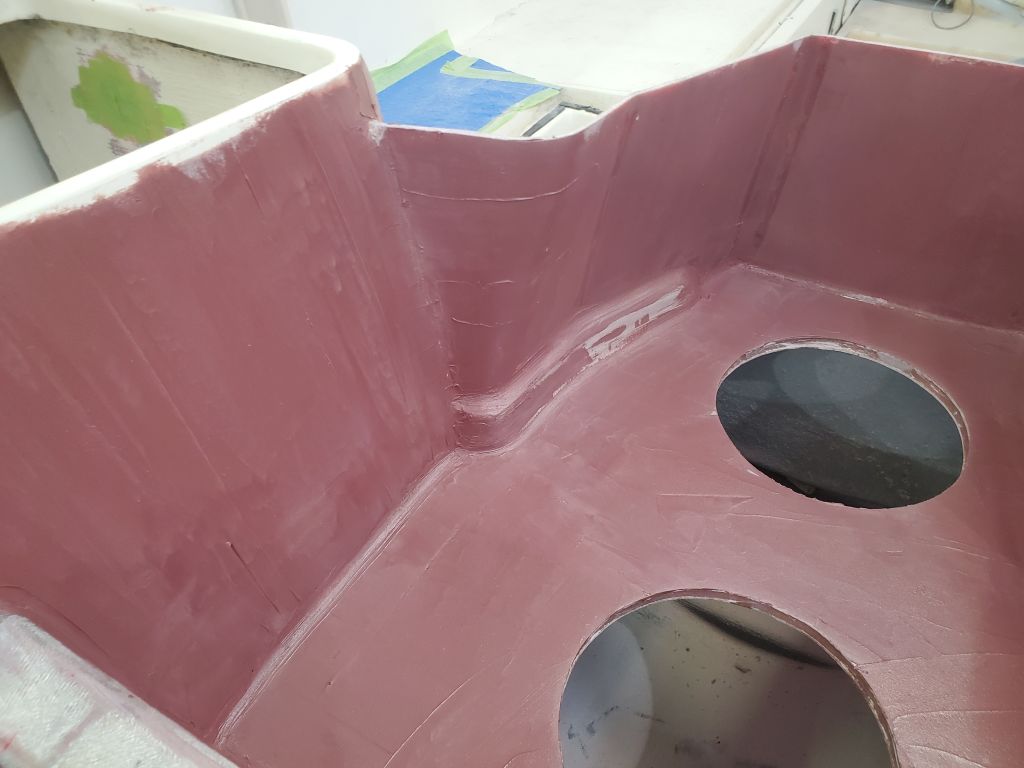
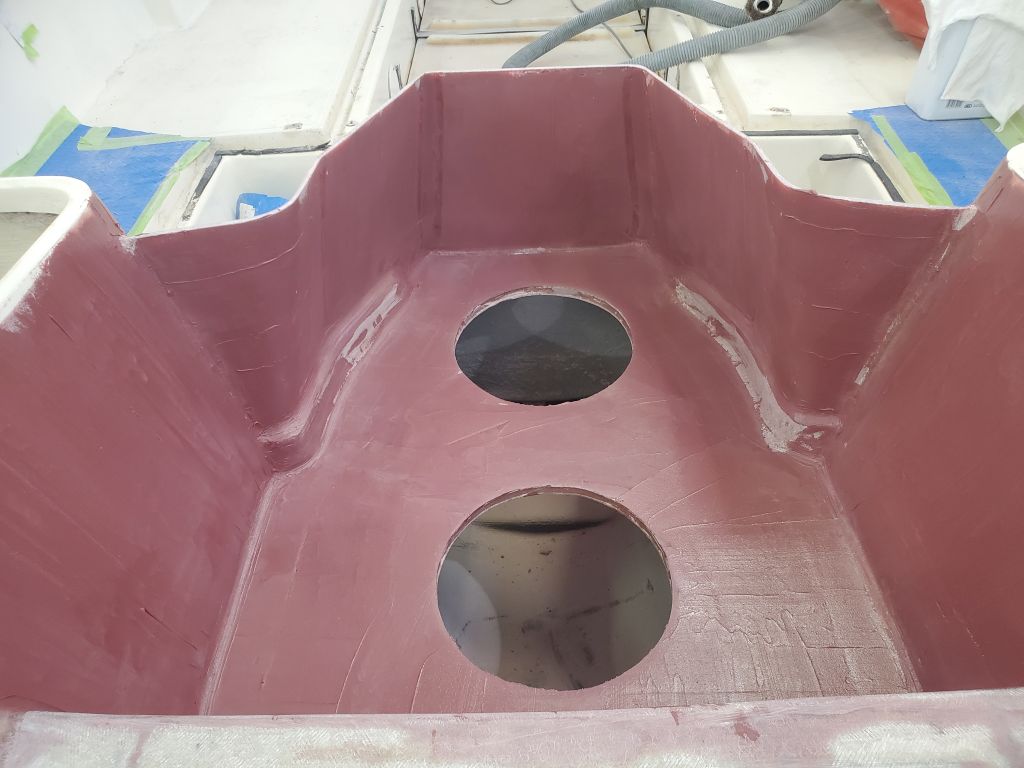
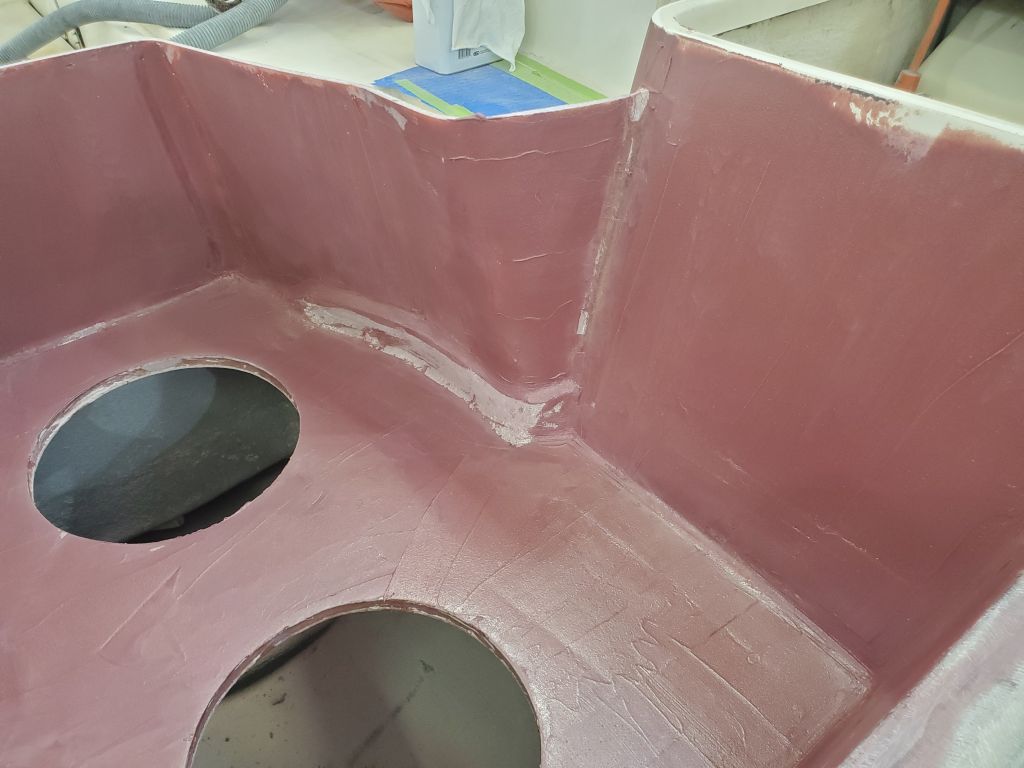
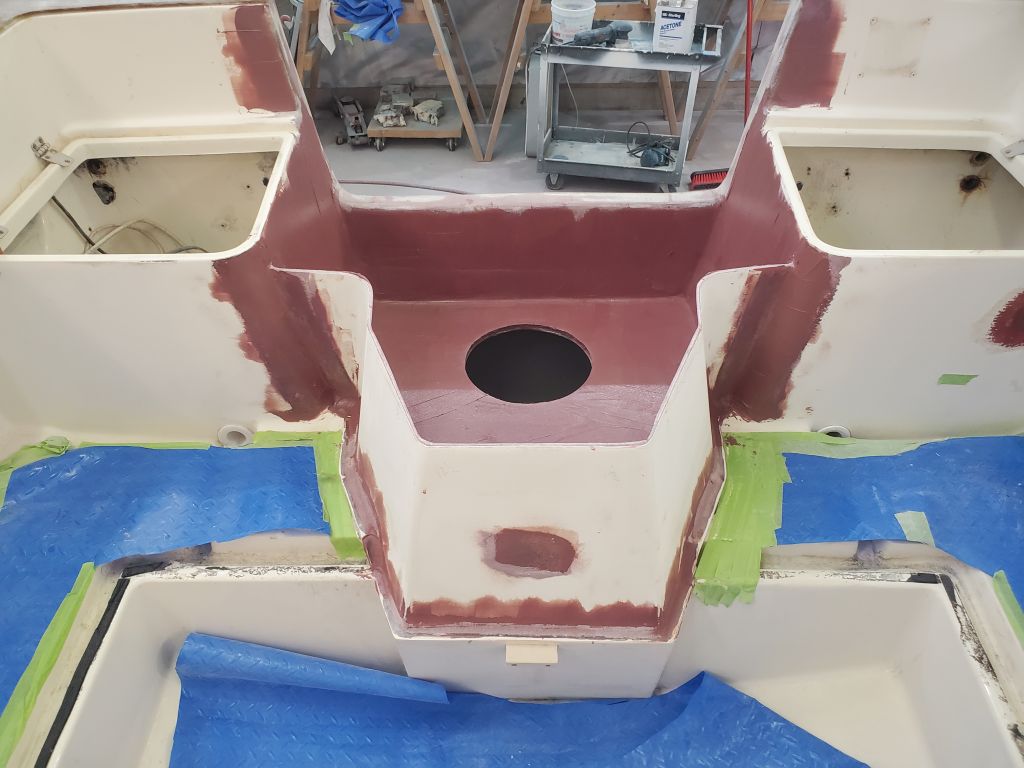
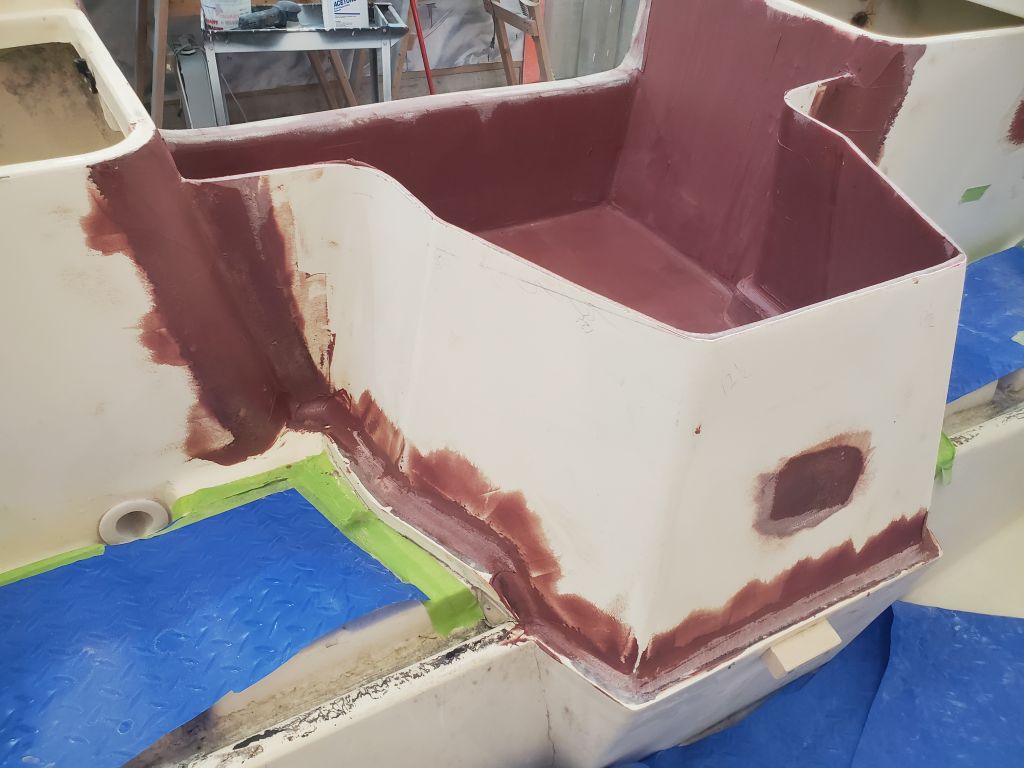
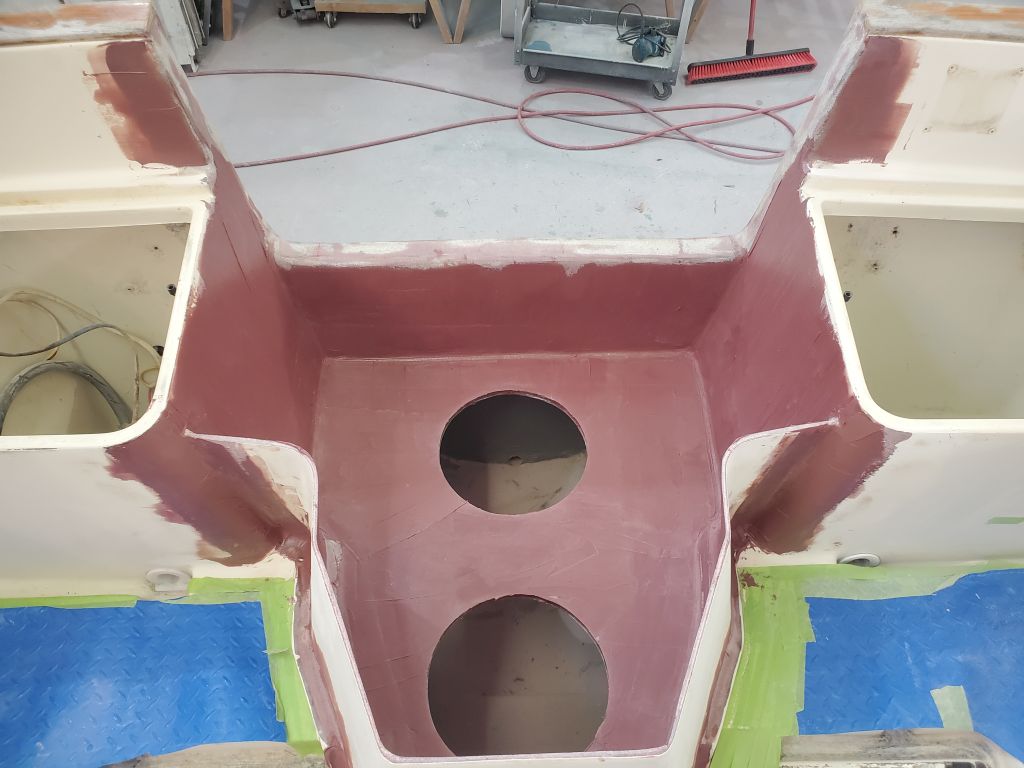
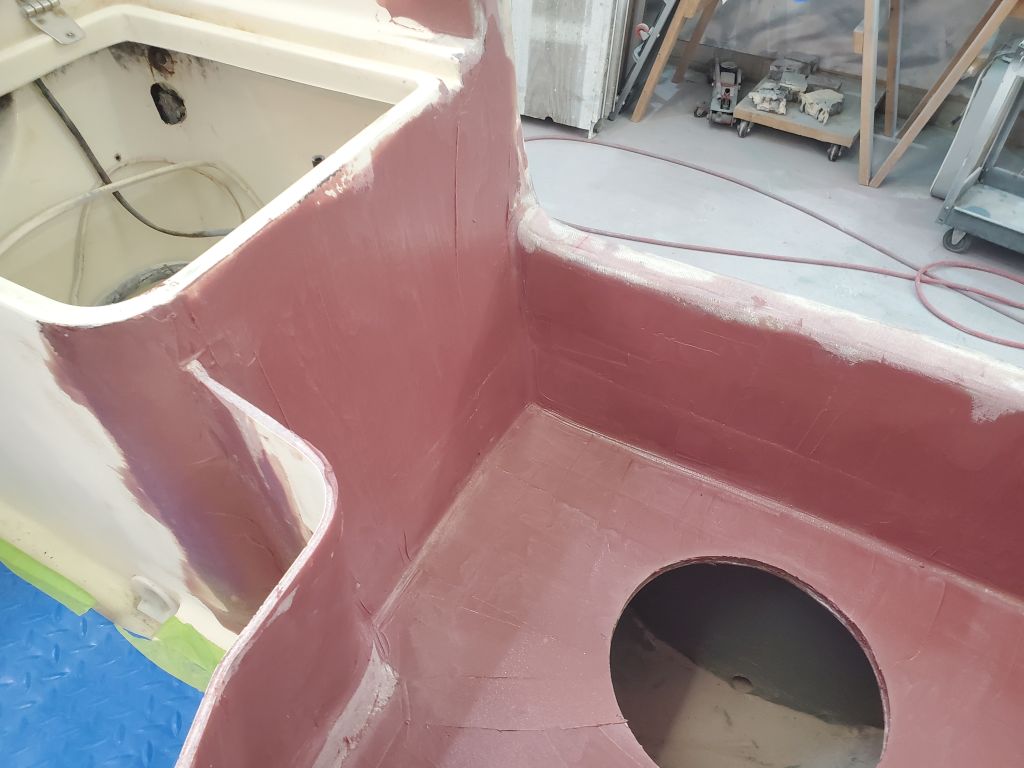
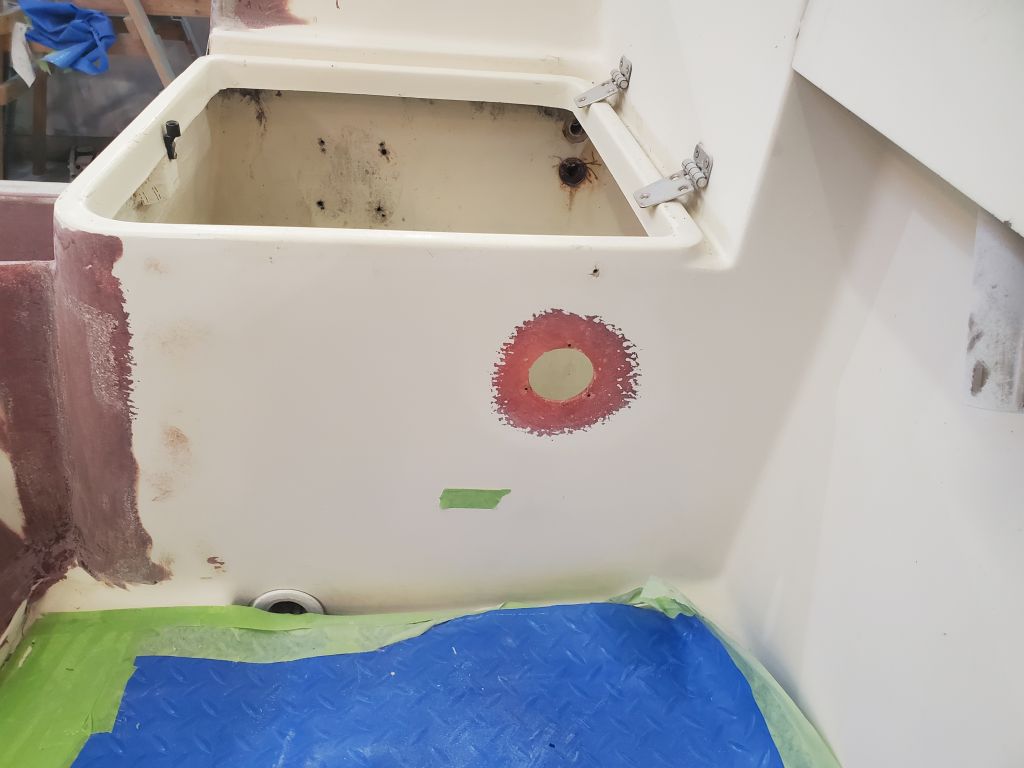
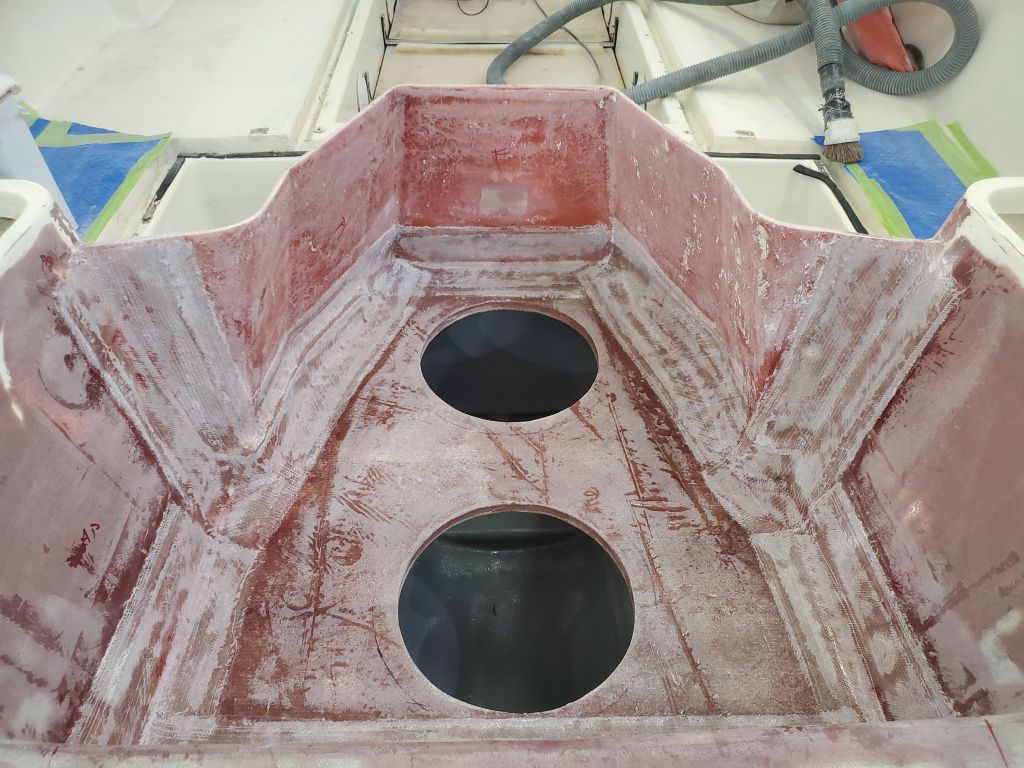
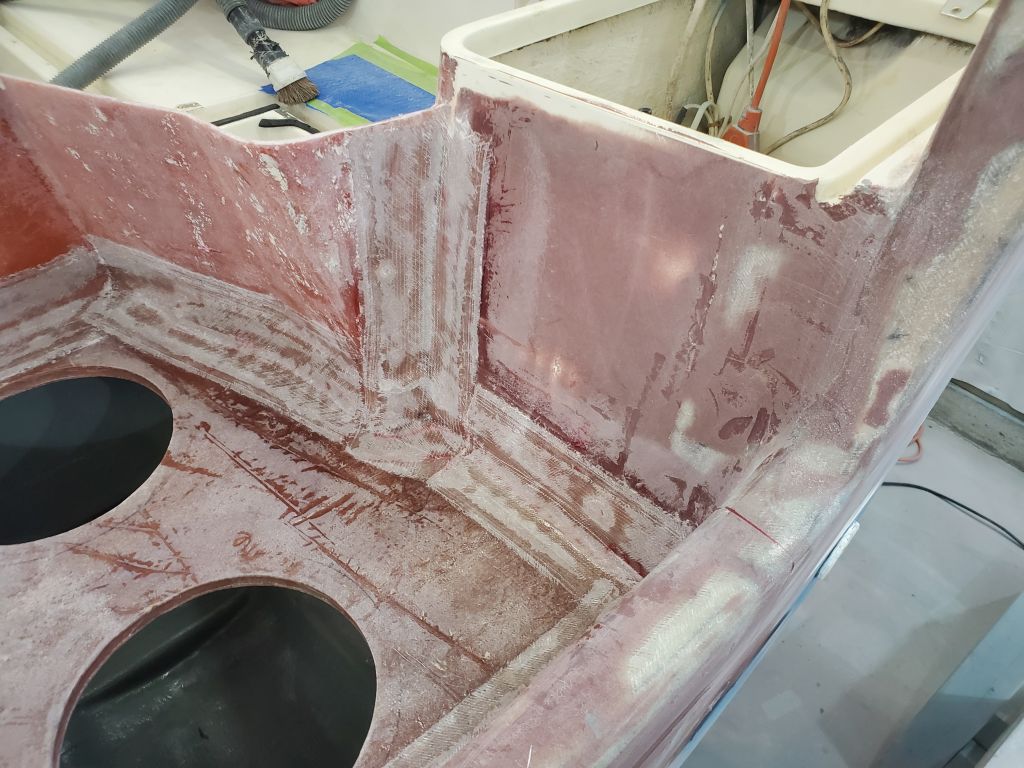
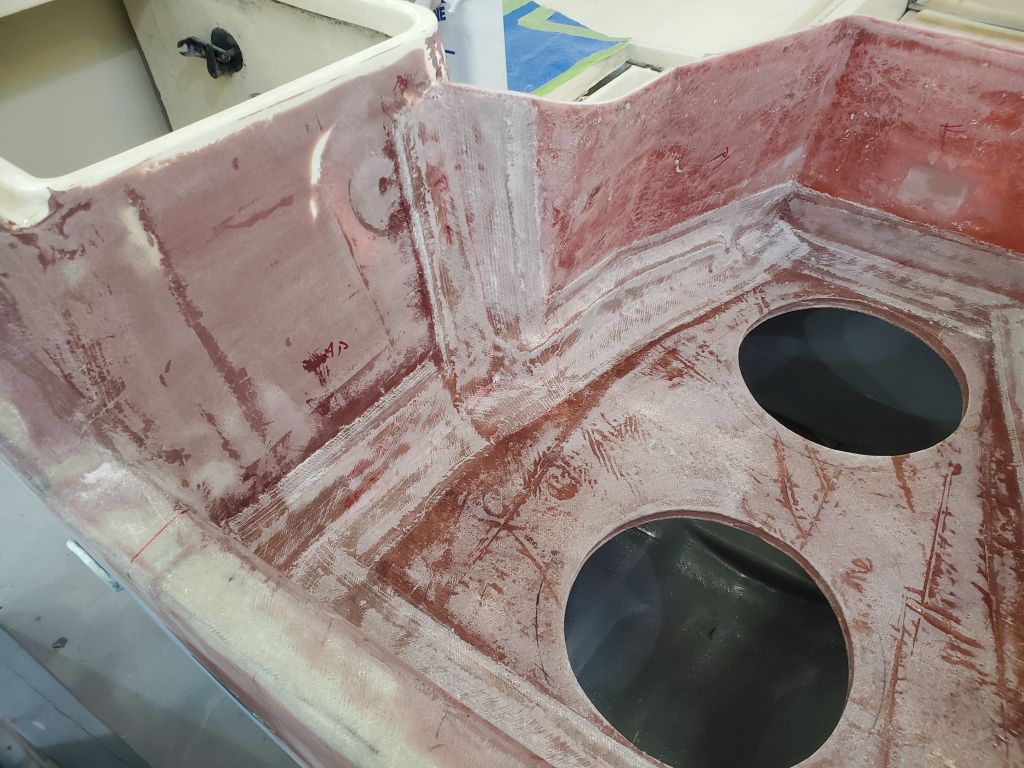
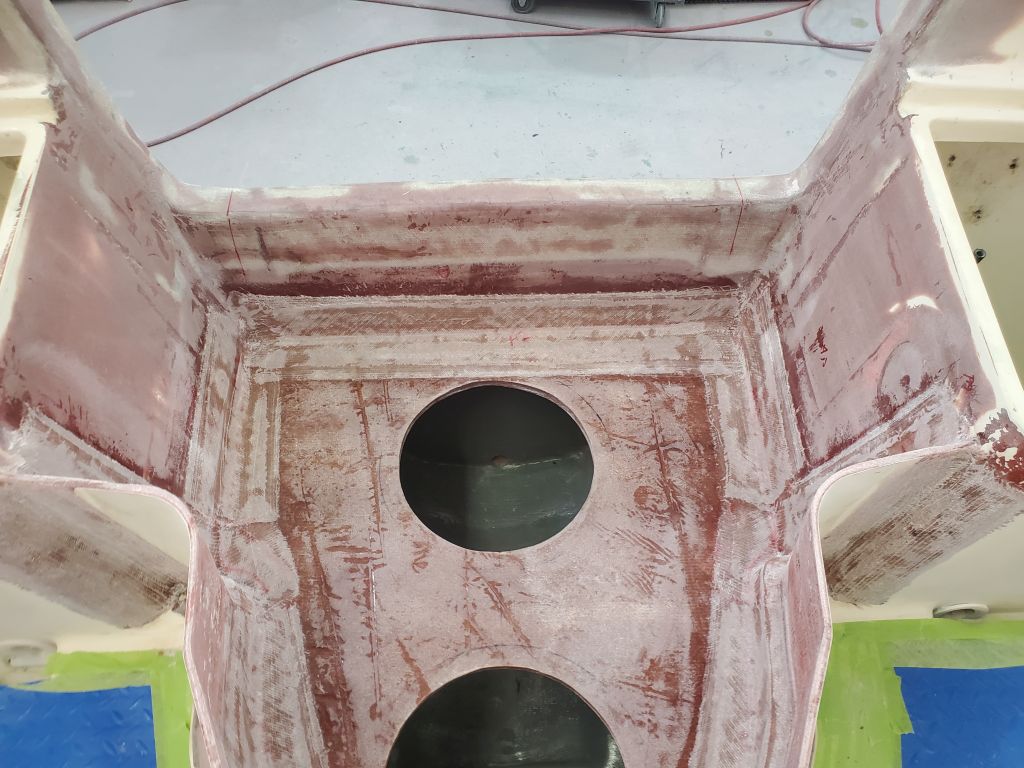
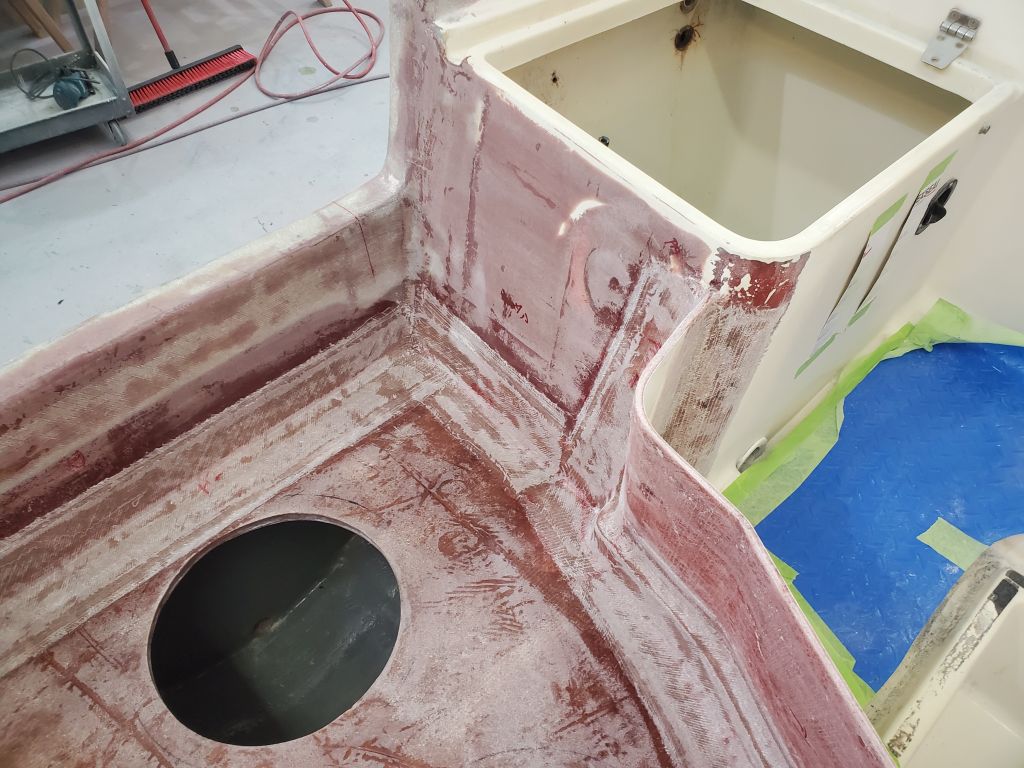
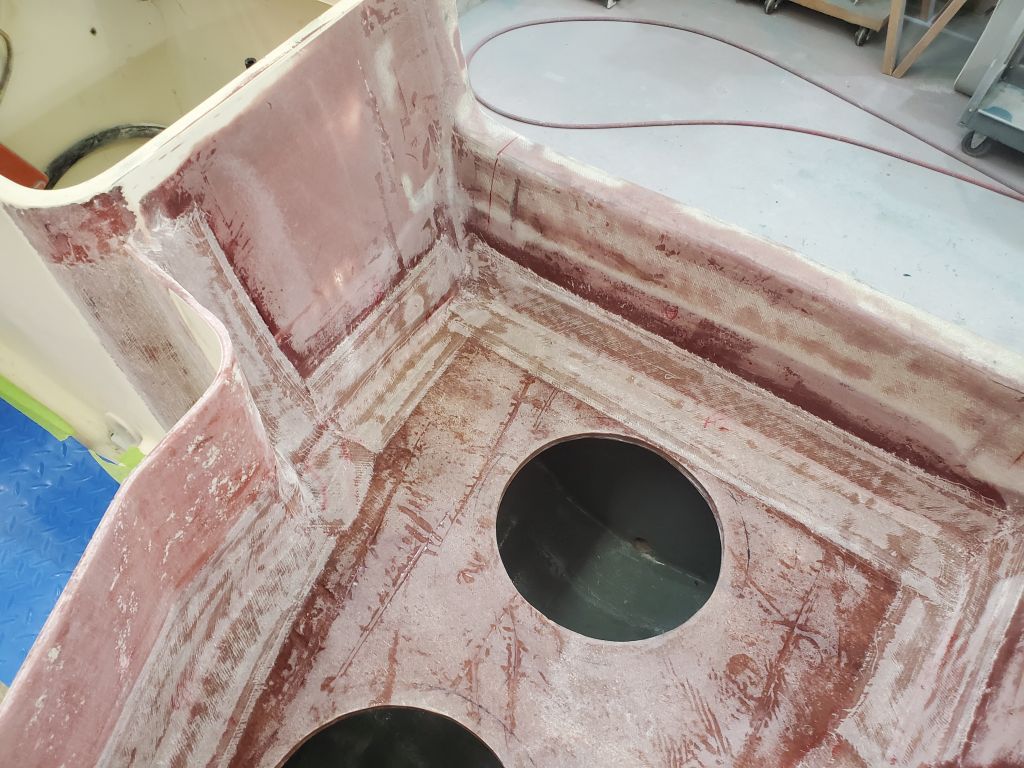
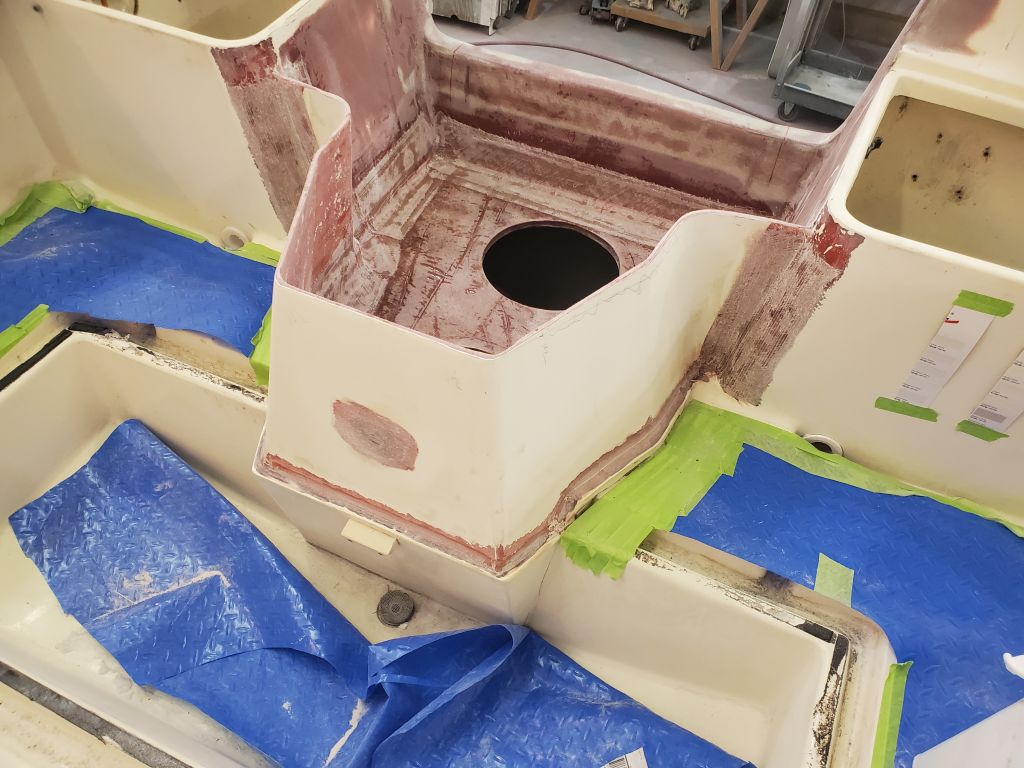
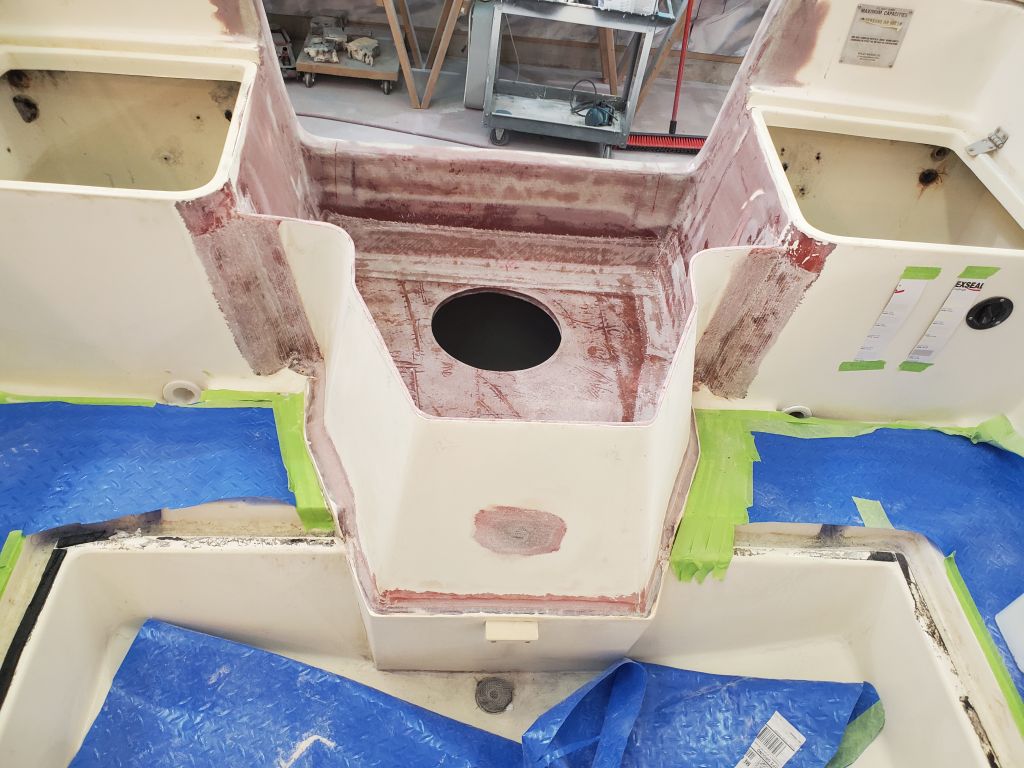
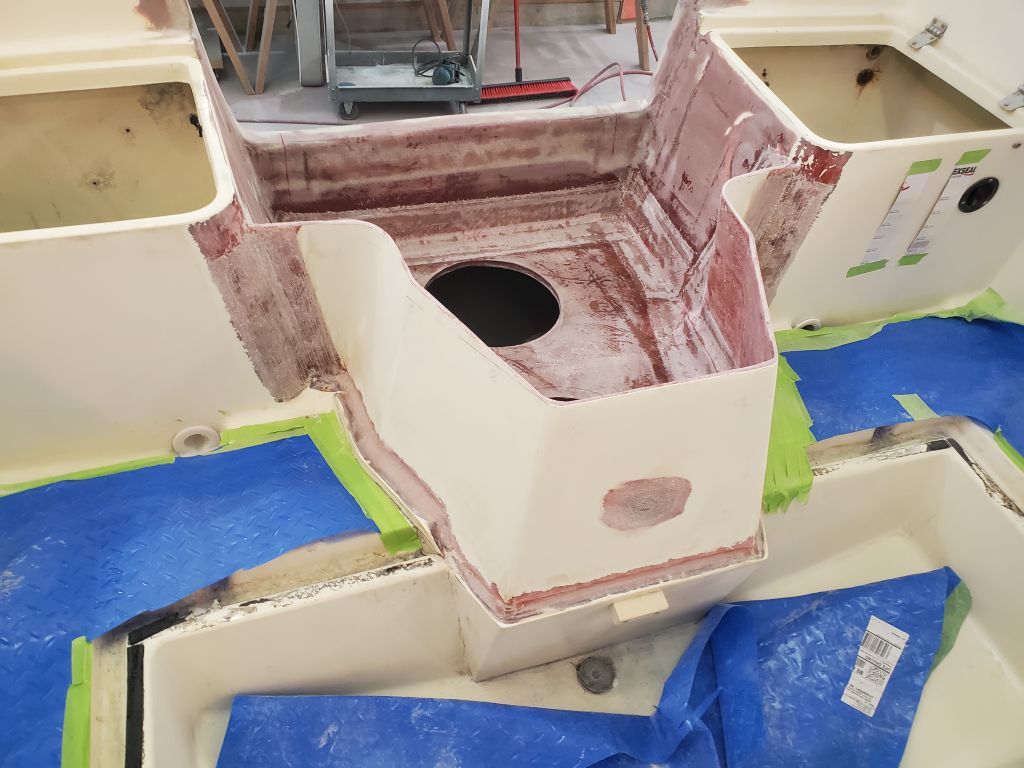
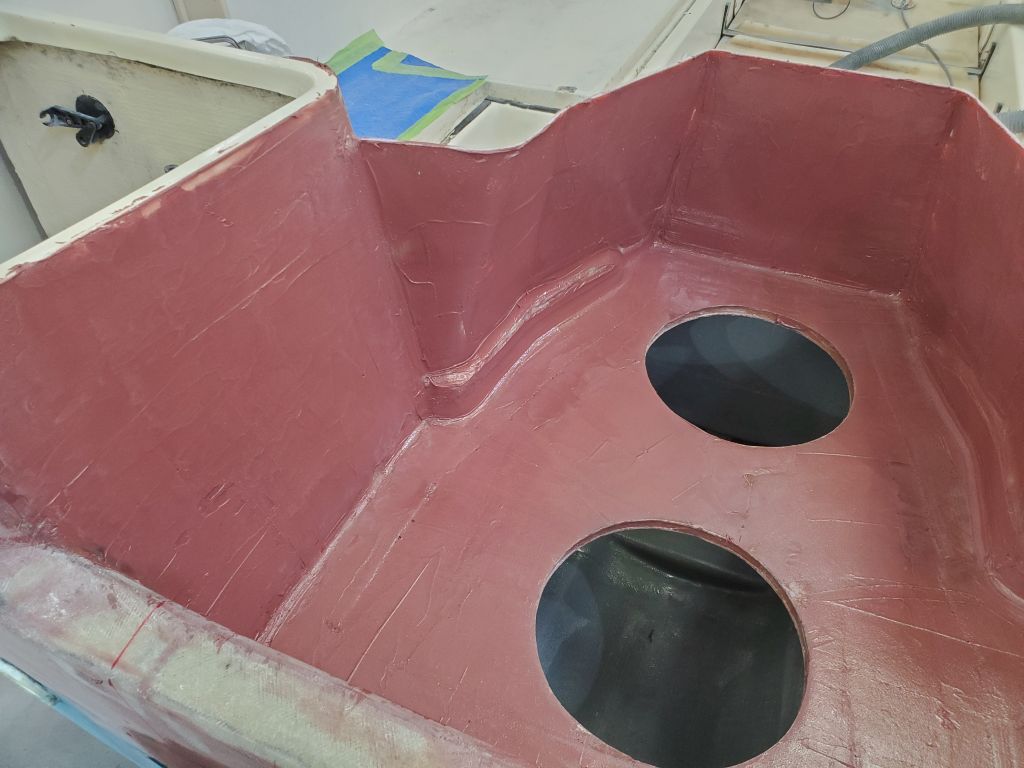
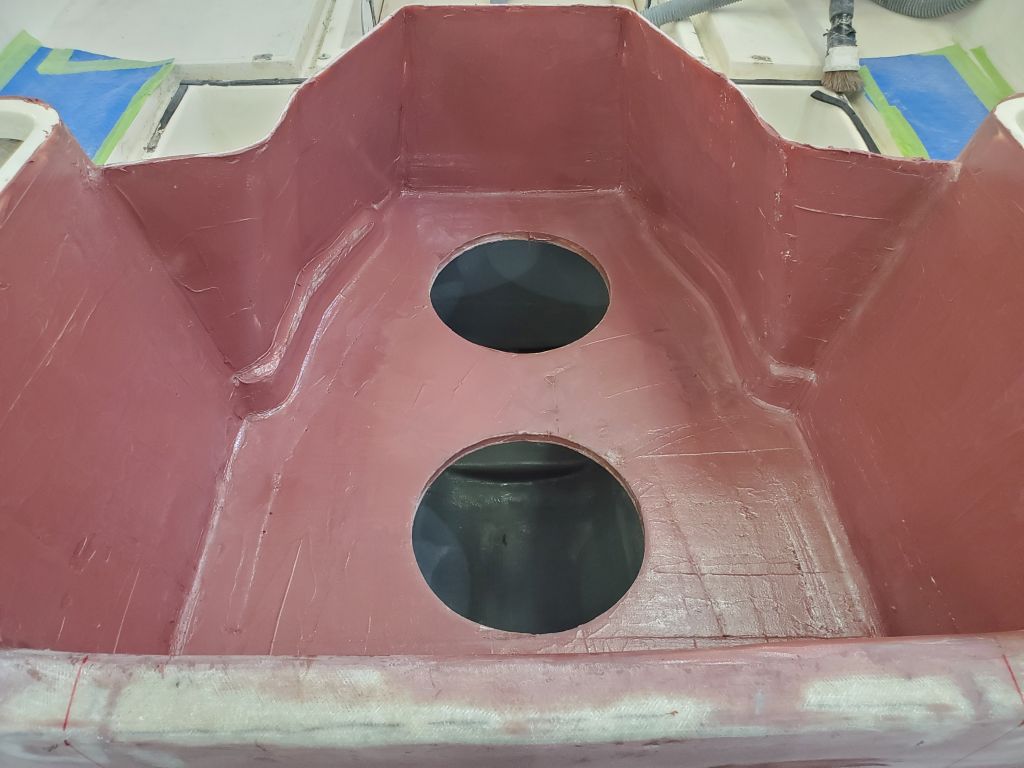
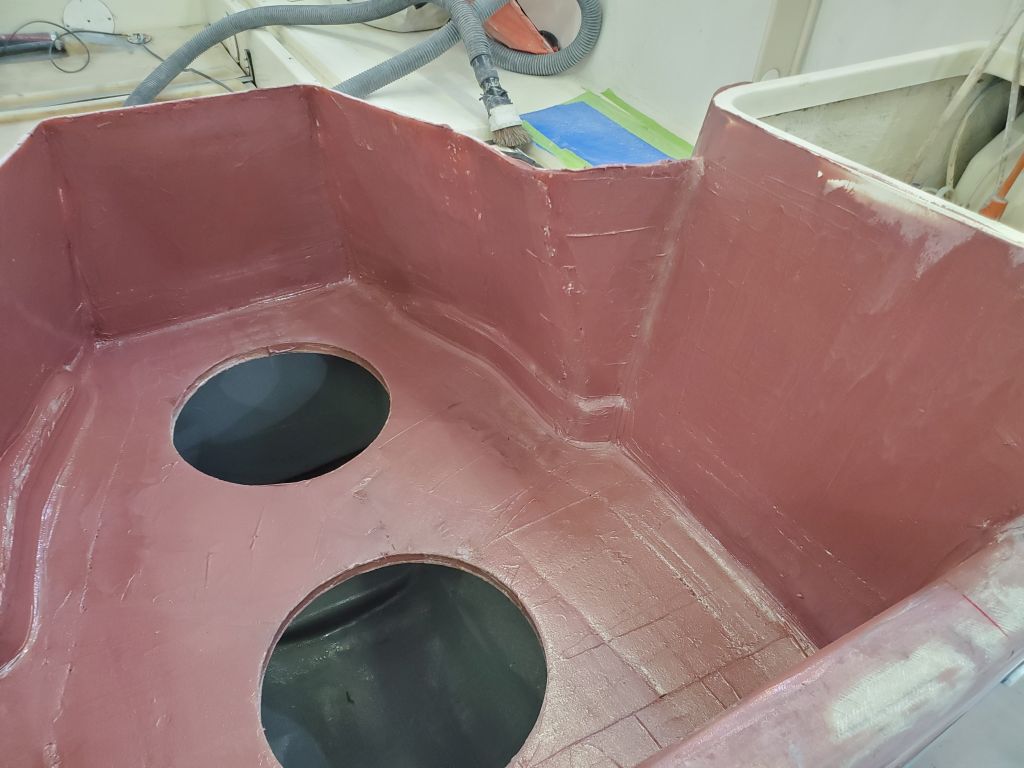
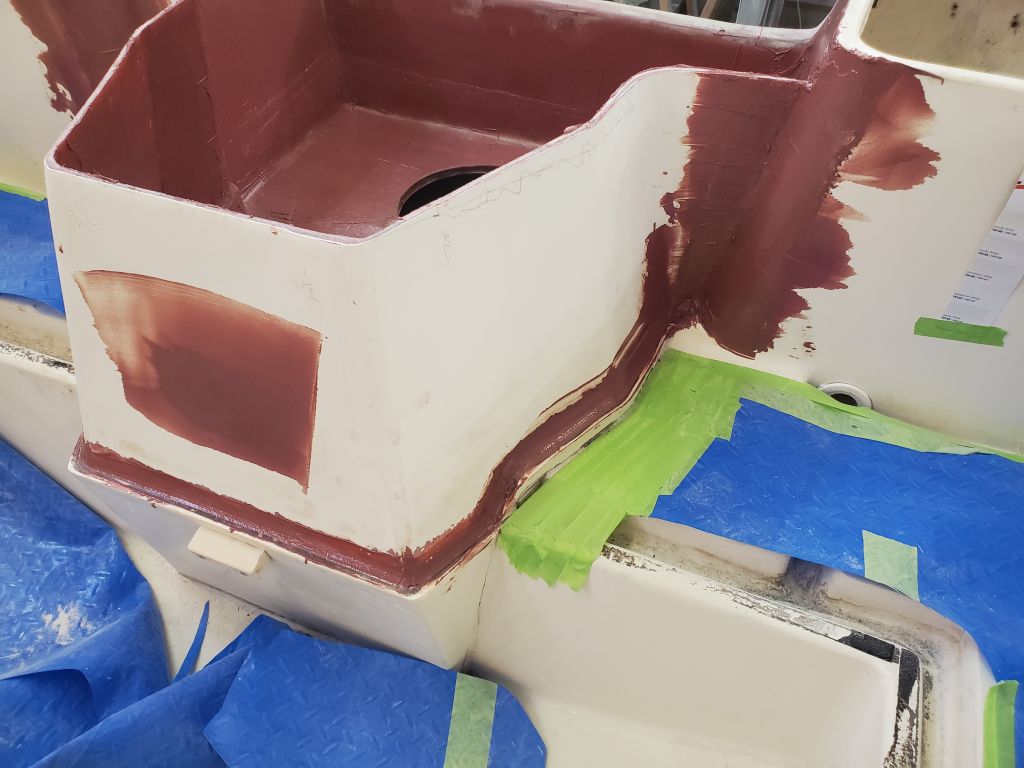
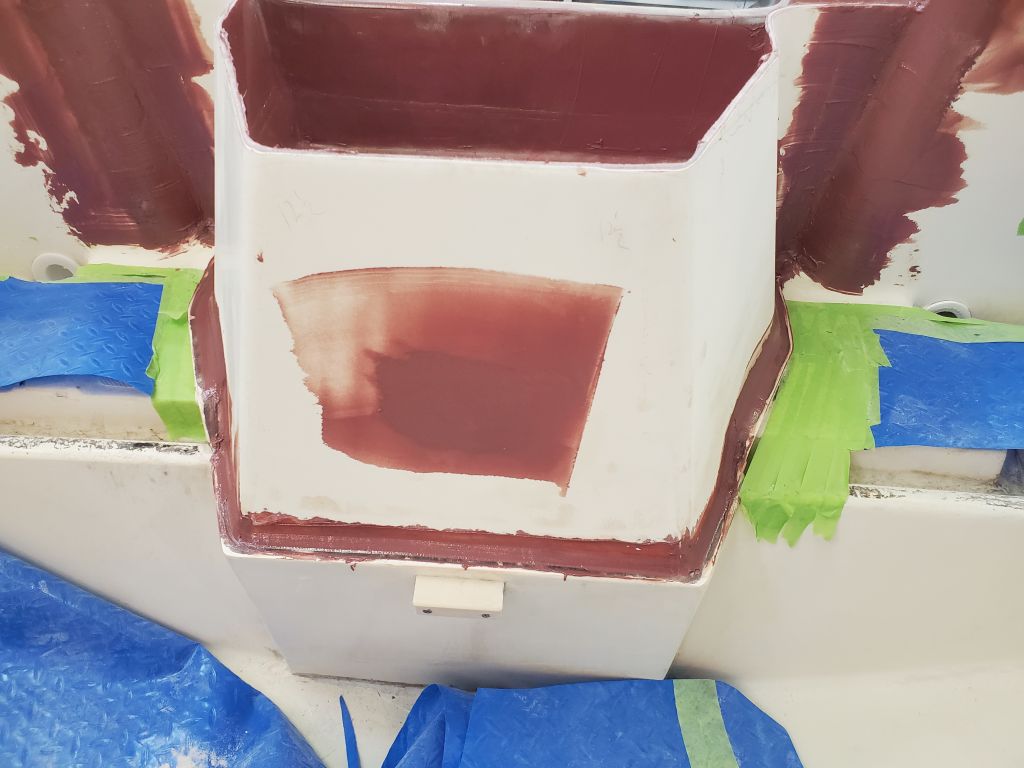
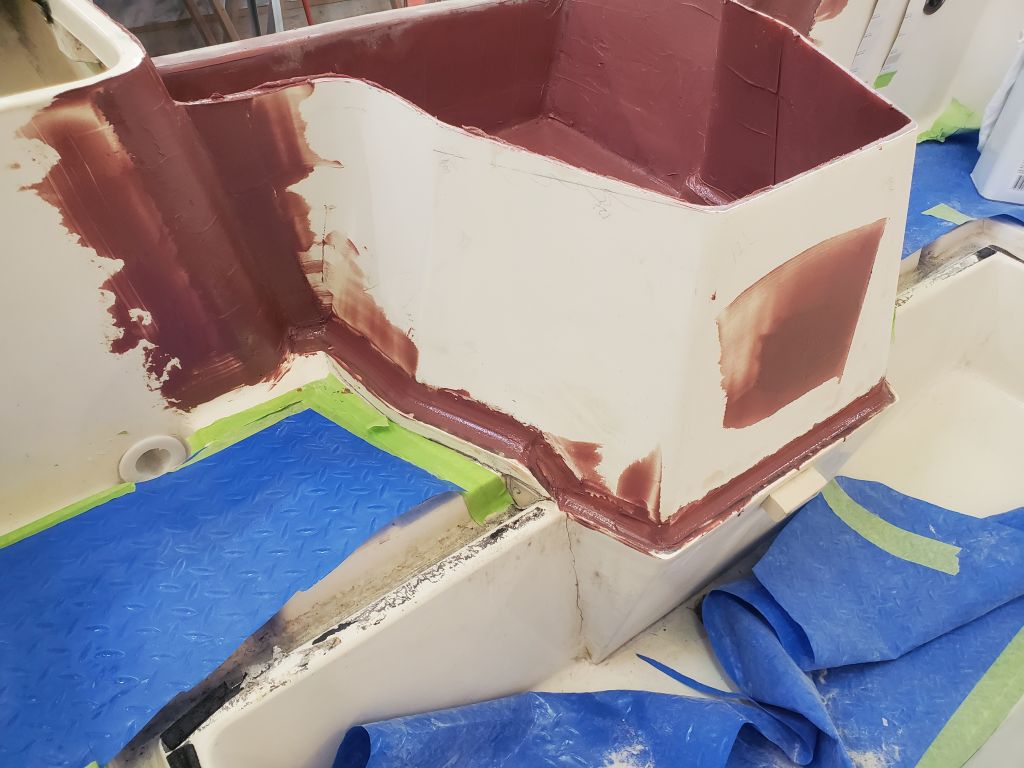
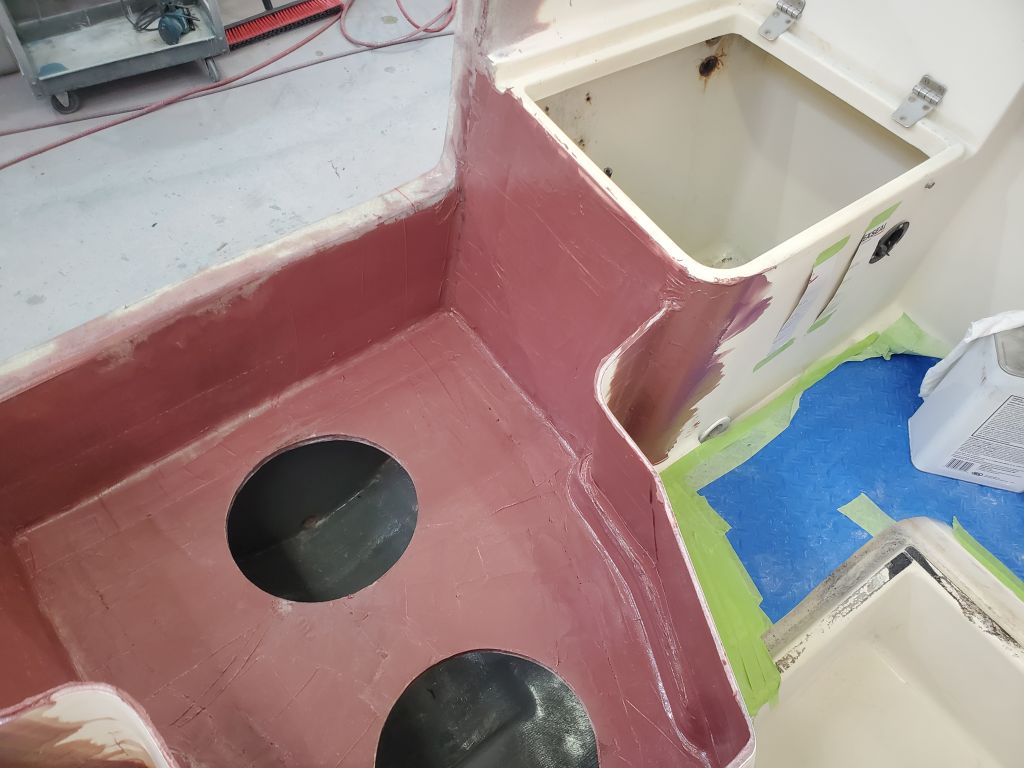
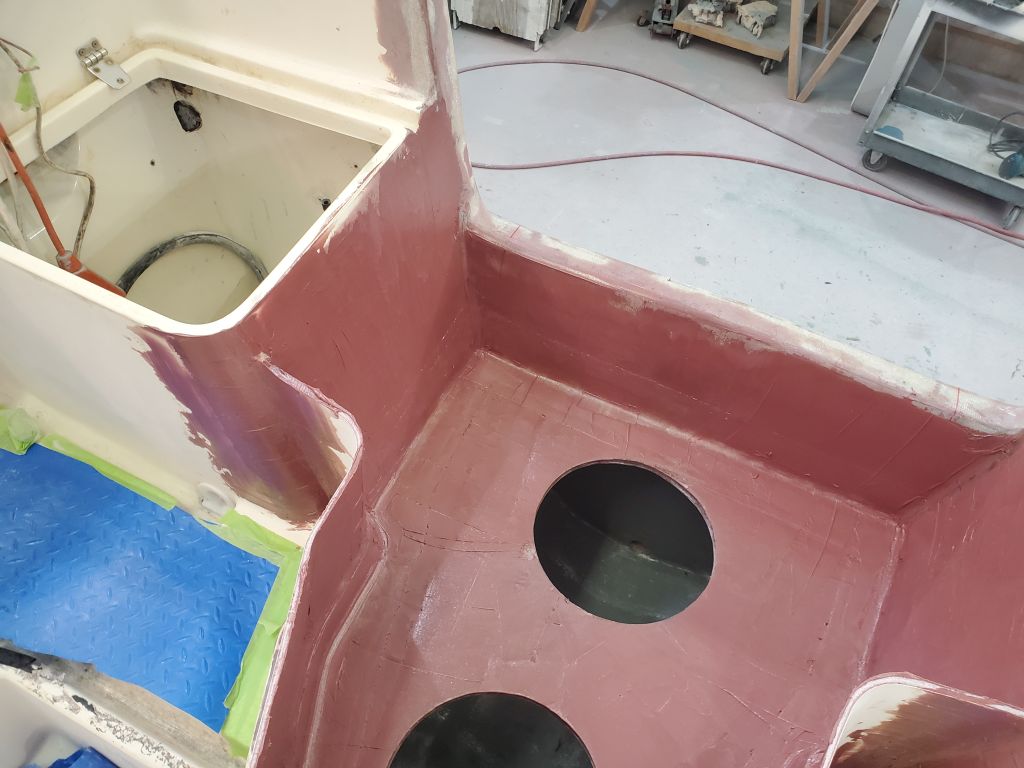
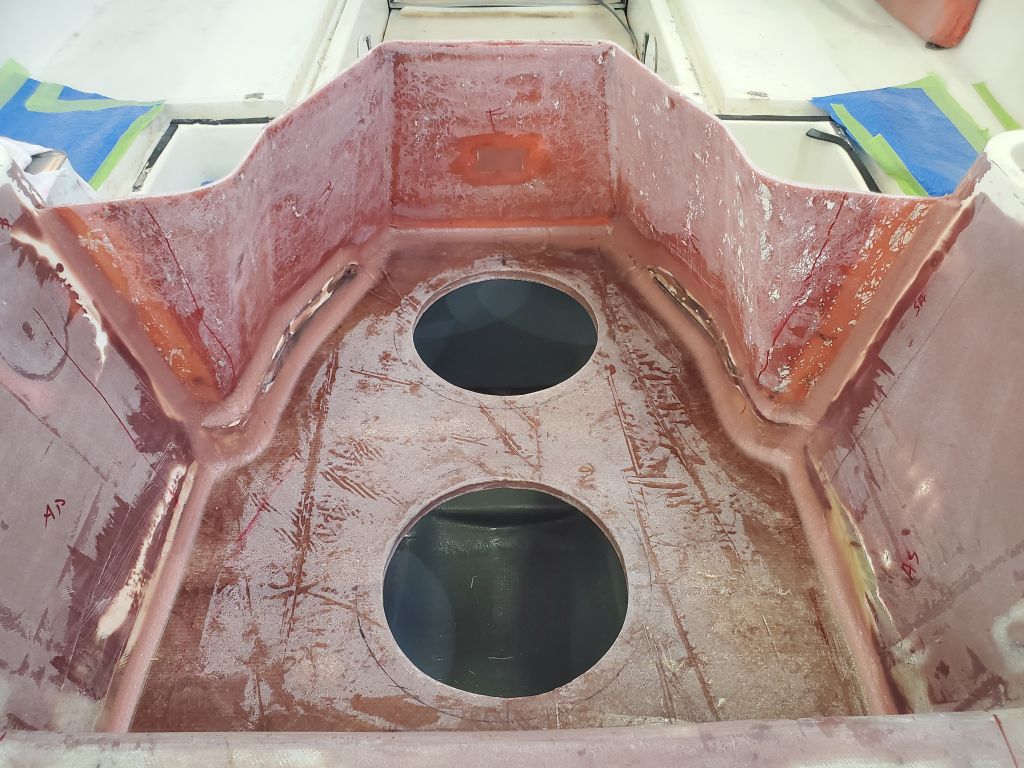
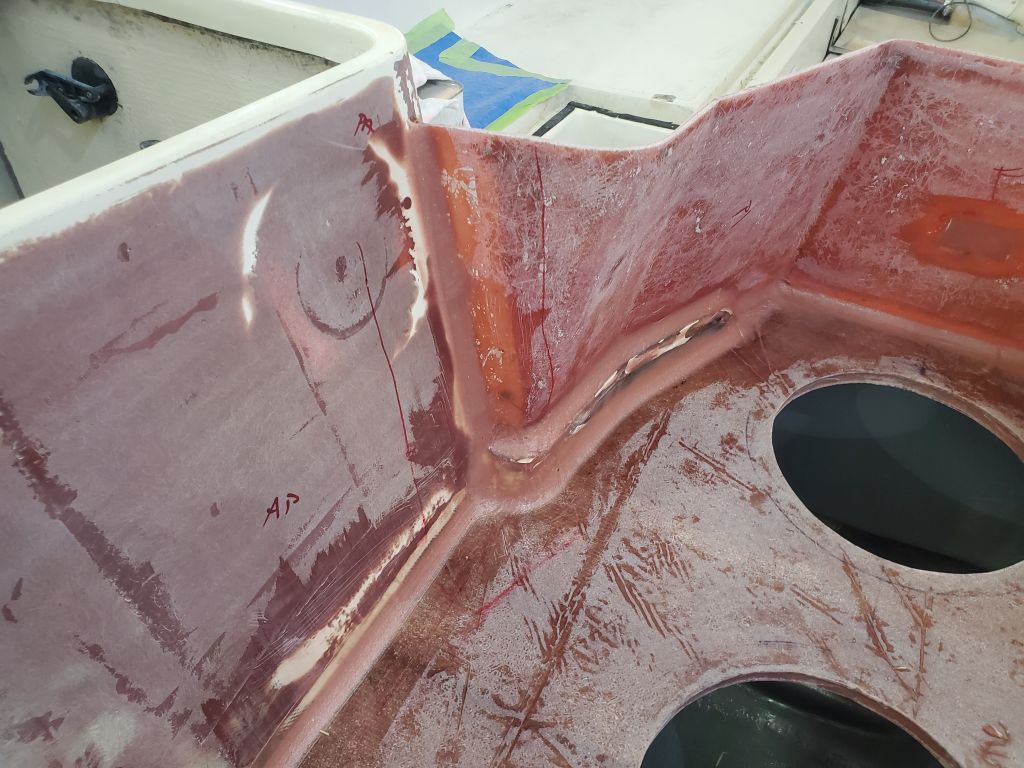
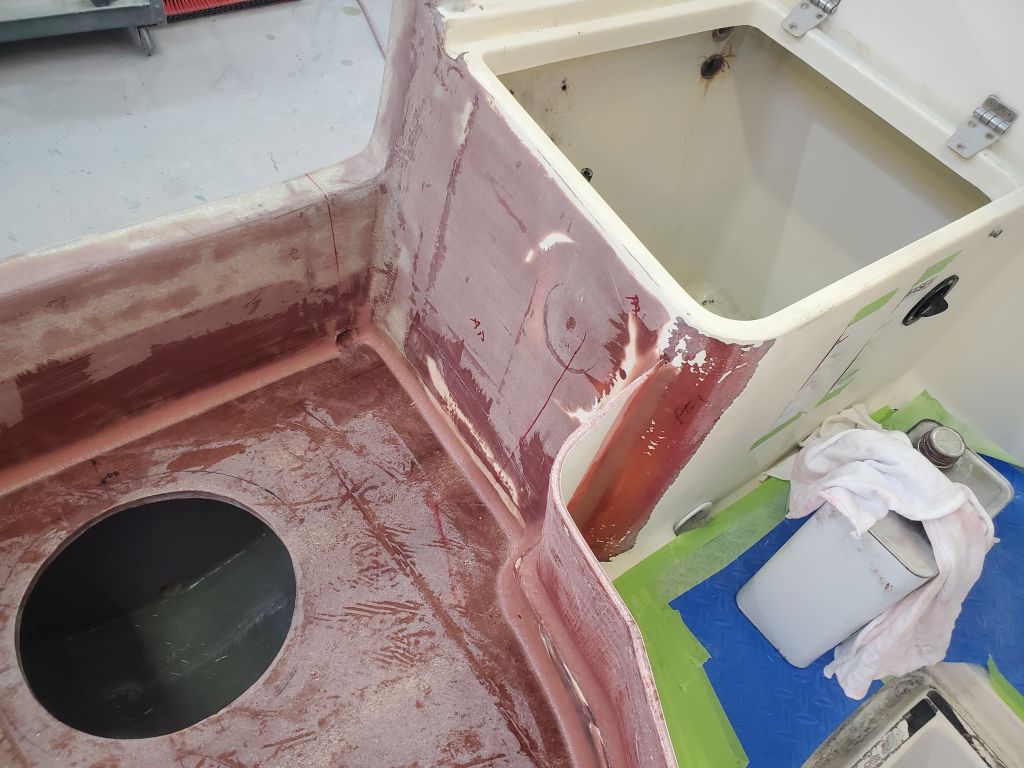
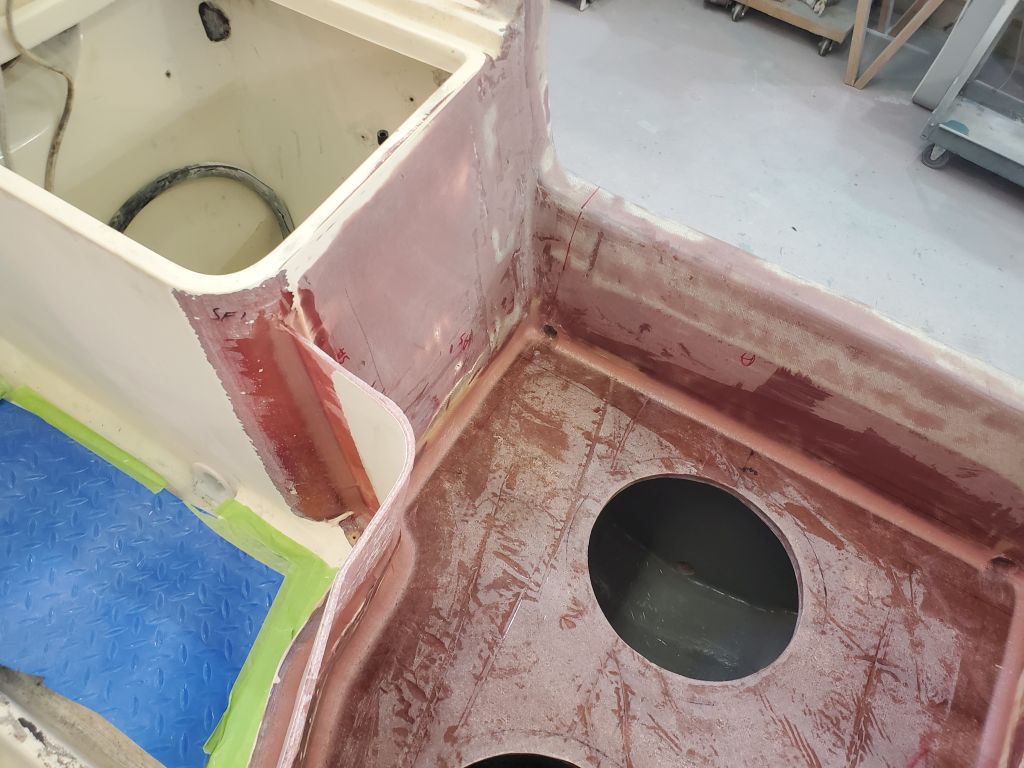
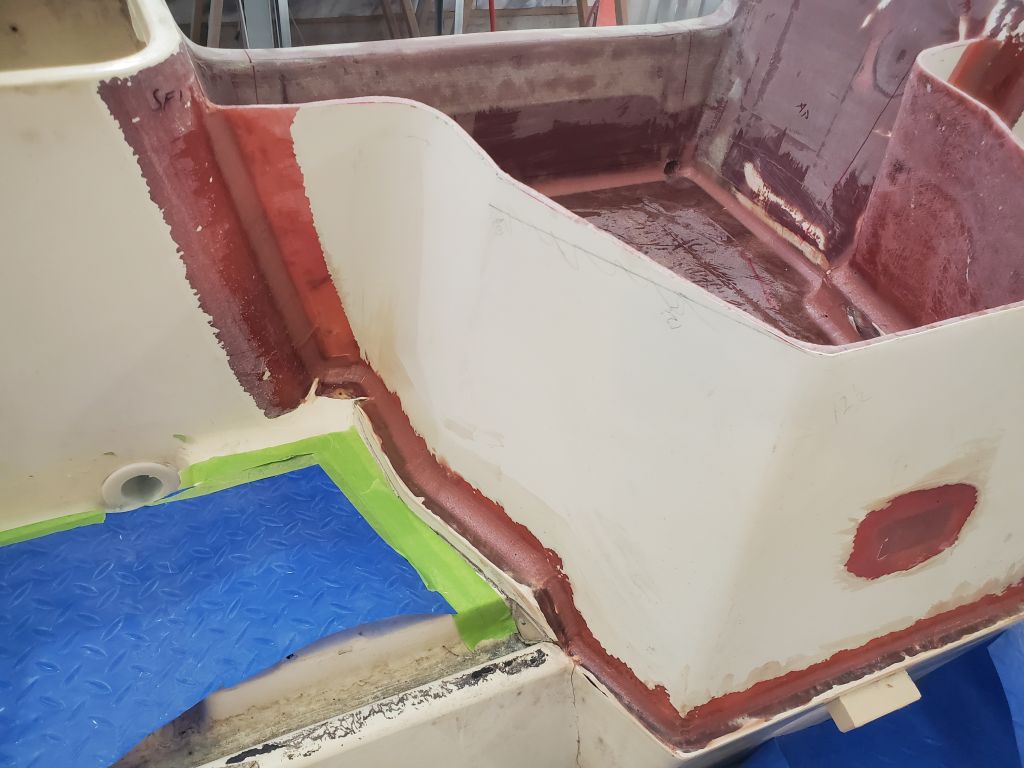
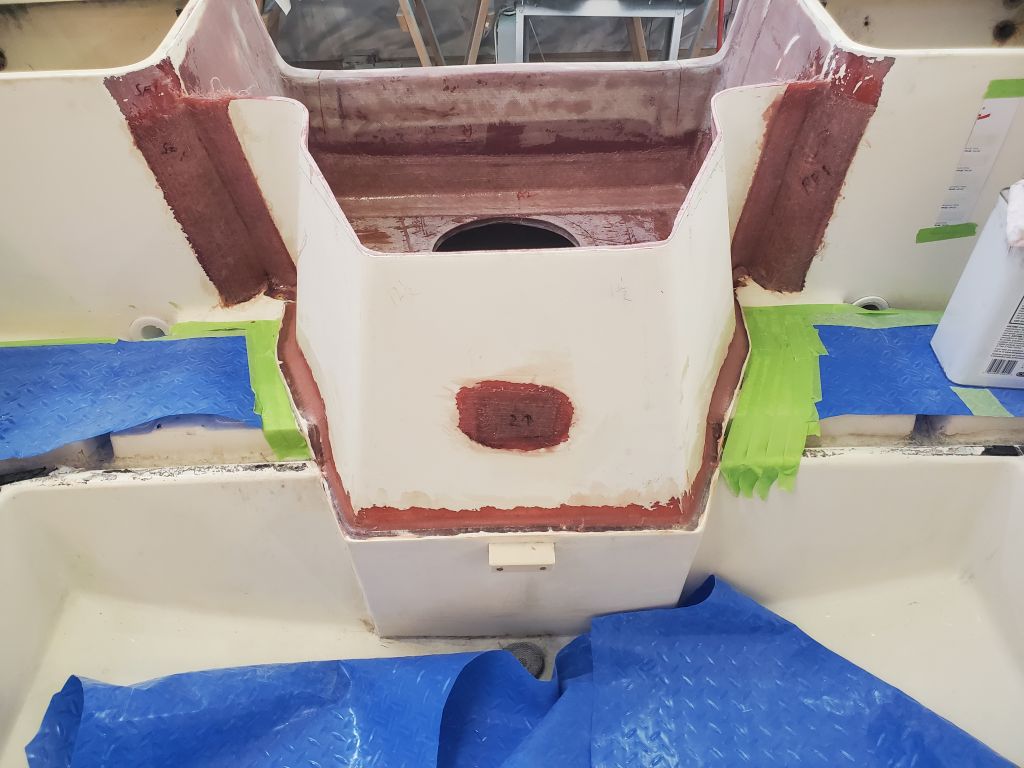
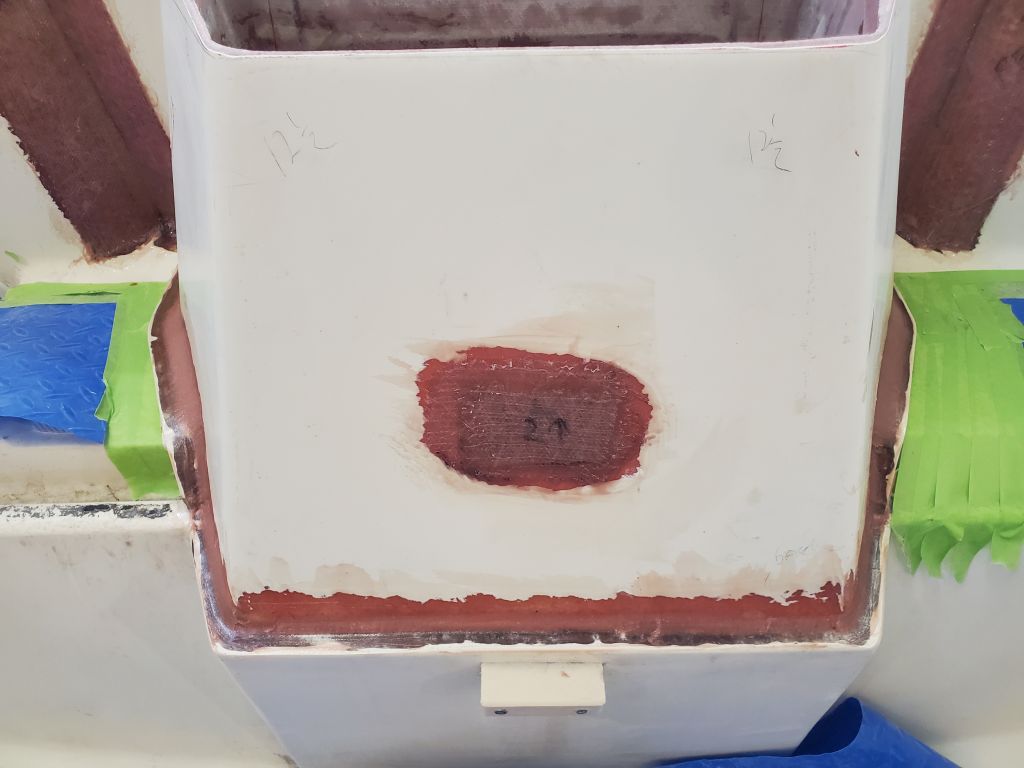
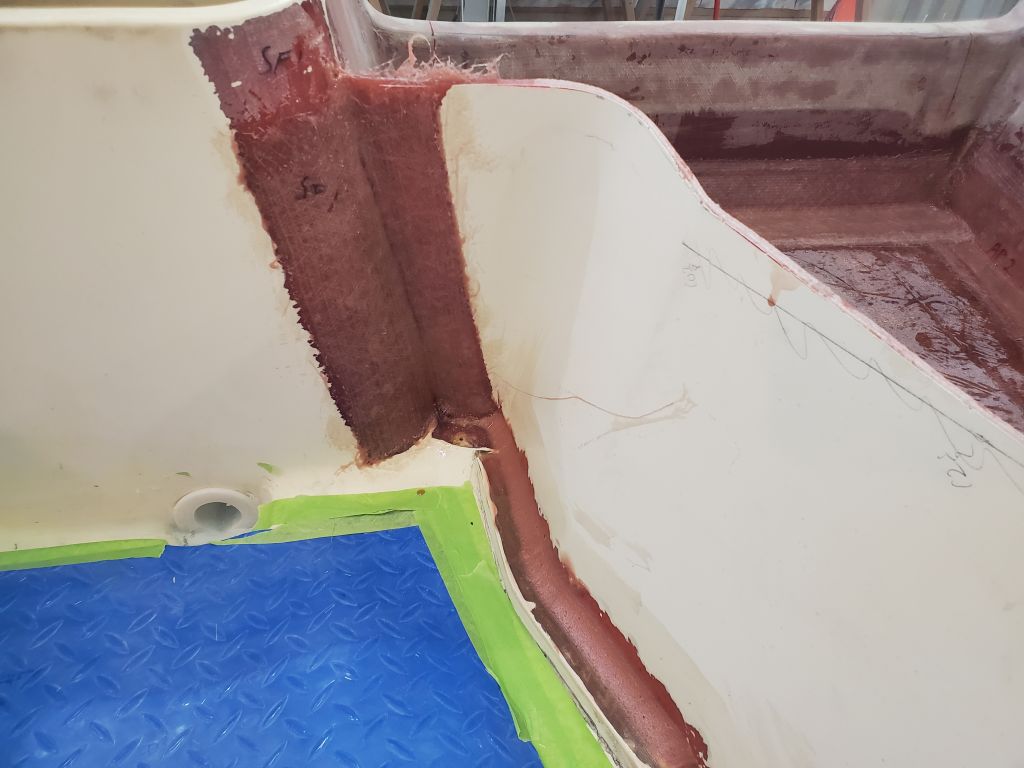
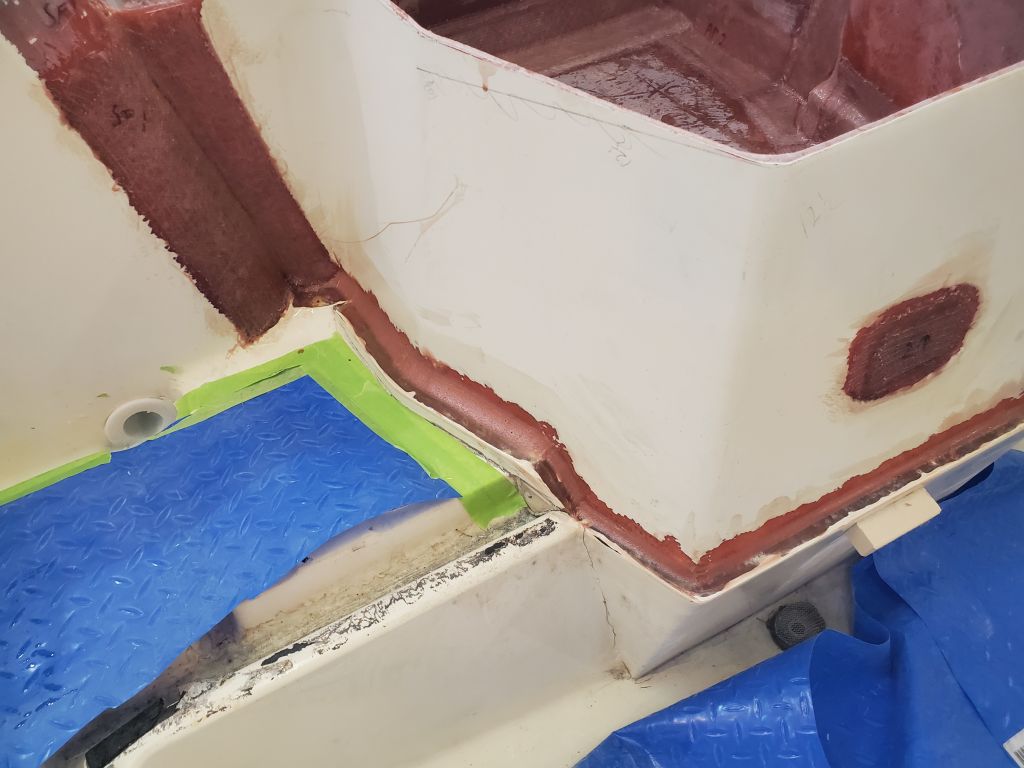
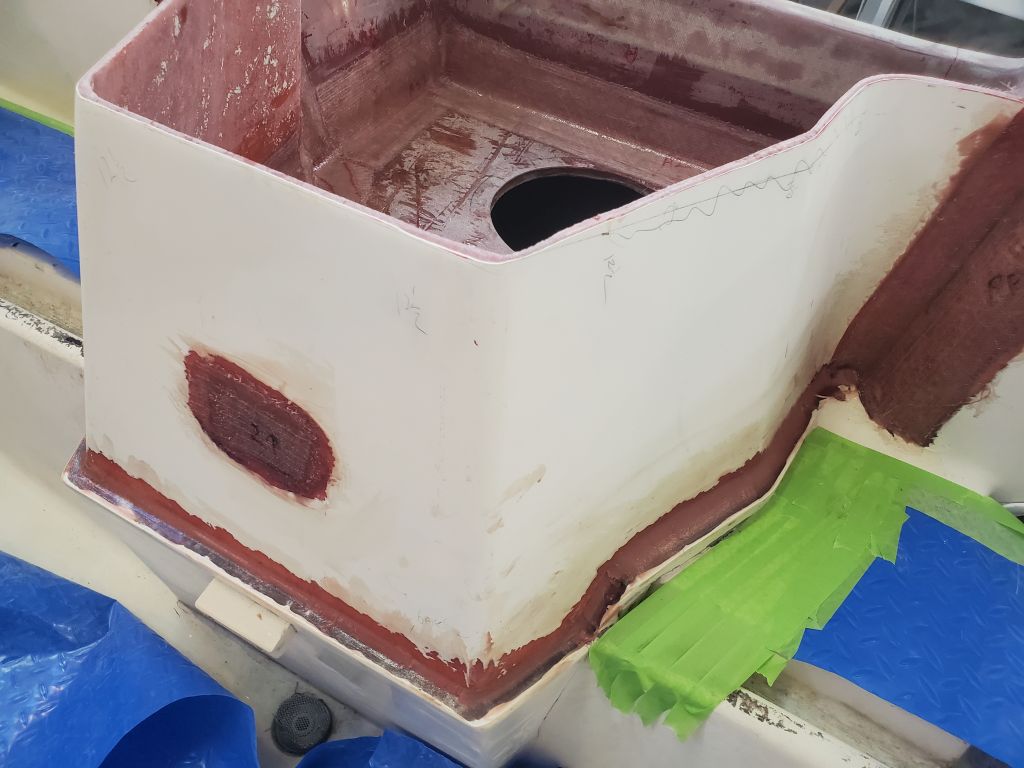
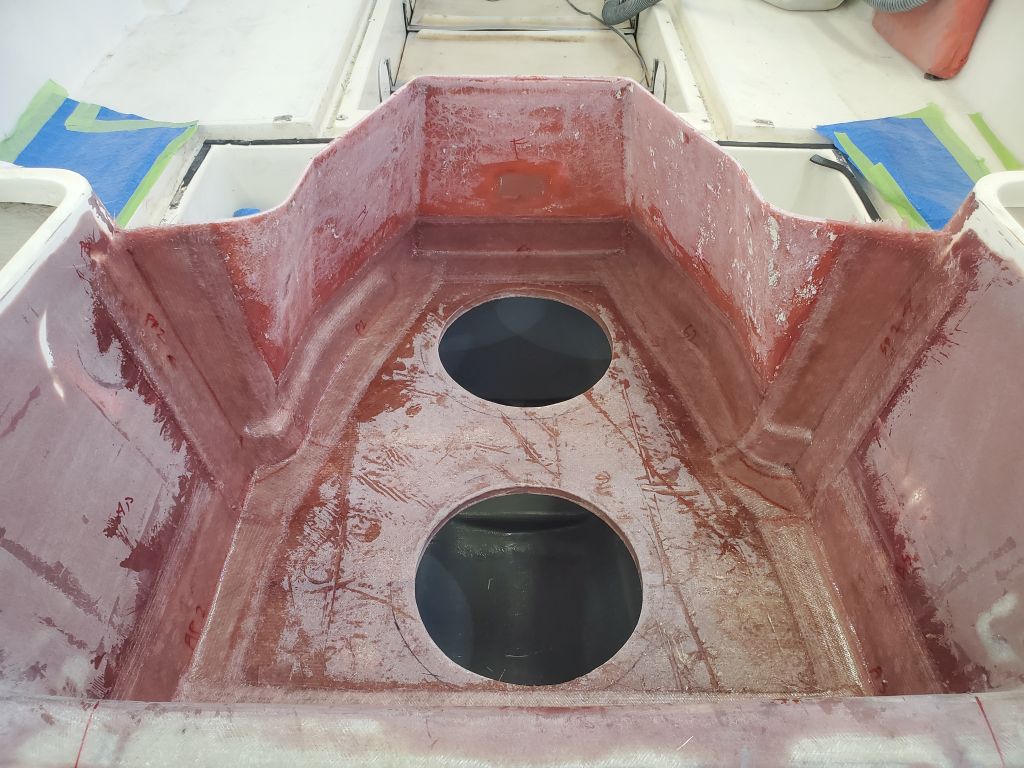
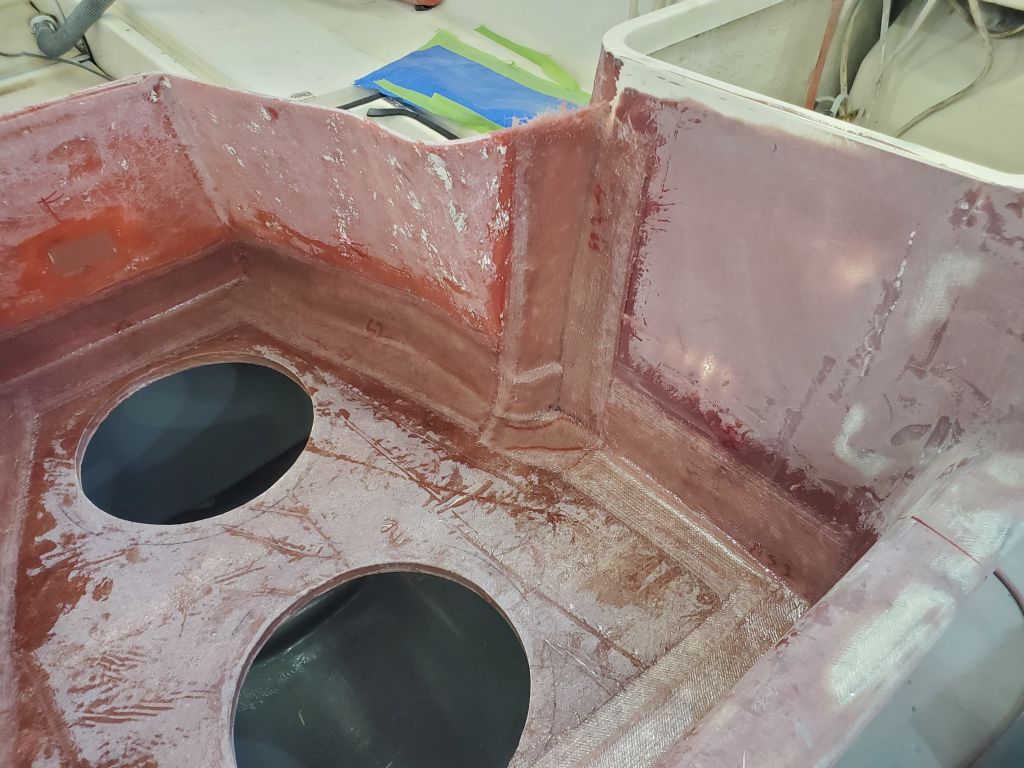
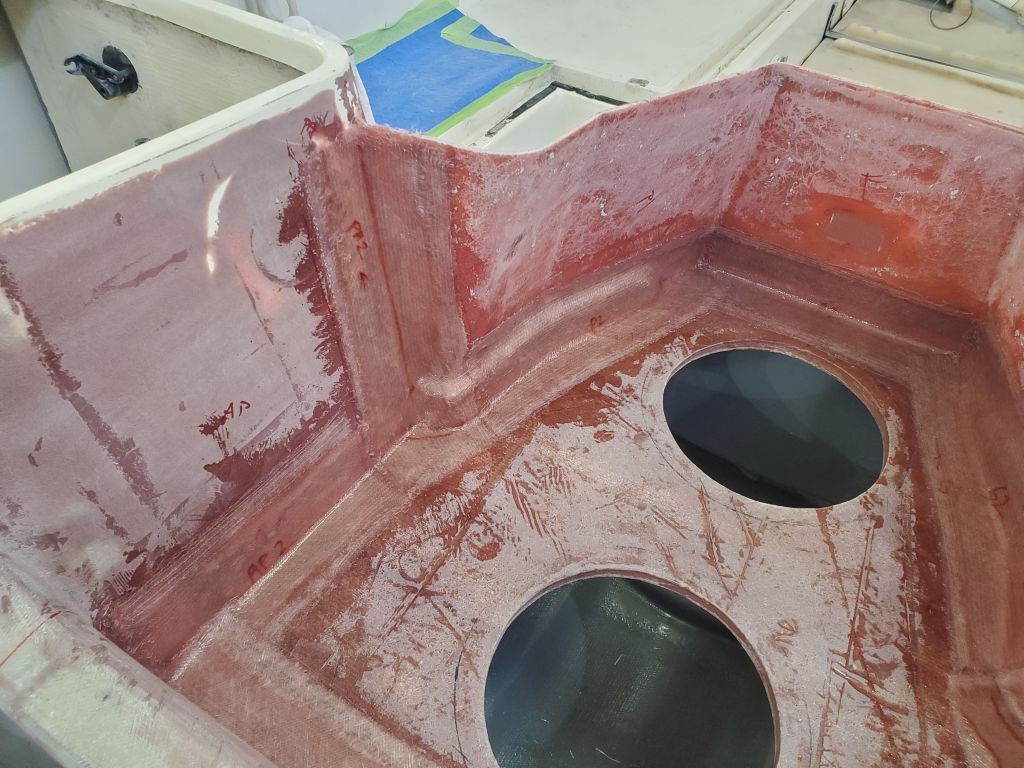
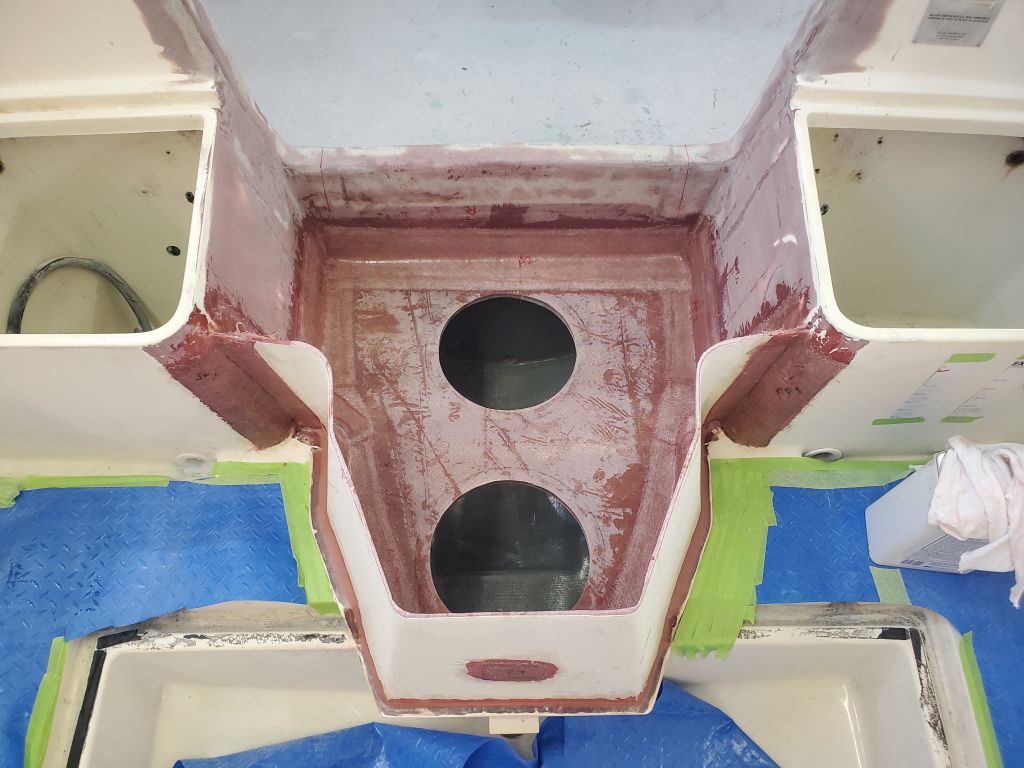
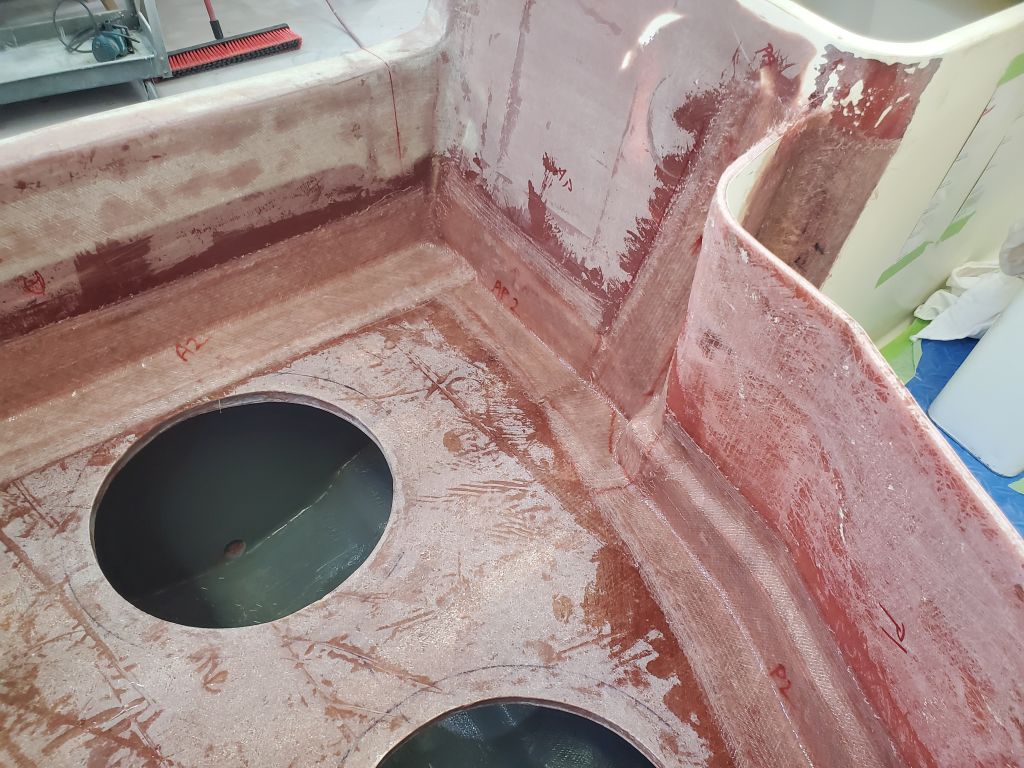
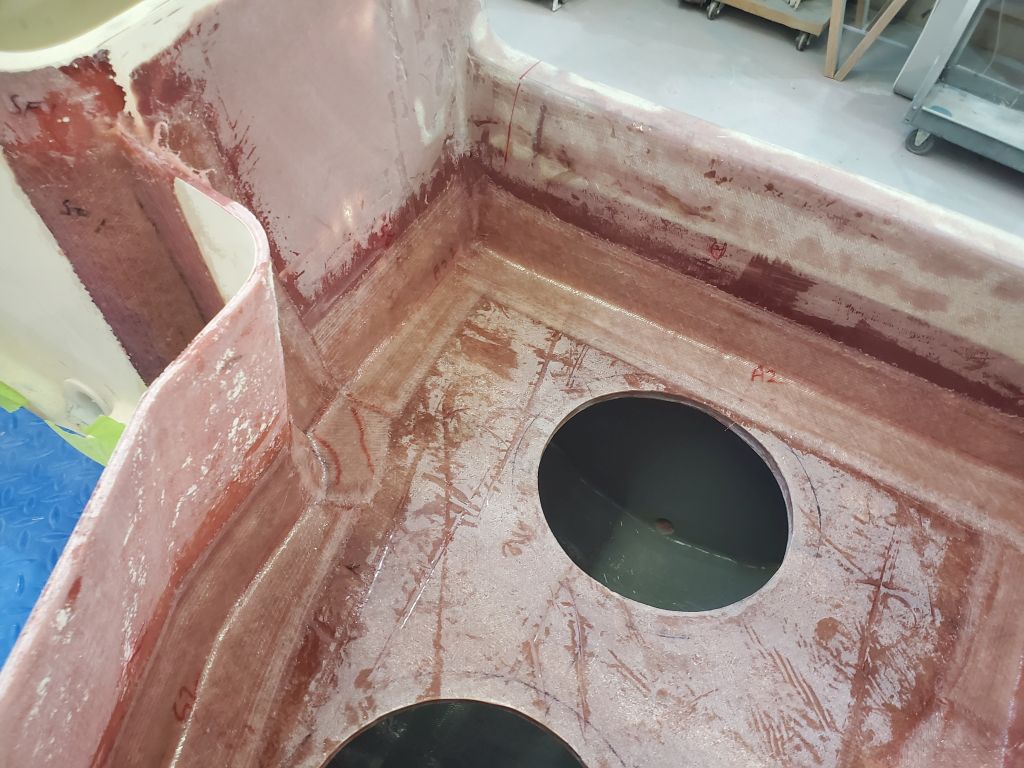
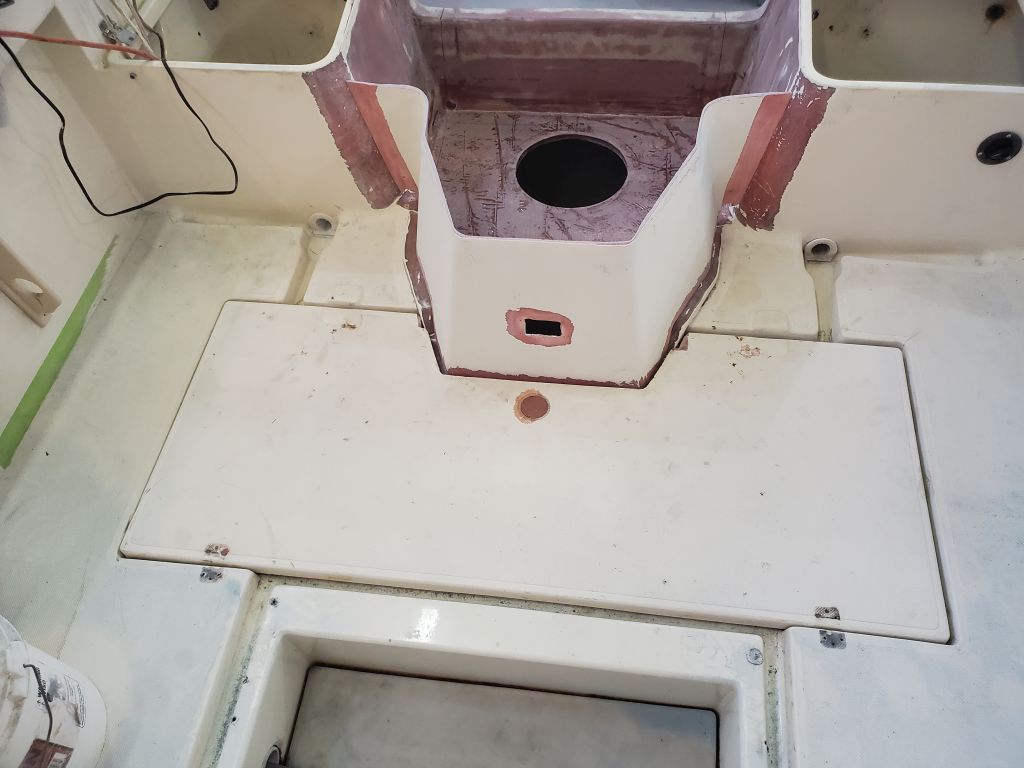
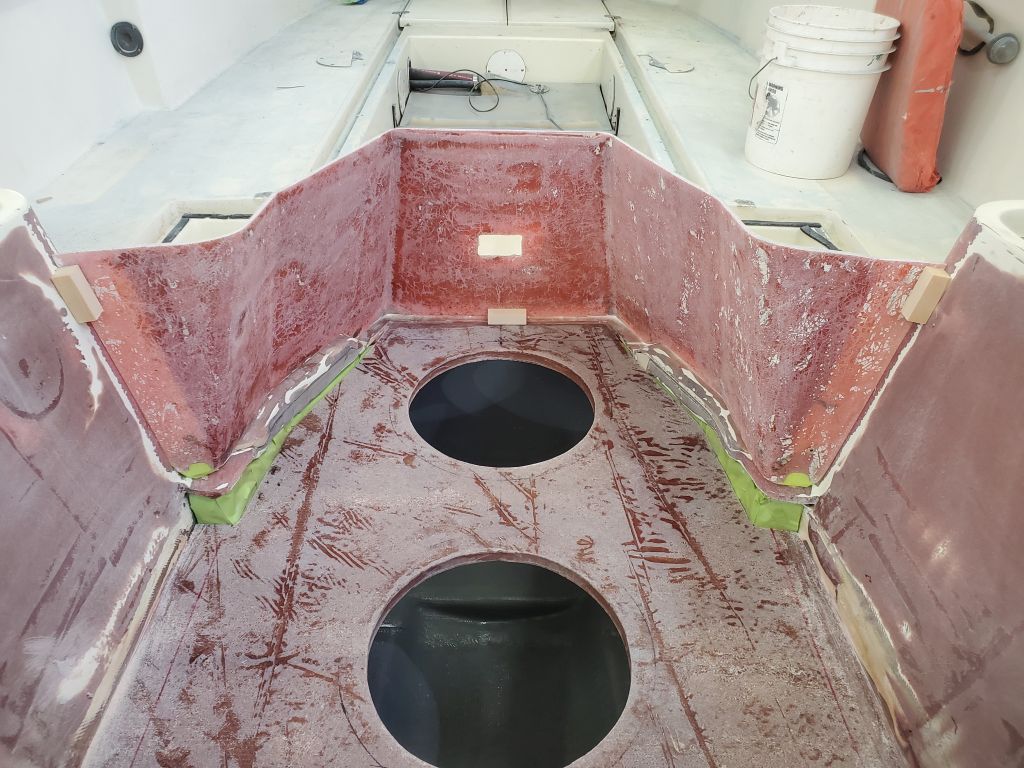
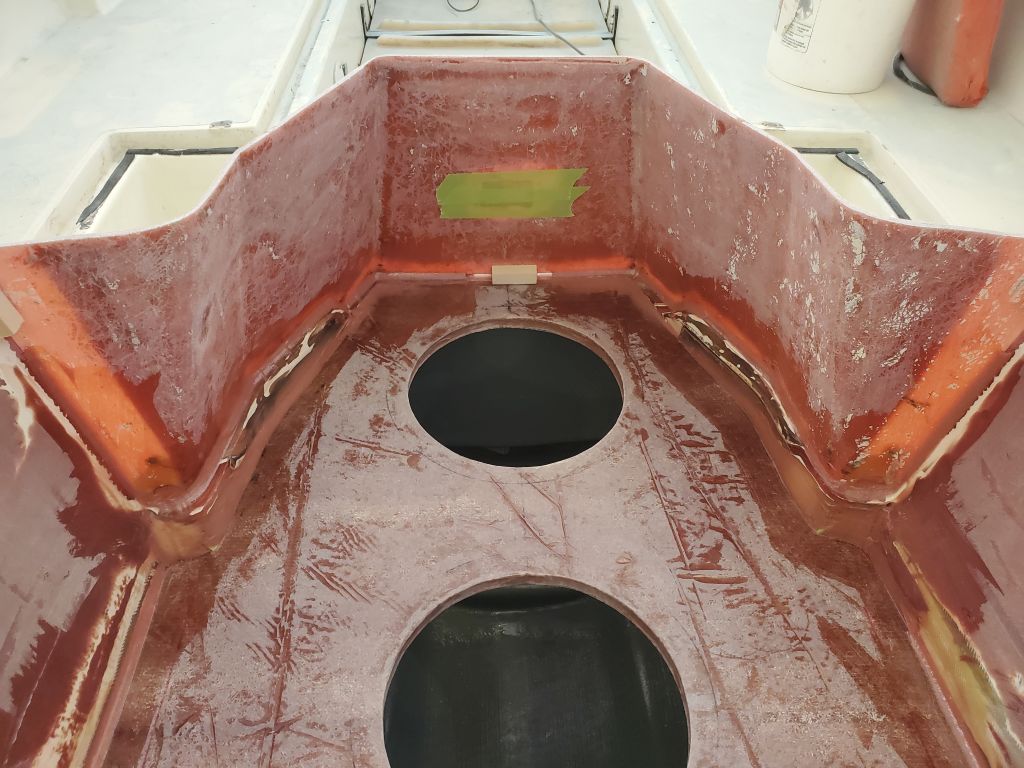
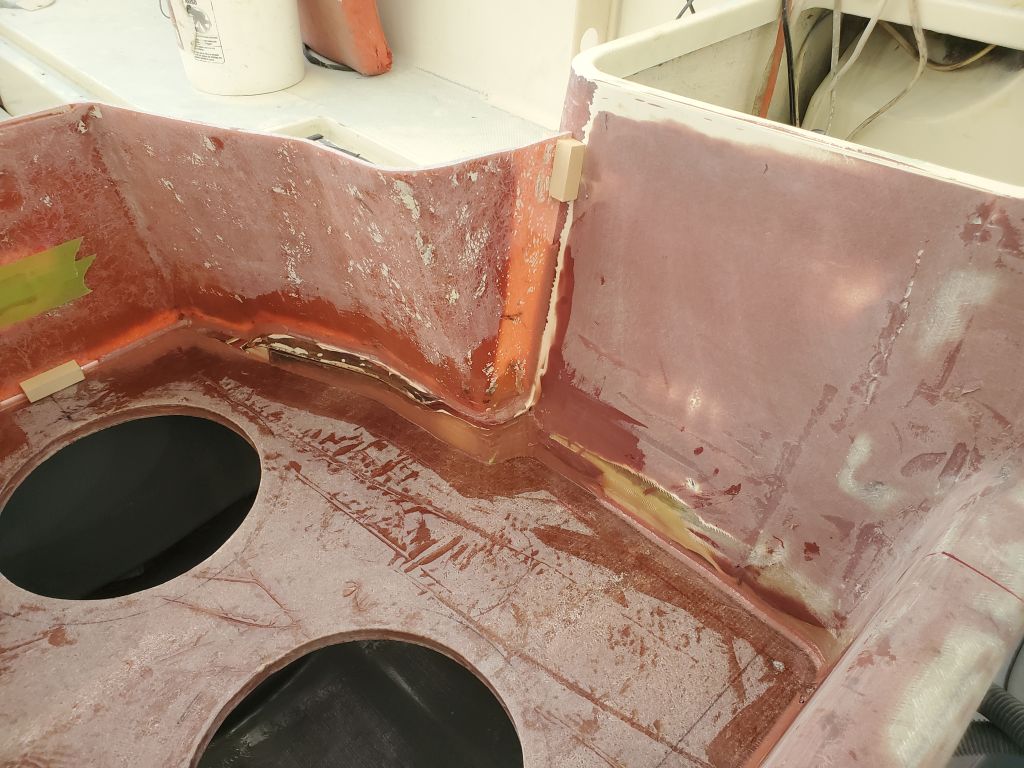
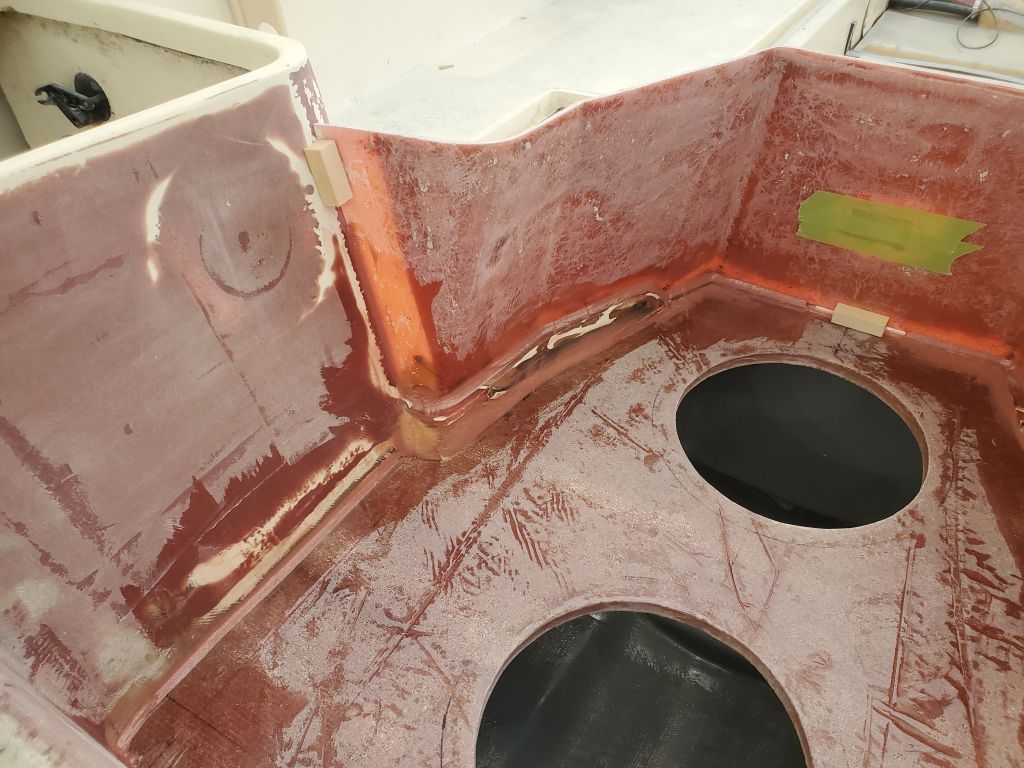
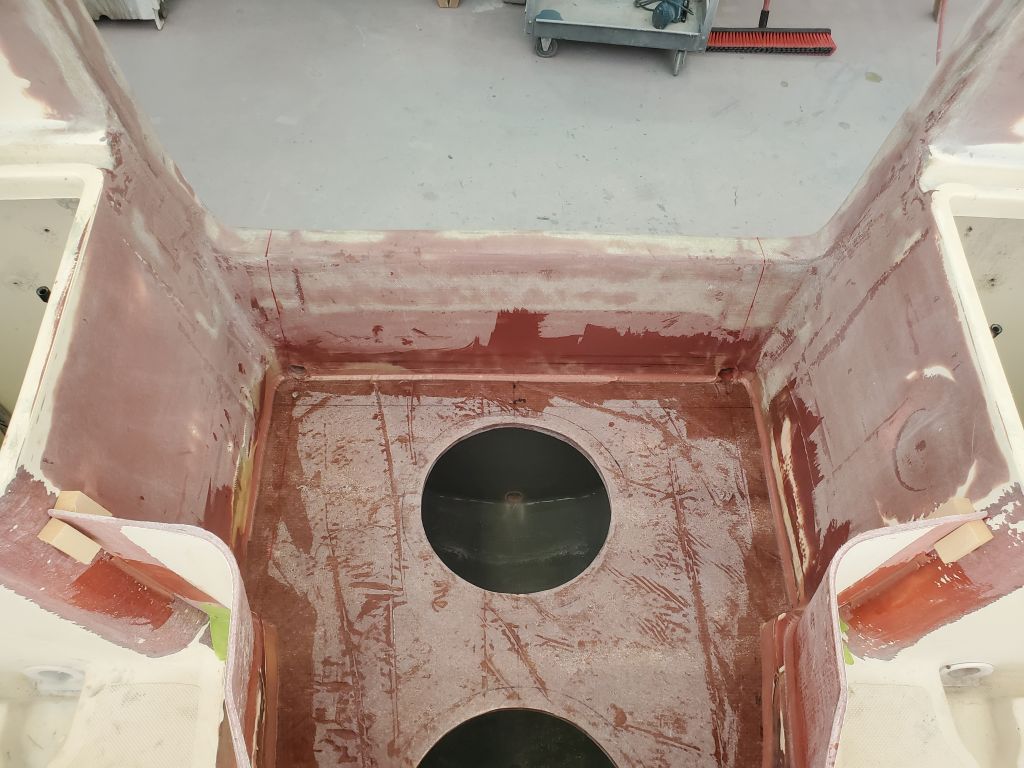
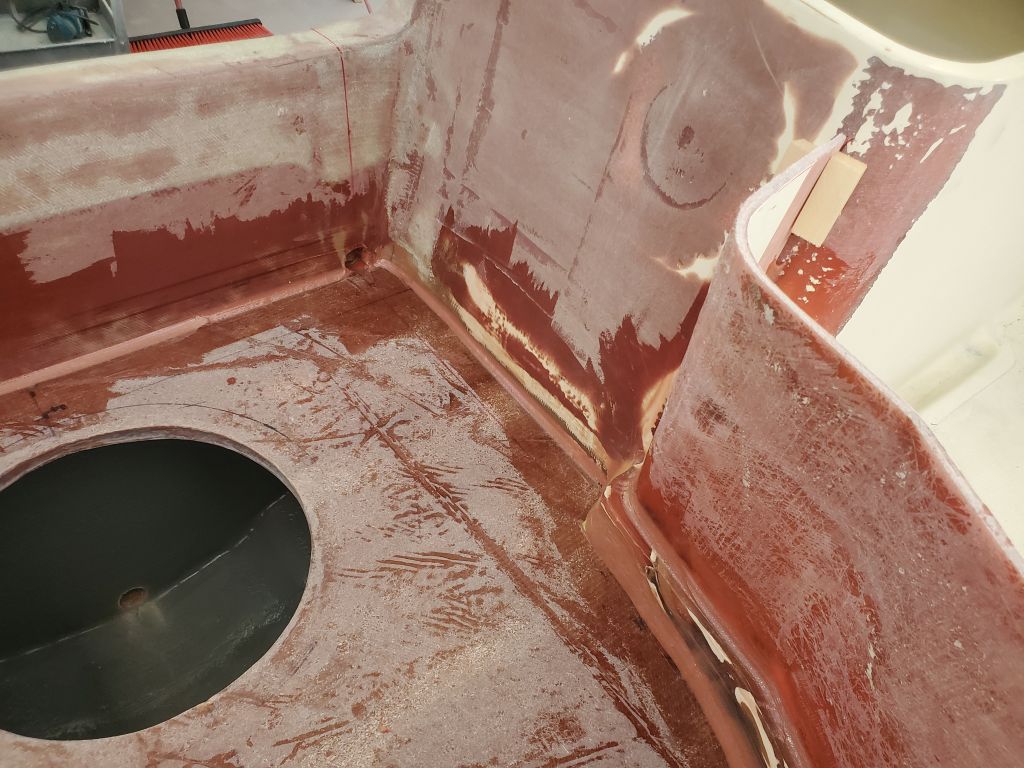
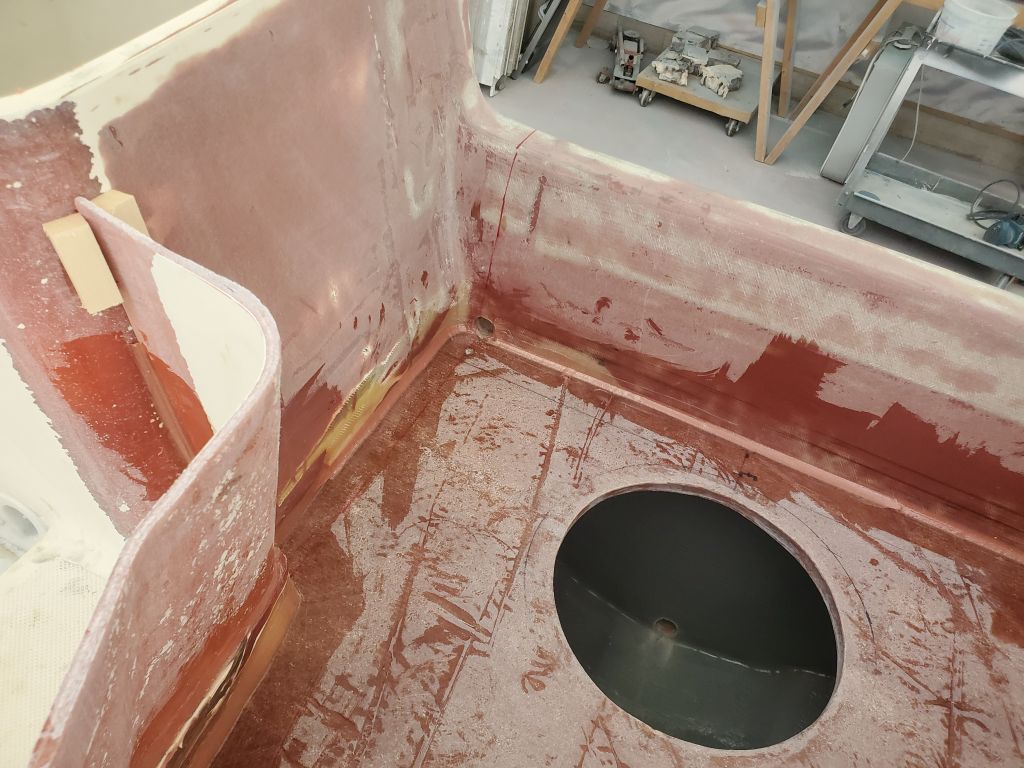
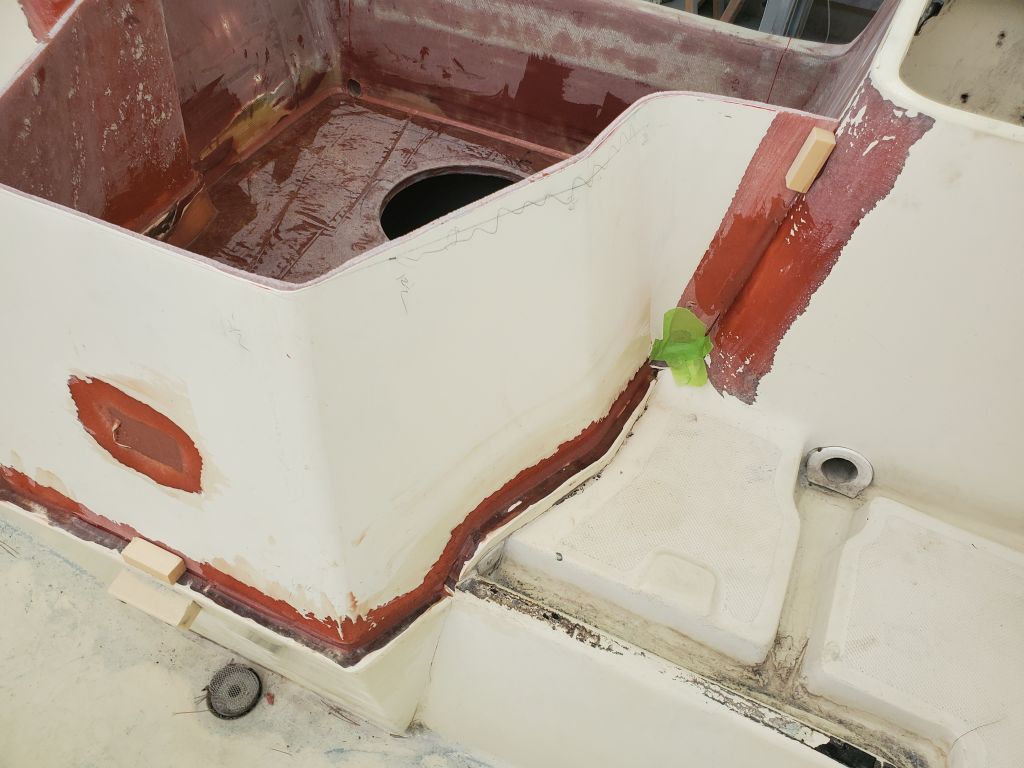
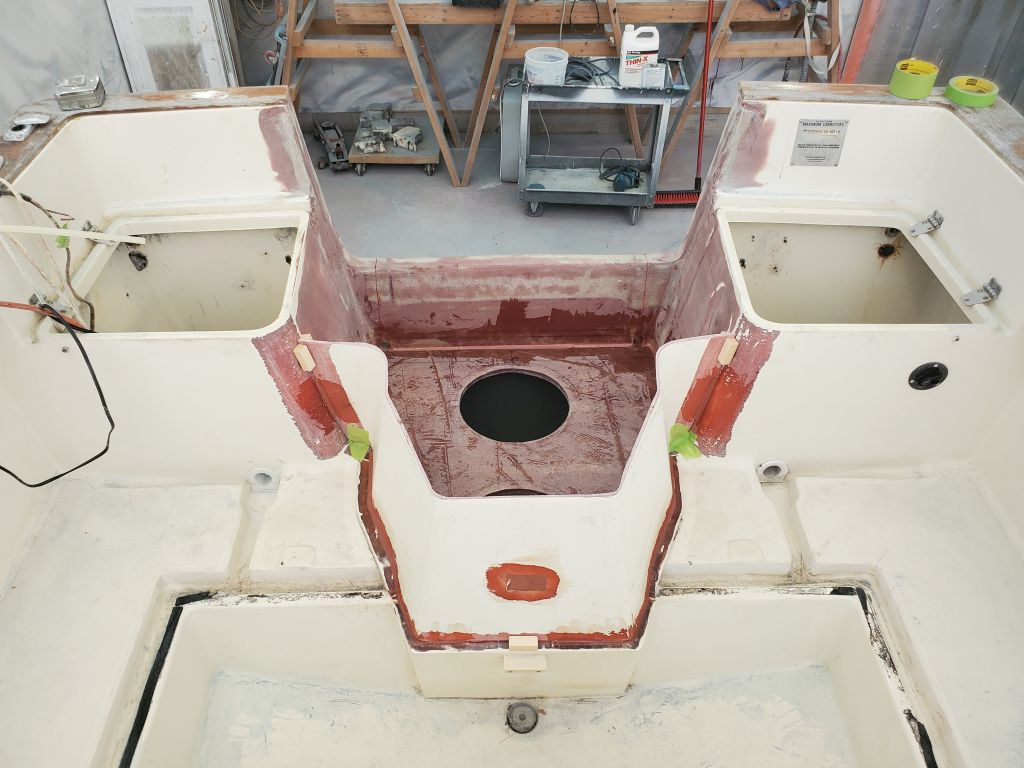
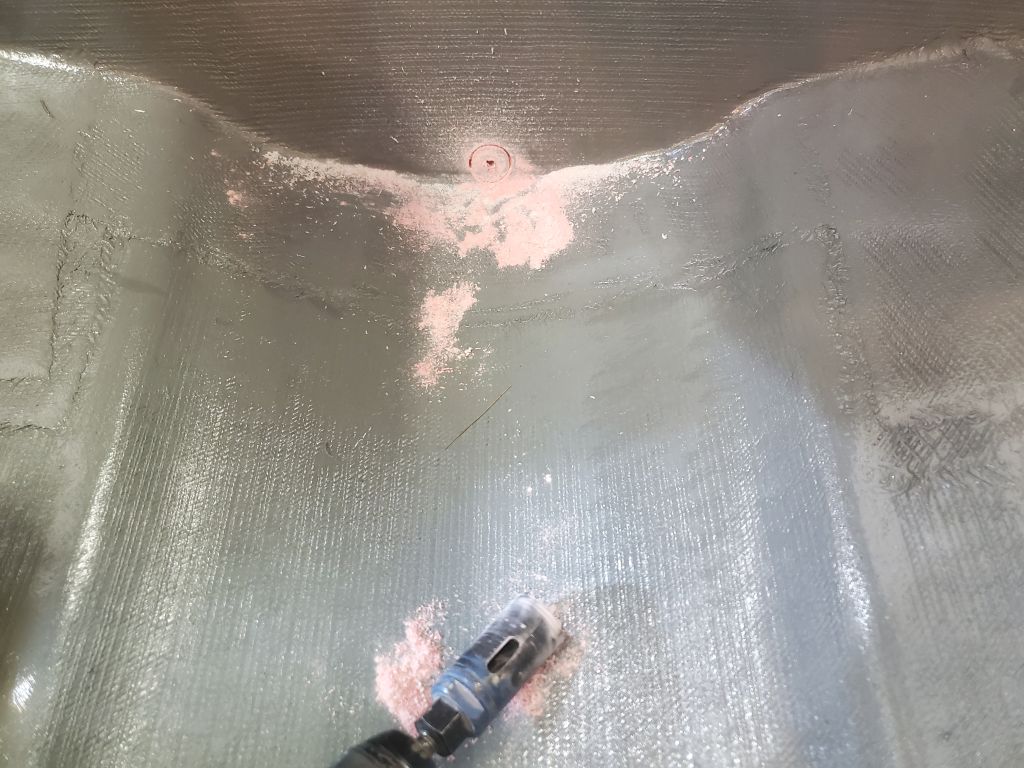
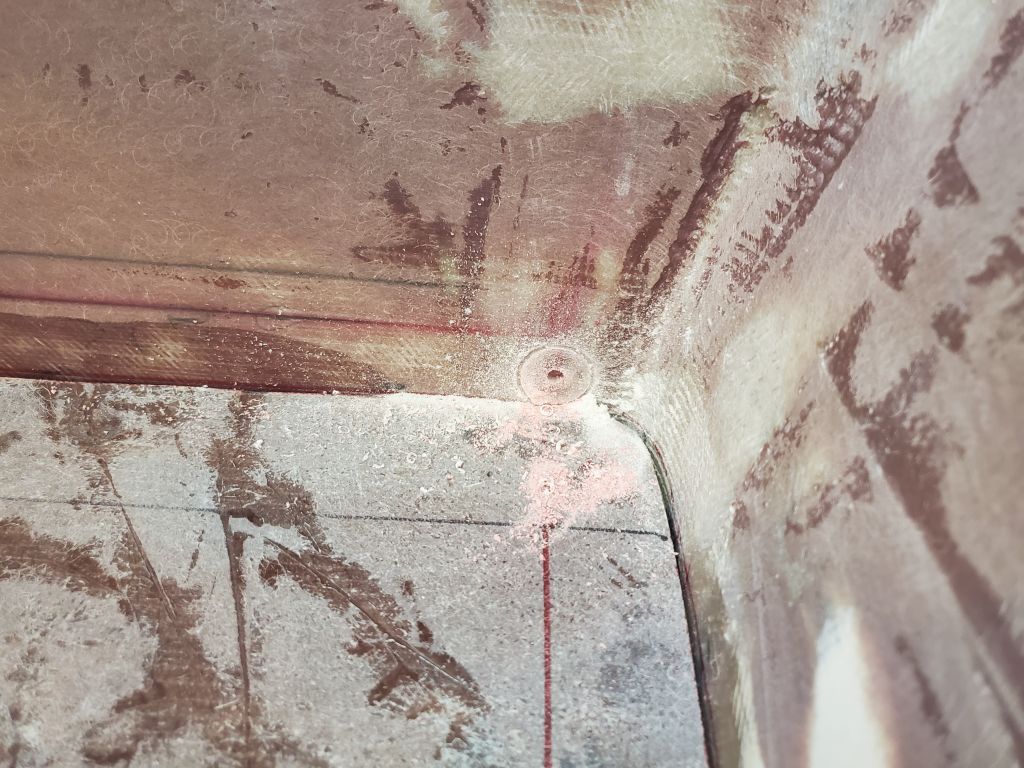
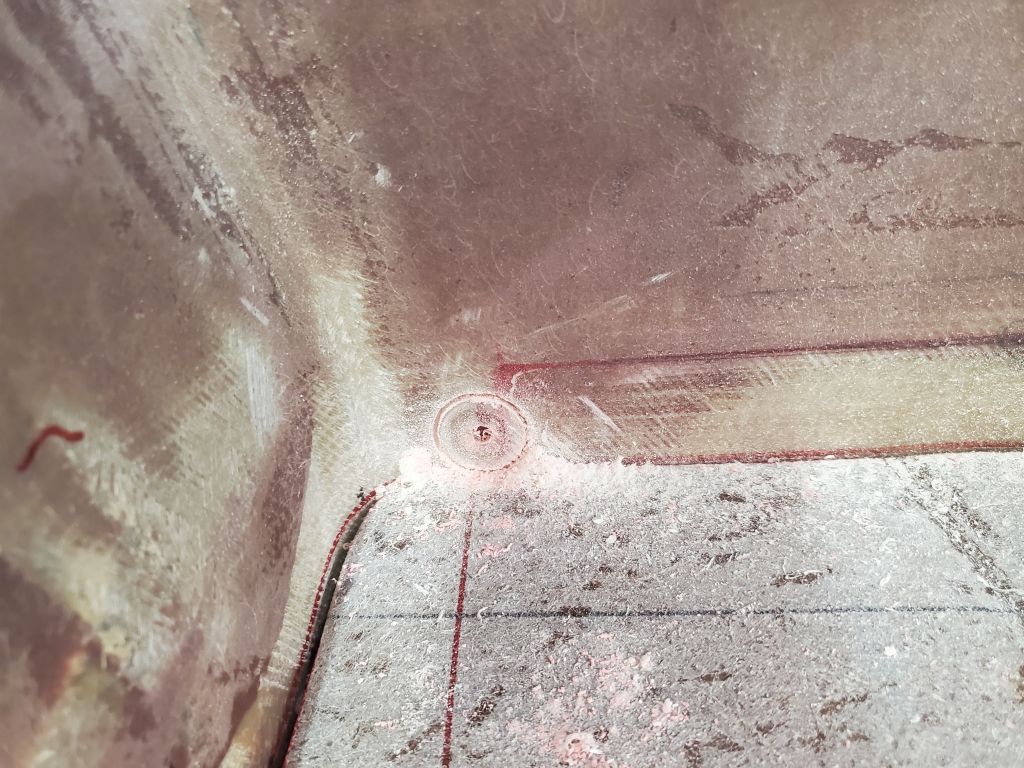
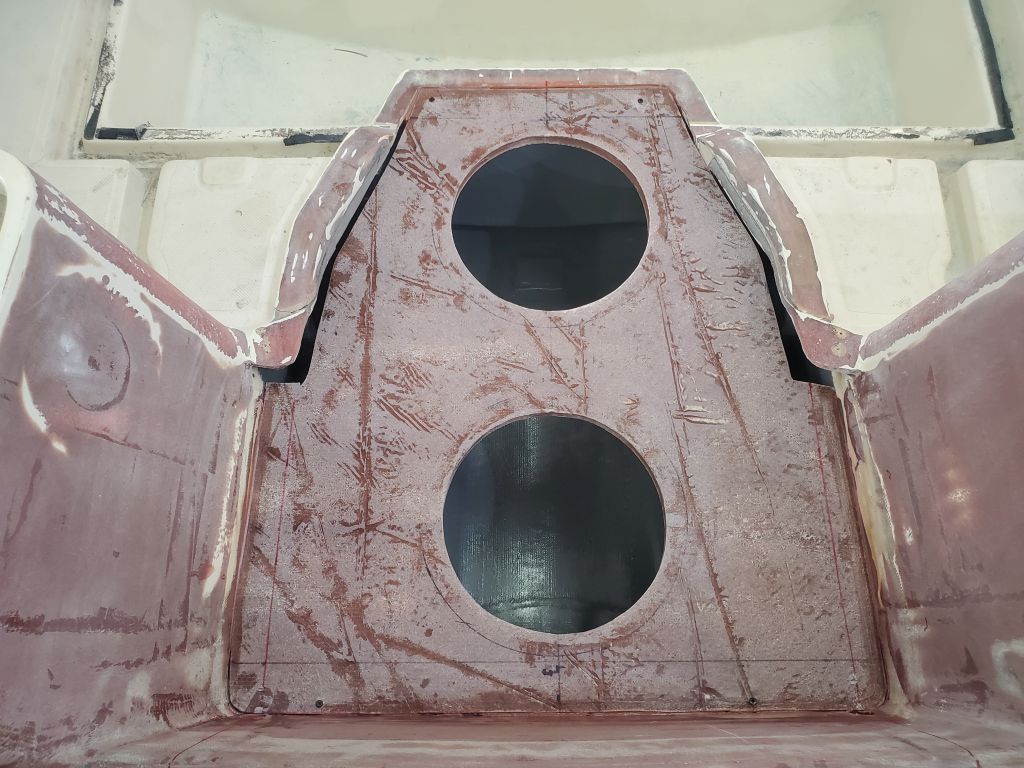
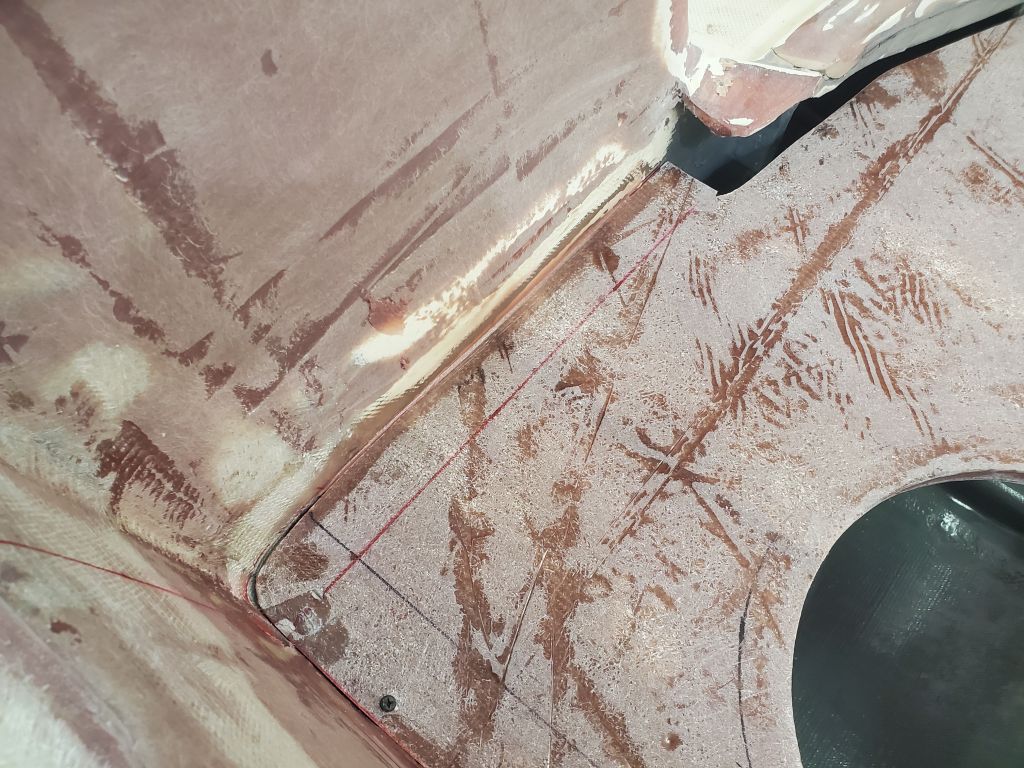
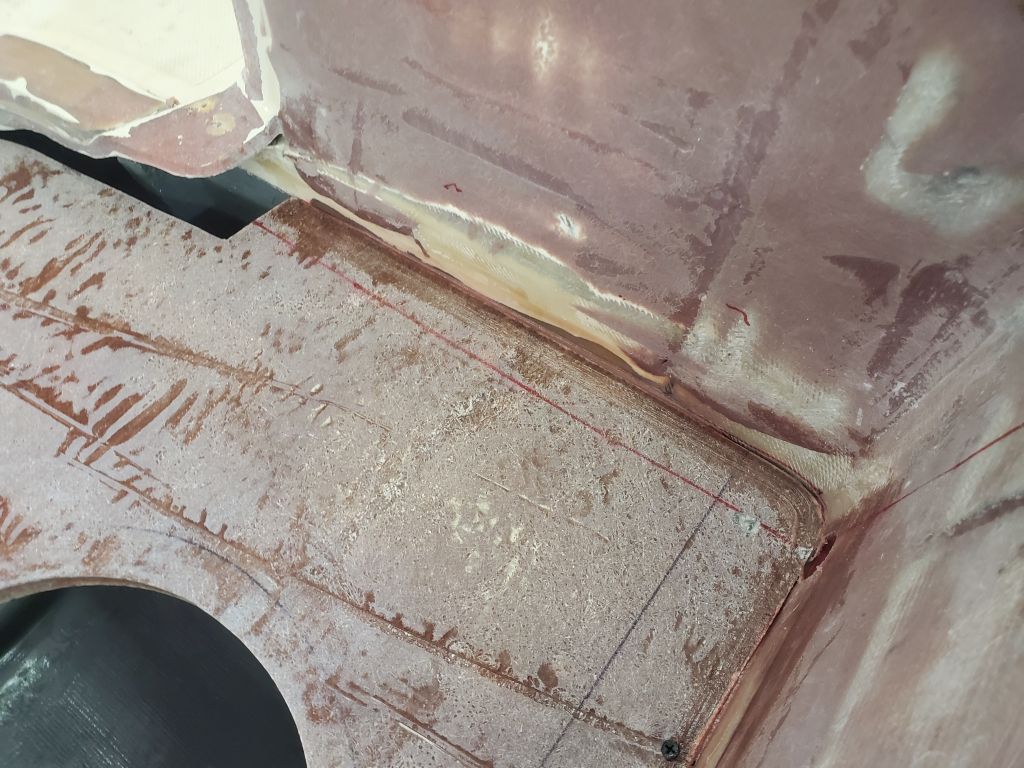
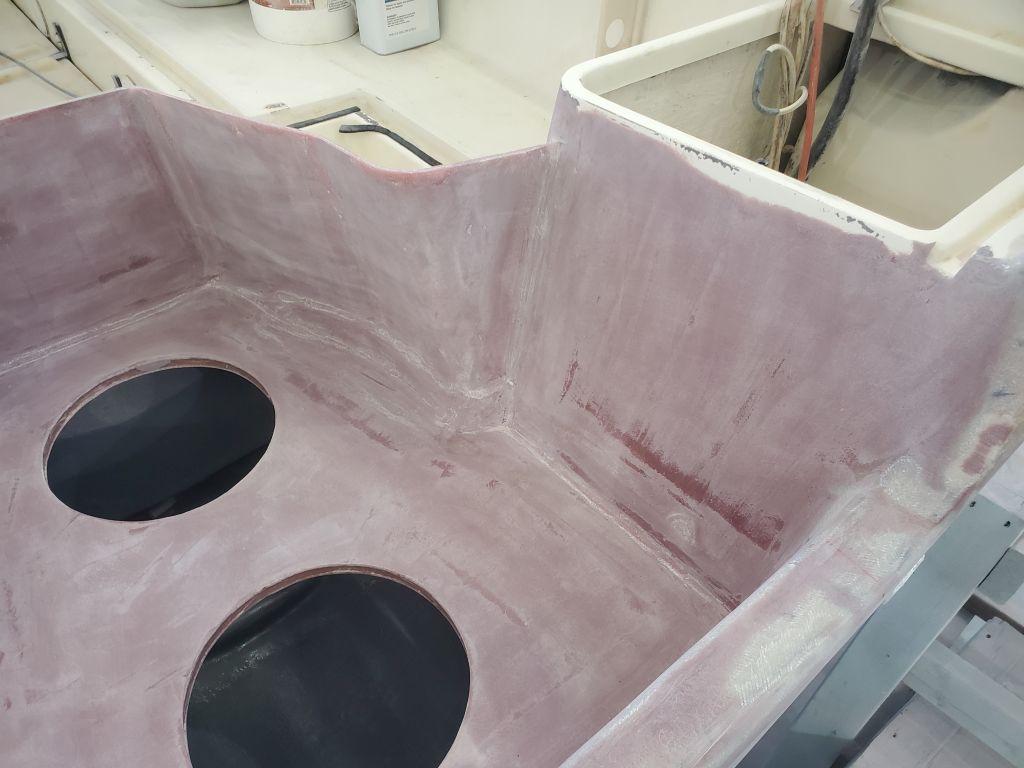
After some additional cleanup and preparations, I applied a coat of gray Bilgekote to the after portions of the bilge, beneath the new deck level.  This would allow me to soon move forward with final installation of the outboard splashwell.  The camera didn’t like the bright sunlight streaming in and hitting a corner of the bilge area, so a couple of these photos are out of focus.

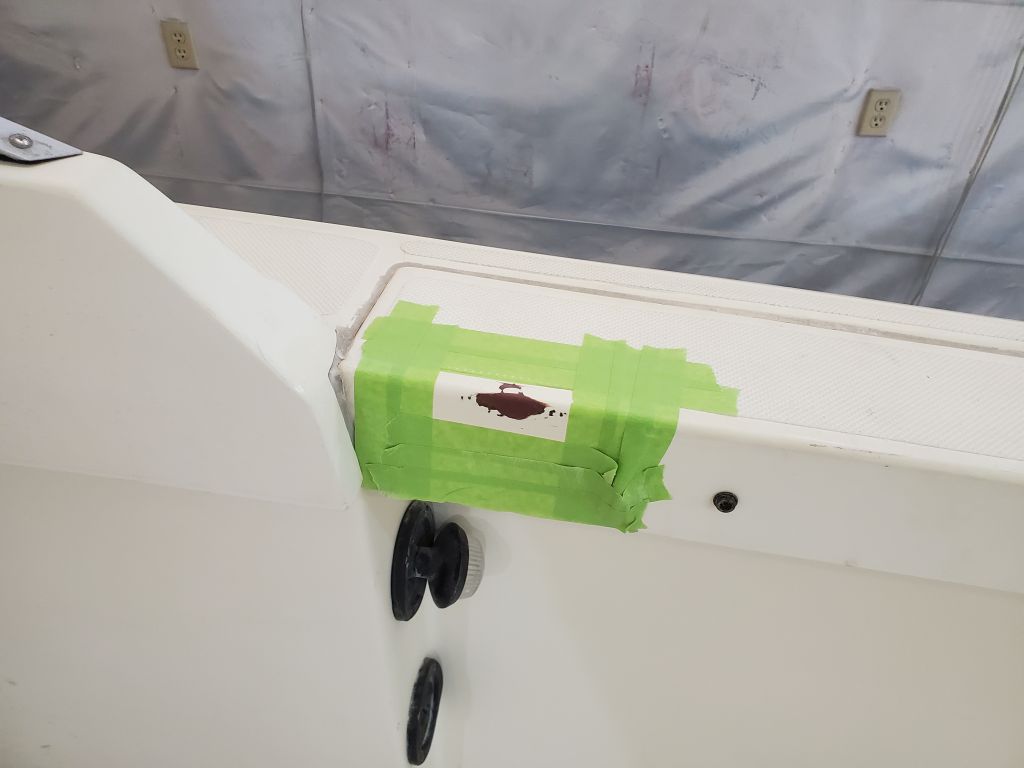
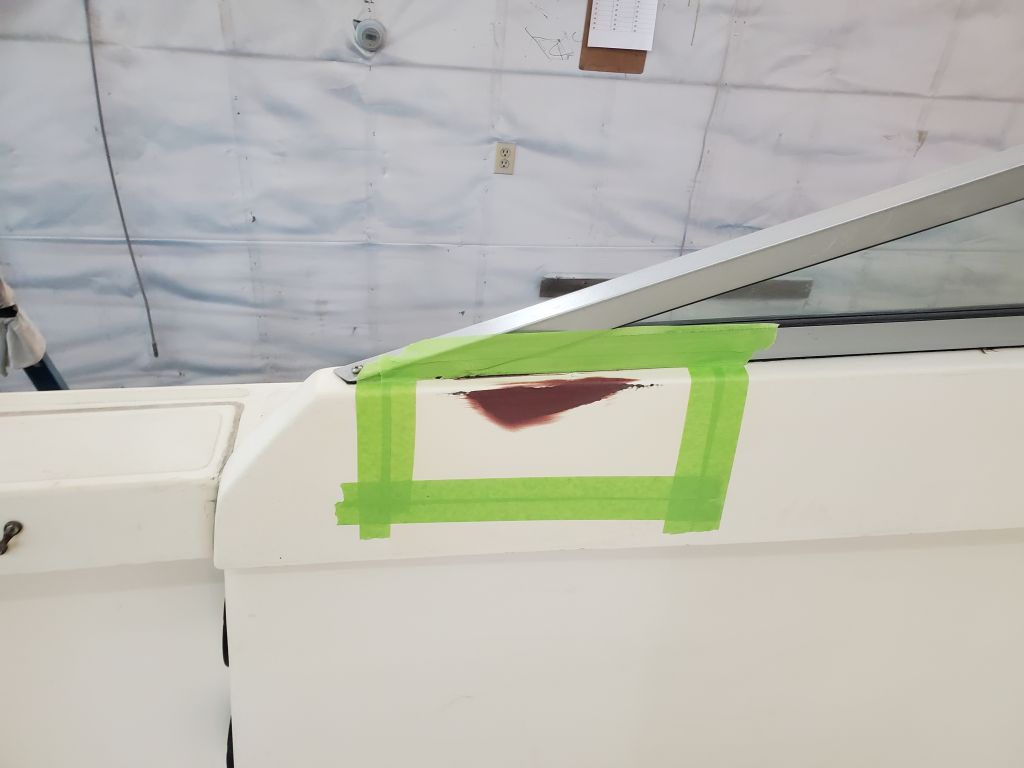
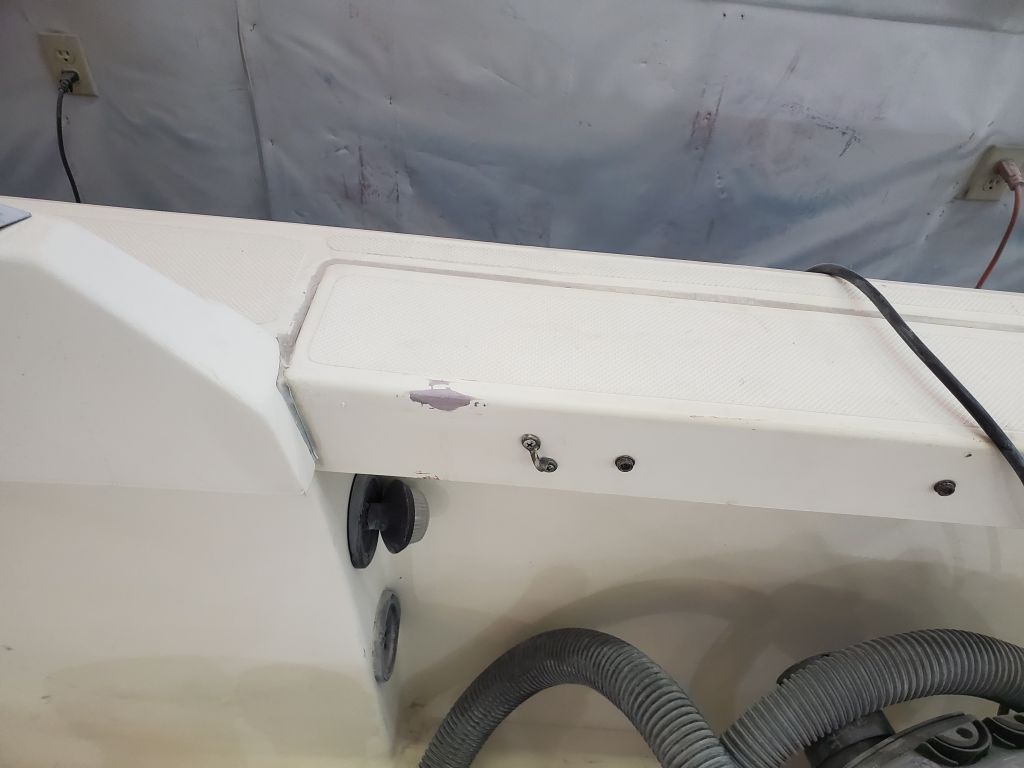
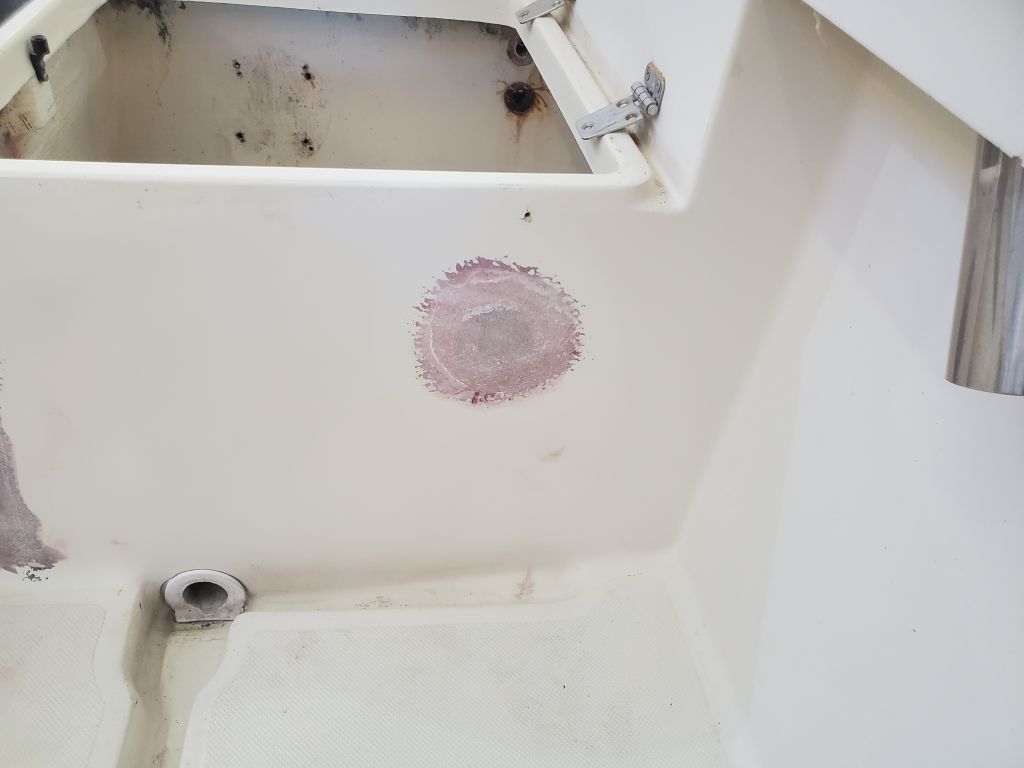
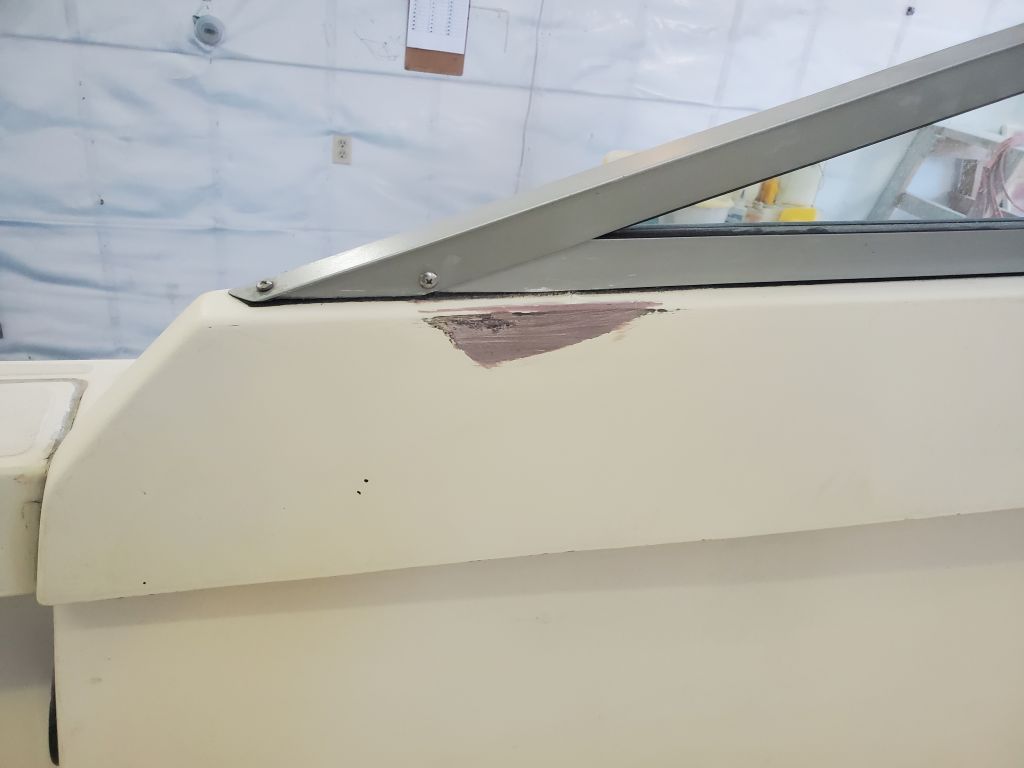
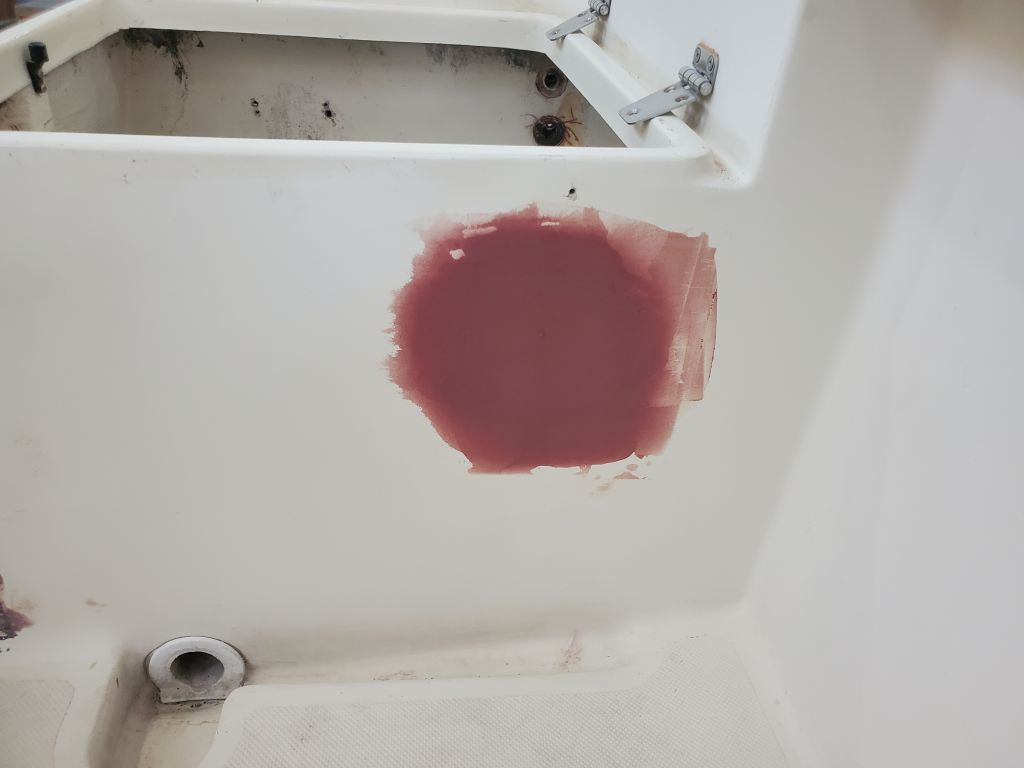
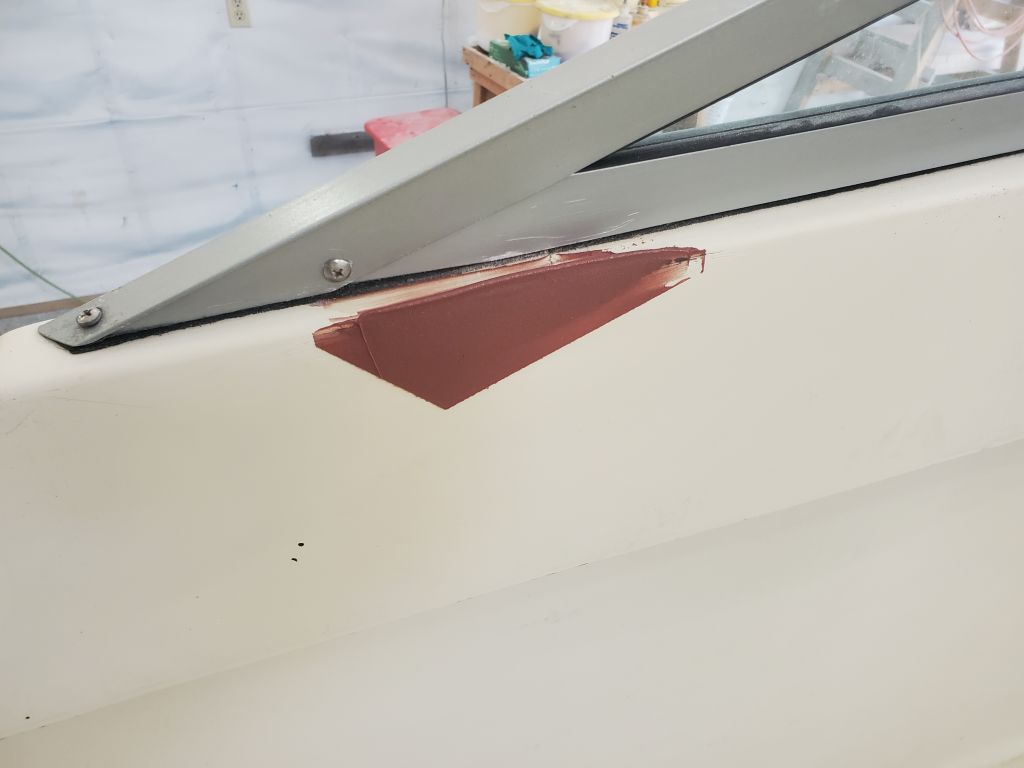
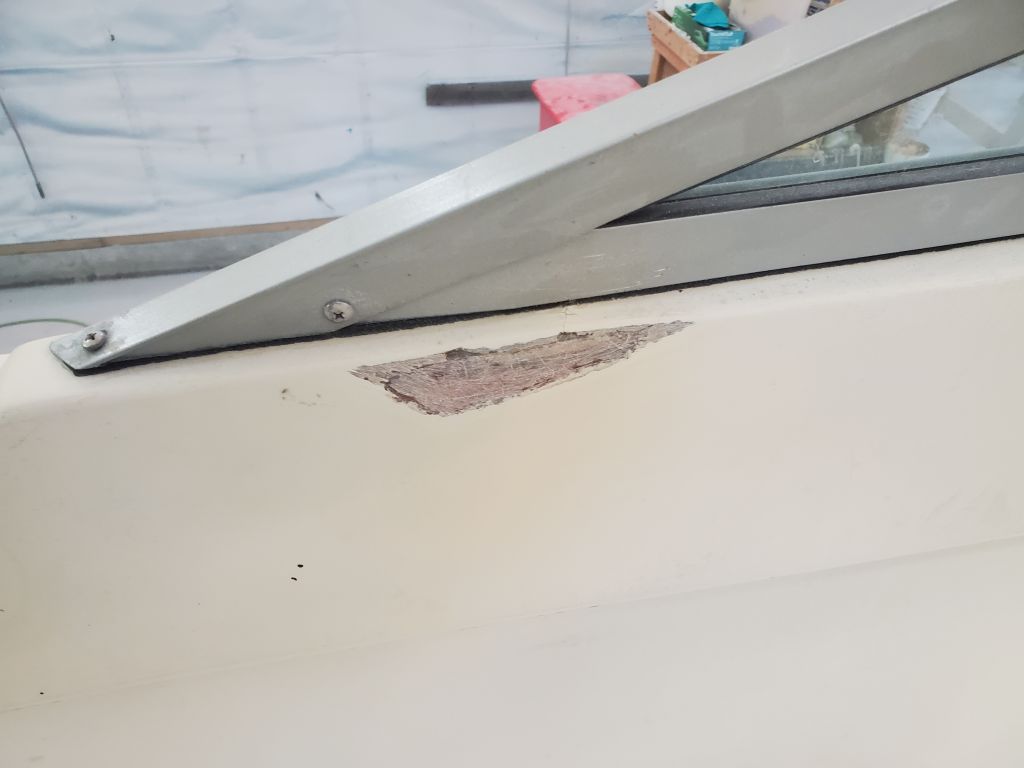
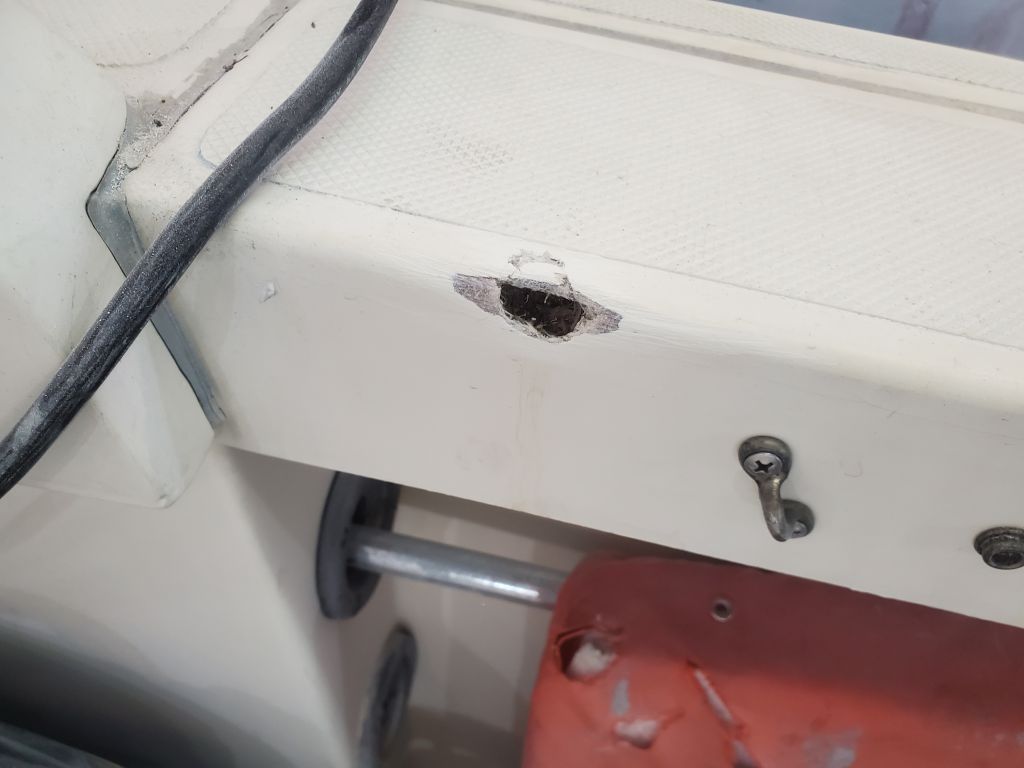
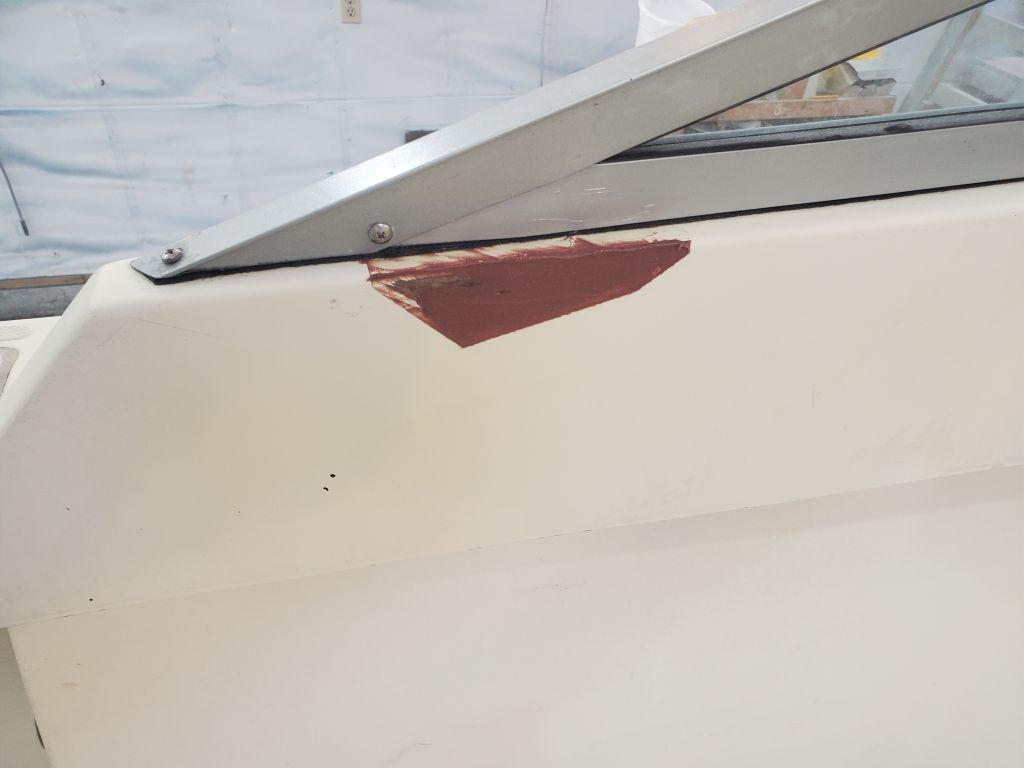
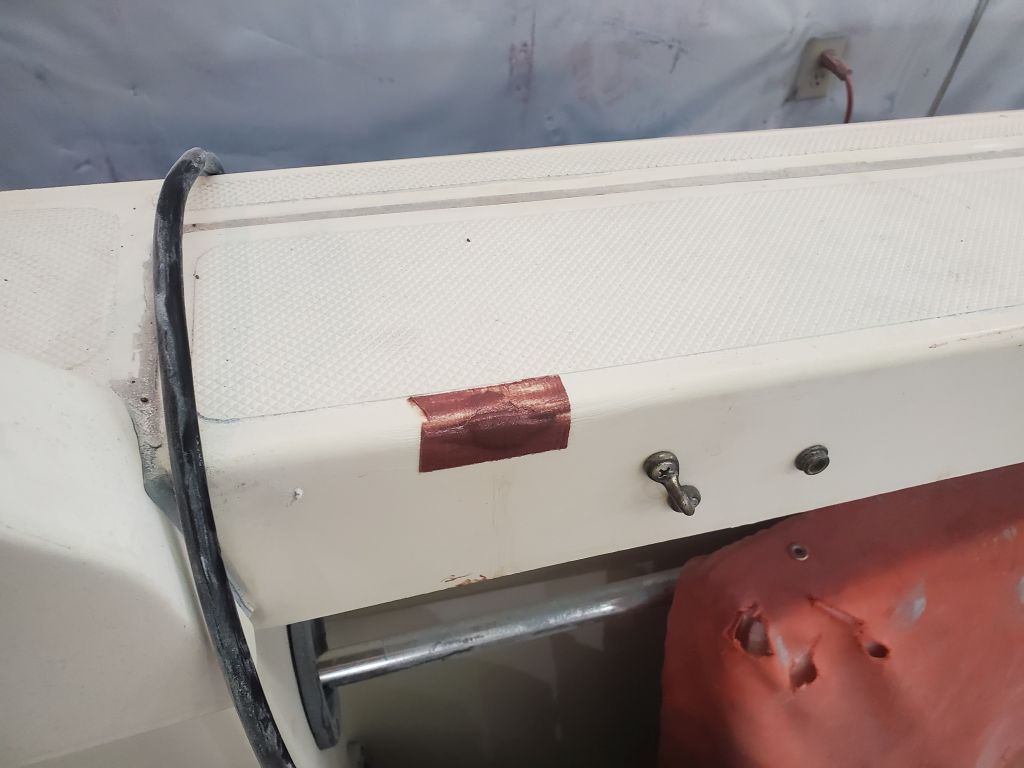
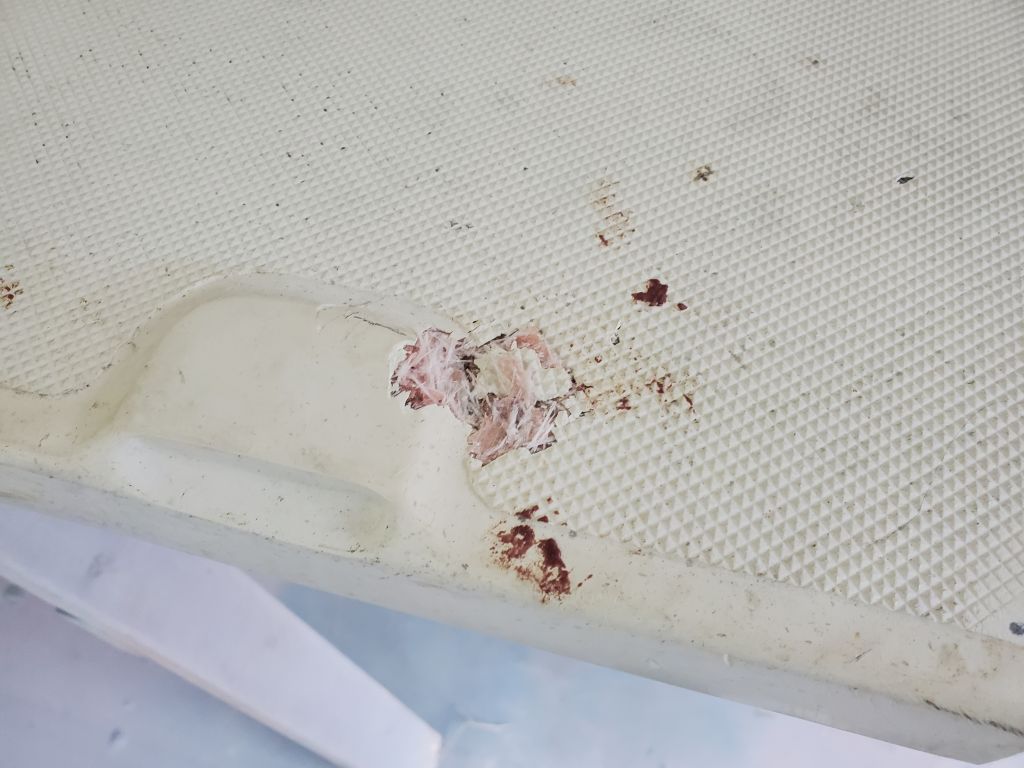
Afterwards, I went around the hull and touched up with epoxy the few small scrapes, dings, and scratches that existed in the original gelcoat, and formed a couple fillets around the new trim pieces at the top edges of the transom.

Holby 32

I began with my usual rounds of sanding the previous day’s work, starting with the livewell and fuel tank hatches.
I continued at the transom and engine room vent opening patches.

After cleaning up from the sanding work, I applied additional fairing compound to the transom, focusing on those areas where I’d identified low spots, as well as some minor touch-up to the new laminate on the bottom of the hull in way of the jet drive opening.  Then I applied a layer of fairing compound to the new vent patches.

To smooth the new laminate on the bottom of the livewell hatch for consistent appearance, I troweled on a skim coat of fairing compound, and used up some leftovers on the base of the fuel tank hatch to further smooth the patches there.

During the spring work session, I’d already measured and noted the waterline and boottop positions at stem and stern, but now, before I got into preparing the hull for primer and paint, I decided to take some additional measurements to help position these lines at the transition between canoe hull and hard chine near the bow.  I used a flexible straightedge held roughly vertically from the points where the two edges of the boottop met the hard chine, and marked a line and a measurement on the bottom well below the waterline where I could count on the marks remaining for now.  These marks would help me locate the striping at this major transitional point later.  Because the ruler I used is an old typesetter’s rule, where the markings begin about 1/4″ in from the end of the rule, I noted that the marks were from the “end of Pica” to ensure I recreated them properly later (Pica being the typeset marked on the ruler).

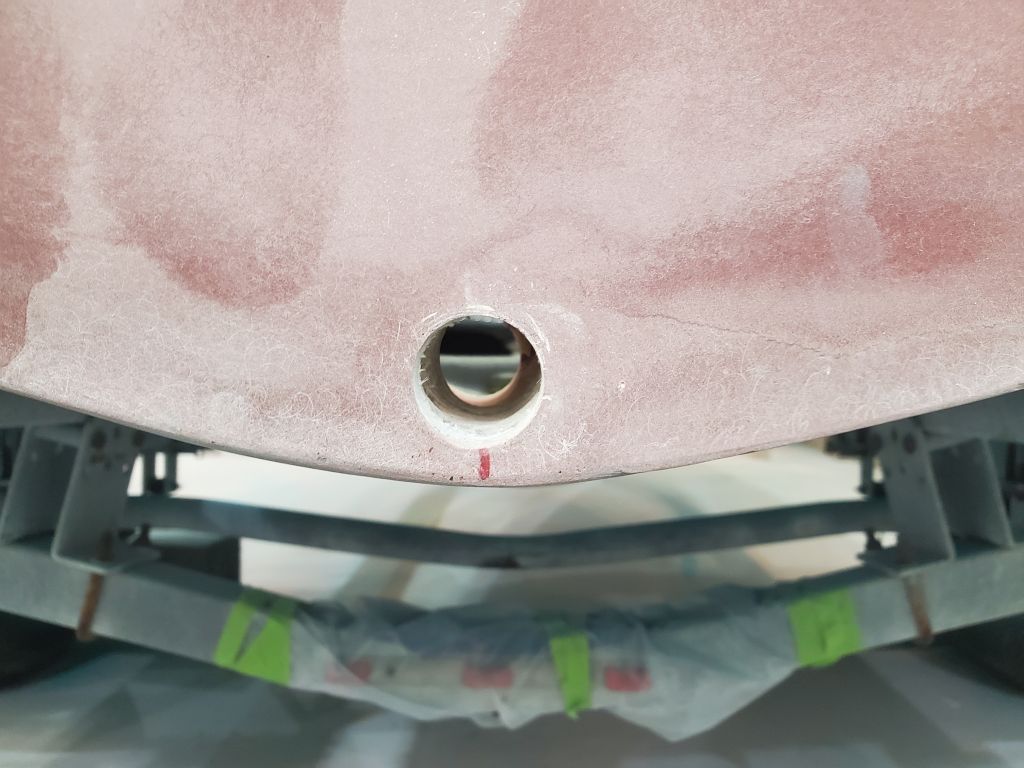
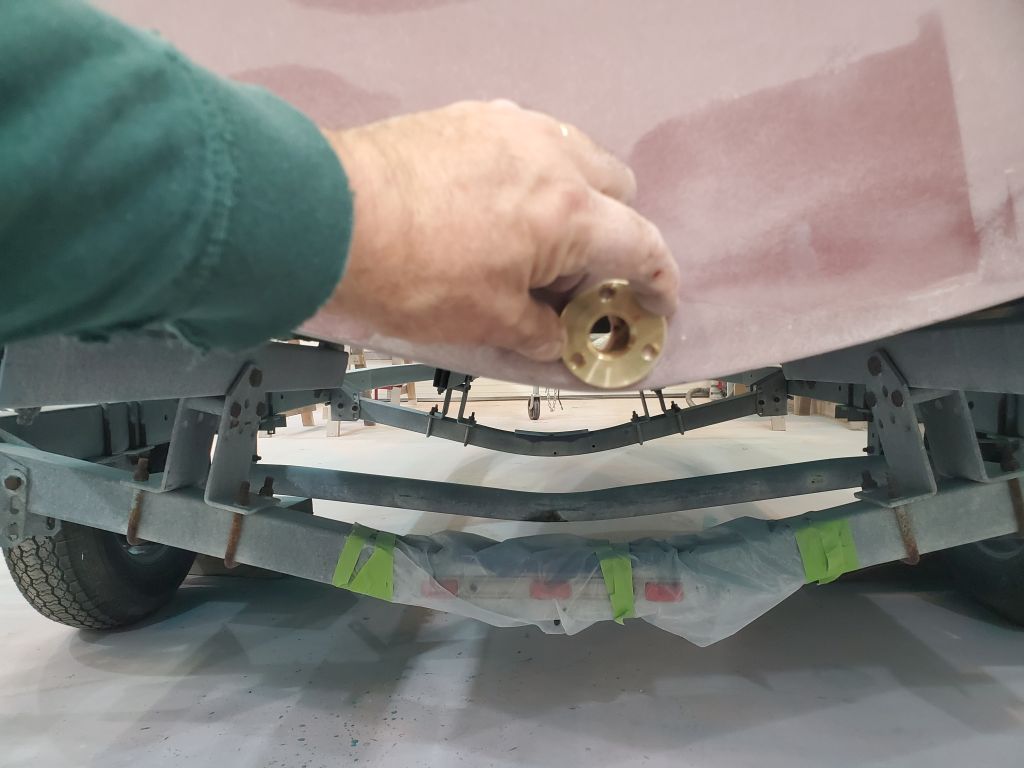
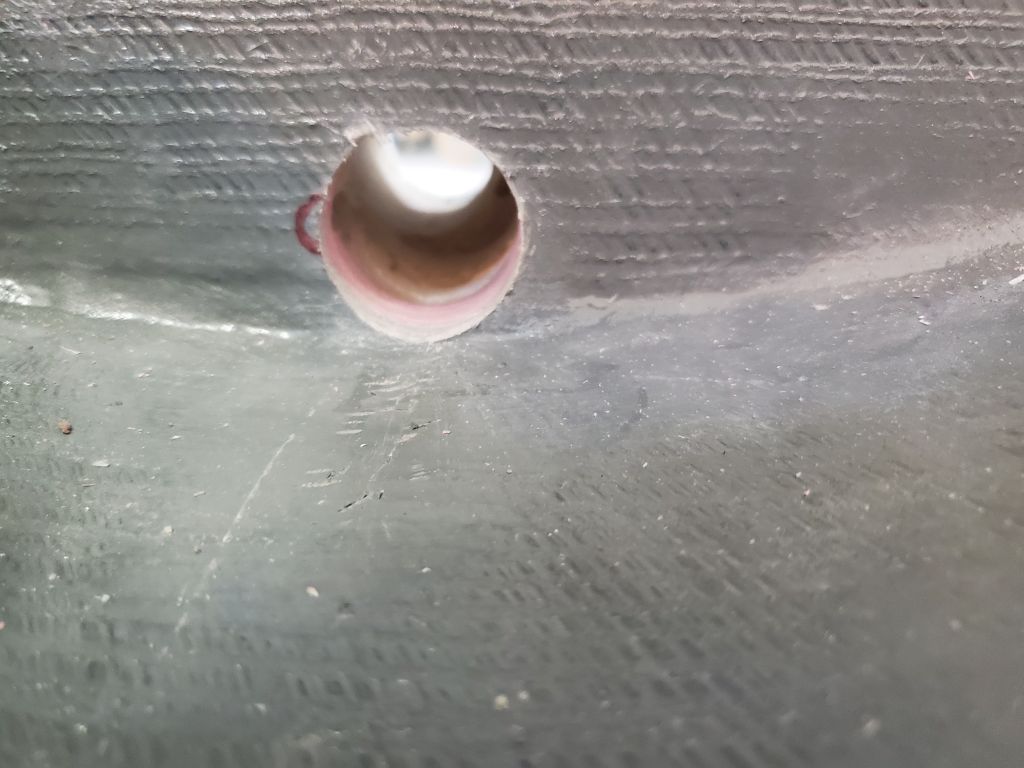
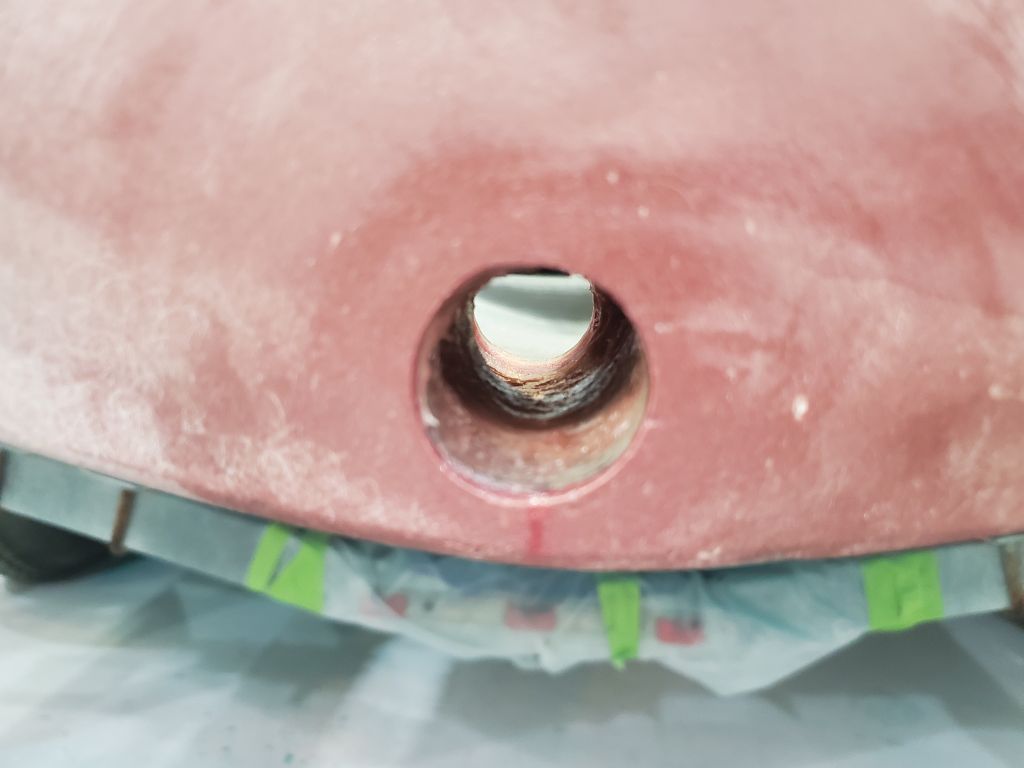
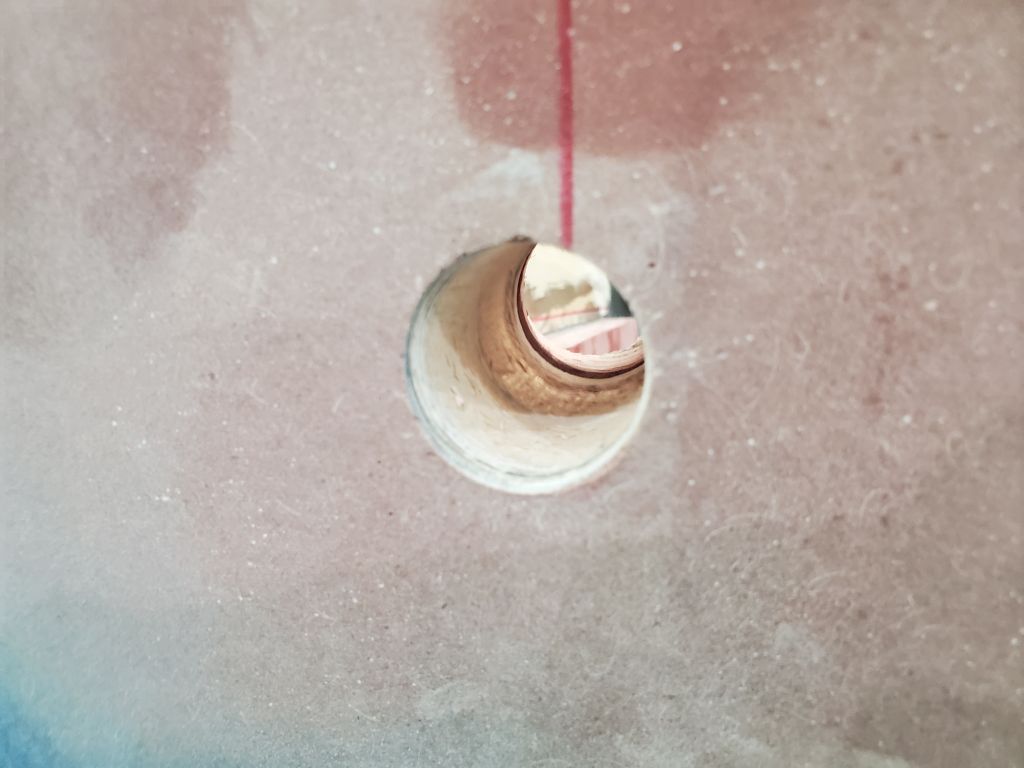
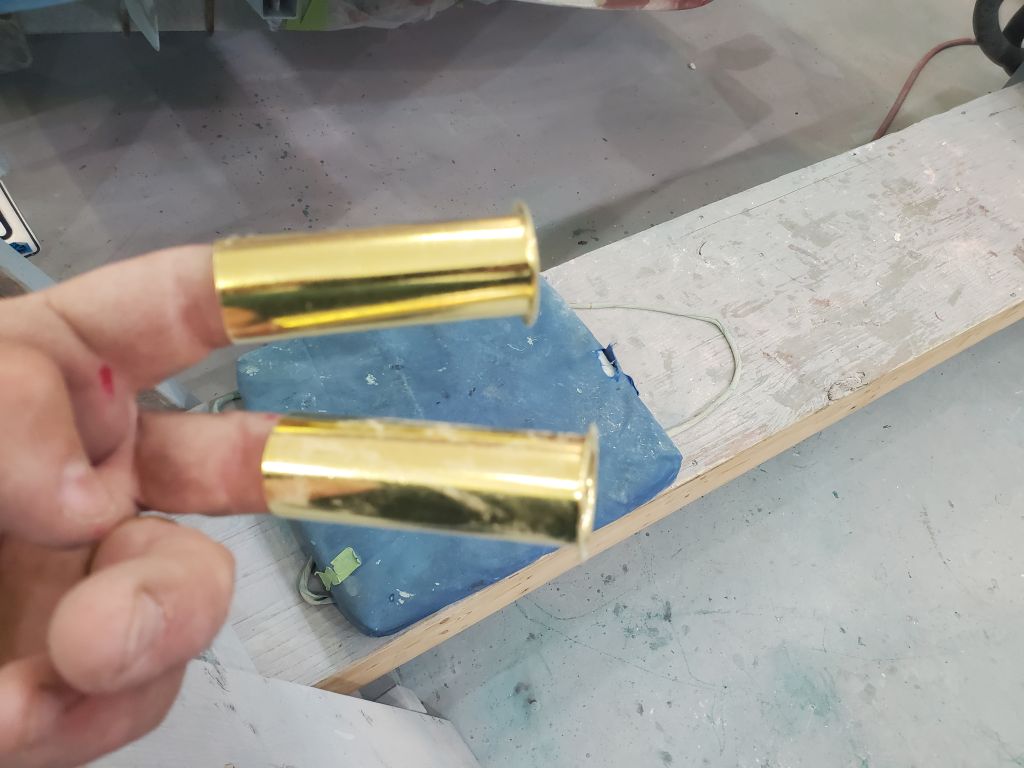
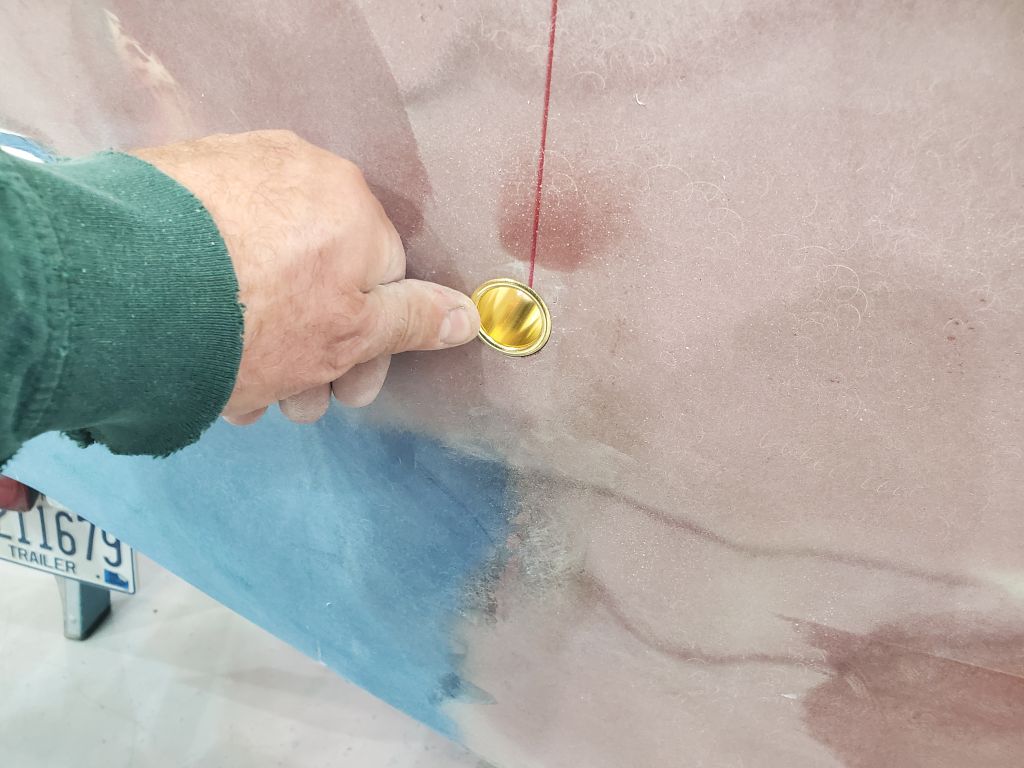
I also measured from the transom corner forward to the edge of the bottom paint and both sides of the boottop on each side, another critical measurement that would help easily recreate these lines later.  I noted that the top of the boottop ran right through the centerline of a through hull on the starboard side, and recorded my marks with great care and legibility on some notepaper.  (As long as I know what the notes mean they’ll do the job.)

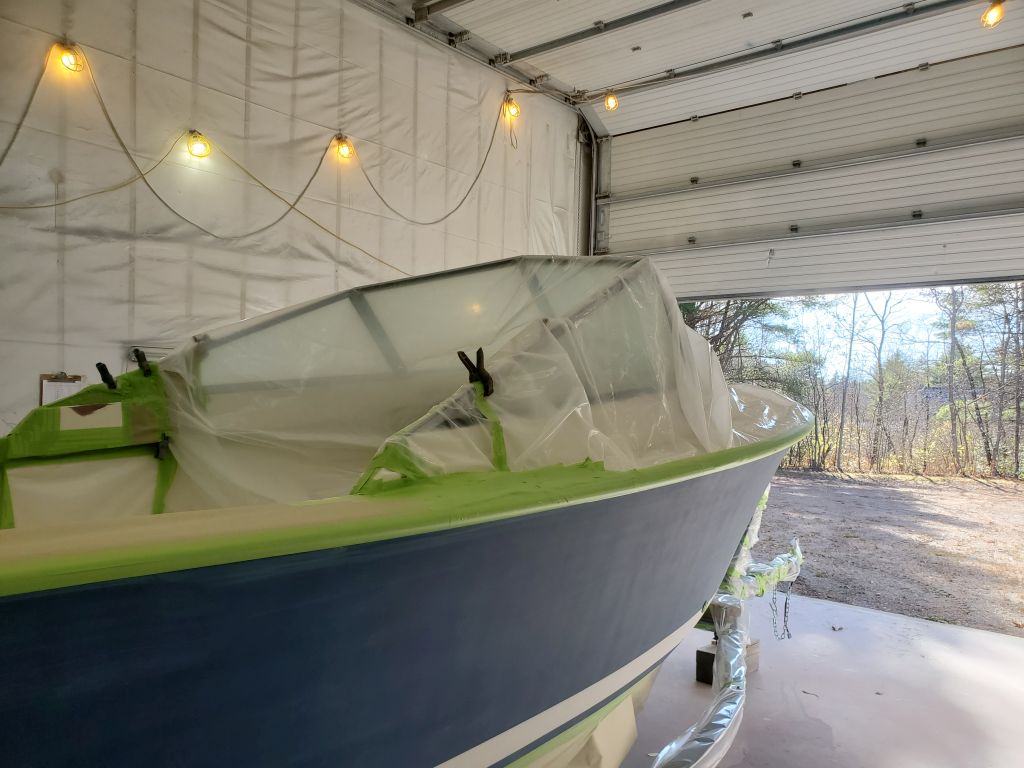
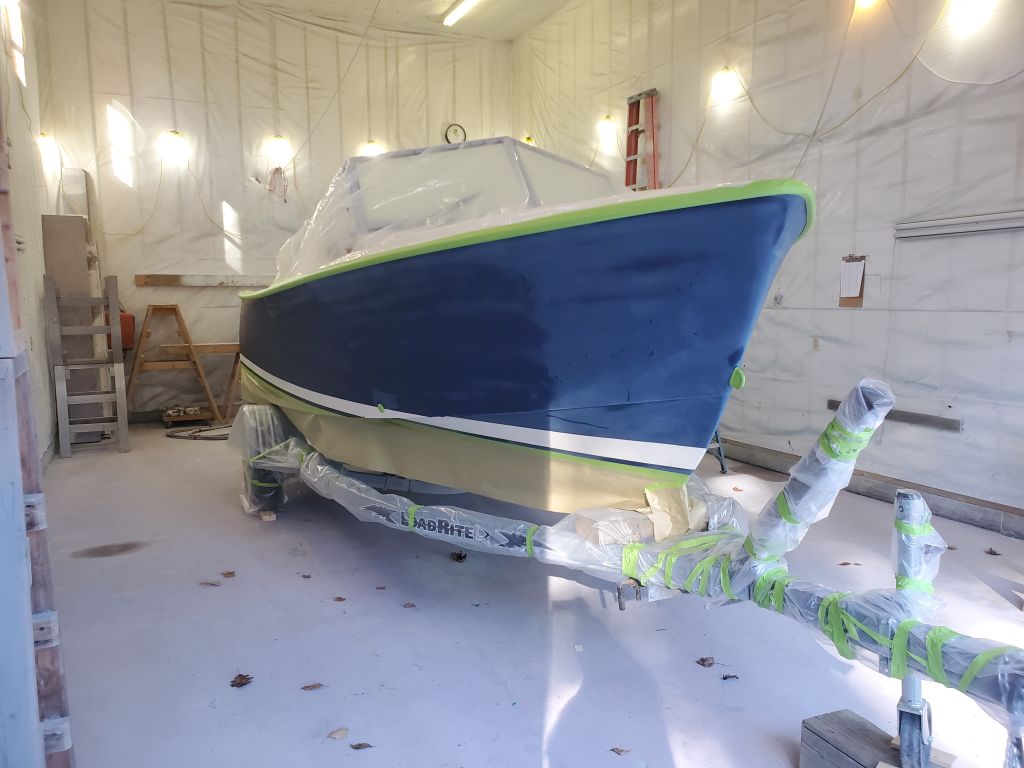
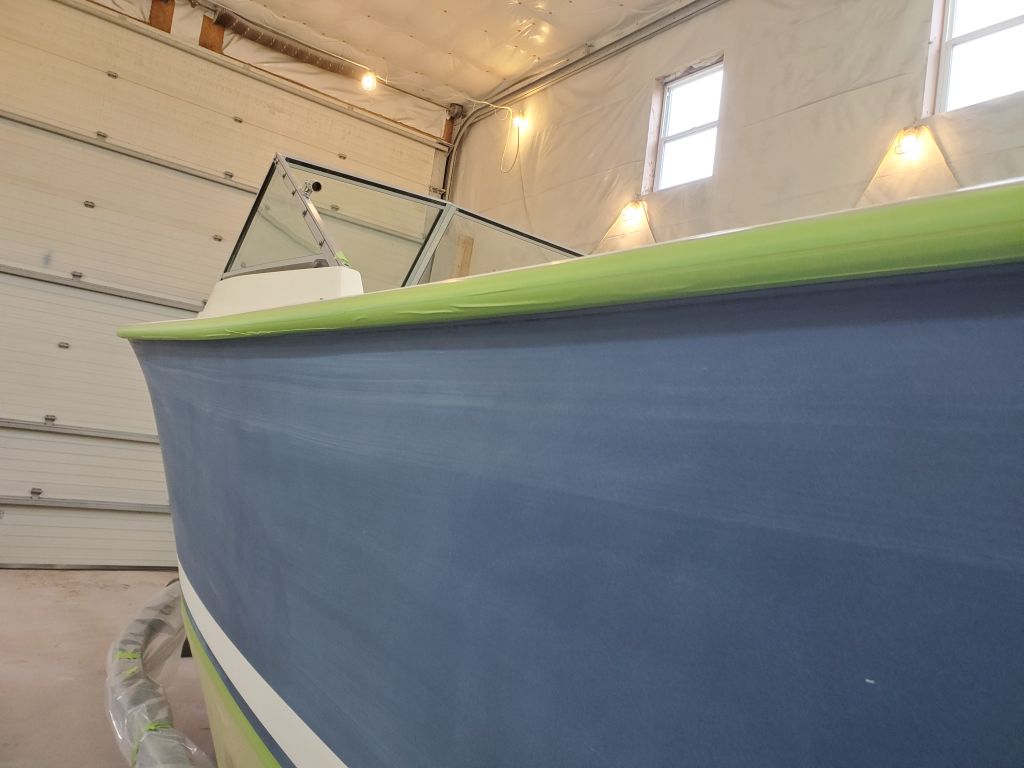
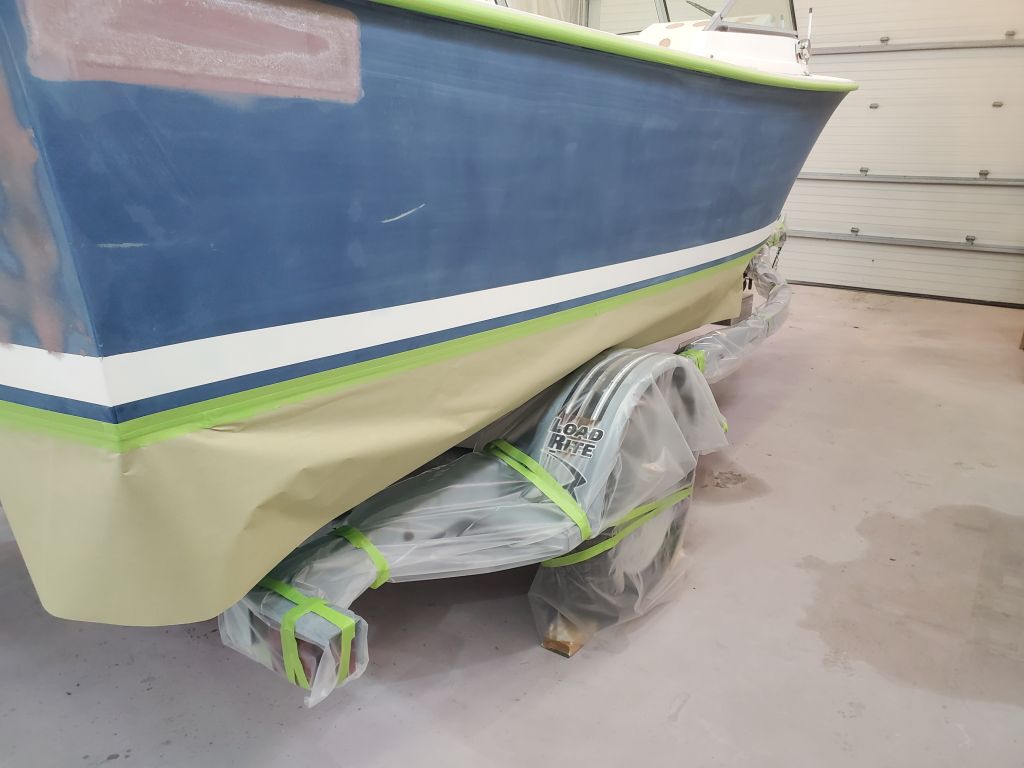
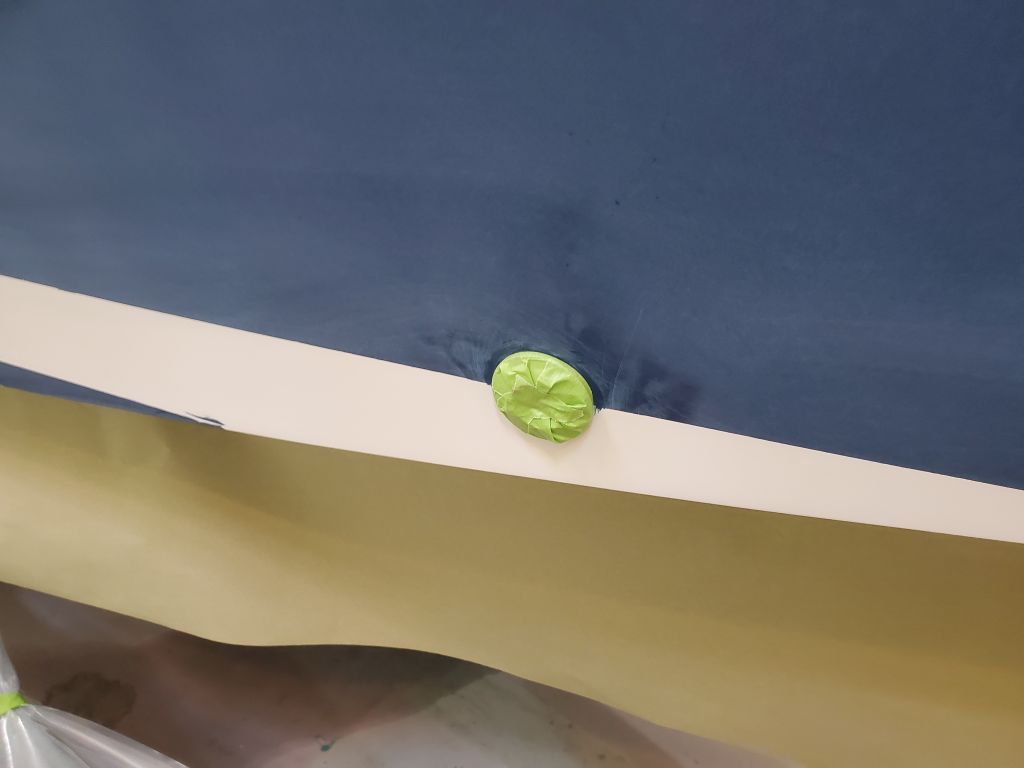
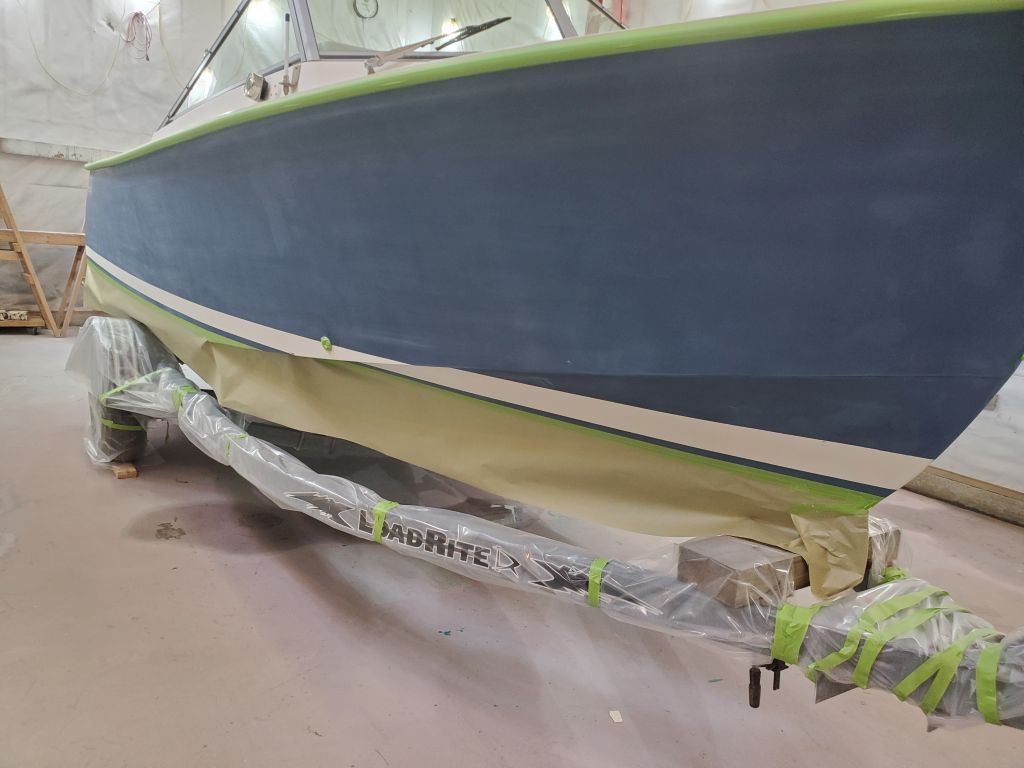
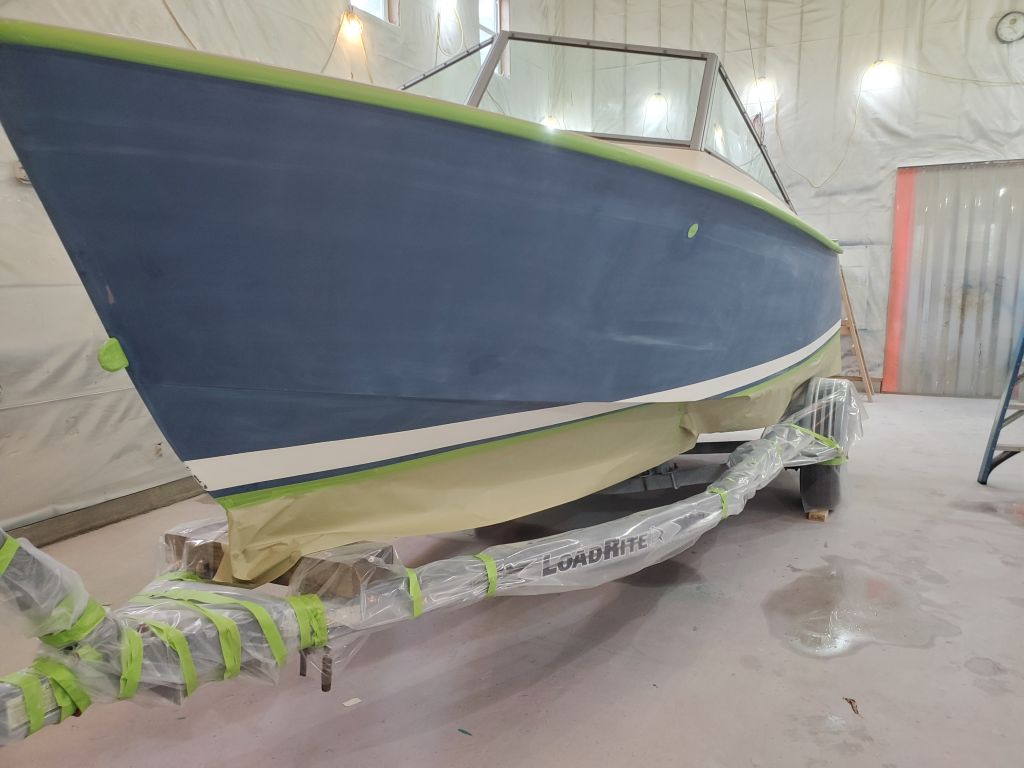
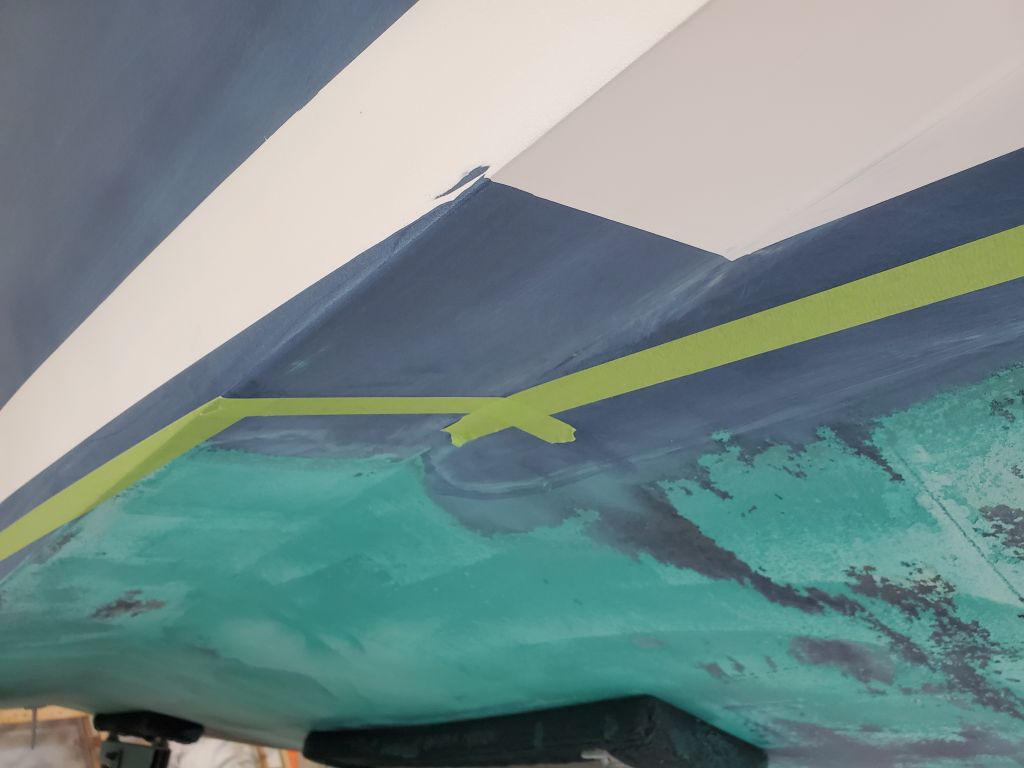
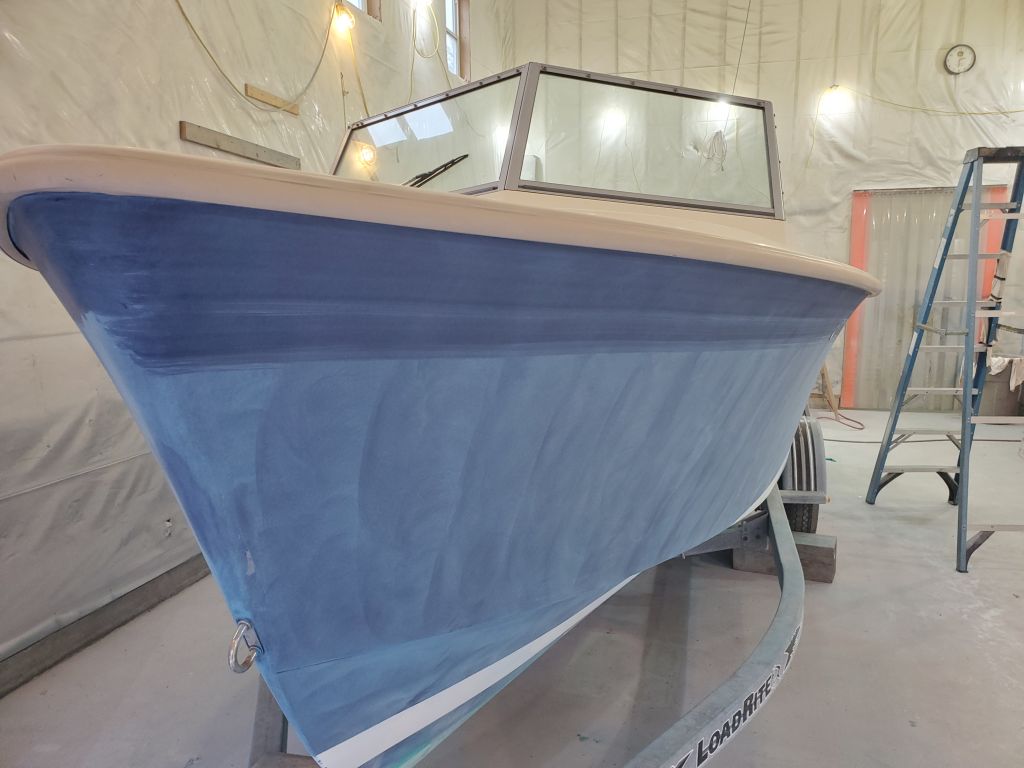
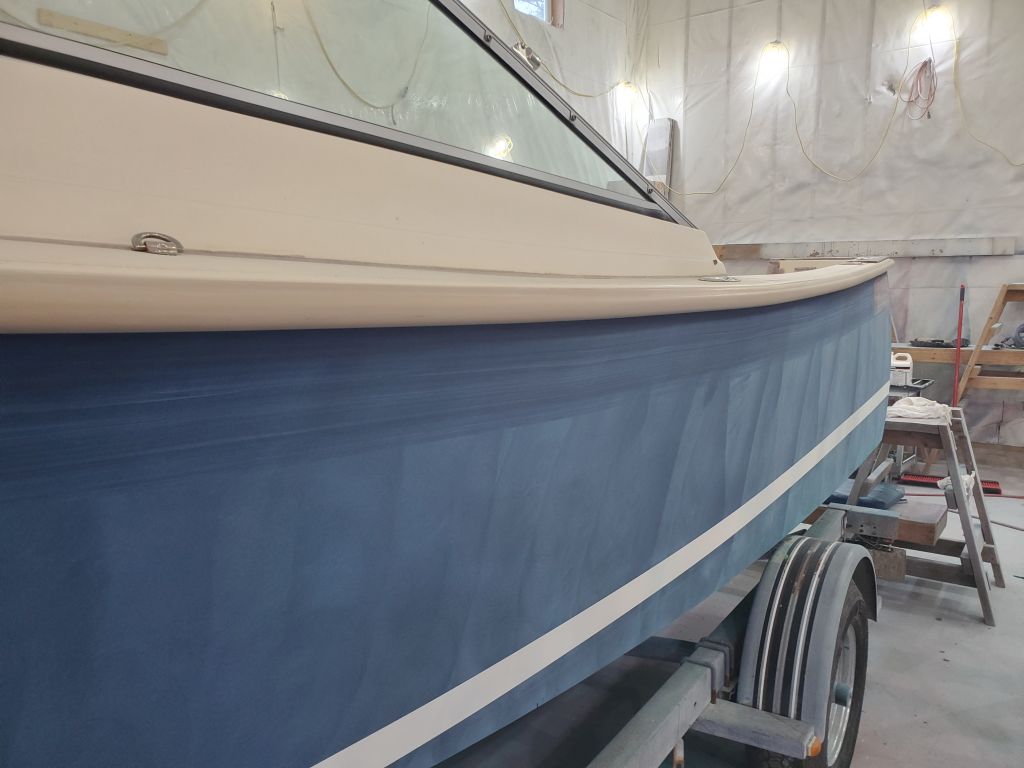
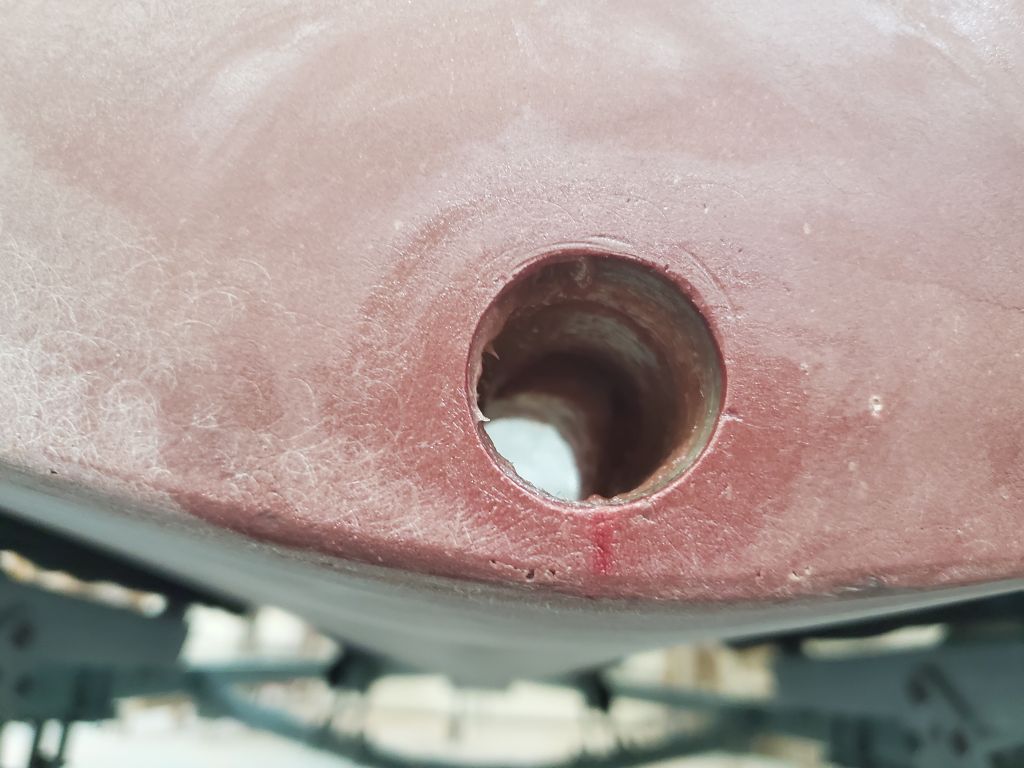
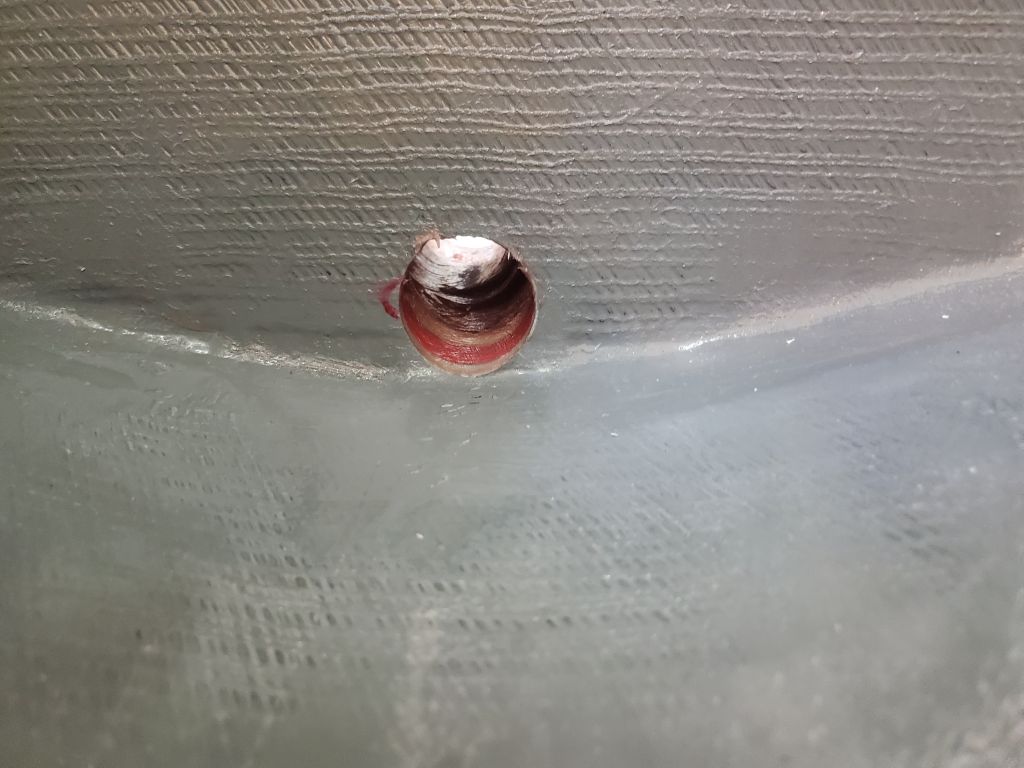
The hull was original factory gelcoat and, other than significant oxidation and fading, was generally in good condition, with only a few minor scrape marks that might require some filling later.  So for the relatively minor surface preparation I chose my 6″ orbital sander and worked through 60-80 grits on the port side of the hull, scuffing the gelcoat consistently and smoothing the surface.  Later, after any filling work, I’d go over the whole thing again with 120 grit, the final grit before primer.  I sanded a bit down into the antifouling paint to ensure a clean tape line when I restruck the waterline, and, on the chines, went ahead and removed all the old, dry paint as it came off with ease and the area was small.  I stayed a bit away from the vent patch on the port quarter for now so as not to oversand that area while working on the additional rounds of fairing required.

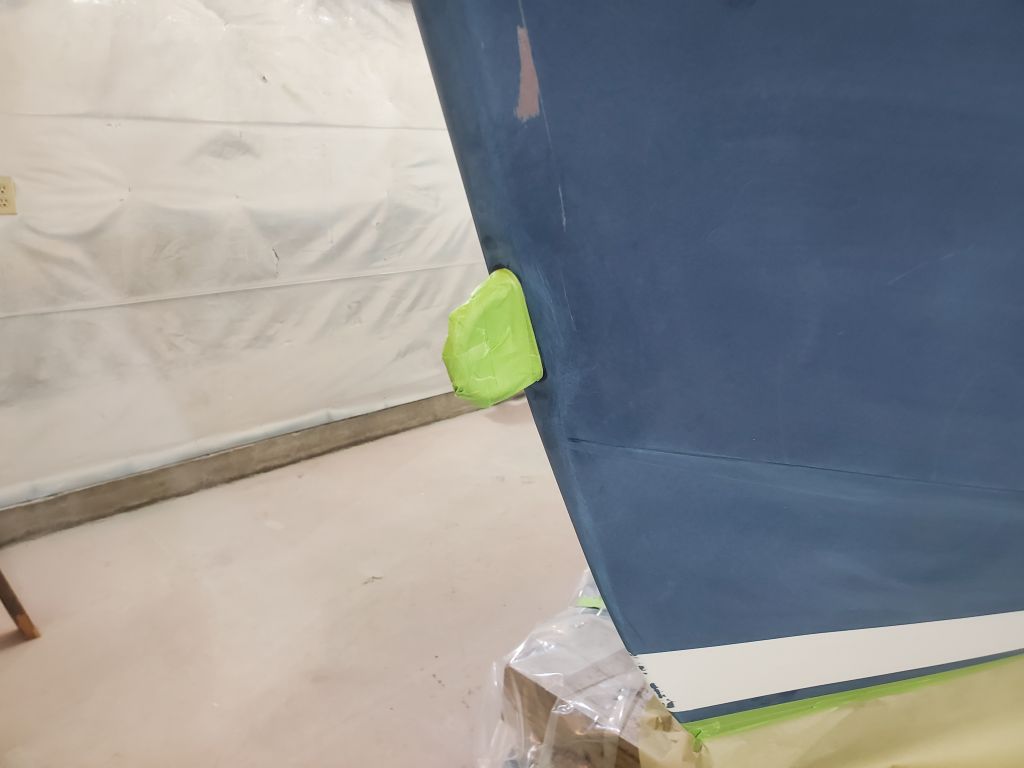
At the stem, I’d have to remove the bow support and roller later in order to complete the sanding, and for clear access during painting.  This brought me to the end of the day,  and I’d continue with the starboard side next time.

Holby 31

I began by lightly sanding as needed the newly-cored livewell hatch, and the patched fuel tank hatch.  After cleaning up, I applied a light coating of fairing compound to the repairs on the fuel tank hatch, mainly to ensure the repairs were smooth and flush and that the hatch would rest properly on the stringers when reinstalled.

At the obsolete engine room vent openings on the stern quarters, I cut and fitted 3/8″ thick fiberglass panels to fill the void, and installed these in thickened epoxy adhesive, leaving then just 1/8″ in from the surface to allow for additional laminate over the top later.  To help position the panels, I installed temporary screws that gave me handholds to pull or push the fiberglass in the opening, where I used a scrap of 1/8″ thick fiberglass as a spacer for final positioning.  Later, I removed the screws, and much later in the day, once the adhesive had cured sufficiently, I cut and installed four layers of 179 material to finish the patch:  Two inside the opening to bring it flush with the adjacent areas, then two more extending over the prepared area of the hull to tie it all together.

While I had a pot of thickened epoxy underway, I filled the edges of the round cutouts in the cored outboard well deck panel, which I’d previously reamed out to provide space and help isolate the core from the opening.

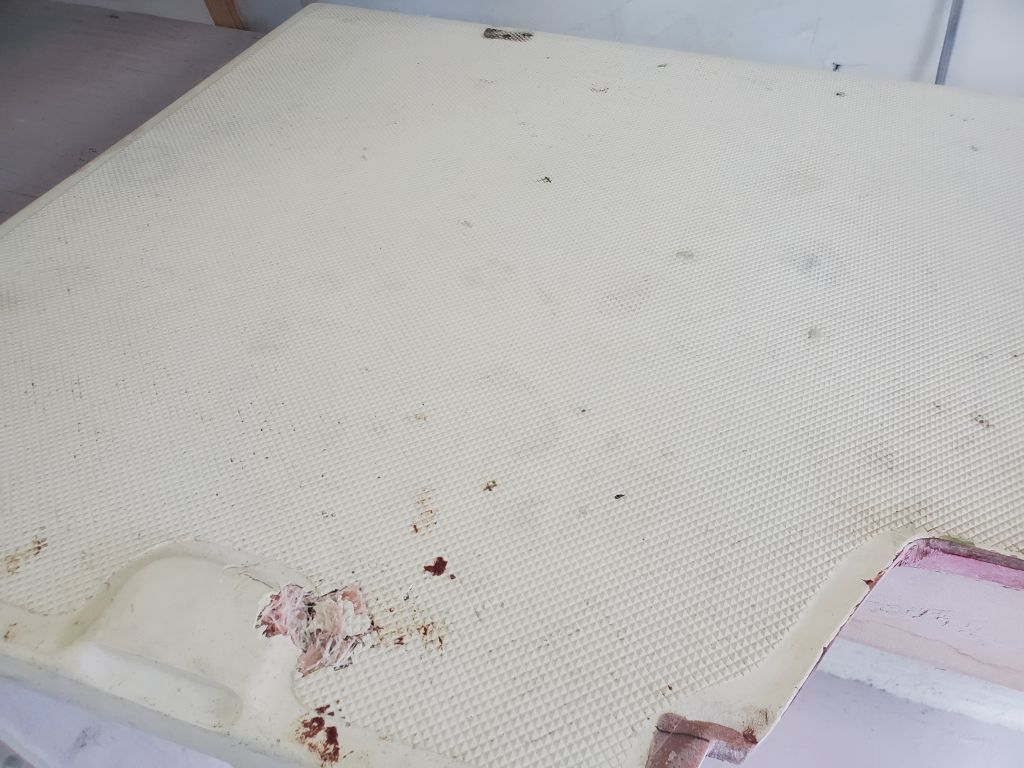
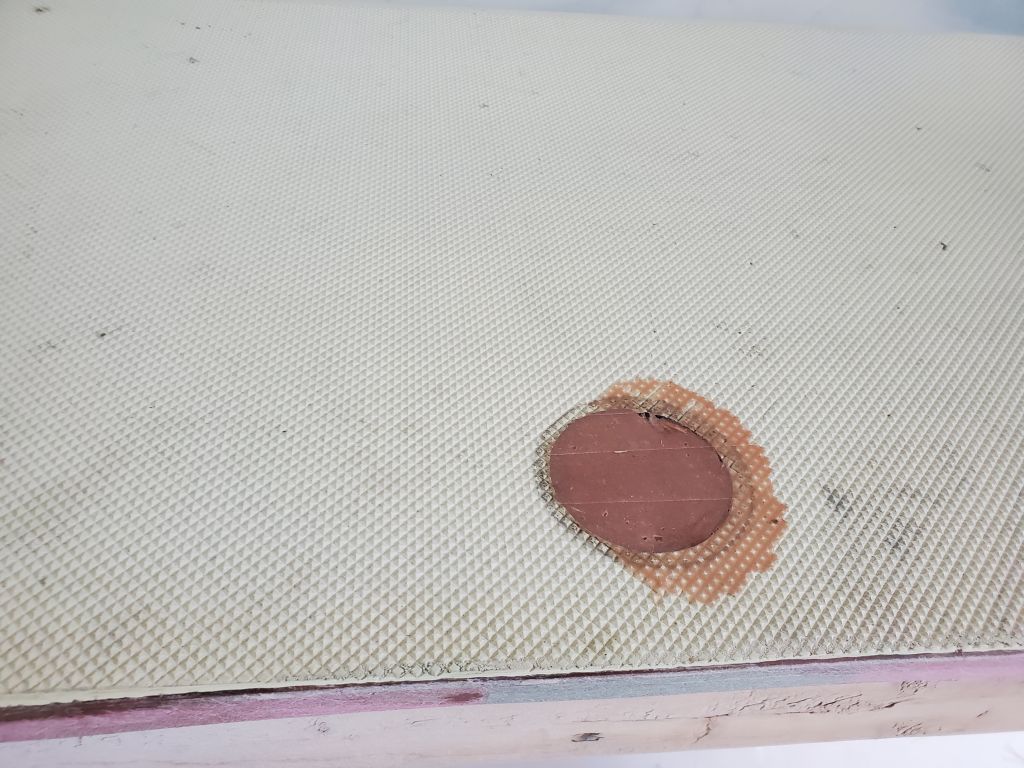
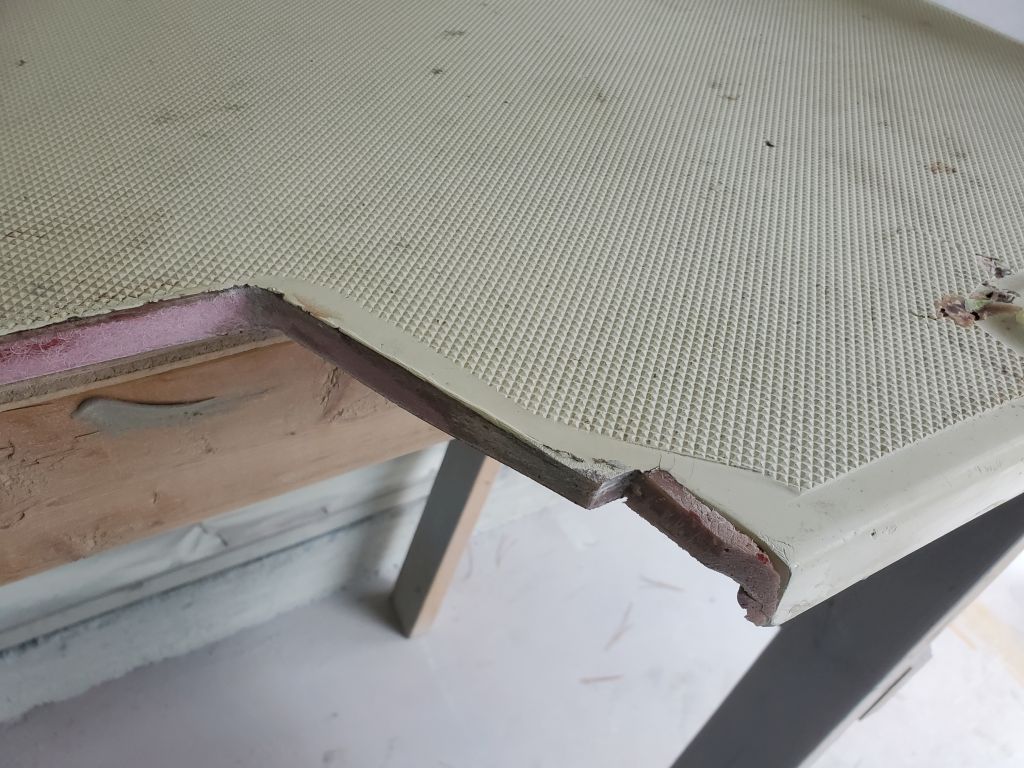
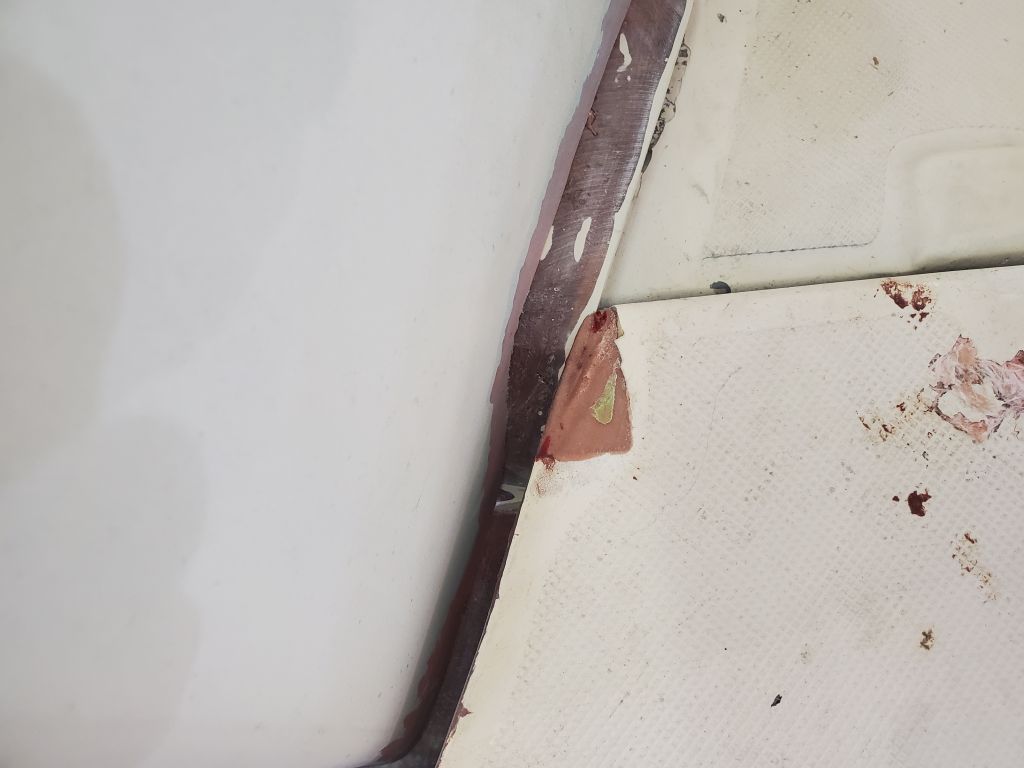
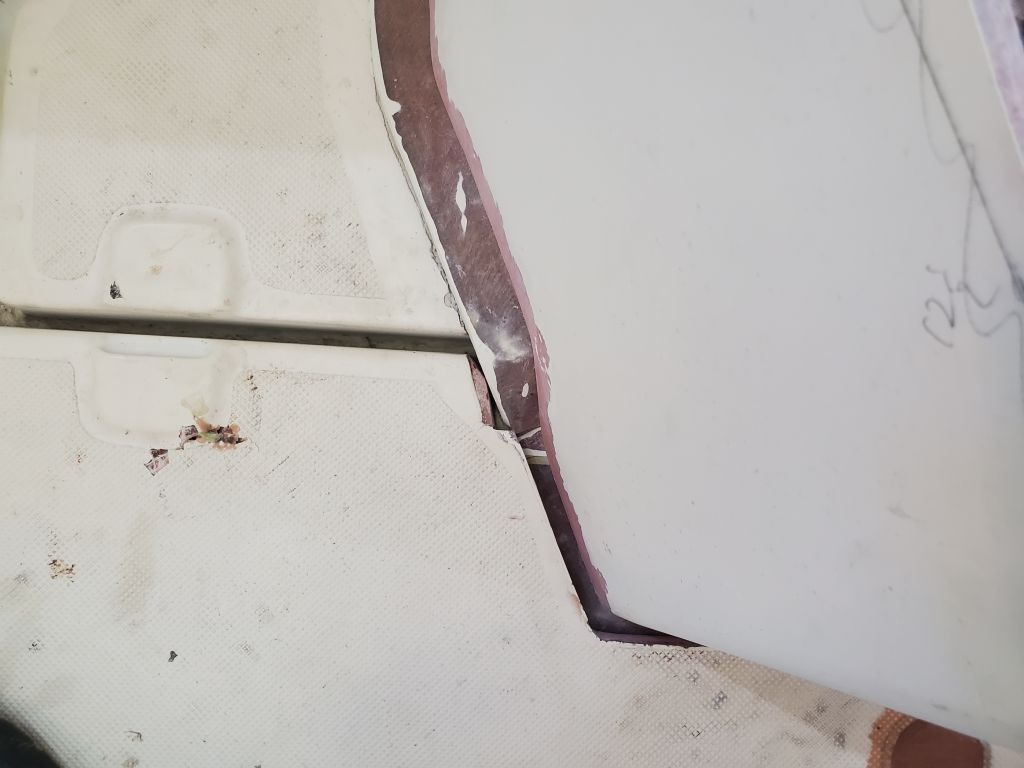
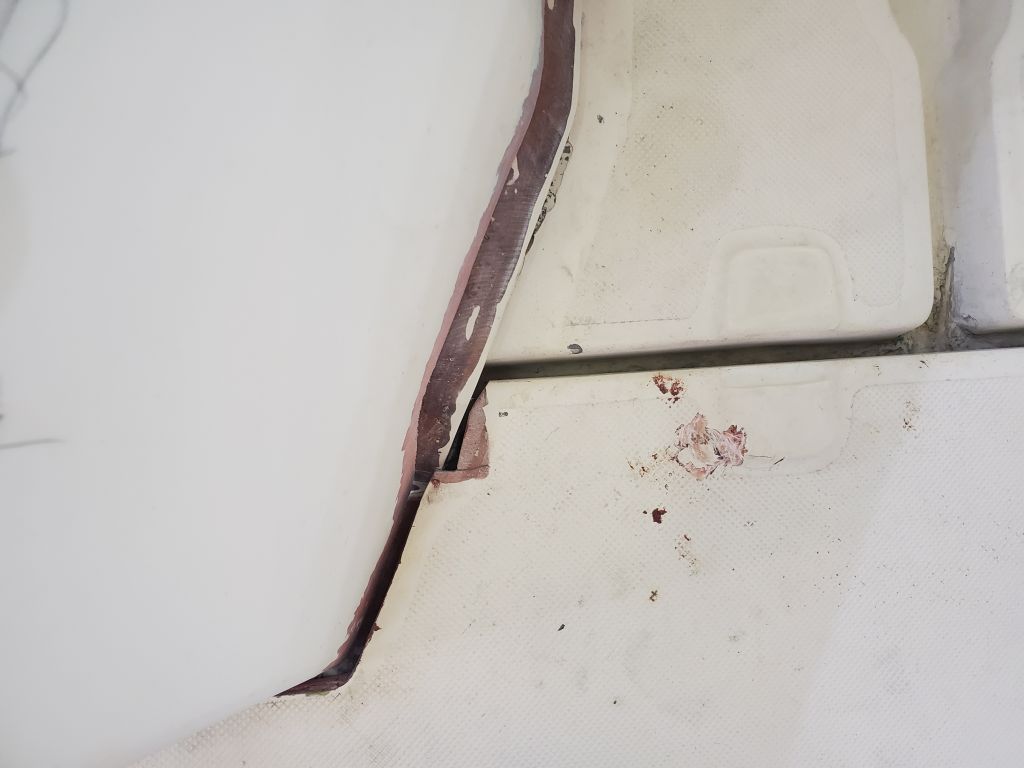
Turning to the livewell hatch repair, I cut five layers of fiberglass to fill the voids remaining outside of the cored area, as well as two larger layers to cover the core and finish the repair:  One that fit over the cored area only, and a second, larger piece to extend over the adjacent panel and tie the repair together.  Afterwards, I wet out and installed the five layers in the voids and finished off with some thickened epoxy to smoothly transition between the adjacent core and the fiberglass, mimicking the shape of the original panel, before installing the final two layers over the top.  I filled the small bored-out holes at the hinge fastener locations, and later in the day cut off the overhanging green fiberglass from the opening (I’d let the fiberglass run a bit wild over the edge) to limit future sanding.

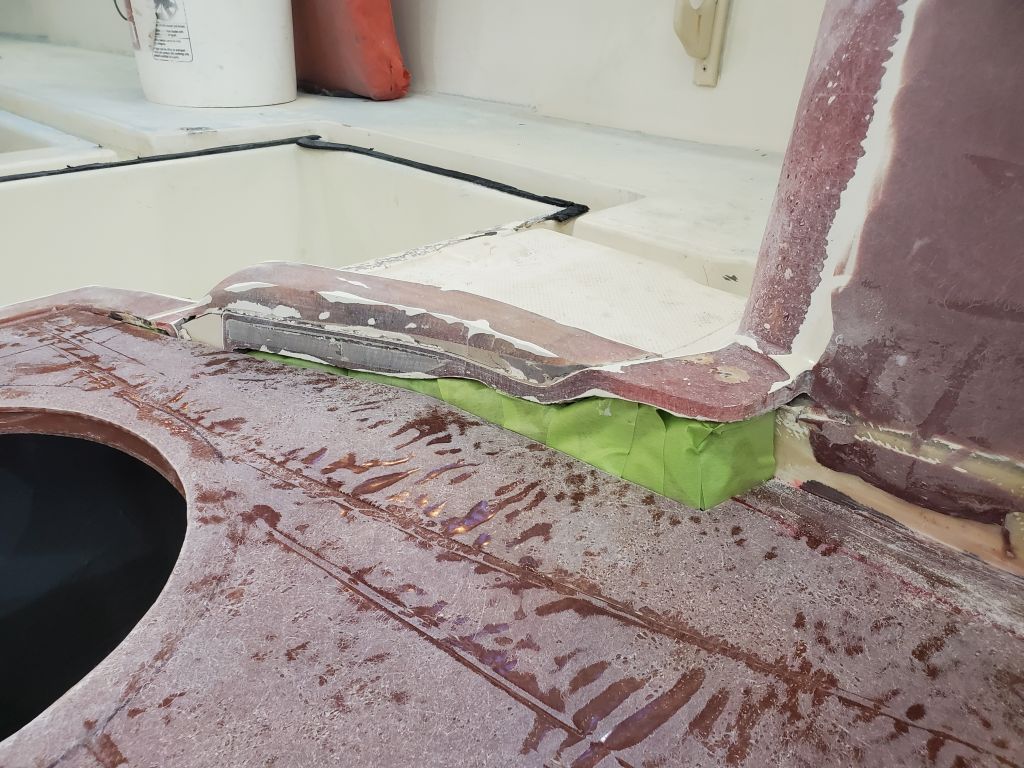
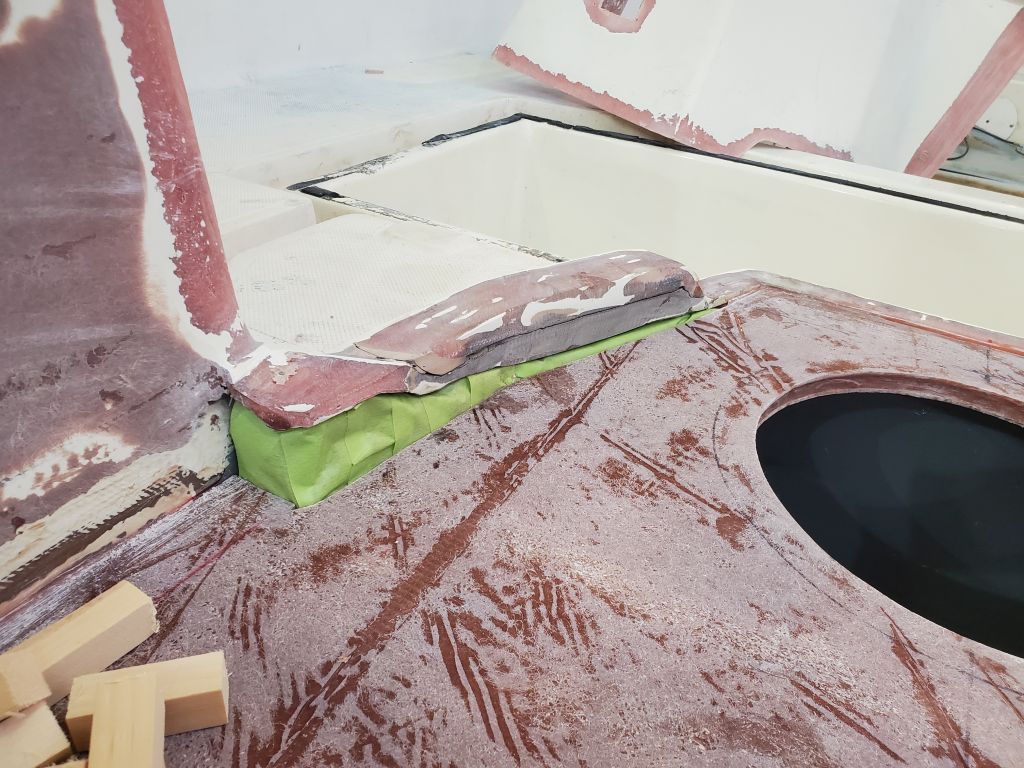
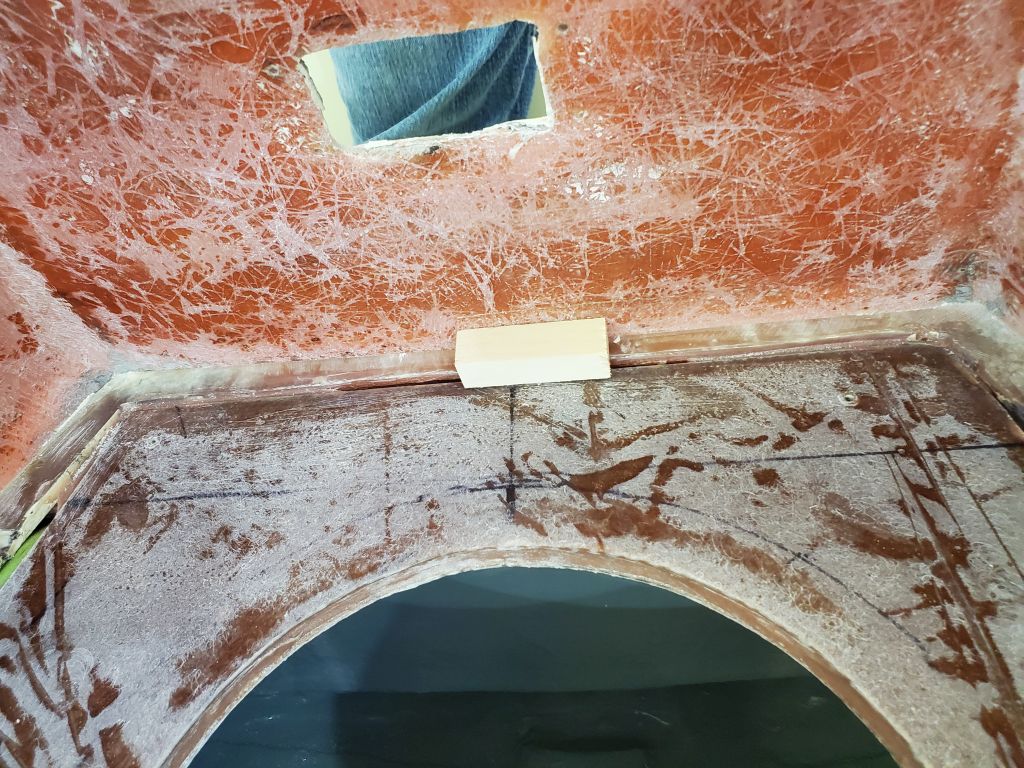
Back at the transom, I worked to finish off the top edges beneath the overhanging teak caprail.  The original wood-clad transom had featured additional teak trim here, glued to the wood above, and I’d removed the bulk of this during the original rounds of work, but now I needed to clean up the rest and determine a plan for finishing it off.  I used a chisel to clean away the remaining wood and provide a flat surface on the hull and the underside of the teak above.  This left a slight protruding edge where the deck molding met the hull.

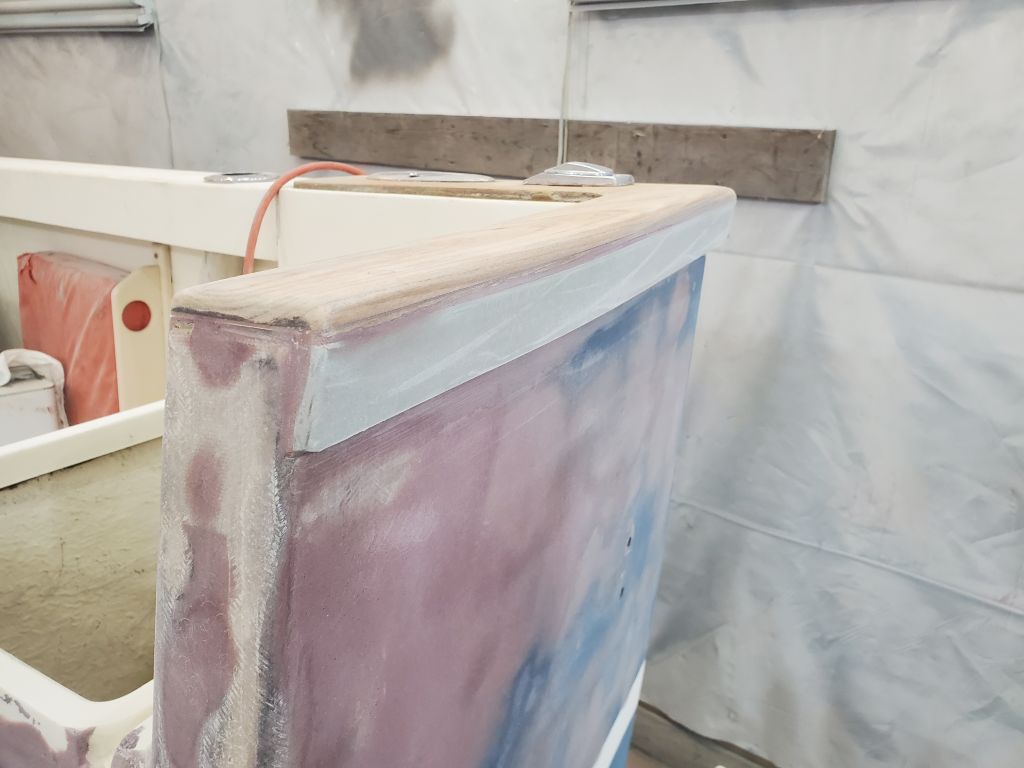
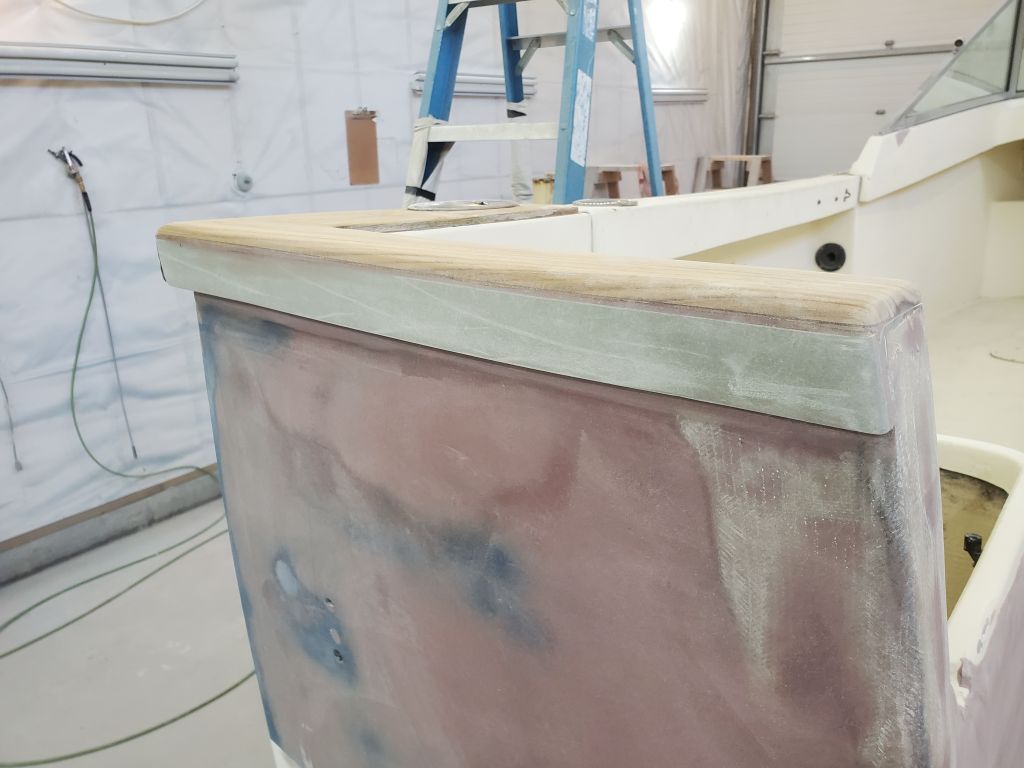
I milled 1/4″ thick by 1-1/2″ wide fiberglass strips to fit the area, running them from the edge of the vinyl rubrails on the side out into the transom opening.  I secured these in a bed of thickened epoxy, holding them tightly with clamps, and filled the small voids at the top edge and beneath with the epoxy squeezeout, eventually working towards a seamless molded appearance.  I let the new trim run wild at the inboard edges, into the transom cutout, for later trimming.

Finally, I applied another round of epoxy fairing compound over the transom as needed, focusing on the new work at the cutout and at the jet drive opening but also skimming over the rest of the transom to continue smoothing in the old fastener holes and minor repairs leftover from the original wooden transom.

Holby 30

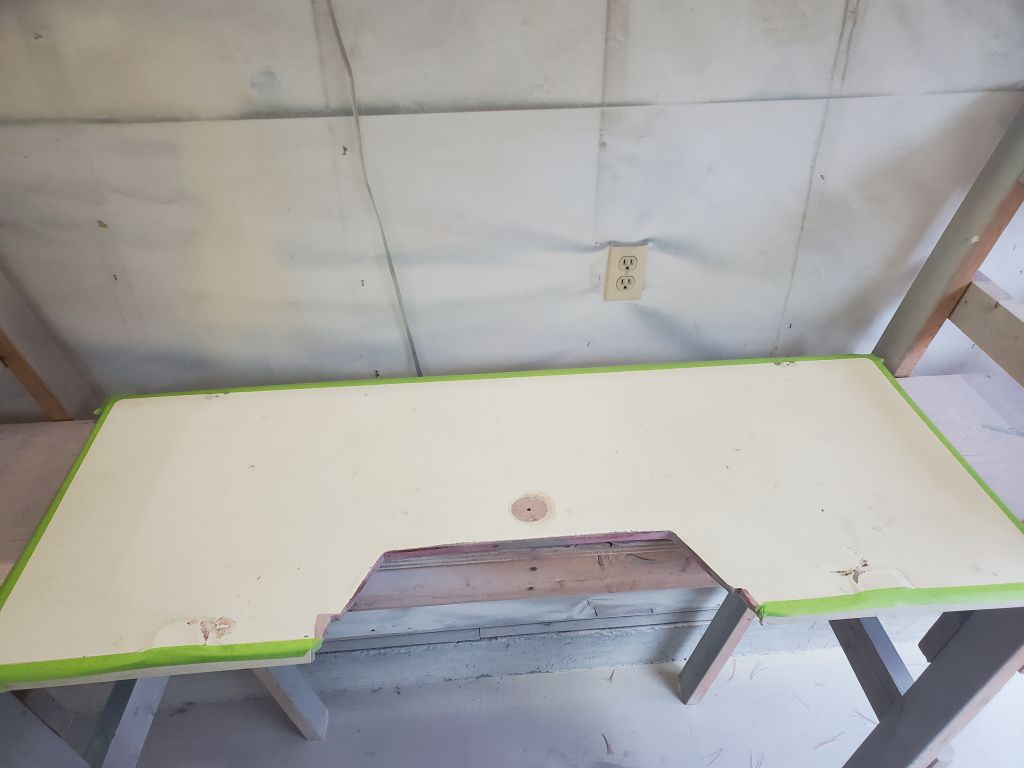
I prepared the livewell hatch for new coring by first masking over any screw holes on the top, visible side of the panel.  Afterwards, I cut pieces of 1/2″ solid fiberglass sheeting as needed to provide a solid glass edge to the cutout in the hatch, as well as around the latching mechanism.  I didn’t have a lot of 1/2″ material on hand so I repurposed a piece that was just the right size, but had four holes drilled from some past attempt as a backing plate; most of this section would later be drilled out for the 2″ hole required for the latch, and in any event I’d just fill the existing holes with epoxy during installation.

With the borders and solid areas determined, I cut 1/2″ balsa core to fit the remainder.  The open areas near the aft end of the hatch (bottom edge of the last phot0) would eventually be filled with solid fiberglass to create the proper thickness and taper into the cored area as elsewhere on the part.

After final preparations and cleanup, I installed the new core and fiberglass edges in thickened epoxy adhesive, then added weights to hold the core tightly into the adhesive while it cured.

After masking over the screw holes from the top side of the large fuel tank hatch, I cut fiberglass to fit all 10 of the generally-rectangular voids I’d opened on the underside:  five layers of 1708 to fill the voids flush, then a slightly larger layer to overlap the previously-prepared areas of the adjacent panel.

After cleaning and preparing all areas, I started with some thickened epoxy and filled the existing screwholes and any small voids around the edges (particularly the outer edge) where I’d reamed out the old core.  Then I wet out and installed all 60 pieces of cloth to fill and repair all 10 voids.

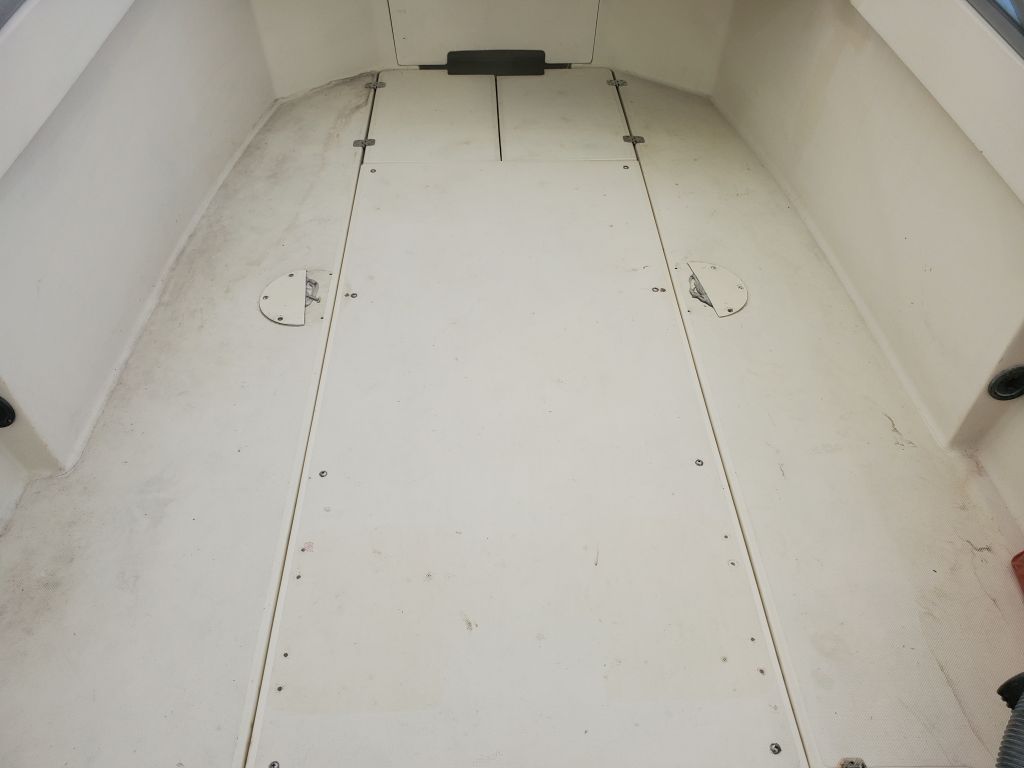
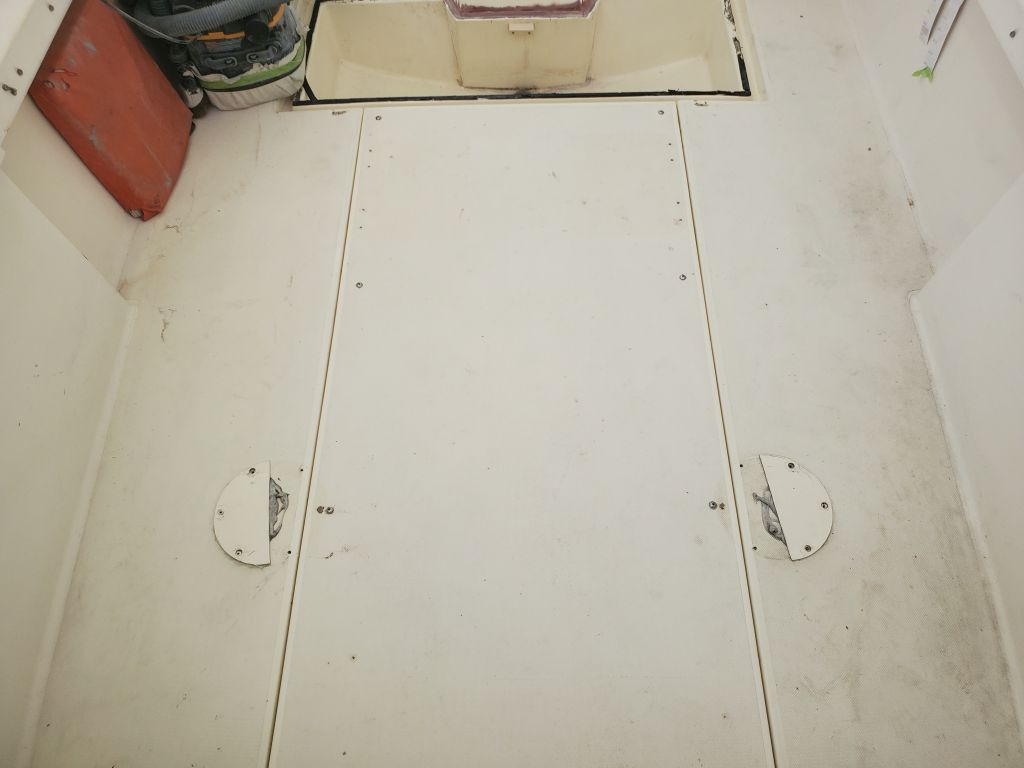
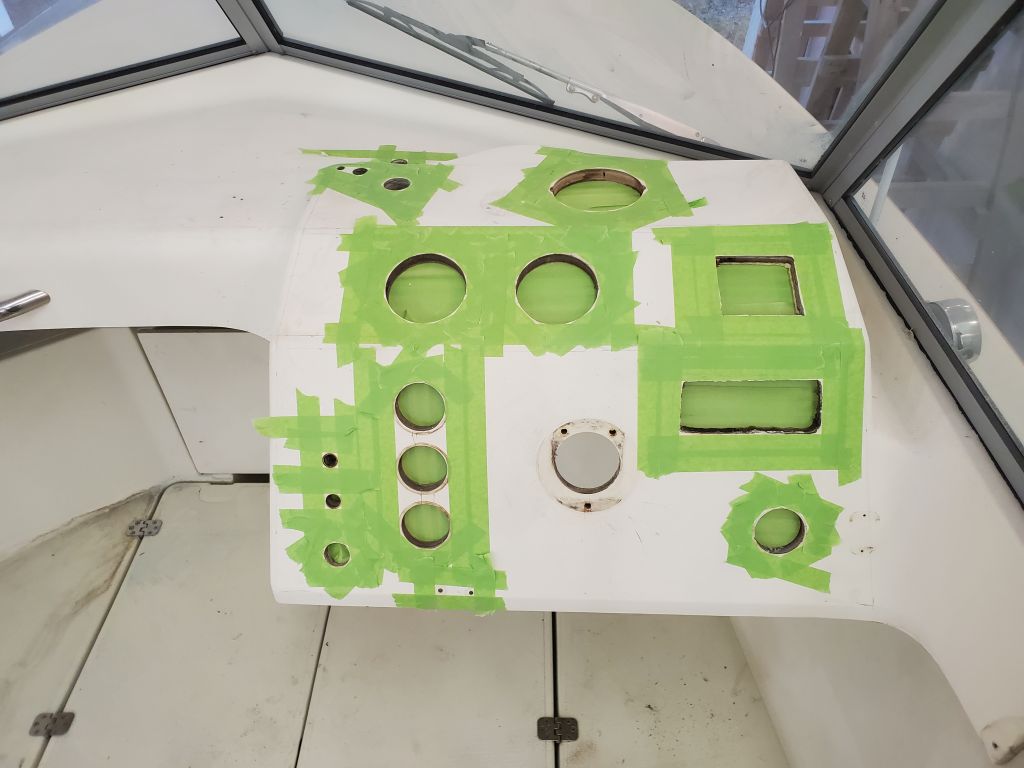
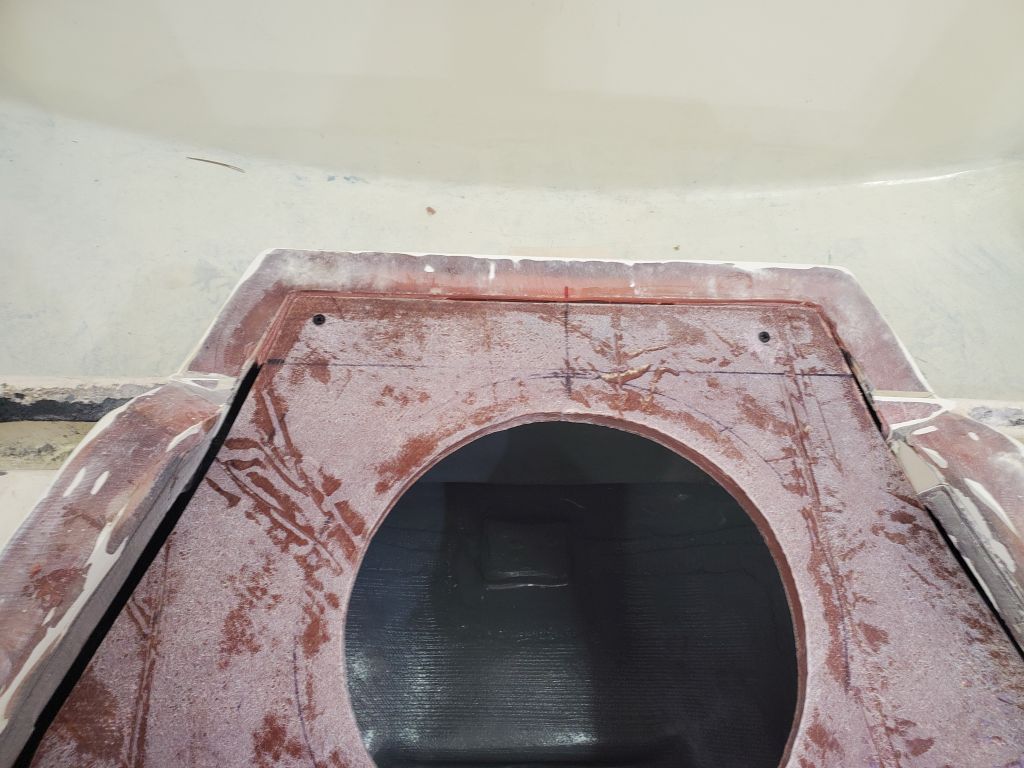
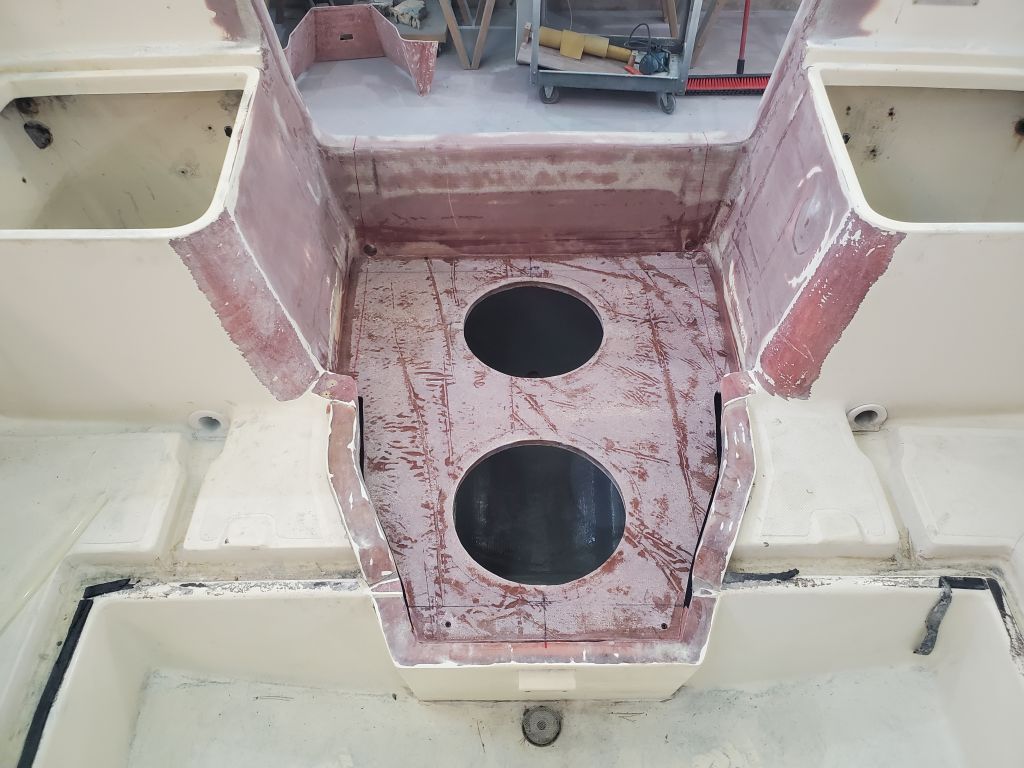
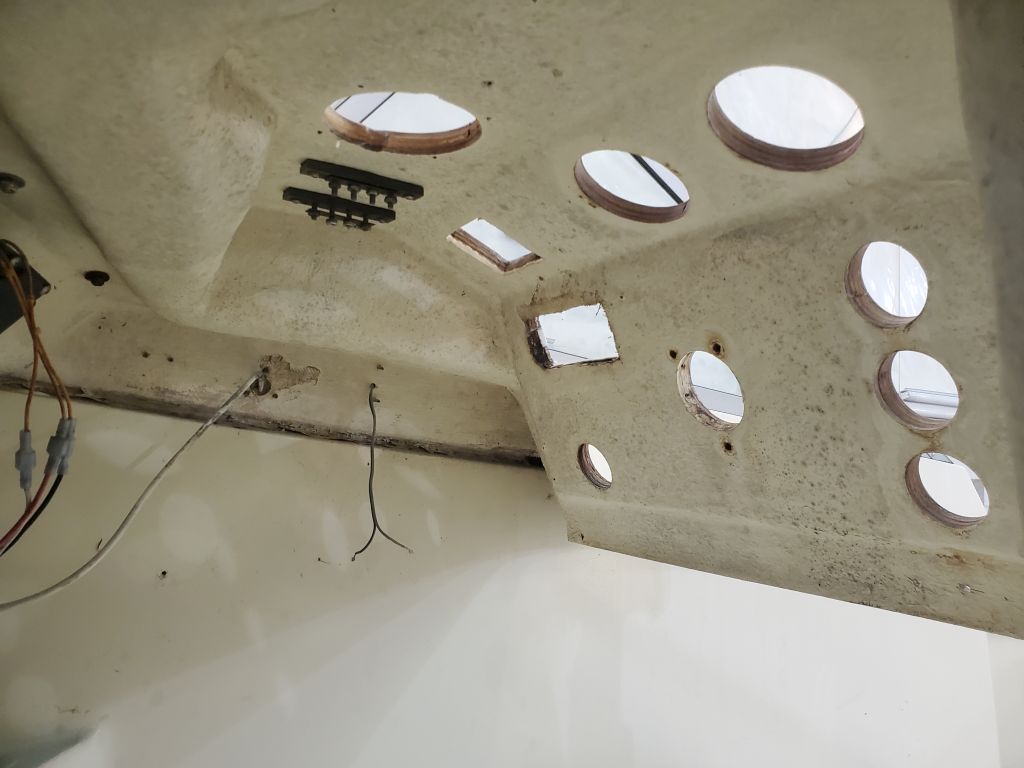
To provide access beneath the new outboard well, I chose two large round access hatches.  I selected these rather than rectangular versions because they fit the narrow space well, and I thought they’d give better access overall, and because the lids were completely removable for better access; the plastic rectangular hatches have lids that only hinge open, and in this confined space would generally end up being in the way.  Now I marked an actual centerline on the deck panel (while installed in the boat), and after some additional layout positioned the two hatches near each end of the deck and made the round cutouts as needed.    Later, next time I was working with epoxy,  I’d ream out the core from the new openings and replace it with solid epoxy to prevent water ingress, but for now I was pleased with the access these openings would provide to the bilge beneath, for the bilge pump, hoses, or electrical needs going forward.


Holby 29

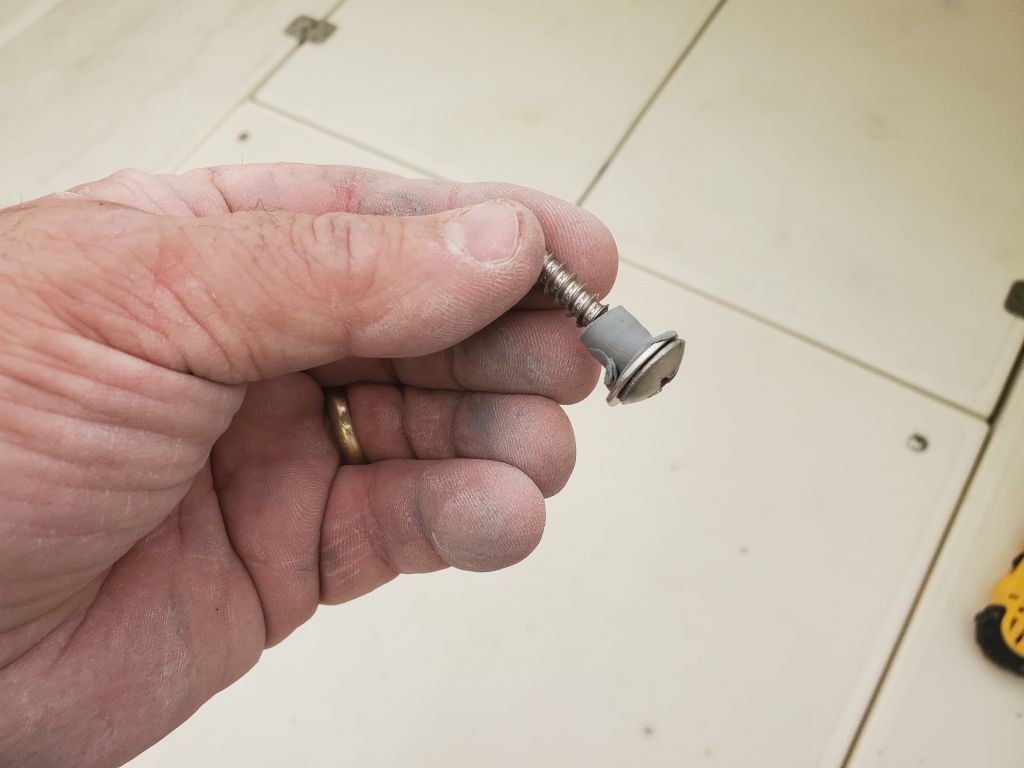
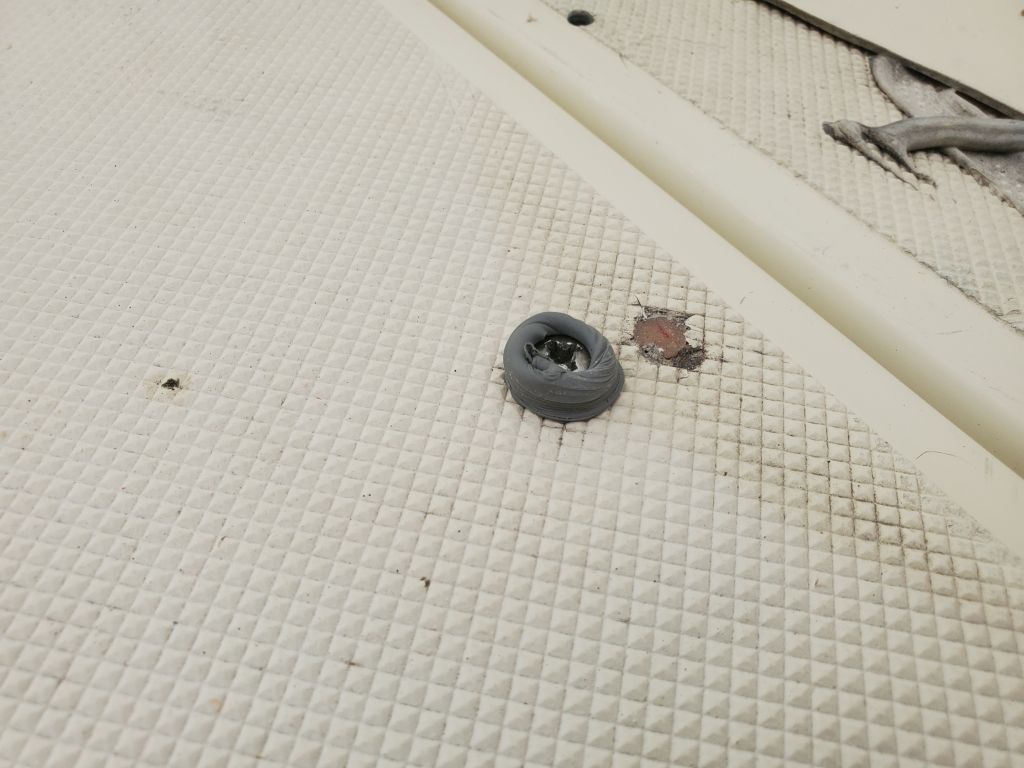
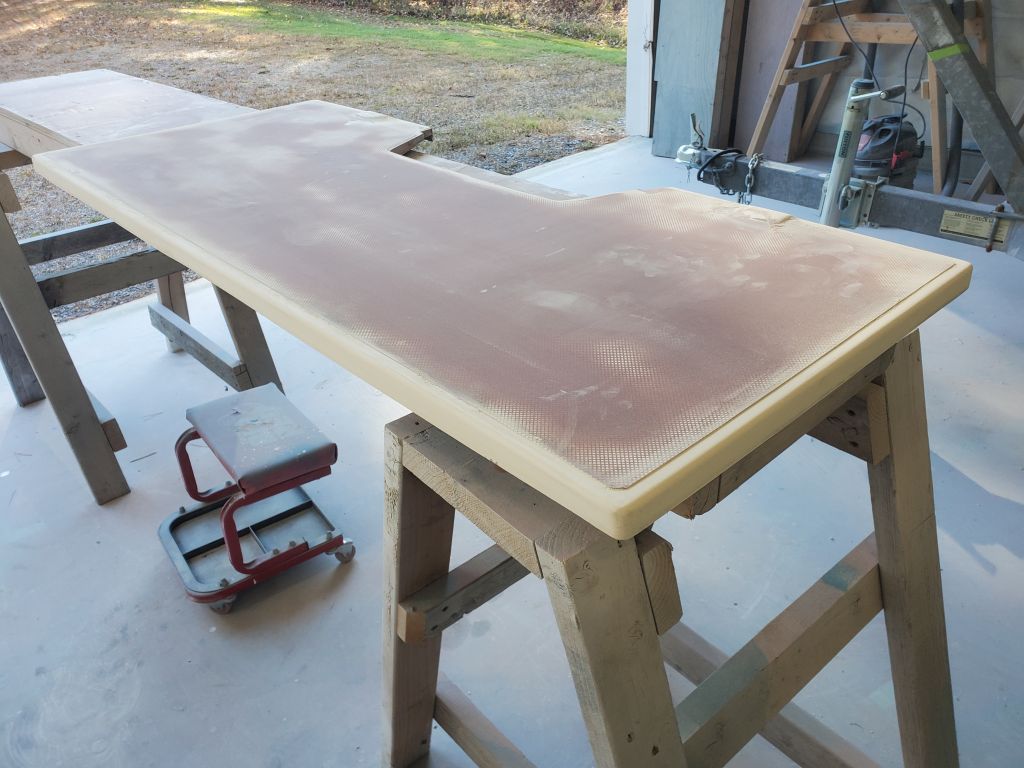
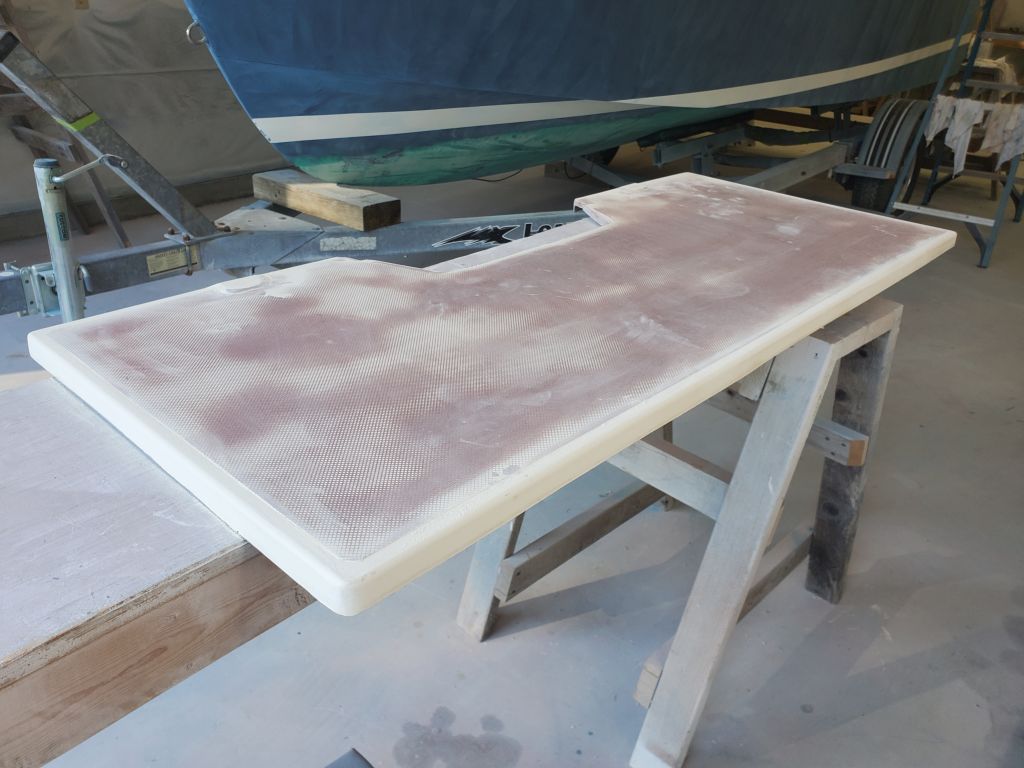
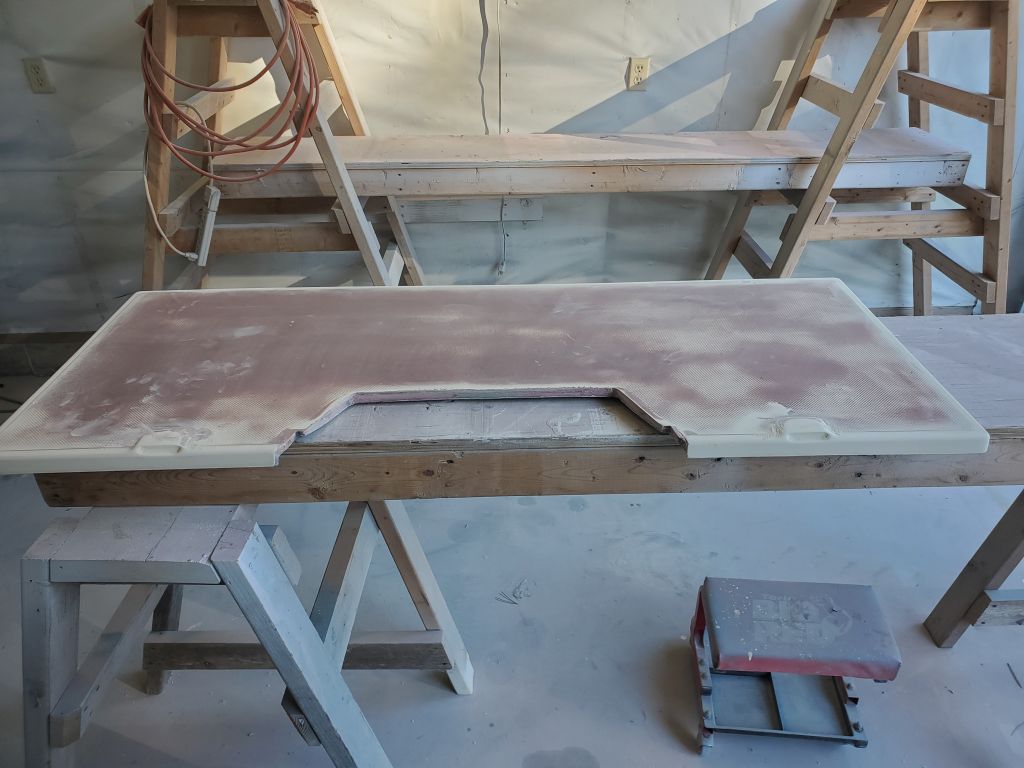
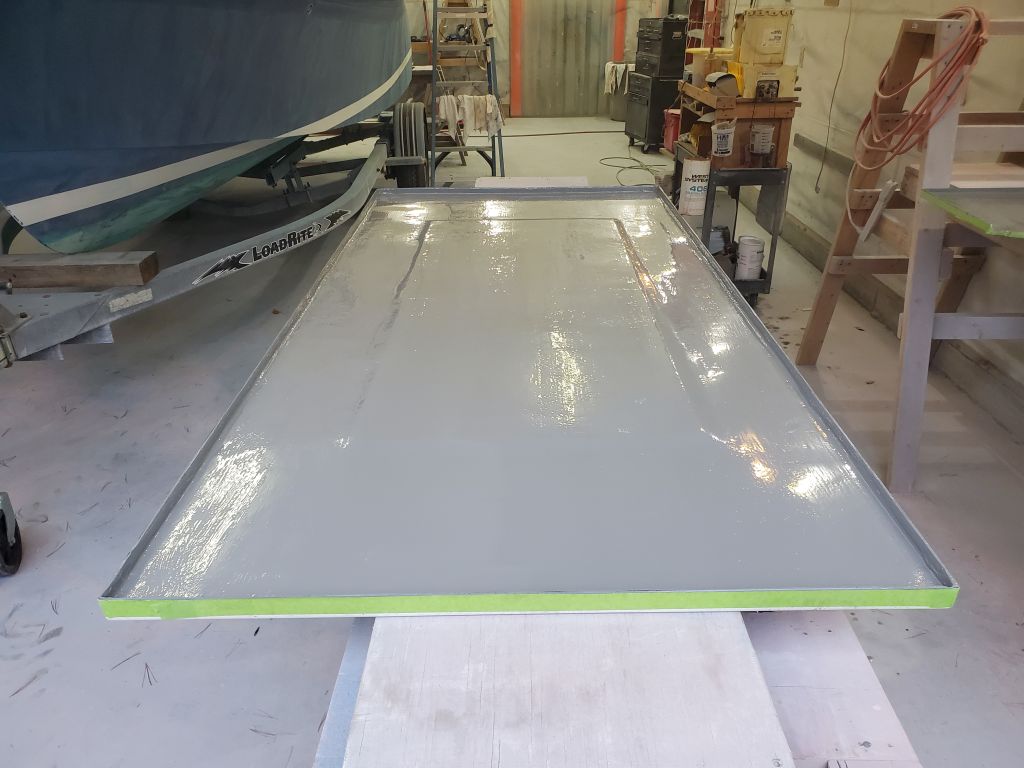
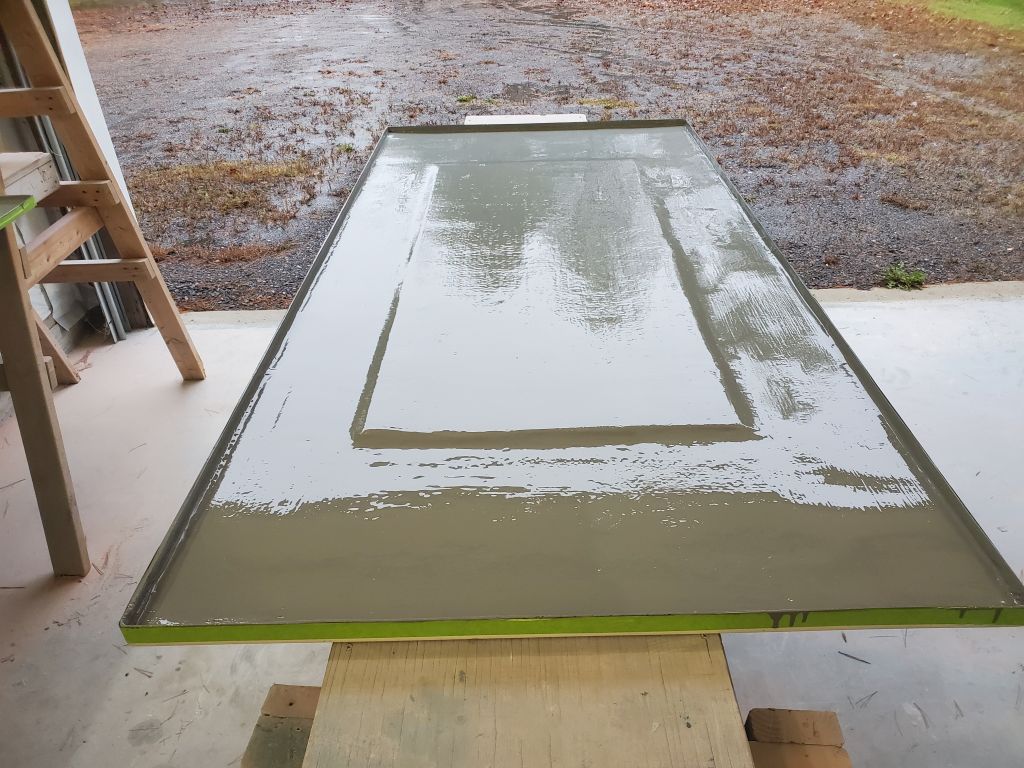
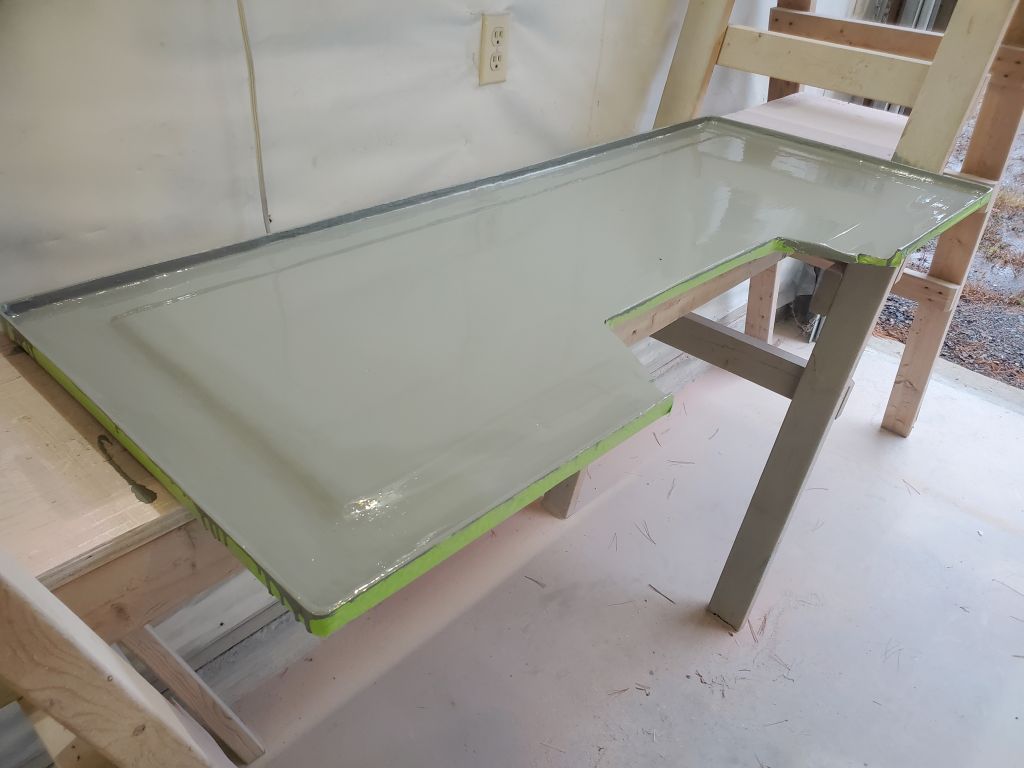
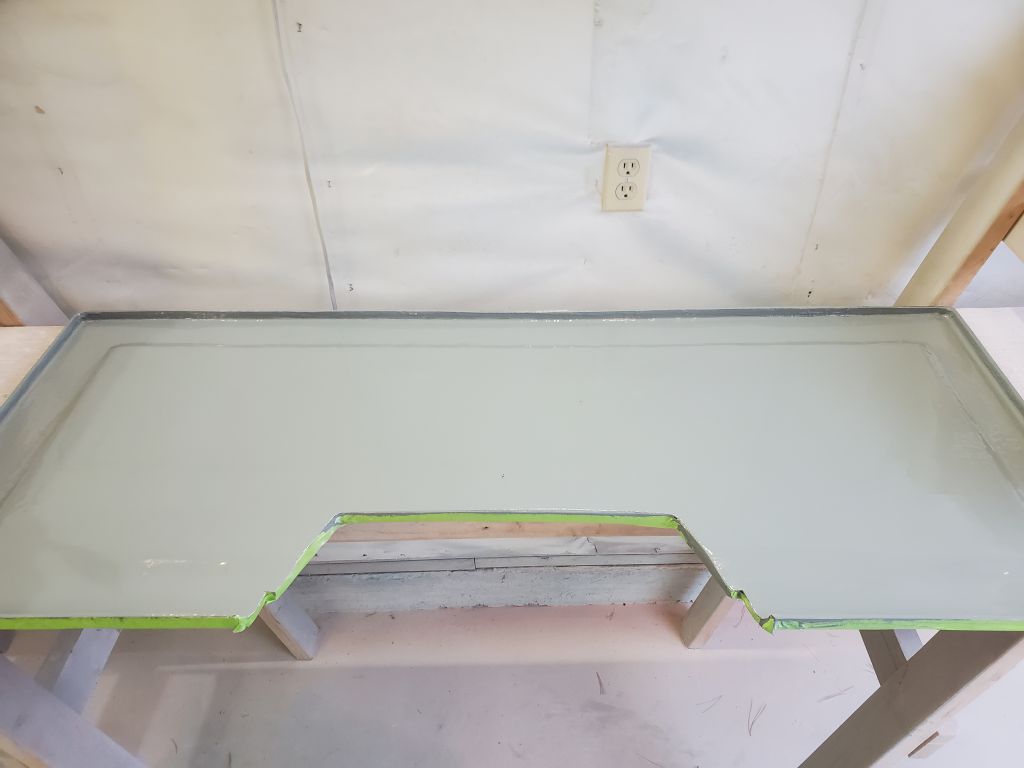
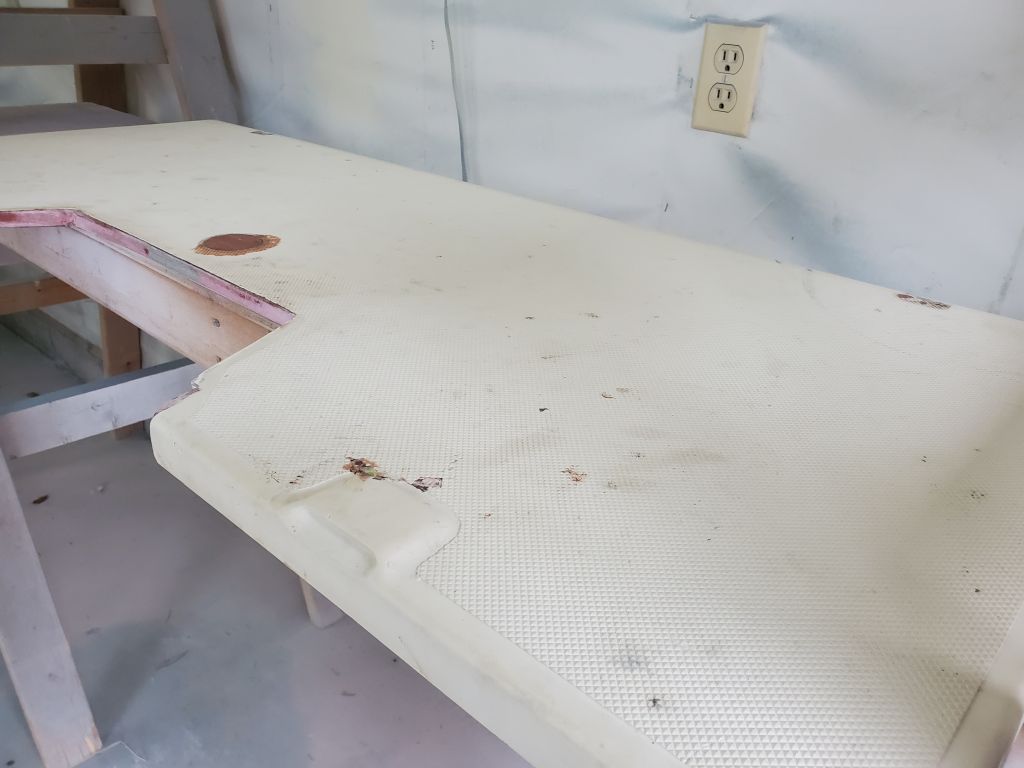
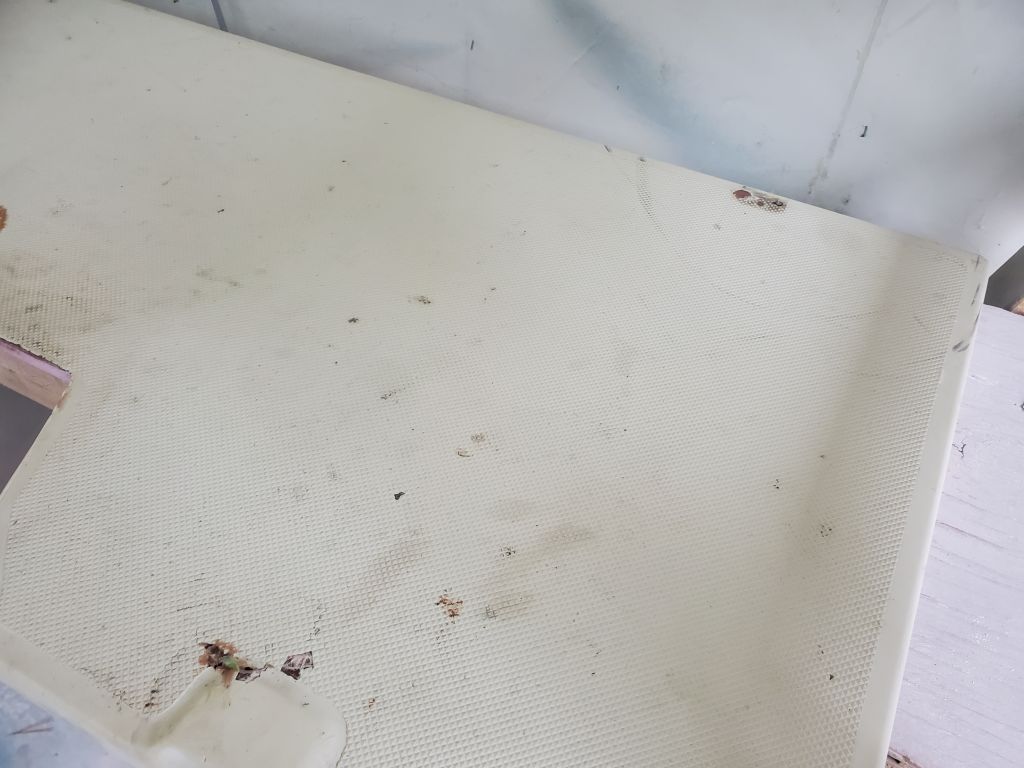
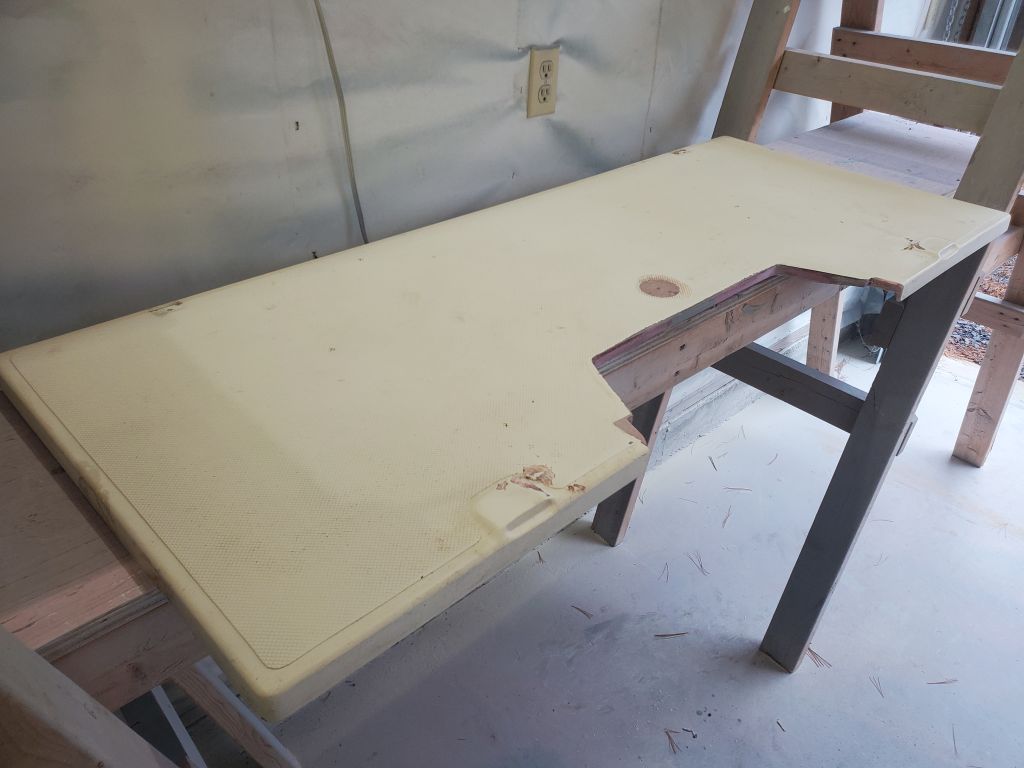
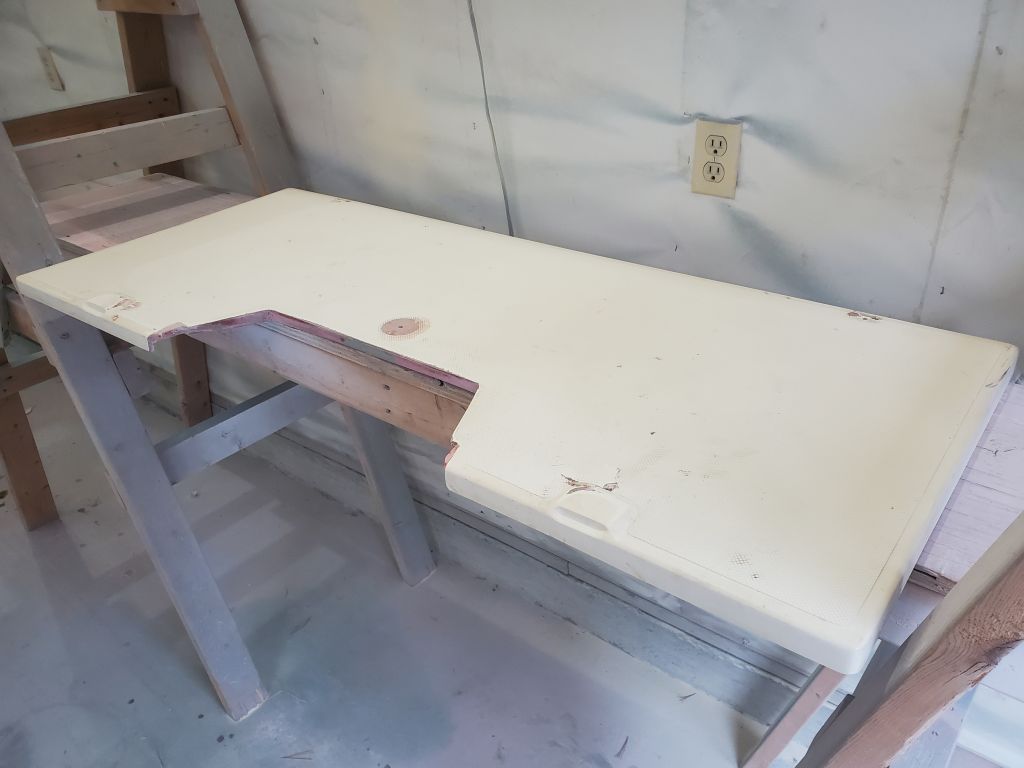
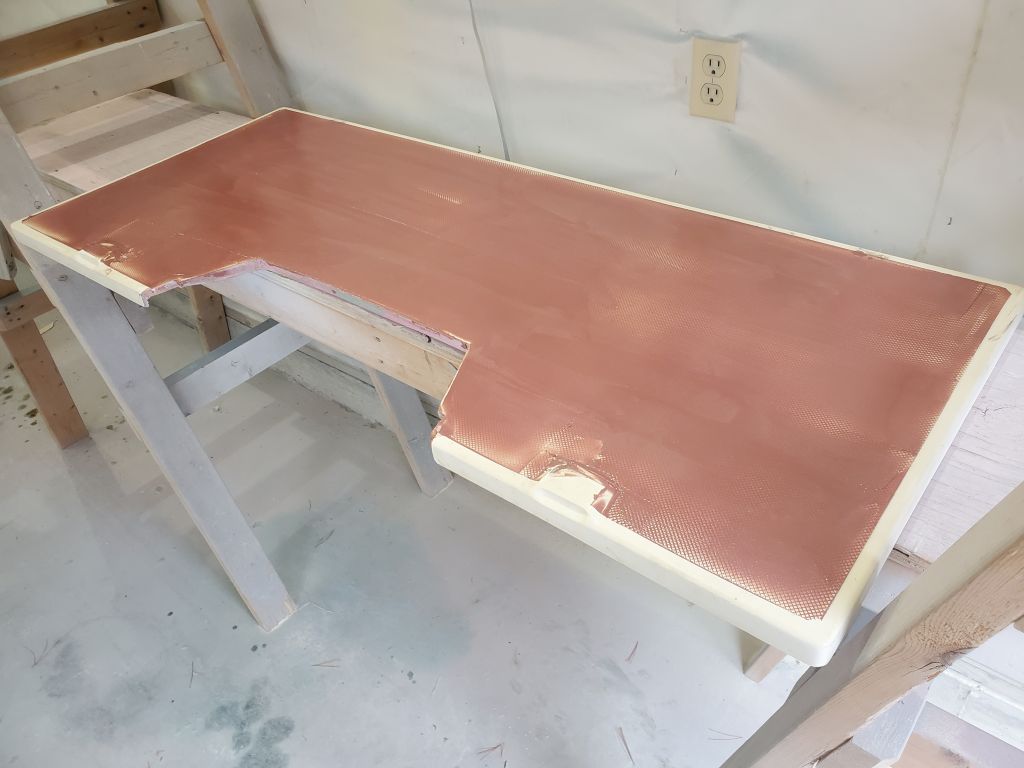
The new sandwich assembly for the outboard well deck was ready for final shaping.  After “unmolding” the part and exposing the flat, if slightly textured from the molding medium (i.e. plastic sheeting), I roughed out the position of the template on the bottom side of the piece, making some reference marks, then used those marks to position the template properly on the top face of the part so I could cut out the shape as required.  I fine-tuned the piece as needed till it fit appropriately in the opening on the boat, resting on the temporary wooden cleats.  The large gaps at the corners of the bowed forward sections would be filled and tabbed over later as part of the final installation; I didn’t extend the flat panel into these areas as doing so would have prohibited installation of the panel in the space.

Later, I lightly sanded both sides of the new panel, focusing on the top surface to remove the smooth, shiny texture and prepare it for additional work before and during installation.  The level, placed flat on the underpinnings of the main deck forward of the cutout, shows roughly the angled pitch of the new panel towards the transom, with approximately 3/4″ – 1″ of pitch over the three-foot length of the panel.  Final installation of the panel would happen soon, but not before I wrapped up some work in and around the area soon to be covered over.

Meanwhile, I picked up again on the fuel tank hatch, turning to the second side, where I opened up the bottom skin as needed around the fastener locations to expose and remove wet or damaged core back to sound material at each spot.

Afterwards, I ground small tapered areas around each repair, cleaned up the exposed laminate, and lightly sanded the gelcoated underside of the hatch to prepare for rebuilding and refinishing.

I cut open the underside of the livewell hatch, choosing an initial cut area that I thought seemed large enough to encompass all the damage.  Later, I slightly expanded the cut on the ends to access all of the wet and blackened core at the perimeter.  After removing all the core in the exposed area, I prepared the surface for new core and fiberglass in the usual way, including boring out the underside of the hinge screw holes to eliminate future core worries there once the hatch was reinstalled.

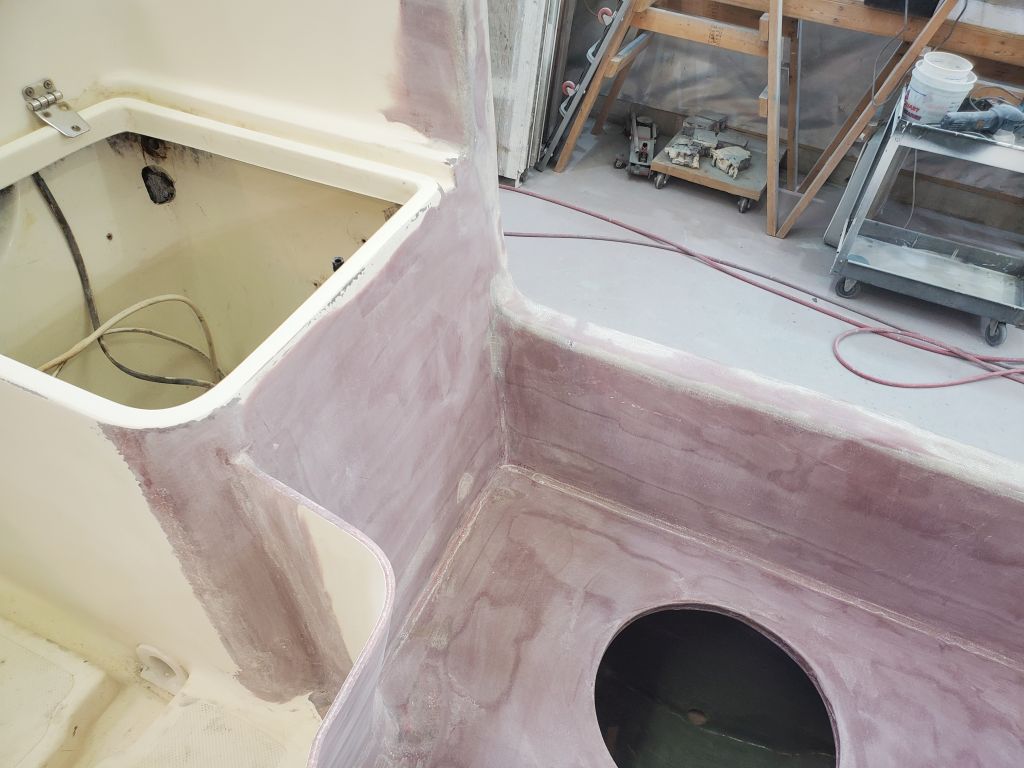
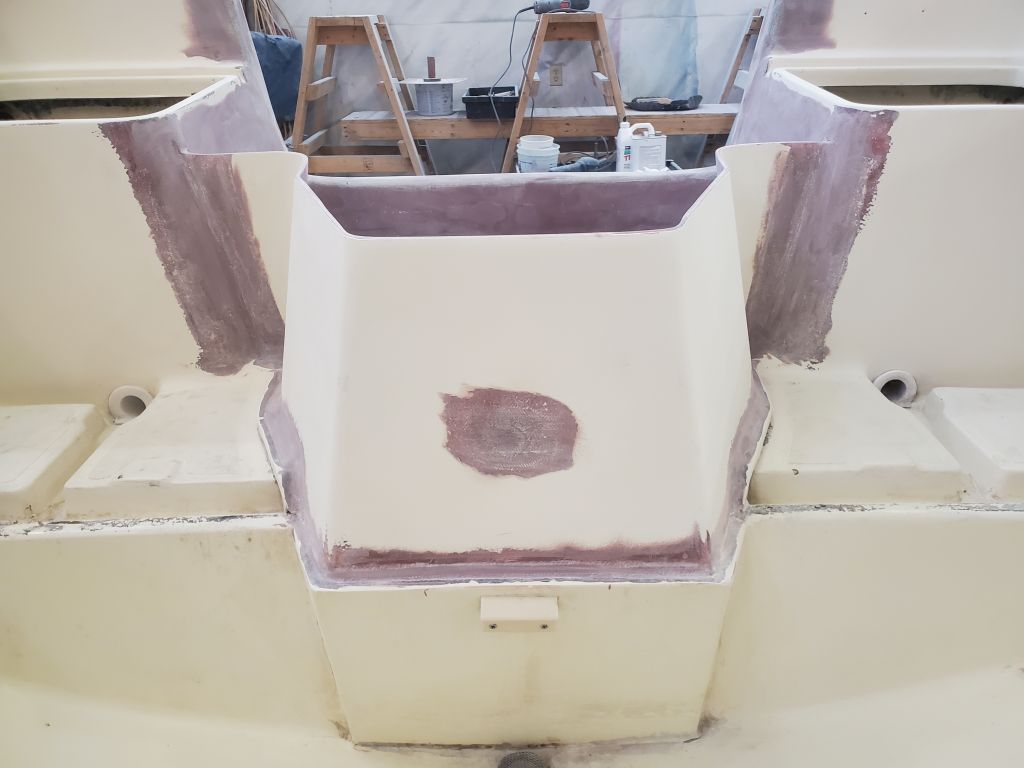
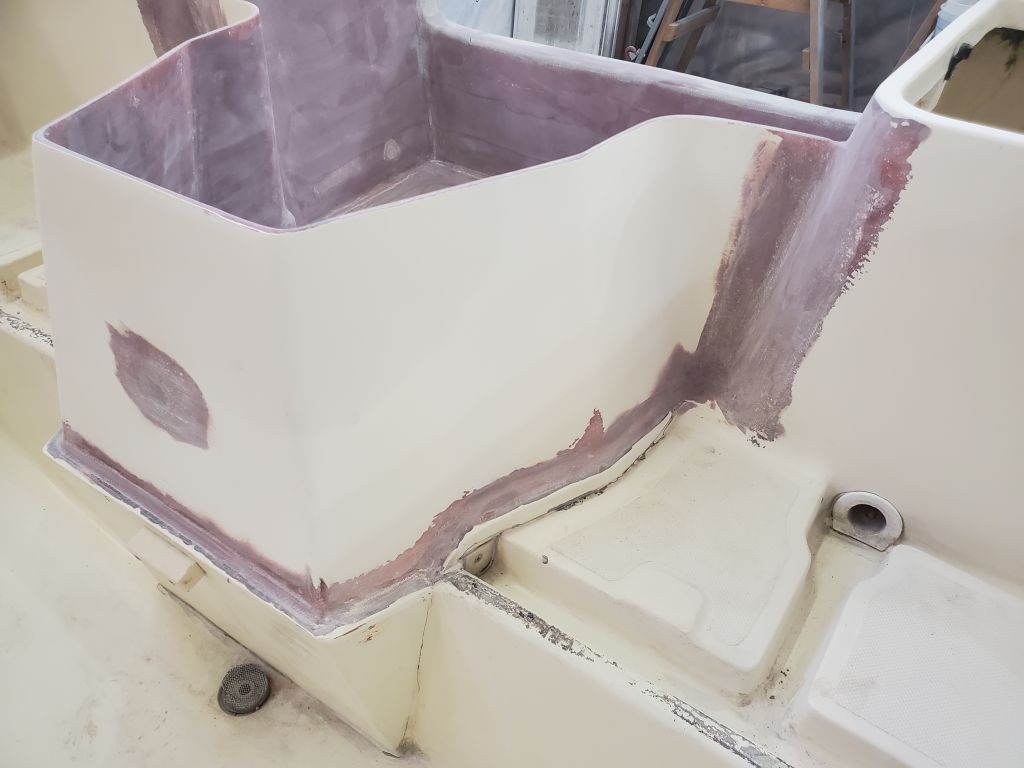
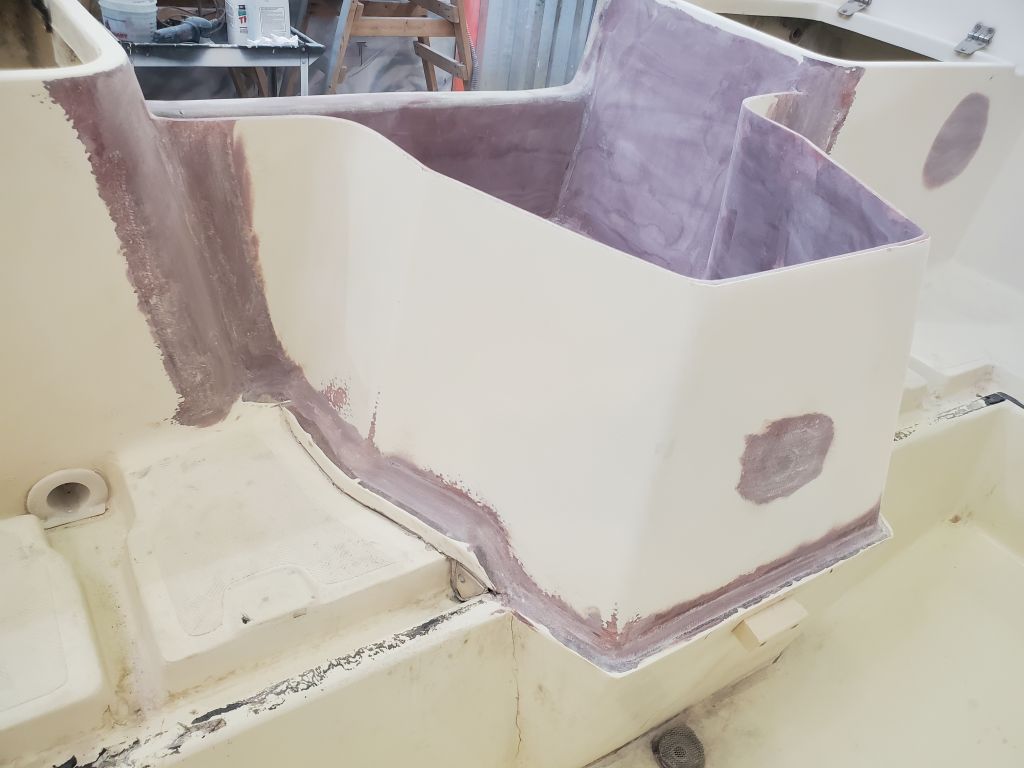
While I had the sanding tools going, I prepared  for patching the now-obsolete engine vent openings on each side of the hull near the transom, and prepared as needed the forward end of the engine room opening for  the eventual installation of the new splashwell bulkhead and deck, removing the temporary wooden cleats after marking their top edges for reference.  I also scraped out the remaining sound insulation and adhesive from the fiberglass engine room cover/splashwell, and sanded the inside and other surfaces to prepare for installation.

After cleaning up, I made new fiberglass cleats from prefabricated fiberglass panels and installed them with epoxy adhesive in the engine room along the sides, transom, and at the forward end, replacing the wooden versions I’d used for the mockup and templating.


Holby 28

To begin, I laminated the three layers of fiberglass I’d previously cut with epoxy resin, creating a top-skin panel for the new outboard well deck.  While the initial layers were gelling, I prepared a section of 1/2″ balsa core to fit, using the overall template as a guide, then cutting the core 3″ short on all sides to leave room for a solid flange where the deck would rest on various cleats and supports along the edges during installation.  I cut a bevel on the outer sides of the core to allow fiberglass to lay over it during installation.

Once the three top layers had sufficiently cured, I made a light outline of the template on the surface and positioned the new core within; the rectangular base panel was sufficiently oversize that I had ample room on all edges for adjustment.  I pre-wet both sides of the core with resin, then installed it in a bed of epoxy adhesive before installing two additional layers of 1708 over the top of the core to complete the laminate structure for the sandwich.

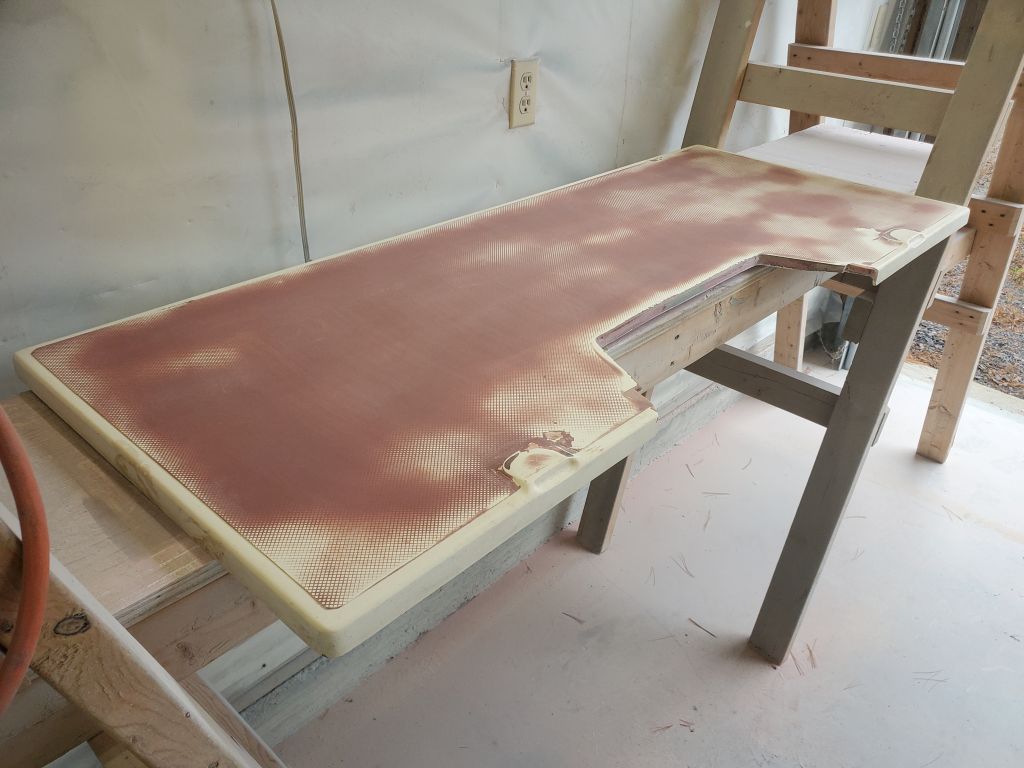
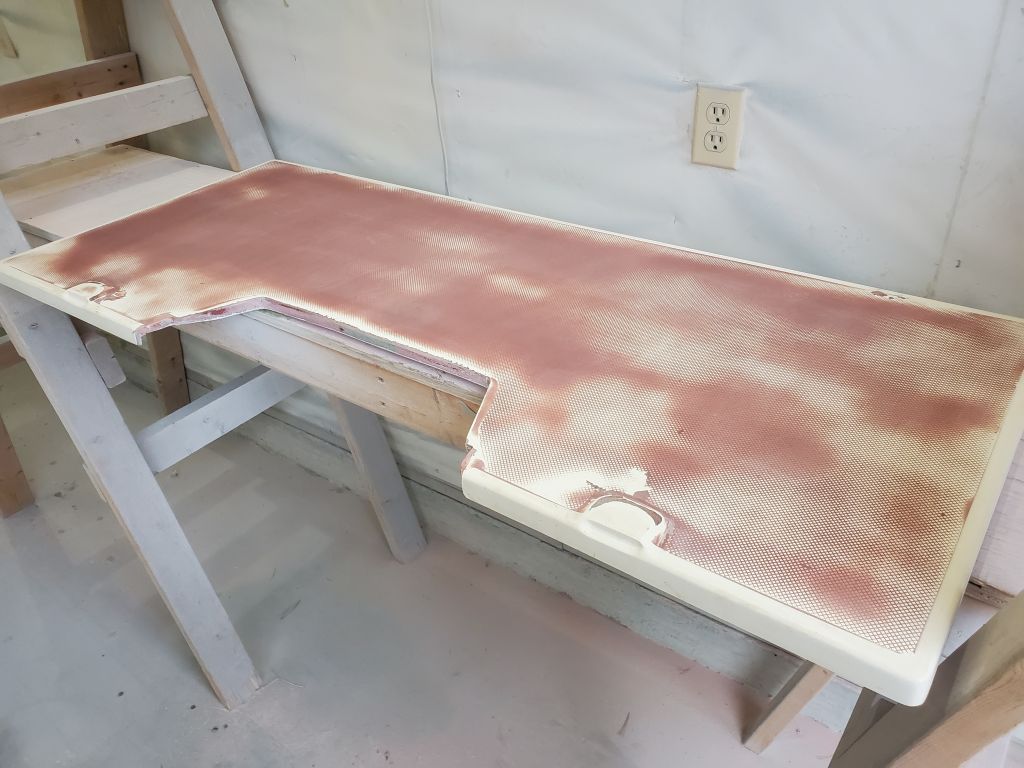
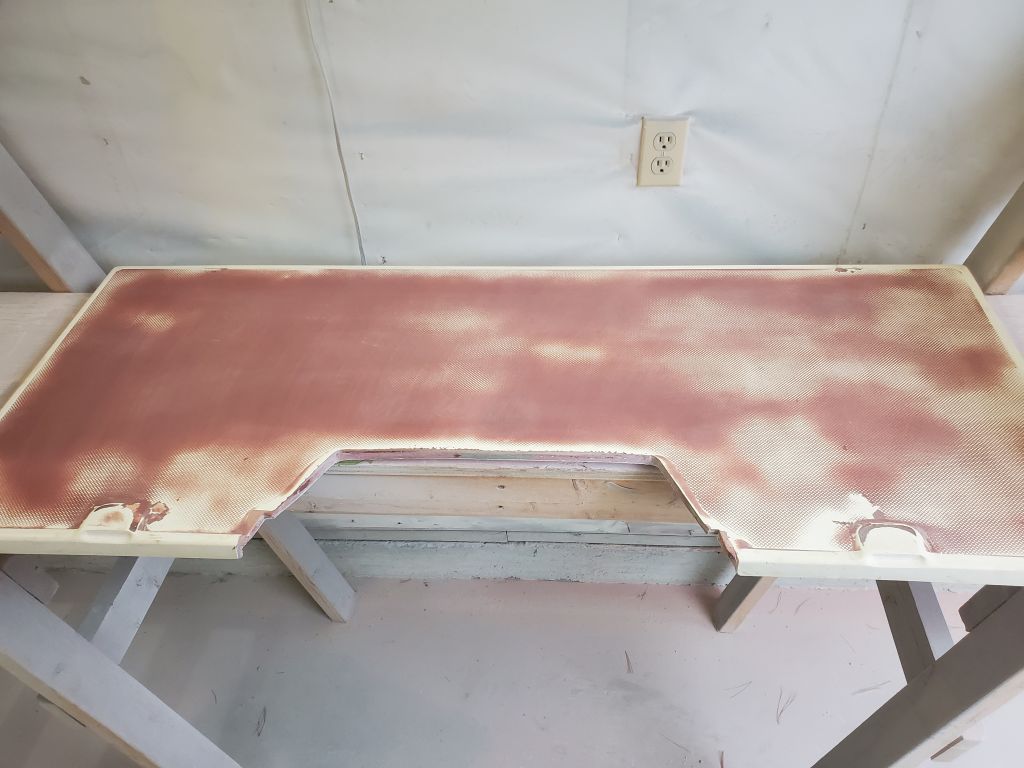
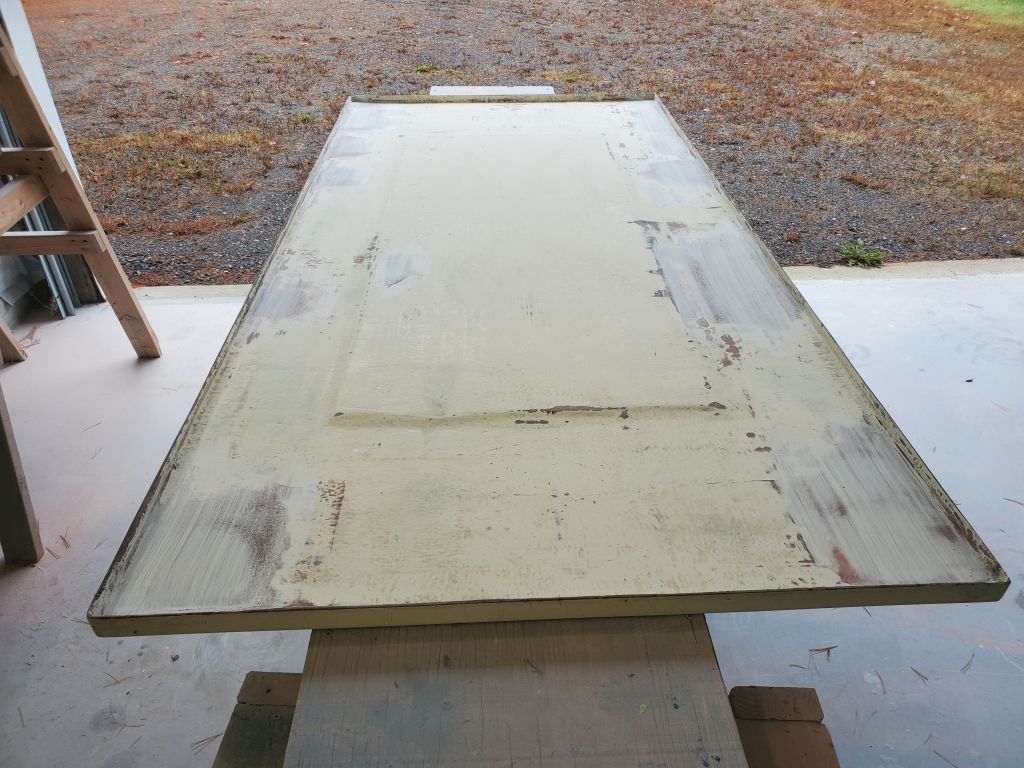
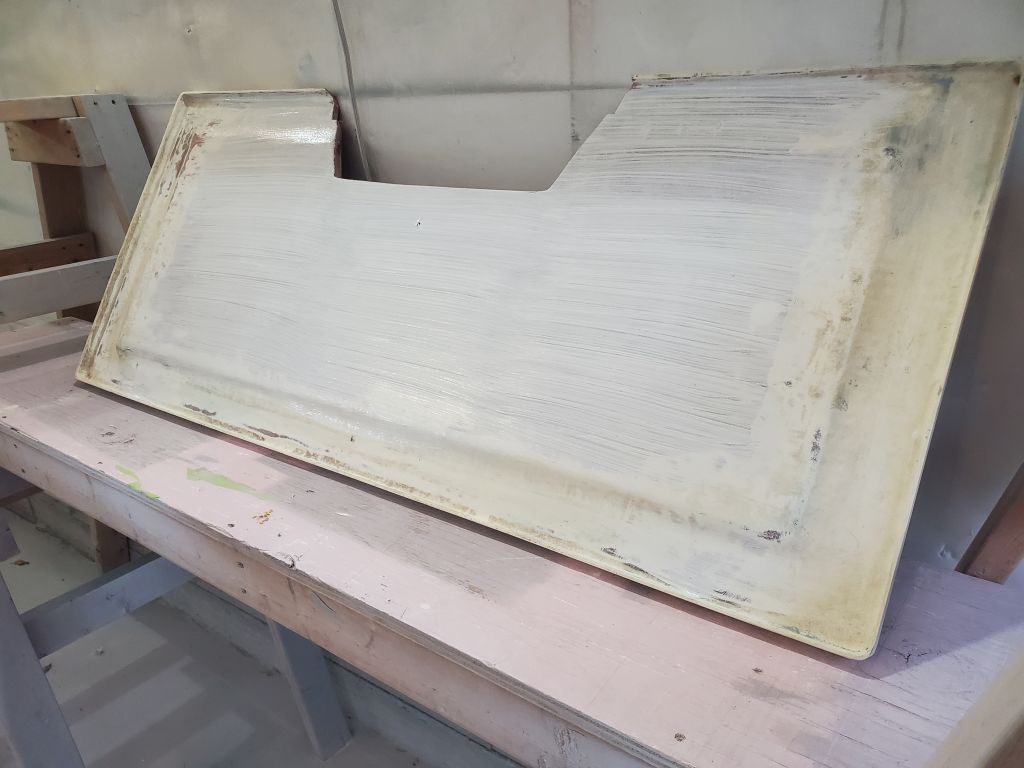
The owner reported that the hinged hatch for the livewell, and the semi-permanent hatch over the fuel tank, showed signs of core damage or water intrusion.  The livewell hatch was obvious at casual observation, as the aft edge, where it had been cut to accommodate the original jet drive installation, had obviously been poorly sealed–or perhaps not sealed at all–and the core there, such as remained, was exposed to the elements and in poor condition.  The condition of the larger hatch over the fuel tank was less obvious immediately, but now I removed both pieces so I could address the necessary repairs.  Removal was quick and straightforward.

It was clear the livewell hatch would require new core and bottom skin, retaining the original top with its molded pattern for cosmetic reasons.  I removed the latching mechanism, devoid of sealant, to expose more of the core, and set this piece aside to deal with later.

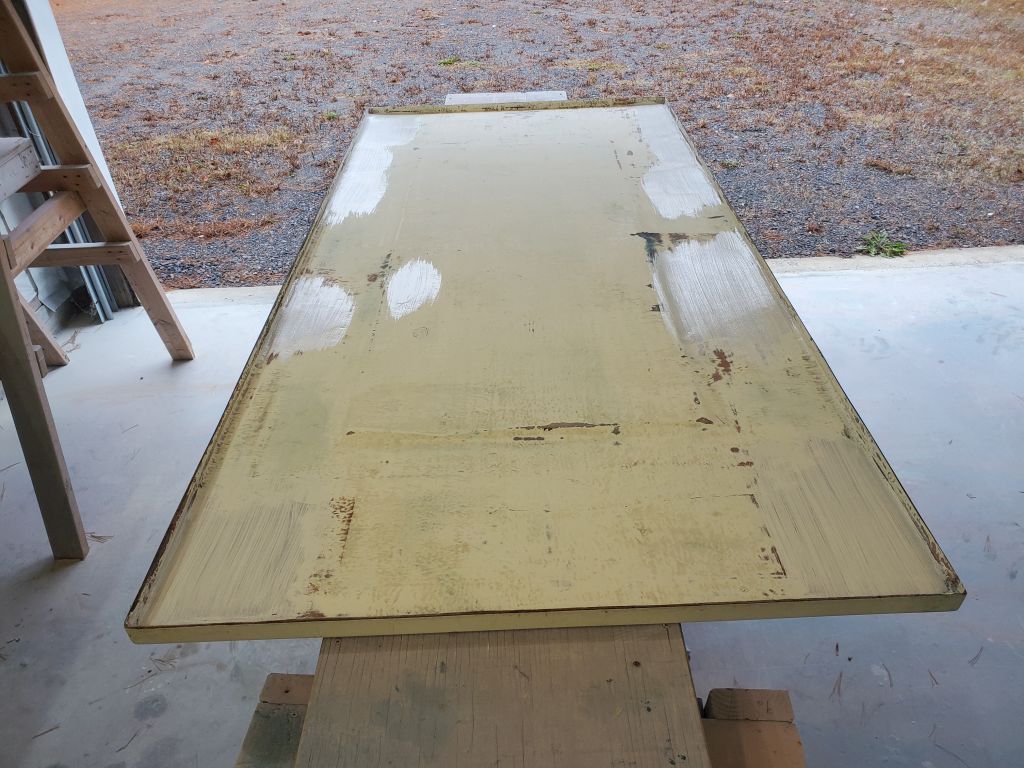
At initial inspection the fuel tank hatch seemed generally in good condition, but some careful exploratory inspection revealed evidence of water intrusion through the screw holes along the edges–both the fixing holes, as well as screw holes from the deck seating (previously removed).  But my sense was the overall structure was sound, so after setting up some benches I began by opening the bottom skin around a randomly-chosen screw hole, using an oscillating cutting tool.  I found an isolated pocket of damaged balsa core around the fastener hole, but it quickly became dry and sound, so it seemed wholesale core rebuilding would be unnecessary.  Continuing in this way, I opened all the screw locations on one side of the hatch, finding varying levels of core damage immediately at the holes and expanding the openings as needed in each case to expose only clean, dry, well-bonded core at the edges.

This brought me to the end of the day.  Next time, I’d continue on the other side of the hatch, then begin repairs, for which I planned to install solid fiberglass at each of the openings, filling them to the level of the existing skin.  This would not only replace the damaged core, but also prevent further water issues once the piece was reinstalled.

Holby 27

The next stage of the modifications to the transom involved the open deck area, leftover from the original jet drive engine installation.  To finish off the structural repairs, I needed to build a new deck to enclose the bilge, and create the usual splash well forward of the outboard cutout.

The owner and I previously discussed modifying the original engine box cover to work as the forward end of the splash well, mainly because it was already a reasonable fit, and handled the various different shapes of the cutout with minimal need for additional modification.  To begin, I removed the sound insulation from the inside of the cover, to lighten the piece and prepare it for cutting.  The insulation was glued in place with an adhesive flexible sealant and came off relatively easily, though there’d be substantial surface prep required on the inside surfaces later.

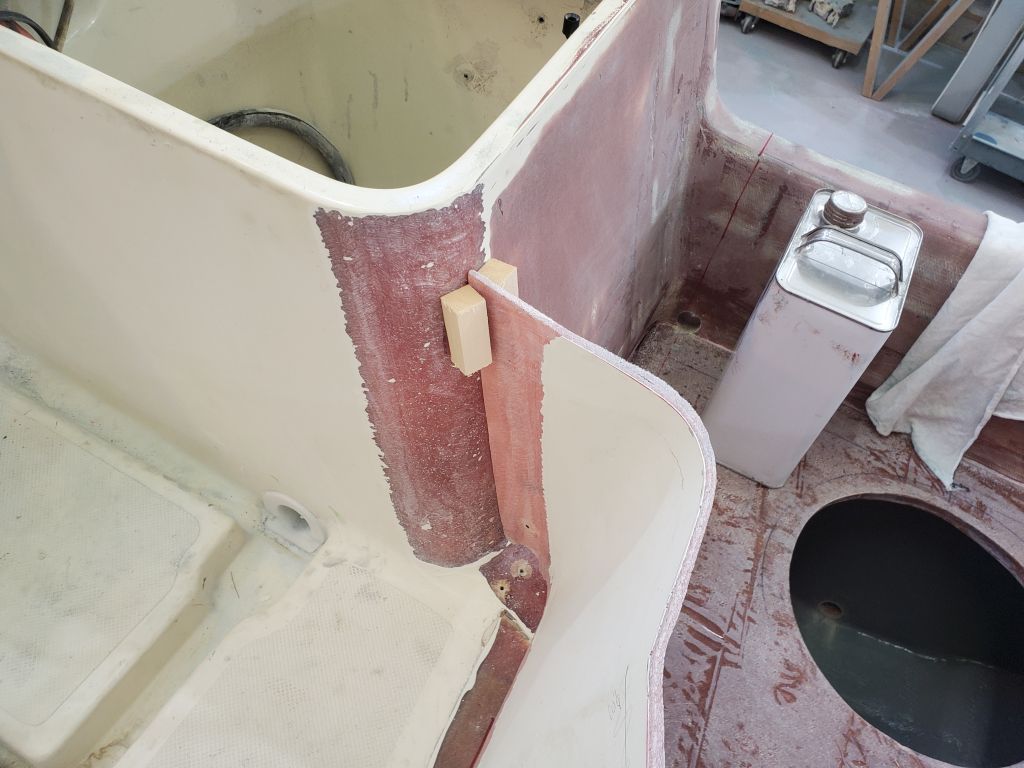
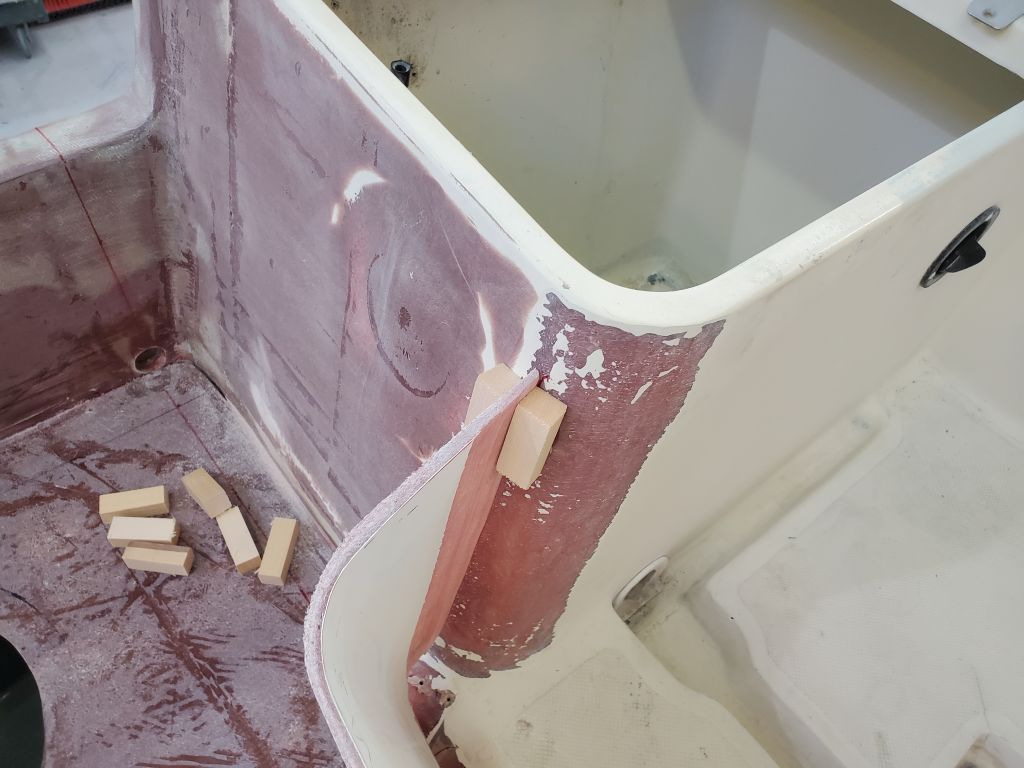
I set the hatch in its proper position in the boat.  The angled portion of the forward side seemed the appropriate place to use as a finished height for the modified piece for several reasons, from cosmetic to the fact that, at about 12-1/2″ up from the deck, it just happened to be a good height to begin with.  Using various tools I struck this line around the sides of the hatch , eventually intersecting with the molded seats/storage areas on either side.  My first line turned out to be in the wrong place, so I struck it out.

Happy with the initial line, I brought the cover to the bench and used tape to mask off the line for greater visibility.  Then, I struck a new line 1/4″ above, using a scrap of plywood as a guide, and masked to the new line; this would be the cut line, a bit above the hoped-for line, to allow me room for adjustments later after the test fit and proof of concept.  Happy with the line from a visual perspective, I made the initial cut with a jigsaw, removing the top of the old engine box.

I test-fit the modified bulkhead in the boat and made a couple measurements of the inside width and distance from the transom to confirm the owner’s choice of outboard would fit when tilted up.  My eventual plan was to secure this piece in place with epoxy and fiberglass from the inside, incorporating it with the new splashwell deck.  For now, the test-fit was complete and I set the assembly aside.

The splashwell deck had one known reference point along the forward edge of the engine room cutout, which was the aft edge of the main deck in way of the livewell locker opening.  From here, the deck should pitch aft to drain water naturally out the transom, where eventually I’d install a pair of small scuppers, one per side.    To determine the aft end position, I used a stiff straightedge held tightly against the plane of the main deck forward of the cutout, and extended it aft to the transom to make a couple reference marks.  From the initial marks, I adjusted them downwards to allow for the depth of the forward edge below the main deck, plus an additional distance for drainage, or roughly an inch total.

After I’d made these initial marks and begun some additional layout, I realized they weren’t correct, and made some new reference marks, beneath which I temporarily hot-glued a scrapwood cleat at the aft end.  At the forward end, I hot-glued another small cleat beneath the exposed deck edge.  These formed the two key points to determine the new deck’s plane fore and aft; it should be pitched roughly 3/4″ down towards the transom.

Now I needed to transfer that plane to the sides of the compartment so I could install additional temporary cleats.  I installed three longitudinal strips of plywood, on edge for stiffness, to span the space between the forward and after cleats, then used another piece of the plywood held tightly against the bottoms of those cleats to make several reference marks on each side of the compartment, to which I could hot glue additional cleats.

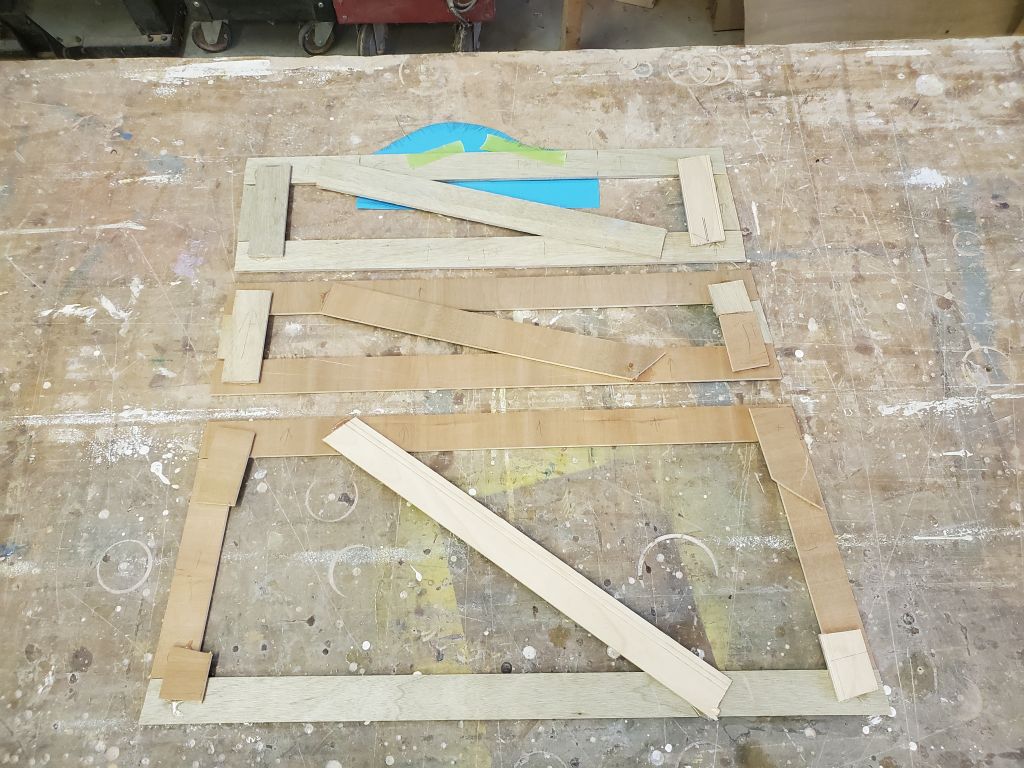
With the new deck plane defined on all four sides, I created a template of thin strips of plywood hot-glued together in the required shape of the perimeter.  I’d use this template to cut the custom fiberglass deck to shape once I built it.  With the template complete, I checked the position at the aft end with my straightedge once more, with the straightedge held tightly to the plane of the main deck.  The aft end was appropriately lower than the forward end when I measured both.

I struck a mark to show the waterline (or at least the top of the antifouling, good enough for this) on the exterior of the transom so I could check that the new deck inside would still be above the waterline for the small drains; they would be roughly 1″ above the waterline as defined by the top of the antifouling (itself a bit above the waterline).

To use up what remained of the day, I cut several pieces of 1708 biax somewhat larger than the template, and prepared a flat molding table to build the new deck.  I’d continue this process next time.

Holby 26

Another round of sanding brought the large bottom patch tantalizingly close to its final shape, with only a few small voids requiring more attention, as well as some additional work needed at the transition to the transom.

The transom portion of the patch grew closer as well, though some fine-tuning remained, particularly at the lower edge,  The adjacent work on the transom, including smaller patches and hole-filling, would continue to be refined as I moved ahead with additional rounds of fairing compound on the transom cutout and environs.

Holby 25

I spent the first part of the day sanding the fairing on the bottom and transom, and the new fiberglass on the transom cutout.

On the transom, once I’d sanded the various holes I’d epoxy-filled earlier, I prepared small fiberglass pieces to fit each spot and installed them in epoxy resin, leaving this to cure for a bit before proceeding with fairing compound over the various areas on the transom, including the patch over the jet tunnel and the beginnings of the fairing for the new tabbing all around the transom cutout and related areas inside the boat.

The work on the bottom was close to where it needed to be, but there were low spots running fore and aft on both sides, between the centerline and the outer edges of the repair, so when I applied the next round of fairing compound, I focused on these areas to bring them into spec.  The forward portion of the repair needed only minor touchups at this point.


Holby 24

Sticking with the usual cycle, I began the day with more sanding, focusing on the bottom to clean up the new fiberglass there, then continuing with the transom fairing as needed, and the outboard cutout where I’d slightly filled the edge of the new top laminate.  I also used a grinder to open up several larger, abandoned holes in the transom (leftover from various through hulls and wiring clamps), and reamed out the small screw holes leftover from the wooden transom veneer, all to make these ready for the first stages of repair and filling.

After cleanup, I applied a round of fairing filler to the bottom.  The basic profile and shape was close to final, so the fairing was mainly to fill the weave of the cloth and burnish the edges of the laminate.

Continuing on the transom, I applied a second round of filler on the vertical part of the jet tunnel, then into the various screw and fixture holes about the rest of the transom.

Later, I patterned and cut layers of fiberglass to fit over and around the transom cutout, then installed the cut pieces in epoxy resin.

Older posts Newer posts