(page 159 of 166)

Nomad 10

< Back to Nomad

Sunday

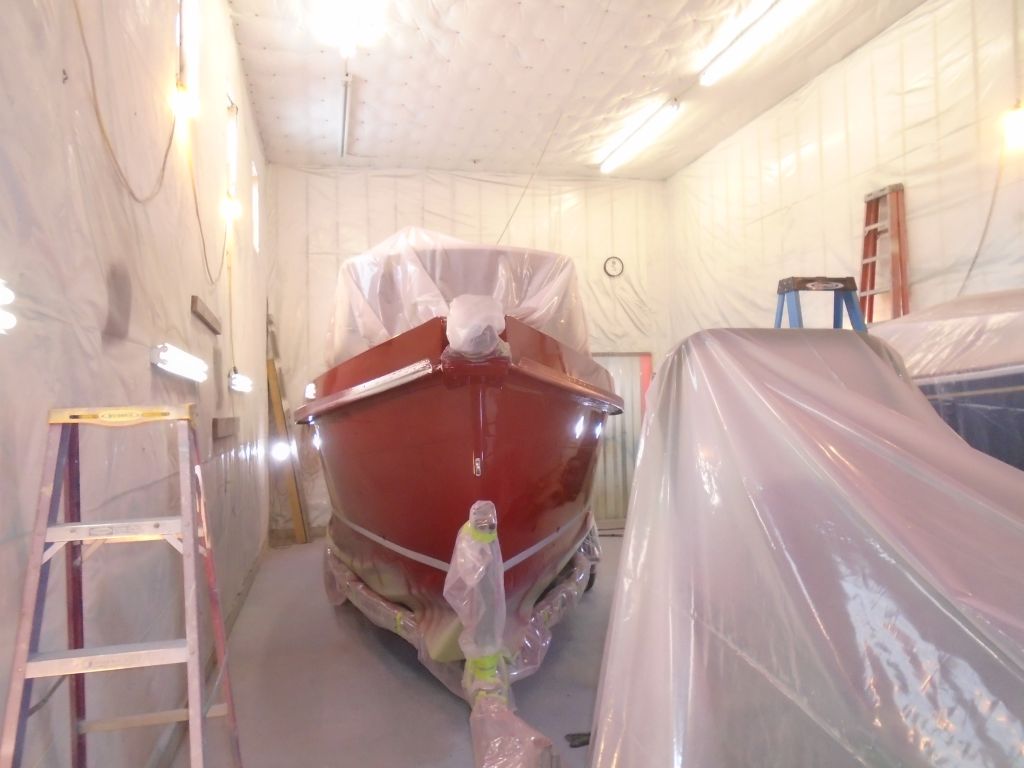
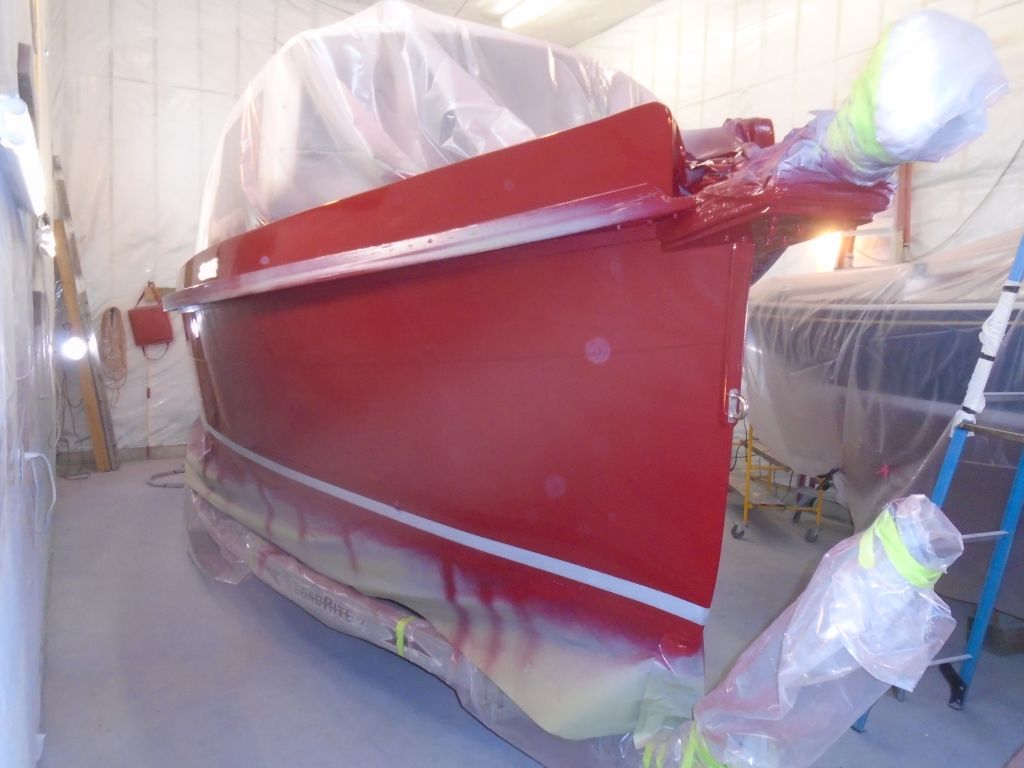
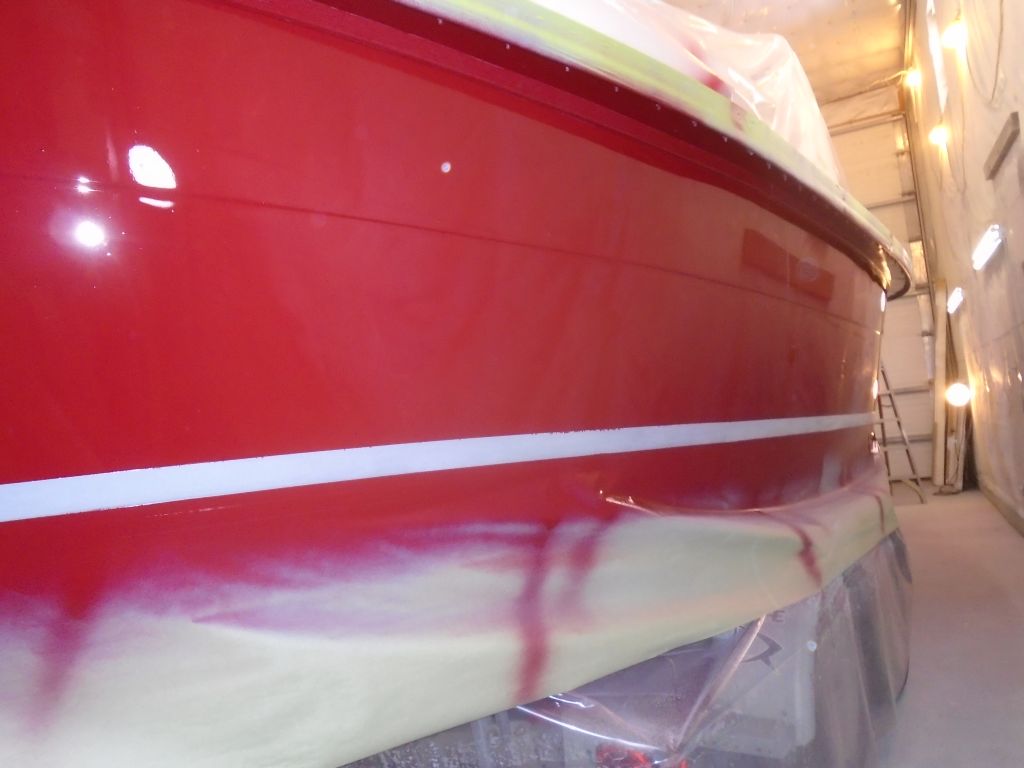
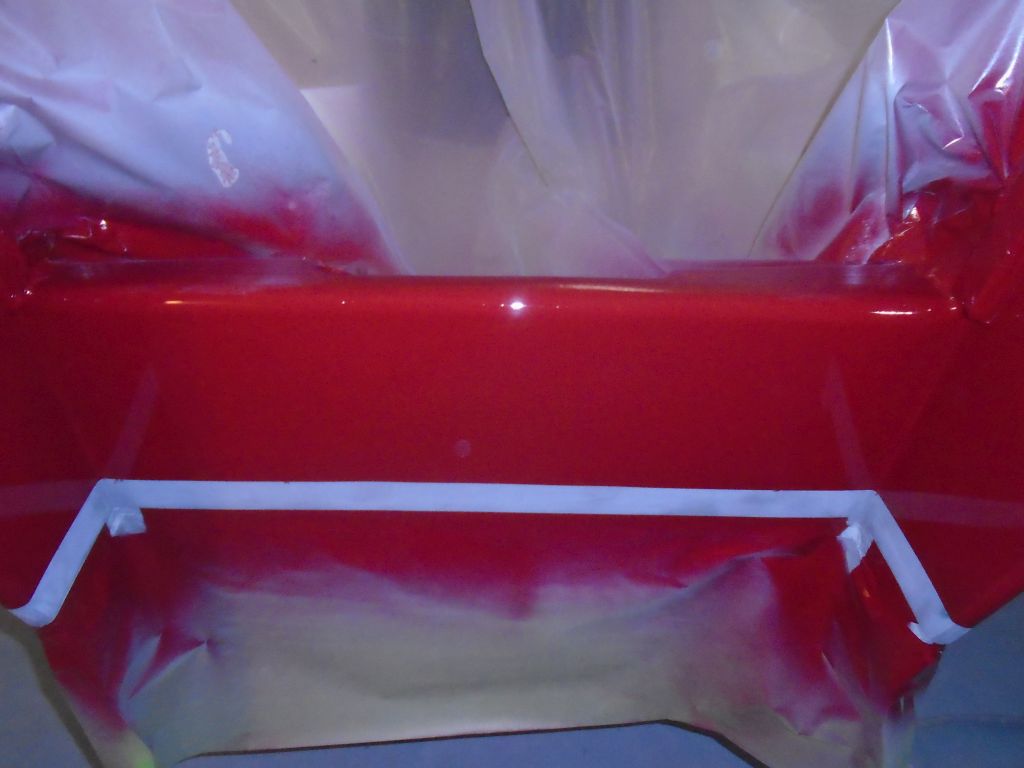
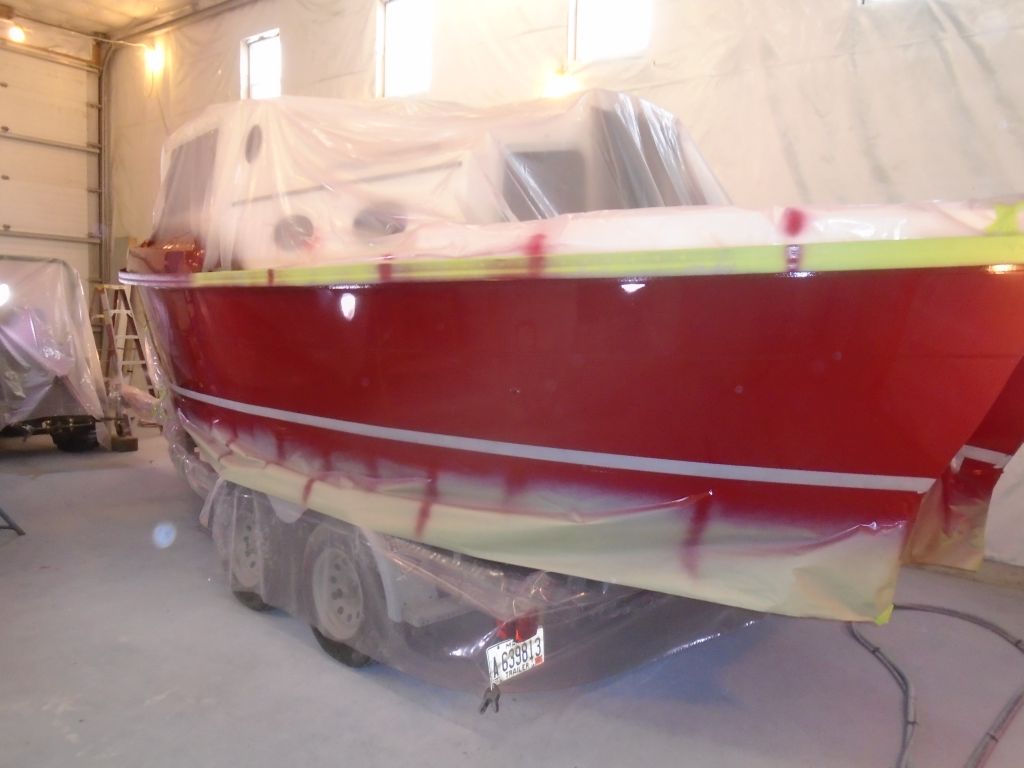
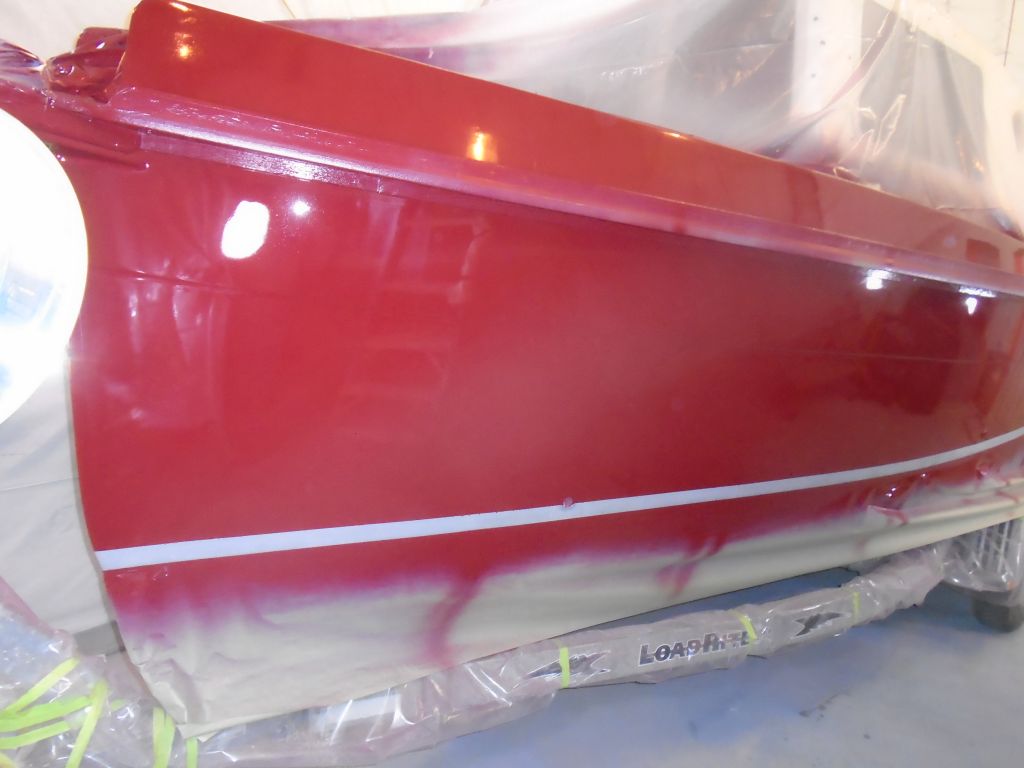
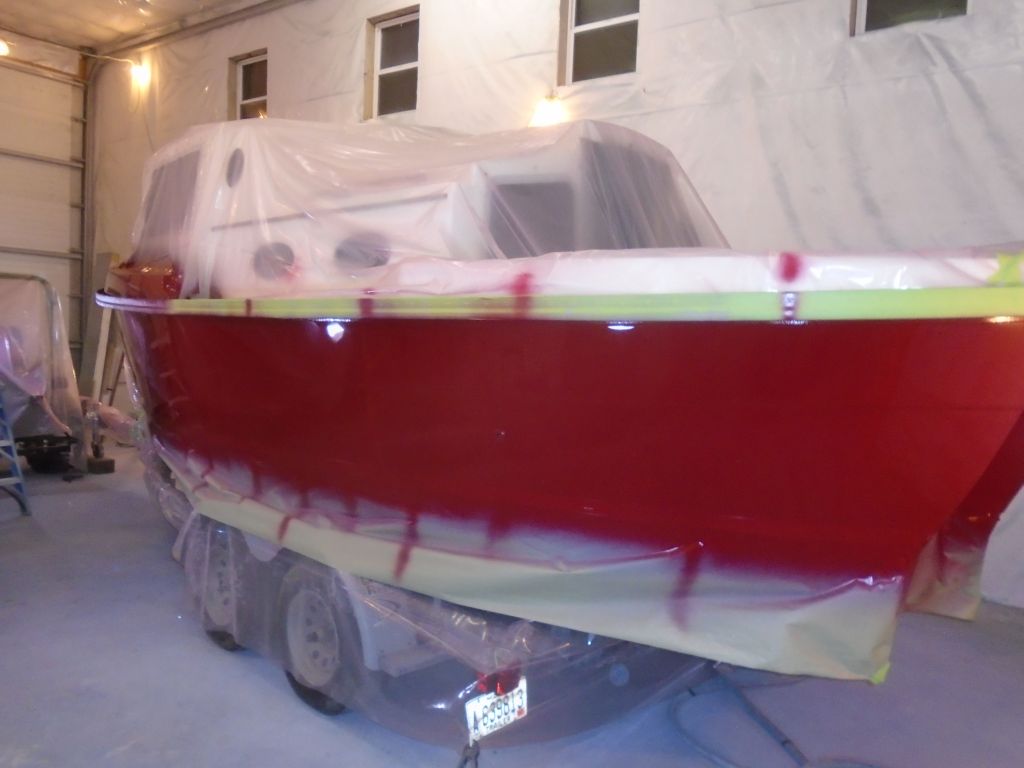
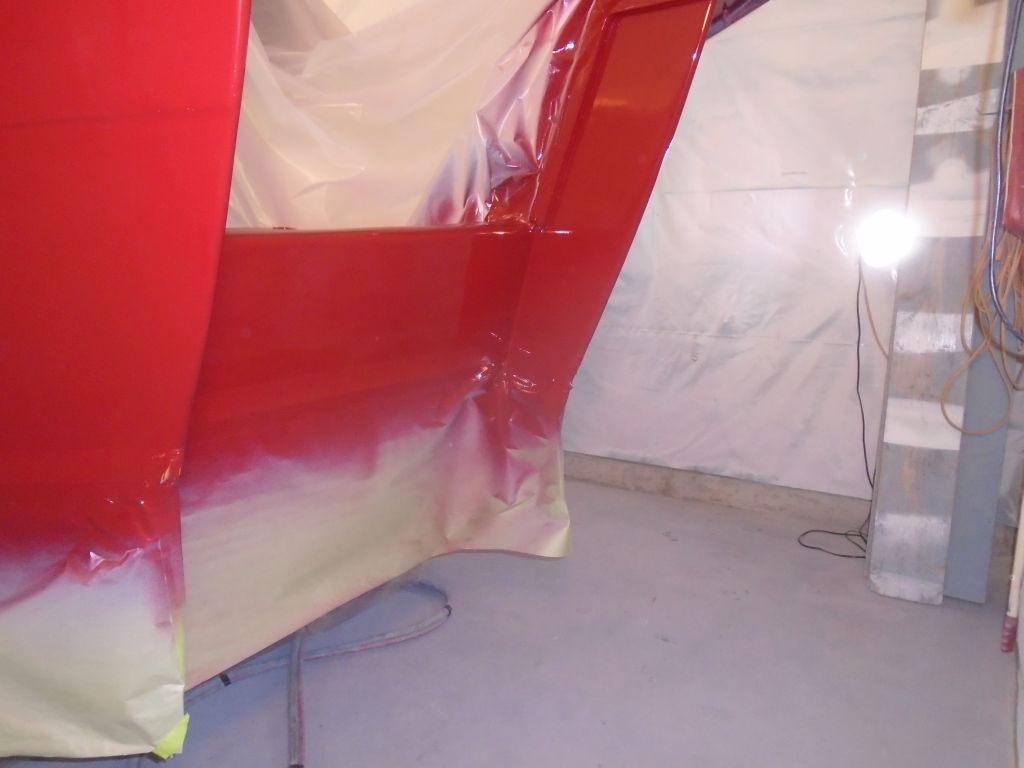
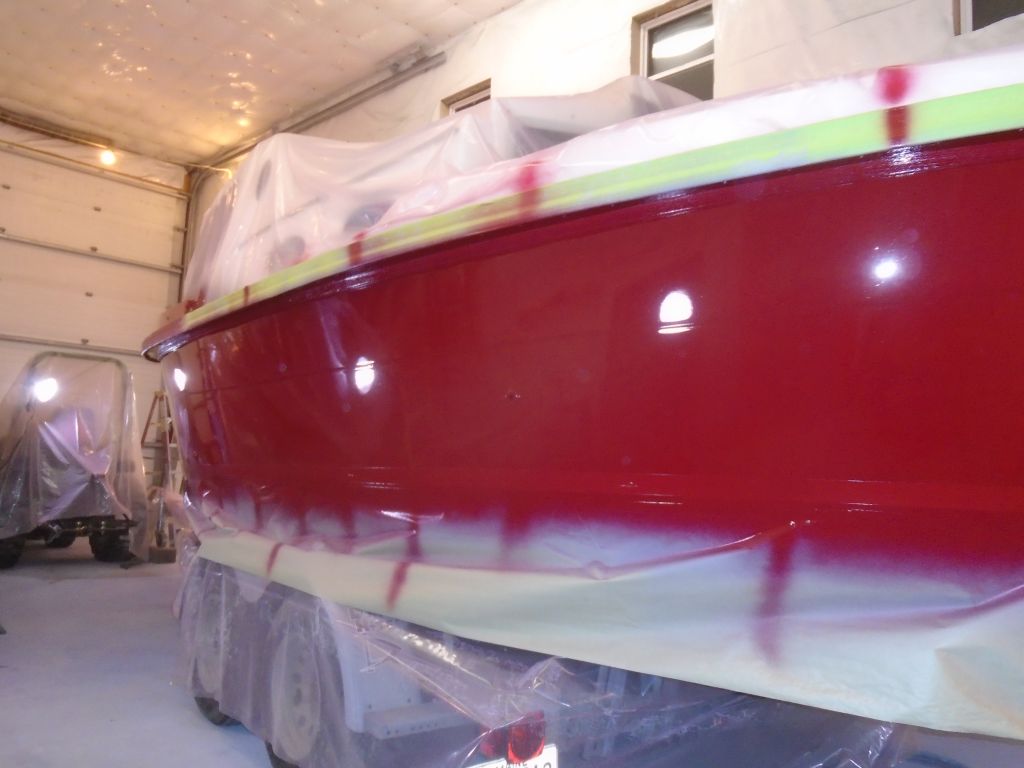
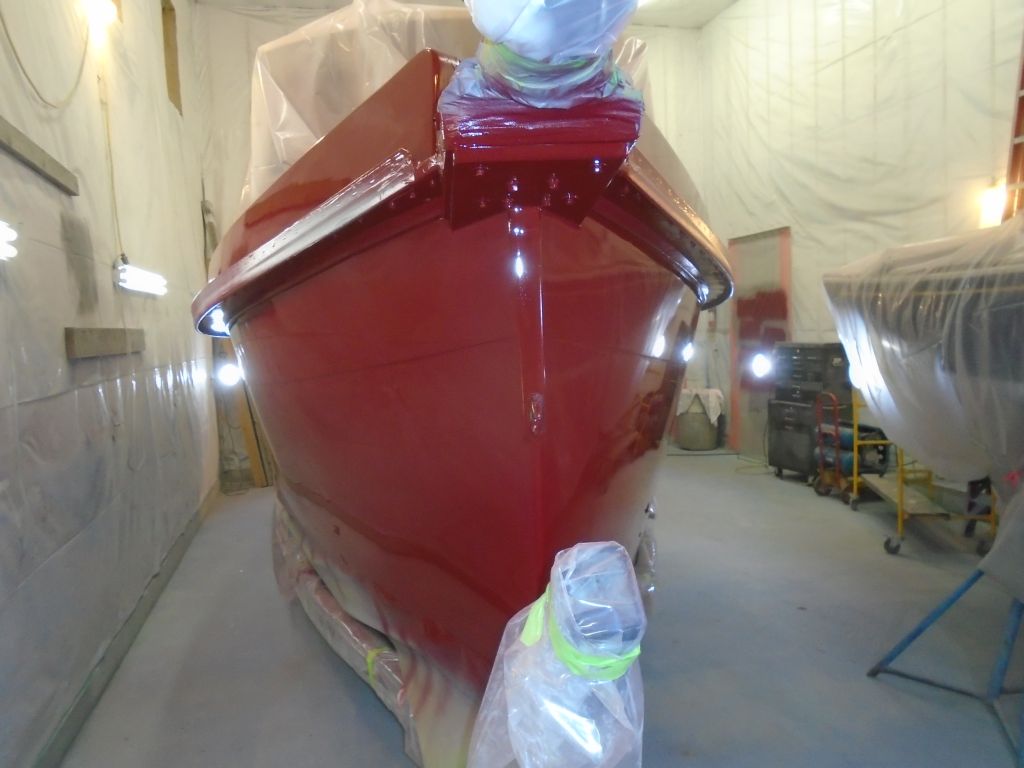
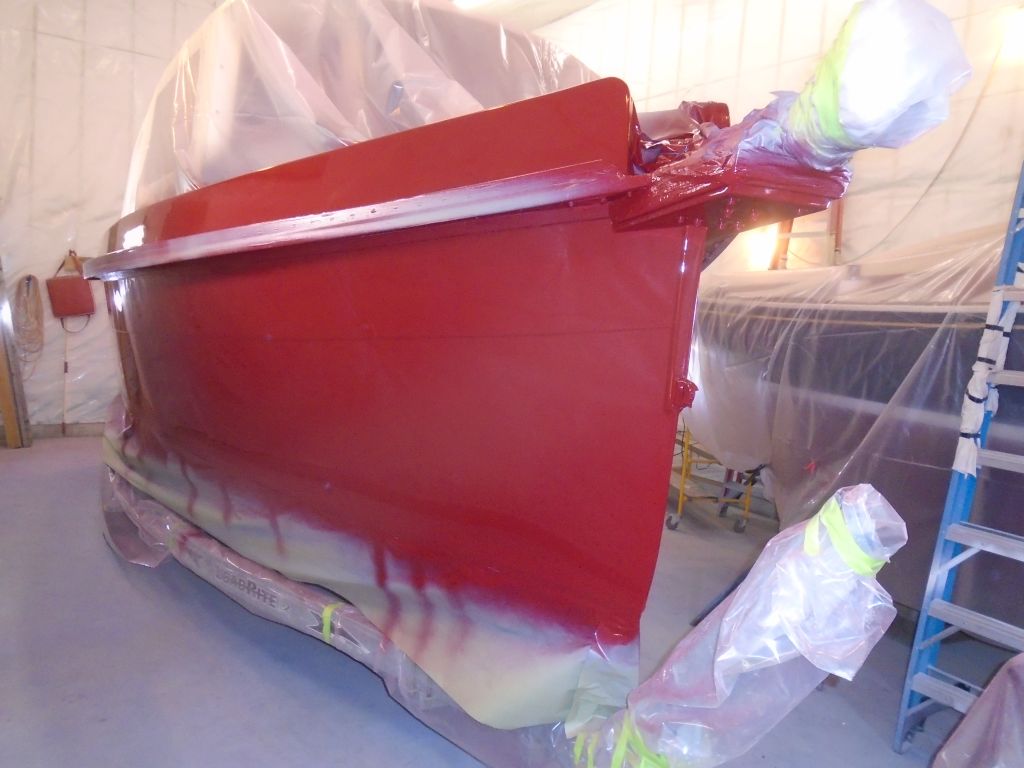
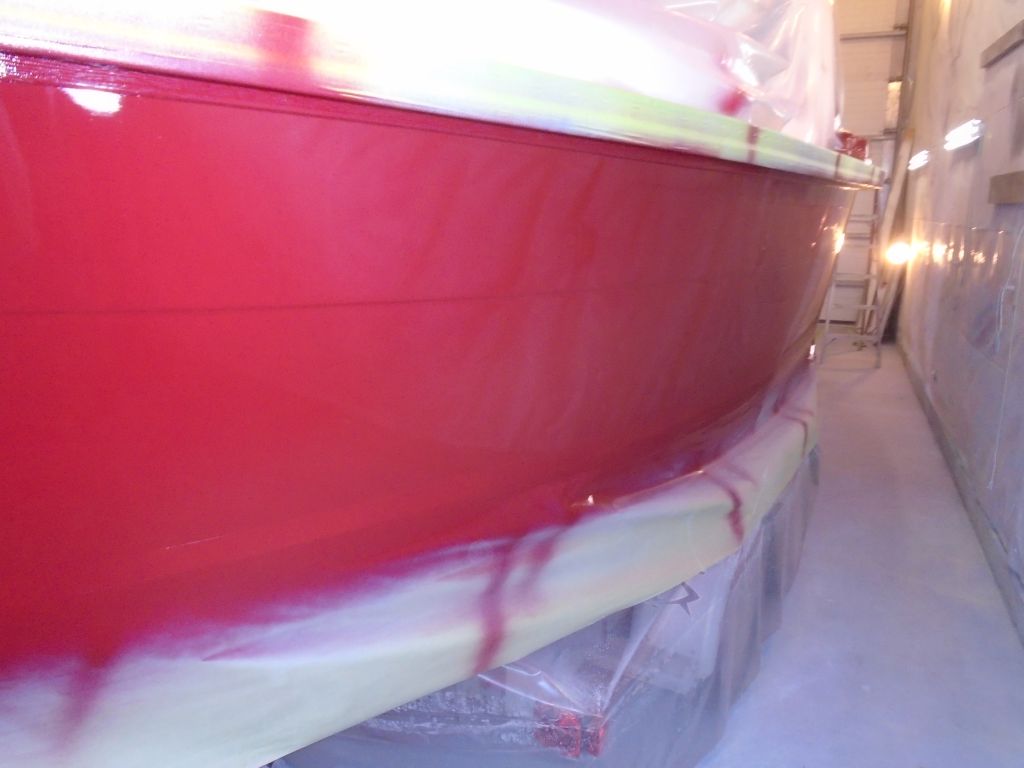
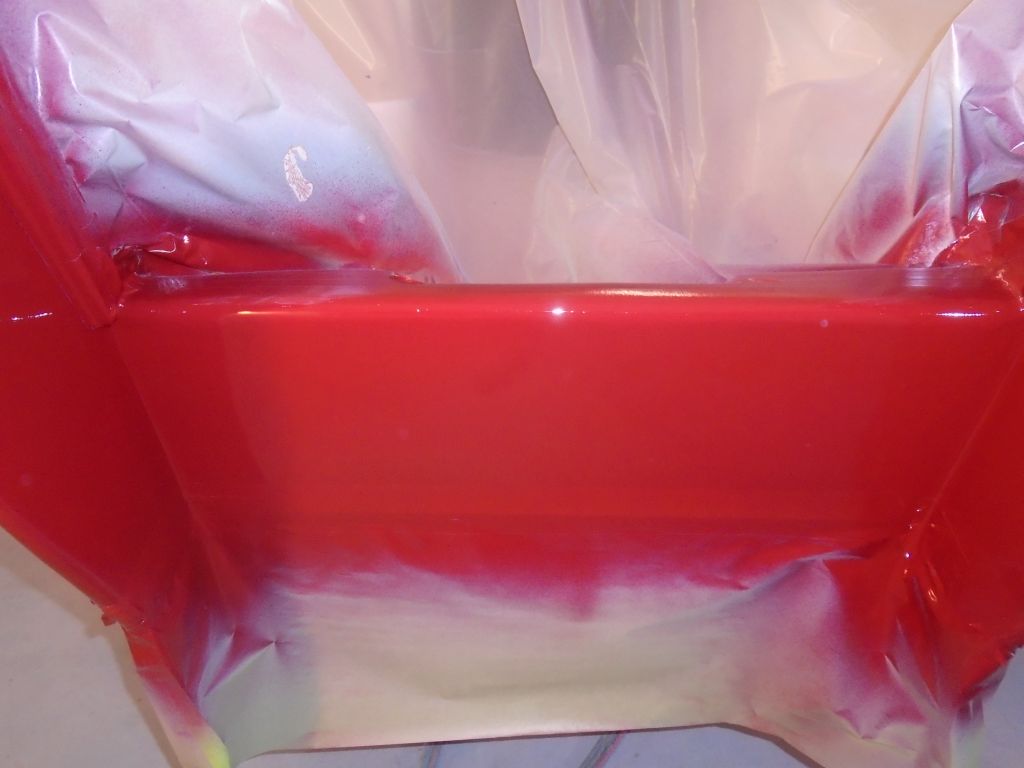
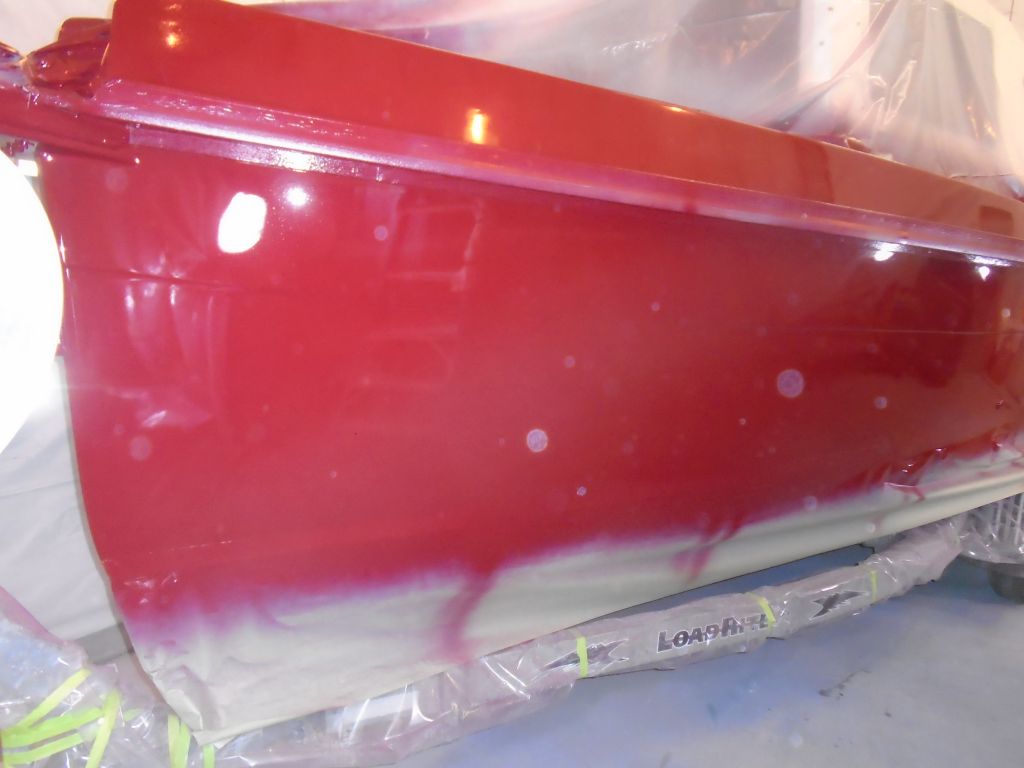
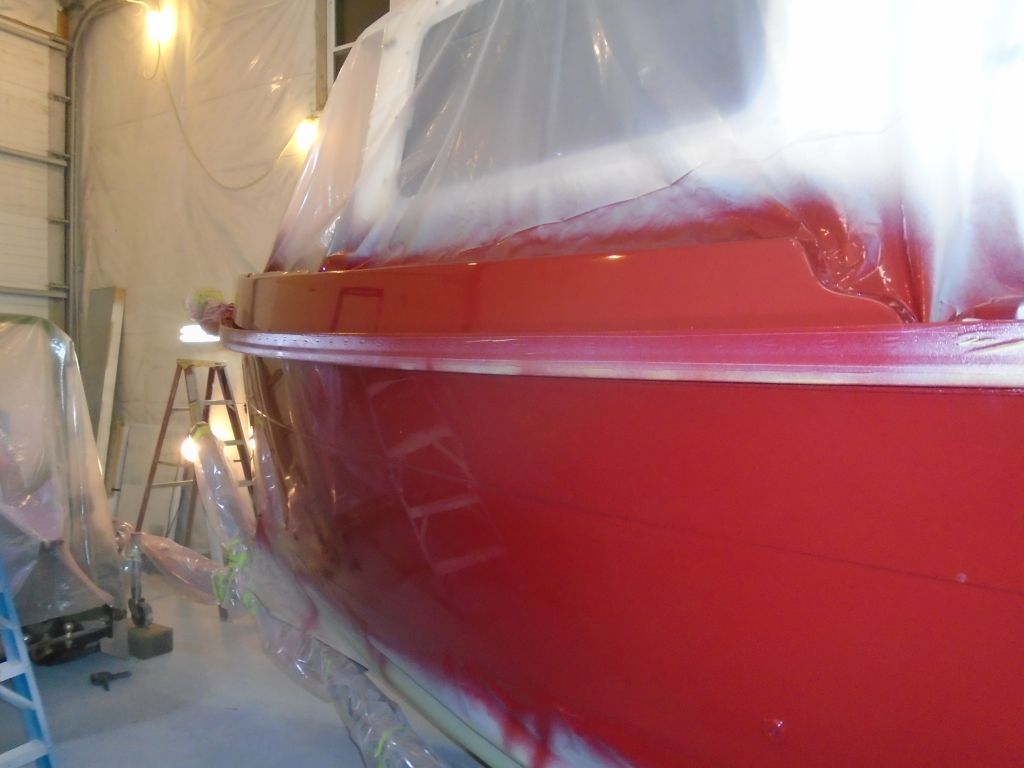
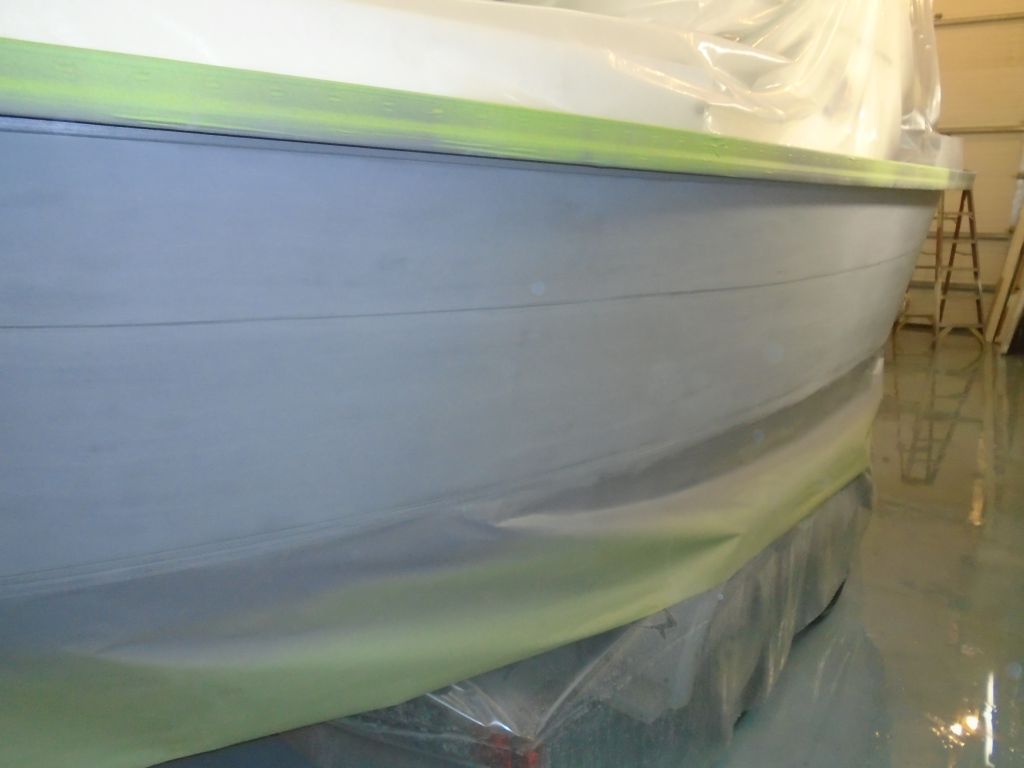
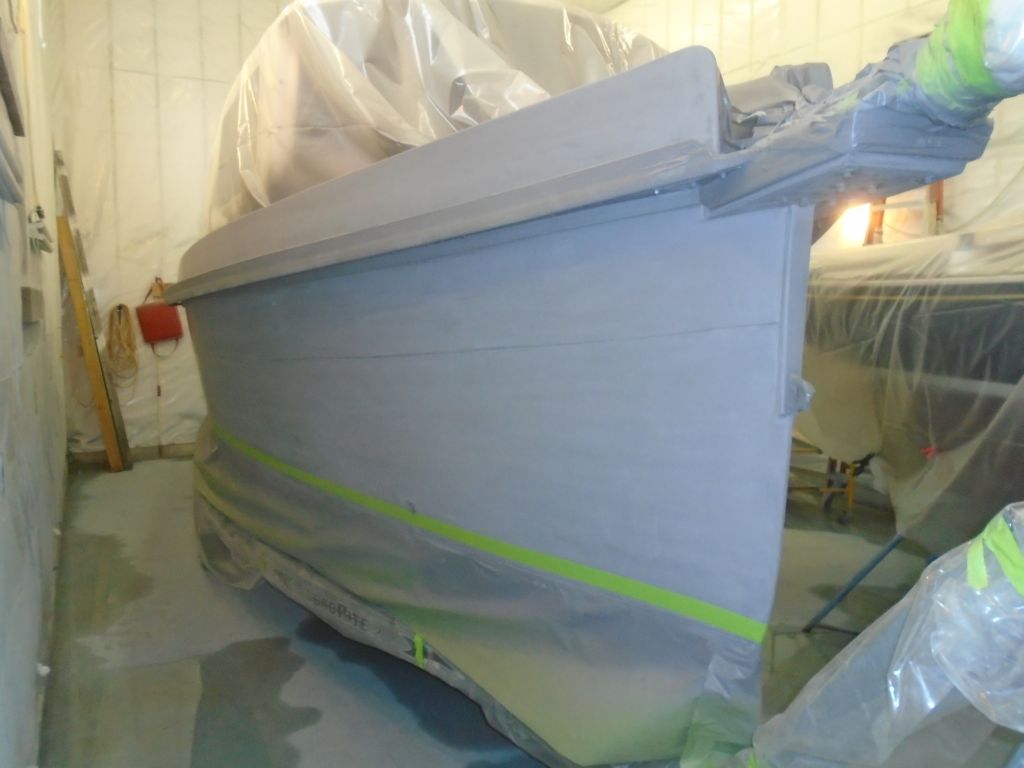
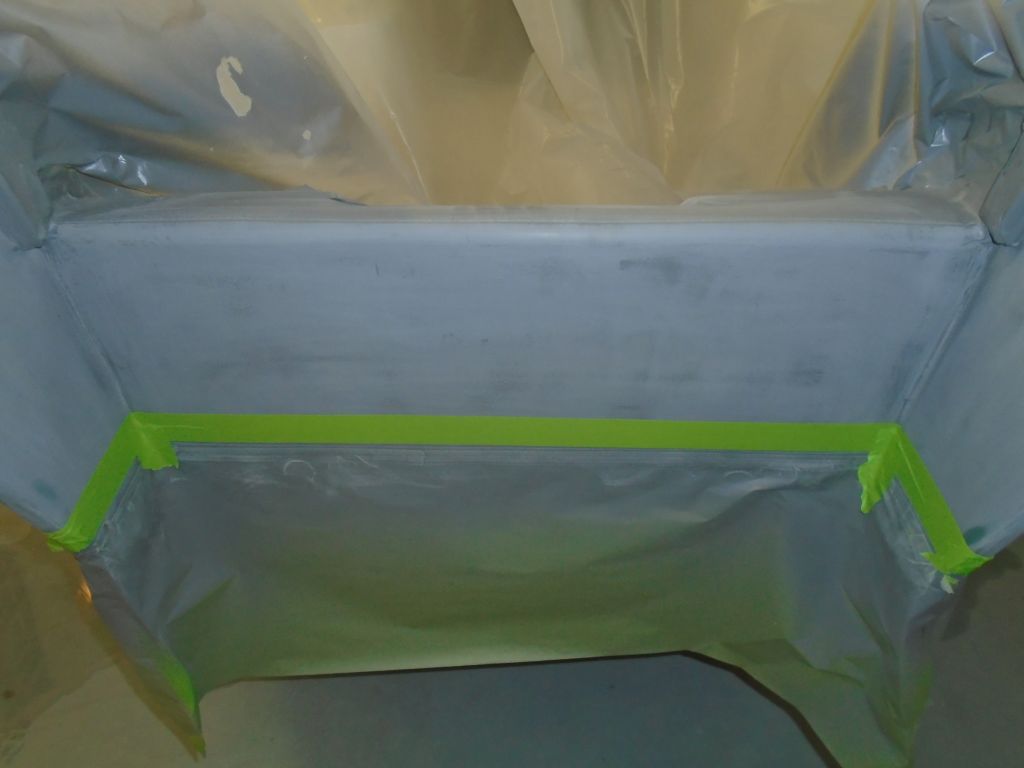
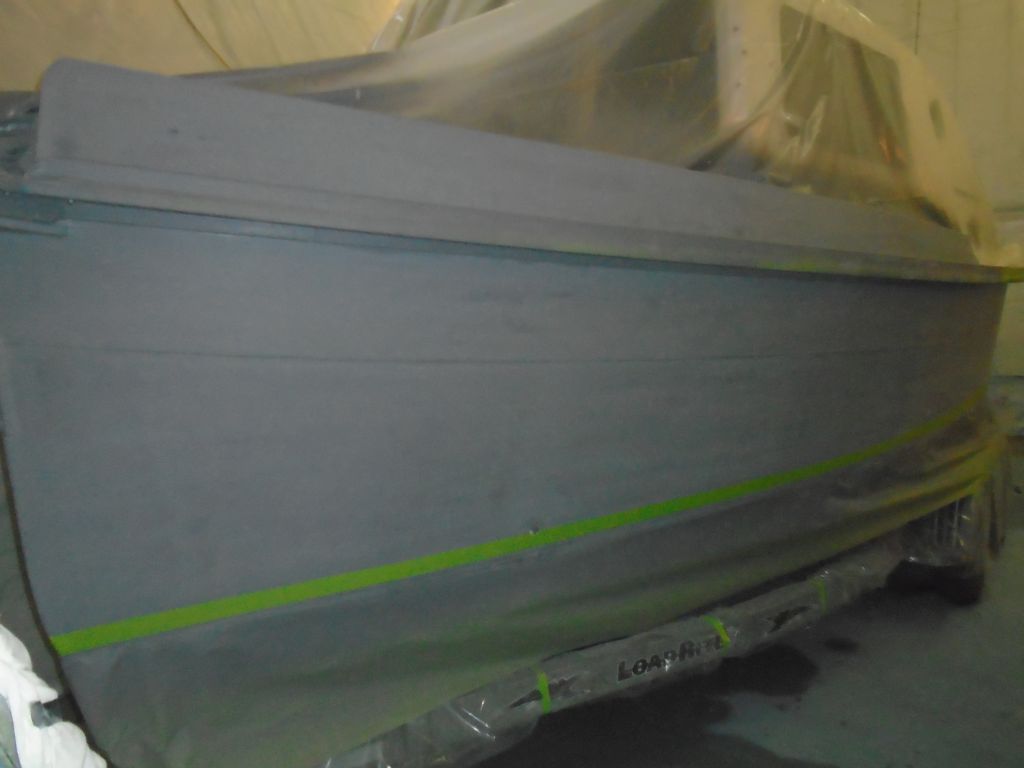
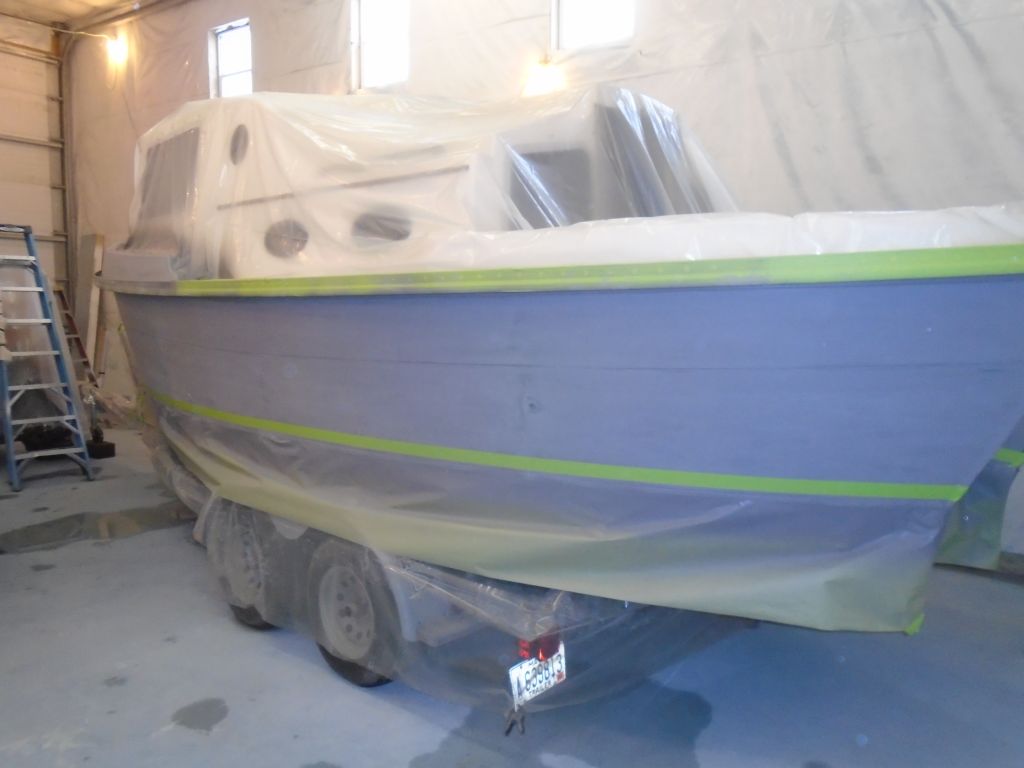
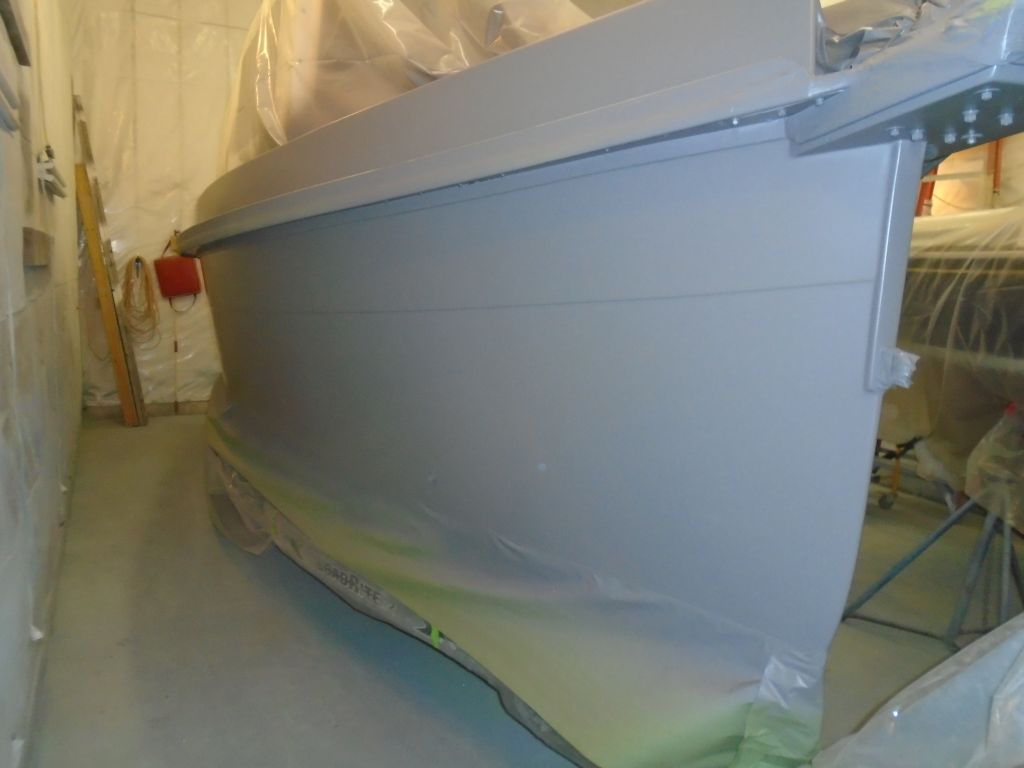
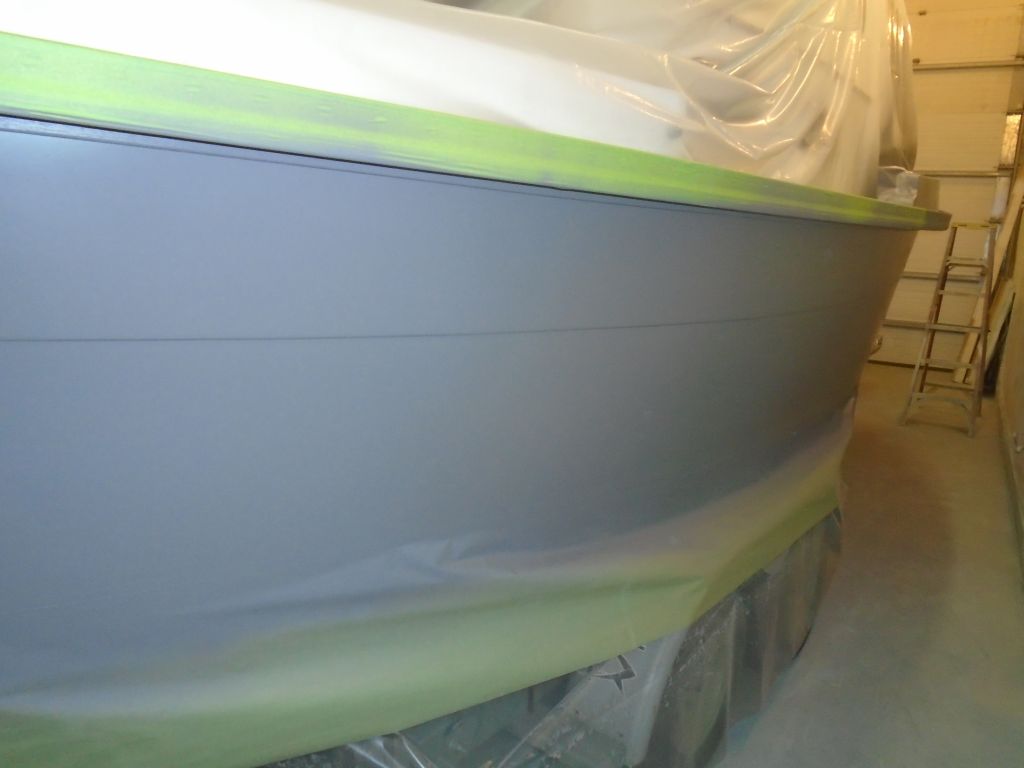
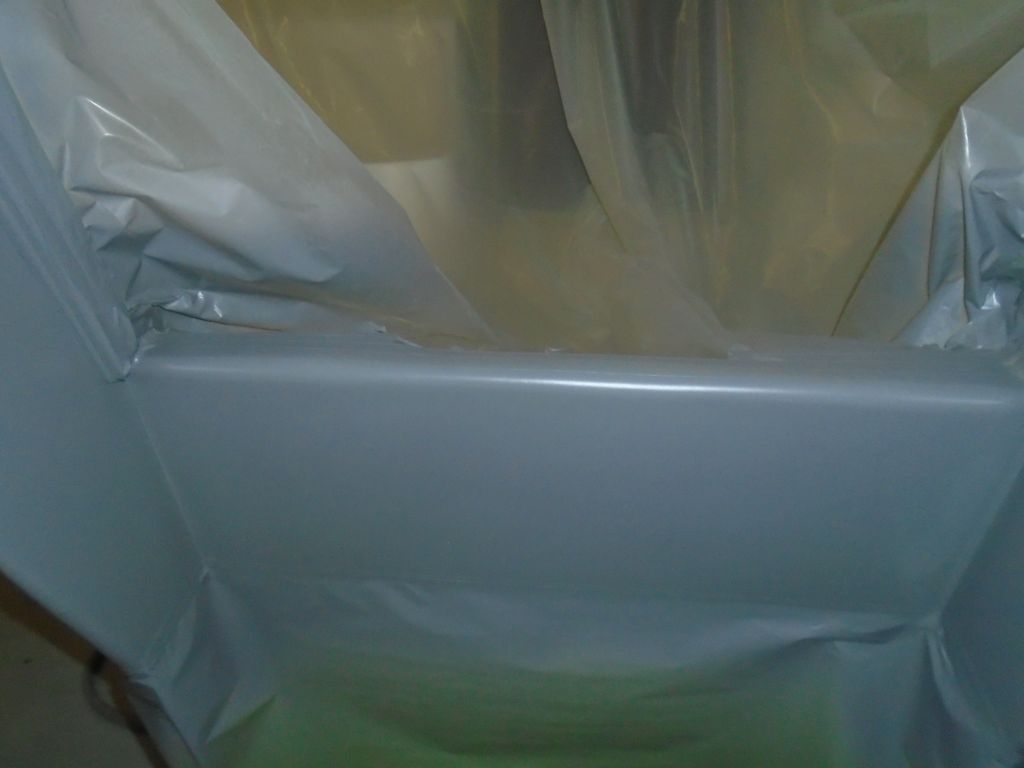
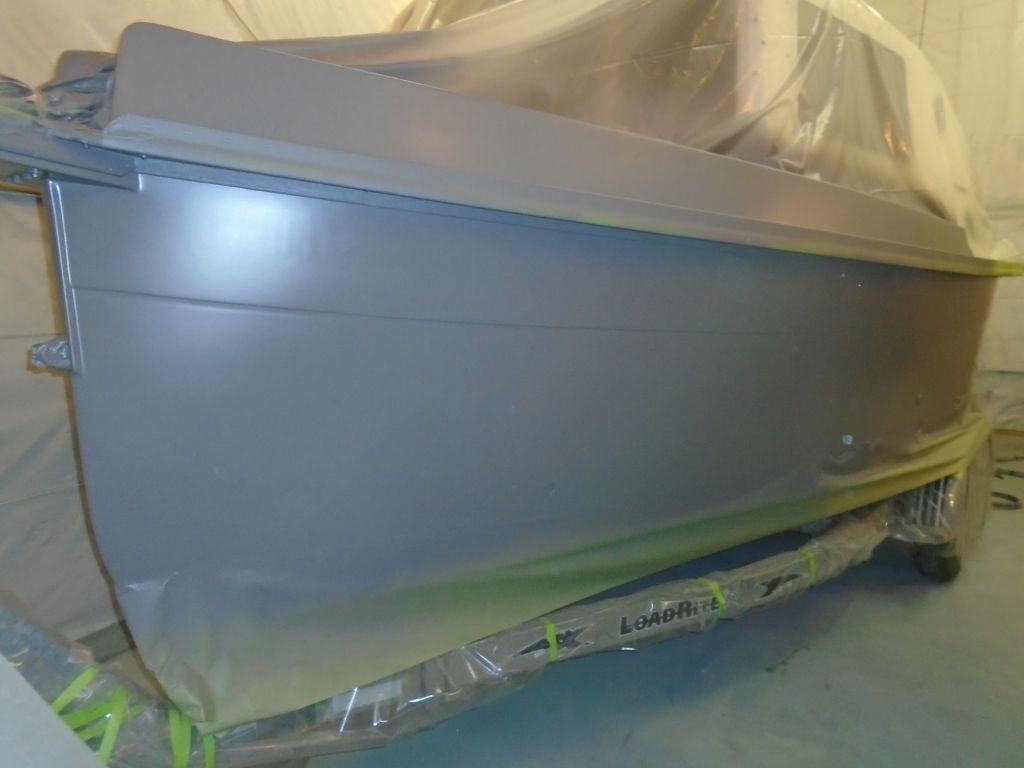
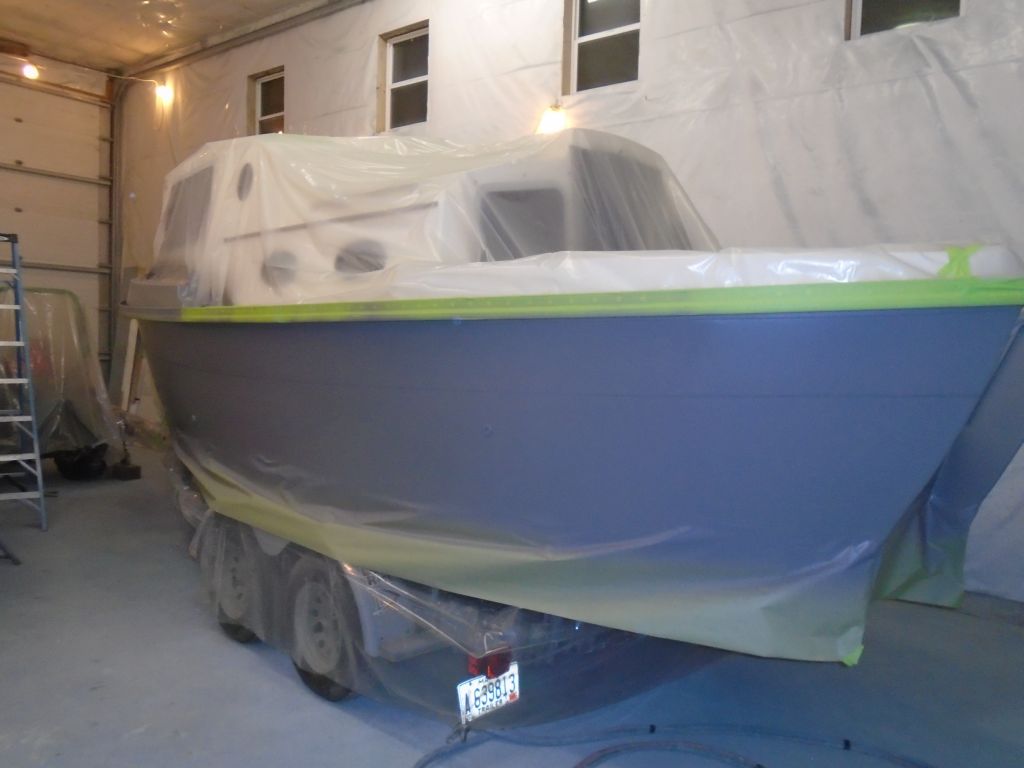
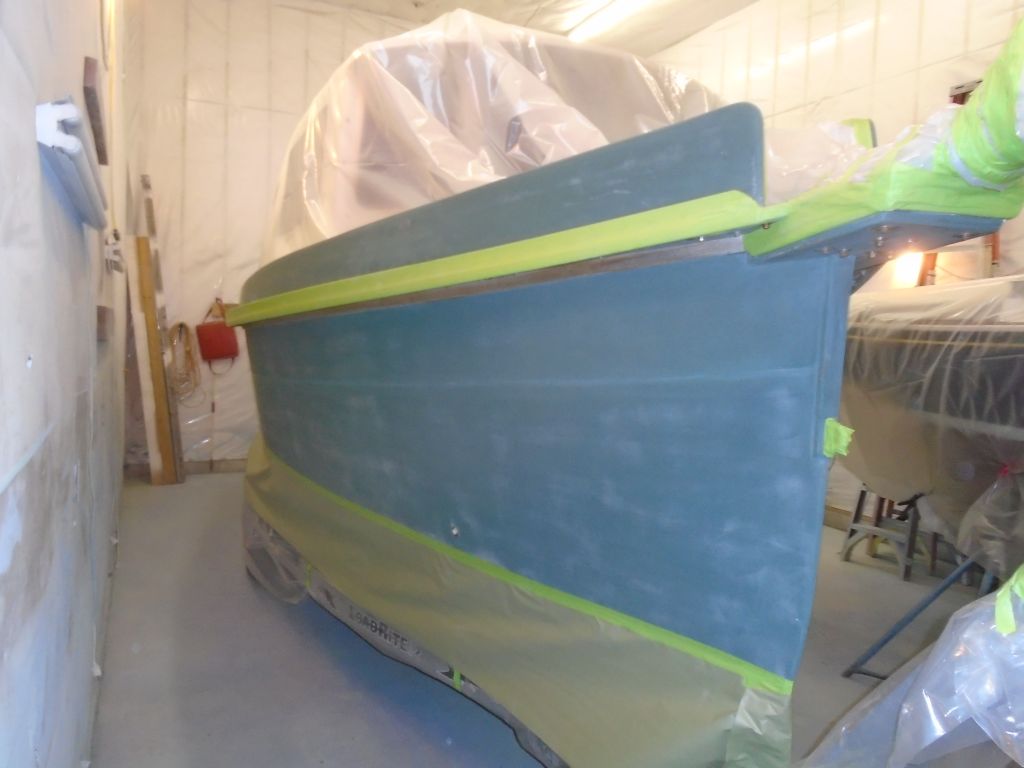
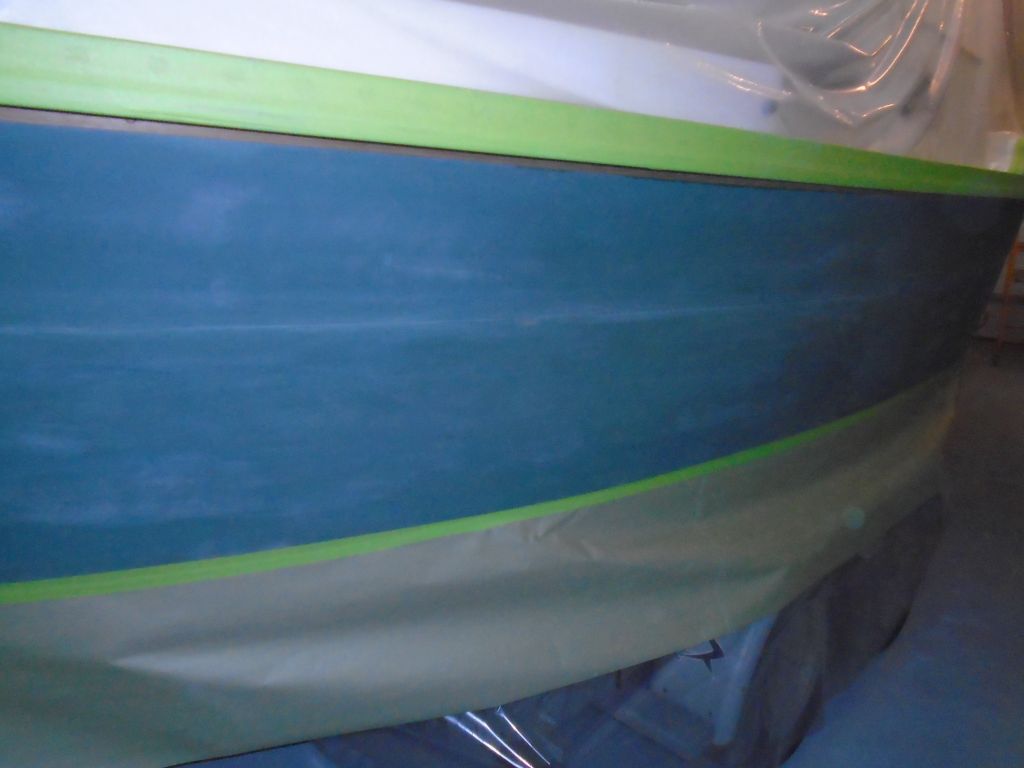
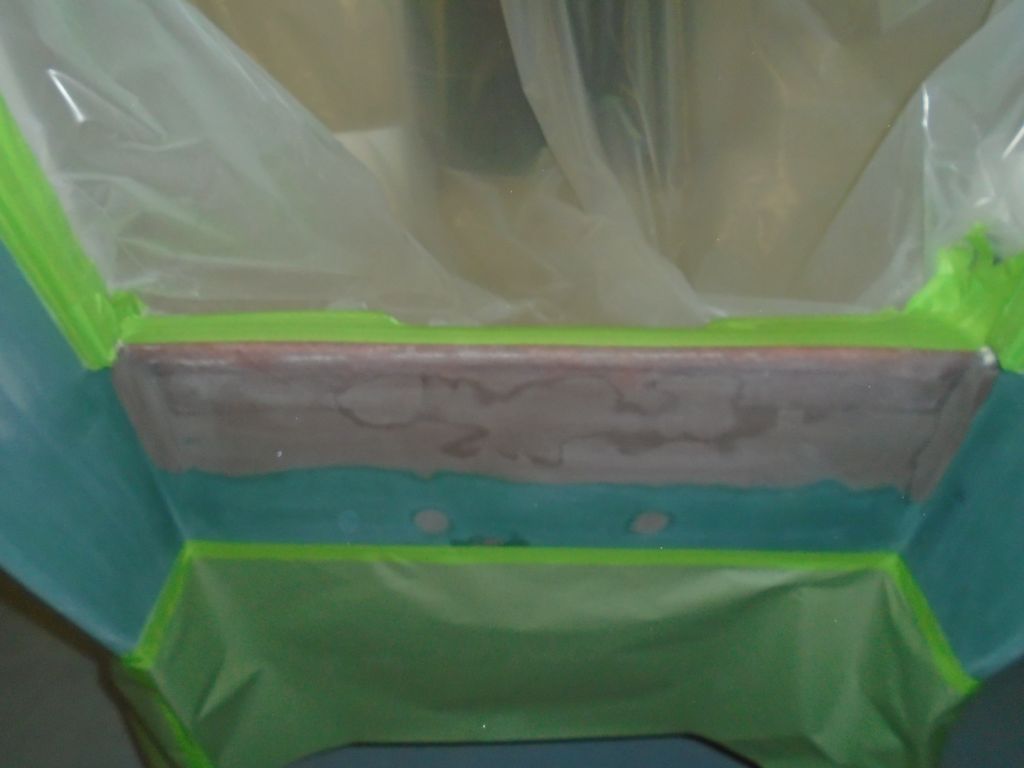
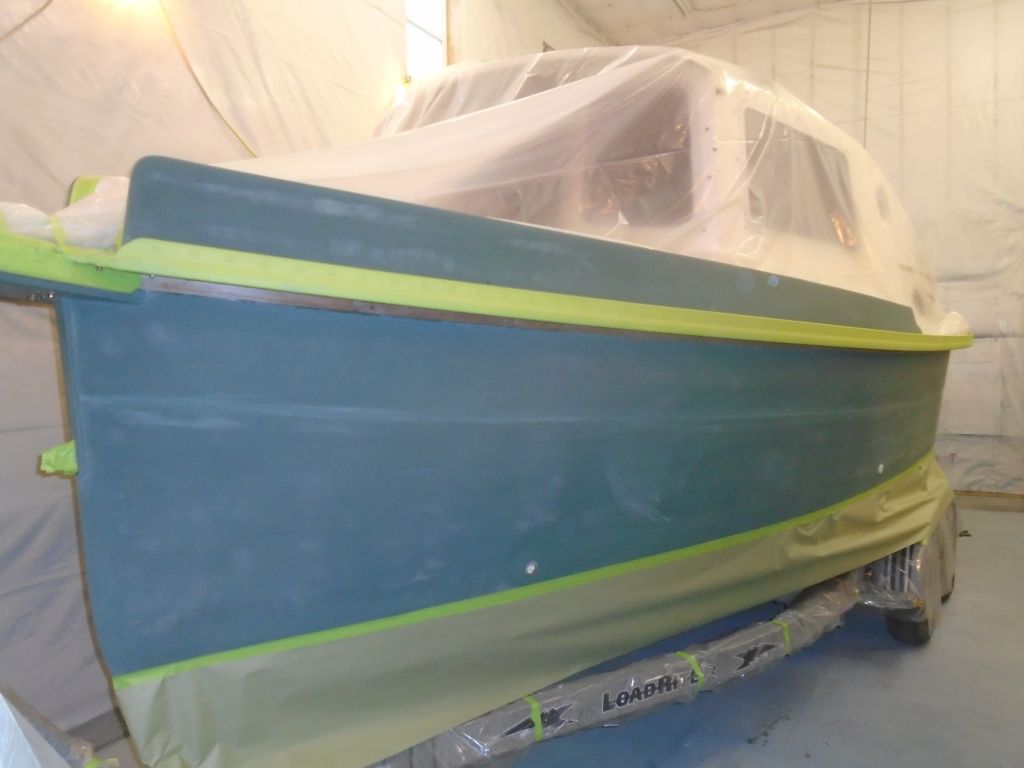
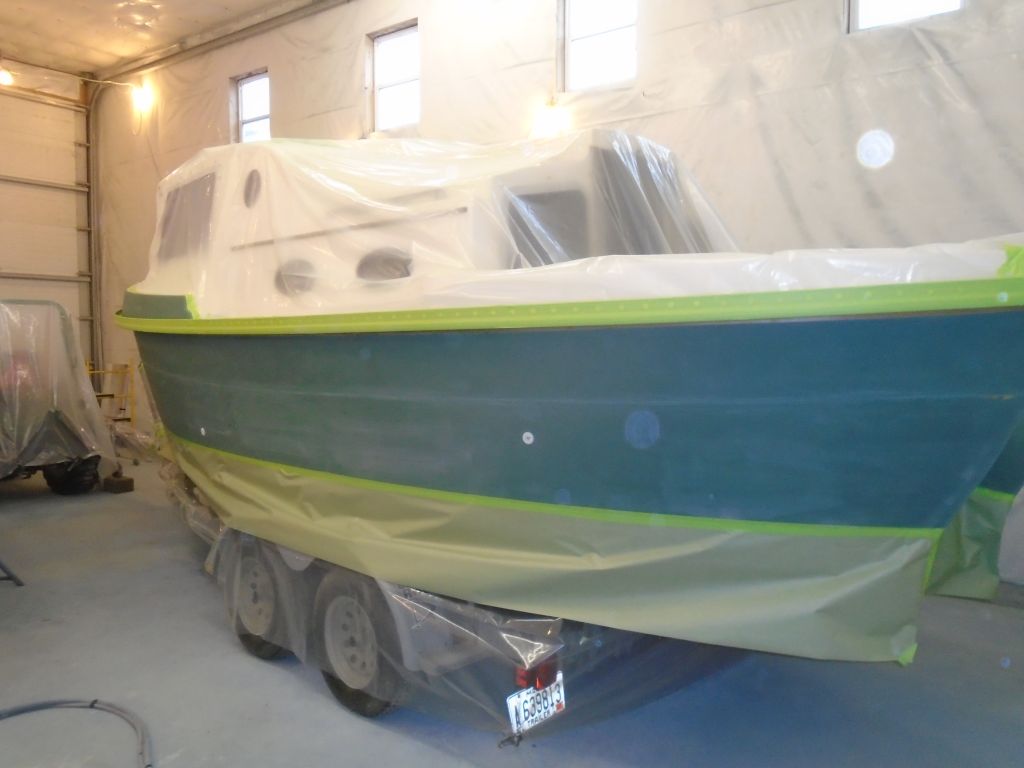
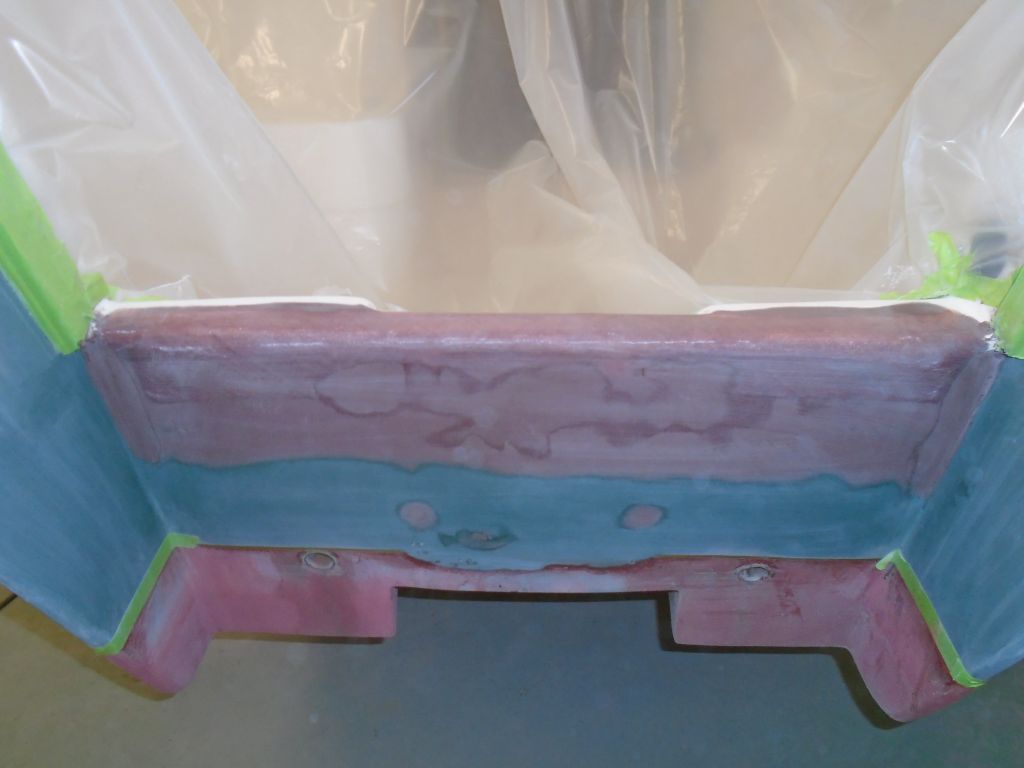
A few final details remained before I could apply the hull primer, so I finished up the prep work with some additional masking to cover the trailer and along the waterline, where I installed masking paper to protect the bottom and portions of the trailer from overspray.  Afterwards, I solvent-washed the hull and set up paint and spray equipment to be ready for the work ahead.

Total time billed on this job today:  2.25 hours

0600 Weather Report:
Rain, snow, sleet, 32°.  Forecast for the day:  on and off rain and mixed precipitation, highs in the low 30s

Danusia 7

< Back to Danusia

Wednesday

With new saw blades on hand, I felt I needed to conquer the windlass before Christmas break, as I hated to leave things unresolved.  I wanted that windlass out.  At this point, I almost didn’t care how it got out–as long as it did.  I couldn’t stand seeing it there, sneering at me and pretending it was just so superior.

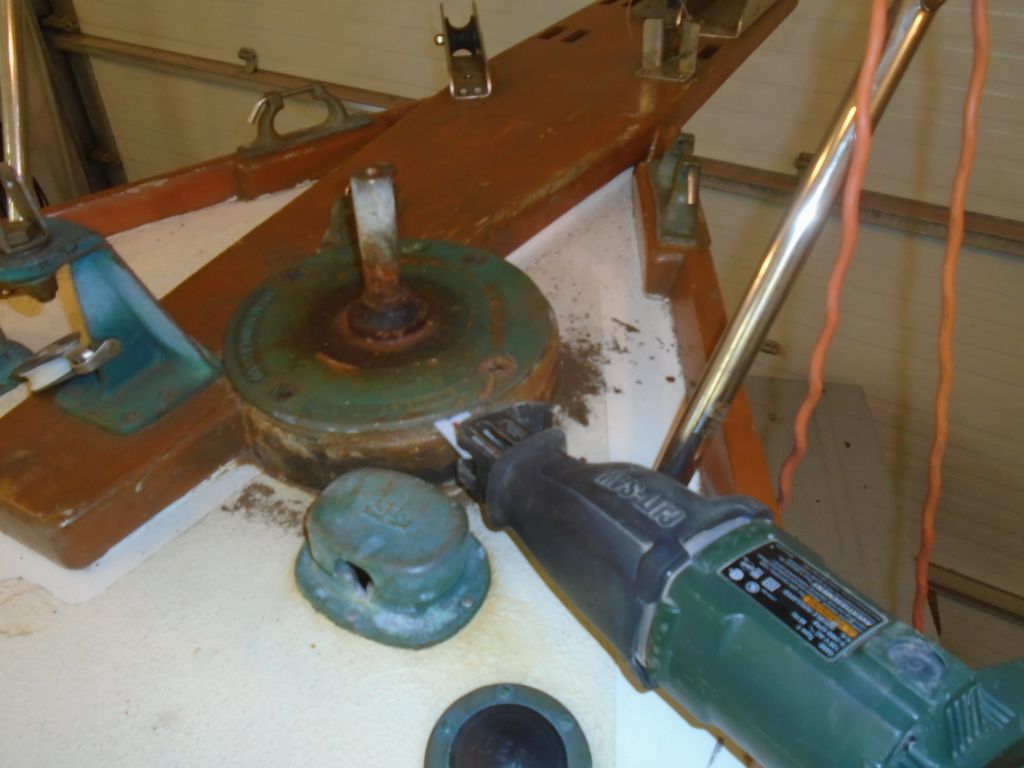
First, I tried–in a laughingly brief way–to use a length of pipe to bang on the steel part of the shaft housing surrounding the bronze turning shaft.  This was so utterly ineffective (exacerbated by that cove shape the housing had ended up), and I quickly turned to the saw, fitting it beneath the bronze deck plate where I’d already reamed out the sealant earlier.  This was really the only practical access to cut the windlass into pieces, as space belowdecks was simply too tight and basically inaccessible where the shaft was.  If this didn’t work from on deck, I wasn’t sure what I’d do.

windlassout1-122315

I found it worked for me to stand on the staging next to the boat and hold the saw along the aft side of the shaft–this gave me the best leverage.  It took about 30 minutes and two saw blades to make it through.  At first it was impossible to tell whether I was making progress or not, as I couldn’t really see into the narrow slot, and certainly the cutting progress was not something one could measure by eye or feel.  I think the first blade must have dulled quickly on old sealant or wood, as once I’d changed to the new blade after a time the progress seemed quicker.  In any event, eventually I completed the cut, freeing the deck plate.  Success!  Or so I thought.

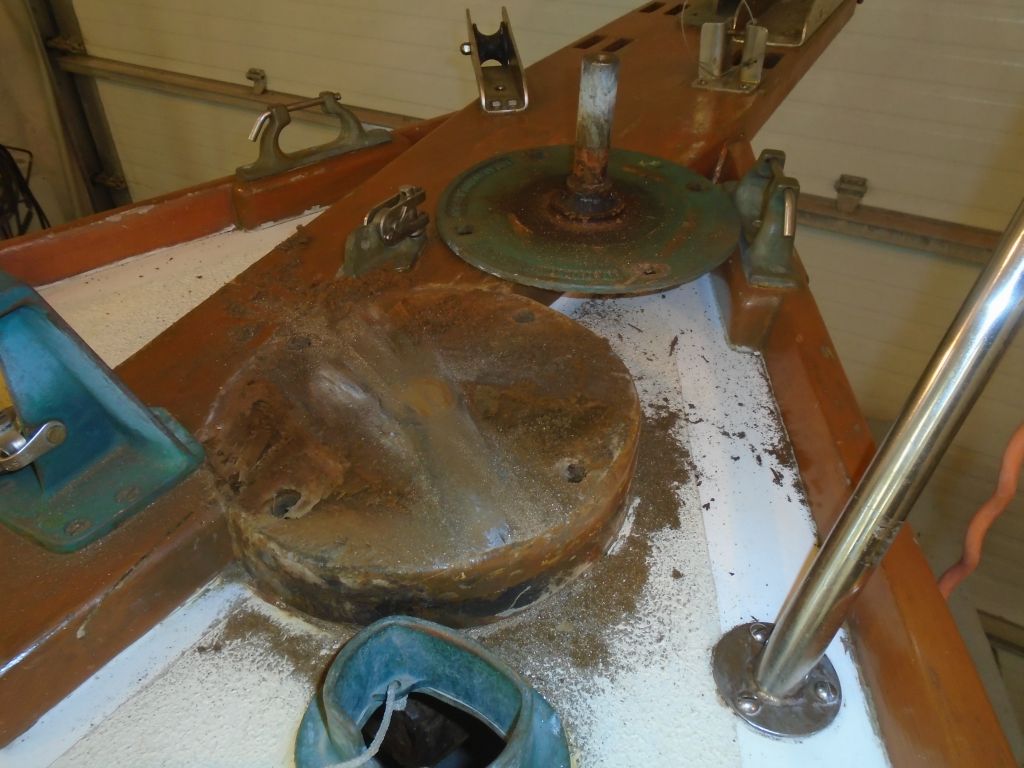
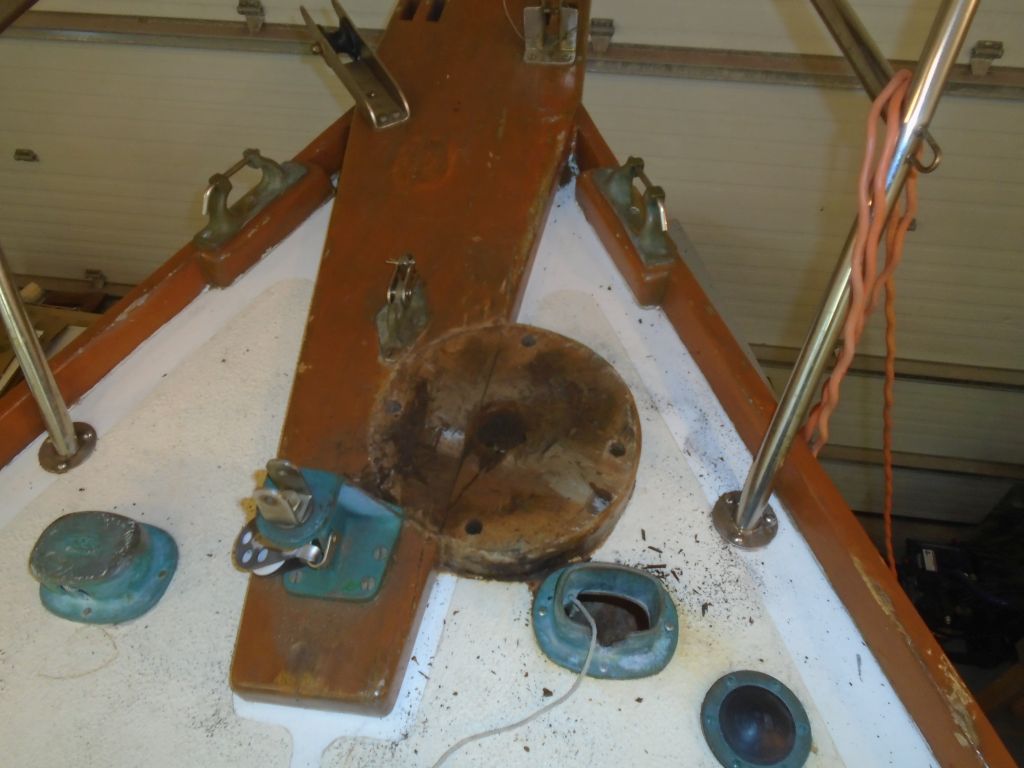
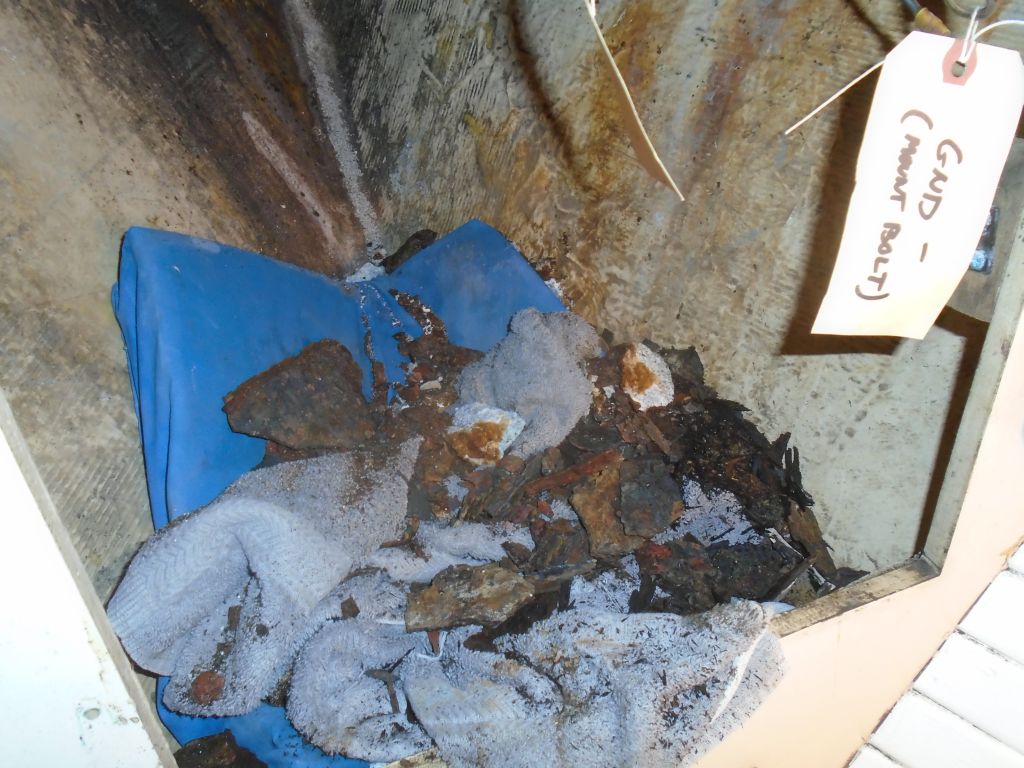
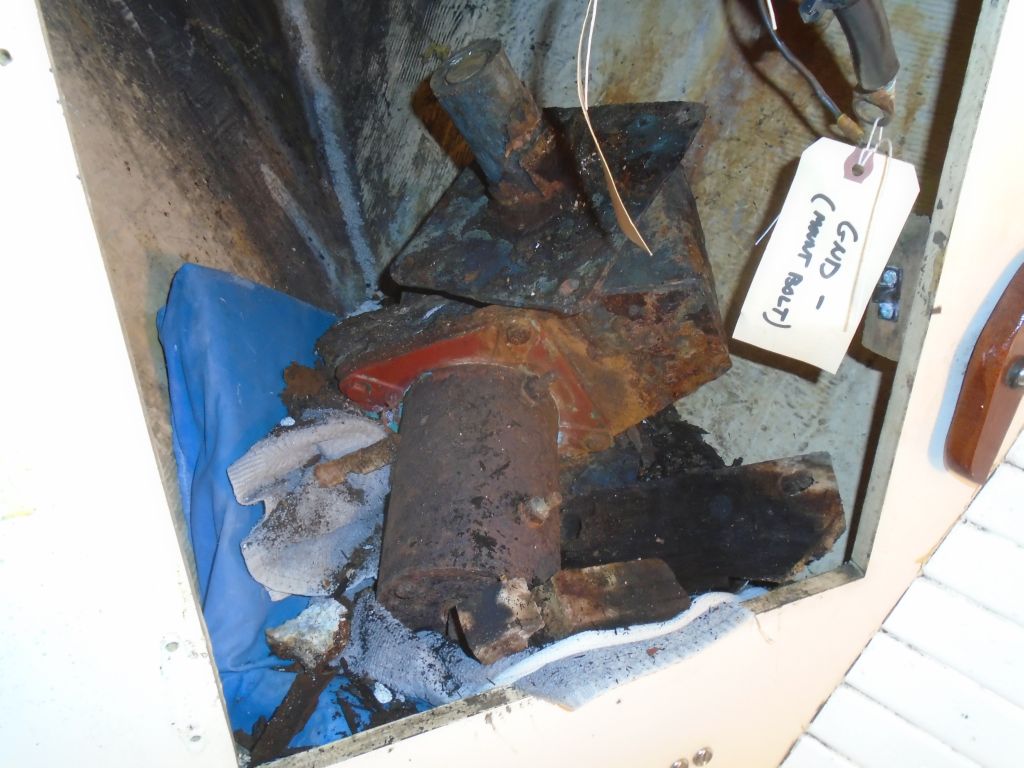
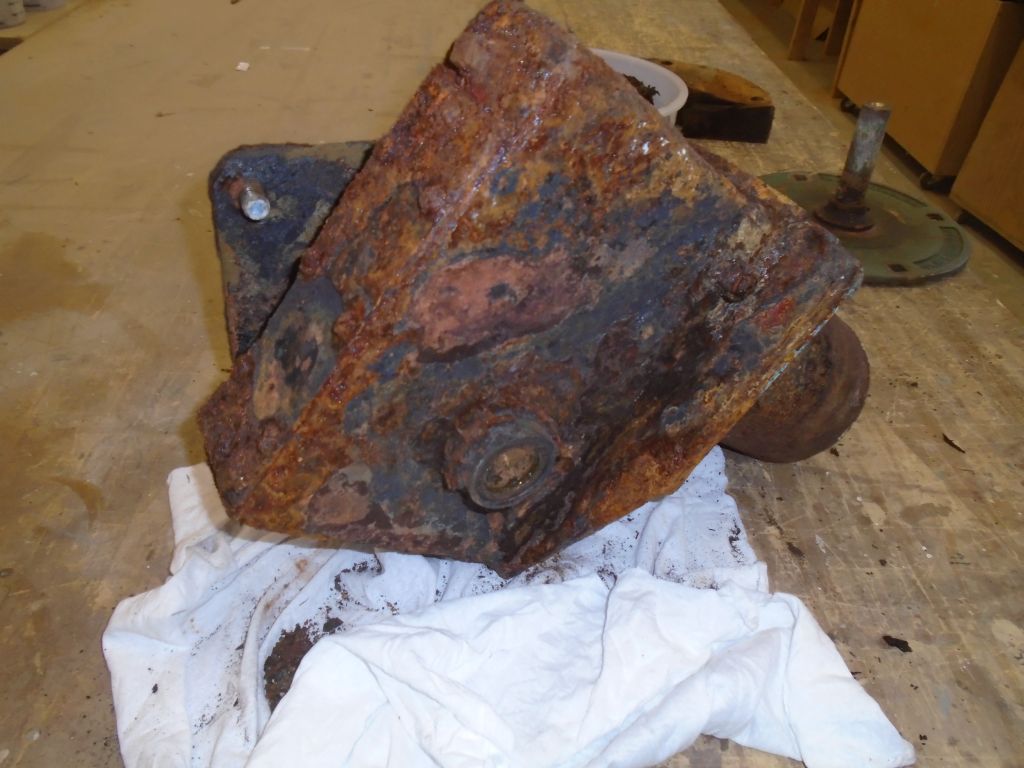
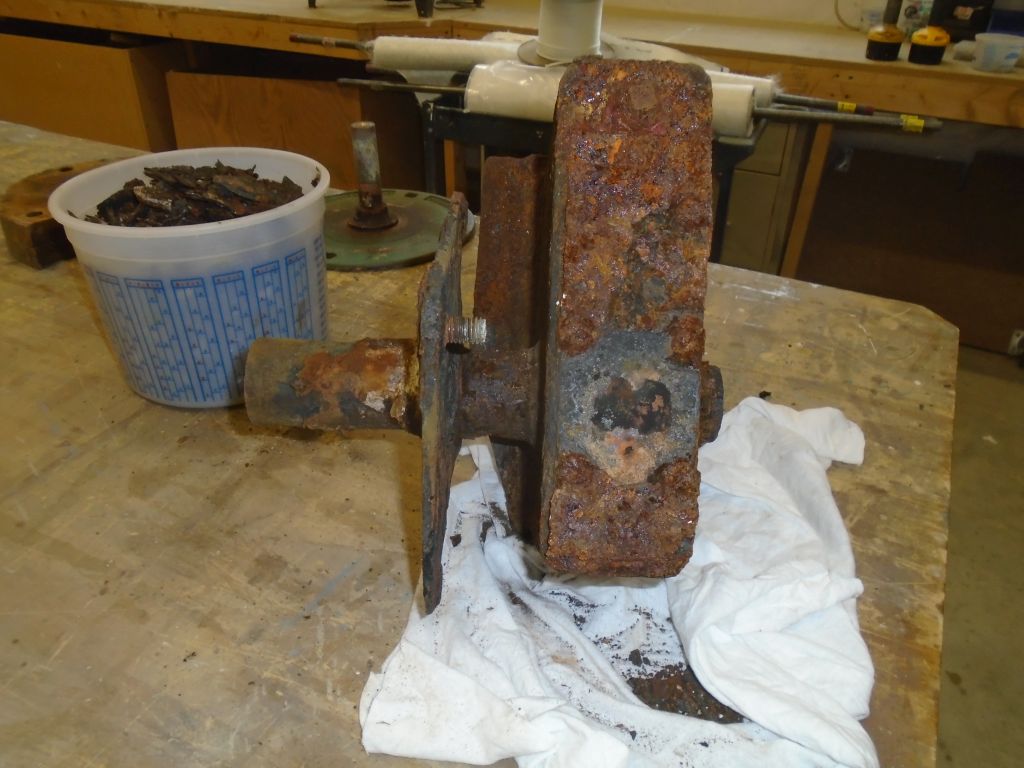
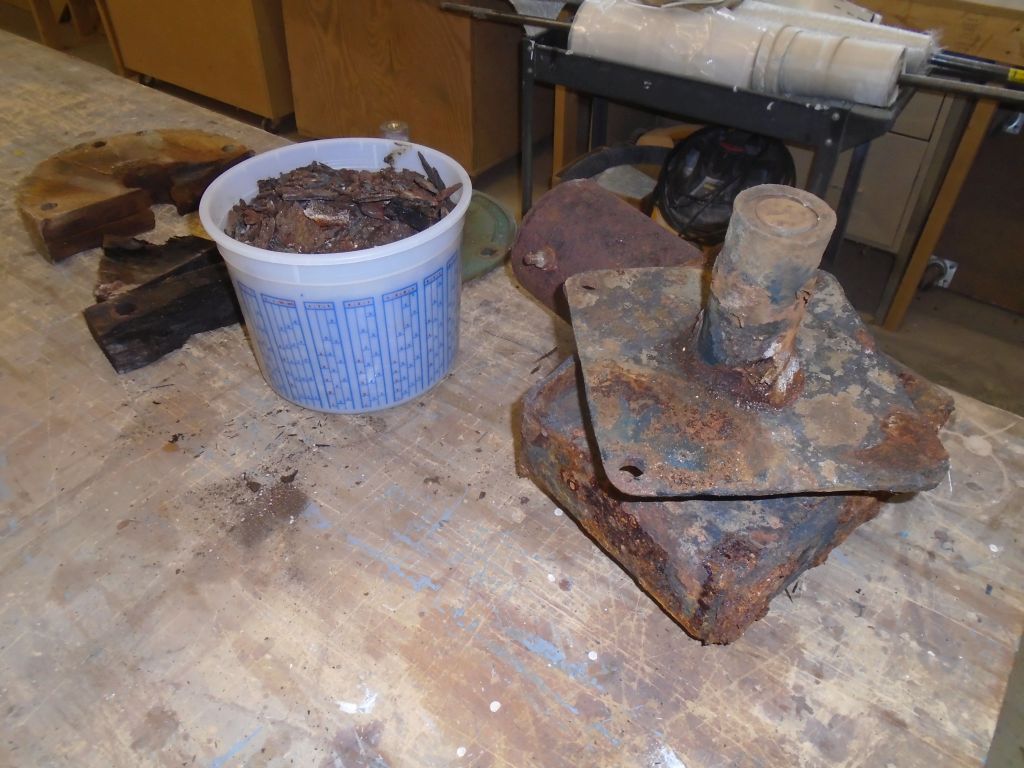
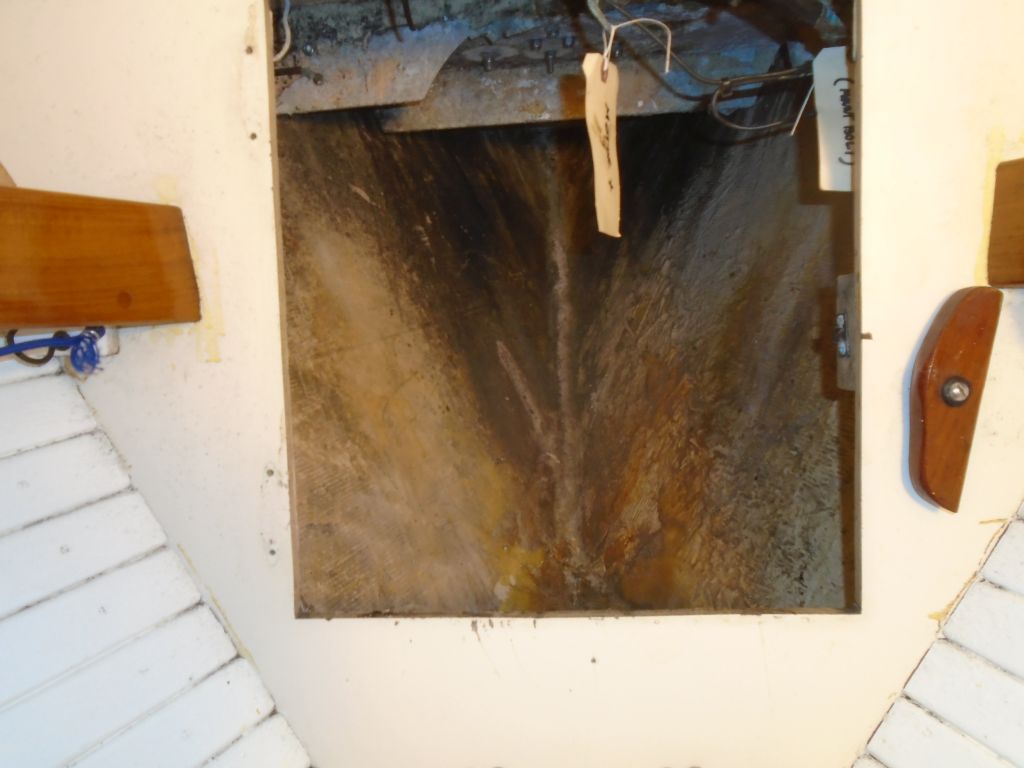
I’d kind of expected that once I’d made the cut, I’d hear the windlass drop out below.  Planning ahead for this, I’d lined the chainlocker with an old cushion and towel to soften the blow, but the shaft and housing held tightly in the wooden deck riser with no sign of movement whatever.  After checking things out below, I returned to the foredeck and, using a small hand-held sledge, I pounded the top of the shaft, both with my length of pipe (limited or no success at first), and then without,  It took surprisingly brutal effort to budge the thing at all, and at first all I heard was more chunks of thick, flaky rust crumbling off the windlass, but after a number of severe hits I saw progress, as the shaft started plunging through the wood.  Finally, at length, the windlass gearbox and motor came free and fell the short distance onto the pillows.

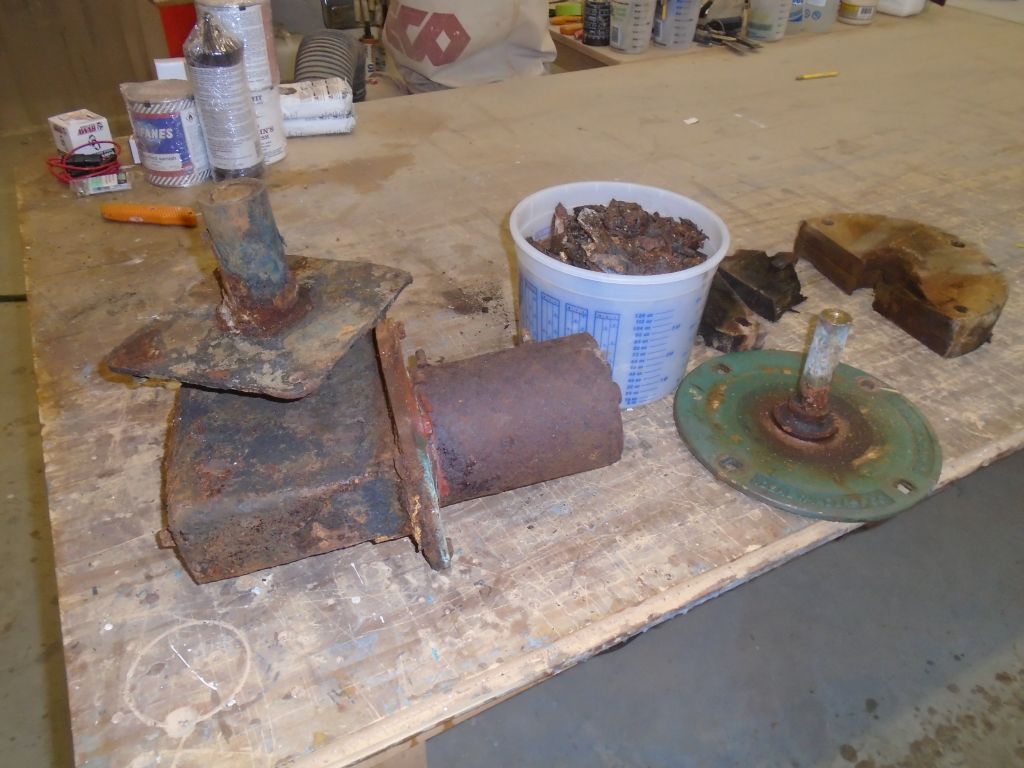
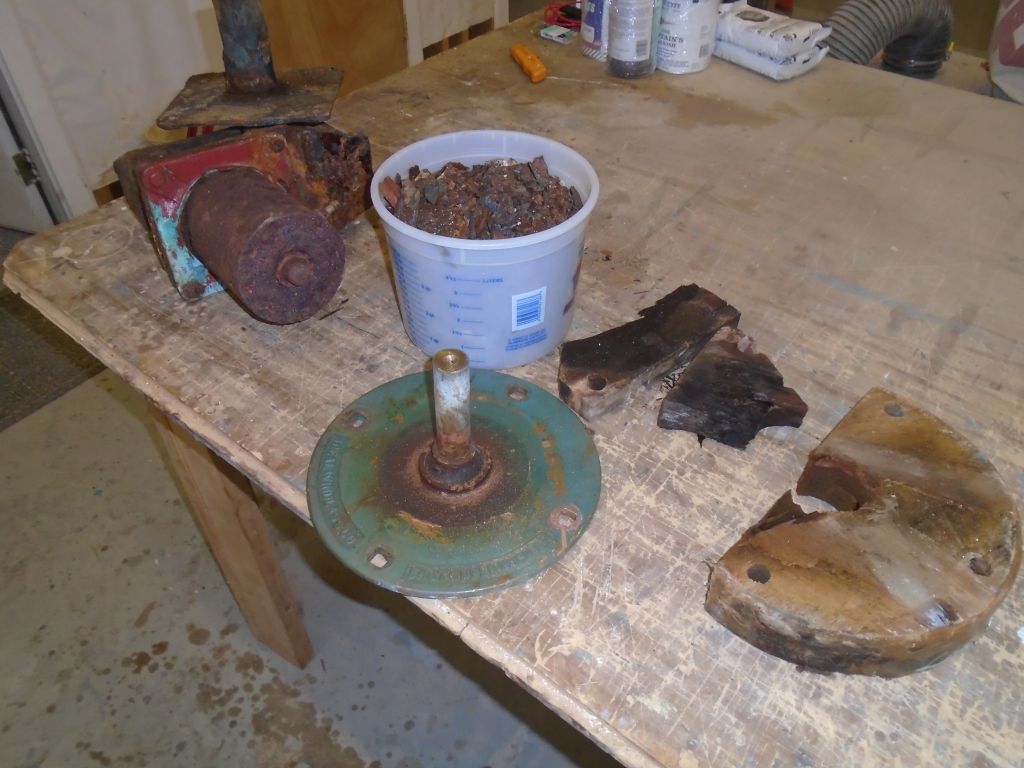
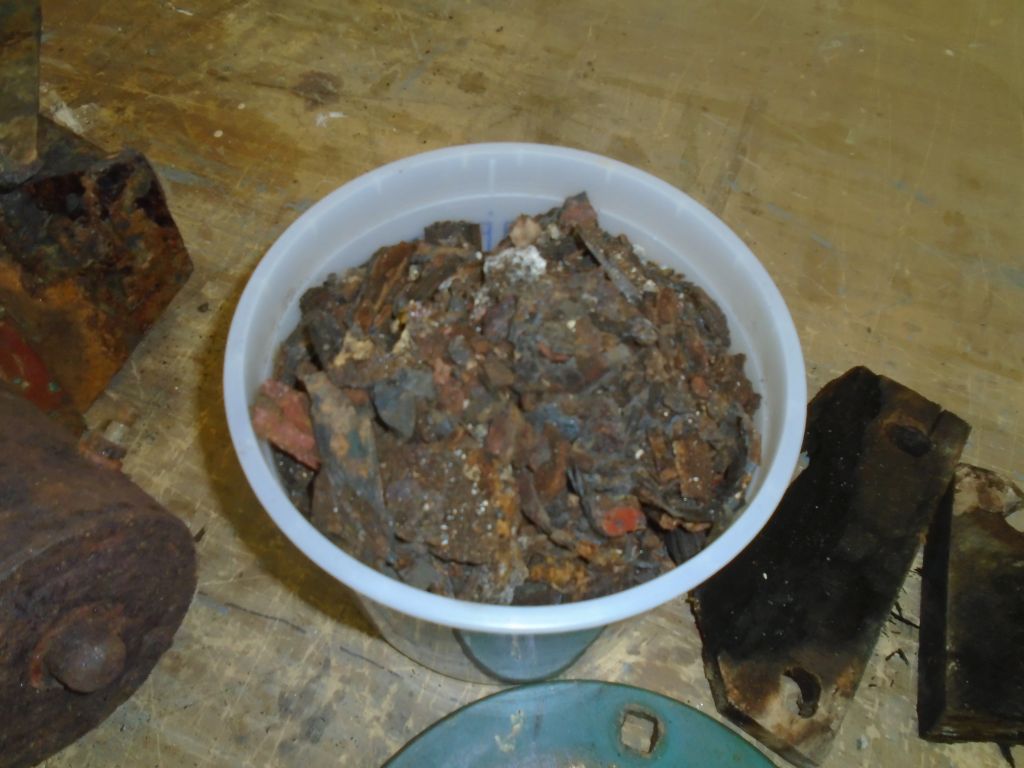
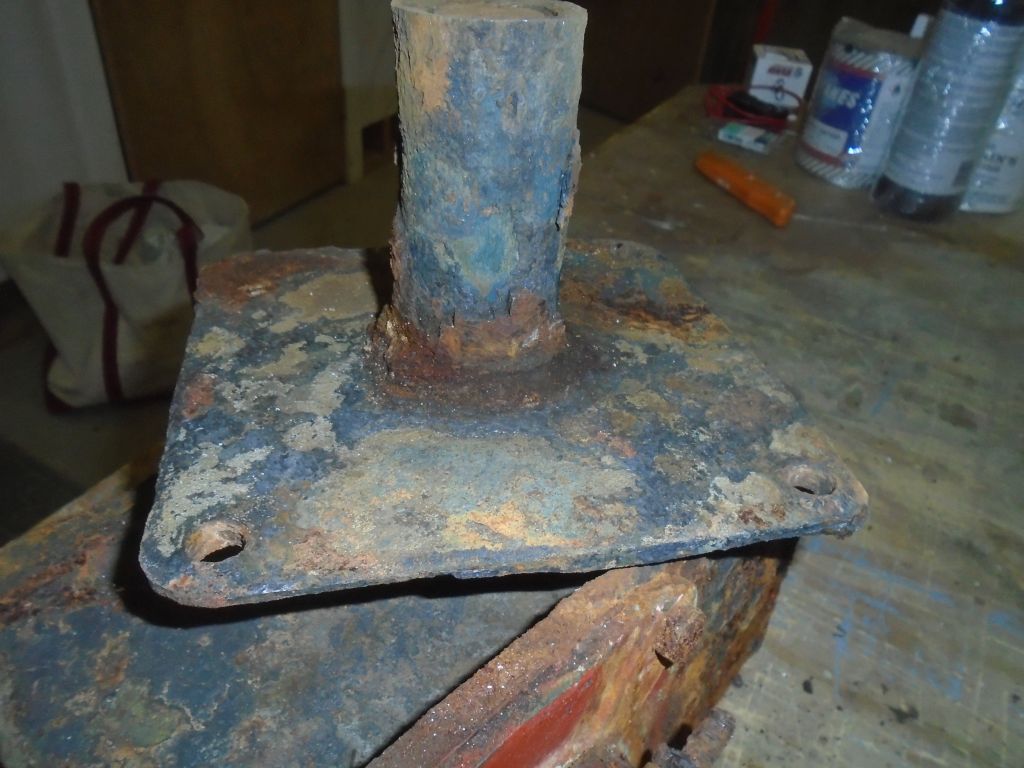
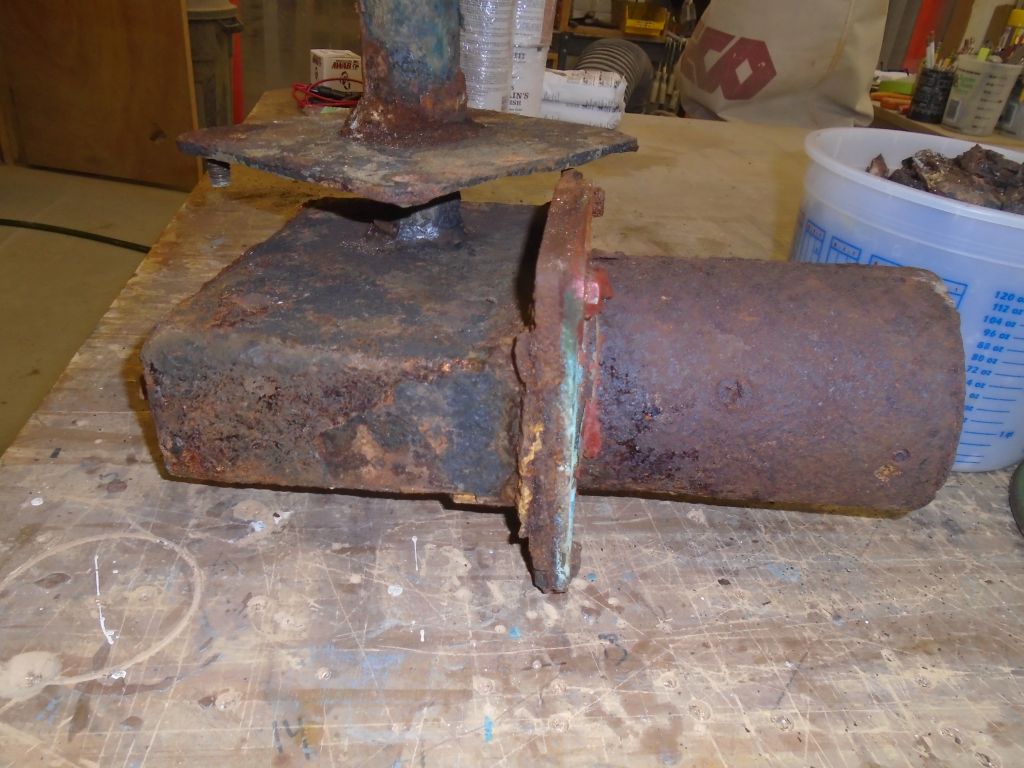
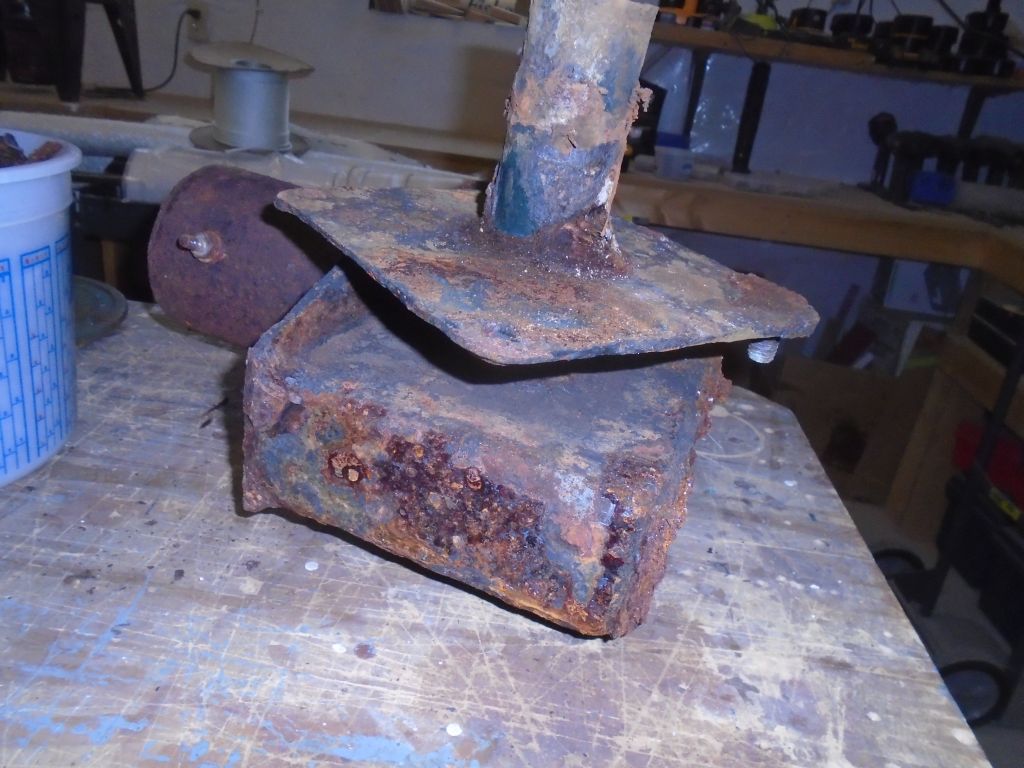
Even though I’d removed–by corrosive attrition and as a byproduct only–probably 10 pounds of rust (a full 5 quart bucketful) from the windlass housing during the removal process, what remained of the windlass and motor was extremely heavy.  I was so glad to get it out of there and down to the bench with all its component pieces (except the capstan drum, which I forgot to include in my still life photos below),  What a piece of junk this thing turned out to be.  What all this plain steel was doing in a windlass was beyond me.  A real shame, as I know the working components were all bronze and stoutly built.  To shroud such fine mechanicals in this steel case was obviously a poor choice.

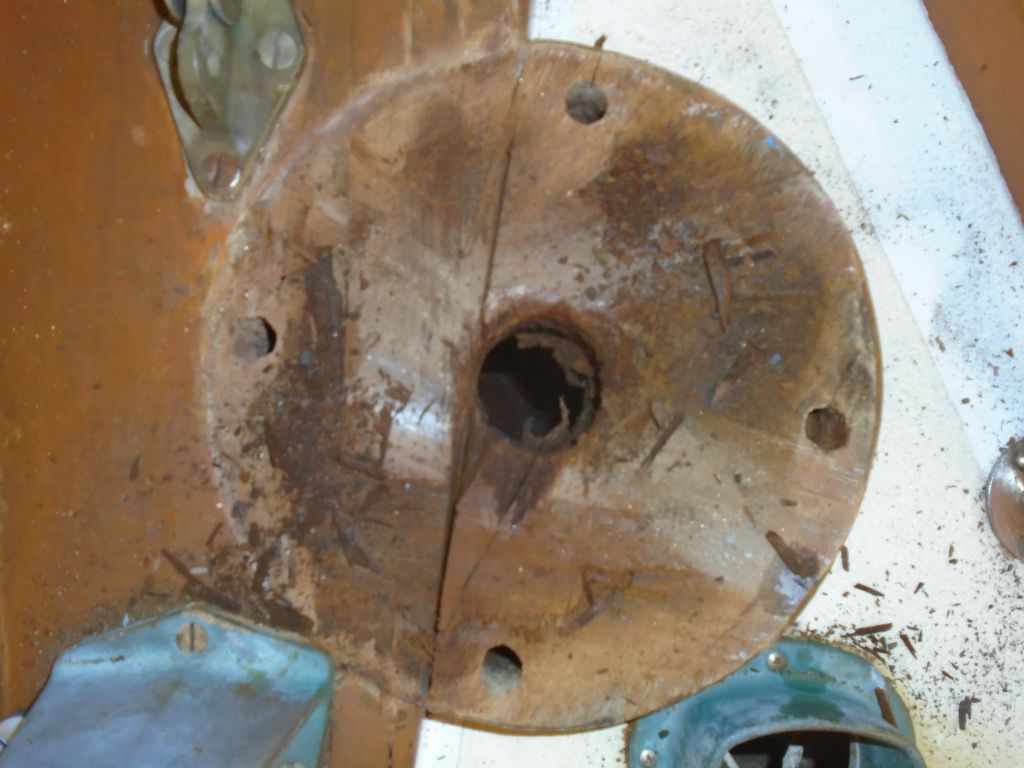
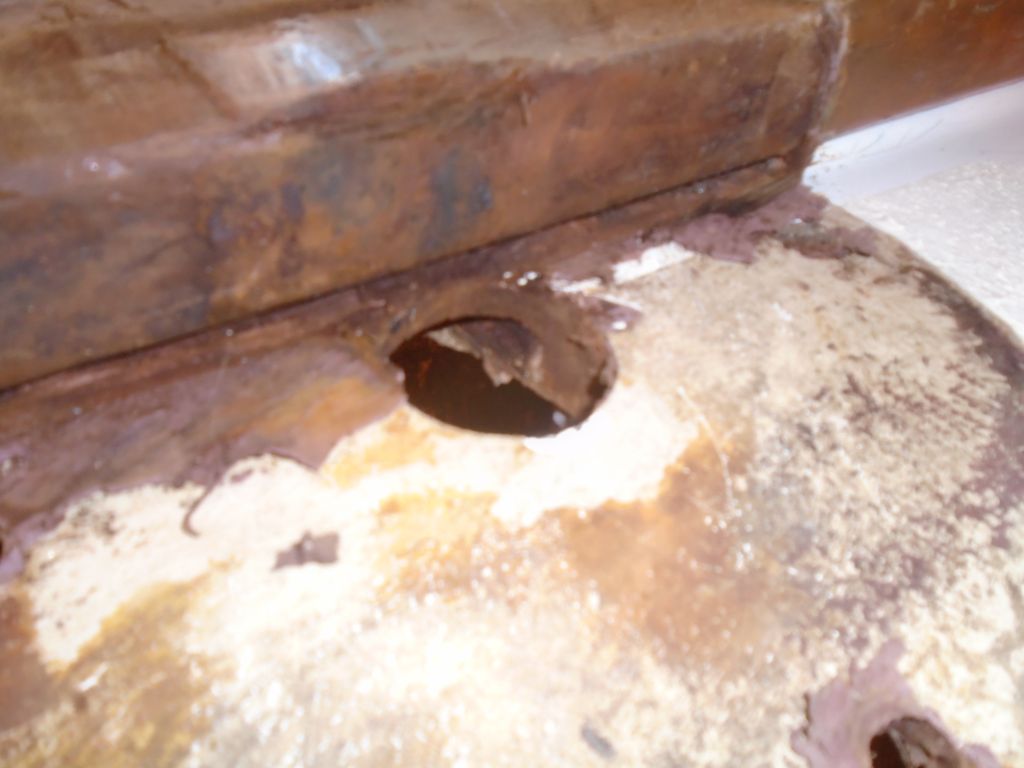
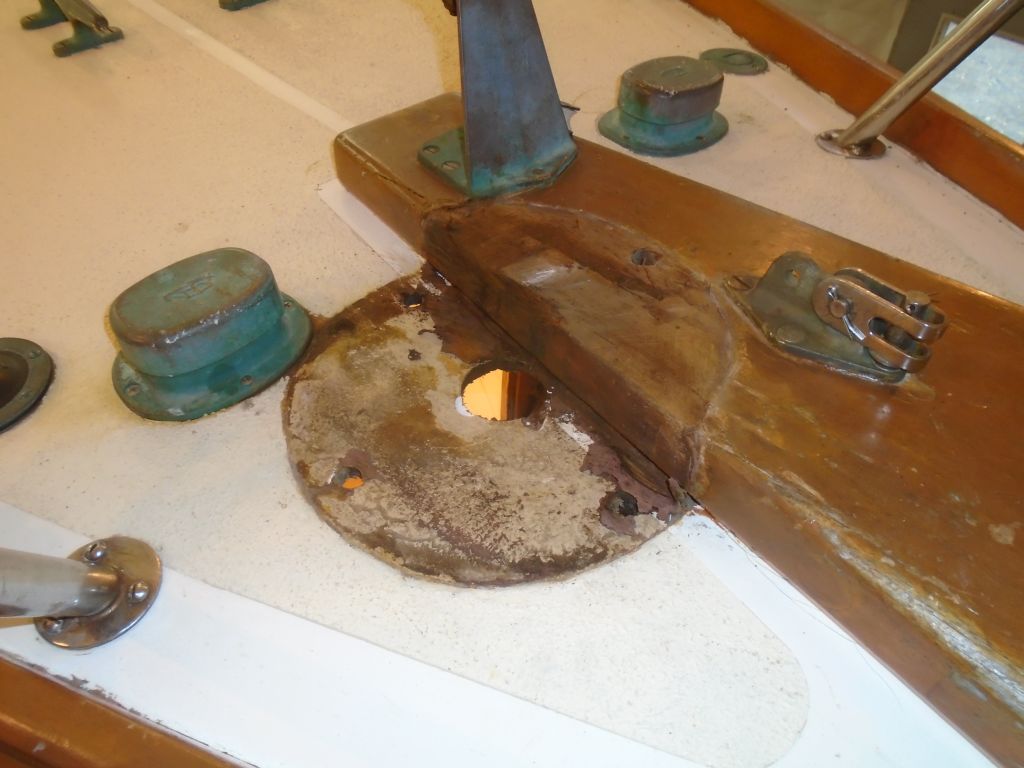
With the windlass finally out of the way, I cleaned up the deck and chainlocker as needed, including removing the semi-circular deck riser adjacent to the bowsprit, as the removal had damaged this easily-replaceable piece.  The good news in all of this was that the deck in this area was core-free, just a solid 1/2″ or so laminate.  Briefly inspecting things from beneath, it seemed this might have been a planned omission at the time of construction specifically to allow for a windlass installation on this side.  But at least the large through-deck hole had not allowed any damage to the decks, which couldn’t be said for the windlass itself.

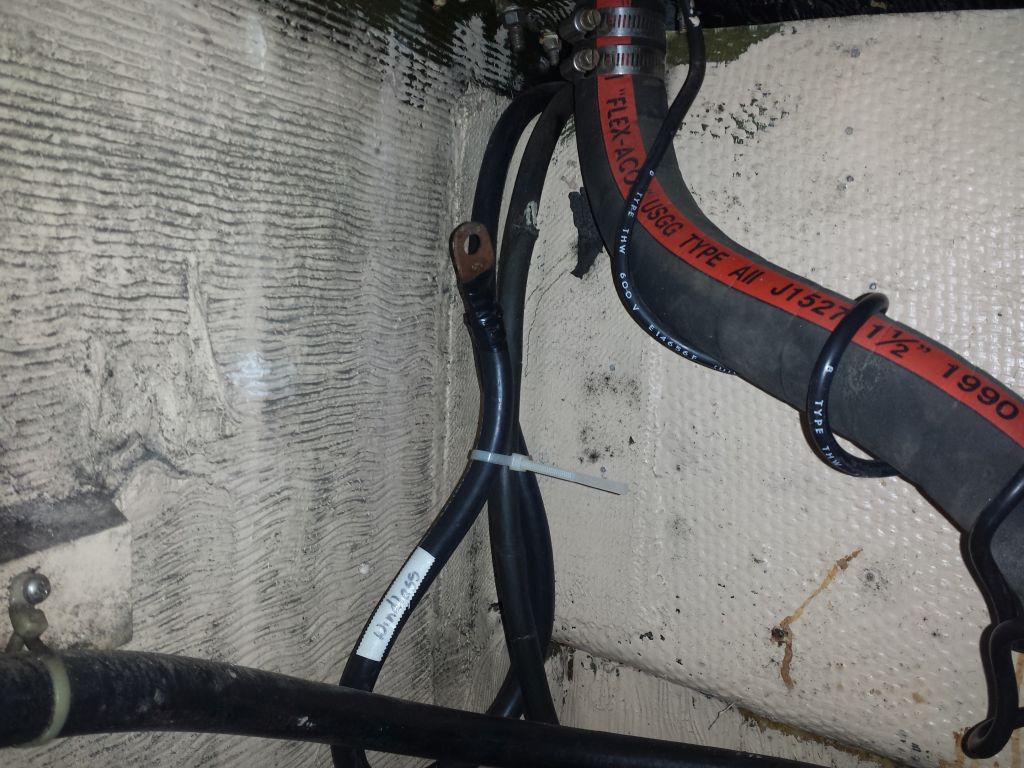
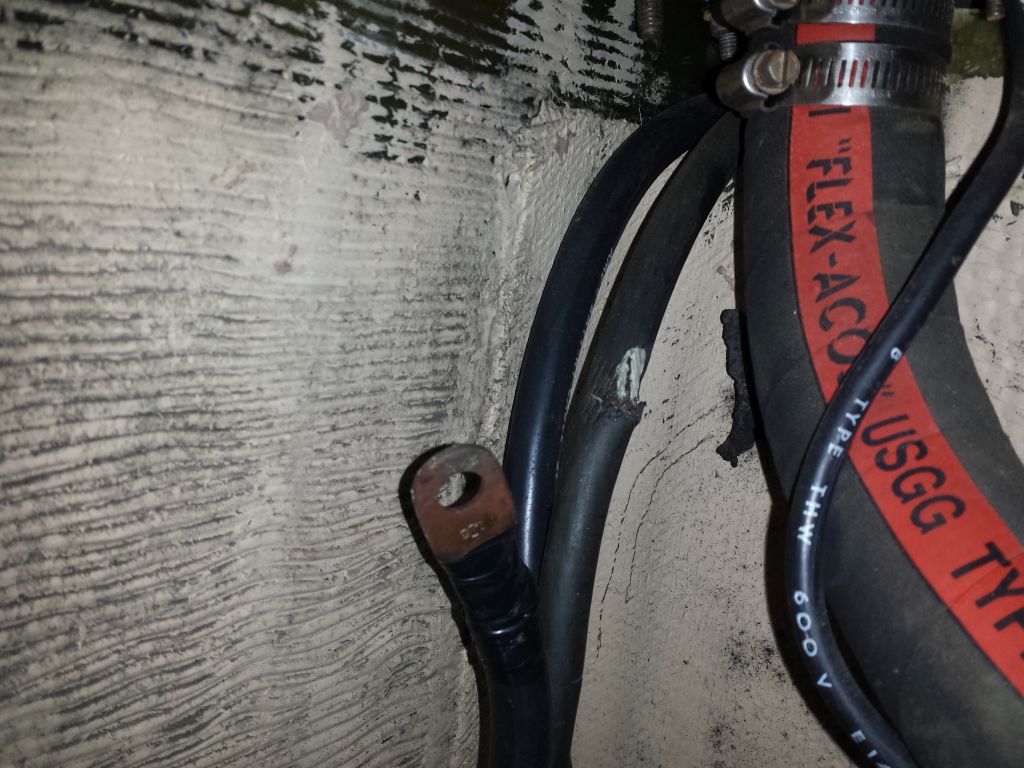
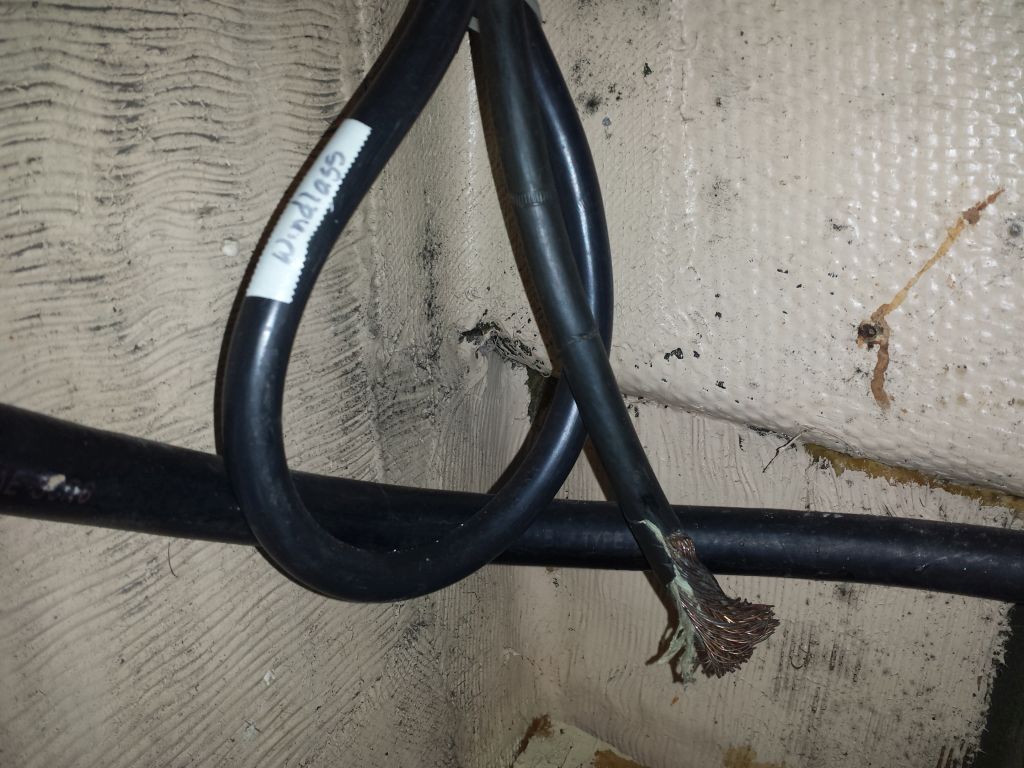
During some work in the port cockpit locker a little earlier, I’d noticed the other ends of the large windlass cables hanging out of the wire chase on that side.  Besides being too short to reach a battery, the cable ends weren’t looking too great, and one of the cables had a cut in the insulation that would obviate the last foot or so of that cable.  So whatever happened from here in terms of windlass replacement, there’d unfortunately be more wiring work to complete.


Total time billed on this job today:  1.5 hours

0600 Weather  Report:
Fog, clouds, 35°.  Forecast for the day:  clouds, rain coming overnight, high in the low 40s

Nomad 9

< Back to Nomad

Tuesday

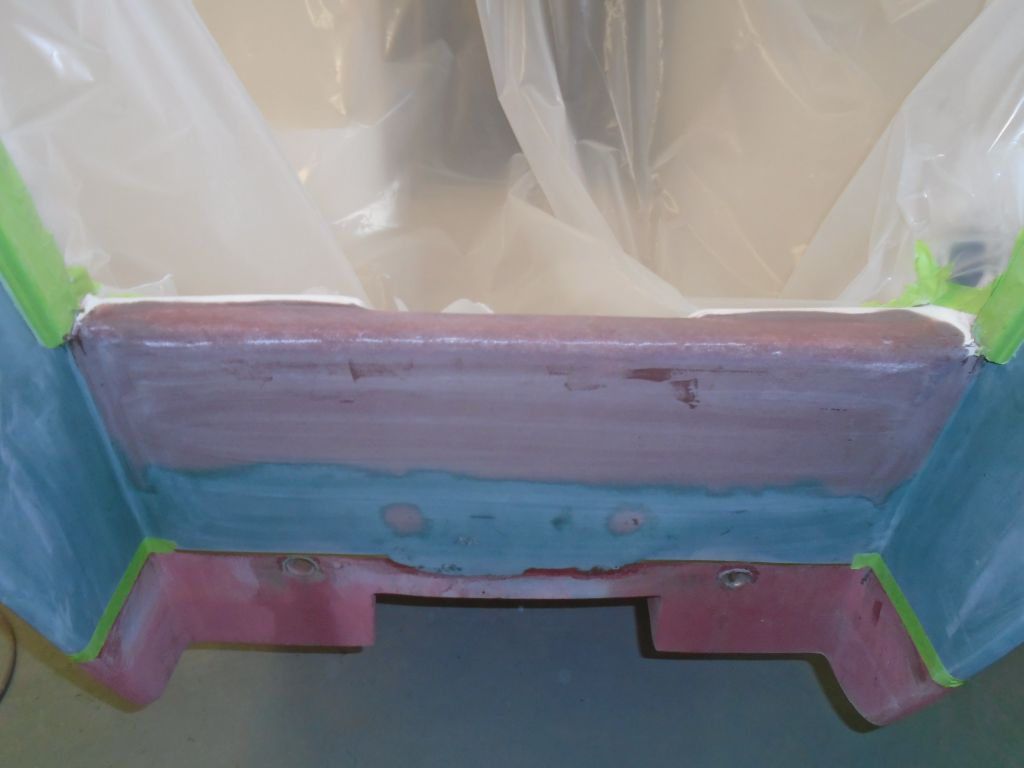
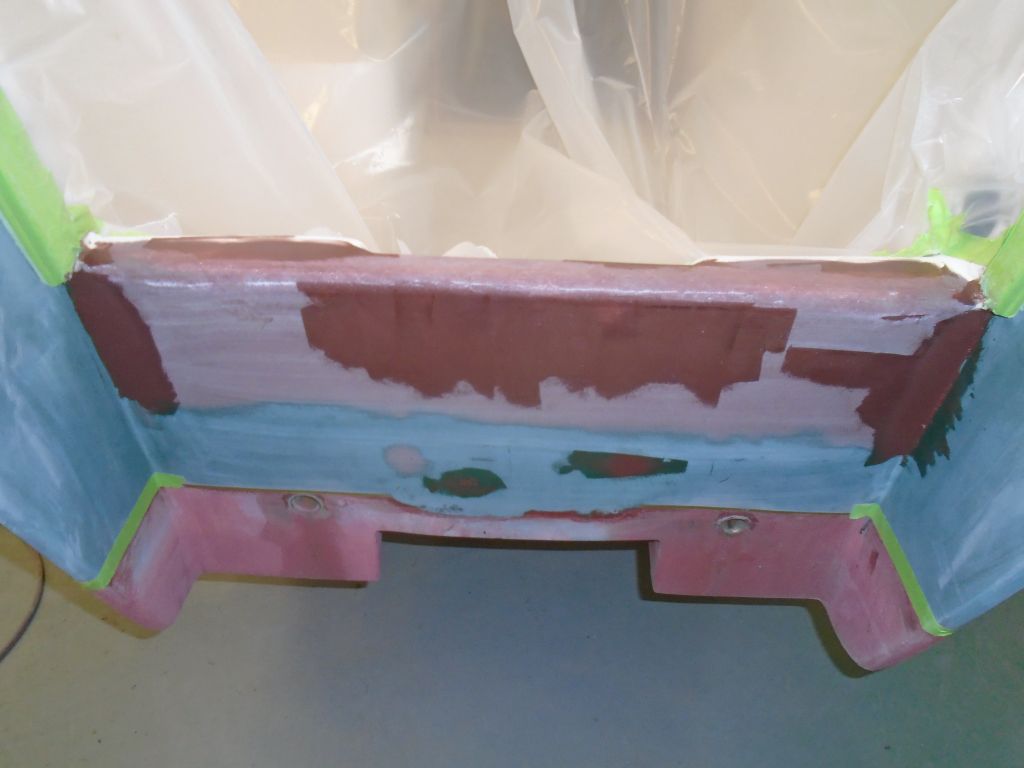
Once more, I sanded the transom repair as needed, eventually ending with hand and machine sanding with 120 grit to tie this area in with the rest of the hull.  I touched up a few other areas by hand as well, completing the basic hull prep.

transom1-122215

Afterwards, I cleaned up the shop, blowing off the walls and other surfaces, vacuuming, sweeping, and washing the floor.  Just a little final prepwork lay between me and high-build primer.

transom2-122215

Total time billed on this job today:  1 hour

0600 Weather Report:
25°, cloudy.  Forecast for the day:  clouds, rain late in the day.  High 44°

Danusia 6

< Back to Danusia

Tuesday

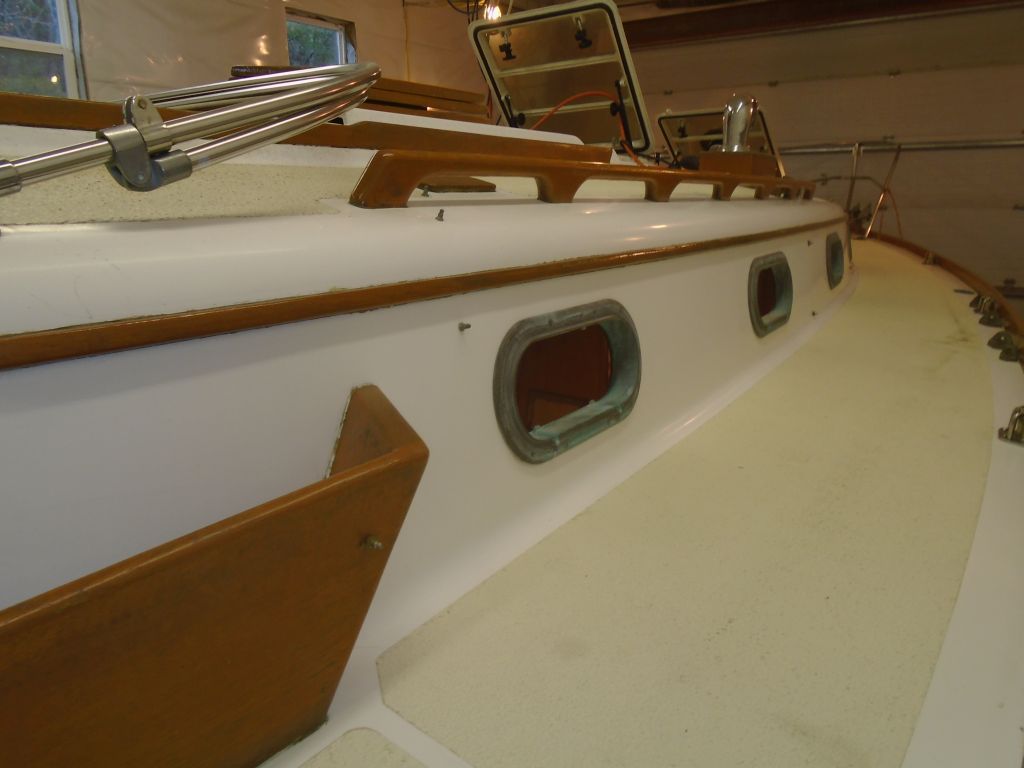
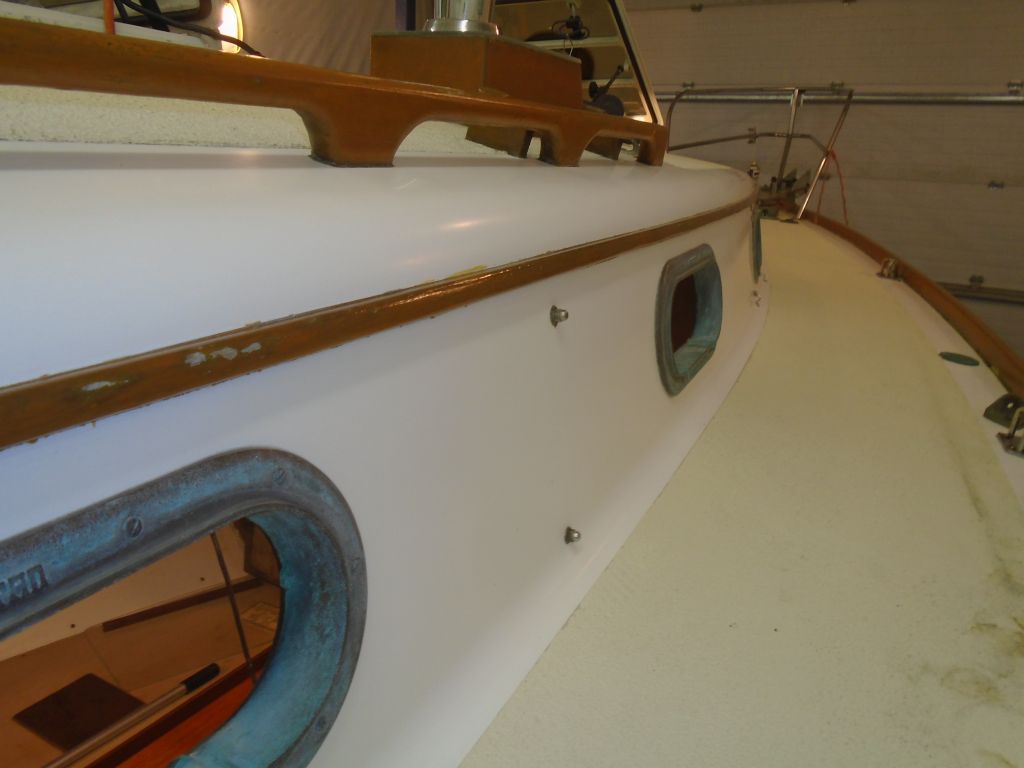
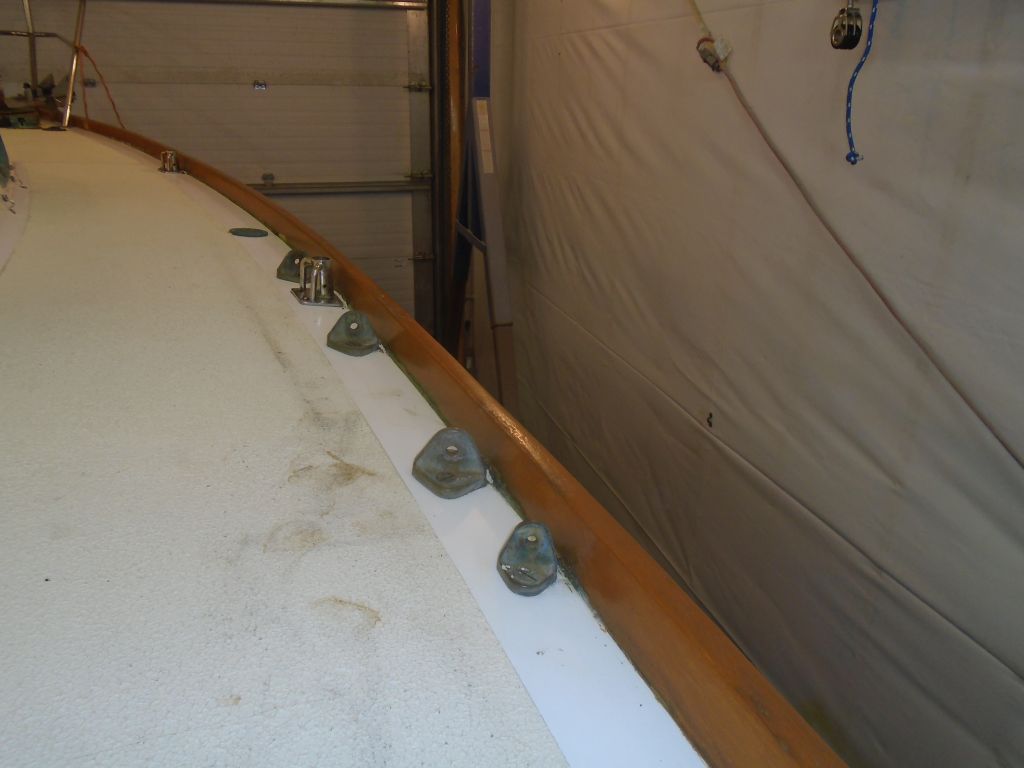
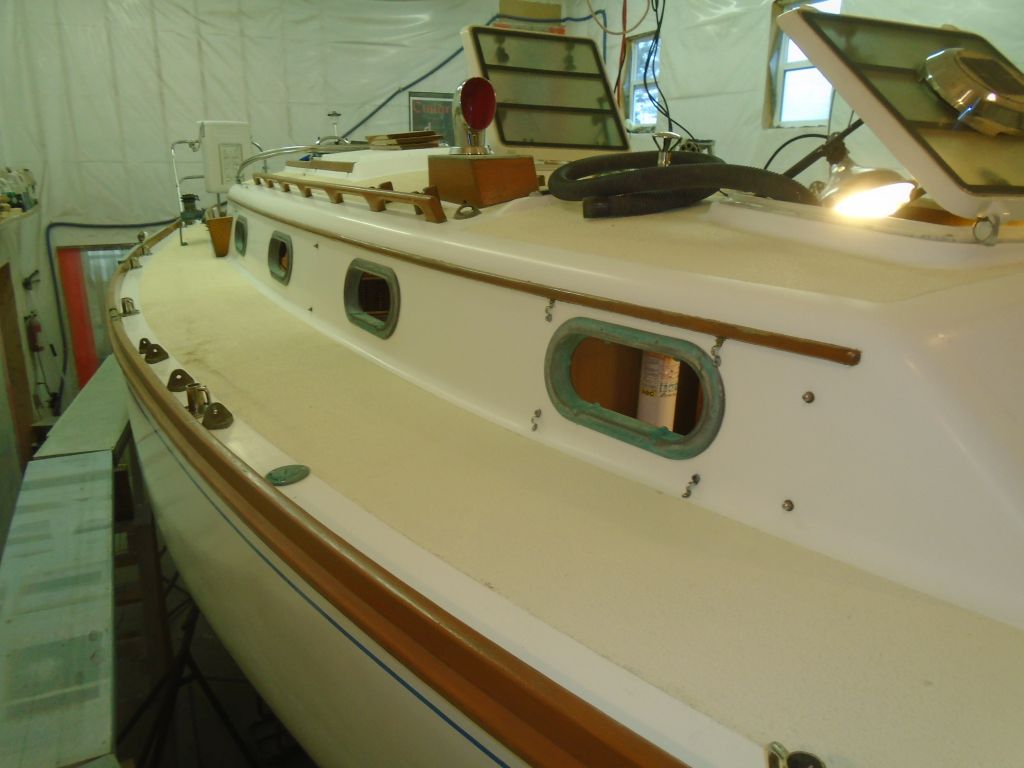
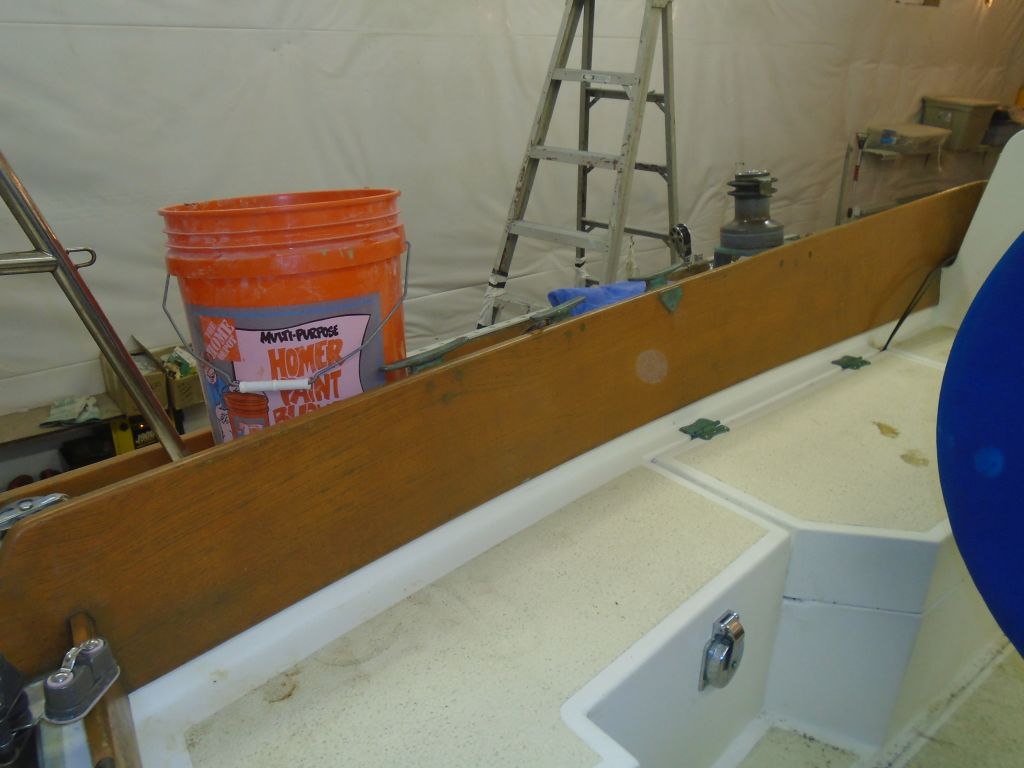
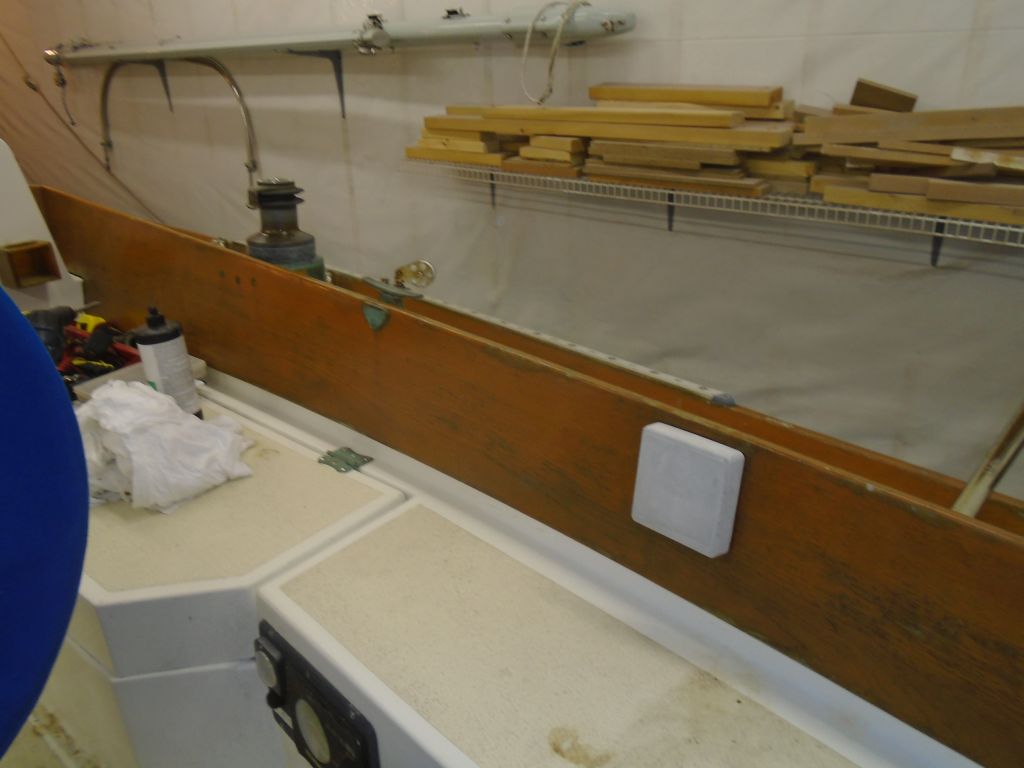
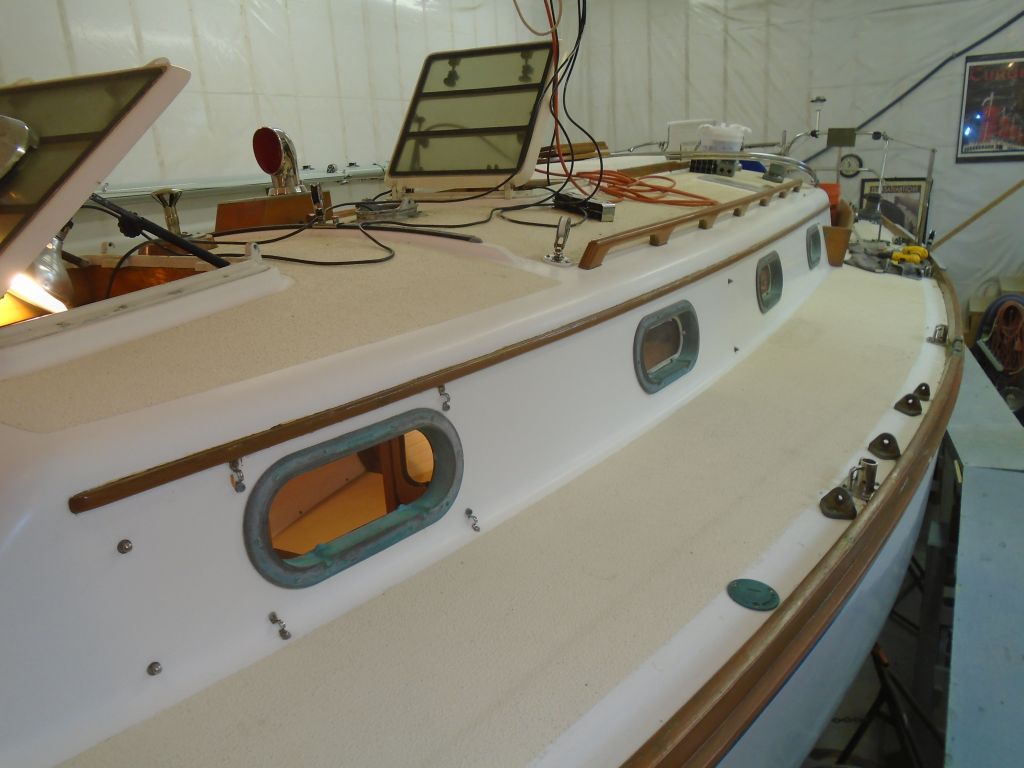
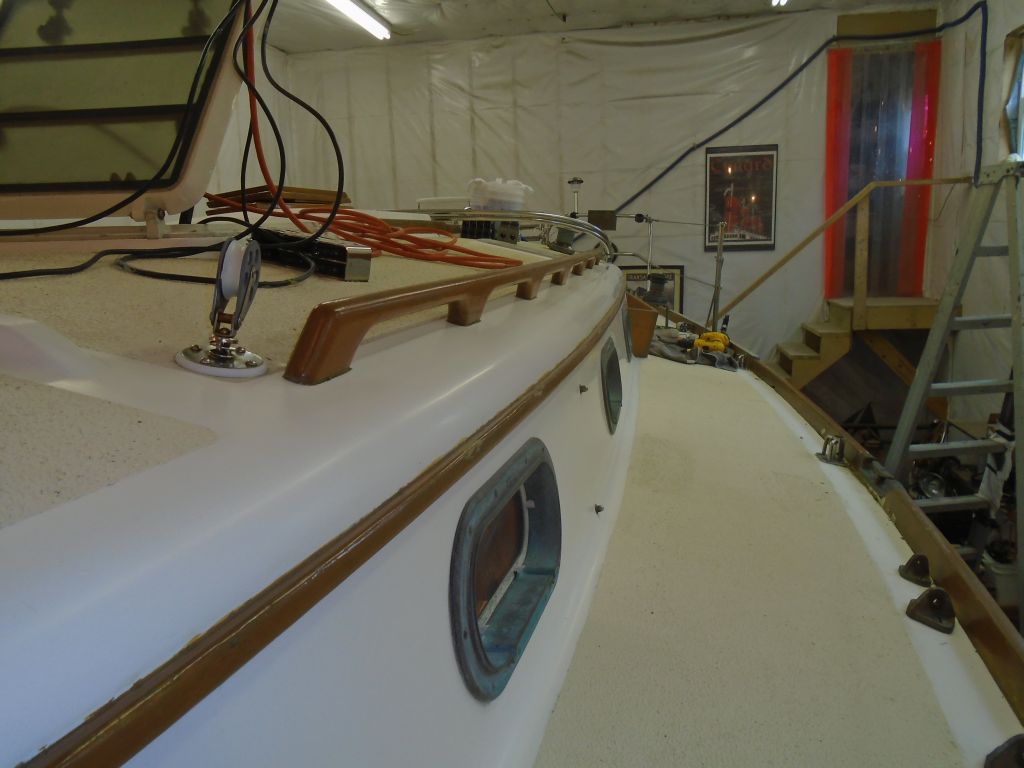
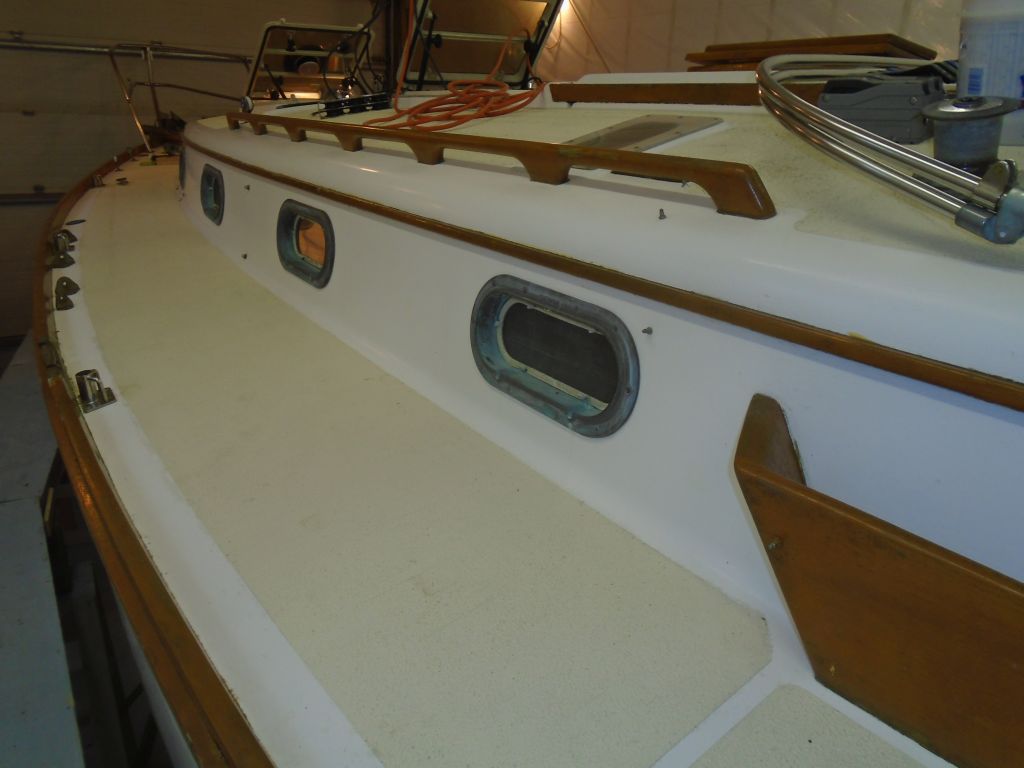
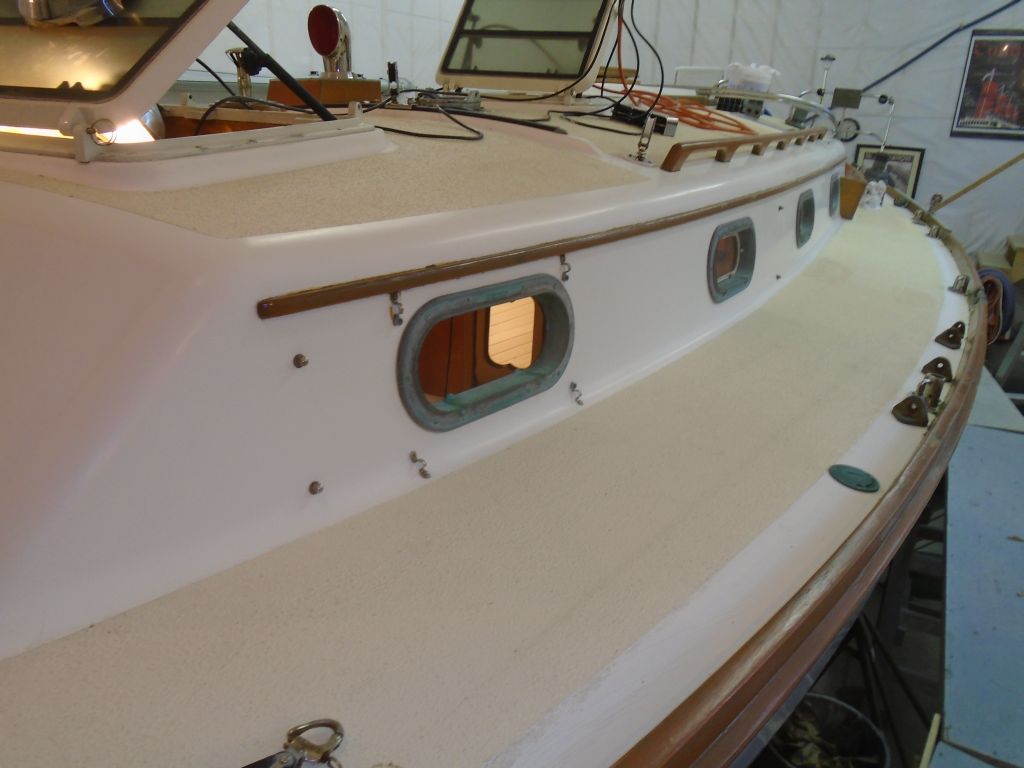
I continued work on the decks, this time mainly on the starboard side, where I cleaned up and polished the cabin trunk and borders on the sidedeck.

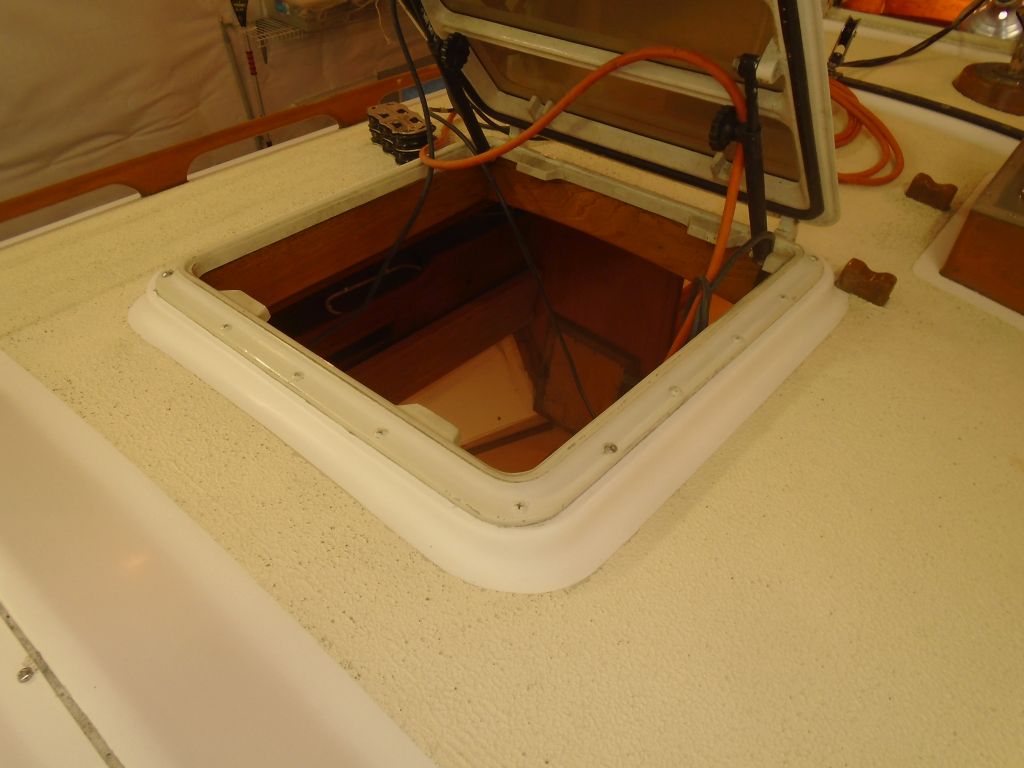
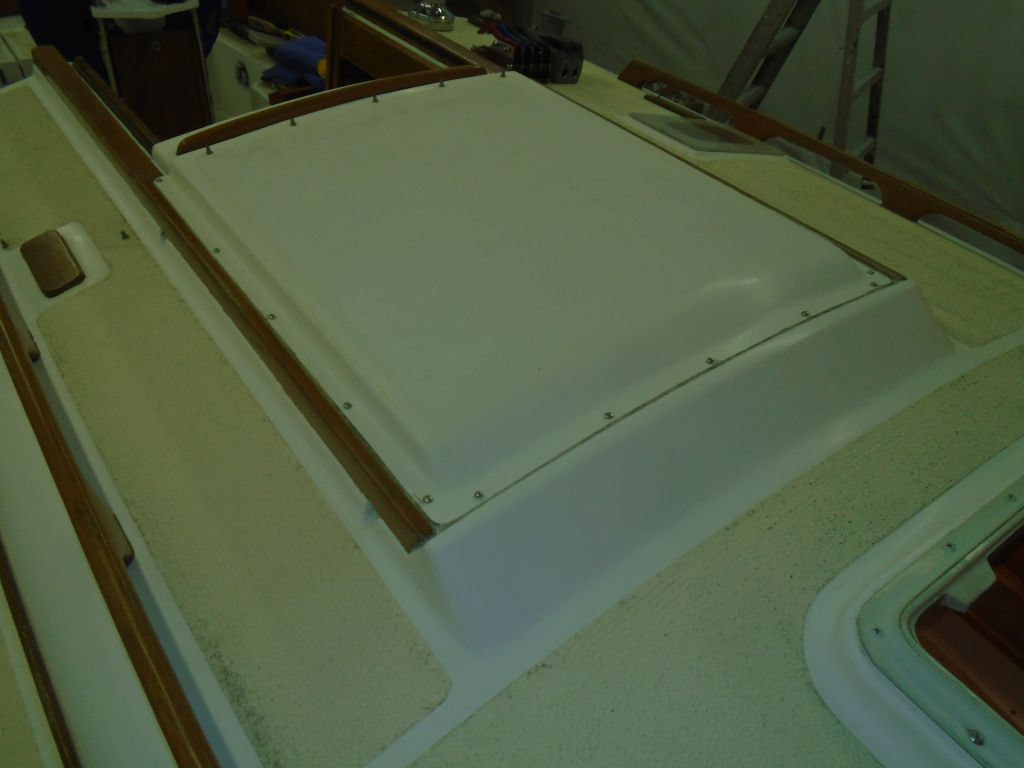
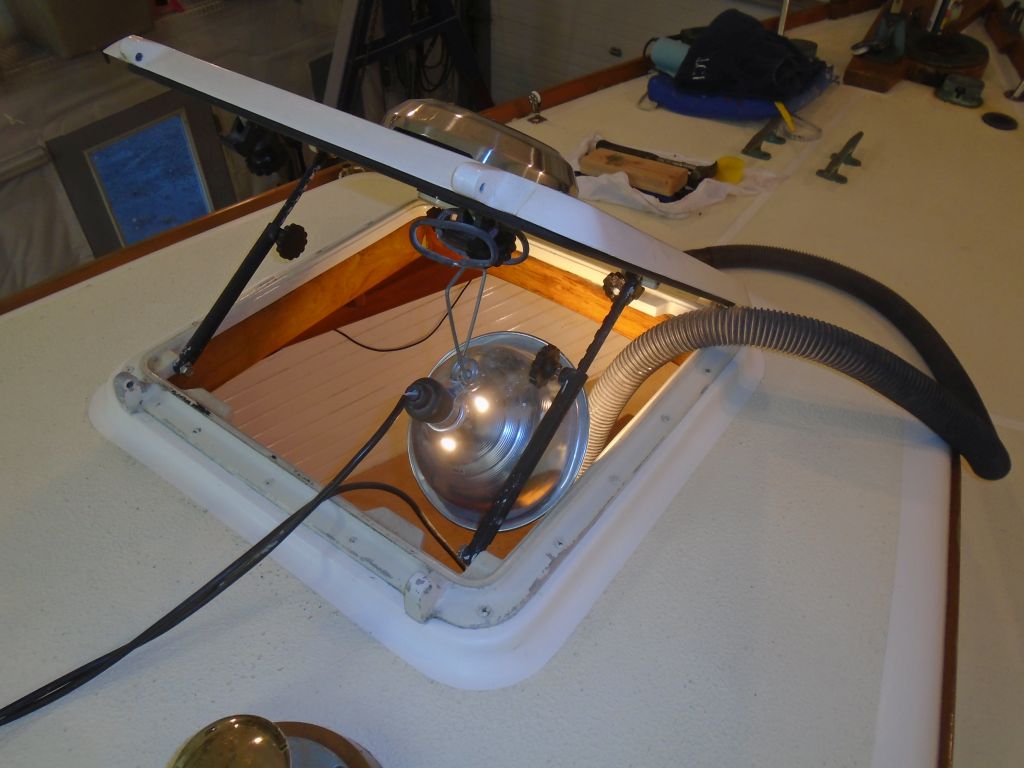
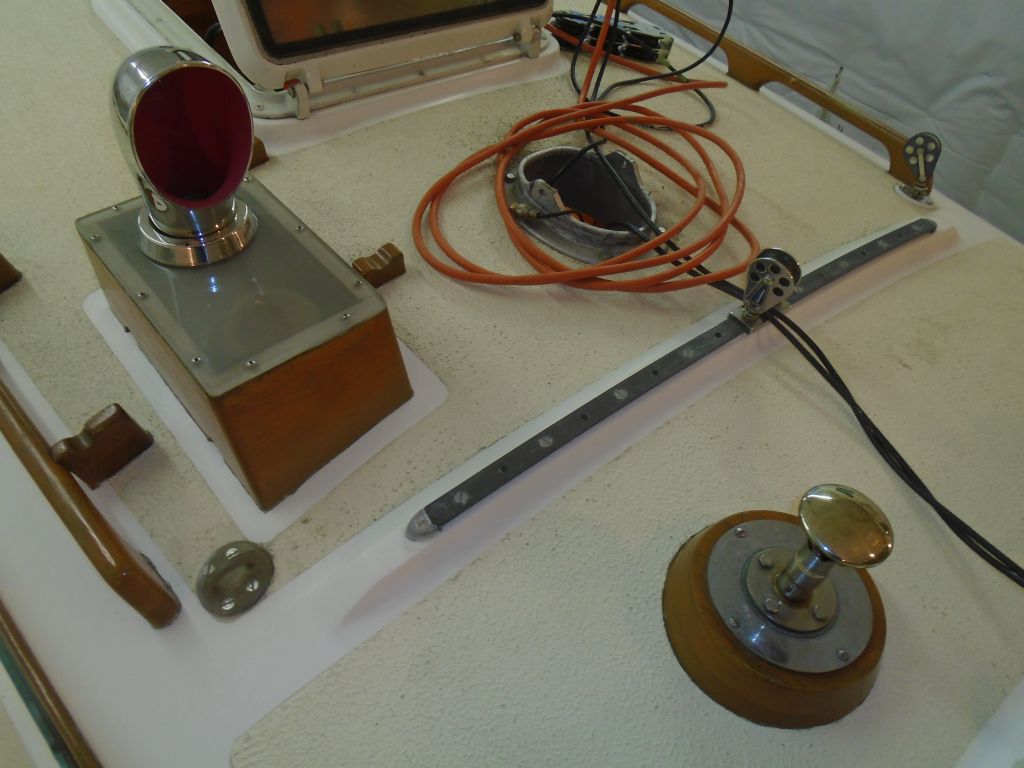
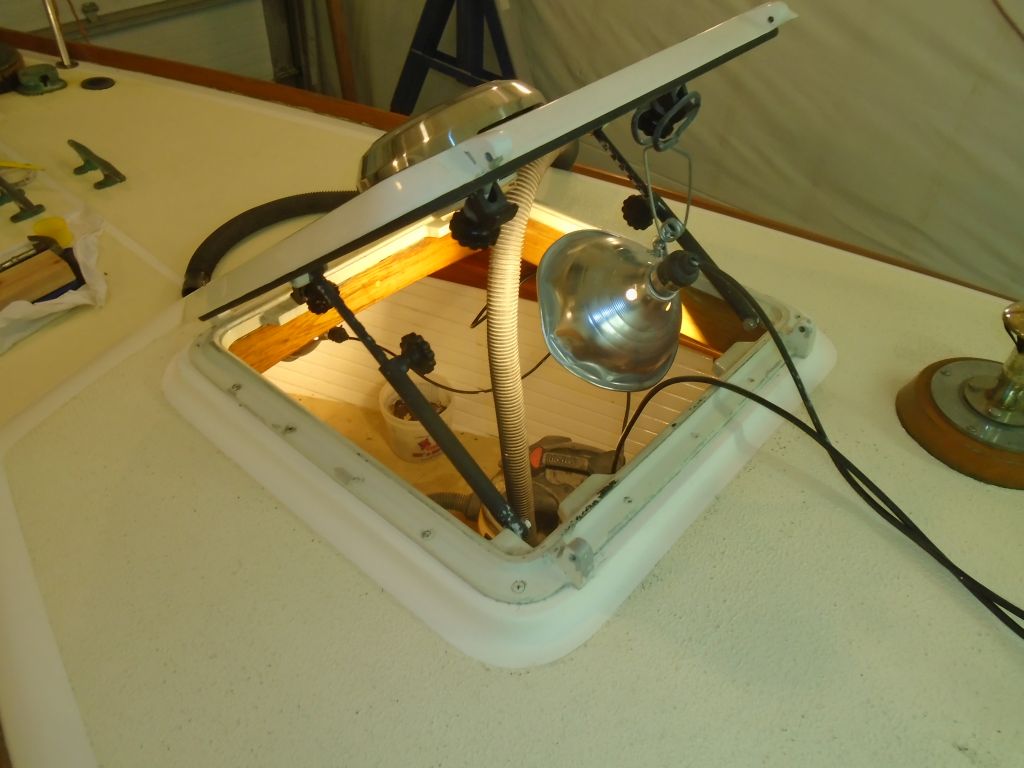
With the main deck areas complete, I moved up to the coachroof and portions of the cockpit, and took care of various borders and smaller areas around the hatches and elsewhere, which, as with other deck areas, started out with various levels of dirt, oxidation, and other staining.

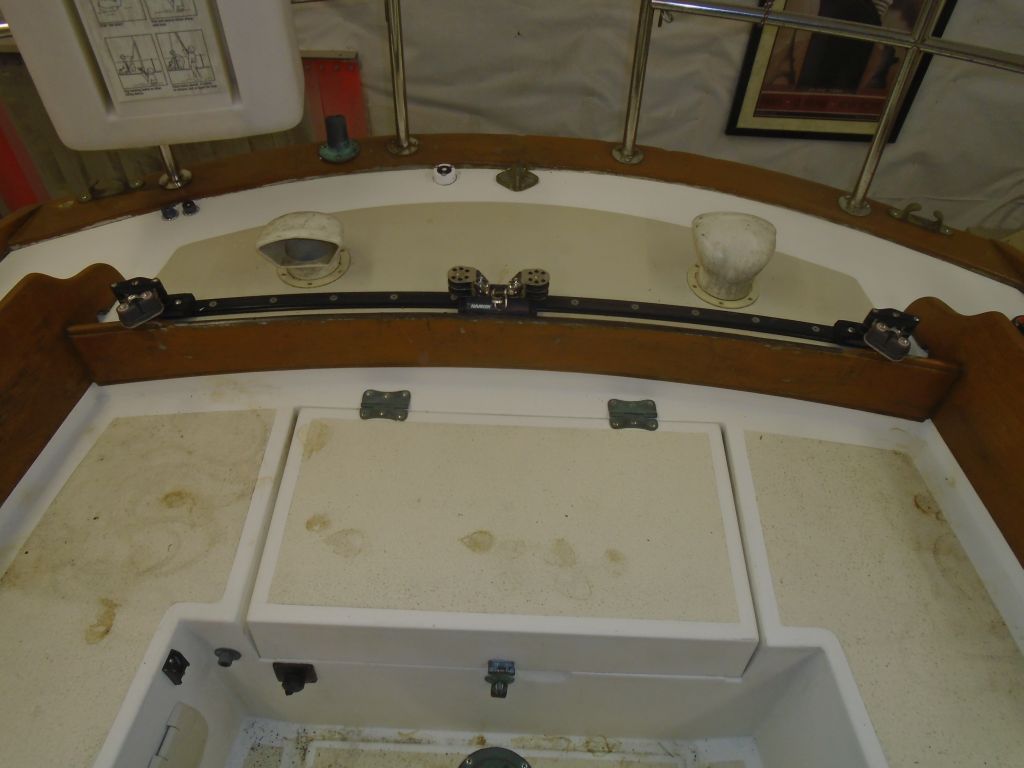
For now, I left the main part of the cockpit well untouched, but cleaned up all the areas bordering brightwork so I could get moving on that project soon.

I used some rags to soak up any remnants of liquid from the bilge, and sanded away the paint from the new garboard drain area to prepare in advance for its installation later.

garboard1-122215

I’d hoped to finish up work on the windlass removal, hoping my saw blades would arrive in the early afternoon, but the usual increased package demand and traffic from the last-minute holiday rush caused my normal delivery to be much later than usual (not unexpectedly), too late for me to move forward with that project.

Total time billed on this job today:  3.75 hours

0600 Weather Report:
25°, cloudy.  Forecast for the day:  clouds, rain late in the day.  High 44°

Nomad 8

< Back to Nomad

Monday

After the usual water-wash, I sanded as needed the spots on the hull and, especially, the transom repair to smooth the epoxy fairing compound and, where required, to prepare for a second coat.  After cleaning up, I applied more fairing compound to portions of the transom to take care of low spots and some fine-tuning.

Total time billed on this job today:  .75 hours

0600 Weather Report:
30°, mostly clear.  Forecast for the day:  clouds and sun, breezy, around 40

Danusia 5

< Back to Danusia

Monday

Over the weekend, I continued treating the windlass shaft housing with penetrating oil.  Whatever the next attempt at removal entailed, it’d require additional force and additional materials, especially as the likelihood grew that I’d end up cutting the shaft to release the above- and below-decks components from each other so I could finally effect a total removal, which was required no matter what.   So while I awaited saw blades, I took a break from the windlass to focus on some of the other jobs on the boat.

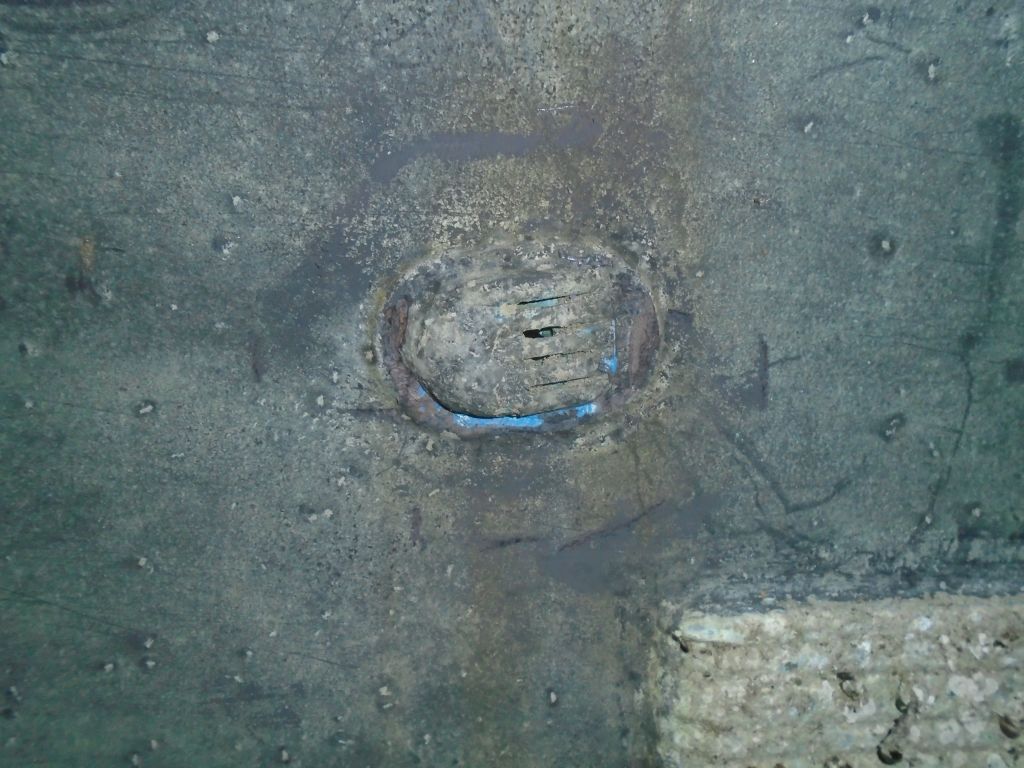
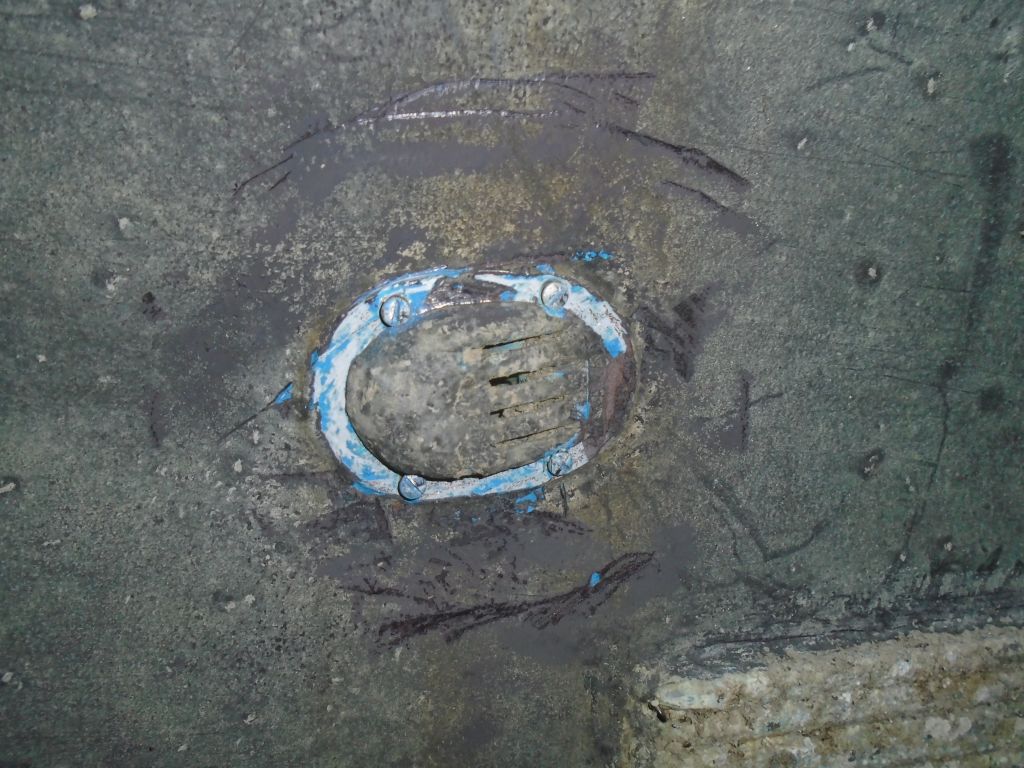
I started with the external strainer over the engine intake, down in the keel near the turn of the bilge.   The owner was rightfully wary of this external “scoop” strainer, and with a good internal sea strainer he requested I remove the strainer to leave the through hull unprotected, which gibed with my own opinion.  During a meeting at the boat a few days earlier, we’d determined that the strainer was not an integral part of the through hull the way they sometimes are, so removal looked straightforward.

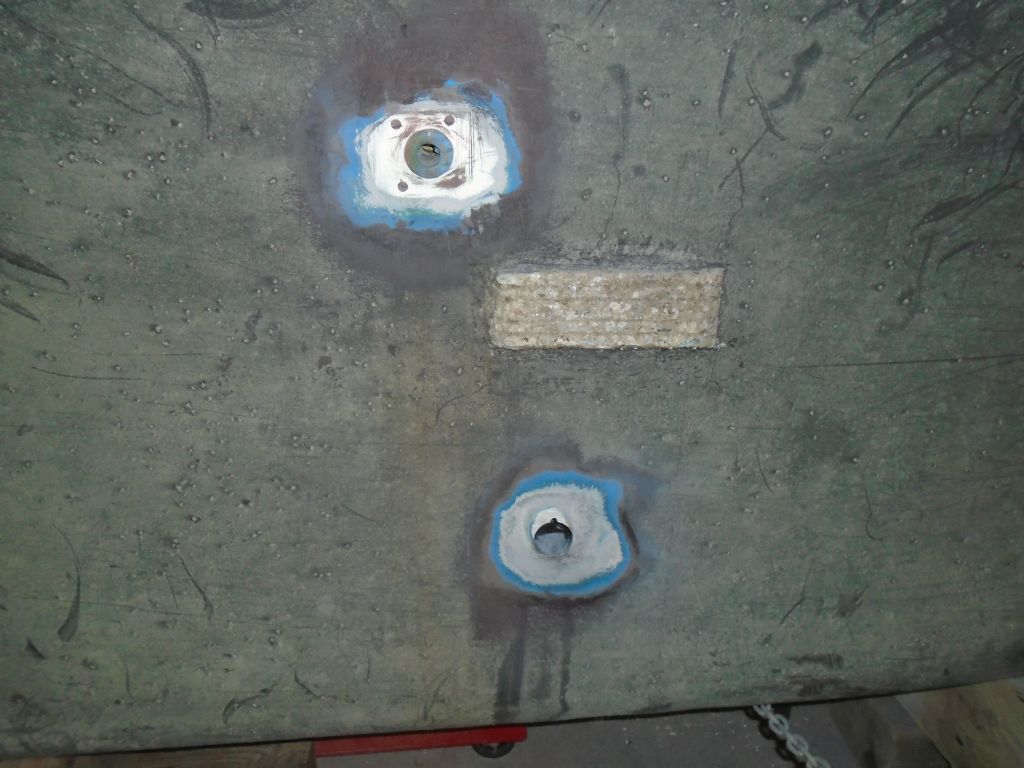
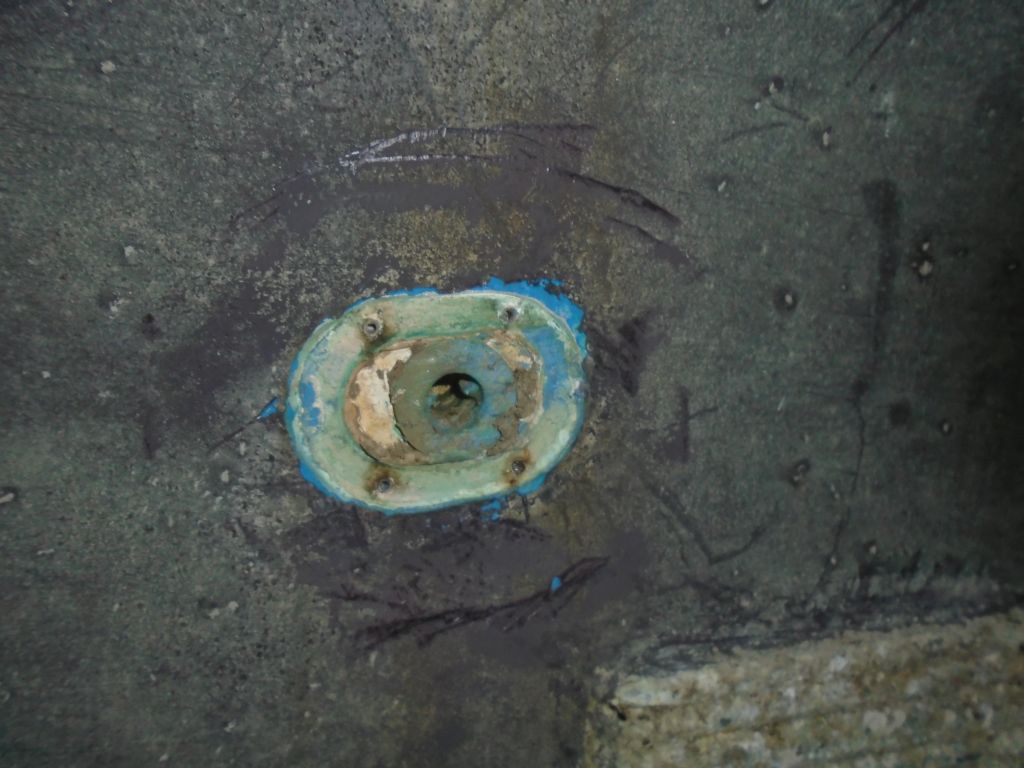
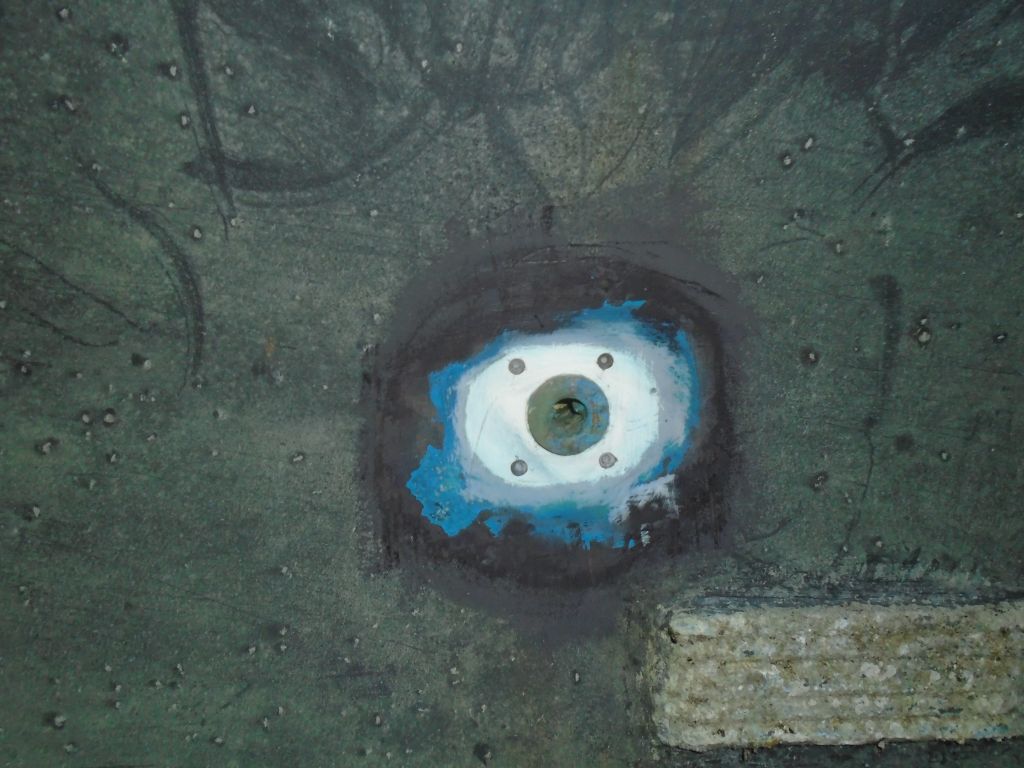
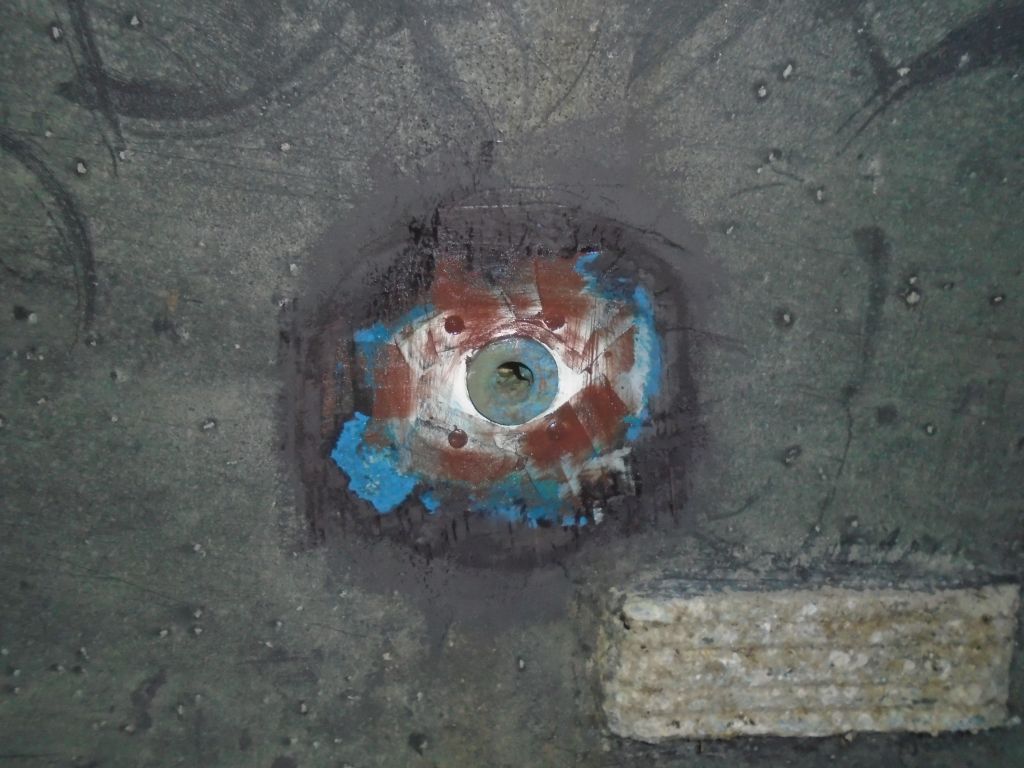
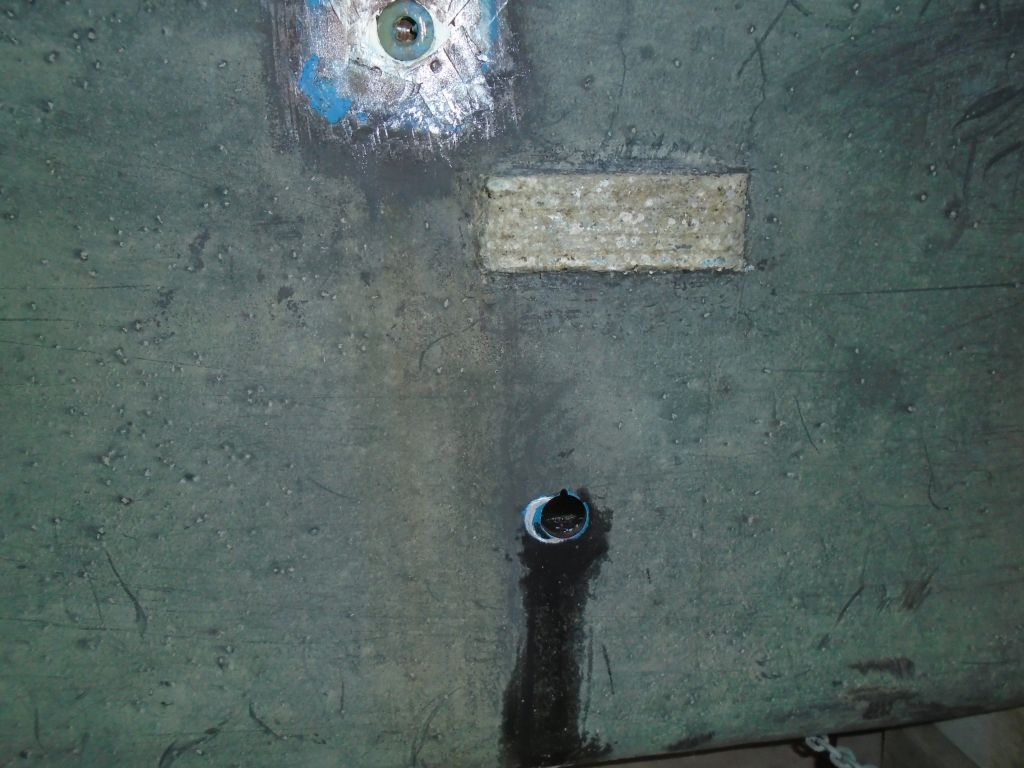
And so it turned out to be.  After removing layers of paint and barrier coat from the fitting and exposing the fixing screws, I could remove the strainer easily, after which I cleaned the hull of old sealant, slightly feathered in the edges of the surrounding bottom paint and barrier coat, and prepared the four screw holes for repair by milling small countersinks at each location.  Afterwards, I applied some epoxy fill material.

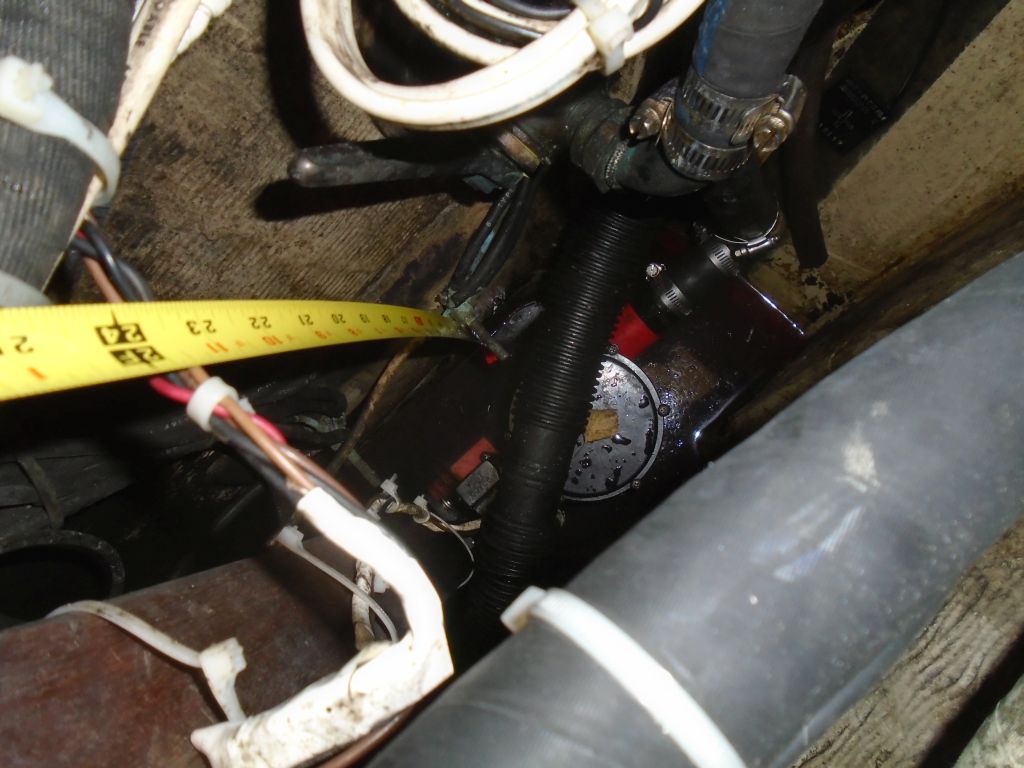
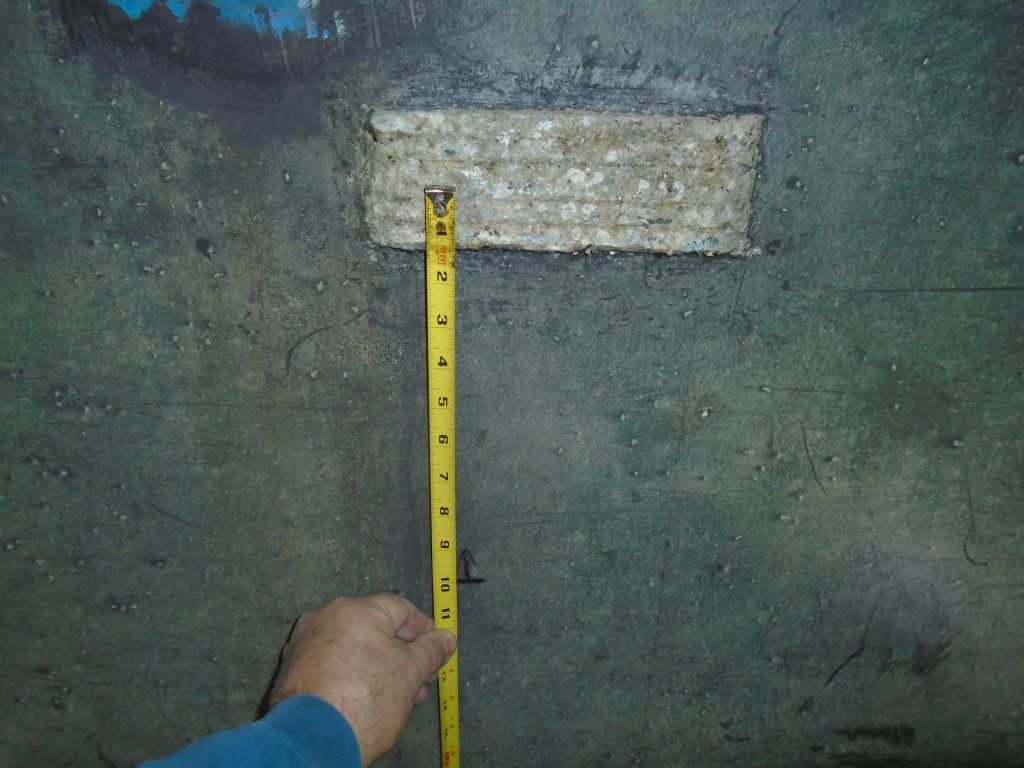
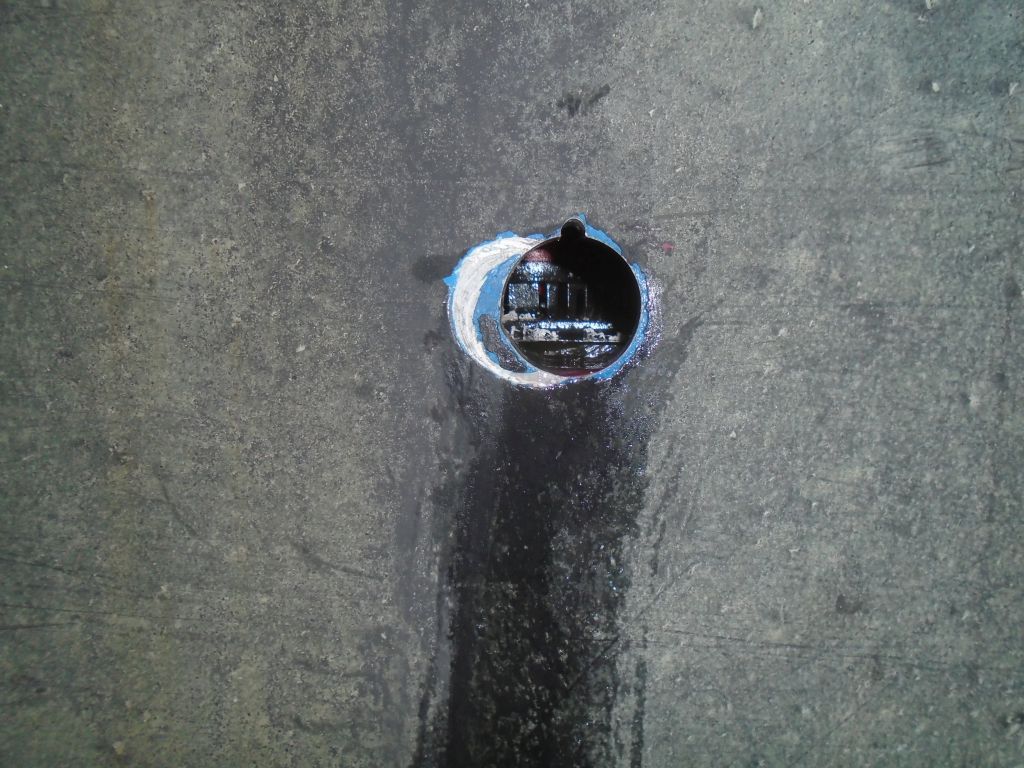
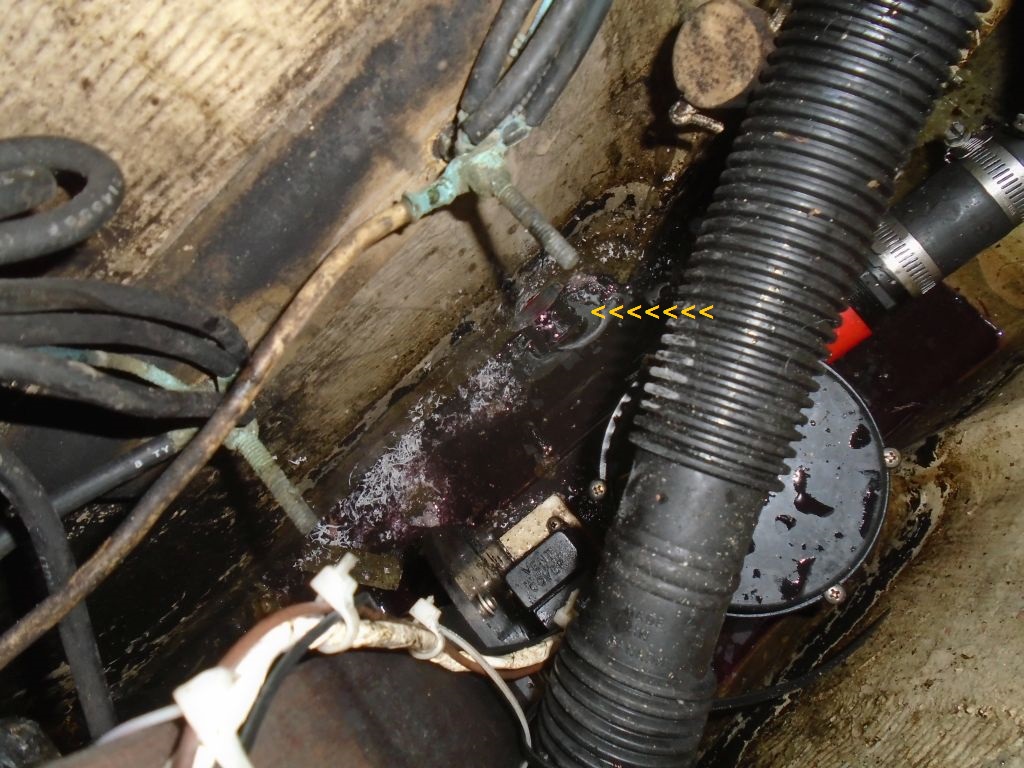
While in this neck of the woods, I scoped out the bilge to determine where to mount a new garboard drain.  From inside the boat, through a small access hatch directly above the deepest portion of the bilge sump, I looked for obstructions and reference points I could use from outside, and measured down from the bolts securing a grounding plate that happened to be located right above the best location for the new drain.  This made it pretty easy to recreate the location from outside, after which I drilled a 1/2″ test hole to drain the remaining liquid from the bilge (mostly antifreeze) and ensure that the location was where I wanted it.

Then, I could drill the 1-1/2″ hole (with key slot at the top) required for the new bronze drain fitting, which I didn’t yet have on hand but would order and install soon.

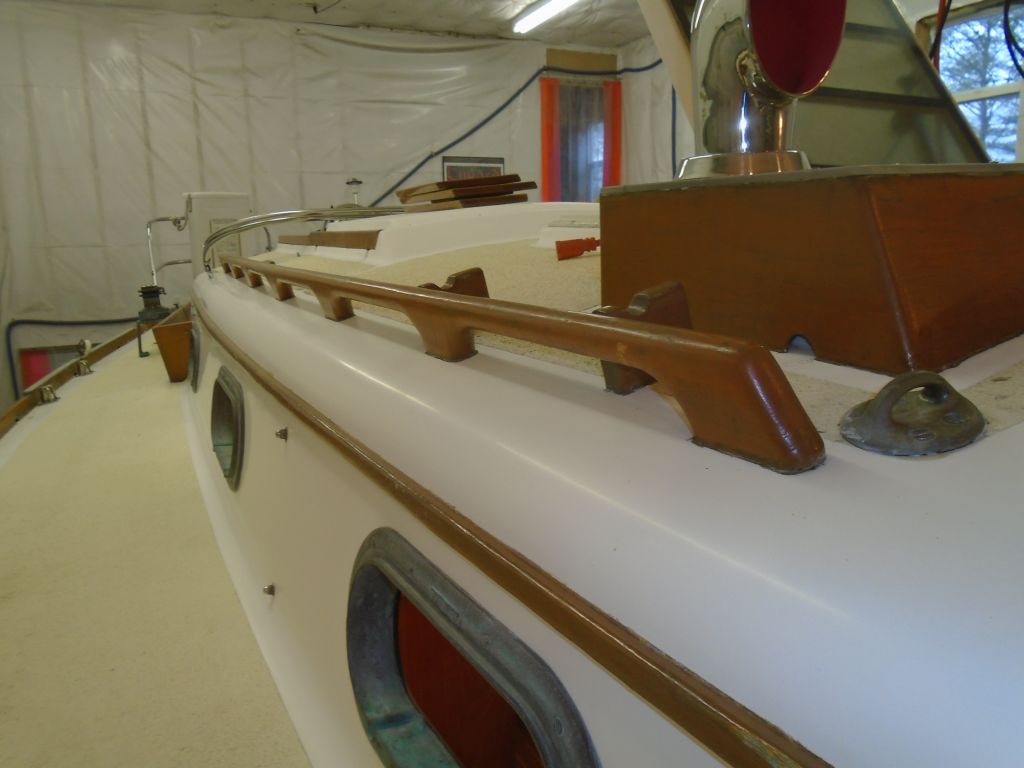
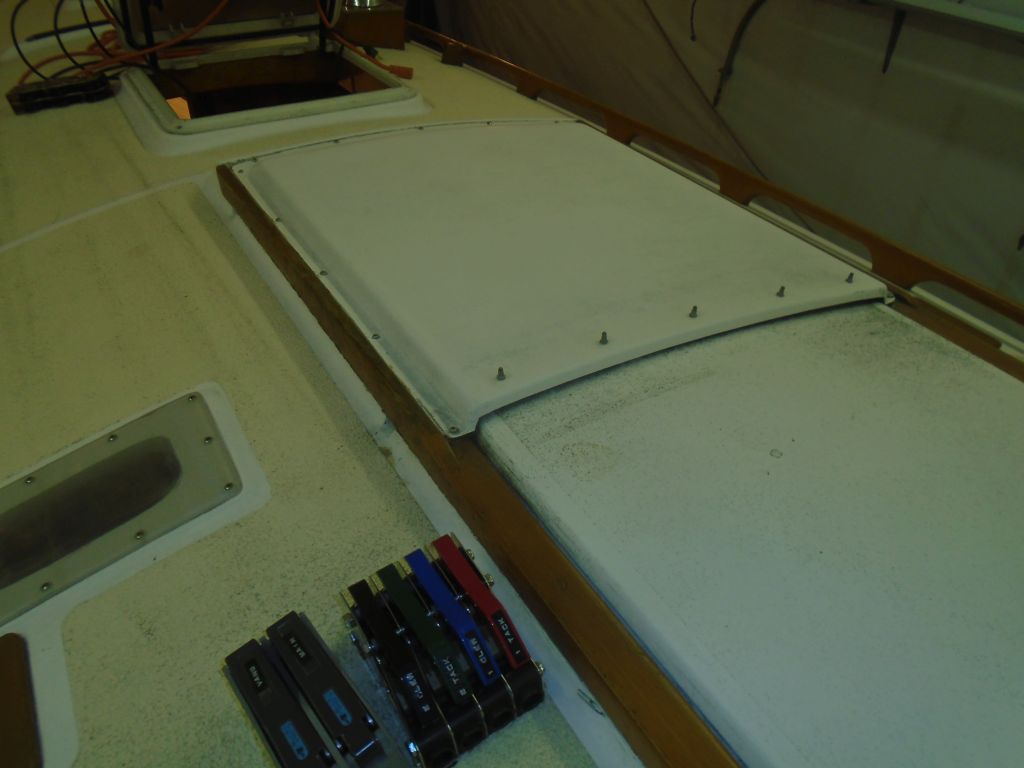
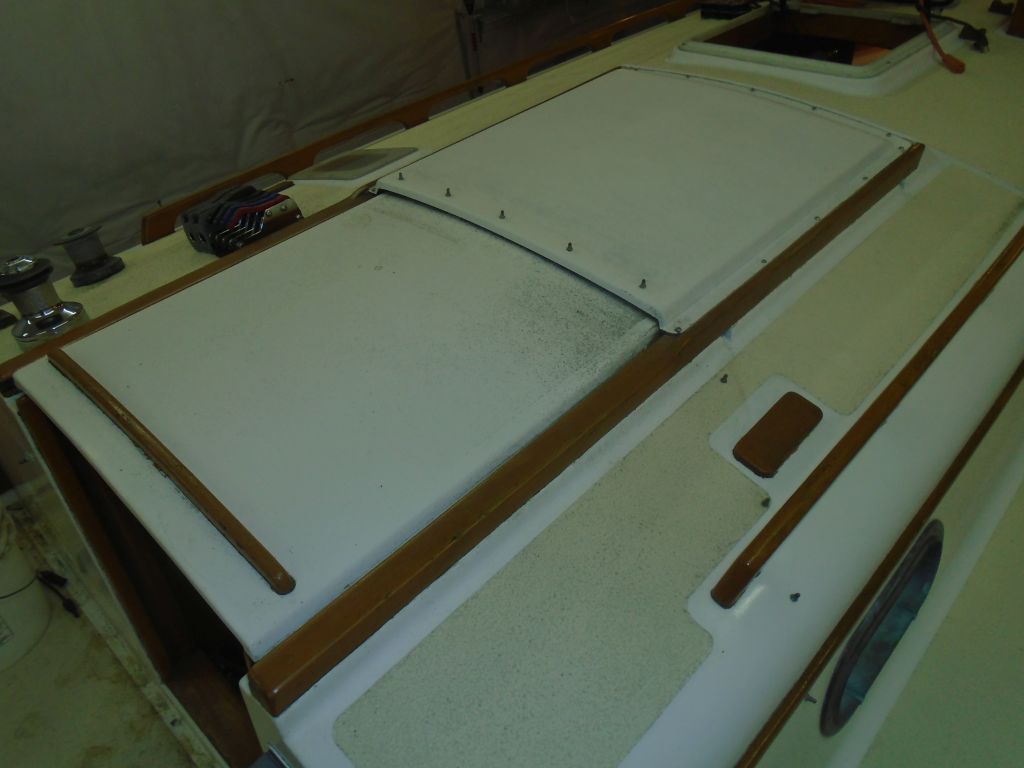
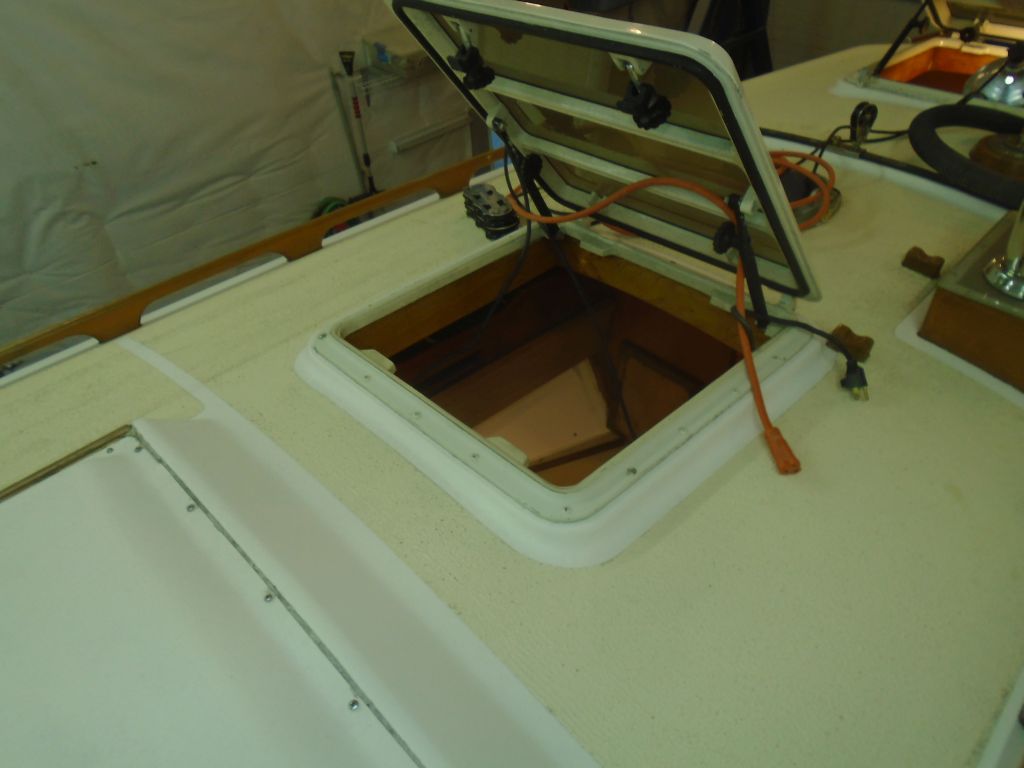
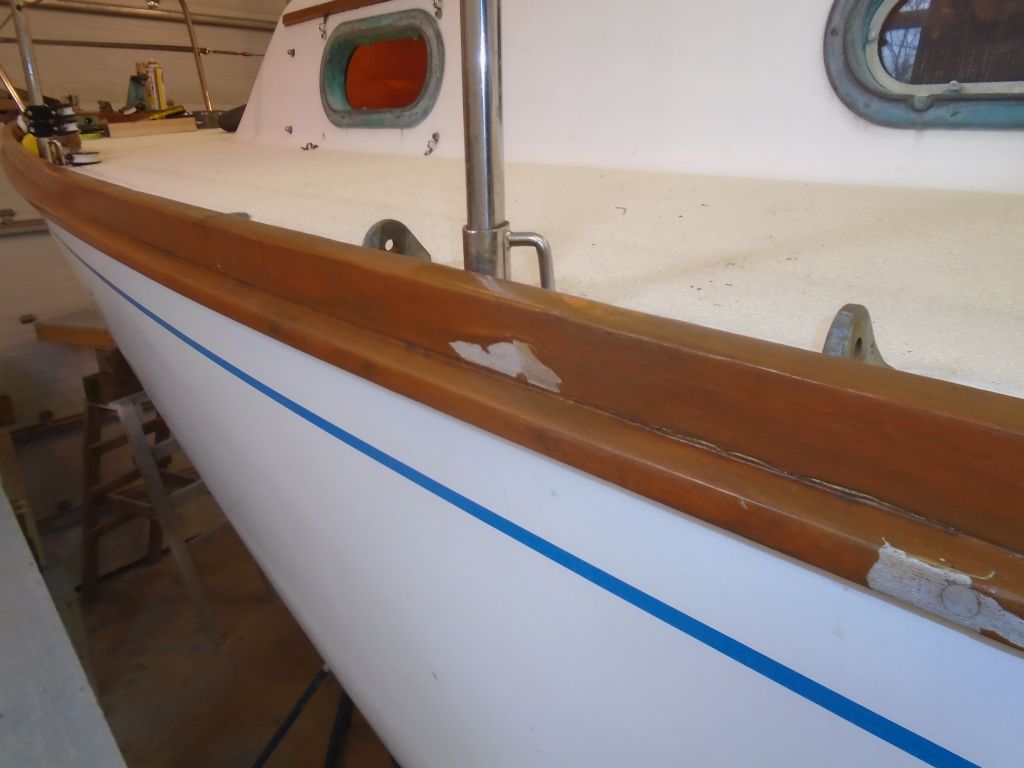
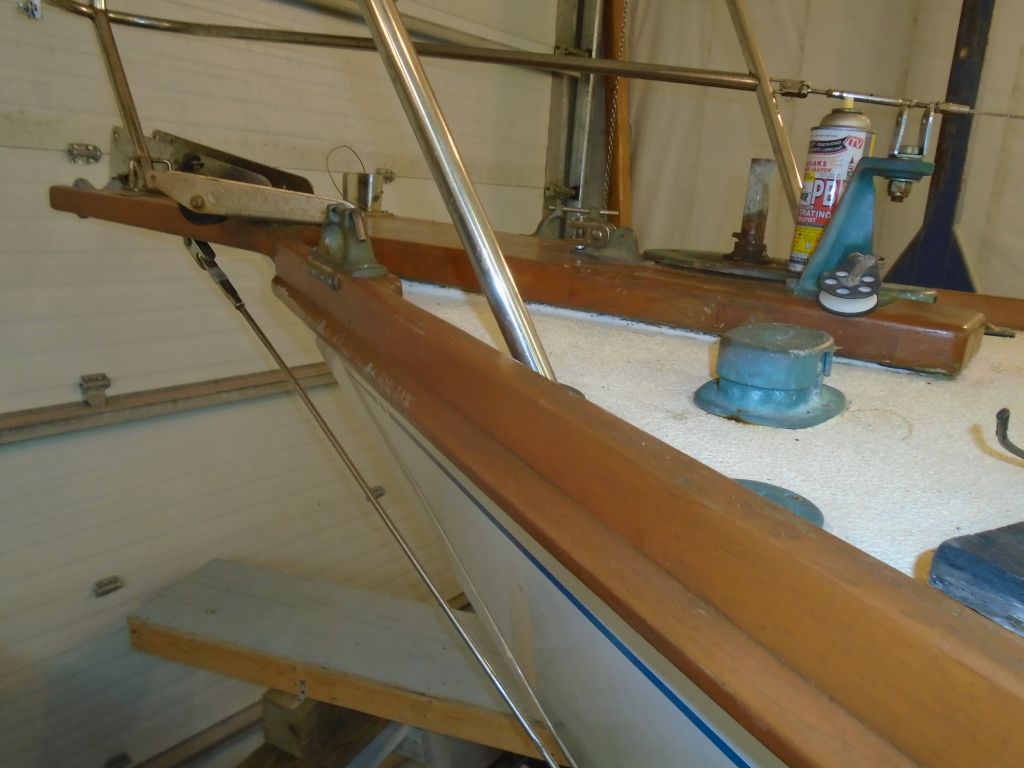
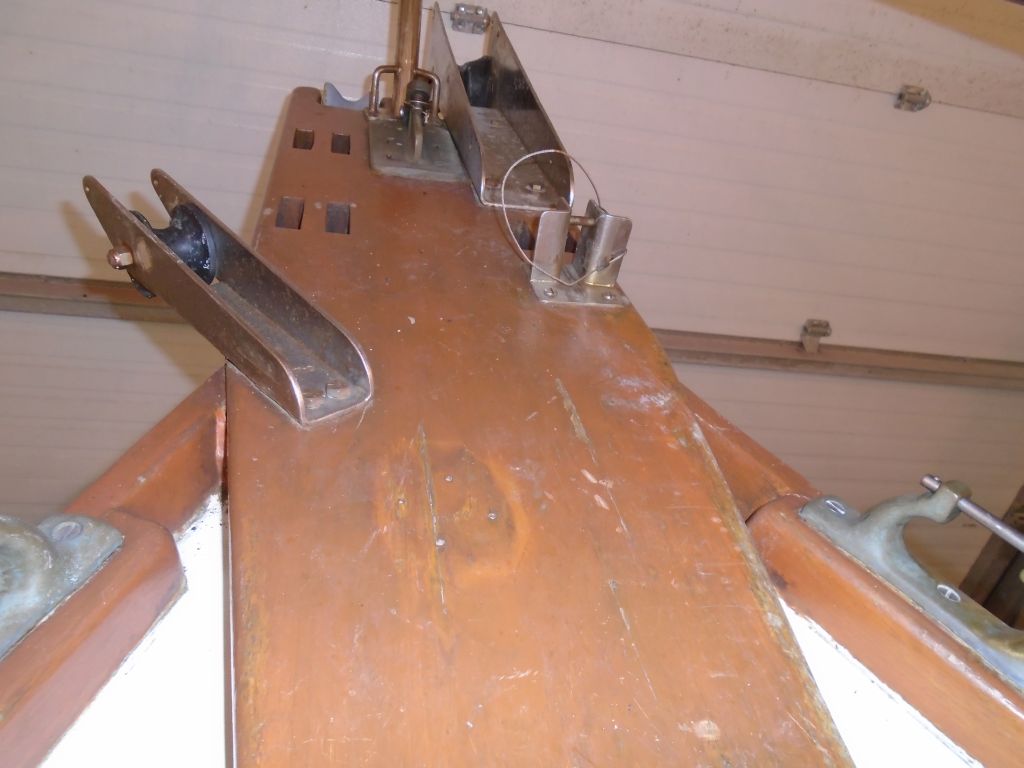
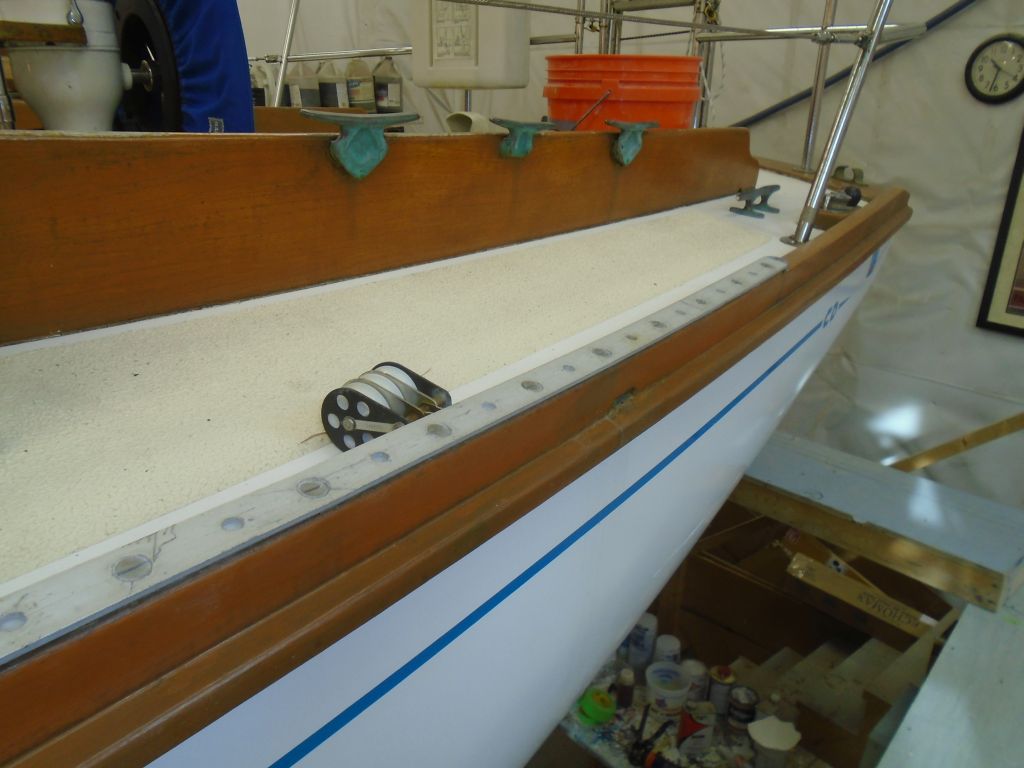
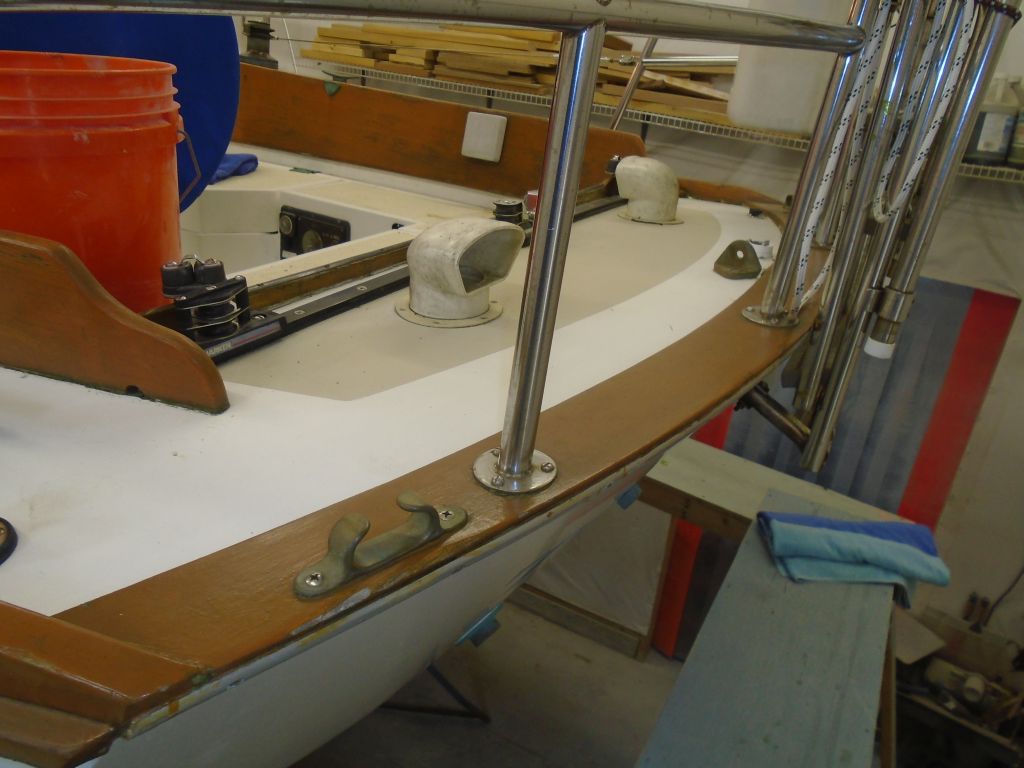
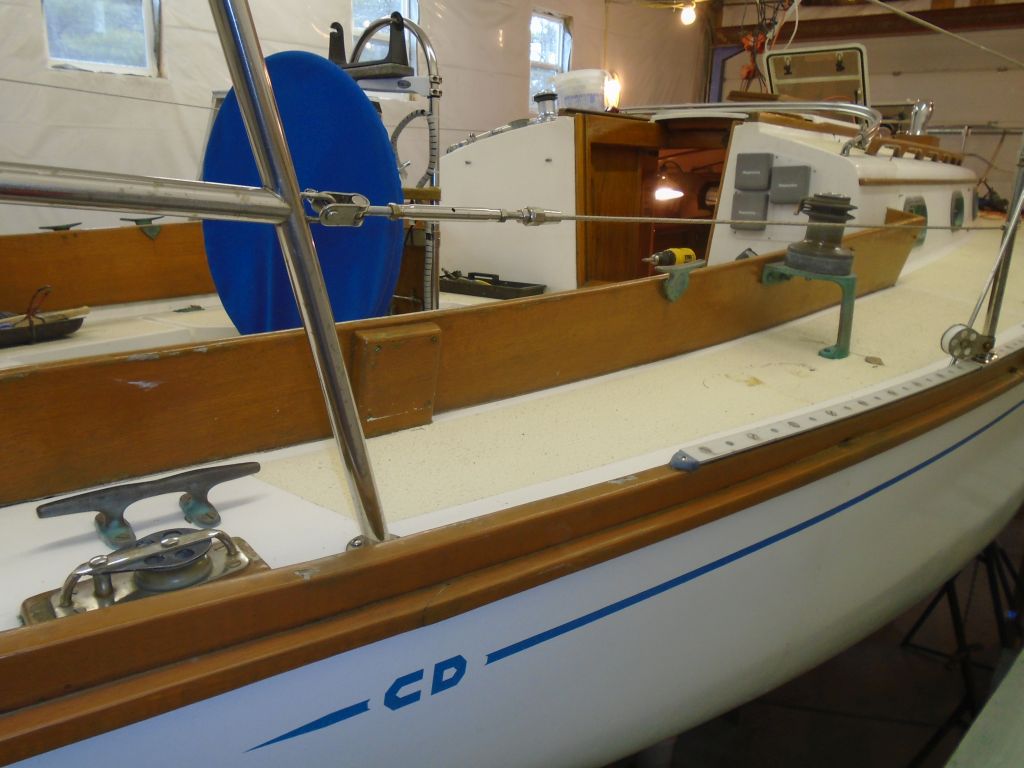
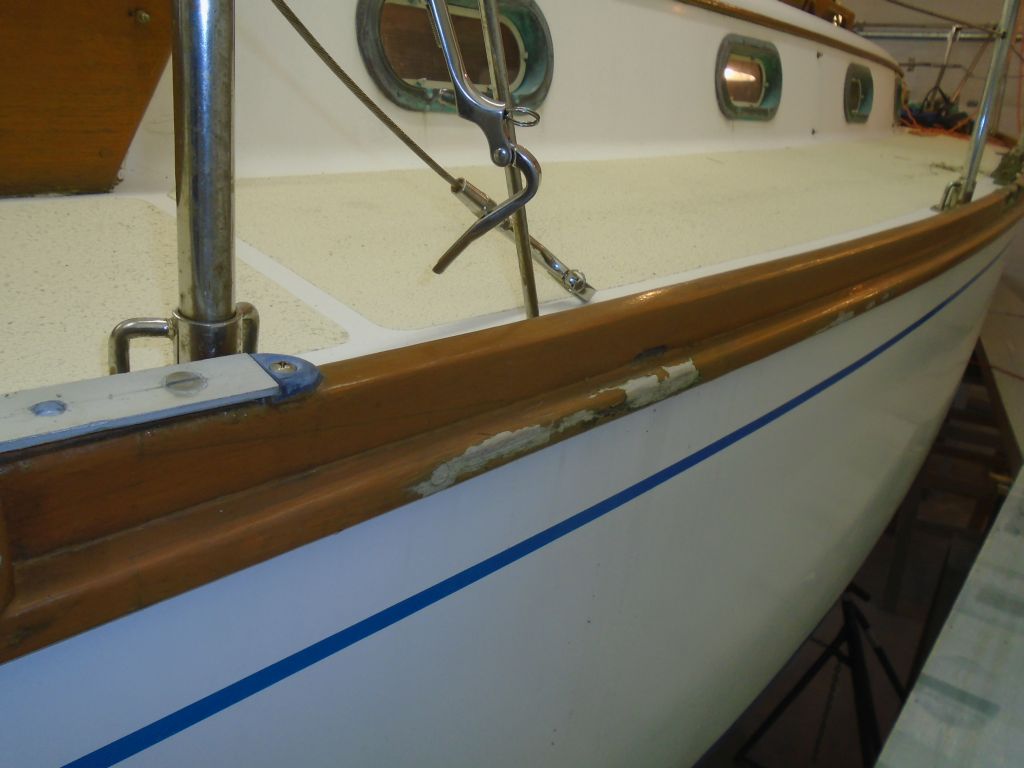
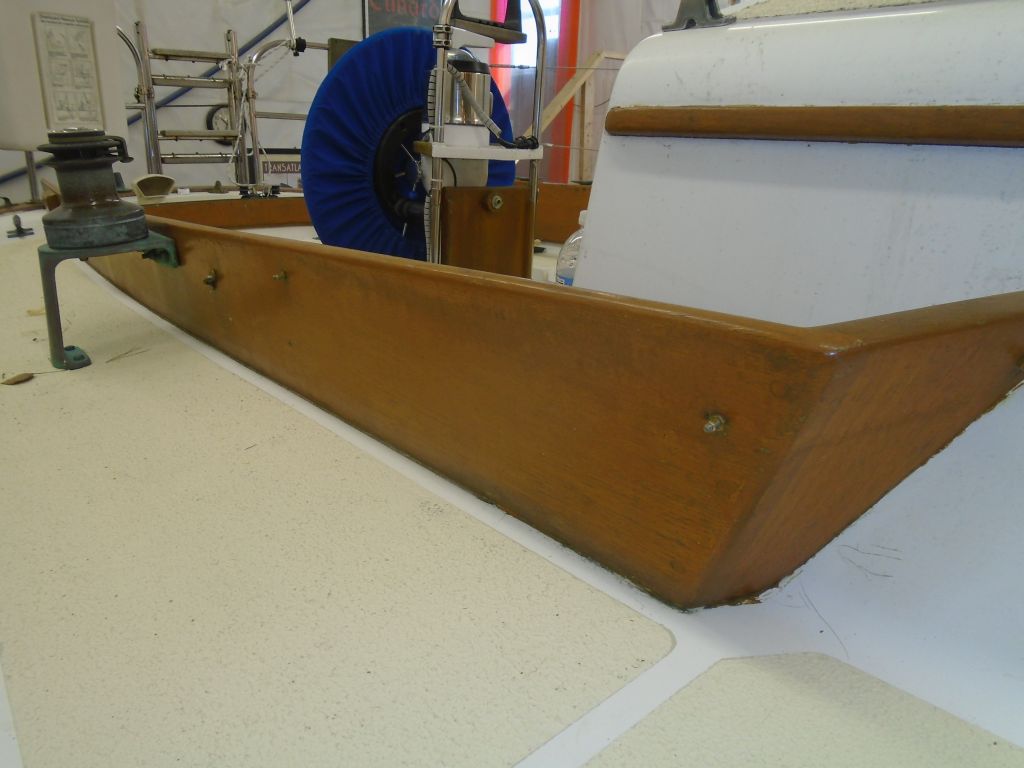
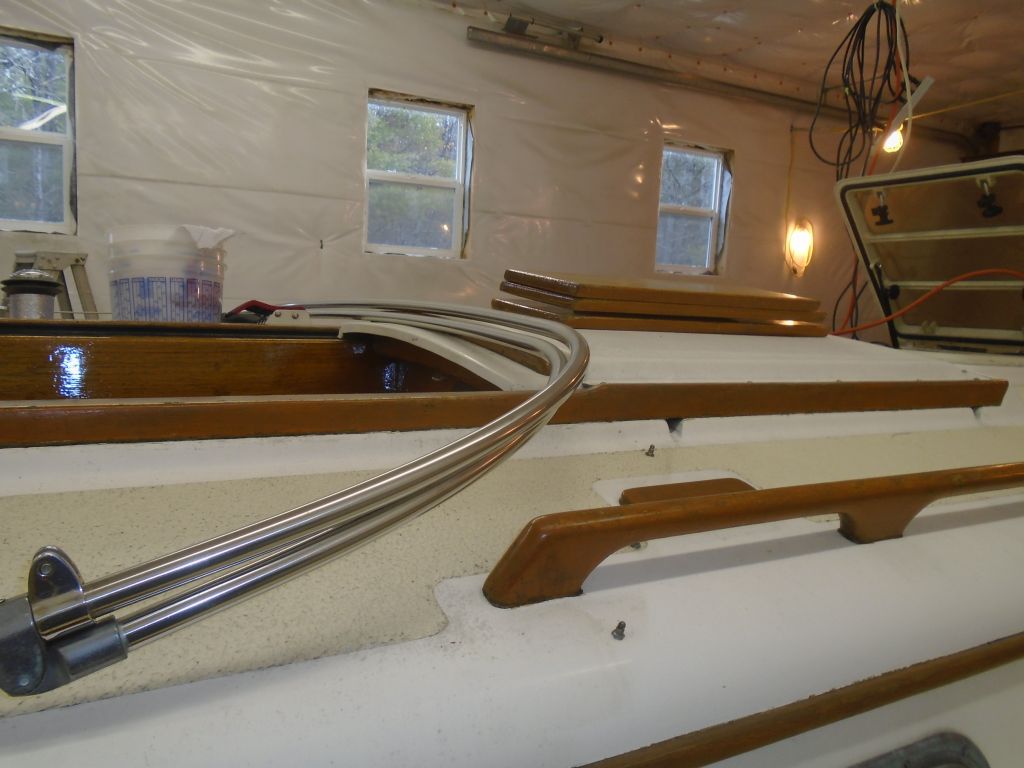
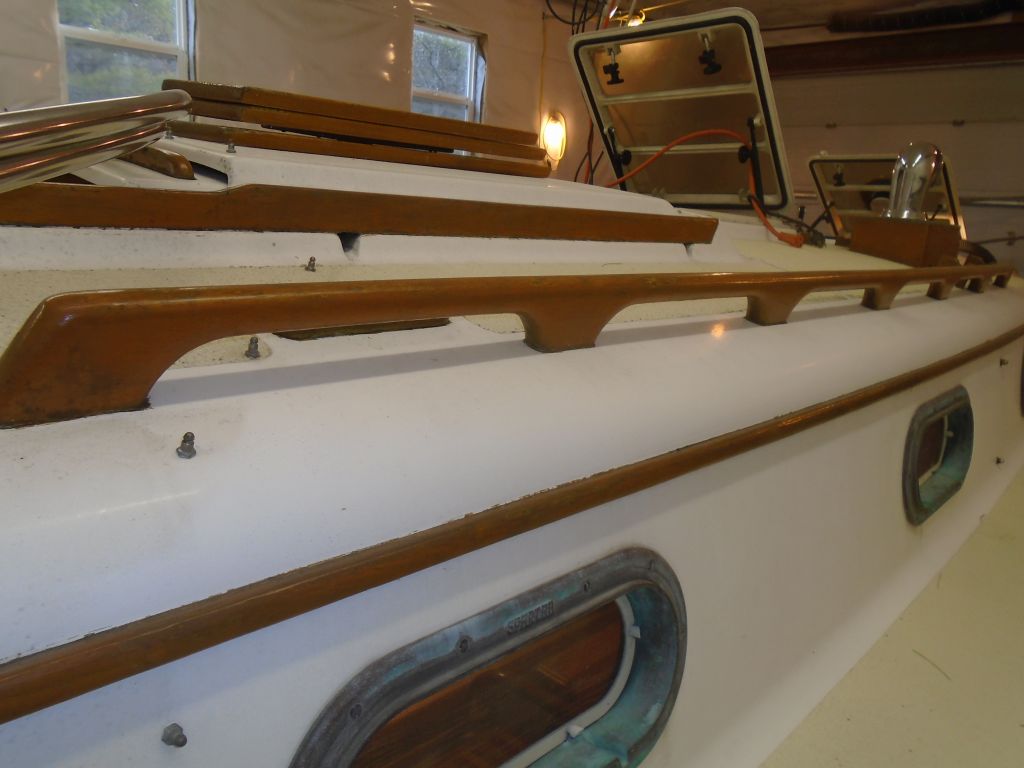
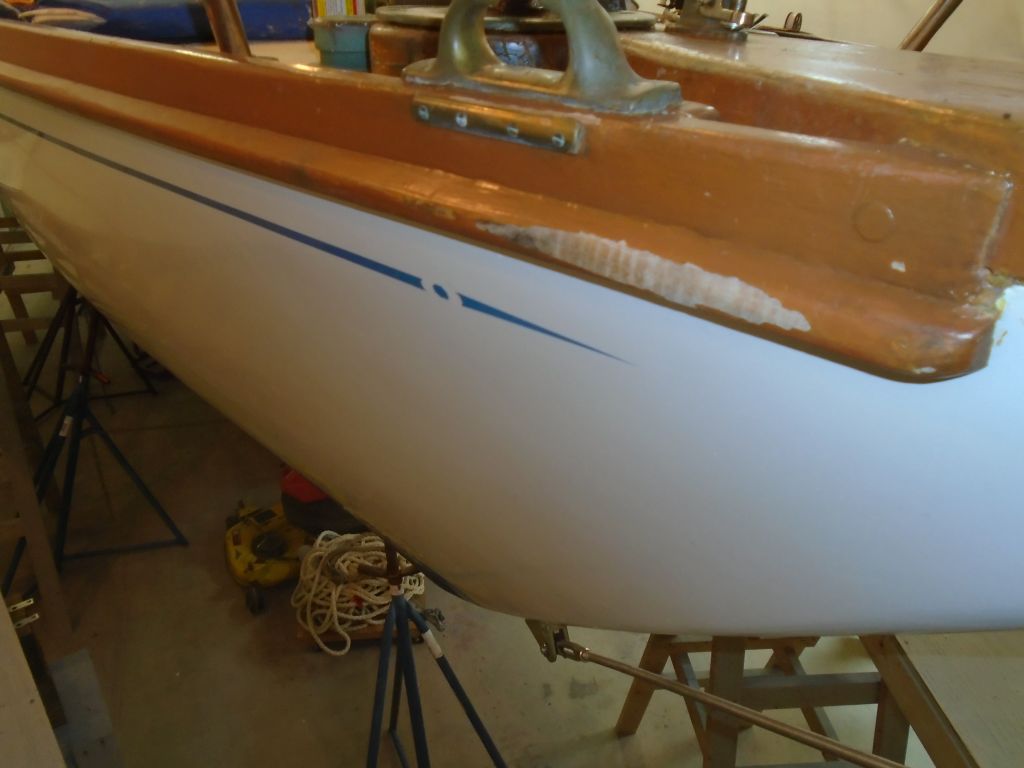
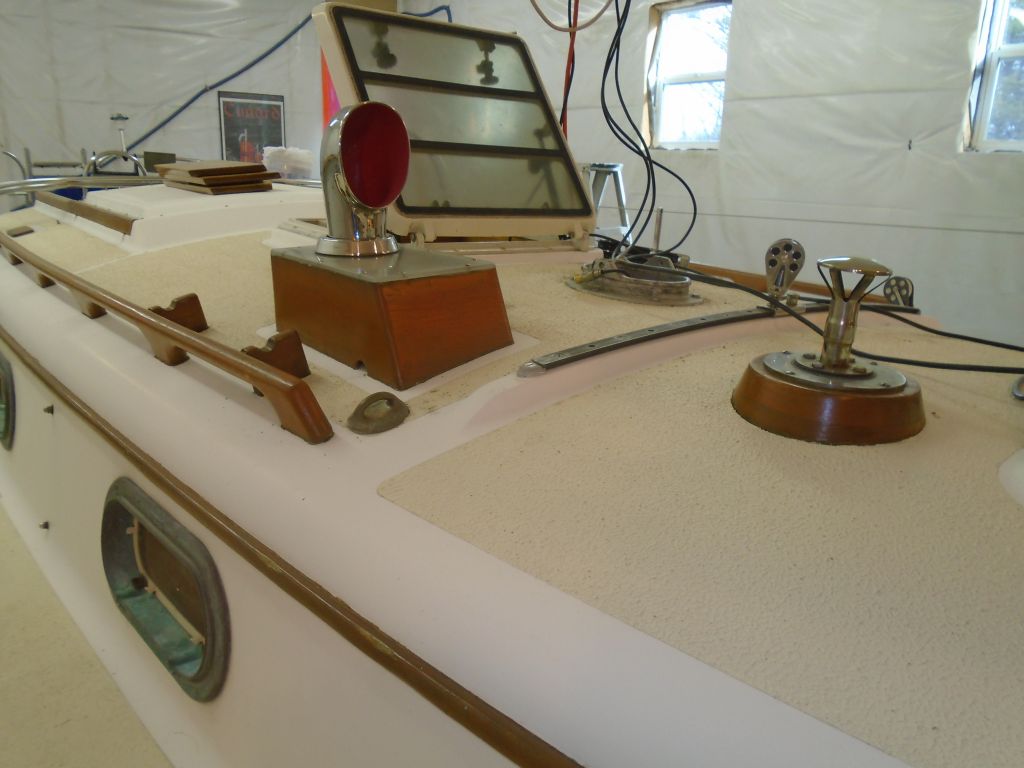
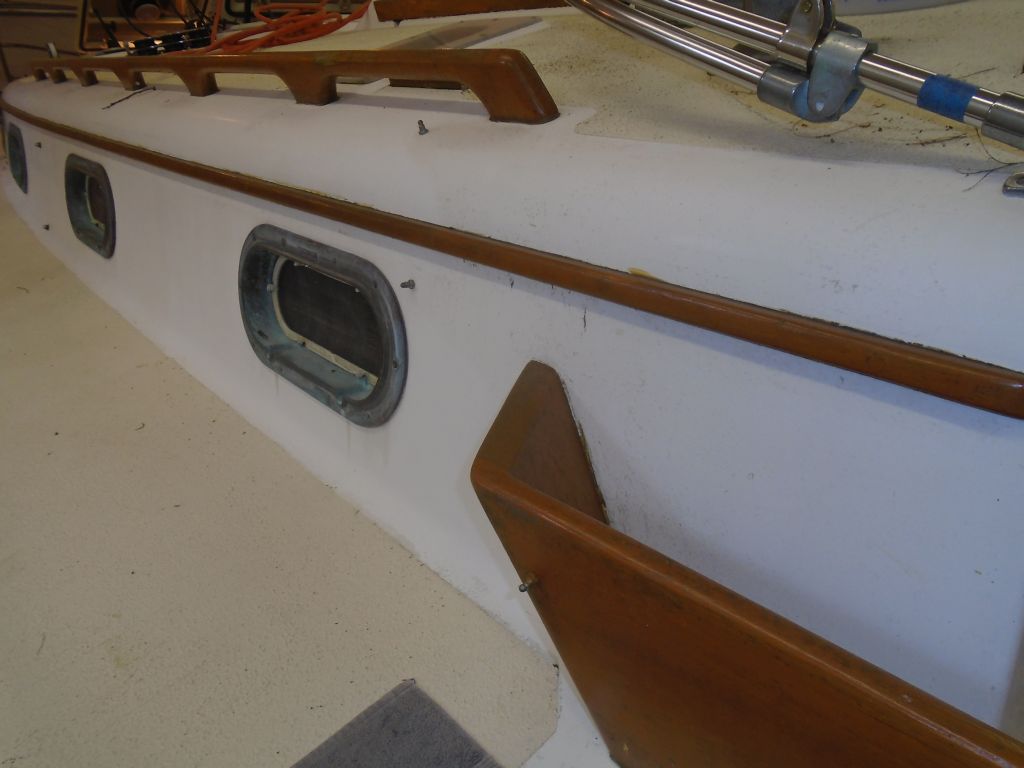
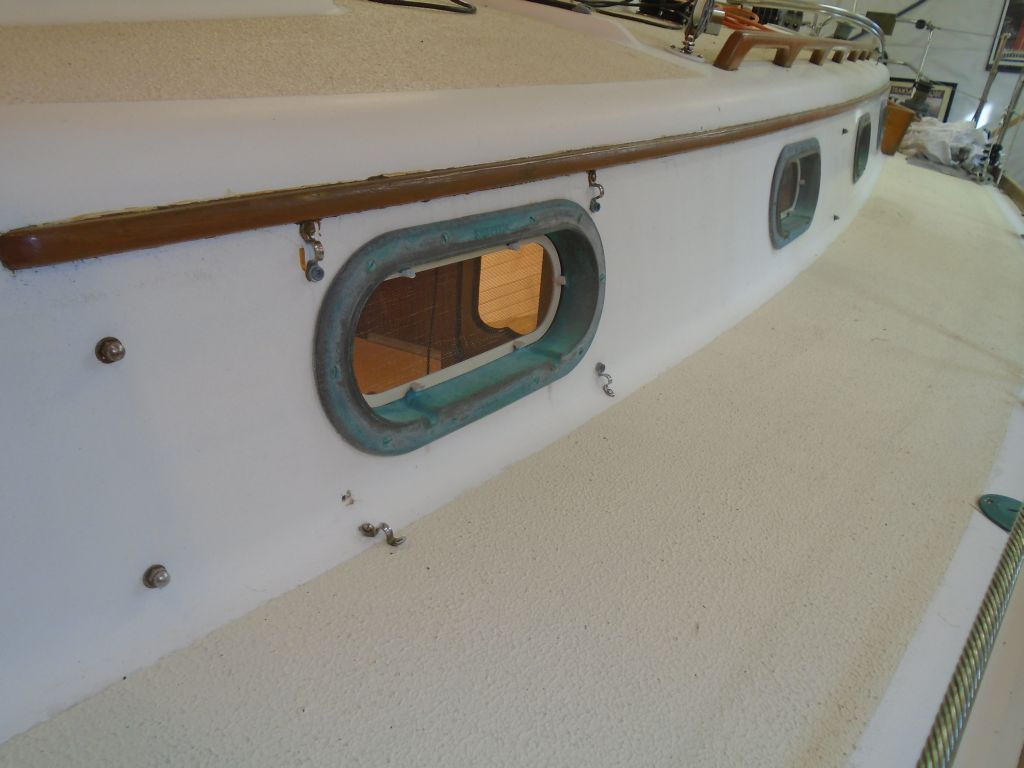
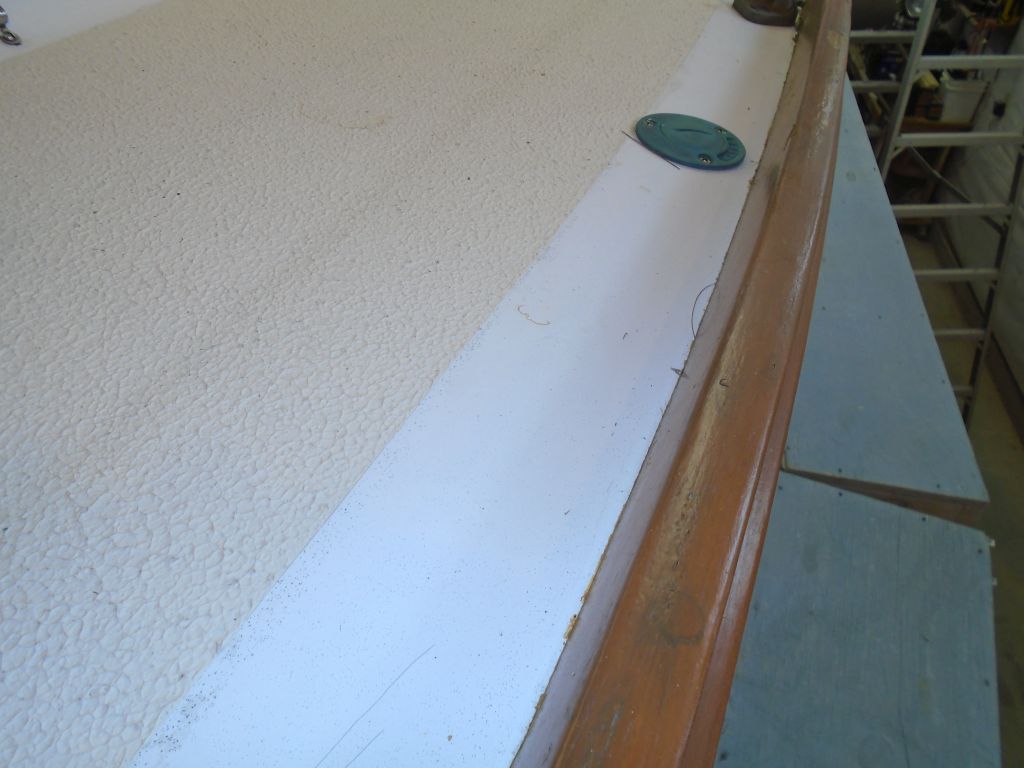
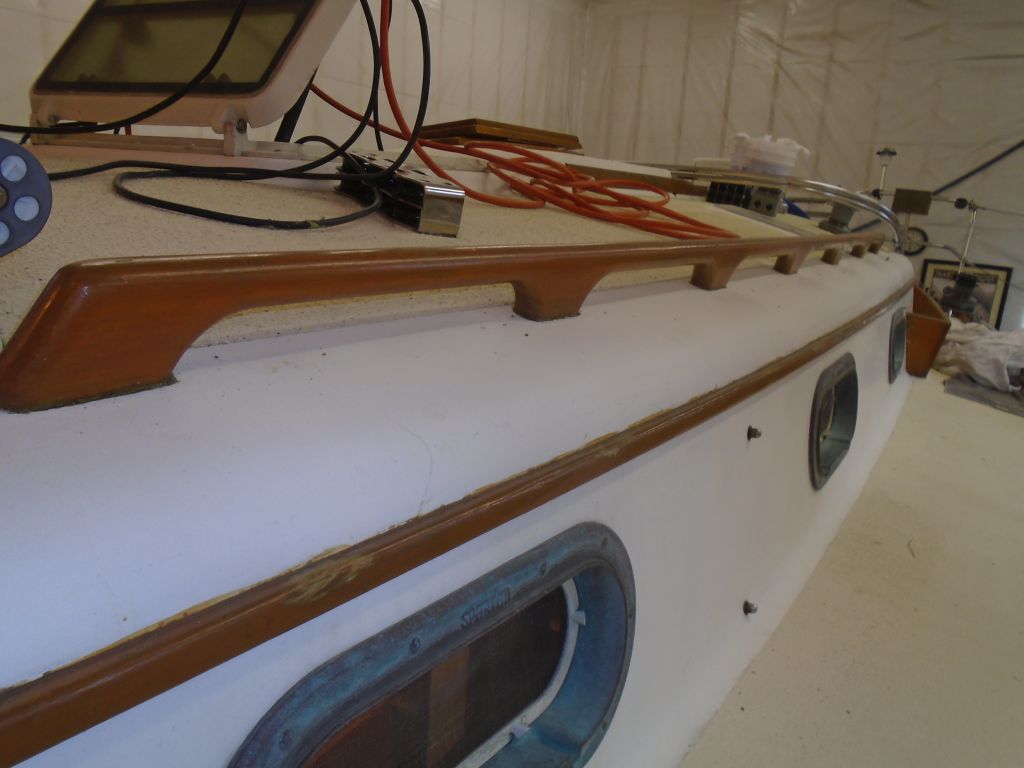
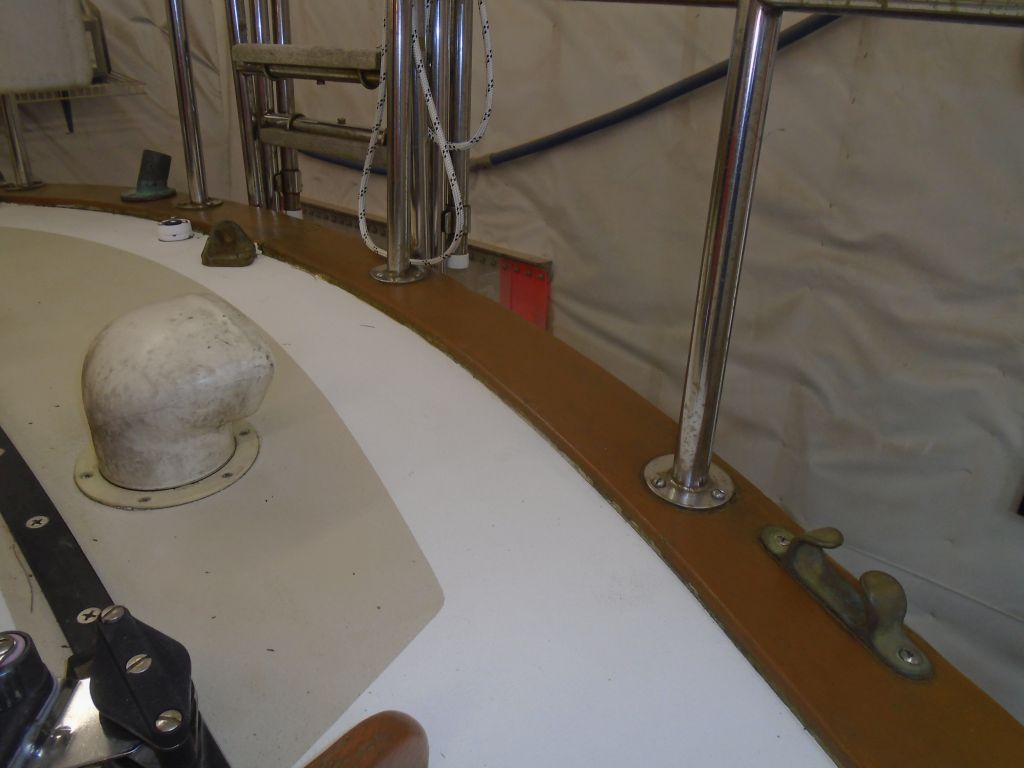
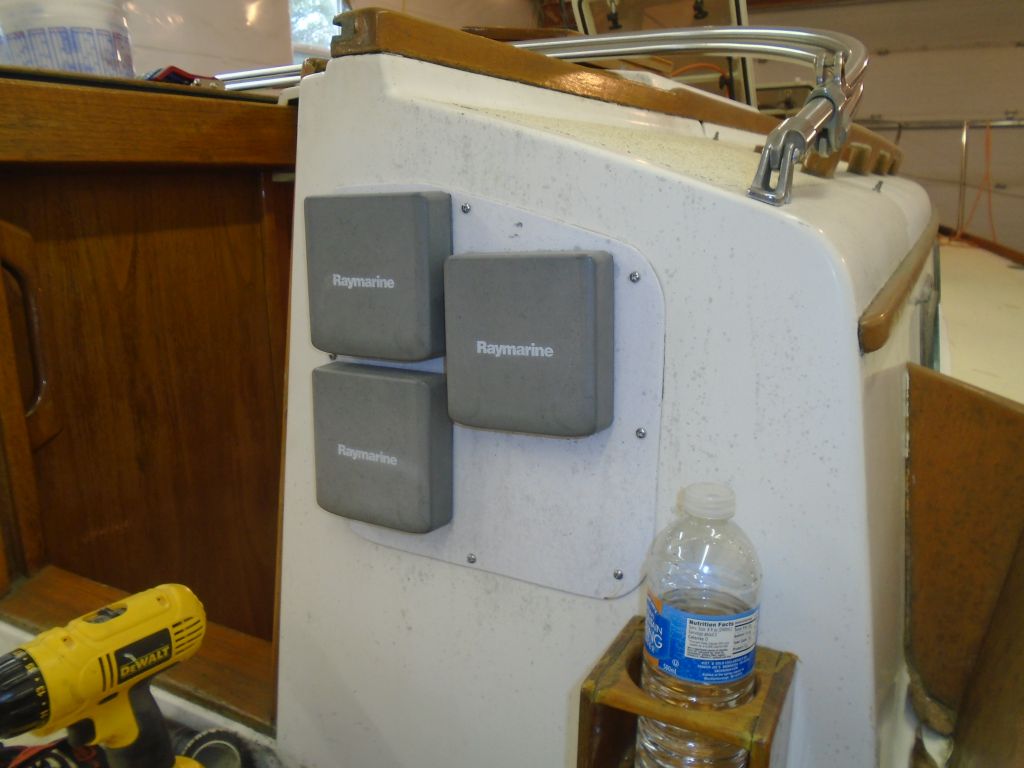
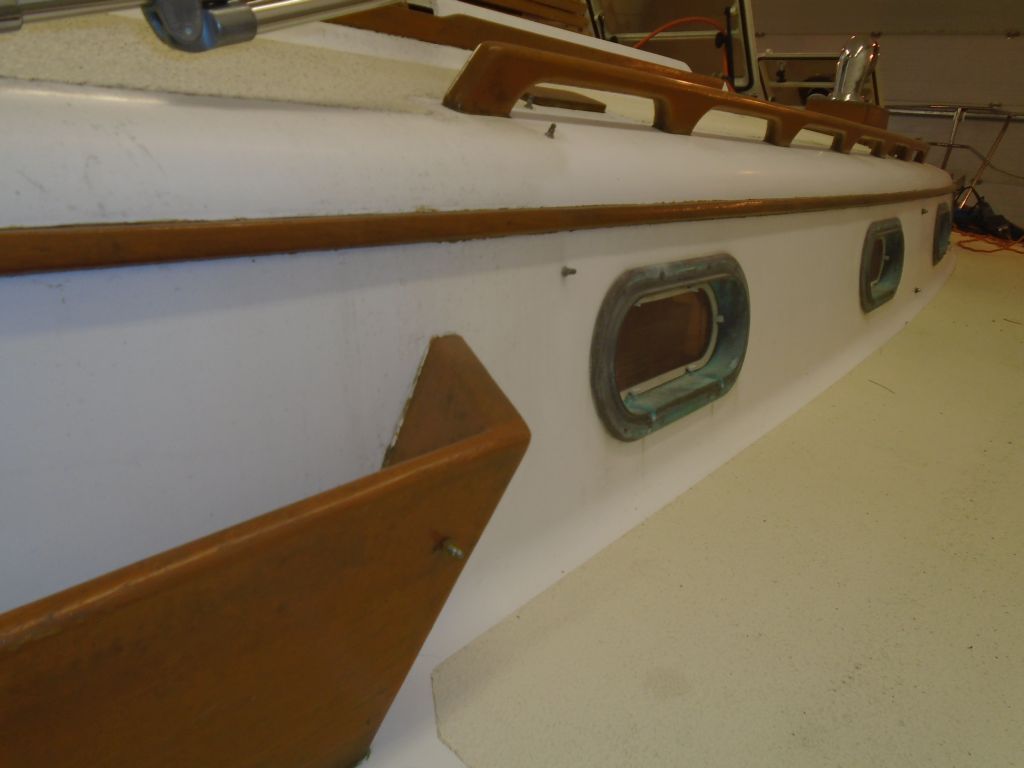
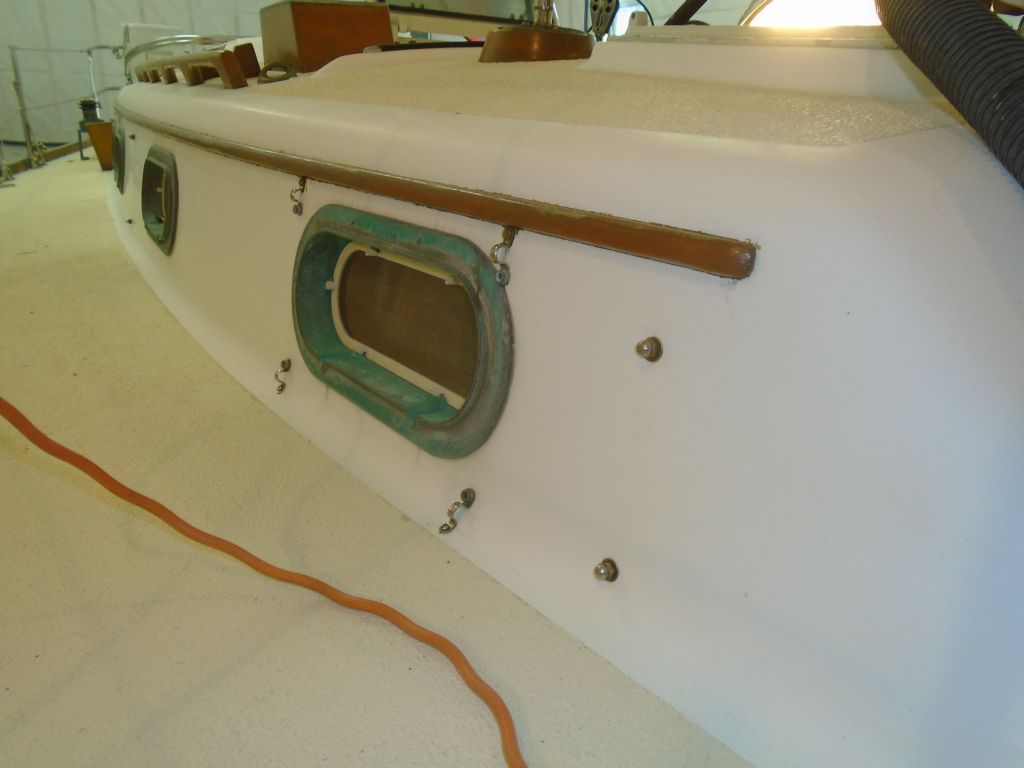
The largest single job on the work list for Danusia was the exterior brightwork, which required stripping and refinishing.  The existing Cetol finish was tired overall and failing completely in many areas, and the owner wished to upgrade to varnish.  With significant woodwork on deck, this would effect a dramatic improvement to the overall appearance of the boat.  These photos show the general condition of some of the brightwork at the start of the job.

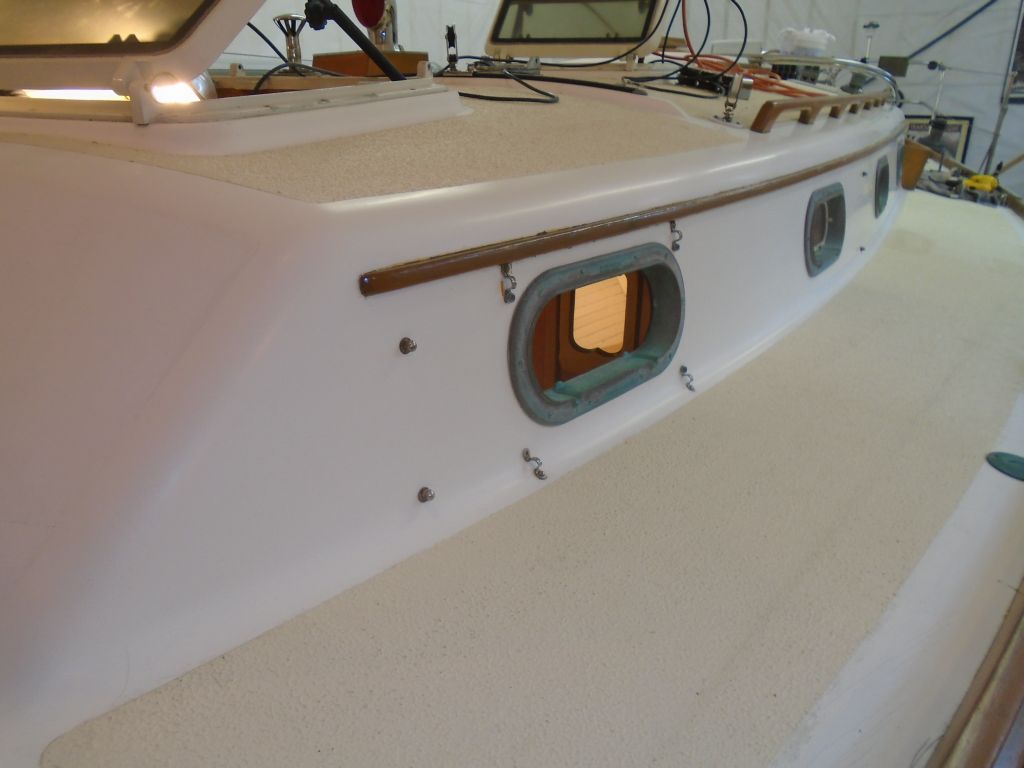
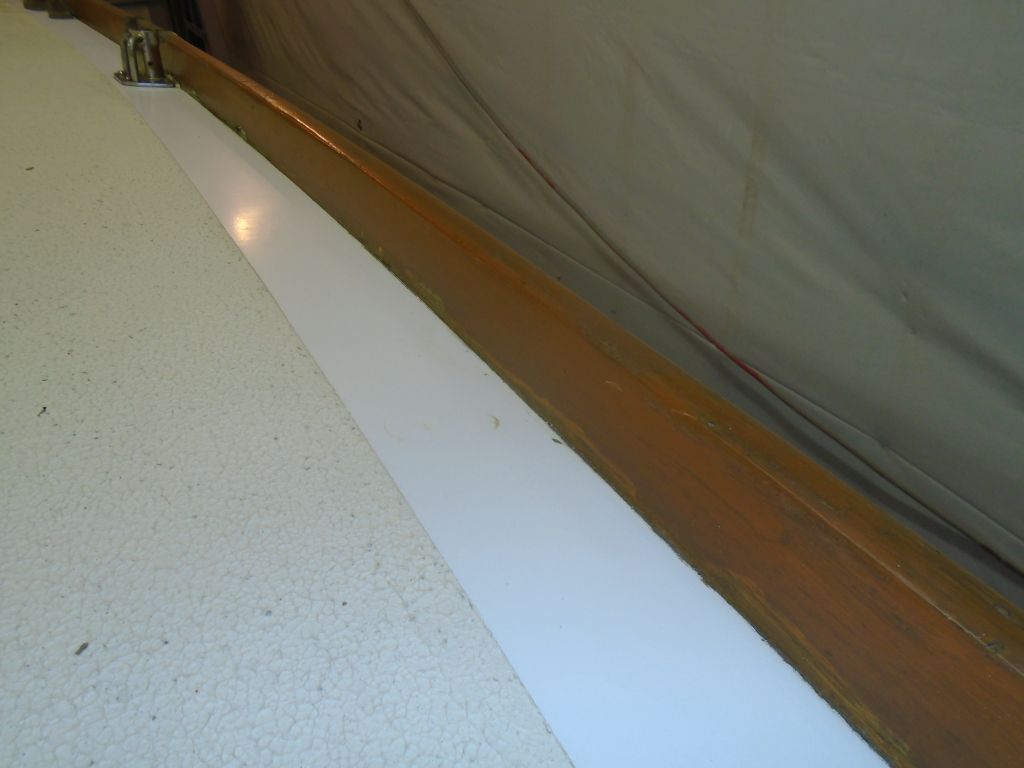
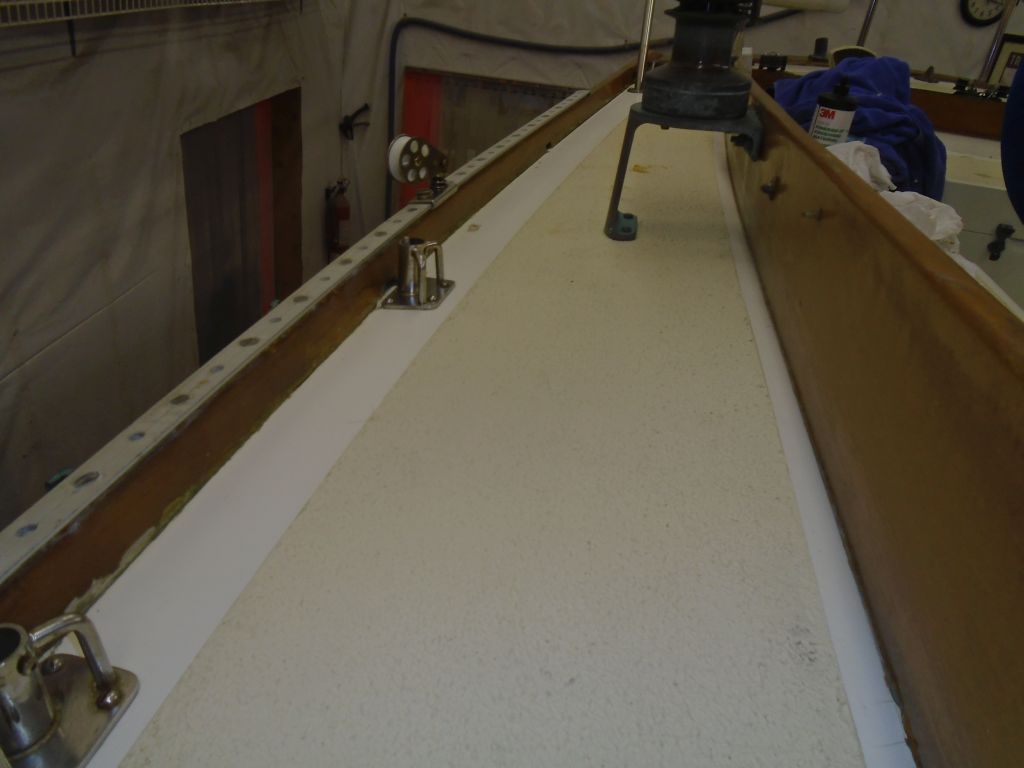
Before beginning down that road, however, I thought it’d be best to first work on the cleanup and polishing of the gelcoat on deck, another job on the project list. By doing this first, I could avoid worrying about damaging new varnish work with abrasive polishes, and any residue I might get on the woodwork now would be removed during the stripping and sanding process ahead.  The gelcoat, which appeared to be original (though the nonskid had been redone at some point), was in generally good condition for its age, approximately 30 years, and I thought it would clean up fairly well all things considered.  At the moment, it was dirty and oxidized.

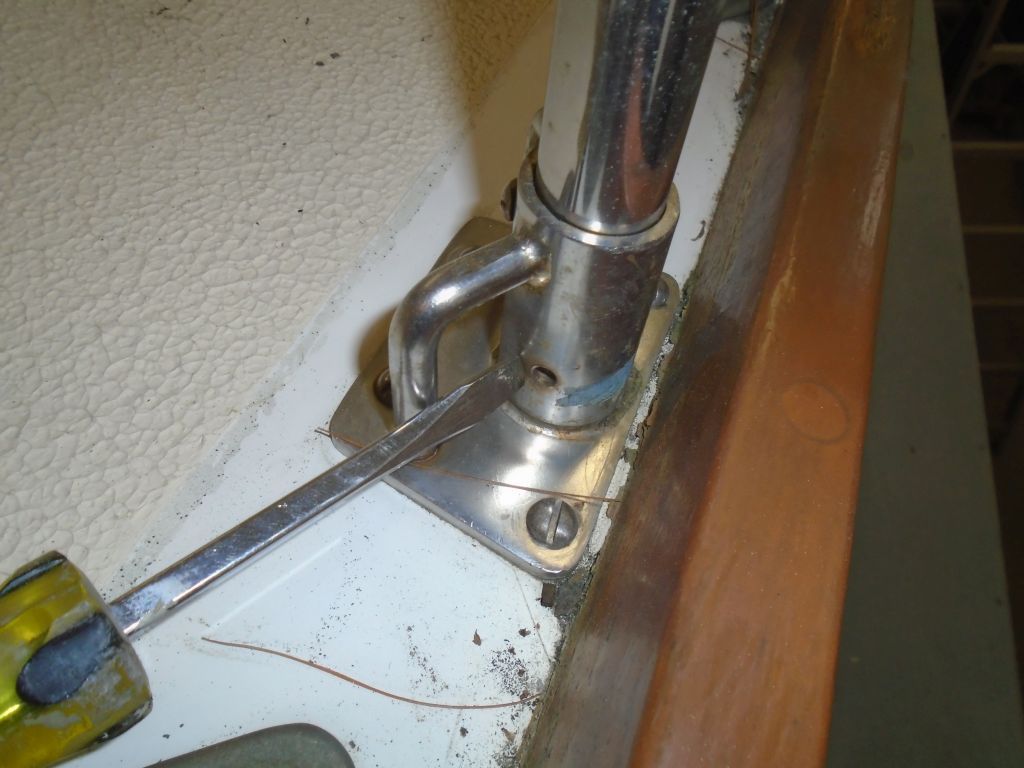
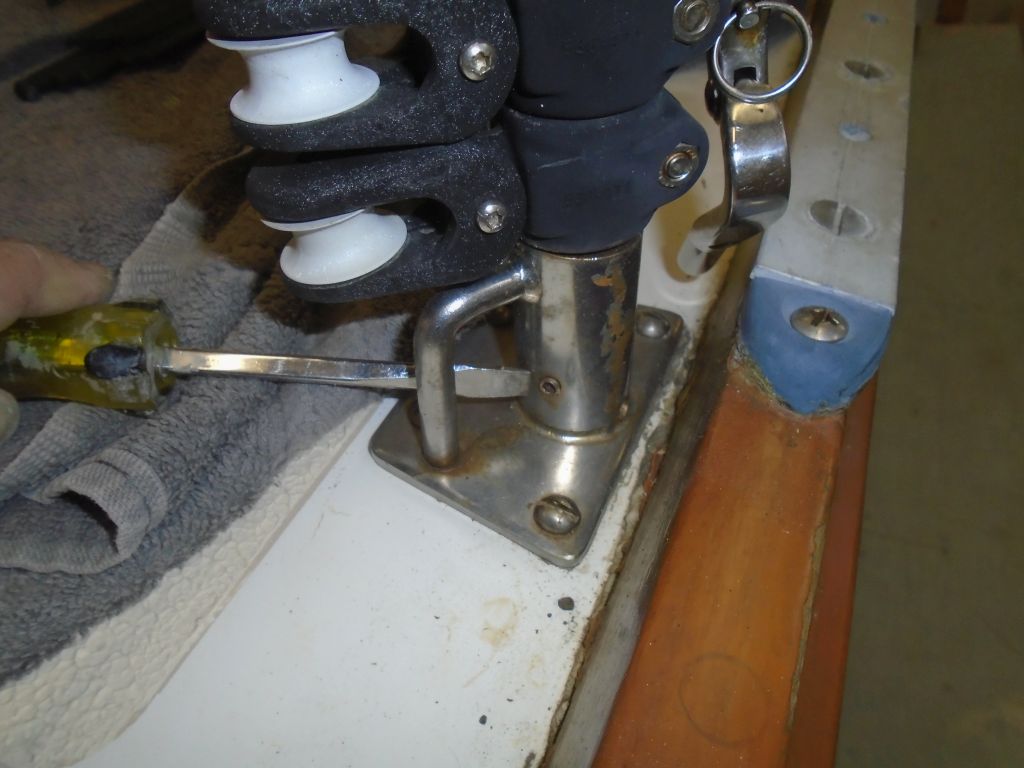
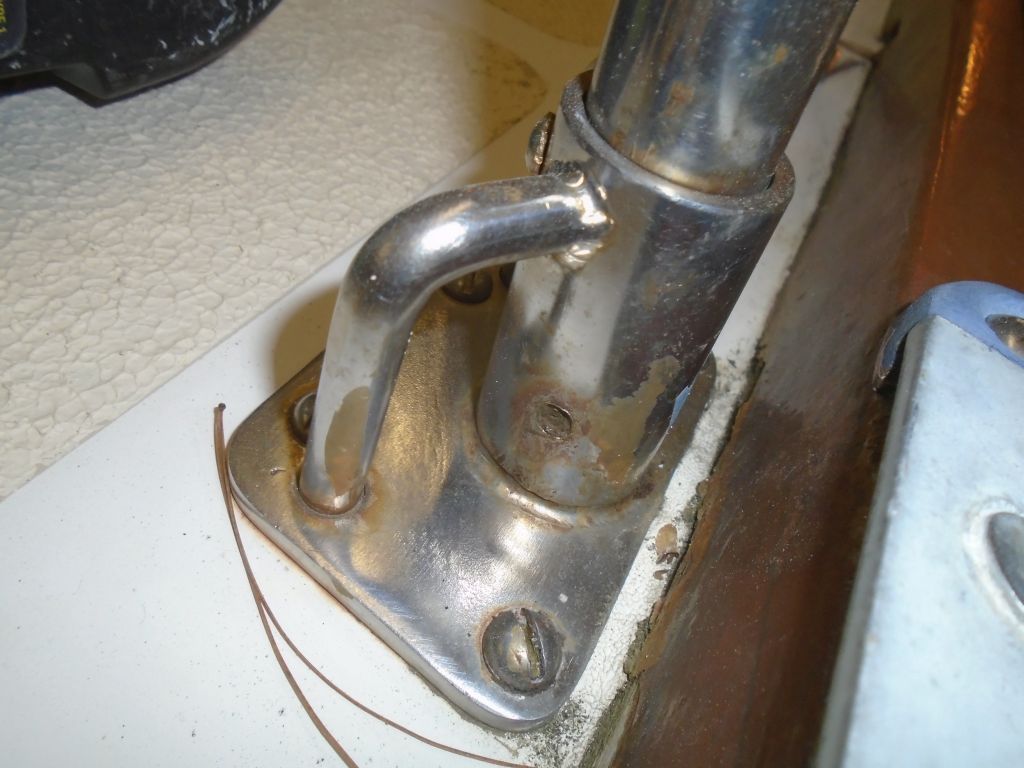
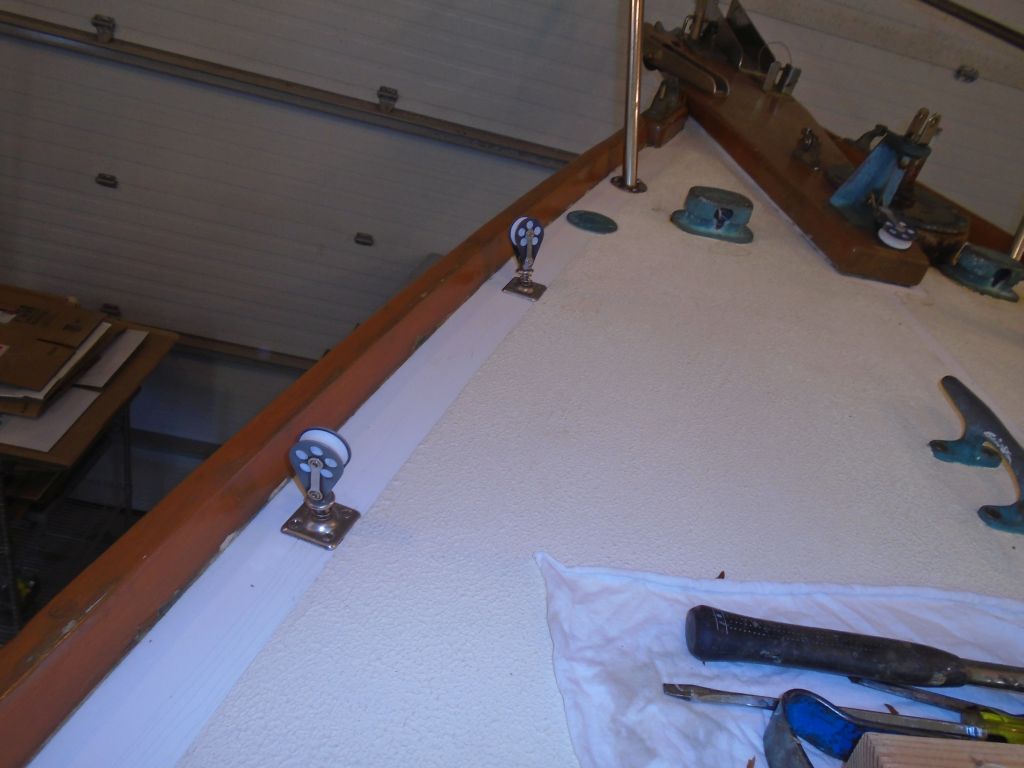
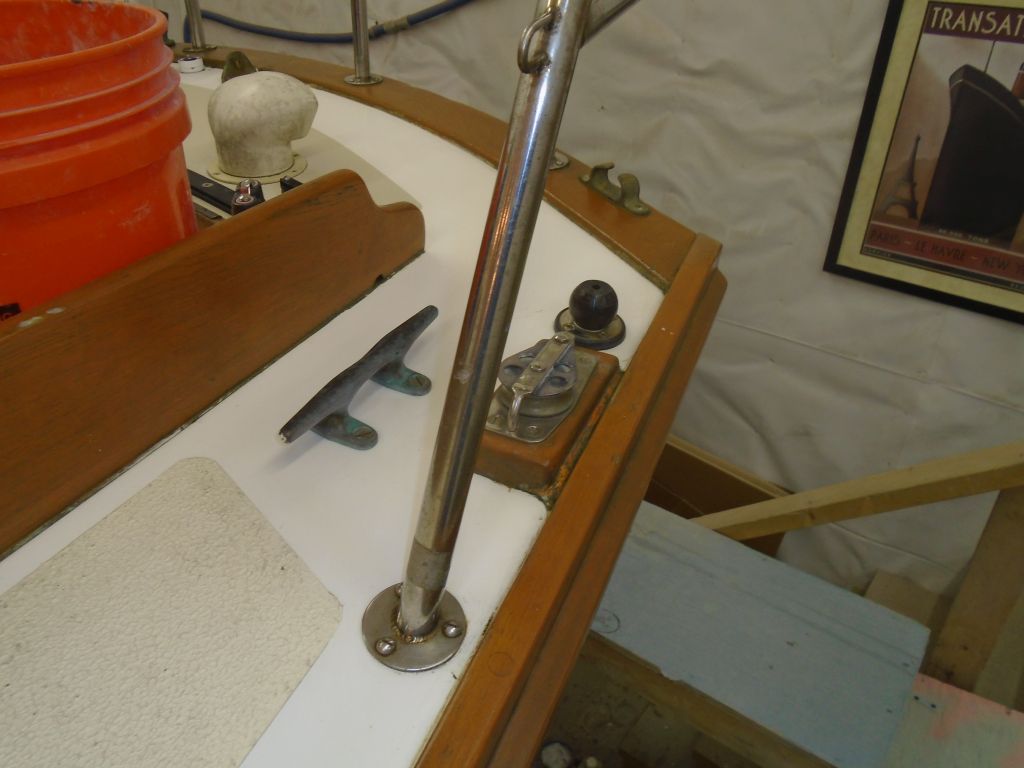
Starting randomly on the port side, I prepared to clean up and polish the gelcoat on the cabin trunk and deck areas.  I soon found that the lifelines were inconveniently in the way, and since removing the stanchions was something that was going to happen at some point anyway to allow me to add or redo stanchion tube fasteners and set screws (and also to make way for a new winter cover), I went ahead and did it now, first on the port side and later to starboard.  While the stanchion bases included one screw opening for a fixing screw into the stanchion, which secured the stanchions well, many of them were wobbly in the bases, a condition the owner didn’t care for, and adding set screws would tighten them and prevent this from happening.  I was prepared to drill and tap the bases for new set screws, but as I began the removal I noticed that all the bases already had a place for a set screw, though in most cases there was no fastener in place.

This was good news since it would save the challenge of creating these holes from scratch later.  So without further delay, I removed the stanchions and lifelines, and got back to work on the gelcoat polishing on the port side, and eventually moved around the transom towards the starboard, where I’d continue next time.  The old gelcoat looked much better afterwards, clean and with some shine and much improved, though the gelcoat was growing thin and showing its overall age and would never look brand new again.

Total time billed on this job today:  5.75 hours

0600 Weather Report:
30°, mostly clear.  Forecast for the day:  clouds and sun, breezy, around 40

 

Nomad 7

< Back to Nomad

Sunday

Before beginning any other work, I took advantage of the cleanliness of the hull, and of the air in the shop, to mask off the waterline, the only area not yet masked to prepare for the primer later.  Sometime later, once I’d completed the sanding and repair work, I’d protect the bottom and trailer with additional masking against overspray, but that could wait for now.

Continuing work on the transom repair, I water-washed the new fiberglass, then lightly sanded the area as needed to remove rough edges and scuff the surface to prepare for the next steps.  After cleaning up, I applied a first coat of epoxy fairing compound, concentrating on smoothing in the repair with the adjacent surfaces and filling the texture of the fiberglass as required.

Meanwhile, I used some of the leftover epoxy to spot-fill a few minor dings and gouges here and there on the hull.

Total time billed on this job today:    .75 hours

0600 Weather Report:
20°, clear.  Forecast for the day:  Sunny, breezy, 31°

Nomad 6

< Back to Nomad

Saturday

The original gelcoat on the hull was badly oxidized and faded, but essentially in great condition otherwise, meaning my painting prepwork would be straightforward.  With the decks all masked off from the last work session, it didn’t take me long to get set up and ready to start sanding.

I sanded the hull twice–80 and 120 grits–with a 6″ finishing sander, scuffing the gelcoat and bringing it to the level of sanding required for high-build primer.  It didn’t take long, as gelcoat sands easily and the heavily-weathered surface made the process that much easier.  I sanded everywhere the tool would fit, which was most everywhere, but there were some areas that would require detail and hand-sanding.
Next,  I took care of some heavier-duty sanding at the transom, where the deck/hull joint had separated right in the motor well–a nearly universal condition on production outboards, it seemed.  Someone in the past had sort of caulked this joint, but with the outboard gone it was the perfect time to effect a more lasting repair.   To begin, I sanded away any loose material and old sealant, and ground the gelcoat on the deck edge and transom to prepare for fiberglass, while also rounding over the edge a bit to allow for fiberglass to lay cleanly.

After cleaning the area, I applied some epoxy thickened with silica to the seam, filling any voids and smoothing over the edge as needed.   While the fill was still pliable, I installed a 6″ and 4″ layer of biaxial fiberglass over the seam, forming a smooth and strong reinforcement to the joint.

While the transom began to cure, I went around the boat and hand-sanded as needed to take care of all the areas the sander couldn’t reach.  Afterwards, I cleaned up and solvent-washed the hull to prepare for the next steps, including some minor gouge filling and the continuing transom repair.


Total time billed on this job  today:  4.25 hours

0600 Weather Report:
22°, mostly clear.  Forecast for the day:  Partly sunny, 39°, chance of snow showers

Danusia 4

< Back to Danusia

Friday

Bright-eyed and bushy-tailed, I was back at the windlass capstan first thing.  Nothing had changed overnight, but I continued slowly making progress, though the drum wasn’t going to simply give up till the last inch of shaft was free.  It took another hour or so to finally release the capstan, during which time I bottomed out the puller once again and had to adjust it once more in order to continue.  Not long after this, I found that it was getting harder–not easier–to move the wrench attached to the puller’s screw, and I eventually determined that the screw threads were damaged and galling from the efforts of the past hours.  This was not a high-quality puller.  Fortunately, I had another, larger, one on hand, and with this one I managed to complete the job in relatively short order.  This was a battle won, but the war raged on.

The level of corrosion at the steel shaft housing–which extended from the bronze deck plate through the deck to the gearbox beneath, and through which the bronze shaft turned–was horrific.  It was pieces of this housing that I’d pulled out earlier, when I’d started to move the capstan upwards.  The tragically rusted remains seen here are supposed to be a nice, clean, whole steel  pipe, essentially.

The photos below, stolen blatantly from two separate Ebay listings that I found, show similar windlasses in more or less whole and usable condition, and helped give me–and you, perchance–a better idea of how the components fit together.

Anti-plagiarism and intellectual property compliance note:  if any of these are your photos and you’re unhappy that I’ve reused them here, please let me know and I’ll remove them at once.

I chipped and cleaned away what I could of the corroded mess, leaving behind a sort of cove-shaped remnant that looked a little better, but was no closer to allowing the windlass to come apart into its component pieces.  That little drive pin, seen in the first photo, is what allows the shaft to drive the capstan and it, too, was irrevocably stuck in the shaft at this time.  I didn’t waste much time trying to get it out since I didn’t think it needed to be removed at this point.

Dutifully following along with the old removal instruction from Ideal Windlass’s website, my next chore was to attempt to release the deck plate from the deck, and, dreamily, from the steel housing itself.  I proceeded with as much delicacy as I could given the fairly brutal tasks at hand, all this to try and salvage not just the windlass–still hoping, at this point–but, perhaps more importantly, the deck parts on which it sat.  Releasing the deck plate wasn’t too difficult, with an eventual combination of stiff putty knives, screw drivers, pry bars, and, finally, a long blade on a reciprocating saw to clean out sealant from beneath the slim slot.  None of this had the least effect on the grip between shaft housing and deck plate.  But at least now I knew that the deck plate was free, and that the space beneath might give me the avenue needed should I eventually need to resort to the most destructive means of removal.

windlass6-121815

I turned once more to “The Google” to seek the help of collective wisdom of the Interwebs.    There was little there to help.  I found one other tale of woe with a similar or identical windlass, in which the writer resorted to cutting through the pipe and shaft after jumping through similar (and apparently ineffective) hoops to release the corroded components after consulting the same documentation that I’d been.  I think Danusia’s winch looks far worse, frankly.  Attribution for these photos listed below.

http://themarineinstallersrant.blogspot.com/2014/05/winch-removal-made-easy.html

After a morning’s work, I decided to simply keep soaking the area in question with penetrating solvent over the weekend, and see what happened from there.  I had little hope, but one never knows.

windlass9-121815

in between some other goings-on at the shop, I spent the rest of the day’s time going over several of the upcoming jobs on the work list and assessing the projects in a preliminary way.

Total time billed on this job today:   4.75 hours

0600 Weather Report:
Clouds, fog, 40°.  Forecast for the day:  Clouds, fog, trending toward some sun, highs in the 40s to near 50.

Danusia 3

< Back to Danusia

Thursday

Danusia was equipped with a bronze (the on-deck portion, that is…mostly) Ideal vertical windlass.  Various measurements and online investigation suggested it was a model A or 3VA, which appeared to be the same thing.  Equipped with a capstan only, the owner reported that the windlass had not worked since he purchased the boat.  It didn’t take much to figure out why:  the belowdecks components, including the electric motor and gearbox, were terrible nightmares of heavy rust, as they were constructed of plain steel that belied the rugged marine-specific appearance of the nice weathered bronze capstan and deck plate above.  Moisture and the leakage that seems inevitable with vertical windlasses, along with the typical neglect that so often afflicts ugly components stuck in out-of-sight-out-of-mind places, had taken their toll on the mechanical side of the windlass.

We hoped to remove the windlass and send it off to the factory to be rebuilt, and to be converted to include a chain wildcat.  No matter what else, however, the windlass had to come off, whether for rebuilding or replacement with something else, as it was useless in its current state, though that green bronze sure looked nice.  So I decided that the windlass removal had to be at the top of the work list, to give time either for it to be rebuilt, or to decide on how else to proceed.

My first order of business was to remove the anchors and rodes and open up the chainlocker as much as possible.  Once I’d removed the rodes, I removed a plywood divider that someone had put in to allow two rodes to fit, and which completely impeded access to the windlass above.  In yet another example of why polyester resin makes such a poor choice for any repair or new work added to a boat after the initial construction at the factory, I pulled the divider–and its tabbing–out with only the smallest hand effort.  In this case I was certainly grateful that it was so easy to remove, though.

With as much room as I was going to get–which wasn’t really enough but would have to do–I inspected the windlass and documented its condition, as well as its wiring.  To improve access and avoid damage, I removed the door to the chainlocker for the time being, and looked around for the windlass solenoid switch, normally installed near the windlass motor and typically an integral part of the required wiring.  None was to be found, and, wondering if it might be hidden beneath a wiring access panel running alongside the v-berth at the overhead. I removed some trim for access, which exposed more of the heavy 2/0 cabling but no solenoid.  Weird.

Armed with some information from the Ideal website, I went about the steps that might eventually lead to removal, starting with removing the cables attached to the windlass motor and one of the deck bolts.  These came off easily, and I marked the wires for future reference and later assessment.

windlassremove11-121715

The removal instructions called for me to remove the capstan drum, which in theory would release the gearbox and motor below.  So I removed the small screw and washer from the top, and sprayed in some penetrating oil, as the instructions kindly suggested that the drum might just be kind of hard to remove.  Indeed this proved to be, and with no immediate movement of the drum possible, I returned to the chainlocker below to work on the four bolts that secured the windlass deck plate to the housing below.

One of these bolts had also been the mounting point for the negative battery cable, and I’d already removed that nut, so I was 25% there.  First inspection of the rest revealed the depressing news that the whole underpinnings were so heavily corroded as to virtually eliminate any hope for finding–never mind removing–some of the nuts, but after flaking off a few pounds of iron oxide and ruined steel, I visually located the second of four bolts–it looked like I might be able to get a wrench on it after all–and, with difficulty and by feel only (as well as the magic view provided by a digital camera held into an otherwise inaccessible space) I eventually chipped away enough heavy corrosion to expose the final two nuts, which were in a tight space between the deck and the housing.

I did manage to get a socket, extension, and ratchet on the second visible nut, and made some progress unwinding it before it became apparent that the carriage bolt at the deck plate was simply spinning, having rounded off the soft bronze edges, so for the moment that was all I was going to get on that second bolt.  At this point still fairly early in the day, I’d barely even considered how or if I’d ever get to the two invisible nuts forward, but even the second bolt was taking substantial amounts of time.  I eventually determined that the nut was galled on the threads, and would never release, but fortunately I’d loosened it enough so I could pull the head of the carriage bolt up and cut it off with a saw from above.  Two down, two to go.

Meanwhile, I returned to the deck side to work again on the capstan.  By now it was obvious that the drum was very stuck on the shaft, and prying it up wasn’t going to work, so I turned to a gear puller, as suggested in the removal instructions.  These usually work pretty well, but I cranked it as tight as I could, well past what I could do by hand (I hammered the end of the wrench–not the little ratcheting one shown in the photo, but a heavier box end wrench that I switched to by this point– in order to turn the puller’s screw), but this seemed to make no difference to the position of the drum.  So I added more penetrating oil, cranked a little more on the screw for good measure, and returned belowdecks to keep working on what I could there.

In this way passed the remainder of the day.  Against all odds–I never would have taken that bet–I found that the two hidden nuts at the forward side of the windlass gear housing were accessible (with great difficulty and by feel only) with a wrench, and actually turned.  The bolts were bronze, which was their saving grace, and I felt an indescribable pleasure at having succeeded at their removal.  I’d already been working through various means of simply getting this windlass off the boat, whatever it took.  The instructions joked about C4, and I wondered if it might actually take something almost that destructive just so we could move forward with another plan.  Getting the bolts removed was a victory, but I was still far from having the windlass off.

In between fighting the tight and miserable access below, I went on deck periodically to beat on the wrench and  keep tightening the puller.  It seemed to be doing nothing for hours, but then suddenly I happened to notice that there appeared to have been some movement.  I’d not seen the drum move, mind you–it wasn’t like it just released and popped off–but the top of the shaft, which had been flush with the inside of the washer recess at the start, was now slightly more recessed, meaning the drum had moved upwards.  This was a positive development, but even so I spent the rest of the day slowly hammering the wrench–and therefore the puller screw–tighter. with great effort.  But at least now the progress was visible, with the drum slowly lifting from the deck.  Once I could get some fingers in there I found one likely cause of the extreme level of stuck-ness:  I pulled out ferrous chunks of junk that were clearly coming off the shaft or housing–from where exactly was not clear, but it was there.  It was very disappointing to see so much plain steel in this windlass.  This work was the unfortunately inevitable result of that sort of construction.

In the event, I kept at it till the end of the day, resetting the puller once after I’d exhausted the travel of the screw.  The tightening of the puller–and removal of the drum–didn’t get any easier as the day wound down, and while I’d made about an inch of progress it was obvious that I probably wasn’t going to get the drum off in the next 15 minutes, so I resoaked the shaft with penetrating oil and left it overnight, hoping perhaps it would get a little easier next time–in any case my arms  would be in better shape for more hammering.

To take the edge off the exhausting day, I took care of one of the easy (and it actually was) tasks from my list.  Someone had overtightened the bolt securing the roller on the main anchor roller, which pinned it tightly and didn’t allow it to roll.  Loosening the nylon locknut on the pin a bit allowed the roller to spin, and also allowed the whole arrangement to slide up and down in the intended slot.


Total time billed on this job today:  7 hours

0600 Weather Report:
32°, cloudy with light snow and mixed freezing showers.  Forecast for the day:  Showers, clouds, and more rain later in the day, high near 44.

Older posts Newer posts