
(page 130 of 168)

odds1

< Back to Odds’n’Ends

Tuesday, April 11

A long-time customer with several small boats asked for help taking care of a laundry list of small tasks spread amongst the various boats.  So we set up a time where I could travel to his location to work on a few tasks.

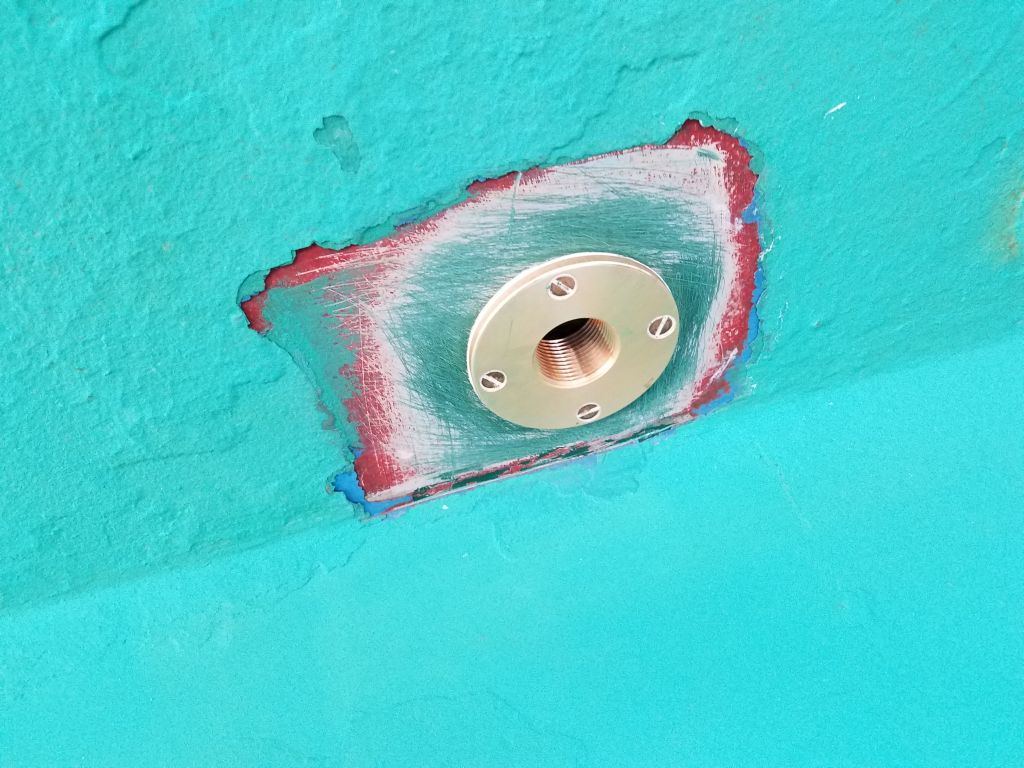
The first order of business was to intall a new garboard drain in his 26′ powerboat; the boat had never had a hull plug installed.  The main concern in this case was that since the hull was balsa-cored, the owner wanted to be sure the new hole was properly prepared.  Therefore, I initially  planned the installation over two days, thinking I’d need to bore out the hole, ream out any exposed core, and fill the area with epoxy before being able to install the fitting itselt.

As it happened, the location where the plug needed to go was outside of the edge of the hull coring:  the core ended short of the centerline, so there was a nice clear area of solid fiberglass in just the right location.  This streamlined the installation significantly, as I could complete the job in one session.

From inside the boat, I drilled a small pilot hole to mark the location from the outside (it would have been easy enough to simply measure too, but since I could fit a drill in I went with the pilot hole).  Then, from outside, I removed the various layers of paint down to bare gelcoat before boring the proper-sized hole for the bronze garboard fitting.  I finished it off with a small slot for the cast key on the fitting (this helped prevent the fitting from ever spinning).  and prepared the fastener holes with a #10 tap to accept machine screws.
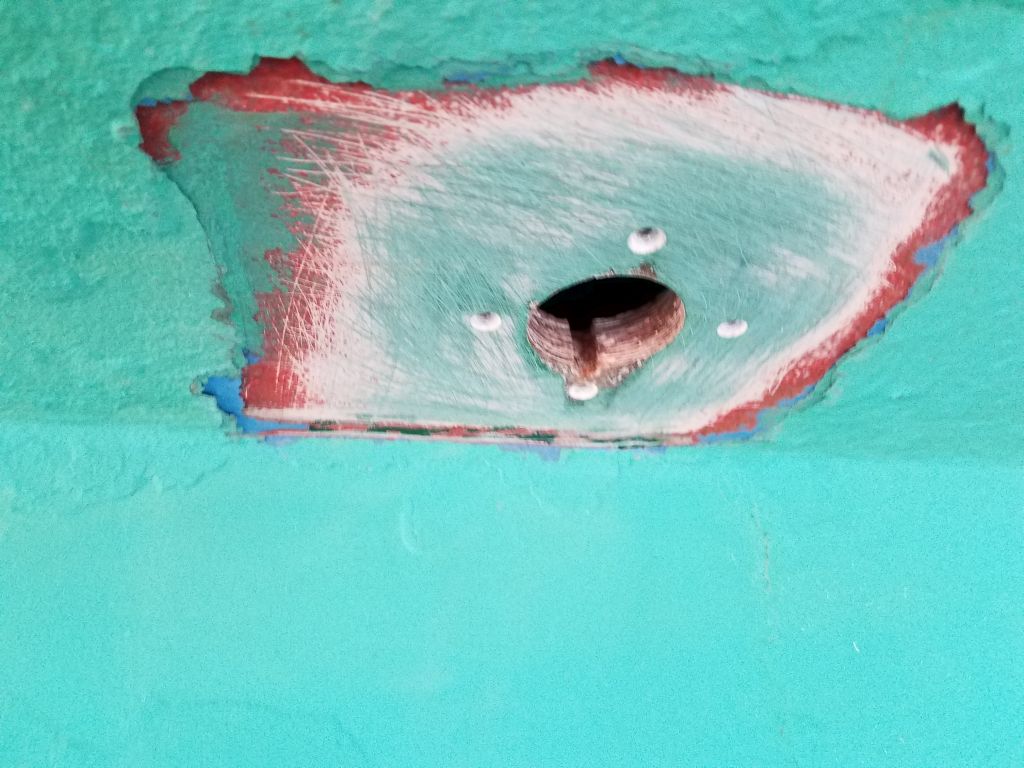
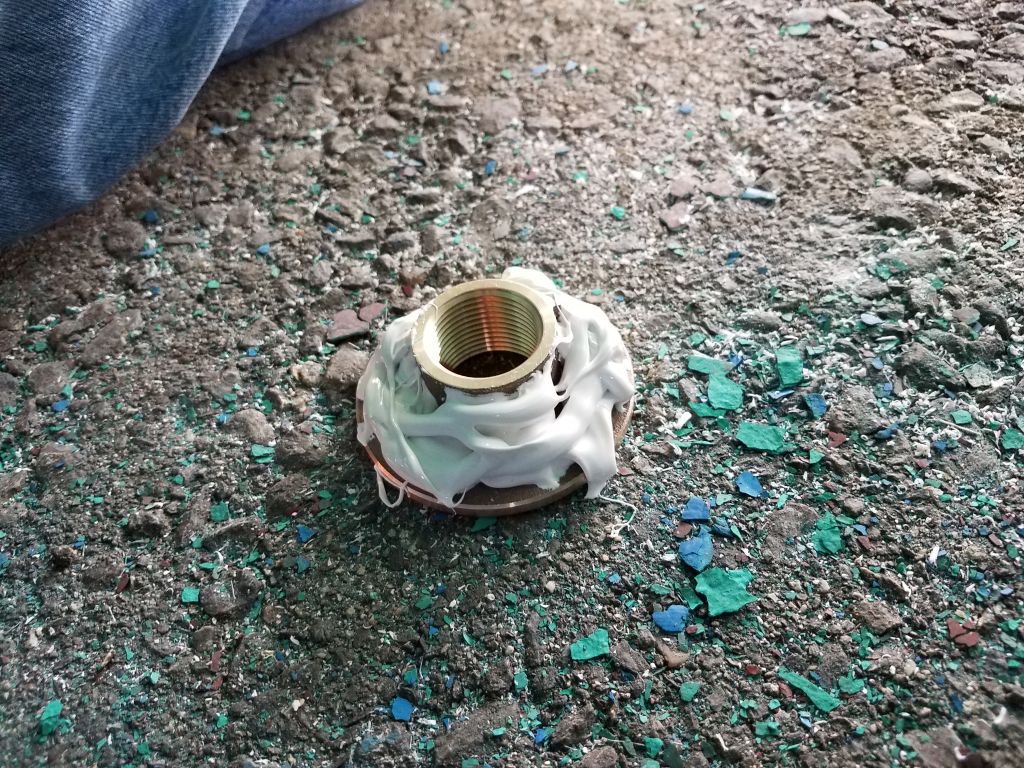
Afterwards, I installed the new fitting with plenty of polyurethane sealant (4200) and bronze machine screws.  This completed the task list on this particular boat.  (1 hour)
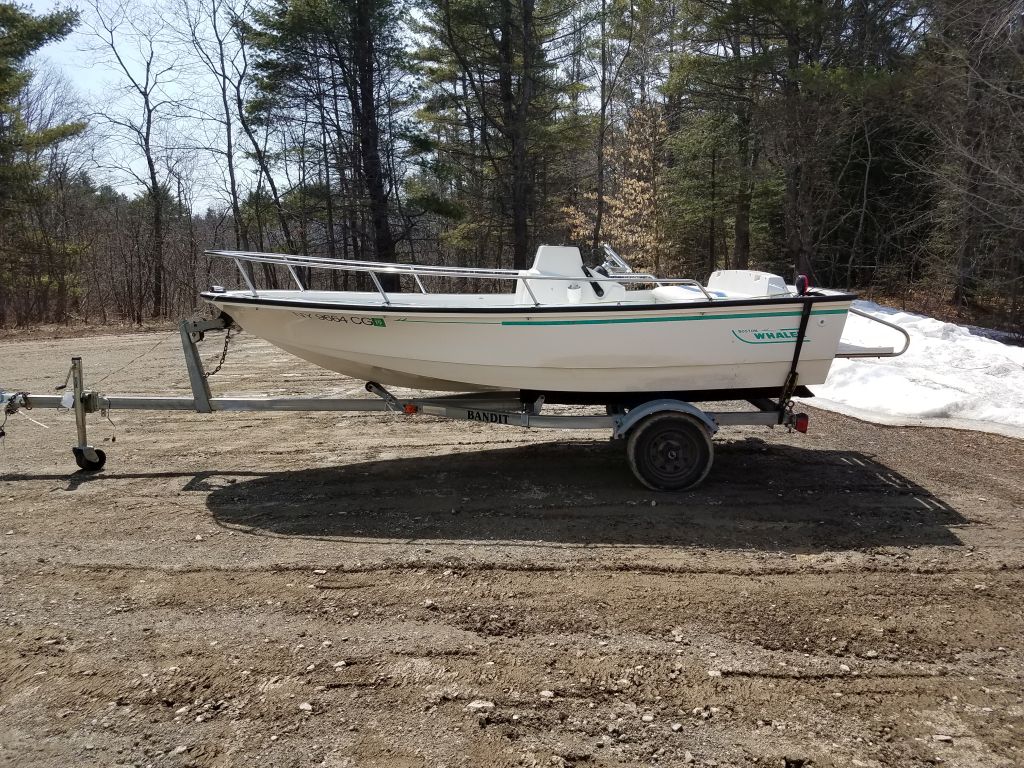
Now we repaired to the owner’s home nearby, where other boats awaited.  Next on the agenda:  a small jet-powered Whaler with several deceptively small electrical and other tasks on the list.  After pulling the boat from its storage location and removing the cover, we started to assess and discuss the project list.  While I was prepared for electrical work with tools and basic supplies, it soon became apparent that there would be quite a bit of material shopping required, and also that the task list was a bit more involved than I’d expected, so with the boat on a good trailer I decided it’d be most efficient to simply take the boat back to the shop for the work.  (This turned out definitely to be the right decision.)

Once I had the boat back at my shop, I went through things and made up an order for the various materials required so I could have them on hand when I was ready to start the work after a short break.
Monday, April 17

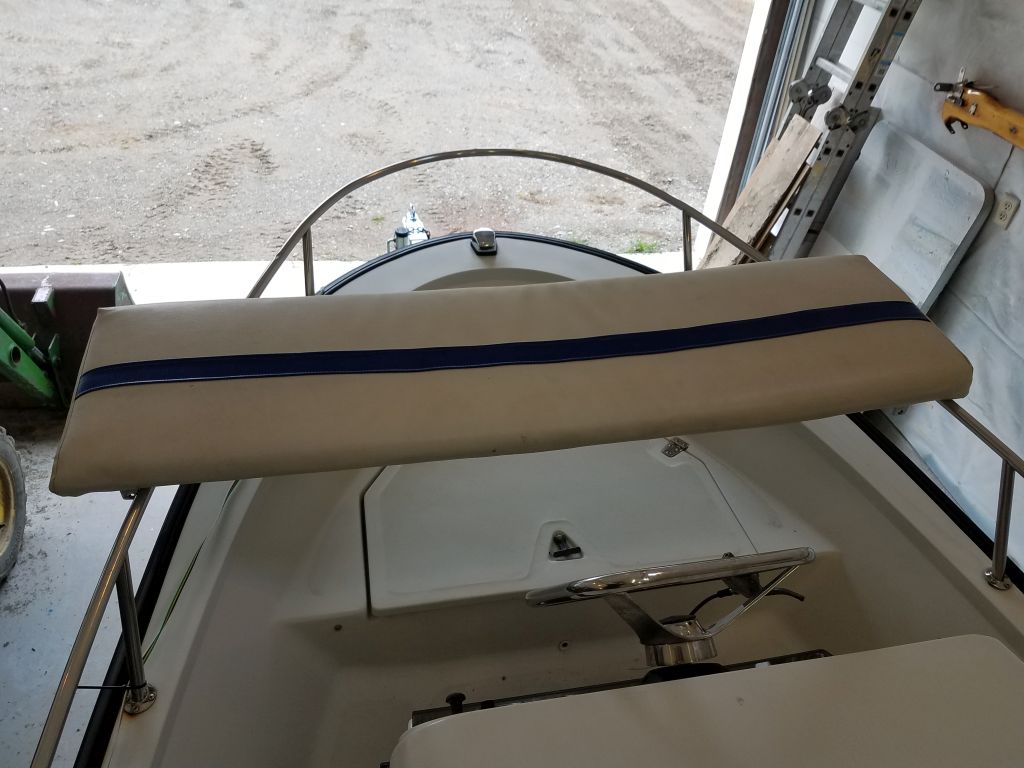
Now properly equipped with various supplies and materials, I got down to business.  The first item on the list was to replace the existing manual electric bilge pump with an automatic pump, as the owner expected this boat to stay in the water this season.  The way the boat was configured, the pump was located aft beneath a flip-up seat.  The seat filpped forward towards the cockpit, and this made accessing the space behind awkward at best, so I decided to remove the seat–two hinges only, but everything about the configuration made access extremely awkward at best.  I couldn’t see the top screws from either inside or outside of the boat, and couldn’t get a screwdriver onto the other sides of the screws when the seat was flipped open (and couldn’t, obviously, reach the nuts when the seat was down).  What a foolish installation, but eventually, and with far more effort than anything should require, I managed to get vice grips on the nuts, after which I could spin out the screws with the seat flipped down.  Once the seat was off, access to the area behind was easy.
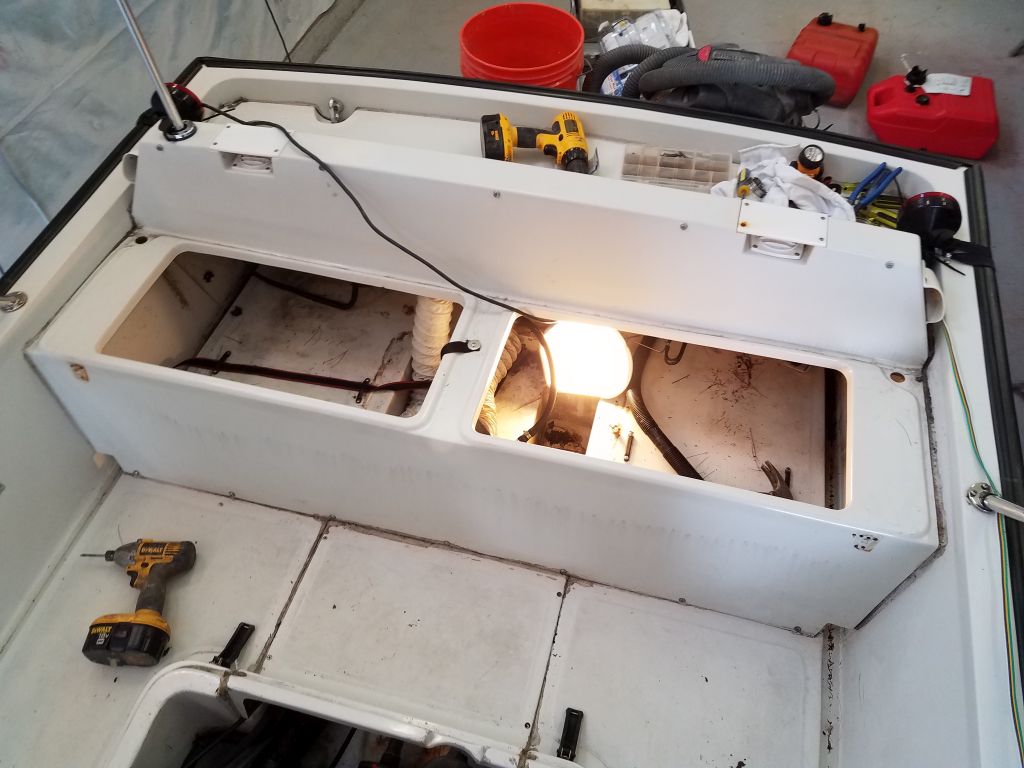
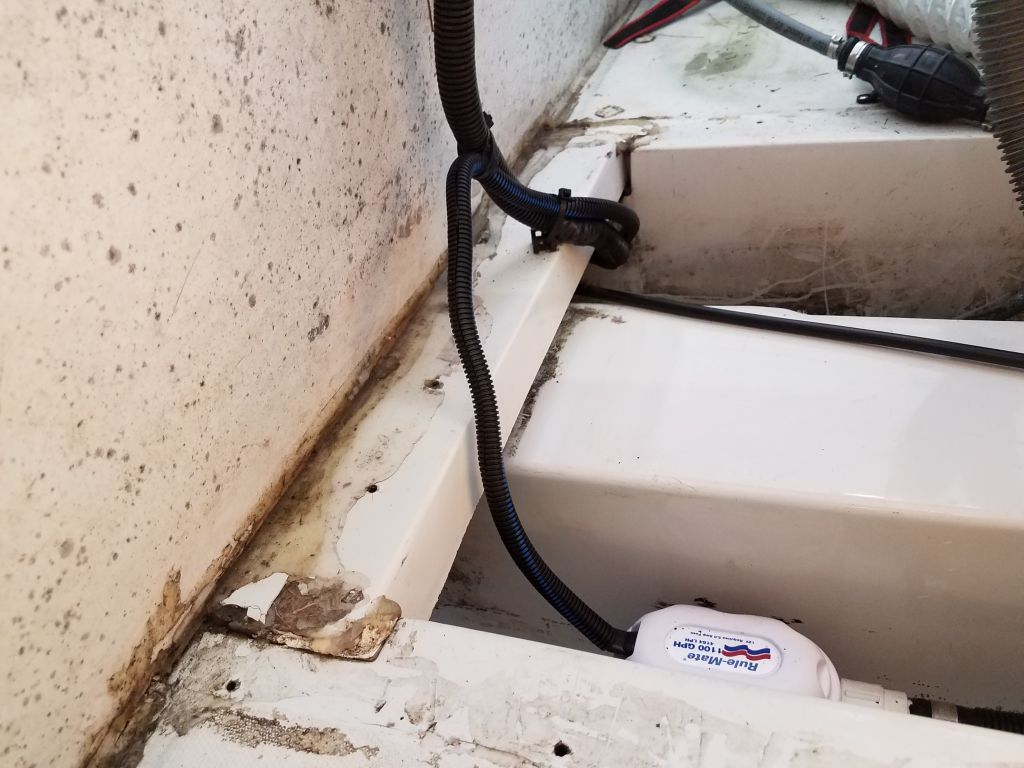
The existing pump was in a small well, and removing it posed no problem.  I saved the existing discharge hose, but decided to run completely new wiring rather than try and reuse the existing wires; I’d need a third wire in any event, as there were only two leading to the manual-only pump.

Next, I cleaned up the bilge a bit and installed the new pump, a straightforward task.  I sealed the old mounting holes, as well as the new ones, with butyl sealant, and secured the existing hose with a new clamp.
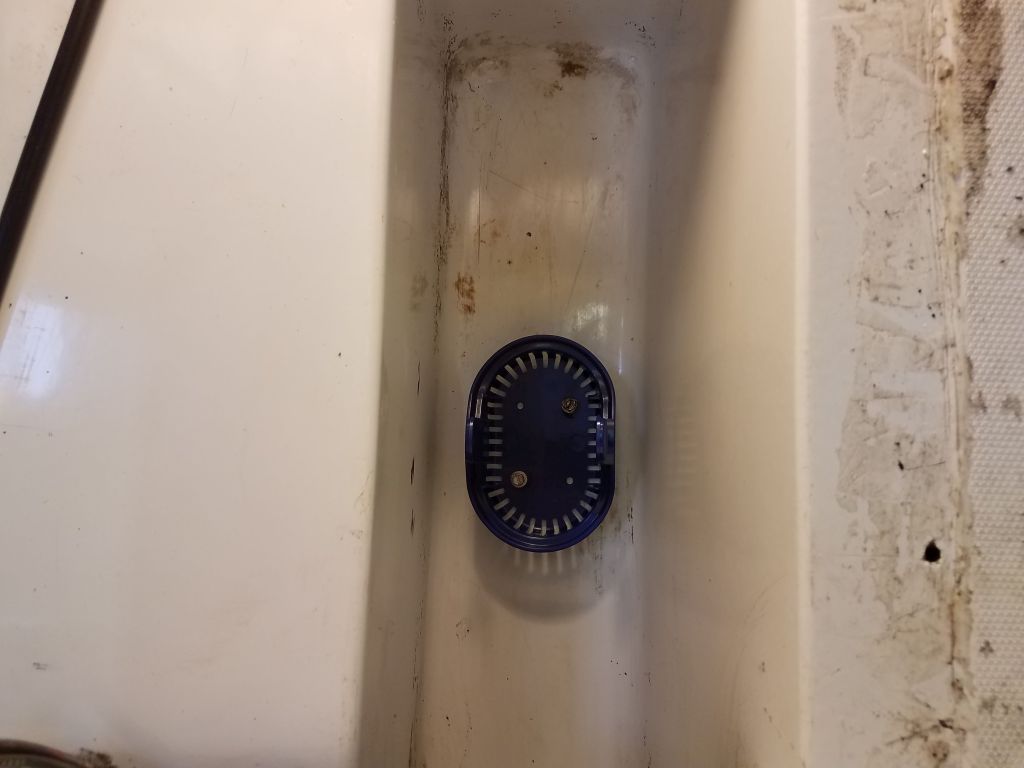
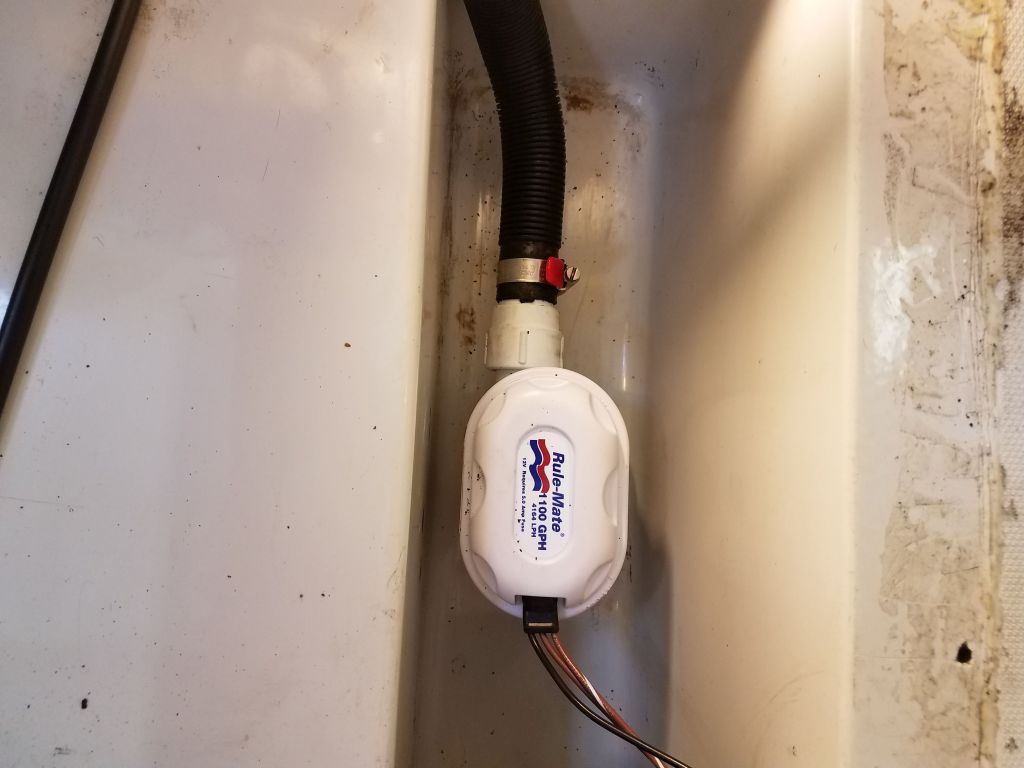
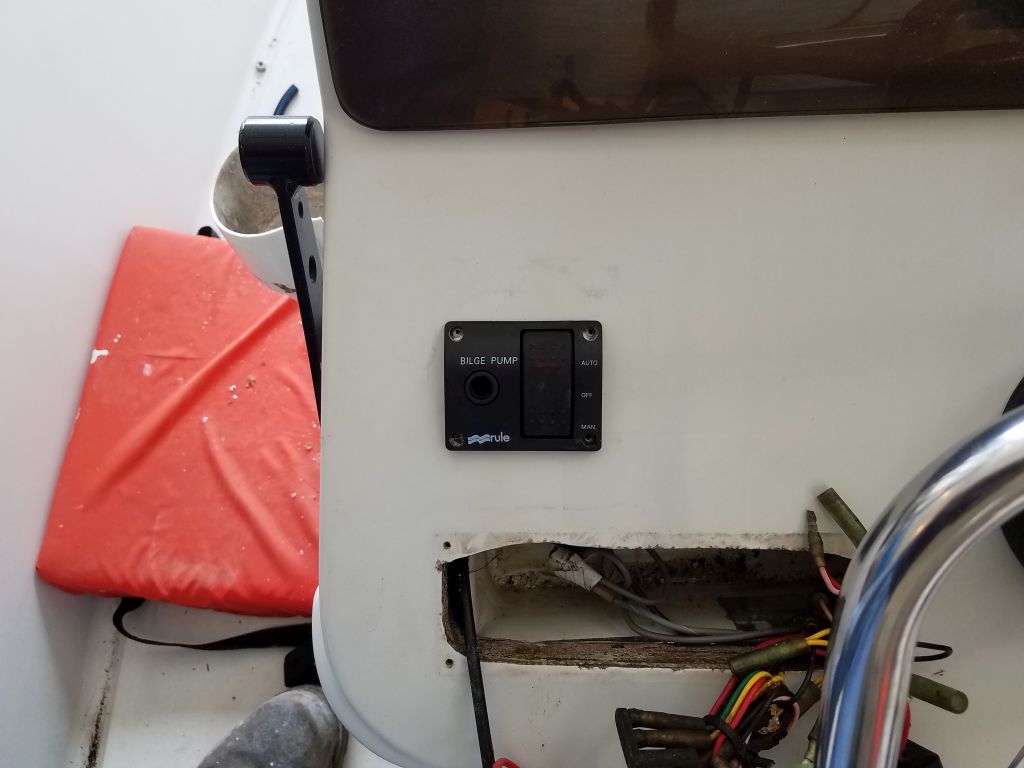
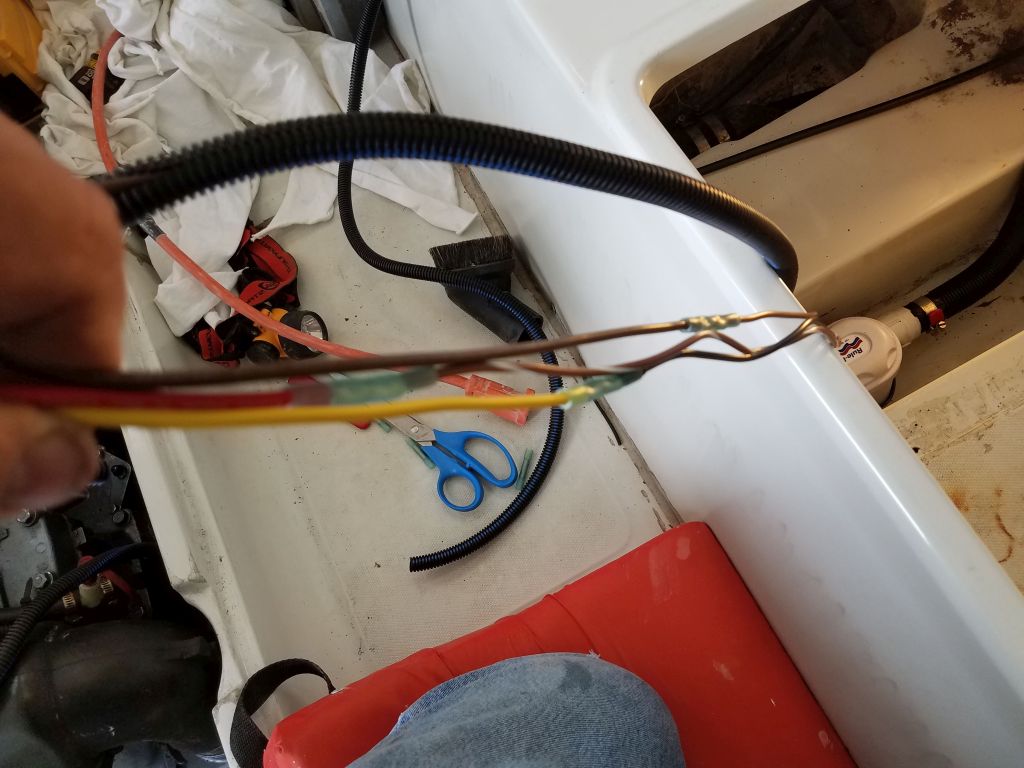
I made up a new harness of three wires encased in split loom, to match the existing wiring setup, and led it aft, where I connected the three wires to the pump’s own pigtails.  Then, I led the wires up into the console, where I prepared an opening for a new bilge pump switch and made the connections.

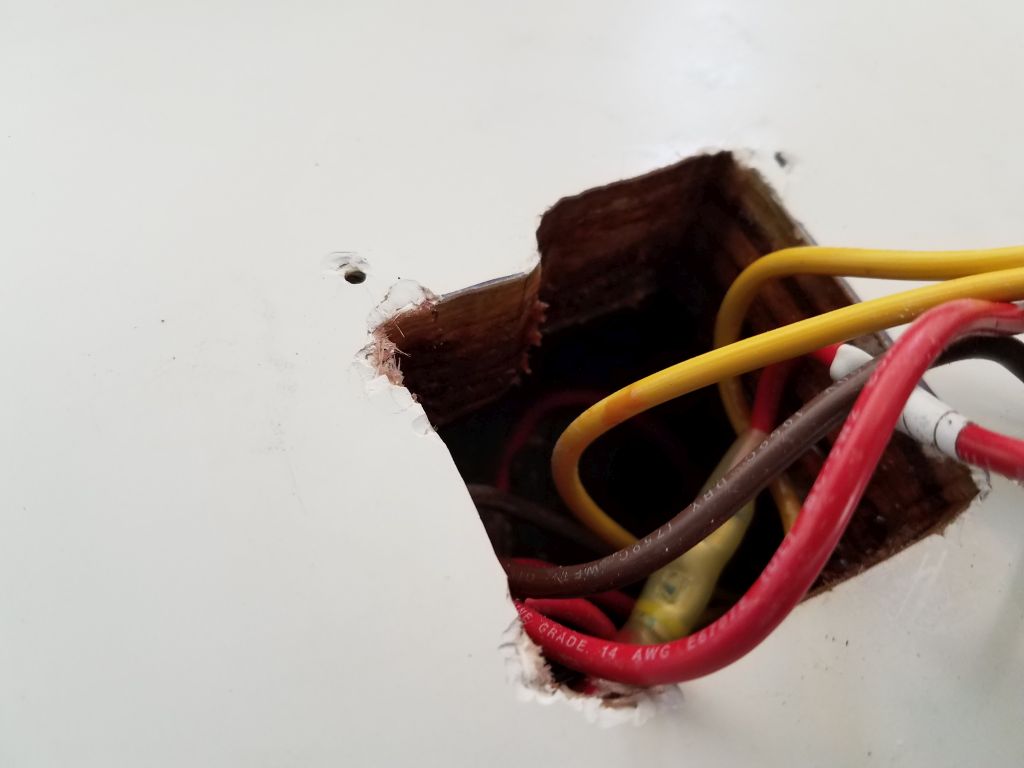
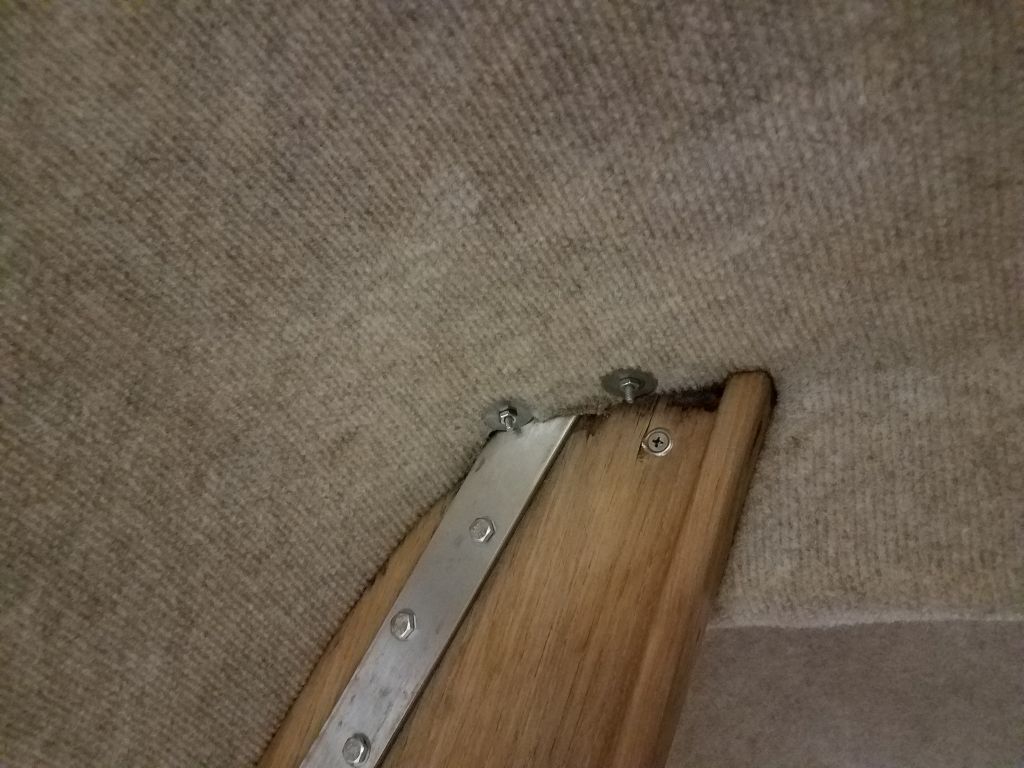
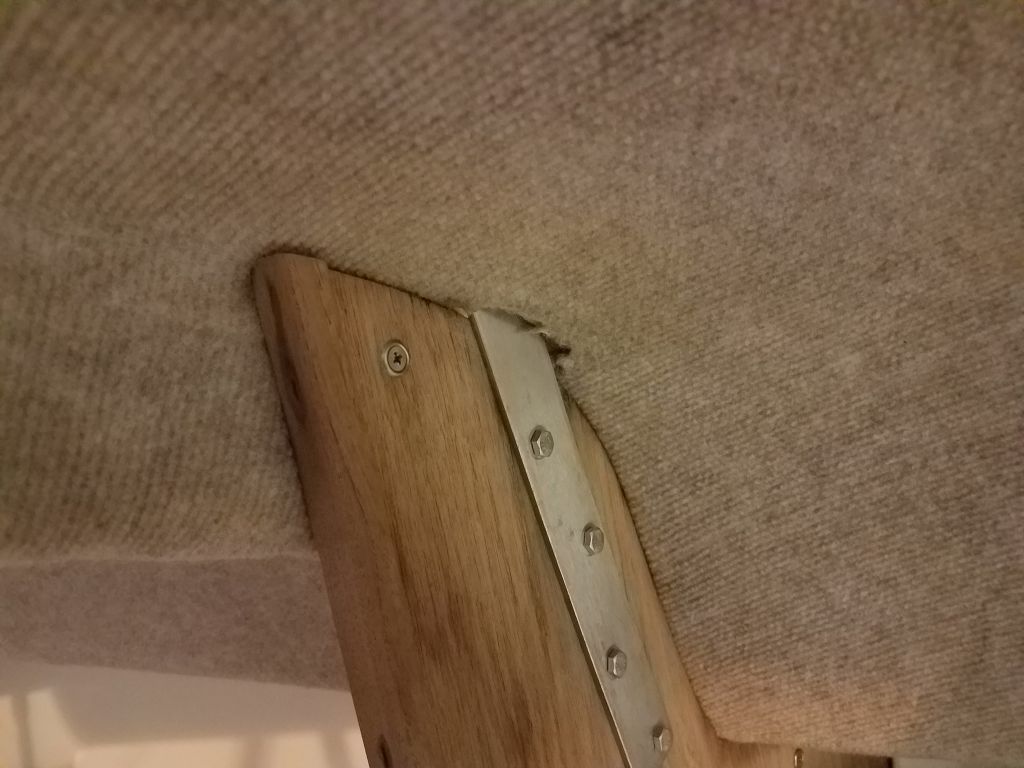
Before installing the new switch permanently, I used some epoxy resin to seal the exposed plywood within the opening, seen in the final photo.
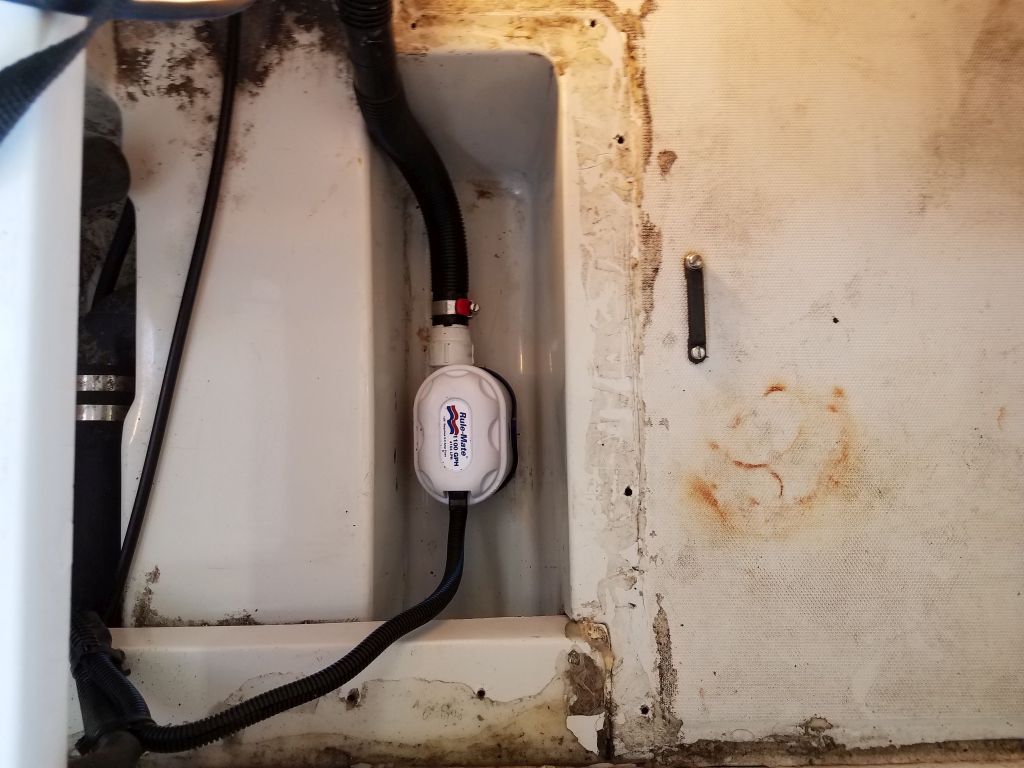
Now that the wiring was complete, I tested the pump, both manually and with the automatic function.  As seen in this video, the pump has a small button on its forward side, which one can push and hold for 5 seconds to trigger the automatic operation for testing purposes.

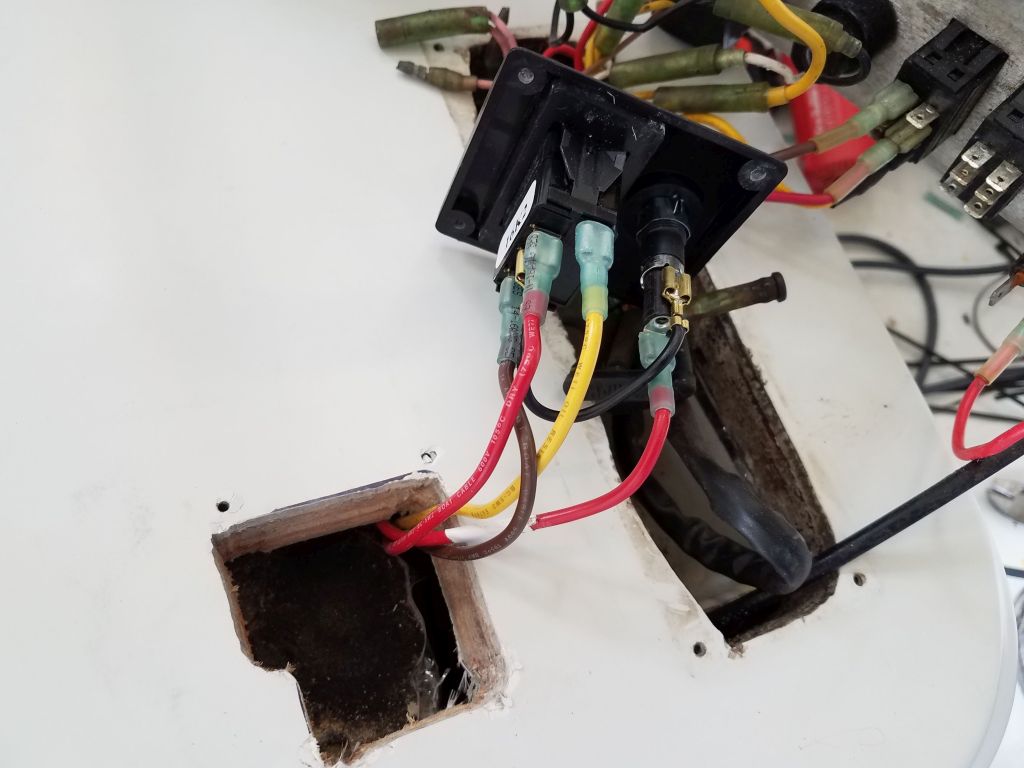
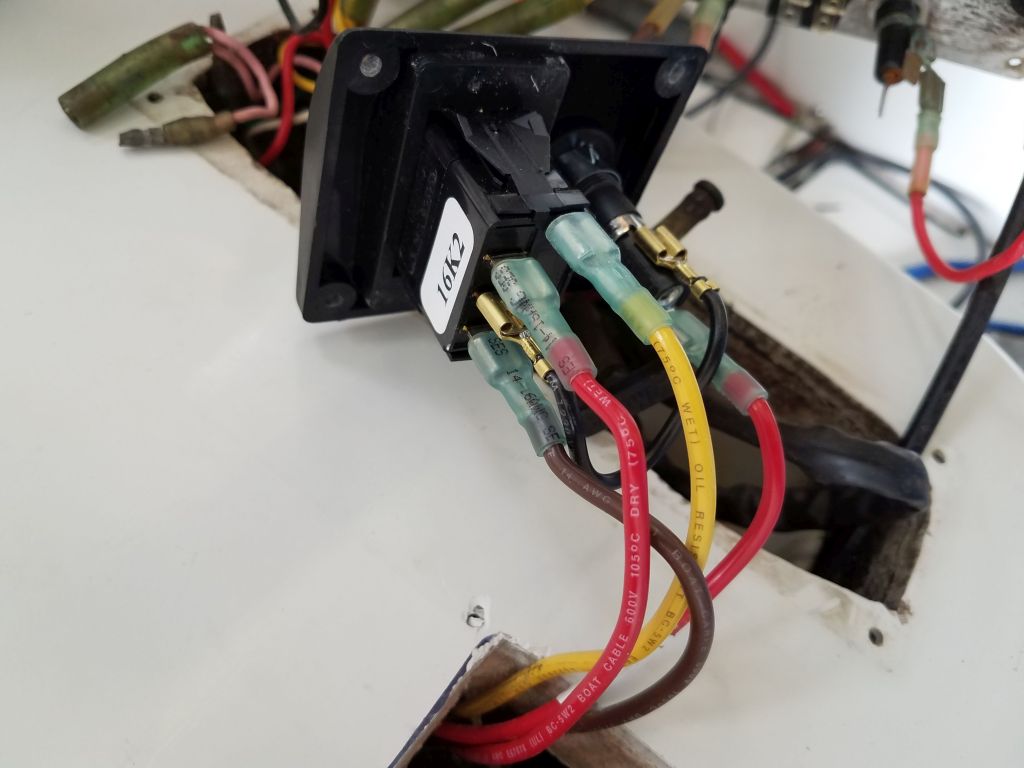
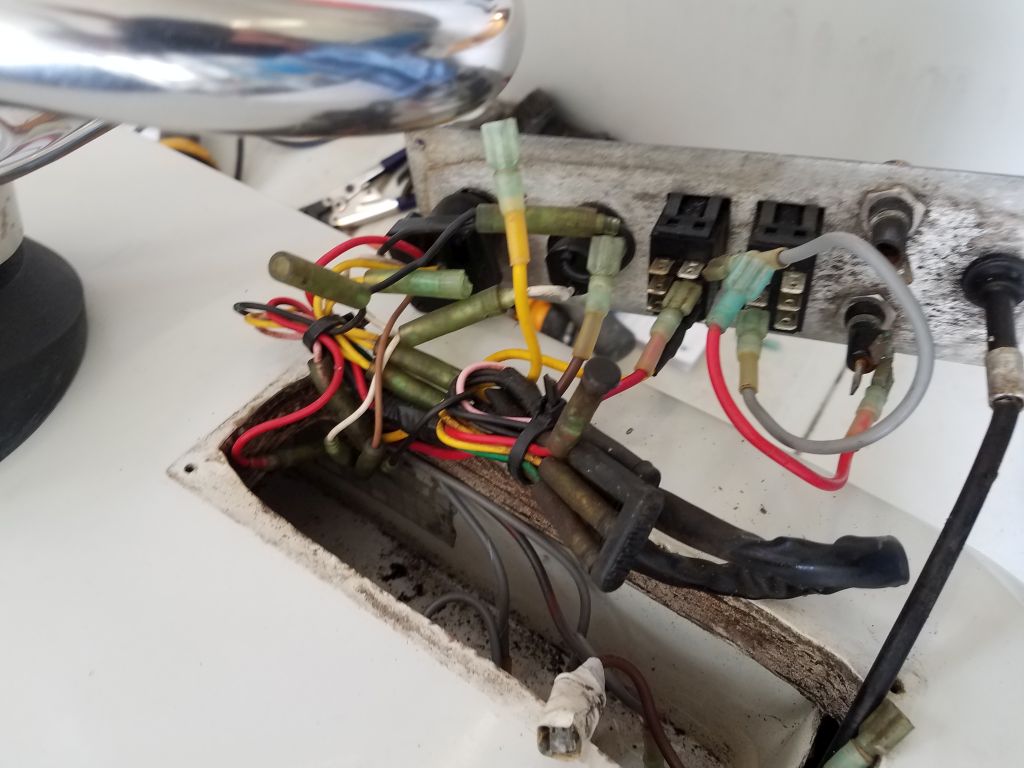
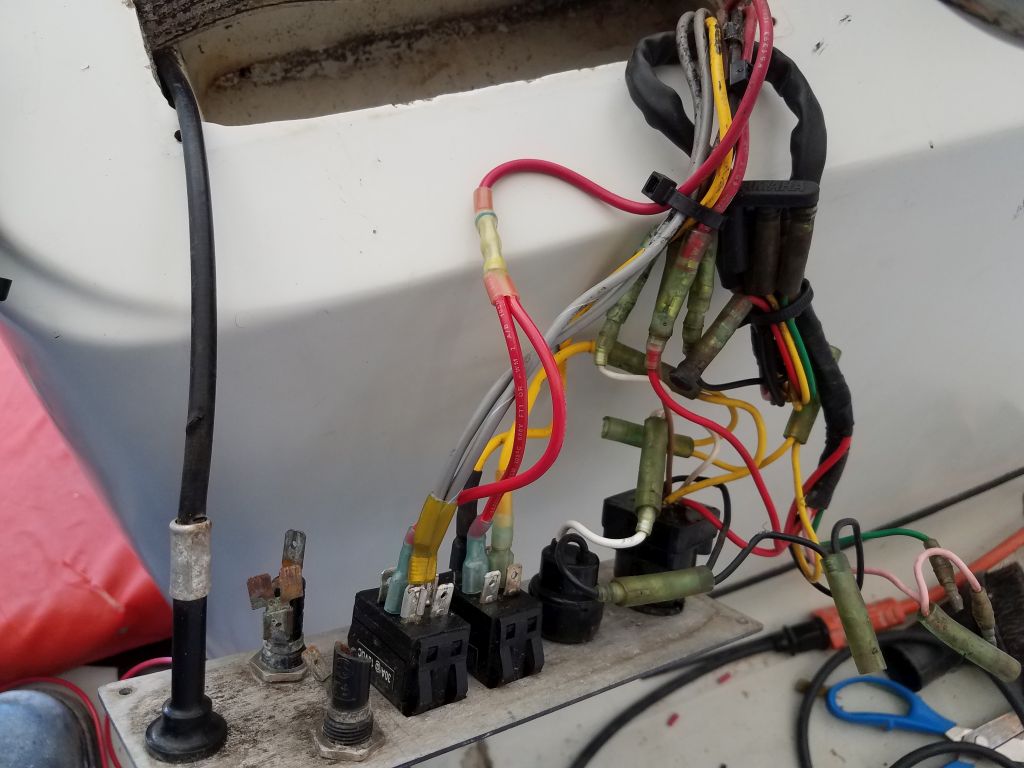
During this installation process, I had cause to open up the existing panel, in the console.  The wiring behind was a mess of loose and disconnected wires, many of which had pulled off when I removed the panel, so I had to sort through that as I prepared for the next items on my list.  I removed several old wires left over from the original bilge pump installation, and cleaned out various jumpers that seemed to serve no function.  I’d known the bilge blower had operated properly before, but now I found it didn’t, so I had to figure out which wire had pulled out and reconnect it, which I eventually did with success.
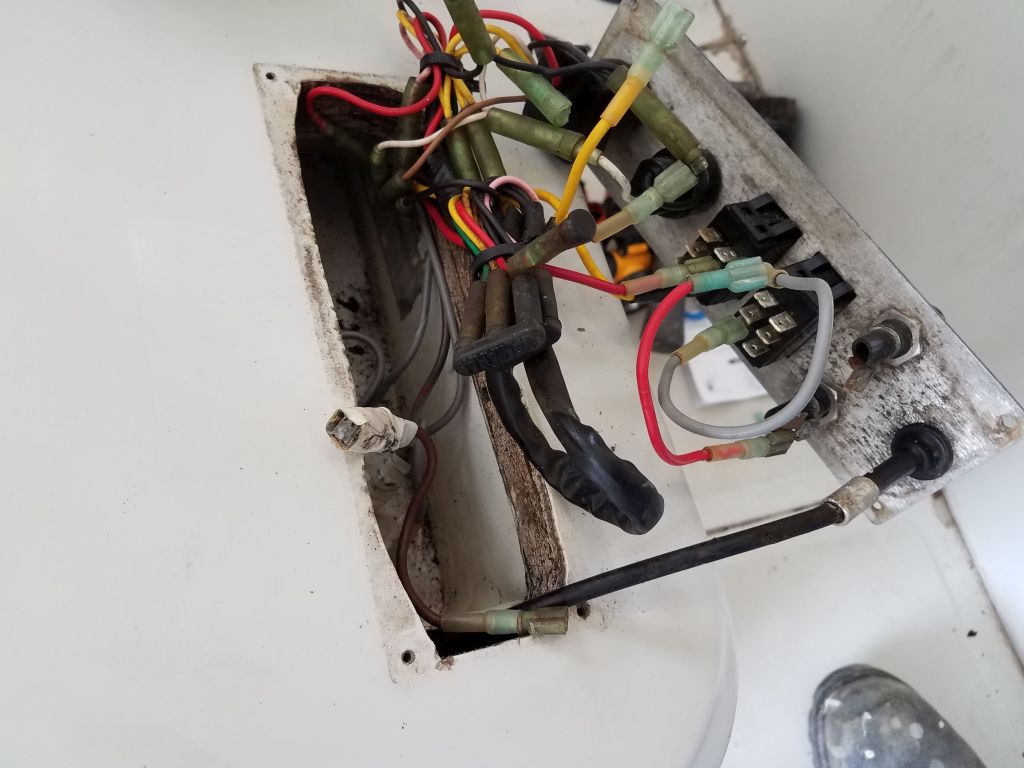
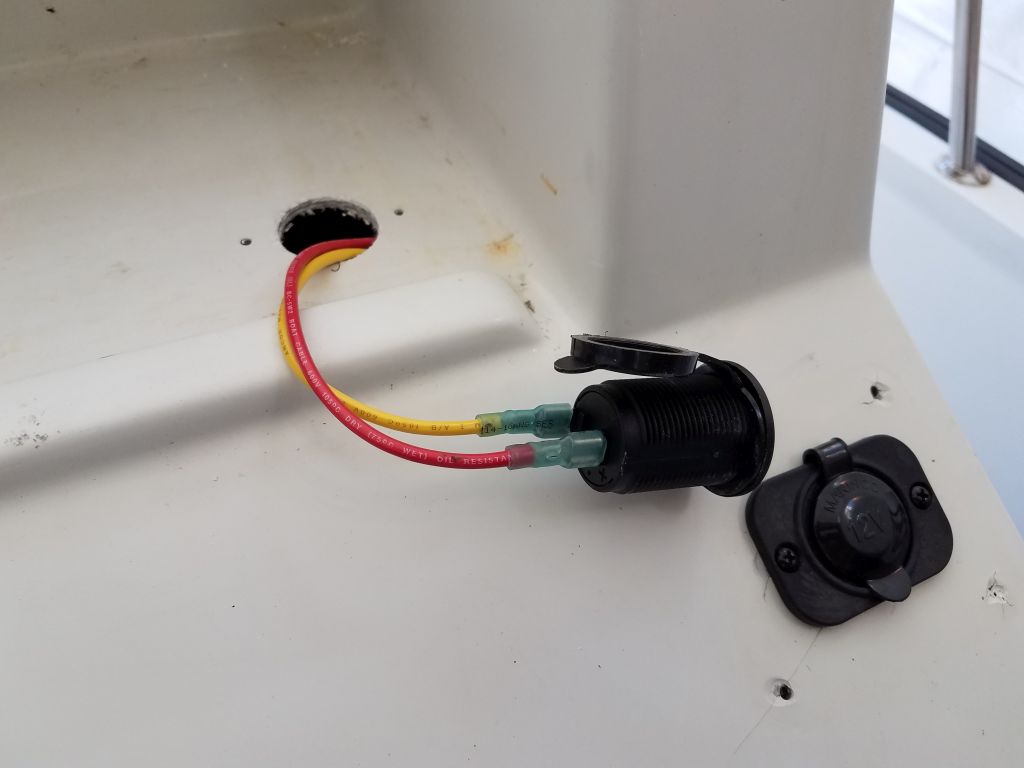
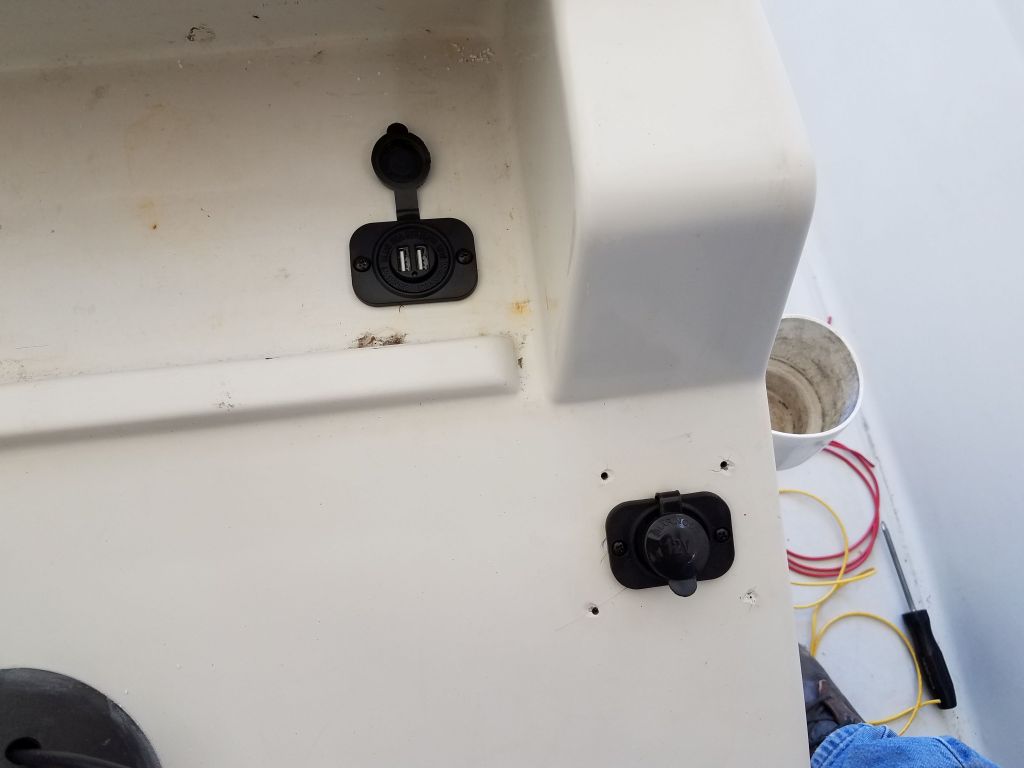
Sorting these wires, and determining what was needed and what wasn’t, was important because my next tasks included troubleshooting and repairing the running lights, as well as adding two new power outlets in the console:  a 12V cigarette-type outlet, to replace an existing one that was older and turned out not to be wired at all; and a modern USB charging outlet for today’s various devices.  The owner had originally wanted me to install a fixed-mount GPS, a slightly older unit he had on hand, but we found that the desired location in the small box at the top of the console was too small to contain the unit, and after some discussion we determined that using handheld devices, including smart phones or tablets, made the most sense in this small boat, thus leading to the desire for additional and useful power outlets.

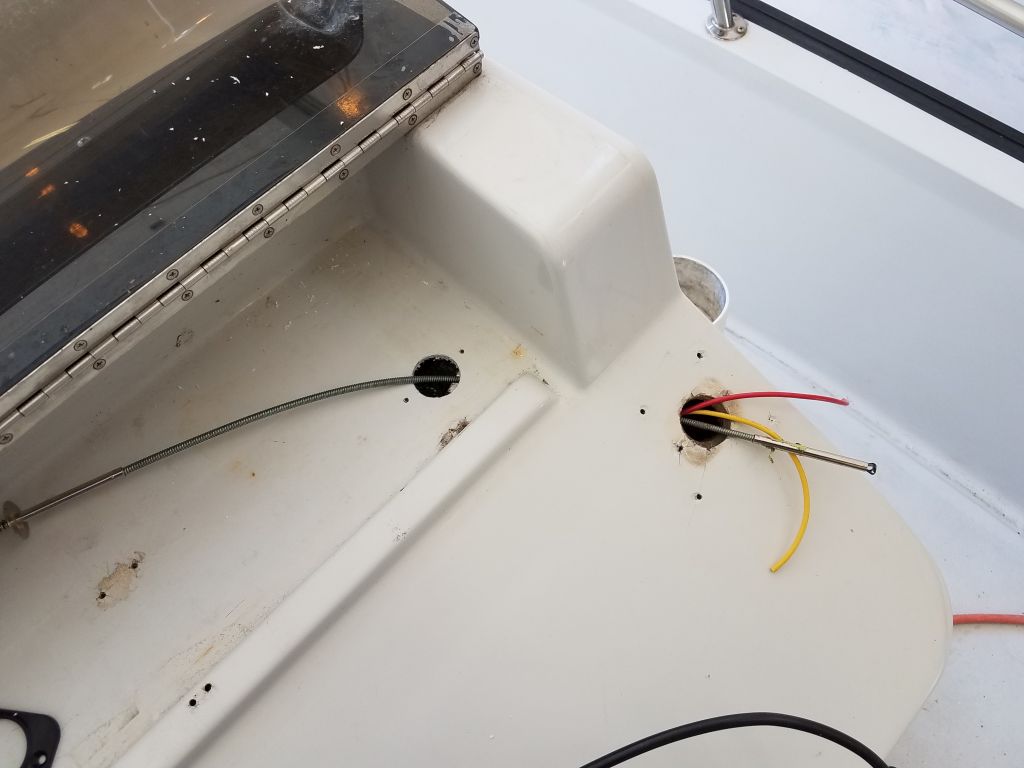
I didn’t even bother trying to save the existing outlet from the console, choosing to start fresh with an identical, but new, version.  I snaked wires over from the panel area, and strung additional wires to a new mounting location inside the small electronics box, out of the weather, for the USB charging port.  Making the final connections and testing these outlets was relatively quick and straightforward once I’d made sense of the existing electrical system to begin with.
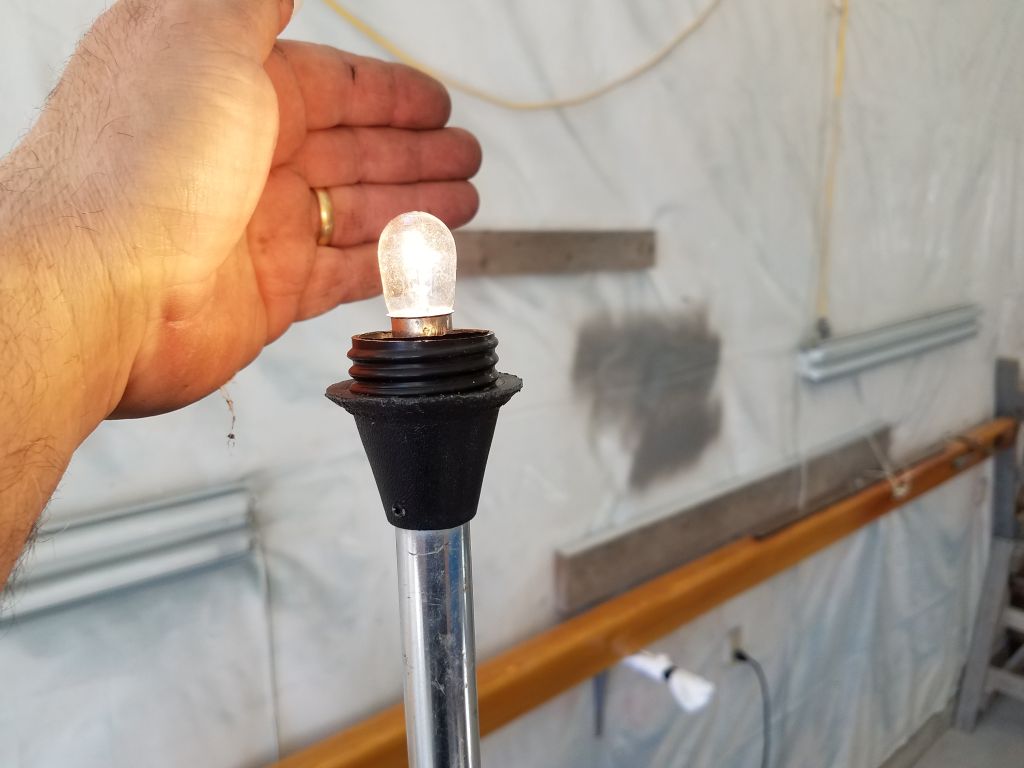
Inspection of the existing wiring harness helped me identify which wires led to the running lights, neither of which worked immediately.  At the stern light, it was easy to cut the wires near some existing butt connectors and test for power–all OK, so I made up new wiring connections and the light tested operational thereafter.
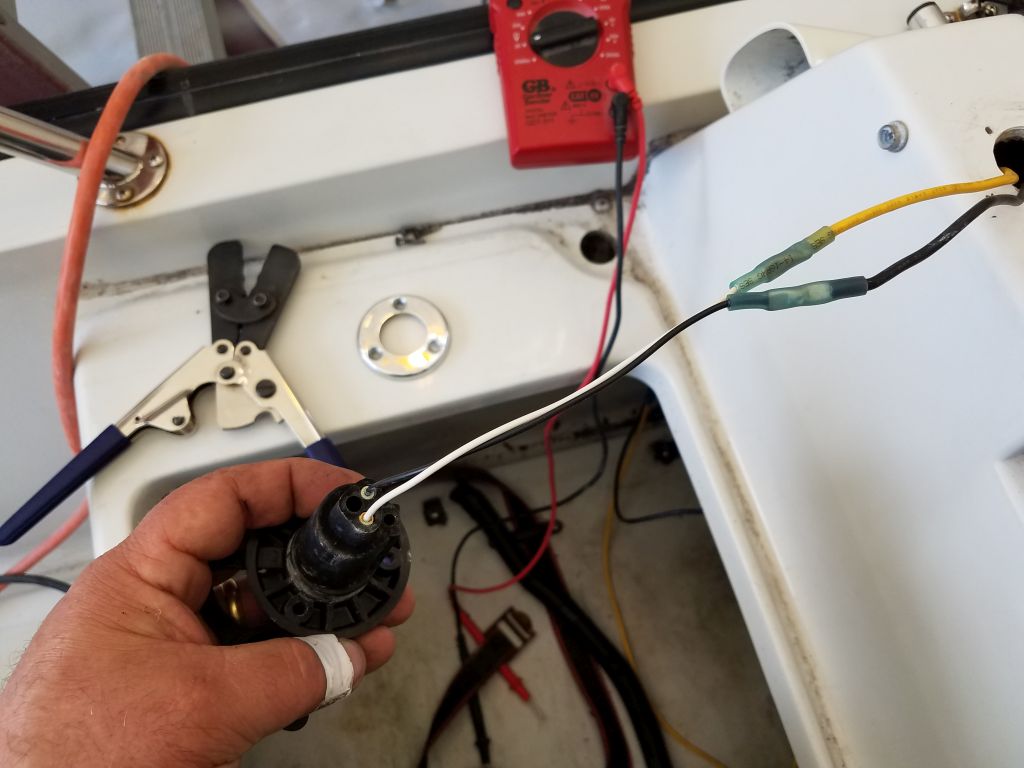
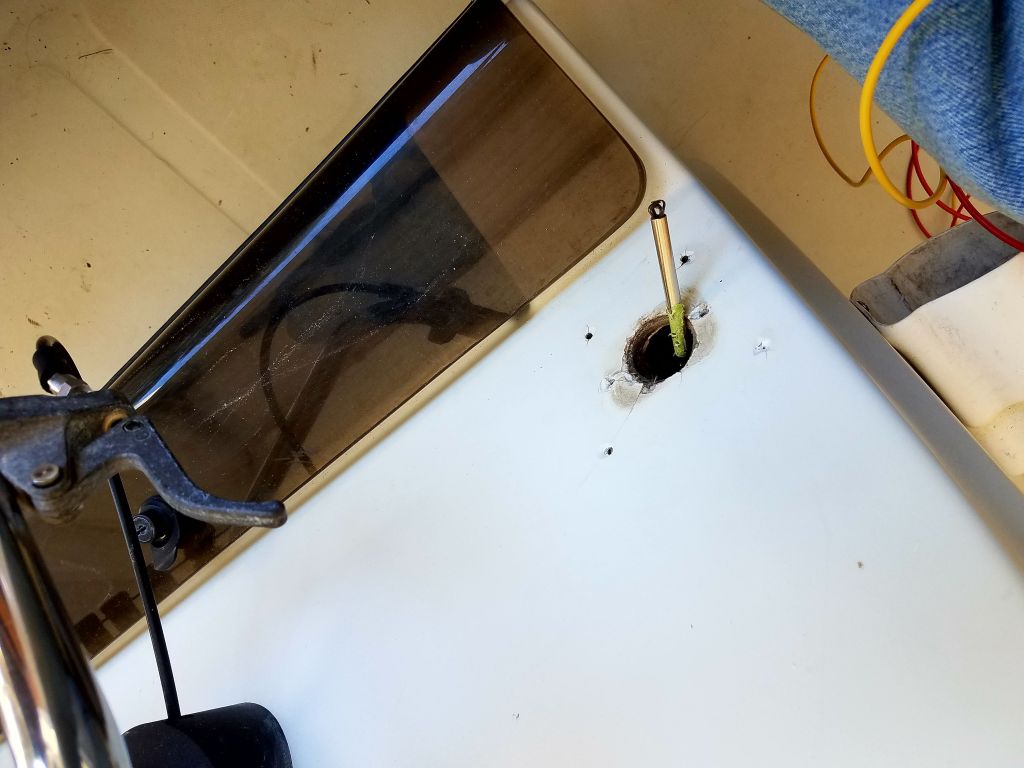
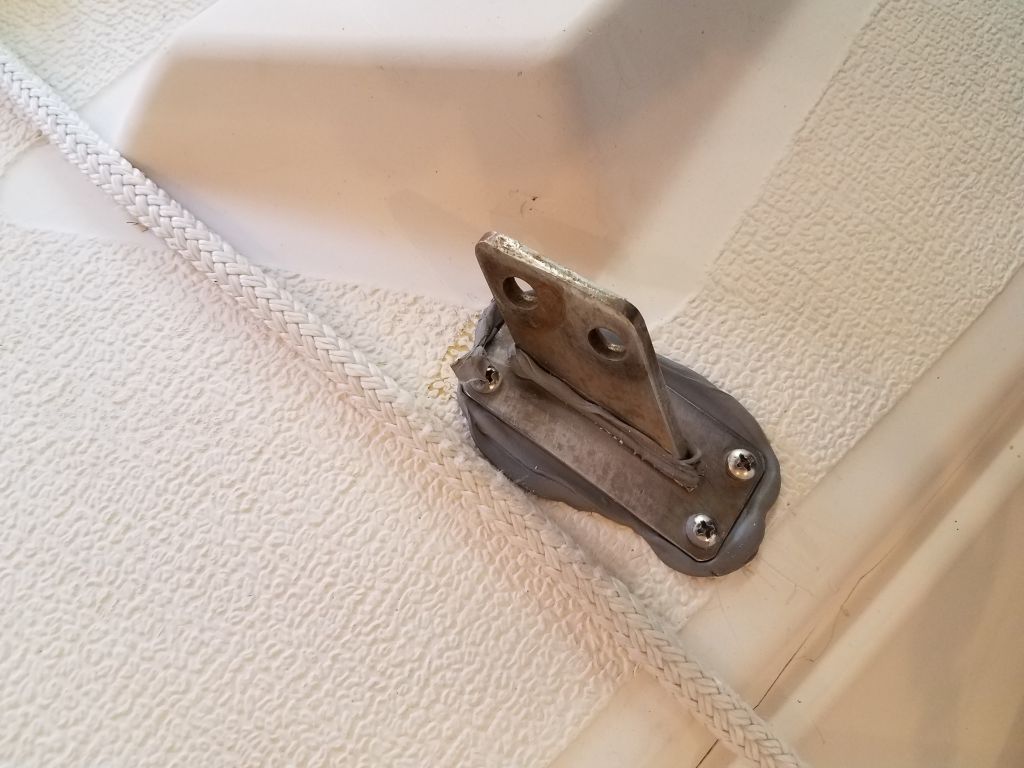
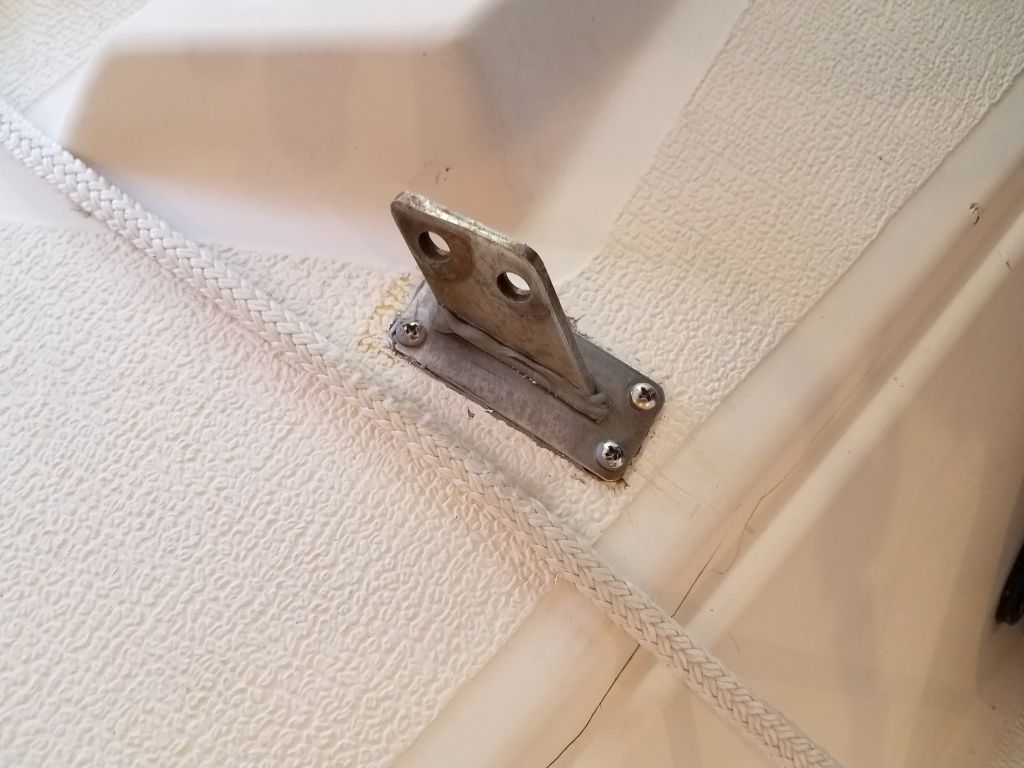
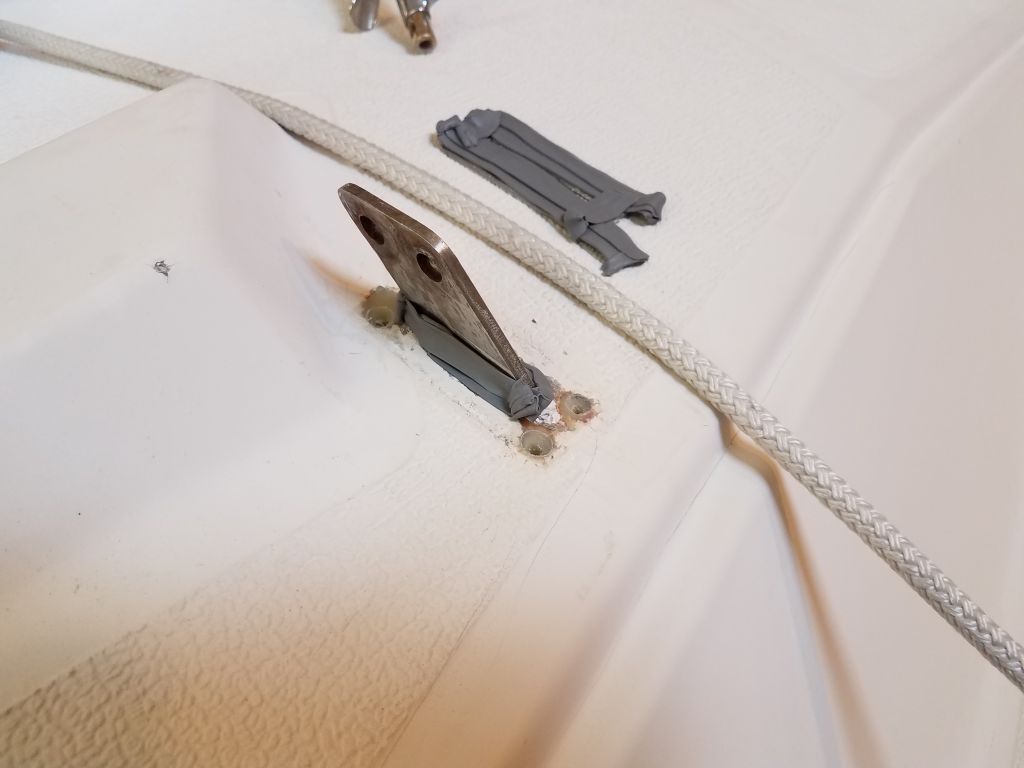
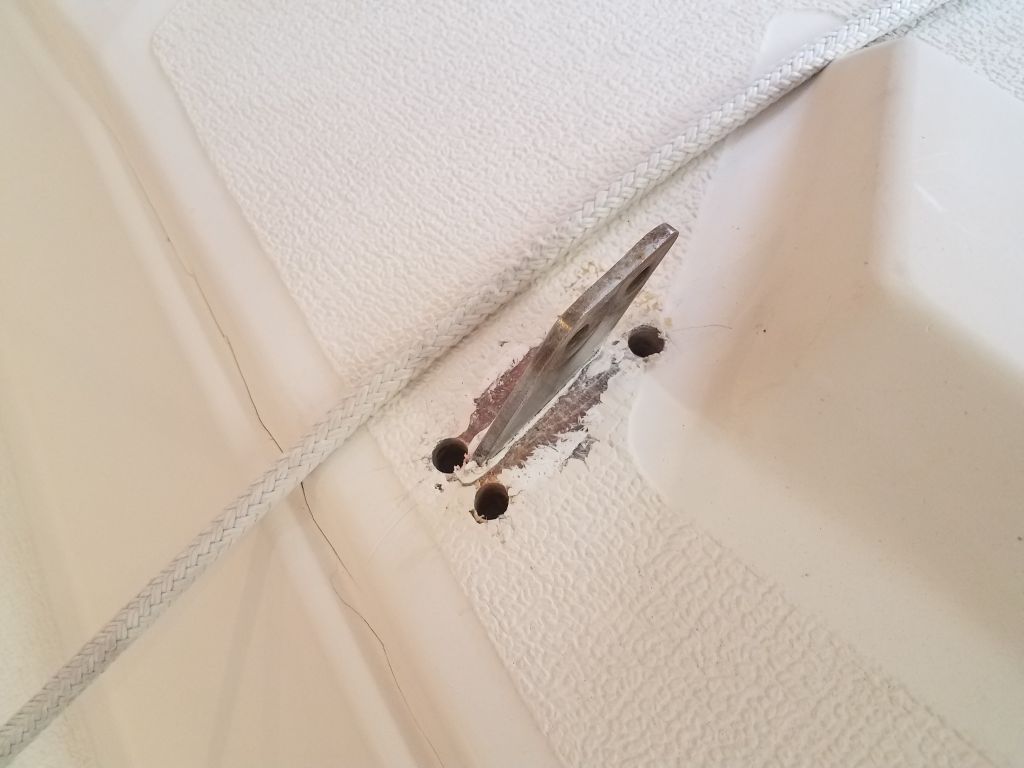
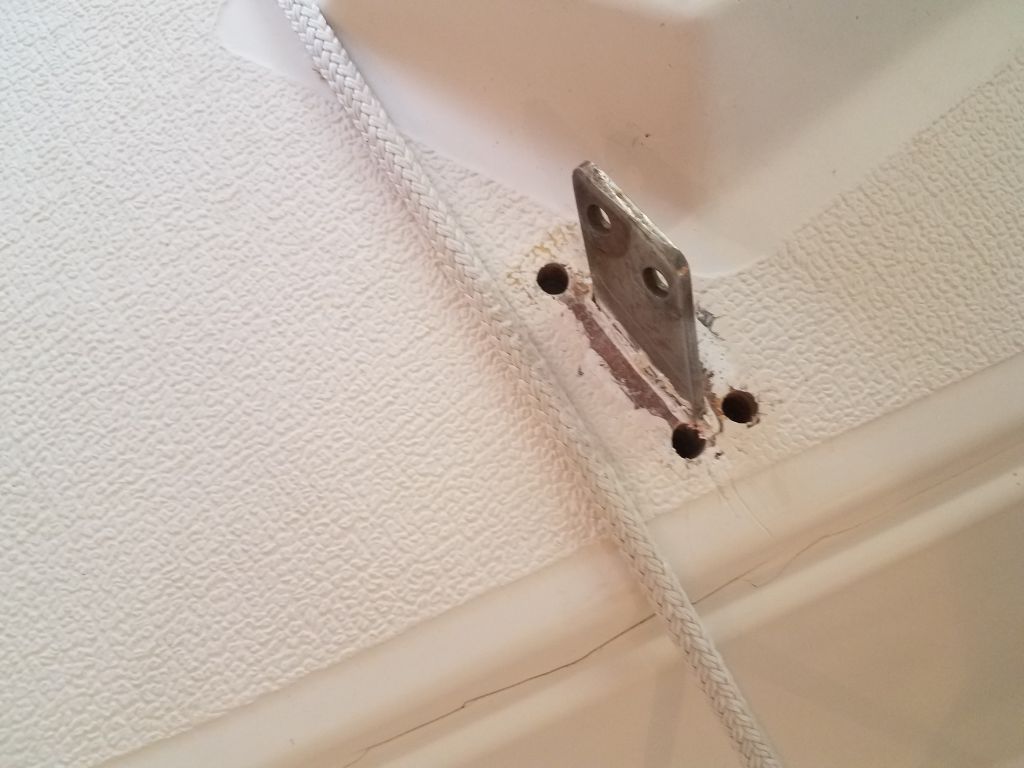
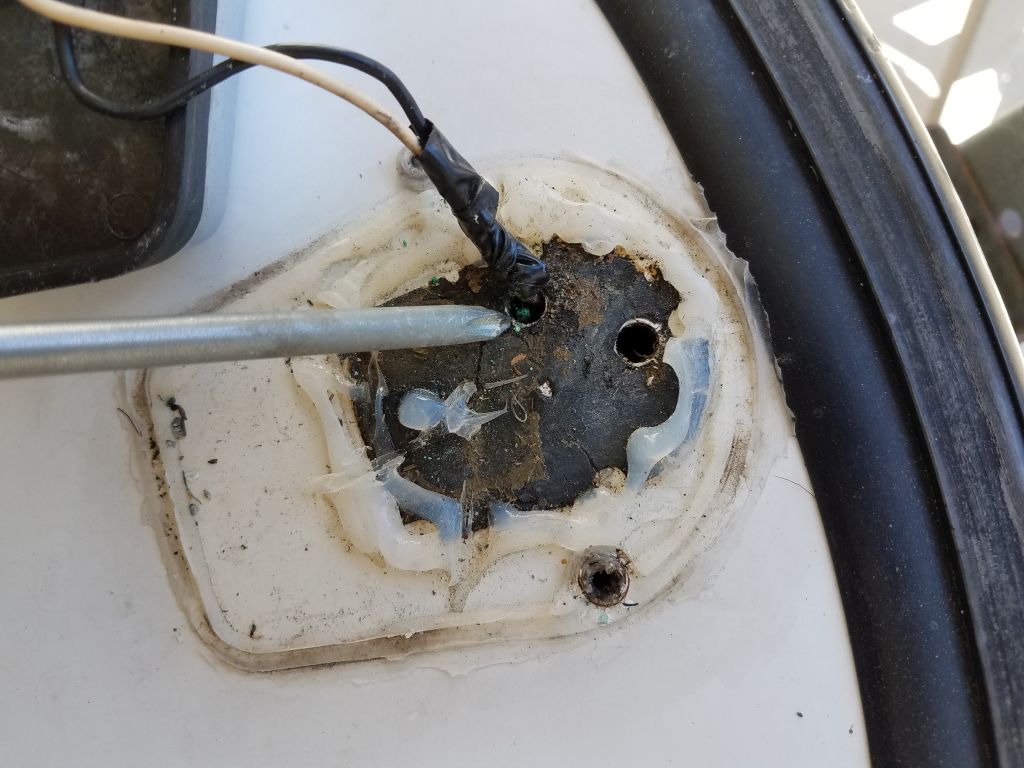
I also cut and tested the wiring leading to the bow light–the wire led into the space between the cockpit and the hull on the starboard side aft, so I tested the wires just before this area to find power as required.  So I moved on to the bow light fixture itself, where I found that the wires–which had been soldered together beneath the light–were in poor condition, heavily corroded, with broken connections and, unfortunately, no slack available in the wire, which was broken off just below deck level; the screwdriver points to the green, corroded, broken wire here.
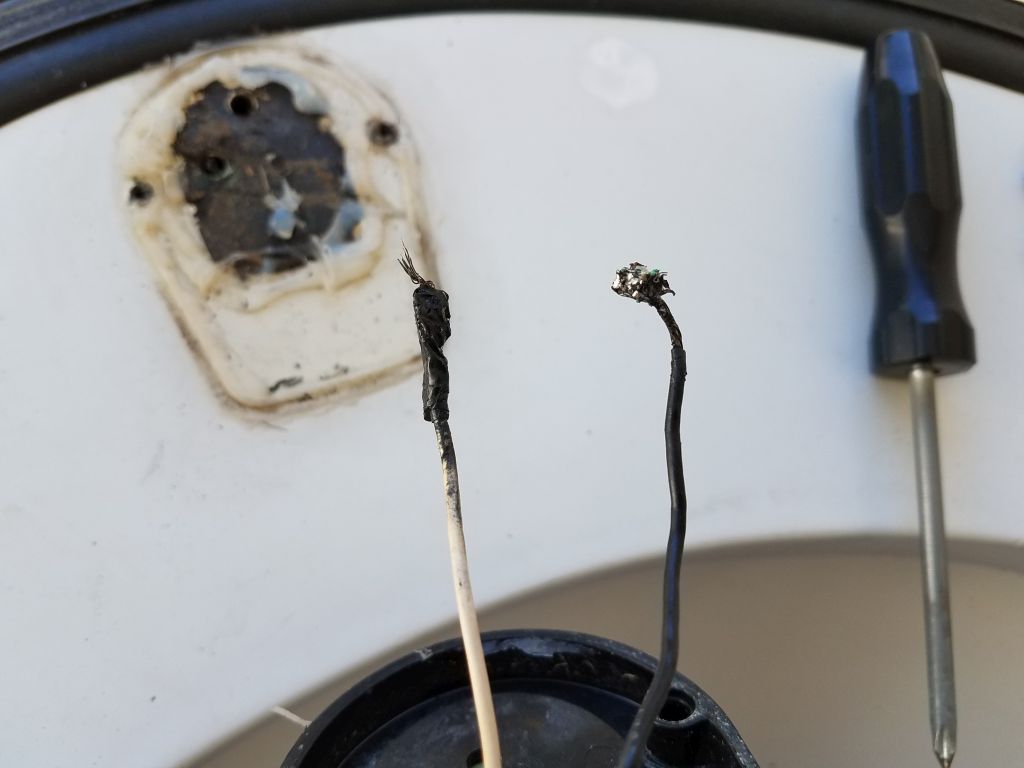
By now it was late in the day, and I chose to address this issue further next time.

Total time billed on this job today:  7 hours

0600 Weather Observation:
47°, clear.  Forecast for the day:  sunny, 60s
Acadia 72

< Back to Acadia

Friday

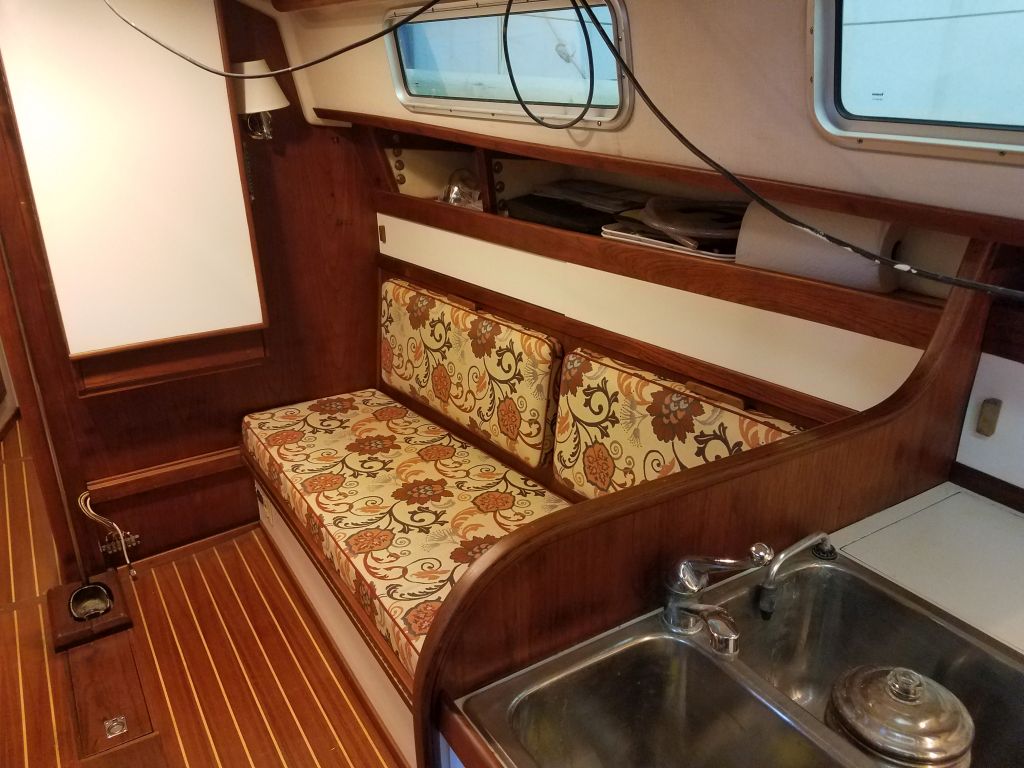
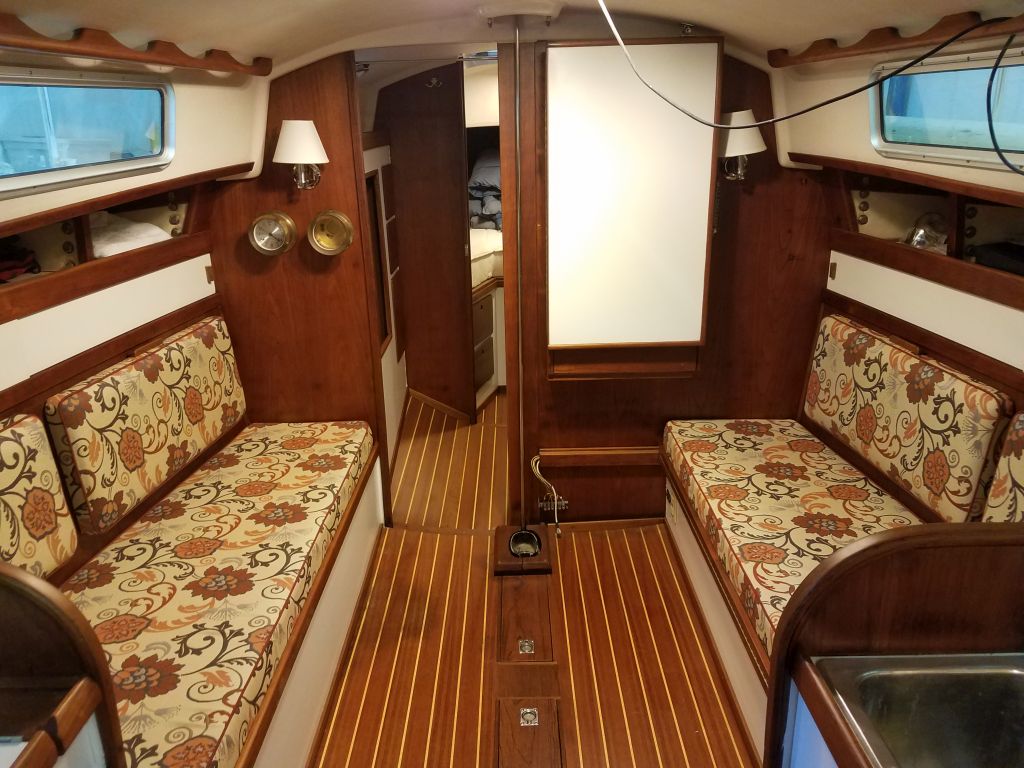
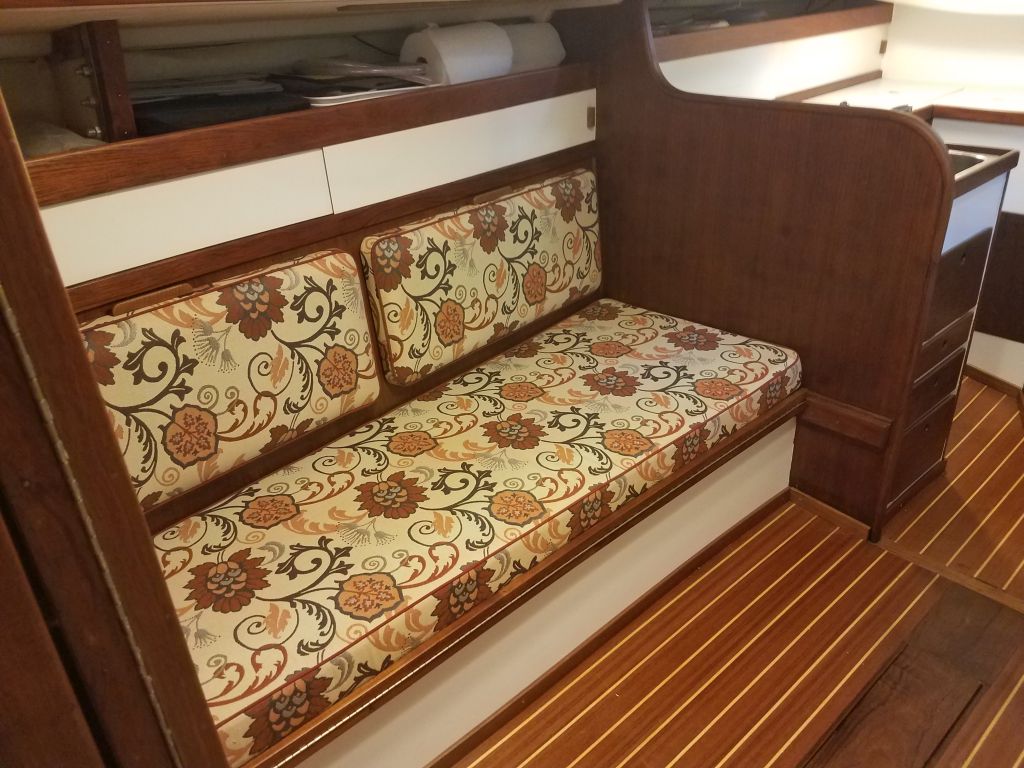
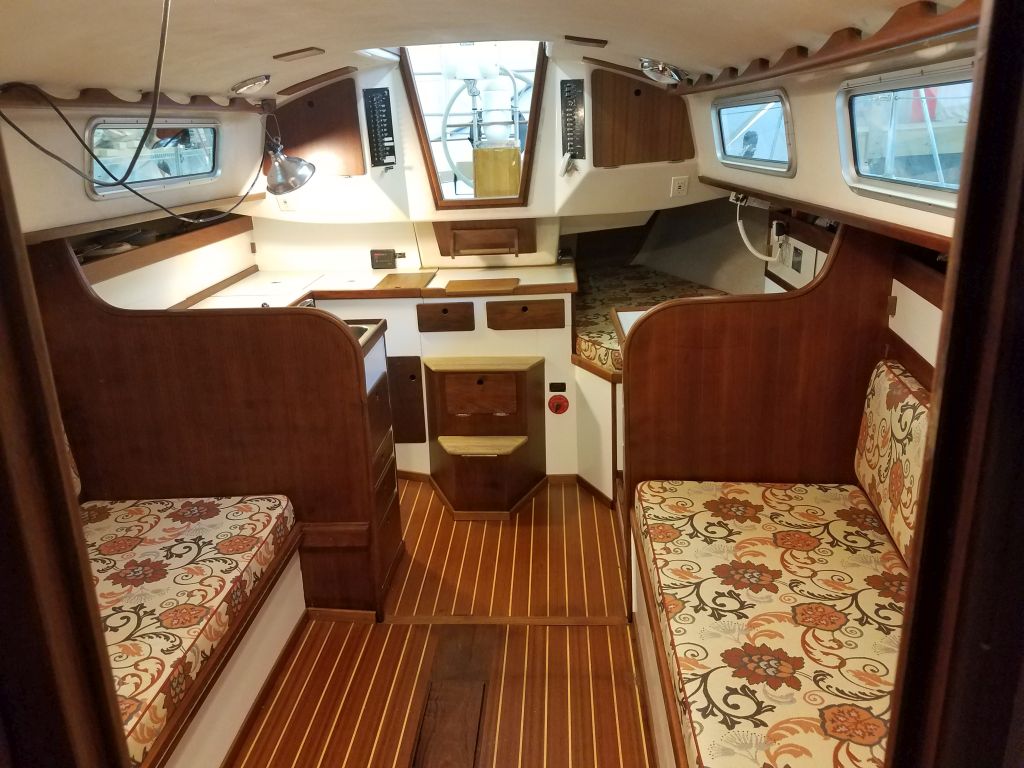
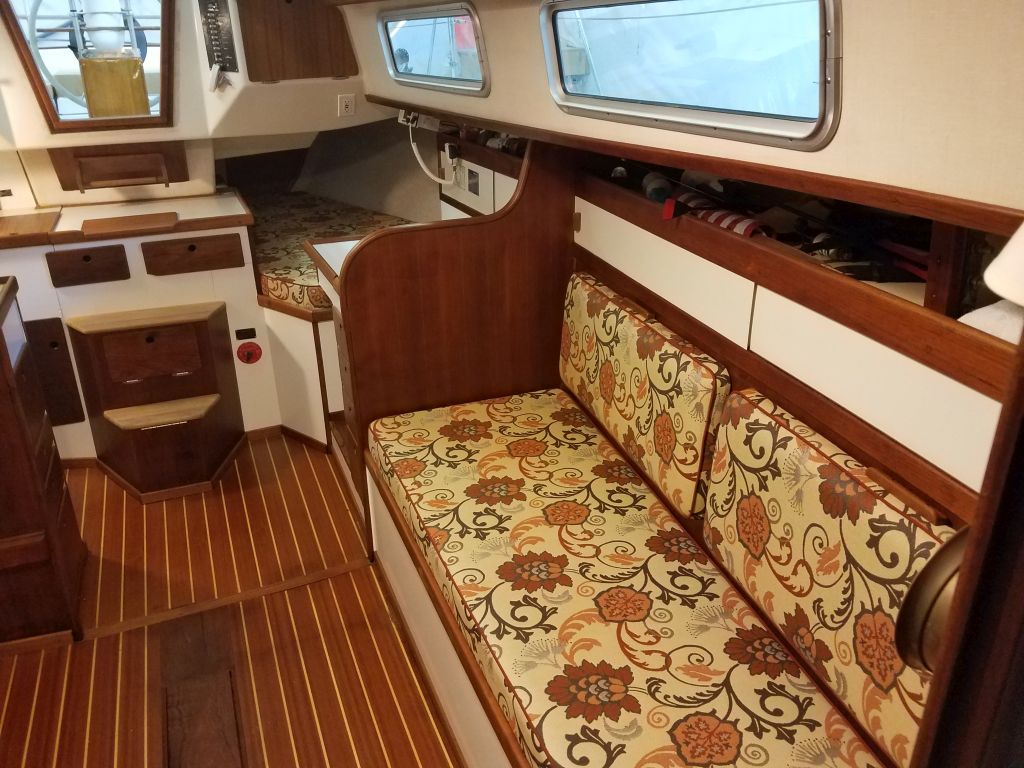
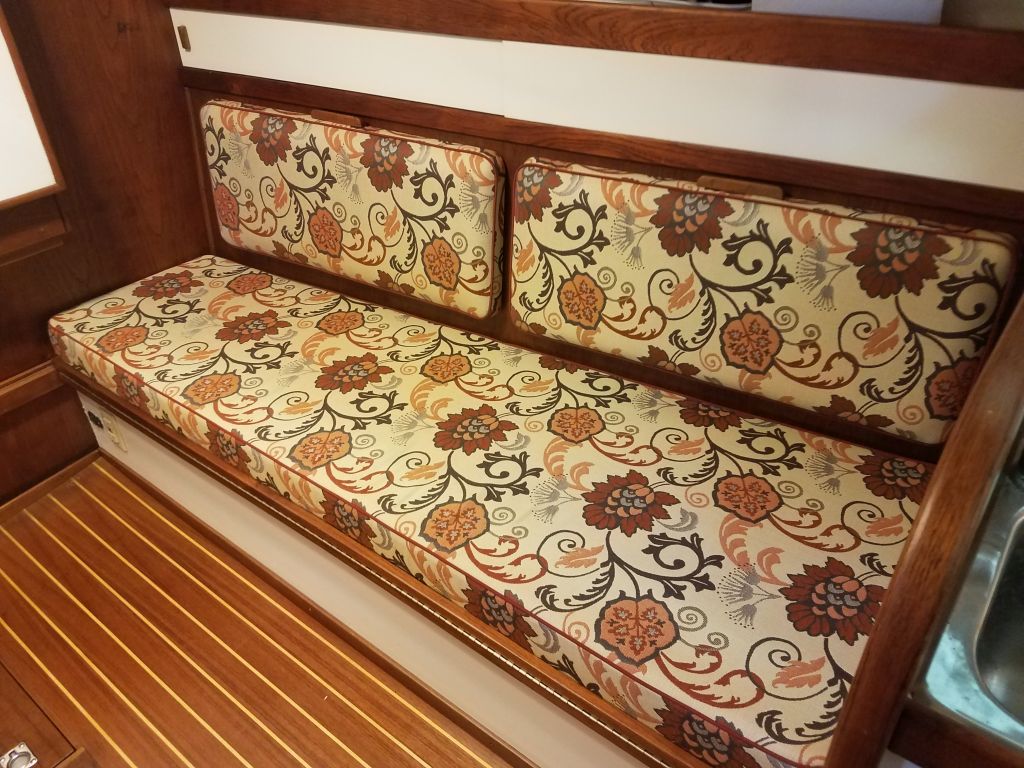
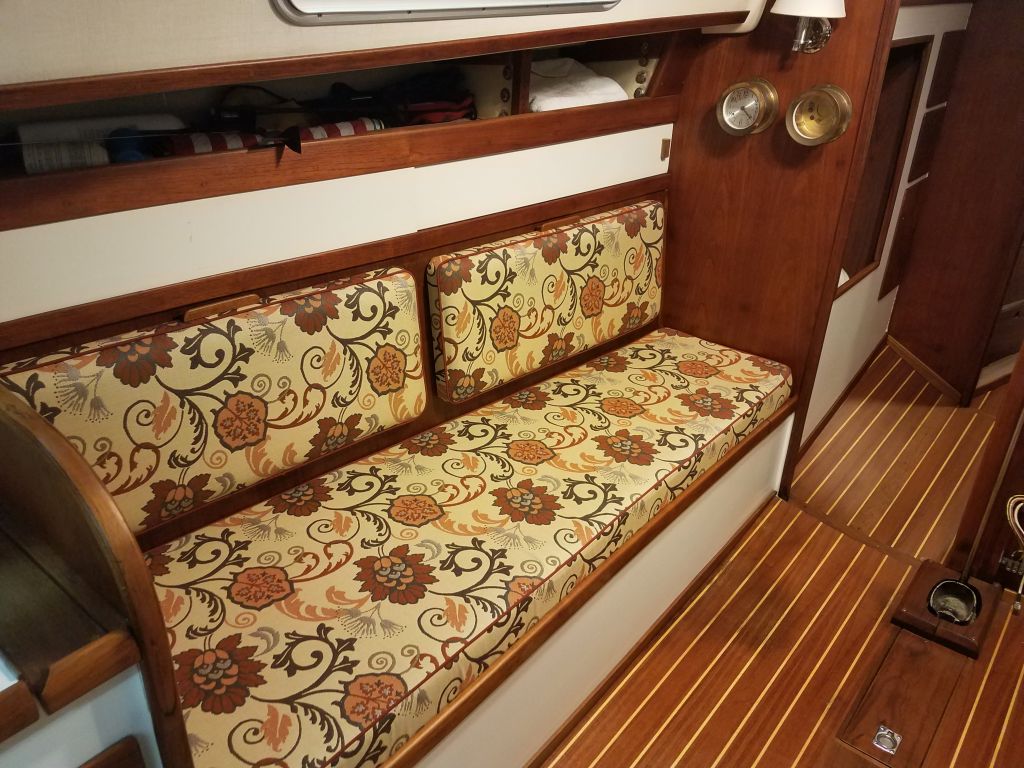
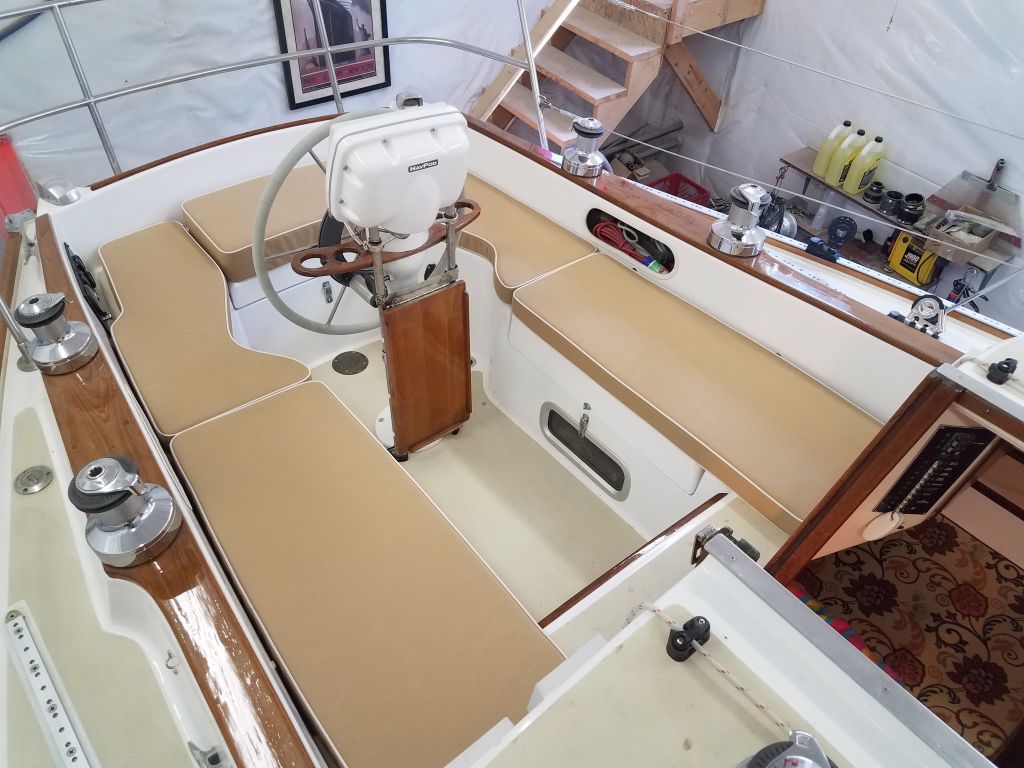
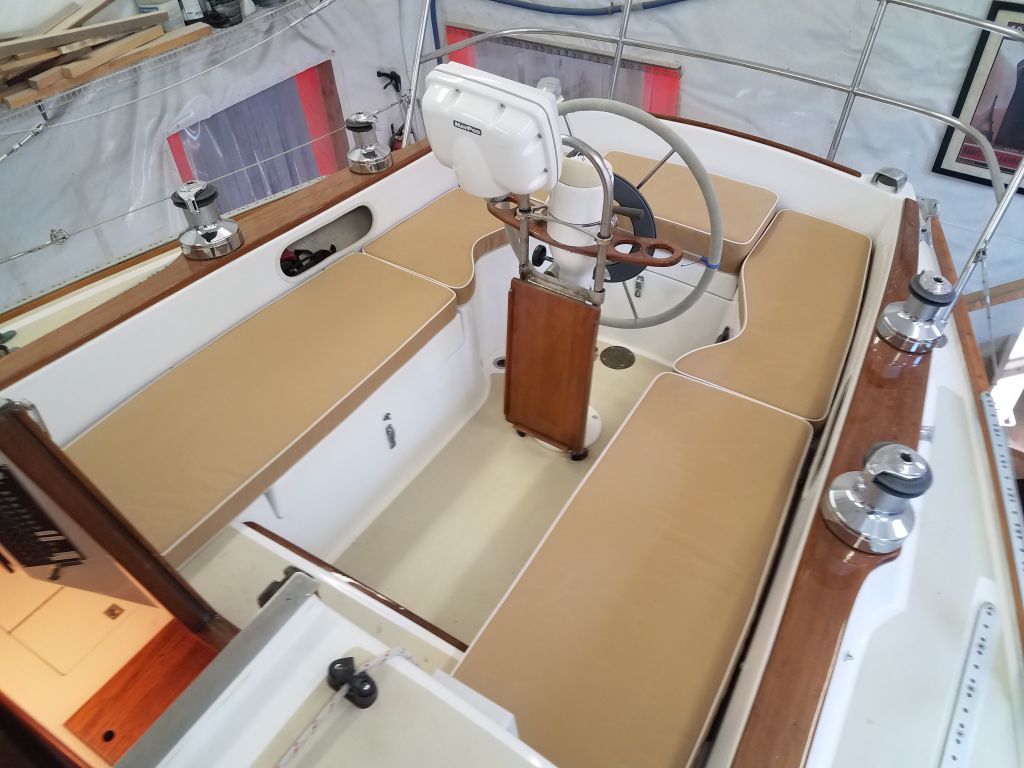
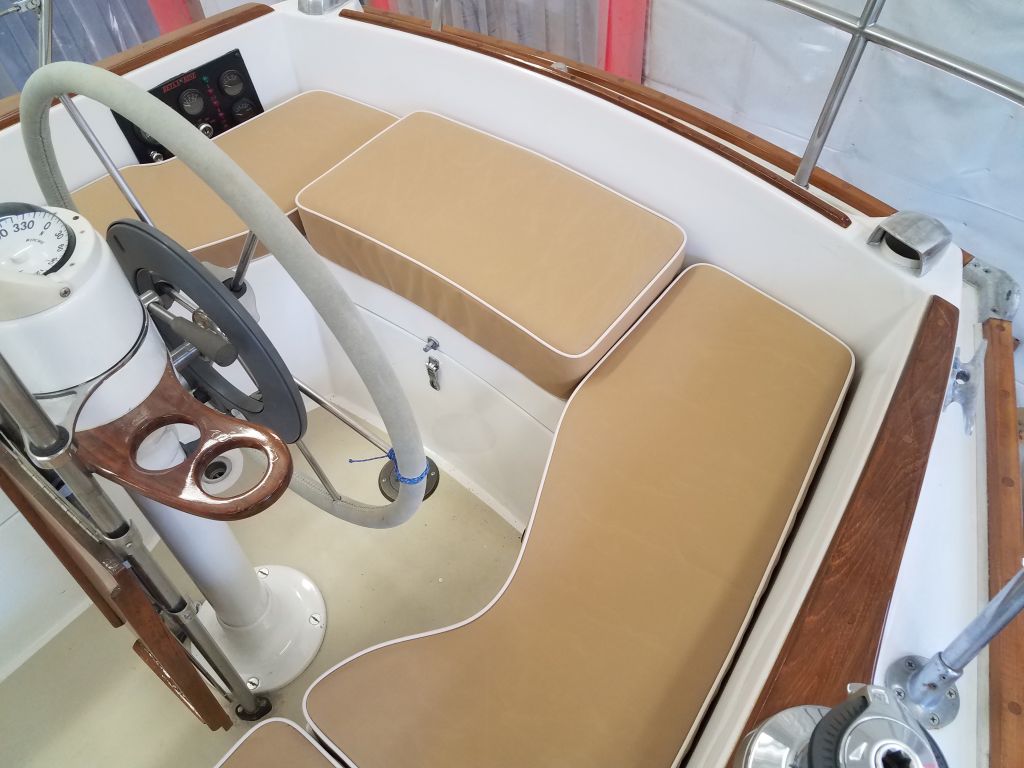
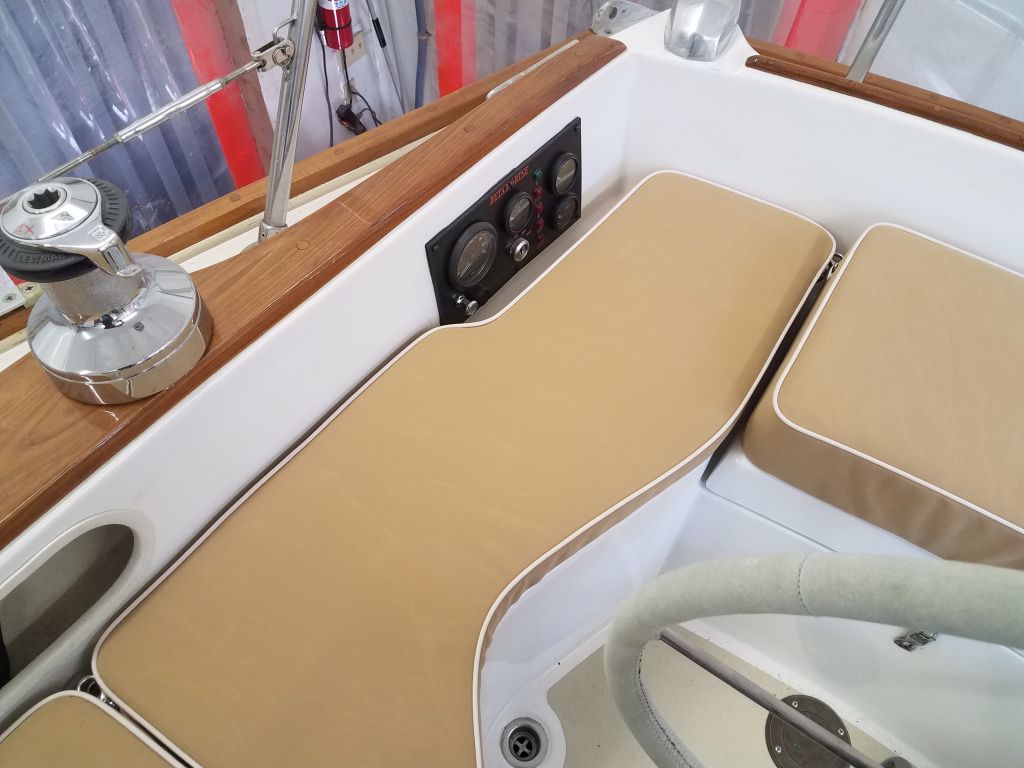
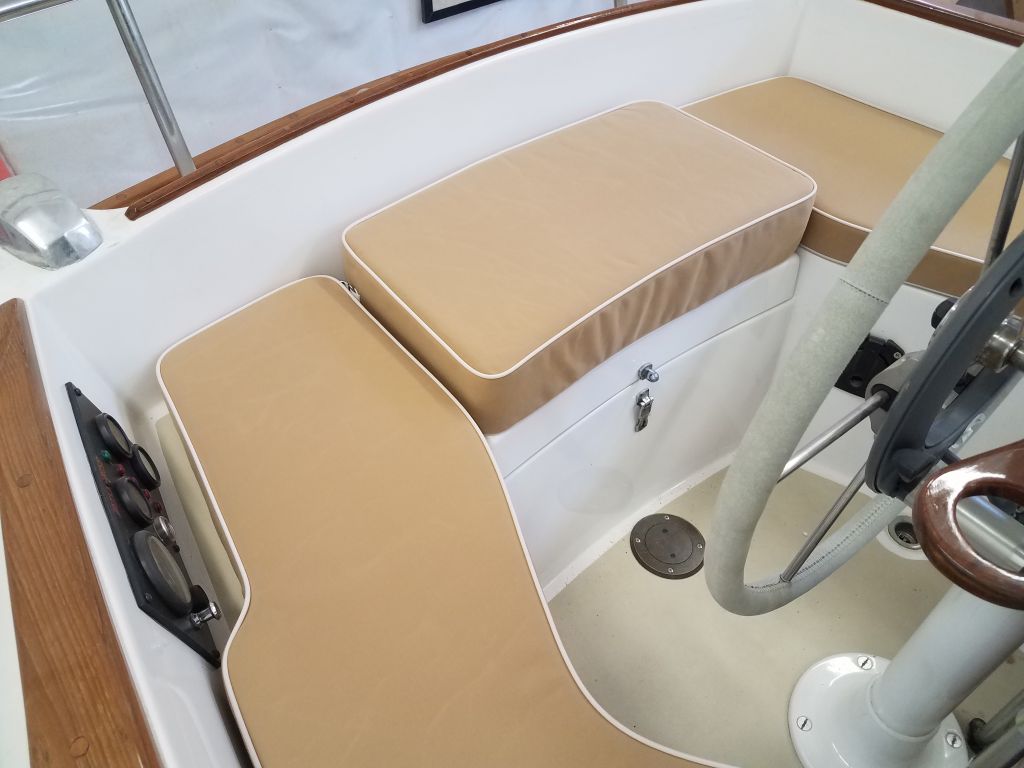
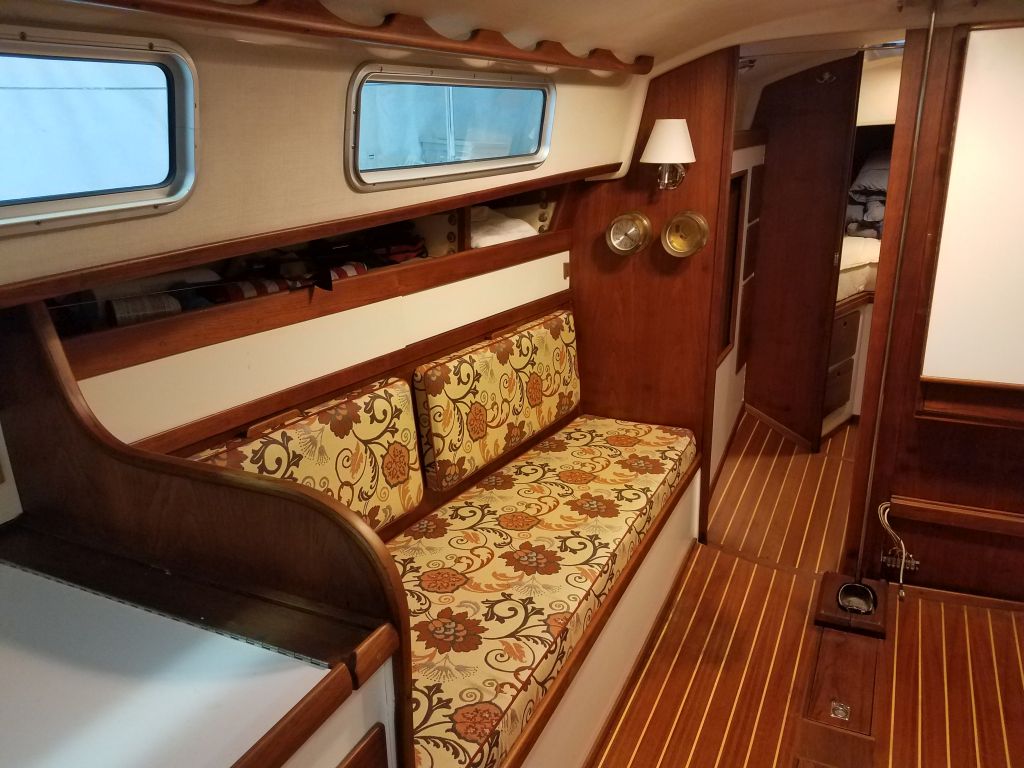
A few months earlier, the owners met with my Jason, my canvas contractor, and I to discuss the new interior and cockpit cushions and make final fabric decisions.  Now, the new cushions were complete (minus two filler pieces for the convertible berth in the cabin, which pieces were still under construction), and Jason brought over the new cushions for installation.

With only a small fabric sample on hand during the final decision-making, the cushion upholstery was a bold choice, but the end result looked terrific in the cabin and, as always, brought all the upgrades and improvements together well.

The cockpit cushions, complete with an extra-tall 5″ cushion at the helm position, looked fantastic as well, and would match the boat’s existing canvas work.

Still to come:  interior curtains, and those two filler cushions.


Acadia 71

< Back to Acadia

Wednesday, Thursday, Friday

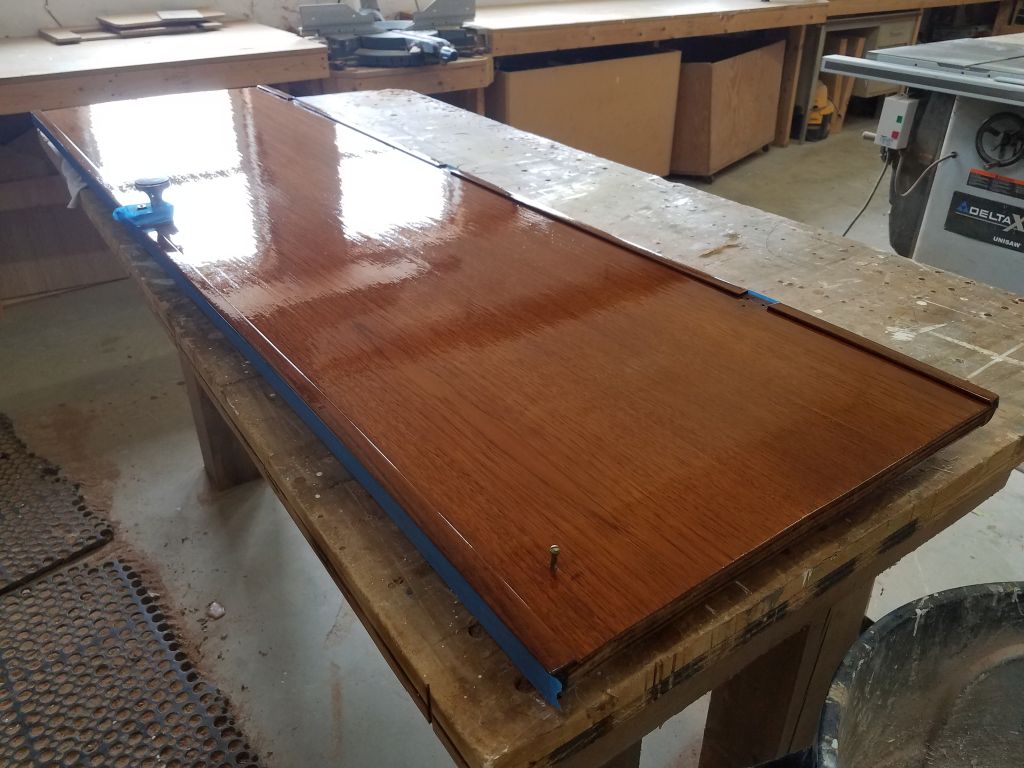
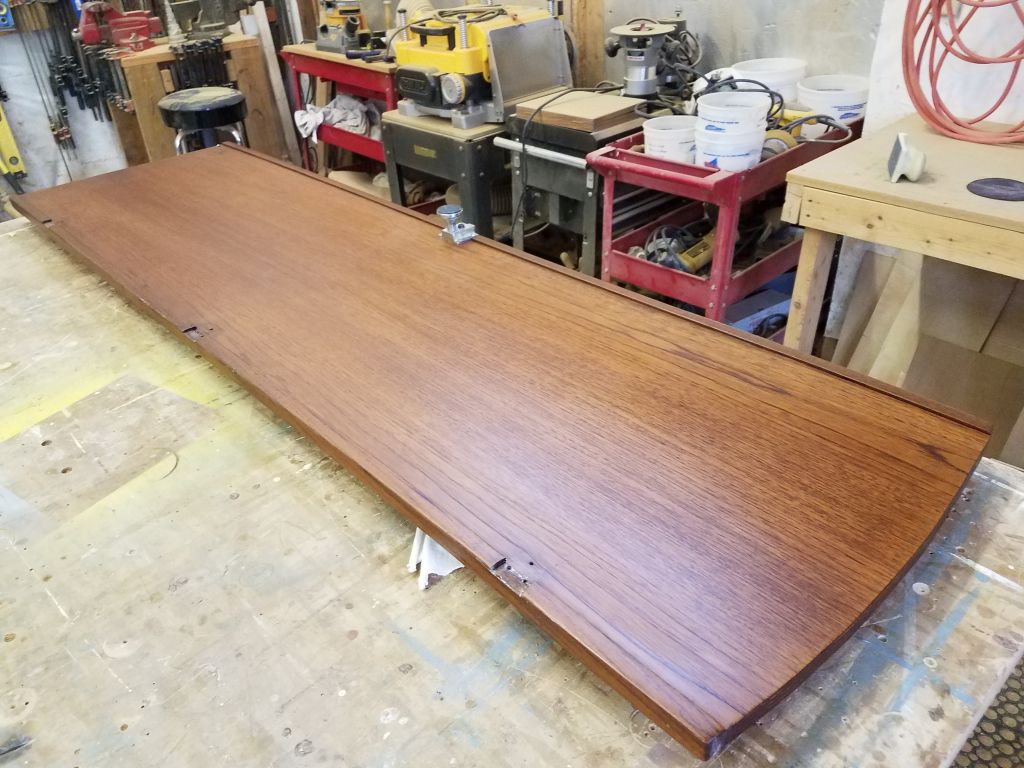
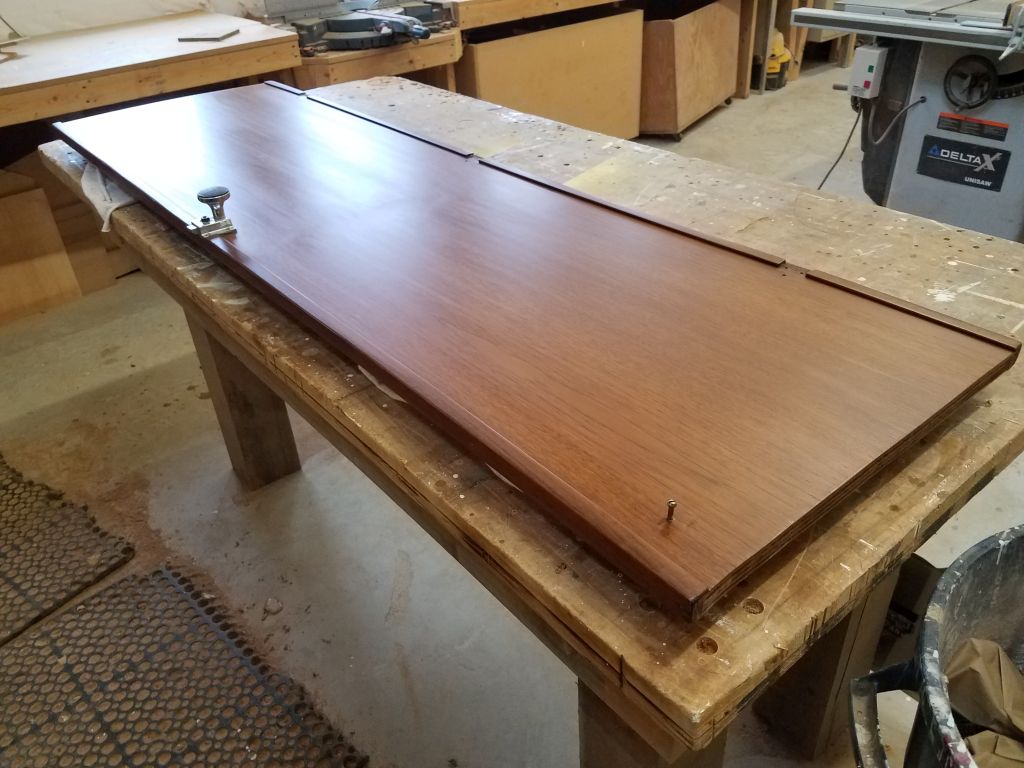
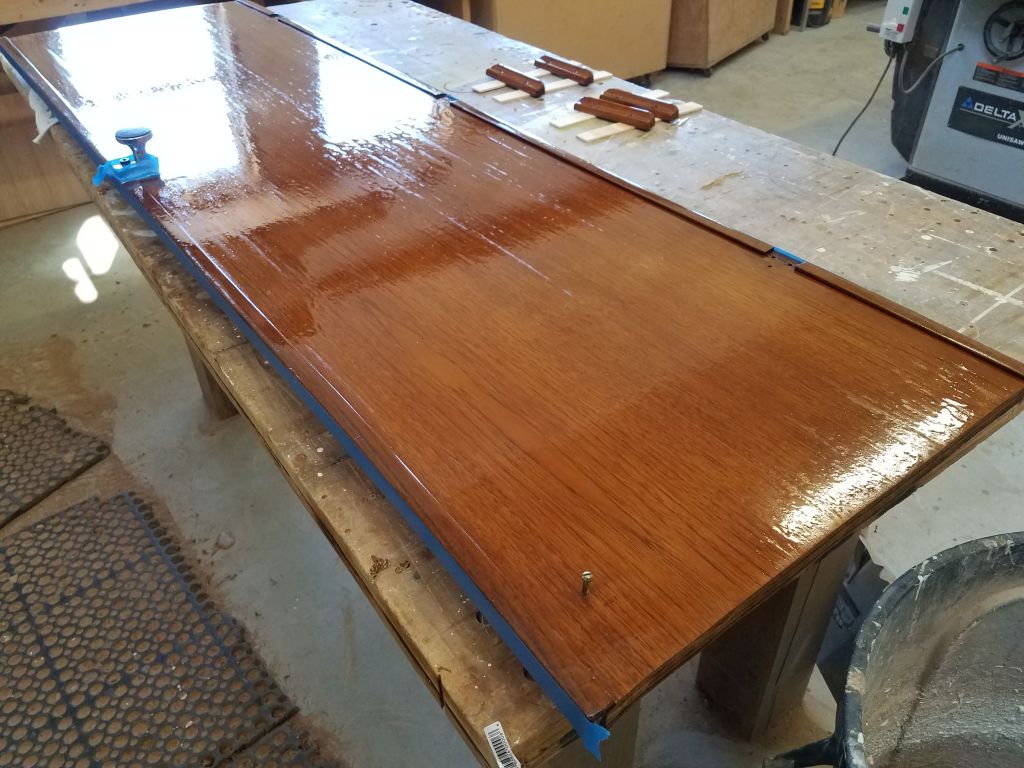
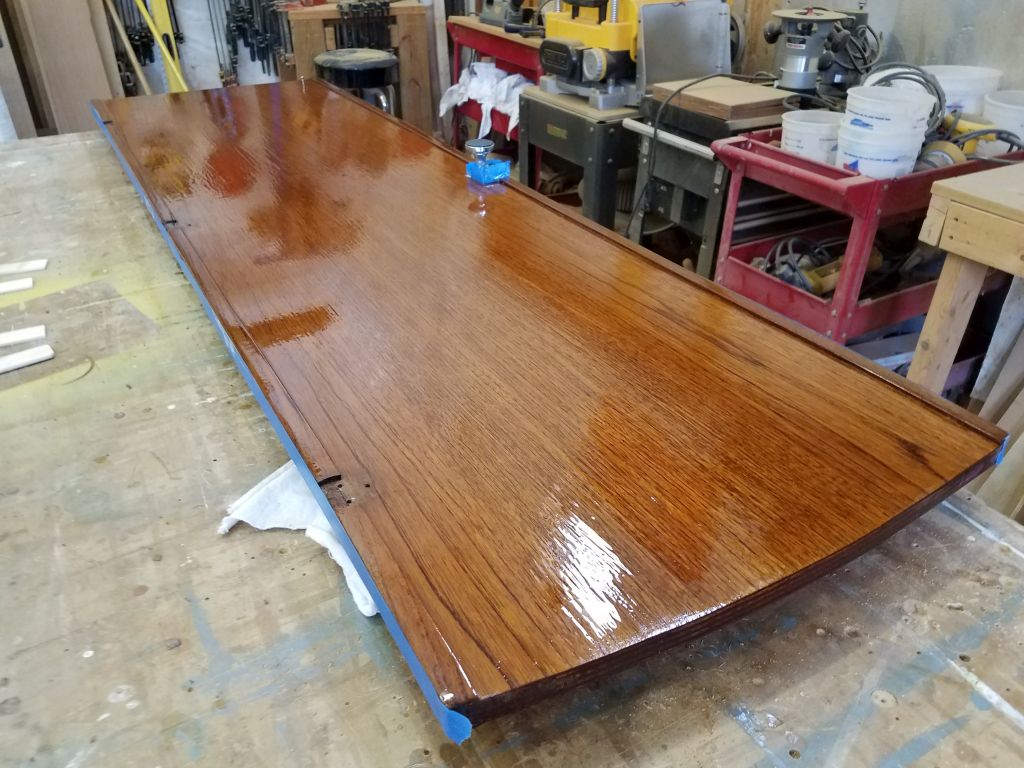
Over a few days, I wrapped up the varnish work on the second side of the v-berth door.

Third coat:

Fourth coat:


Fifth coat (rubbed-effect satin):

Total time billed on this job today:   1 hour

Precision 2017-4

< Back to Precision 23

Thursday

The excess sealant around the ports had cured enough overnight to allow me to cut it away now and clean up the residue as needed, completing the ports’ installation.

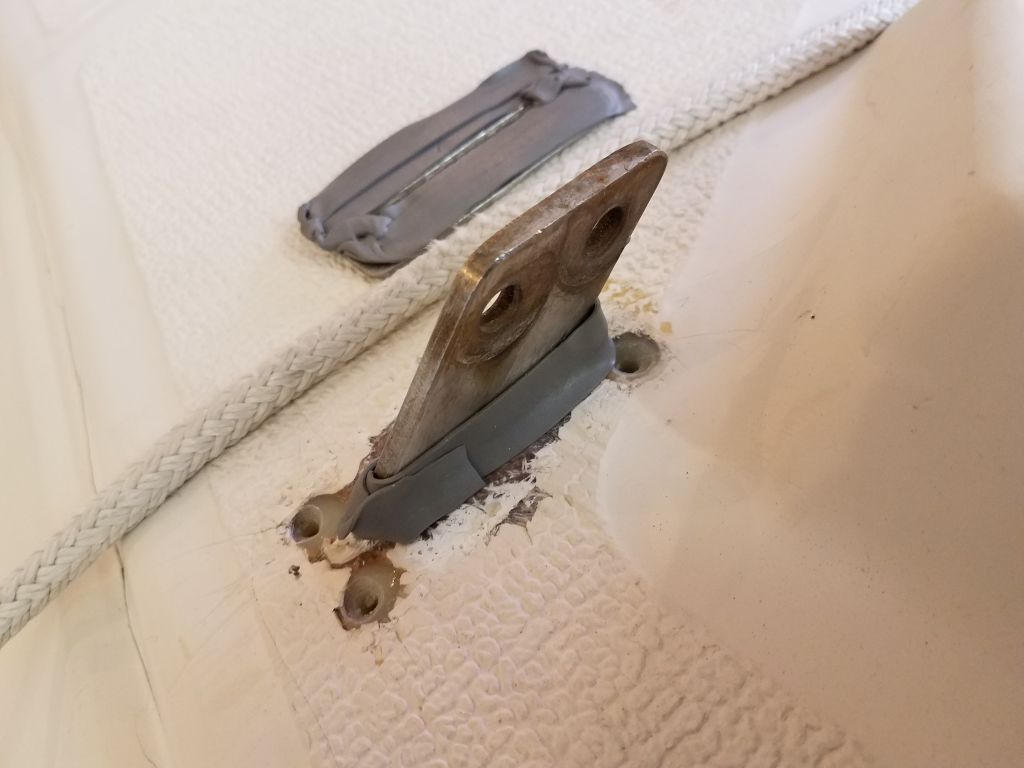
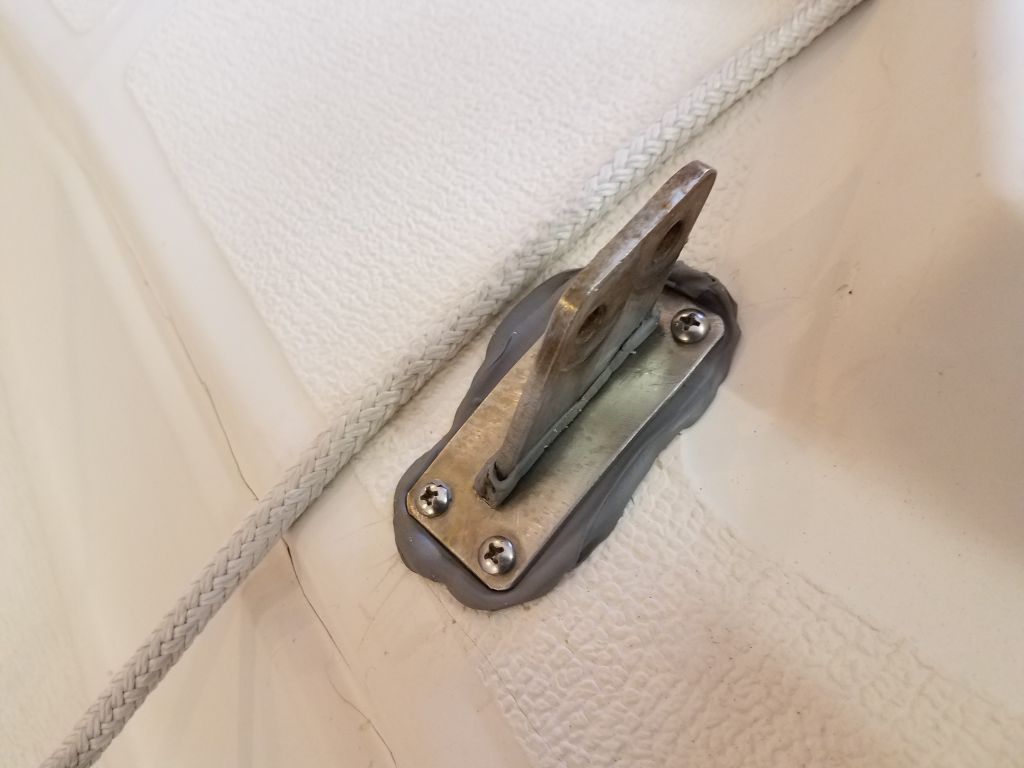
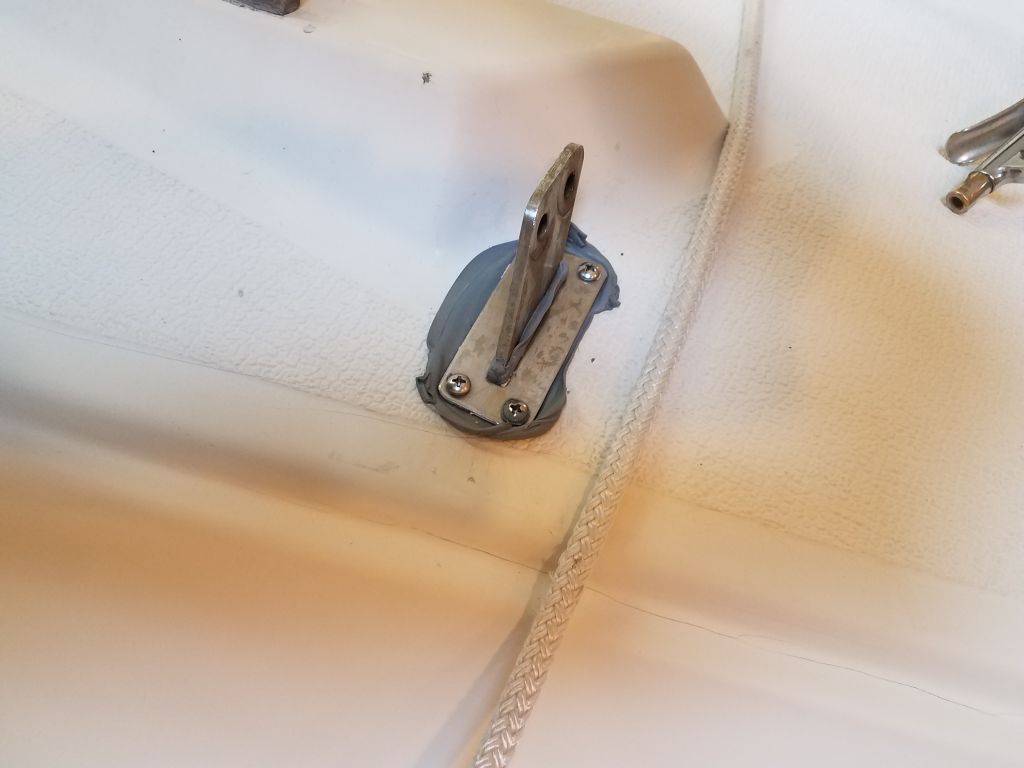
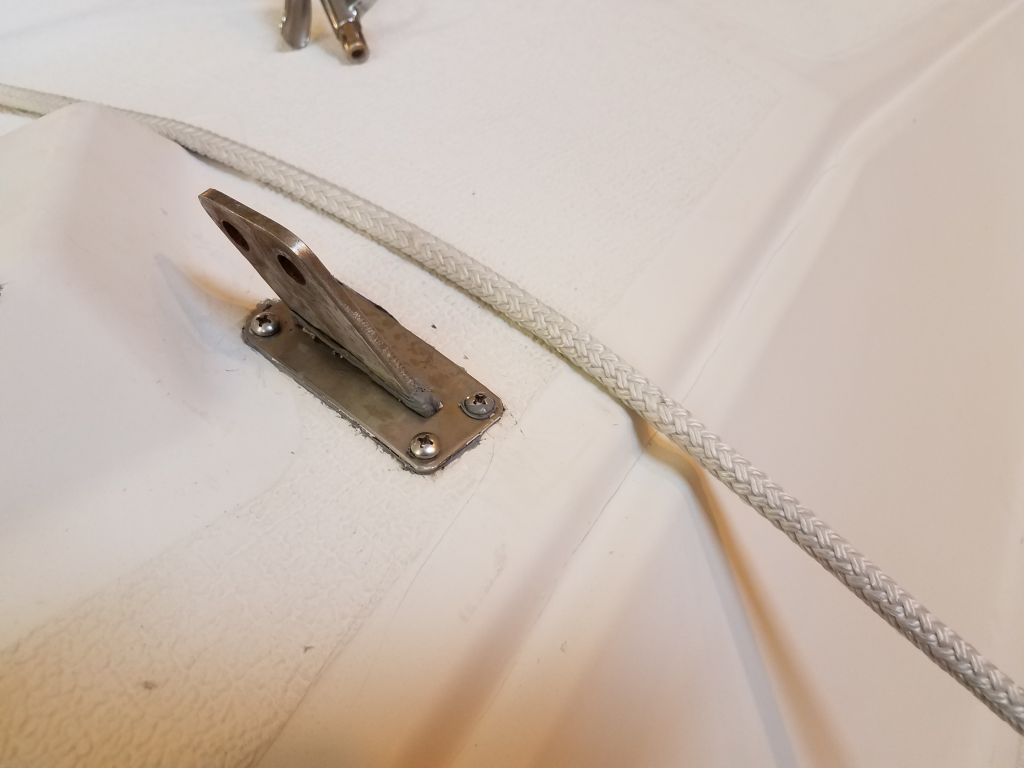
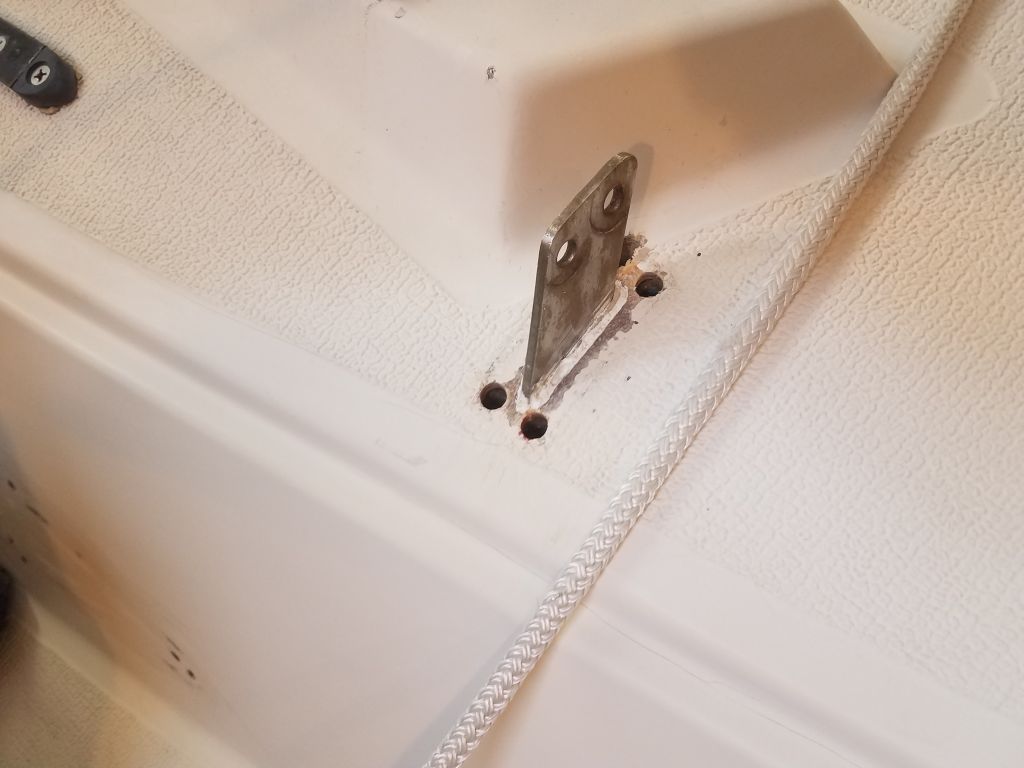
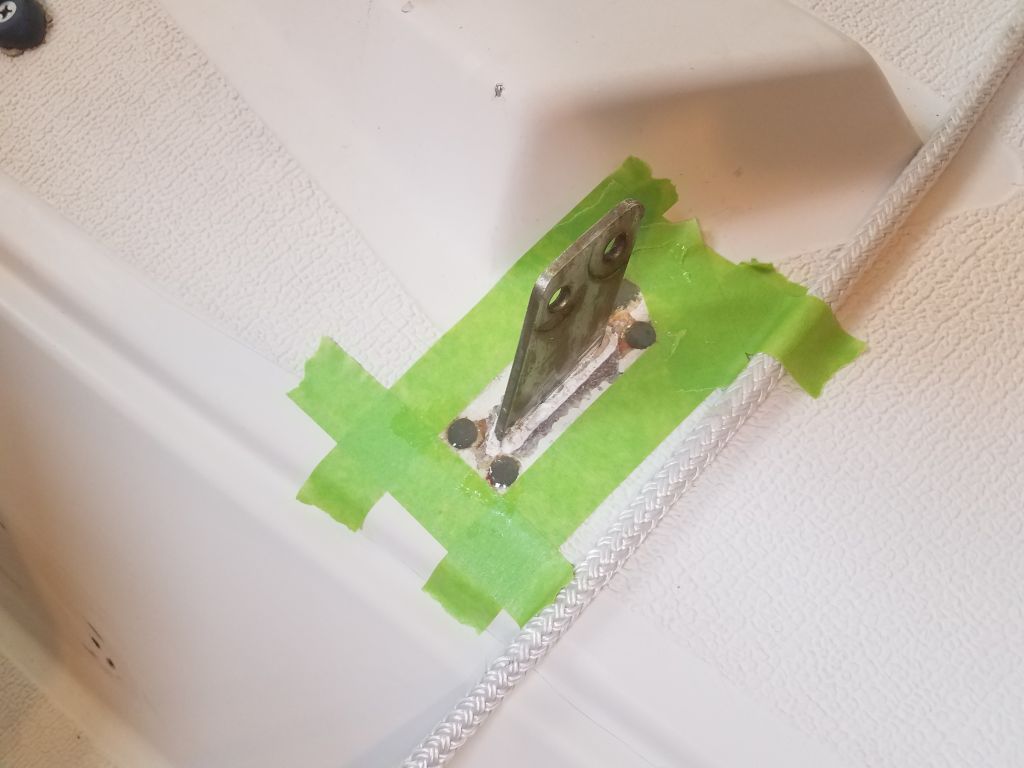
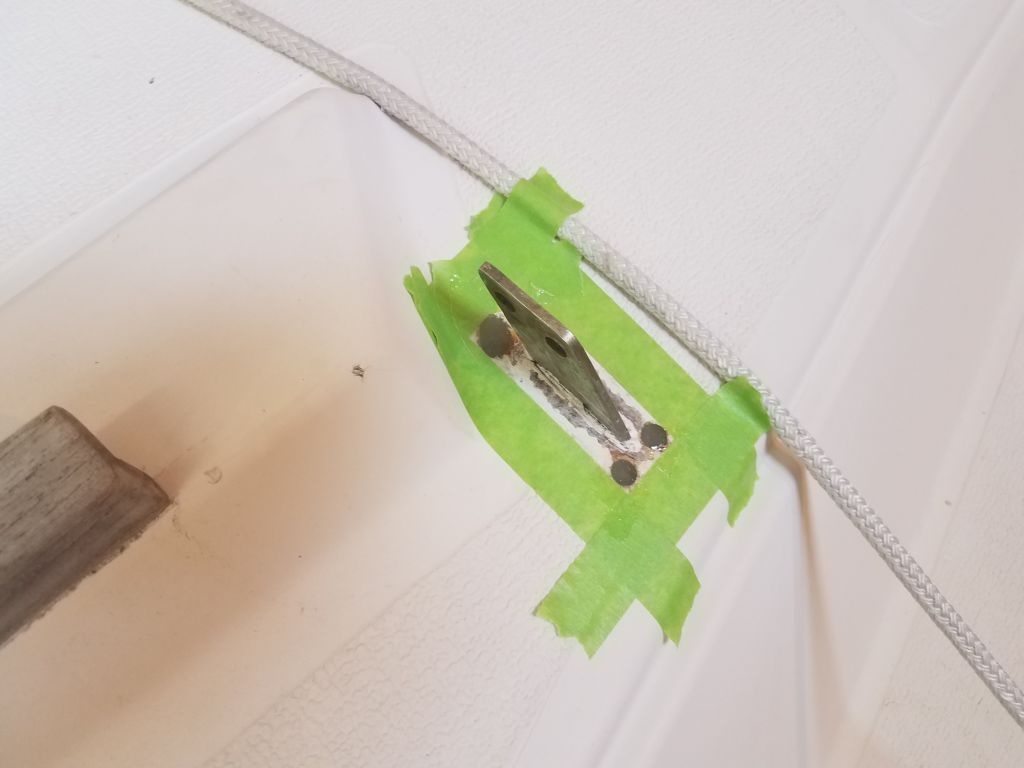
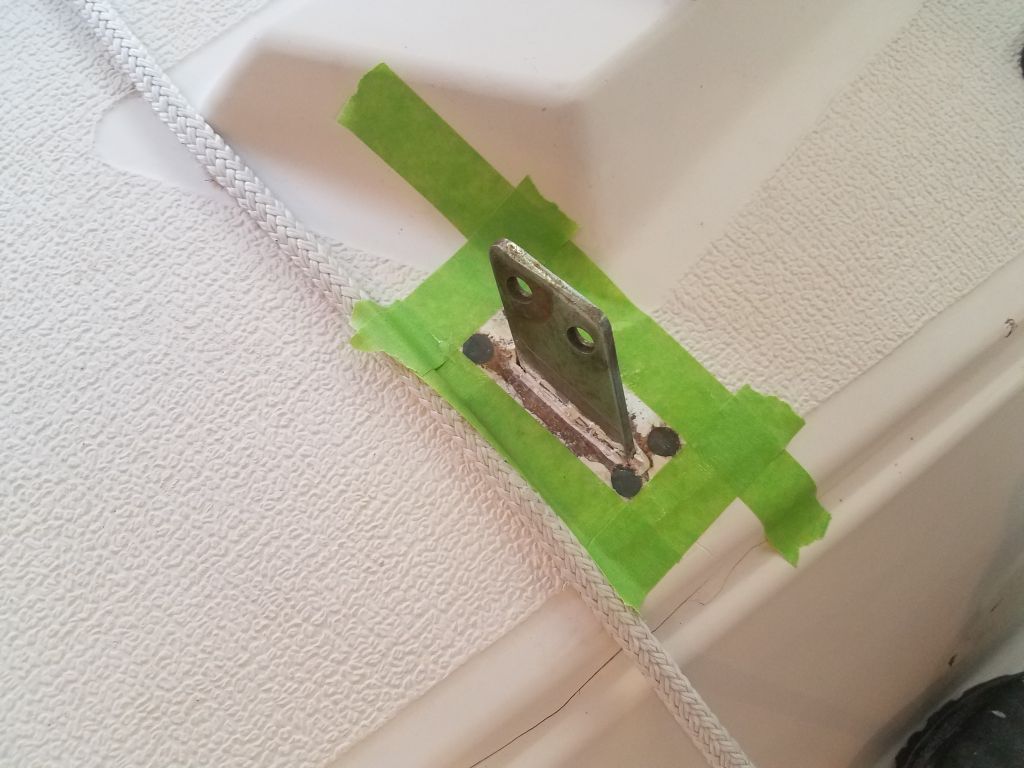
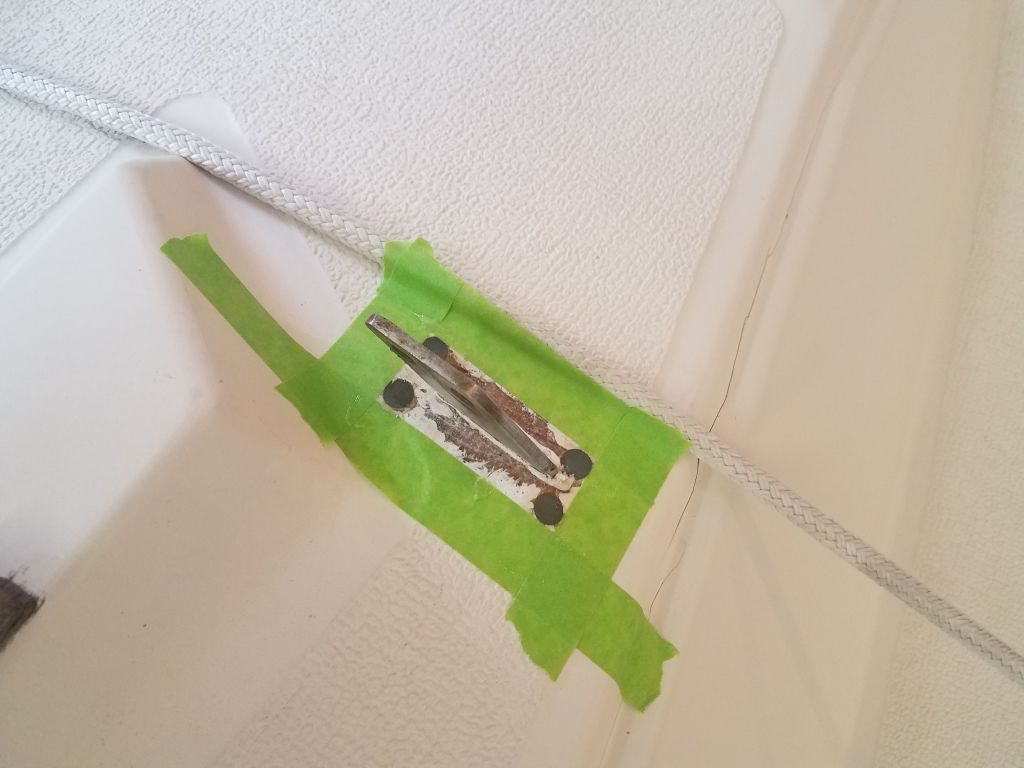
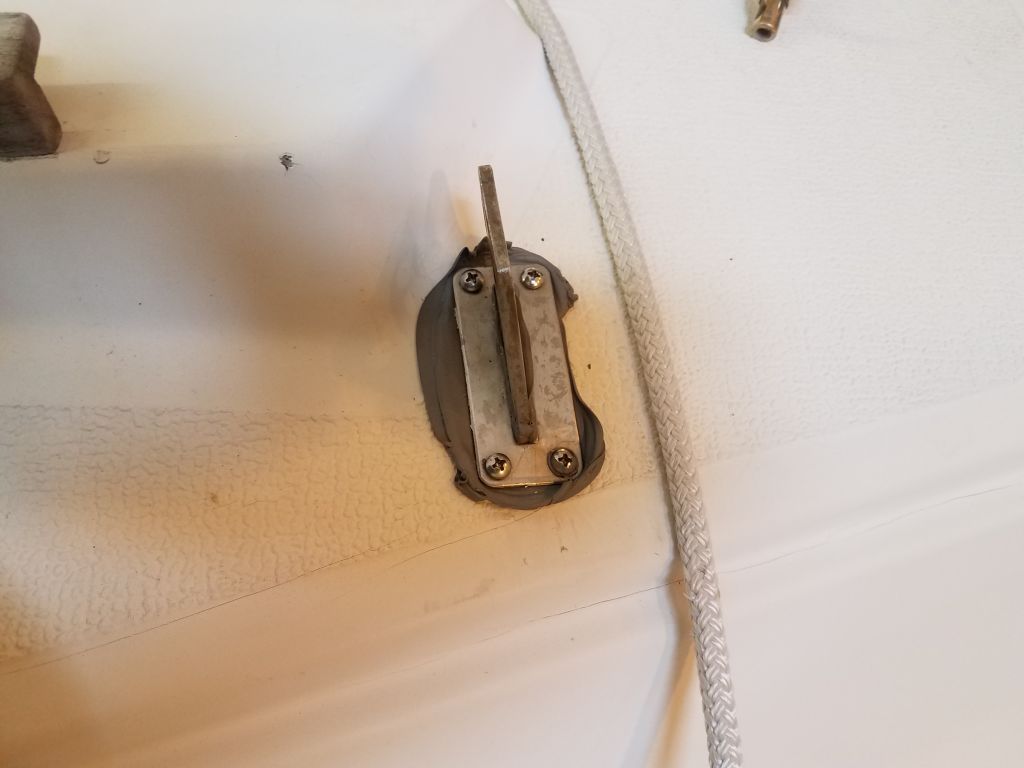
Next, I turned to the chainplates.  The epoxy plugs at the fastener locations had cured overnight, so with the cover plates in position I drilled the new fastener holes:  two pilot holes on the forward sides for the long sheet metal screws I’d use there, and two tapped holes for 8-32 machine screws at the after side.   As usual, I milled little countersinks at the top of each hole, providng a little reservoir for excess sealant right at the fastener shank.

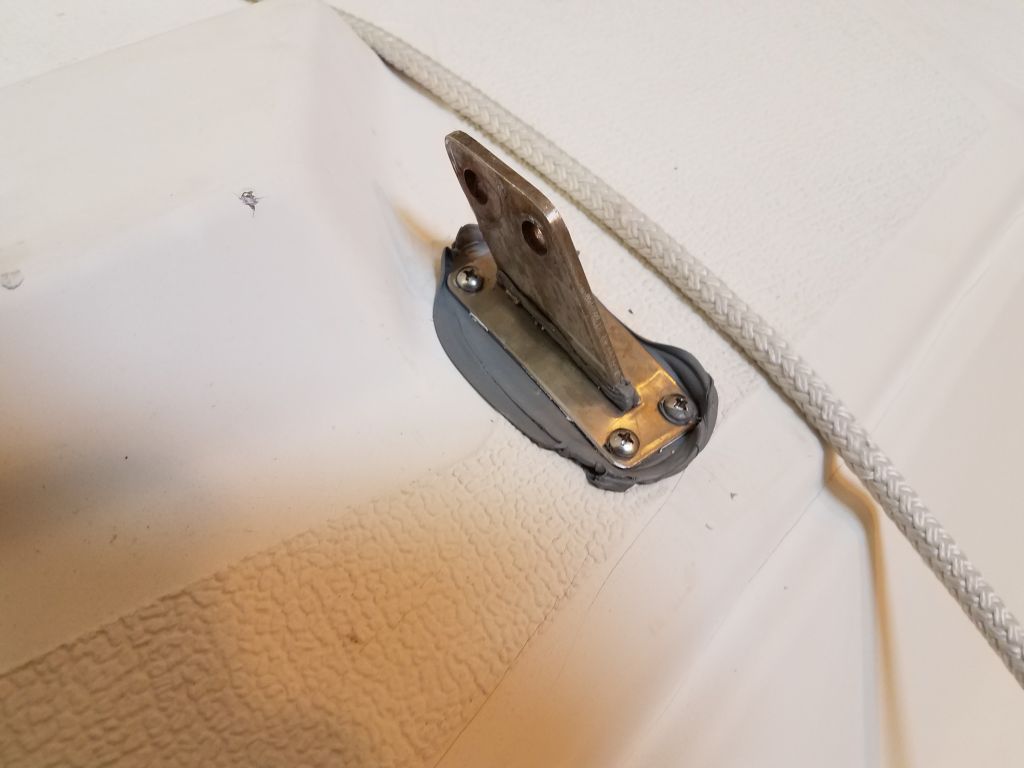
The portion of the chainplate slot through the deck was still well sealed with the polyurethane sealant I used when I rebedded them a year earlier, but this time I chose butyl tape sealant for the cover plates, covering the plate and fastener locations and wrapping more around the chainplate itself to help seal the slot.  I hoped this highly flexible sealant would hold firm against the typical dynamic loads on these chainplates.  I secured each plate with two long panhead #8 screws at the forward side, which penetrated the deck and into the bulkhead beneath, and a pair of 8-32 machine screws, washers and nuts at the aft ends.

Total time billed on this job today:  1.75 hours

0600 Weather Observation:
34°, cloudy.  Forecast for the day:  clouds, rain late in the afternoon and overnight

Precision 2017-3

< Back to Precision 23

Wednesday

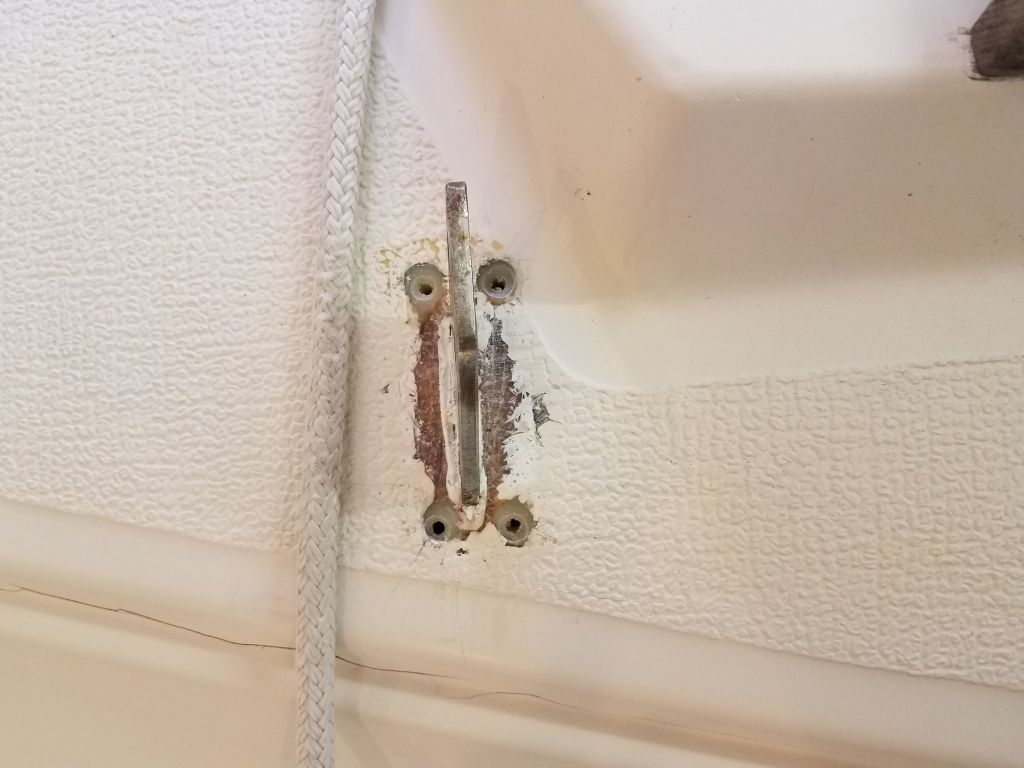
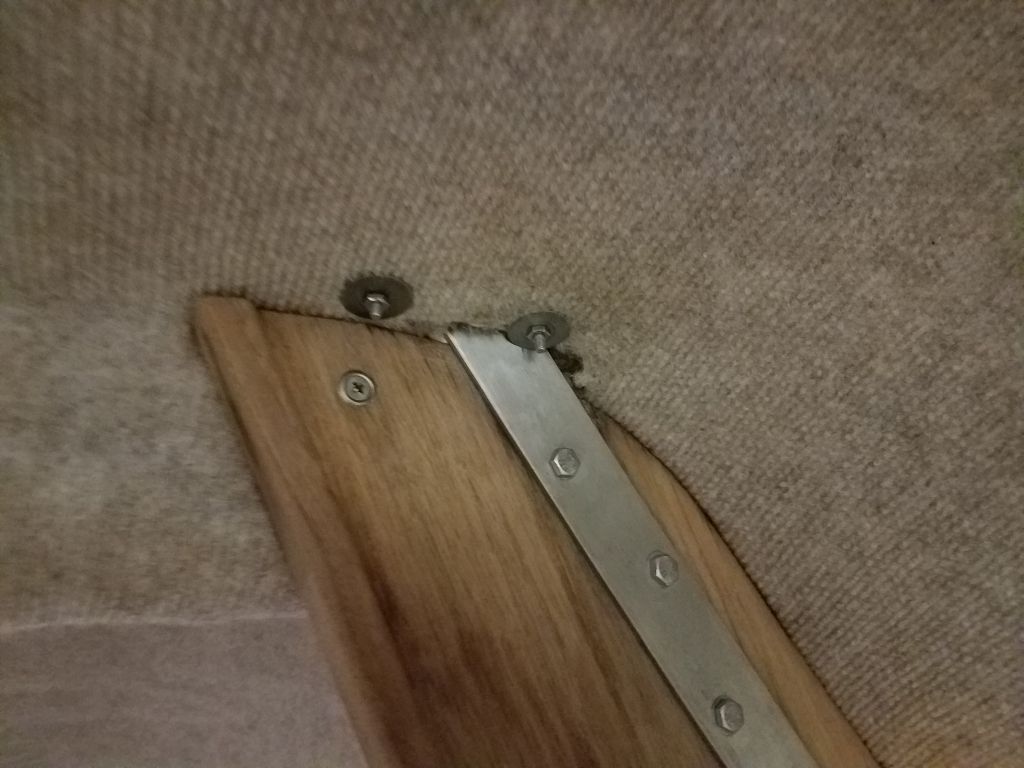
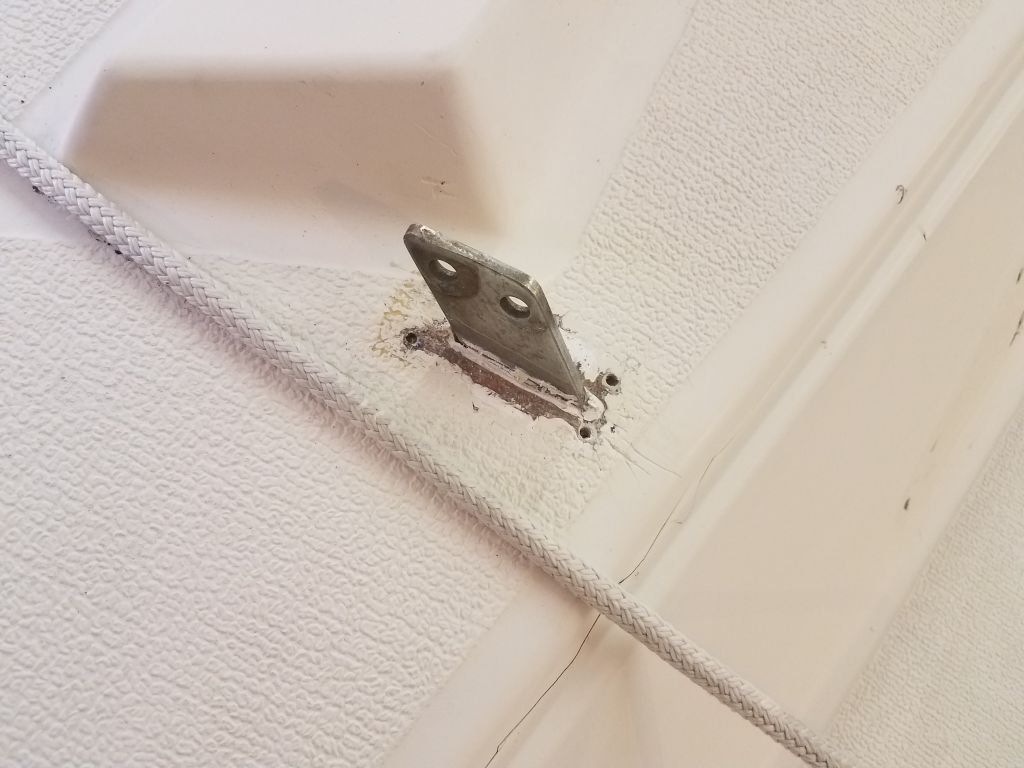
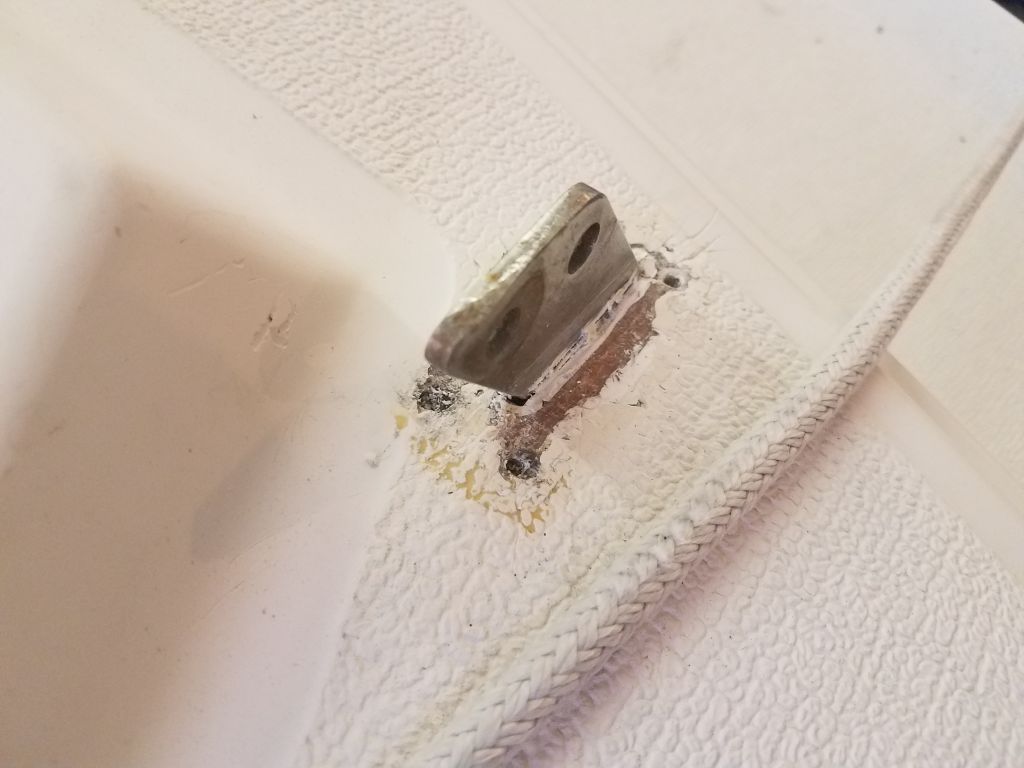
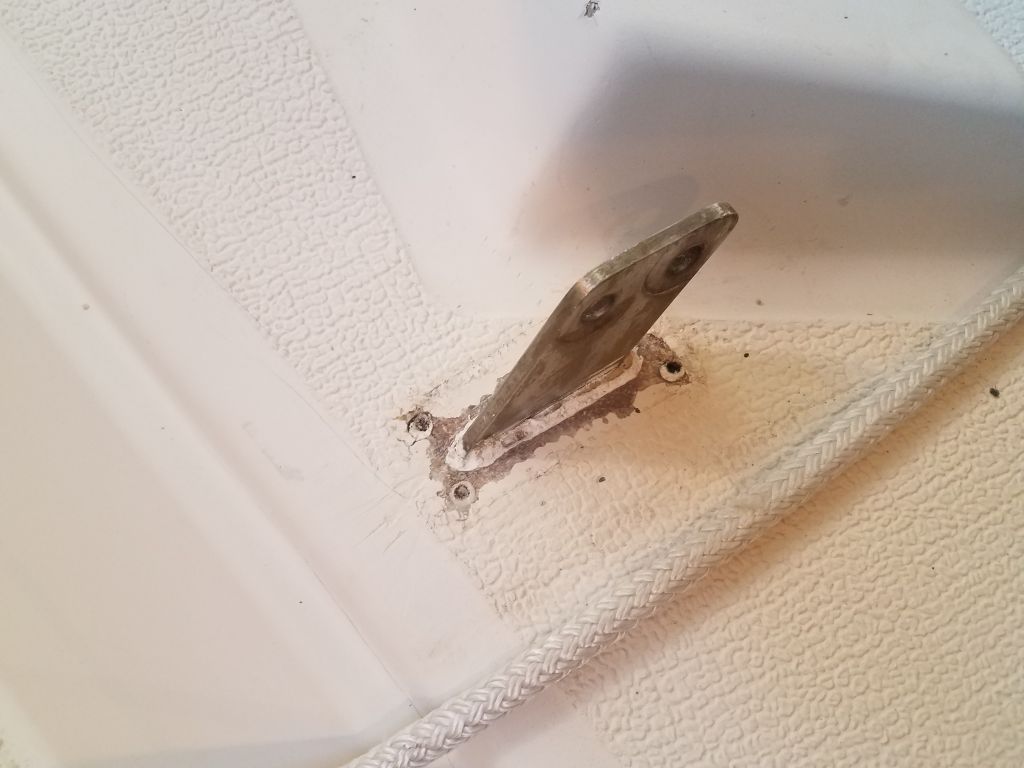
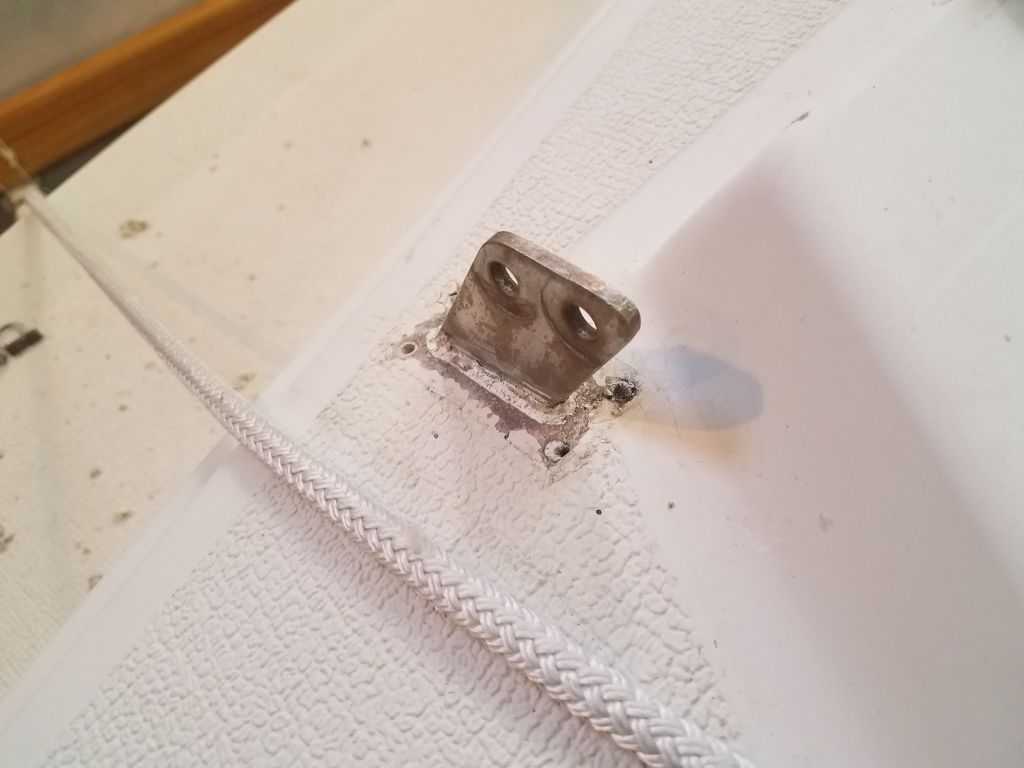
One of the two chainplate cover plates that I’d rebedded and reinstalled a year ago had pulled up from the deck, as the fasteners hadn’t held properly.    So I went ahead and removed both cover plates to reinstall them more securely, as well as rebed–again–the chainplates.    I cleaned off old sealant around the chainplates and the slots, revealing that the sealant in the slots themselves was actually still in good condition and sound, other than an indication on the port side (the side where the cover plate had pulled up) that there might be some transverse chainplate movement under load.

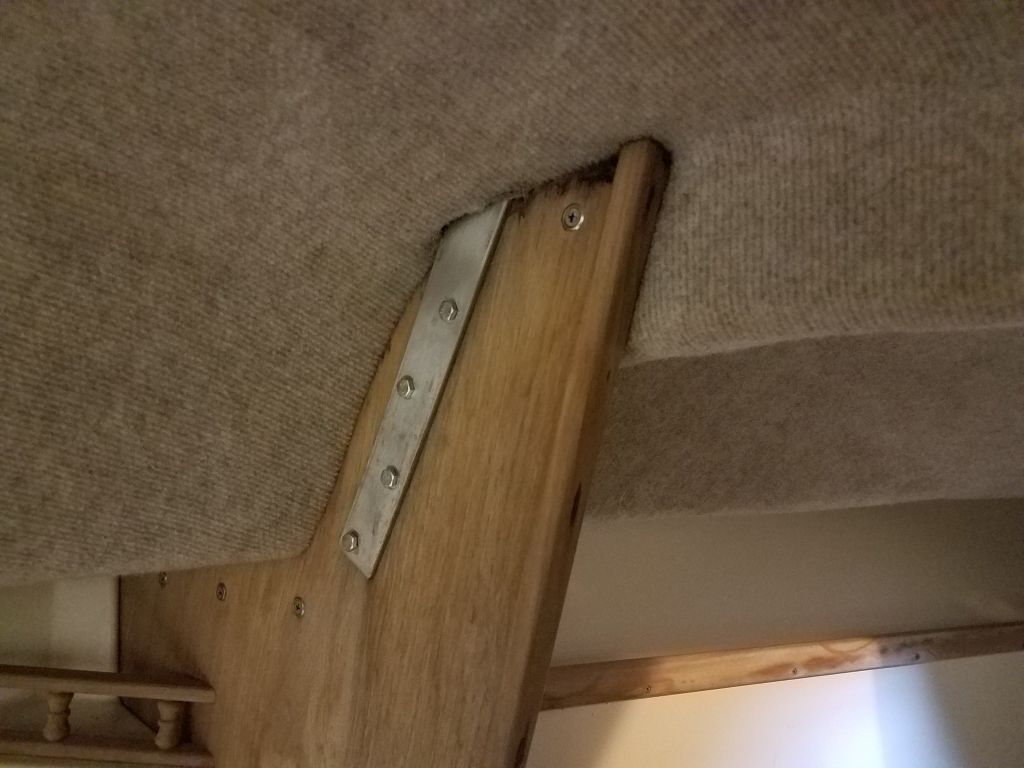
To better hold the plates given their propensity to pull out, I thought I’d through-bolt them this time.  The design of the structure beneath the chainplates was such that I could through-bolt the after two fasteners on each cover plate, but the forward pair of fasteners would run into the plywood bulkhead and/or a structural support frame and knee built into the underside of the deck, so for those locations I planned longer screws to pass through the deck and bite into the structure beneath.

To prepare the decks for the new penetrations, I used a 3/8″ bit (the largest possible within the confines of the cover plate) to open up the existing fastener holes and ream out the core within the deck, leaving the inner skin intact.  Afterwards, I filled the new openings with a thickened epoxy mixture, leaving that to cure before continuing.

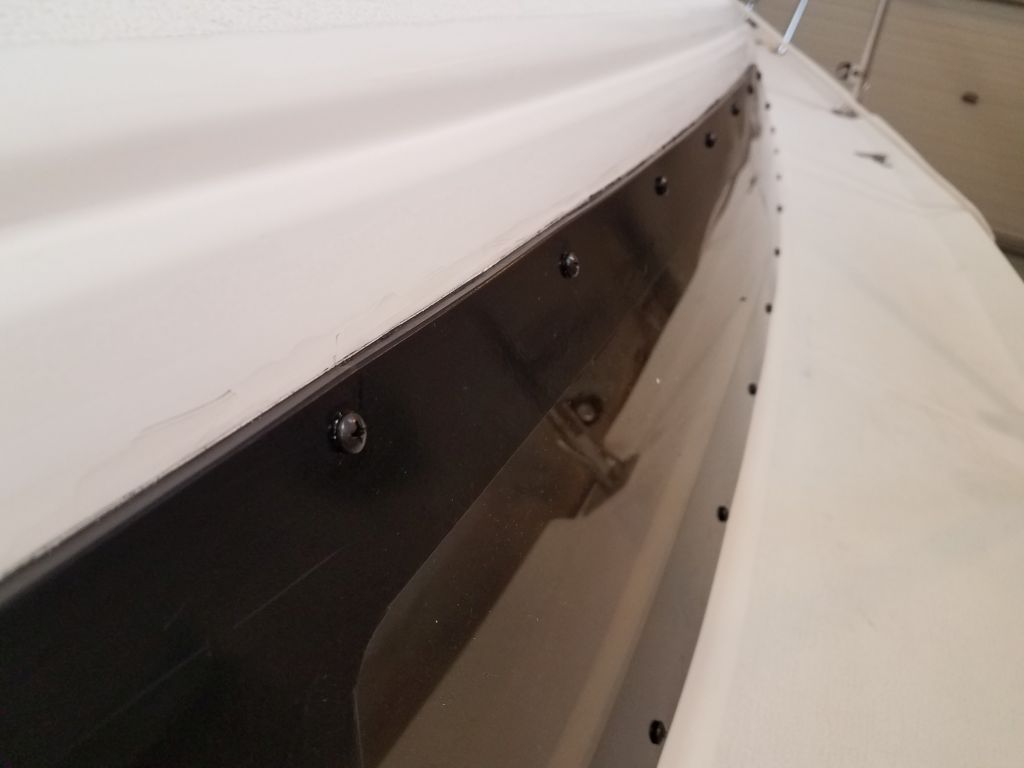
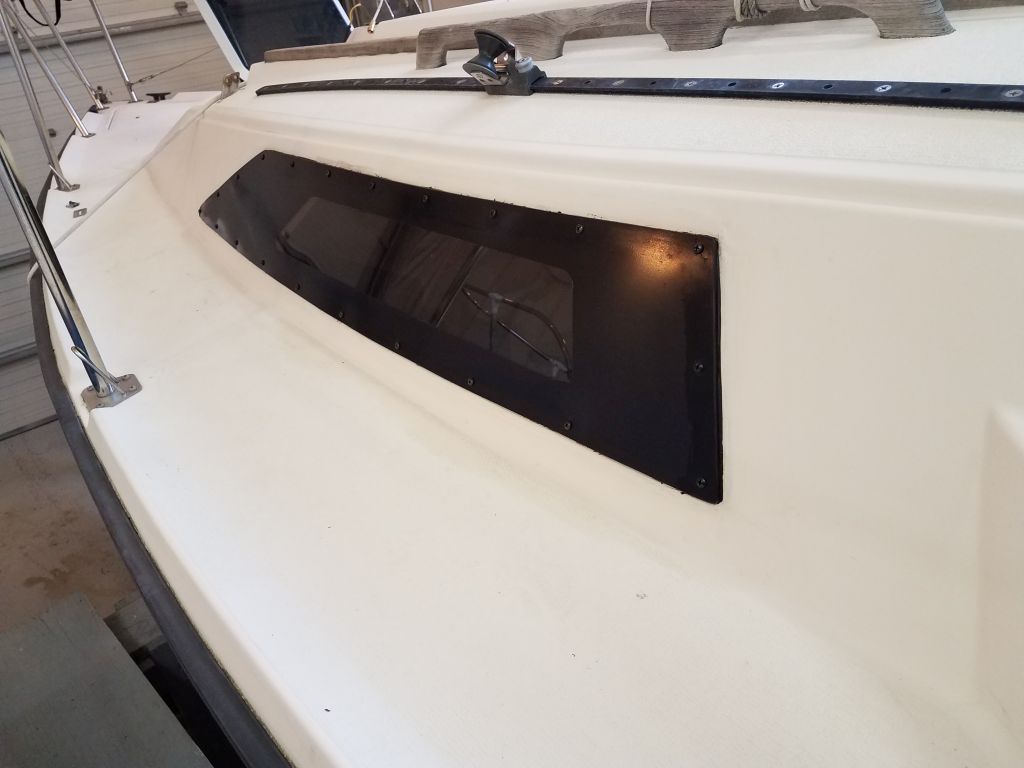
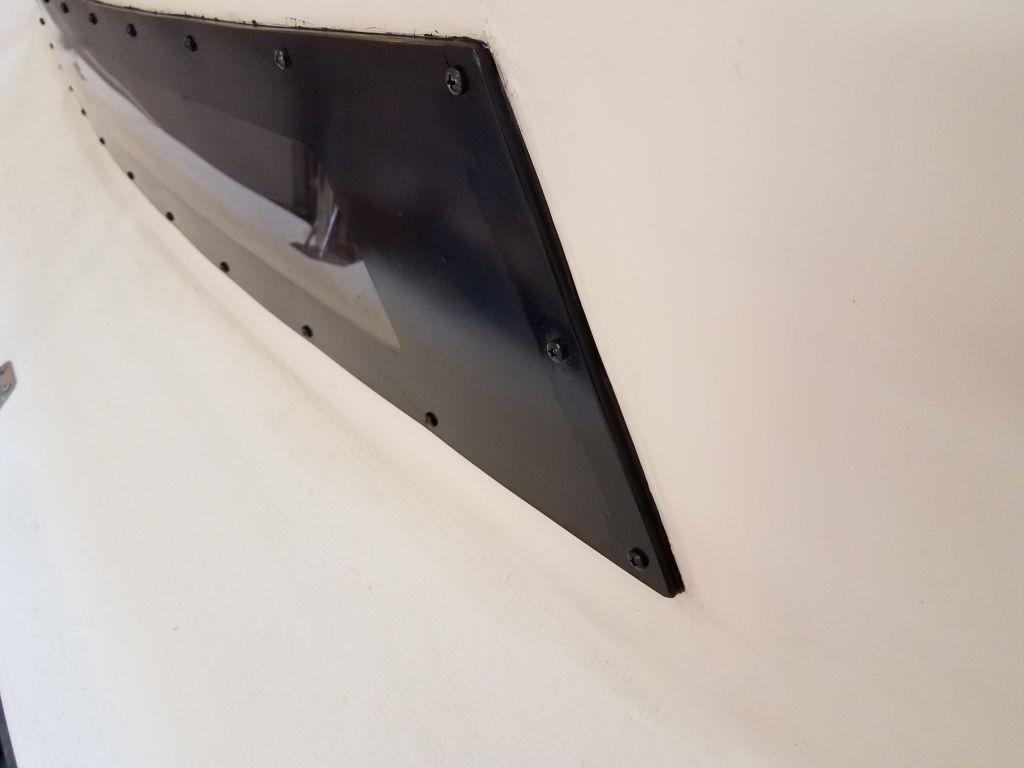
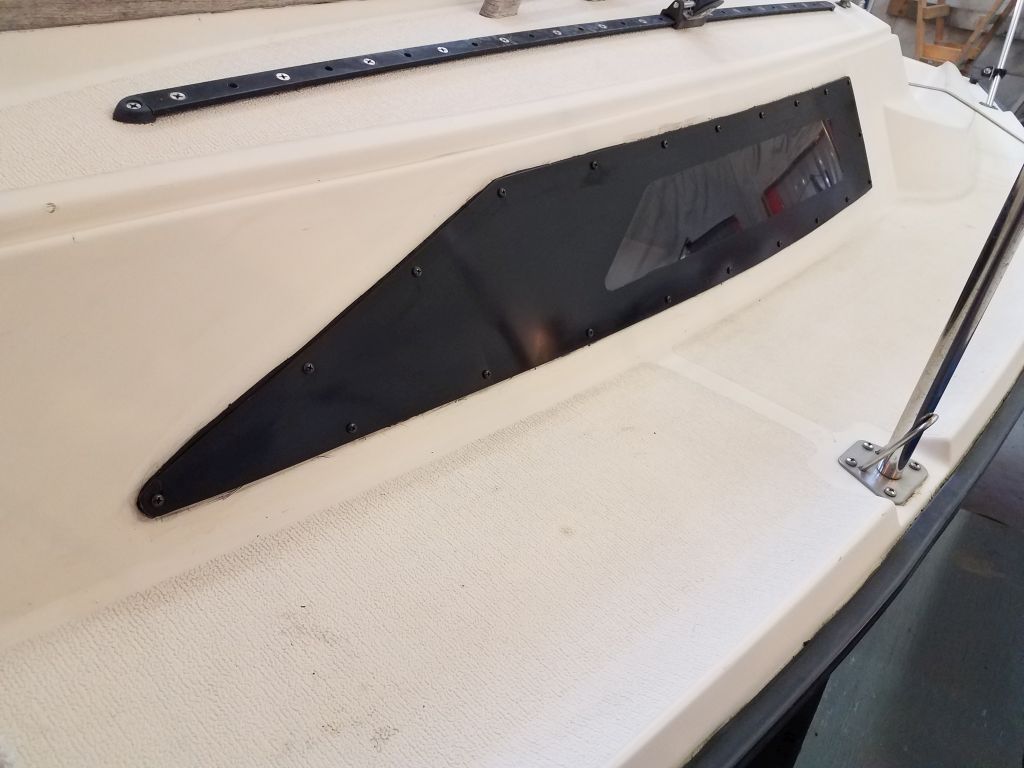
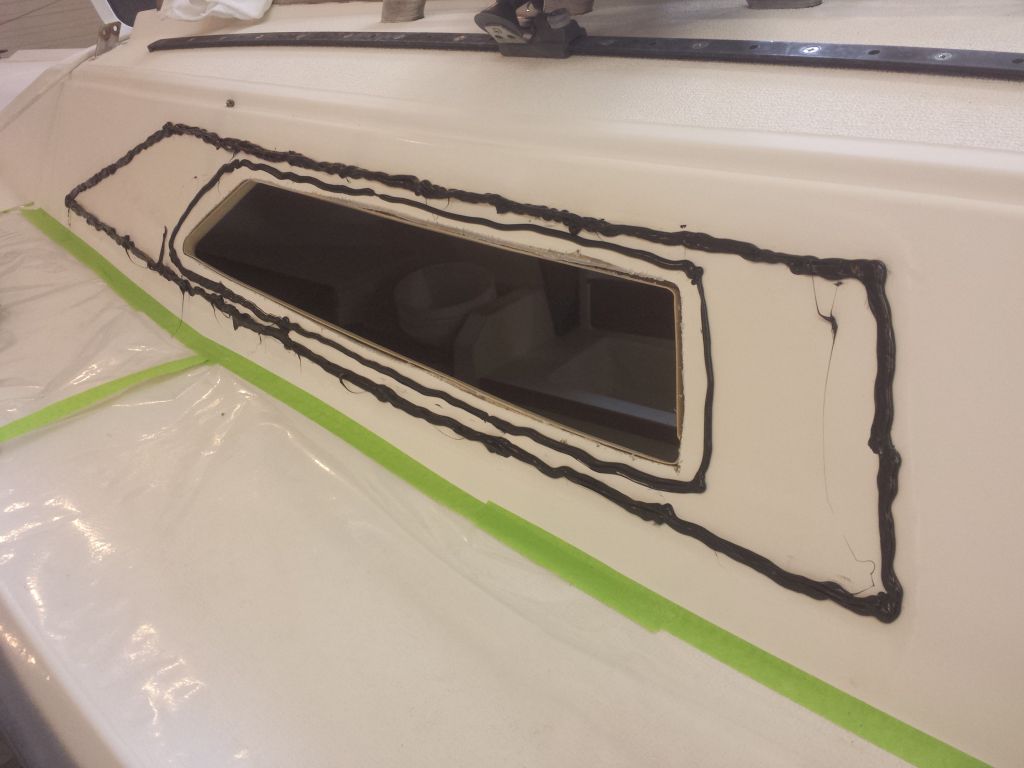
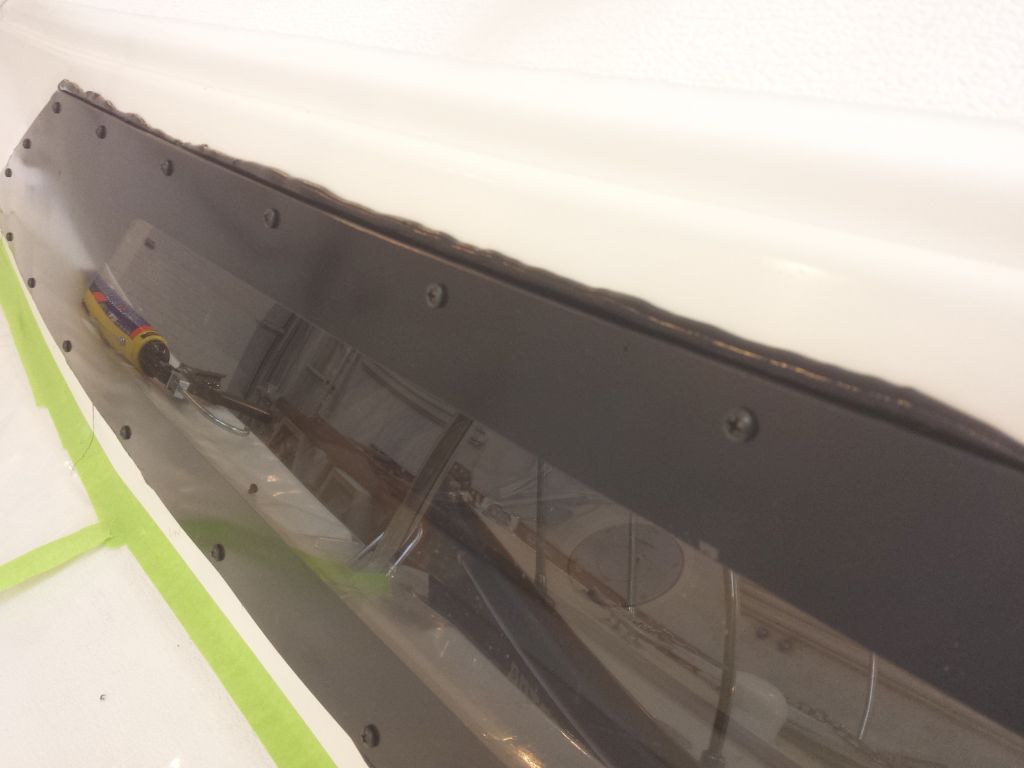
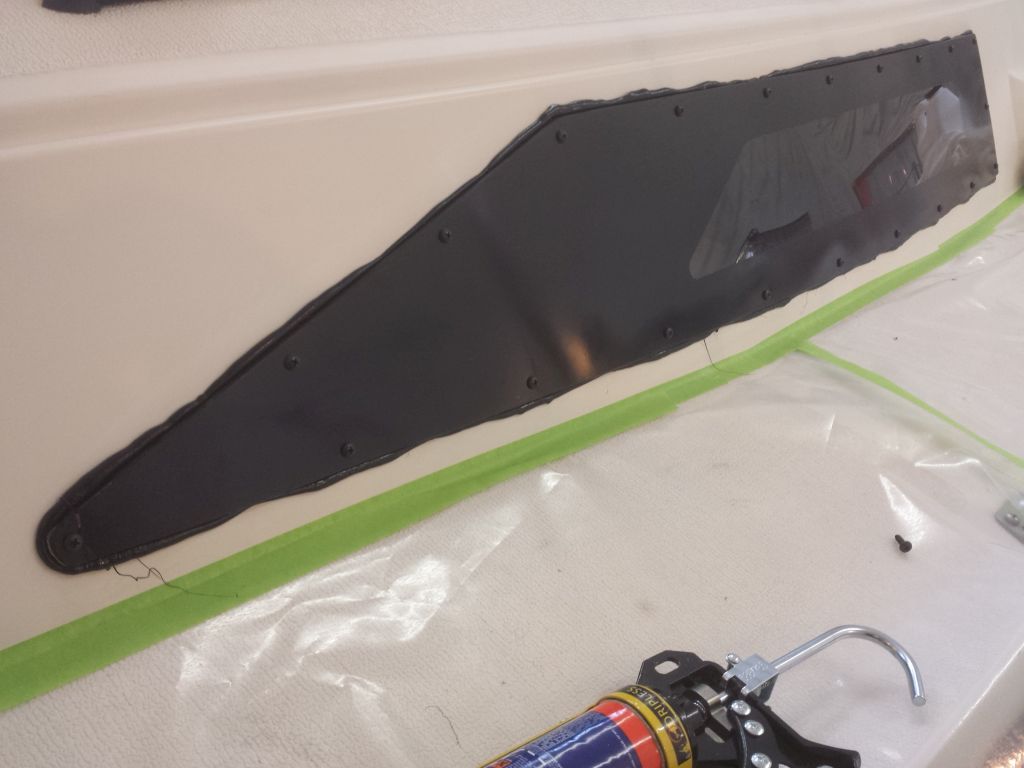
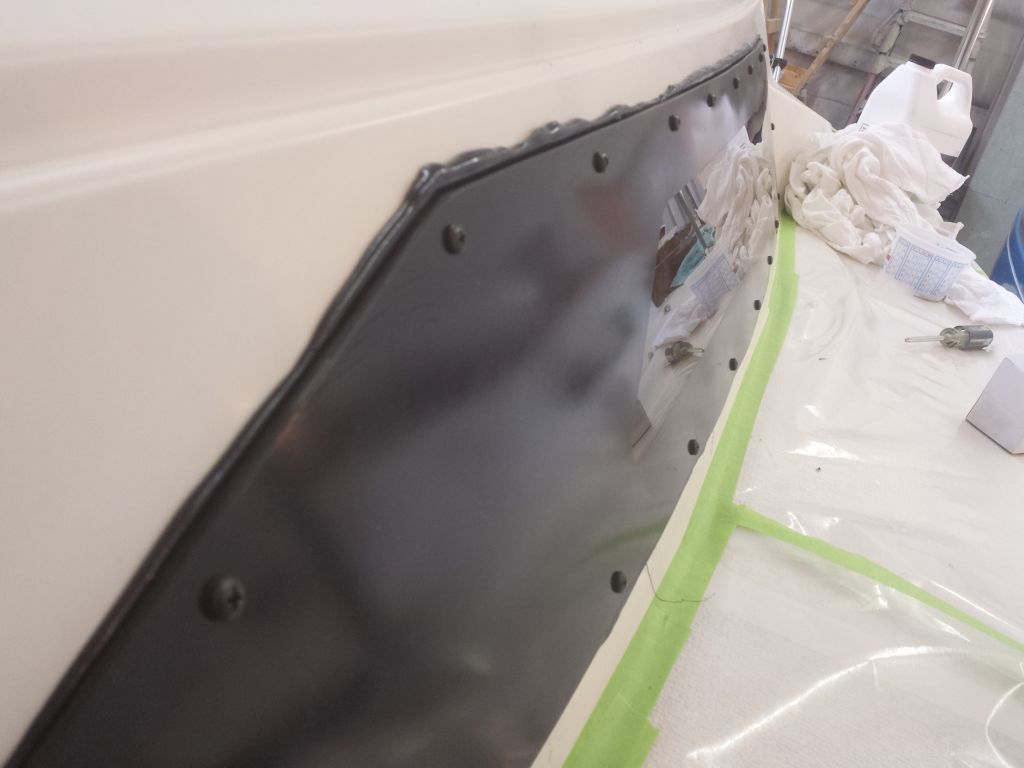
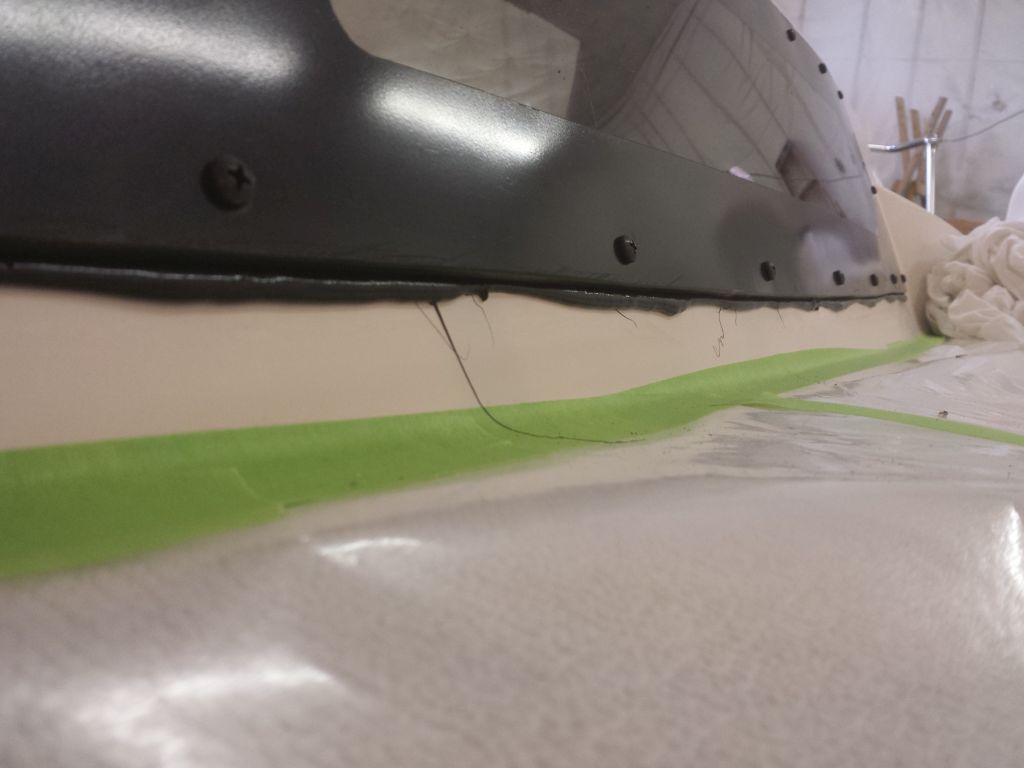
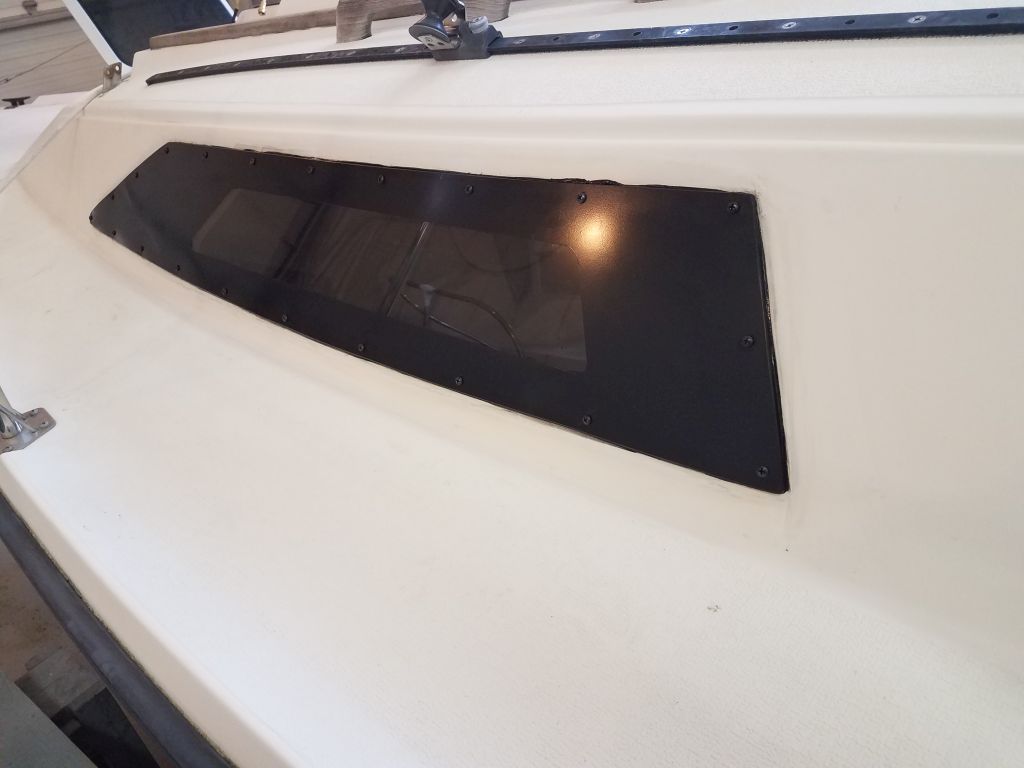
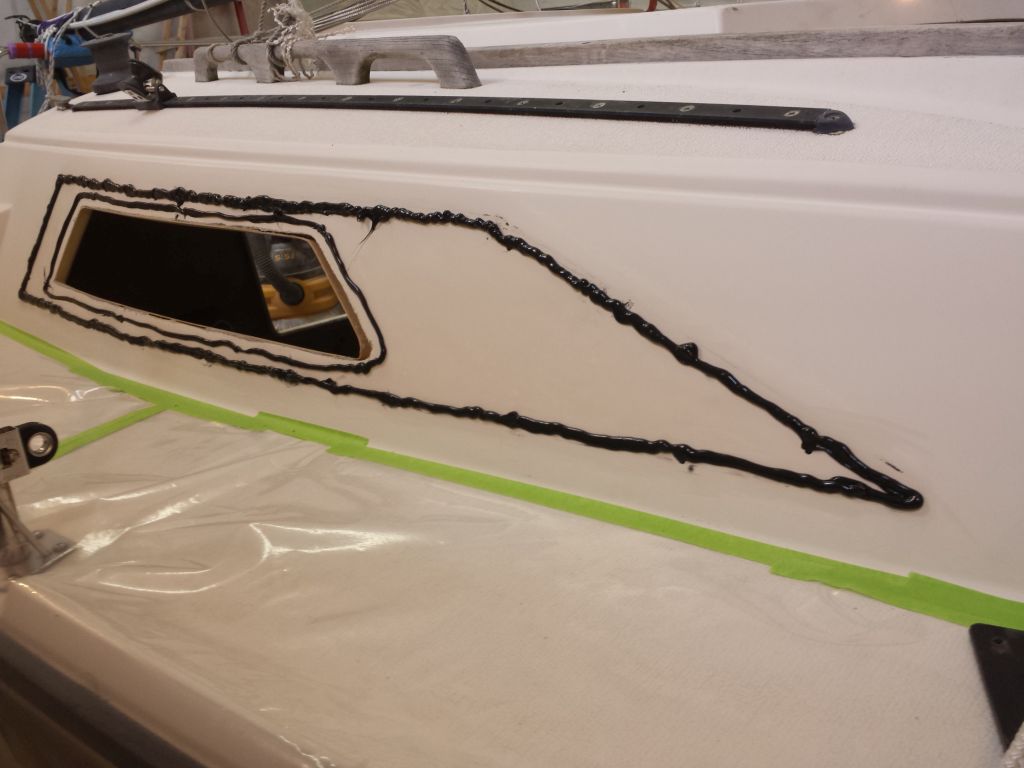
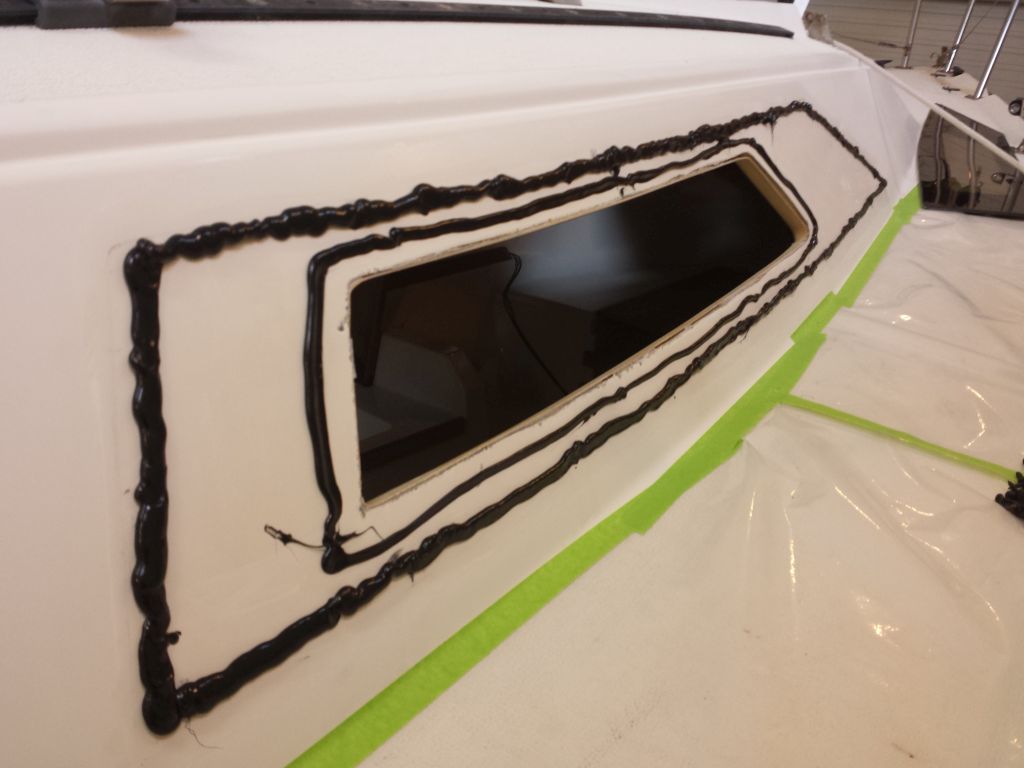
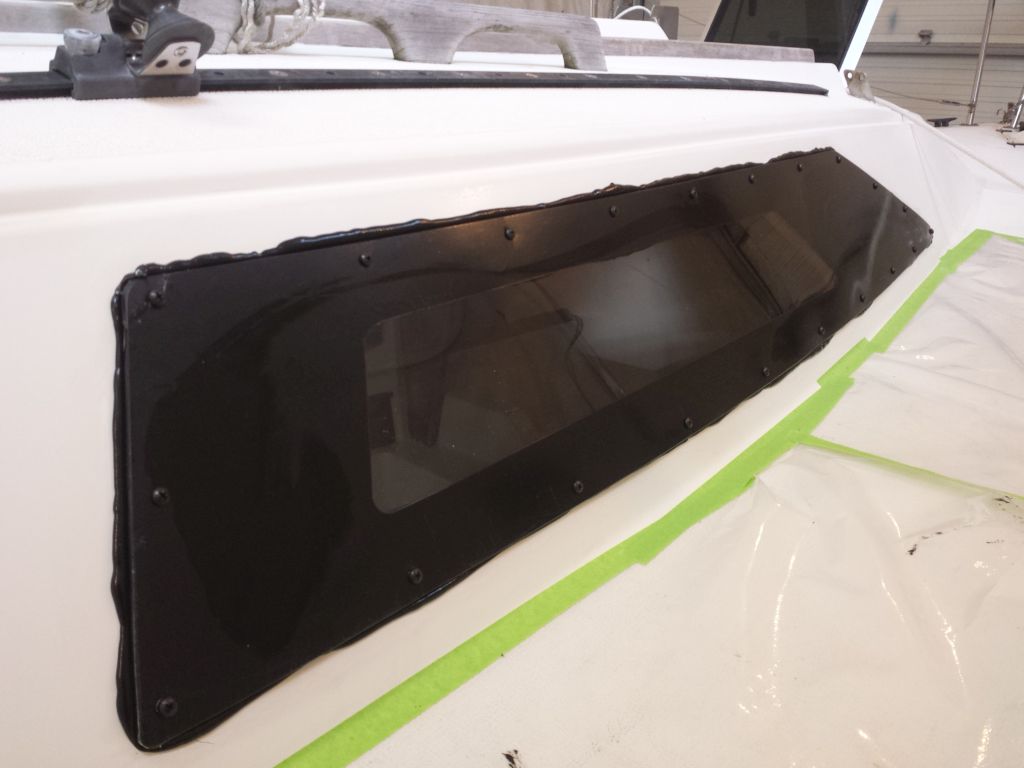
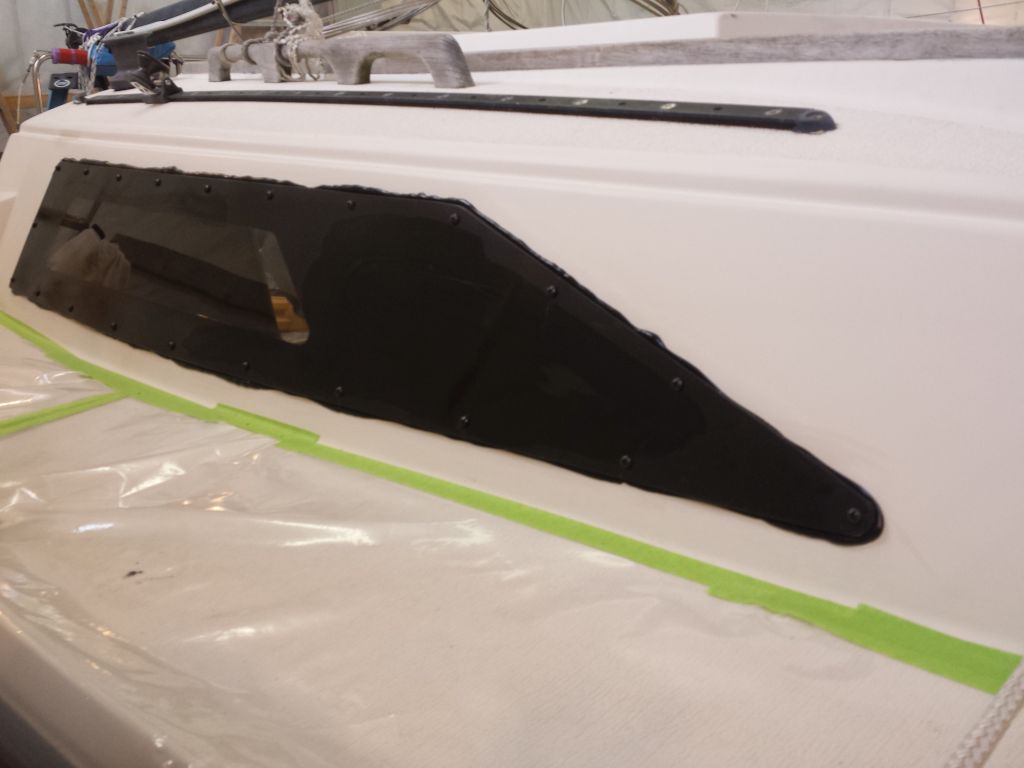
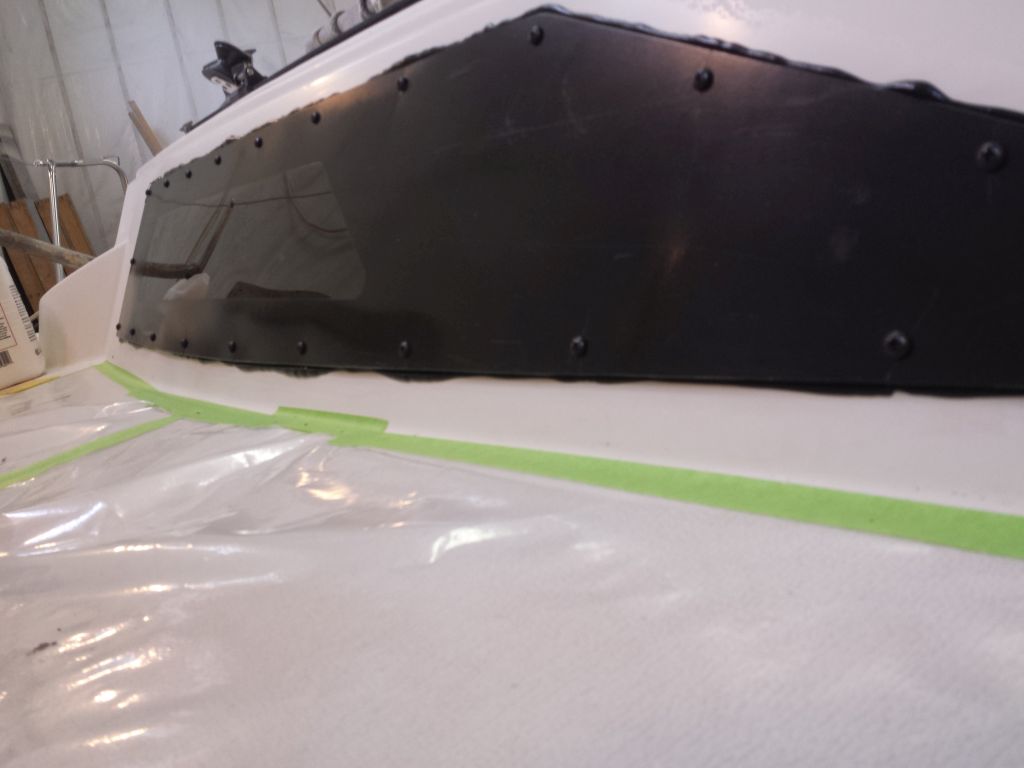
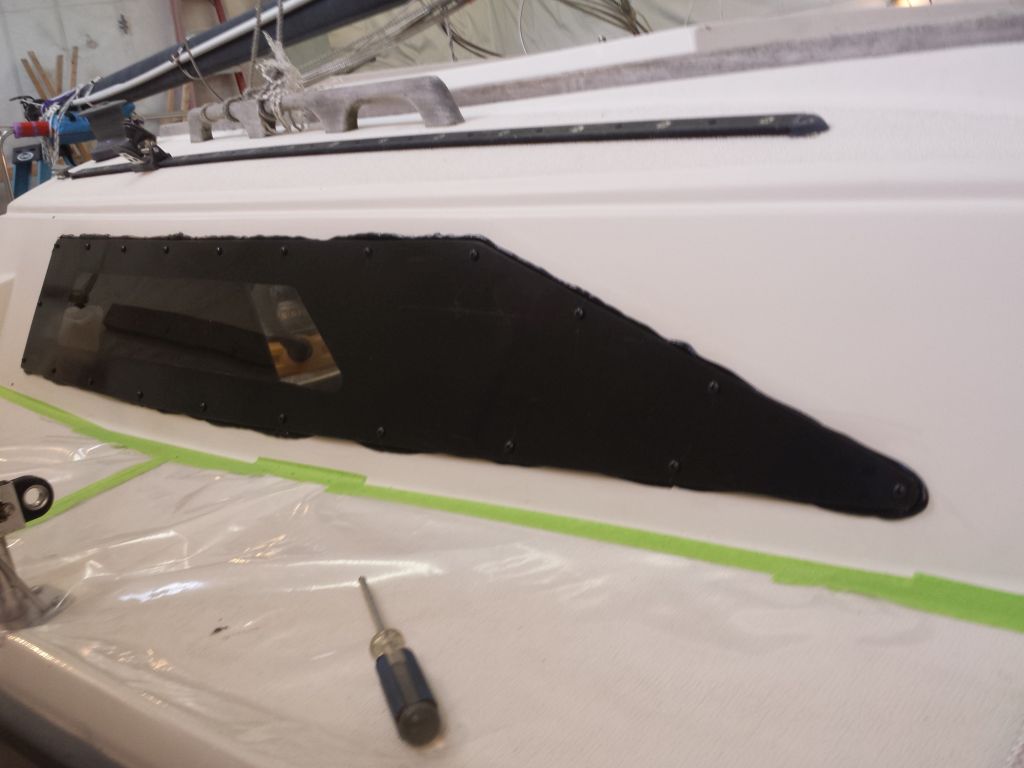
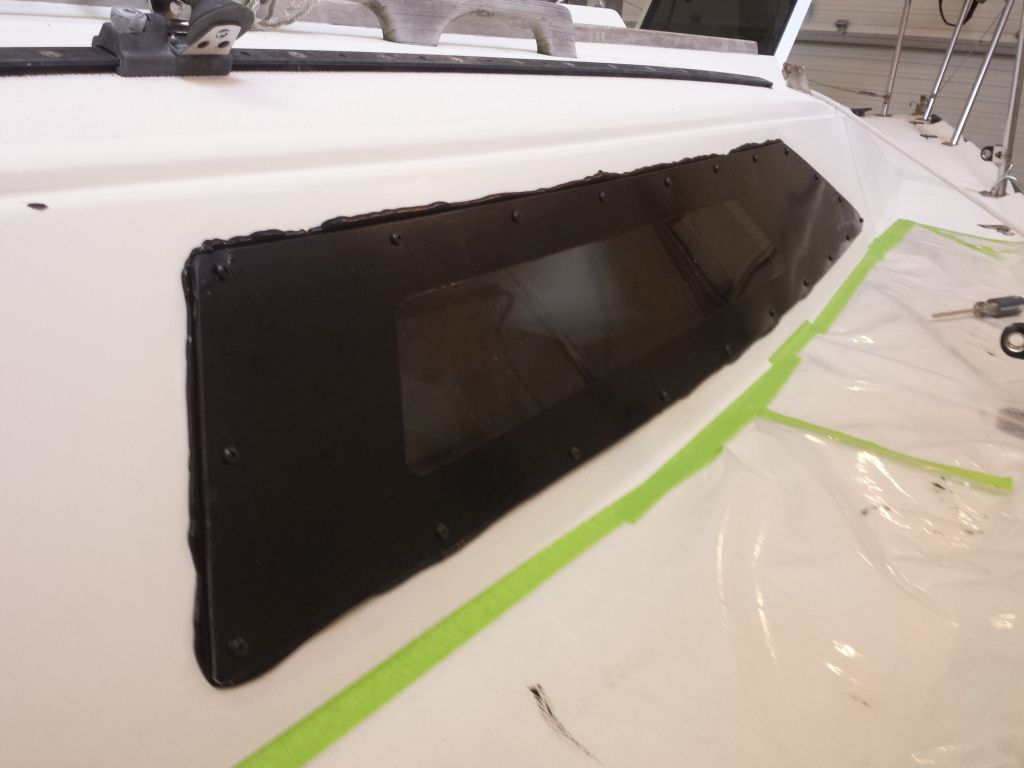
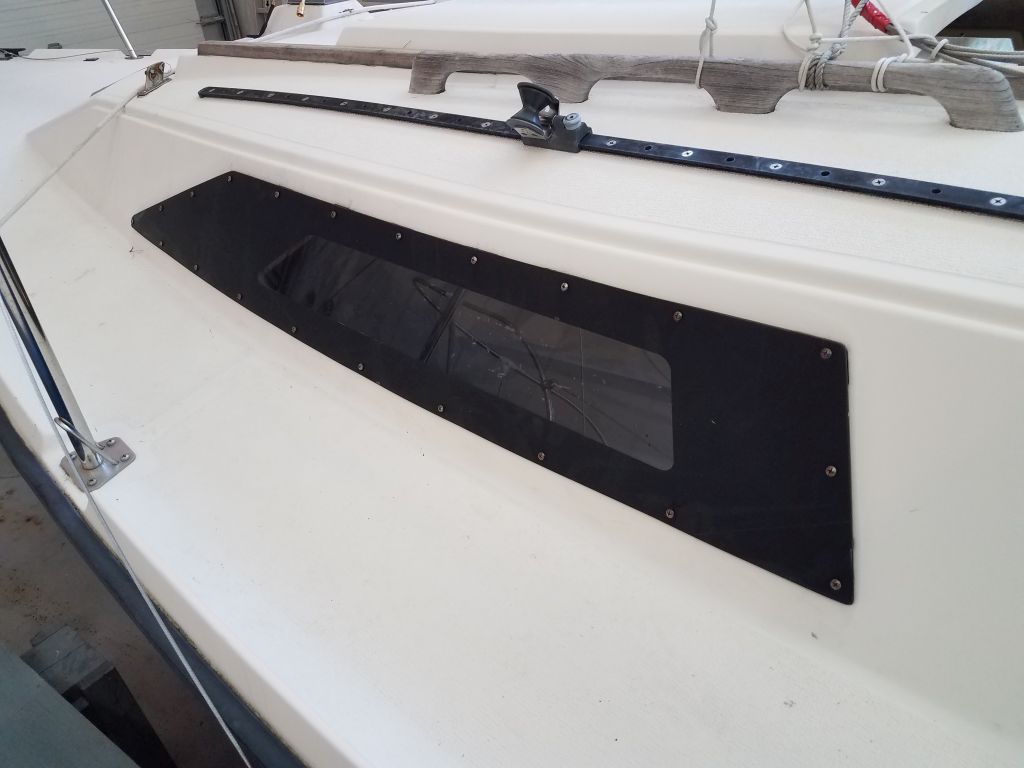
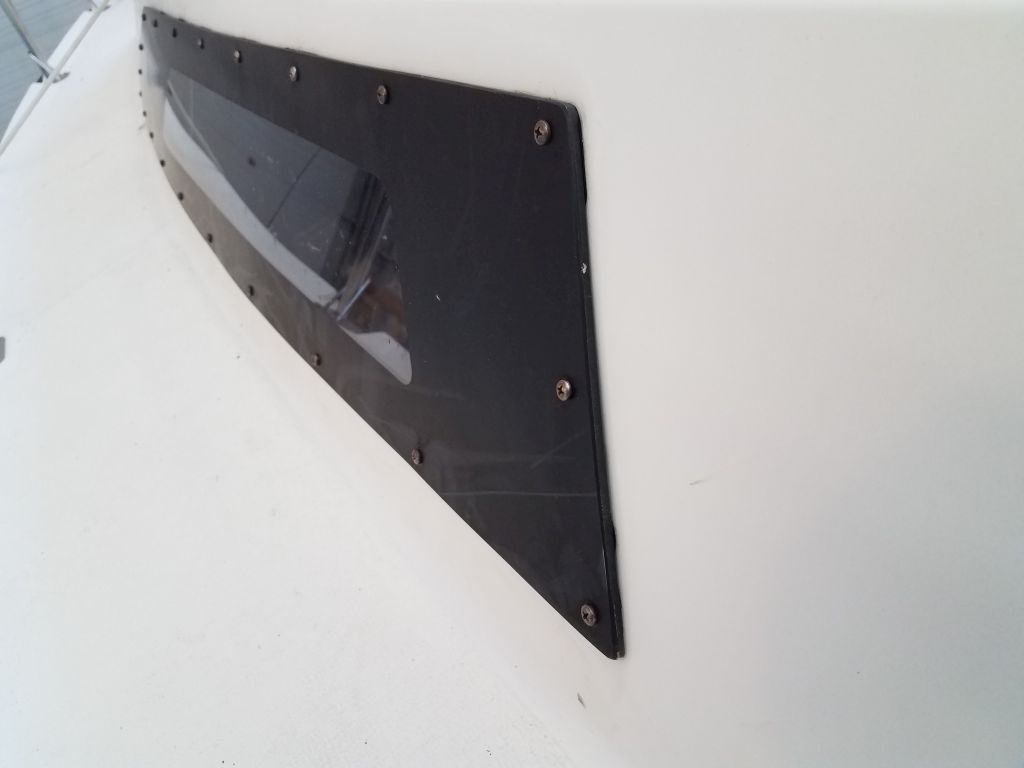
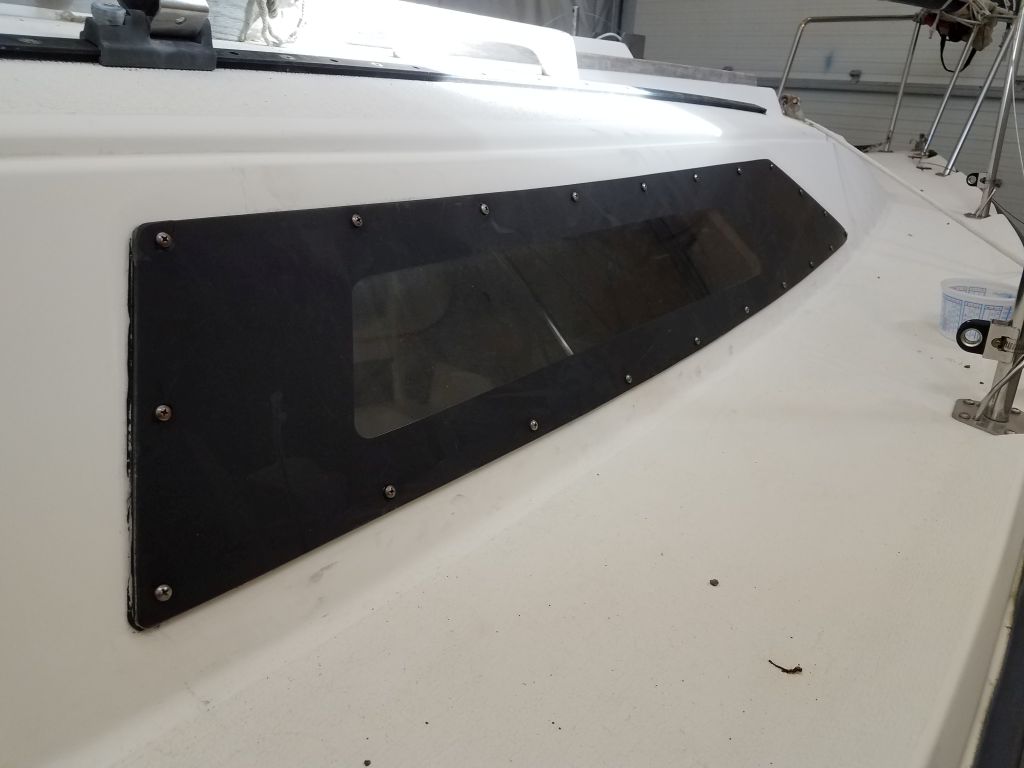
Later, with new sealant on hand, I reinstalled the large plastic windows.  Starting on the port side, I applied beads of the sealant around the perimeter of the window’s footprint, as well as a secondary bead closer to the actual window opening in the cabin trunk.  Then, I installed the window, screwing it down tightly with new black-colored stainless screws, and cleaned up the excess sealant.  I was dismayed to find that the black sealant got into the pores of the gelcoat during cleanup, making the process more difficult and time-consuming, though in the end I was able to remove the staining.  Because I soon realized that continuing attempts to clean up perfectly were futile, I ended up leaving some squeezeout at the port edges for now, and would finish up the trimming once it cured.

Forearmed with my experience on the port side, on the starboard side I decided to leave all the squeezeout and cleanup  alone till it cured, at which point I’d trim the excess and clean up as needed.

Total time billed on this job today:  2.25 hours

0600 Weather Observation:
33°,. dusting of slushy snow overnight, drizzle.  Forecast for the day:  clouds and drizzle, 30s
Precision 2017-2

< Back to Precision 23

Tuesday

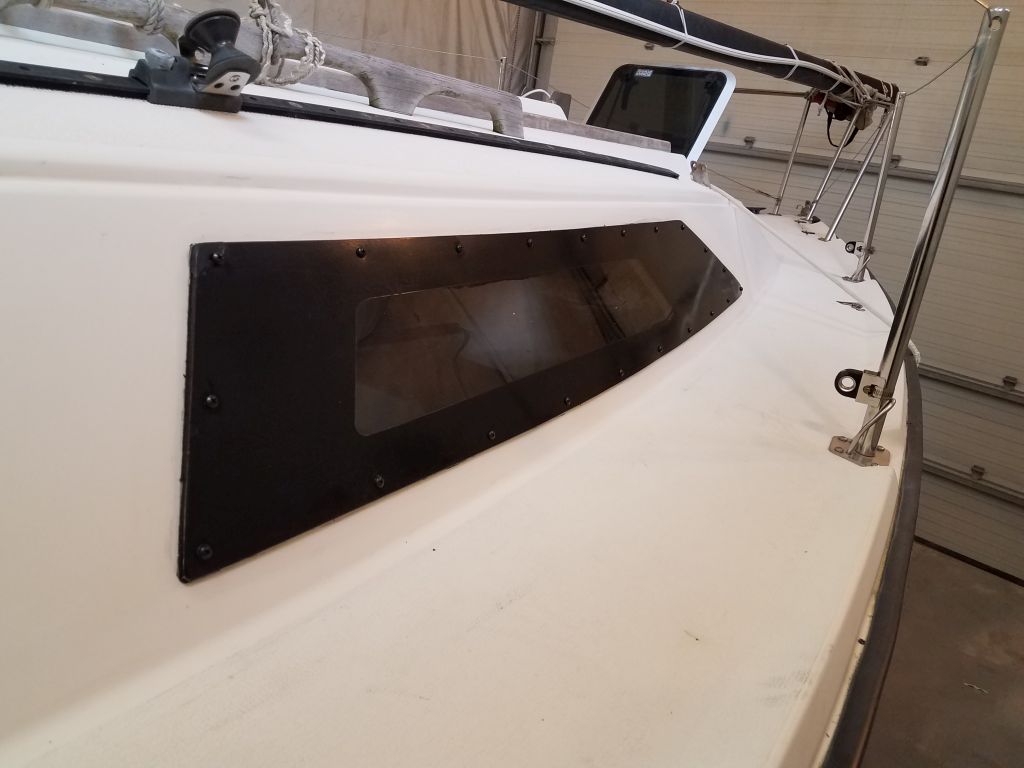
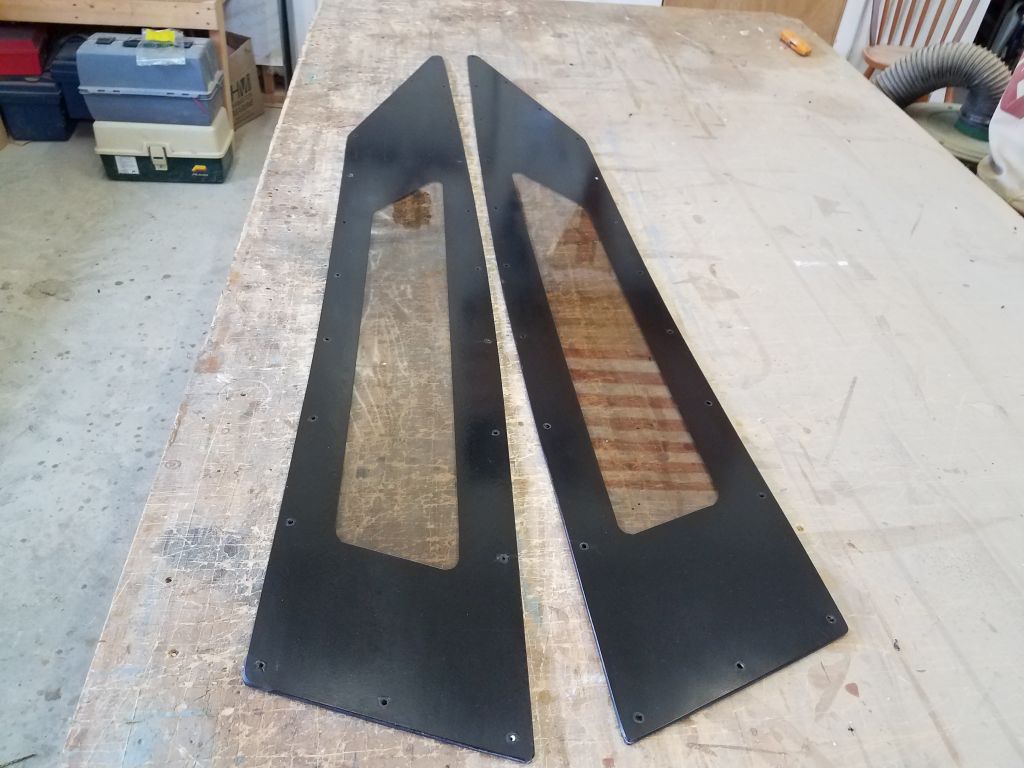
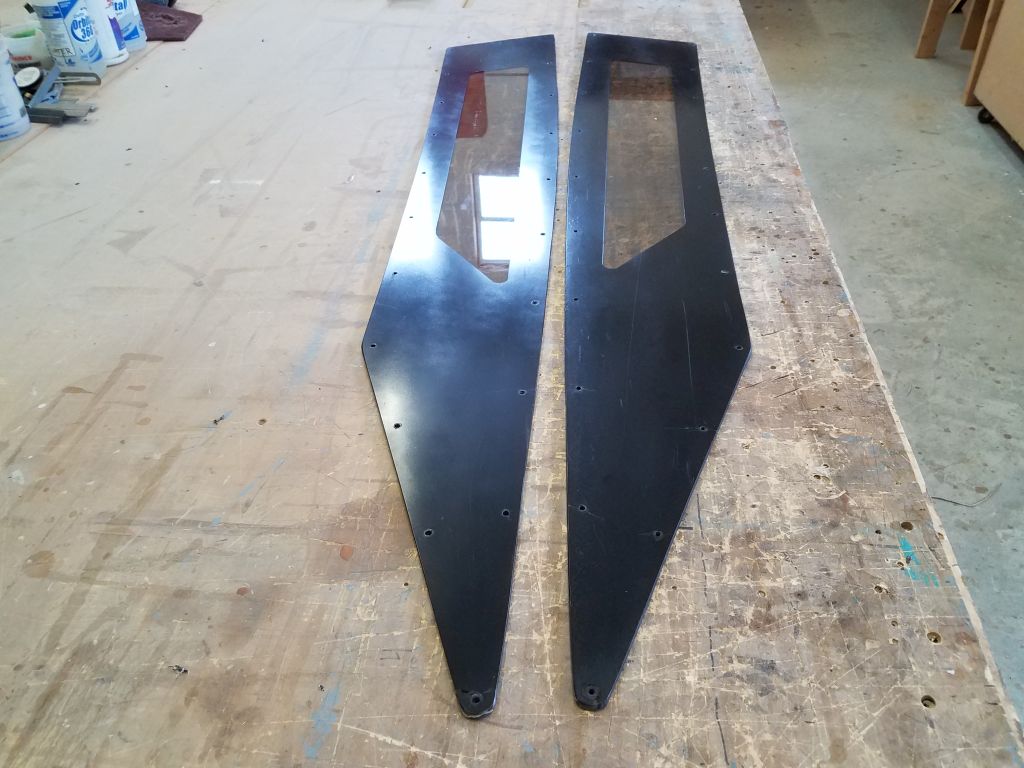
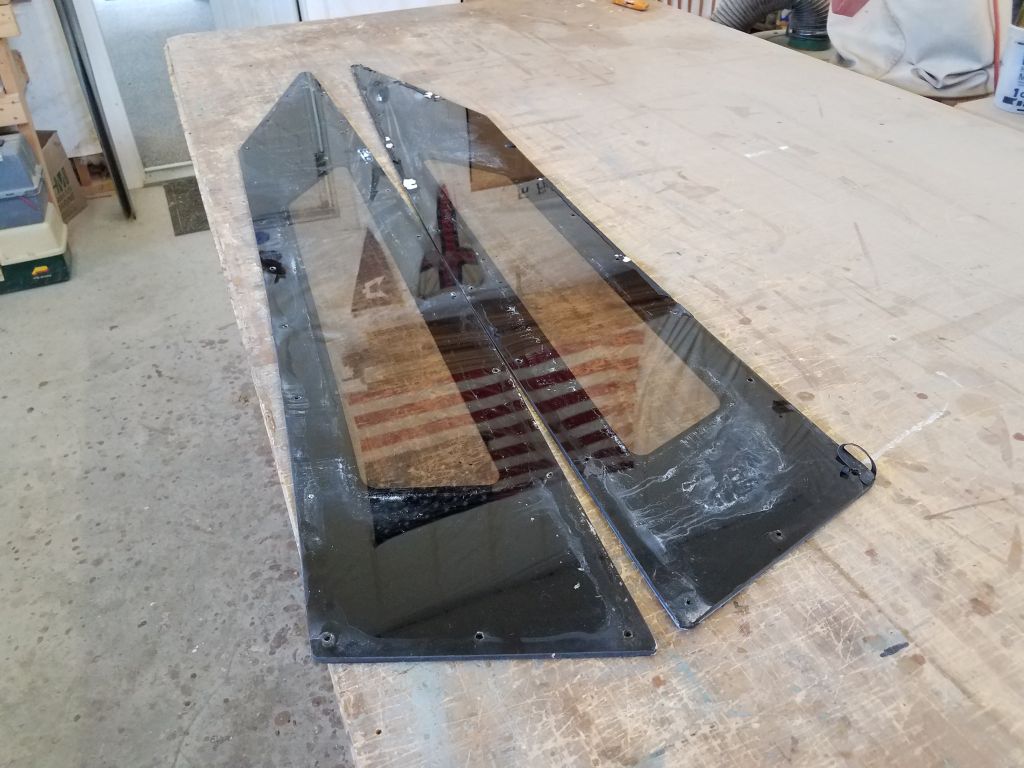
I spent some time cleaning up the insides of the plastic windows (I’d assume acrylic but don’t know for sure), removing any old sealant and generally cleaning the surface to prepare for reinstallation.  I’d determined that the existing windows were still in good shape, and that the minor cracks I’d seen would pose no installation problems.  I also polished up the exterior surface, which seemed to be a black vinyl applique over the portions of the window that didn’t actually have an opening behind; the exterior coating prevented one from seeing the surface beneath the window once installed.  It had faded over the years, but brightened up nicely with minimal work.  The smoked plastic was still clear and scratch-free.
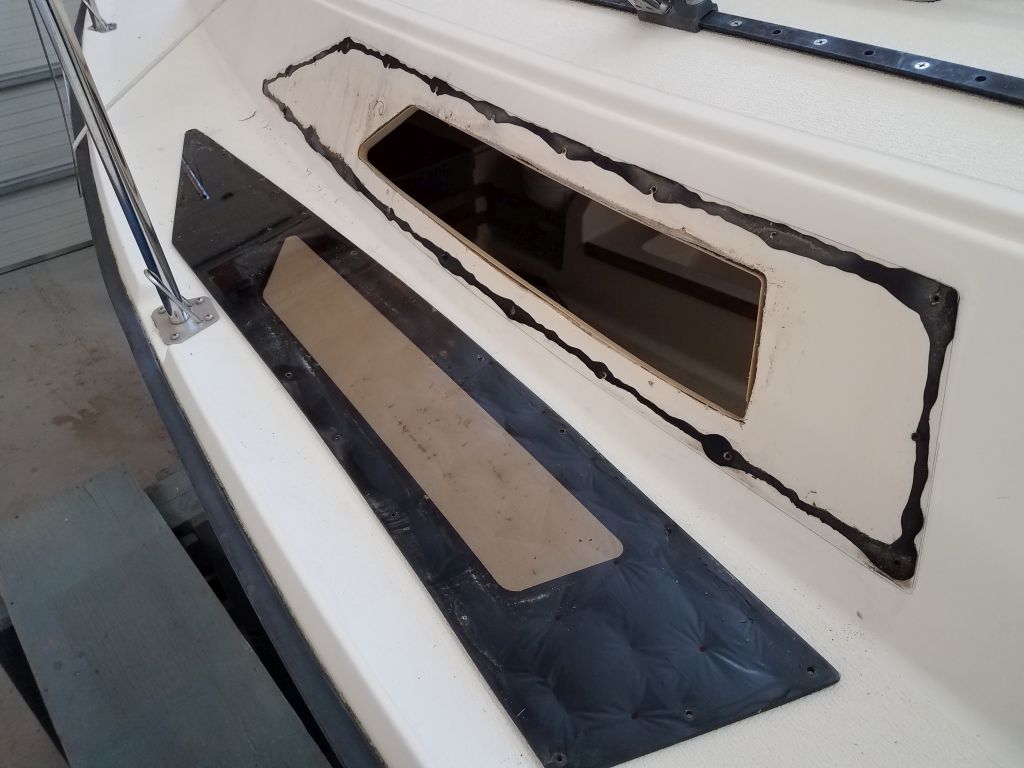
Meanwhile, I cleaned up the bonding surfaces on the cabin trunk as well, removing the old sealant and cleaning the area thoroughly to prepare for reinstallation.

I’d hoped to reinstall the lenses, but apparently I missed the shipping cutoff when I ordered the new sealant, so that wouldn’t arrive for another day.  For the moment, this was about all I could do to advance the project.

Total time billed on this job today:  2 hours

0600 Weather Observation:
33°, mostly cloudy.  Forecast for the day:  rain, mixing with or changing to snow, 30s

Acadia 70

< Back to Acadia

Tuesday

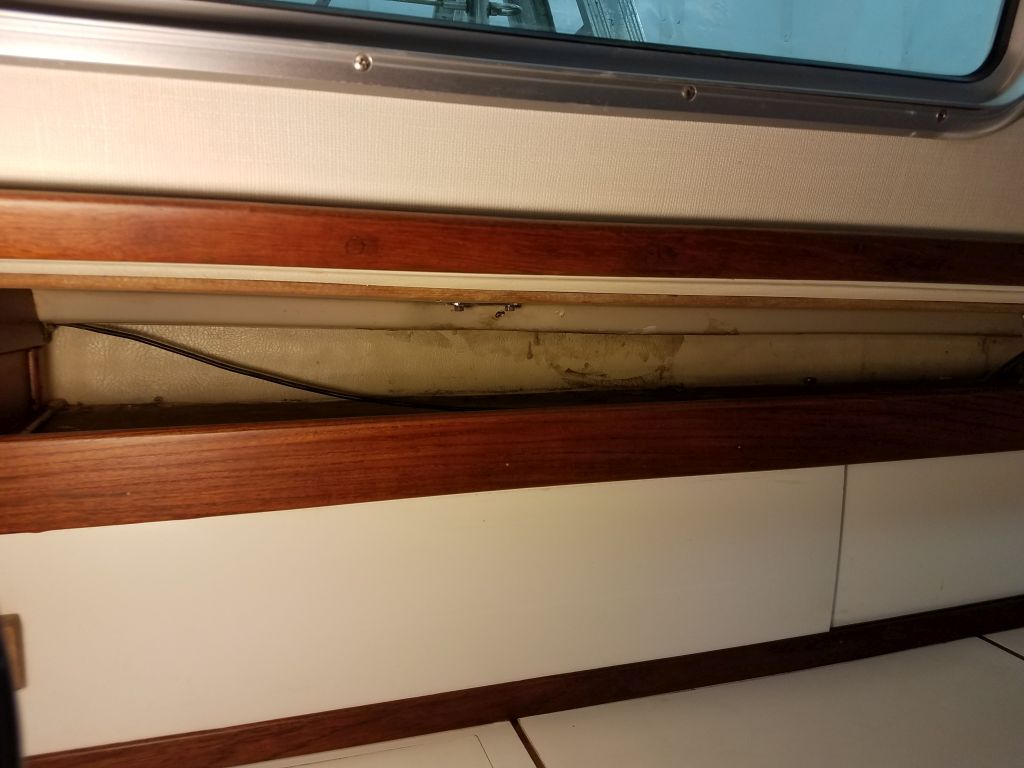
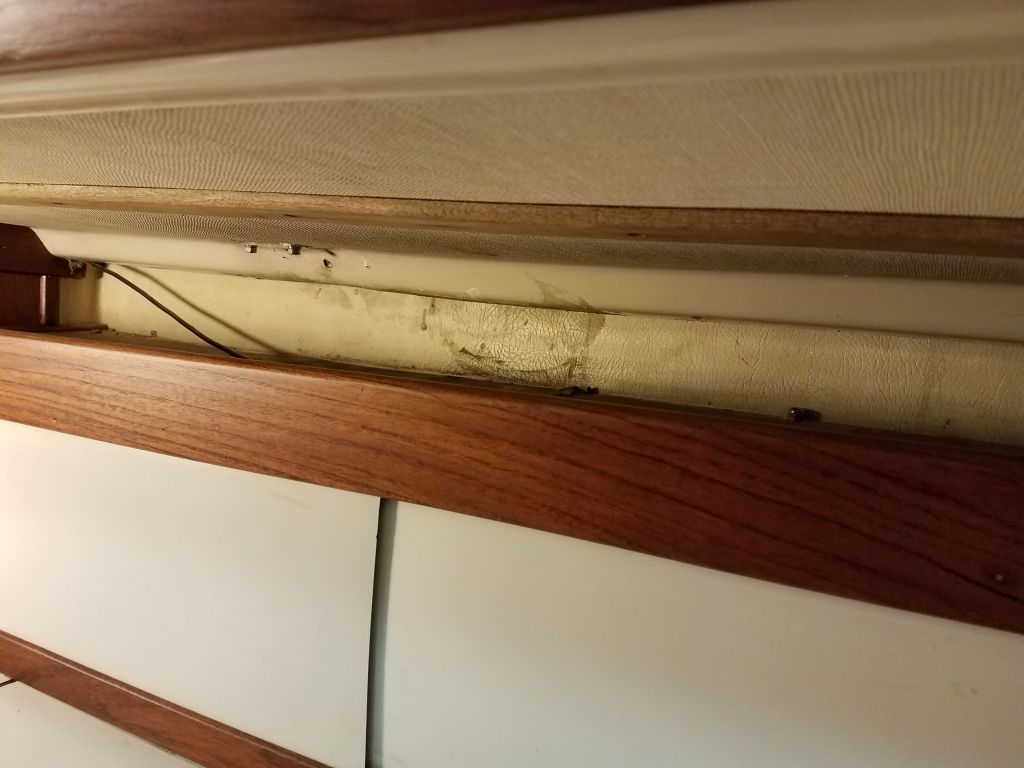
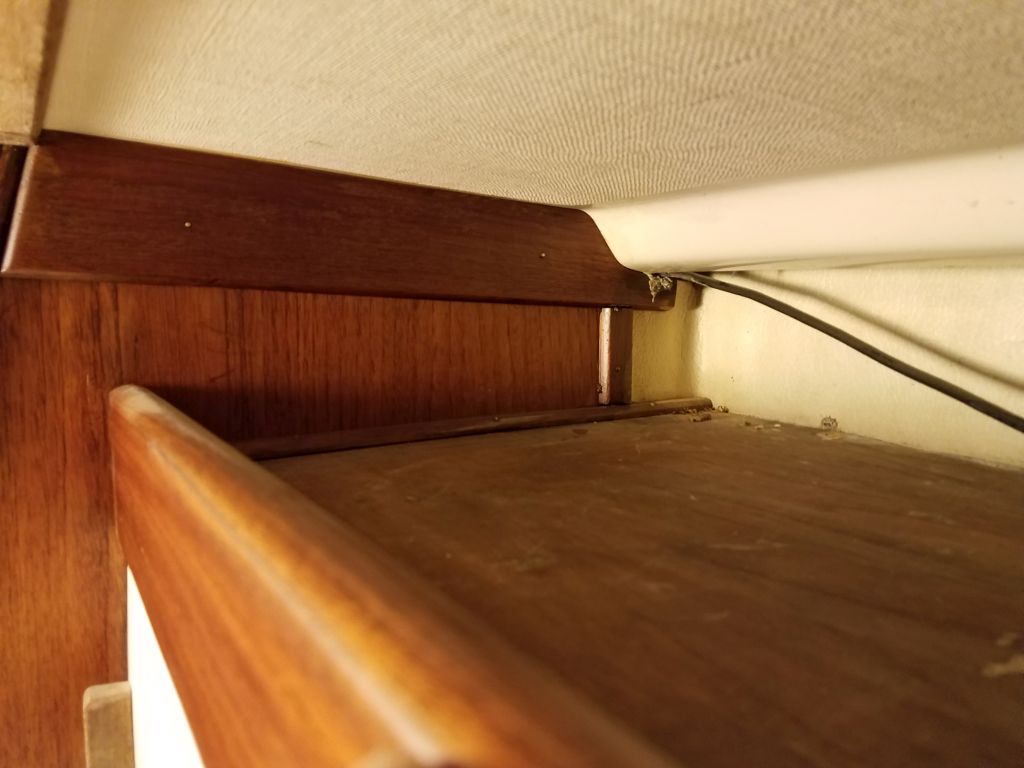
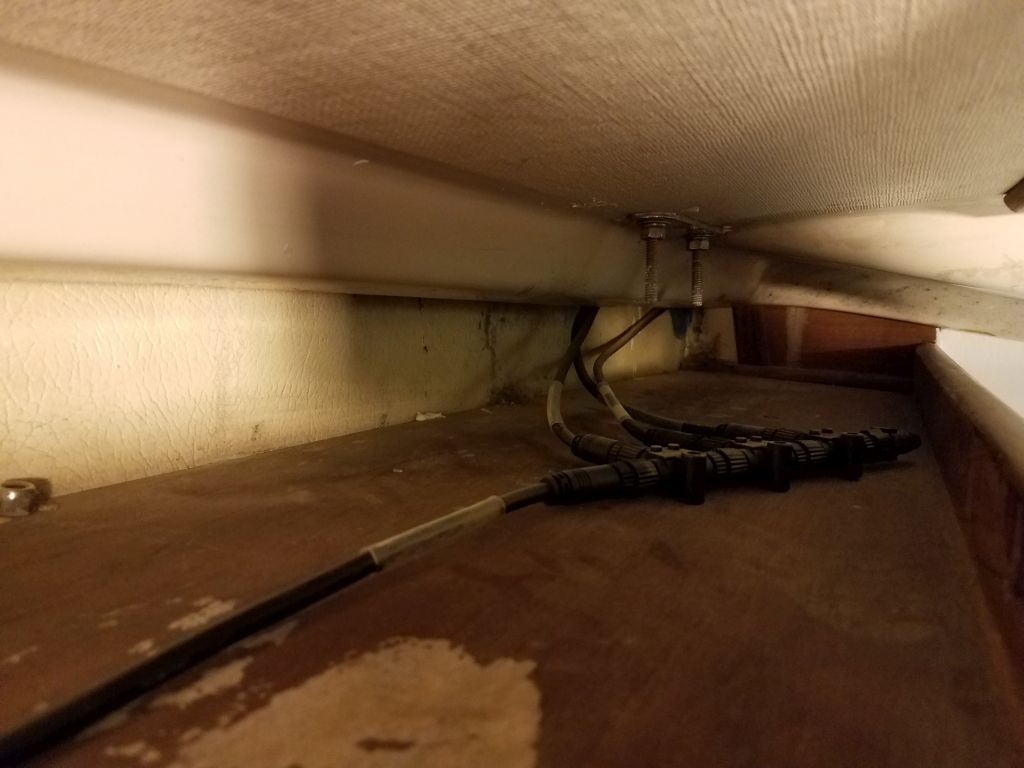
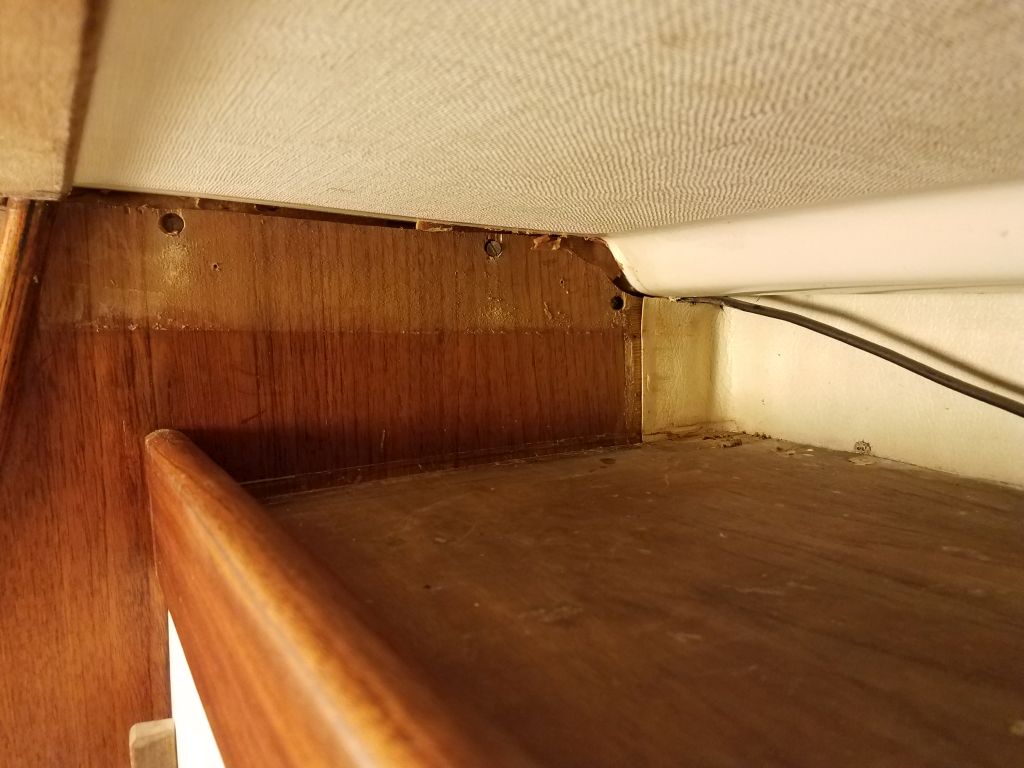
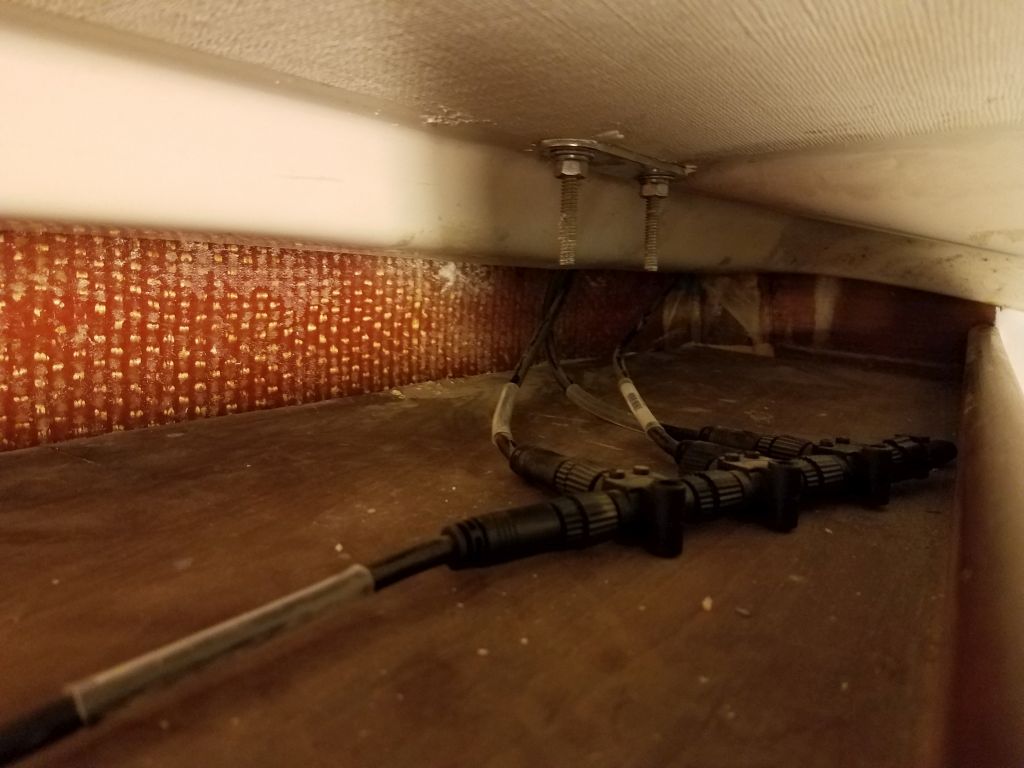
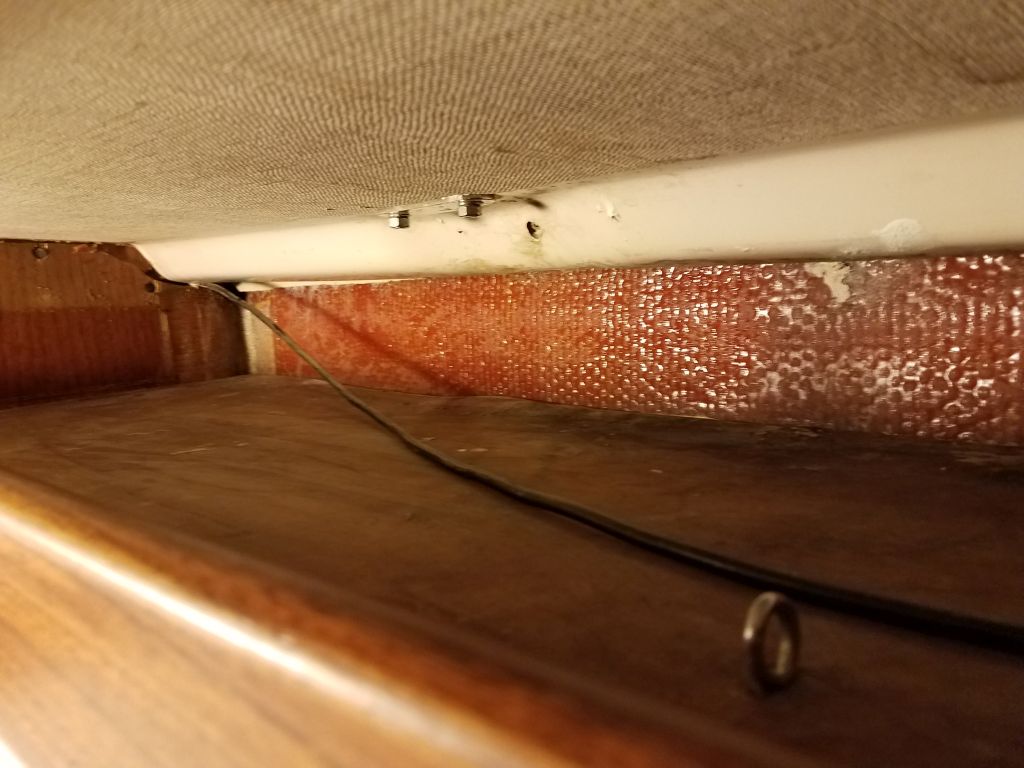
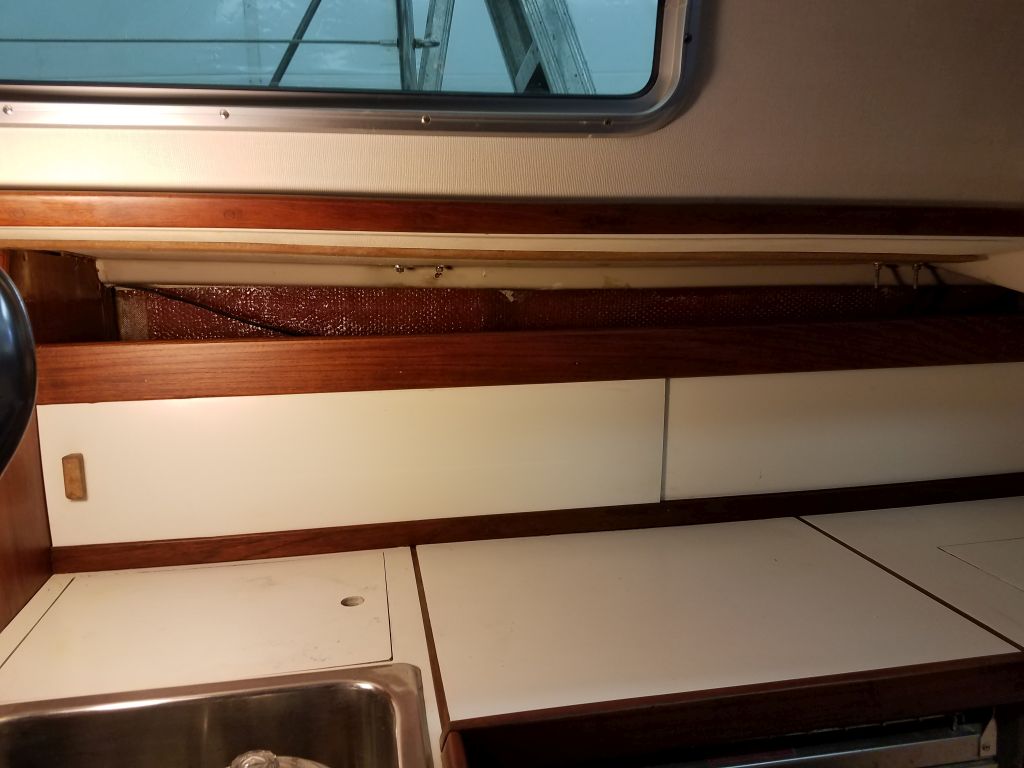
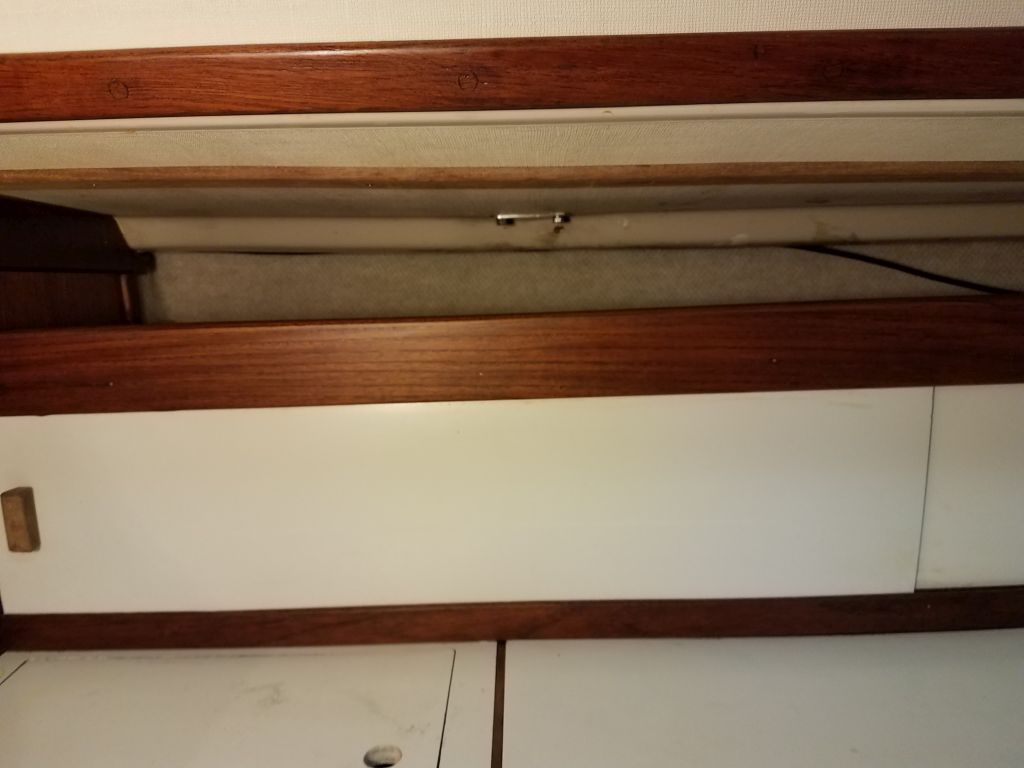
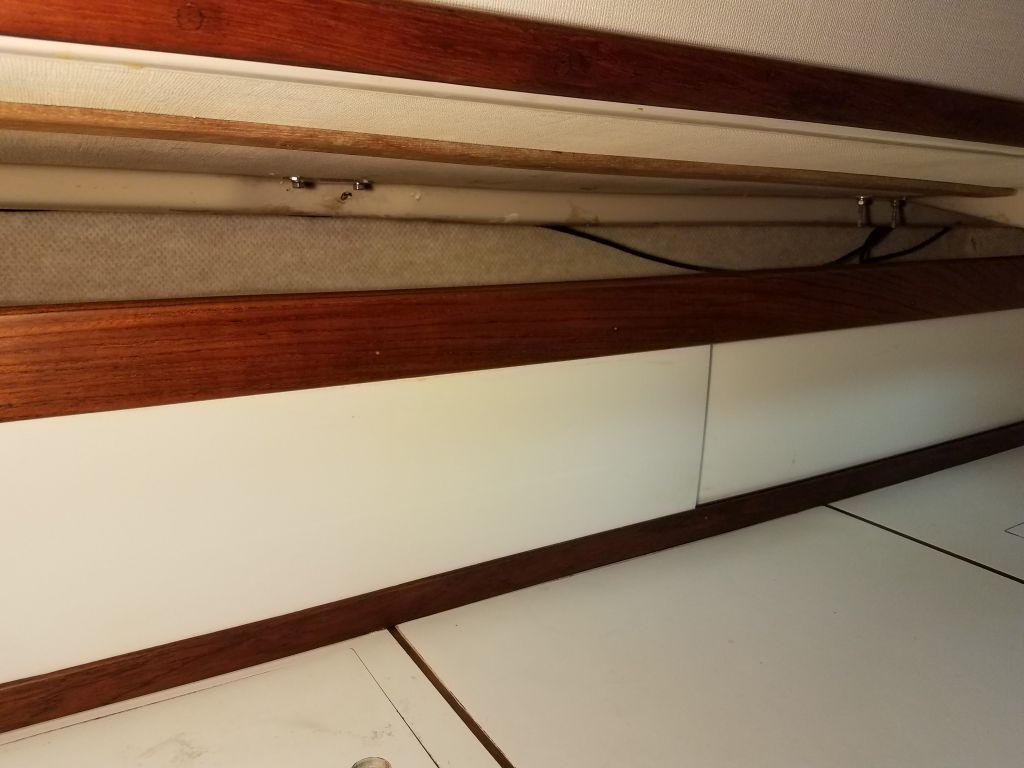
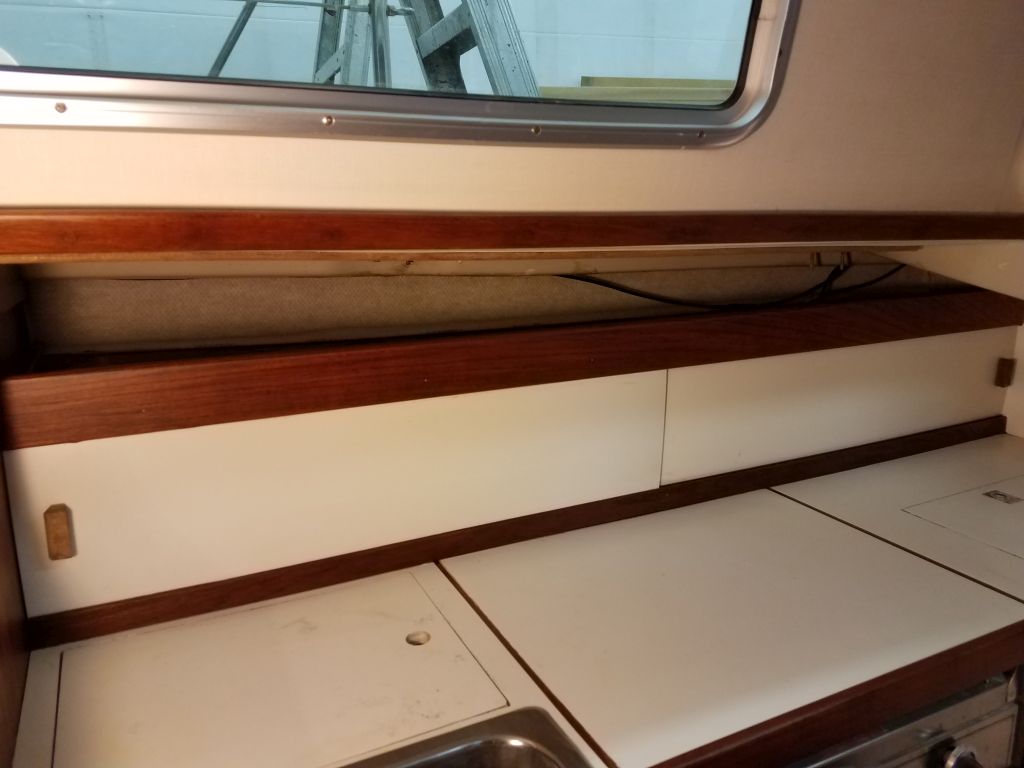
In the galley, there was a narrow area above the storage shelf where the hull was covered with an old vinyl liner, much like that in the quarterberth that I’d replaced earlier.  Actually, this vinyl material was in place throughout the boat, but this section in the galley was decrepit, heavily stained, and the owners asked that I replace it with the same material as in the quarterberth.
The original liner had been installed before the cabinetry, so it extended past the shelf and into the space beneath.  I used a sharp knife to cut the material even with the top of the shelf so I could remove it.  Several pieces of trim at the bulkheads at either end also held the fabric in place and covered the raw edges, so I removed these in order to release the fabric, after which I could pull it away from the hull and remove it.  Access was tight at best; at the after end, I could barely fit in a hand and arm over the fiddle and with the minimal clearance beneath the deck.

I used the old liner to rough out the width of the new fabric.  I decided to wrap a little of the fabric onto the shelf during installation, which I thought would look nice and finish off the area better.

After dry-fitting the new material and making adjustments and relief cuts as needed. I permanently installed it with spray adhesive.  Clearance at the aft end was so tight that I had to spray the adhesive into a cup, then with maximum effort reach into the space with a brush to get some on the hull and fabric.  Once the new material was in place, I reinstalled the trim at the forward end, but left off the aft trim since there was quite simply no way to install it, whether by hand nail (as original) or with an air tool, as the clearance was simply too tight.  Fortunately, this trim wouldn’t be missed nor visible.

To wrap up work for the day, I applied another coat of varnish to the back side of the v-berth door.

Total time billed on this job today:  2.5 hours

0600 Weather Observation:
33°, mostly cloudy.  Forecast for the day:  rain, mixing with or changing to snow, 30s

Precision 2017-1

< Back to Precision 23

Monday

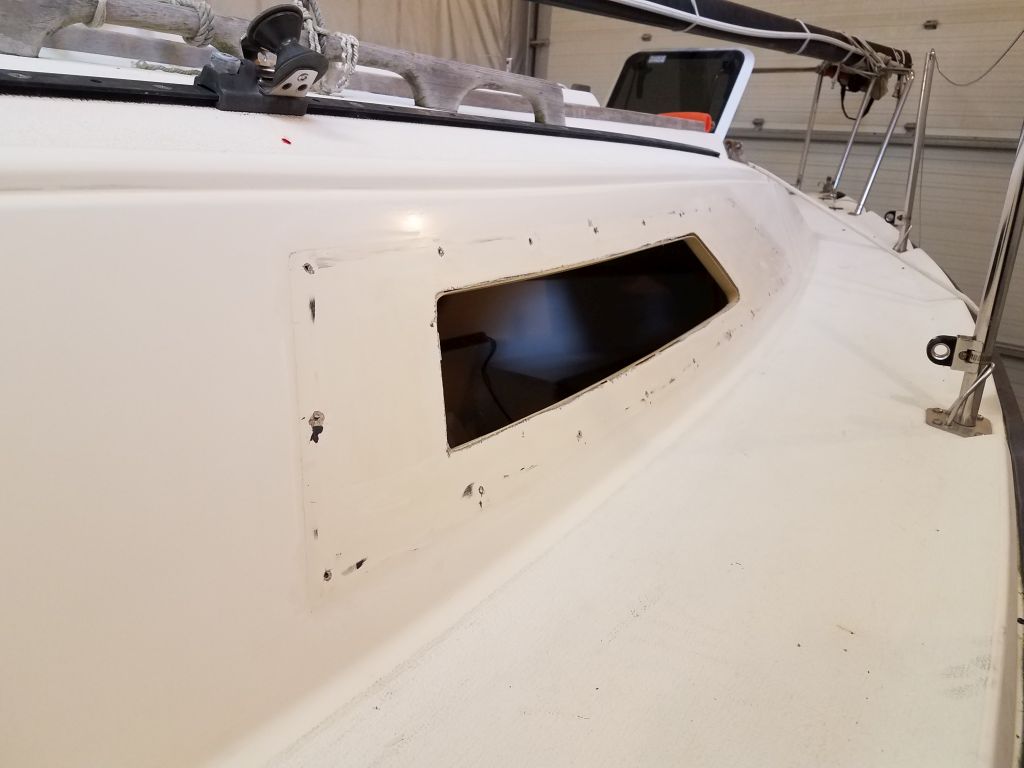
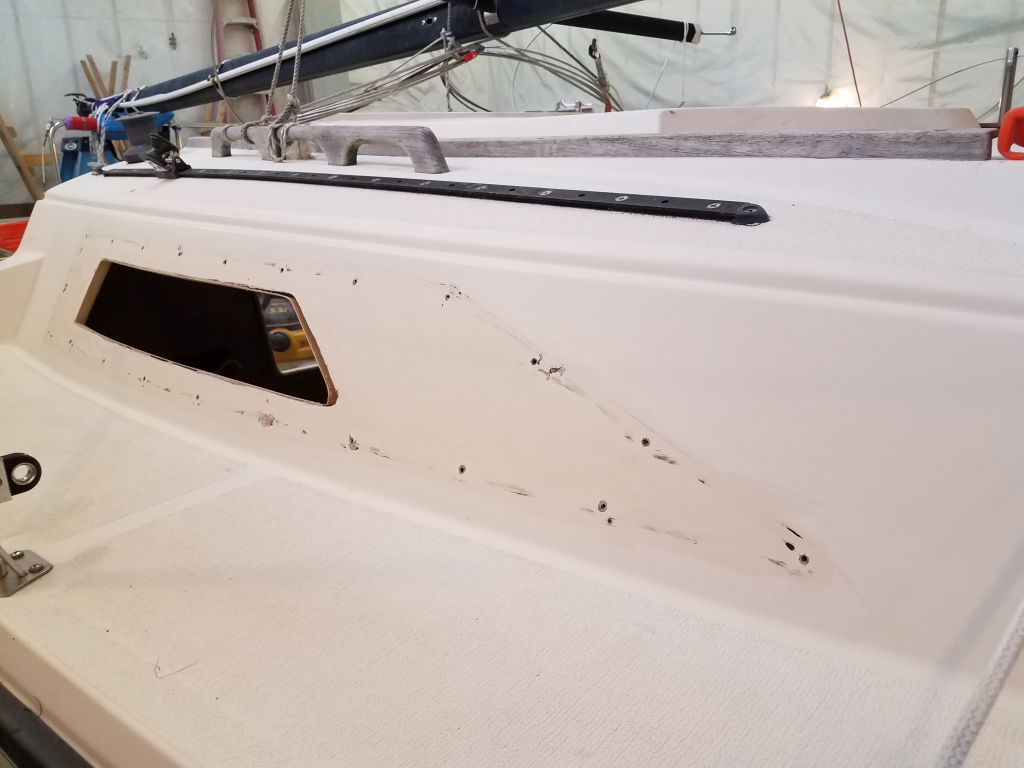
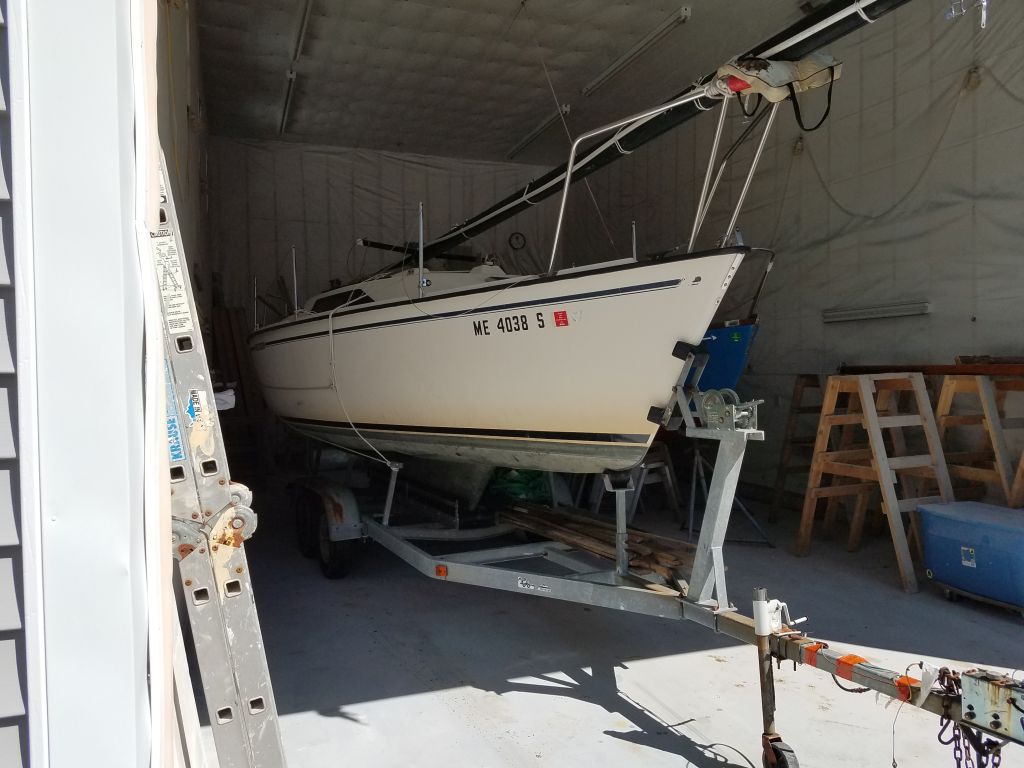
The owner delivered this boat to me back in the fall, at which point I covered the boat and stored it for the winter next to the shop.  I’d done various upgrade and maintenance tasks to the boat a year earlier, and now the owner requested that I rebed the large windows, which were leaking badly.  In addition, he mentioned that the chainplates–which I’d rebedded during the earlier phase–were also leaking again, at least in part because the screws securing one of the cover plates hadn’t held, allowing this plate to pull up.

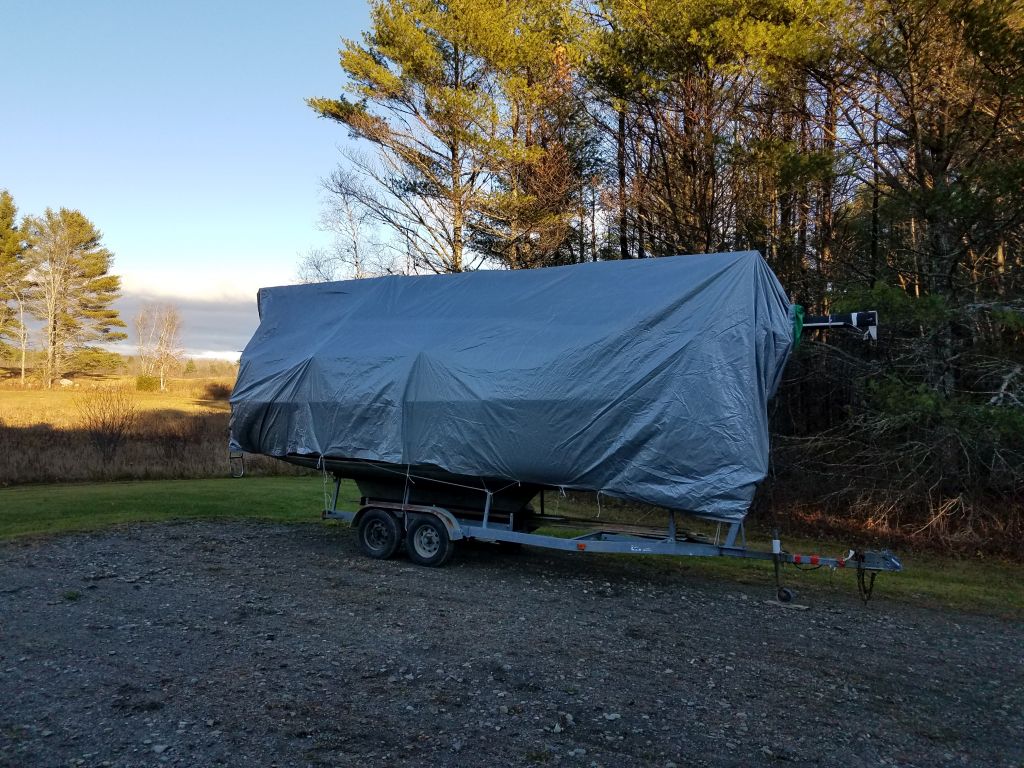
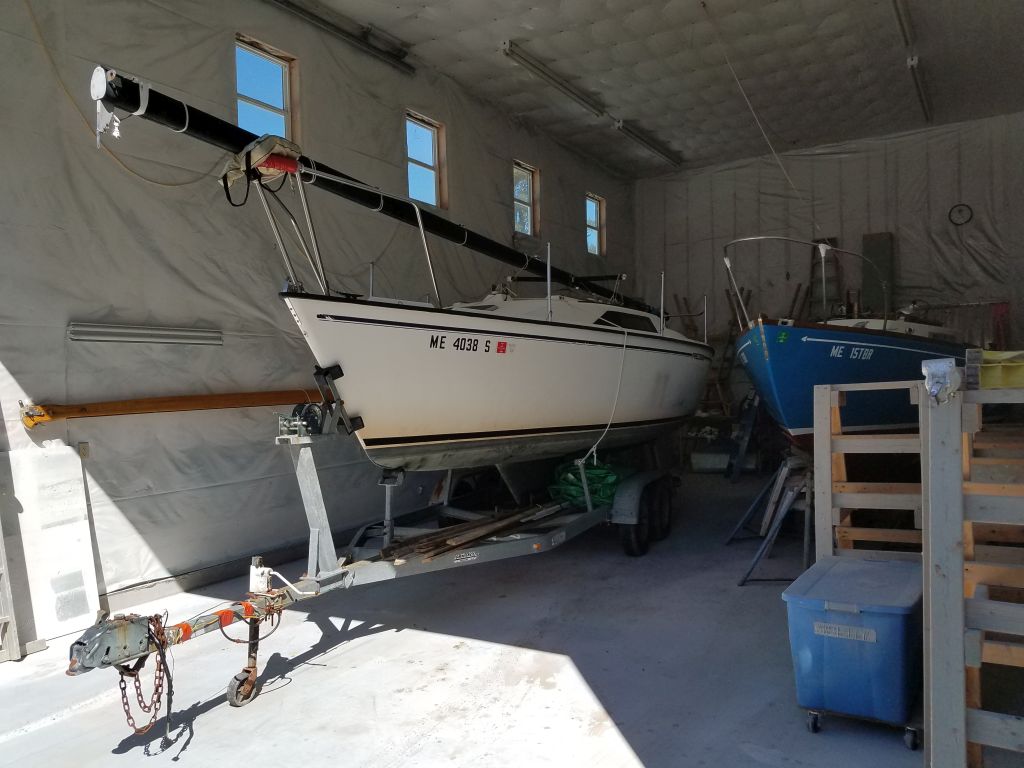
A few days earlier, during a brief stretch of good weather, I’d pulled the boat from its storage area, taking advantage of warmer weather to release the trailer tires from the mud into which they’d sunk.  Now, I removed the cover and frame that I’d installed in the fall, and moved the boat into the shop, where I’d recently made room.  It was a tight-ish fit considering I wanted to leave room to work on the windows on each side, but it was workable.

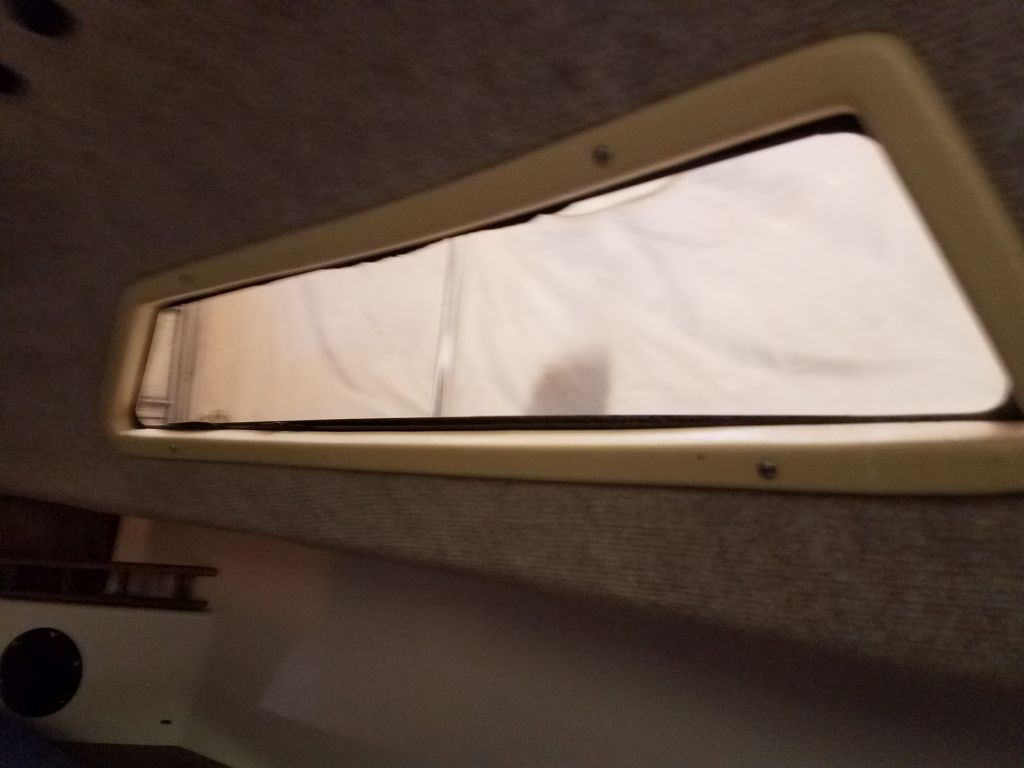
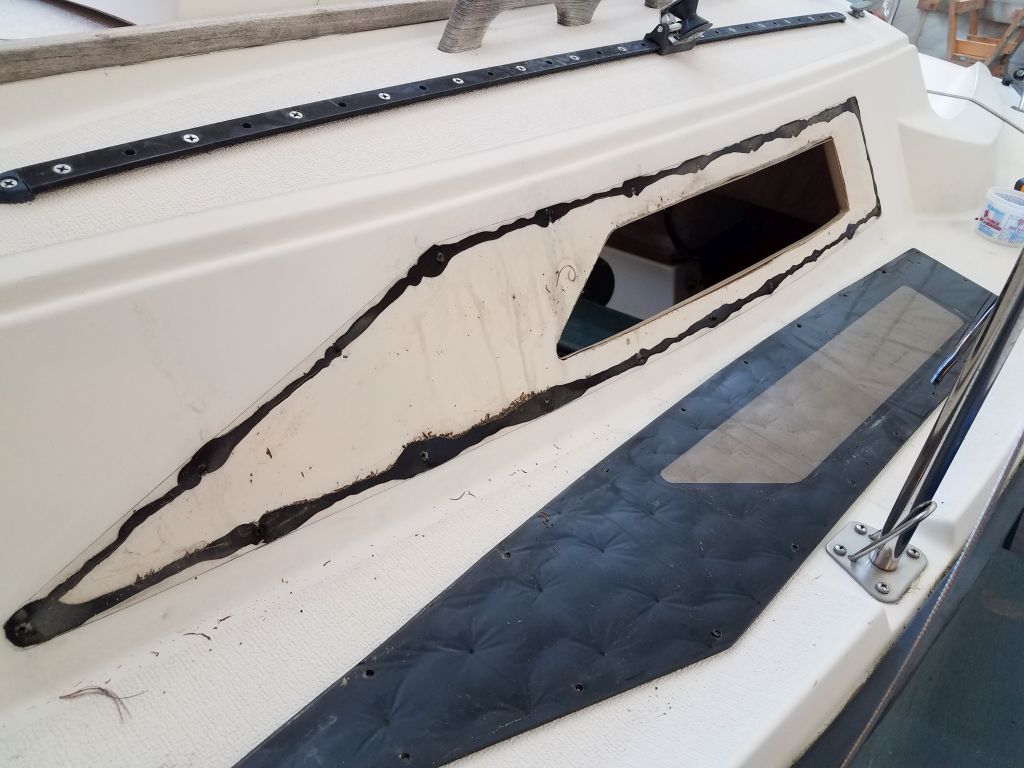
With staging set up alongside, I turned to the windows.  Particularly on the port side, it was easy to see why the windows might leak, as the sealant appeared inconsistent, and, viewing the port from an angle, I thought I saw light between the plastic and the cabin side.  The large tinted window was secured from the outside with screws, and was substantially larger than the actual opening in the cabin side, presumably for the sake of a certain outward appearance.  The outer portion of the plastic was coated with paint outside of the actual window opening, and overall the plastic itself looked to be in good condition; I thought I might be able reuse it unless some clear reason came up why I couldn’t.

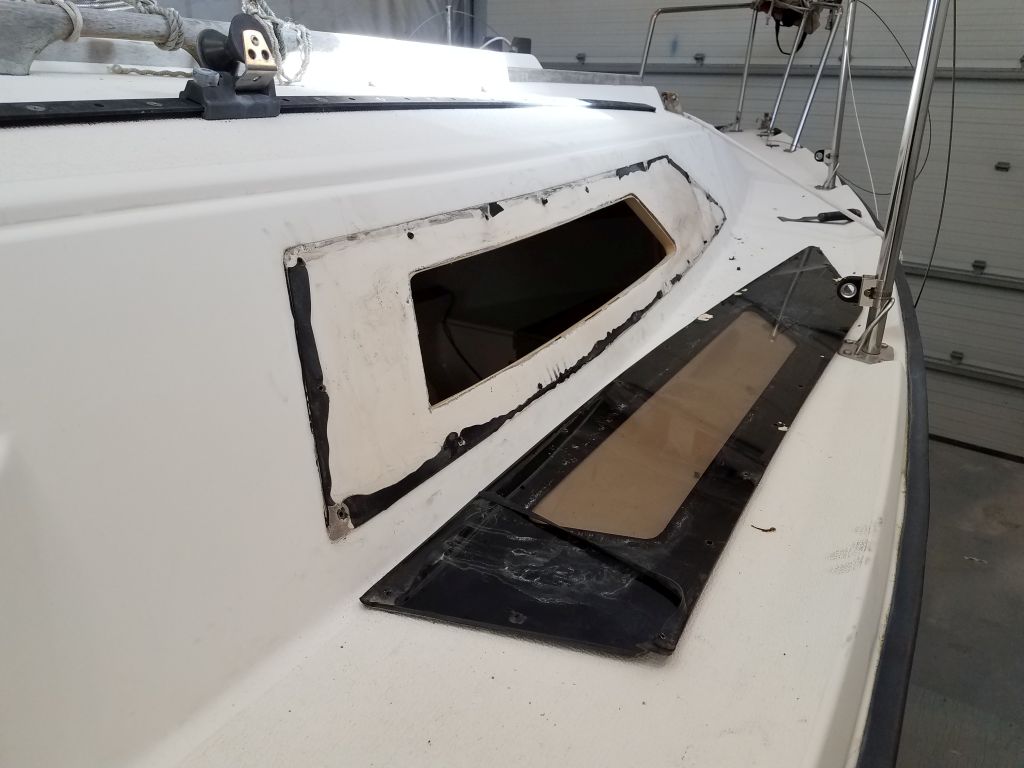
Continuing in the port side, I removed the screws and then the window itself.  The window came off easily, and seemed barely sealed in place.

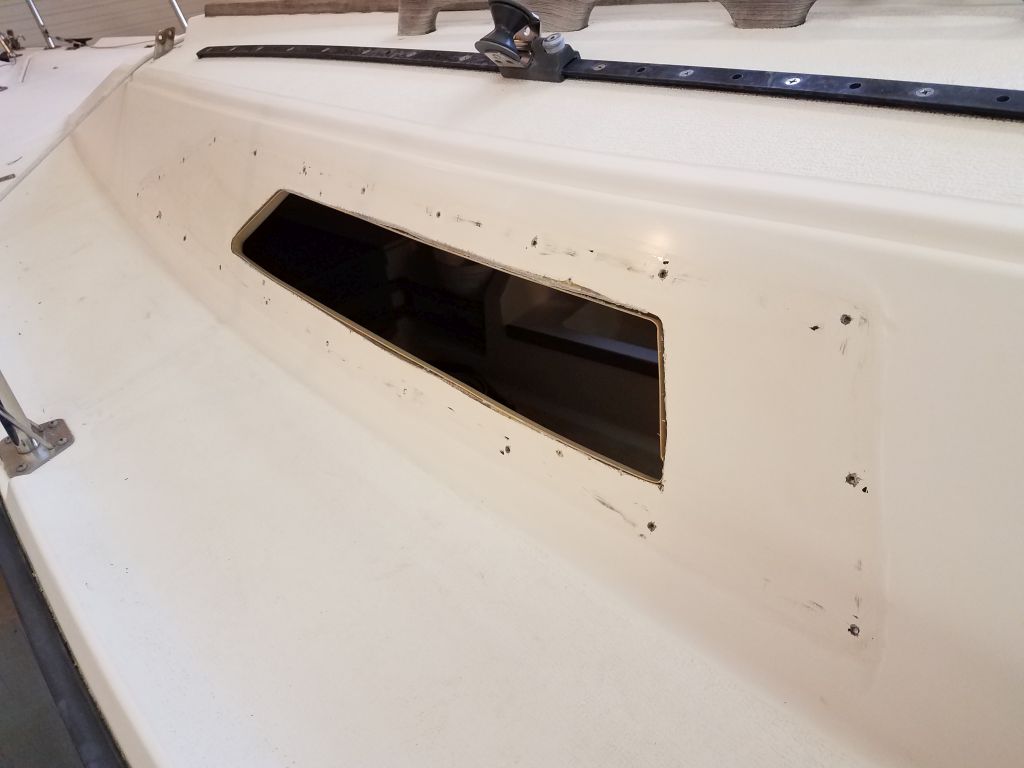
I repeated the process on the starboard side, where I found that the plastic was definitely much better-adhered than on the port side, but still I had little trouble removing the window intact.

The starboard window had some pre-existing cracks emanating from a couple of the screw locations, and for the moment I reserved judgement whether it would be reusable or not.  For the moment, I ordered some materials I knew I’d need either way–black sealant and replacement screws–and would forge ahead next time.

Total time billed on this job today:  2.5 hours

0600 Weather Observation:
21°, clear.  Forecast for the day:  sunny, 40s

Acadia 69

< Back to Acadia

Monday

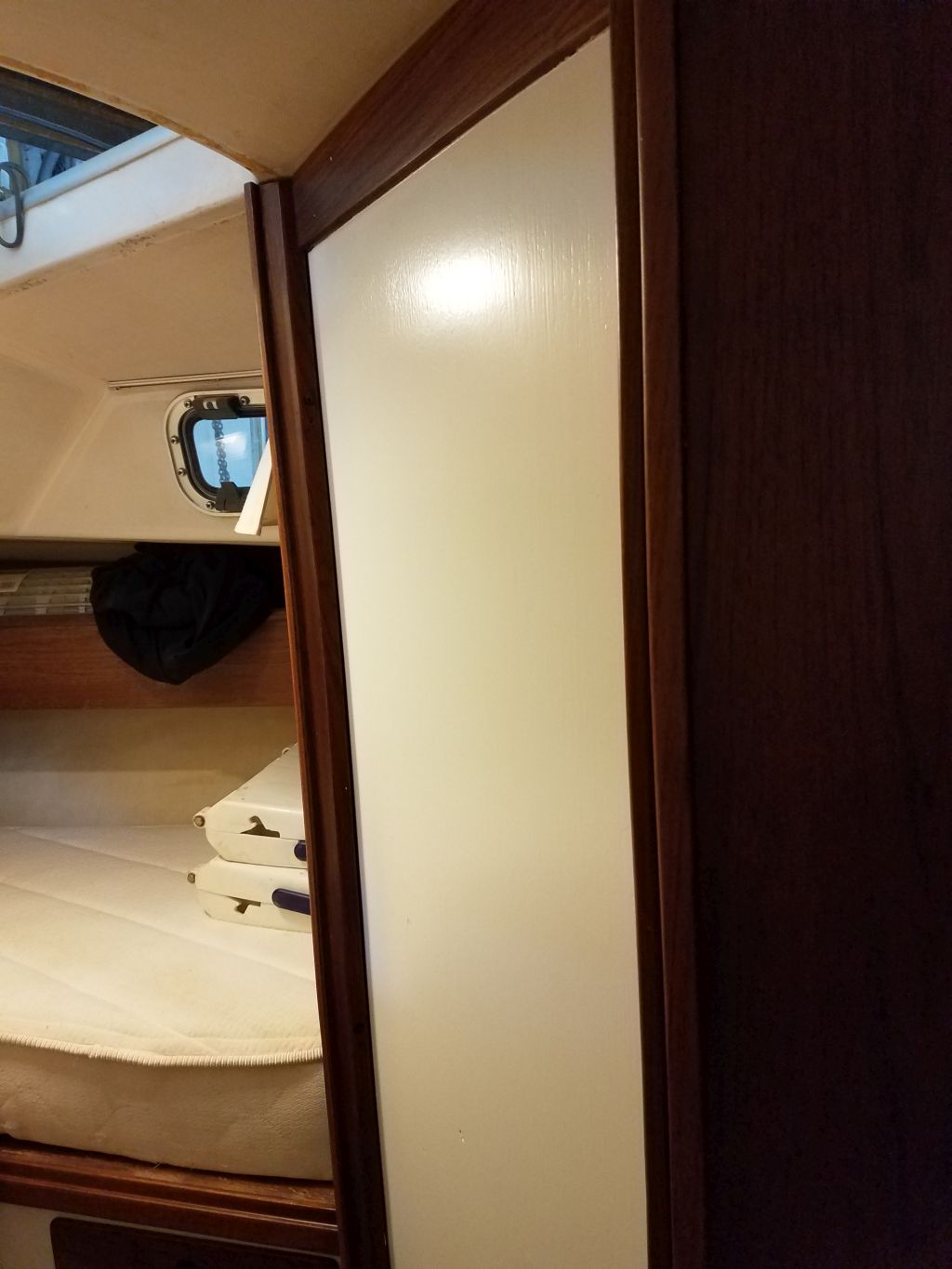
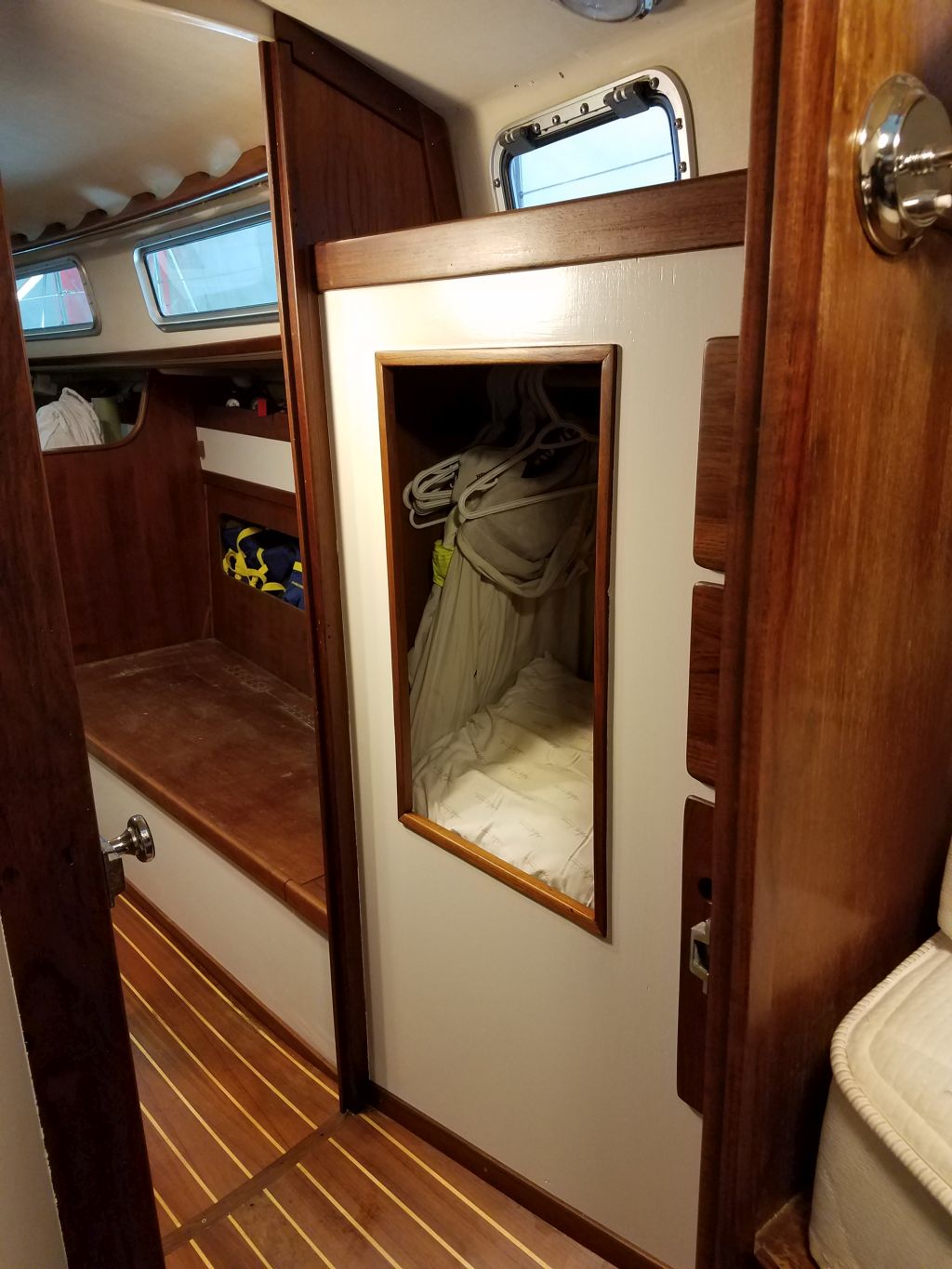
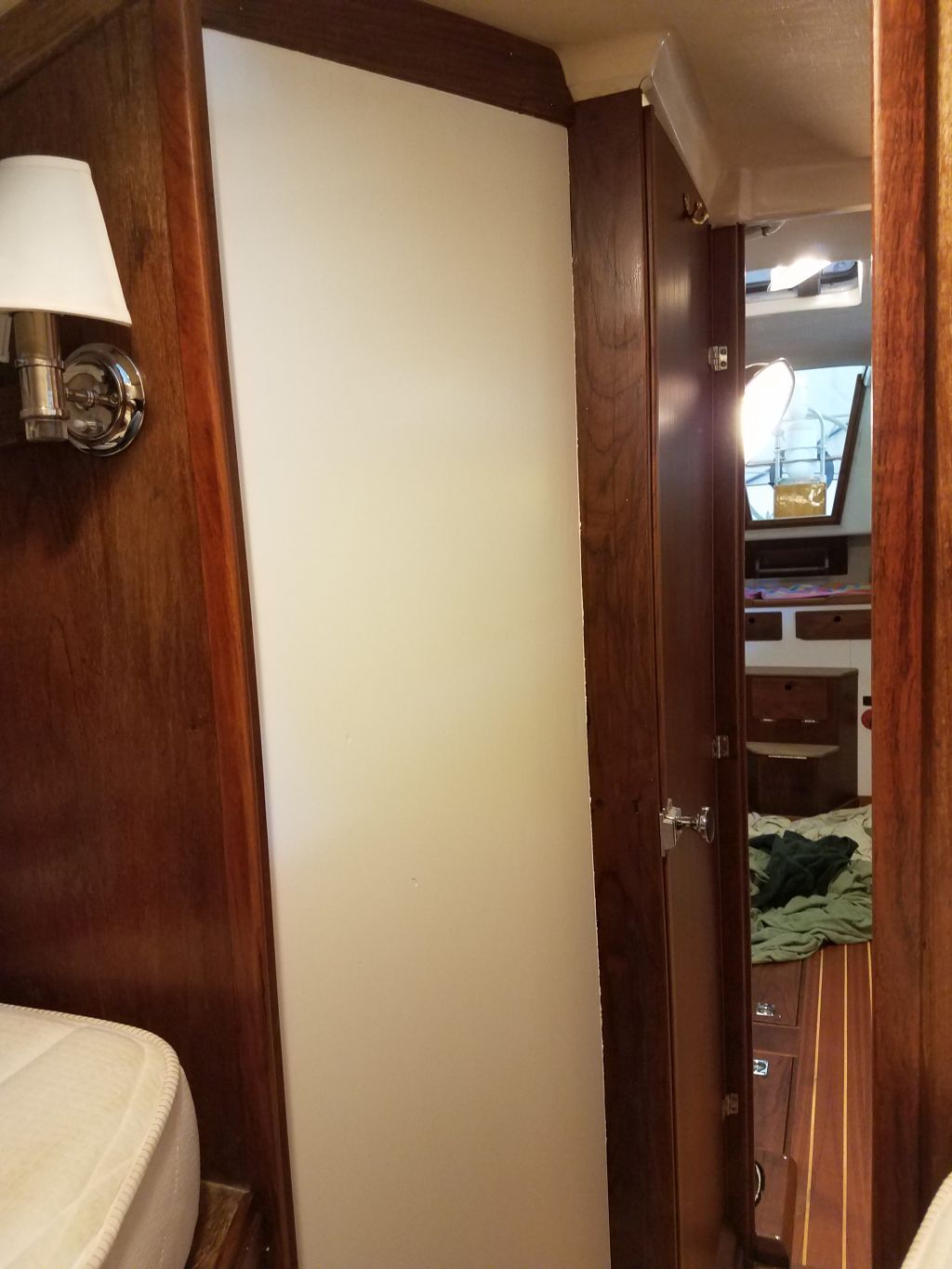
Now that the paintwork in the passageway and forward cabin was complete, I unmasked the area and then reassembled the various doors, hinges, and trim to complete the work.

The owners requested a curtain to close off the saloon from the forward cabin, and this was underway at the canvas shop.  To hang the curtain, I installed a simple curtain rod made from stainless steel rod with simple removable ends.

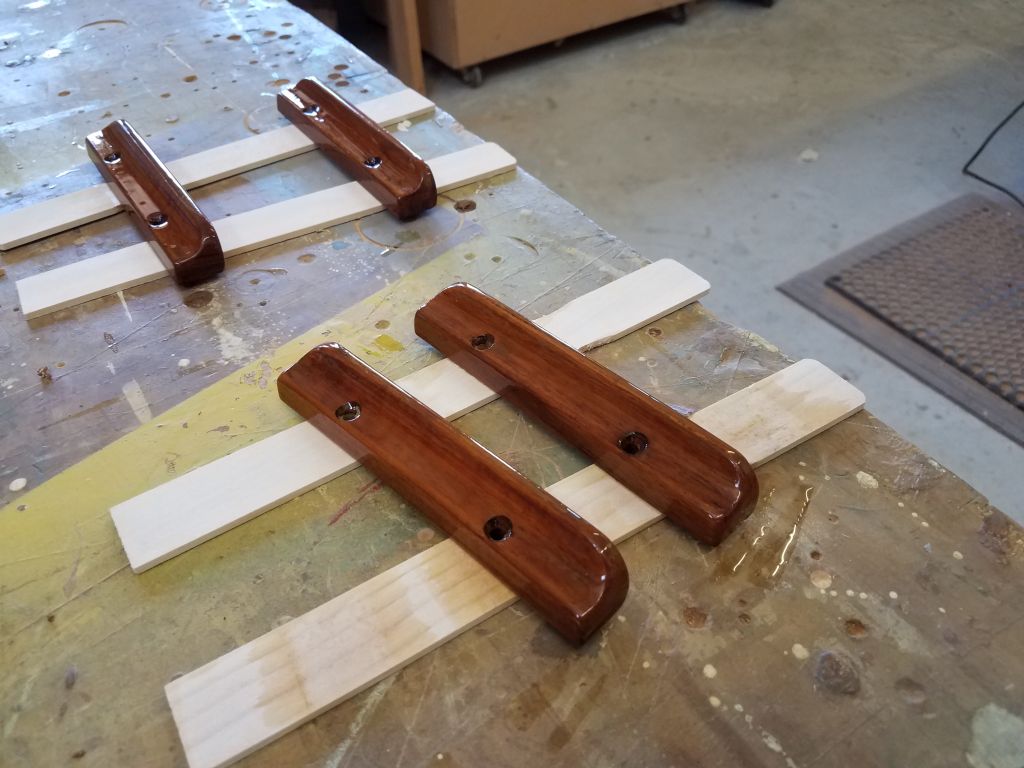
The door leading to the vee-berth had a second side that required the full varnish program (the head door had wood veneer on only one side, with Formica on the inside), so with the first side now complete and cured, I turned over the door to begin the work on the second side with a sealer coat of varnish.  I also applied the first of a few coats to the little handles that came off the settee backrest cushions while these were being reupholstered.


Total time billed on this job today:  2.5 hours

0600 Weather Observation:
21°, clear.  Forecast for the day:  sunny, 40s

Acadia 68

< Back to Acadia

Friday

It was tough to come up with flowery prose to describe such a simple set of tasks on this day, so I thought I’d  try a simple list:

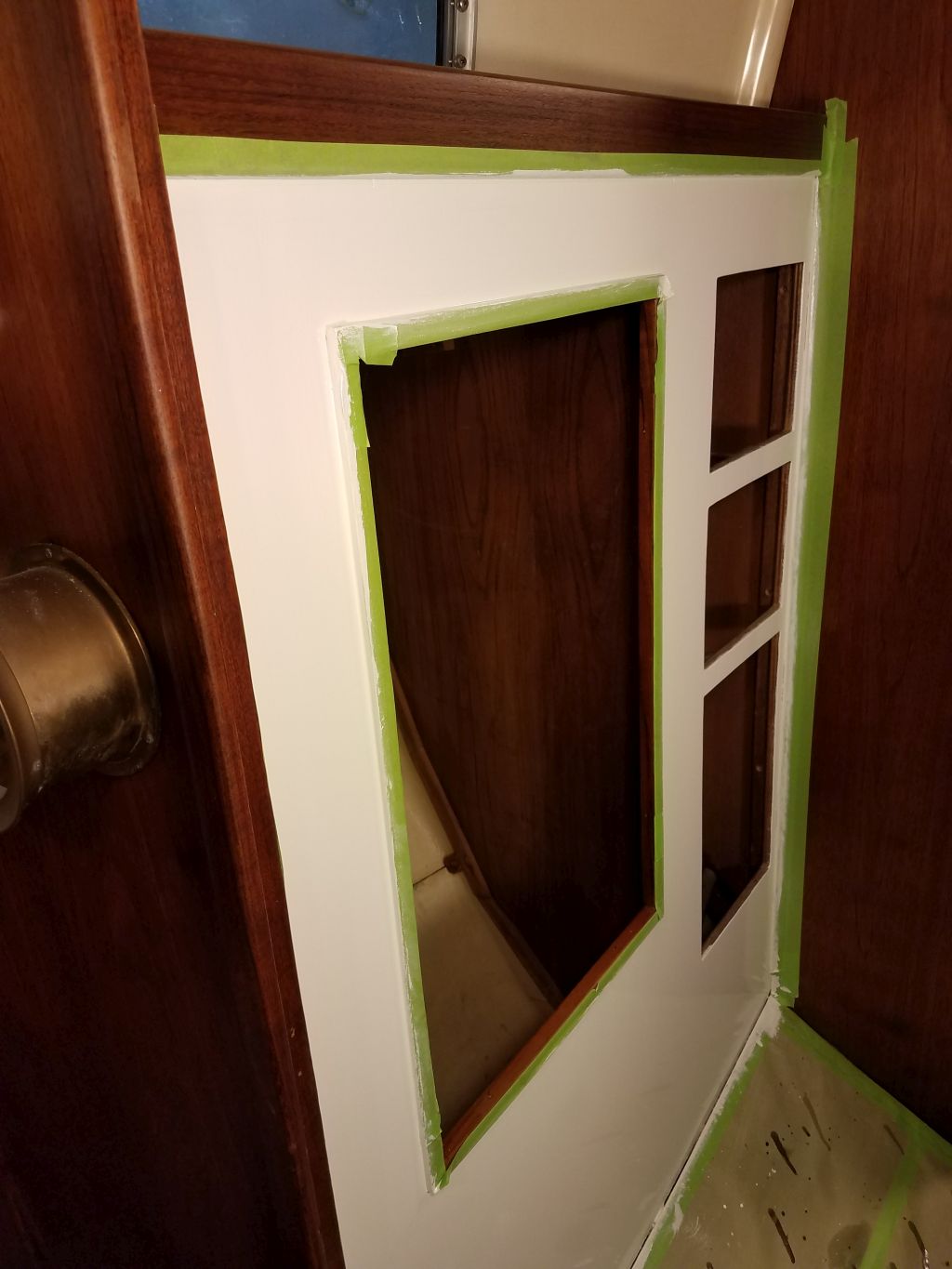
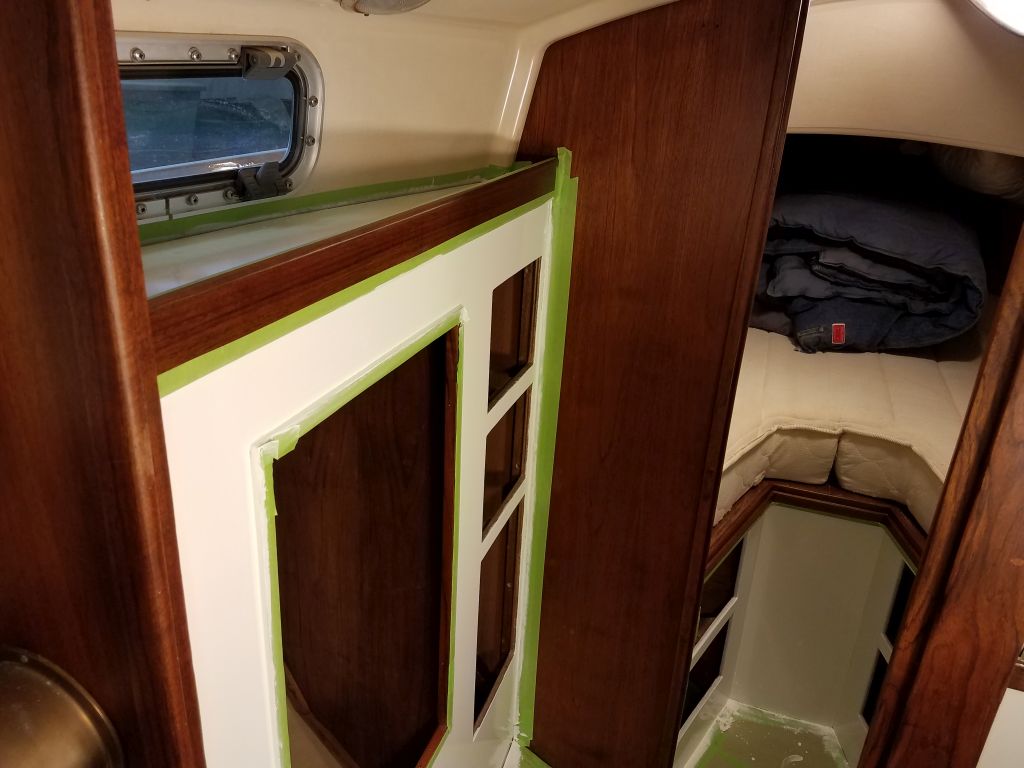
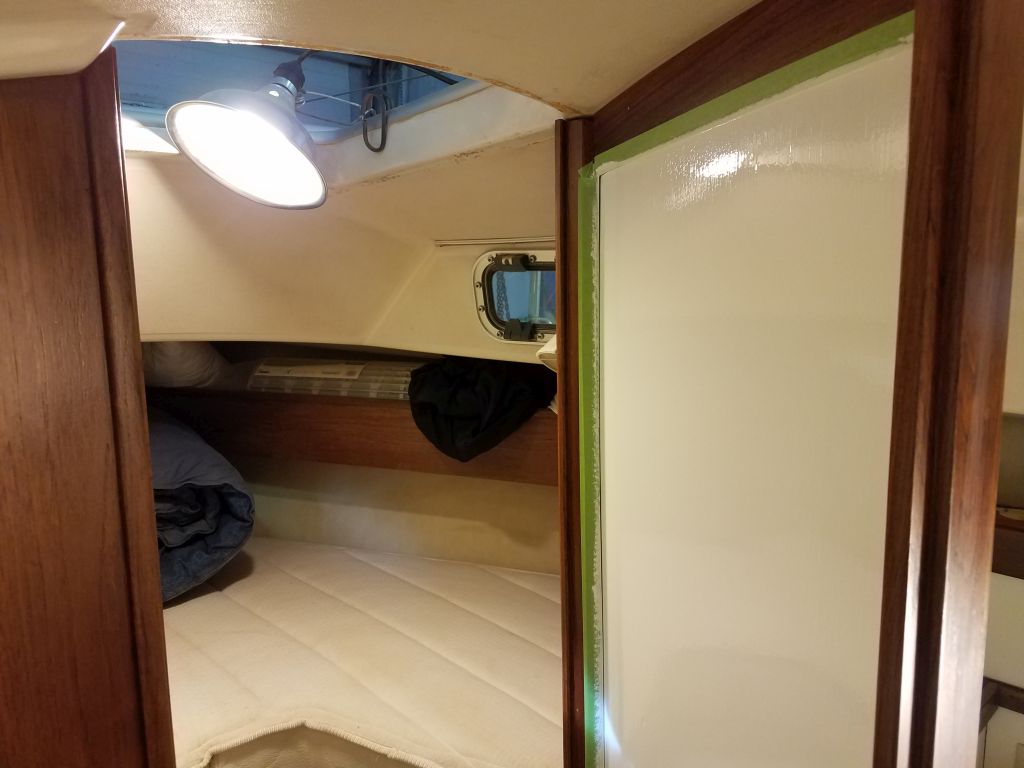
1.  Lightly sand the fresh paint in the cabin

2.  Clean up

3.  Apply second coat of semi-gloss enamel.

4.  Watch paint dry.

Total time billed on this job today:  1 hour

0600 Weather Observation:
23°, mostly clear.  Forecast for the day:  sun and clouds, 40.

Older posts Newer posts