
(page 103 of 165)

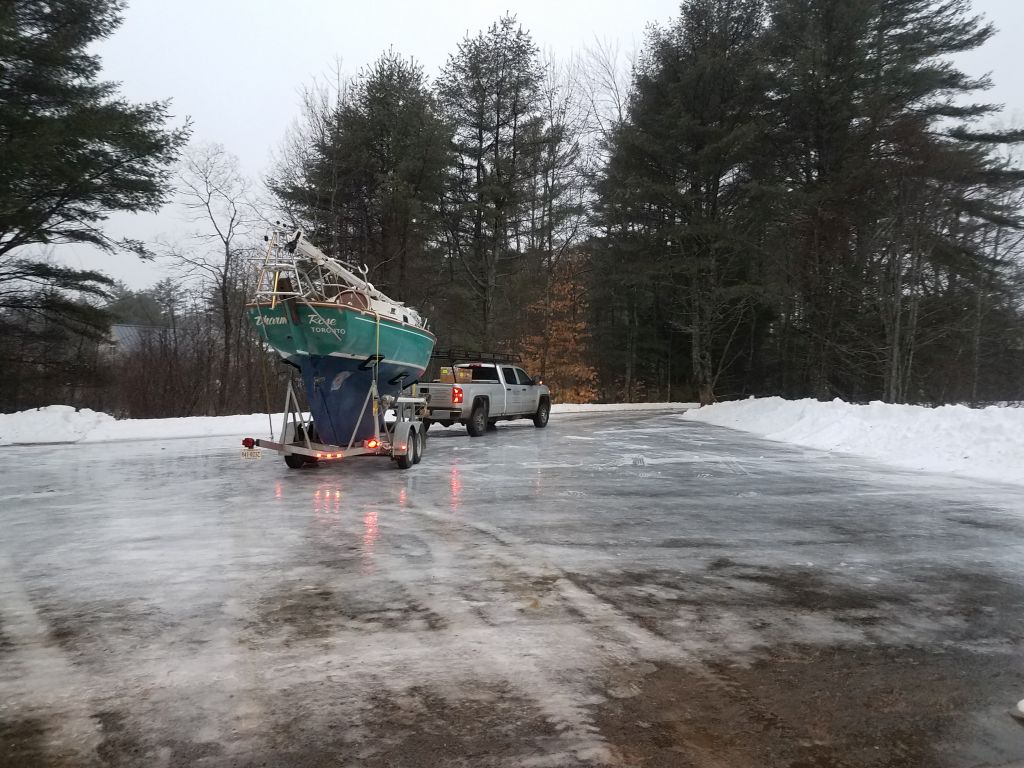
Dharma Rose 30

Monday

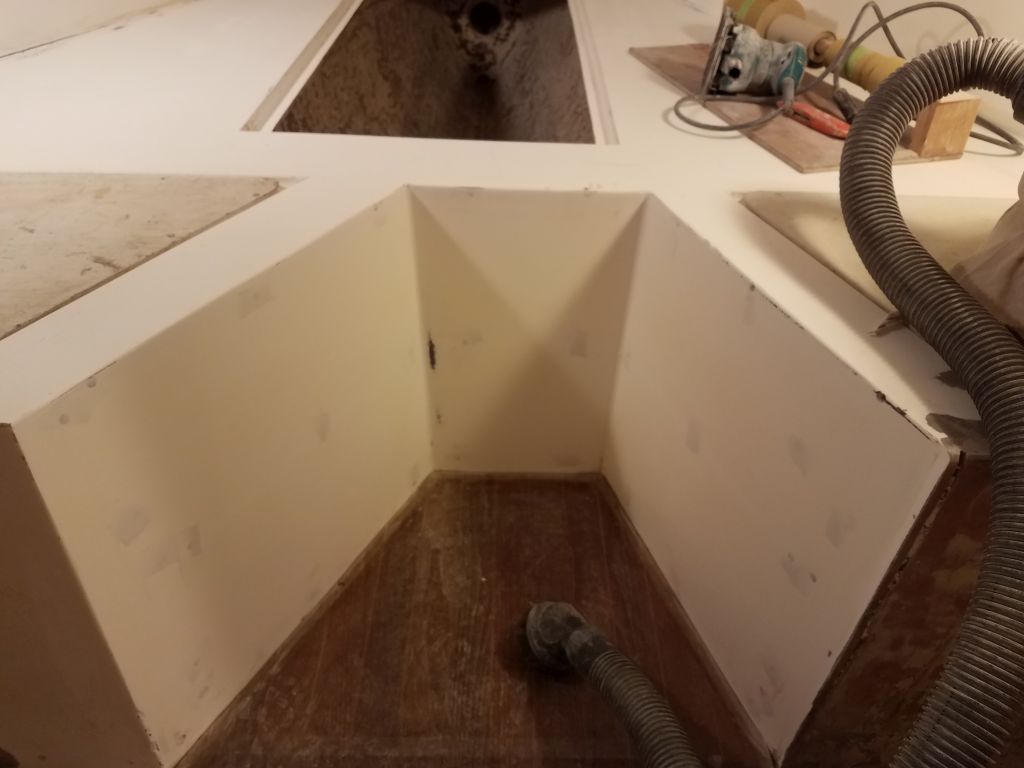
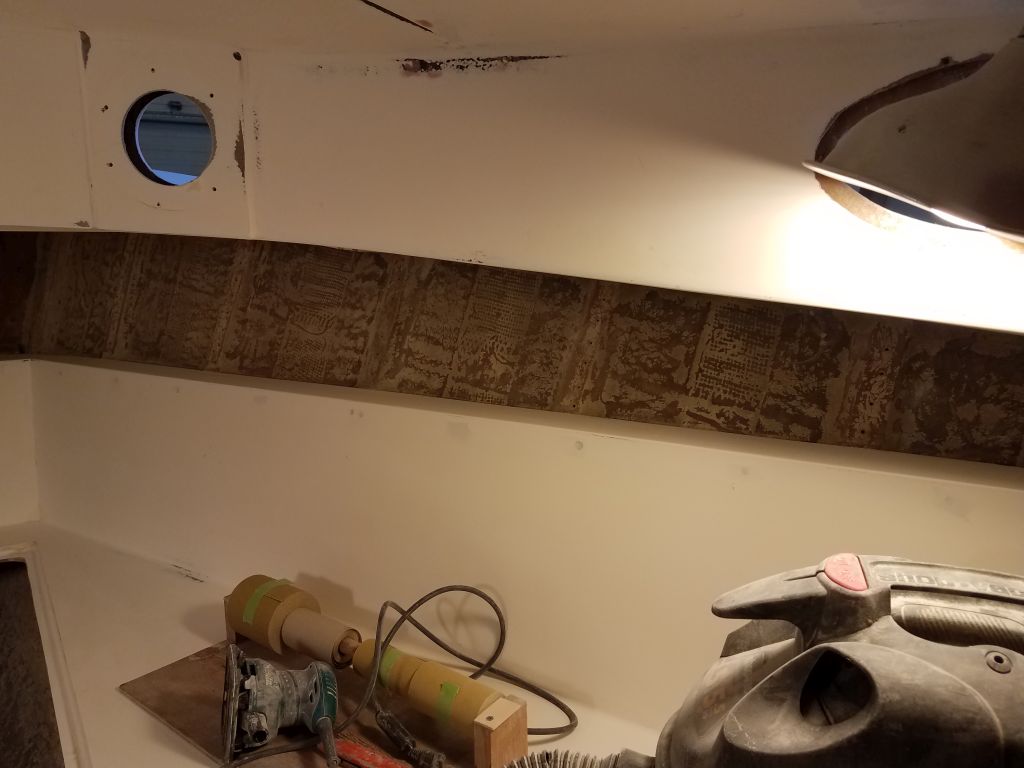
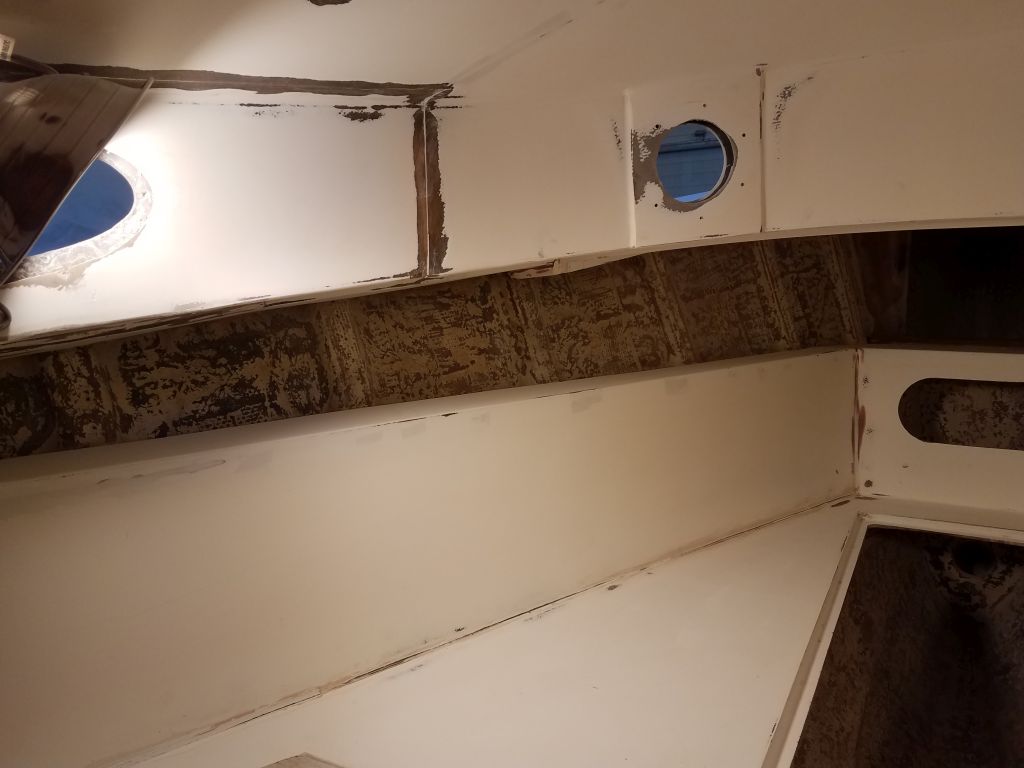
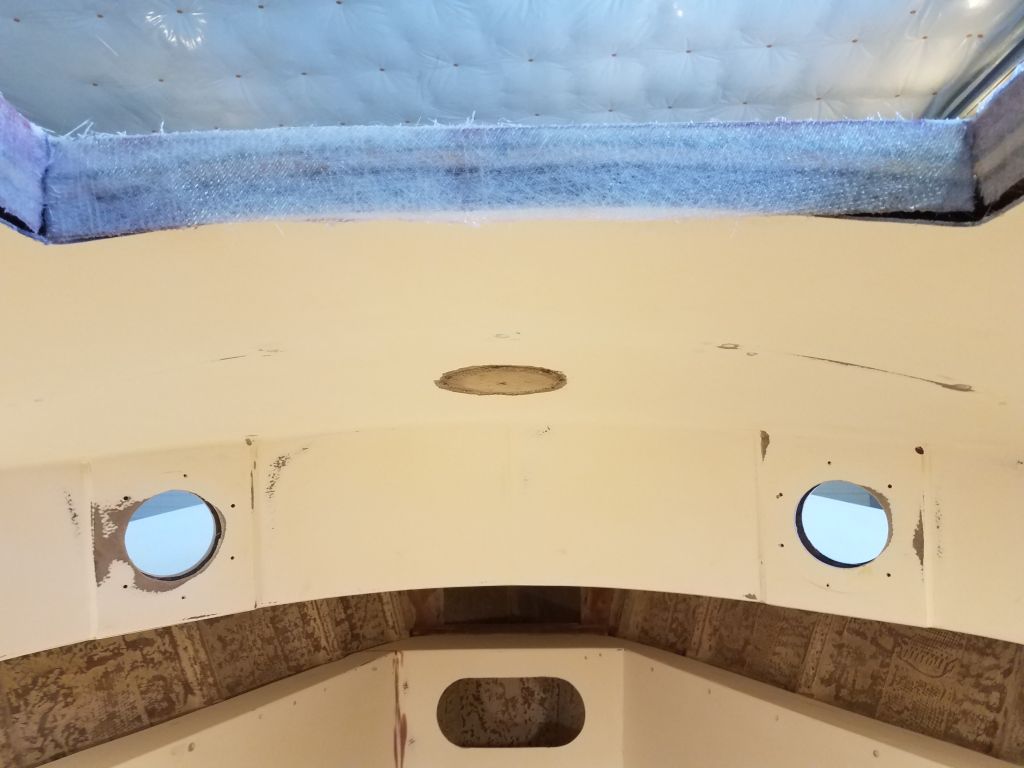
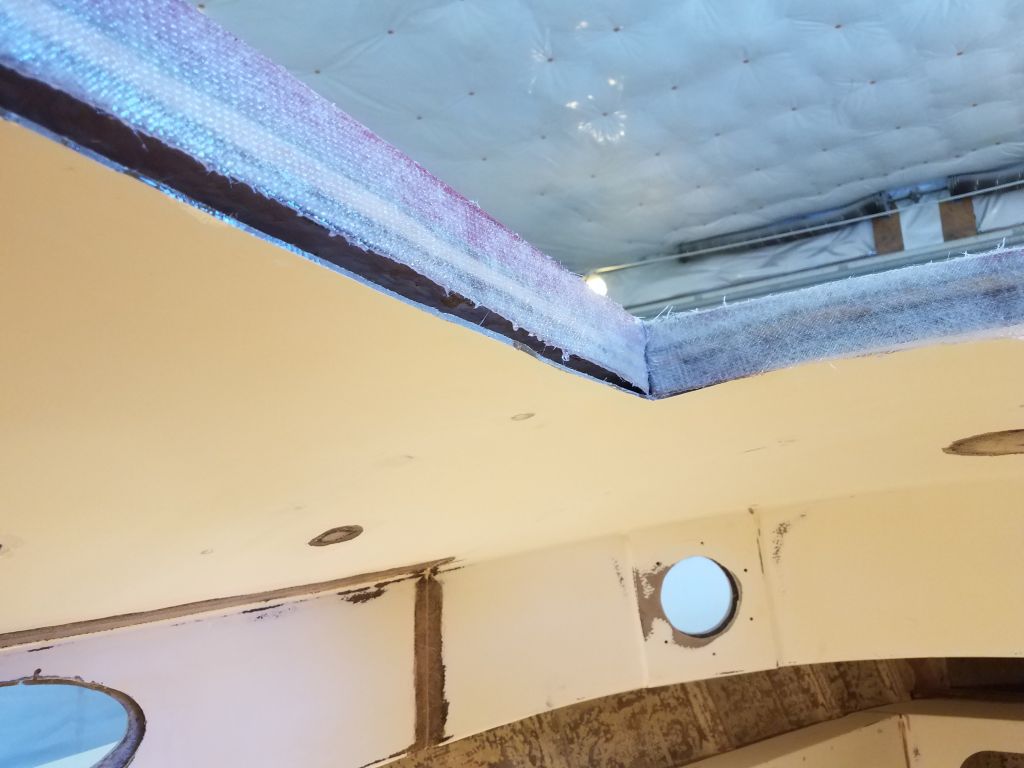
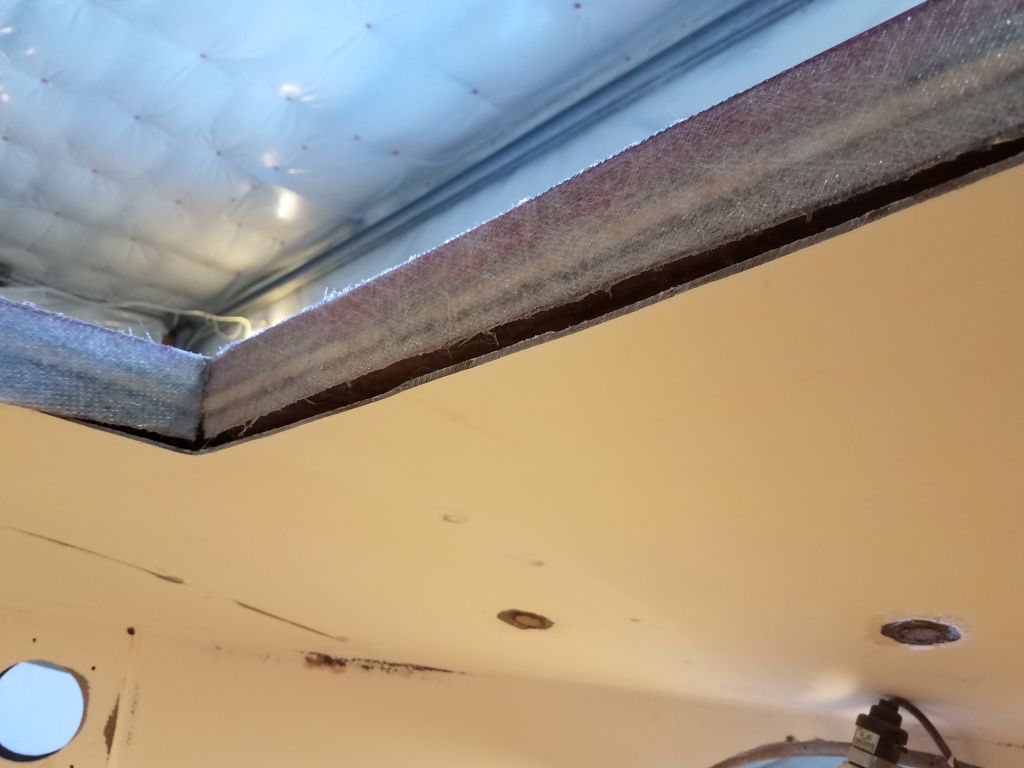
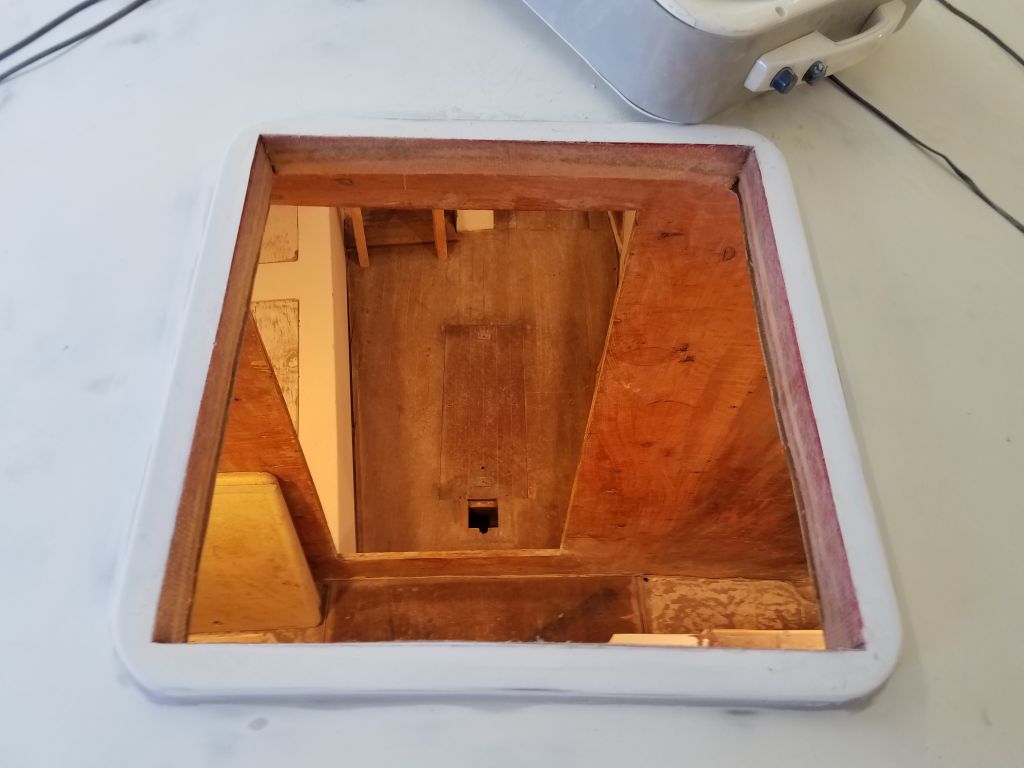
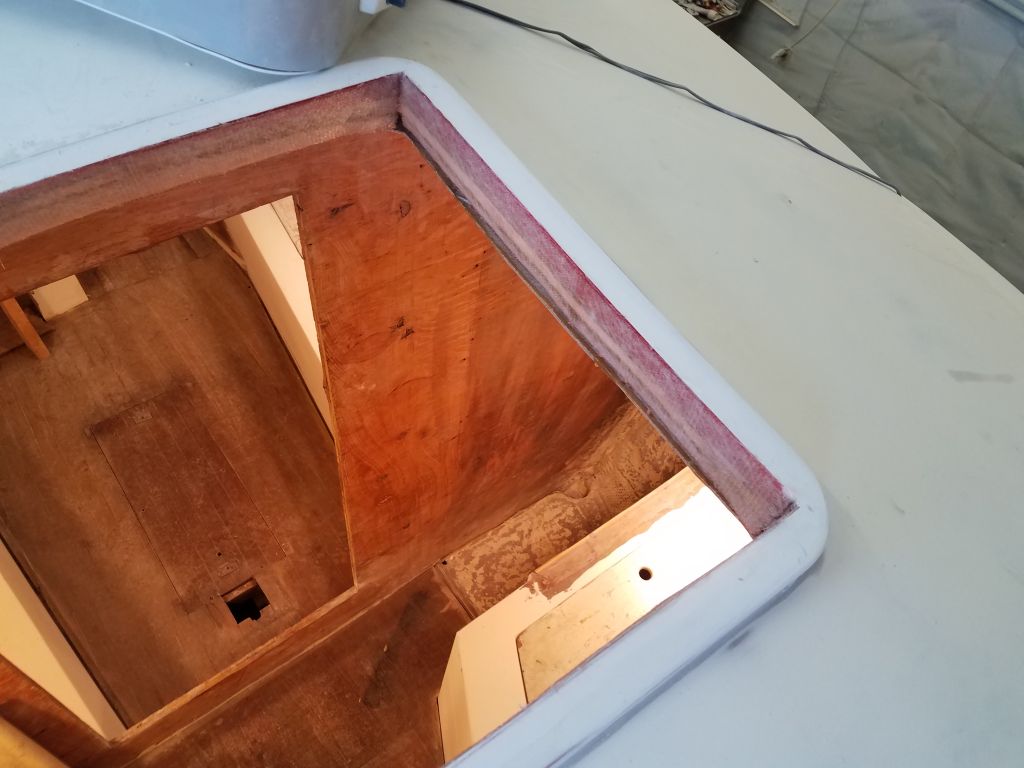
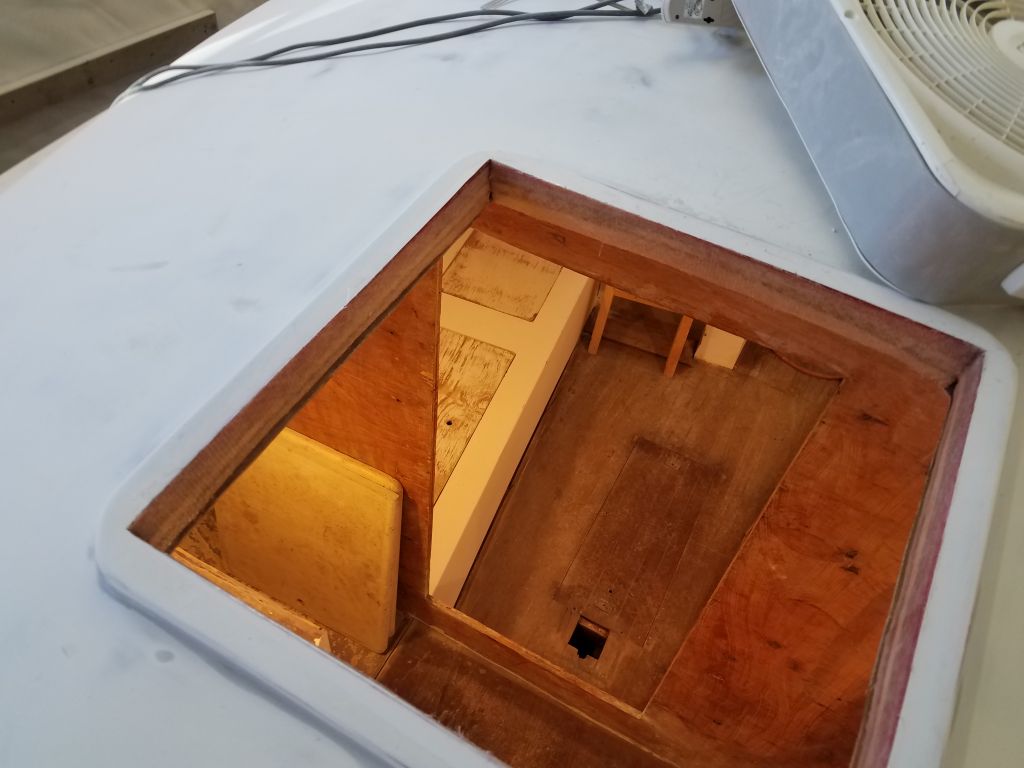
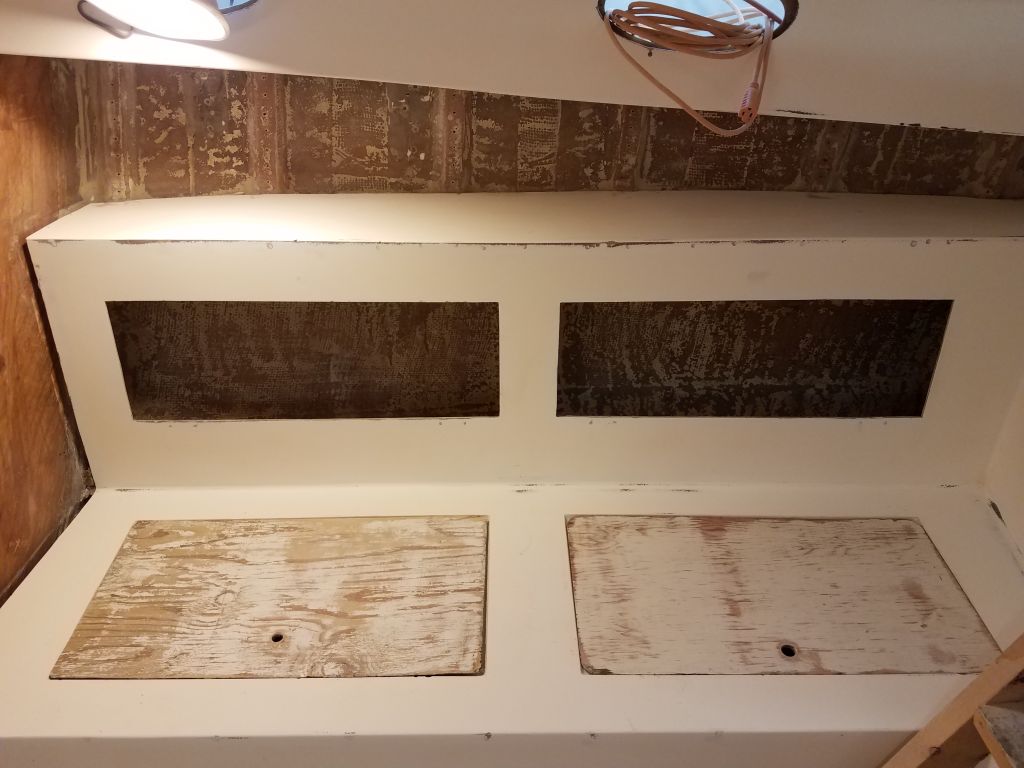
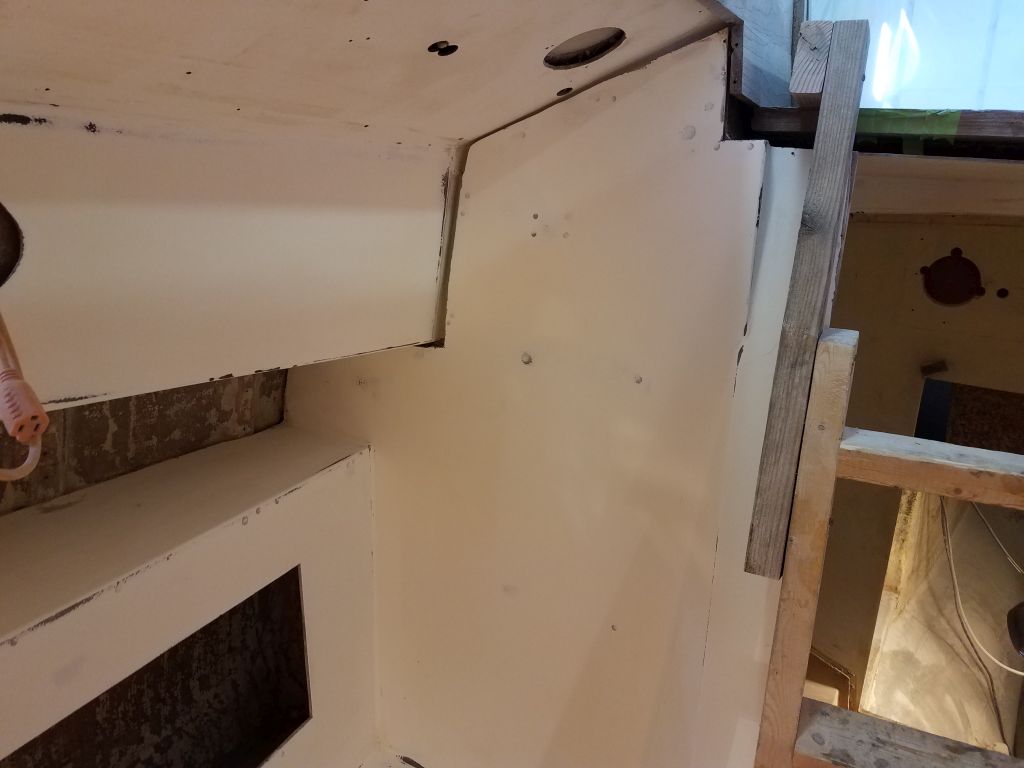
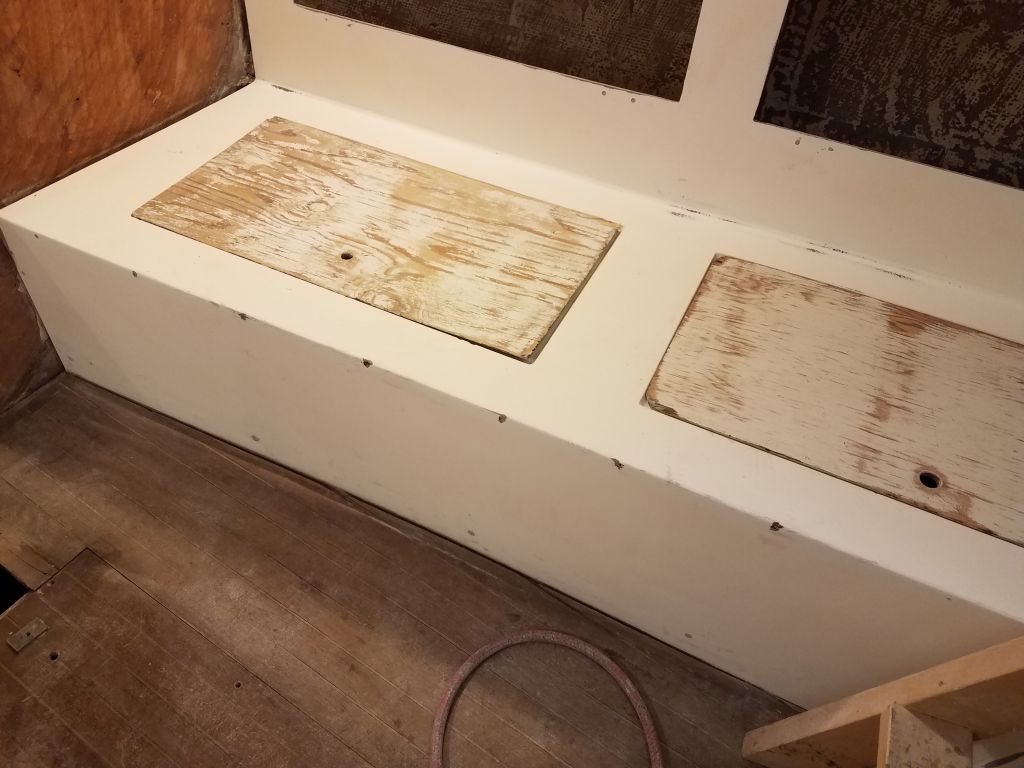
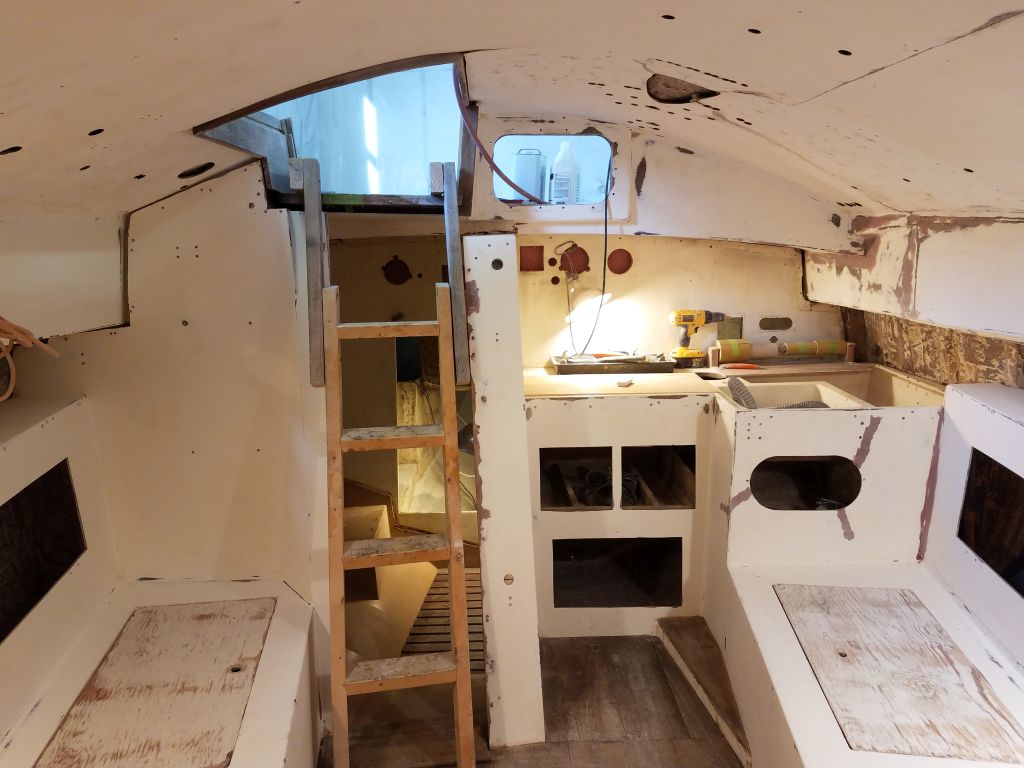
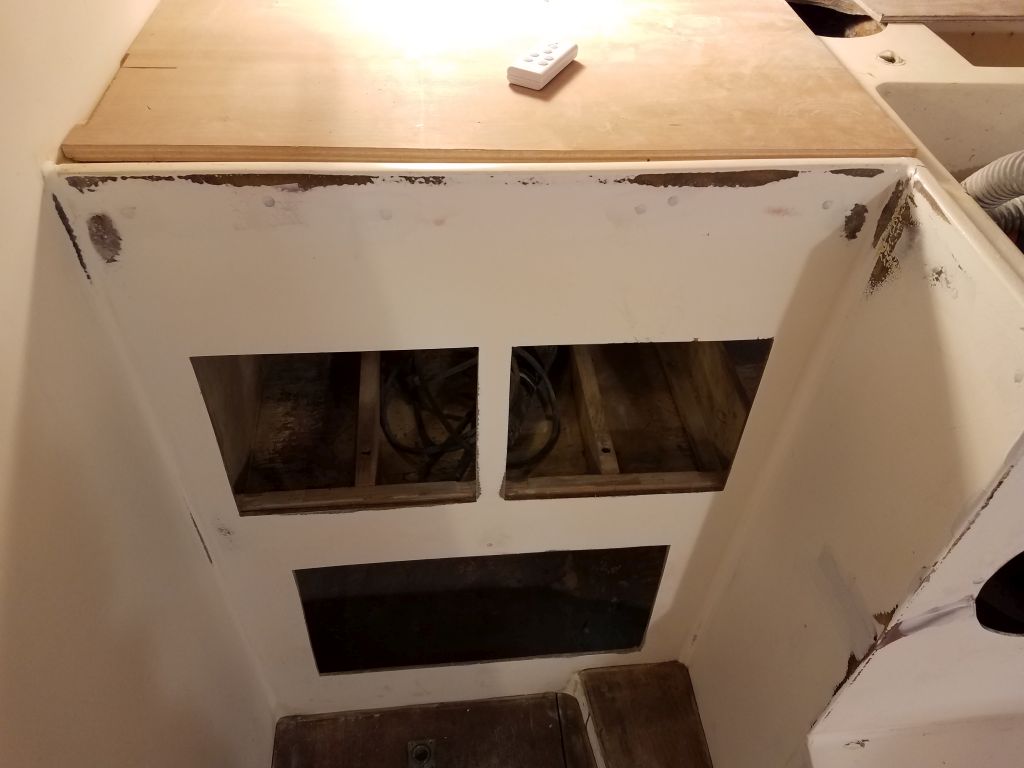
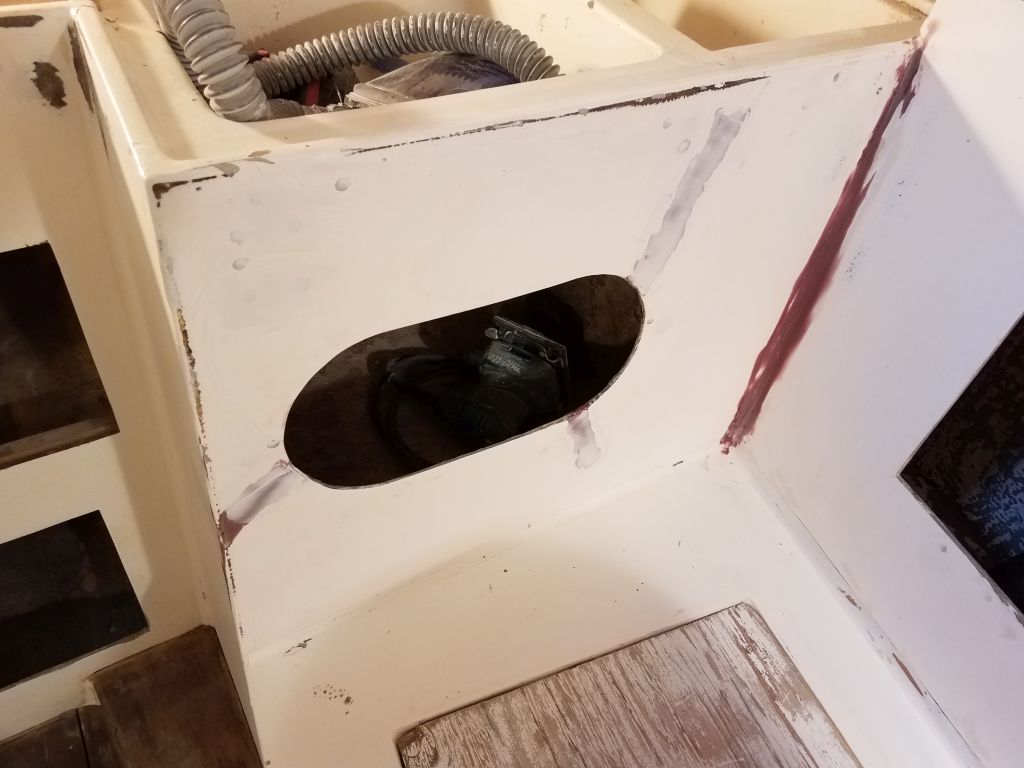
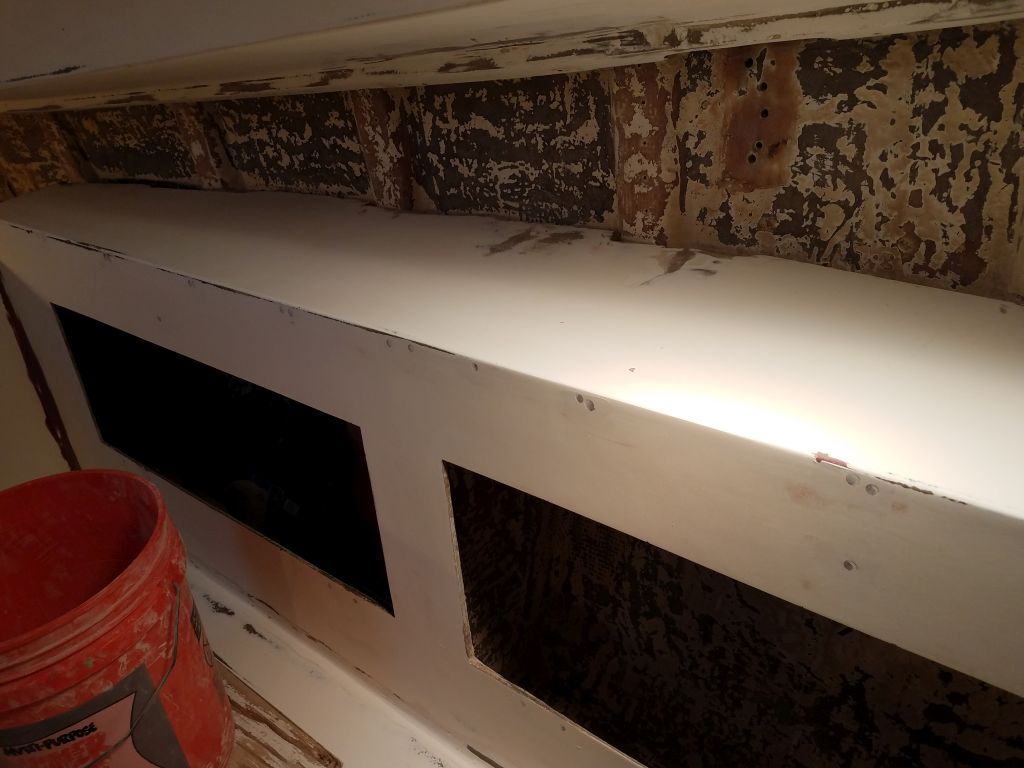
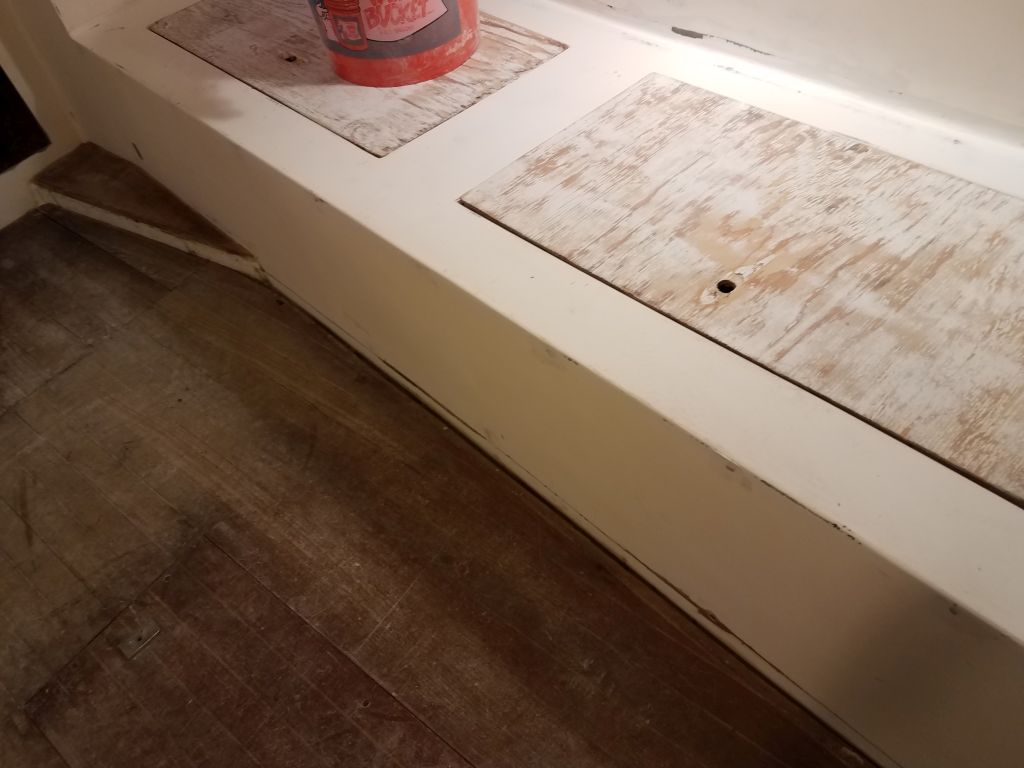
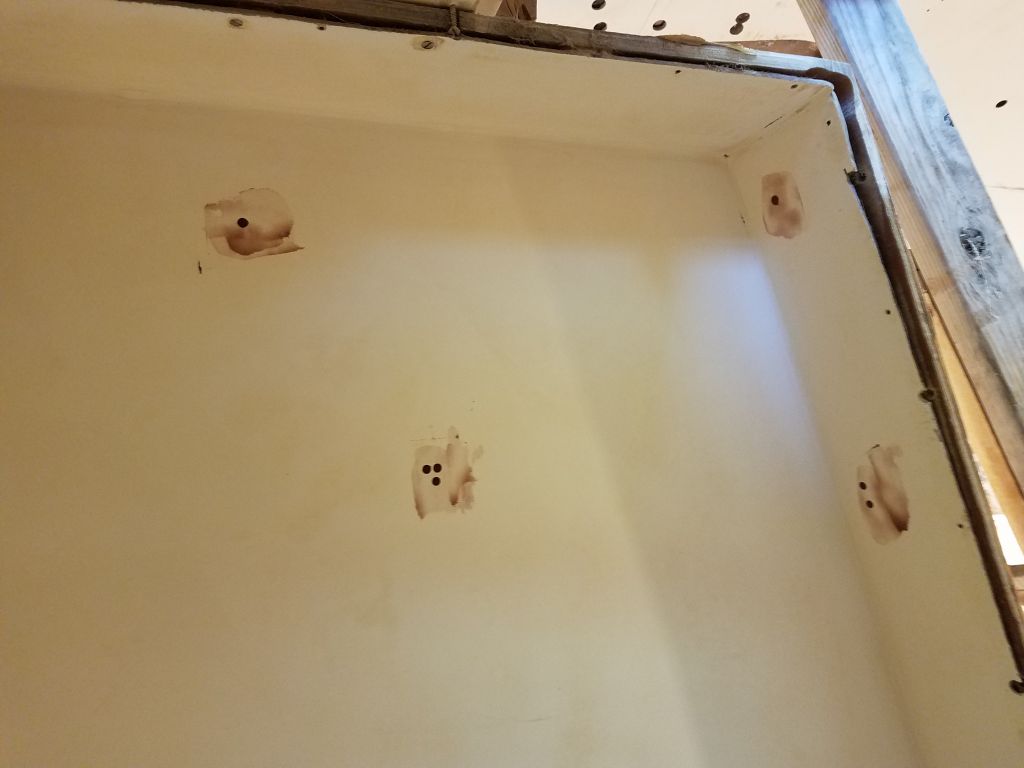
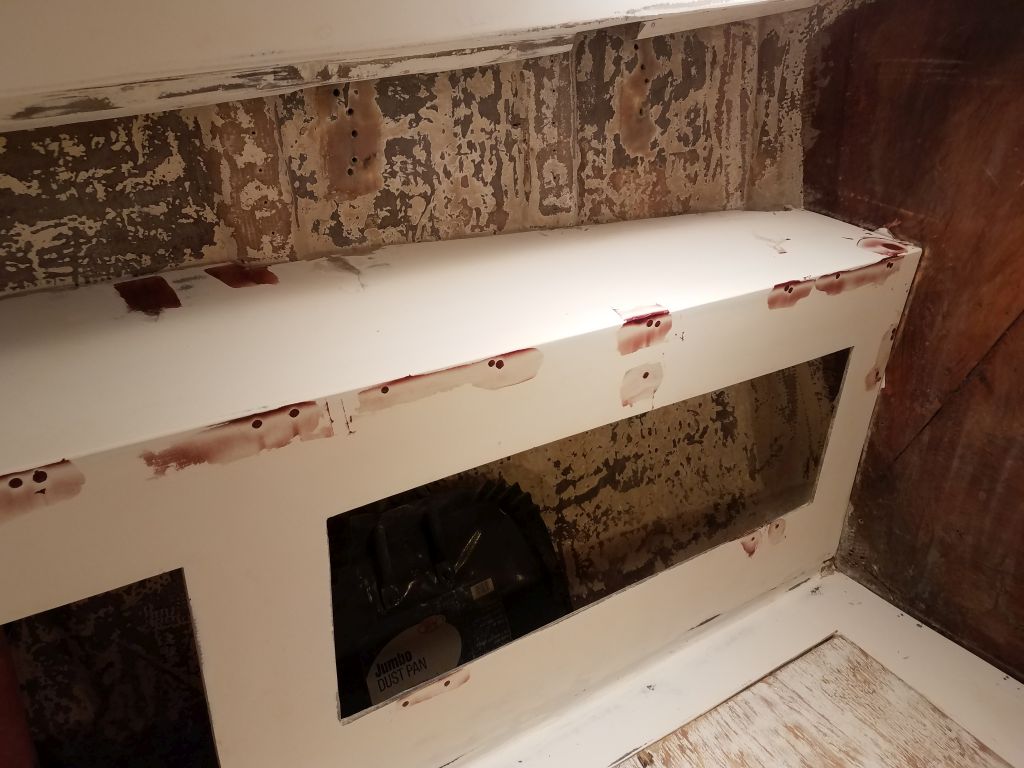
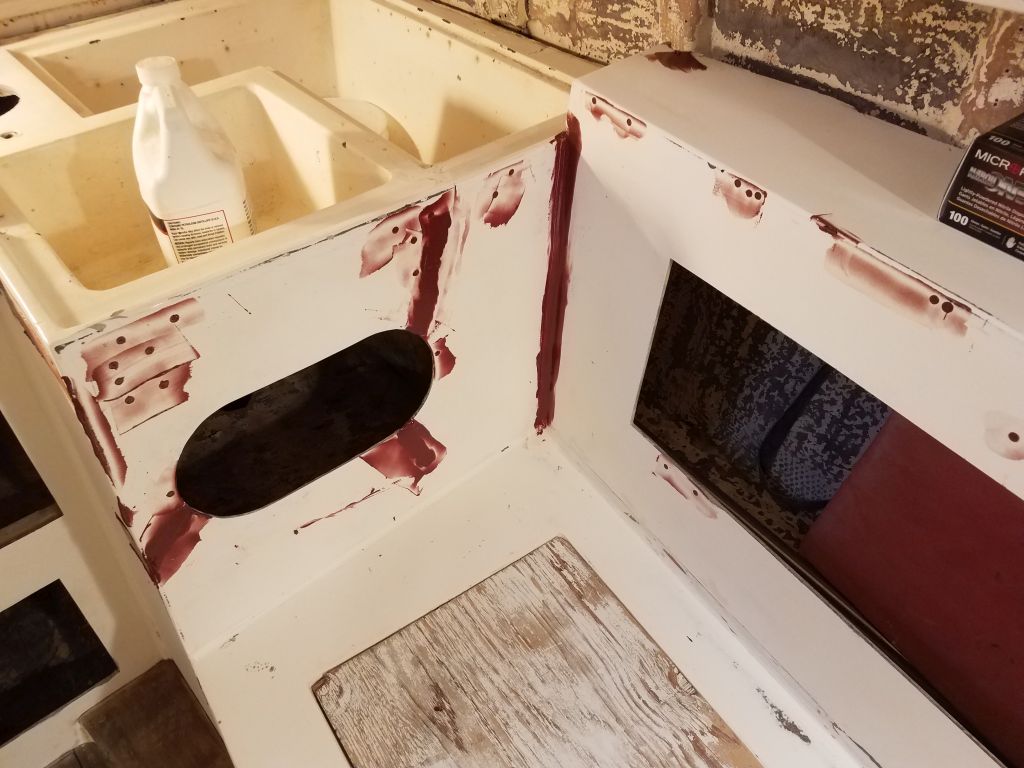
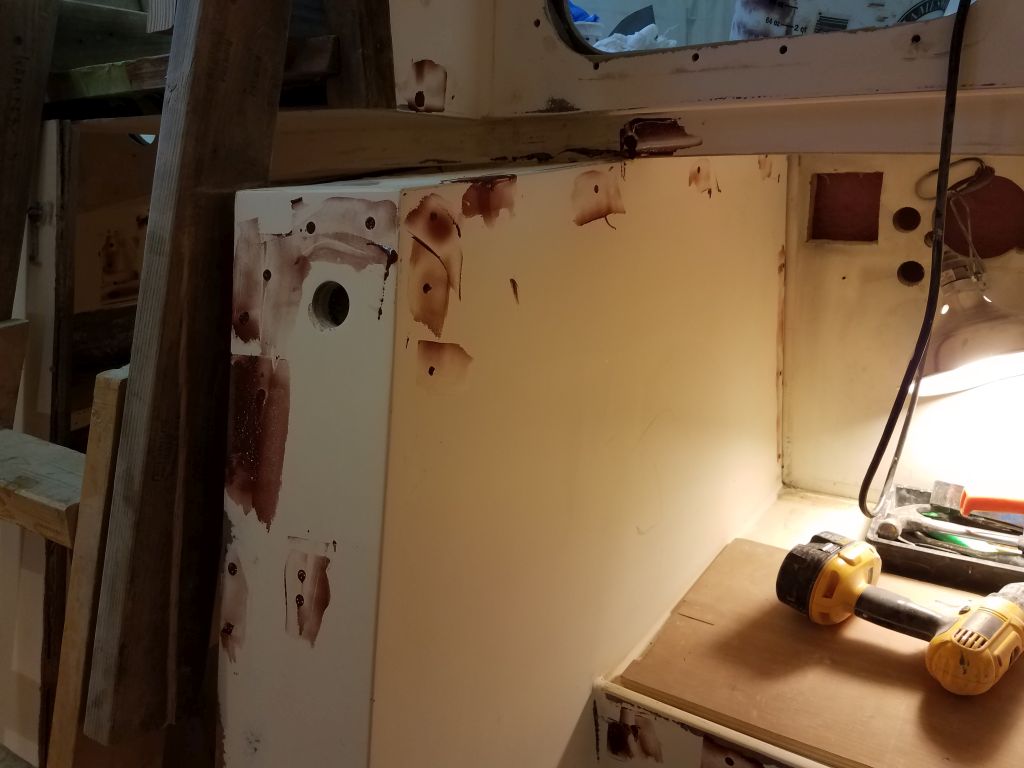
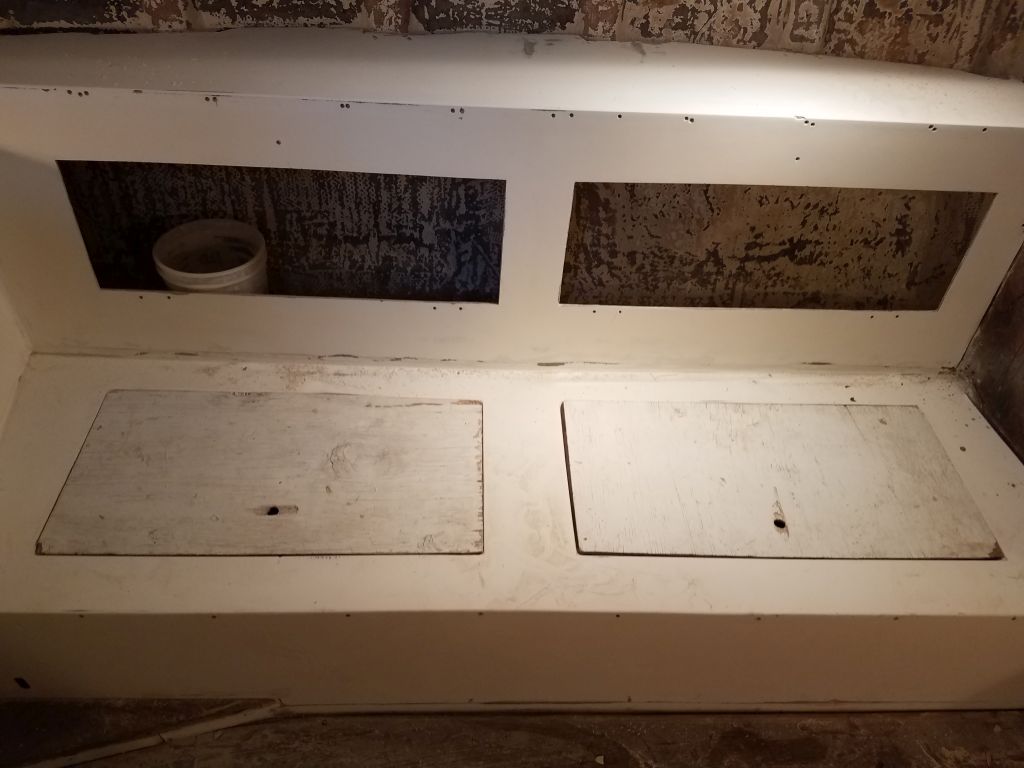
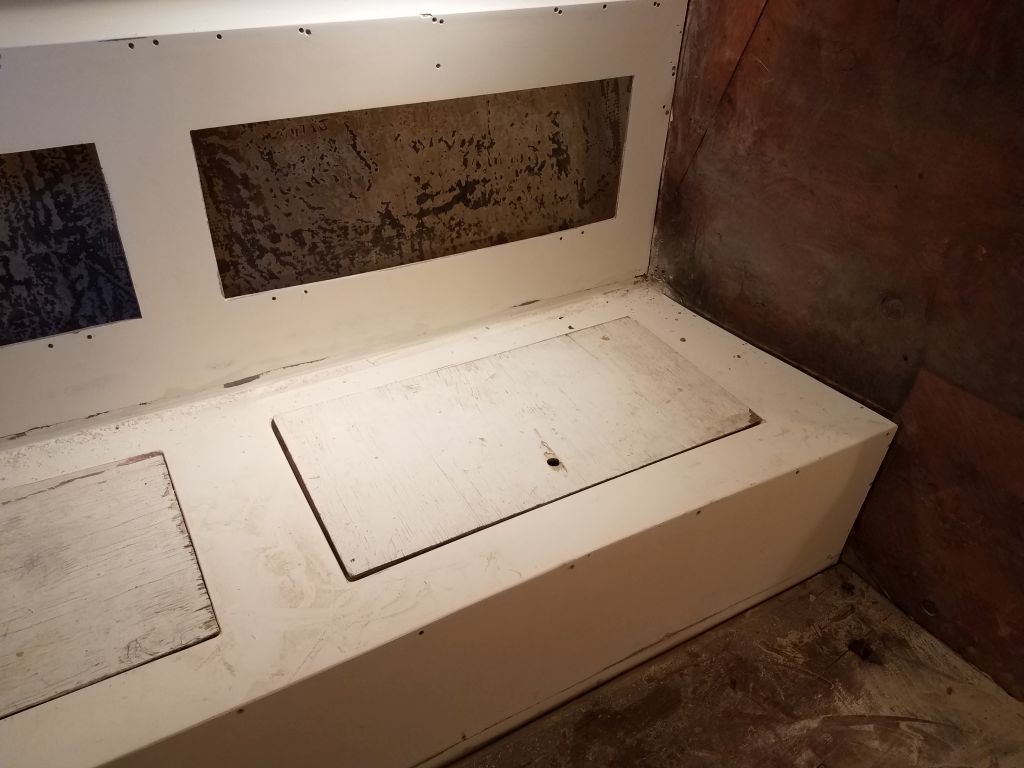
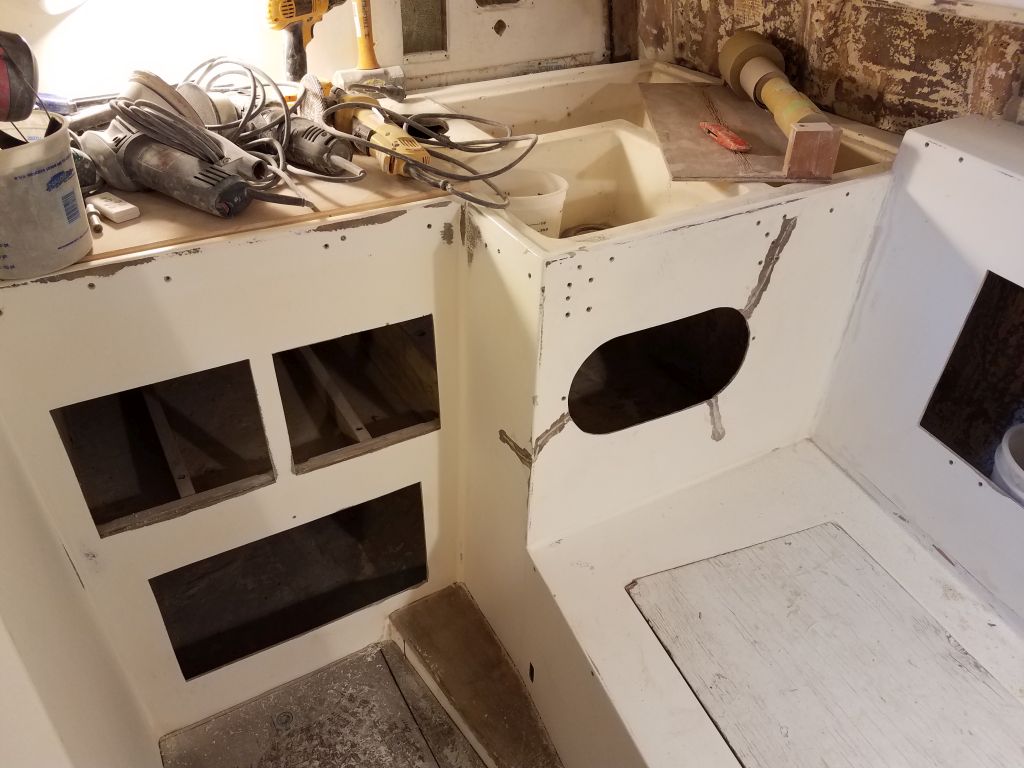
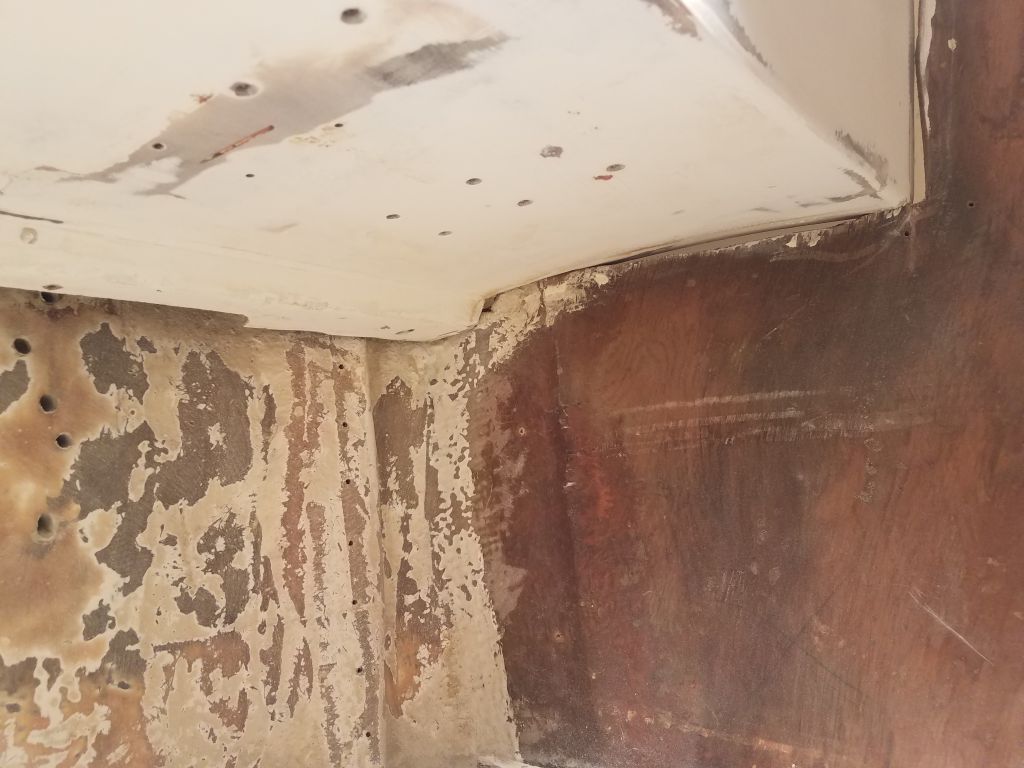
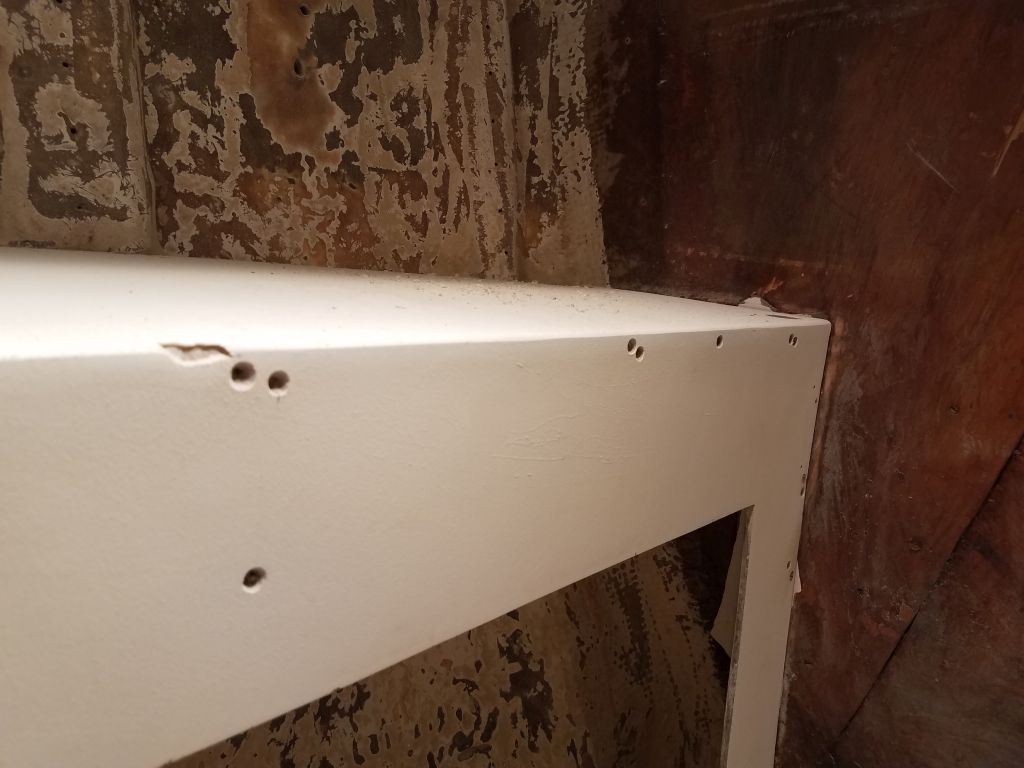
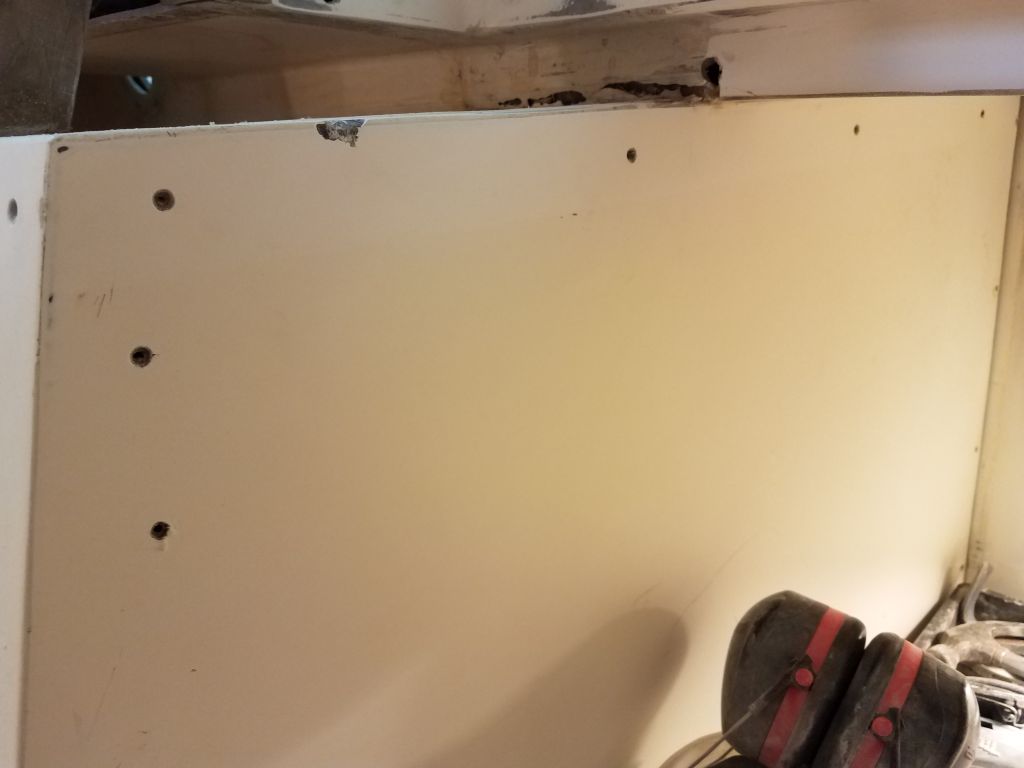
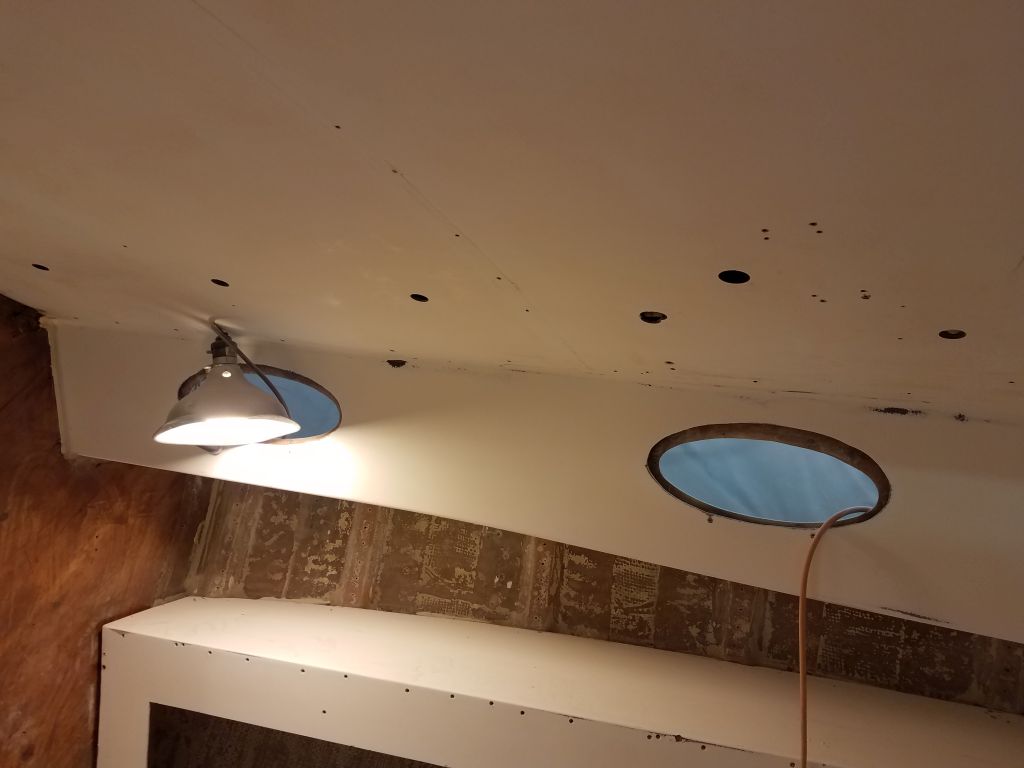
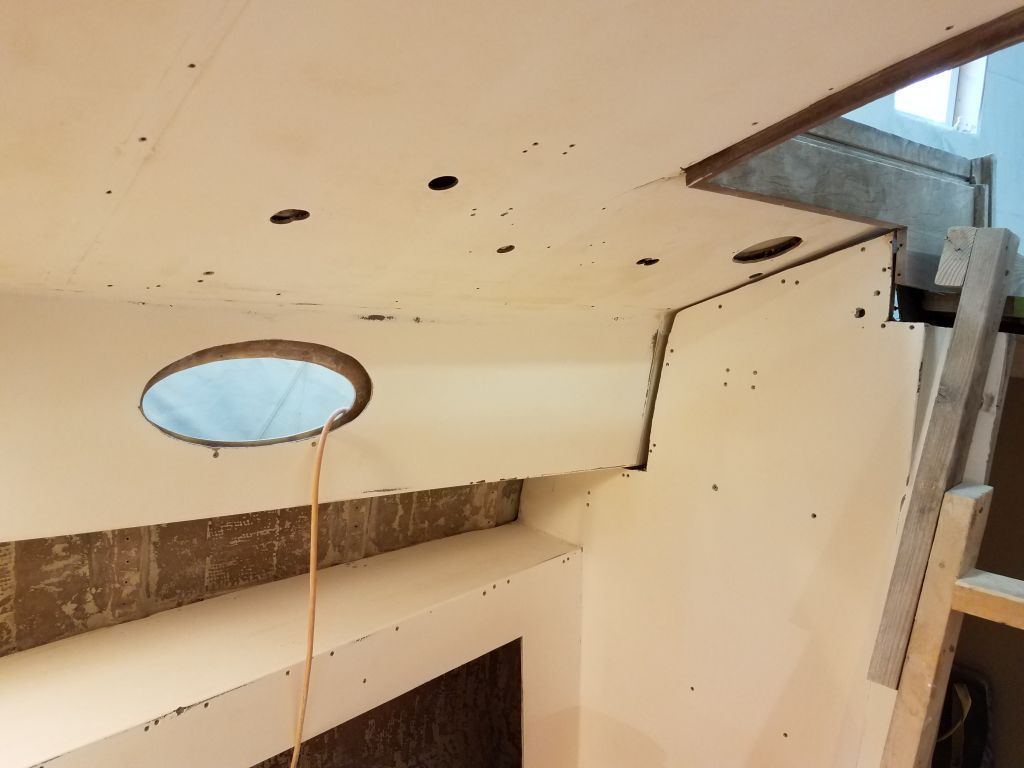
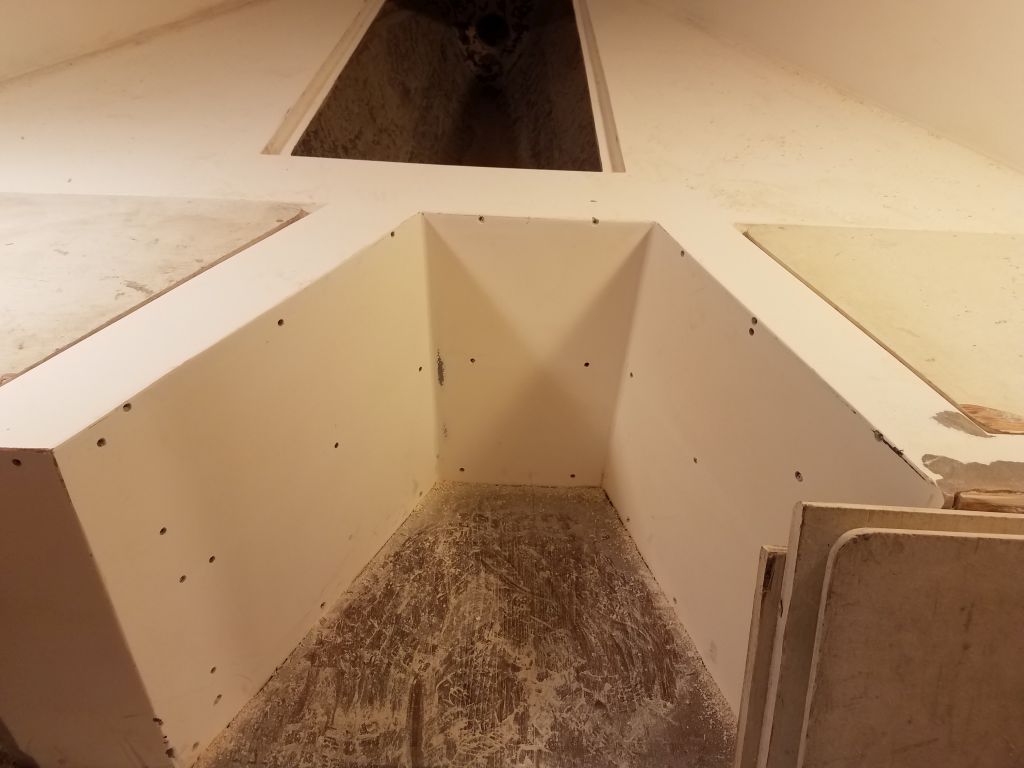
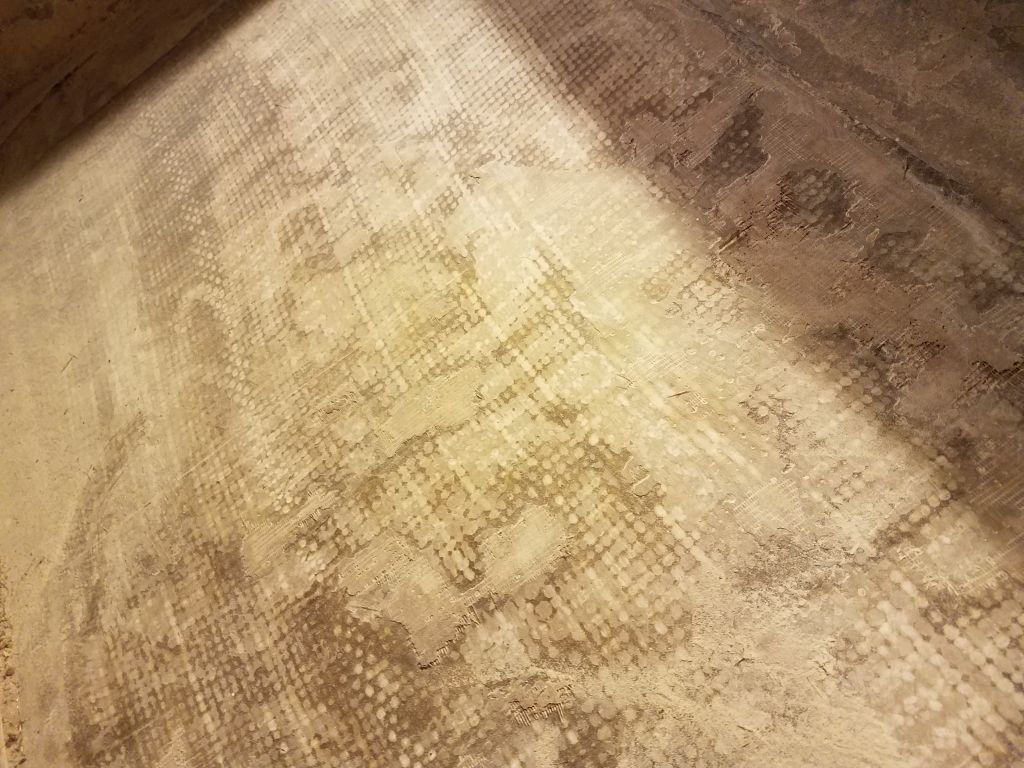
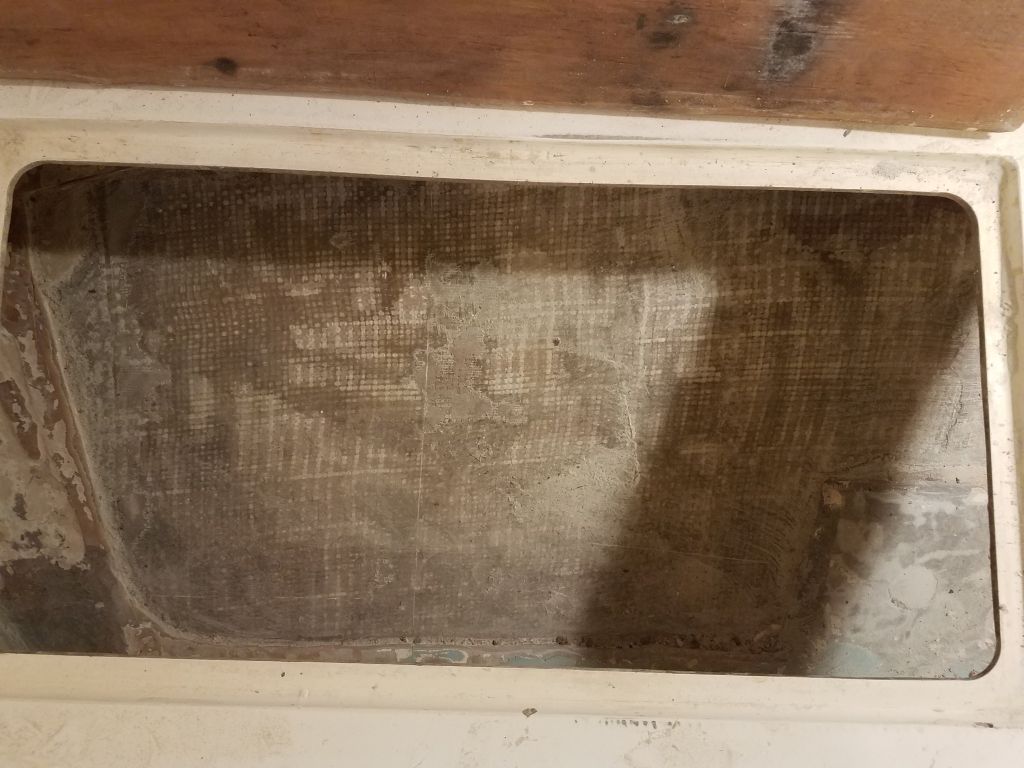
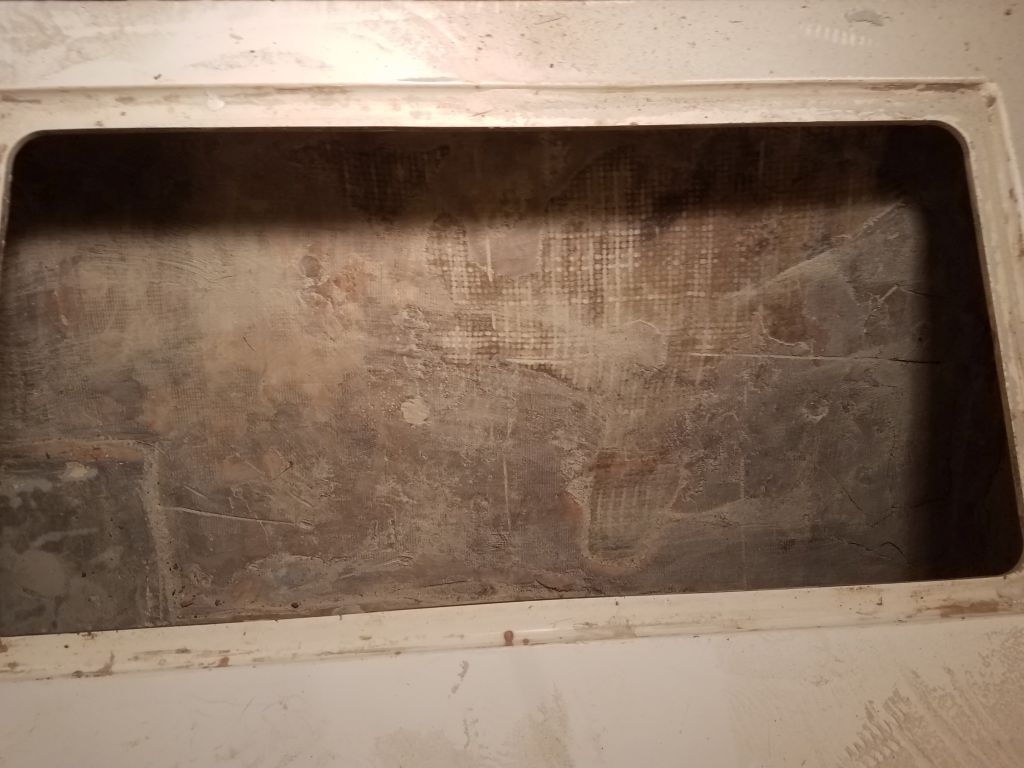
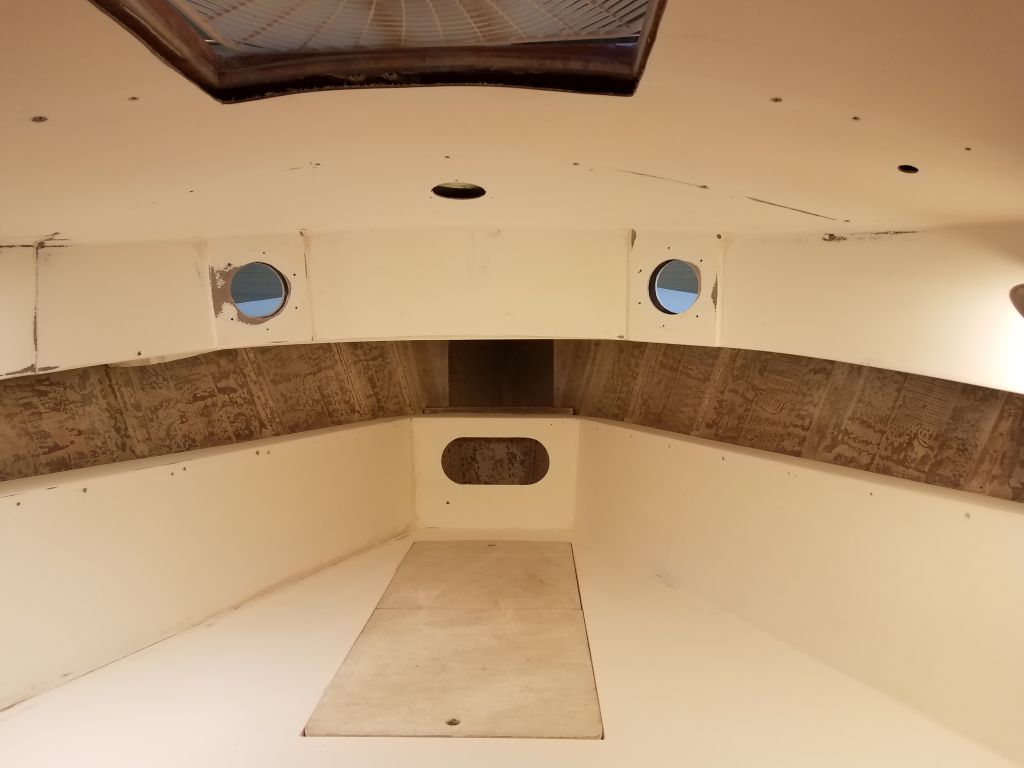
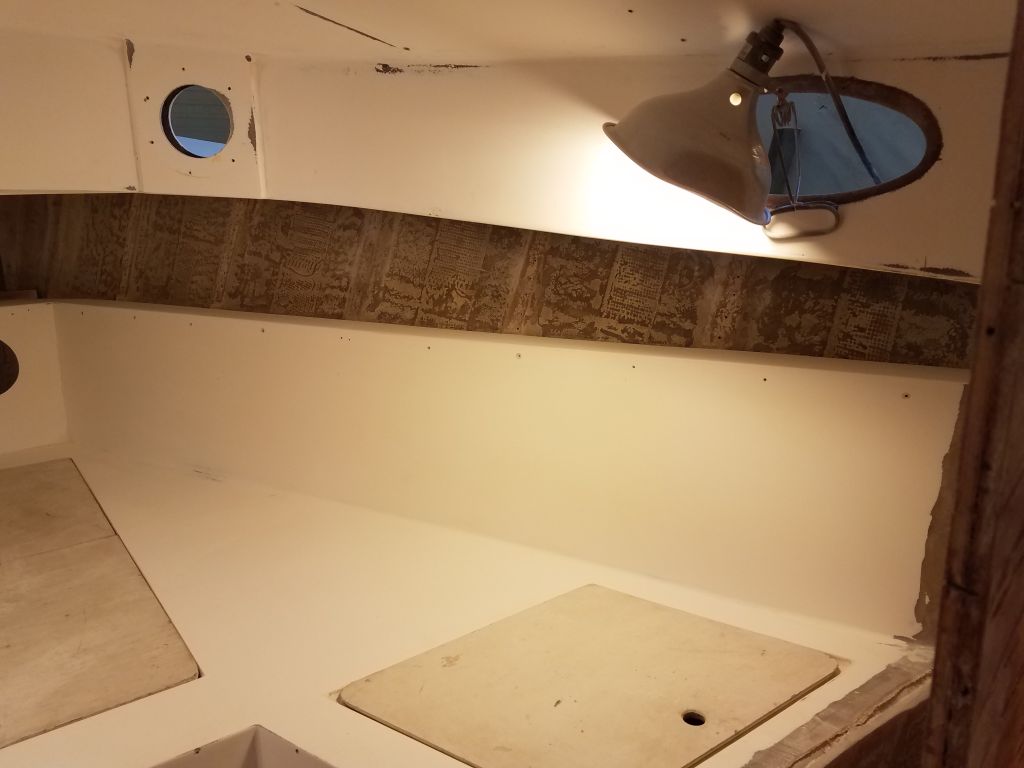
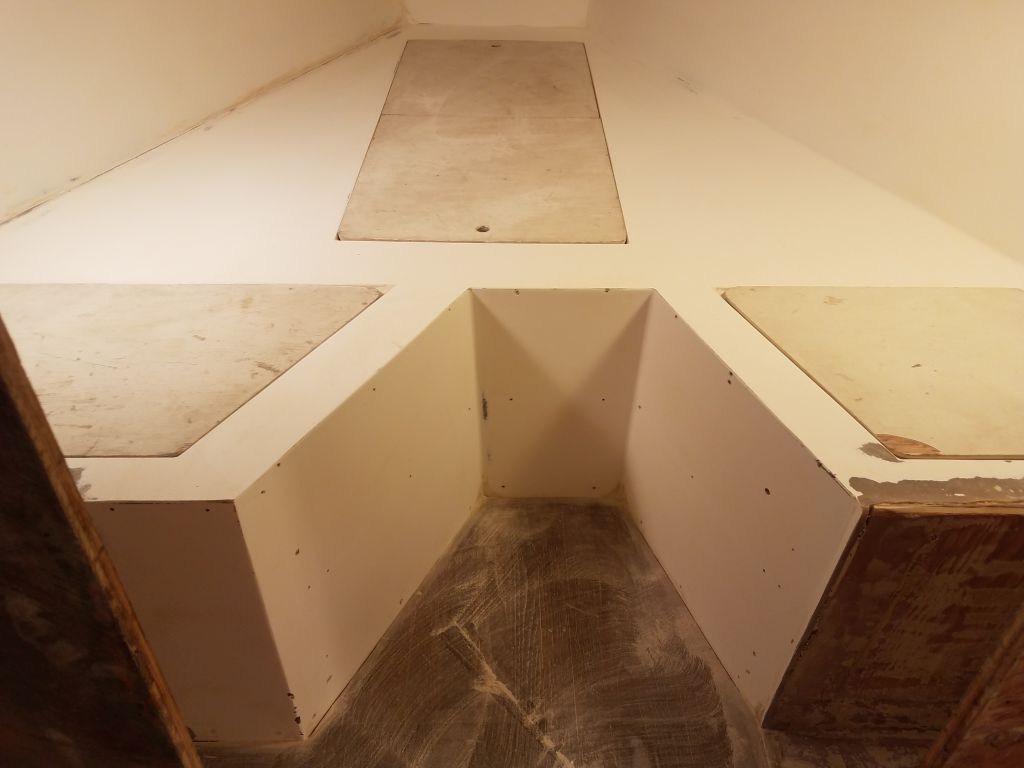
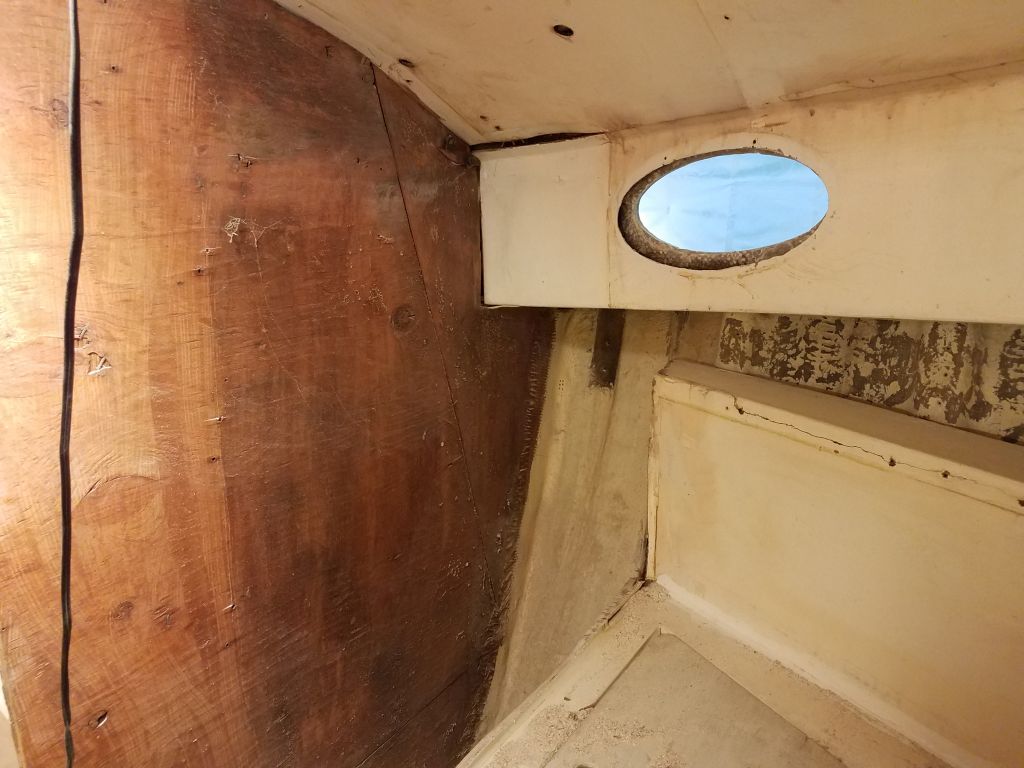
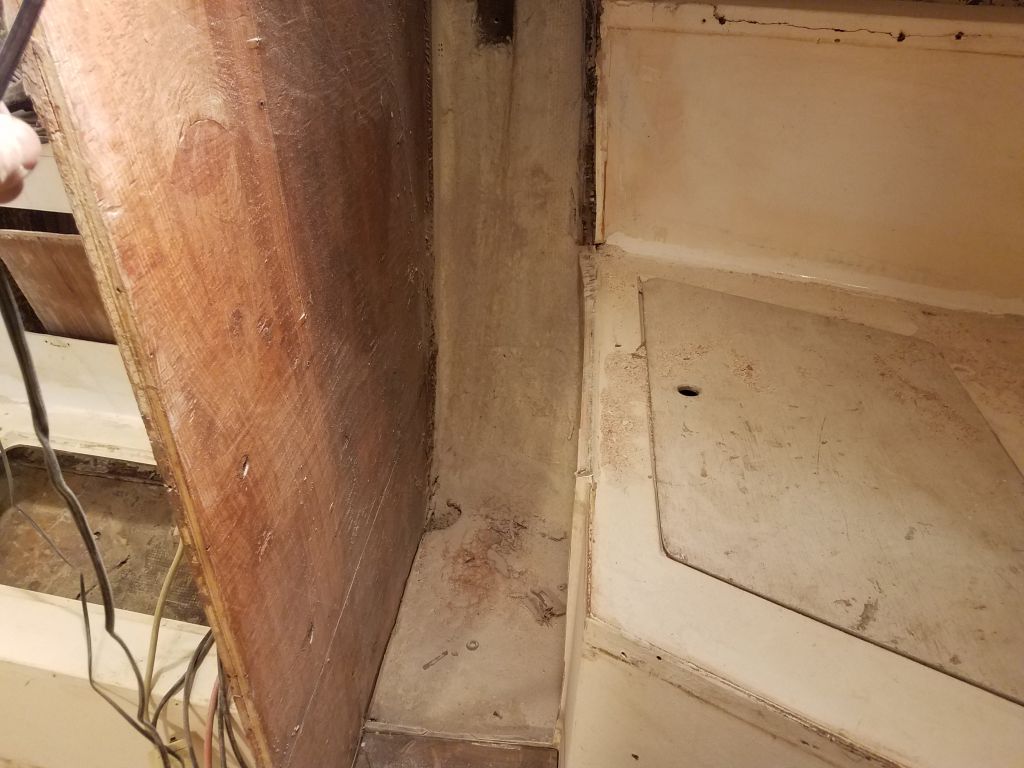
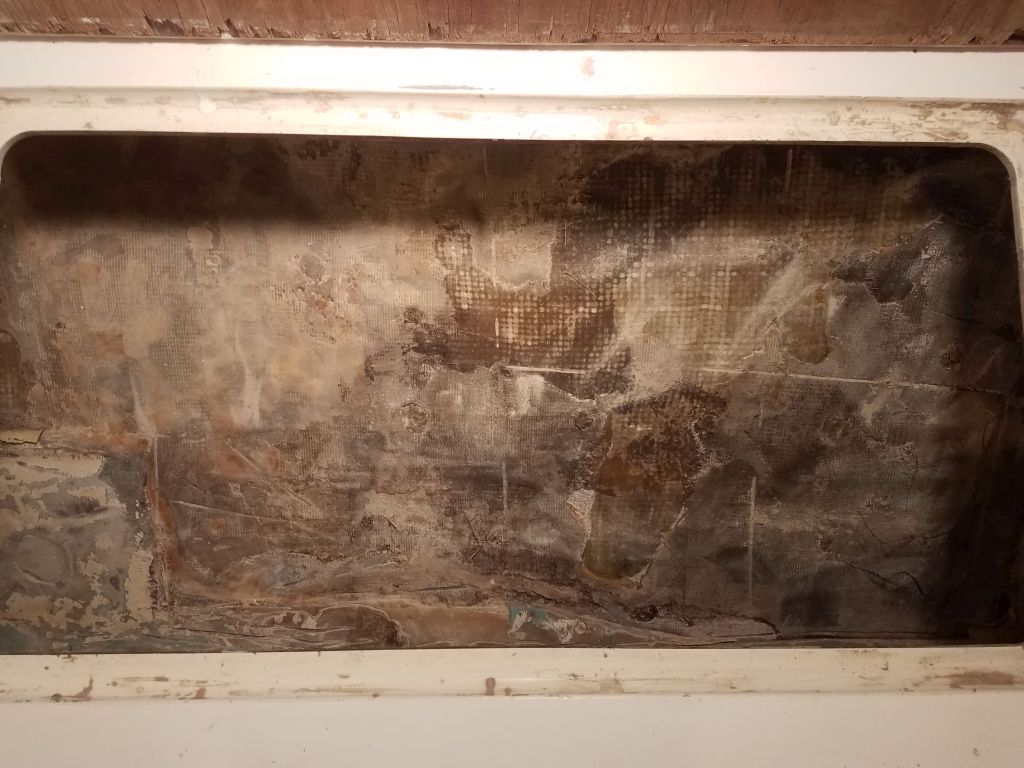
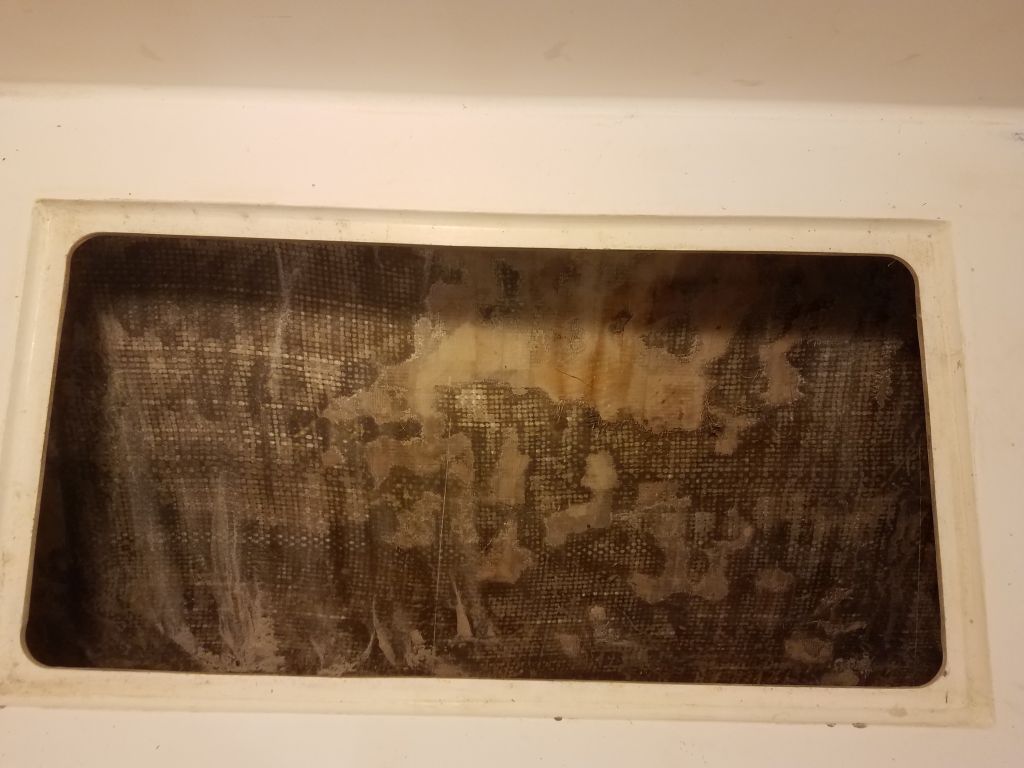
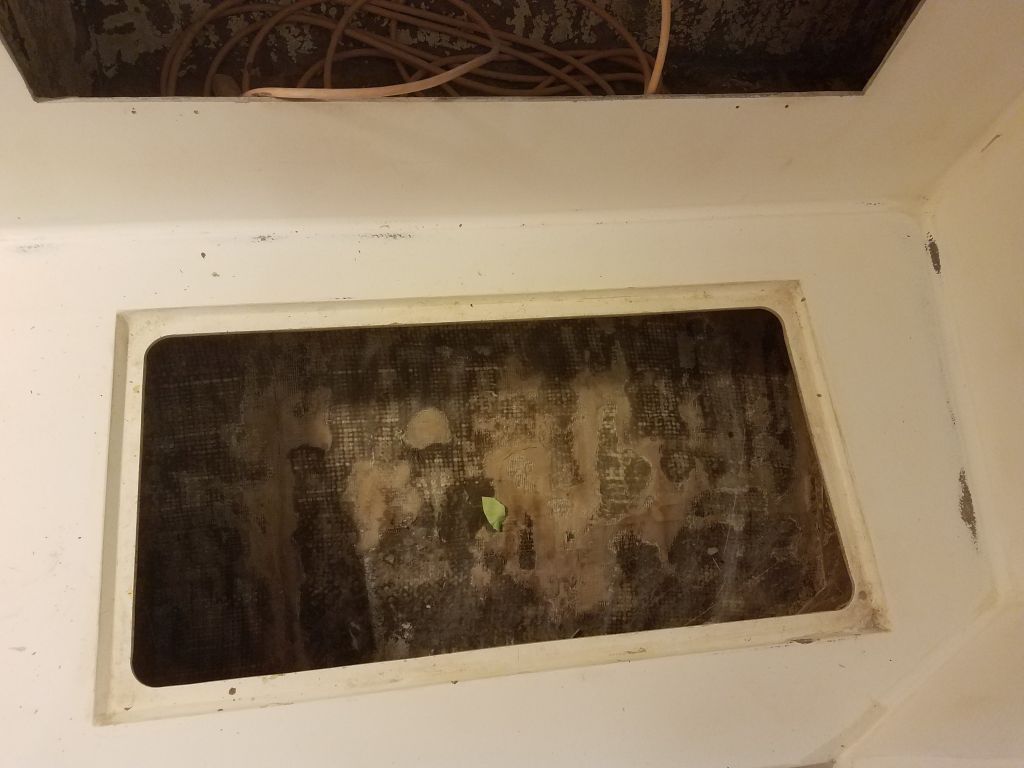
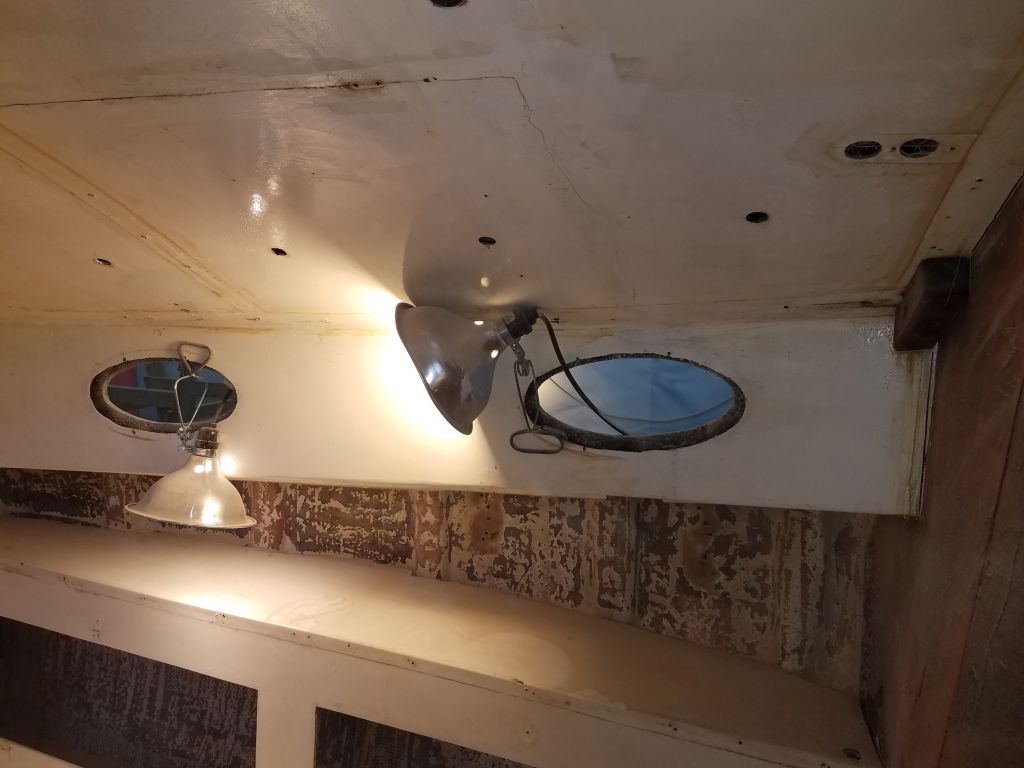
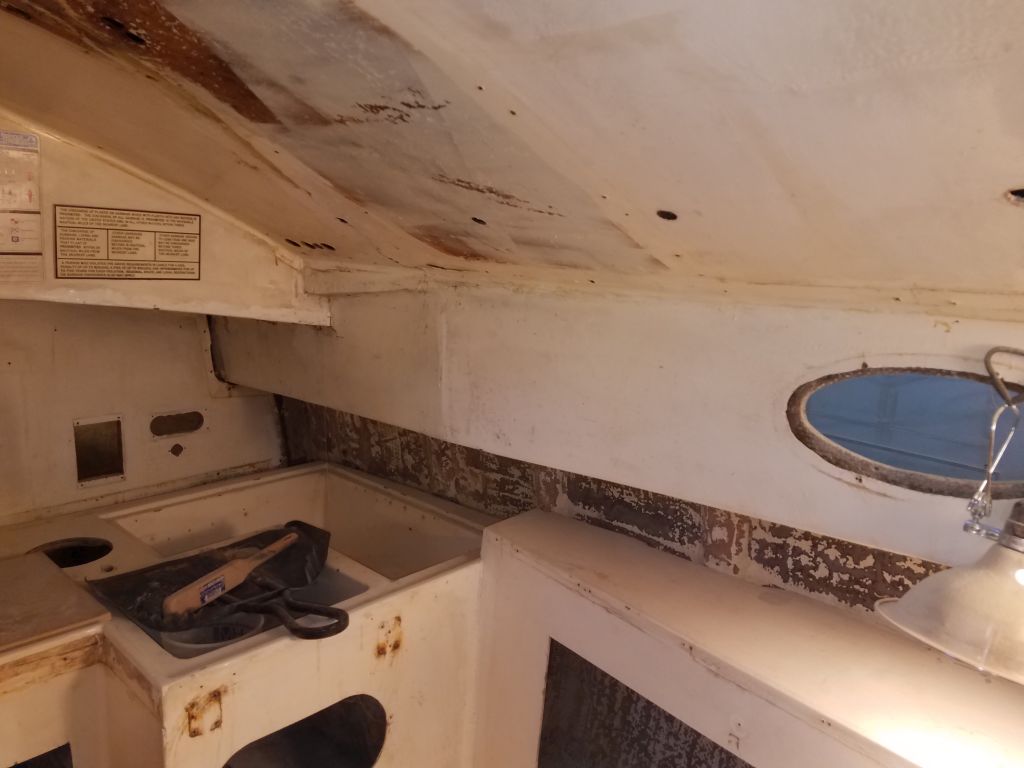
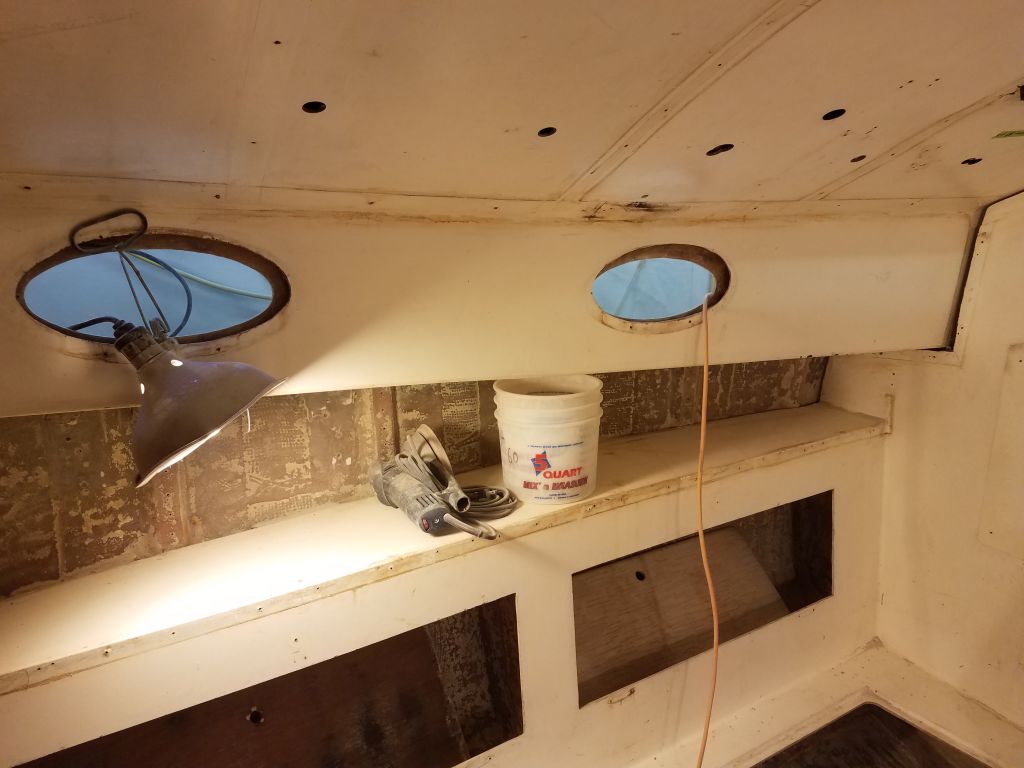
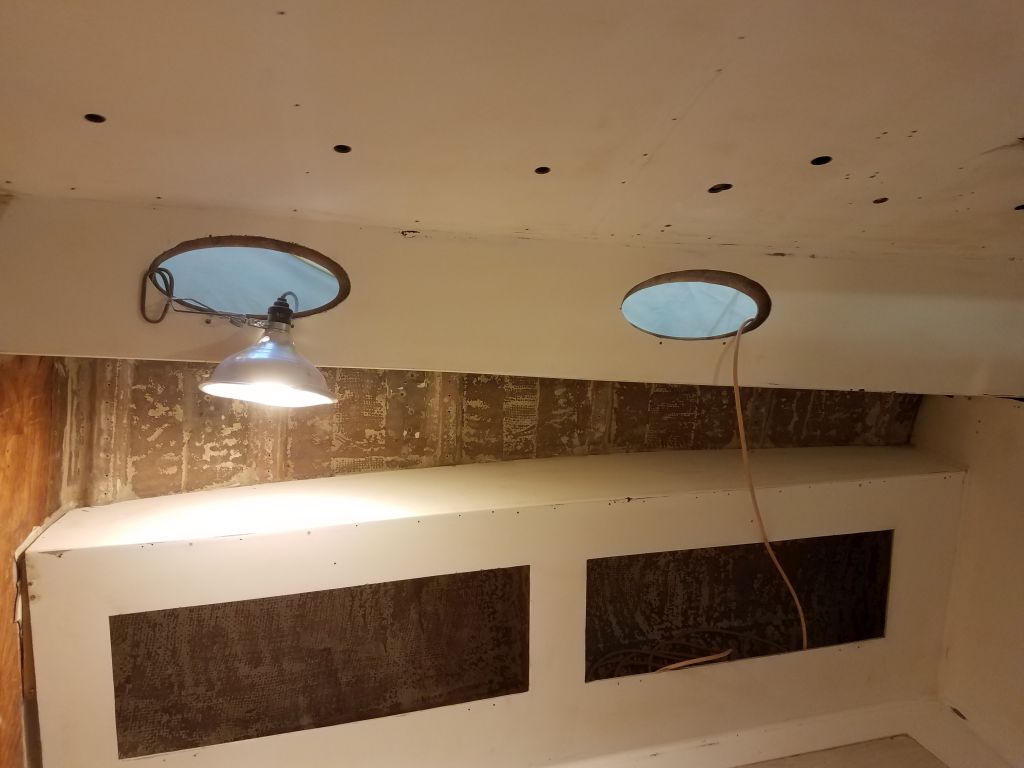
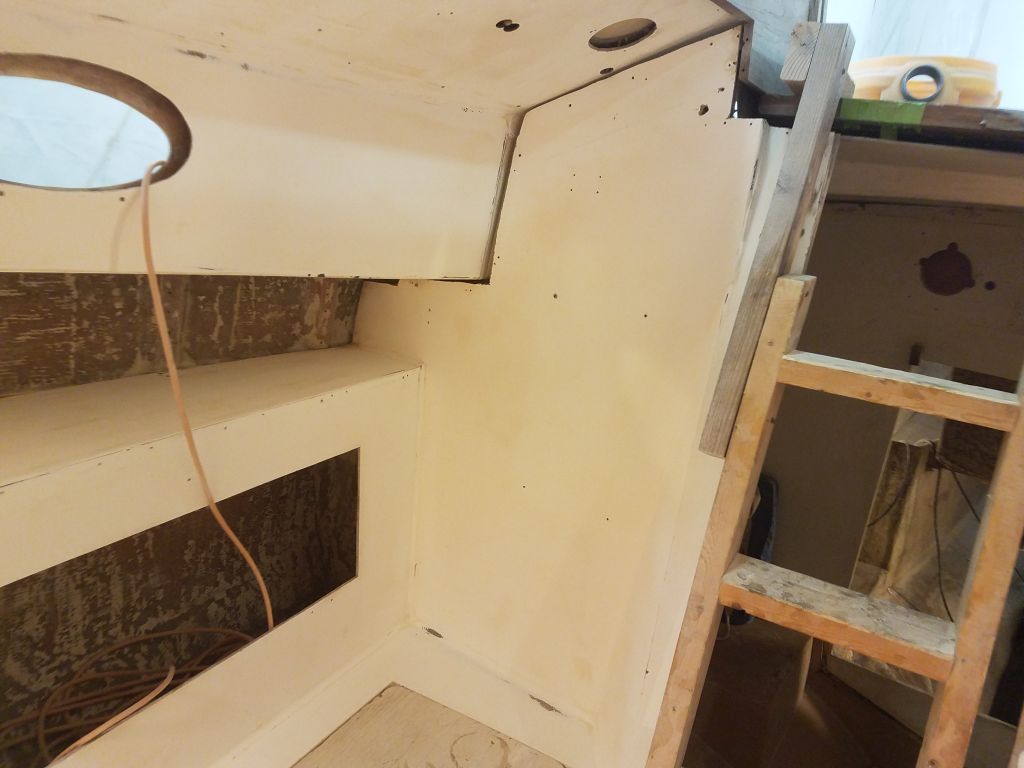
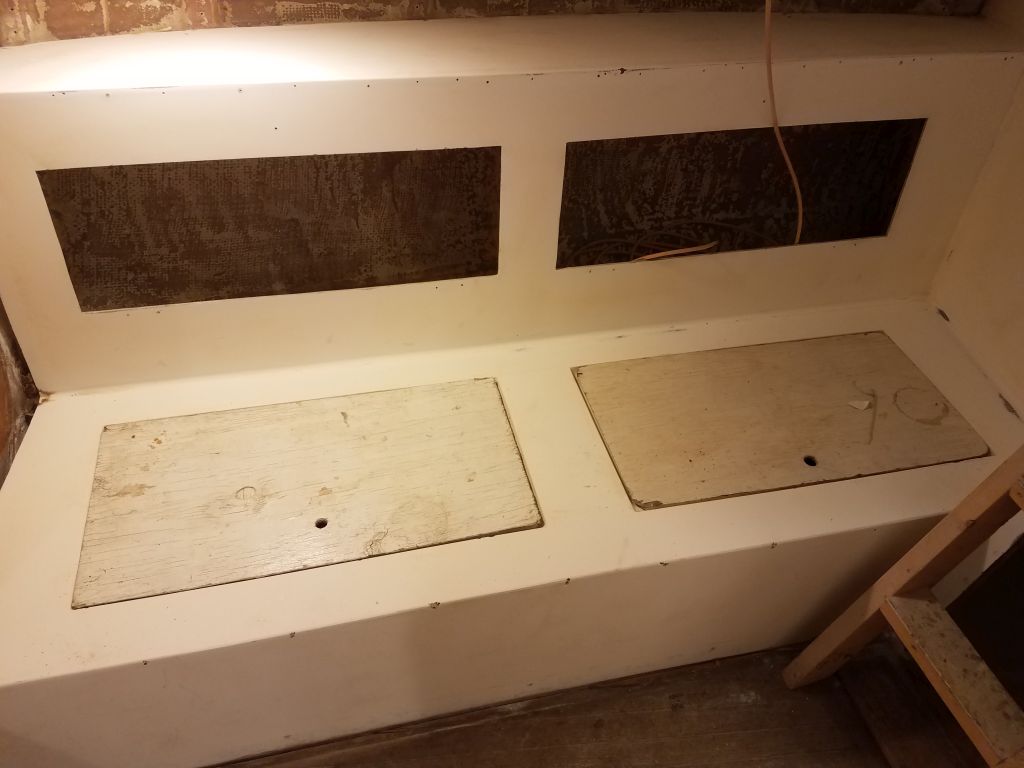
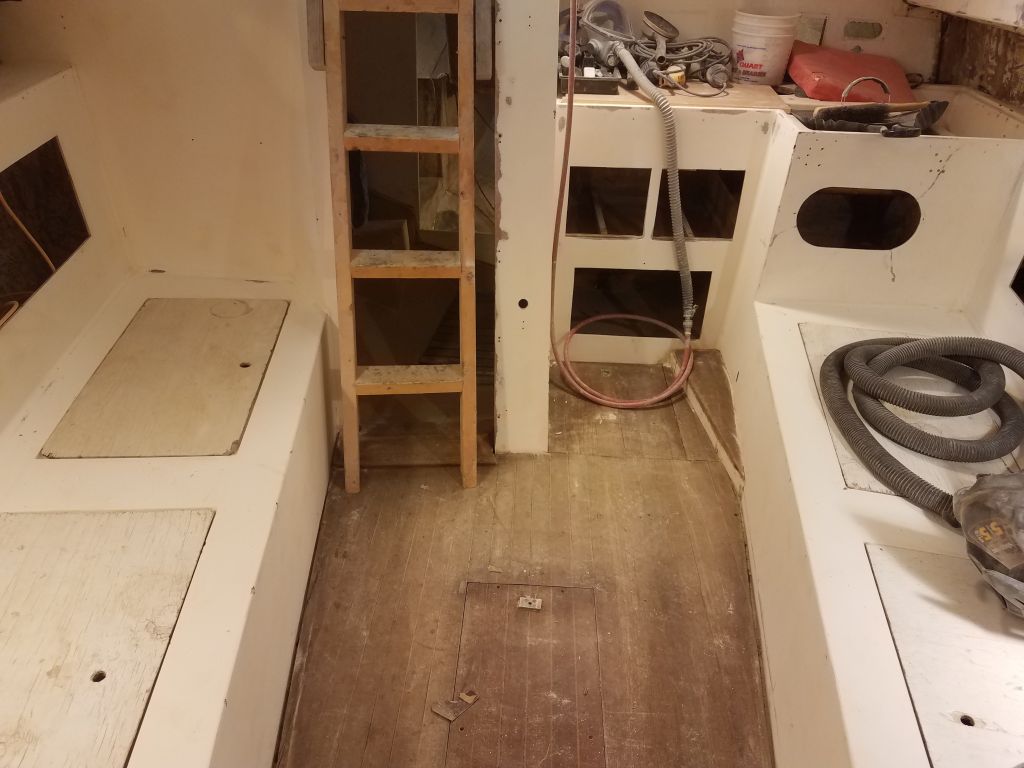
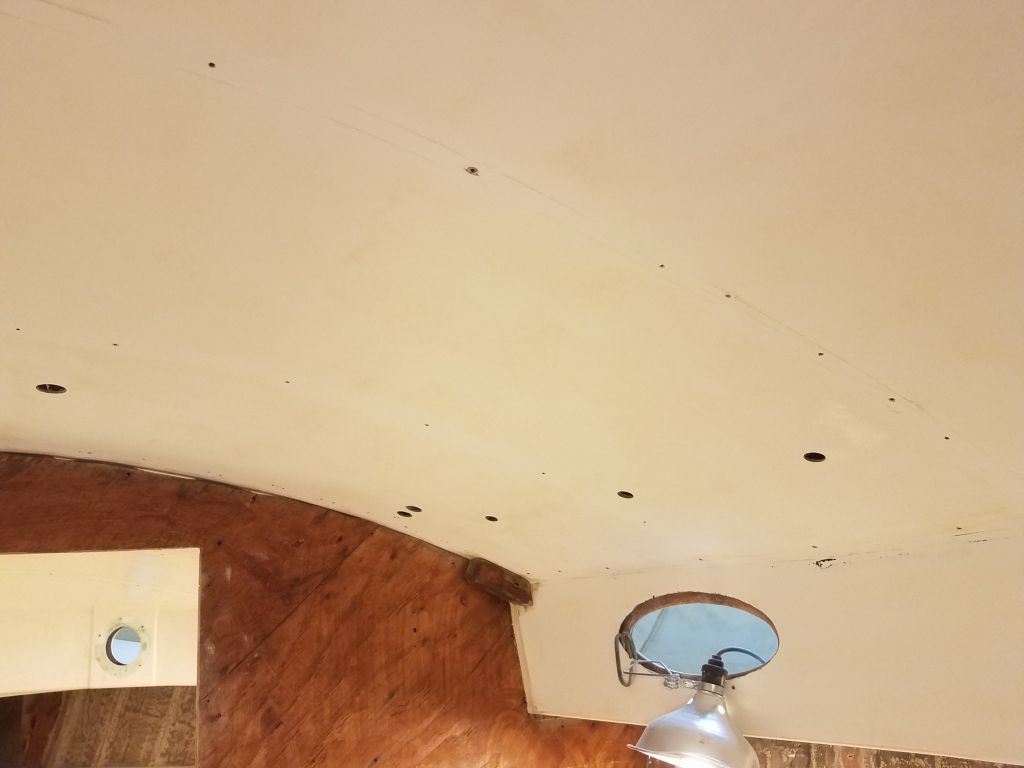
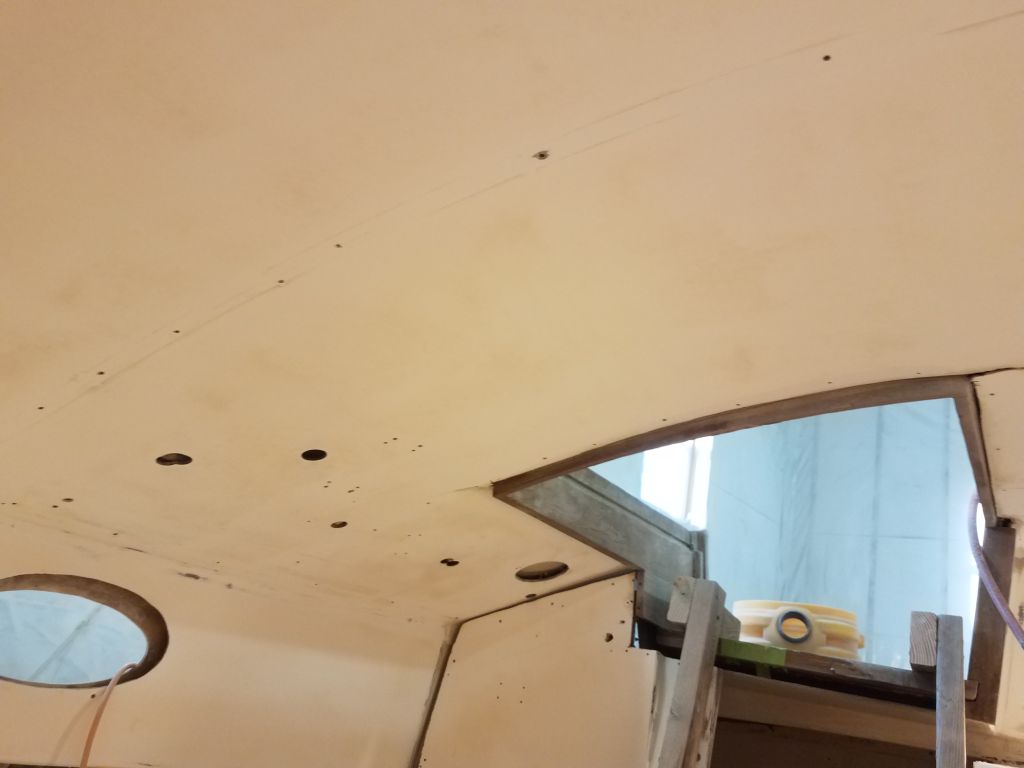
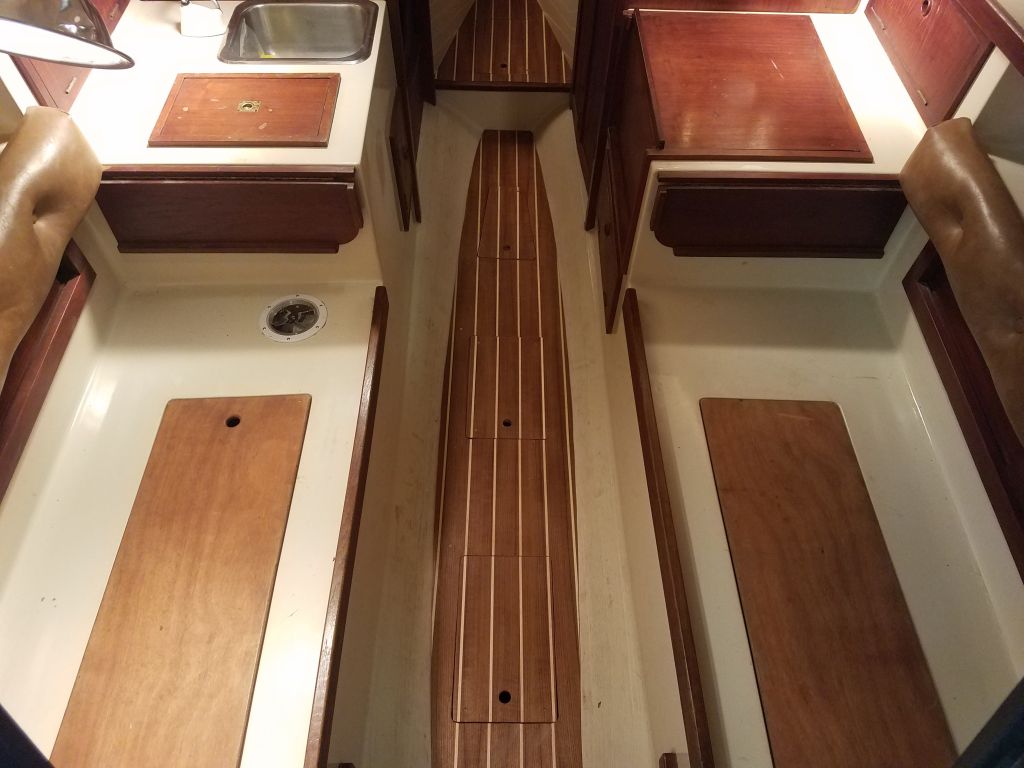
I spent the morning working on the cabin sole, starting with the openings for the several hatches in the main section.  I cut just inside my layout lines and test-fit the sole to be sure the layouts were correct before completing all the openings as needed.

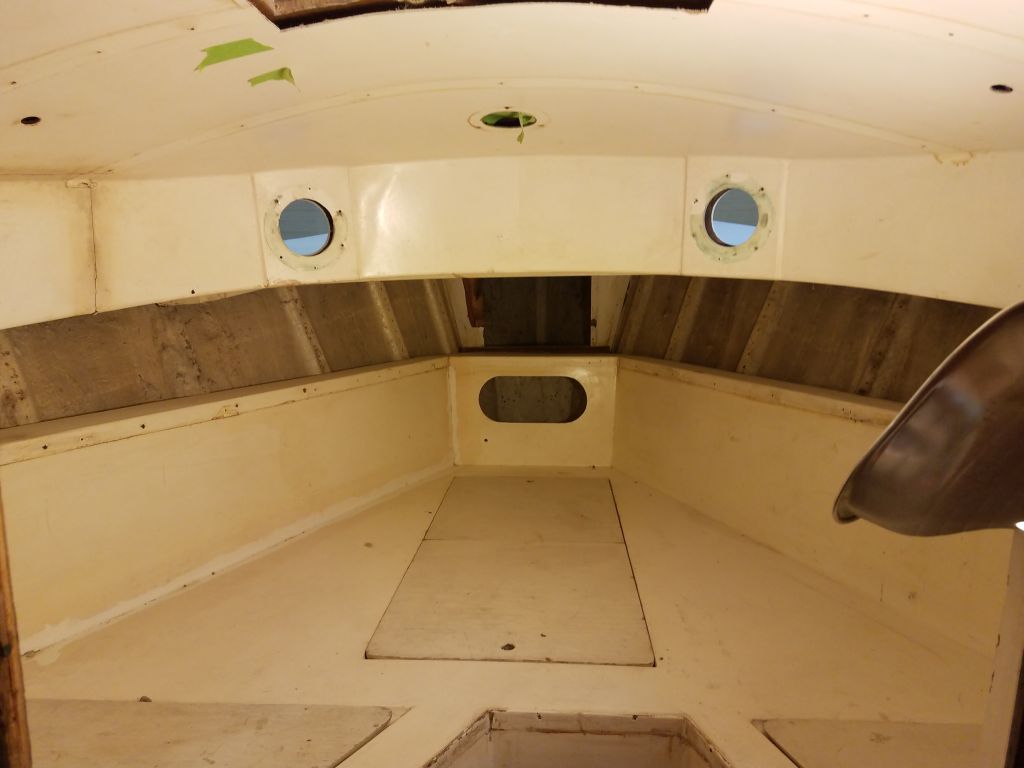
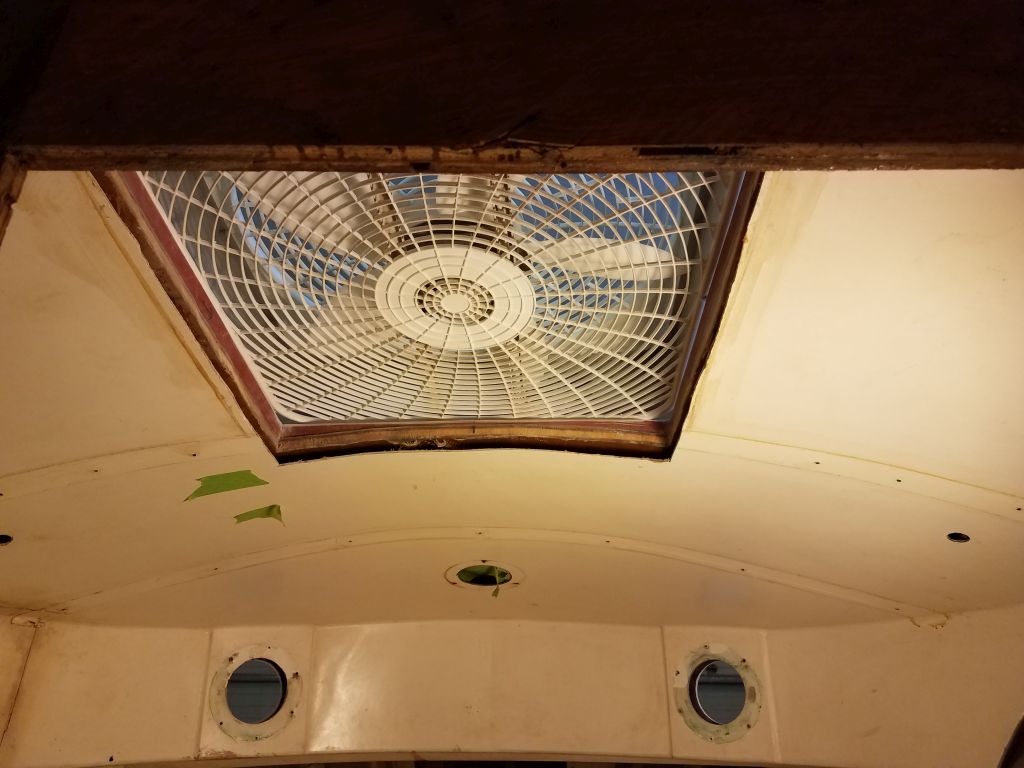
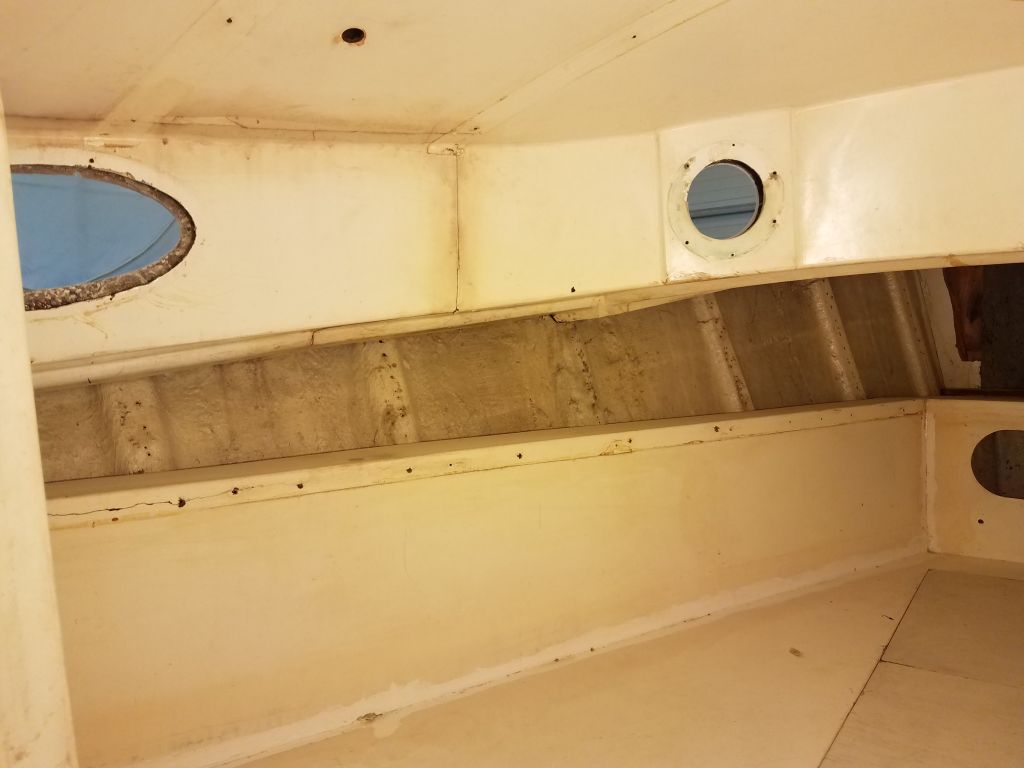
For the forward cabin, I cut out the hatch opening and the small veneer section and test-fit as required.

To align the new veneer on the newly-cut forwardmost hatch in the main cabin, I set the hatch itself in place, and made reference marks so I could later align the veneer with the wood strips on the adjacent cabin sole.

At the aft end, just forward of the engine room, I attached the small section of new veneer to the hatch cover with screws, so that the entire section would lift out as a unit for access.

Now I laid out a strip of the teak plywood veneer to accommodate all four hatch covers, and cut oversize blanks for each that would allow me to align them properly.  It turned out that the old veneers were glued in place on the plywood hatches, so I ran them through the planer to remove the old 1/4″ veneer and make room for the new before laying out and gluing down the new plywood along pre-determined layout lines.

While I left the glue-ups to dry, I finish-sanded the sole pieces, cleaned them, and applied a sealer coat of varnish to all sides.  The owner requested only the sealer coat in order to finish up the coats himself, so this would be all the varnish I’d be applying at this time.

When the waterproof glue on the hatch covers had dried sufficiently, I trimmed the excess veneer  with a router to complete the hatches, then sanded and seal-coated these as well.

To wrap up the woodwork, I also applied a sealer coat of varnish to the new teak companionway boards.

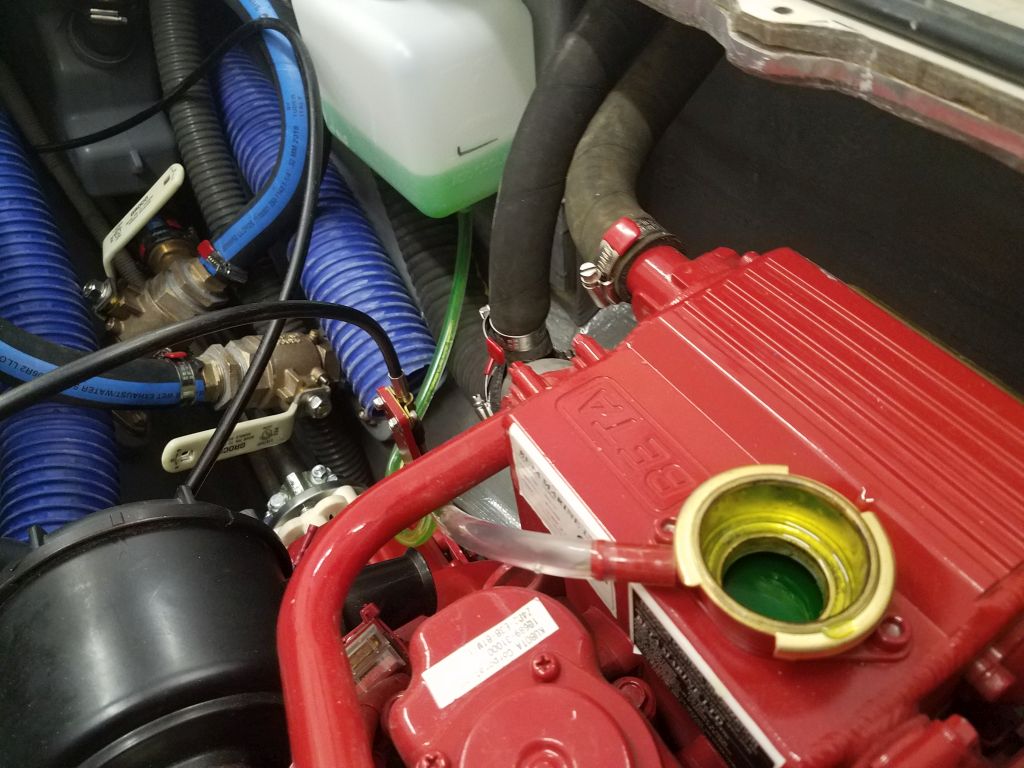
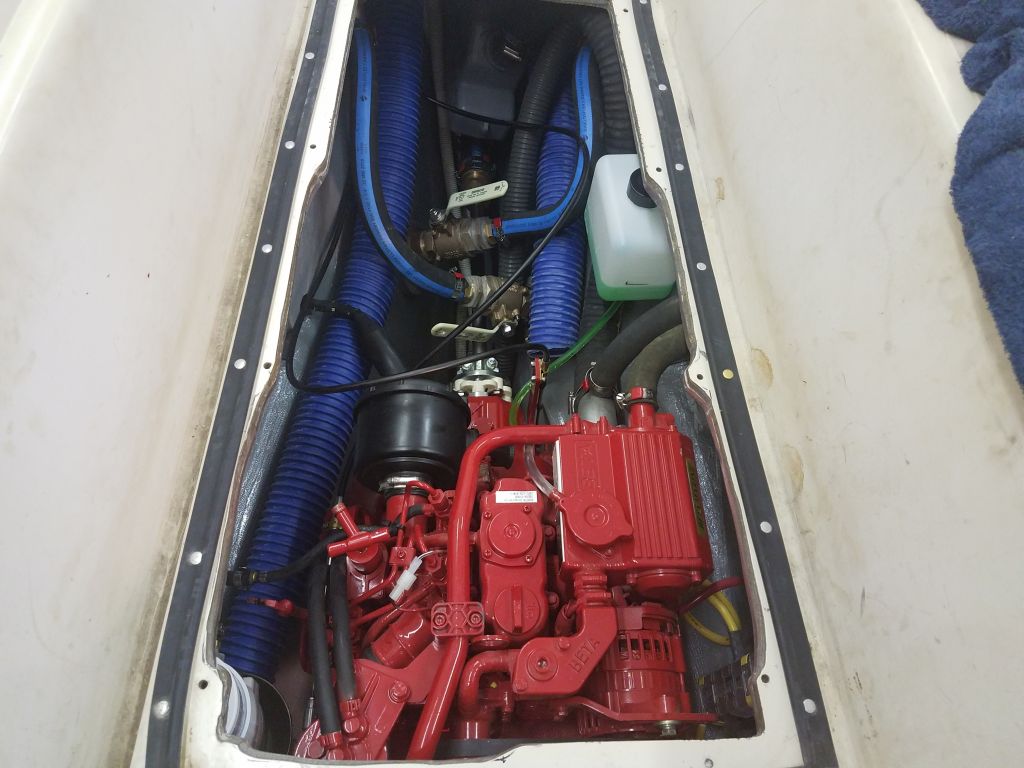
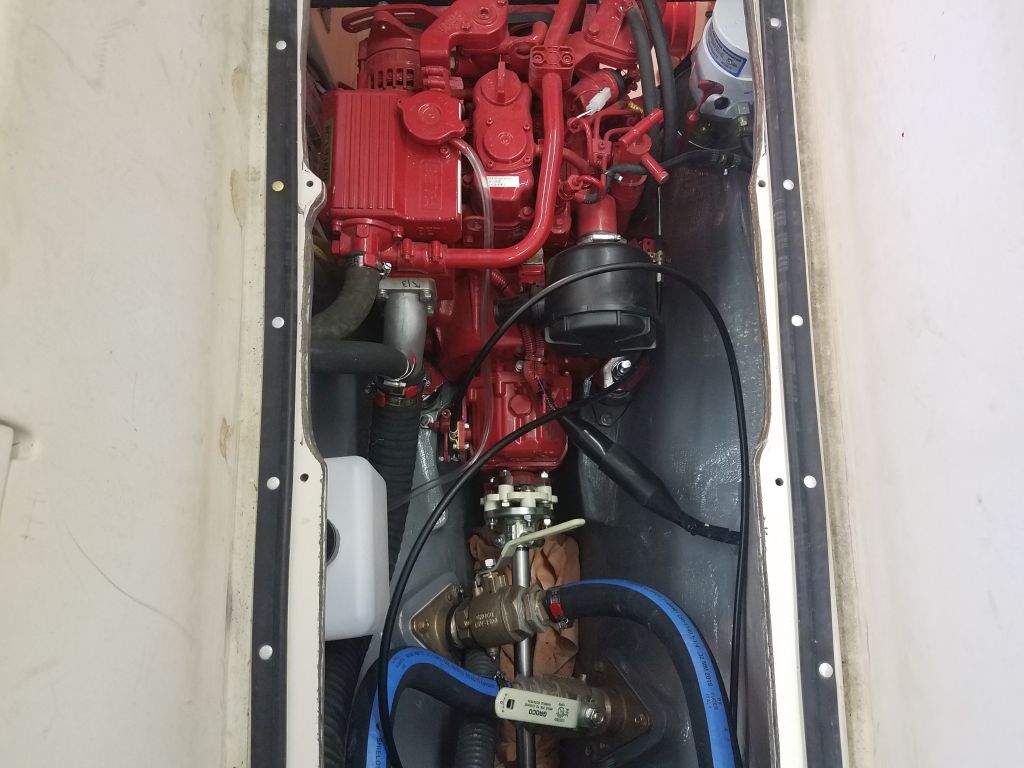
In the engine room, I finished up the hose runs for the vented exhaust loop, cutting the hoses to final length and securing all connections with hose clamps.

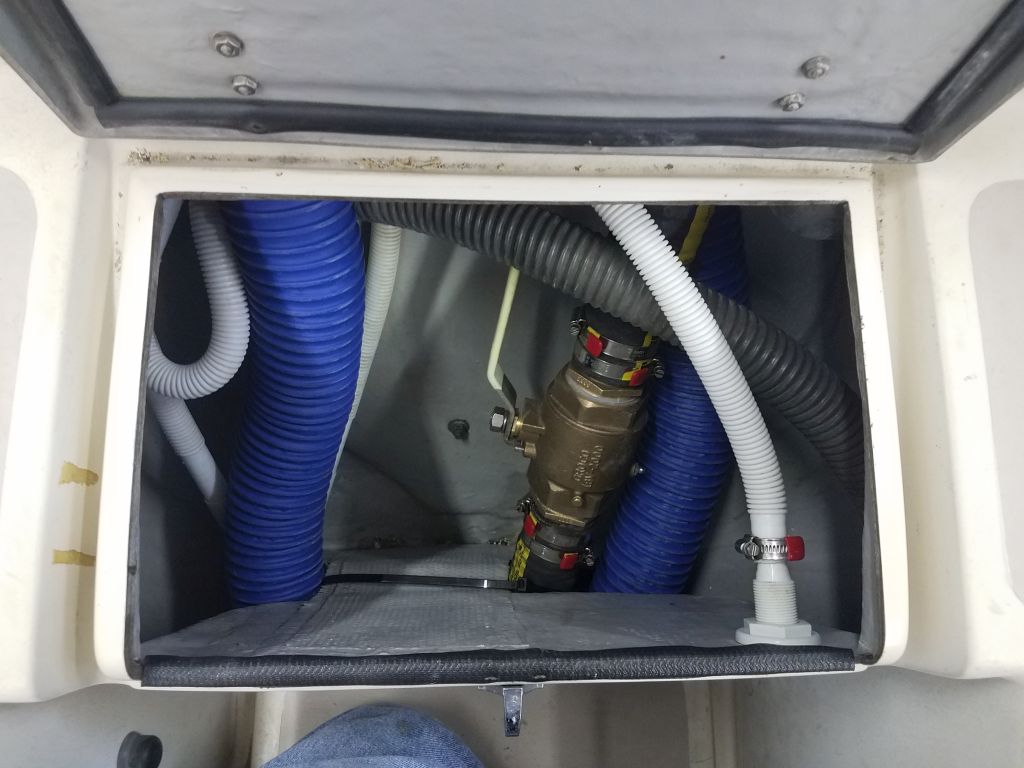
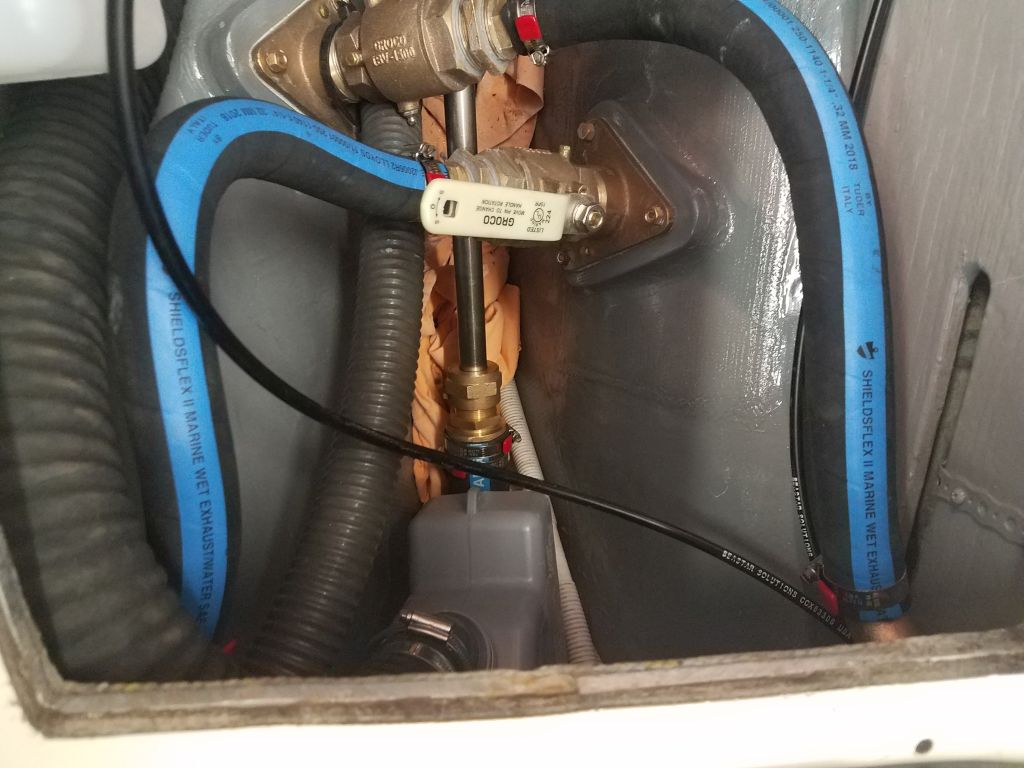
I completed the exhaust system by installing the shutoff valve in the lazarette, where I’d prepared the hoses earlier, and making up the final hose run between the engine outlet and the exhaust muffler below the cockpit sole.

To finish up the engine work, I installed the final length of raw water intake hose, running between the sea strainer and the raw water pump on the engine itself.

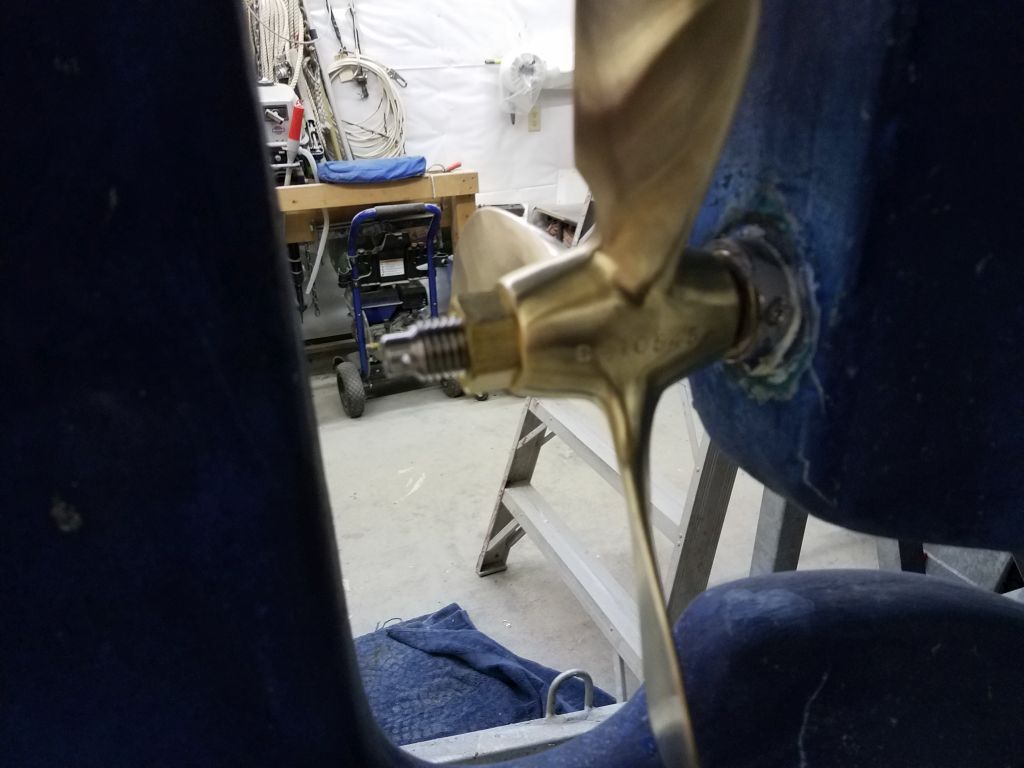
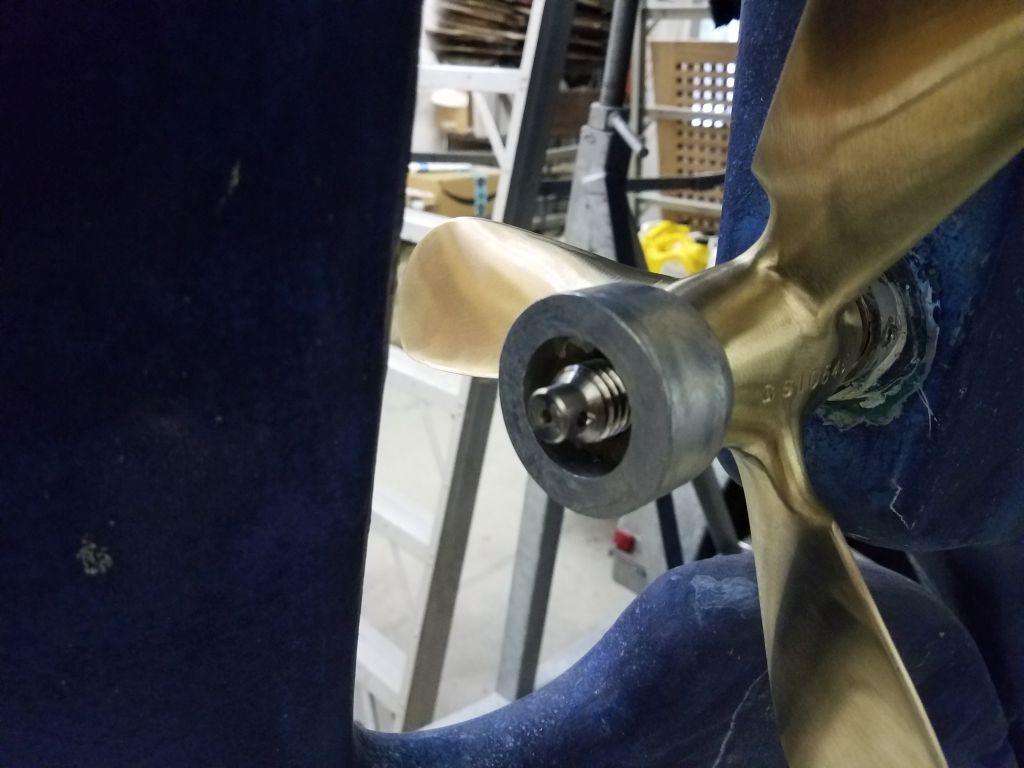
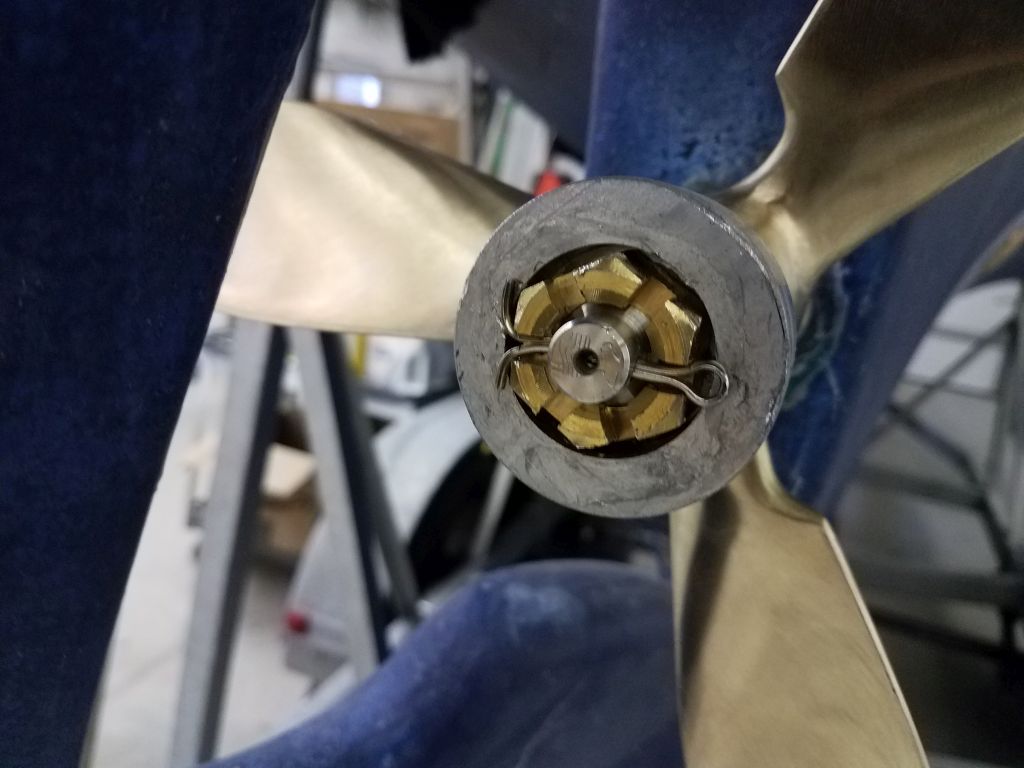
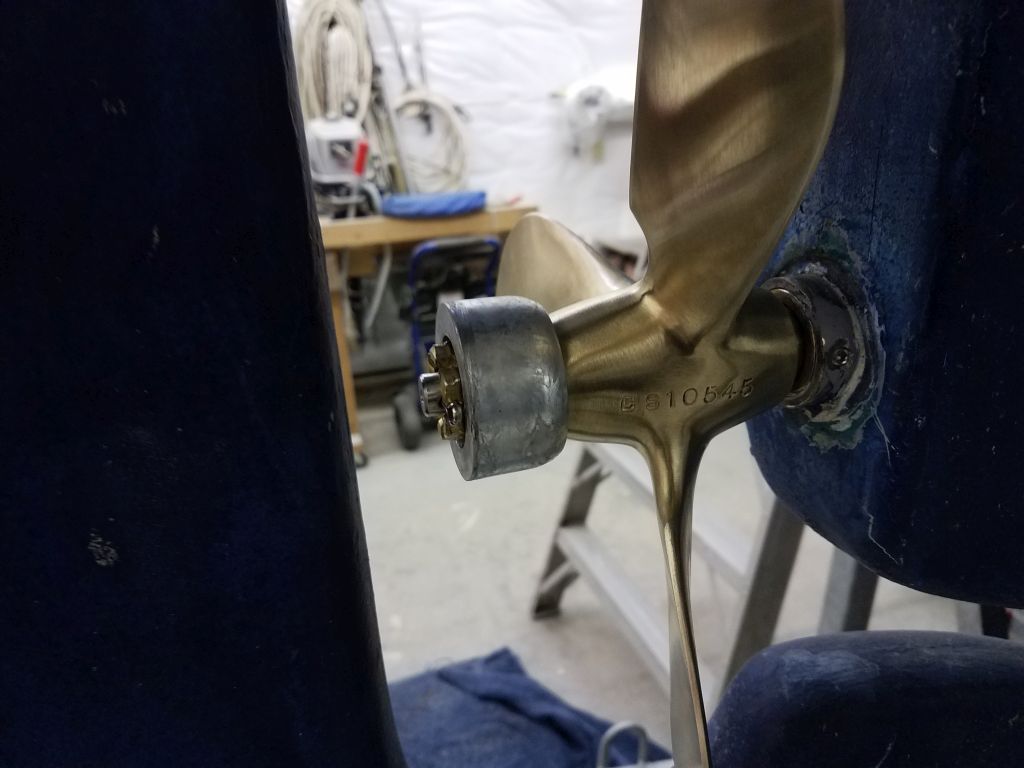
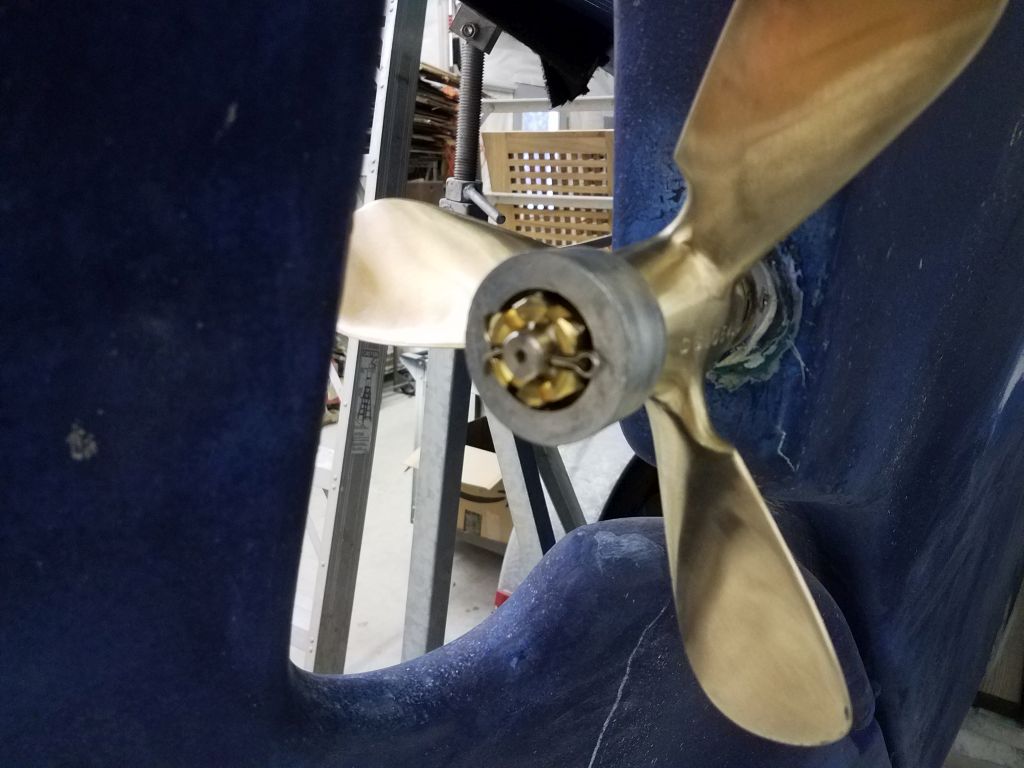
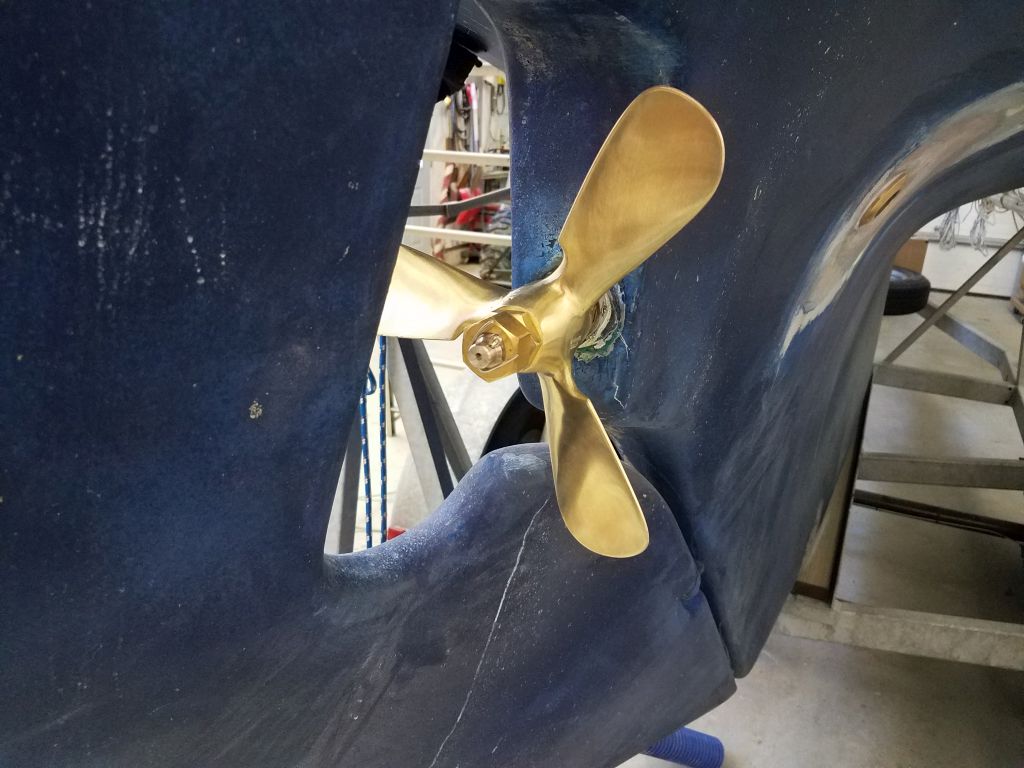
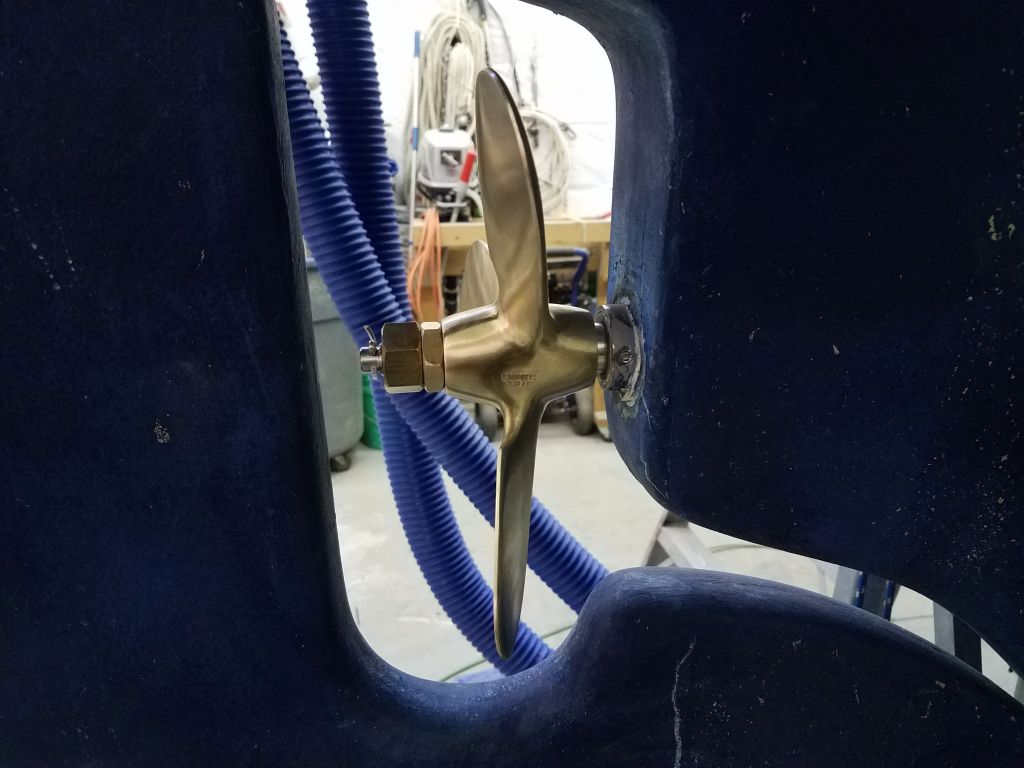
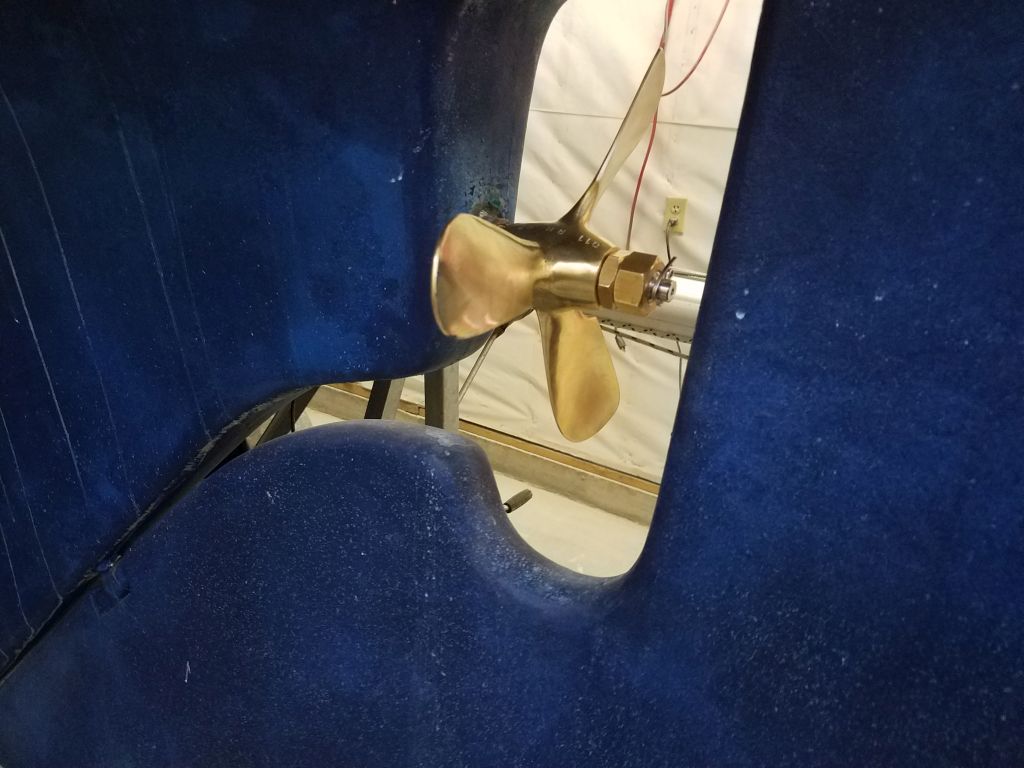
Engine-wise, all that remained was to install the shafting, which was being machined (or soon to be machined), and propeller, along with final alignment.

Total time billed on this job today:  7.75 hours

0600 Weather Observation:  -2°, clear.  Forecast for the day:  Sunny, 24°

Dharma Rose 29

Friday

Awaiting various materials to finish up portions of the engine installation, I focused instead on several other jobs still on the work list, starting with completing the new chainplates’ bedding and deck cover plate installation.  At each of the six locations, I began by forcing butyl tape sealant into the exposed slots wherever possible.

Next, I applied my usual light polyurethane sealant to each chainplate, a heavy bead into which I pressed the new fiberglass covers I’d made.  In addition to forming an additional defense against water, the sealant also served to hold the covers in place.  I left the excess sealant to cure, and would trim the excess later.

While I had the sealant out, I reinstalled the deck plates for the two vents on the aft deck.

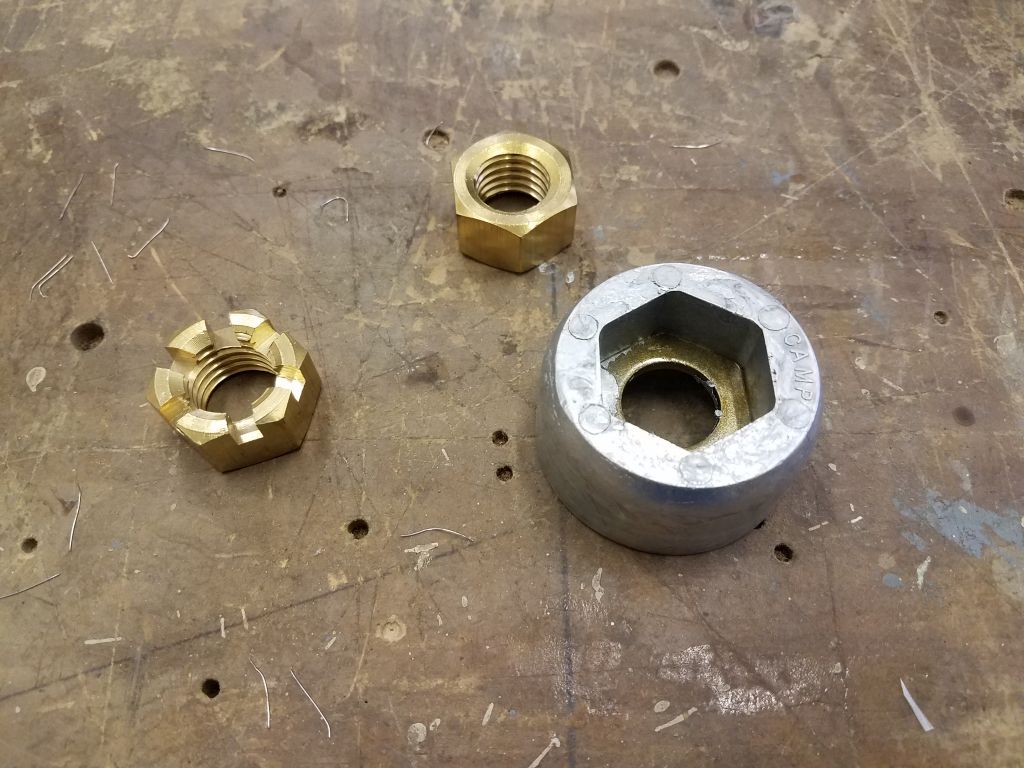
Preparing ahead for the new shafting, and expunging another item from my list, I cut rings of graphite packing material to fit (I wrap the packing numerous times around a shaft–the old shaft in this case–and run a knife through all rings in a straight line to create properly-sized individual rings for the stuffing box) and installed as many rings as possible in the new packing nut (three in this case).    I ran the now-filled packing nut over the shaft to press in and seat the packing, so it’d be ready for final installation once the new shaft arrived, hopefully soon.

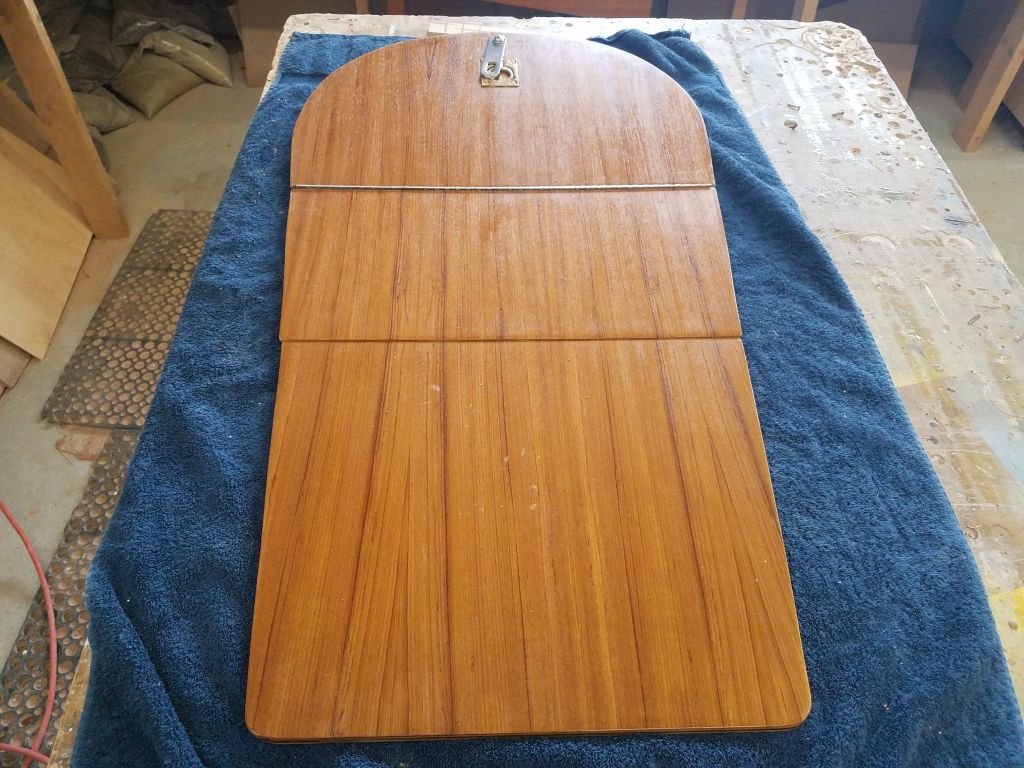
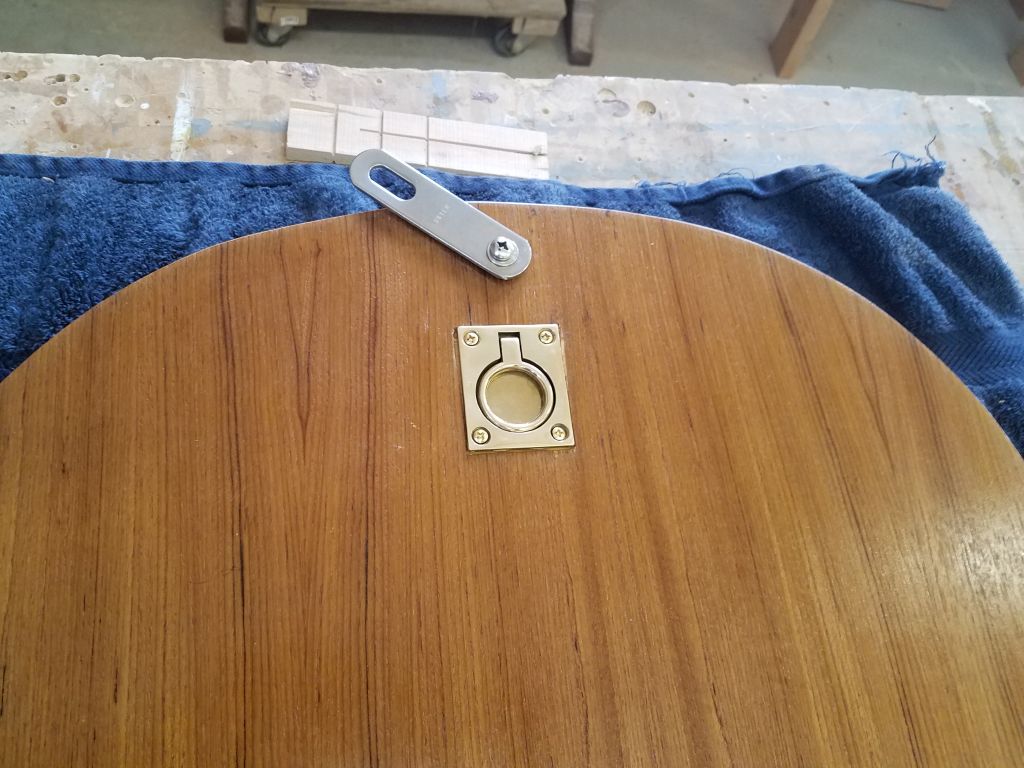
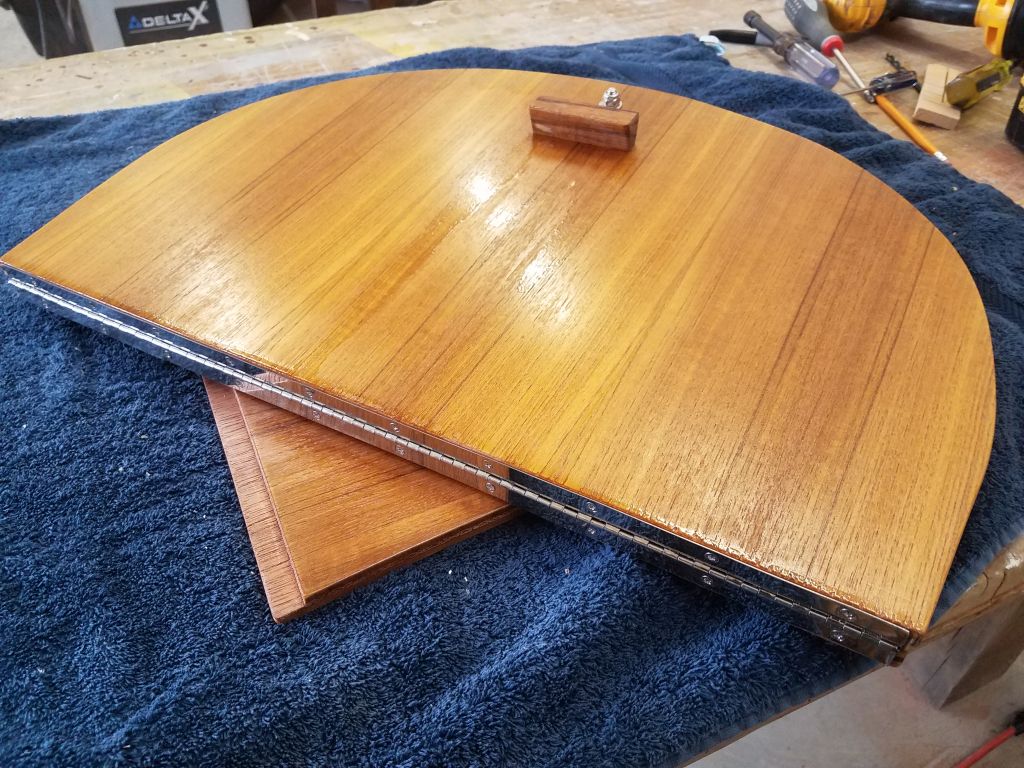
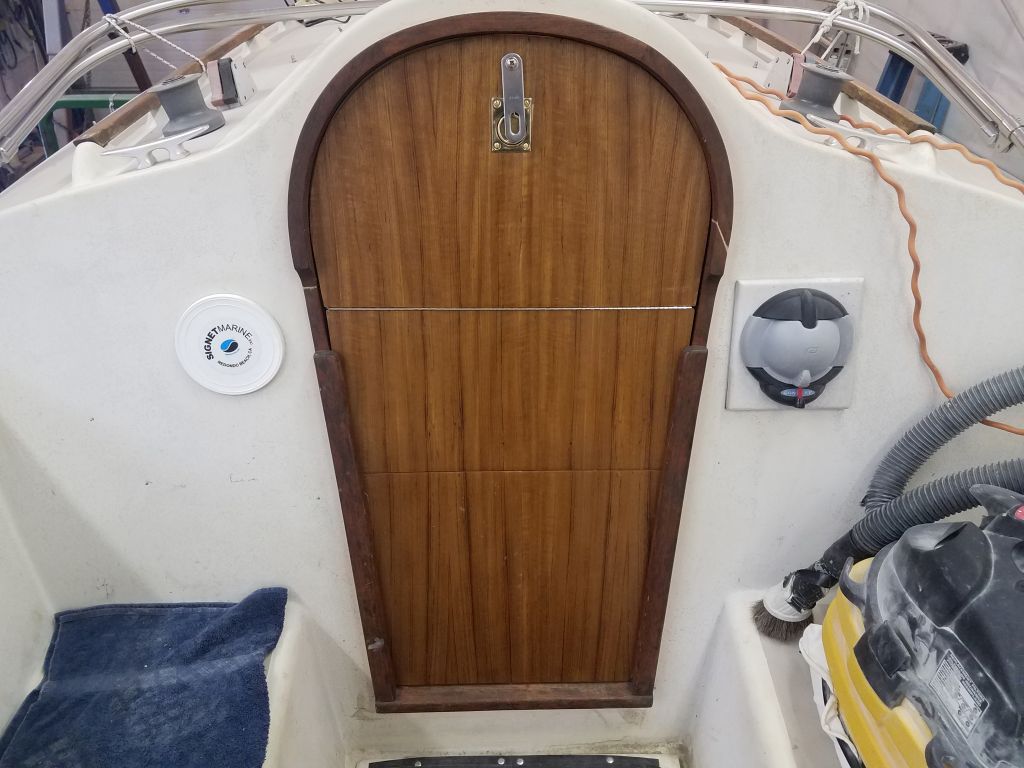
Now I turned in a different direction.  The owner had requested I build new companionway drop boards to replace the existing ones, which were old, and one of which had been modified to incorporate a GPS display that the owner wanted to relocate.  To begin, I disassembled the original boards, removing hardware and a continuous hinge on the top two sections so I could use the originals as templates.  From a new sheet of 1/2″ teak plywood, I cut the new boards to fit as needed and incorporating the same details and shapes as the originals.  To keep both sets of boards in working condition, I ordered new hardware for the new set, and would later reinstall the hardware back on the originals.  After a light sanding, for now, I set the new boards aside to await a sealer coat of varnish.

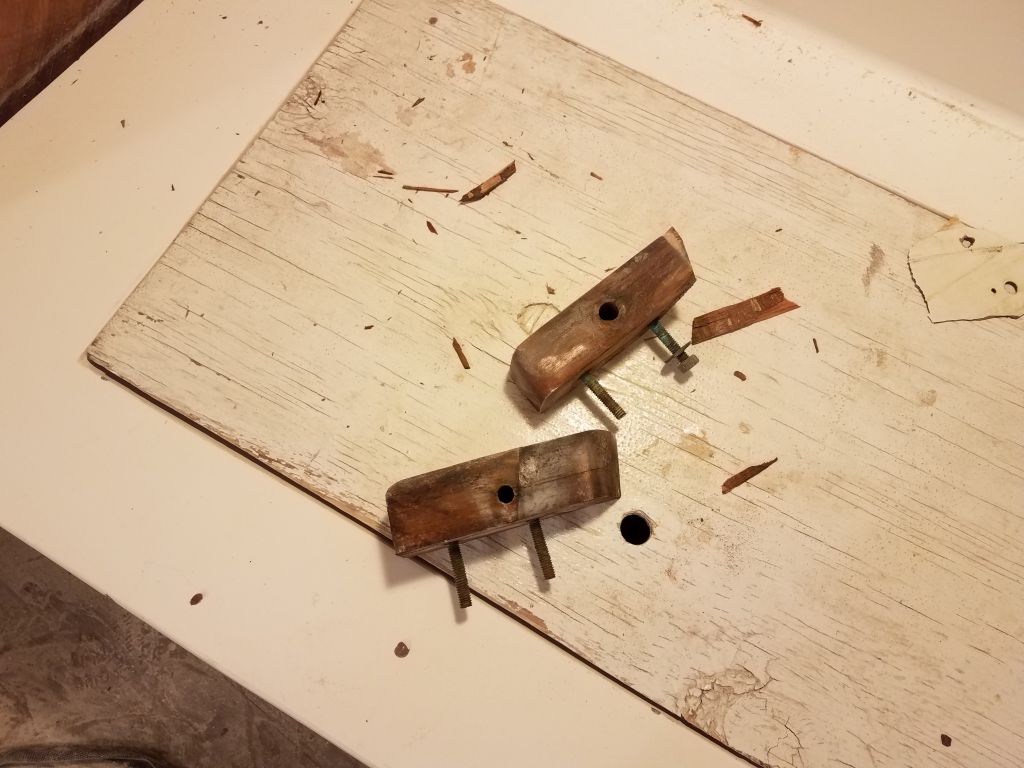
Next on the short woodworking agenda was a replacement cabin sole veneer.  The original teak-striped veneer was in poor condition, broken into several pieces and damaged in other ways, but fortunately I could easily piece it back together to use as a template for the new veneer.  With the various pieces properly positioned and clamped carefully in place on a new sheet of 1/4″ teak and “holly” (the light strips aren’t actually holly) veneer plywood (which happily had the identical “board” spacing as the original), I traced along the edges and in the openings for the hatches.  I found that the new sheet of plywood was about 1/2″ shorter than whatever had been used originally; this posed no problem since the overall length of the required cabin veneer was longer than eight feet by a fair margin anyway, requiring a separate piece at the aft end, but I’d need to slightly change that piece when I got to it.

Next, I cut carefully along the lines with a jigsaw set to a bevel to help match the edge of the new veneer to the shape of the hull curvature, and test-fit the main piece in place.

At the aft end, where I needed to incorporate a new opening for the new hatch I’d cut into the sole just forward of the engine room, I decided to cut off the long veneer piece in line with the forward edge of the new hatch, so the separate after veneer piece could also act as the hatch cover itself.  To do this, I used tape in a straight line to mark the proper line, and after marking the sole accordingly cut a straight line across.

Now I laid out the original aftermost piece of veneer on the new sheet of plywood, and extended it several inches further forward so I could cut its leading edge in line with the hatch cover as well to complete the basic sole section.

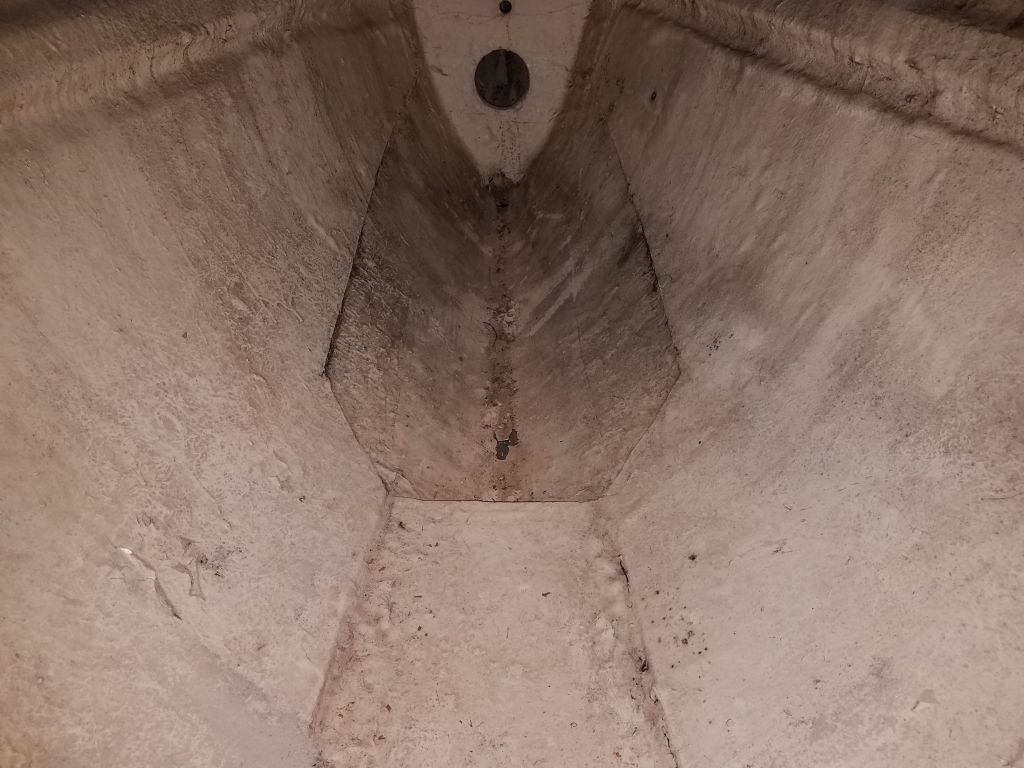
These simple cuts required multiple trips up and down into the boat for measurements, test fits, and so forth, but one critical new layout remained:  the new hatch opening at the forward end of the cabin, above the new bilge area created by the waste tank removal.  Here, I had no guidance from the original veneer, but with various other measurements, tape marks, and the new hatch itself, I used one section of the old veneer to help me template and test-cut the opening so I could accurately lay it out on the final piece.

Still ahead, I’d need to cut out all three openings in the cabin sole for the hatches, as well as create the new veneer for the small piece in the forward cabin, but I decided to leave those crucial cuts for next time.

Total time billed on this job today:  7.25 hours

0600 Weather Observation:  10°, clear.  Forecast for the day:  Sunny, 20°

Dharma Rose 28

Thursday

I continued with work on the engine’s final connections, beginning with a portion of the exhaust hose.  I had hoped to install the aftermost portion of the system first–leading from the transom outlet to the muffler beneath the cockpit, by way of a new heavy-weather shutoff valve that I’d prepared at the owner’s request–but I found I’d mis-measured the diameter of the connection at the steel gooseneck at the transom.  Earlier, I’d thought it was 1-9/16″, at odds with the rest of the 2″ exhaust system, but workable with adapters at the shutoff valve, so I’d reduced the outlet side of the valve accordingly.  Now, however, I found that in fact the diameter was 2″–just a roomy fit for the 2″ hose, so I had to order another 2″ hose connector to re-adapt the shutoff valve.

In any event, I cut and installed the short final length of hose to the gooseneck, leaving the other end in the lazarette for connection to the shutoff valve.  I also cut and dry-installed the hose run that would go from the muffler to the inlet side of the valve, so final connections would be quick once I received the new hose connector.  More on this as it happens.

Next, I prepared to install the two lengths of 1″ hose from the exhaust elbow to and from the vented loop in the cockpit locker, only to find (sigh) that I didn’t have the correct clamp size on hand after all–just one in stock.  I could have used larger ones, but I hate having long clamp tails, at least in exposed spaces, so I left this project for completion later as well.  I did manage to successfully install the little coolant overflow tank in entirety, but clearly engine work wasn’t otherwise in the cards for this day.

In the port hanging locker, I reinstalled the cover panel that I’d removed for chainplate access. then reinstalled the bulkhead face as well.

Across the way to starboard, before reinstalling the cover panel on that side, I first needed to install a new AC electrical panel that the owner requested for the boat’s simple shore power system (one outlet).  Previously, the shore power inlet connector in the cabin side above had led directly to the outlet in the galley without benefit of a circuit breaker.

In order to connect new wire to the shore power inlet, I had to remove the fitting, since access to the side for one of the screw terminals was too tight to the nearby bulkhead.  Given the way of things, I was hardly surprised when the old plastic outlet fell into pieces upon removal, the victim of 35 years of UV exposure.  I ordered a replacement.

Meanwhile, after a few measurements in the boat to determine any clearance issues for the new electrical panel, I laid out and cut the opening in the plywood panel, and prepared the electrical panel by installing a 15 amp breaker for the outlet in the blank hole beneath the main breaker and making all the related wiring connections, both for the shore power inlet and the circuit leading to the outlet.  With the wiring complete, I screwed the new panel in place, and installed a plastic protective back that the owner had also provided, then installed the teak plywood panel back in its spot, running in the wires to the outlet box to await a new outlet later (the original outlet I’d removed, while still on hand, was old and tired; plus, it should be a GFCI outlet).

Next, I reinstalled the original assembly for the water tank fill, which I’d removed early in the process for access.

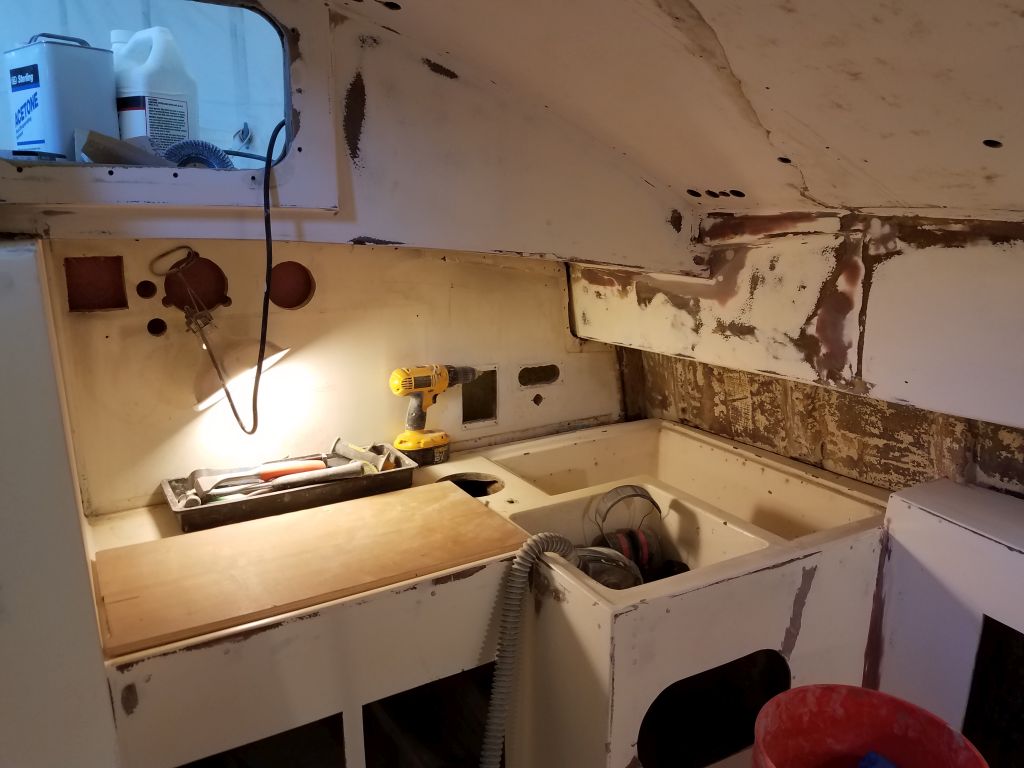
In the galley, earlier I’d painted around the new through hull fitting I’d installed, and now I finished up the work there with a new length of drain hose for the sink.

Finally, I installed some straps to secure the batteries in their compartment.  I chose webbed straps with stainless steel brackets to secure them to the base of the compartment, and, before replacing the batteries, I installed terminal-mount fuse holders and 100 amp fuses on the positive battery terminals.

Total time billed on this job today:  6.25 hours

0600 Weather Observation:  28°, cloudy.  About 4″ of snow from last evening.  Forecast for the day:  Mainly cloudy, around 32°

Dharma Rose 27

Wednesday

A final small detail to round out the Monitor installation was to mouse the bolts at the bottom of the frame, which bolts secure the brackets for the lower supports and diagonal tubes.  The supplied bolts included a hole through the hex heads for this purpose, and with stainless steel wire I moused around the heads and secured the wires in a crook of the frame above.

The protective covers for the new battery cable buss bars in the engine room had arrived, and now I went ahead and installed them.  This was straightforward, though as anticipated I had to remove the buss bars to do so, since the covers simply snap over the backs of the busses, after which they can be reinstalled with the same screws.

Now it was time to permanently install the new engine.  Before raising the engine into the boat, I replaced the temporary nuts on the mounting studs with the final nylon-insert nuts and washers, since these were much easier to start on the ground than in the tight space in the boat.  Then, I raised the engine and set it on the foundations so I could make the final marks for the mounting bolt holes.

To ensure I got the bolt holes in the right place, I set up my fiberglass shaft mockup (the new propeller shaft was being machined).  I’d sent off the coupling to the machine shop, but for this purpose just running in the shaft to ensure it was centered on the nut inside the transmission flange would be sufficient to drill the mounting holes, since the nature of the mounts was to allow fine-tuning for alignment later.

To help support and align the temporary shaft, I installed the new stuffing box (leaving off the packing nut for now).  The new hose came with four clamps of an inferior type, so I replaced them with my usual solid band all-316 clamps, then installed the new assembly in the boat.

With the shaft in place, I shuffled around the engine a bit, using the small pilot holes I’d made earlier to assist (I had to be in the same basic position since the new shafting depended on it), and eventually achieved a satisfactory position all around, with the engine in essential alignment and all the mounts where they needed to be.  Then, I marked the bolt holes through the mounts, and/or marked around the mounts as possible given the challenges of access, particularly on the after pair of mounts.  Afterwards, I lifted the engine back out temporarily.

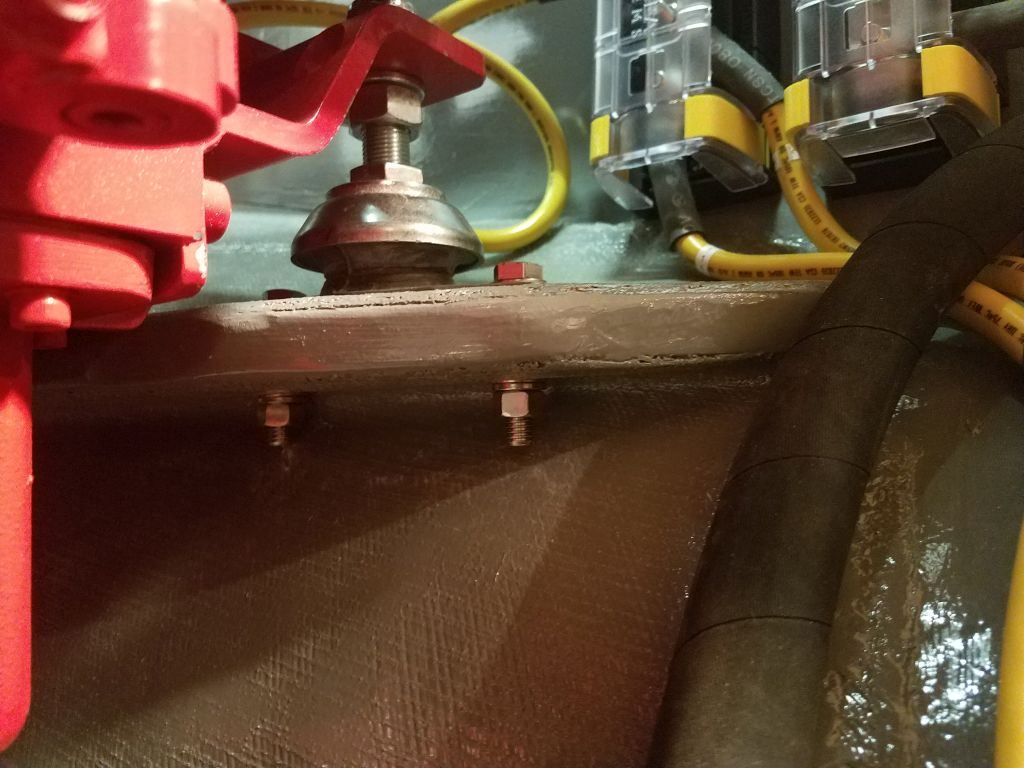
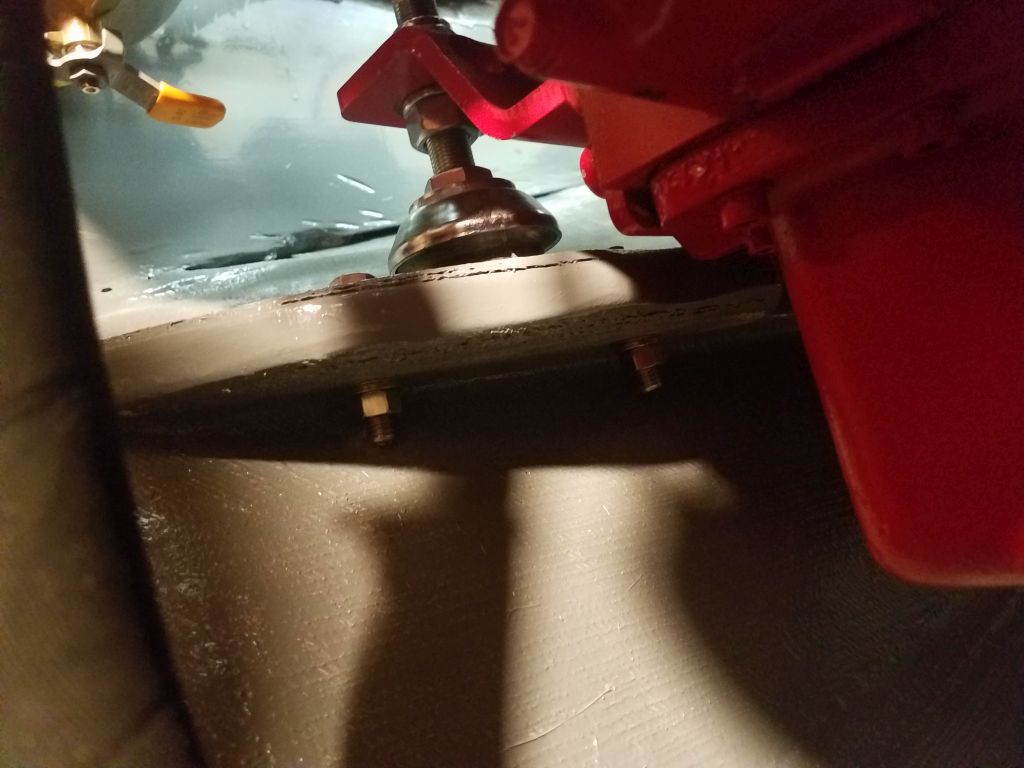
For reasons of access, I decided to pre-install the two aft mounts, since the shape of the hull, foundations, and the narrowness of the mounts conspired to make access back there extremely difficult.  Once I removed these mounts, I used them as guides to locate and drill the pilot holes for all the mounting bolts.  I tapped all the holes for the 3/8-16 machine screw threads as well.  Afterwards, I bolted in the after set.  I considered installing the forward set as well, but given how much I needed to move the engine once it was down in the hole, plus the fact that I had at least reasonable access to the forward end, I decided to leave them on the engine.

For the last time, I lowered the engine back into the space, onto the after mounting studs, and then down onto the forward mounts, after which I loosely installed all the bolts just hand tight to allow adjustment later once I got back the coupling and new shaft.

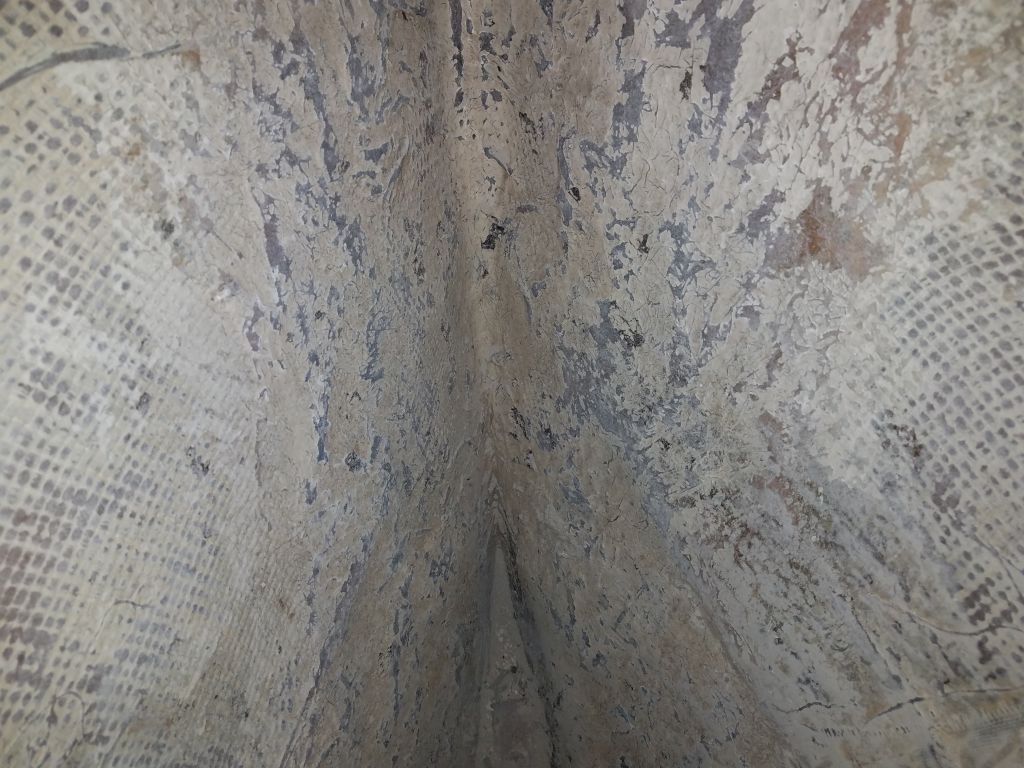
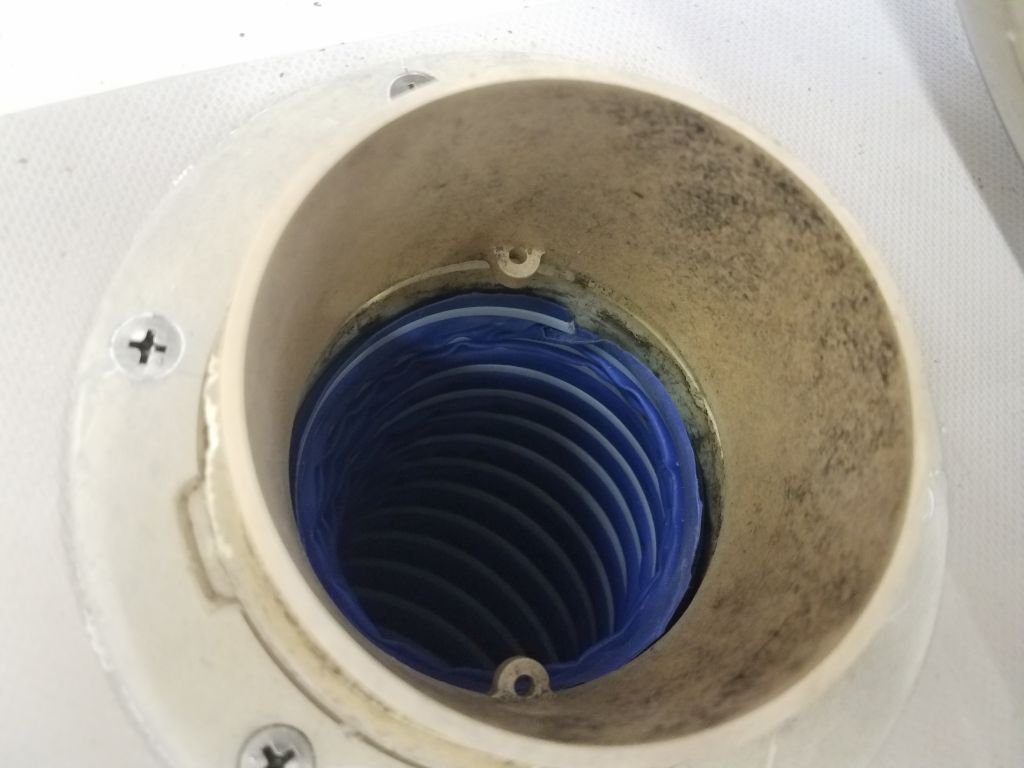
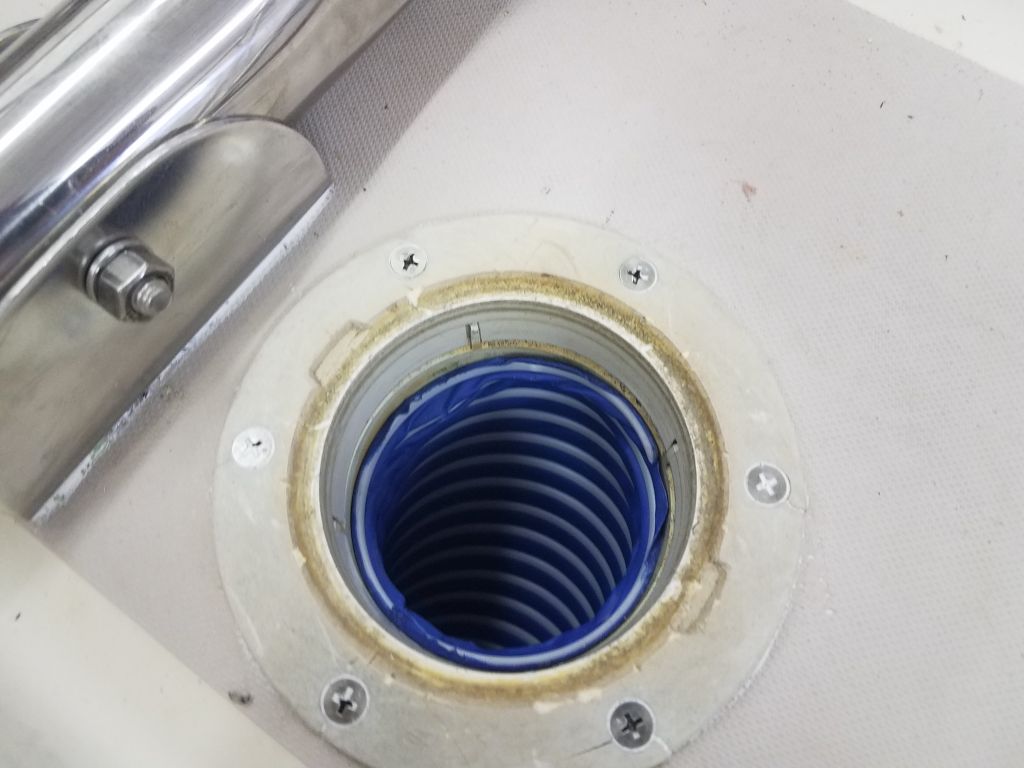
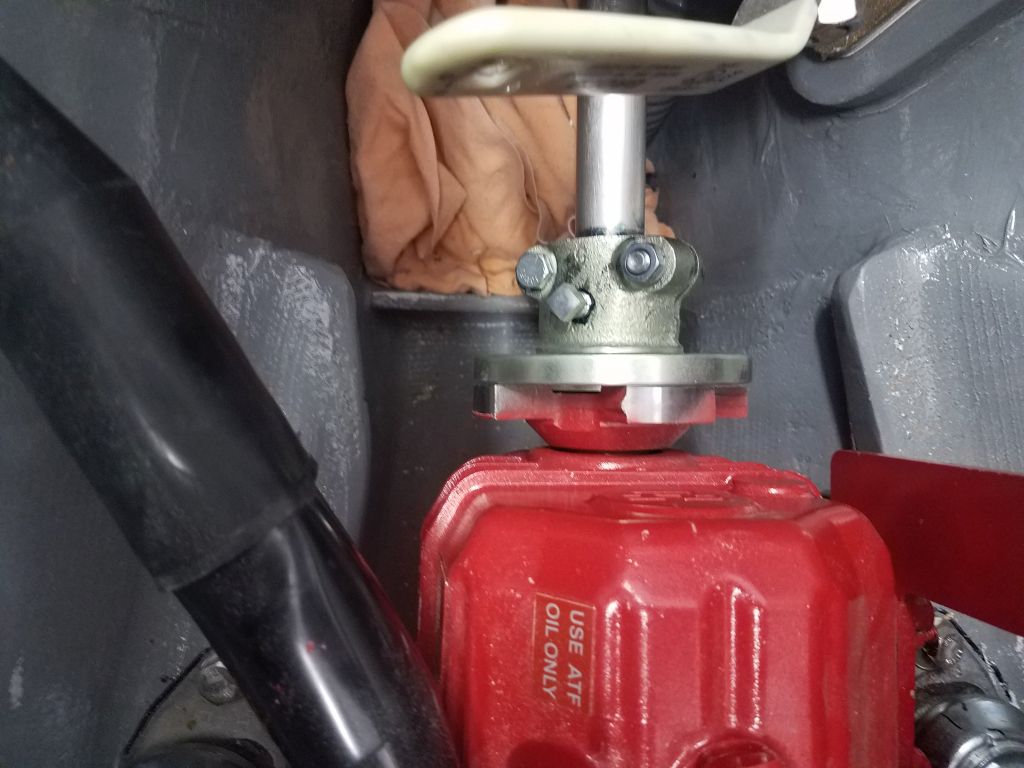
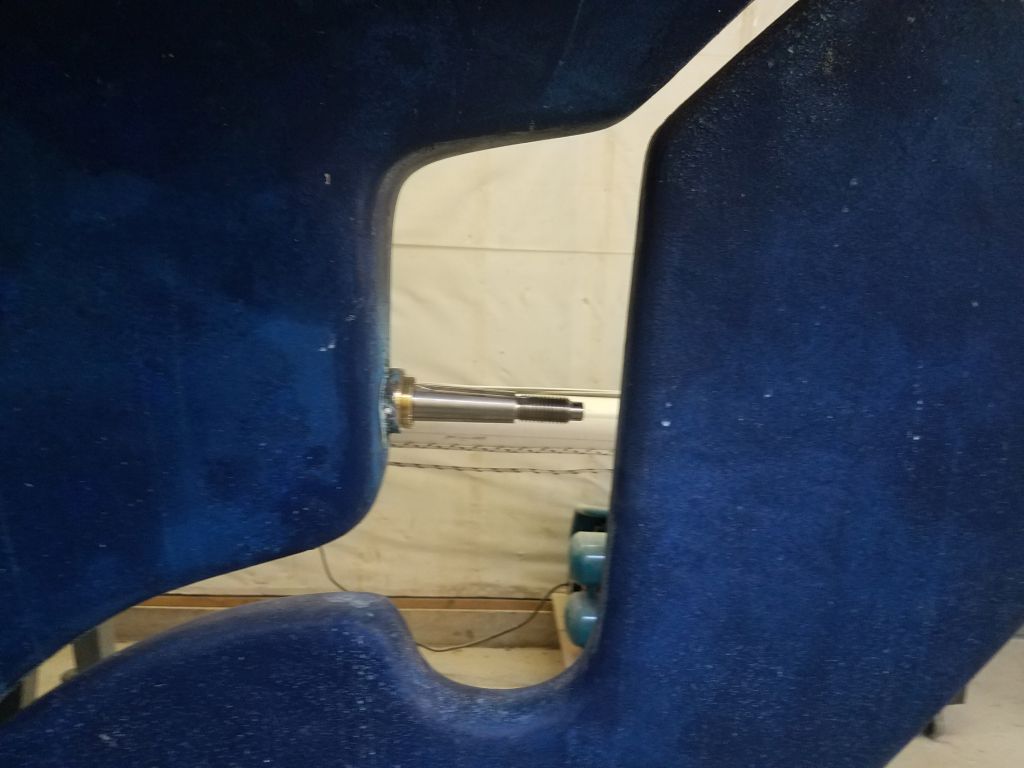
I always like to take a picture up the stern tube to show the center of the transmission coupling.  I liked the way the one with the flash came out.

Now I could start making up the final connections, starting with the positive and negative battery cables, which I’d already connected to the engine itself before installation; it was a simple matter to connect them to the convenient buss bars.

I installed the throttle and gear cables, and connected the engine wiring harness.

I made up the short length of hose between the fuel filter and the inlet on the engine-mounted fuel pump, and made up the connection to the return line on top of the engine.

I’d hoped to install the raw water hoses as well, but found that the length I had wasn’t long enough given the bends and curves required, so for now I had to settle for installing the short run between the seacock and the raw water filter.  This brought me to the end of the day.

Total time billed on this job today:  7.25 hours

0600 Weather Observation:  38°, clouds, drizzle.  Forecast for the day:  Rain to snow, growing colder.

Dharma Rose 26

Tuesday

Now that the deck was ready after the epoxy cured overnight, I could move forward with the final installation of the two deck brackets for the main upper support tubes.  I followed all my habitual installation steps, including drilling and tapping the holes for the 5/16-18 hex bolts, countersinking the tops of the holes, removing the masking tape in the bonding area, and finally installing each fitting in a bed of sealant, using the 1/2″ backing plates below with large washers and nuts.  Access to the undersides of these fittings was possible through the nearby holes from the temporarily-removed cowl vent fittings.  On the port side, the rigid exhaust gooseneck against the transom made this access extremely tight.

Before installing the support tubes for the final time and using marks I had made earlier before removing the tubes, I center-punched and drilled the through holes at the inboard (deck) ends for the bolt that would secure them to the deck brackets.

Now I could install the tubes for the last time, and once they were positioned correctly I installed the bolts through both ends, though for now I only hand-tightened the nuts.  I checked level in both directions throughout the process.

Now I turned to the two lower support tubes, which would run between the base of the Monitor frame and the transom on each side.  To begin, I loosely installed a pair of end fittings–one for the eventual diagonal braces on top, and another for the lower brace on the bottom–on each lower corner of the frame, using the threaded holes provided.  I made sure to face the pilot hole locations outward, which would make drilling the bolt holes later much easier.  (During my first installation on a sistership, I’d given no thought to this and the pilot holes ended up on the inside, making access for drilling much more difficult.)

The lower tubes came from the factory with excess length, so starting with general guidance from the instructions and boat-specific data sheet, I laid out the general locations for the transom brackets on the hull, checking inside the boat to ensure the way was clear there.  I chose a height and lateral position that would keep the mounts close to the transom edge and triangulate as well as possible with the frame above for strength and rigidity.  Holding the bracket, with the tube pre-mounted within, against the hull in my chosen position (starting with the starboard side), and the other end of the tube against the socket at the frame, I could estimate how much length I needed to remove in order to fit the tube.  In this case, it was about 6″.  I couldn’t really get a picture of the mockup process.  Down on the bench, I cut off the excess length.

Now I could insert the tube properly in the socket at the Monitor frame, and then position the hull bracket appropriately on the transom.  The length worked as I’d anticipated, so I marked the lower bracket mounting hole (which was exposed) and traced around the bracket so I could re-align it and mark the upper hole once I removed the tube for installation.  With the tube unfastened from the bracket, I drilled and tapped the hull for the mounting bolts and temporarily installed the fitting in place, along with the tube.

Next, I repeated this process on the port side.  I’d already determined that the same tube length would work here (one never knows given the not-infrequent asymmetry of boats), so I cut off the 6″ and, after marking the bracket location on the hull as before, dry-mounted the port side as well.

Removing the bolts from the bracket ends of the tubes, I scored the masking tape around the brackets, then removed the brackets so I could prepare for final installation, which I did next, after countersinking the hole tops and applying sealant.  I drove in the 5/16″ bolts tightly from outside, and from within installed large washers and nuts to complete the installation, after which I reinstalled the support tubes.

Now I could get rid of the wooden support frame, and make any final adjustments to the framework and installation to fine-tune the level in either direction.  I tied a pair of lines between the Monitor frame and stern pulpit, pulling the whole arrangement up just slightly and maintaining level from side to side.  Then, I removed the frame and, from the shop floor, I adjusted the vertical positioning as needed with a third line that I led forward to the rudder.

Satisfied with this final-final position of the frame, I could drill through the lower support tubes and their sockets for the bolts that would secure them.  This was much easier working from outside the frame and from the staging plank that I left in place for this purpose.  For these and all the other 5/16″ through-holes in this installation, I found it easier to start the hole with a 1/4″ bit, and then enlarge it with the proper bit afterwards.

With the holes drilled, I removed the tubes and installed the compression sleeves inside, using butyl tape to hold these in place (I don’t know why I didn’t think of using that before).  Then, I could immediately reinstall the tubes and secure the bolts just hand tight.

This installation, with its unique mounting and long support tubes, required a final set of tubes called diagonals, which ran between the bottom of the Monitor frame and the upper support tubes themselves.  I’d already installed the socket ends at the frame, so now I installed the supplied brackets around the upper tubes and installed the flattened end of the diagonal tubes.  The inner position really could go just about anywhere, but logically fell about 9″ above the lower curve of the upper tubes, which nicely triangulated the other framing elements.

Then, holding the tube against the socket end, I determined how much to cut off (again, these tubes were supplied intentionally over-long).  Removing the tube, I marked both sides to remove the same length, and cut off the excess, then installed both sides in their sockets and with the upper tube brackets.

Now I drilled through the diagonal tubes at the socket ends for the final bolts.  On my previous installation, I’d struggled with the drilling, partly because of poor drill bits and partly because my drilling access then from the inside of the frame was so much more difficult.  For the current installation, I’d prepared ahead with six-each brand new 1/4″ and 5/16″ drill bits on hand, but completed all the holes through the stainless steel frame using only one of each with no trouble.

With the final holes drilled, I removed the diagonals once again and installed the compression tubes within, then installed them and secured the bolts.

Now, after a final check of level and plumb, I could go around and tighten up all the bolts to finalize the installation, which made the whole thing incredibly stable and stiff and strong.

Total time billed on this job today:  7.5 Hours

0600 Weather Observation:  18°, snow, about an inch down so far.  Forecast for the day:  Light snow, maybe a few inches, becoming showery and warmer in the afternoon

Dharma Rose 25

Monday

Next on my agenda was the Monitor windvane installation.  I began the day by reading through the instructions and reviewing notes from an earlier installation I completed a couple years earlier.  The basics of the installation were straightforward–just four mounting points on the boat herself–but the key to the installation was positioning the vane correctly, and then suspending it magically in midair while determining the final positions of the four mounts and support tubes.

Sky hooks would be nice.

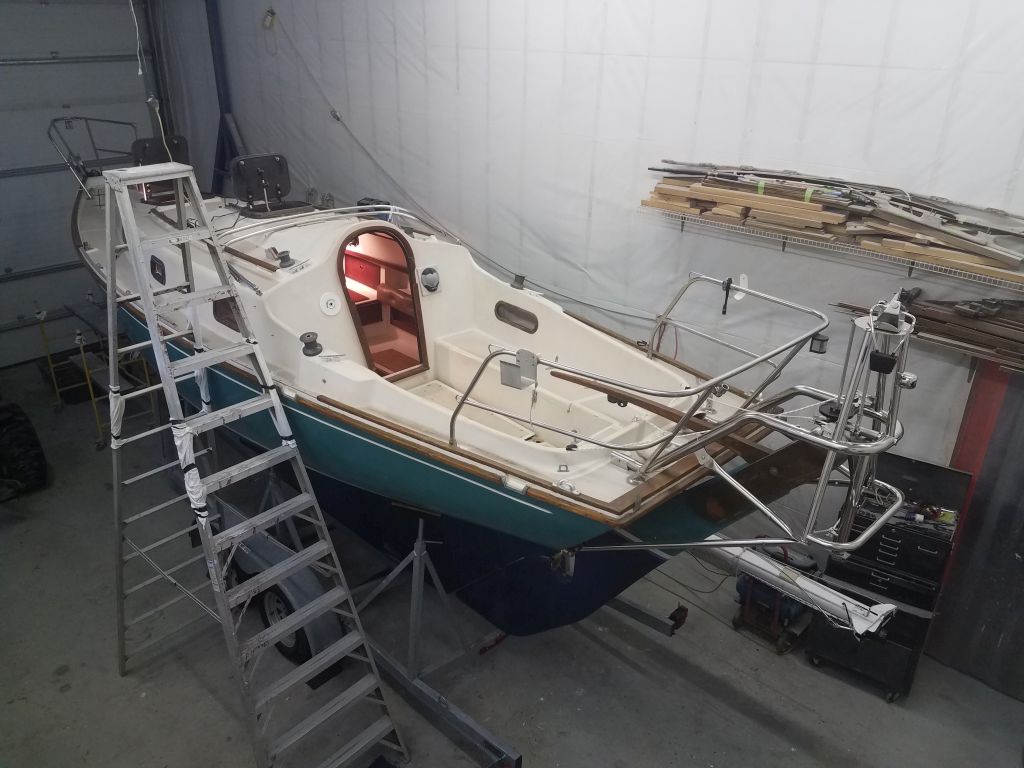
The Contessa 26 makes for perhaps one of the more challenging installations, mainly because the design of the boat, with outboard rudder, steeply-raked transom, and low freeboard meant that the windvane frame required particularly long support tubes, and also needed to be positioned above deck level and well aft to clear the raked rudder cheeks.  So to position the frame correctly and support it during installation, I chose to build a basic support structure to hold the frame at the correct height.  My support started with a staging plank that I set up just aft of the boat, giving me a starting height of just over 5 feet.

Before beginning the installation, I checked the boat for level and slightly adjusted the stands in correction as needed.

The wire from the stern light on the vane would not be long enough to extend all the way through the long main support tube in the final installation, so I added a length of wire that would be sufficient to complete the wiring connections later.

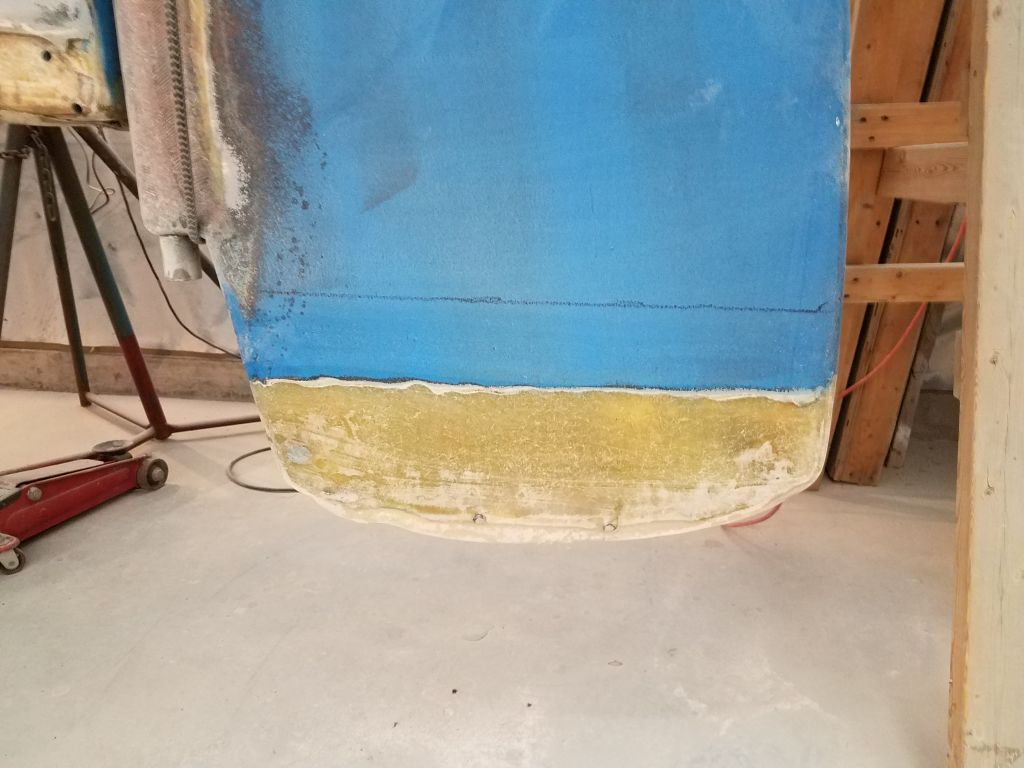
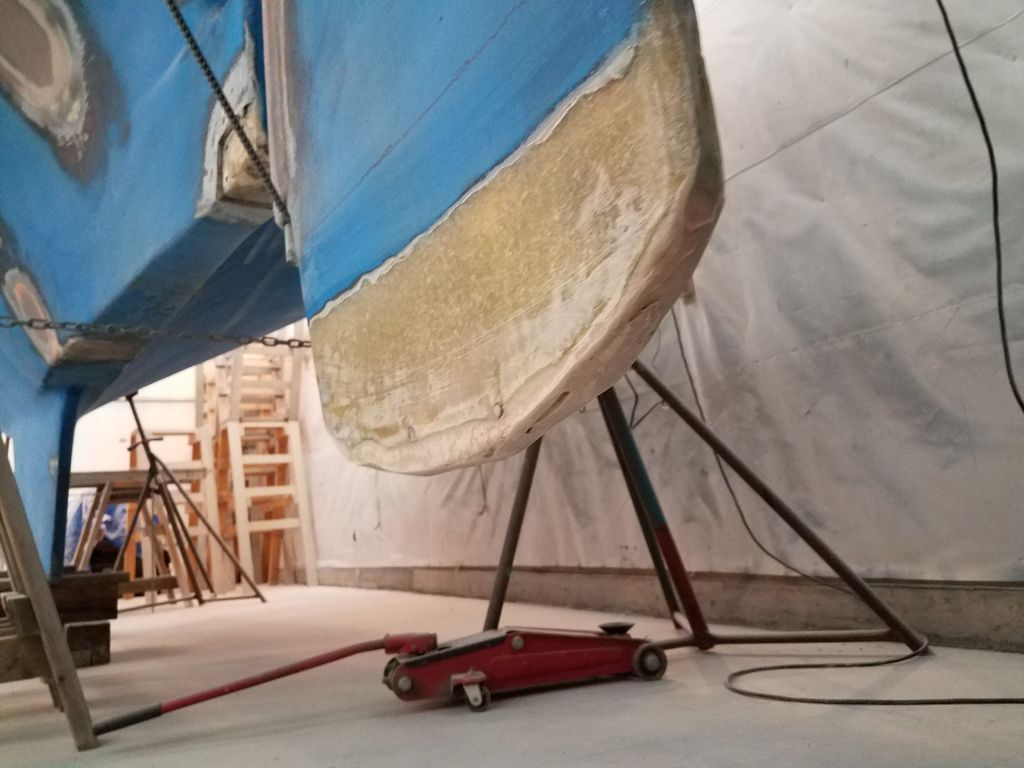
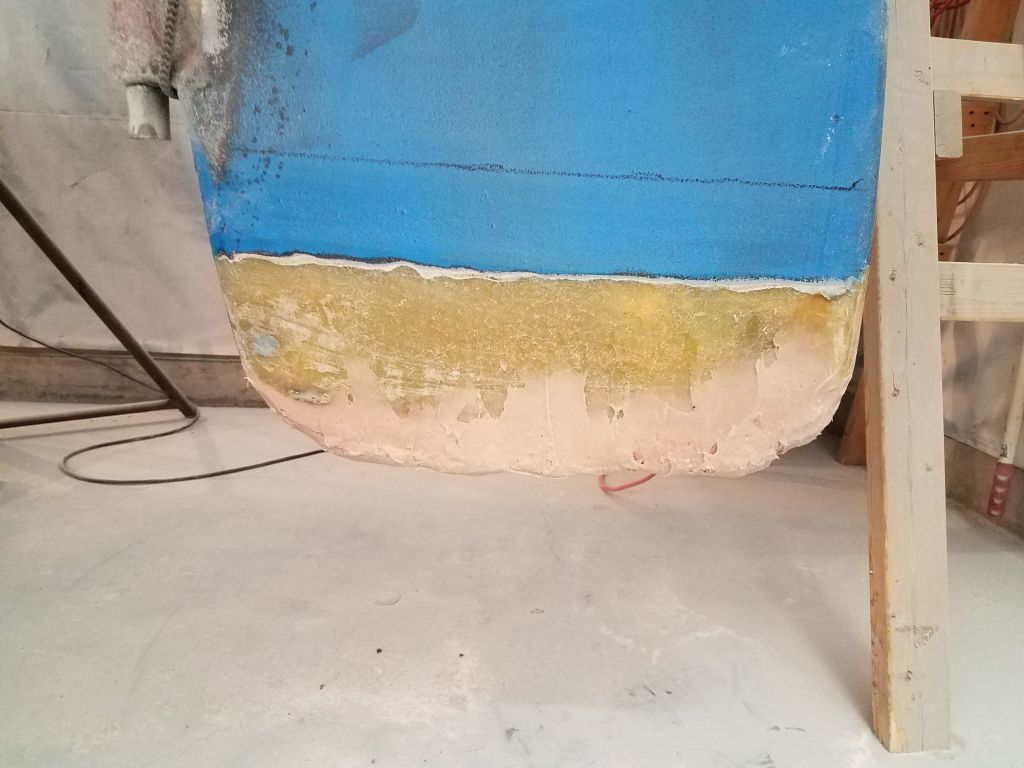
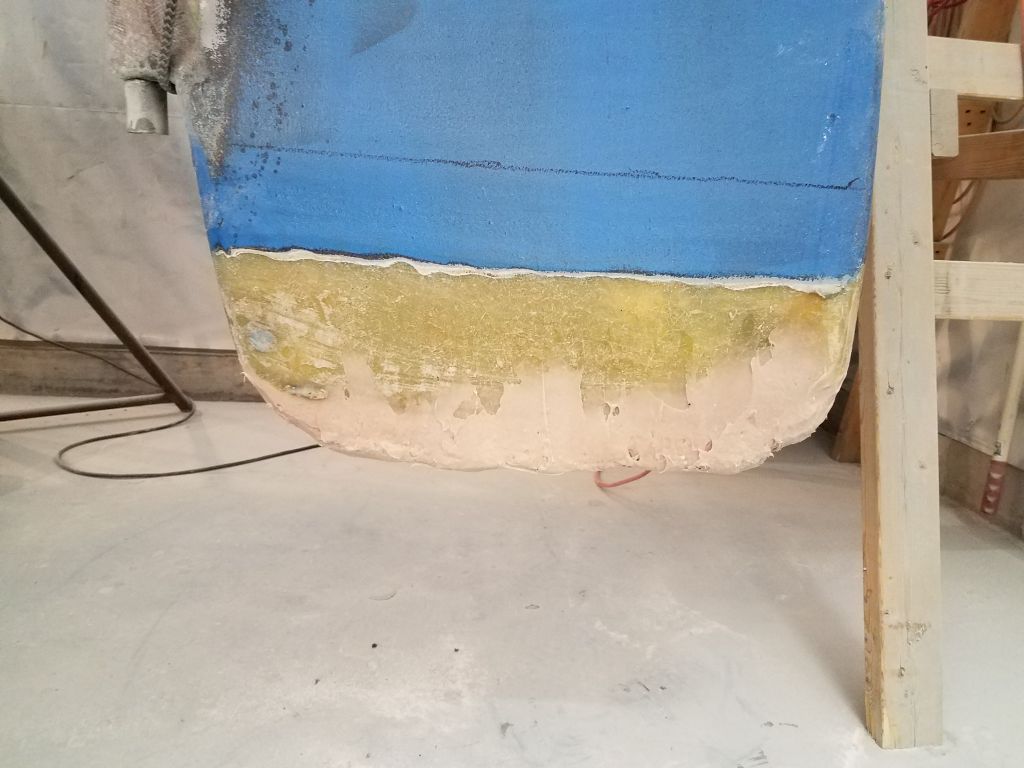
The instructions gave ample guidance on the final positioning of the vane (i.e. its final height) in relation to the boat’s load waterline.  On this boat, there was no obvious scum line visible from which to gauge the exact waterline, but I did have past knowledge of this boat model and knew about where I thought the waterline (at least for these purposes) should be.  I compared notes with the earlier installation, and found various easily comparable points on the boat to help confirm my instincts, and on this boat I ultimately chose the top of the bottom paint as the height from which to work, which corresponded well with floating pictures I had of a sistership.  Here, it corresponded with the top edge of the lower rudder gudgeon, and I extended that line aft onto the rudder for measurement and for some later steps.

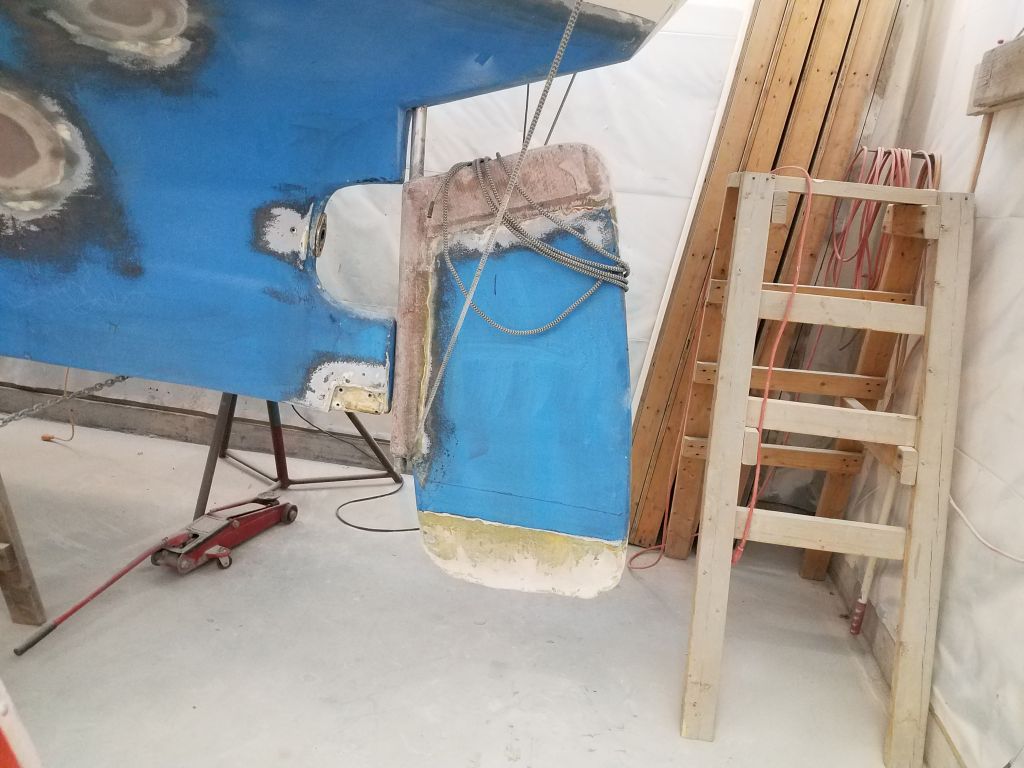
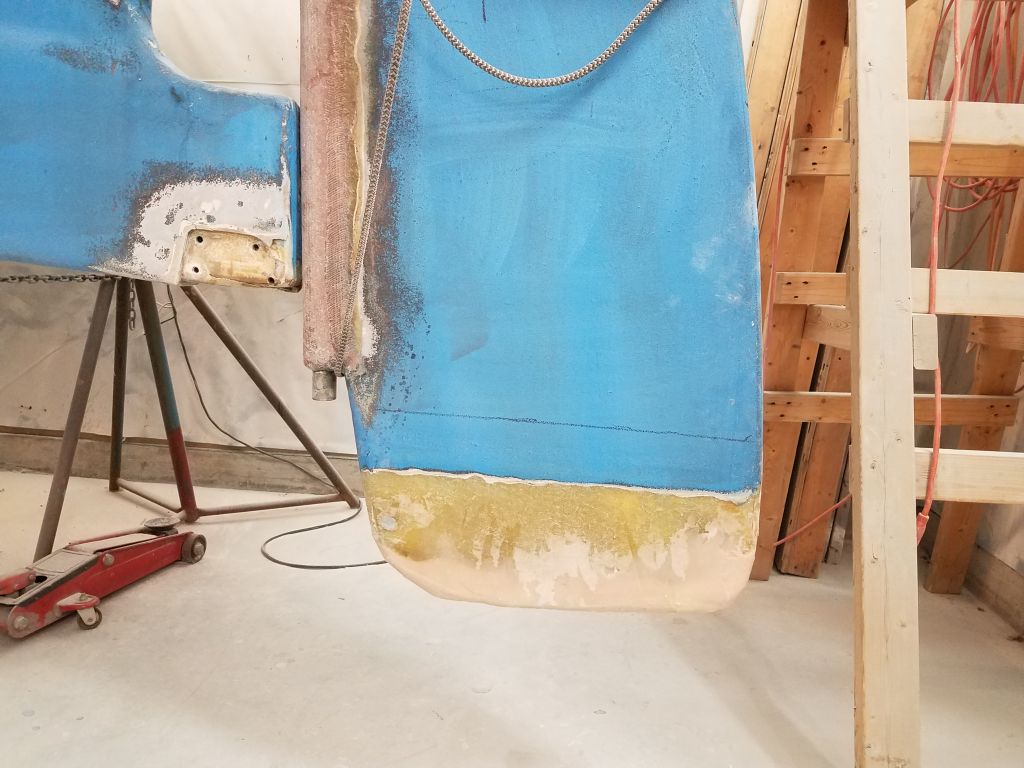
Note that the striping and bottom paint heights on the outboard rudder are actually quite a bit lower than those on the hull, a production inconsistency I’ve seen on three other Contessa 26s that have been in the shop.

When all was said and done, I measured the new waterline height at 68-1/4″ from the floor.  Since the instructions indicated the main support tubes (the center thereof) on the frame should be 42″ above the waterline, this meant that the frame needed to be 110-1/4″ above the floor here.

Sometimes, past experiences can inaccurately color a fresh approach, and, in reviewing my notes from earlier, my mind somehow stuck on a note about a 15″ height difference between the main frame tubes and the curved after lower tube that protects the paddle arm from damage.  In hindsight, I don’t know why I ever noted this back then, because I didn’t actually build the frame in that instance using the lower tube either, but as I said it’d stuck in my head as important, so the net result was that I built my first basic support (four lengths of  2x4s screwed together with simple angle braces for strength) too short by 15″.  The calculations had made sense at the time, and all the math was right, but I’d erroneously subtracted the 15″ simply based on those earlier descriptions.  I knew as soon as I lifted the vane frame onto the support that I’d made an error, and it didn’t take long to figure out the simple cause.

Fortunately, this was a simple fix, and before long I’d rebuilt the frame with longer side legs to bring the height up where I needed it (which was just one inch shy of the final desired height; the last inch came from the half diameter of the 2″ main support tube).

Now, with the frame set atop my framework and centered according to the slot in the rudder cheeks ahead, I measured the height to the center of the main tube at 110-1/4″ from the floor, right where it needed to be.

With the vane clamped in place and some safety lines, I adjusted the support and staging plank as necessary to bring the vane where I wanted it in relation to the hull (basically as close as practicable to the top of the rudder cheeks in this case, without fear of interference now or ever).  On the framework, the frame of the windvane was level from side to side.

To double-check the height of the frame where I had it, I temporarily installed the vane paddle, and with a line adjusted the vane till it was vertical (i.e. level fore and aft).  Then, I extended the waterline mark from the rudder aft onto the paddle itself, and checked how far the paddle extended above this line:  six inches, just as the directions indicated.

Now, with the vane properly positioned in all aspects, I could begin the actual support tube installation.  On this boat, this meant a pair of 2″ diameter double-curved tubes that extended from the main frame sockets down to the aft deck, splaying out to the sides in the process.  The directions suggested the centers of the tubes should be about 25″ apart on the deck, so after masking over the decks on both sides I made a couple marks just for general reference, since the tubes and brackets themselves would ultimately dictate the final positions.

Using one of the tubes, I held it against the main frame to see how the as-provided length worked out, and made a mark where I could cut some of the excess tube length given the vane frame’s position a couple inches aft of the top of the rudder.

Down on the bench, I cut off the excess length (about 3-5/16″ here), and test-fit the tube on the starboard side before cutting its counterpart to port.  I found the tubes’ fit within the frame sockets to be extremely tight and dry, making installation and removal (which is required several times through this early process) quite a challenge.  Some waterproof grease on the tubes and sockets helped, but it was onerous.  Eventually, keeping the frame level throughout the process, I determined the mounting positions for the brackets that would hold the tubes to the deck, and marked them accordingly on the masking tape.  With each tube held in place in the bracket, I marked through the holes on the sides of the brackets for the holes I’d need to drill through these tubes to secure them there in the final installation.  At the socket ends, I used tape to mark the tubes where they were fully inserted in the sockets for future reference.

This essentially simple process, given the care I took in measuring and checking, the time consumption of the tight tubes in the sockets, and other considerations (including a broken top support on my wooden frame, the victim of the excessive force required to twist and push the tubes in and out of the sockets; I had to remove the vane and rebuild the top of my frame before continuing), took quite some time, but these initial two tubes were the most critical in the installation.  At length, however, and as the afternoon drew to a close, I reached a point where I could remove the tubes a final time and prepare ahead for a more streamlined day of installation tomorrow.

First, though, after ensuring for the 97th time that the tubes and frame and brackets were all as I wanted/needed them to be, I went ahead and drilled through the Monitor frame sockets and main tubes at the marks indicated on the frame.  I chose to drill these bolt holes now (they’d eventually secure the tubes to the frame) because there were internal compression supports that were required, and I didn’t want to remove or reinstall these tubes any more times than absolutely necessary (i.e. one more time).  So with fresh, sharp drill bits, of which I’d laid in an ample supply, a new drill battery, and some cutting oil, I drilled the 5/16″ holes through socket and tube (taking care on the port side to avoid the lighting wire within).

Now I removed the tubes, and down on the bench I fit in the supplied compression sleeves, holding them in the proper position with the bolts themselves, and used sealant to secure the sleeves inside the tube, just to hold them in place and prevent them from falling out during installation or at some point in the future should the tubes ever be removed.

On the boat, I marked the bolt hole positions for the two tube brackets, and with a 5/8″ bit I overbored the after hole on each side to remove the plywood core material; the forward pair of holes fell just forward of the end of the core (as I could determine by feeling around beneath the locations through the nearby vent fitting holes).  I filled the voids with a thickened epoxy mixture and left the potted holes to cure overnight.

Finally, I prepared two fiberglass backing plates for the deck mounts.  The instructions suggested that no backing plates were needed for the installation, but with these deck fittings (rather than the all-transom mounts found on many installation) and the way the vane ended up being  supported in this case, I felt better using a strong backing plate.

Total time billed on this job today:  8.25 hours

0600 Weather Observation:  10°, clear.  Forecast for the day:  Sun and wind, 20s

Dharma Rose 24

Friday

I removed the temporary glue block securing the galley sink through hull pad, and cleaned up around the pad a bit, lightly sanding as needed to remove any sharp bits inside and out.  Afterwards, I dry-fit the flange base, temporarily securing it with nuts to the stuffs, and from outside threaded in the through hull fitting to check the fit and to see if I’d need to cut the fitting at all for a tight fit (no).

With the tight space in which to work, for this fitting I decided to pre-assemble the through hull valve, flange, and hose fitting to streamline installation, so down on the bench I tightly threaded together the pieces with pipe dope.

After final preparations, I permanently installed the seacock from inside with some polyurethane sealant on the mating surface, securing it hand tight (for now) with the fixing nuts.  Outside, I started the threads of the through hull, then added lots of the sealant to the through hull neck and flange before securing it tightly with my through hull tool.  Back inside, I tightened the fixing nuts, securing the flange tightly, then checked from outside to ensure that I’d tightened the through hull as much as possible; with the tighter nuts inside, I was able to get a fraction of a turn more from outside.

Afterwards, I cleaned up all the excess sealant.

Back at the bench, I assembled the valves and hose fittings for the cockpit scupper through hulls, then installed these to the pre-installed flange bases in the boat, adjusting the rotation of each fitting to ensure that the valve handles cleared each other and the eventual hoses.  I planned to leave the new hoses off till somewhat later, to give me ample room for the engine installation, shafting install,  and exhaust system.

I brought the new ship’s batteries aboard and tested the fit in the battery locker beneath the cockpit sole, and also ensured that my new battery cables would reach all terminals appropriately (they did).  I made up jumpers to connect the two banks, but for now didn’t install any of the wiring since I still needed to secure the batteries.  I ordered some straps for this purpose.

I planned soon to begin the installation of the new Monitor windvane, so I unpacked the box containing it and its component parts so I could check the included inventory and ensure that everything I needed was there.

The windvane came with a stern light pre-wired through the tubing, but not installed to its welded bracket, so I took care of that now.

To finish off the chainplates on deck, I made up a series of cover plates from 1/4″ fiberglass, cutting slots to allow the plates to fit over the chainplates.  On this boat, there was enough room between the bulwarks and the chainplates to allow the covers to slip over the top; on a previous version of this boat I’d had to leave the slots open from the end for clearance.

After checking the fit on each chainplate, and marking accordingly, I eased all the edges of the rectangular plates, and rounded the corners, before applying a coat of spray primer to begin the finishing process.

With some other minor odds and ends and consulting with the rigger who arrived to take away the rigging for replacement, I wrapped up the day and the short week.

Total time billed on this job today:  7.25 hours

0600 Weather Observation:  20°, clouds.  Forecast for the day:  Sun and wind, low 30s

Dharma Rose 23

Thursday

I spent most of the morning working on the galley sink through hull, which the owner had recently asked me to replace.  The original fitting was the usual ball valve-on-a-stalk.

Access within the locker was tight, but I almost got the ball valve to unthread on its own, which I always try first:  it jammed after half a turn, at which point I abandoned my attempt to remove the fittings this way and instead ground off the mushroom head from outside and removed the fitting easily from there.  Afterwards, I sanded the hull outside and inside the locker to prepare the surfaces for new work.

From 3/4″ G-10 fiberglass, I prepared  a backing pad to fit, and went through the various steps to prepare it and the flange base for installation, much as I’d done for the cockpit scupper through hulls earlier.

I dry-fit the pad in the boat, and glued in a support block beneath it to hold it while the epoxy adhesive cured.  Then, I applied epoxy to the threads and heads of the bolts, tightening them down into the mash, and installed the backing pad in a bed of thickened epoxy, cleaning up all excess inside the hole and around the pad.

Meanwhile, I took a moment to install a zerk fitting on an existing through hull for the engine intake, which the owner had also requested.  The 1/8-27 SS zerk fitting fit in the original drain plug hole.  These fittings were a new and recent addition to this line of ball valves, designed to allow grease application and  help keep the ball from sticking over time (a common issue when the fittings aren’t used regularly).

With new supplies on hand in the afternoon, I could finish up a few tasks, starting with the engine control cables.  While access was still relatively good with the fuel fill hose out of the way, I made up the connections behind the control, switching the gear control cable to the opposite side from before, since this transmission required “pull” for forward.  I left the cable ends in the engine compartment for now and would make the connections to the engine once it was installed.

Now I could  finish up the fuel system with the fuel fill hose.  Similar to the original installation, I used a heavy plastic hose barb-to-pipe elbow to allow the fill line to make the bend into the tank inlet.  The original fitting had used a female threaded end with a threaded male hose barb, but I chose a male threaded end to eliminate an additional fitting and joint.  To allow the hose to fit, I ground off the threads from the end.  The way the fuel hose had to turn and connect to the tank obviated the possibility of using a hose barb elbow in this installation.

Up in no-mans land, out of sight and barely within reach, I secured the top end of the hose to the existing deck fitting with two clamps, and reconnected to the tank the existing ground wire.

With the remains of my battery cable, and newly-supplied lugs, I made up the pair of negative cables from the buss bar in the engine room to the battery compartment, completing the basic new wiring work for the electrical system.

Total time billed on this job today:  7.5 hours

0600 Weather Observation:  26°, light snow.  Forecast for the day:  Snow in the morning, 2-4″.  Clearing later.

Dharma Rose 22

Wednesday

During the holiday break, along with a few odds and ends, I finished up the paint work in the engine room and bilge and locker spaces, applying gray bilge paint to all areas as needed.  With this done, and with ample dry time, it meant that I could get right back to work completing the new installations in these areas, particularly the engine room.

I’d ordered and received new hardware for the cockpit scupper drain replacements, so with the new bronze on hand I got to work installing the new fittings.  During a dry-fit, I found that the molded opening on the port side was a bit smaller than its counterpart to starboard, so the flange of the flush through hull fitting didn’t quite fit, so I ground off a bit on one side to allow the fitting to properly fit in its intended location.

I tested the fixing nuts to ensure I’d have no problem installing them tightly, then removed the fittings and cleaned up the bonding areas, cleaning off old sealant.  Then, I installed both fittings in heavy beads of sealant, securing them tightly with the fixing nuts and cleaning up the excess sealant.

To finish off the installation, I installed 90° hose fittings on the through hull threads.  These fittings featured a flange, gasket, and loose female nut, like a union, so I could install the fittings easily  and position the elbows where I wanted them.  This completed the new installation.  I’d soon finish up the new seacock installation and install the new drain hoses, but for now I kept the after end of the engine room clear pending some additional work.
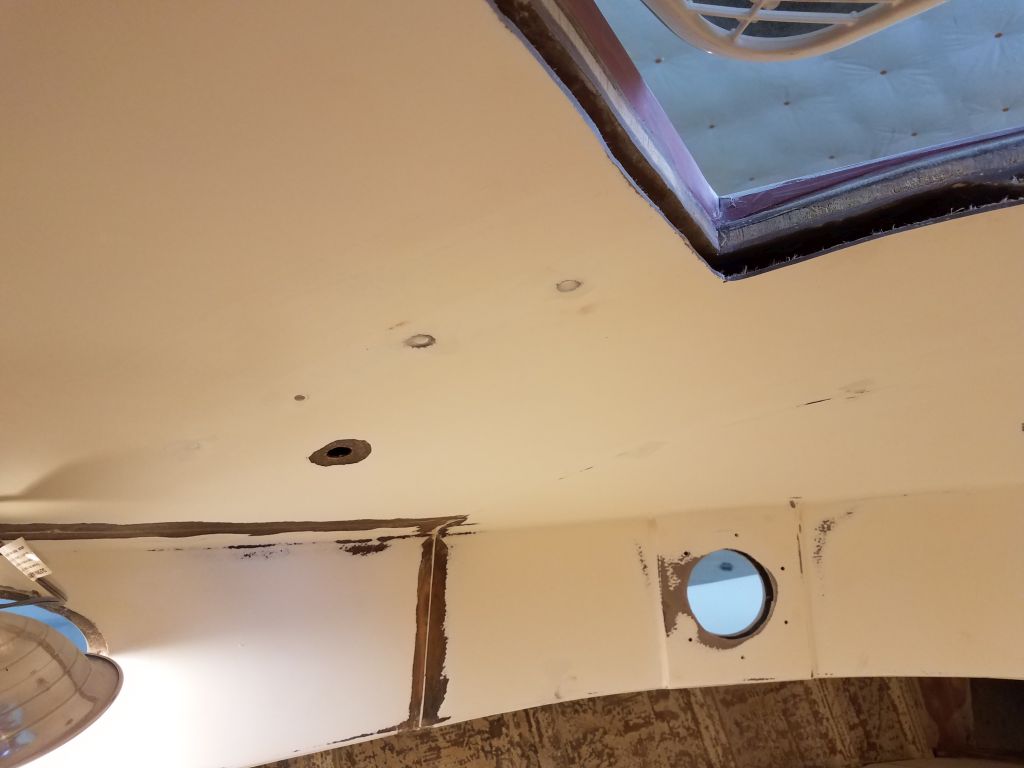
Now that the engine room was painted, I ran the engine wiring harness through the space beneath the fuel tank and out the opening where the waste hose used to be, leaving it there for eventual connection to the engine once installed.

I installed the new fuel filter in the location I’d prepared earlier, then installed lengths of 5/16″‘ fuel hose for the fuel supply and return lines.  I made up the connections at the fuel tank for both lines, and secured the hoses to the bulkhead in the engine room, leaving a length of excess hose for the final return line connection to the engine.  I tucked the excess behind the fuel filter for now.

During the earlier work in the engine room, to clear the way, I’d removed the discharge hoses for the three bilge pumps (2 electric plus the manual).  Now, it was time to reinstall these hoses while I still had good access.

Next, I turned to the electrical wiring, mainly the engine and battery cables, as the remainder of the existing wiring was outside the scope of my work.  During earlier rounds of work, I’d removed the old wire ties and clamps securing some of the existing wiring in the forward part of the engine room, so my first task was to resecure these wires along the top edge of the space.

To improve the wiring, I planned to install positive and negative cable buss bars in the engine room, which would serve as the distribution points for the remaining cabling and some of the existing wiring.  The port bulkhead was clear and convenient for this use.  Covers for these buss bars were backordered, so for now I went ahead with the installation so I could finish up the wiring; I’d install the covers once they arrived.

I started with short lengths of red (positive) and yellow (negative) cable to connect to the engine itself.  Since access would be much tighter once the engine was in its space, I chose to pre-install these short cables now, which was easy with good access to the side of the engine now.  With the main distribution busses close to the engine’s final location, these cables could be quite short, and final connection would be straightforward..

During the remainder of the day, I made up various lengths of battery cabling, starting with the positive cables so I could reassemble the battery switch and connect some of the existing wiring.  I led the cabling down the hull along the forward end of the engine room, then forward to the battery compartment, leaving ample slack for final connections to the batteries.  I loosely made up the connections to the new buss bars as available, though I’d need to remove these later so I could install the protective covers.  I ran out of the lugs for the battery cables, so I’d have to finish up the negative cabling once the new parts arrived.

Total time billed on this job today:  10.5 hours (including miscellany during the break)

0600 Weather Observation:  18°, mainly clear.  Forecast for the day:  Sunny, 20s

Dharma Rose 21

Friday

Overnight, the cockpit drain channel, which I’d filled with water, leaked out through the port scupper fitting in the deck, leaving water only in the fittings and confirming what I’d already determined shortly after adding the water.

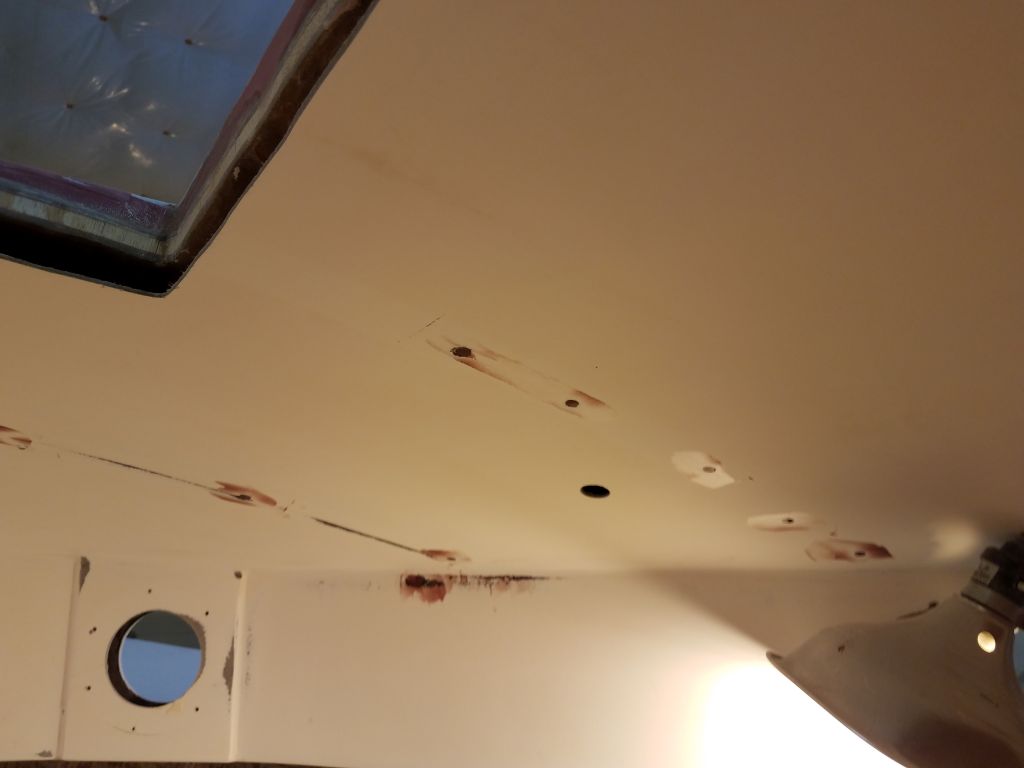
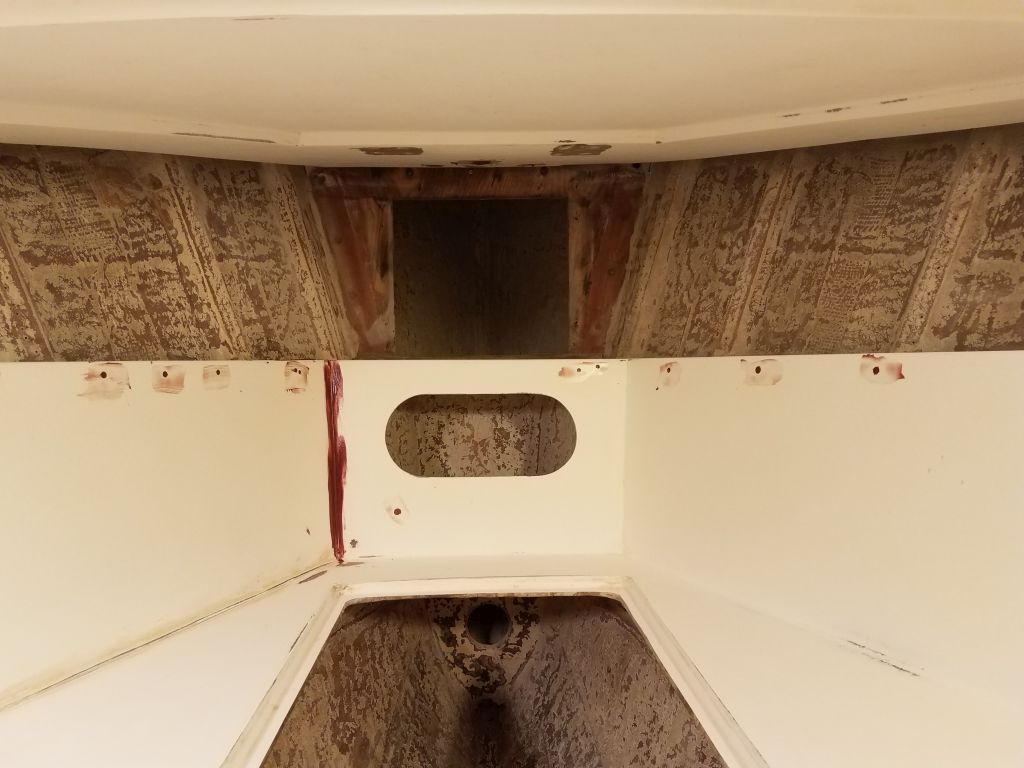
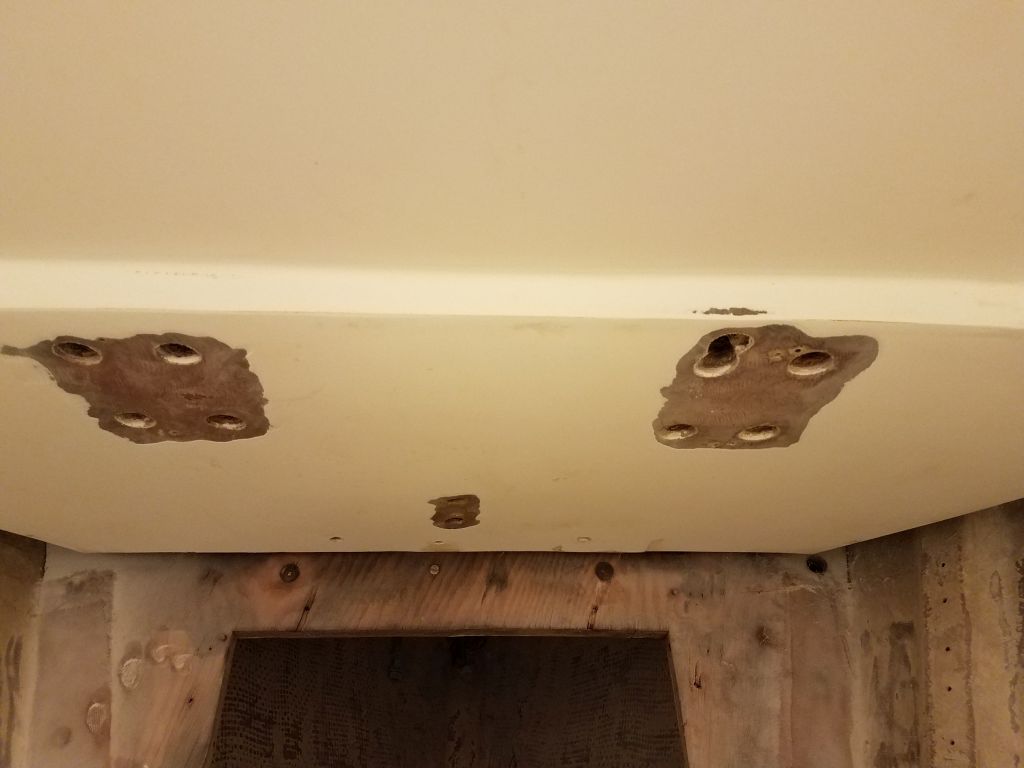
With access as good as it would ever be, now was the time to deal with the problem, and I made several attempts to loosen the fixing nut beneath the port drain fitting.  The fitting was nearly touching the nearby bulkhead leading to the port cockpit locker, and the nut was quite tight, and possibly secured with sealant as well, and after trying various tools to loosen the nut, I couldn’t make any progress, since wrenches interfered with the bulkhead when I tried to grip the various faces of the nut, or if I tried other faces the wrench would hit the other side of the engine room.

After a discussion of the situation, the owner chose to remove both fittings through whatever means and replace both, so after a false start with a grinder and cutoff wheel–I couldn’t manipulate it into the correct position in the oddly accessible-yet-impossible-to-access area beneath the cockpit, so I switched to a reciprocating saw with a long blade, which allowed me to cut through the drain fittings just flush with the tops of the nuts, after which removal was straightforward.

I ordered replacement scupper fittings that I hoped would work (they might be too large), and moved on.

After quickly and lightly sanding the newly-fiberglass engine pan, I worked on the fuel tank to resecure it to its platform with the original strap and a screw at the after edge.  Then, I reinstalled the various hardware, from the fuel gauge to the supply and return fittings, all of which were in good condition, though I replaced the hose nipple for the return line because it was simpler than trying to salvage the old with the hose still firmly attached.   The black coil on the top of the fuel tank is the engine wiring harness, also awaiting engine room paint and the engine installation itself.

I found that the plastic elbow incorporated in the old fill hose was cracked, so I waited on finishing up the new fill line till I could source a suitable replacement; I’d install fuel supply and return hoses as soon as the engine room was ready after paint.

In the port cockpit locker, I removed the remnants of the old vented loop from the original engine exhaust system, retaining the line that led from the loop aft to the exhaust gooseneck at the transom.

The new engine would require a 1″ vented loop, which the owner had ordered along with the engine, and now I installed the fitting in the locker, removing the vent valve from the top and replacing it with a hose fitting and the discharge line leading aft.  I drilled larger holes to accommodate the new 1″ hoses from  the engine room, replacing the smaller holes that had been there for the old system.  Once the engine was in place, I’d run the hoses from the exhaust elbow.

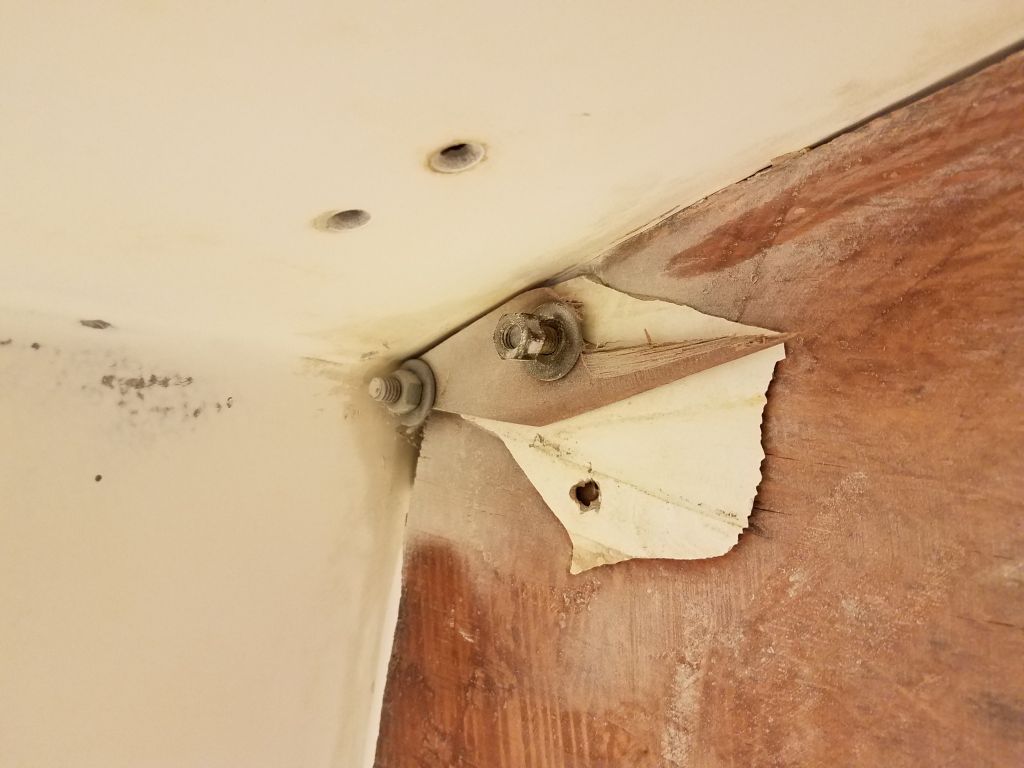
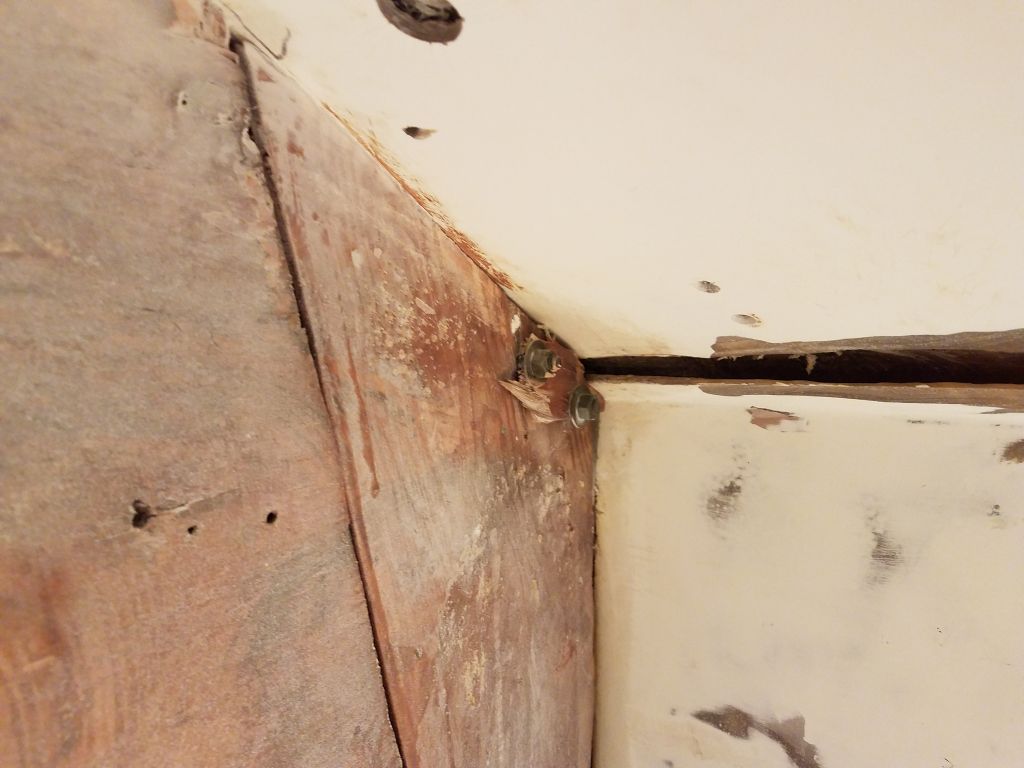
With the pre-engine work about as far along as I could bring it for the moment, I turned to the chainplates, which were ready for reinstallation.  I’d felt lucky to have been able to remove the bolts from the centermost chainplates on each side without removing the boat’s bulkheads, which I’d had to do on two sisterships in earlier projects, and now I hoped I could reinstall nuts and washers in the tight spaces successfully:  It’s one thing to remove stuff in tight quarters, but often quite another thing to do an installation.

Starting with the hardest chainplates–the center one on each side–I was happy to find that while the installation space was tight, it was possible to get the washers and nuts on in the 1″ or less space between the knees and the bulkheads.  On the port side, I could even put the nuts on by hand in the lavishly expansive space, but to starboard I had to tape the nuts into the open end of my 7/16″ wrench in order to get the started.

The remaining two pairs of chainplates had good access, and reinstallation was simple.  Later, I’d finish the installation from above with bedding and new deck covers to help seal the slots through the deck.

To finish up the day and the week, I made final preparations in the engine room–cleanup and some minor masking–and applied a coat of epoxy-based 2-part primer over all the fresh epoxy work in the space, along with the base of the battery compartment beneath the cabin sole.  This would help seal the new epoxy and allow me to finish up the paint work in the near future, which would pave the way for final engine and related systems installations.

Total time billed on this job today:  6.25 hours

0600 Weather Observation:  40°, light rain.  Forecast for the day:  Heavy rain, rising into the 50s


Older posts Newer posts