
(page 61 of 166)

Lively Heels Phase 3-37

Tuesday

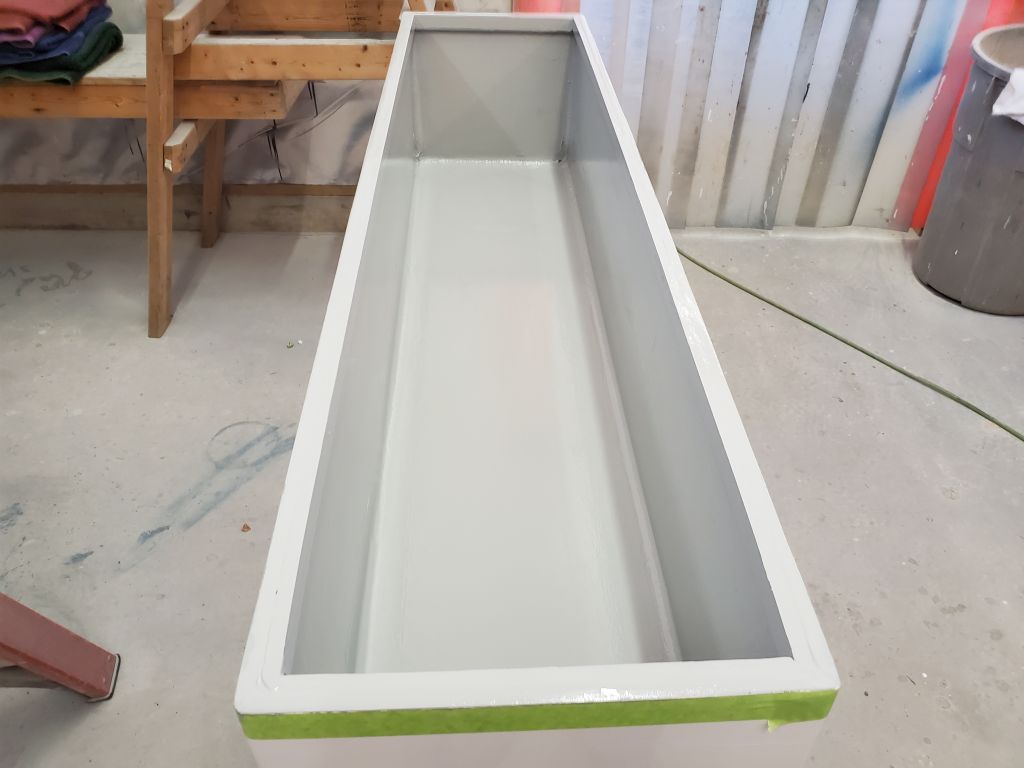
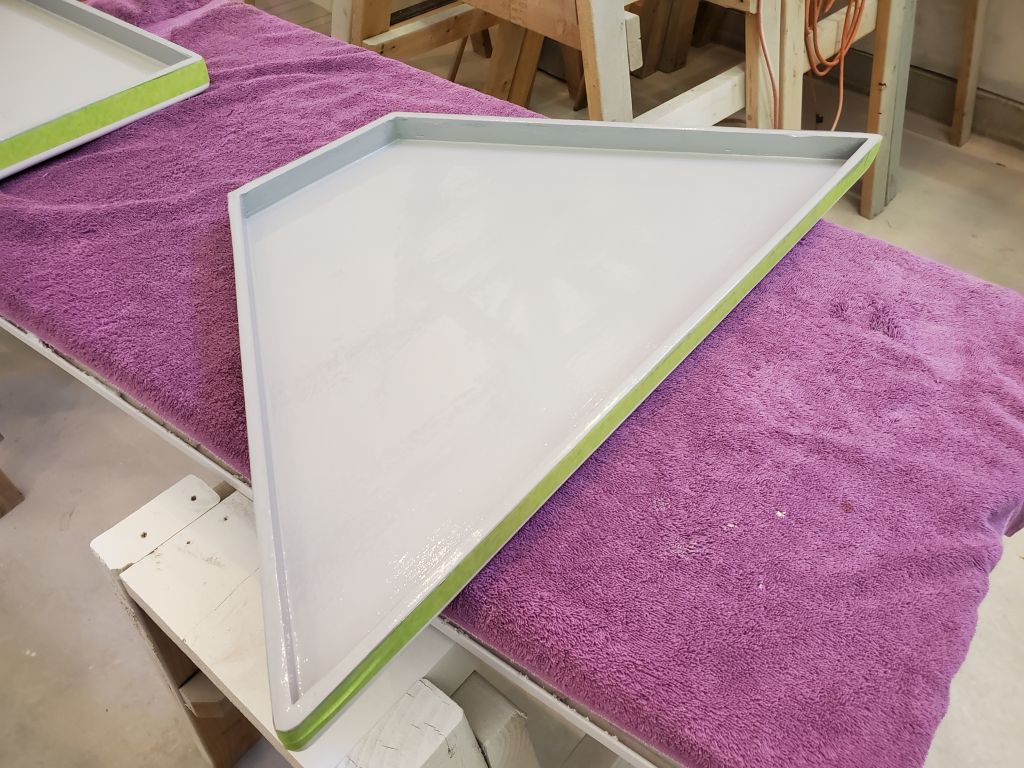
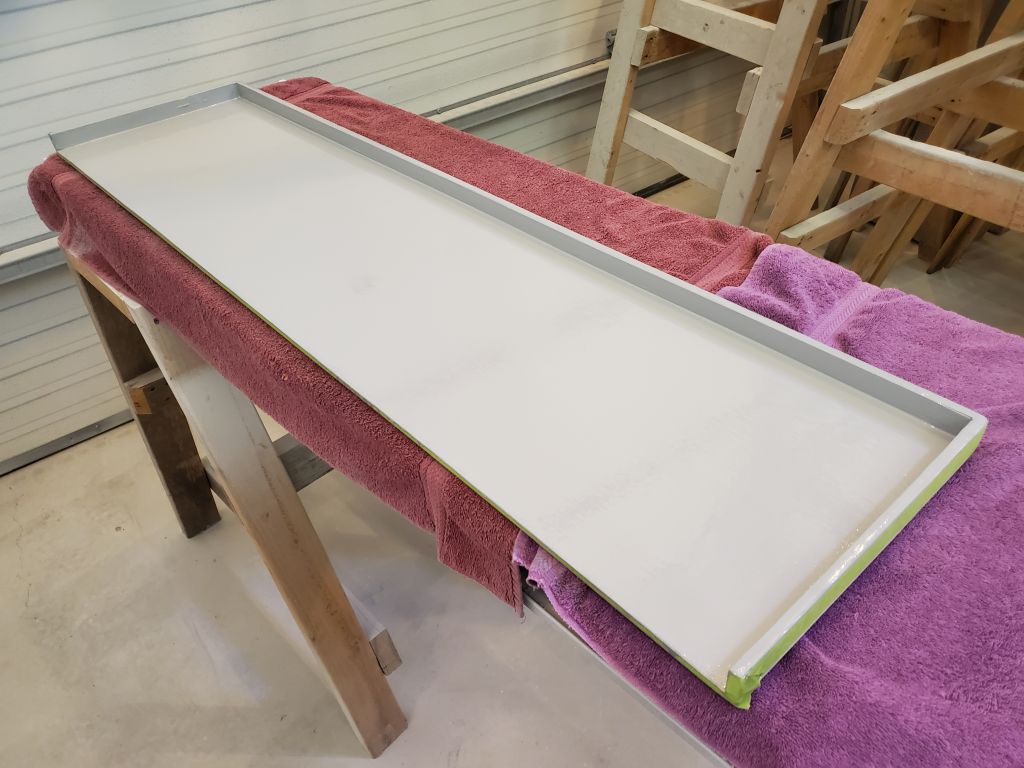
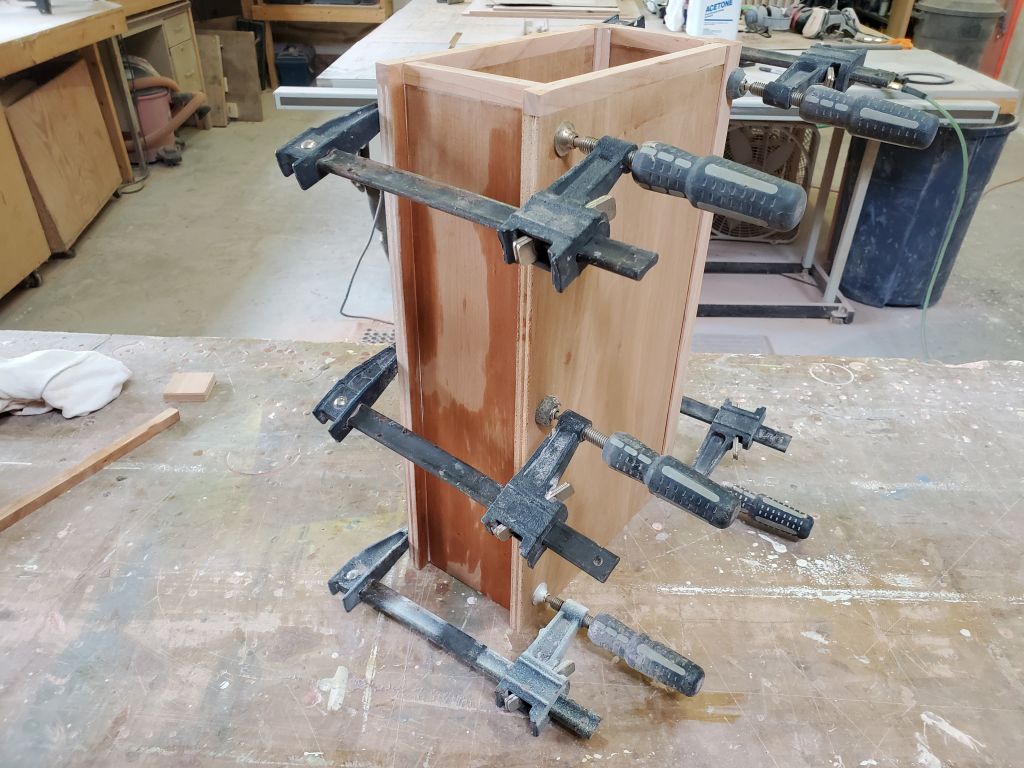
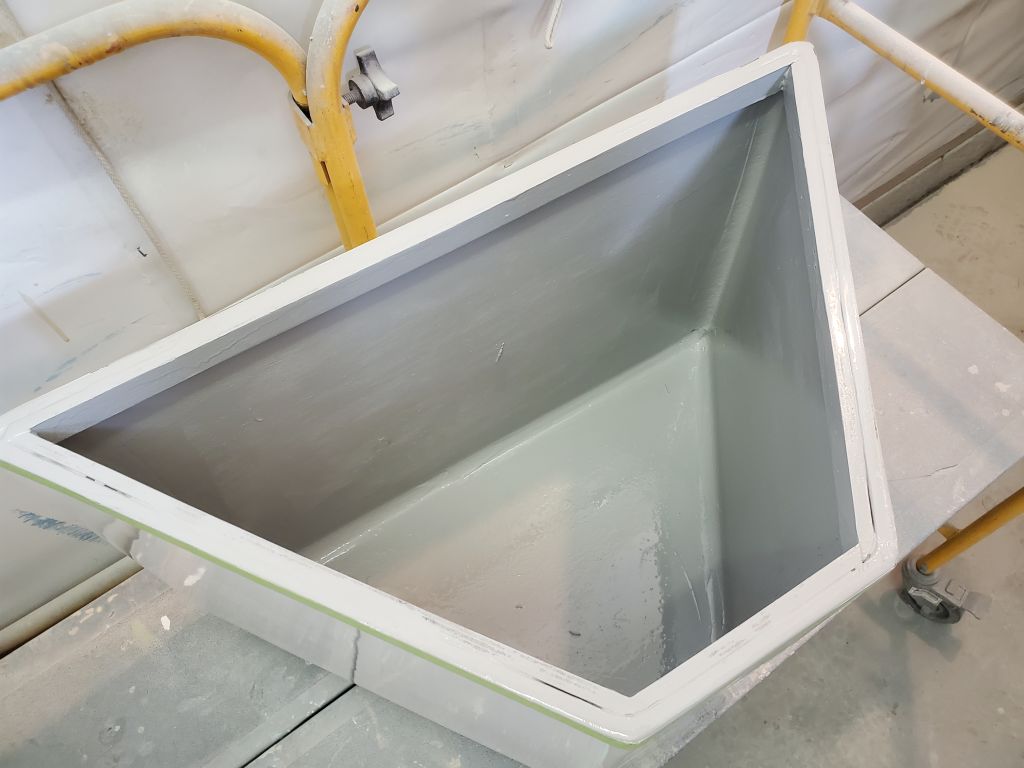
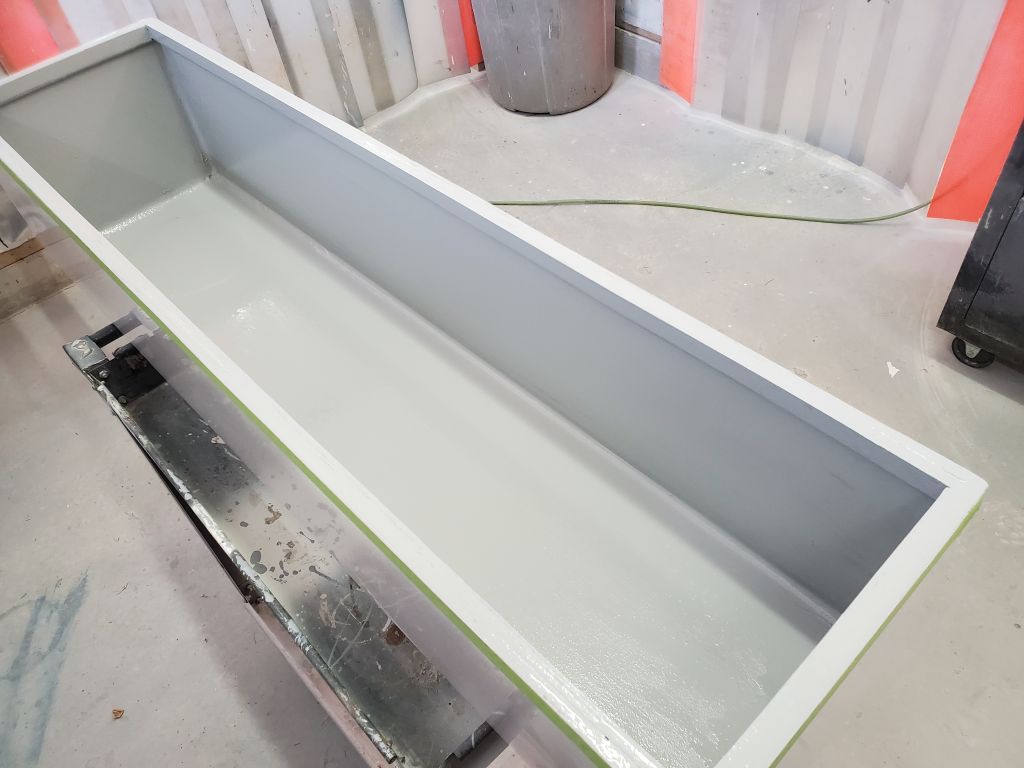
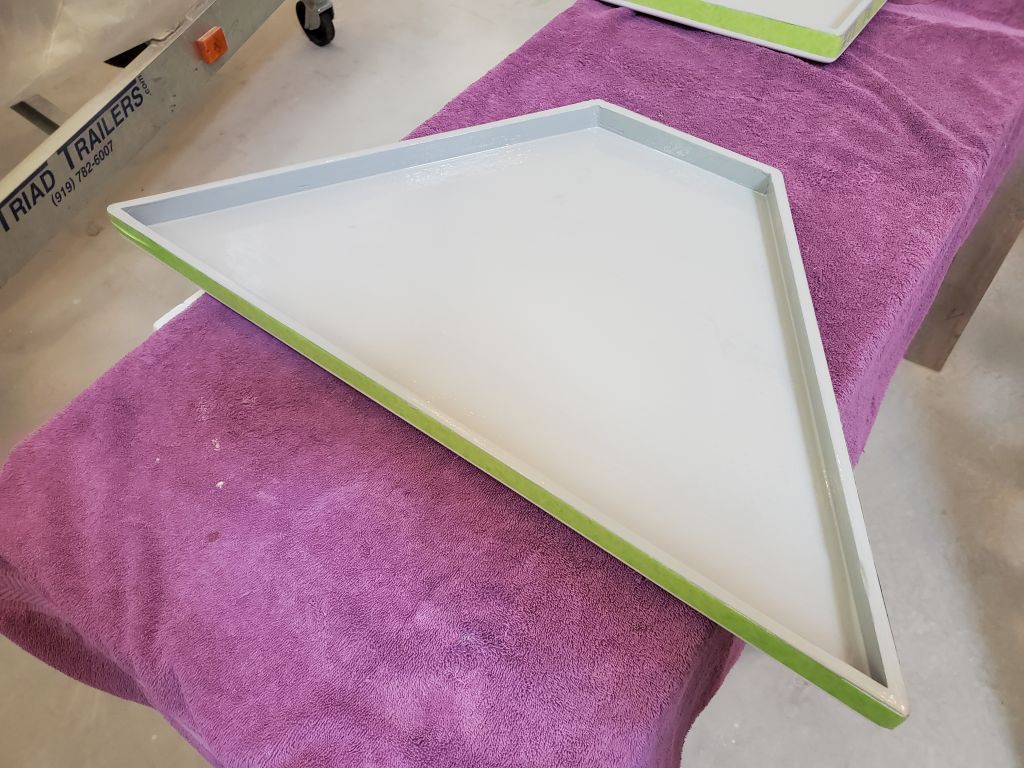
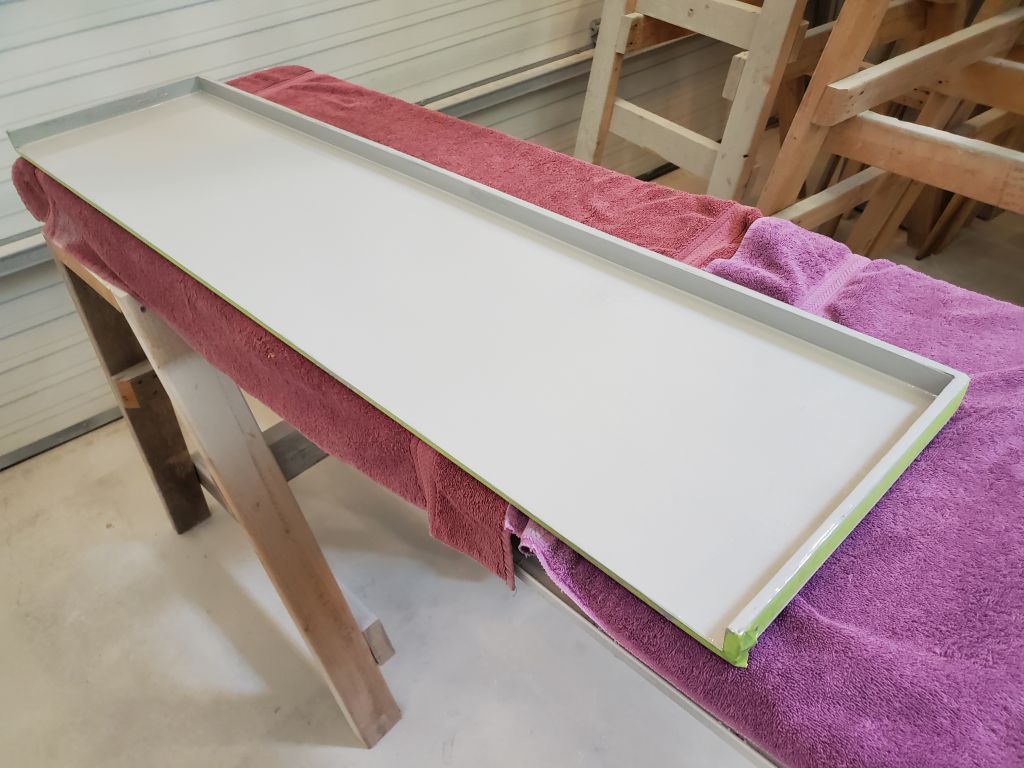
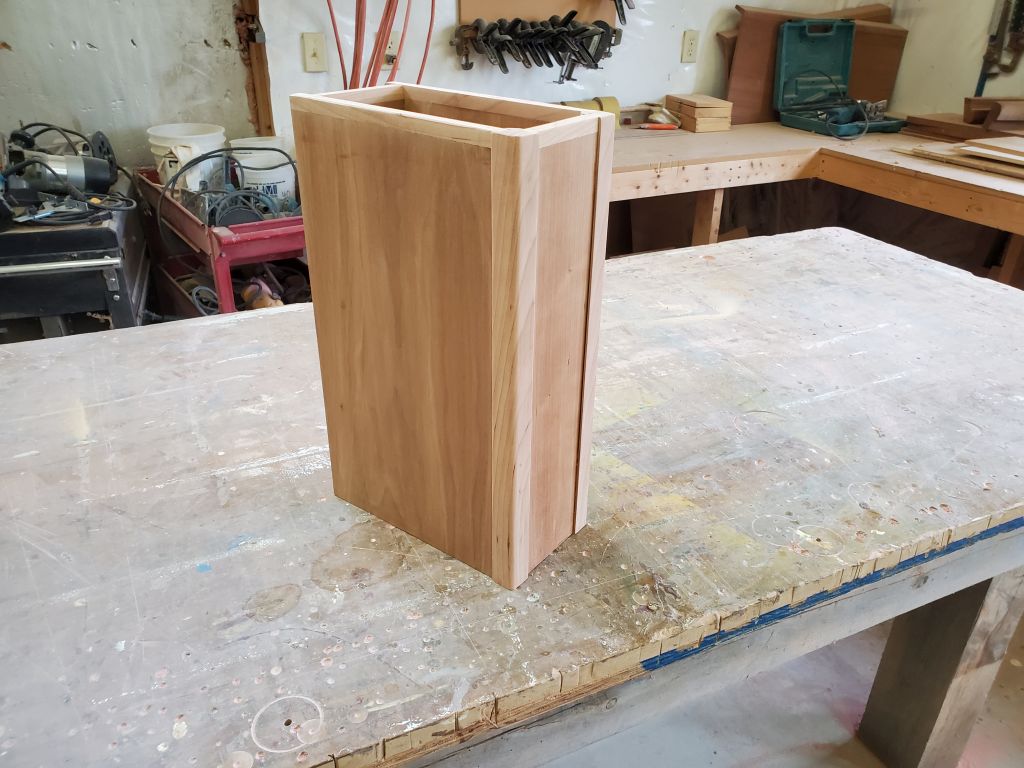
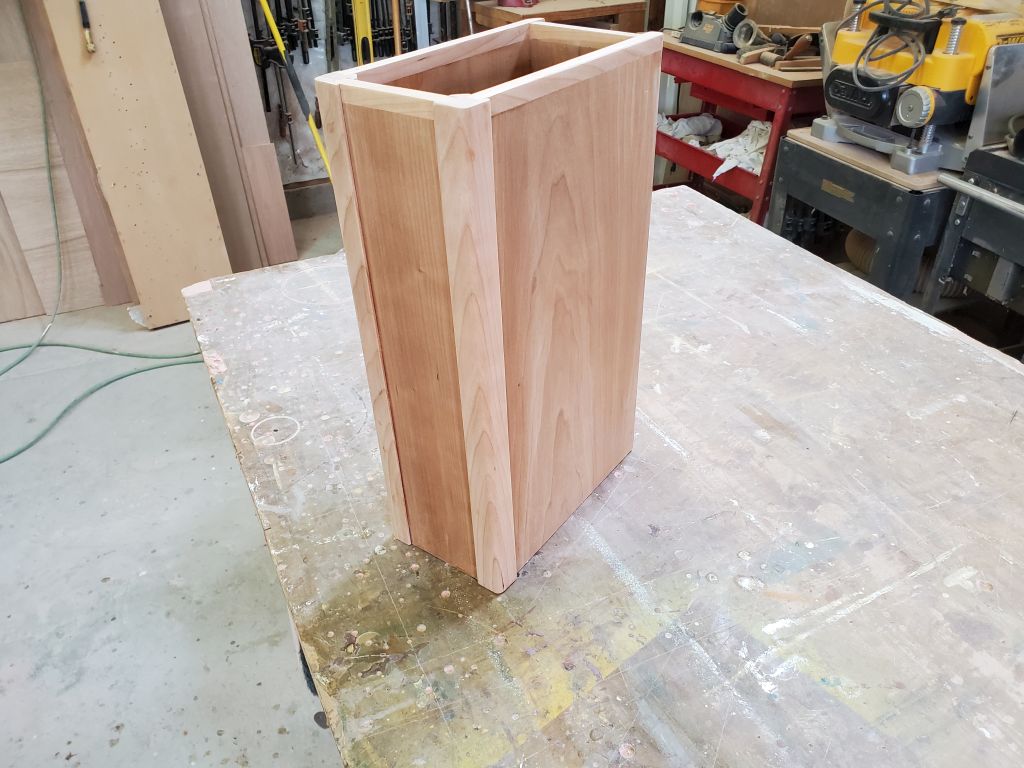
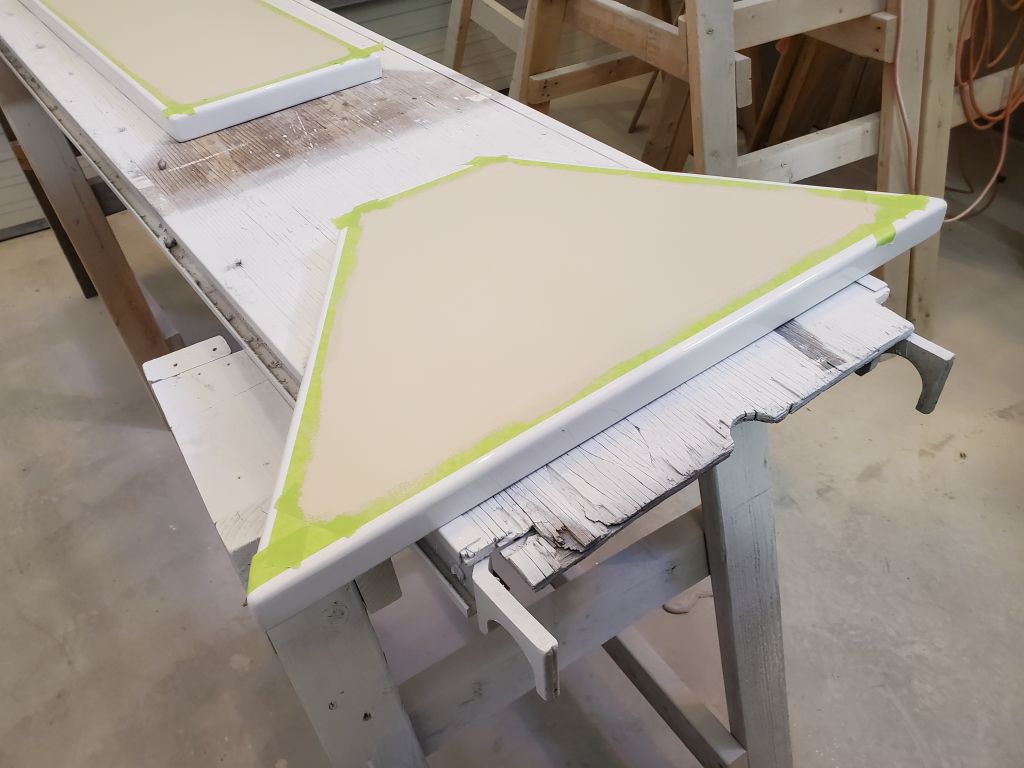
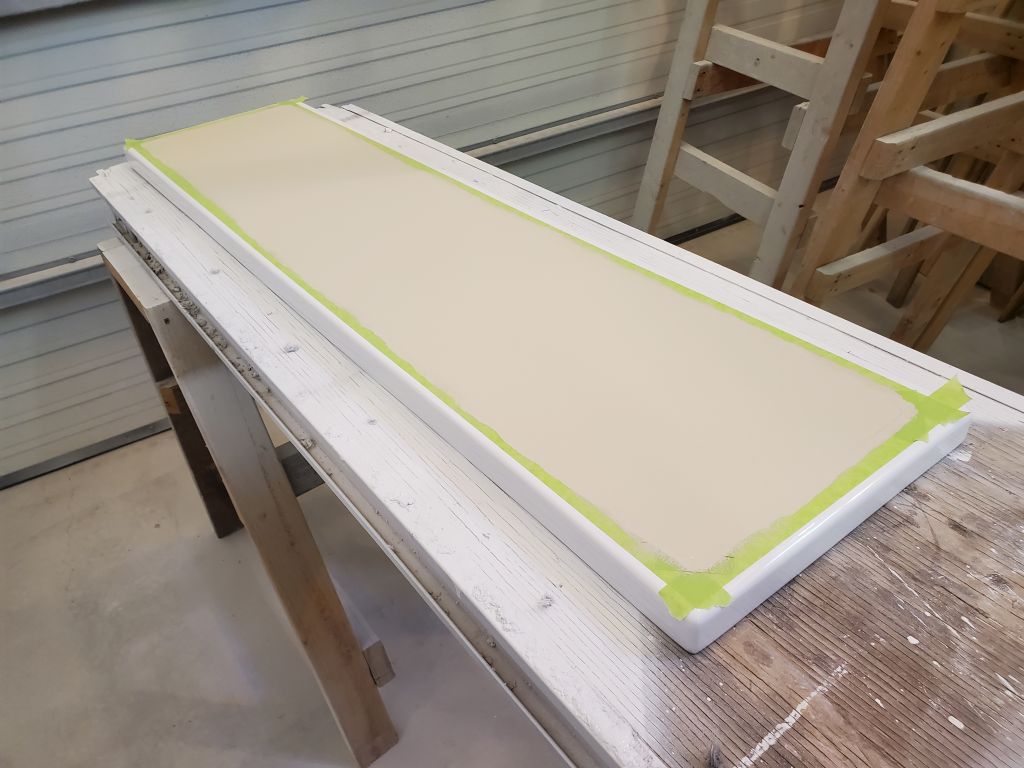
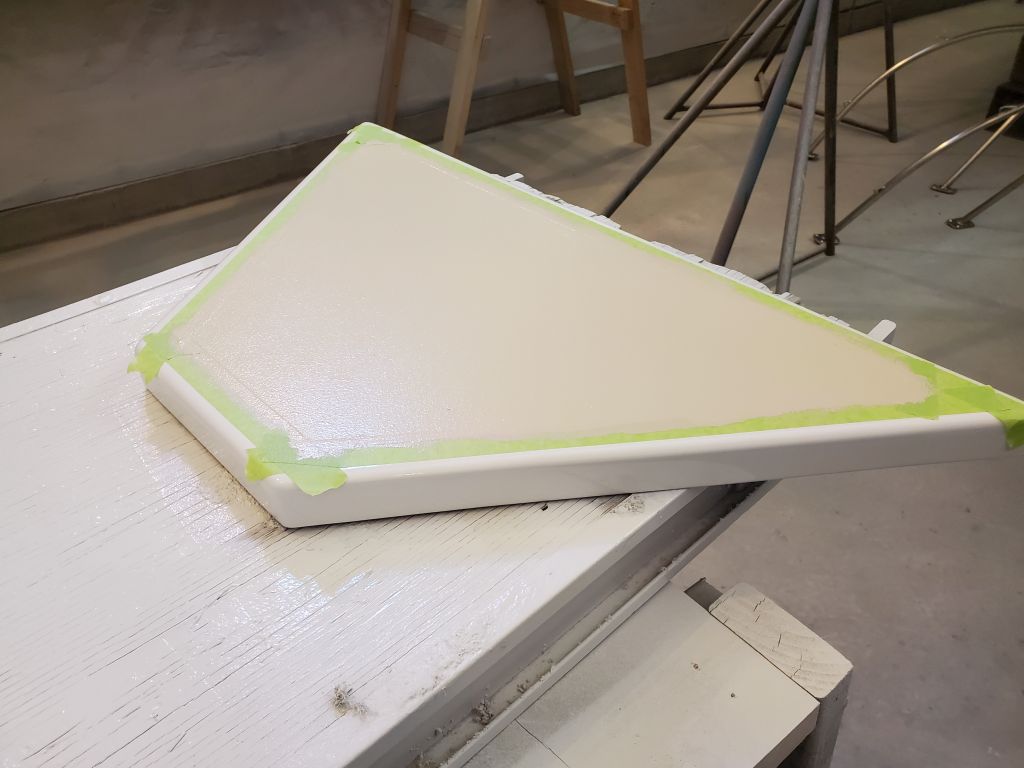
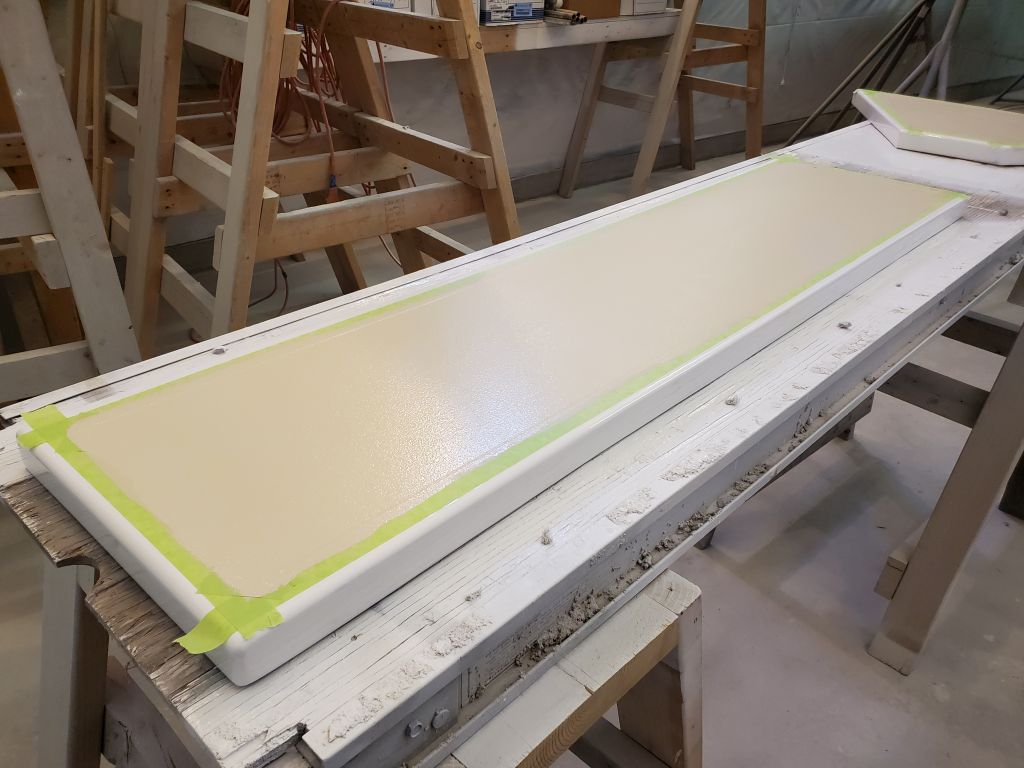
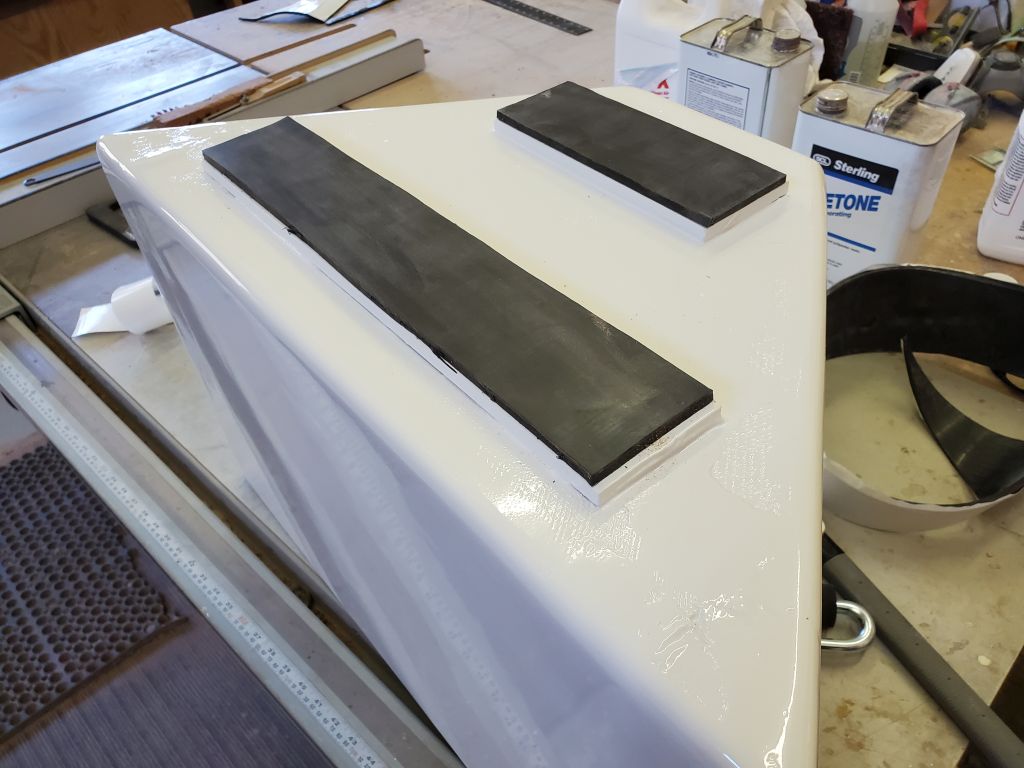
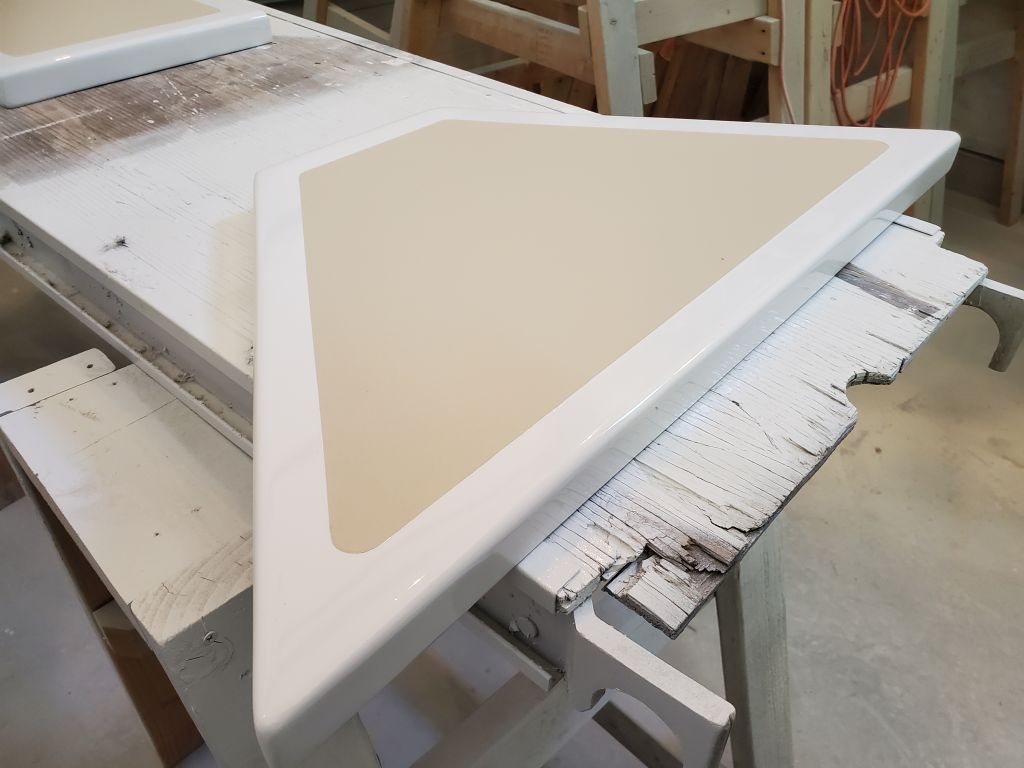
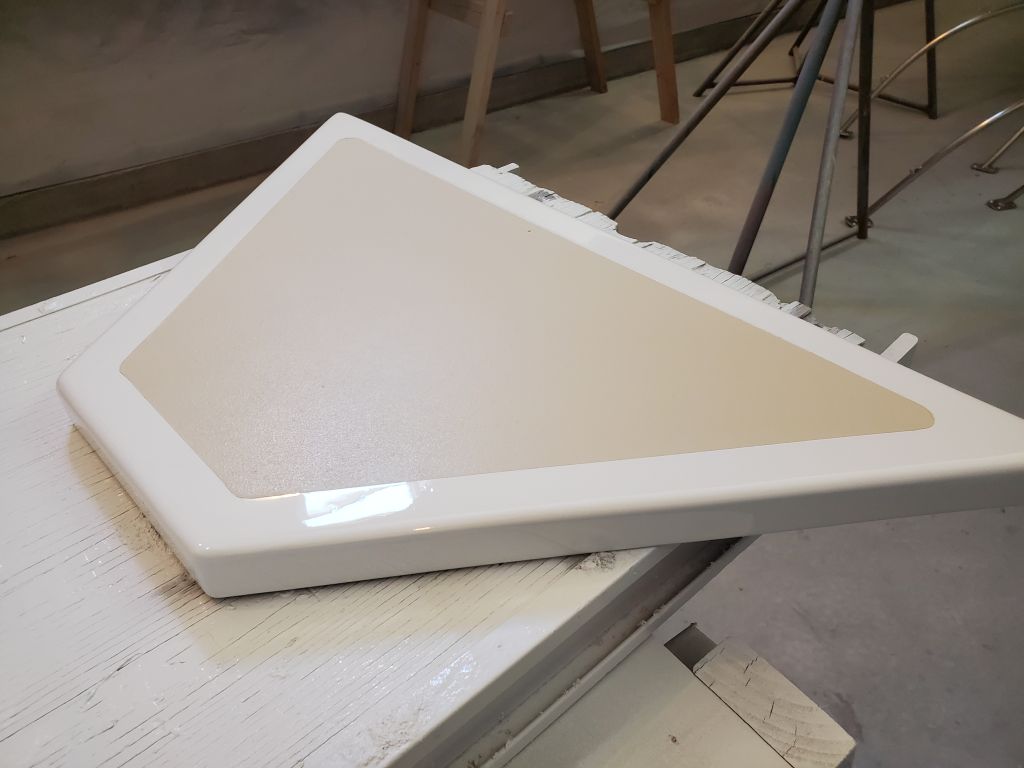
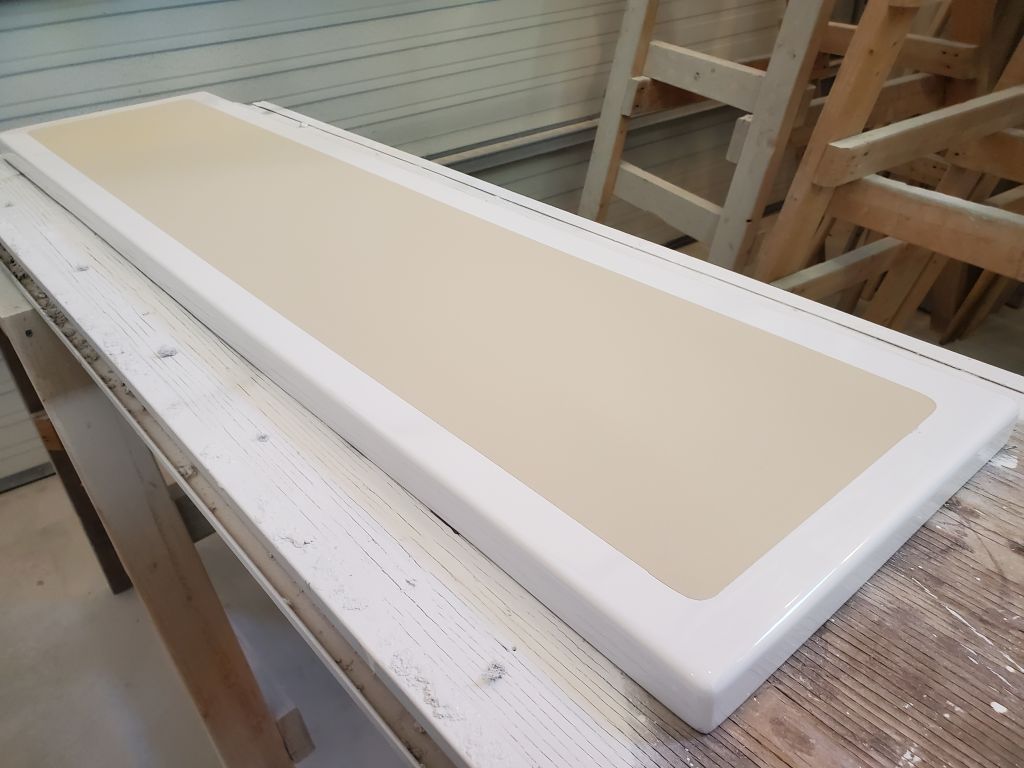
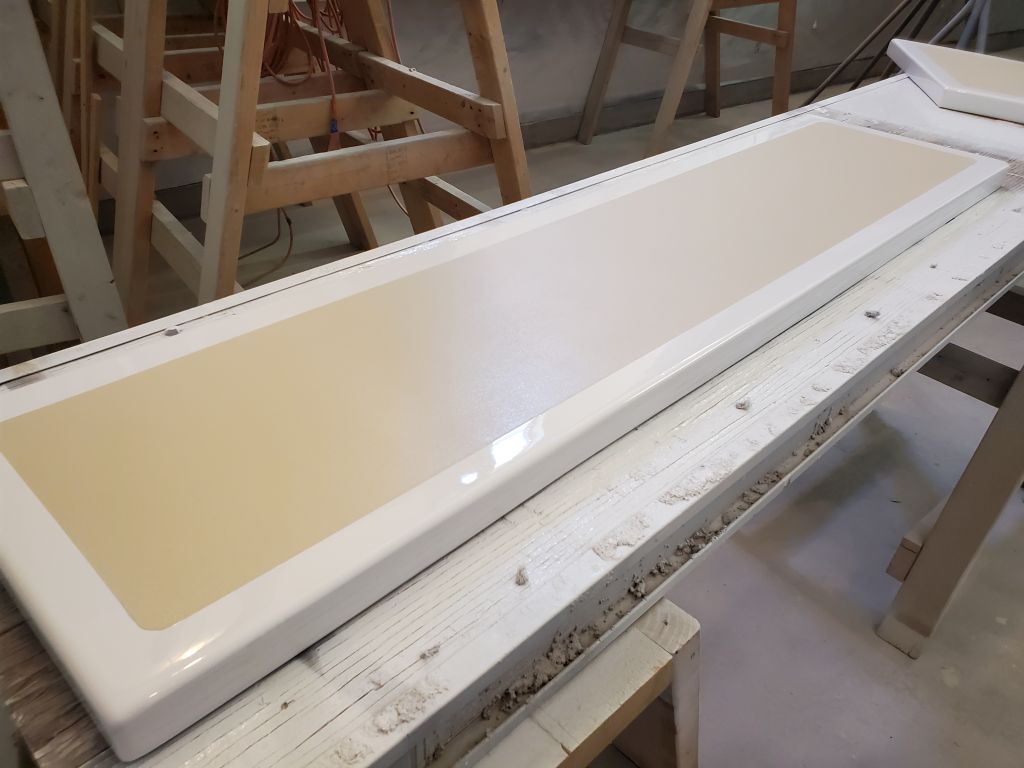
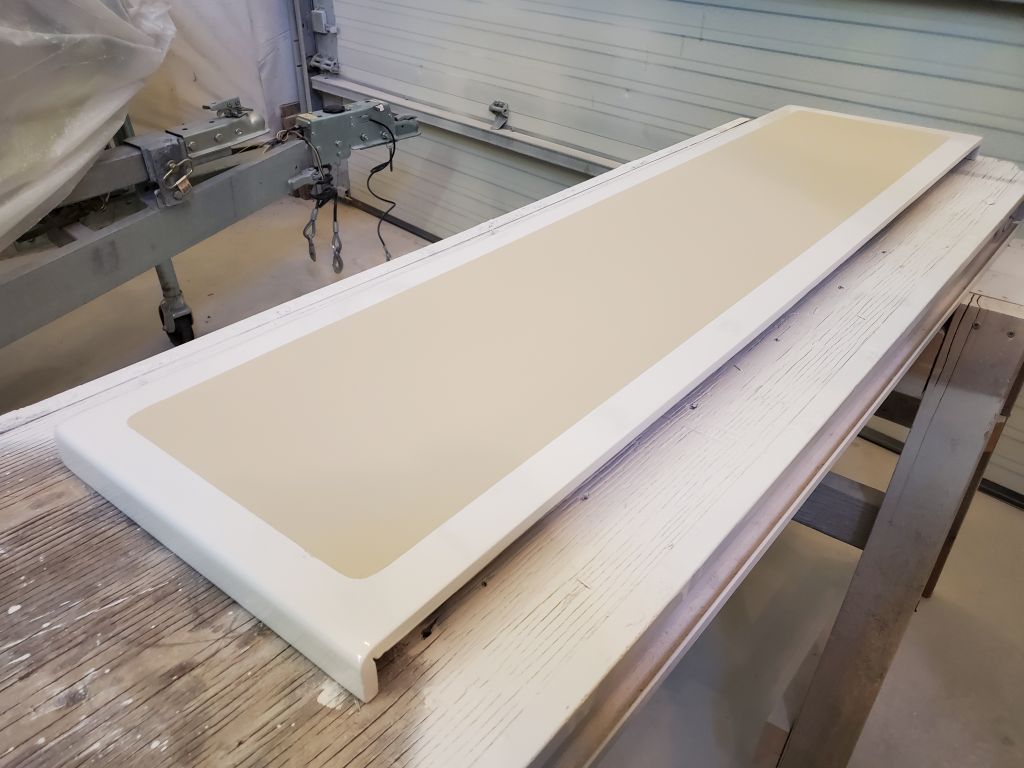
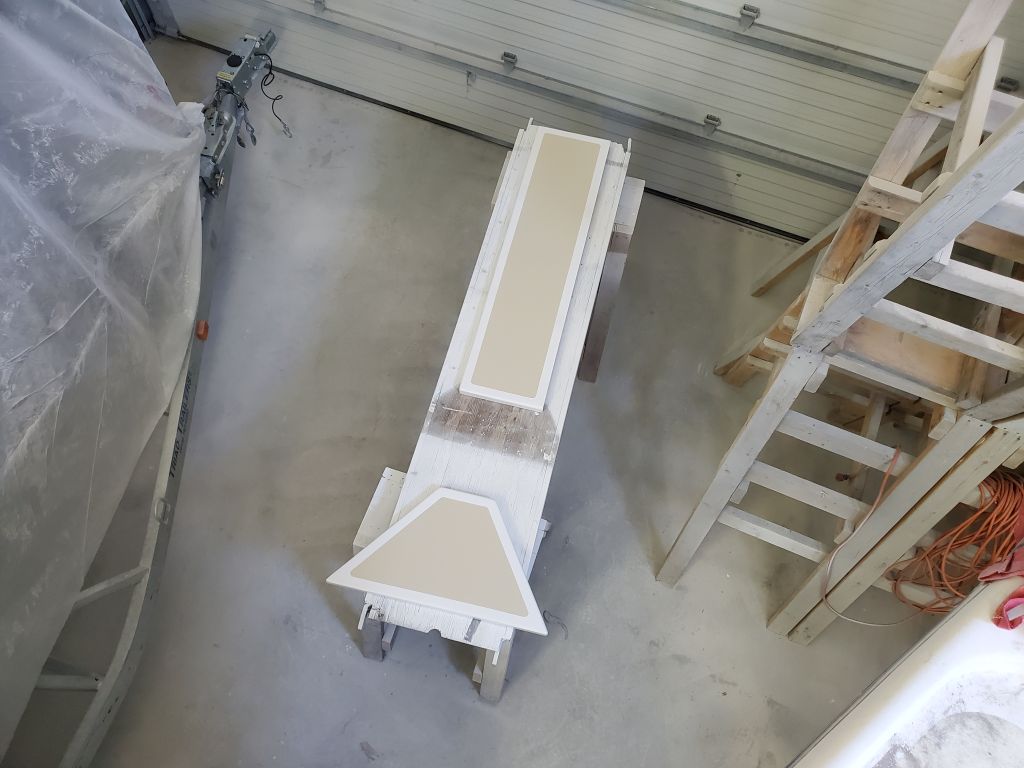
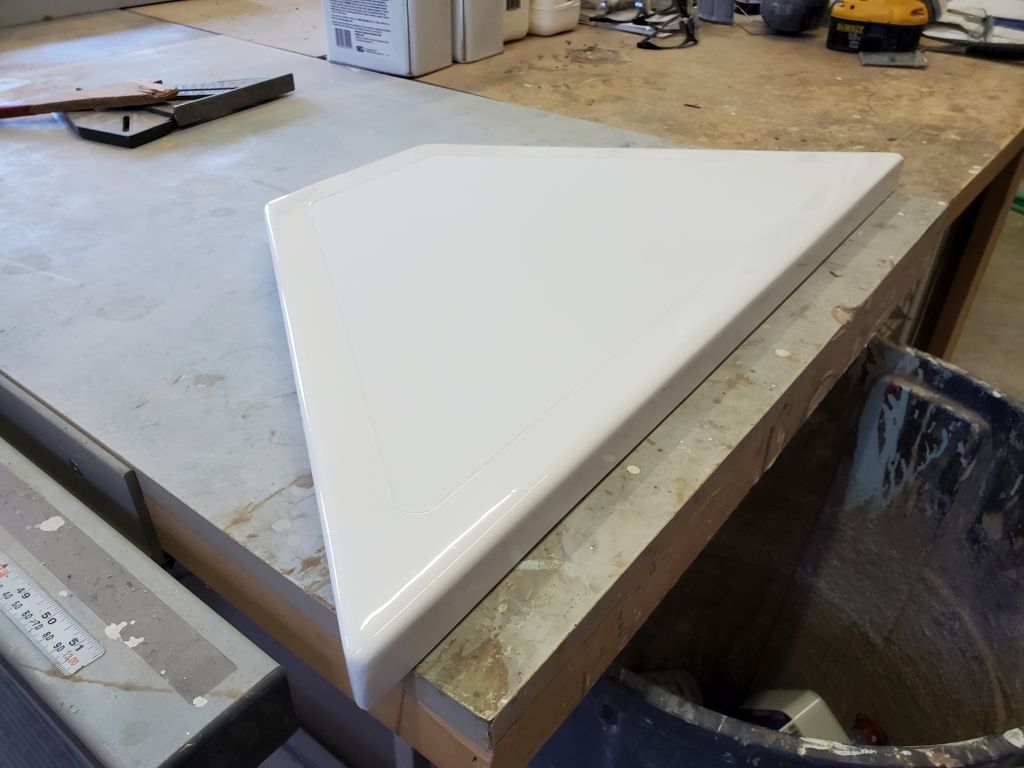
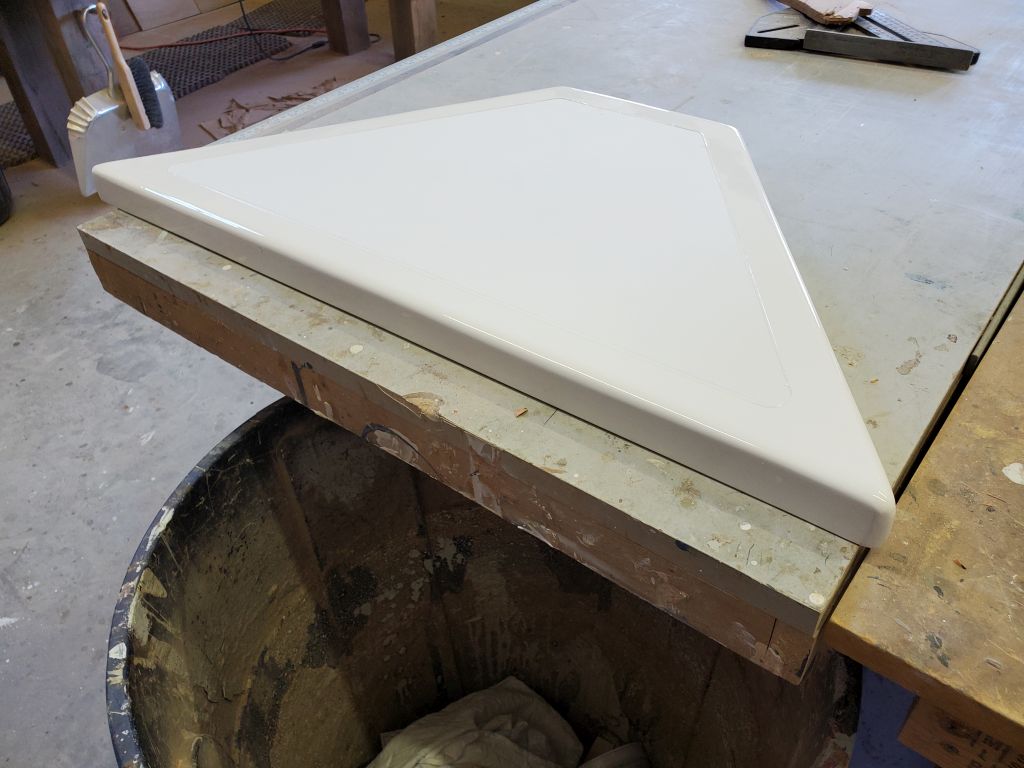
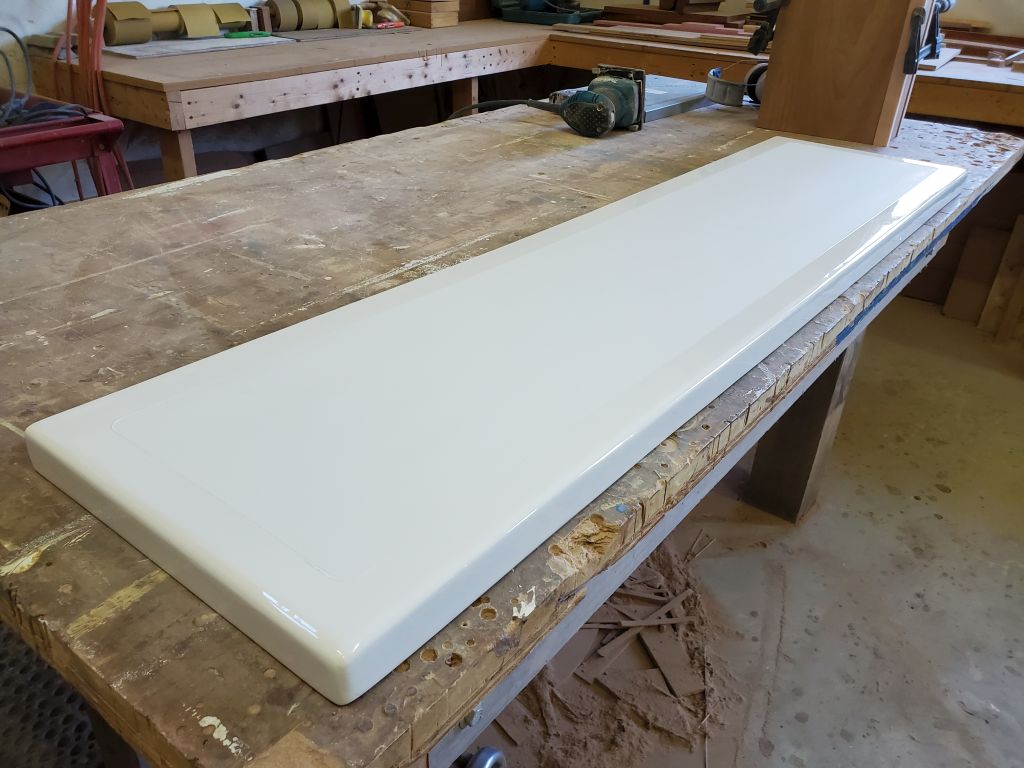
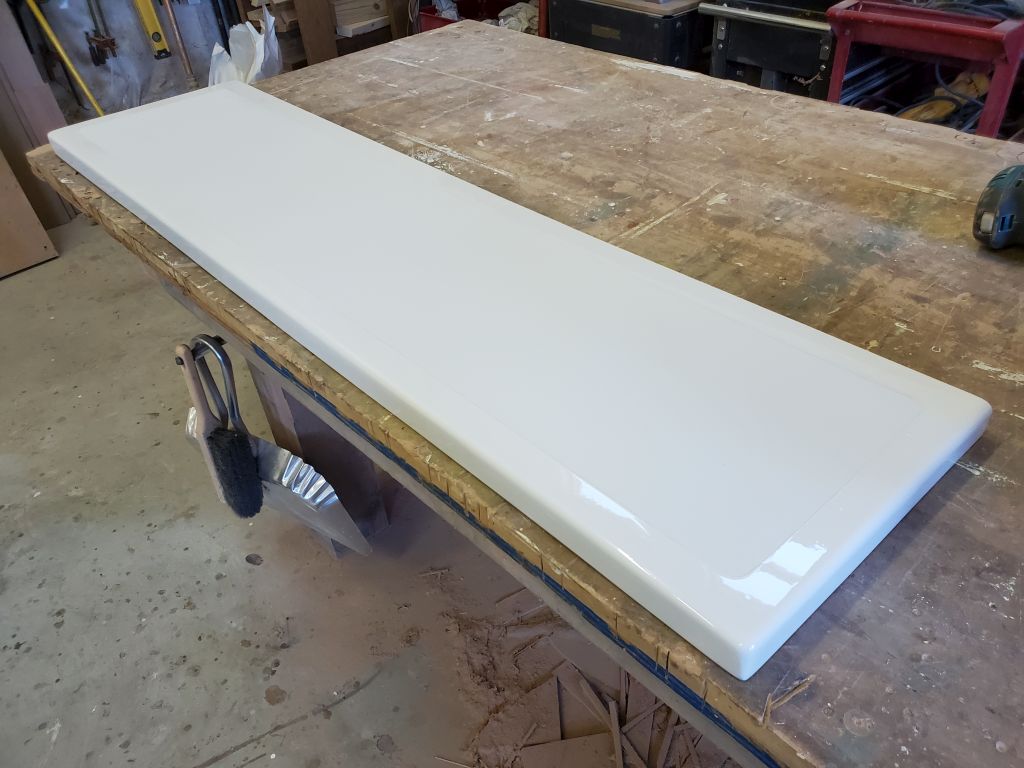
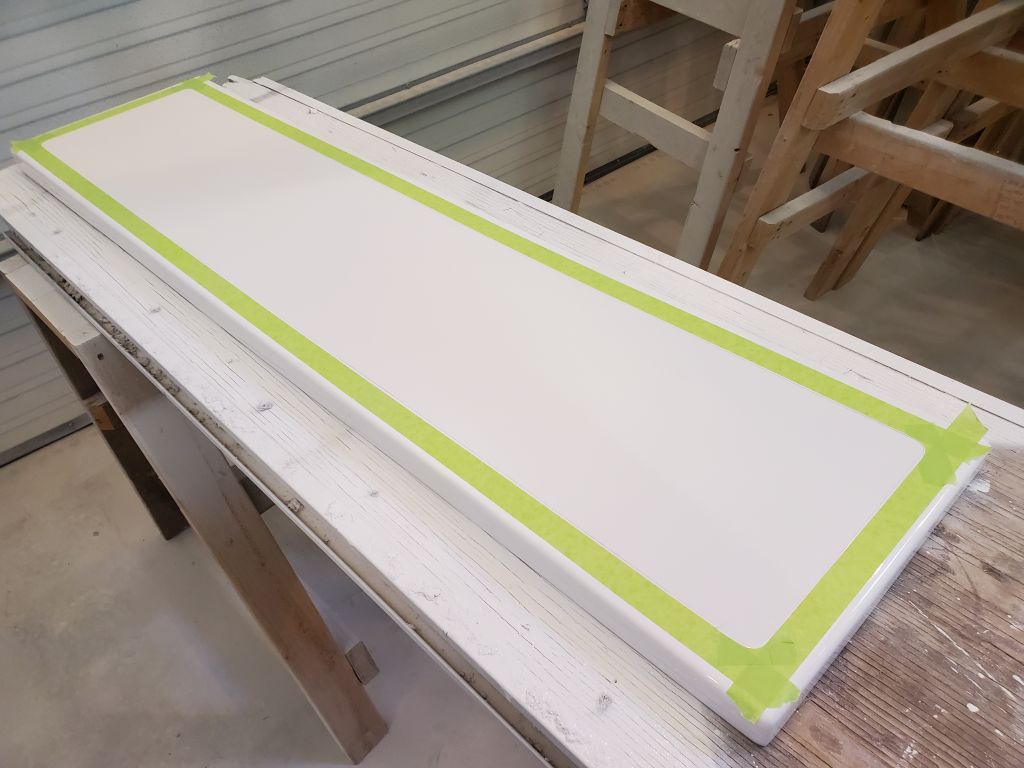
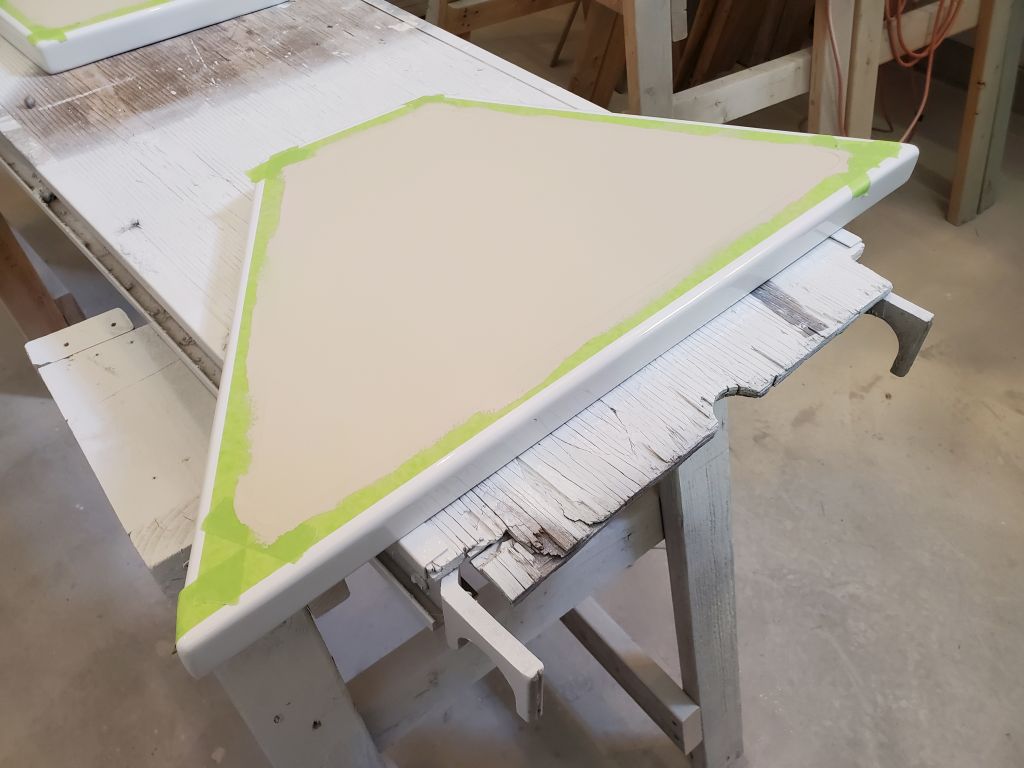
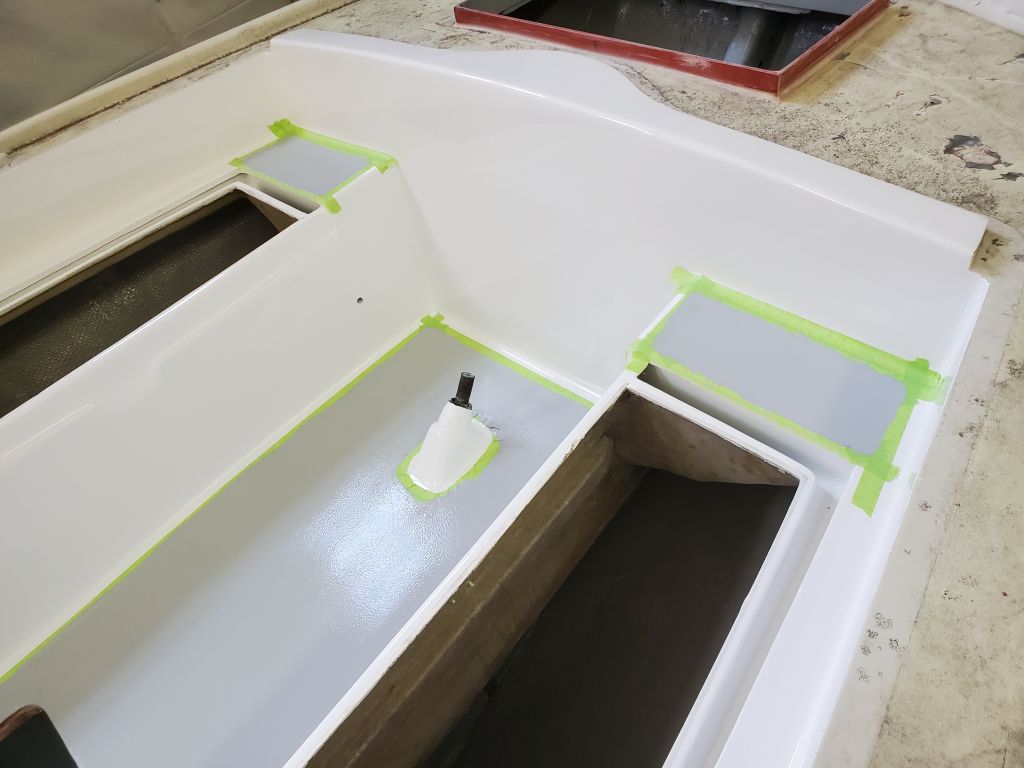
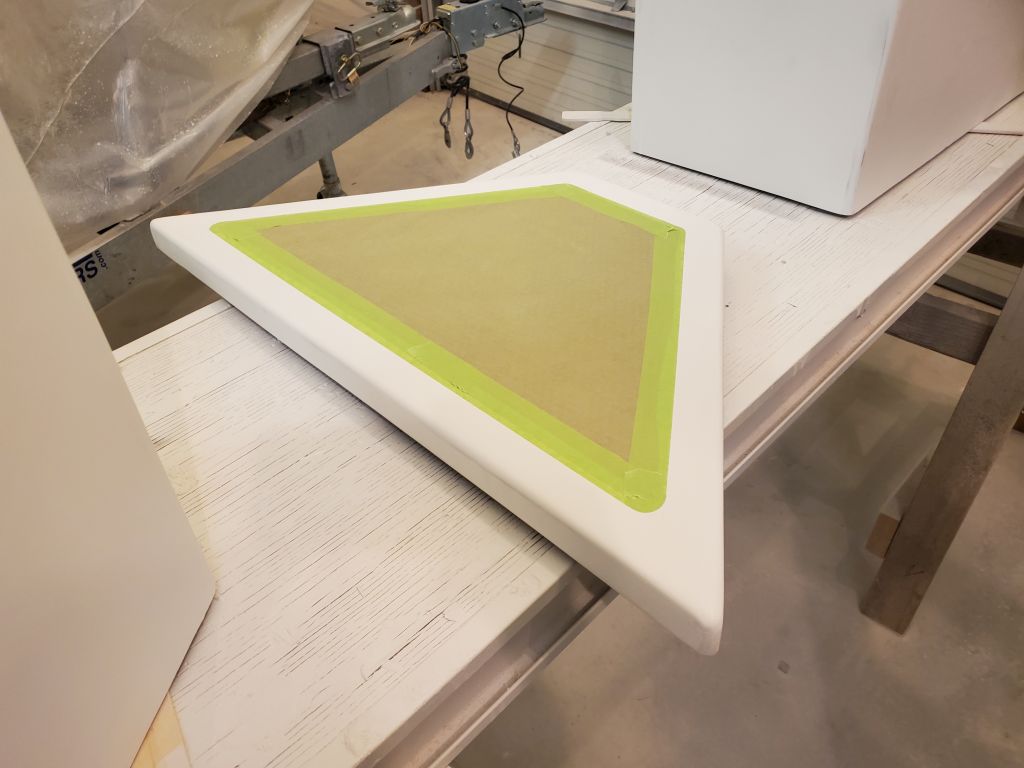
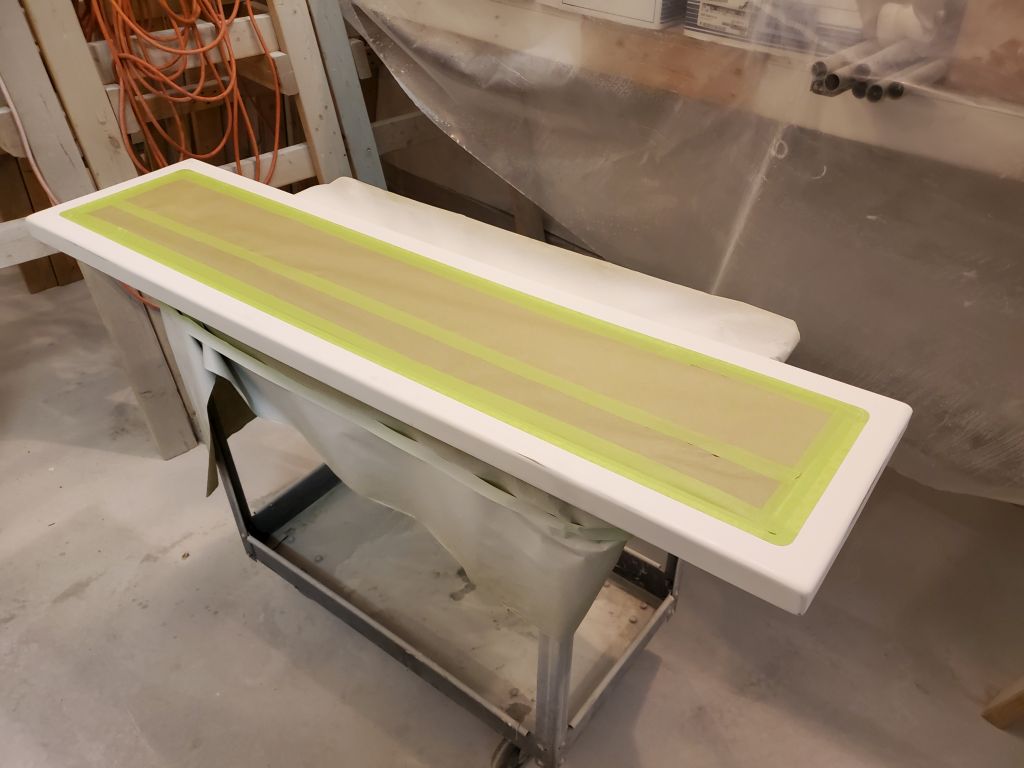
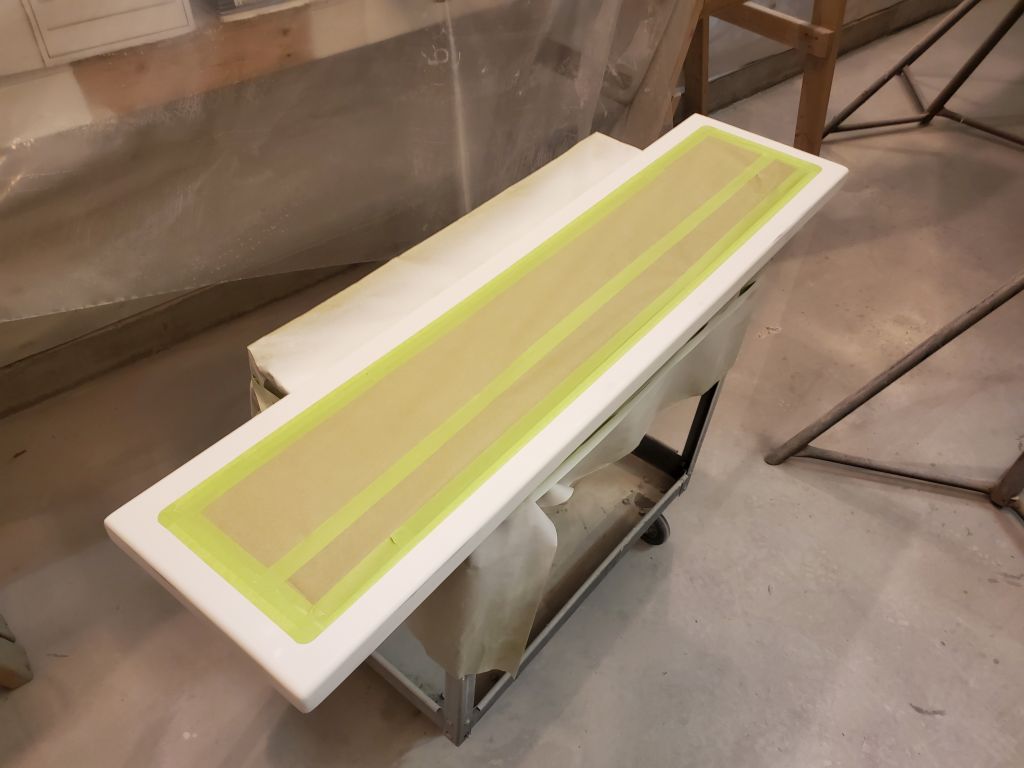
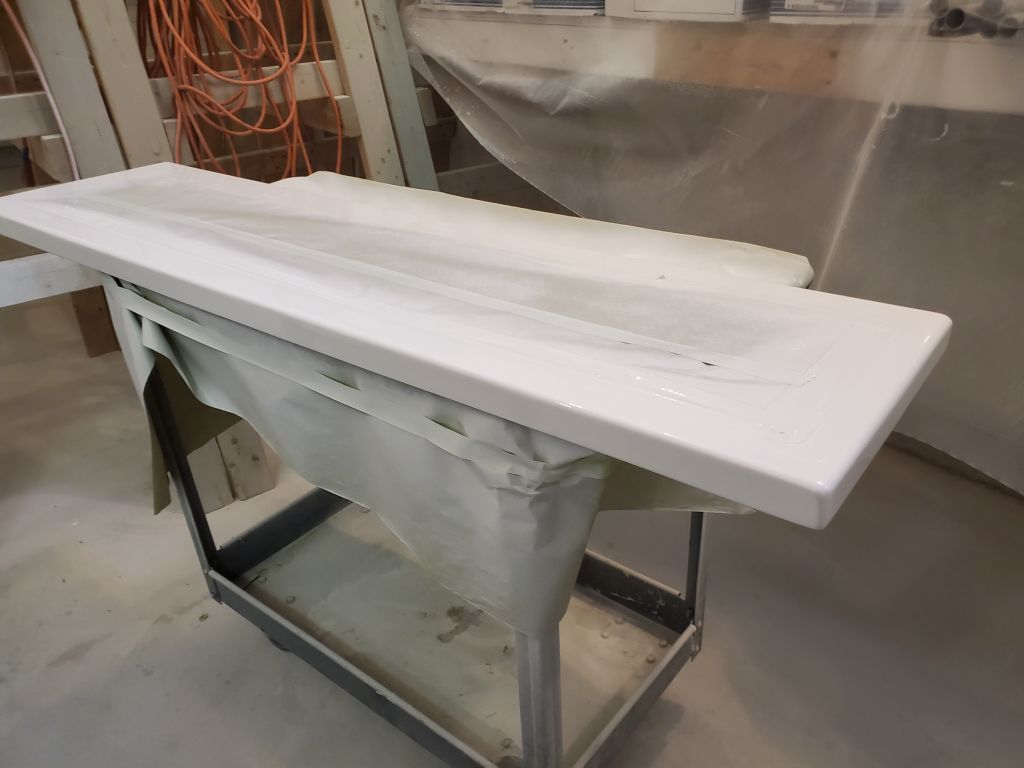
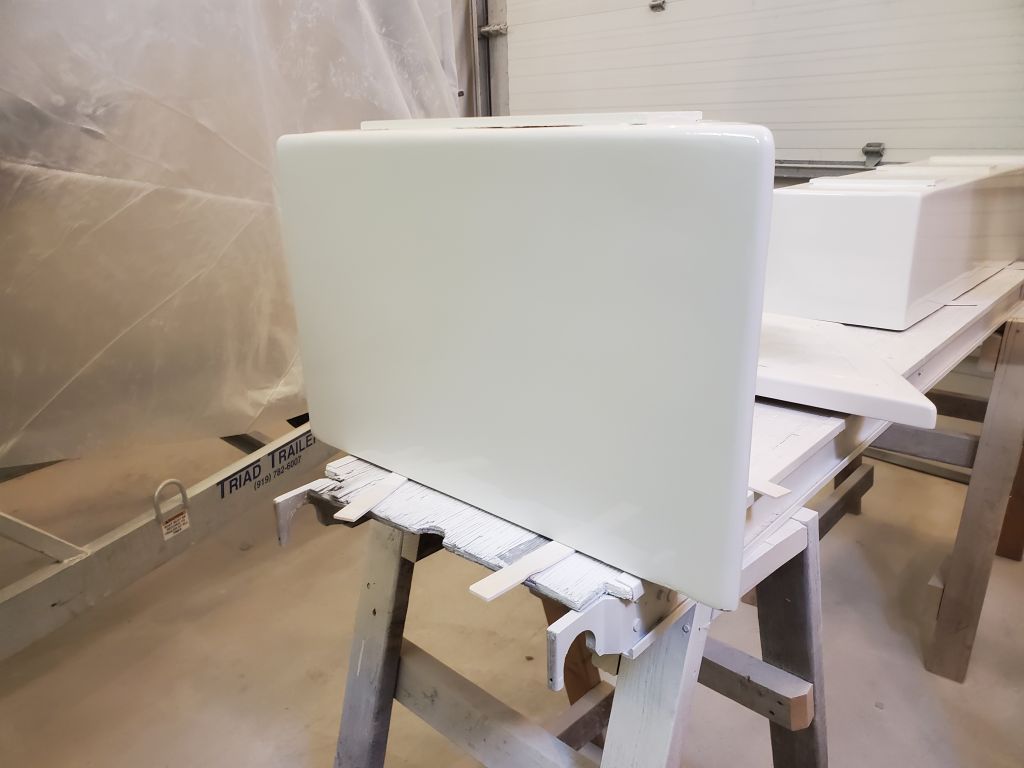
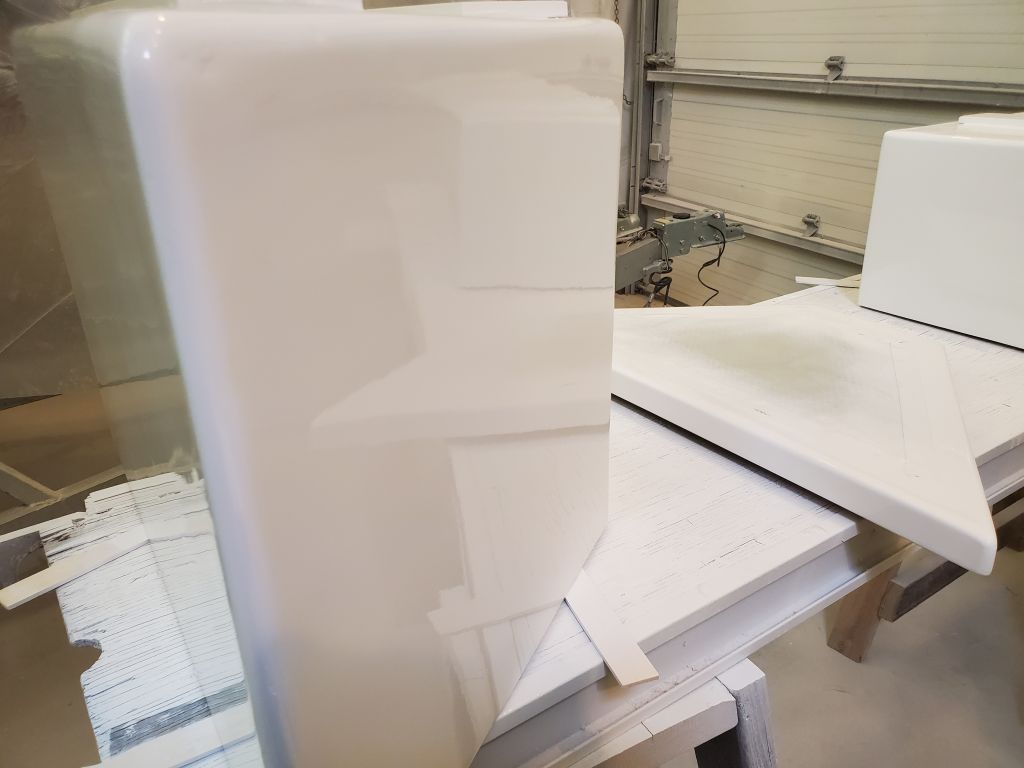
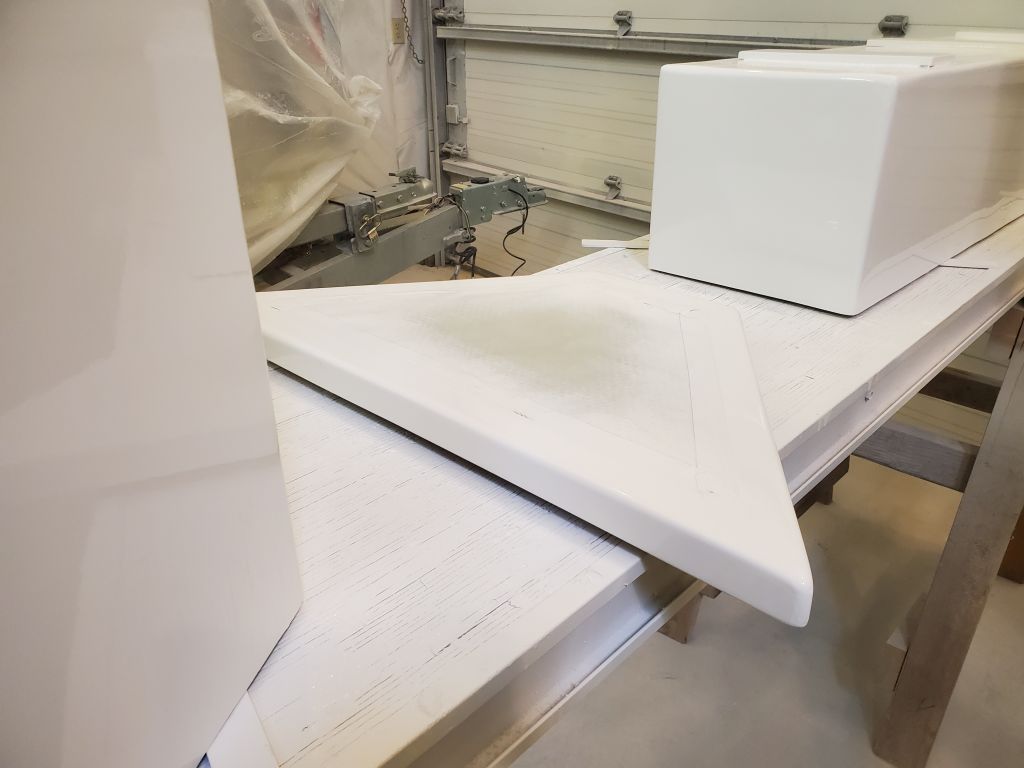
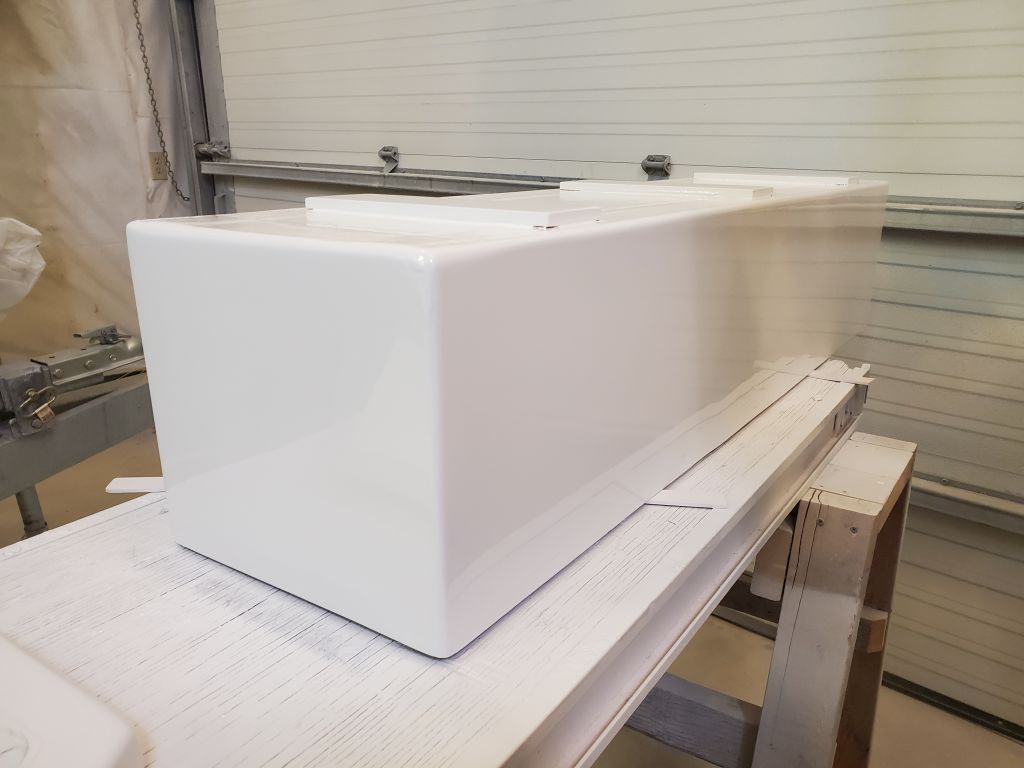
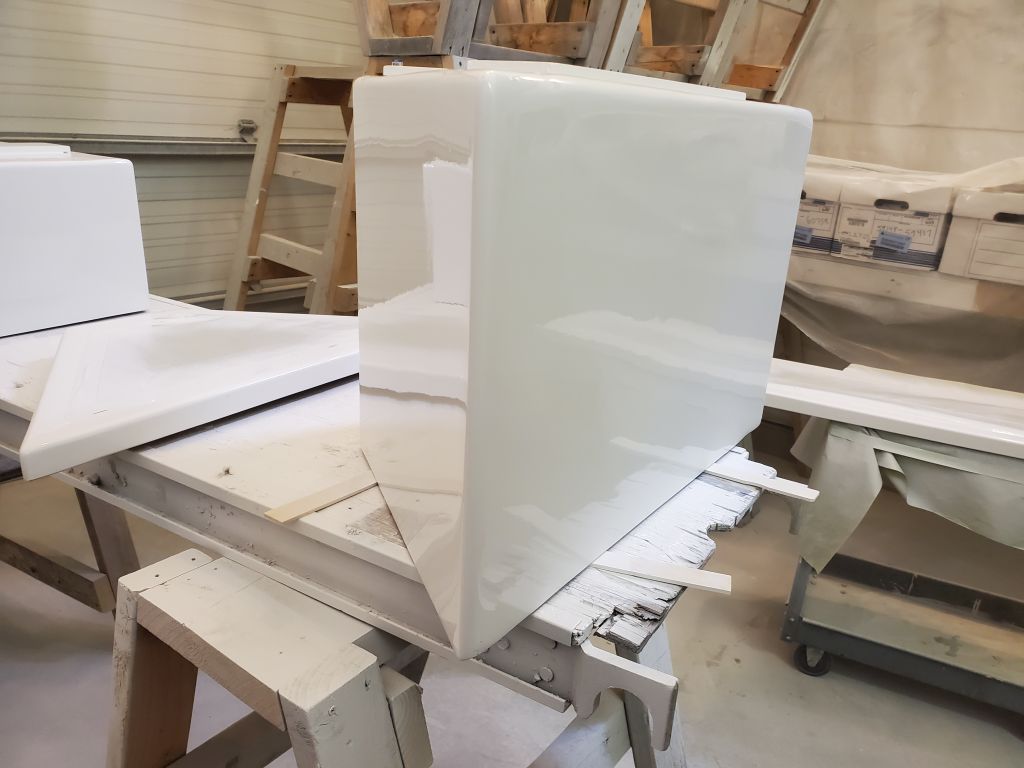
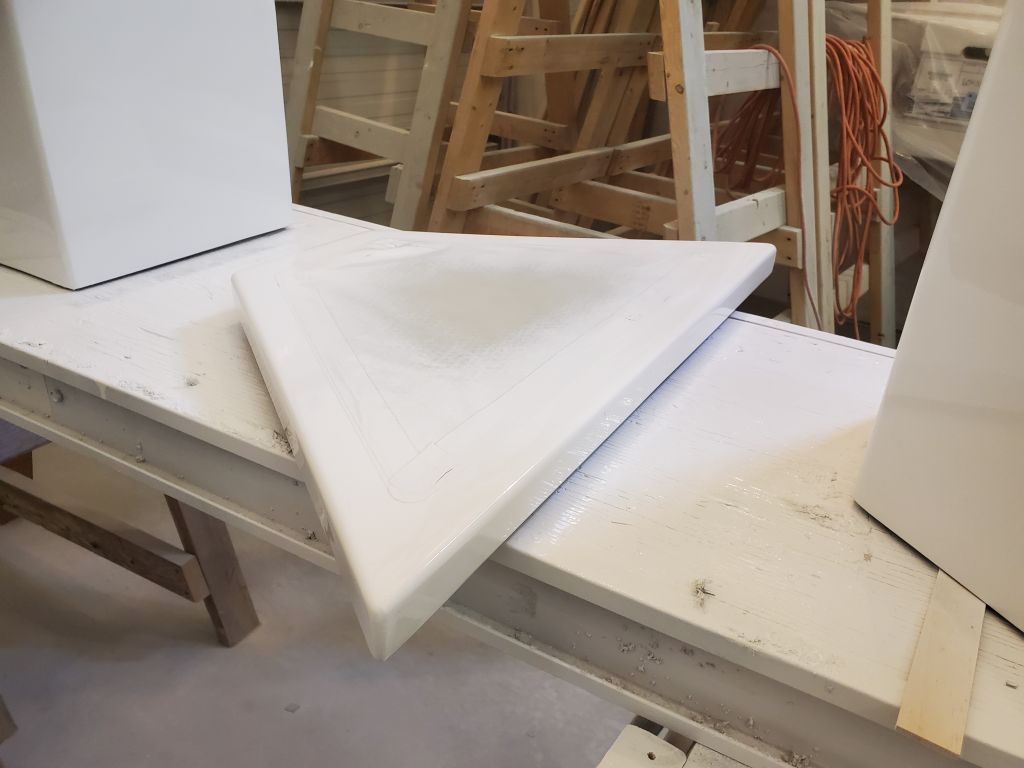
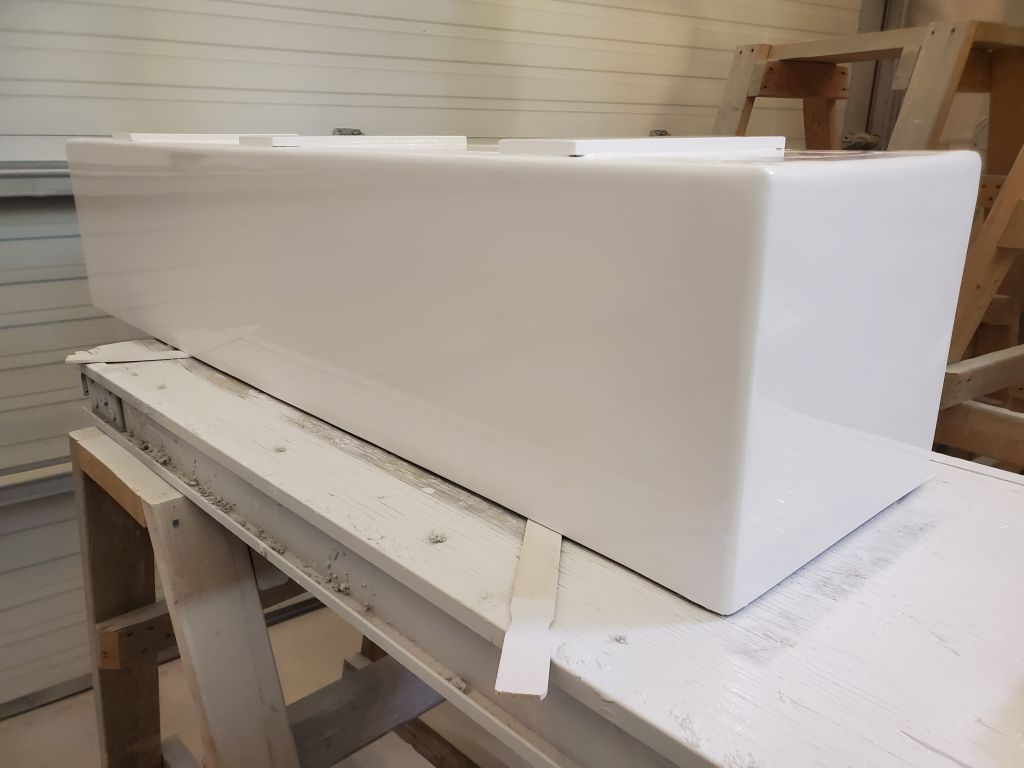
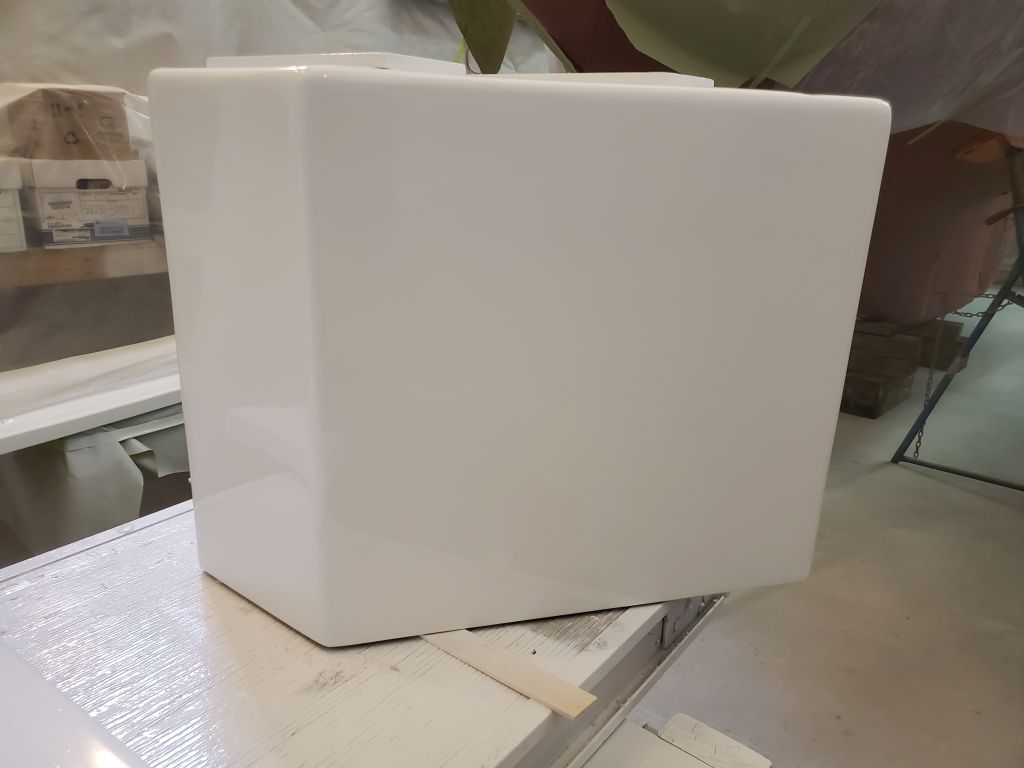
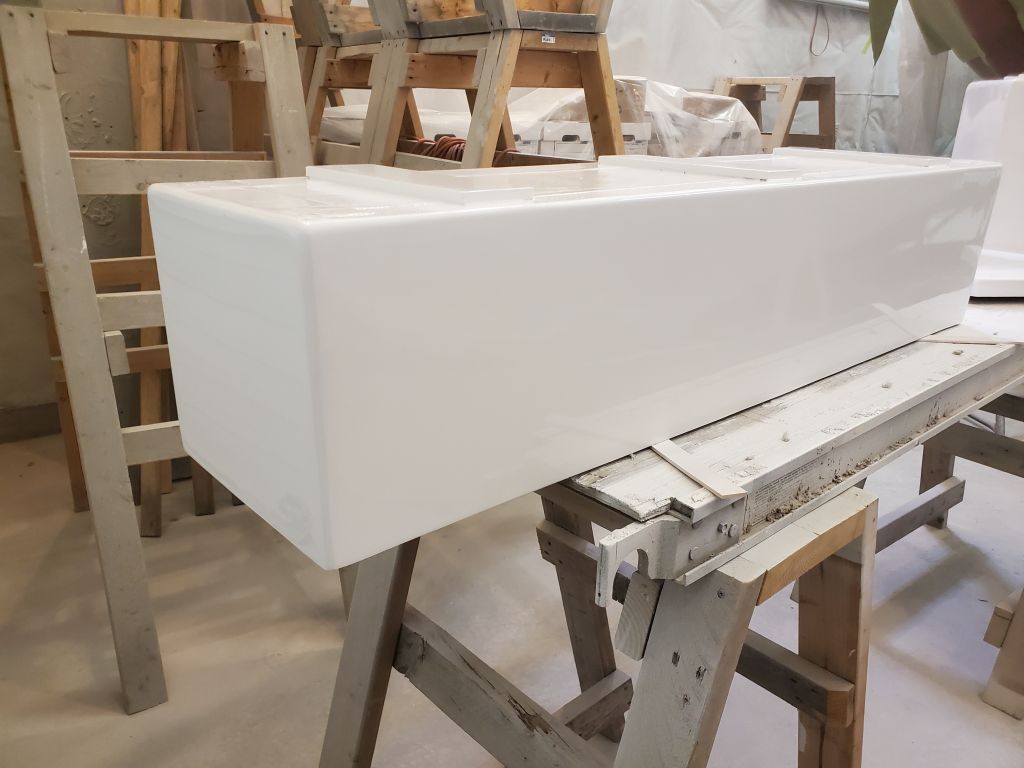
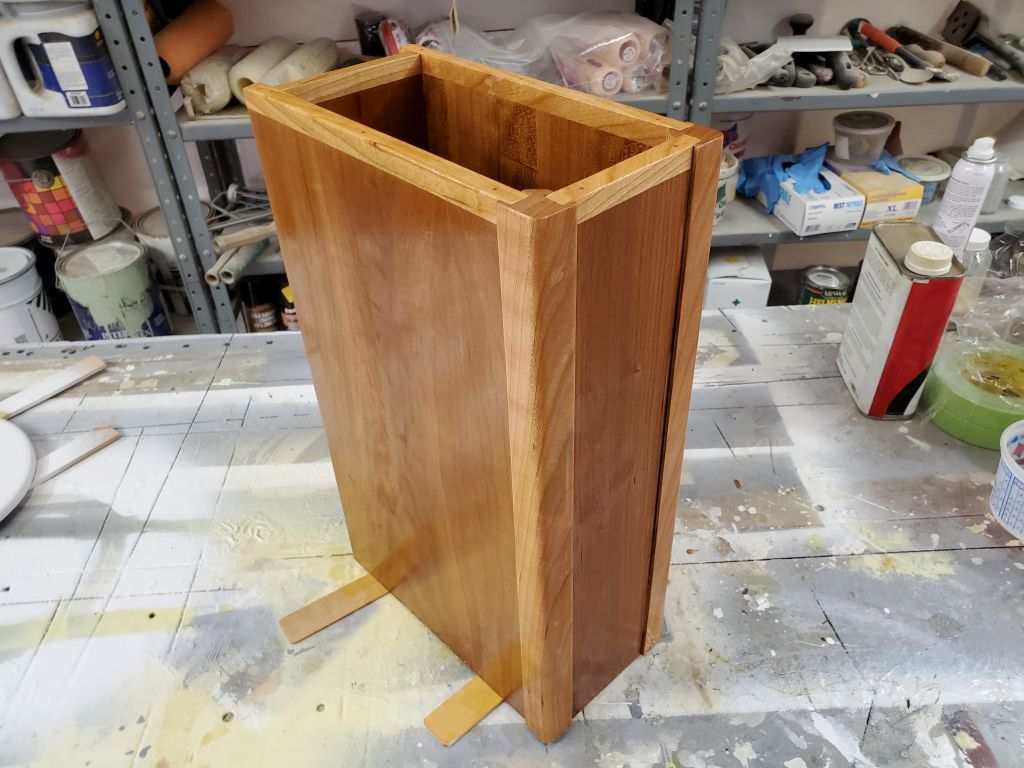
To begin, I applied a second coat of nonskid paint to the deck box lids.

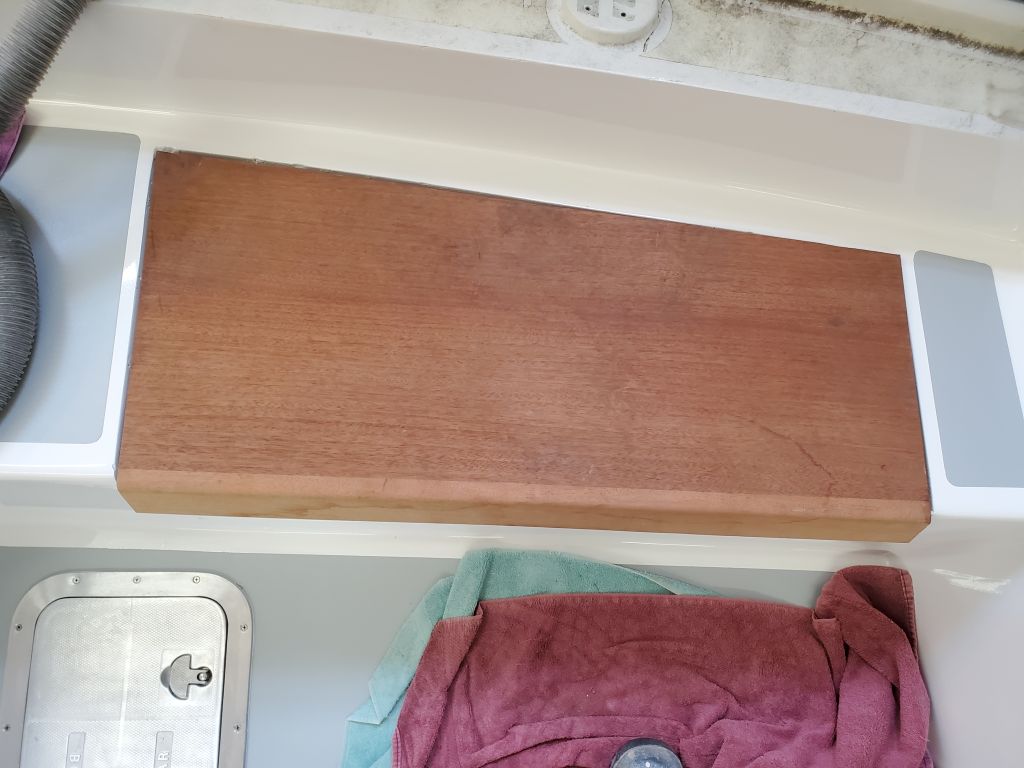
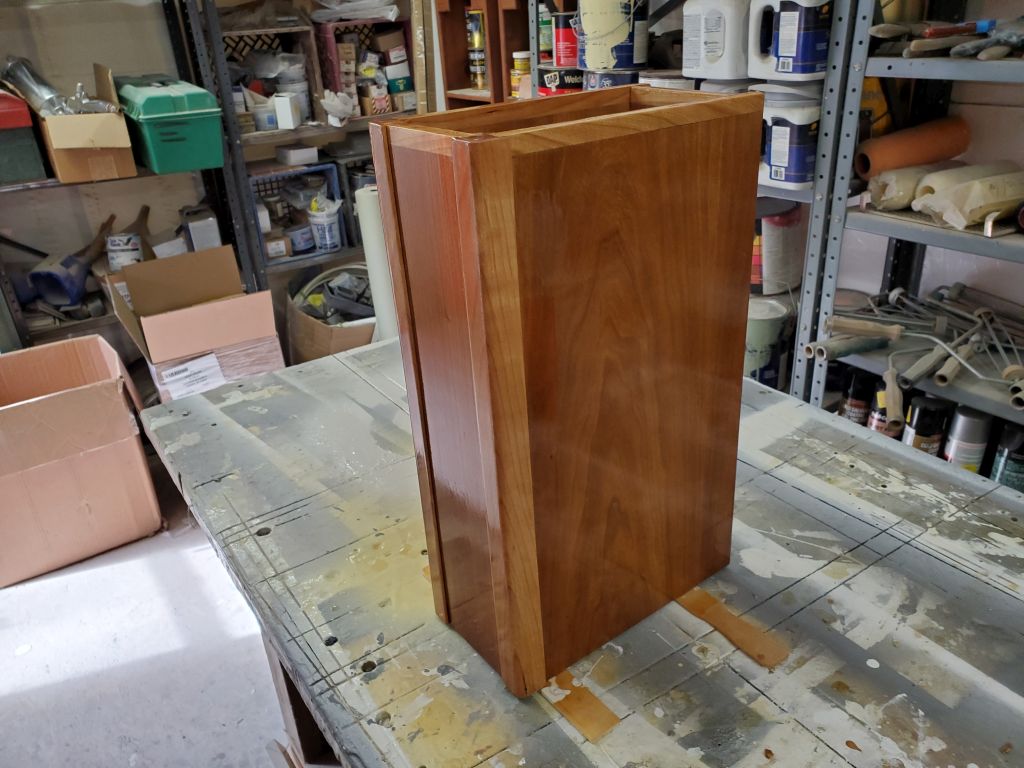
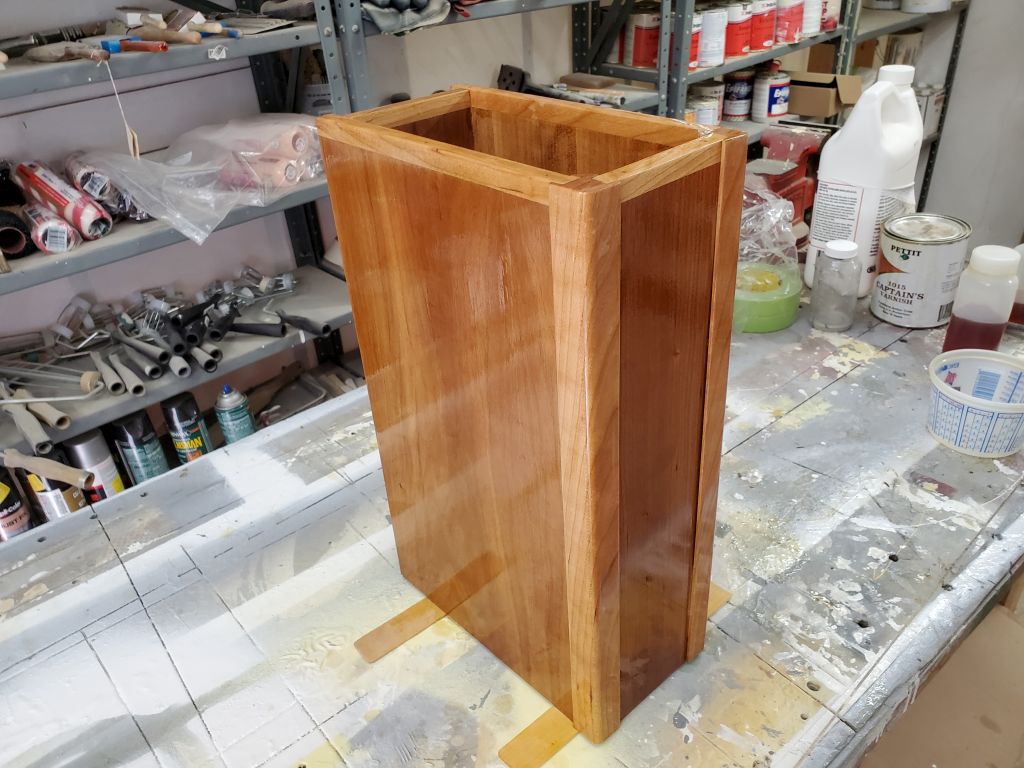
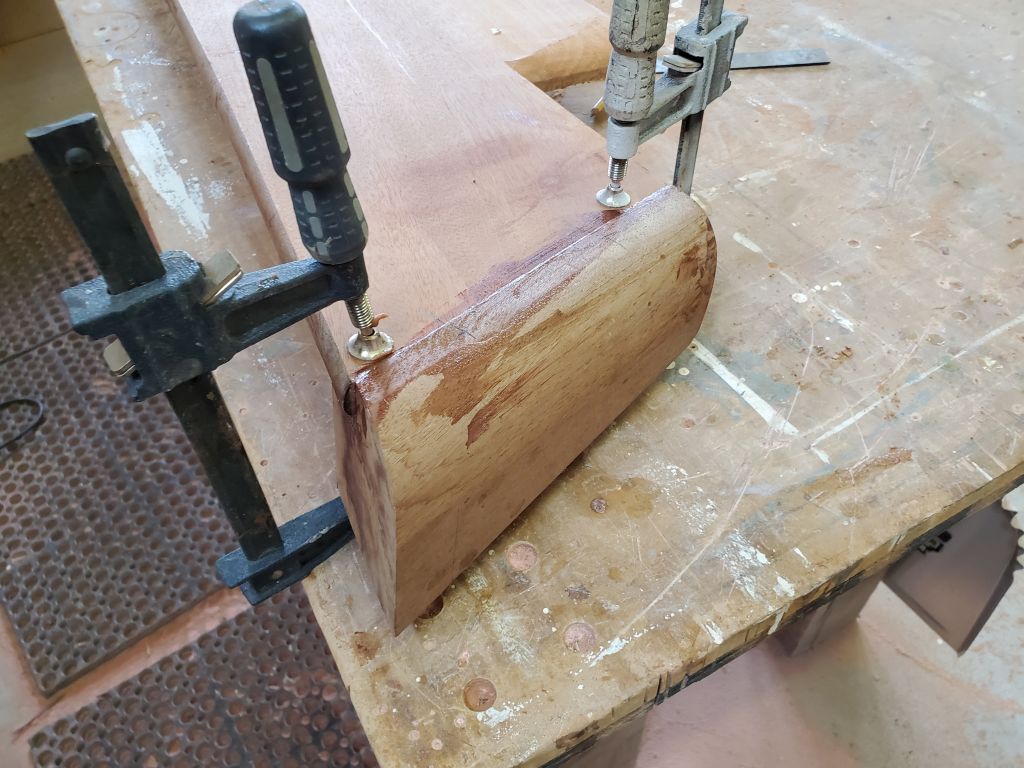
The forward deck box would be eventually secured to the deck, but in the deep, protected, small cockpit the owner wanted to try the cockpit box loose, so to help hold the box in place of its own accord, I added strips of rubber (leftover from the anchor pad) to the base of the box, which would cushion and add friction to the box when in place.

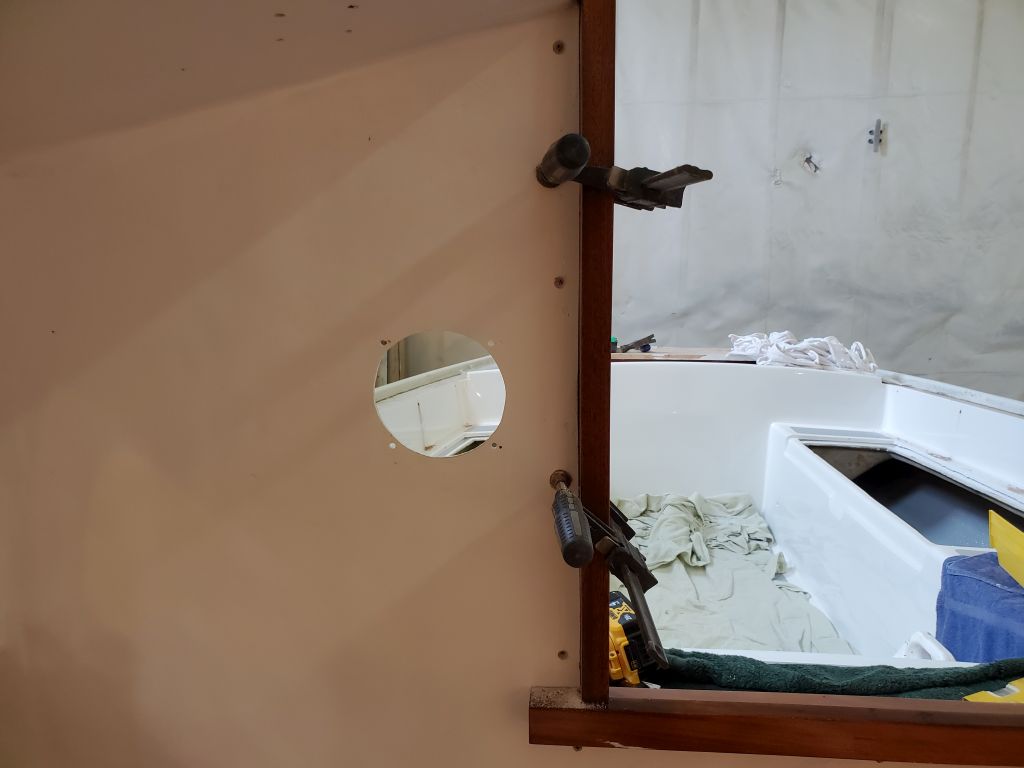
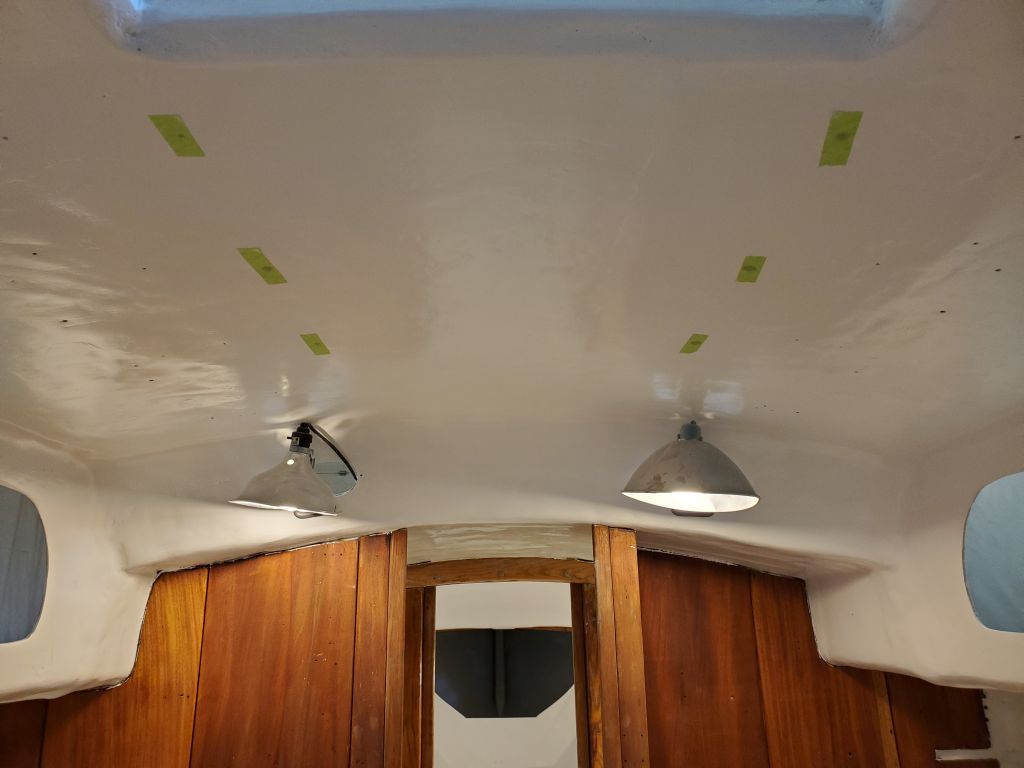
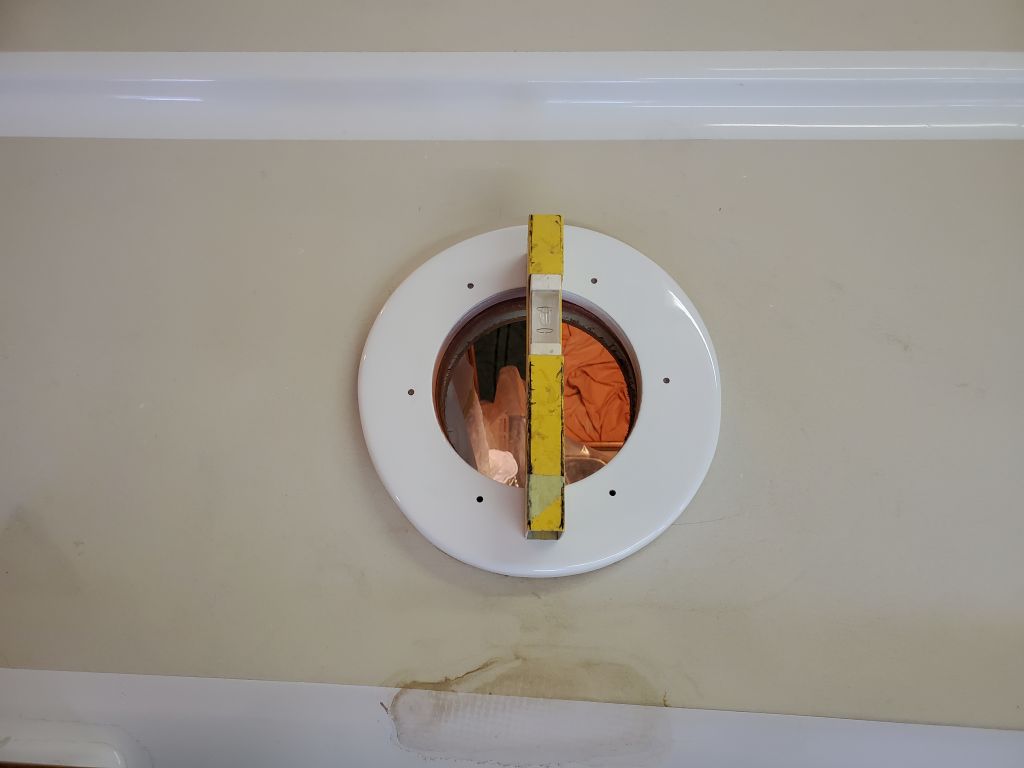
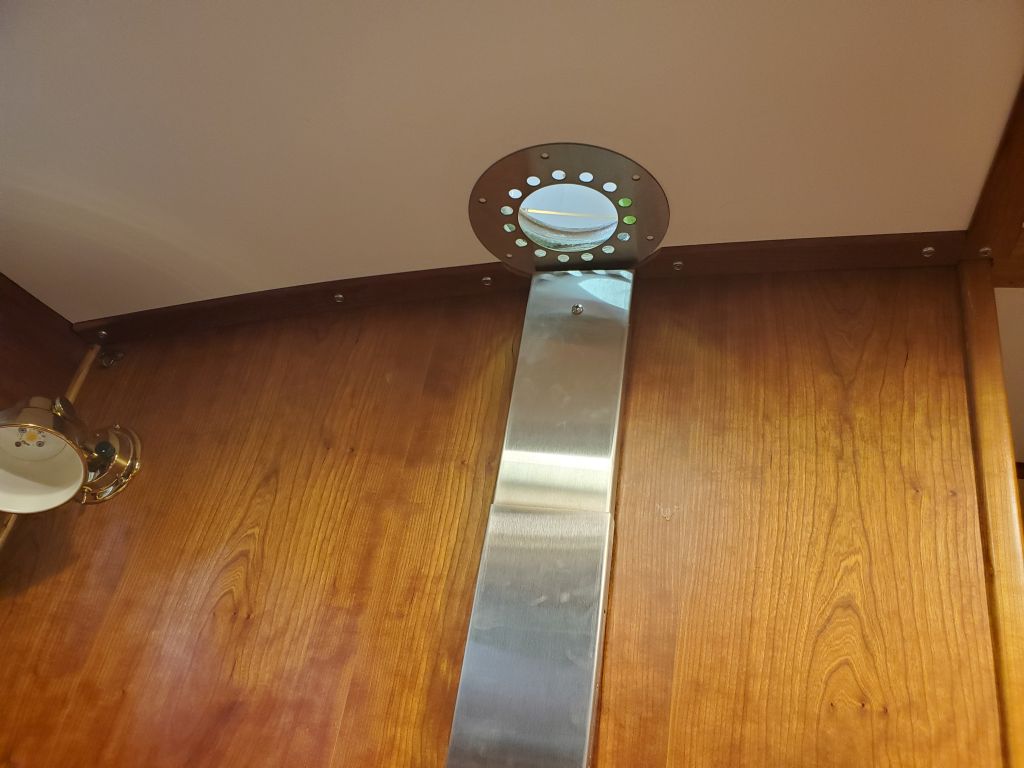
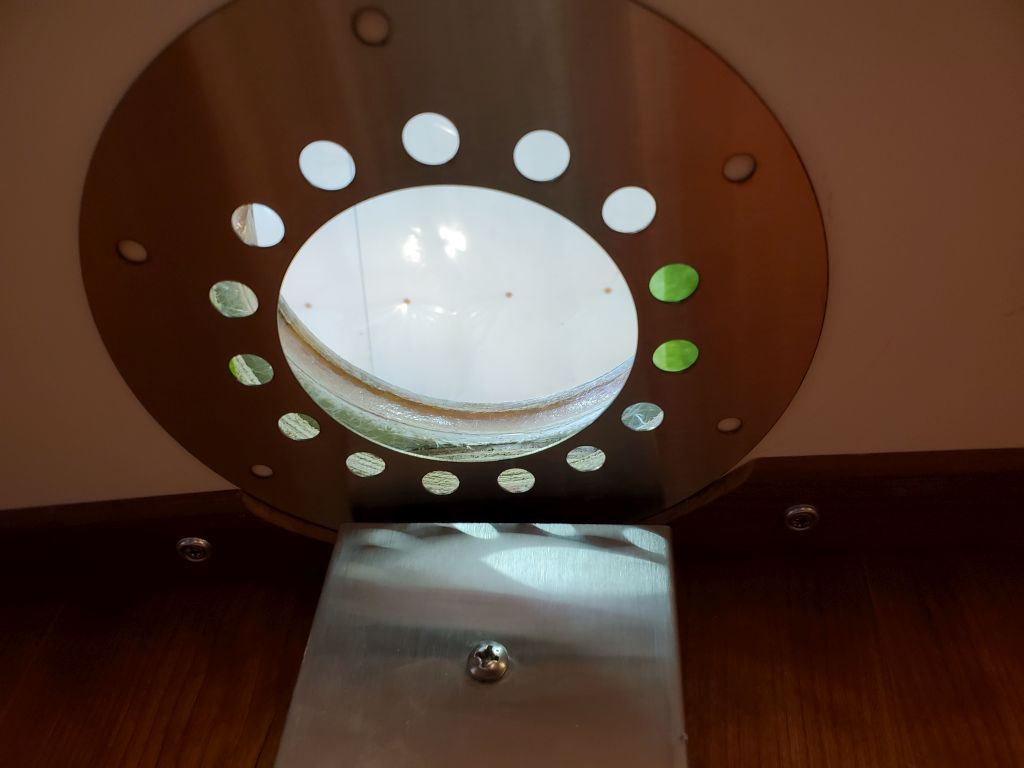
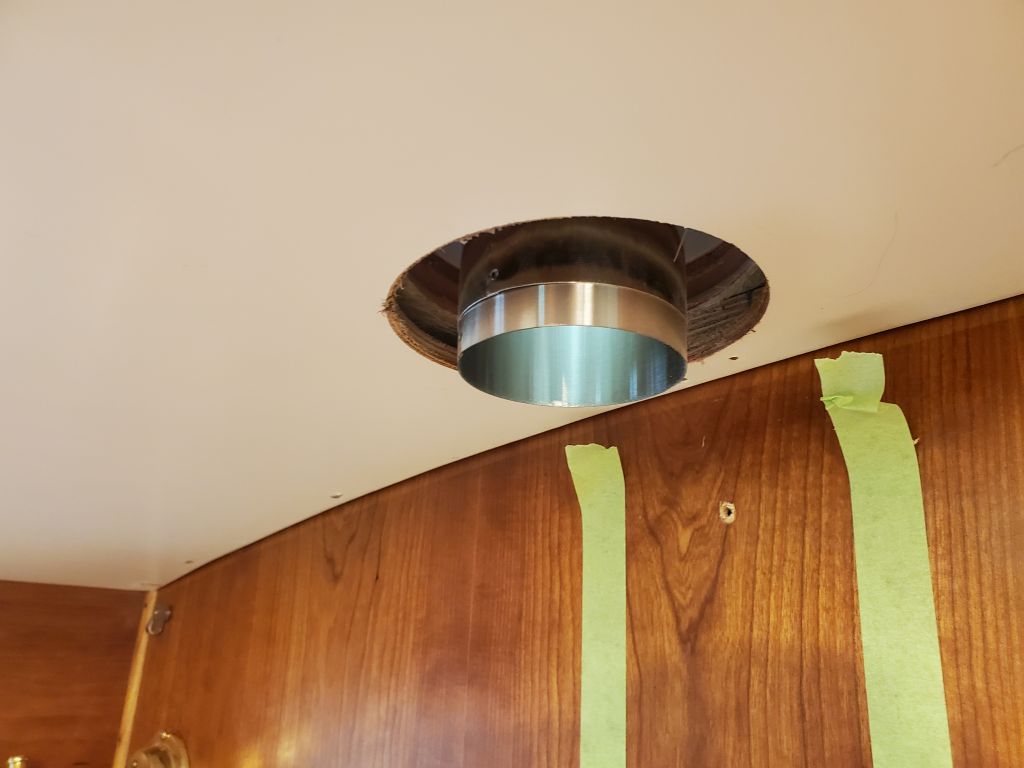
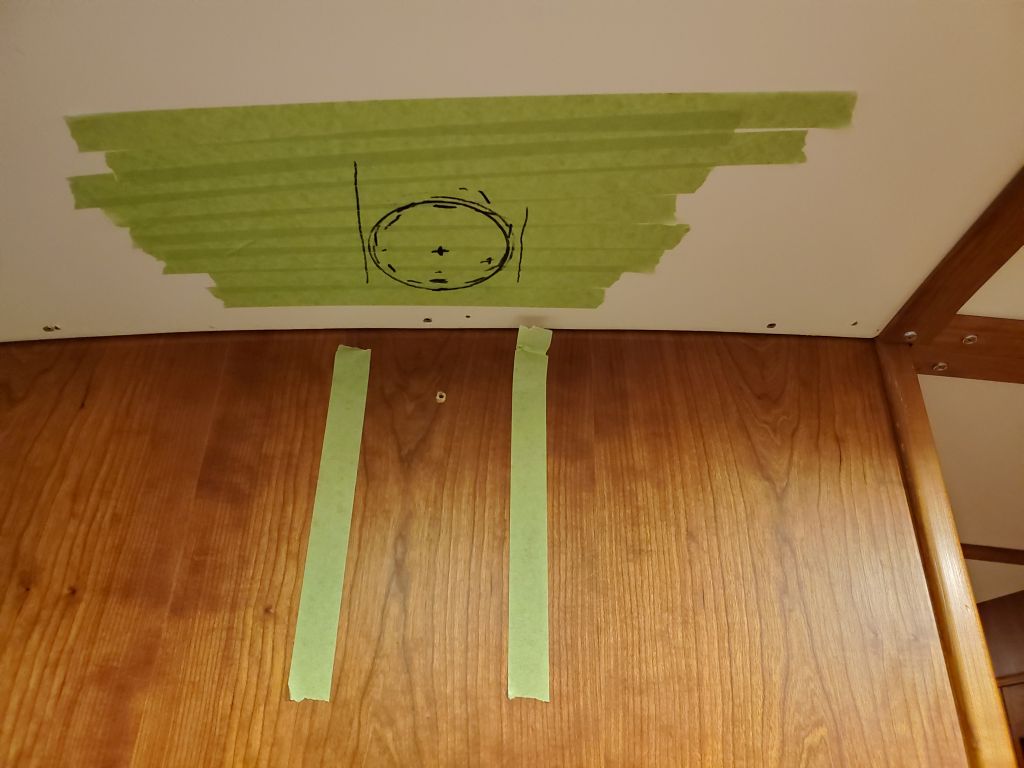
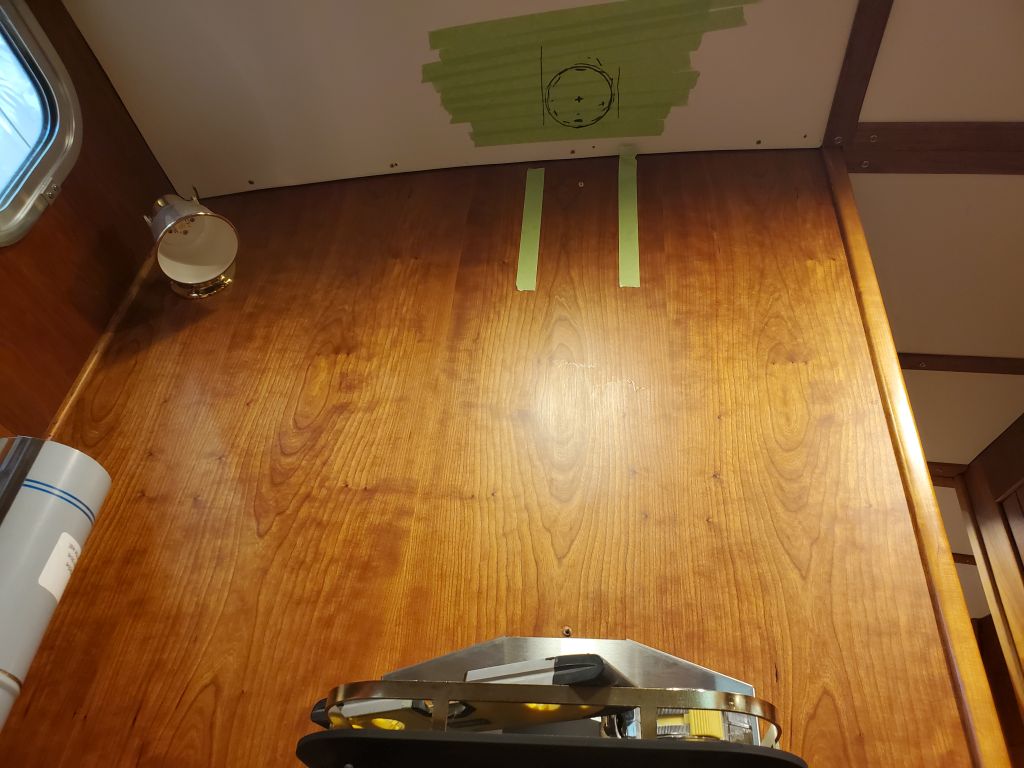
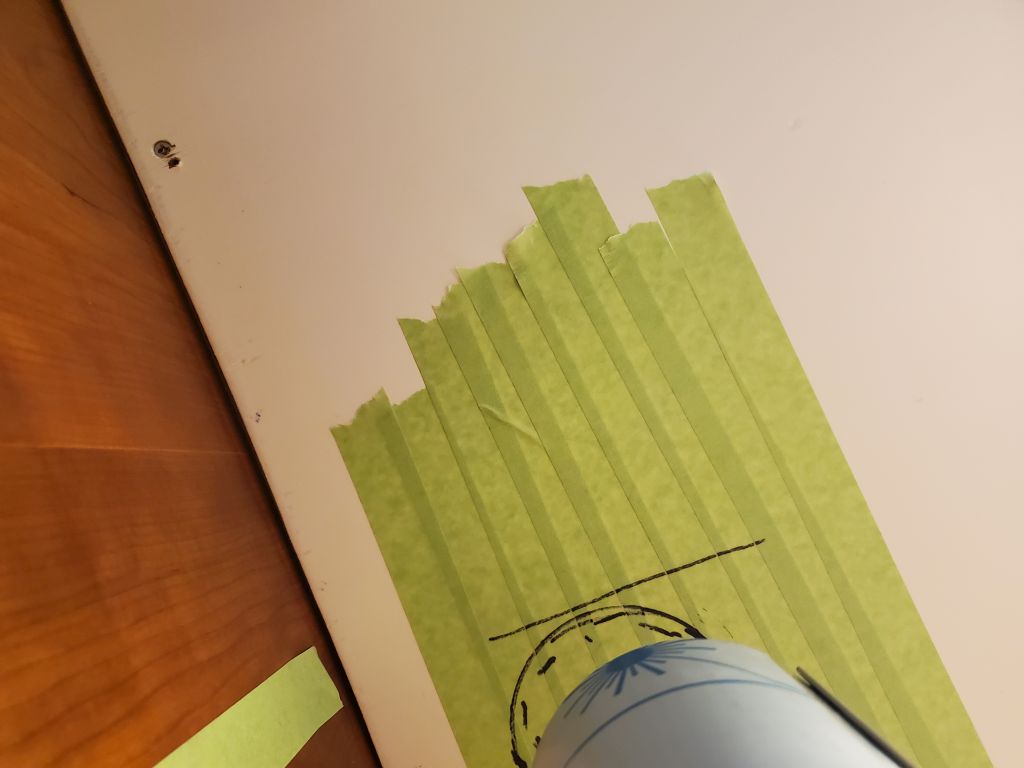
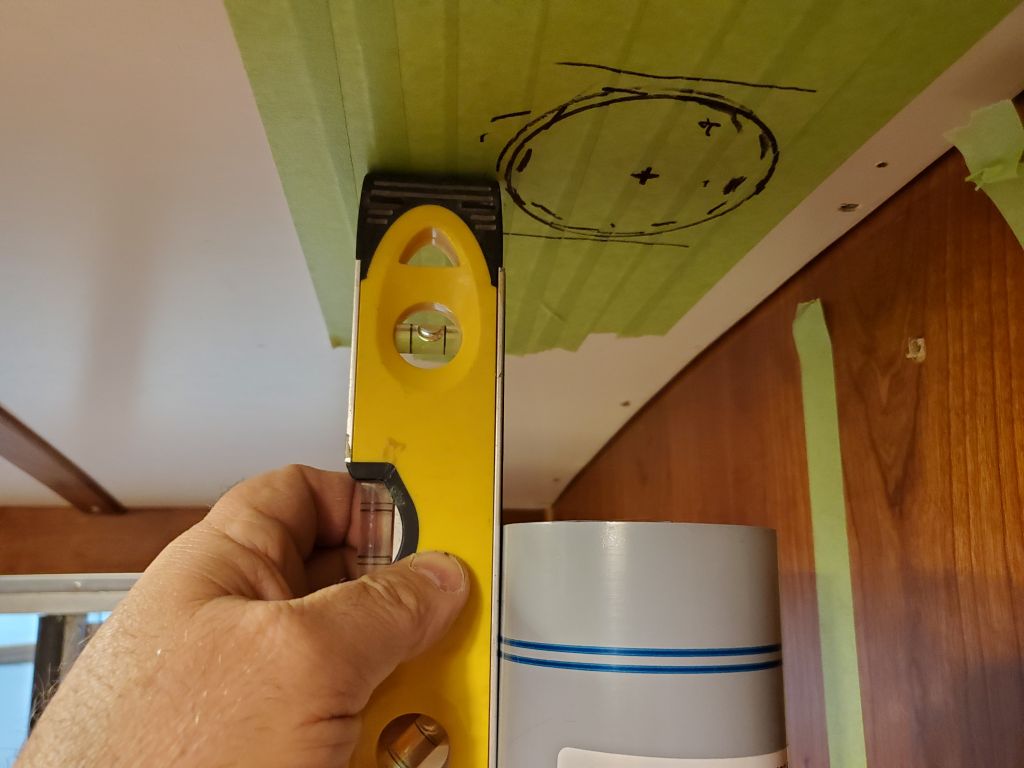
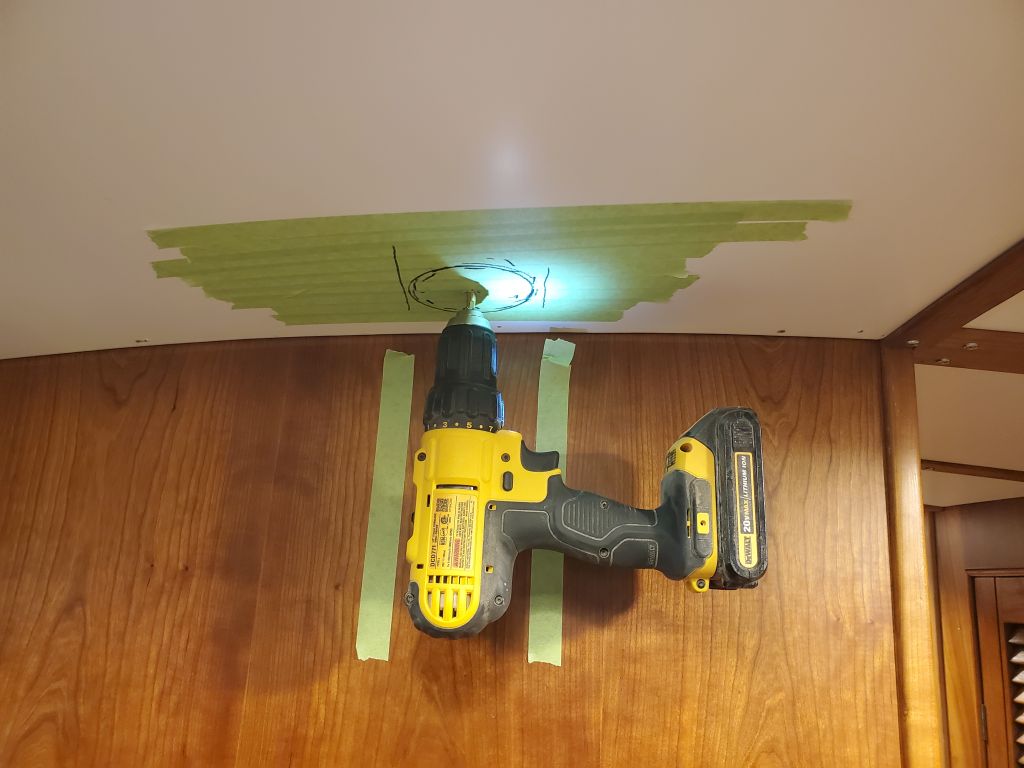
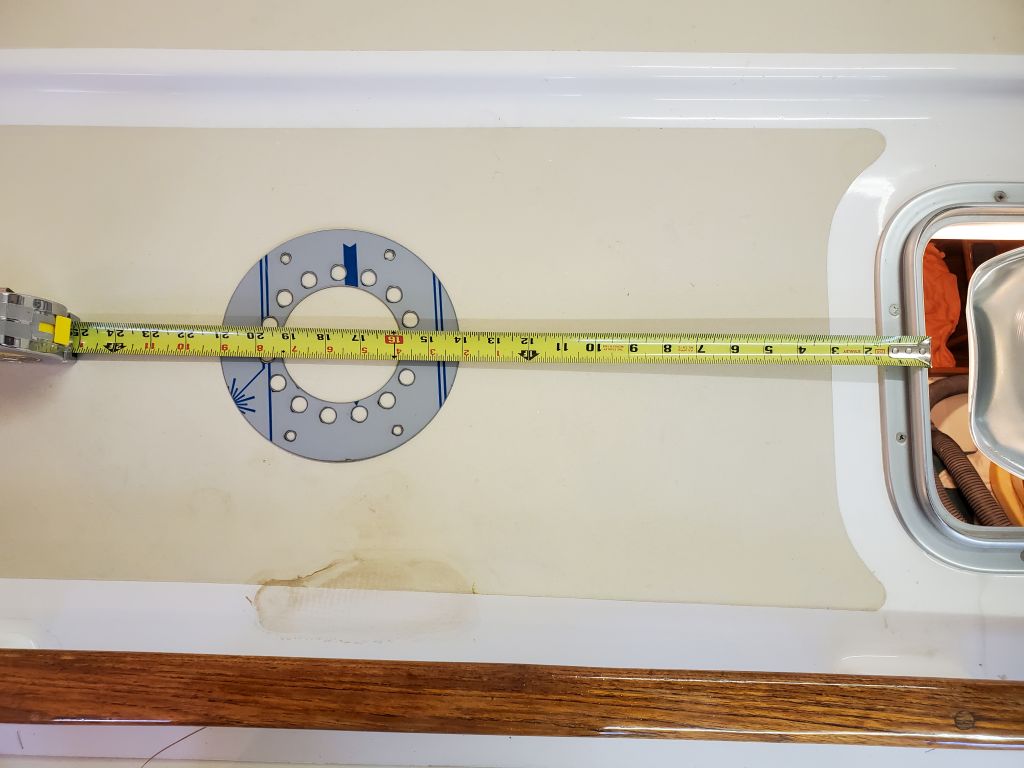
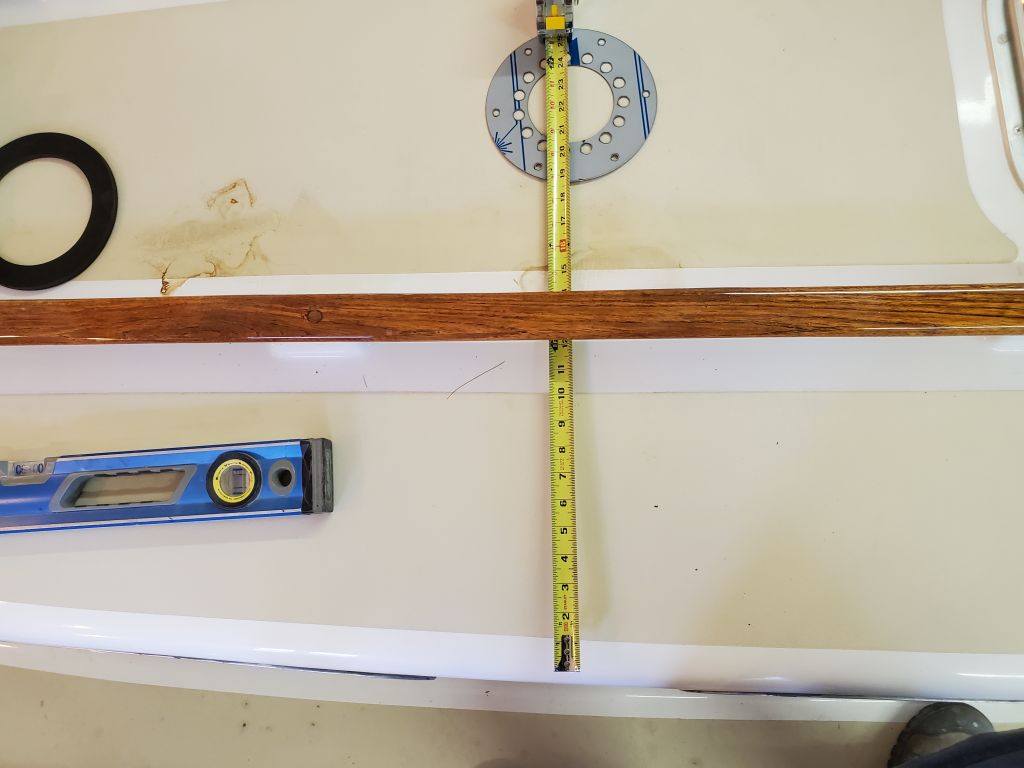
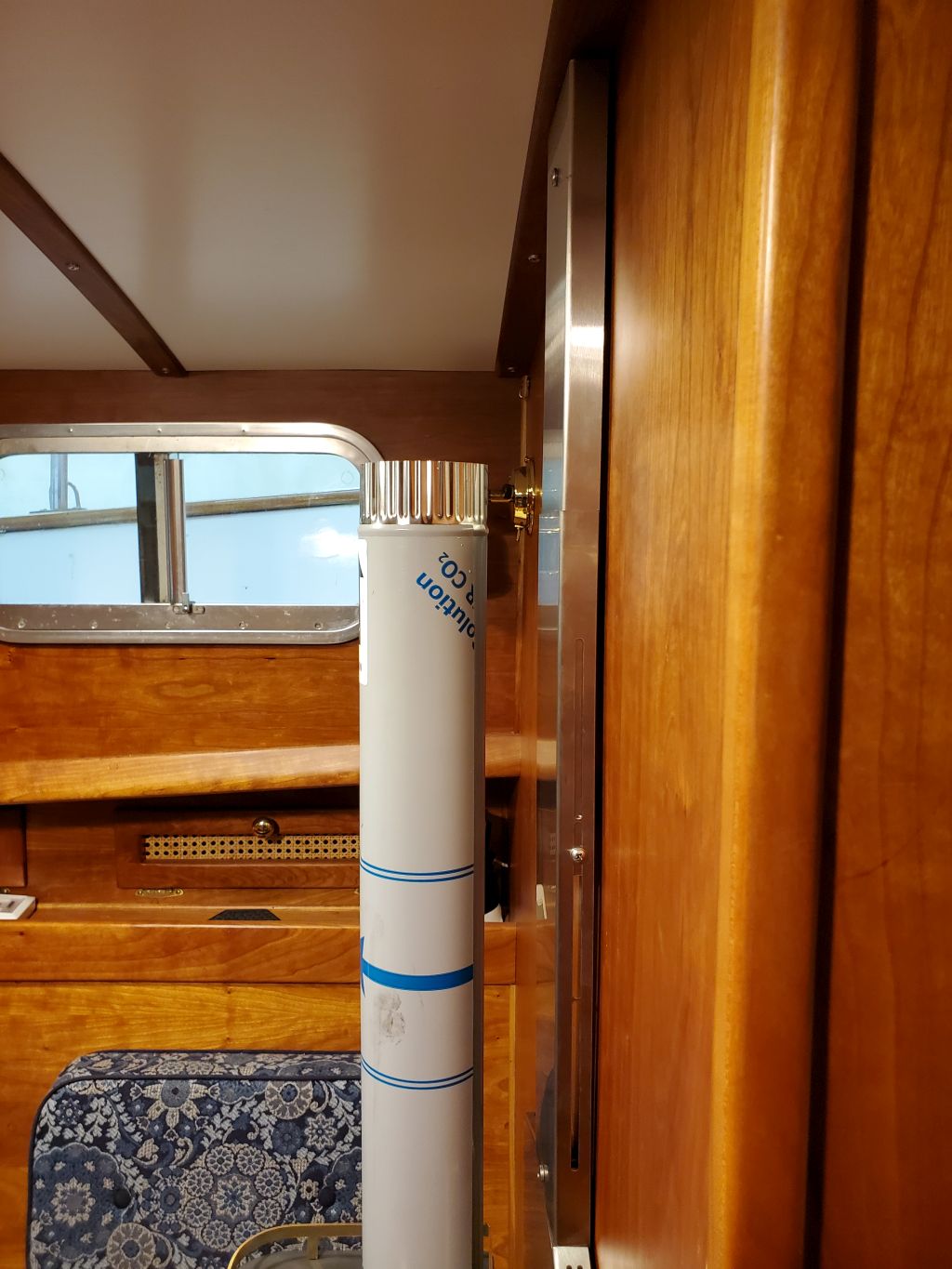
With the new woodstove and heat shield in place, my next step in the installation was to mark, and drill, the large hole through the overhead and deck for the smoke pipe.  Covering the overhead with masking tape so I could mark at will, I eventually marked out the rough outline of the stovepipe on the overhead, through a combination of measurements and extending the length of the pipe upwards with a level.    I found that the heat shield behind the pipe was a bit in the way for parts of this process, so I removed it for now.  After double-checking my measurements and the outline I’d made, I was final satisfied enough to mark a center point.

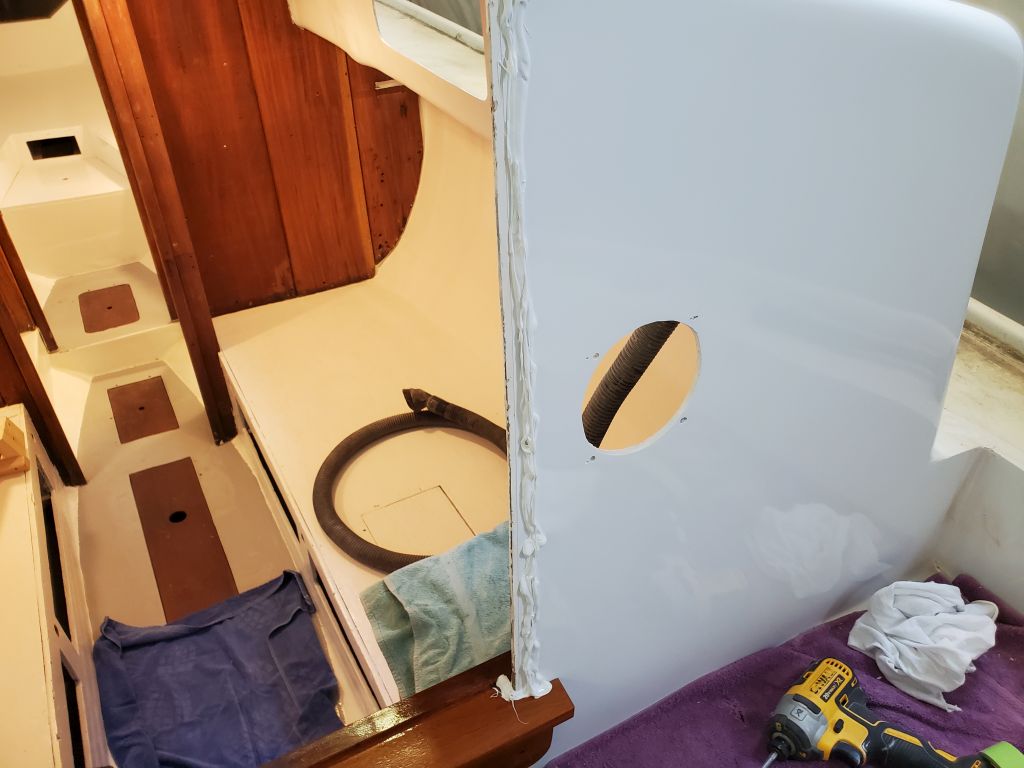
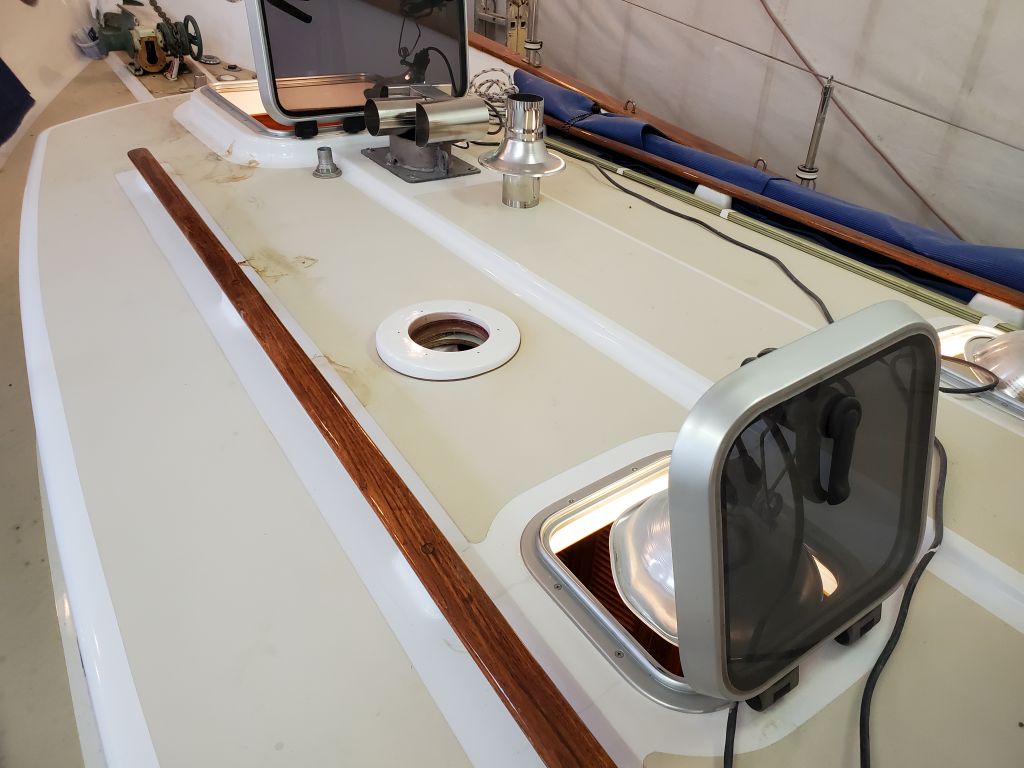
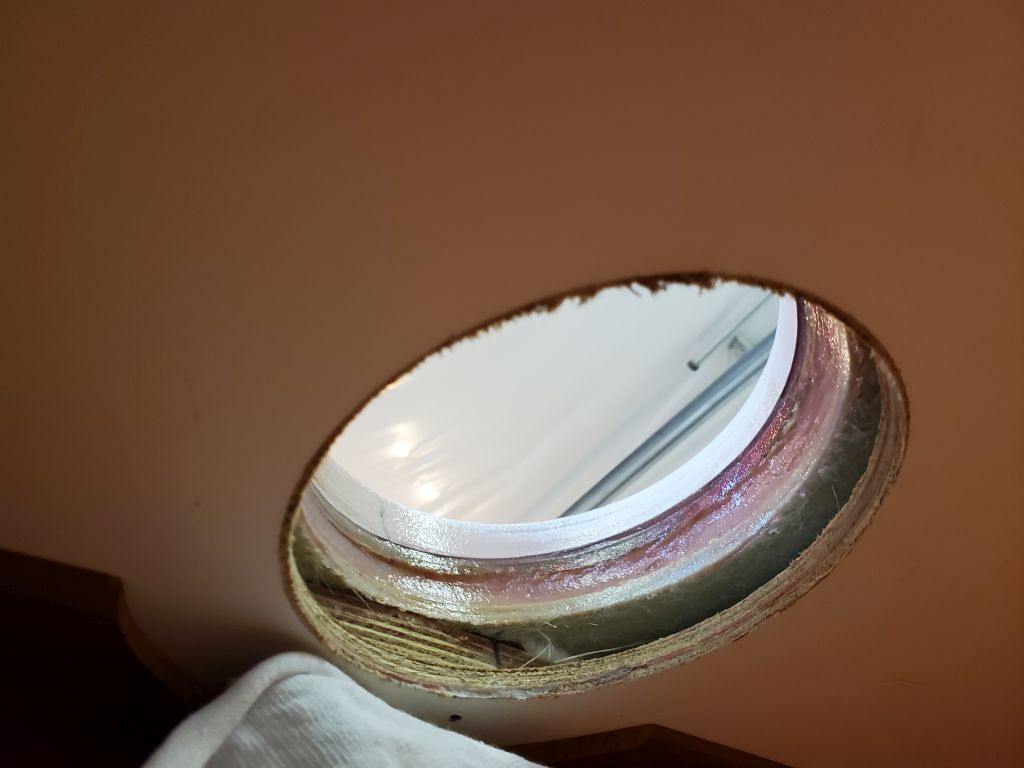
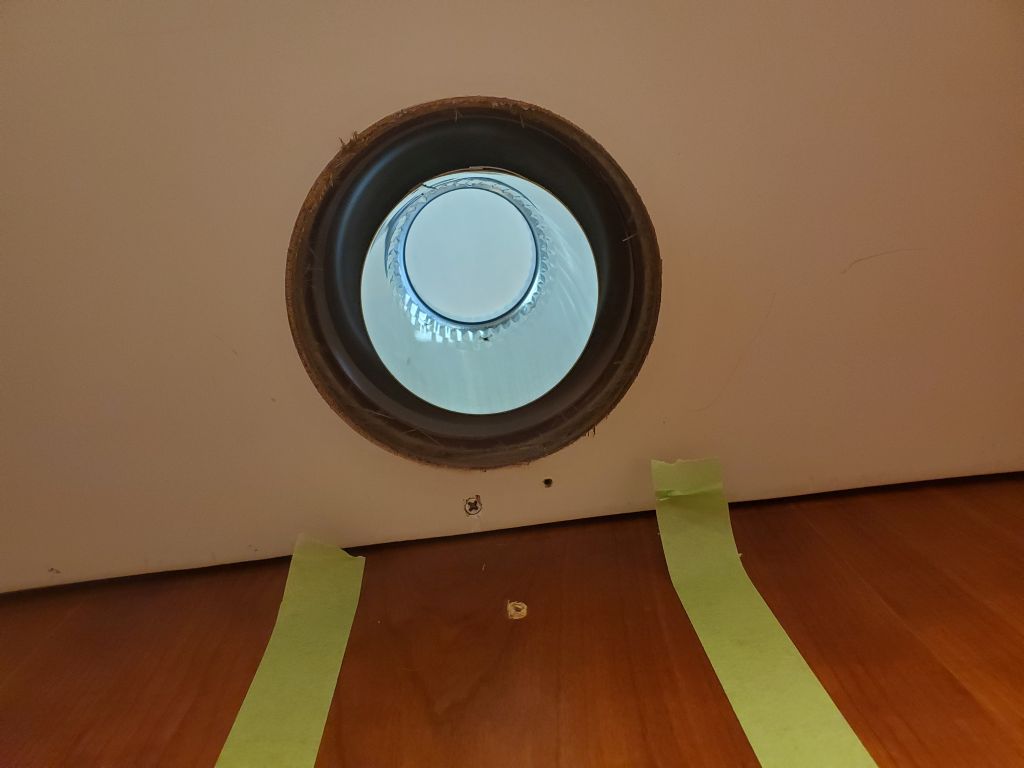
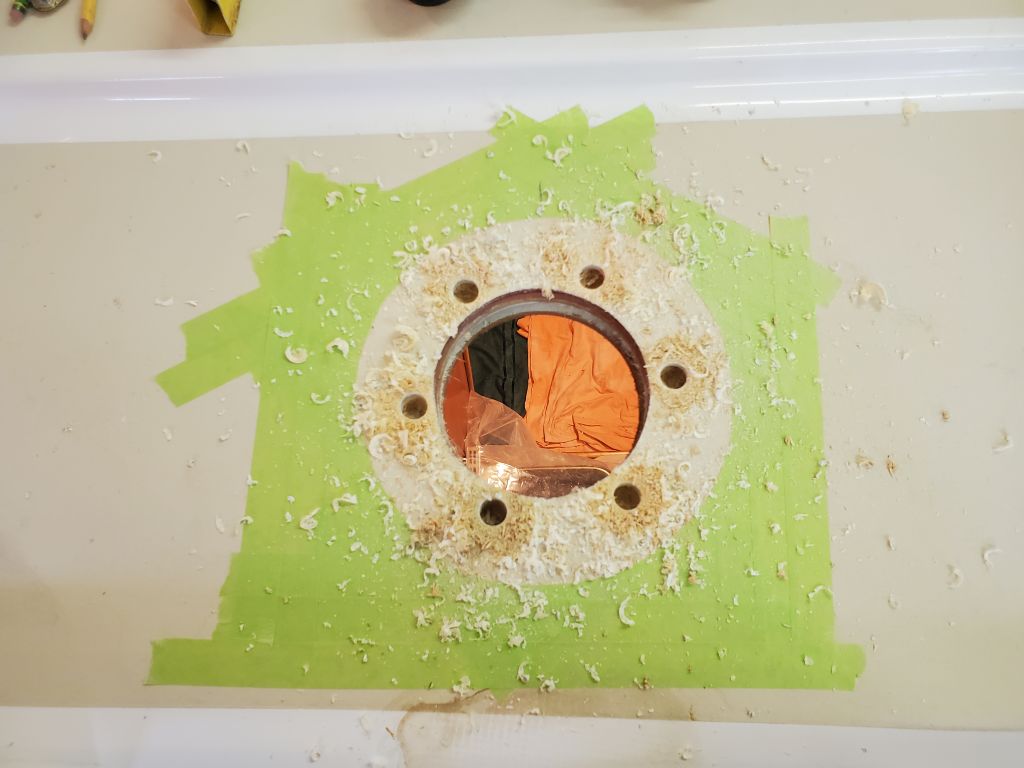
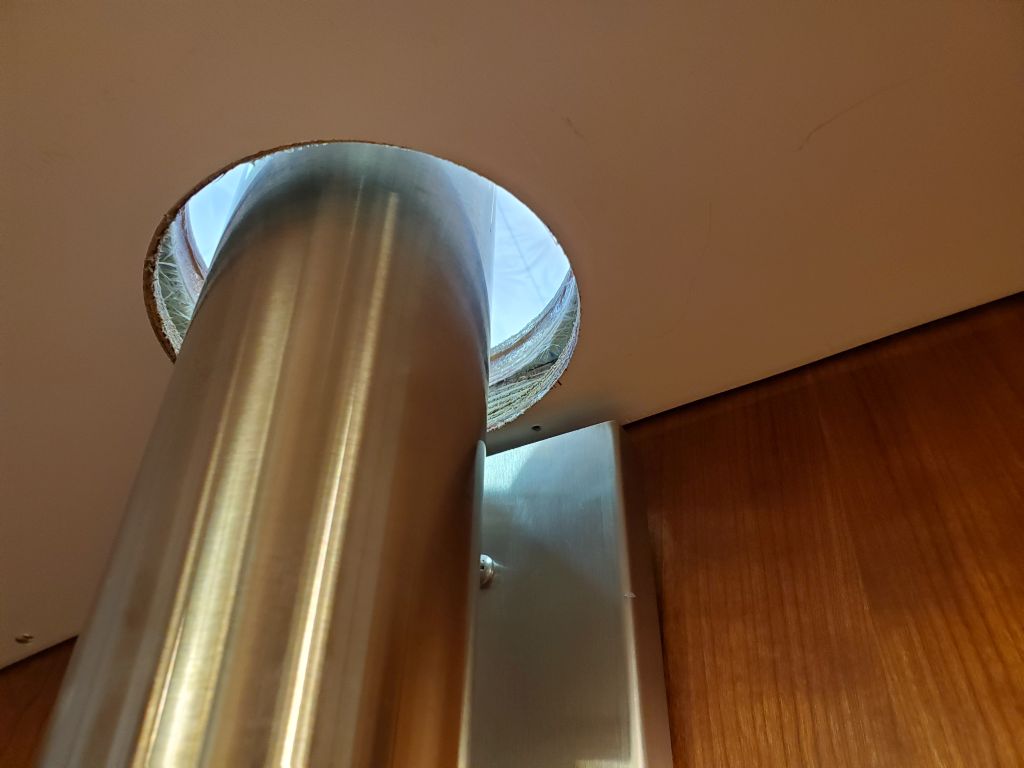
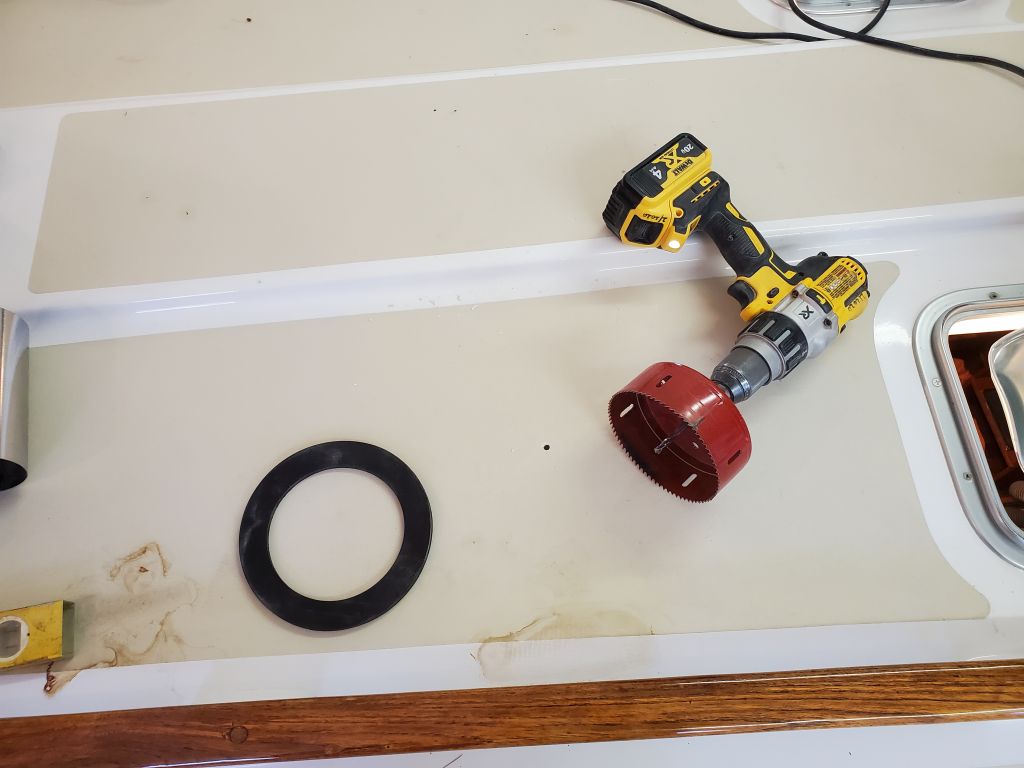
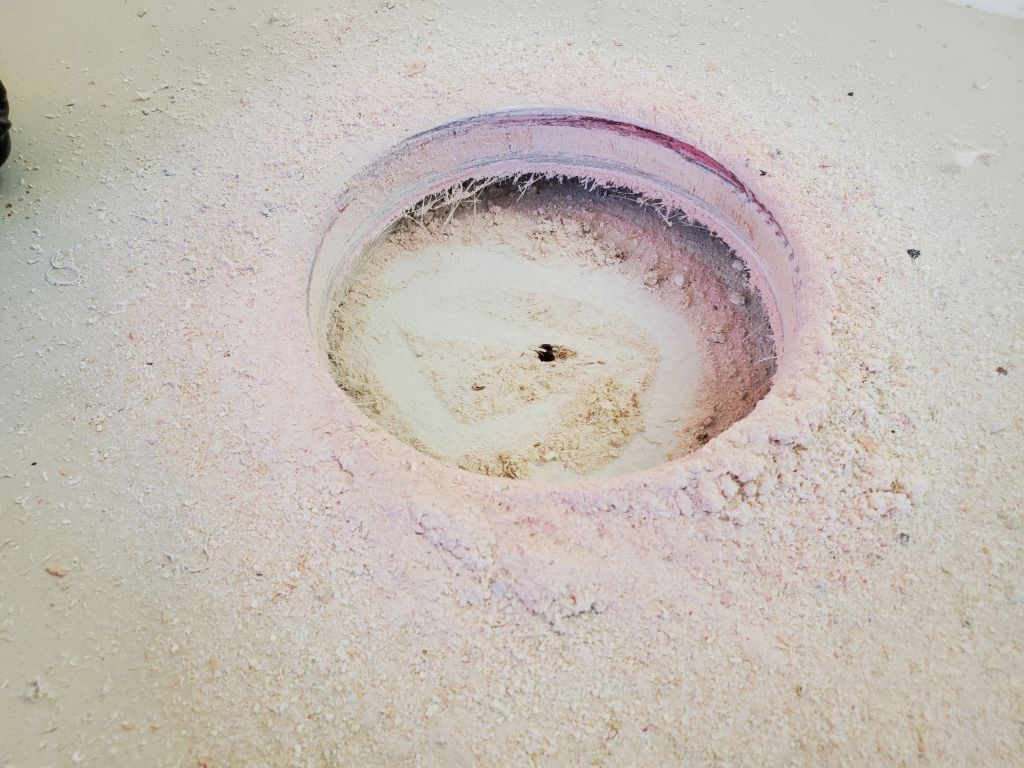
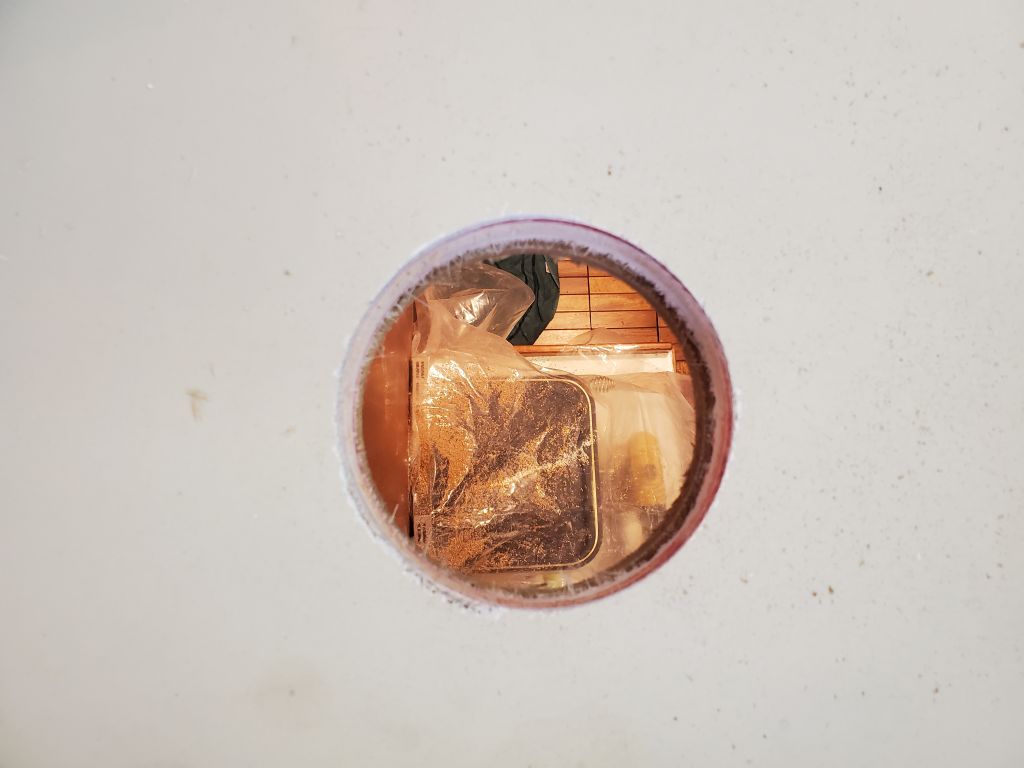
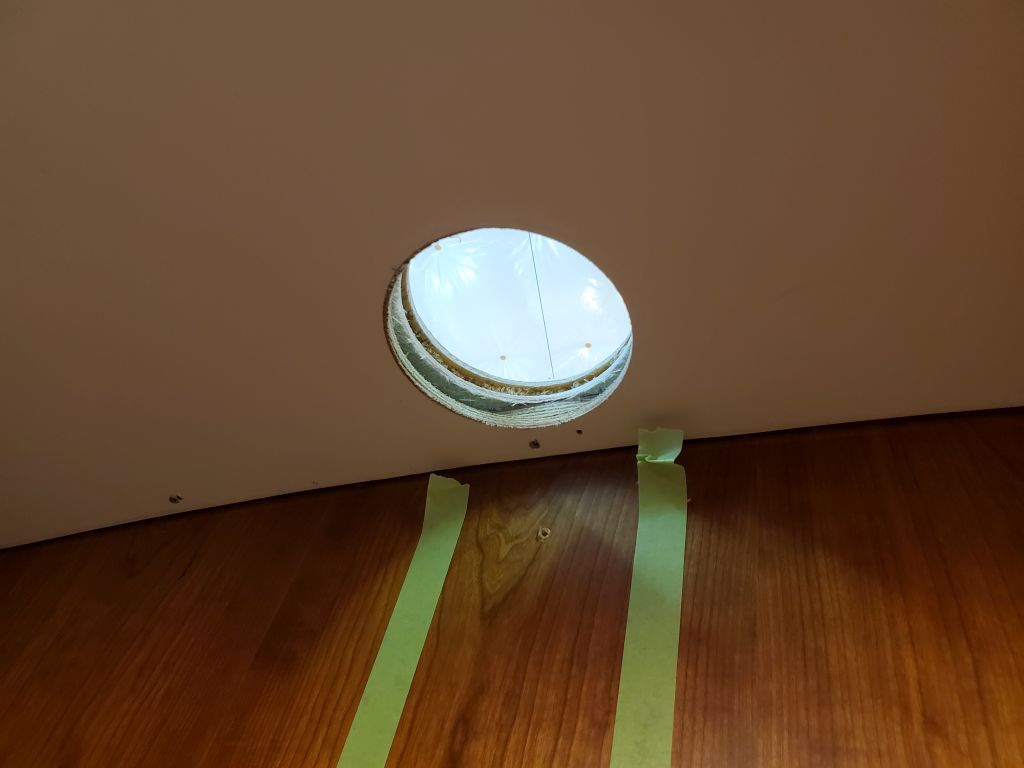
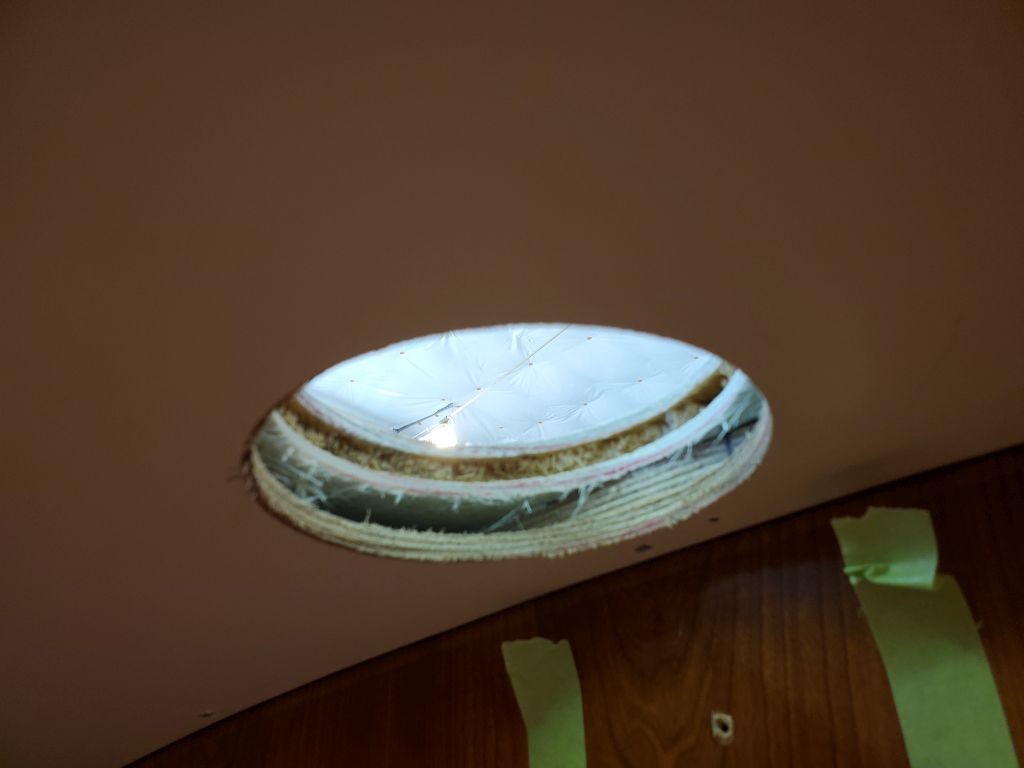
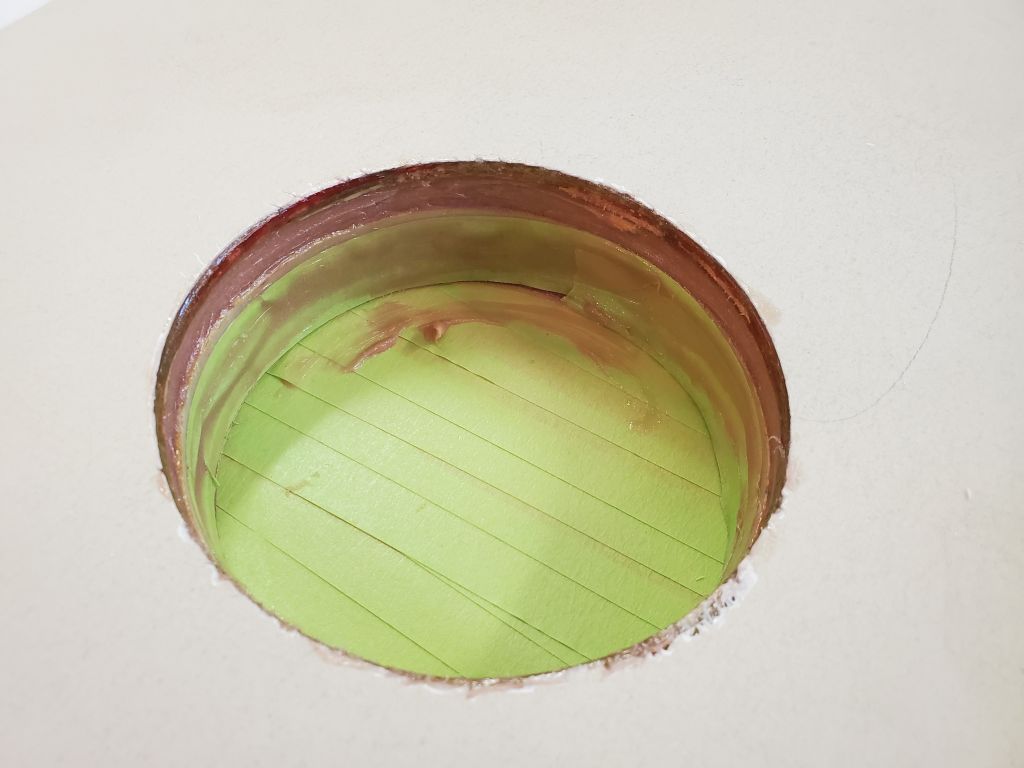
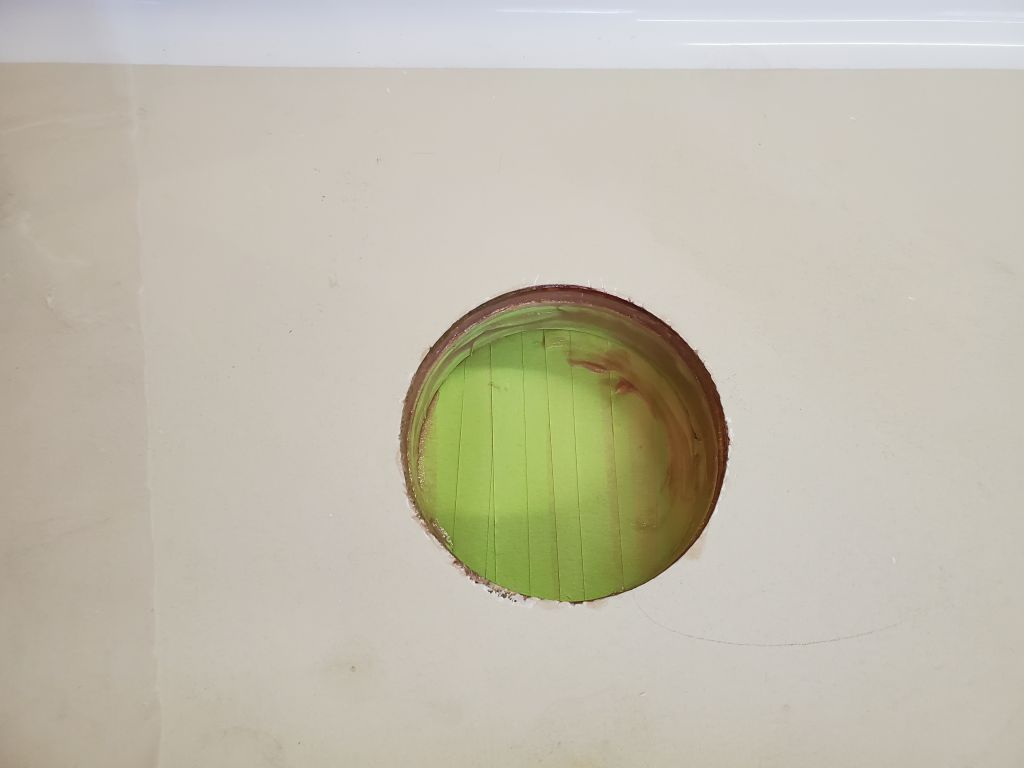
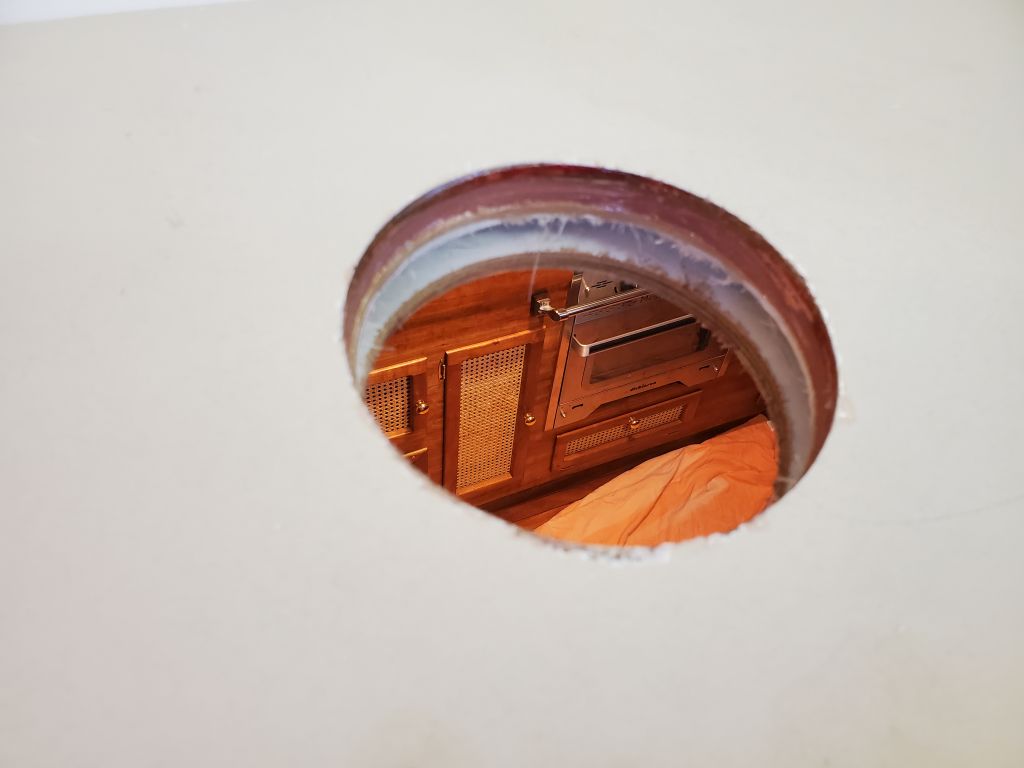
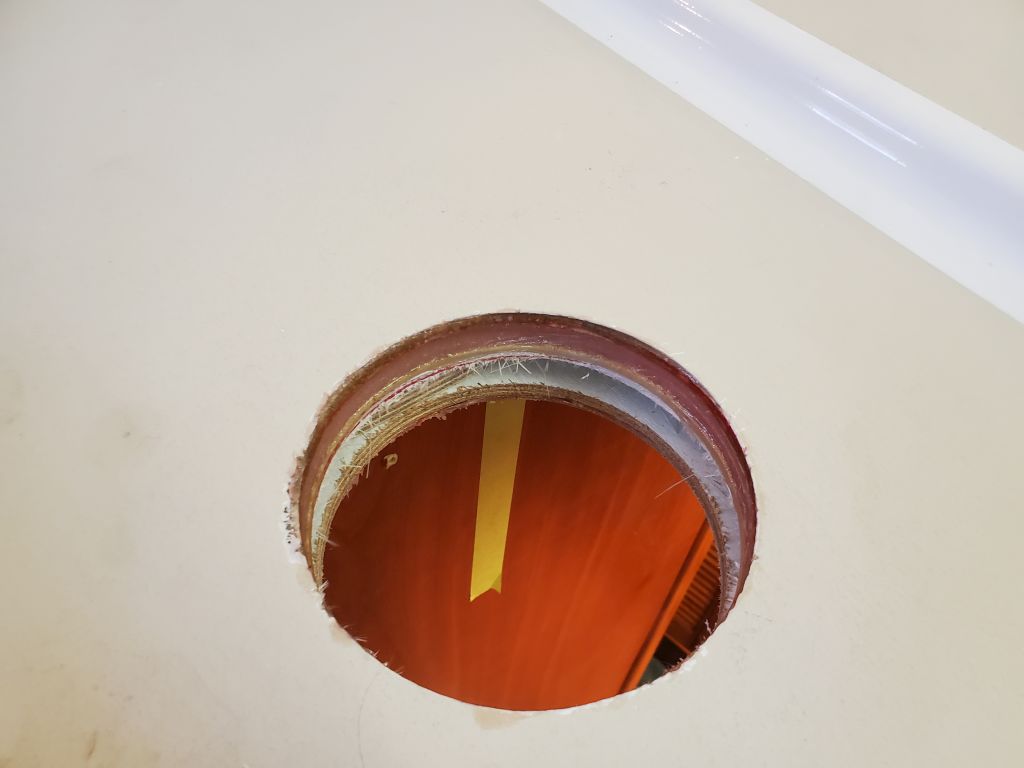
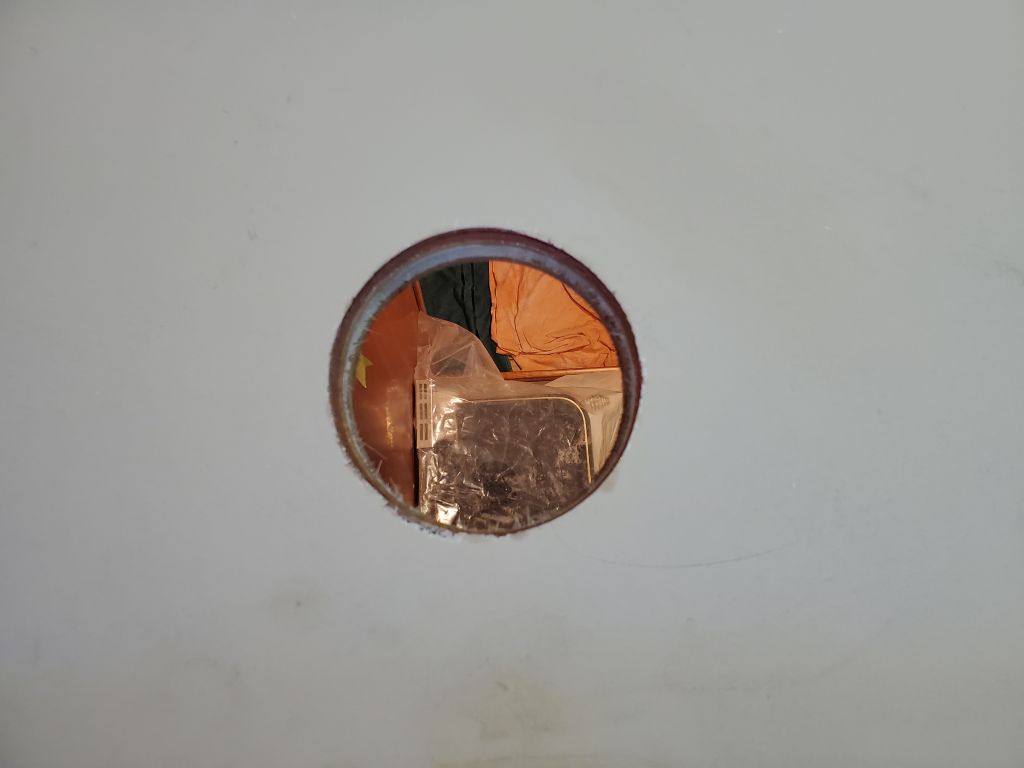
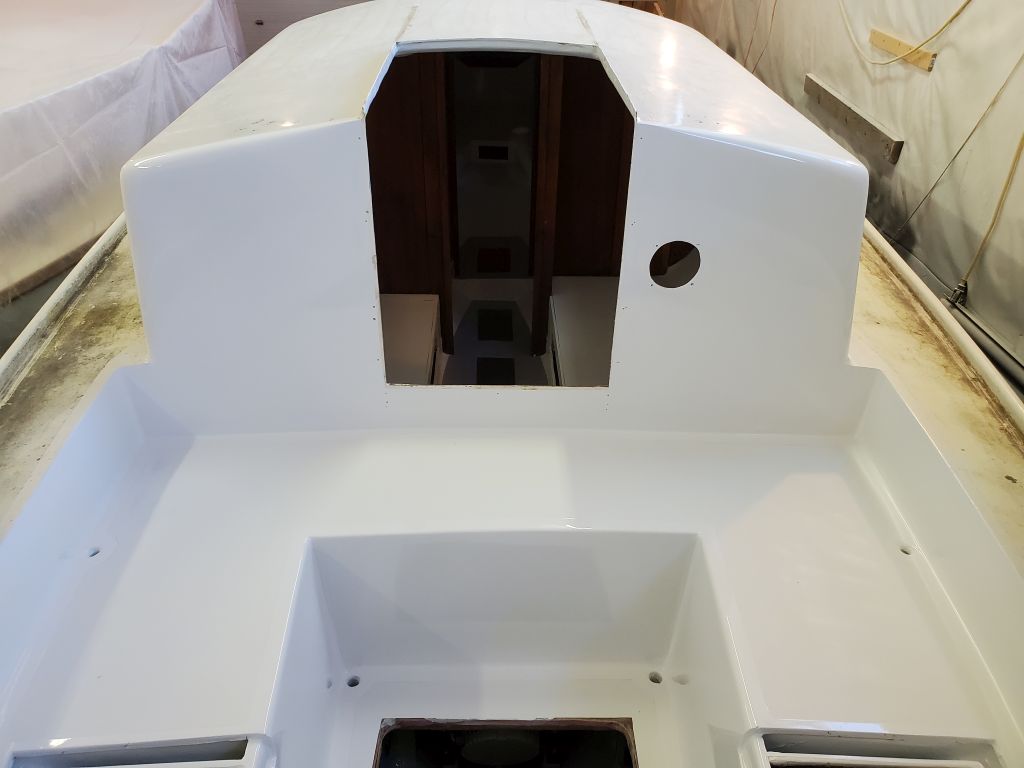
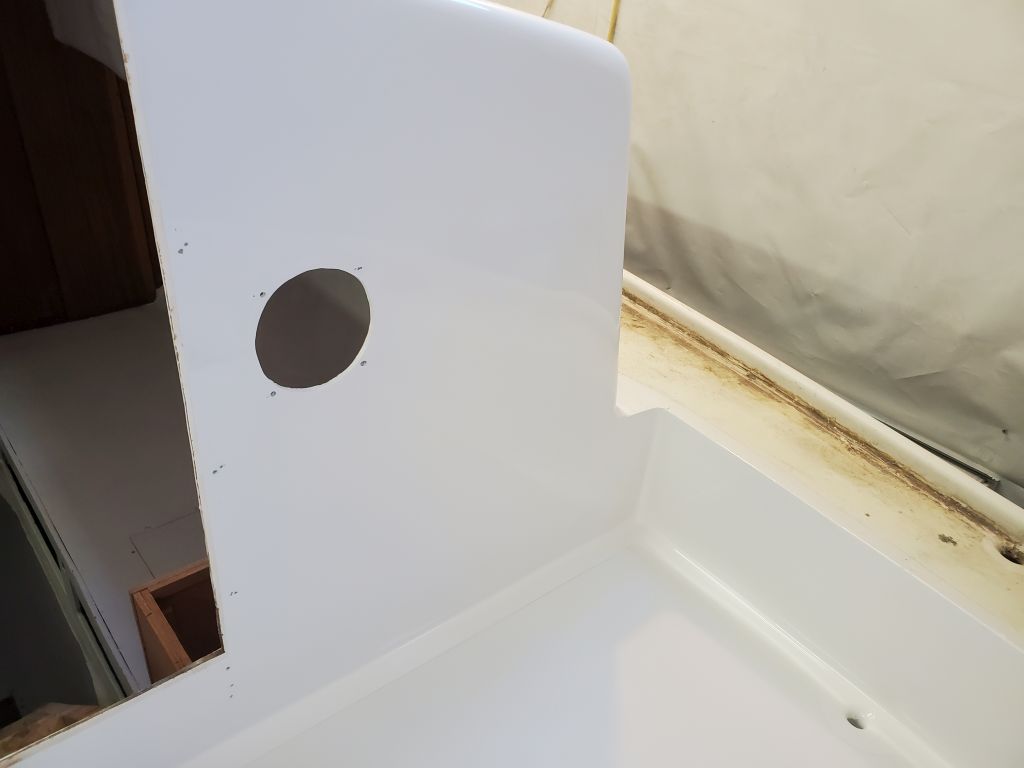
With a drill and 1/4″ bit, I drilled straight through the overhead and deck above to mark the location on deck.  Then, with a 5″ hole saw, I cut out the deck from above, leaving only the plywood overhead in place for now.  As I’d found throughout during the original rebuild of this boat, the deck and core was in excellent condition in way of this cutout.

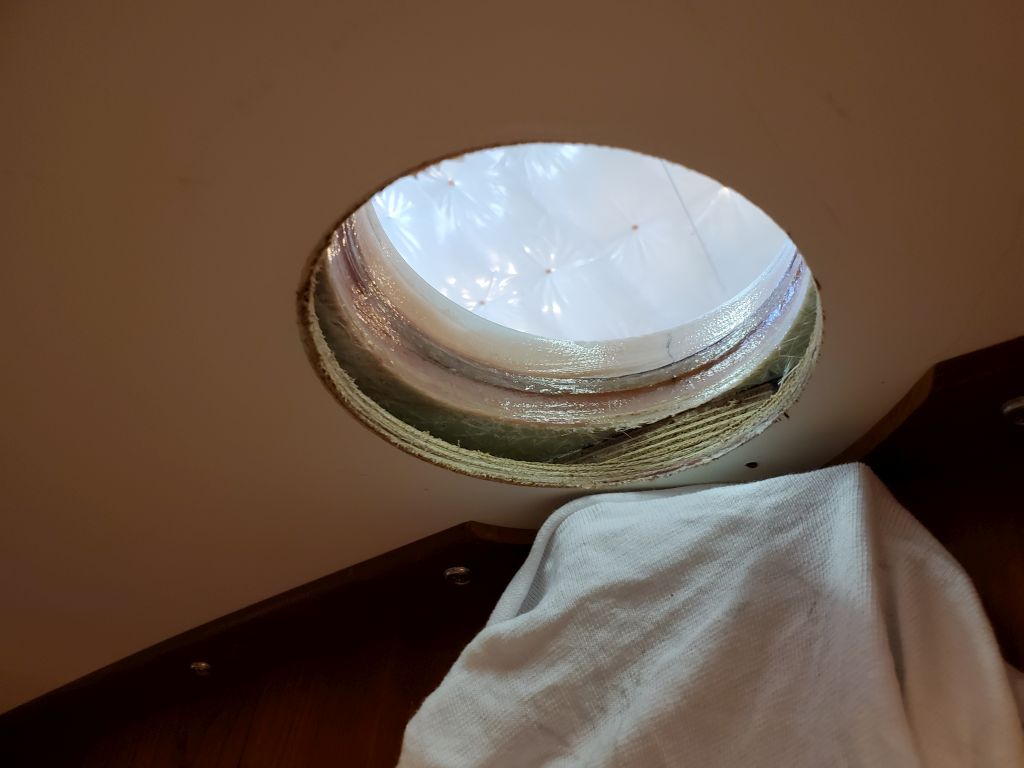
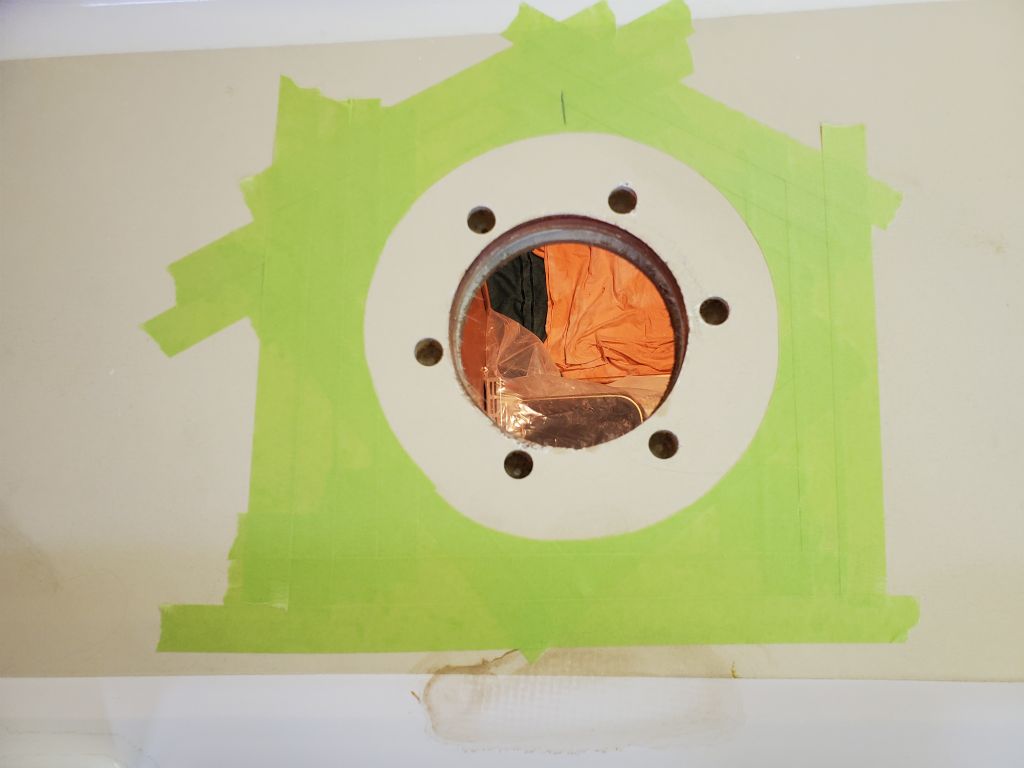
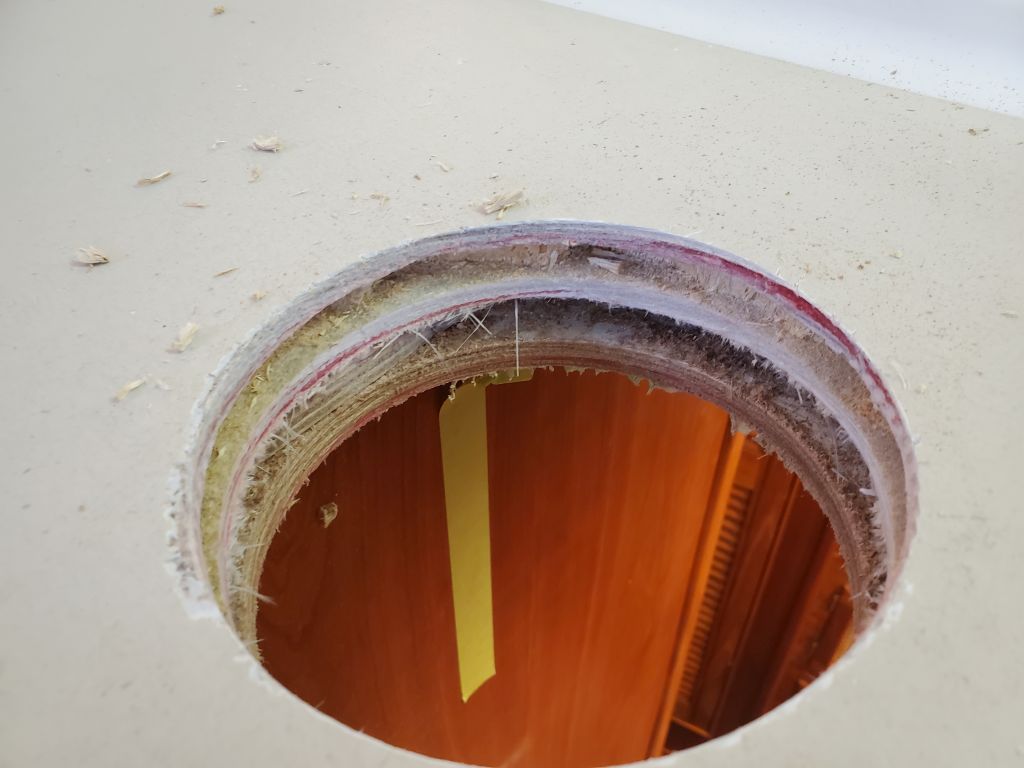
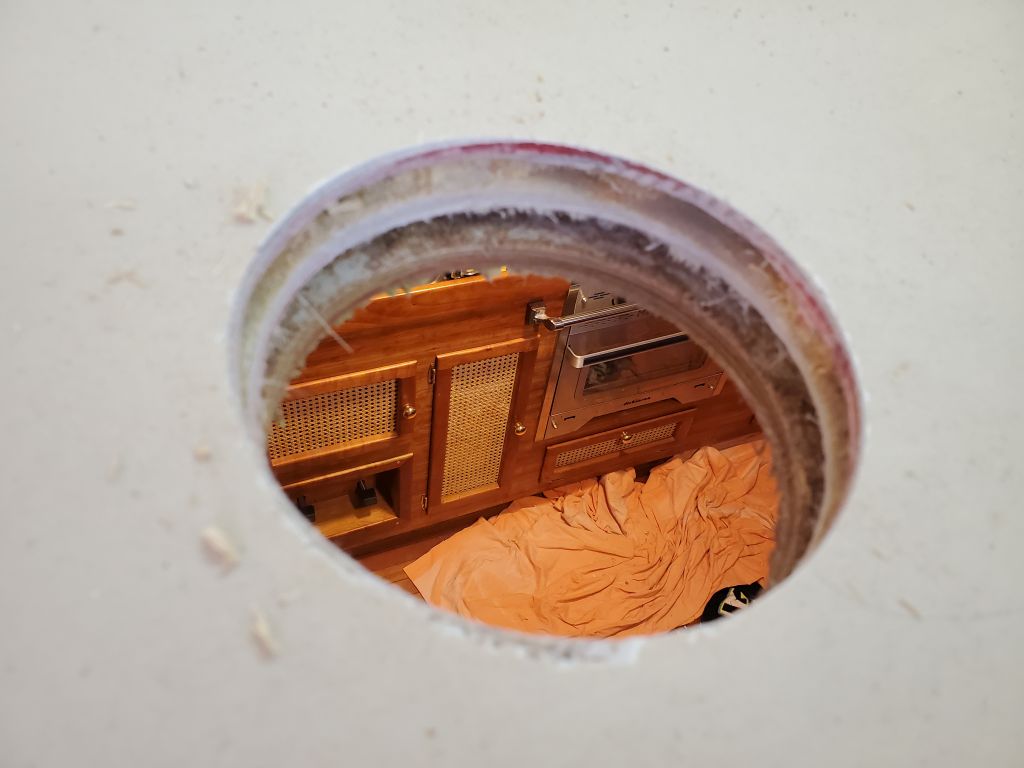
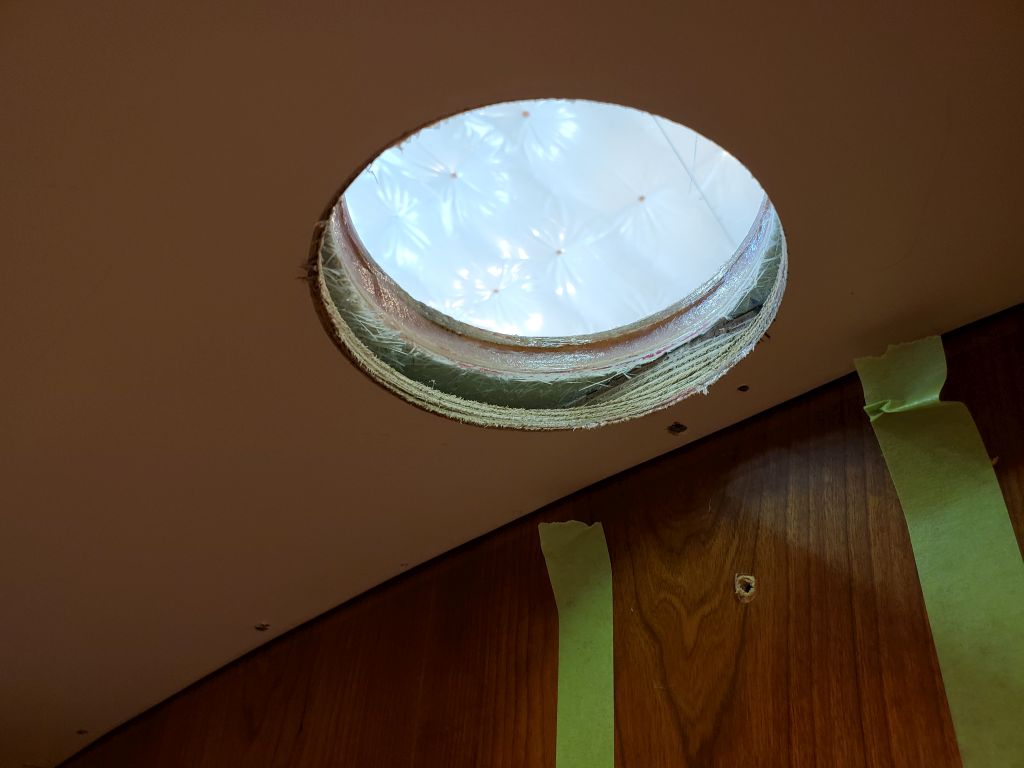
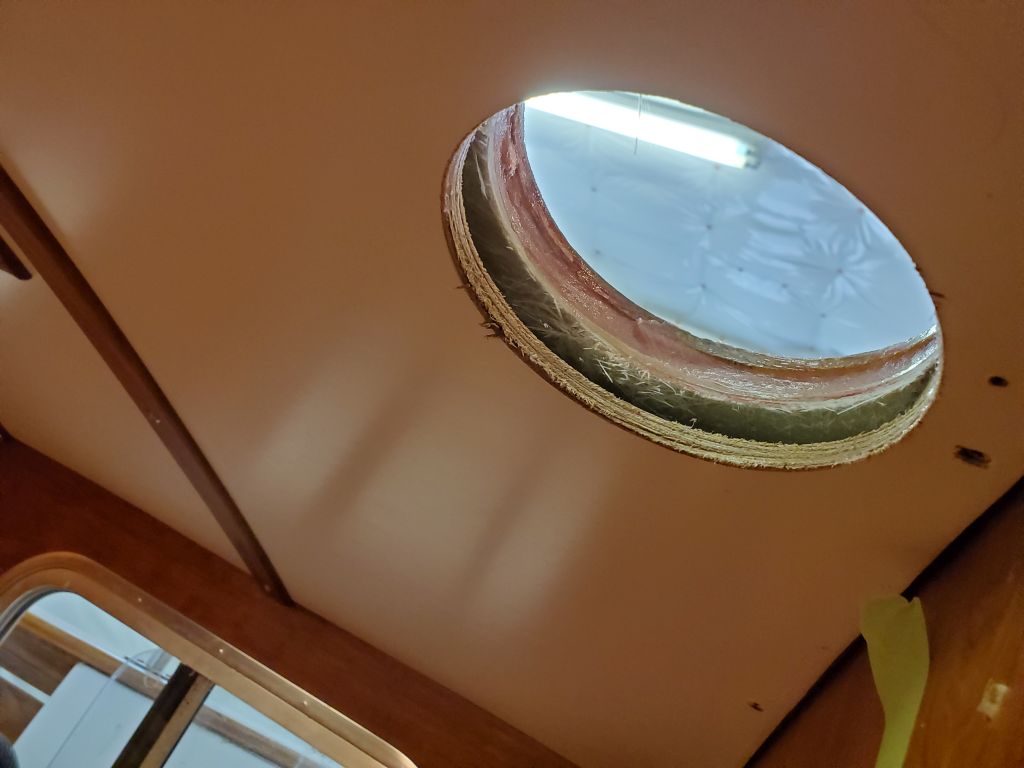
From inside the cabin, I scored and began the cut through the plywood overhead, then finished that cut from abovedeck as well.  Then, I reamed out the exposed core around the new opening to prepare it for sealing with epoxy.

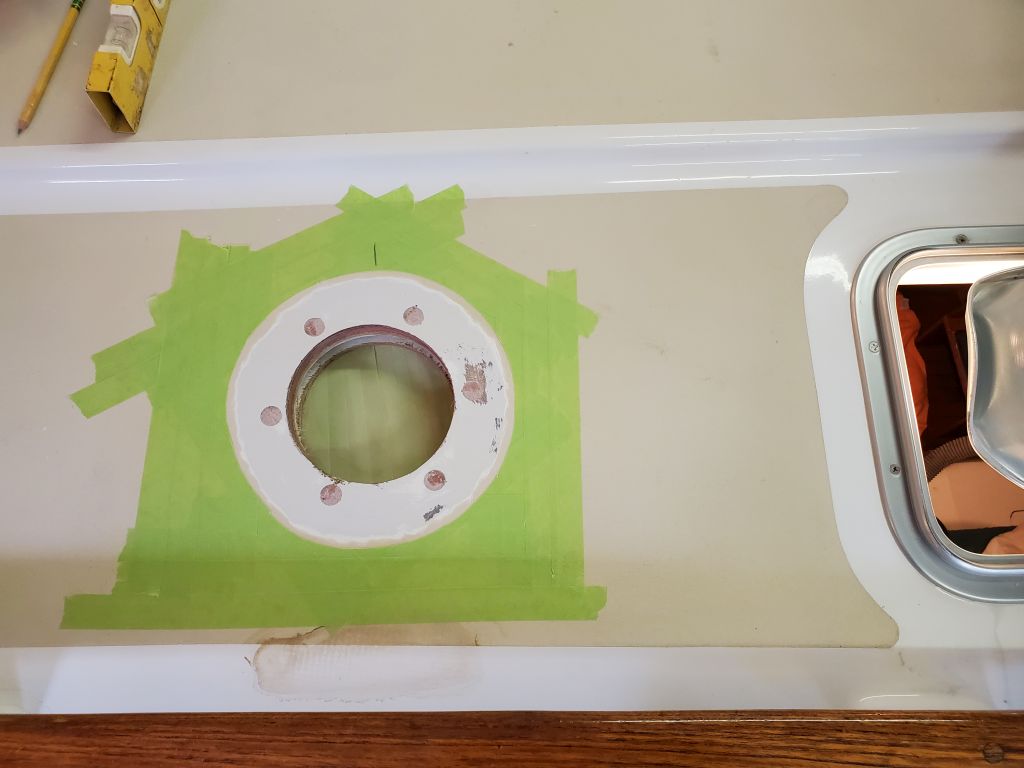
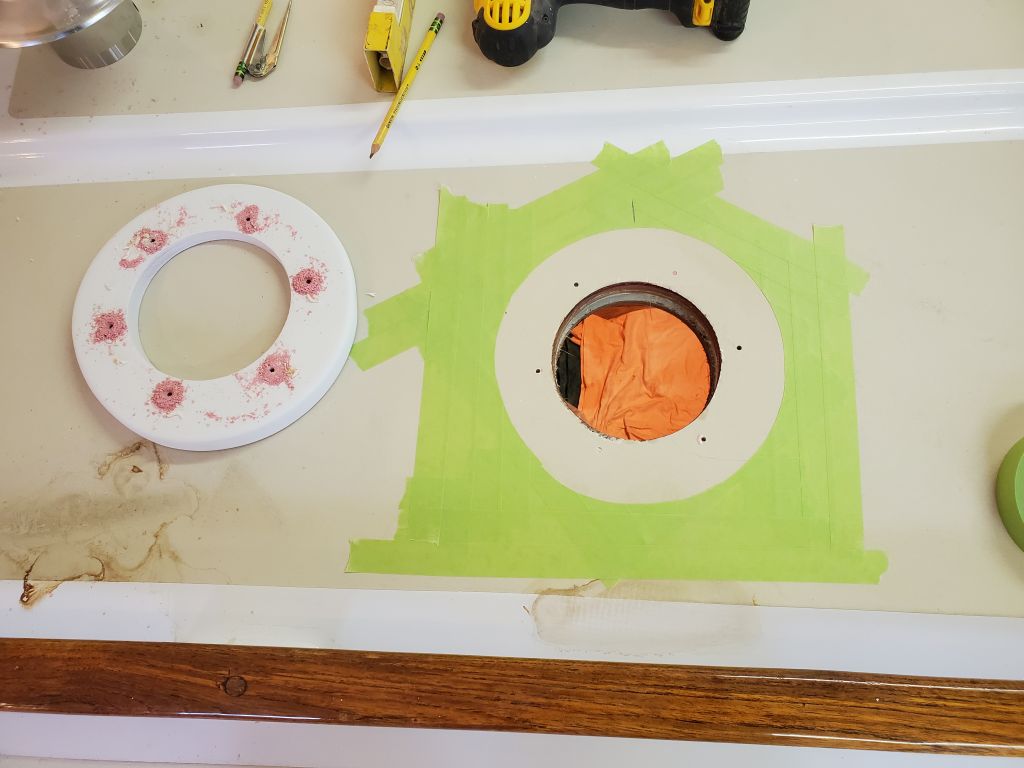
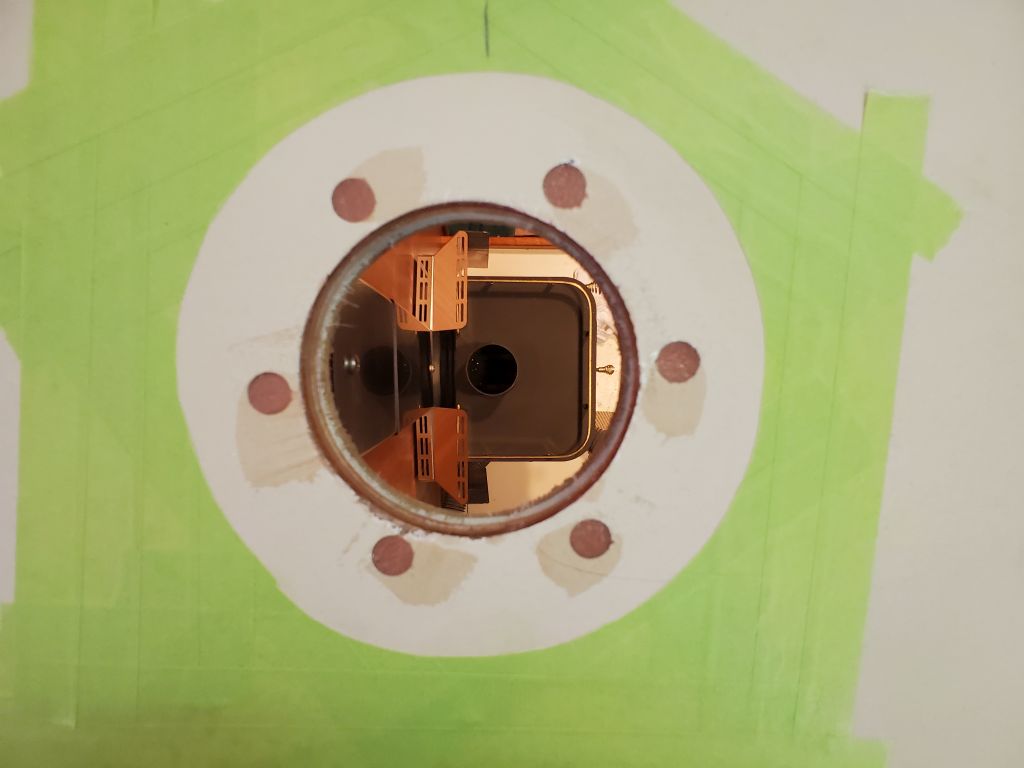
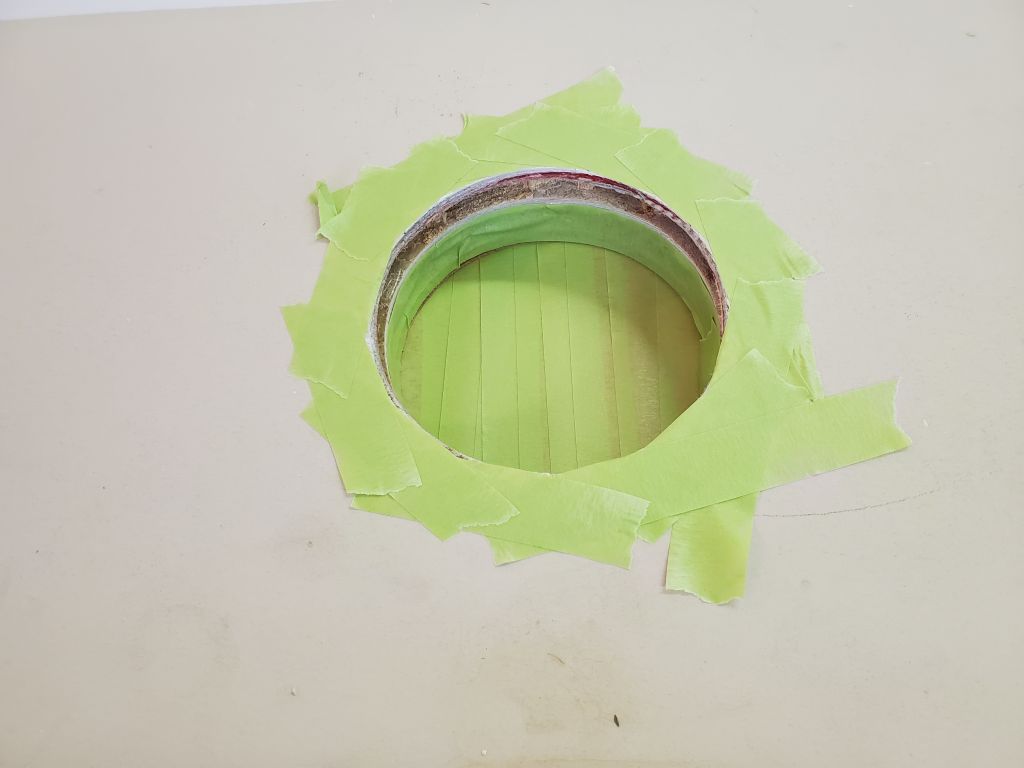
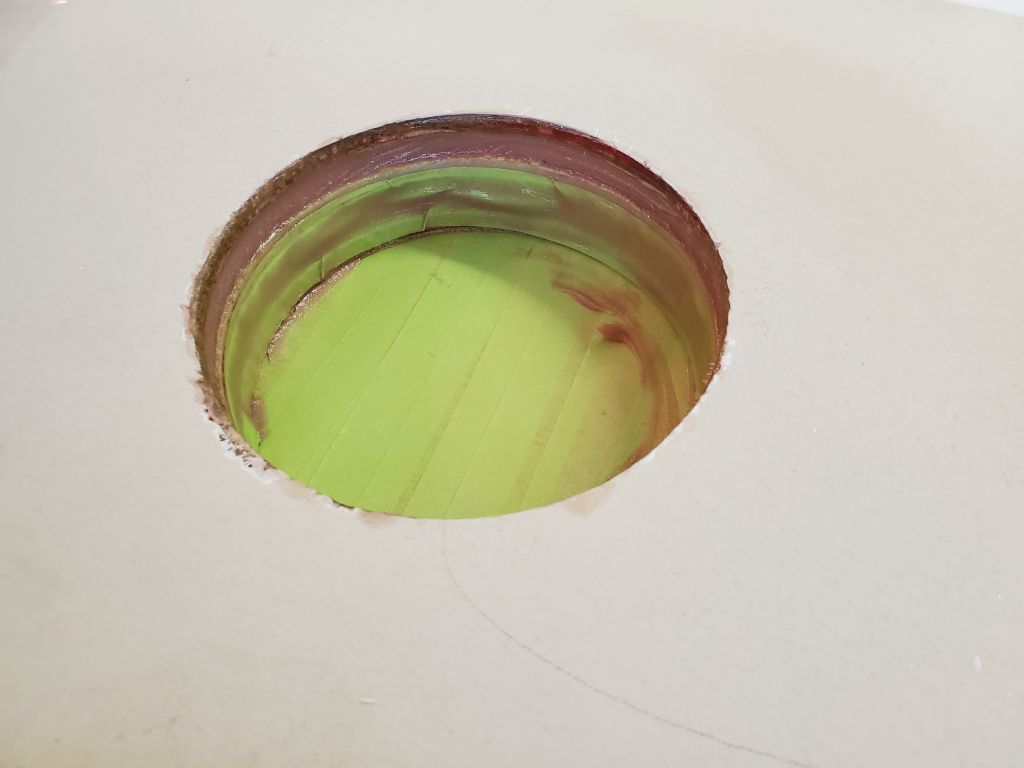
After cleanup and appropriate masking, I filled the new void round the edge of the 5″ hole with a thickened epoxy mixture, and removed all the tape once the epoxy was in place.

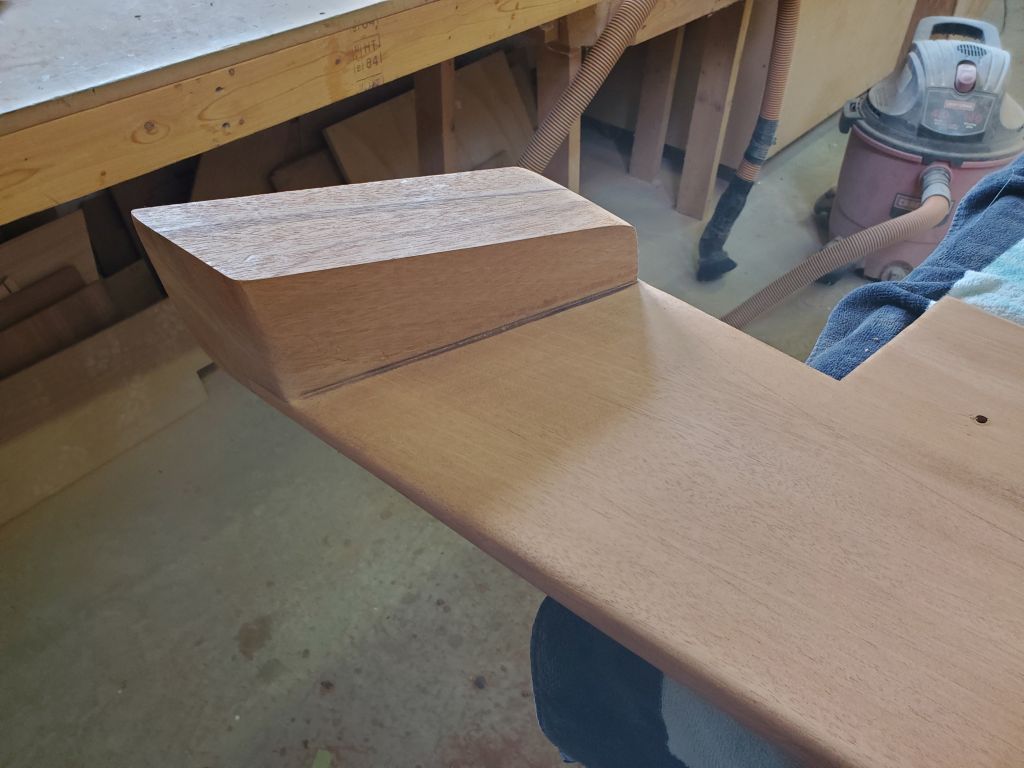
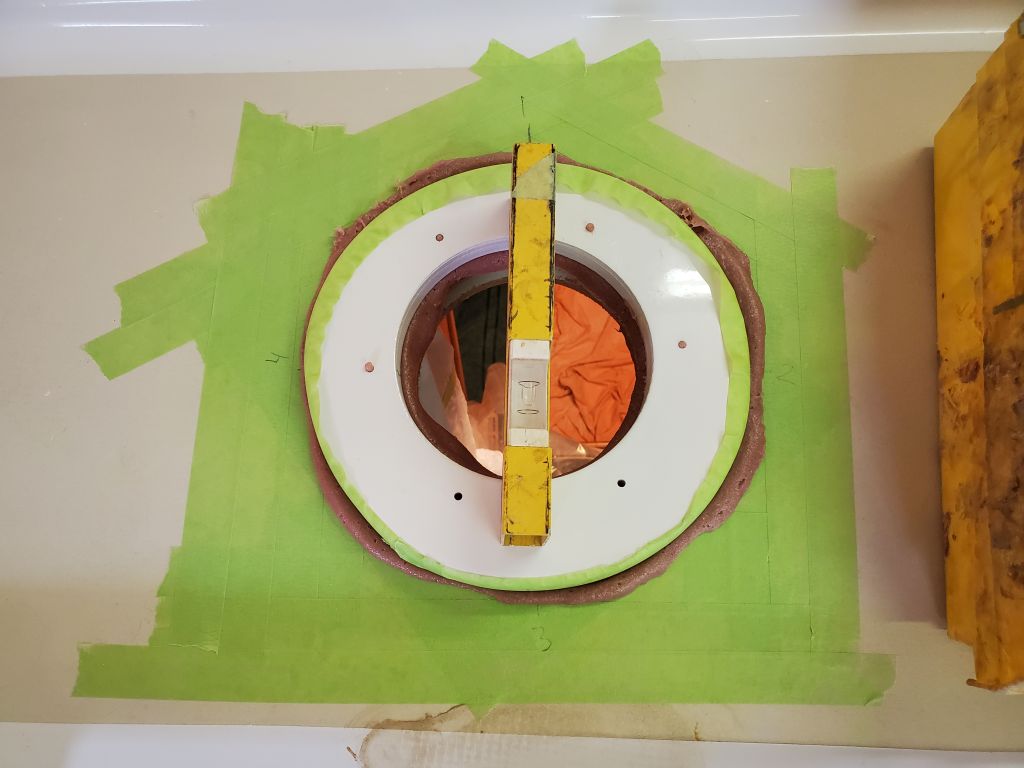
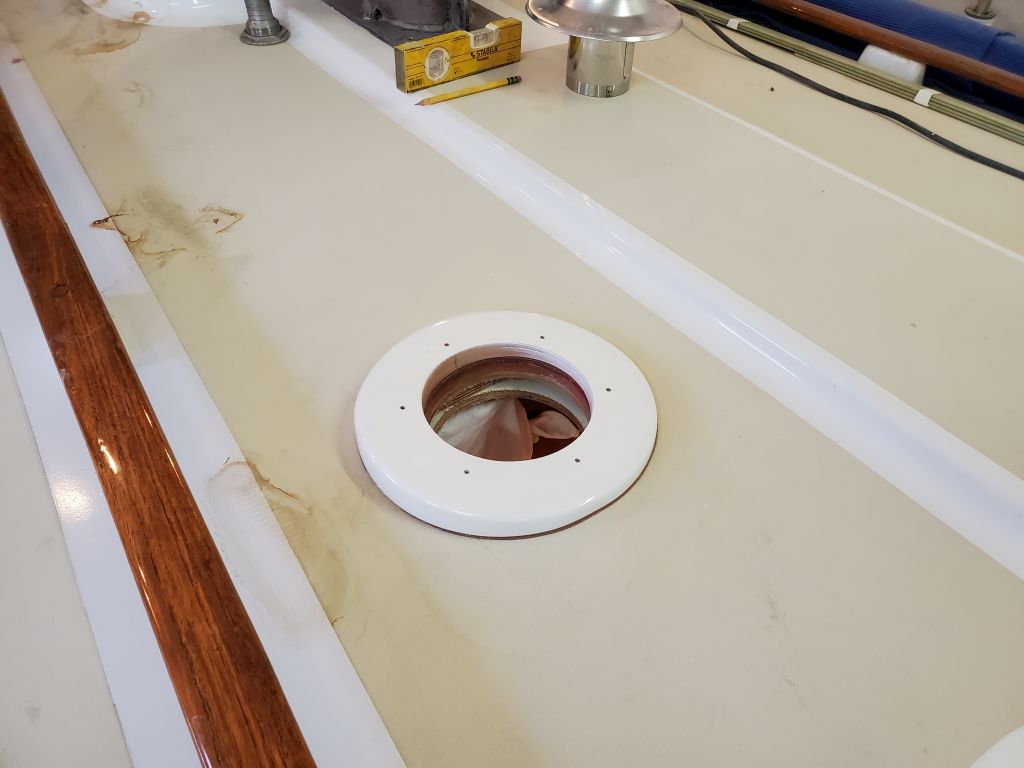
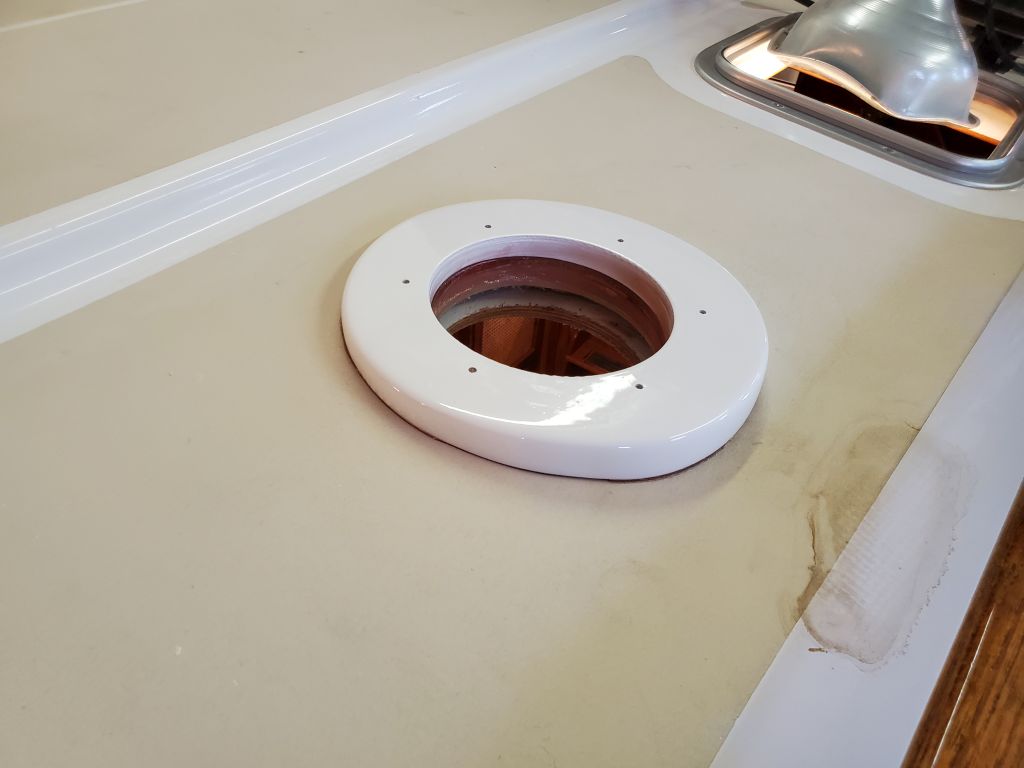
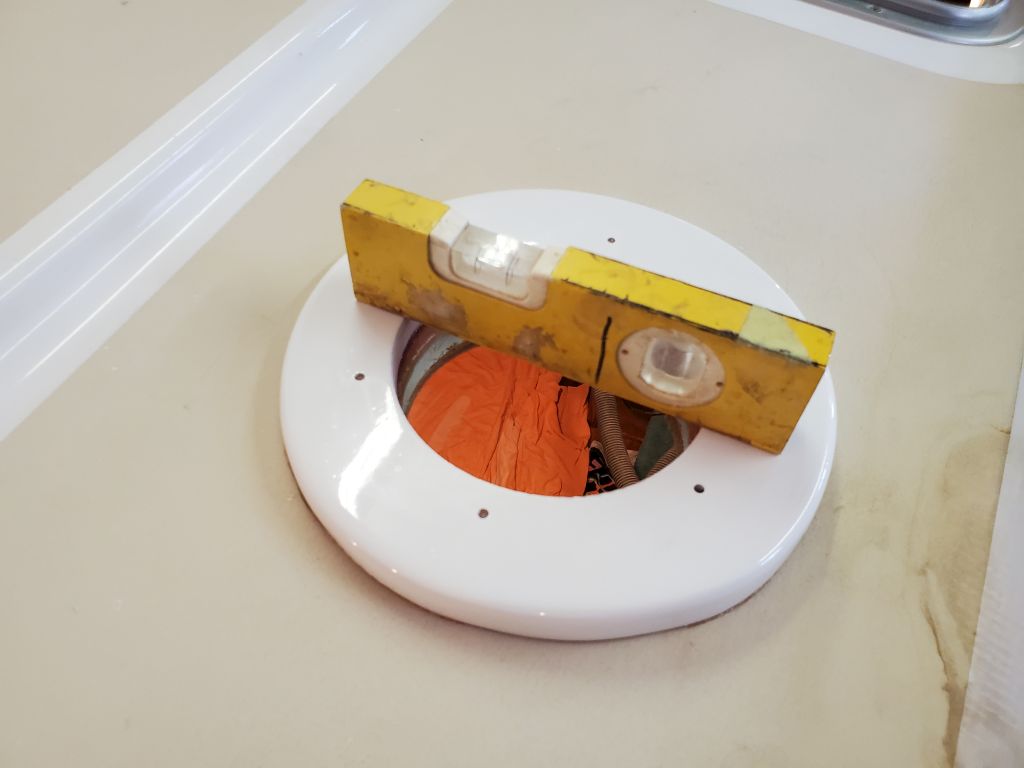
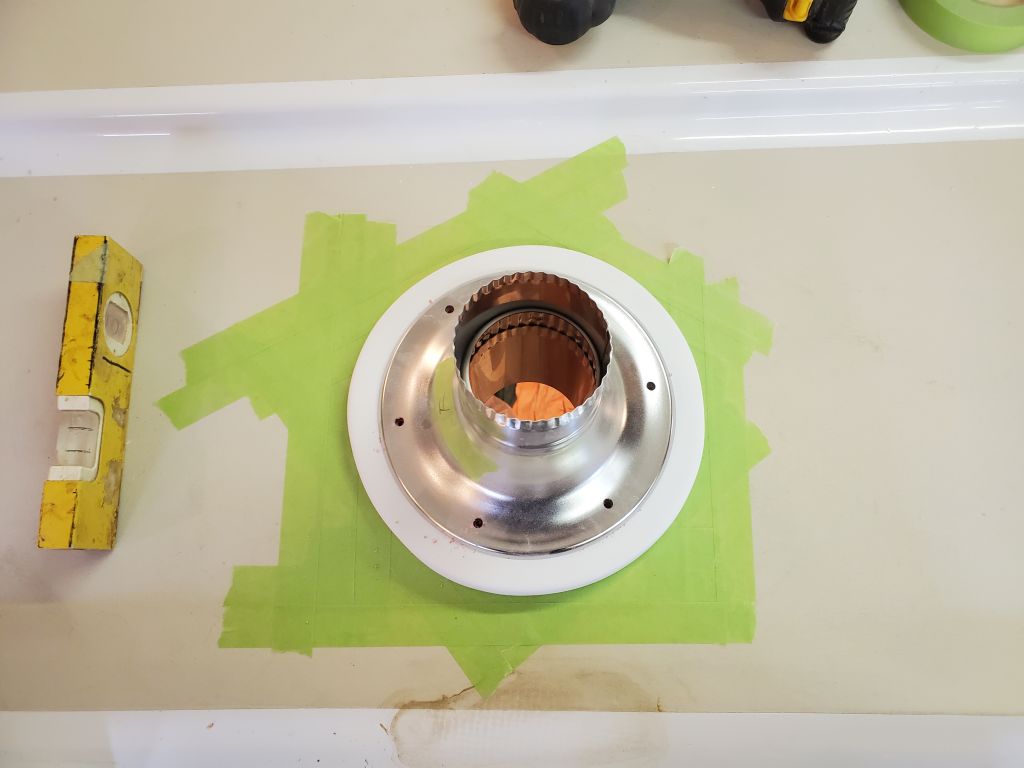
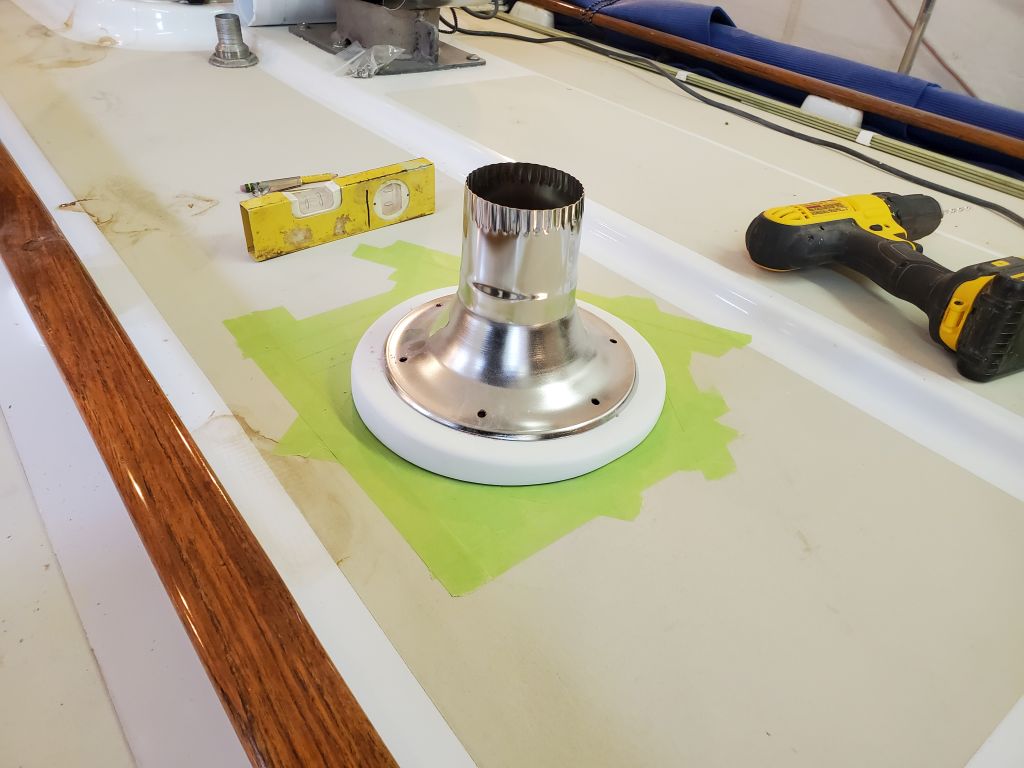
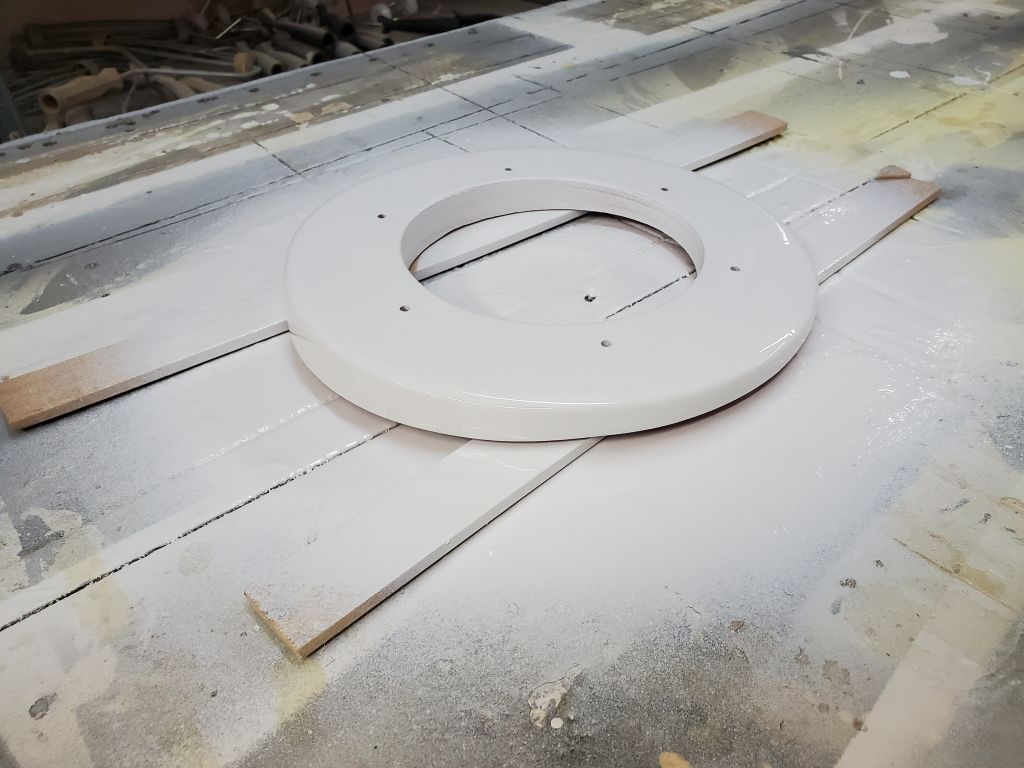
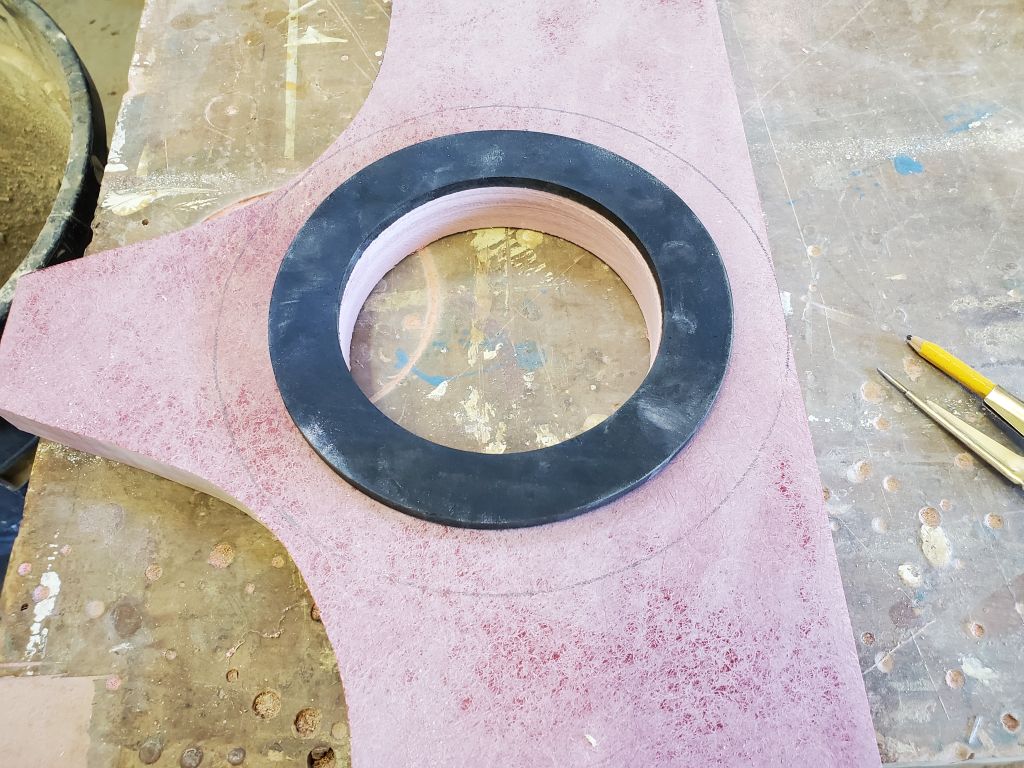
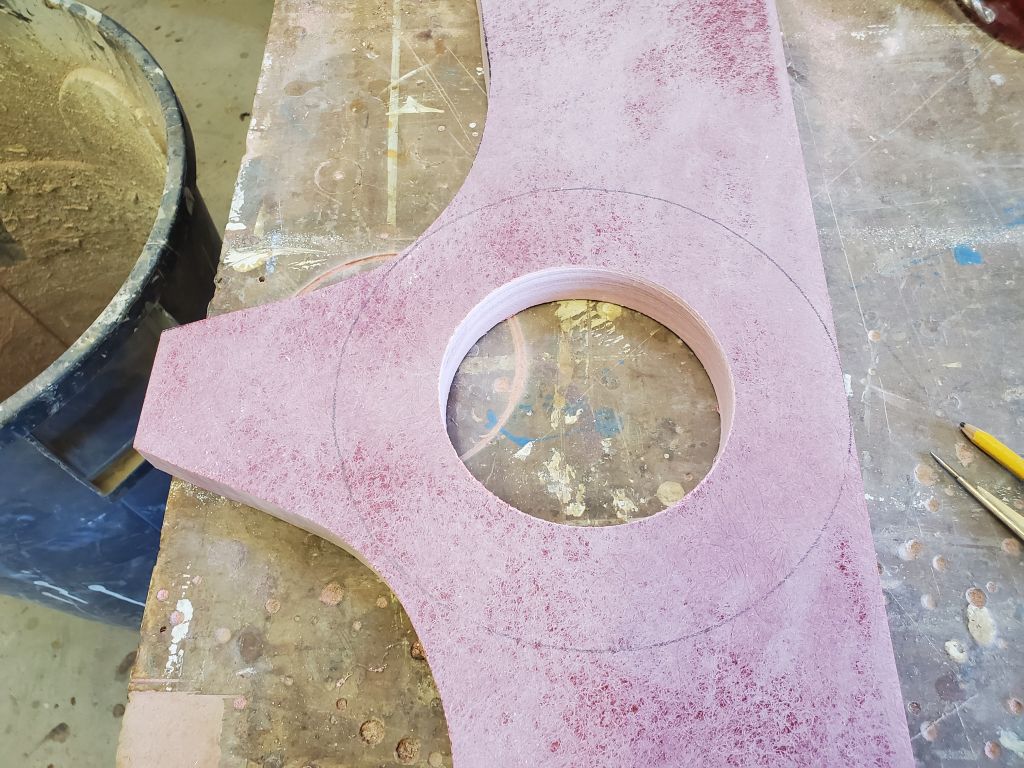
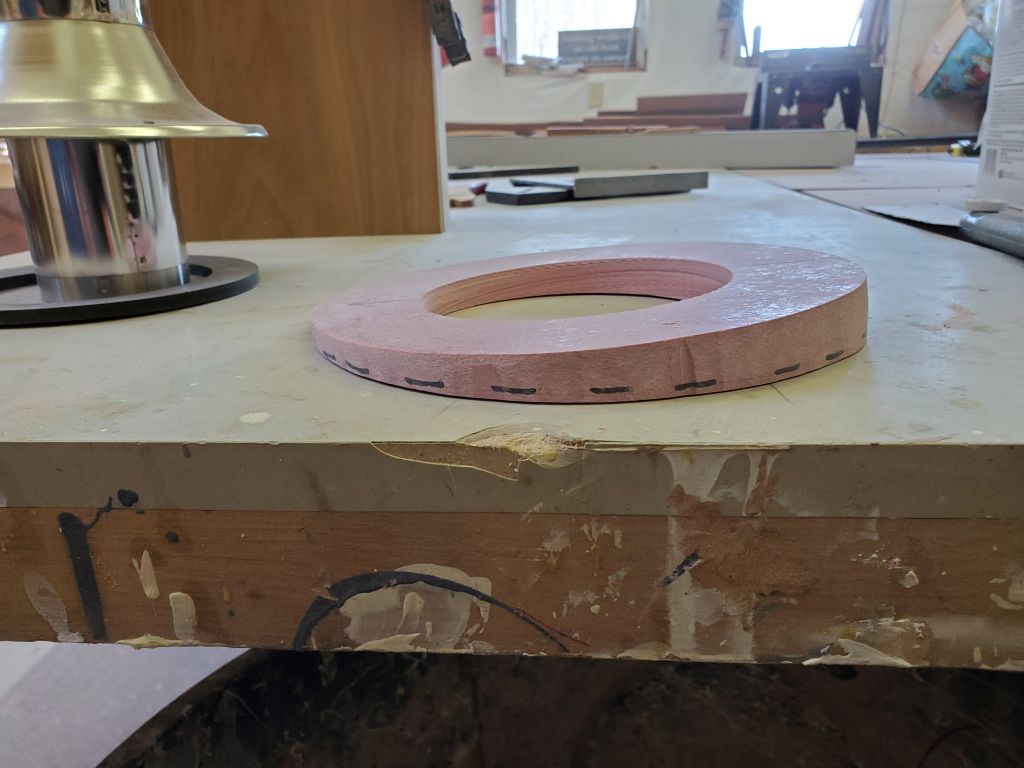
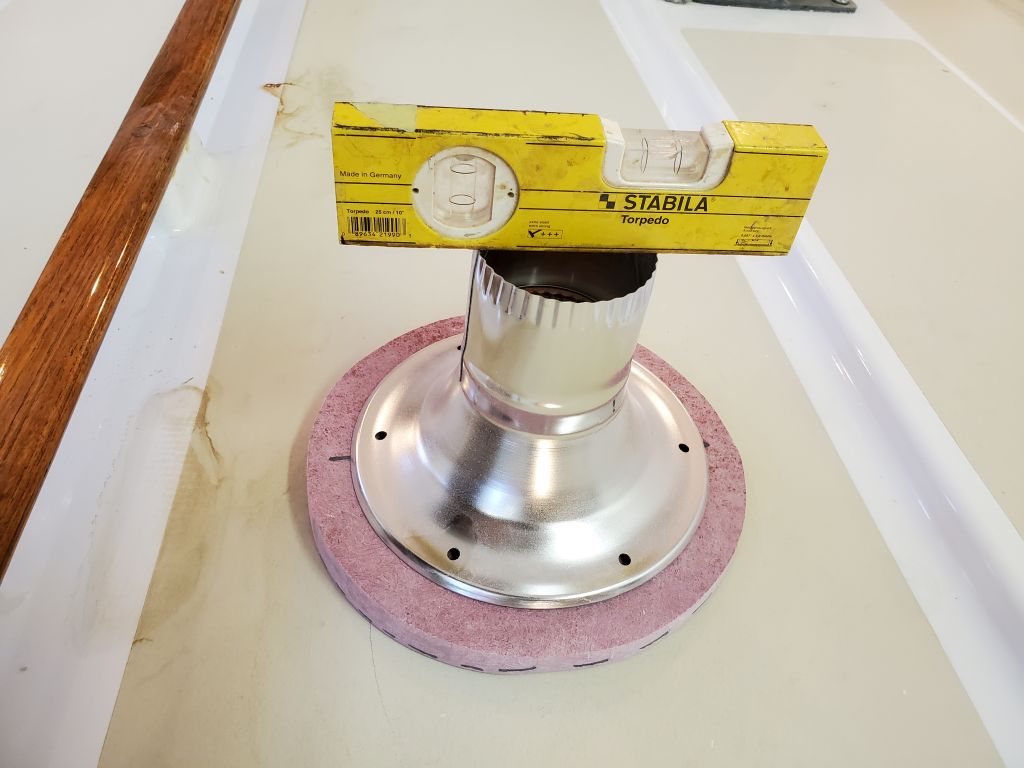
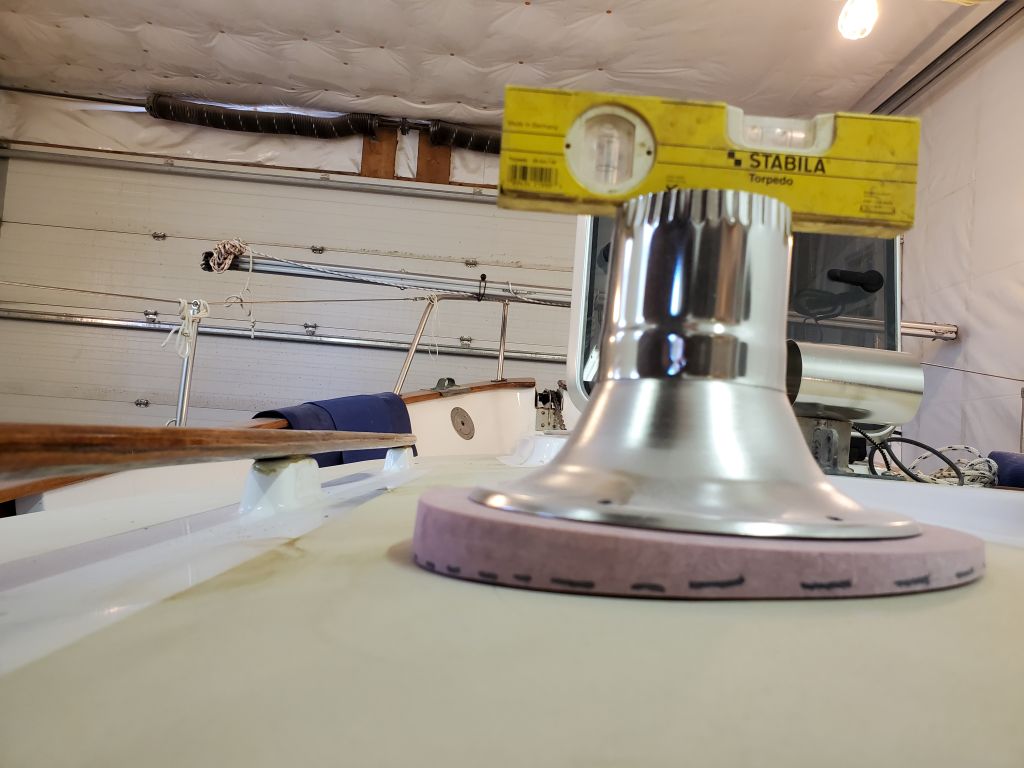
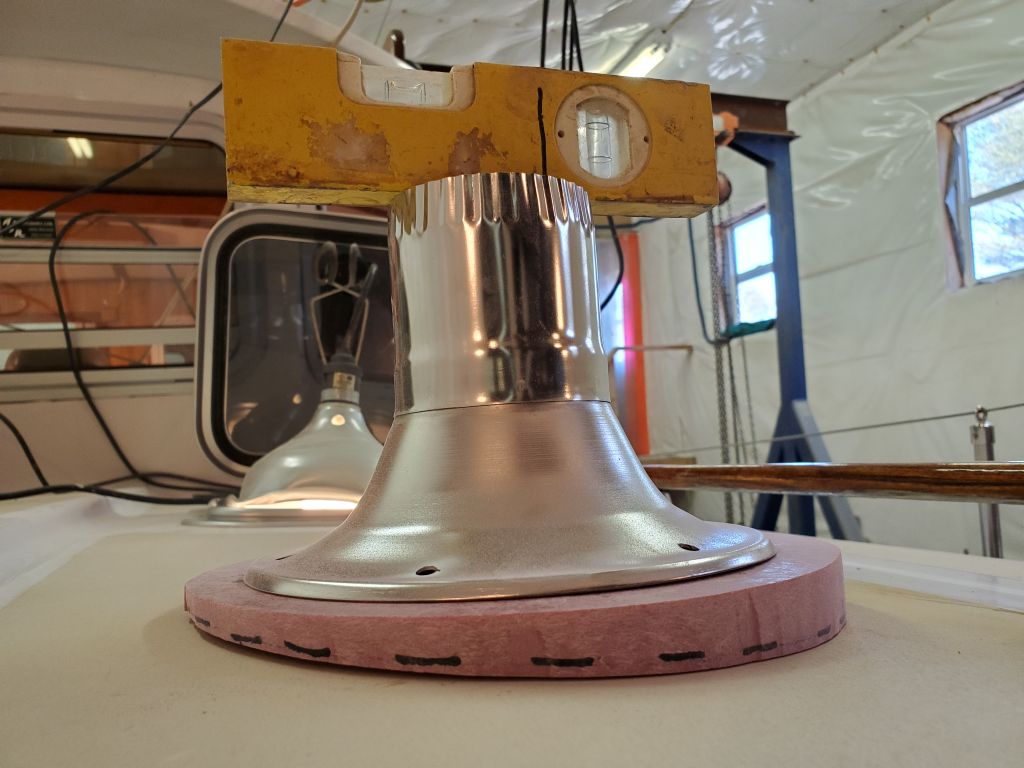
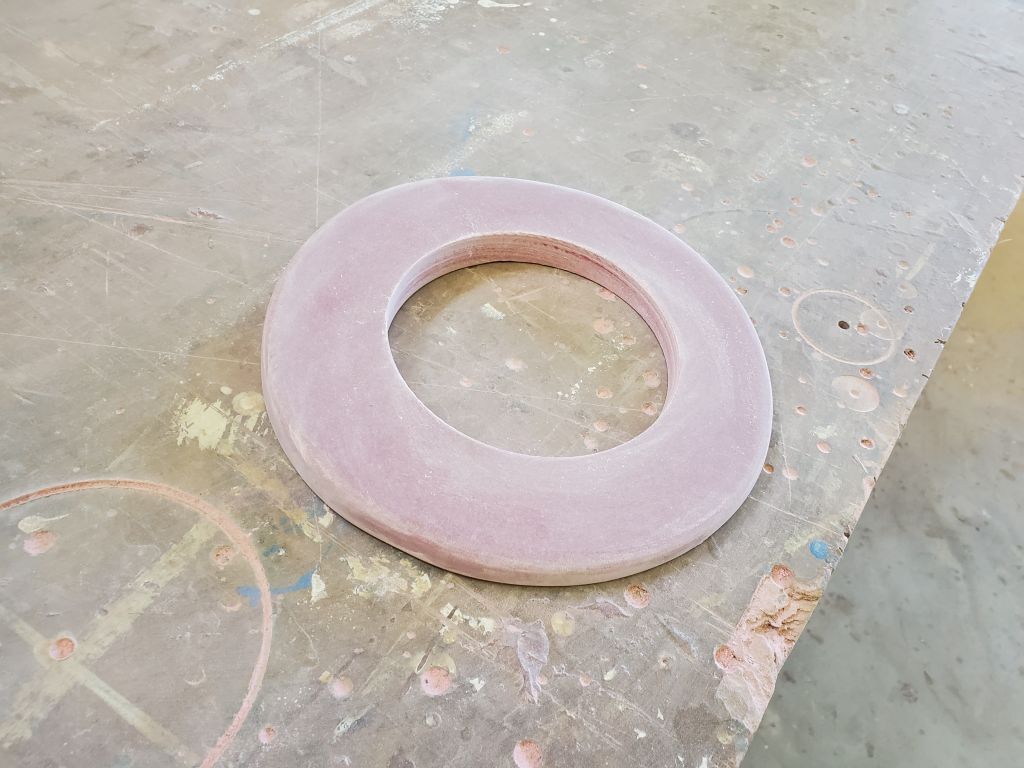
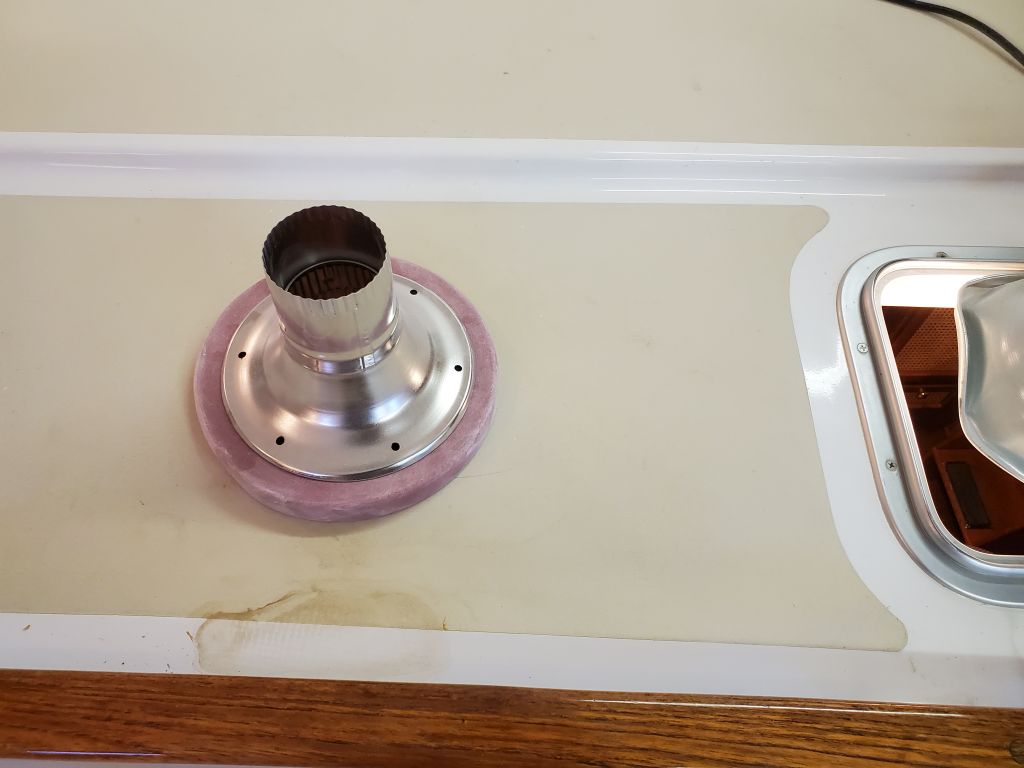
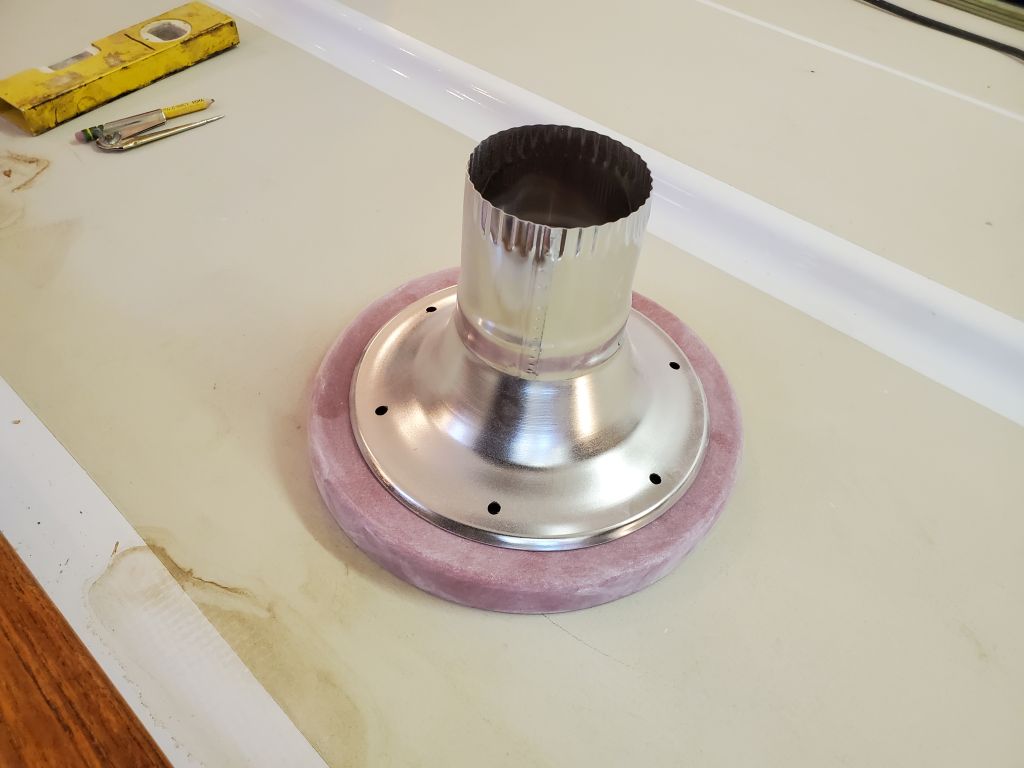
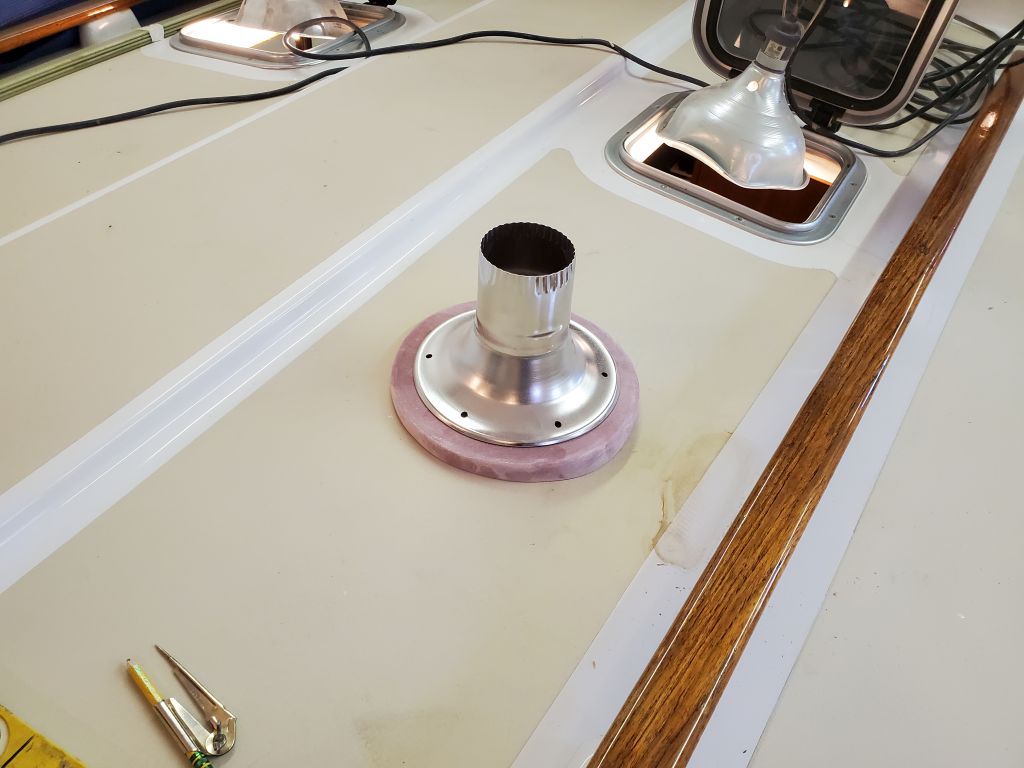
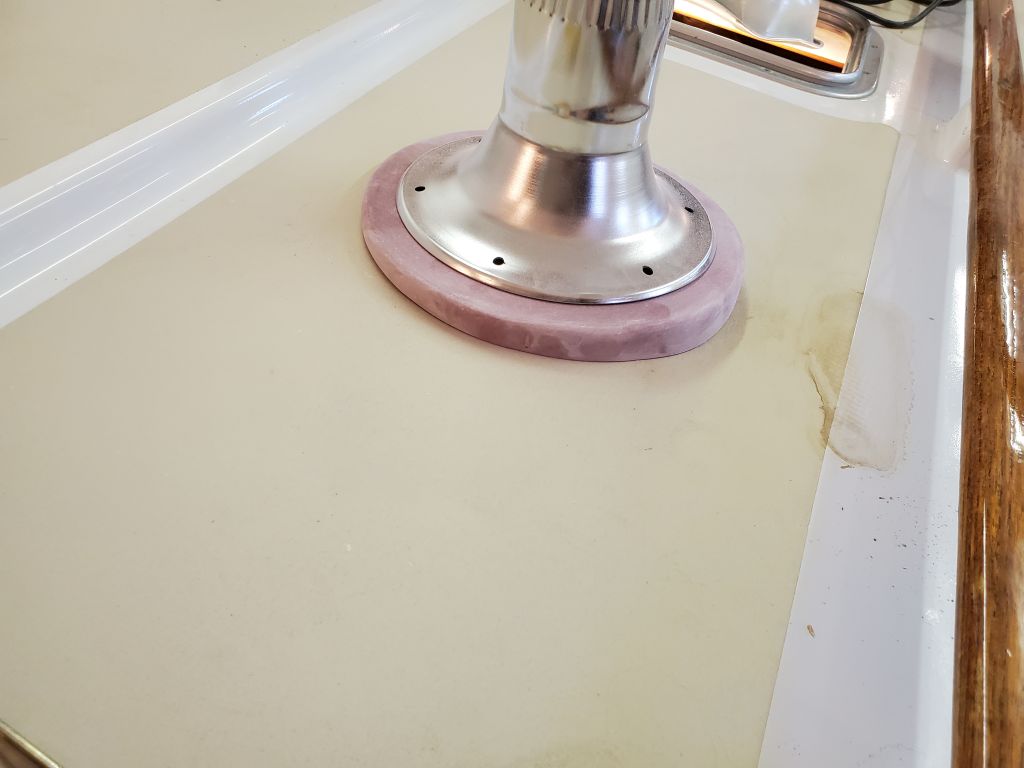
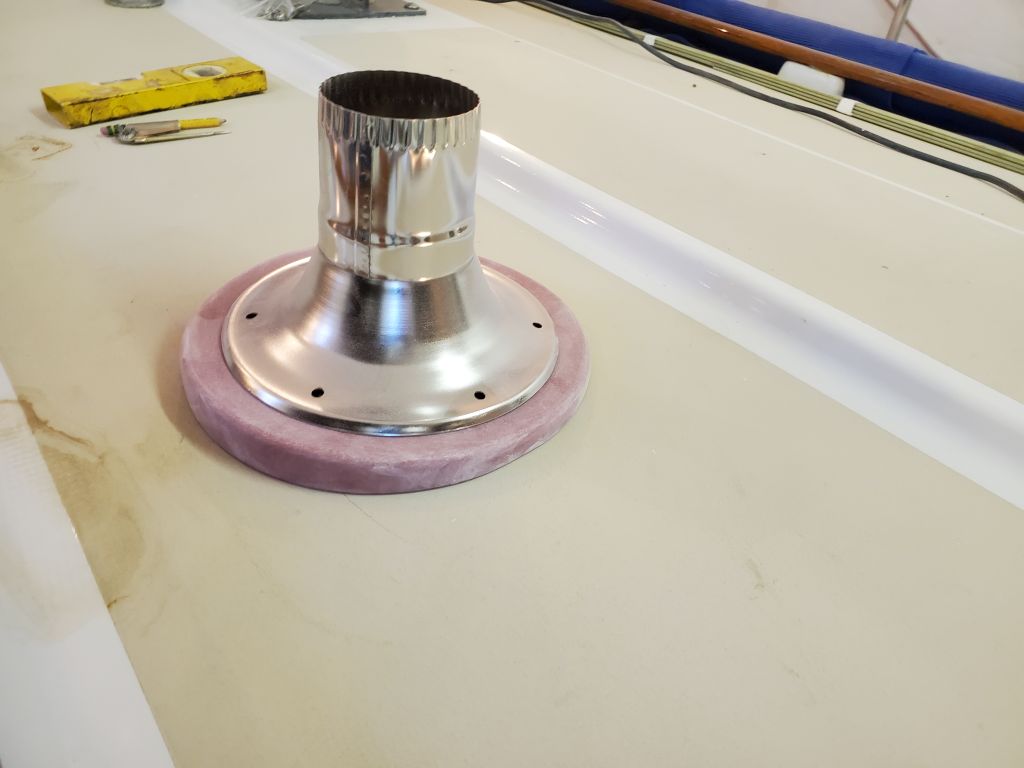
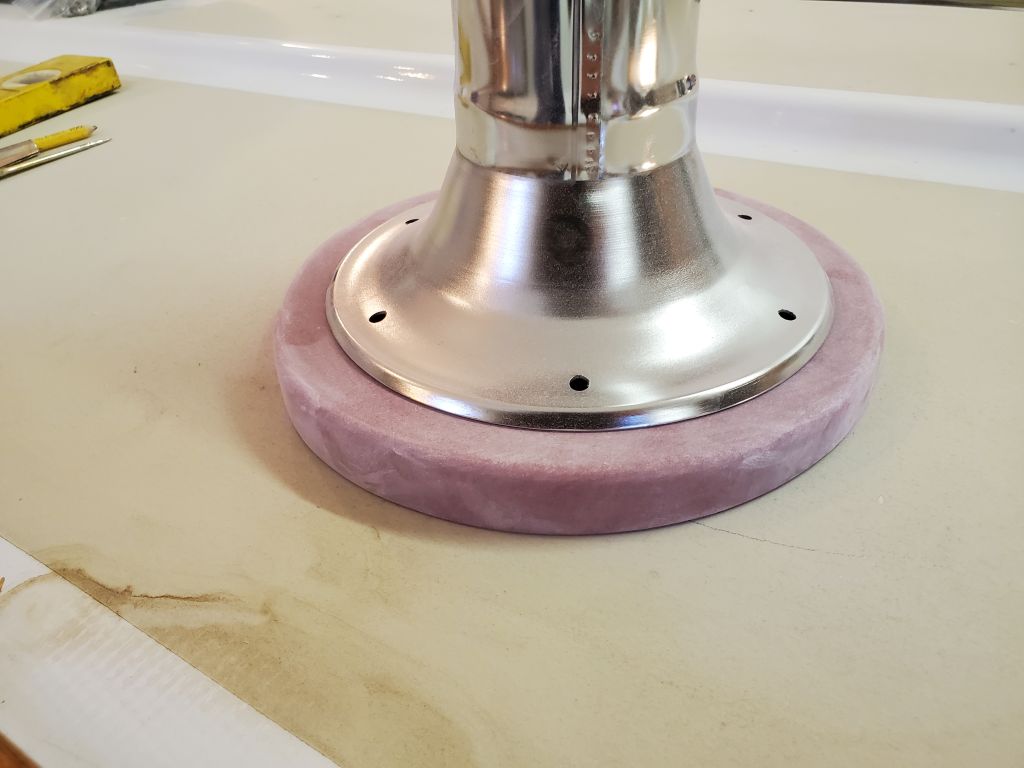
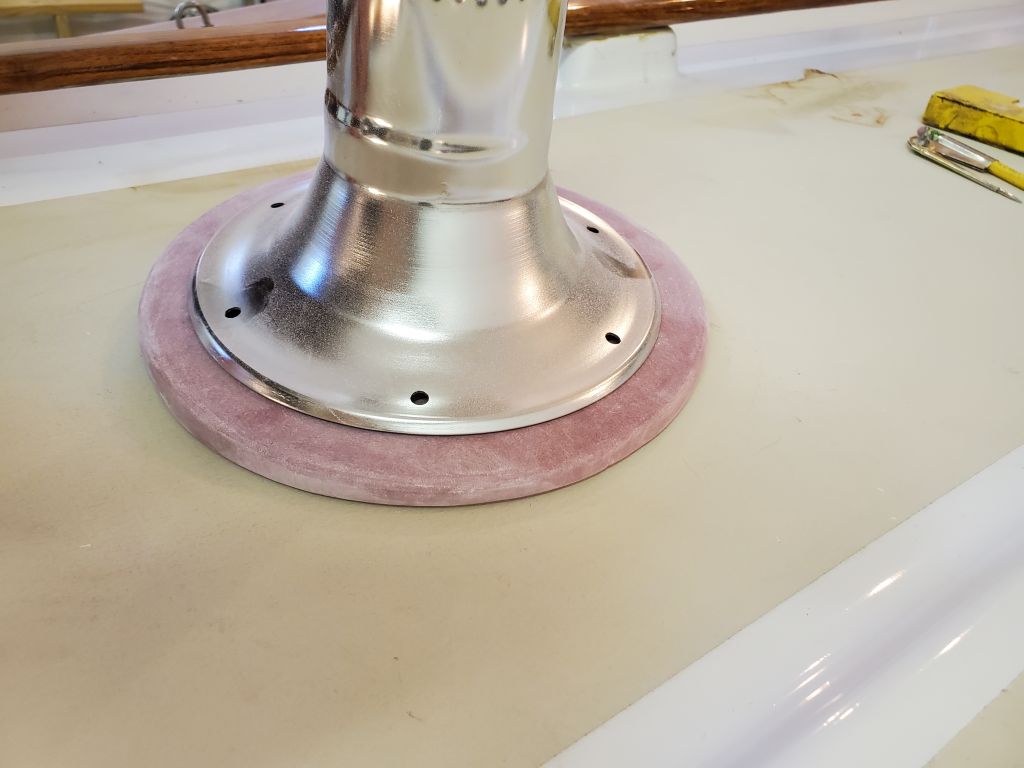
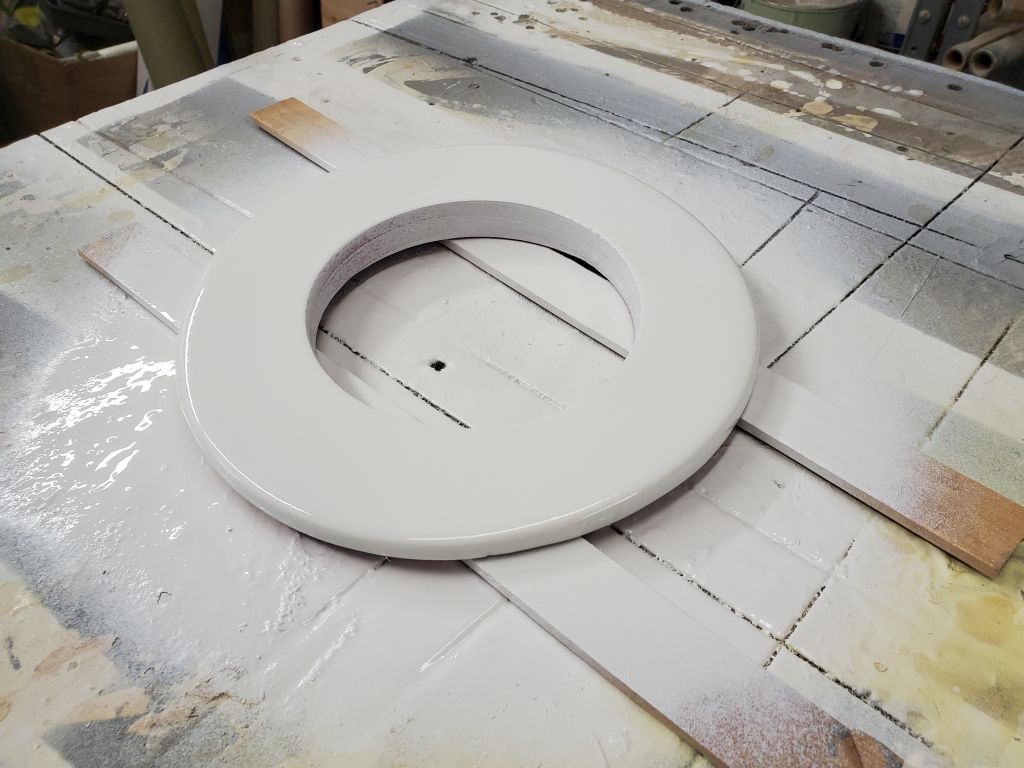
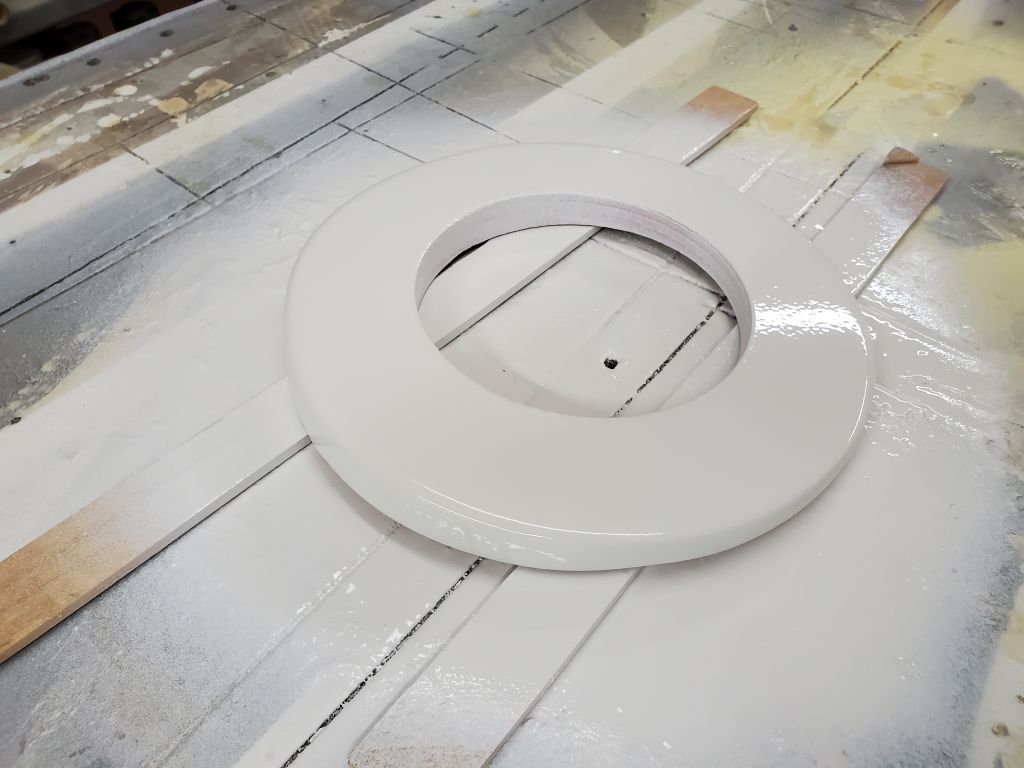
The deck camber on the coachroof wasn’t extreme, but it definitely existed, and this meant that for the smoke pipe to project properly and vertically I needed to build a wedge-shaped trim ring to correct the angle for the mounting flange.  I dislike fussy bits of wooden trim for things like this–bits that require varnish and upkeep and become chronic time-wasters–so I chose to build the trim ring from solid fiberglass.  While this would be less fun to shape, ultimately it would be a much better option for this installation.  Fortunately, I had a piece of 1″ thick fiberglass on hand with just enough size for the new trim ring.

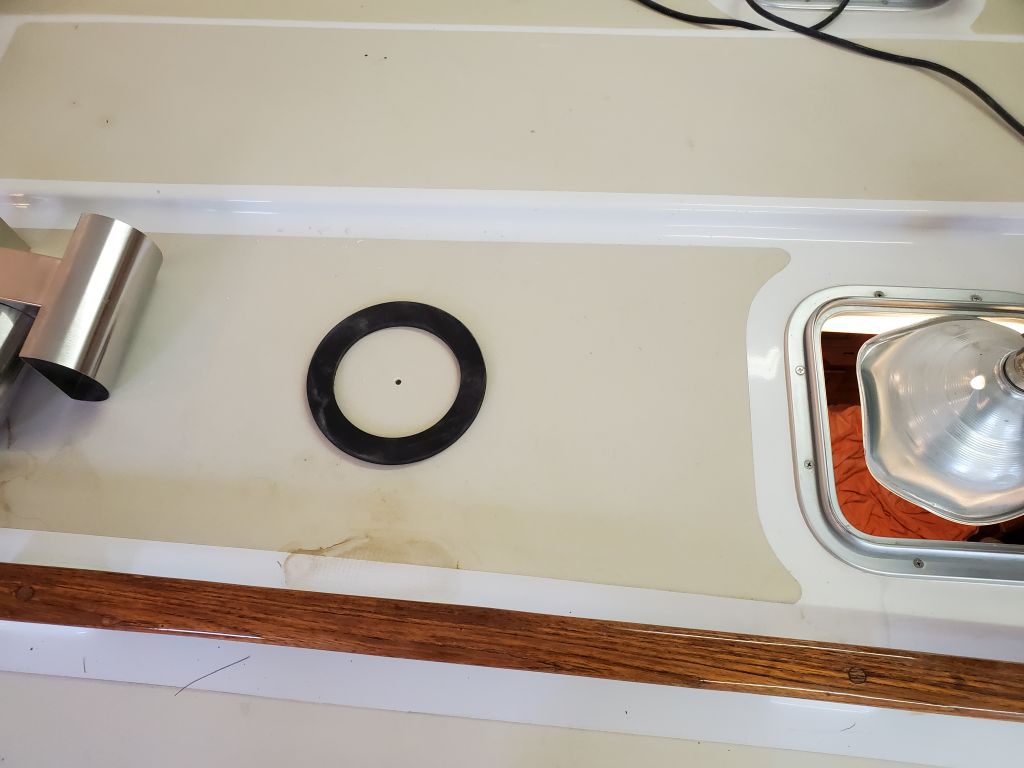
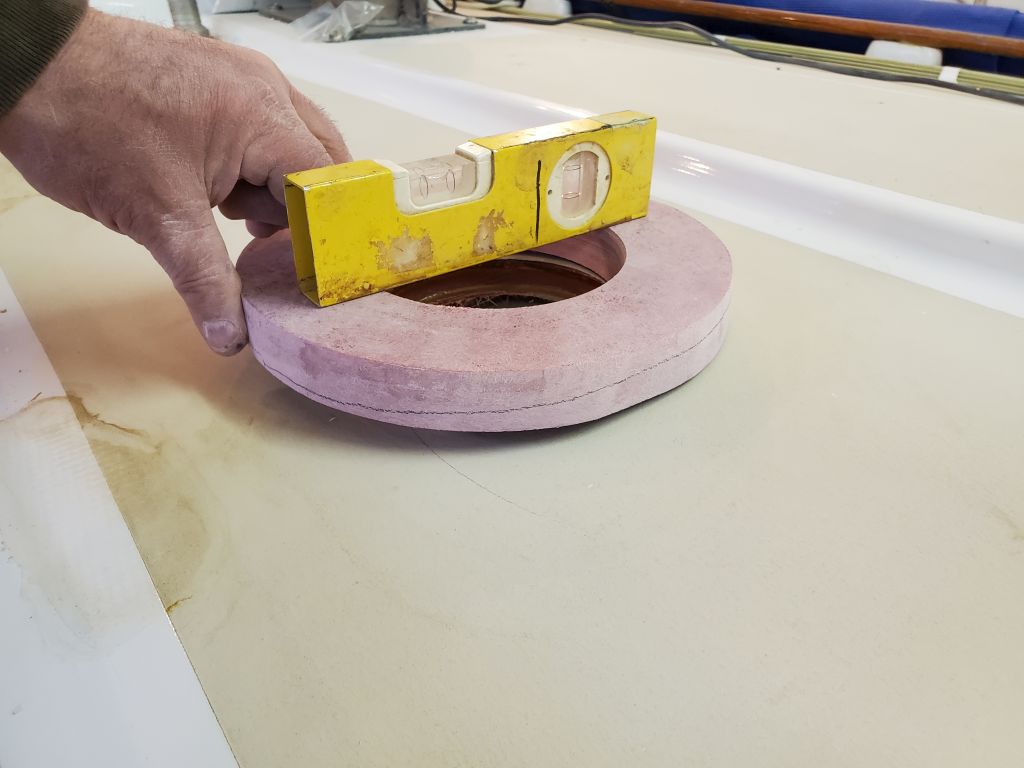
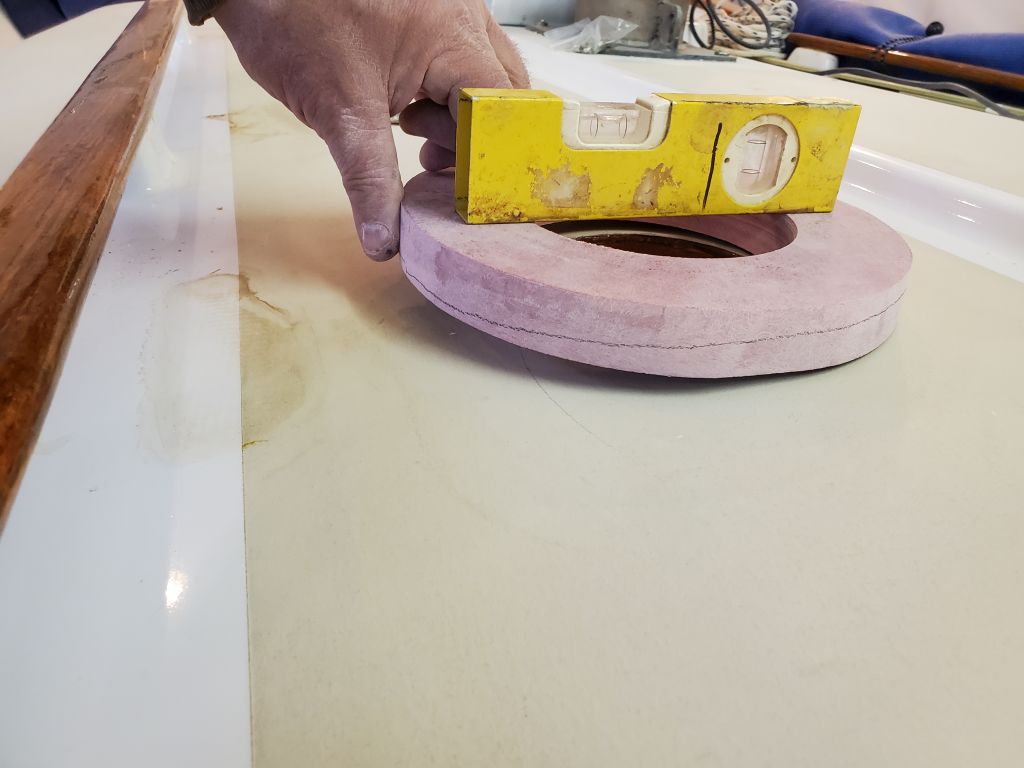
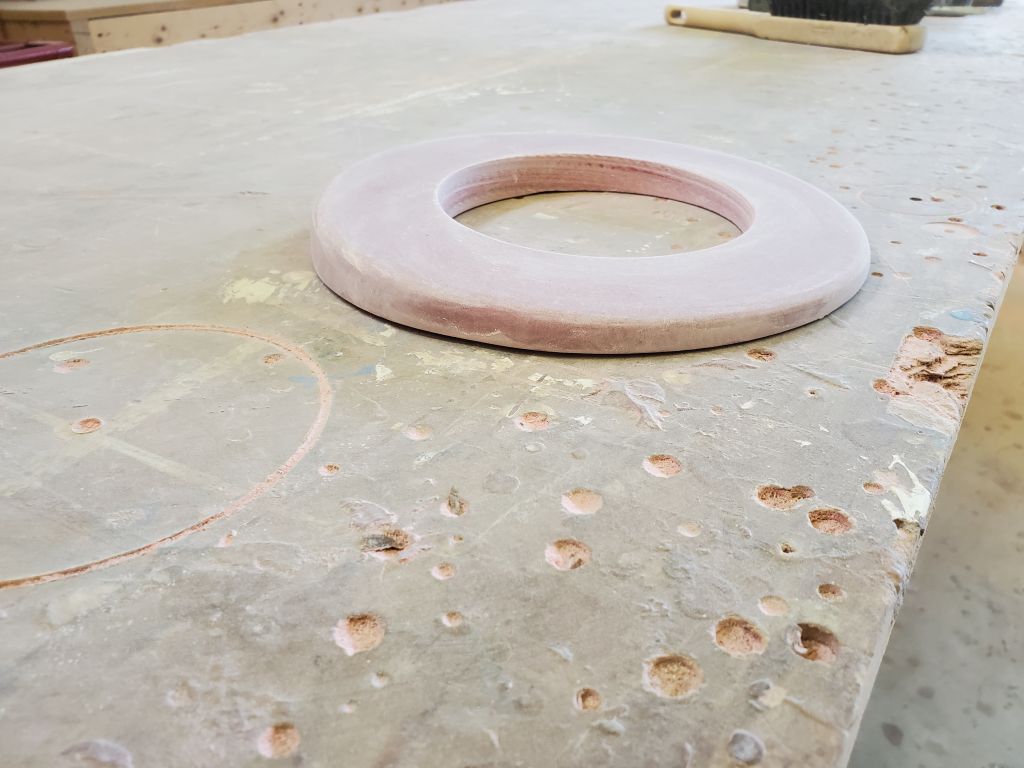
I started with a 5″ hole through the fiberglass, to match the deck opening, then used the rubber gasket supplied with the deck fitting as a guide to mark the outside perimeter of the circular ring, roughly 1″ greater in diameter than the base of the deck fitting.  This was the maximum size I could fit on the raw material, and was more than ample in any event.  Once I made the cut, I took the circular blank up to the deck and, holding it level from side to side, used a compass to scribe the shape of the deck all around.

I removed the excess material down to my line with a variety of sanding tools, a messy and unpleasant chore to be sure, and once I got it close to the line I returned to the deck for a test fit.  The deck fitting was level, so now it was a matter of fine-tuning and flattening the bottom of the trim ring for a better fit.

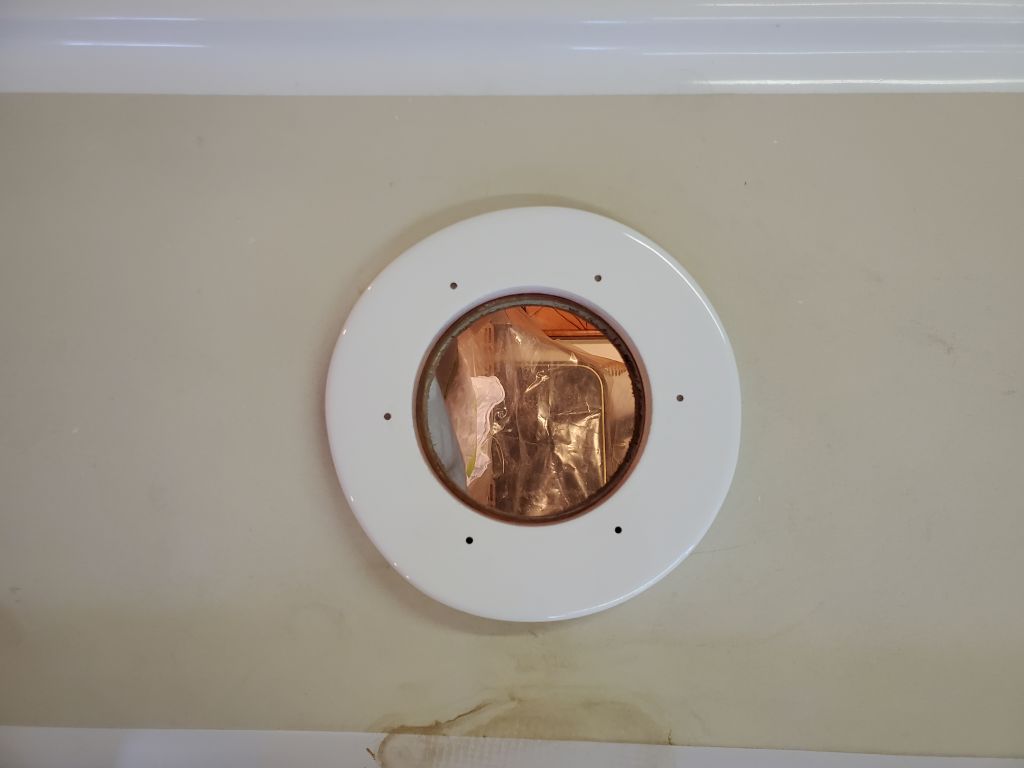
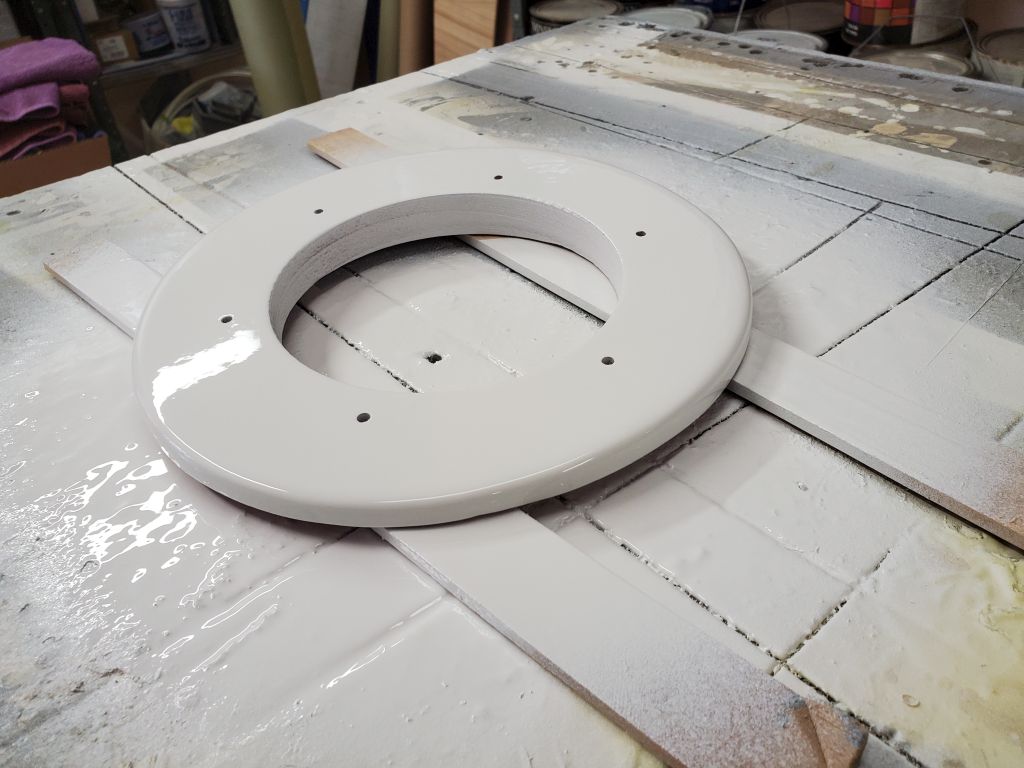
After some additional work to flatten the bottom, as well as to finish-sand the piece to smooth its contours and round over the exposed corner for a finished appearance, the trim ring construction was complete.

After final preparations, with a small sprayer I applied several coats of epoxy-based primer to the new trim ring before the end of the day.

As a final task late in the day, I removed the masking tape from the deck box lids, completing the exterior paint work.

Total time billed on this job today:  5 hours

0600 Weather Observation:  25°, clear.  Forecast for the day:   Sunny, 52°
Lyra 49

Tuesday

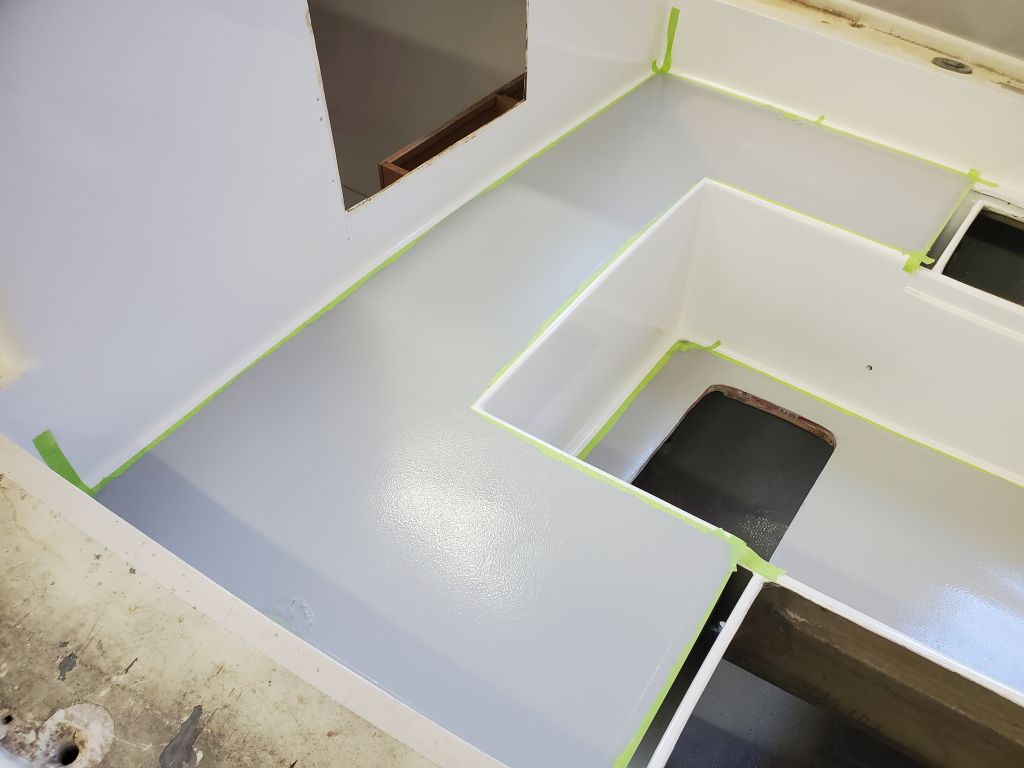
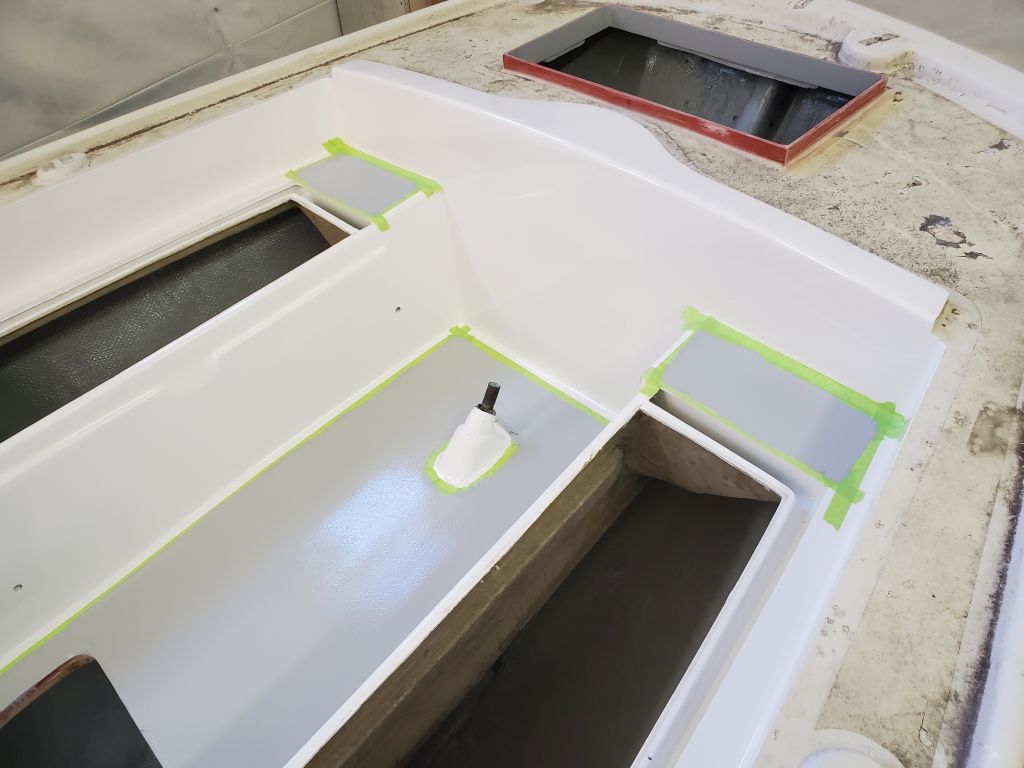
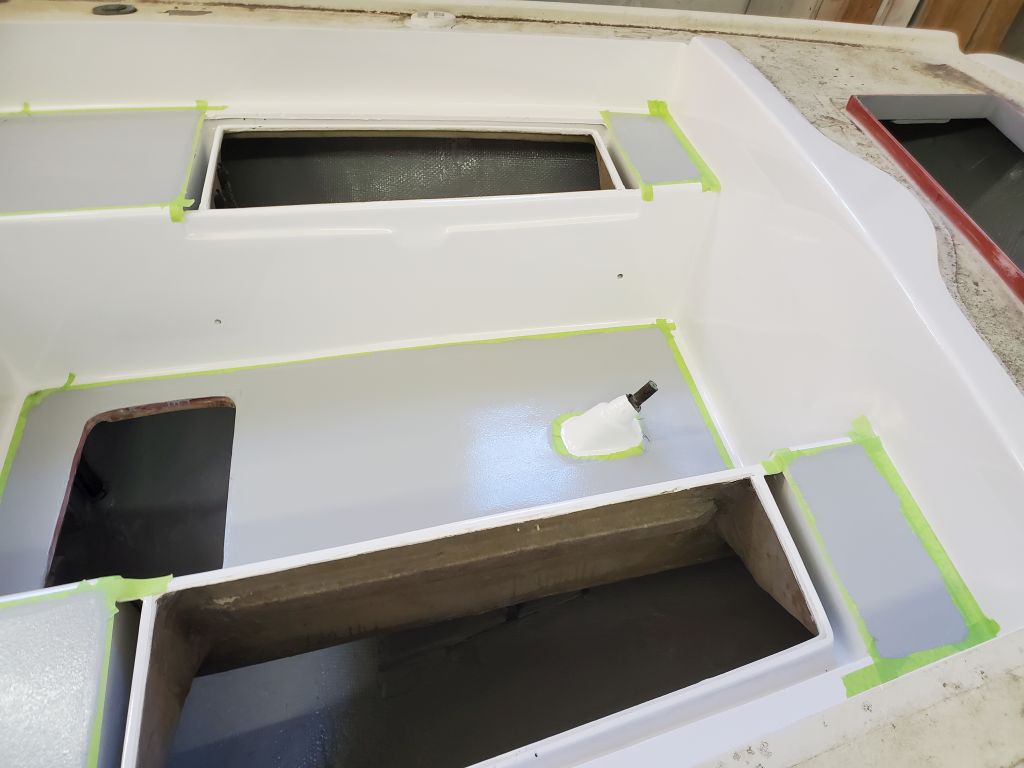
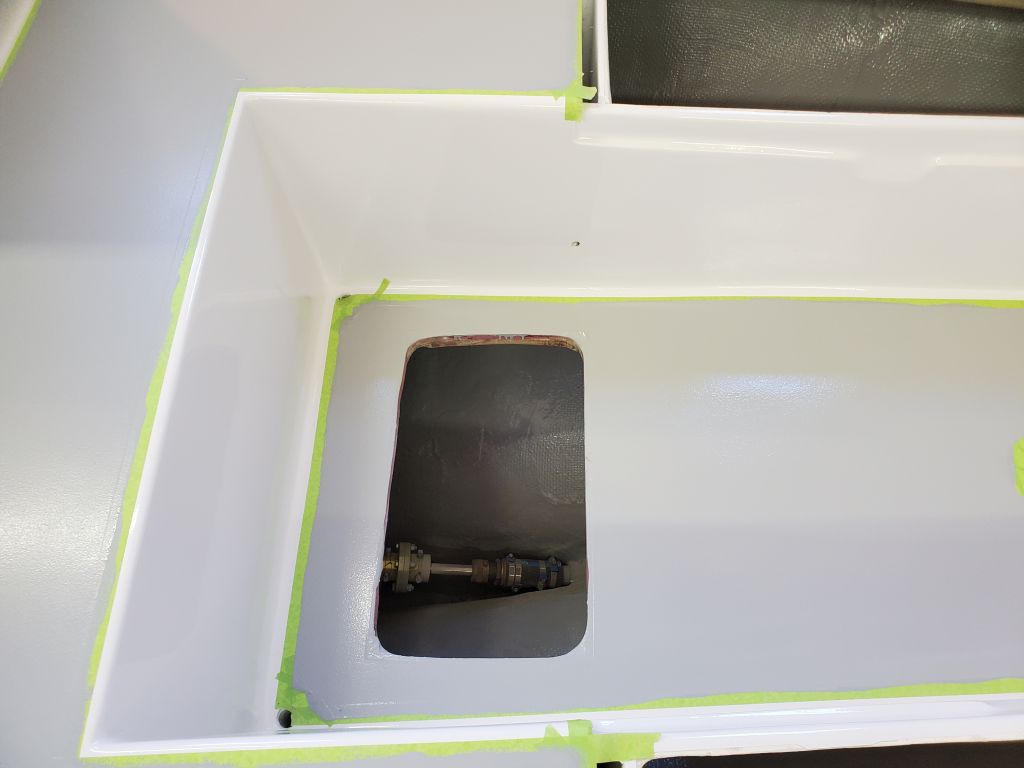
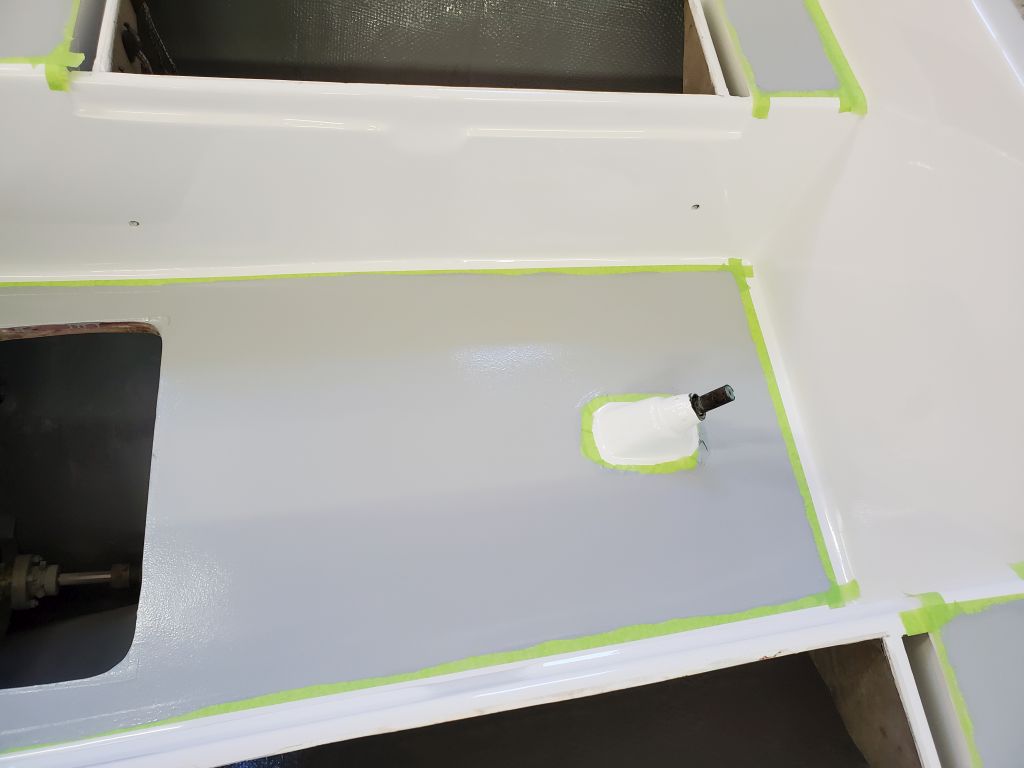
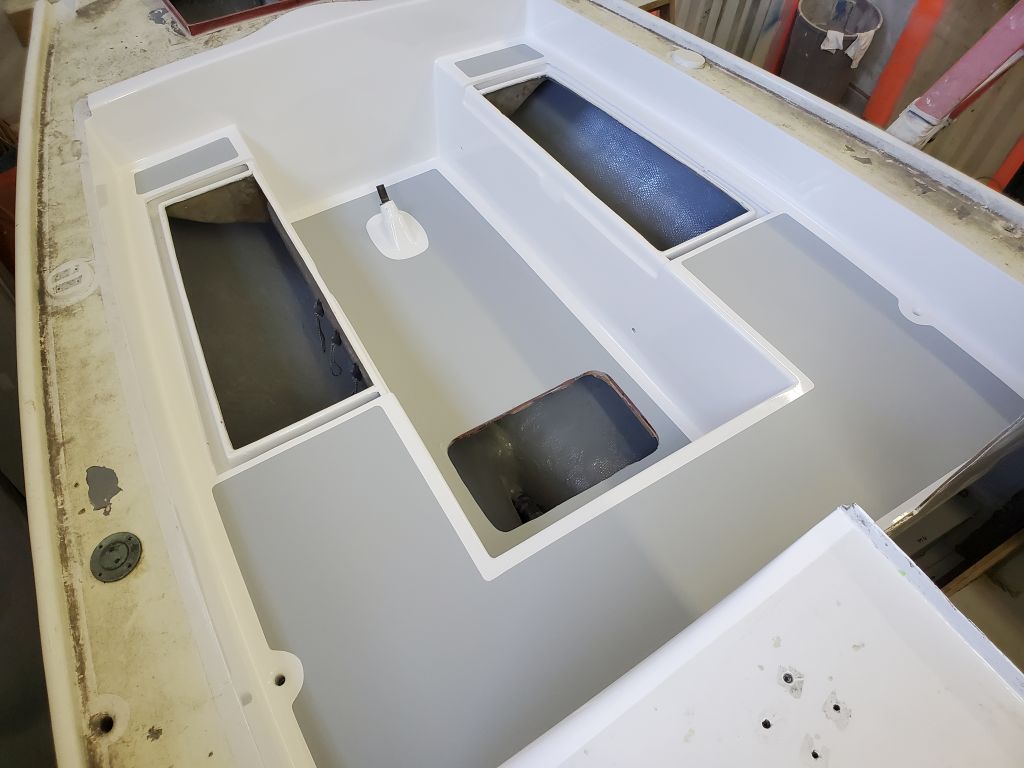
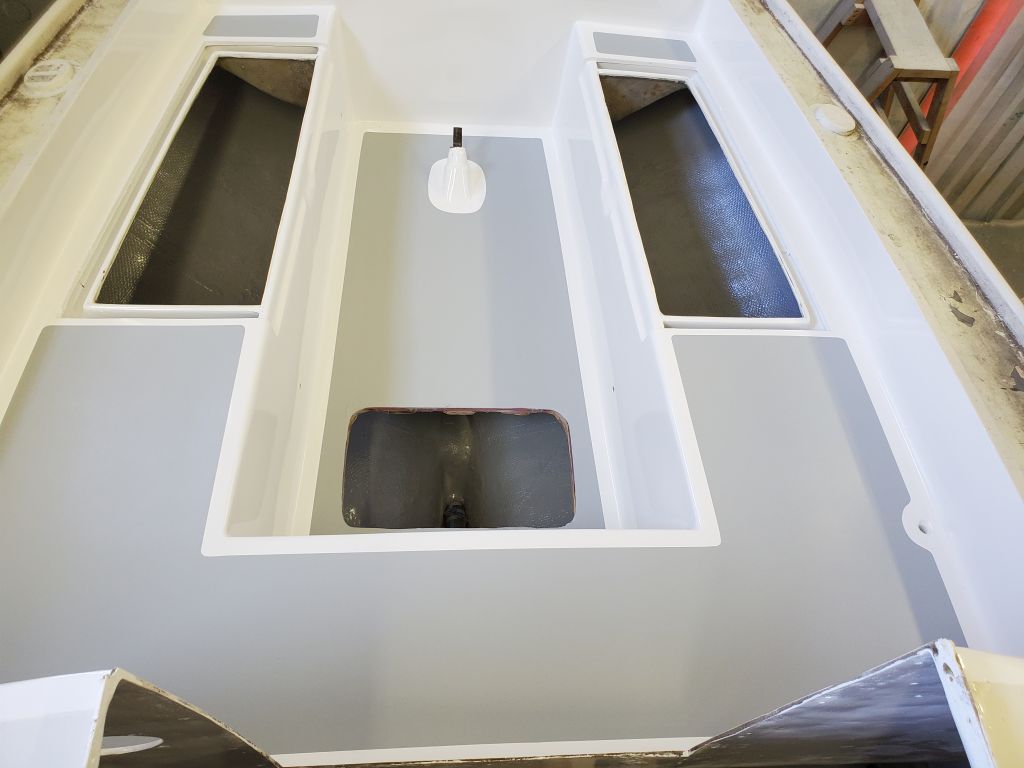
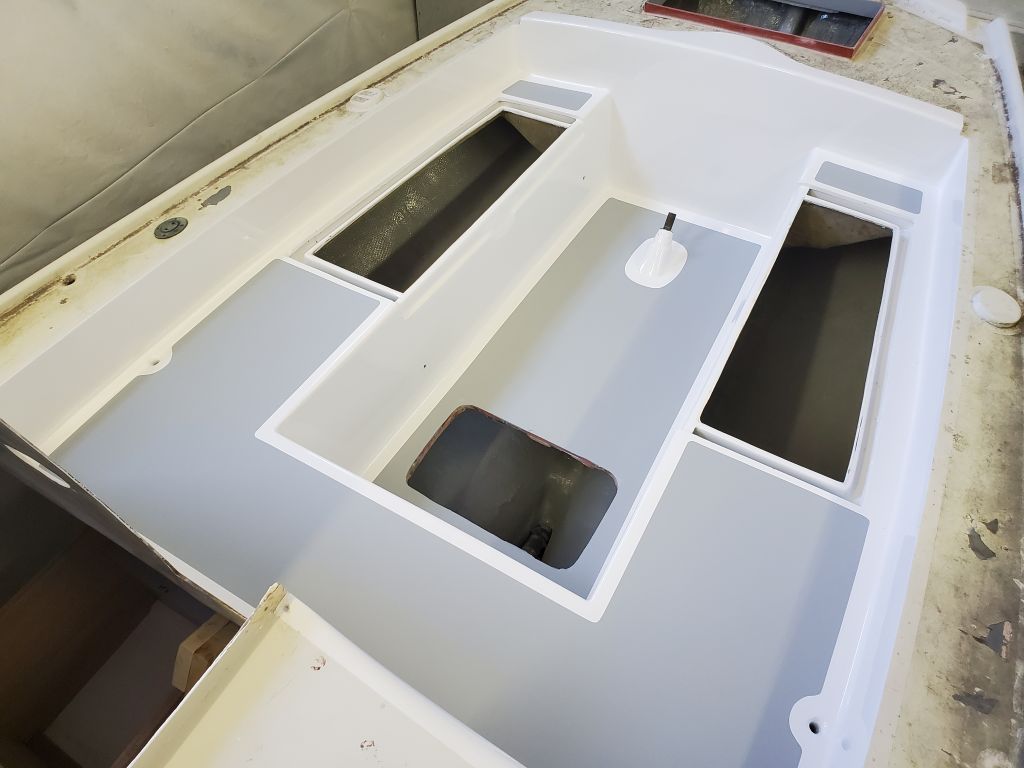
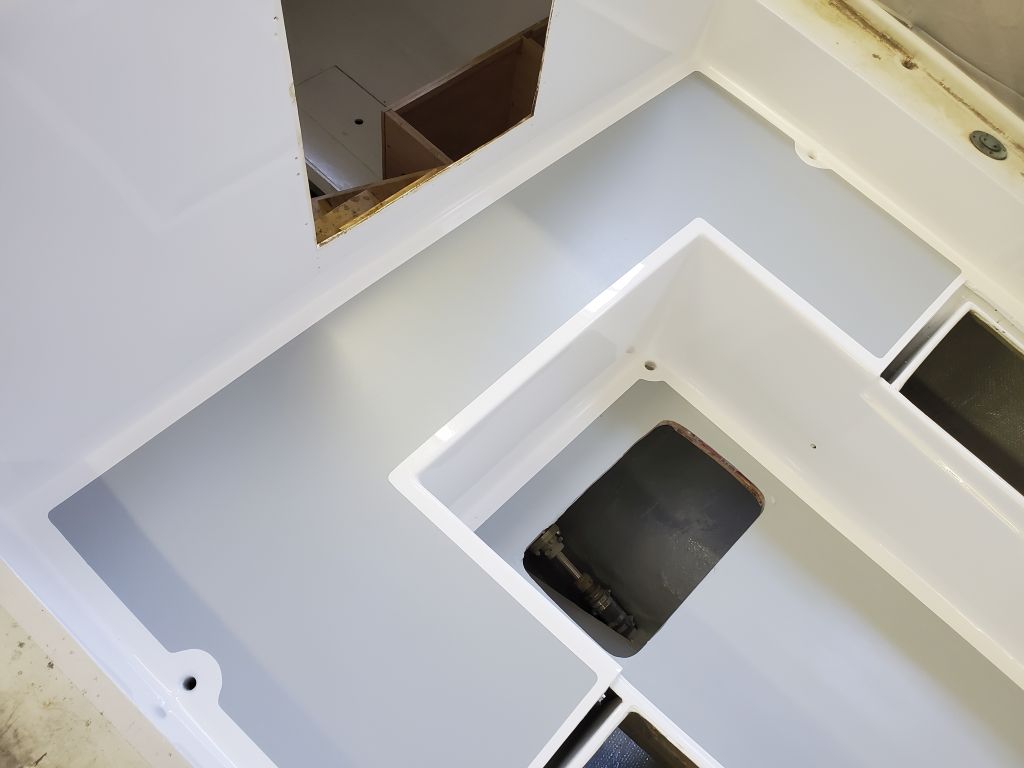
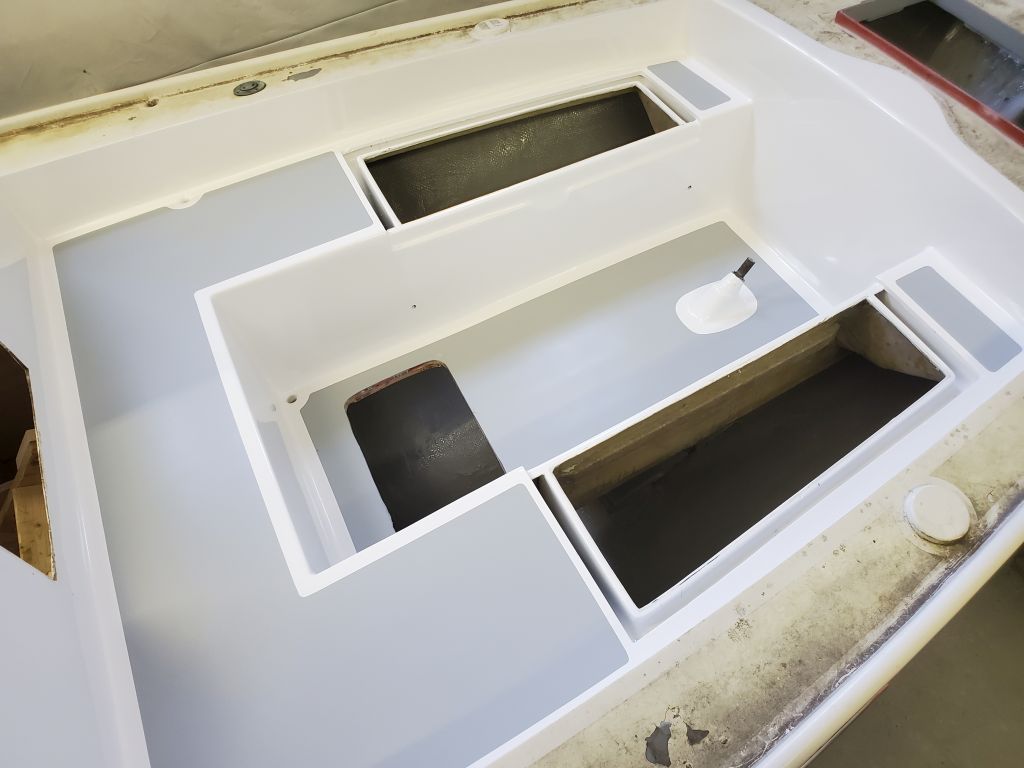
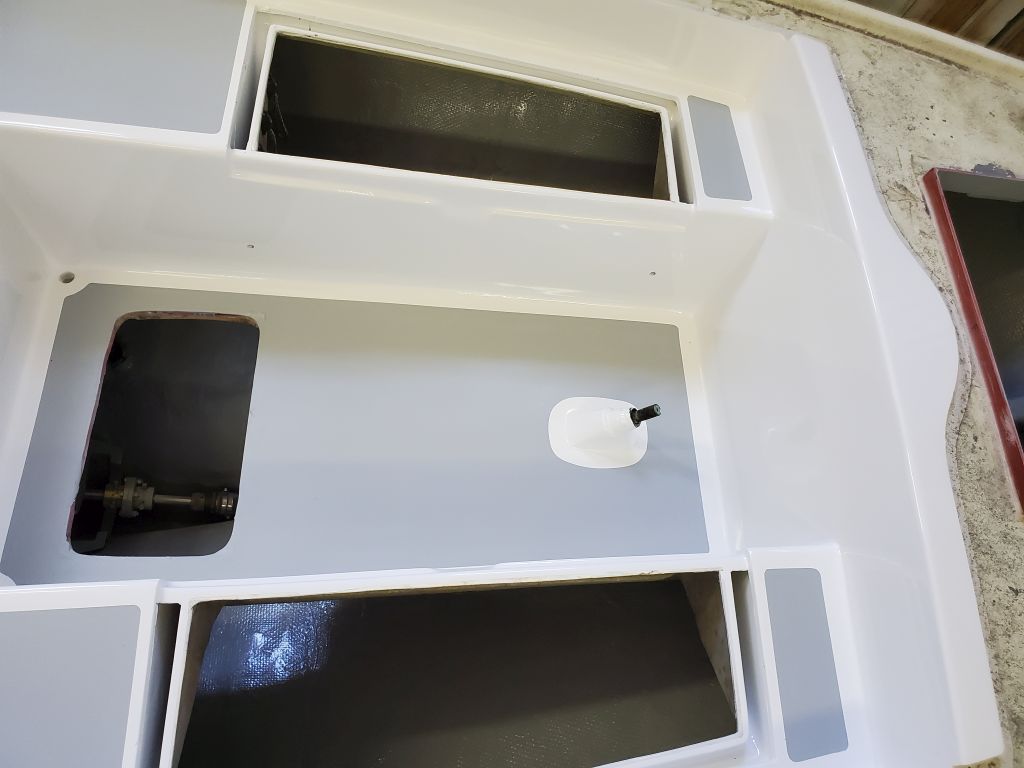
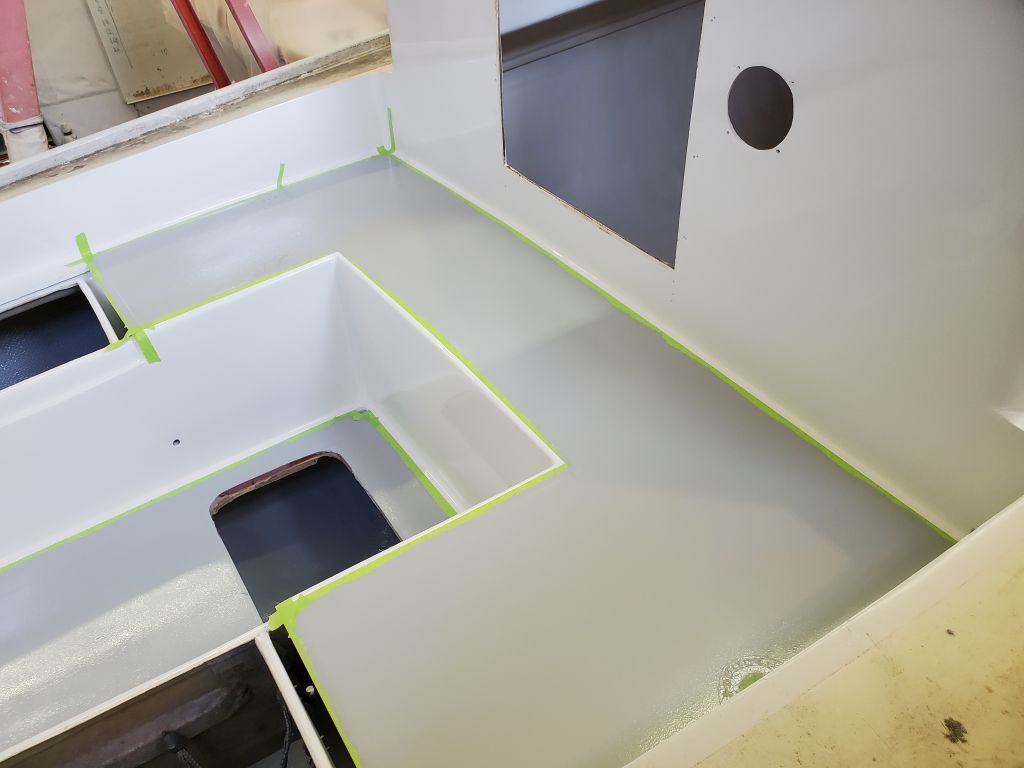
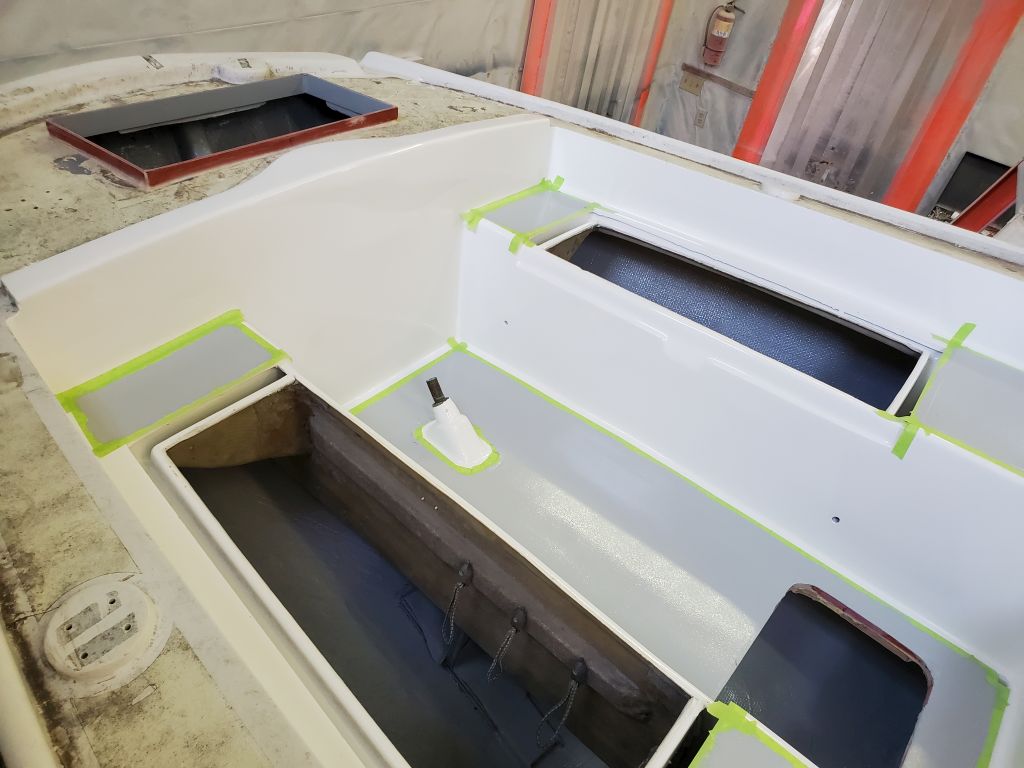
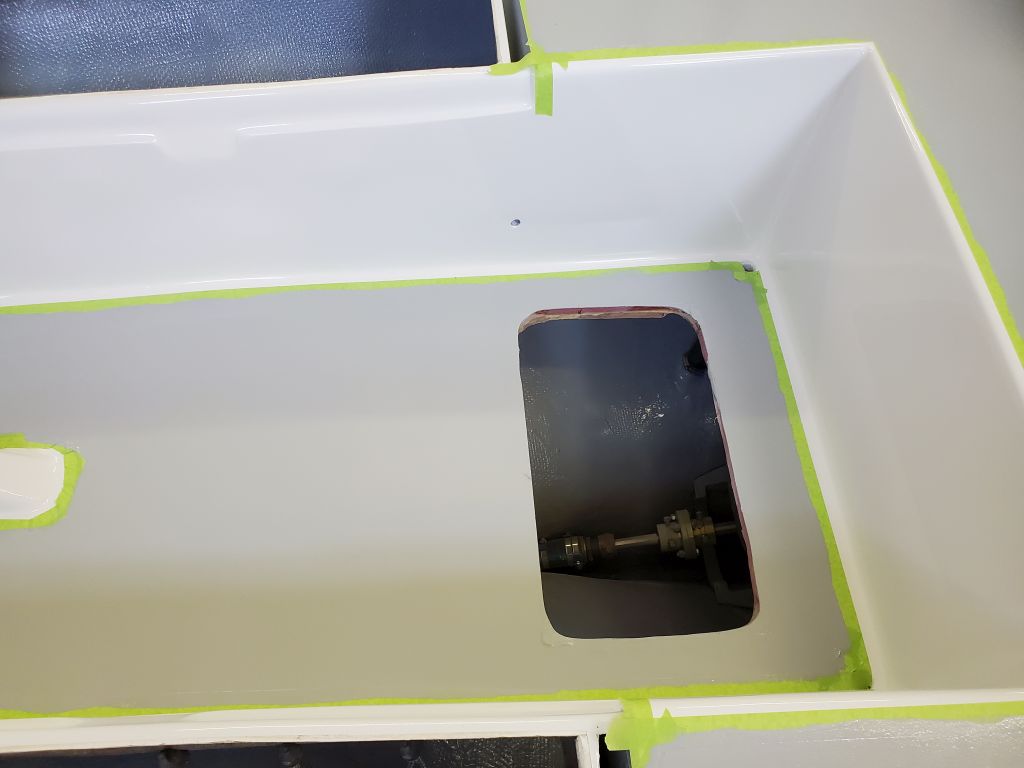
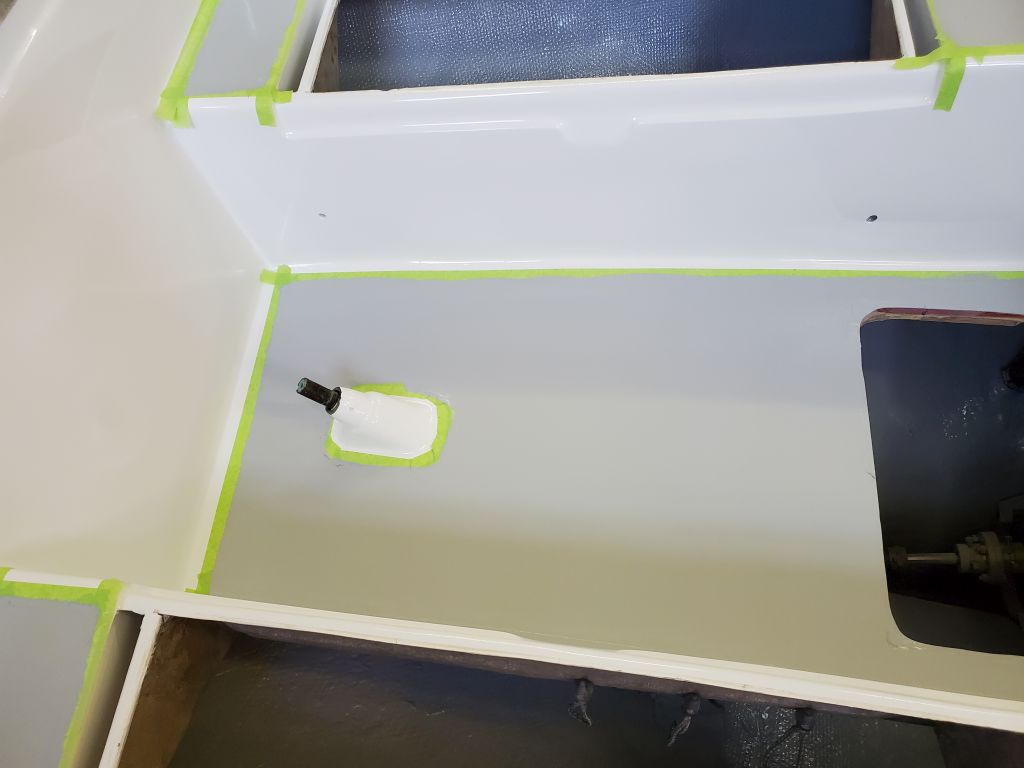
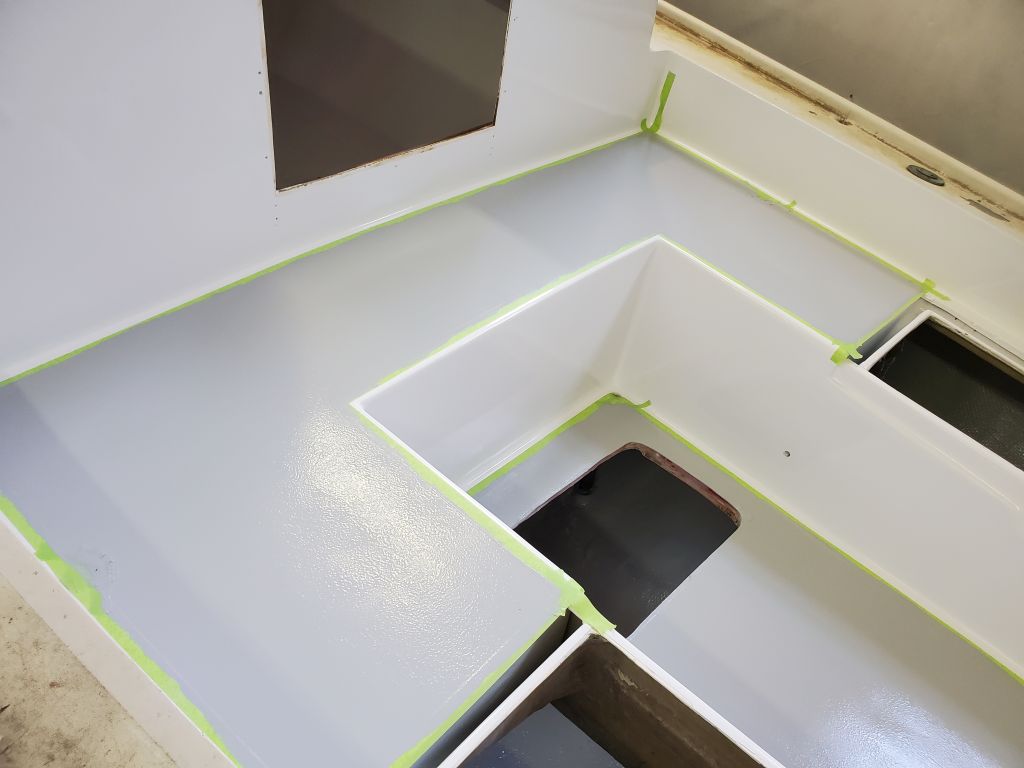
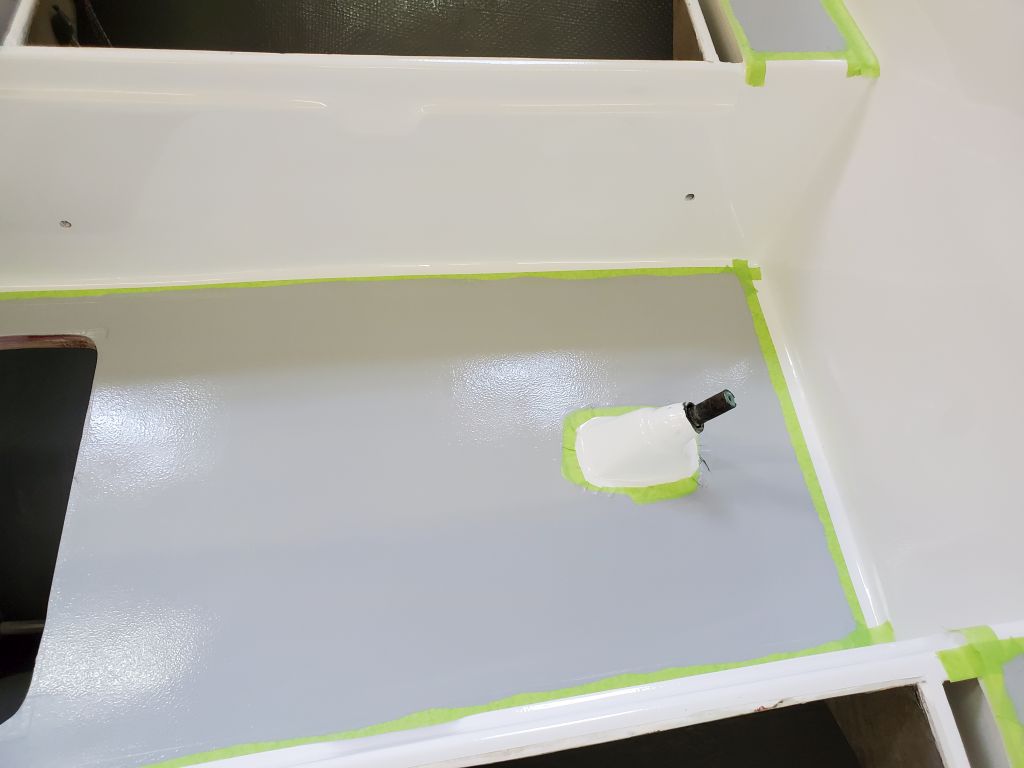
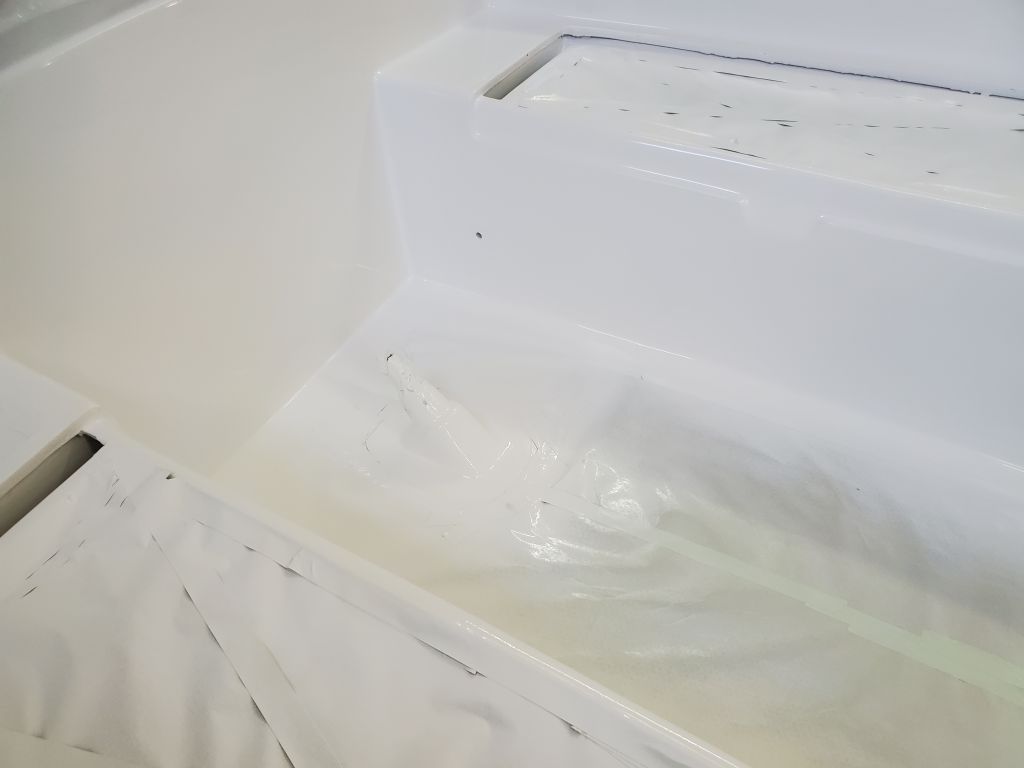
In a short work session, I applied a second coat of gray nonskid to the cockpit areas.

Late in the day, the paint had cured enough that I could remove all the masking tape, completing the cockpit paint work.

Total time billed on this job today:  0.5 hours

0600 Weather Observation:  Clear, 25°.   Forecast for the day:   Sunny, 50°
Lively Heels Phase 3-36

Monday

With the gloss topcoats complete on the deck boxes and lids, my first task was to remove the masking from the lids.

After masking over the fresh paint to protect it, I applied the first of two coats of beige nonskid to the field areas, which would match the paint scheme already on the boat.

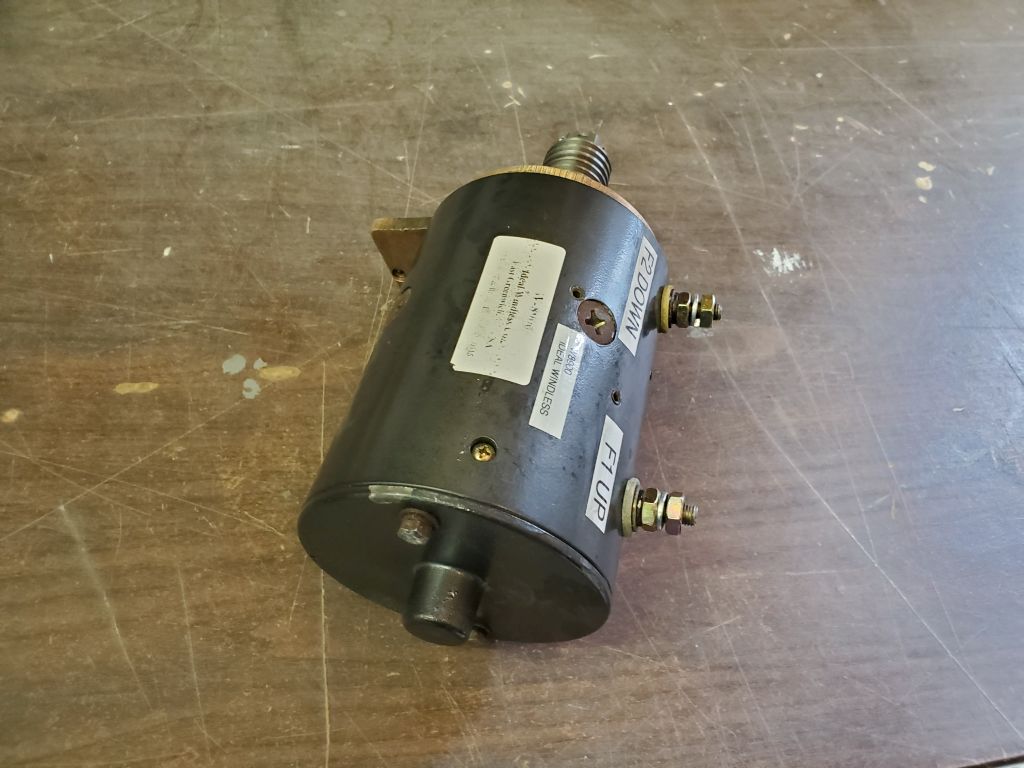
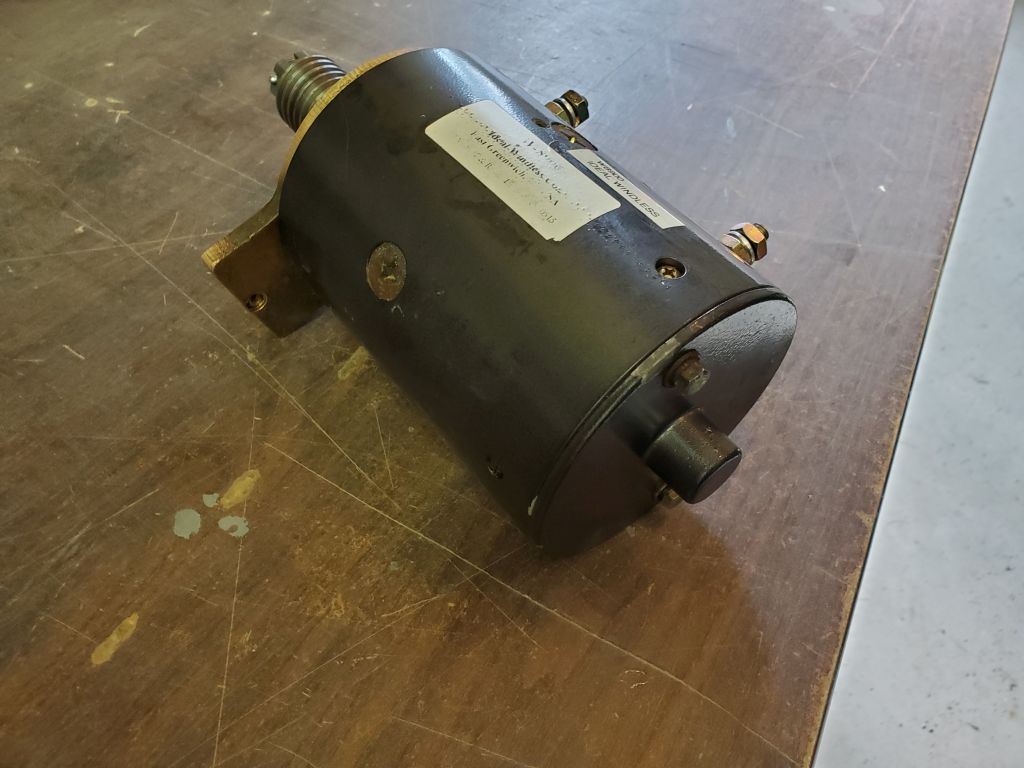
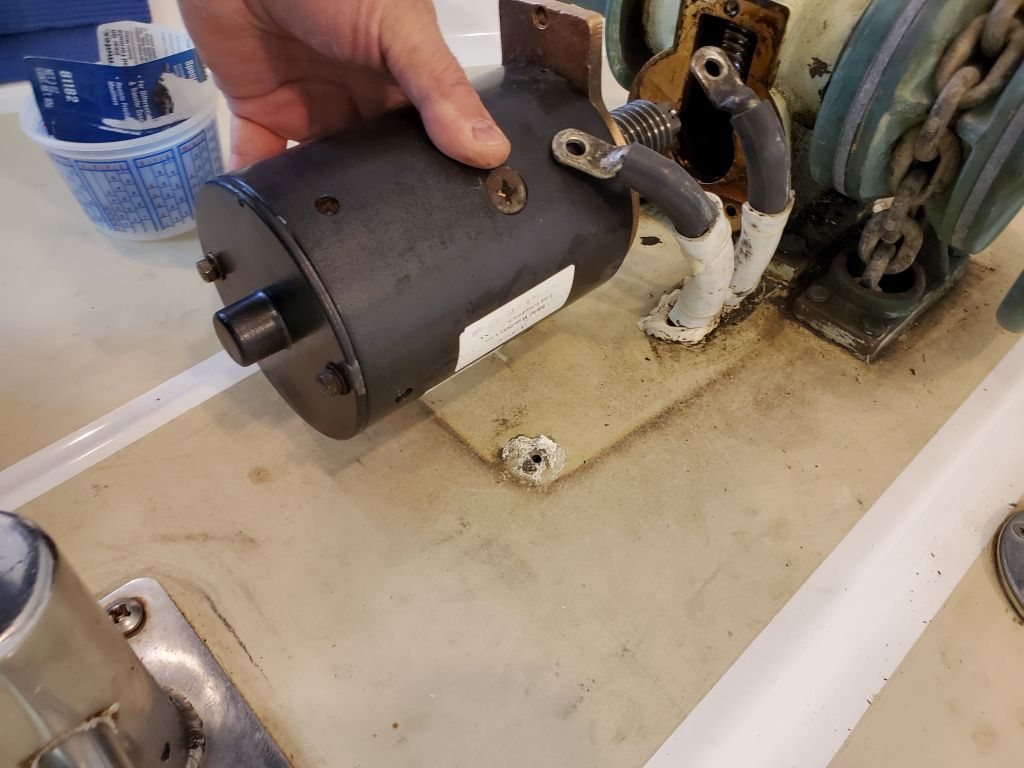
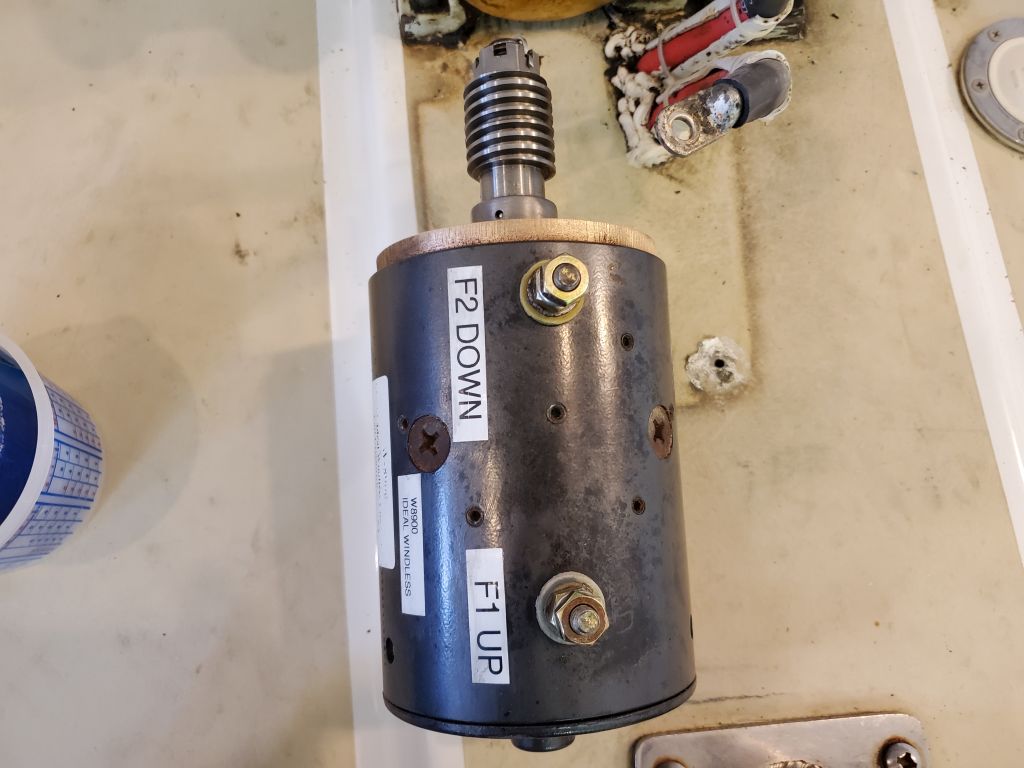
Planning to work my way through much of the remaining work list over the next few days, I thought I’d start by reinstalling the windlass motor, which had been sent out to an electric shop to be reassembled and tested after its unintentional case removal earlier in the winter.  I’d had the motor back on hand for a couple weeks, but hadn’t looked at it closely.  But as I considered the installation now, I immediately sensed a problem:  the motor casing was 180° from where it needed to be, leaving the wiring terminals on the bottom side of the motor, opposite the top part of the mounting flange.    There were only two possible ways to reinstall the case, and of course this was the wrong one, though neither I, nor the owner, who brought it to the repair shop, nor the shop owner had thought to even consider the orientation beforehand.  The design of the mounting flange was asymmetrical, and the motor couldn’t simply be turned to expose the terminals–and there was not clearance between the motor and the deck to allow installation as is.

The case would need to be rotated, but whether that was something we could do at the shop or if it had to go back to the repair shop remained to be seen, so for now I satisfied myself with cleaning up the bronze face of the windlass itself to prepare it for the eventual motor replacement.

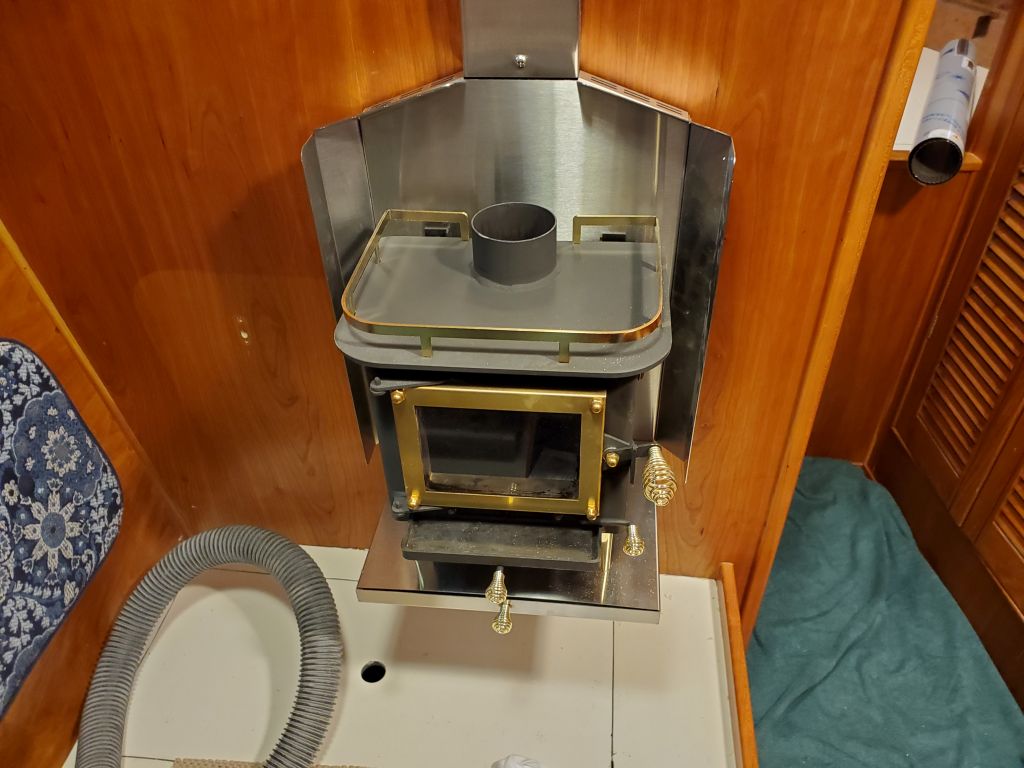
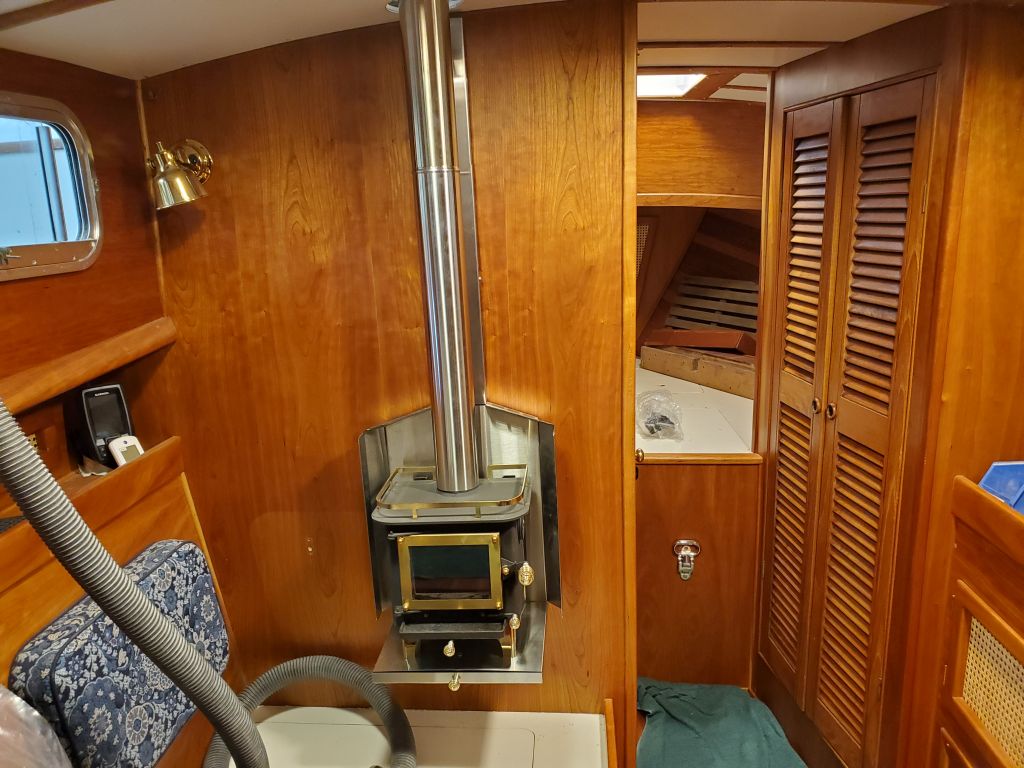
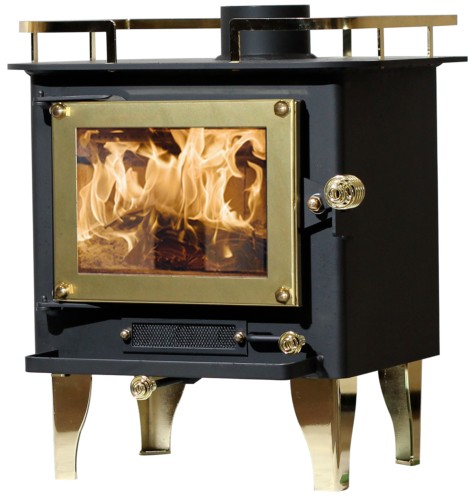
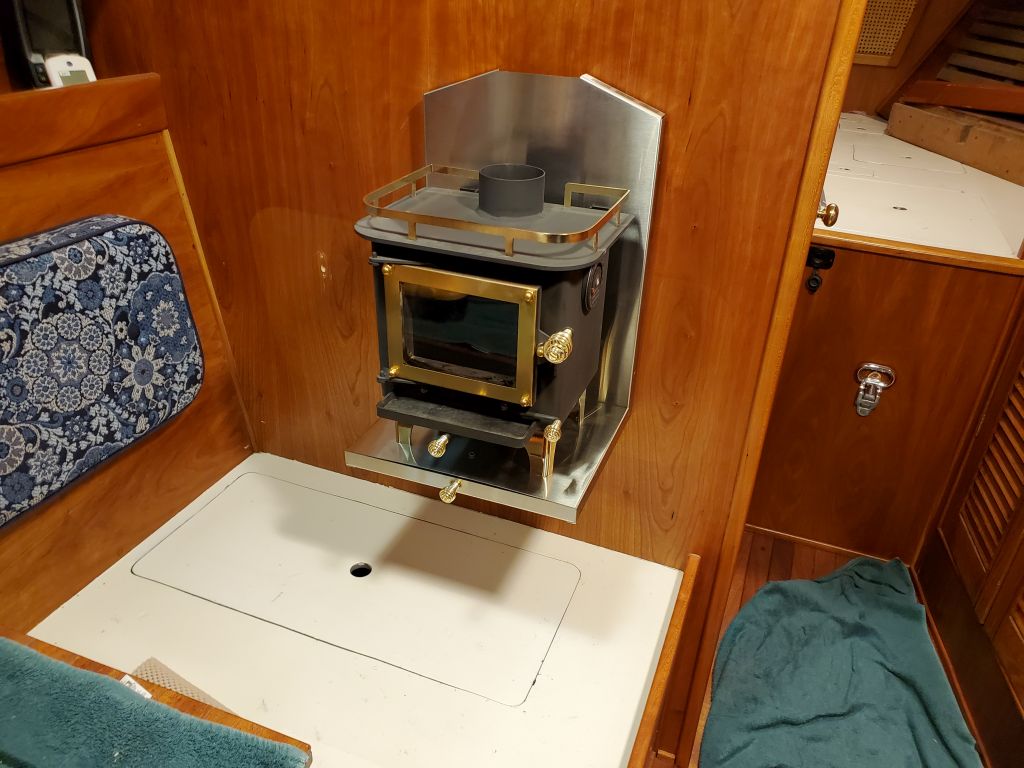
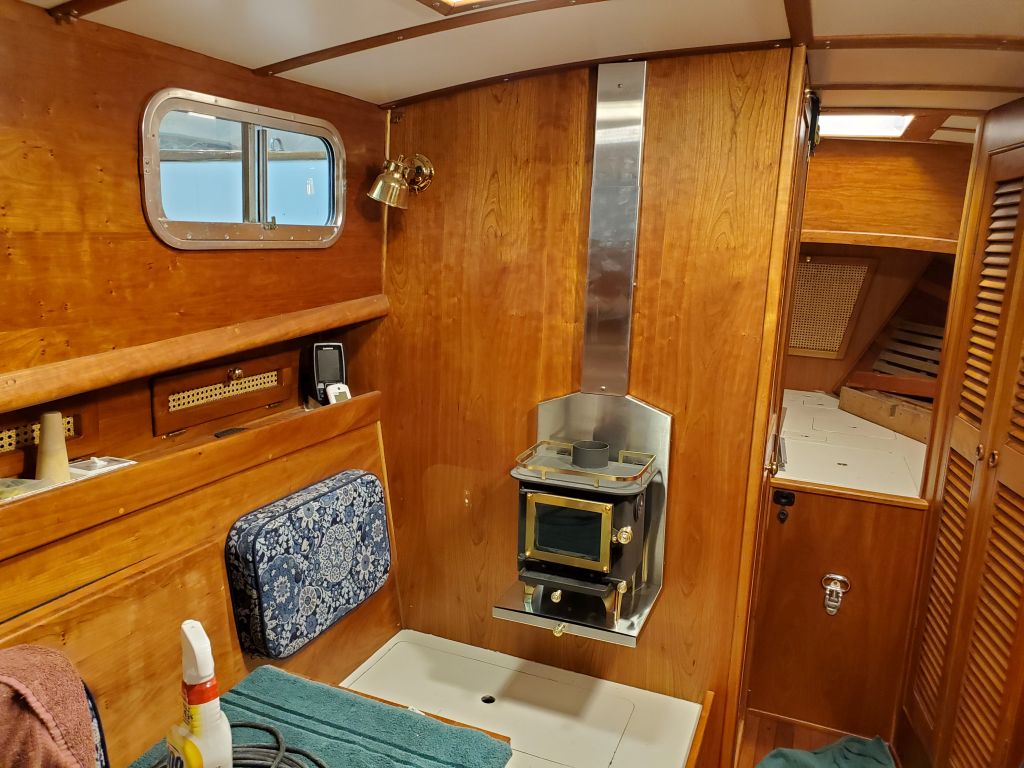
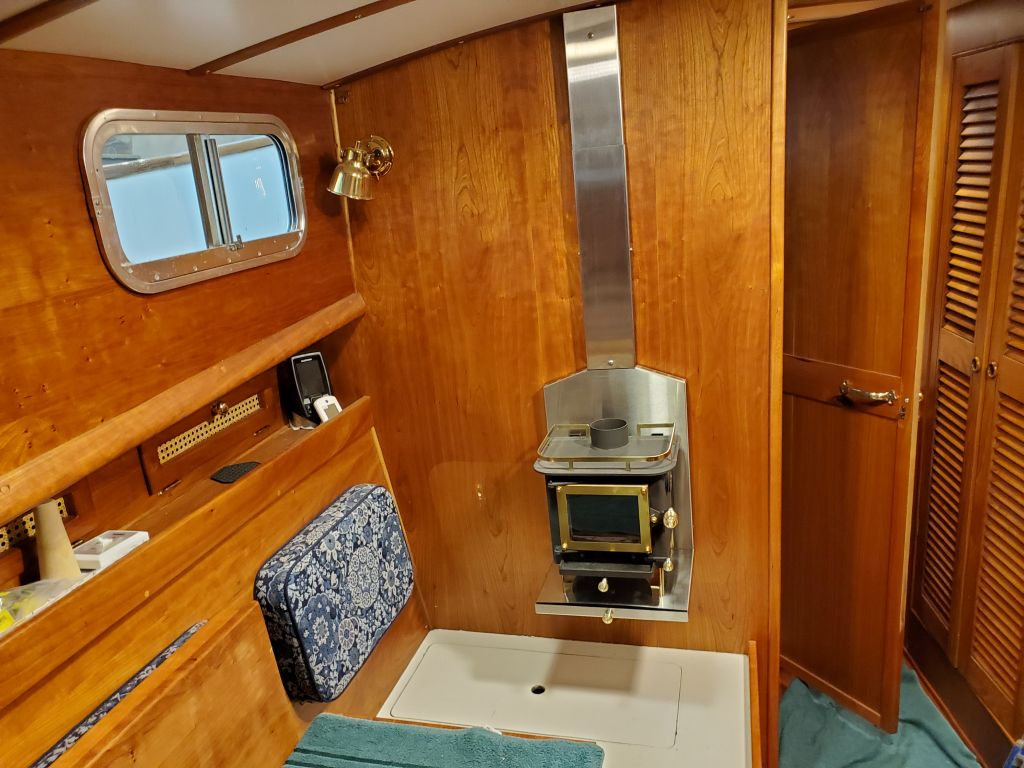
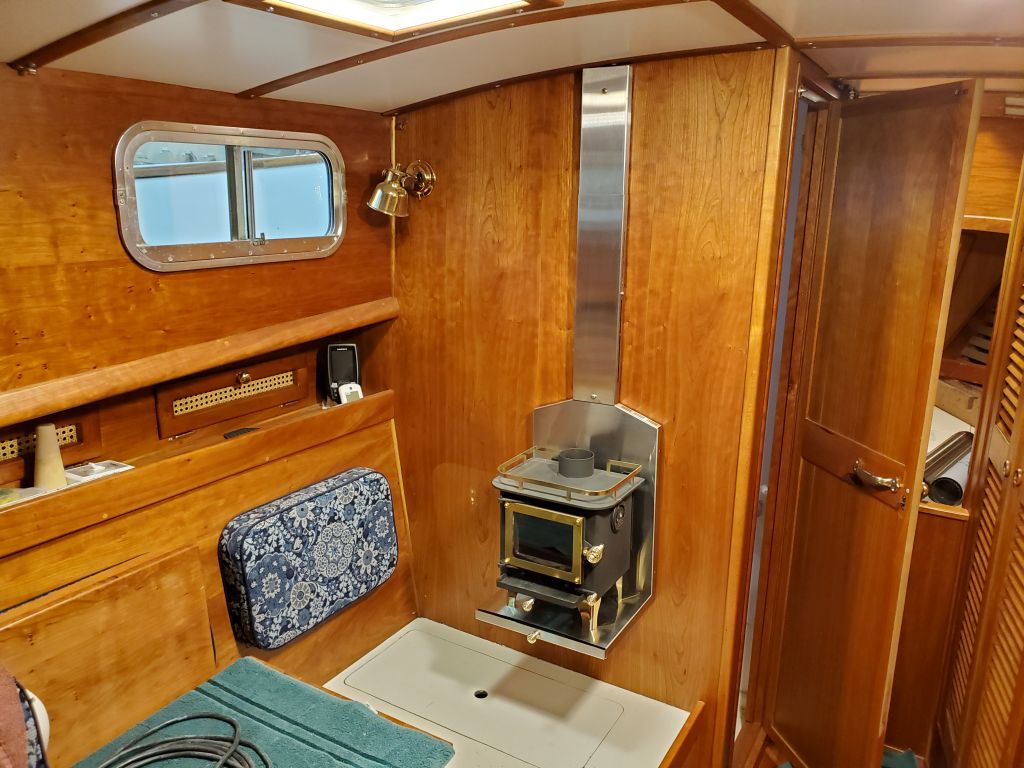
Next, I turned to what I intended as the main focus of the work over the next few days:  Installation of the new woodstove in the main cabin.  This stove is called a Cubic Mini, but I’ve been calling it the “Cute-ic Mini” because, well, it just is.  And the little fireplace tools…adorable.  You’ll see those soon enough.

Some months earlier, I’d done some substantial layout in the main cabin, and with the stove and its parts on hand since early January, now it was finally time to begin the real installation.

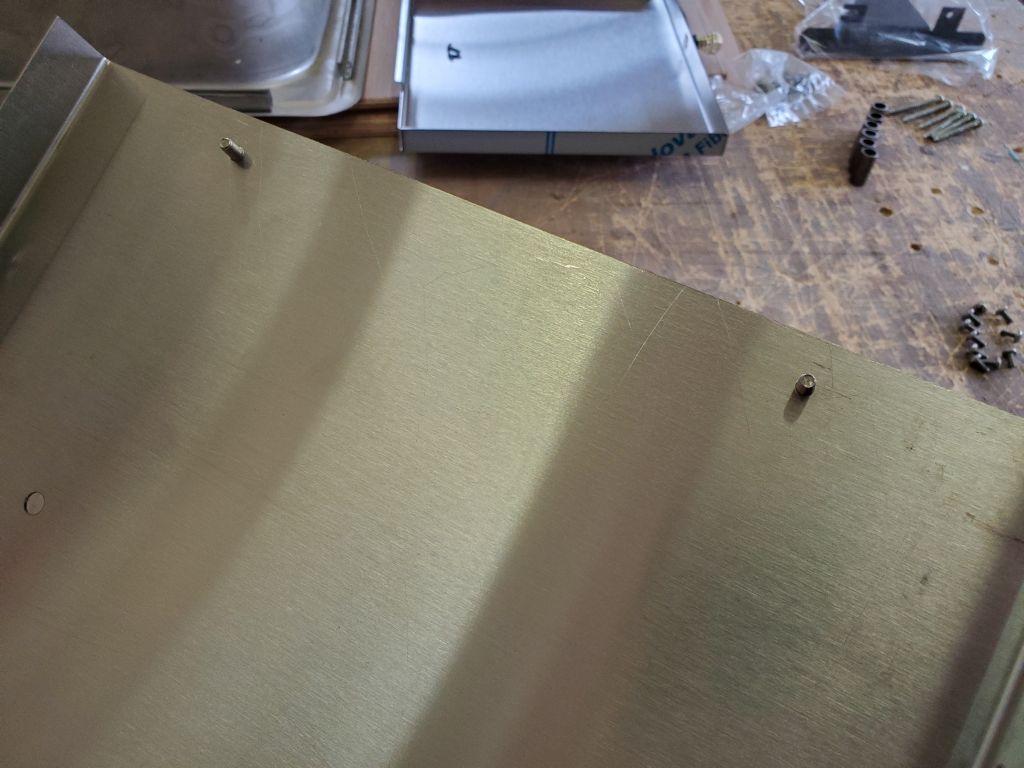
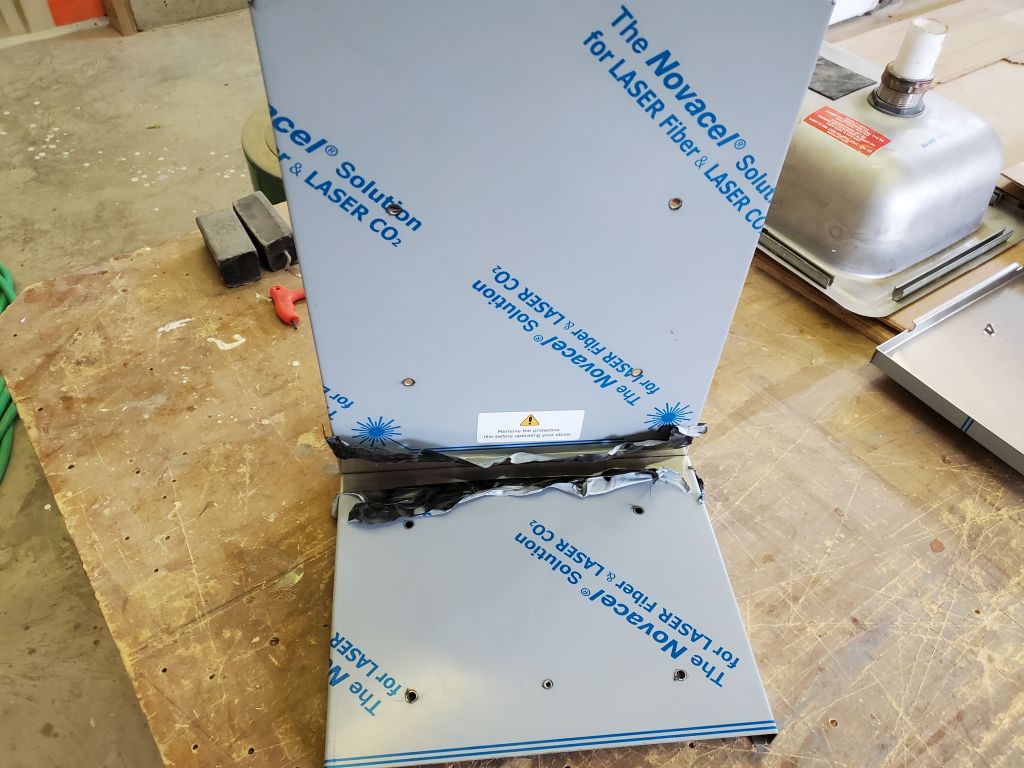
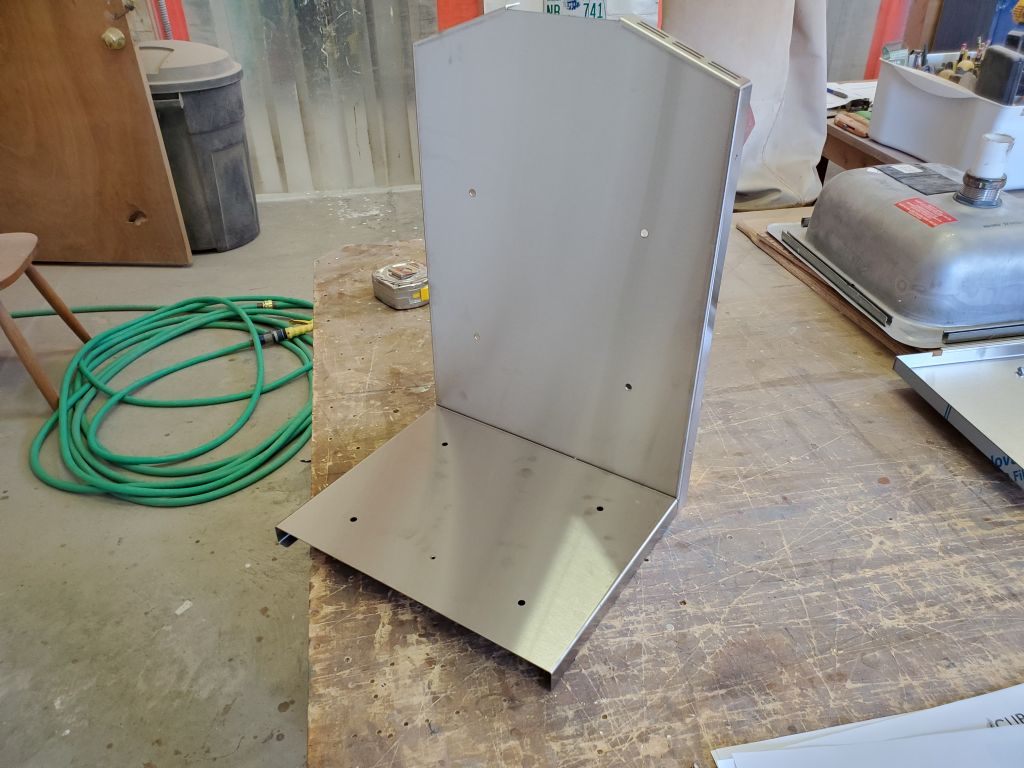
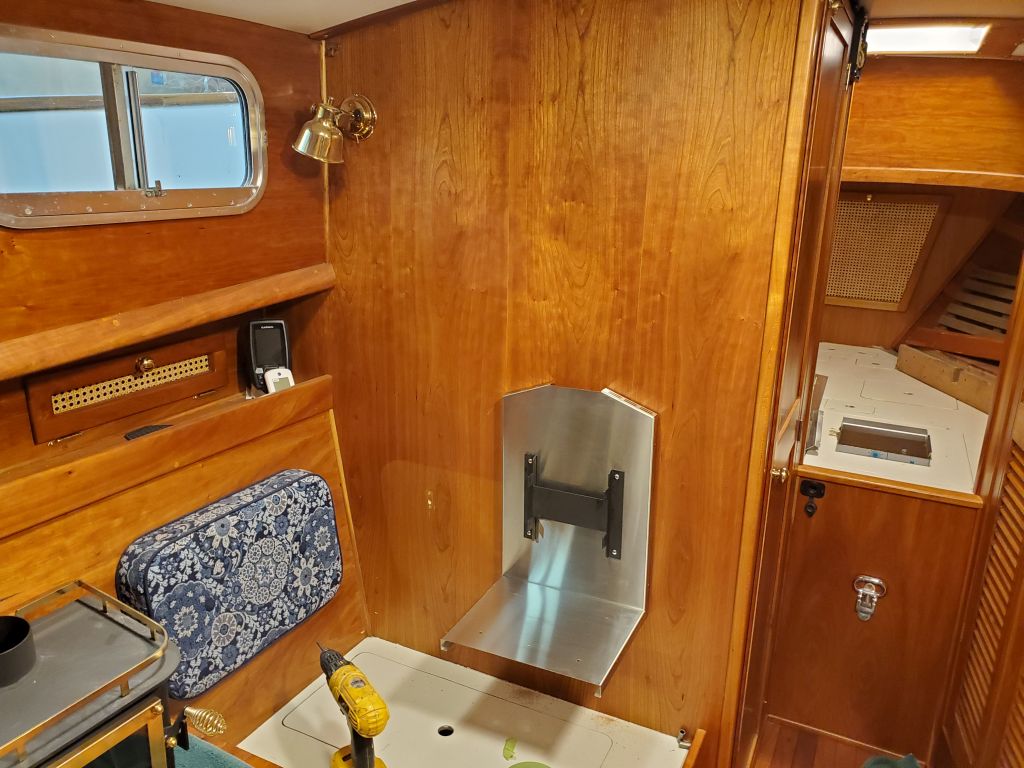
To begin the installation, I assembled the back and bottom of the stainless steel heat shield, a straightforward process involving two screws.  Removing the protective plastic from the sheet metal was the most difficult part since, as Ringo Starr sang, it don’t come easy.

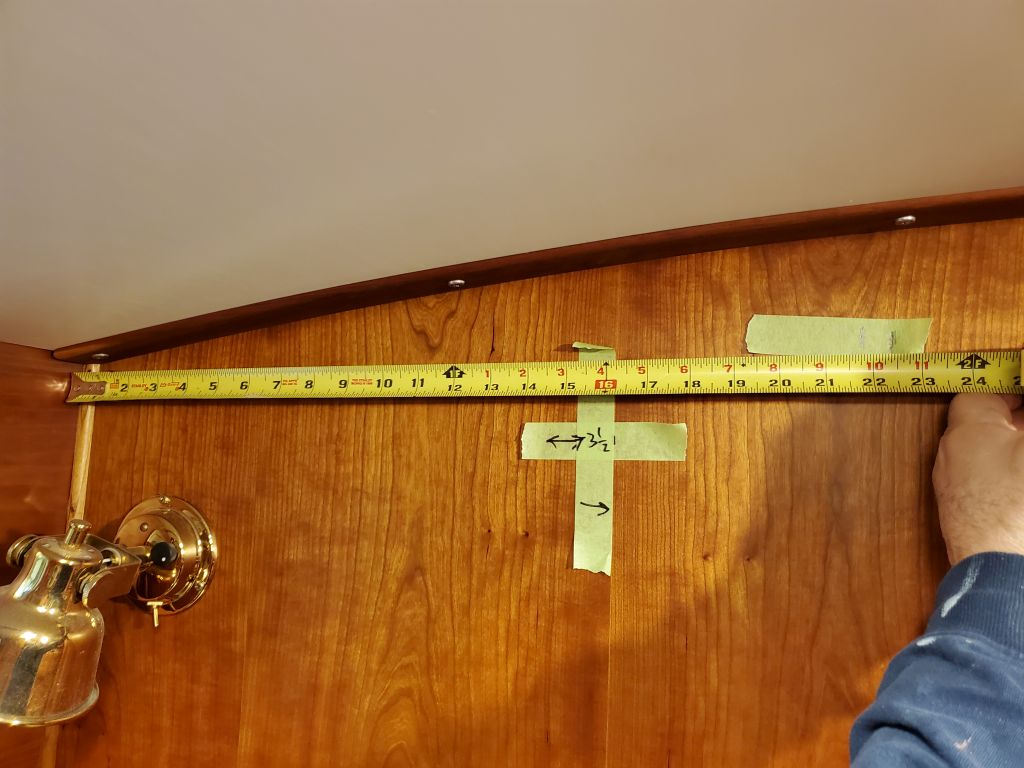
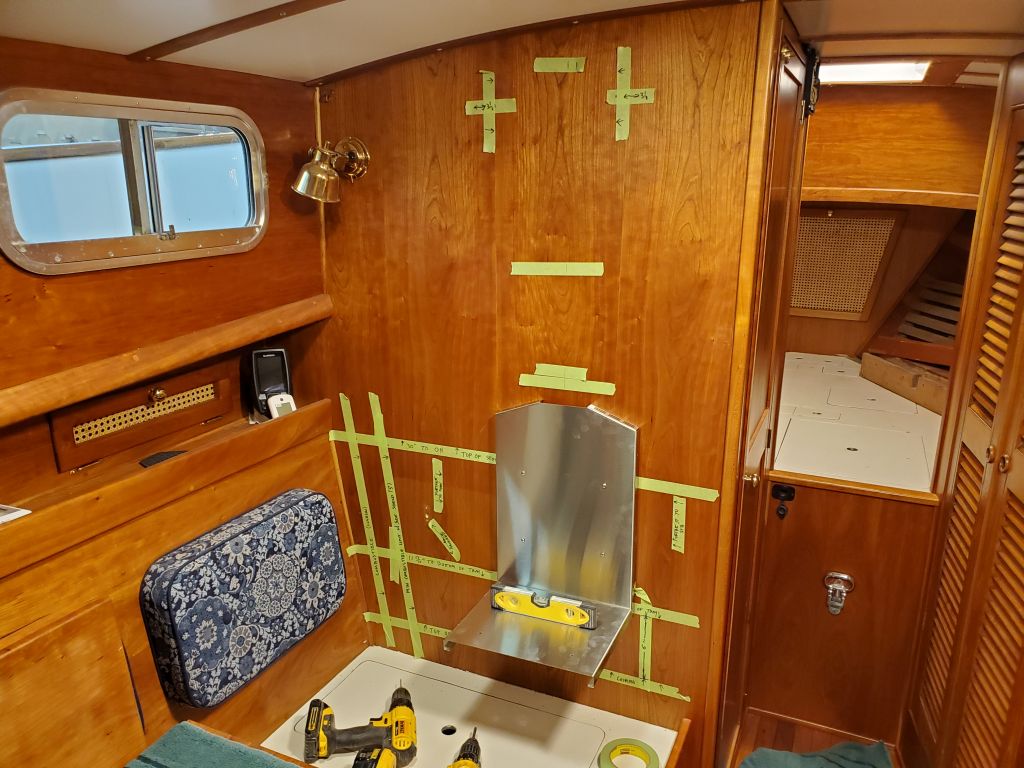
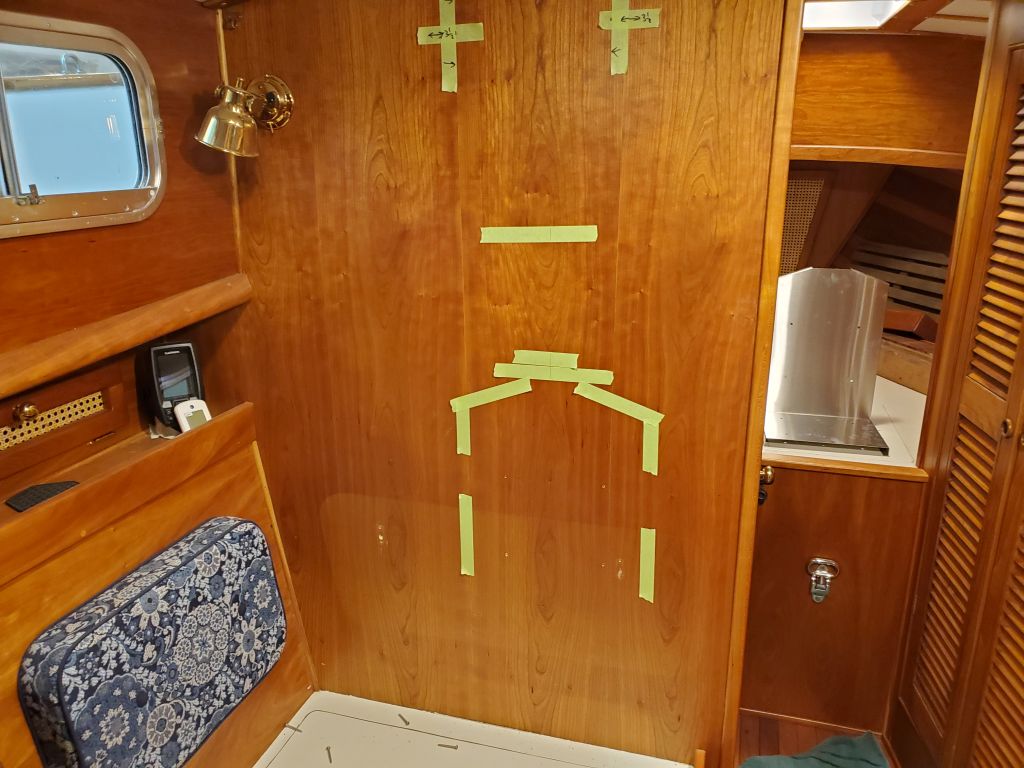
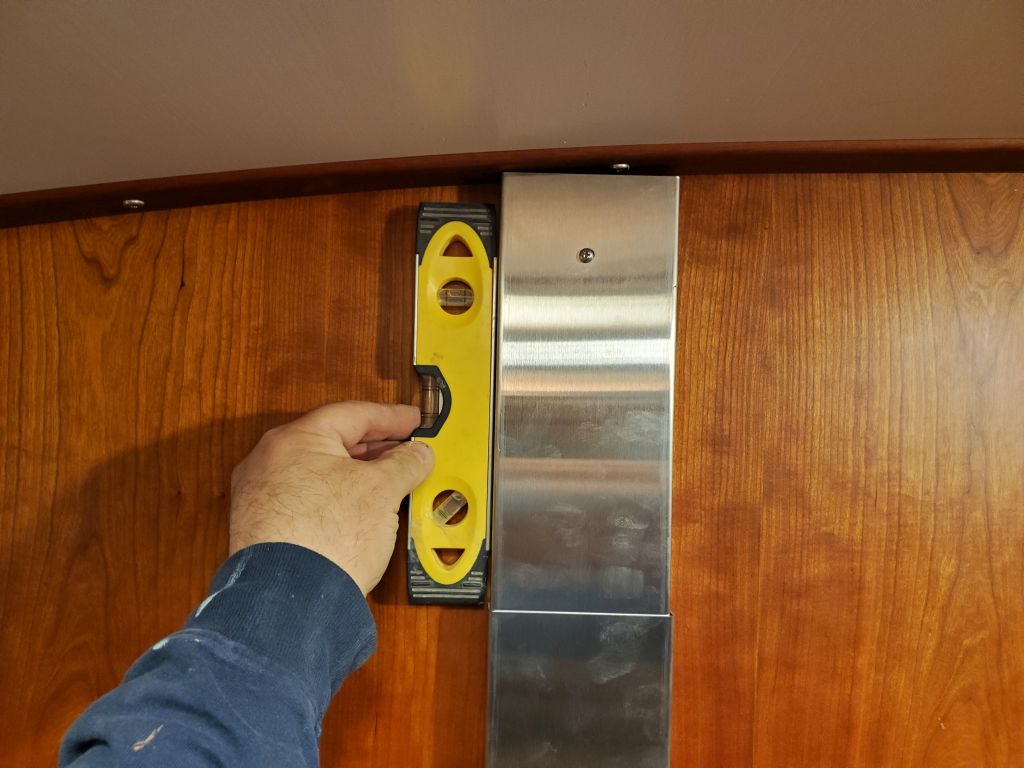
On the boat, the basic location of the stove was already determined through the various measurements and layouts accomplished in November, but now I needed to confirm that the stovepipe would exit the coachroof where I wanted it, essentially midway between the port handrail and the raised center portion of the coachroof.  This location worked naturally with the various restrictions on the stove placement in the cabin, which I’d previously determined, but before I started drilling holes and mounting things, I had to transfer the location from outside to inside.  With some ready references between inside and out, I could easily determine where I wanted the center of the pipe to be, which turned out to be 22″ from the cabin side.  From this basic mark, I used a level to plumb a line down to the stove location so I could align the heat shield and mounting bracket properly.

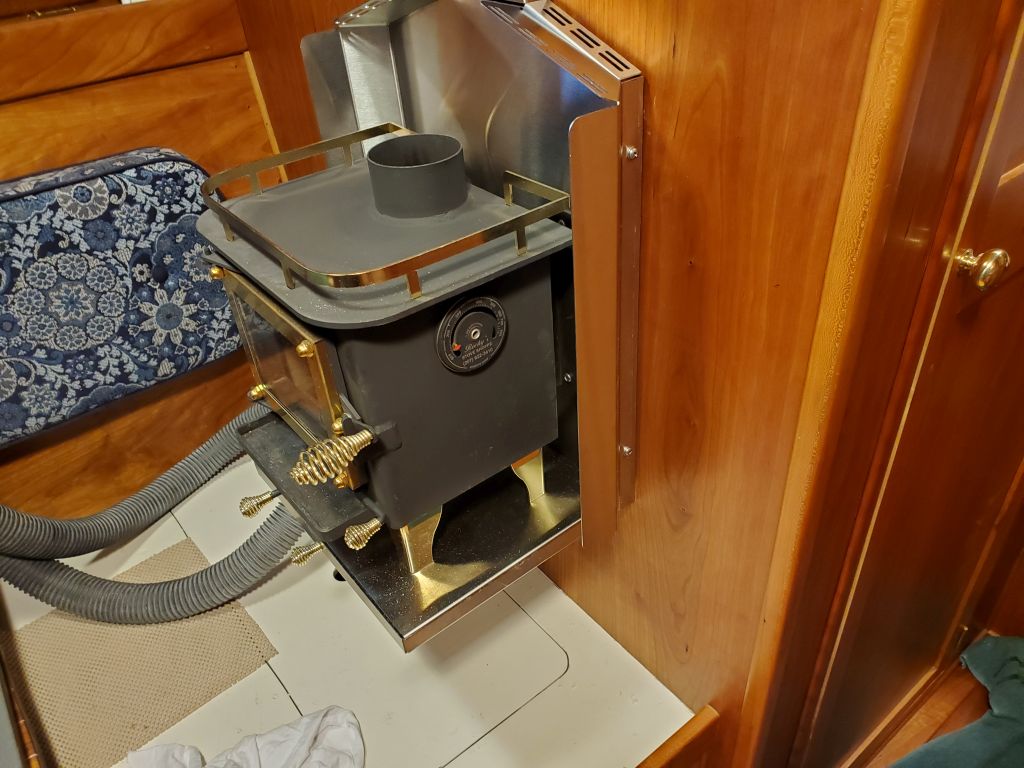
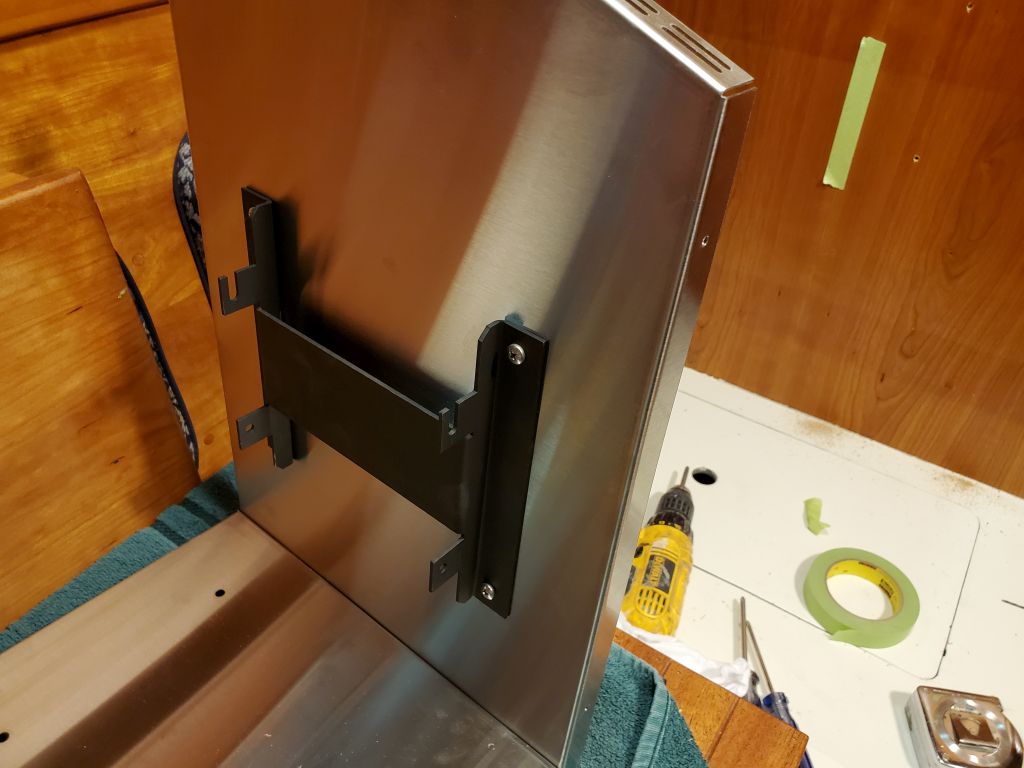
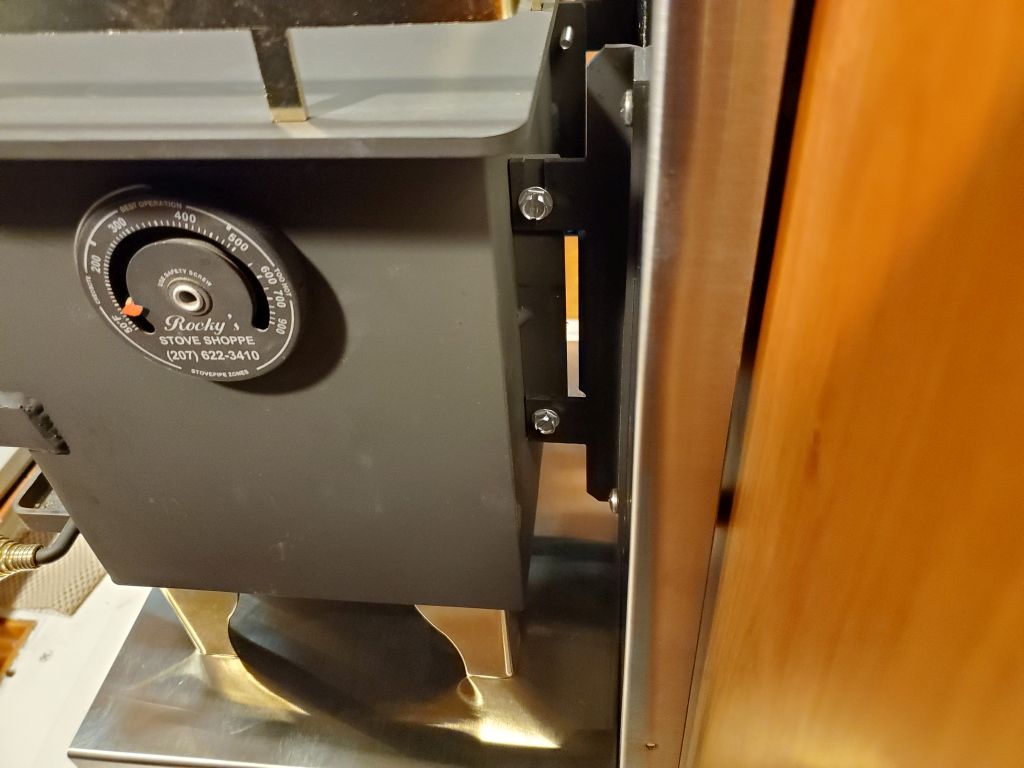
Despite appearances, the woodstove doesn’t rest on, and is not supported by, the bottom tray of the heat shield; the weight of the stove, in this installation, would be carried on the bulkhead, with a mounting bracket designed to bolt through (and simultaneously secure) the vertical heat shield.  The kit came with zinc-coated woodscrews–it’s not a marine stove per se–and obviously I wasn’t going to use non-stainless screws, but as I considered the installation more I realized I didn’t really want to rely on just screws either.  In a static installation, like a tiny house or caravan, that would be adequate, but the dynamics of a boat called for bolts, in my opinion.

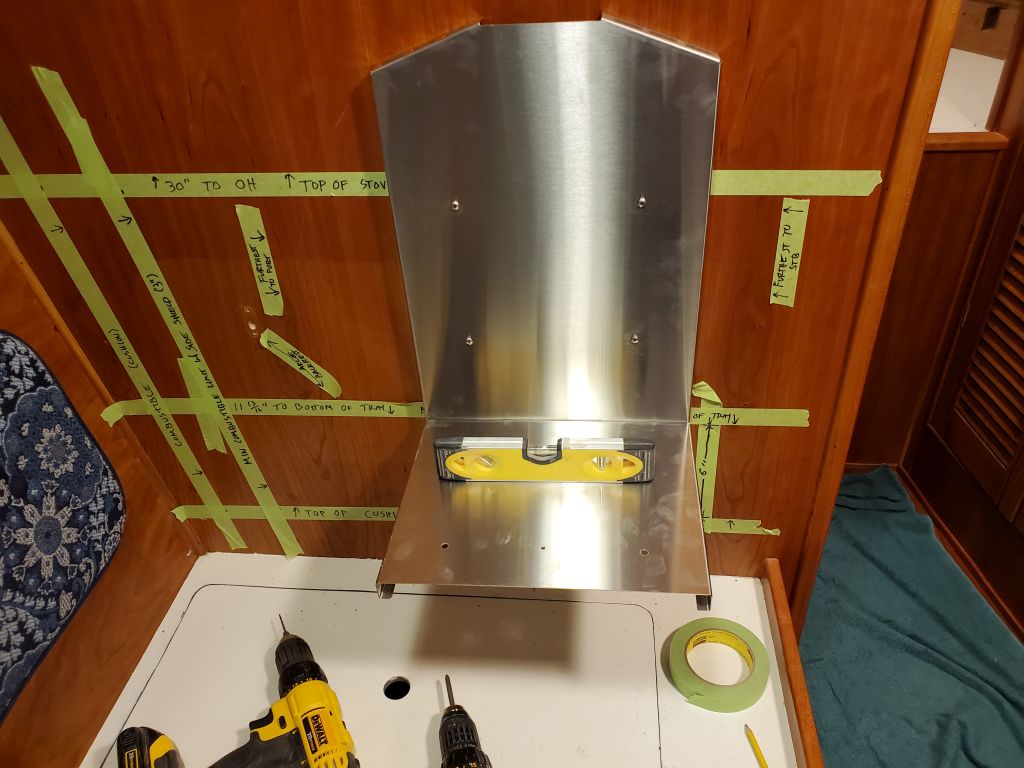
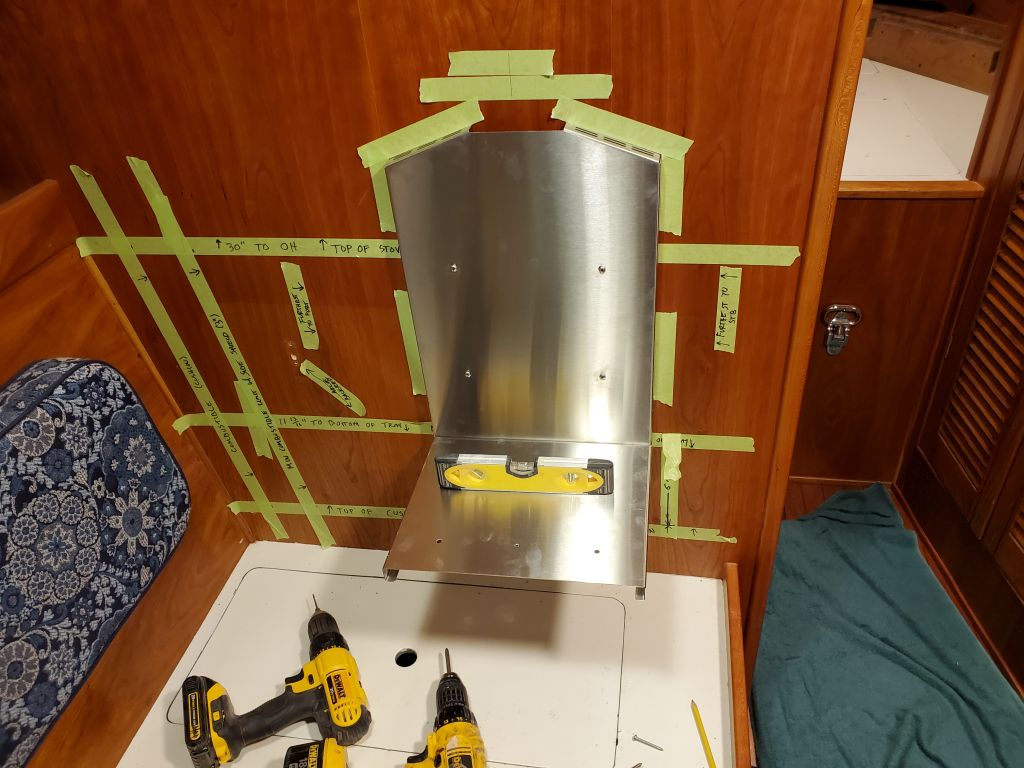
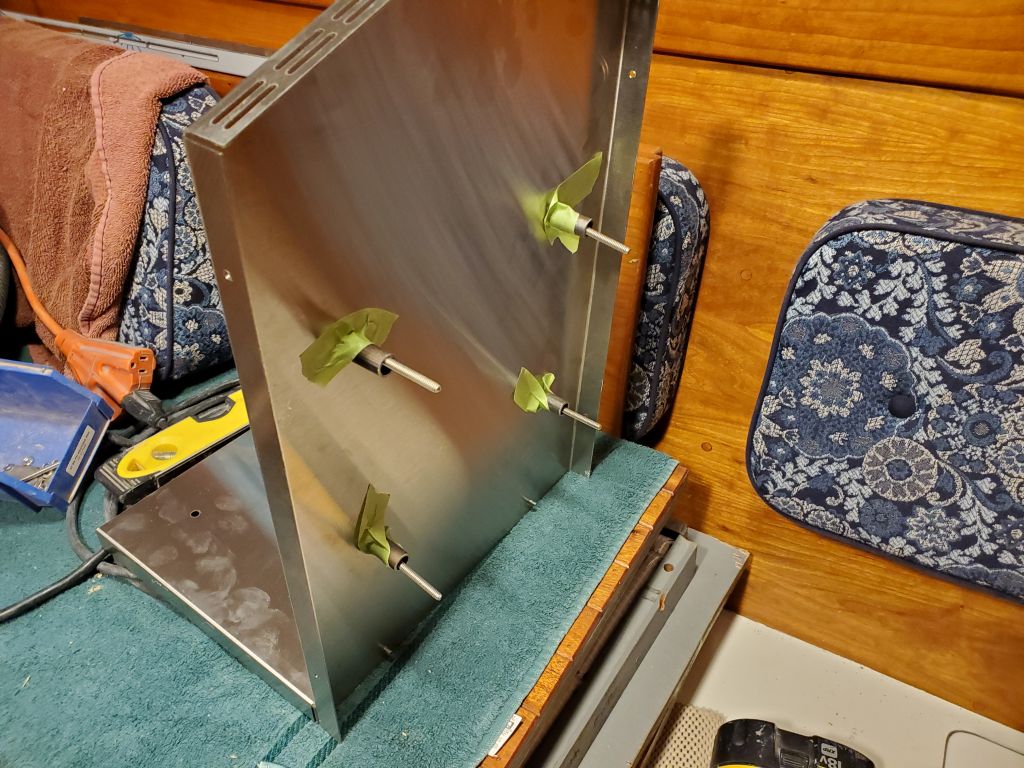
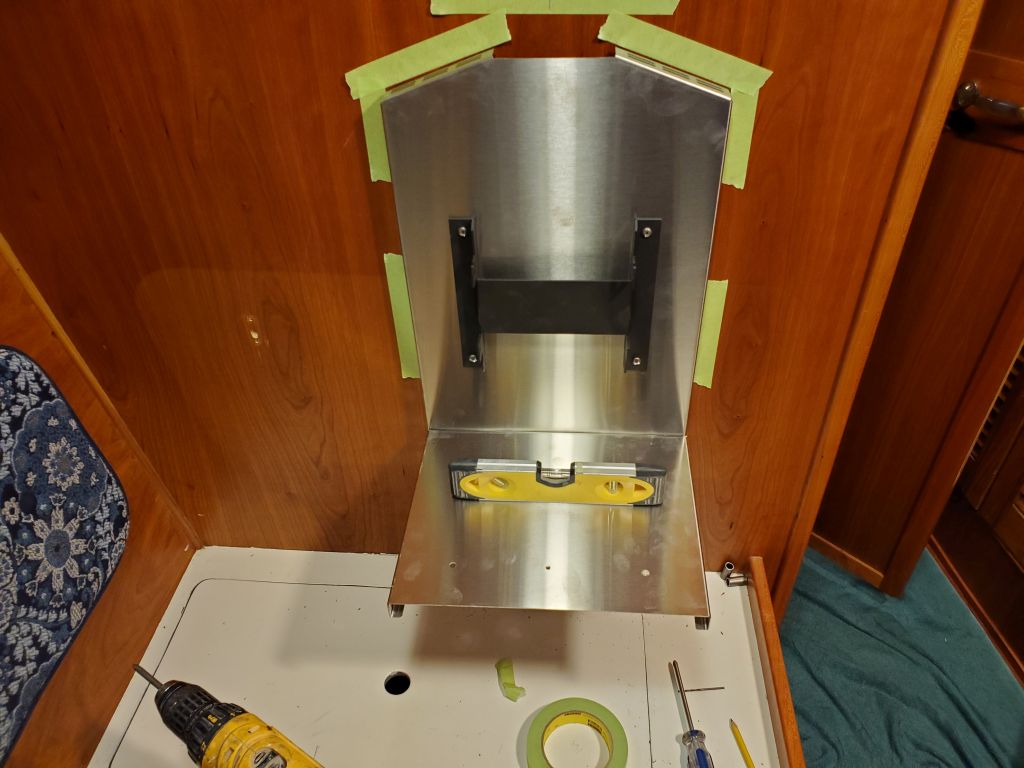
To start, however, I first had to position and align the main heat shield, and mark the bolt holes accordingly.  So, positioning the shield where I wanted it, with the bottom of the shield even with a layout mark I’d made previously (as low as it could go) and centered on the desired stovepipe location, I temporarily leveled and installed the shield with four smaller screws just to get the positioning right.  This done, I used masking tape to mark around the edges of the shield to help me with final alignment when I put the shield in place shortly.  I drilled and tapped the four mounting holes for #10 machine screws that would penetrate the bulkhead for throughbolting.

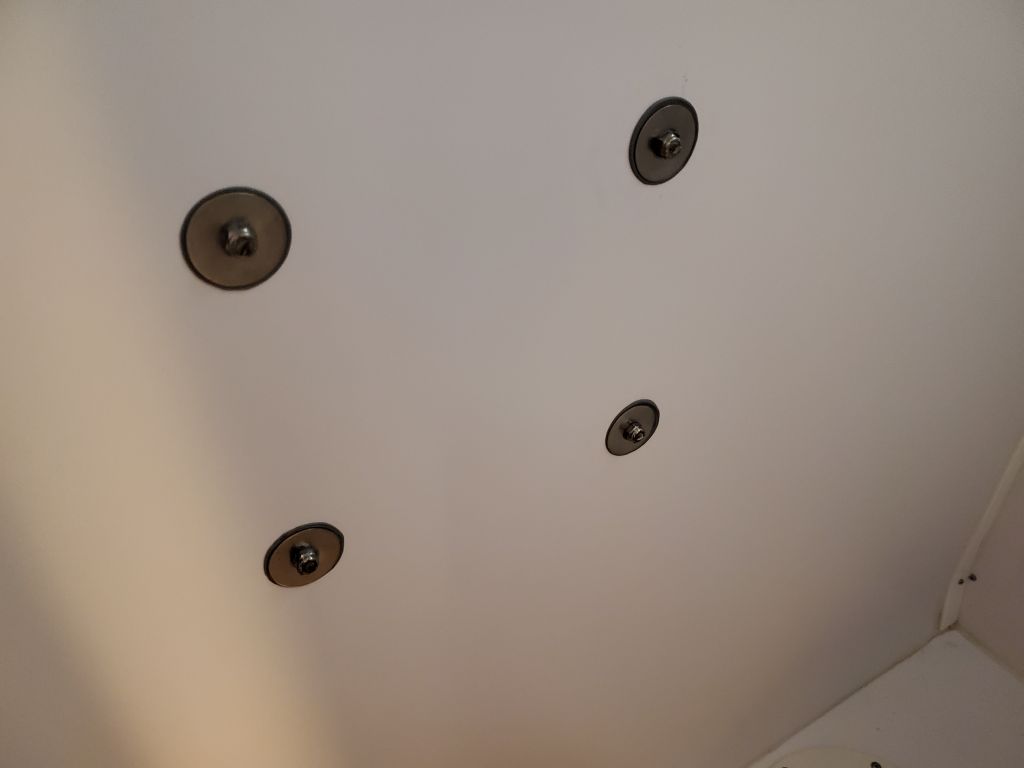
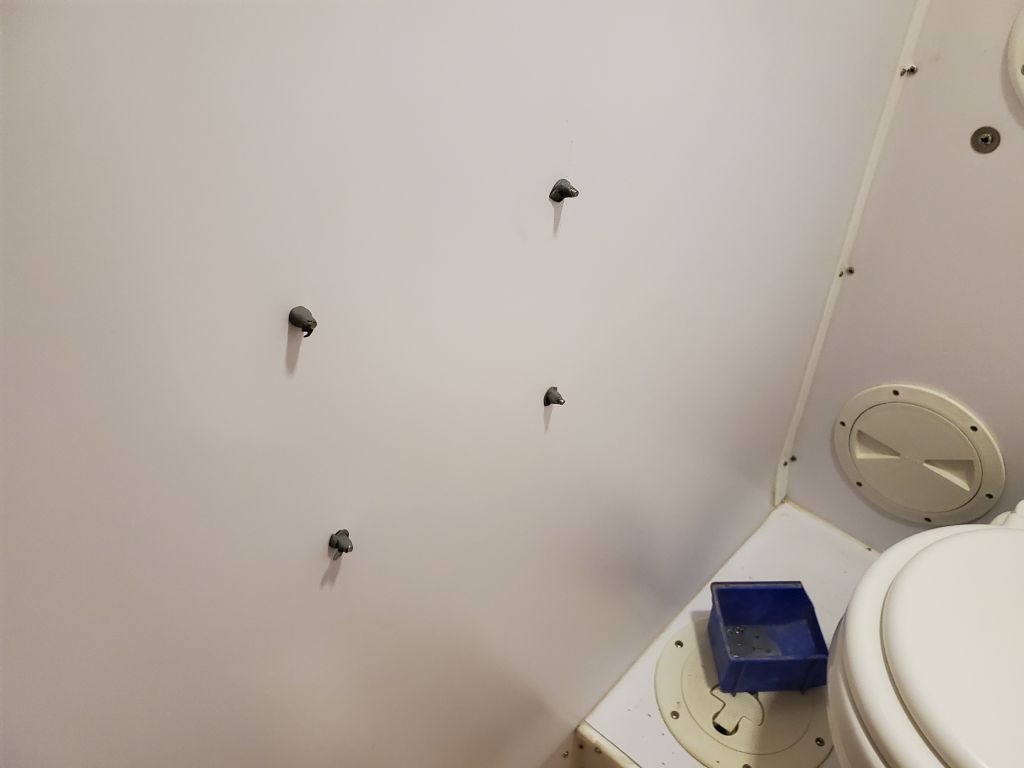
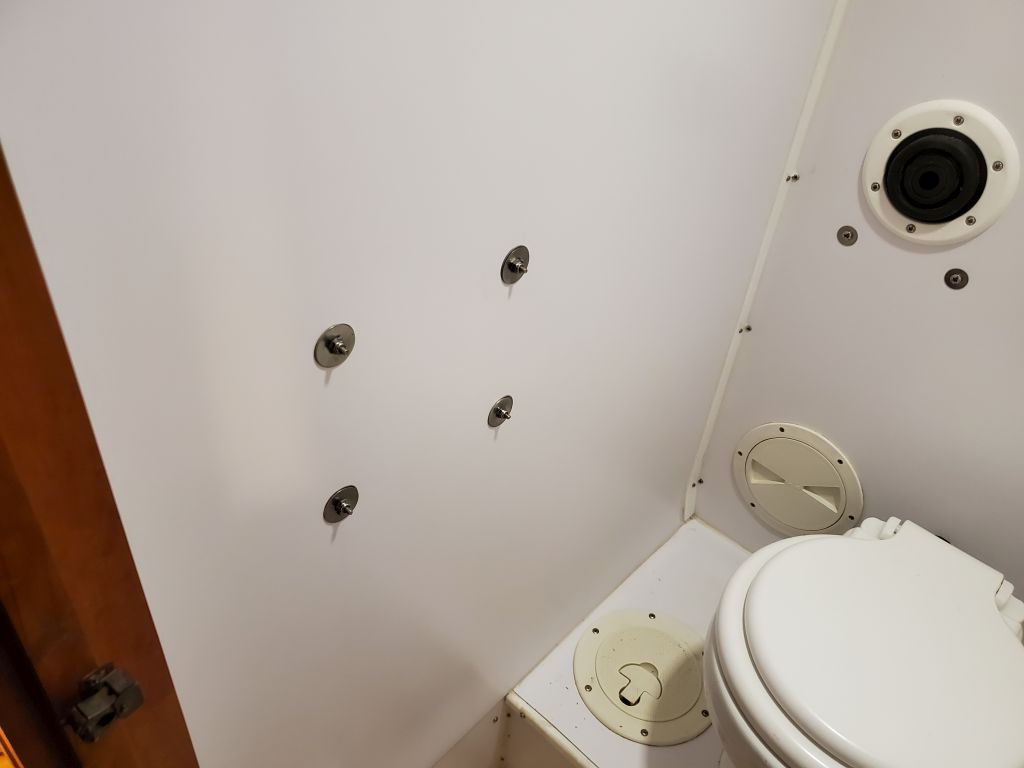
The shield was to be installed with four 1″ spacers, which held the sheet metal out just a bit from the bulkhead, and the mounting bracket for the stove–on which the weight would fully hang–also had to be installed at the same time.  This was a fairly delicate overall arrangement till installed, with lots of floppy pieces and four bolts to align and install all at once, including the spacers, so I made my life easier by taping the spacers in place behind the shield (the tape would never be seen), and as it were the installation proceeded smoothly.  On the back side of the bulkhead, in the head, I sealed the throughbolts with butyl sealant and large washers and nuts to finish off the installation.  (I’d cut off the excess bolt length before the project ended.)

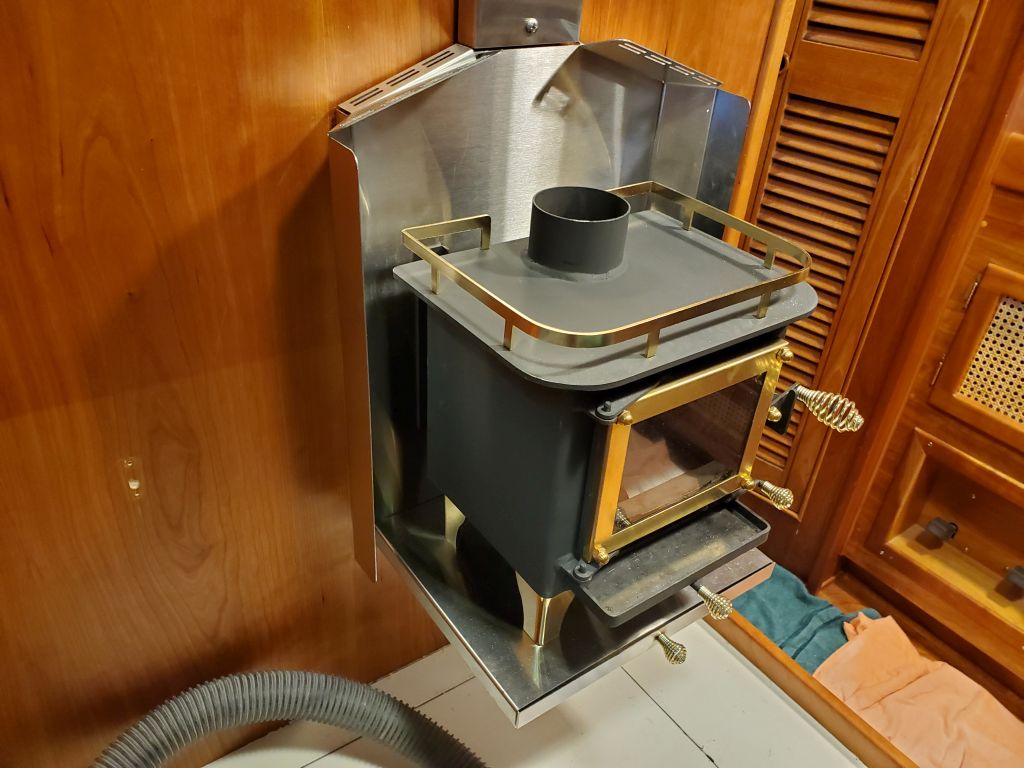
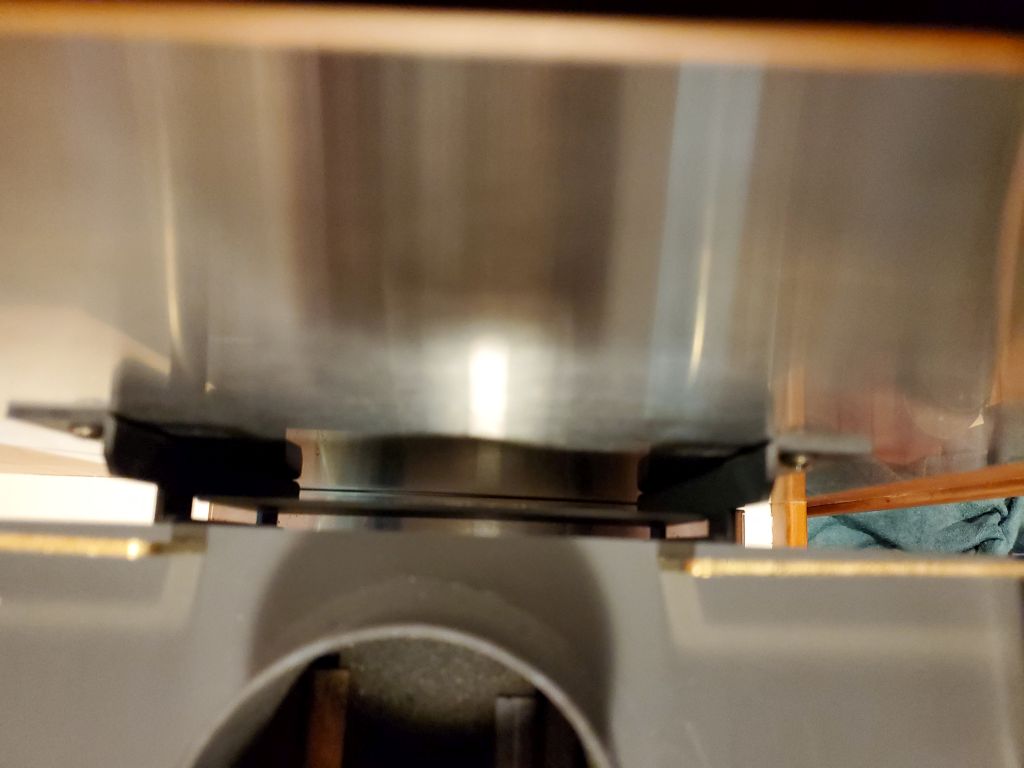
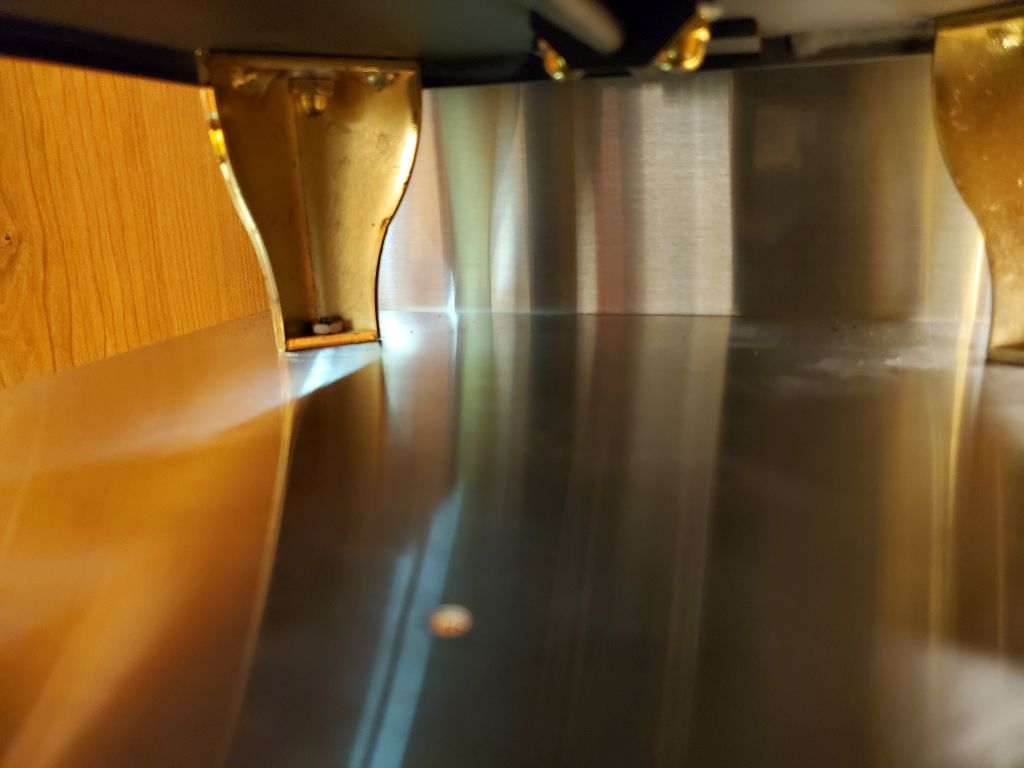
The woodstove was easy enough to install on the completed bracket, with two slots above and two fixing screws beneath.  This held the weight of the stove, and to actually hold the base of the heat shield in place, I installed four bolts to secure it to the legs of the stove, completing the illusion that this was a platform on which the stove rested.

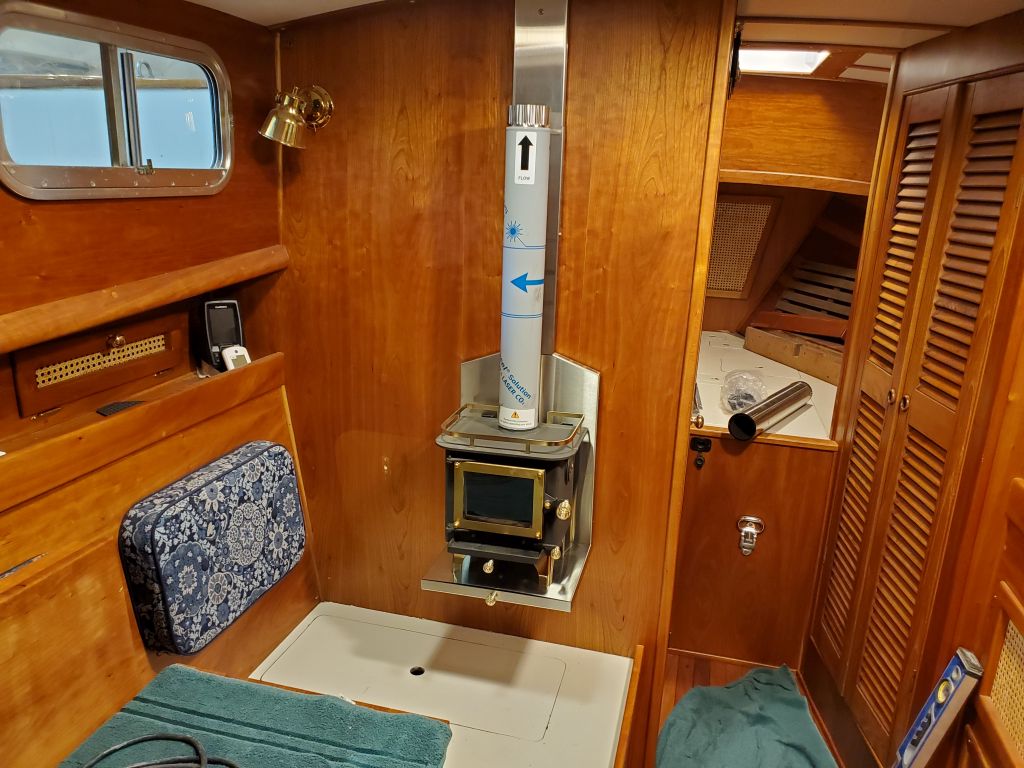
Continuing the heat shield, I installed the two slip-together sections that would back the stovepipe on its way to the overhead, securing this arrangement plumb with two screws and spacers.  No need for bolts here.  I temporarily installed one of the stovepipe sections just to see how it looked, but now it was late in the day and I’d continue the installation next time.

Total time billed on this job today:  4.75 hours

0600 Weather Observation:  35°, partly cloudy.  Forecast for the day:   Sunny, windy, 43°

Lyra 48

Monday

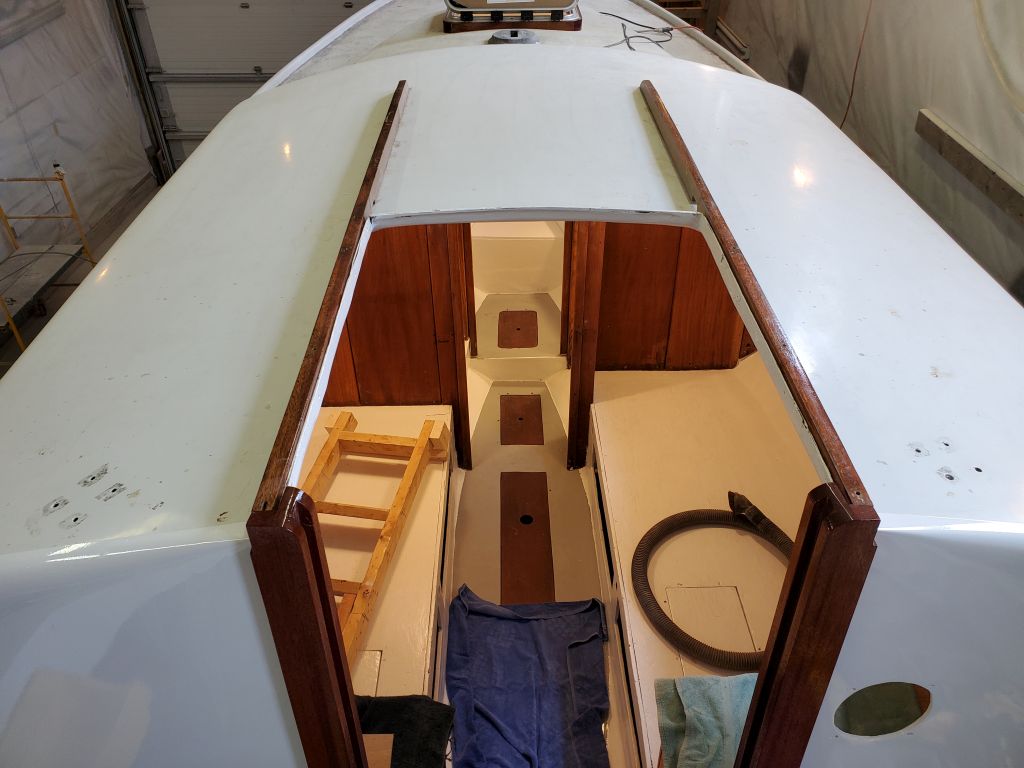
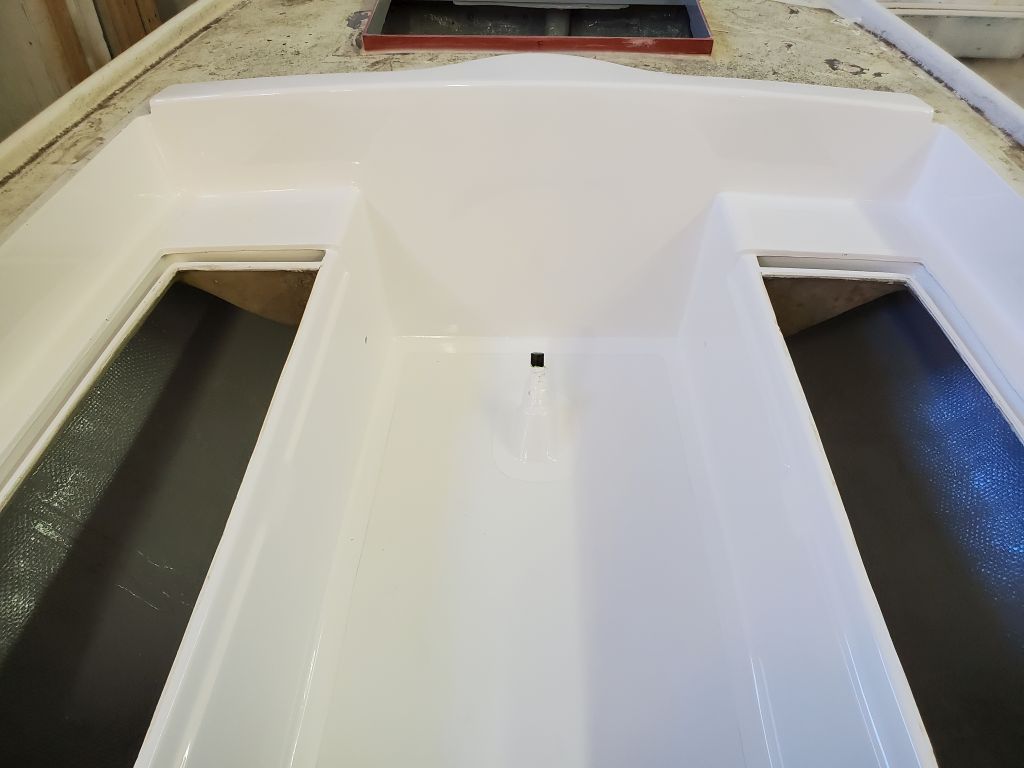
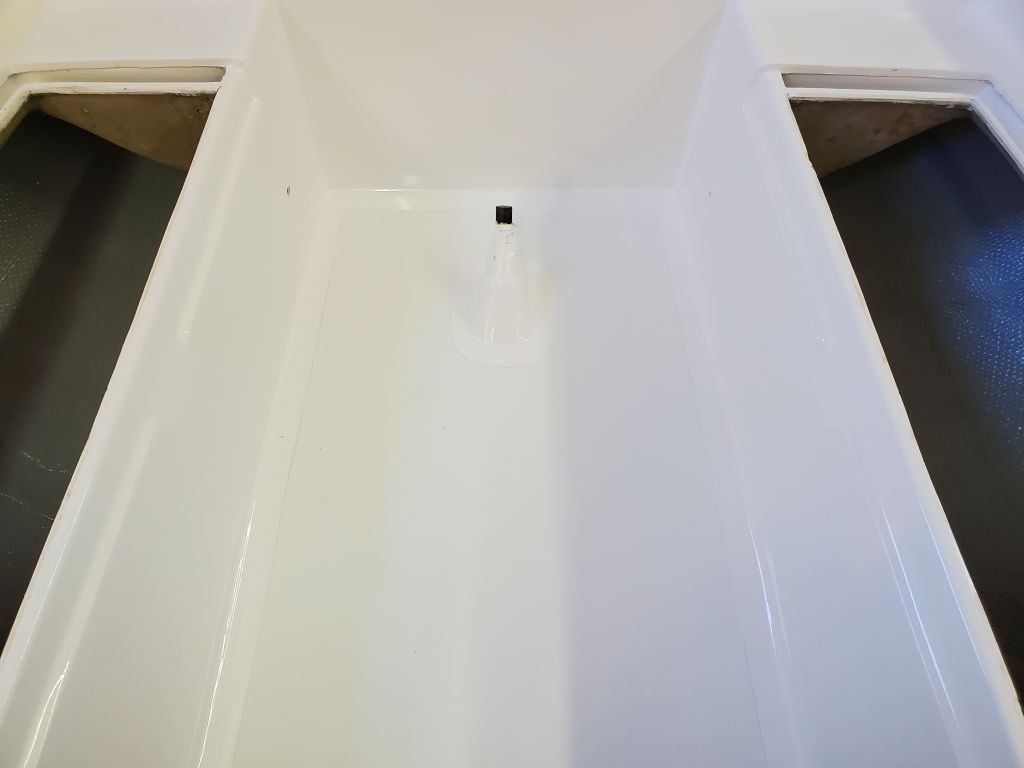
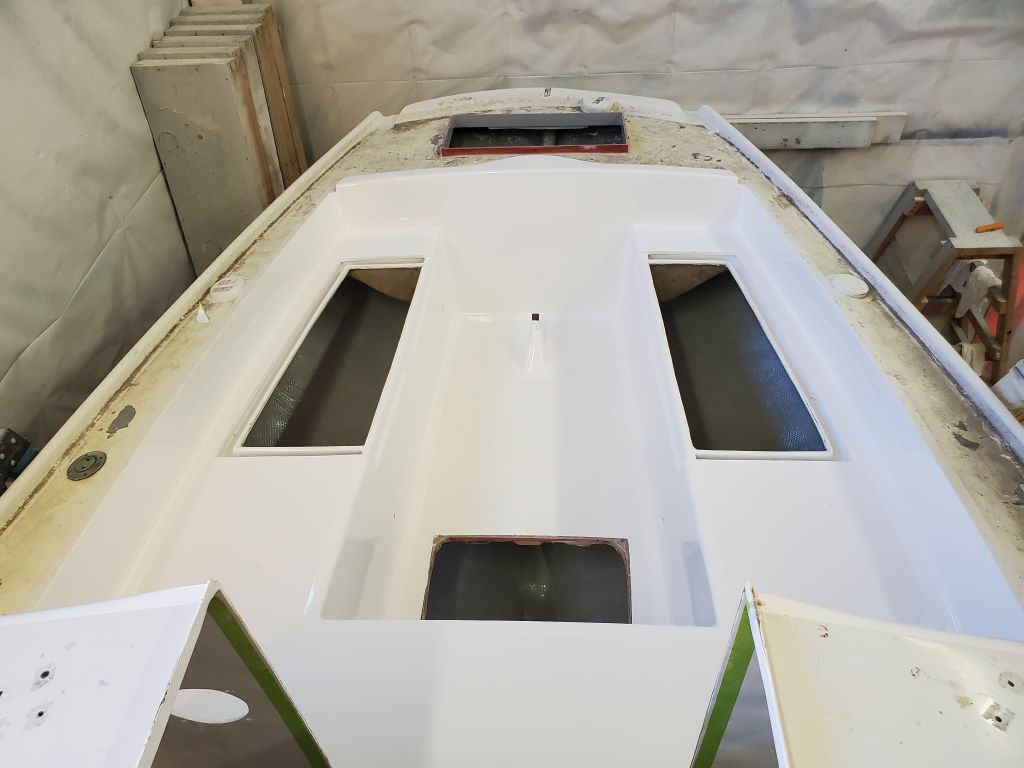
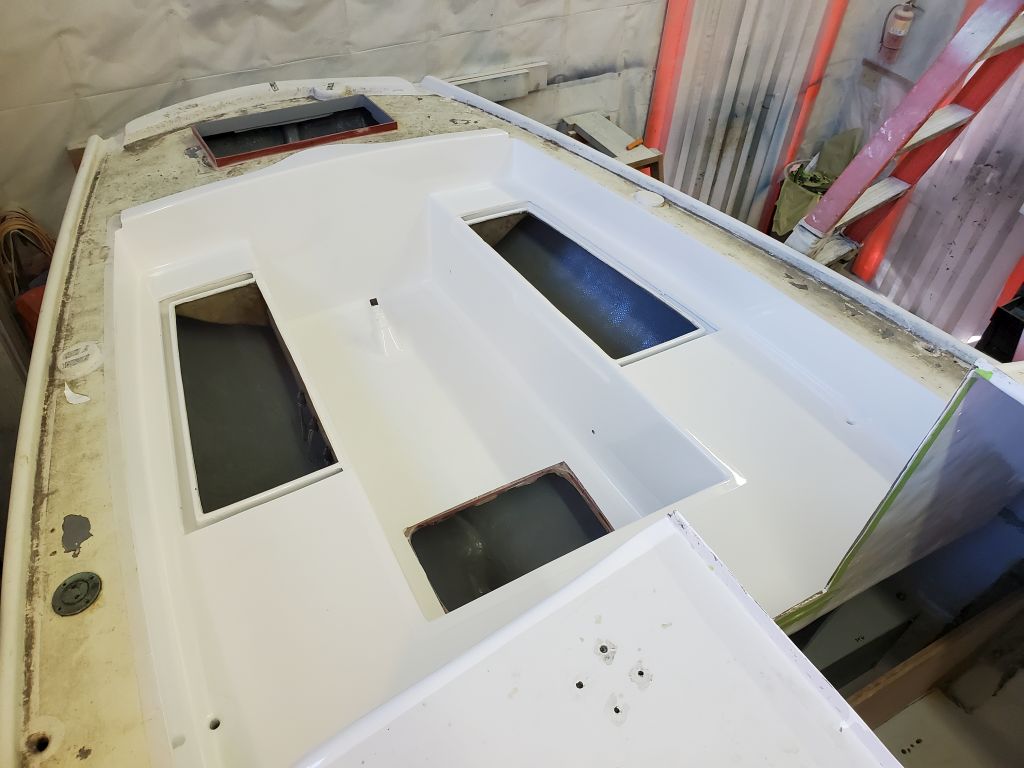
With the topcoats complete and amply cured, I began by removing all the masking tape, paper, and plastic from the cockpit and the rest of the boat.

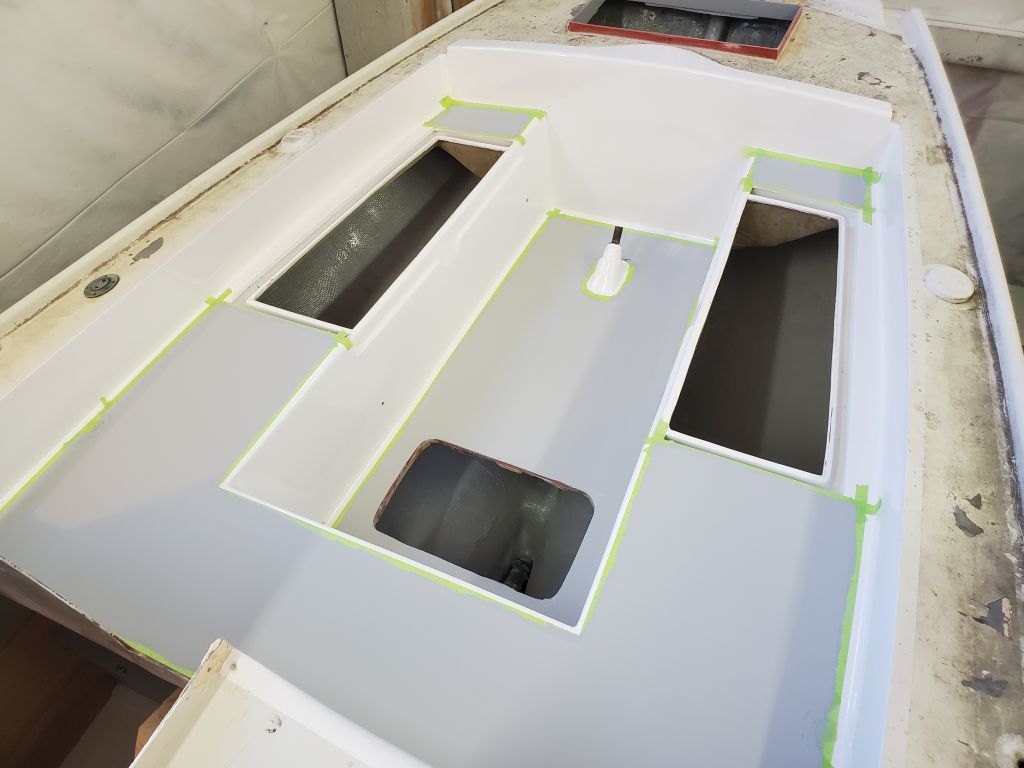
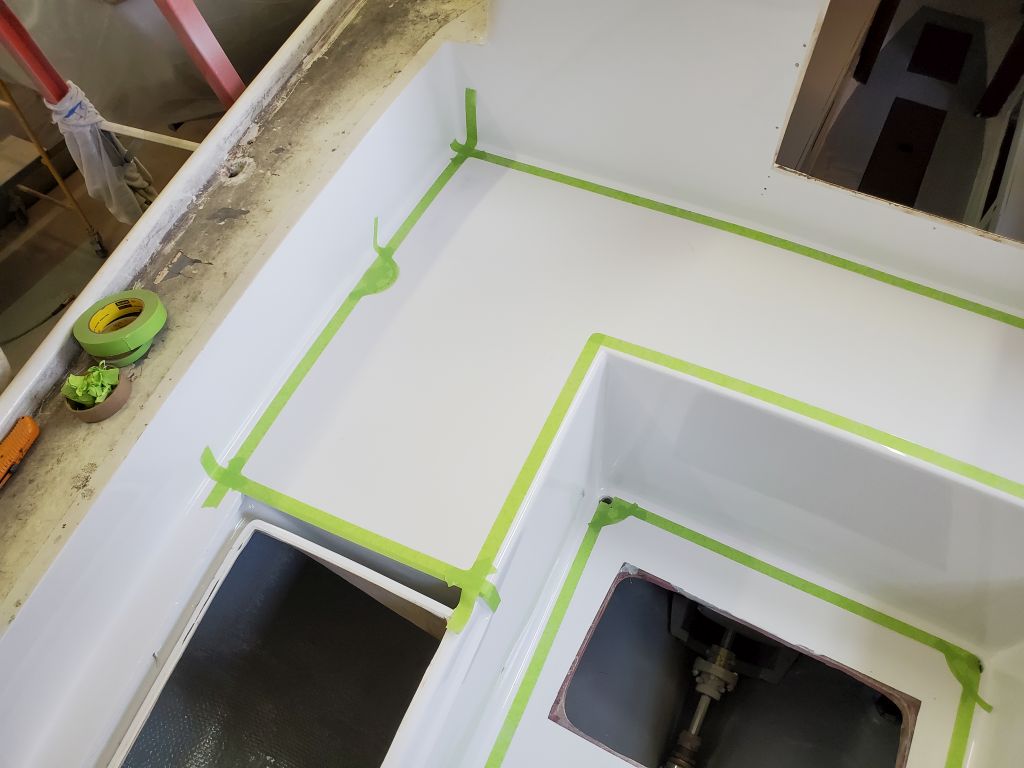
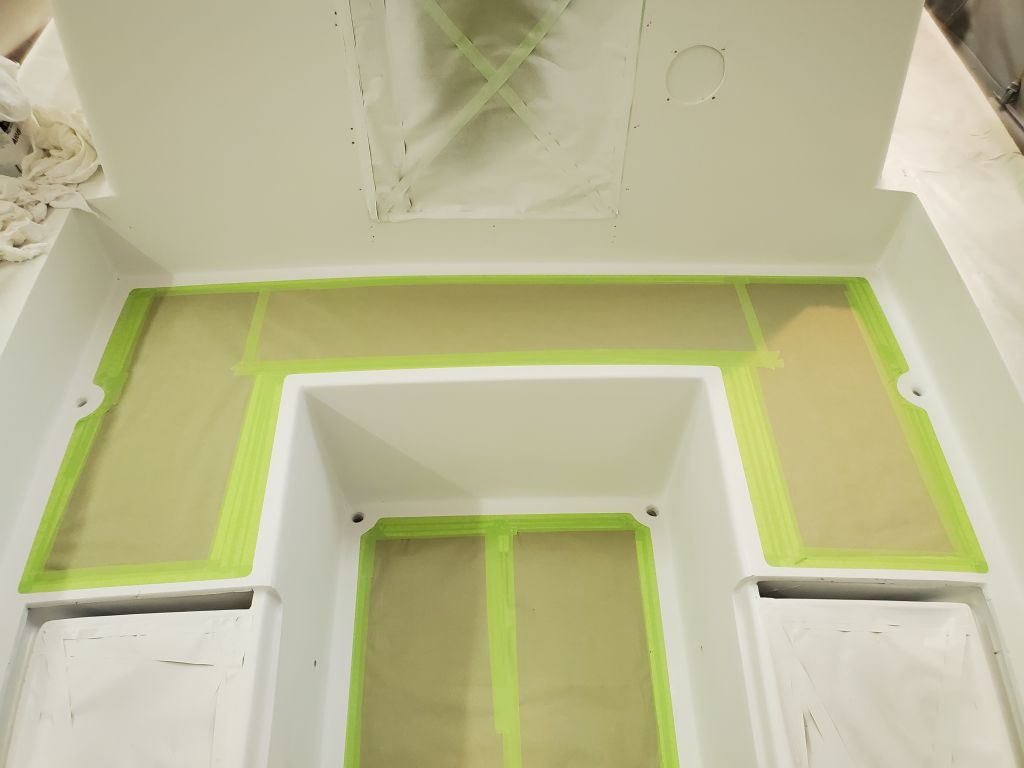
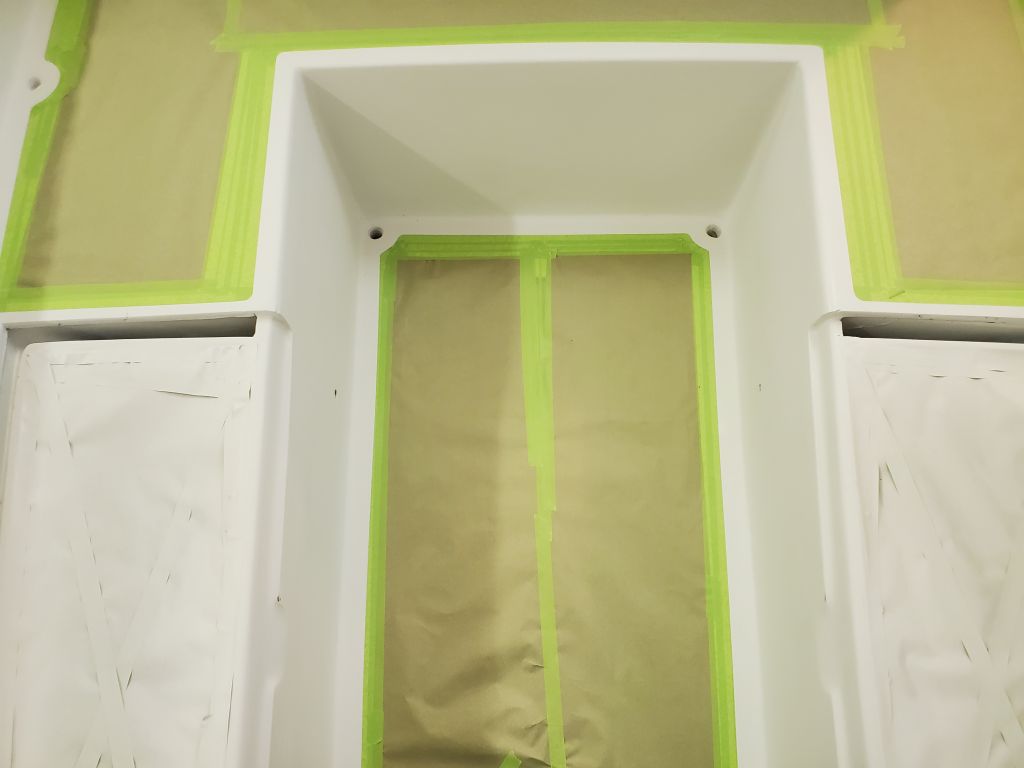
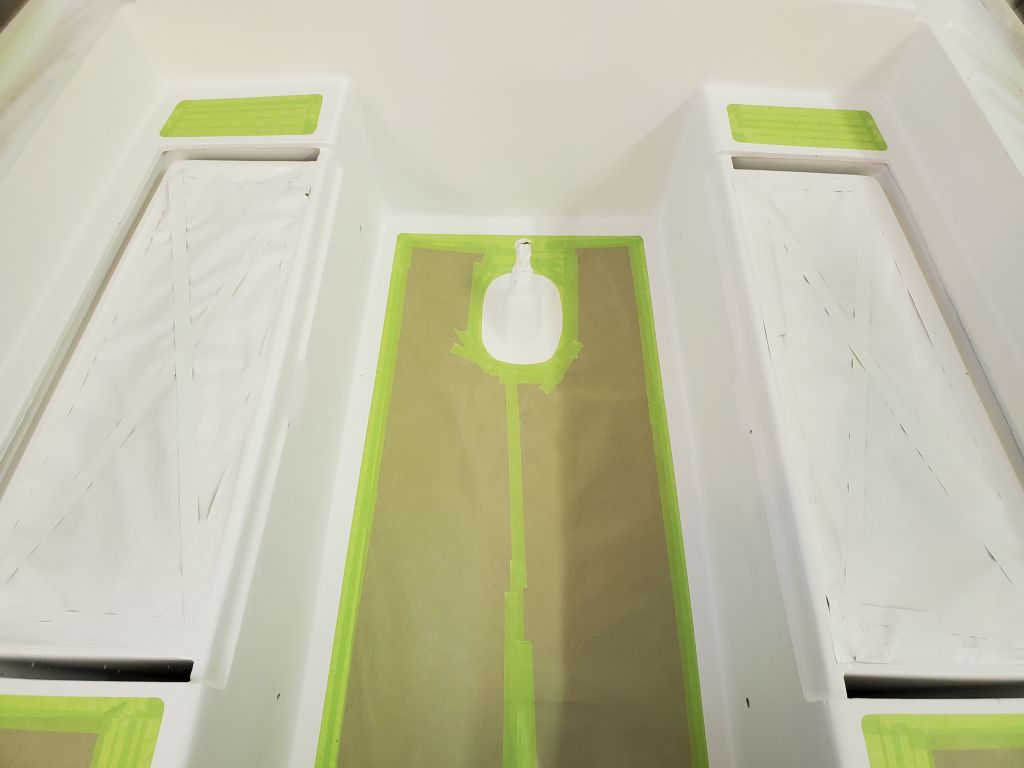
Next, I masked over the fresh paint in the cockpit, following the layout I’d made during my earlier masking rounds but this time to protect the new paint from the nonskid to go in the field areas.

After final cleanup and preparations, I applied the first of two coats of light gray nonskid paint to these areas, leaving it to cure during the day while I worked on other projects.

Total time billed on this job today:  2.5 hours

0600 Weather Observation:  Partly cloudy, 35°.   Forecast for the day:   Sunny, windy, 43°


Lively Heels Phase 3-35

Friday

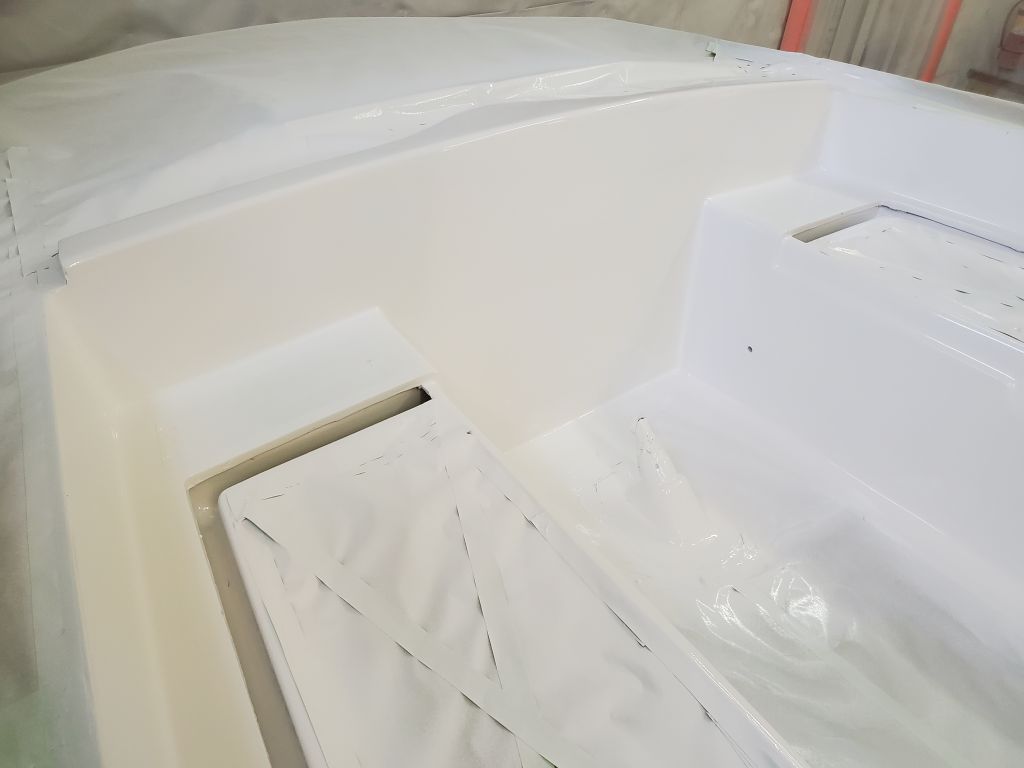
As a final step before the final paint work, I laid out and masked off the field areas of the two lids to protect the eventual nonskid areas from overspray.  Afterwards, I solvent-washed all the pieces and parts and wiped with a tack rag.

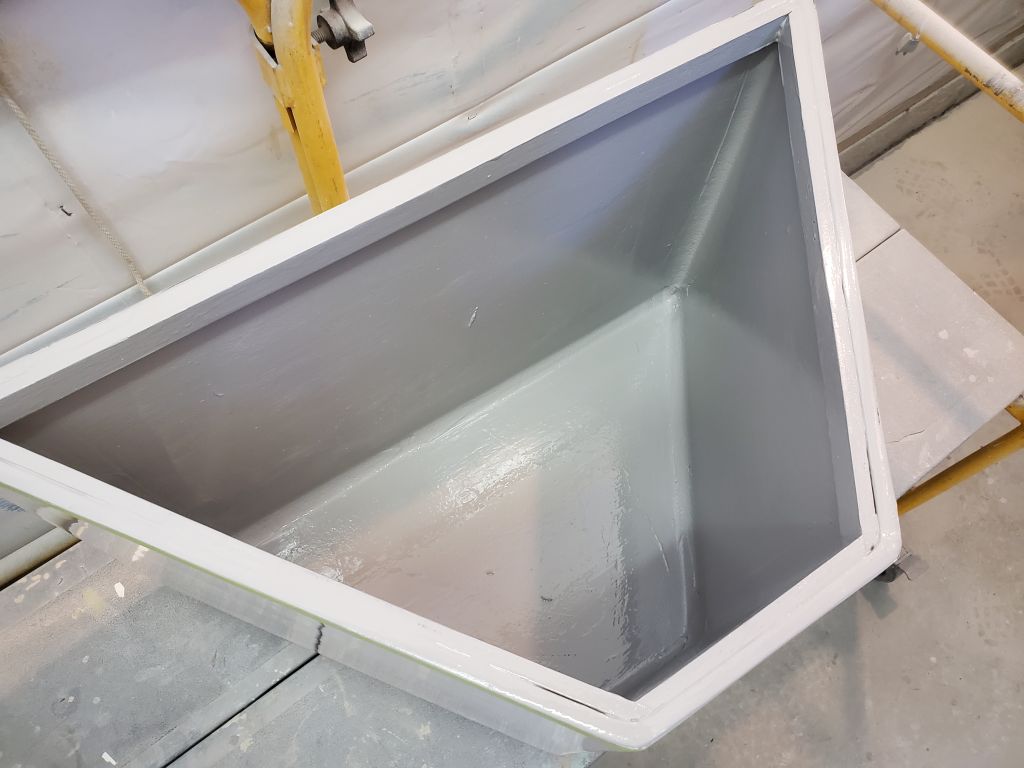
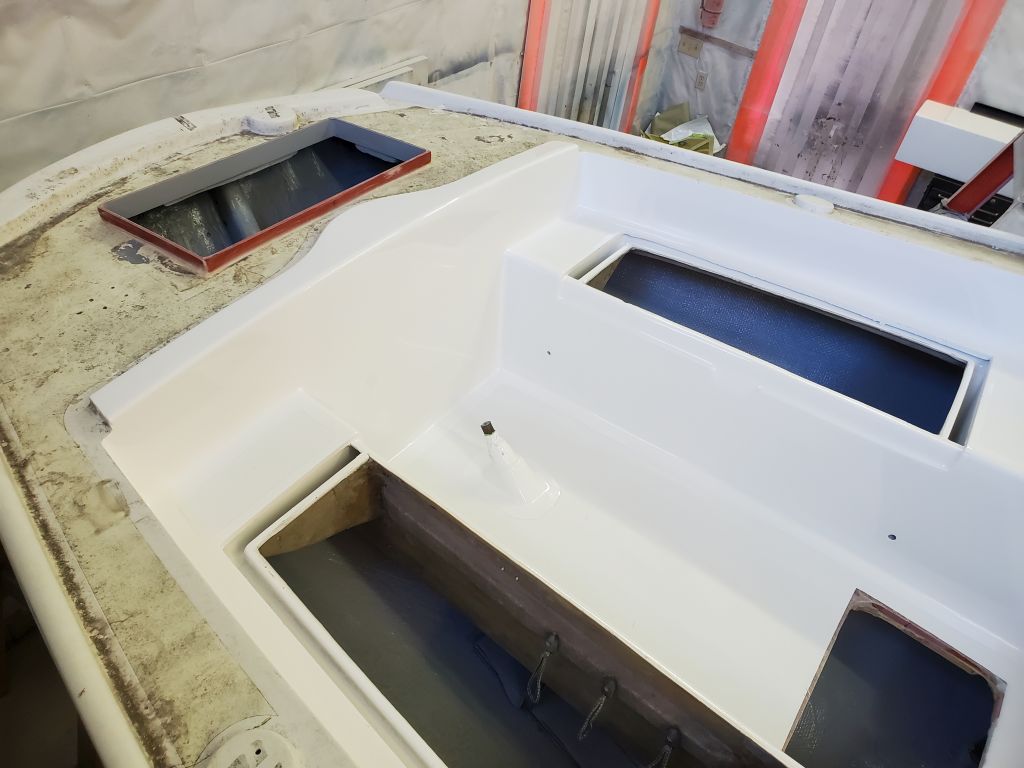
Over the course of the remaining morning, I spray-applied three coats of snow white gloss topcoat to the boxes and lids, which paint matched the existing on the deck areas.

Total time billed on this job today:  2 hours

0600 Weather Observation:  45°, foggy.  Forecast for the day:   Fog and rain, 56°

Lyra 47

Friday

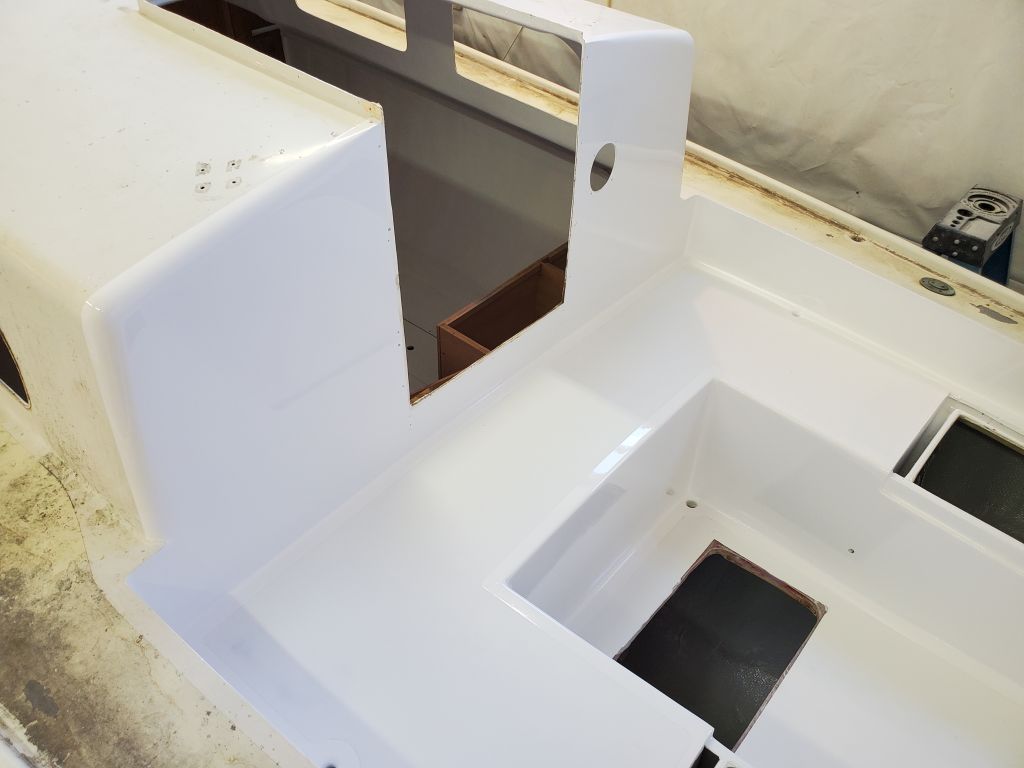
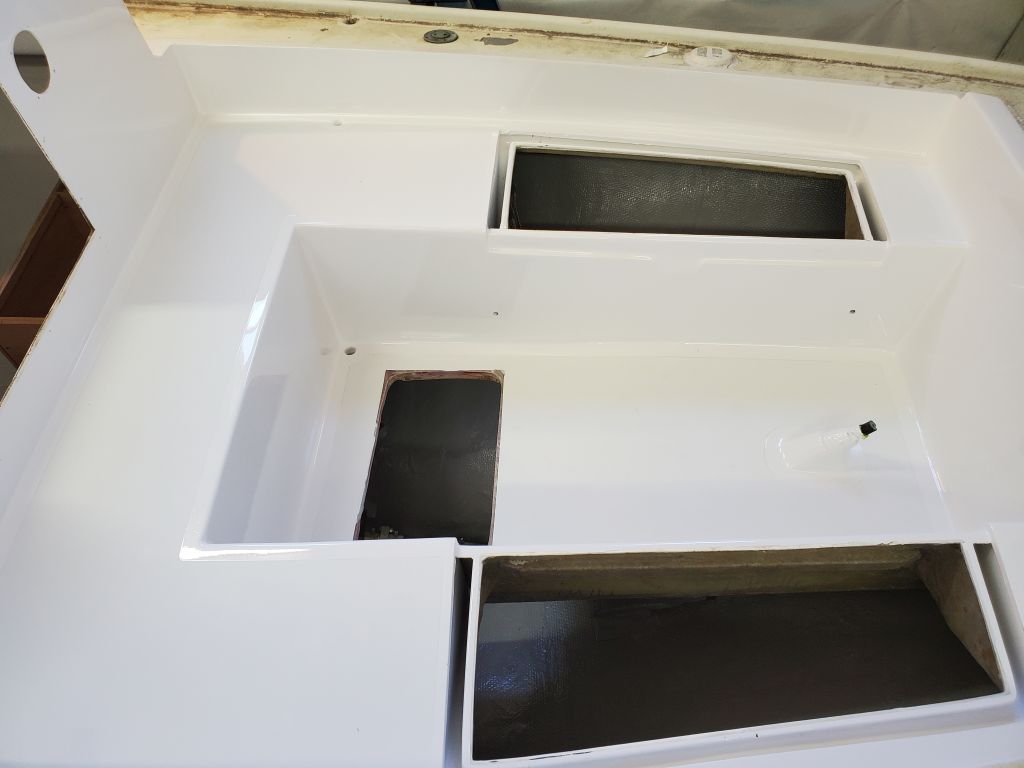
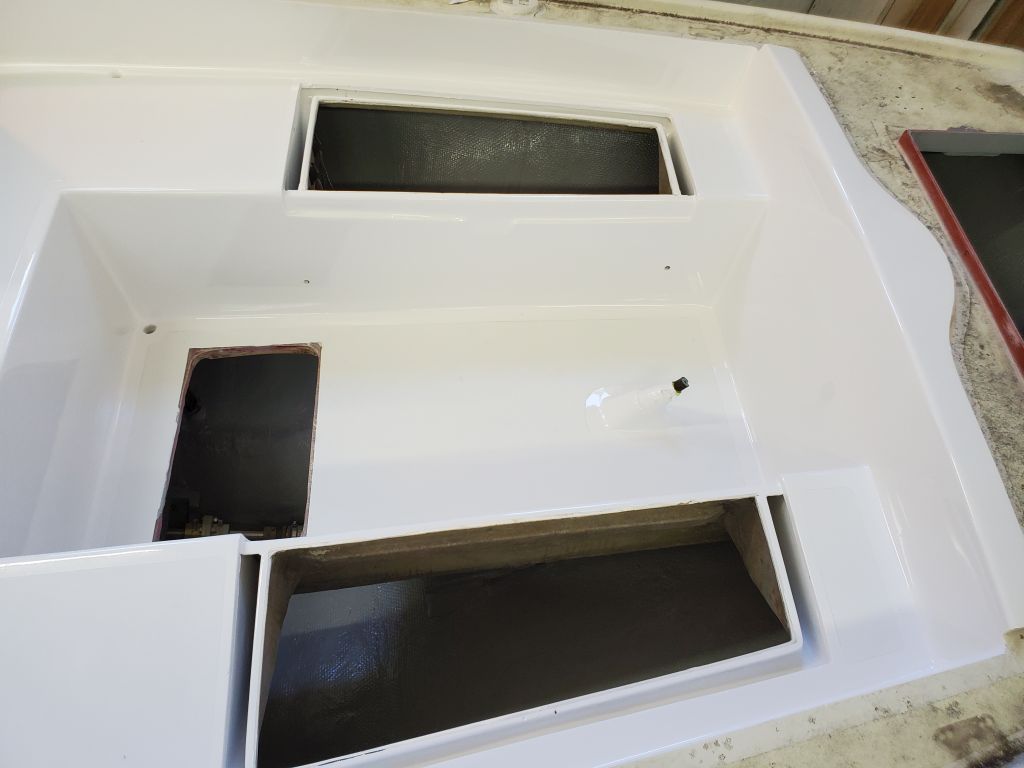
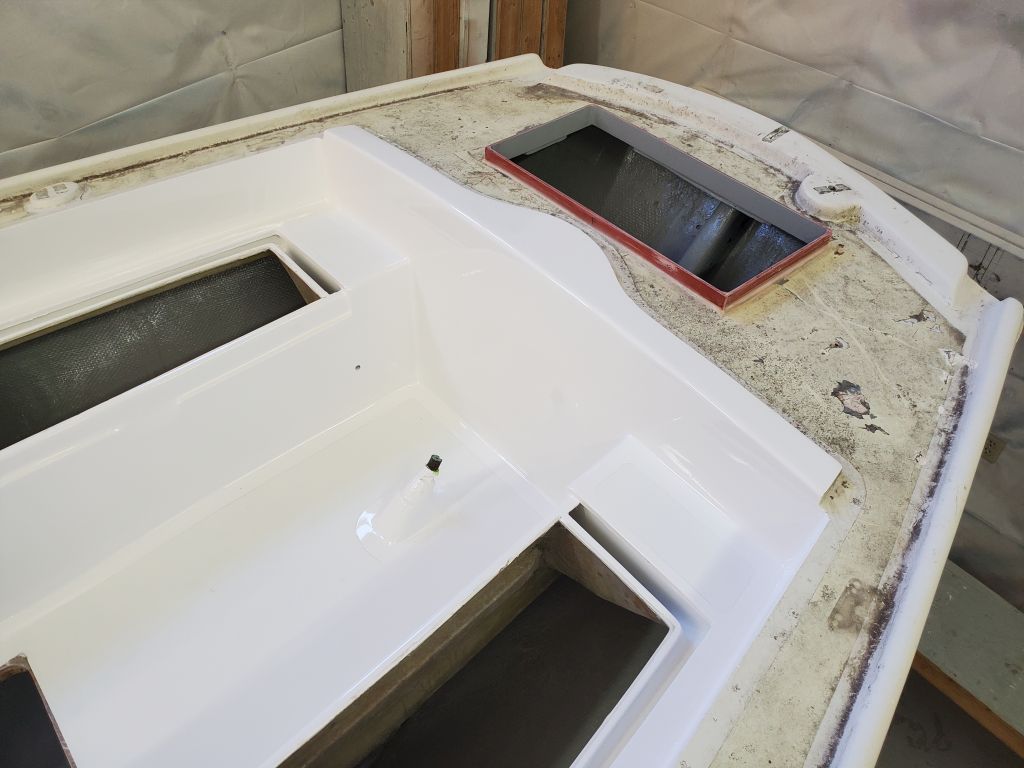
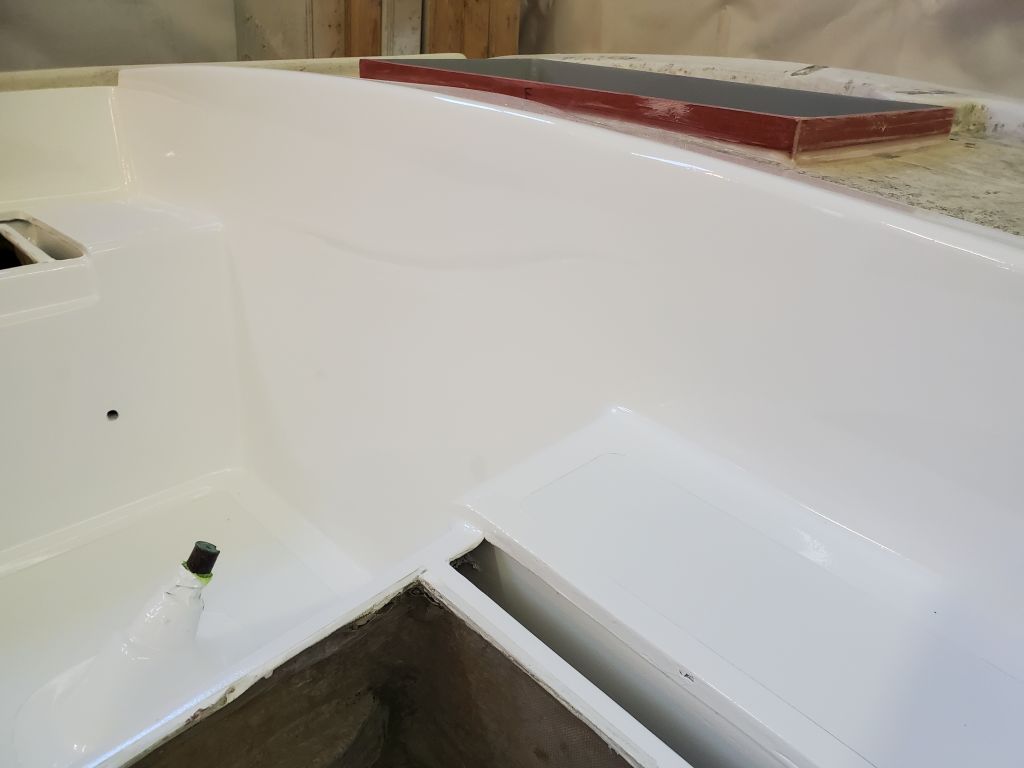
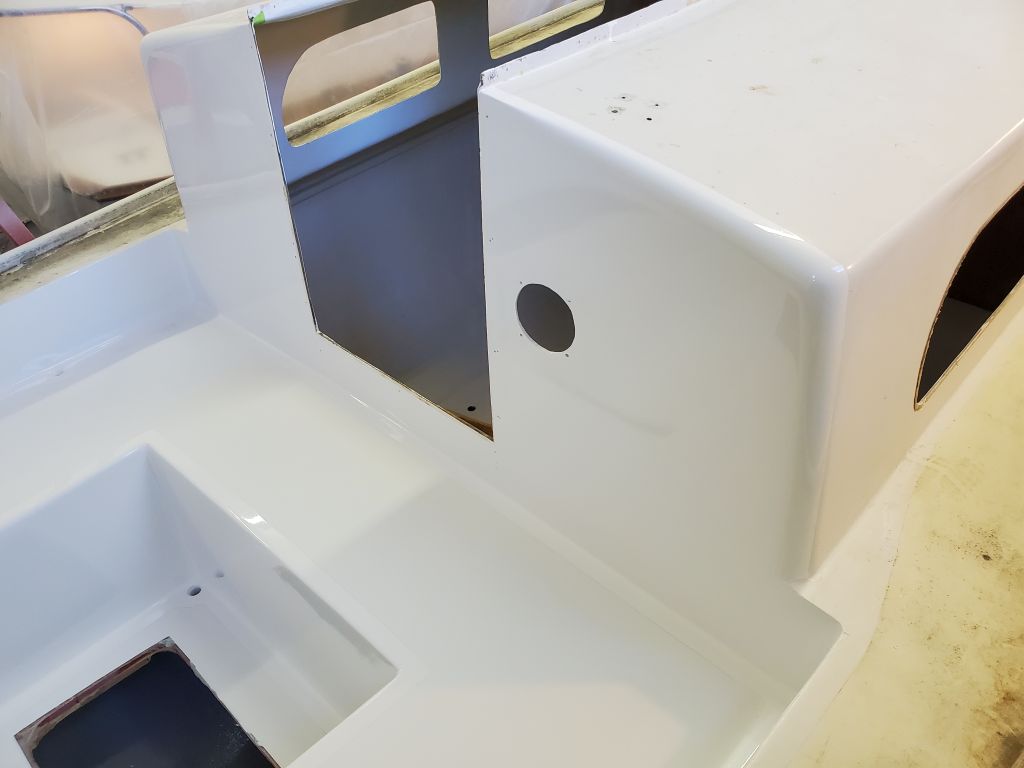
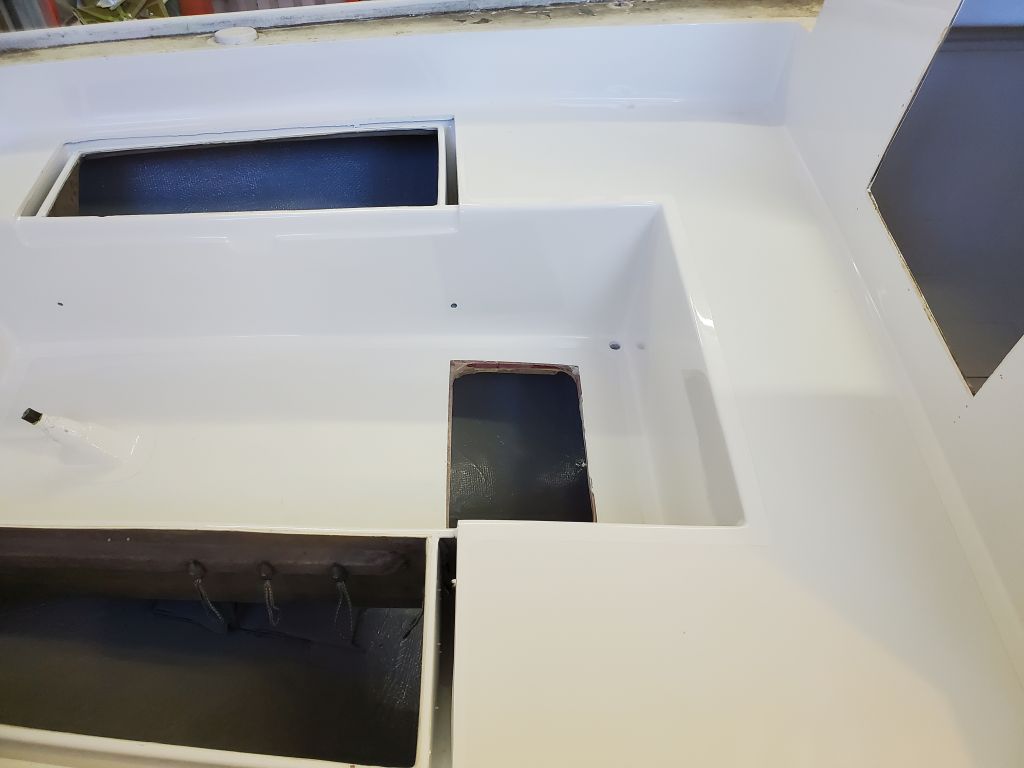
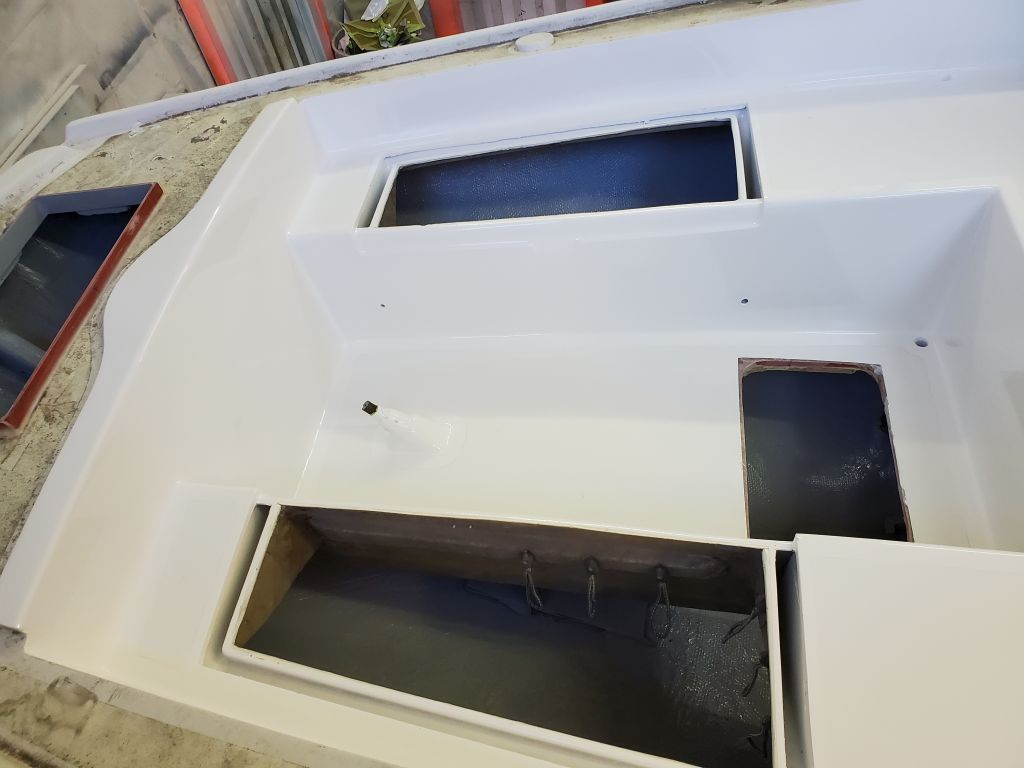
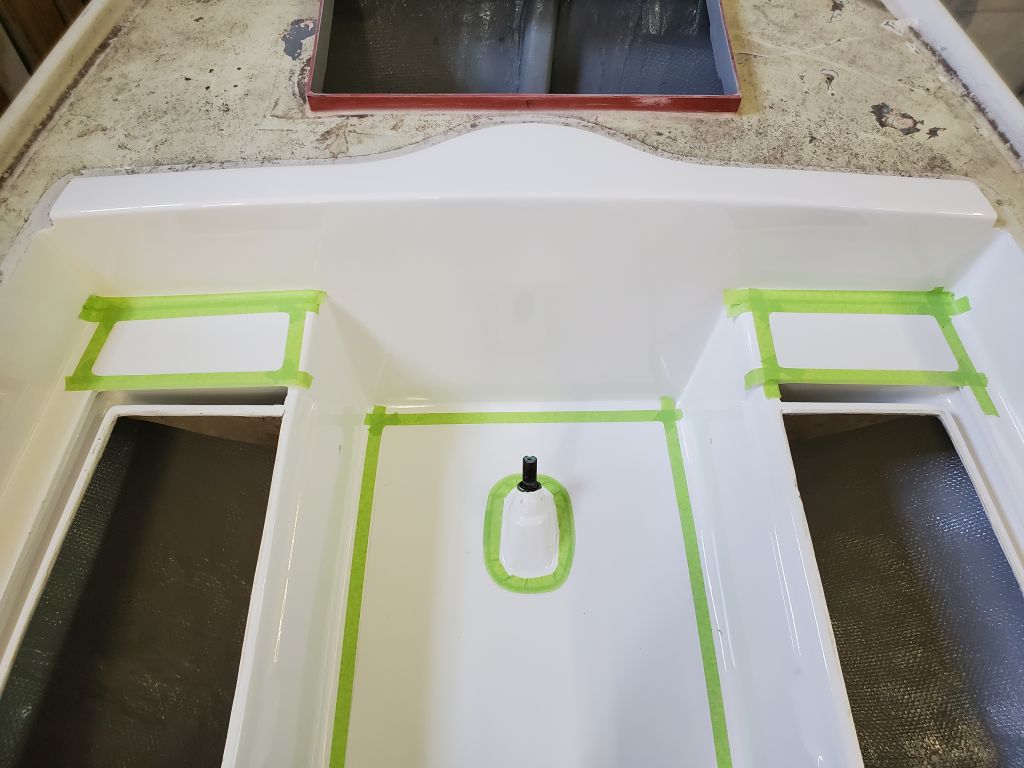
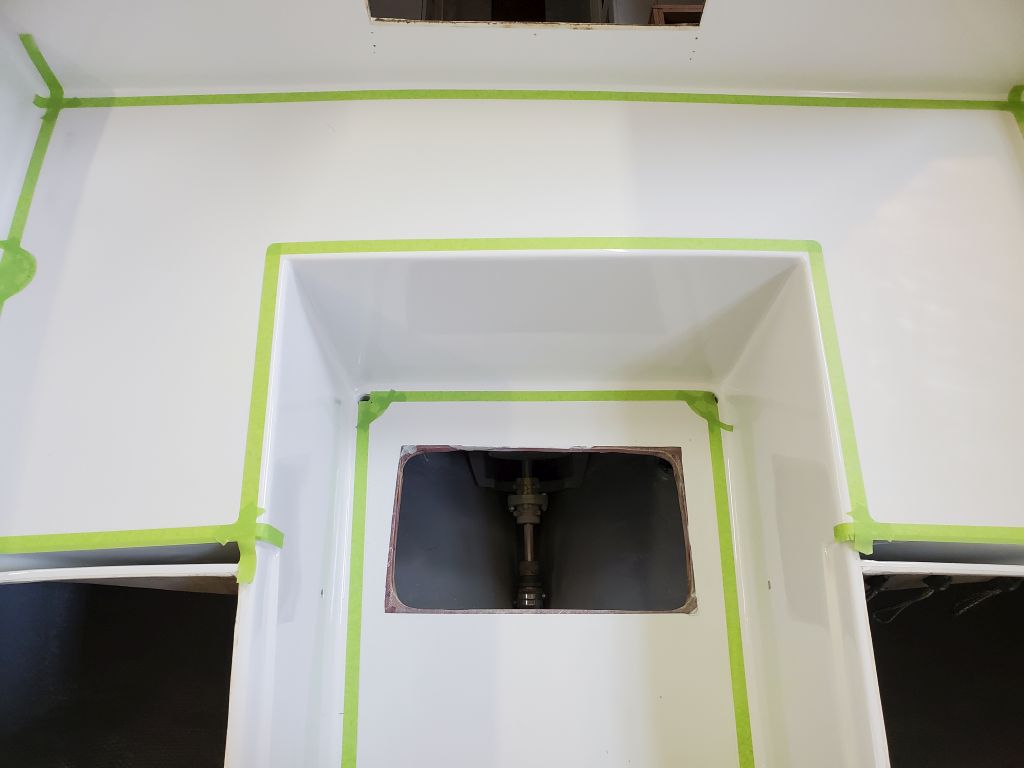
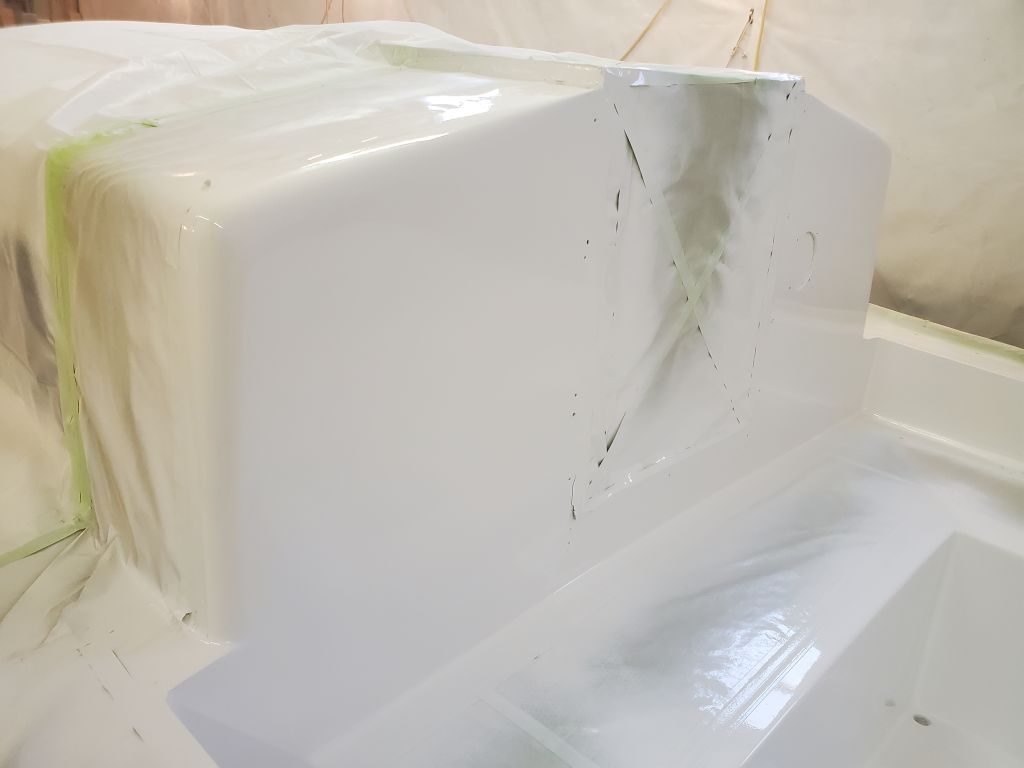
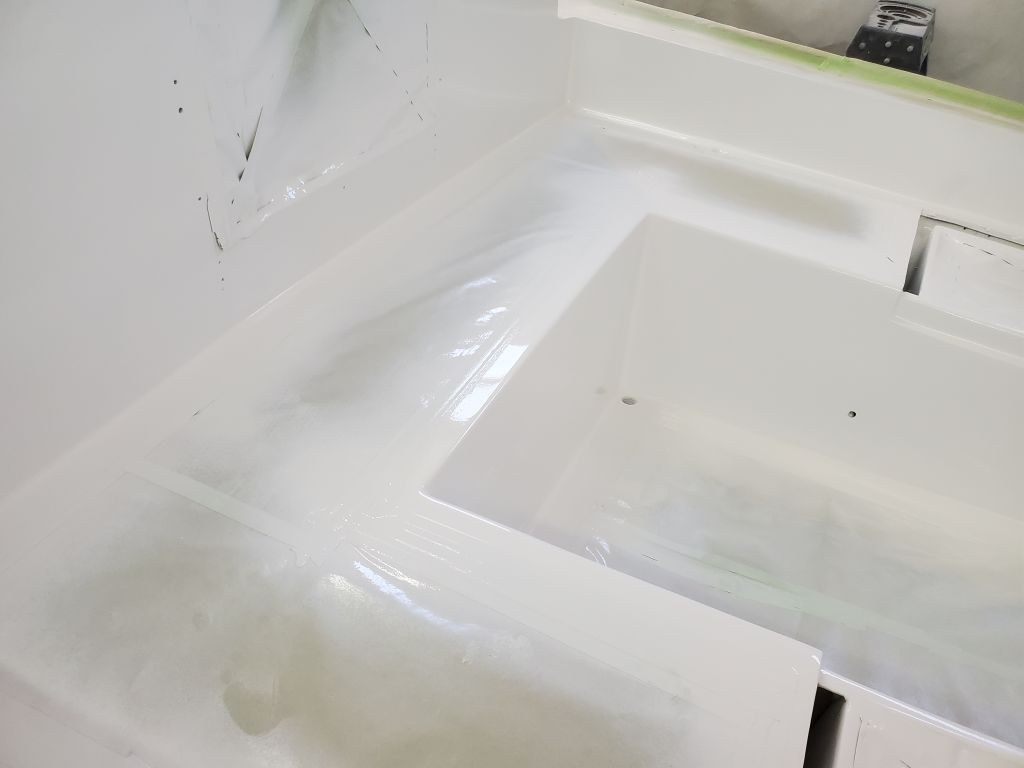
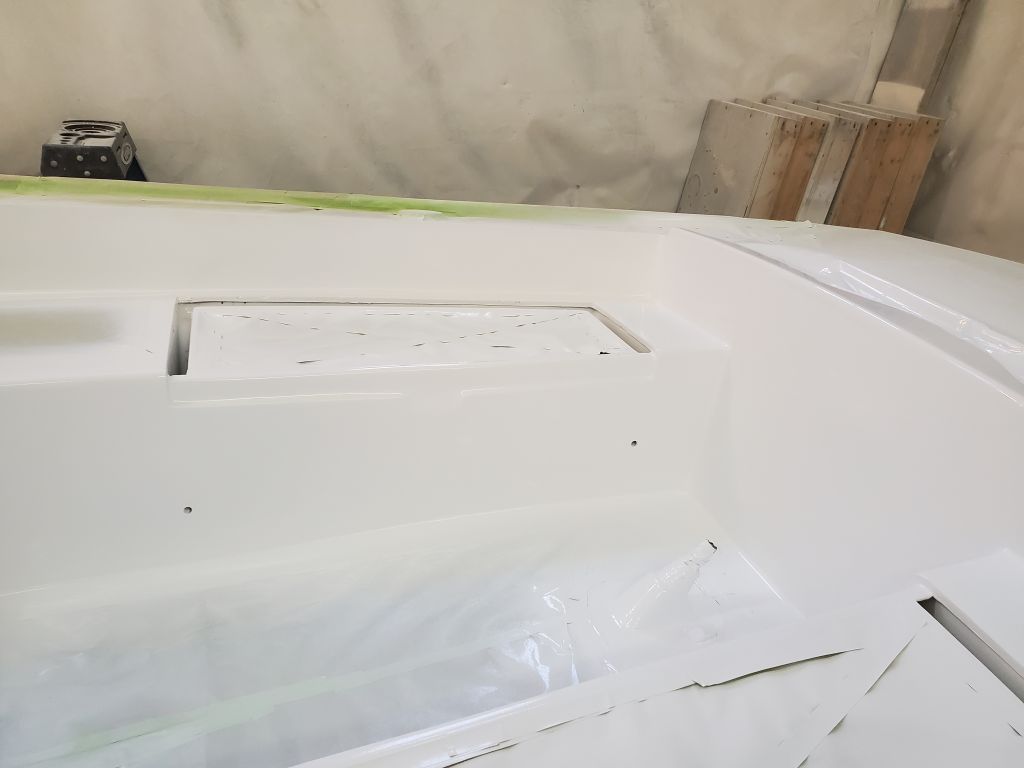
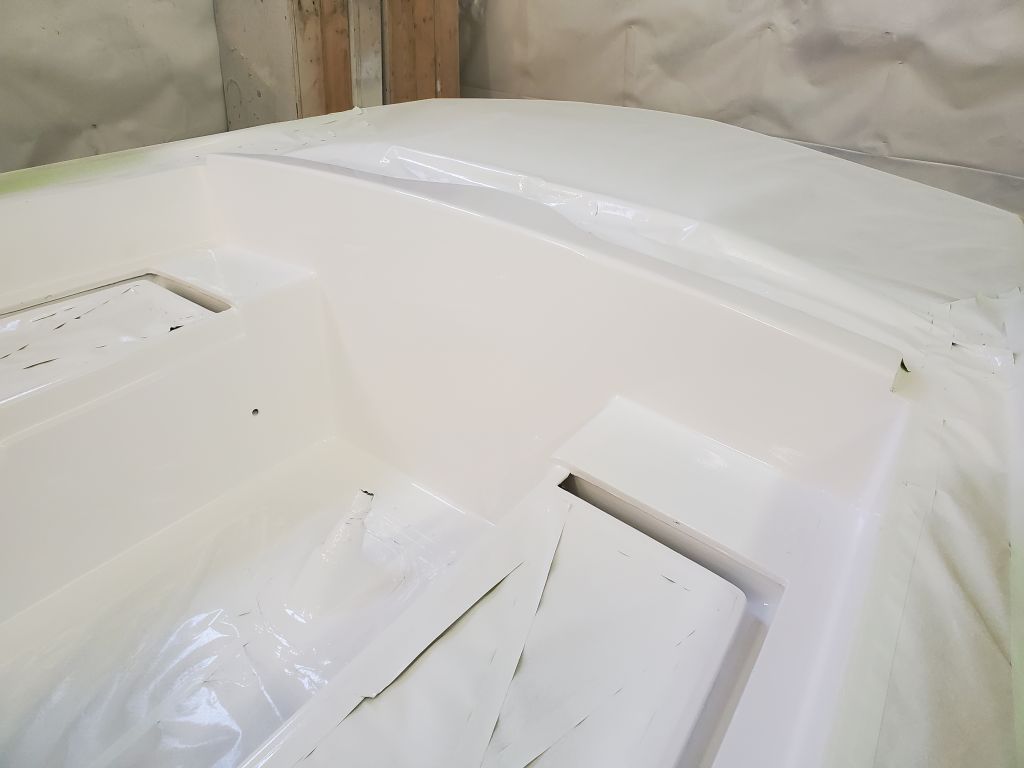
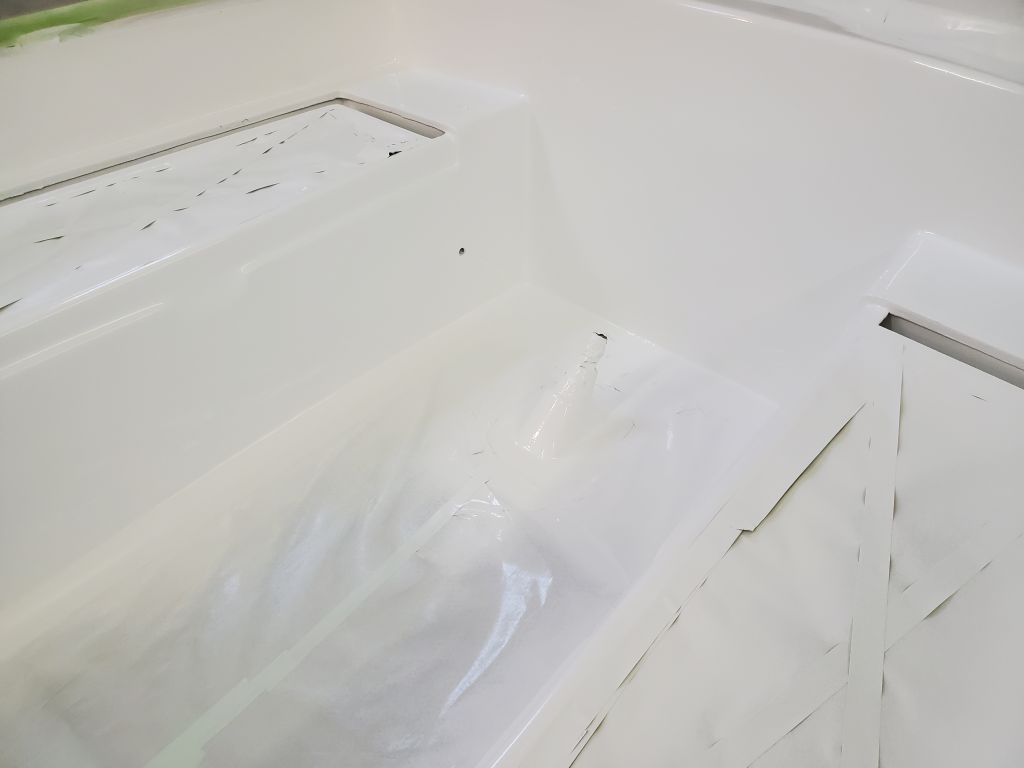
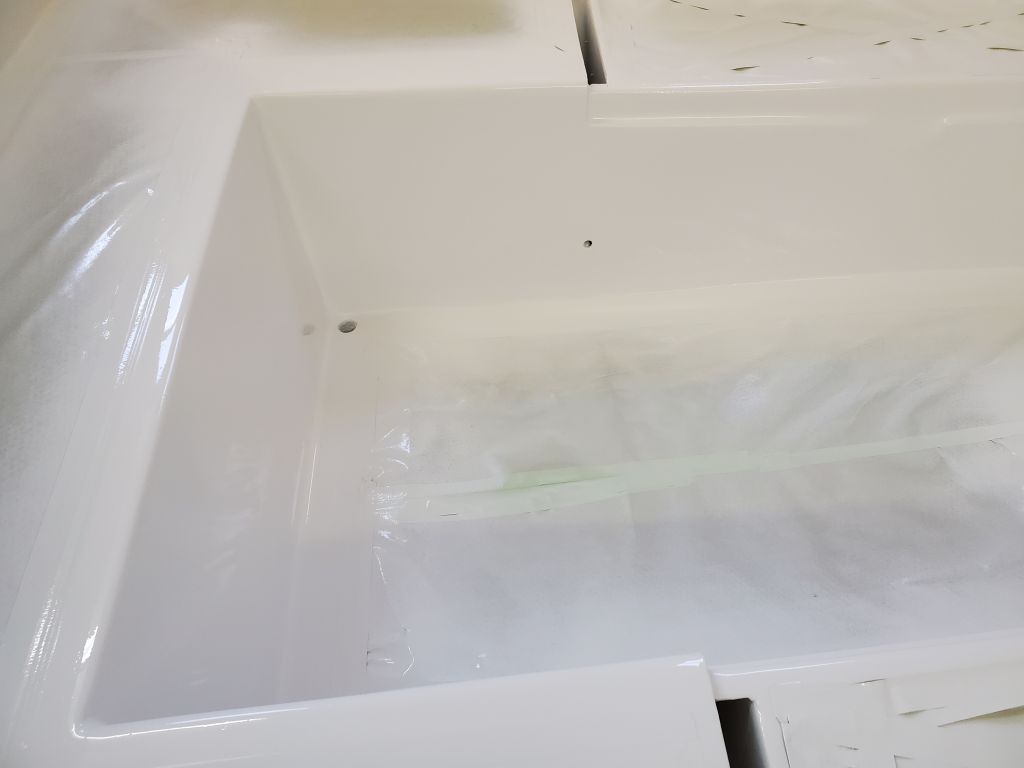
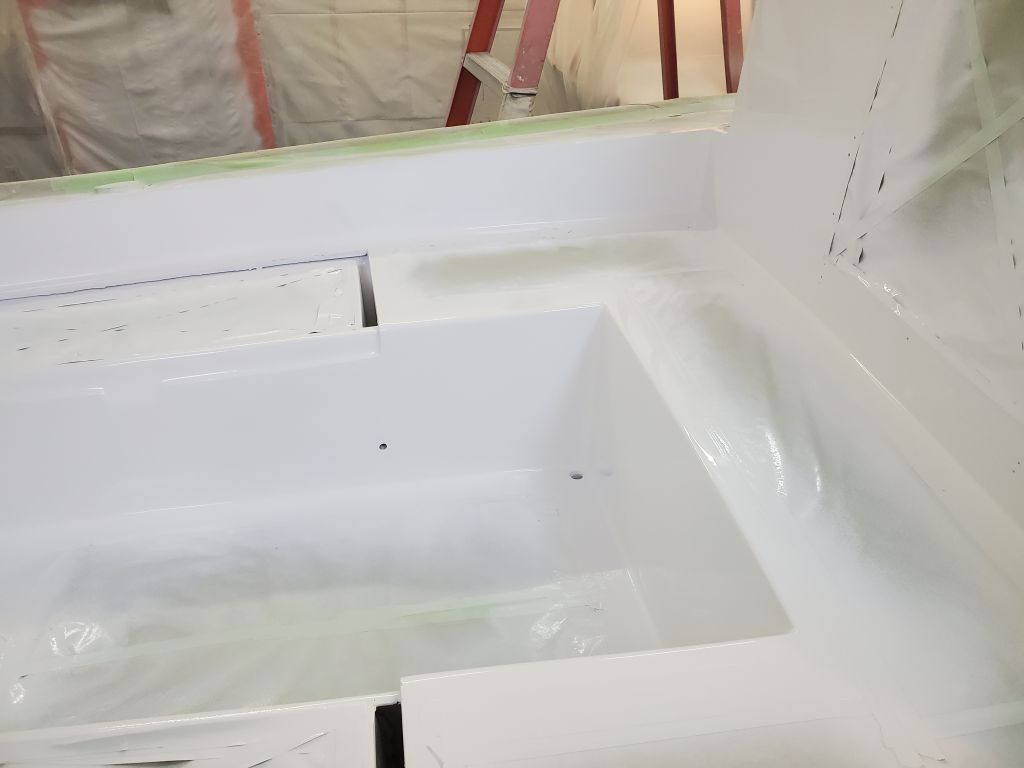
Now that the primer had had sufficient cure time overnight to allow additional masking, I started by laying out and masking the eventual nonskid areas in the cockpit, covering them to prevent overspray from the gloss topcoat.  I marked off my habitual 1-1/2″ wide borders around the cockpit seats and sole, then masked to the lines, rounding all the corners, and covered the field areas with paper and tape as needed.

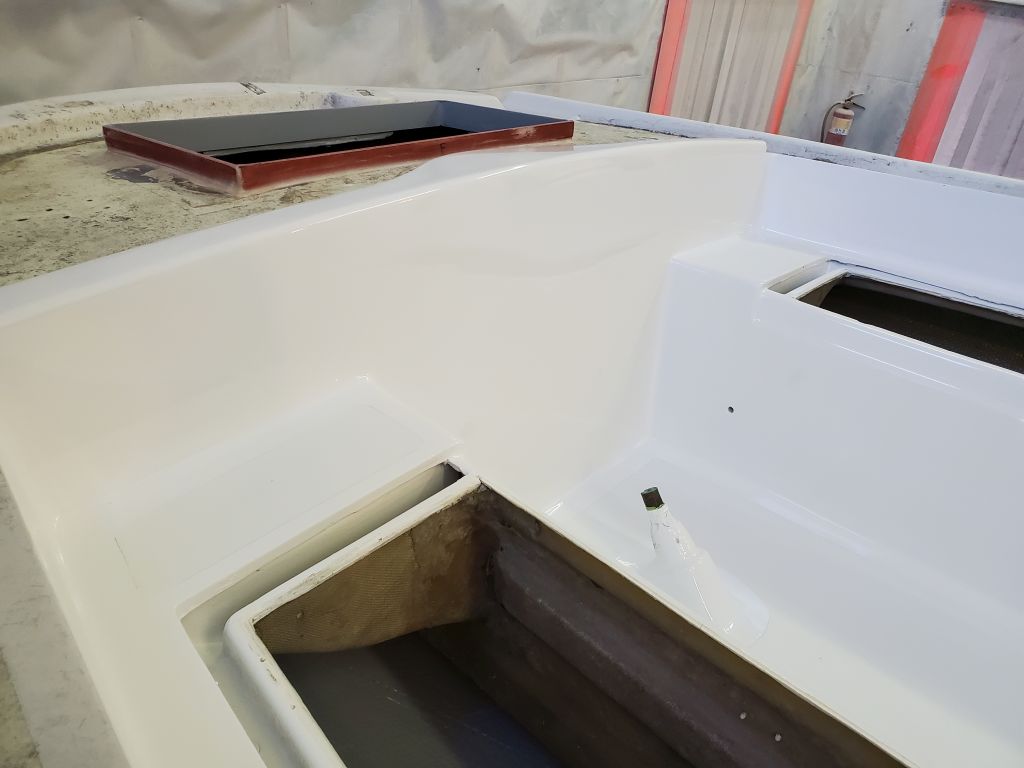
With the masking complete, I cleaned the cockpit once more, this time with the special wipe-down solvent to remove lingering dust and contaminants from the surface, and tacked off thereafter before applying three sprayed coats of snow white gloss topcoat to the cockpit well, seating areas, and cabin bulkheads.

Total time billed on this job today:  3 hours

0600 Weather Observation:  45°, foggy.  Forecast for the day:   Fog and rain,  56°

Lively Heels Phase 3-34

Thursday

After a light round of sanding with 320 grit paper by machine and hand, the deck boxes were ready for the next steps, which included some minor masking on the lids before gloss topcoats.  Since the primer hadn’t yet had the minimum 24 hours to cure before masking atop the fresh paint, I completed all the setup I could for the work ahead, including a thorough cleanup of the shop and surrounding areas, then worked on other things during the remainder of the day.

Total time billed on this job today:  1 hour 

0600 Weather Observation:  44°, foggy.  Forecast for the day:   Mostly cloudy, 56°

Lyra 46

Thursday

I spent the first part of the day sanding the cockpit once more, this time with 320 grit paper by machine and hand as required to ready the primer for the next steps.

Afterwards, I cleaned the boat and shop thoroughly and, since it was too soon to start masking over the primer for the topcoat (the last coat of primer had only been applied during mid-afternoon the day before and required 24 hours minimum cure time), I laid out and prepared masking materials for next time, when I hoped to mask, then apply topcoat to, the cockpit.

Total time billed on this job today:  2.75 hours

0600 Weather Observation:  44°, foggy.  Forecast for the day:   Mostly cloudy,  56°

Lively Heels Phase 3-33

Wednesday

The deck boxes required another round of light sanding and cleanup following the application of fine filler last time.

Afterwards, I applied three coats of epoxy-based finish primer to the boxes and lids.

Total time billed on this job today:  1.75 hours 

0600 Weather Observation:  39°, foggy.  Forecast for the day:   Mostly cloudy, 58°

Lyra 45

Wednesday

The cockpit was ready for another round of light sanding to smooth the fine filler from last time.

Afterwards, following the usual rounds of vacuuming, solvent wash, and other related preparations, I applied three coats of epoxy-based finish primer to the cockpit.

Total time billed on this job today:  4.25 hours

0600 Weather Observation:  39°, foggy.  Forecast for the day:   Mostly cloudy,  58°

Older posts Newer posts