
(page 39 of 165)

Holby 52

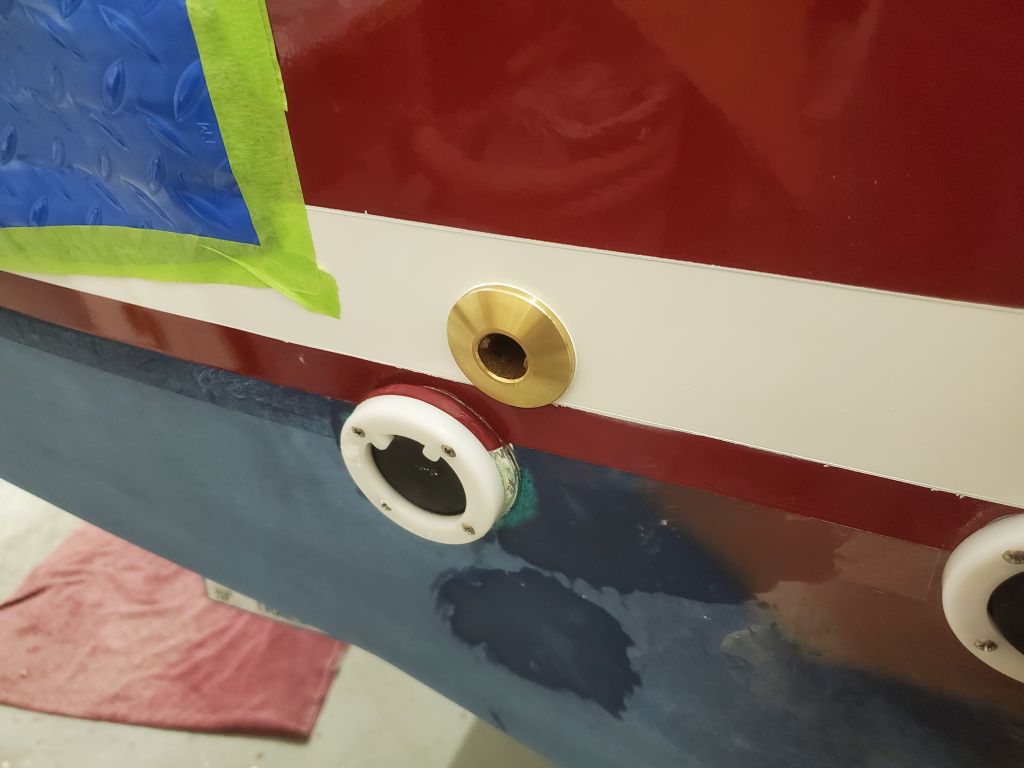
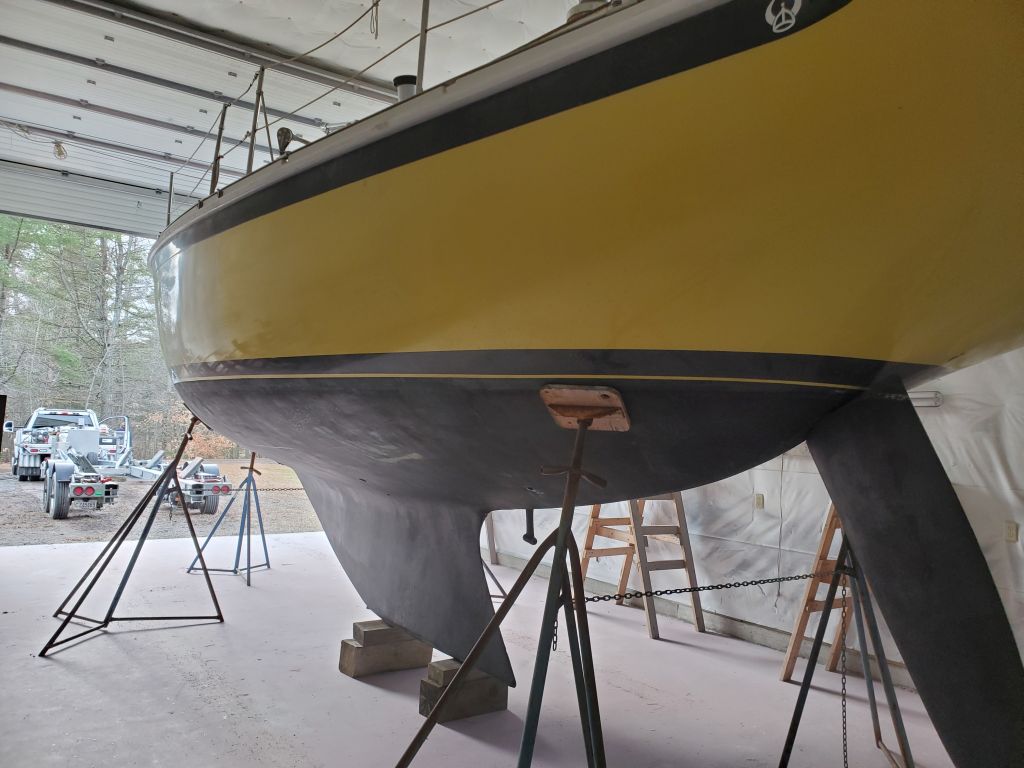
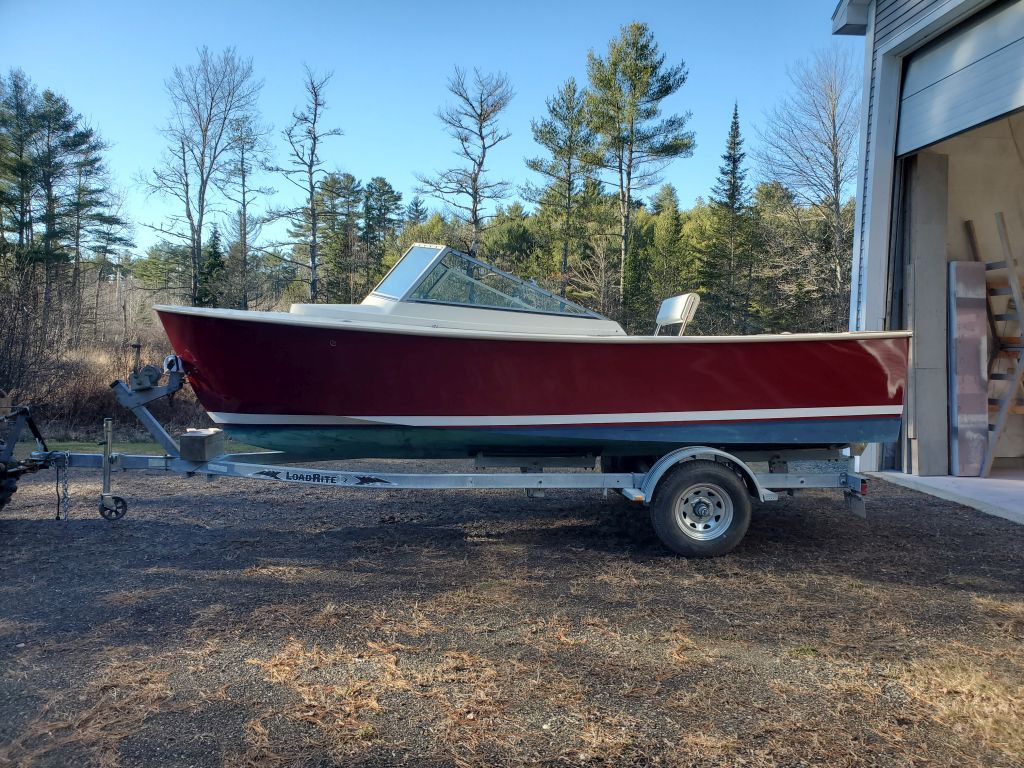
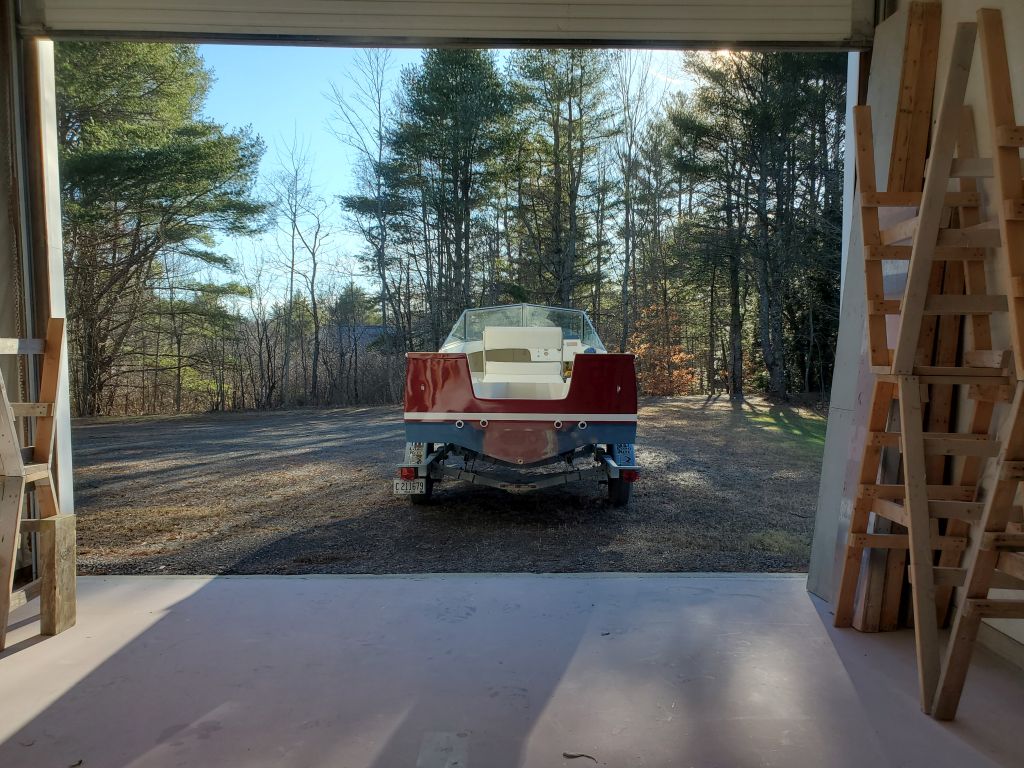
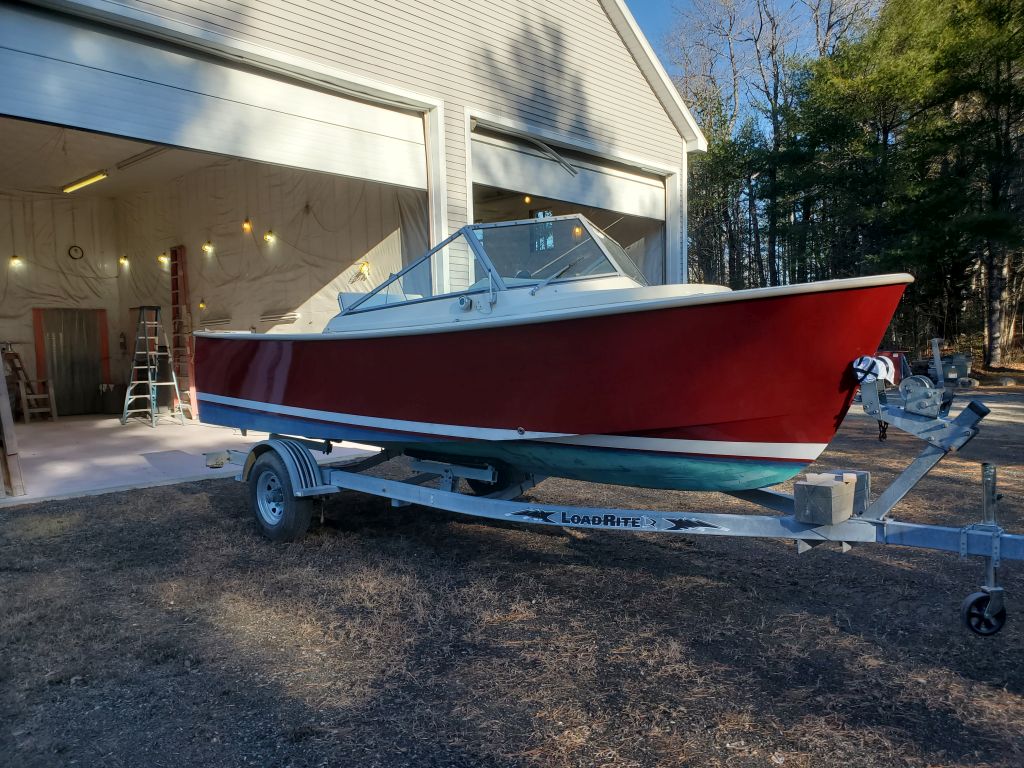
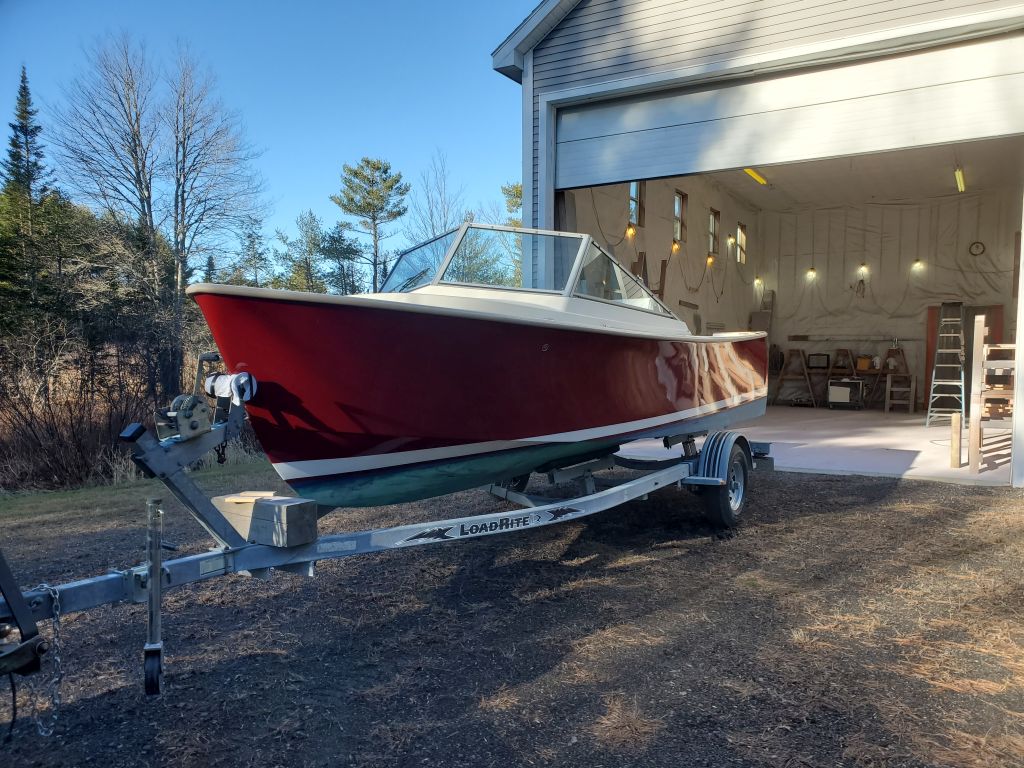
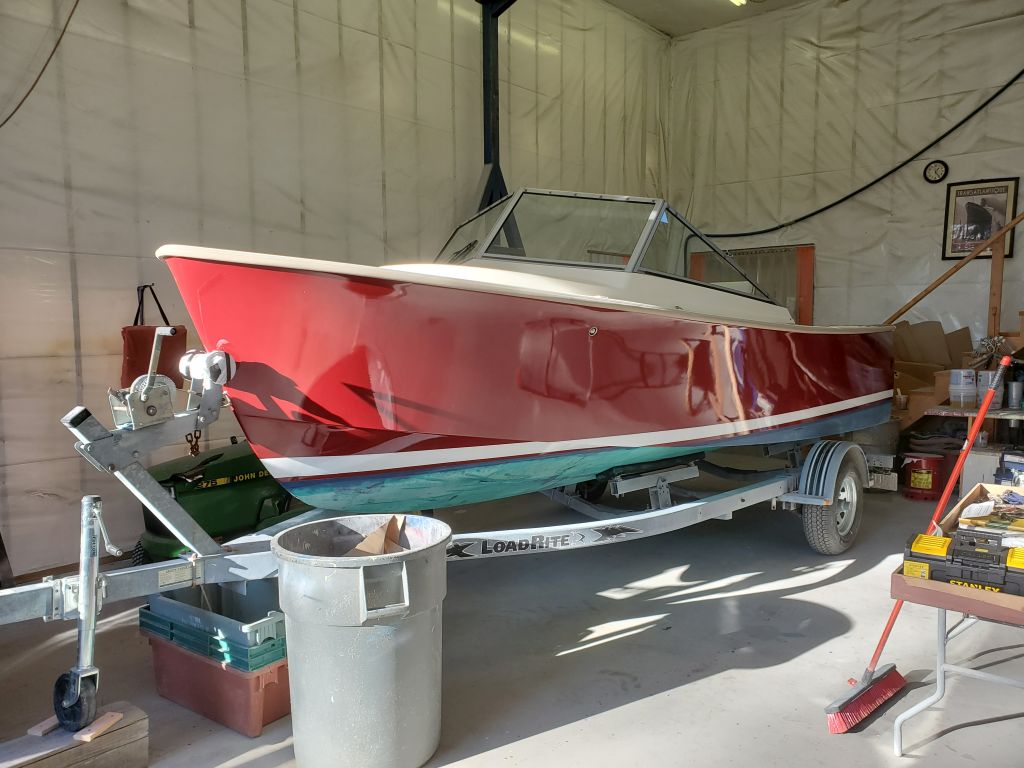
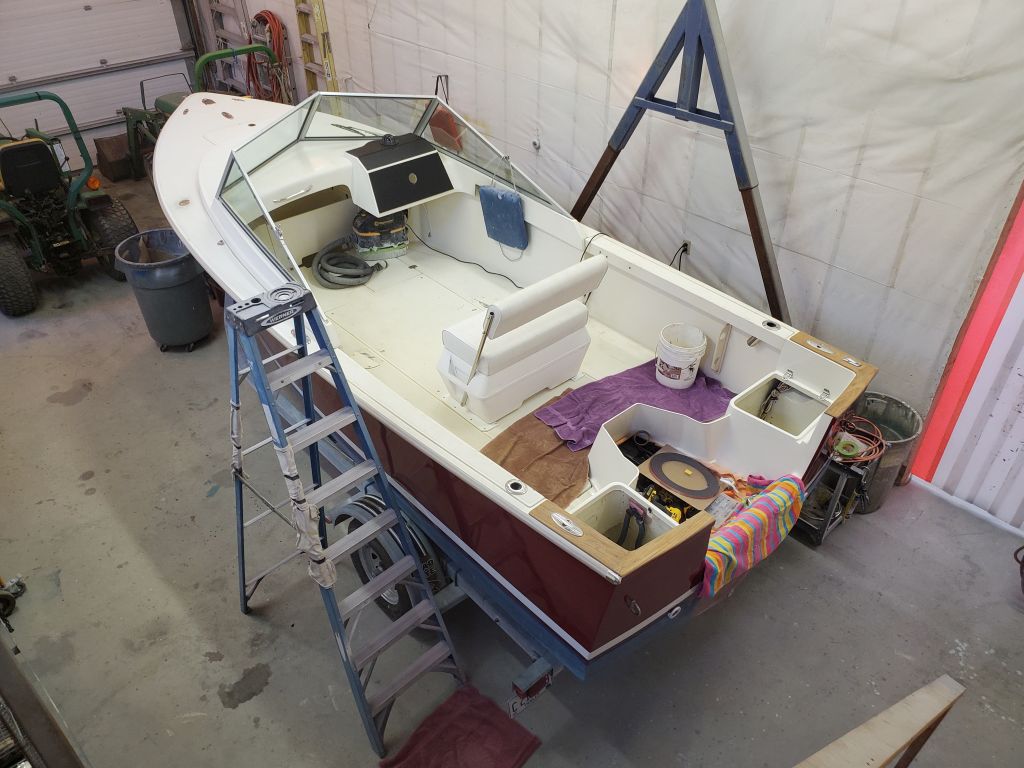
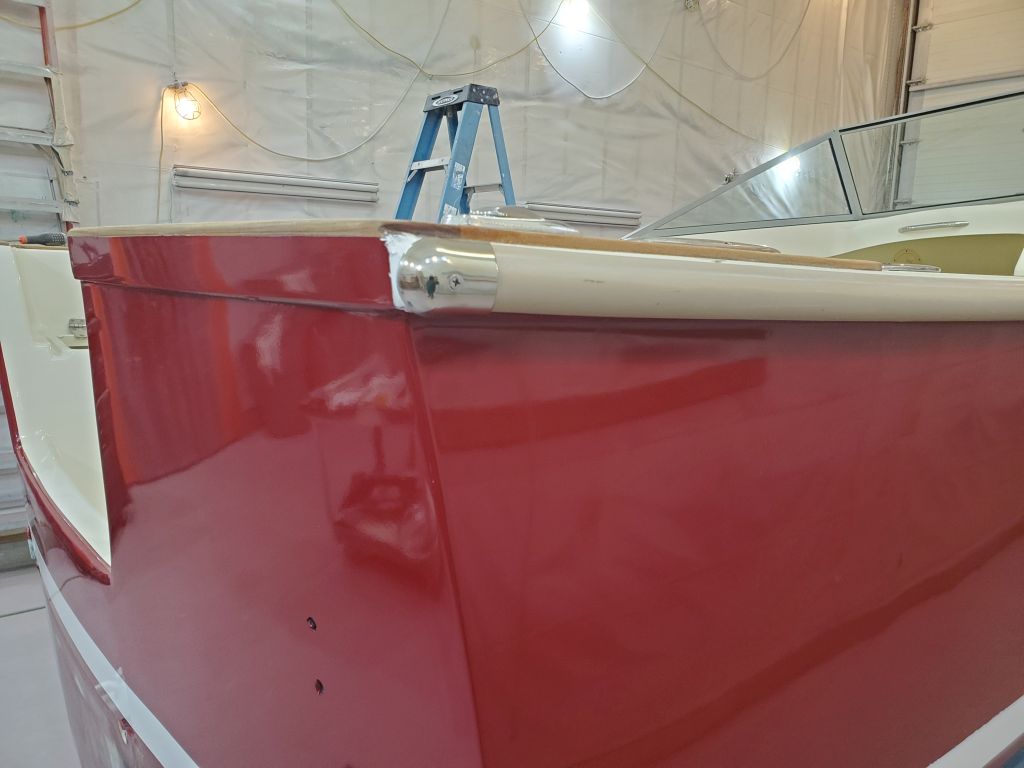
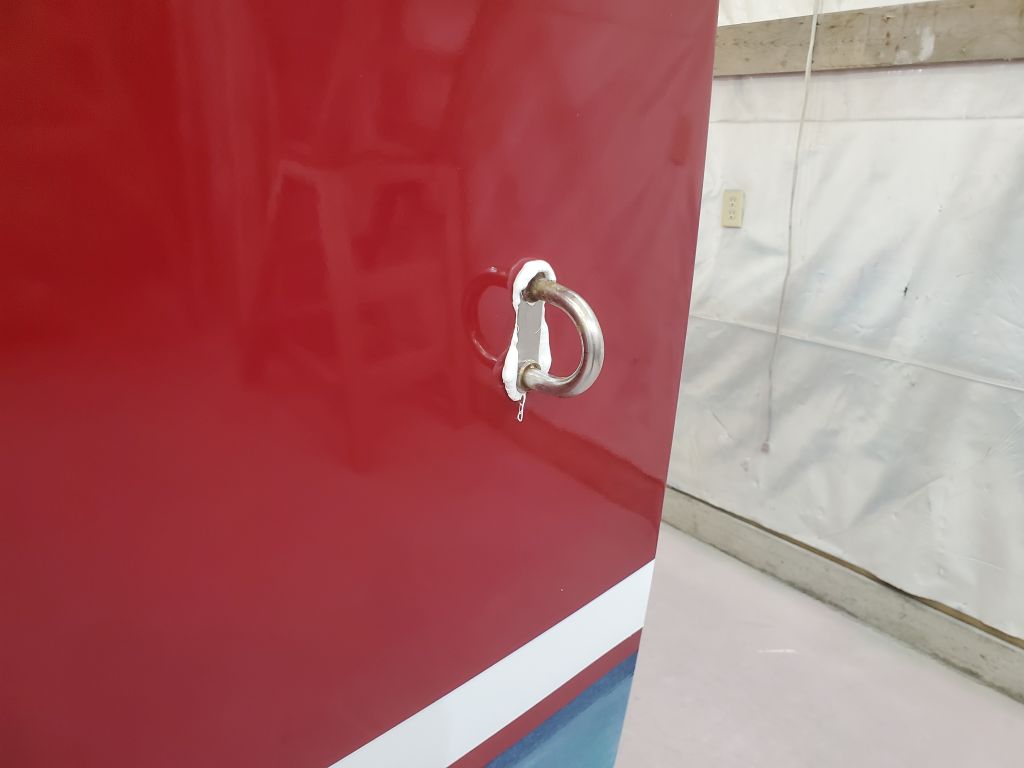
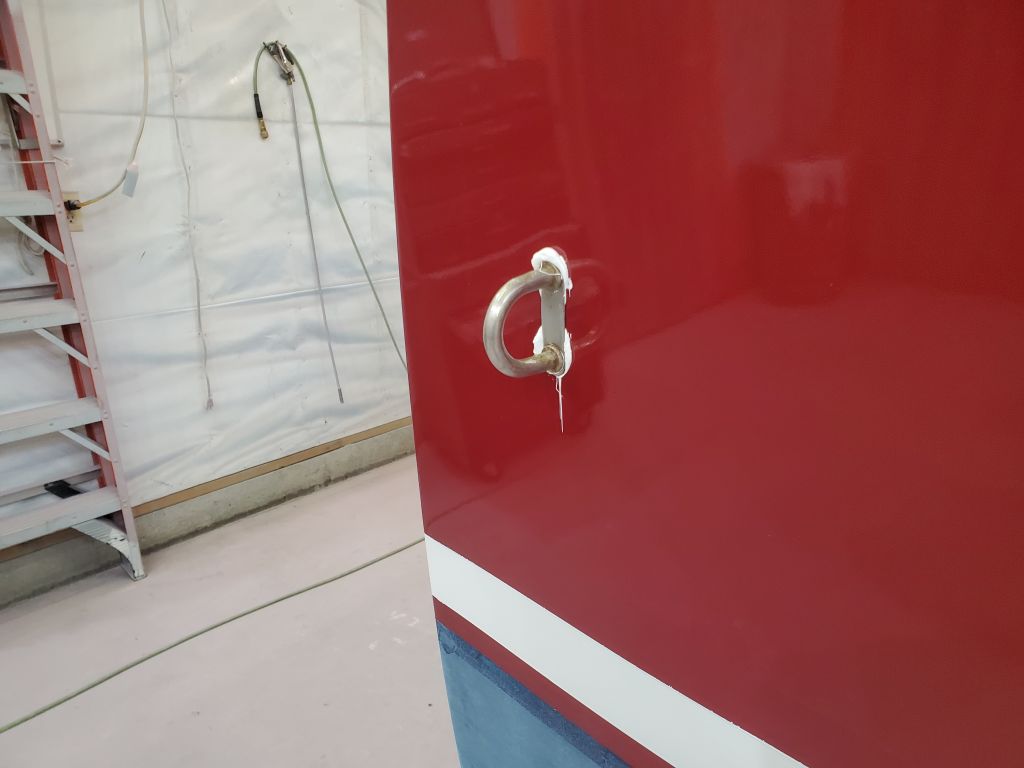
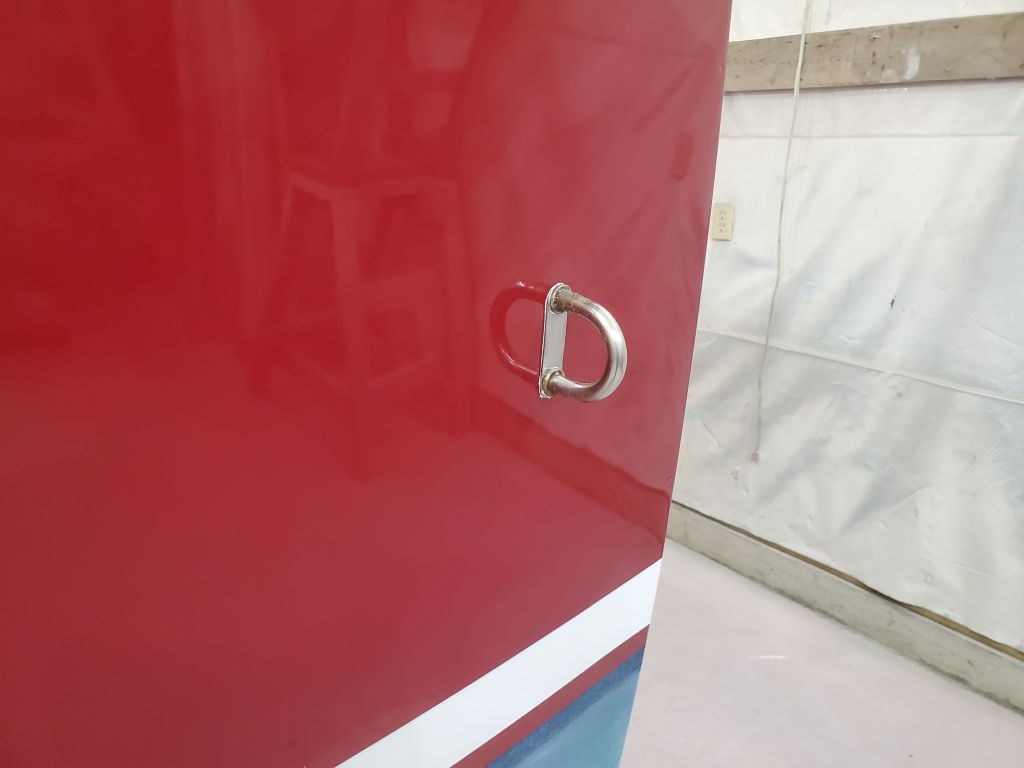
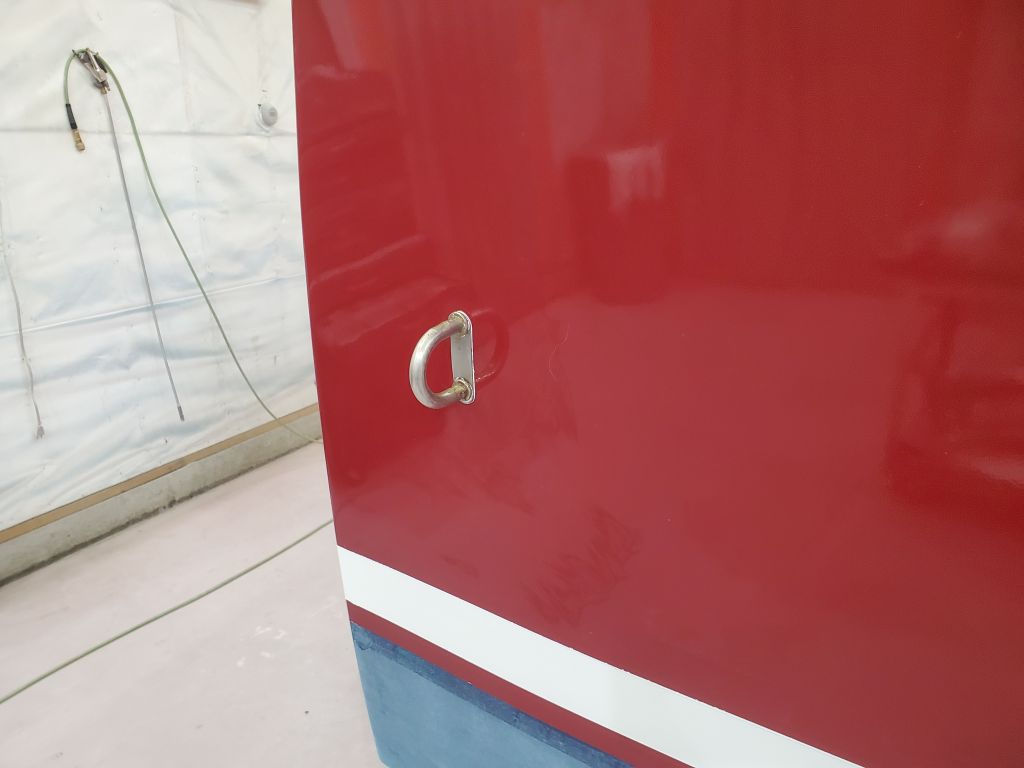
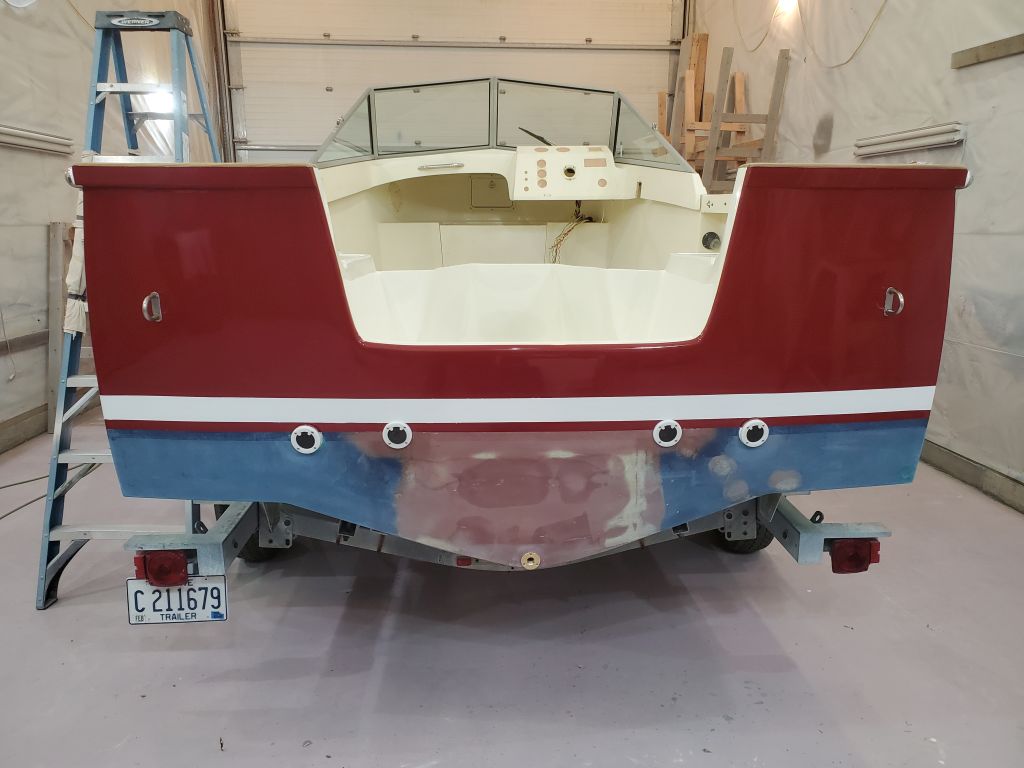
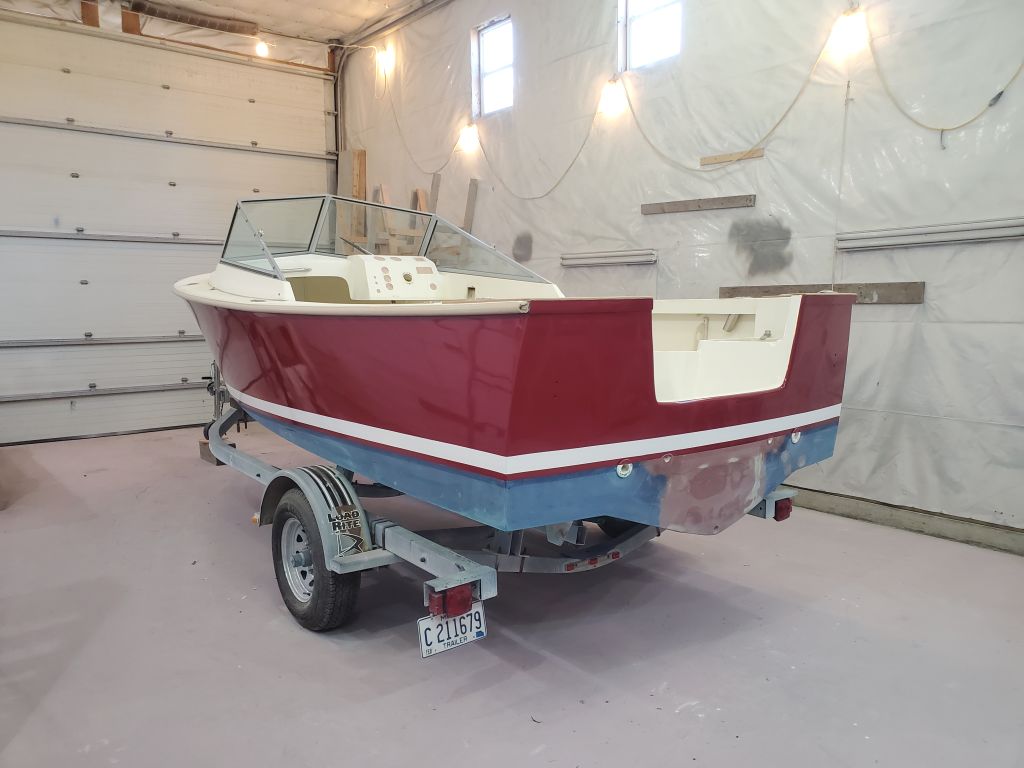
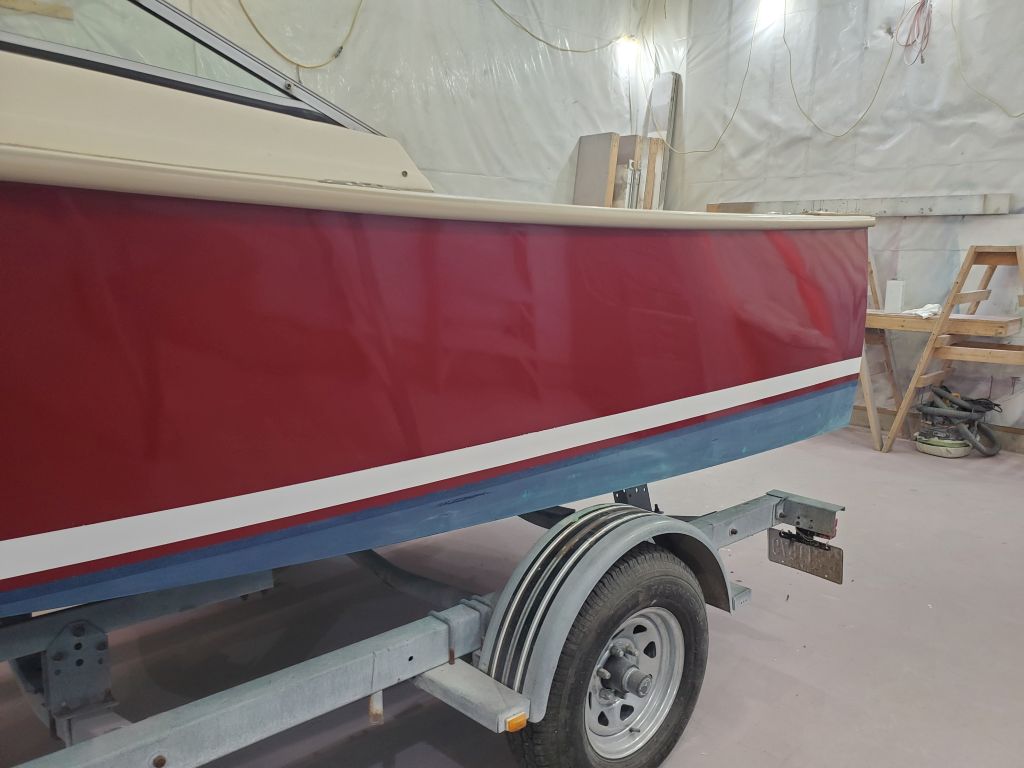
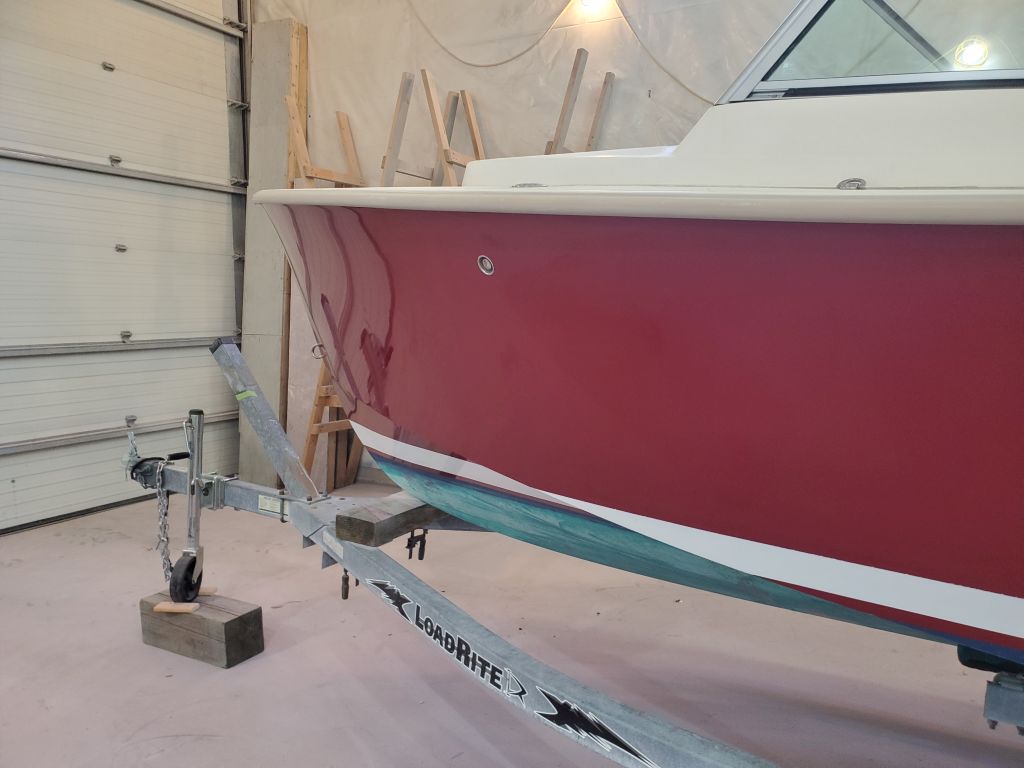
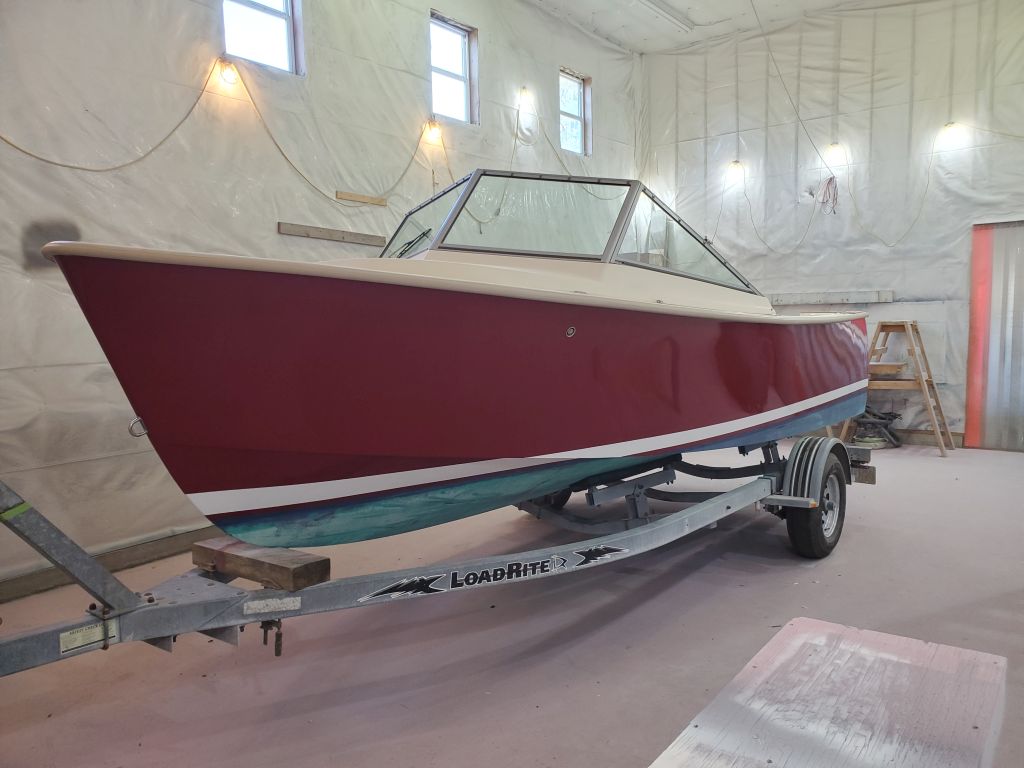
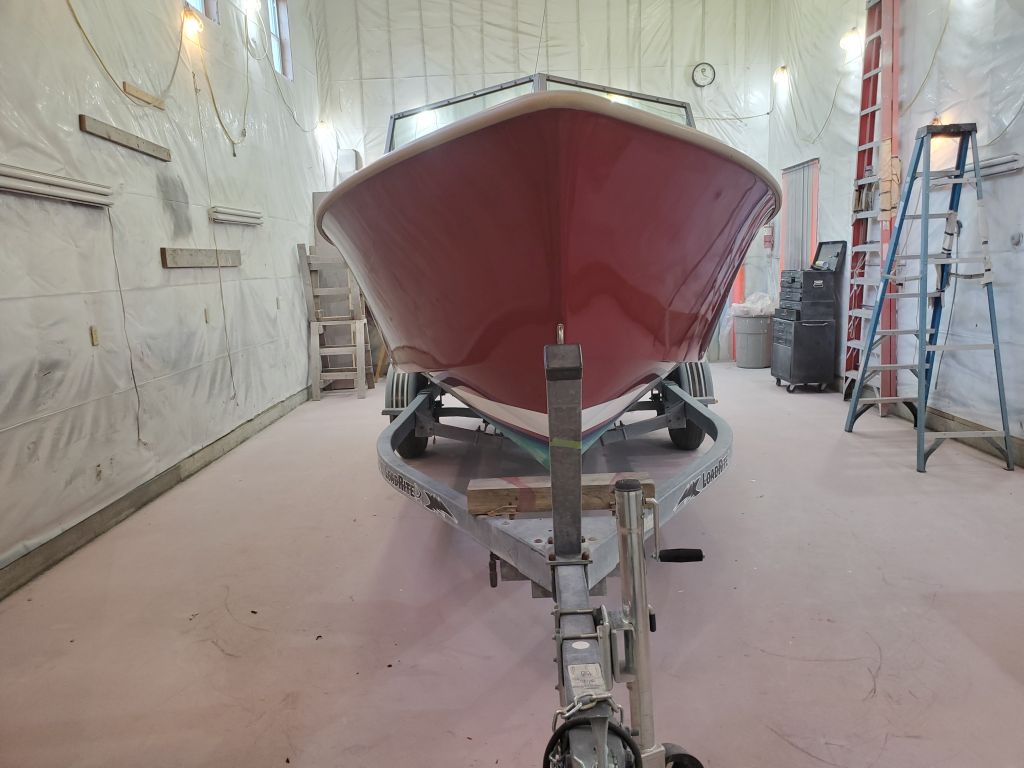
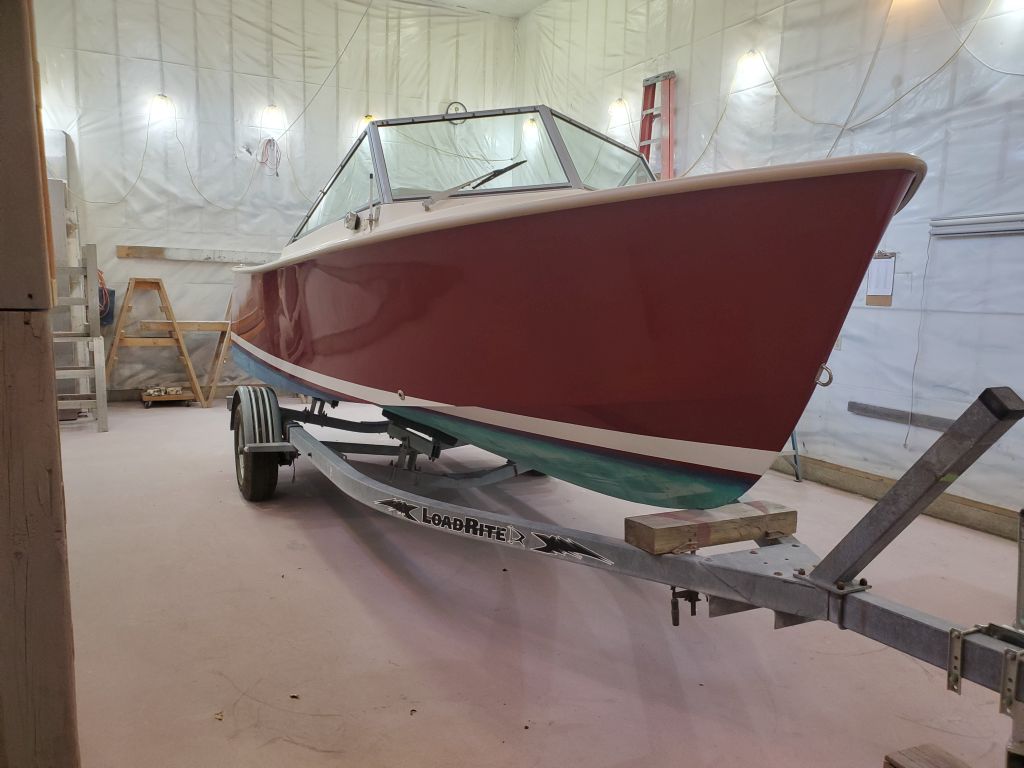
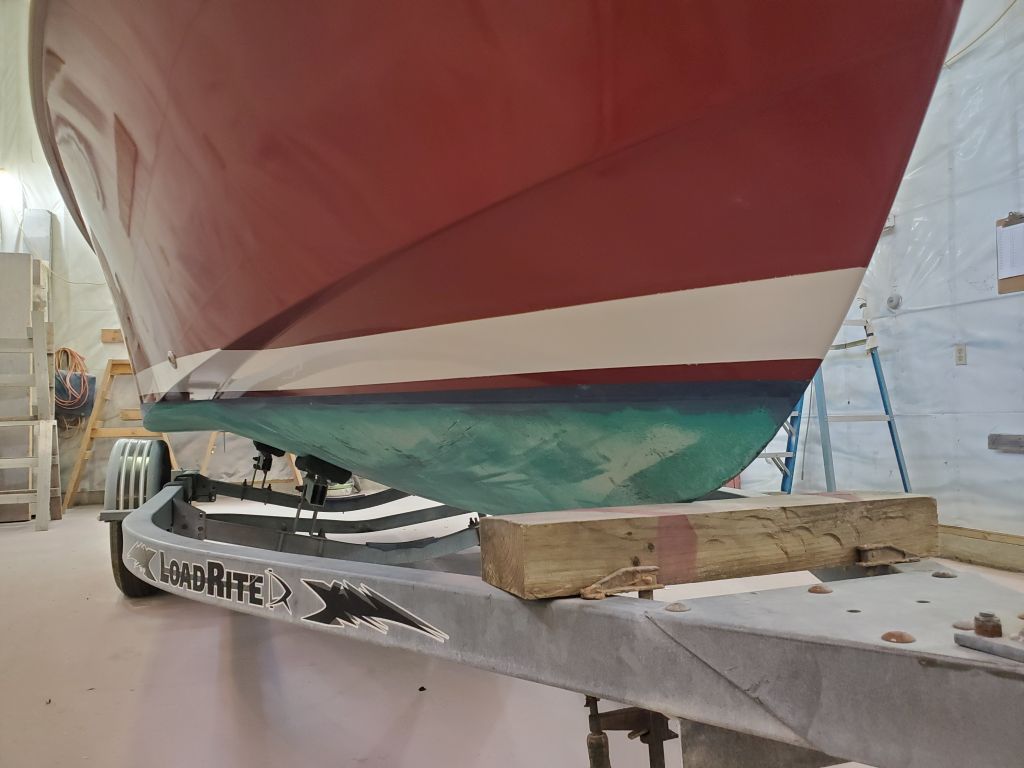
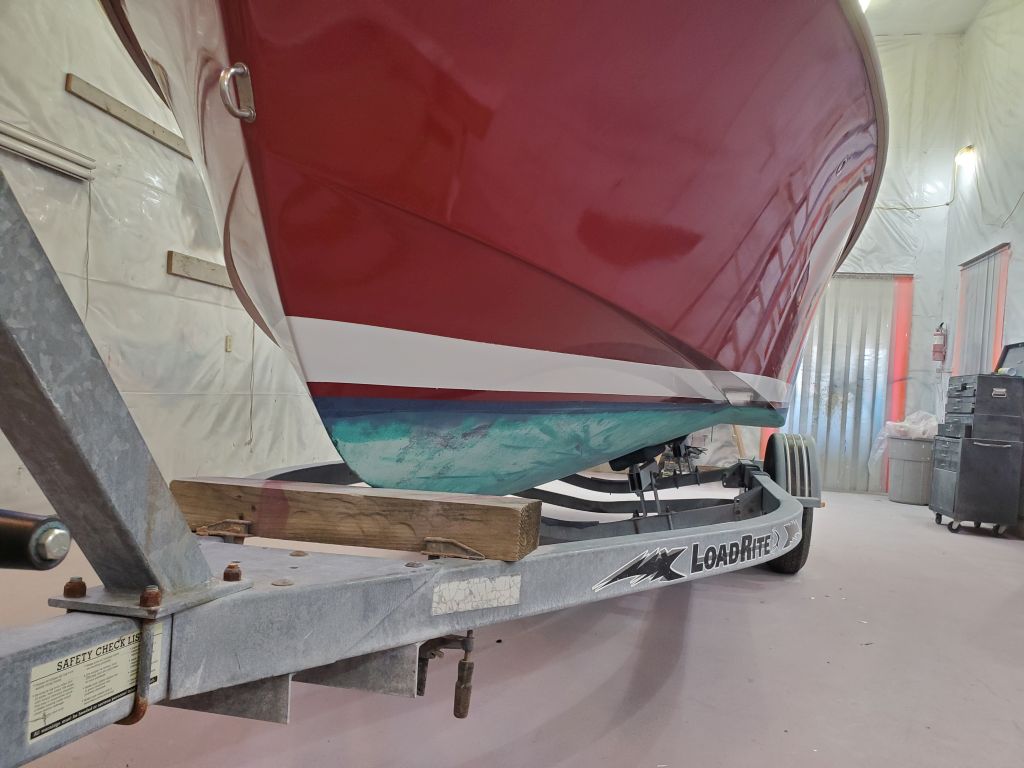
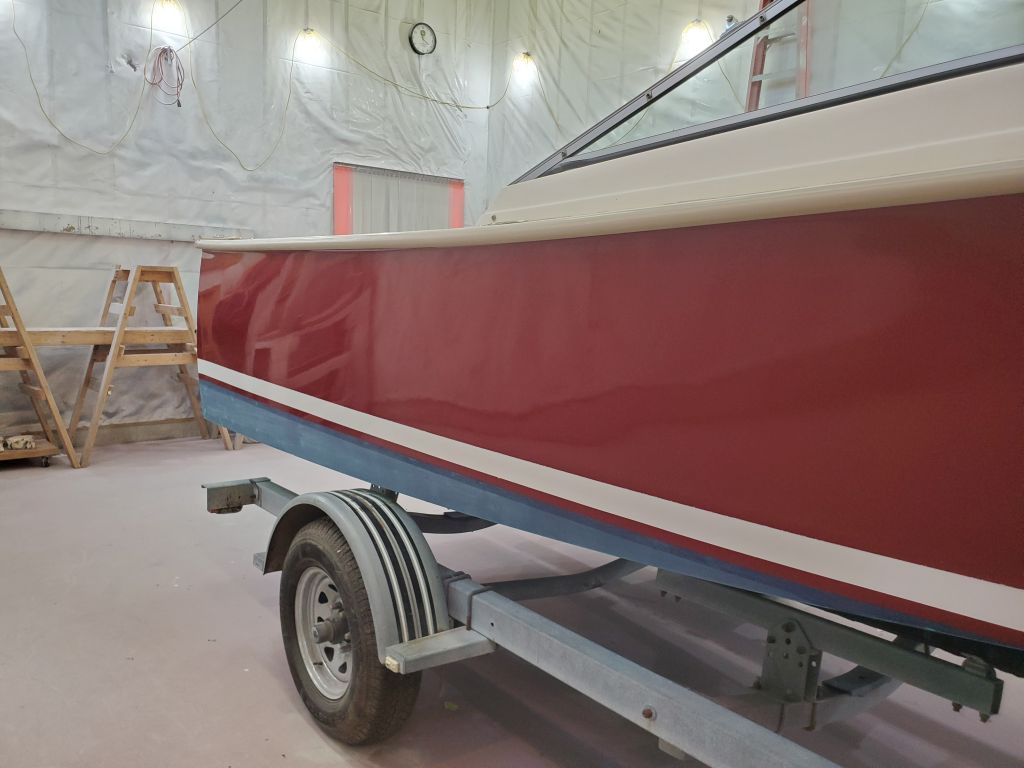
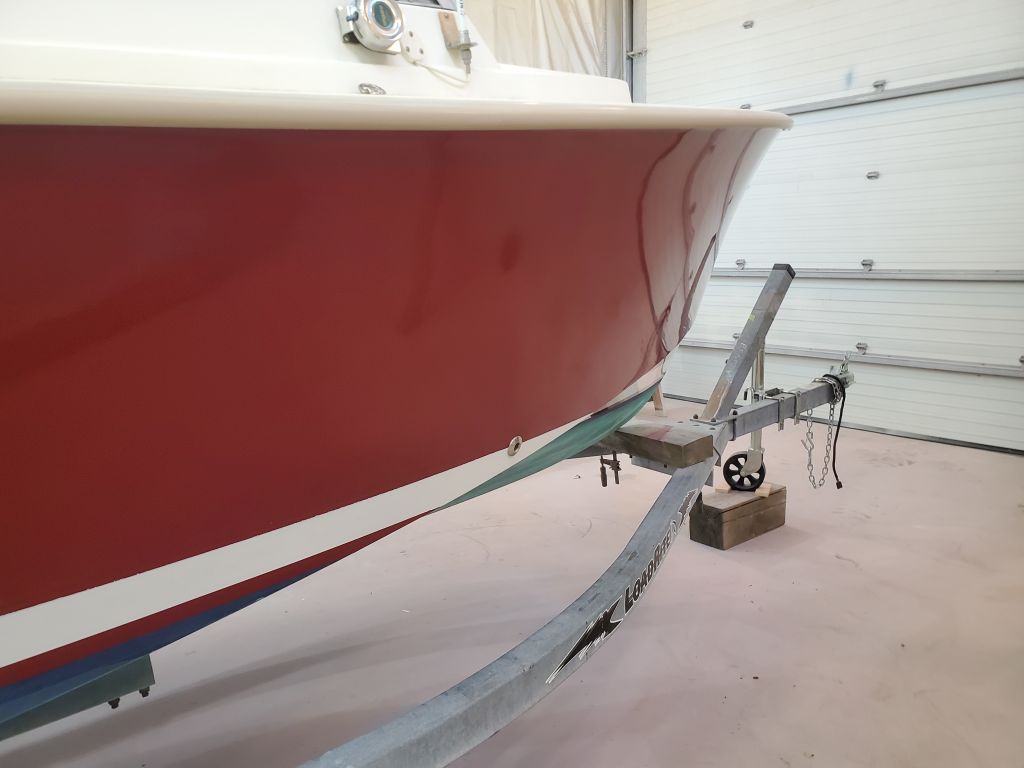
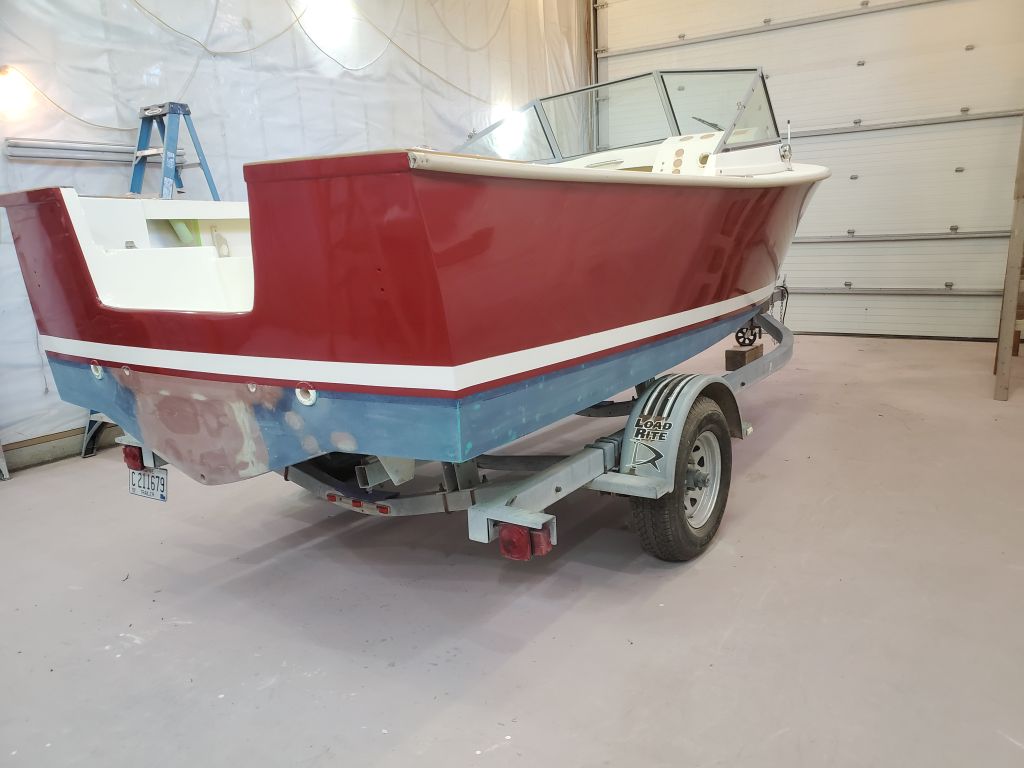
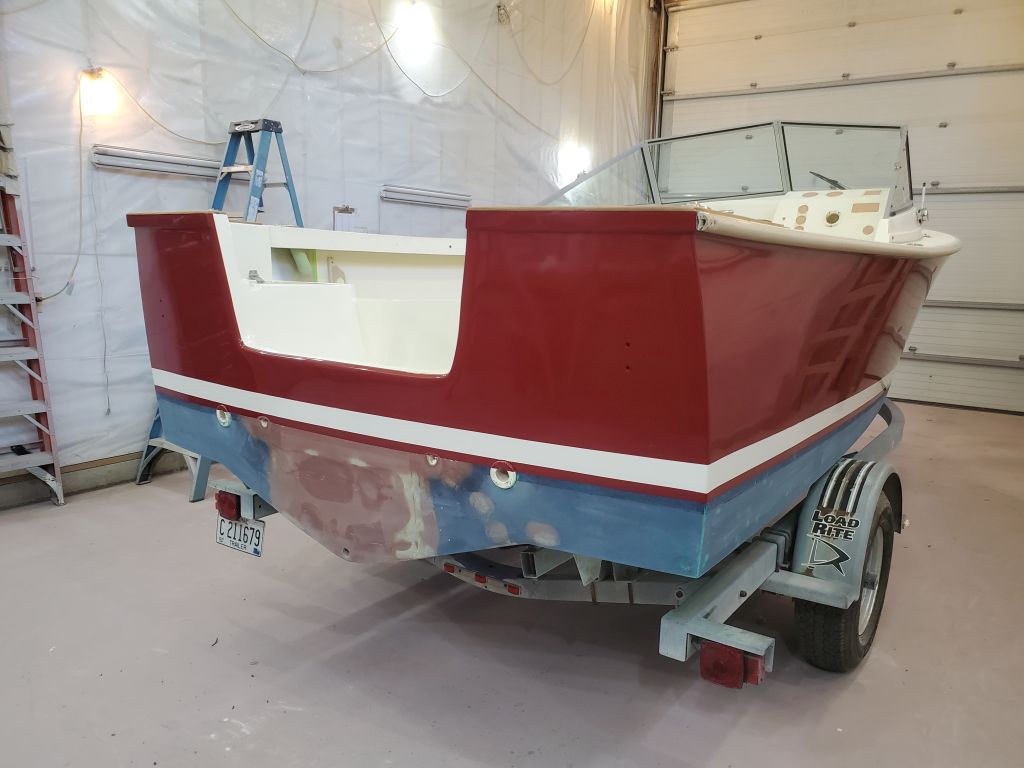
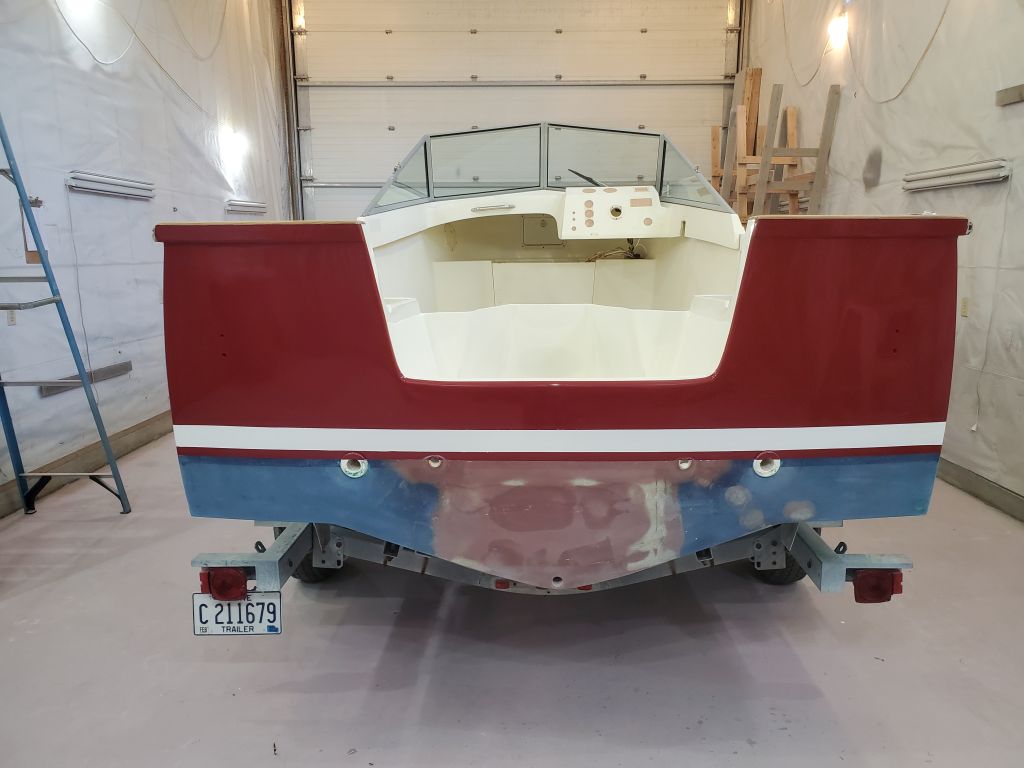
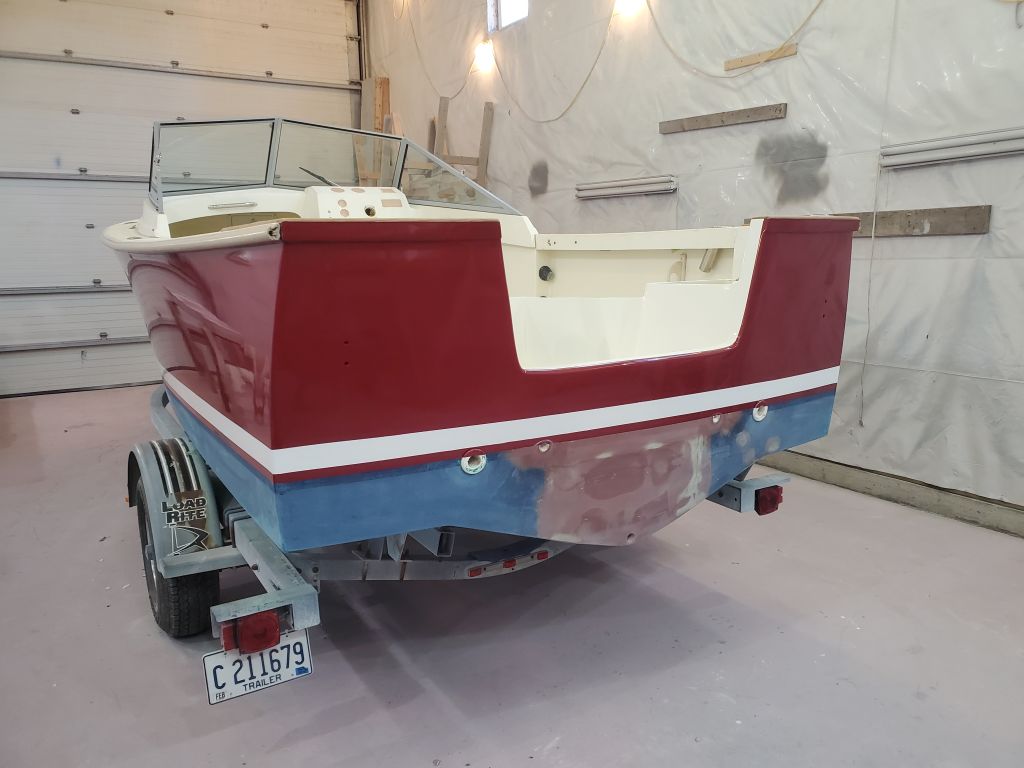
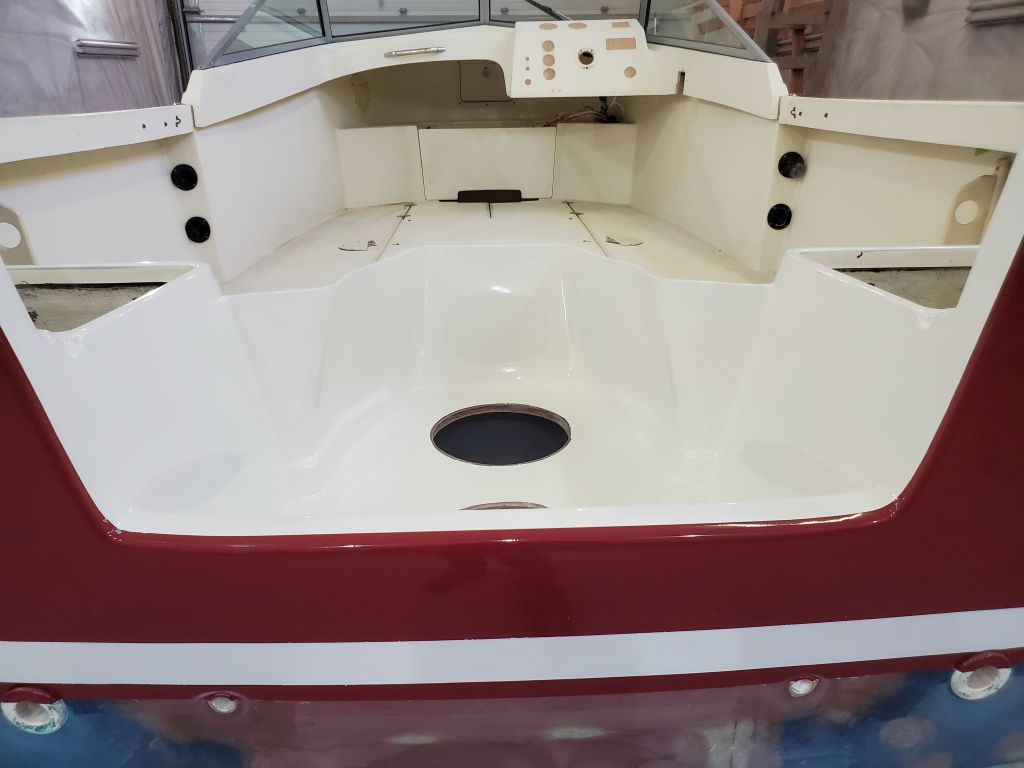
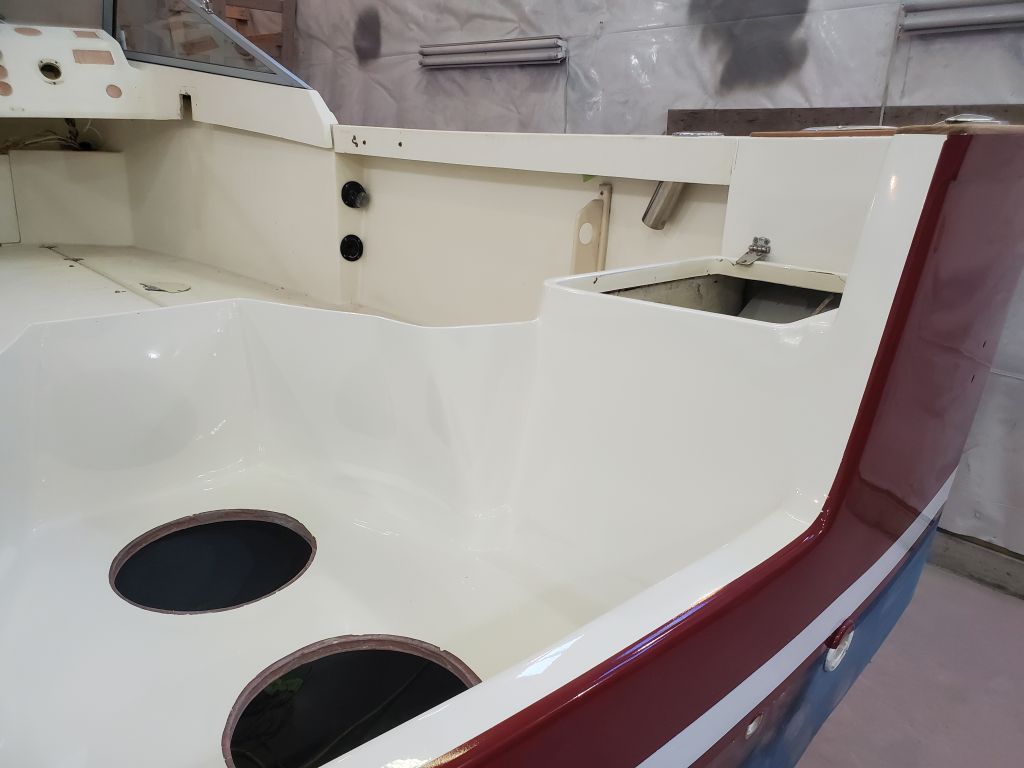
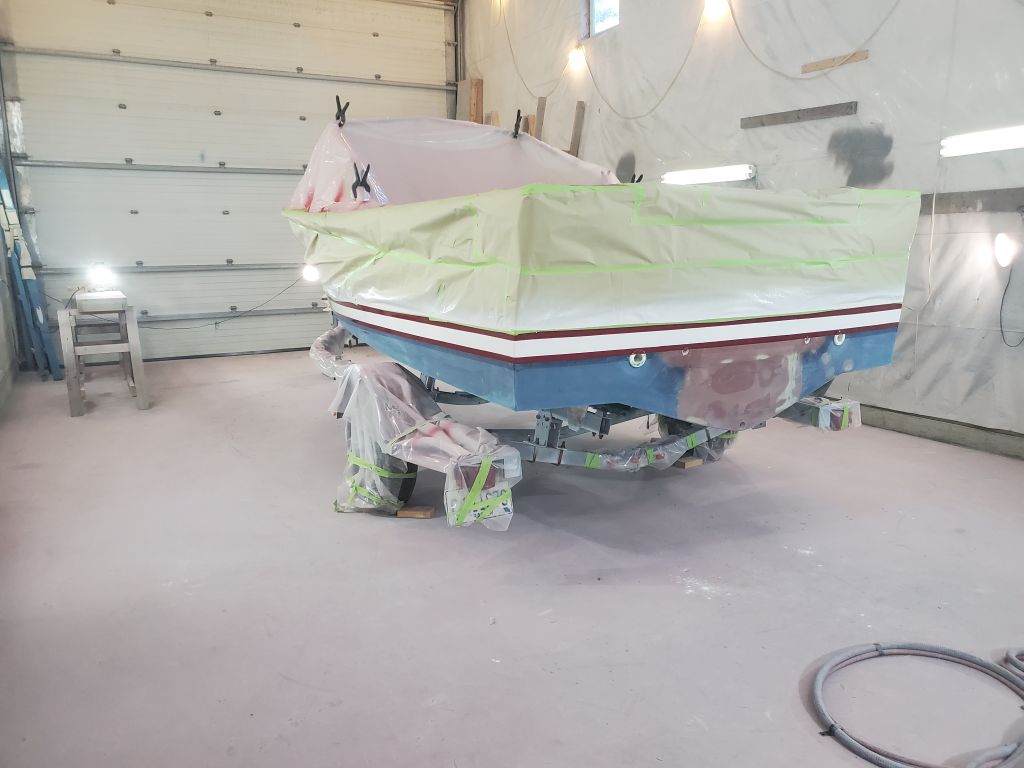
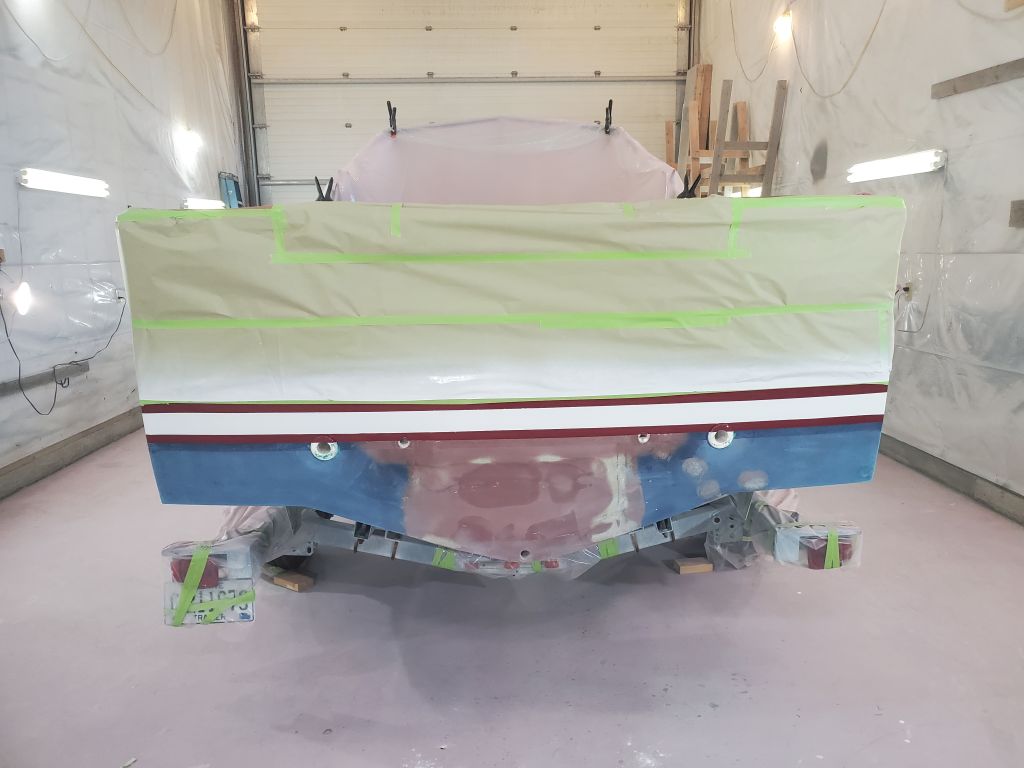
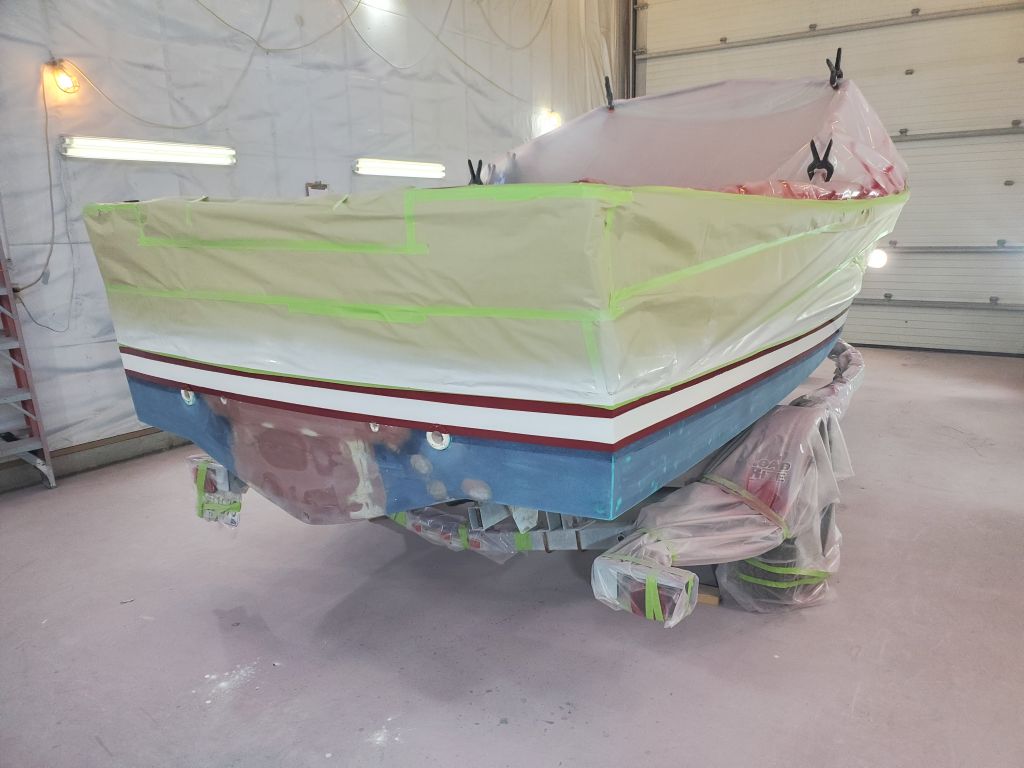
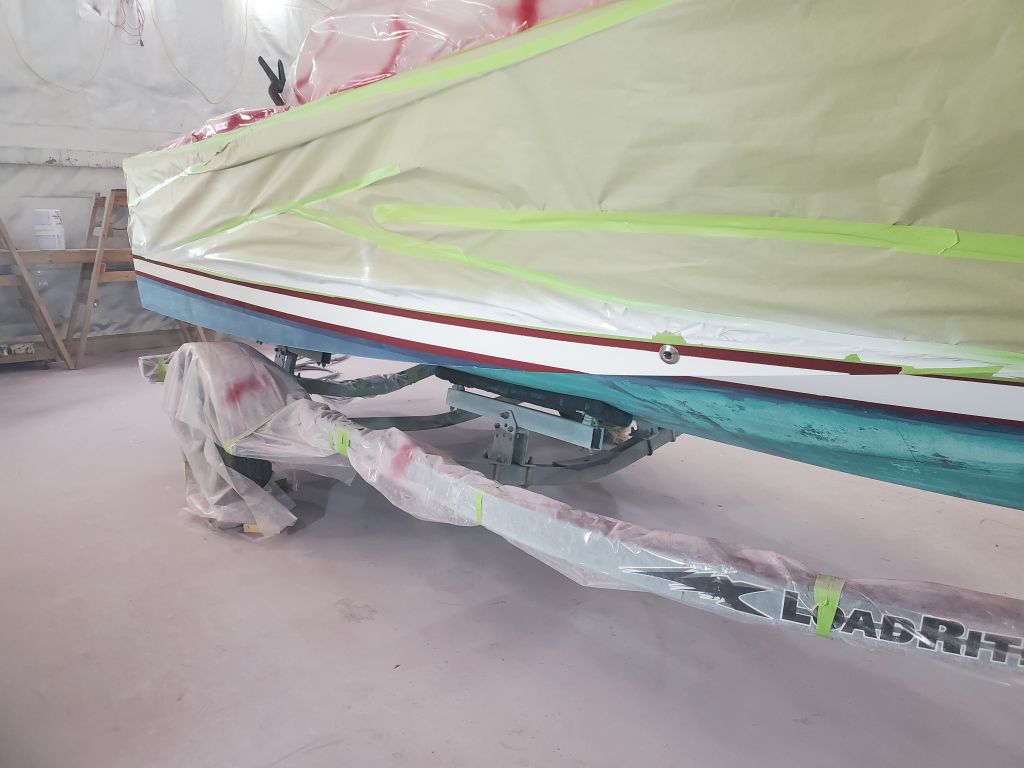
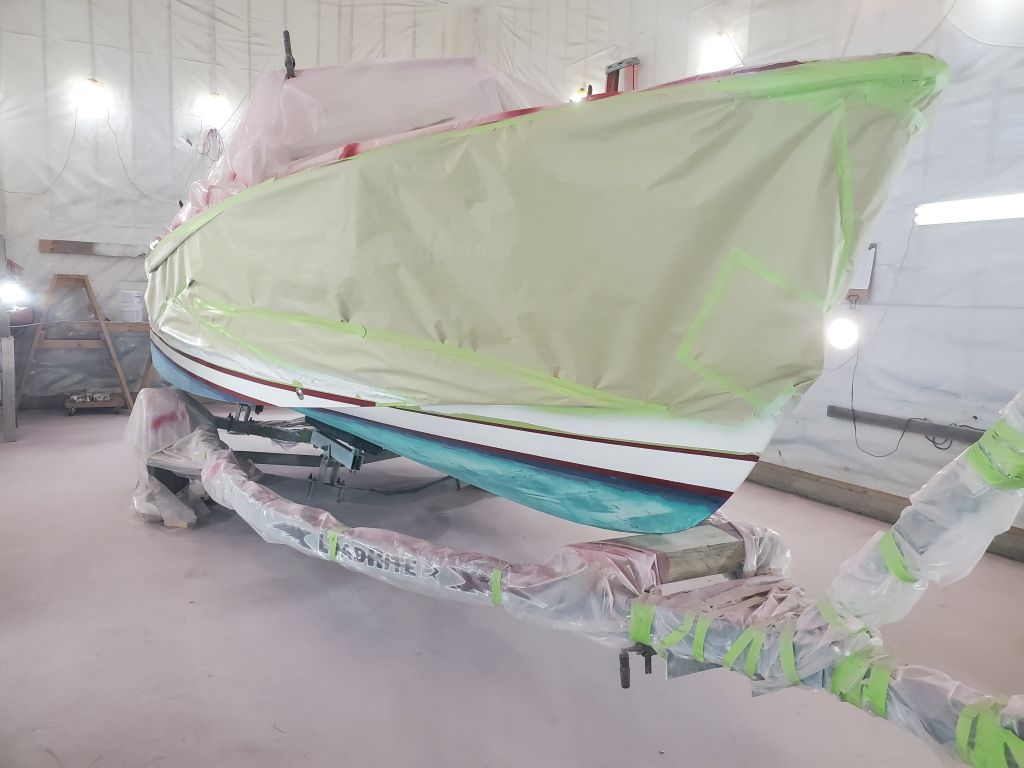
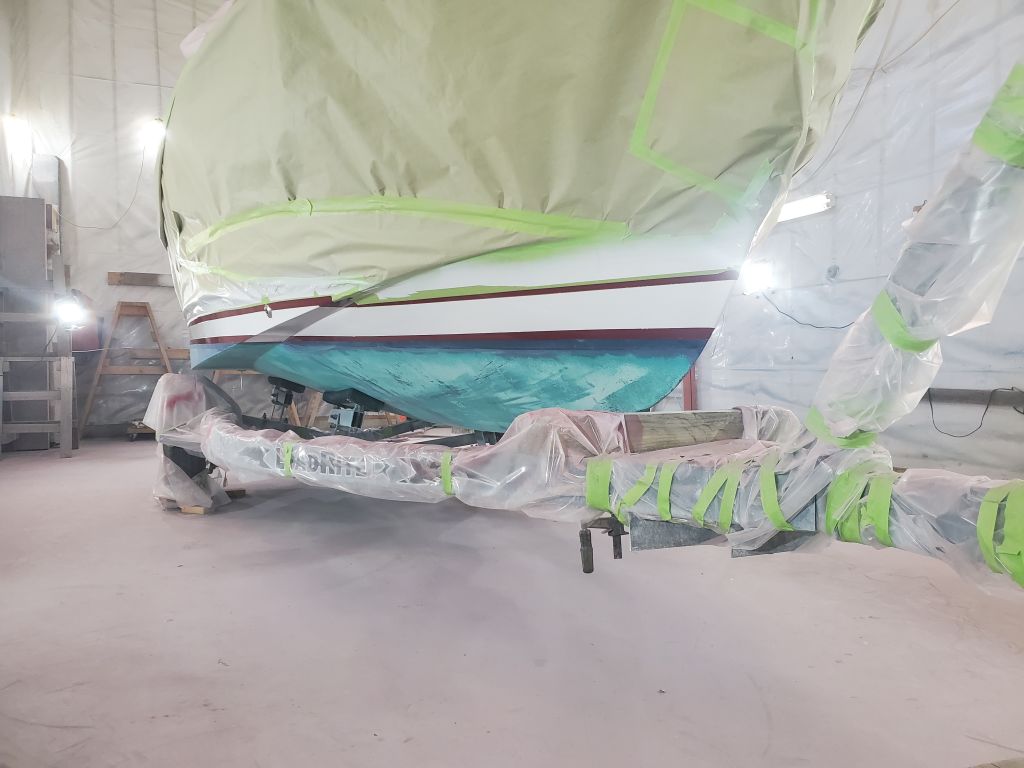
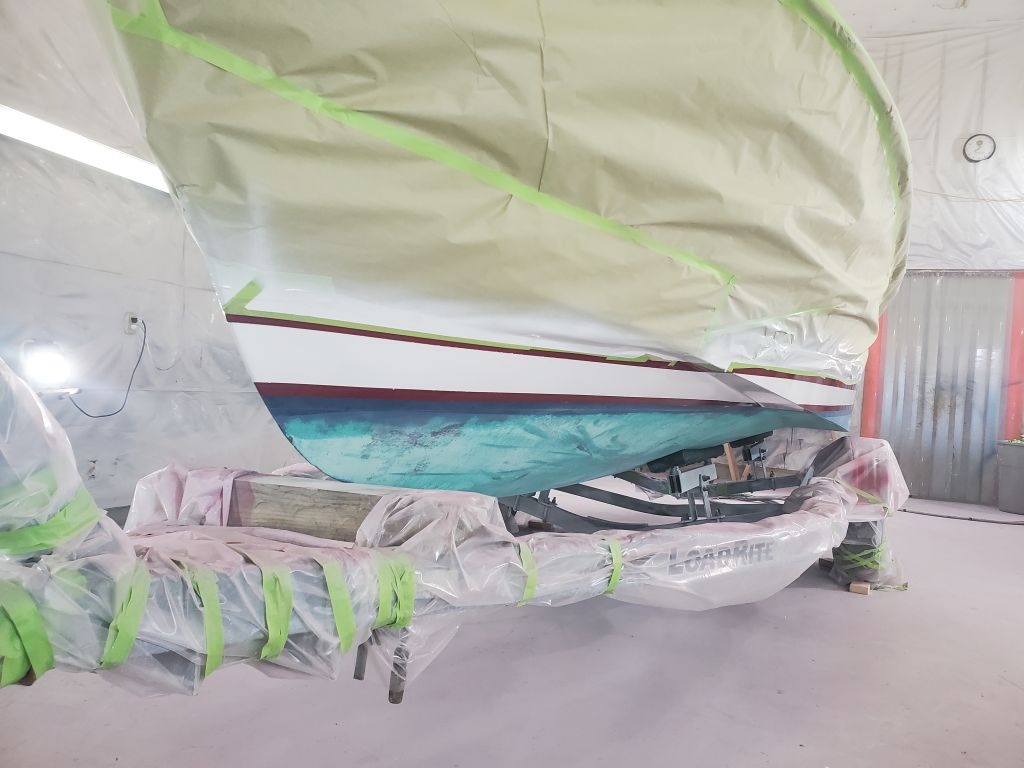
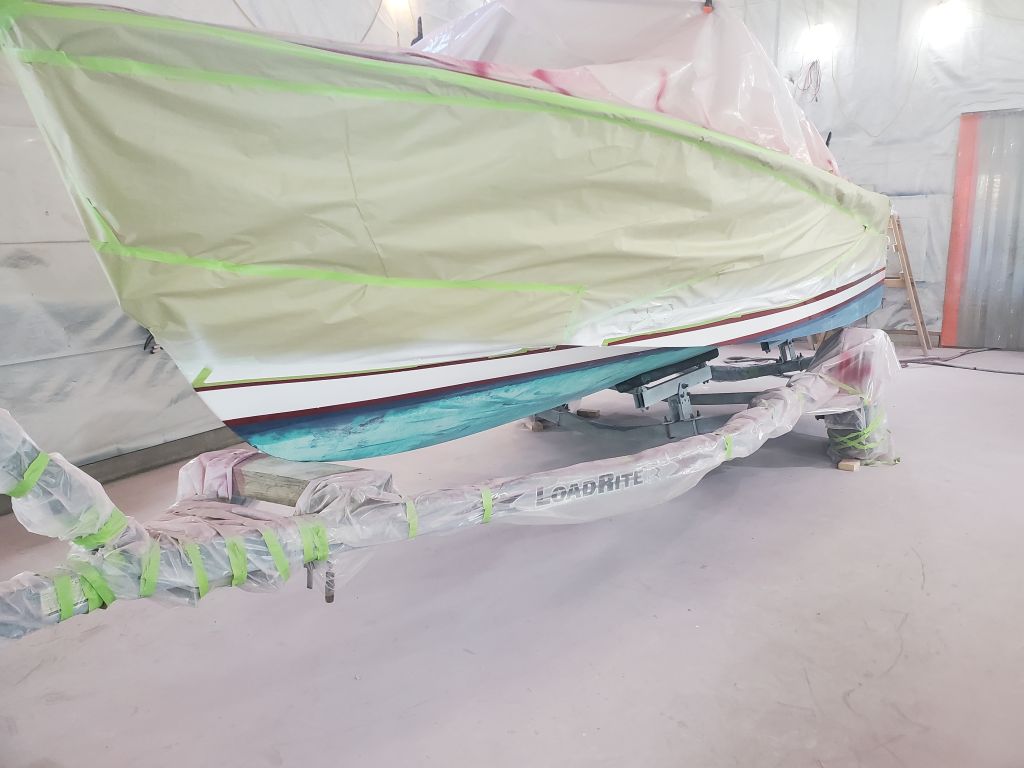
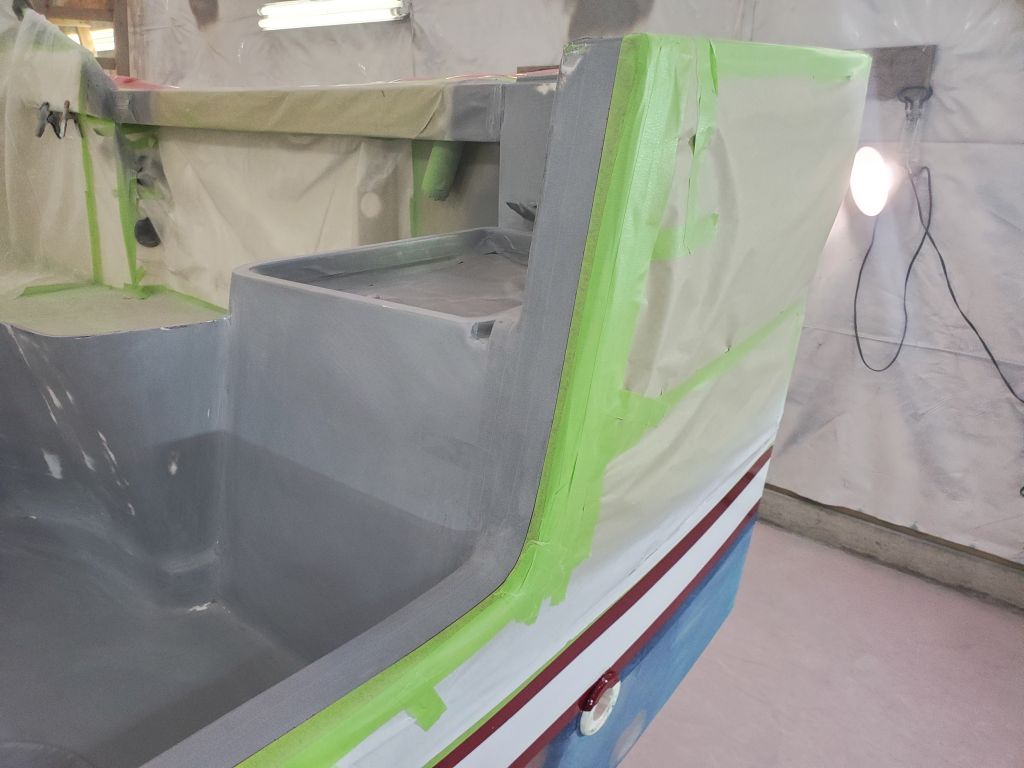
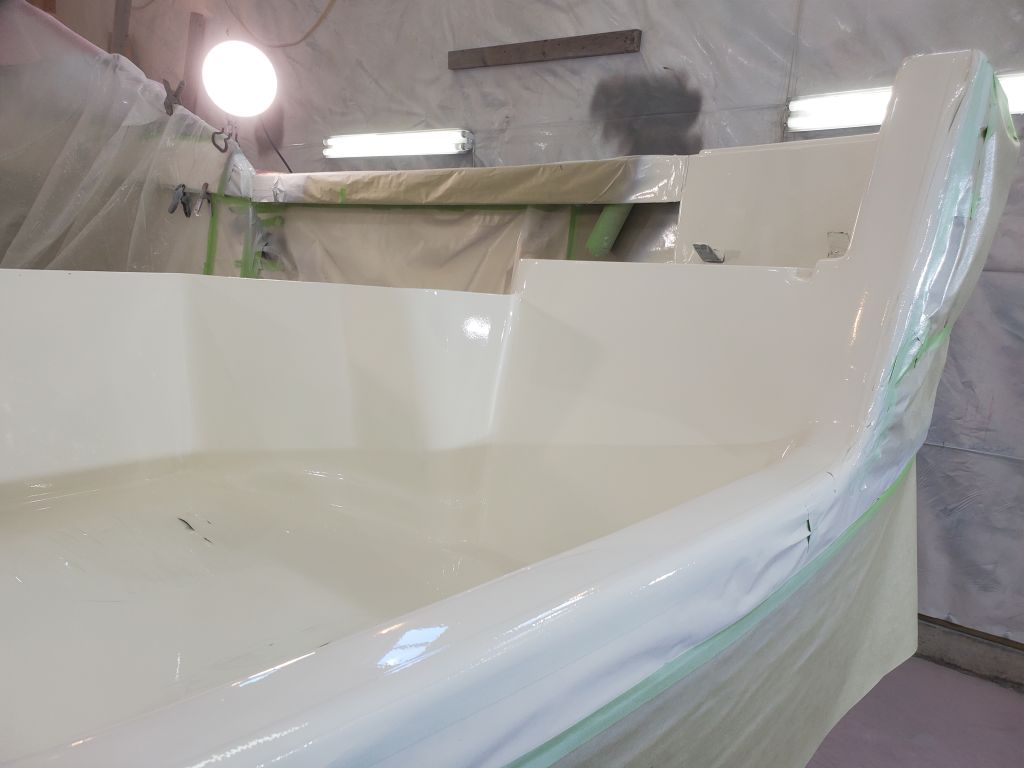
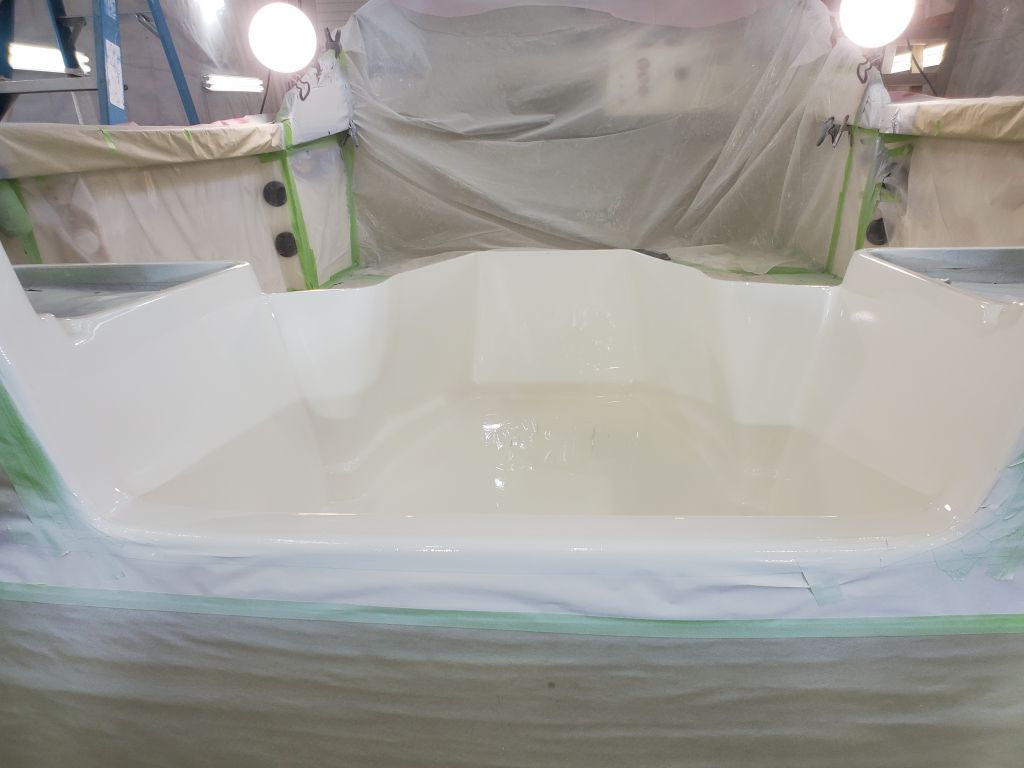
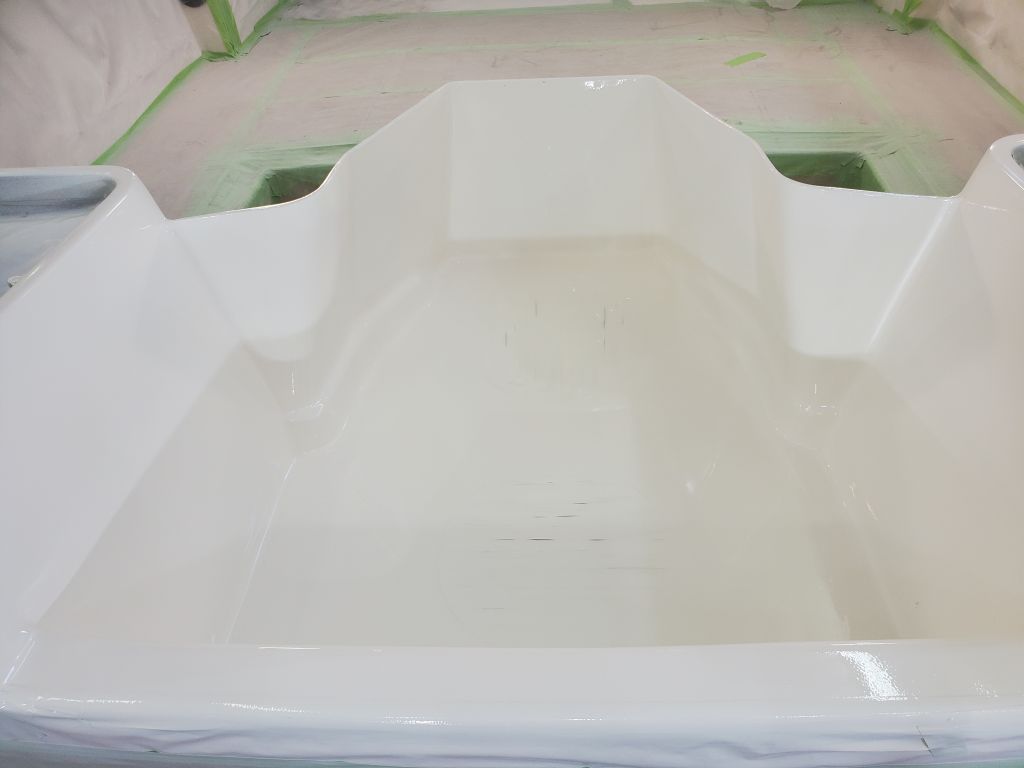
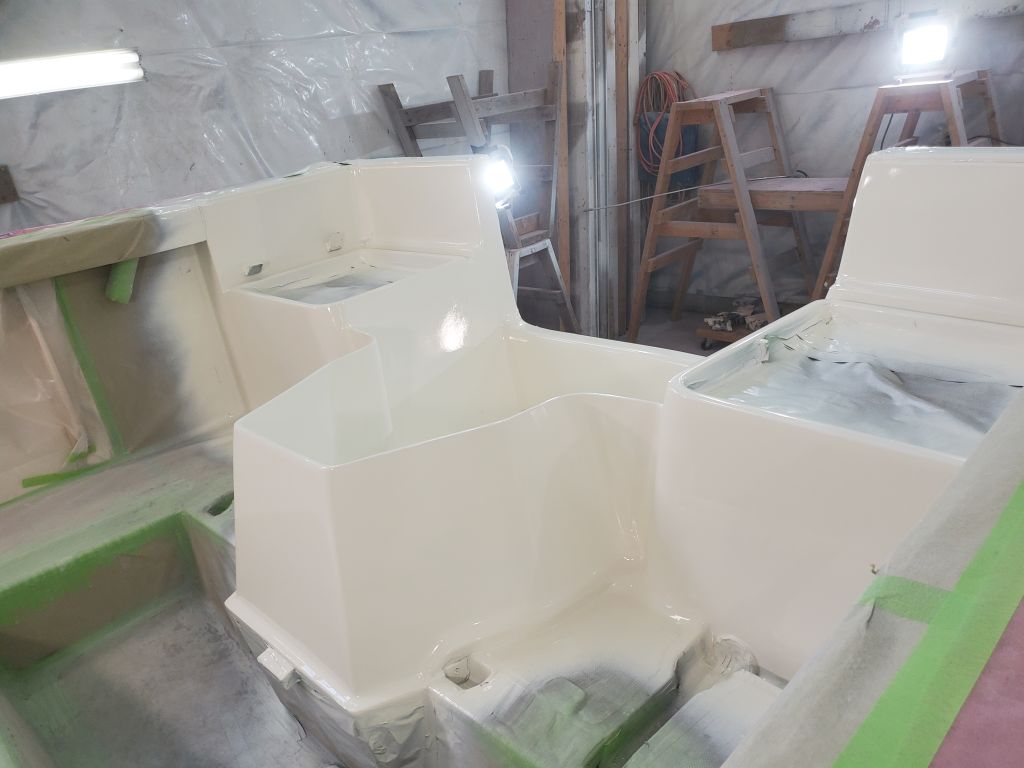
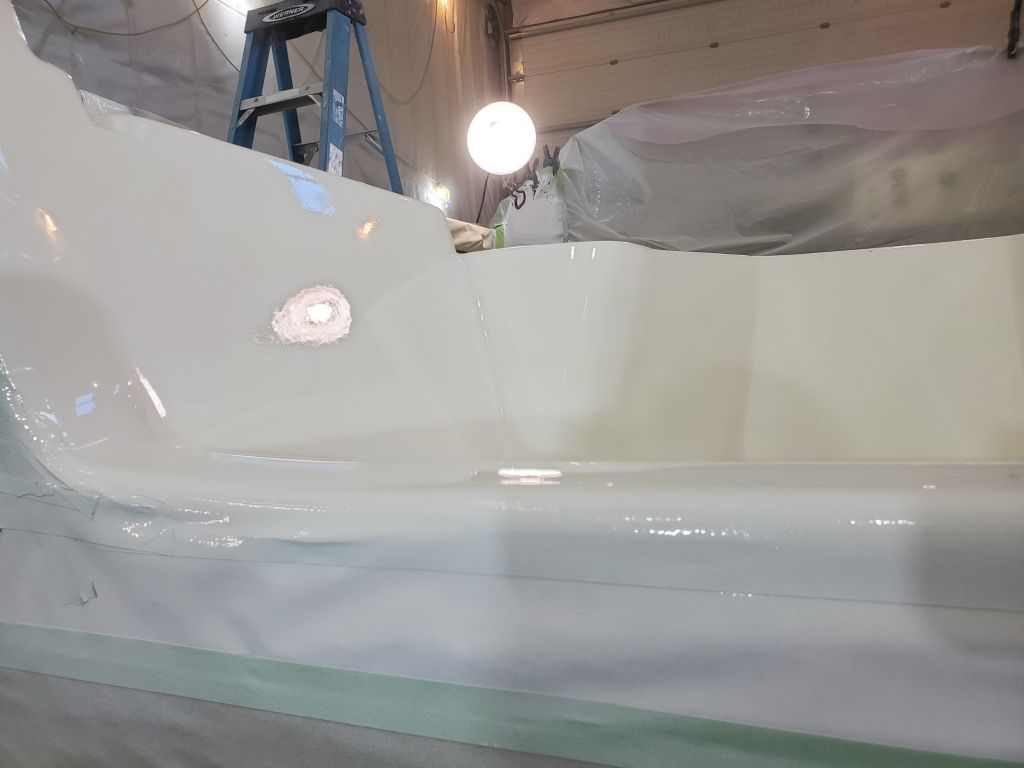
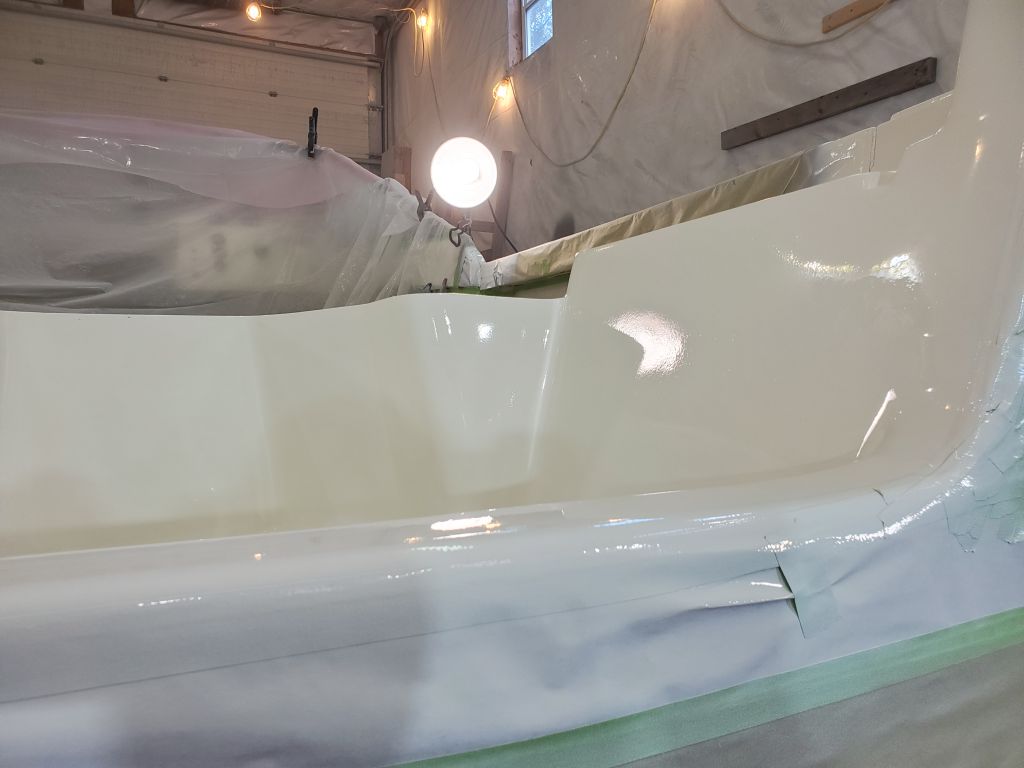
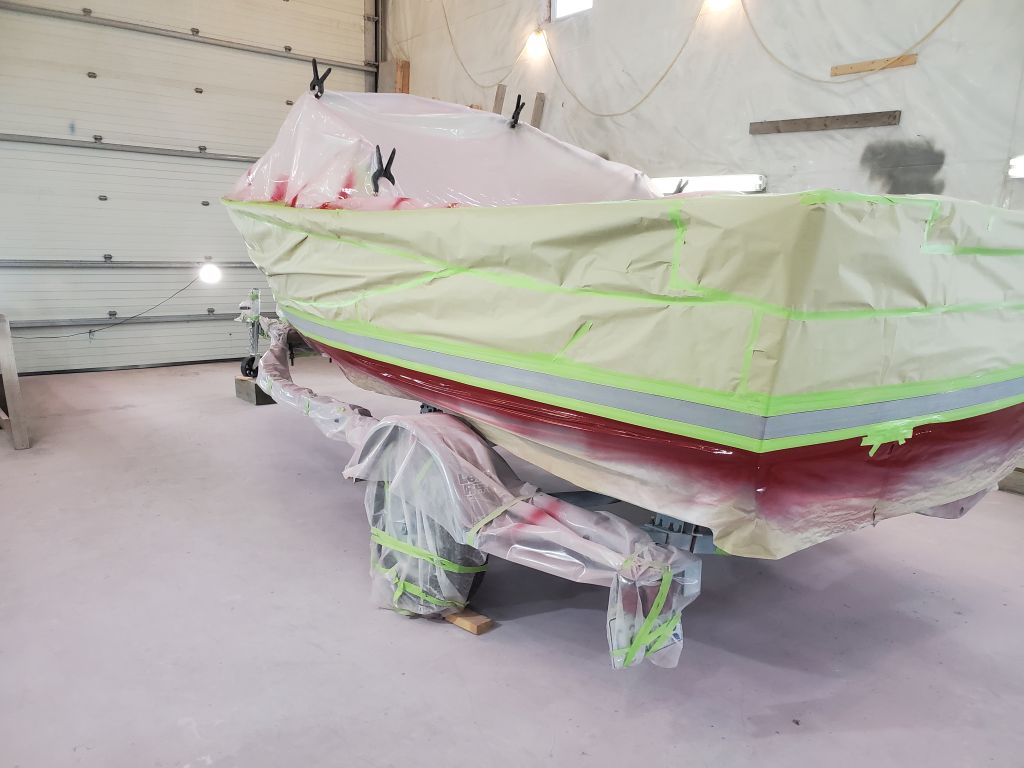
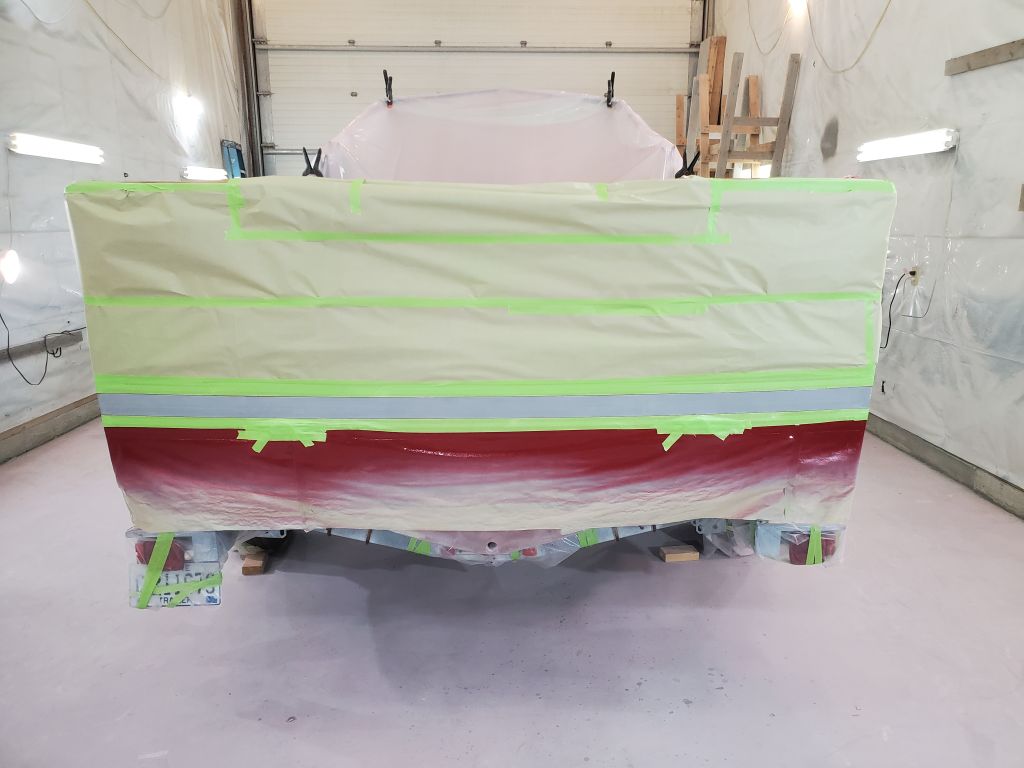
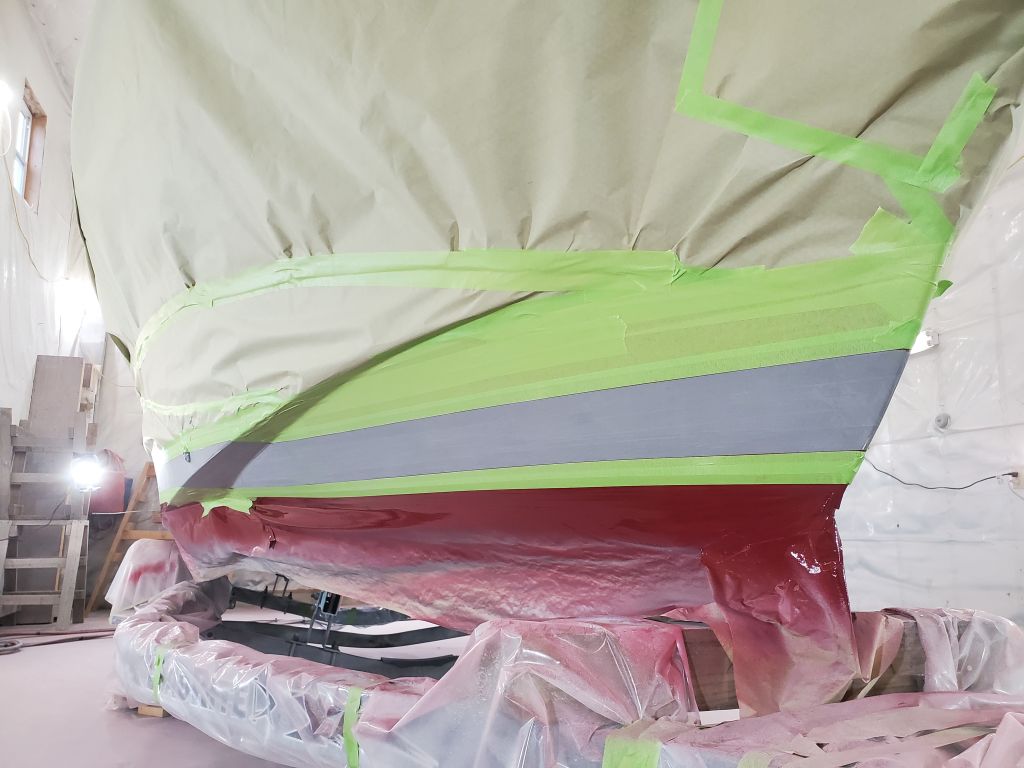
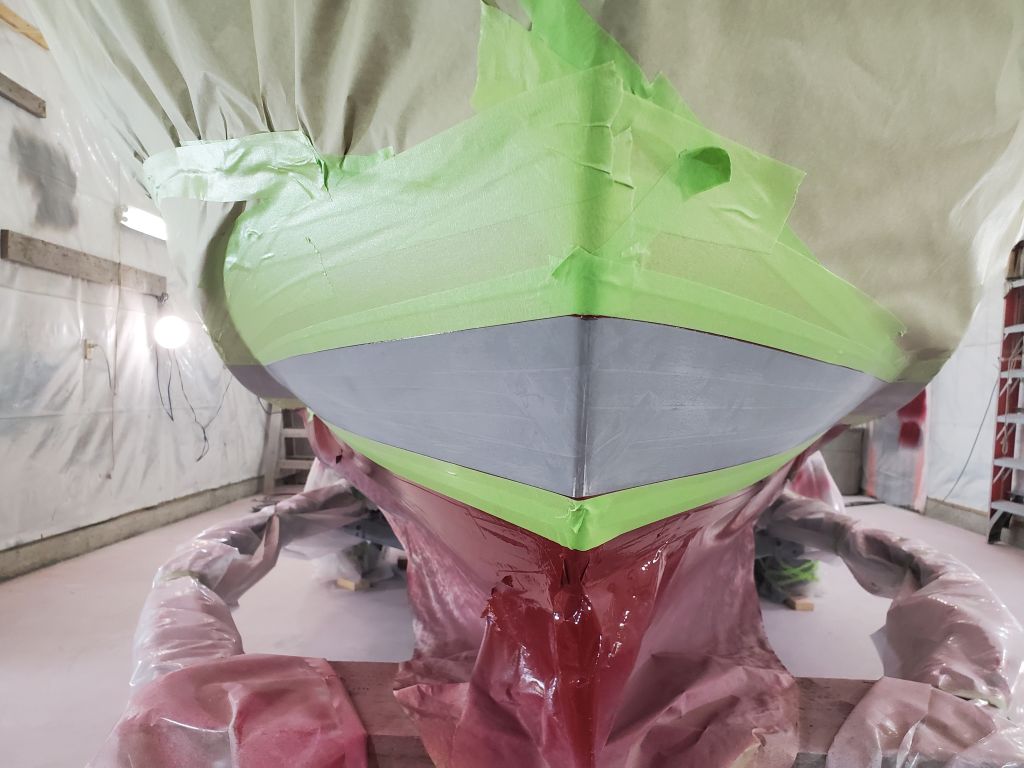
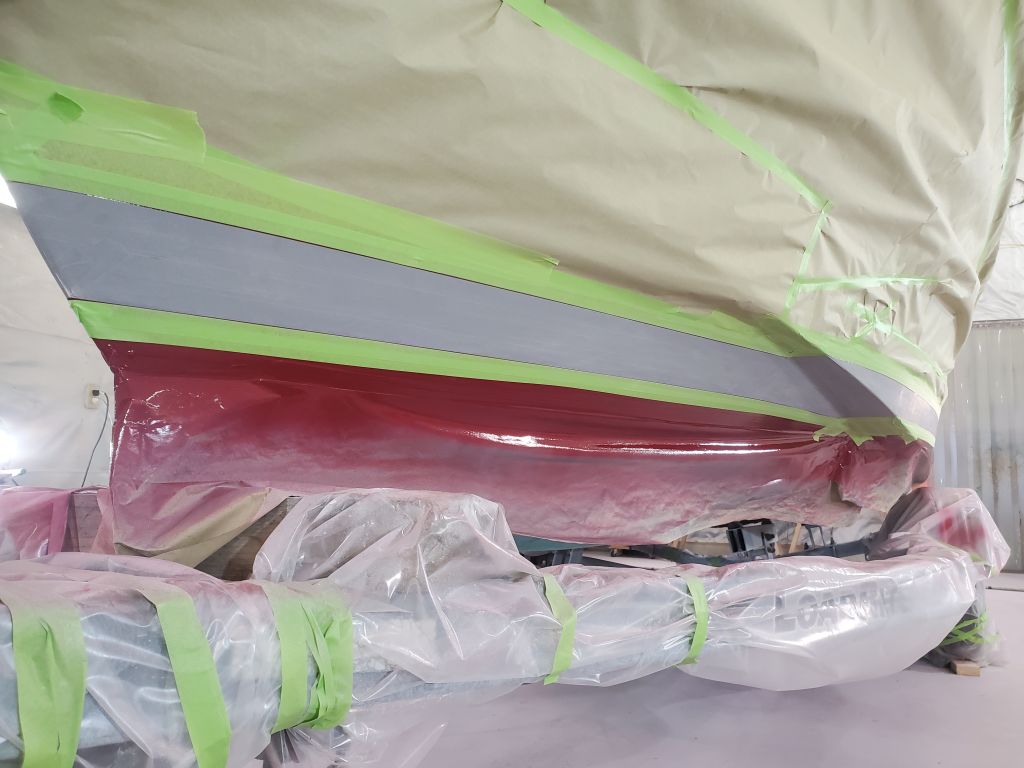
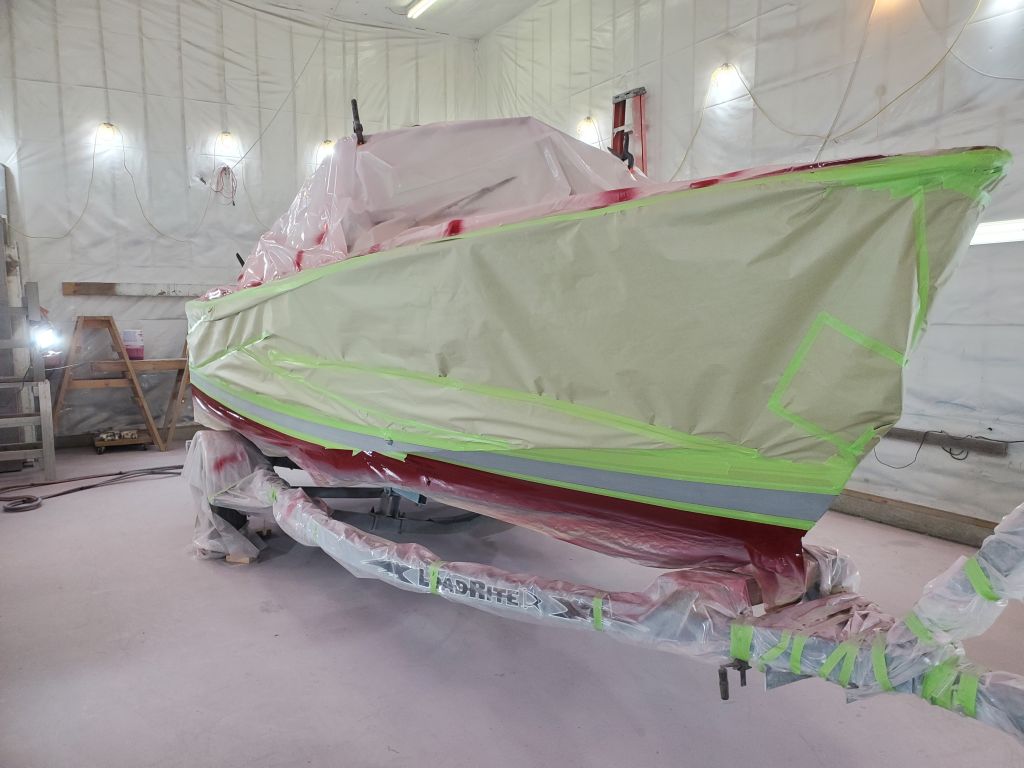
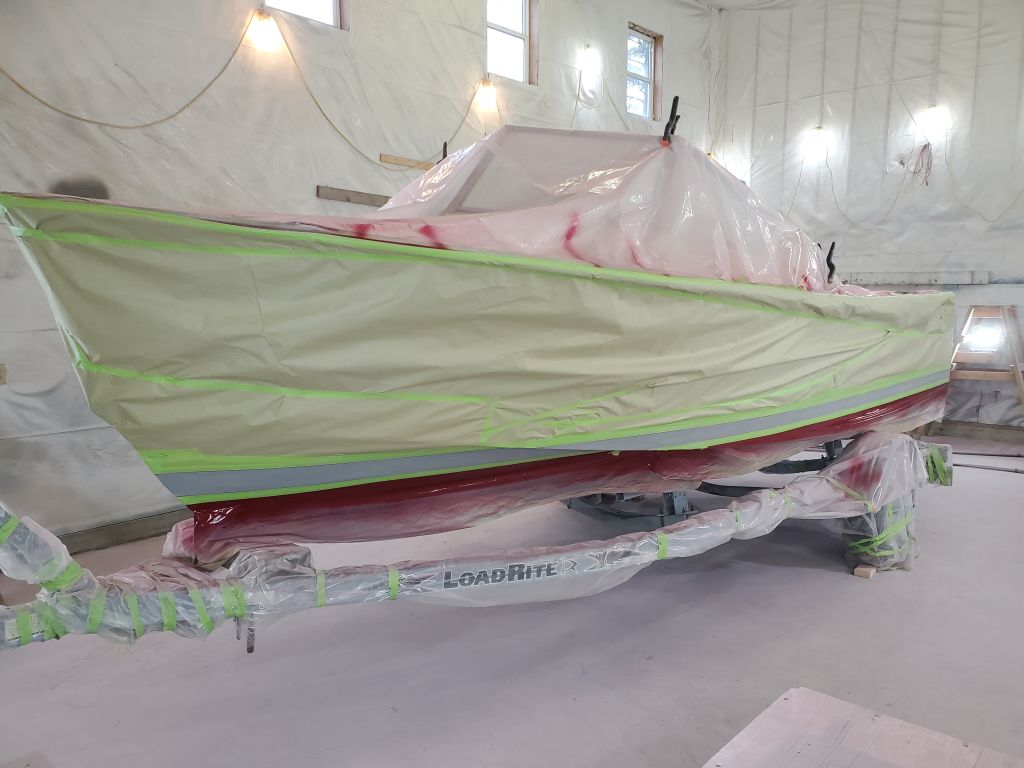
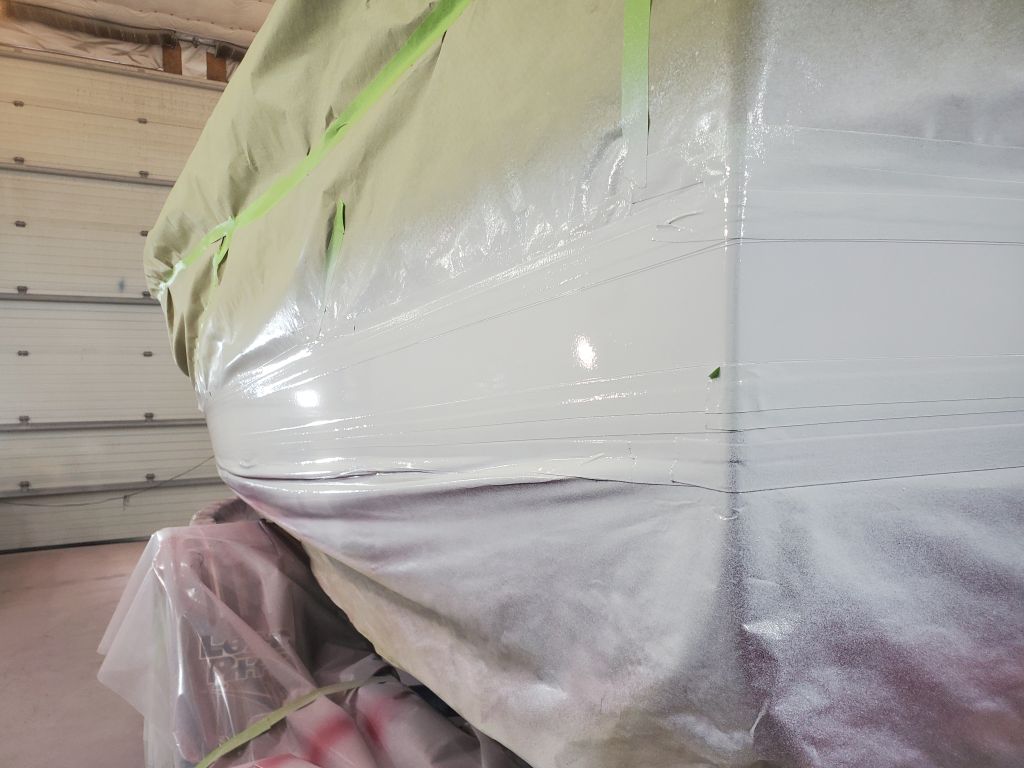
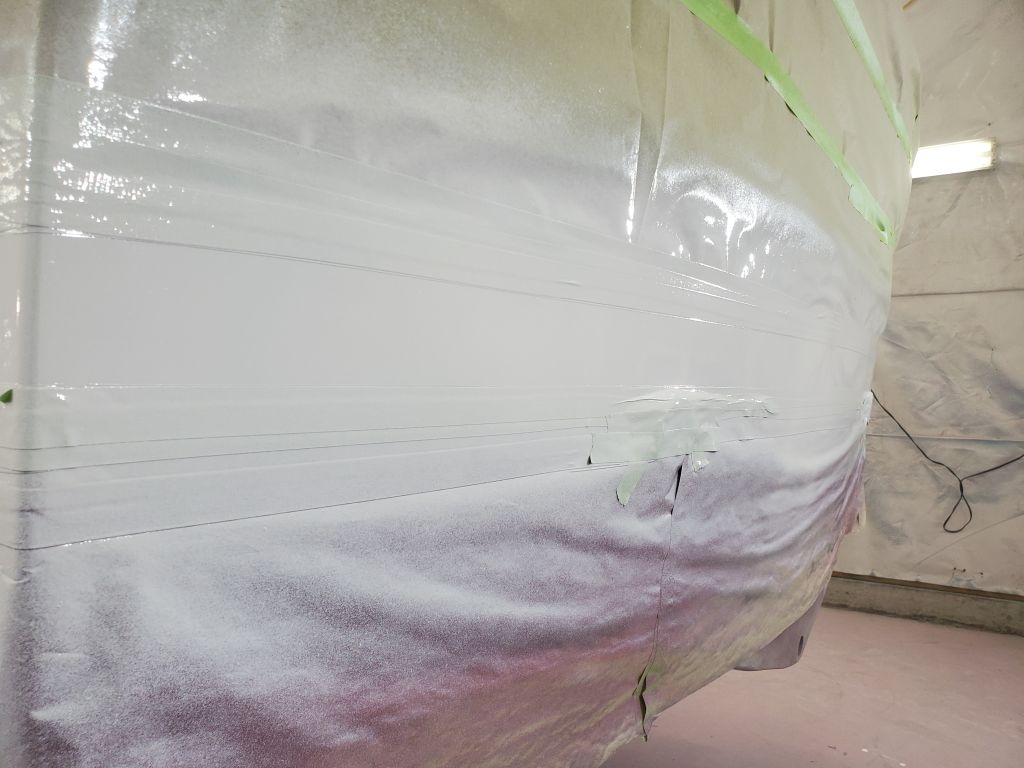
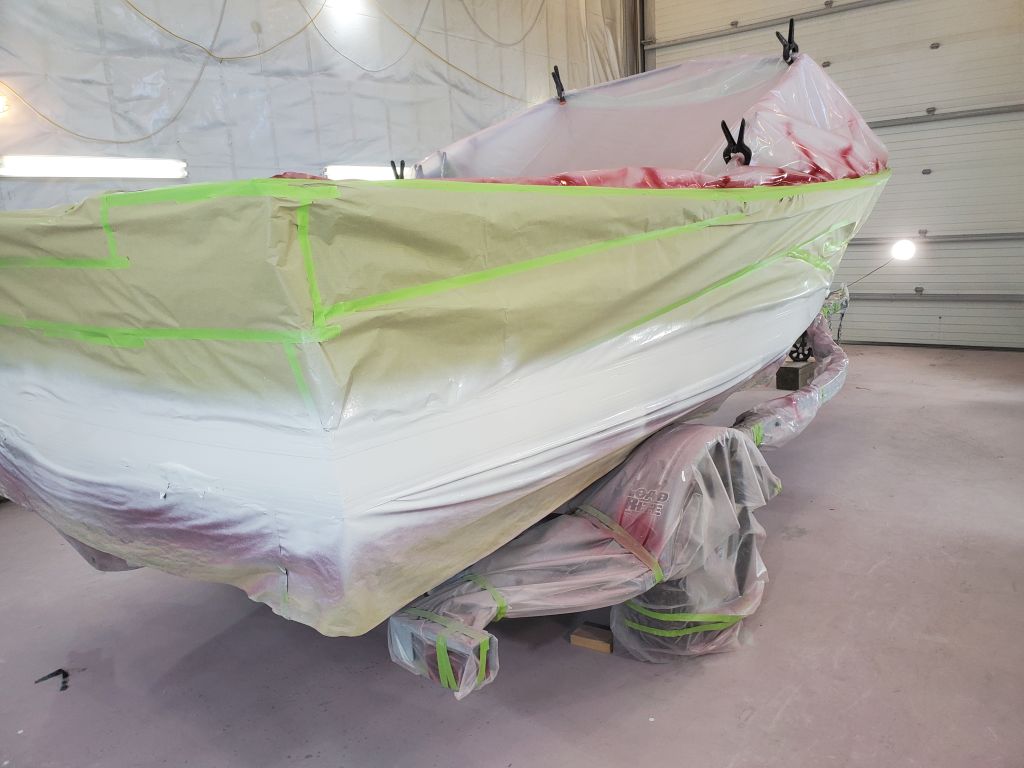
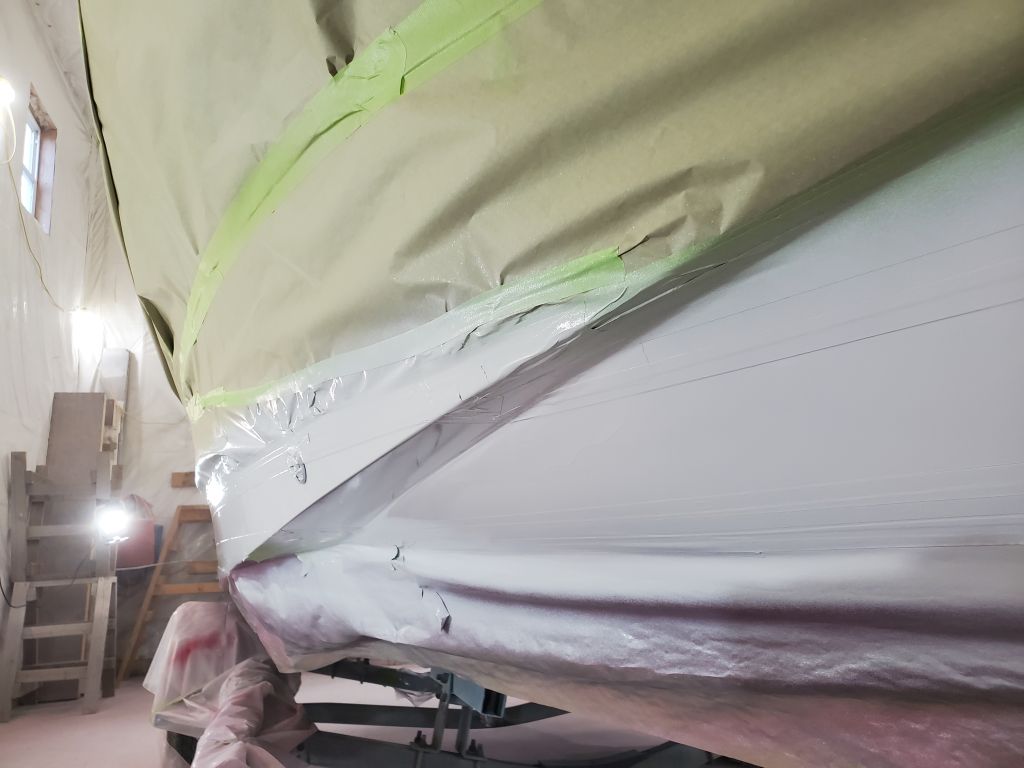
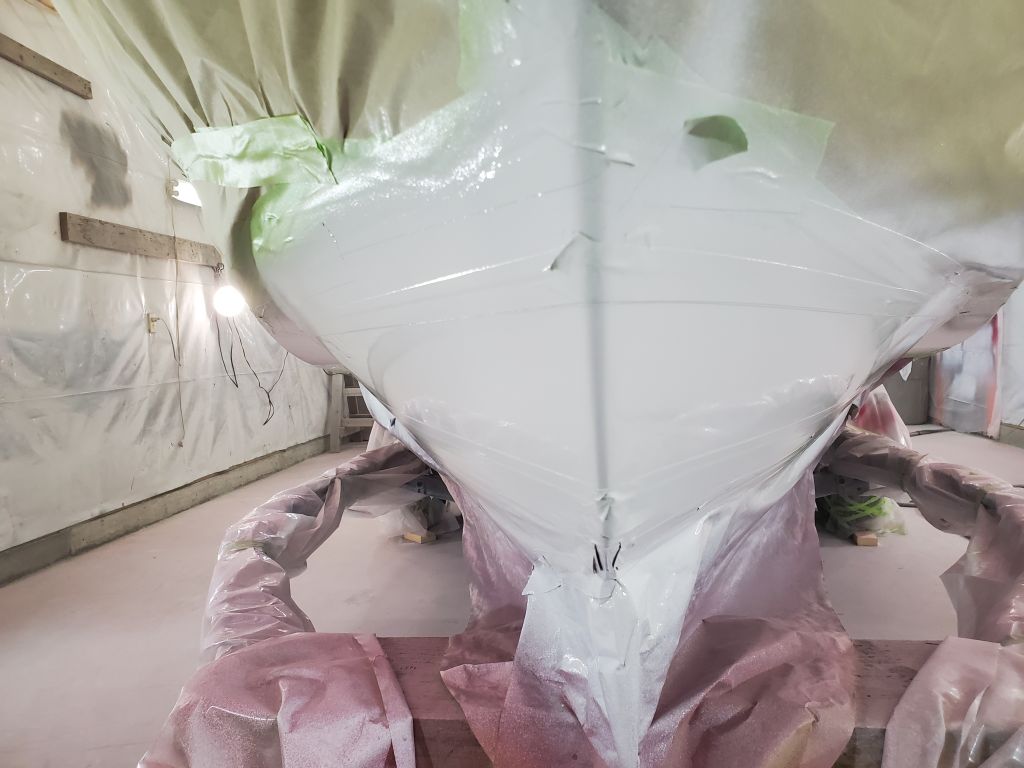
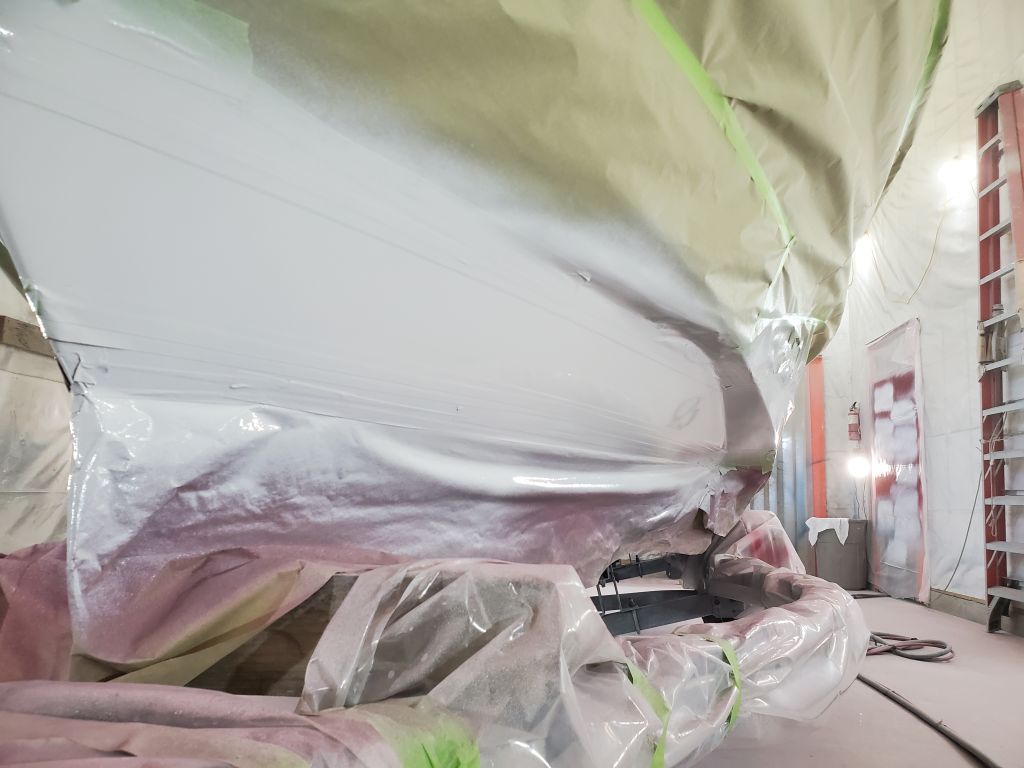
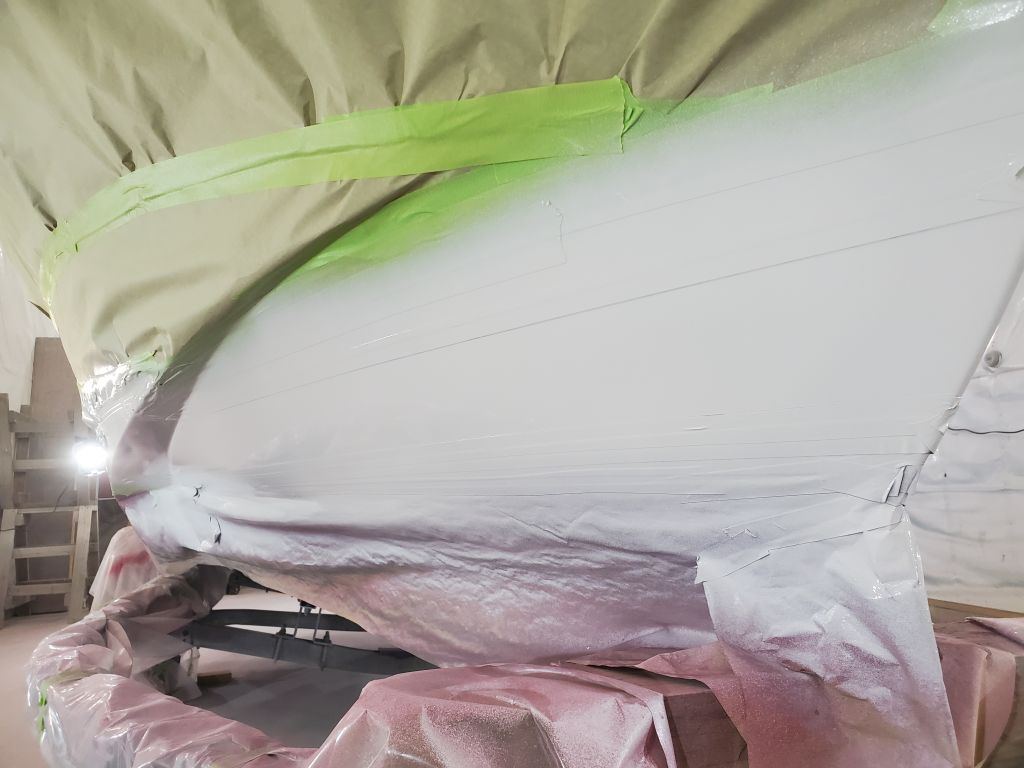
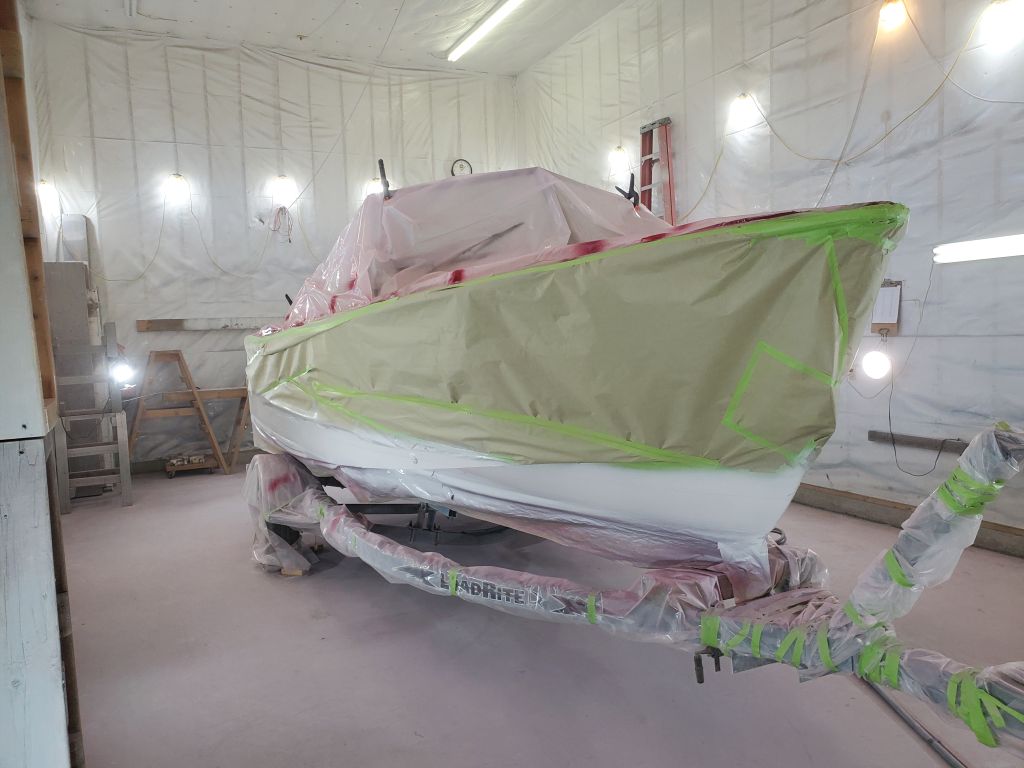
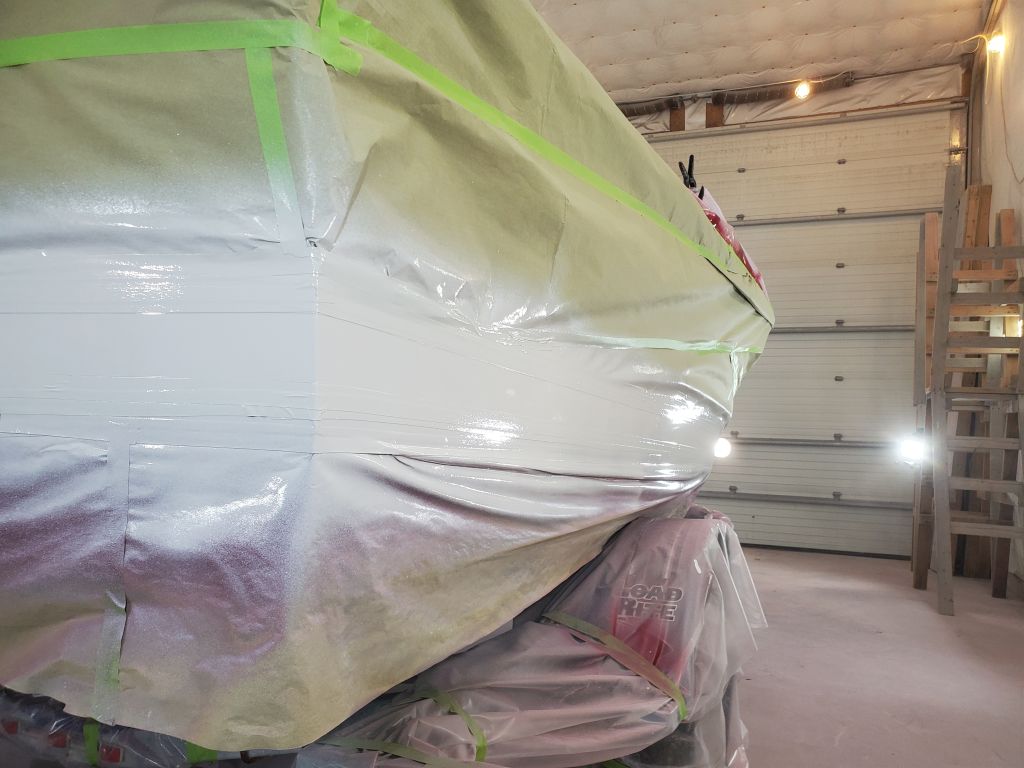
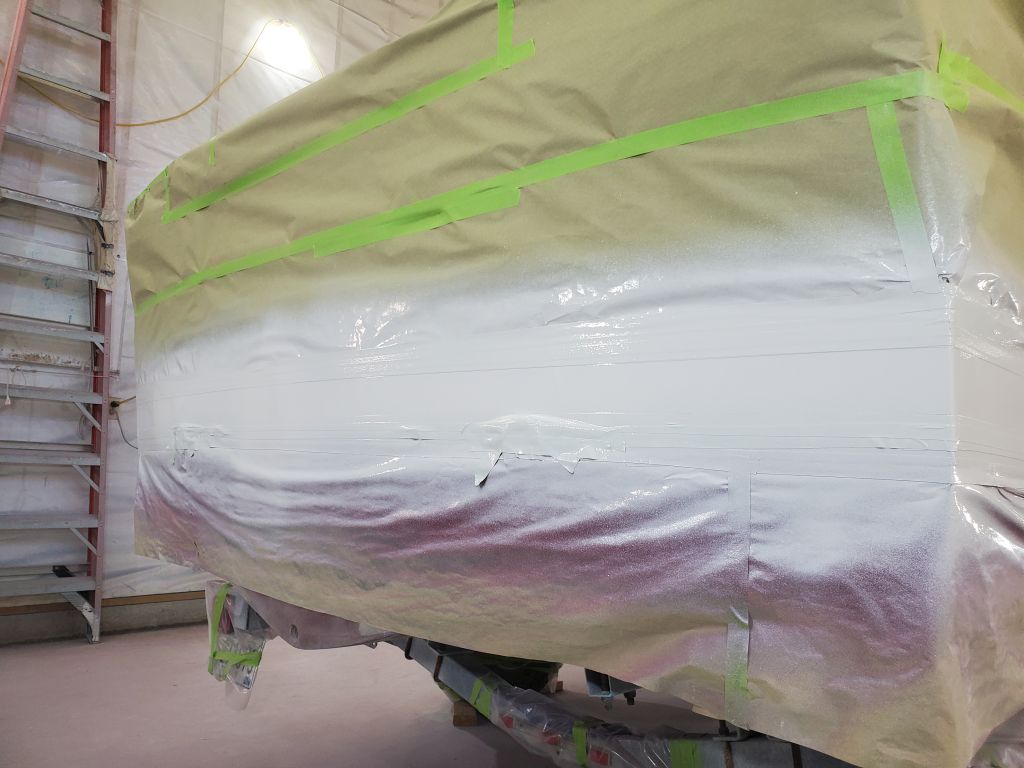
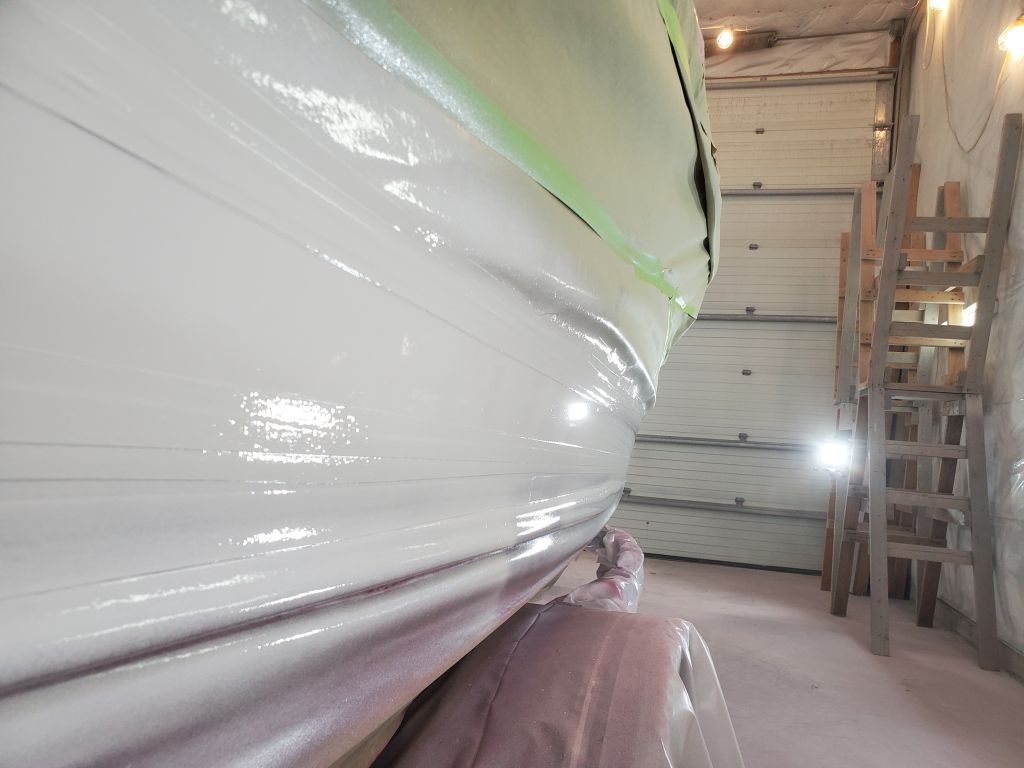
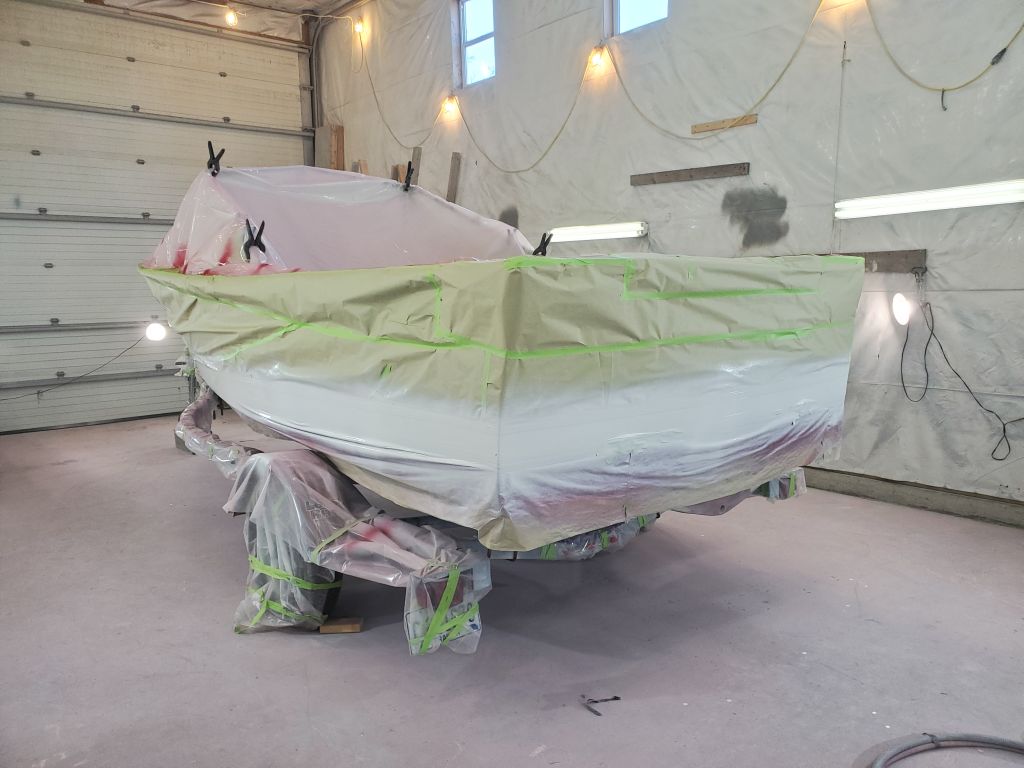
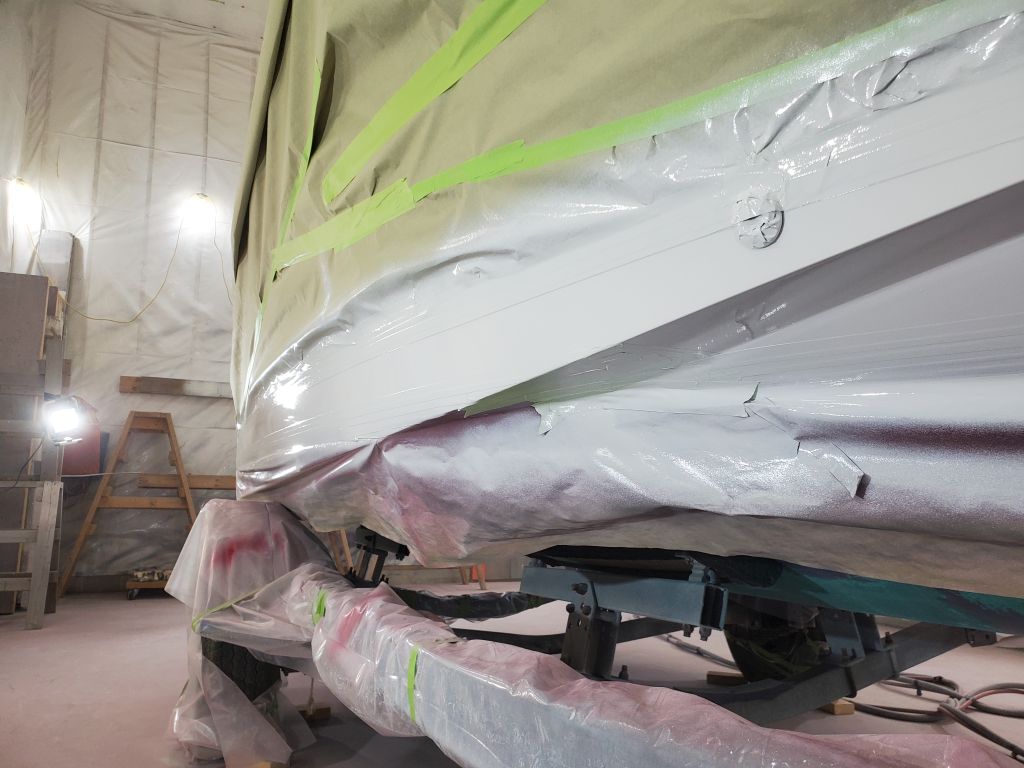
After final preparations, including proprietary solvent wash and tack-off, I applied three coats of Alexseal wine red gloss topcoat to the hull.

Holby 51

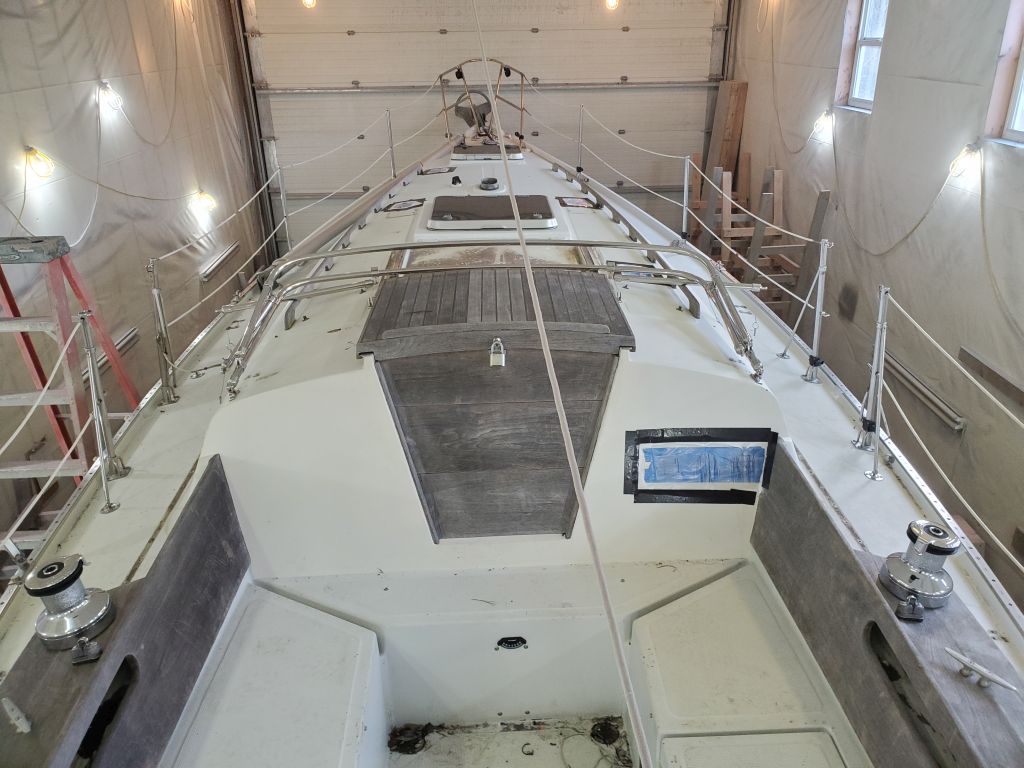
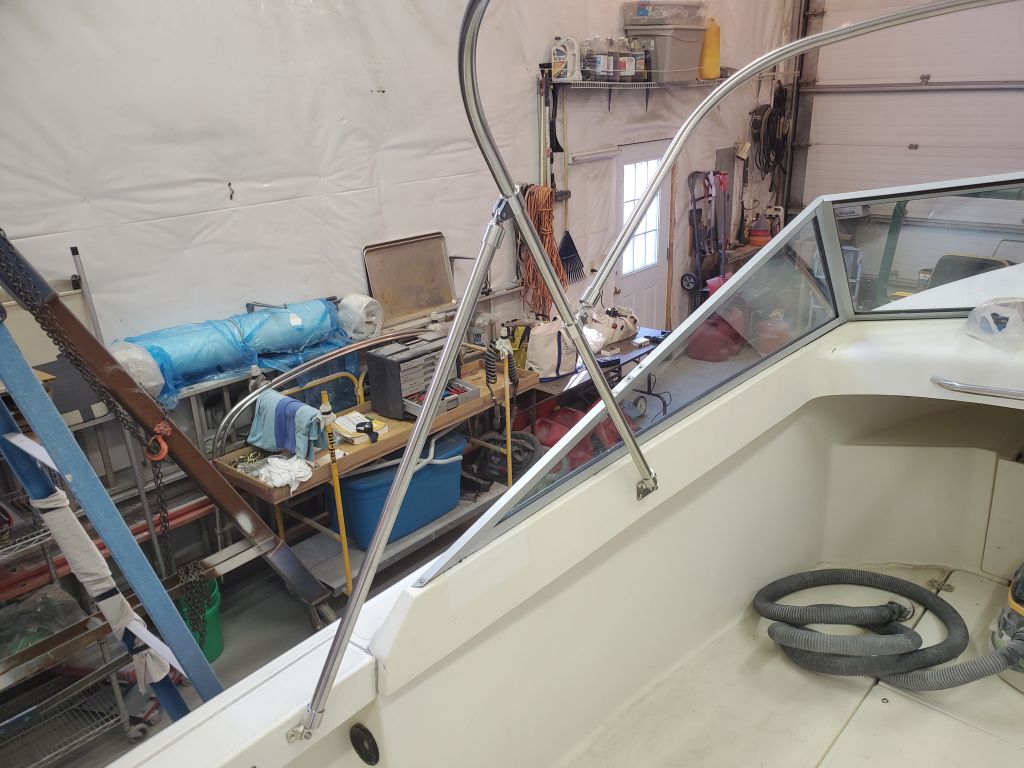
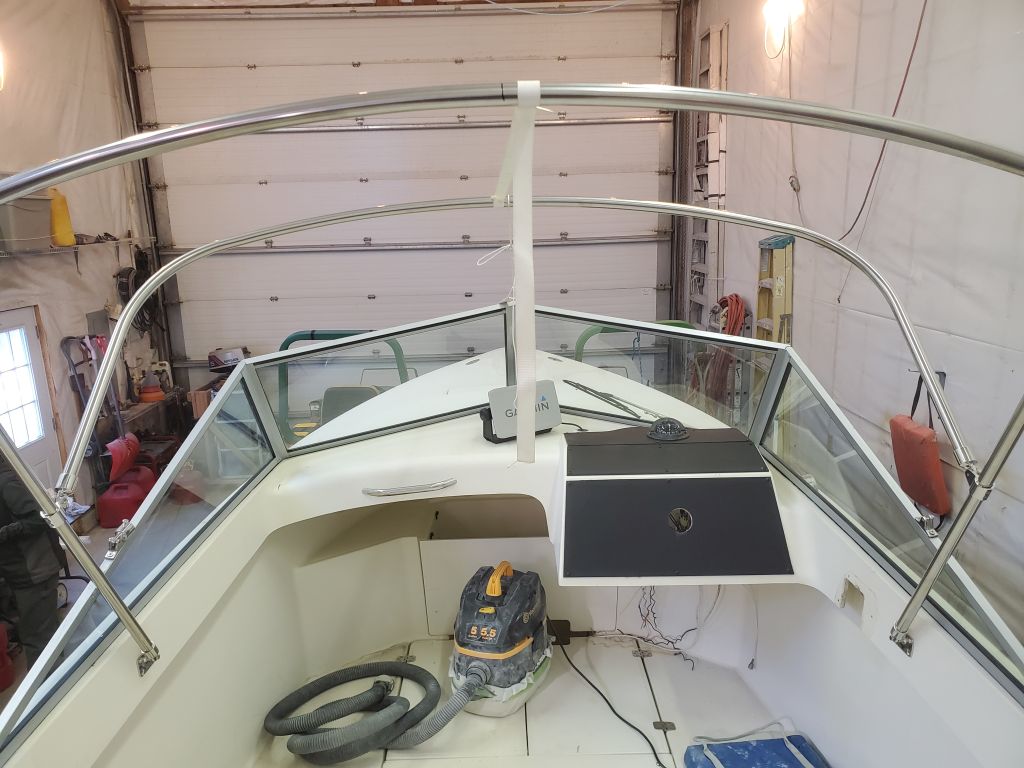
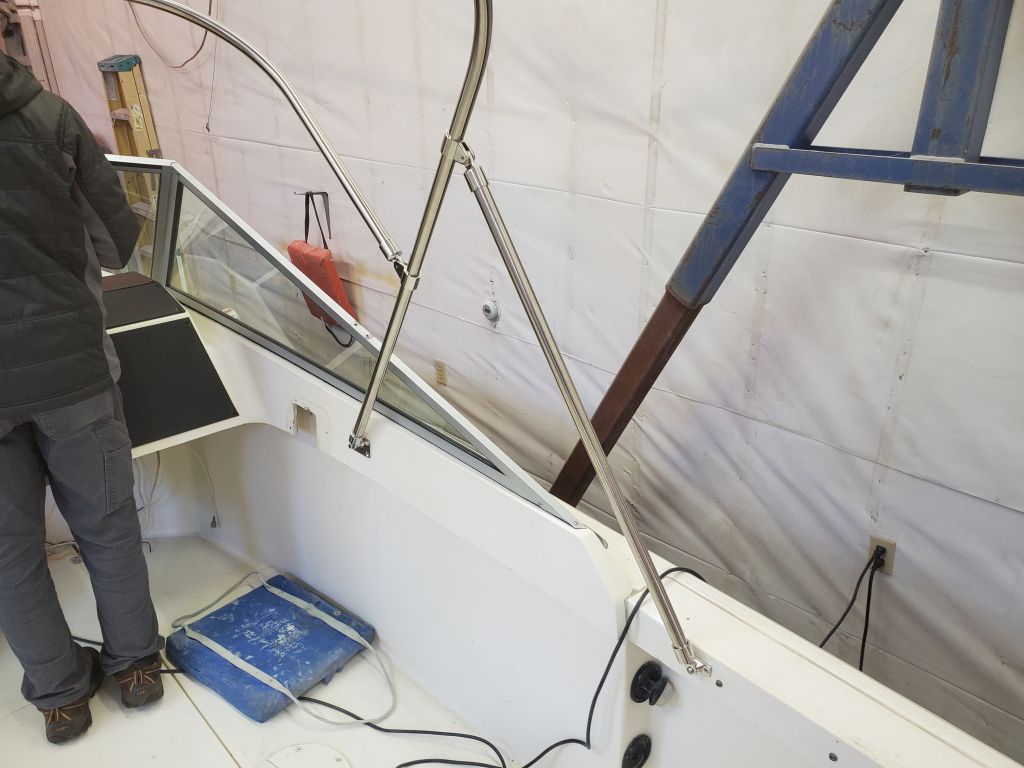
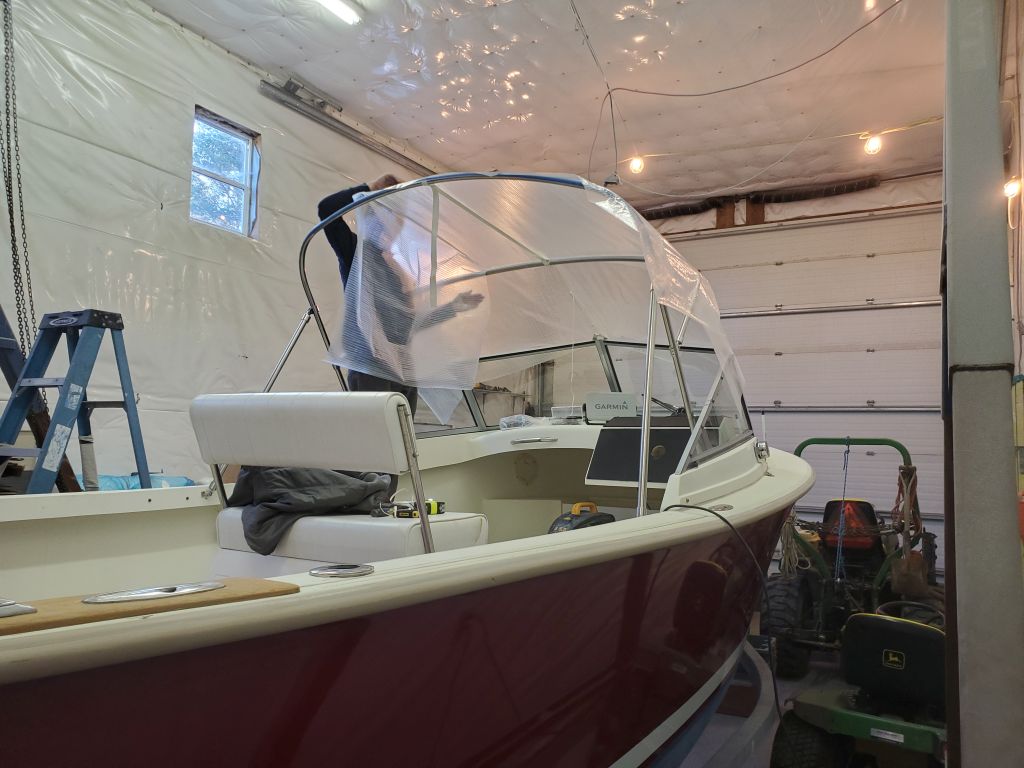
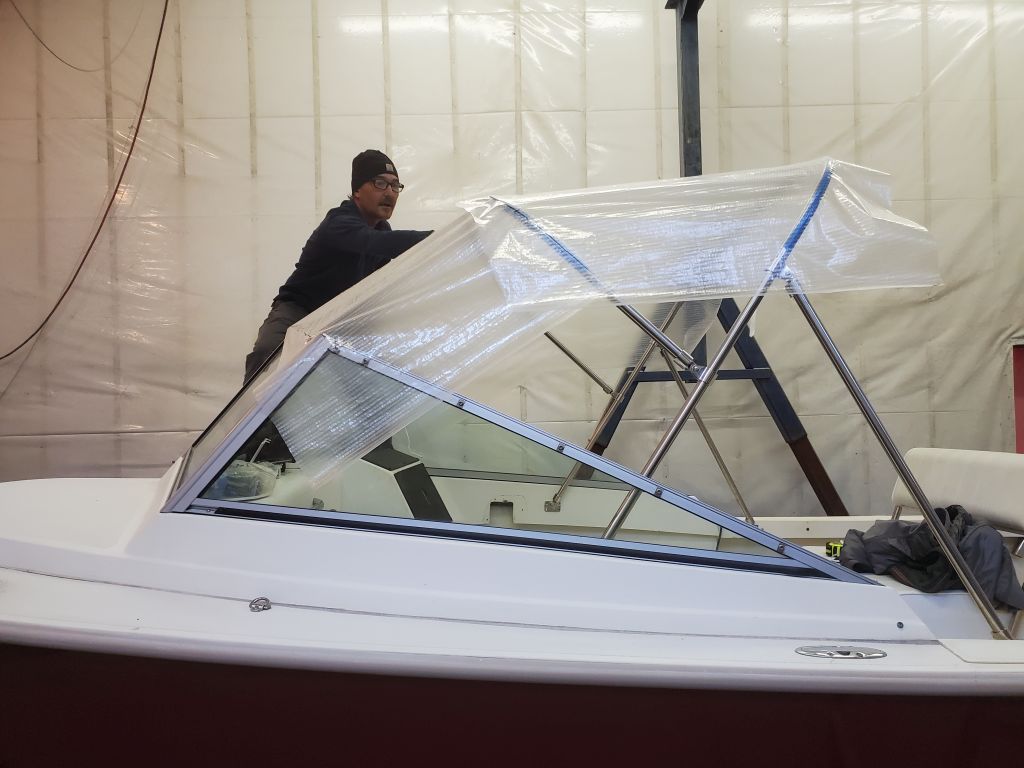
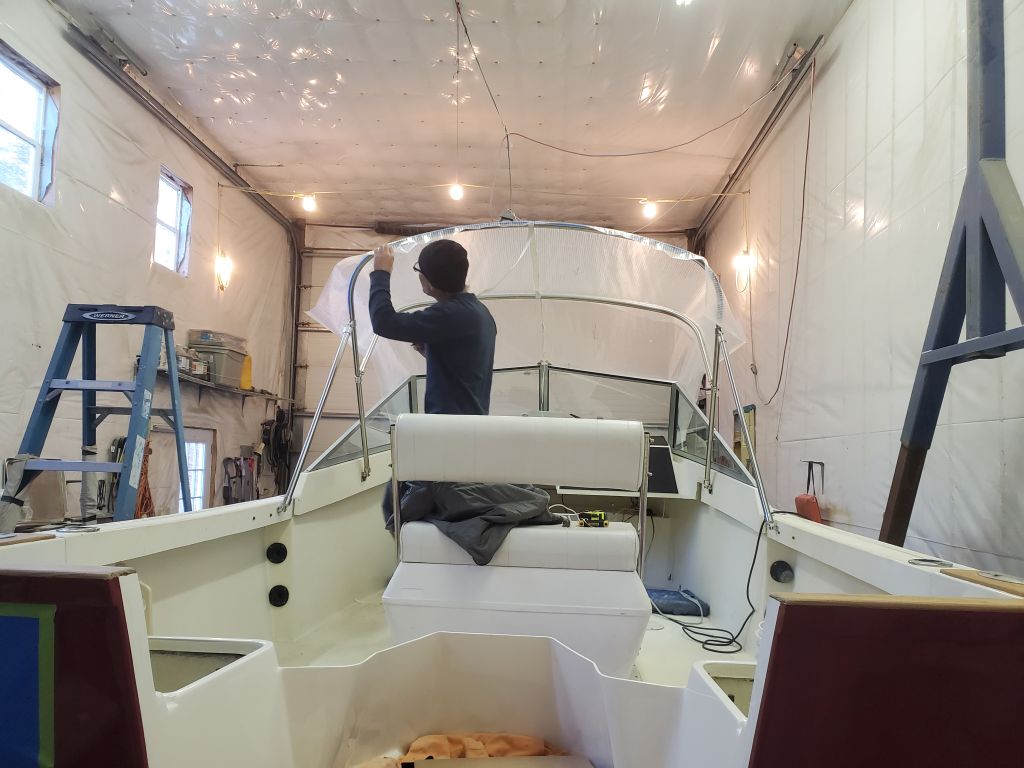
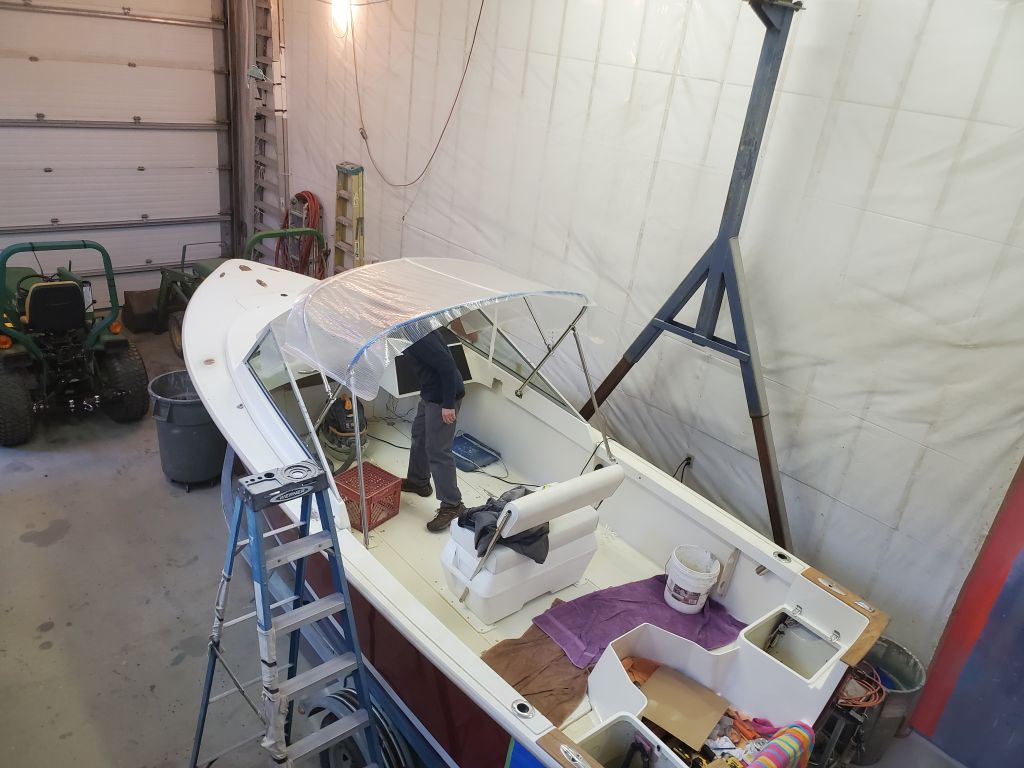
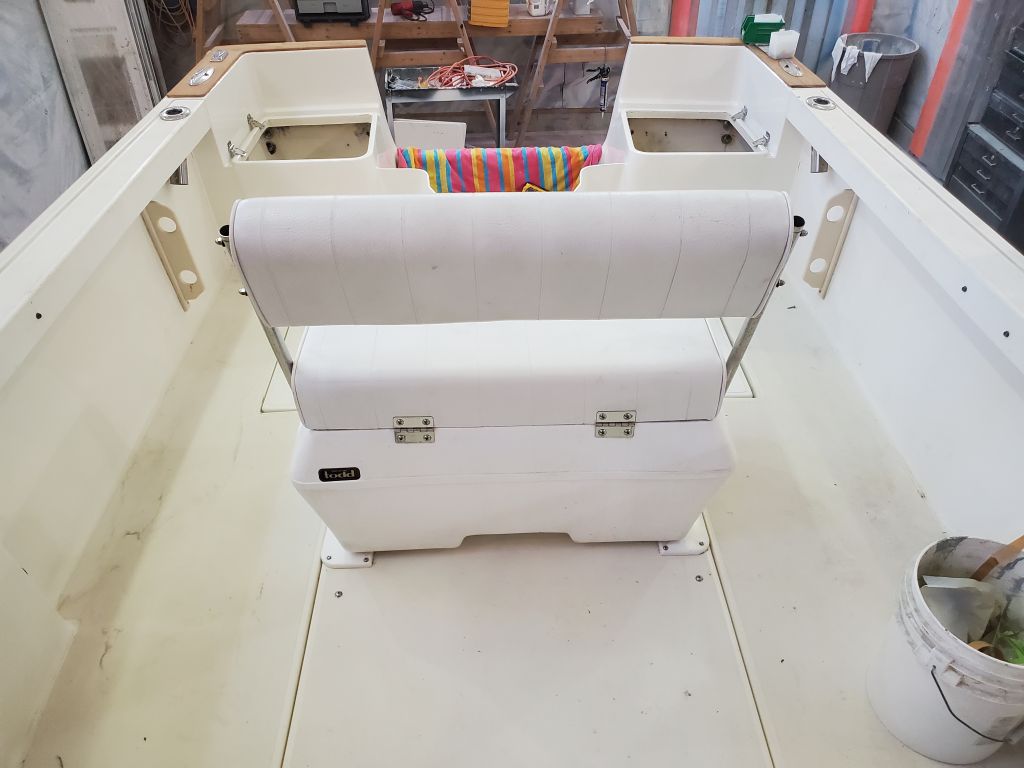
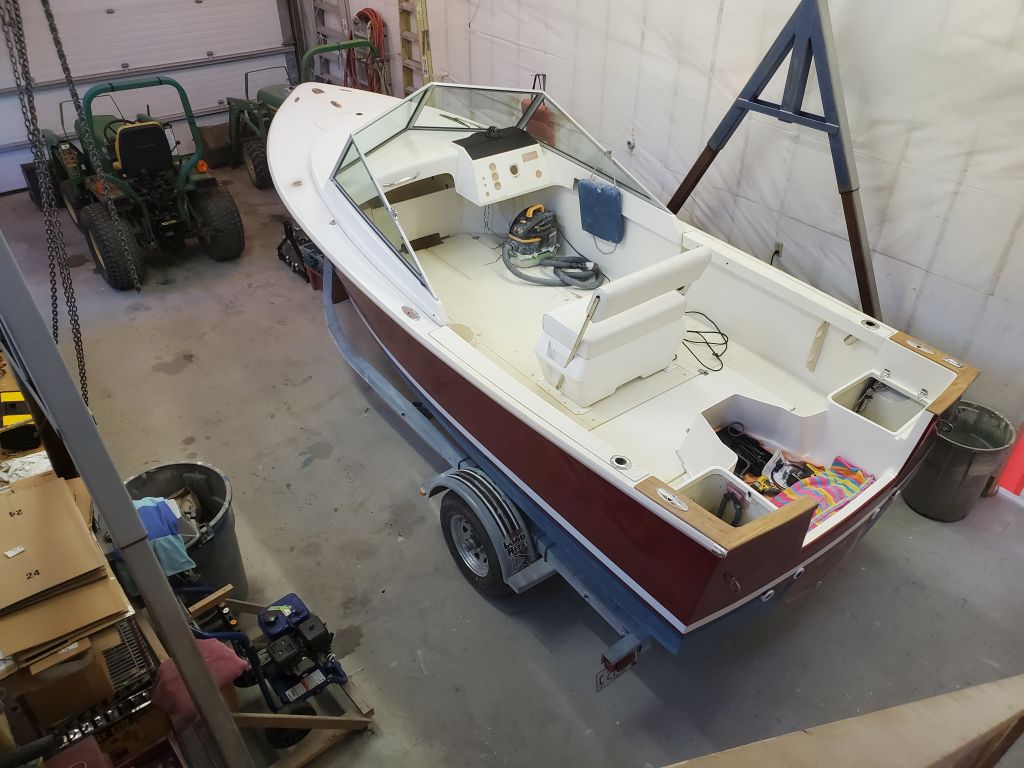
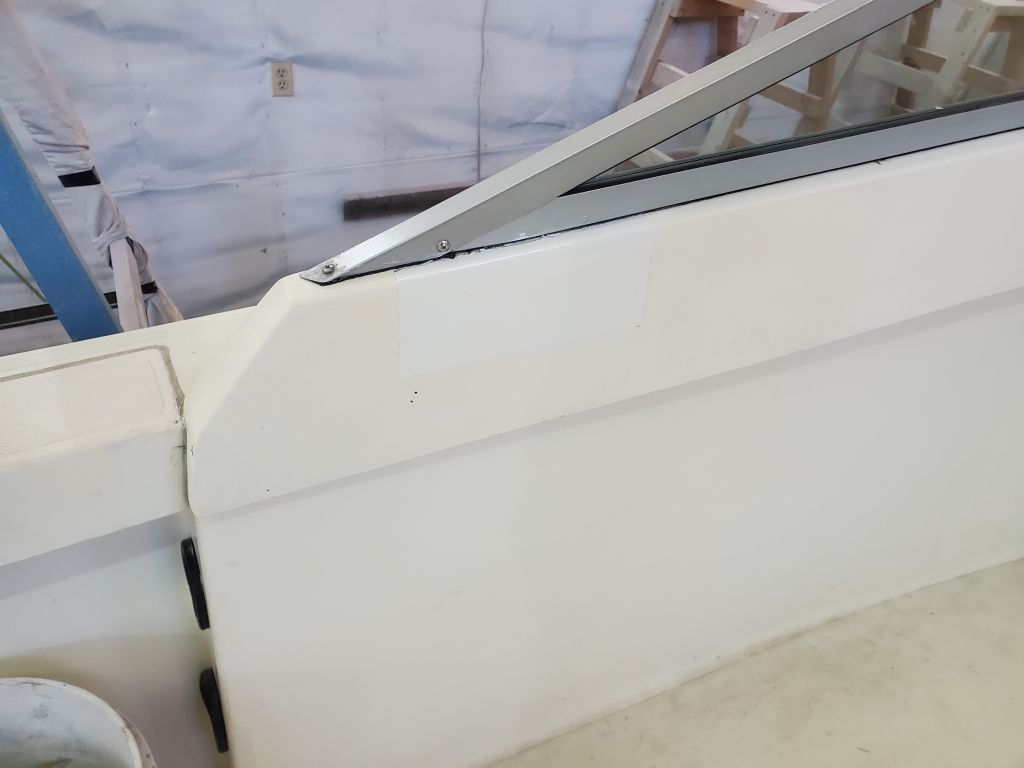
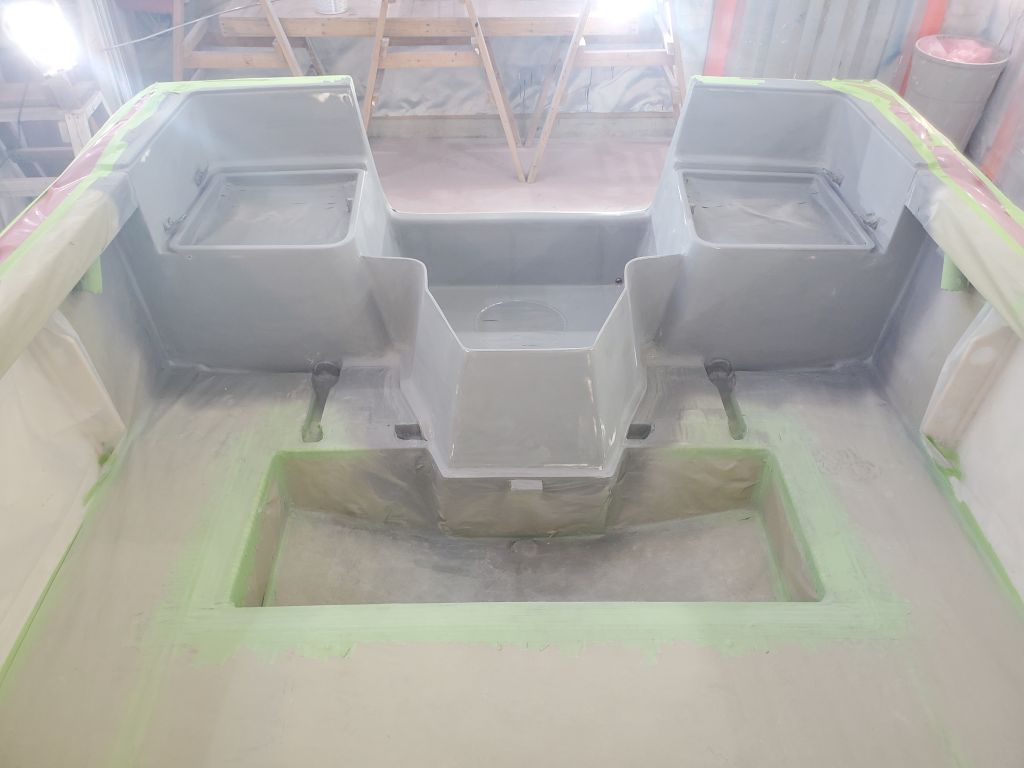
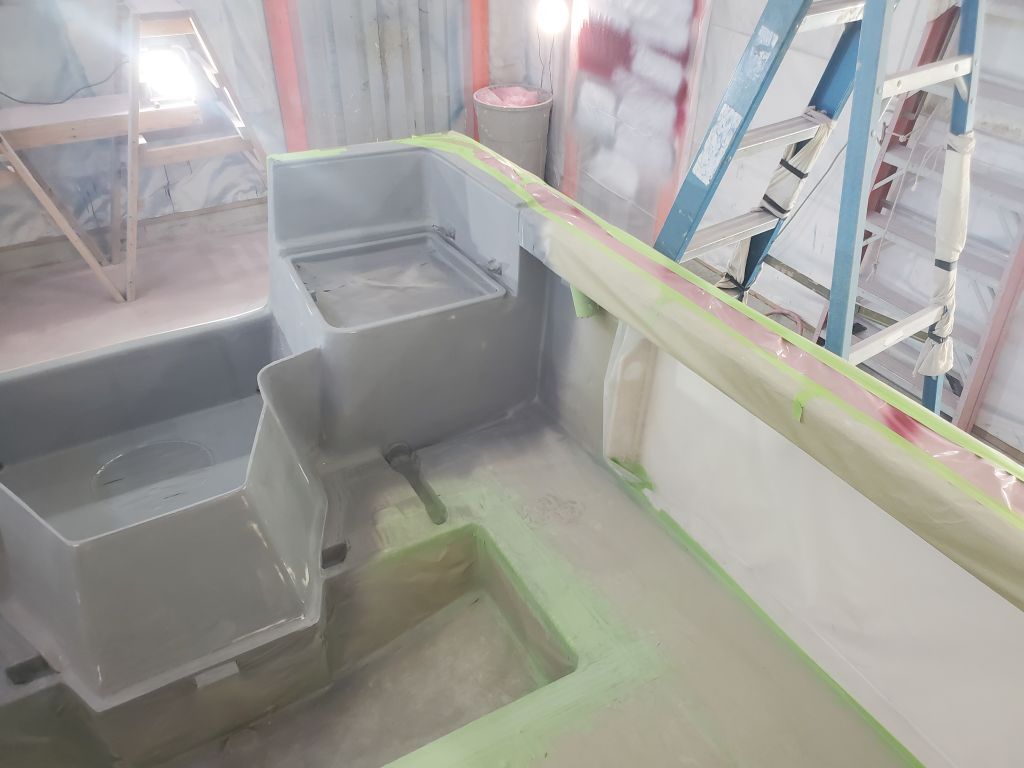
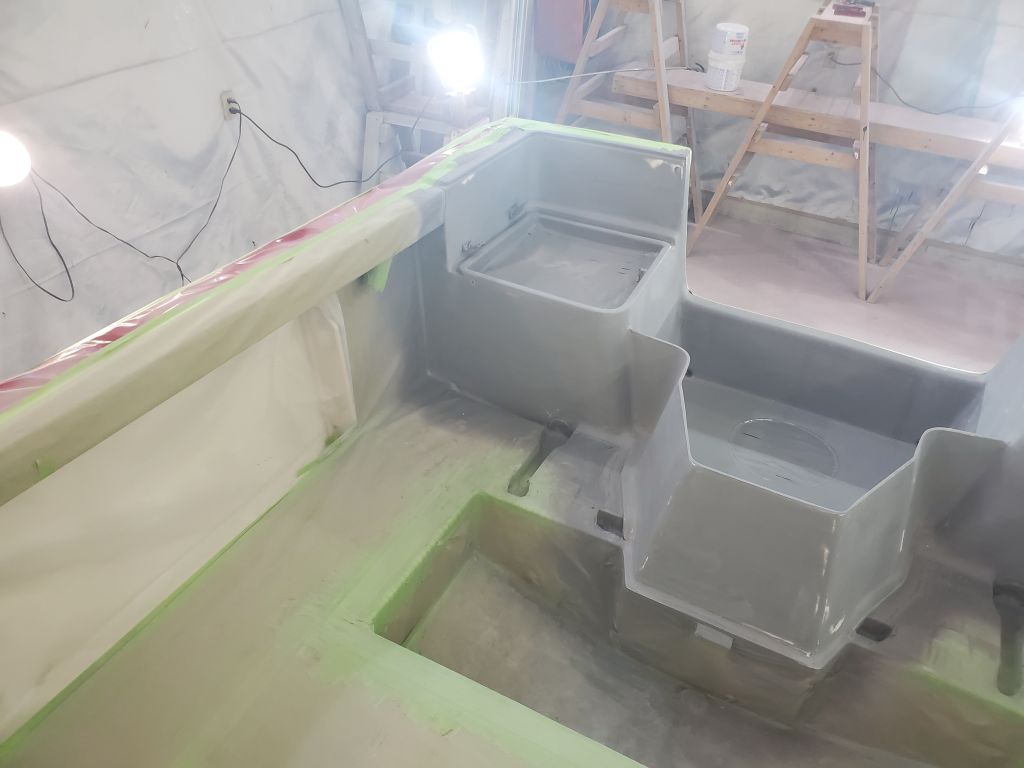
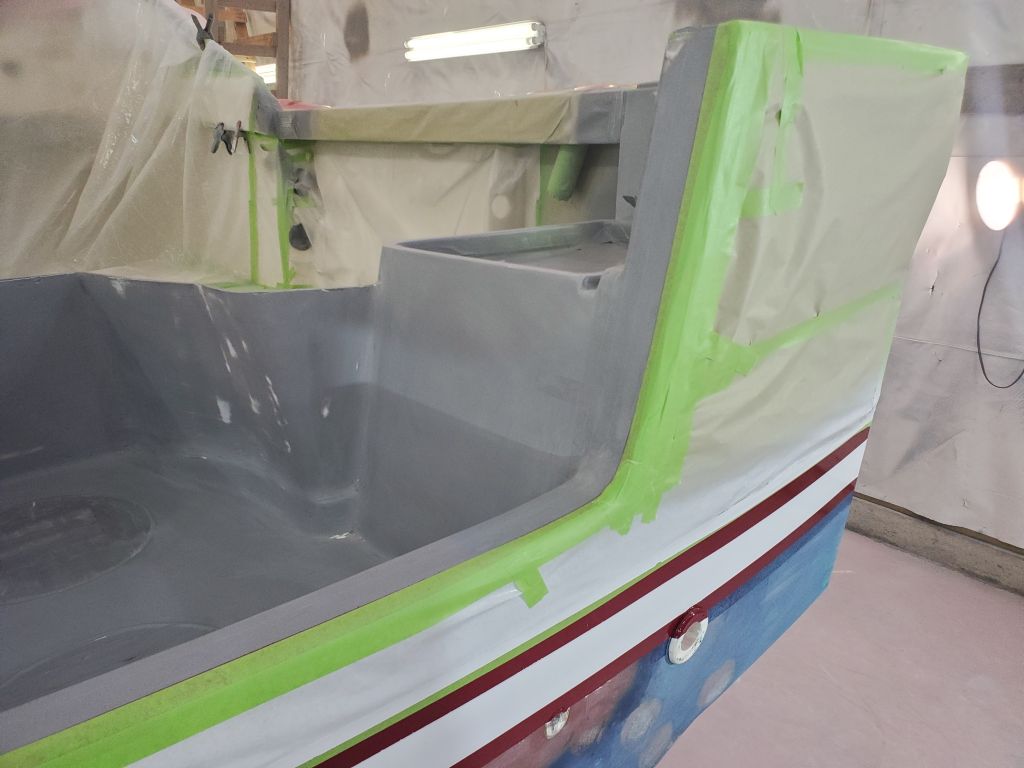
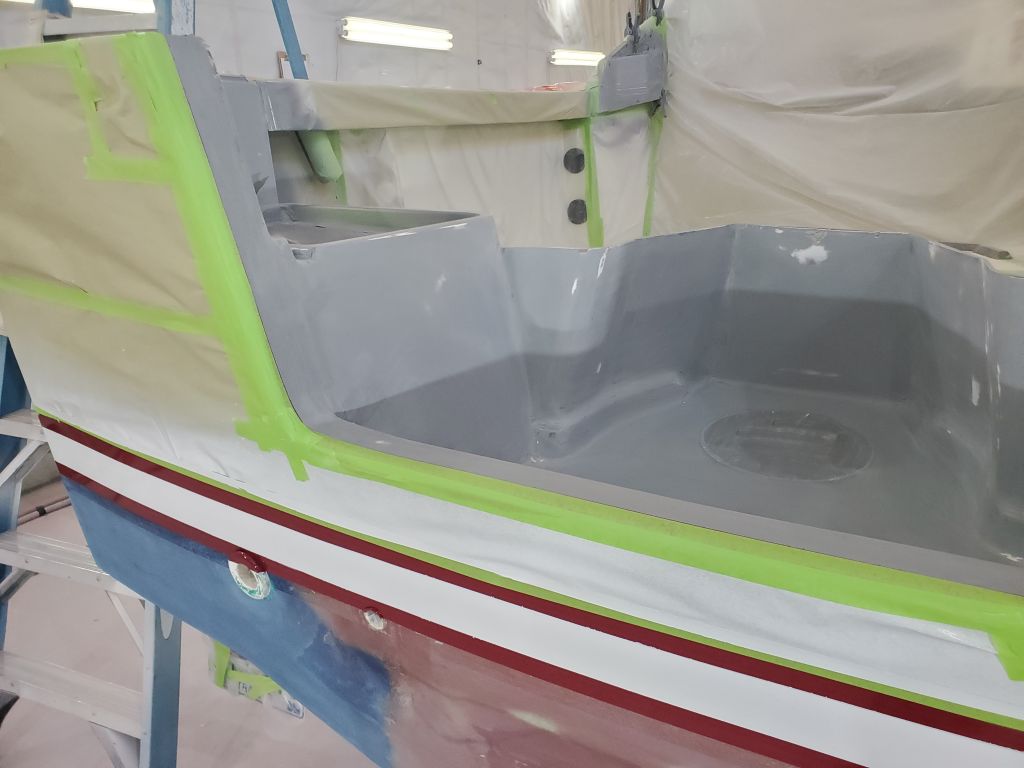
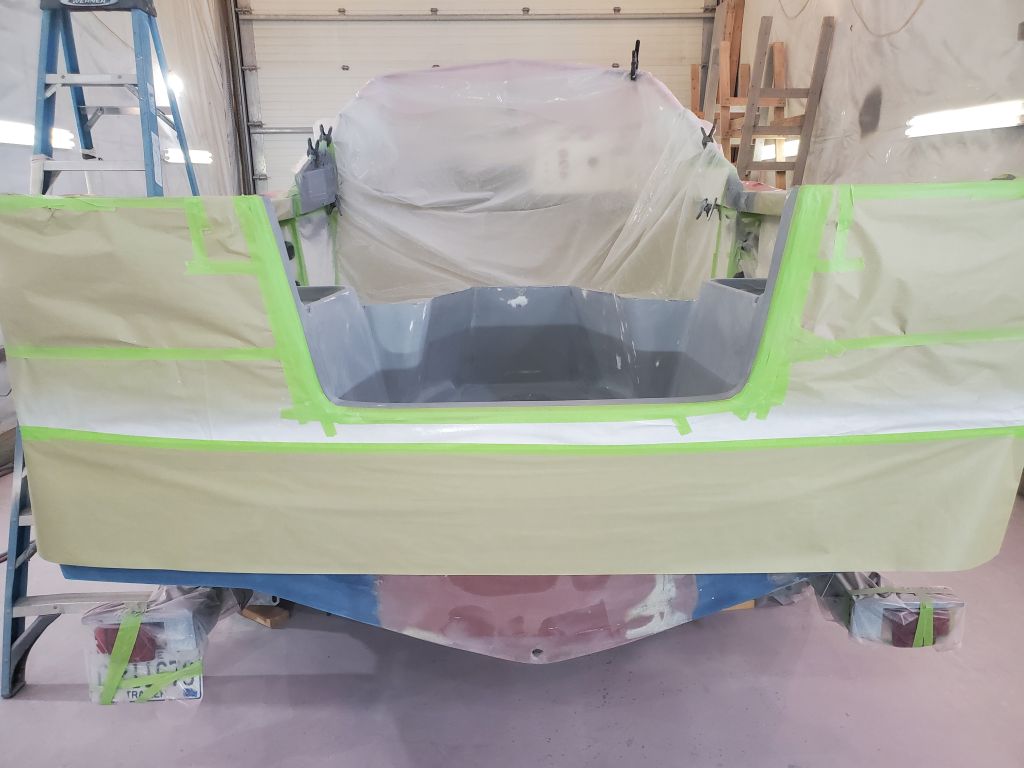
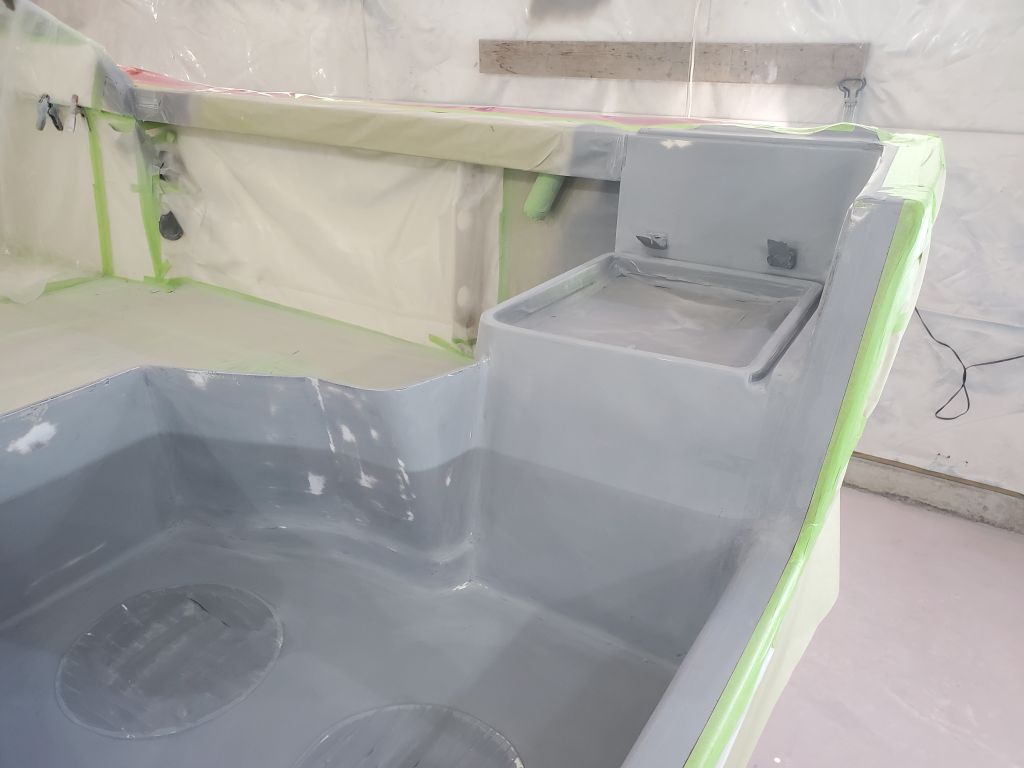
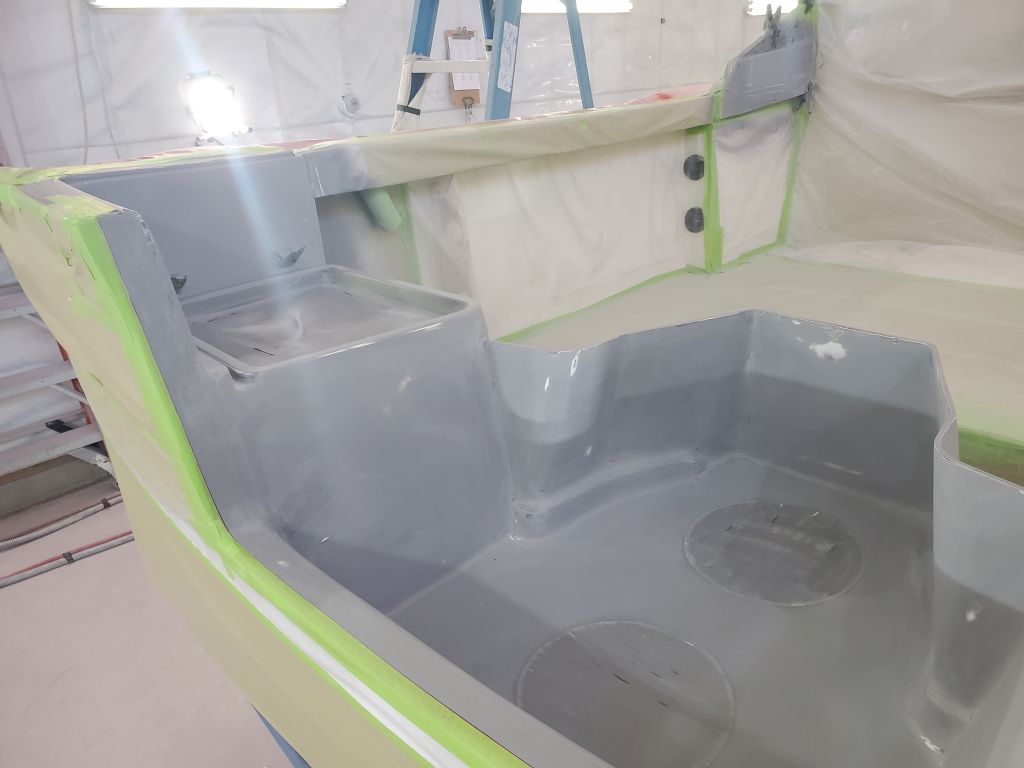
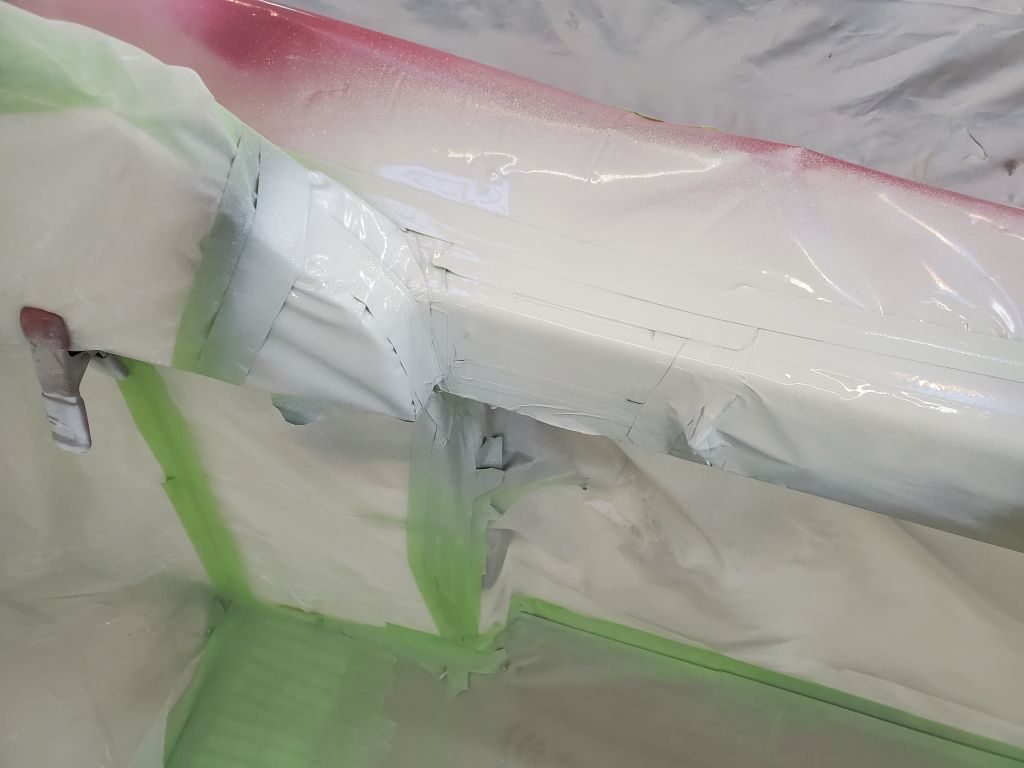
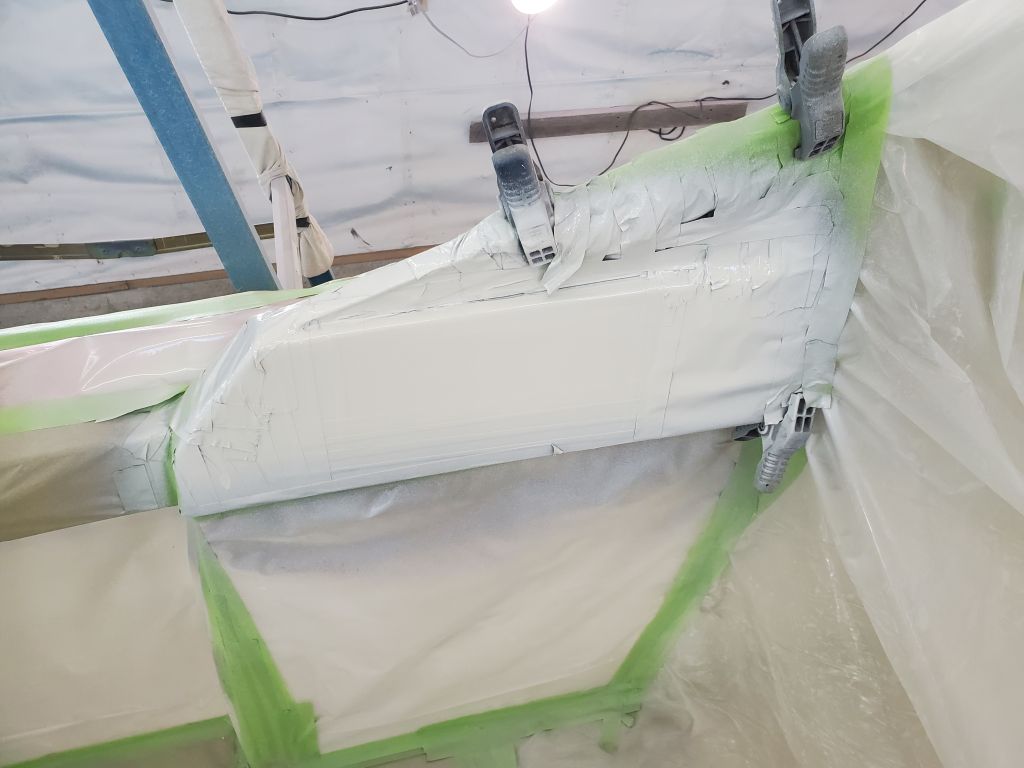
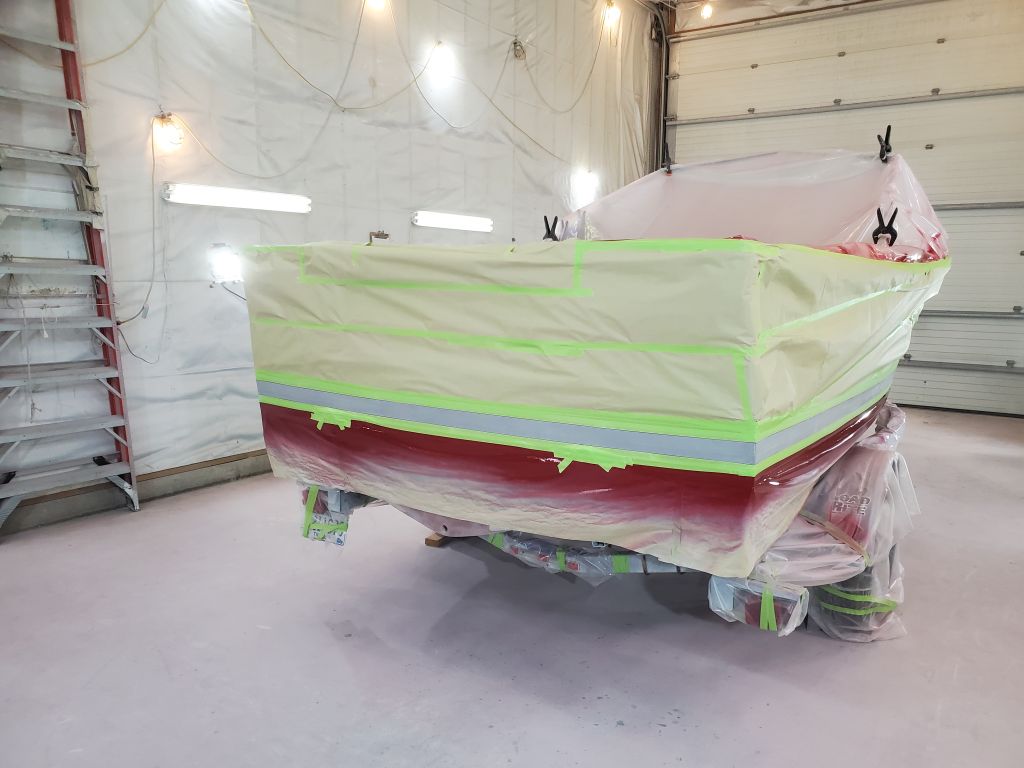
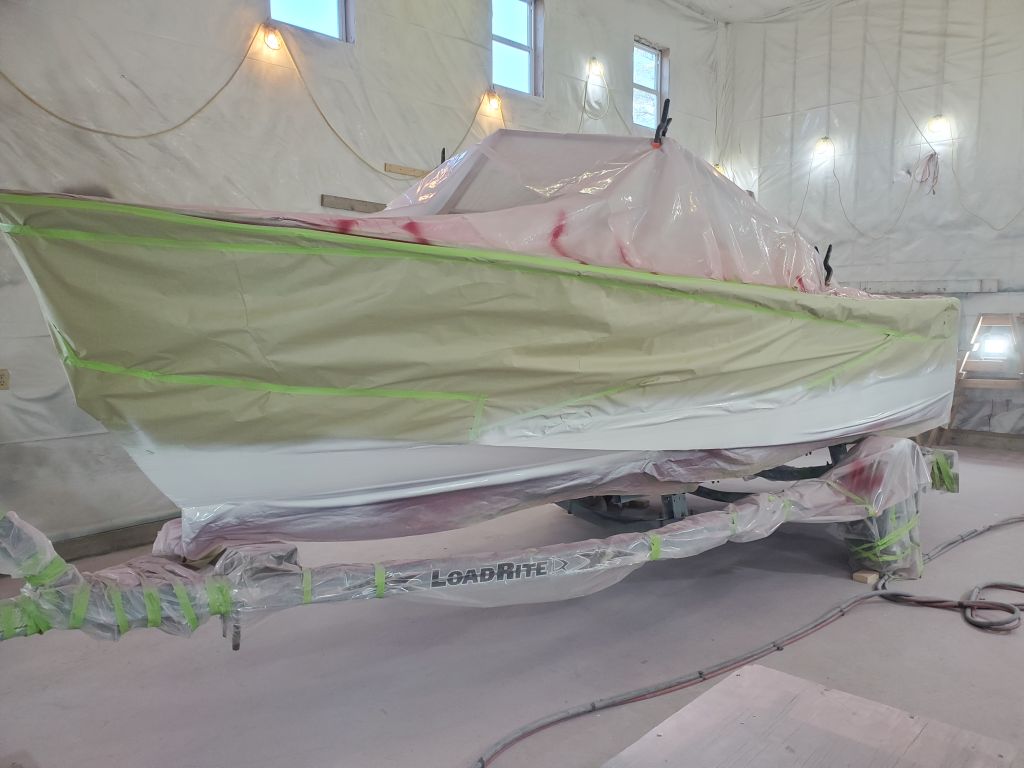
To wrap up the final bit of prep work, I applied plastic over the cockpit, securing it to the rails on each side and clamping it to the windshield.  The forward end didn’t need to be fully masked along the entire edge since the boat was already covered beneath, but at the sides and after ends I masked the plastic securely in place in all areas.
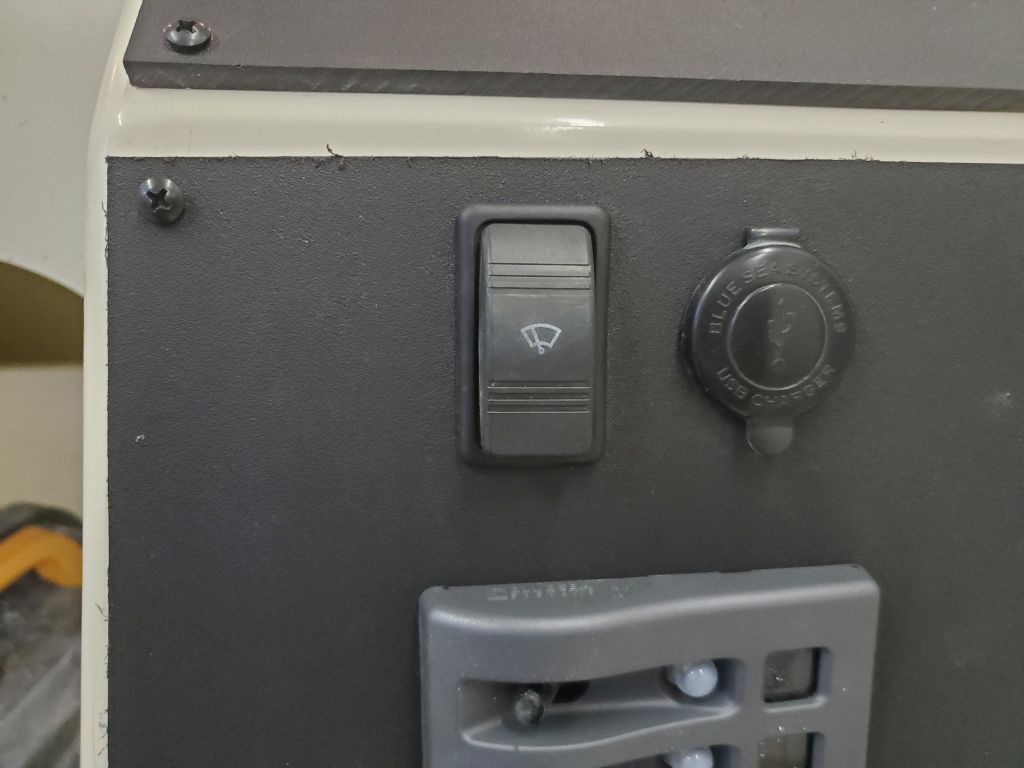
I wouldn’t be painting for several days, but I collected the paint materials required for the work ahead, and set up extra lighting in the shop that I use to illuminate the hull so I can keep track of where I’m spraying.  Final-final preparations, including a last solvent wash and tack-off, would await the actual painting day. coming after my absence for a few days.
Holby 50

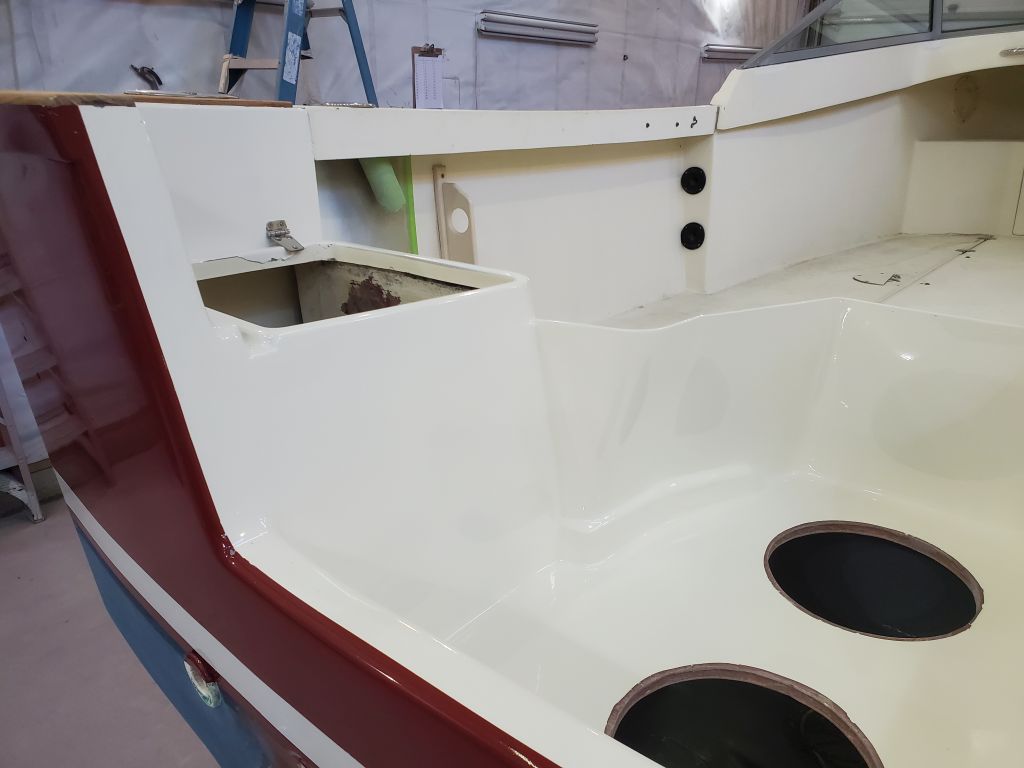
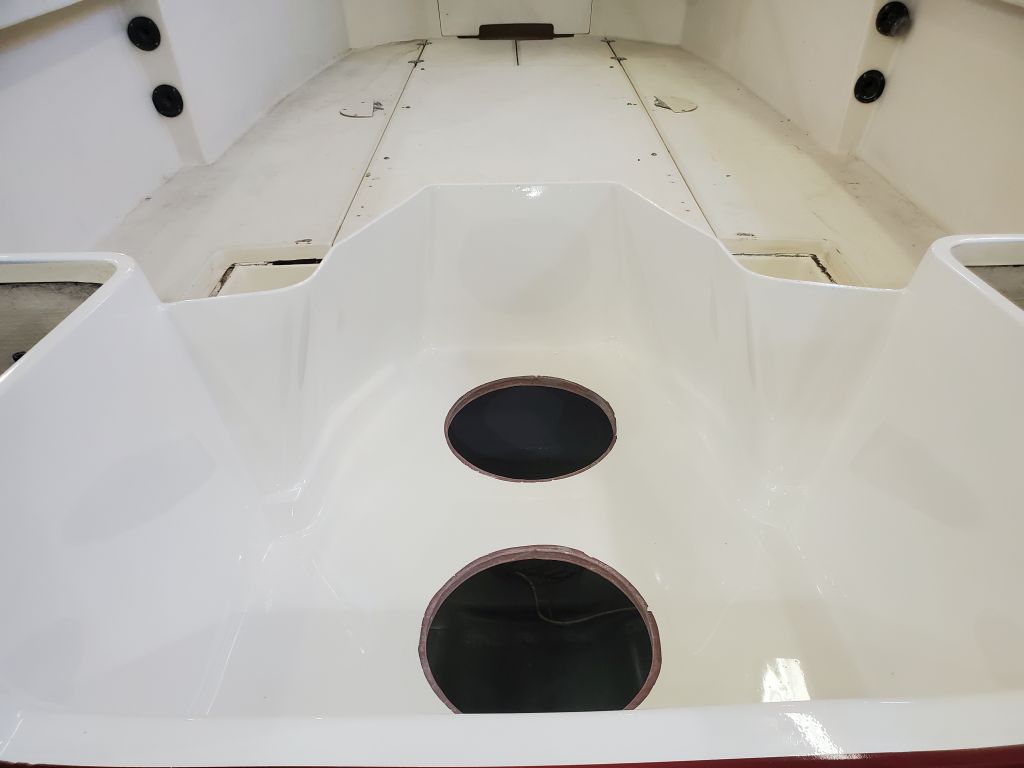
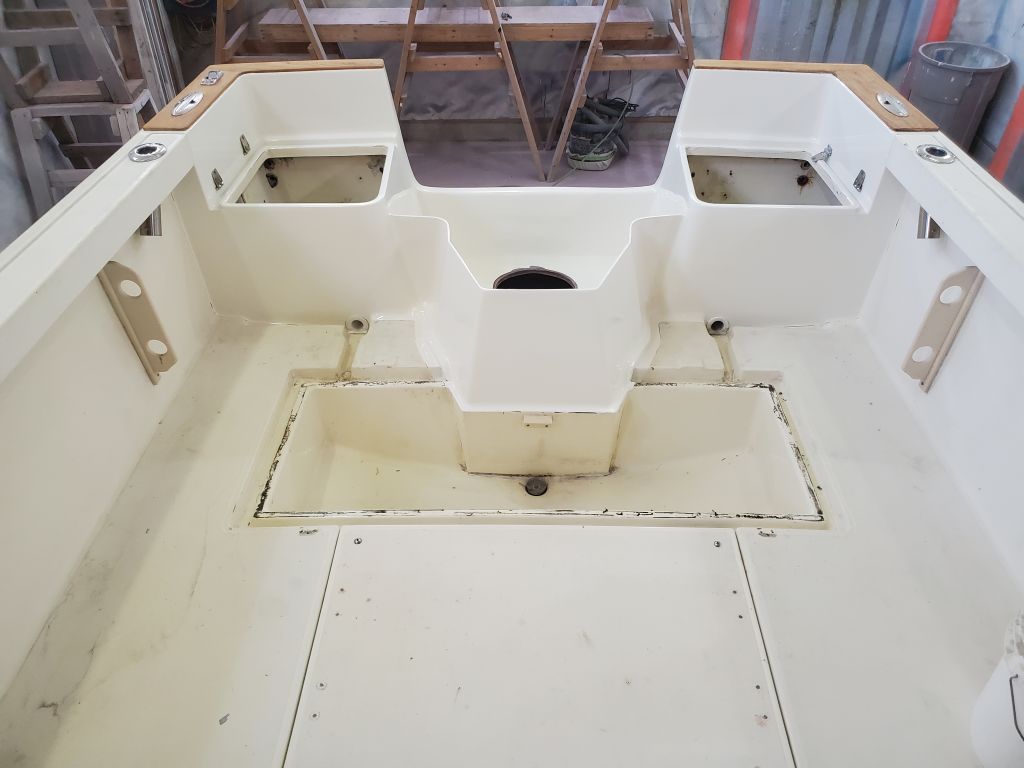
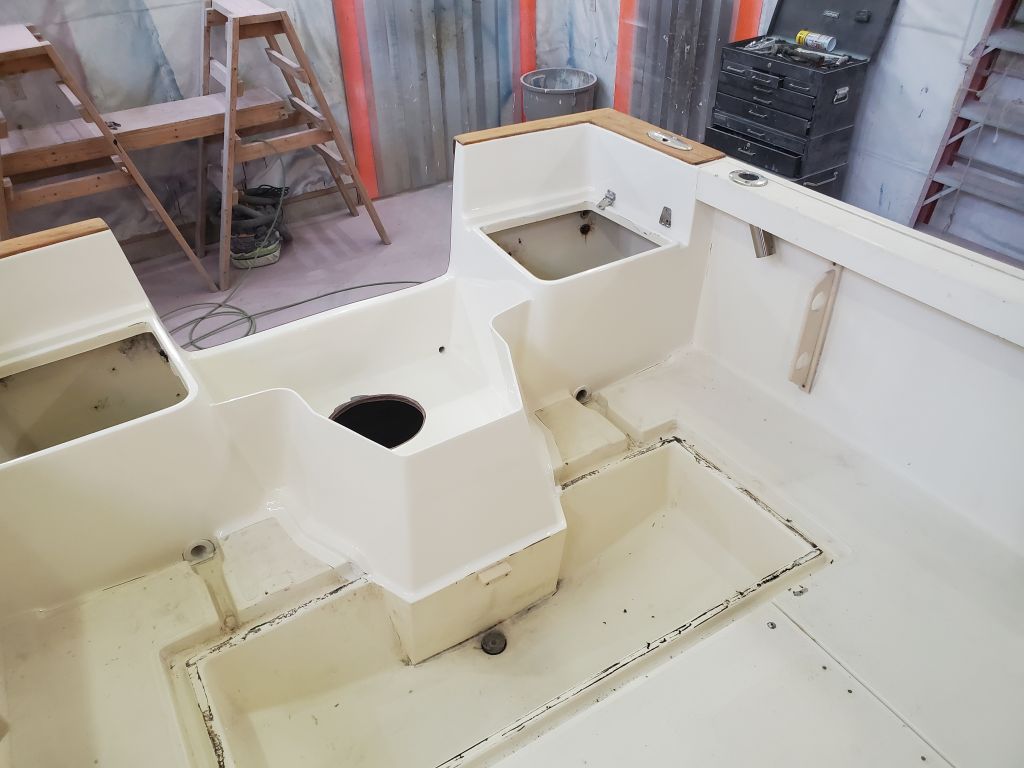
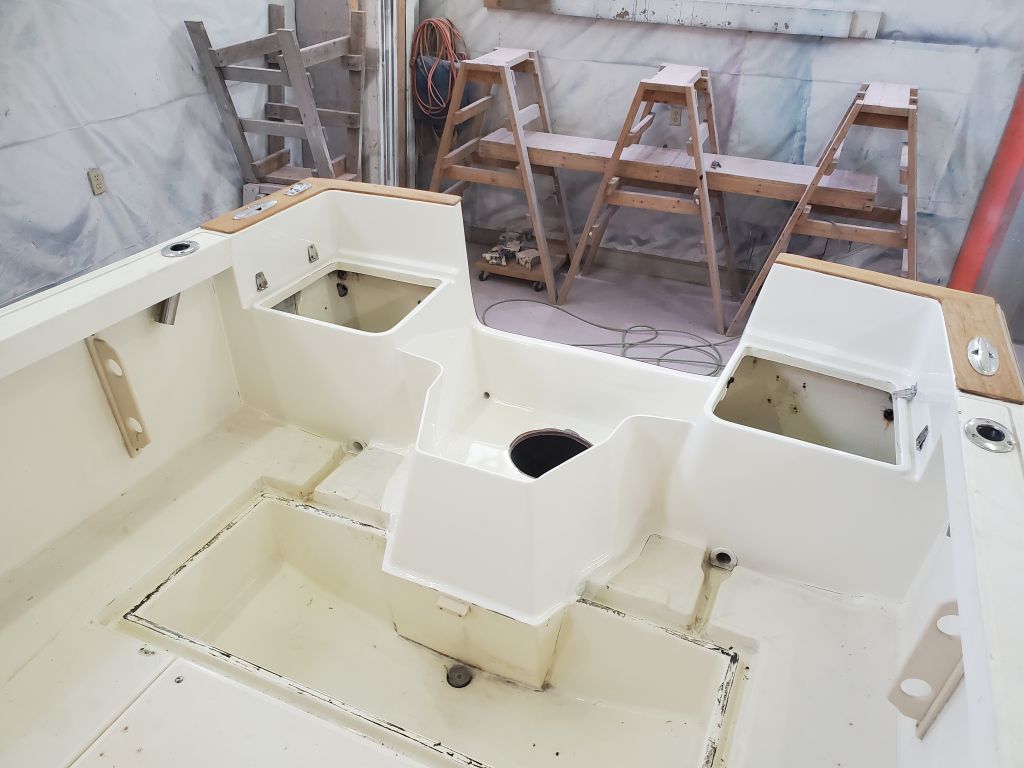
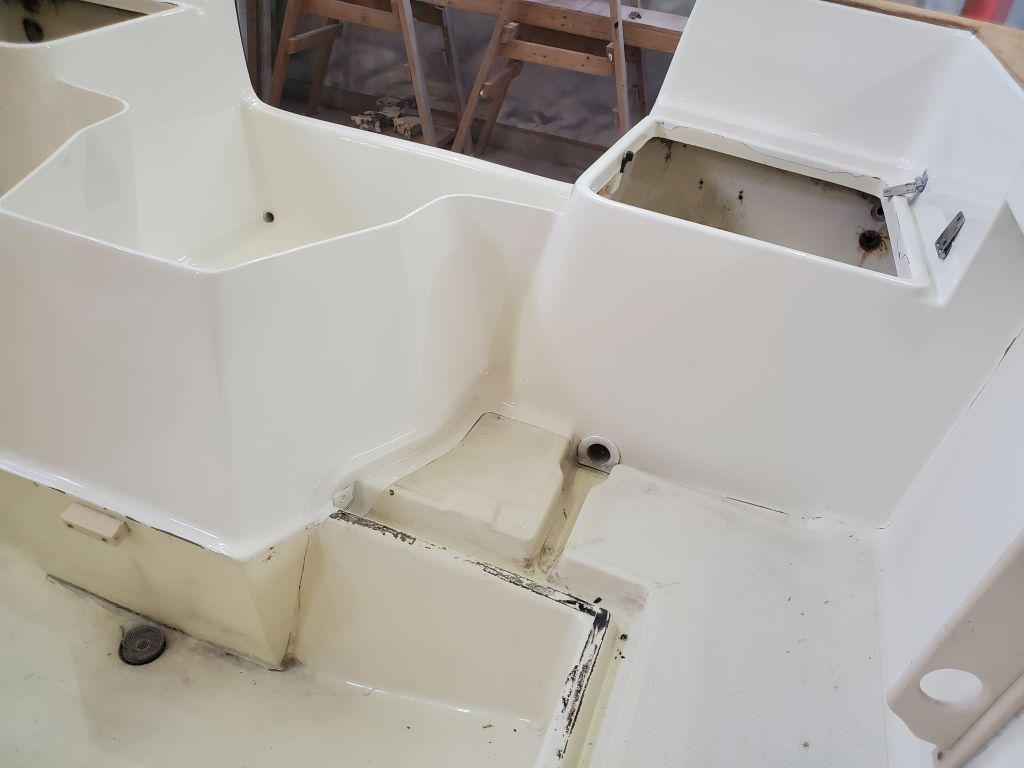
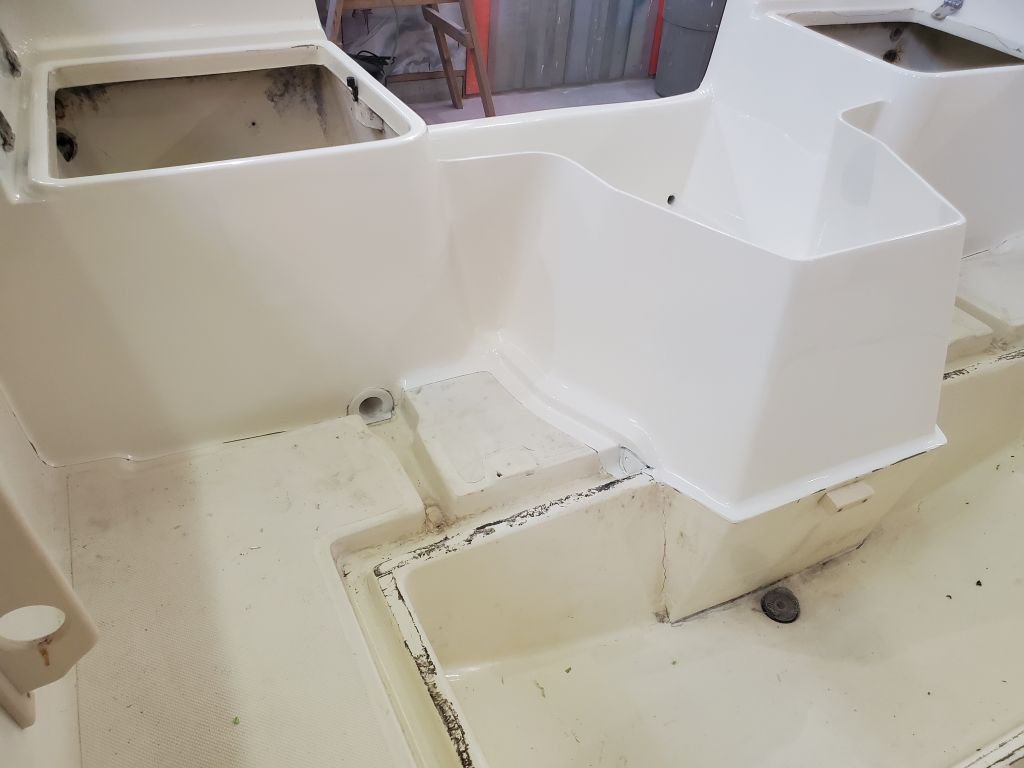
After a morning appointment, I had the afternoon ahead to make some progress on the job.  There was a little detail sanding to take care of in the various inside corners and thereabouts the cockpit and outboard well, which I took care of first.
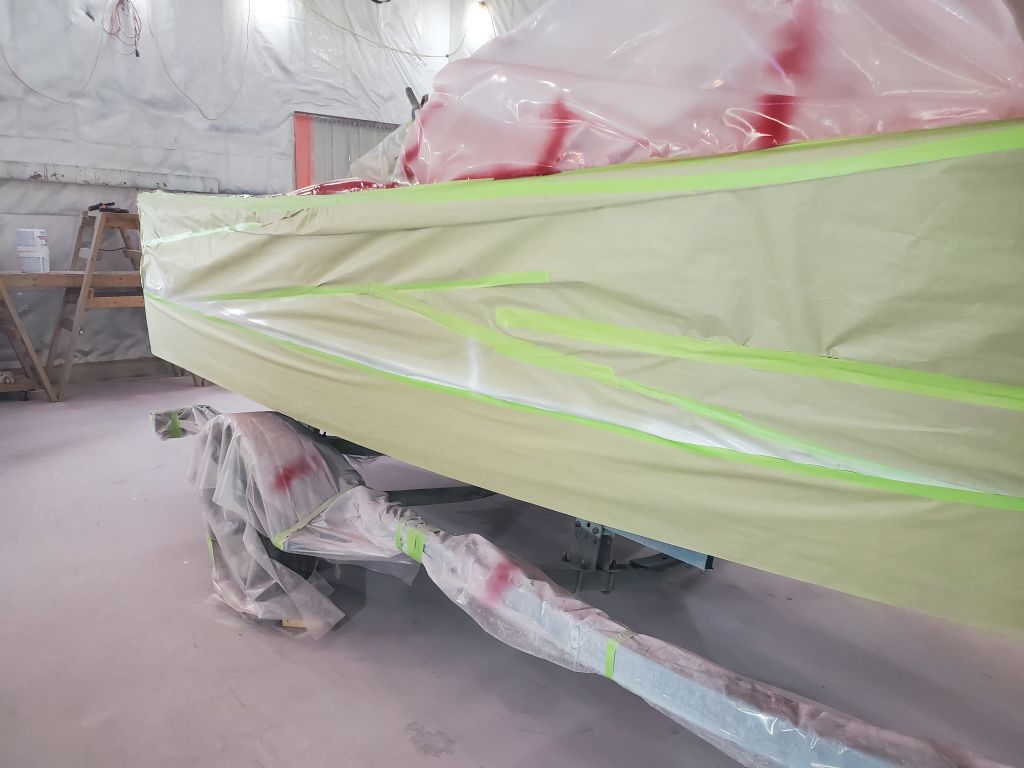
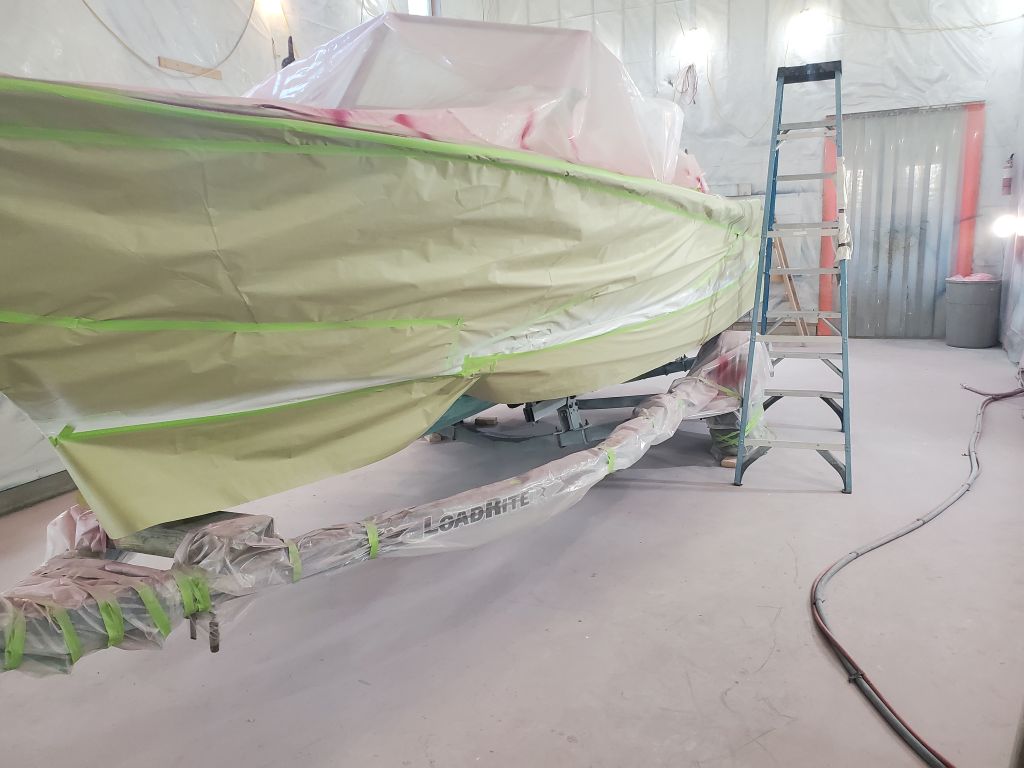
Afterwards, I laid out and masked off the boottop in preparation for painting the topcoat on the hull itself.  I used the various measurements I’d taken and noted earlier to recreate the crucial points from the original striping, and masked off between them, covering the area and creating an analog for how the final stripe would look if one wanted a dull gray and lime green color scheme.

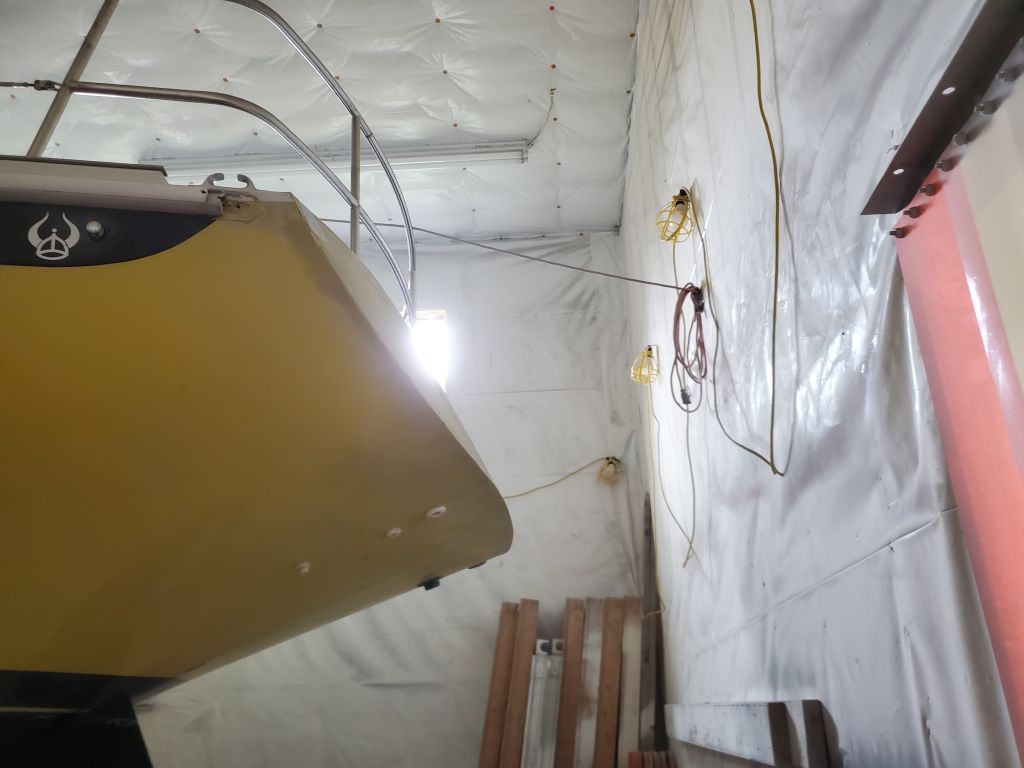
I’d considered, during the time sanding and other mindless chores, the order in which I should attack the final painting, taking convenience and logic into consideration as much as possible.  At some length, I ultimately decided to paint the hull first, then the boottop, and finally the deck areas.  I thought this would end up being the most efficient in terms of masking and other requirements, which masking would become increasingly critical as the final coatings were applied.  So to begin closing off the cockpit against hull overspray, I closed off the new transom opening, masking a clean line about 1/2″ in from the transom to represent the seam between hull and deck paint, and covering the remainder of the opening with masking paper.

This brought me to the end of the day, but next time I’d finish up with plastic sheeting over the rest of the cockpit and other prep.  I had to be away from the shop for several days coming up, so topcoat wouldn’t happen till my return, which gave me the luxury of a slow lead-up, spread over a couple leisurely days, to the final event.

Holby 49

Starting in the cockpit, then working my way around the hull, I sanded the fresh primer with 320 grit by machine and hand as needed.

After a break for an appointment away from the shop, I returned to clean up the boat and shop, the usual combination of sweep/vacuum/blow-down/water rinse (floor only), followed by an initial solvent-washing of all the painted surfaces to prepare for the next steps.  With the dust cleaned off the primer, it highlighted a few areas that would require a bit of touch-up sanding that I’d do next time.

Holby 48

After final preparations, over the course of the morning I applied four coats of epoxy-based finish primer to the after cockpit areas (i.e. outboard well) and the hull, leaving the primer to cure overnight.

Holby 48

I spent the first part of the day working on some fine-tuning and sanding in some of the toughest spots, the inside corners of the new work around the outboard well.  I’d mainly sanded these during my last session, but several places required some additional work to complete.  Afterwards, I vacuumed the boat, swept the floor, blew down the shop, and solvent-washed the deck and hull to remove the final dust.

I wet down the floor and trailer to settle the remaining dust, then finished up other final steps to prepare for finish primer, including some minor tape repairs here and there, preparing paint and spray equipment, and, finally, a last solvent-wash to clean all the surfaces before primer next time.

Holby 47

Getting a bit ahead of things, I took advantage of a quiet weekend morning and sanded all the fine filler I’d applied last time, smoothing the surfaces once more with 220 grit largely by hand in the outboard well and environs, and by machine on the hull.  There’d be some final fine-tuning to come next time (mainly in the awful inside corners all around the outboard well), but I got the worst of it done, only having so much sanding mojo available on a Sunday.  This short work session would make life easier as I worked to finish up the prep and get ready for finish primer.

Holby 46

With the high build primer well-cured overnight, I sanded all areas with 220 grit paper, by machine and by hand as needed.  Afterwards, I vacuumed off the dust and solvent-washed to clean.

As expected, the primer revealed a number of areas requiring additional detail attention, mainly some of the corners in the new outboard well and the new fiberglass work.  The starboard side of the hull in particular revealed–only after primer–a number of fine cracks in the surface, which had been invisible till now.  These were of no alarm, but would require filling as well.

With an epoxy-based fine filling compound, I worked my way around the boat as needed, fine-tuning the various inside corners by hand and troweling in a skim coat elsewhere to fill pinholes, fine crazing, and other low areas.  This application, once sanded, would hopefully be the final fairing work required, but there was time built in the schedule for some additional work if necessary.

Holby 45

After final preparations, I spray-applied three coats of epoxy high-build primer on the new work in the stern, small gelcoat patches, and the hull.

Holby 44

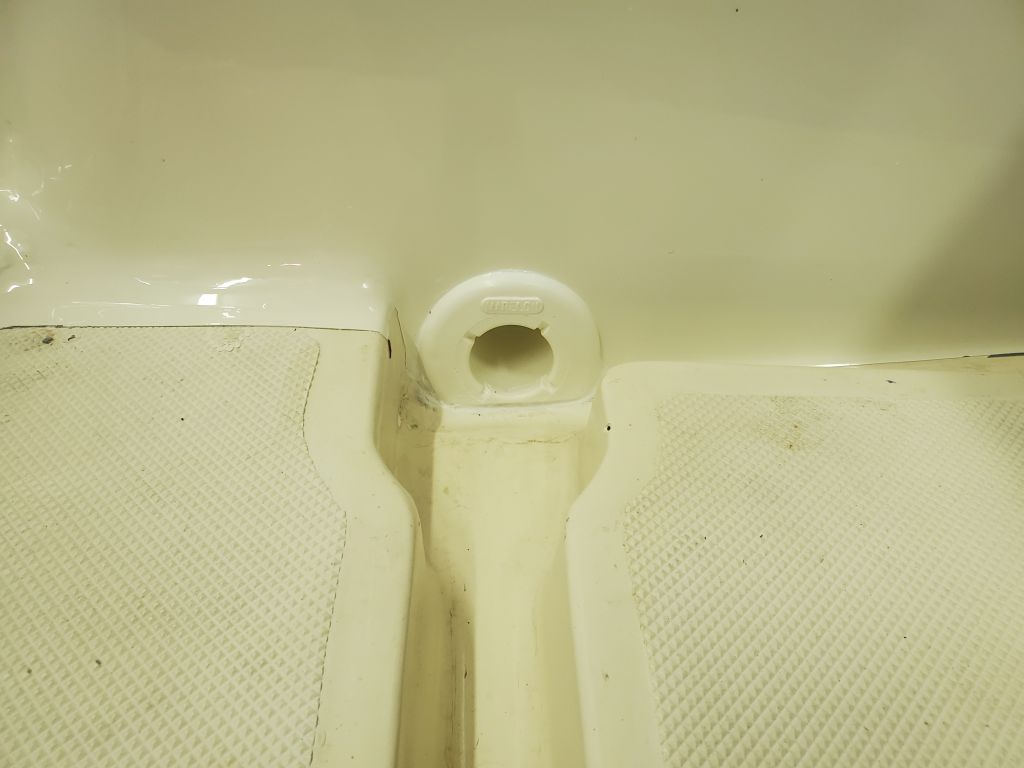
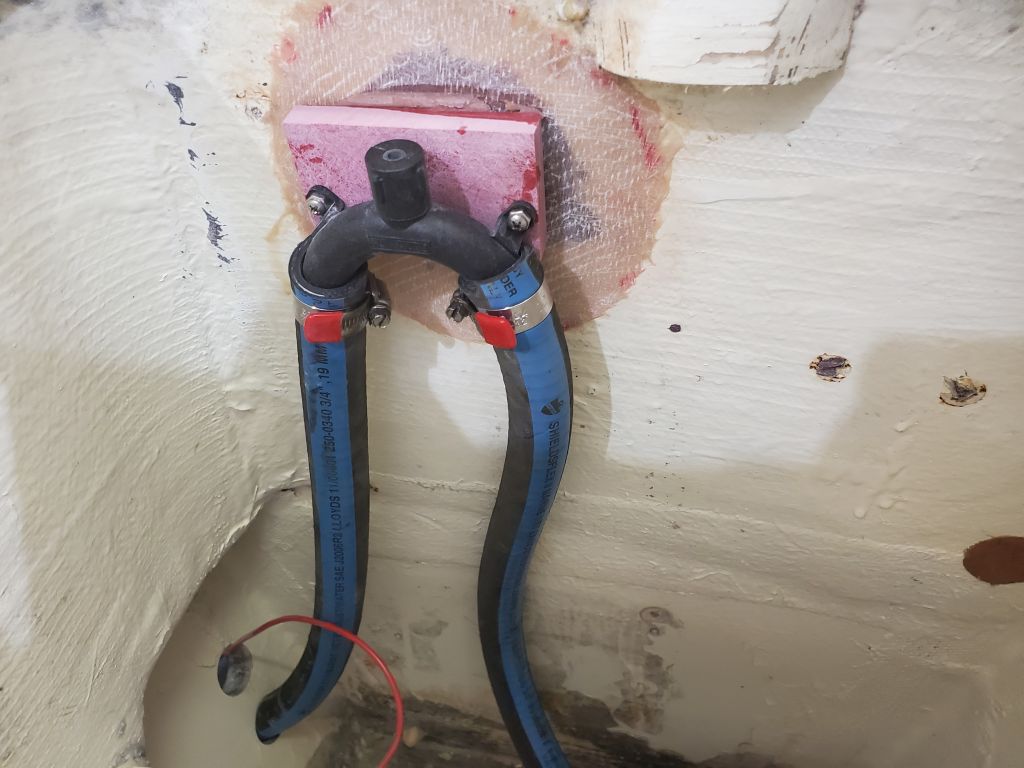
Continuing in the cockpit, first I sanded as needed the scupper openings in the outboard well, smoothing yesterday’s epoxy work.  I’d touch these up later, after high-build, along with various anticipated other areas around the boat.

finished up the masking work near the new outboard well, mainly masking off the inside of the livewell for protection and so I could stand there while spraying.  I also masked with paper several feet of the cockpit leading forward, before transitioning to plastic at the vertical edges and forward part of the cockpit.  I keep the plastic away from being directly adjacent to areas being sprayed, since the overspray on the plastic tends to flake off later and can contaminate the paint.

I ordered wider masking tape when preparing for the paint work, but it was backordered and hadn’t arrived, so I used the 1″ tape, of which I had sufficient supply, for all masking chores; this got a little silly taping over the livewell gutters, but there you are.

Next, I draped the bow and forward area of the the cockpit with plastic sheeting to protect these areas during the painting process.

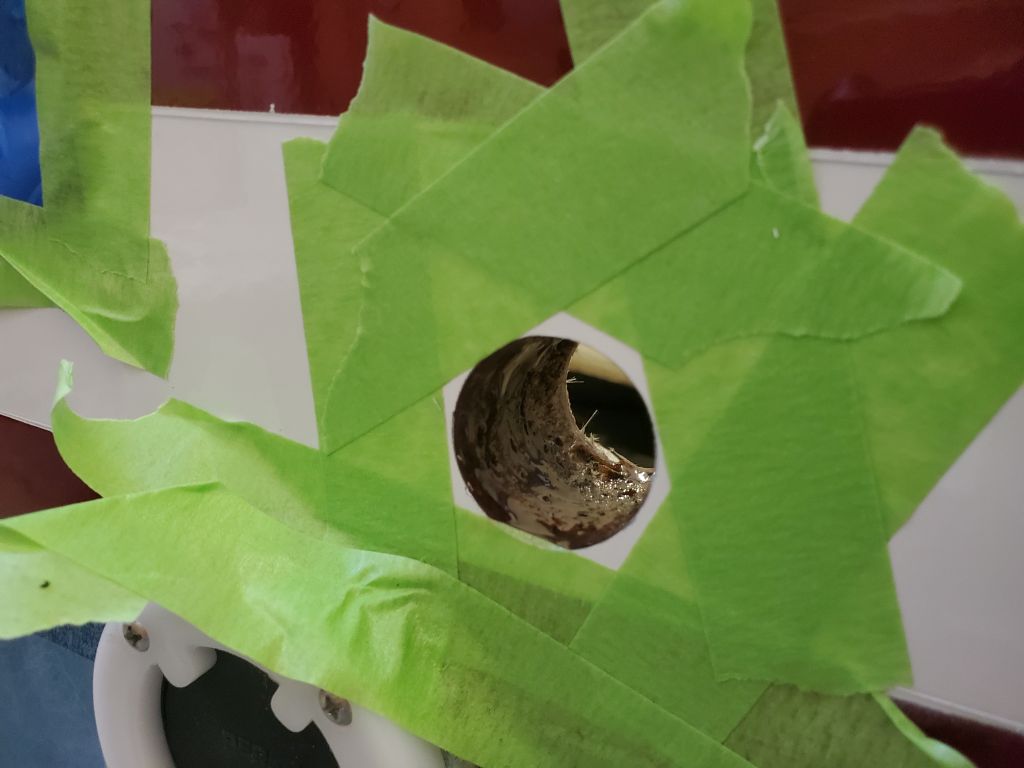
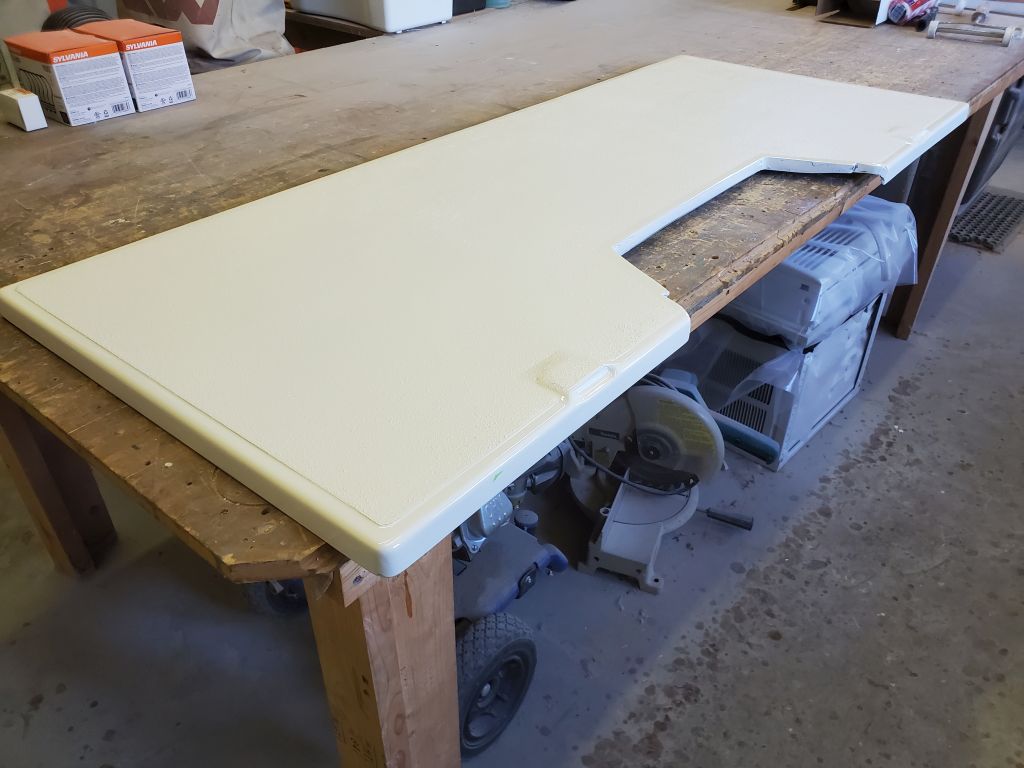
Afterwards, I finished up the masking with the two hatch openings in the outboard well, and the underside of the livewell hatch, which I’d already painted.  I also remasked the remainder of the transom beneath the new scuppers.

During the remains of the day, I prepared spray and paint equipment as needed, otherwise prepared the shop, and finished up with a final solvent wash of the hull and applicable deck areas using the proprietary solvent designed for this paint system.

Older posts Newer posts