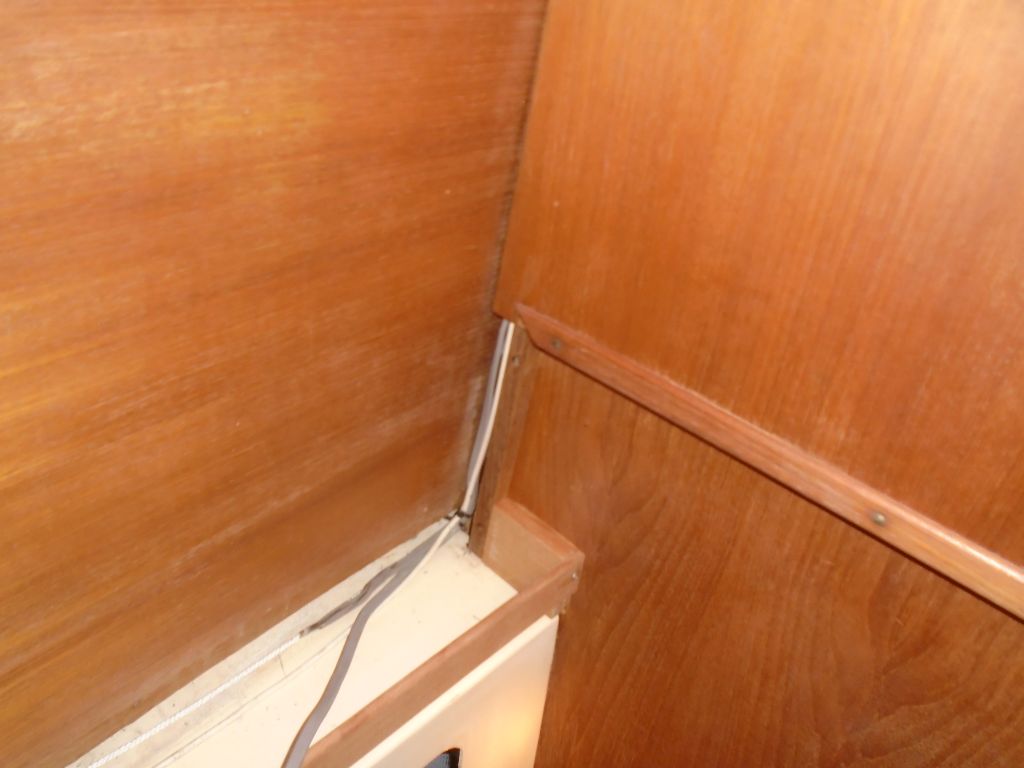
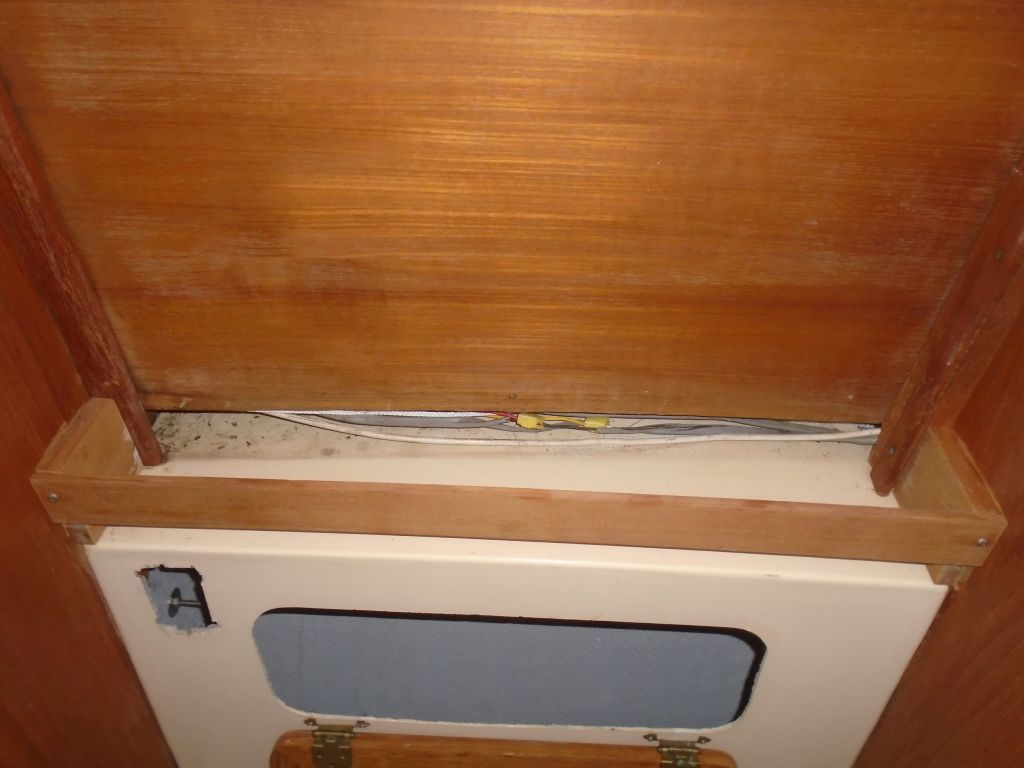
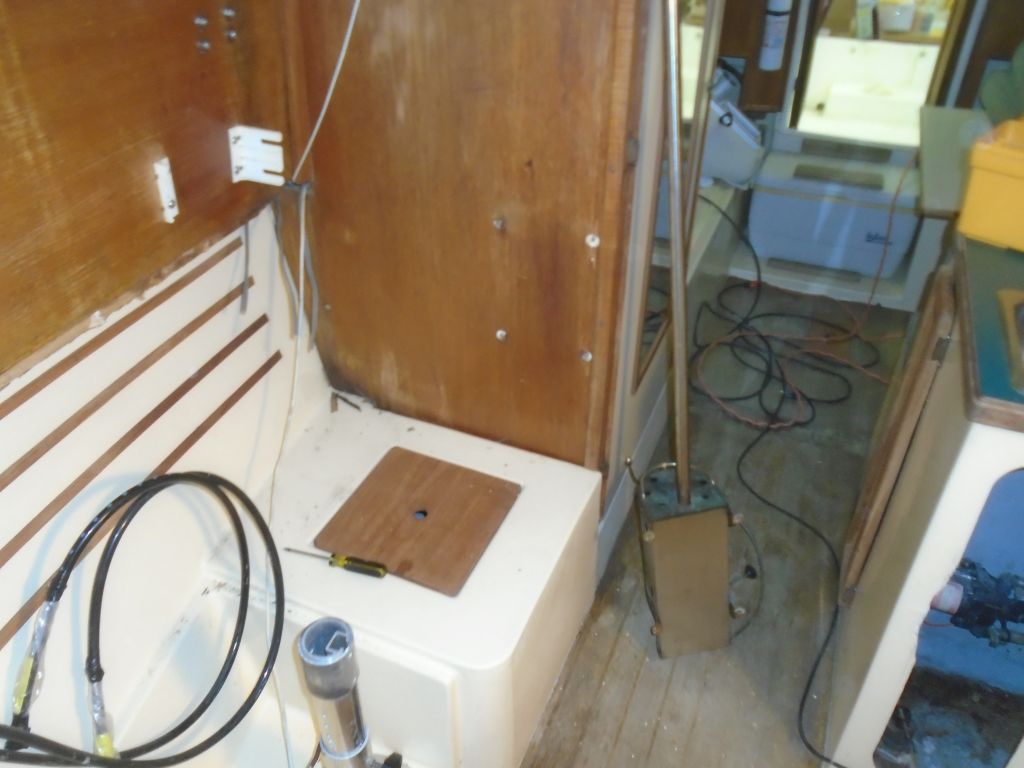
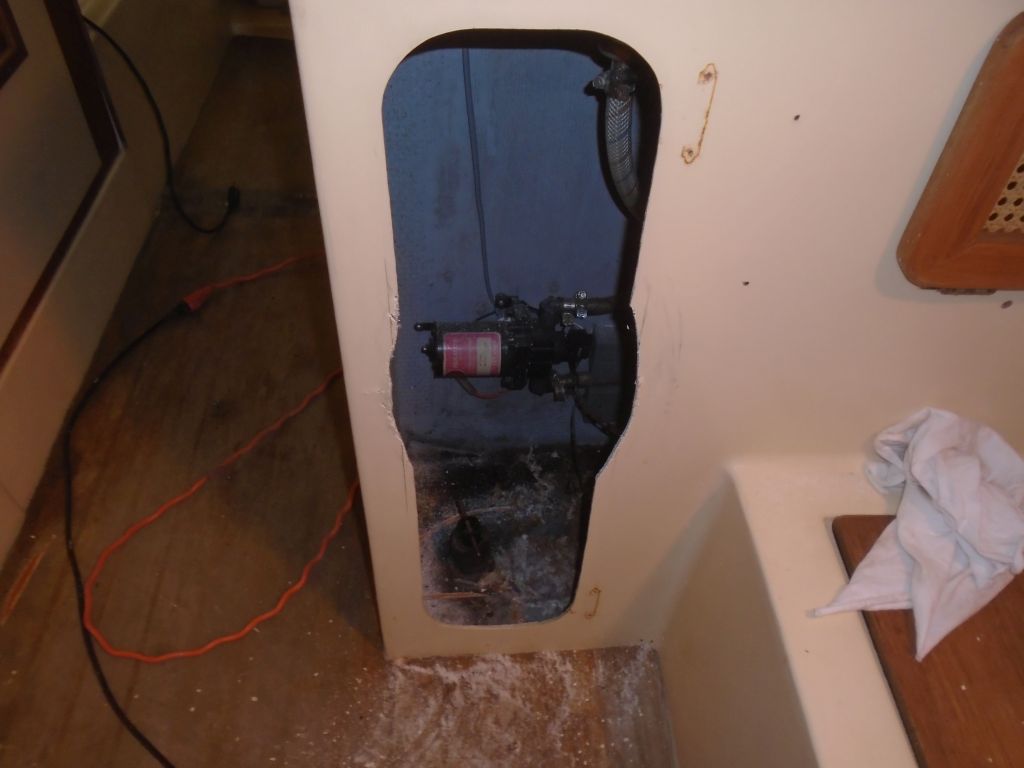
(page 166 of 167)

Salty 3

< Back to Salty

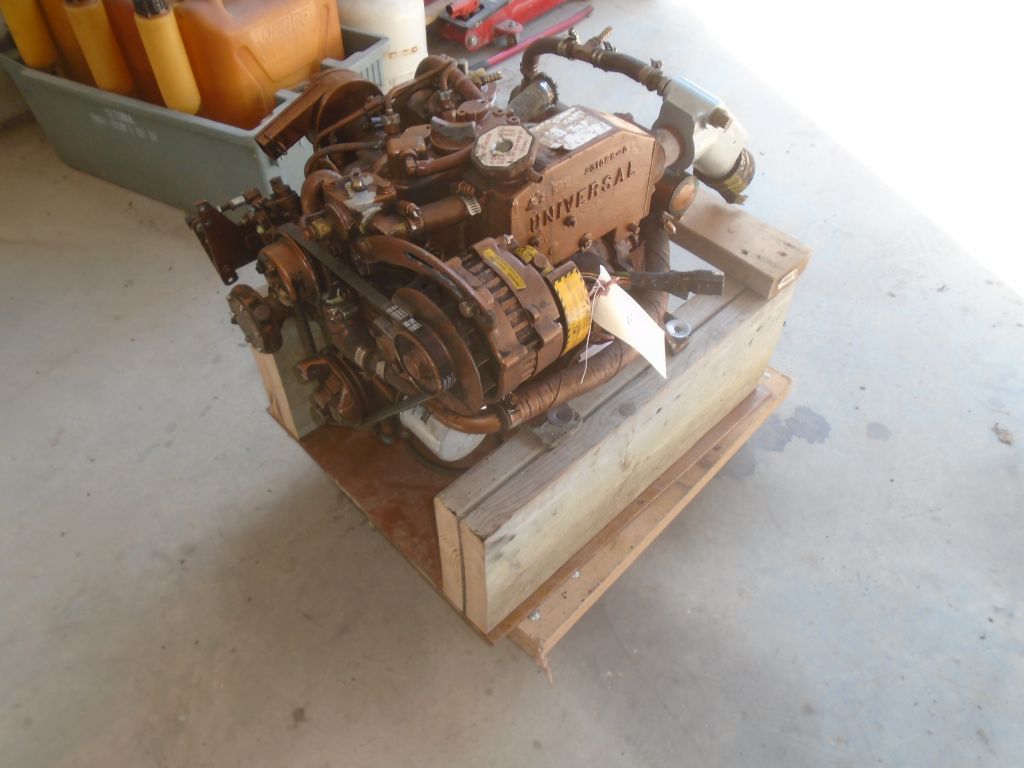
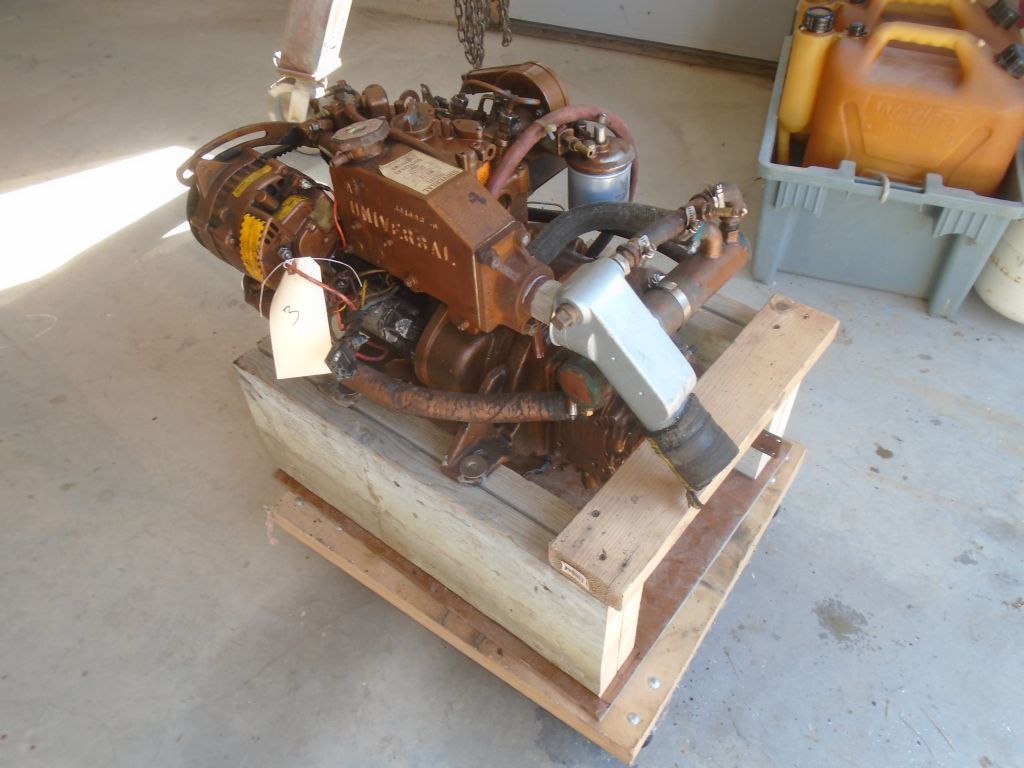
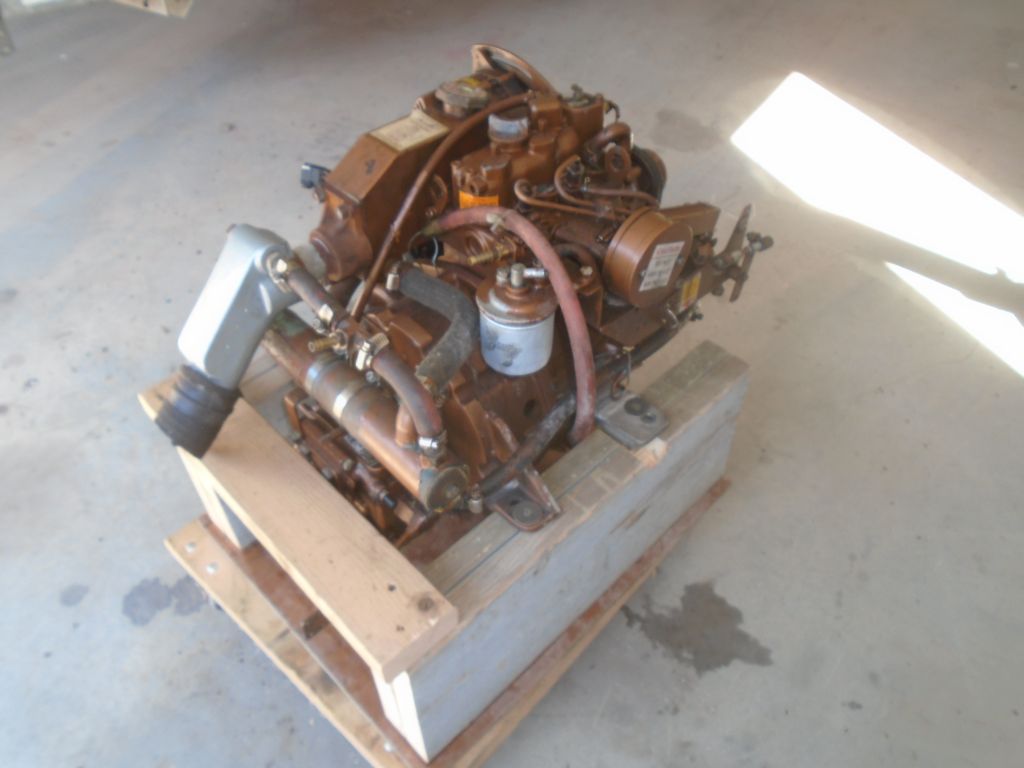
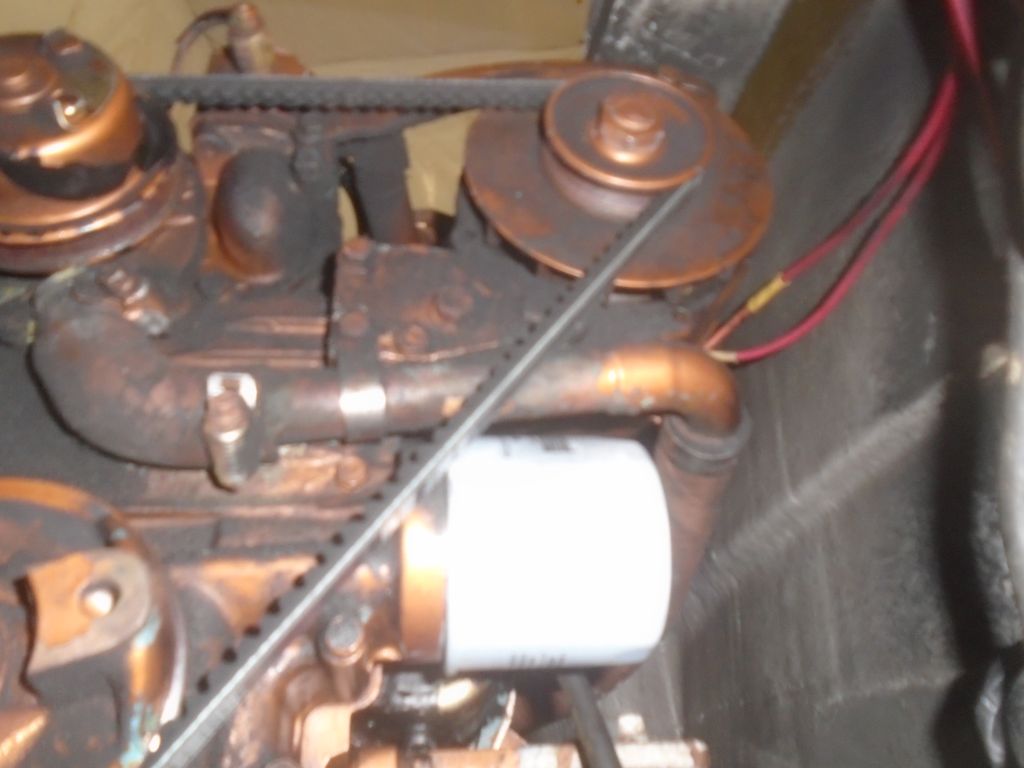
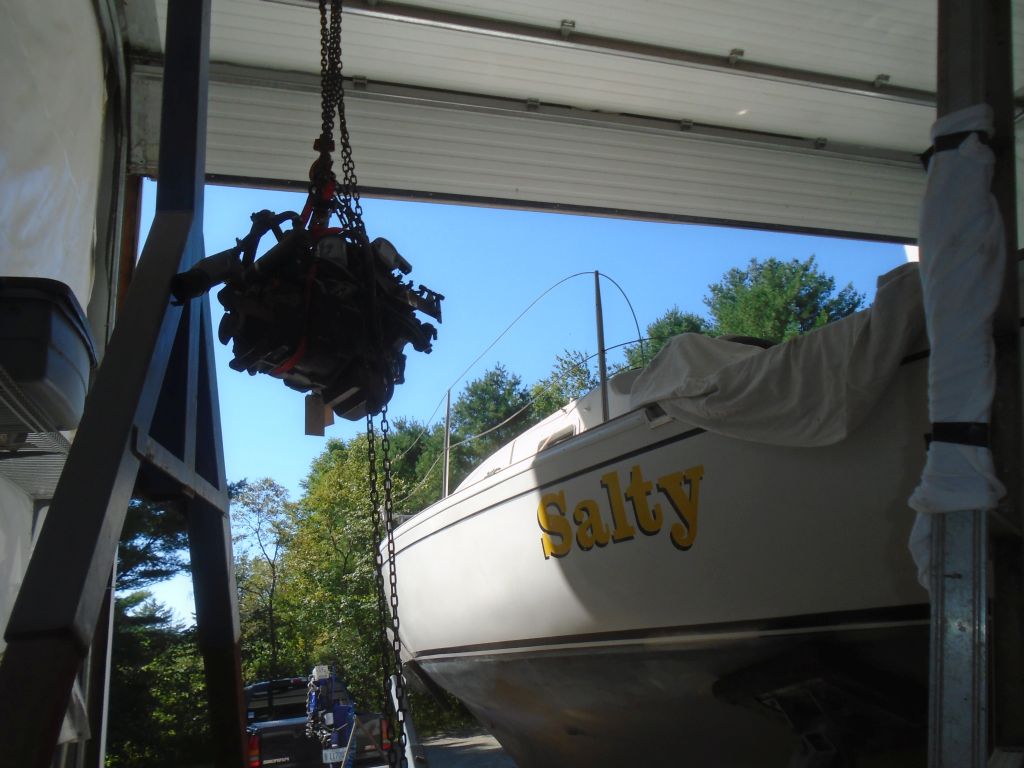
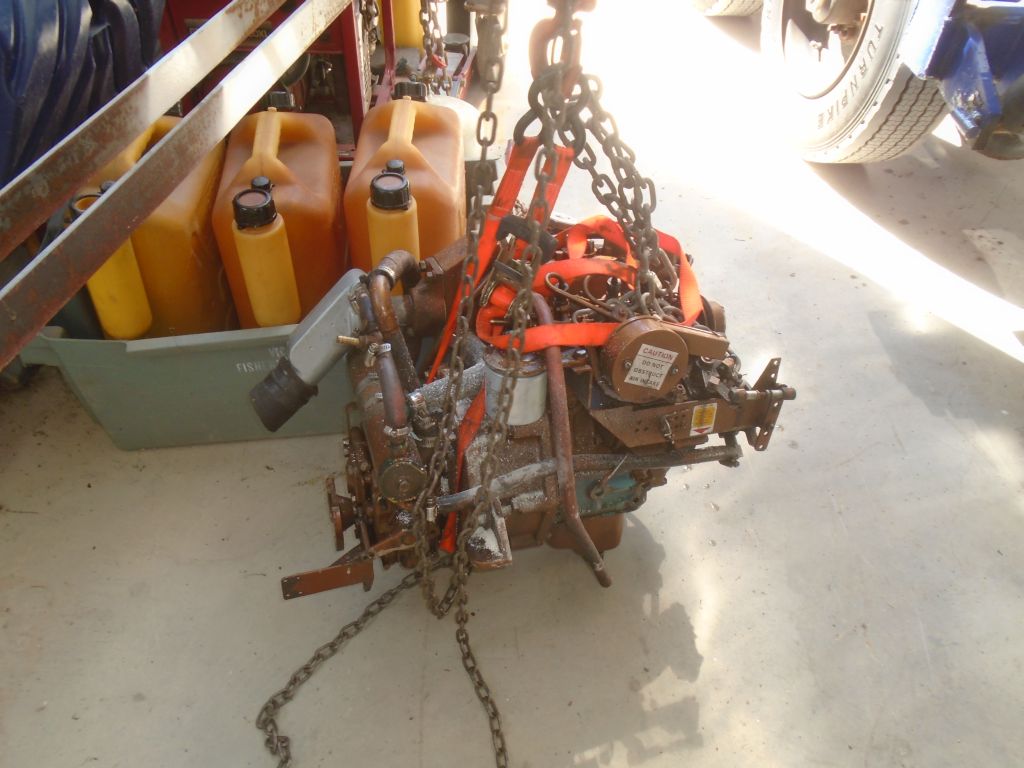
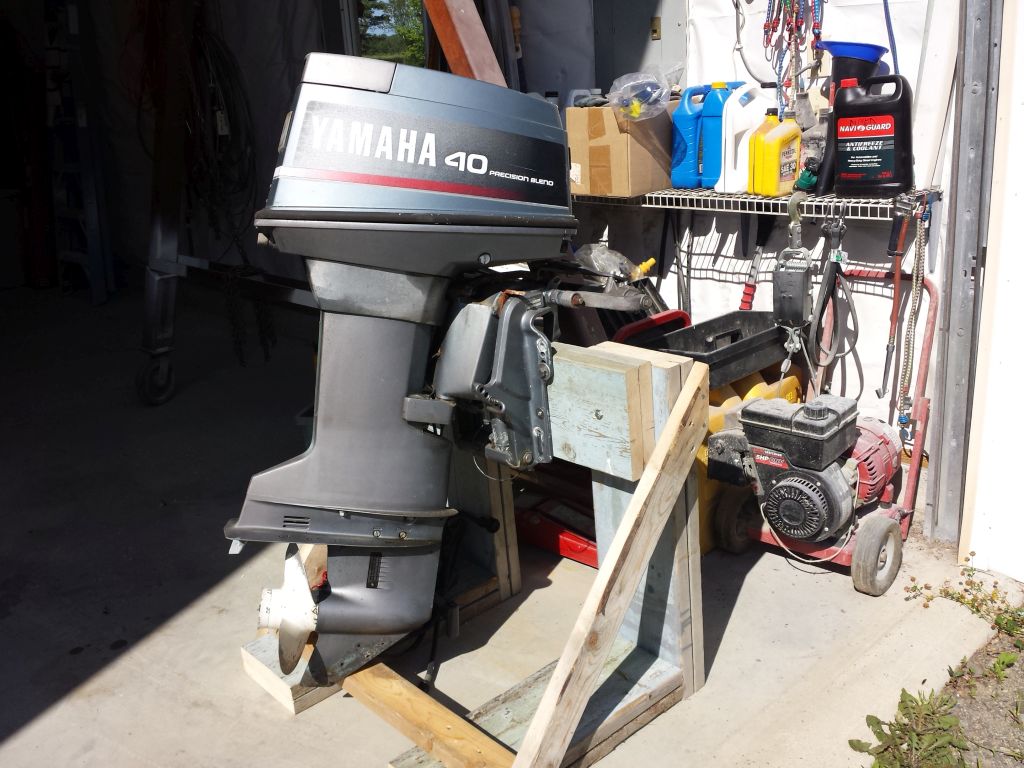
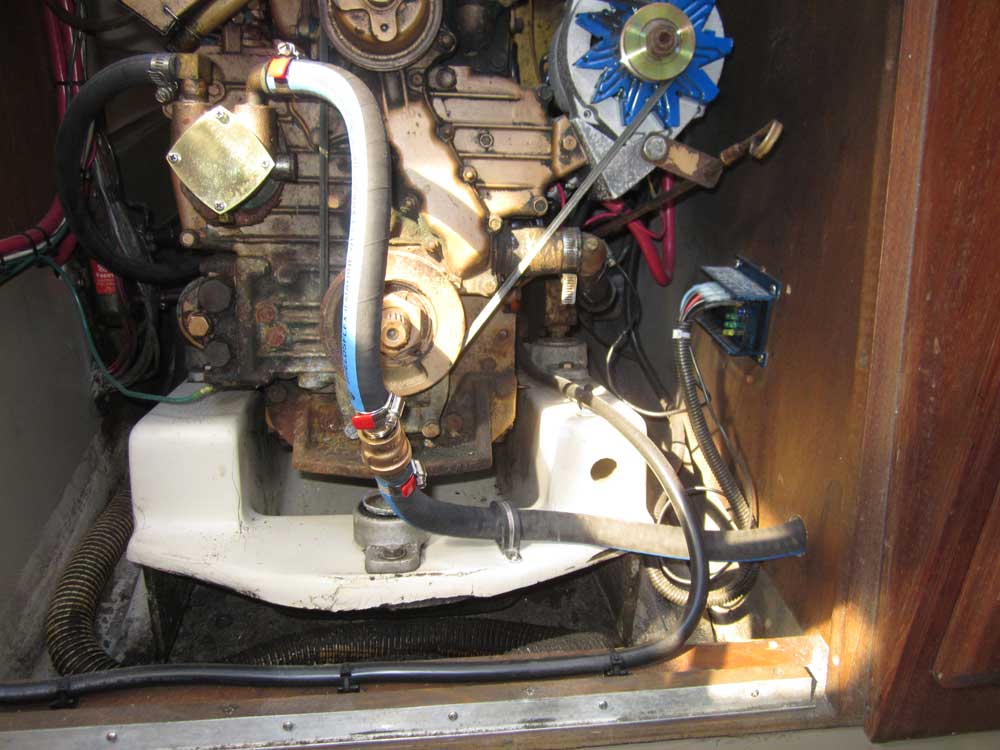
To hold the engine securely for storage and eventual transport to the rebuild facility, I put together a simple but strong stand for the engine, reinstalling the forward mount I’d taken off earlier.  Once the engine was secured to the new stand, I reinstalled the coolant hose, alternator, and engine belt that I’d removed in order to get the engine out of the boat.

Total Time Billed on This Job Today:  1.25 Hours

Aventura 1

< Back to Aventura

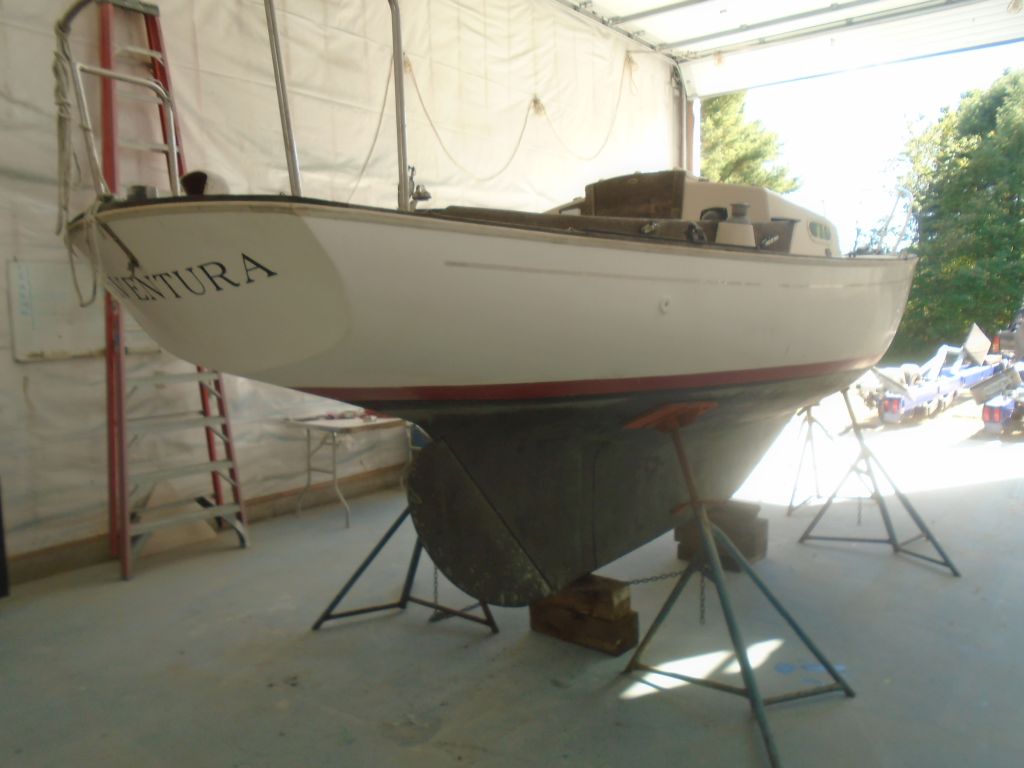
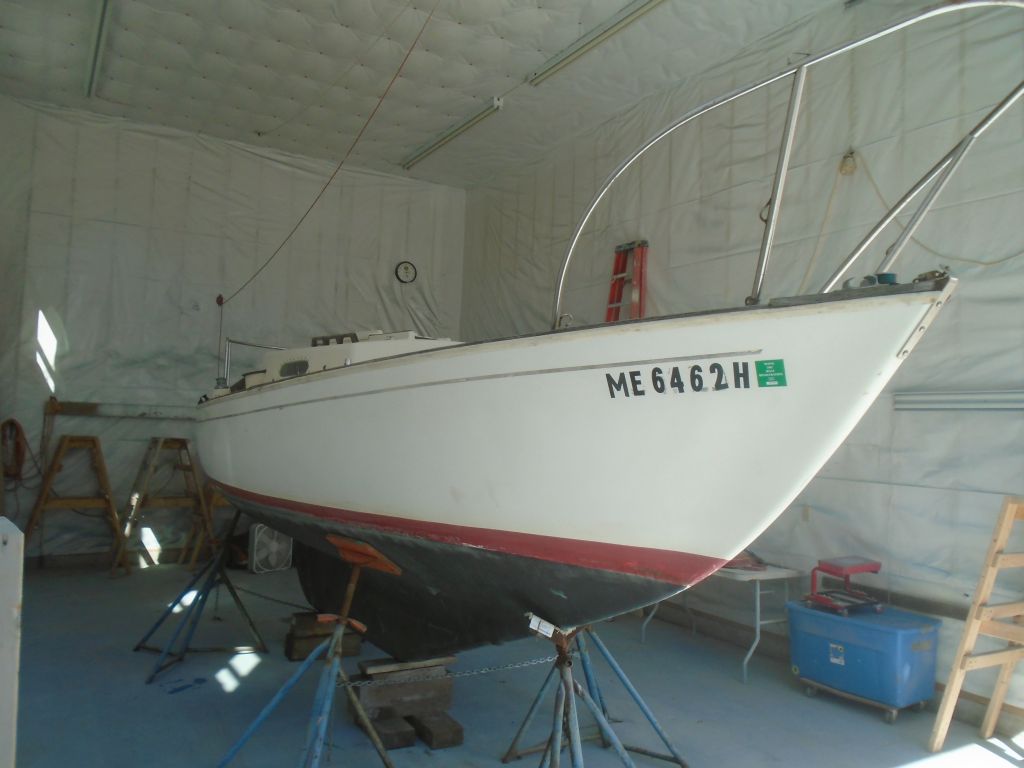
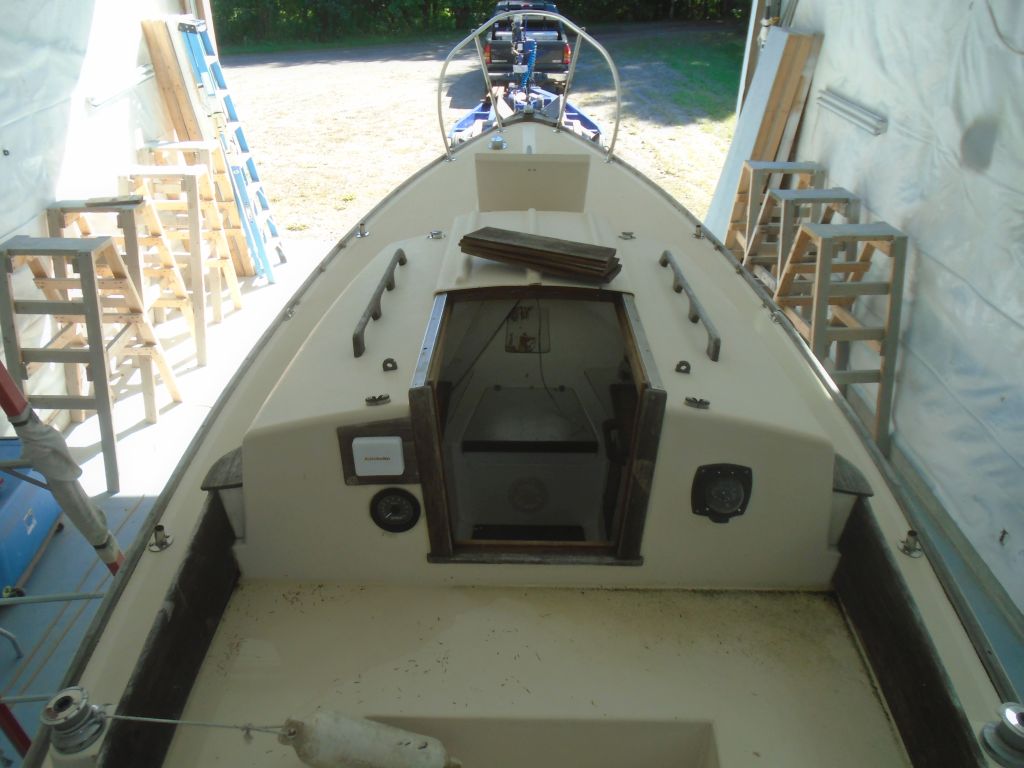
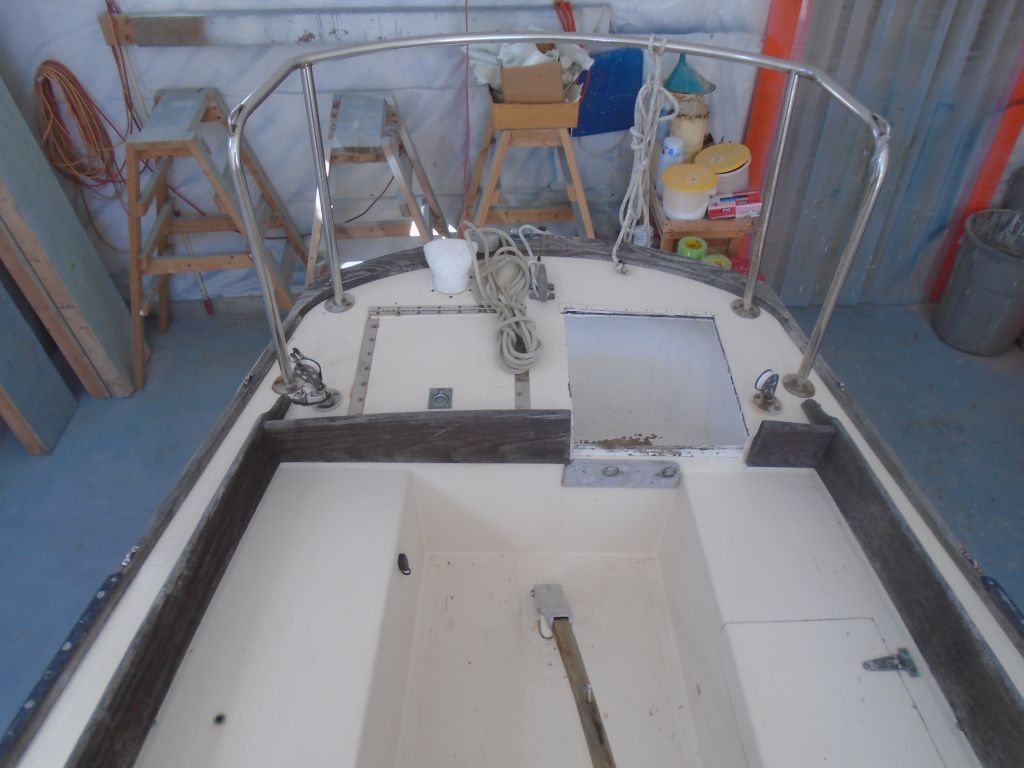
With the restoration project about to begin, I moved Aventura into the shop.  My first step would be to assess various areas of the boat so the owner and I could come up with the final work list.  I’d begin this soon.

Total Time Billed on This Job Today:  1 Hour

Salty 2

< Back to Salty

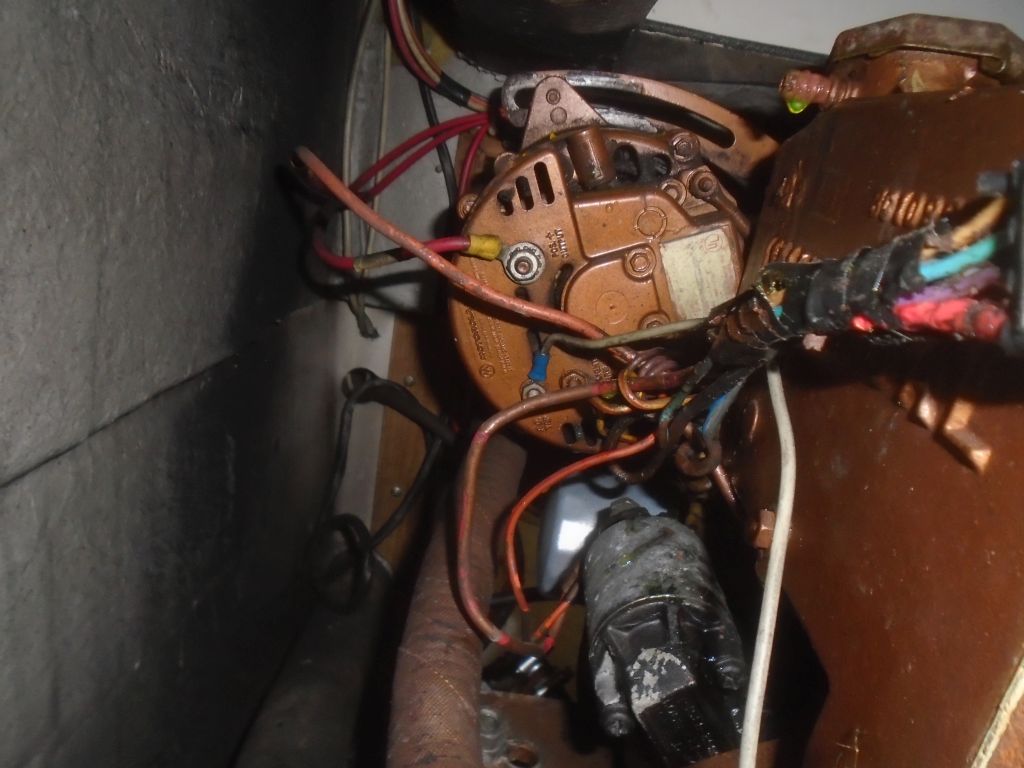
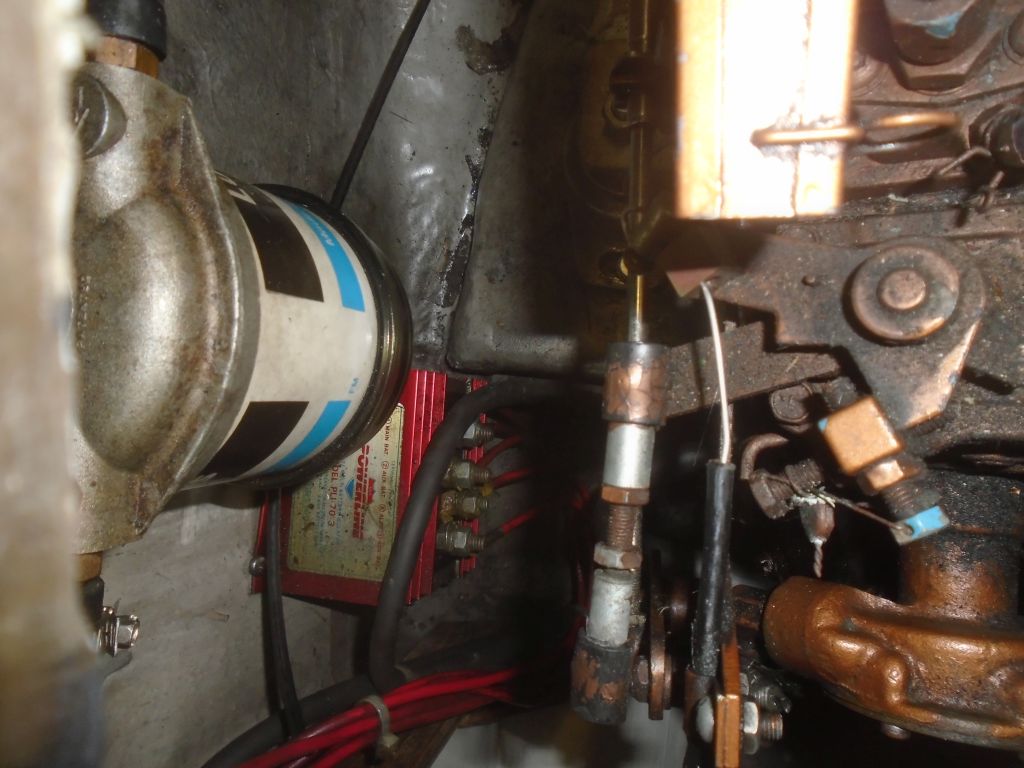
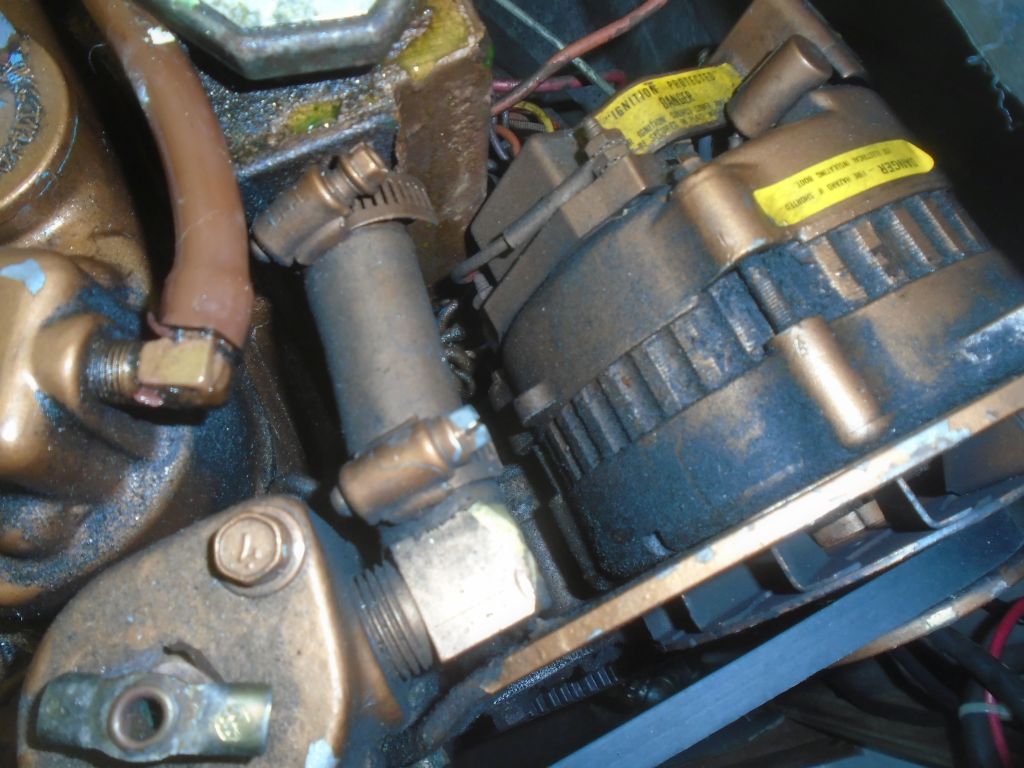
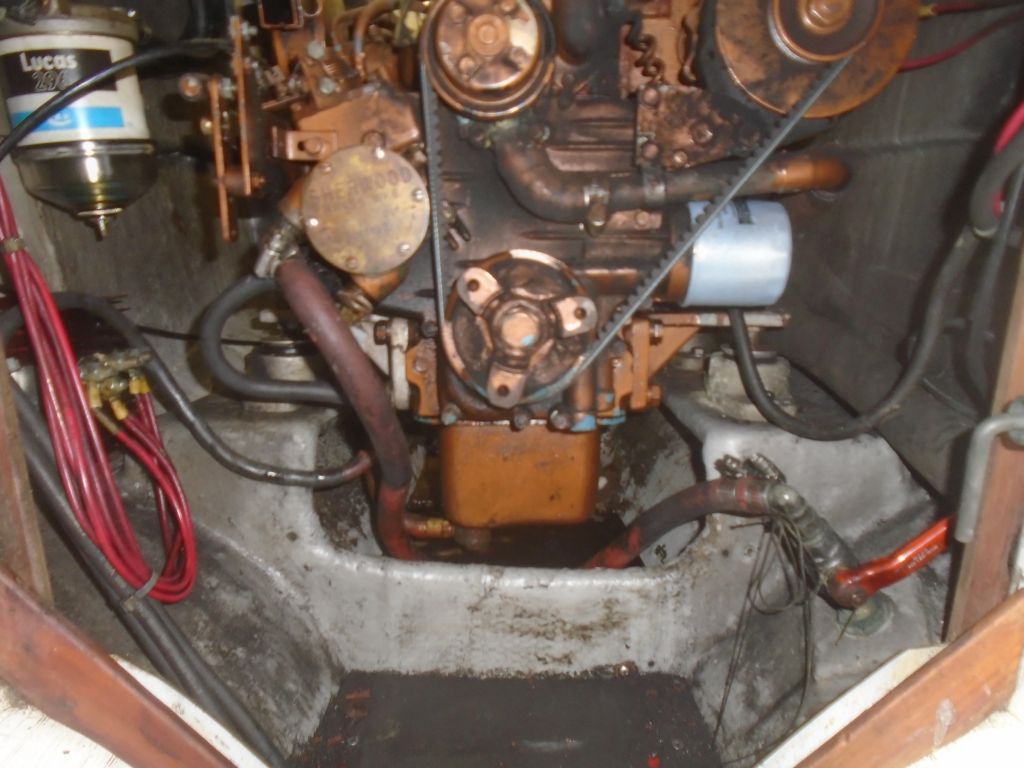
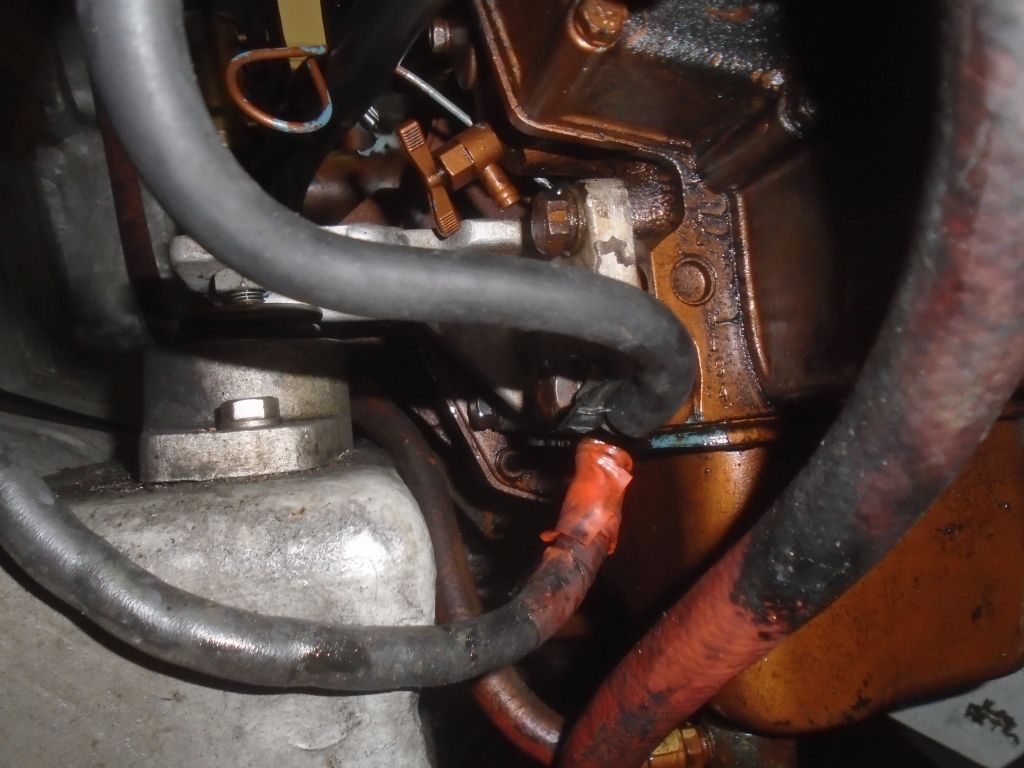
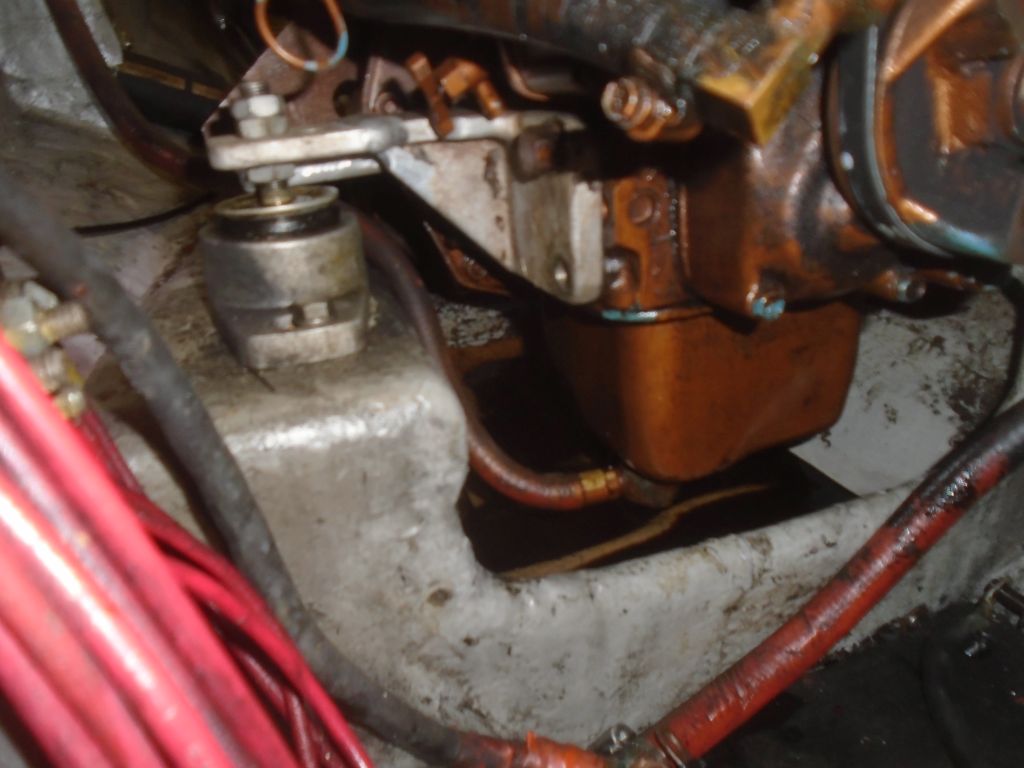
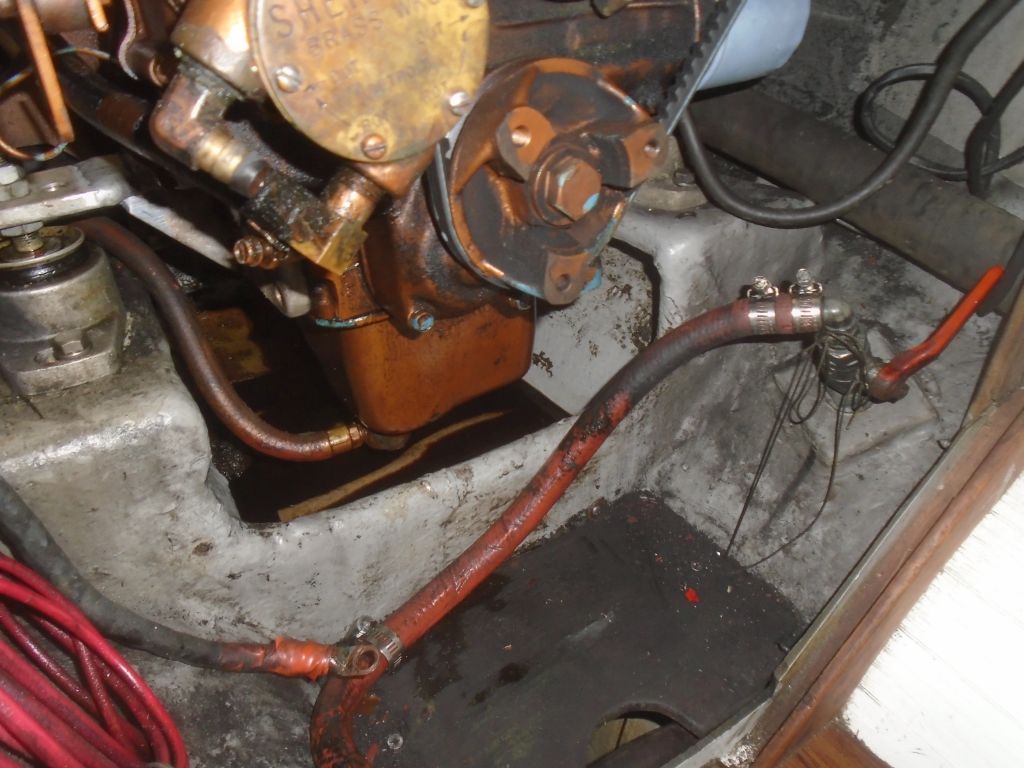
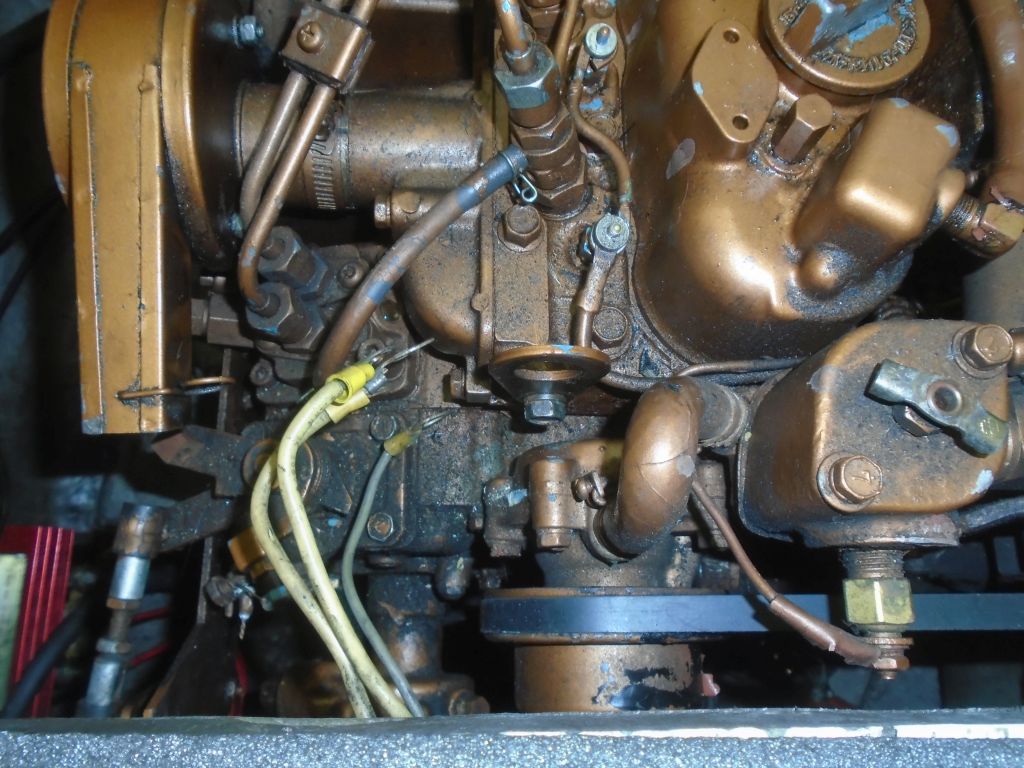
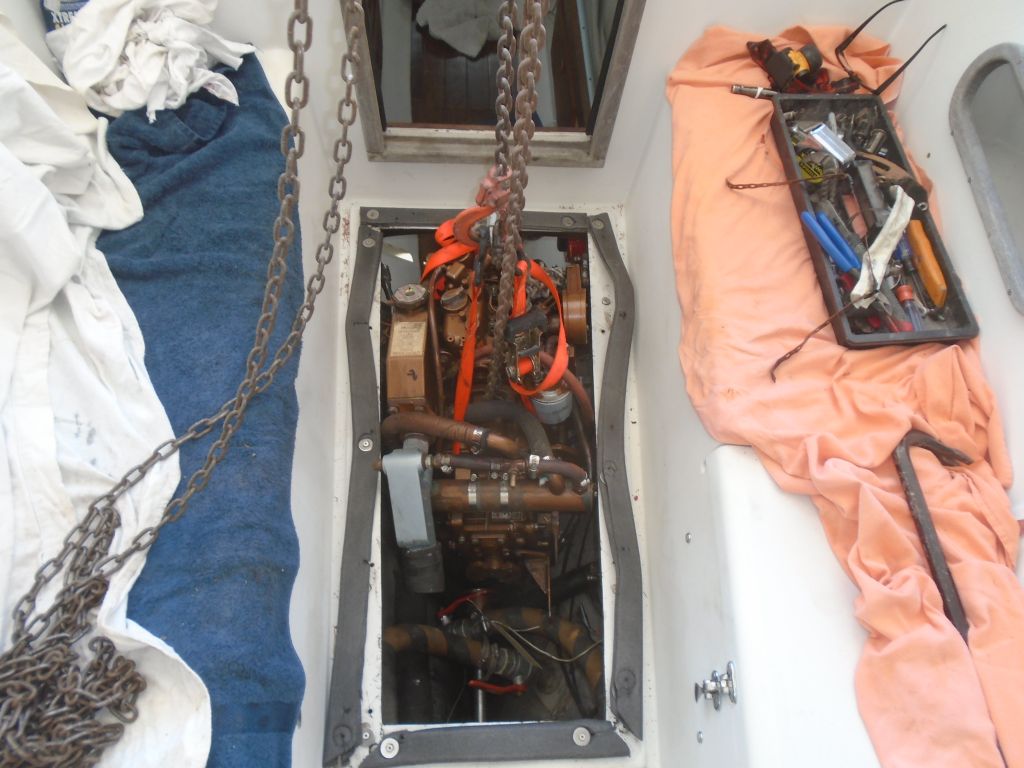
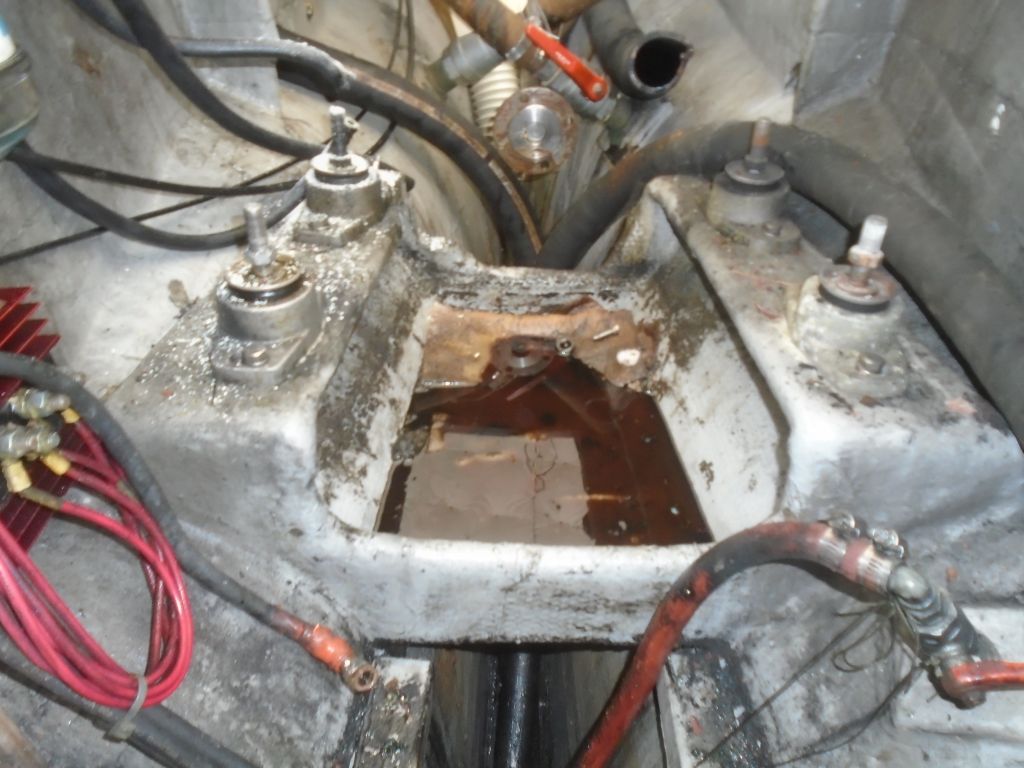
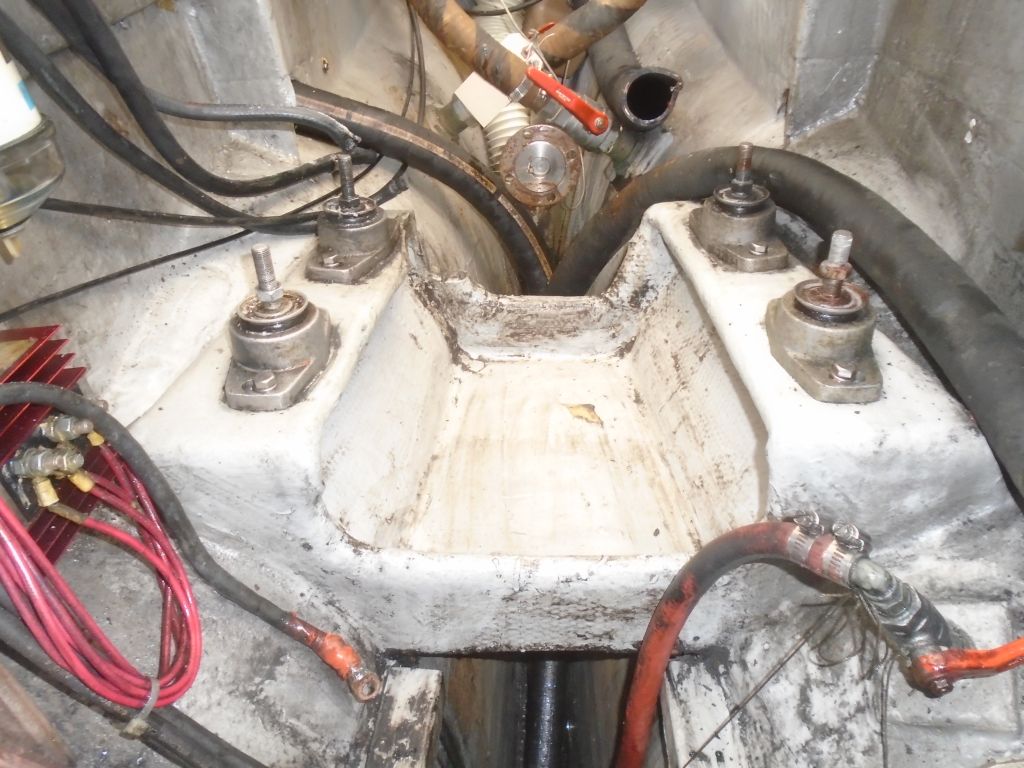
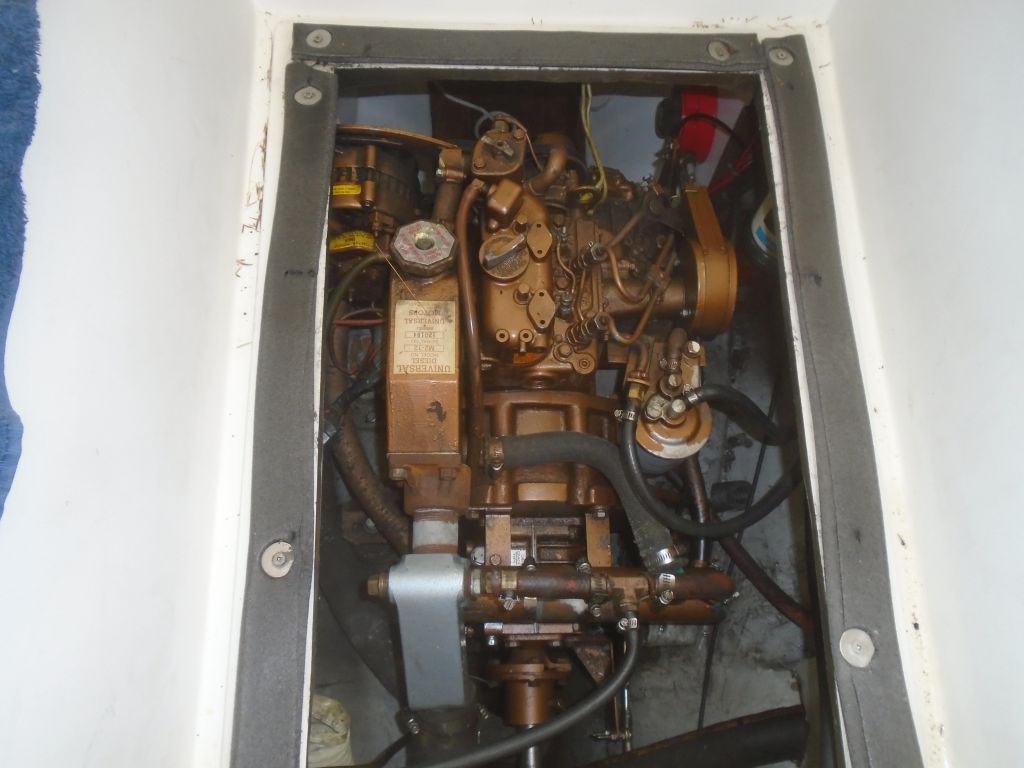
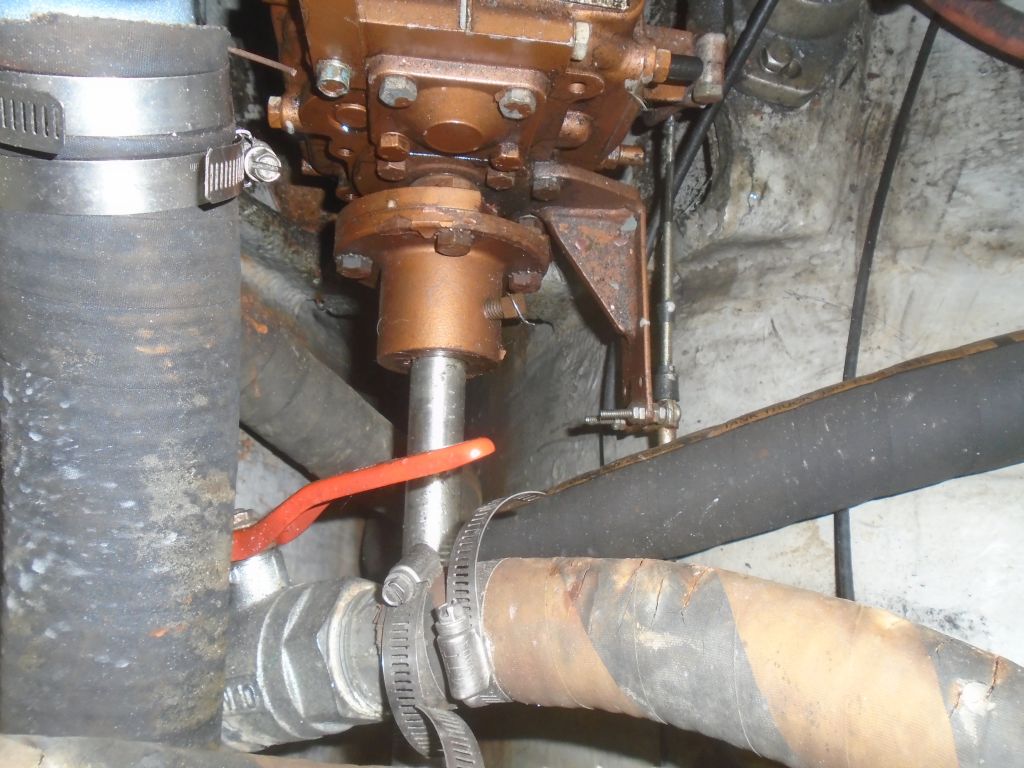
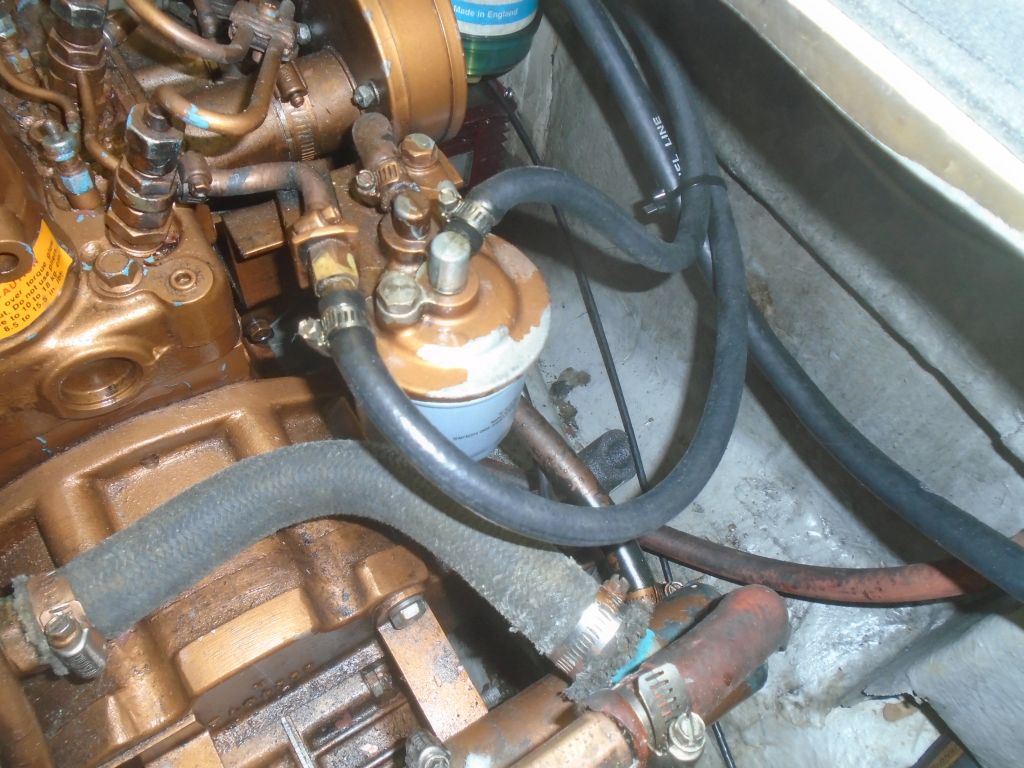
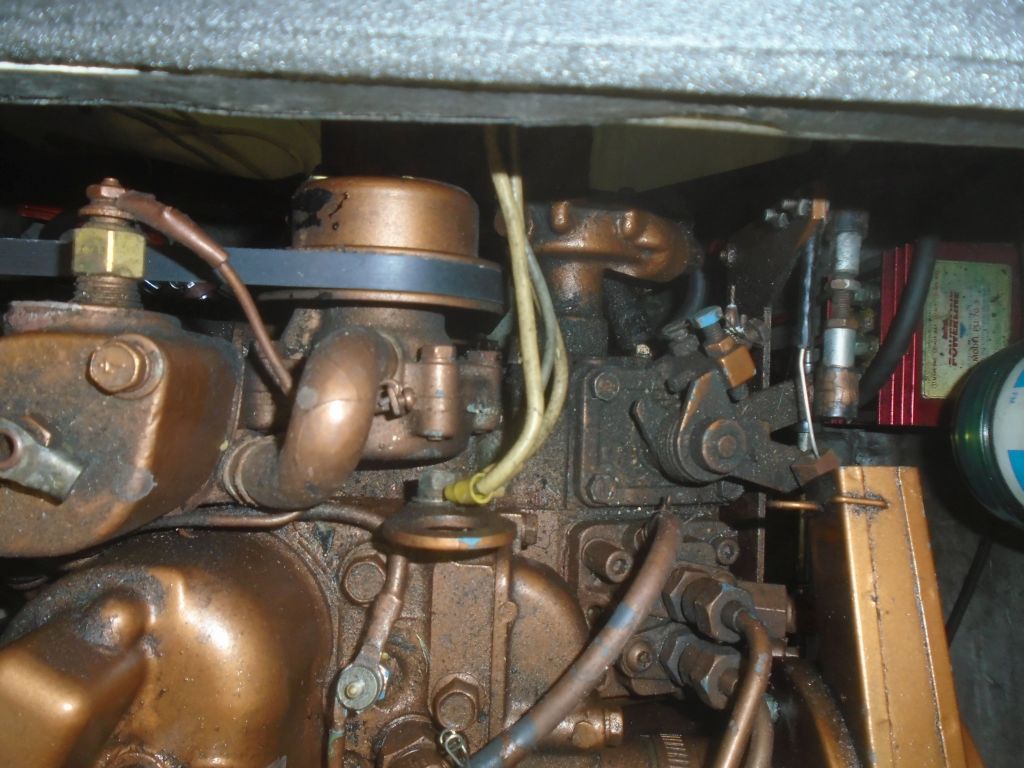
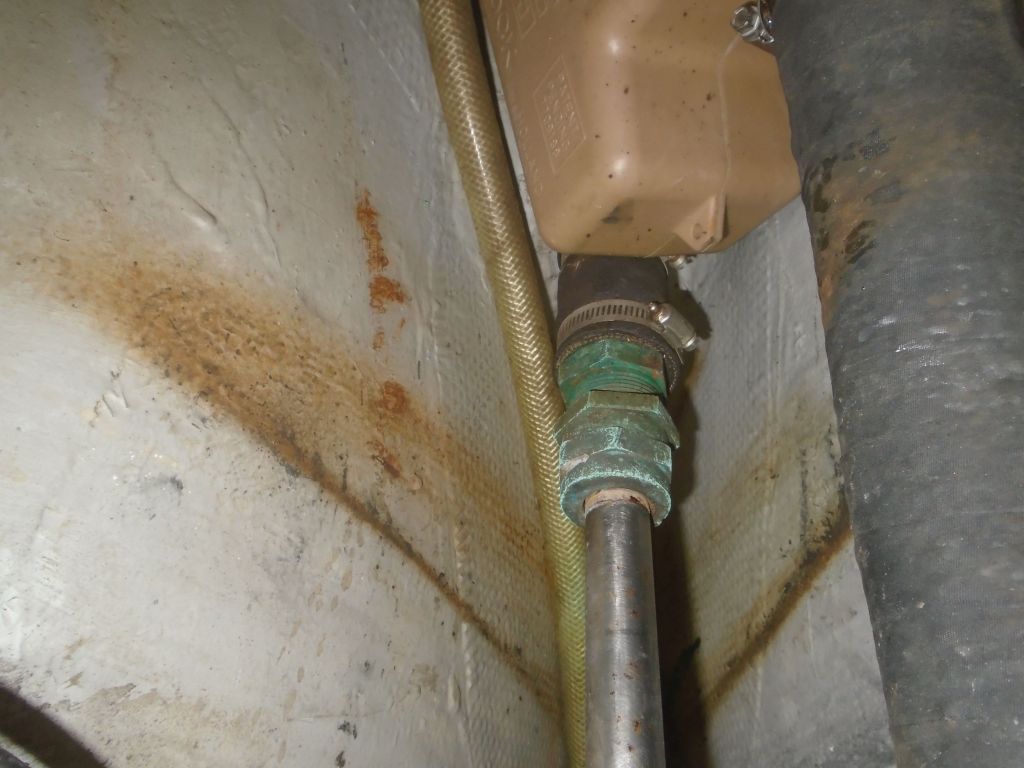
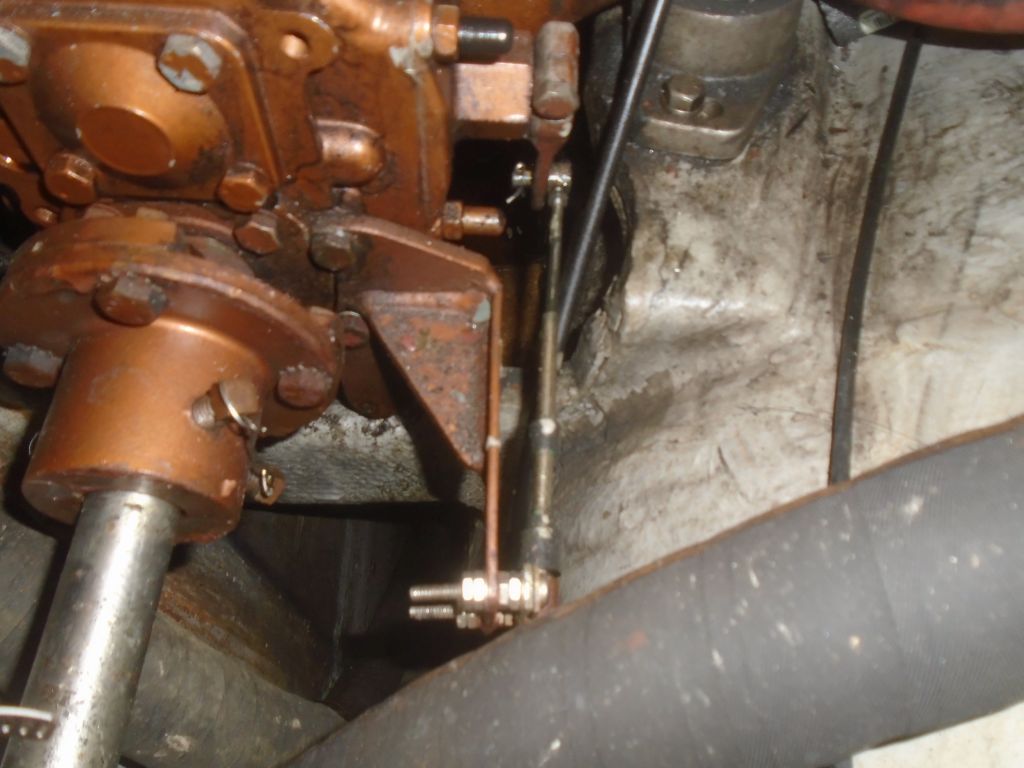
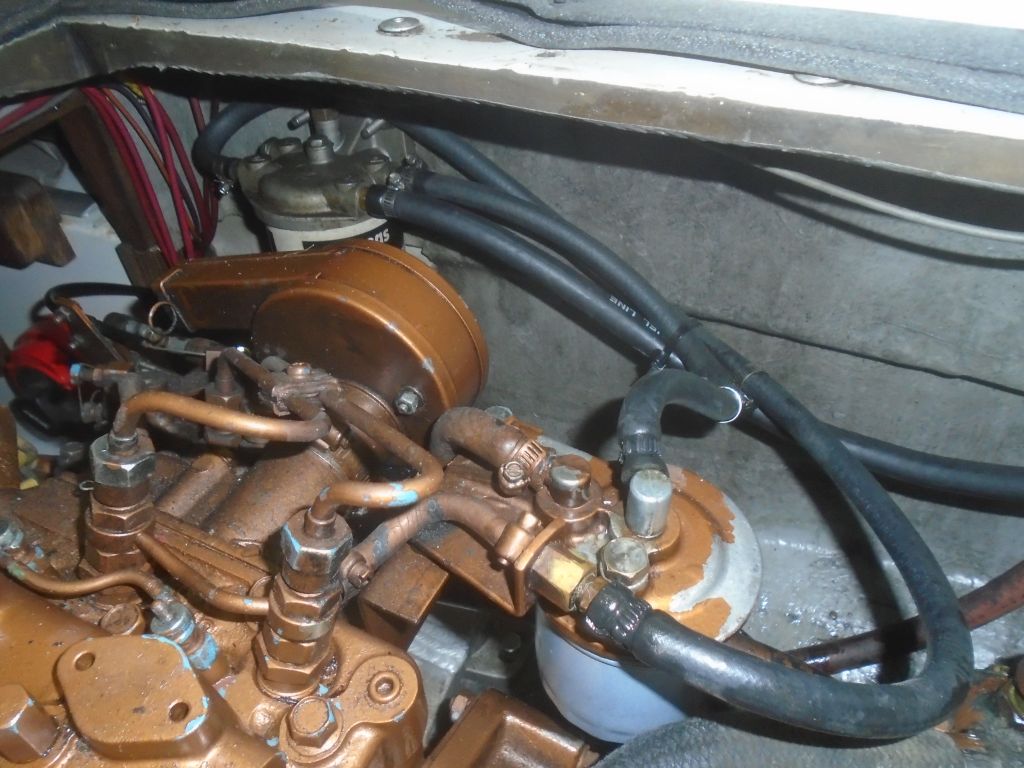
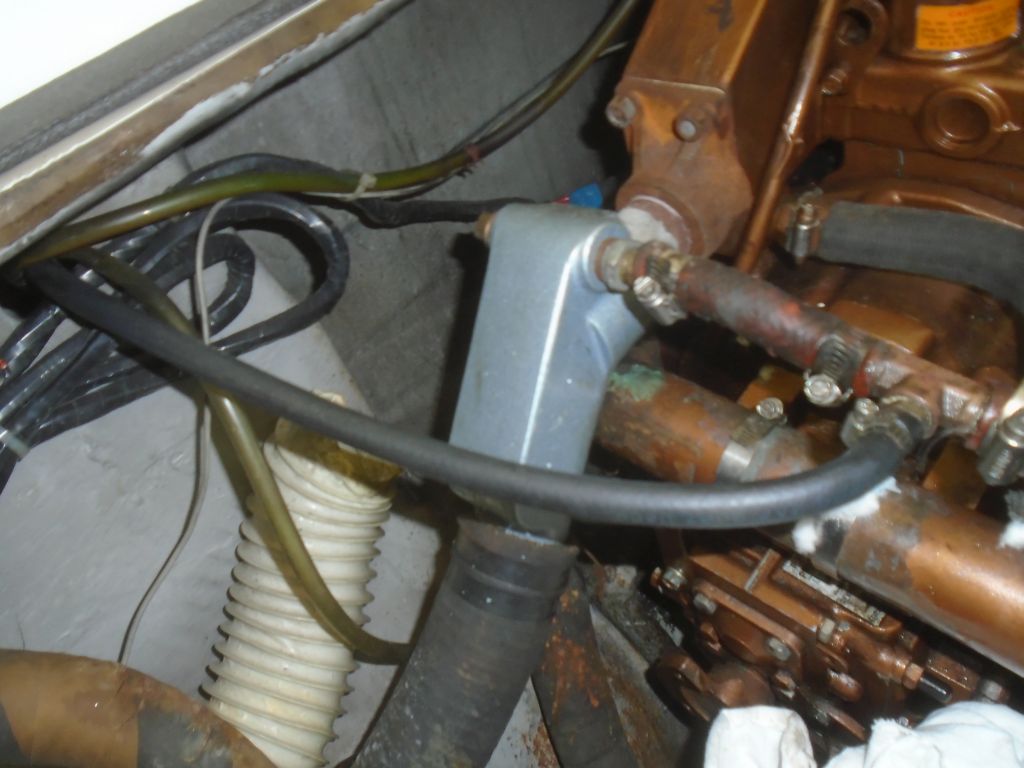
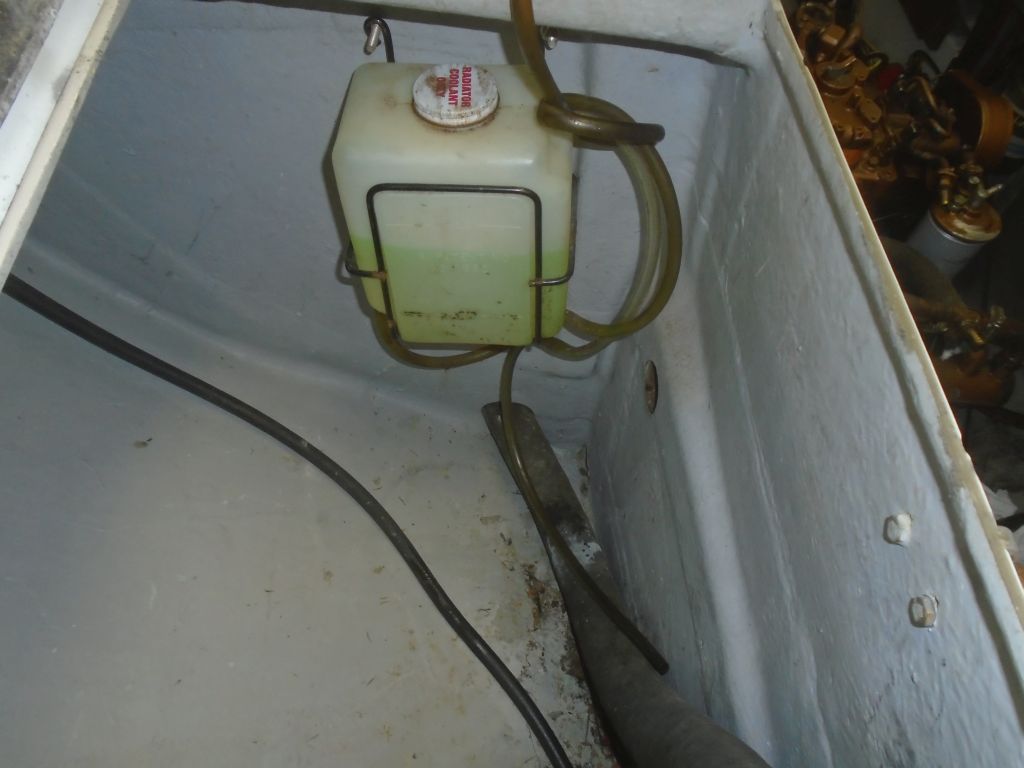
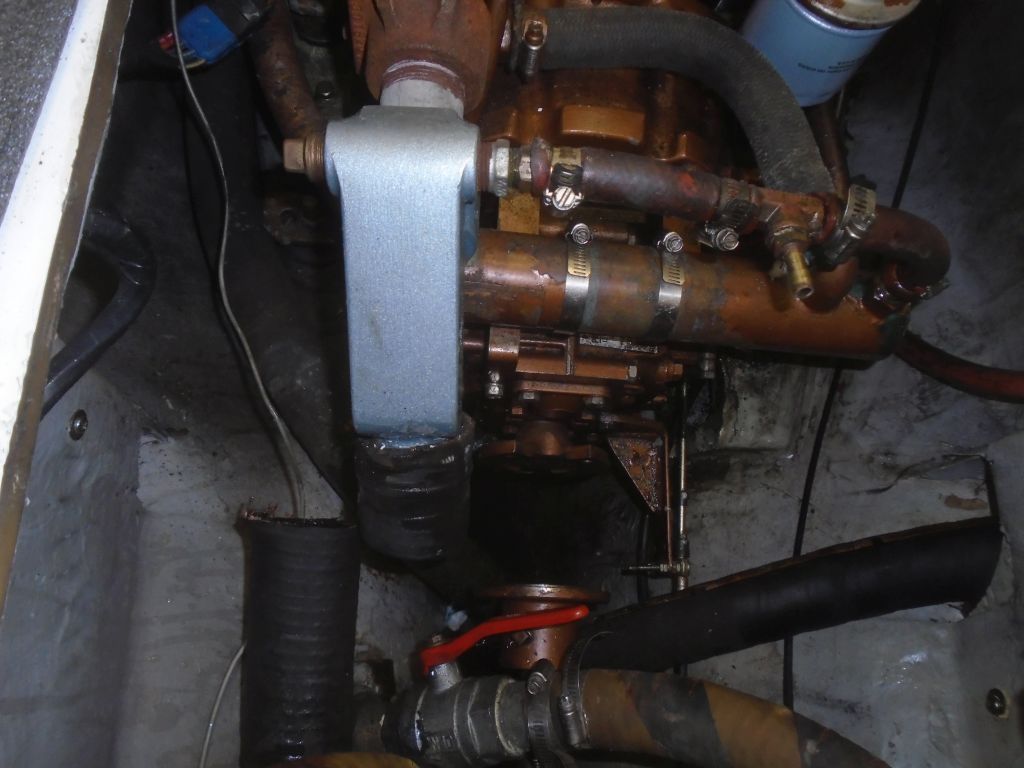
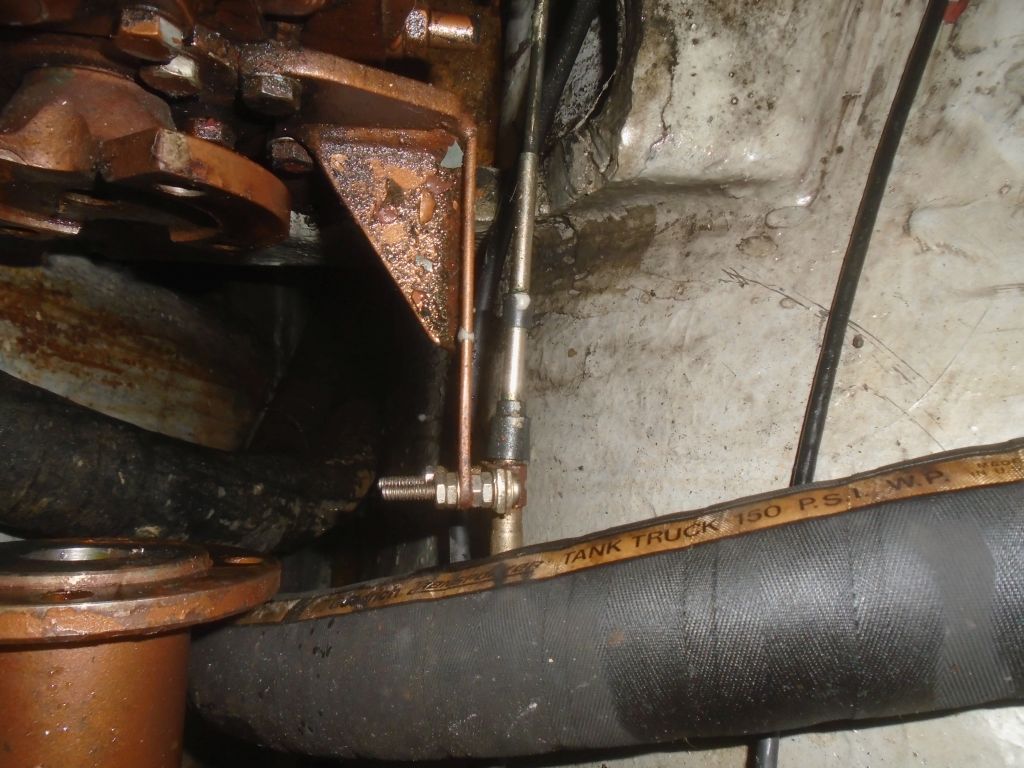
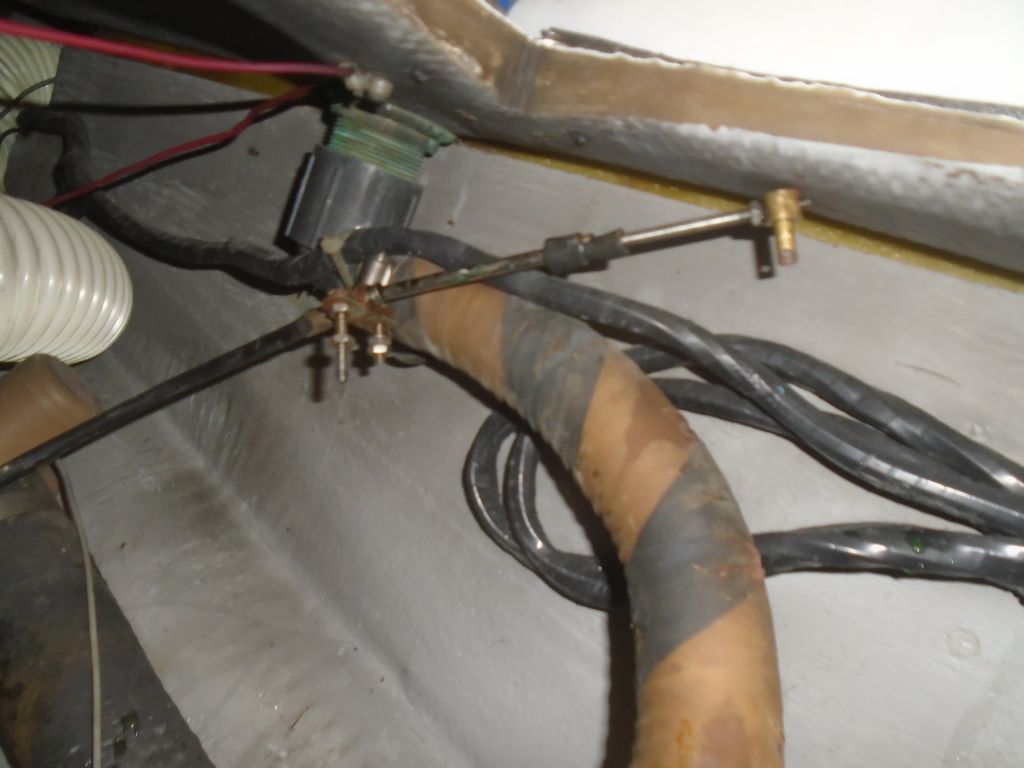
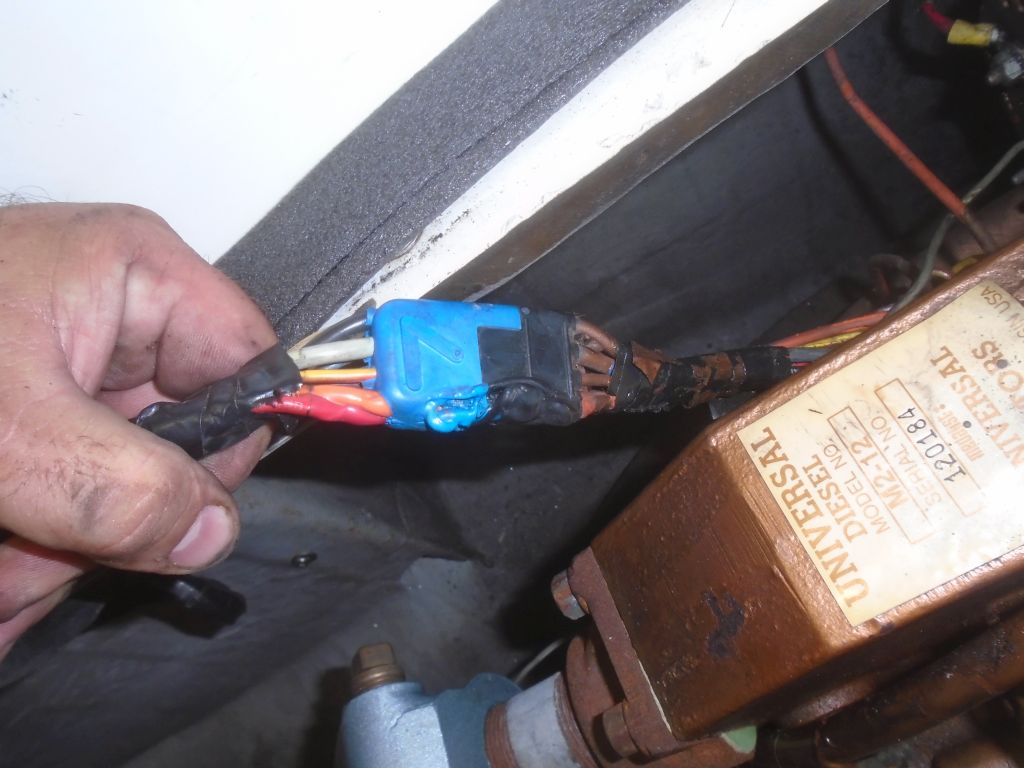
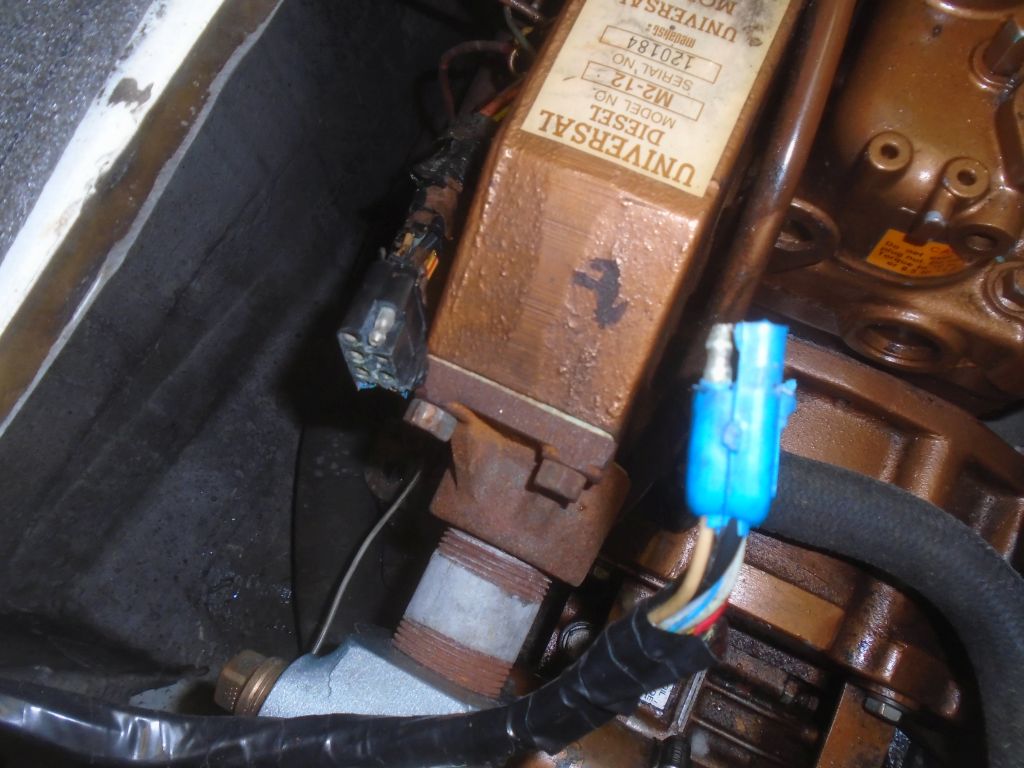
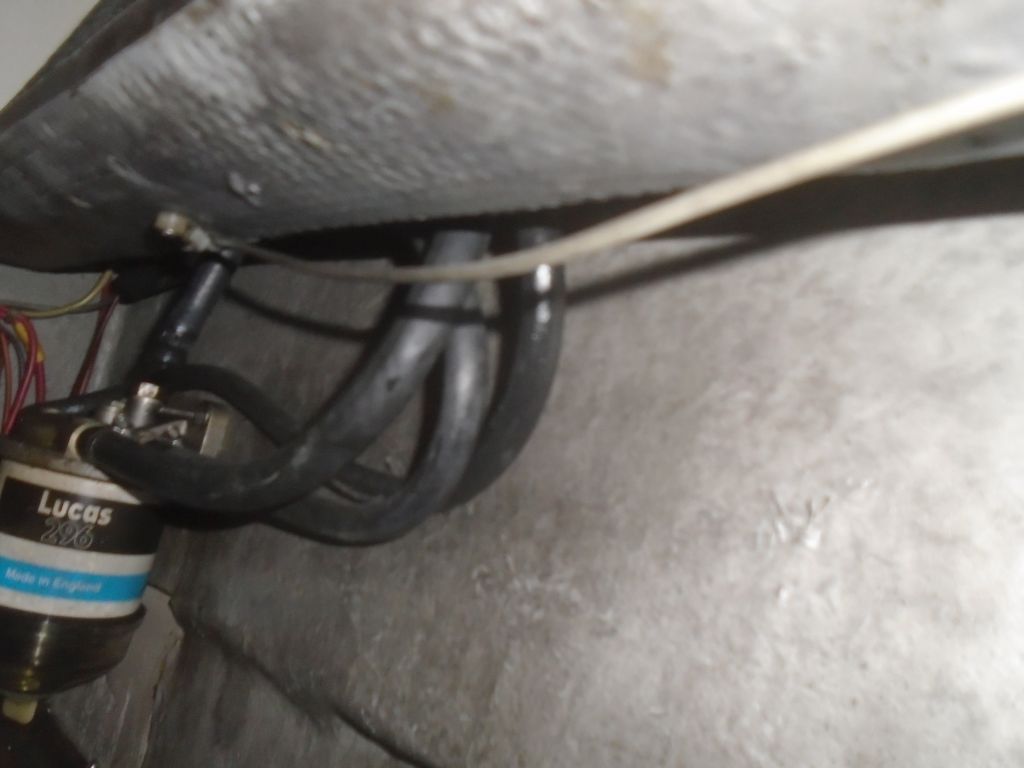
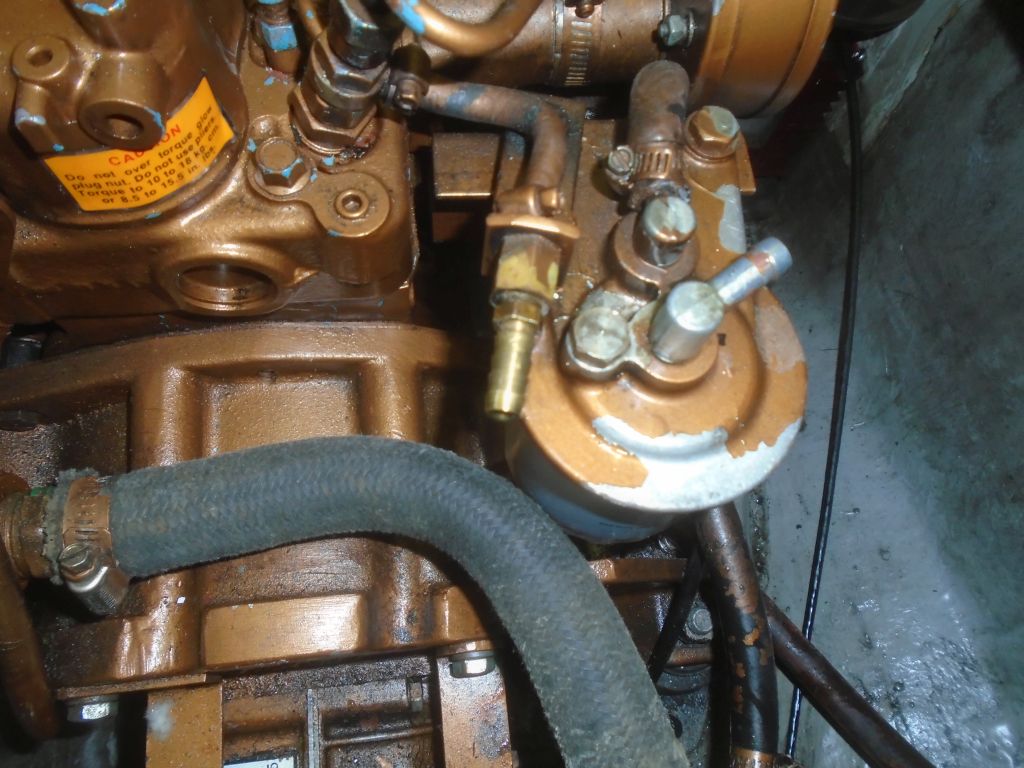
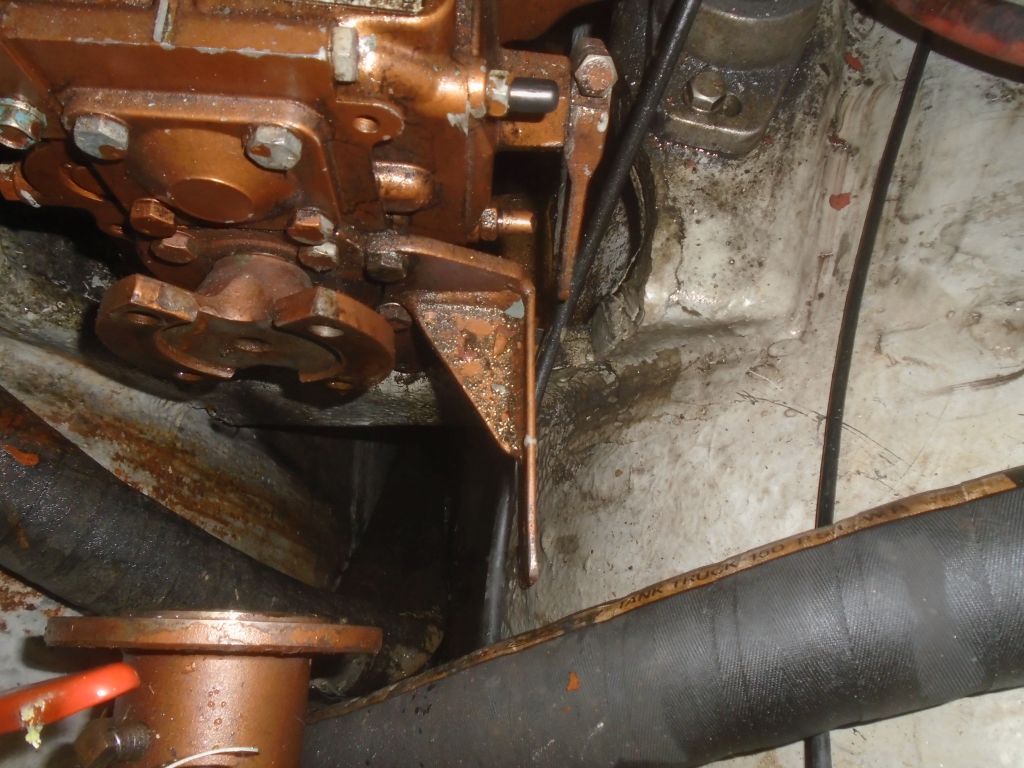
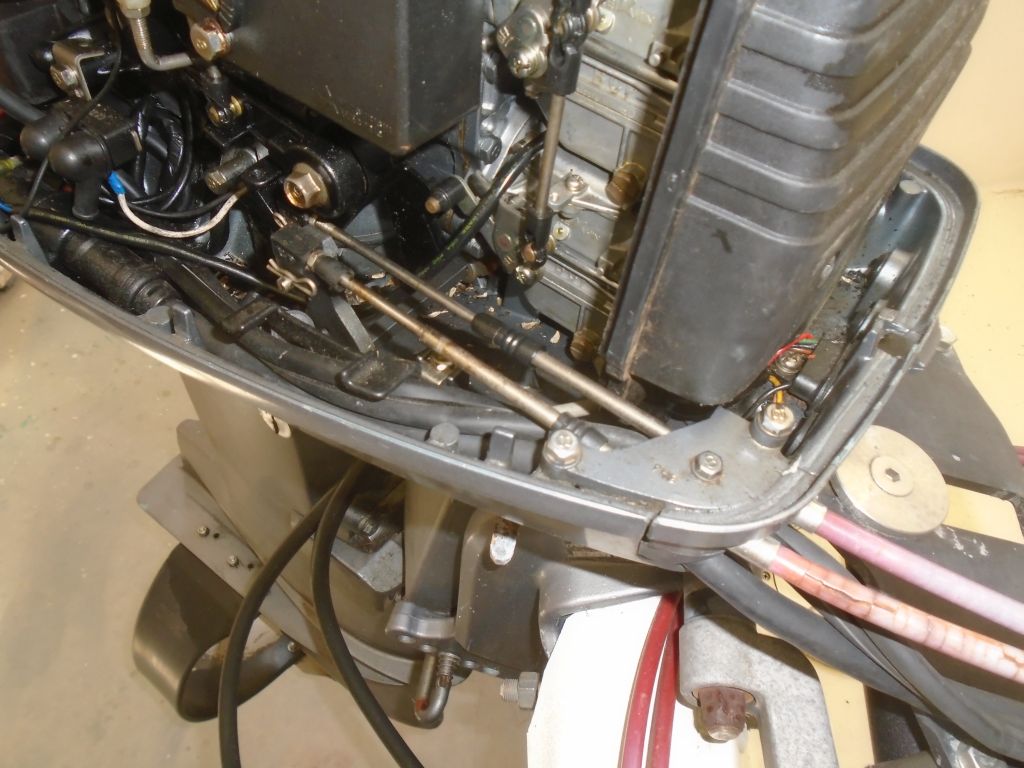
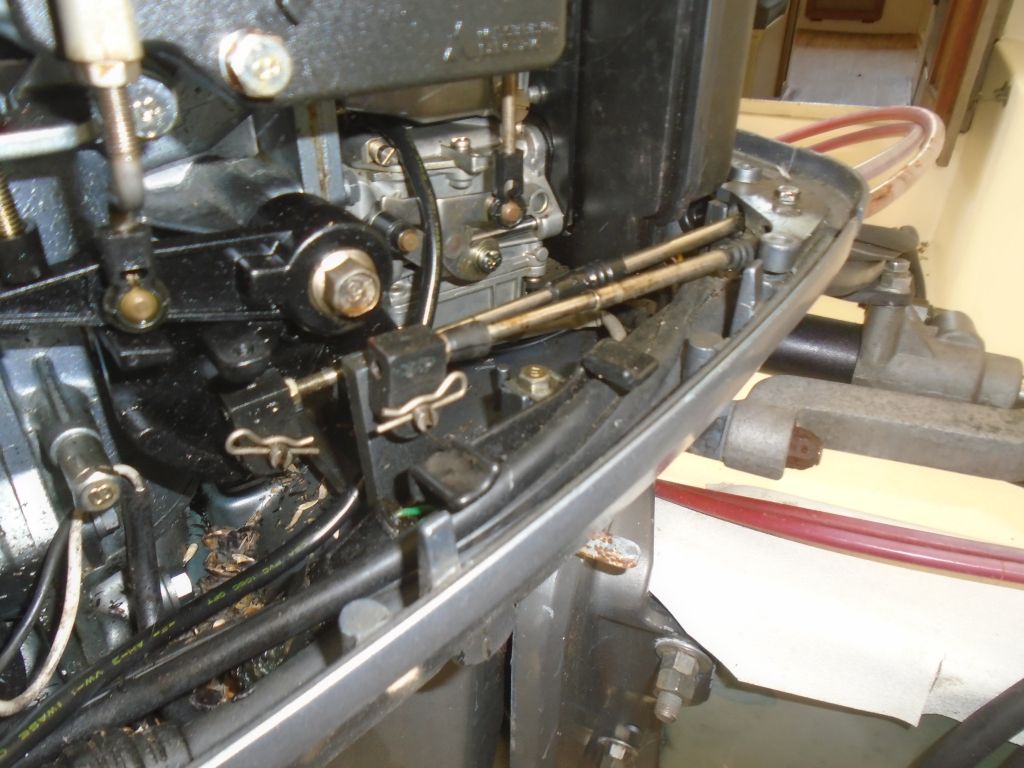
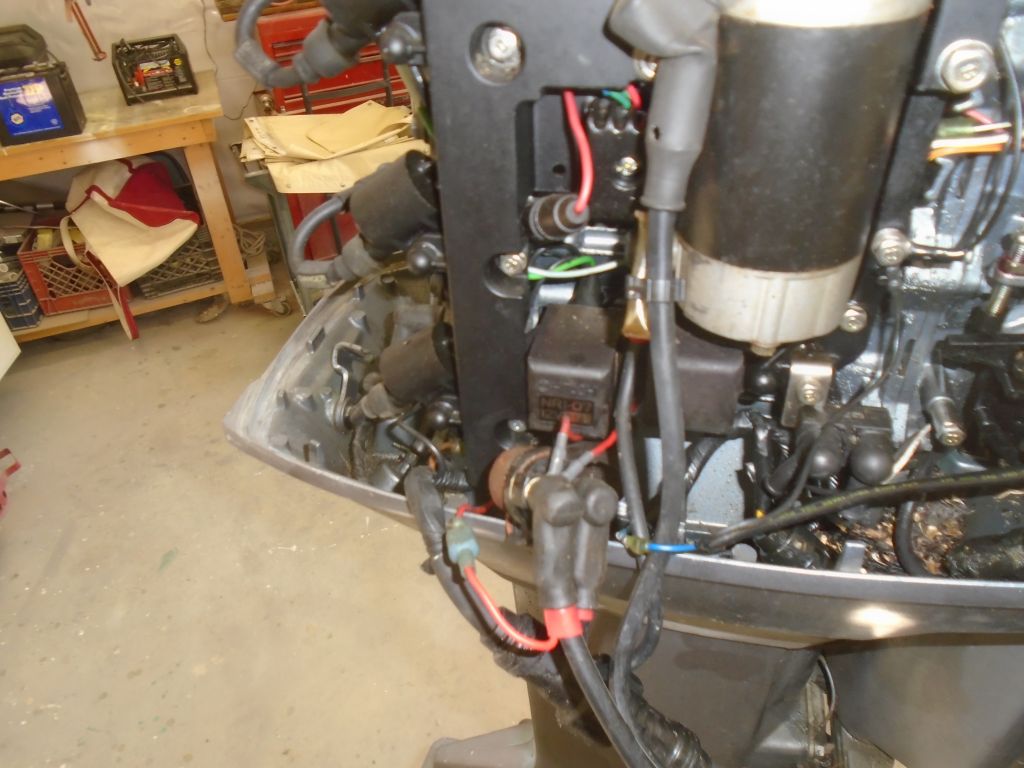
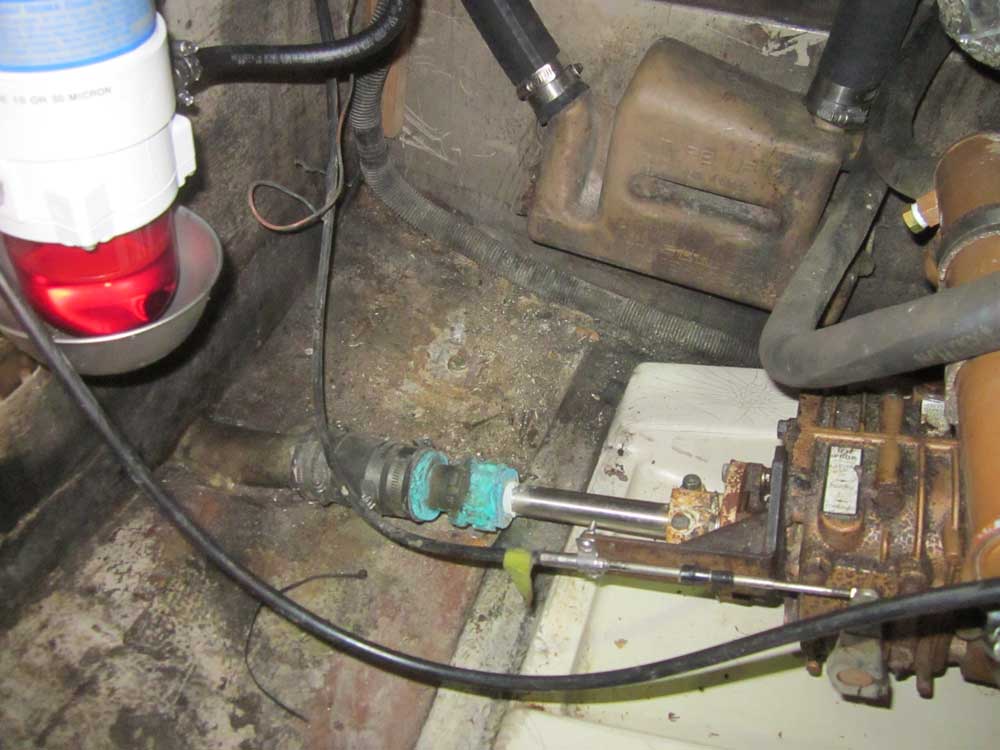
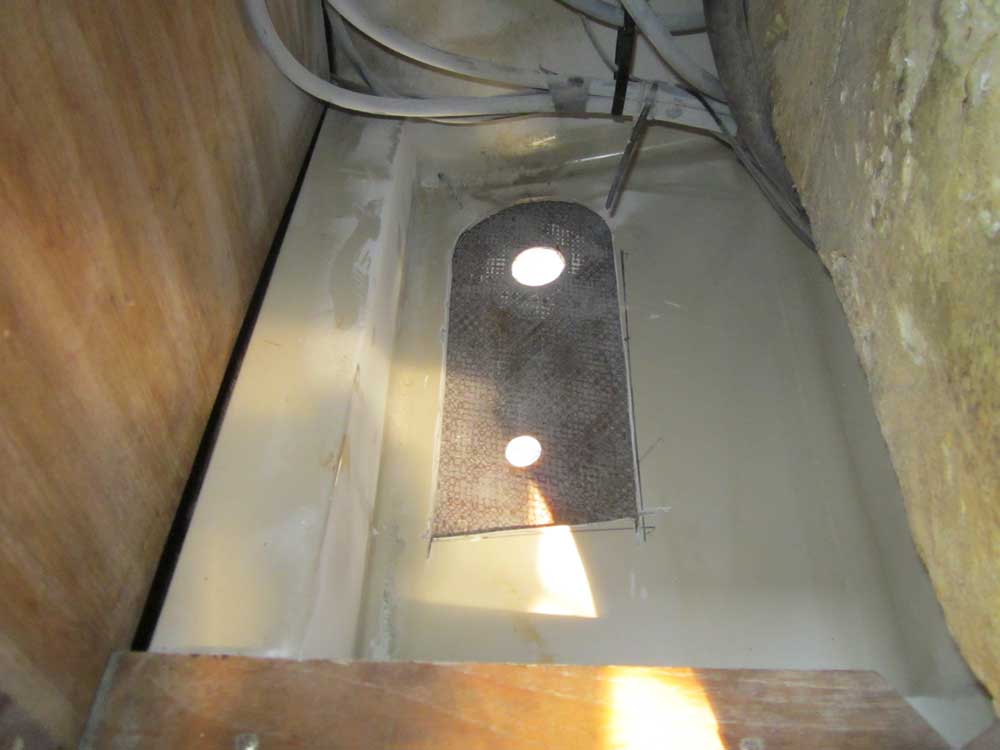
Working now from the forward side of the engine, I continued to disconnect wiring, hoses, and control cables, including the alternator (which I had to remove in order for the engine to clear the narrow hatch).   I documented the engine in various stages for my own future reference, as well as for this log.

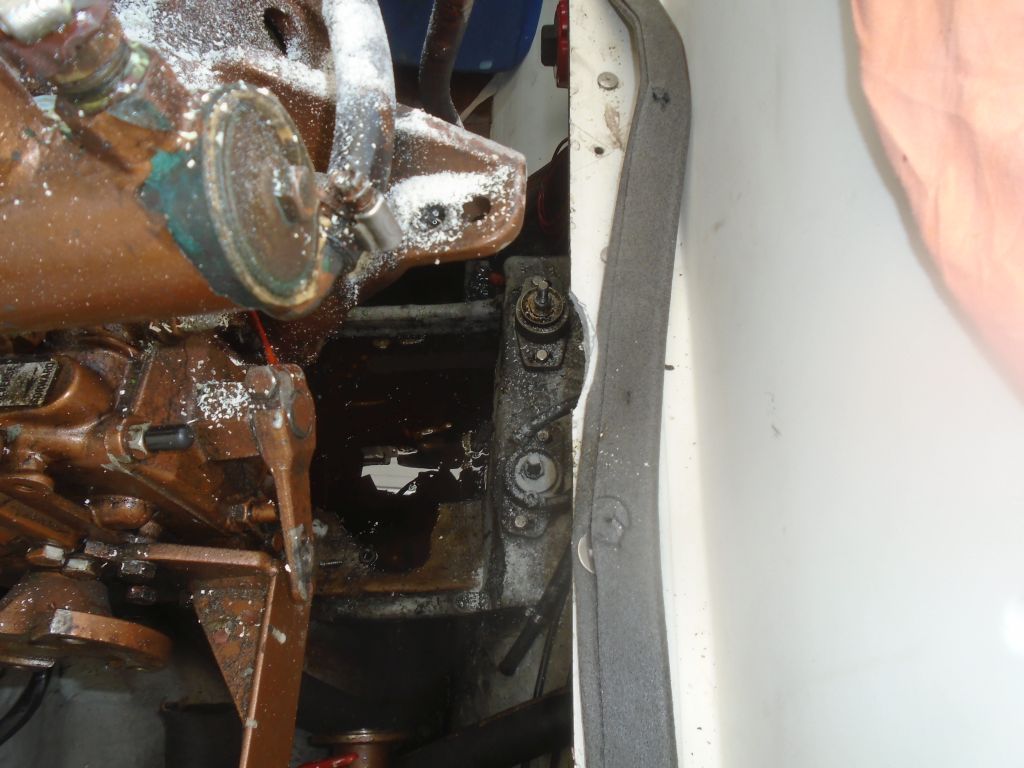
I could also see that I’d have to remove a cooling hose line that ran along the port side of the engine, as it extended beyond the confines of the hatch.  I took care of its removal (tucking it into the aft end of the engine) once I’d removed the alternator above.  I was also quite sure I’d need to remove the forward engine mounting flanges for hatch clearance; the after flanges were integral with the aft part of the engine housing, and were not removable, but I had my doubts that they’d clear the hatch either.

I removed several grounding wires from the bolt securing the lifting eye, and removed the alternator wiring, labeling each wire with its proper location for my reference now and later.

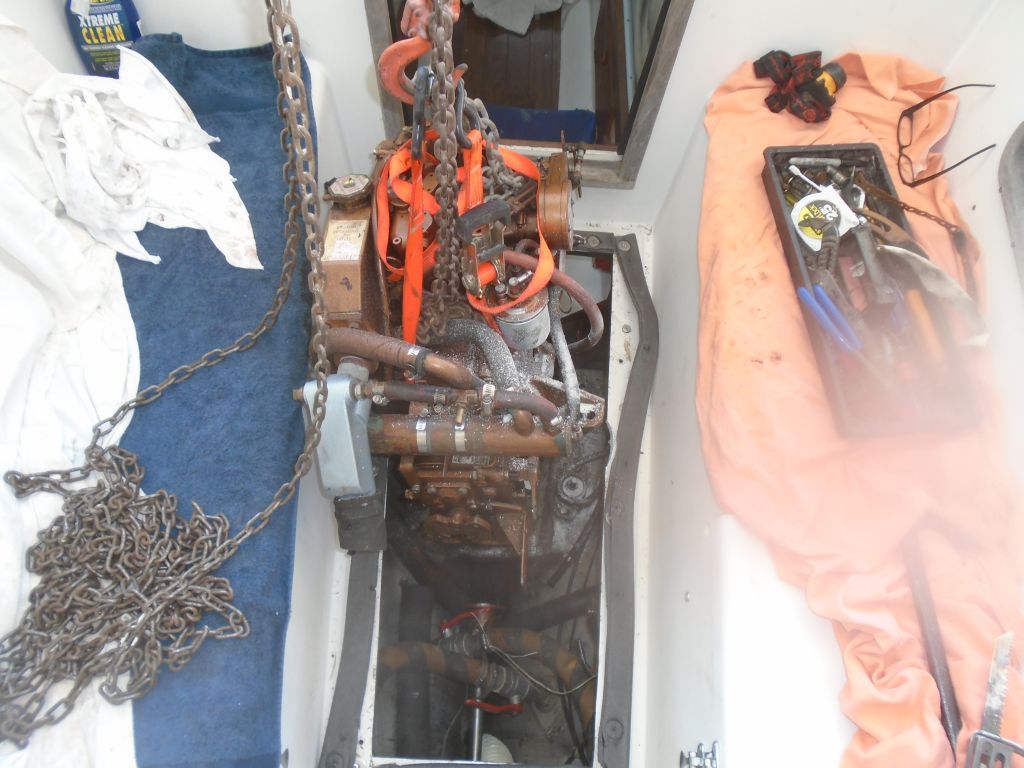
With all the ancillary connections disconnected, I removed the nuts from the engine mount studs (I planned to leave the flexible mounts in place, at least for now) and prepared to hoist the engine out.  I moved the boat forward so I could use my crane to lift out the engine.  Once I lifted it off the mounting studs, I halted so I could check out the clearances and work on removing whatever else needed to be removed.  In the end, I found that removing one of the two forward mounting flanges (secured to the engine with four bolts) that there’d be enough–barely–clearance to squeeze the engine through the hatch.

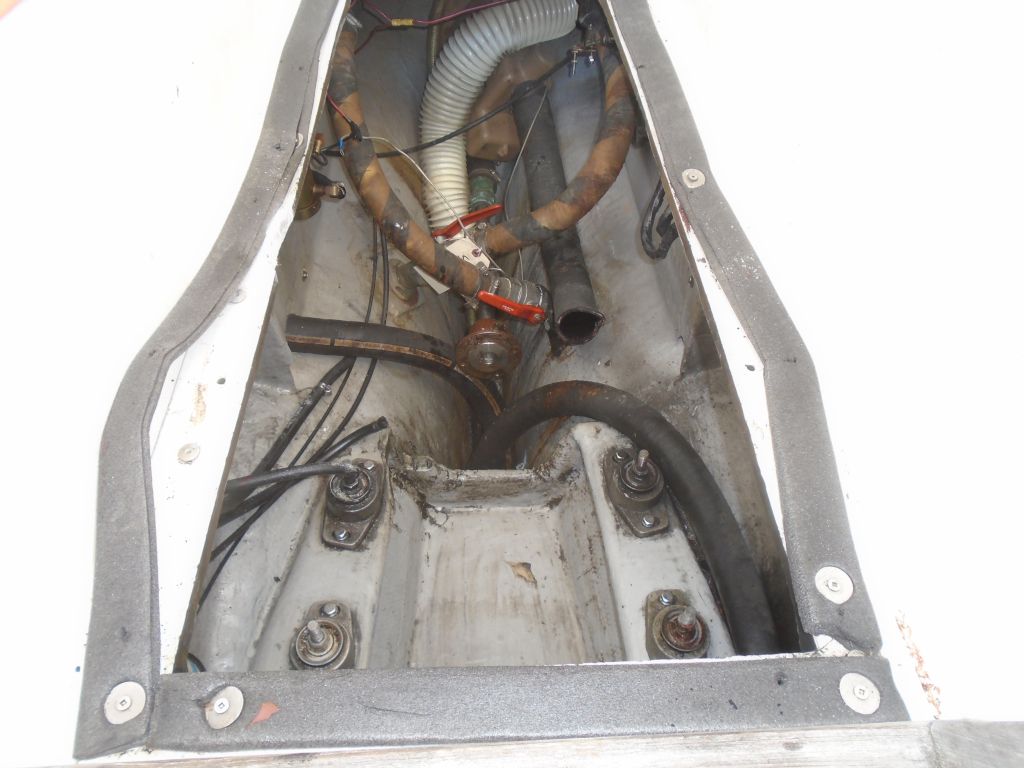
At the aft end, I couldn’t see how the fixed rear flanges could pass through the opening as is, so with a saw I carved out a small area on one side of the hatch to allow a critical extra inch of room, after which the engine was free.  I swung the engine over the side and down to the floor.  Soon I’d build a little shipping crate for the engine, and reconnect the things I’d removed so that everything stayed whole for its journey to the rebuilding shop.

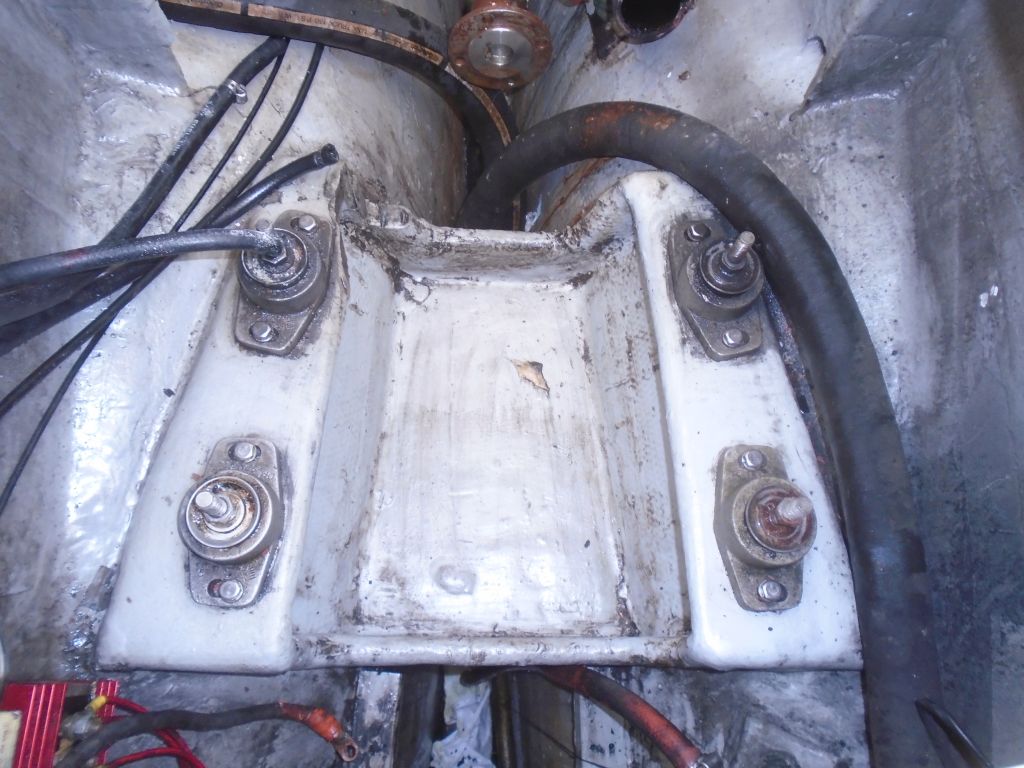
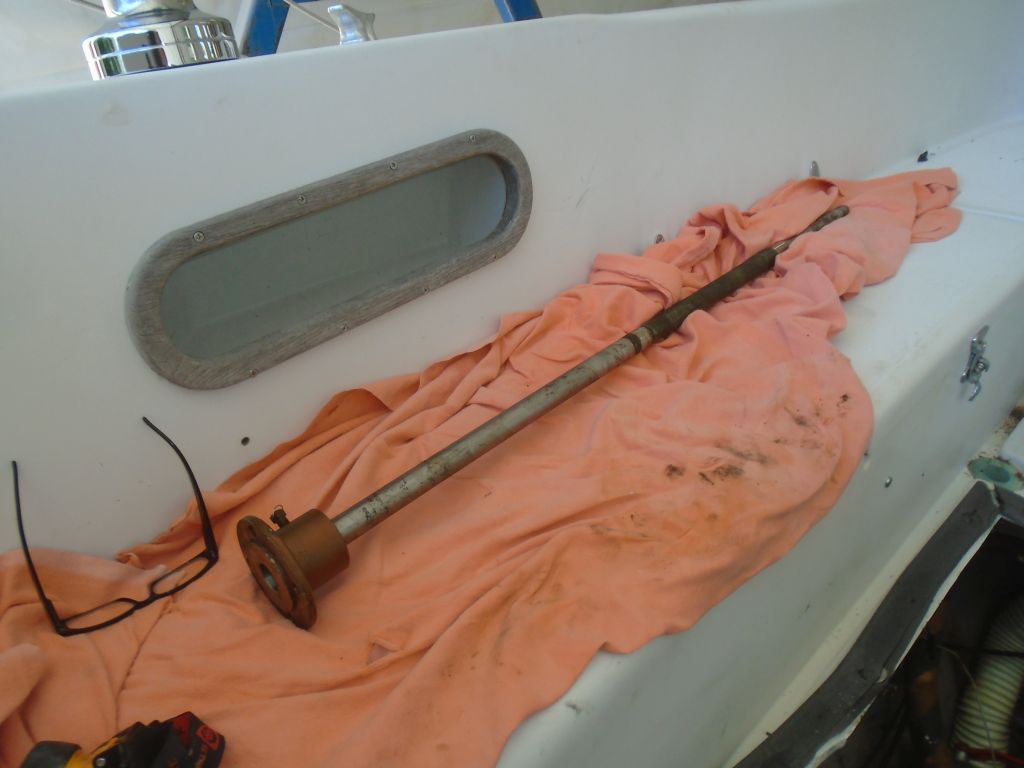
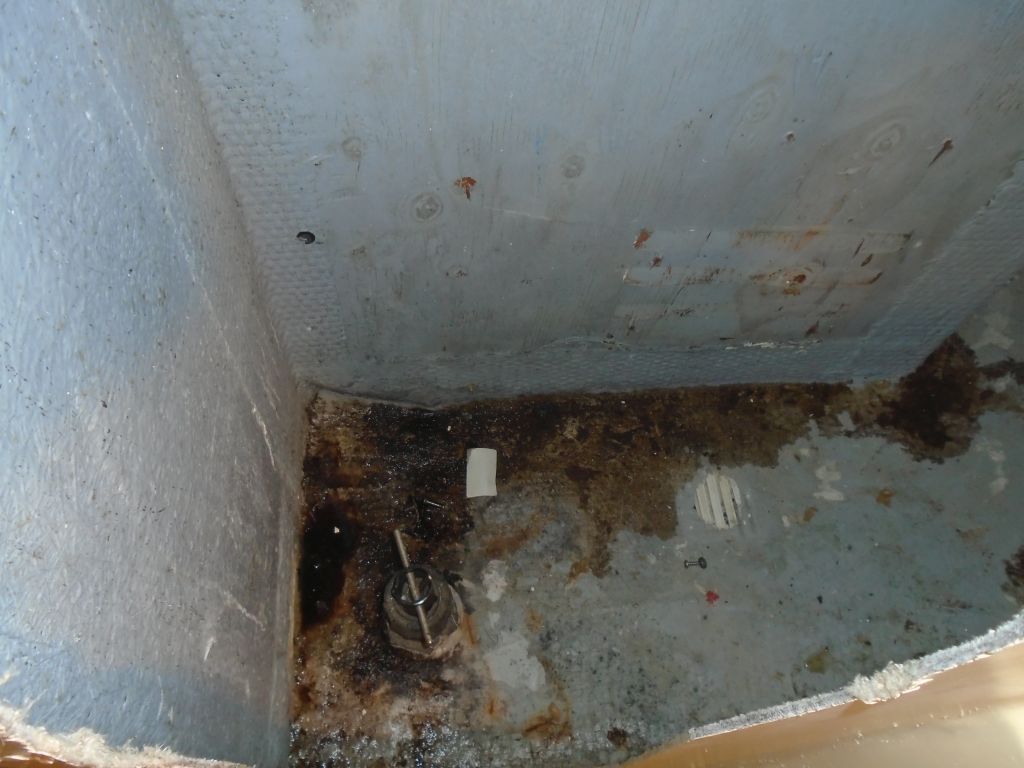
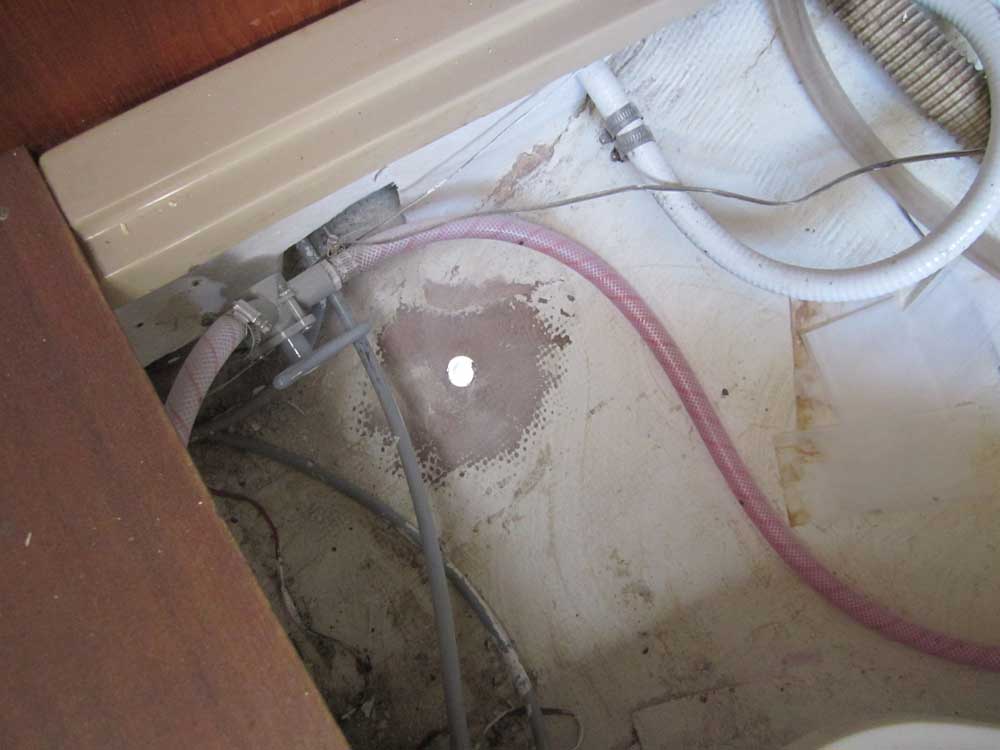
The pan beneath the engine was disgusting with oily residue (fortunately only a small amount of oil; most of the liquid was antifreeze) and, beneath an oilzorb pad, an inch-thick layer of indefinable sludge.  I’d leave a more significant cleaning for later, but for now I had to get the worst taken care of, leaving the engine pan and foundations relatively clean.  I pulled the shaft out from the inside, and my work there was done for the moment.  After fruitlessly searching the bottomless bilge for a 3/8″ wrench that I’d dropped earlier–I didn’t have the heart to go digging through the greasy hoses and detritus down there at the moment–I abandoned the wrench to await a later surprise discovery.  It’d be easier to buy a new wrench for now.

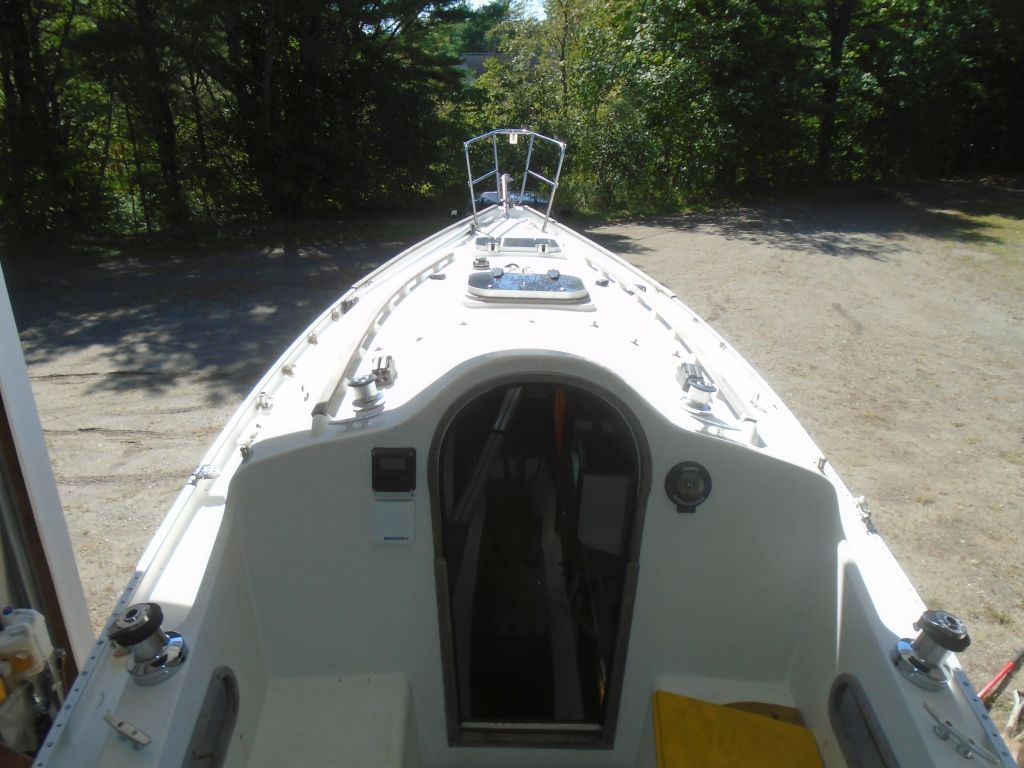
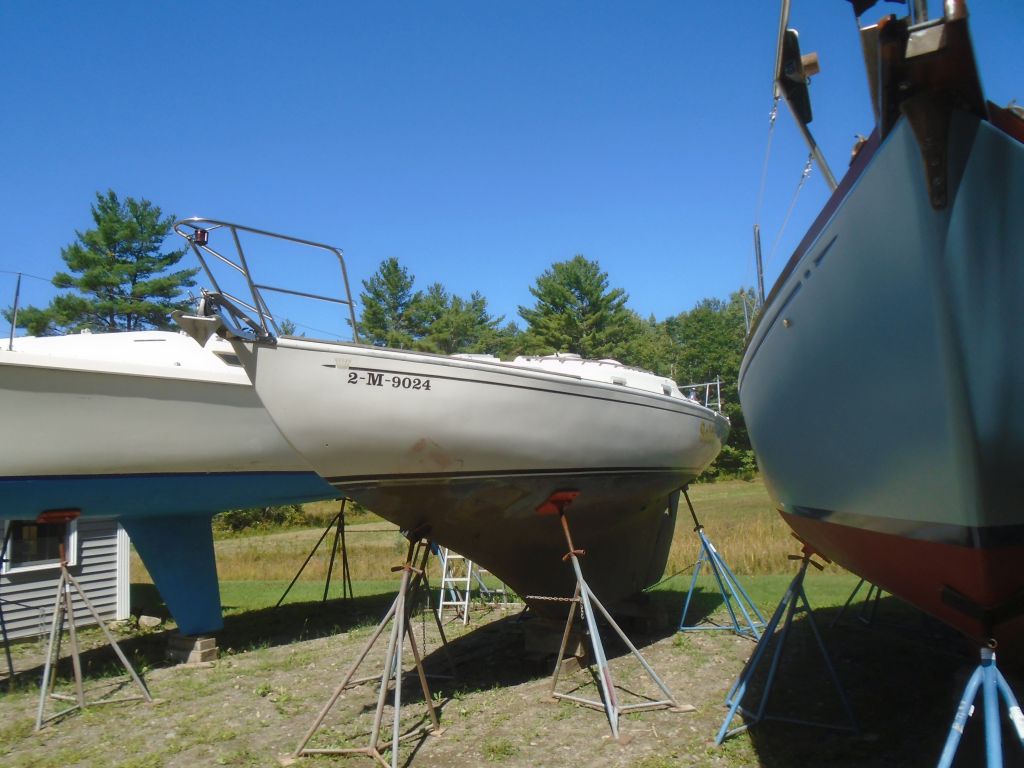
Before moving the boat back to her outdoor storage spot, I removed the stanchions and lifelines, storing them in the cabin.  These needed to be removed to allow the winter cover to fit properly.  Then, I repositioned the boat in the yard, where she’d wait till the actual project began sometime in 2016.

Total Time Billed on This Job Today:  3.5 Hours


Salty 1

< Back to Salty

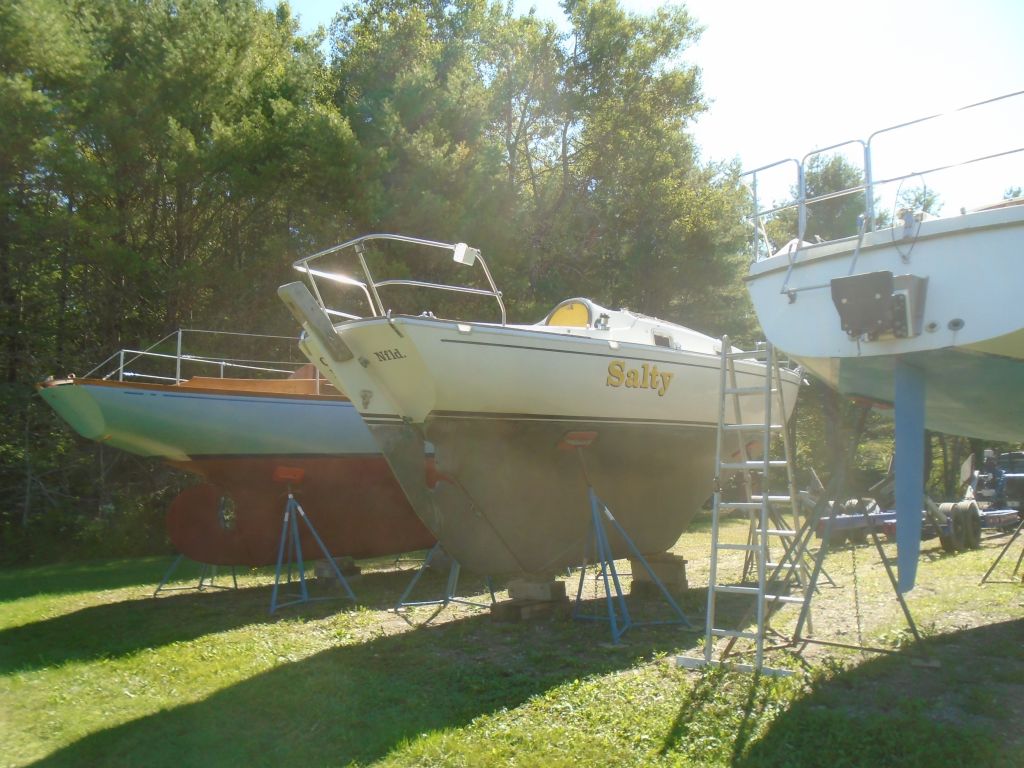
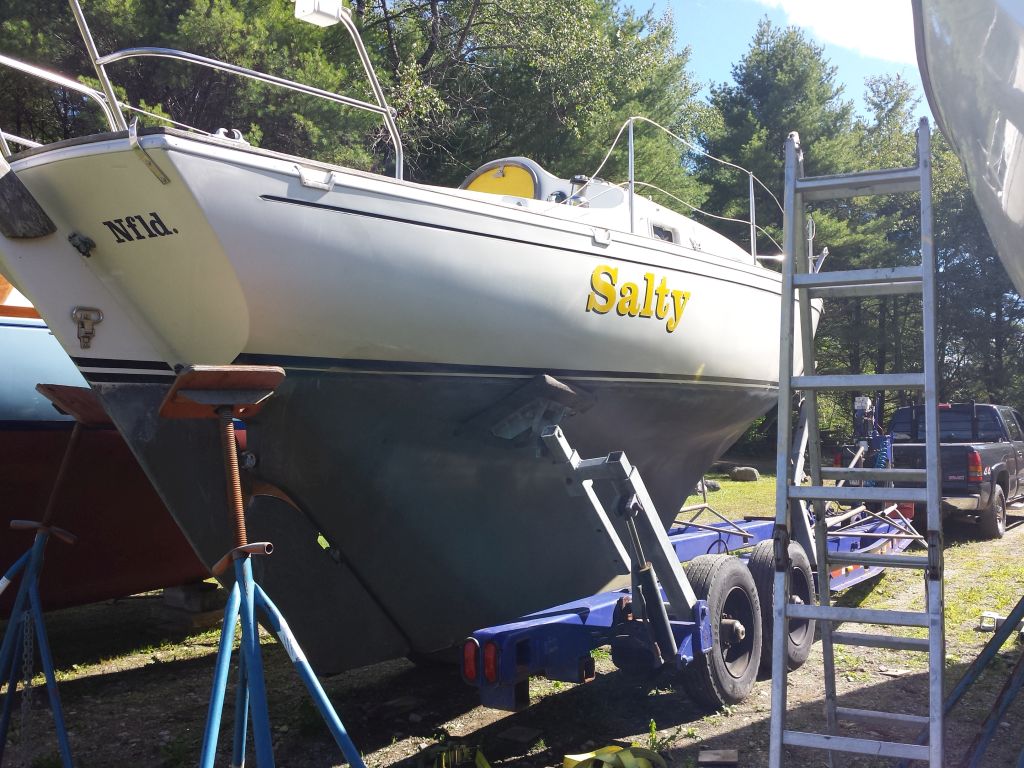
Although work on Salty wasn’t scheduled to begin till sometime in late spring or summer 2016, one of the significant portions of the project was to assess and rebuild, as needed, the existing Universal diesel engine.  The owner had been in contact with a rebuild shop, and rather than wait till the project began many months later, I wanted to get the engine on the ground and to the rebuild shop sooner than later.

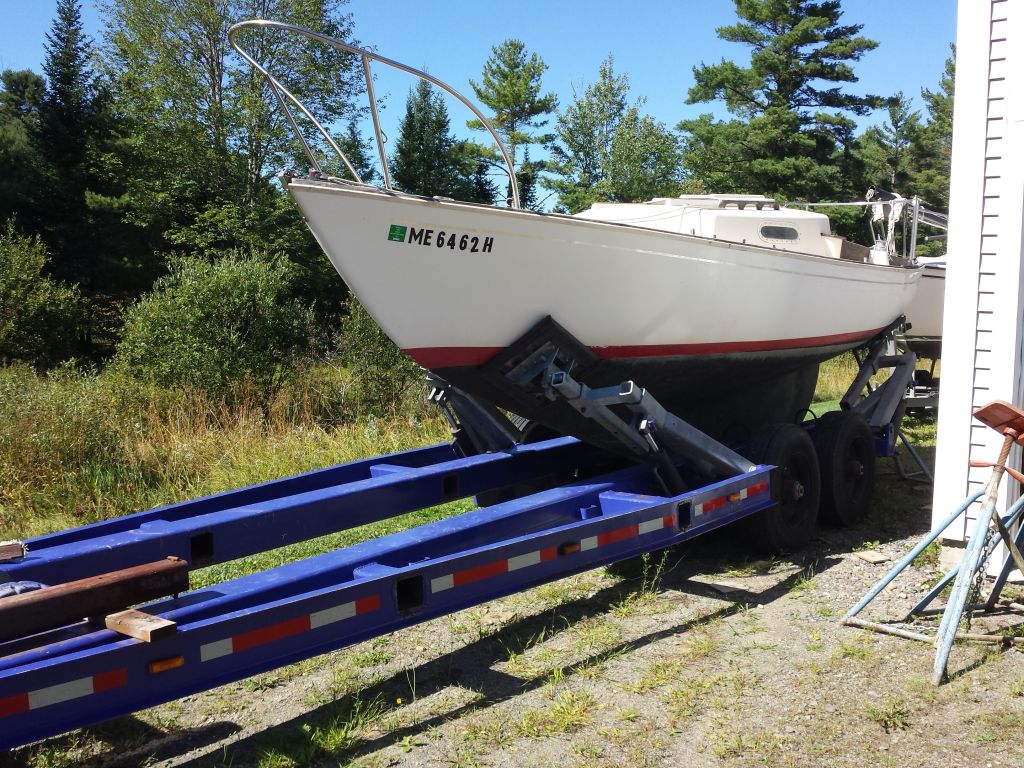
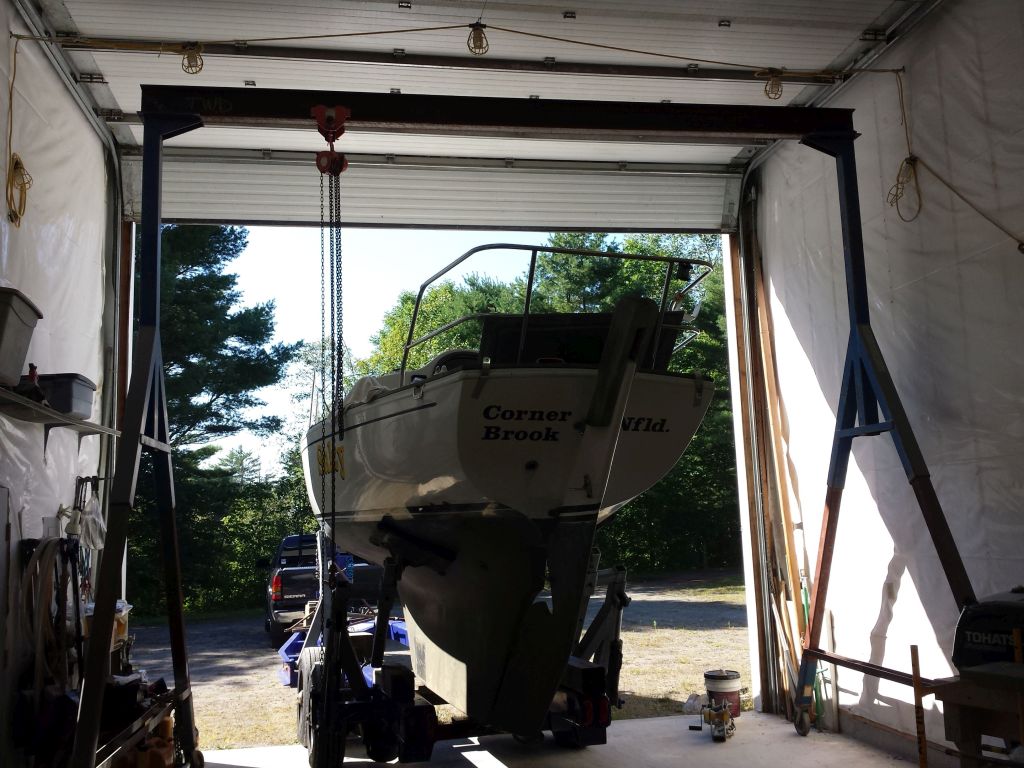
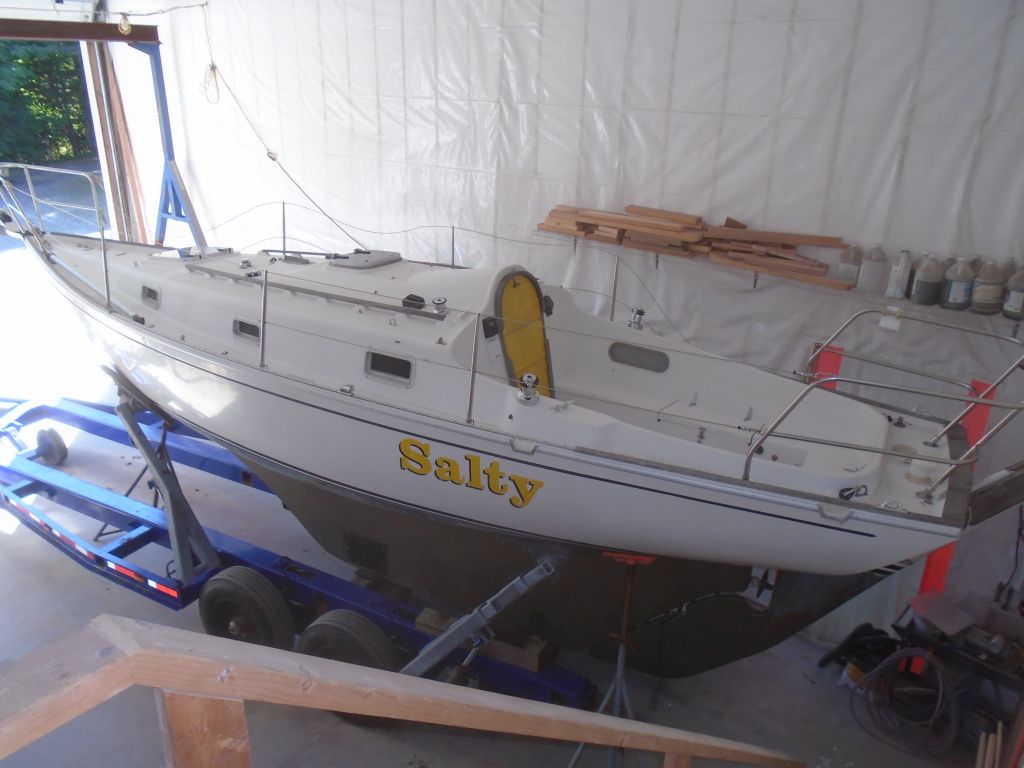
So, taking advantage of the natural shift between two other projects, I decided to work on removing the engine, and to that end I moved the boat into the shop temporarily.  I shuffled another boat (on its own trailer) into the main work bay for the moment, so I could put Salty in the bay containing my gantry crane.  I didn’t even take her off the trailer, as her time in the shop would be short and she’d then be going back outside for storage.  It took a while to pick the boat up on my trailer, since the hauler who delivered here here a week or so earlier had blocked the keel oddly, obviating installation of my crossbeam; I had to temporarily lift the boat with some straps so I could reblock the keel and leave room for the forward beam.

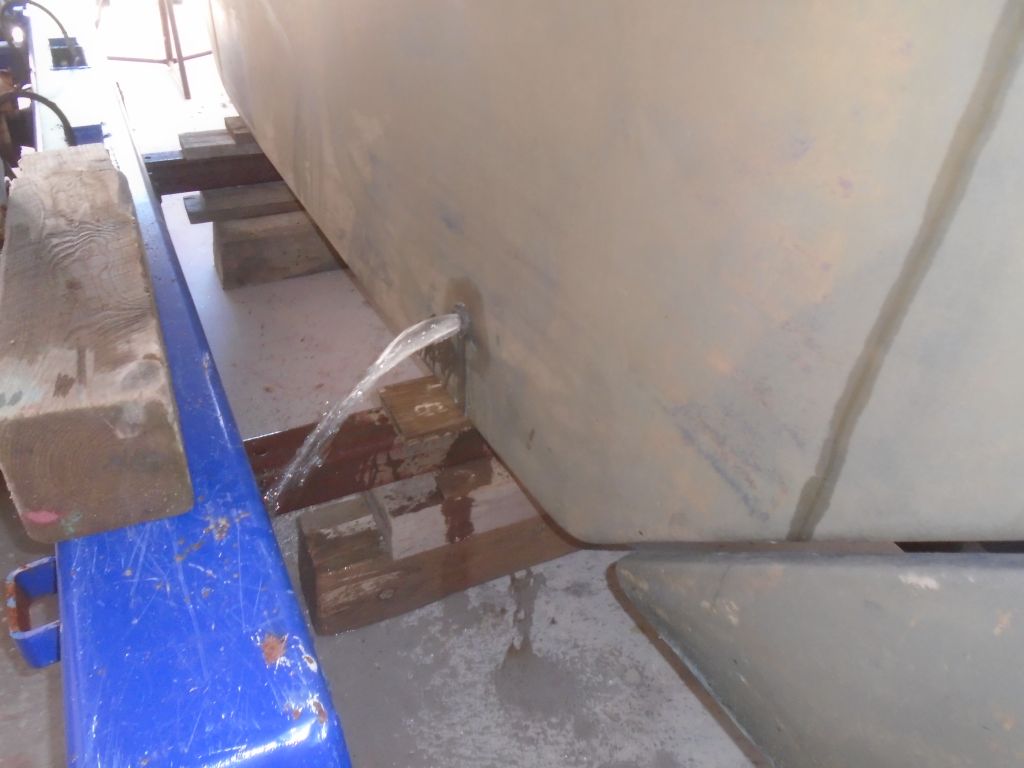
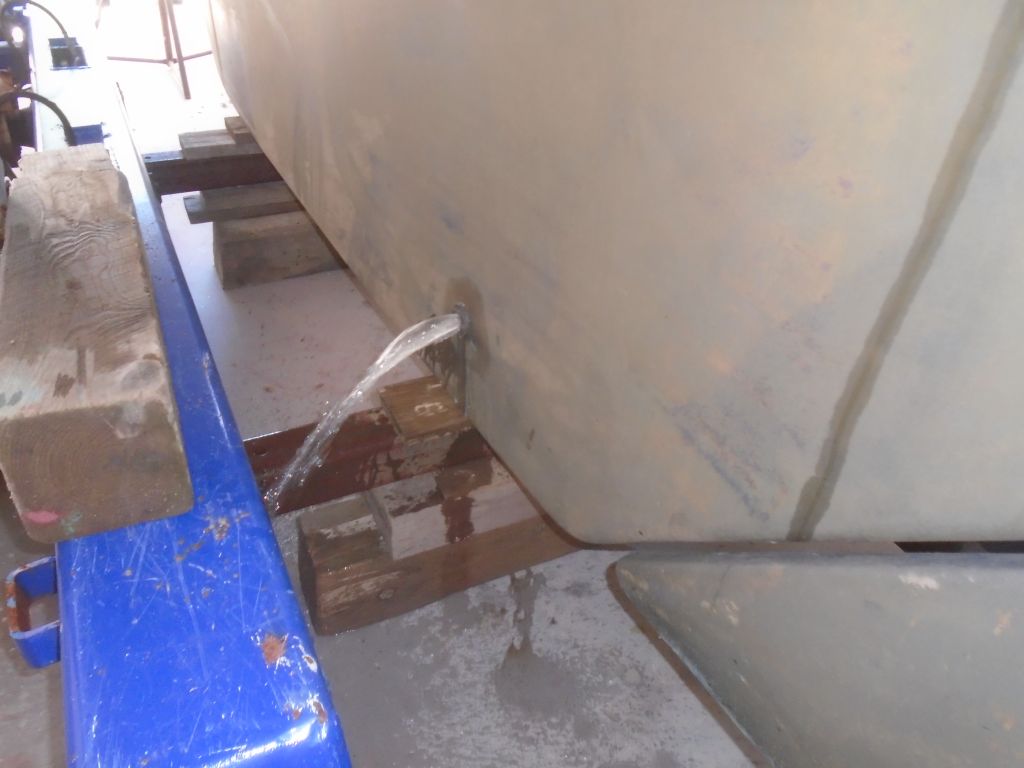
The first thing I did was to remove the bilge plug, which I’d not even noticed before–and immediately wished I’d done this outdoors, but alas.    It was neither the first nor almost certainly the last time that I’d poured oily water all over the shop.

prop1-91415

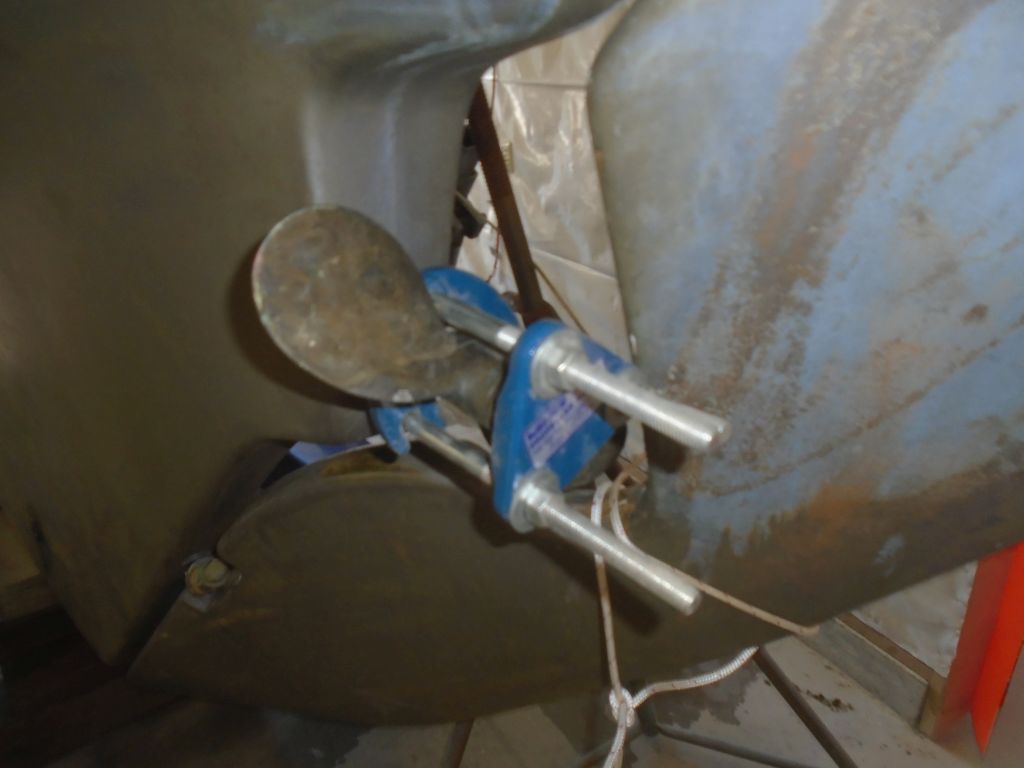
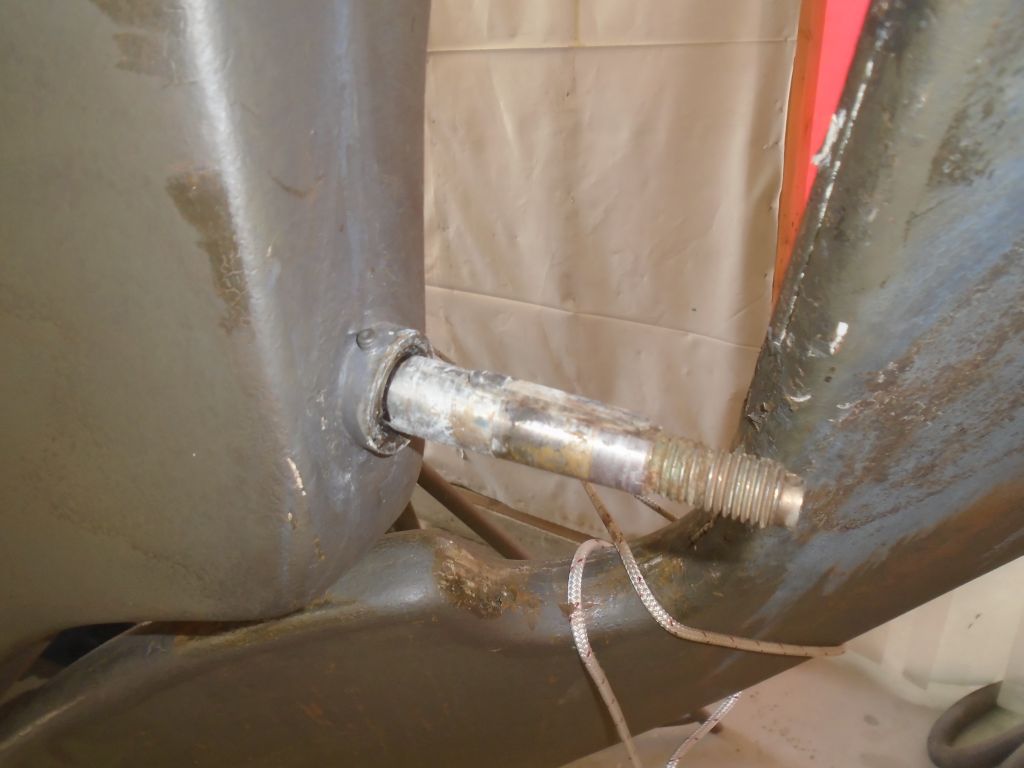
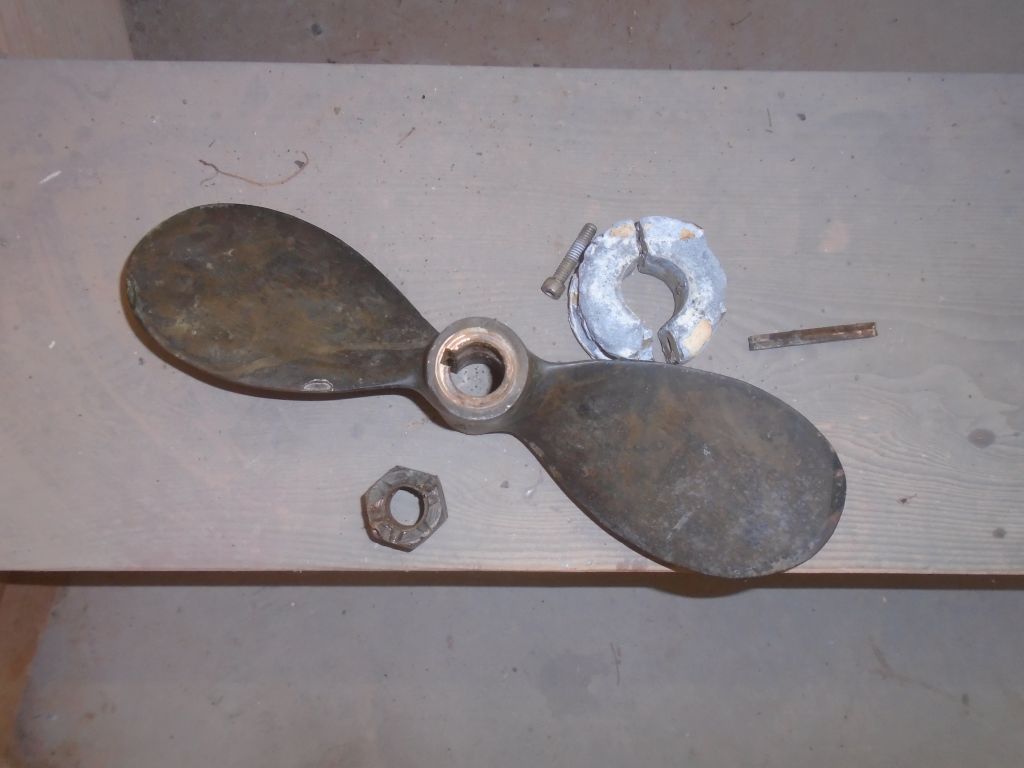
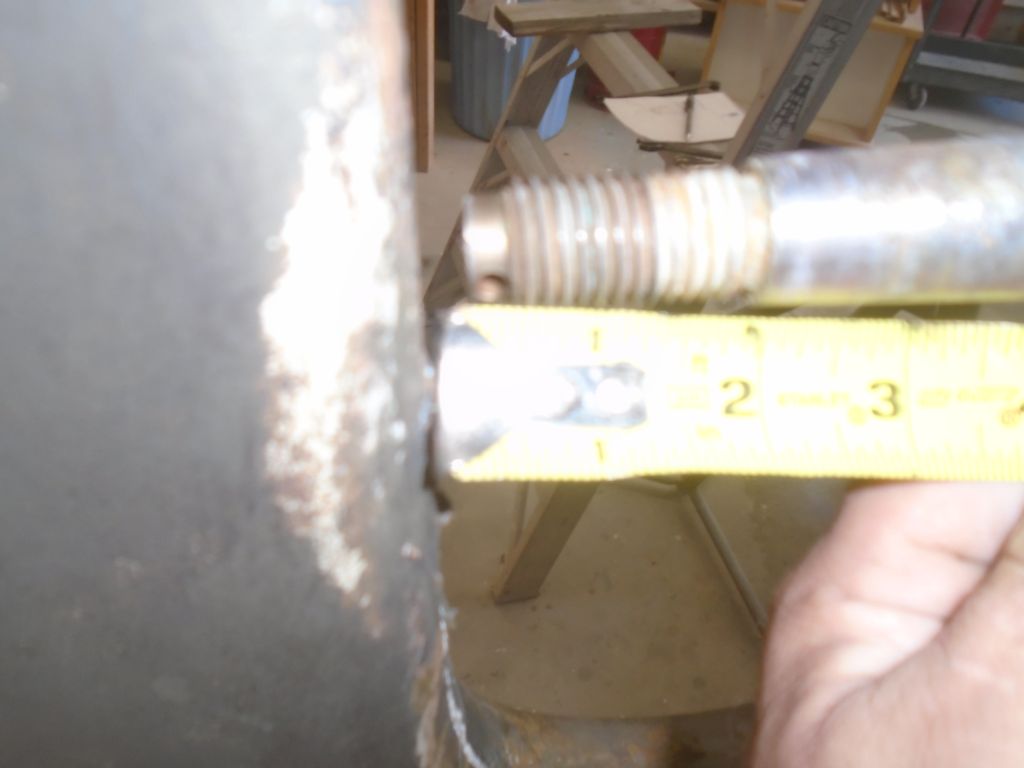
I began by removing the propeller, and noting various aspects of its original installation for later reference (mainly shaft clearance to the rudder (5/16″) and how much shaft was exposed behind the Cutless bearing (5″)  The propeller was a 2-blade 12RH9.  With my puller, the propeller came off without issue, and I set it and its component parts aside.

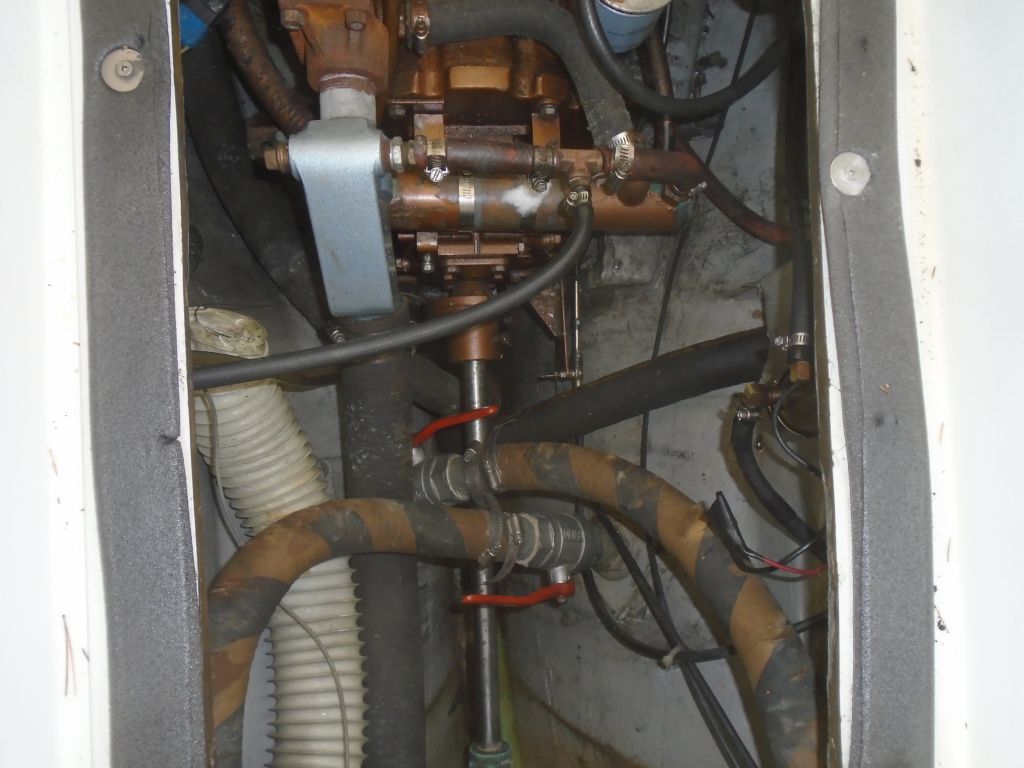
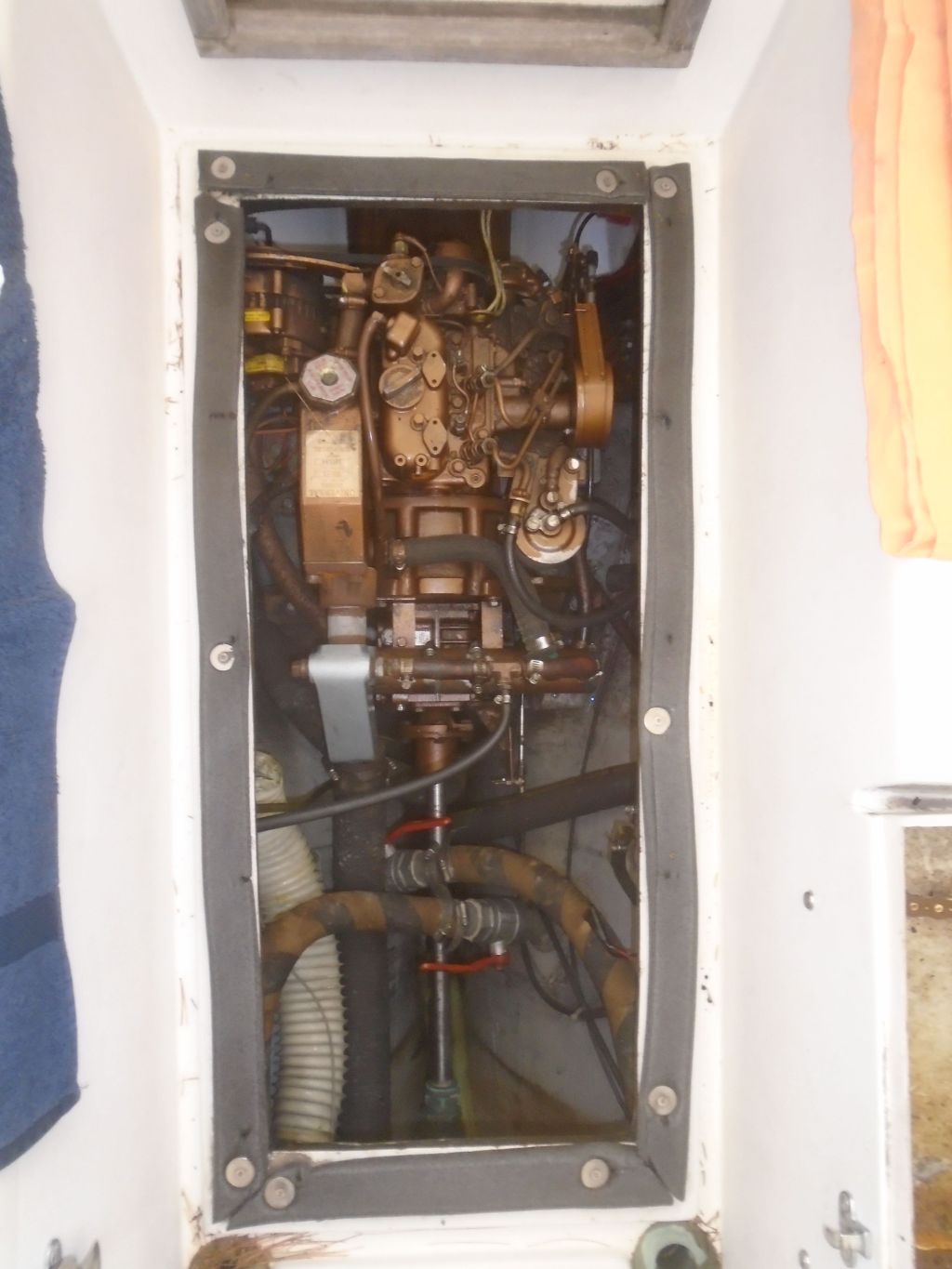
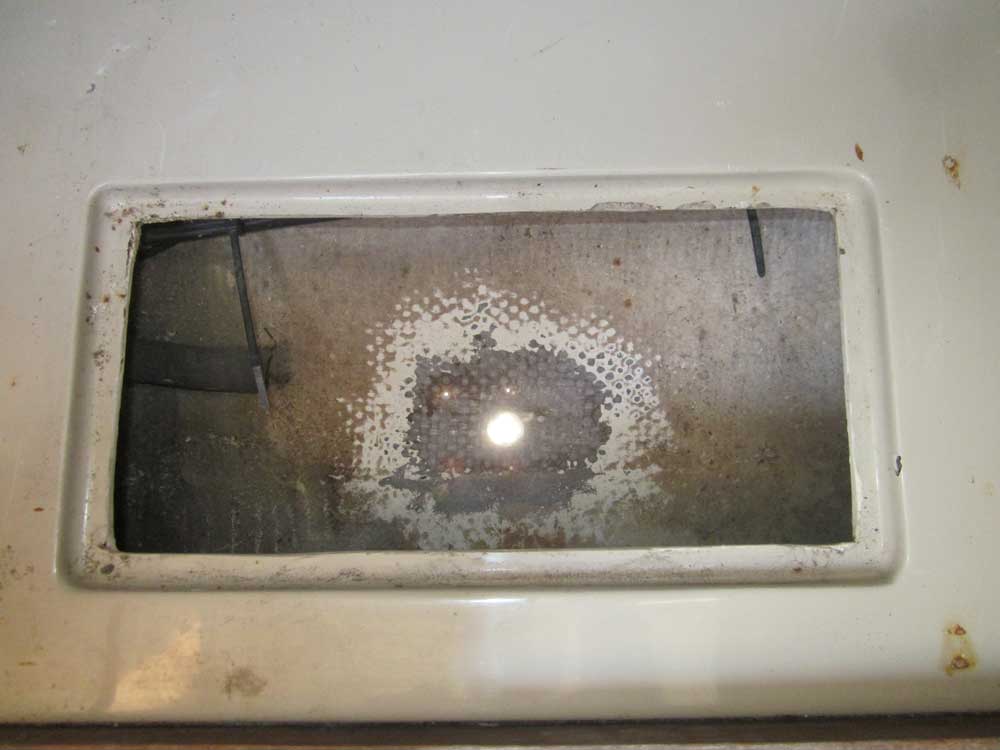
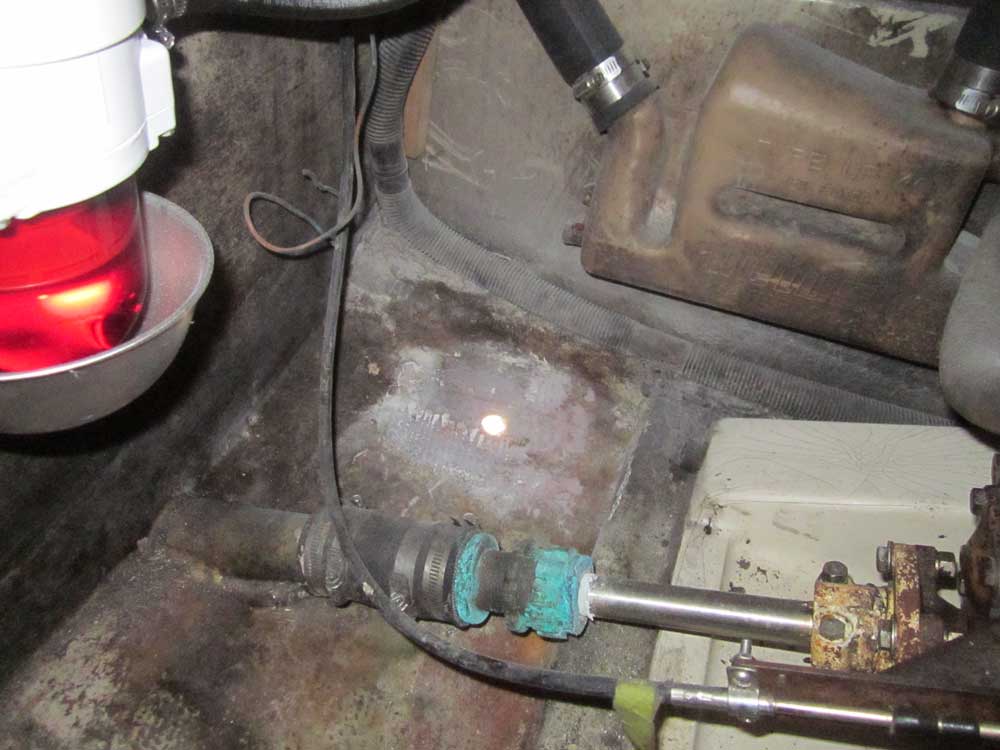
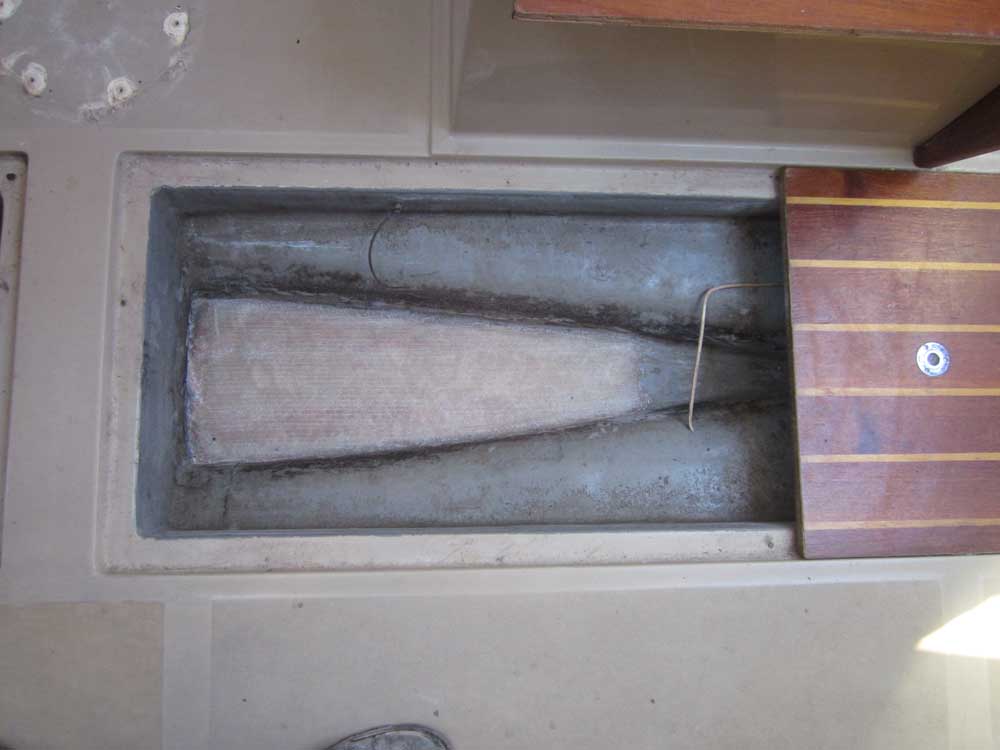
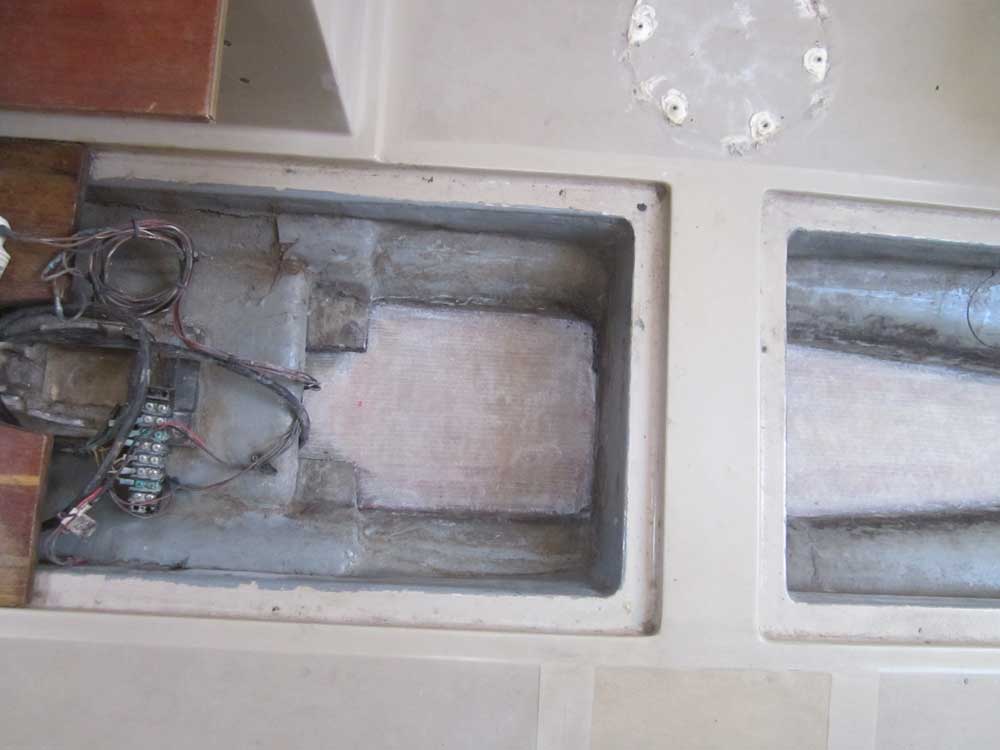
In the cockpit, I removed the cockpit sole hatch–essentially the entire sole–which provided access to the engine room beneath.  I took a number of pictures of the original installation for reference purposes.

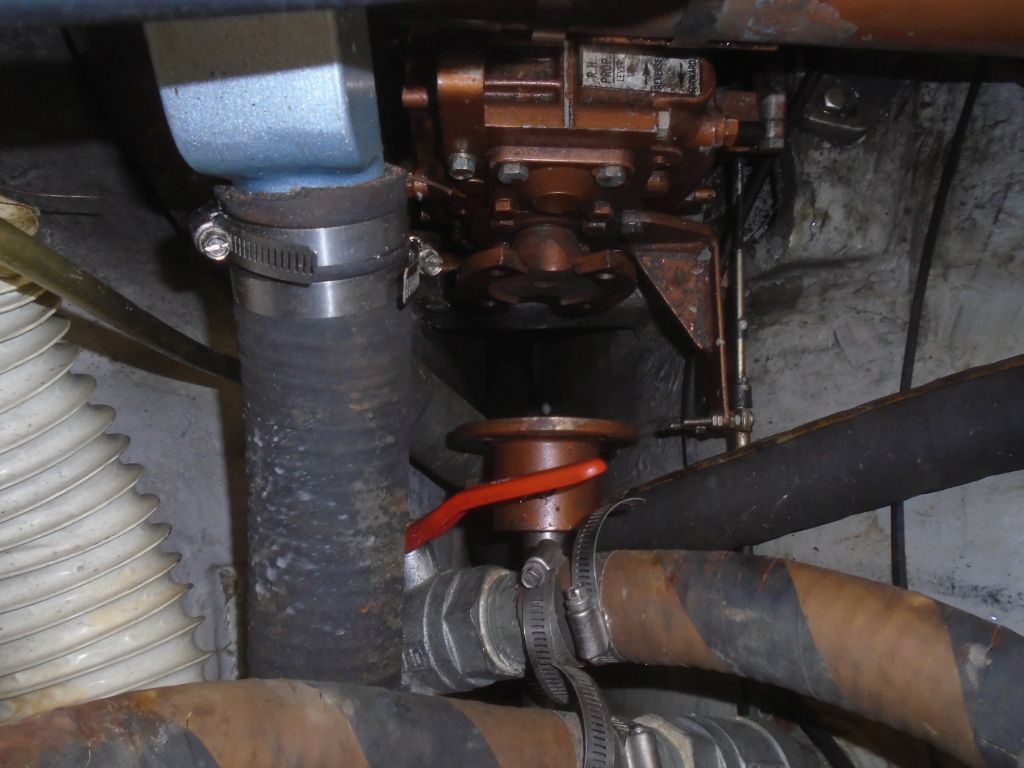
I started with the shaft and coupling, and unbolted the coupling from the engine.  Other than the challenging access–top access like this seems at first like a great idea, till one realizes that when the hatch is gone there’s nowhere from which to work–the coupling bolts came off with ease, and I slid the shaft back enough to clear the engine.  Once the engine was out, I’d pull the shaft out from inside.

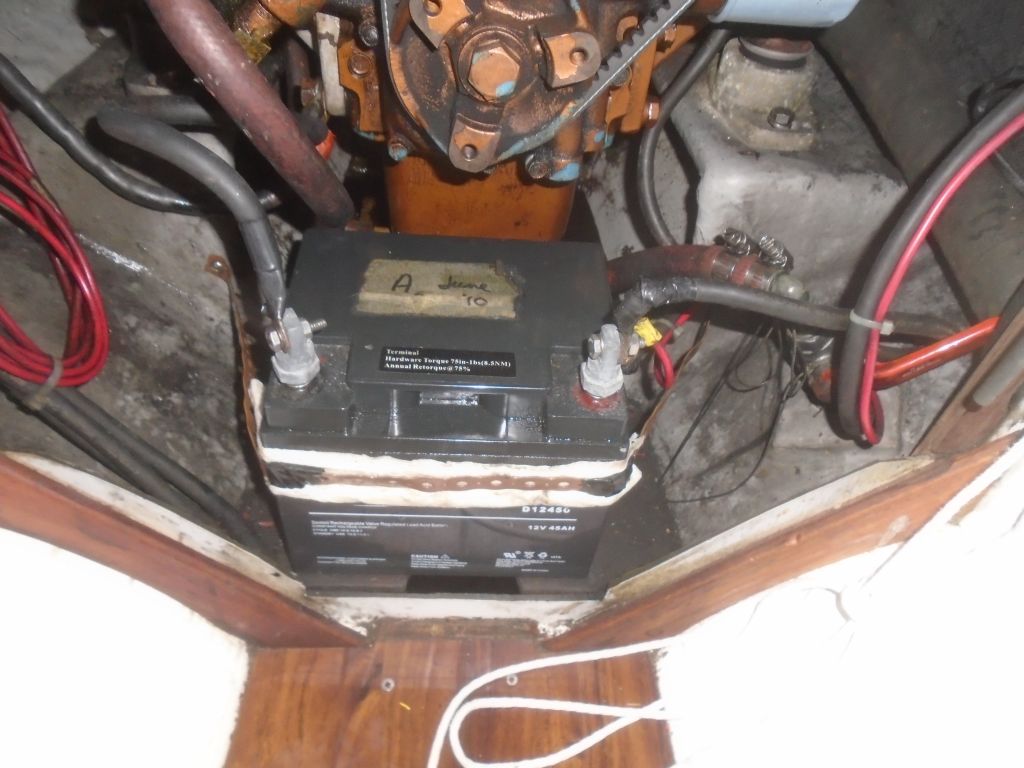
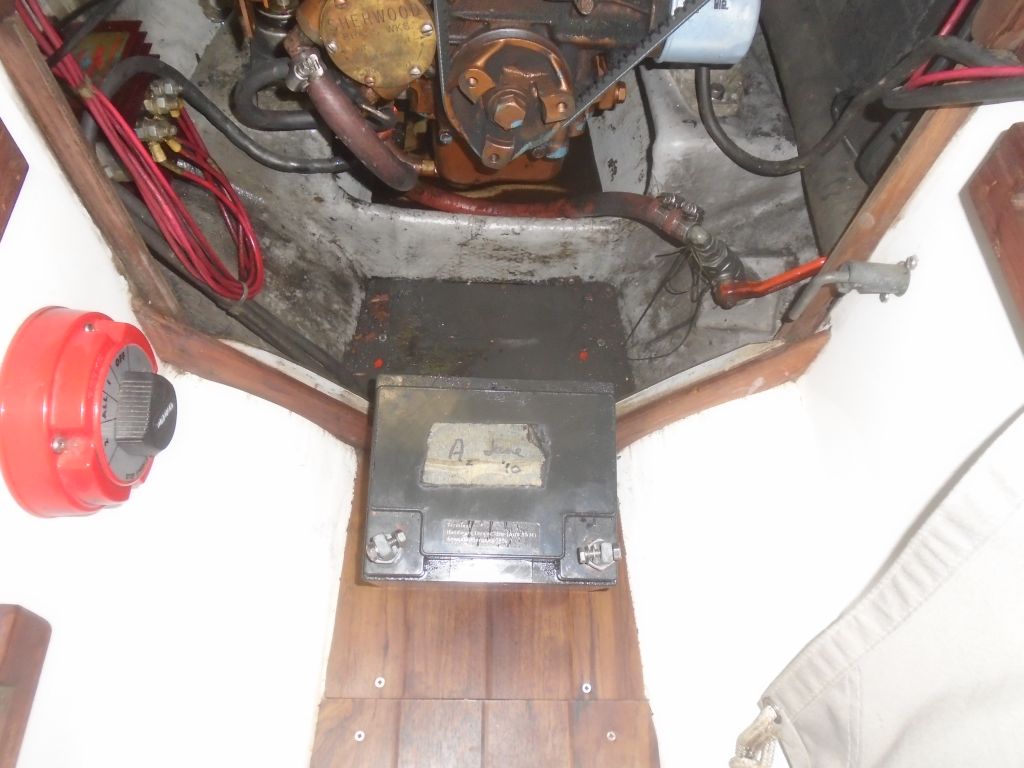
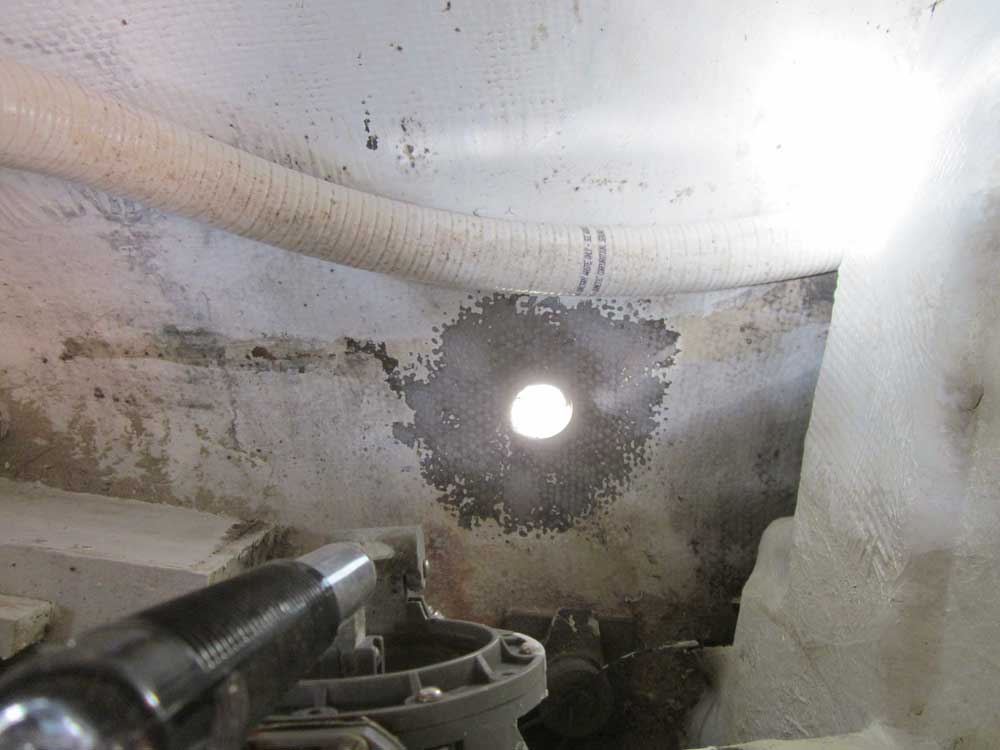
Continuing from the aft end, where access was most uncomfortable, I began to systematically disconnect what I needed to in order to remove the engine, documenting the original situations as I went.  In this way, I removed the fuel lines, exhaust hose, raw water bypass, coolant overflow lines, engine wiring harness, and gearshift cable, all the things I could reach from the after end of the compartment.  Then I removed the battery from the forward end.

This brought me to the end of the day; I’d continue on the ‘morrow.

Total Time Billed on This Job Today:  4.5 Hours

Nomad 5

< Back to Nomad

With the “pressures” of summer winding down, and the prospect of unscheduled weekends ahead, I began to prepare the boat for the next task ahead:  painting the hull.  I chose to get this out of the way first so that I could snuggle the boat into a corner of the shop for most of the winter, leaving room indoors for some other projects and storage of other things.  Once the hull paint was done, I’d have little need to access the boat from anywhere but inside, where the bulk of additional work would occur, so I could live without access all around.

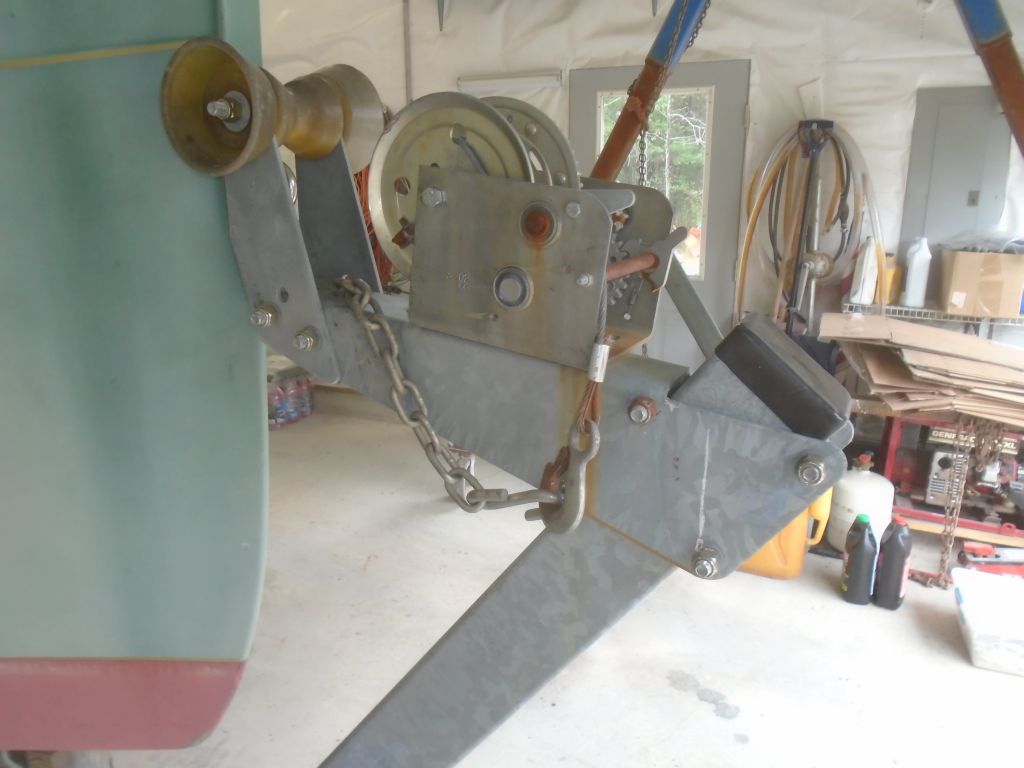
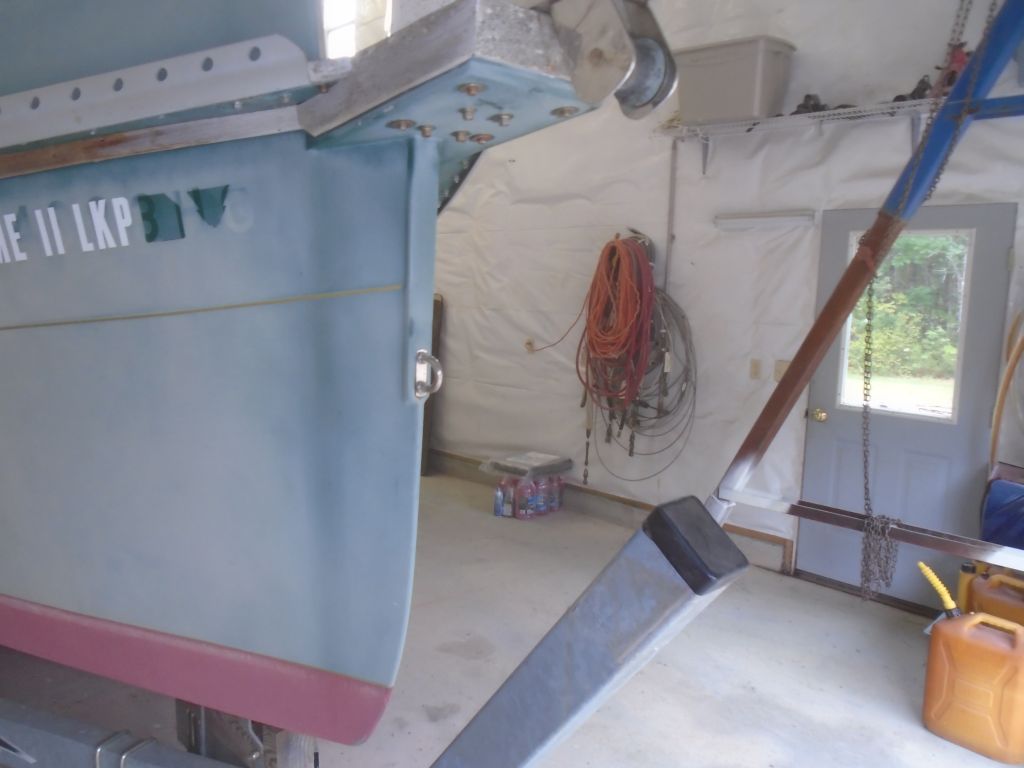
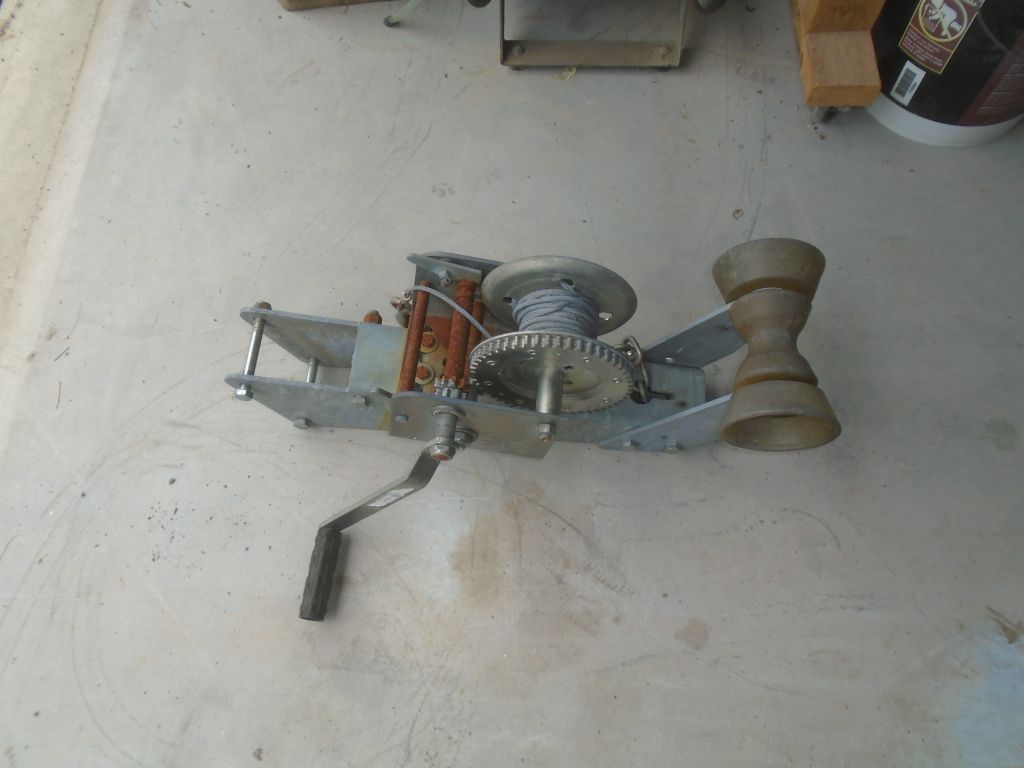
To begin, I removed the winch and bow roller assembly from the trailer to open up access to the stem for masking and prep work.

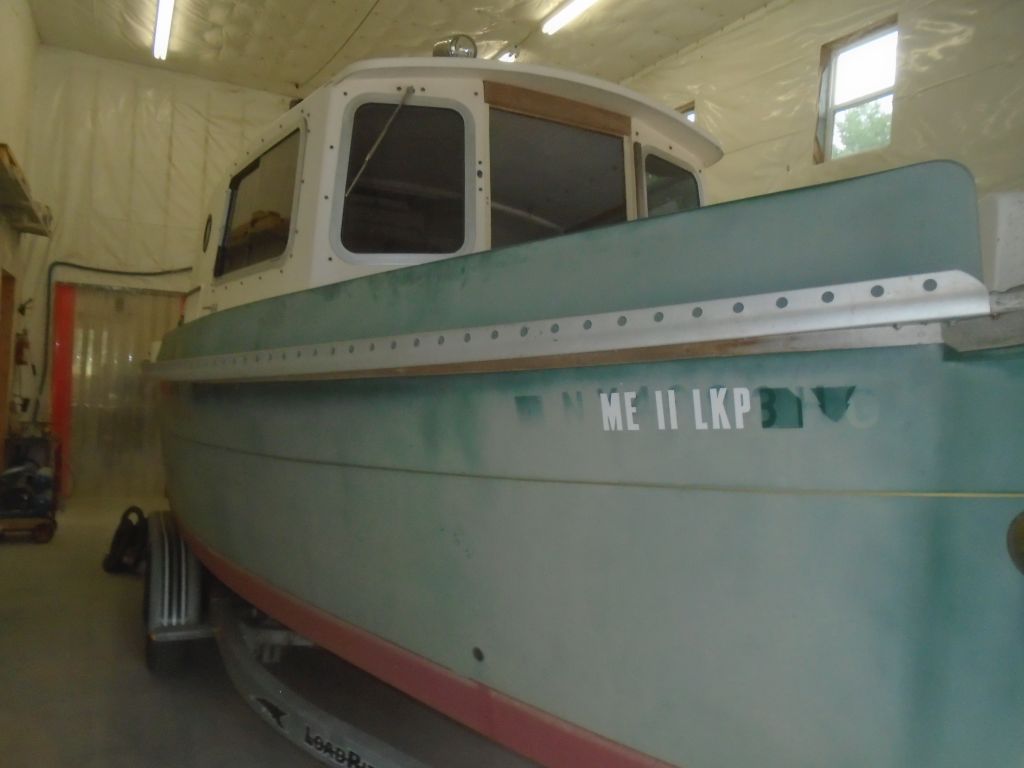
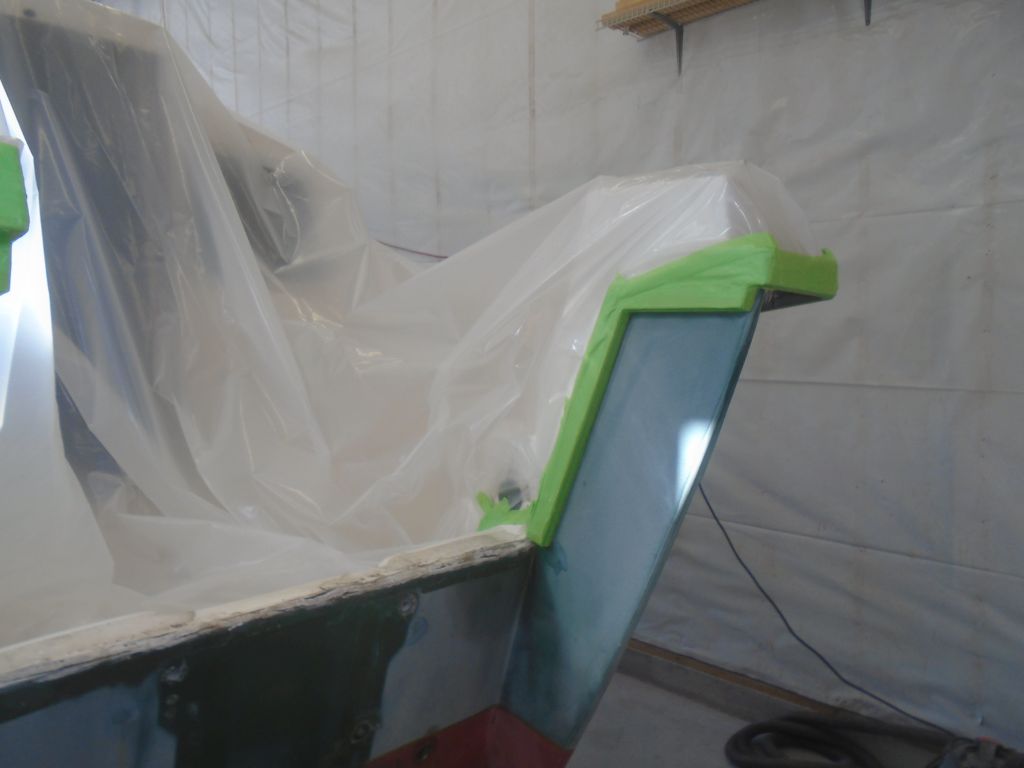
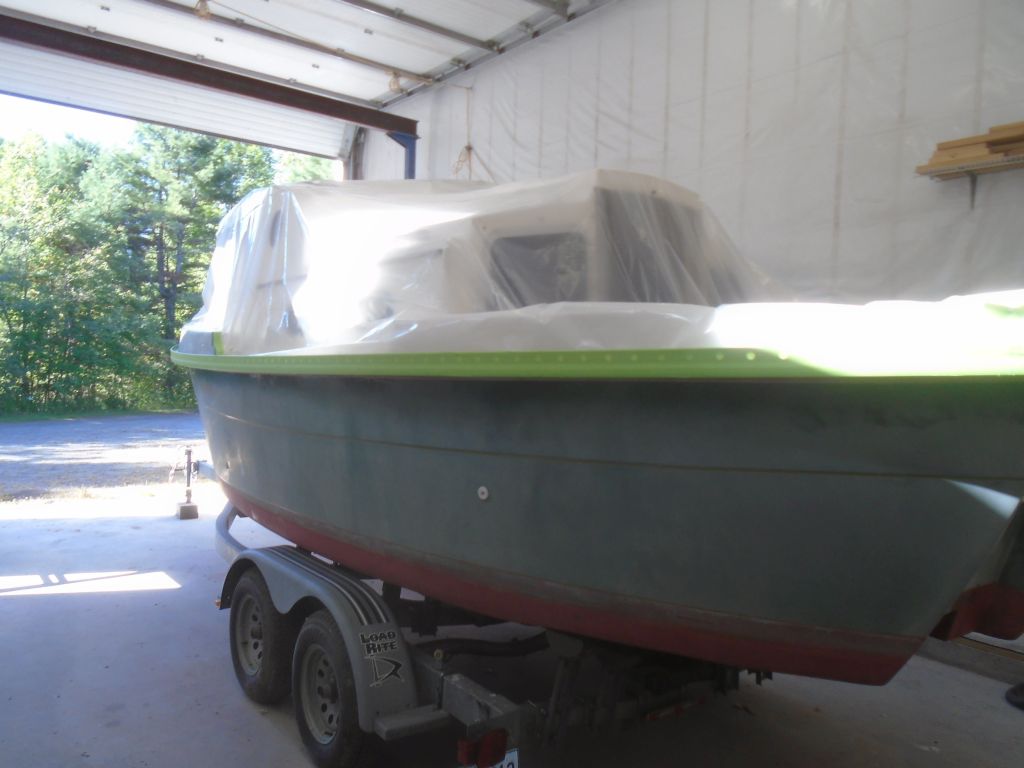
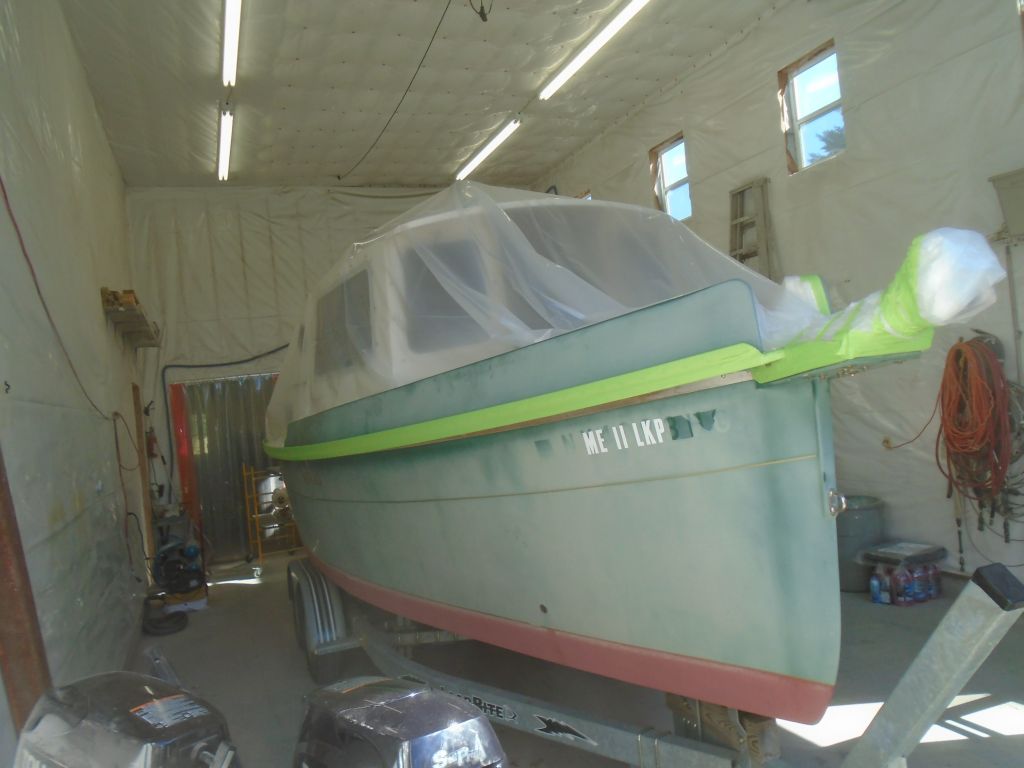
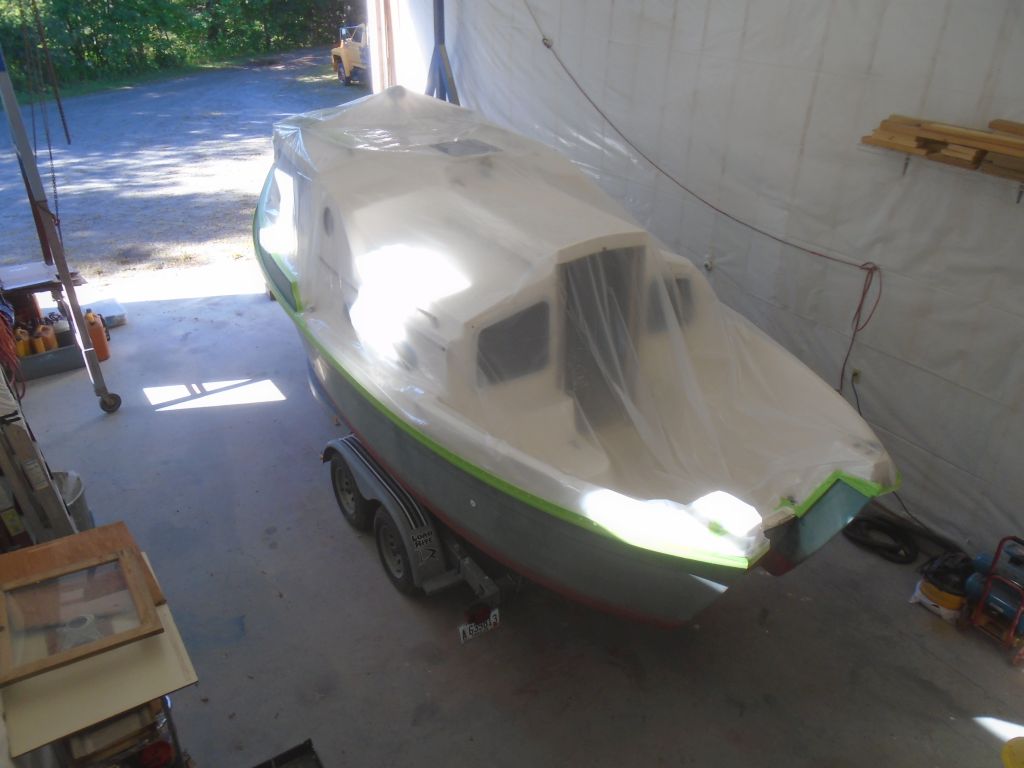
After removing the tools I’d left on the boat after my last session, I prepared to mask off and cover the decks with plastic, the first step towards hull preparation.  The boat’s construction featured an outward hull flange and shoebox-type hull/deck joint, covered with and protected by an aluminum toerail.  With hull color on the underside of the outward flange, I’d need to paint that area; plus, the bow sections featured a raised bulwark that, on this boat, was hull color, so I’d need to mask off both the aluminum rails as well as the deck within, slightly complicating the masking and covering process.

There was a teak molding at the juncture between the hull and the outward flange; this molding, while noticeable while the boat was on the trailer, was not something that would be visible when the boat was in use, and rather than fuss with masking it and dealing with its appearance in some other way, I decided it would be fine to simply prep and paint it along with the hull.  In the areas at bow and stern where teak trim extended beyond this sheltered area, I’d treat the teak normally, with varnish.

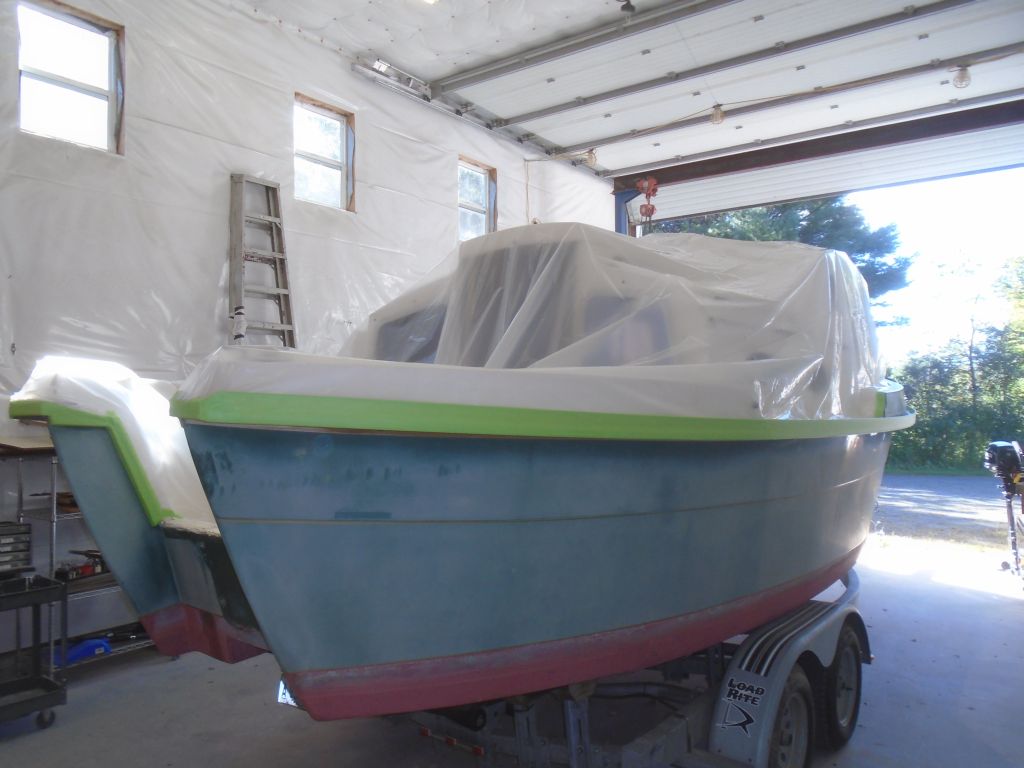
I masked the lower edge of the aluminum toerail to protect it while working on the underside of the outward flange, then masked various teak trim bow and stern as needed to cover it before draping plastic sheeting over the deck and taping it to the decks and toerail as required, leaving exposed the bulwarks forward.

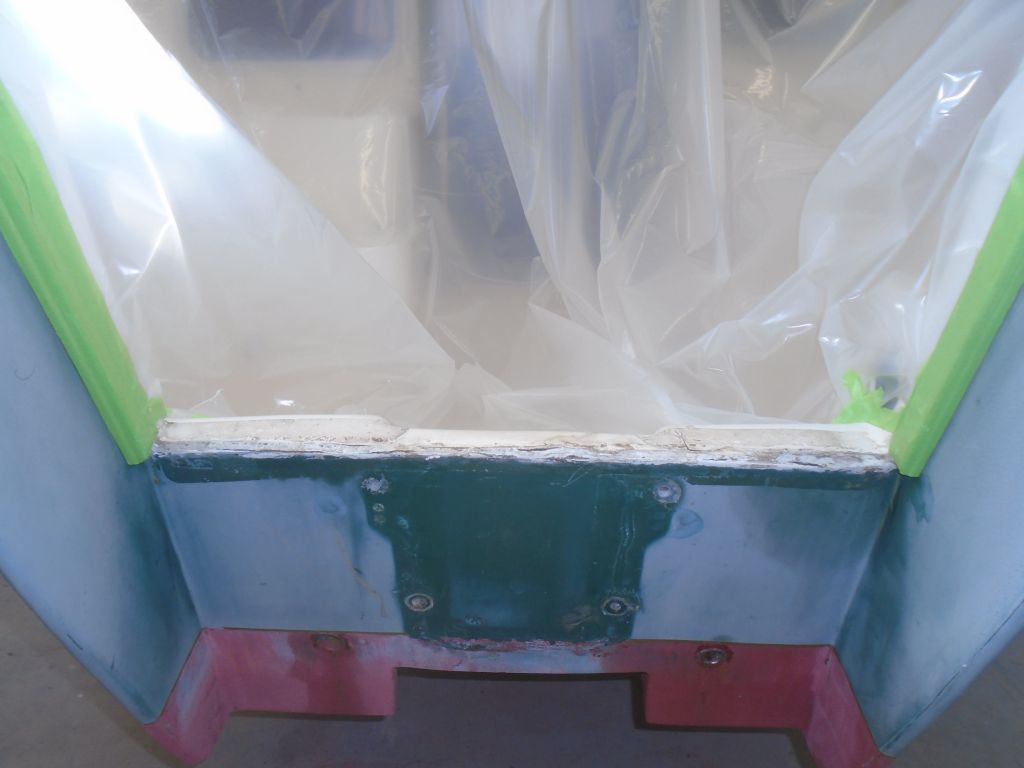
The outboard well at the transom featured some cracking (as per usual) in the seam between hull and deck moldings, and since I wanted to repair and lightly reinforce this joint I masked the plastic inside the transom, leaving the top and edge exposed.

masking2-91215

Total Time Billed on This Job Today:  3.5 Hours

Nomad 4

< Back to Nomad

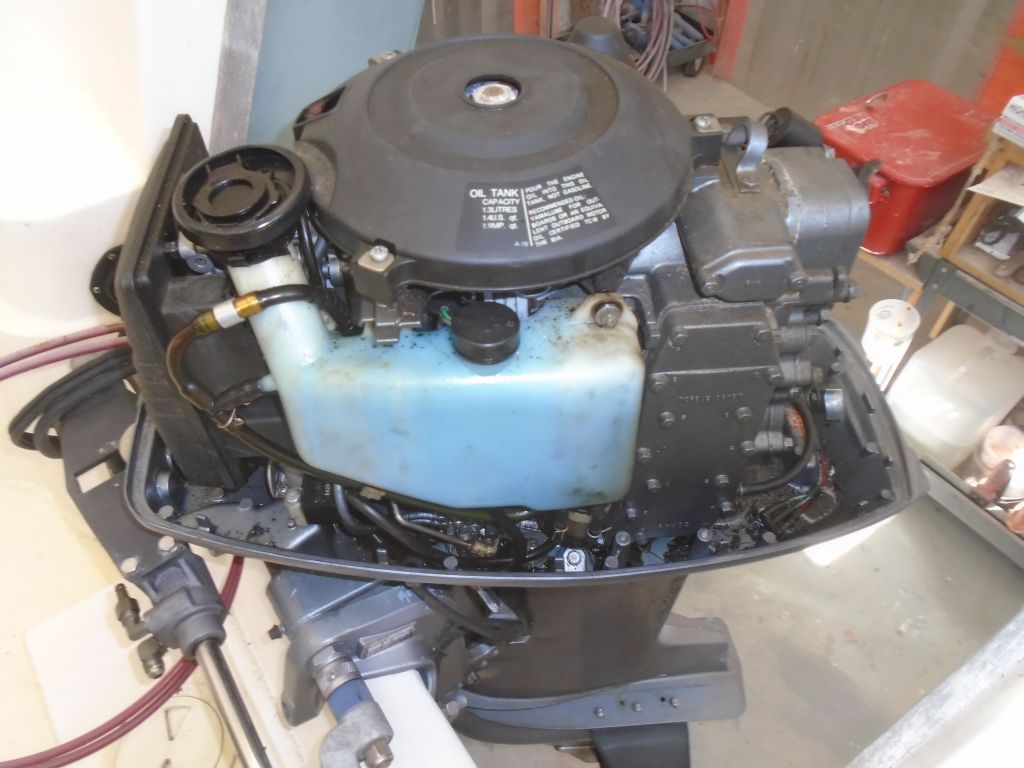
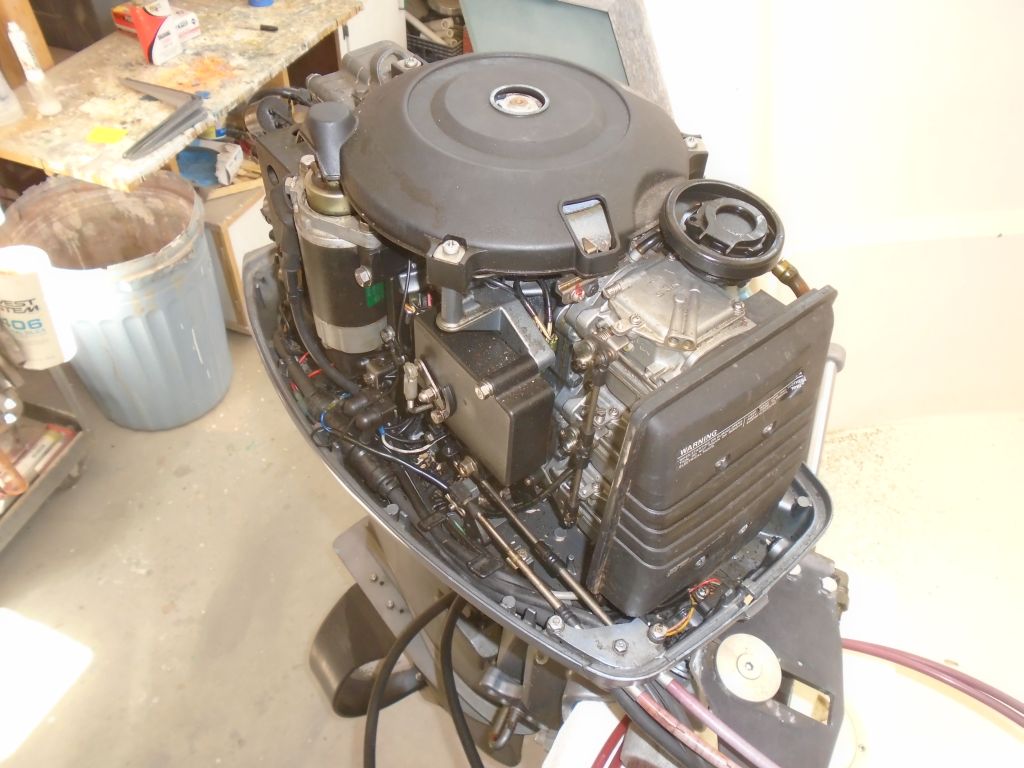
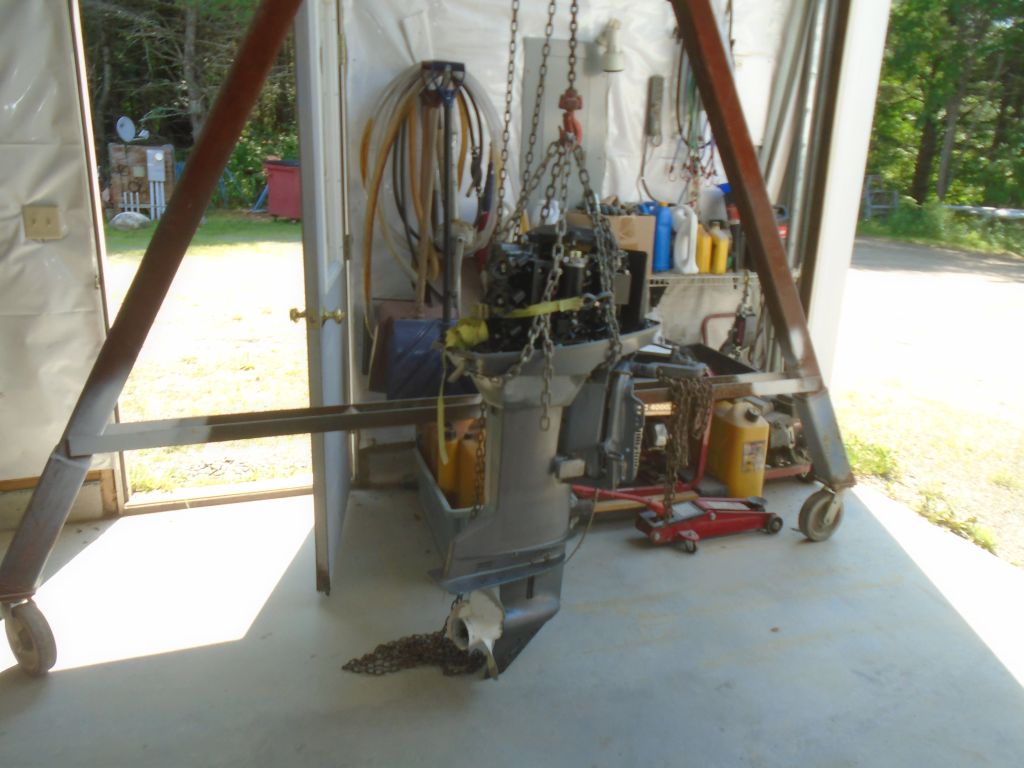
Earlier, in some quiet moments around the shop, I put together a simple yet strong stand for the outboard, using old yard scraps.

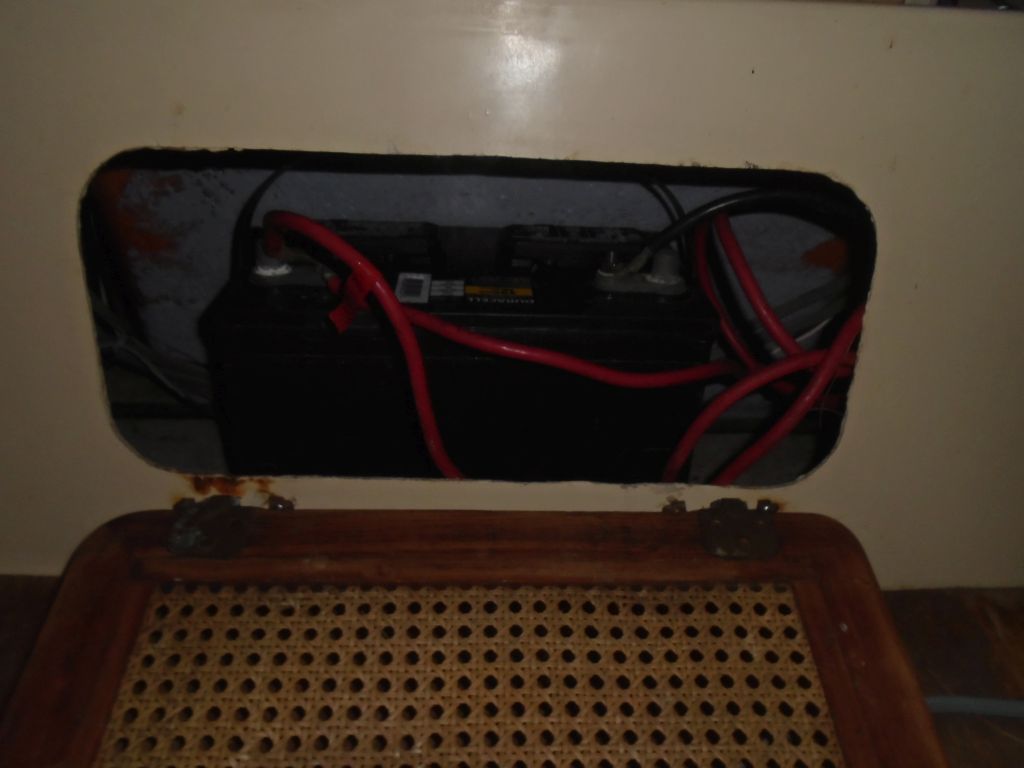
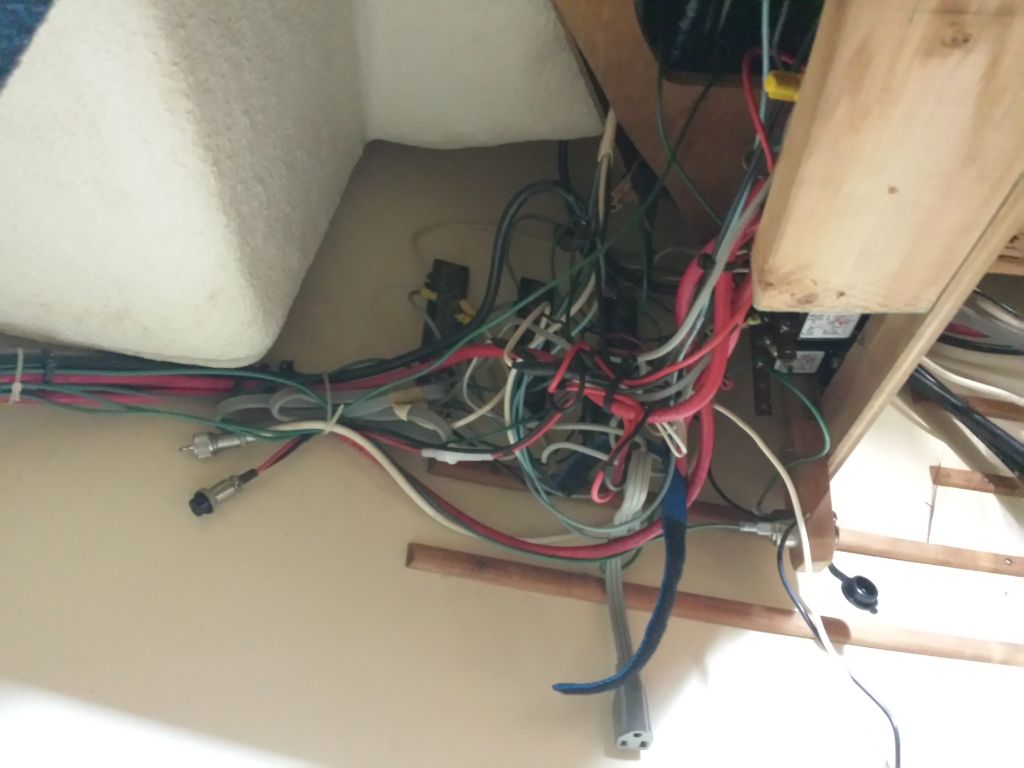
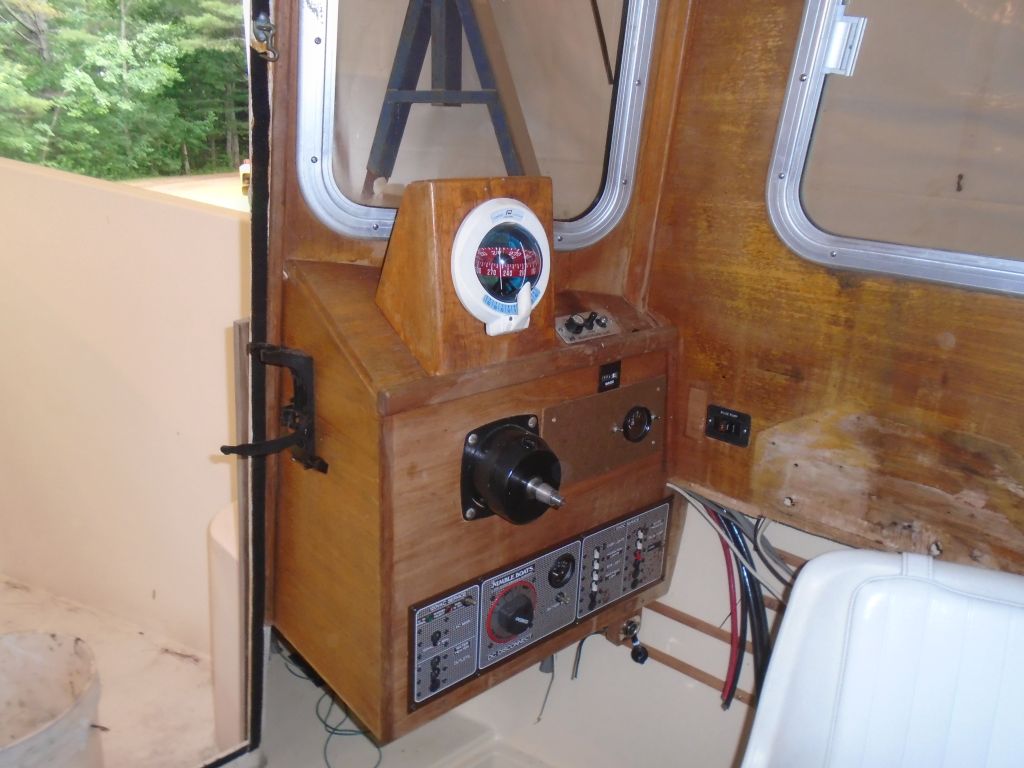
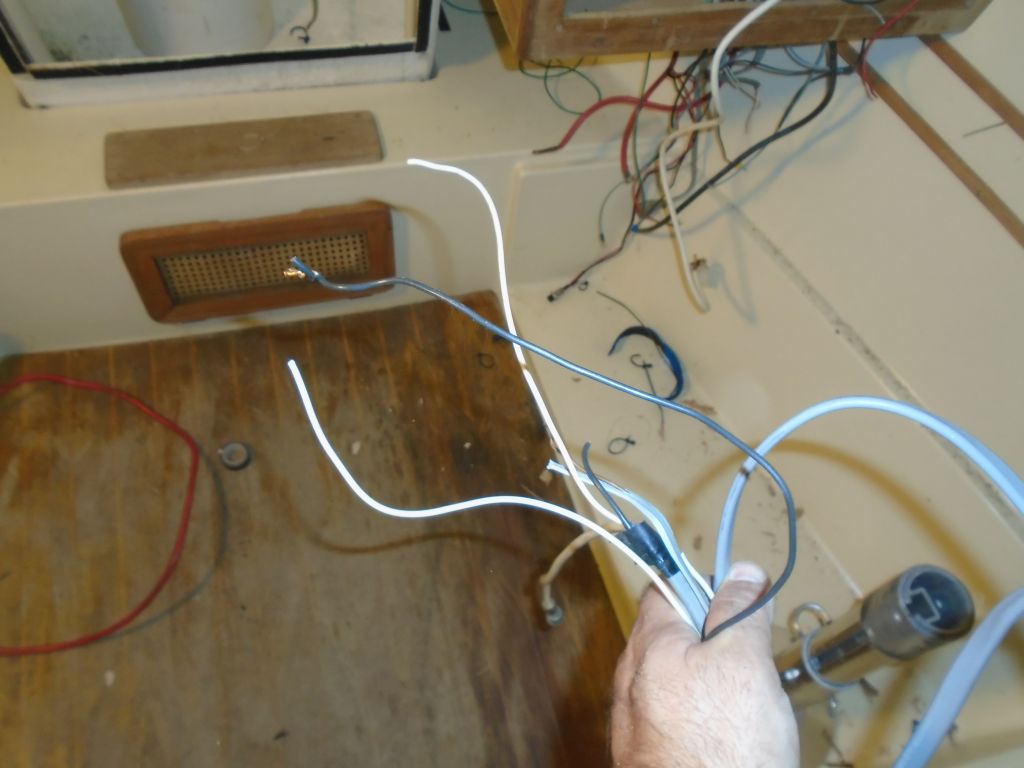
Removing the old engine controls and cables earlier had highlighted the condition of the boat’s original (I think) wiring.  The space beneath the helm console was a nasty-looking rat’s nest of sloppy wire, and in beginning the process of sorting it out as I removed the unwanted power cables from the old engine, I soon realized that I’d have to clean up the wiring more than I’d originally anticipated.  As much as I hoped to keep the project scope minimal, and although everything on board currently worked, I wasn’t content with the way the wiring looked now.  The battery cables were poorly done, with lousy crimps, and all in all it was time for some maintenance.

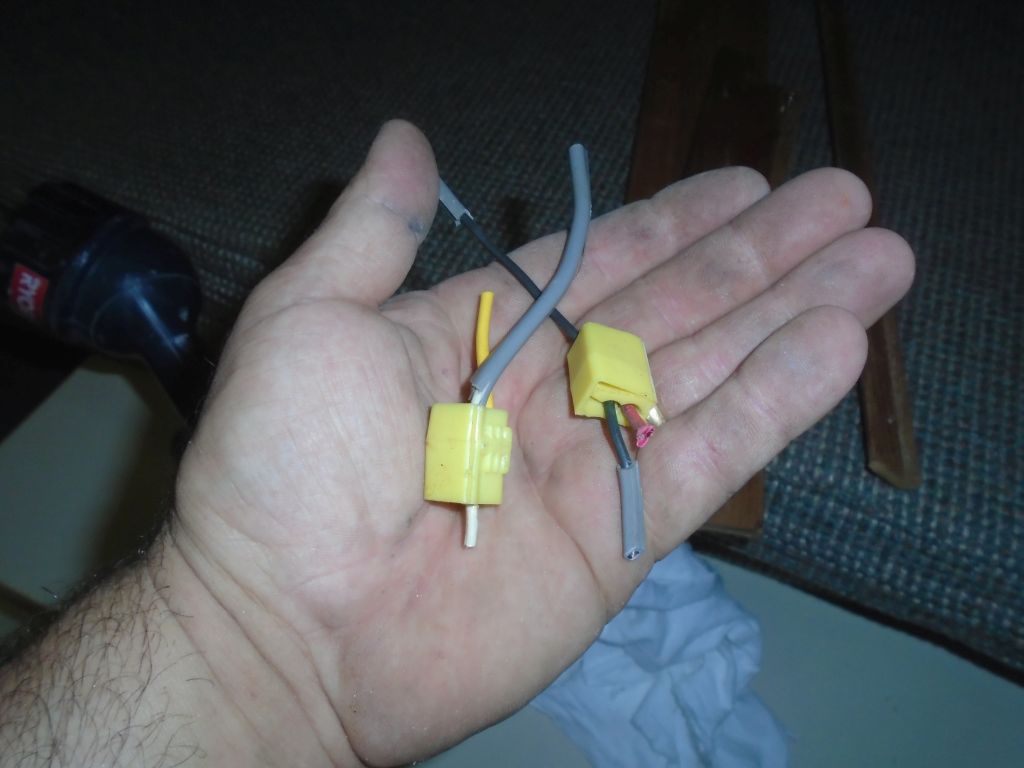
When I started to really get into it, however, I found that the original wiring was solid-conductor household wire, sometimes known as Romex.  This was unacceptable to me, and it was clear that I’d have to start over to satisfy myself.    Later, I also found several daisy-chained connections made with those cheap plastic clamp-on connectors that knife into the wire to allow an easy addition of another fixture.


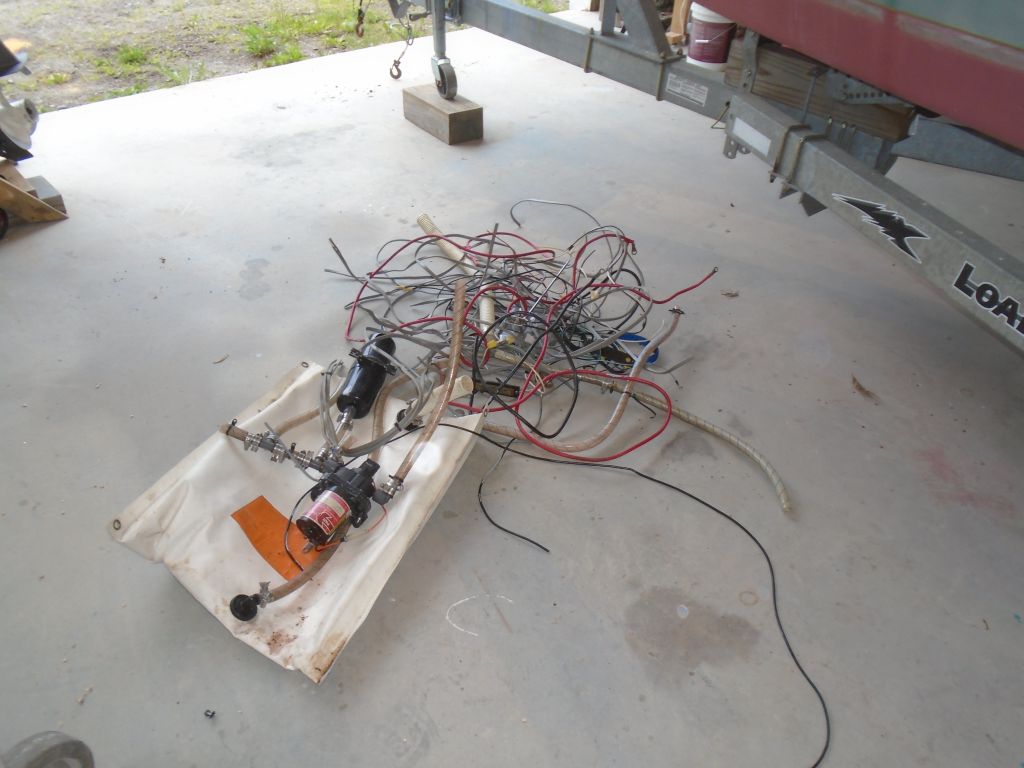
This wasn’t a major setback, as my goals for the boat were to keep the electrical system extremely simple and straightforward, and anyway, there was always something satisfying about tearing out old, poorly-executed systems and starting fresh.  So it was out with the wire nuts and Romex, out with the sloppy mess behind the helm, out with everything unnecessary.  There weren’t many fixtures on board–only a few lights, which I’d planned to replace with new LED fixtures anyway, and the water pump.

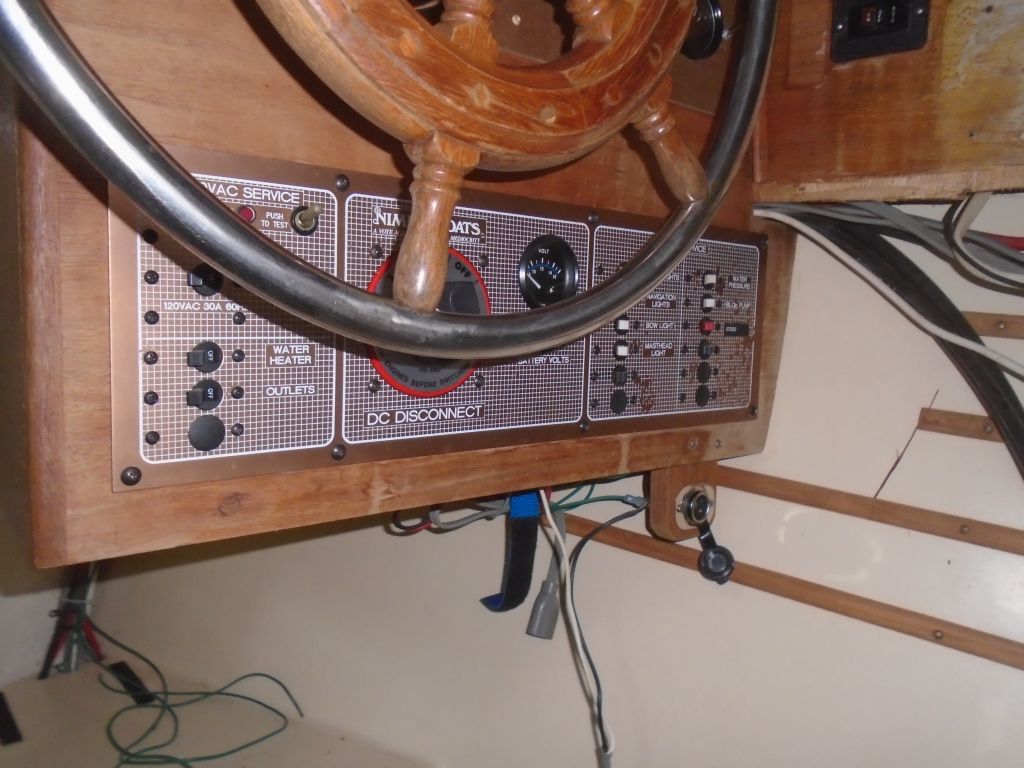
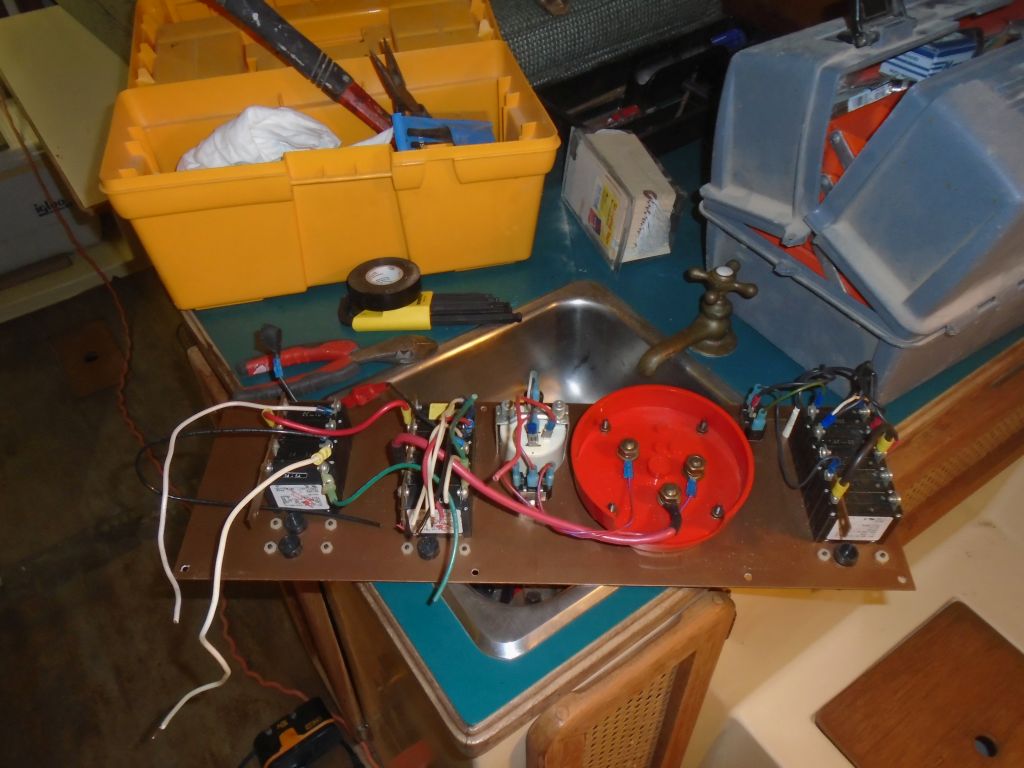
I planned to reuse the original electrical pane at the console, which incorporated an AC panel (which I didn’t plan to use at this time), battery switch, and enough breakers for the vessel’s minimal needs.  So I unscrewed the panel and cut the wires as needed:  later, I’d remove the remnants of old wire in preparation for reinstallation, but for now I just wanted to clean things out.

Starting at the helm, I systematically removed everything, from the messy bundles to the unwanted searchlight controls to the old buss bars and clamps.  I worked my way through the boat, removing the old bundles bit by bit as I went, and cutting things along the way to ease how much wire I had to actually pull through access holes and the like.  A few of the fixtures, like the running lights atop the pilothouse and the overhead light in the cabin, had their wiring–stranded copper of appropriate type here–run behind or beneath panels that obviated its removal, so I left these in place for reuse.  I removed all the AC outlets and their metal boxes that I didn’t like, and all the lighting fixtures, leaving (for now) only the bilge pump in place for some later time.

In the head, some dismantling of panels was required for appropriate access to the wiring–a panel along the hull on the outboard side, plus some access panels on the aft side, which allowed me to get to the wiring for various lights and the exterior mast.  The aft panel was full of seeds apparently stolen by the rodents that had also made a huge foam and paper nest beneath the galley.  I left the VHF cable in place because there was no reason to replace it.

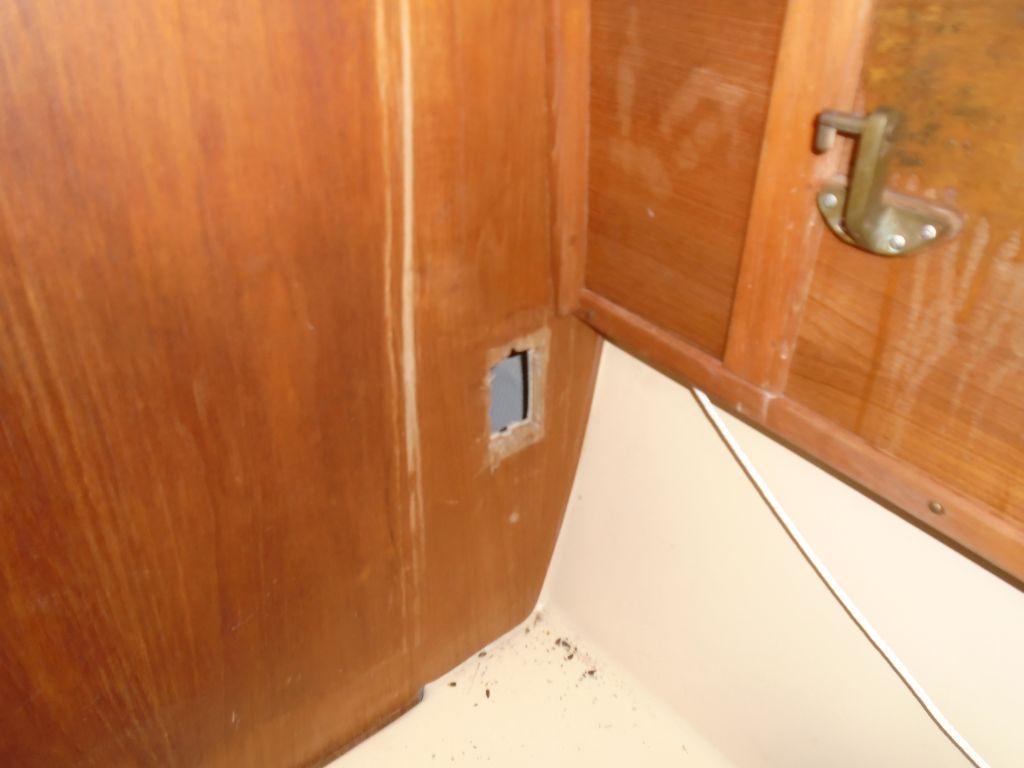
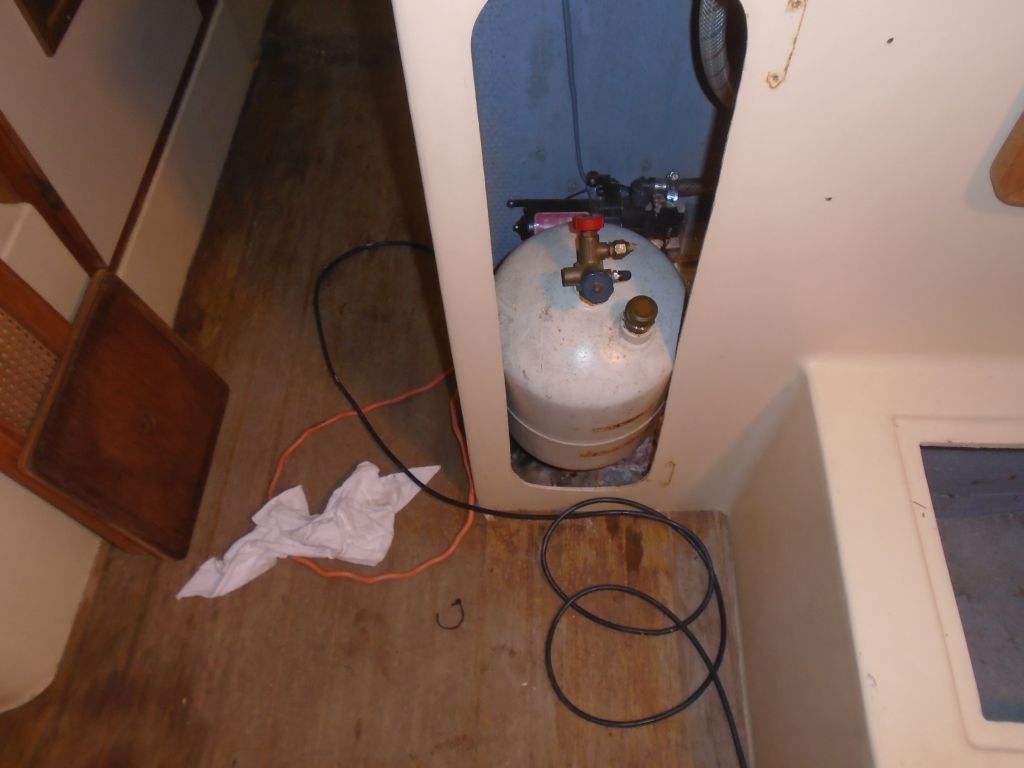
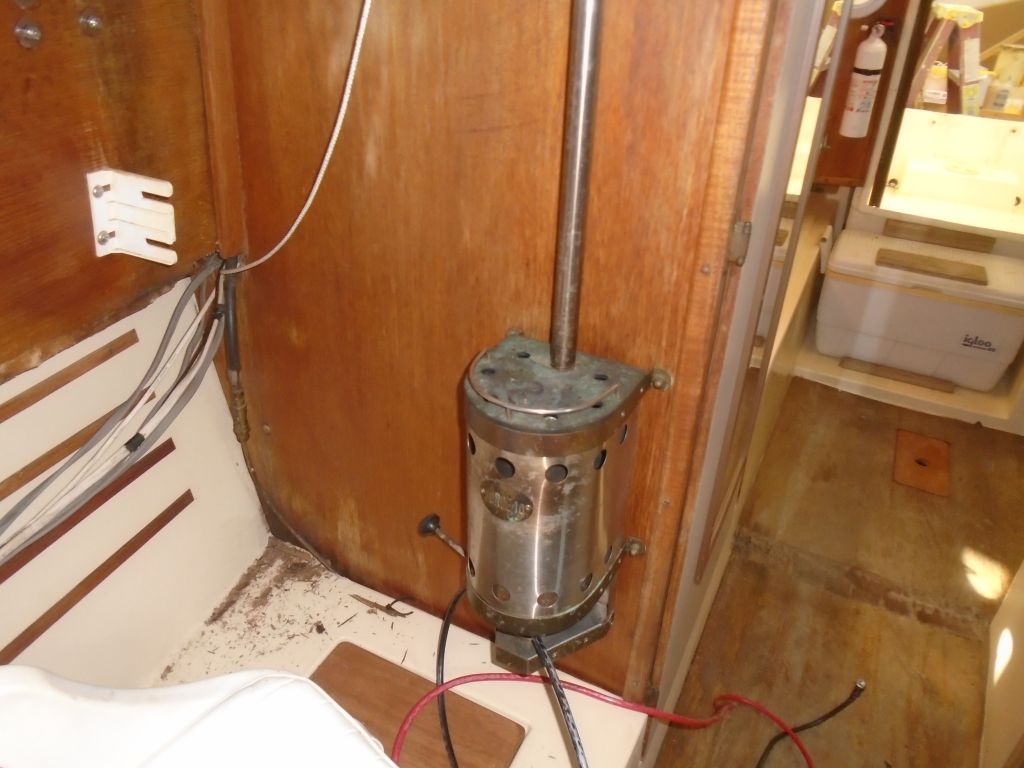
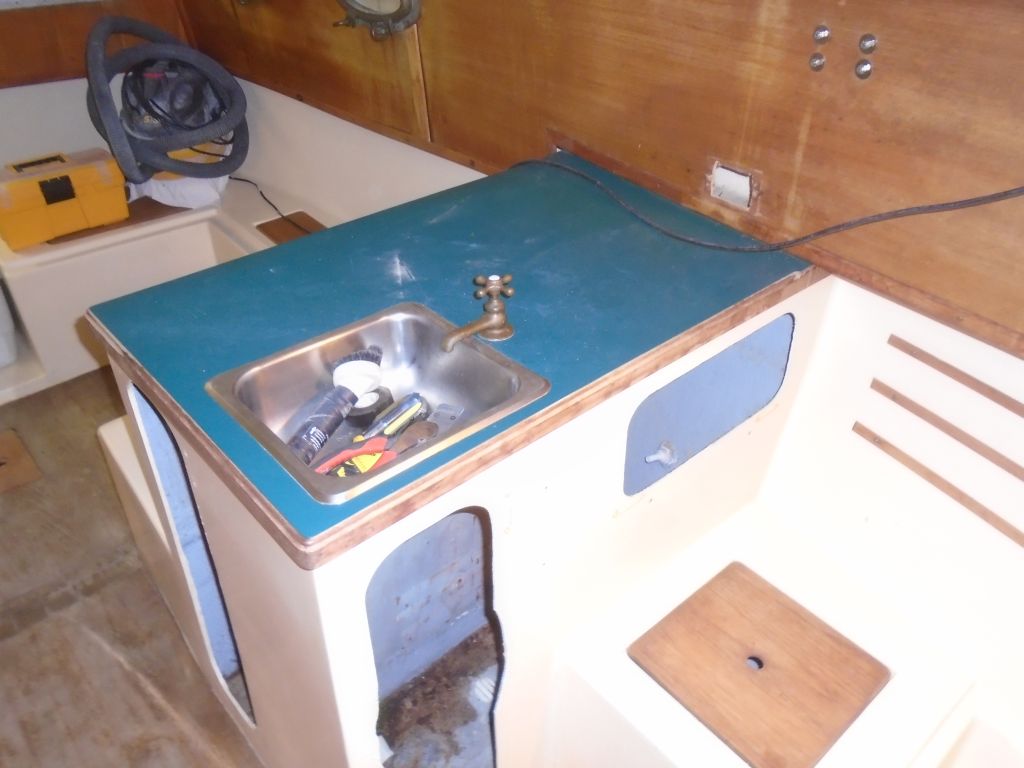
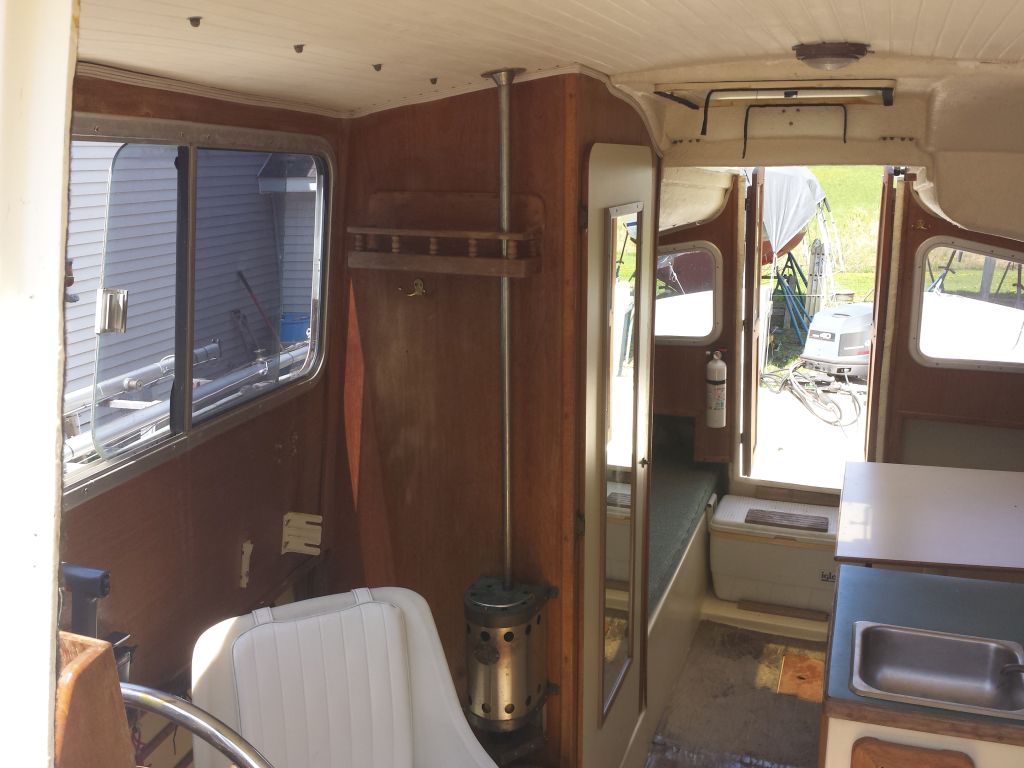
There was a Force 10 kerosene cabin heater behind the helm, and I knew I didn’t want that.  It had a tank located beneath the galley, and a long fuel line connecting the two.  All must go.  I found at once that the galley tank didn’t fit through any of the openings in the cabinet.  Perhaps it was installed through the sink hole in the countertop, but I couldn’t properly access the nuts securing the sink in place, so eventually I decided to slightly enlarge the opening in the access door to allow the tank–with some effort–to finally come through.  By the time this was done, I was so irritated at the heater, the stupid leaking tank, the disgusting rodent nest beyond, and the faceless, uncaring people that installed such a thing in so ignorant a fashion, that with great indignation I decided to throw the silly heater and all its parts  in the trash rather than try and sell it and subject anyone to one of these ridiculous, fussy, inept, foolish things.

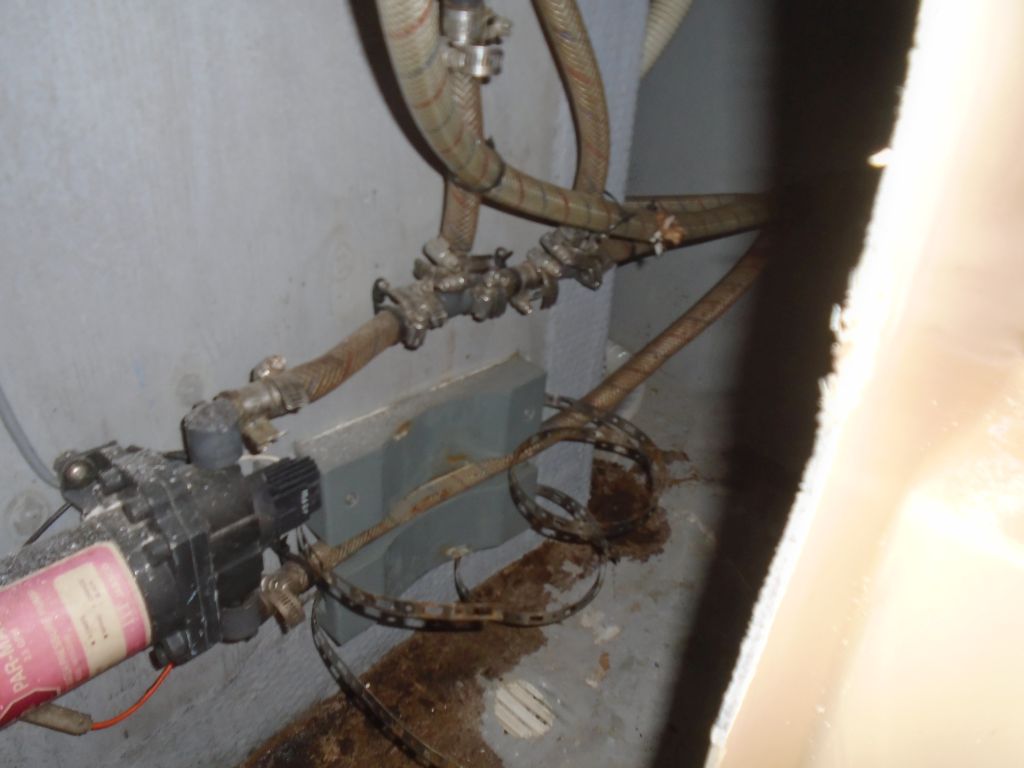
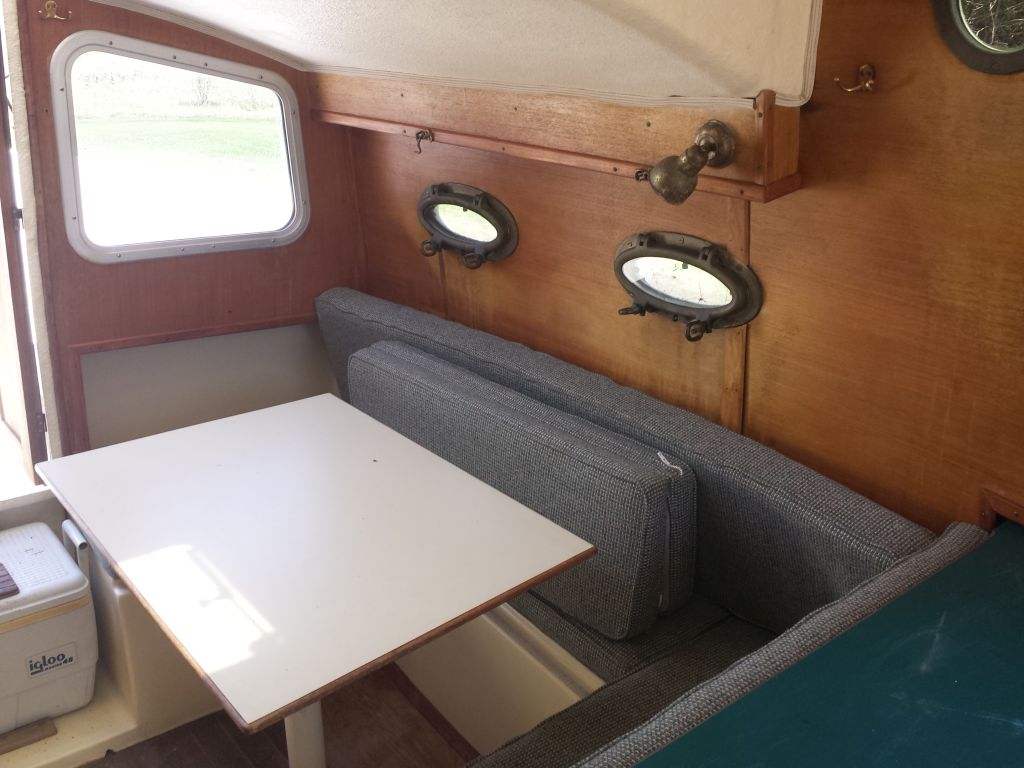
Meanwhile, I removed the old plumbing, electric water pump, and accumulator tank, along with the bladder water tank from beneath the dinette and its fill hose.  I suppose I could have left this be, but the locker in which they were installed was a mess, someone had used so many oversized clamps to secure all the hoses, and I just wanted a fresh start.  Plus I might just install a nice easy foot pump.  I found the desire to rid the boat of the old and decrepit and start anew as overpowering, as usual.

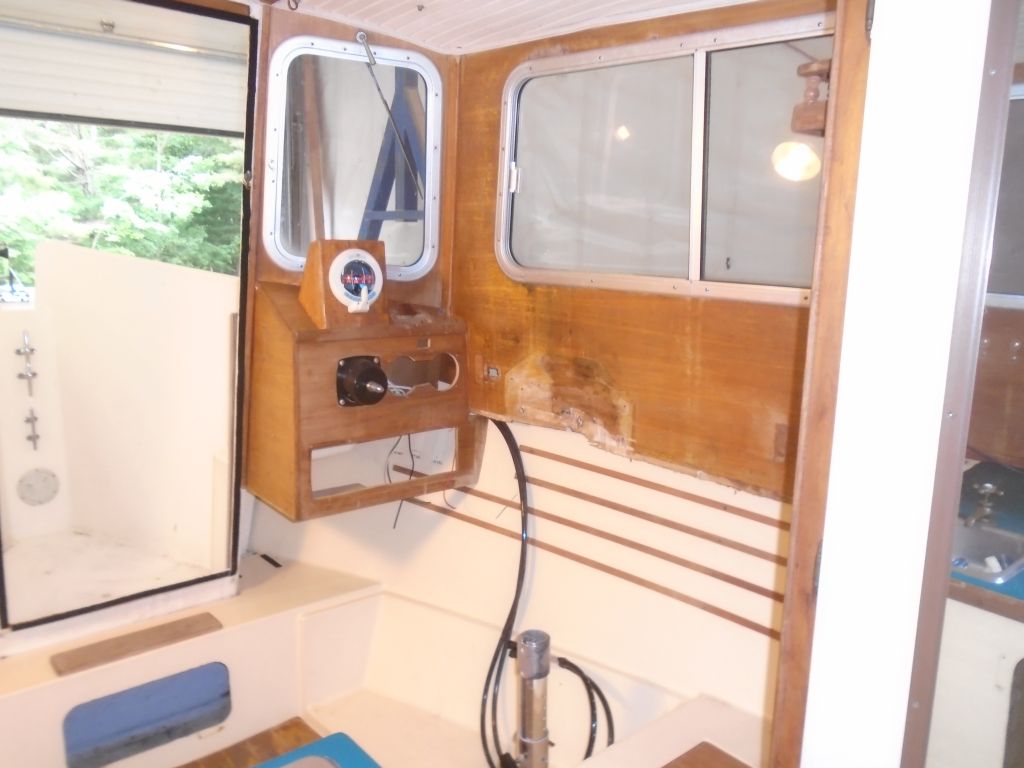
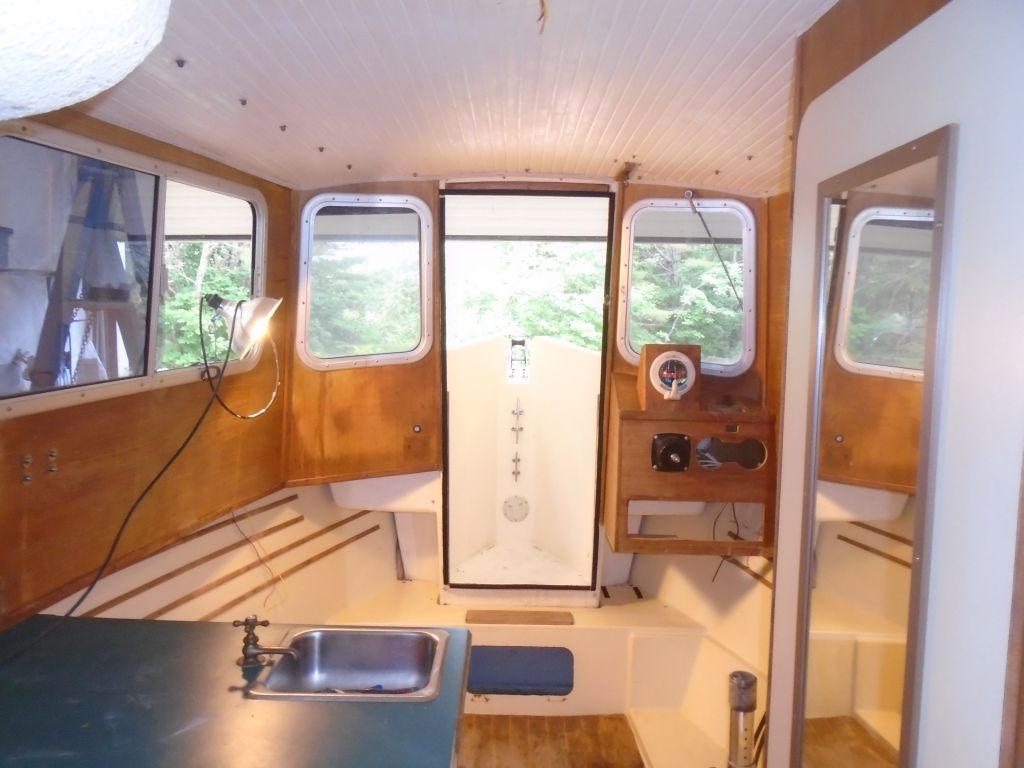
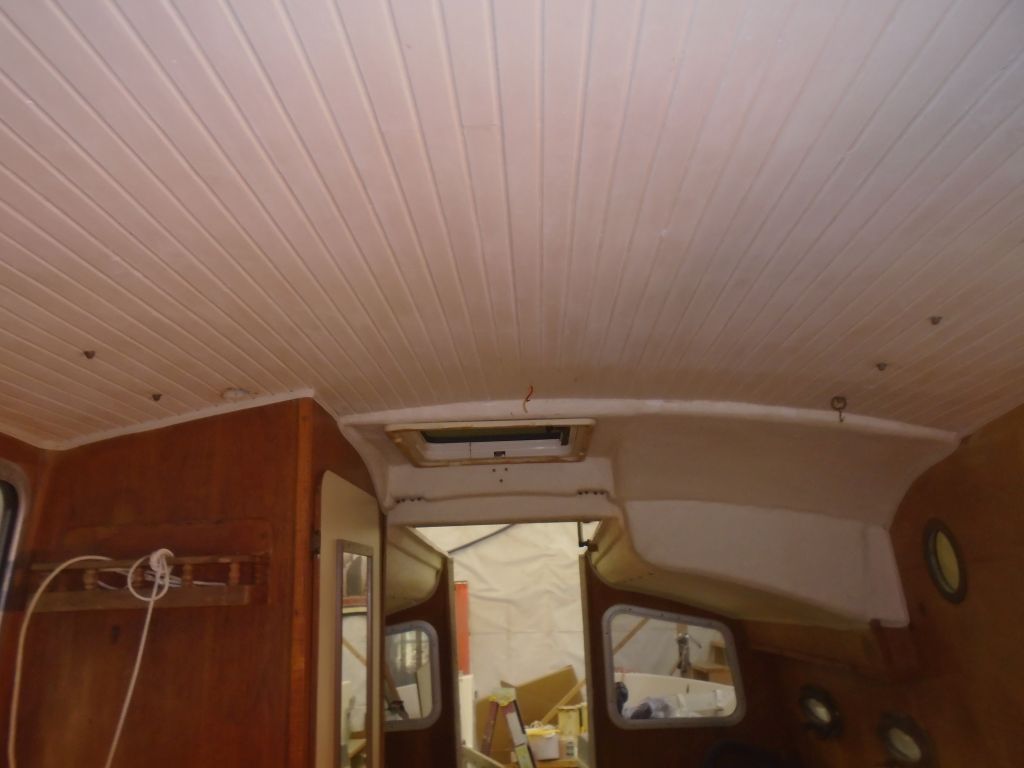
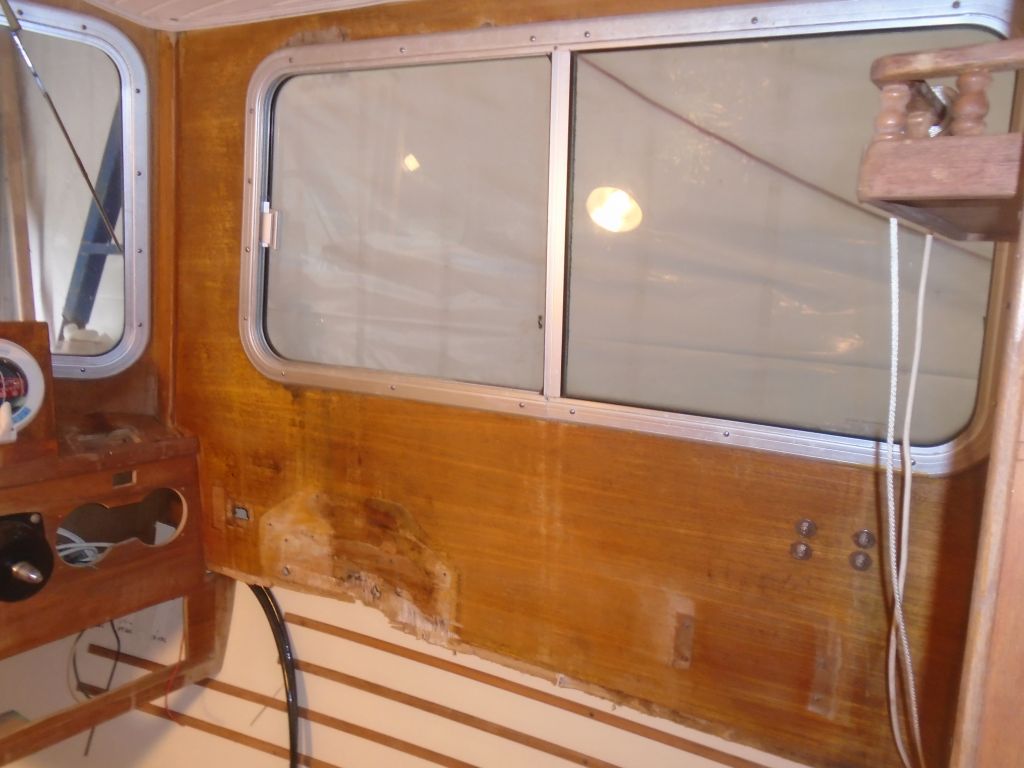
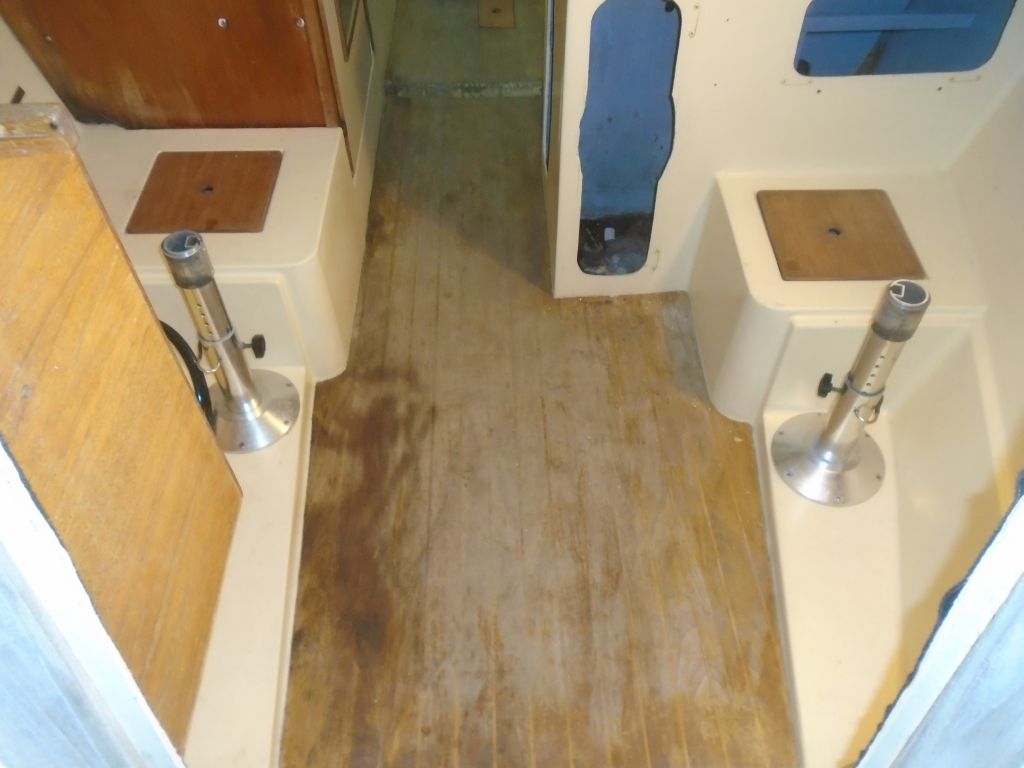
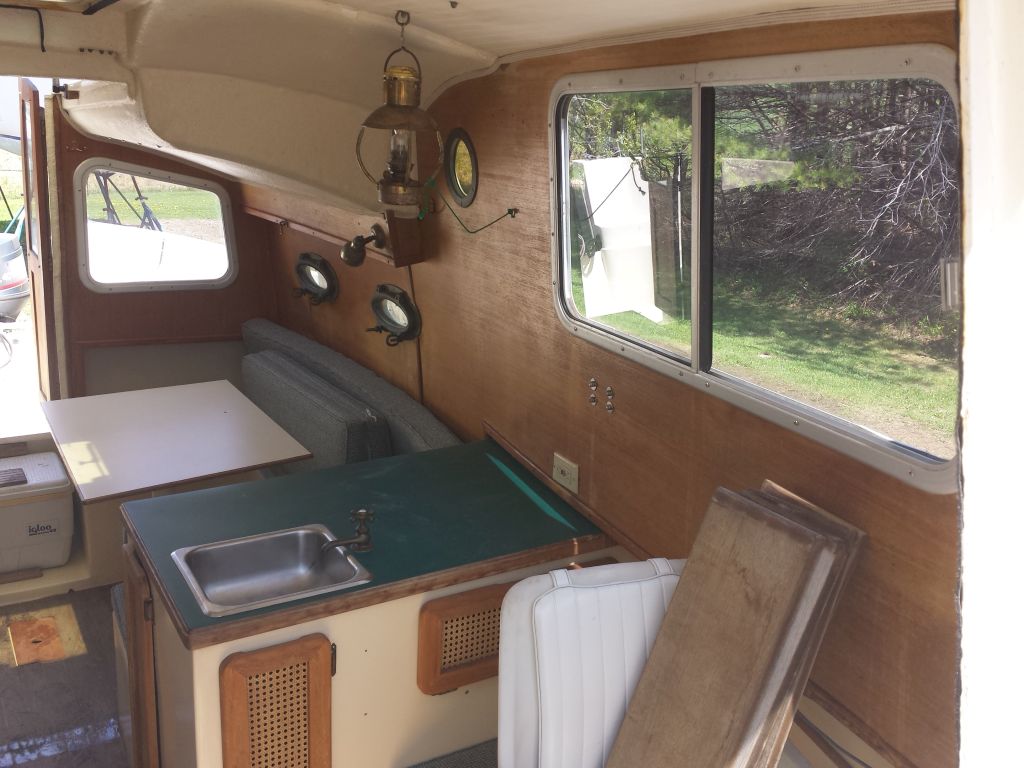
By the end of the day, I’d removed all the old systems, along with the dinette table, helm chairs, cushions, cockpit doors, and whatever else I could.  I needed everything out of the way so I could eventually start to deal with the interior finishes, which were in need of refreshing.  Most of the plywood paneling along the cabin sides had been badly stained from water leakage from the windows, but I hoped I’d be able to clean it up and save it.  The starboard side of the pilothouse, however, was going to be unsalvageable, with several rotted and damaged areas, and a generally terrible appearance.  The numerous large holes and basic construction of the helm console also started me thinking about whether I should just rebuild that too.  And so it goes.

The cabin sole would require replacement, and the old was weathered and in poor condition, and the overhead would require sanding and painting for improved appearance.  I’d need to rebed all the windows and ports, and refinish the exterior doors and swashboards (along with the other minimal exterior wood).

Total Time Billed on This Job Today:  5.25 hours (including building the stand)

Nomad 3

< Back to Nomad

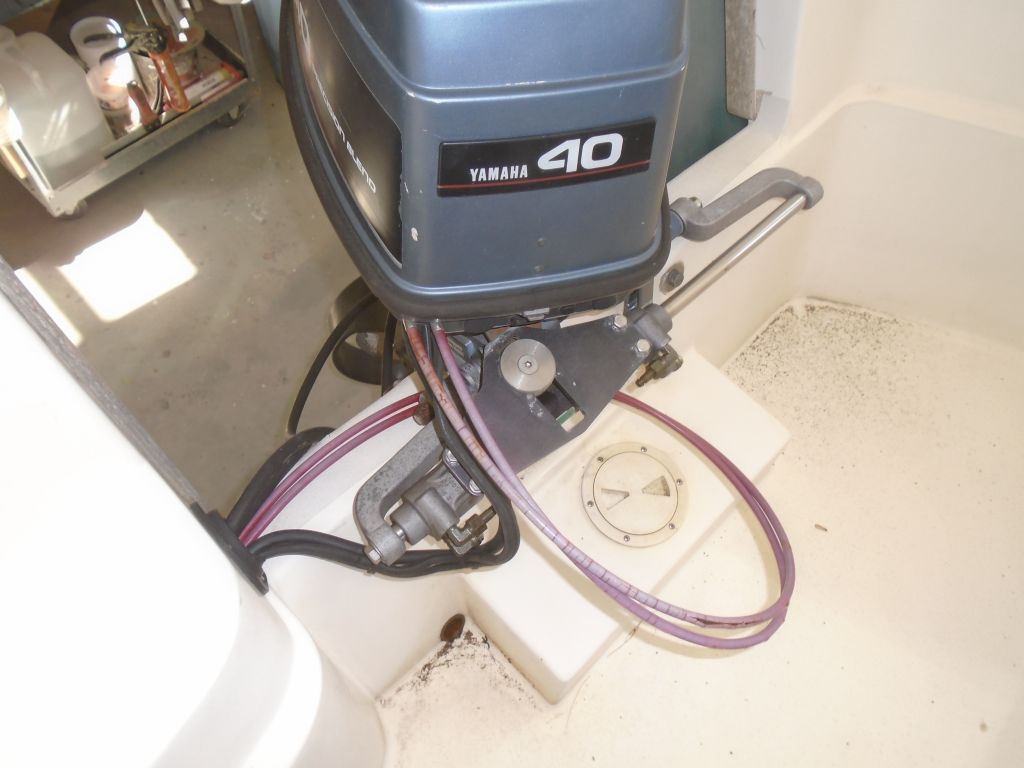
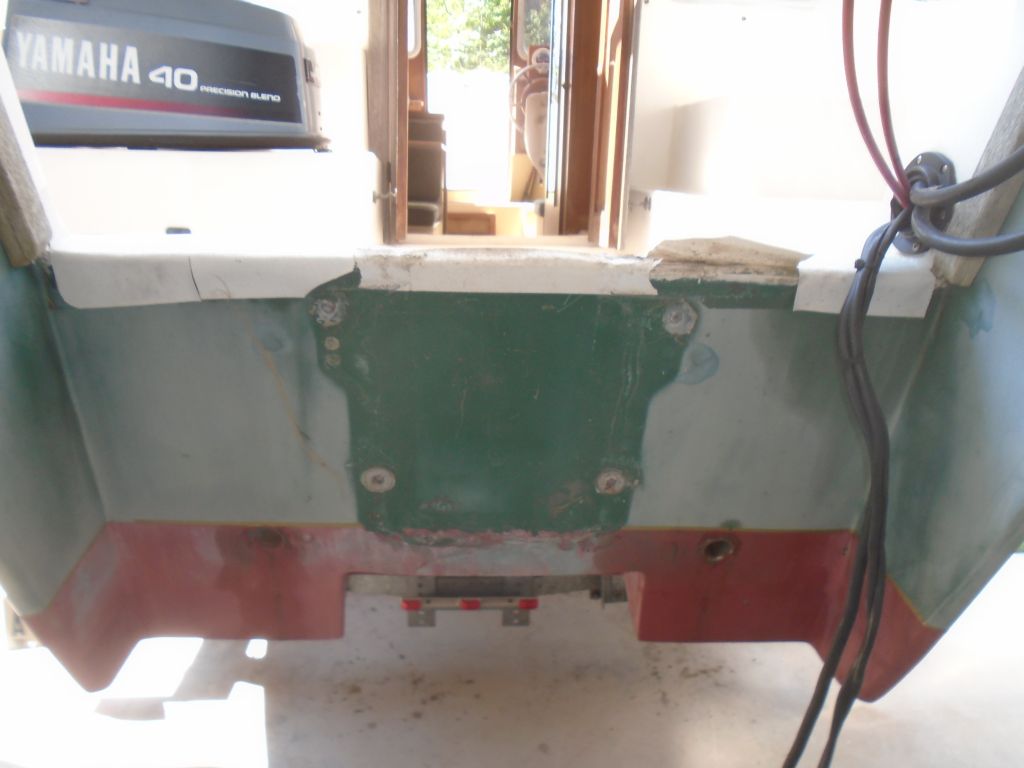
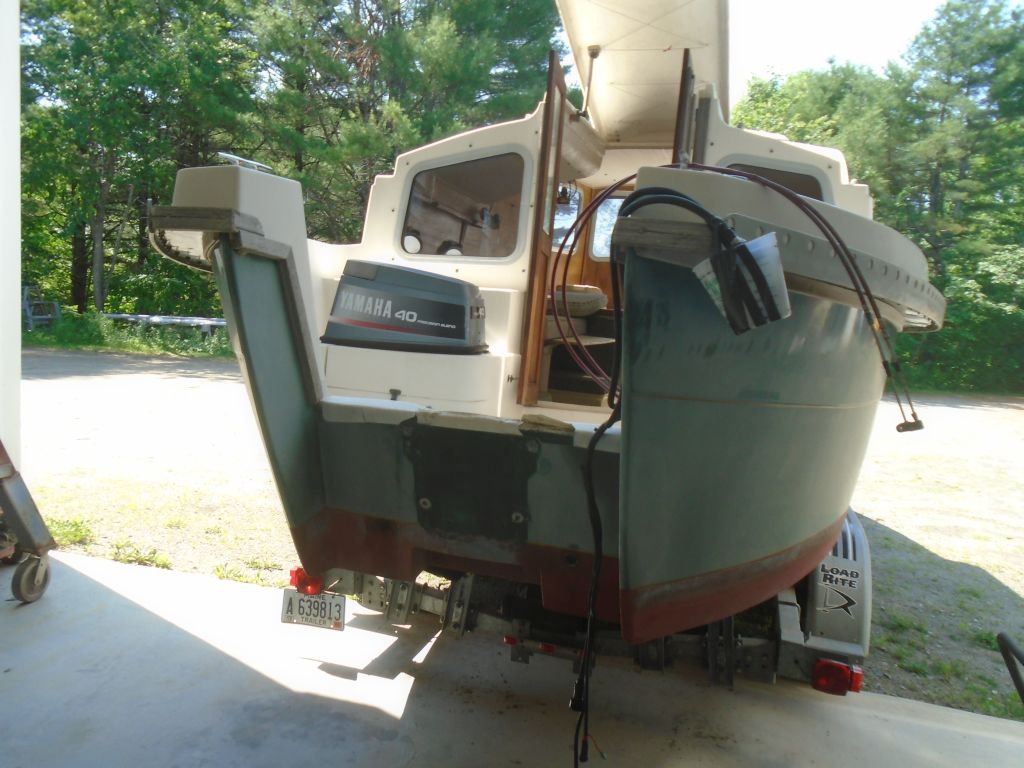
The first order of business now that the boat was in the shop was to remove the old outboard.  I planned to get going on the hull work as soon as I could, and the outboard was in the way, and was annoying me since I couldn’t straighten it out thanks to the non-functional steering at the moment.

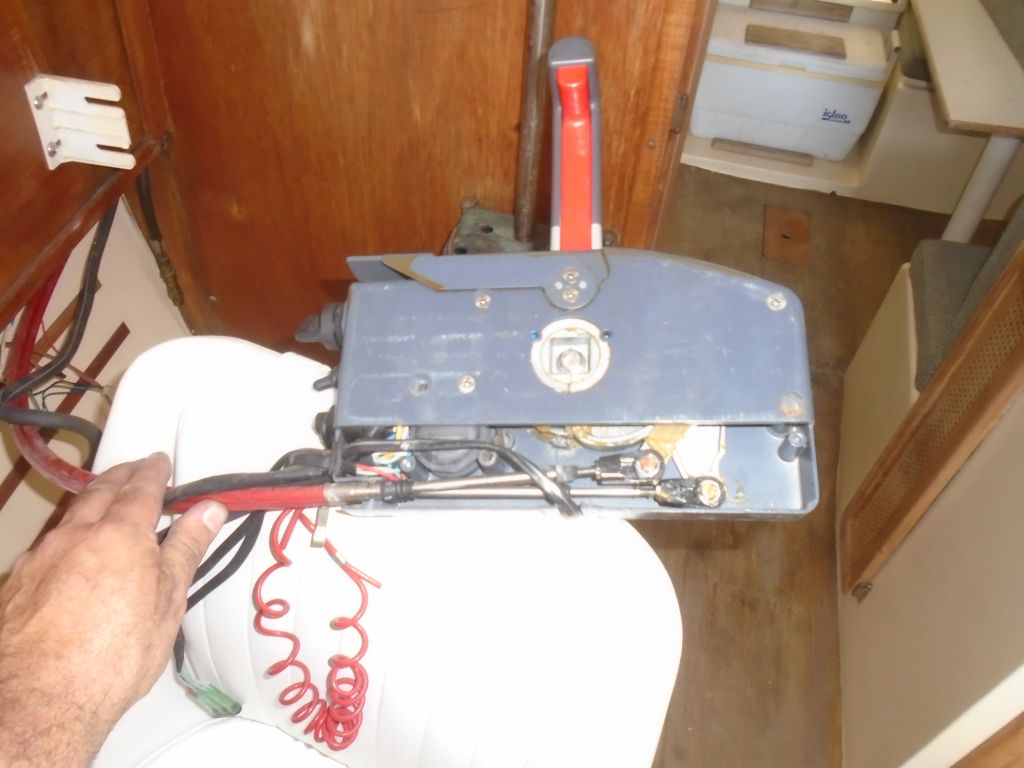
During my earlier test-run, I’d already removed the fuel line leading to the boat’s own fuel tank, and I’d removed the steering hoses from the outboard’s cylinder earlier also.  So the only things still attached to the motor were the control cables, and the electrical cables.  These were all straightforward to remove.

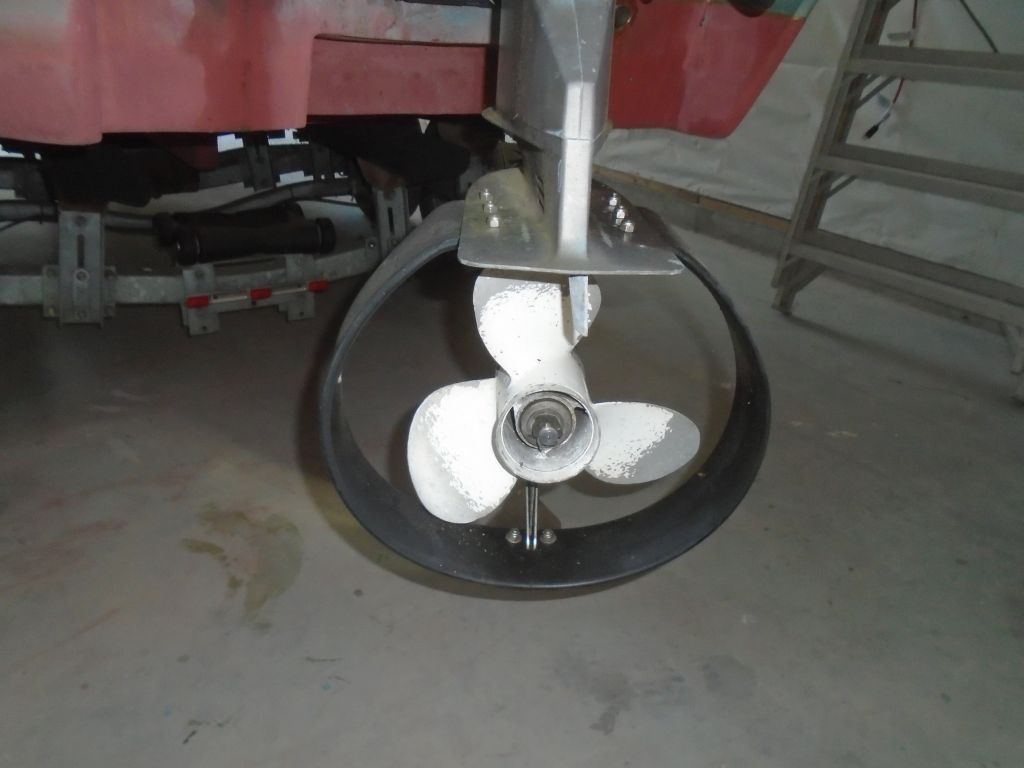
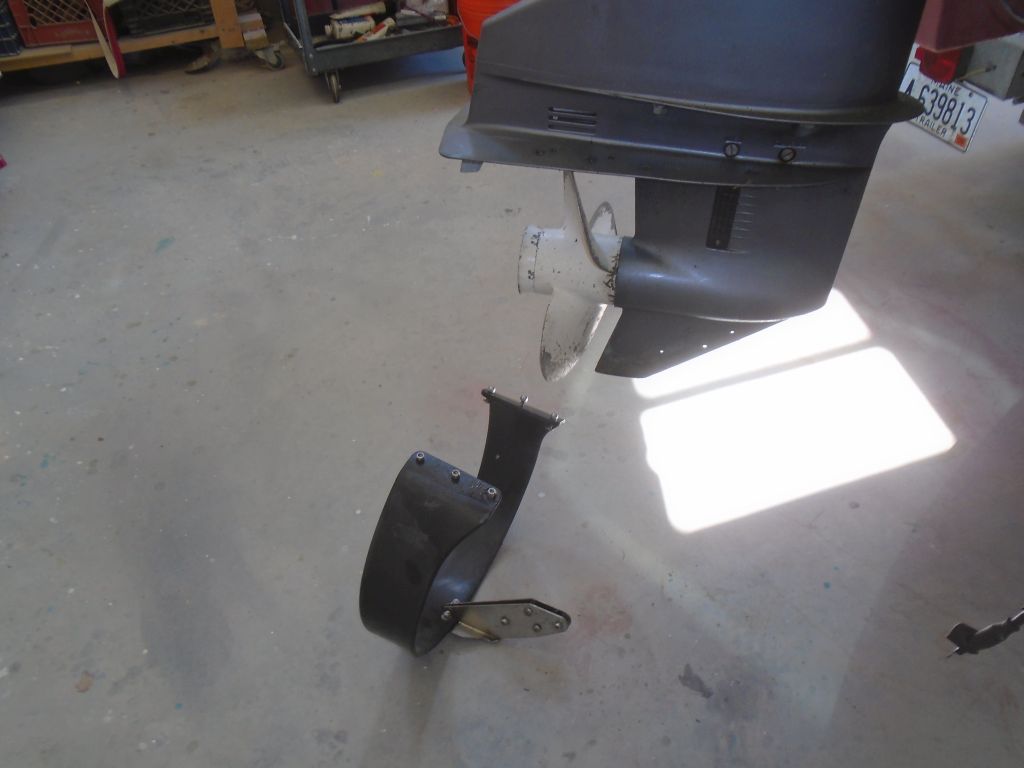
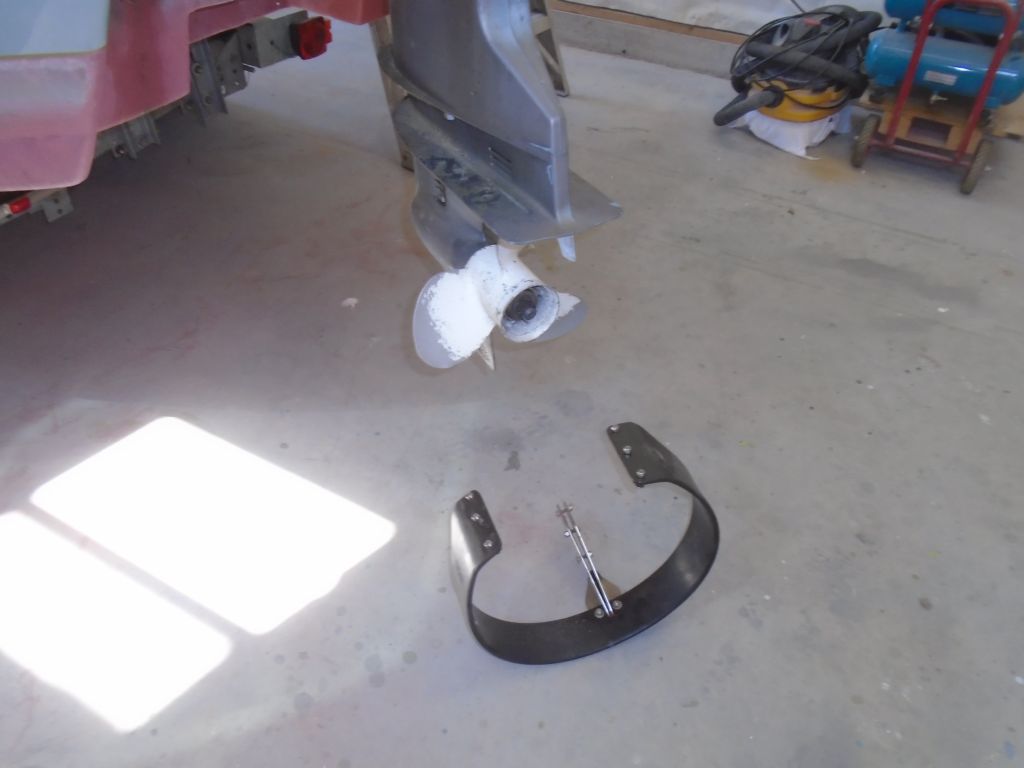
There was an add-on Kort nozzle on the outboard’s propeller, presumably to help focus thrust.  I’d no idea whether this was something useful or required for this particular boat, but in any event I thought I’d remove it and keep it on hand should it be useful someday–and I didn’t plan to sell it with the old engine.    Removal was a matter of six bolts along the top of the lower unit, and four more on the lower unit’s skeg.

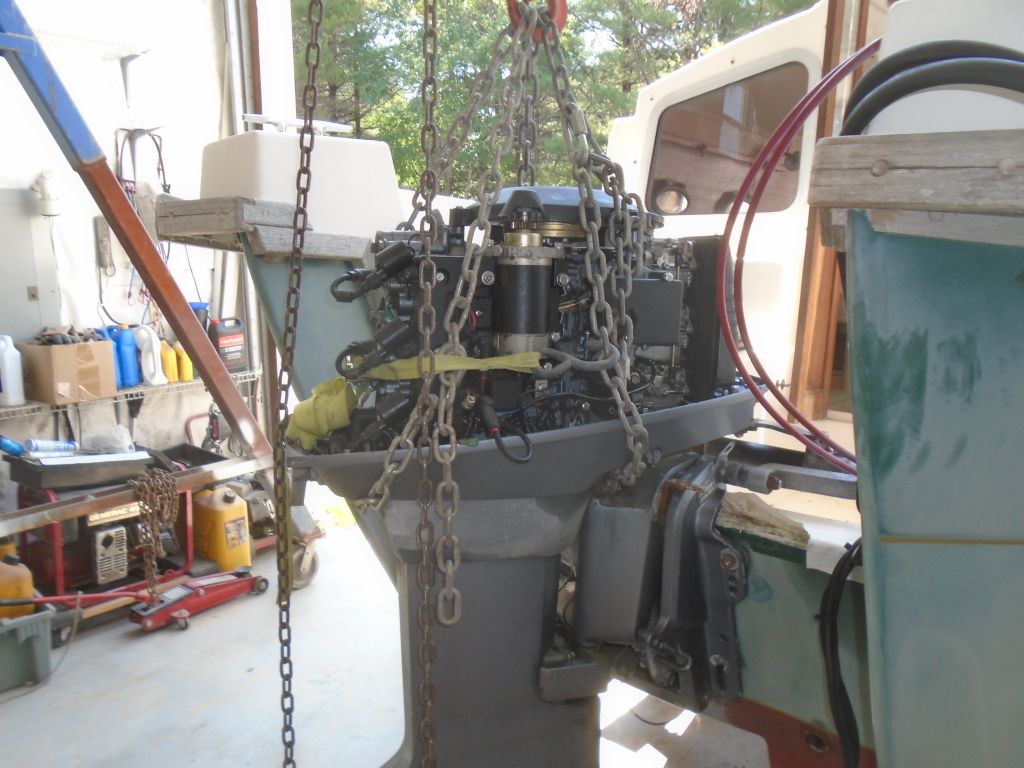
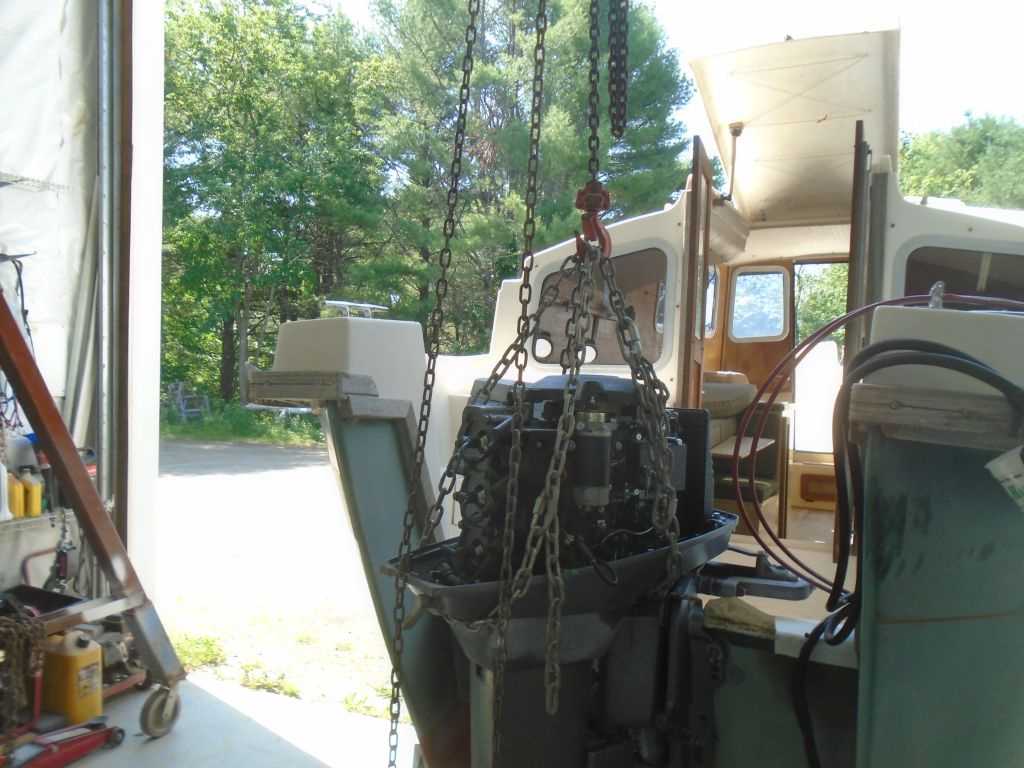
Next, I removed the locknuts from the four bolts securing the outboard to the transom, and loosened all the remaining nuts.  Then, I prepared a lifting harness from a pair of chains, one below the forward part of the motor and the other aft to form a bridle.  I added a strap between the chains to prevent any chance of the aft one slipping.

lift3-71115

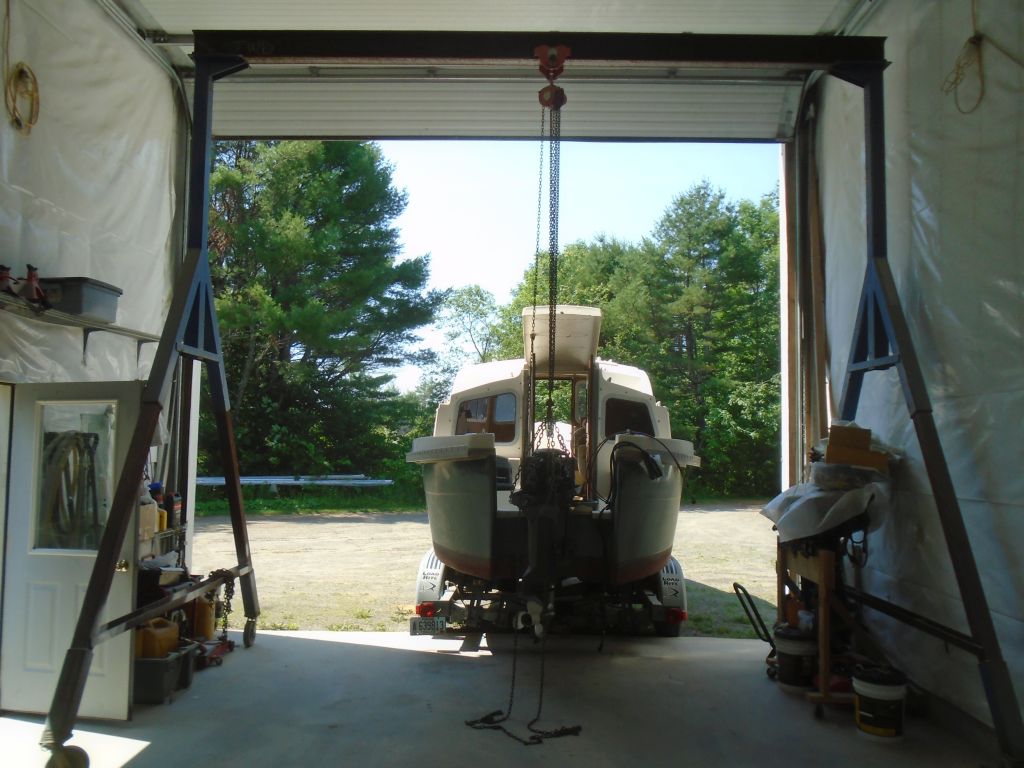
Because of the way my gantry crane was stored in the shop, it was easier to pull the boat forward on her trailer to the crane rather than move the crane aft.  Once I had the stern positioned beneath the crane, I hooked up the lifting hook and took a strain, which allowed me to remove the four bolts completely and lift off the engine.

I’d need to build a simple stand for the engine, but for now I rested the skeg on the floor and held it with the chain hoist, and returned the boat to her original position in the shop.  Then, I removed the old throttle control, cables, wiring, and steering hoses from their run in the boat–all would be replaced during the repower.  I used one of the cables to pull through a messenger line to make future new runs easier.

With the outboard and its related detritus out of the way, I’d soon be ready to start some work on the hull–my chosen first task.

Total Time Billed on This Job Today:  2.25 Hours

Nomad 2

< Back to Nomad

Sunday, May 17, 2015

My first opportunity to get back aboard came a few days later.  First, I went through the boat and removed all the loose gear, headed either to the dumpster or into the shop for storage.

My goal for the day was to try and run the engine.  Though I’d already decided in my mind to replace it–it just seemed like a new engine would be the better and more enjoyable choice going forward–I wanted to see it run, for my own sake and so that I could document it when I wanted to sell the old engine later.

Not knowing the state of the gas tank on board, I used a portable can and hose to set up a temporary fuel line, set up a hose and cuffs over the lower unit, and got to work starting the motor.  I think it had been some time since the engine was last used–years–but it started pretty easily and ran well enough, all things considered.  It pumped water well and seemed like it was basically in fine working order.  The steering didn’t work, so I couldn’t straighten the engine.

run1-51715


Higher Speed-ish

No video player visible above?  Click here to go to the video.

Idle Speed-ish

No video player visible above?  Click here to go to the video.

Nomad 1

< Back to Nomad

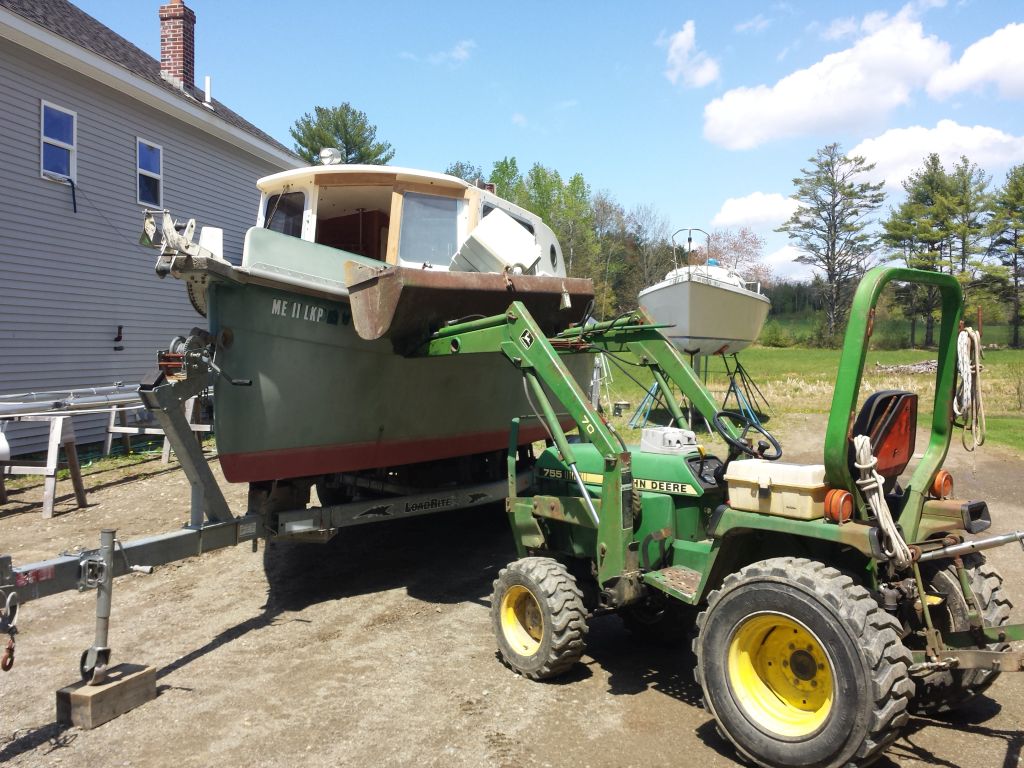
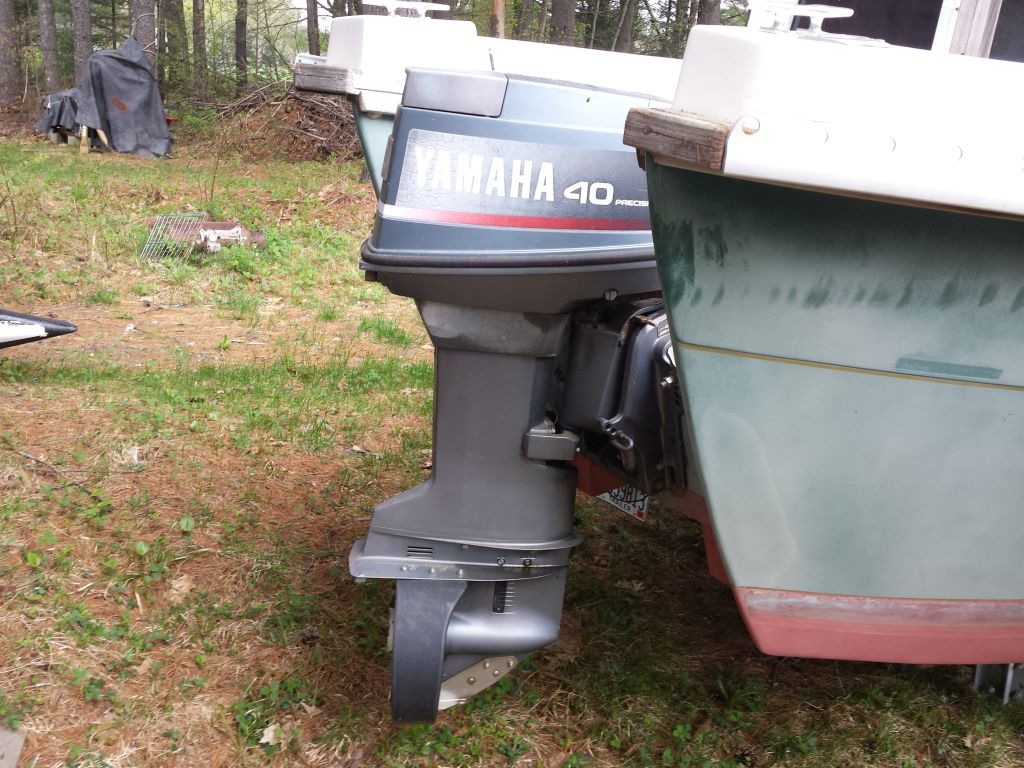
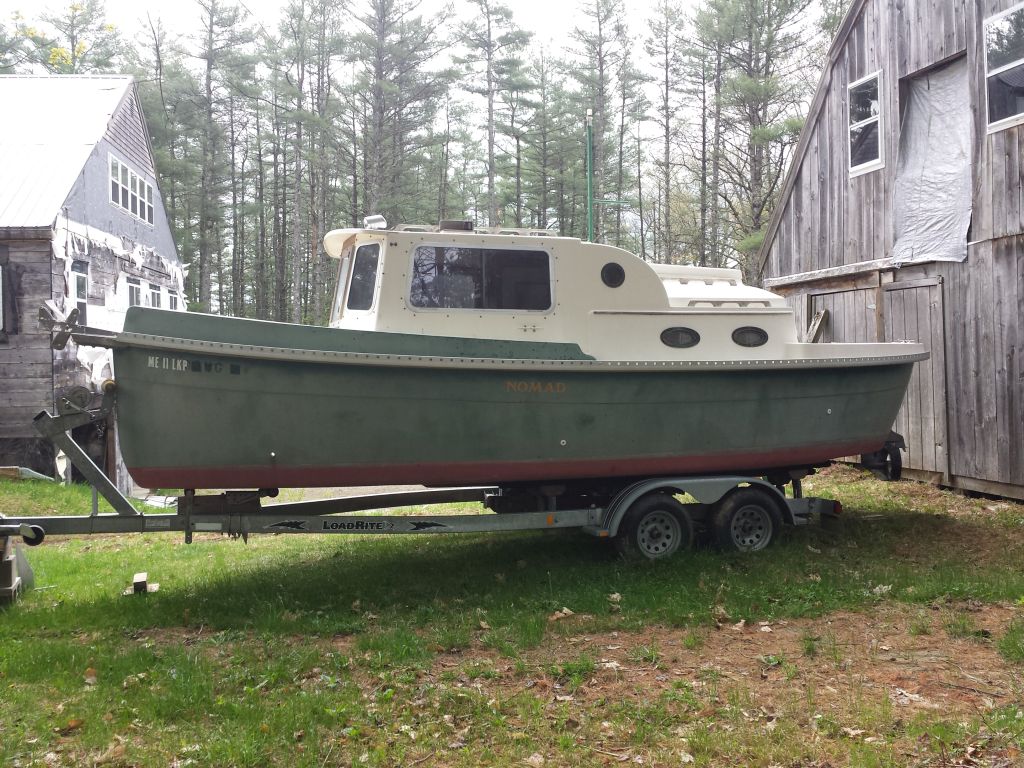
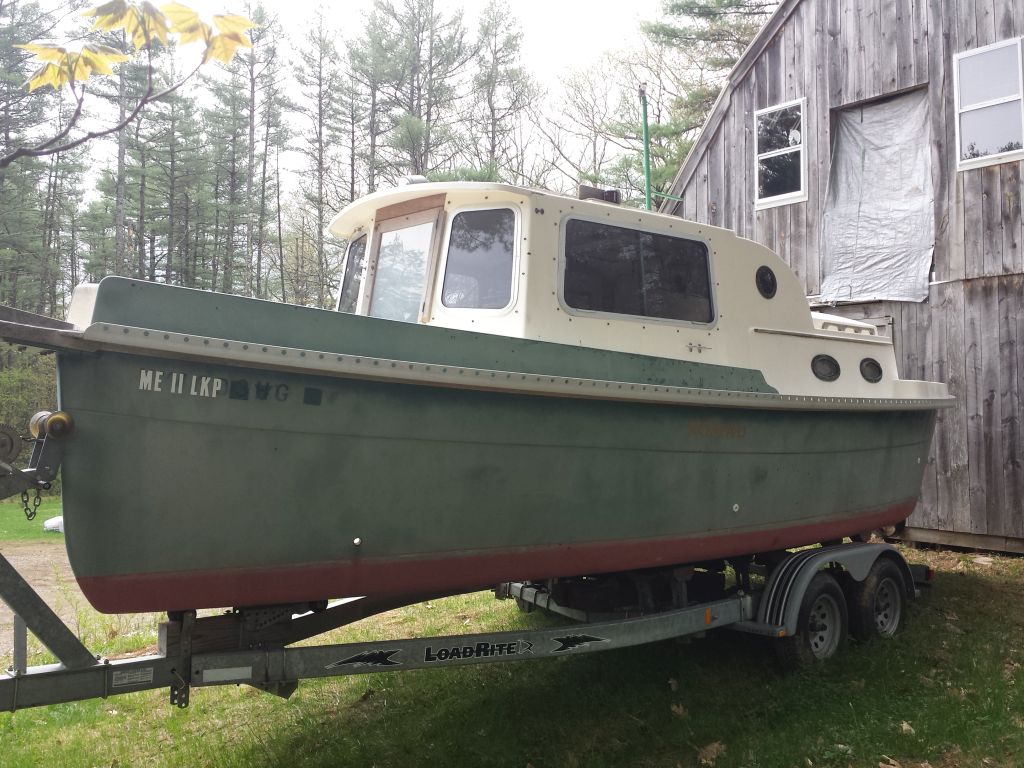
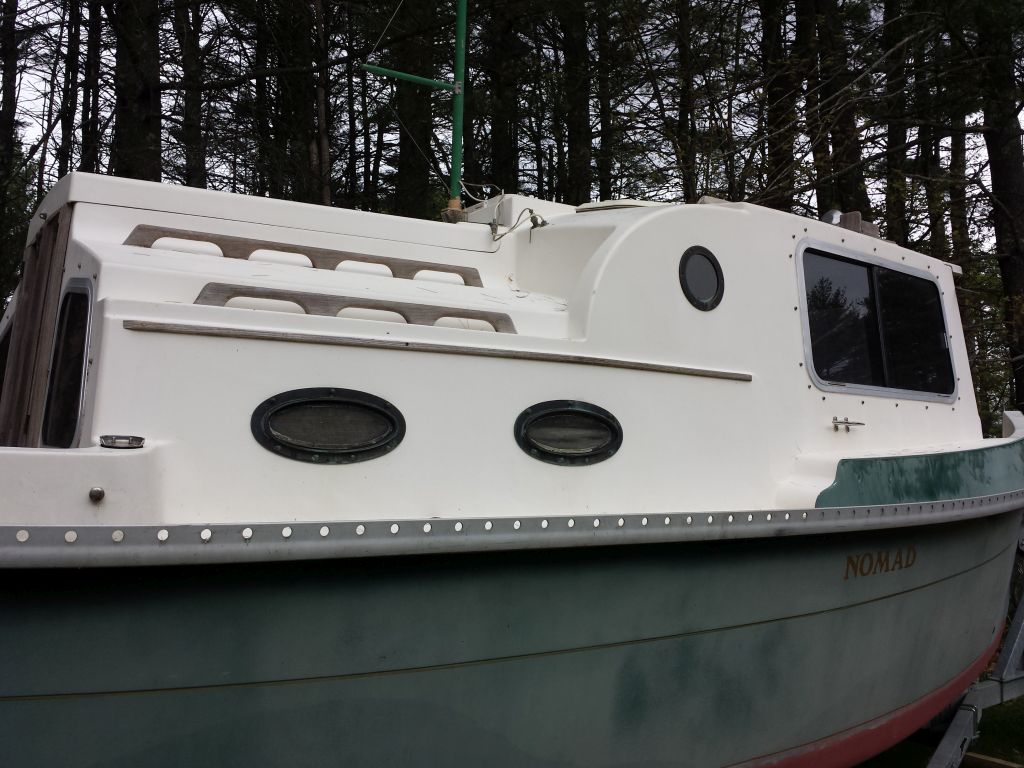
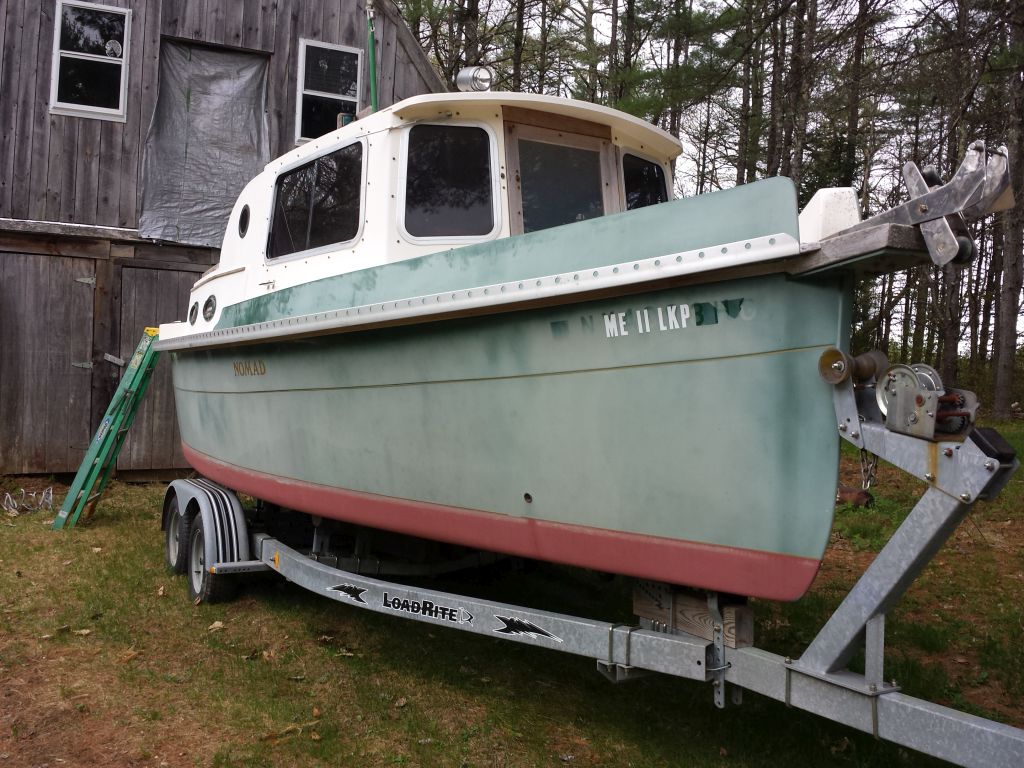
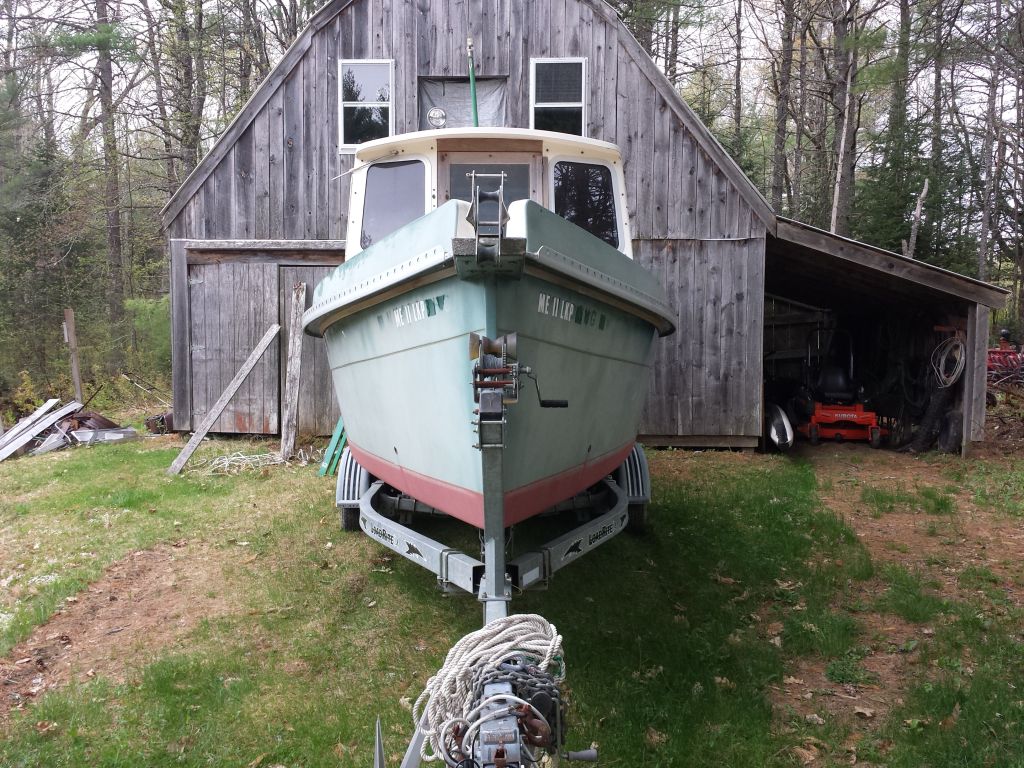
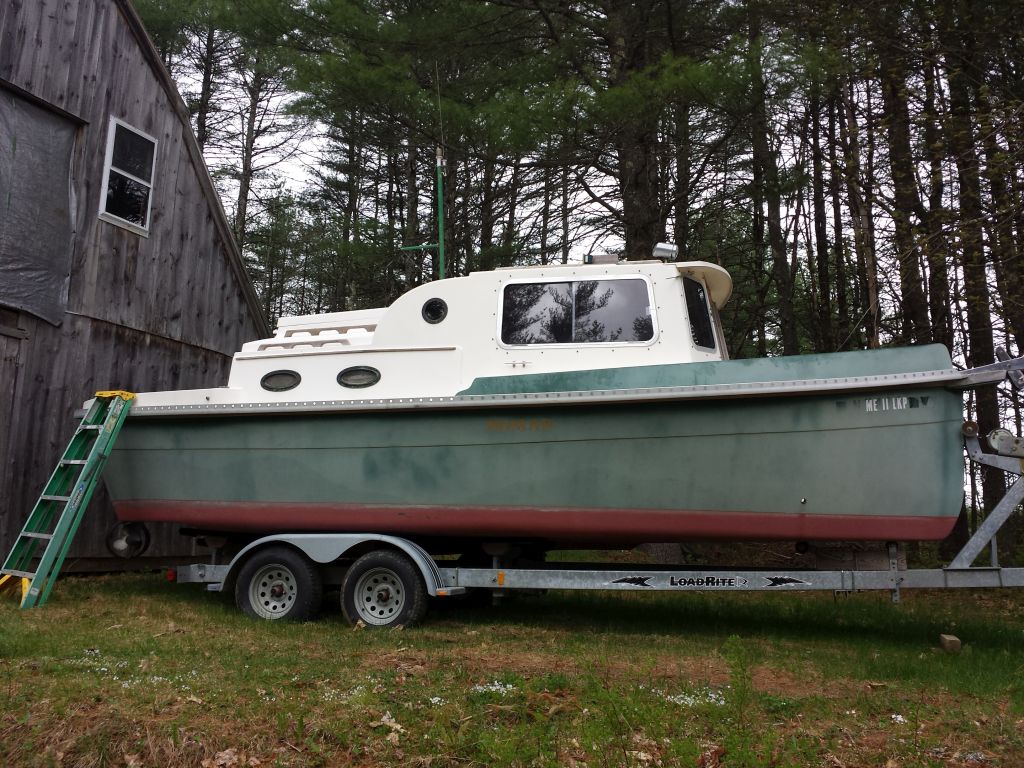
Various circumstances led indirectly to my acquisition of a 1990 Nimble Nomad.  A friend who often trolled Craig’s List found the listing and sent it to me, totally out of the blue.  I wasn’t familiar with Nomads, and my first gut reaction was that the boat was so ugly it was cute.  This particular example was priced at the very low end, and was advertised as needing work:  it had an original 1990 outboard (reportedly running),and very faded original gelcoat on the hull.  It was an interesting design, but I doubt this would have progressed at all had not the boat been located right in town–what were the chances?  Given the proximity, I thought I would have a look.  Some online research on “The Google” revealed a virtual cult status for this boat, with surprising values and asking prices.  This boat was well below the average range of prices I could find online.

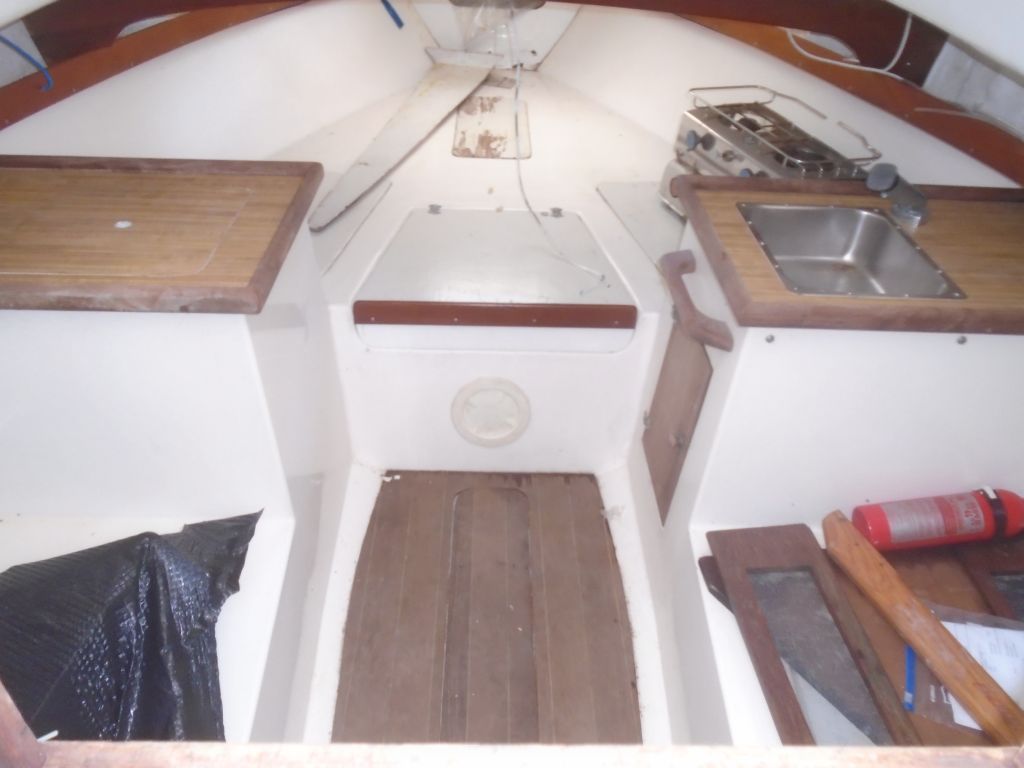
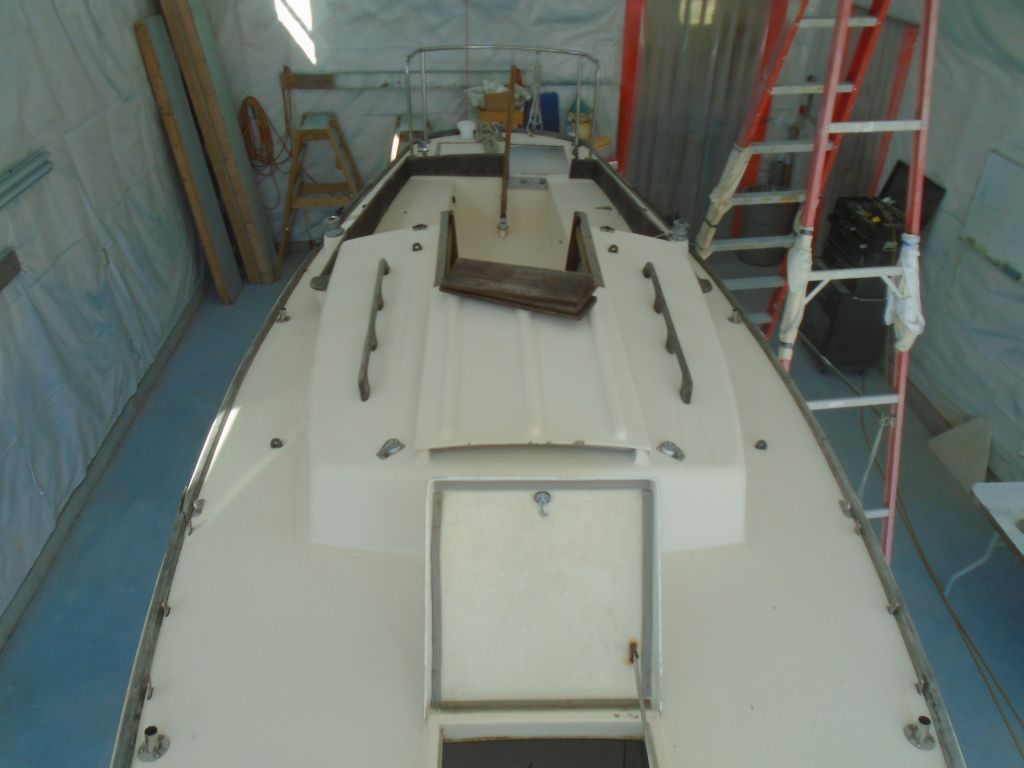
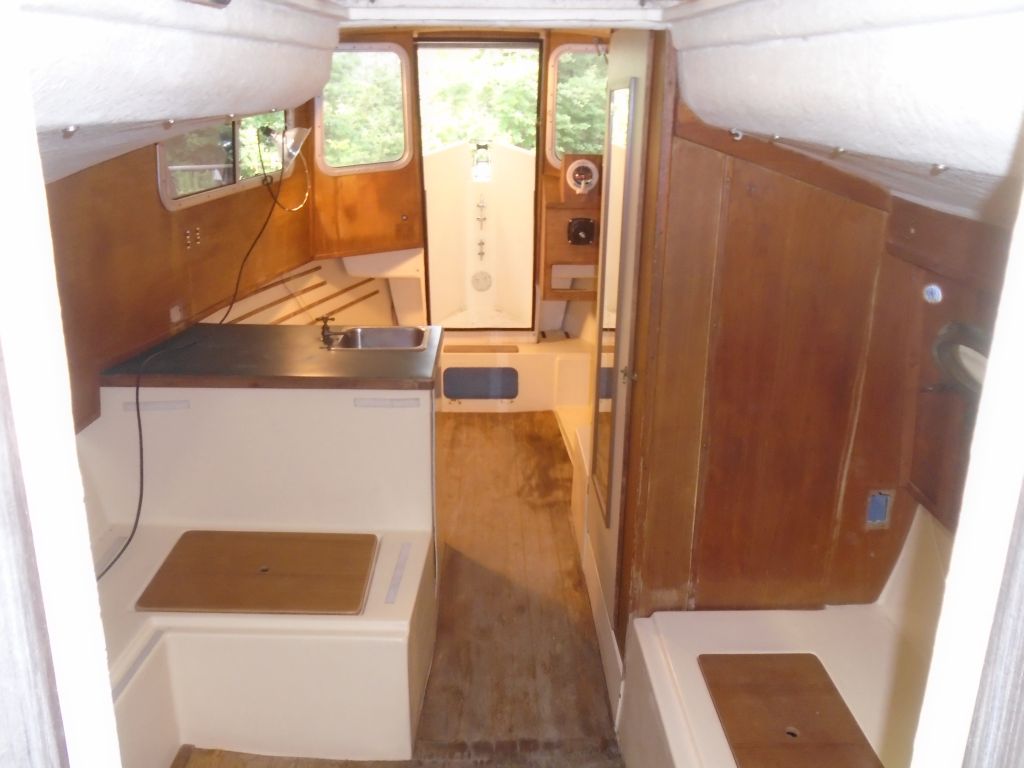
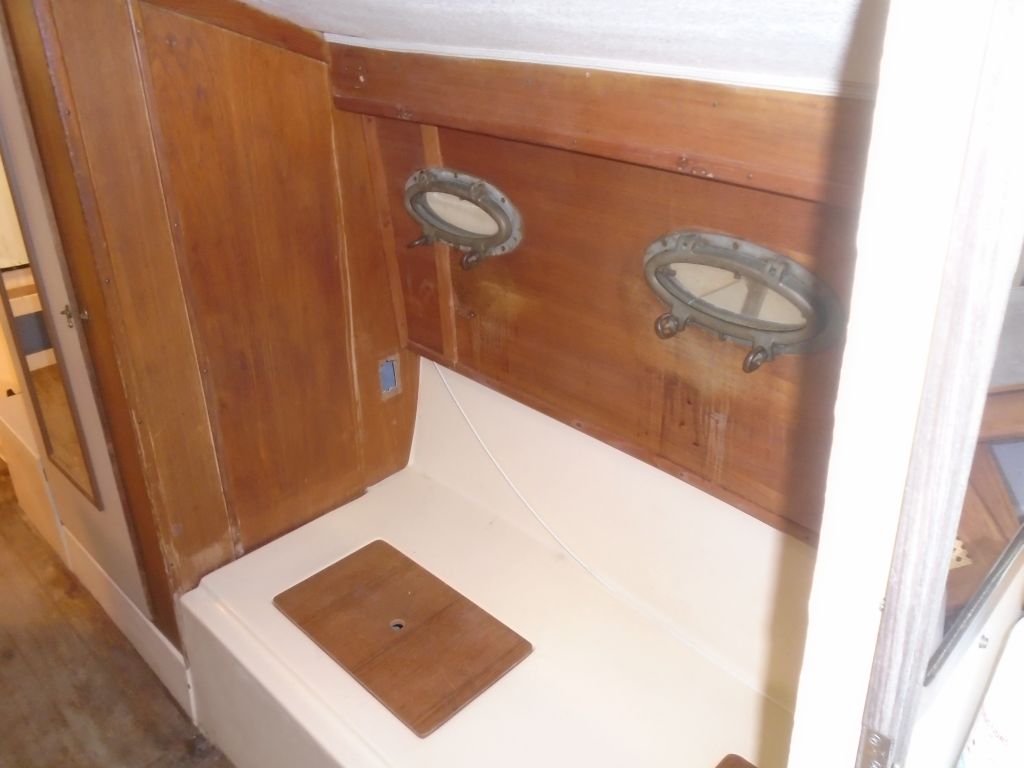
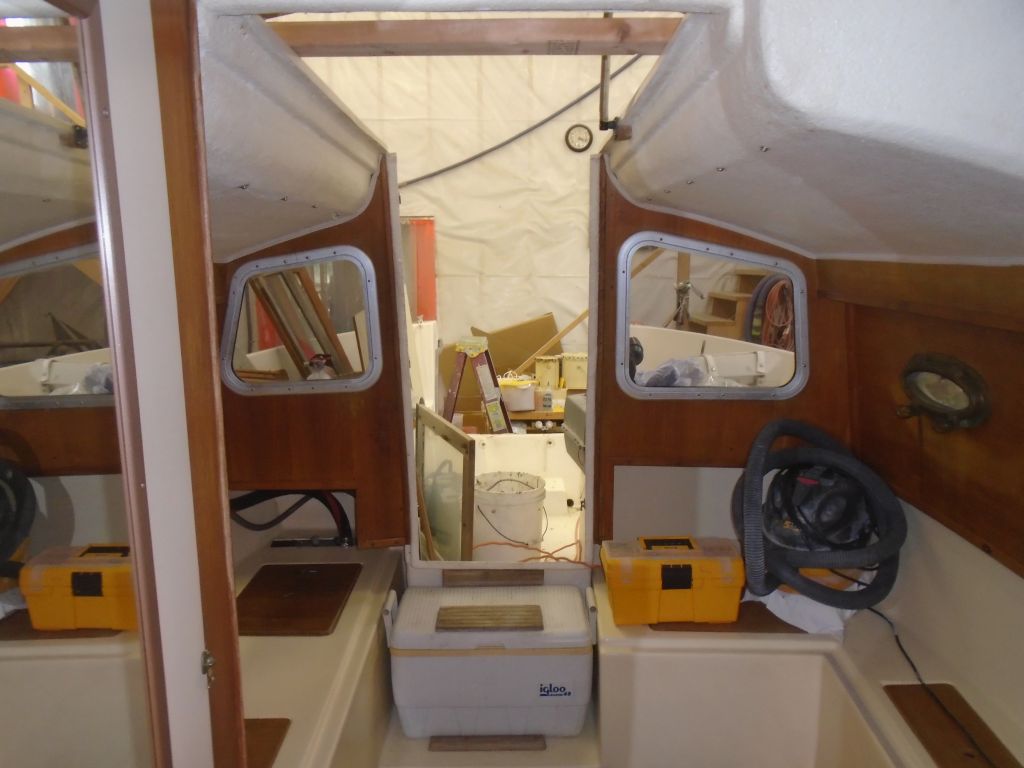
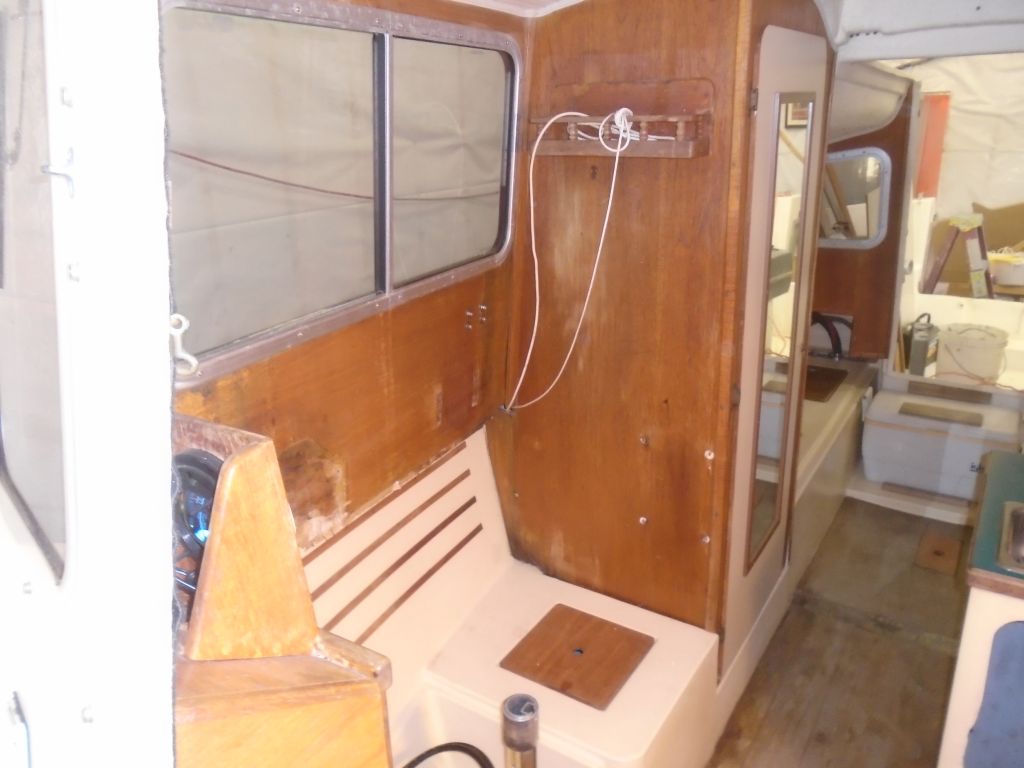
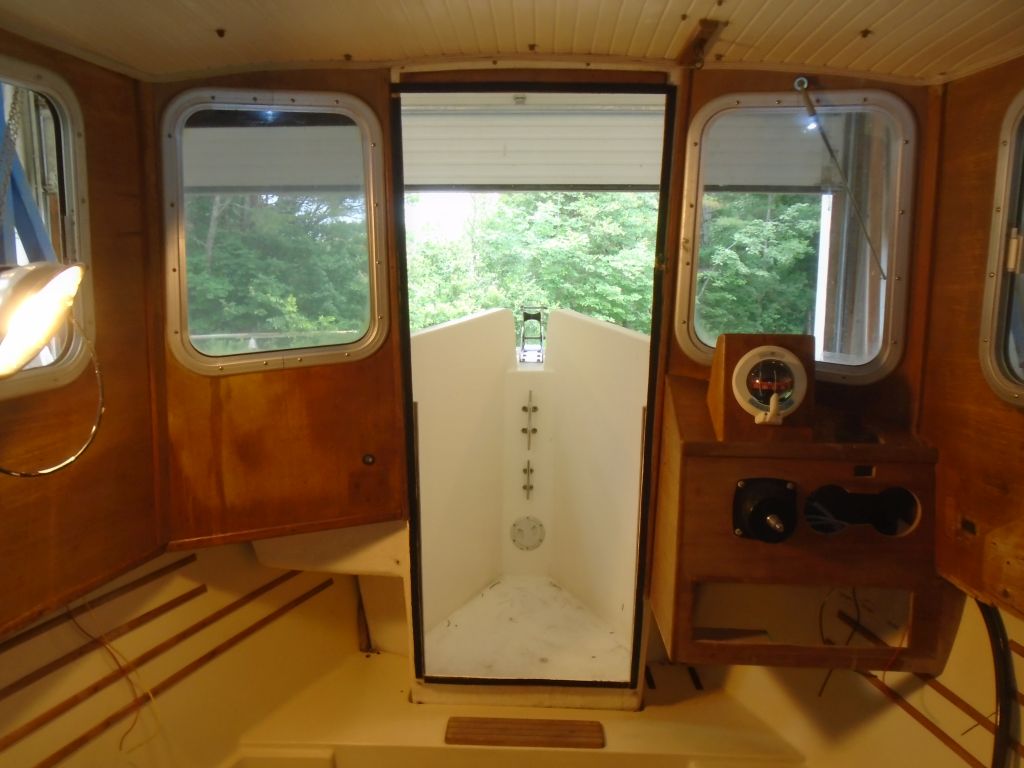
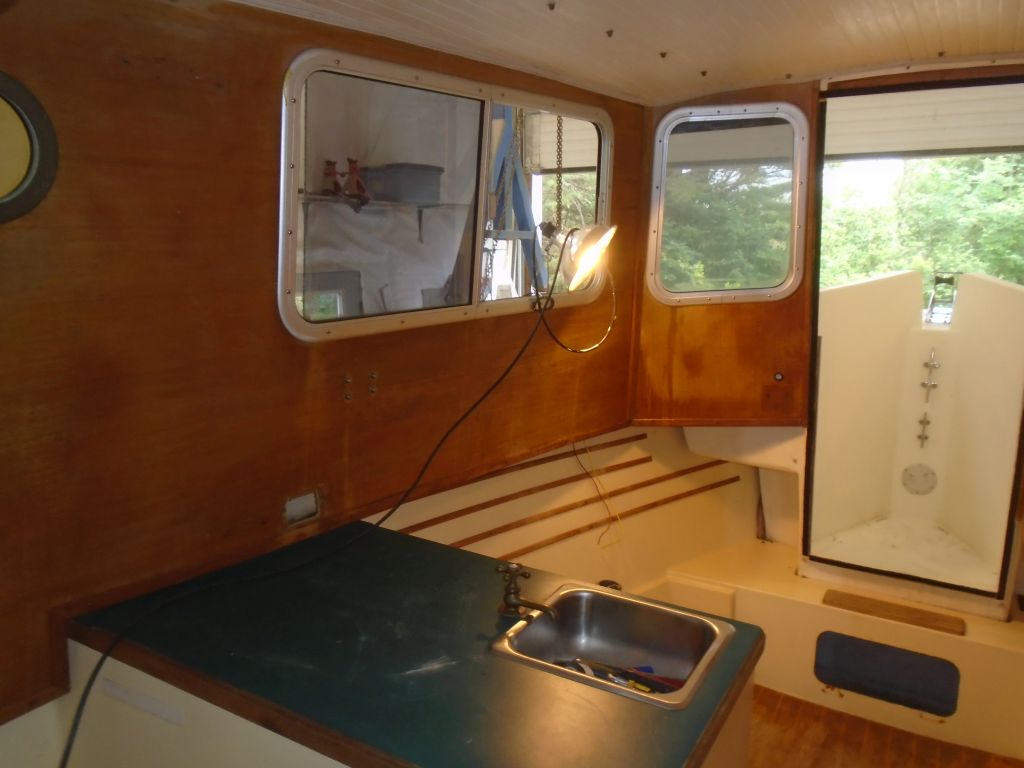
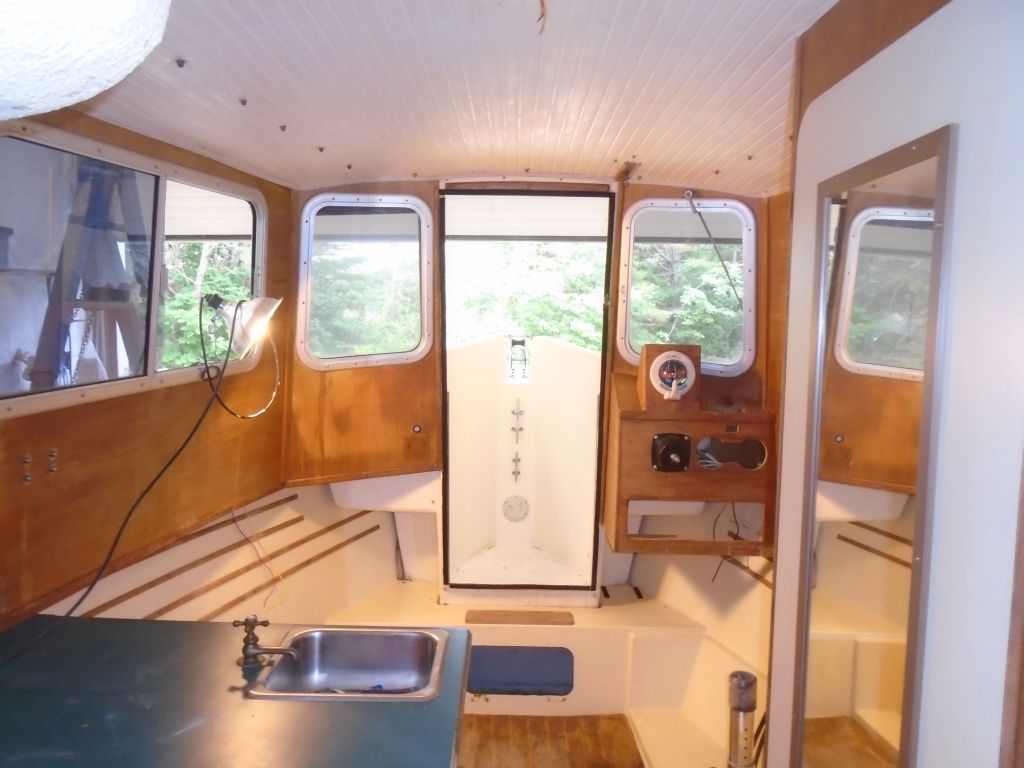
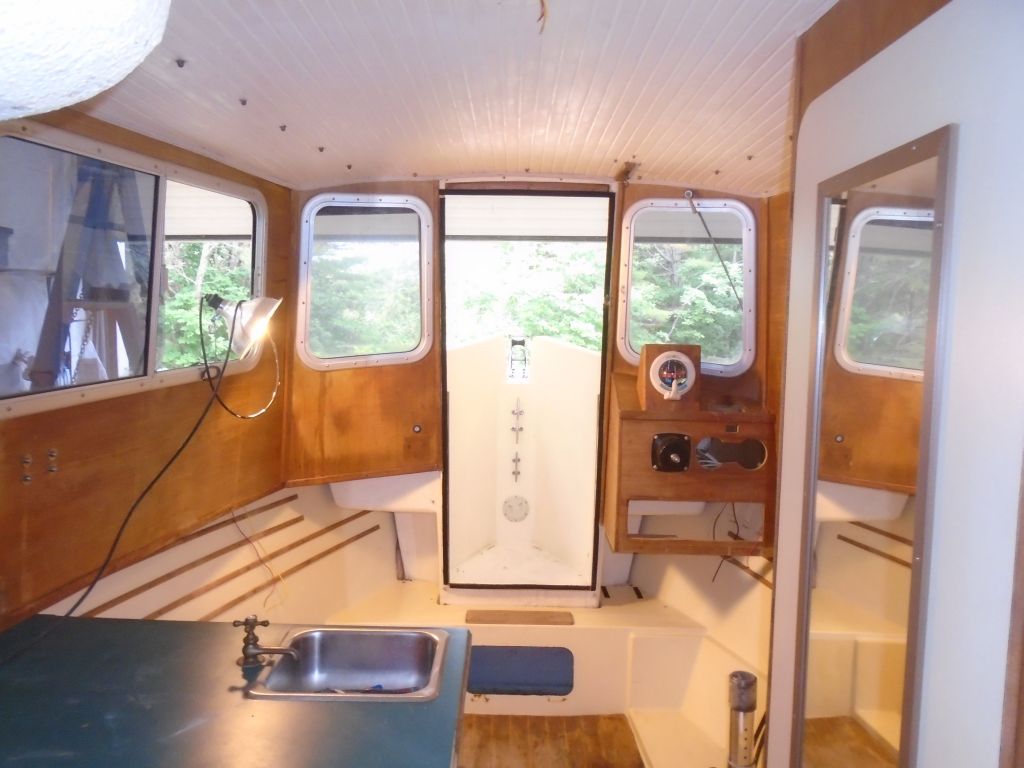
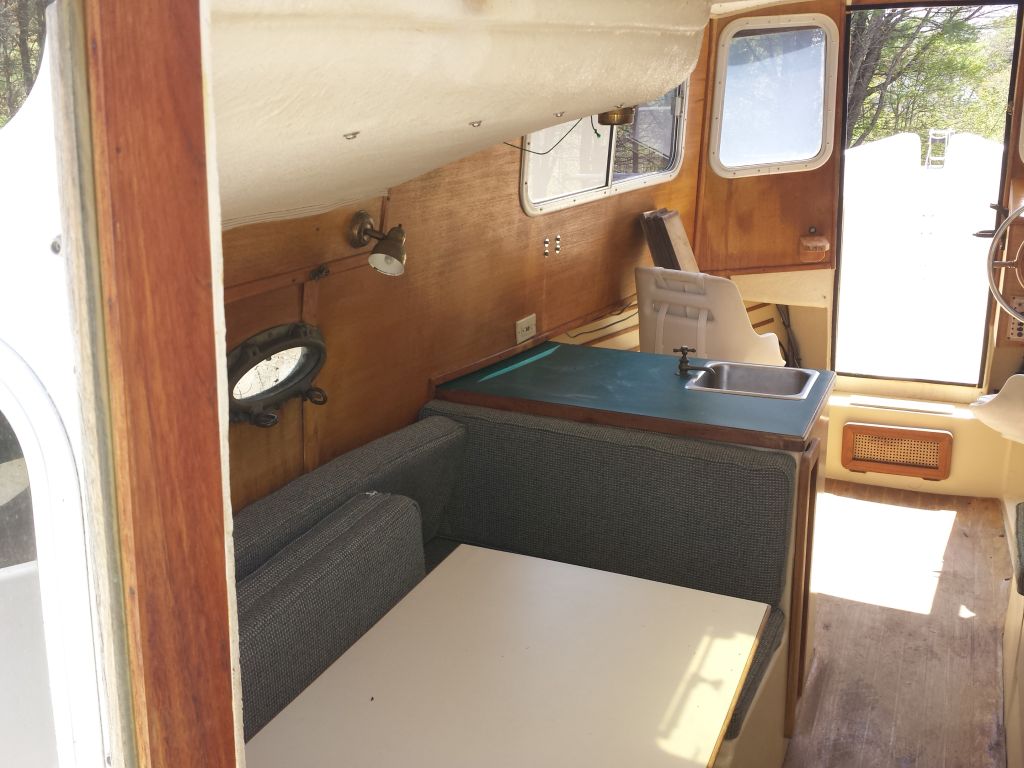
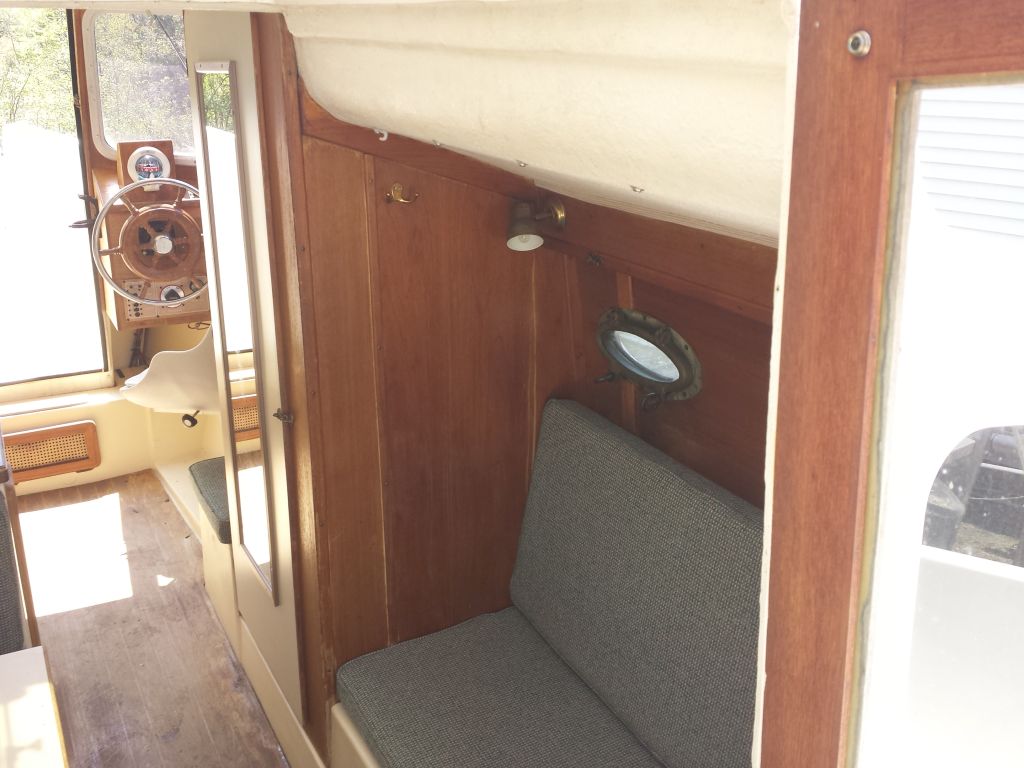
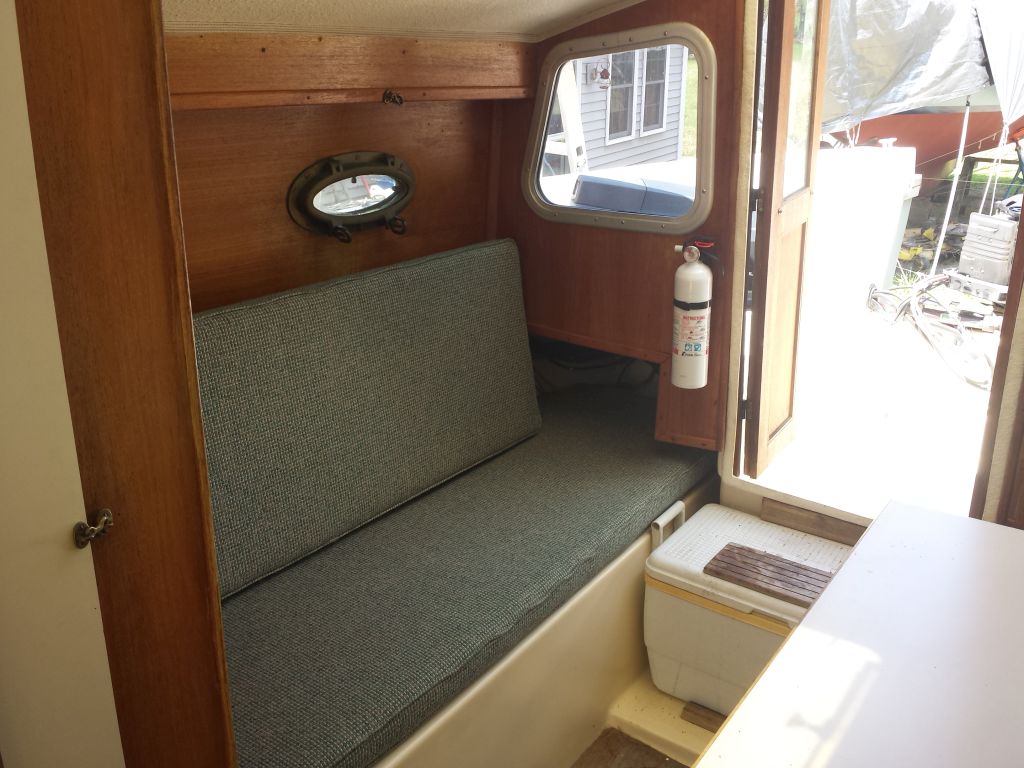
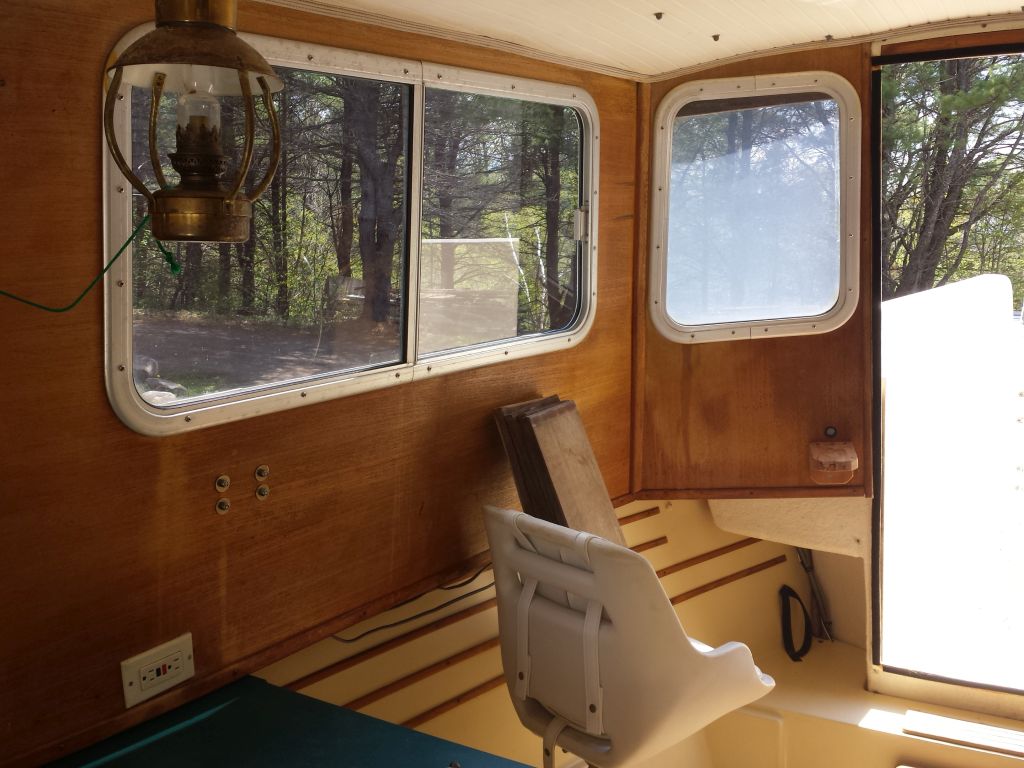
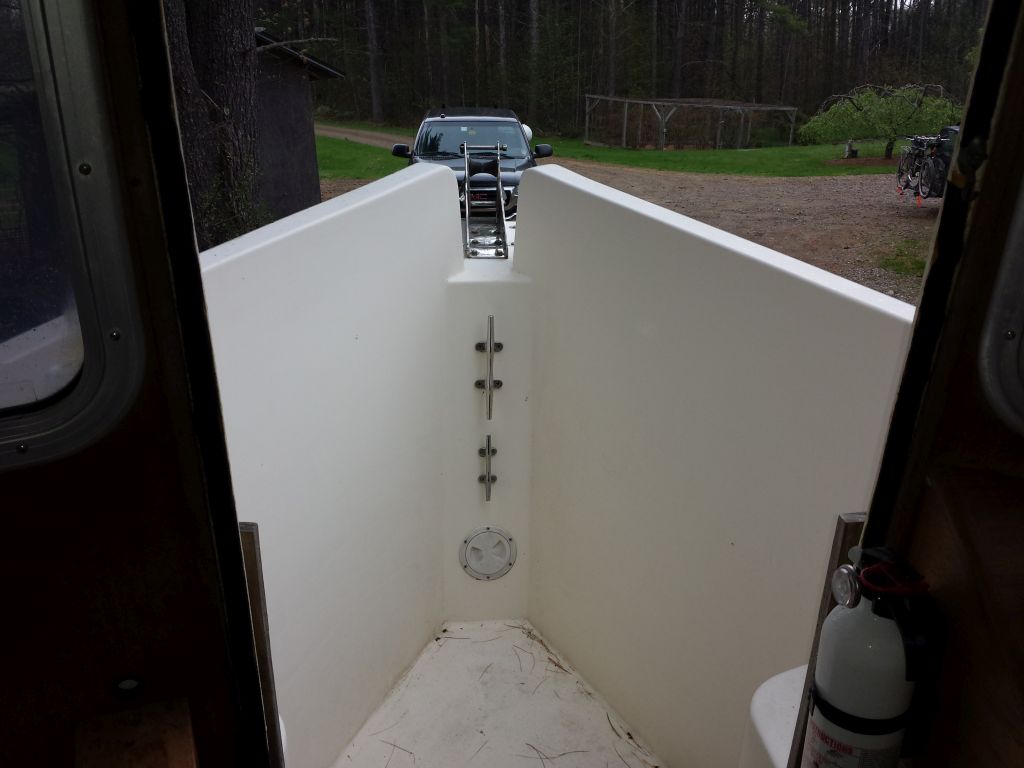
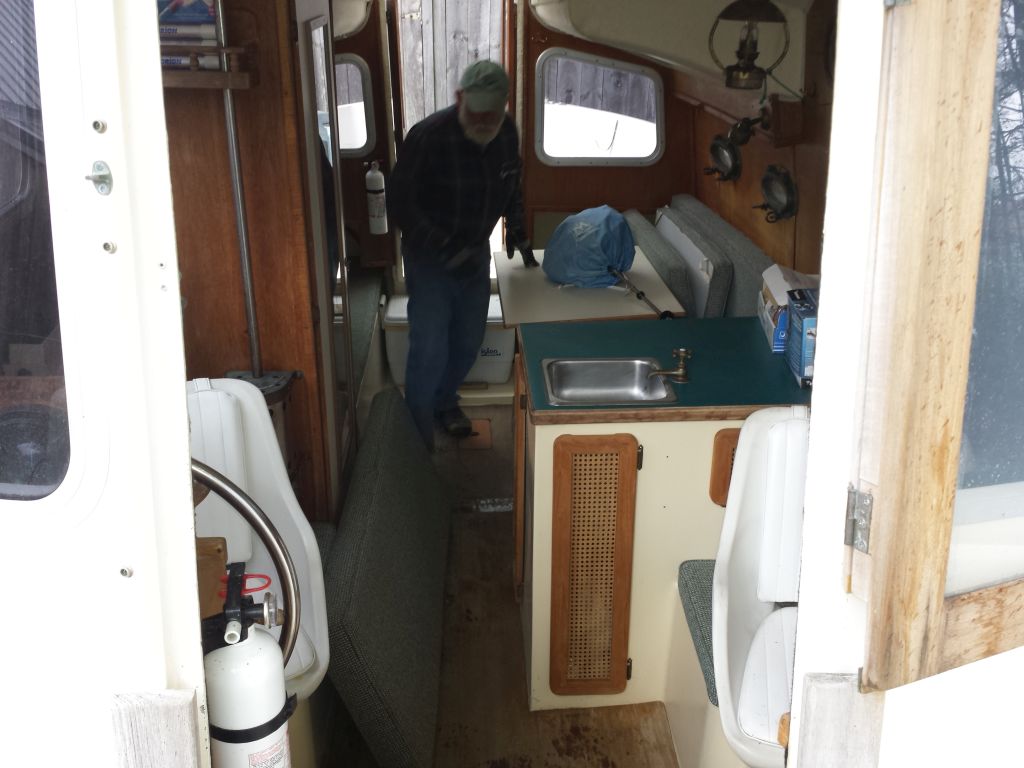
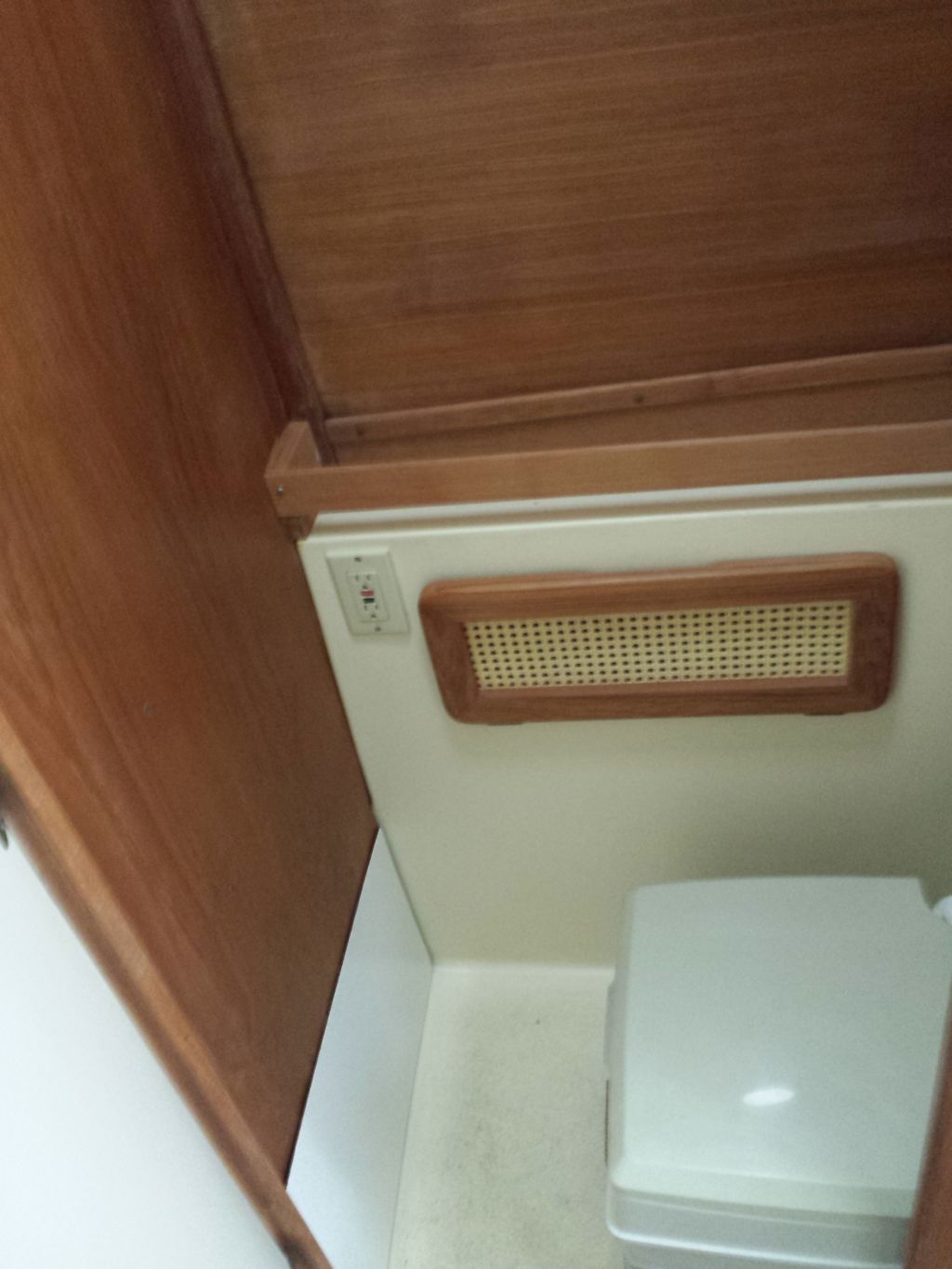
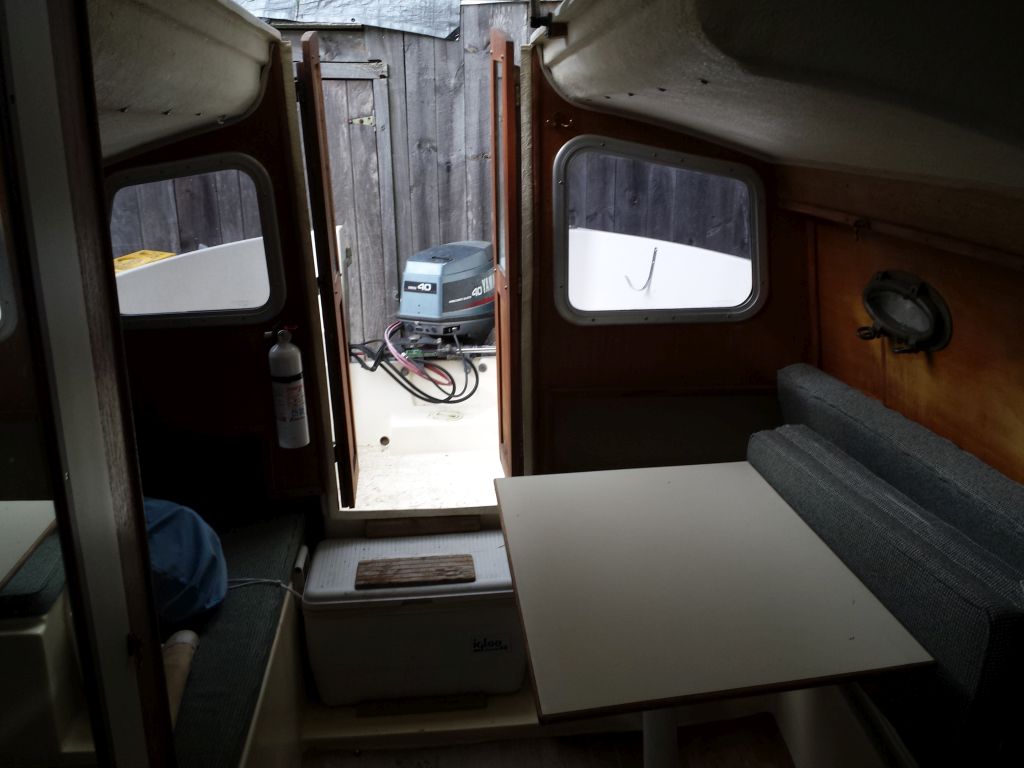
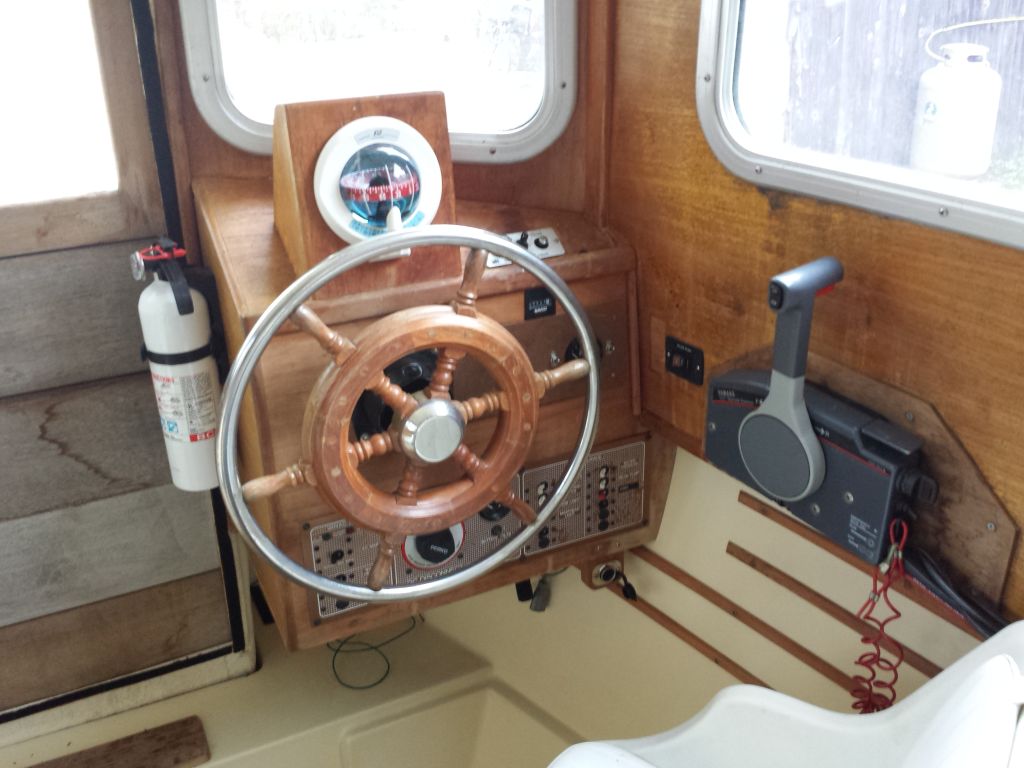
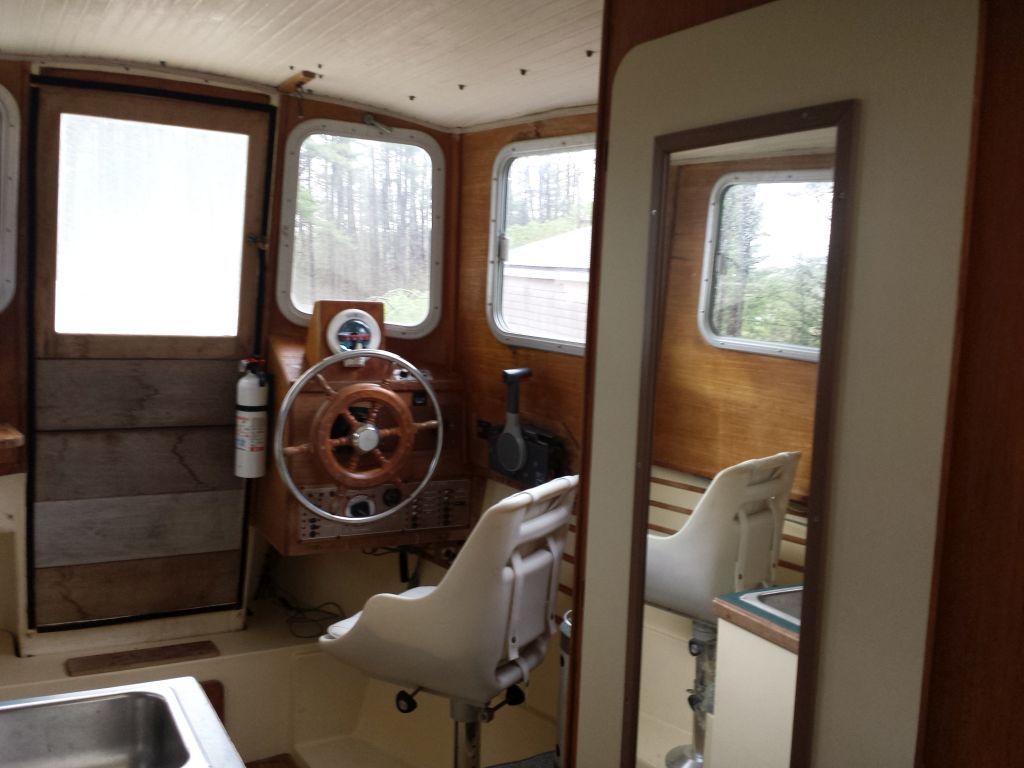
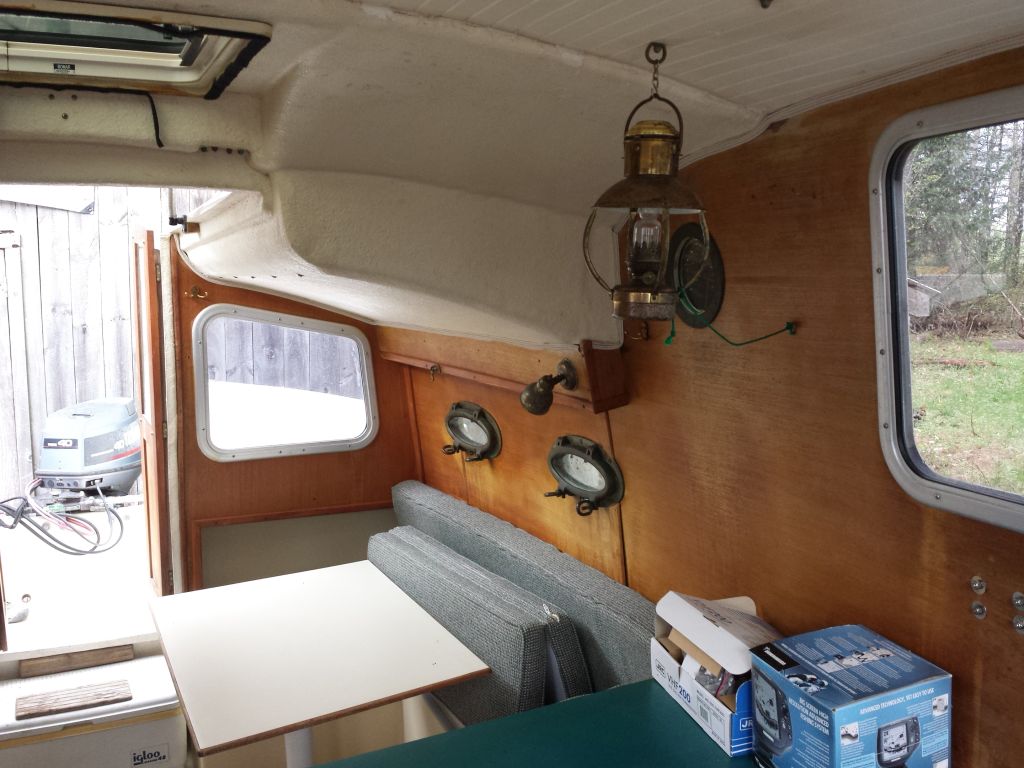
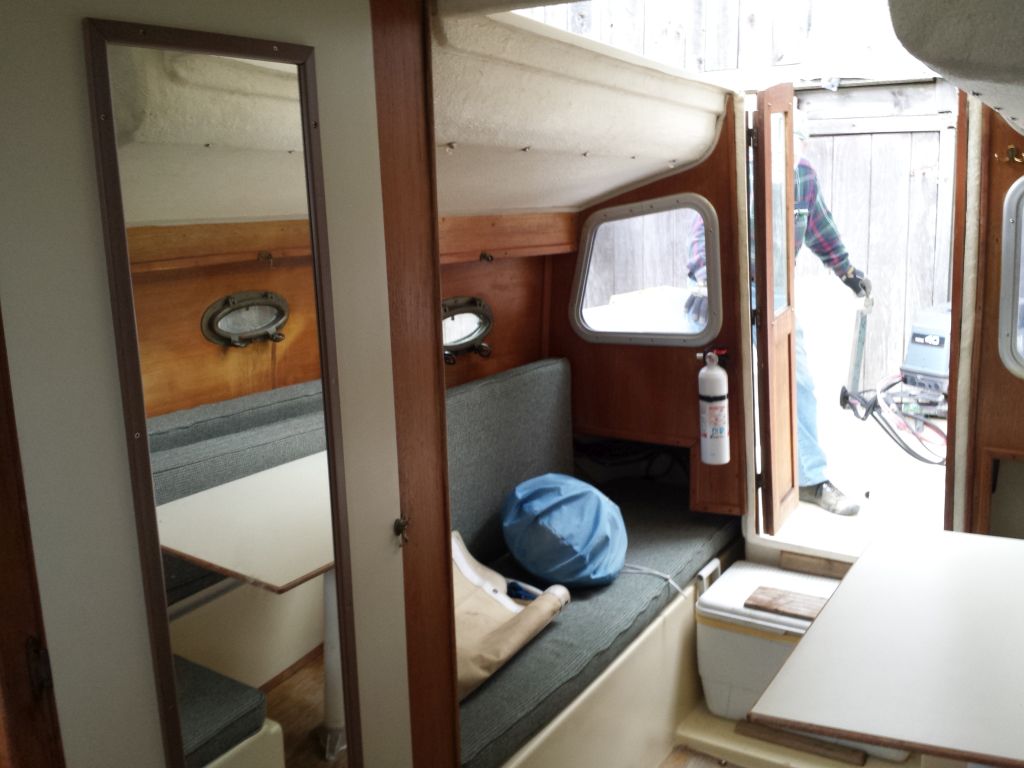
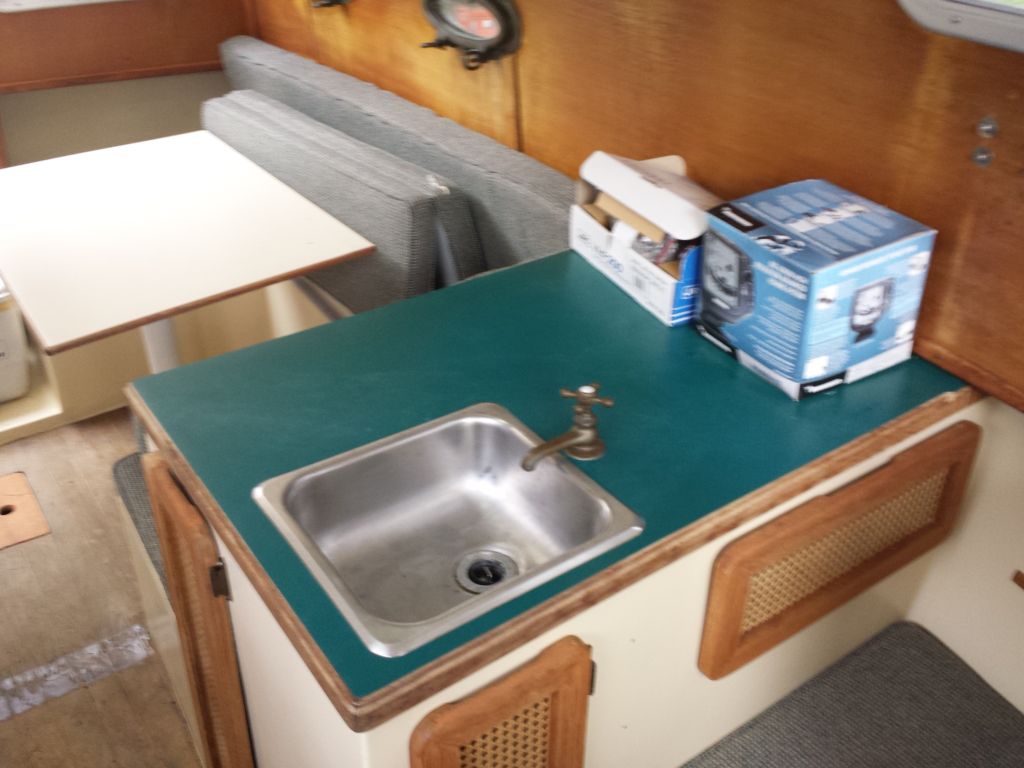
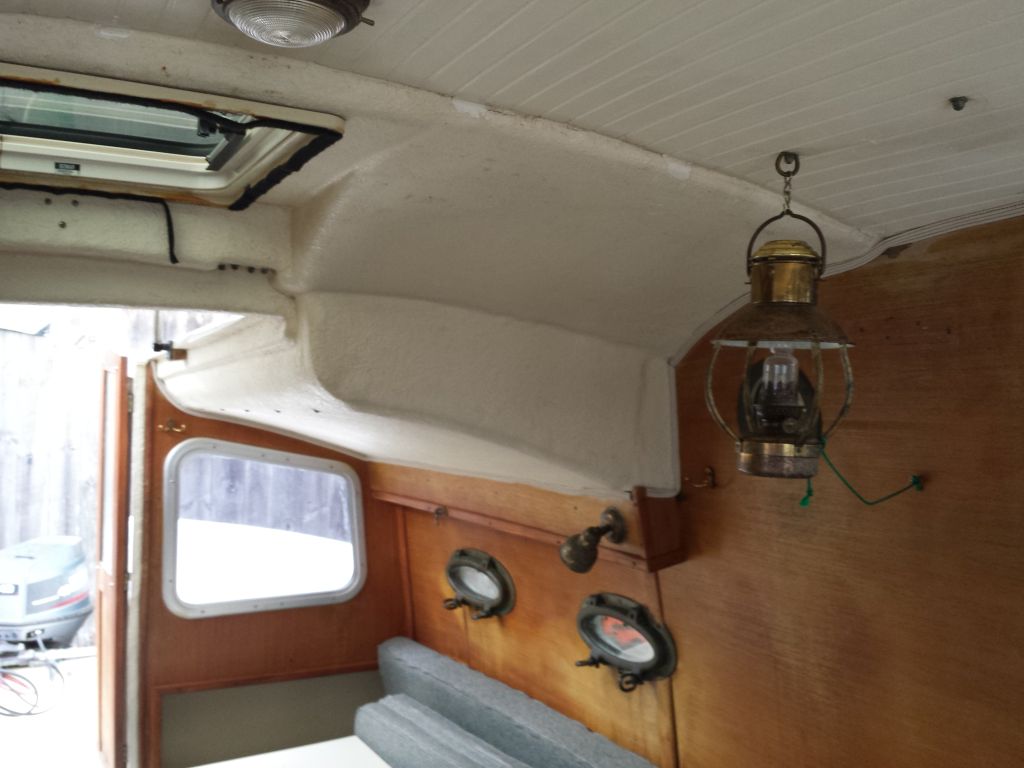
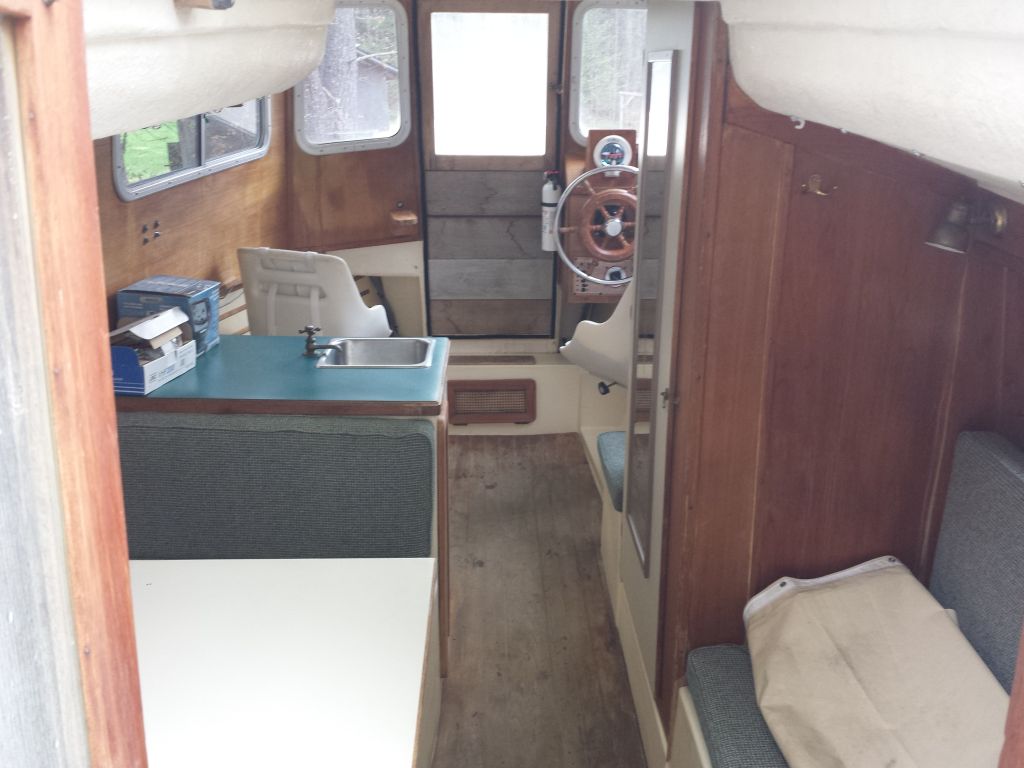
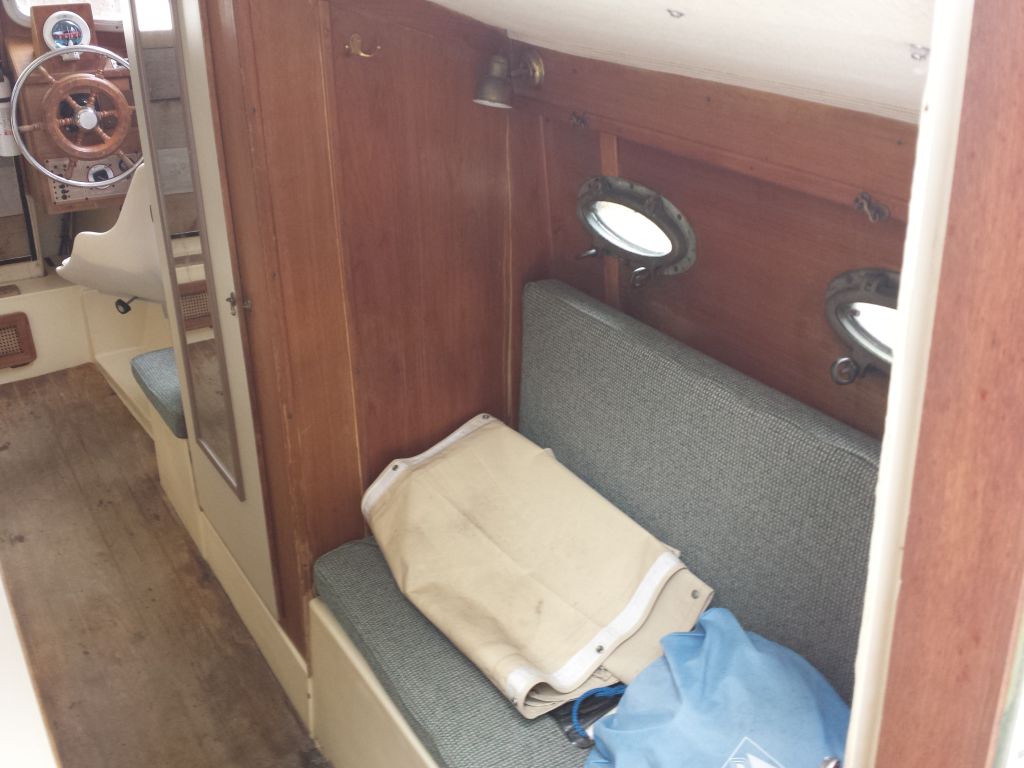
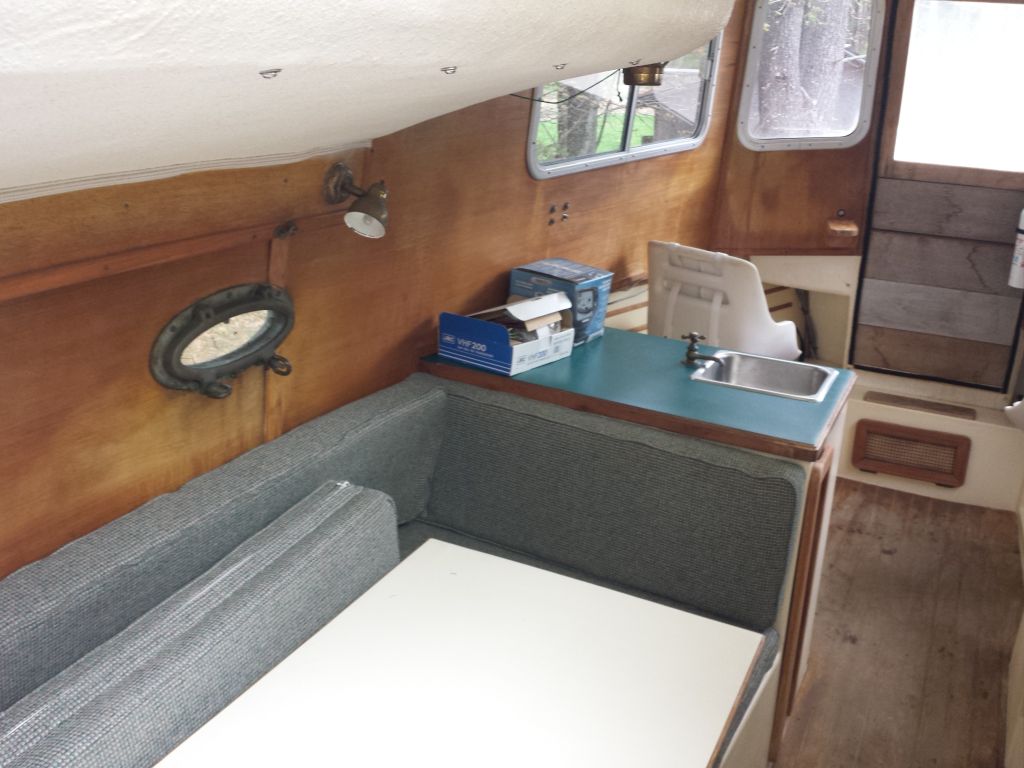
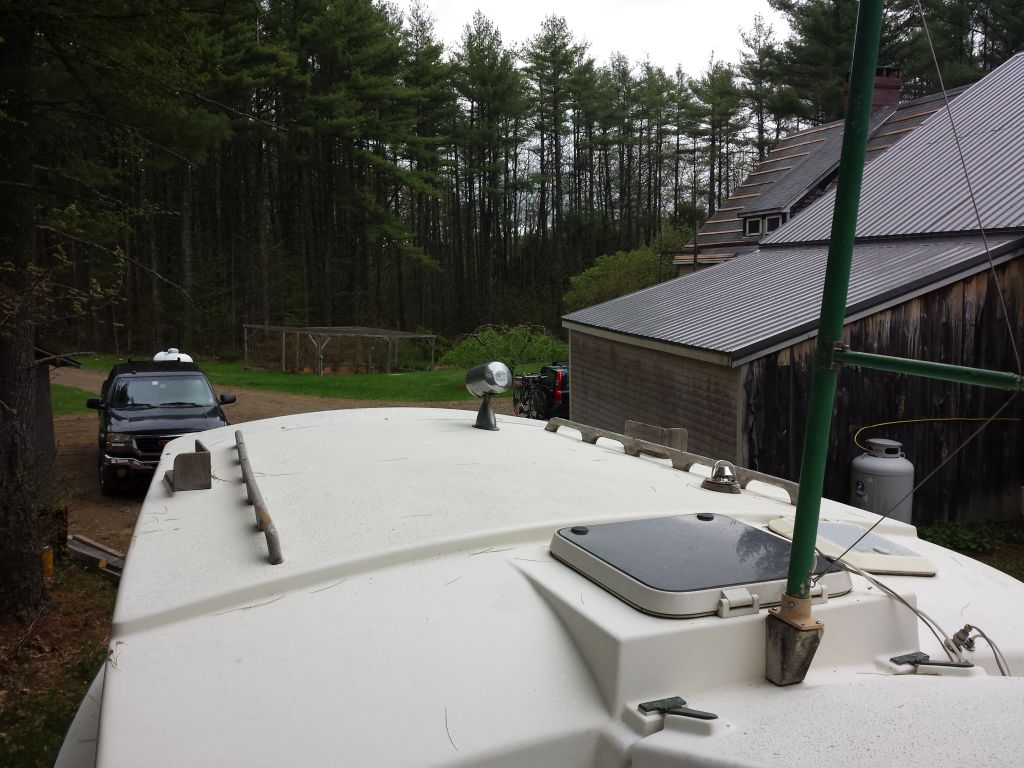
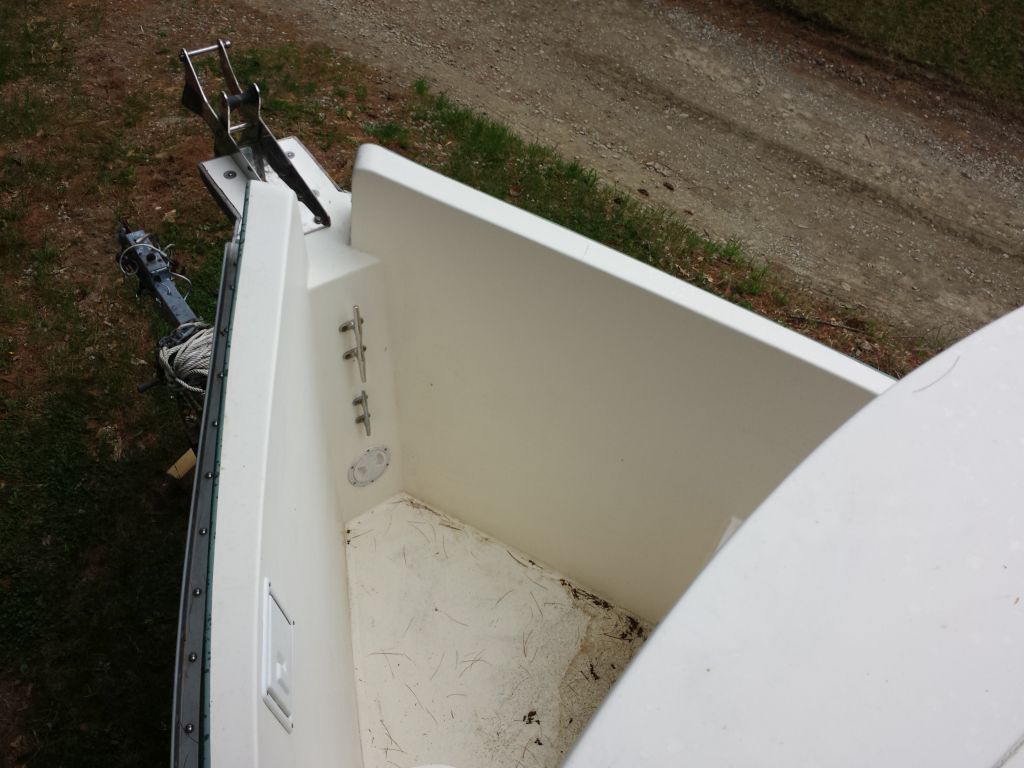
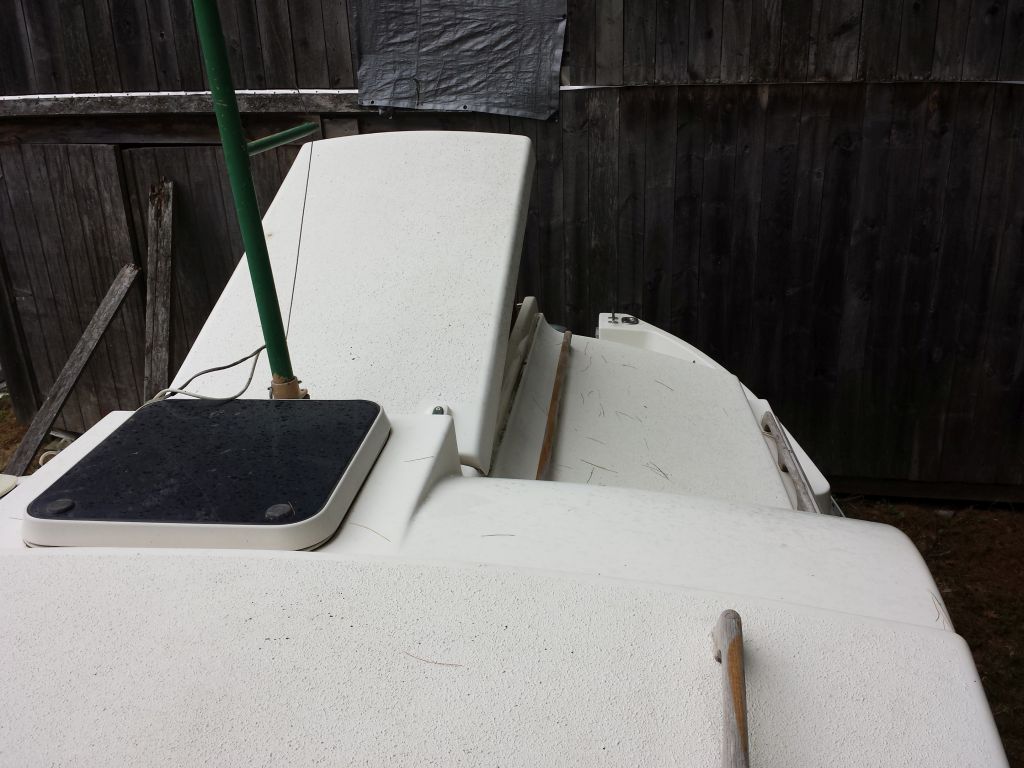
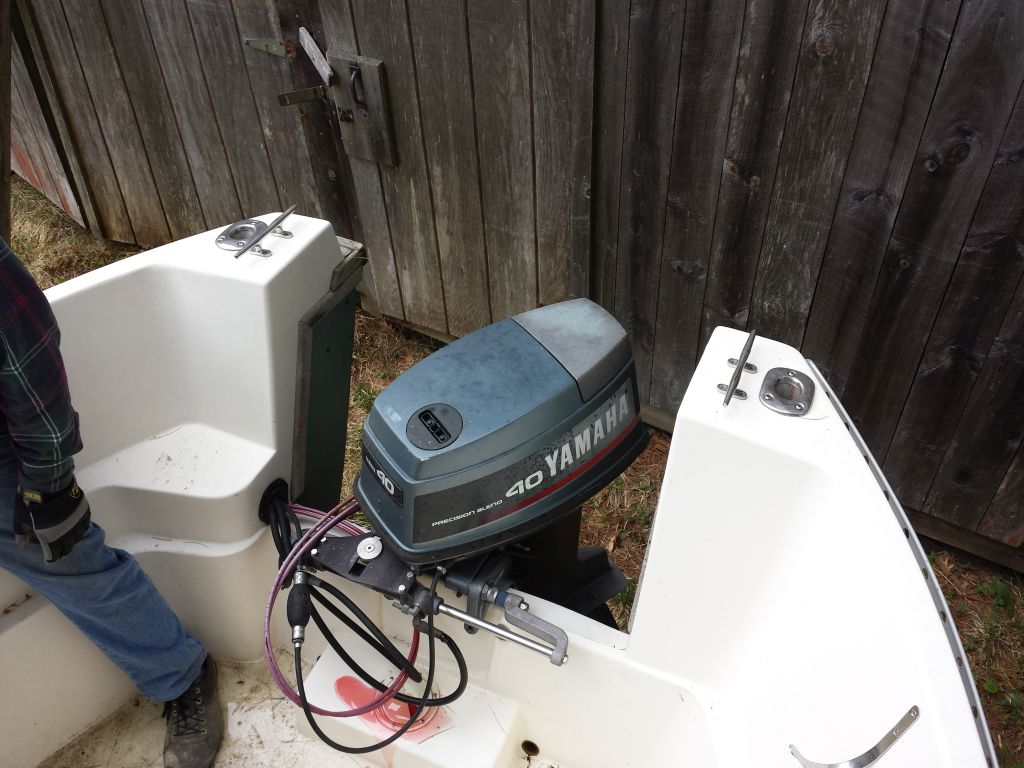
The pictures below are from my first viewing. As expected, the boat needed a cosmetic facelift on the outside.  Inside, she was OK–just OK, but there was plenty of opportunity for improvement.  I was impressed, however, with the boat’s spacious layout, and the forward cockpit was a really neat idea that opened up the whole boat and made the small size, with its walkthrough design, amazingly unclaustrophobic.  She was small, trailerable, and simple.  I liked the boat, but left petty much deciding that just because I liked it didn’t mean I had to own it.  Honestly, I didn’t really want another project for a while.

After a night’s reflection and discussion, during which time my wife fell in love with the boat, with some reluctance I decided to make an offer on the boat–lower than the asking price, and without contingency.  I thought given the design’s cult status that the seller wouldn’t take my offer, and I was ready to (expecting to) walk away.  To my amazement (and disconcert), he accepted my offer, so just like that, I had another project.  I was sort of angry at myself.  But my wife loved the boat, and I thought that I could make the boat pretty nice without spending a fortune–or without spending a huge amount of time.  There’d be no set timeframe for the work, and if it killed me I’d keep the scope as minimal as possible–a hard thing to do when I liked to make boats just so, but it simply had to be the new way forward at this point in time.

We completed the sale and brought the boat home the few miles the next day.

Box of Rain 1

November, 2011

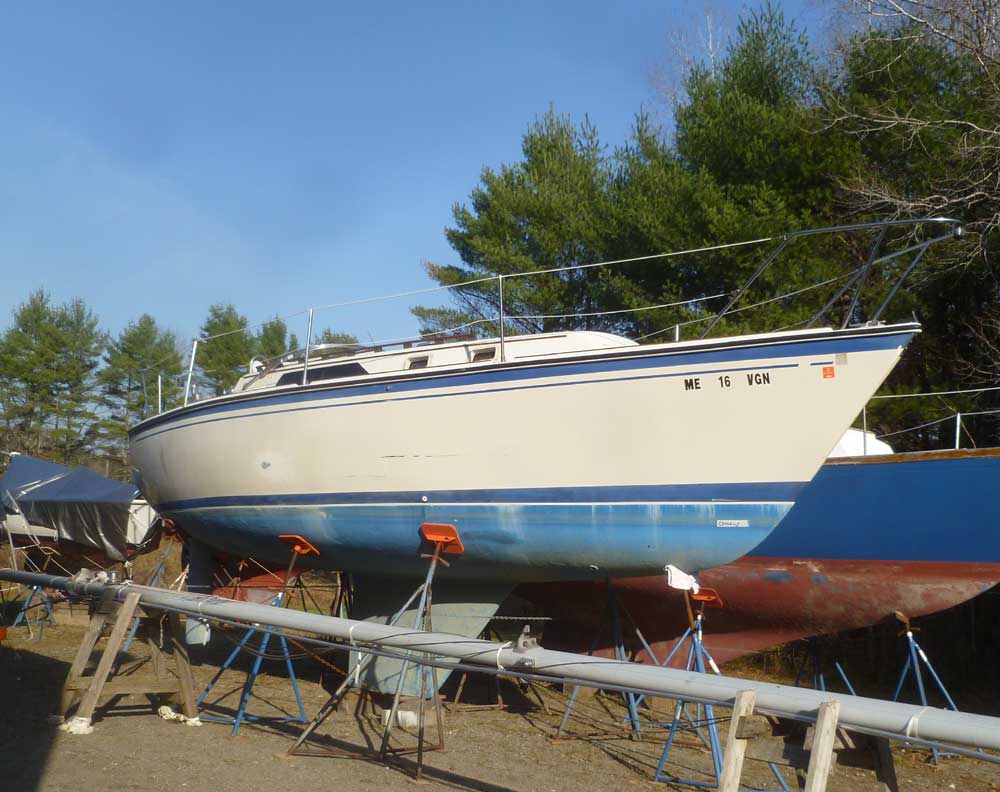
Box of Rain, a 1984 O’Day 30′ sloop, came to the shop in late 2011 with a short list of maintenance and improvements required by hew new owner.

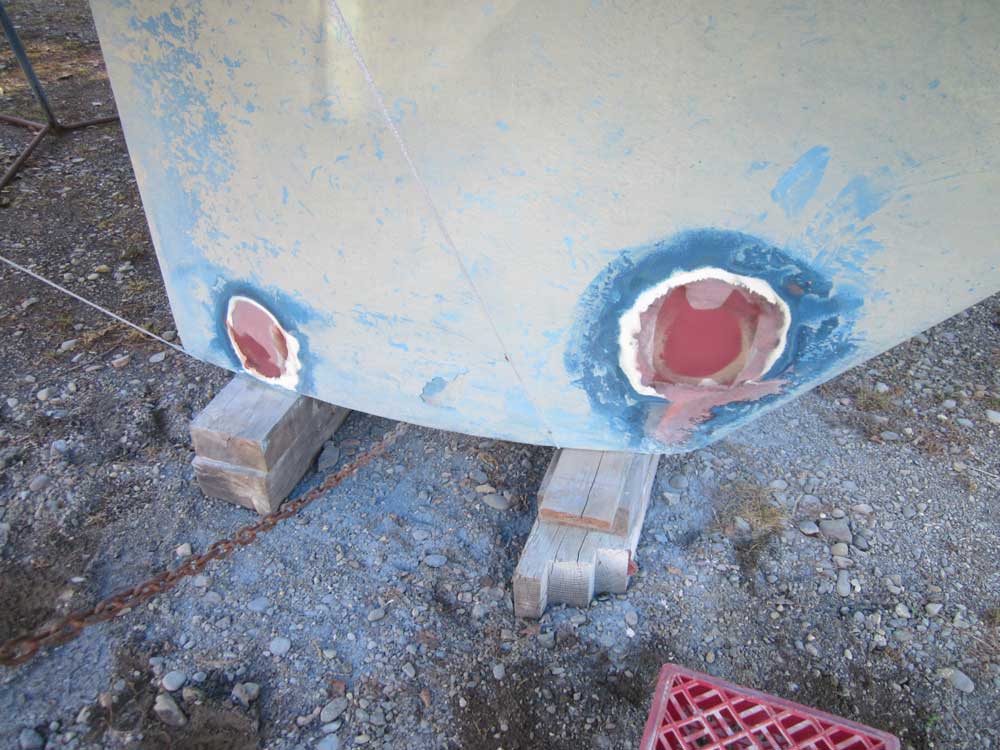
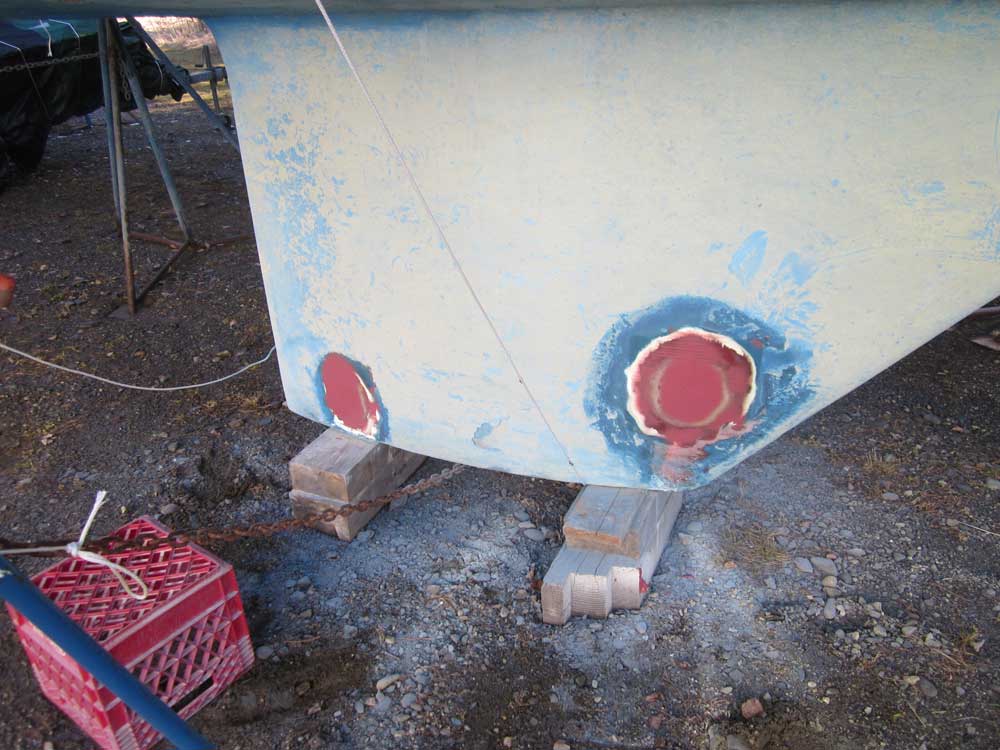
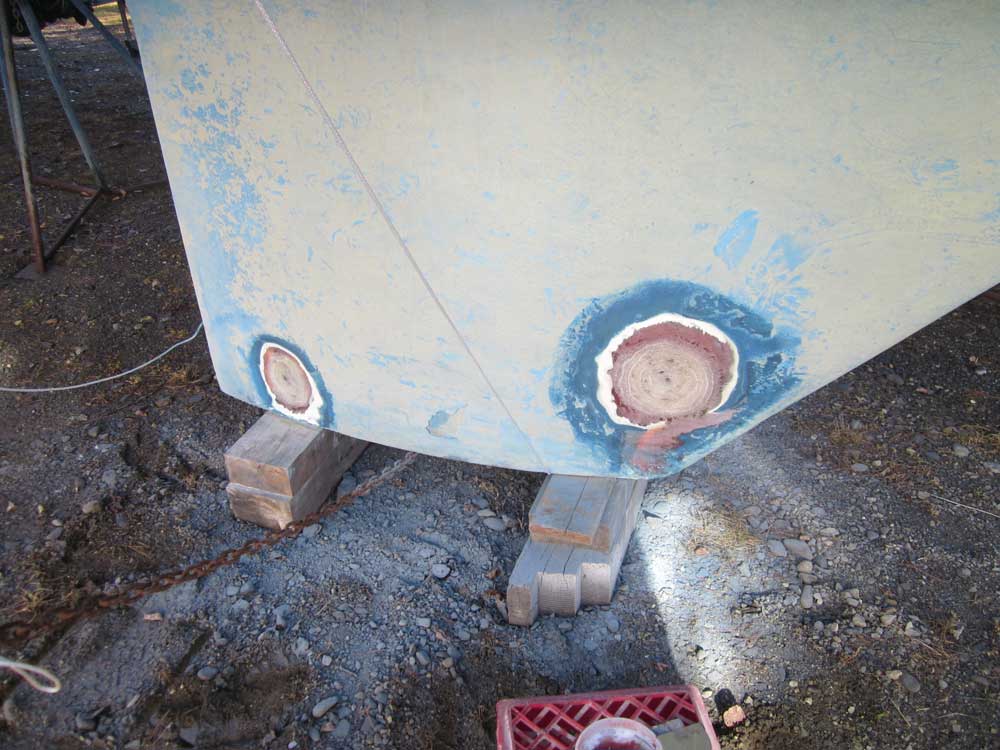
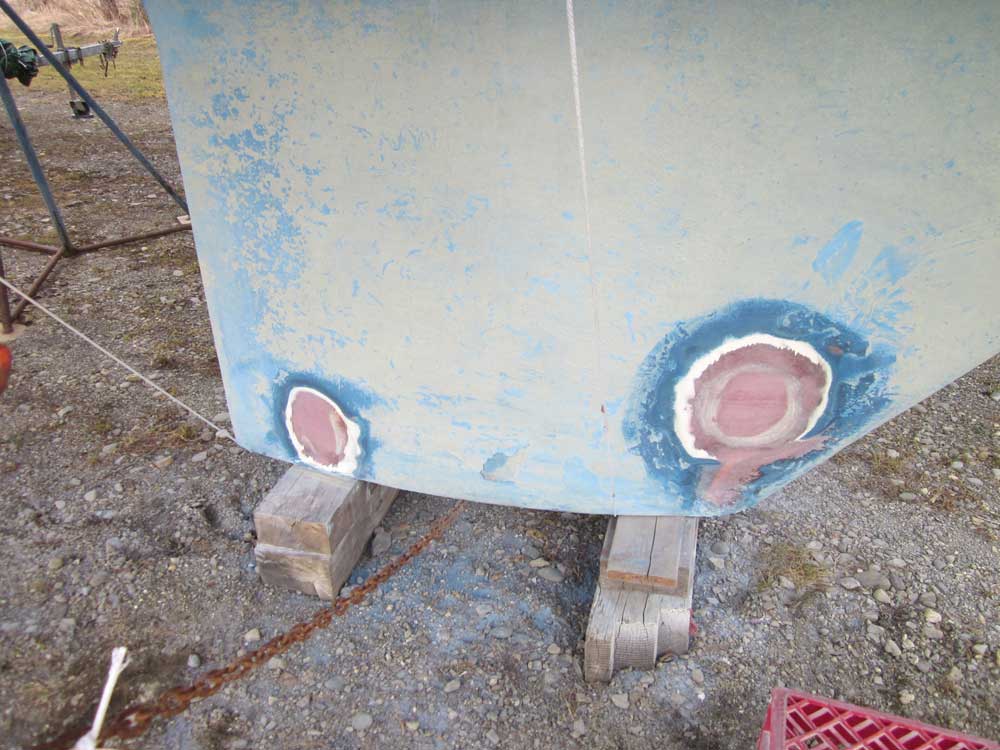
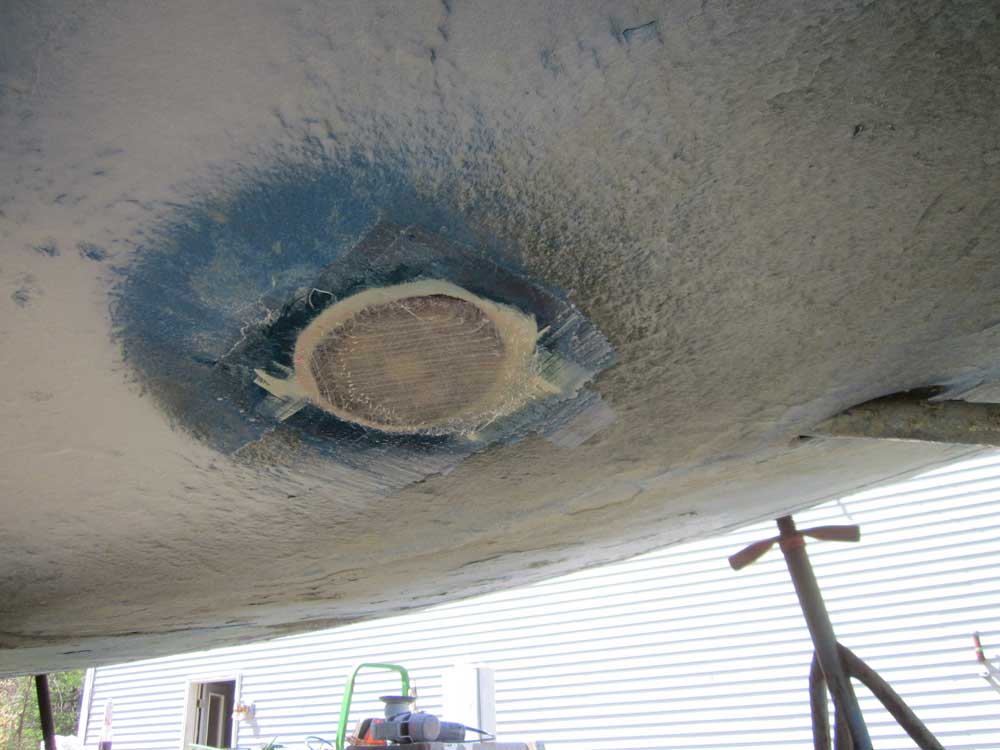
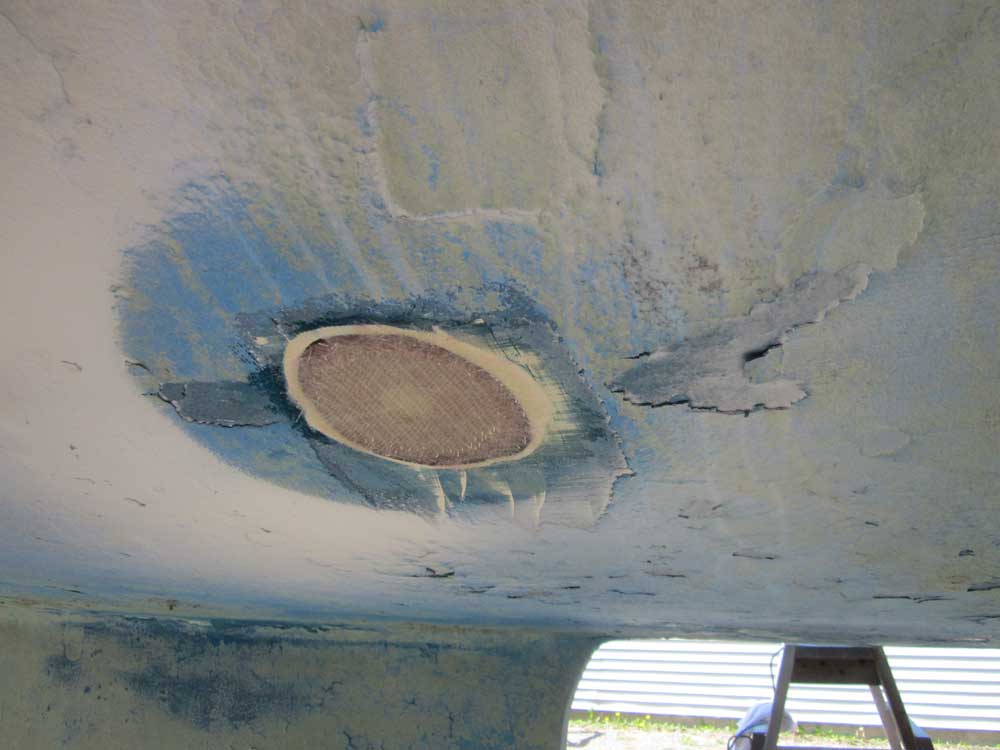
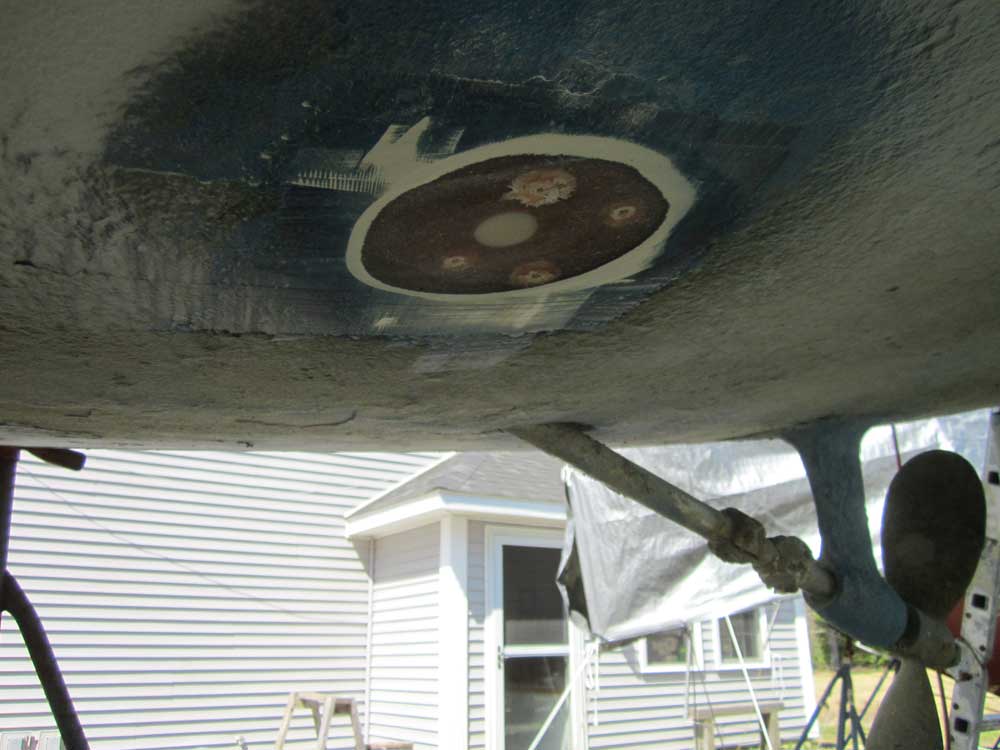
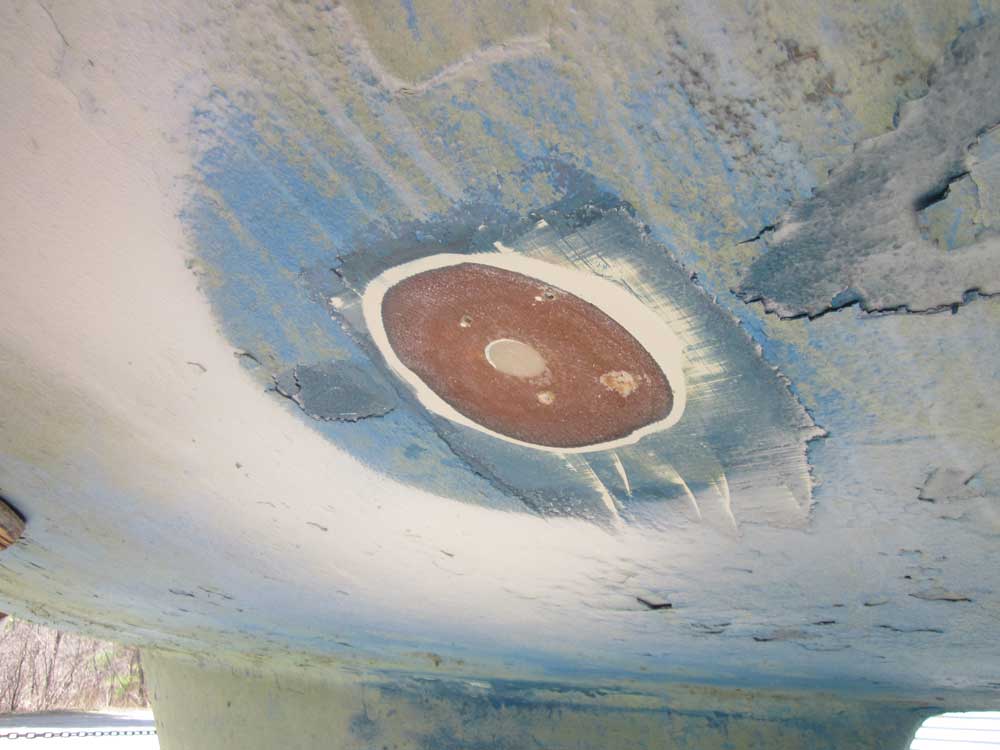
One of the tasks at hand was to address two areas on the encapsulated keel where moisture was seeping from within.  So before winter set in, I ground out these two areas to allow any remaining moisture to drain and evaporate during the cold, dry winter.

March, 2012

During a week of summer-like warmth in March, I took the opportunity to complete the keel repair.  There’d been no additional discharge for some time, so I cleaned up the previously-ground areas and filled them with multiple layers of new fiberglass and epoxy resin till they were flush with the adjacent areas.  This required from 4 to 8 layers.

Afterwards, I sanded, filled, and faired the two patches smooth with the surrounding keel.

Friday, April 6, 2012 (1 hour)

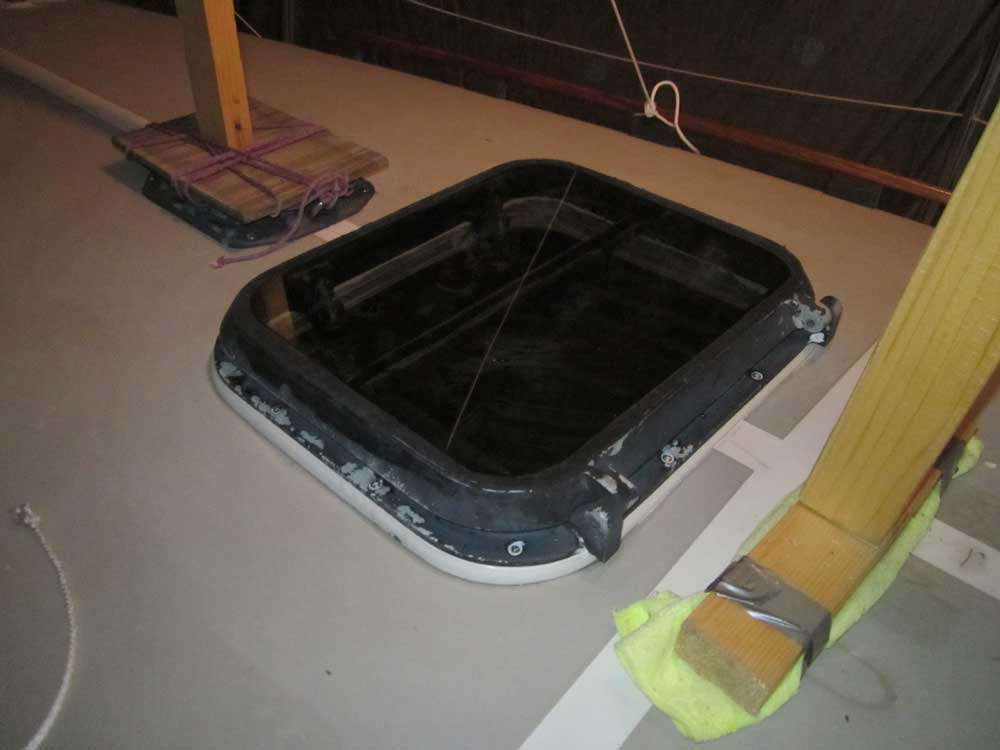
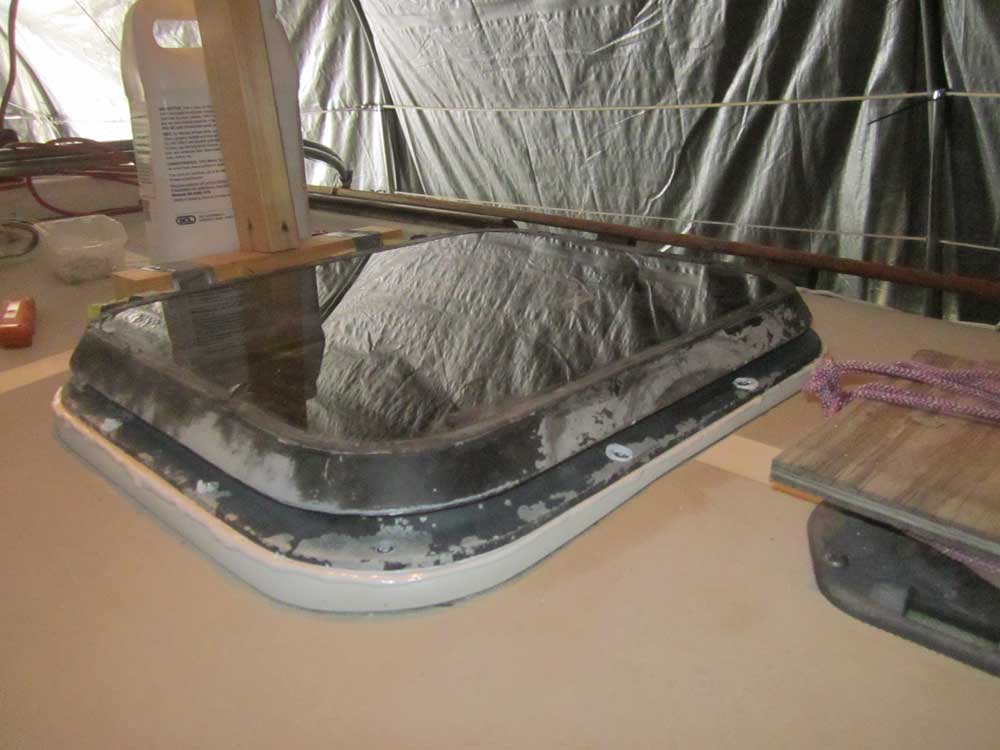
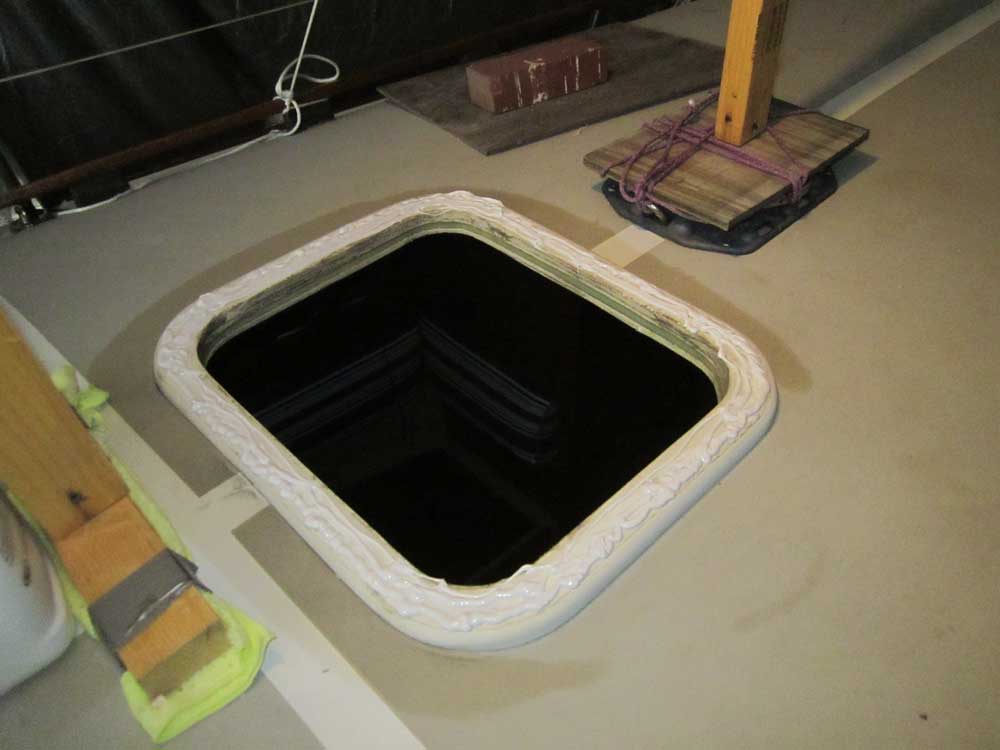
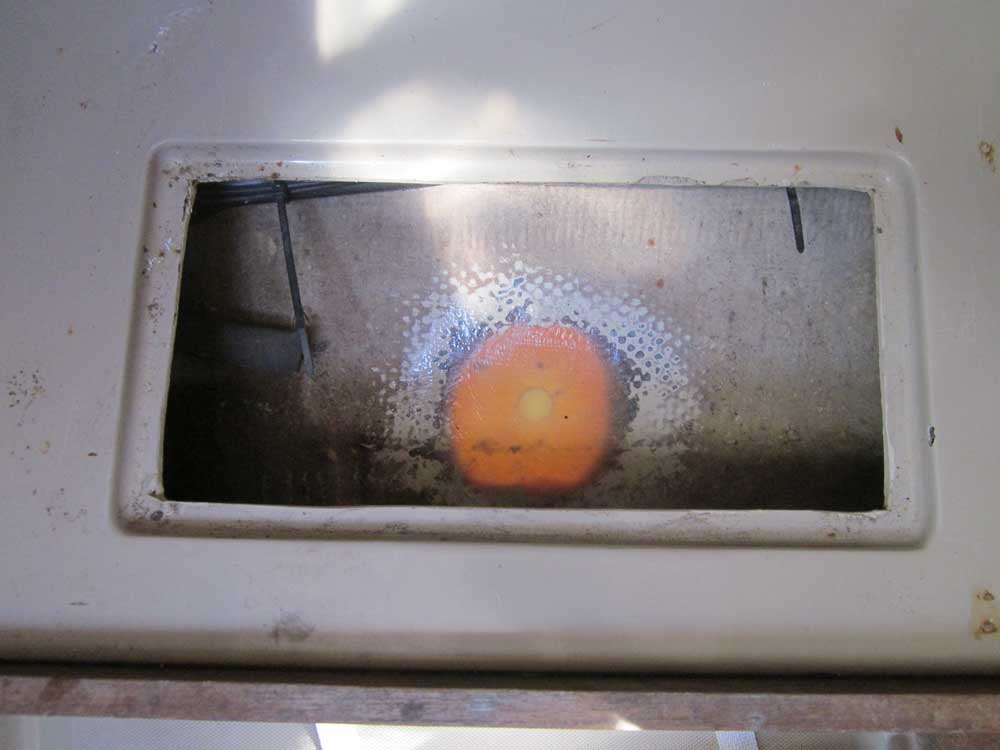
During the winter, we’d removed the overhead hatch in the main cabin, which needed a new lens and which had been leaking into the cabin.  With the hatch back on hand with its new lens by early April, I prepared for its installation by reaming out the exposed (well, semi-coated with whatever material O’Day had used on the inside of the cabin liner) core from around the edges of the hatch opening, and installed thickened epoxy in the gap to seal the area.

Wednesday, April 11, 2012 (3.25 hours)

I installed the hatch in a heavy bed of sealant with new screws, cleaning up the squeezeout on the exterior, but leaving the bead that formed on the inside of the hatch flange to cure before removing it.

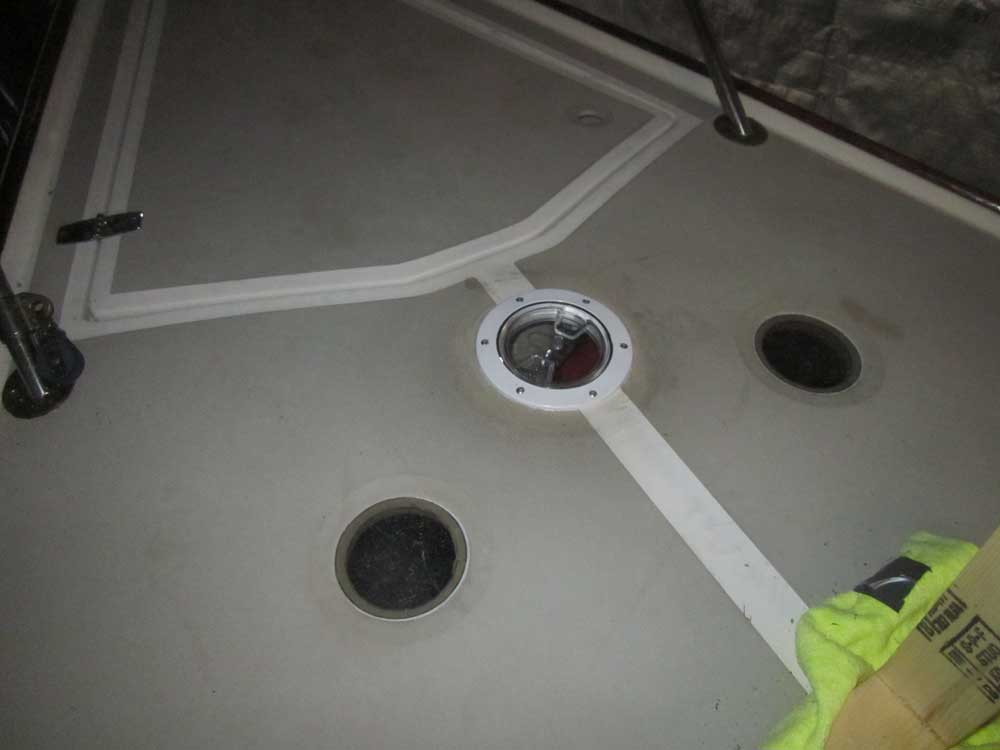
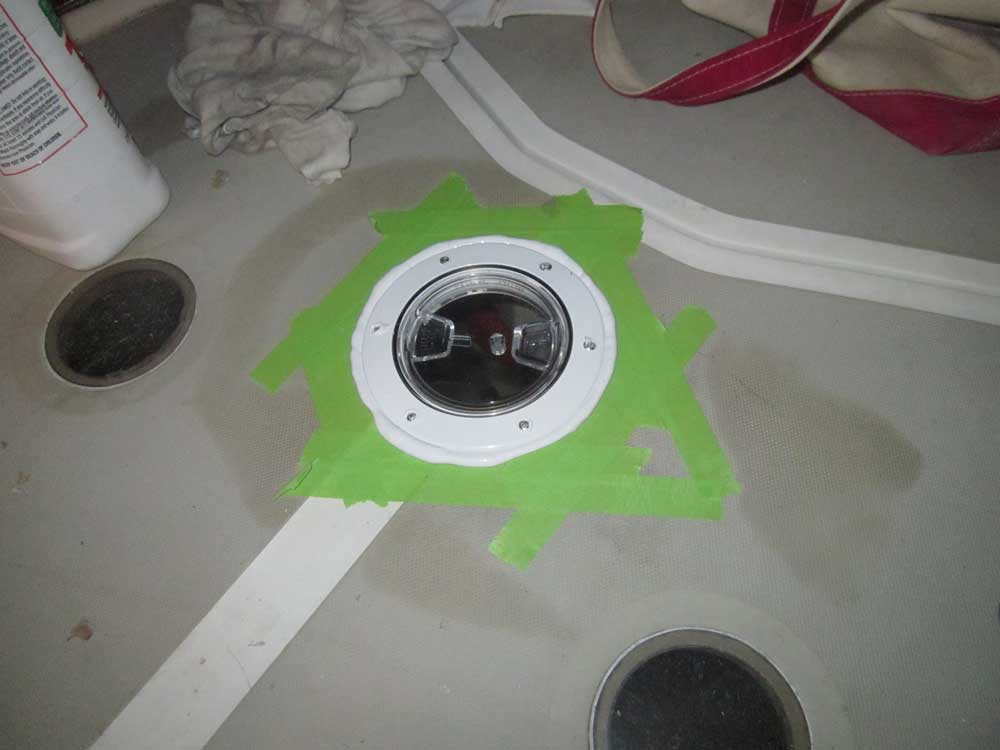
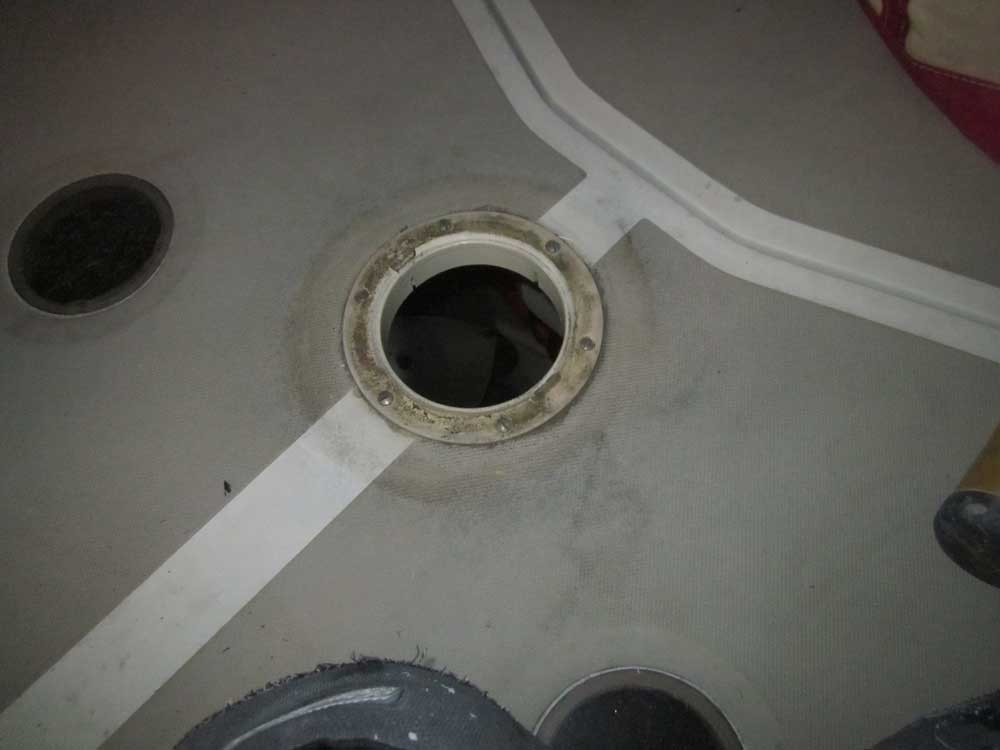
There was an old, broken, and sun-damaged solar vent fitting on the foredeck, and the owner requested that I simply replace it with a clear plastic deck plate.  After removing the old fitting and sealant, I prepared the inside of the hole with epoxy, then installed the new deck plate with plenty of new sealant.

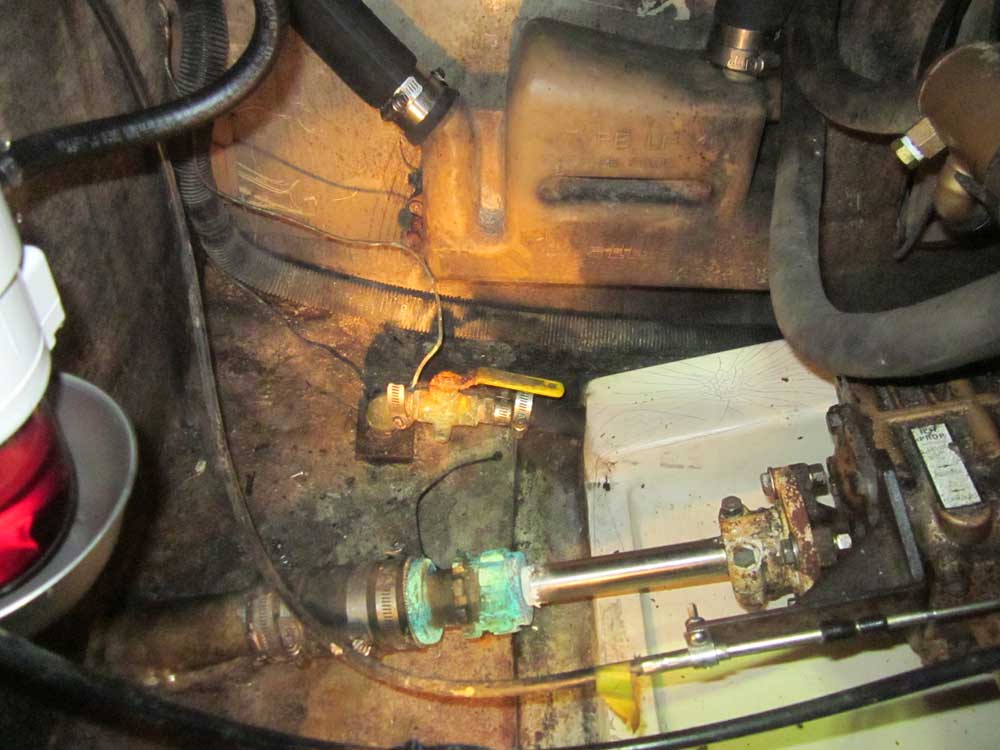
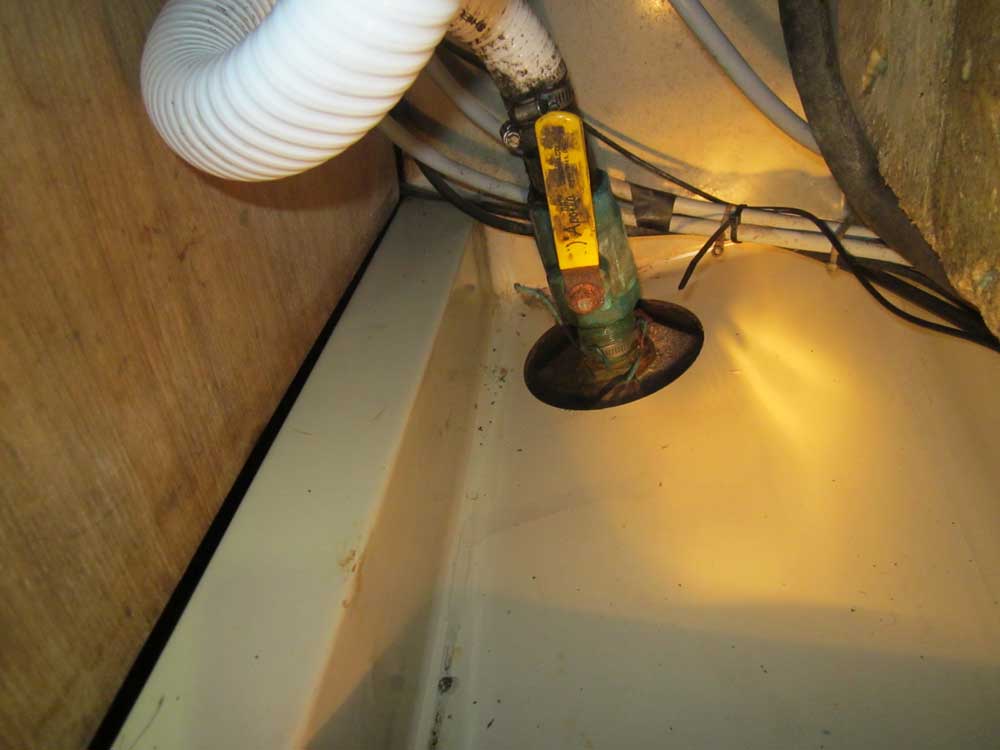
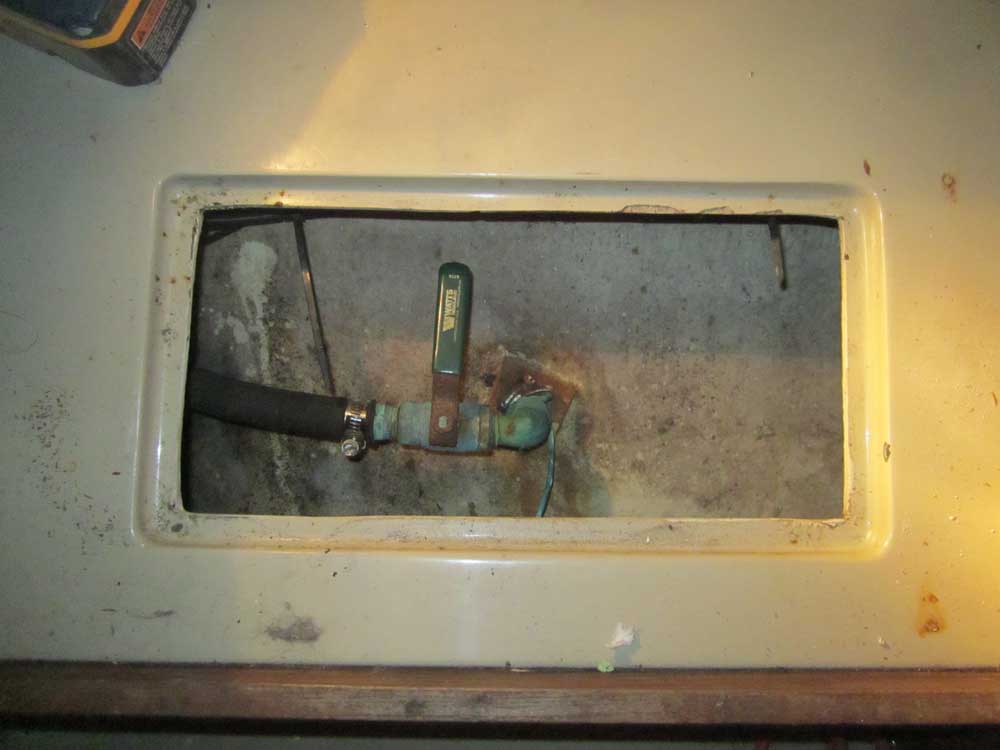
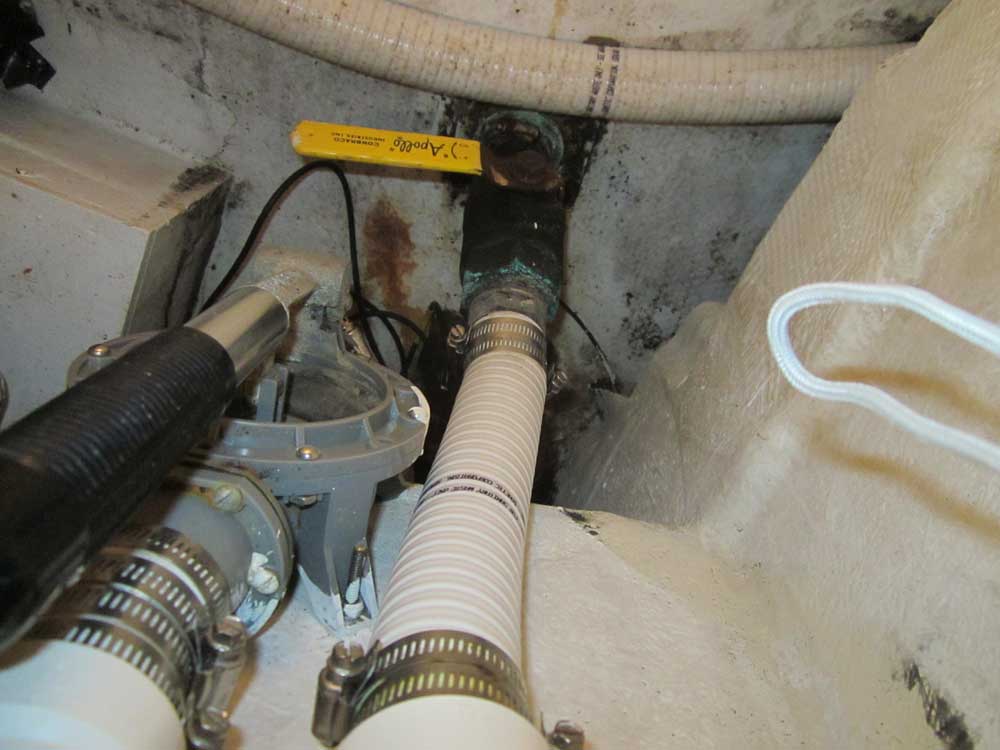
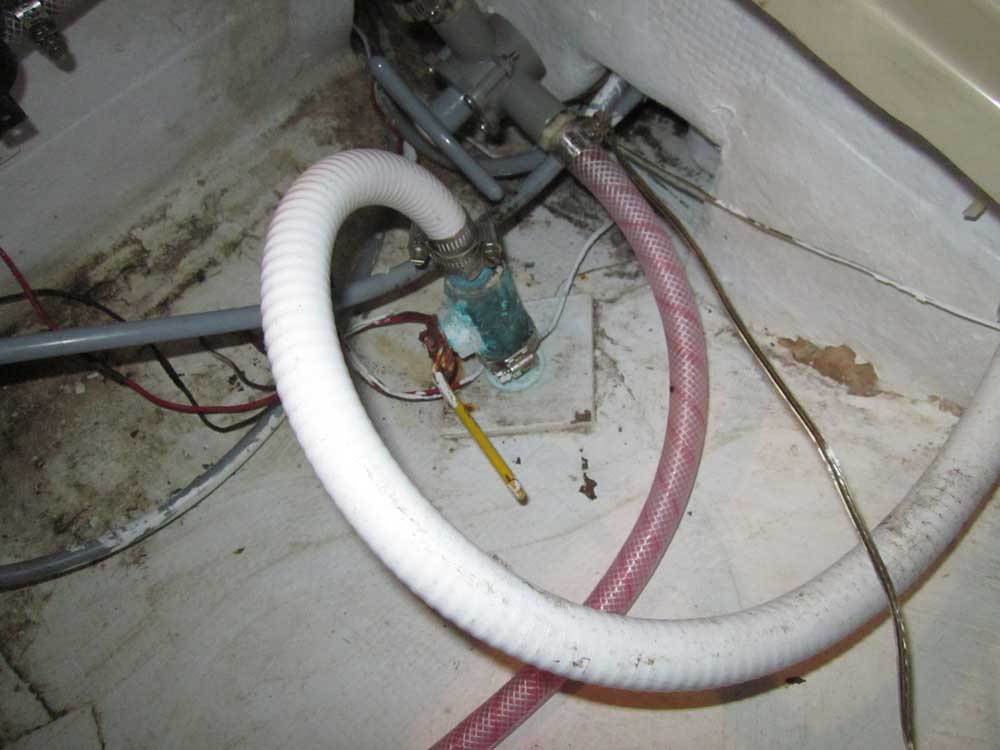
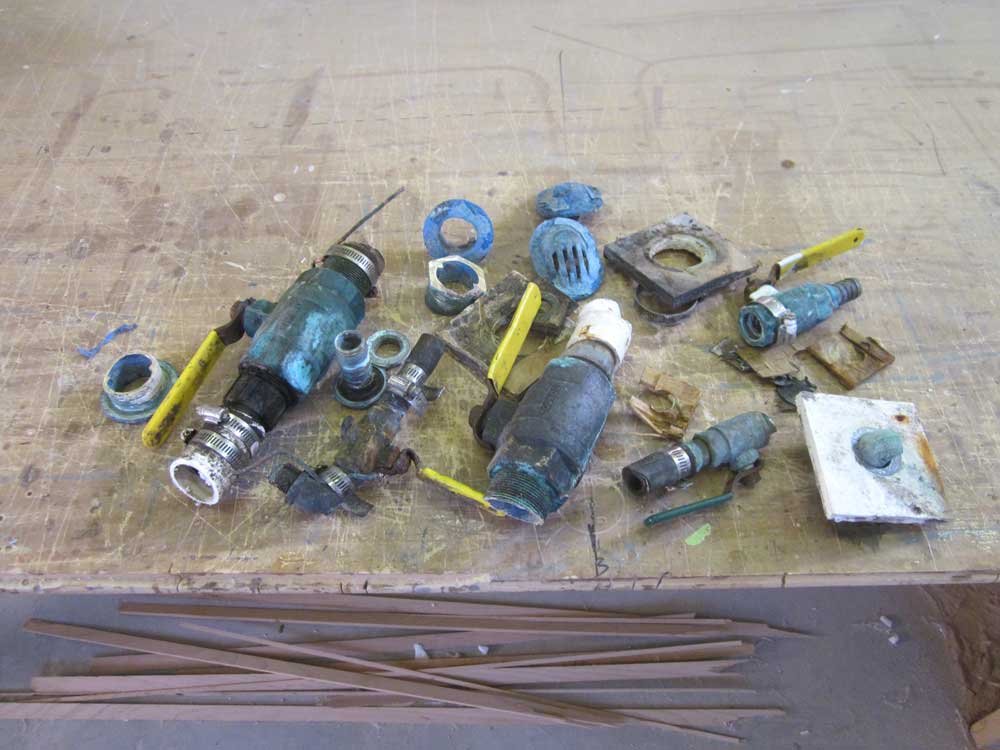
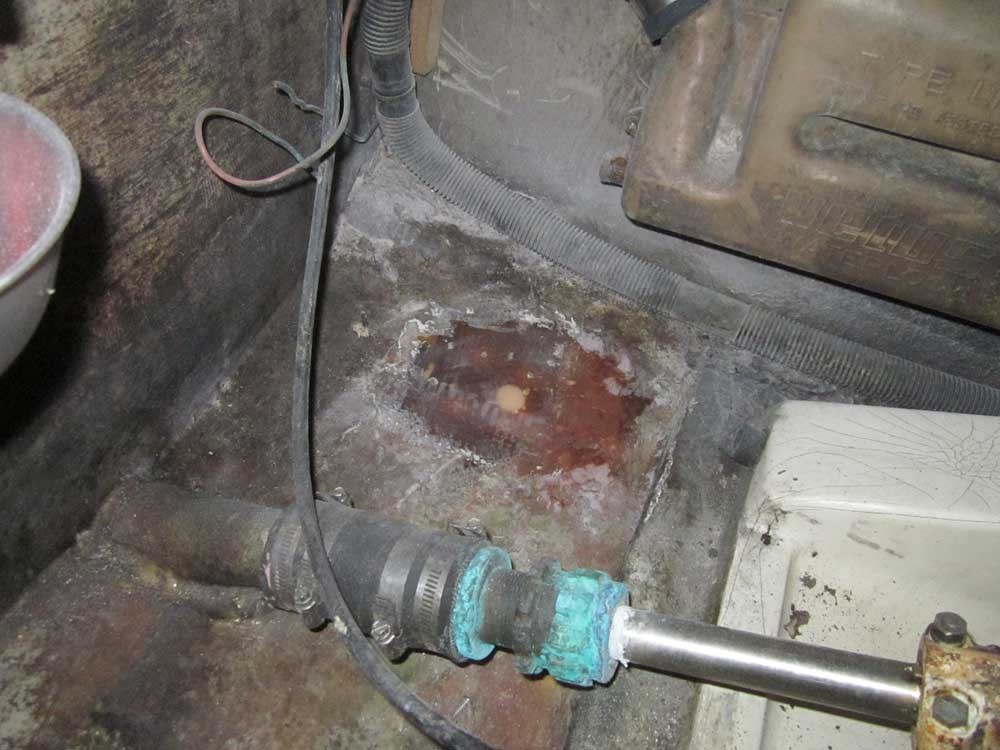
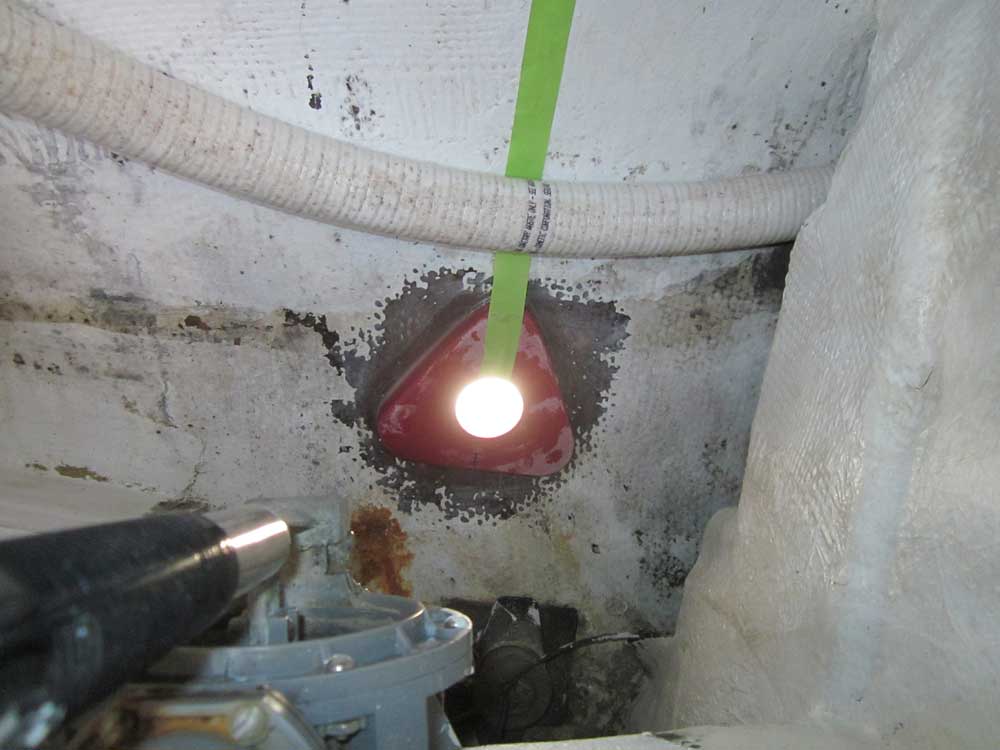
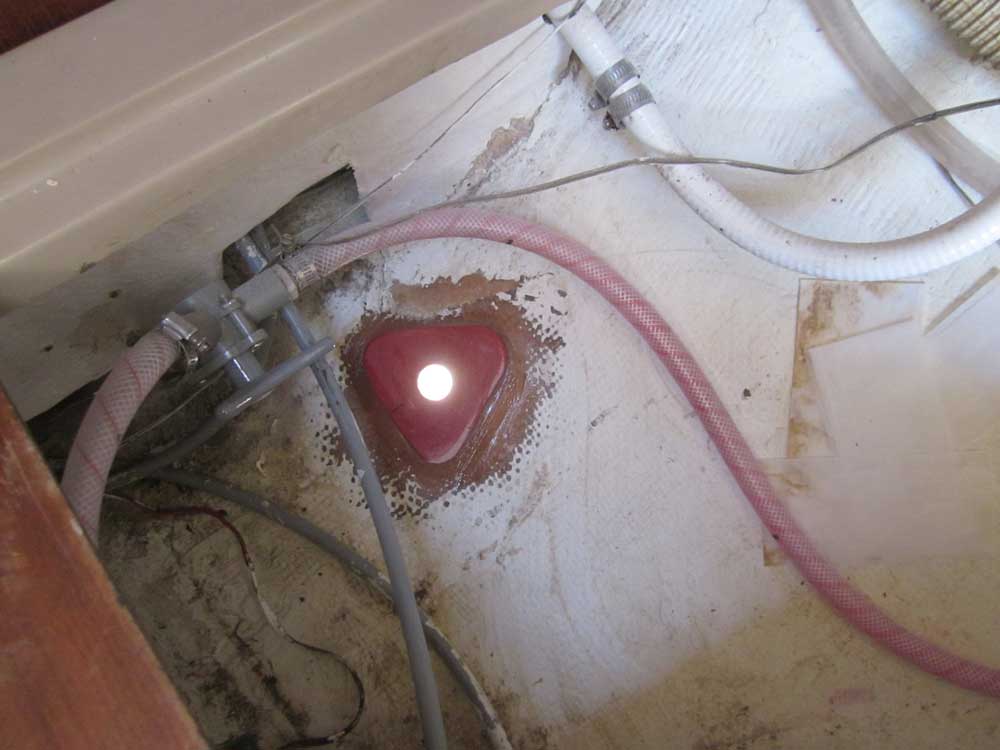
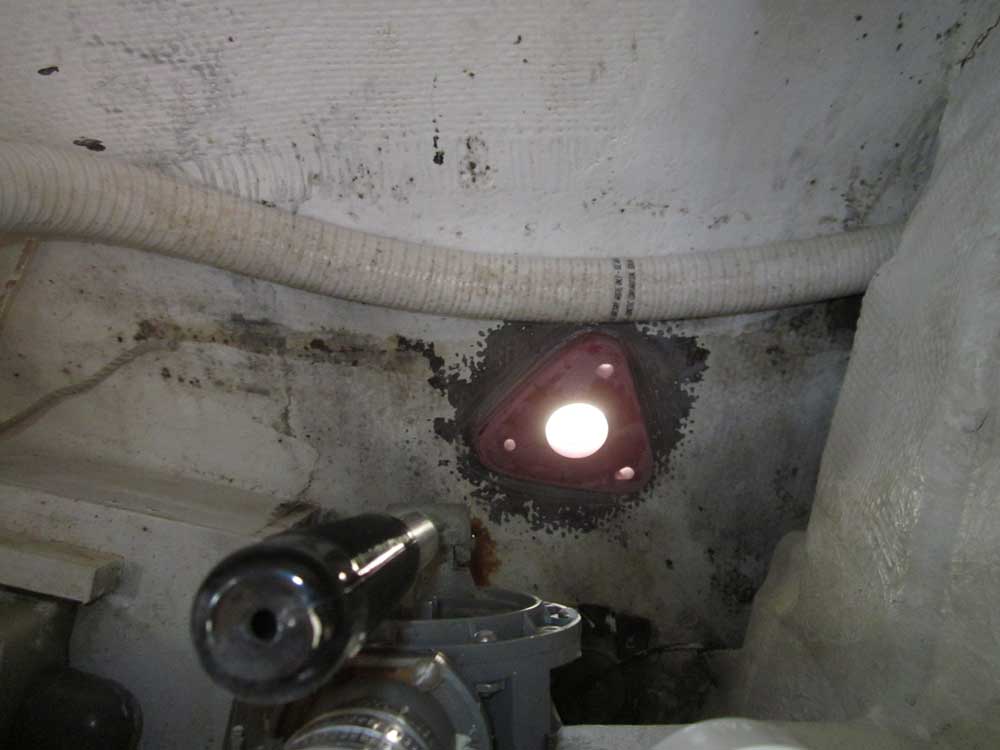
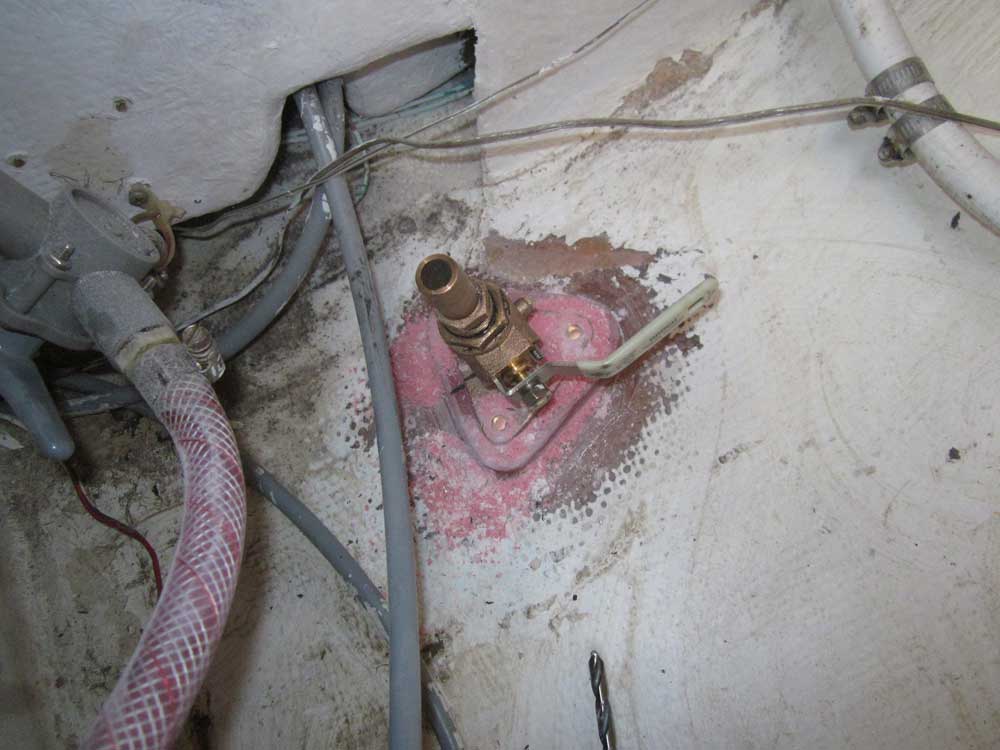
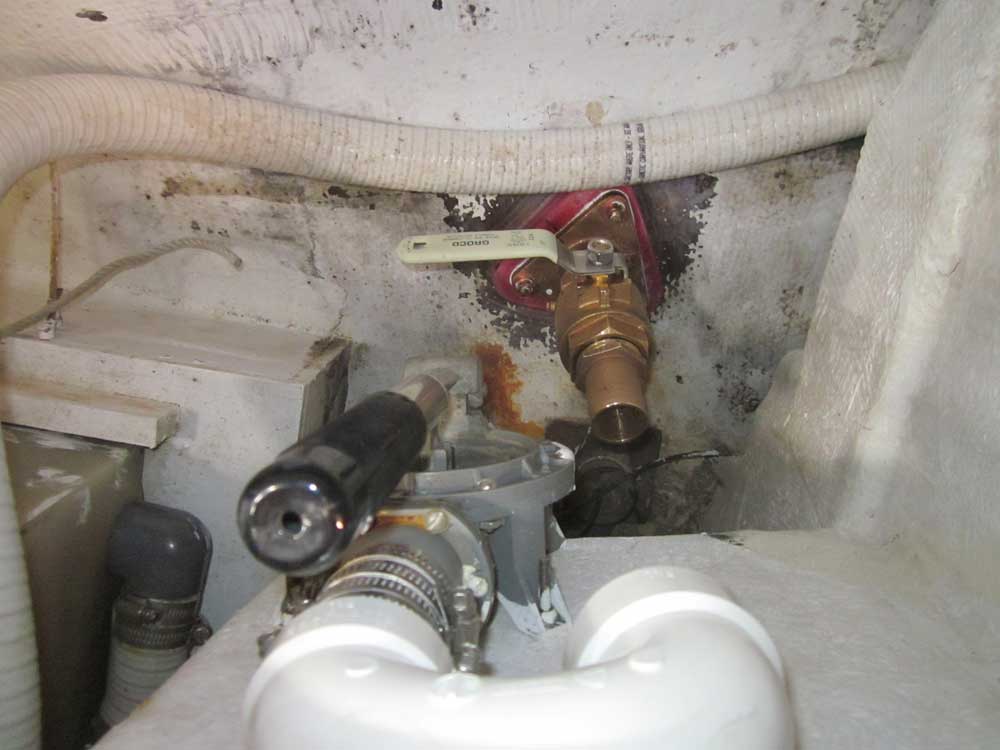
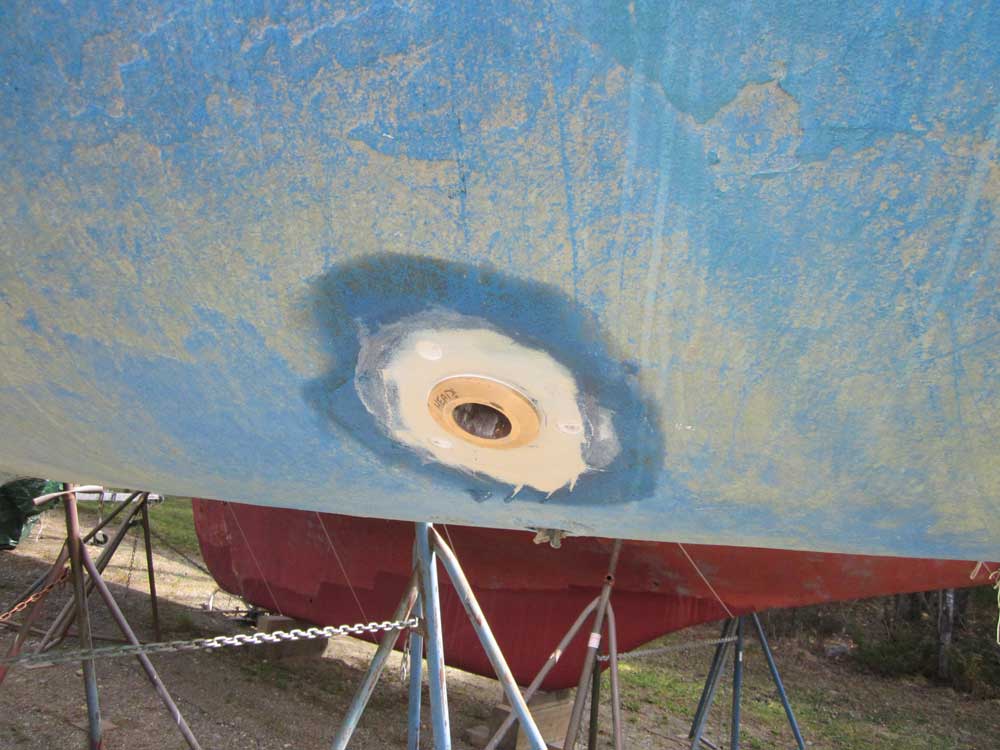
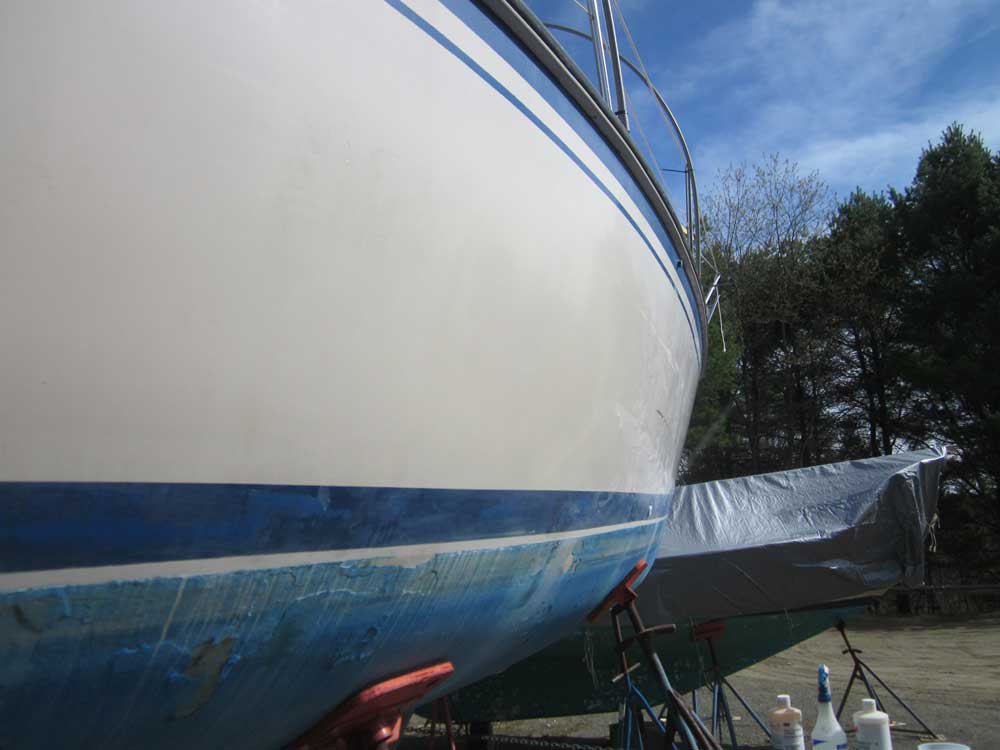
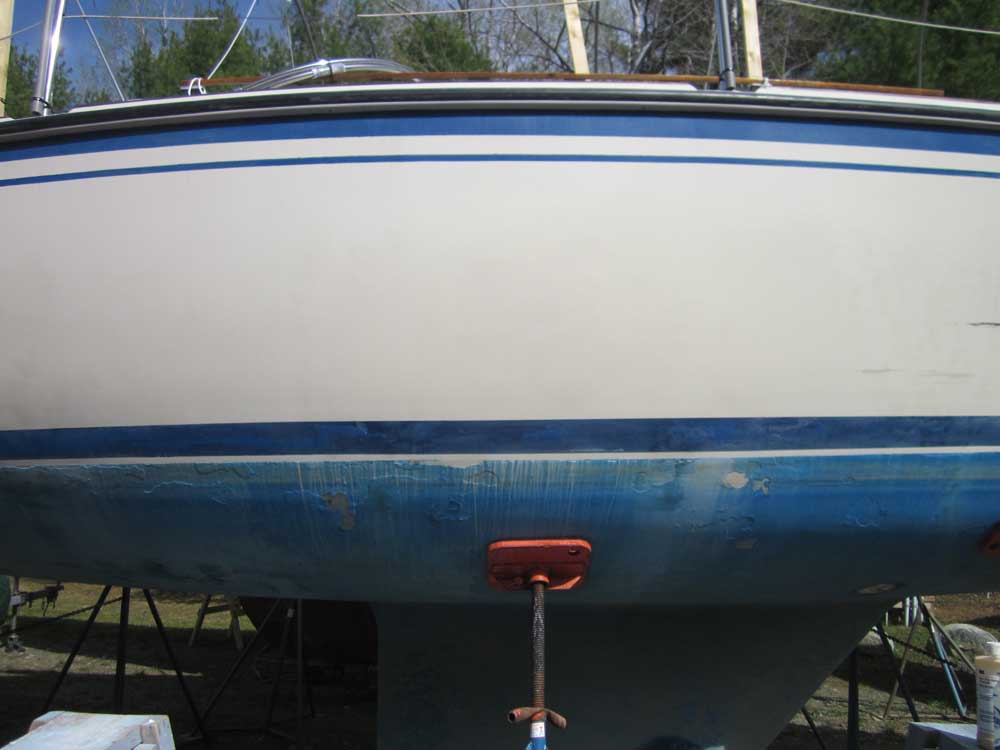
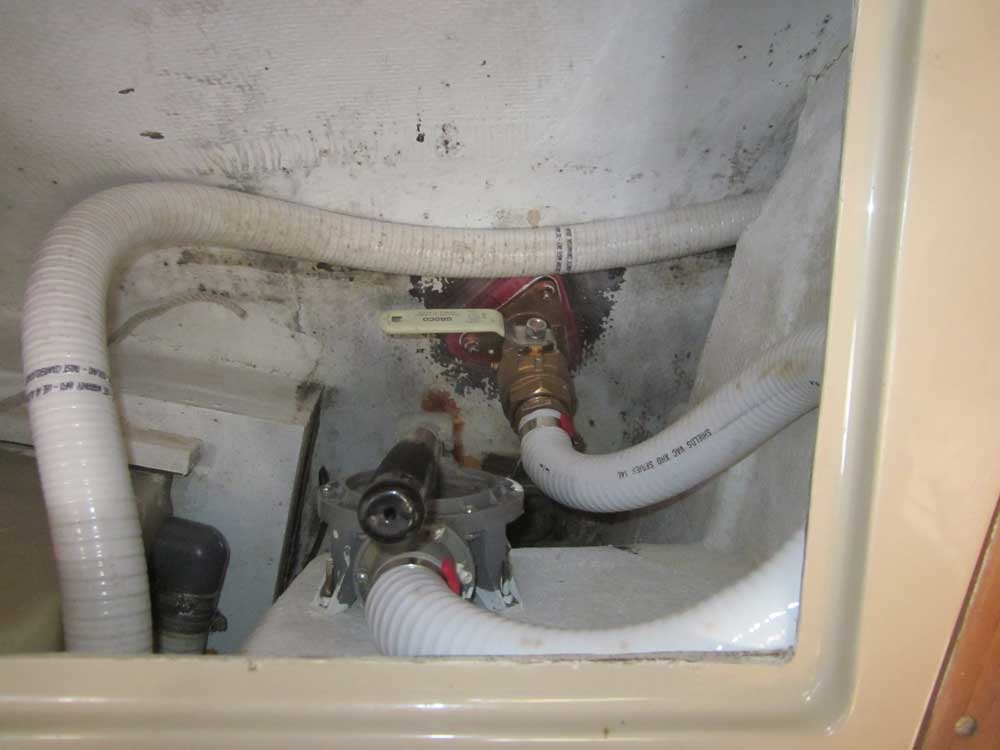
One of the main upgrades requested by the owner was to replace all the existing through hull fittings, which were the usual production-boat style comprising bronze (brass, in one case) ball valves screwed tenuously to the top two threads of bronze through hull fittings, and coated in rust and corrosion.

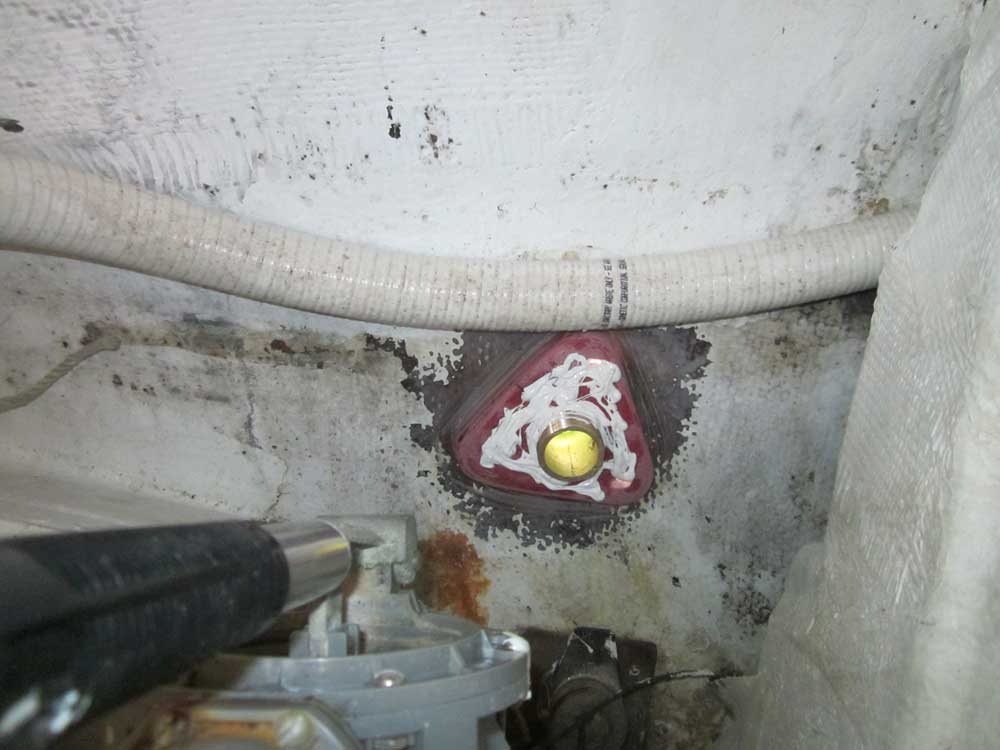
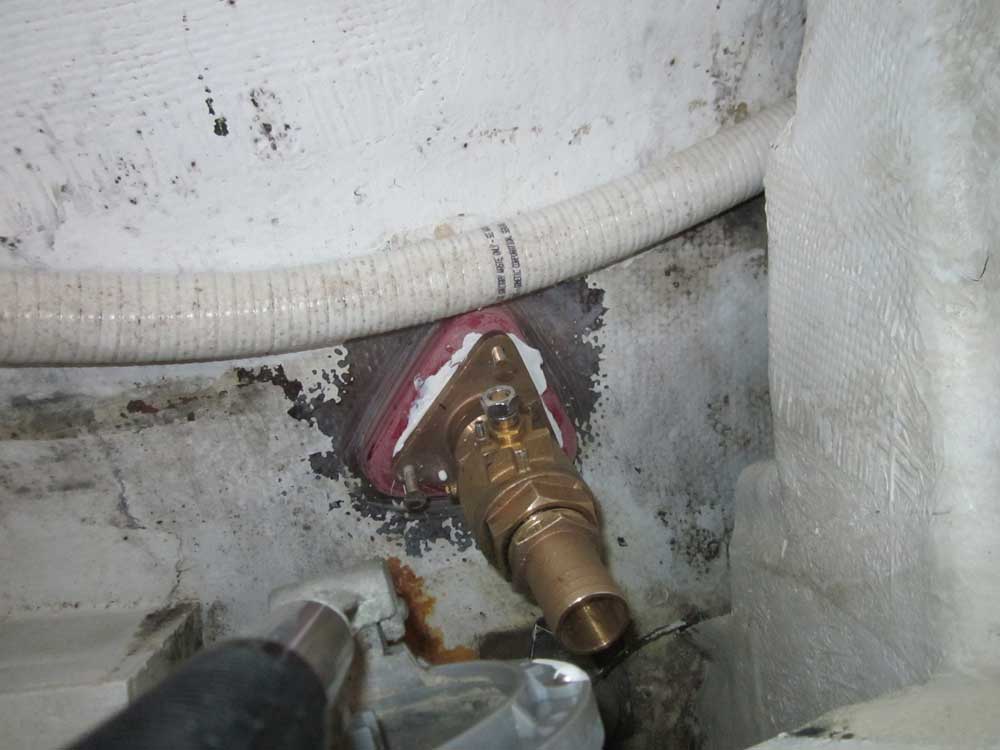
The first one I removed, the head intake, gave me false hope for the others:  I was able to easily unscrew the valve body, and then the through hull nut, from the inside, and the fitting was gone in just a couple minutes.  Alas, none of the others would be so forthcoming, forcing me to cut them all from the inside–a simple task complicated by the access in several places, but I prevailed, and with only a few scars managed to remove all fittings in an hour and a half or so.

Monday, April 16, 2012 (4.5 hours)

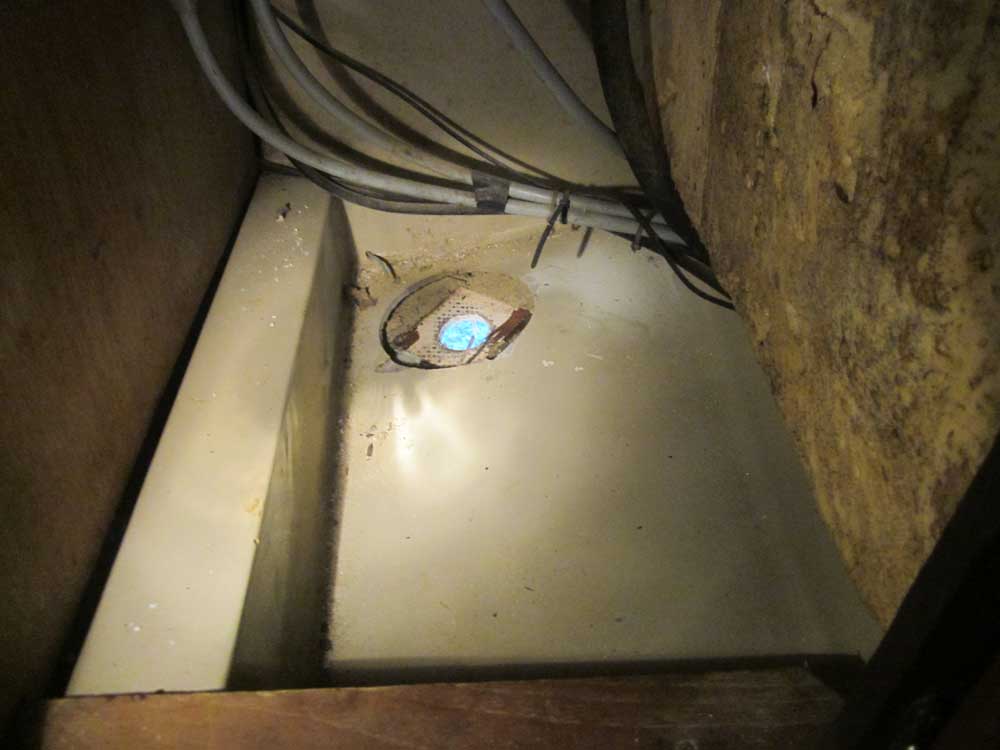
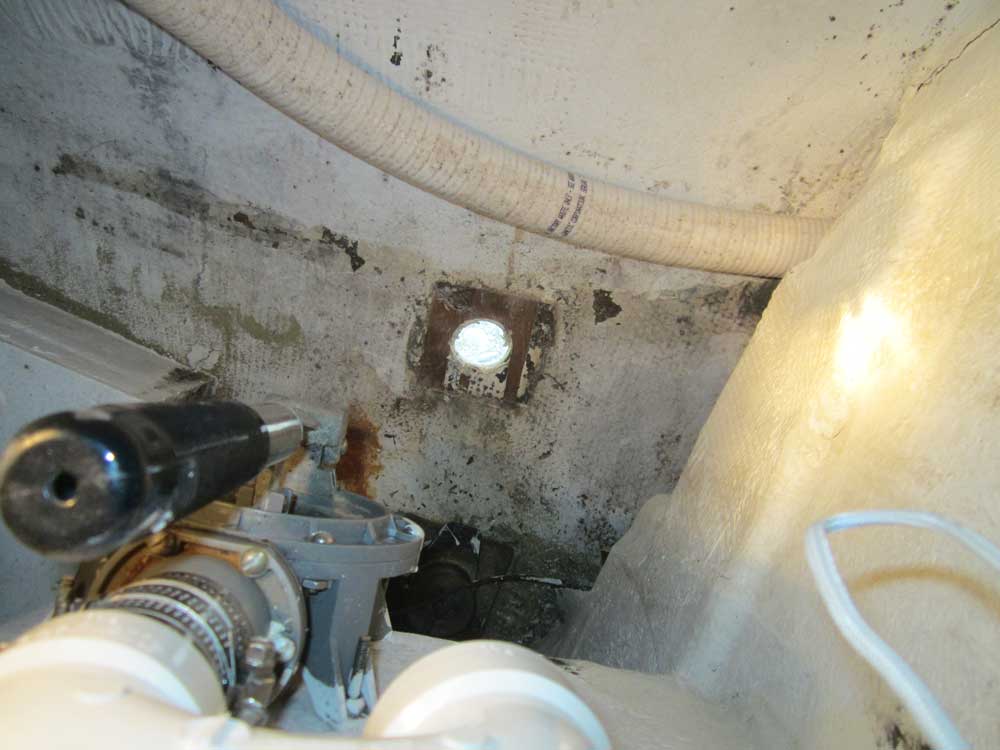
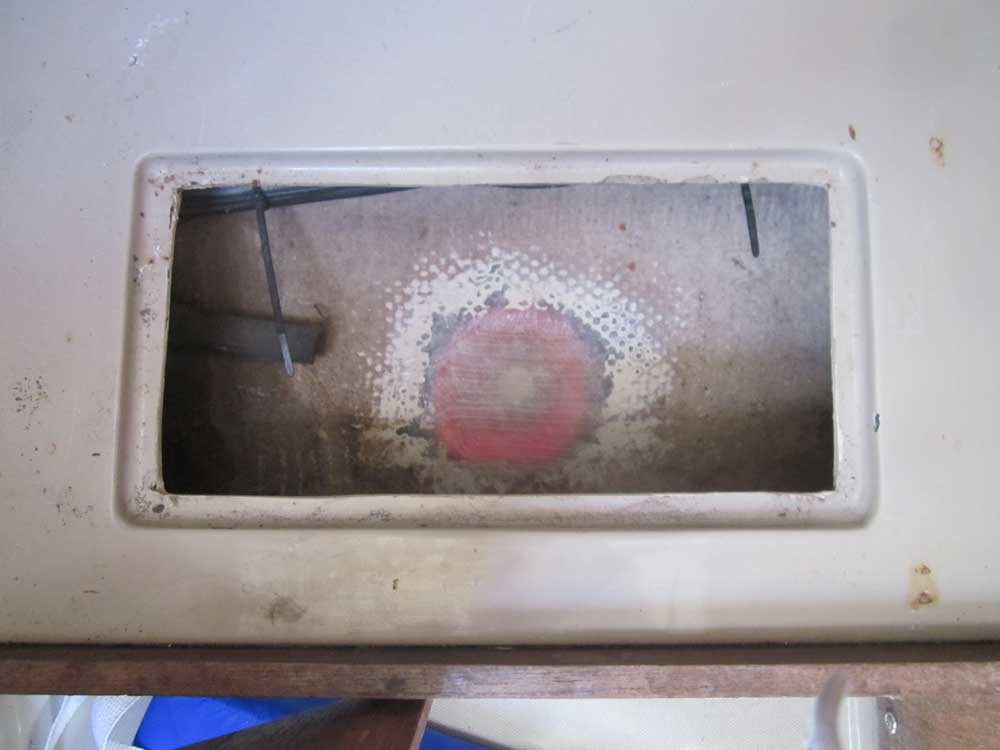
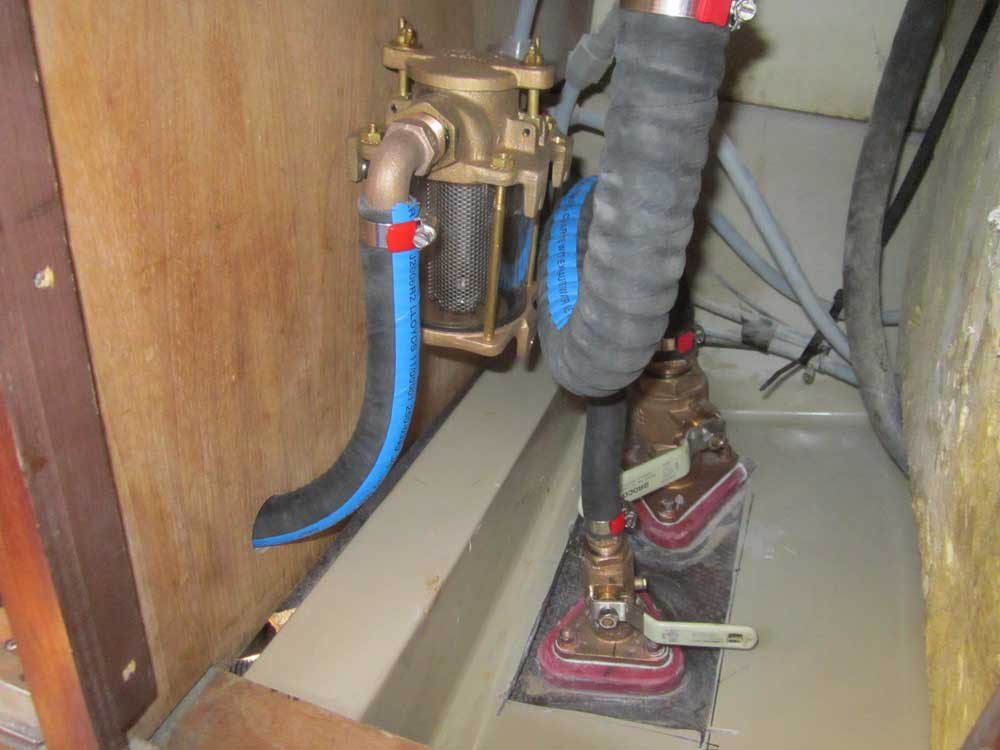
With a sander, I cleaned up the insides of all the existing through hull openings, removing debris and old paint to prepare the inside of the hull for either patching (for two of the openings) or new fiberglass backing blocks for the through hulls.  The owner requested that I move the engine intake, which had been located inconveniently behind the engine, to the locker beneath the galley sink where it’d be easily accessible.  This required that I cut out some of the fiberglass liner in the locker, which I did with grinder and a cutoff wheel.

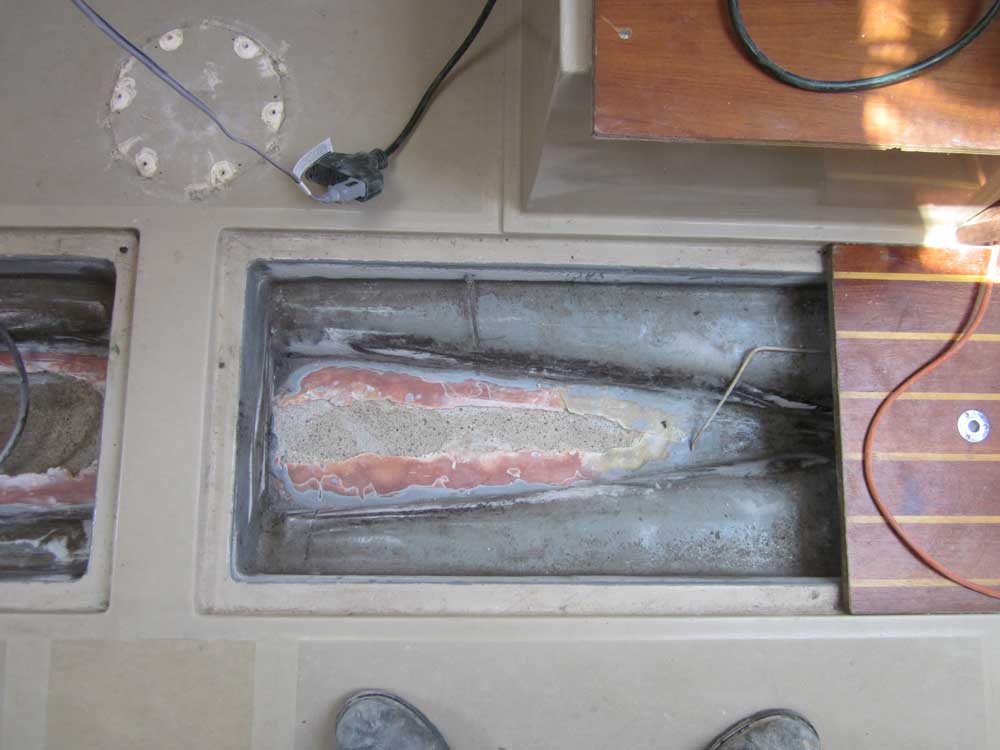
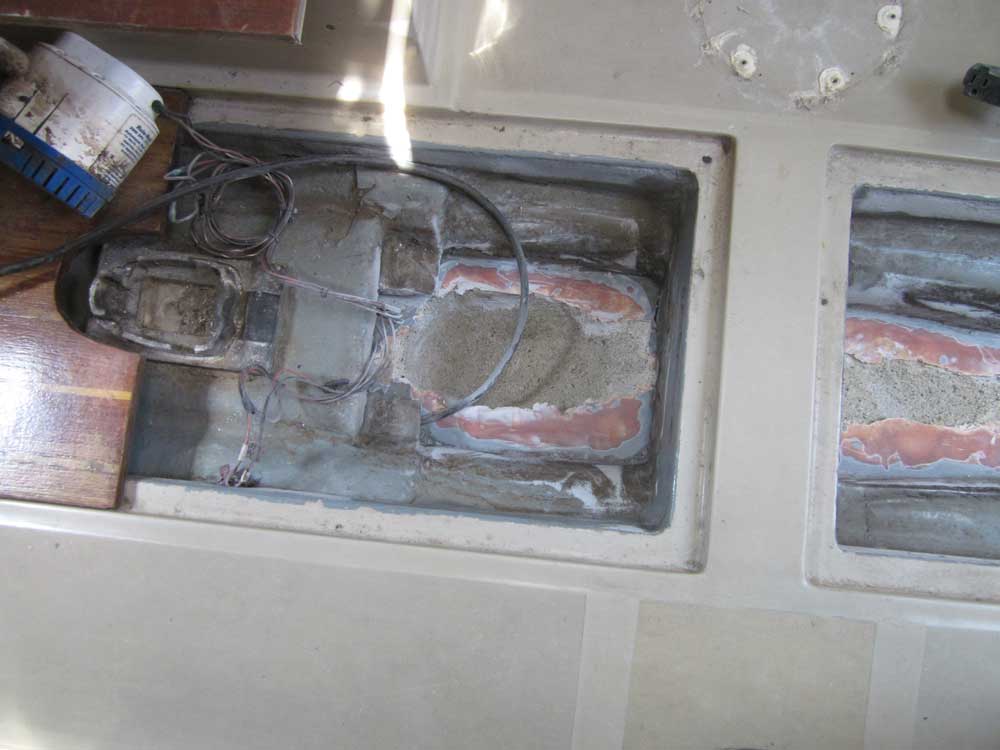
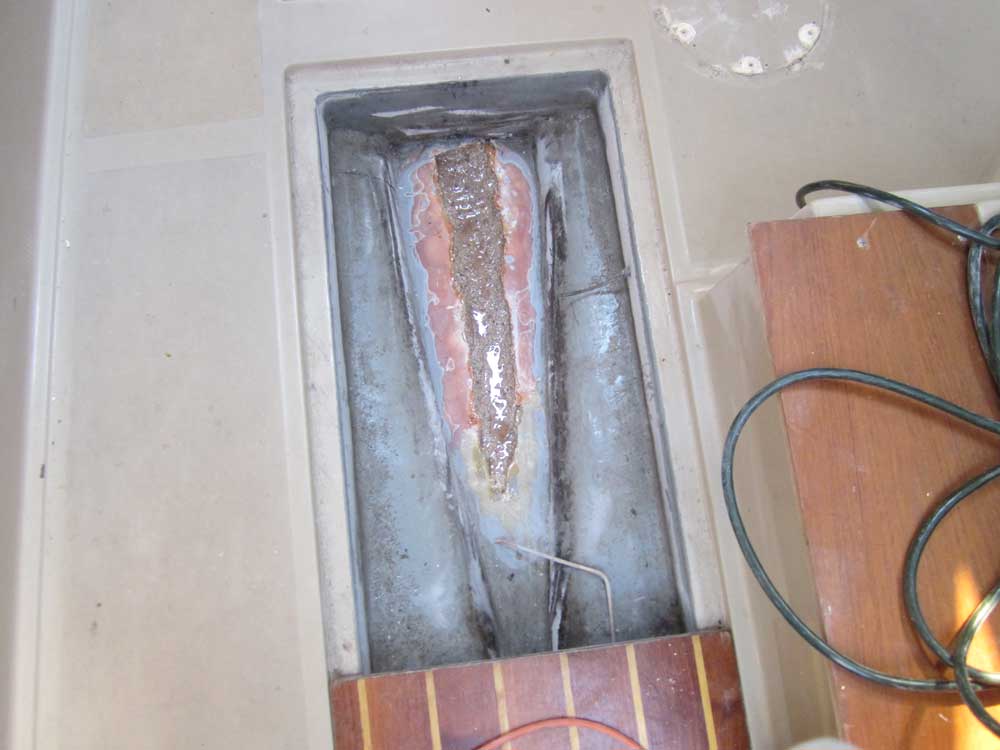
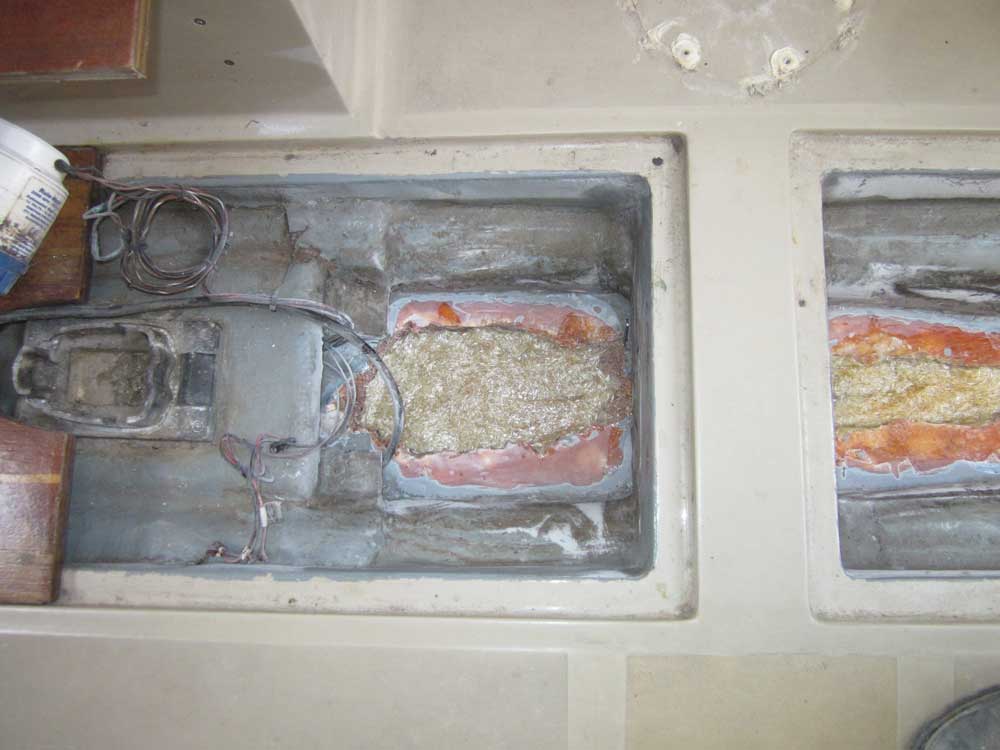
While I was making a mess, I prepared a section of the bilge for new fiberglass.  Earlier, the owner had chipped away some damaged fiberglass in this area, exposing sandy concrete filler in the encapsulated keel.  Picking up where he left off, to prepare for an eventual overlay of new material, I ground the edges of the area to remove gelcoat and debris.  Later, I coated the exposed concrete with epoxy resin to hopefully begin to seal and stabilize the surface for future steps; it was like painting a sandbox, but ultimately did what I needed it to do.

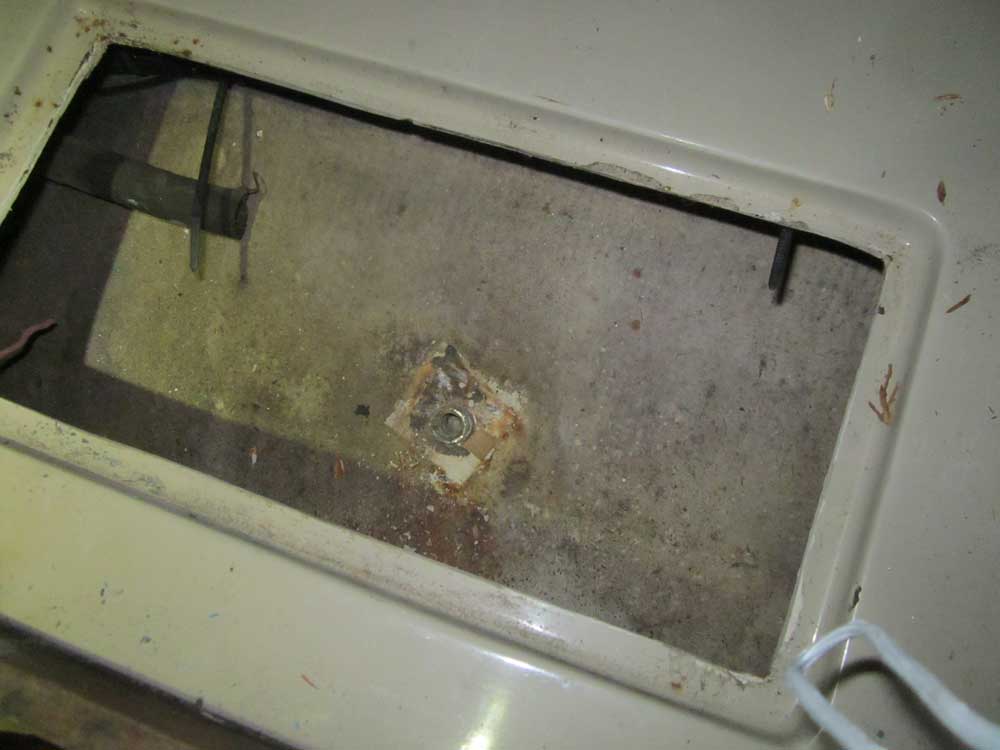
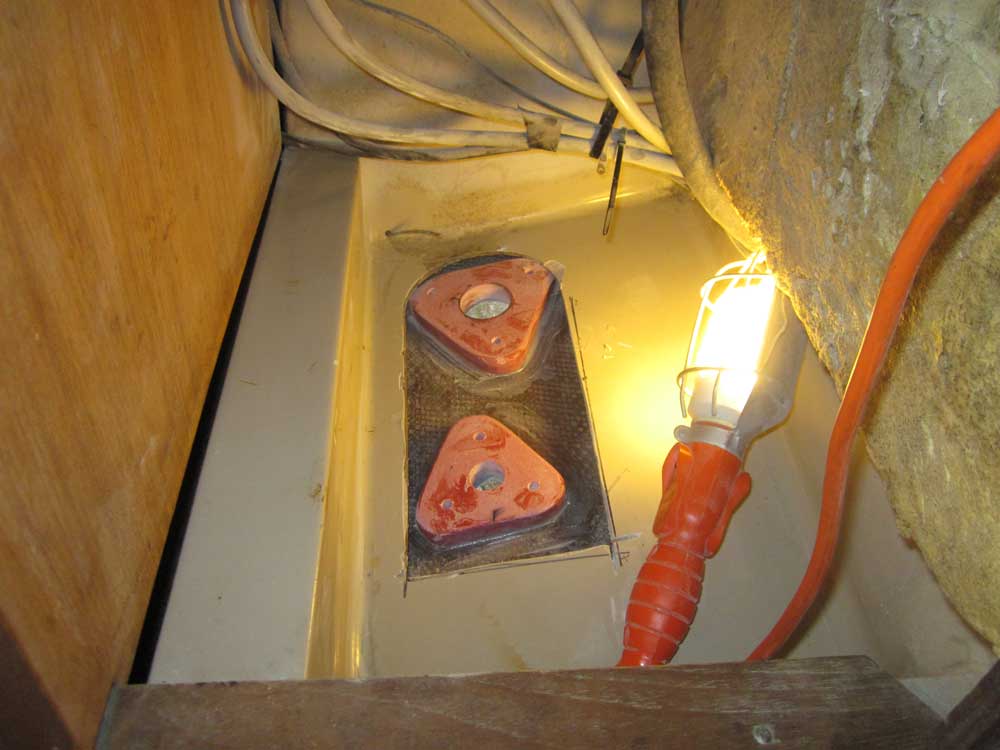
For the four new through hulls, I prepared backing blocks of 3/4″ prefabricated fiberglass.
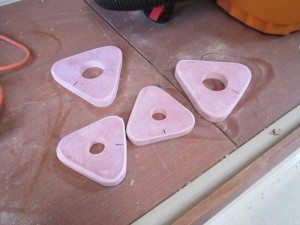
th11-41612

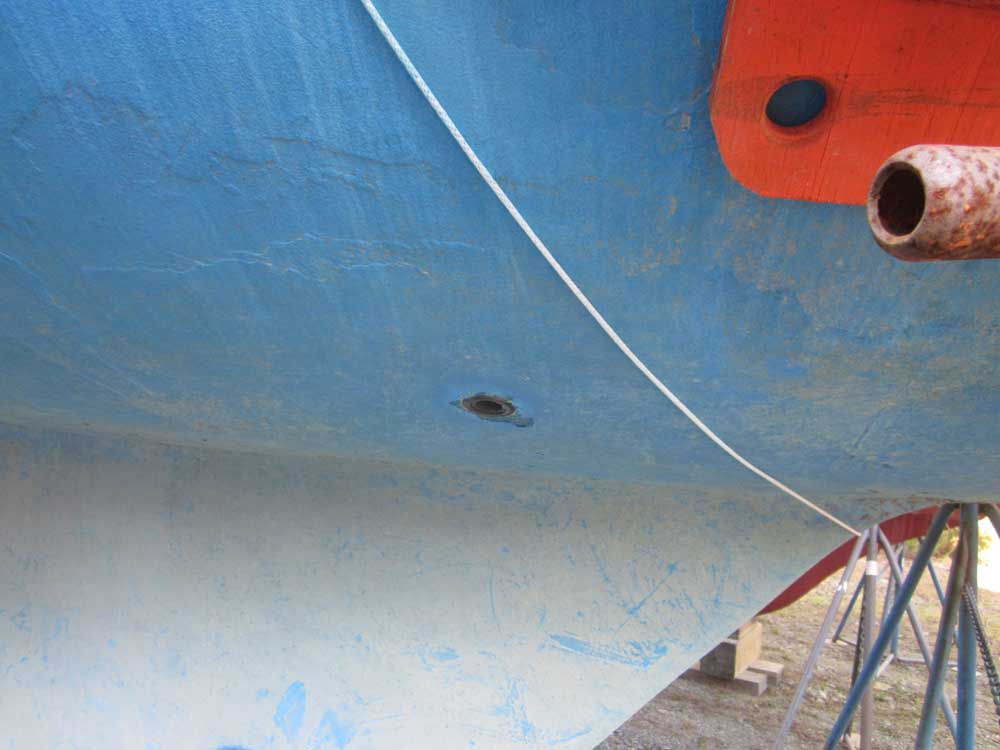
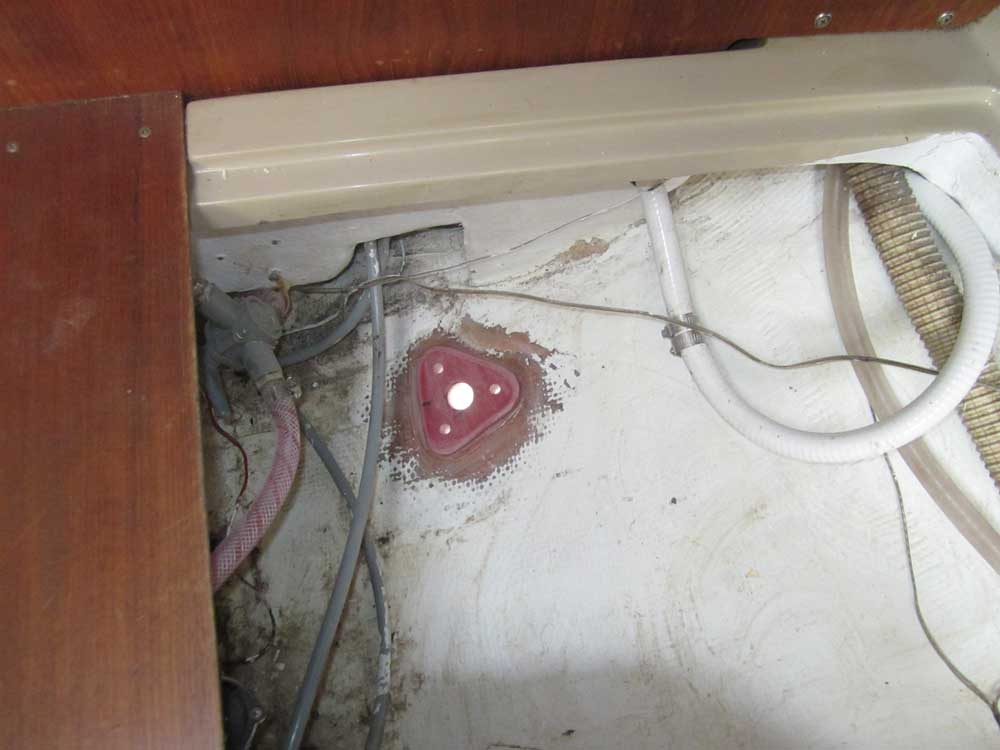
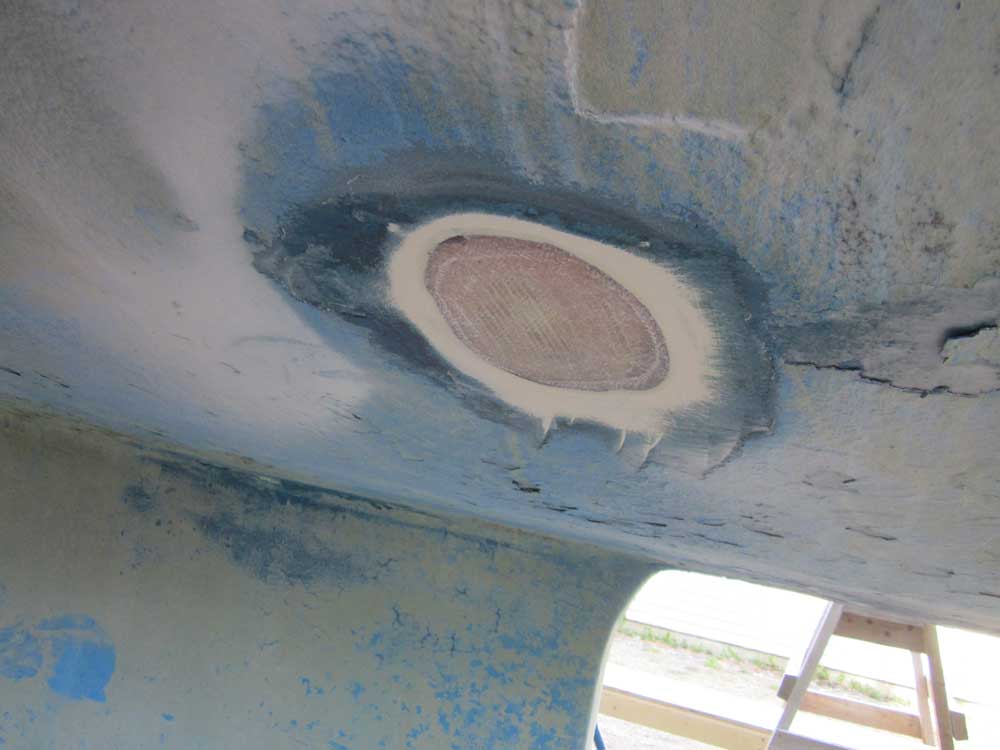
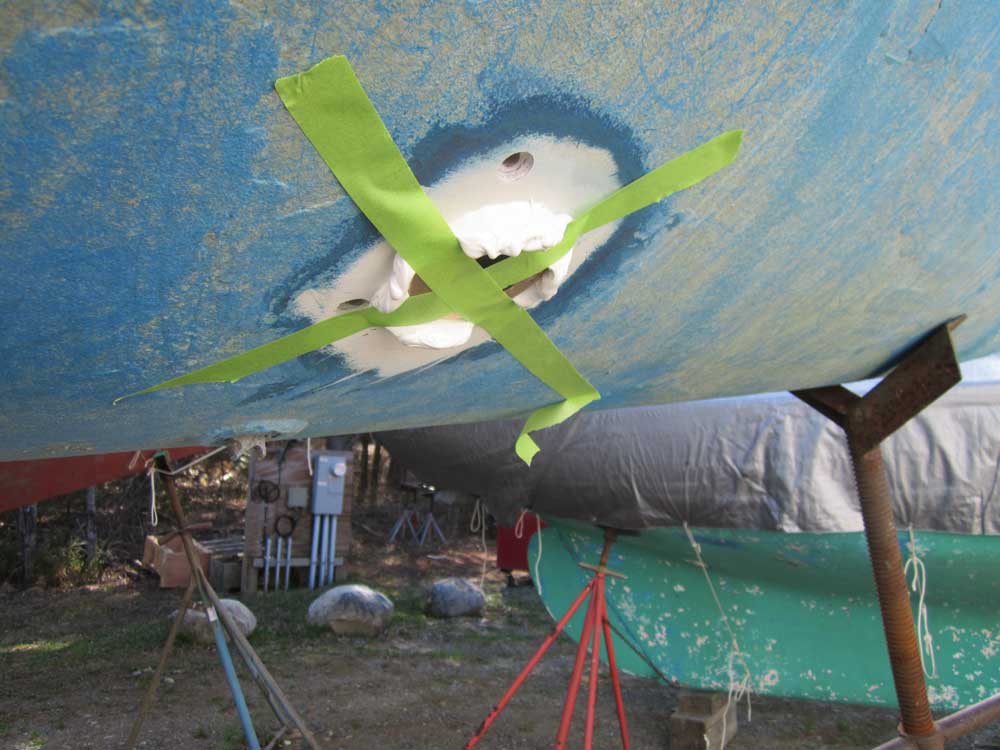
After cleaning the inside of the hull and the insides of the existing holes, I installed the backing blocks in a bed of epoxy adhesive.  For the two small through hulls that would no longer be used, I masked over the holes from outside and filled the holes with the thickened epoxy, the first step in patching.

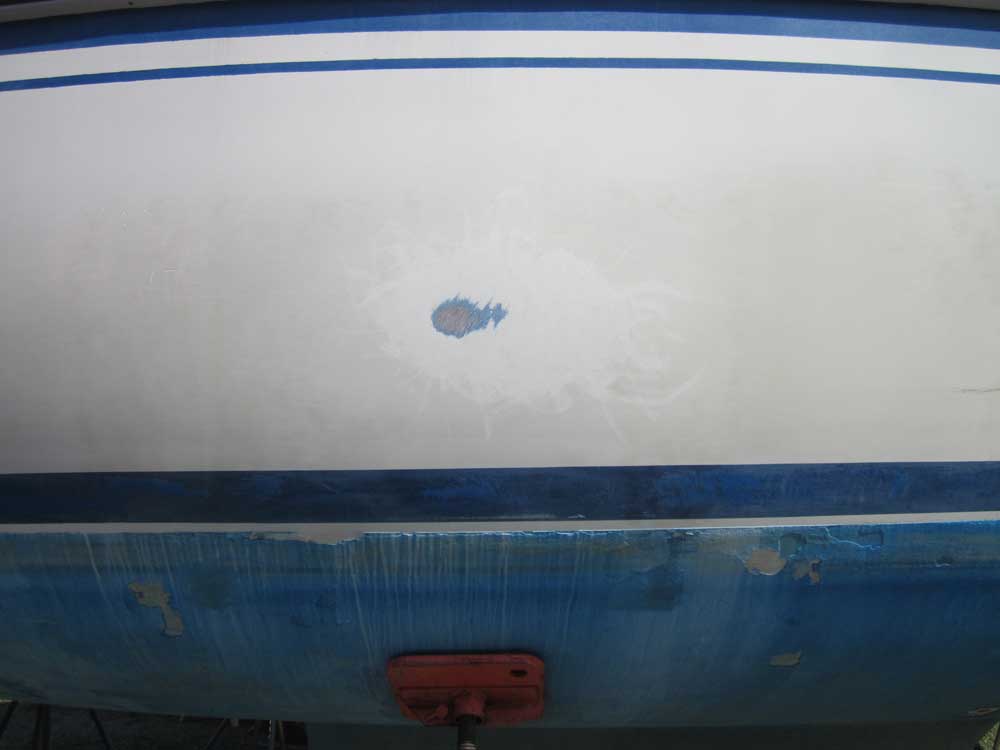
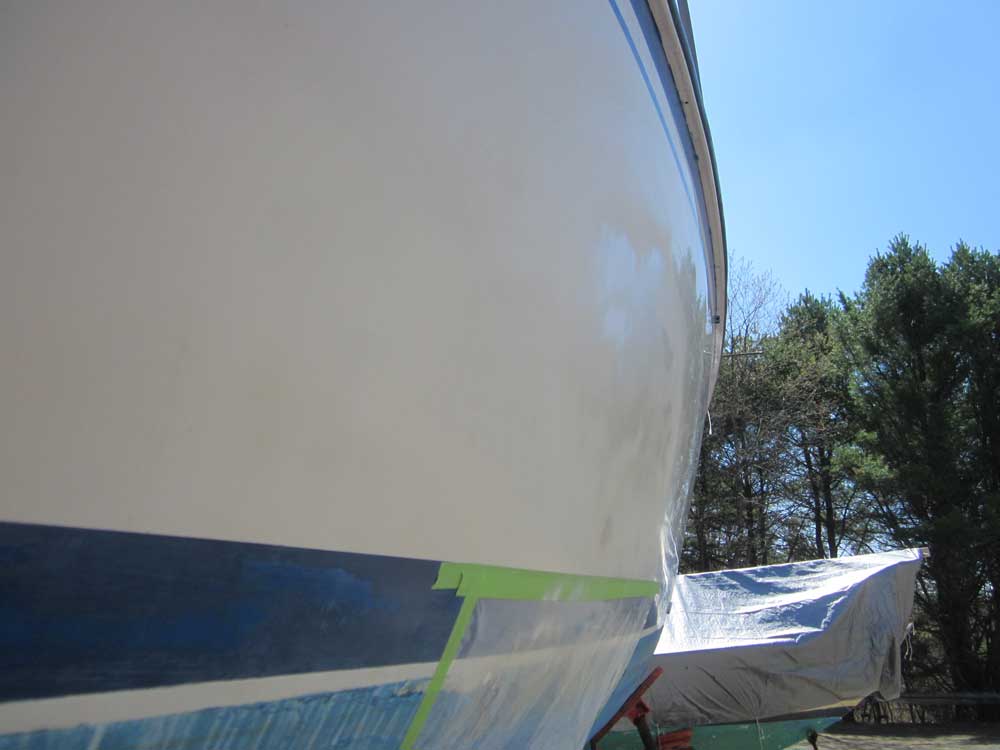
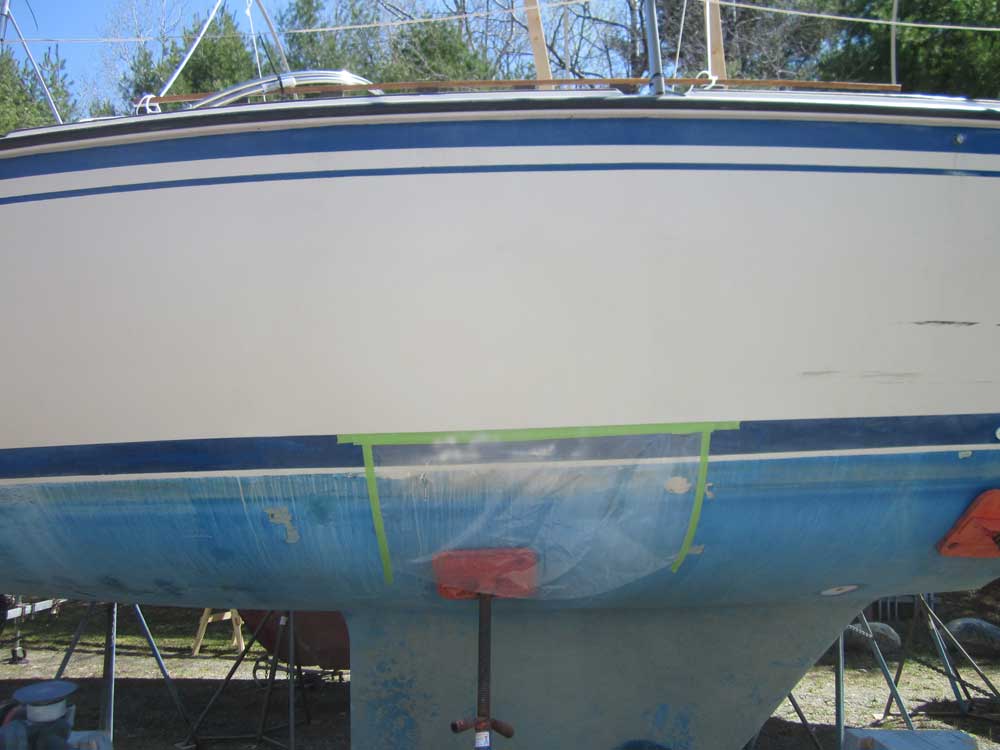
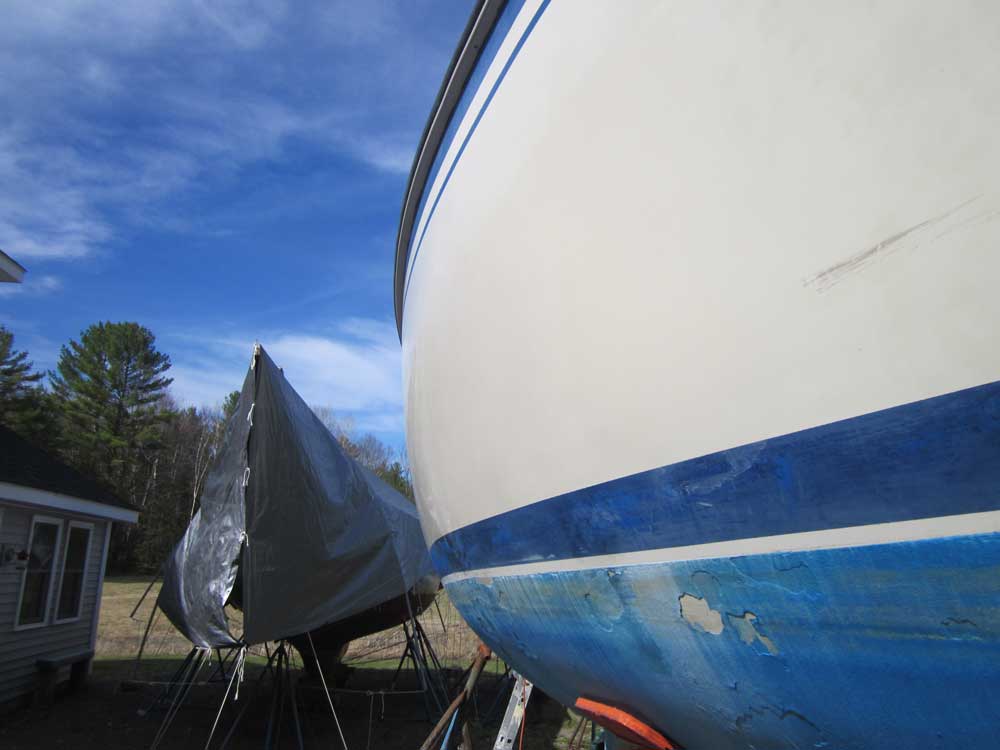
The starboard topsides featured an abraded area where the boat had come against a dock or other obstruction, and we planned to patch and blend in some gelcoat to match as closely as possible the original.  To begin the process, I applied some filler to take care of porosity in the exposed laminate, and also some minor scratches around the main damage.  This photo shows the area in question before completing any work.
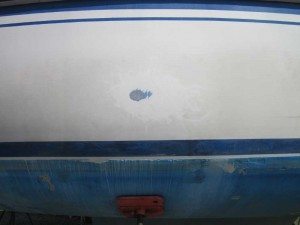
topsides-41612

Tuesday, April 17, 2012 (4.75 hours)

After lightly sanding the filler over the topsides patch, and otherwise preparing the area, I applied a light coat of color-matched gelcoat, obtained to match the original color of the boat.  The match was very good considering the age of the original gelcoat.  I applied a spray coat of PVA as an oxygen barrier (not shown here), then left the patch to cure before continuing.

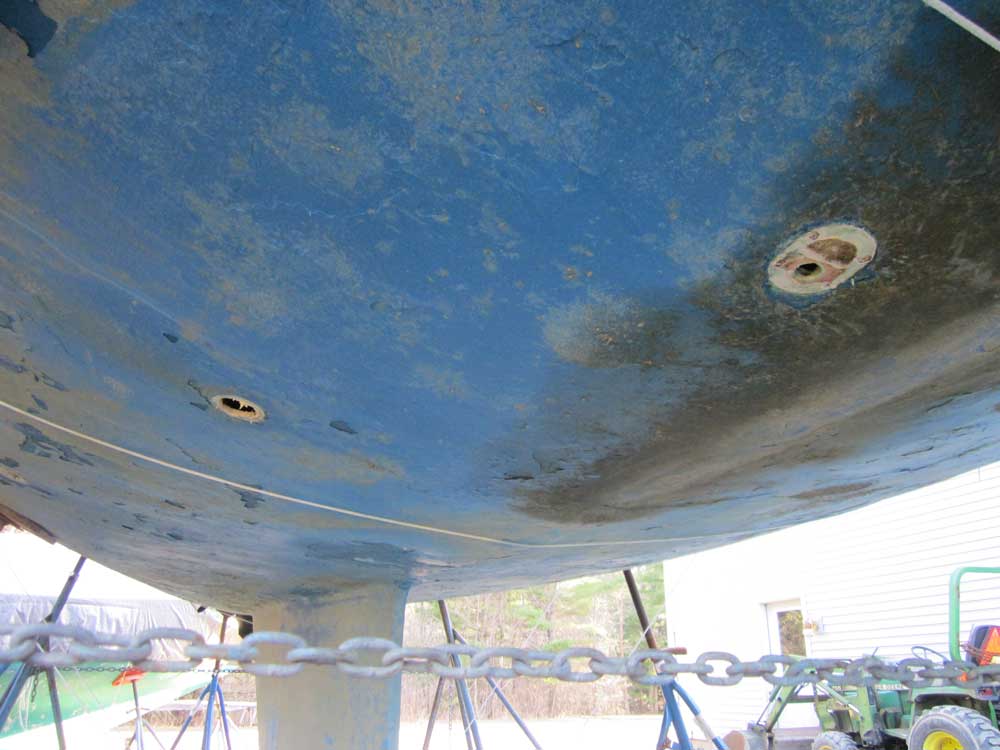
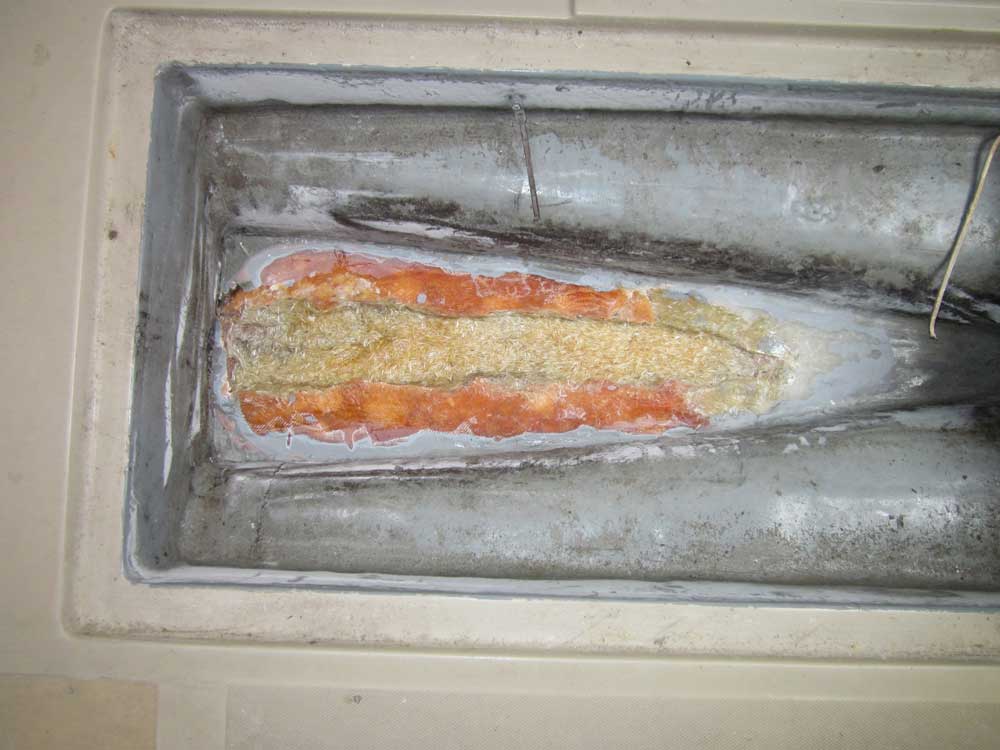
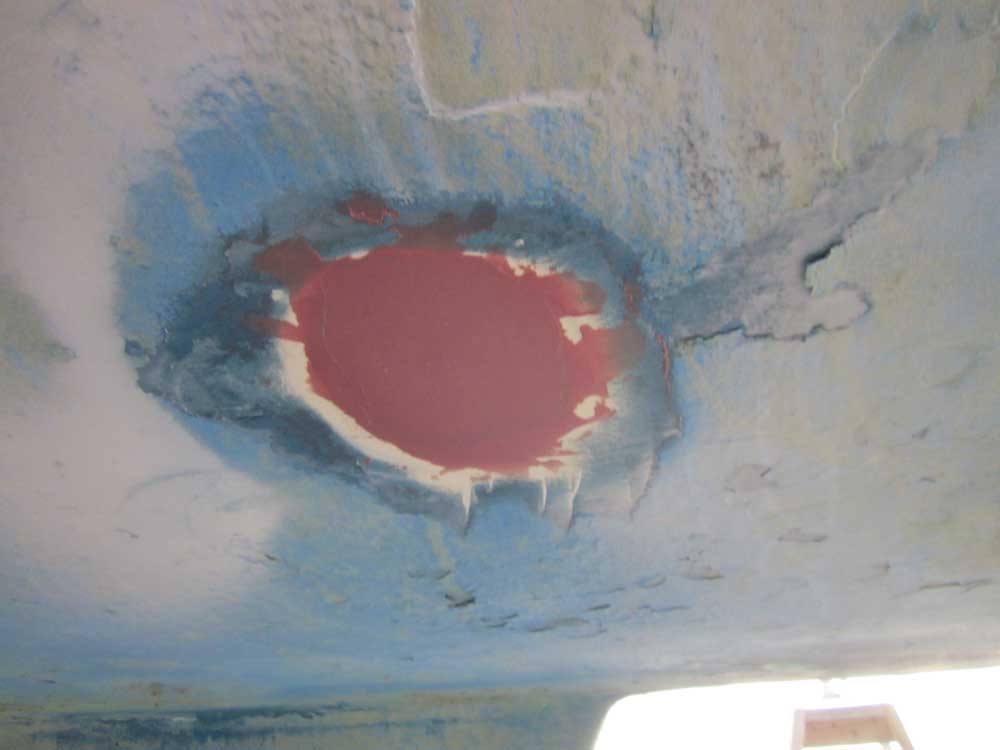
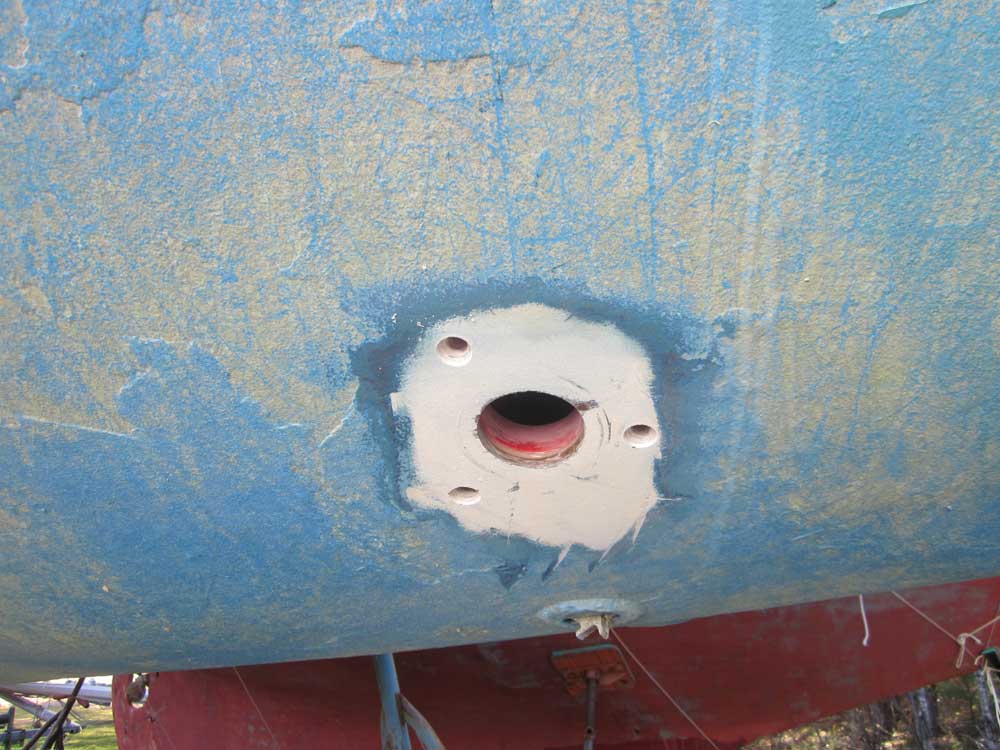
I lightly sanded and cleaned up the seacock backing blocks as needed to remove any excess epoxy, then prepared the outsides of all the openings by removing the bottom paint around each fitting.  For the two abandoned through hull holes that I’d filled yesterday, I ground out a dished area several inches across to accept new fiberglass, which I installed afterwards, with layers on both the outside and inside of the old holes.

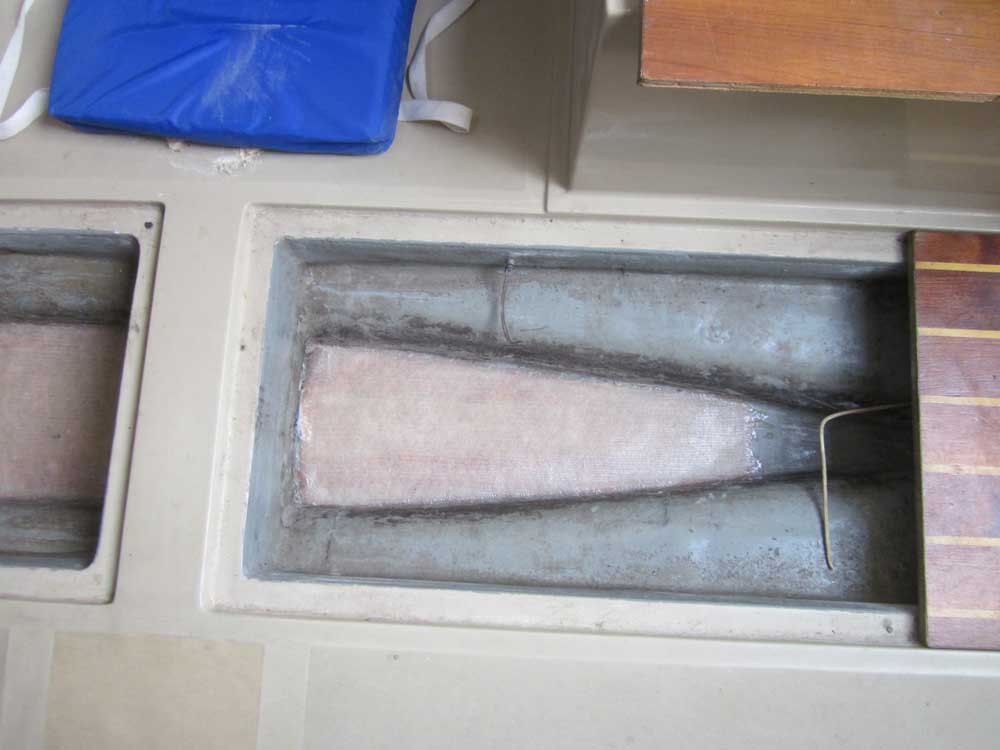
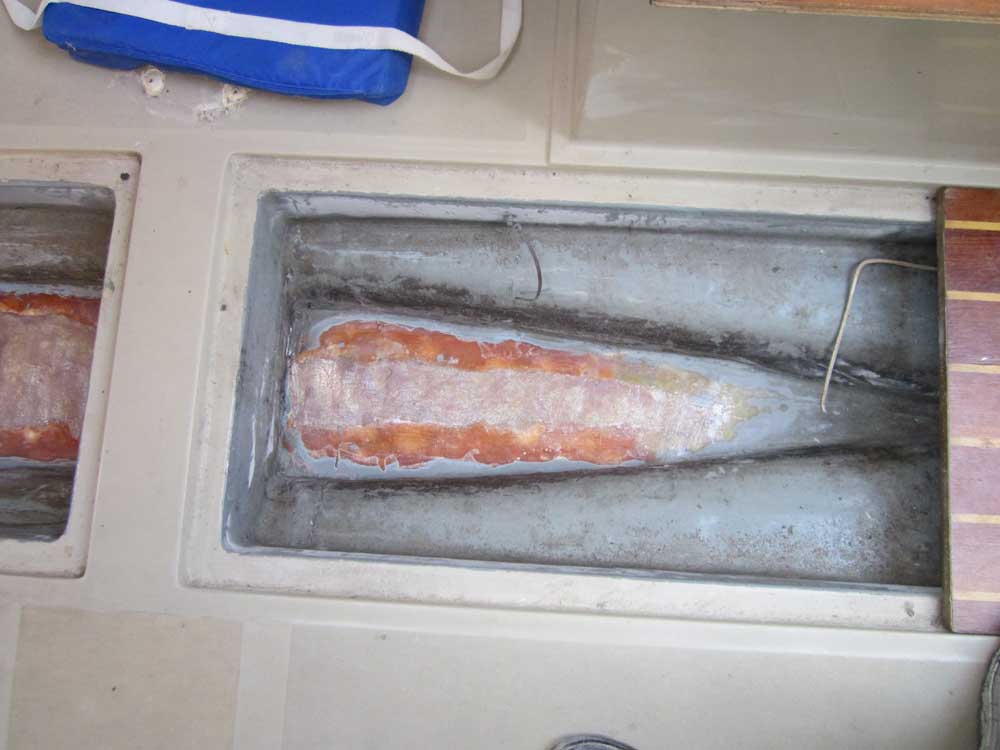
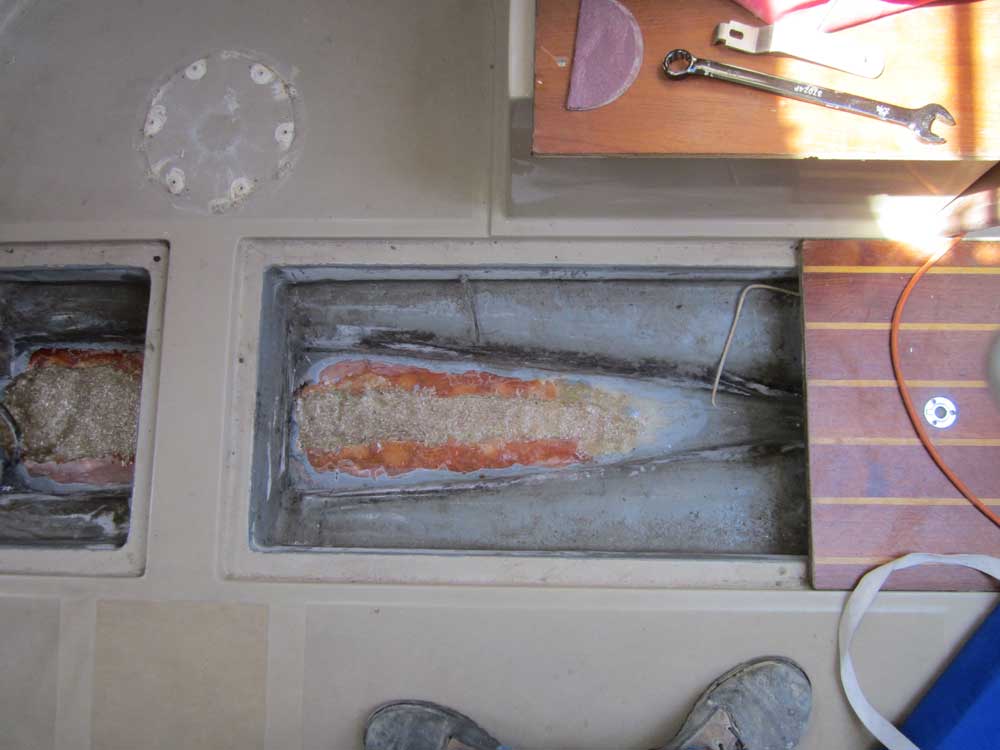
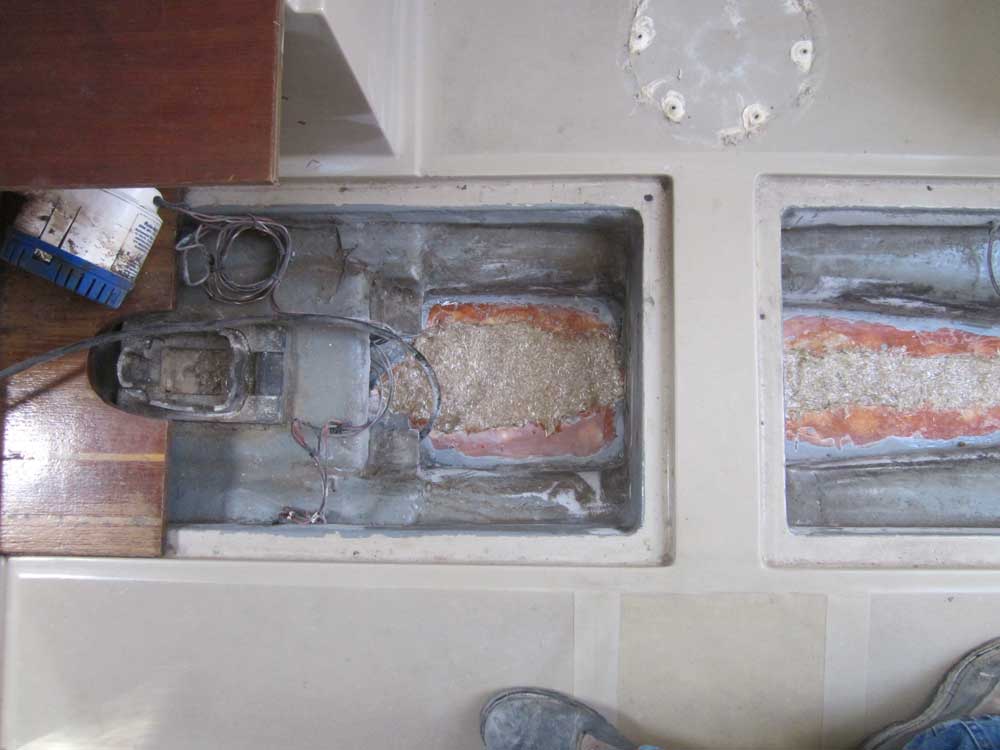
Continuing work on the bilge area, I began to fill the void left by the removal of some of the old concrete.  For this filler, which was intended only to bring the area flush with the surrounding fiberglass, I used polyester resin mixed with choppings to form a solid mass, and installed the material in several lifts of about 1 qt. total mixed volume over the course of the day, slowly bringing the void up to the level of the surrounding areas; the incremental approach prevented excess heat buildup.  By the end of the day, there was room for probably one more application, which I’d do on the ‘morrow.

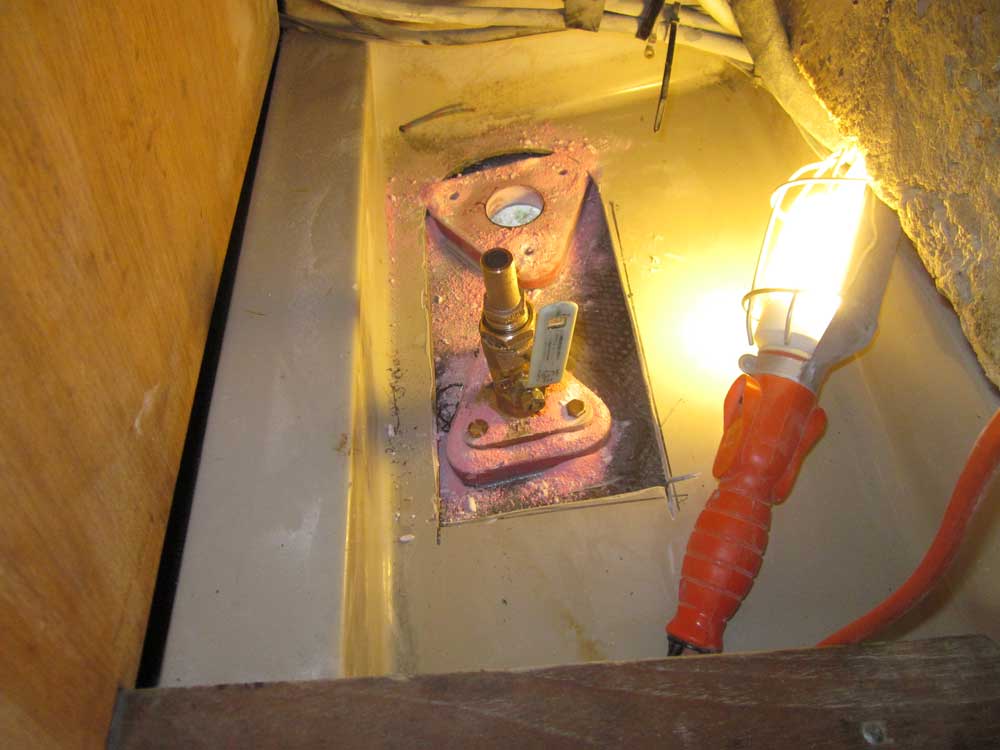
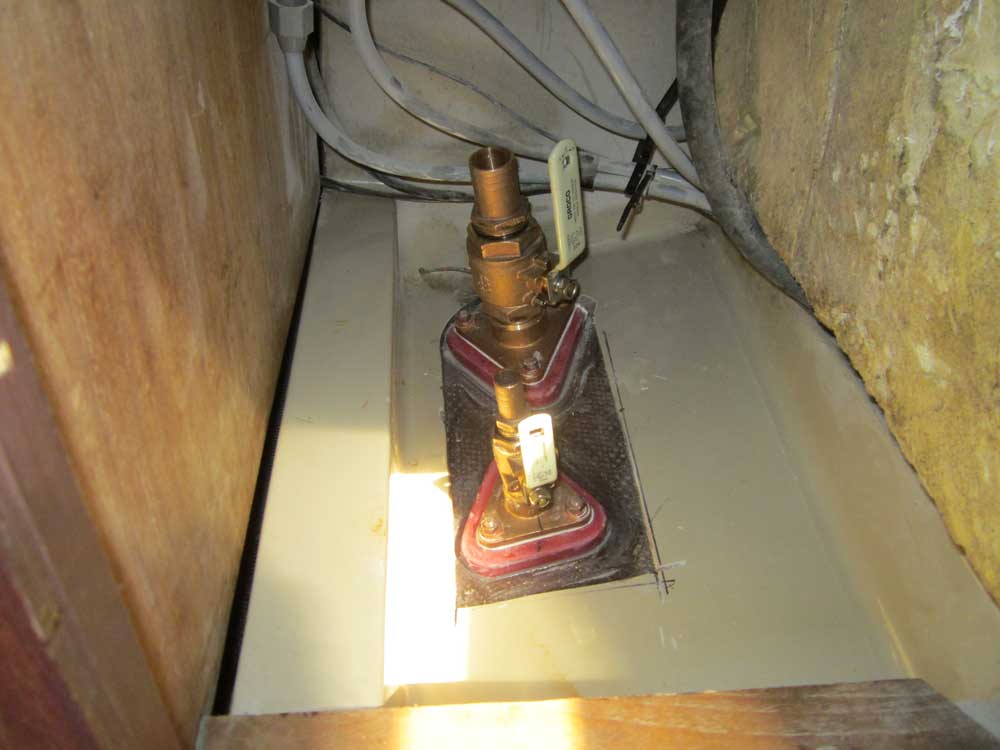
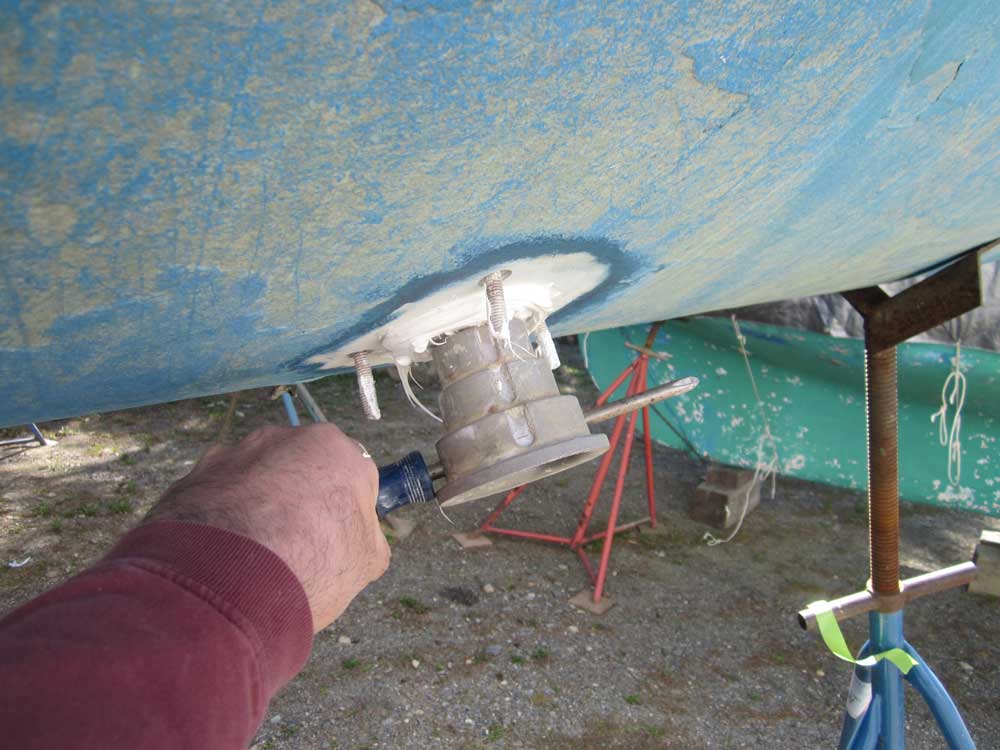
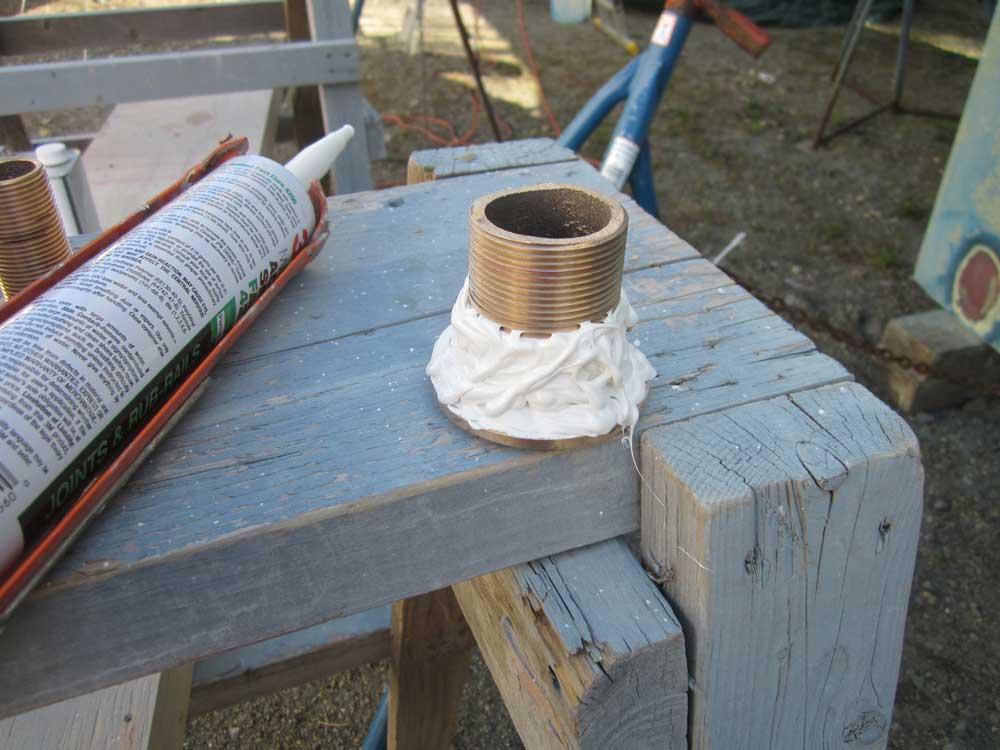
Throughout the remainder of the day’s work, I prepared the four new seacocks and through hulls for installation, beginning by preassembling the valves, flange adapter bases, and pipe-hose connectors.
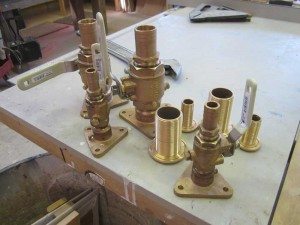
th6-41712

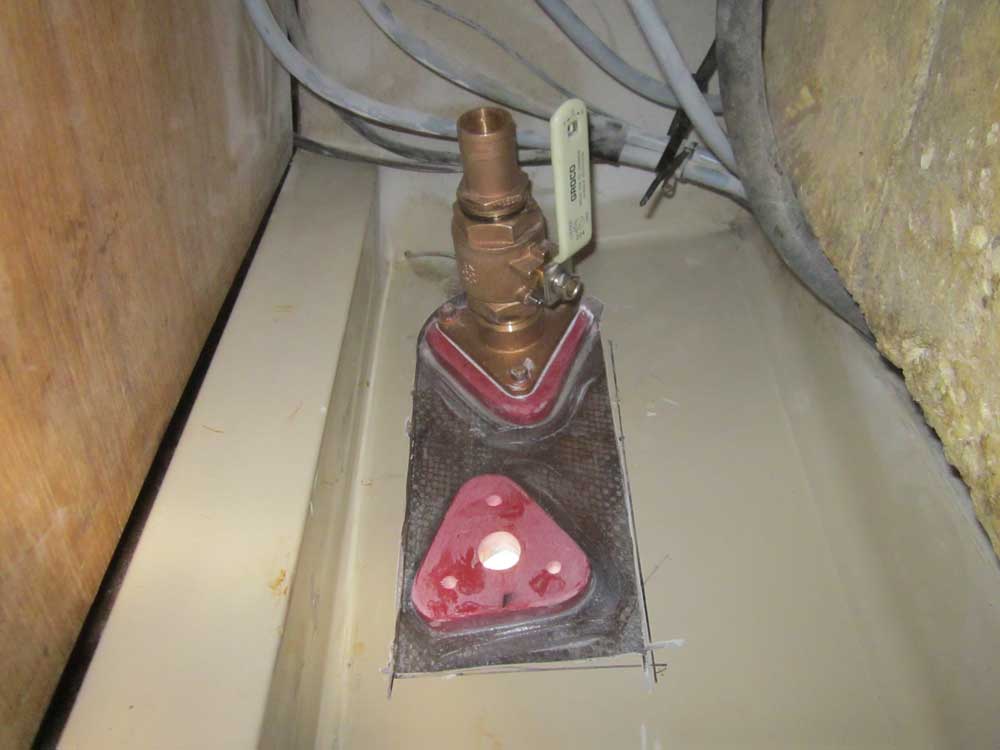
The two 1-1/2″ fittings would require that the through hulls be cut a bit shorter to accommodate the overall thickness of the hull and backing block, so with the fittings pushed through from the outside I made some reference marks for later cutting.  The 3/4″ fittings did not require shortening.

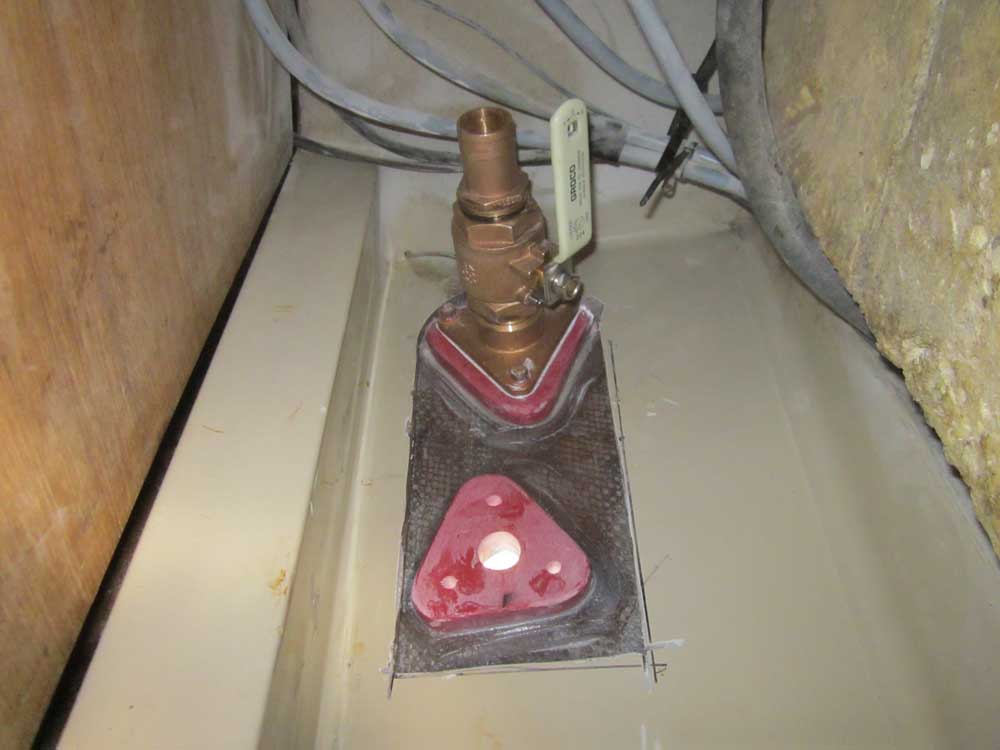
This complete, I dry-installed the various fittings and drilled for the flange mounting bolts, a relatively simple theoretical process that took much longer thanks to difficult access in some areas, but by the end of the day I had all the bolt holes prepared, and would be ready to install the fittings permanently after only a few minor additional steps.

Wednesday, April 18, 2012 (7.5 hours)

To get started, I washed and sanded the fiberglass patches over the two unused through hulls, and, on the exterior, applied a coat of fairing compound.

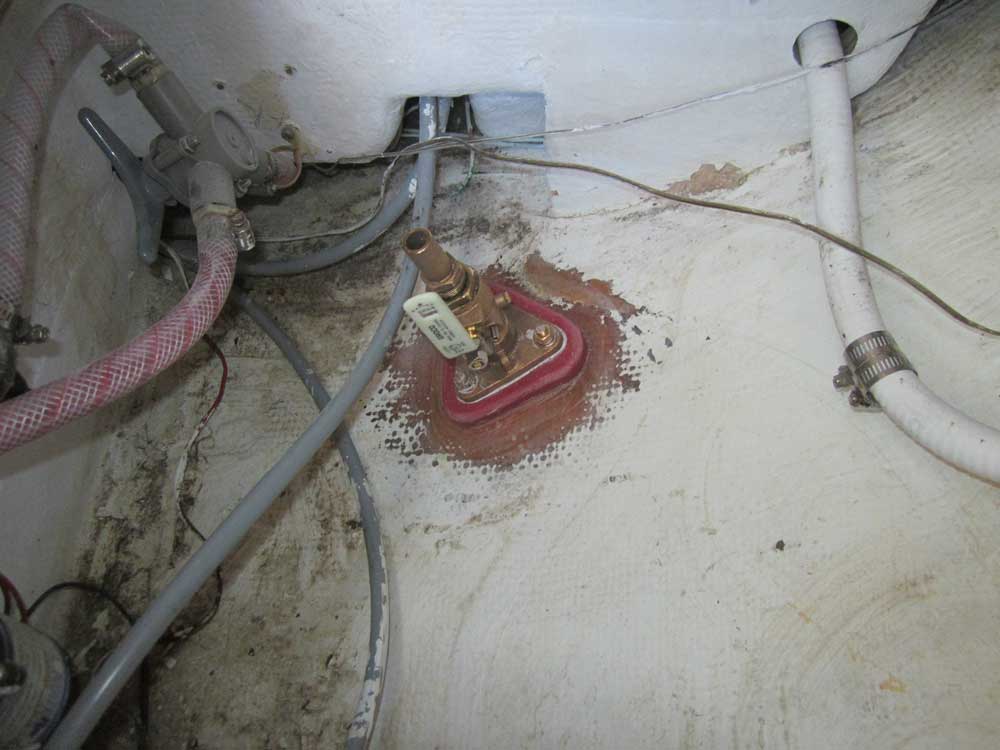
Next, I made final preparations for installing the four new through hull fittings and seacocks.  The bolt holes required countersinks on the outside so the fasteners could sit flush, so I finished up that work and gathered tools and materials.  Then, I installed the four fittings with polyurethane sealant and bronze fasteners.

There was room for one more application of resin mixed with choppings in the bilge, which brought the voids flush.  Later, when the final layer had cured, I sanded the rough surface and applied a final bit of polyester resin thickened with cabosil to smooth the surface a bit more.  Once that had cured, and after a final light sanding (one endearing quality–perhaps the only–of polyester is that it cures quickly vs. epoxy), I applied two layers of heavy fiberglass with epoxy resin over the entire areas.

On the starboard topsides, I wet-sanded and buffed the new gelcoat, completing the small repair.

With the new through hulls in place, I installed new hoses for the head discharge and galley sink, and resecured the existing head intake hose.  The new engine intake required a new hose and sea strainer; I had the sea strainer on hand, but didn’t have the correct hose in stock, so I ordered what I needed for later installation.  Meanwhile, I made some measurements and notes about a couple remaining small interior projects that I’d wrap up in the near future.

Thursday, April 19, 2012 (3.5 hours)

After a water wash and quick sanding, the bilge work was complete.  I also sanded the two through hull patches, where I’d applied fairing compound earlier, and with that complete I coated the patches with plain epoxy resin to seal the fairing compound (no pictures, sorry).

I spent most of the afternoon working on a punch list to finish up most of the jobs required.  To begin, I installed a new bronze raw water strainer in the locker beneath the galley sink, near the newly located engine intake.  Then, I ran new hoses to the engine itself.  Because the raw water pump on the engine required a 5/8″ hose, while the rest of the system was 3/4″, I had to adapt the hose down with some bronze fittings.

I ordered a new electric bilge pump to replace the non-functioning one in place; to prepare for its arrival next week, I ran new lengths of bilge hose into the sump, as well as a new length of hose for the manual pump.  I’d complete the bilge pump installation once the new pump arrived.

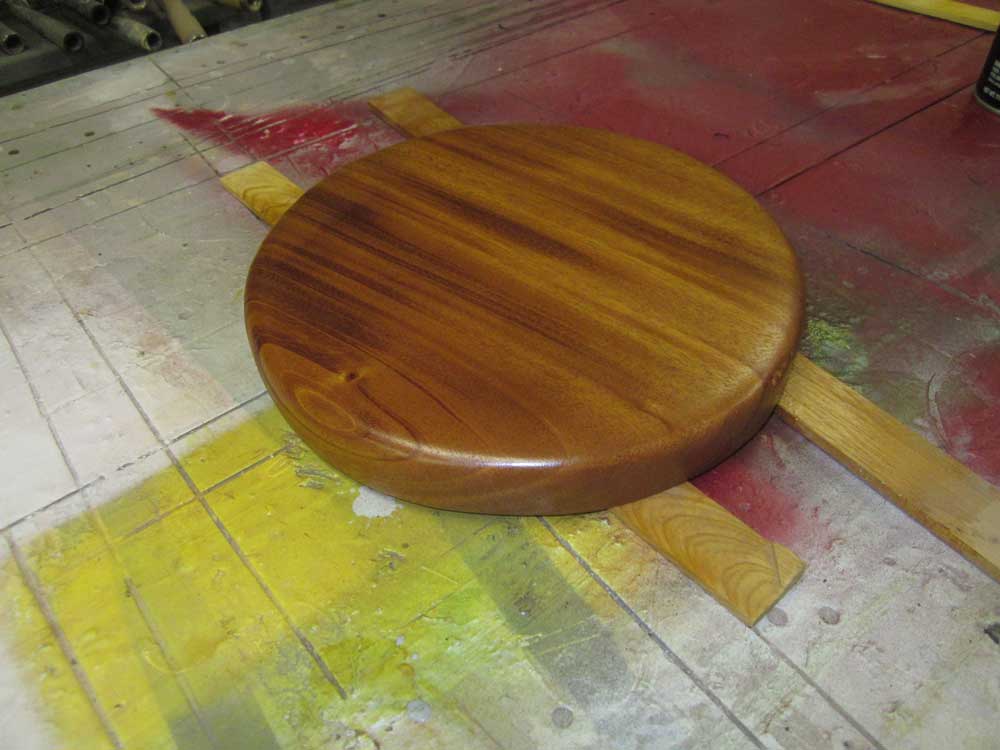
A couple small jobs remained.  One, mounting new hardware for the removable, convertible table in the dinette, required a round wooden base to cover some old holes in the cabin sole, so from a piece of scrap mahogany I cut and shaped the required disc and started the finishing process so I could install it soon.
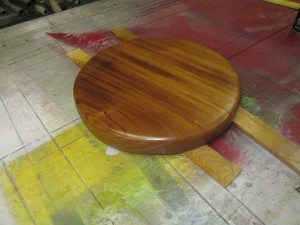
tablebase-41912

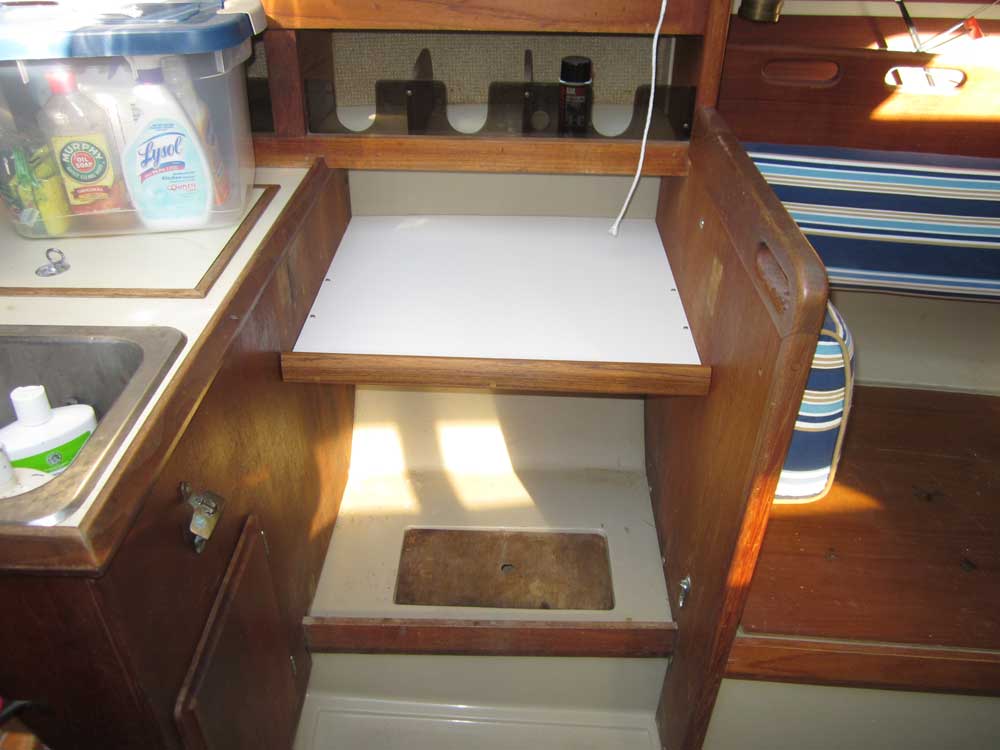
In place of a since-removed gimballed stove, the owner requested a simple shelf in the stove area, which he could use for storage or for a portable stove.  I began shelf construction by cutting a piece of 1/2″ plywood to fit the opening, planning to cover the top with white Formica, with teak trim to match the interior.  I’d wrap up this project next time.

Friday, April 20, 2012 (3.5 hours)

The owner was on hand for much of the morning, during which time we went over some things and completed two small projects from the remaining list:  rebed the traveler, which had been leaking into the quarterberth; and replacing the diesel fuel deck fill.

Afterwards, I wrapped up preliminary work on the basic shelf for the galley area, which would fill in the old stove area and provide a place for a new portable stove and/or stowage.  I cut a shelf from 1/2″ plywood, then scribed the outboard end to fit the hull before installing white Formica over the exposed surface.  I milled a teak fiddle for the exposed edge, then installed the shelf with hardwood cleats beneath.  Nothing fancy, but effective.  I oiled the teak trim to match the existing woodwork.
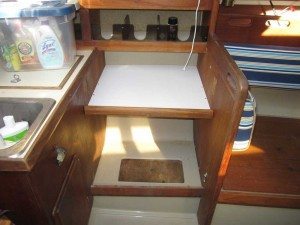
shelf-42012

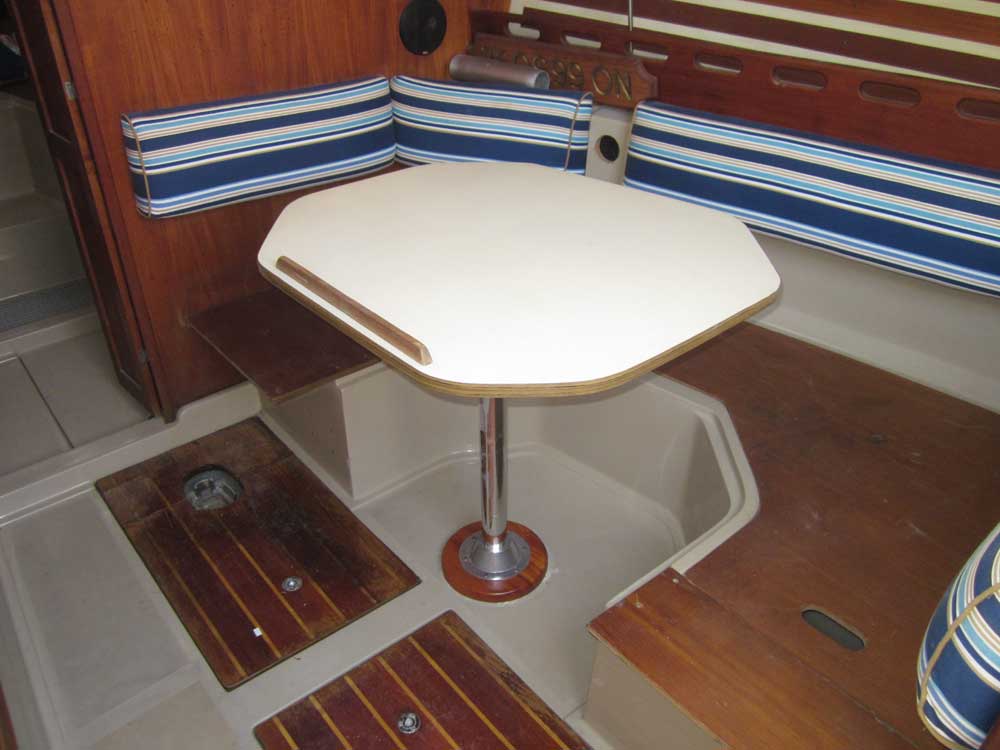
The table base was ready for final installation.  I drilled and tapped bolt holes into the cabin sole for machine screws, and  slightly oversize pilotholes through the wooden base, then installed the base with stainless steel screws; the underside of the sole was inaccessible for bolting.  I secured the matching top socket to the table with screws, and the reinstallation of the table was complete.
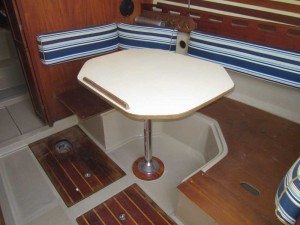
table-42012

Other than final installation of a new electric bilge pump, which was on order and due Monday, my work list was complete for now.


 

Older posts Newer posts