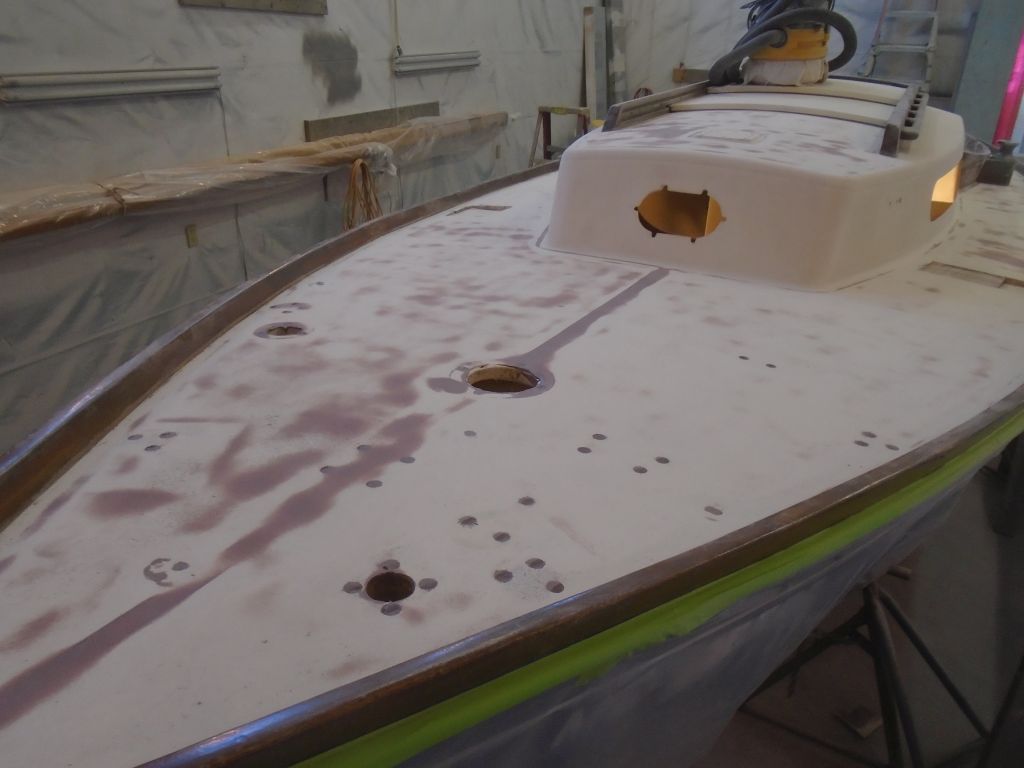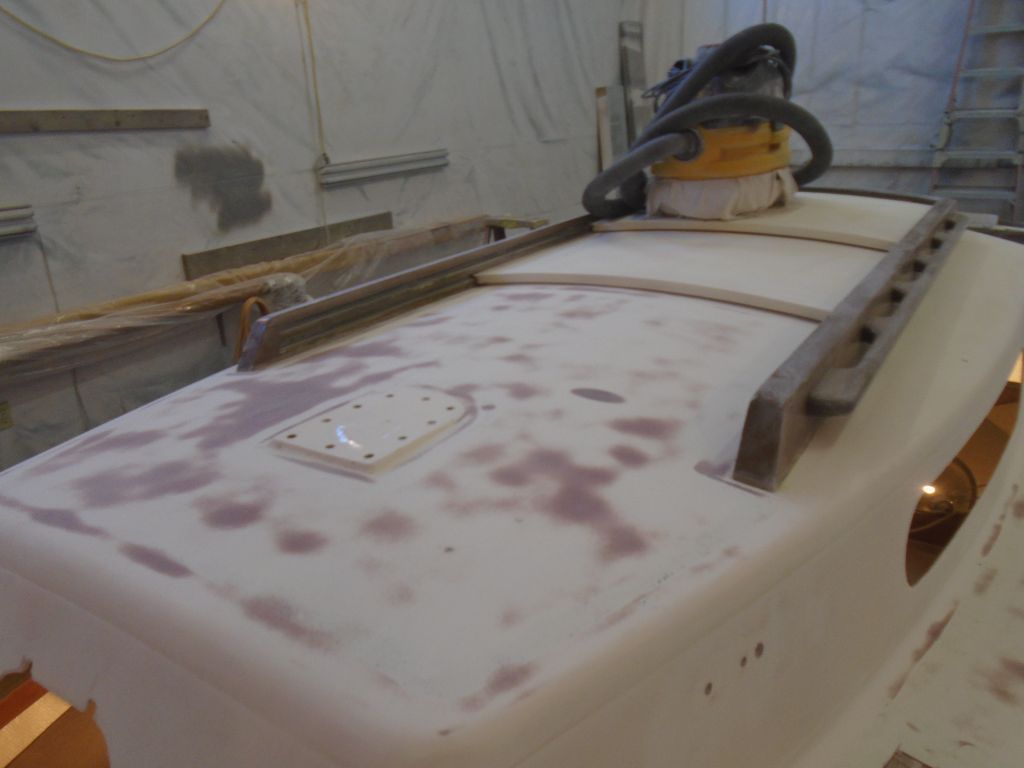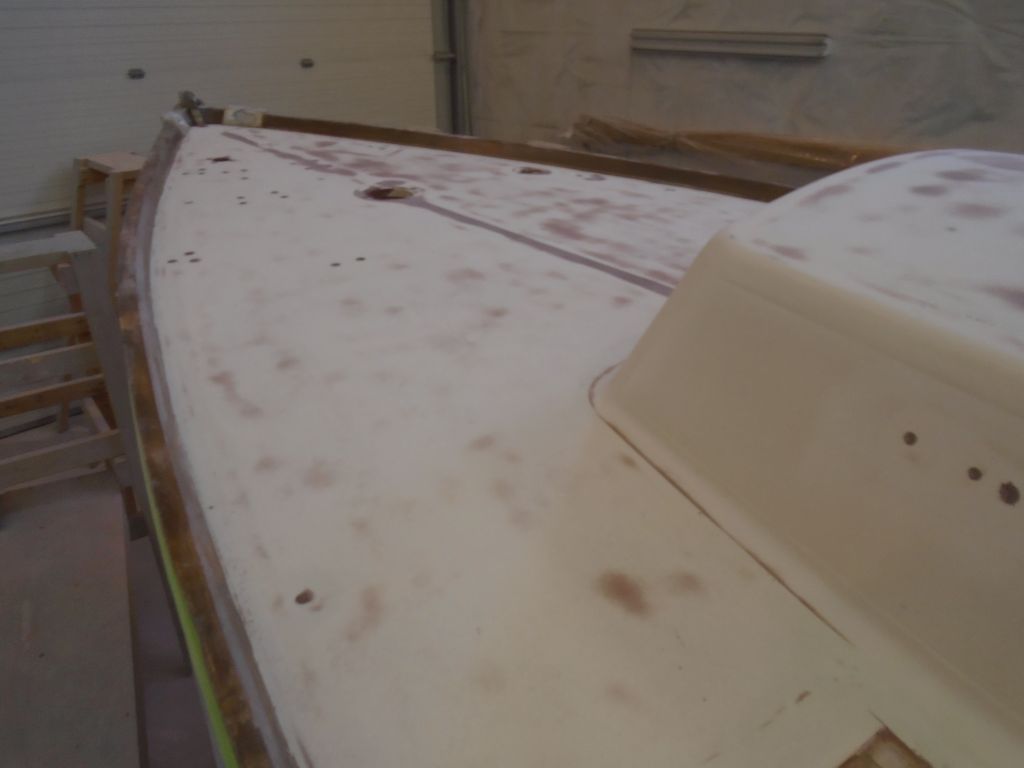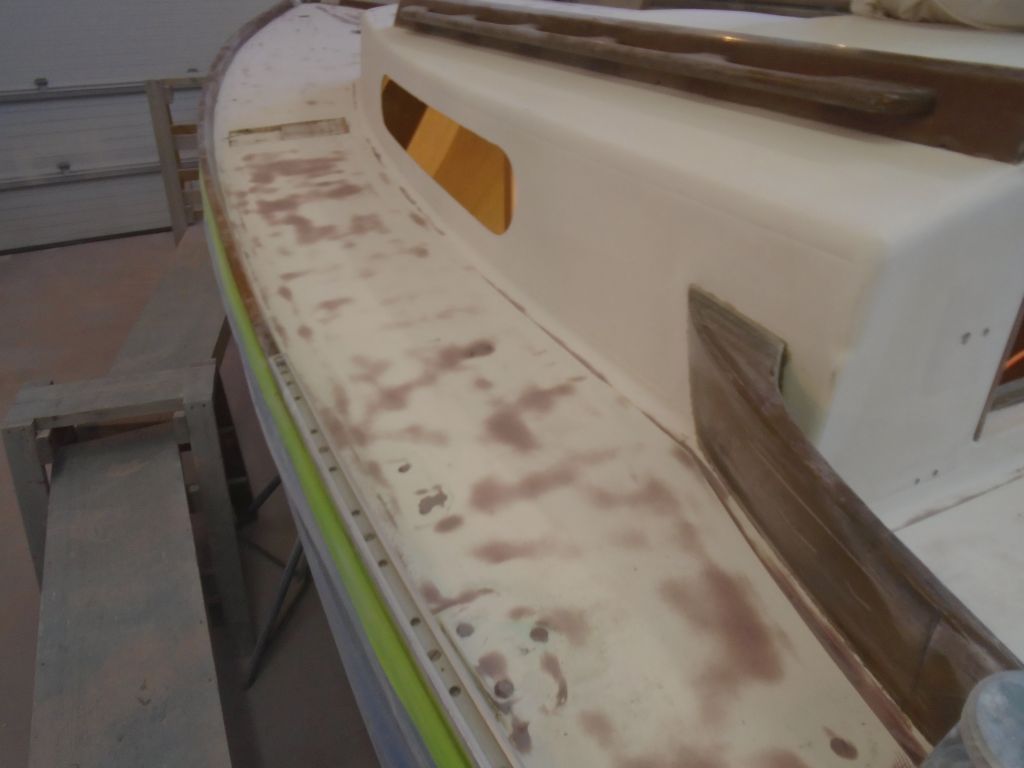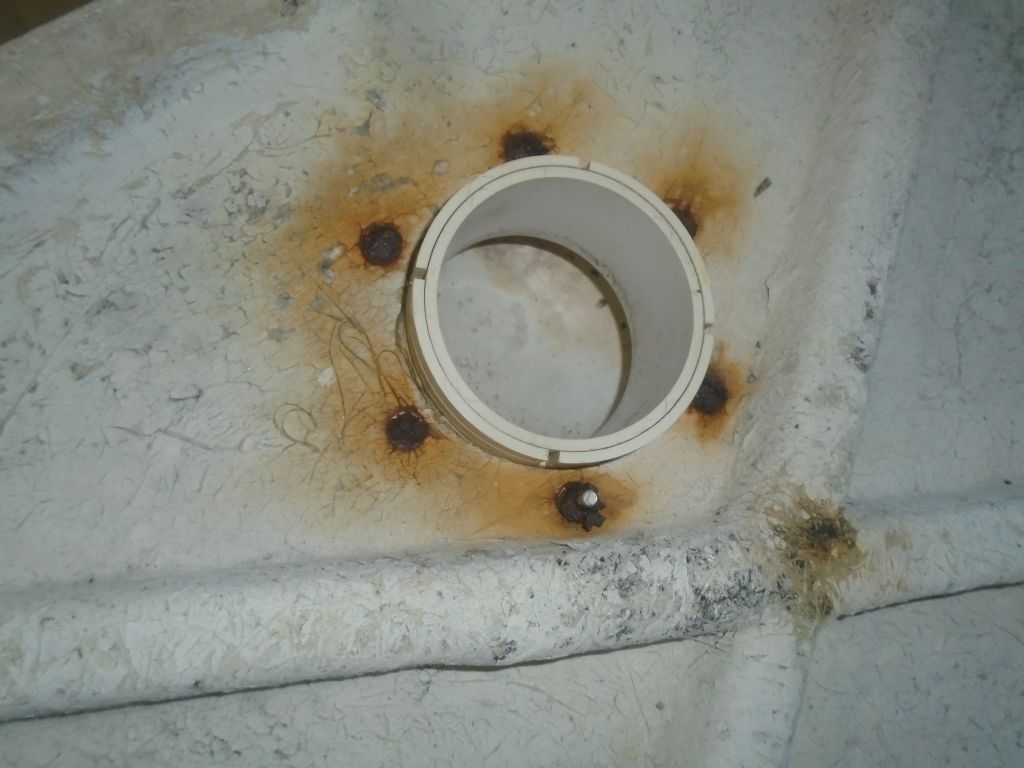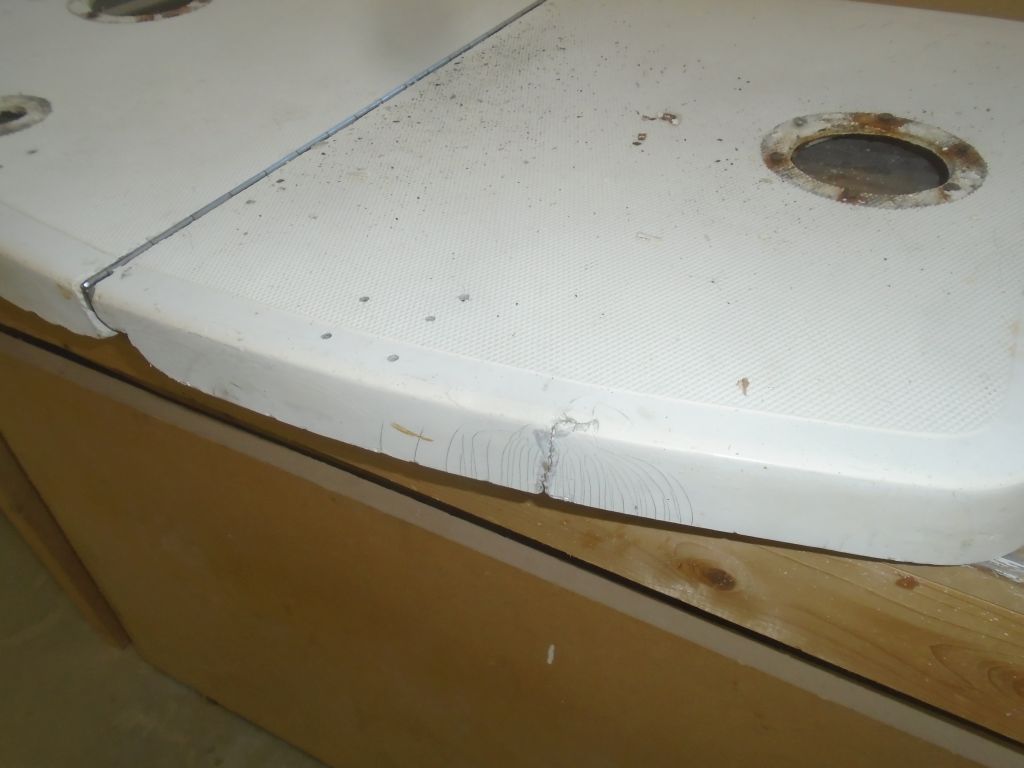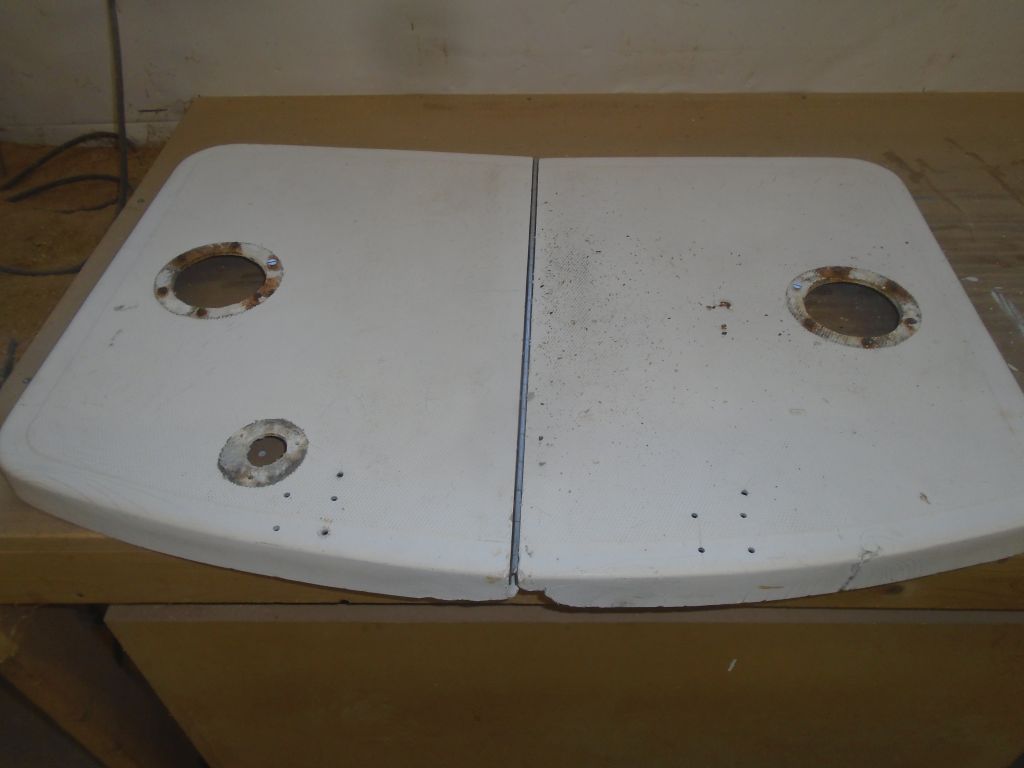

(page 135 of 165)

Halcyon 7

< Back to Halcyon

Monday

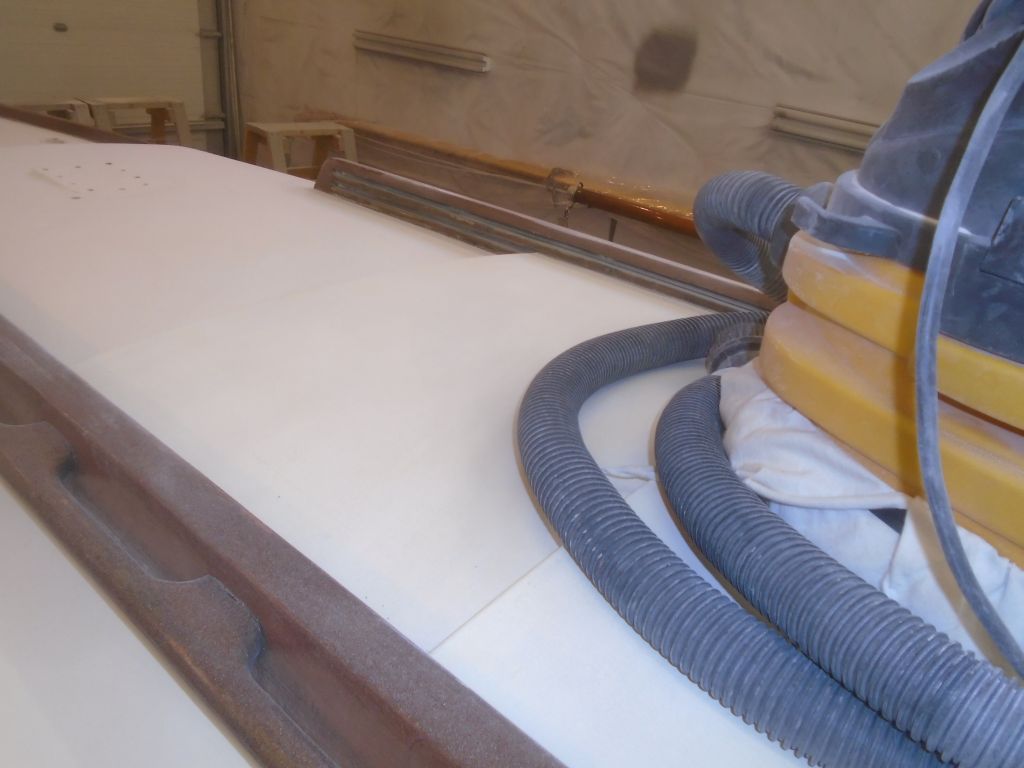
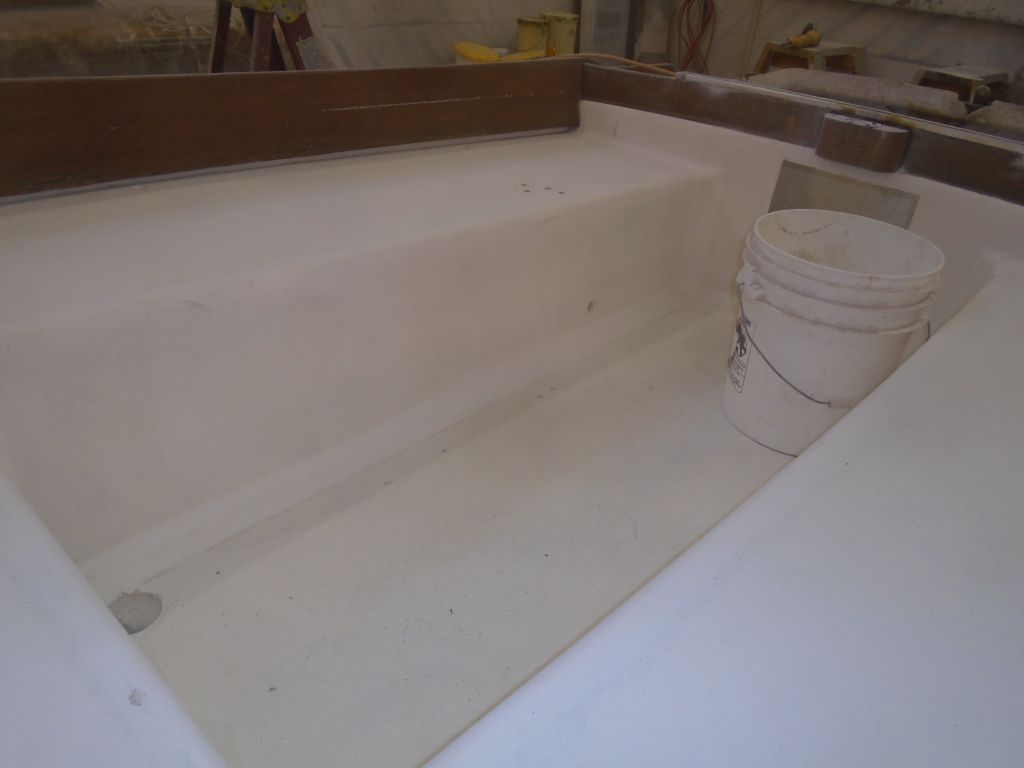
Next on my agenda was the interior surface prep.  The original coatings in the cabin were generally in good existing condition and sound, but simply aged and dirty.  Starting in the chainlocker forward and working aft, I spent most of the day sanding the overhead, inside of the hull, cabin trunk, bilge, lockers, and other areas as required, scuffing and cleaning the existing coatings and removing any (minimal) loose paint.  This was mainly a light sanding with 80 grit discs, and with the existing coatings in good shape there was no reason to make any attempts to remove the old paint.

Although I’d decided to remove the deadlights after all, for the moment I worked around them, as I was anxious to knock the sanding chore off my list first.

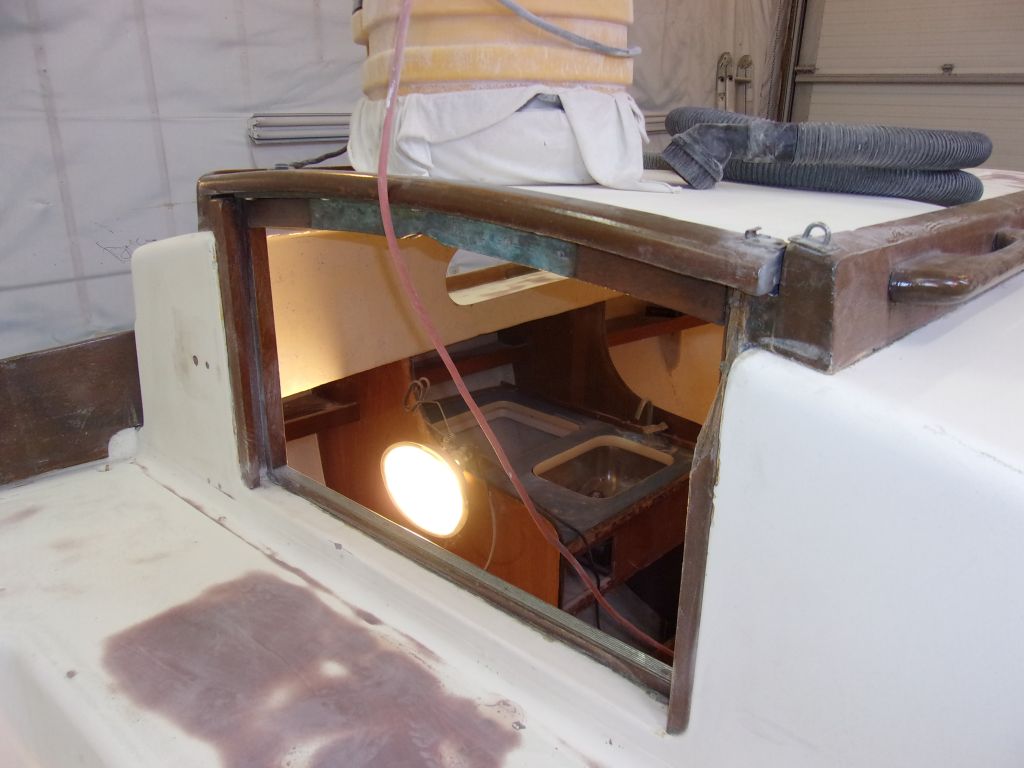
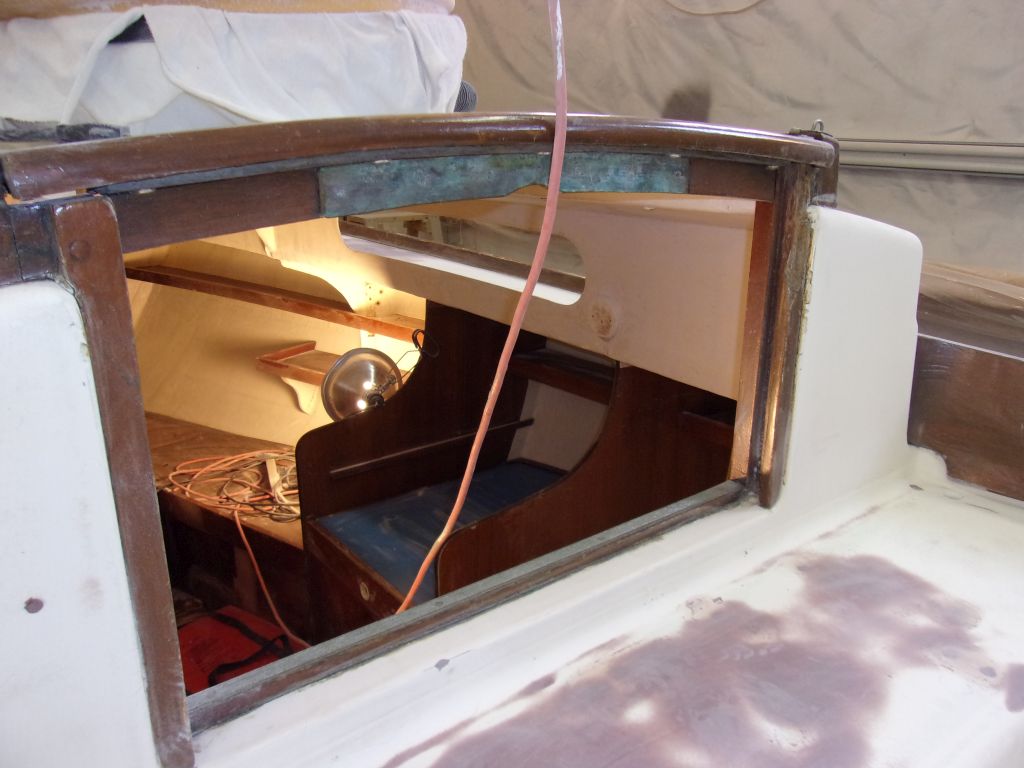
With the bulk of the interior now sanded and cleaned up, I turned to the deadlights.  These were the typical setup using an inner and outer aluminum frame, which fit into the opening and screwed to one another from the inside, sandwiching the lens between.  This was a popular yet dreadful approach to cabin windows back in the day, one that seems happily to have largely disappeared with the 1970s.  I’d removed, cursed at, and reinstalled many sets of this sort of frame over the years, and despite the experience they still tended to be some of the most challenging and frustrating tasks I dealt with in any project.
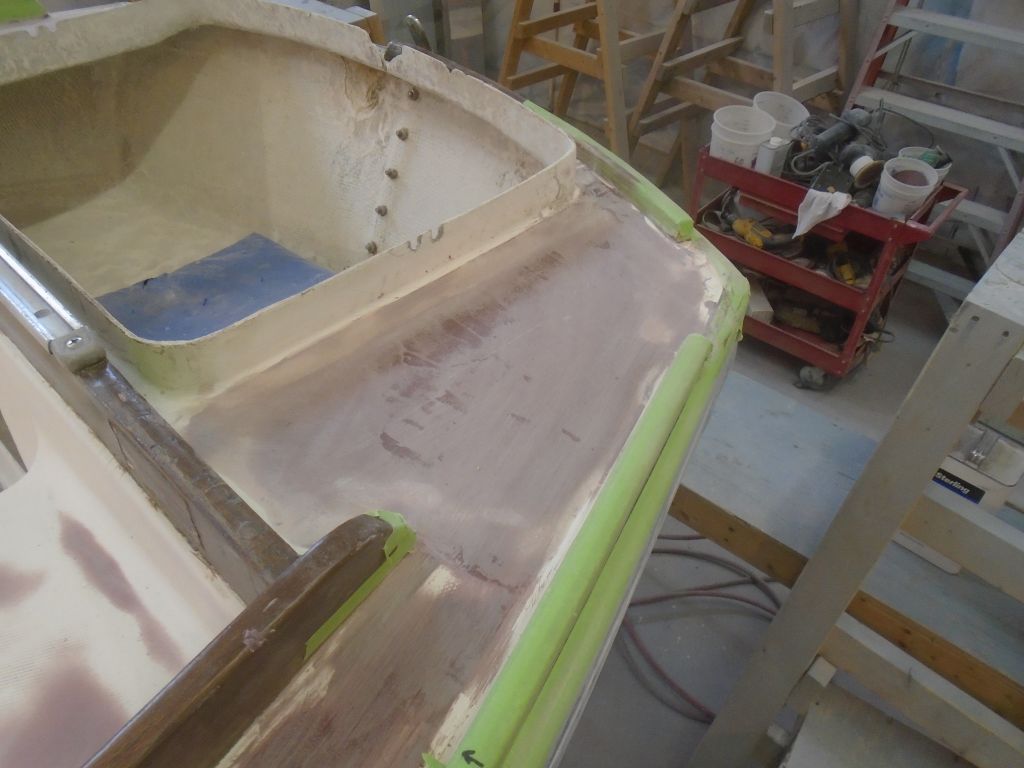
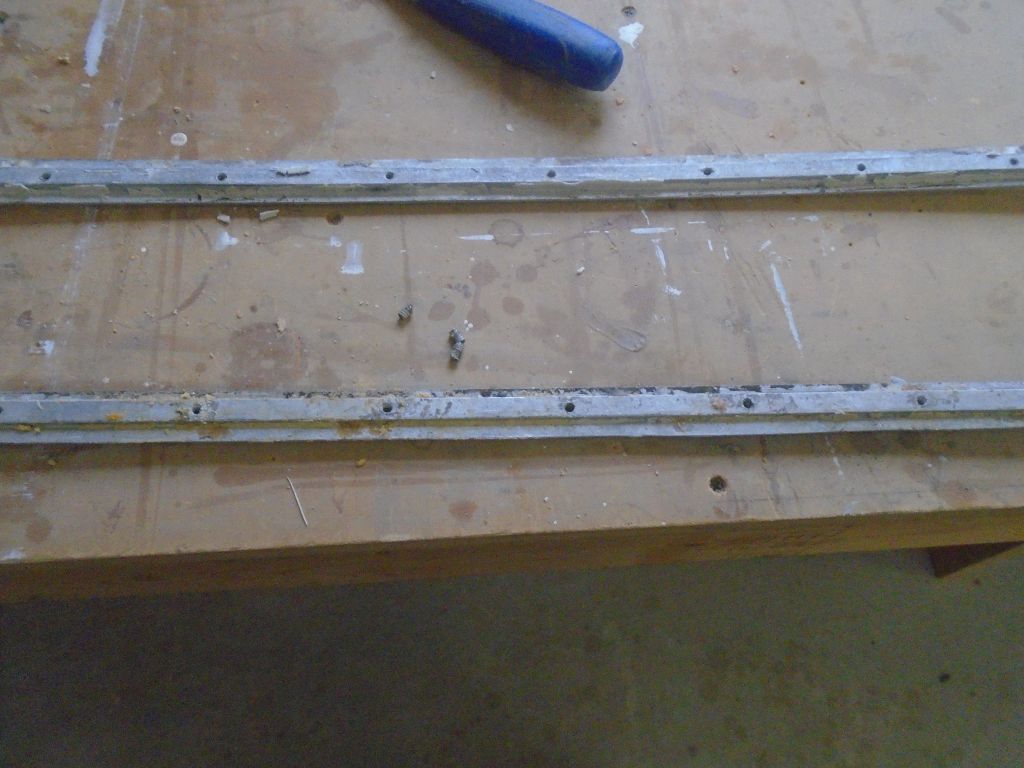
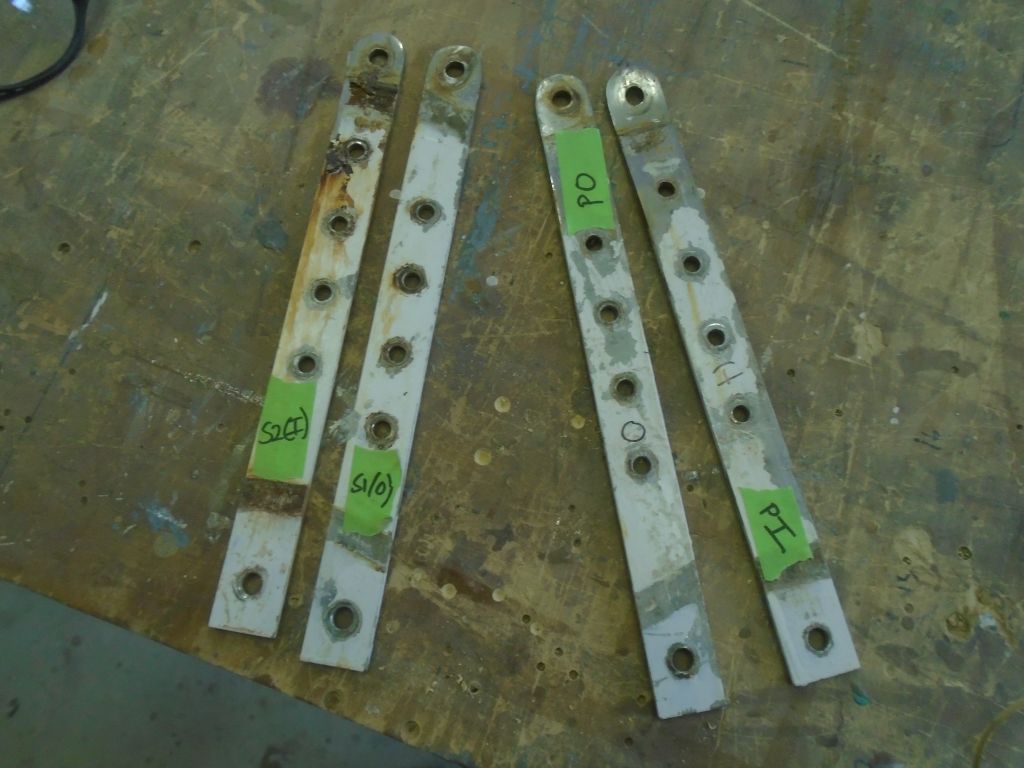
Removal of the port side was straightforward.  Working my way around the frame, I removed the screws from inside; a few were slightly stuck with corrosion, but broke free with firm screwdriver pressure.  I kept the screws in their proper position as I removed them, as sometimes in these sorts of frames each screw was custom-cut to fit during original installation, and I found long, long ago that it paid always to maintain the screws in their original positions.  The old sealant, watertight as it may have been, was dried out and crumbly as the frames came out, and it seemed well worth the effort to remove (and later rebed) these frames.

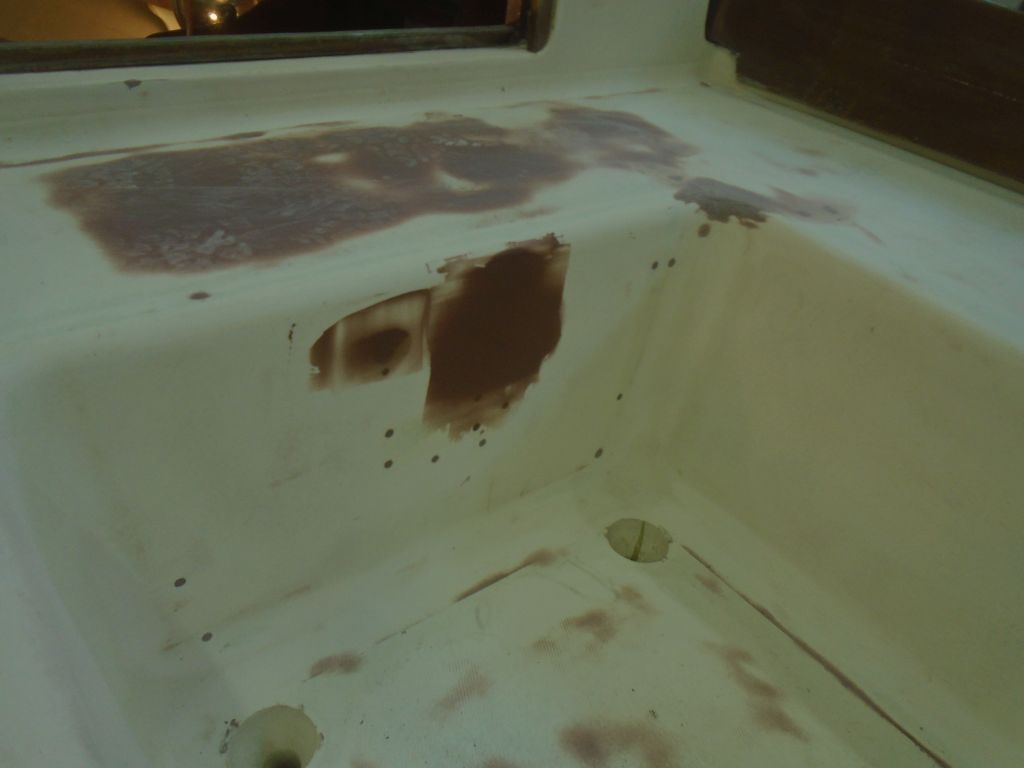
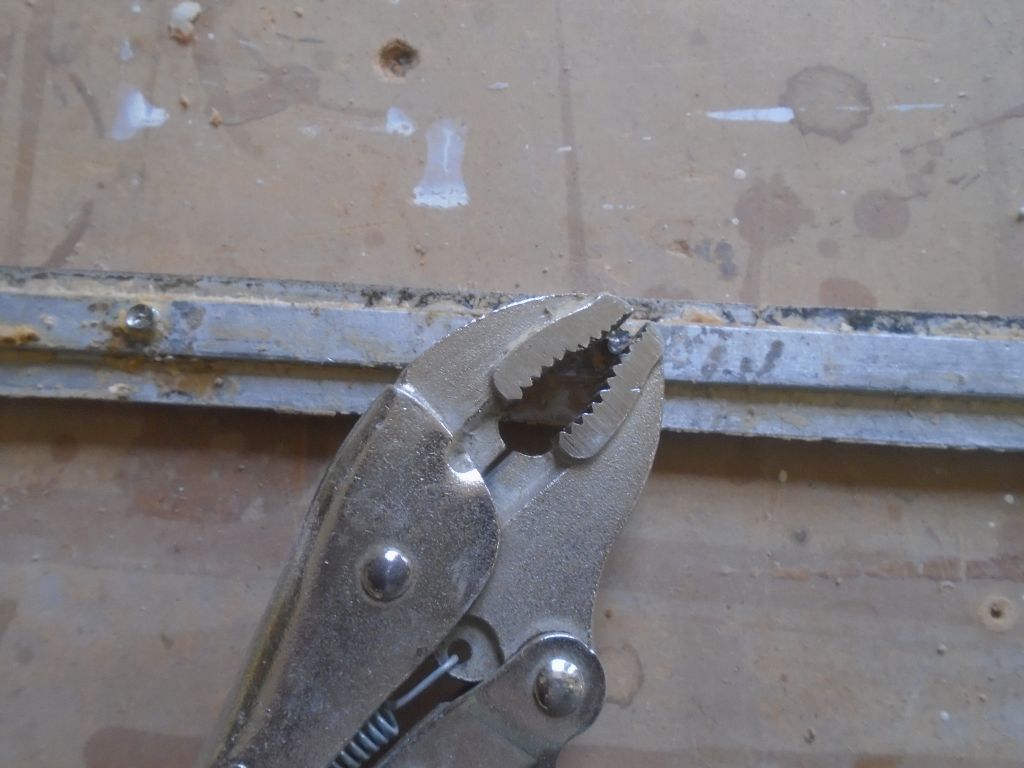
The starboard side was less fun.  Many of the screws along the bottom side of the frame were extremely welded in place with corrosion (stainless steel vs. aluminum), and ultimately there were three fasteners I simply could not budge, despite all efforts:  the screws were so firmly affixed that removal efforts bent two slotted  screwdriver blades and broke various impact gun bits in the process.   I eventually had to drill out the screw heads in order to complete the frame removal.  This took time and care, and I was glad I’d not tried to remove these frames at “quickly” before beginning the sanding job early in the day:  it would have affected my motivation.  Hopefully I could later remove the little studs stuck in the outer frame; there was a bit of the fastener still protruding, as I’d only drilled through the screw heads, so with luck extended soaks with penetrating oil and some additional work later might see these come out and leave the threaded sockets intact for reinstallation.

Finally, I removed the single opening port at the forward end of the cabin trunk.  No issues here, except this housing was extremely well bedded in place and took a little while to break free.

With the ports and deadlights out of the way, I finished up the sanding in those areas.

Total time billed on this job today:  7 hours

0600 Weather Observation:
-5°, clear.  Forecast for the day:  Sunny, 10°

Halcyon 6

< Back to Halcyon

Friday

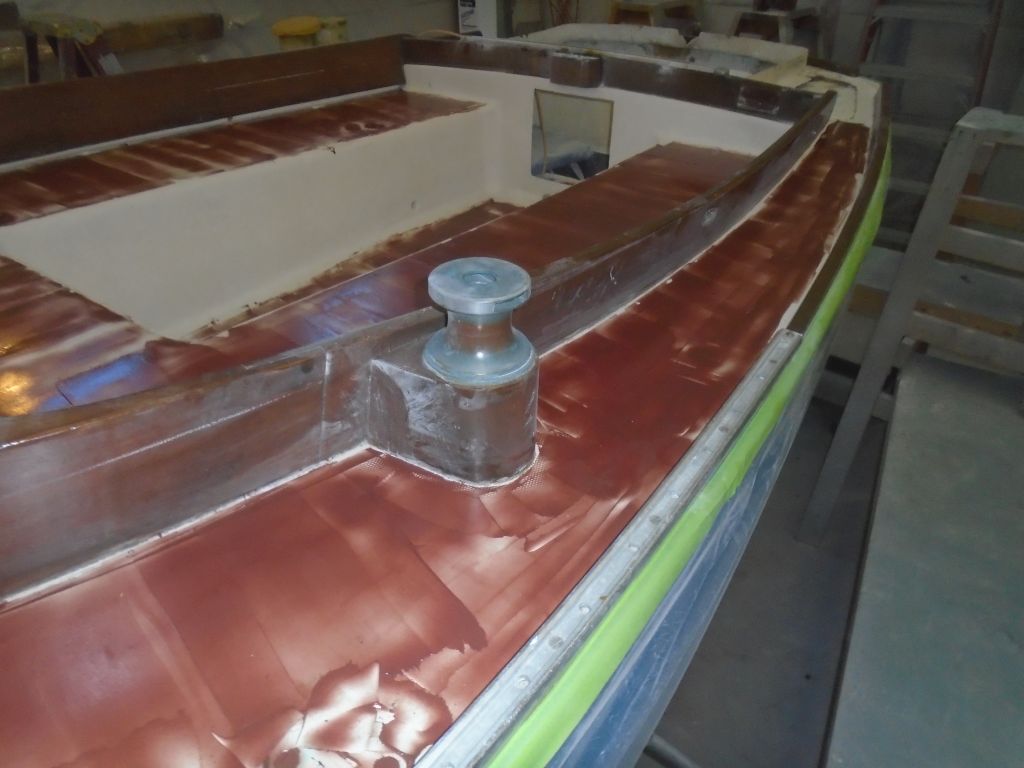
Picking up where I left off, I continued work on the deck hardware removal, from the starboard chainplates and mast step to the hardware on the aft deck.  There were no particular suprises during this process; several of the fasteners were either stuck in place or broke off during removal, as before.

In the cockpit, there were a few more things to remove at the forward end, and I took care of those along with removing the vestiges of an old electrical system and the cockpit and seat drain hoses.

At this time, I was undecided how to proceed with the deadlights in the cabin.  The owner reported that they did not leak, and the lenses were in good condition (starboard better than port).  Knowing well the challenges and frustrations involved with reinstalling these types of frames and lenses, I was tempted to leave the windows in place and work around them, but I’d have to contemplate that more.  Typically, I did not like to leave anything in place during painting projects, but then again sometimes well enough was best left alone.
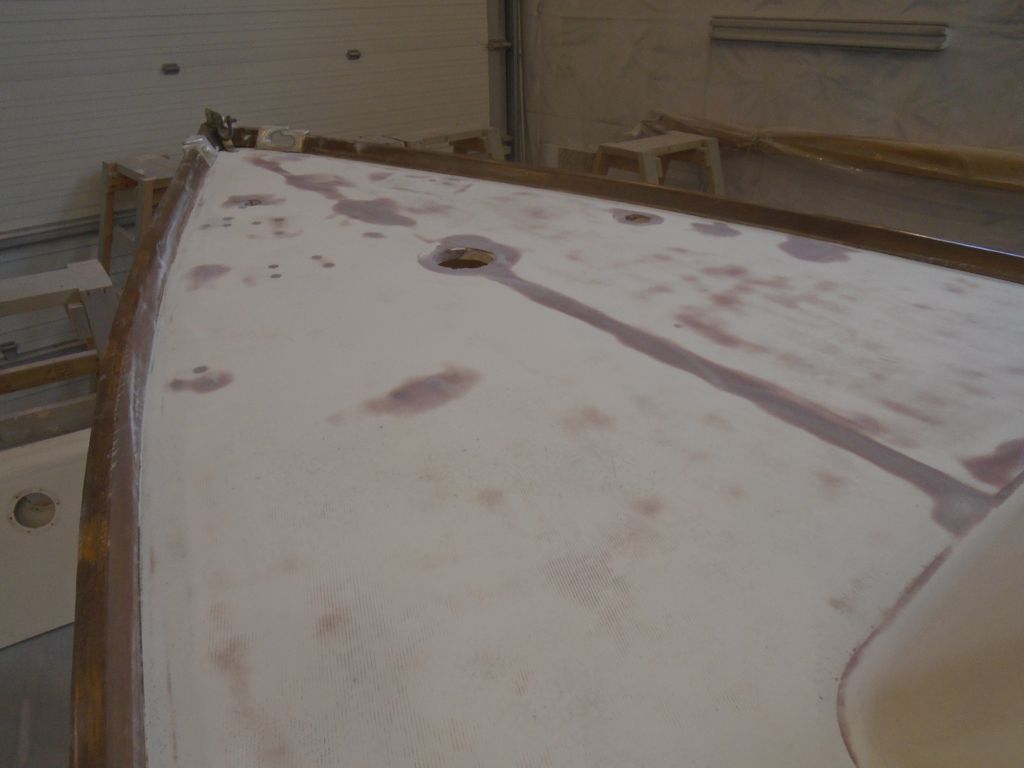
In the cabin, I removed a few existing wires and light fixtures, along with the sink drain plumbing, supply hose, icebox drain, and water tank fill, all of which I planned to replace later in the project.

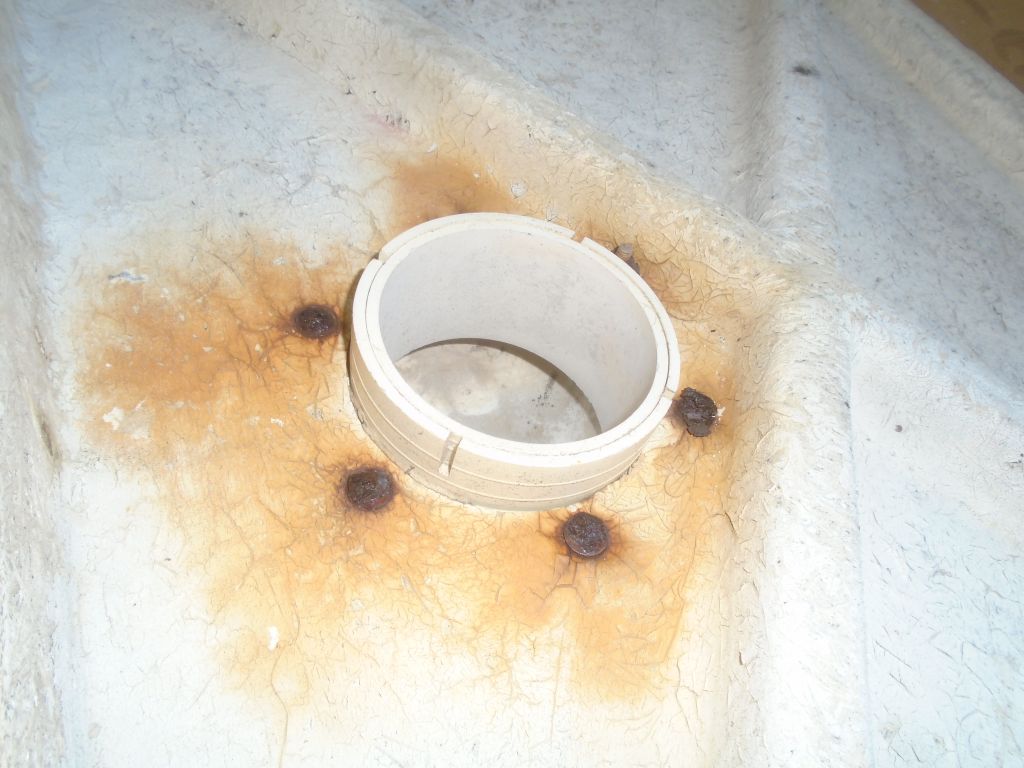
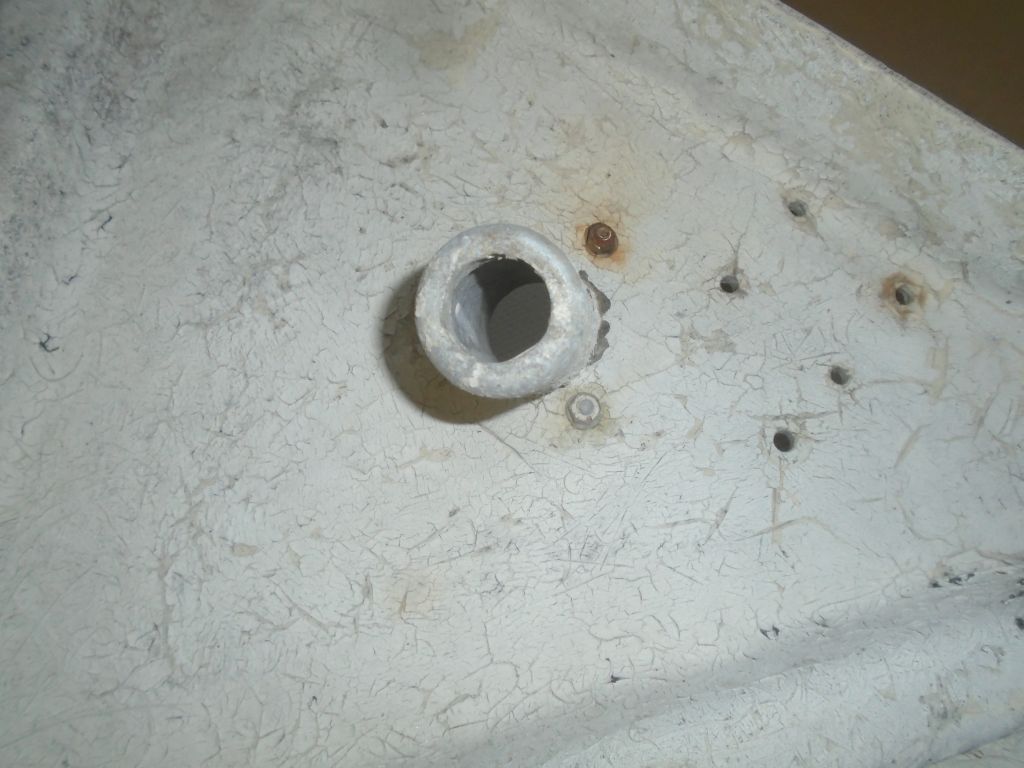
One of the other items on my work list, and slated for attention very soon, was to remove the obsolete head discharge through hull on the starboard side and patching the hole.  The owner requested a simple portable toilet for the space.

The interior cabinetry and panels were generally sound, but in some areas there was water damage to the veneer and plywood laminations, most notably at the forward end of the cabin on either side of the mast support column.  The after portions of the settee bases also showed some similar–yet less dire–signs of damage from moisture over the years.  Whether these panels could be saved with a bright (varnish) finish remained to be seen, but I thought a simple alternative–which I’d effected on another Sailmaster project a few years earlier–might be to patch and paint these panels instead, saving the structural elements but forgoing the challenges of inefficient veneer repair.

With that, most of the dismantling was done, and I looked forward to diving into the first stages of surface prep and related work shortly.

Total time billed on this job today:  5 hours

0600 Weather Observation:
20°, dusting of snow.  Forecast for the day:  becoming sunny, 20s.

Halcyon 5

< Back to Halcyon

Thursday

I spent the day removing deck hardware, starting at the stem and working my way aft along both sides.  The hardware and fasteners were old and appeared to be original installations in most cases, and many of the fasteners were in poor condition, often breaking off during removal.   Bow pulpit, cleats, anchor hardware, chainplates, running lights…all were among the pieces I removed during a morning’s work.  The aluminum running light housings were in poor condition, and the starboard side fell apart during removal.

I’d continue with the remaining hardware on the aft half of the boat next time.

Total time billed on this job today:  4.5 hours

0600 Weather Observation:
25°, clear.  Forecast for the day:  Mostly sunny, 29°

Halcyon 4

< Back to Halcyon

Wednesday

Finishing up the bottom work for now, I lightly water washed the new fairing patches, then sanded them smooth with the adjacent areas.

The bulk of my remaining work on this project would be on deck and in the cabin, as the owners had had the hull brushed a few years ago and were happy with the existing condition.  So with hull work complete for now, I set up staging around the boat to give me a comfortable working height around the perimeter of the decks.

To protect the hull from spills or damage, I covered it with plastic that I taped to the top edge of the hull just outboard of the wooden toerails.

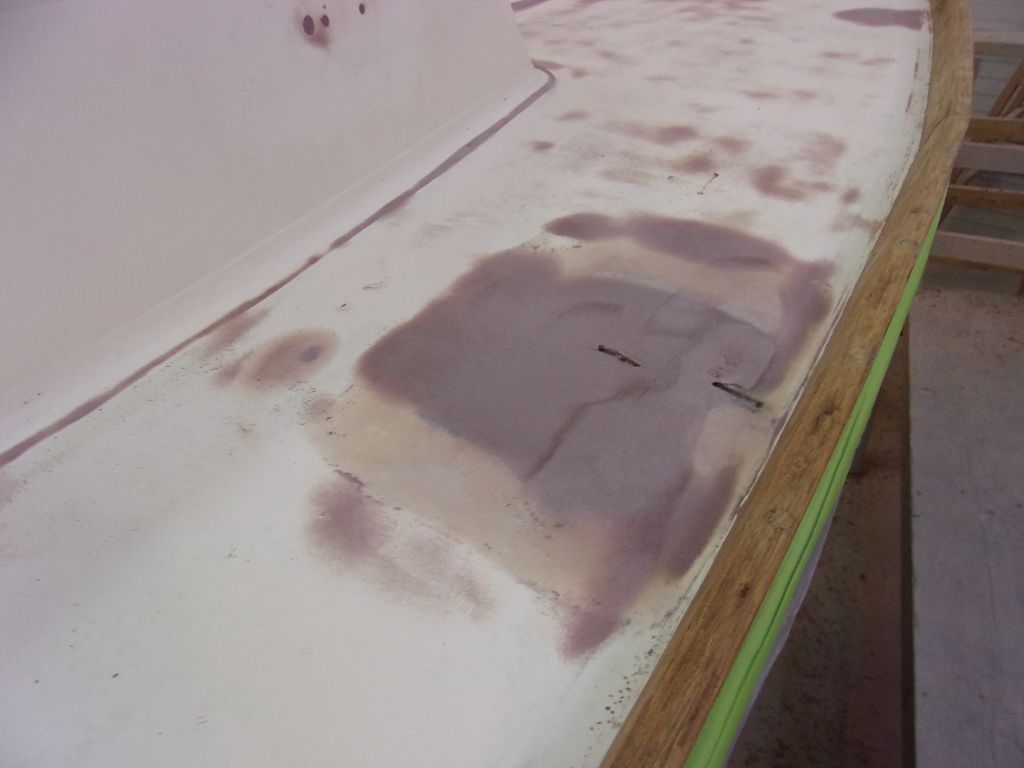
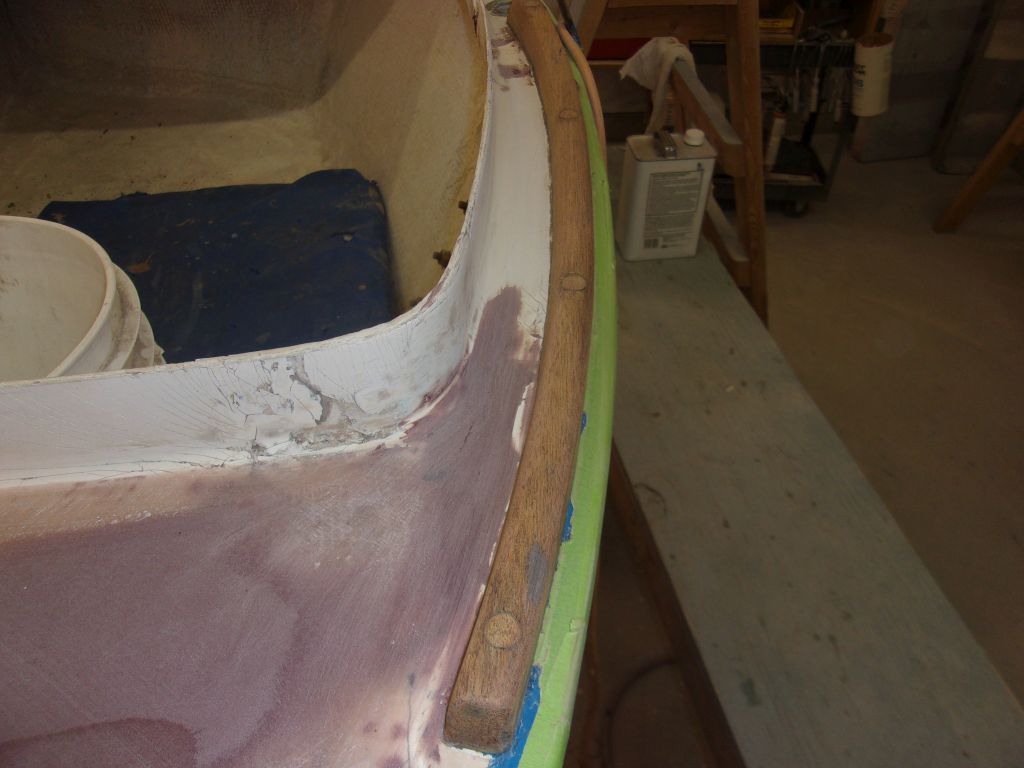
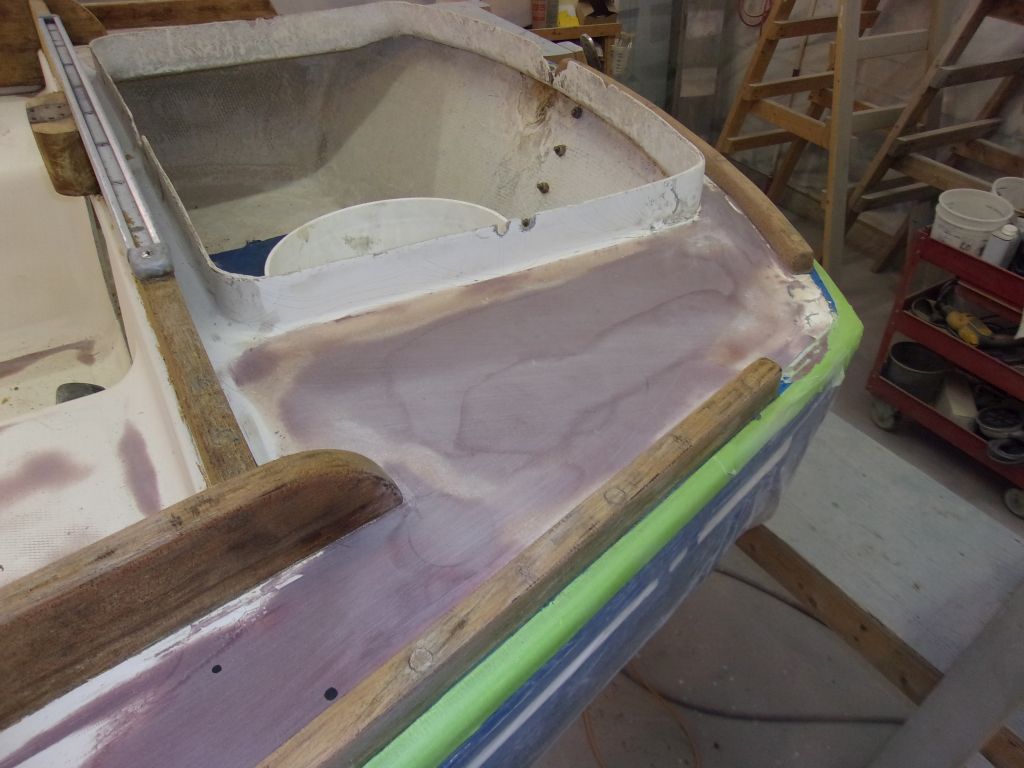
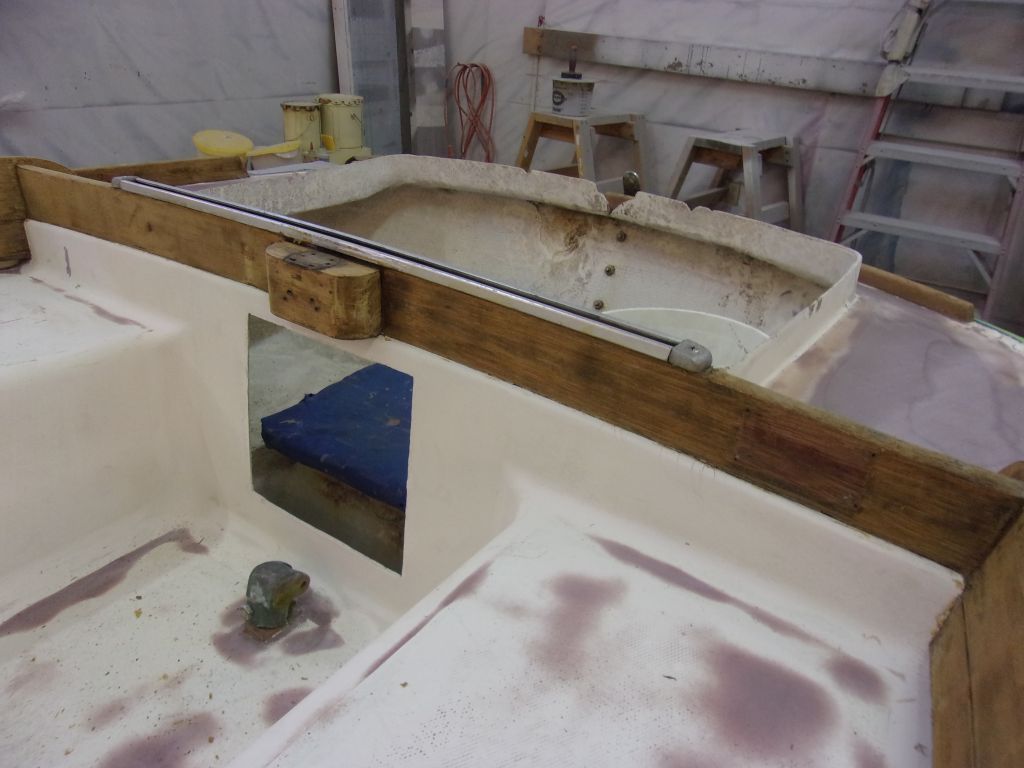
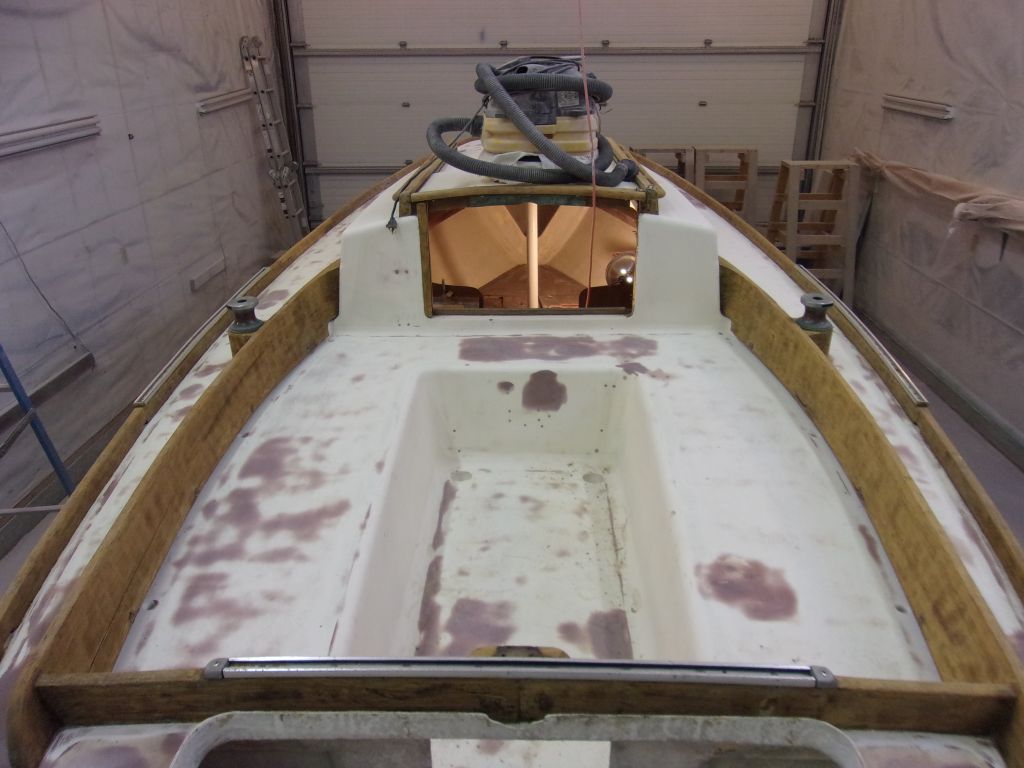
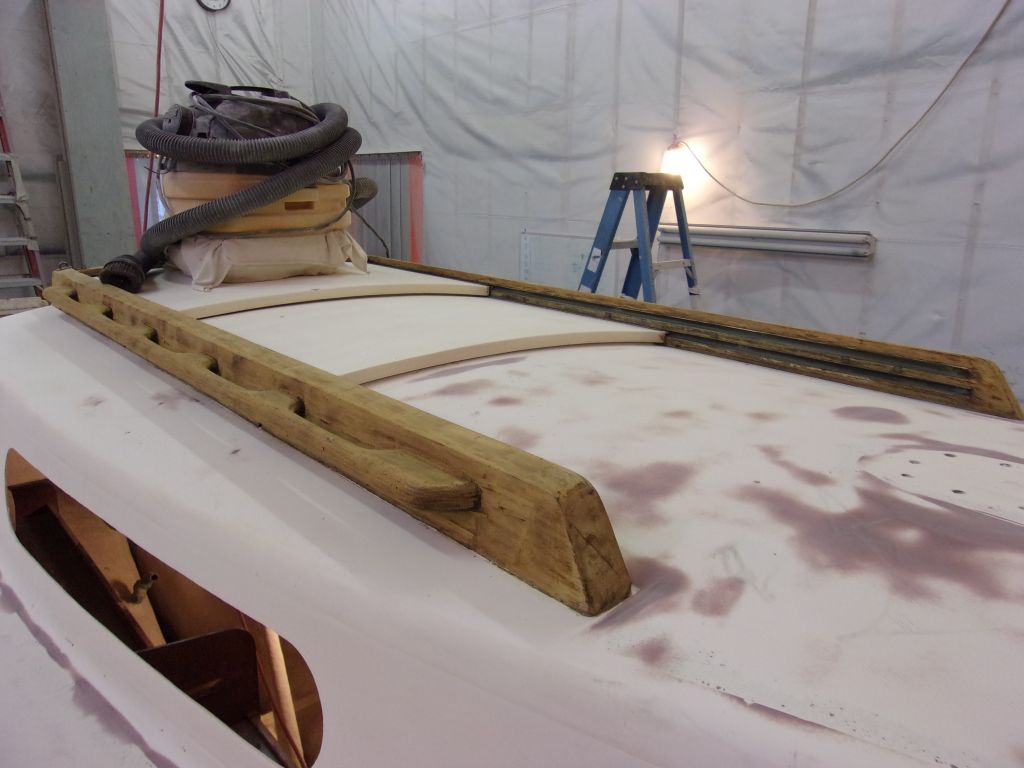
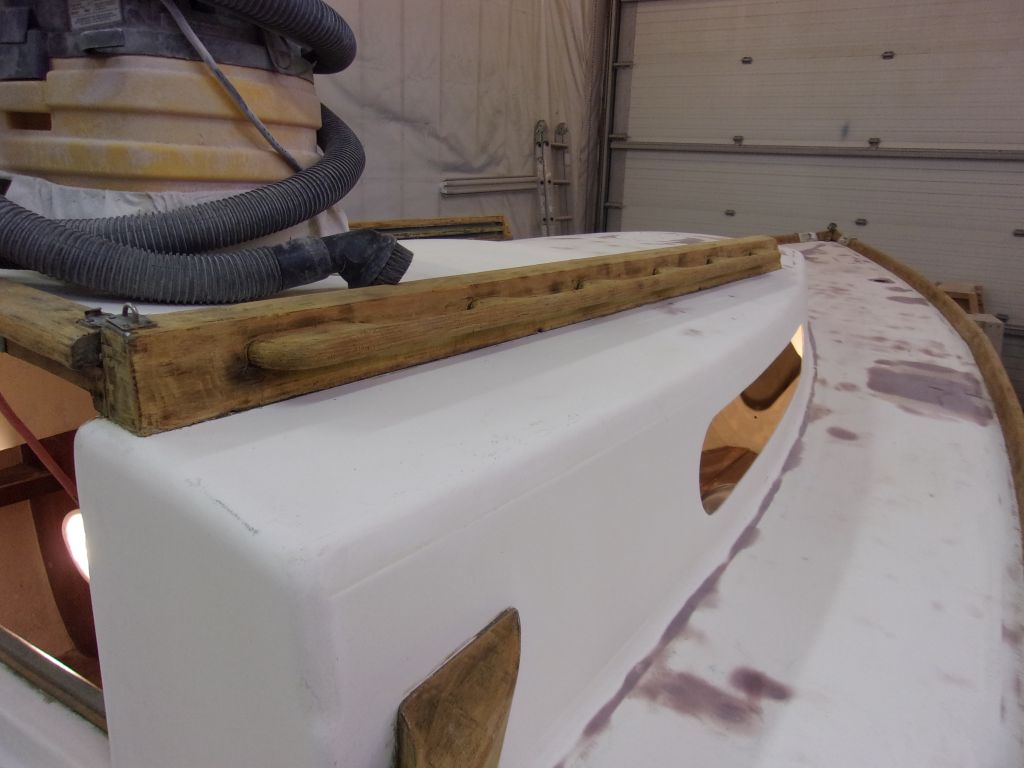
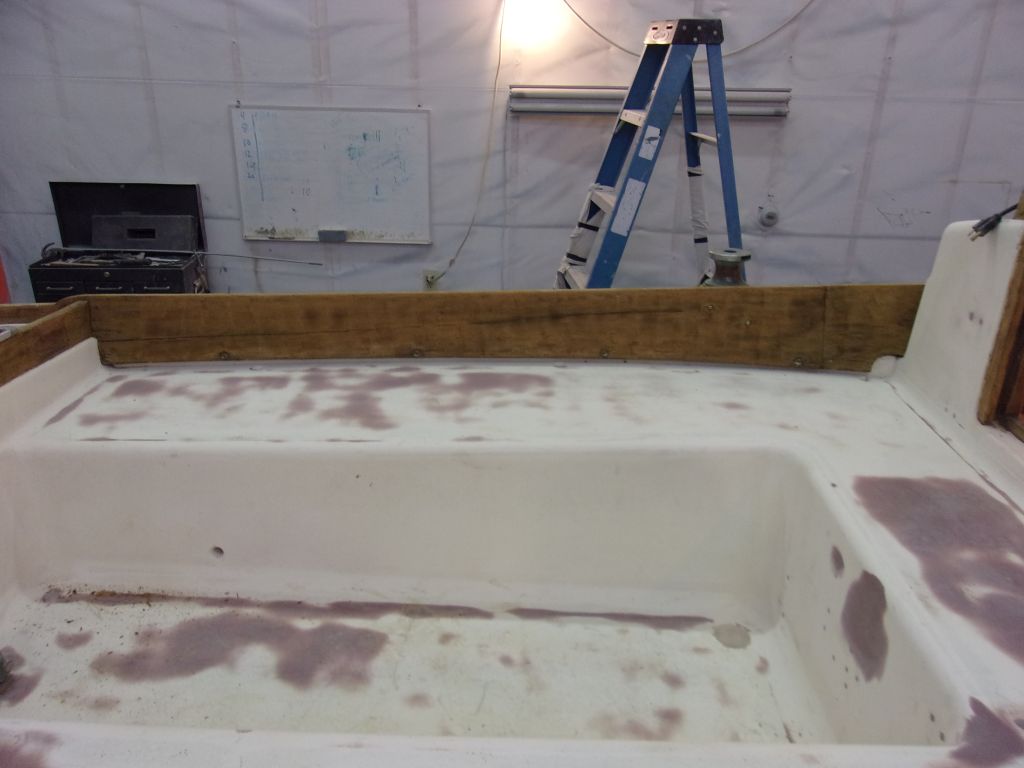
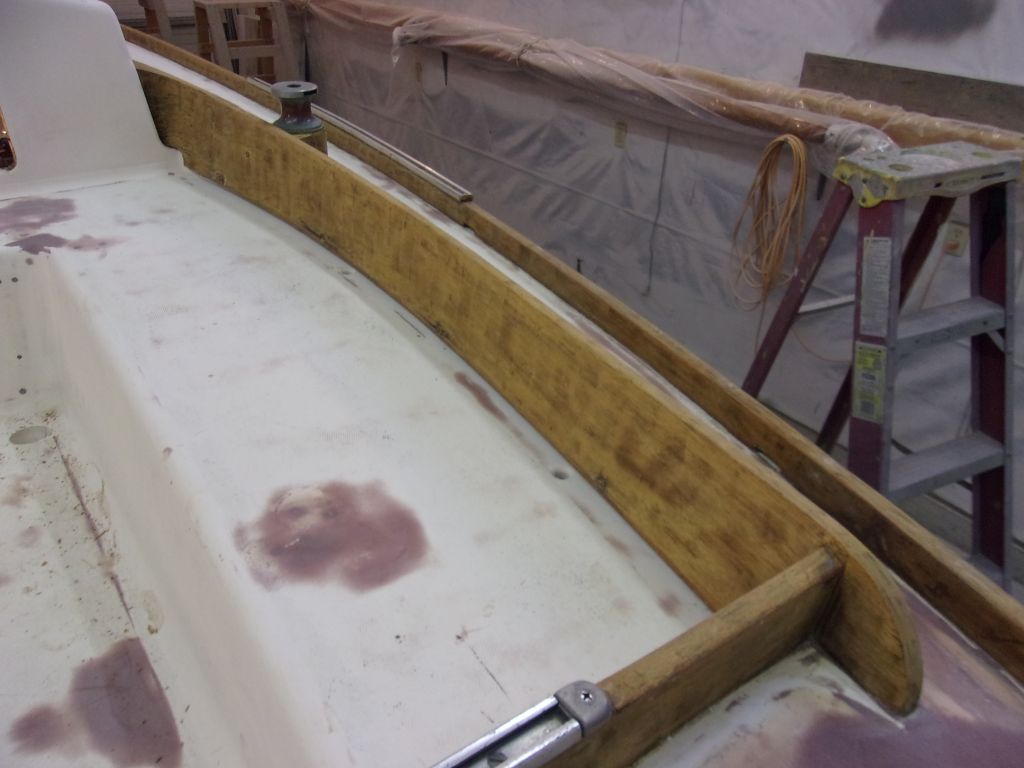
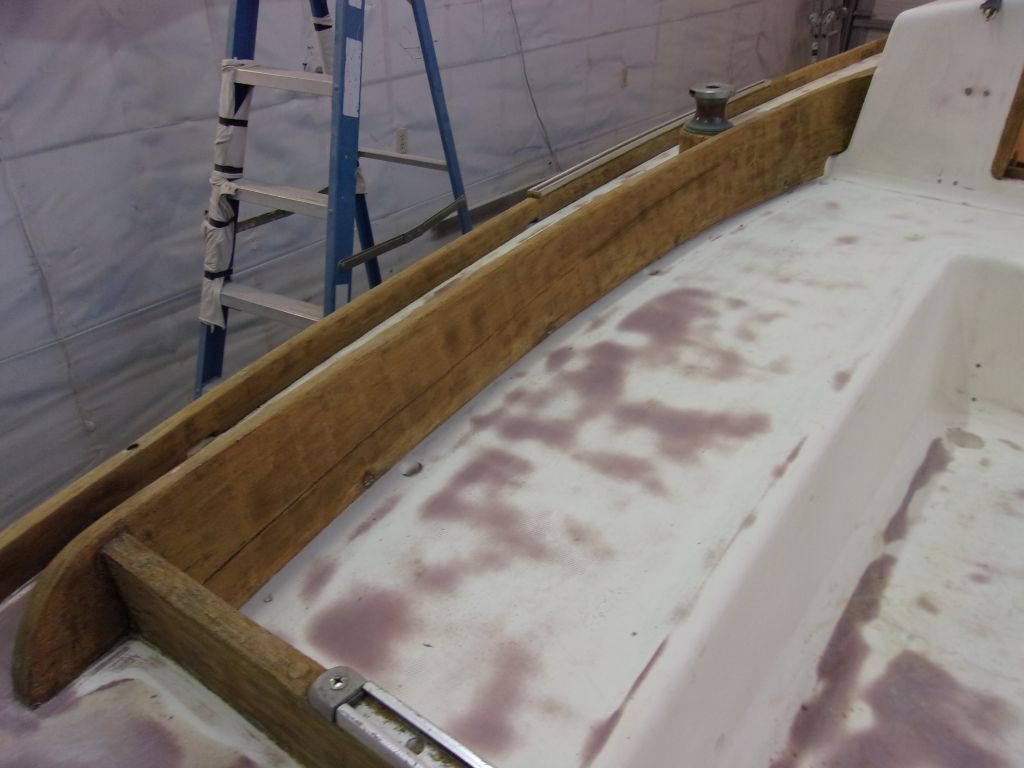
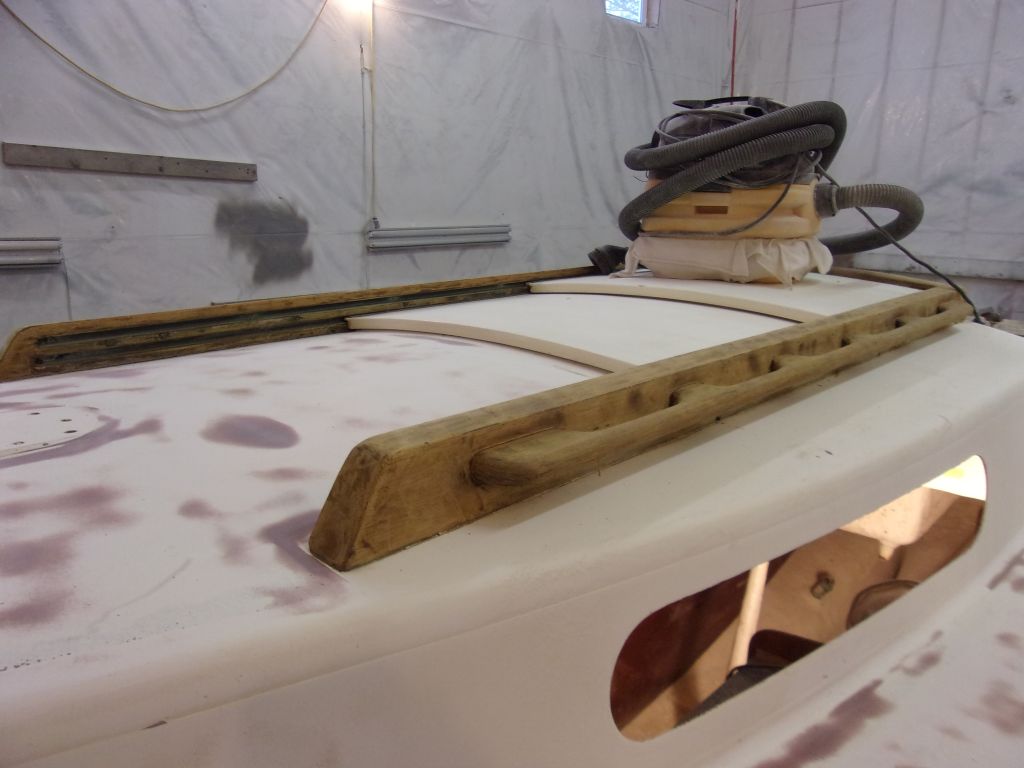
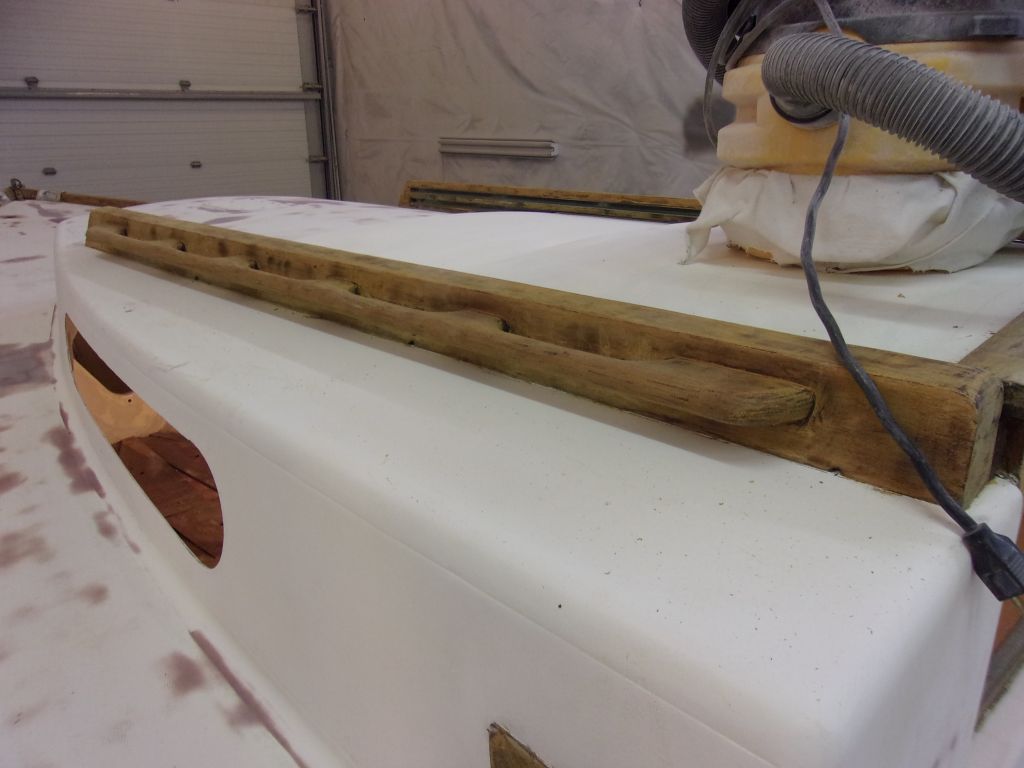
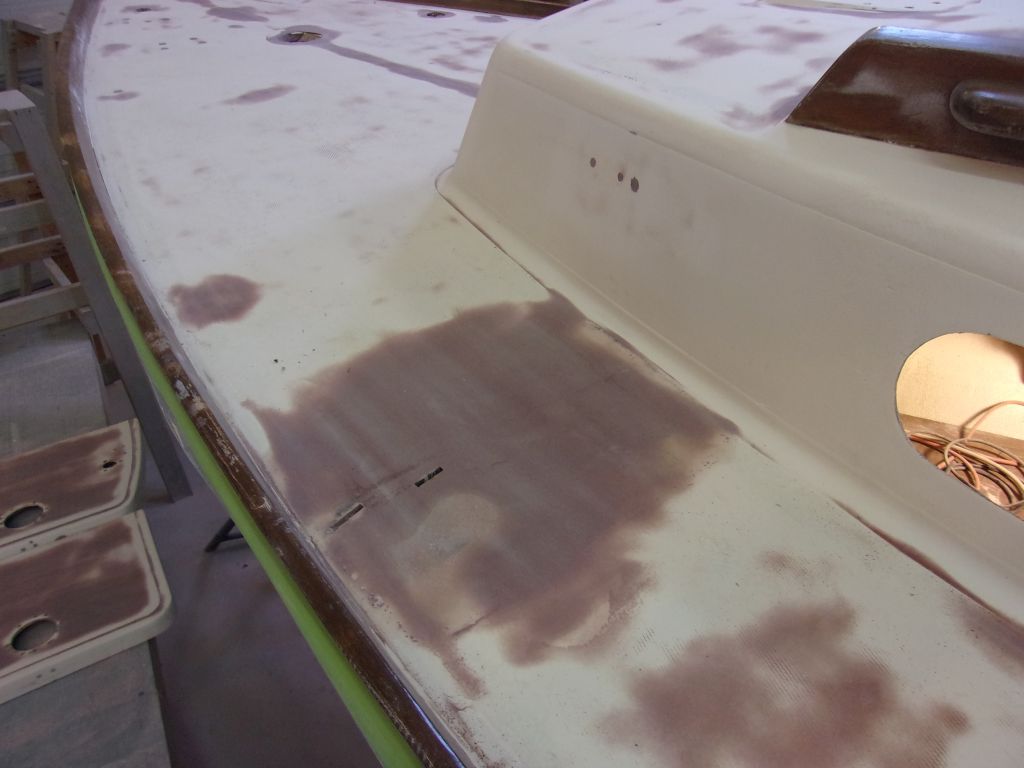
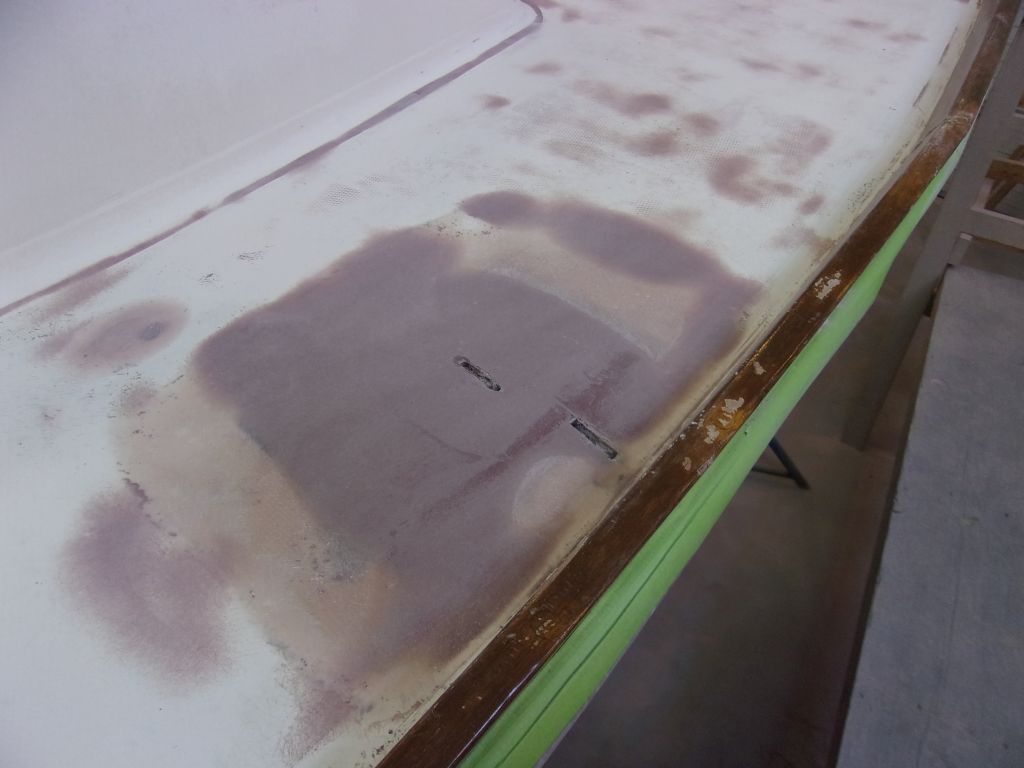
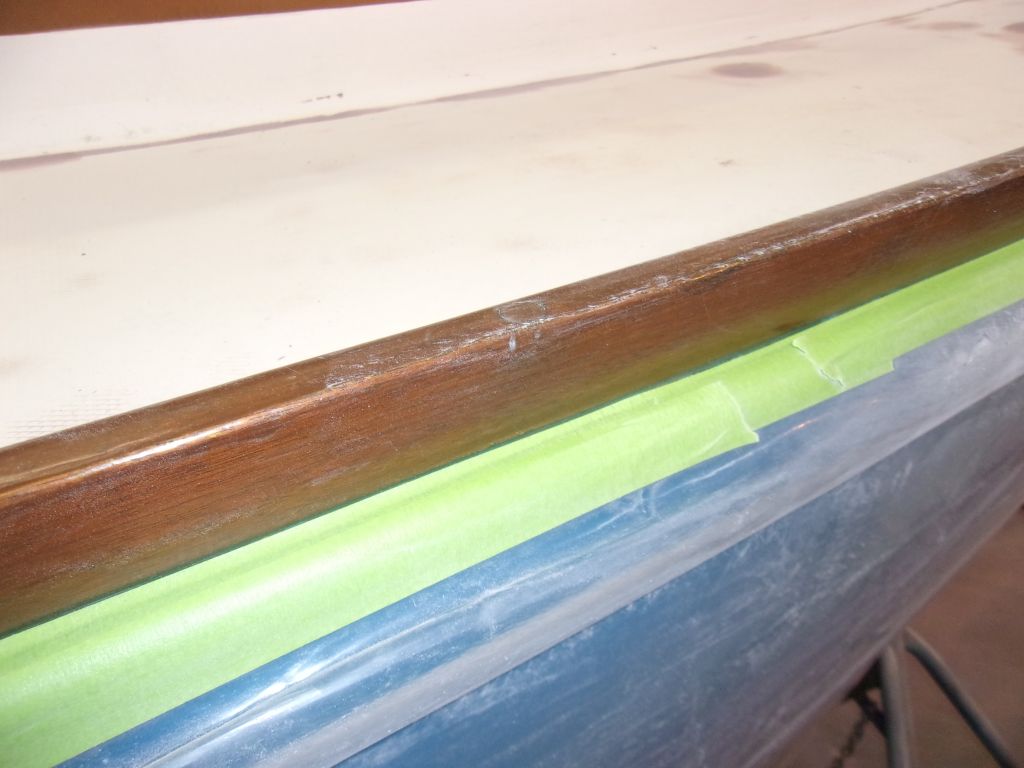
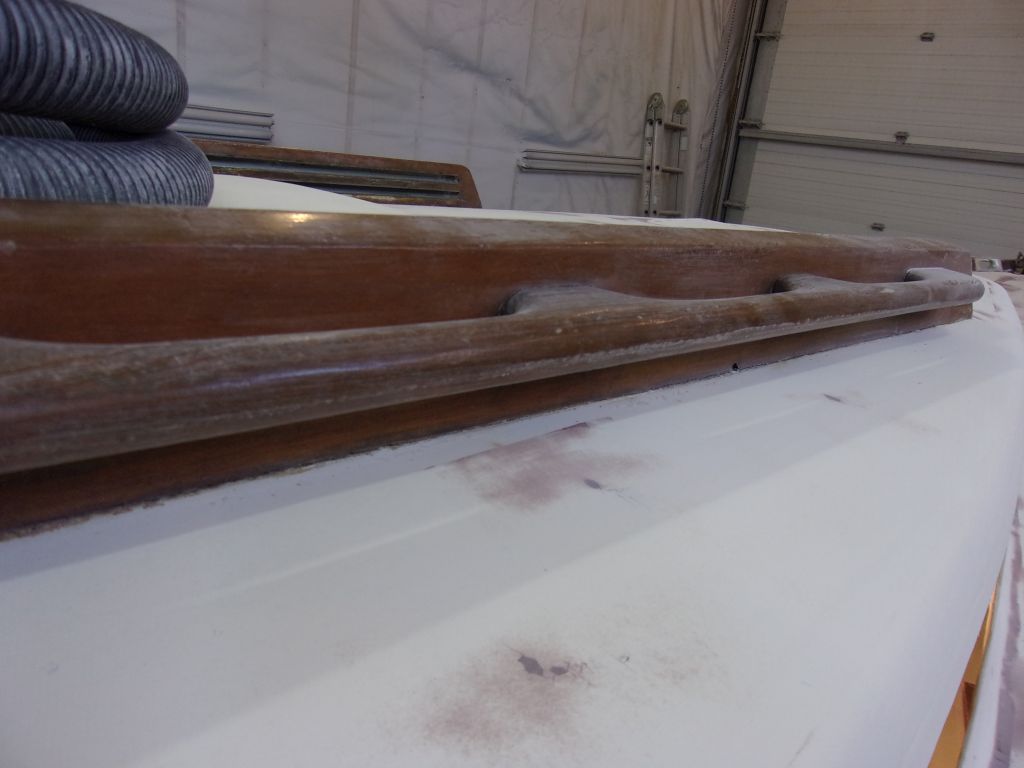
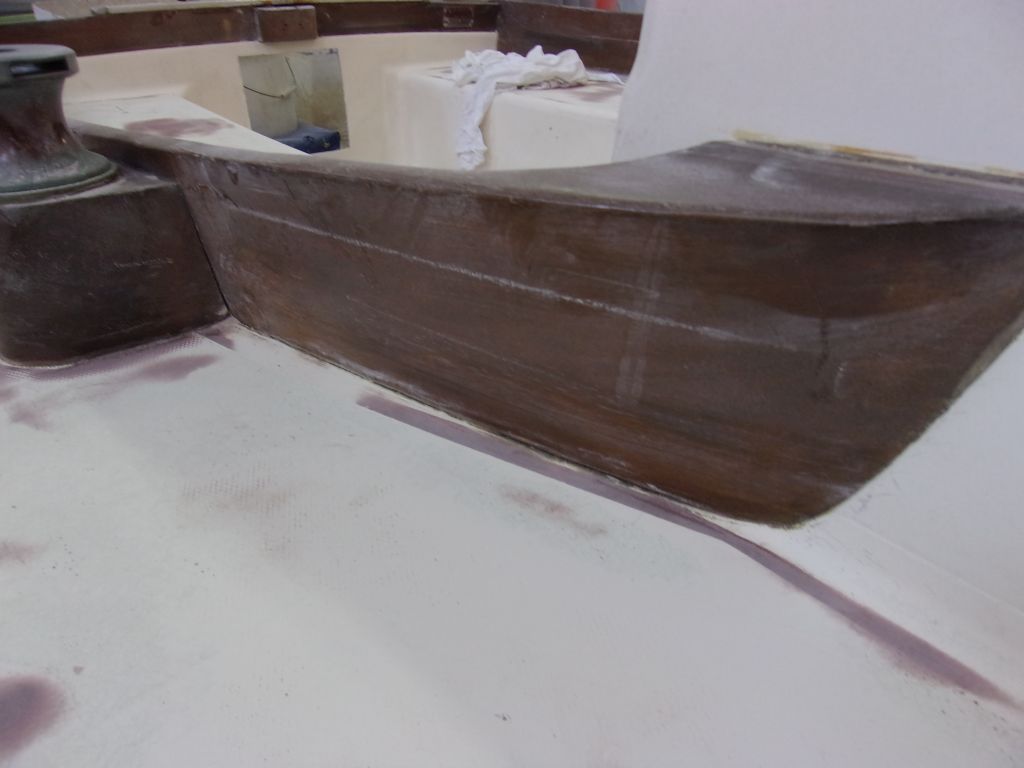
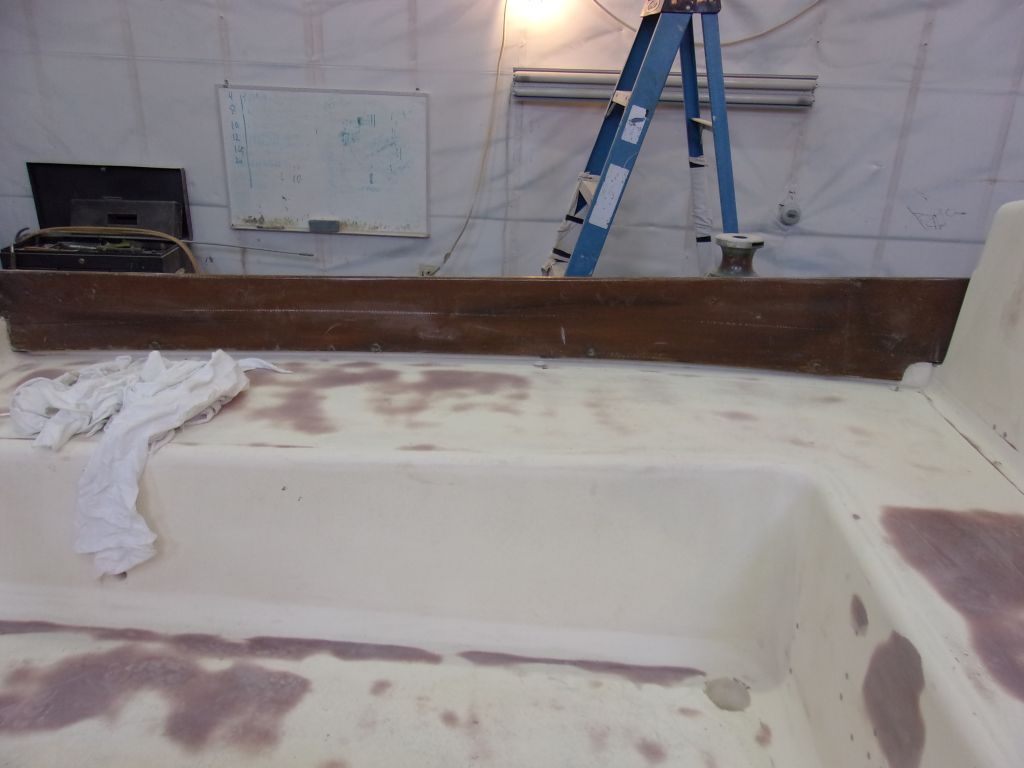
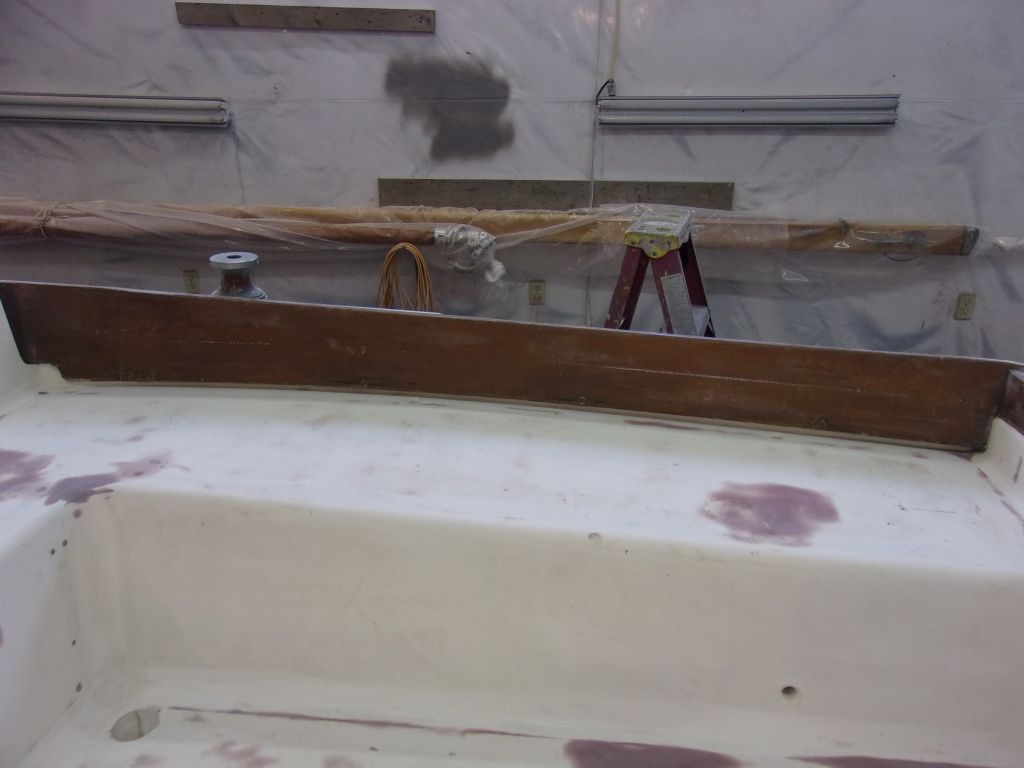
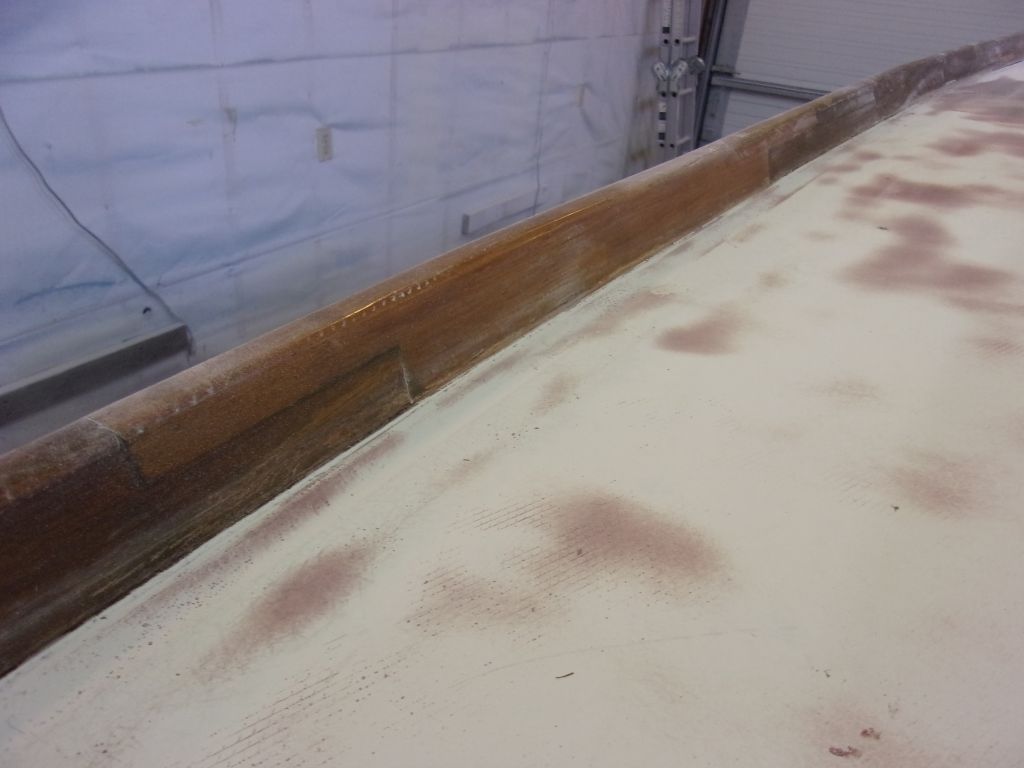
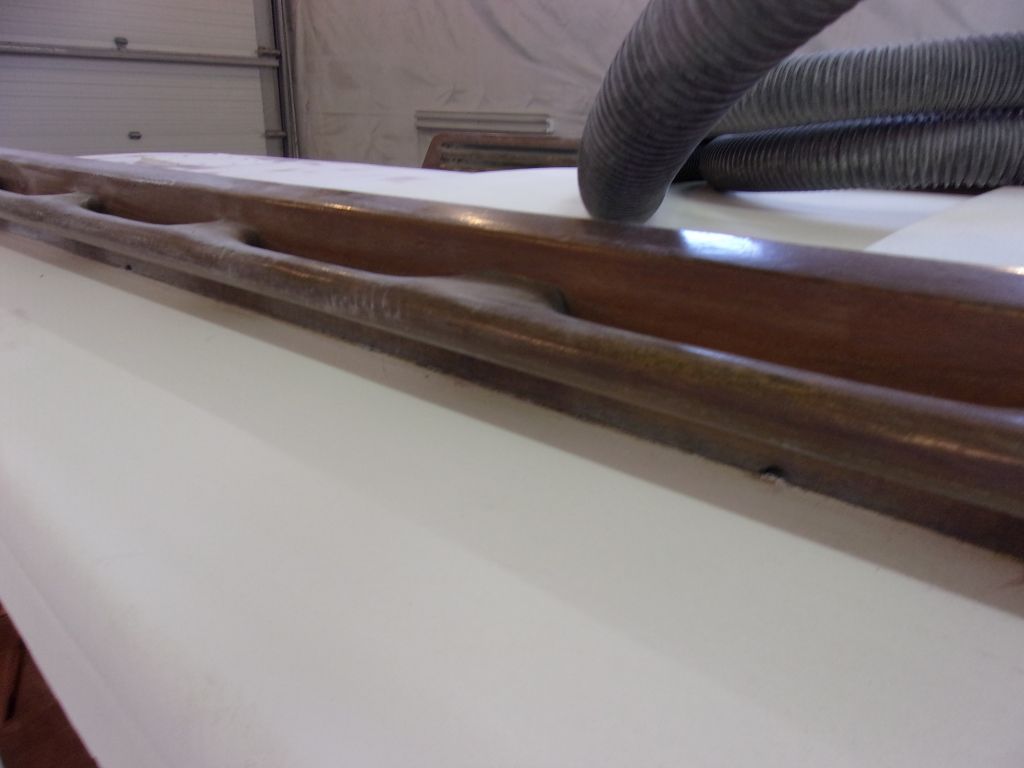
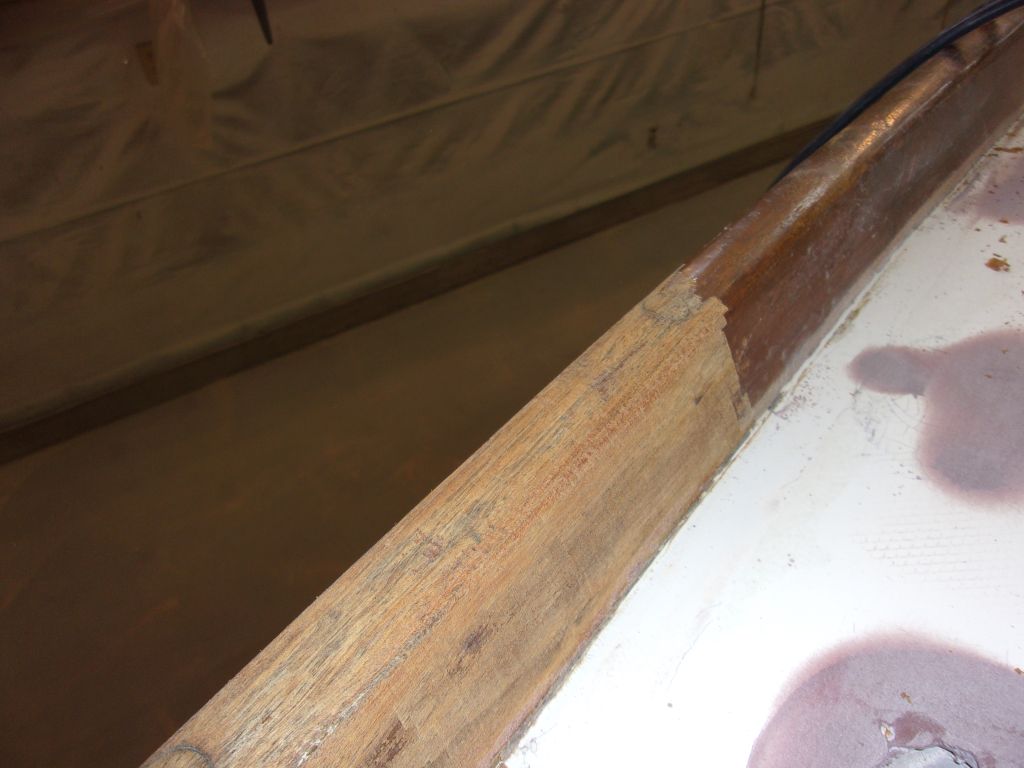
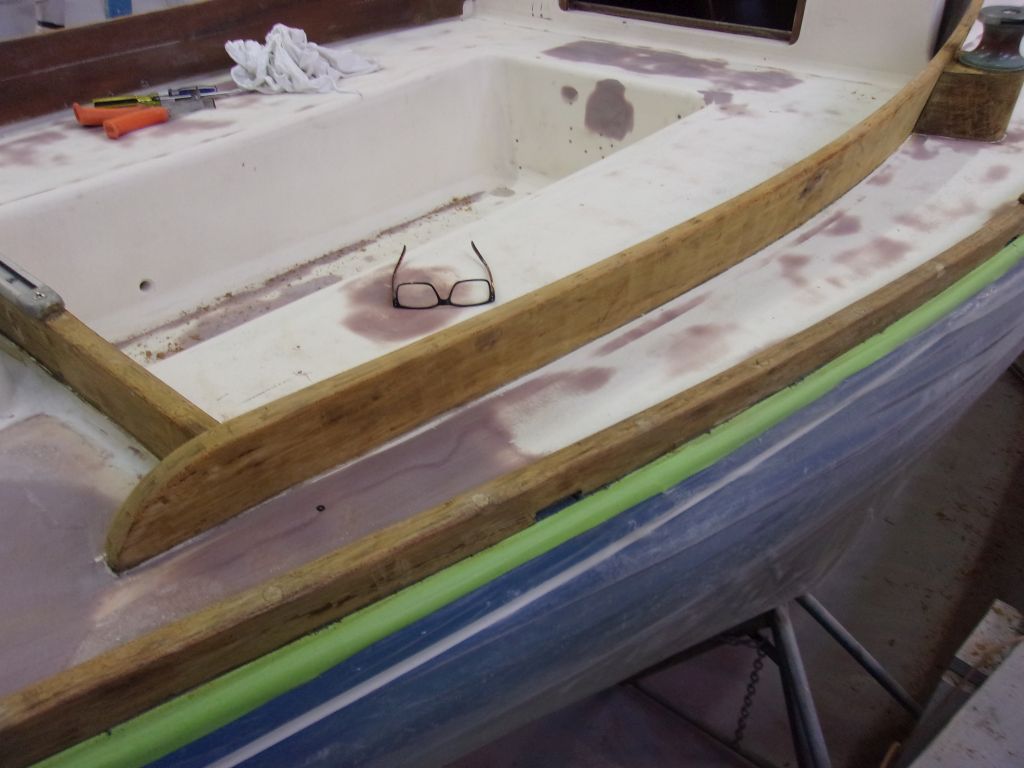
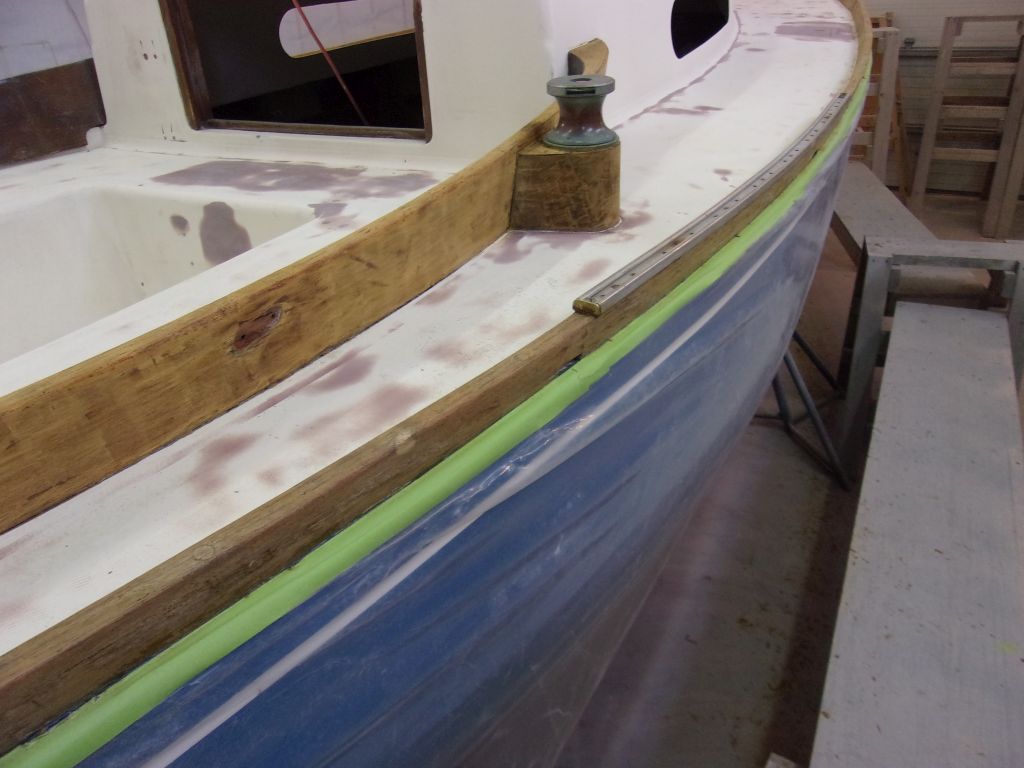
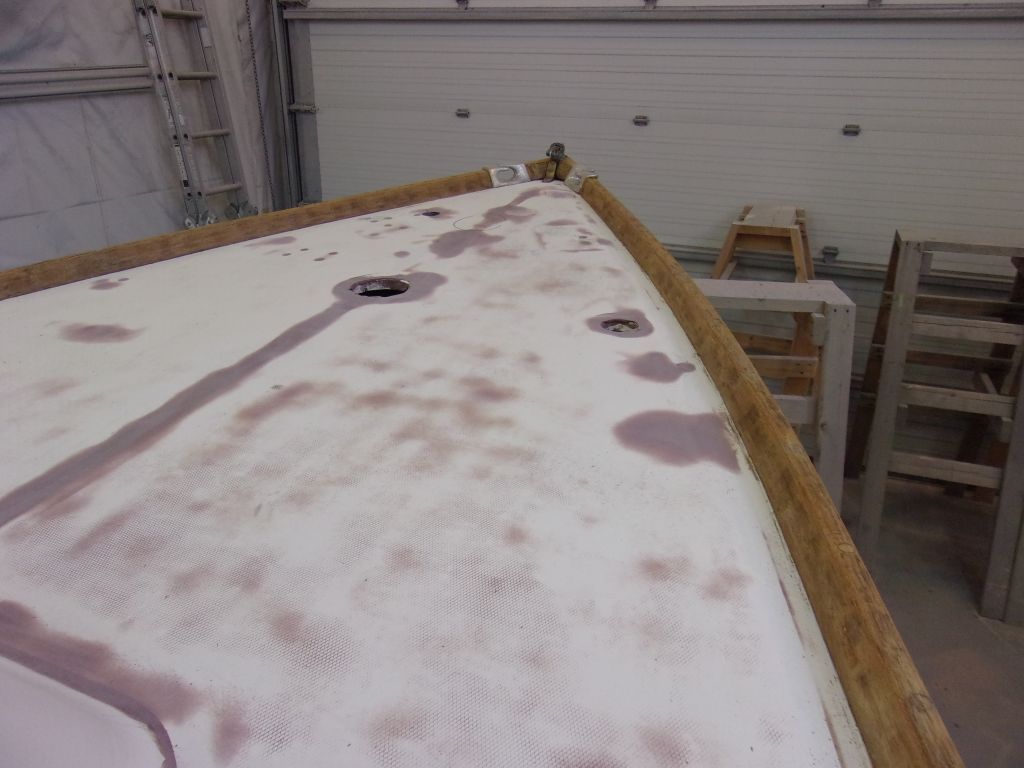
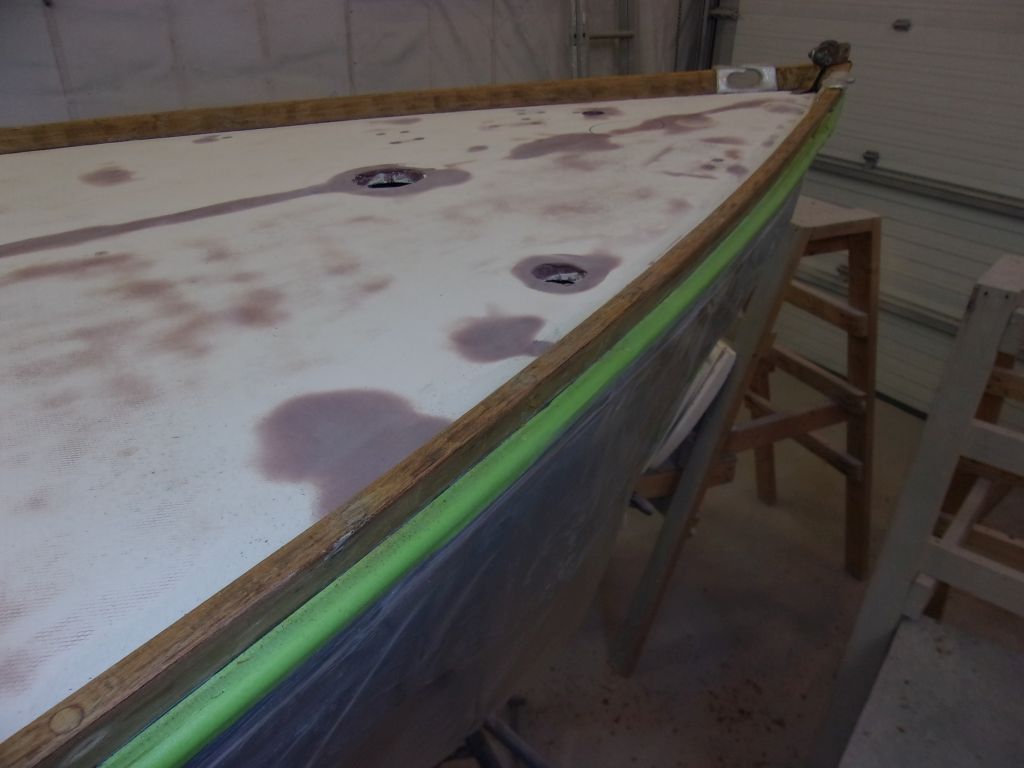
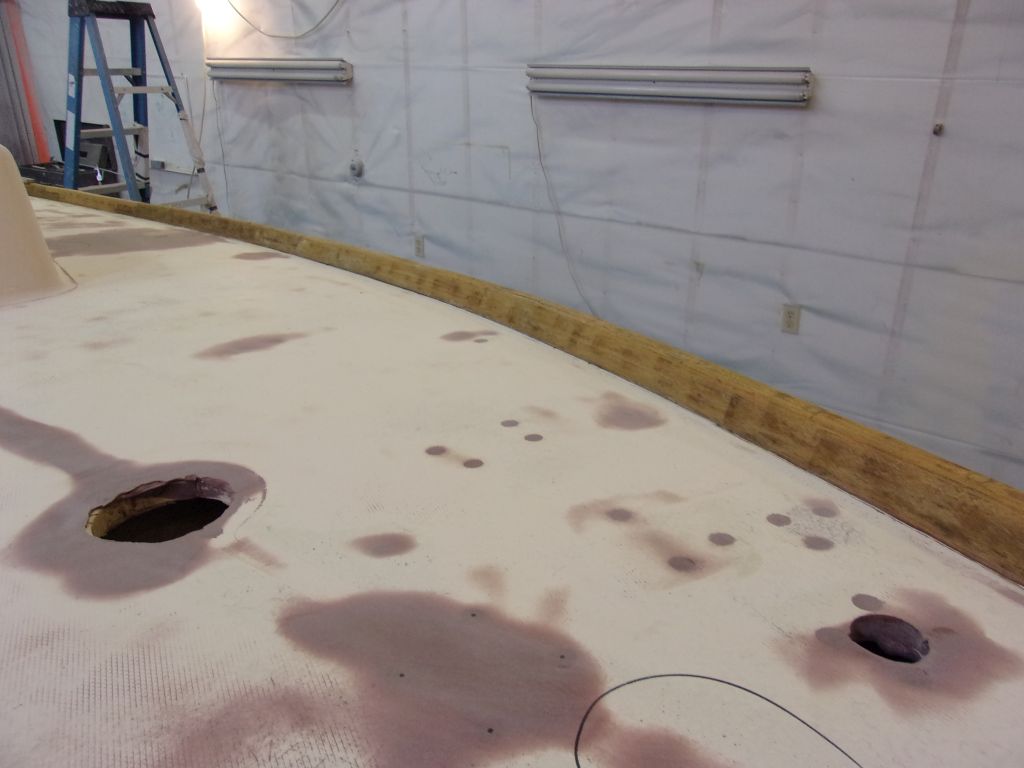
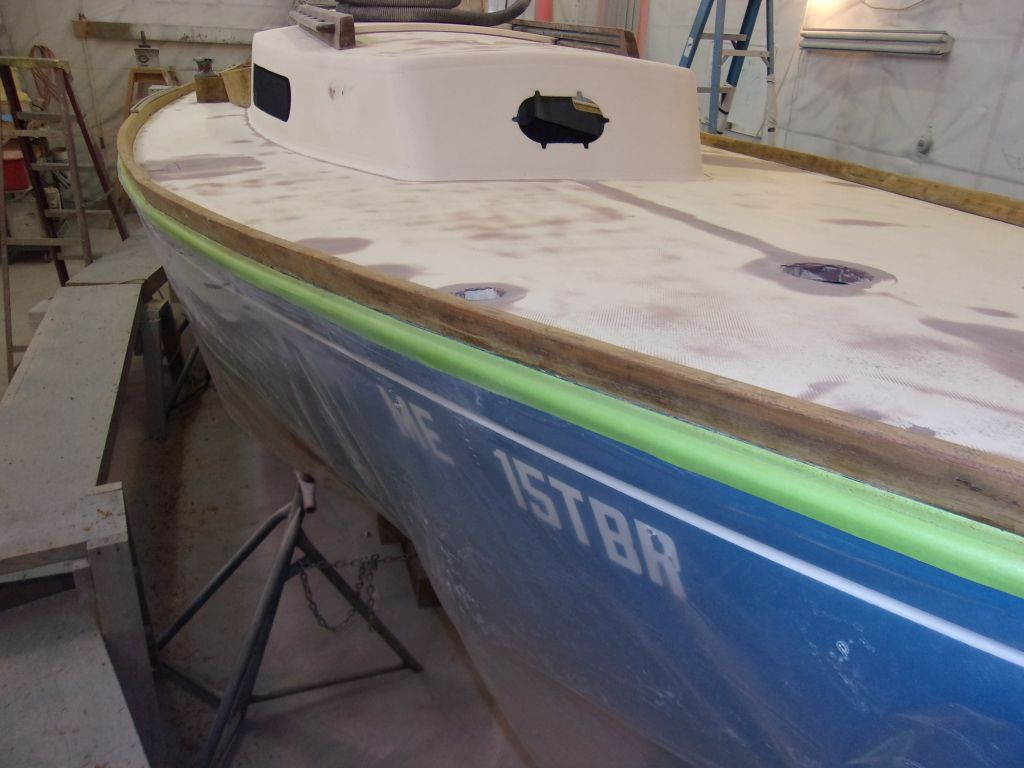
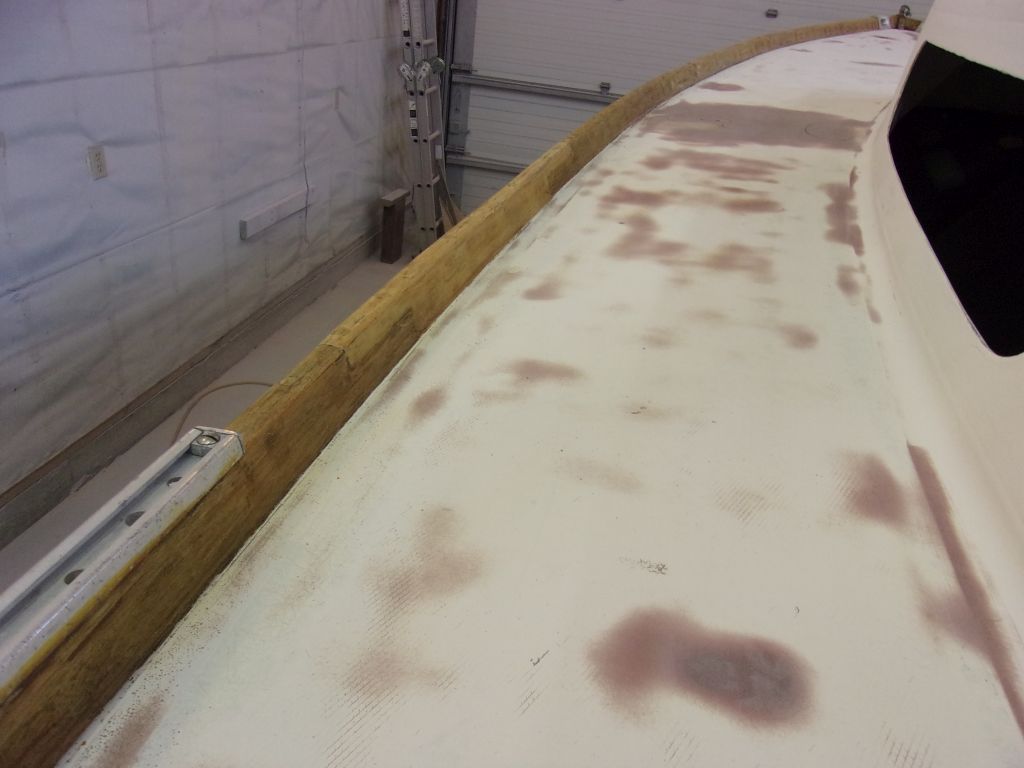
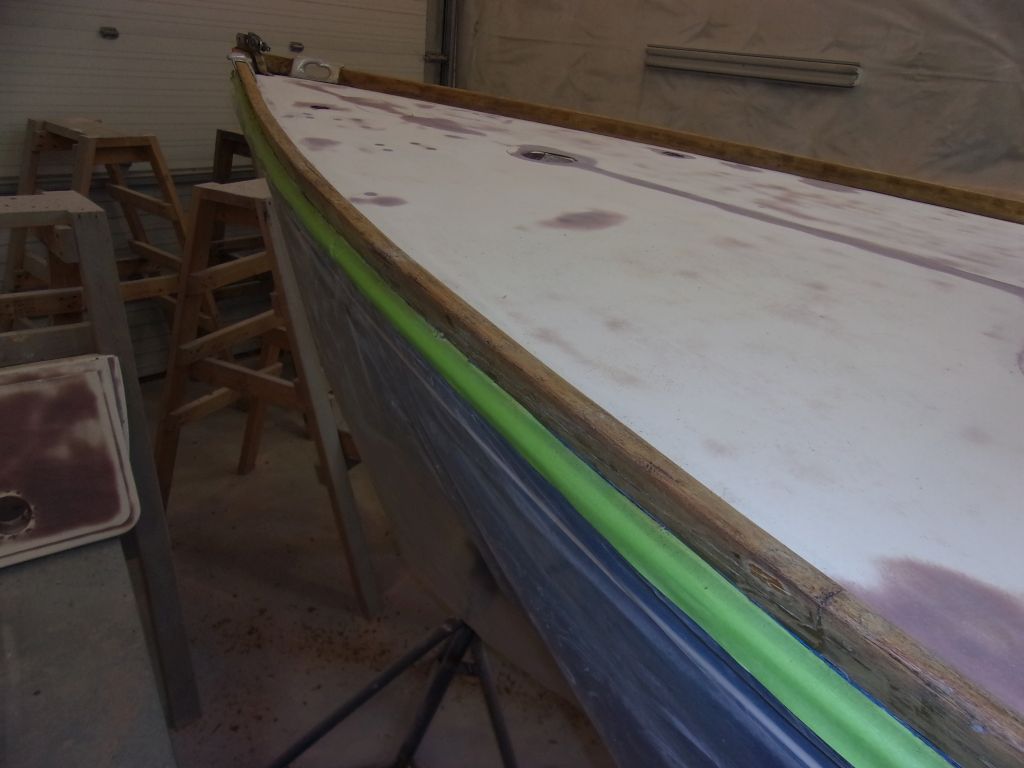
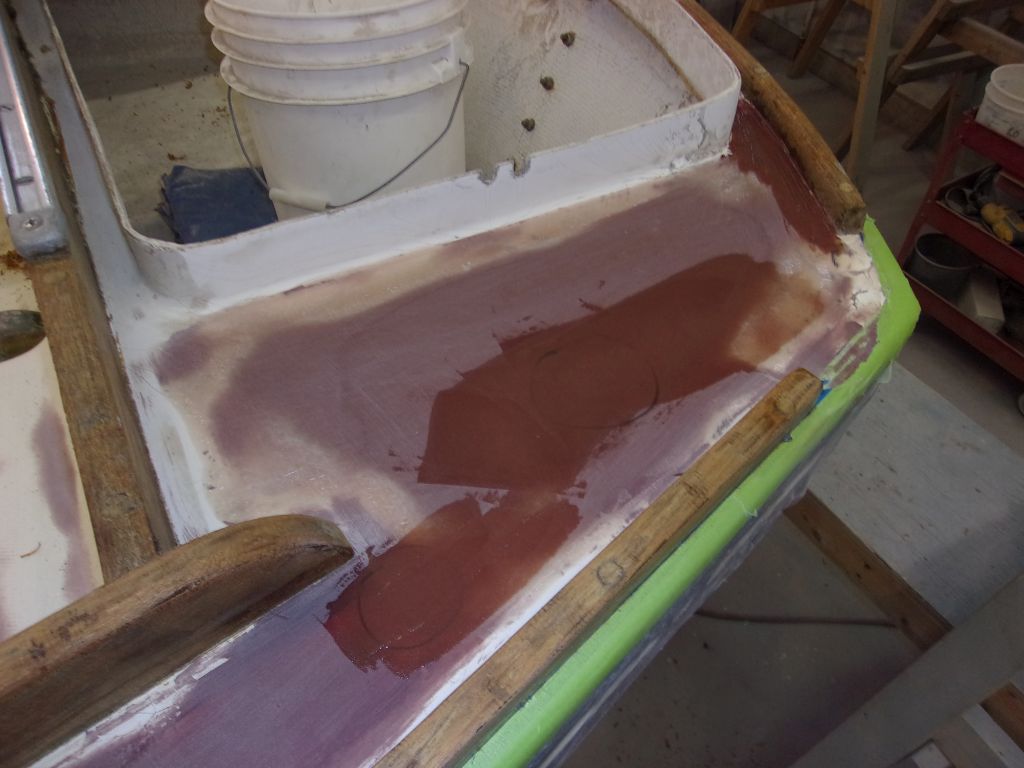
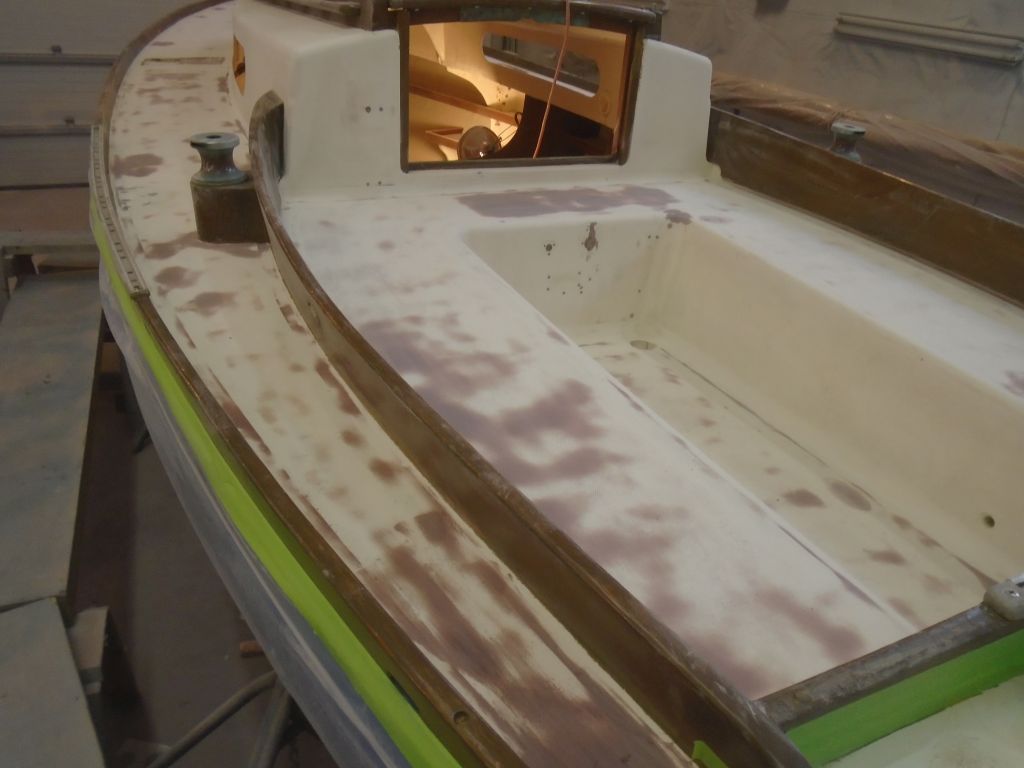
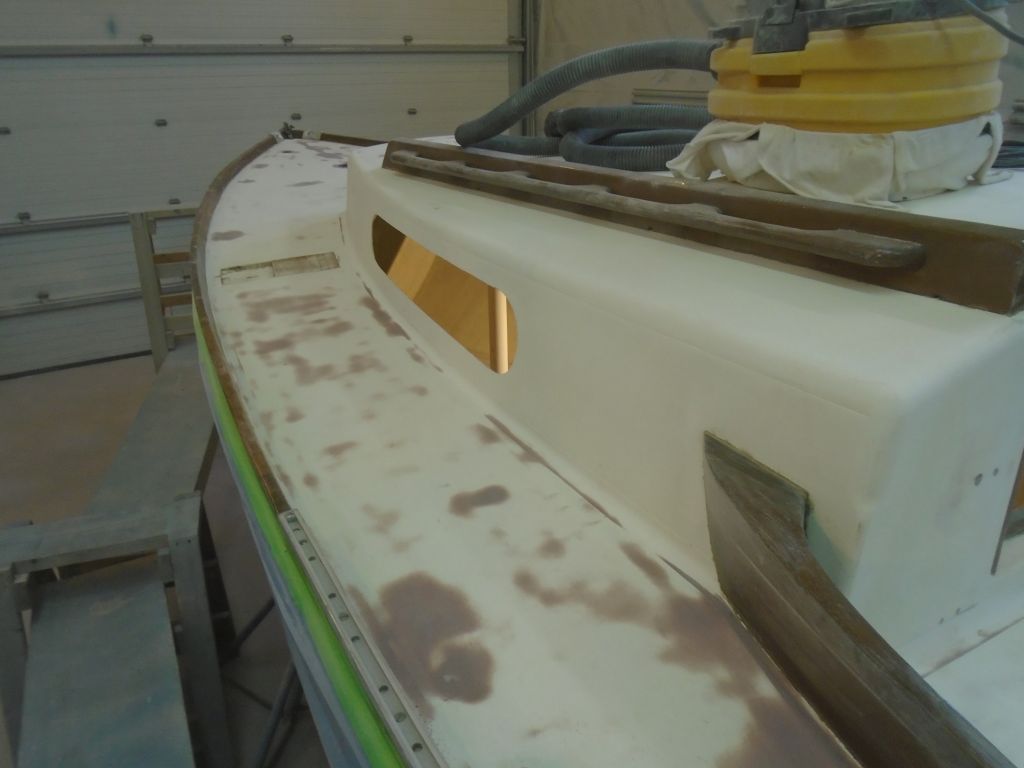
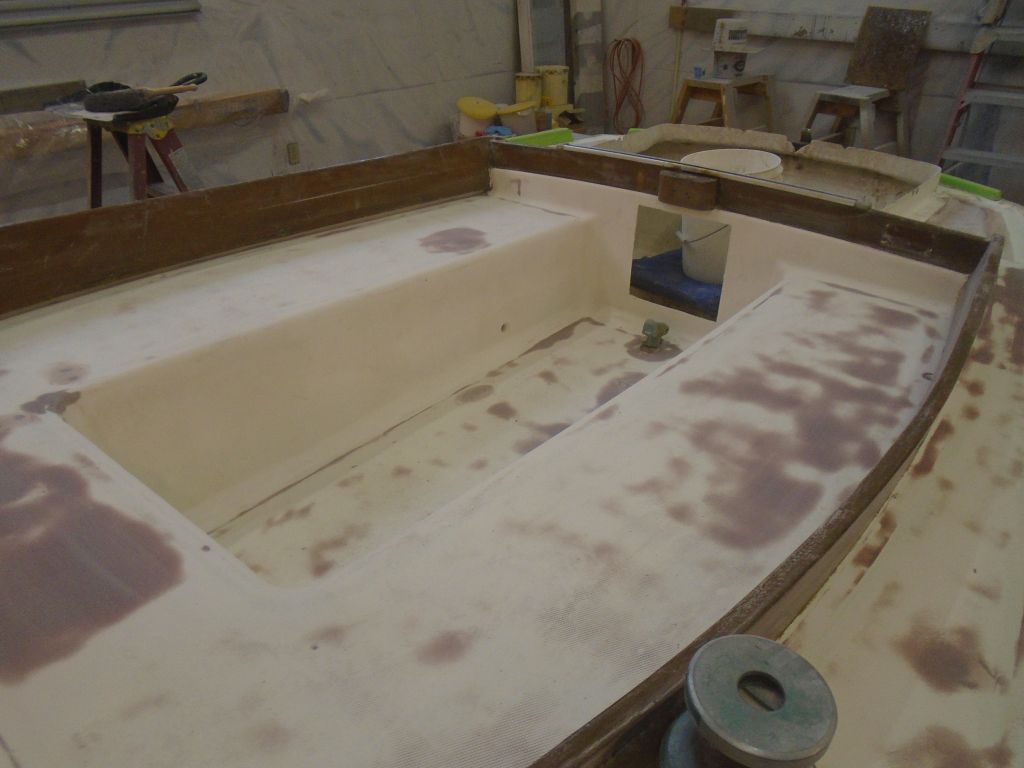
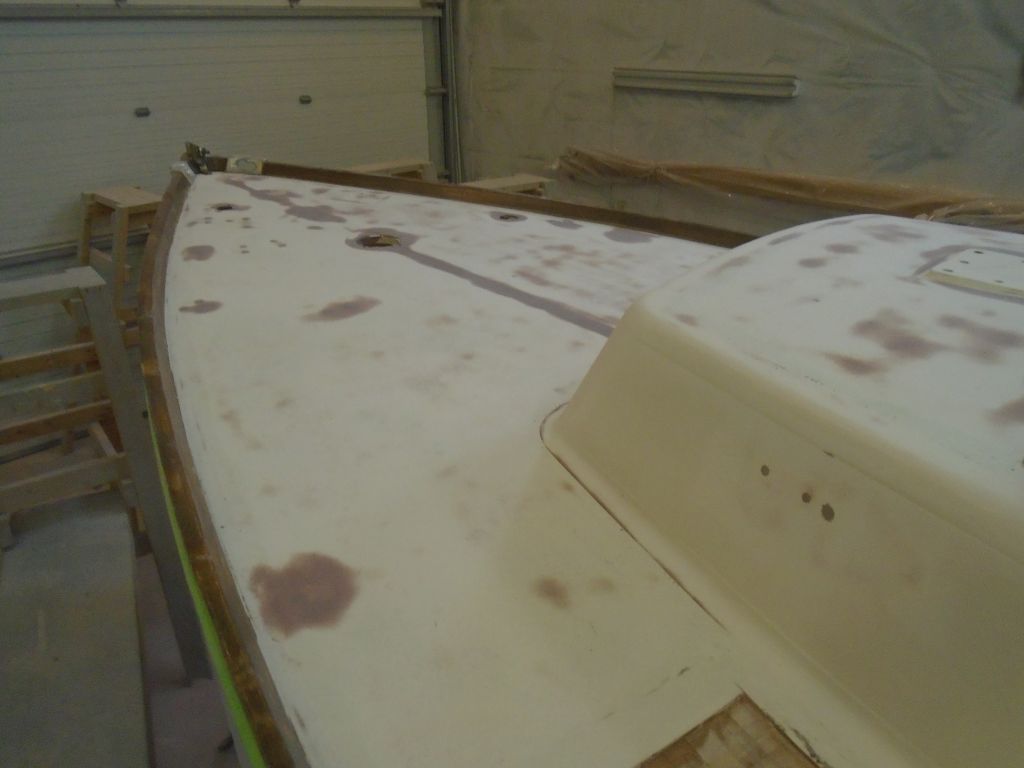
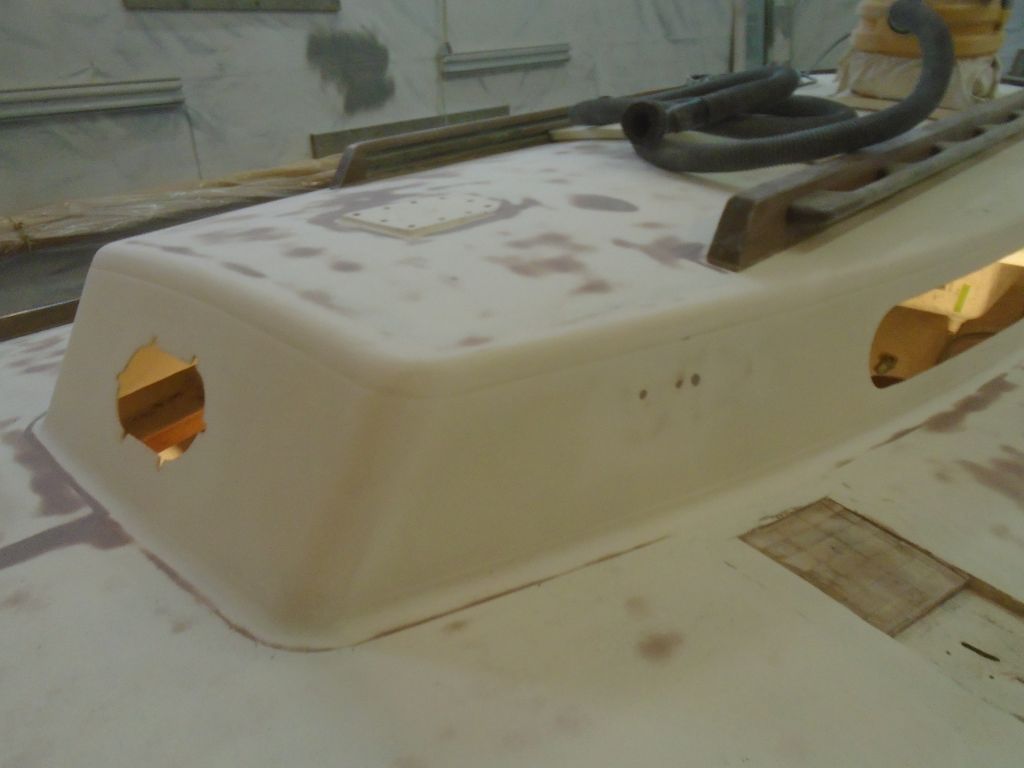
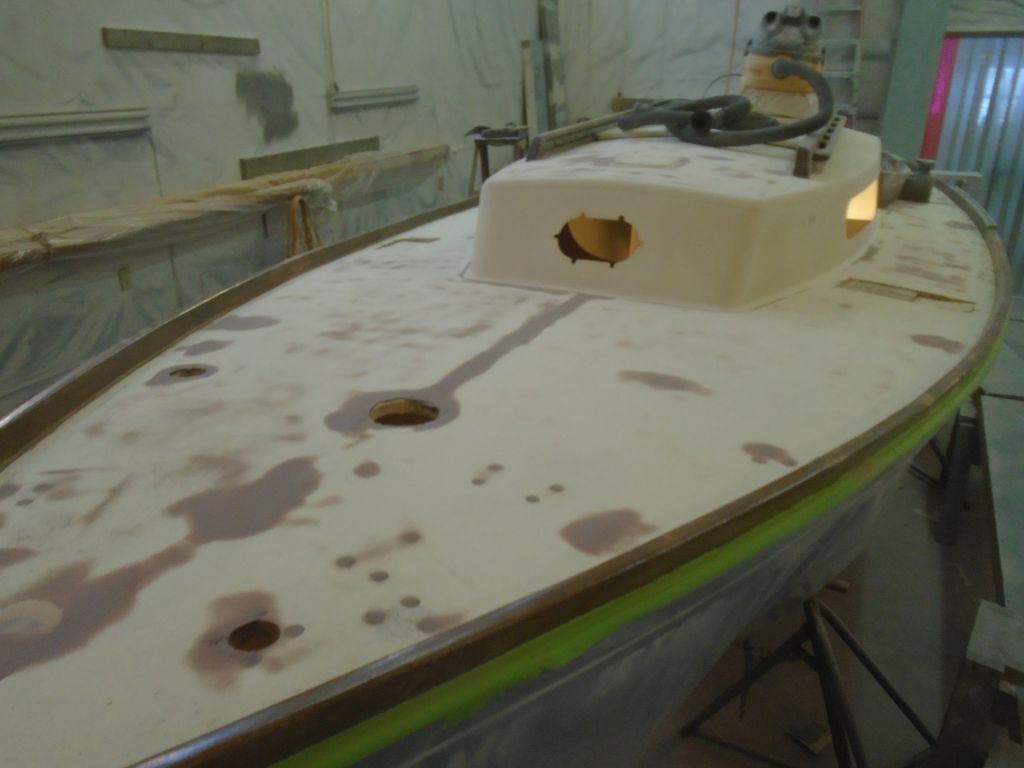
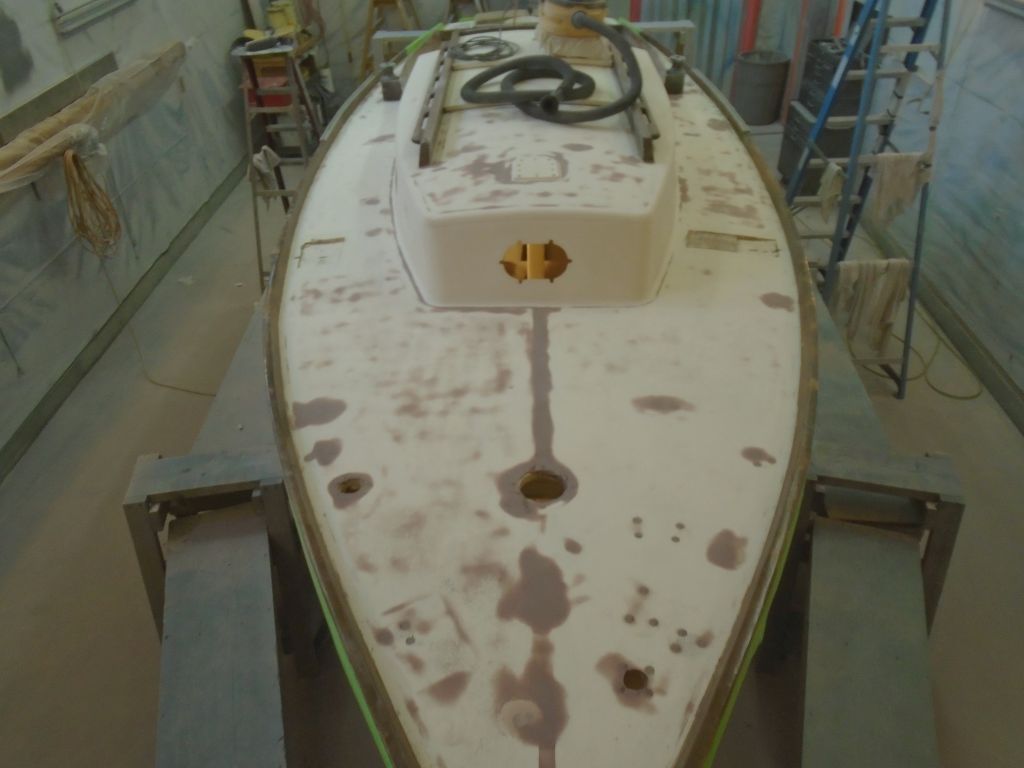
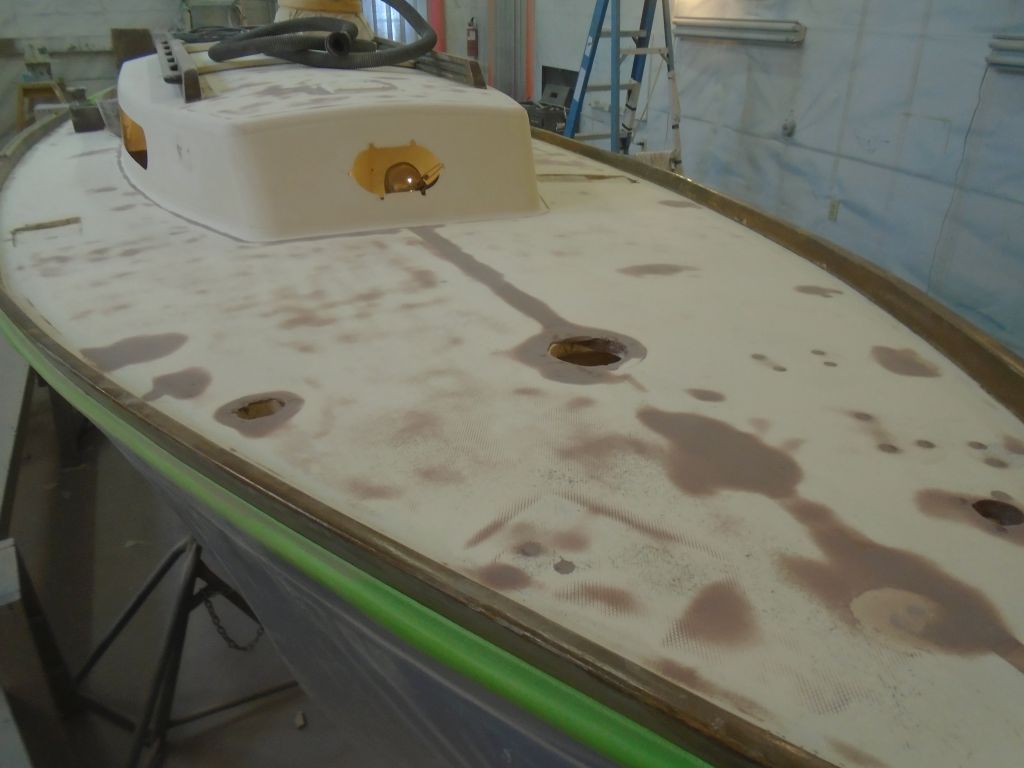
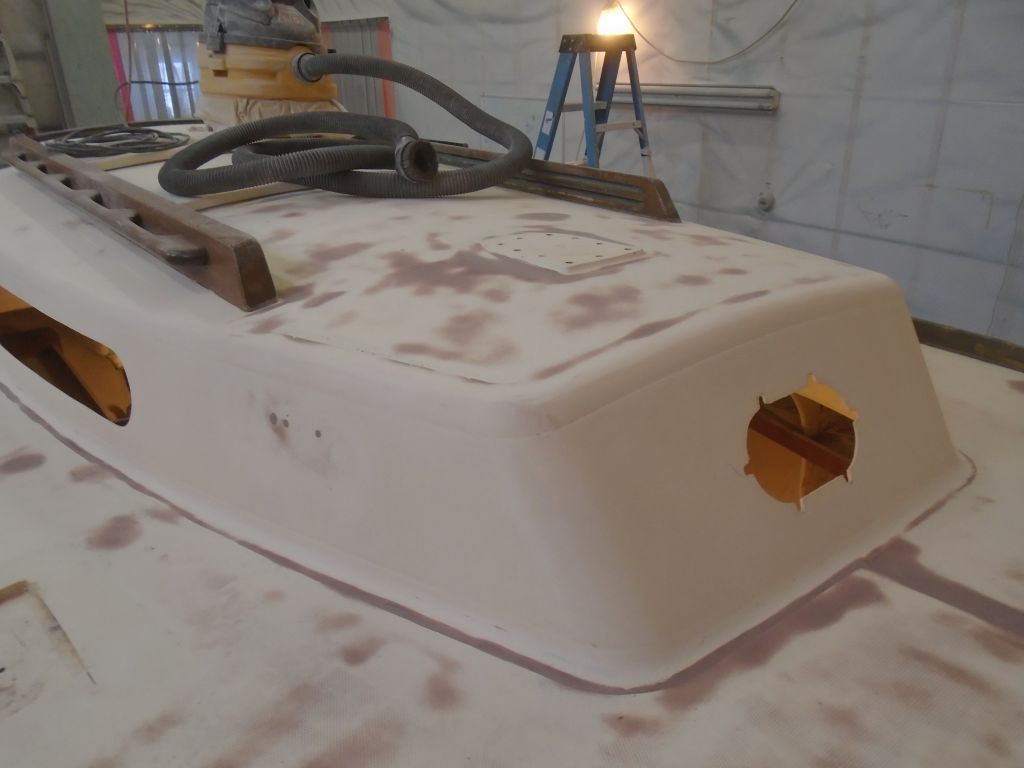
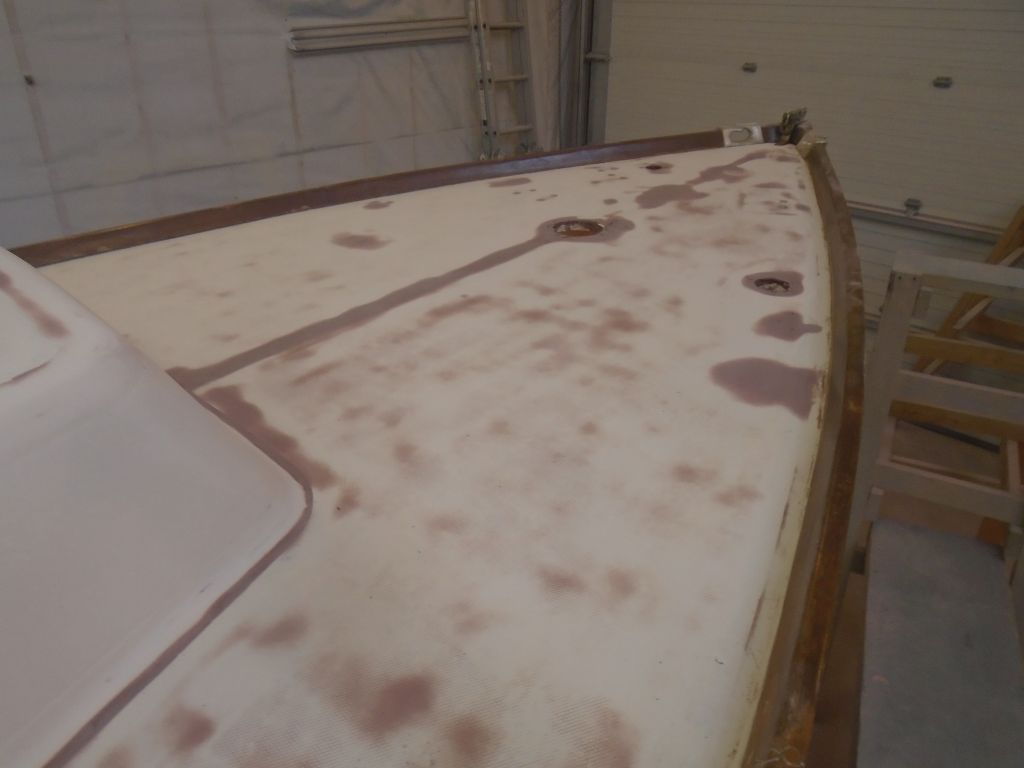
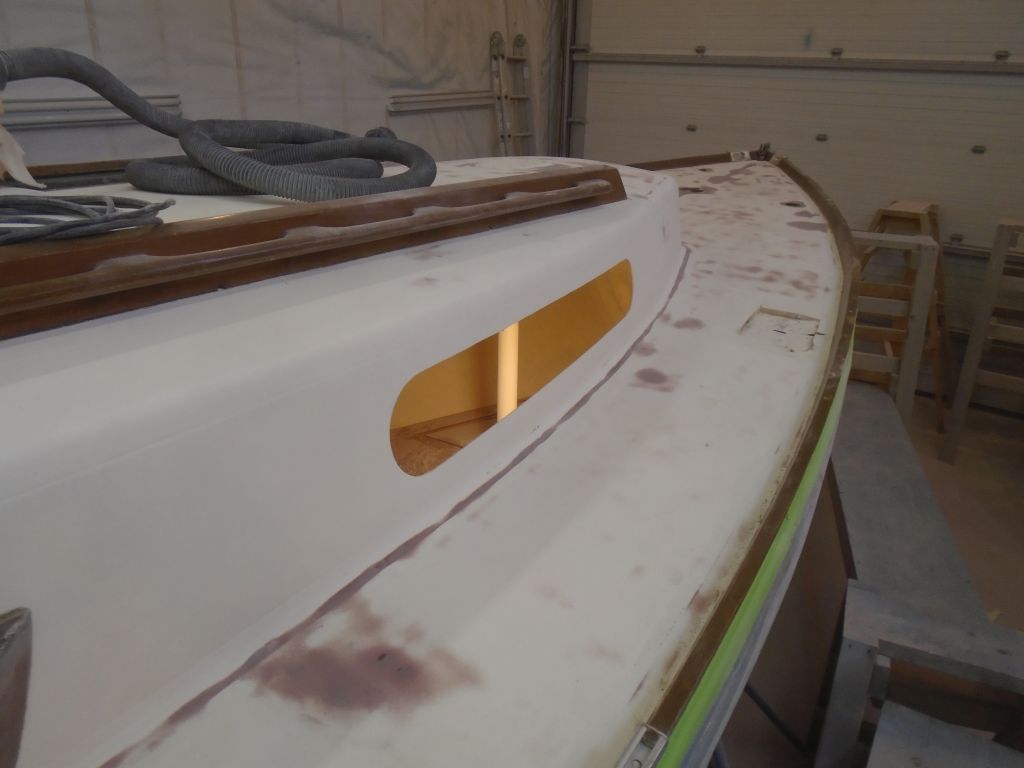
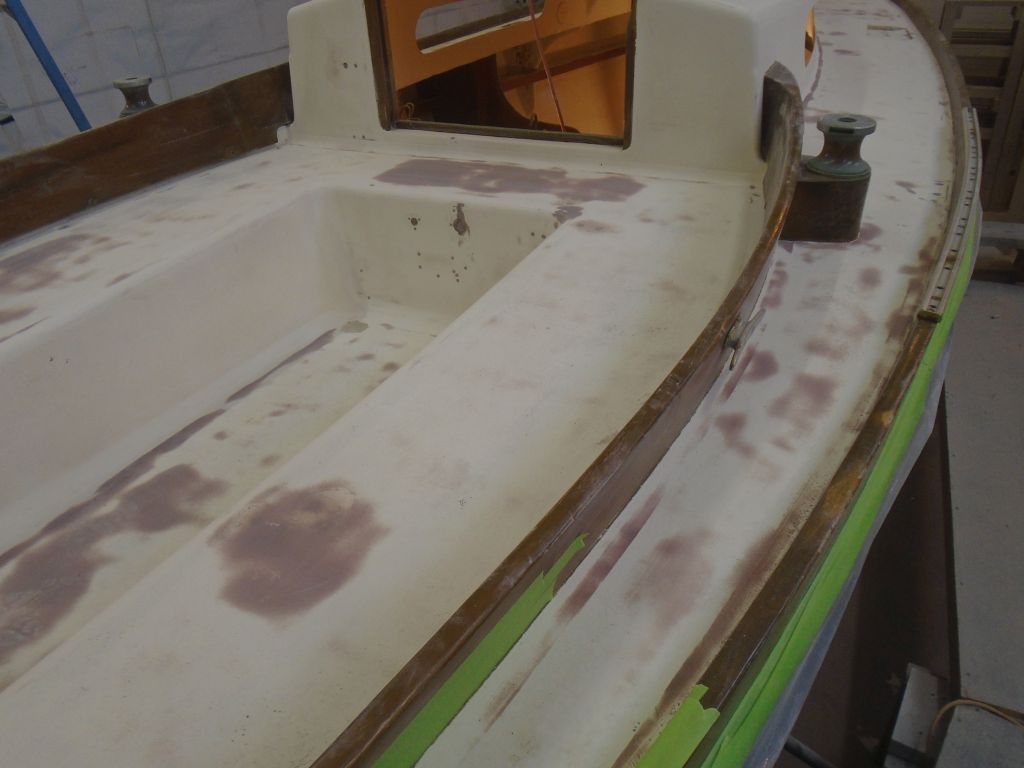
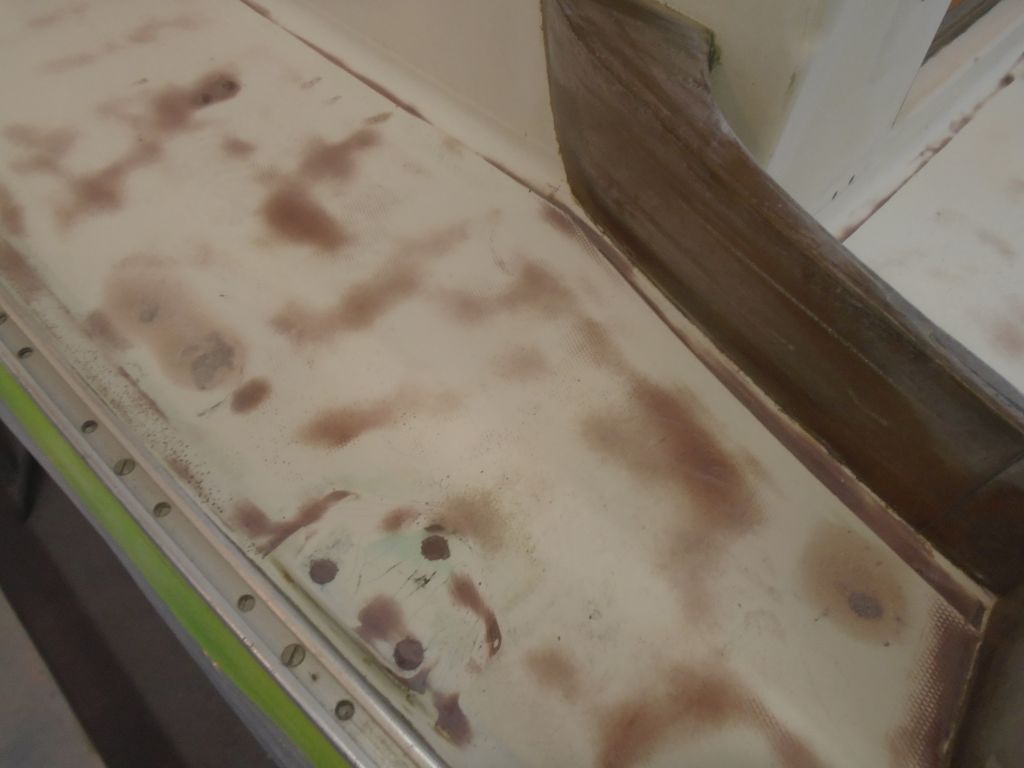
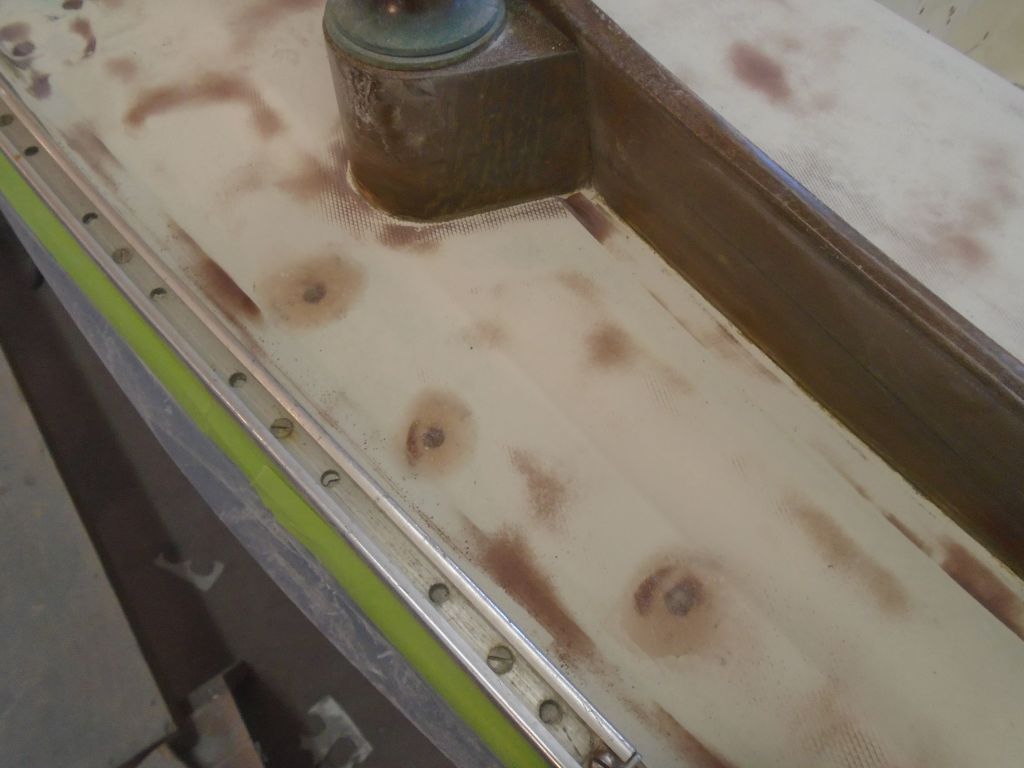
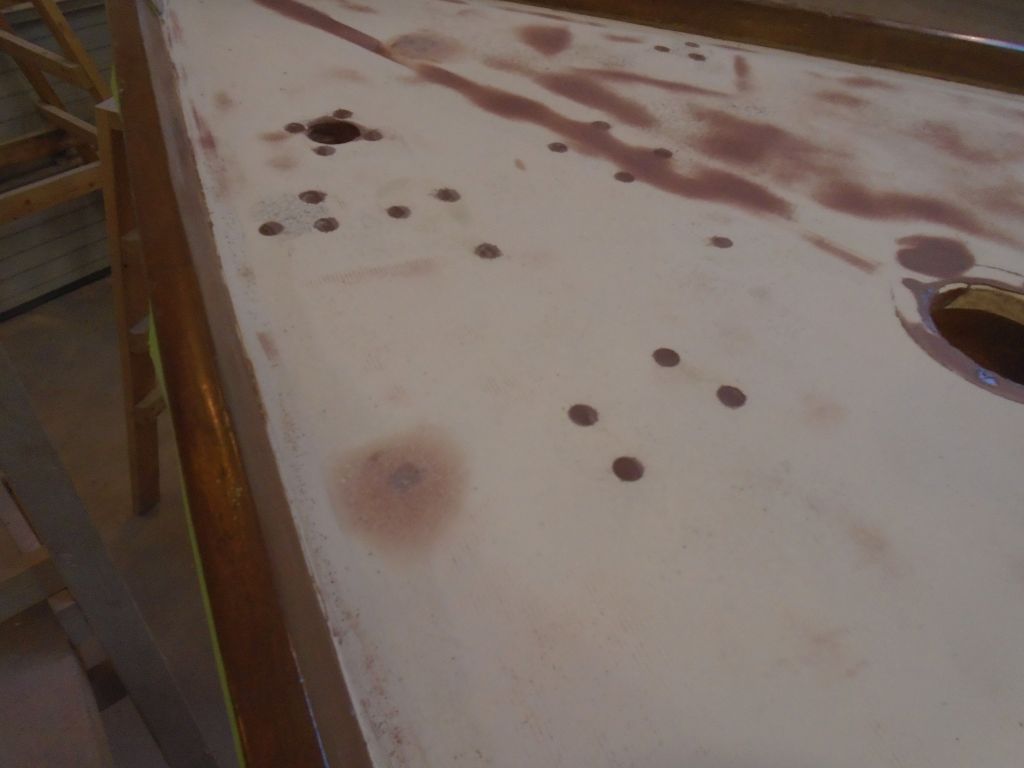
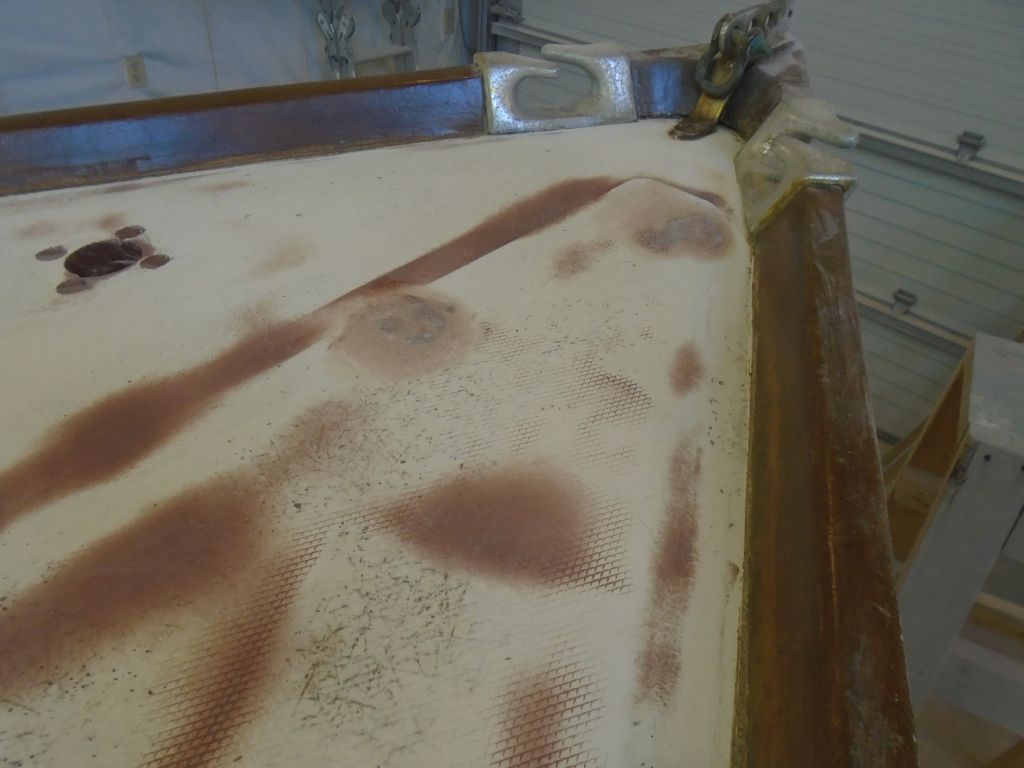
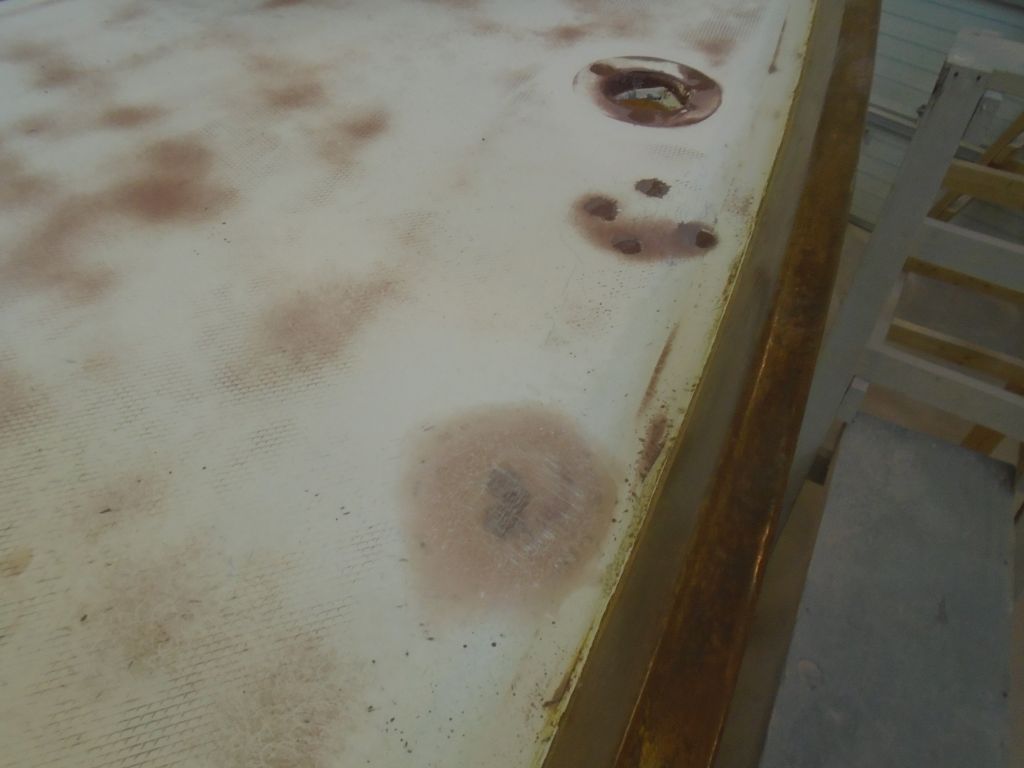
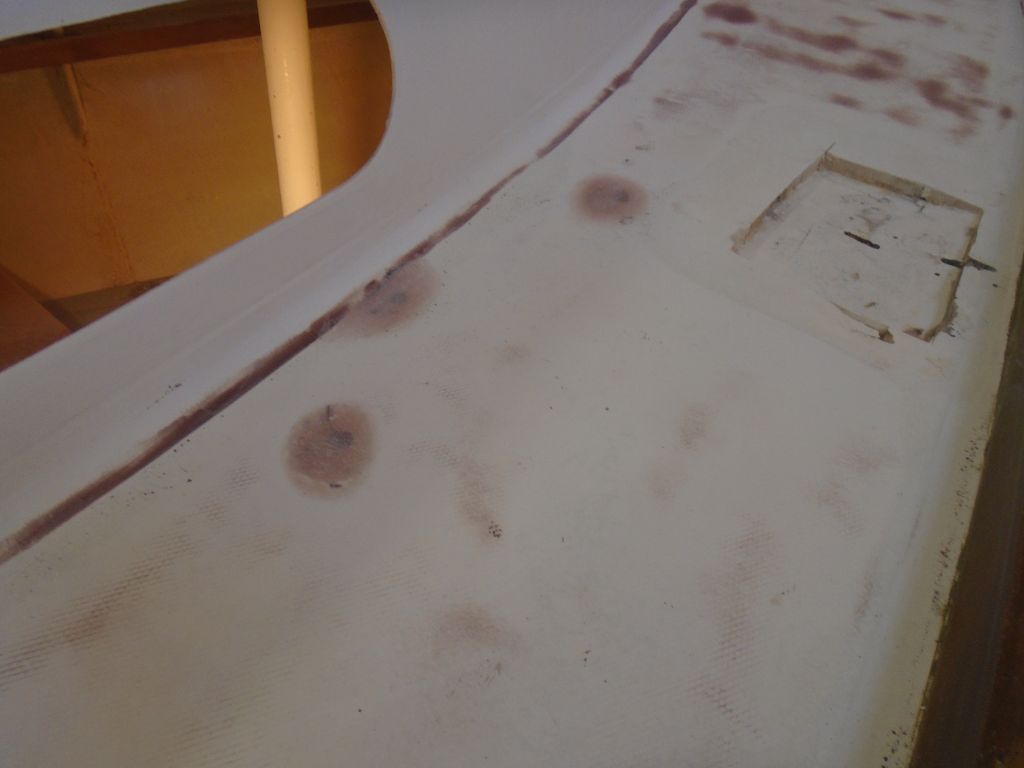
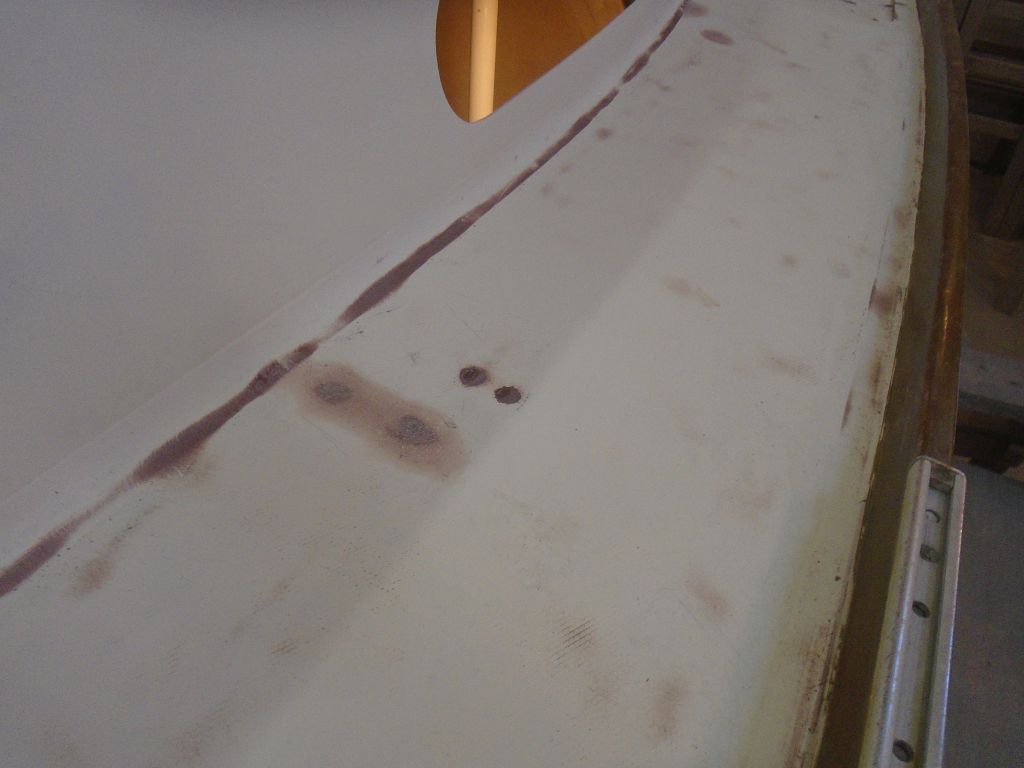
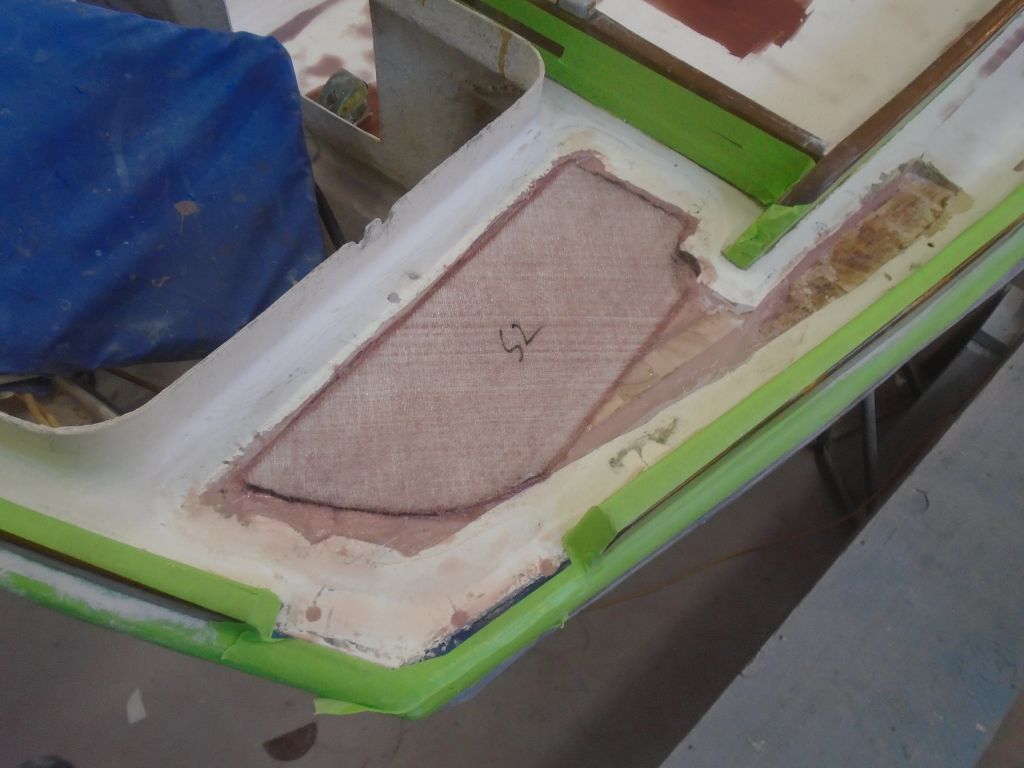
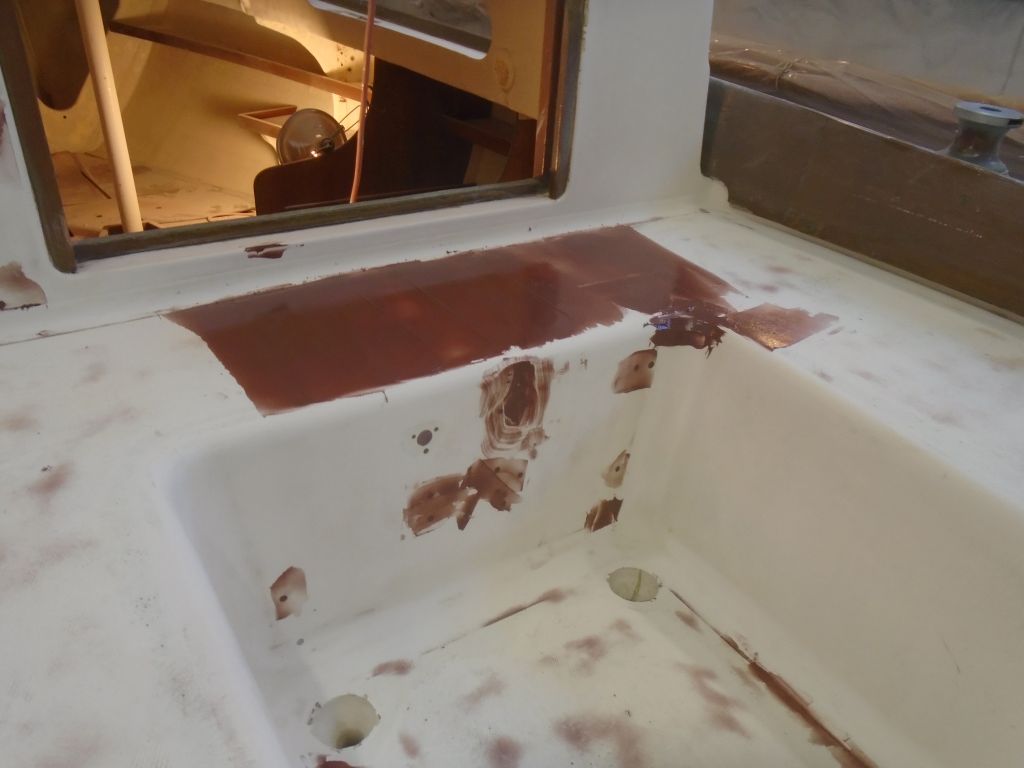
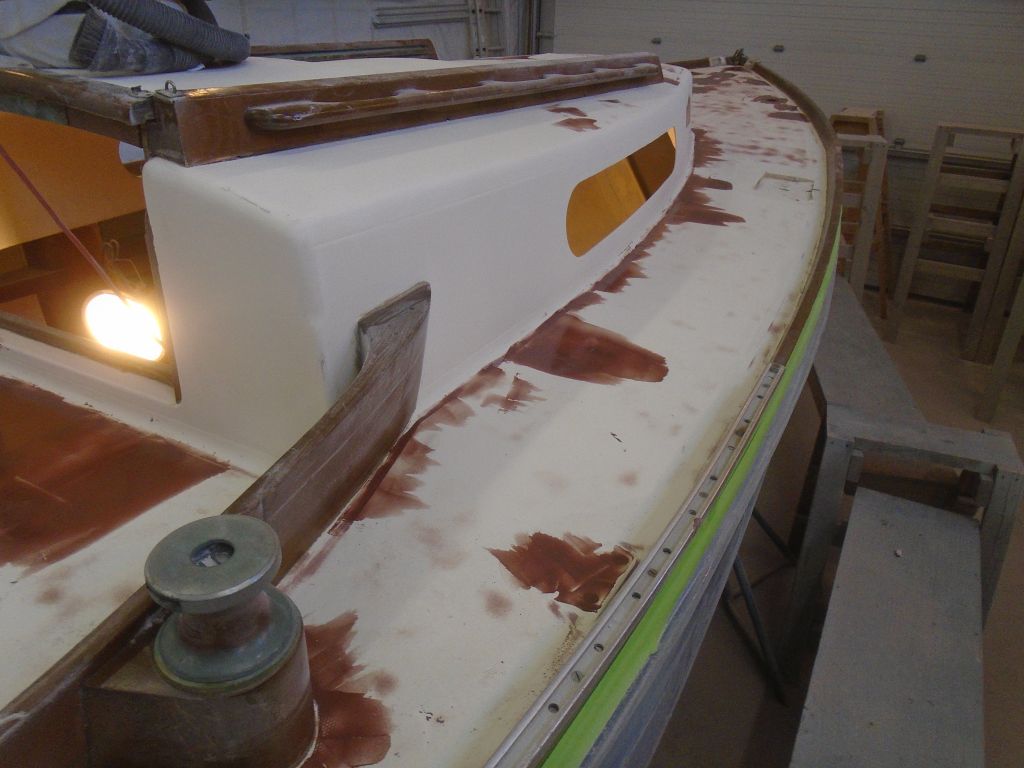
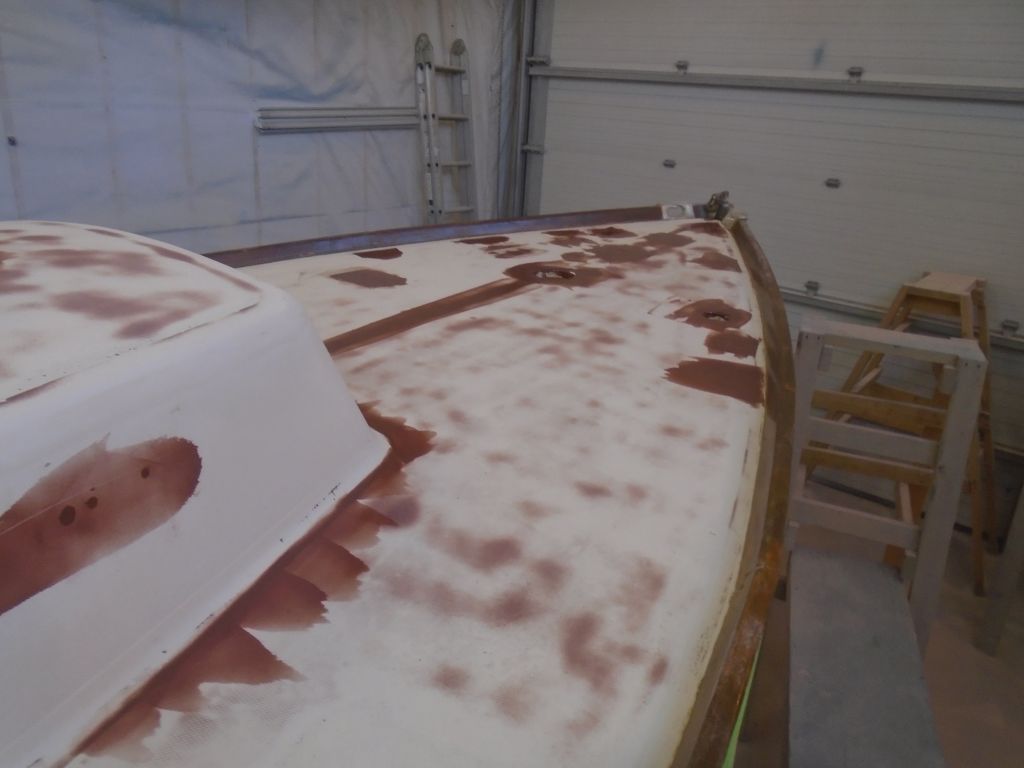
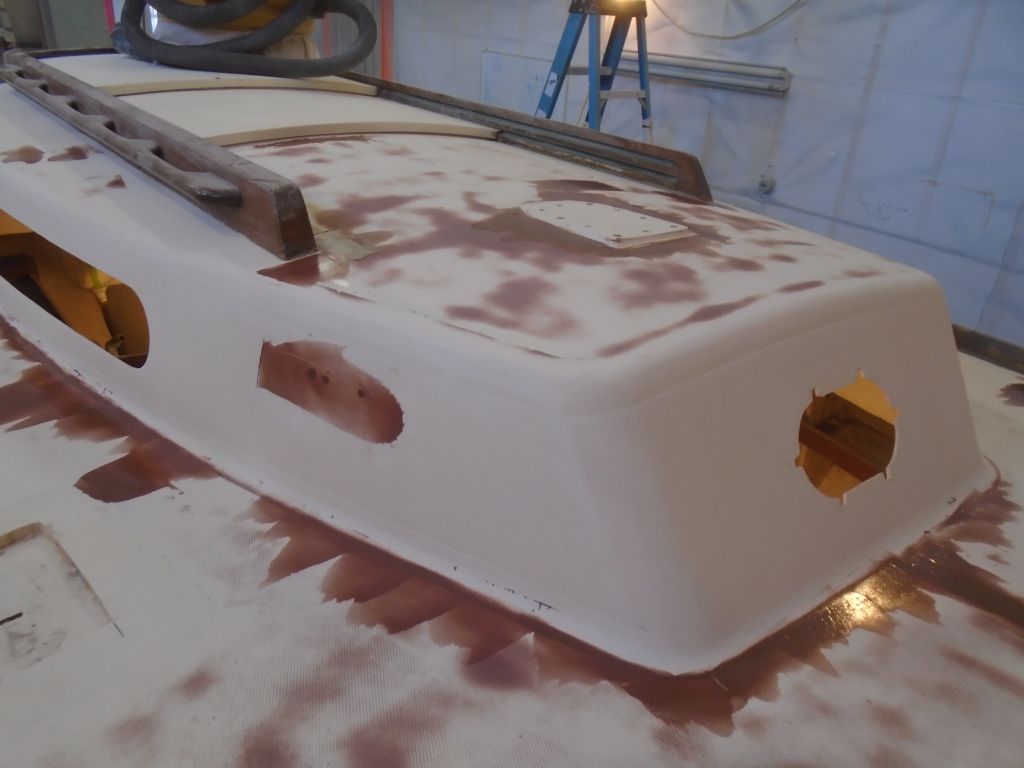
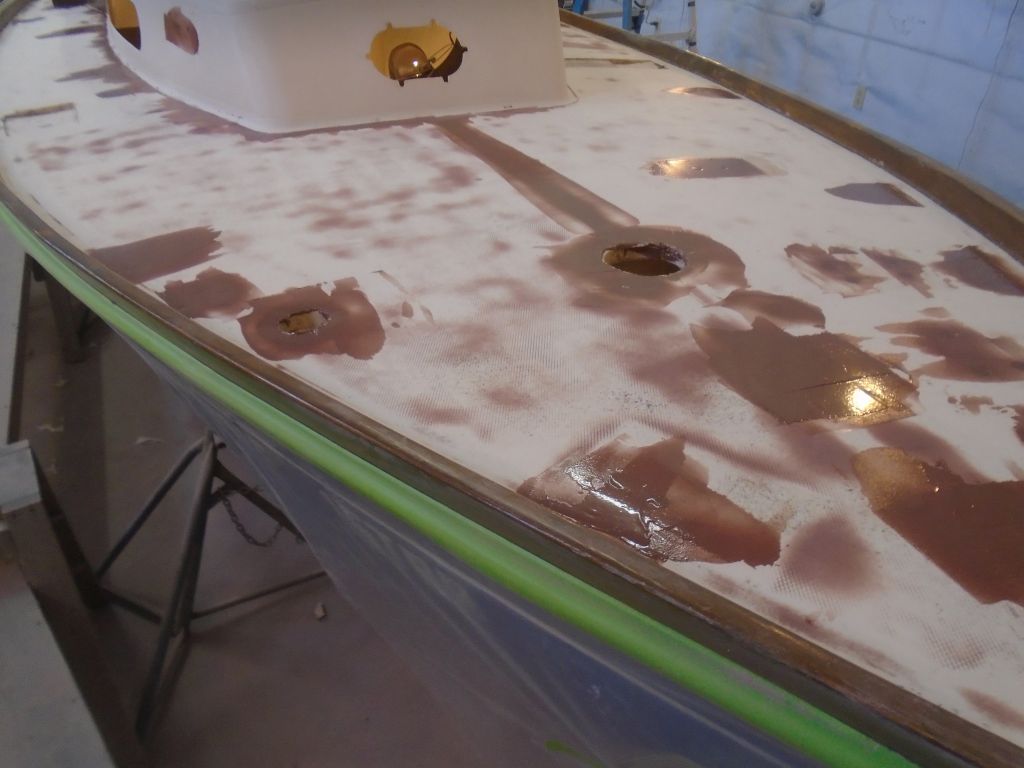
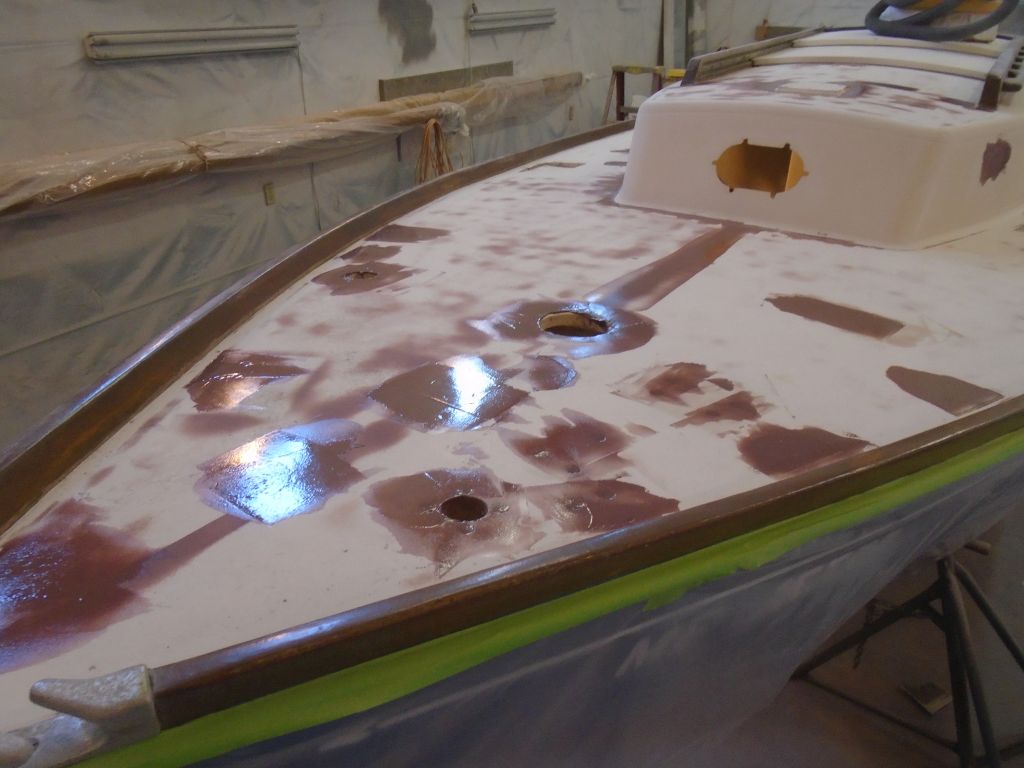
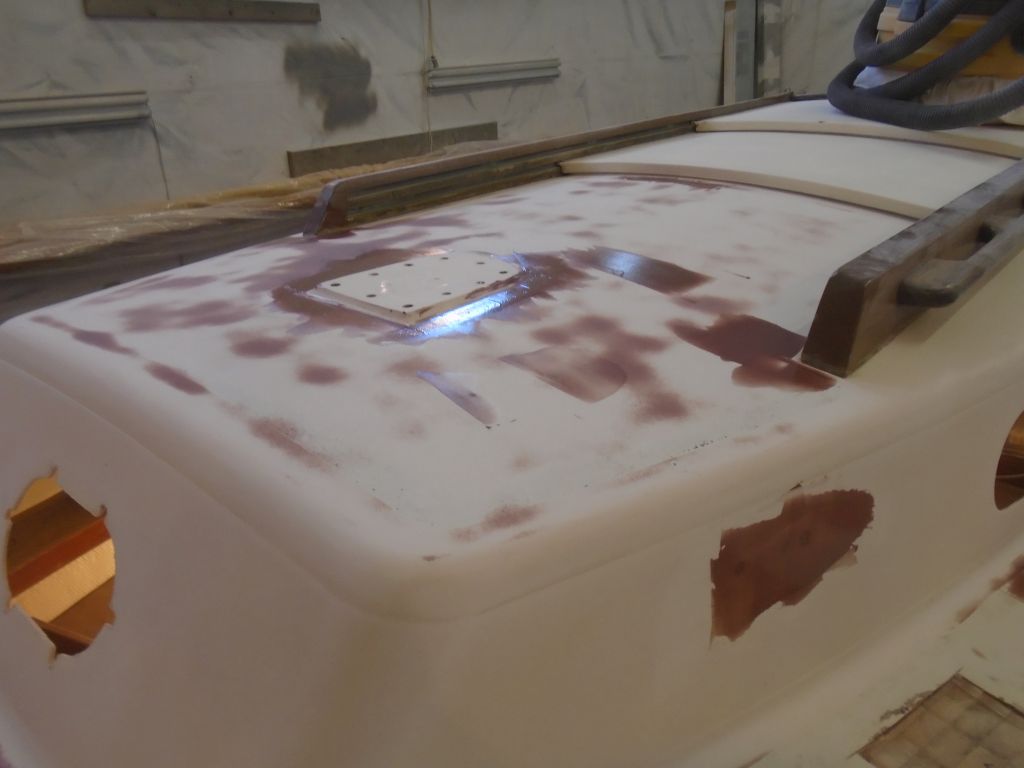
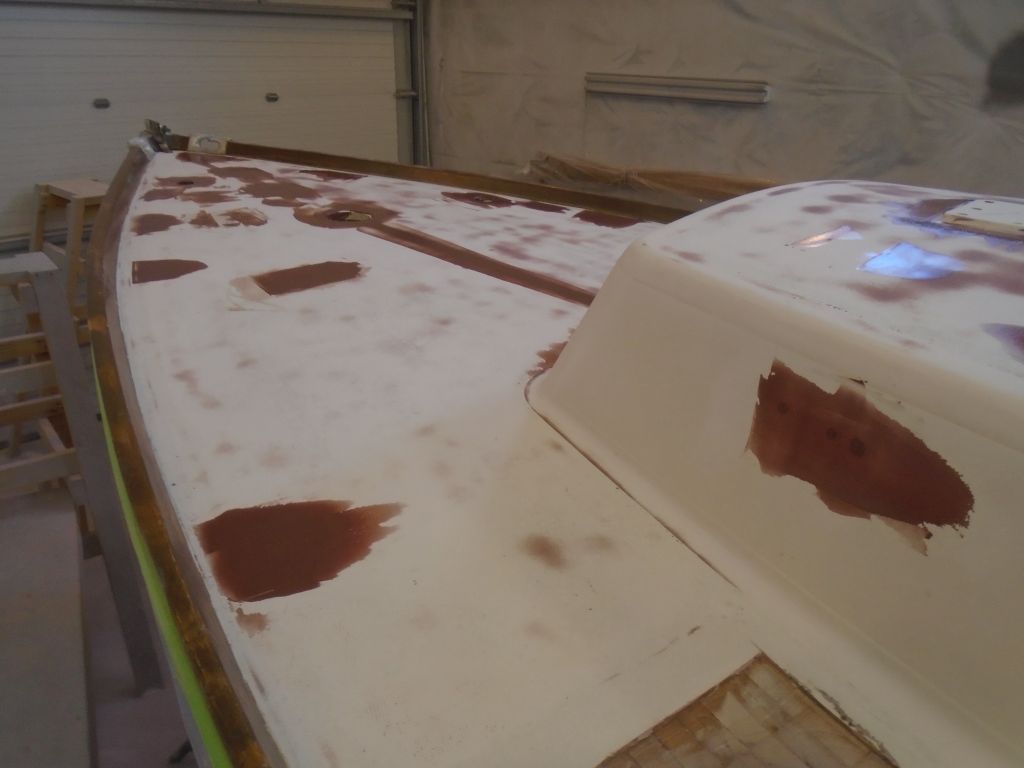
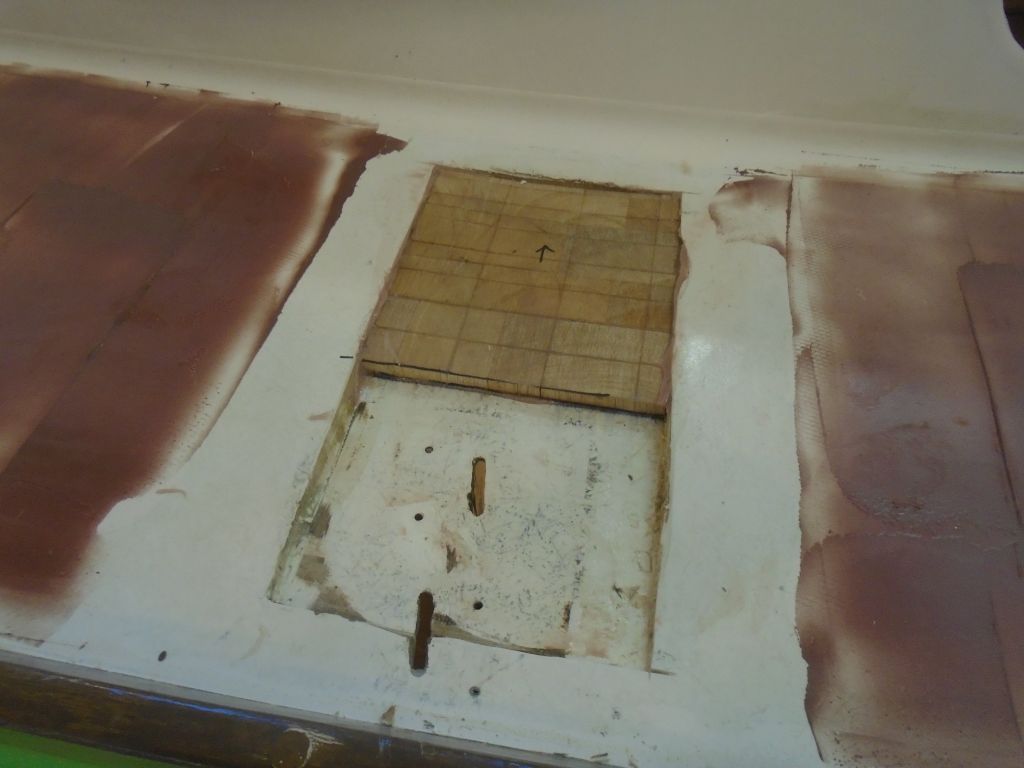
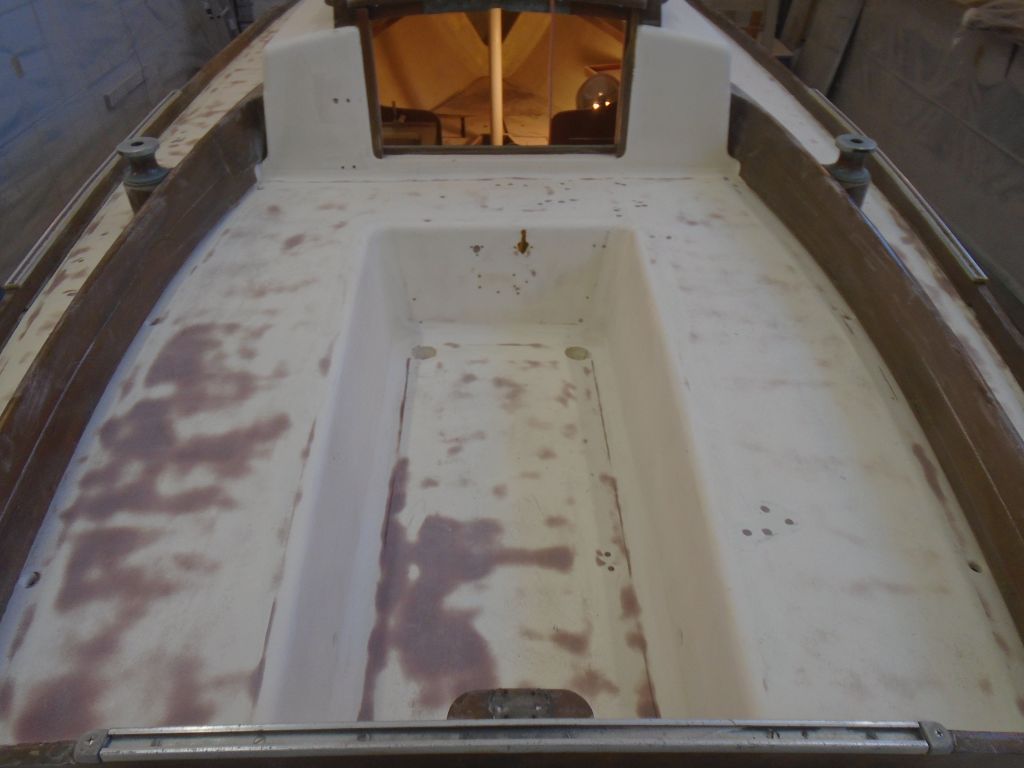
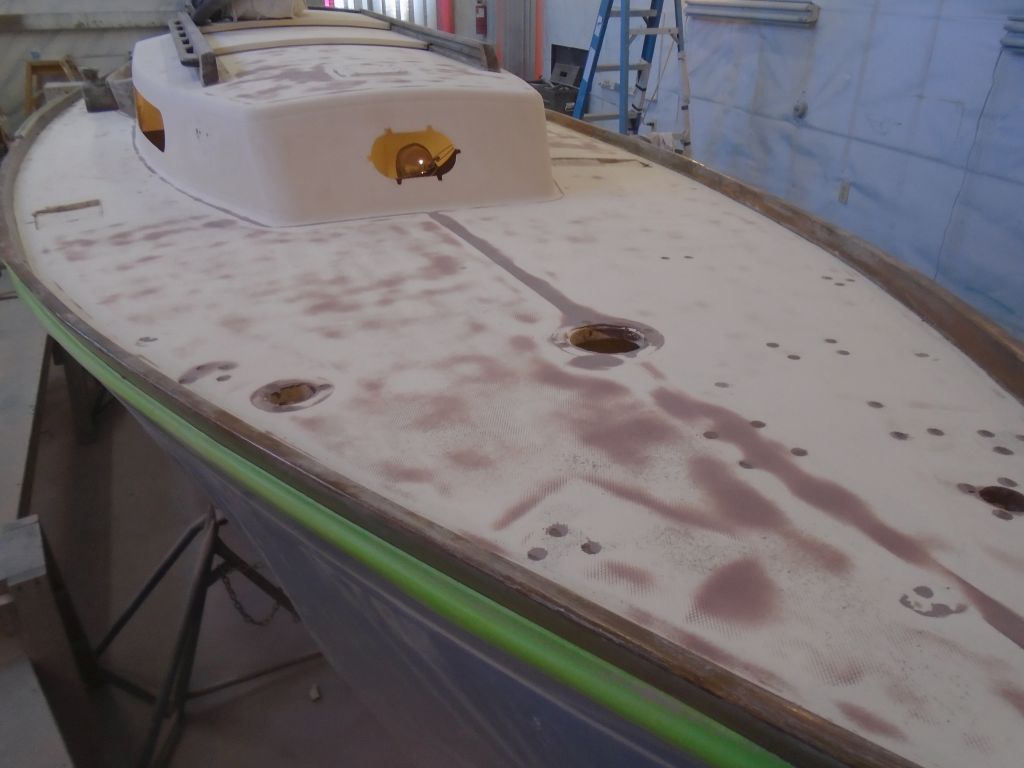
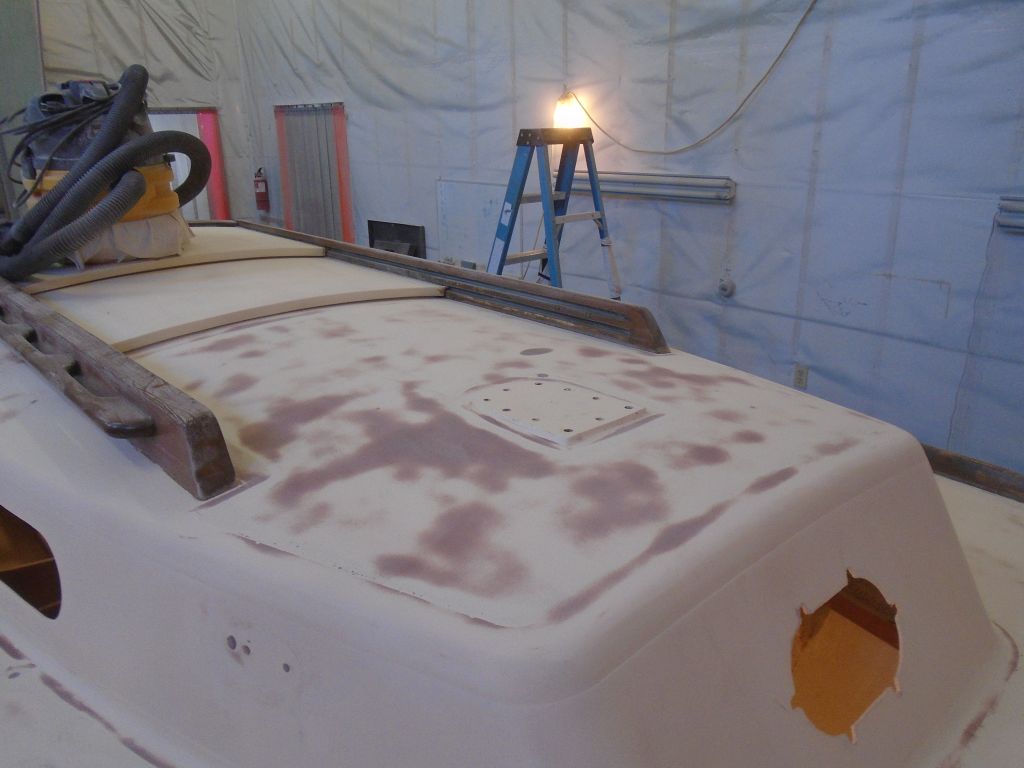
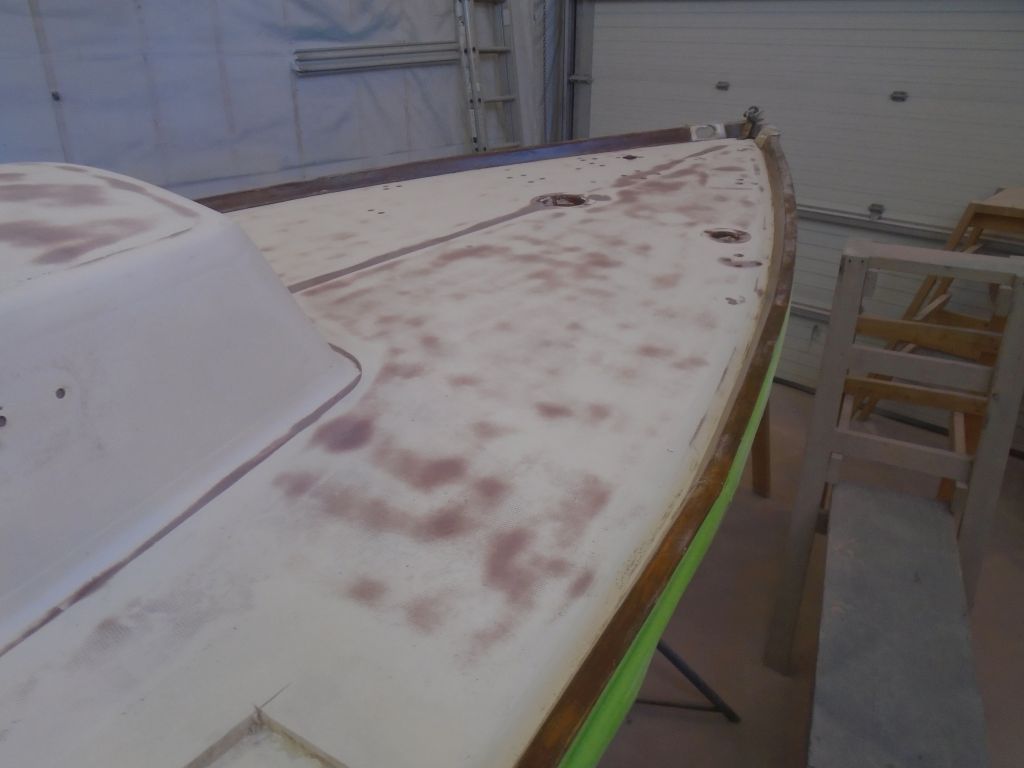
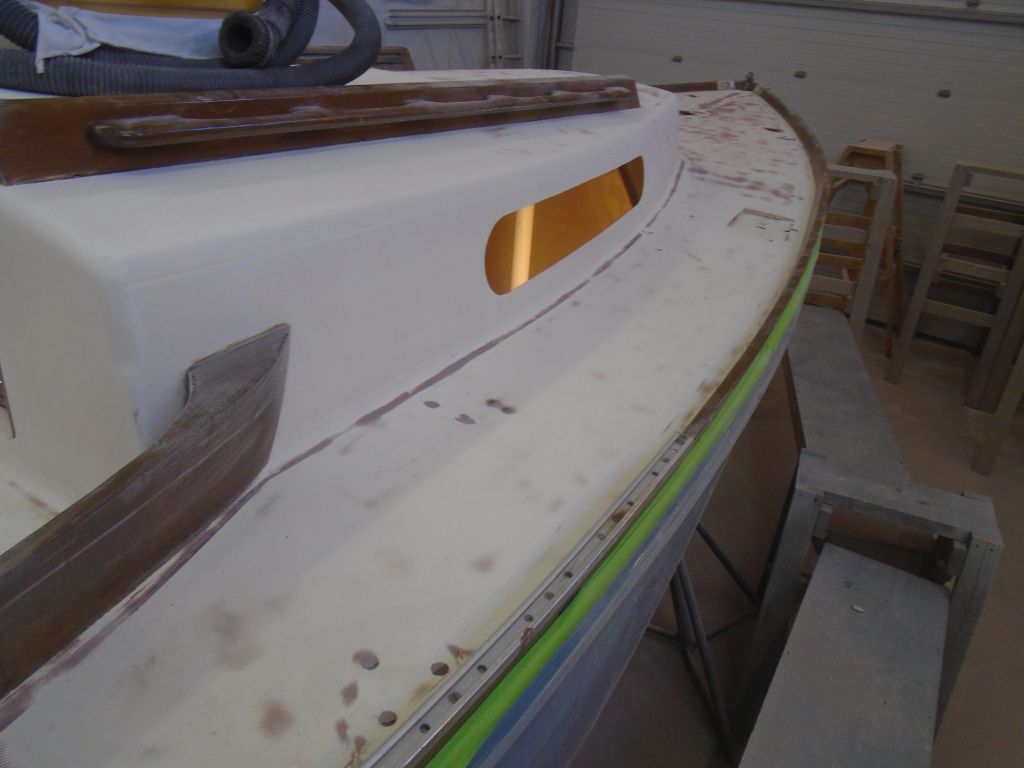
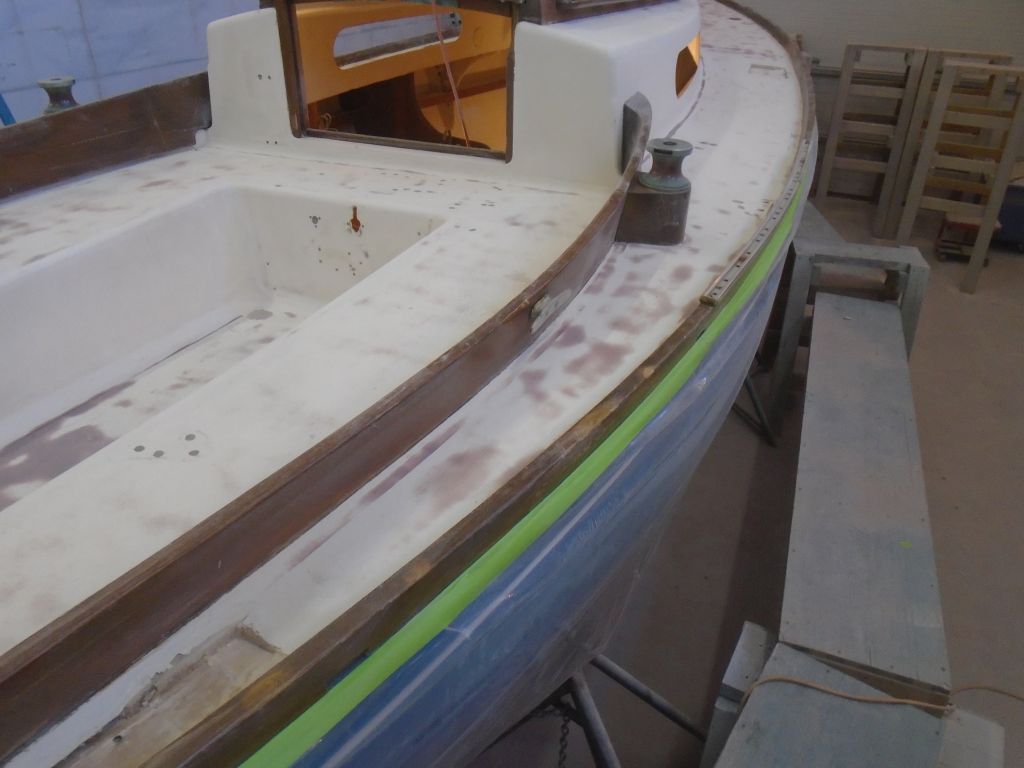
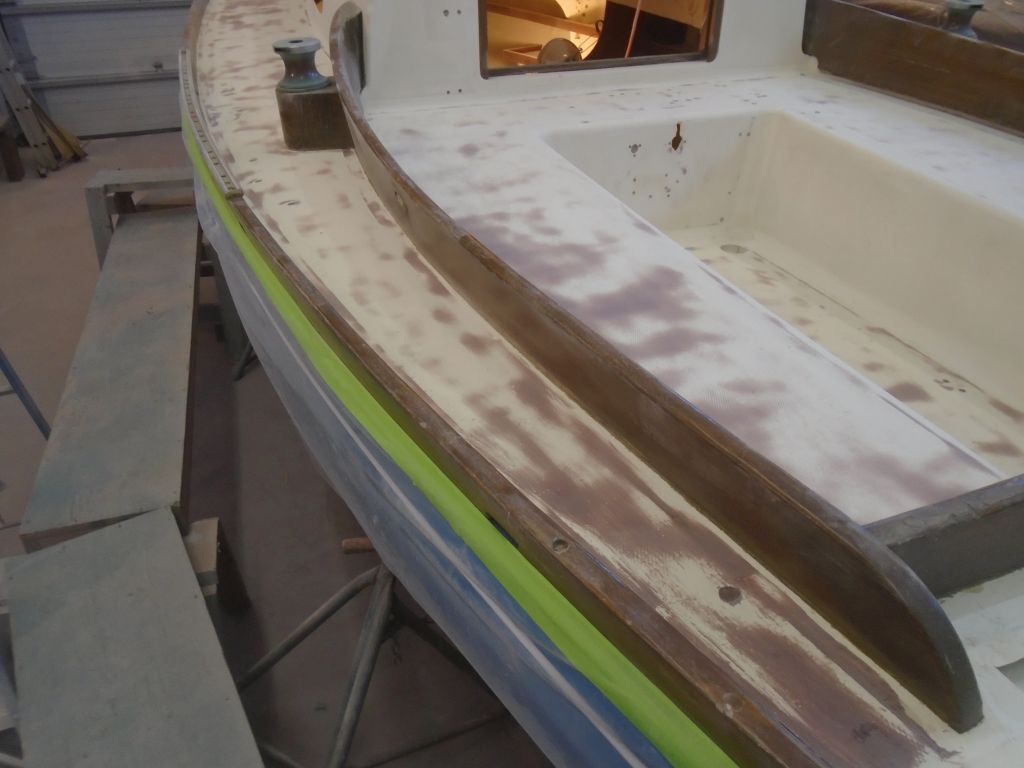
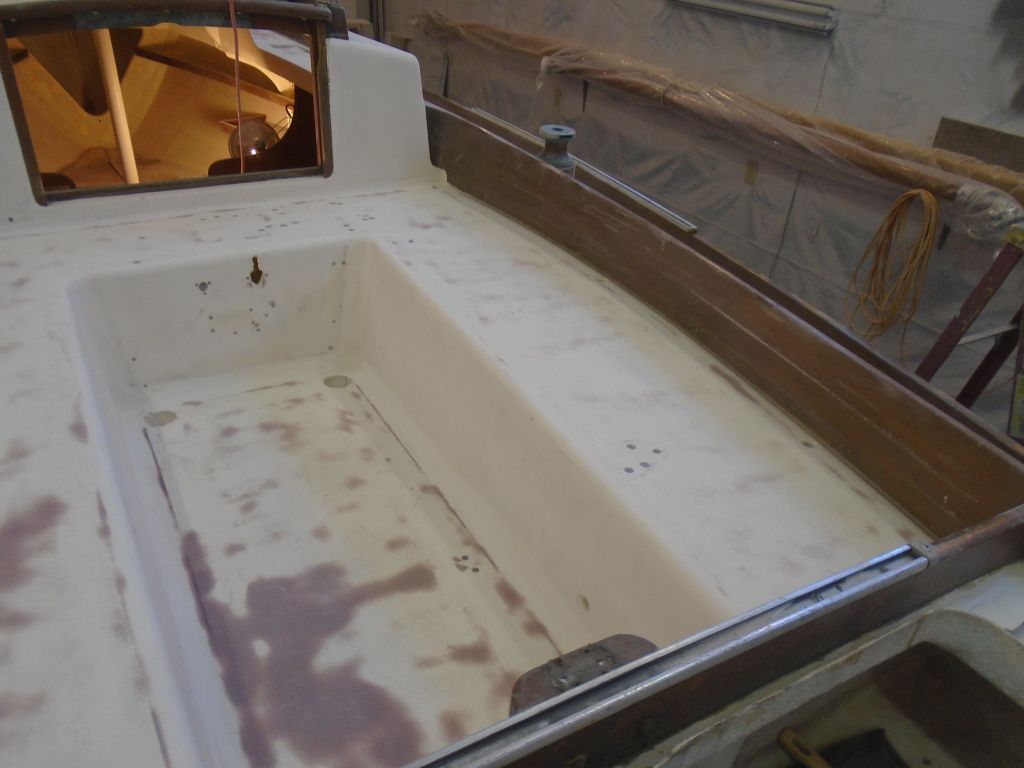
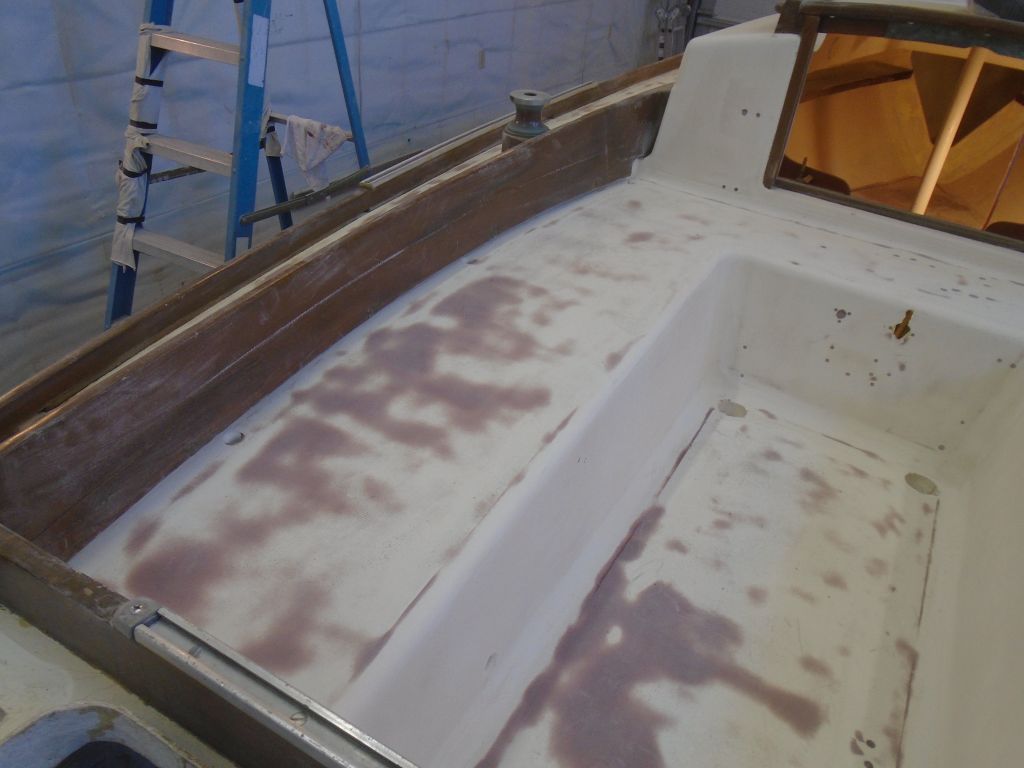
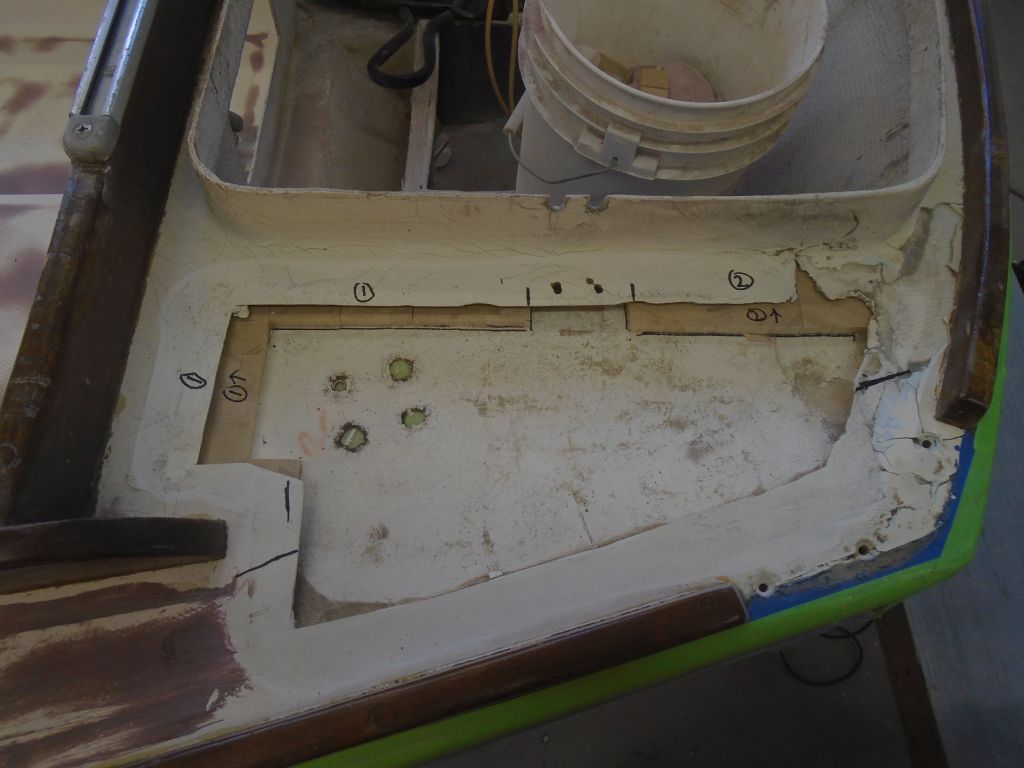
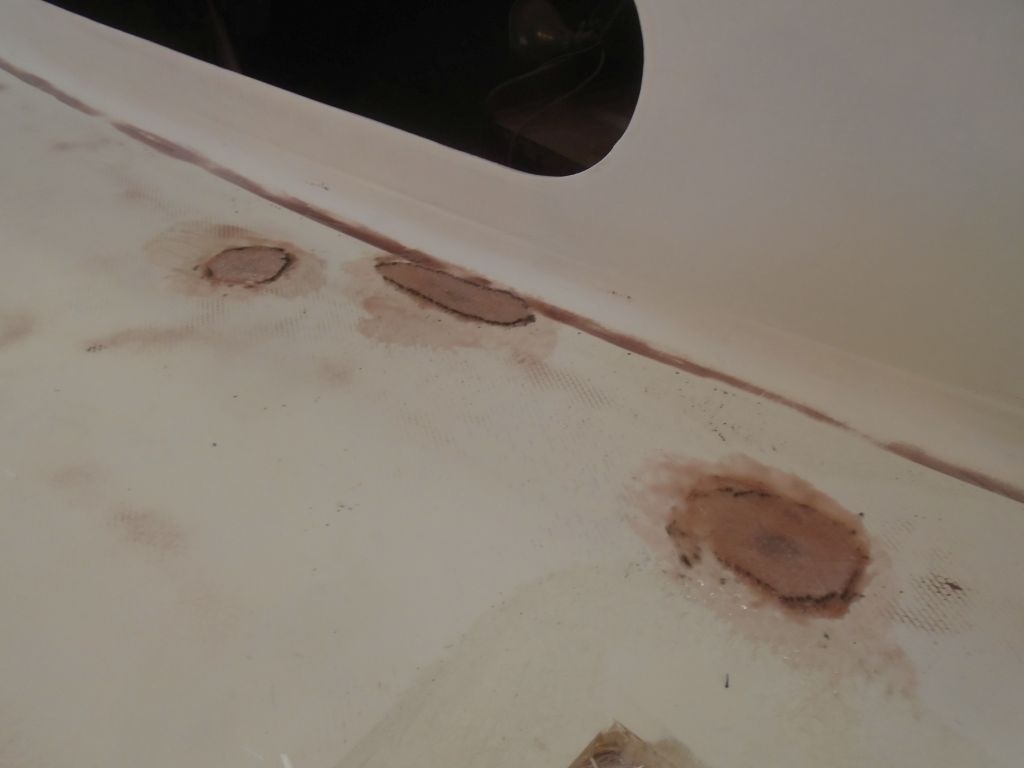
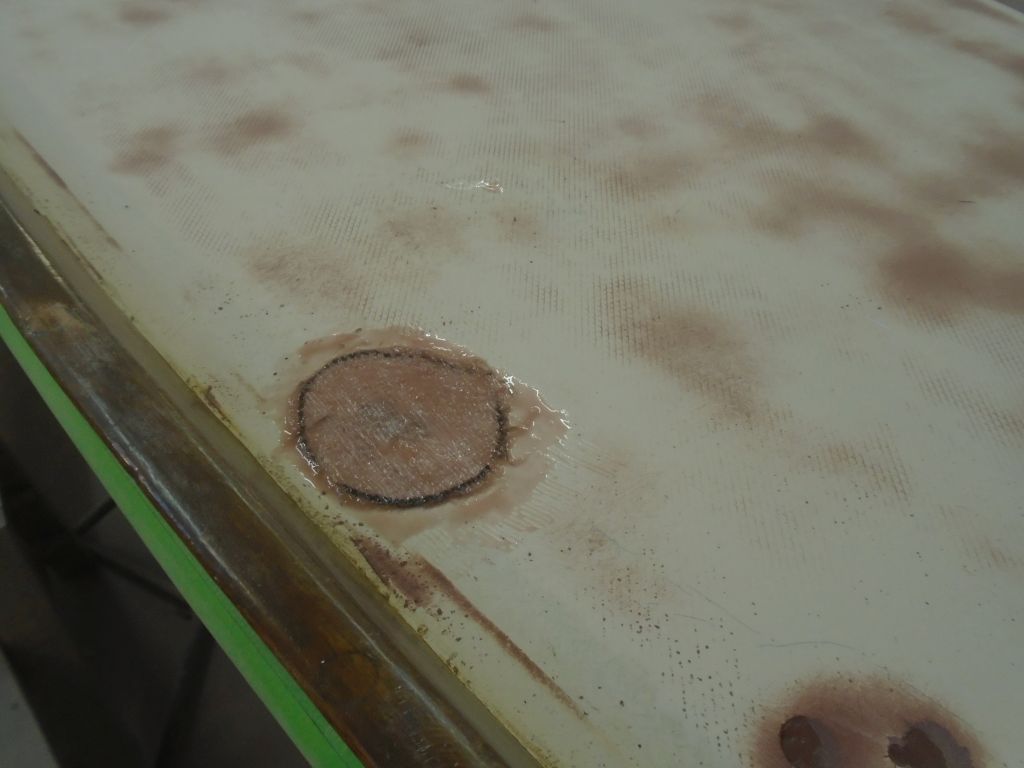
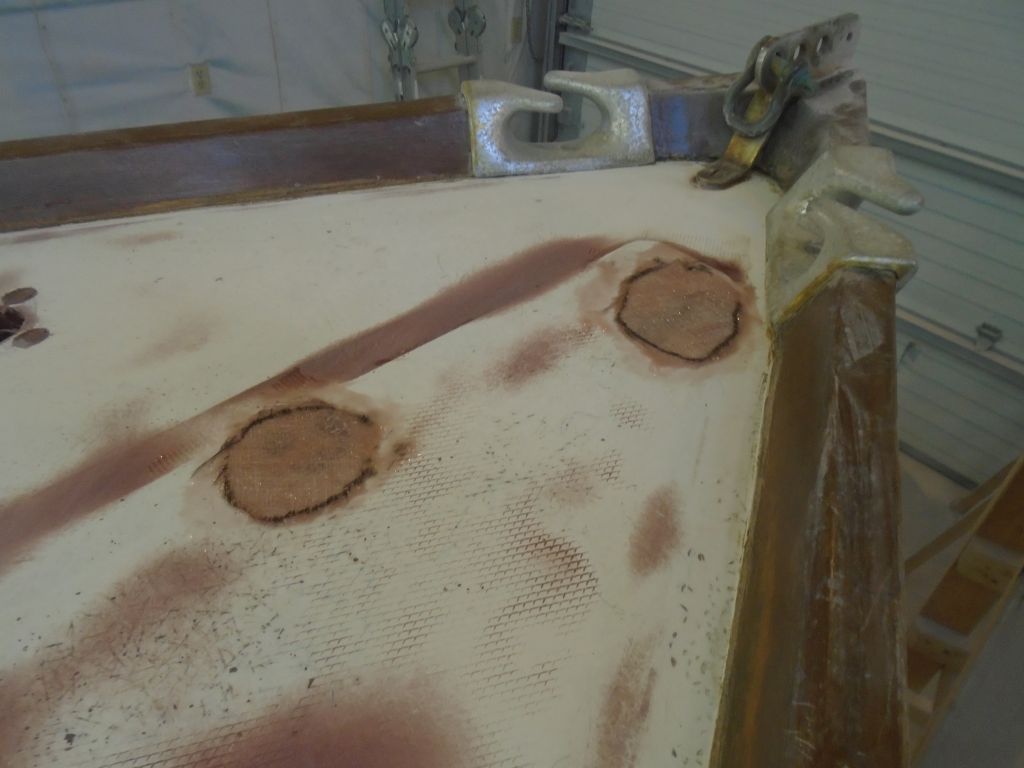
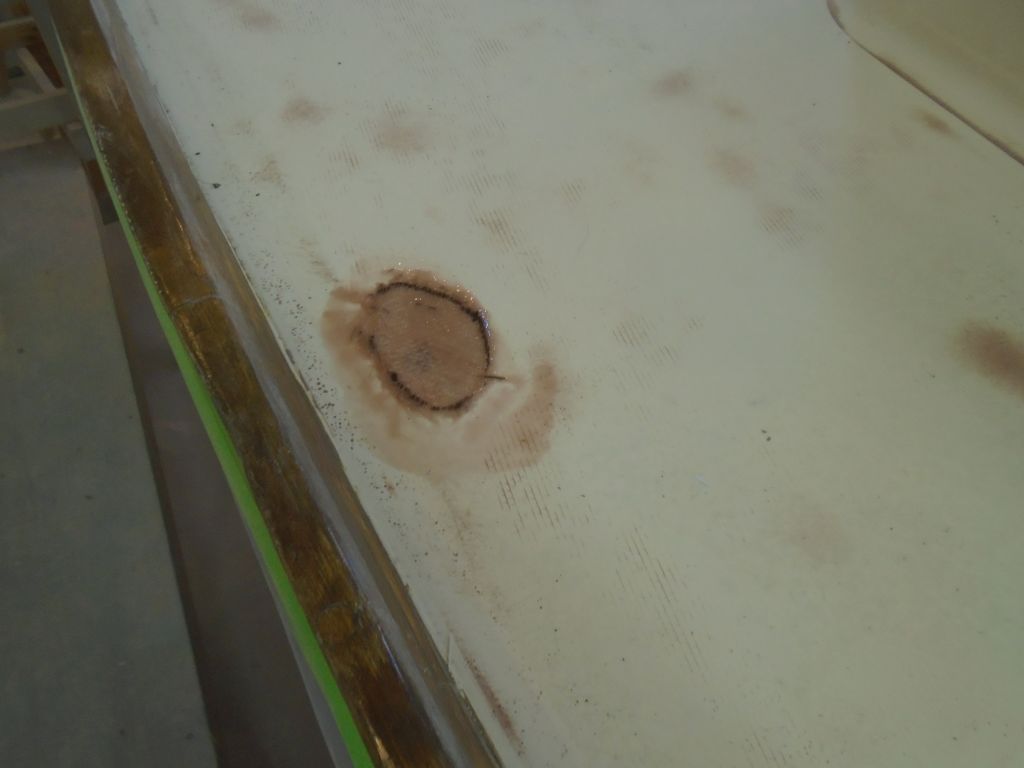
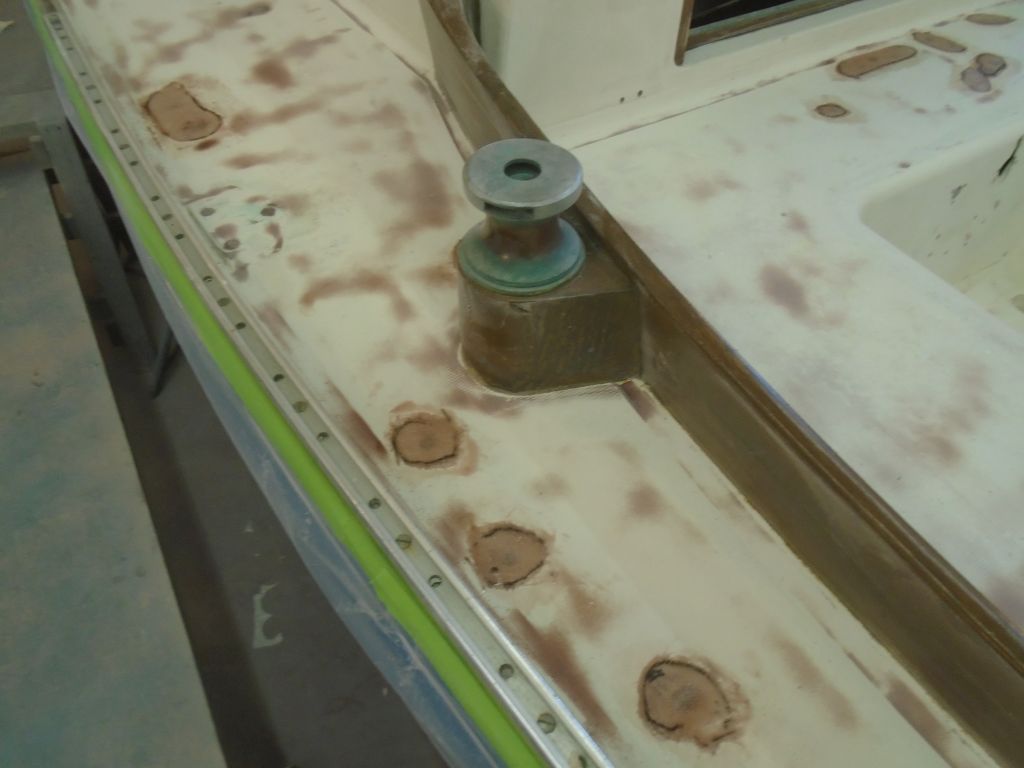
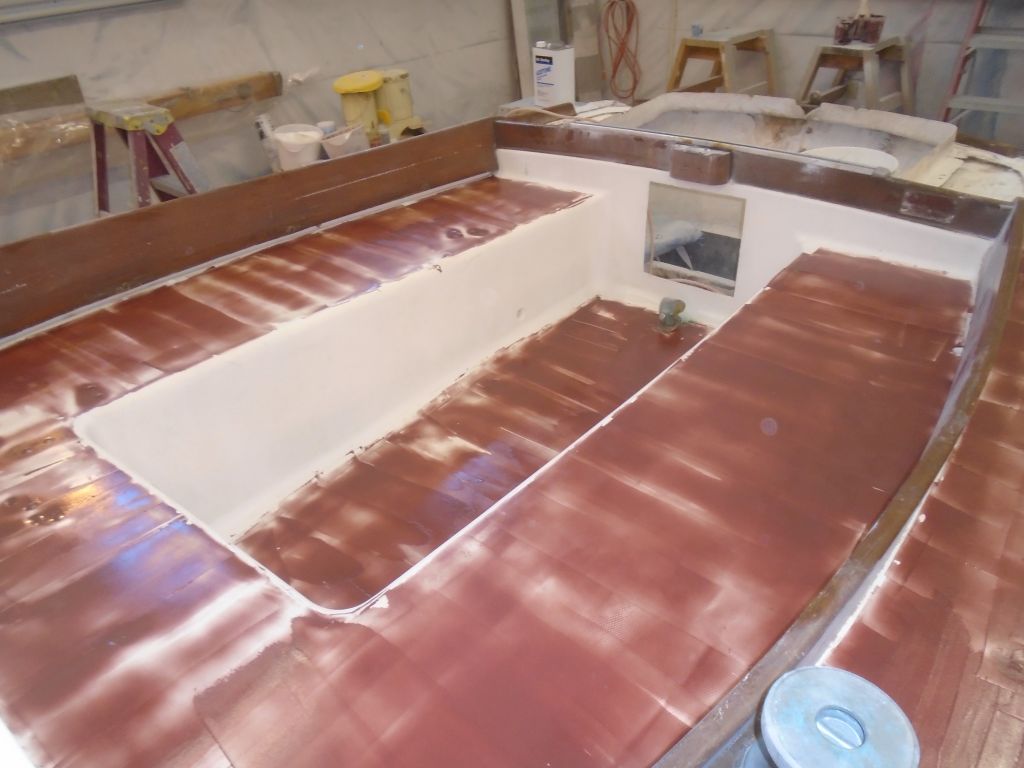
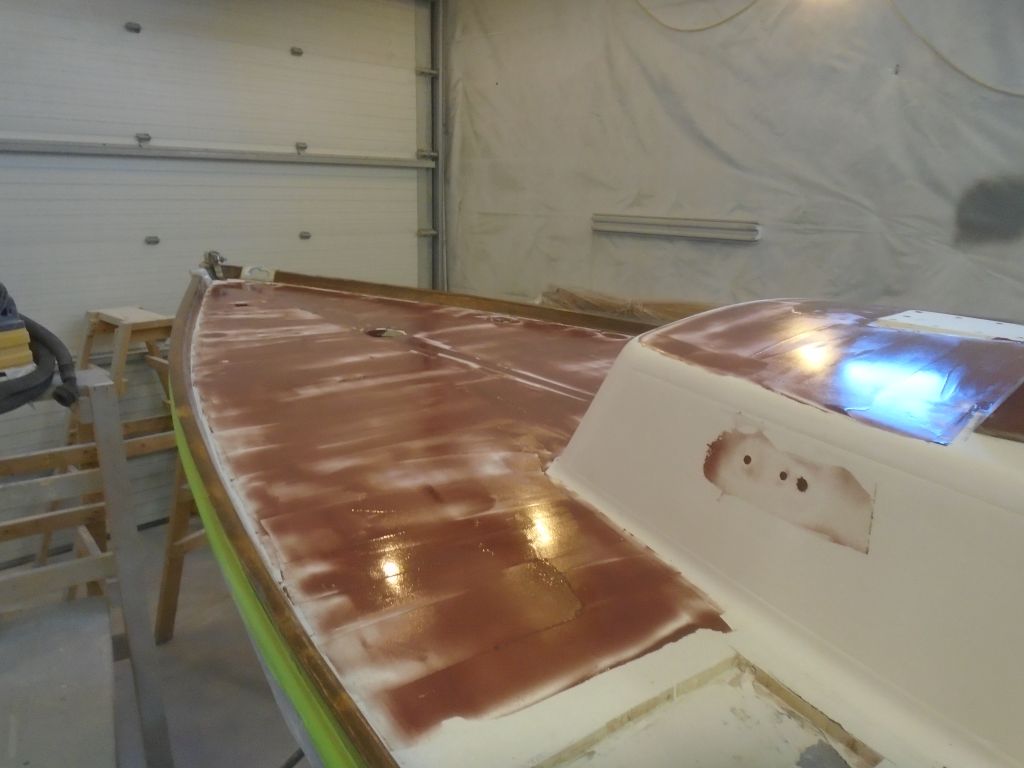
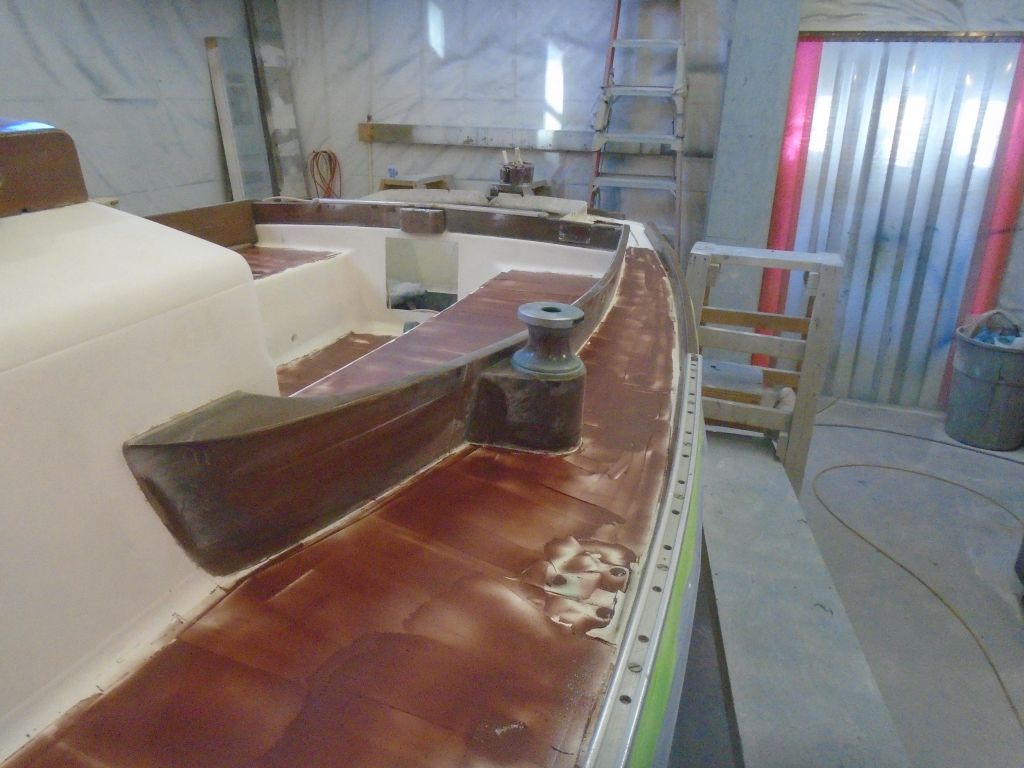
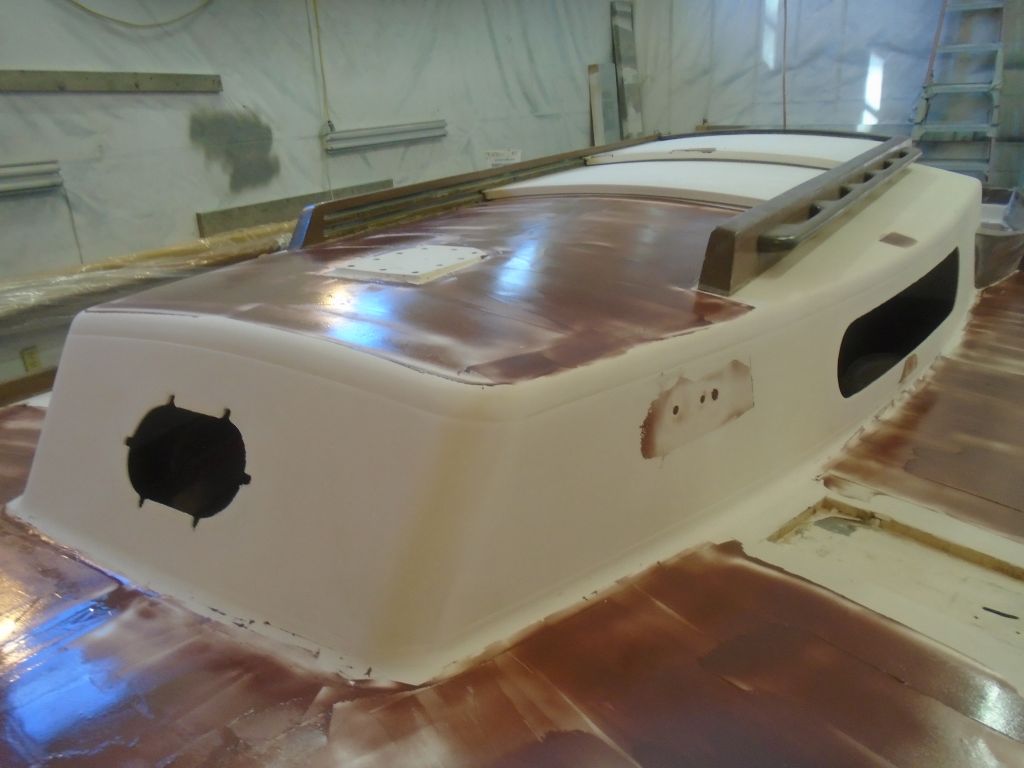
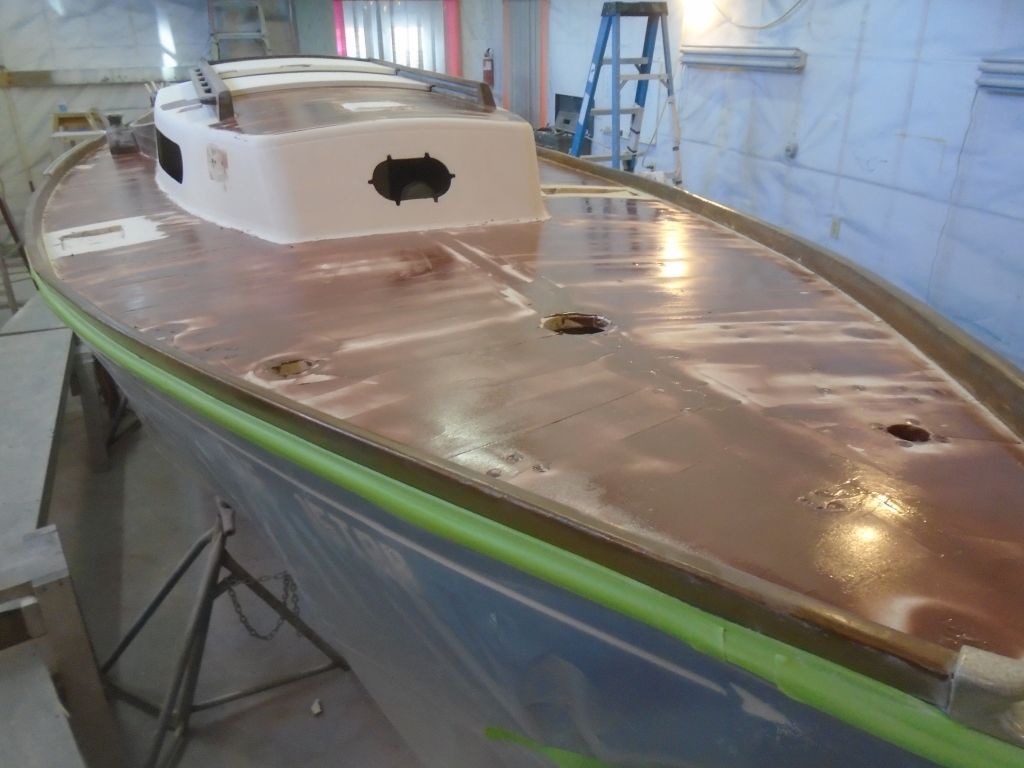
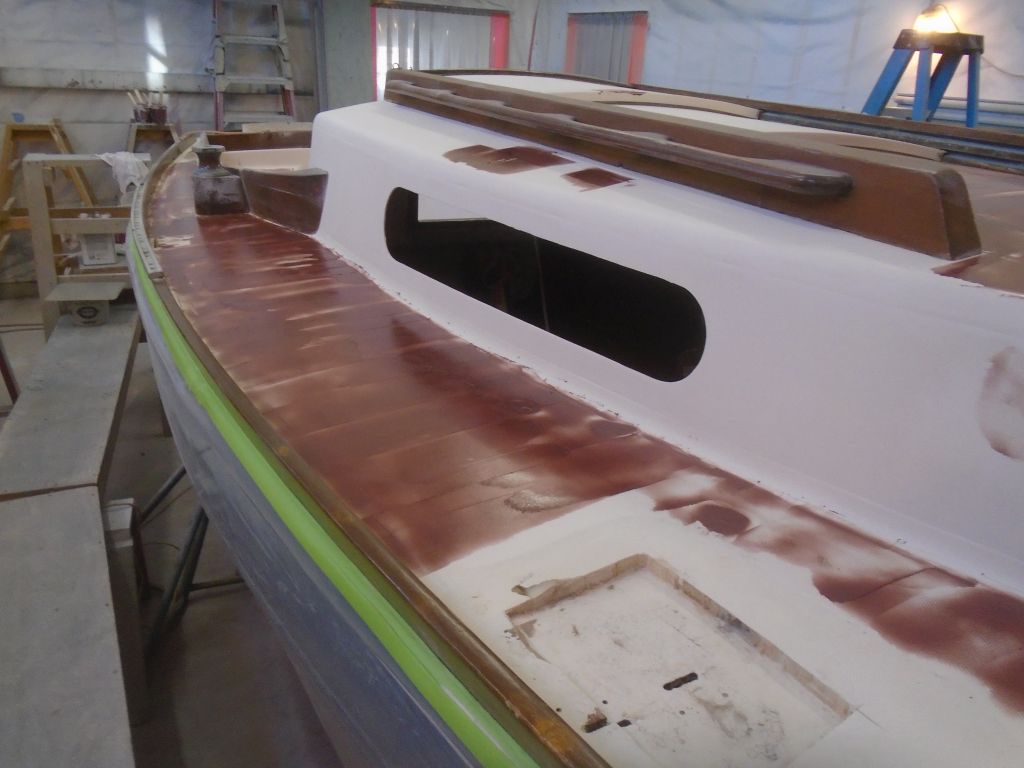
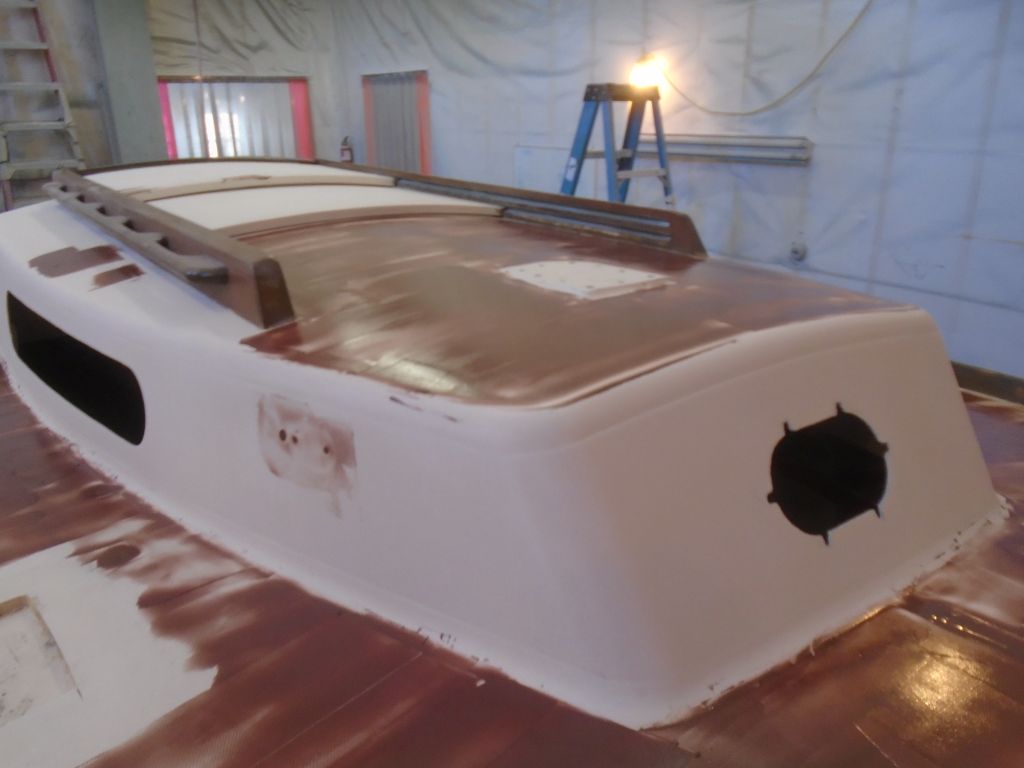
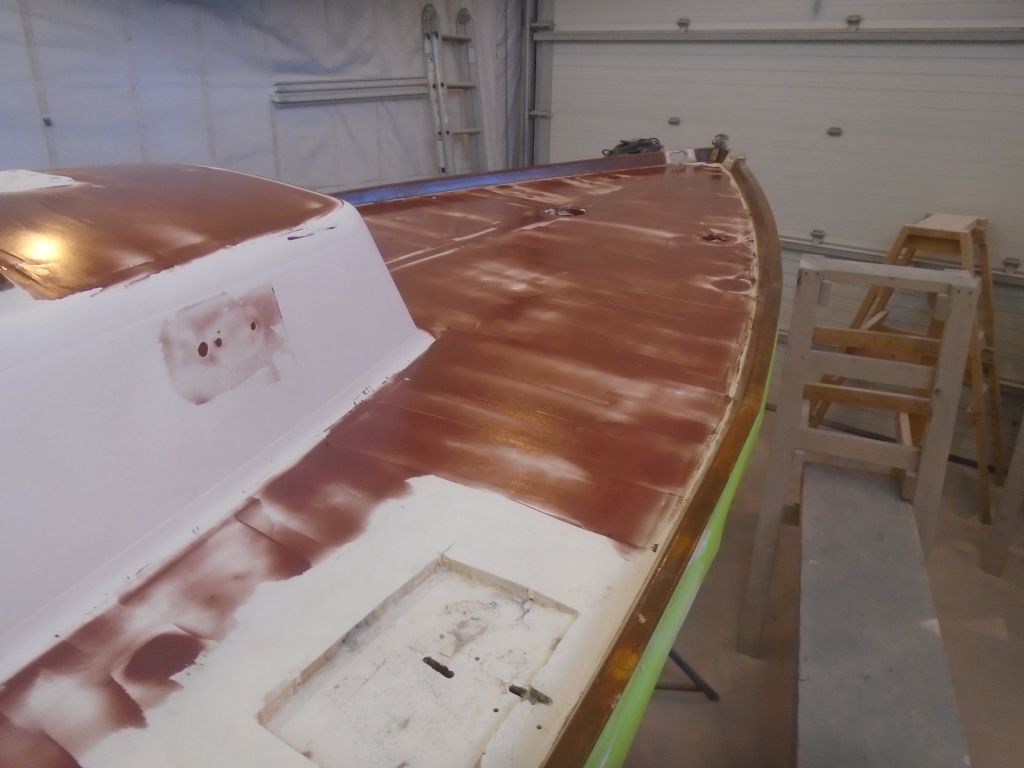
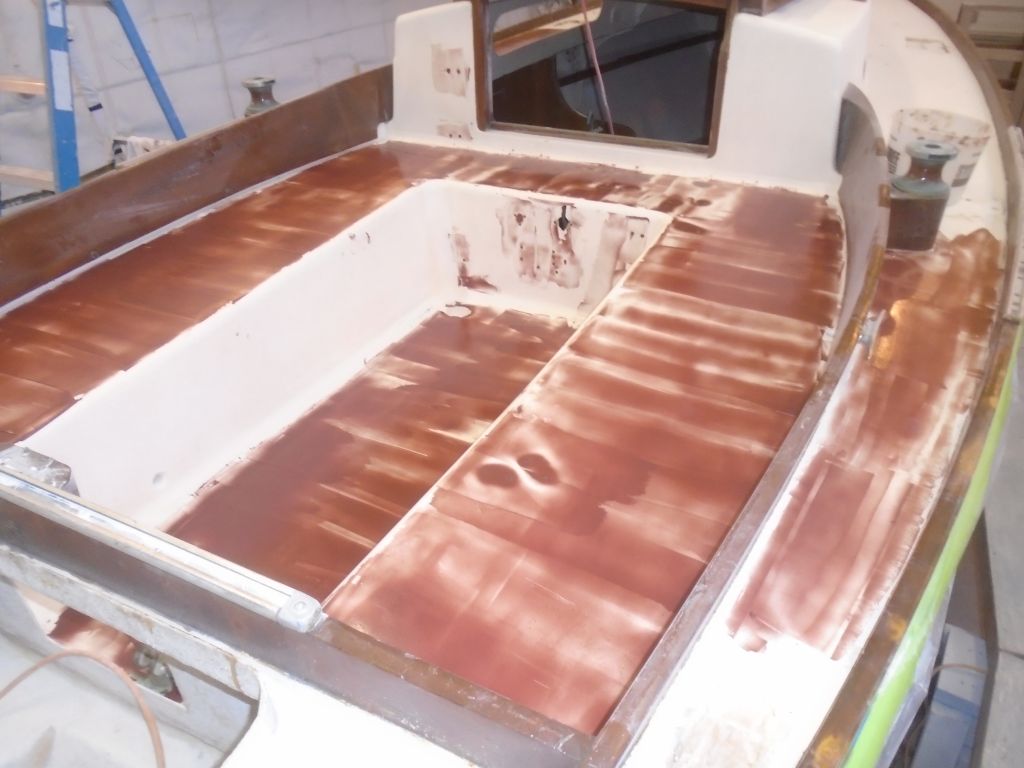
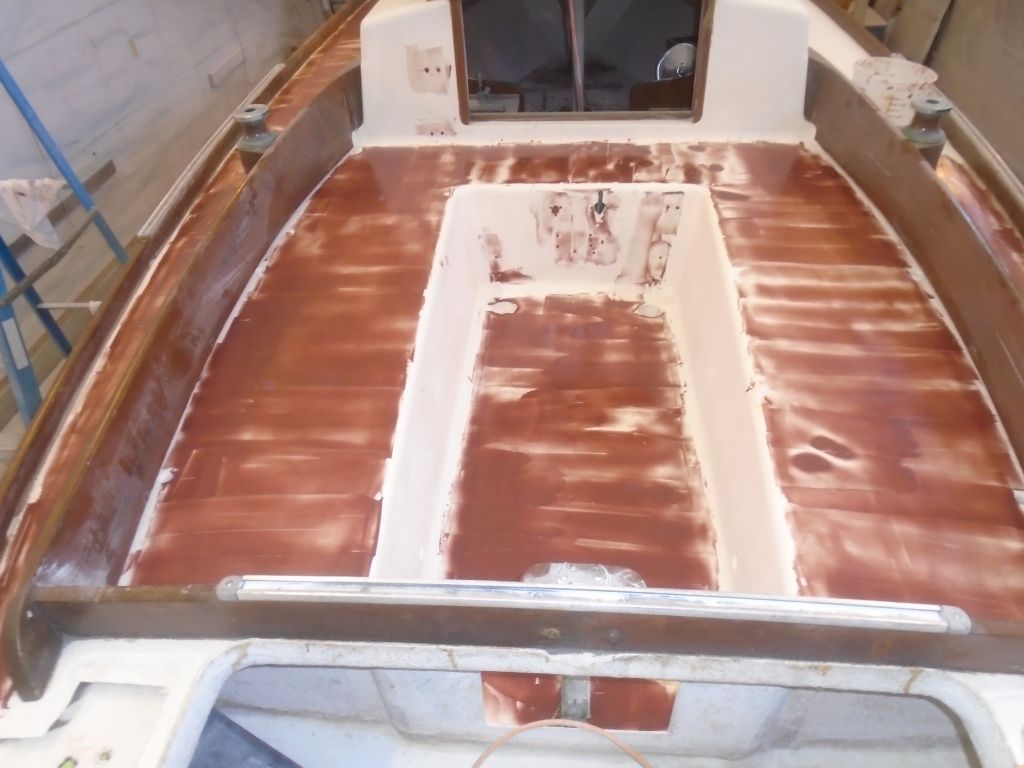
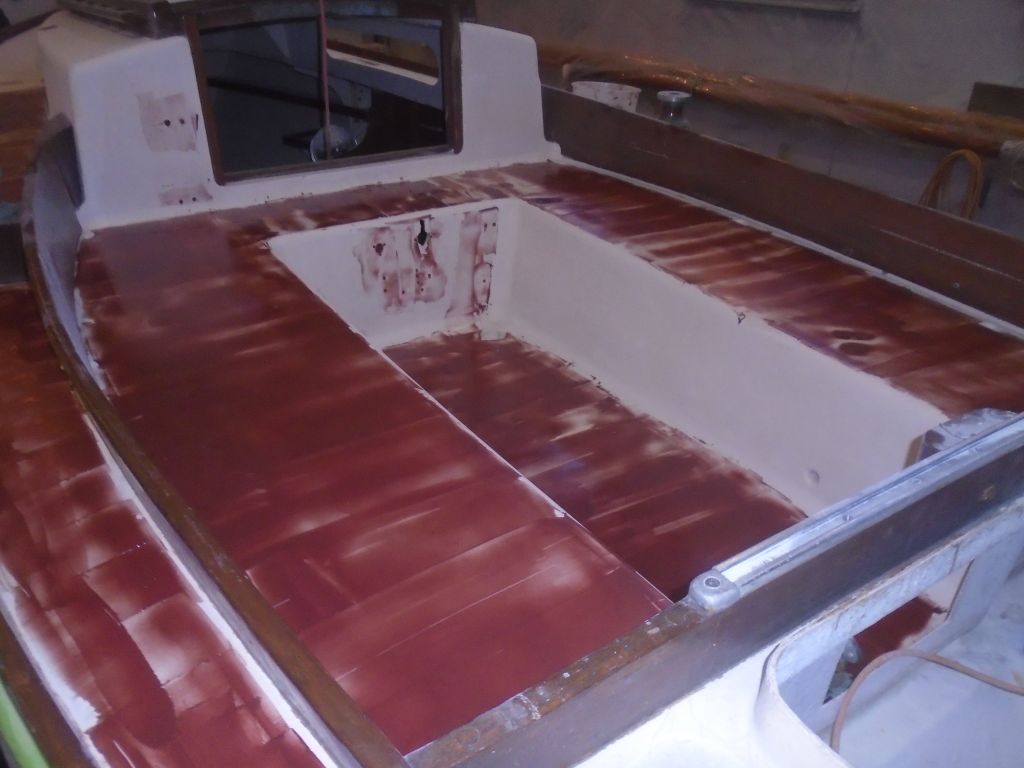
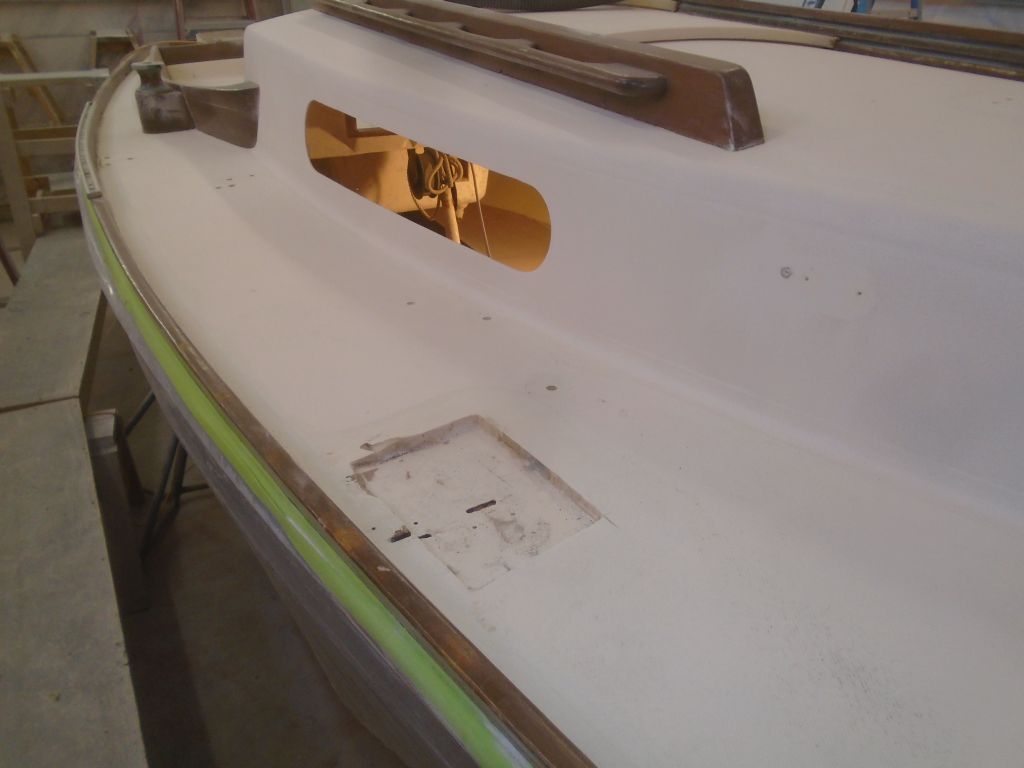
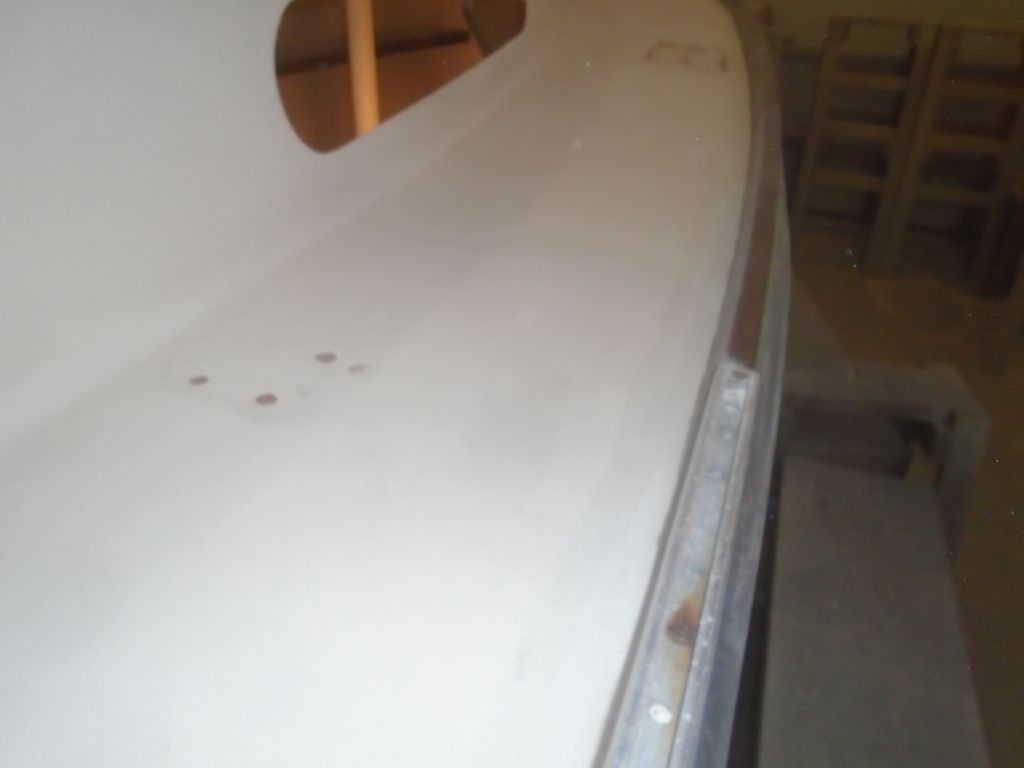
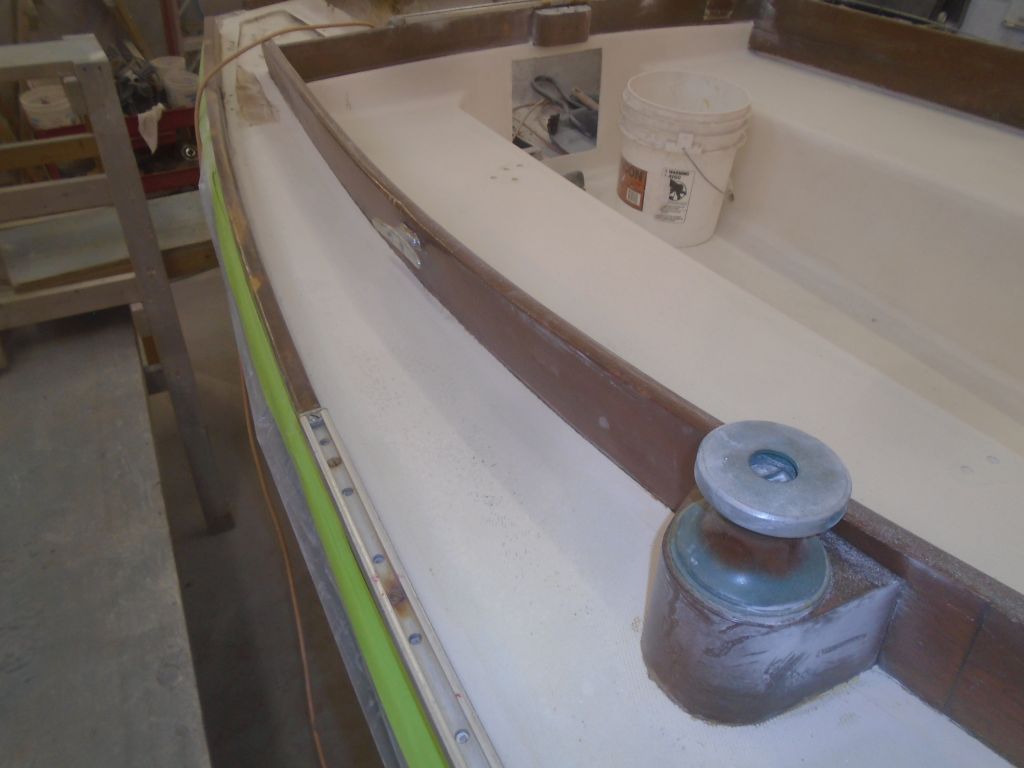
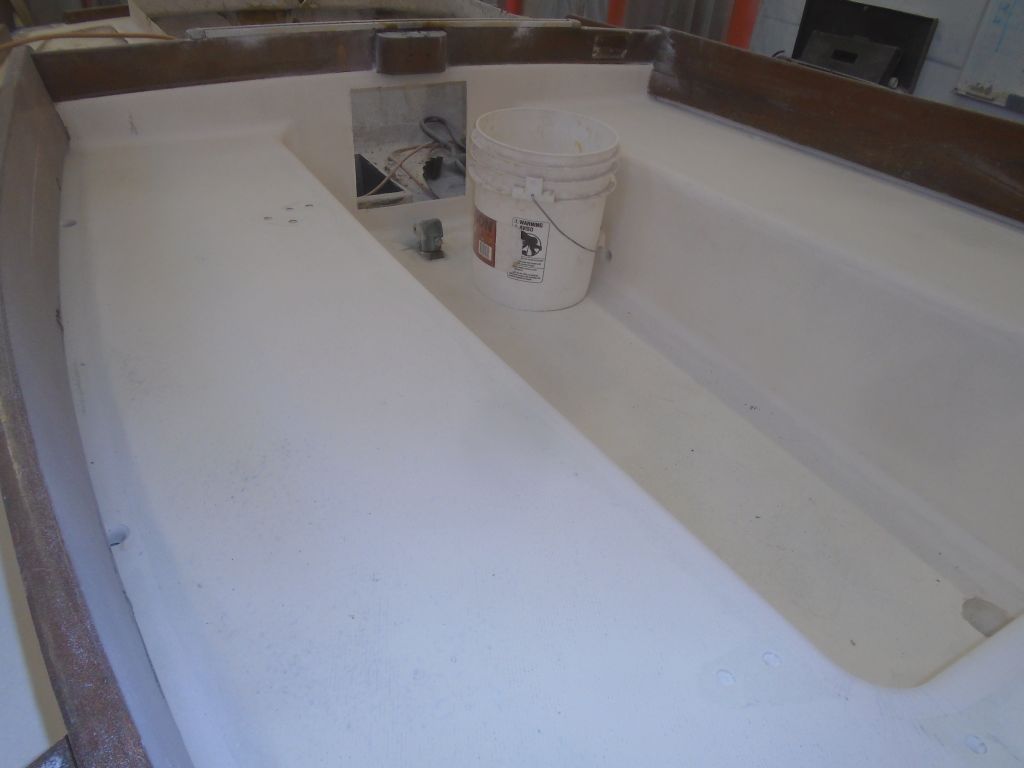
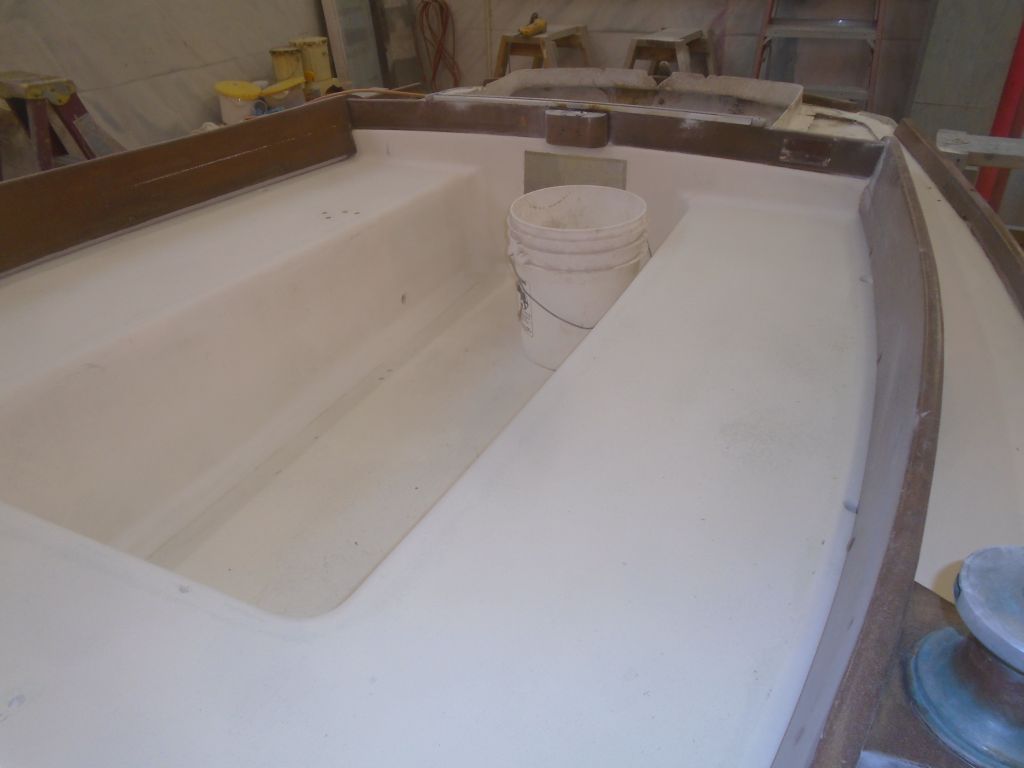
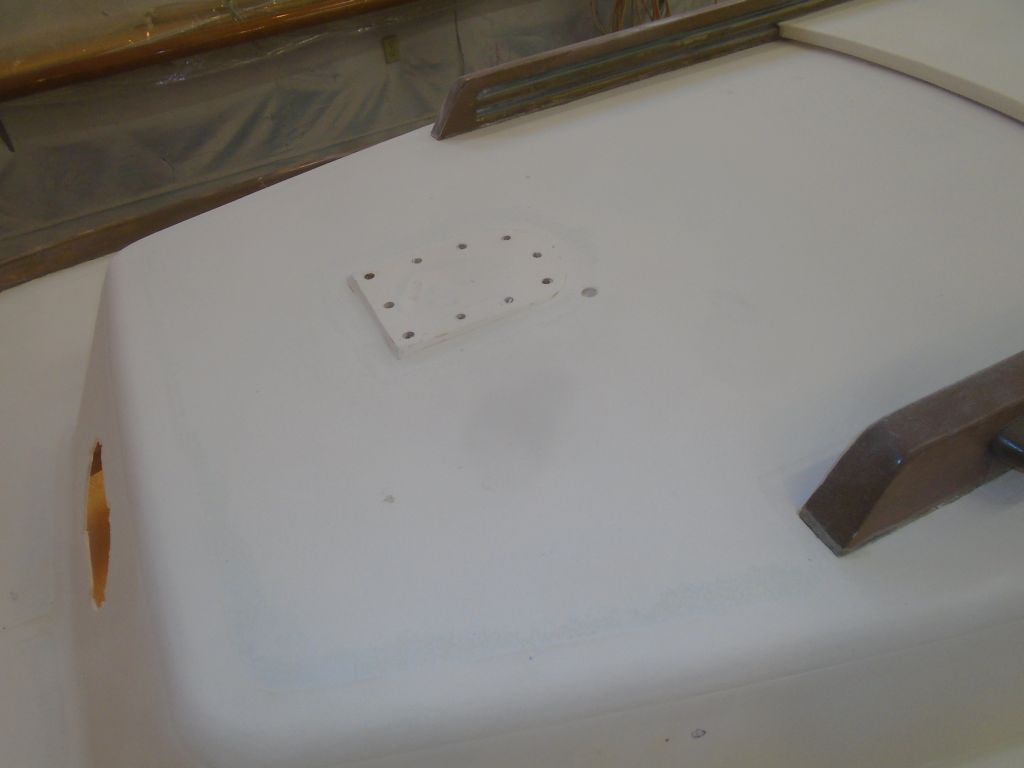
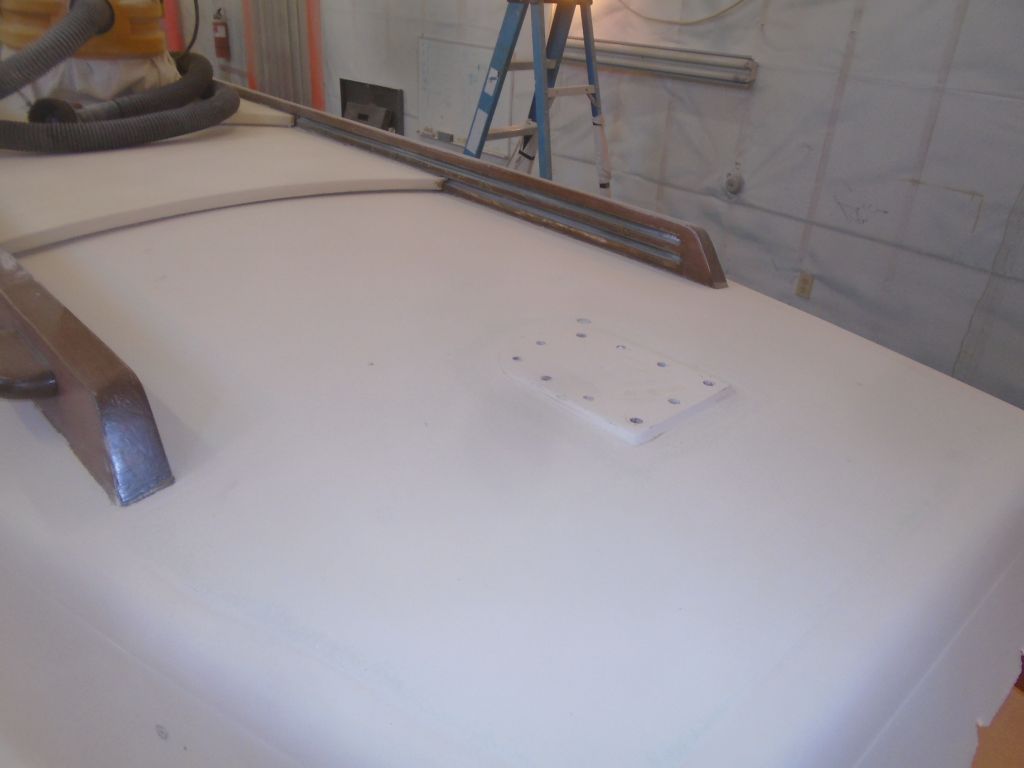
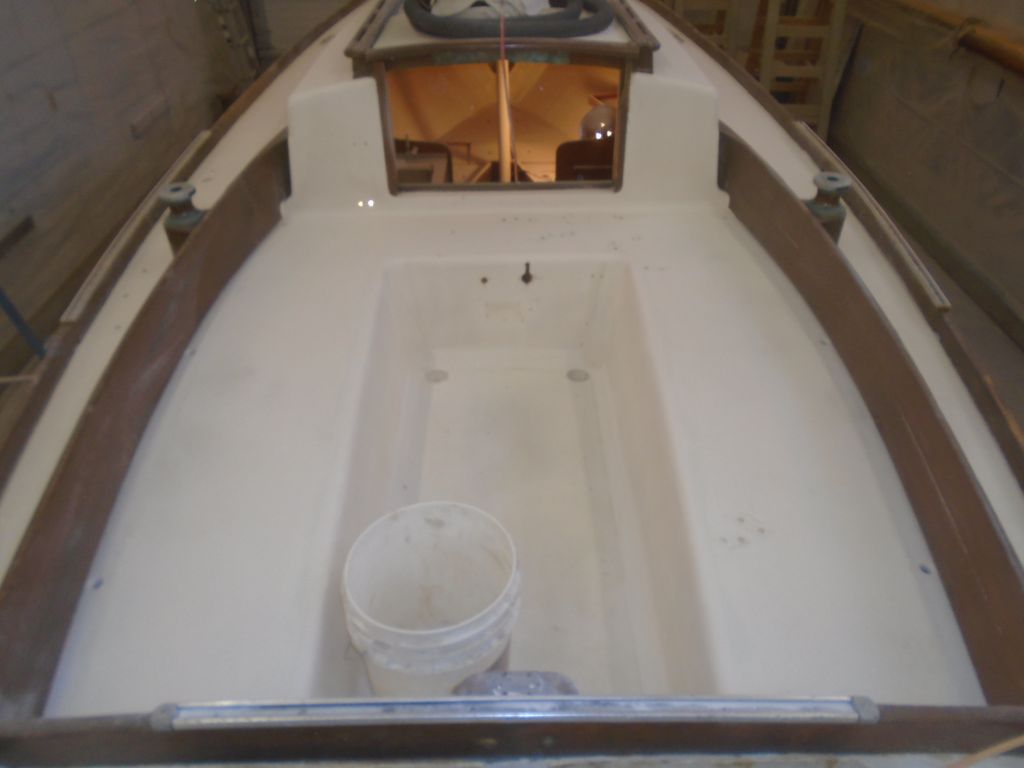
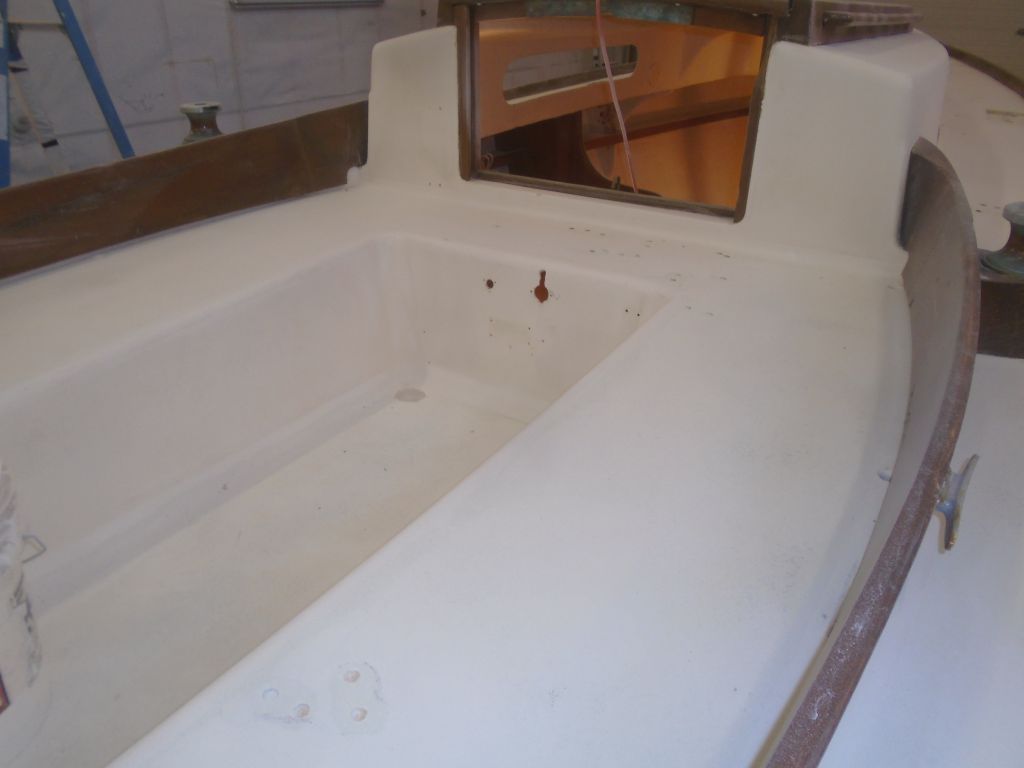
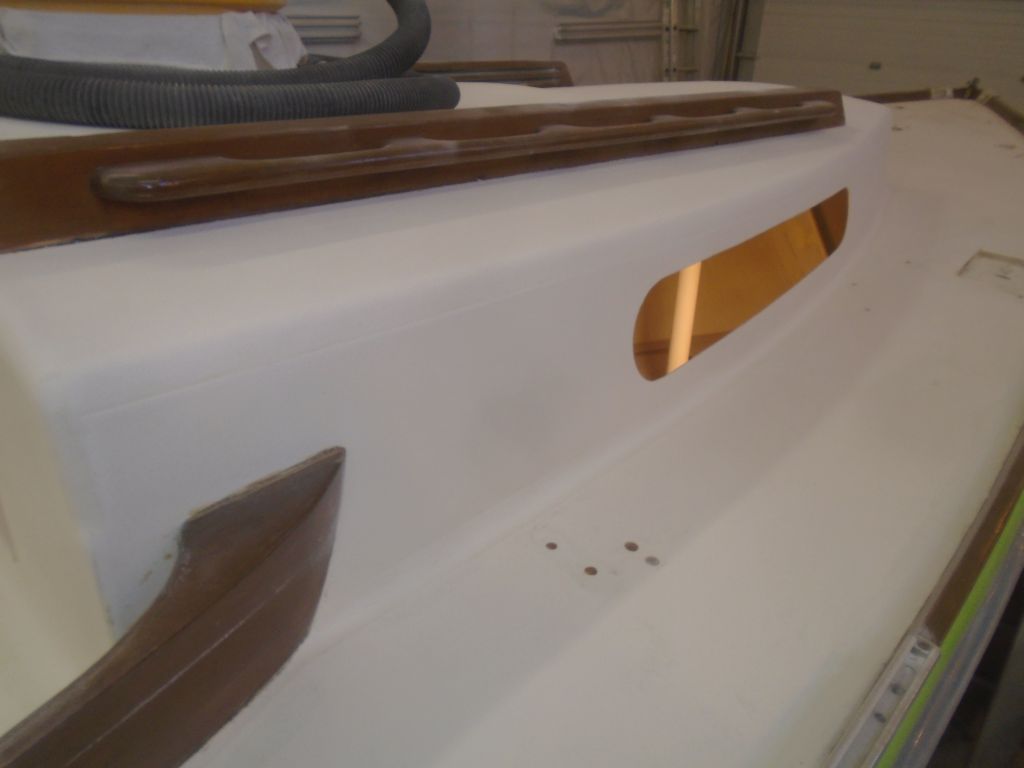
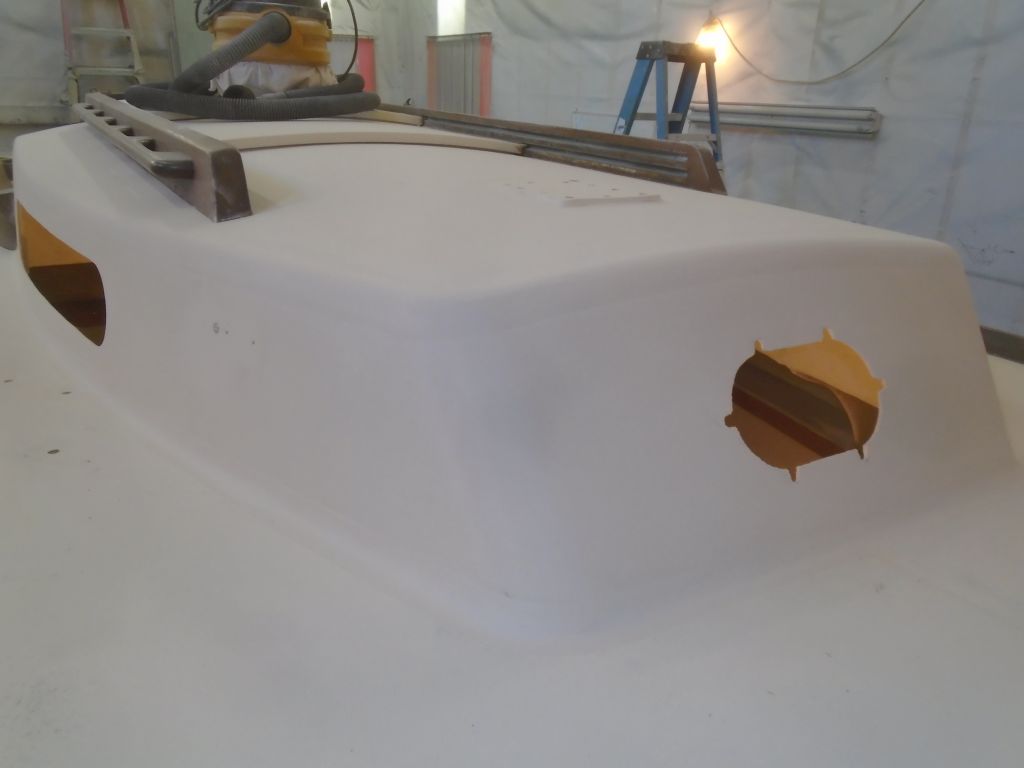
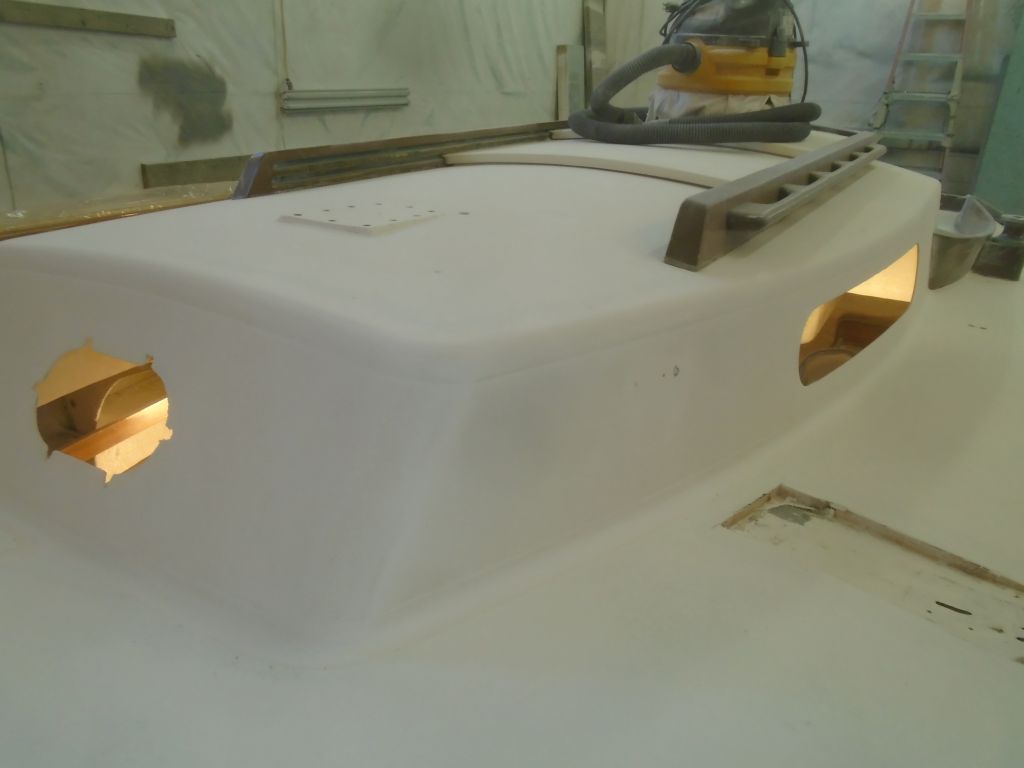
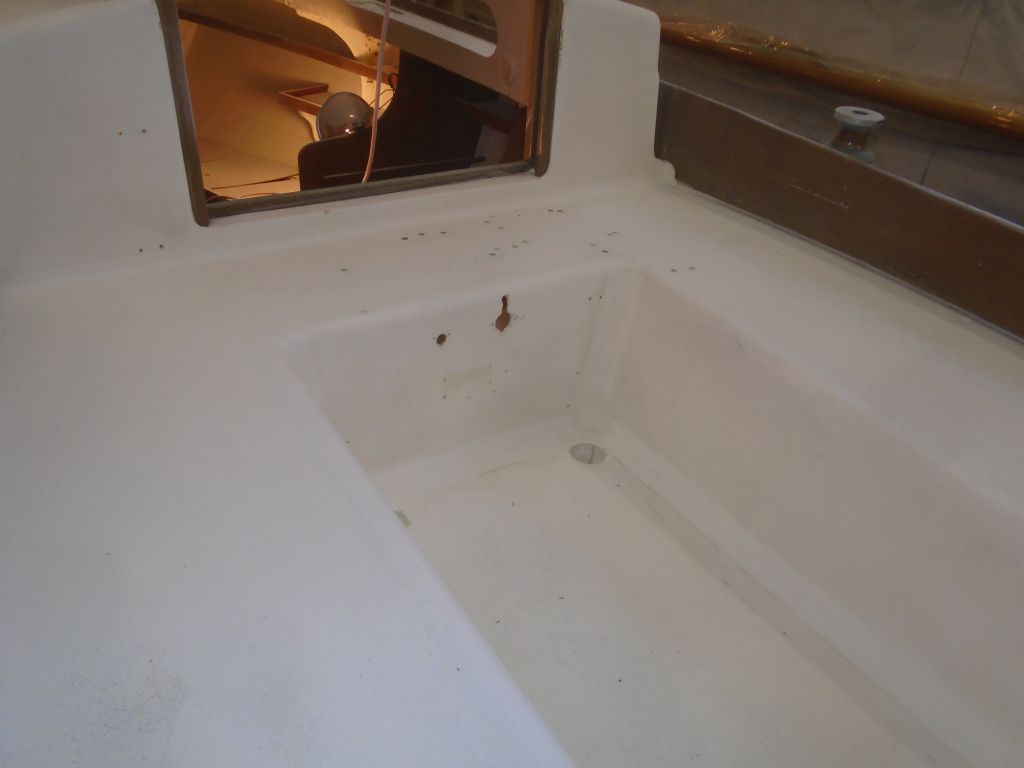
The decks were in original condition, generally fair in appearance but  well worn, with thin and checked gelcoat and  several areas where there were more significant cracks that could be indicative of structural damage.   My scope of work for the decks in the weeks ahead included inspecting for and repairing any damage, and refinishing the entire deck in the usual way.  These photos show the deck’s condition at this stage of the project.

The exterior woodwork had been maintained for some time with Cetol wood finish, and was generally in fair or good condition,  The current work list included applying a maintenance coat of finish to this wood, but I’d assess things further as time went on.

The interior appeared to be in original condition and in need of sprucing up, though at least most of the finishes were sound, if worn, tired, and dirty.  The work plan here included repainting the overhead, hull, and other areas, refinishing much or all of the woodwork, and some additional work in the galley and “head” areas, along with revamping the basic electrical system, adding a GPS, and other maintenance tasks.

I removed all the contents of the cabin, storing it away for safekeeping for the duration of the project and, where needed, setting aside removable bits of woodwork, doors, cabin sole, etc. for later attention.

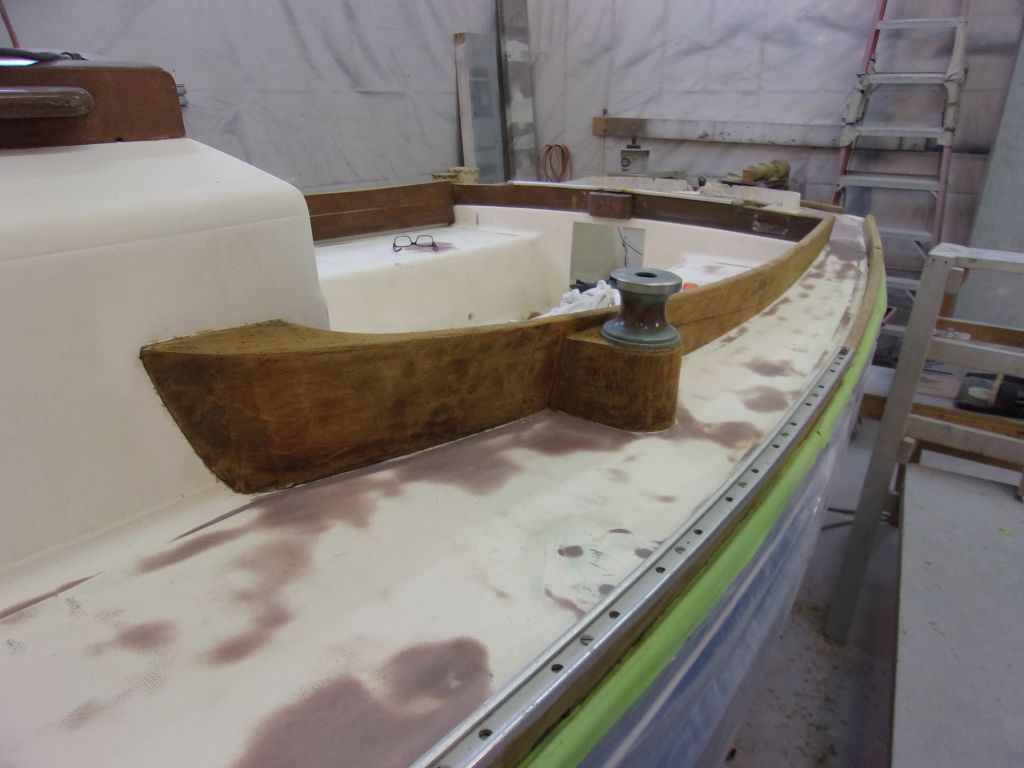
The original deck hardware–mainly aluminum with some bronze–was in fair condition overall, but several pieces were damaged or broken, including the port stern chock and stern cleat.  I hoped to source original-specific replacements for the damaged hardware, and, if luck was with us, perhaps replace some of the other pieces–which were pitted if sound–if better vintage pieces turned up.  These photos document the original placement and condition of the deck hardware.  The original lifelines were in poor condition, and replacement (along with a rigging inspection and assessment) was on the list for the project.

With the basic preparations, unloading, and initial inspection complete, I was ready to get down to business, and would start removing deck hardware next time.

Total time billed on this job today:  6.5 hours

0600 Weather Observation:
32°, rain; freezing rain; sleet.  Forecast for the day:  precipitation ending, clearing,

Halcyon 3

< Back to Halcyon

Tuesday

During the morning, I finished up the bottom stripping, taking care of the last large section on the port side, then moving all the jackstands and removing the paint in those areas as well.

When the boat hauler delivered the boat to the shop earlier, he’d not been able (or willing) to raise the bow of the boat enough to block the boat level; the forward end of the keel ended up a little lower than the aft end because of the limitations of the boat trailer.  This didn’t necessarily pose any immediate problems, but frankly it was irritating me since it just looked bad and was poor practice, and later I knew I might want the boat to be properly leveled in all directions for some of the interior work.

arrival2-91316
Delivery Day in September, 2016

Fixing the issue was straightforward:  I used the forward jackstands to raise the boat enough so I could slip in a taller block to raise the forward end to an equal height as the existing aft blocking, and  to bring the base of the keel level along its long length.  Since this keel was parallel to the waterline, this also meant that for all intents and purposes the boat was level fore and aft.

Afterwards, I leveled the boat side to side as well.

The bottom gelcoat was in good condition overall, but there were various little dings, scrapes, and pockmarking spread around the area–all the things one expects in a 50 year-old (or thereabouts) boat.  After surface preparations, I applied some epoxy fairing compound here and there on the bottom to address these minor surface issues.

Total time billed on this job today:  6 hours

0600 Weather Observation:
30°, cloudy.  Forecast for the day:  clouds, possible light wintry mix, then wintry mix to rain overnight

Halcyon 2

< Back to Halcyon

Monday

The owner elected to strip the bottom and start fresh, so I made this my first task.  After setting up and getting ready, I spent the day stripping all the old bottom paint from the starboard side, and a bit over half of the port side.  I removed the bulk of the old paint with a carbide scraper and finished up with two sanding passes and two sanding grits to remove the remnants and finalize the bottom surface.  The substrate was in good condition overall.

I’d finish up the last section next time.

Total time billed on this job today:  8 hours

0600 Weather Observation:
15°, clear.  Forecast for the day:  Sunny, 37°

Halcyon 1

< Back to Halcyon

Wednesday

Halcyon, a S&S Sailmaster 22 (year of build unknown), has been in the same family for over three decades, and while she’d been well maintained throughout that time, her age and normal wear and tear had begun to catch up, and the owners wanted to make some lasting improvements to bring the boat through the next years of use.  The proposed scope of the project would focus mainly on the decks and interior, as the owner had had the hull painted with one-part paint fairly recently and was happy with its current appearance.

halcyon1000-83116

One of the first items on the rather extensive work list  was to assess the condition of the bottom and determine what, if anything, was required there.    Now that I was gearing up to begin work on the boat, I took an opportunity to look over the bottom.  I chose to do this early on so we could determine what course to take before diving into other parts of the project.

(Note:  all photos clickable for full size)

The bottom featured numerous layers of antifouling paint, mostly in fair to good condition, but with the inevitable evidence of past areas where the paint had flaked away and been painted over.

In the flattest, least-supported sections of the boat–that is, the after sections of the boat, starting roughly amidships and running towards the deadwood–the paint had cracked and begun to crack, a normal condition seen in areas of hull flex, but mostly the paint remained well-adhered, though there was substantial buildup.  The flaking issue was neither catastrophic nor widespread.

Given the existing condition, and the intended use of the boat, at a minimum my suggestion was to scrape and heavy-sand the loose areas as needed before repainting, simply to ensure reasonable adhesion of the new coating.  No one likes stripping bottoms, but certainly it was something to be considered here for the long-term, as it appeared it had never been done before. If this was the chosen course, it was a job I planned to take care of first, before moving on to the rest of the project.

Acadia 58

< Back to Acadia

Monday

Now that I had new liner fabric and adhesive on hand, I finished up my work list with the quarterberth liner.  Using the old vinyl piece–I’d removed this earlier–as a template, I cut a piece of the new fabric to fit, then dry-fit it in place to check the fit and see if I needed to cut any darts or make other changes.  It actually smoothed into place very nicely and stayed where I wanted it, so I masked around it with tape and paper to prevent overspray on adjacent surfaces.  Then, to permanently install the fabric I pulled away sections at a time and sprayed on the adhesive, then pressed the fabric back into place.

Once I’d glued the fabric in place, I finished up the job by securing the VHF antenna cable along the back side of the nav station cabinet, reinstalled three trim original pieces on the aft bulkhead, and installed a small piece of trim along the outer edge of that cabinet since I thought it looked nicer than the original raw edge.

This ended my current work list for this project.

Total time billed on this job today:  1.25 hours

0600 Weather Observation:
-1°, clear.  Forecast for the day:  Sunny, 15°

Acadia 57

< Back to Acadia

Friday

I took a day off from the project to give the freshly-varnished cabin sole plenty of cure time before getting to work on finishing up and reassembling the cabin.  Now, I began by reinstalling the cabin sole base trim around the perimeter of the main cabin.

Next, I reinstalled the bookshelf, bulkhead lamps, and clock on the forward bulkheads, after which I returned to their original locations all the various books, hardware, galley equipment, and other loose gear that I’d removed before beginning the interior refinishing.

One small final item was to install two new louvered covers for insides of the Dorade vents over the raw holes in the overhead:  one in the passageway, and the other in the head.

The only job still on my list at this point was to install the new liner in the quarterberth, which I’d finish up as soon as the new materials were on hand.

Total time billed on this job today:  5 hours

0600 Weather Observation:
-5°, clear, windy.  Forecast for the day:  clear and windy, 8°

Acadia 56

< Back to Acadia

Wednesday

This project was really winding down now, but there were a few odds and ends to take care of yet.  One of these was to reinstall a little paper towel holder and cover above the engine room countertop.  This angled piece had originally covered the back sides of the old engine instruments, and had been installed with a pair of the plastic slam latches used throughout the boat.  One of these was broken, and since such quick access was no longer required to this area (since I’d removed the gauges), I decided to install the unit with a pair of cleats, which I screwed to the liner and the backing behind it.  I used a single screw on each side of the angled unit to secure it to the cleats, making it still easily removable if needed, but otherwise secure.

In the quarterberth, there was an old (original) vinyl liner glued to the hull, and this was in poor condition.

qb1-121316

The owner asked that I replace it with a new fabric liner, so with the bulk of the other work now behind me, I turned to the removal of the old liner.  Fortunately, though the liner was still adhered well with its adhesive and a few wooden trim pieces at the aft end, it pulled away easily once I started it, and it took little time to remove the old liner in one piece, which I’d use to help prepare the new fabric once it arrived.  I’d return to this project in due course.
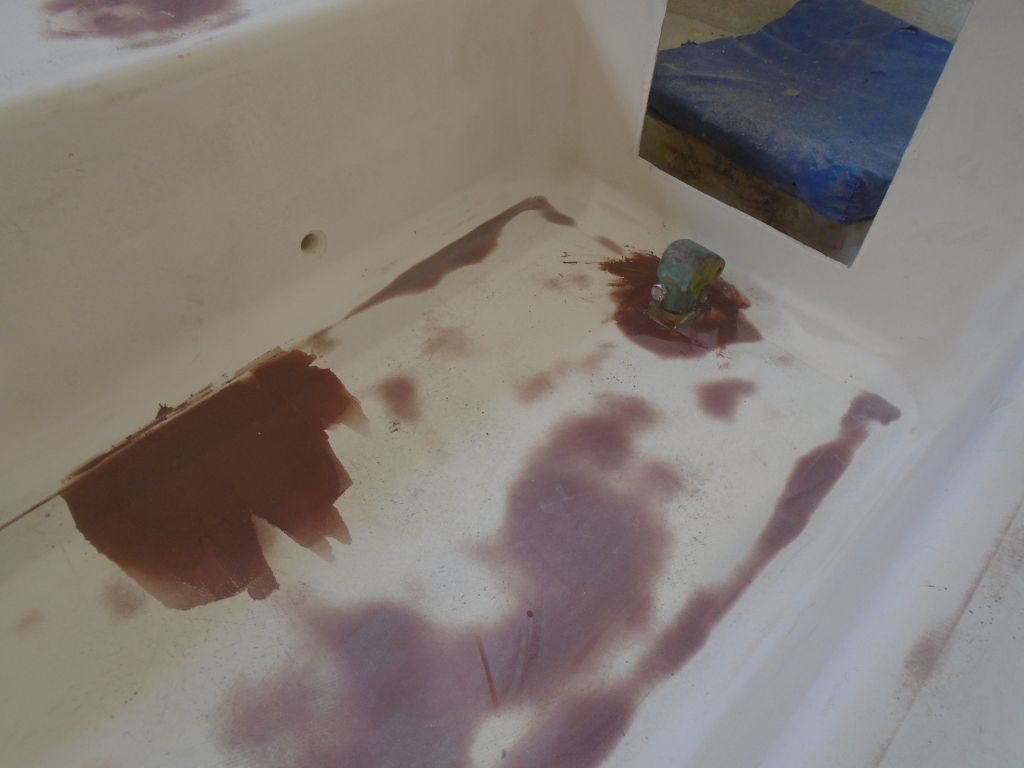
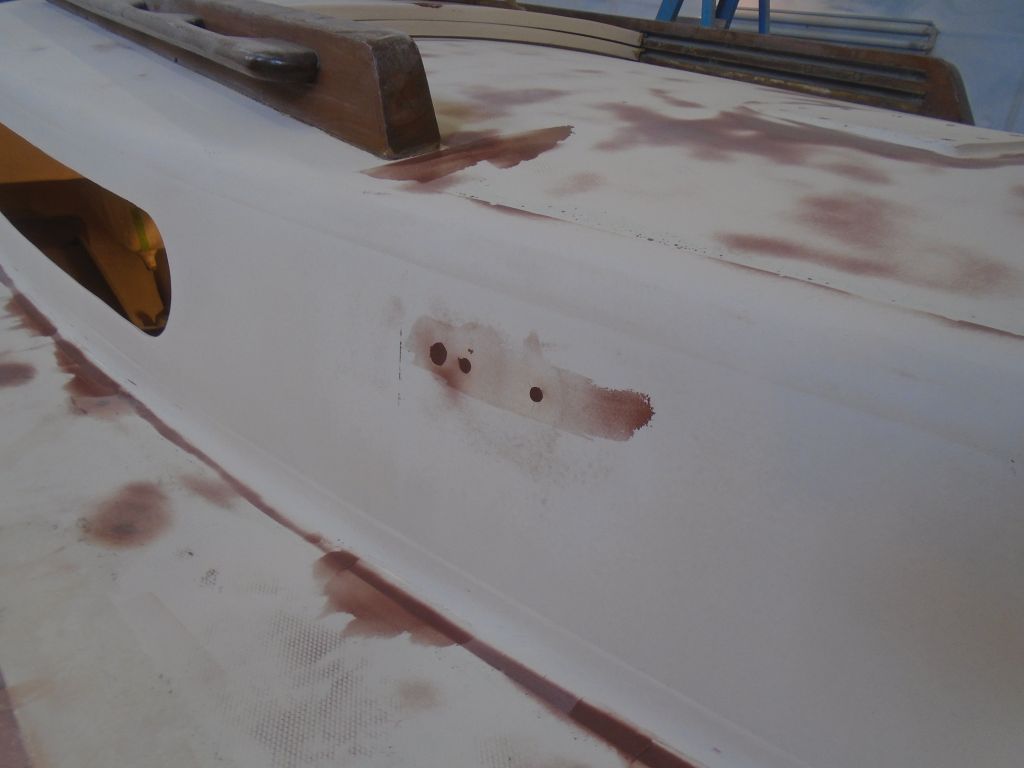
After final preparations, I applied a coat of rubbed-effect satin varnish to the cabin sole and centerline hatches, which wrapped up what I could accomplish for this day.  These photos show the varnish after an overnight cure.
Total time billed on this job today:  3.5 hours

0600 Weather Observation:
Mostly clear, 20° .  Forecast for the day:  Mostly sunny, 30s

Older posts Newer posts