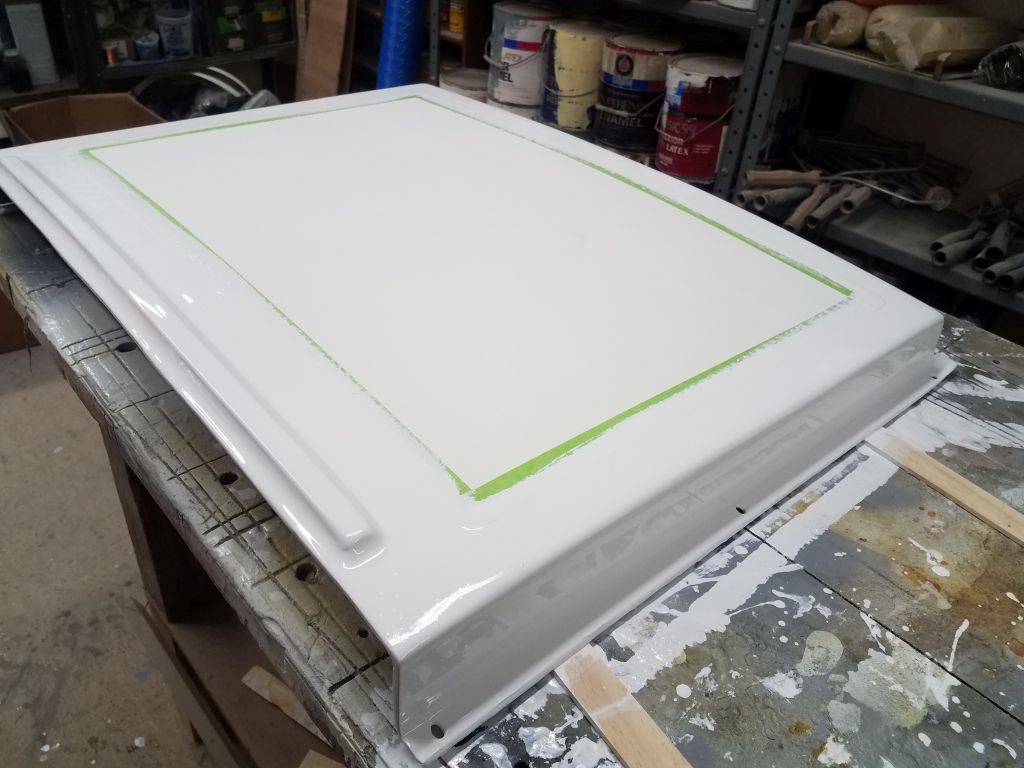
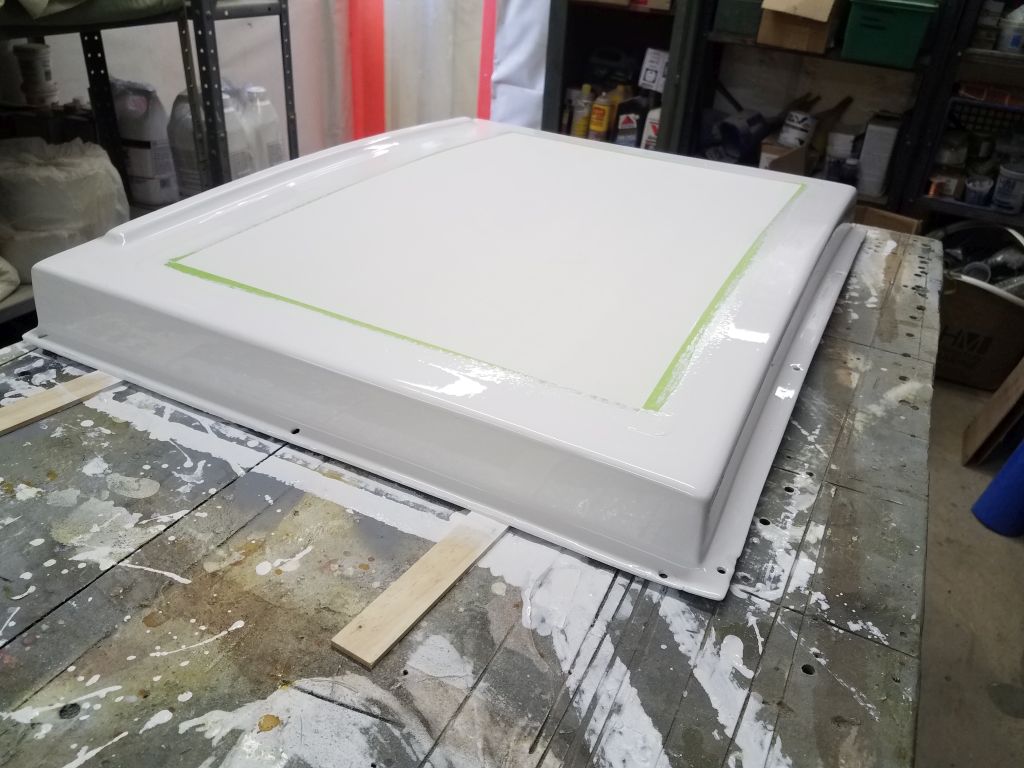
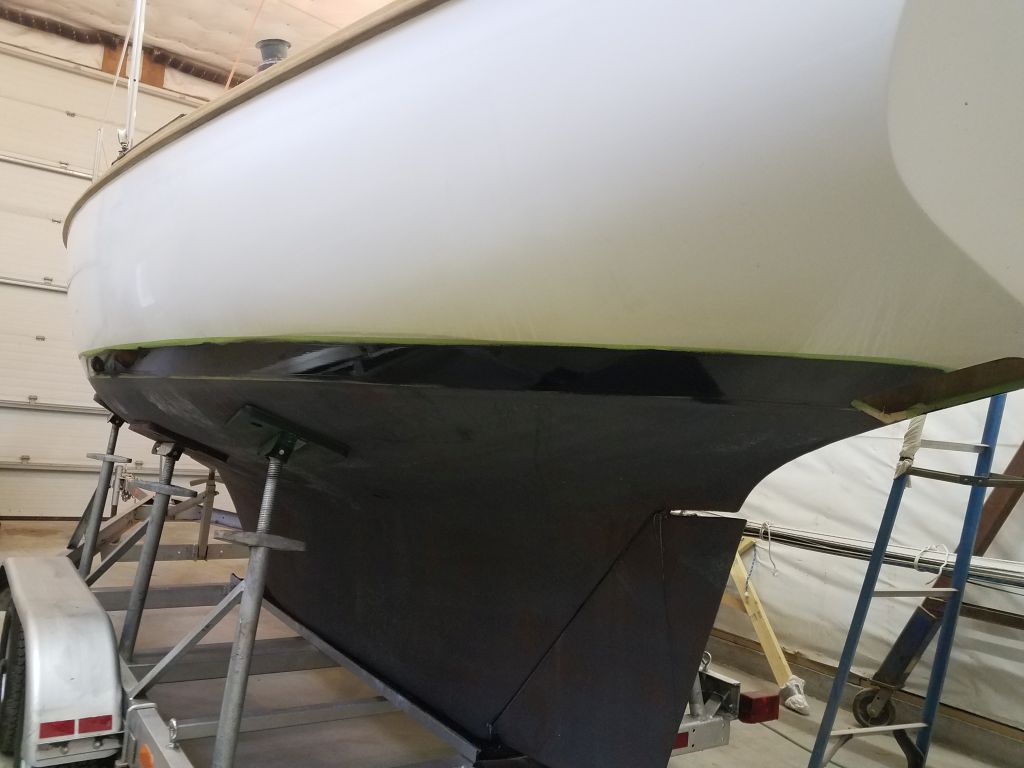
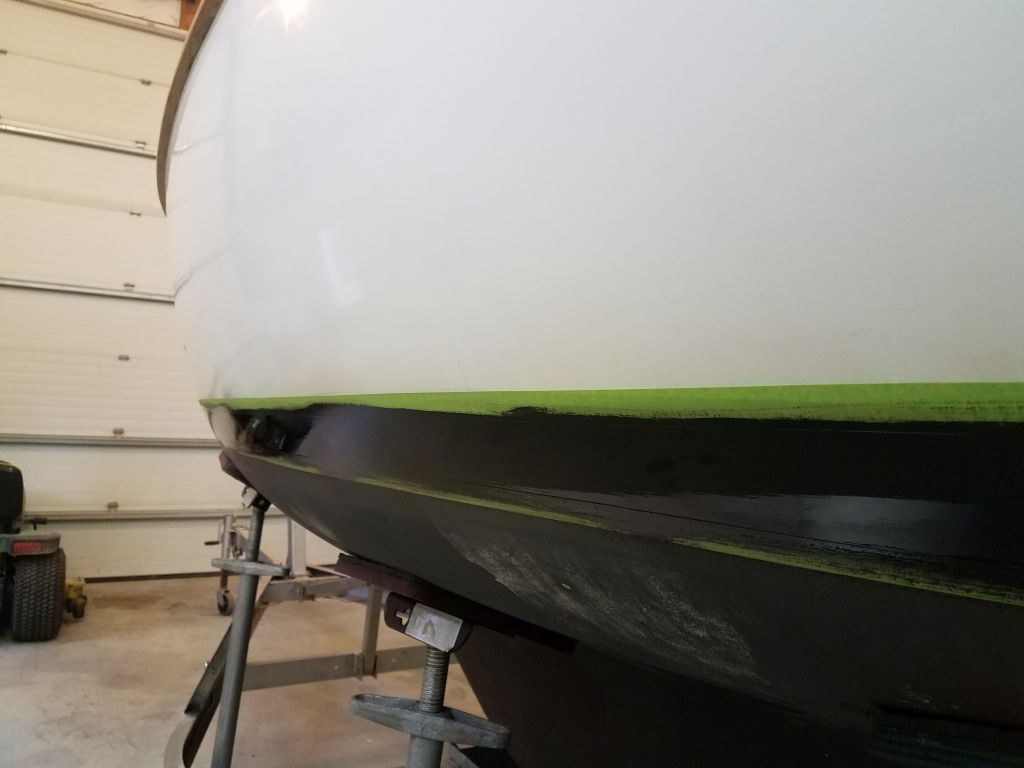
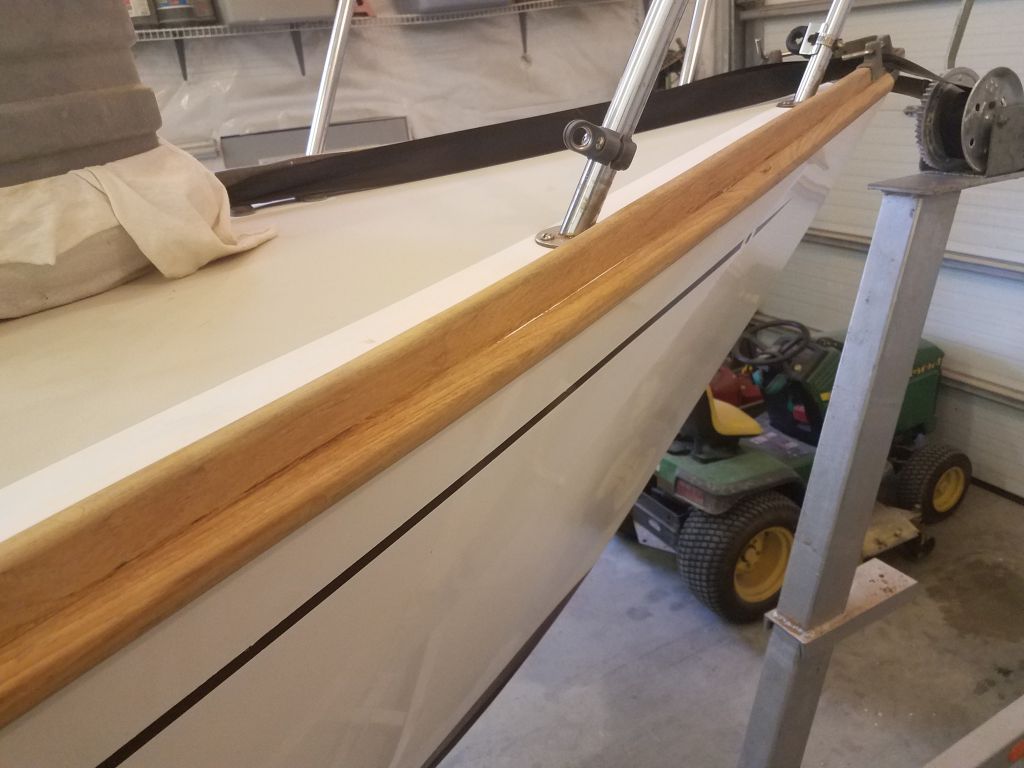
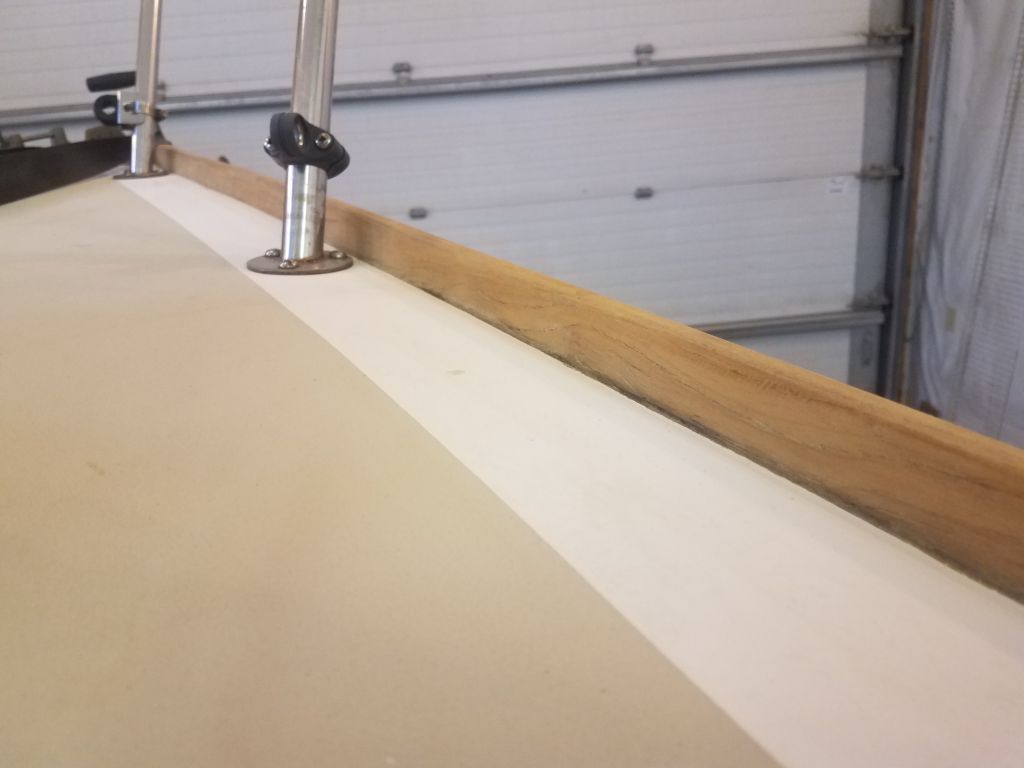
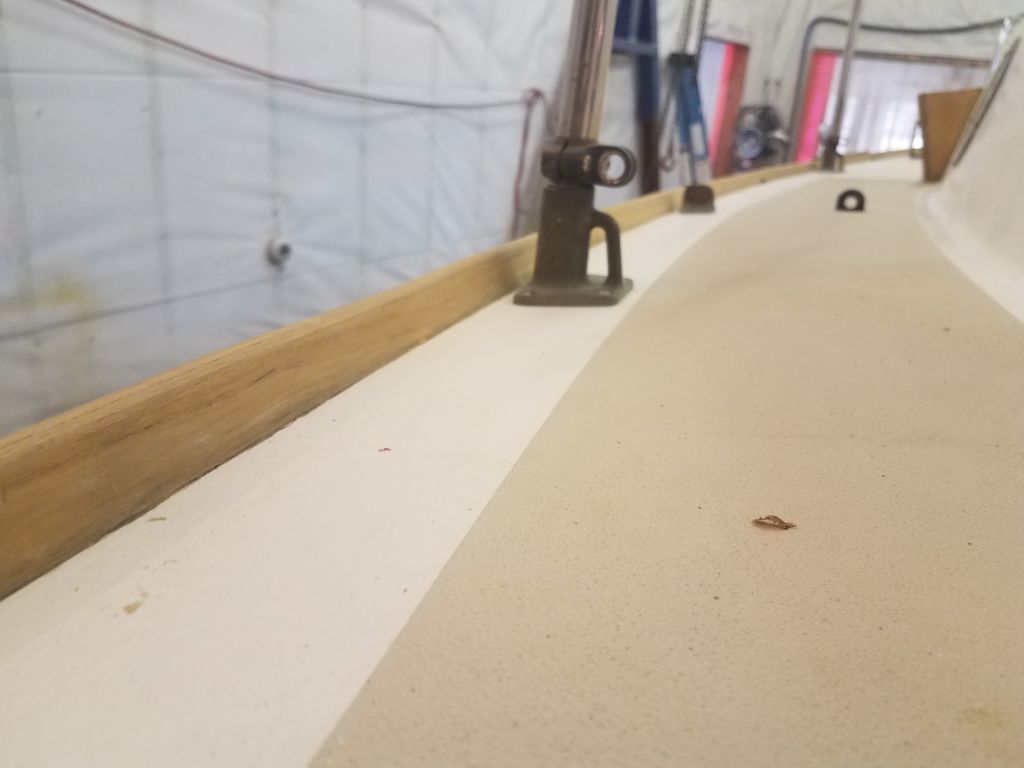
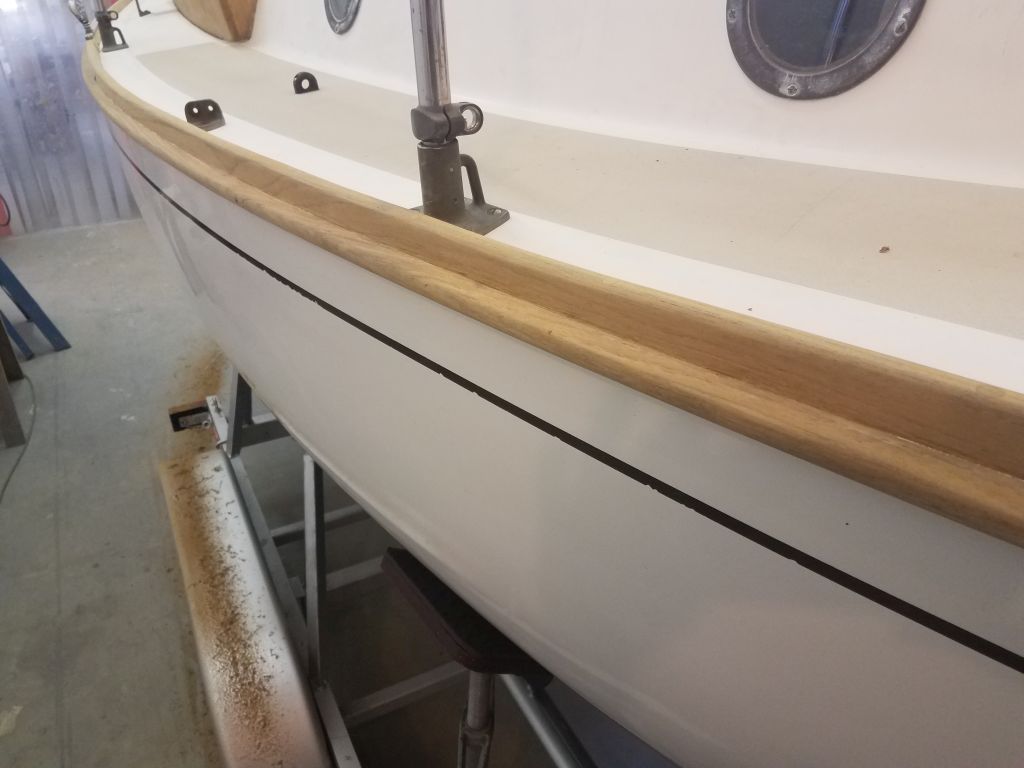
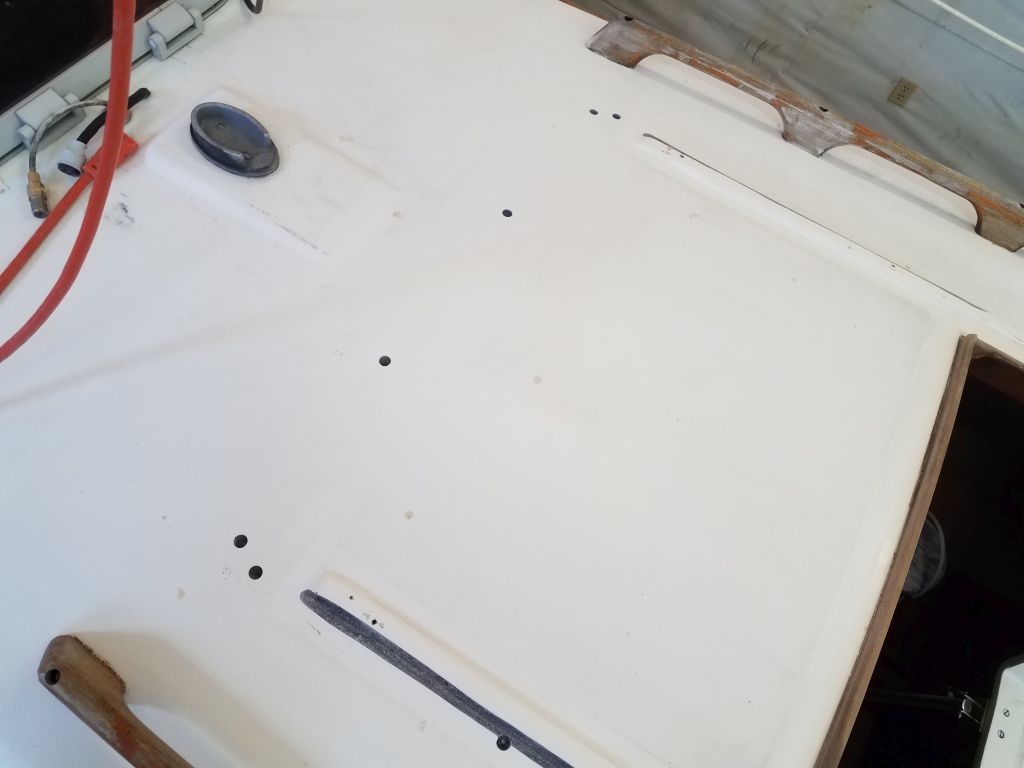
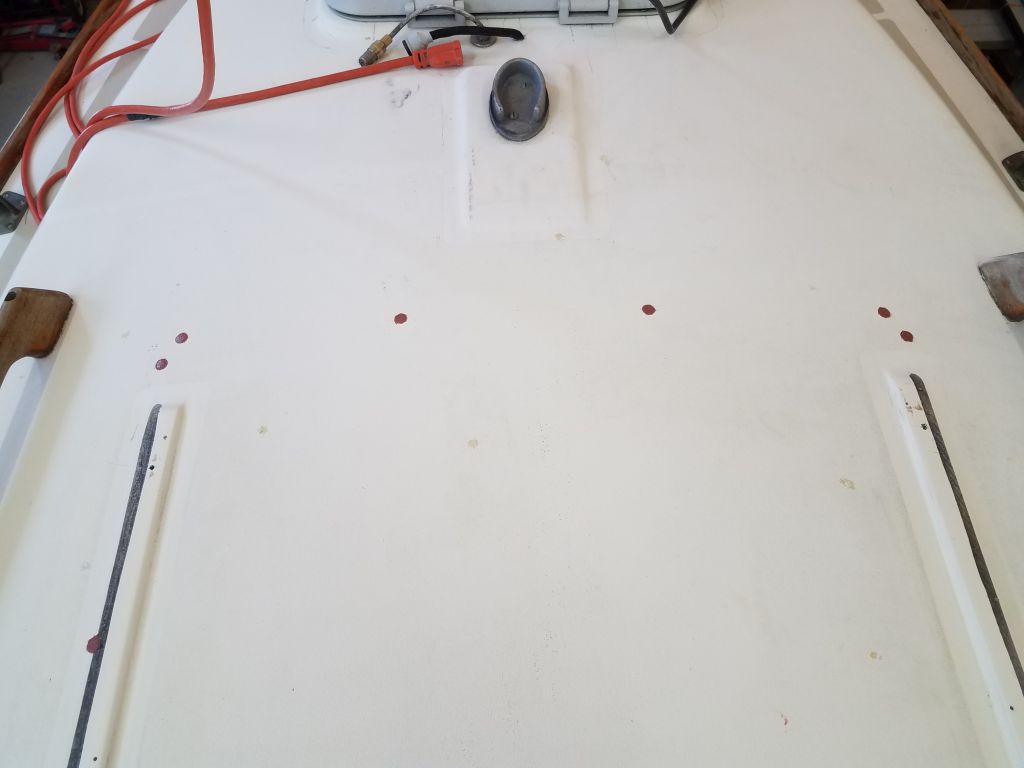
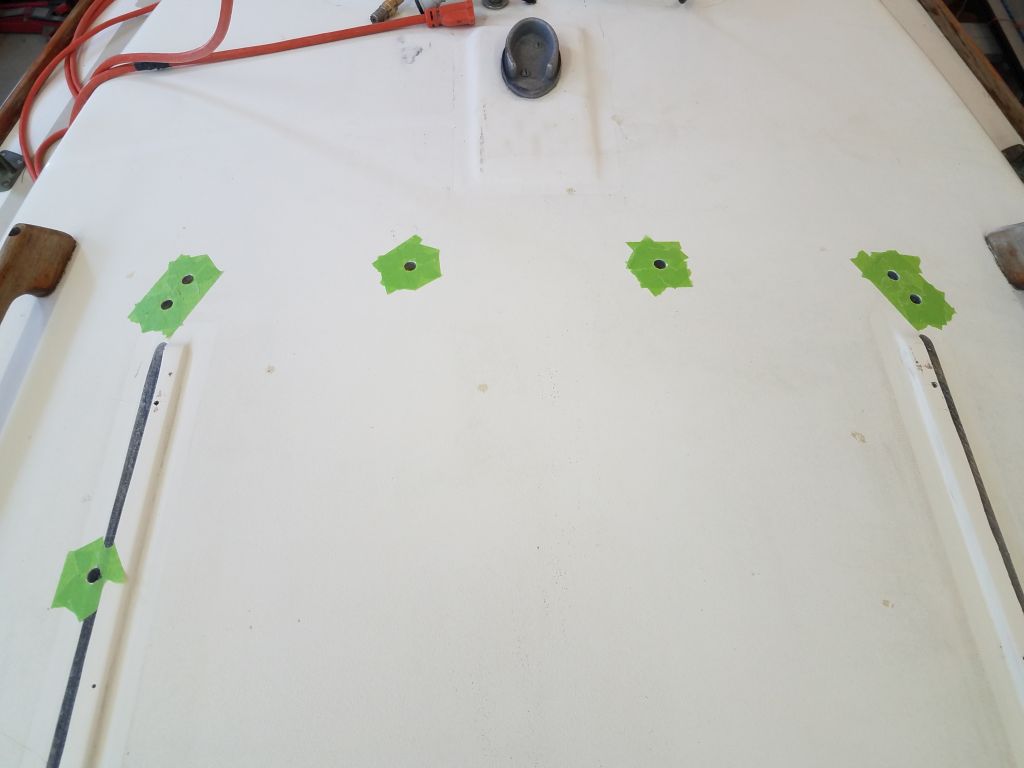
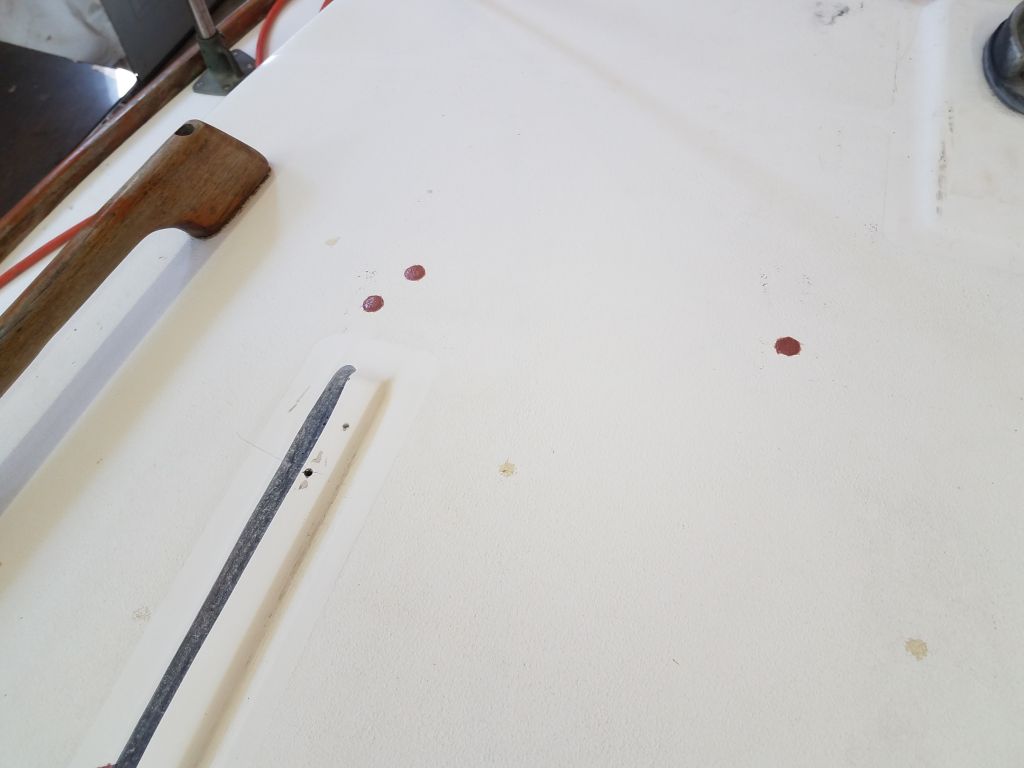
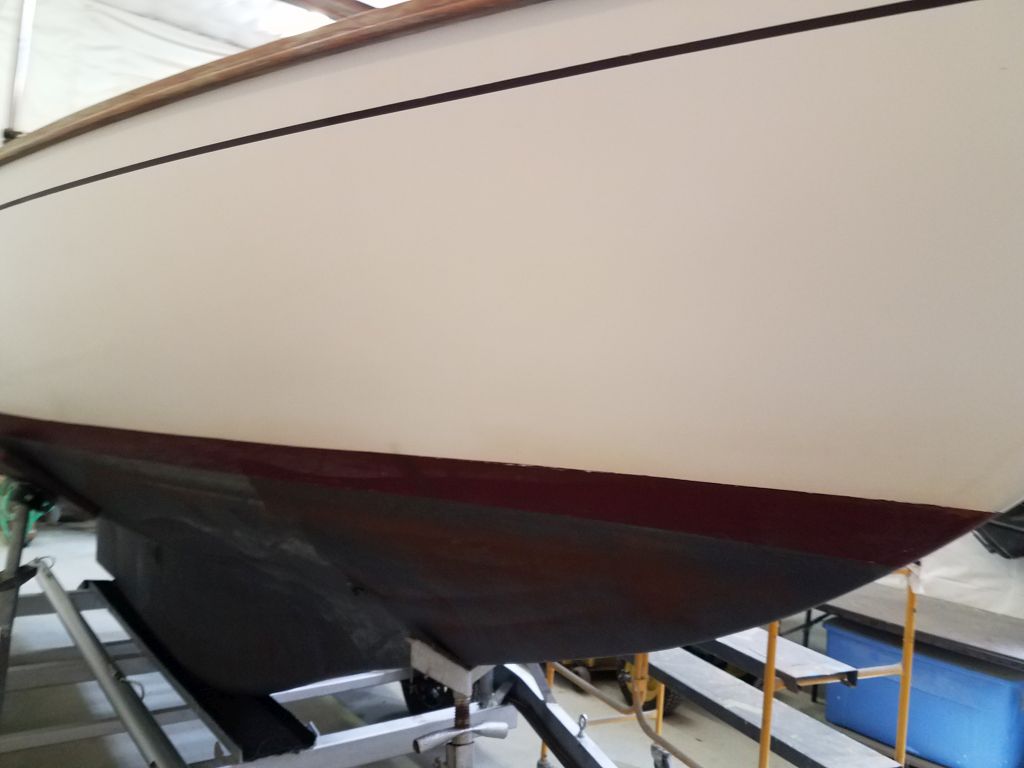
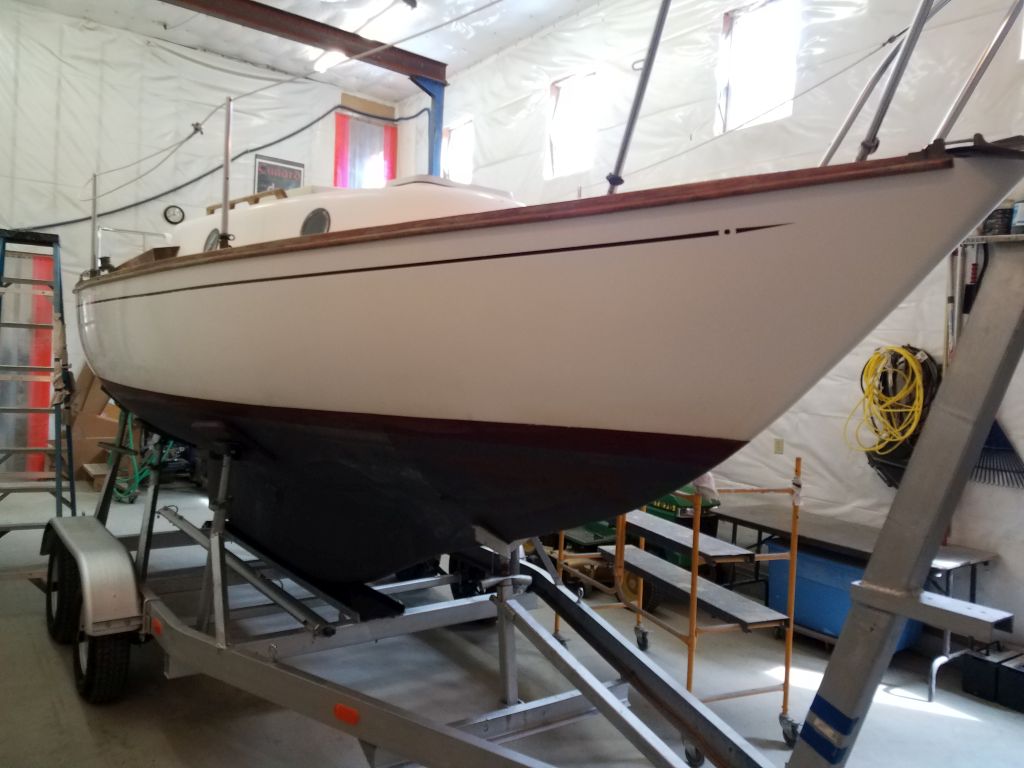
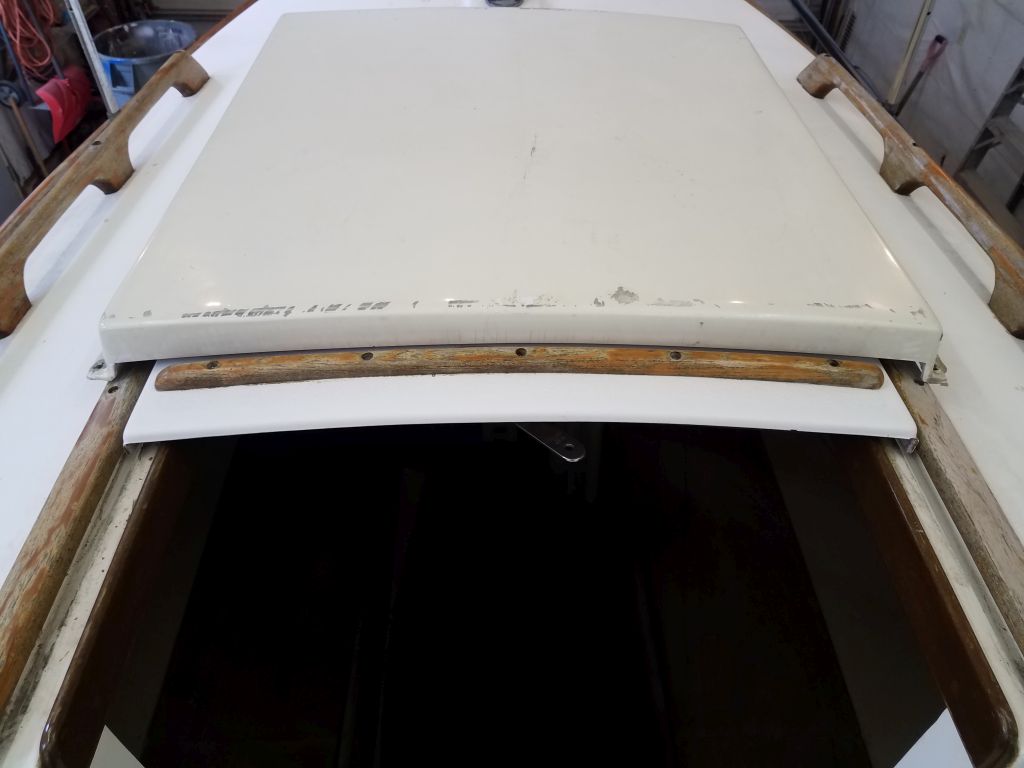
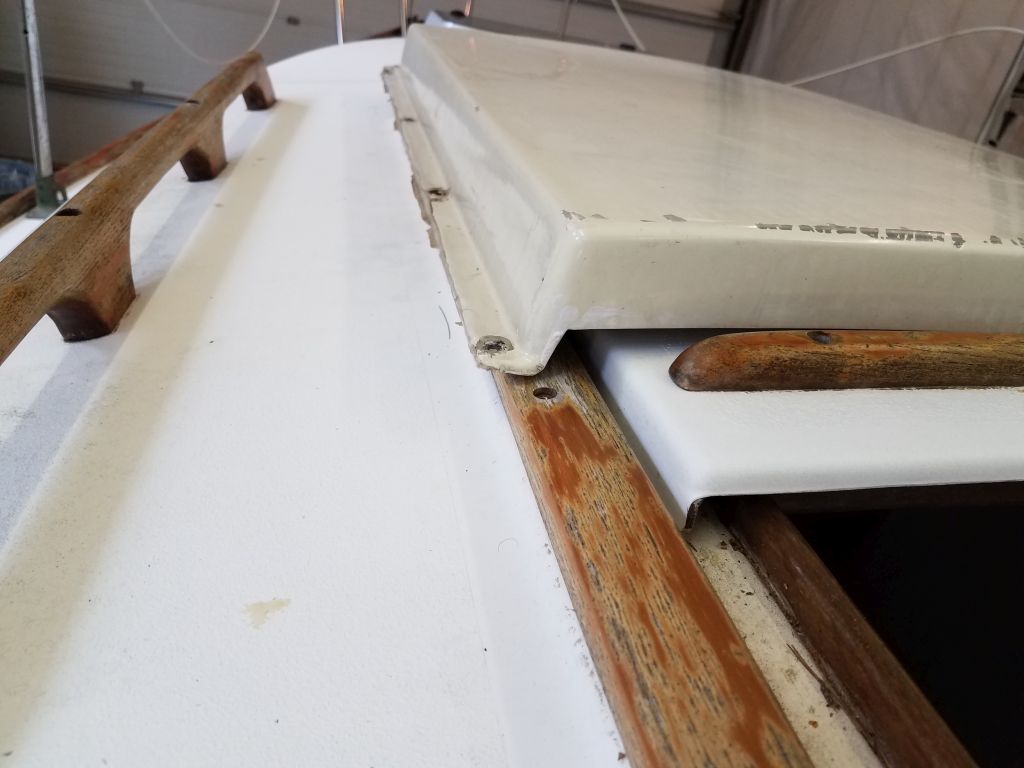
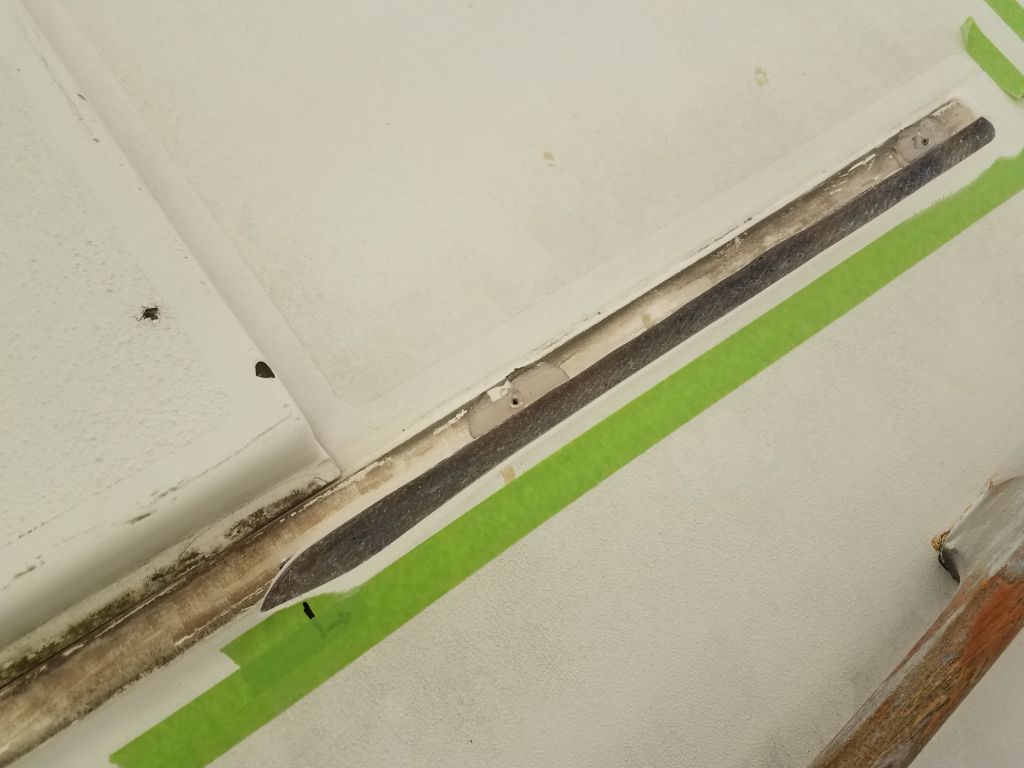
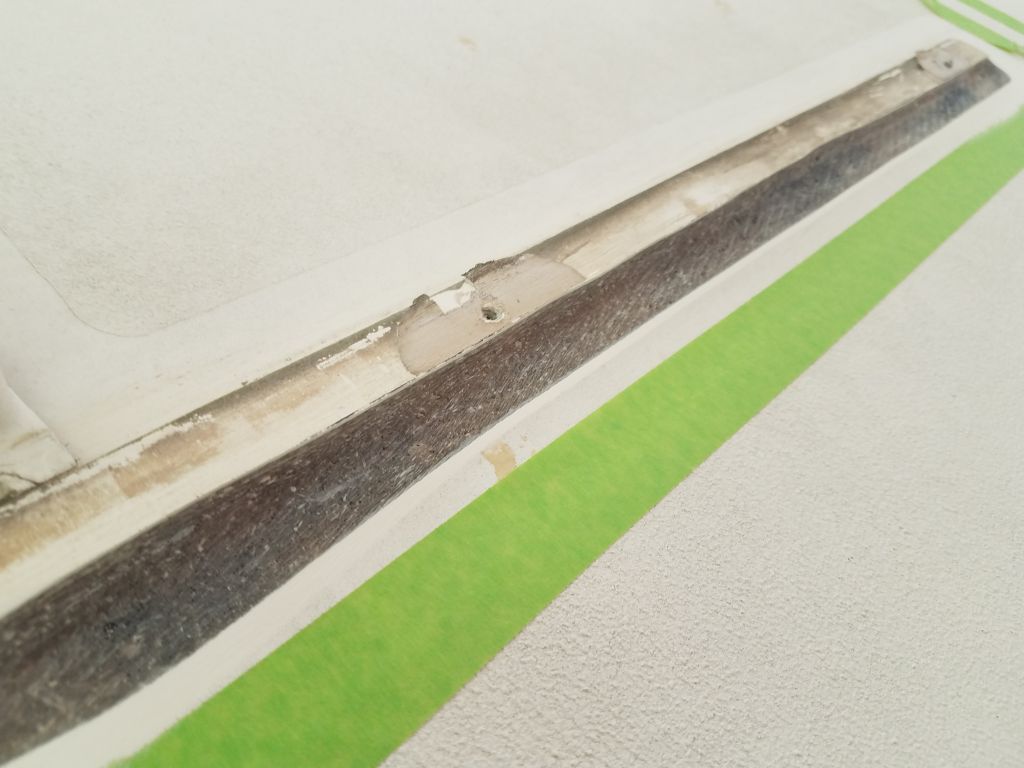
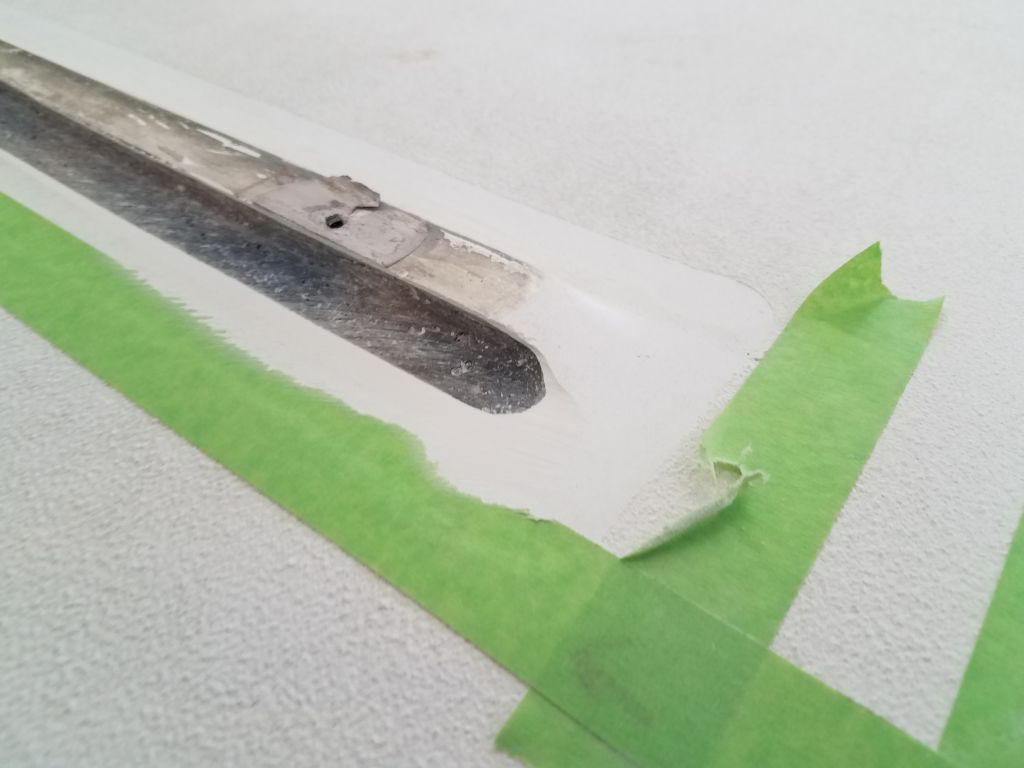
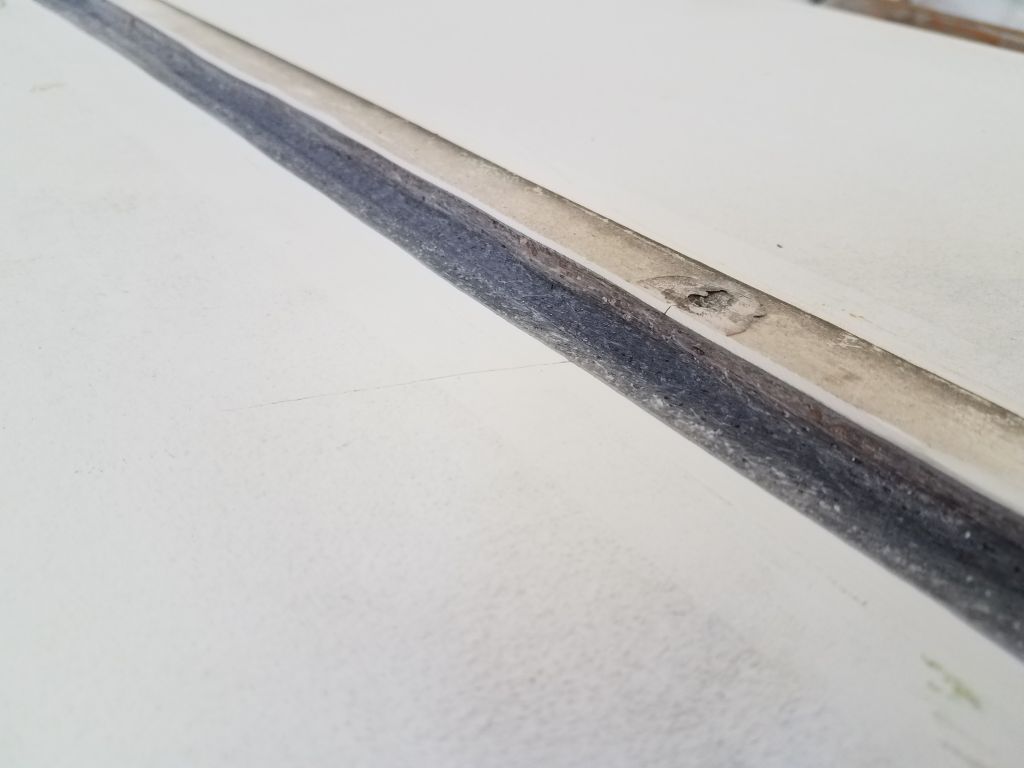
(page 83 of 165)

Scupper 258

Monday

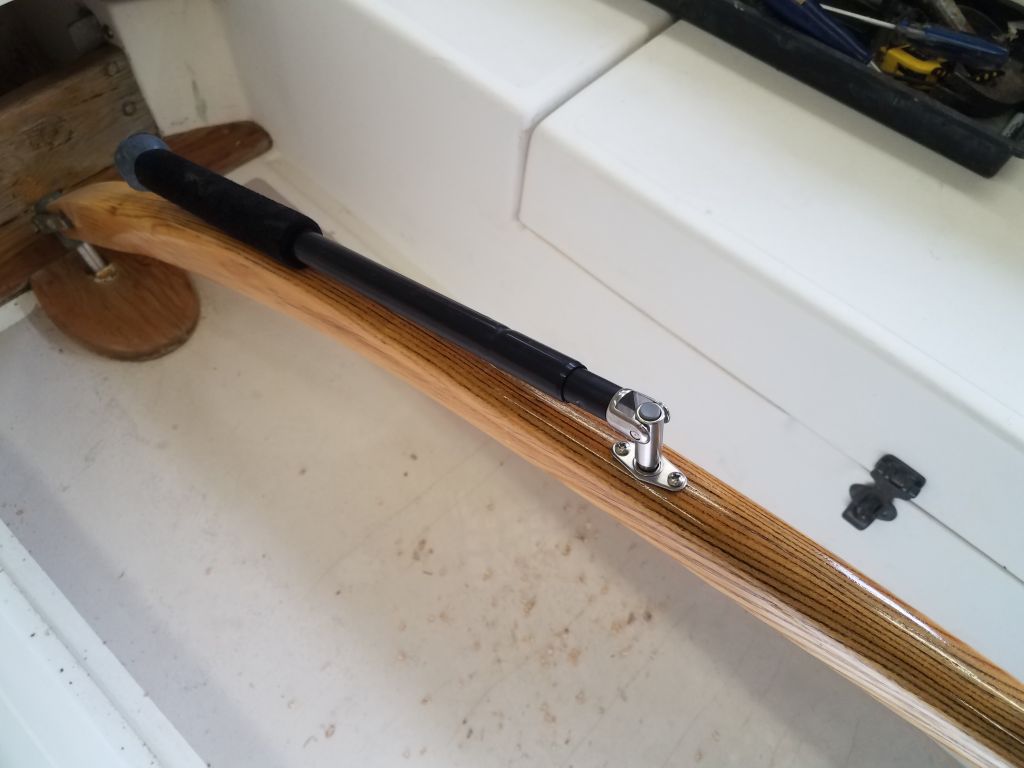
Over the weekend, I applied another coat of varnish to the tiller (4) and swashboards (2).  So to start the day, I lightly sanded these again, and applied the 5th and 3rd coats of varnish, respectively.

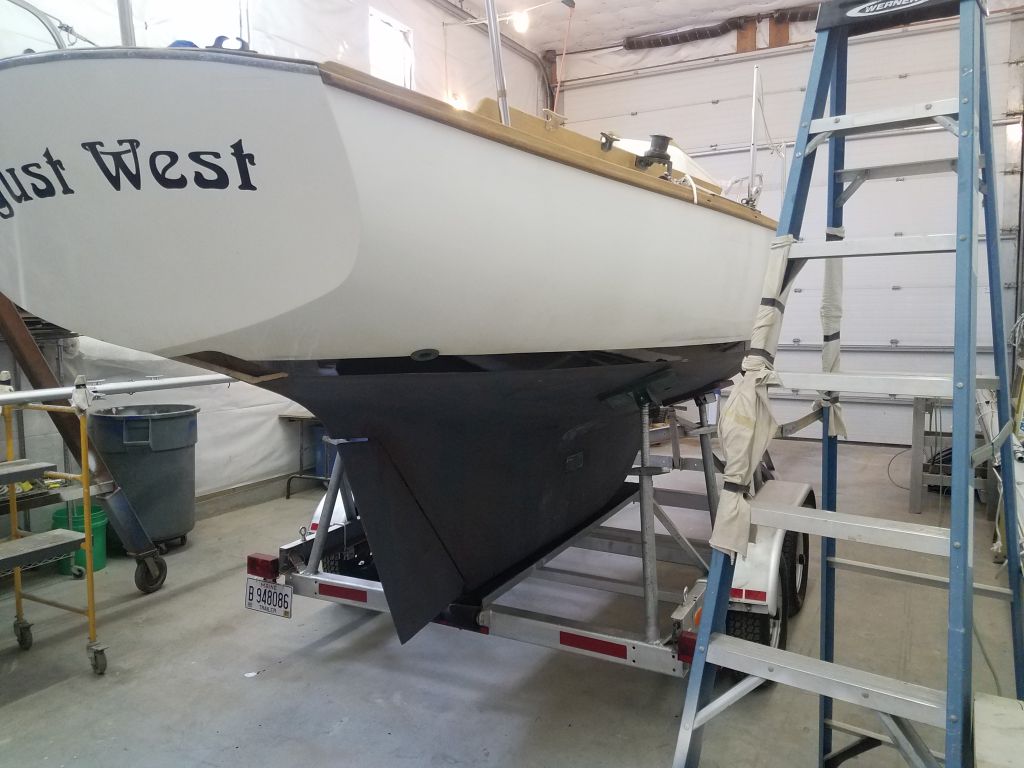
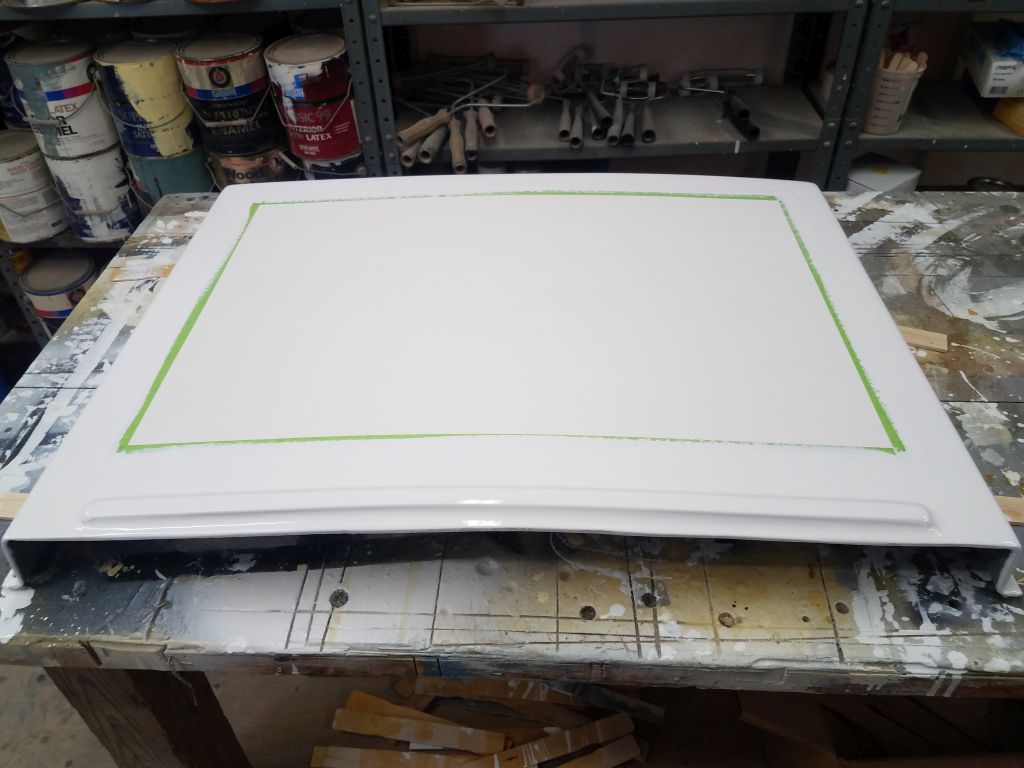
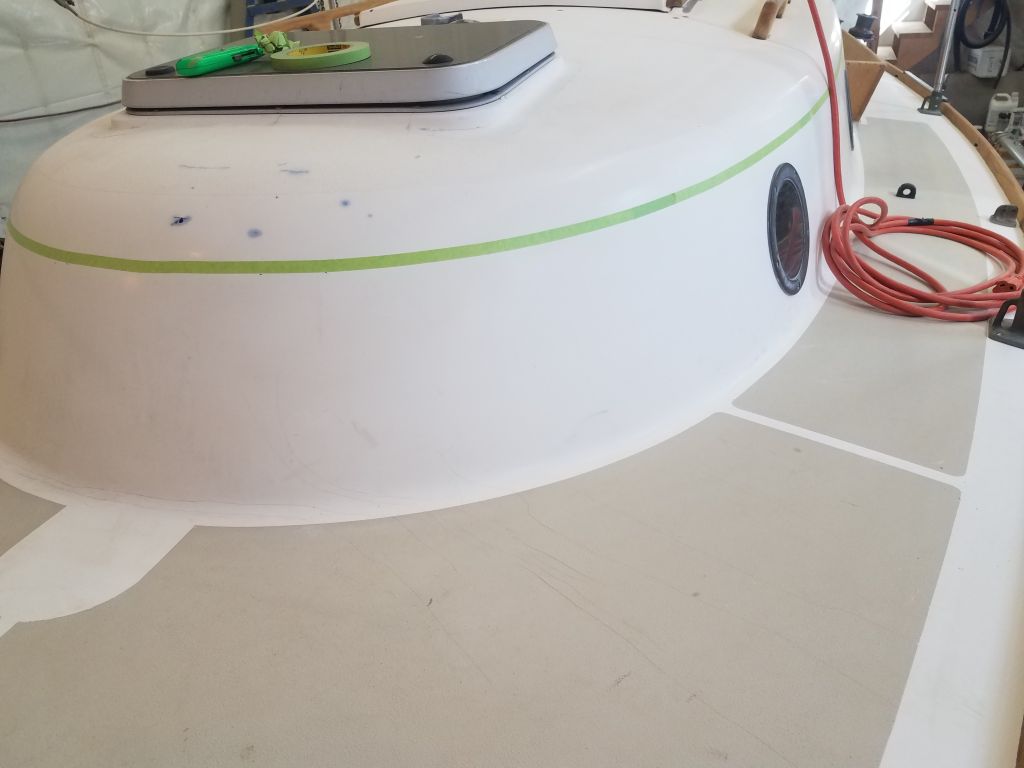
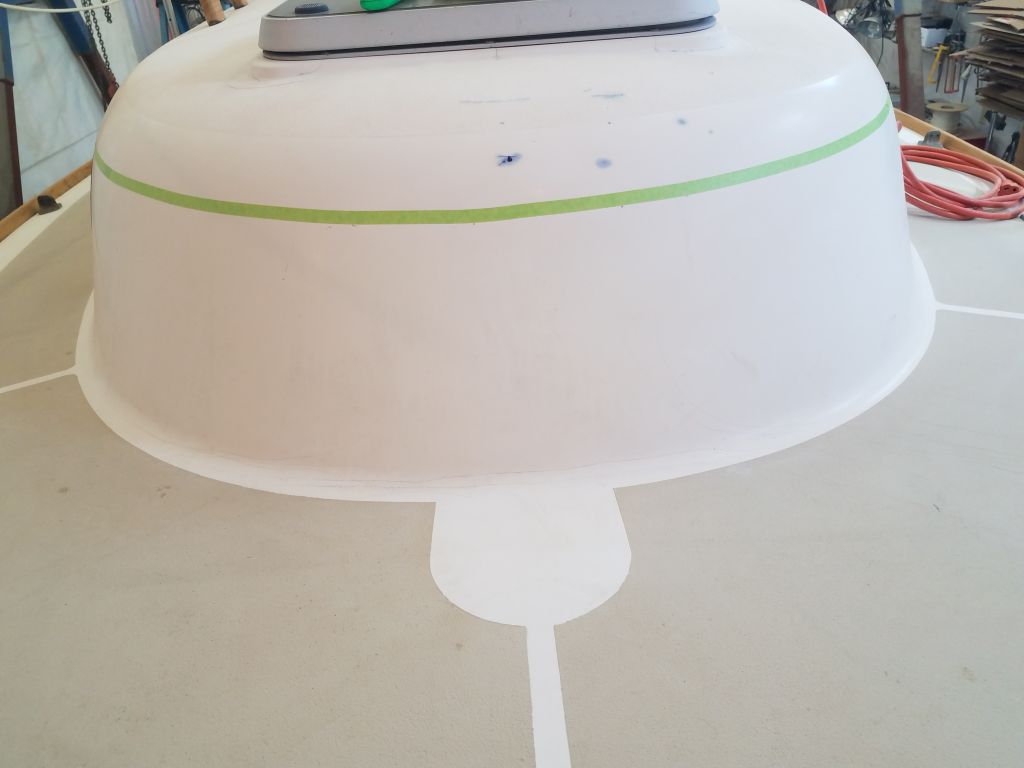
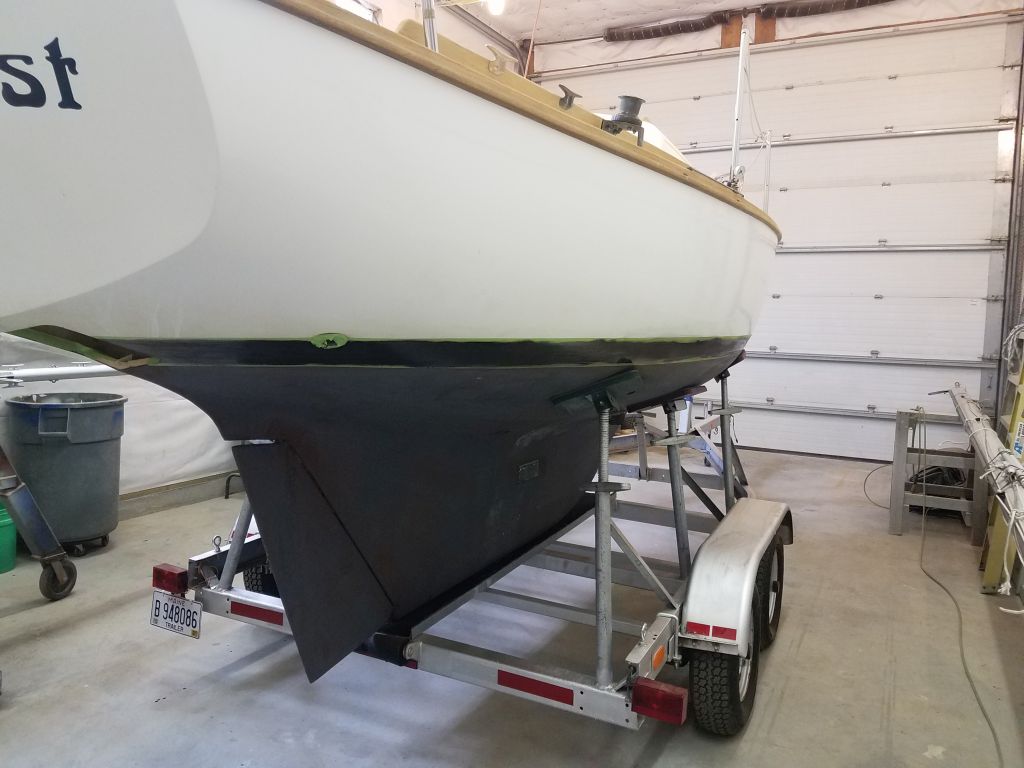
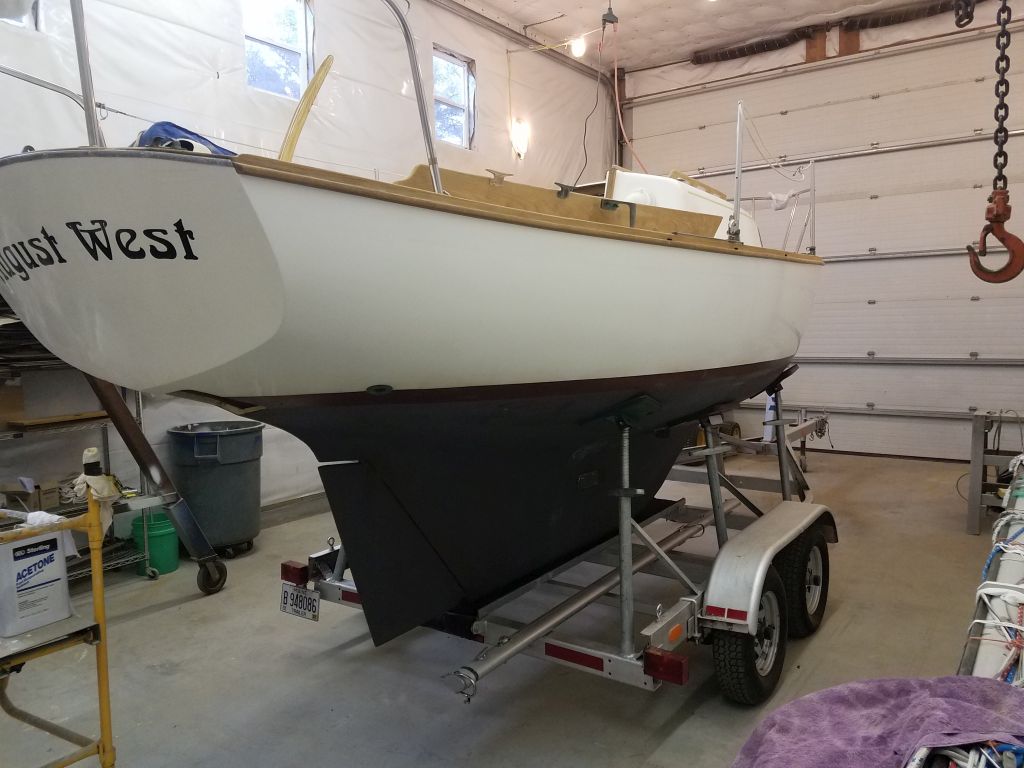
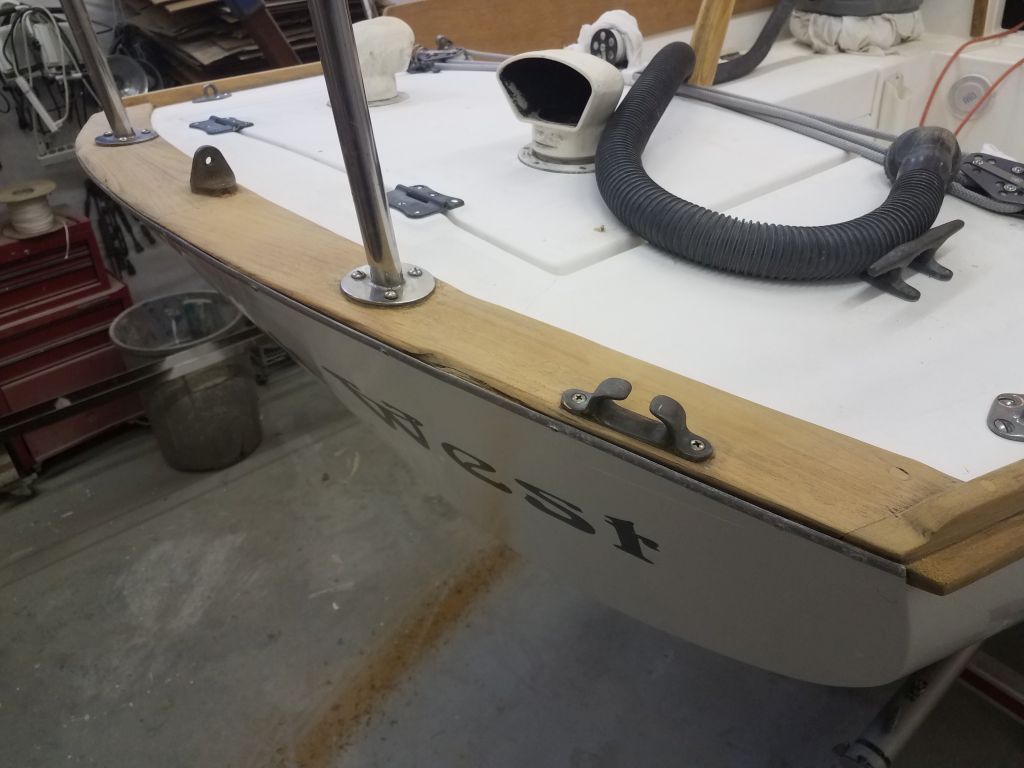
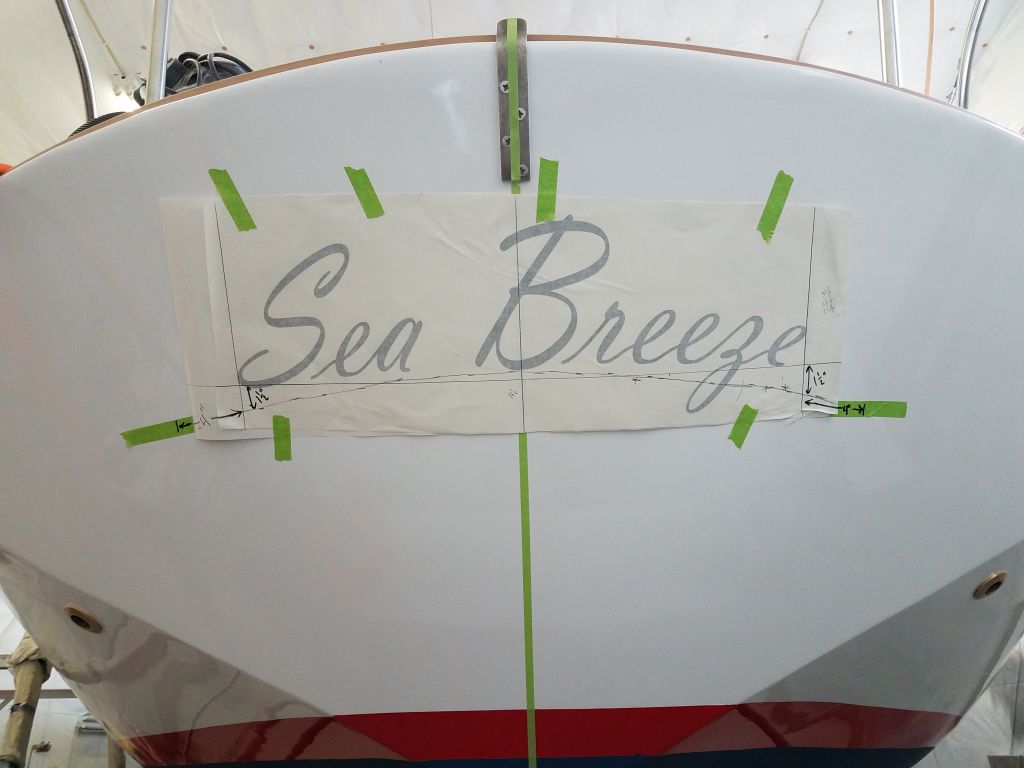
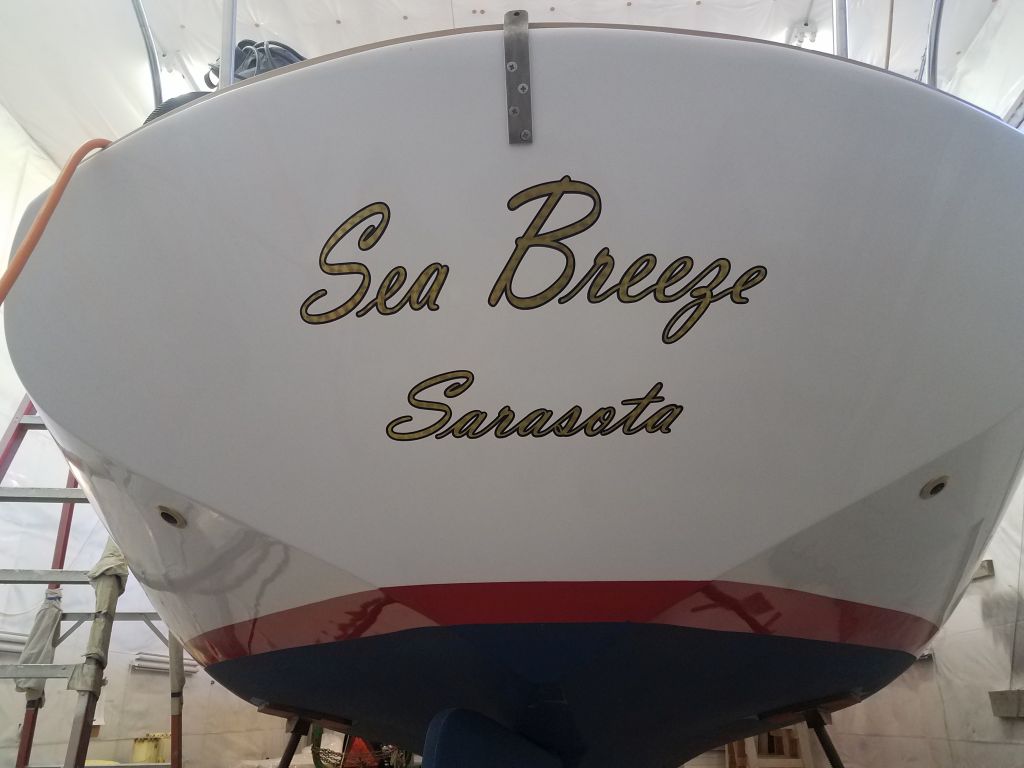
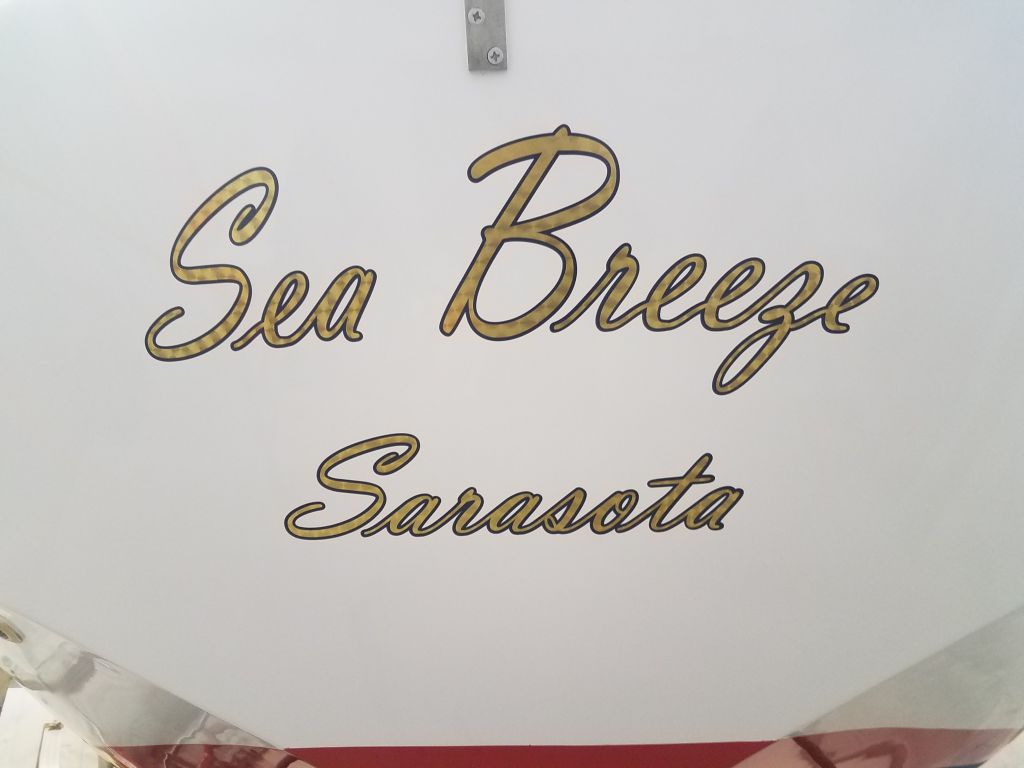
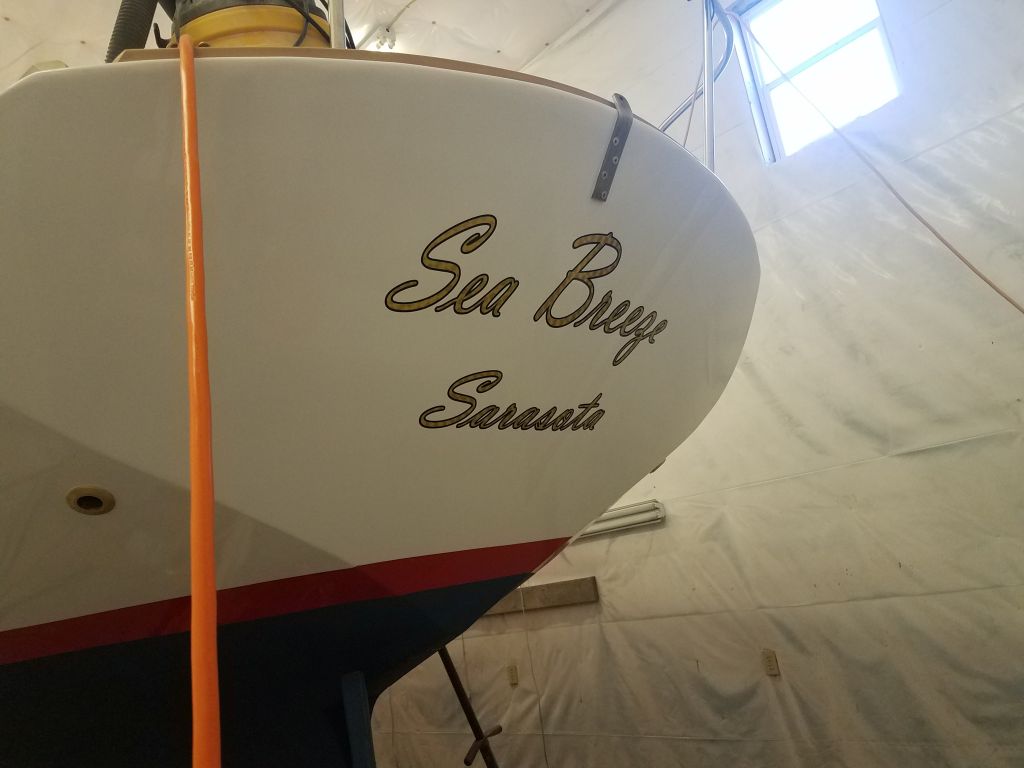
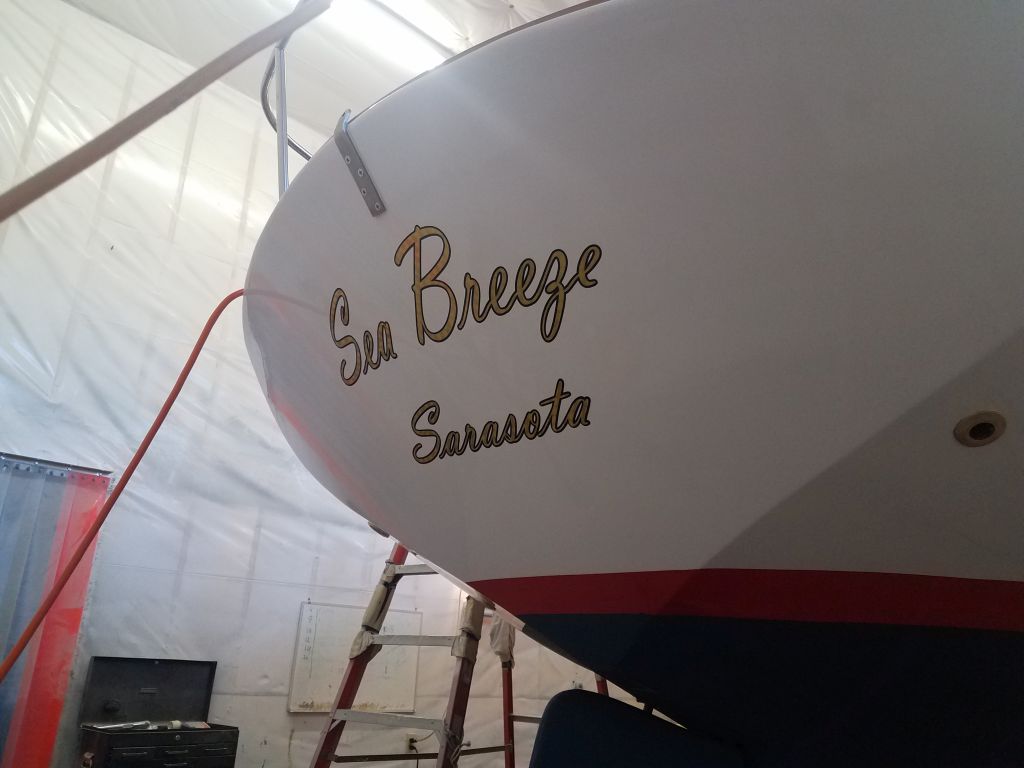
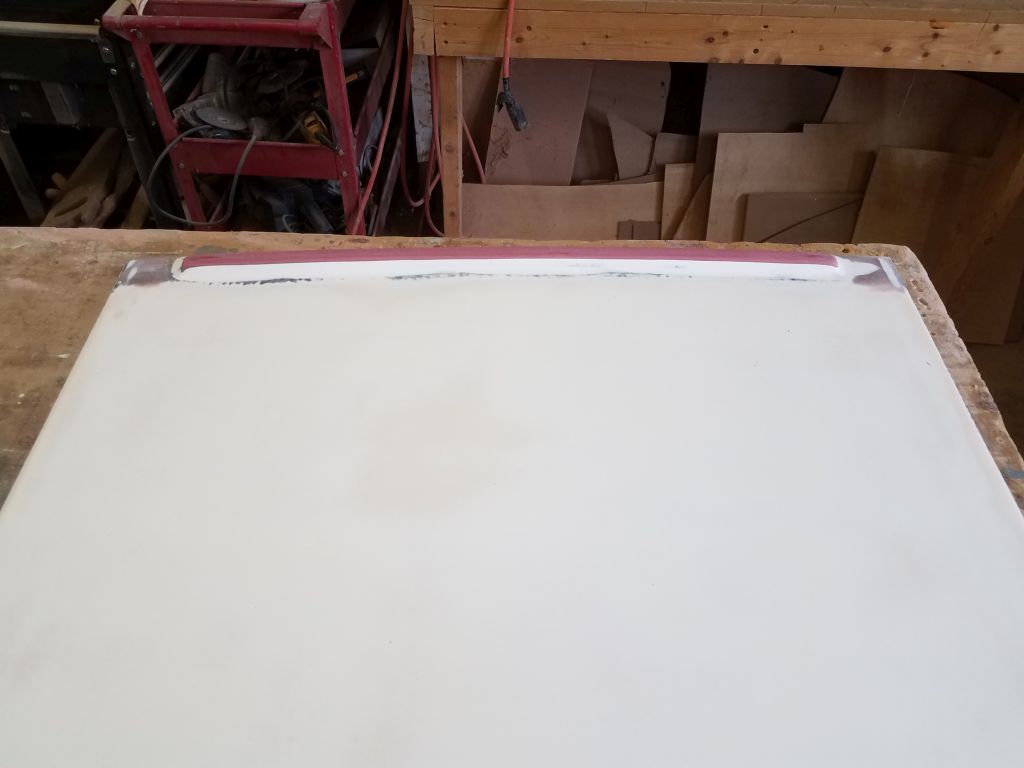
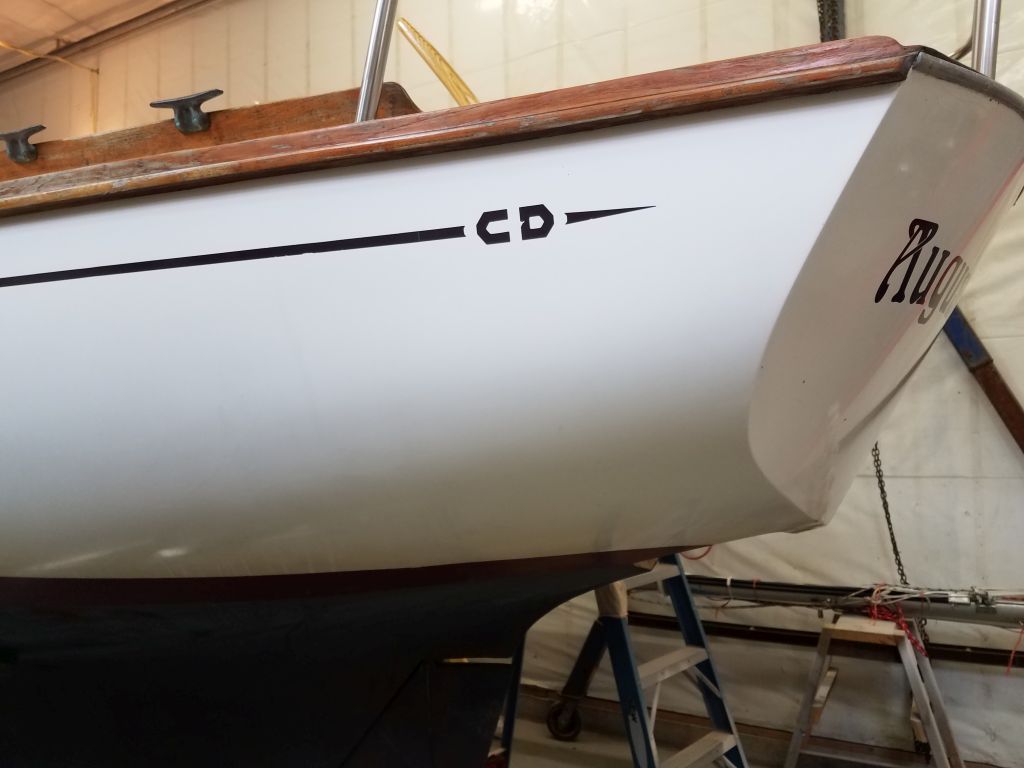
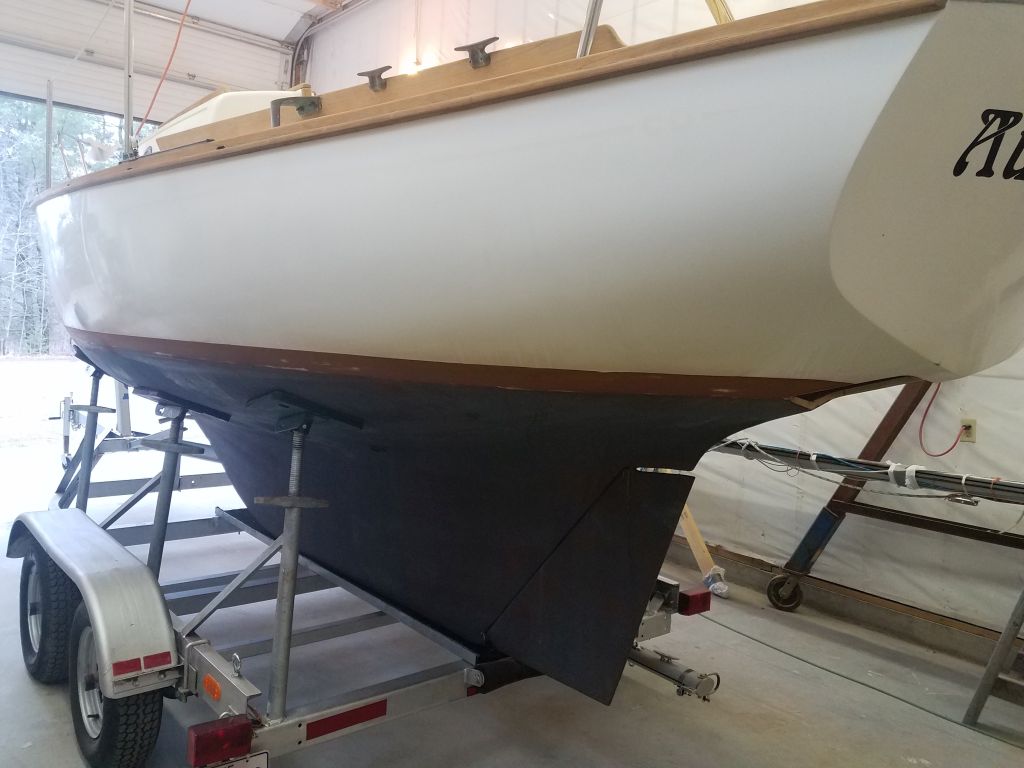
I decided to make a simple template of the transom so I could help the sign shop make the lettering to the correct arcs.  In this case, the owner’s choice of lettering featured an interconnected font, and I felt it was worth the extra effort to ensure that the vinyl was properly cut.  With a piece of leftover pattern plastic, I marked the key points on the transom, mainly the top edge (deck camber), the centerline, and the two corners where the deck met the hull.  With these marks made, then down on the bench I could lay out a horizontal line between the two transom corners and determine the height of the deck crown (9″ over a width of 74″).  I made plans to bring this template to the sign shop in the near future to finalize the graphics.

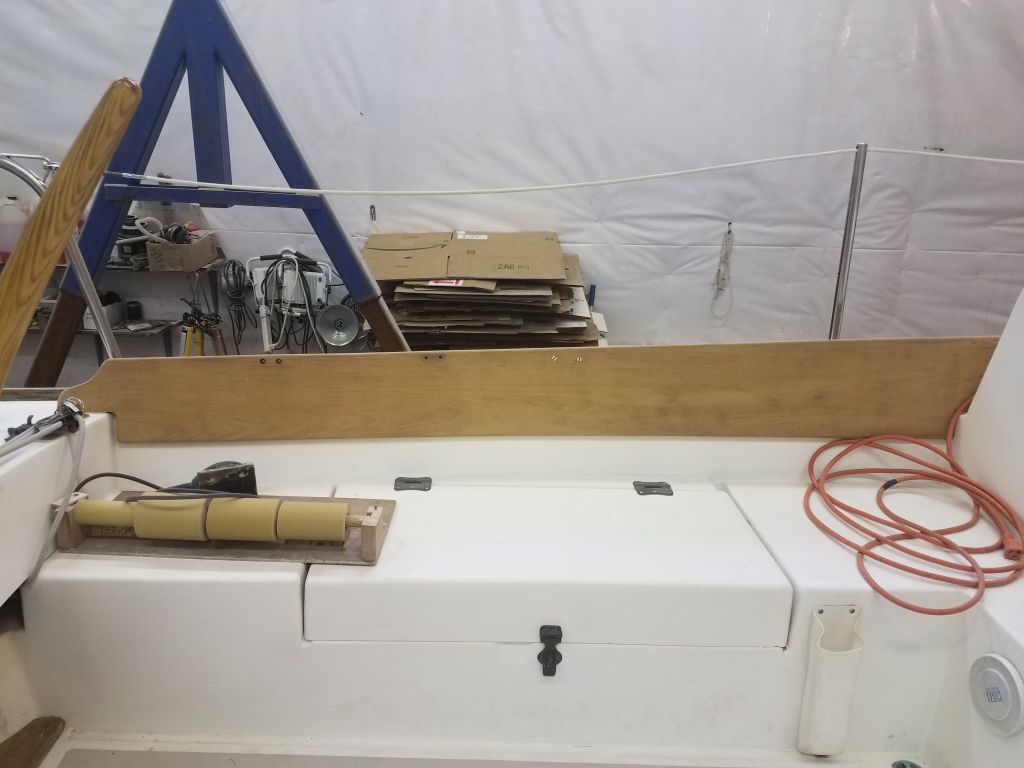
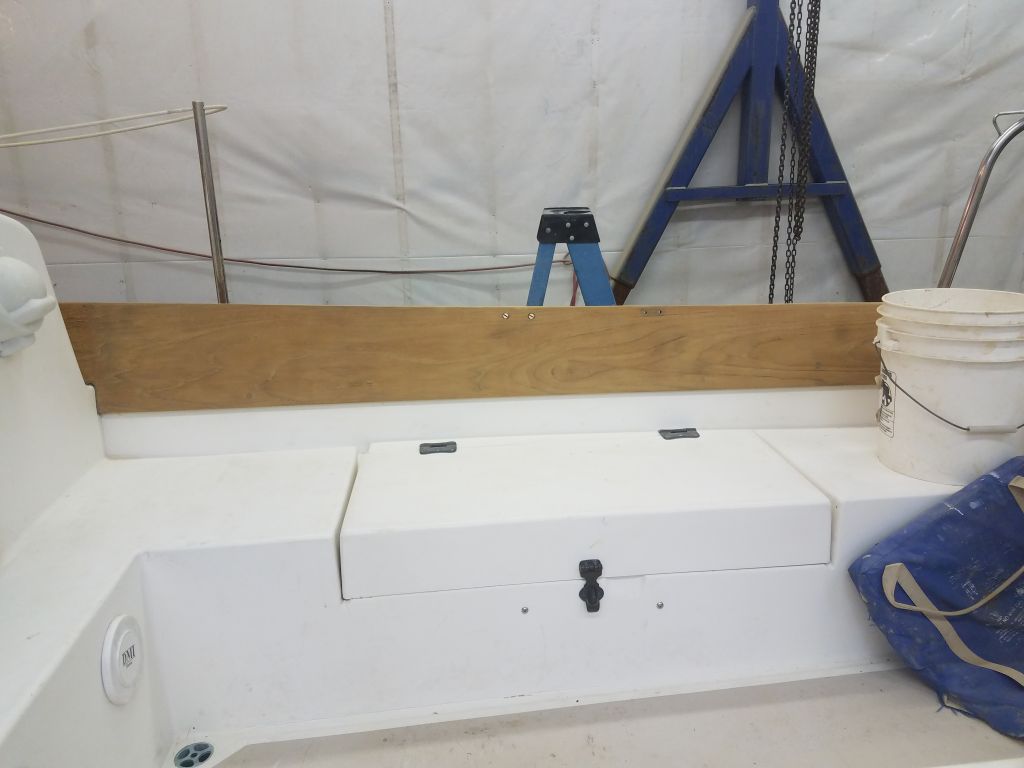
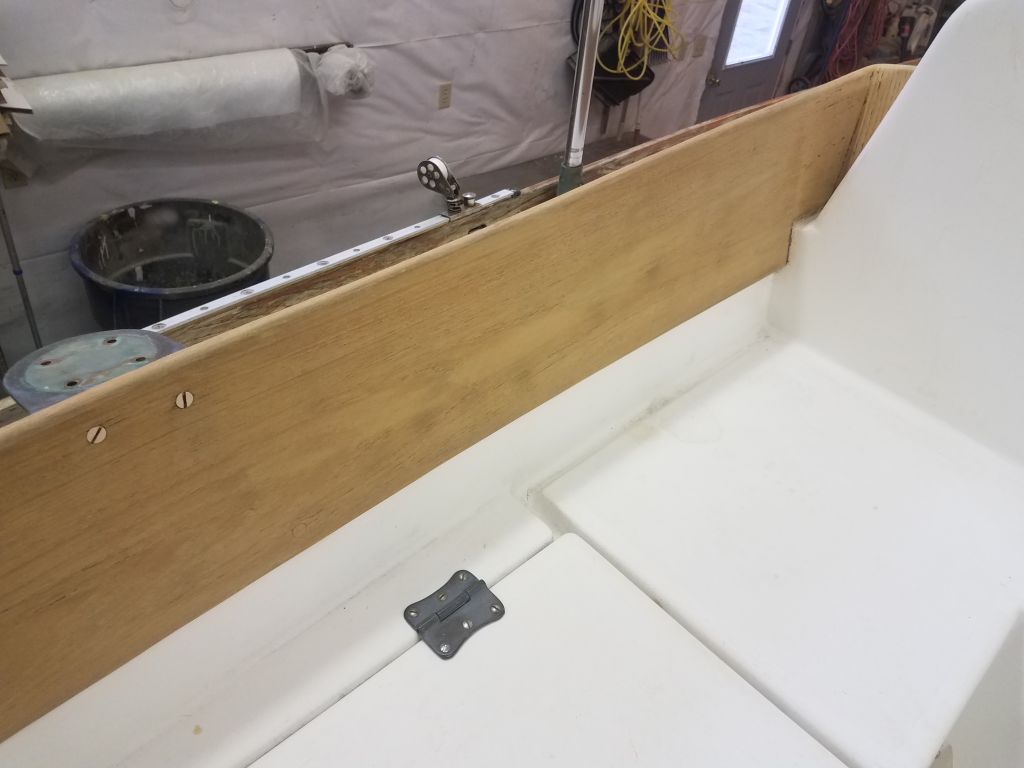
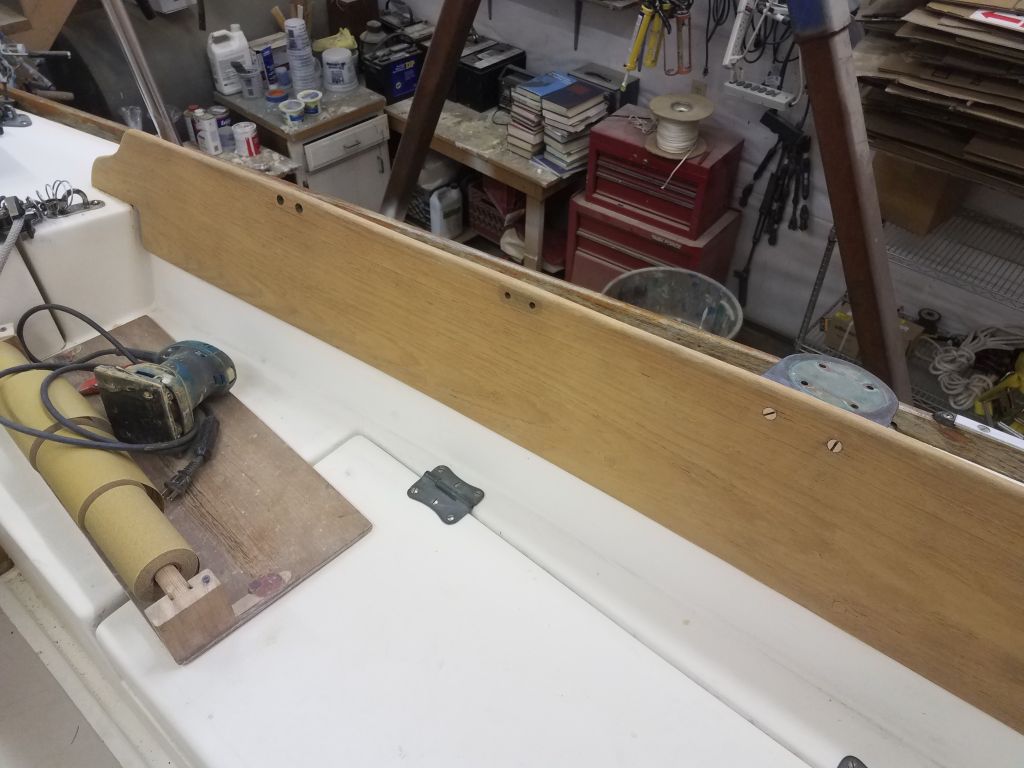
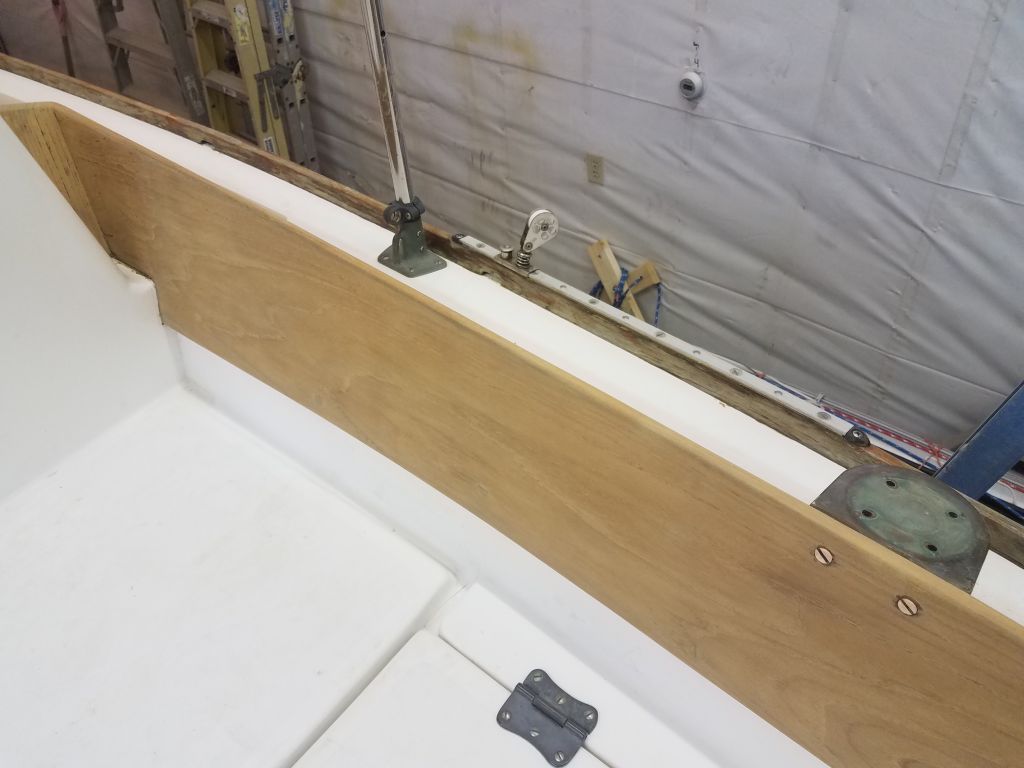
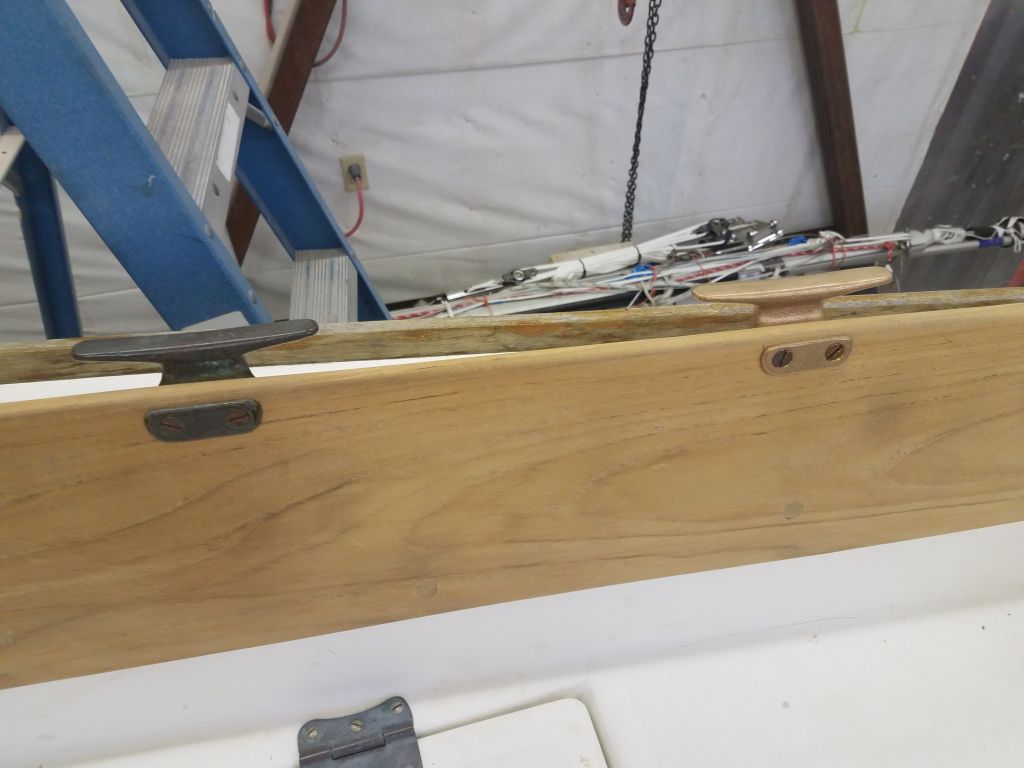
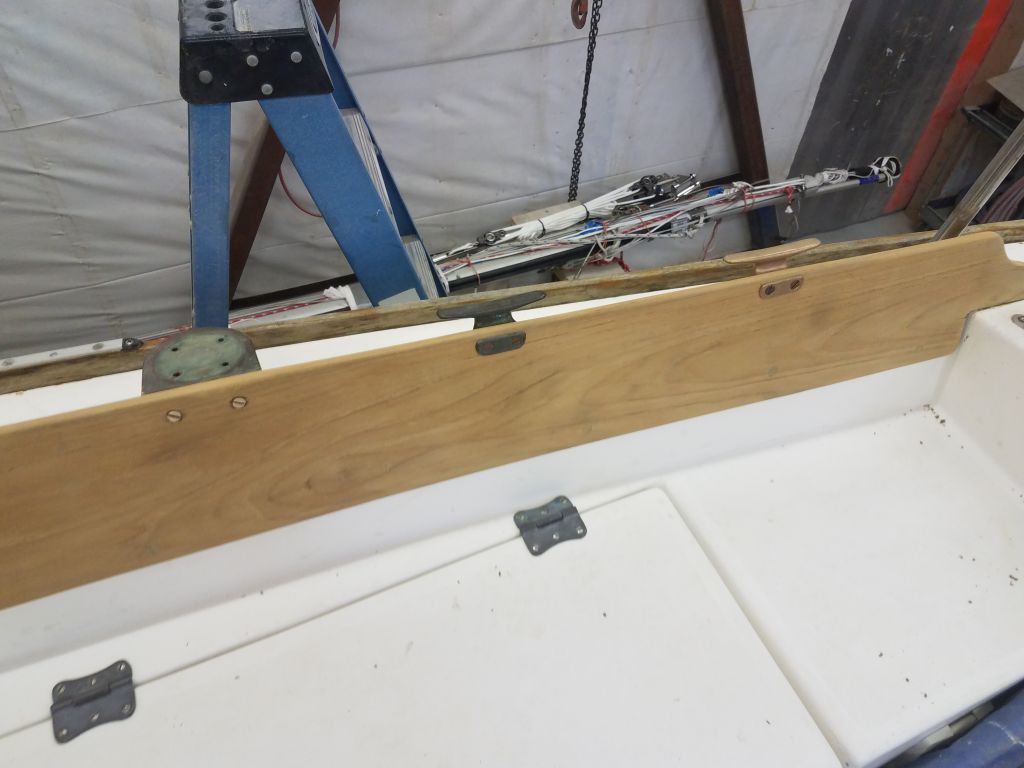
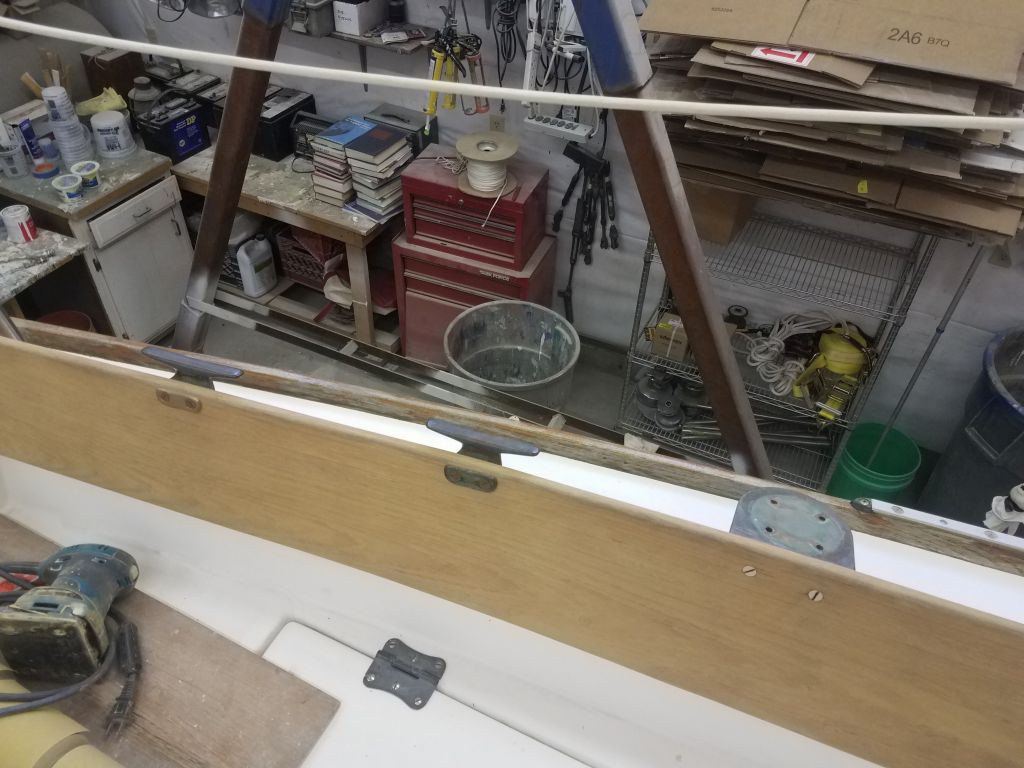
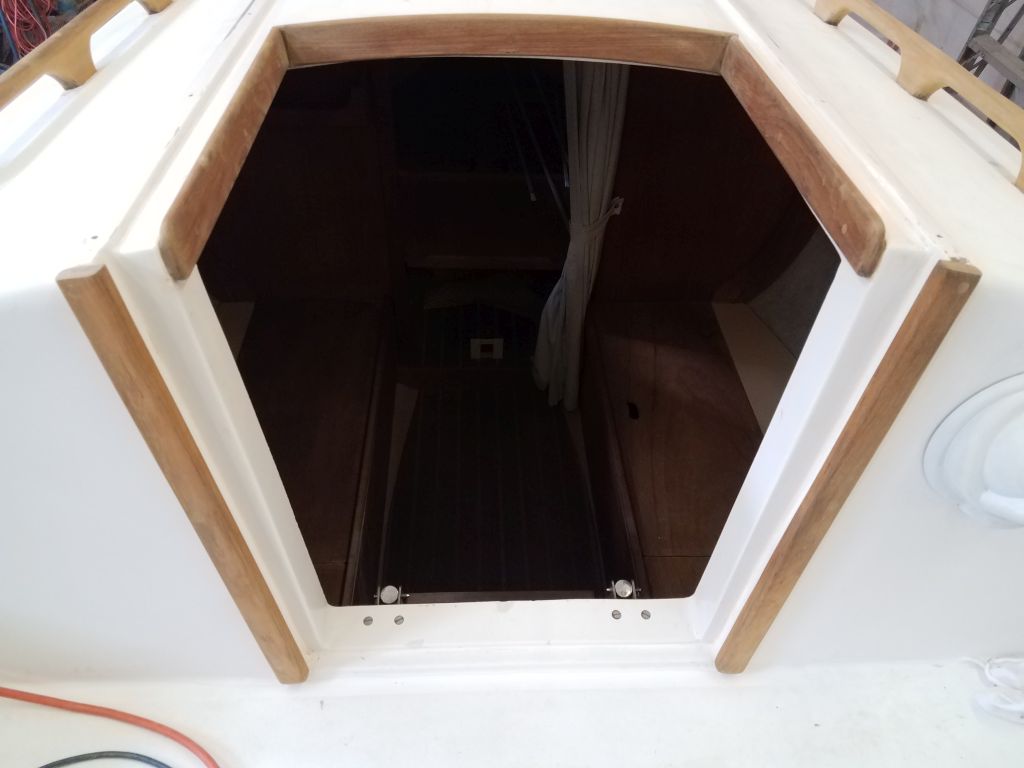
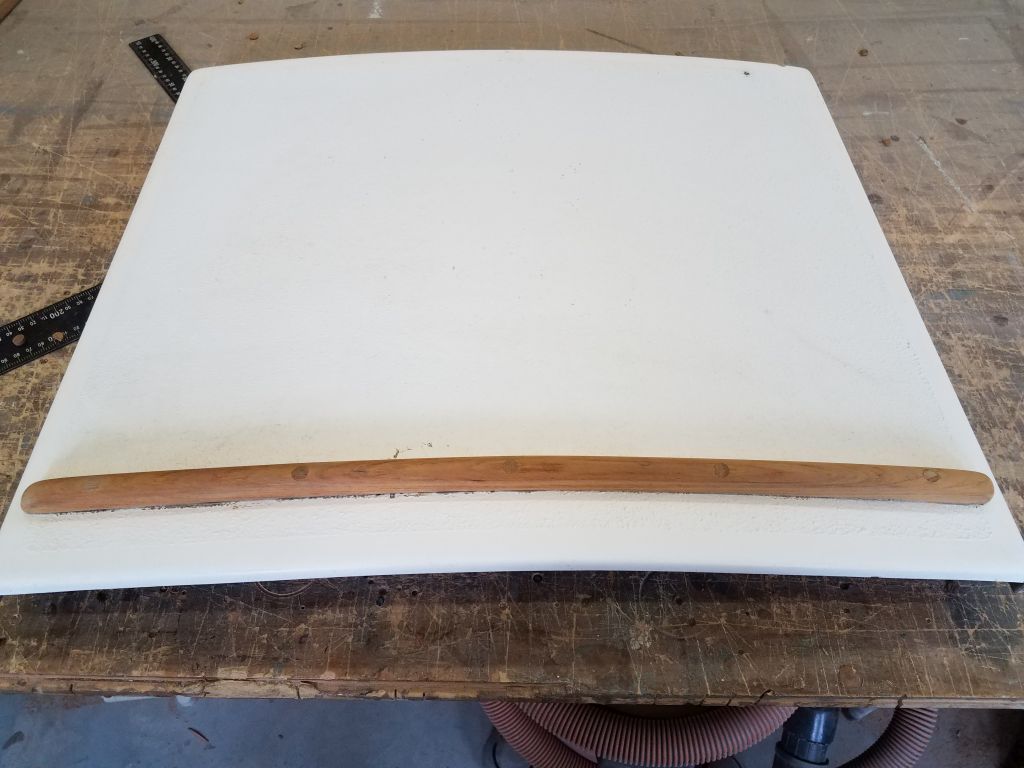
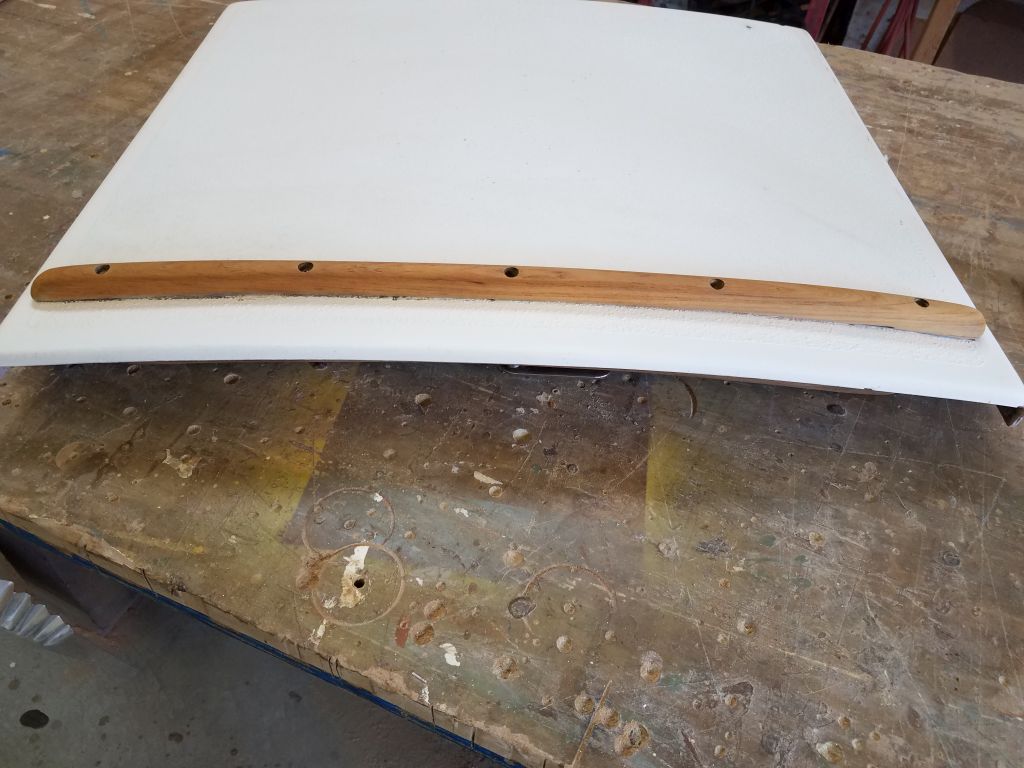
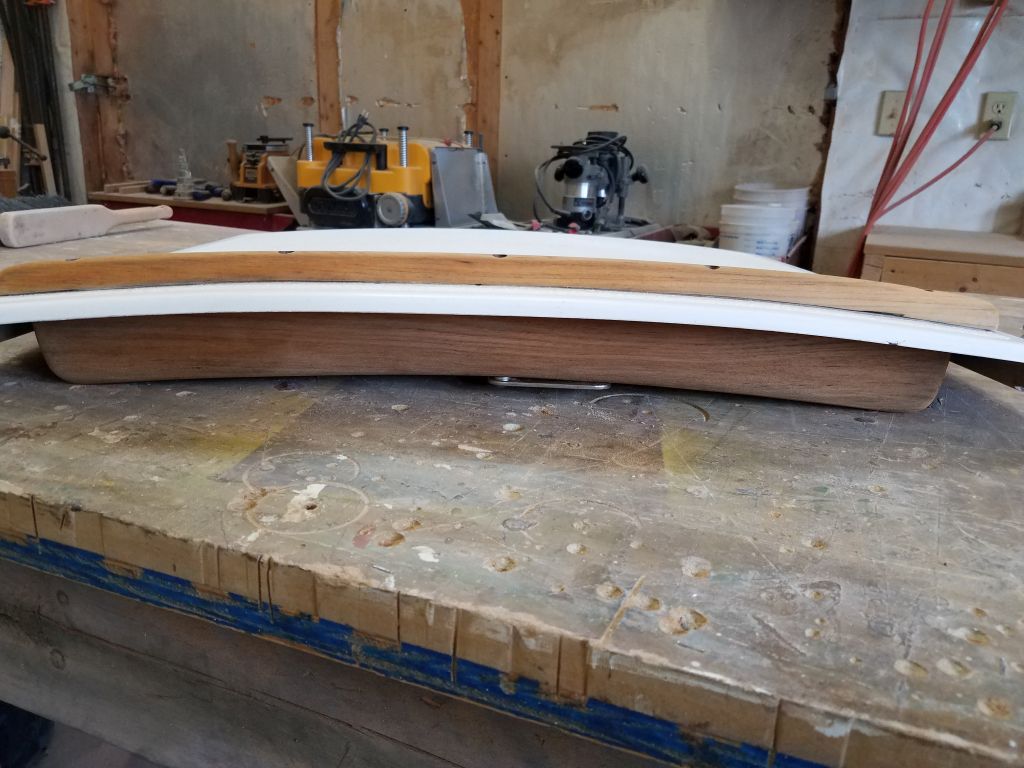
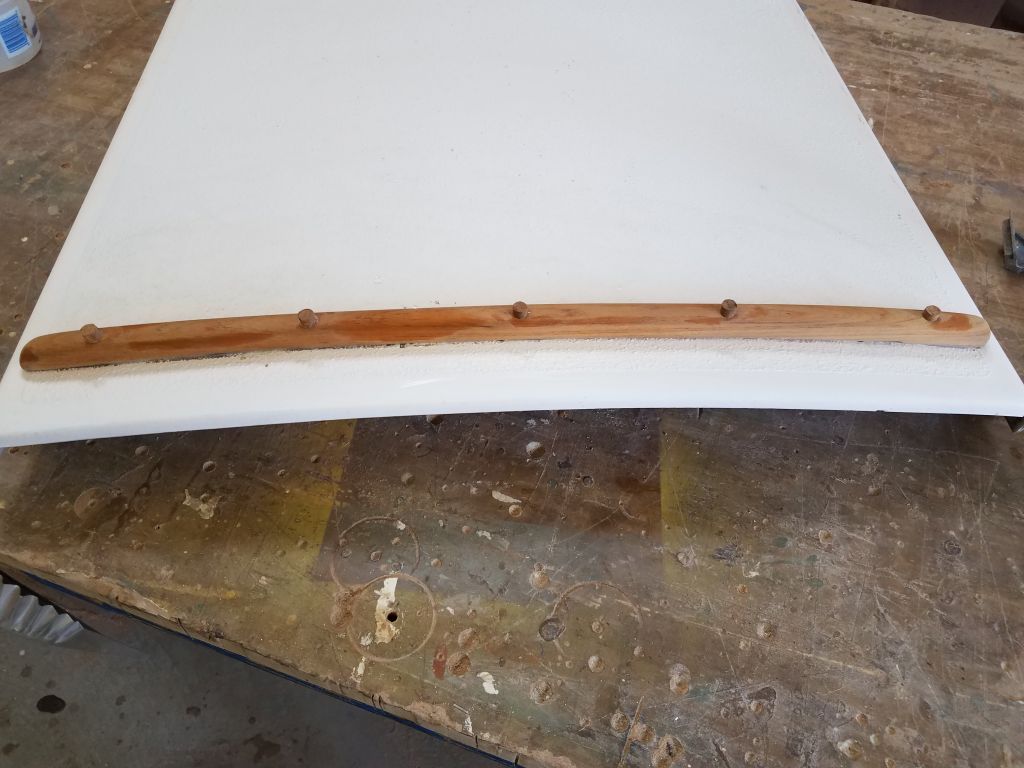
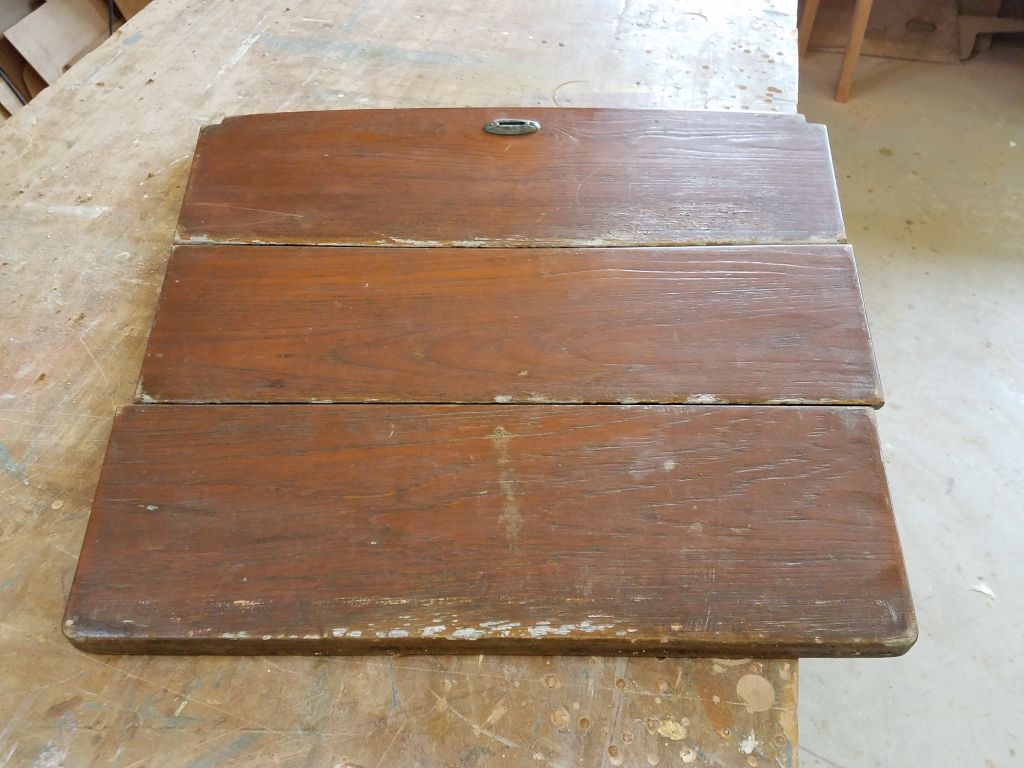
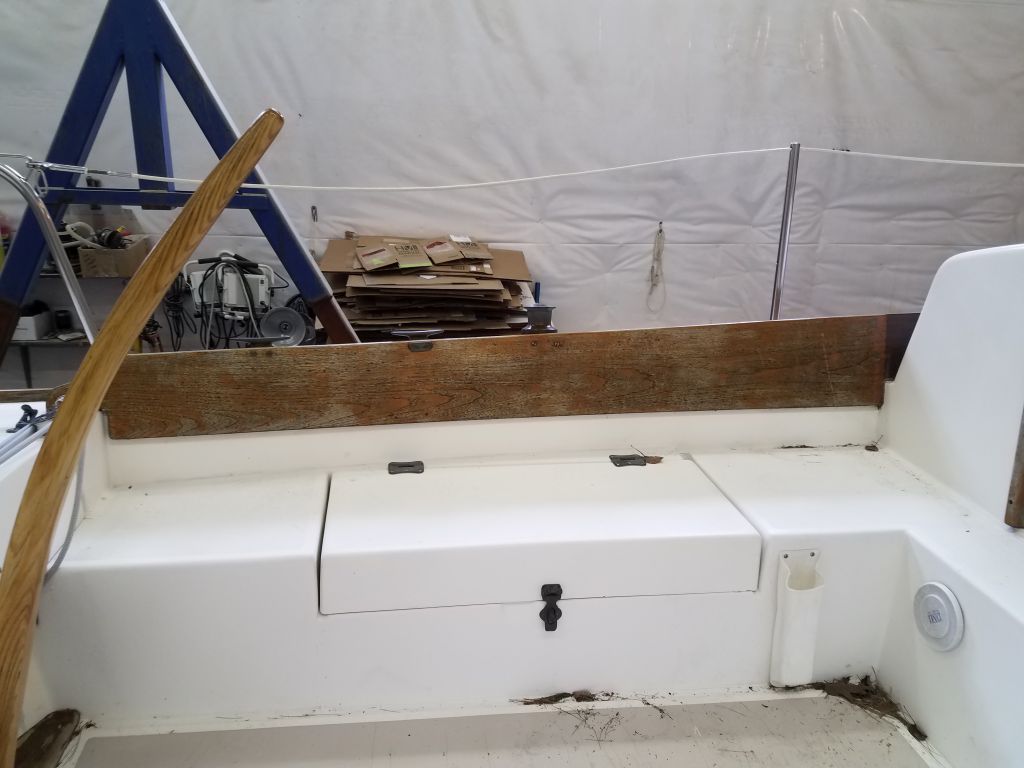
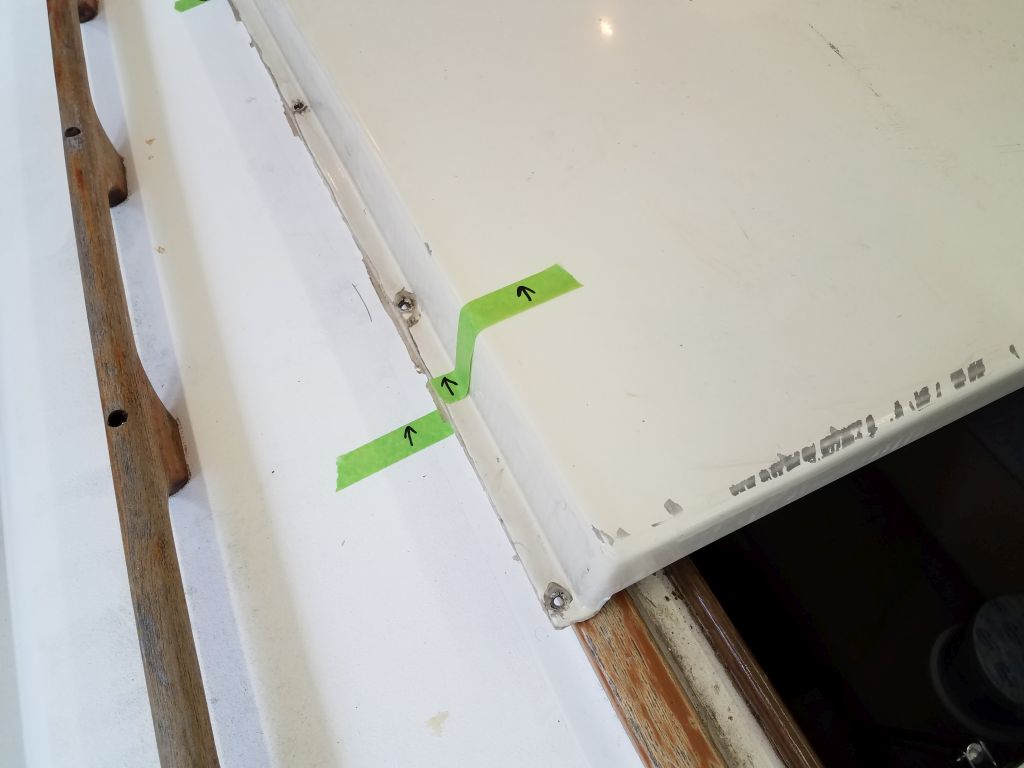
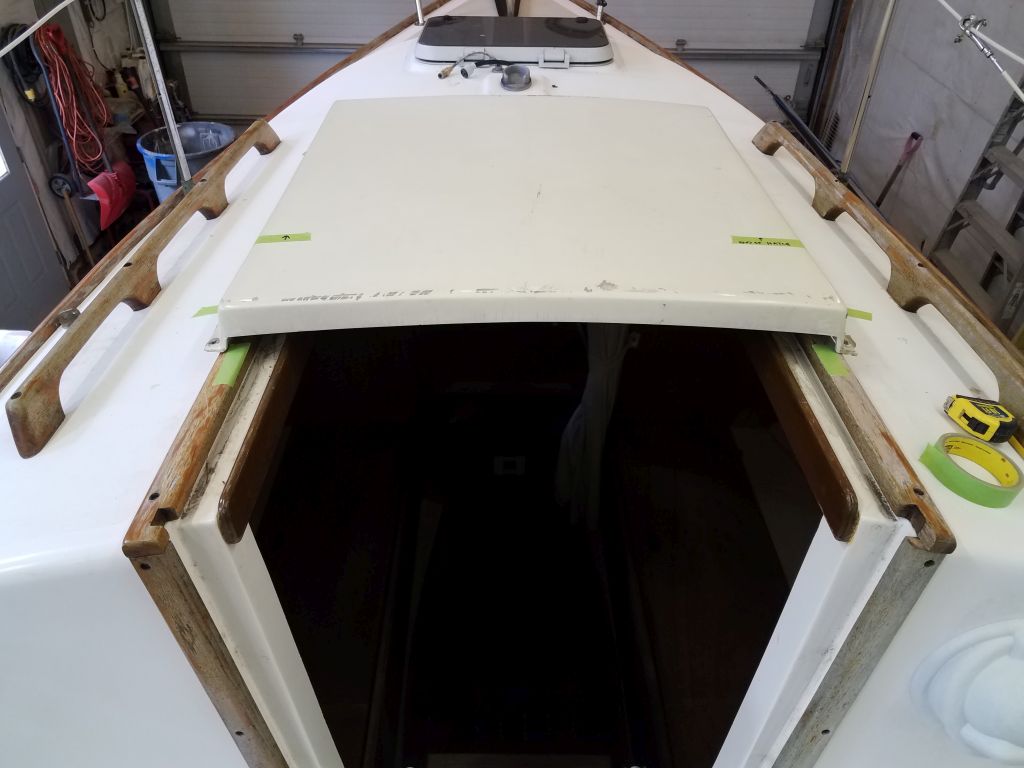
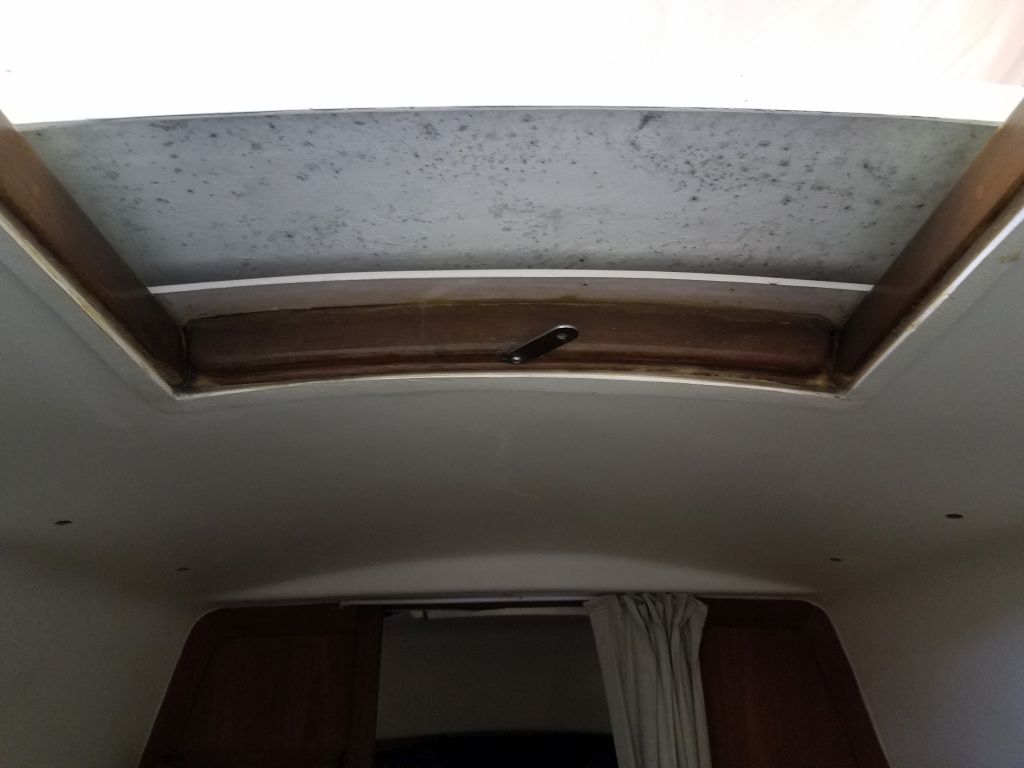
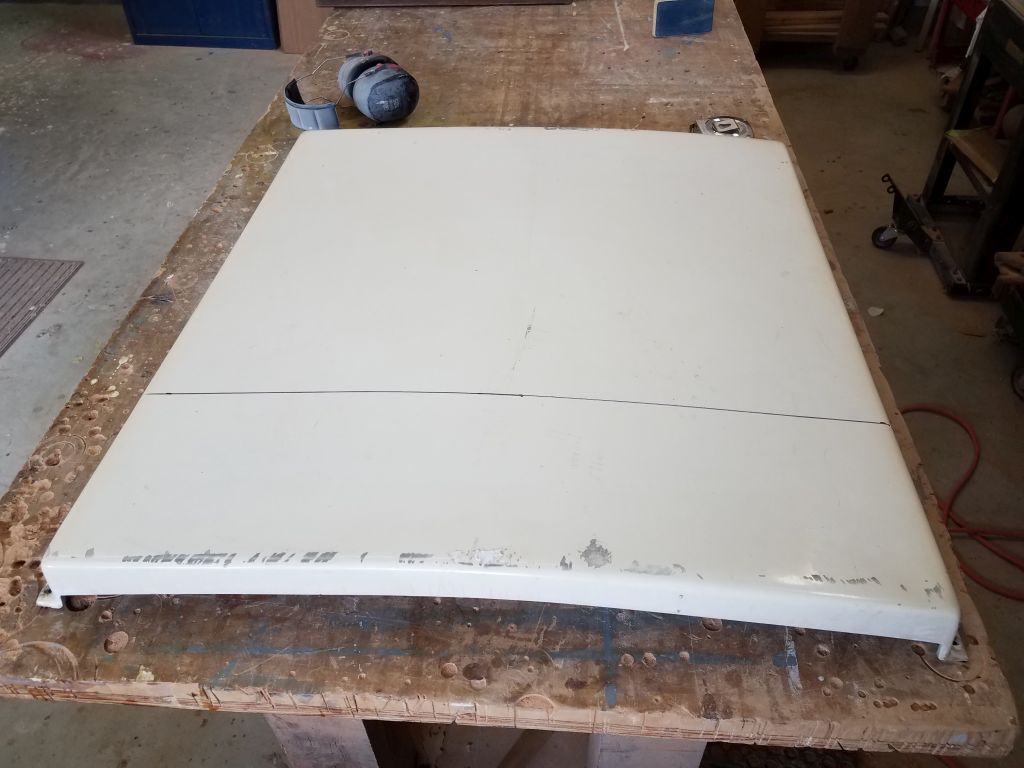
I reinstalled the reinforced starboard cockpit lid, one of a few small and otherwise insignificant tasks I expunged from my short list this day.

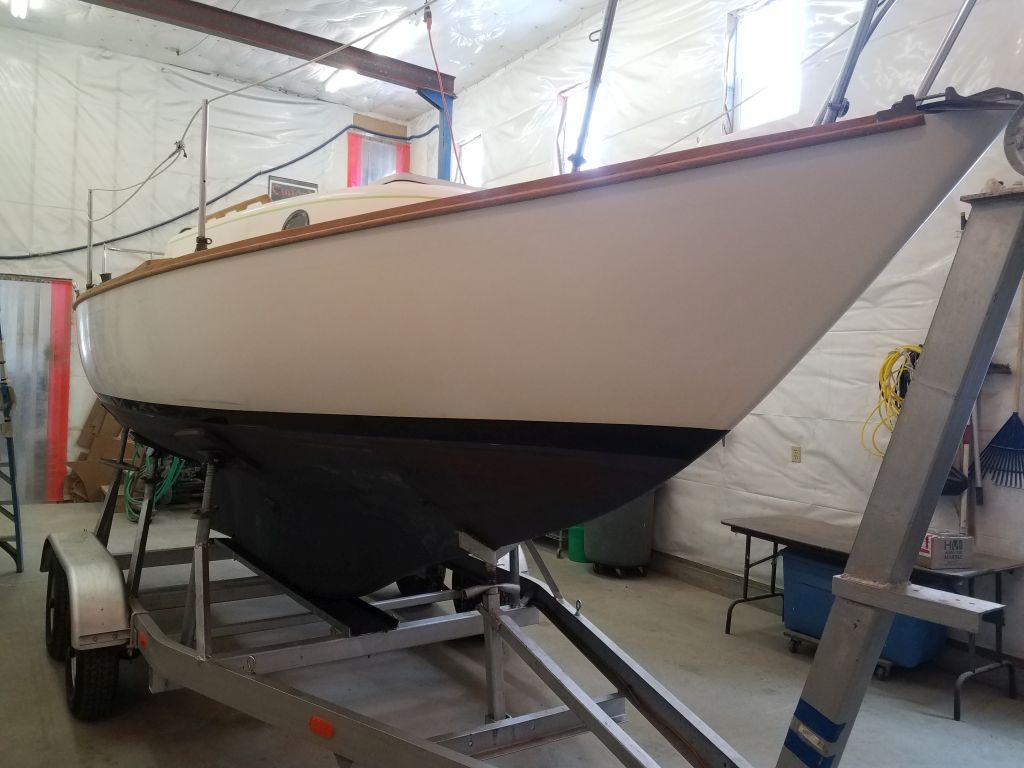
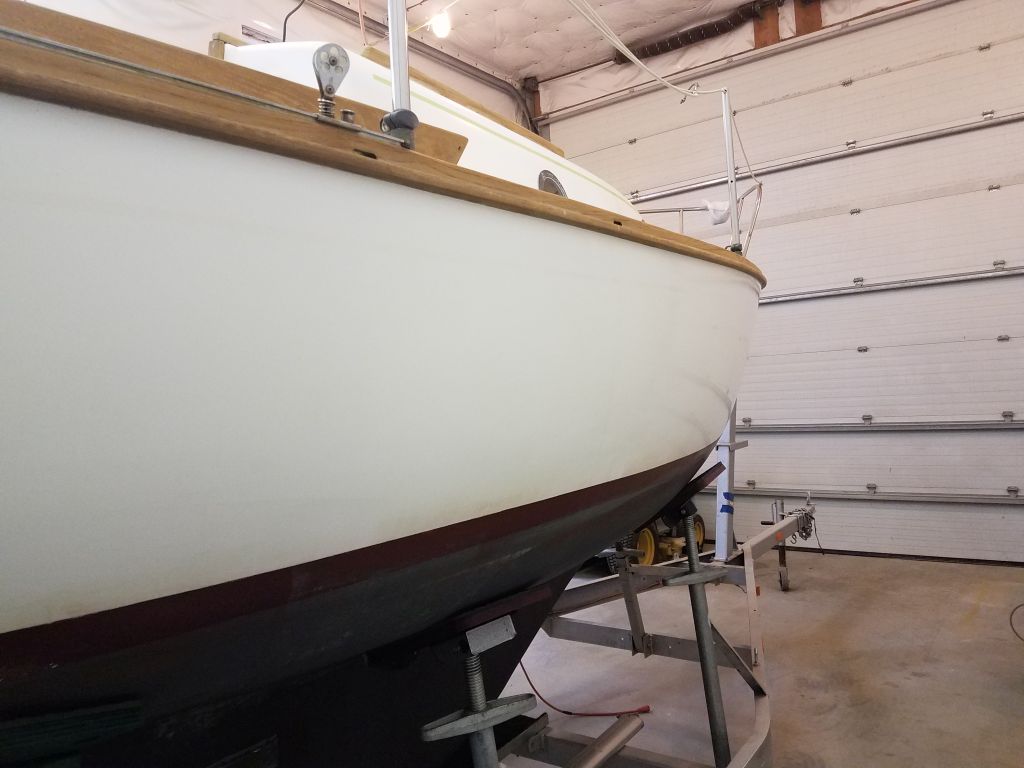
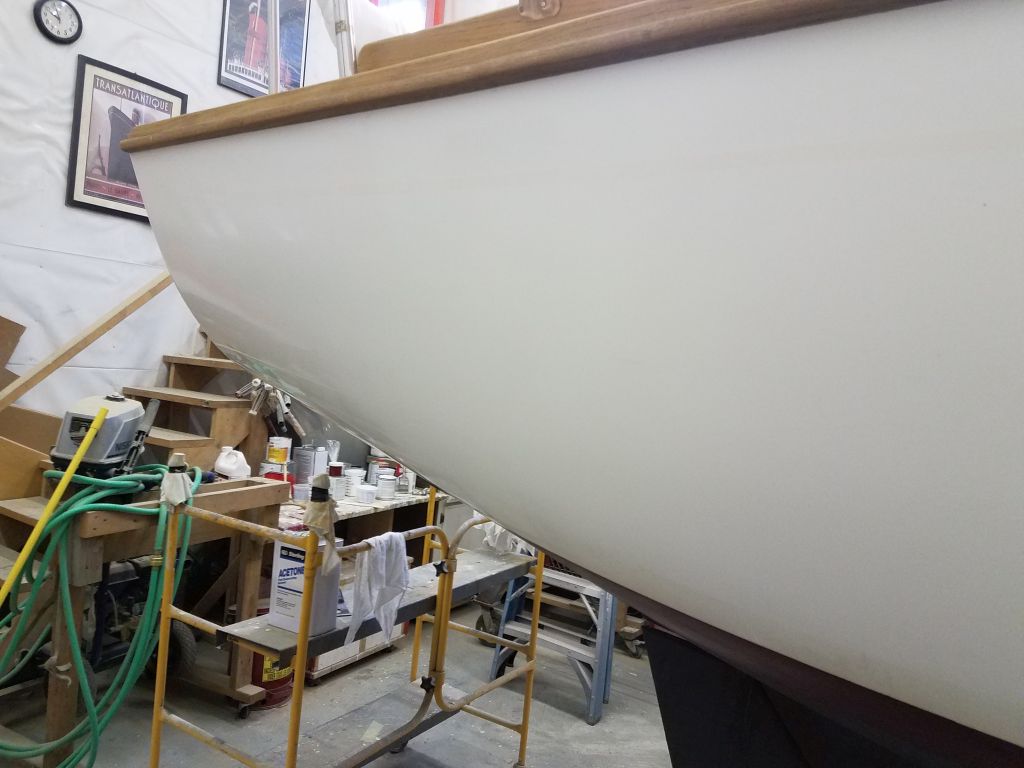
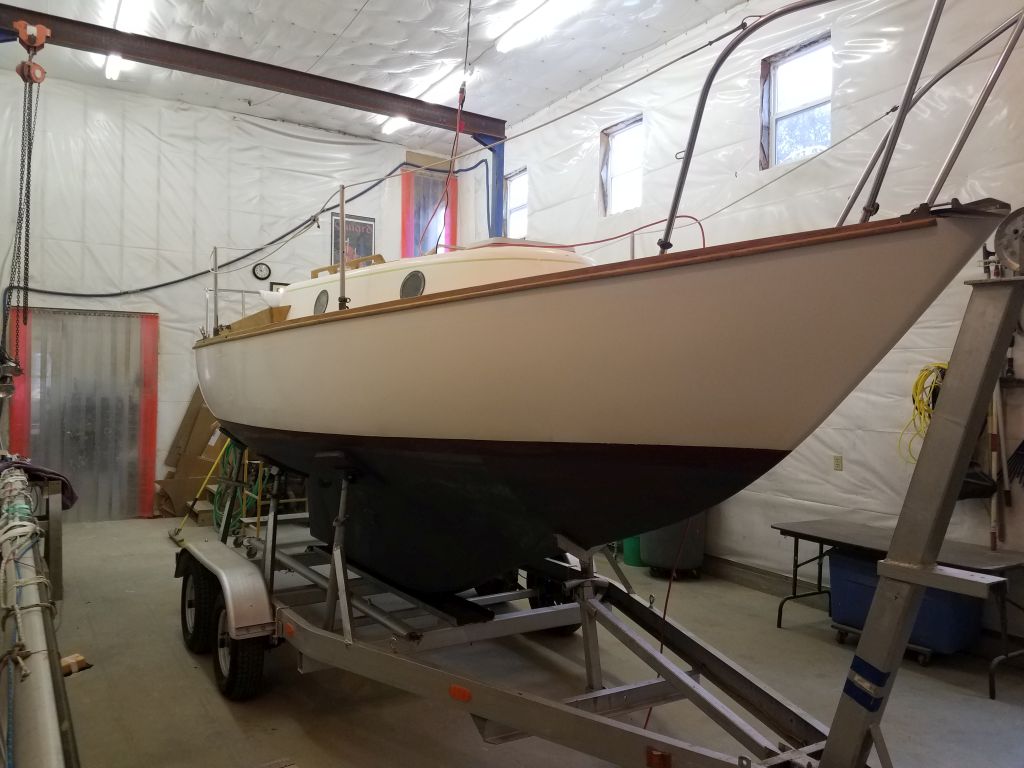
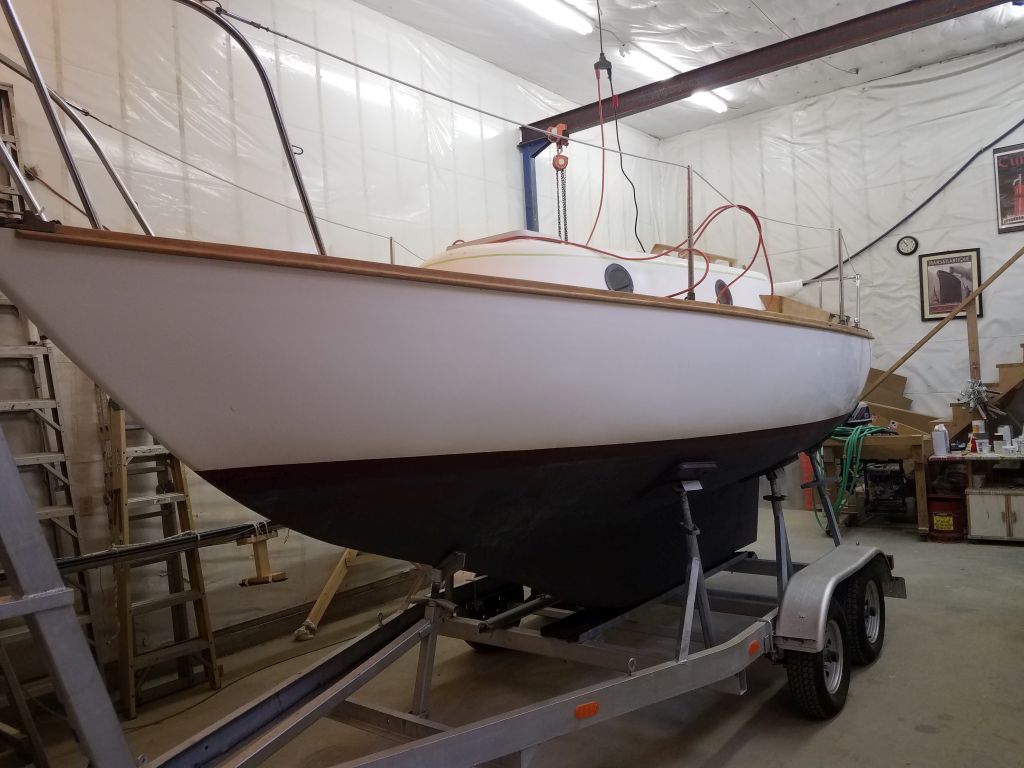
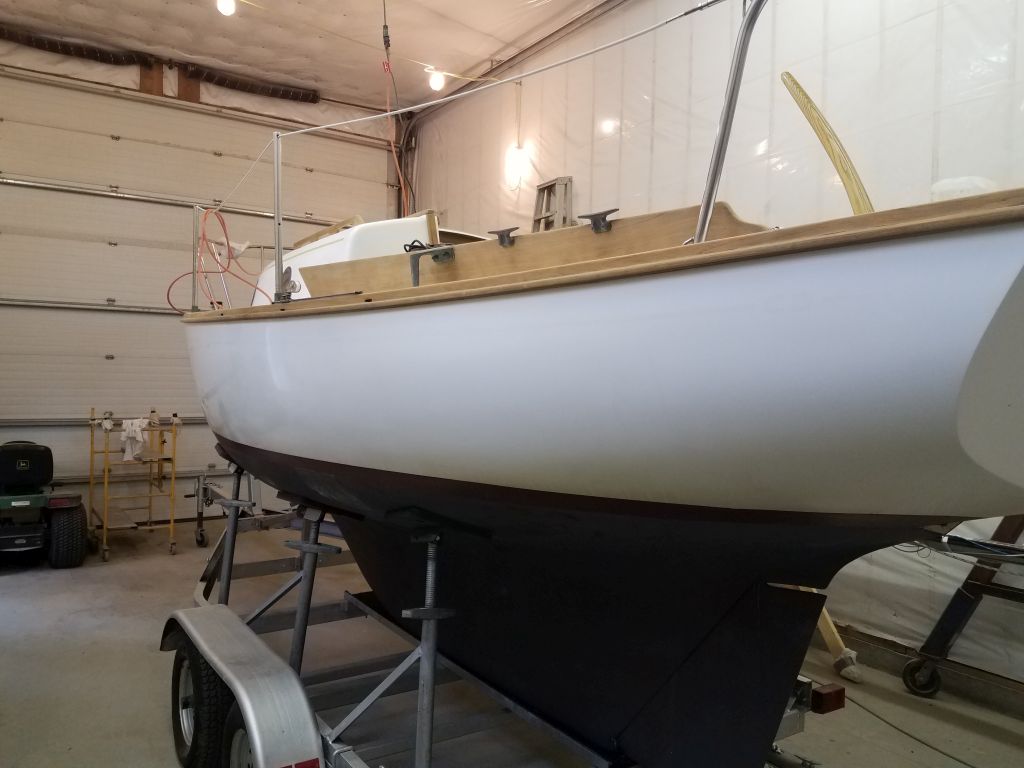
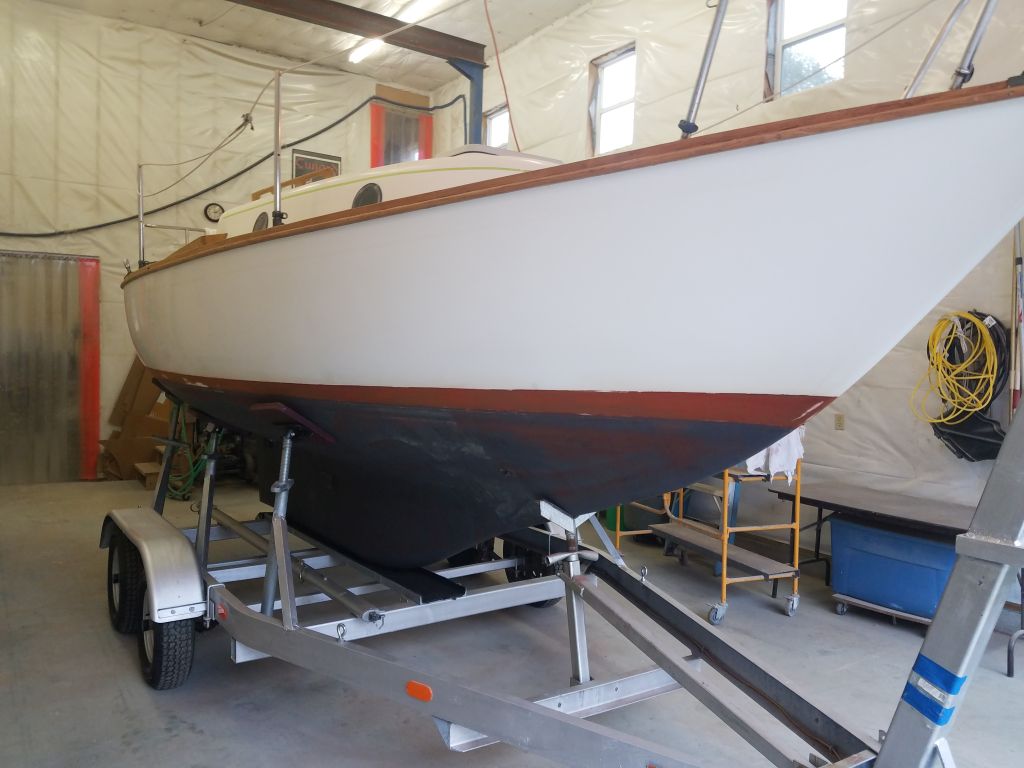
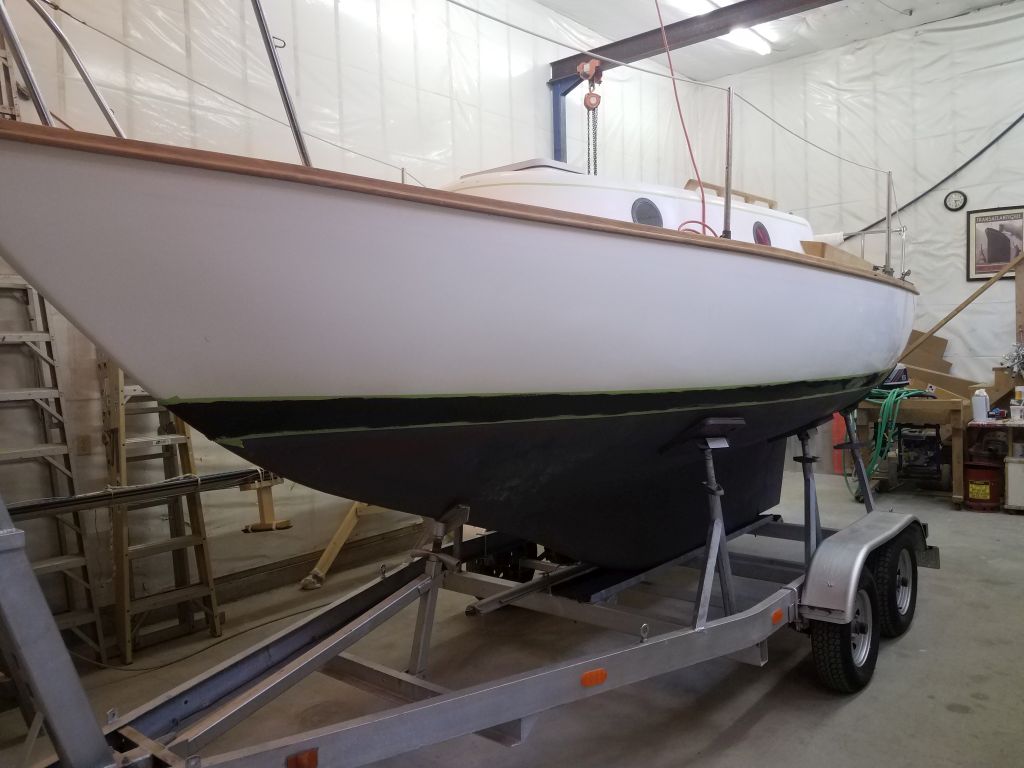
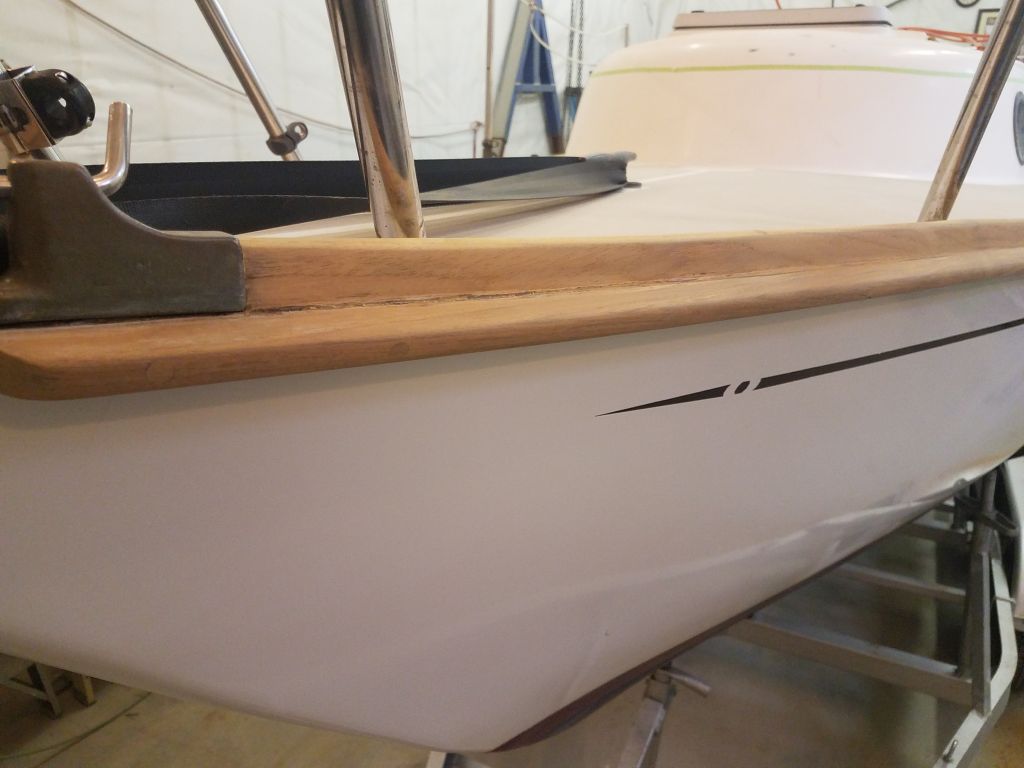
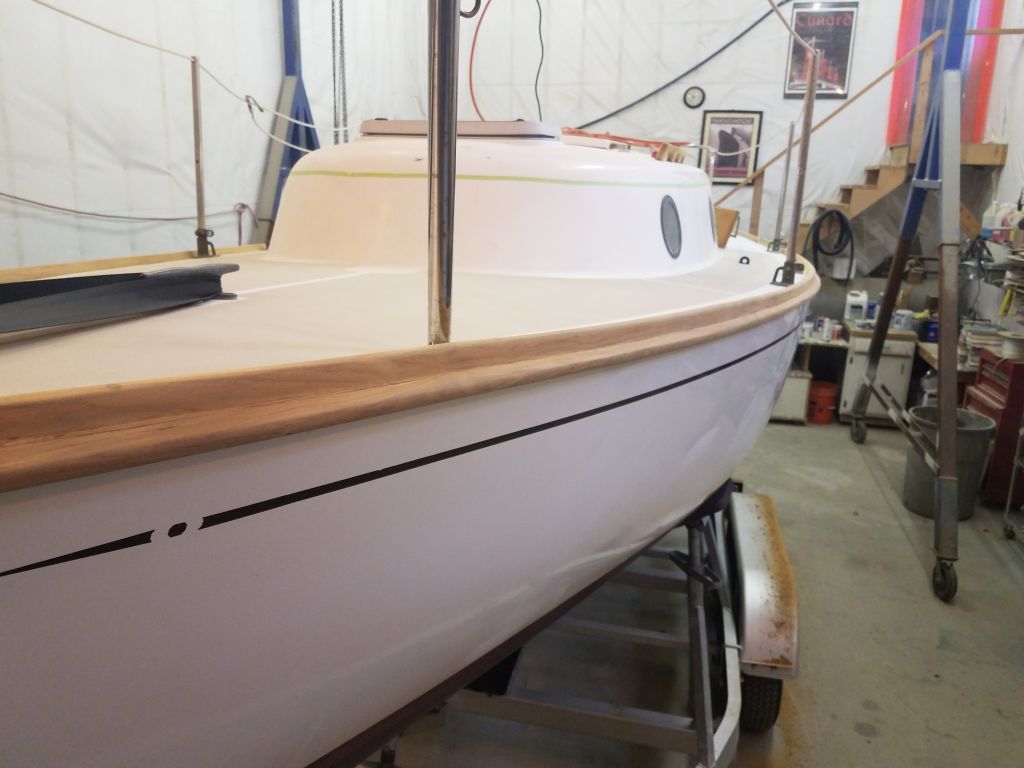
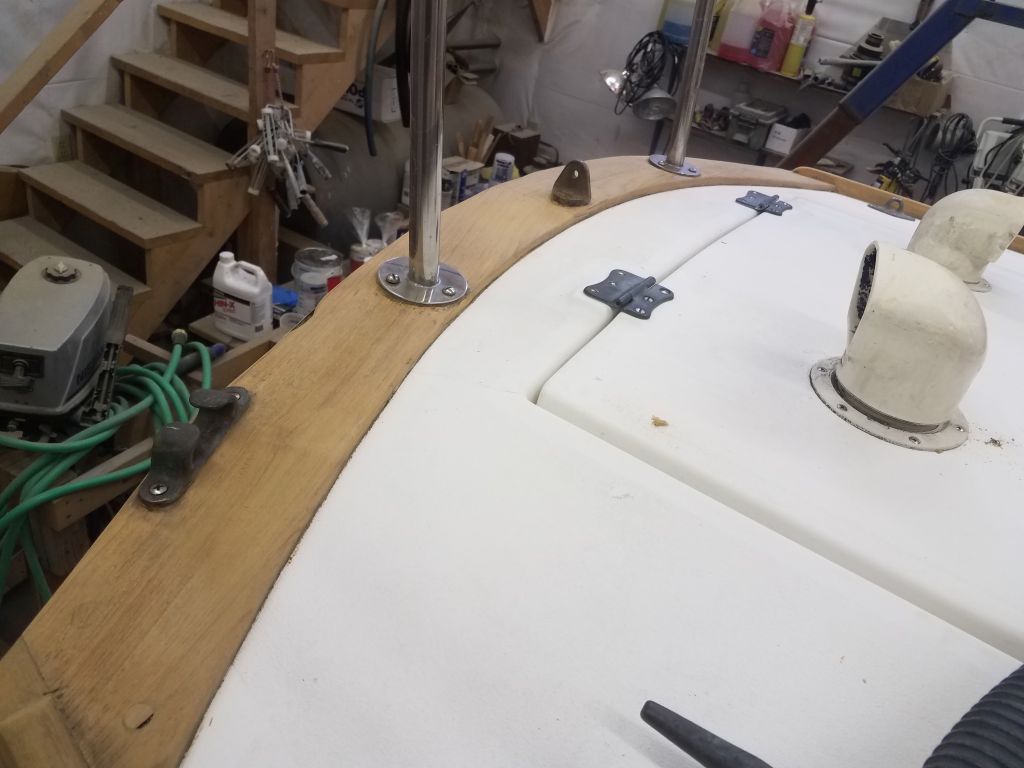
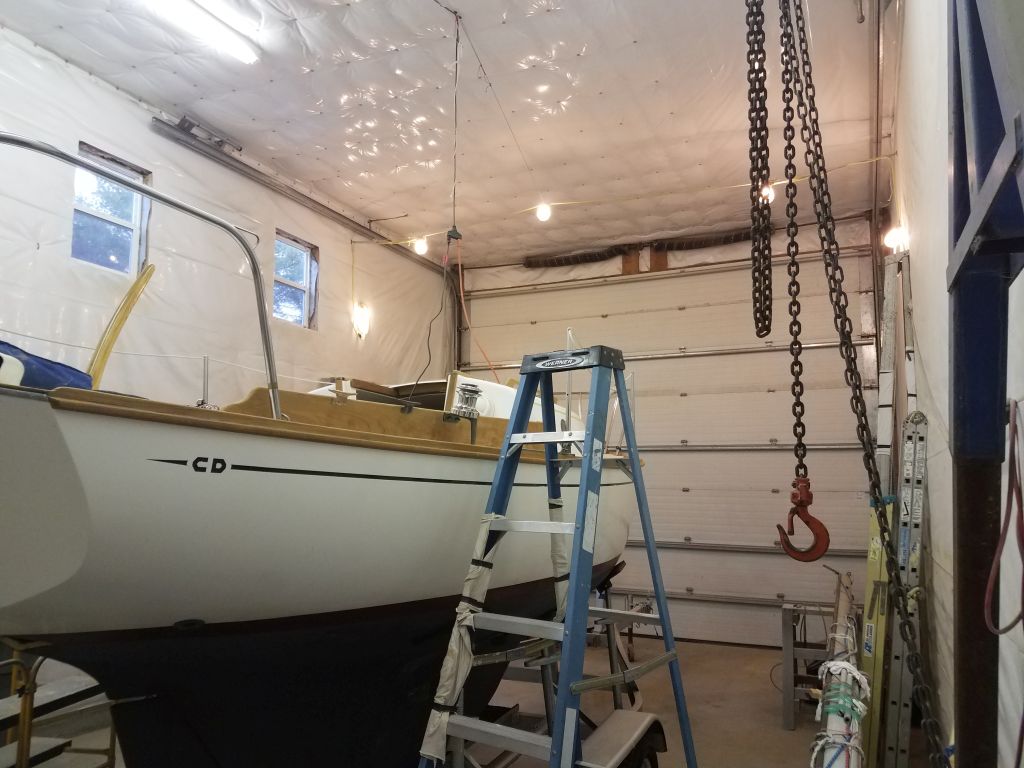
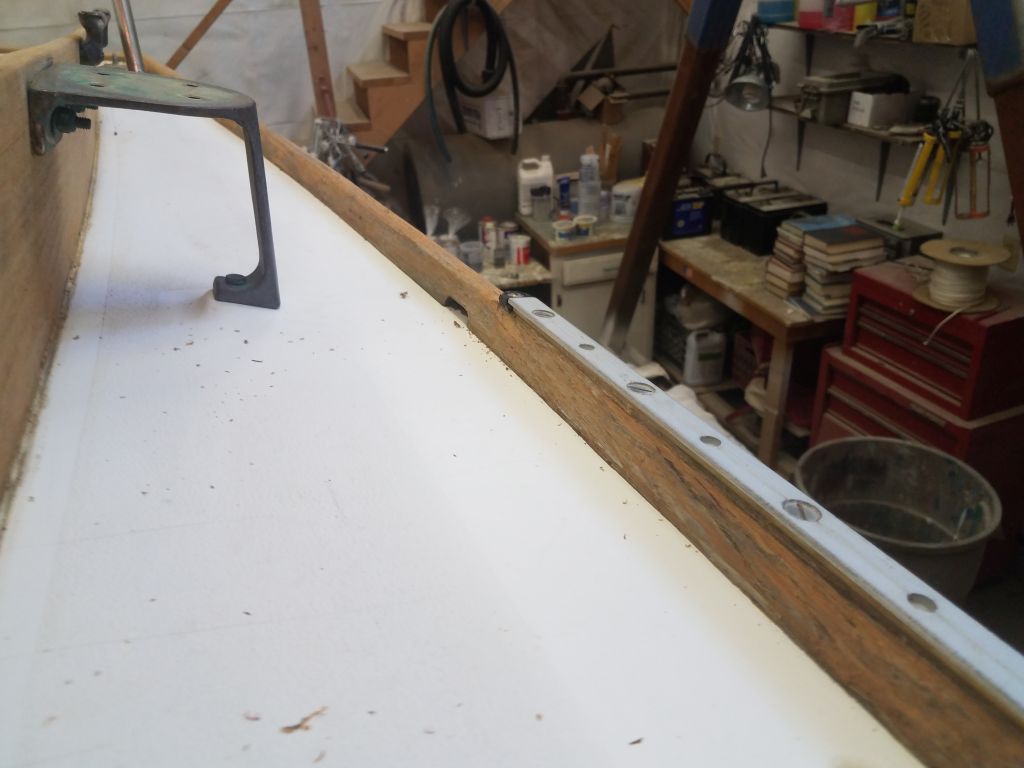
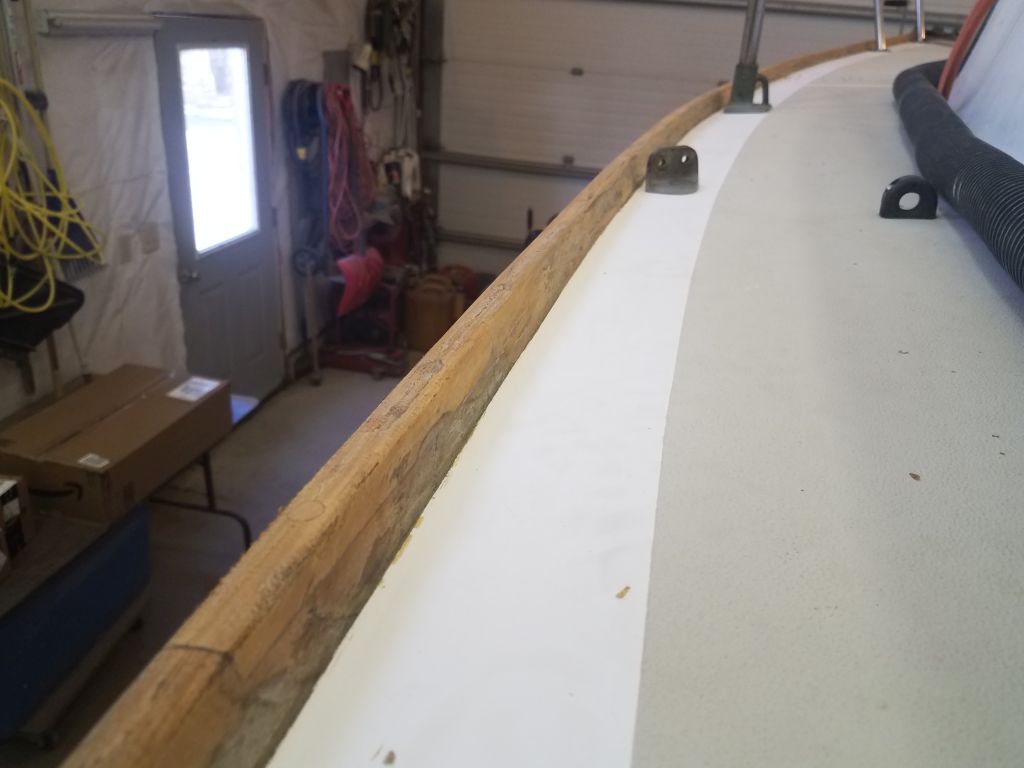
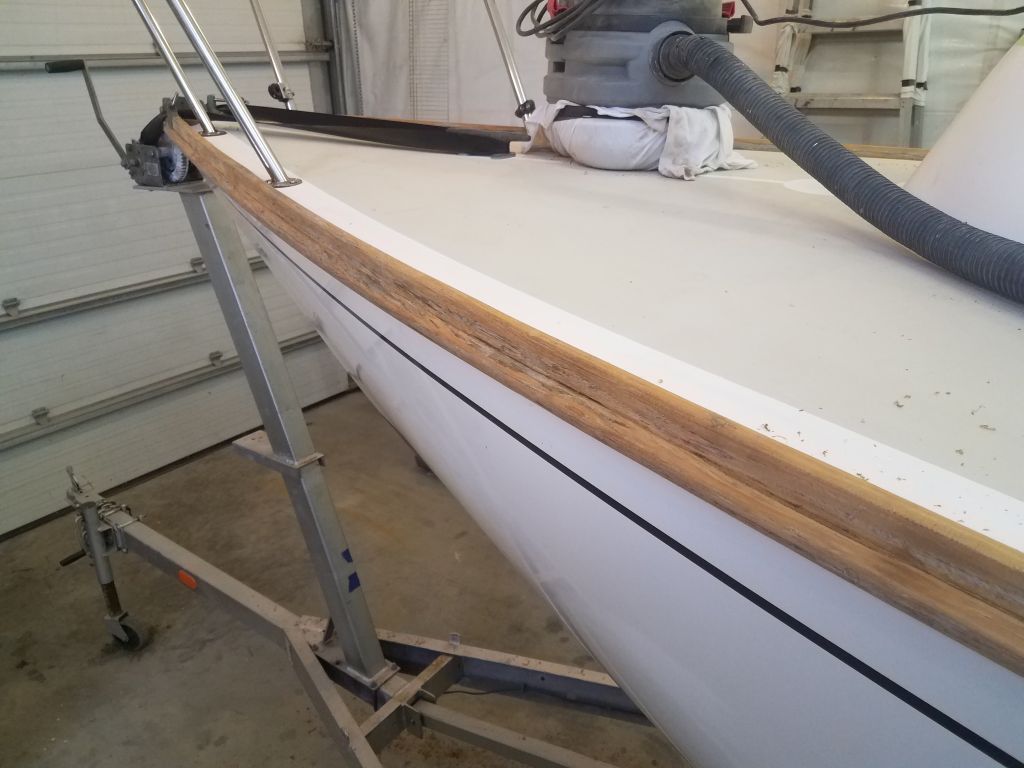
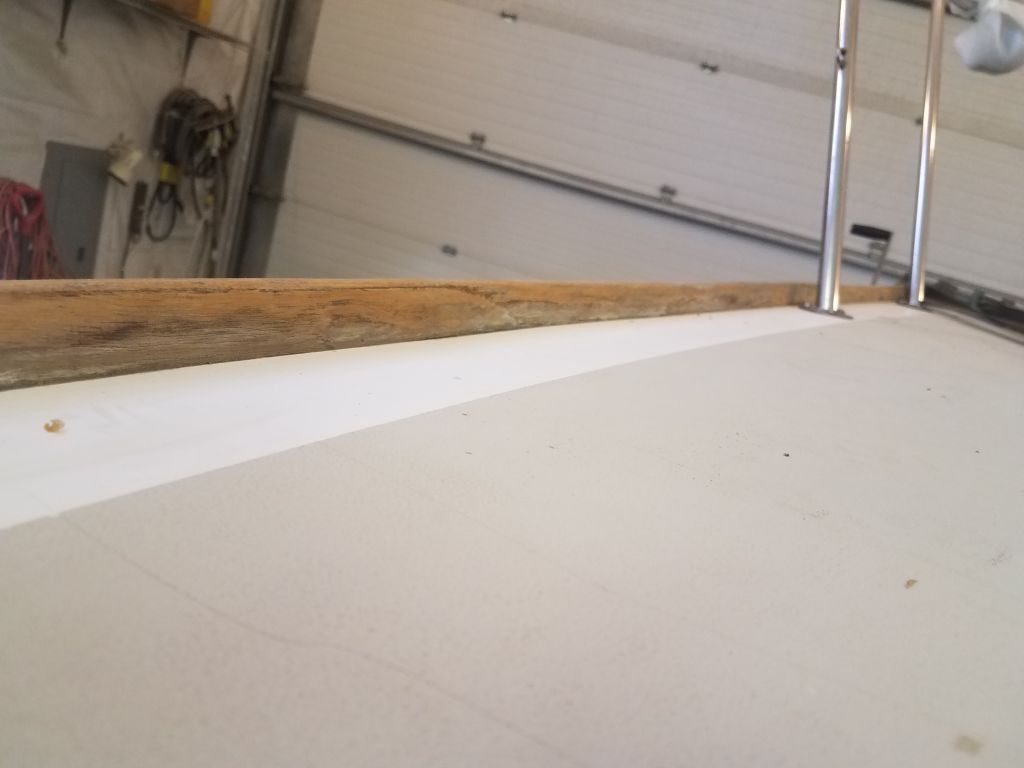
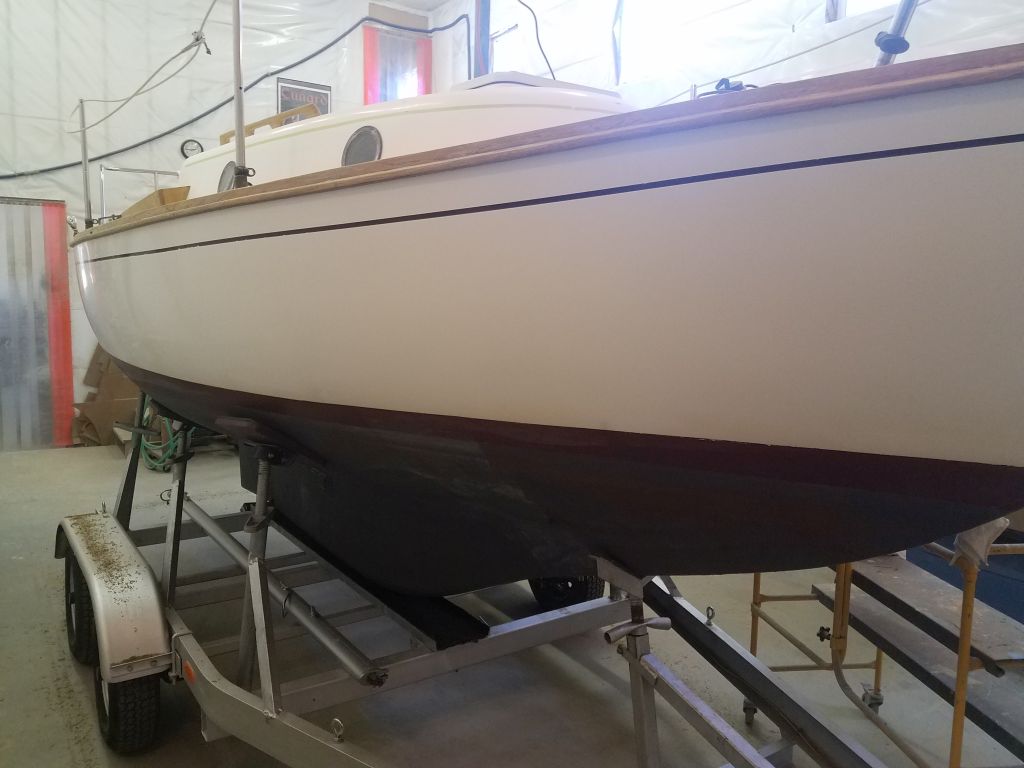
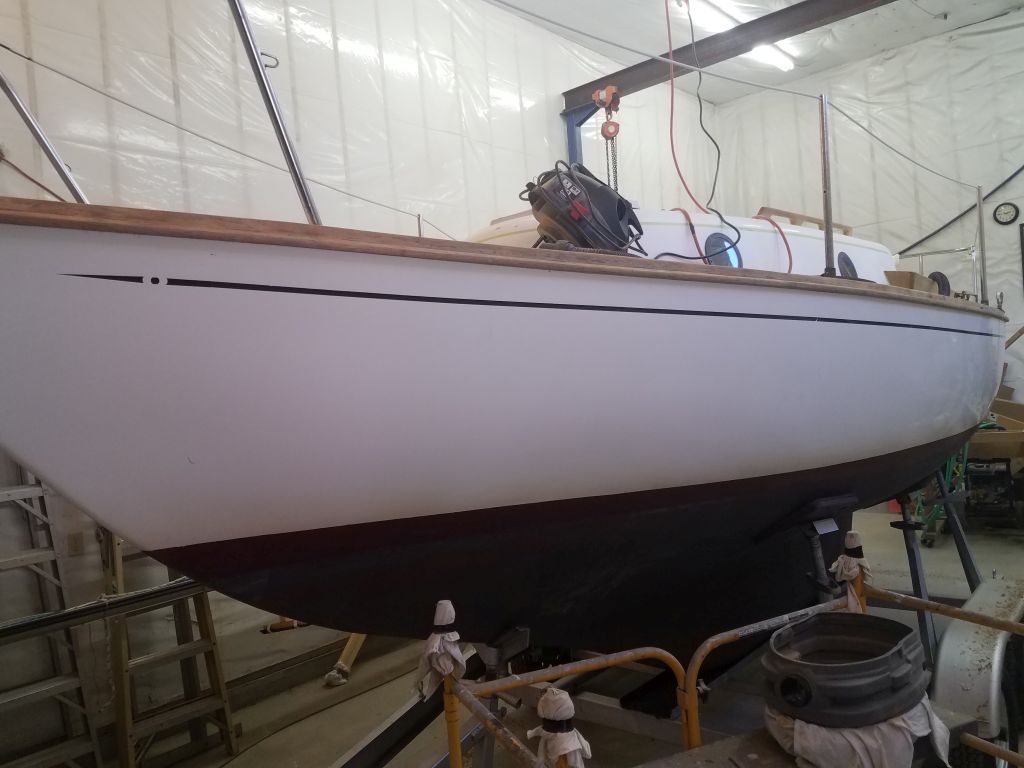
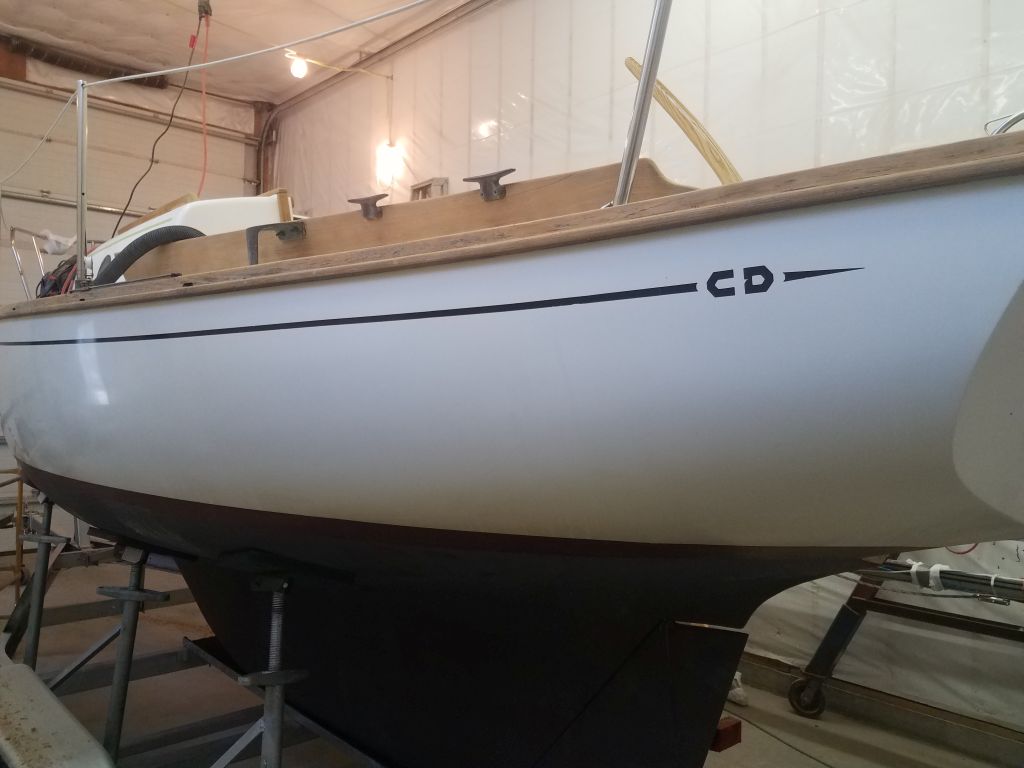
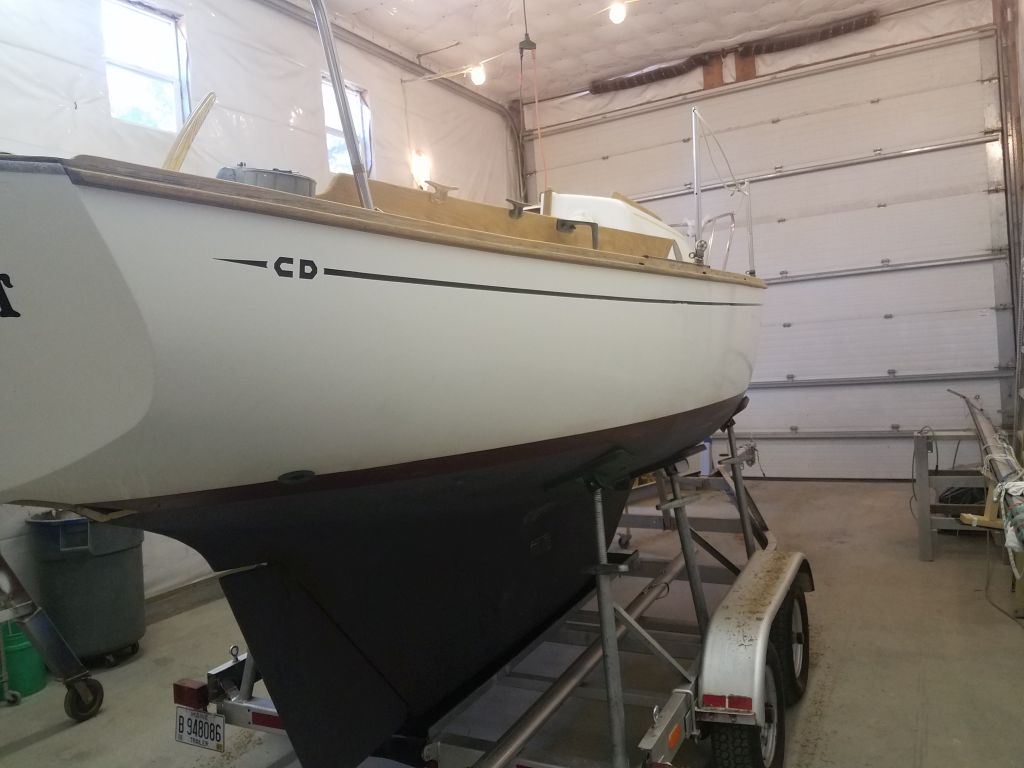
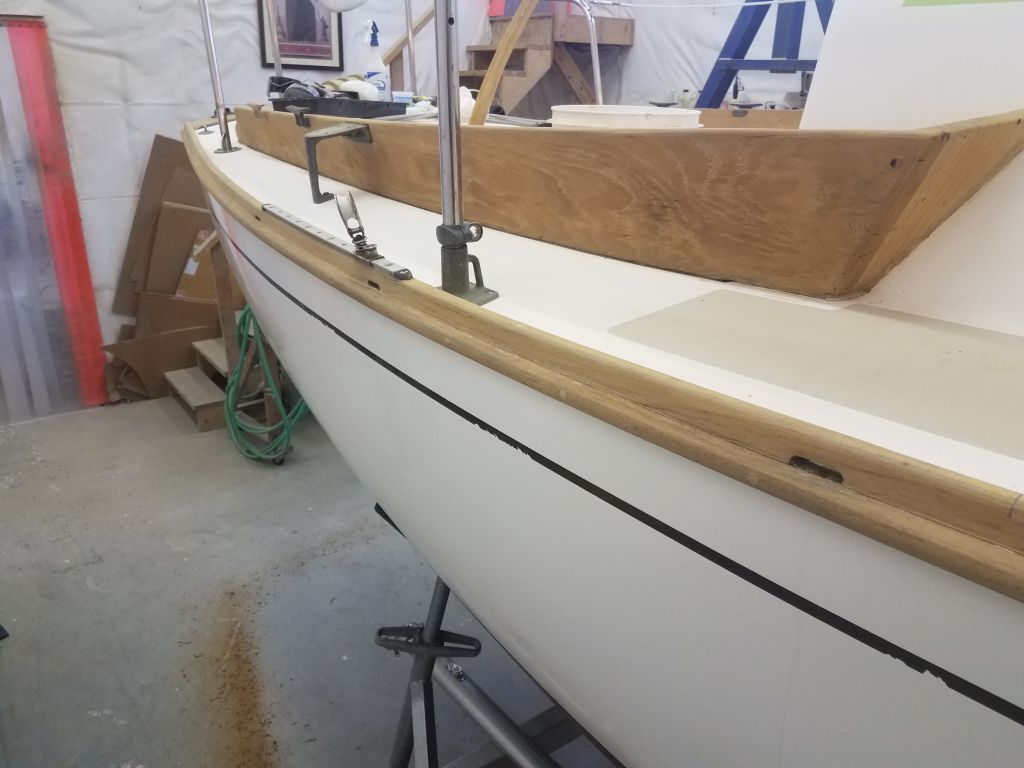
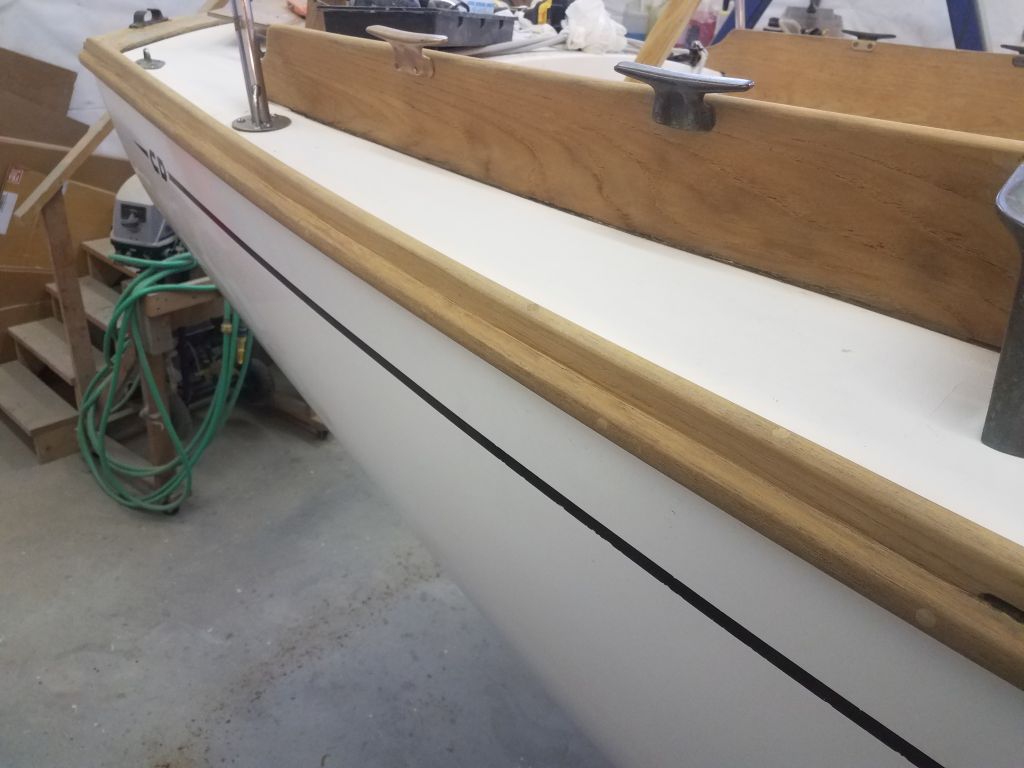
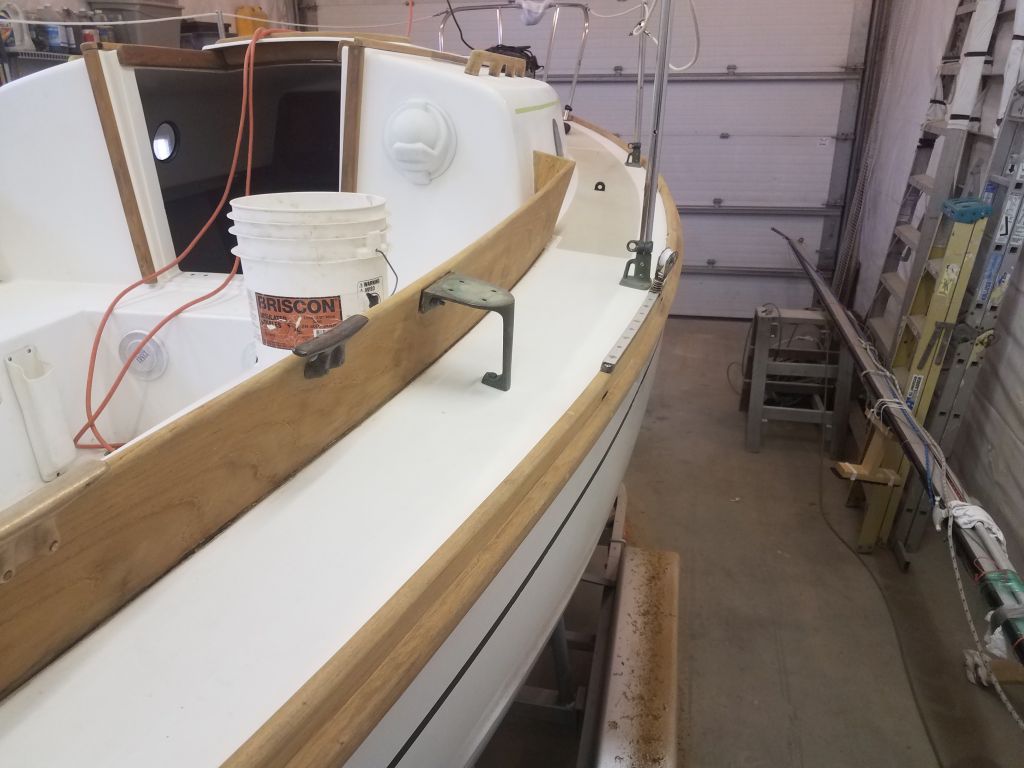
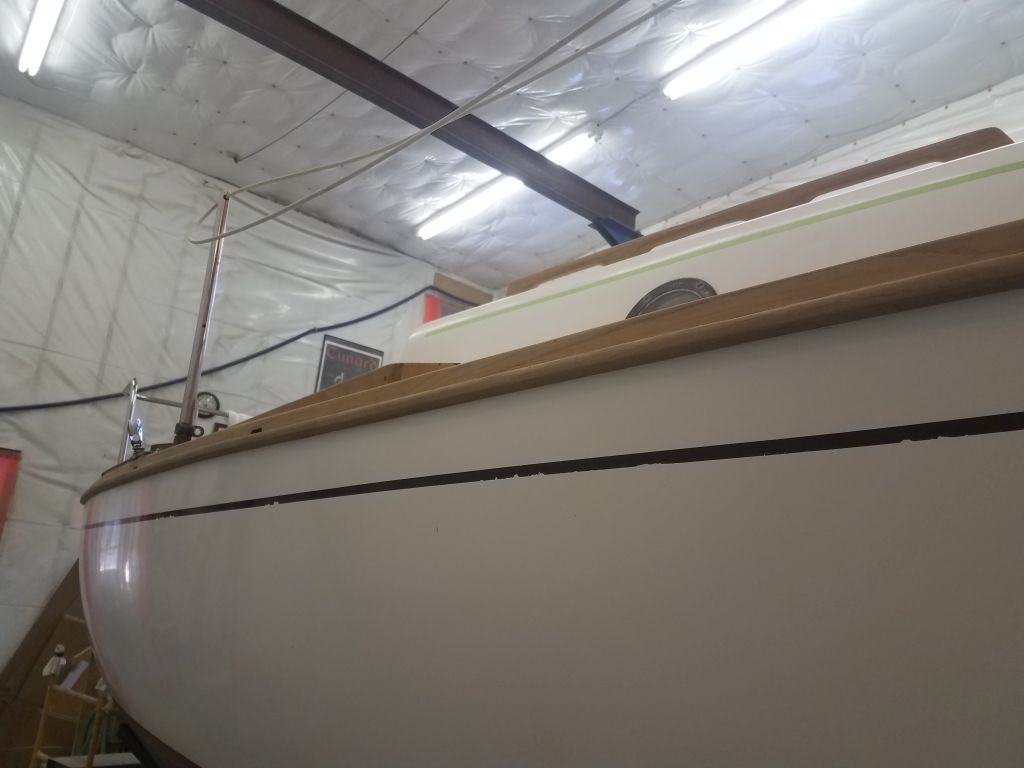
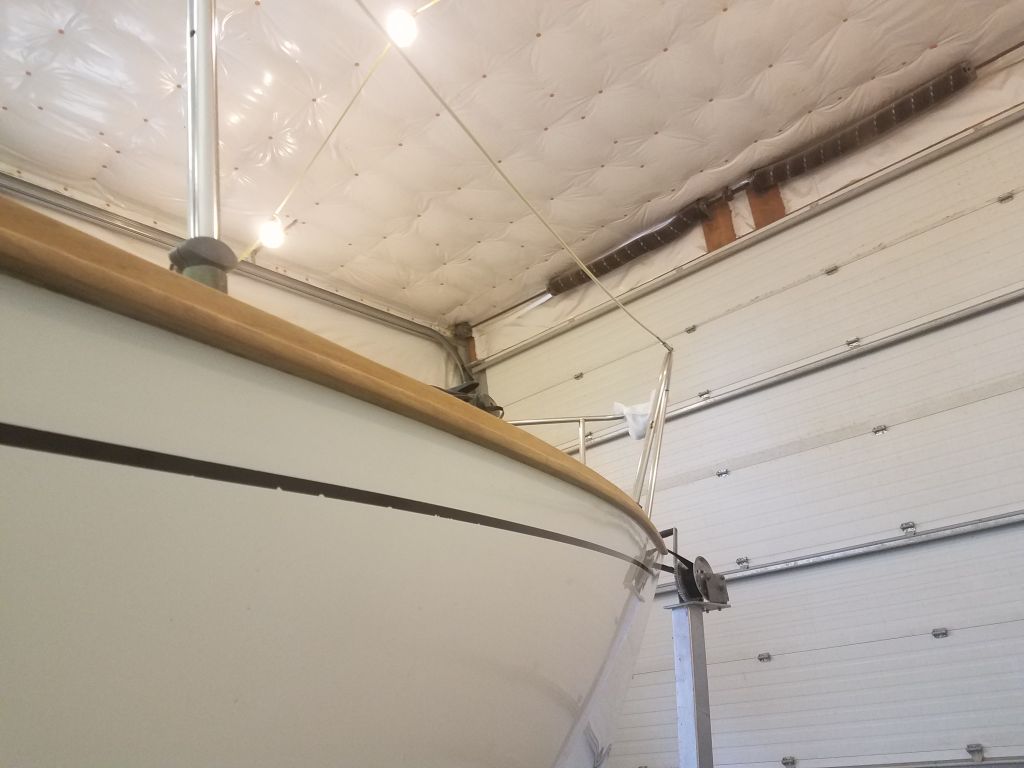
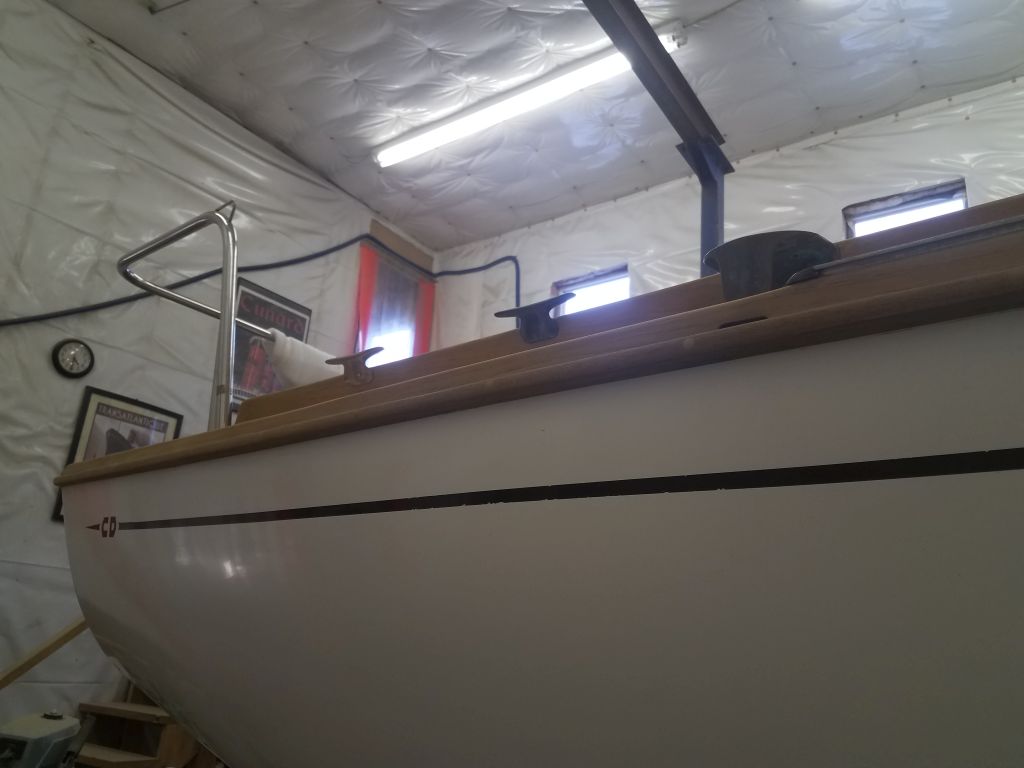
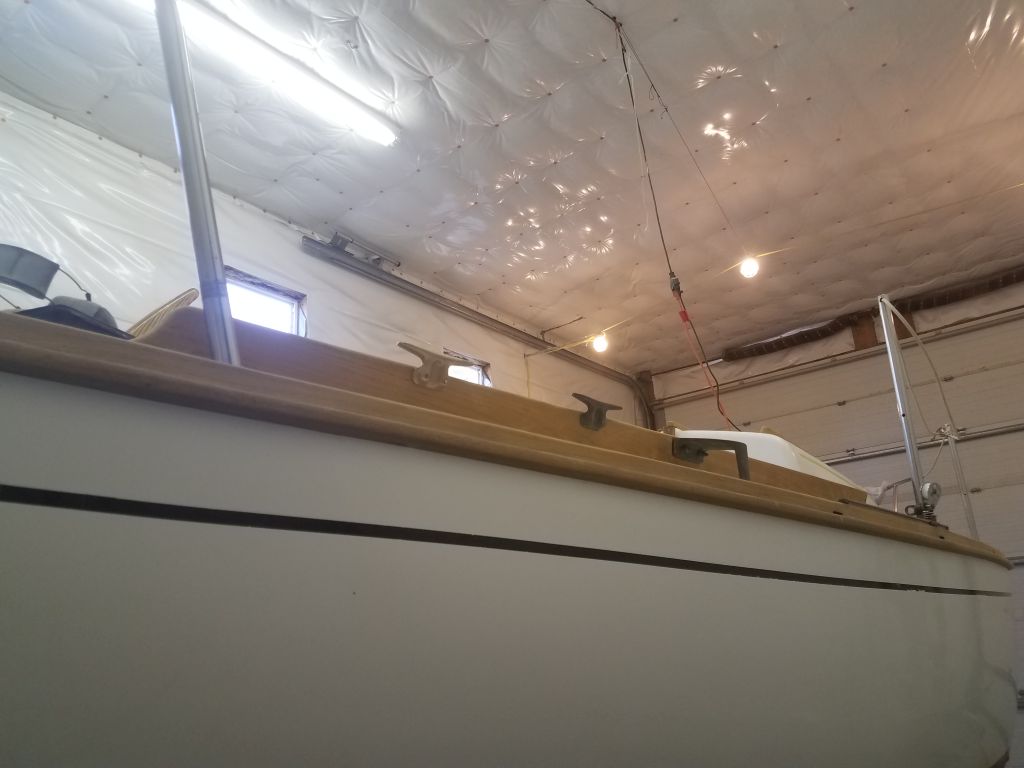
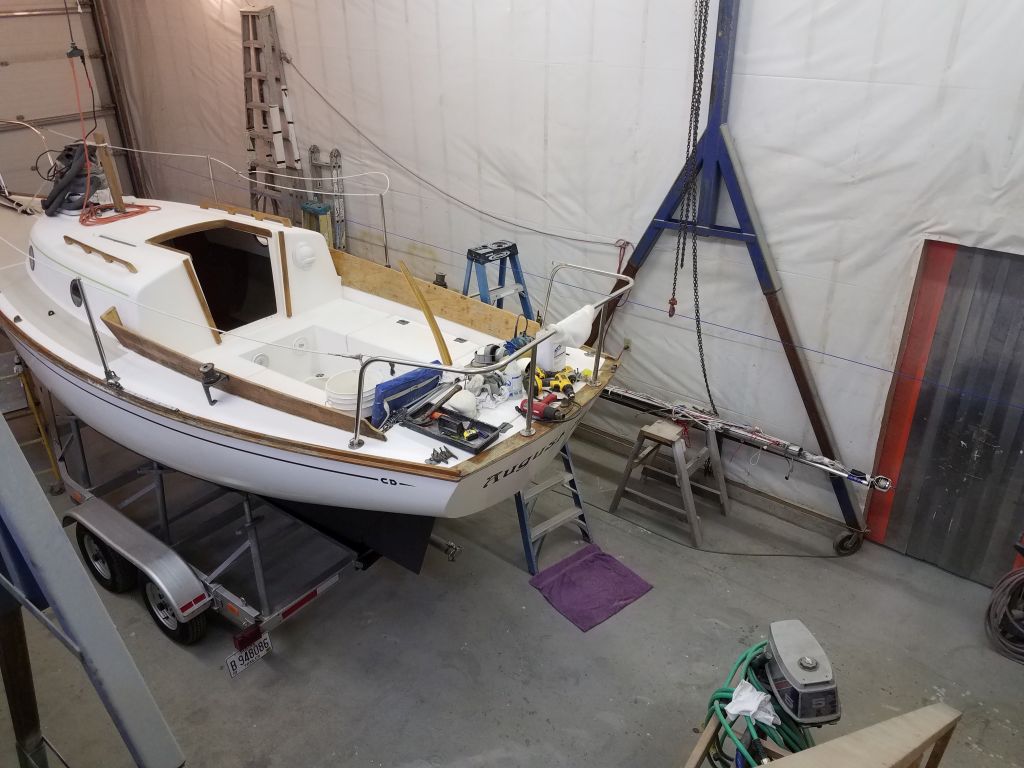
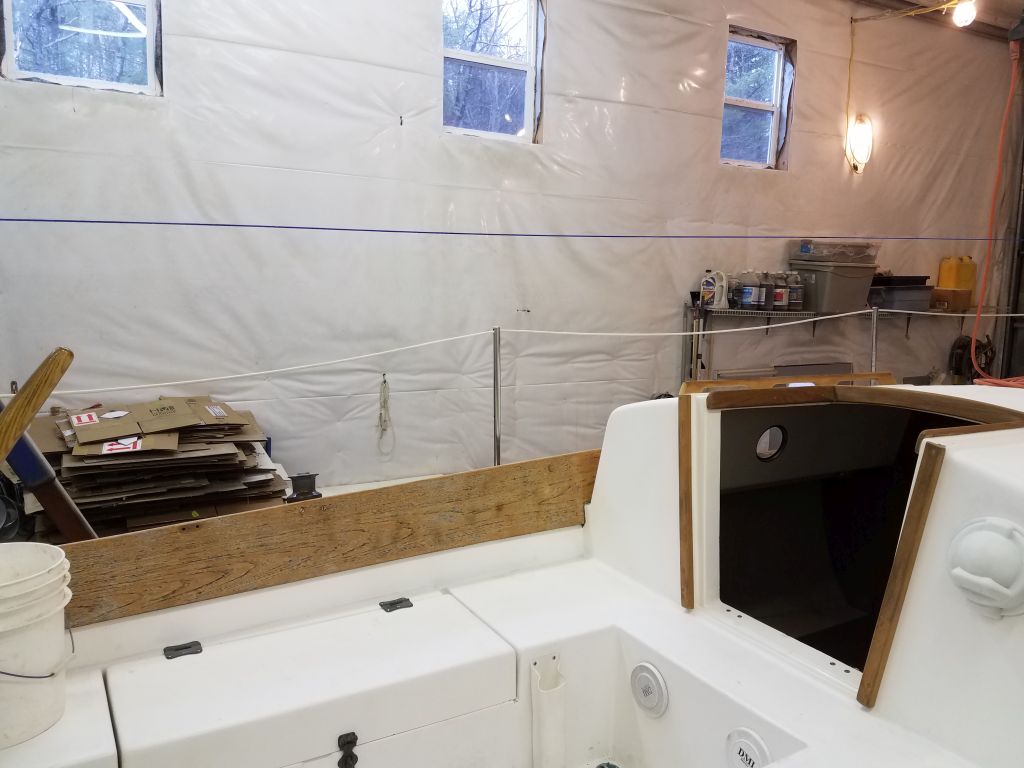
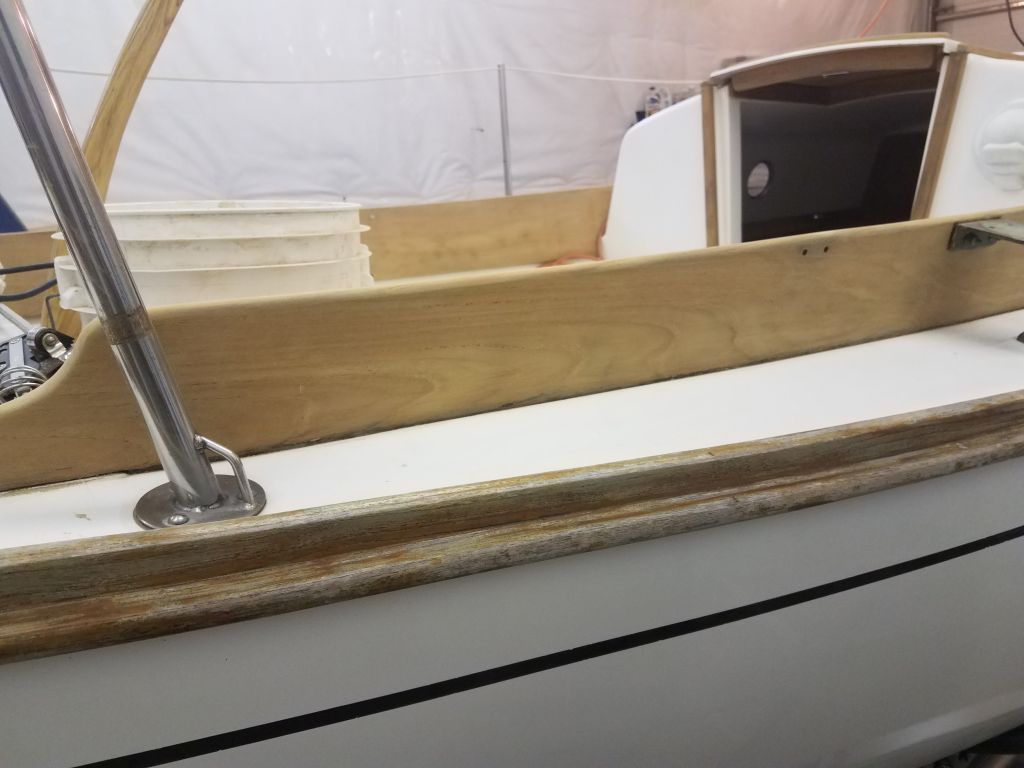
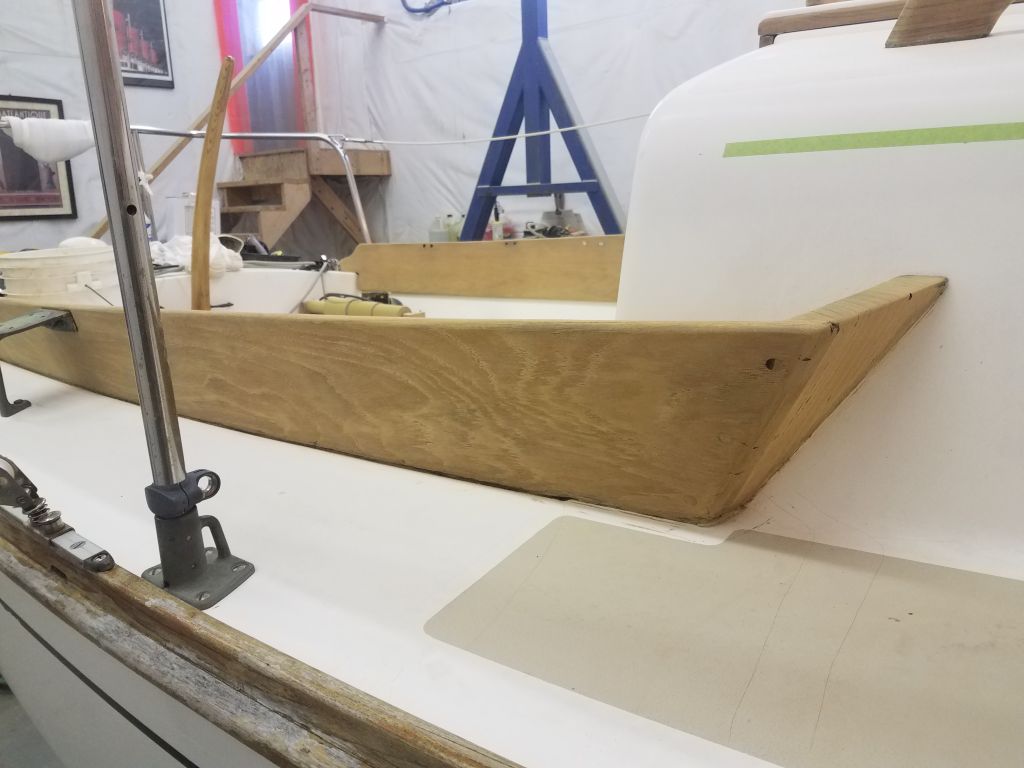
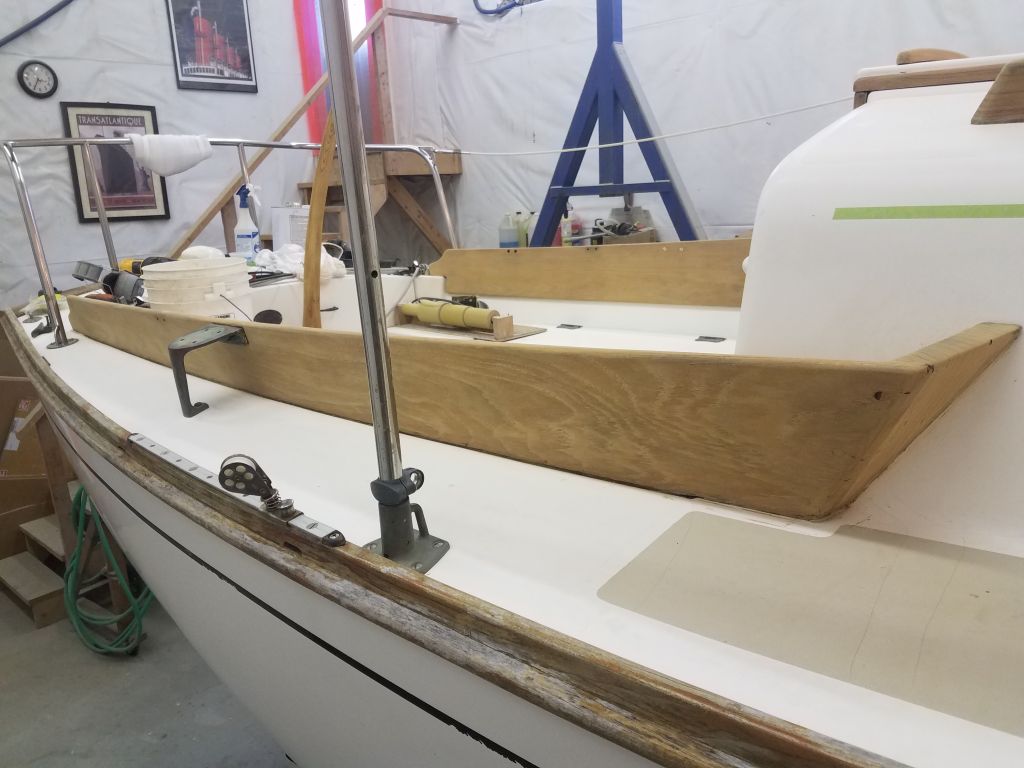
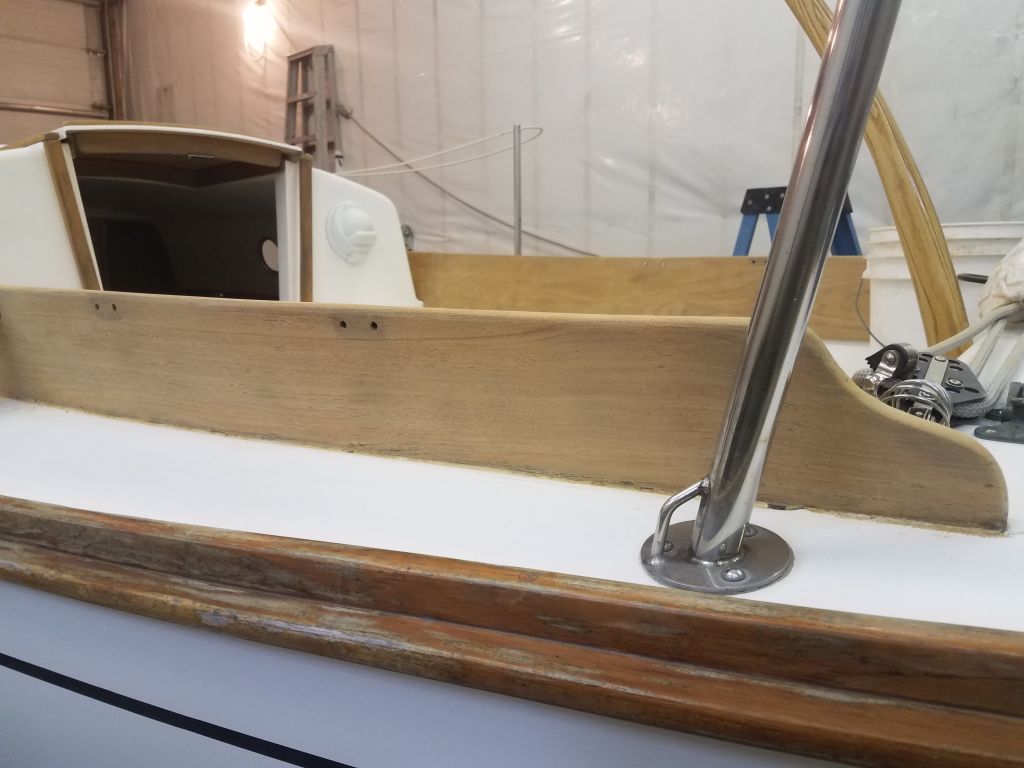
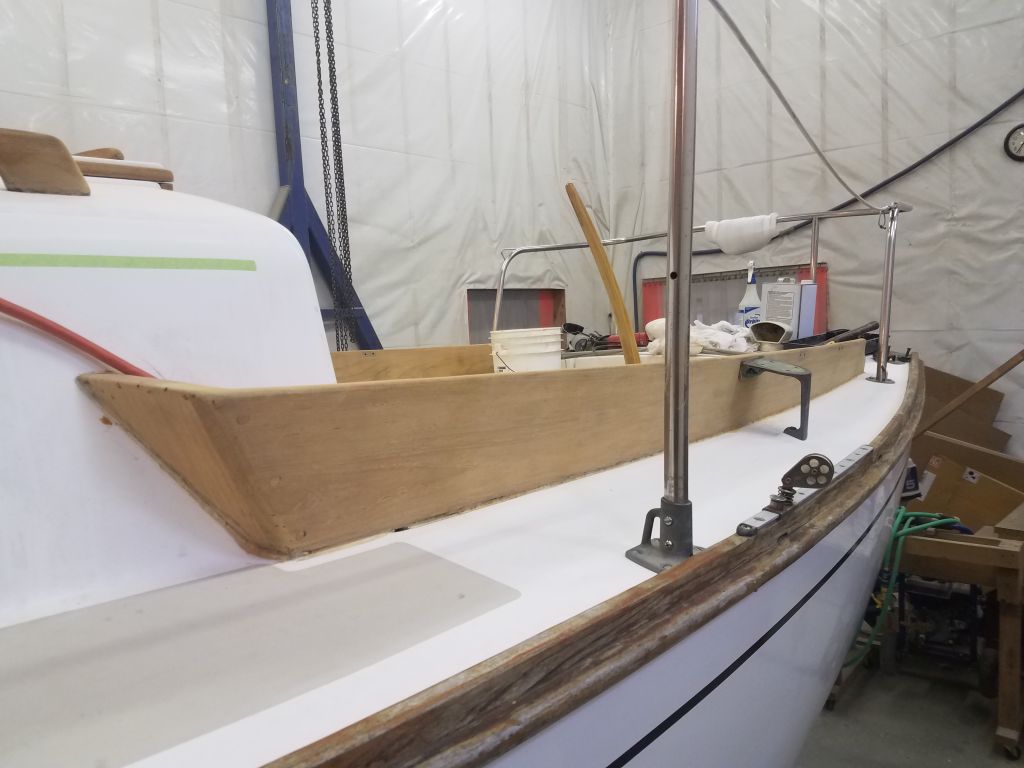
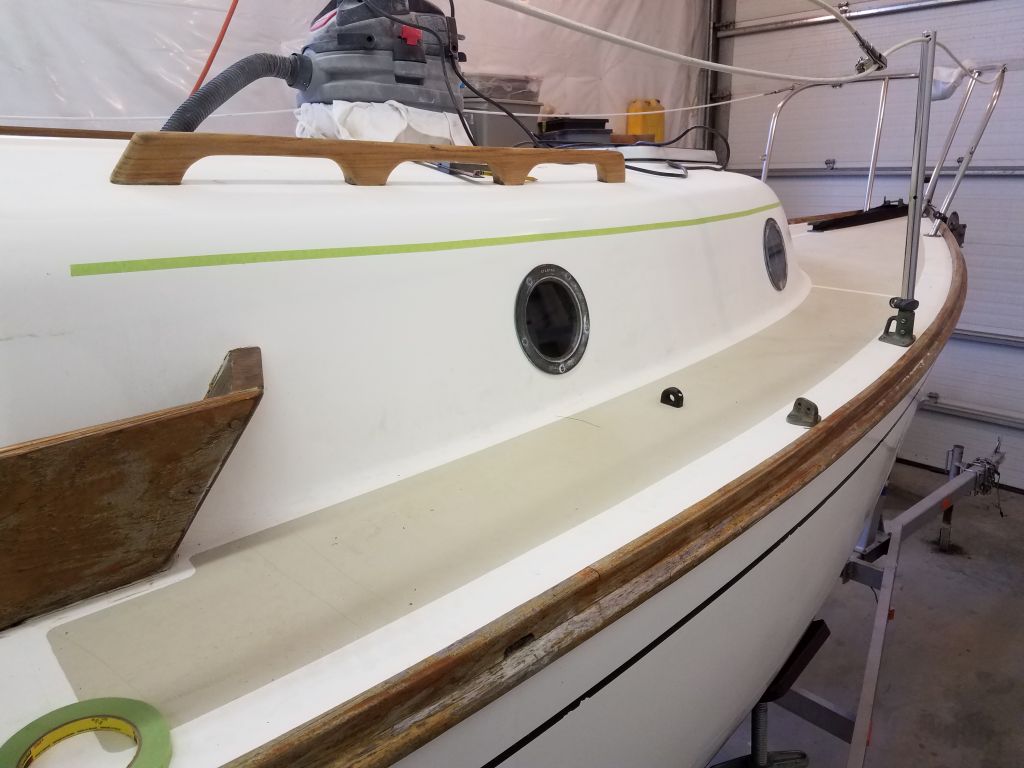
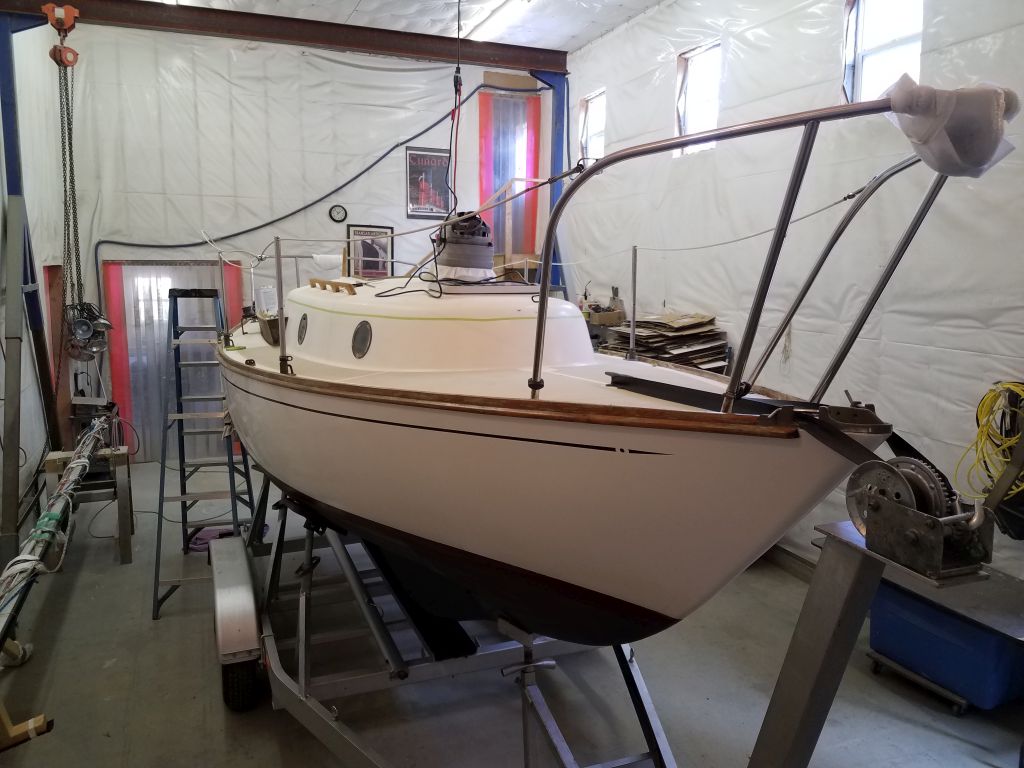
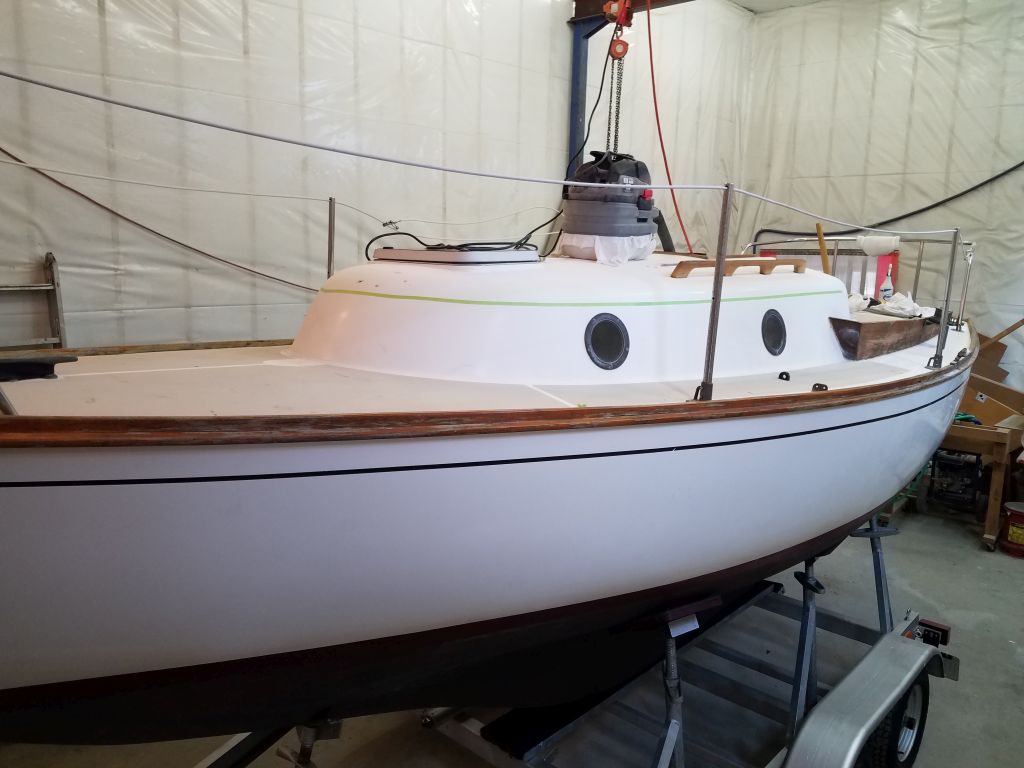
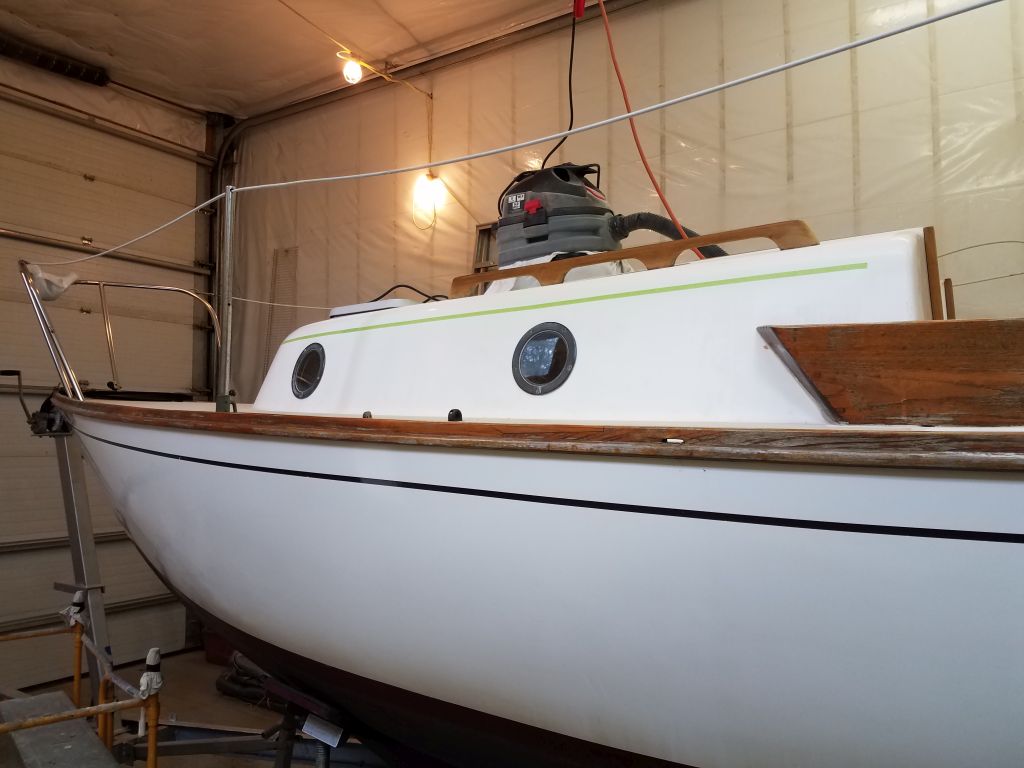
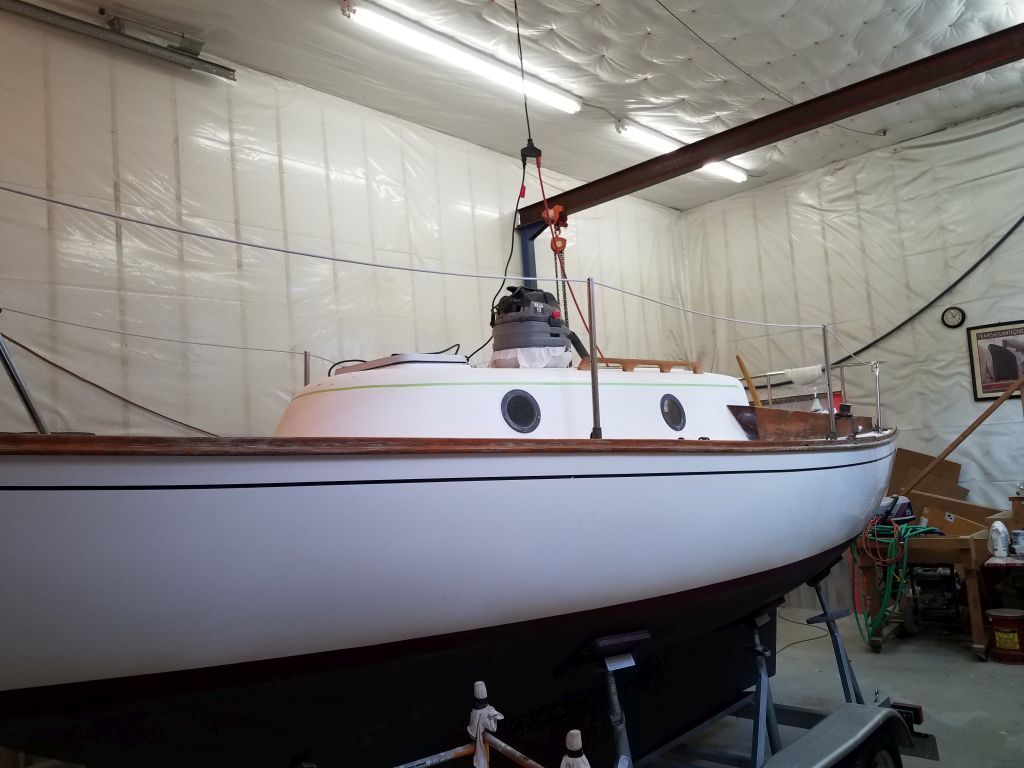
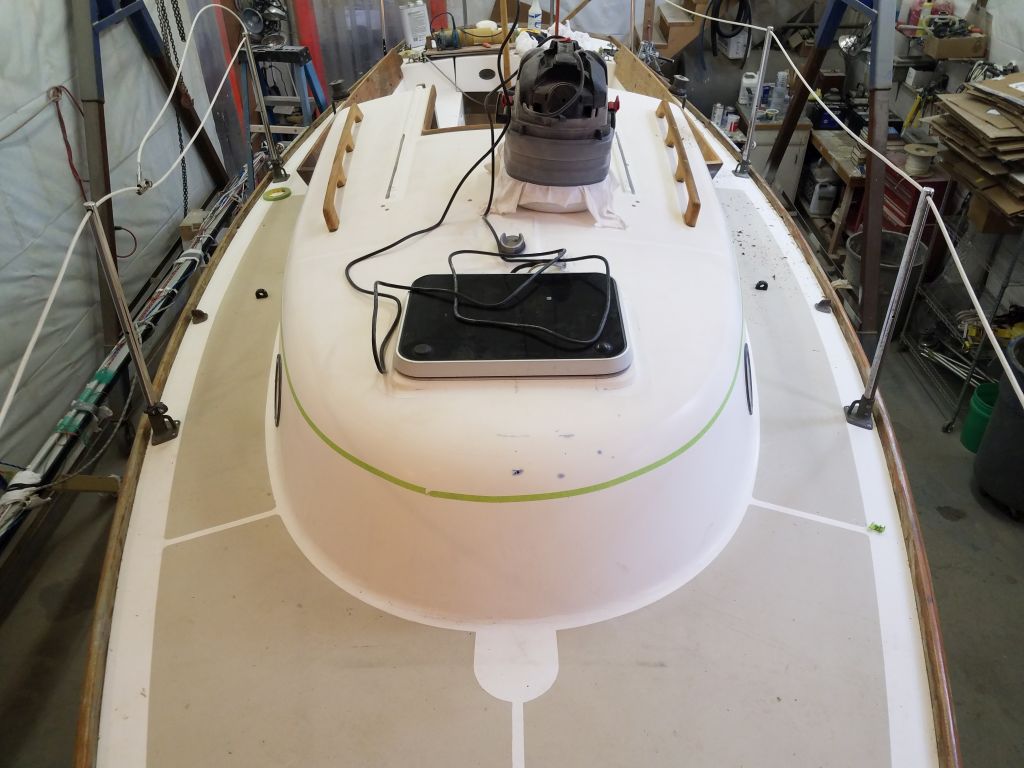
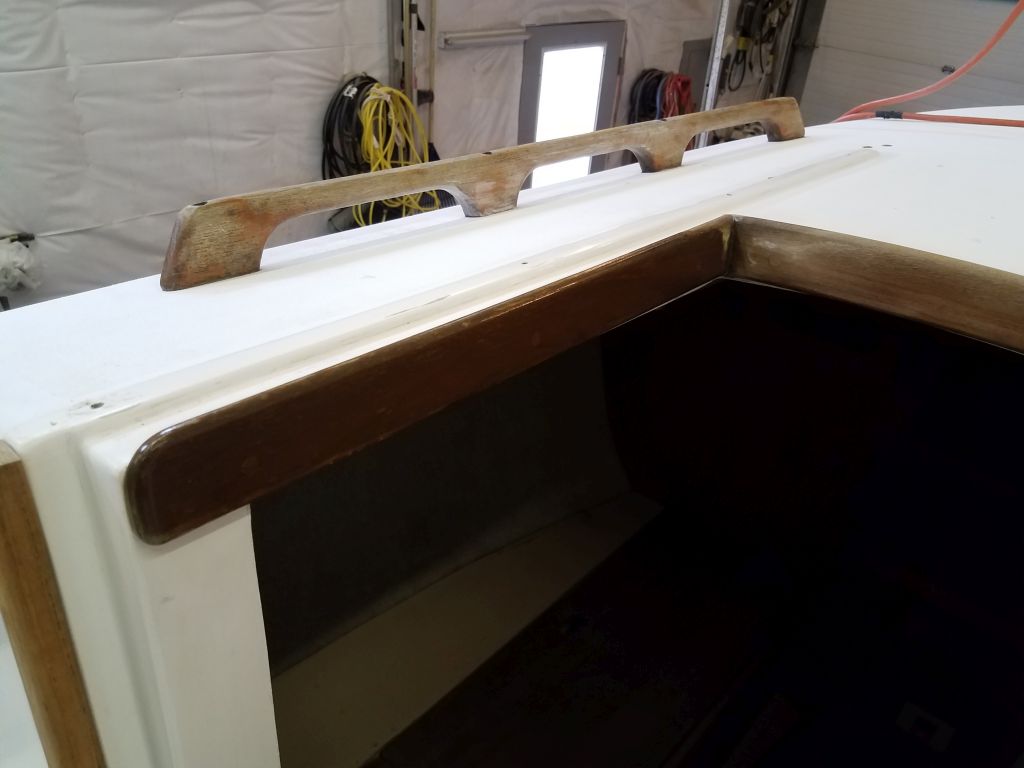
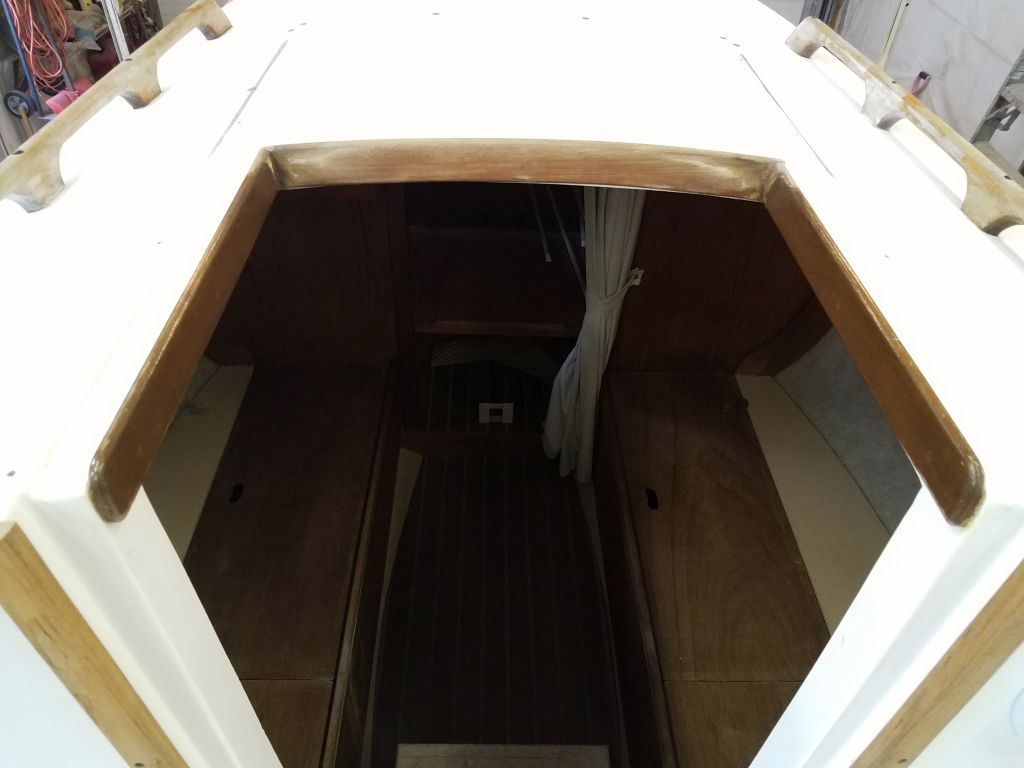
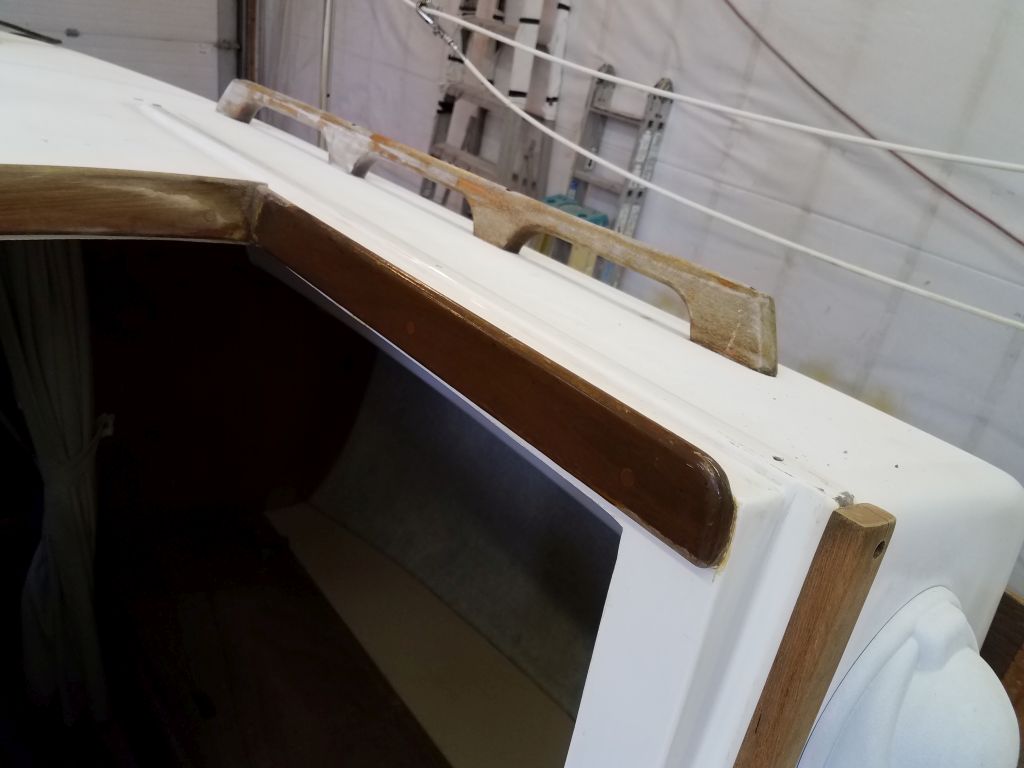
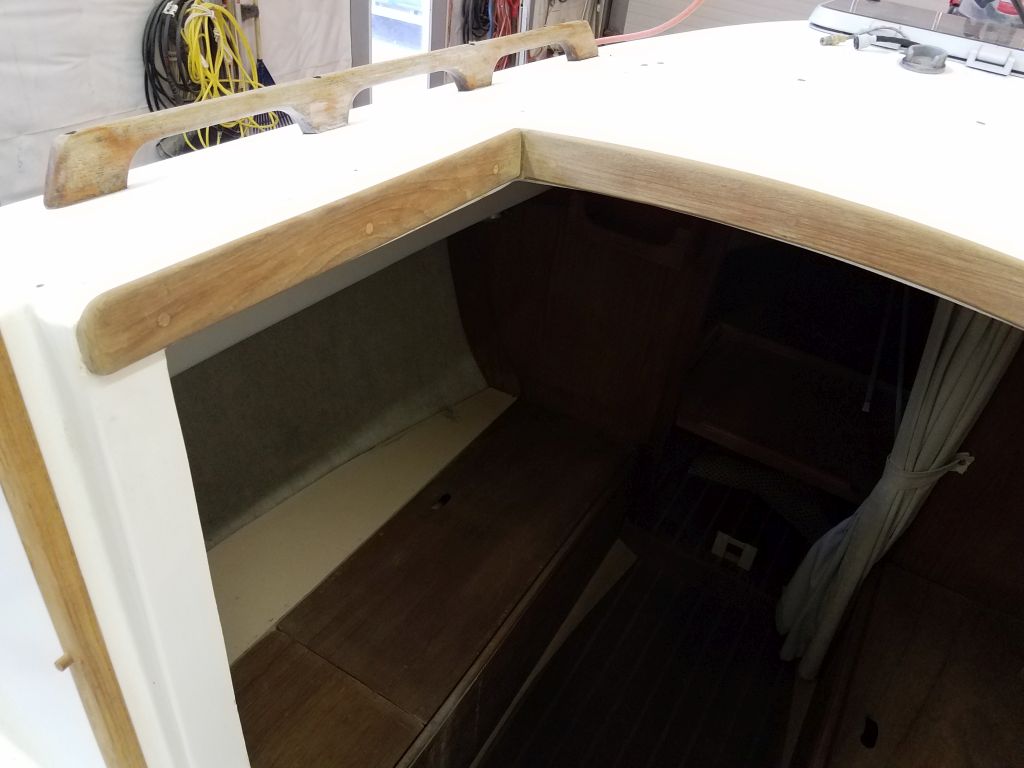
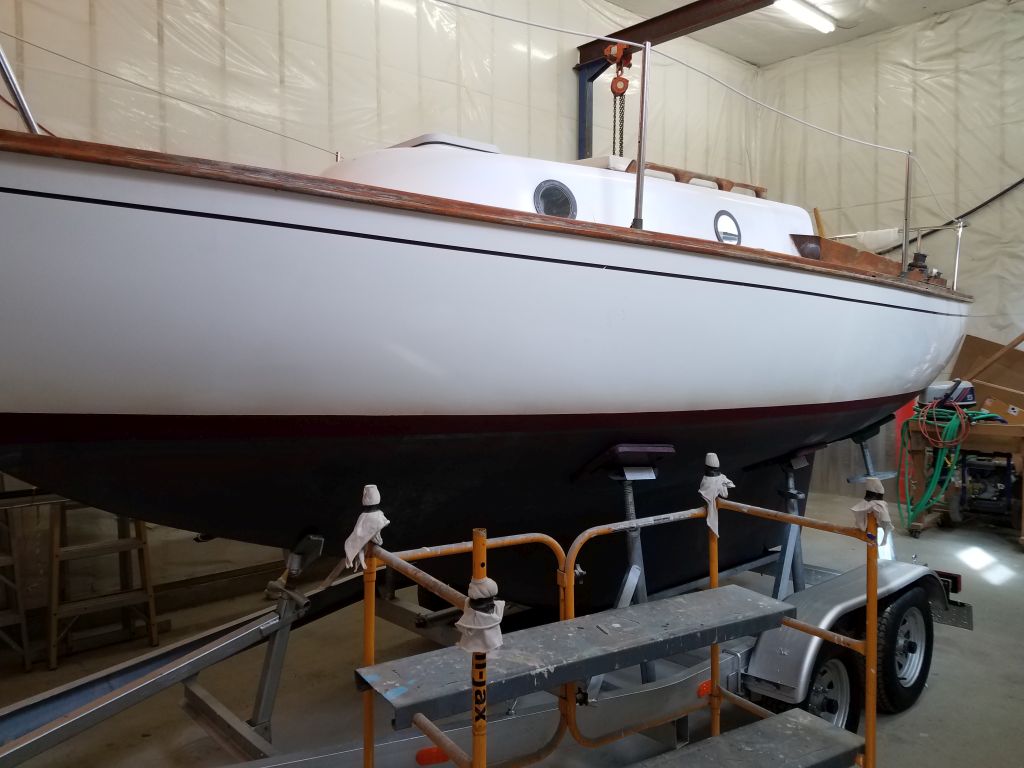
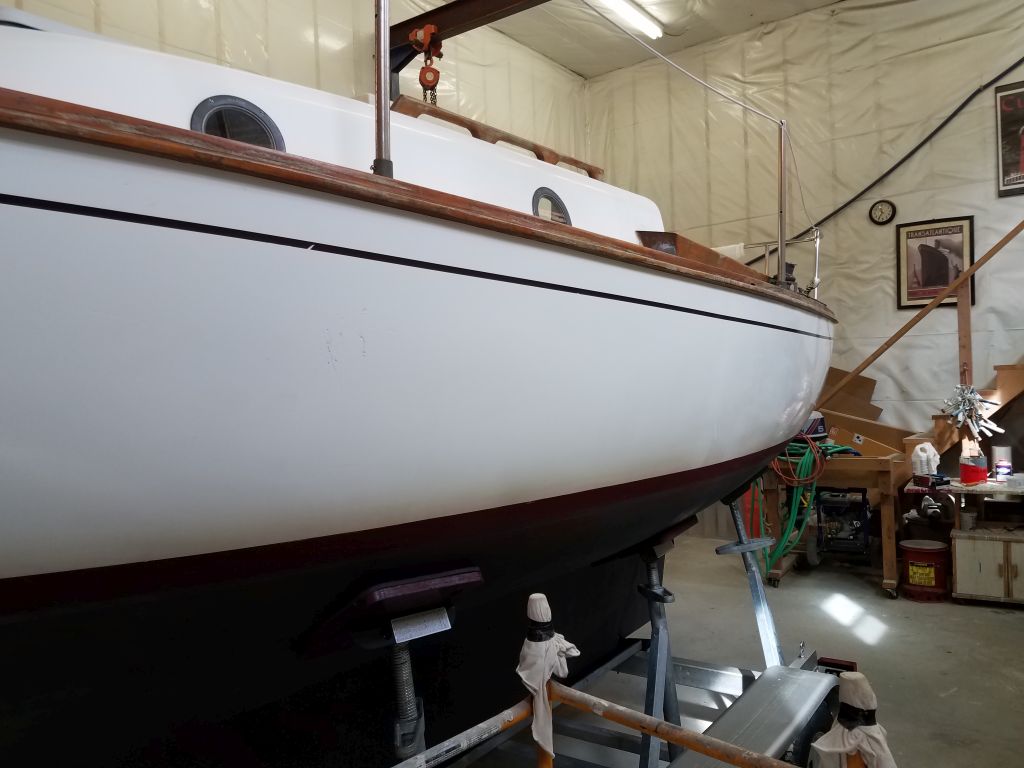
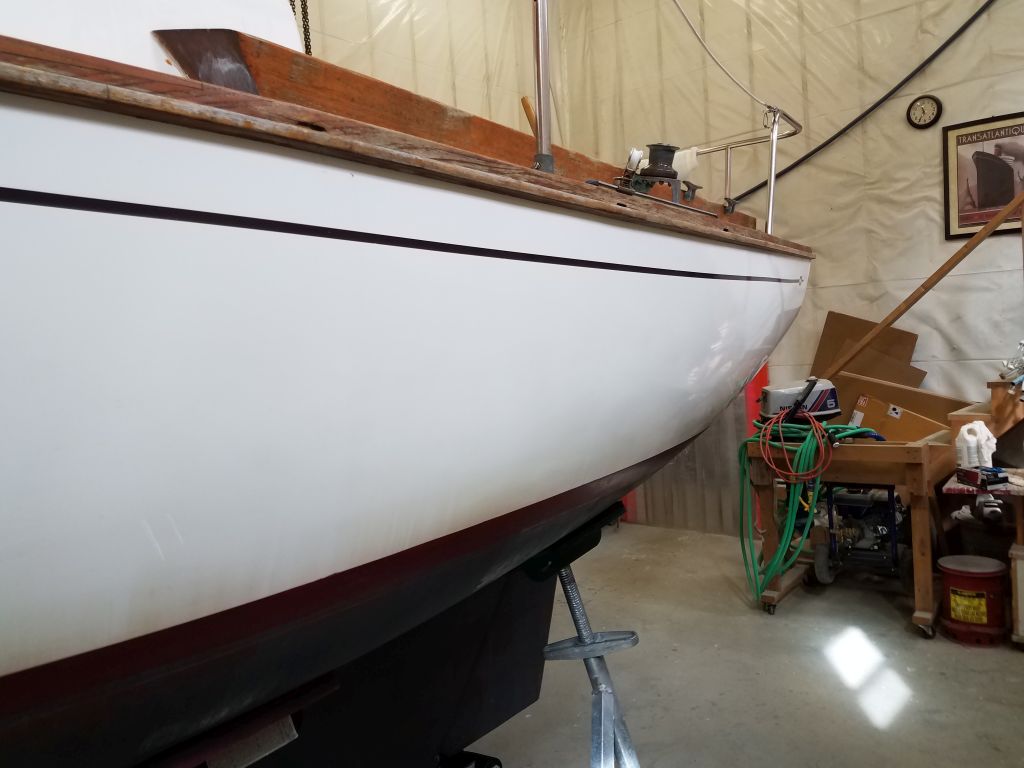
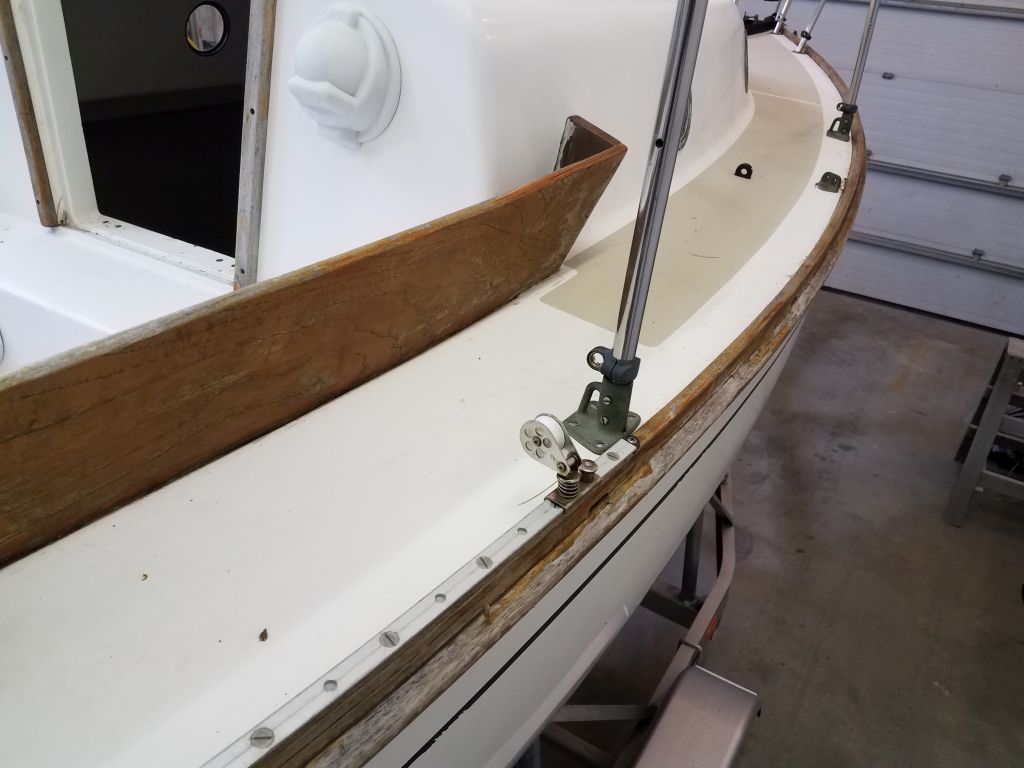
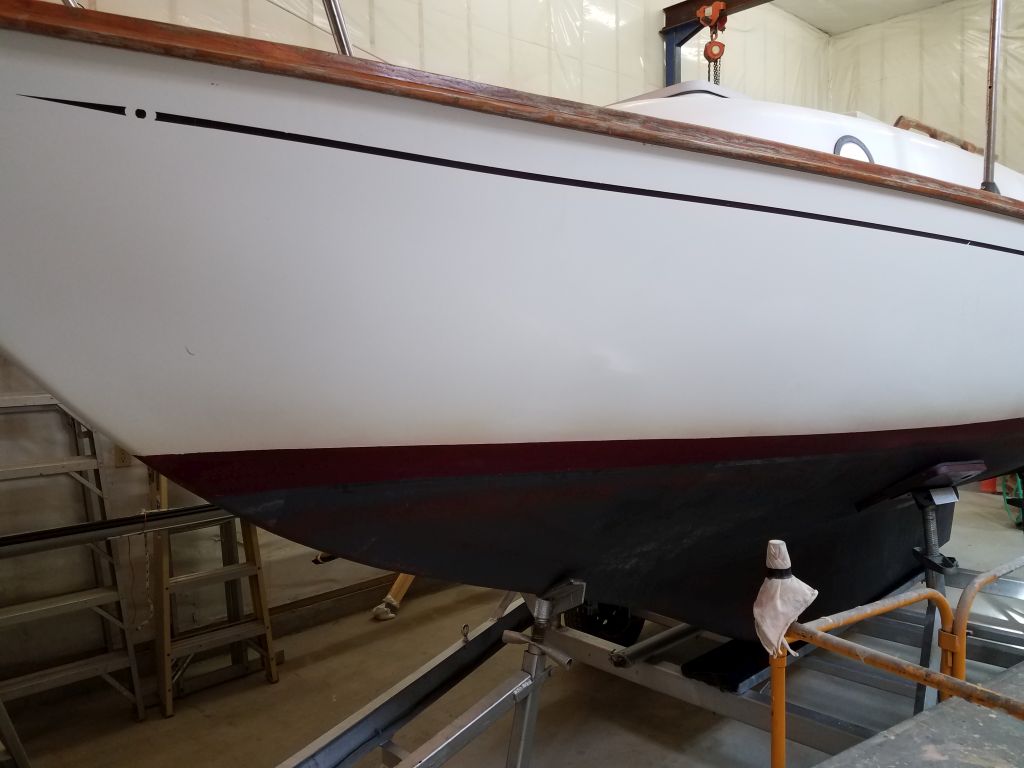
I spent most of the rest of the day’s time getting the boat ready for “being complete”, picking up where I left off.  I’d gotten the interior mostly in order and put together last time, but had run out of time before I could clean up the decks.  Now, I removed most of the protective plastic I’d had in place since shortly after the paint was complete, leaving only the cockpit for now.  It was nice to see the decks fully exposed again and with the deck hardware in place.  This meant that afterwards, I could dismantle the staging to make more room around the boat, and to prepare her for a yard move later; for now, I planned to leave her in the main work bay, as current weather aside (it had been mostly warmer than usual and no snowstorms for some time), it was still winter, and I didn’t want to expose the boat to the elements just yet if I didn’t have to.

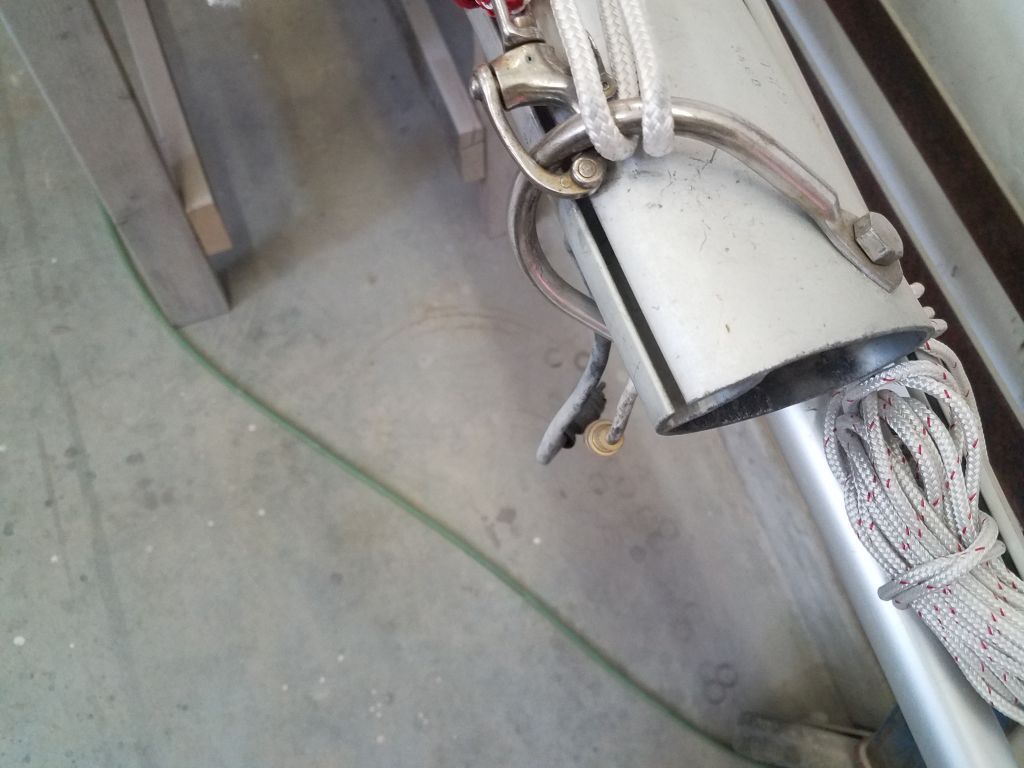
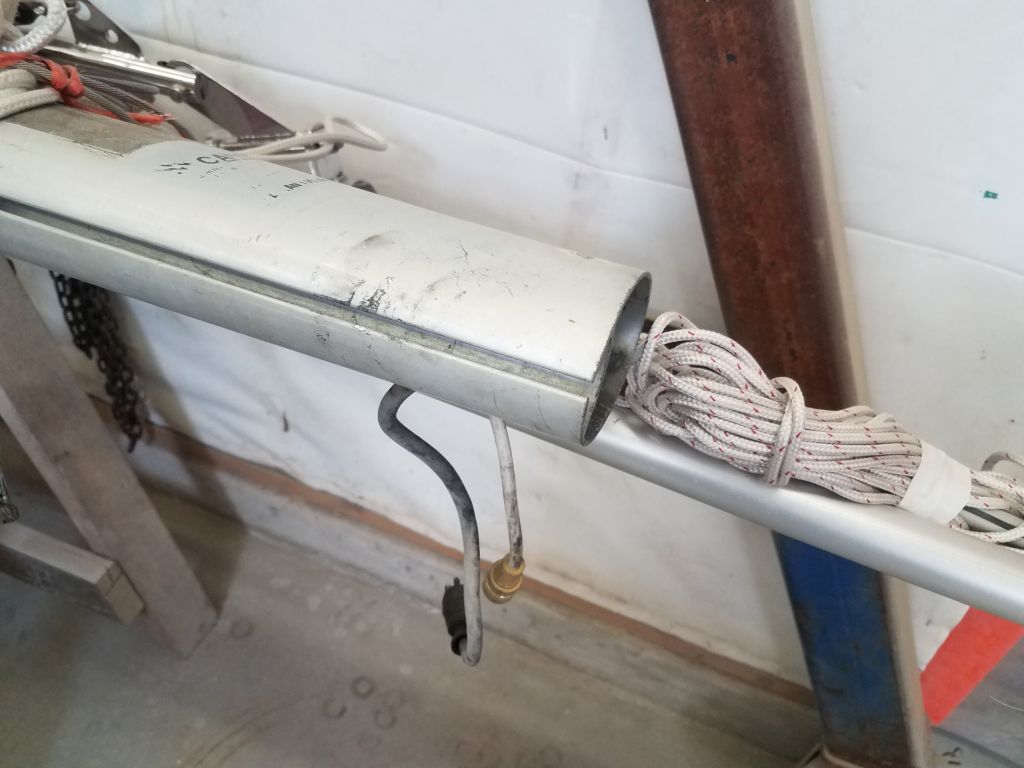
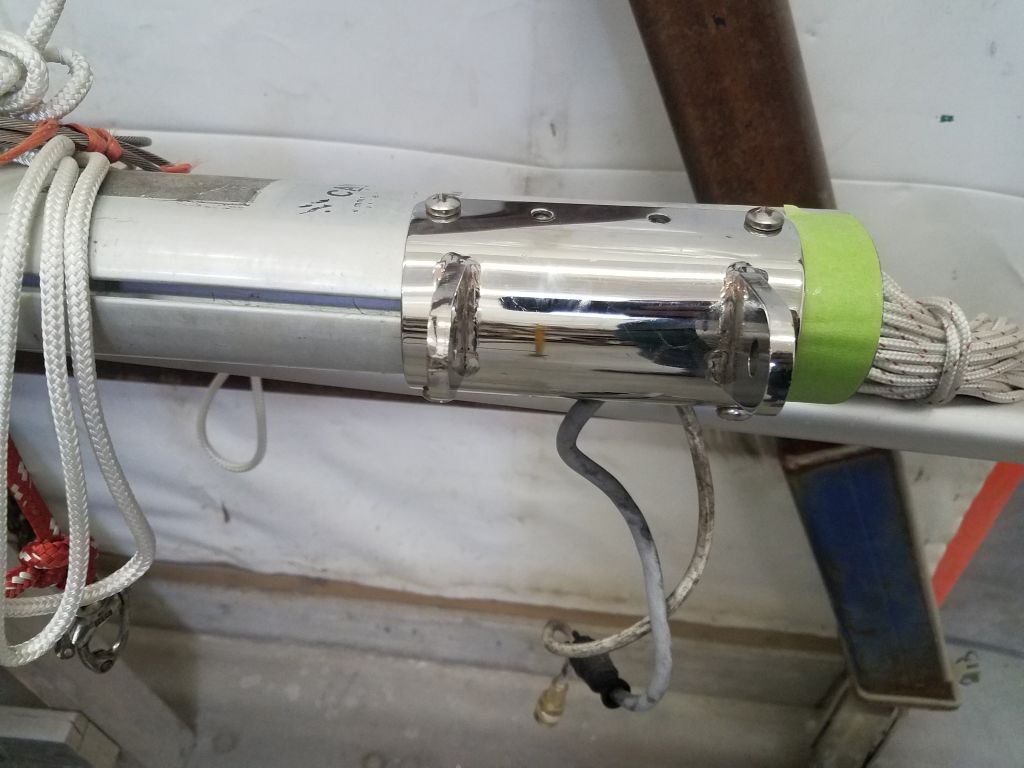
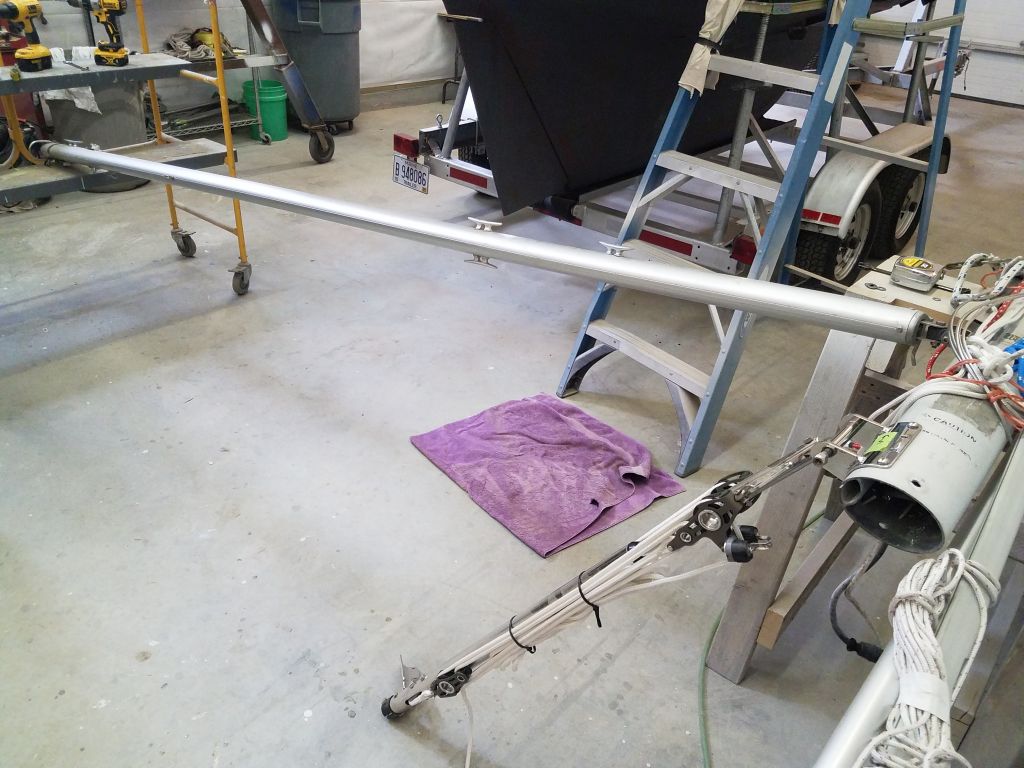
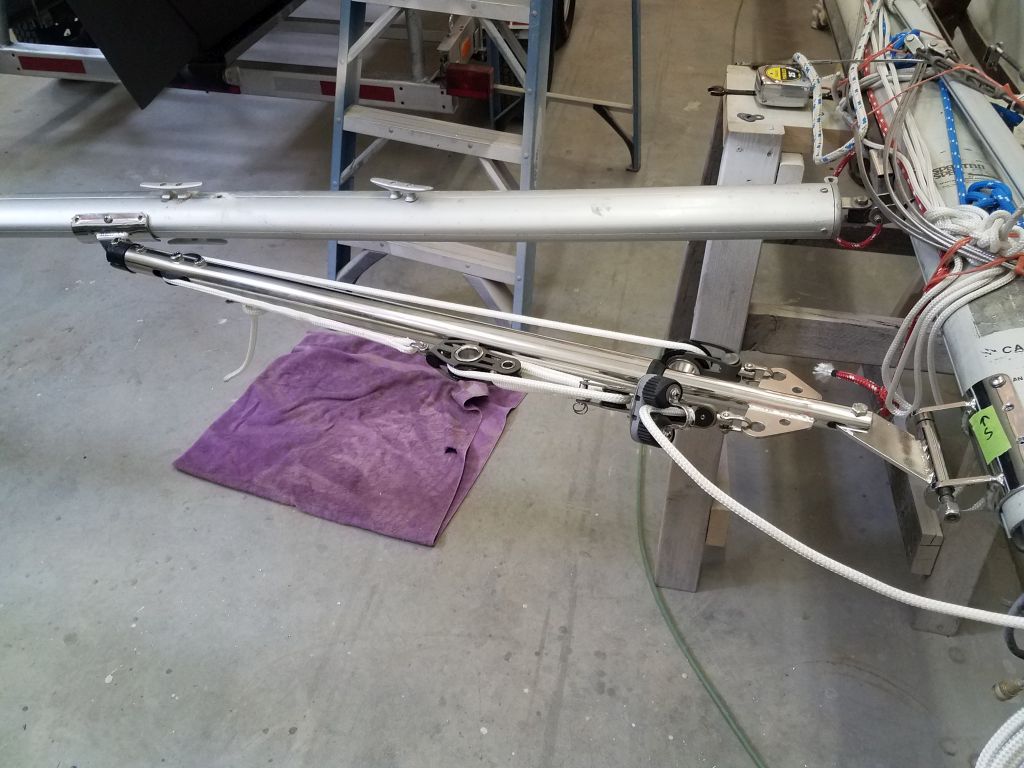
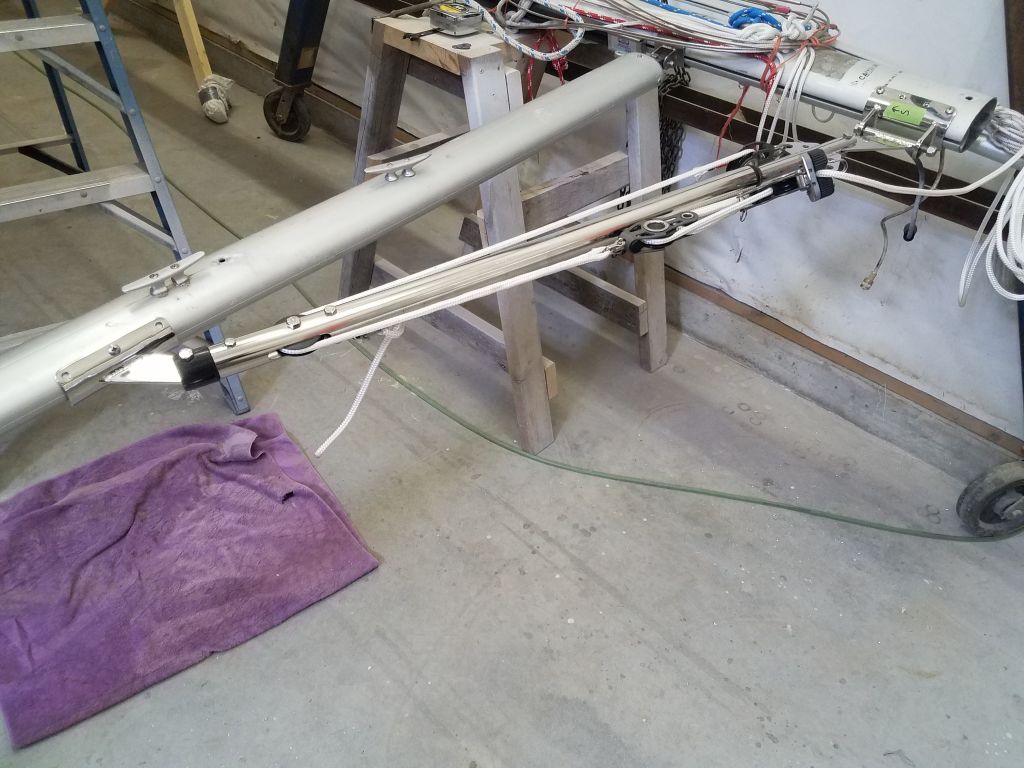
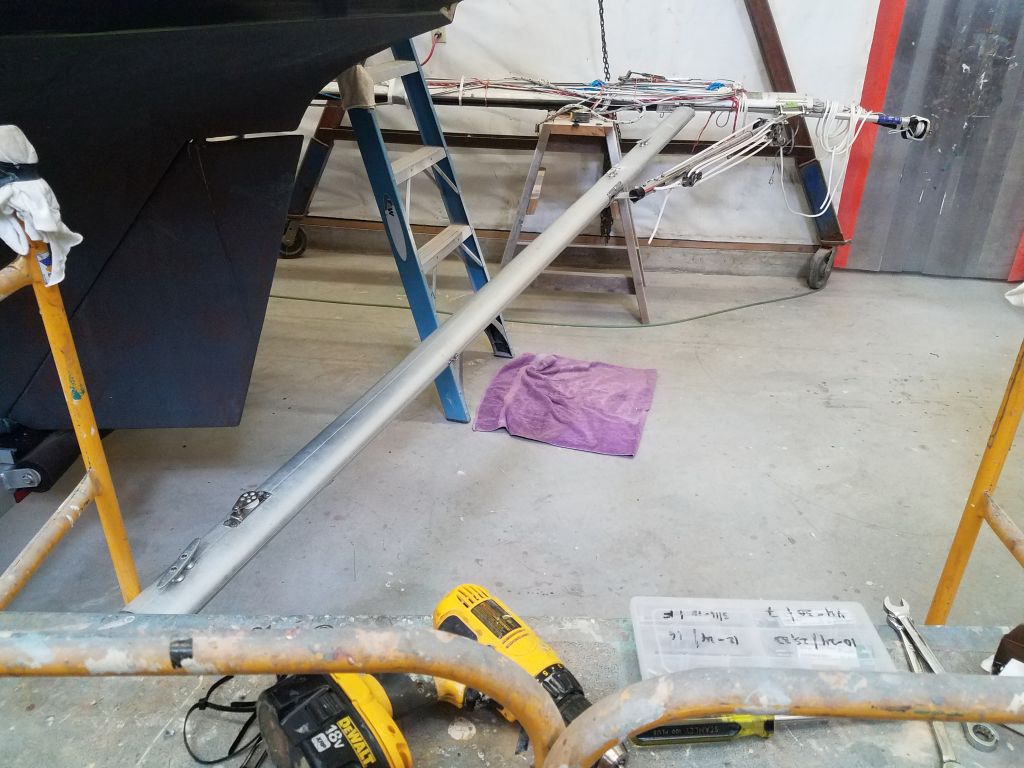
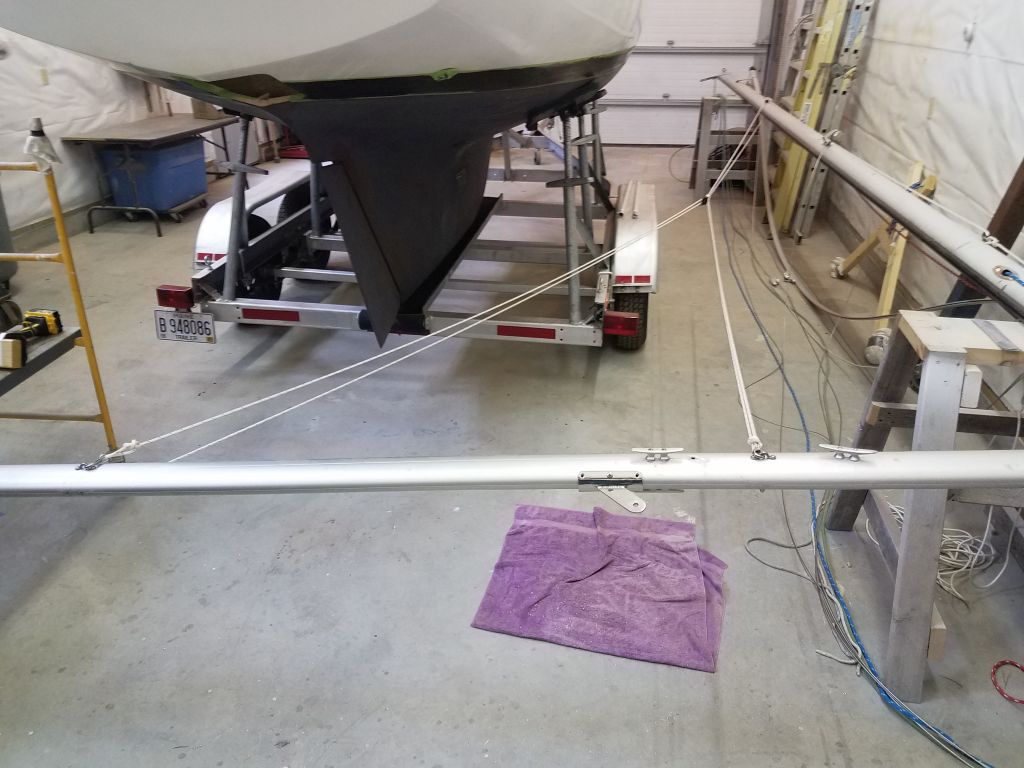
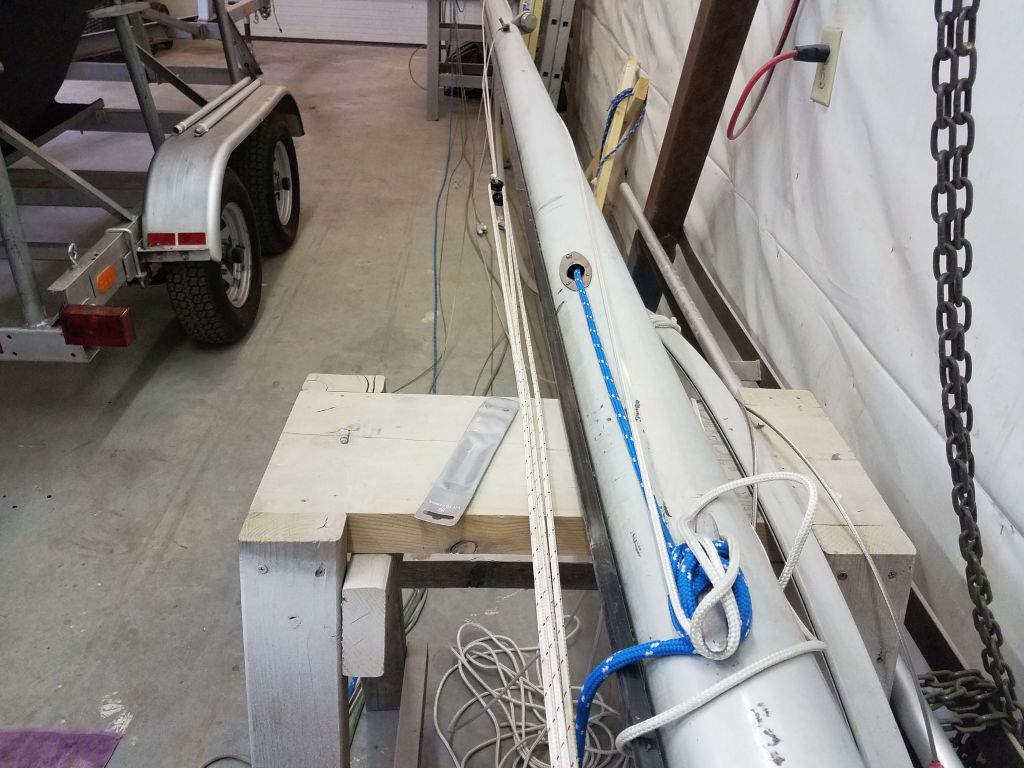
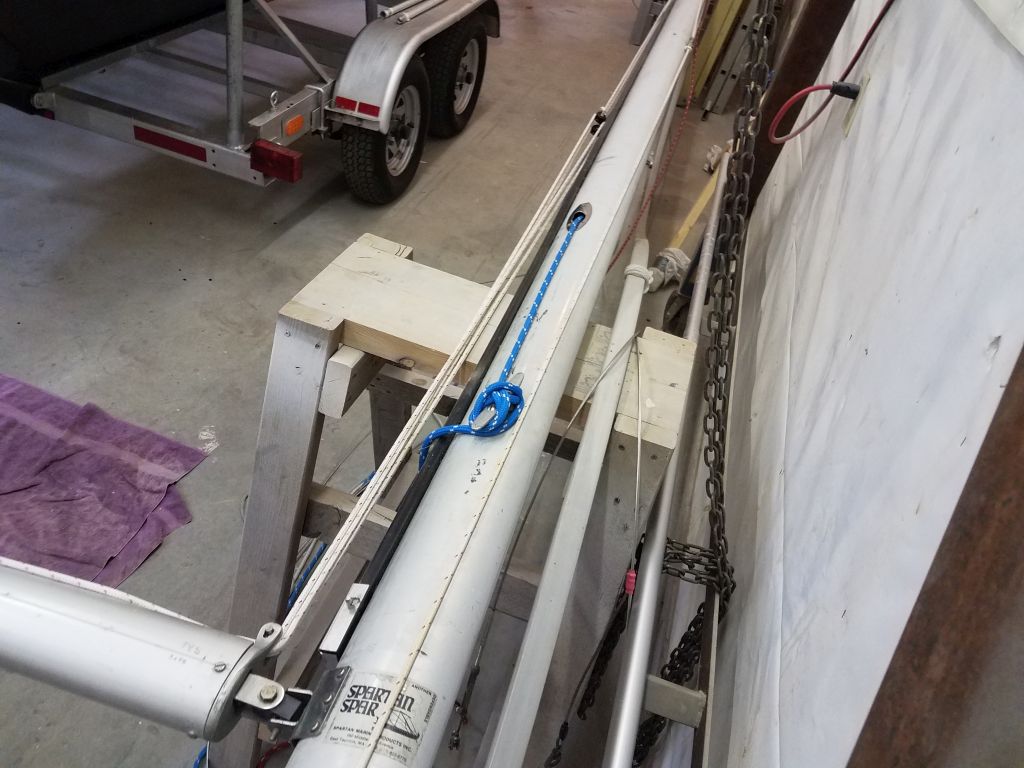
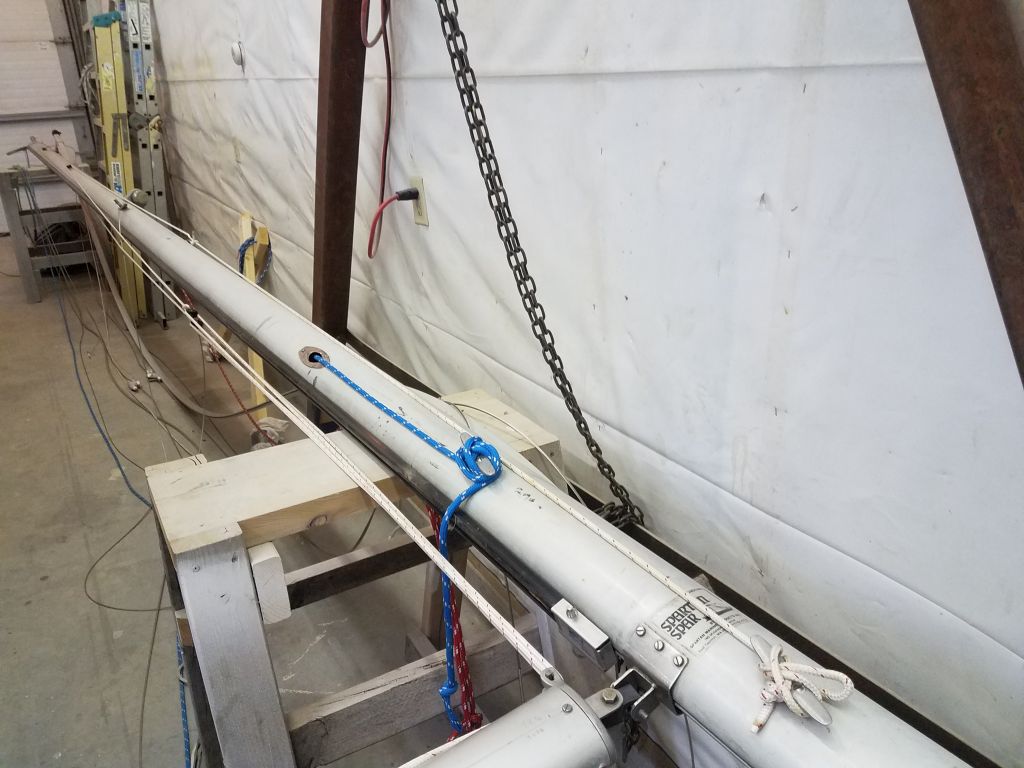
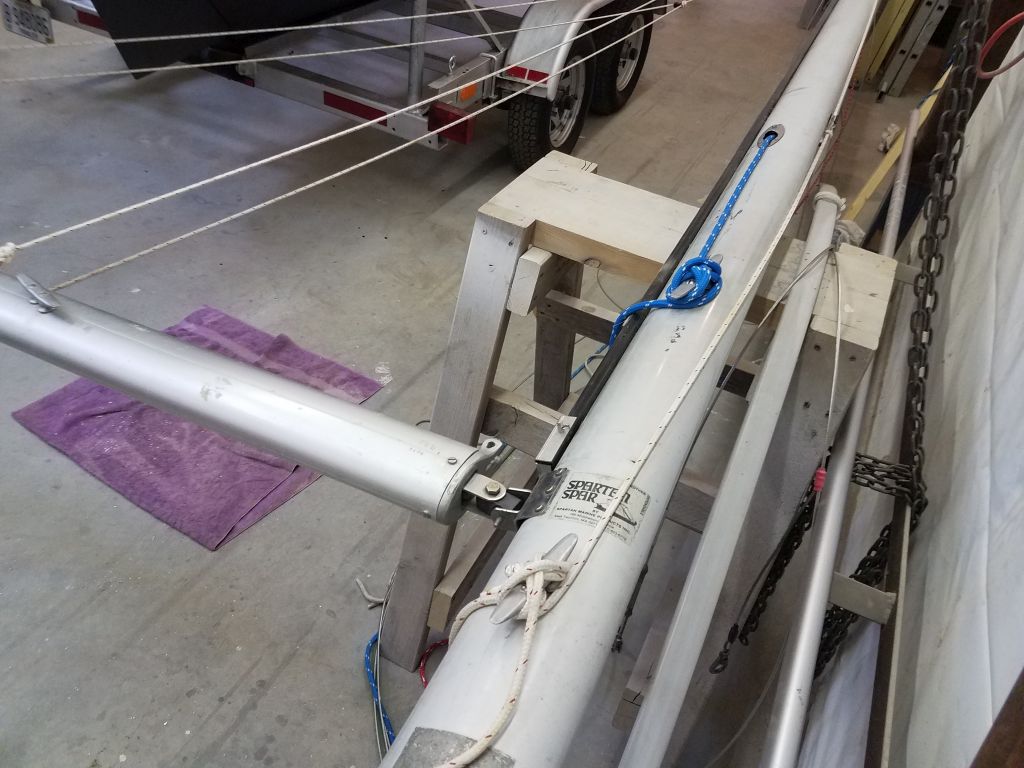
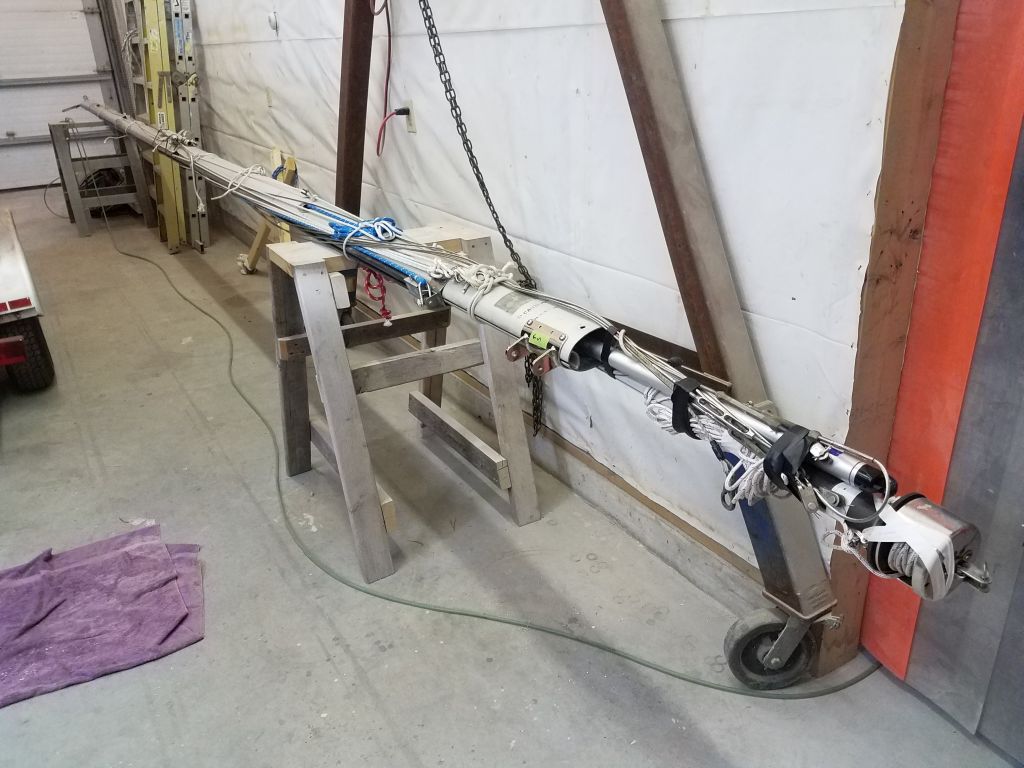
That meant that I would be working in my other bay for the upcoming projects, and to prepare that space for the other boats, I was ready to move Scupper’s mast out, which had been in the bay since mid-winter at the beginning of the mast-painting project.  Now, all spar-related work was done, and to prepare the mast for moving outdoors as well as for transportation whenever that happened, I wrapped the mast and furlers in plastic sleeves, securing the plastic and rigging within well and often with tape and small stuff as needed protect the mast (and boom).  Afterwards, I moved the spars outdoors where they’d await the boat’s departure.

Total time billed on this job today:  5.5 hours

0600 Weather Observation:  32°, mostly cloudy.  Forecast for the day:  Partly sunny, 60°

Scupper 257

Friday

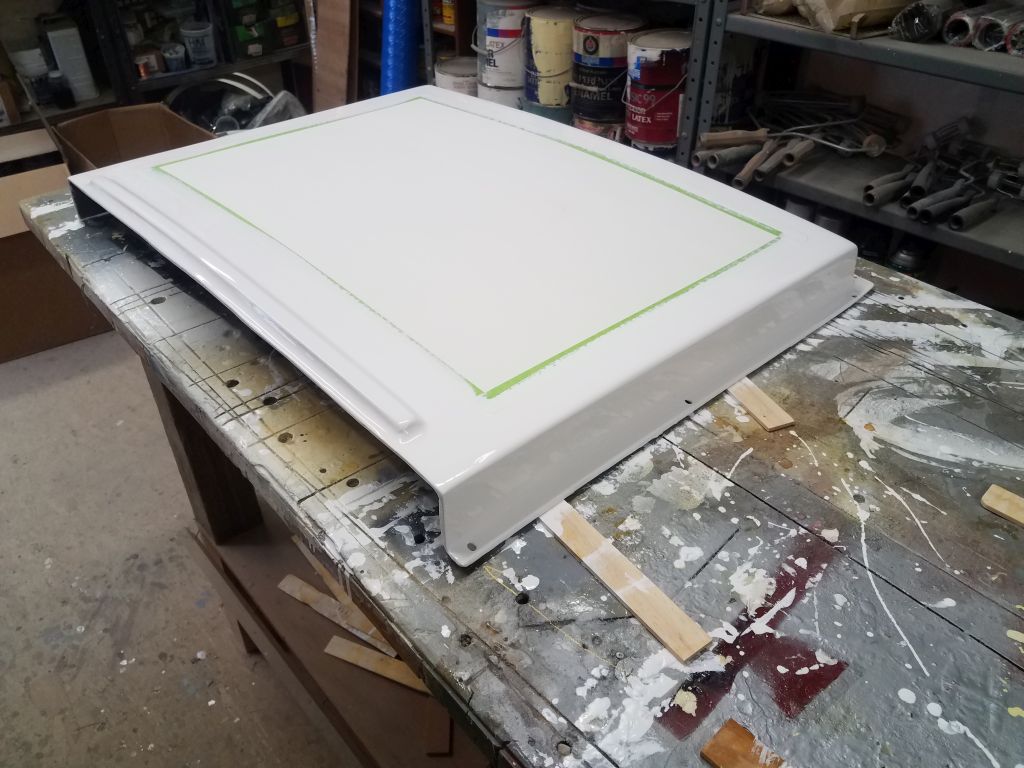
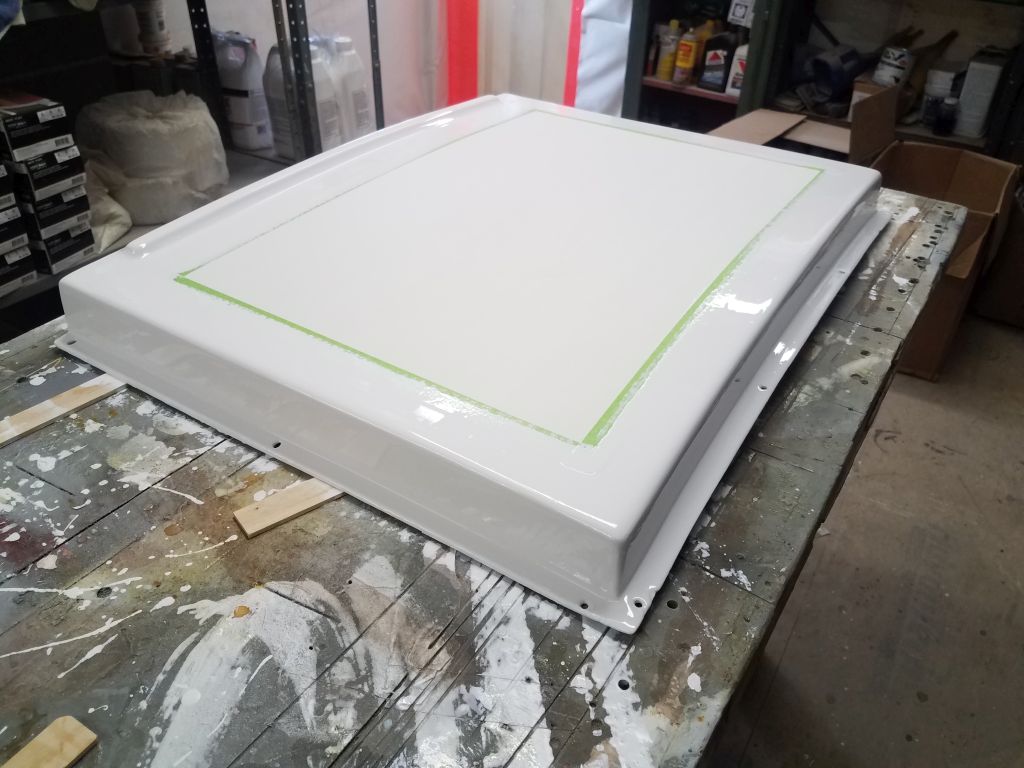
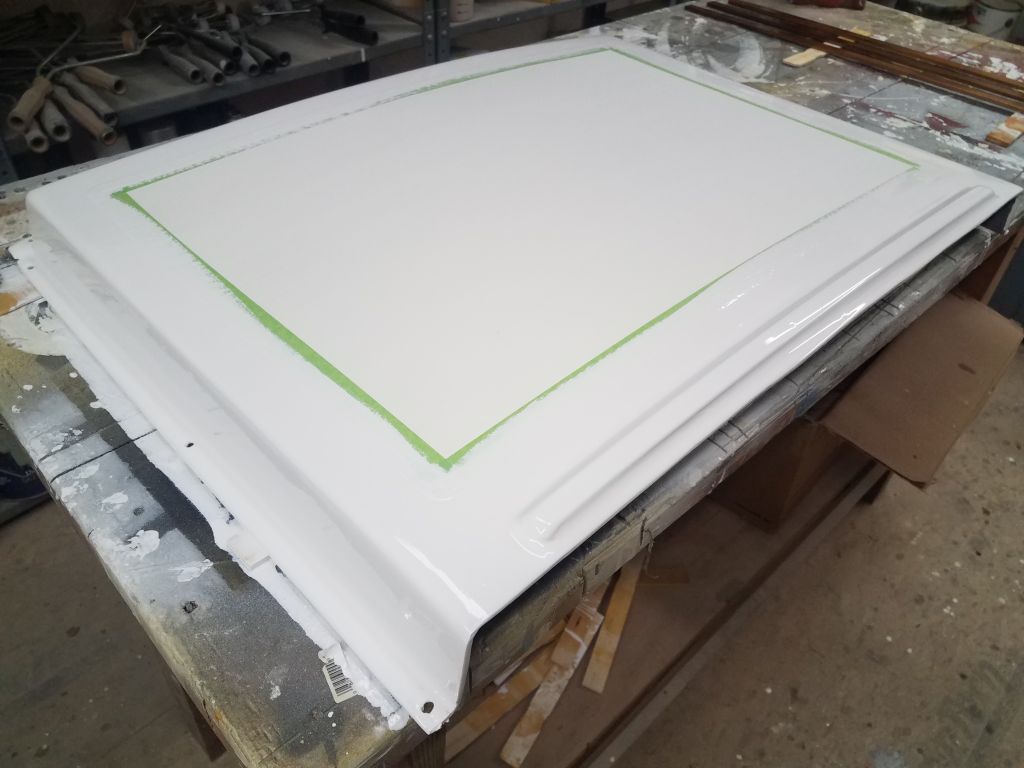
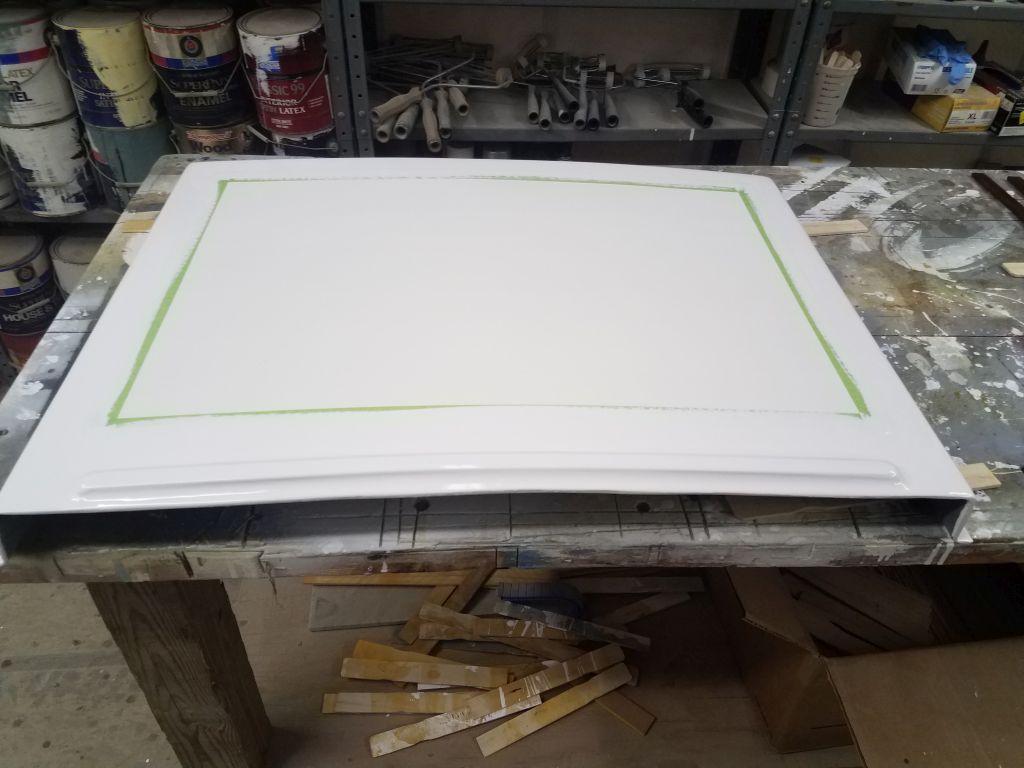
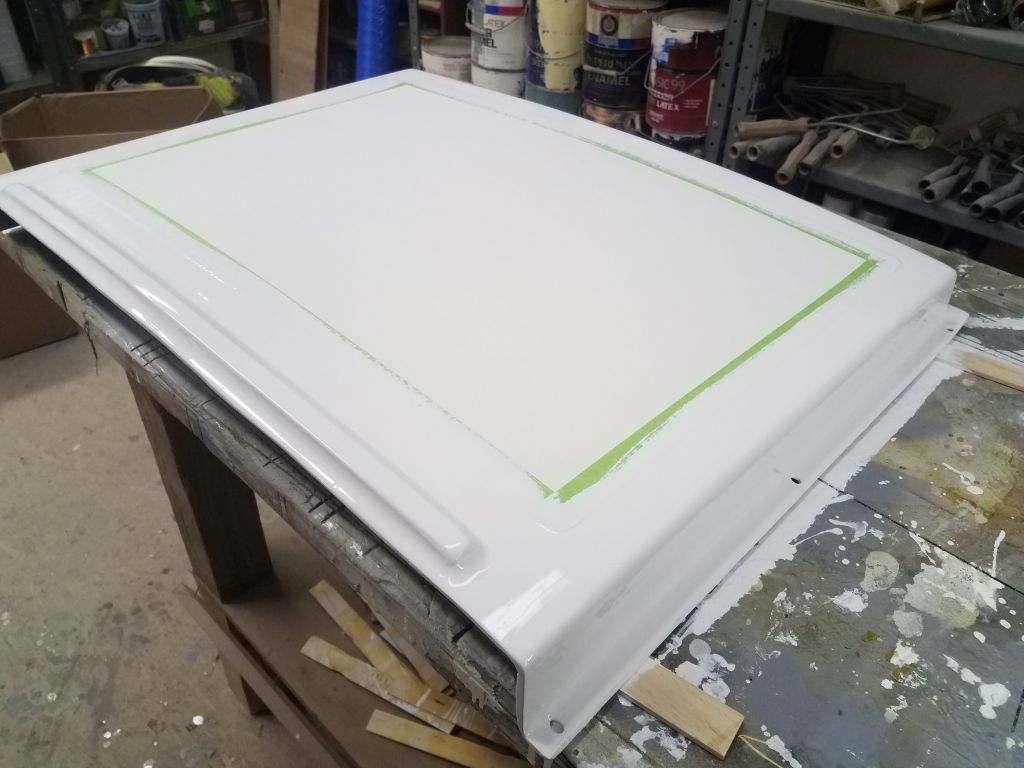
The paint work on the liner cover plates was complete, so to begin the day I installed the various pieces throughout the boat.

Afterwards, I cleaned up the whole interior so I could get to work on installing the upholstered backrests/locker doors in the main cabin, and installing the other interior cushions to complete the work in the cabin.  The backrests went on quickly with four bolts each, since they’d already been fitted once before, so it was simply a matter of the final installation this time around.

Before completing the cushions, I reassembled the cabin table down in the shop, as it was still in pieces from the refinishing efforts earlier, then installed the table on the cabin sole, securing it to its original brackets that allowed quick removal of the table to access the bilge beneath as needed.  Because one of the brackets landed on the new, larger bilge hatch I’d built, I secured the bilge hatch with a pair of screws to ensure that everything was as stable as possible.  The old pull rings for the table top storage compartment were in overly-weathered condition, so I chose not to re-use them and ordered replacements that I’d install once on hand.

The table installation brought to light an unwelcome surprise:  the companionway ladder/head door didn’t clear the back of the table by about 1/4″.  This might be because the new ladder assembly was slightly larger and different in shape than the original, or perhaps the table was in a slightly different position than its original, but whatever the cause, it required me to cut away and shape the offending corner of the door/ladder so it would clear the table and operate properly.  With the table out of the boat for so long, and basically no experience in the cabin with the table in place (I’d removed it forthwith at the beginning of the project because it was so much in the way), it hadn’t even occurred to me that clearance would be an issue.  Education never ends, nor do the continuing surprises that small boats hold in store for the unwitting.

Fortunately, it was just a small modification, after which the door operated as needed, but I’d have to touch up the finish at the newly-changed corner.

With the table in place, the protective floor covering and masking tape out of the way, and the whole cabin vacuumed and cleaned up, I could now put the cushions in place to bring the whole cabin together for the first time.

This all took surprisingly long, but the project list was nearly fully expunged by this point.  I had a short list of small jobs to complete over the next week or two, but expected this to be my last day working full-time on Scupper.  After unloading most of my tools and other supplies from the boat–they’d been briefly repurposed to the cockpit from the cabin, but now it was time to clean house–I finished up by painting the new reinforcement on the locker lid, so that would be ready for reinstallation next time, along with a few other minor tasks before the boat was truly completed.

Total time billed on this job today:  7 hours

0600 Weather Observation:  22°, cloudy. Forecast for the day:  Mostly cloudy, snow showers, 40°

Scupper 256

Thursday

After a light sanding, I applied another coat of semi-gloss white enamel to the liner cover plates, and another coat of varnish to the tiller.

I finished up the toilet installation by connecting the fresh water intake line behind the toilet, and installing the other end of the discharge line to the fitting on the holding tank.  Then I ran the toilet wiring (for the intake and discharge pumps) into the engine room, where I secured it and made the connections as needed to the toilet control box.  I applied the little cover plates over the toilet bowl fasteners, and finished up work in the head by installing the panel to cover the holding tank, and cleaning up the space.

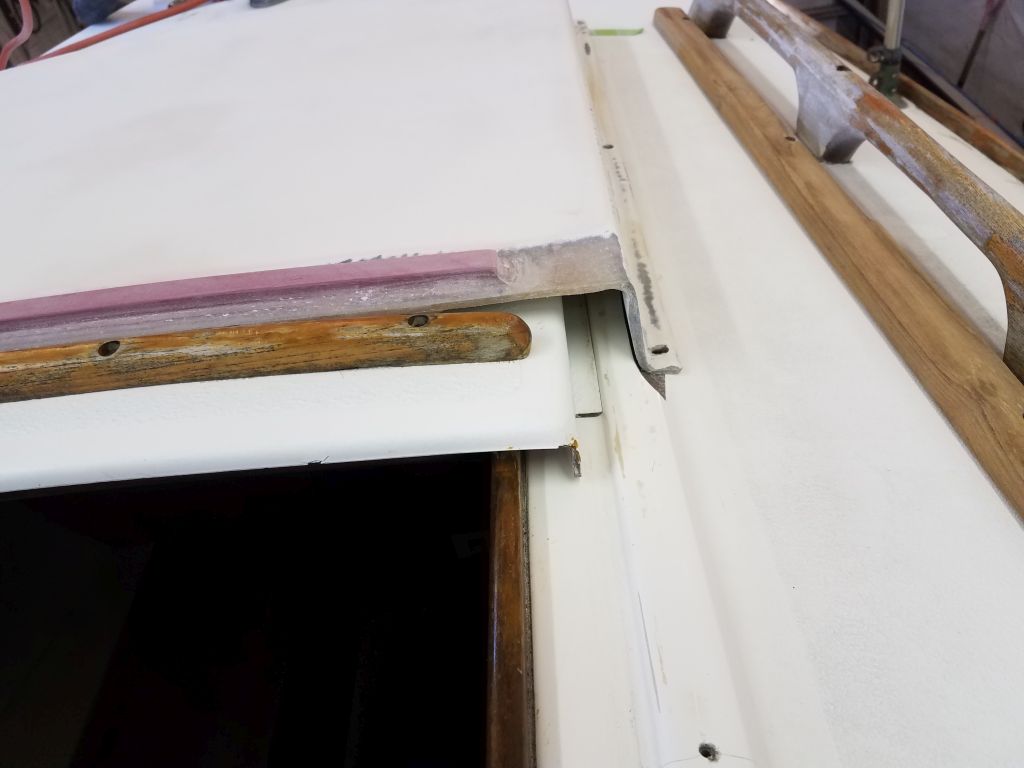
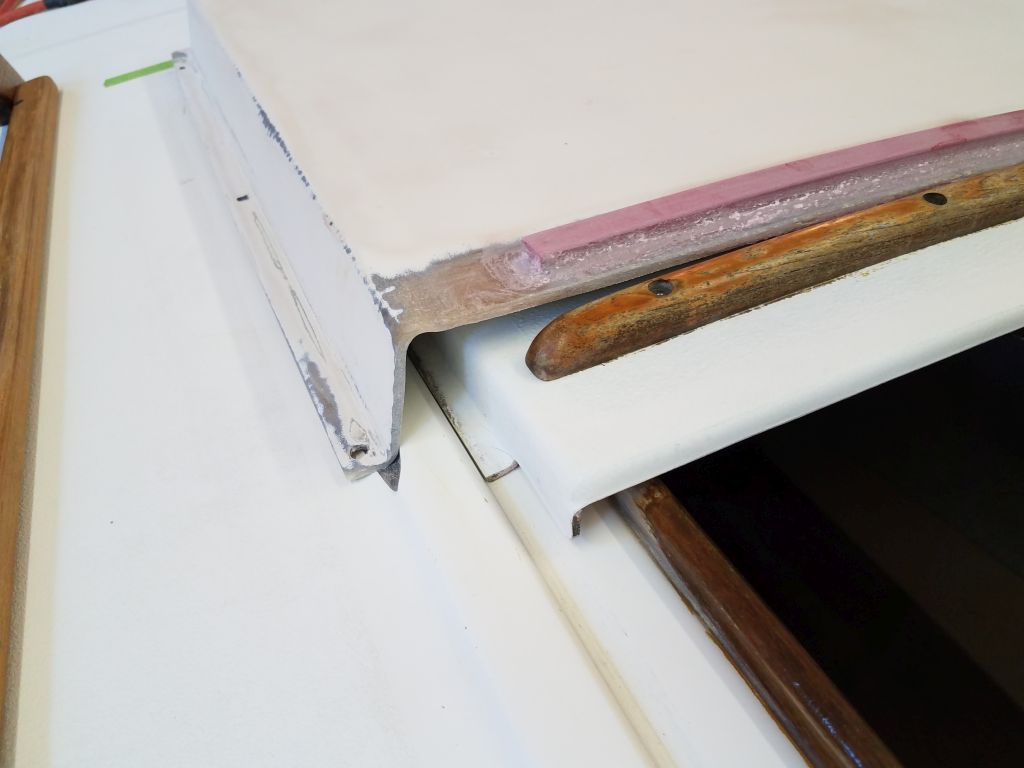
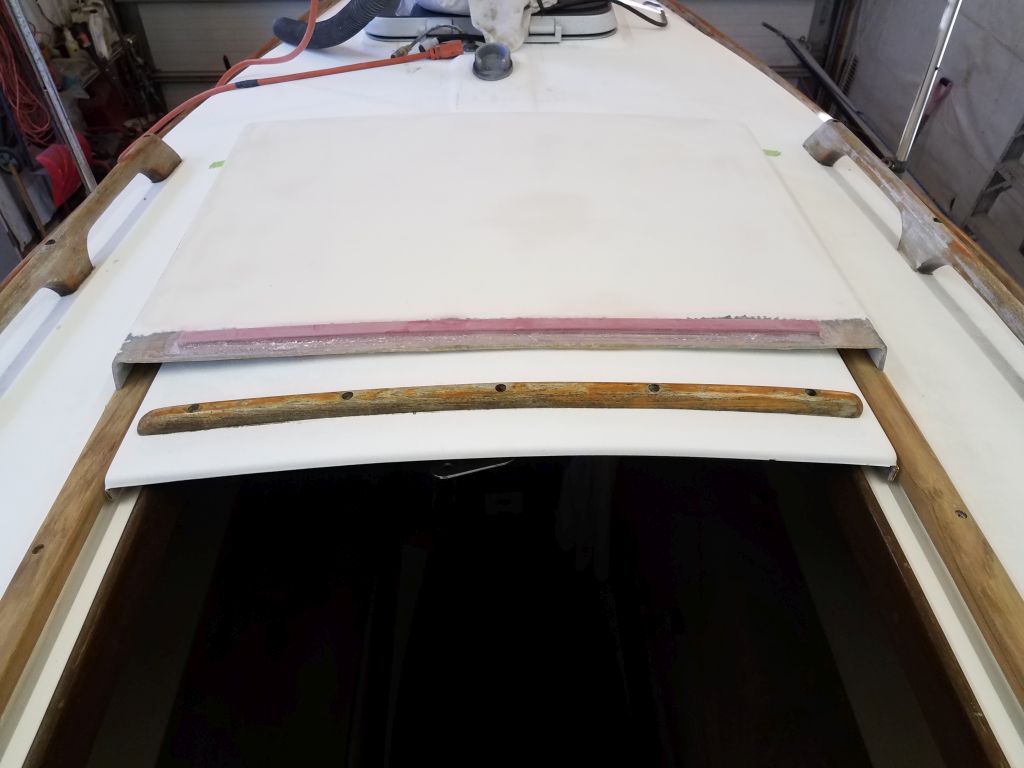
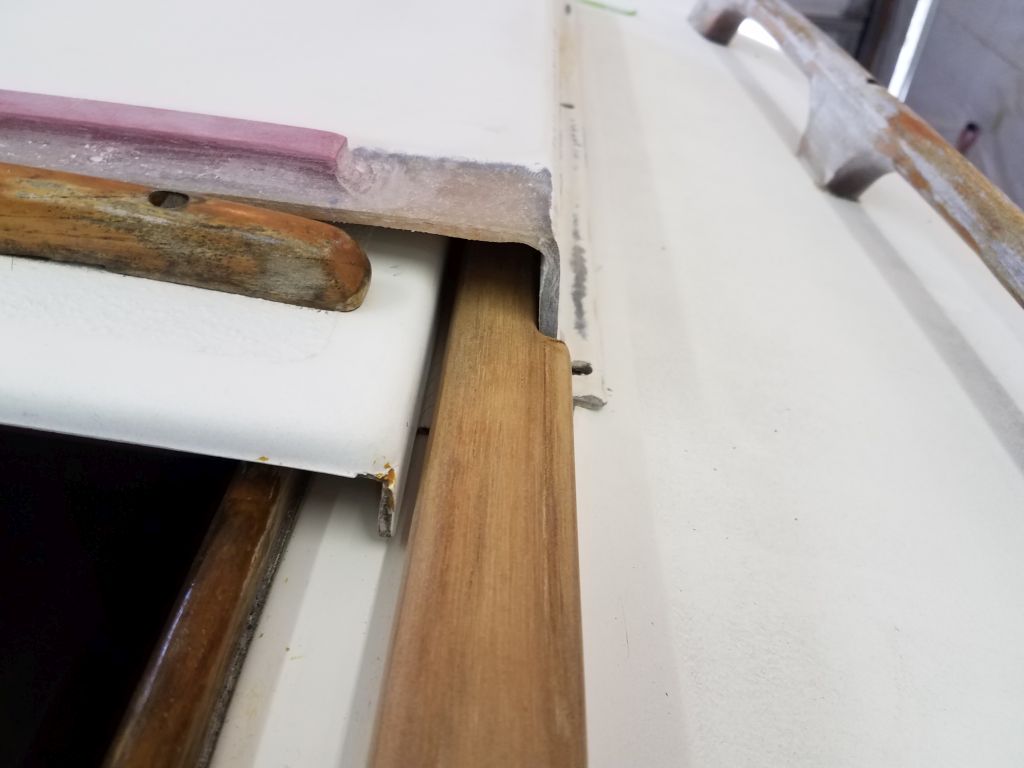
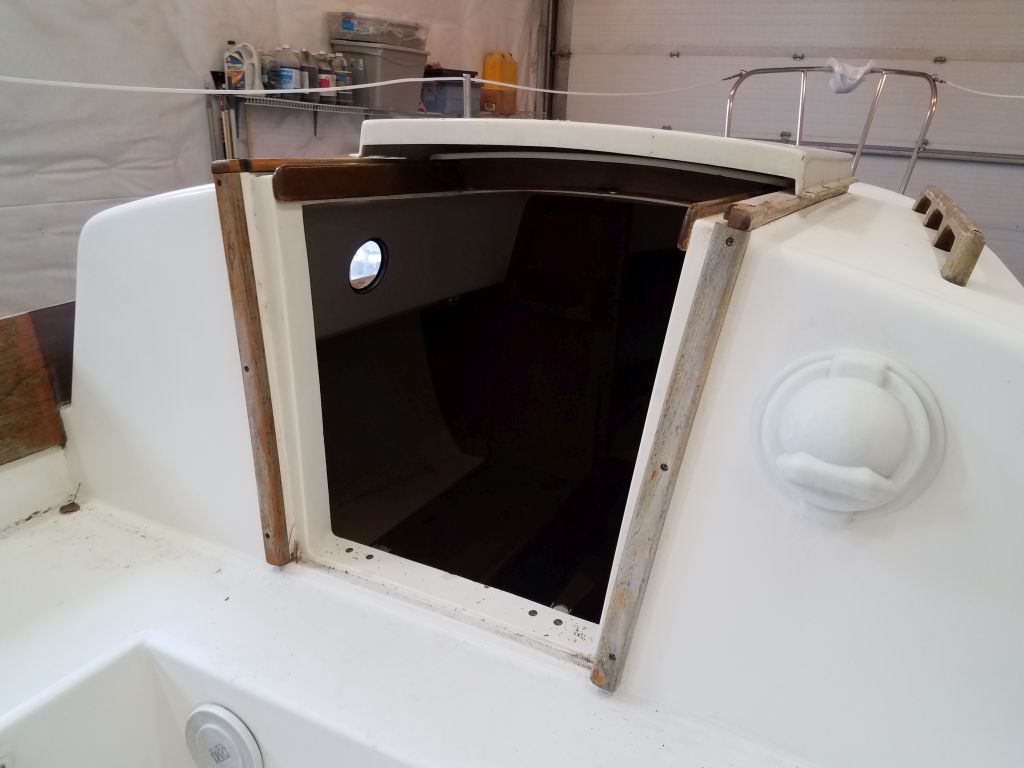
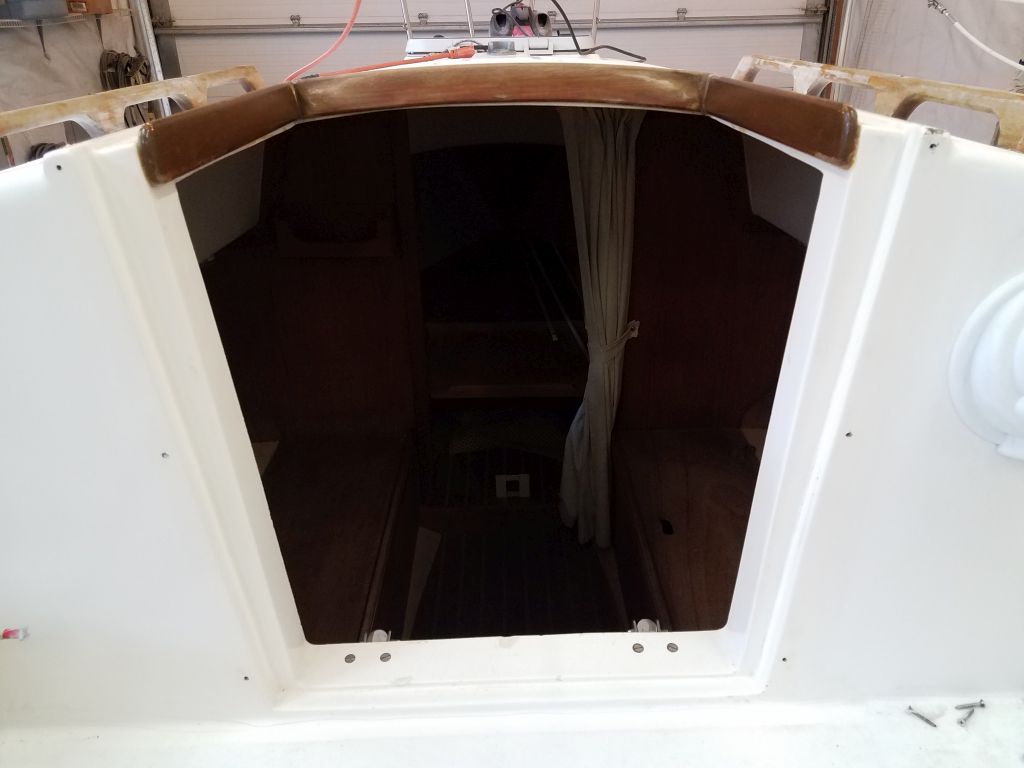
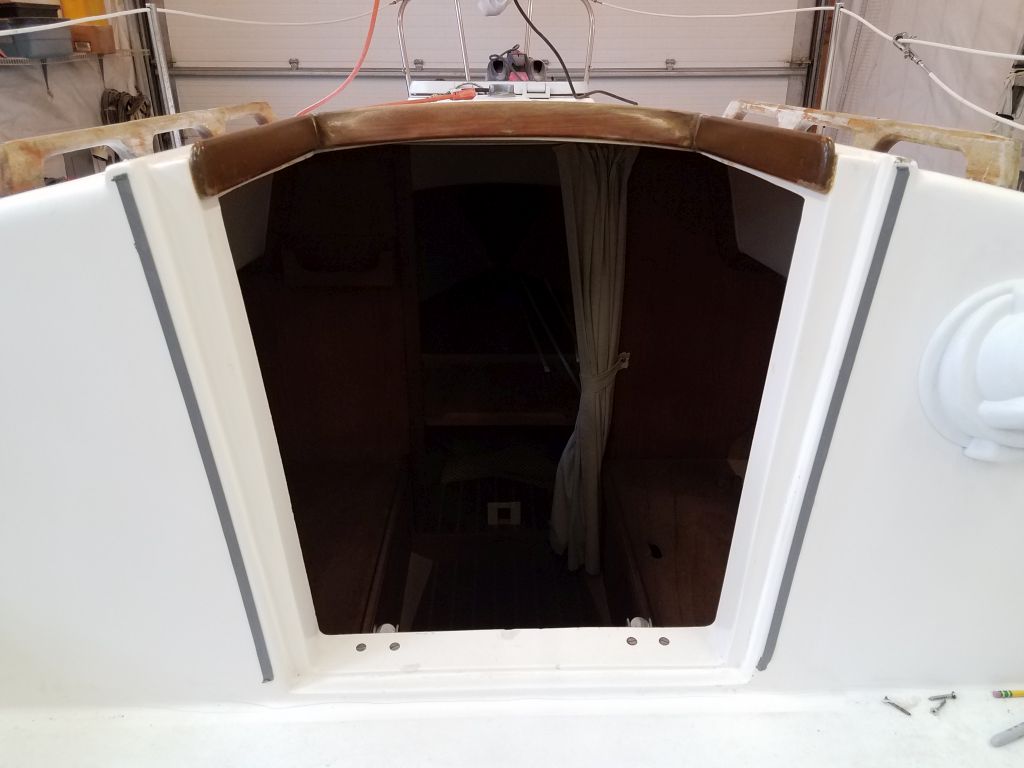
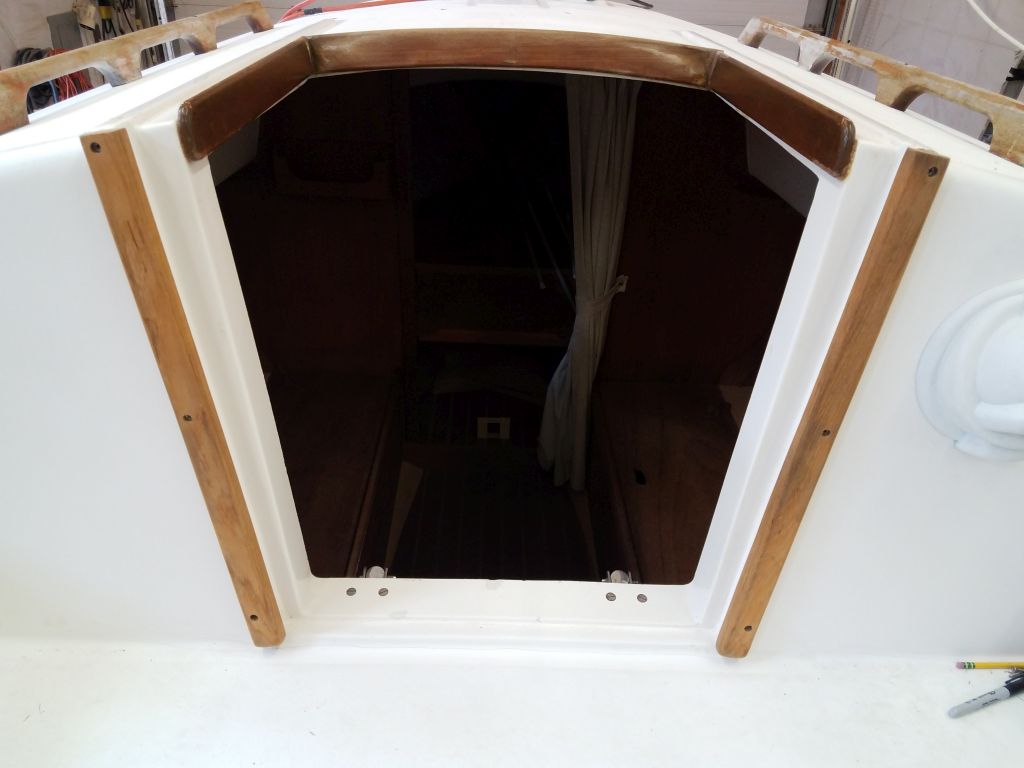
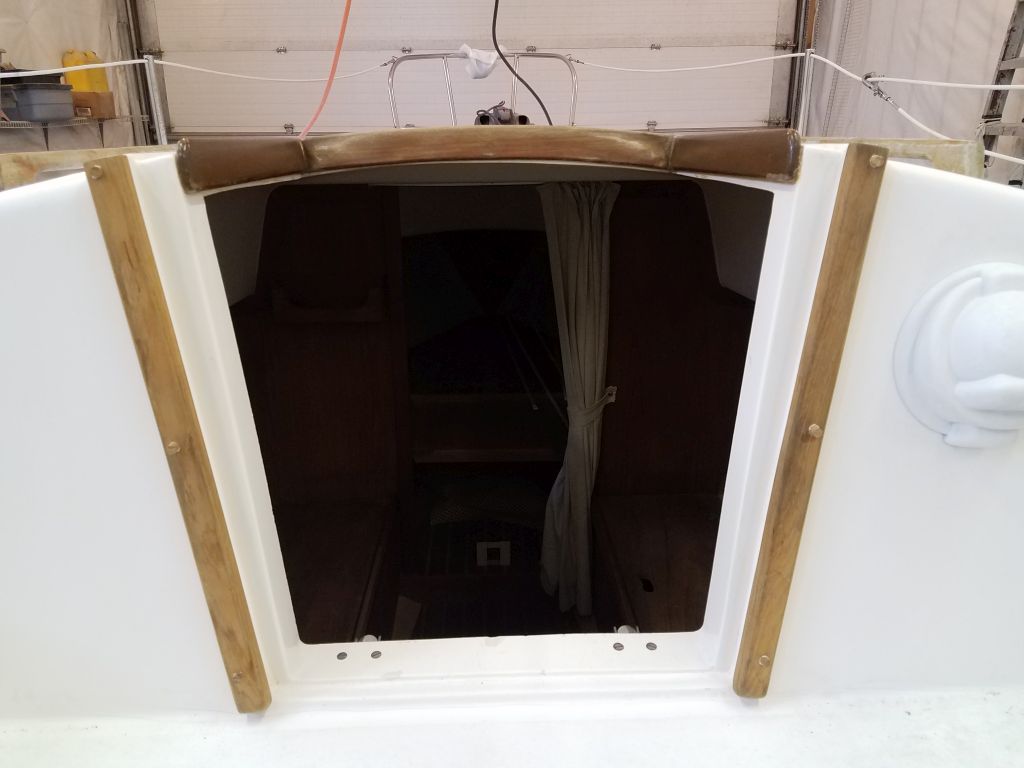
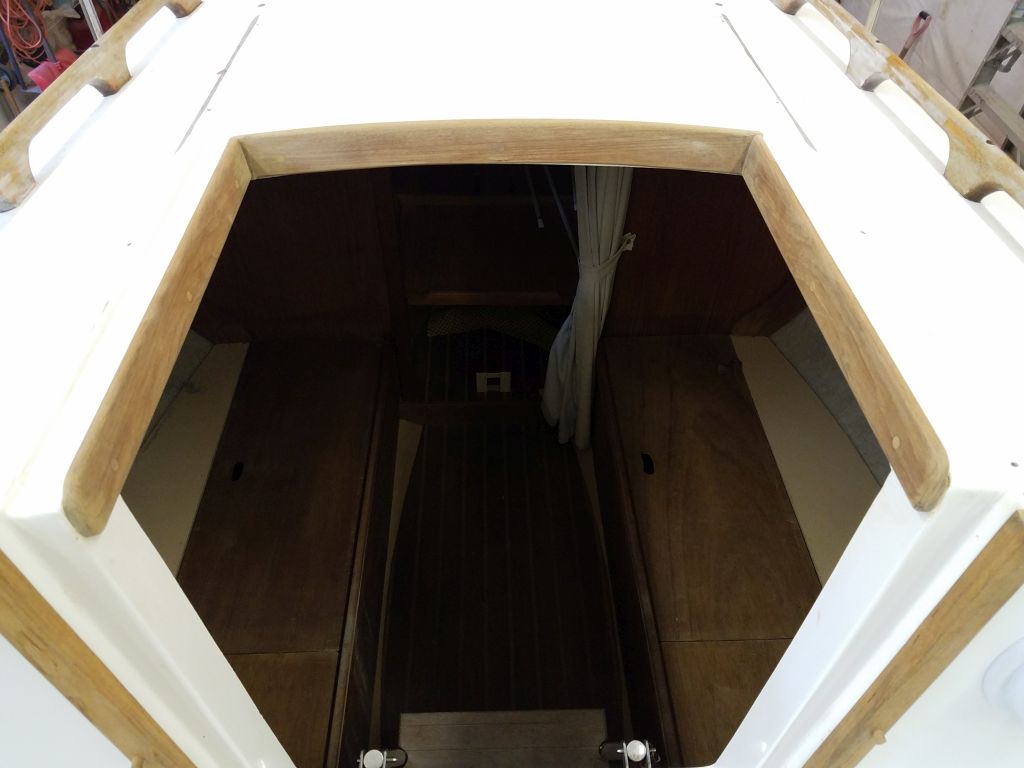
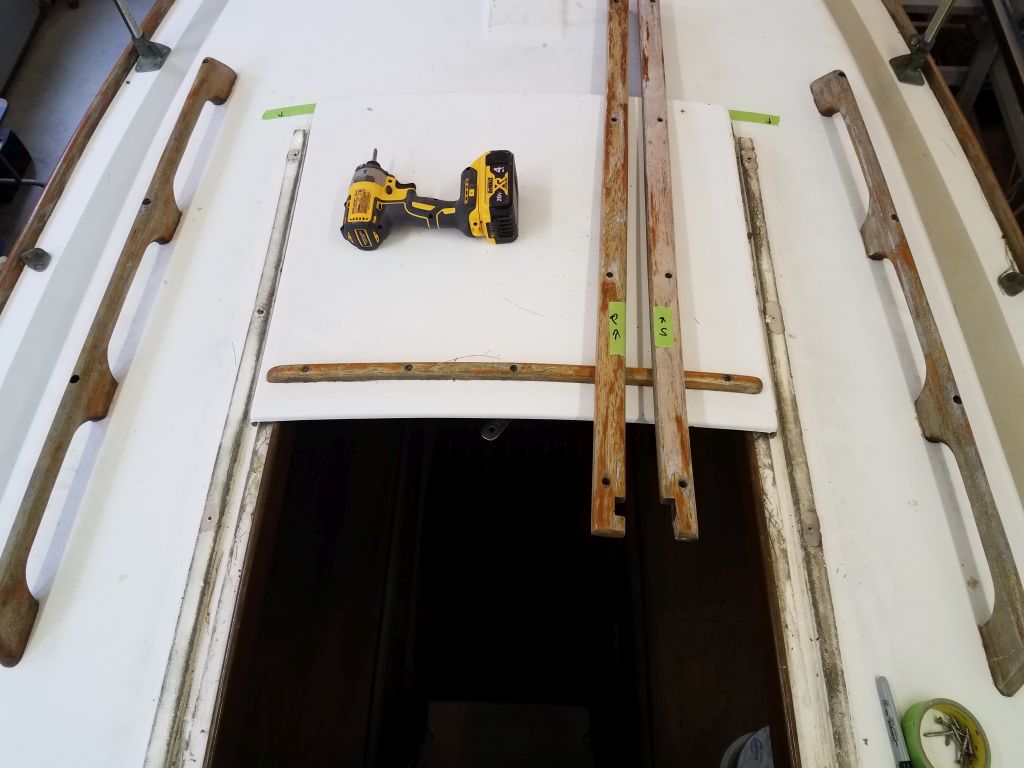
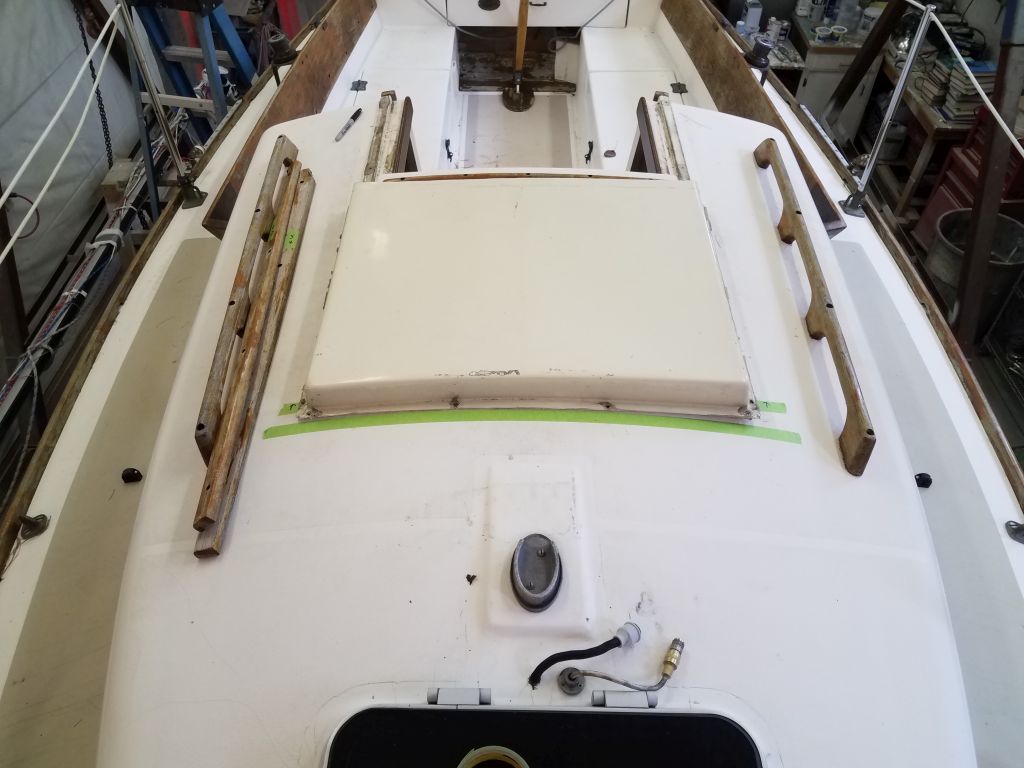
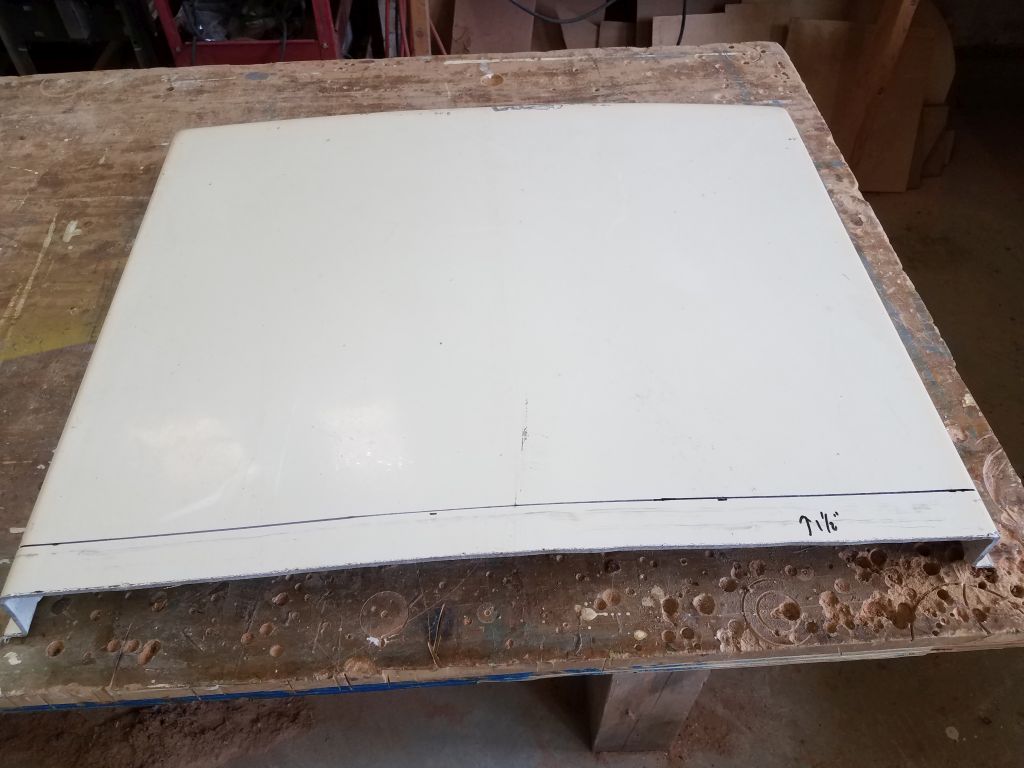
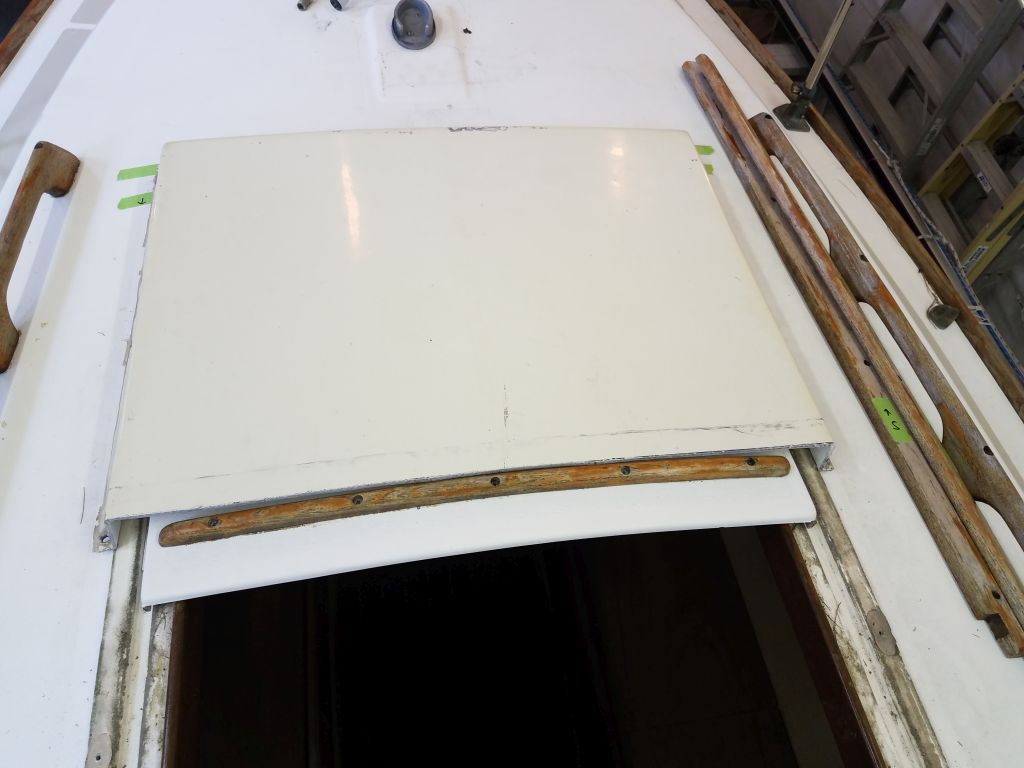
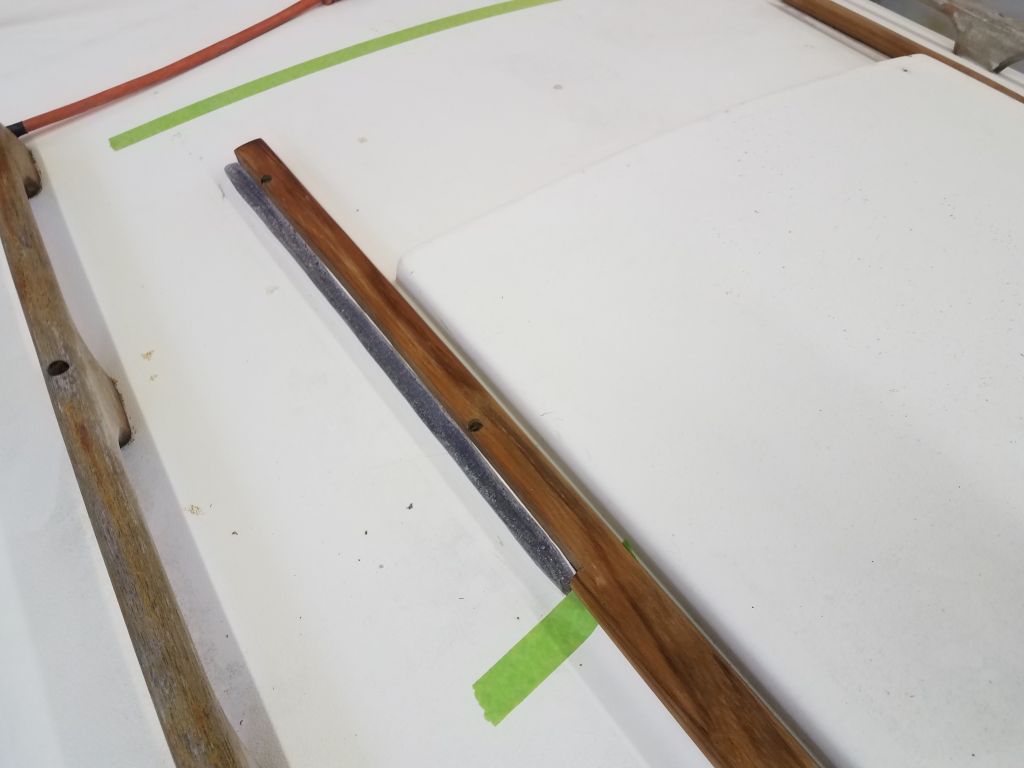
Unclamping the screen frame, I lightly sanded the new assembly as needed and test-fit it in the opening.  The screening would come later, but for now I went ahead with a sealer coat of varnish–and on the solid swashboard as well, as I didn’t want to leave the plywood unprotected, and since the companionway was small and vertical, a varnish finish on these pieces would last a long time, and provide an accent to the exterior of the boat.

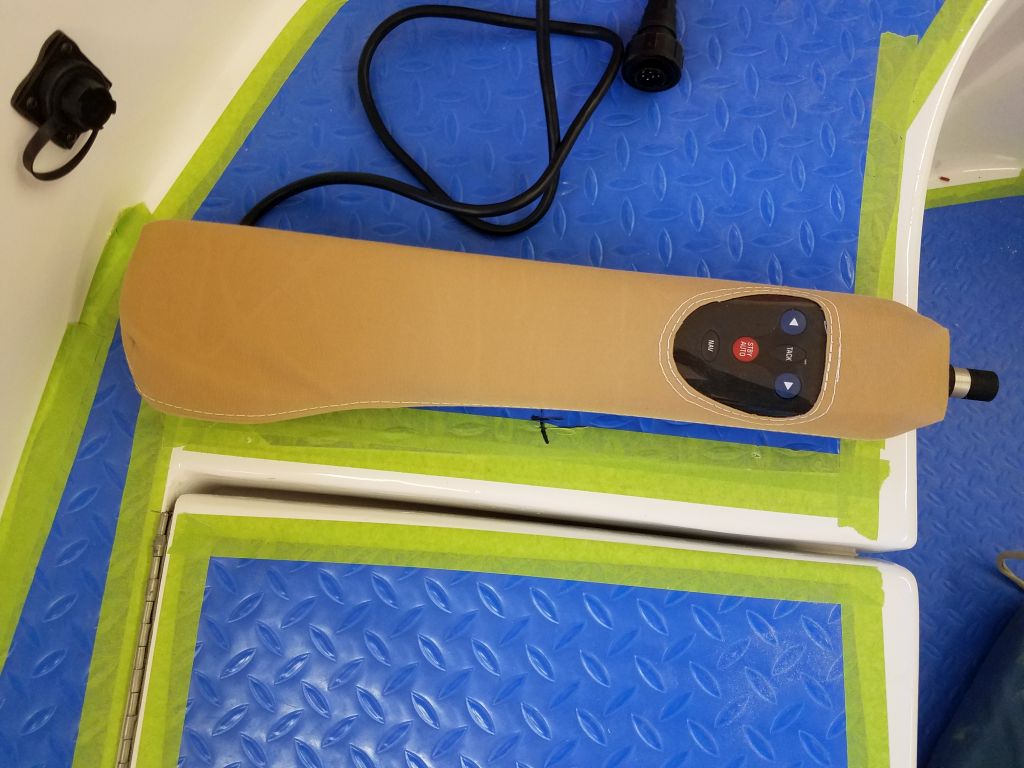
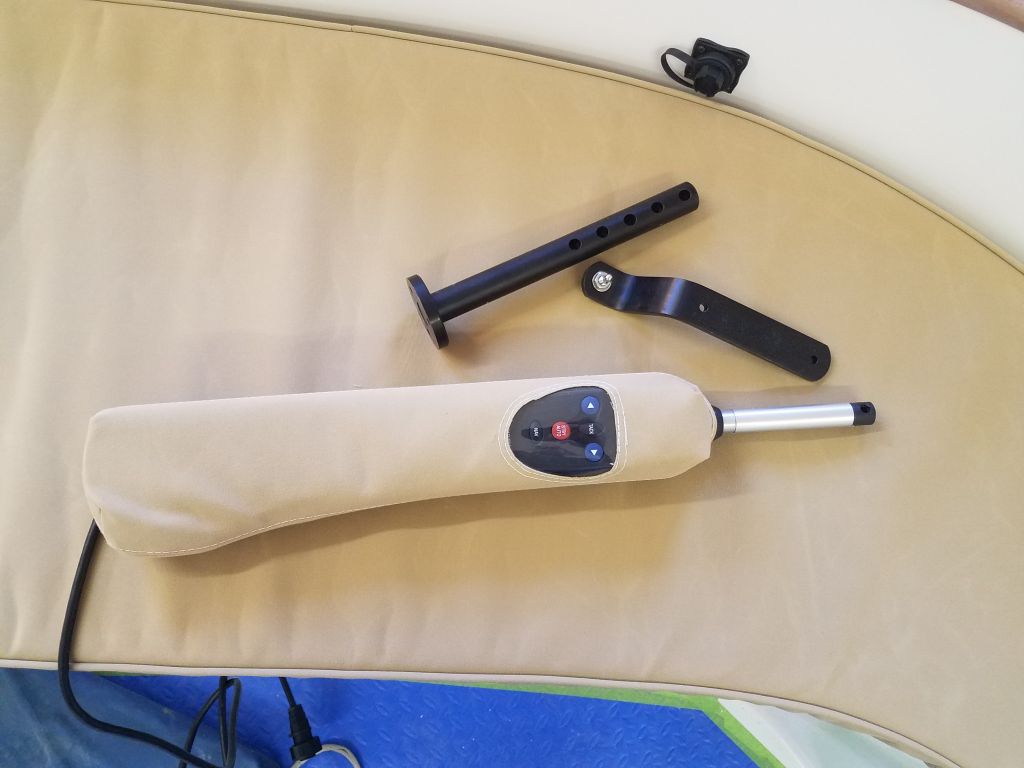
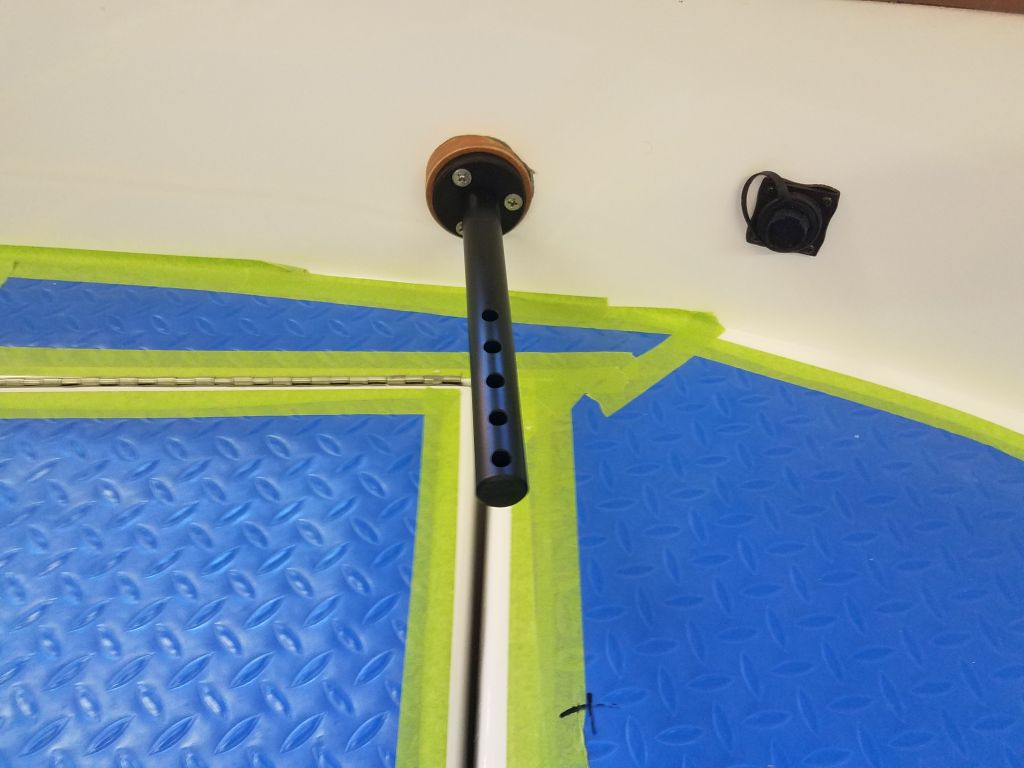
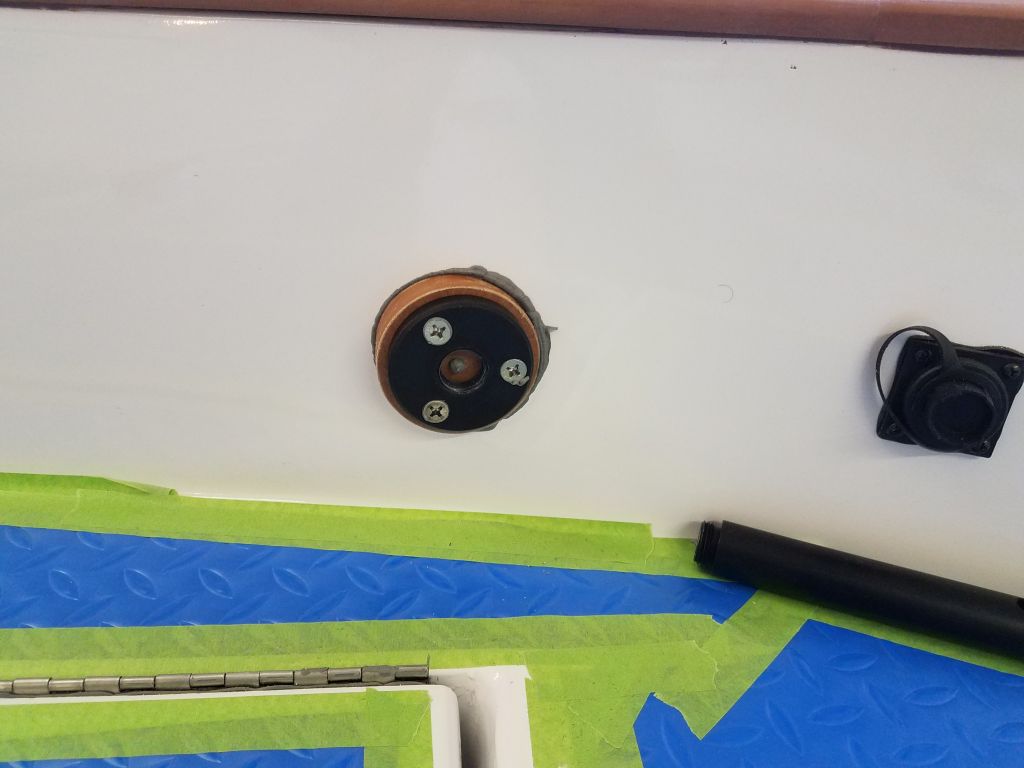
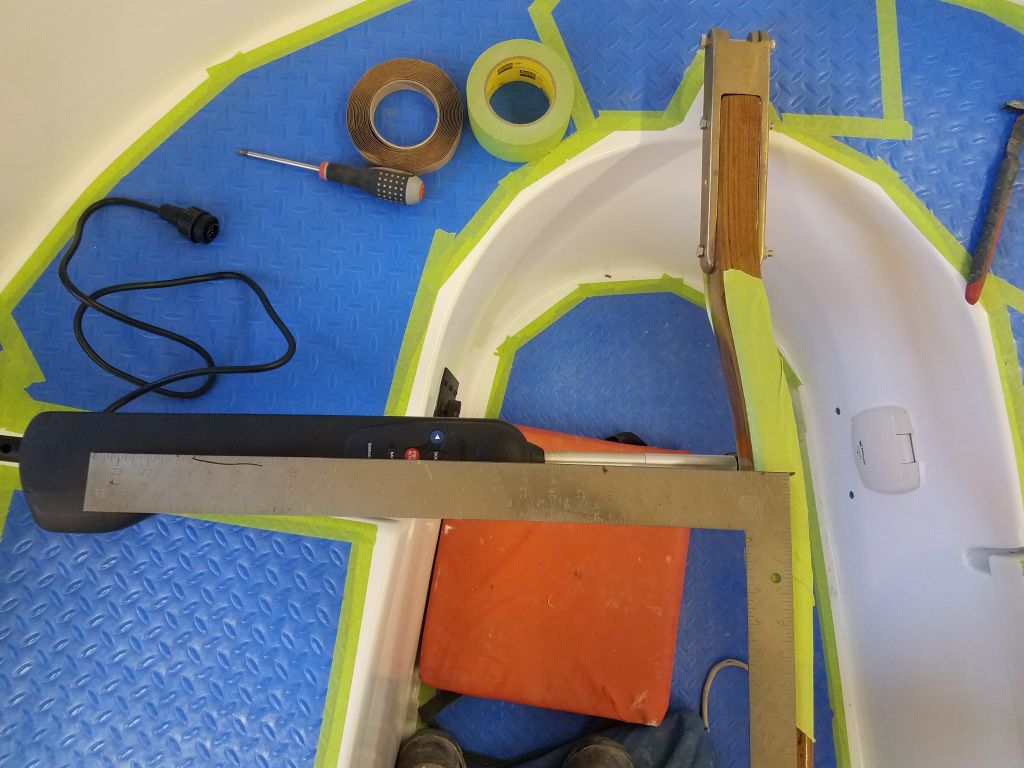
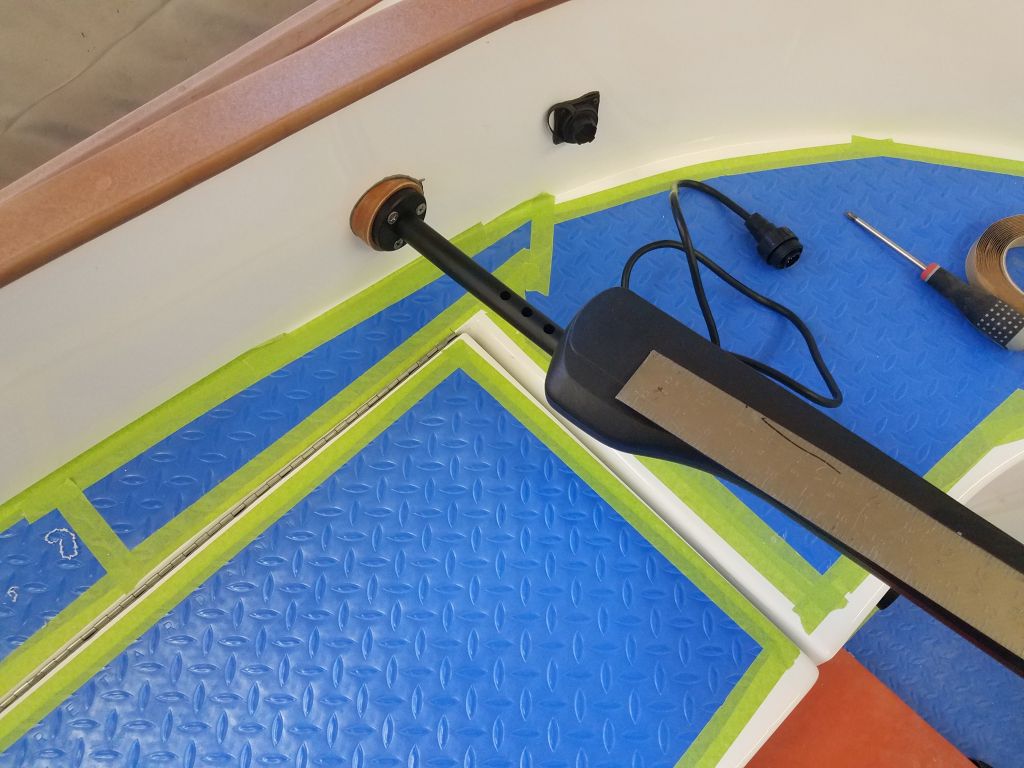
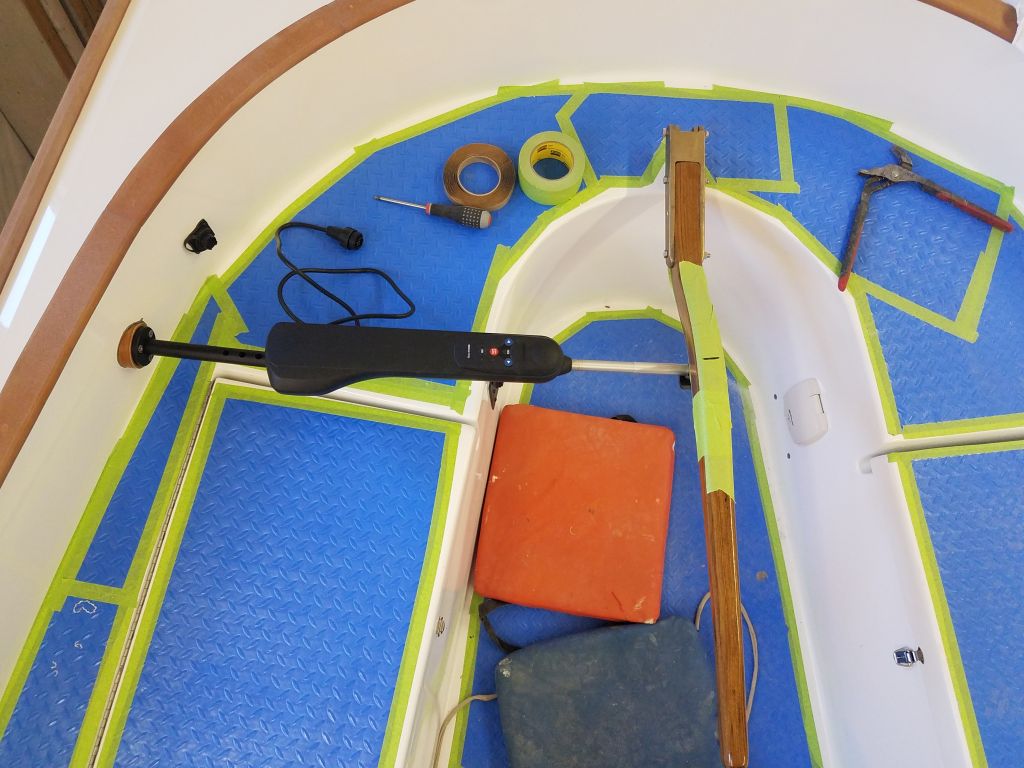
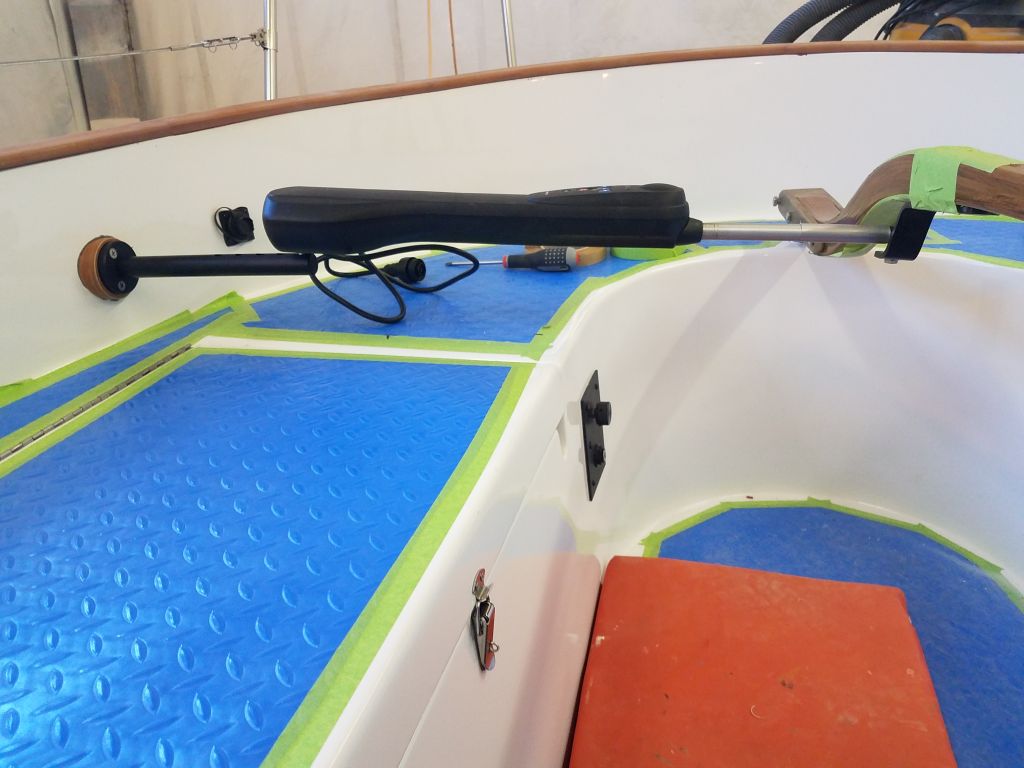
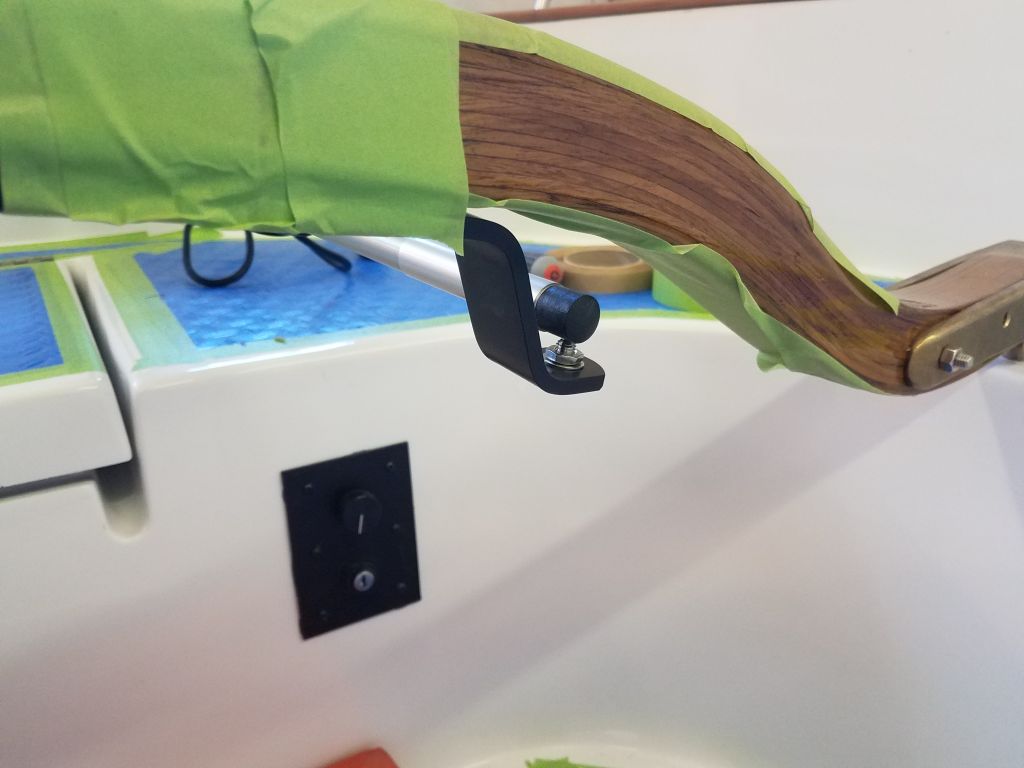
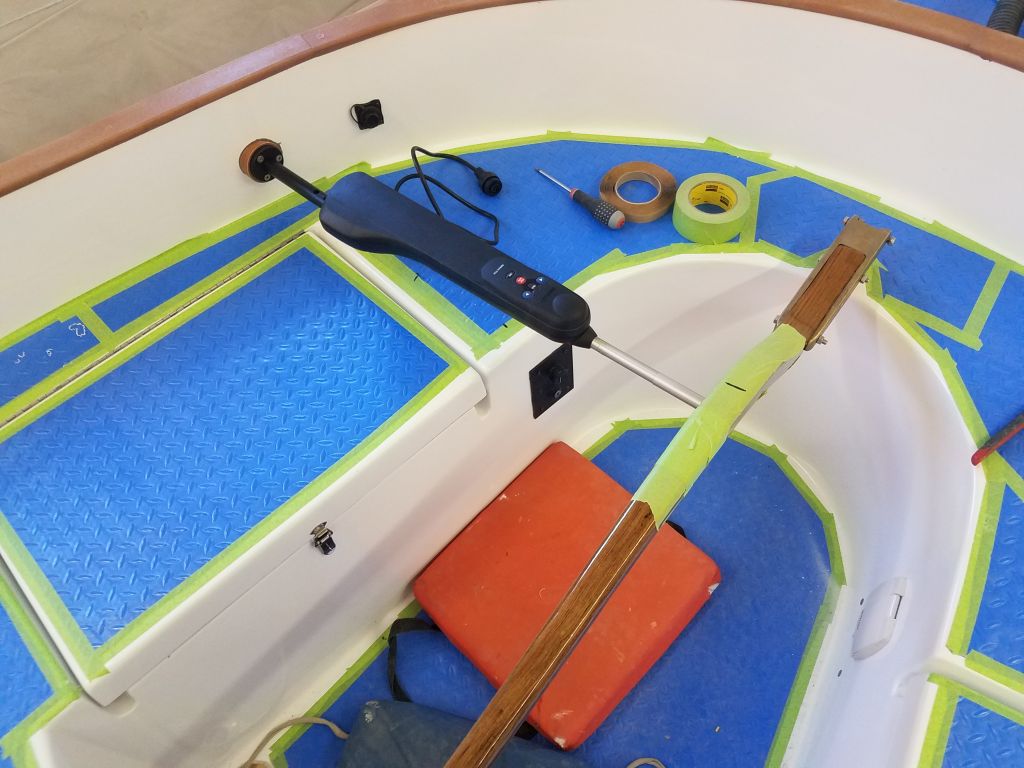
After a lunch engagement, I got back in time to finish up a couple more items, in and around cleaning up the boat as I continued the transition from project to completed vessel.  The owner’s new tiller pilot arrived, and although the mounting brackets I needed were not yet on hand, I could go ahead and install the power supply, choosing a spot in the cockpit coaming just aft of the tiller pilot’s expected mounting location.  I’d planned ahead and already had a 14 gauge wire pair led to the area from the panel, so final connection was straightforward.

Finally, after a light sanding, I applied two-part epoxy primer to the fresh fiberglass reinforcement beneath the starboard cockpit seat, which would allow me to apply the final gray paint next time, one of just a few minor tasks remaining on my list.

Total time billed on this job today:  6 hours

0600 Weather Observation:  3o°, clear. Forecast for the day:  Sunny, 45°
Scupper 255

Wednesday

I got started with some quick sanding and another coat of paint and varnish on the liner cover plates and tiller, respectively.

The tail end of any project tends to be filled with myriad undefined chores, and I knocked several off my actual and stream-of-consciousness lists throughout the morning in and around a couple of the more concrete jobs still underway, including working with the owner and my local sign shop to begin and finalize the lettering for the transom, a process still underway as of this writing.

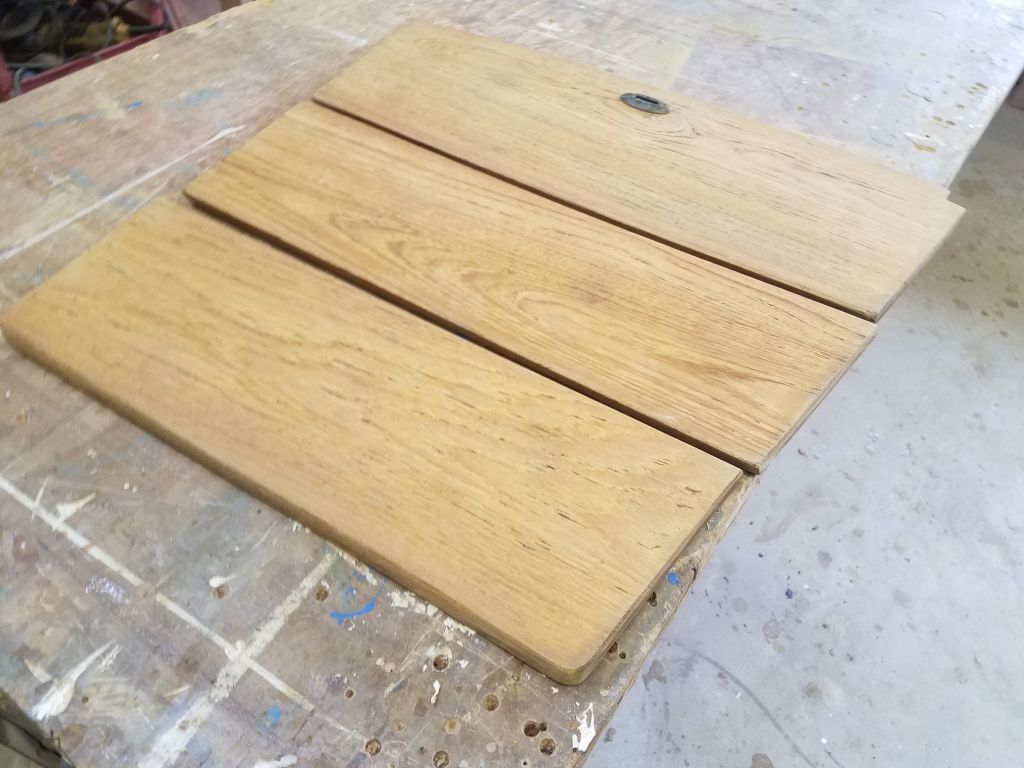
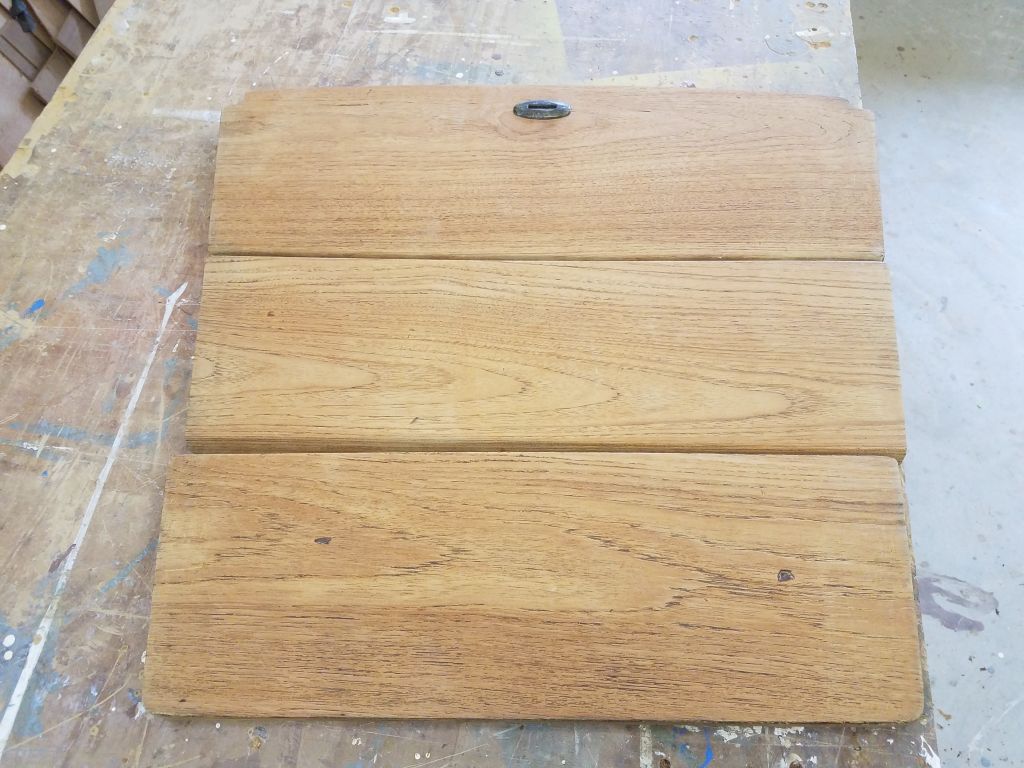
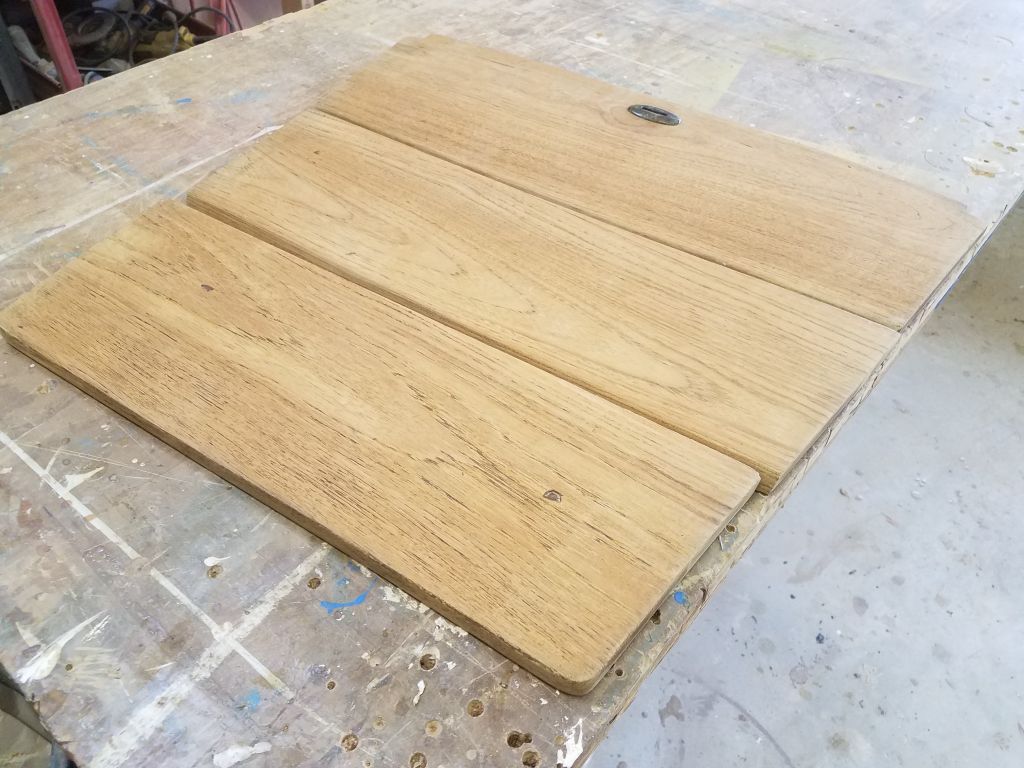
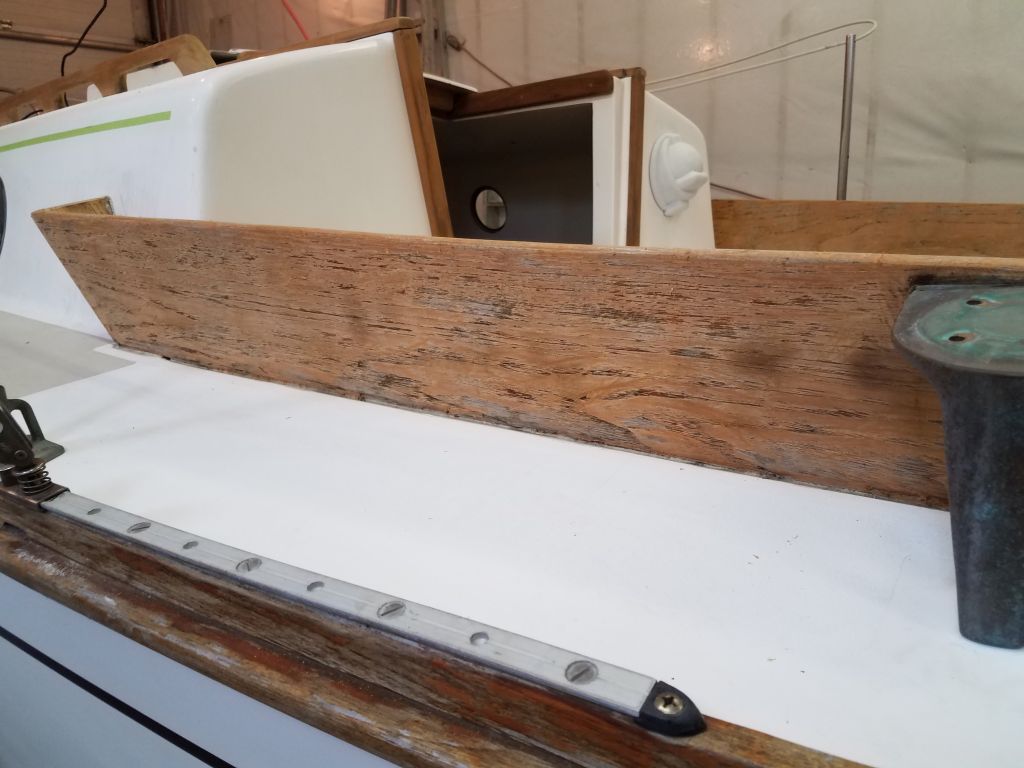
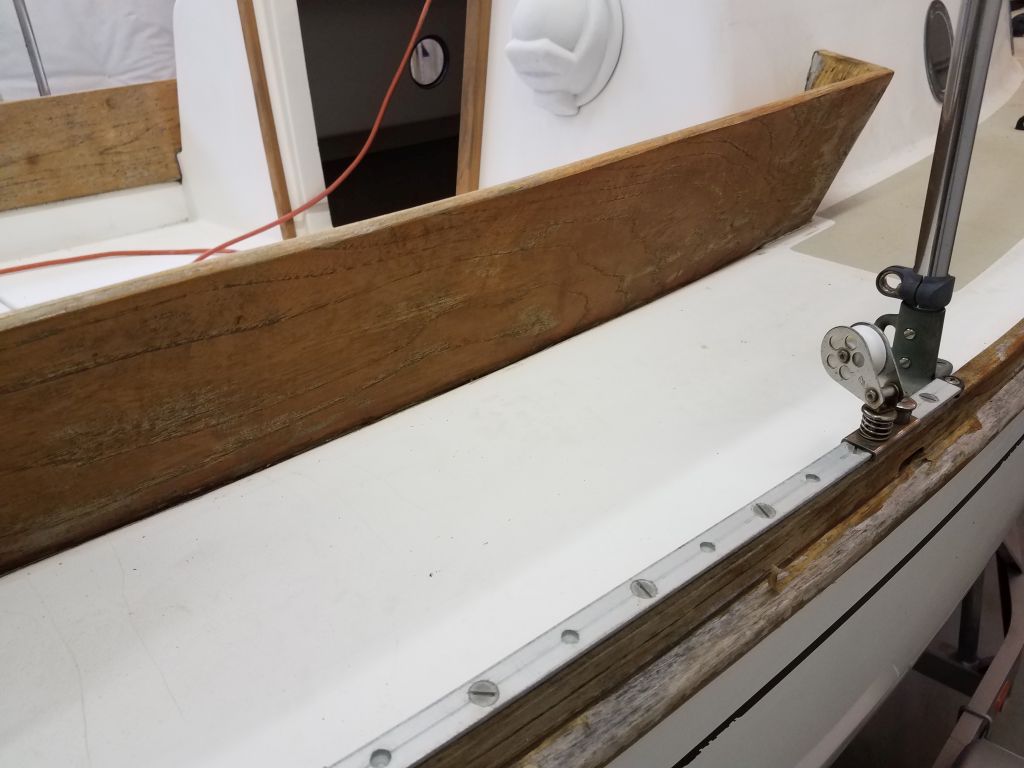
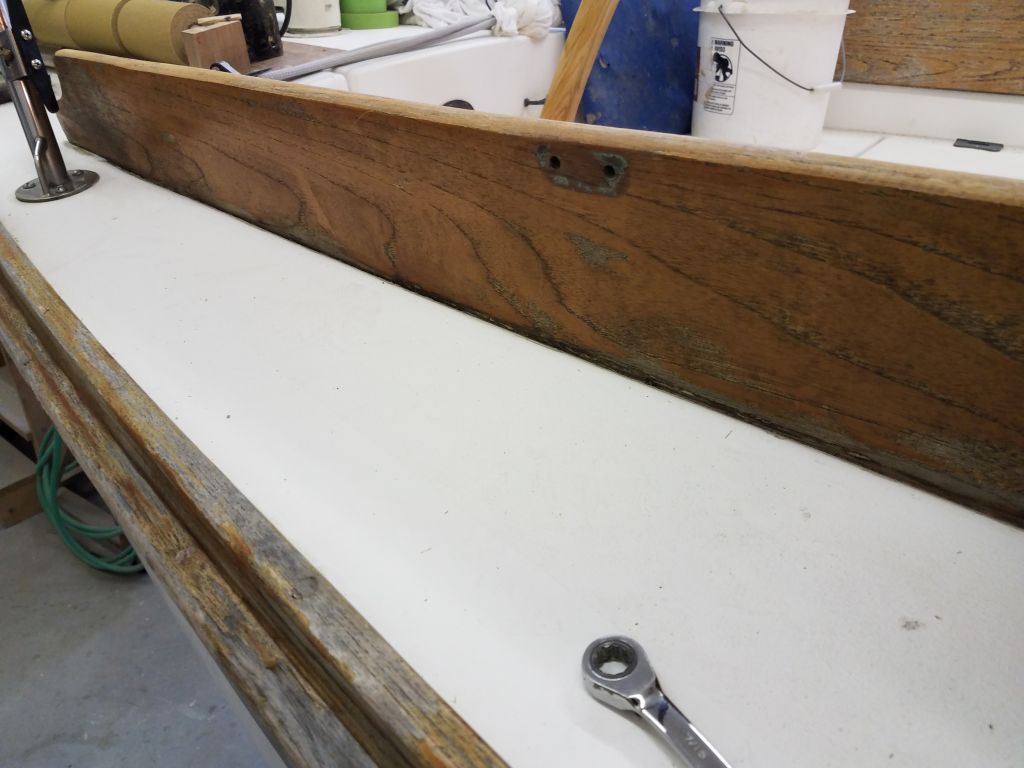
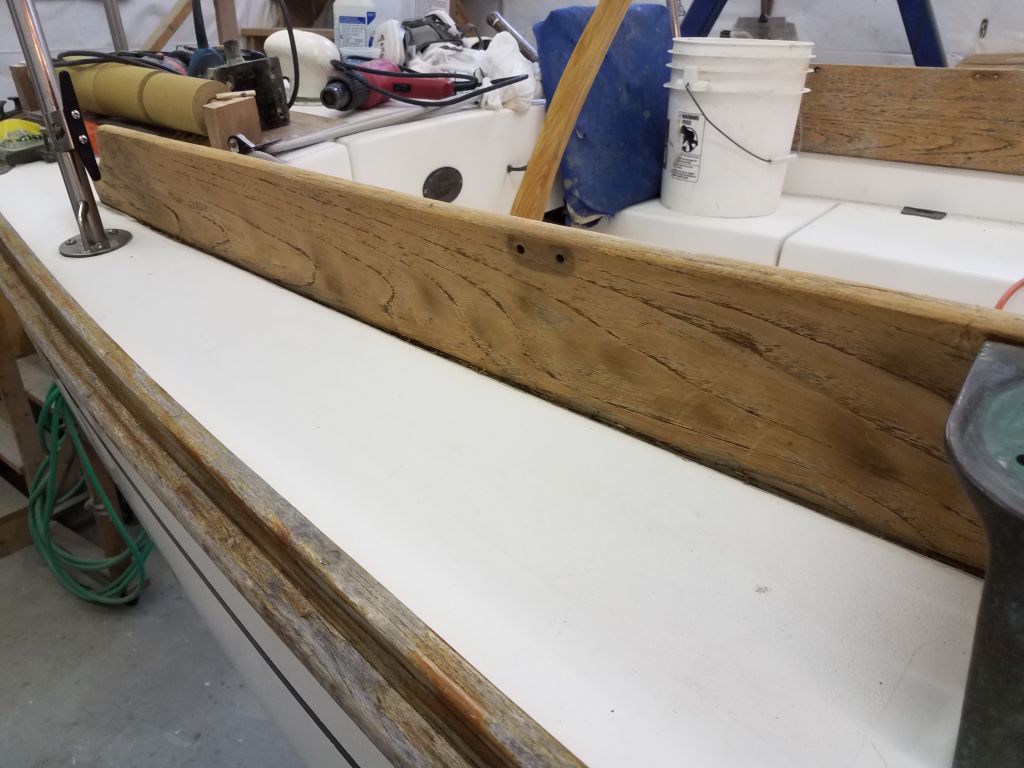
About the last “major” item on my work list, as-yet untouched, was to build new swashboards for the companionway.  The boat had arrived at the shop with several different versions, all of which were in disrepair and unsuitable going forward, even if still essentially functional.  I planned to build a new teak plywood version, plus a teak screen unit.

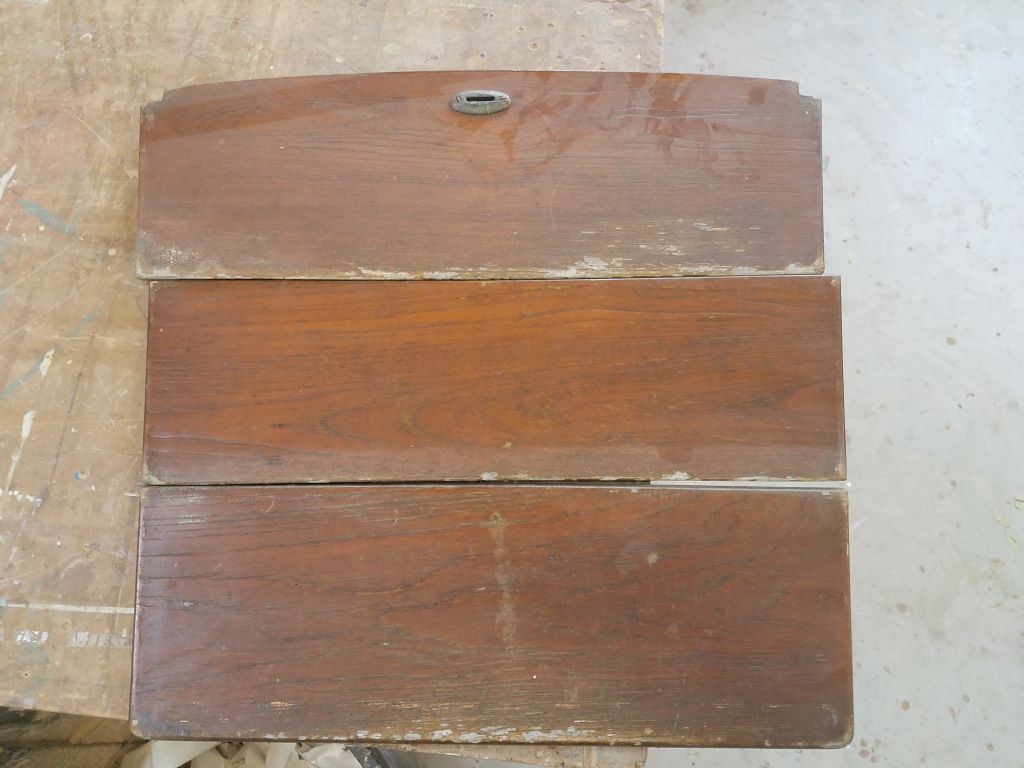
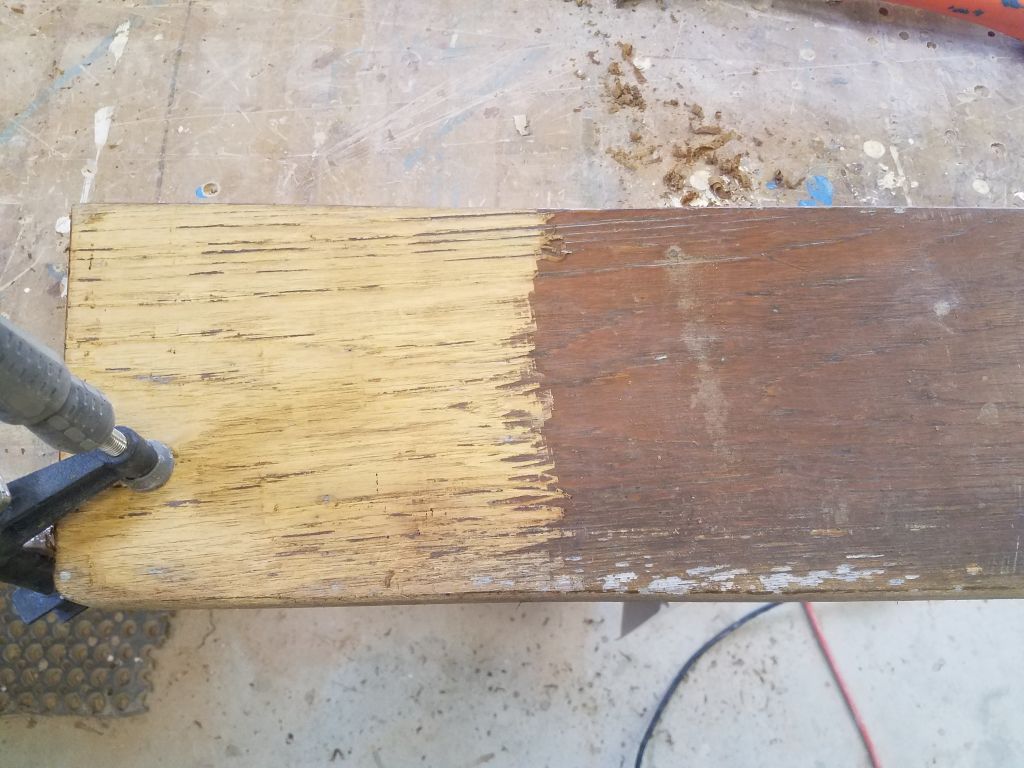
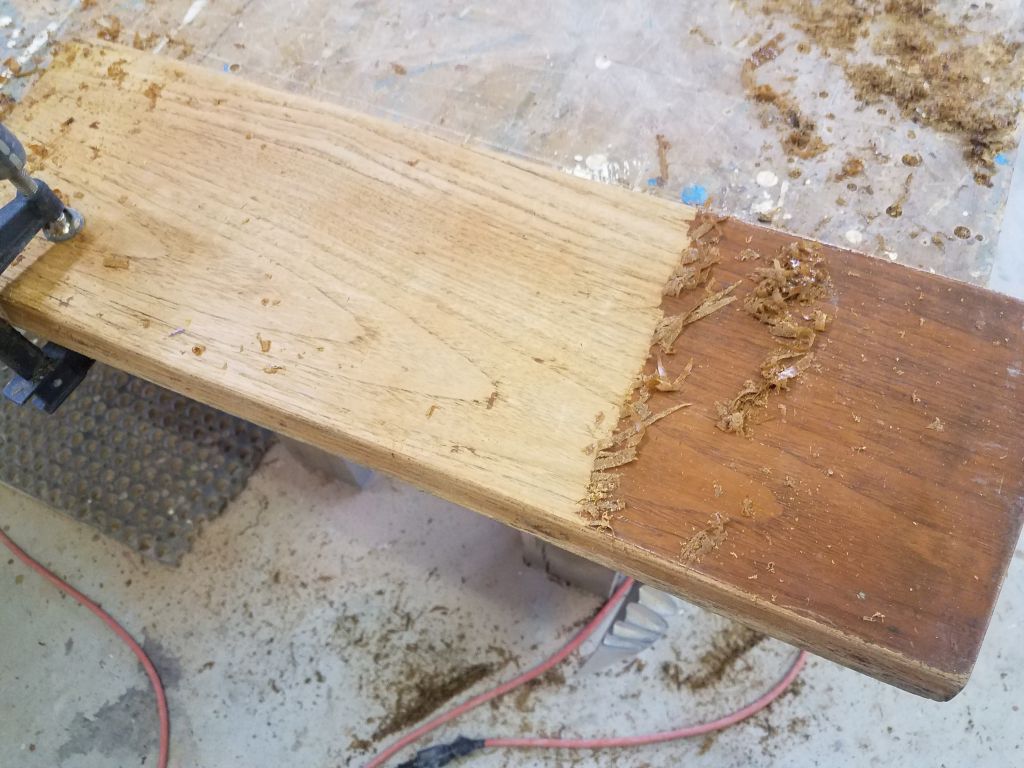
To begin, I tested the fit of one of the original boards to determine its suitability for a pattern.  This old plywood board was ugly, but it worked well enough and I could use it to help pattern the new ones.  From a partial sheet of teak plywood I had on hand, I cut out a replacement, matching the size and shape of the original.

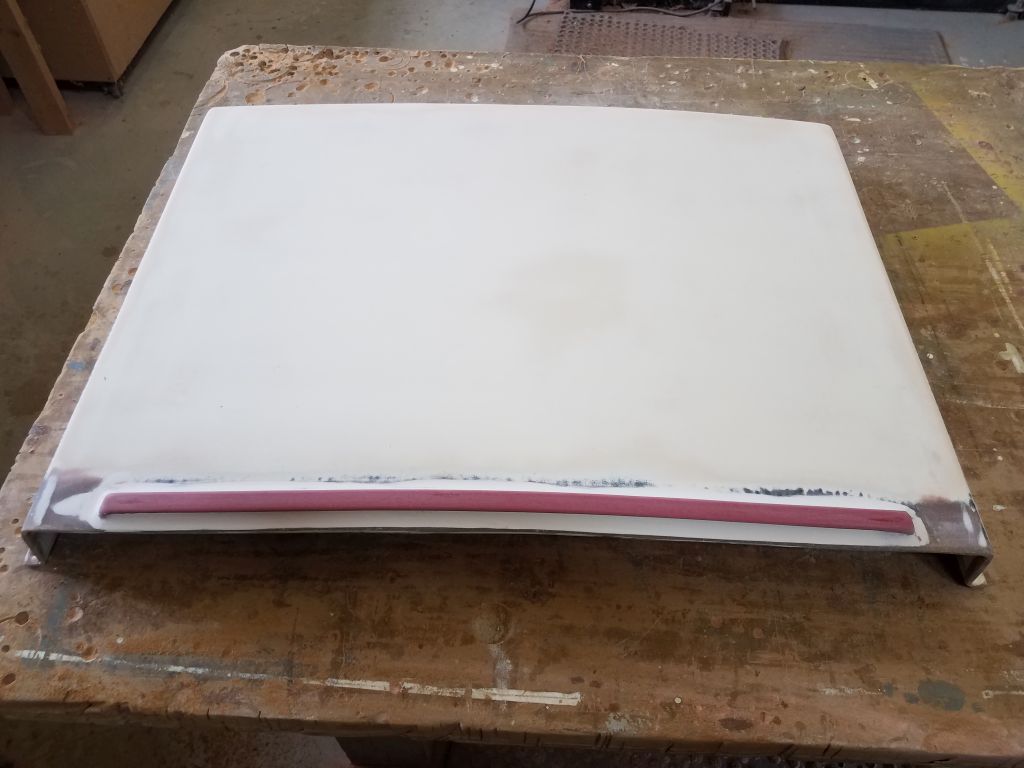
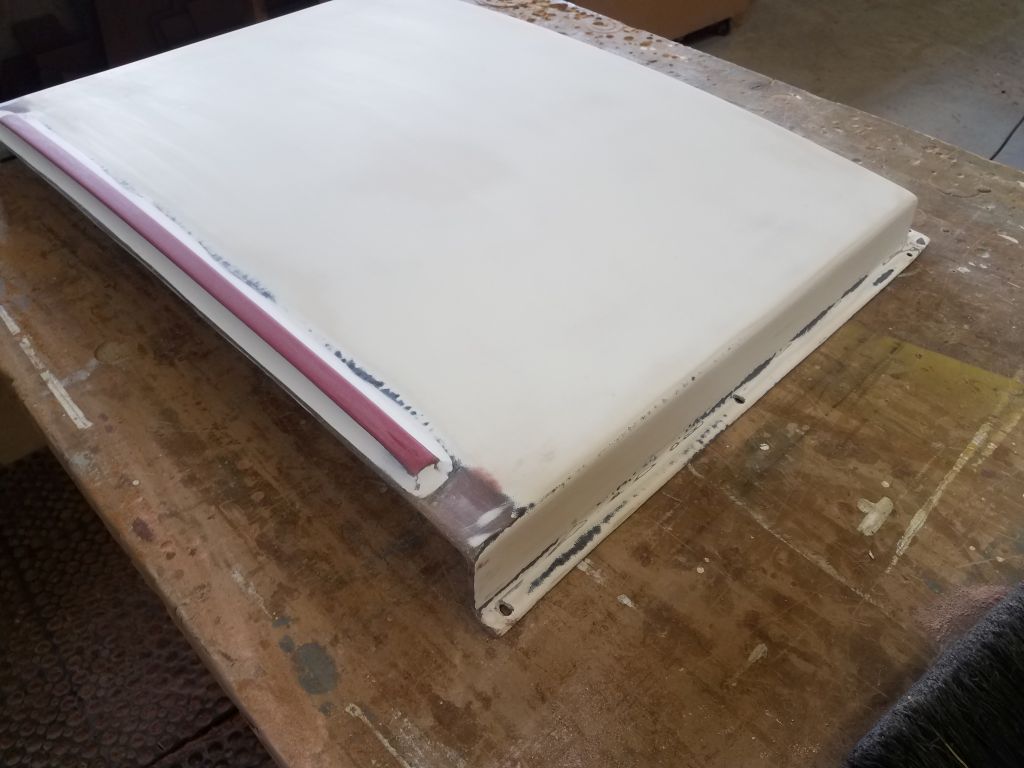
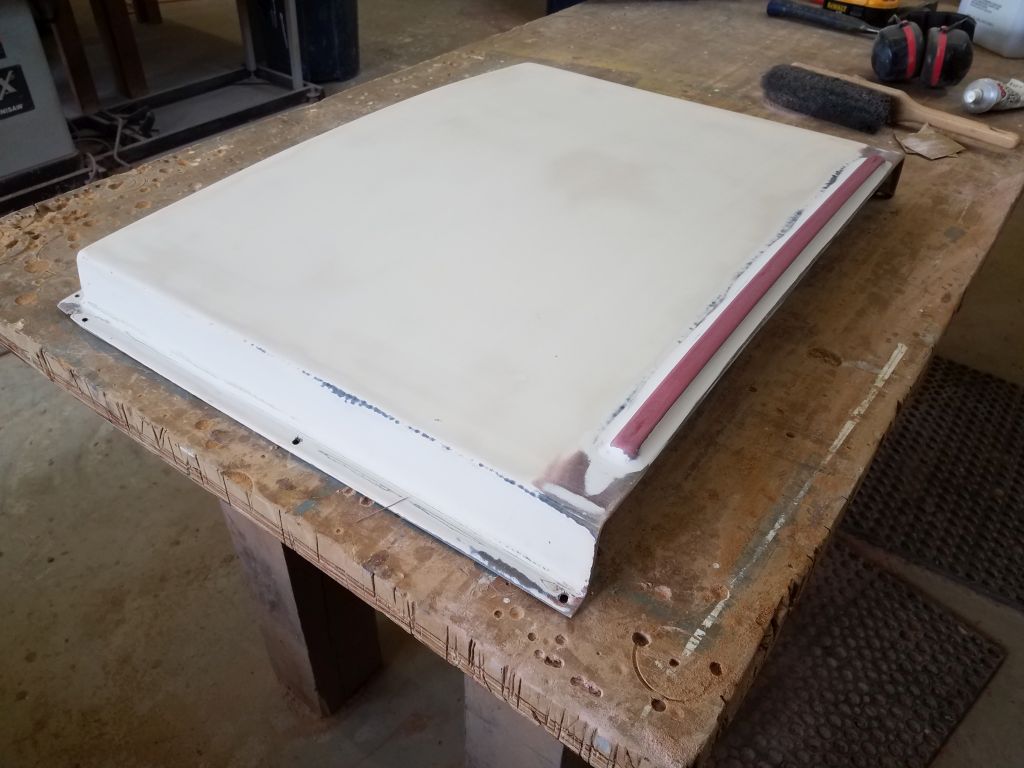
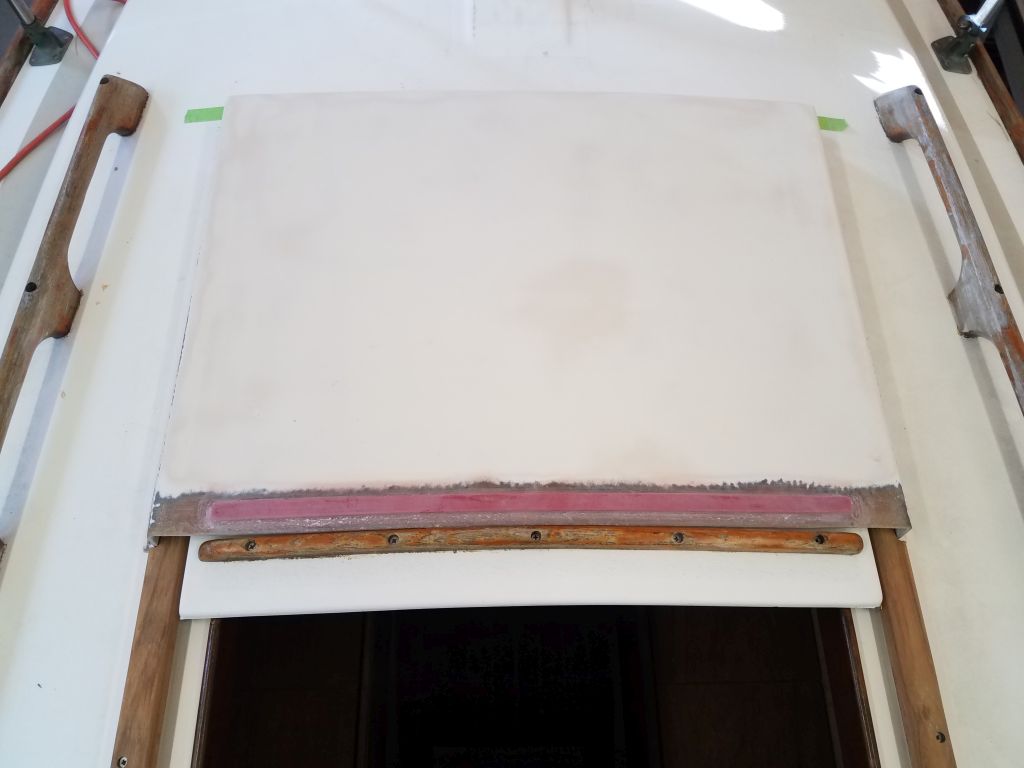
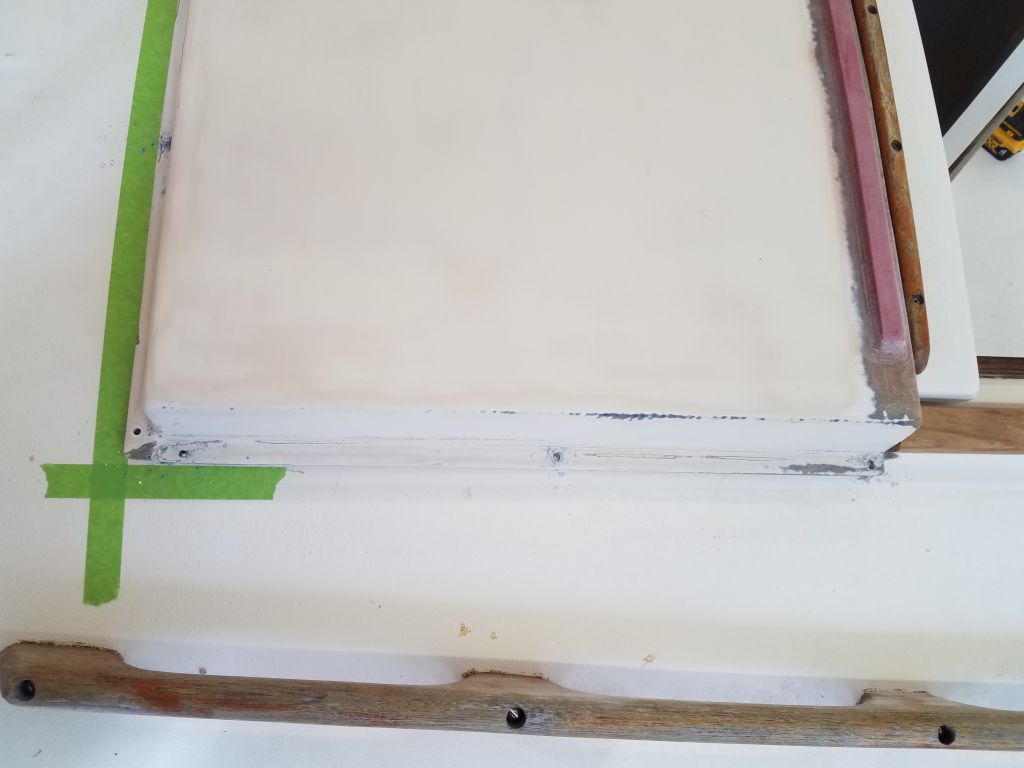
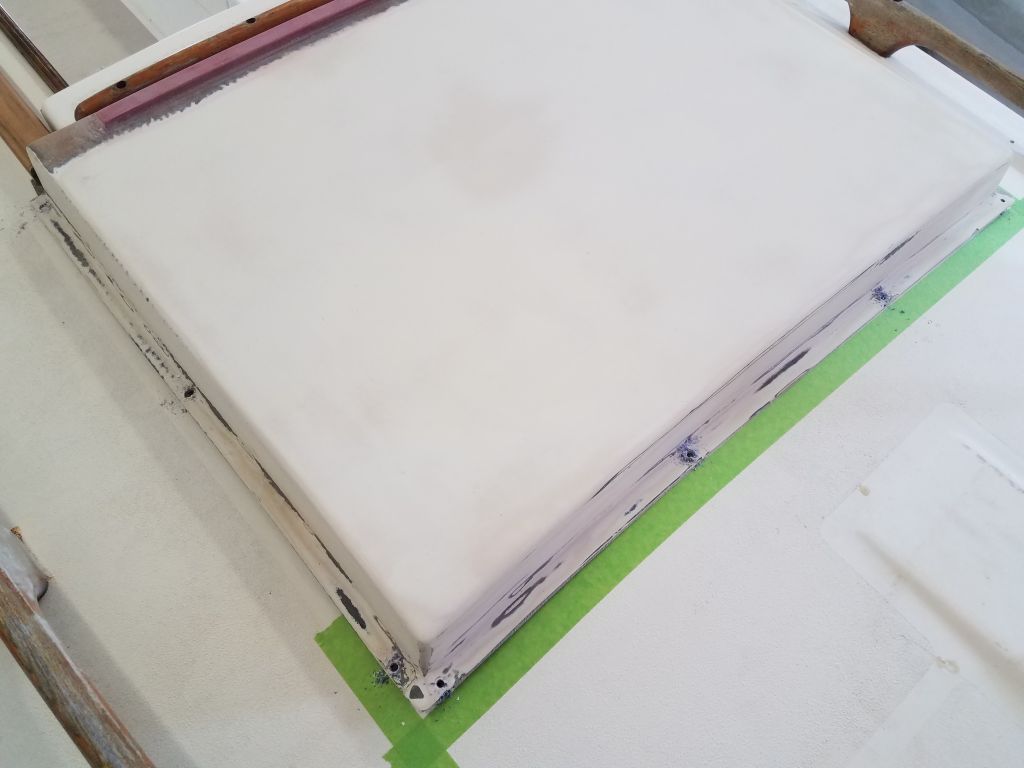
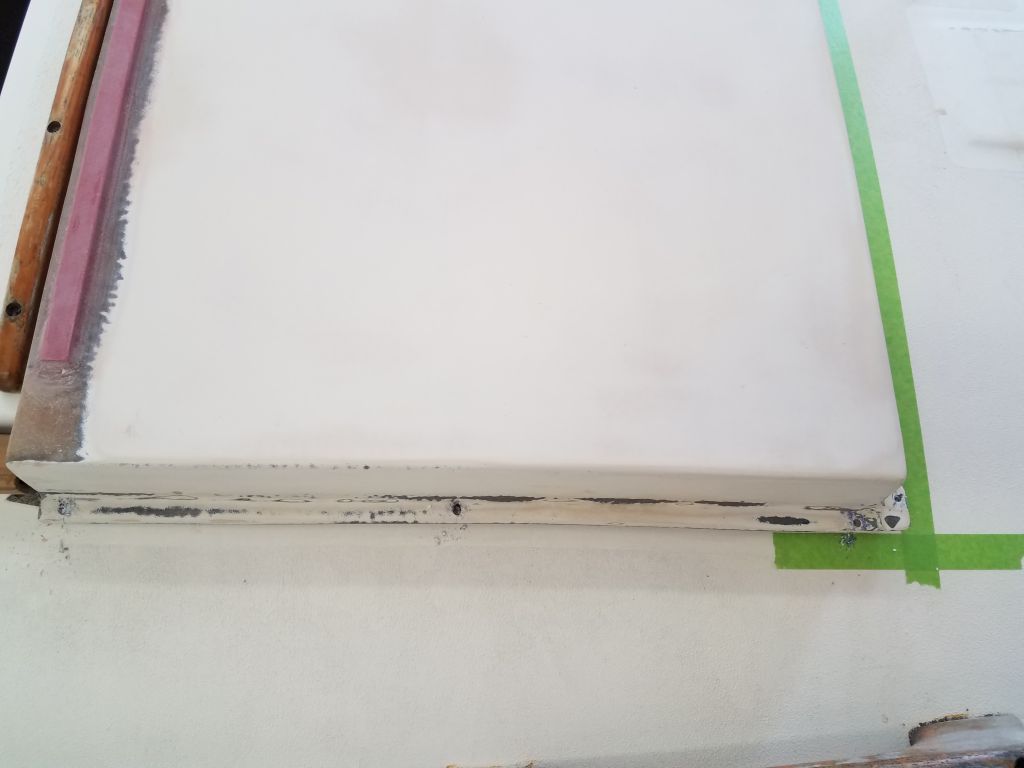
This was straightforward, but in the process it led to an unexpected job.  Throughout the project, I’d basically never stepped on the starboard cockpit locker lid; I’d removed these lids early on in the first phase of the project, and they’d been set aside in the shop for most of the time since, as I used temporary plywood covers over the locker openings throughout construction.  Even after I finally reinstalled the locker lids several weeks earlier, I never had much cause to walk on the starboard one since my path on and off the boat, and in and out of the cabin, kept me well clear.  The port locker lid, onto which I stepped every time I got on or off the boat, had never shown any signs of weakness.

This all leads up to the fact that during my companionway work, I stepped on the lid and was most unhappy to feel softness underfoot–the first time I’d noticed this or even had any inkling, as somehow this had escaped my notice for the past two years.   I did my best to pretend I hadn’t felt it, and willed it to deal with itself, but ultimately, of course, I knew it was something I had to deal with.

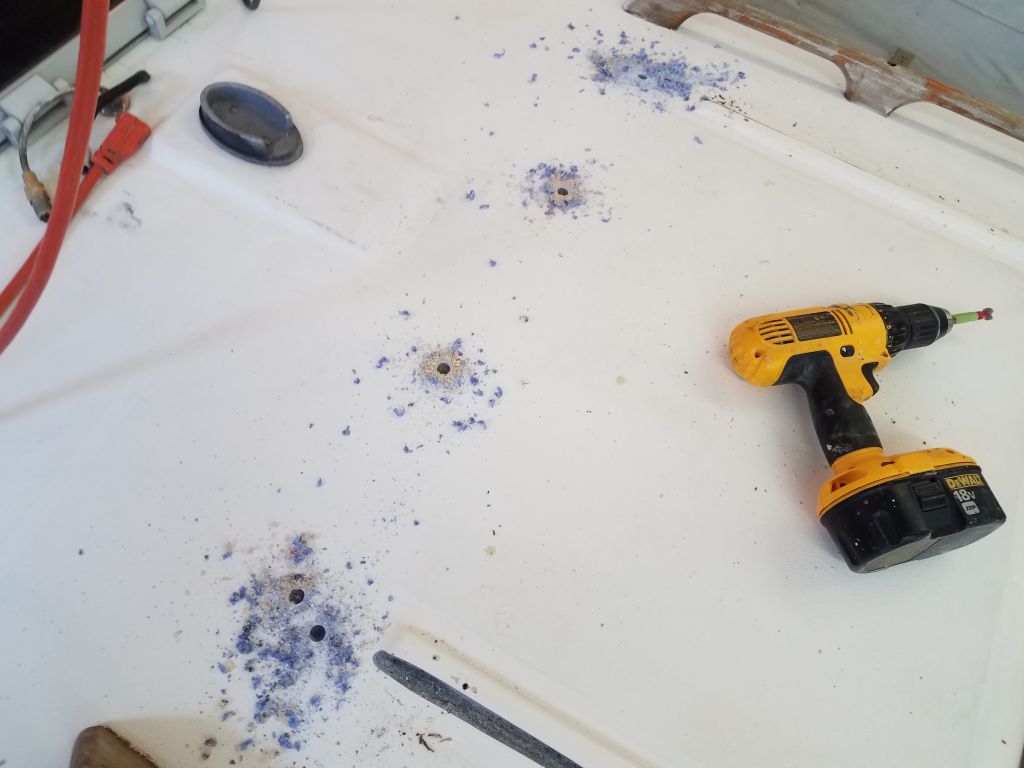
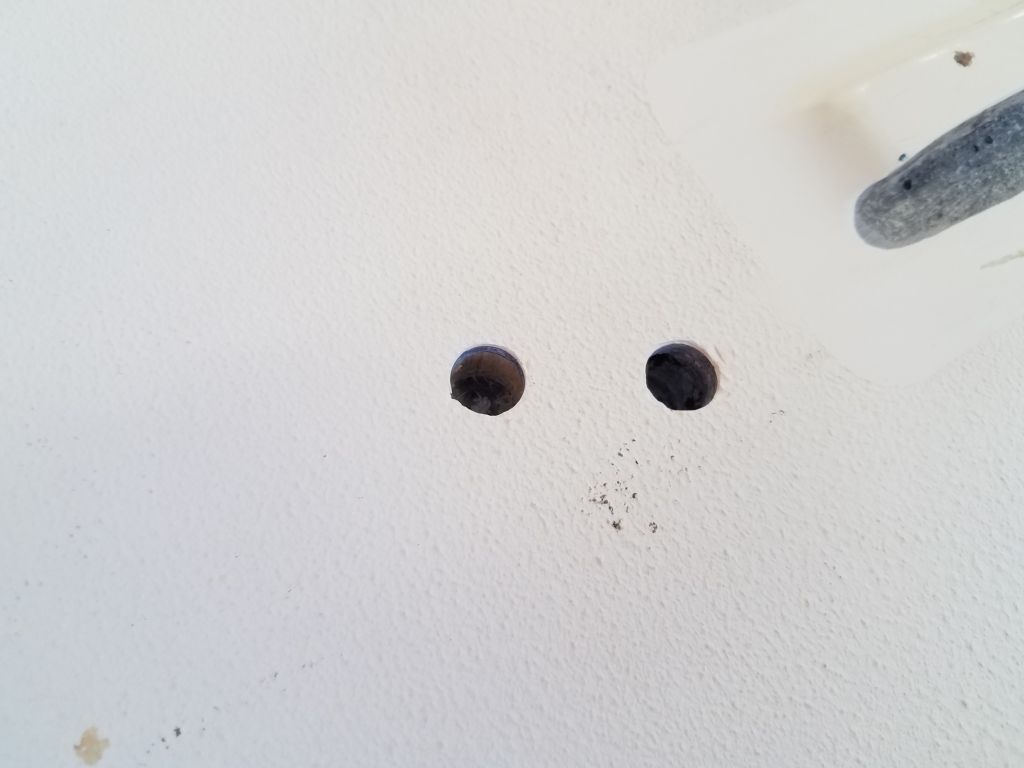
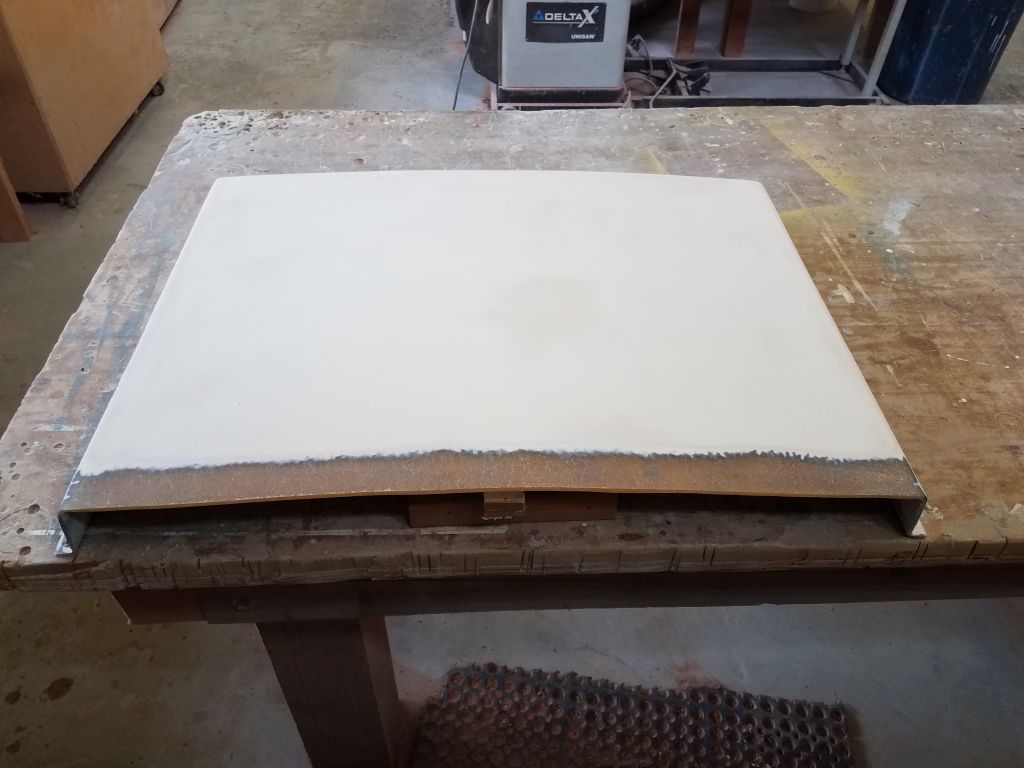
So I removed the lid from the cockpit, unscrewing the hinge, and down on the bench I did some exploratory probing with a drill bit from the underside.  As expected, the lid featured a cored construction, but unexpectedly the core in all my test holes was clean and bright.  I had expected it to be wet and damaged.  After various additional testing and consideration, I decided that the lid was simply weak and not well-enough supported, and that it wasn’t a core problem after all.

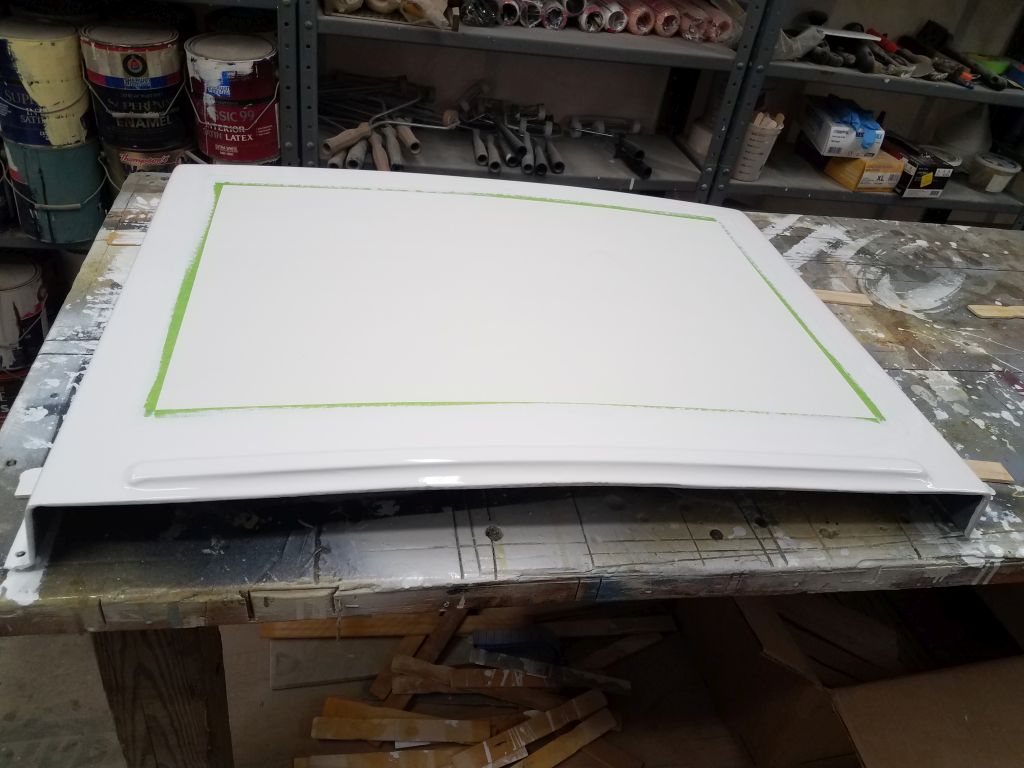
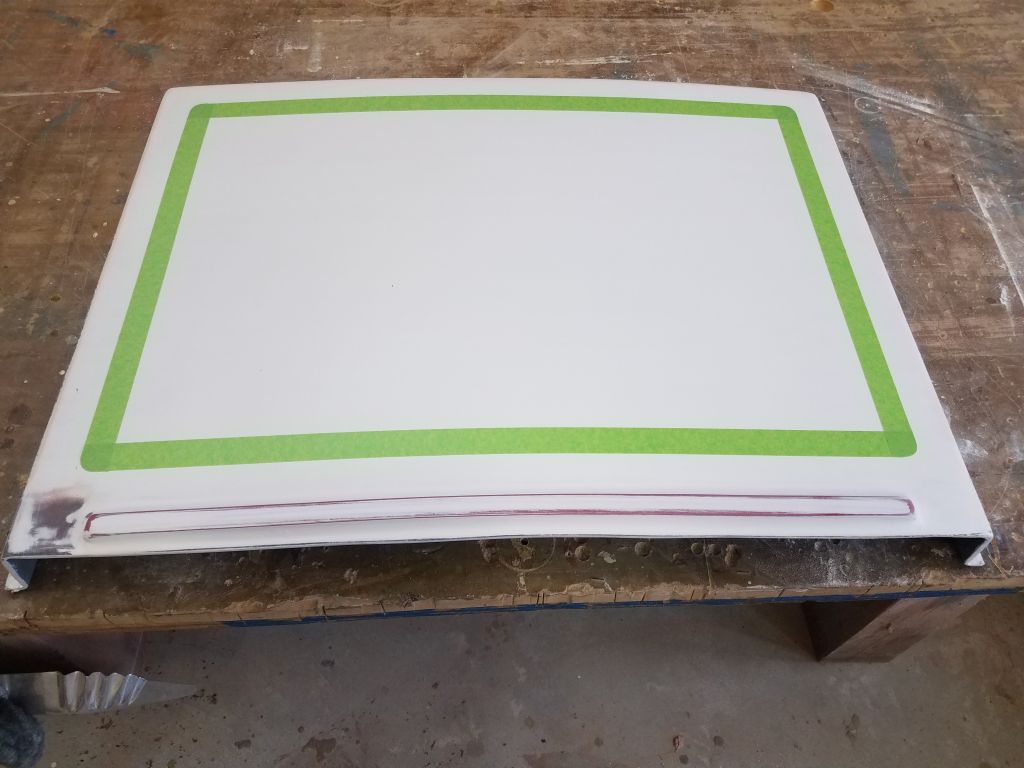
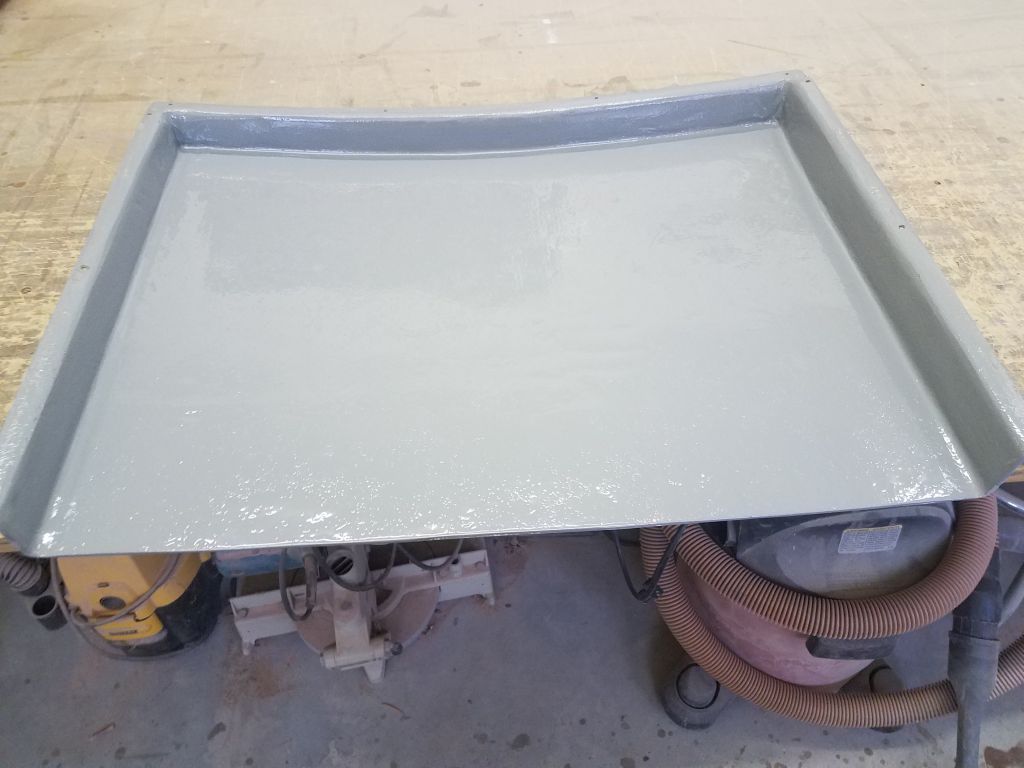
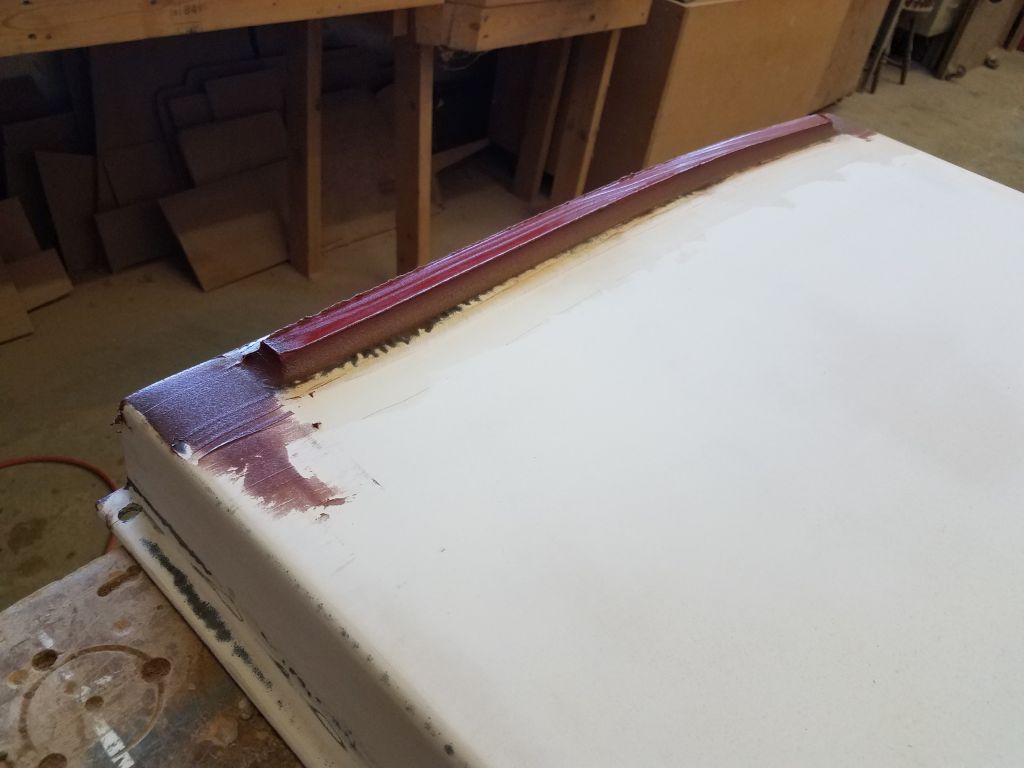
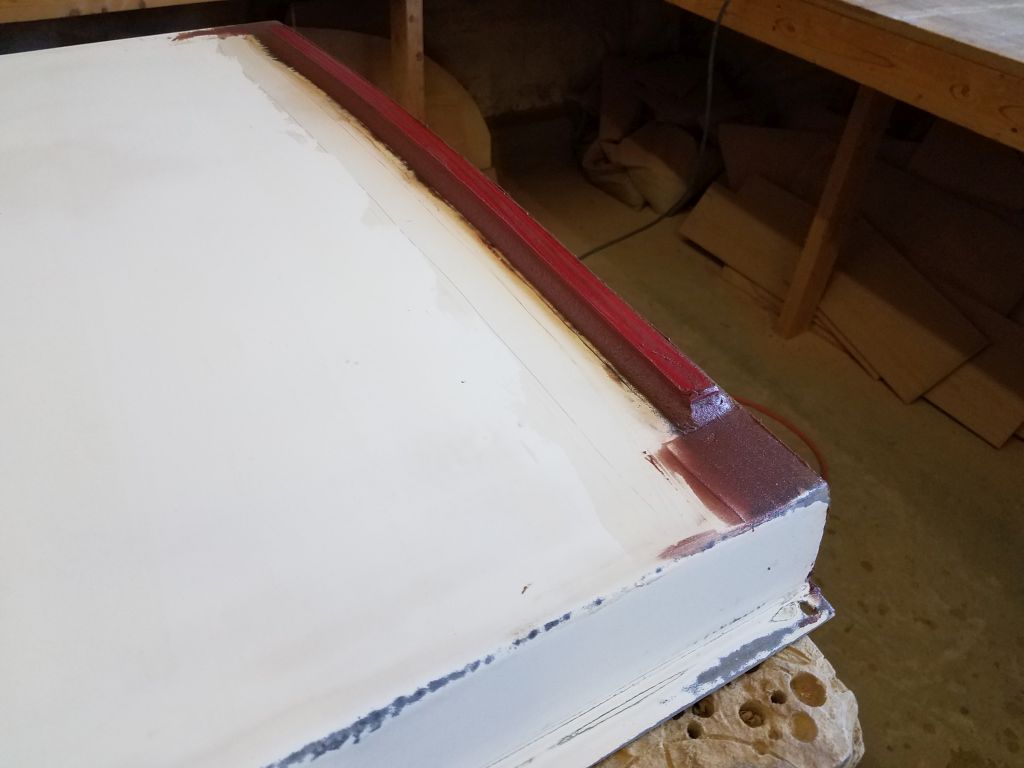
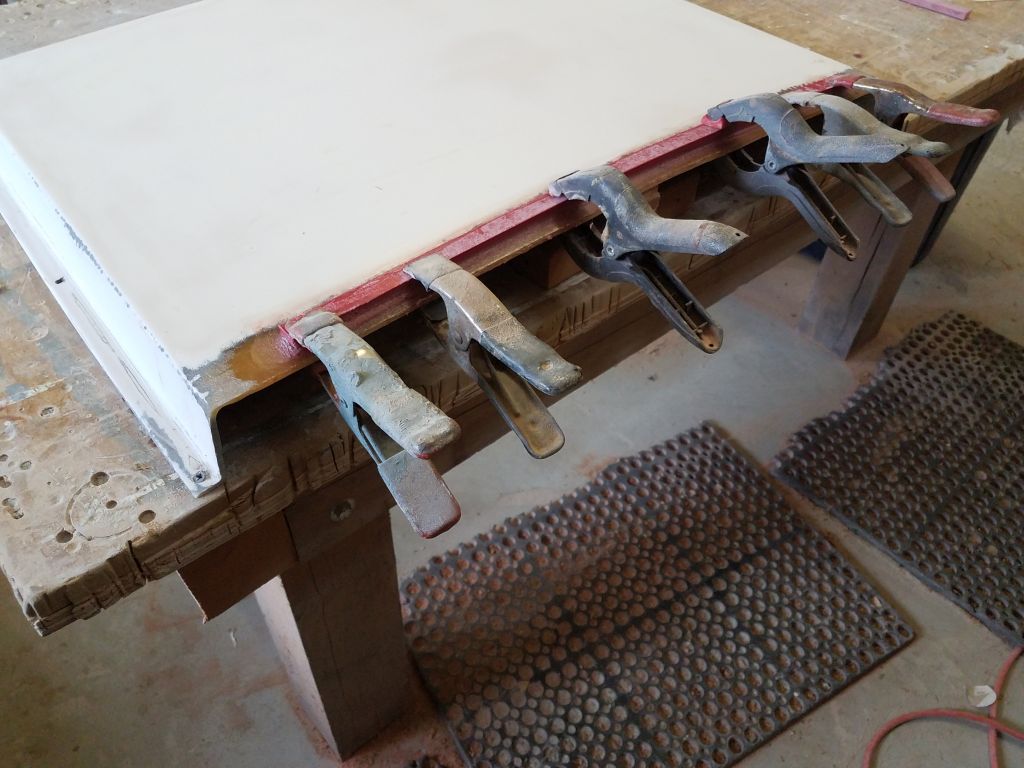
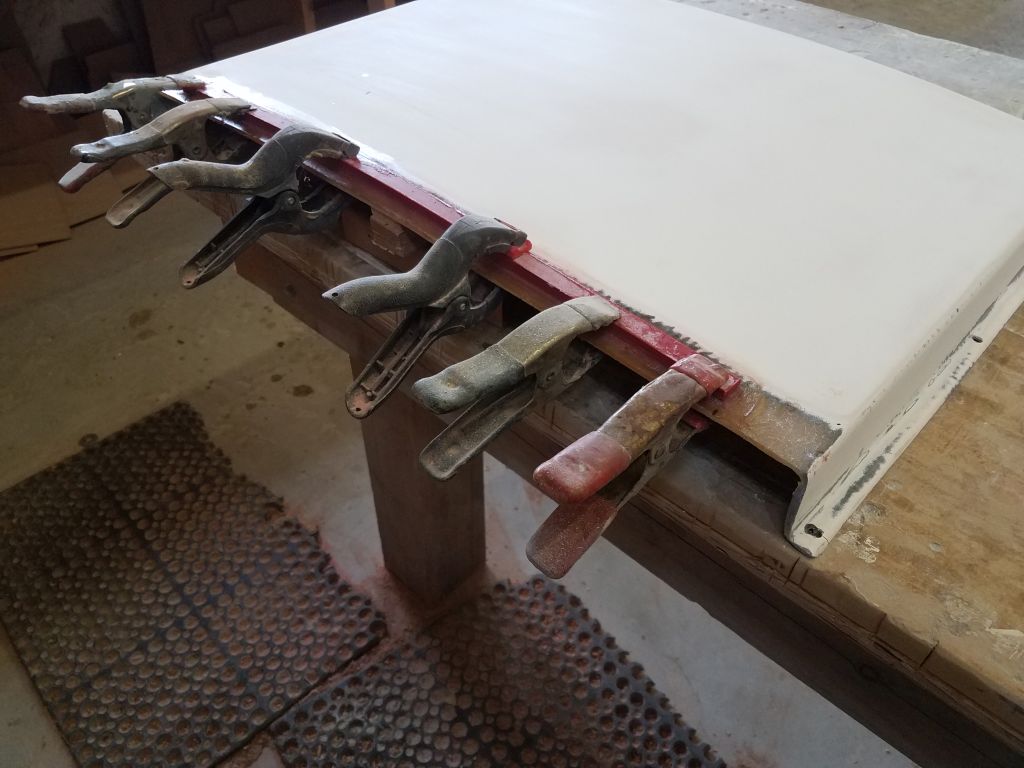
I’d been fully prepared to recore the lid, though the process could have risked damage to the finished surface of the lid, but since the core was sound, and I didn’t relish removing sound core from the top skin if it wasn’t truly necessary, I decided instead to install a stiffener/reinforcement.  I sanded away the paint from a section of the middle of the lid (all on the underside), and cut a piece of prefab fiberglass as a stiffener, which I secured in place with thickened epoxy adhesive and a large fillet all around.  In the process I also epoxy-filled my test holes, which in this case would double as additional reinforcement and a sort of “key” into the existing structure beneath the new reinforcement.

After letting the epoxy cure for a few hours while I continued work on other things (to which I’ll return shortly here), I applied a small touch-up layer of thickened epoxy to the fillets, smoothing minor imperfections from the first round, then installed two layers of 1708 fiberglass over the top of the whole arrangement to complete the reinforcement.  I’d certainly not planned to be doing this at this stage of the project, but I was glad I’d noticed the problem when I did in any event.

Meanwhile, I continued work on the pair of new companionway boards.  With the basic plywood one cut to shape, my next step was to cut a little slot for the companionway hasp, but as with everything that required an additional step first.  There’d been no hardware installed on the companionway when the boat arrived here, but there was a recess in the wooden part of the slide that fit a standard hasp tang perfectly–except that it didn’t allow the tang to rotate out of the way when the hatch was open.  So I made a little teak spacer to fill the space, and glued it in place before installing the little tang through the new spacer.  Then, with the hatch shut, I used the tang to mark its own slot on the back side of the new hatch board, and cut out the slot as needed.

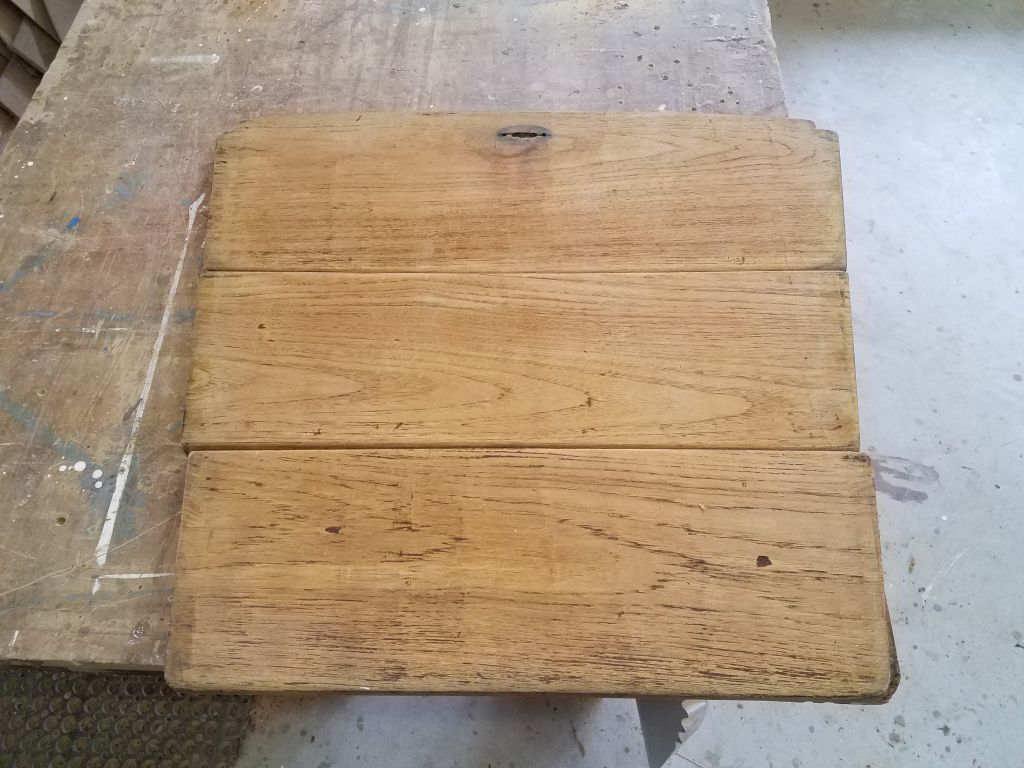
To begin the solid teak-framed screen unit, I cut several pieces of 4/4 teak to the widths I wanted (3″ for the bottom rail, 2″ for the stiles, and a wider piece for the top rail that I’d later cut into the curve required), then resawed and planed them down to a finished thickness of just under 5/8″, which fit in the slots of the companionway.  Using my new plywood swashboard as a template, I laid out and cut the frame pieces for the screen, then, on a flat surface covered with plastic, clamped and glued the frame pieces together with thickened epoxy adhesive.

By now, it was mid-afternoon, and I’d just received the shipment containing the elbow fitting I needed for the head, so with a short stretch of time before I had to leave for the day, I thought I’d get that in place if I could.  Barbed plastic plumbing fittings tend to be annoyingly oversized–this one was spec’d out at 1.61″ OD, nominally 1.5″ pipe size, but 1-1/2″ reinforced marine hose simply does not stretch enough to fit over something oversized–a fact with which I was well familiar, so my first step was to sand away the offending barbs as needed so the fitting would fit inside the hose, removing just what I needed to from both sides of the barb before pre-installing the short length of hose I needed to attach to the discharge fitting on the toilet.  Then, up in the boat, I installed the new elbow and connected it to the discharge hose I’d installed earlier, bolting the toilet into its brackets in the process.  It was a relief to have that done, and now all that remained to complete the head installation was to connect the intake hose, and finalize the wiring from the toilet to the control box.

Total time billed on this job today:  7 hours

0600 Weather Observation:  39°, cloudy, rain shower.  Forecast for the day:  Mostly cloudy with gradual clearing, windy, 46°
Scupper 254

Tuesday

I continued work on the fiberglass liner cover plates as needed, which in this case meant lightly sanding and cleaning up the two newly-glued pieces from last time, and finalizing the sanded finish on the remaining sections as needed.  After test-fitting the newly-extended section for the port side, I applied a coat of primer to all pieces.  At the same time, I lightly sanded the tiller and applied a second coat of varnish.

I spent some time on a more involved test of the electric motor and controller, eventually figuring out how to shift from forward to reverse (it wasn’t immediately clear that the key switch was the “gear shift”, and that turning it one way or the other selected the direction of the motor).  I had to switch a pair of wires on the back of the key switch, as indicated in the instructions, in order for the key switch to work logically, with forward being forward and aft being reverse.  With the boat on the hard, I had to severely limit how much I operated the shaft for now, lest I cause damage to the Cutless bearing, but in any event the propulsion system worked as it was supposed to in both directions.

Satisfied with the engine controls and that the wiring as as it should be, I permanently installed the control panel with butyl tape sealant and six screws.

Before moving on to energize and test the charger for the engine battery bank, I took a few moments to finalize the wiring at the port outboard batteries, cleaning up and securing the charger and temperature sensor wires and securing the battery box top; I’d not been able to properly finish this when I made the final connections the other day.

After plugging in the shore power, flipping the proper switches, and resetting the GFI outlet in the engine room (these seem to come pre-tripped when new), the battery charger powered up, and all lights that should have been lit were lit, and things that shouldn’t have lit up didn’t (i.e. error lights or codes).  Once I’d confirmed proper operation, I left both this charger and its counterpart for the house battery bank energized for the rest of the day as a chaperoned test to ensure nothing untoward happened.

With the propulsion system and battery bank checked out and complete, the last major job aboard was to complete the installation of the head.  I’d already done everything I could to prepare, so all that was left (one of those funny phrases in boat restoration…) was to install the throne itself, including water supply and discharge hoses and four wires.

With the character and dimensions of the head platform and head compartment itself, I eventually settled on what I thought was a good position for the toilet bowl.  I had to factor in arm and leg room, the shape of the nearby hull, space to allow the lid to open more than 90 degrees, and also leave room for the hoses to exit the back of the toilet.  While the toilet was designed to have its hoses and wiring exit straight down from the back of the china bowl, and the bowl backed up close to a bulkhead, in this case there was no access, nor room, for this sort of arrangement, and I’d always known I’d have to run the hoses in a different way.  My final location struck the required compromise between all the factors, and I marked the outline of the bowl right on the protective paper I’d had in the head during the project.

The bowl was to be secured to three hidden brackets that fit inside, with bolts that passed through holes in the bottom of the unit.  As needed, I marked these locations to help align the three brackets, which came pre-stuck to a piece of cardboard that I supposed was to hold the brackets in the proper position and alignment, which could have been helpful if indeed the brackets were properly aligned and positioned on the cardboard, which they were not. So I removed the brackets from the cardboard (whatever they used to stick them on was extremely adhesive) and installed them according to my layout marks and in accordance with the instructions, securing them to the platform with the included screws and washers.  Then, having previously noted the approximate locations where I wanted the hoses to run, I drilled two holes through the small bulkhead behind the platform and into the holding tank space, and with some effort eventually led in the heavy discharge hose, leaving both ends detached for now pending final head installation.  The fresh water intake line I had led into the compartment some time before, and now had only to lead it out through its own new hole towards the toilet.

I had hoped and planned to complete the installation now, but I ran into difficulty with the discharge hose connection.  As I noted before, the design intended this hose to lead straight down, and the discharge attachment arrangement inside the toilet bowl didn’t easily accommodate deviation from this engineered solution.  There was flexibility in the discharge connection, but I found that with the hose attached and a fairly aggressive bend to lead out to the bulkhead, the rubber thingie inside the toilet tended to kink.  At length, after trying various things, I came to the conclusion that I needed an elbow fitting in there in order to make the bend while keeping the discharge assembly happy, and since I didn’t have one on hand I’d have to postpone final installation till a little later.  Fortunately, there was (or, I should say, appeared to be) ample vertical clearance to accommodate an elbow, so I hoped that it would work out well once I had it on hand.  I would have preferred to avoid the extra fitting, but so it goes with anything on a small sailboat (or, I imagined, any boat).

During this process, I’d found that it looked like it would be beneficial if I pre-installed the rubber bracket included with the discharge assembly, and which was designed to be secured from above by one of the bolts holding on the toilet seat, so I took care of that now to ease angst later on.

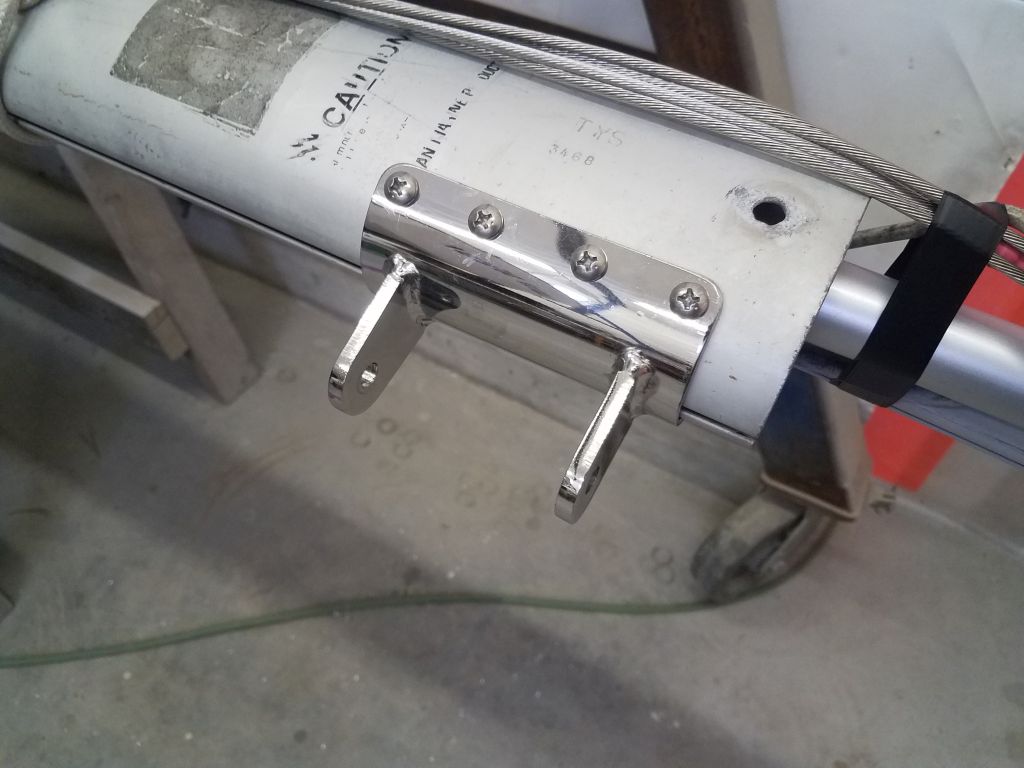
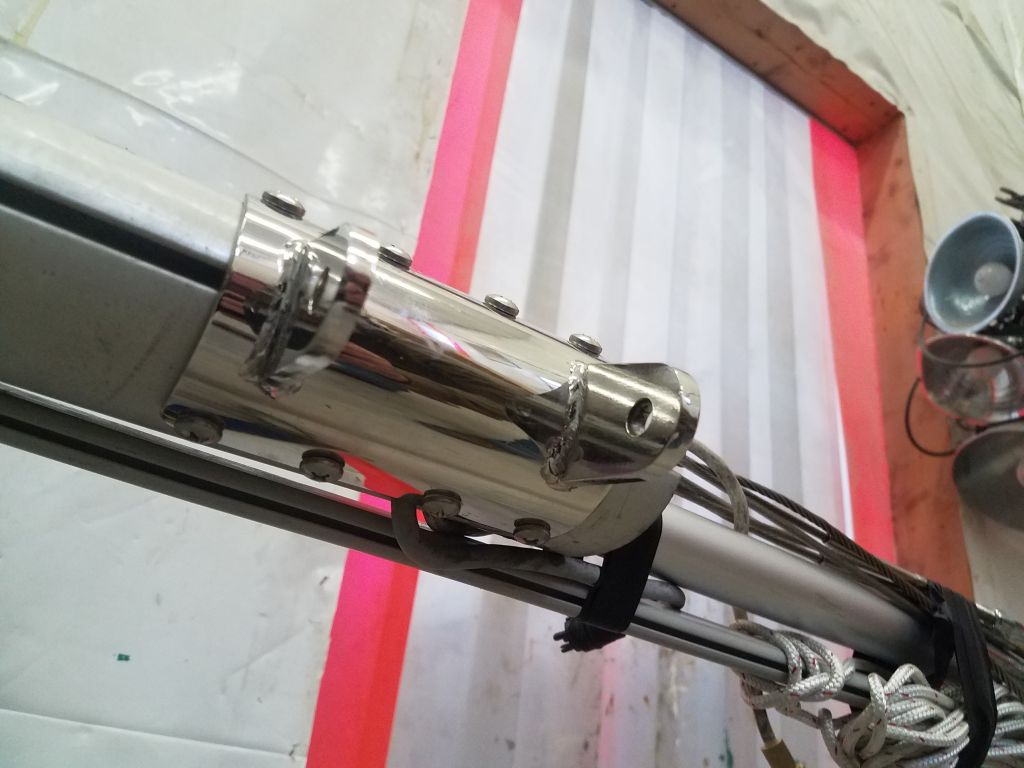
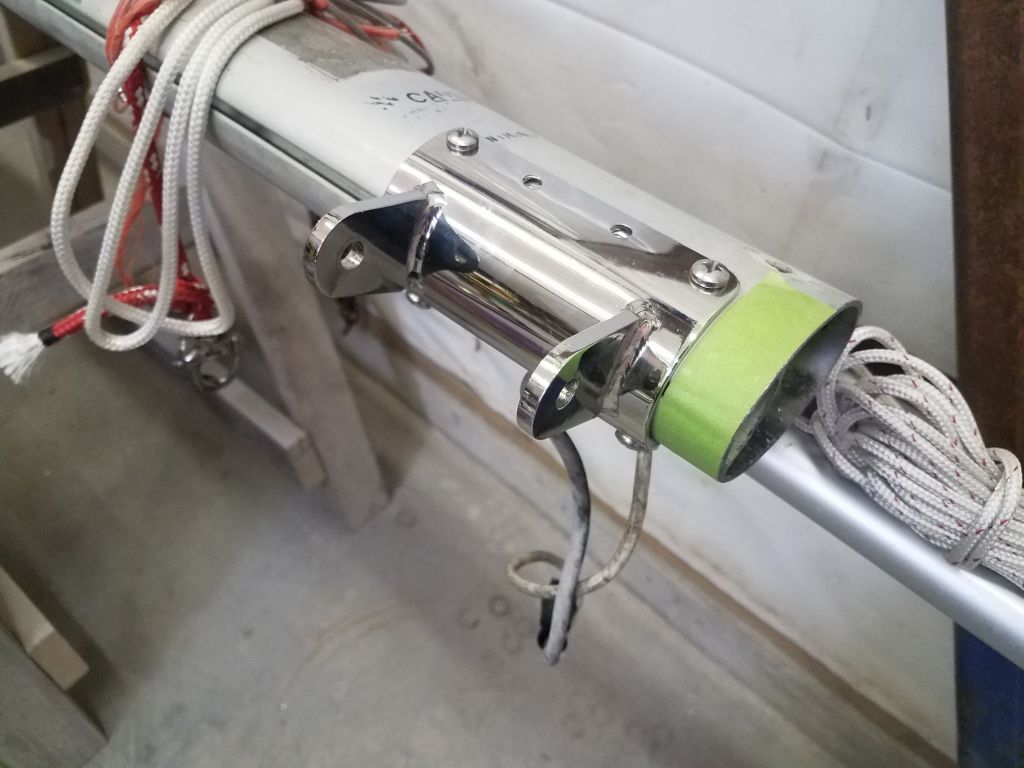
Having taken the head as far as I could for the moment, I finished up the day by installing the new aluminum bracket I’d purchased for the masthead, and completing the Windex installation.  I secured the bracket to an existing hole in the masthead unit, along with an additional screw to keep it from twisting, and bolted the Windex mount to its after end, giving the vane ample clearance with the lights forward.  I removed the vane for safekeeping.

Total time billed on this job today:  8 hours

0600 Weather Observation:  34°, partly cloudy.  Forecast for the day:  Mostly sunny, 51°
Scupper 253

Monday

Over the weekend, I added some additional thickened epoxy to some of the multi-faceted fiberglass liner cover plates to help fill the visible seams, since the initial gluing process had been necessarily delicate and I couldn’t access all areas at once.  Now, I cleaned up and sanded these pieces, which more or less brought them to their final shapes and contours, though I might need some lightweight filler to finalize the shapes before priming.

I test-fit all the new faceted pieces before continuing, and was generally pleased with how they’d ended up, but for the port forward cover plate, I found I’d erred in my measuring and needed to add an angled top flange in order to cover the gaps in the liner, so I cut the new section as needed, then glued it to the original section with more thickened epoxy.  I also found that my long strip that I’d simply butt-jointed and epoxied had failed at the seam, so to correct this I reglued it and added a piece of fiberglass on the back (hidden) side to reinforce the joint.

Next, I continued work on the tiller blank.  After removing the blank from the clamps, and breaking off any large chunks of cured epoxy squeezeout, I ran it through a thickness planer to clean up and smooth both sides, and eventually bring the blank to its finished thickness of 1-3/4″, which fit snugly in the bronze tiller strap.  I sanded clean the upper and lower faces, and, using my tiller mockup as a rough guide, cut off the excess length of the tiller from each end and fit the tiller strap in place where I wanted it, securing it temporarily with two much-too-long bolts.  Then, I test-fit the raw tiller blank in the cockpit to confirm the final length and other aspects of the construction.

Next, I had to give the tiller some shape, both for appearance and to make it comfortable to use.  I liked the general dimensions of the butt end and curved section, but forward of that I wanted to slim it down and add some curvature to the bottom edge, and after roughing out some design ideas on the tiller, I settled on the shape I wanted and cut and shaped the bottom edge to suit before then tapering the overall thickness of the tiller roughly from the top of the curve forward, where I ended up with just over an inch of thickness at the grip.  I milled radii on the top and bottom corners of the tiller, and sanded the whole thing smooth before a final test-fit.

Afterwards, I removed the tiller strap and applied a sealer coat of varnish to the tiller, the first of many to come over the next few days.

With only a few minutes left before I had to leave early for an appointment, I made some final checks to the electric motor setup and energized the system, and went through some basic set up on the cockpit-mounted battery monitor.  I confirmed that the motor operated (more on this soon), but that was all I had time for at the moment.

Total time billed on this job today:  5 hours

0600 Weather Observation:  24°  Forecast for the day: Partly cloudy, 34°

Scupper 252

Friday

I often liked to use Fridays to take care of some of the smaller items on the list that just never seemed important enough early in the week cycle.  I began with the new rigid boom vang, which installation I’d been holding off till the riggers had finished the new mainsail track, as I knew they had needed to run that up from the very bottom of the extruded mast slot and would have otherwise had to remove the vang hardware to do so.

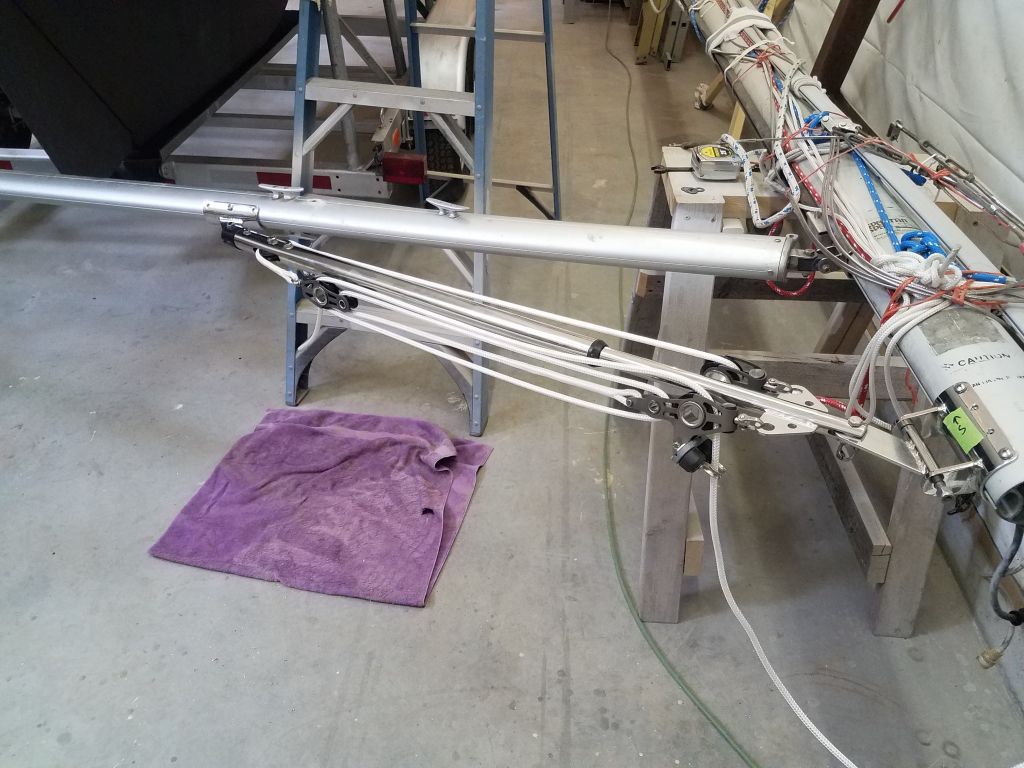
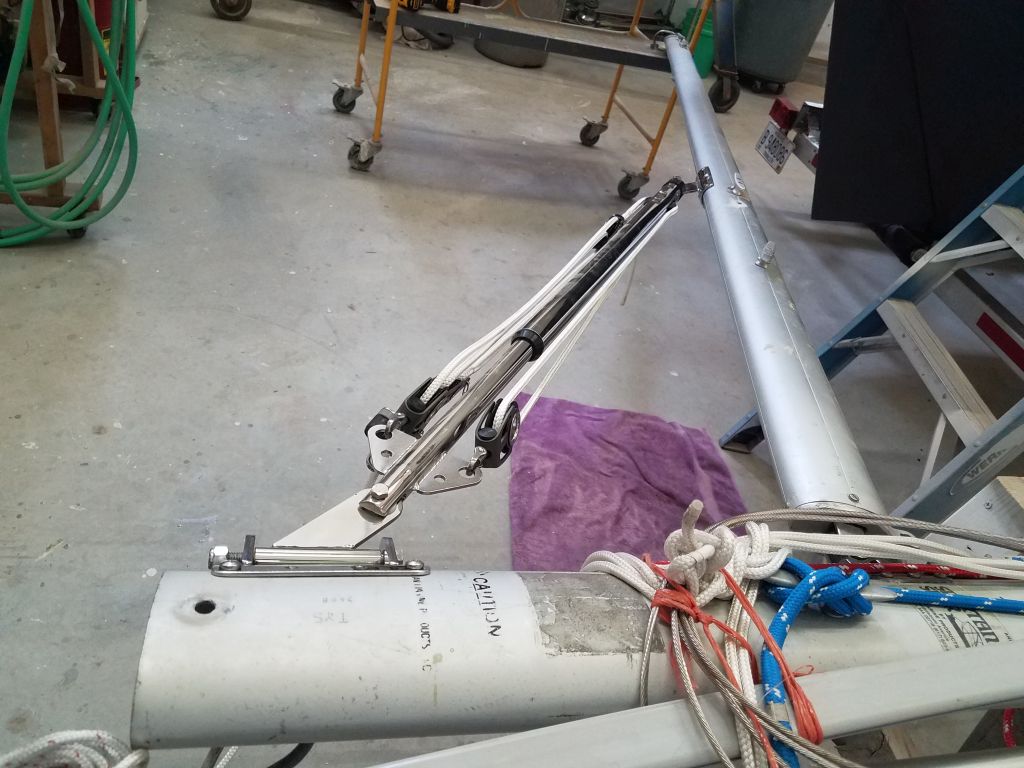
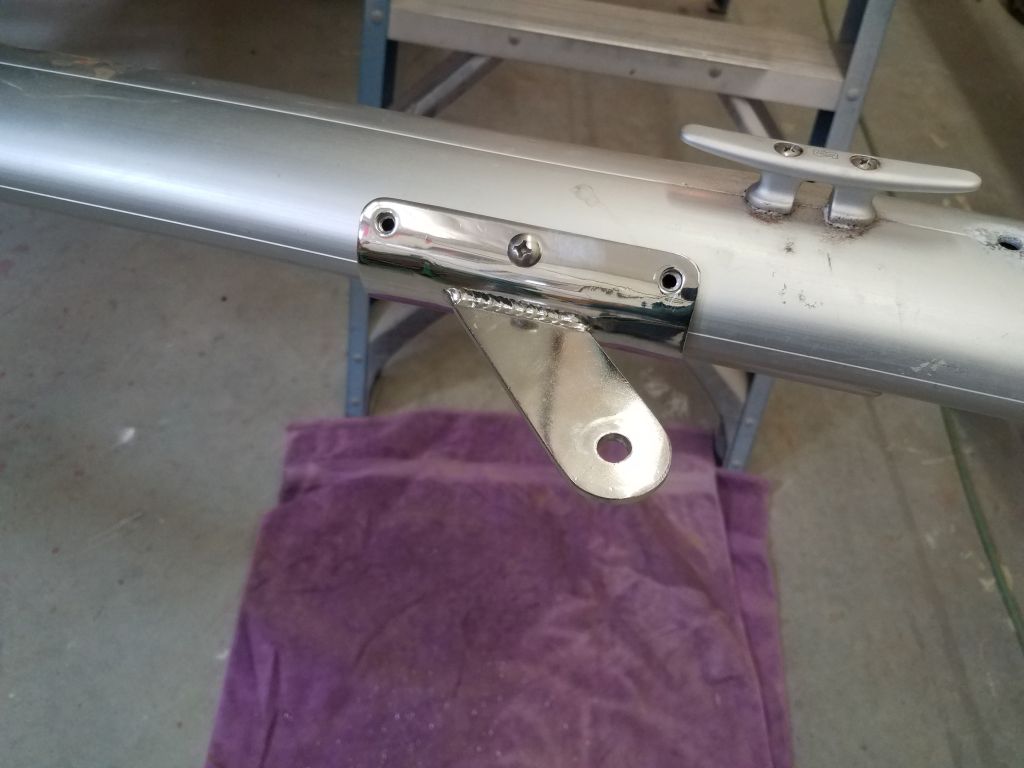
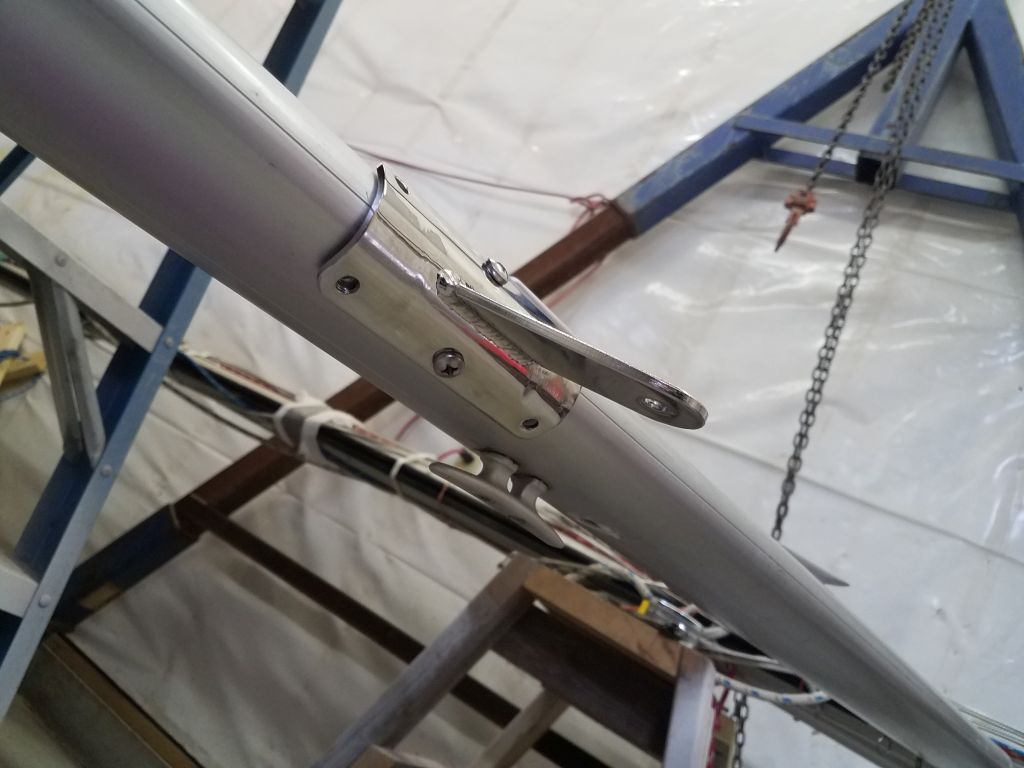
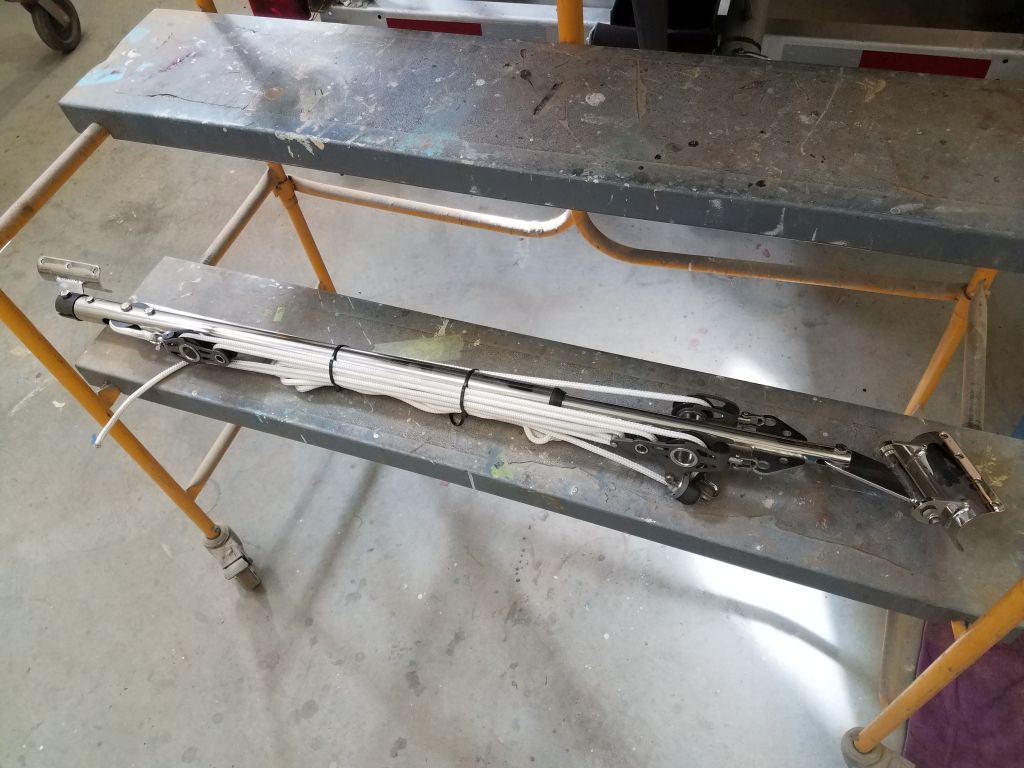
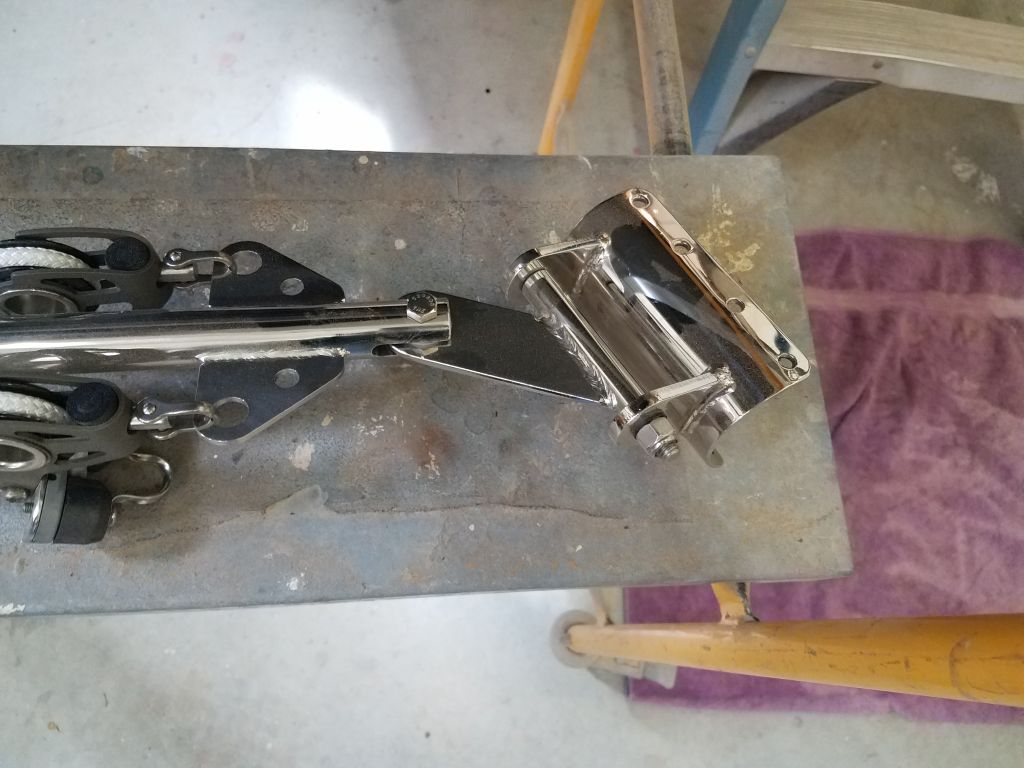
I had space in the shop to temporarily set up the boom on the gooseneck, and I set it perpendicular to the mast to signify its likely lowest point.  After checking clearances around the mast collar, I installed the vang’s mast bracket on the base of the spar, about 1″ above the bottom, after which I could install the vang in the bracket and, with the vang fully compressed with its control line, use it to locate the boom bracket temporarily with the center holes.

Next, I released the vang control line, and allowed the vang to raise the boom as high as possible (holding the end of the boom as I did so before supporting it on a handy trash can in its highest position).  The spring-loaded vang lifted the boom quite high, which was what I wanted, so, happy with the initial boom bracket location, I proceeded to drill, tap, and fasten the remaining screws to complete the bracket installation.  Then, I remove the vang from both brackets for storage and transport, documenting the details of the hardware at each end for future reference should it be needed.  I removed and stored the boom once more.

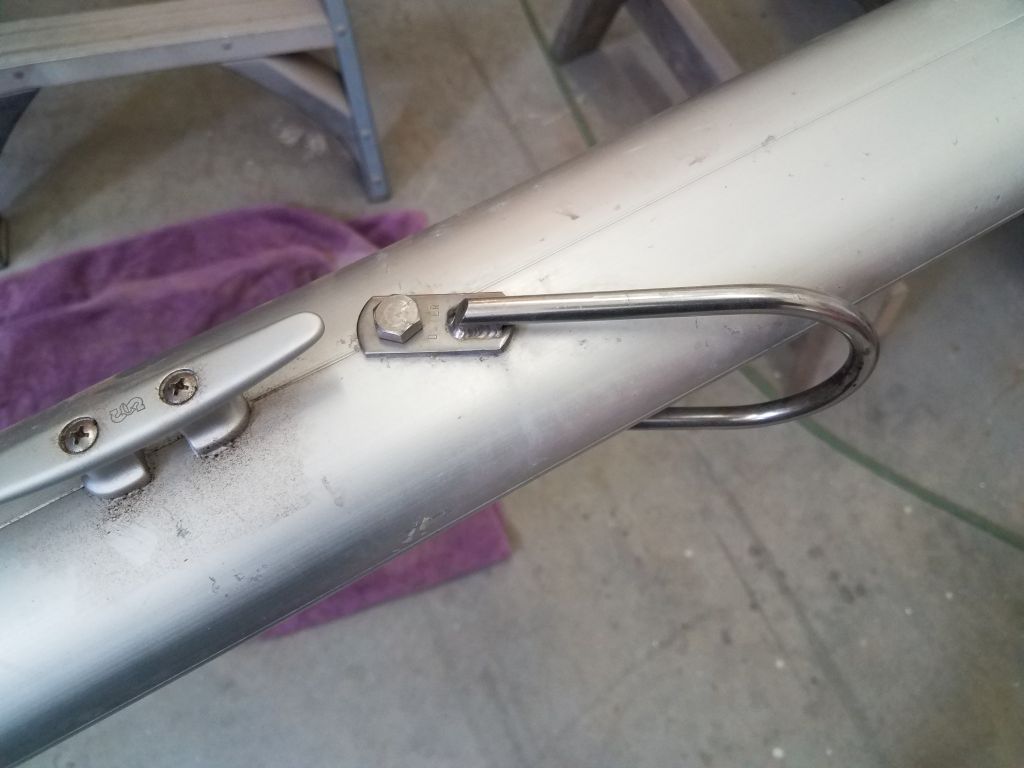
To finish off the raw hole where the mast wires exited the side of the spar, I added a 1″ round stanchion base fitting over the wires, and secured the wire bundle to the mast for storage.  This fitting could later accept some flexible conduit (i.e. hose) to cover and protect the wires in their brief run to the through-deck wiring gland.

I had planned to install a Windex at the masthead, but found that I needed a bracket to extend the mount a bit further aft, as there was a clearance issue with the anchor light and its riser pole.  I ordered appropriate materials and would finish up that simple installation later.

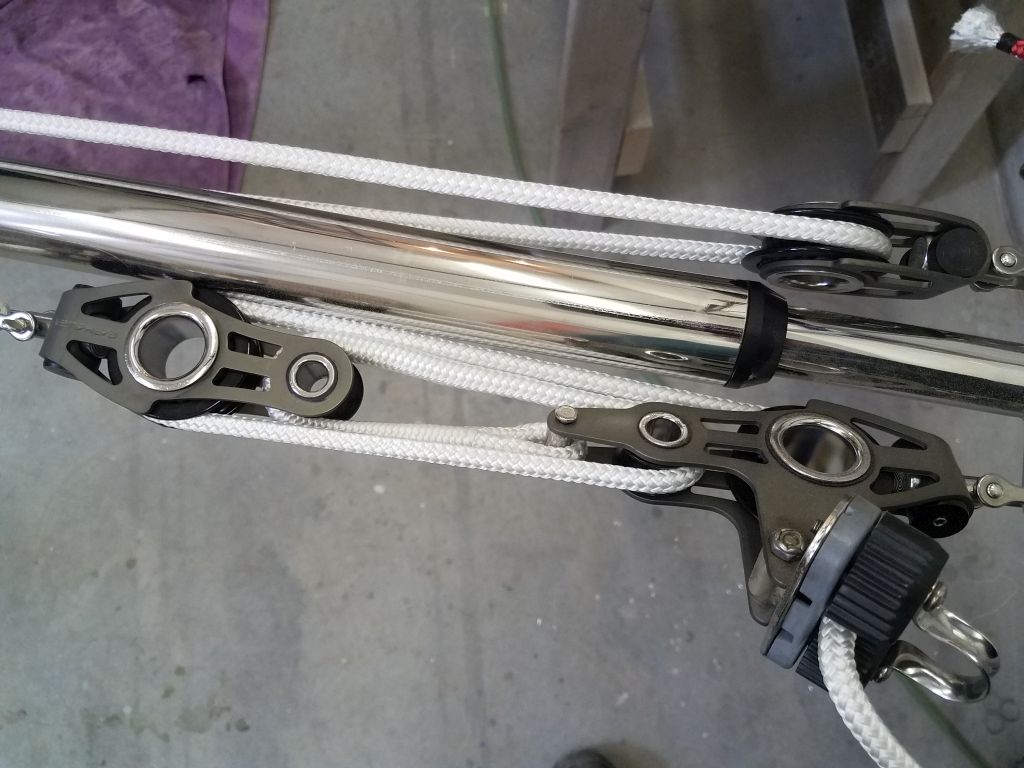
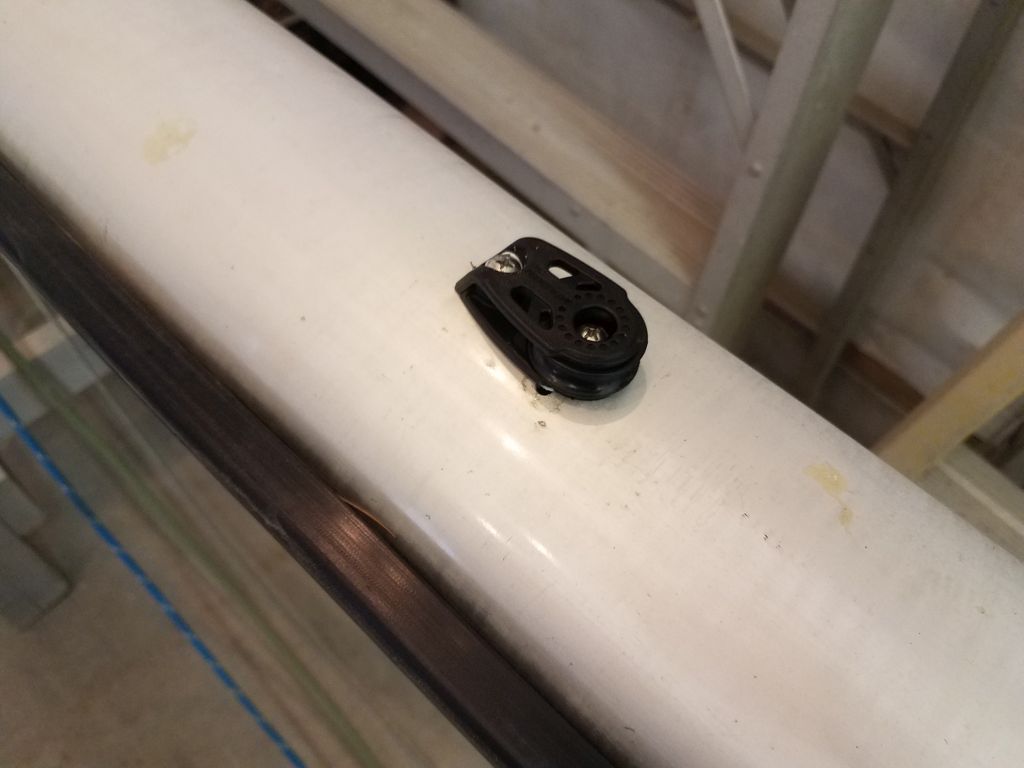
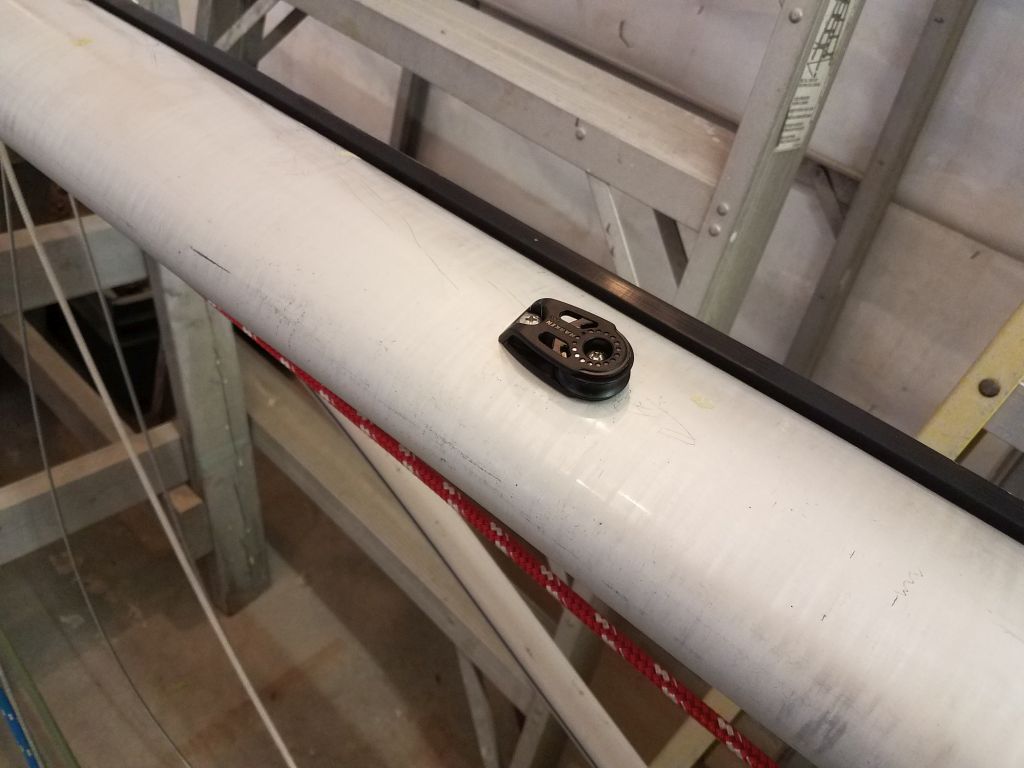
A final bit of rigging work remained at the bow, where I installed three pulpit-mount lead blocks for the furler lines:  one forward as an initial lead for the headsail, and two further aft to lead both furler lines to the first stanchion.  I more or less guessed at the initial positions, but these would be easily adjustable later on as needed to accommodate the natural flow of the furler lines.

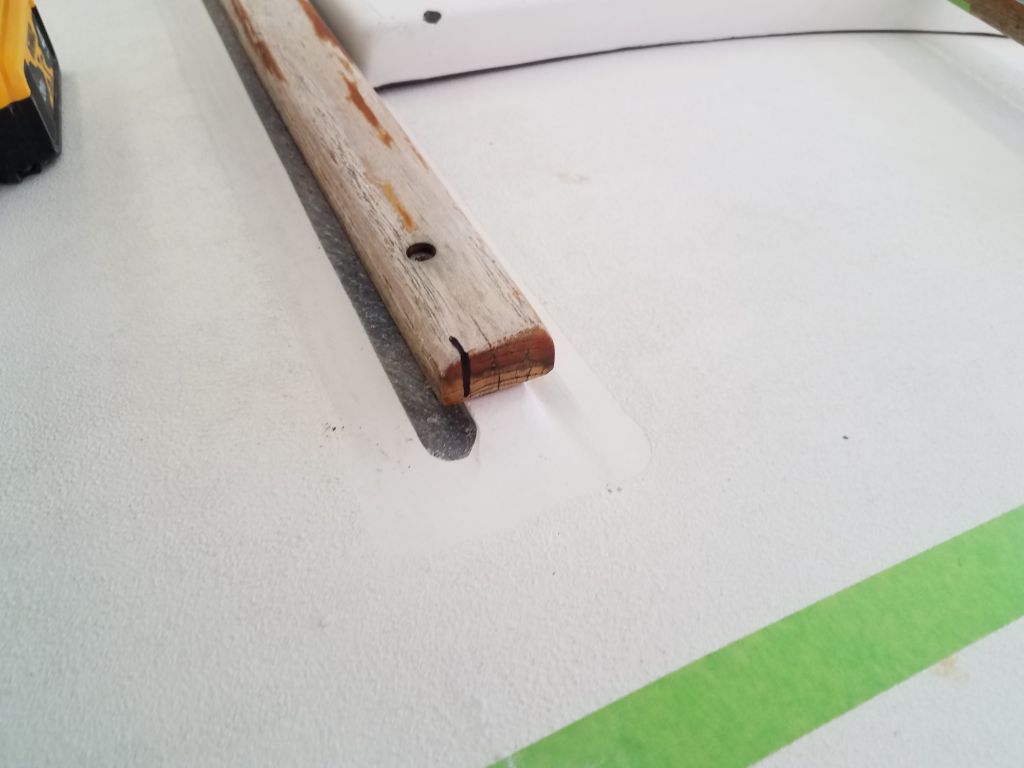
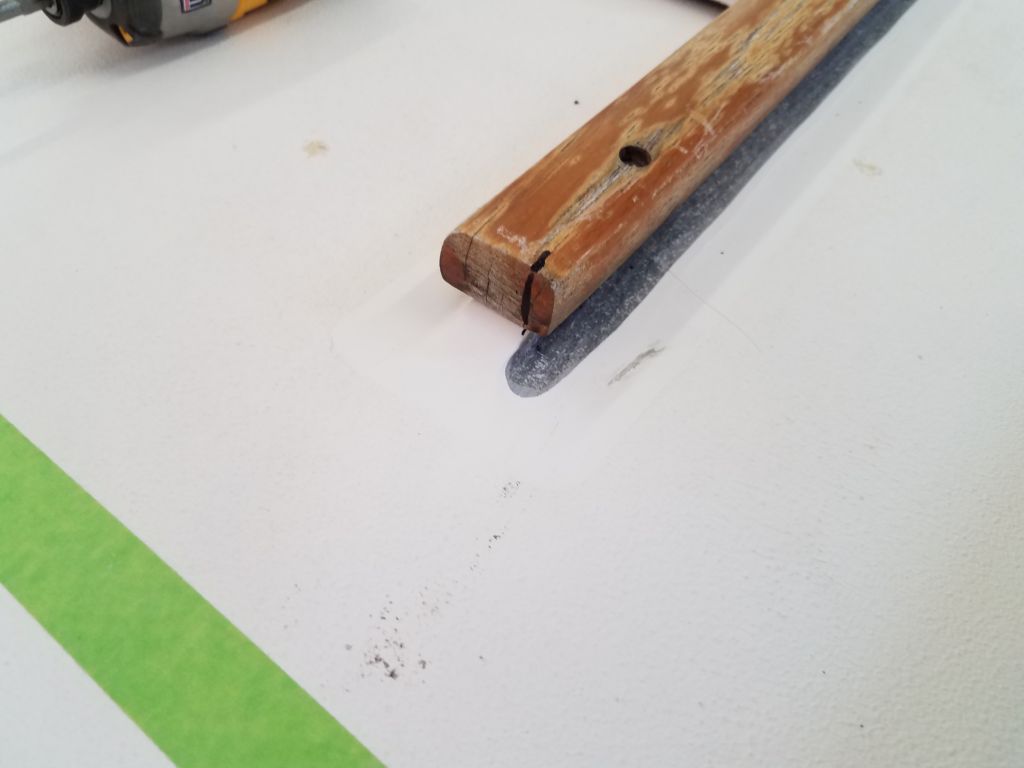
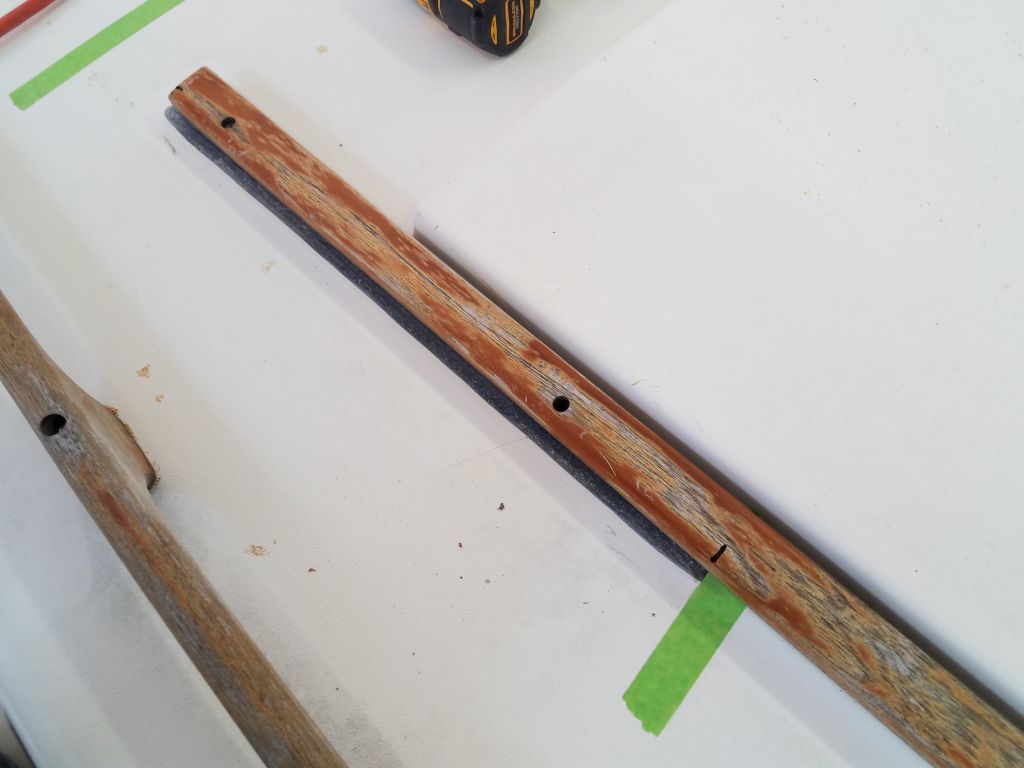
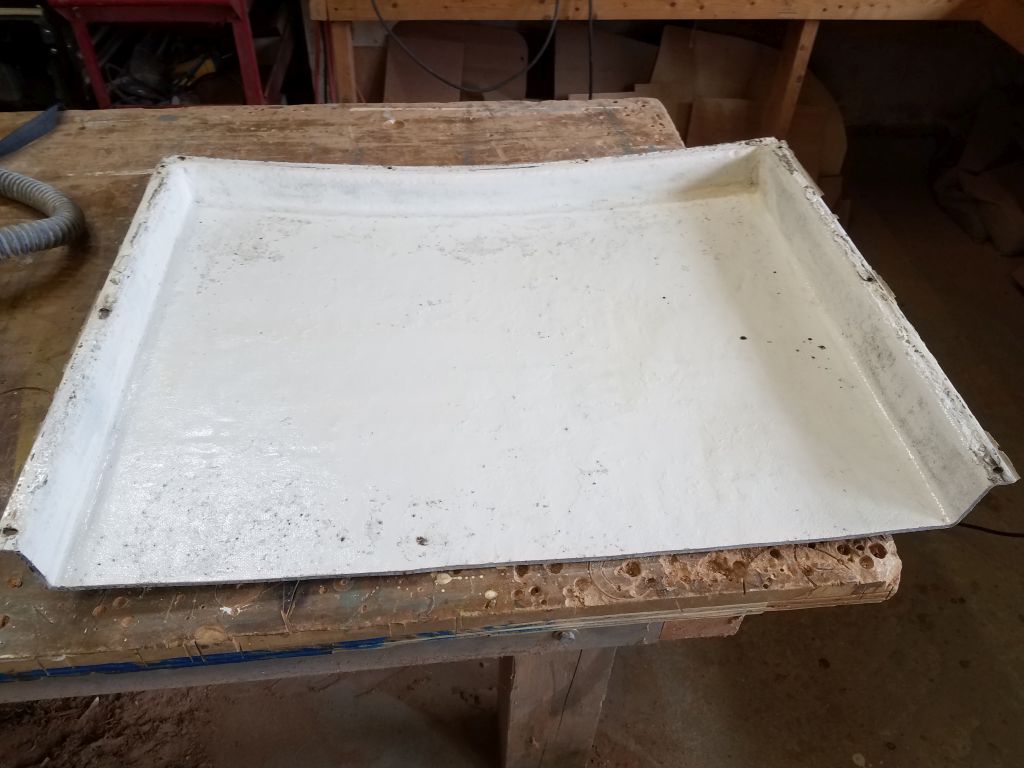
Next, I turned to a job I’d been putting off as long as possible:  building little cover plates for all the places I’d been forced to cut away the cabin liner to access hardware installations.  I didn’t much care for full liners.  Several of the cover plates were simple, as they could be flat to accomplish their jobs, but in the main cabin, with the shape of the outboard edge of the liner, I had to build stepped/angled pieces to cover the cutouts in way of the midships stanchion bases and ladder mounts.  In hindsight, I should have cut away this angled, raised portion of the liner very early in the unbuilding process, as it would have been simpler to then build flat covers that could have done the job, but alas.  And so we learn lessons (always) for another time.

I chose 1/8″ thick prefabricated fiberglass sheeting for the job, as it was easy to work with and I could make it (more or less) easily into the shapes required thanks to the versatility of epoxy glue.  Using measurements I’d taken previously, I cut out and sanded as needed the various pieces before gluing together the stepped pieces for the main cabin.  Here, I used some hot  glue strategically to hold the pieces in place and at the proper angles while the epoxy cured.  For a long strip required over the galley, to cover the cutout left from the Yankee tracks, I had to magically extend the longest piece of the prefab I had, which was 36″ but I needed 41″; because this was entirely non-structural, I thought I could sand a simple v-notch at the ends of the pieces and create a simple epoxy butt joint that would do the job.  The glued pieces would require some final sanding and shaping once the epoxy cured, after which I could prime and paint all the new covers before installation.

By now, in mid-afternoon, my new battery lugs had arrived, and I got back to work to make up the remaining several cables required to connect the battery pairs and overall battery bank, finishing up the cables just before the end of business.  I planned to clean up the cabling at the final (port outboard) set of batteries later, but for now I was happy to have the connections complete so I could double-check that the battery bank (nominally 48 volts) was properly wired.  With a long test wire alligator-clipped to the negative terminal (which was too far away to reach with my meter leads), I used a multimeter to check the voltage between the positive terminal (starboard outboard aft) and the negative terminal (port outboard aft), and the reading of 52.5 volts was about what I expected, given that the 12-volt battery pair forward had been reading just over 13 volts in its fully-charged state.  Energizing and testing the electric motor, engine battery monitor, and charger would have to wait till next time, but the battery bank and related wiring was finally complete.

Total time billed on this job today:  6.25 hours

0600 Weather Observation:  23°, cloudy with light rain showers.  Forecast for the day: Sunny, 34°

Scupper 251

Thursday

First thing, I lowered the final pair of batteries from the cockpit into the cabin, and then got them in their box and into the engine room, where I secured the batteries and box as I’d done with the previous sets.

Grateful to have that behind me, for the moment I turned to another pressing task:  the tiller.  After two days in the clamps, the epoxy had had more than adequate time to cure and hold the tight curves, so I released all the clamps and removed the partial blank from the jig.  The epoxy didn’t stick to the plastic blocks, so the tiller released from the jig without much effort.  Once I had the blank out, I cleaned up the wide surfaces with a sander to prepare for the additional laminations.  Then, the blank fit right back into the jig, ready for the next glue-up.

Starting with the newly-prepared top of the blank, I glued up another set of teak laminations (I think there were 8 this time) to bring the tiller blank up to the desired proportions.  This was a lot of laminations to do at once, but it worked out, not without alacrity and effort, however.

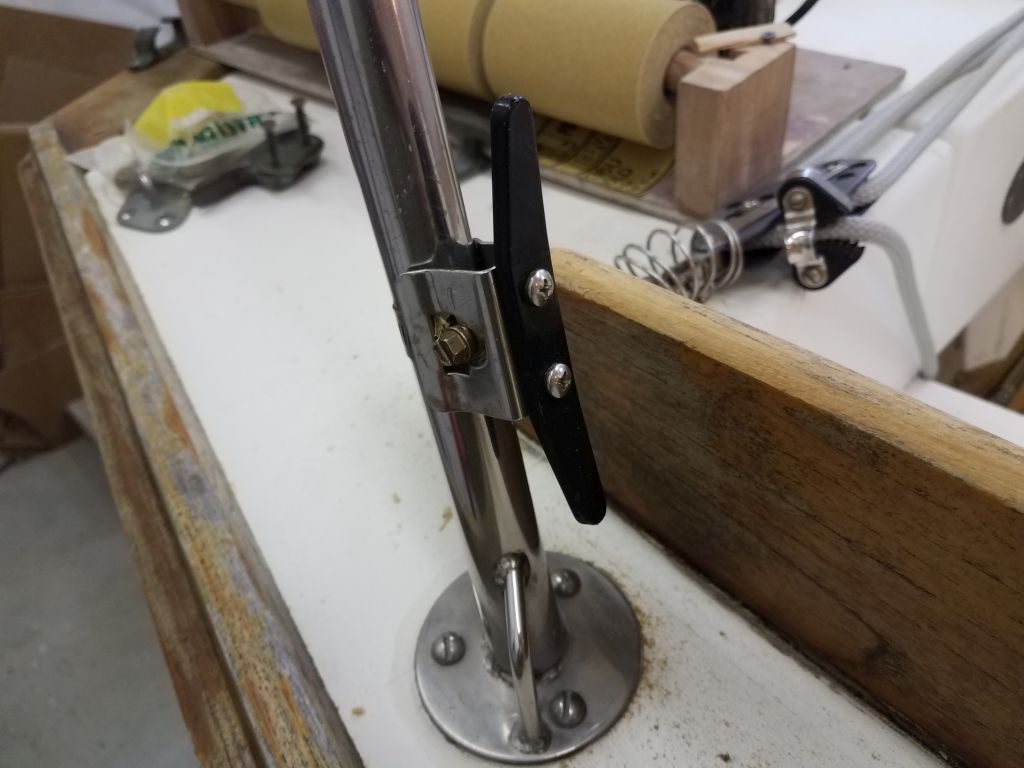
Before getting back to the engine room and batteries, I took care of another small item on the to-do list and installed a new padeye in the cockpit, which the owner had requested for securing a harness.  I always like these investment-cast 316 padeyes for such uses, and as per usual I installed it with machine screws through tapped holes in the cockpit well, lots of sealant, and a fiberglass backing plate.

I spent the rest of the day working on the final wiring in the engine room, choosing to work more or less from starboard to port to finish up what was needed.  I started with the engine battery charger, which required positive and negative cables (in this case the positive cable ran to the first set of batteries on the starboard side, and the negative all the way to the far port set).  I followed the general guidelines set forth in the instructions from the electric motor manufacturer, which differed slightly from the charger’s documentation but in a more conservative way, incorporating a fuse (50 amp) in the positive side, and a larger wire gauge.  I also installed a battery temperature monitor required for the charger, which also led over to the eventual negative terminal at the far port side of the 48-volt bank.  For now, I left those negative-terminal wires detached pending final wiring on the rest of the bank.  I made up the 2/0 cable leading from the bank’s positive terminal to the system fuse I’d installed during an earlier wiring phase, and connected the positive charger wire to the battery as well.

Continuing, I made up the jumper to connect the first set of 6-volt batteries together, then another jumper over to the next battery pair.  I chose the routing as needed to minimize strain on the terminal ends, as the stiff cable wasn’t prone to tight bends.  Each set of batteries would be connected in this way:  positive to negative, in series, across the line.

For now, however, the day was done, and in any event I had run out of the 5/16″ battery lugs I needed to finish the cabling (I’d ordered more early in the day), so I’d continue with the project as soon as those arrived.

Total time billed on this job today:  8 hours

0600 Weather Observation:  33°, cloudy with light rain showers.  Forecast for the day:  Heavy rain and wind, 38°

Scupper 250

Wednesday

Mike from the rigging company was on hand during the morning to finish up the final rigging work:  installing the new lifelines, reefing lines in the boom, and the Tides Marine mainsail track on the mast.  For now, I had Mike leave the port after set of lifelines detached from the pulpit, since this was where I boarded the boat at the moment.

I had another commitment away from the shop during part of the morning, but I spent all of my day working on the engine room batteries, beginning by installing the last ratchet straps and hold-down strap brackets for the remaining three sets of batteries (two each).  As before, I bolted the straps in place through the bulkhead in all cases.  The chore was straightforward, and access to this side of the engine room was better than the far outboard side, but it was still a time-consuming process to get all the straps and brackets in place.

With all the preparatory work done, and the battery box top hold-down straps secured to all three remaining boxes, I managed to get two of the three remaining pairs of batteries in place during the afternoon, starting with the starboard outboard set (on the original starboard shelf in the engine room), then the port set on the centerline platform forward of the engine.  This seemed so simple, but the battery weights, tight quarters, and other logistics meant that each installation required lowering a pair of the batteries from the cockpit to the cabin; setting up and modifying as necessary the 2×4 sliding platforms; placing the batteries in their boxes; sliding the boxes into position (fortunately much easier for these sets than it had been for the first set on the port side earlier); and securing each box with the ratchet strap, hold-down strap, and the battery box top strap.

One pair of batteries remained, and I was excited about completing the installations, but the day was growing short and I thought it’d be better for me to wait to schlep the final pair of batteries from the cockpit into the cabin and then into the engine room, as I was feeling the day’s efforts and needed to save myself, so after modifying the ramp through the head for the final pair of batteries, which would go directly inside the engine room door, I called it quits for now.

Total time billed on this job today:  5.75 hours

0600 Weather Observation:  33°, cloudy. Forecast for the day:  Cloudy, 42°


Scupper 249

Tuesday

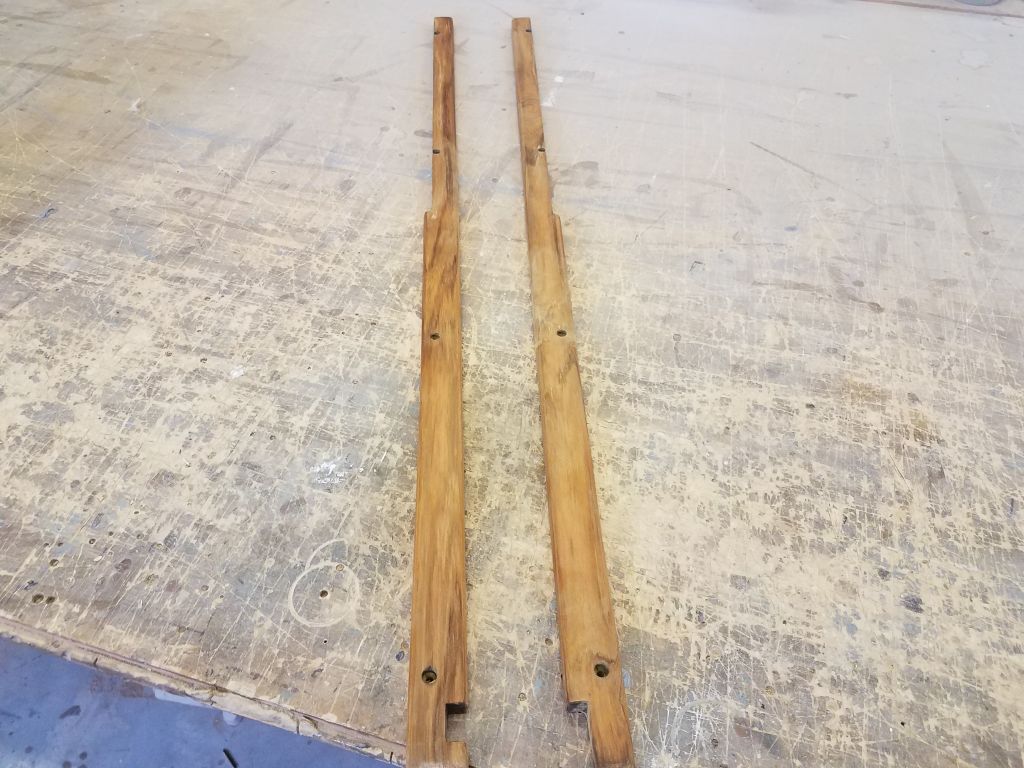
Over the past week or so, I’d finished up the varnish work on the trims for the compression post, including the replacement lower trim, the new upper trim, and the box to cover the mast wiring.  Now, I installed the various trims to complete the work.

Next, I turned back to the tiller.  In order to get the teak strips to conform to the required shape without breaking, I needed to reduce their thickness, so after milling several extras I planed all the laminations down to about 1/8″ in thickness, a dimension I’d earlier determined would just about meet the curvature.

From here, I used a sacrificial lamination clamped against the raw tiller mockup to determine, first, whether the strip would bend to the exact shape (not quite) and, second, to what extent could I bend it.  A comfortable bend turned out to be just slightly less severe than the curve I’d cut into the mockup, but close enough that the basic shape and function of the tiller would remain, so this was a fair (and required) compromise I could work with.  I used the bent lamination to draw a new line on  my plastic laminating board, and this would be the line to which I’d work going forward.

Using that line as a guide, I cut and installed with screws a series of blocks along it, using some scraps of the plastic lumber I’d used for the deck trim since it was nonstick (I hoped).  Then, I test-bend another lamination against these blocks to confirm that I could make the bends required in the final step.

With 10 or 12 laminations required to make up the total bulk of the tiller, I decided to break the lamination into two stages, since that many strips would be hard to handle all at once with a complex curve like this.  After final preparations and acetone-washing all the teak strips, I applied thickened epoxy adhesive to the first set of six laminations, then bent and clamped them to the form, creating lavish squeezeout.  I had no issues bending them into place.  I cleaned up the bulk of the excess, and made sure the top edges of the laminations were flush with one another and pressed tightly against the board beneath before cleaning up any final excess that I could, after which I left the jig alone for the epoxy to cure.  I planned to leave the first round in the clamps for nearly 48 hours before proceeding with the second round of laminating.

With the engine room and battery areas repainted, it was time to move on with the final steps towards engine battery installation.  To begin, I reinstalled the large cables across the center of the platform; I’d unclamped these earlier to allow room for a large wooden cleat in the center, between the two sets of batteries on the centerline shelf.  I tested battery boxes in all the locations to be sure they fit properly within the new cleats.

Starting with the port outboard battery location, I used the battery box to mark locations for the ratchet strap and hold-down strap, then installed the ratchet strap with bolts through the bulkhead into the space beneath the galley.  I used tape to hold the bolts on one side so I could get the nuts and washers started on the other.  I installed the brackets for the hold-down strap with screws to the bulkhead on the forward side, and to the after cleat behind.

I had originally thought of pre-installing all the straps first, before getting the batteries in place, but instead I decided to do it more piecemeal, both to spread out the work with the heavy batteries and to get the hardest installation–this port outboard location–completed first.  I’d been thinking through the complications of installing the batteries in this tight space for weeks.  There was no way to put the box in first and then lift in the batteries, as there was no direct overhead access and the batteries were far too heavy to lift from any of the possible contorted positions one might force themselves into, so all along I knew I’d have to pre-install the batteries in their boxes, then get the 200-lb combined units into place from there.  This meant basically sliding them into place.

To this end, I built a couple simple platforms from scrap construction lumber:  First, a platform that spanned the center battery shelf from the engine room door to the port side, and built to a height that was just above that of the battery box cleats; second, a similar platform/ramp to run from the head doorway up to the engine room and the other platform.  These platforms would allow me to move the filled battery boxes around and over the various obstructions to their destinations.

Over the past week, I’d gotten all the remaining eight batteries up to the cockpit, and now I lowered two of them into the cabin, and from there placed them in an awaiting box that I preset on the engine room ramp.  With a slight uphill slope, it wasn’t easy to push the laden box, but it was possible, and soon I had the box in the engine room, where on the flat platform it was quite easy to push the box over to the port outboard side and get it started in the nest between the cleats.

The cleats were tight enough that I had some trouble getting the box to fit inside properly.  The issue was that I needed to lift the far (bulkhead) side a bit to get the aft end in.  Working from the port cockpit locker–the only way I could directly access the space–I tried various things, all of which were complicated by the weight of the batteries and the lack of overhead access, but the box kept hanging up on the bulkhead.  By the same token, I couldn’t edge the box in sideways either (as seen in the photo above).  Access was too tight, and the batteries too heavy, for me to do the relatively simple maneuver required.

At length, I decided I needed to rig up a little block and tackle on the bulkhead, which would allow me to pull up that side of the box as required for it to fit (note that I knew the box fit, as I’d tried it earlier when it was empty).  After rounding up a padeye, some line, and the block and tackle, I prepared to set things up, starting with a line around the cleat I’d installed on the front of the battery box (to accept the lid).  To my astonishment, as I looped the line beneath the cleat and started to make preparations to tie it off somehow, the box just popped into position.  Done.

This was a great relief, as I’d been fussing with the box for some time, and in the end I was saved the extra work of installing and then dismantling some kind of lifting system.  I expected the remaining three boxes to be much easier to get in place, and I always knew the port outboard location would be toughest simply because of its access issues, so it was a victory after a long afternoon.

Now I could finish up securing the battery with the ratchet strap and overhead hold-down strap, and then finish up the lid as well, marking and cutting clearance notches for the hold-down strap as needed.  I’d pre-installed the light strap to secure the lid itself before I put the box in place.

Total time billed on this job today:  8.25 hours

0600 Weather Observation:  32°, cloudy. Forecast for the day:  Mostly cloudy, 47°

Older posts Newer posts