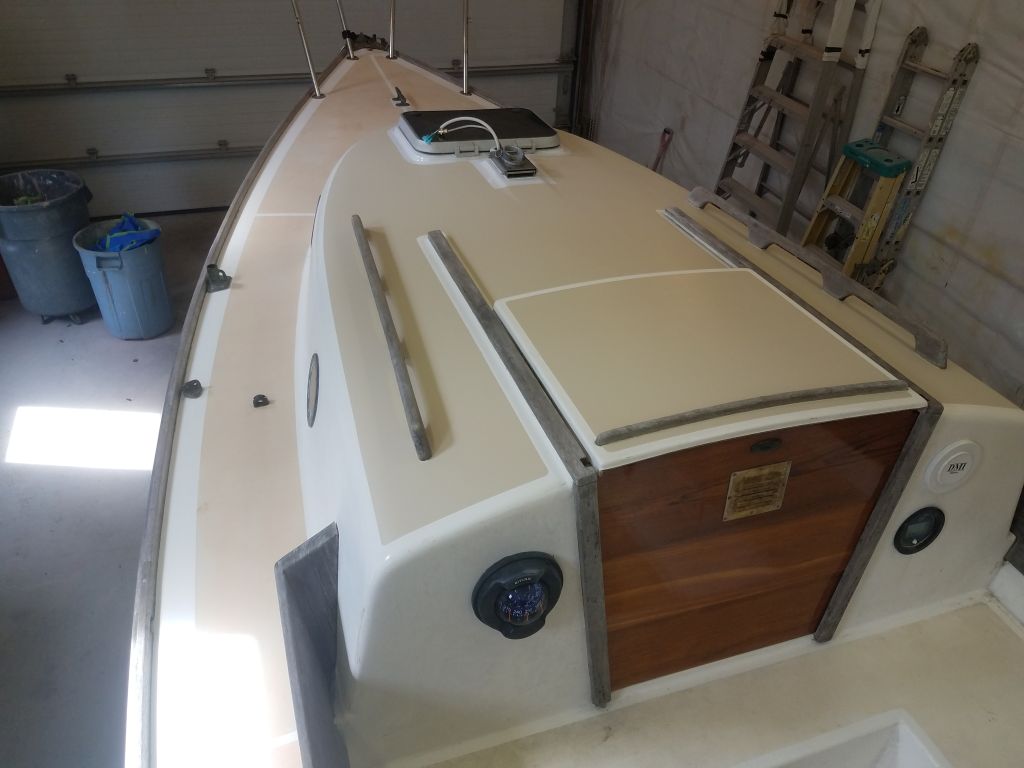
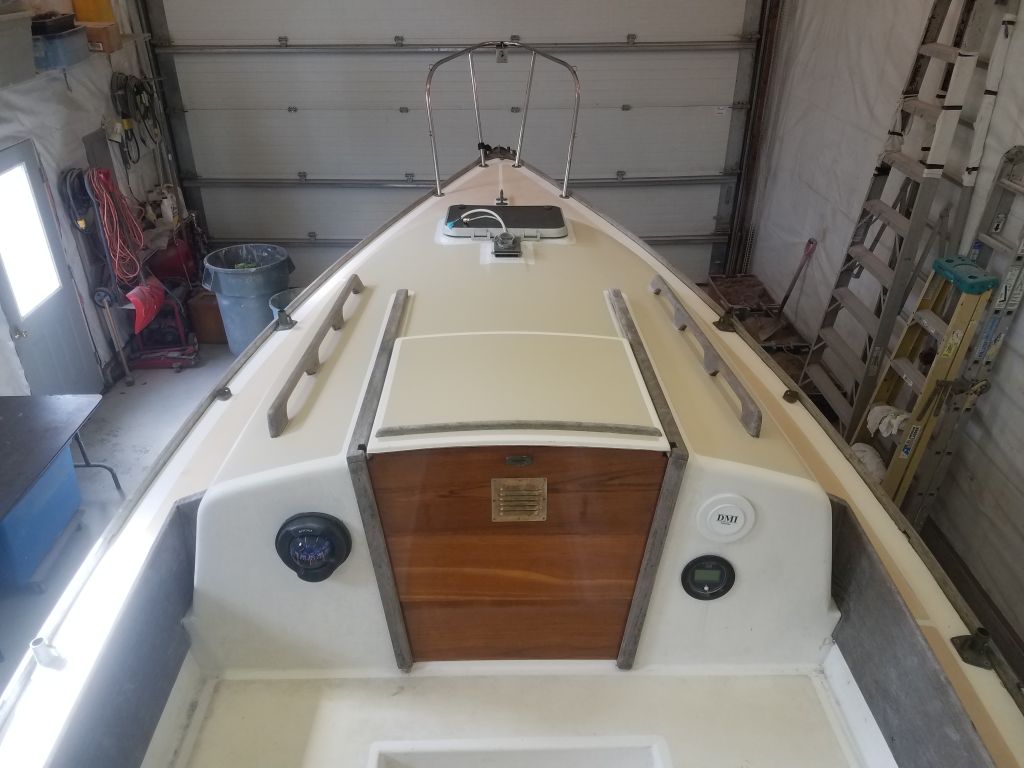
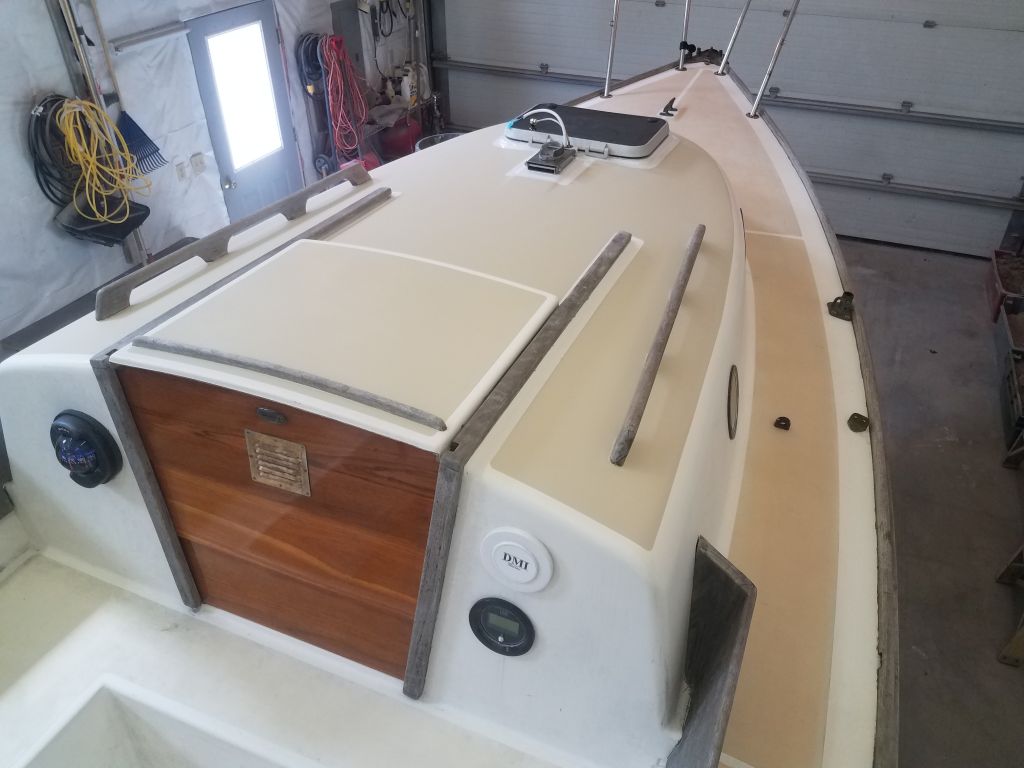
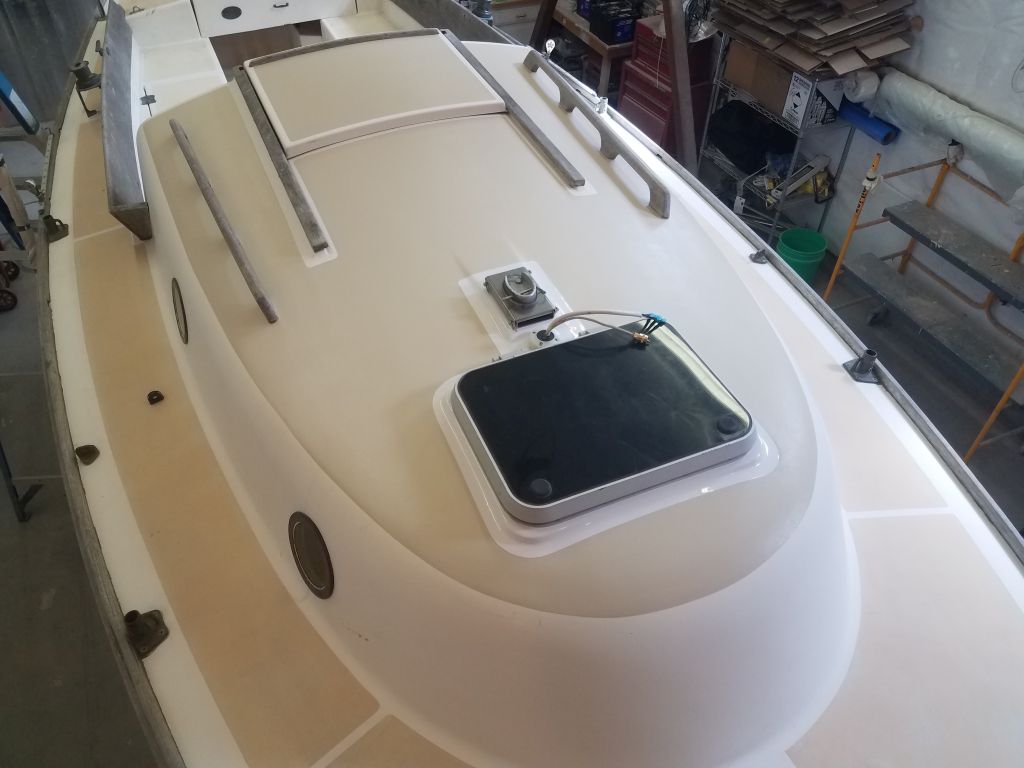
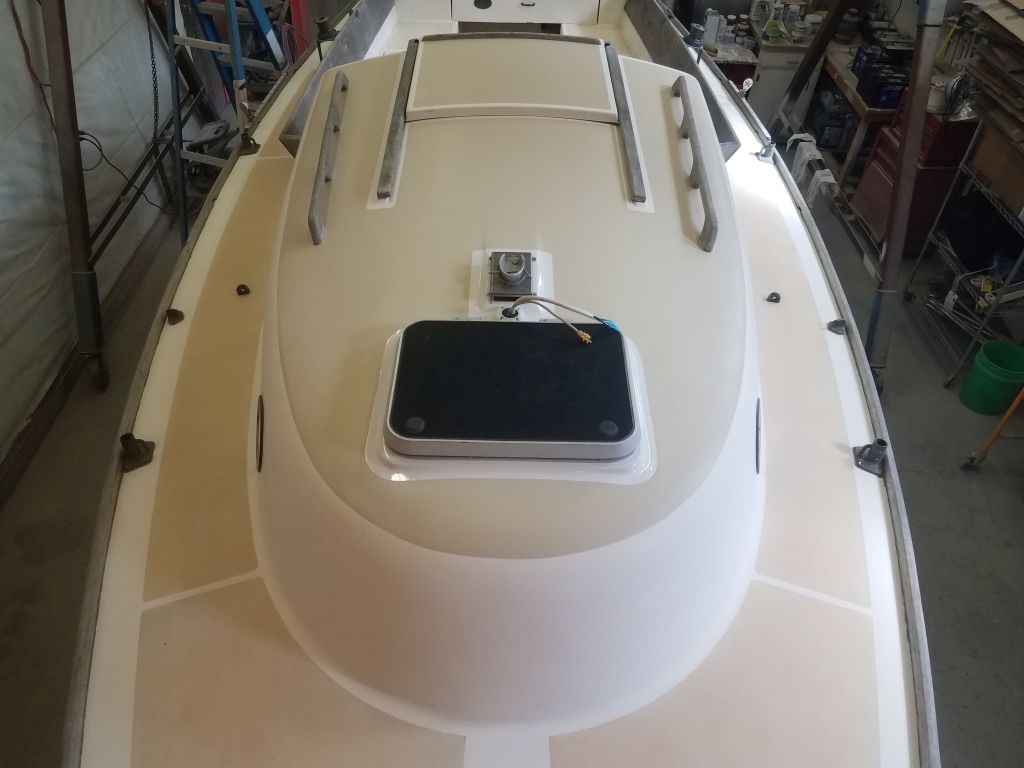
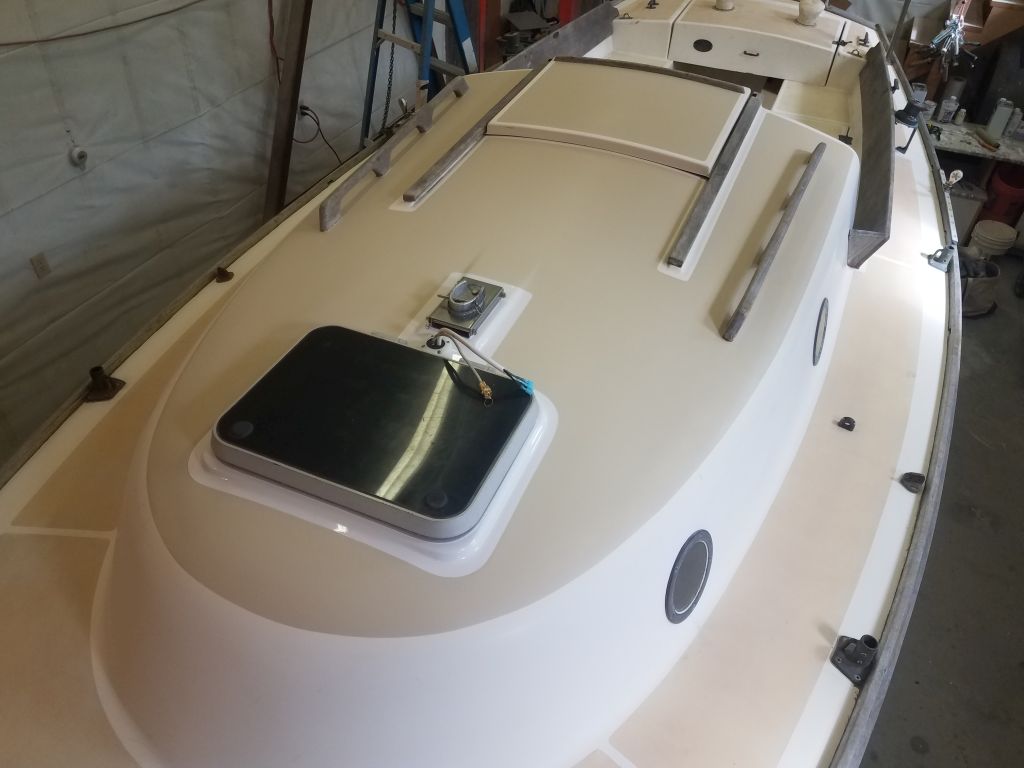
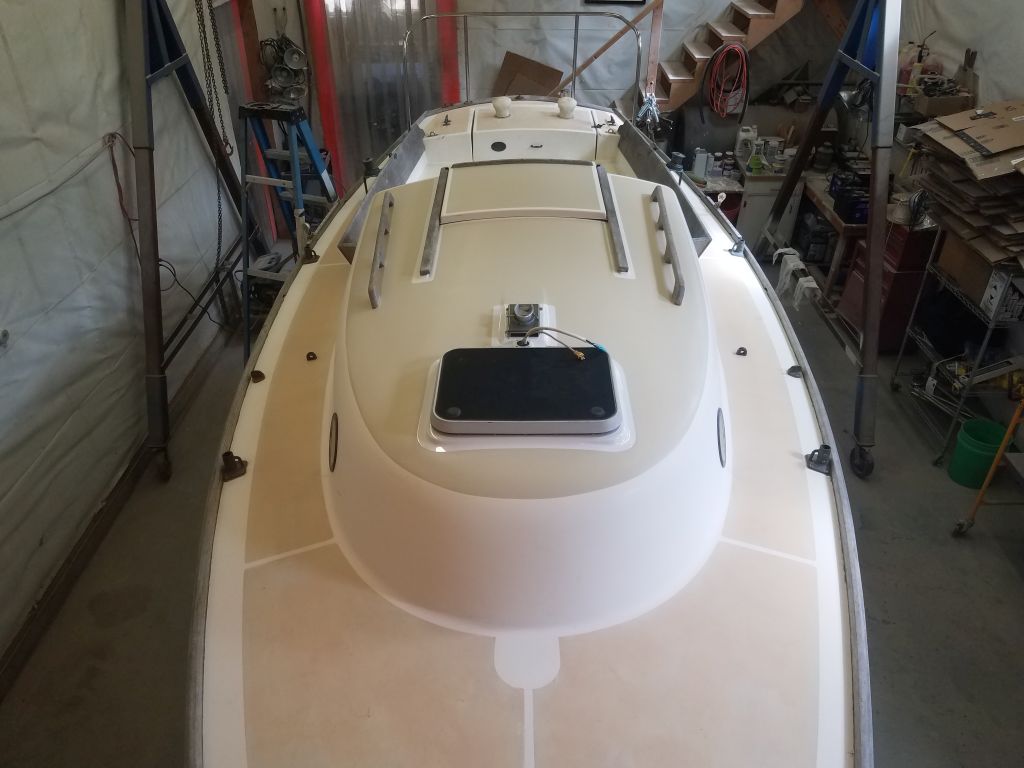
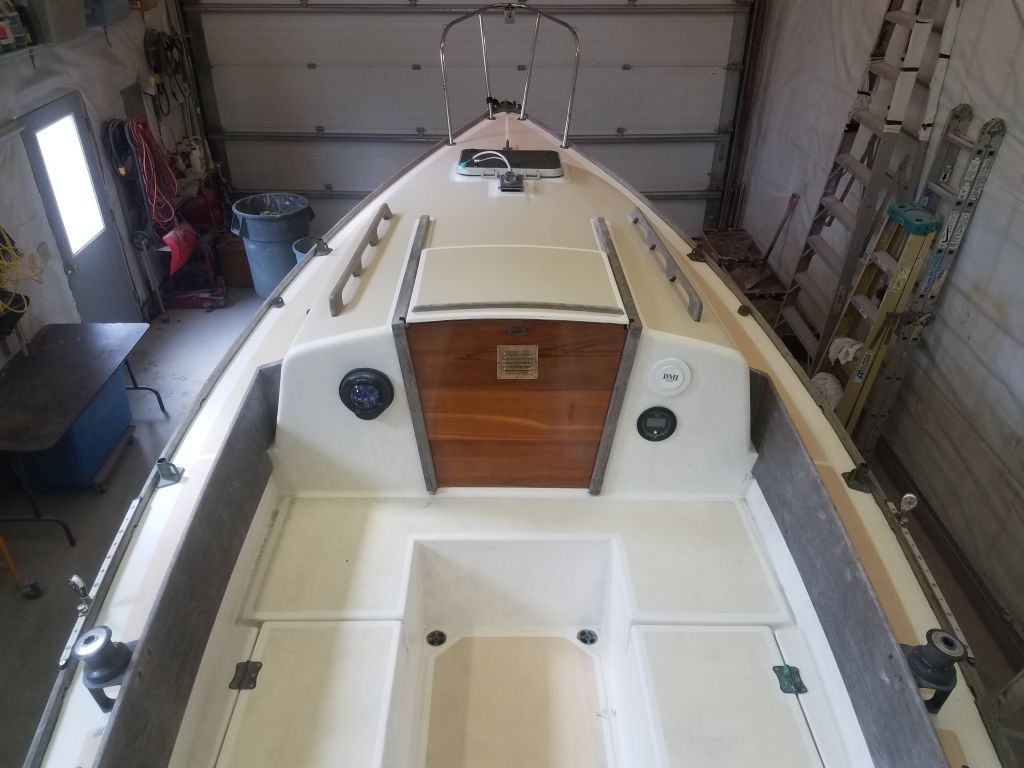
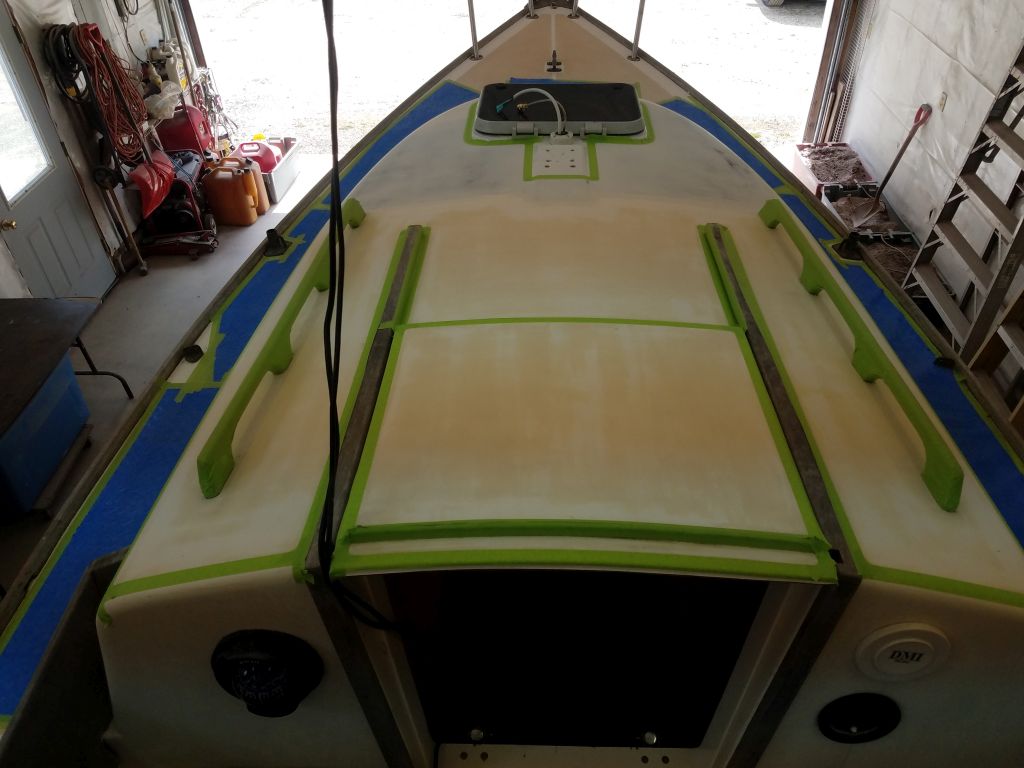
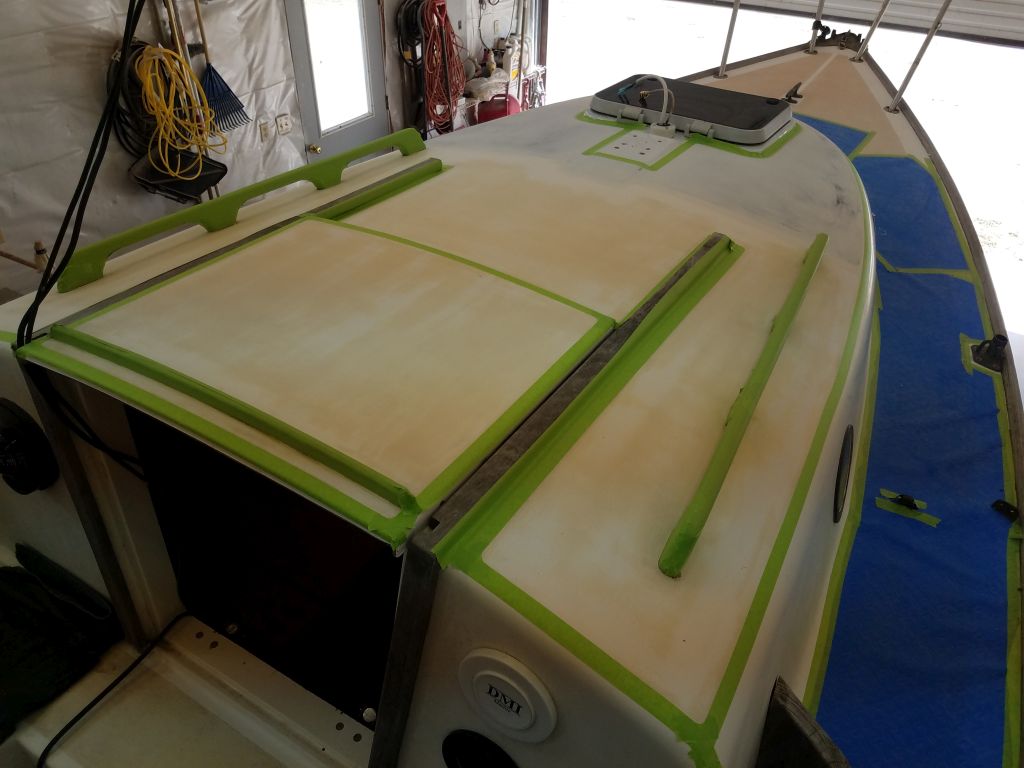
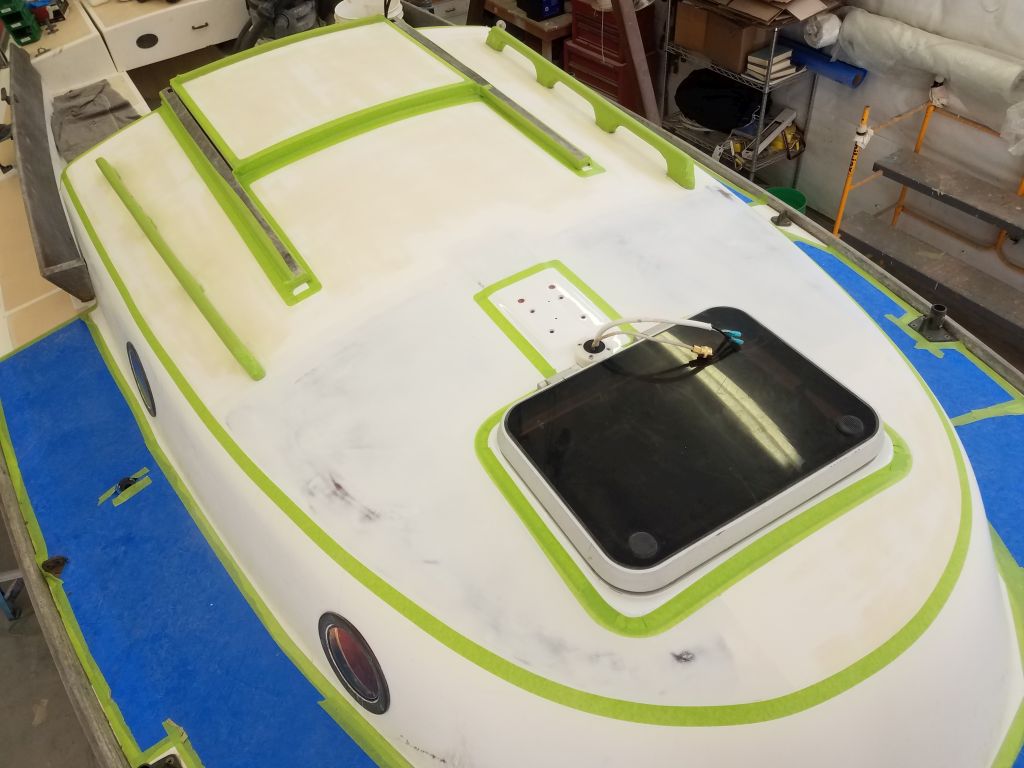
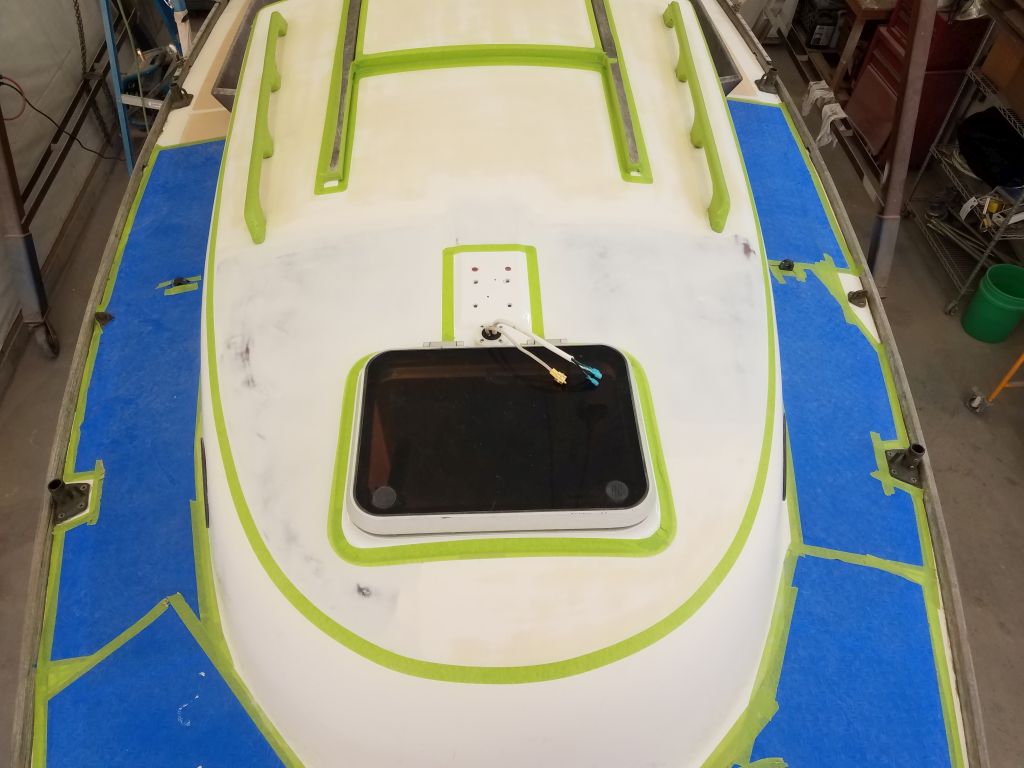
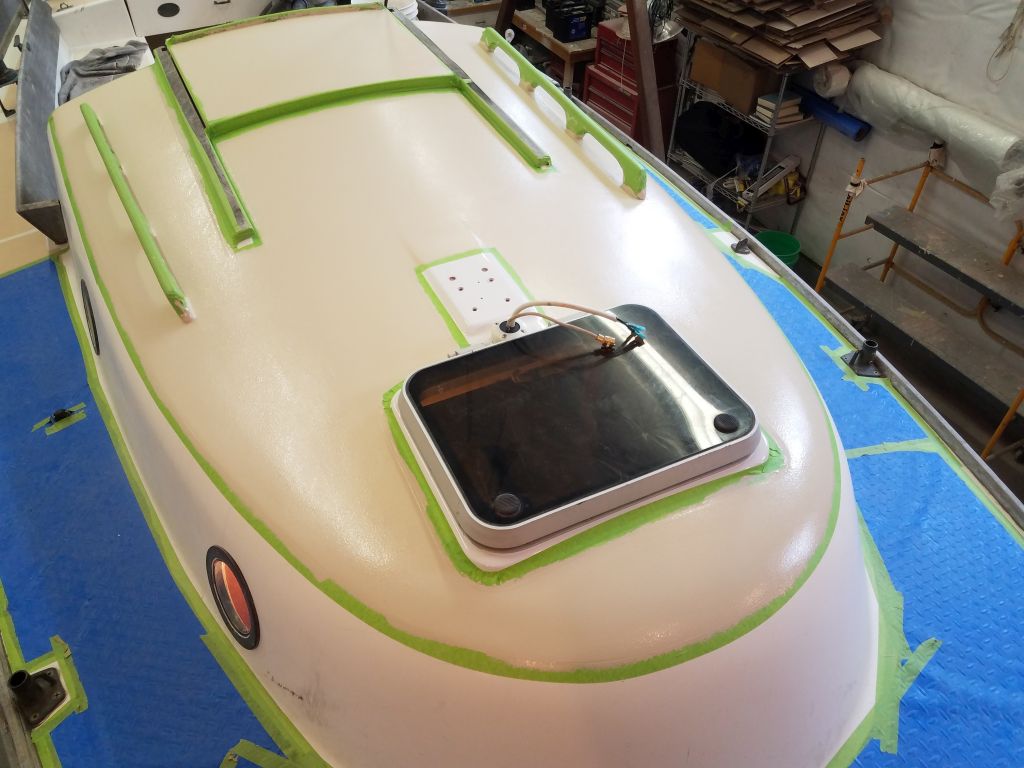
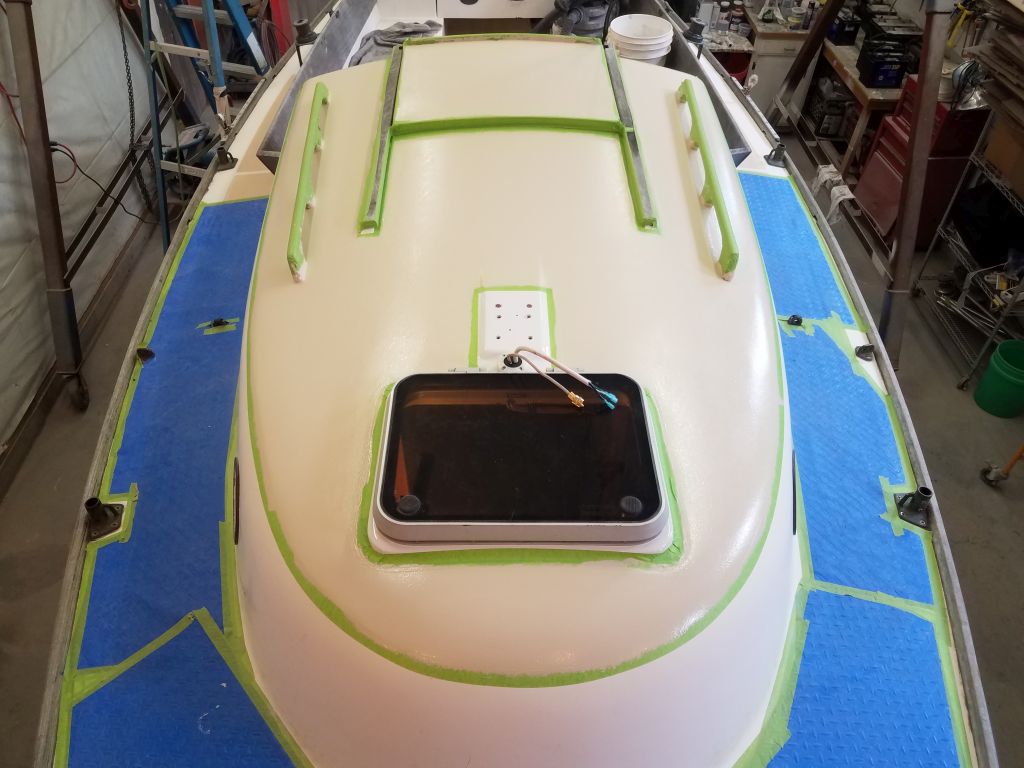
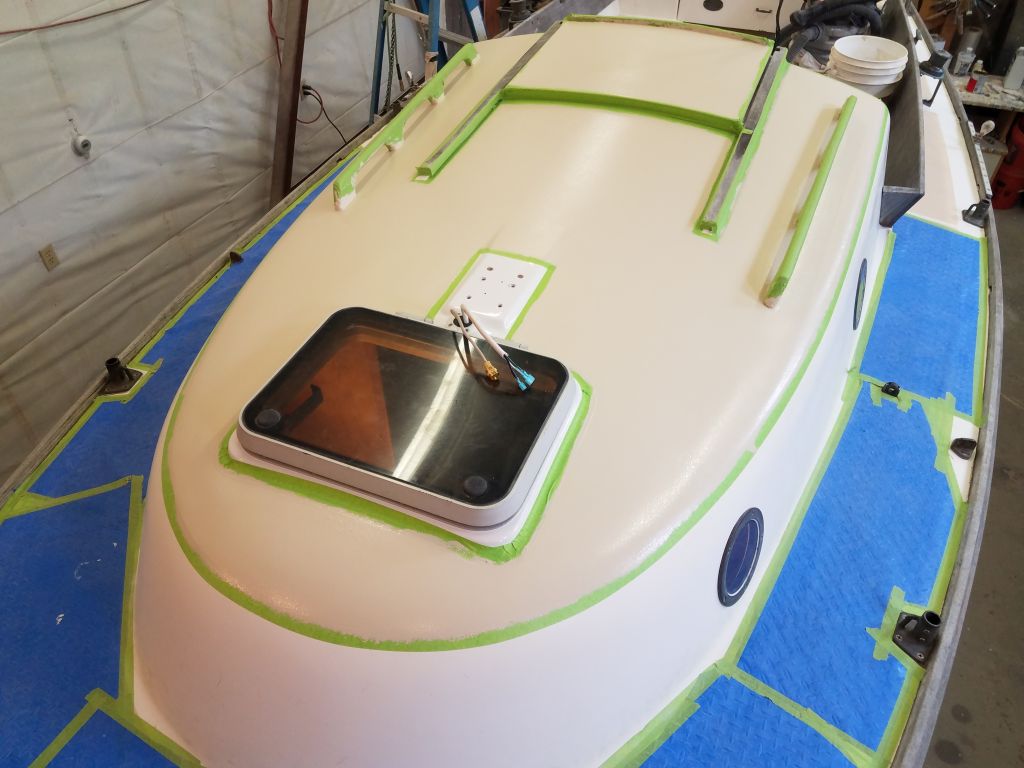
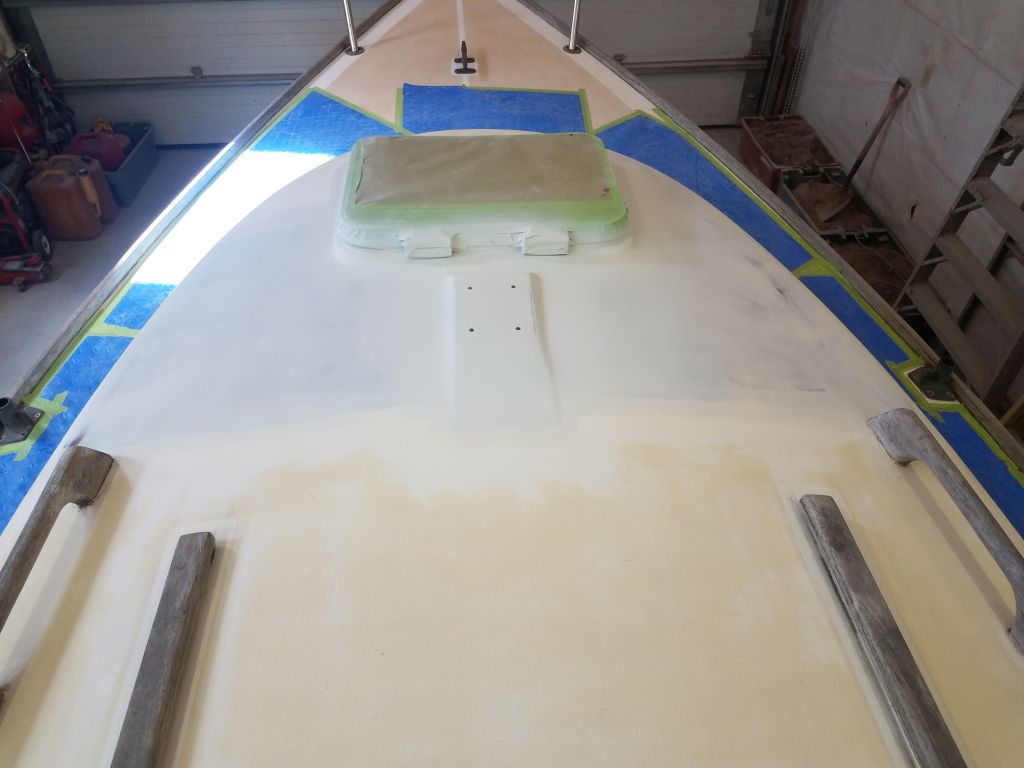
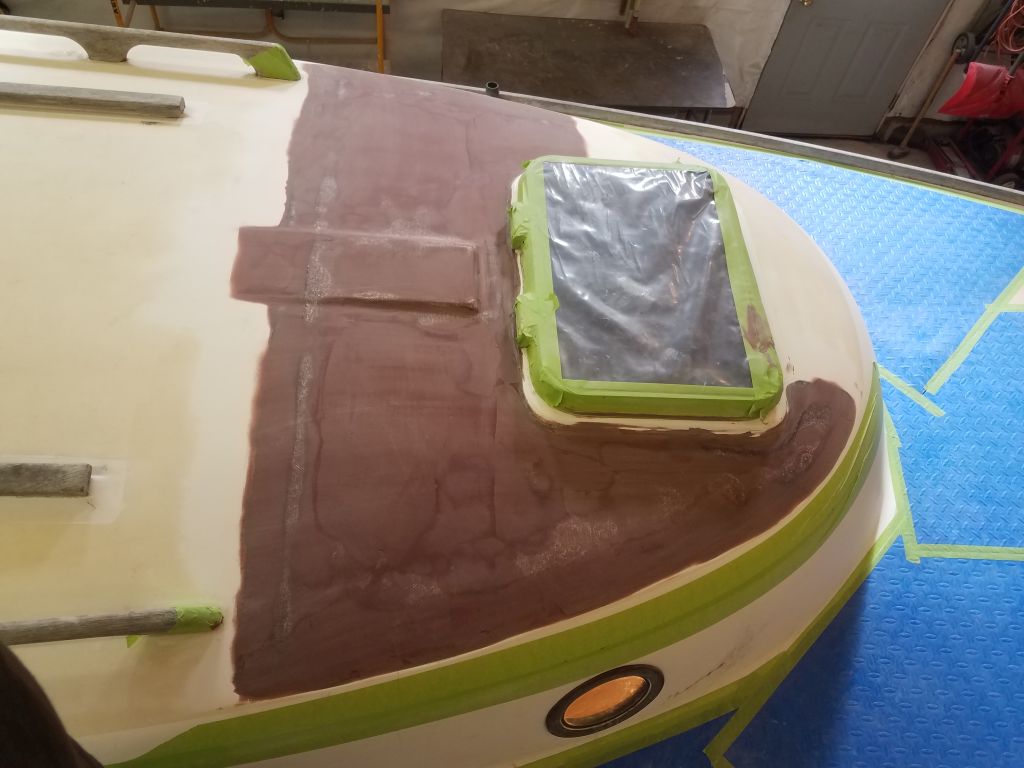
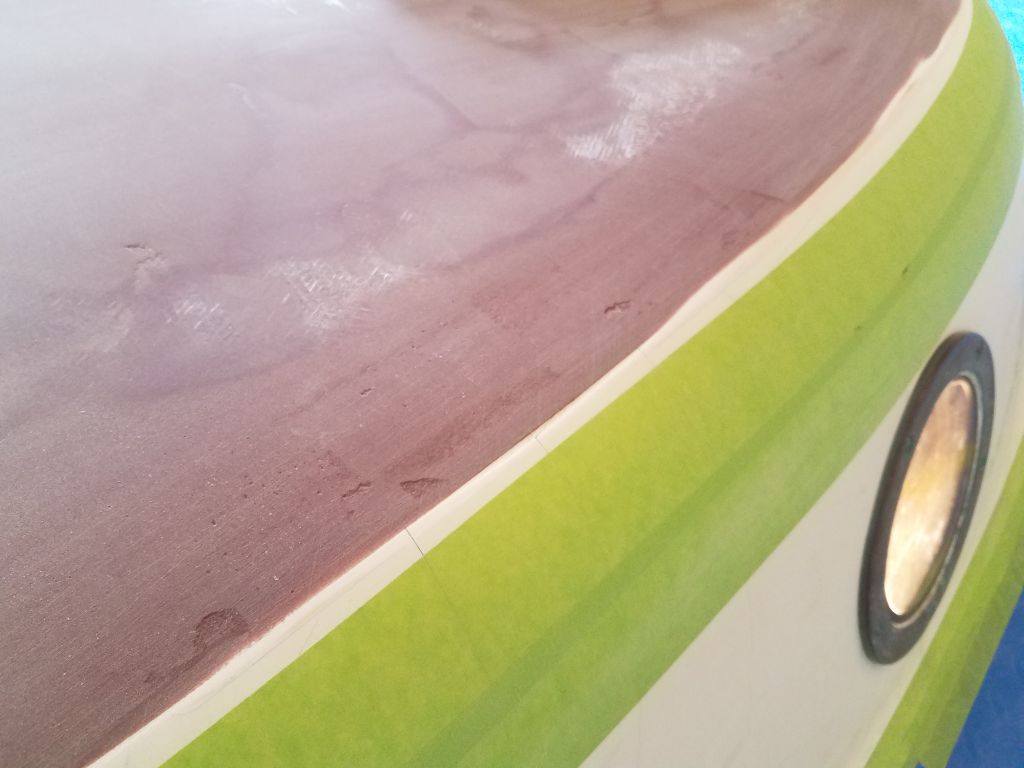
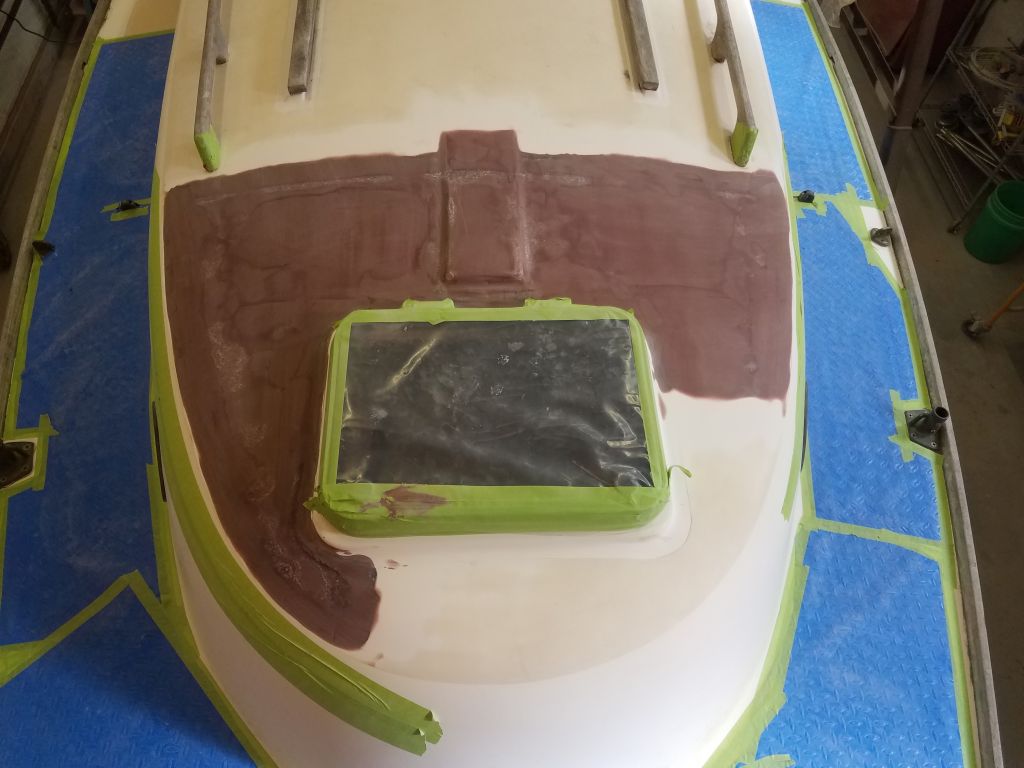
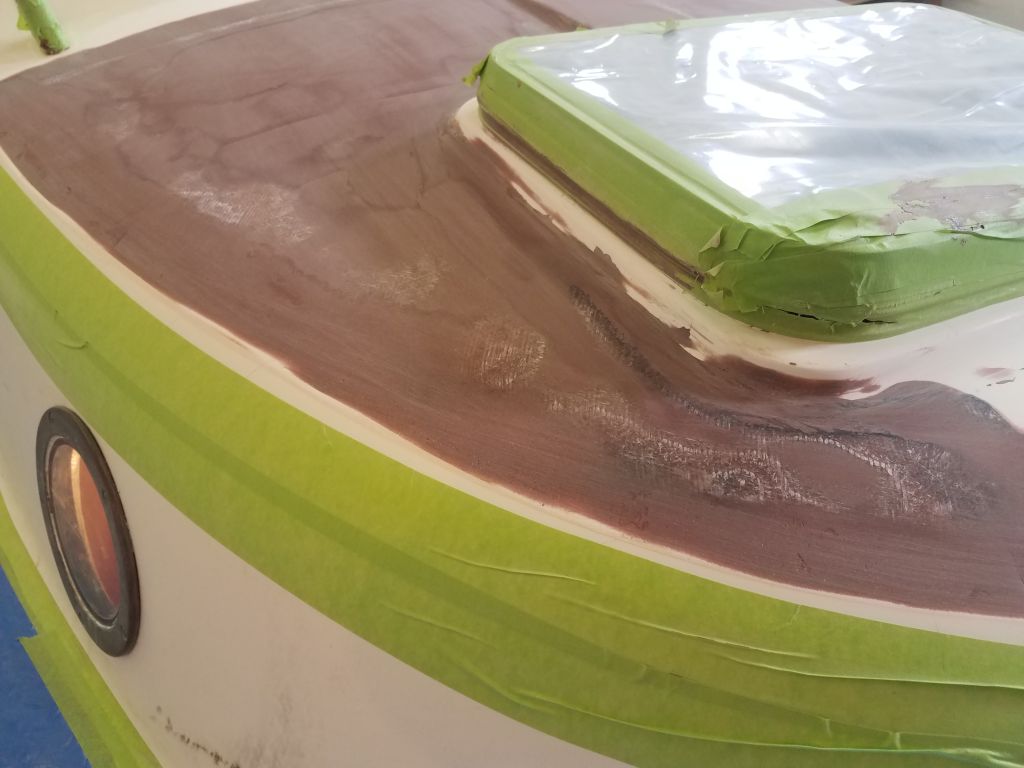
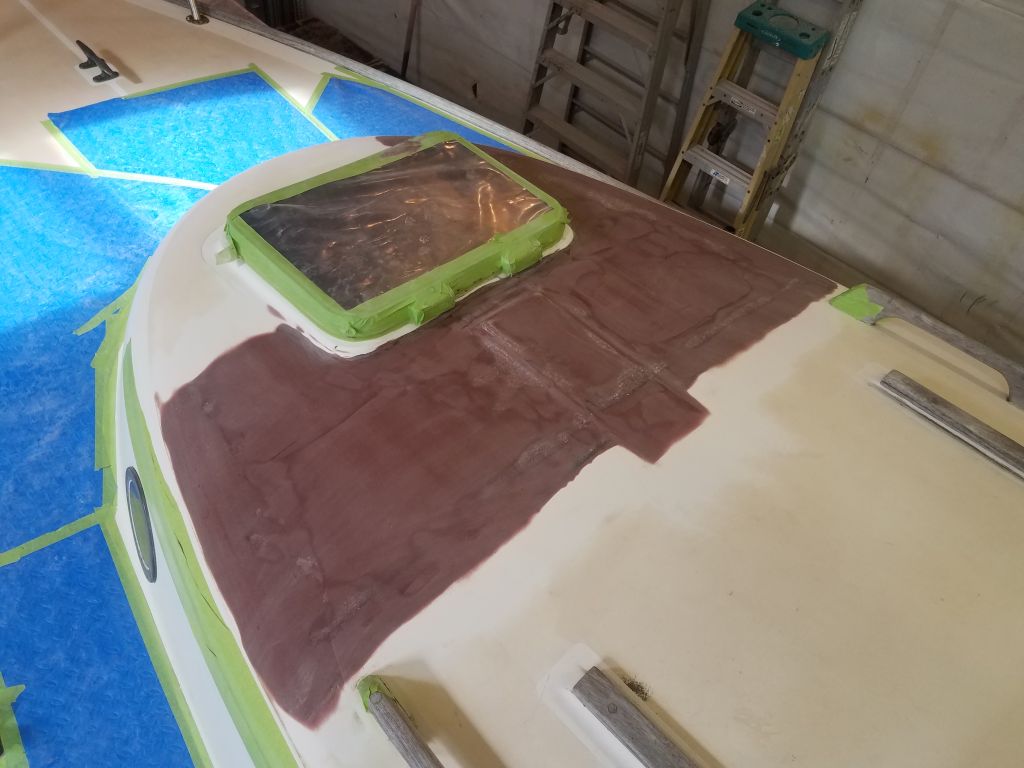
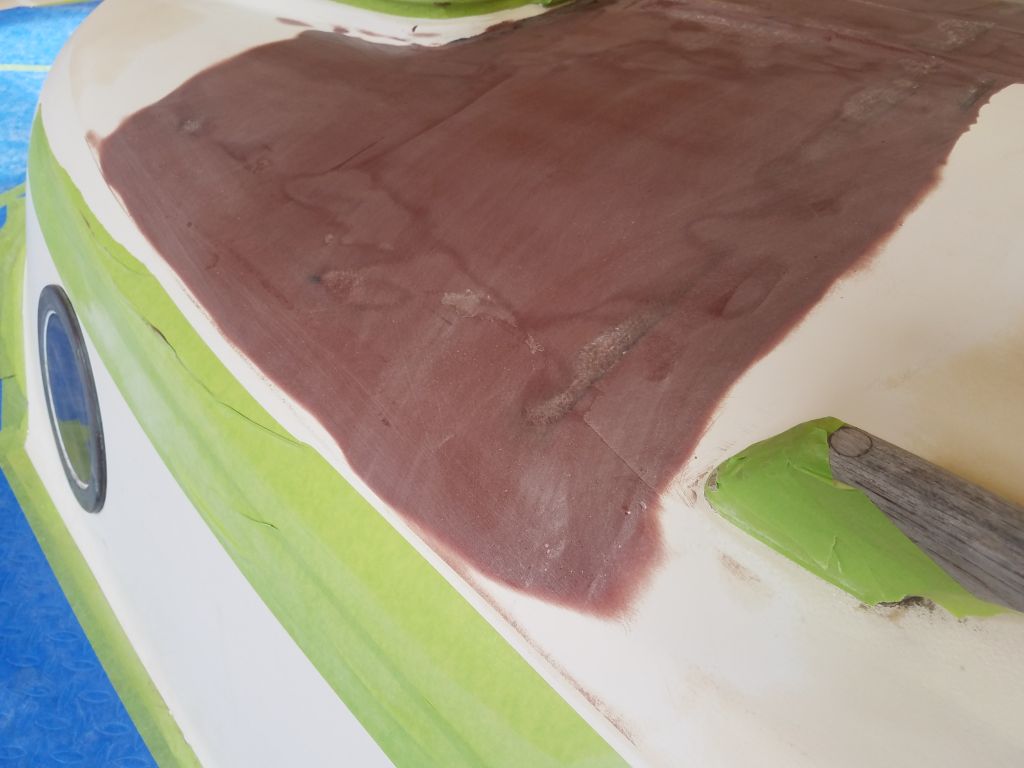
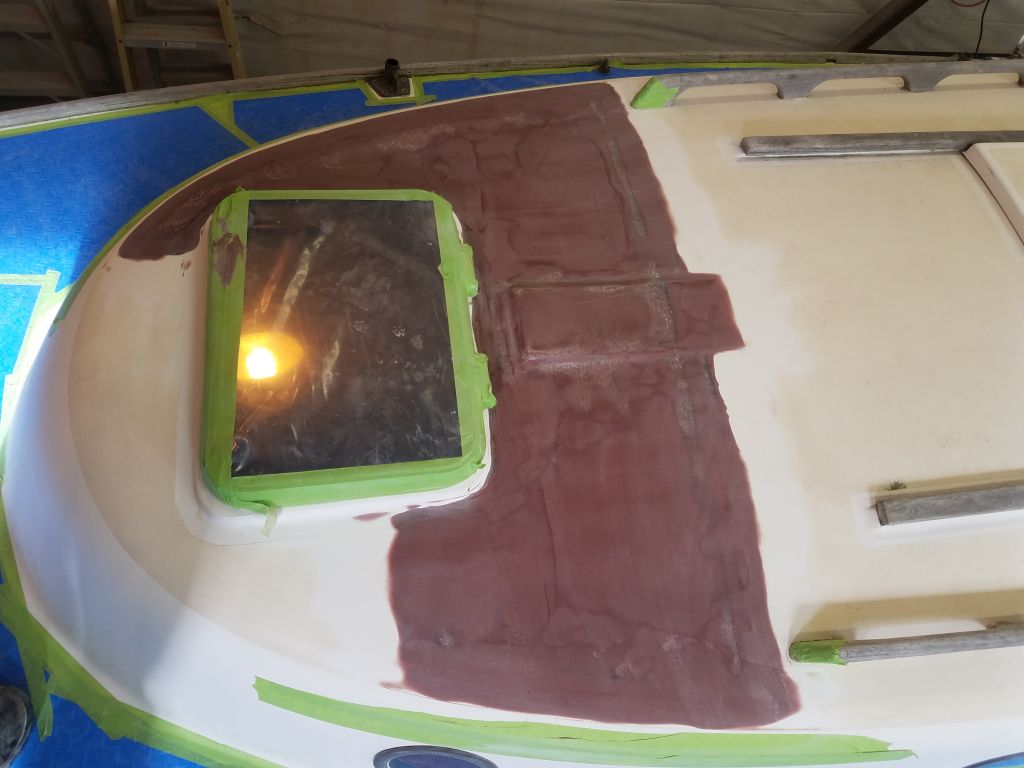
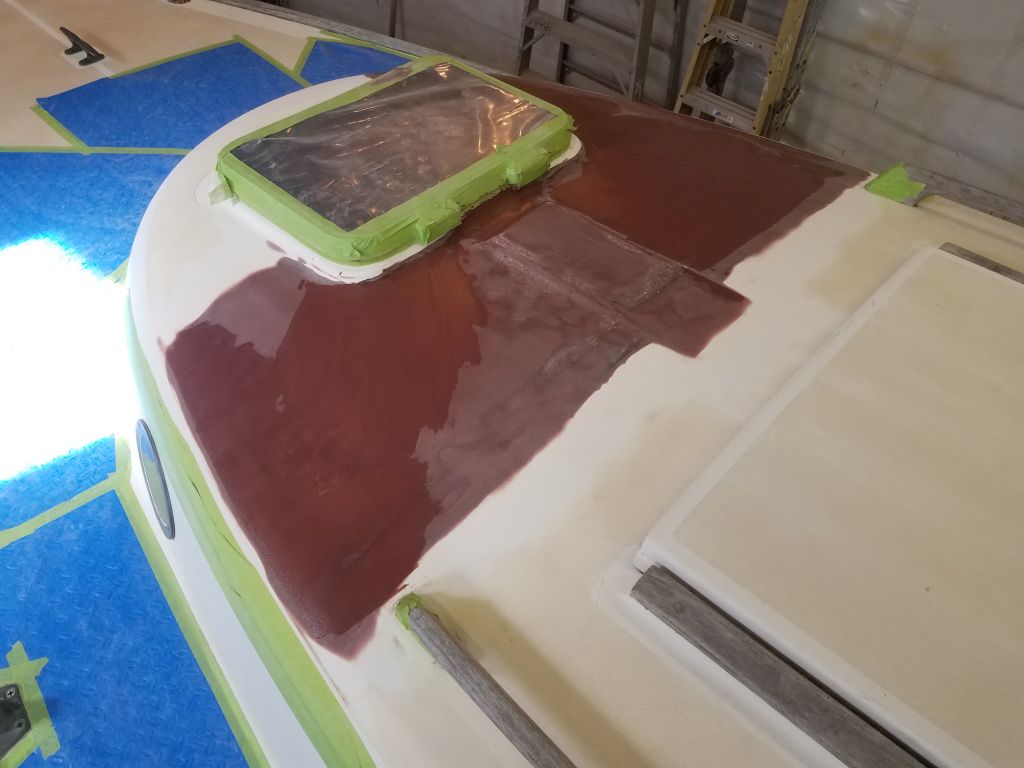
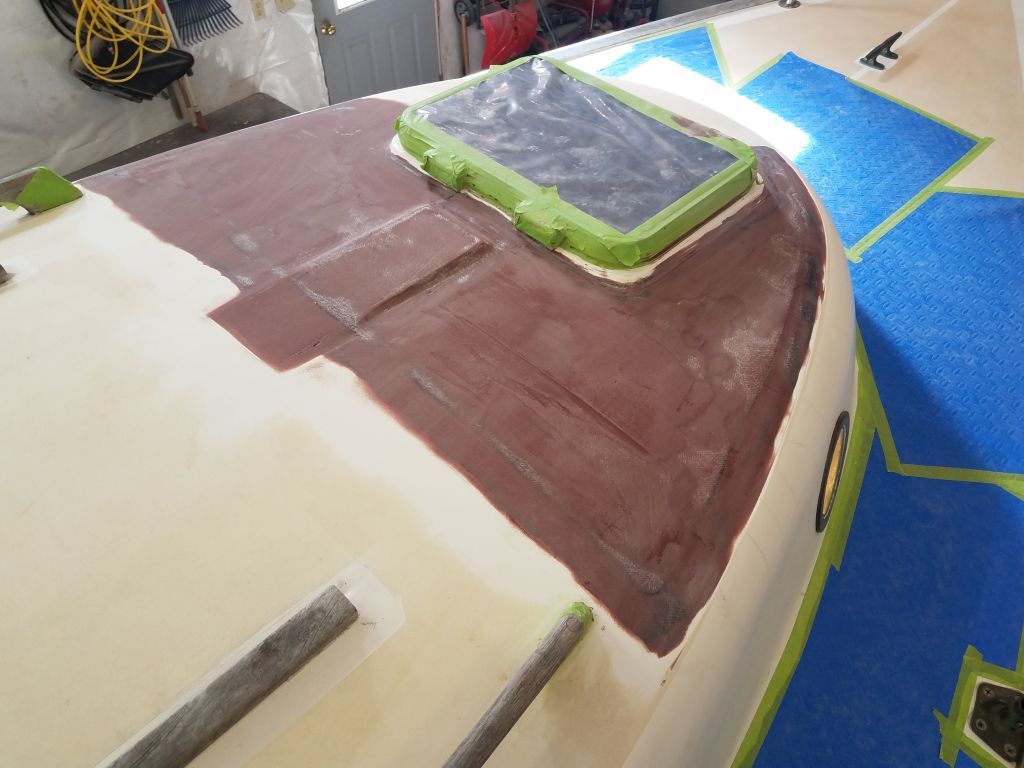
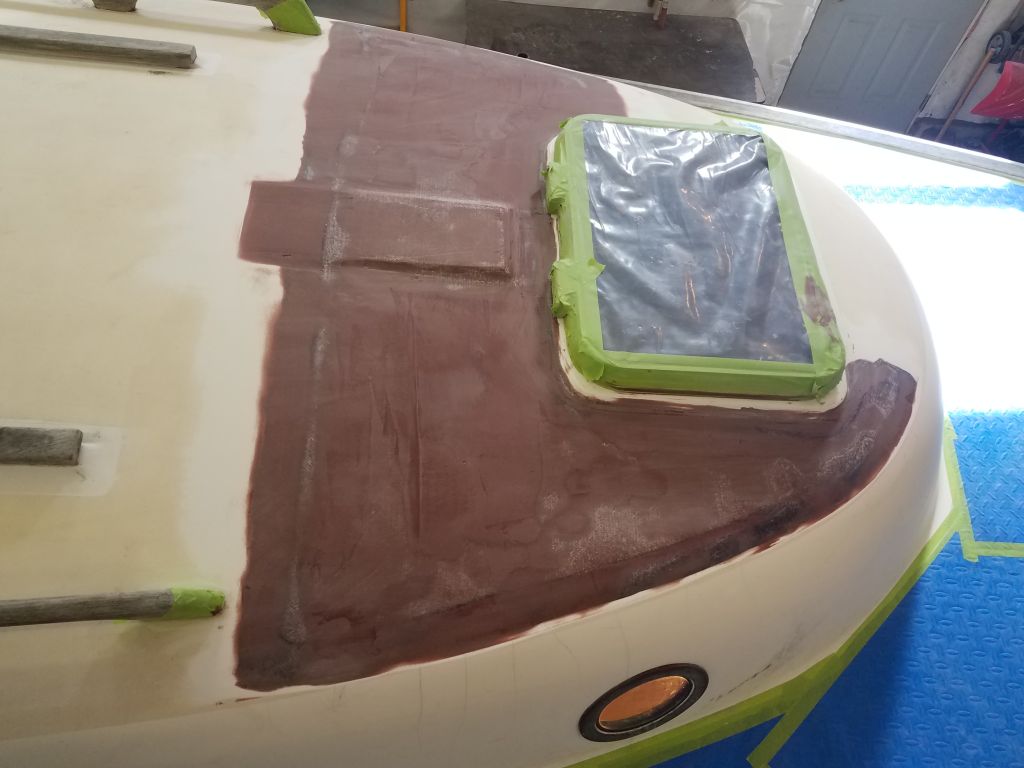
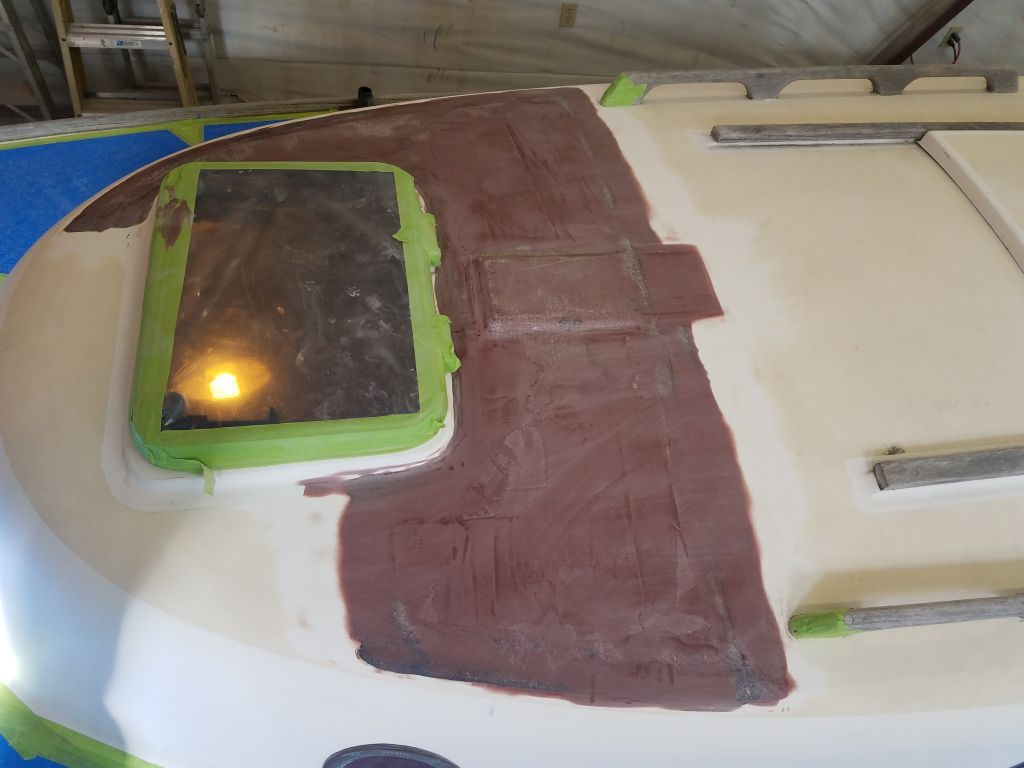
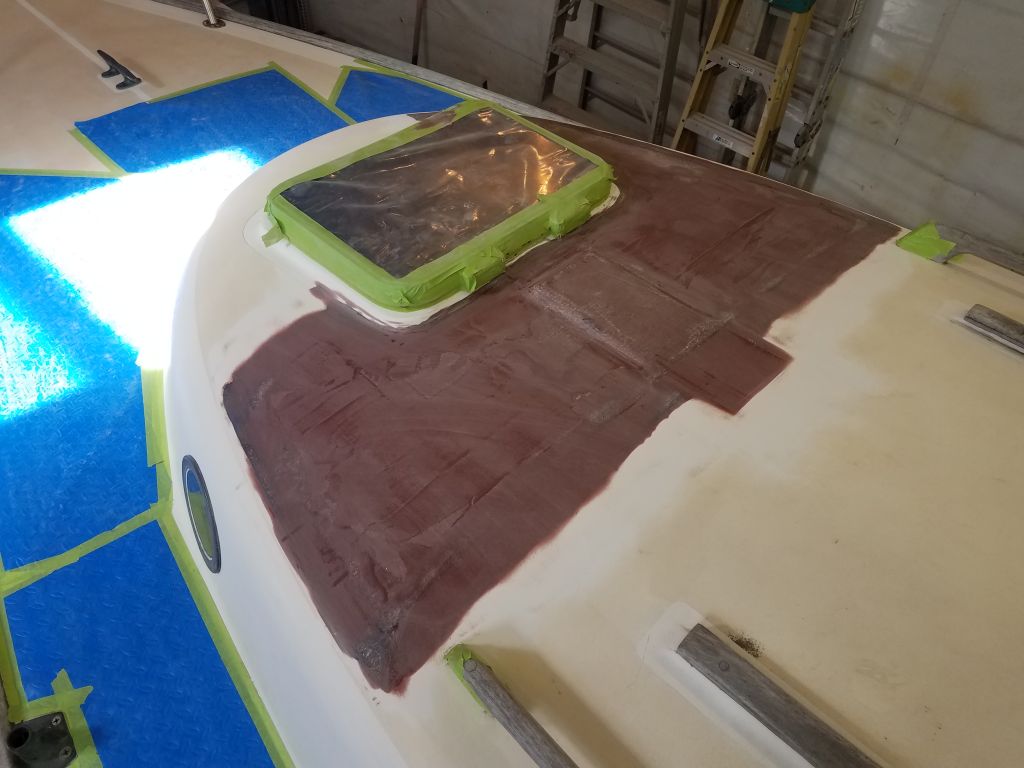
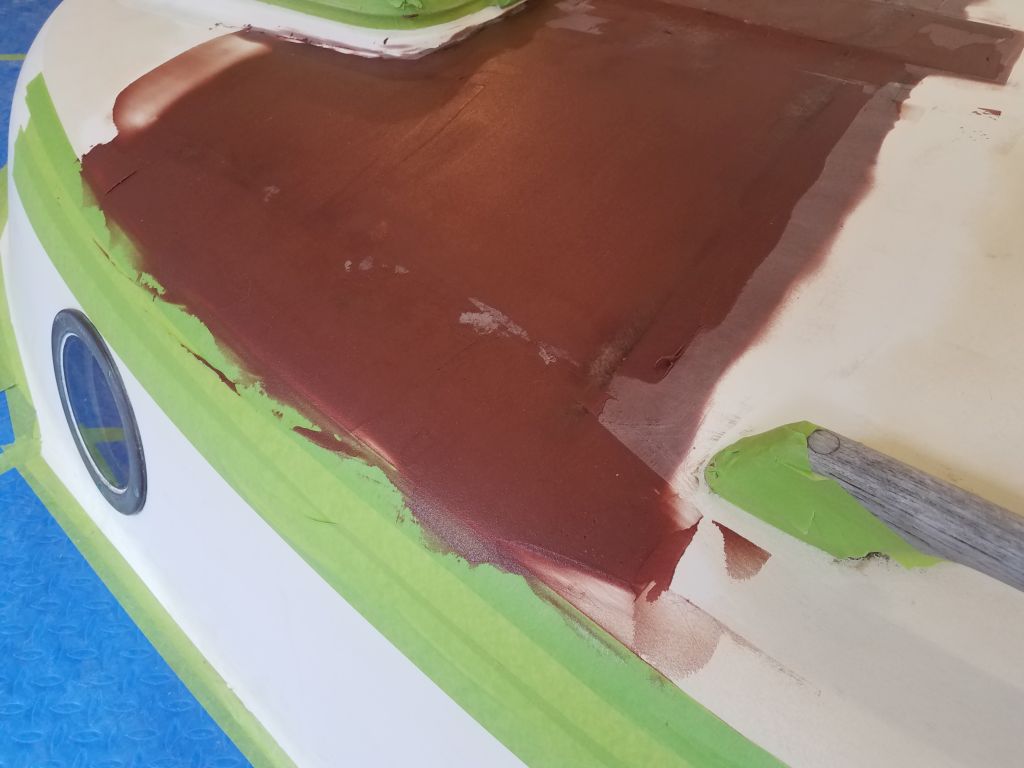
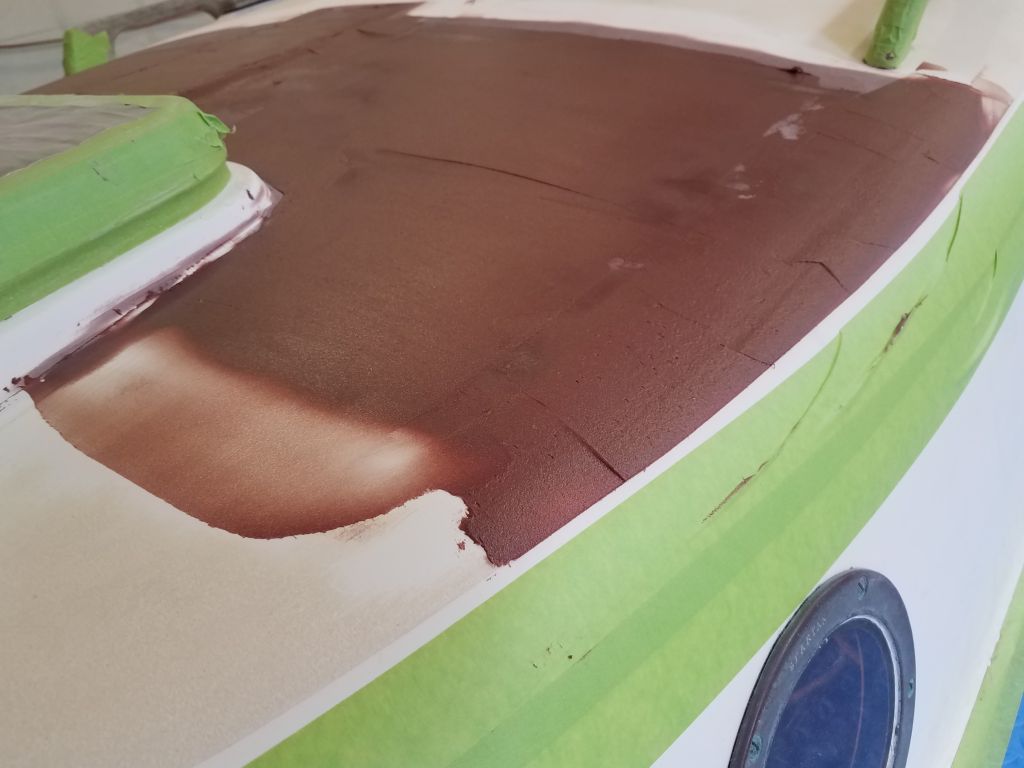
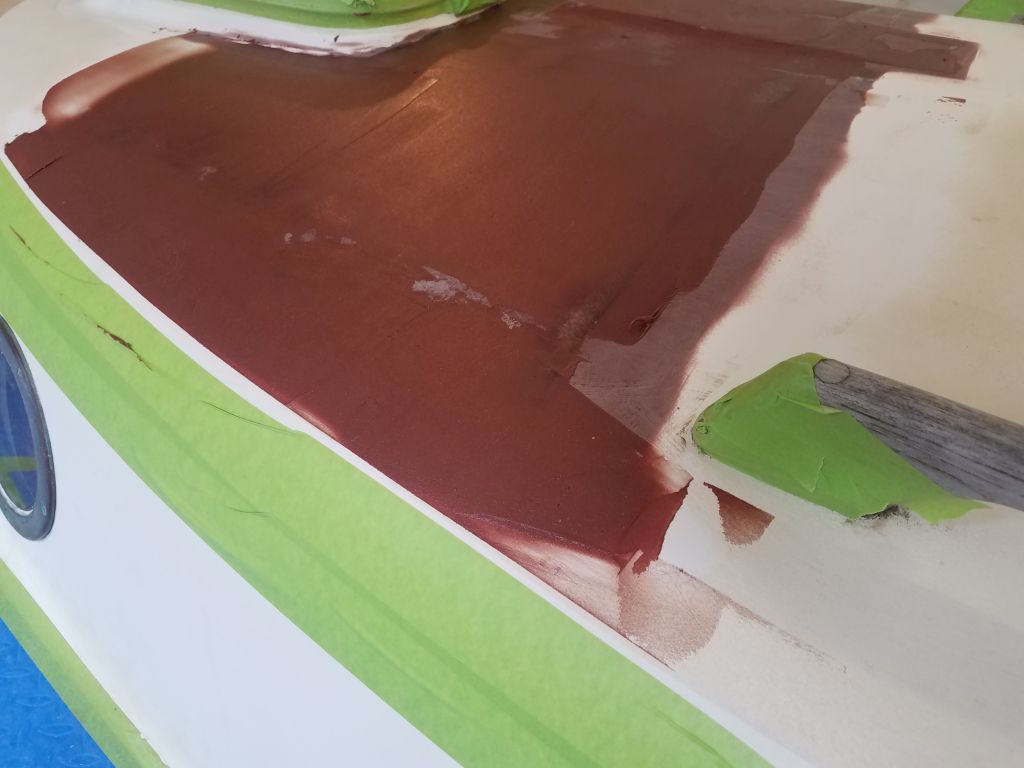
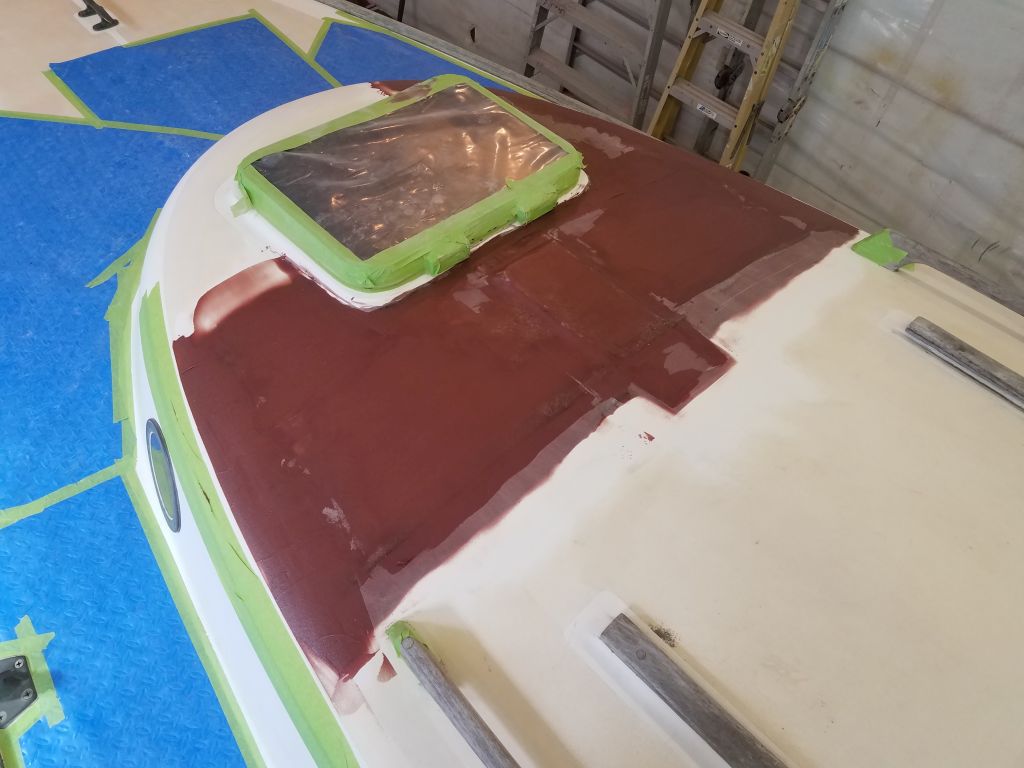
(page 81 of 165)

Adeline 4

Monday

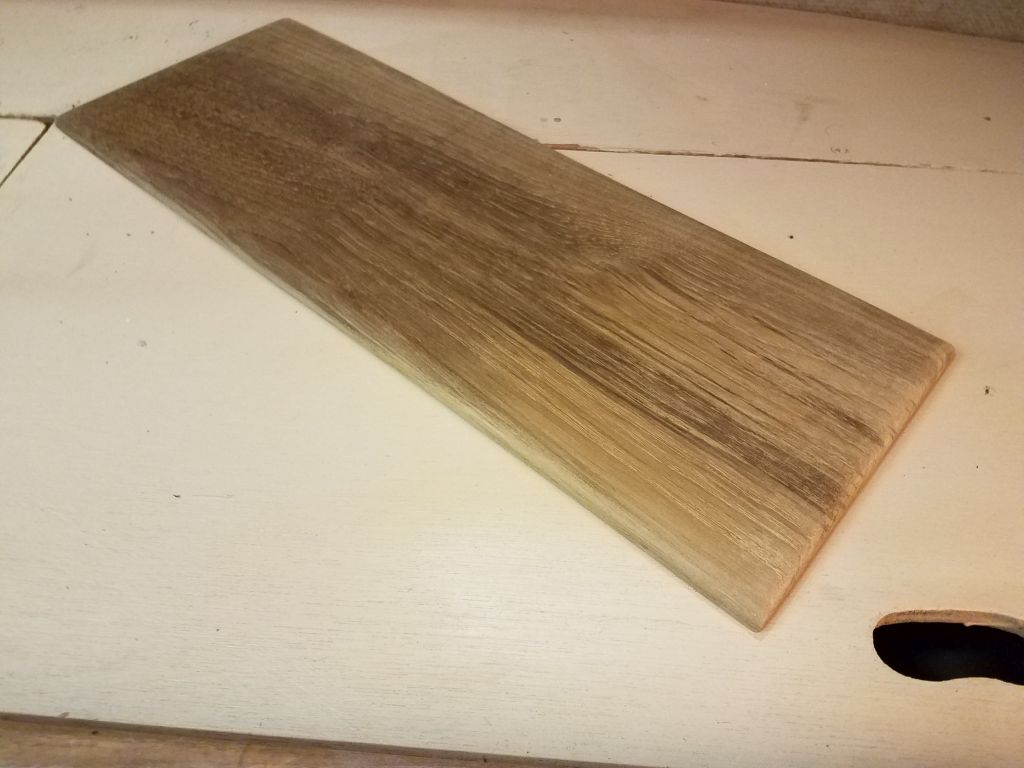
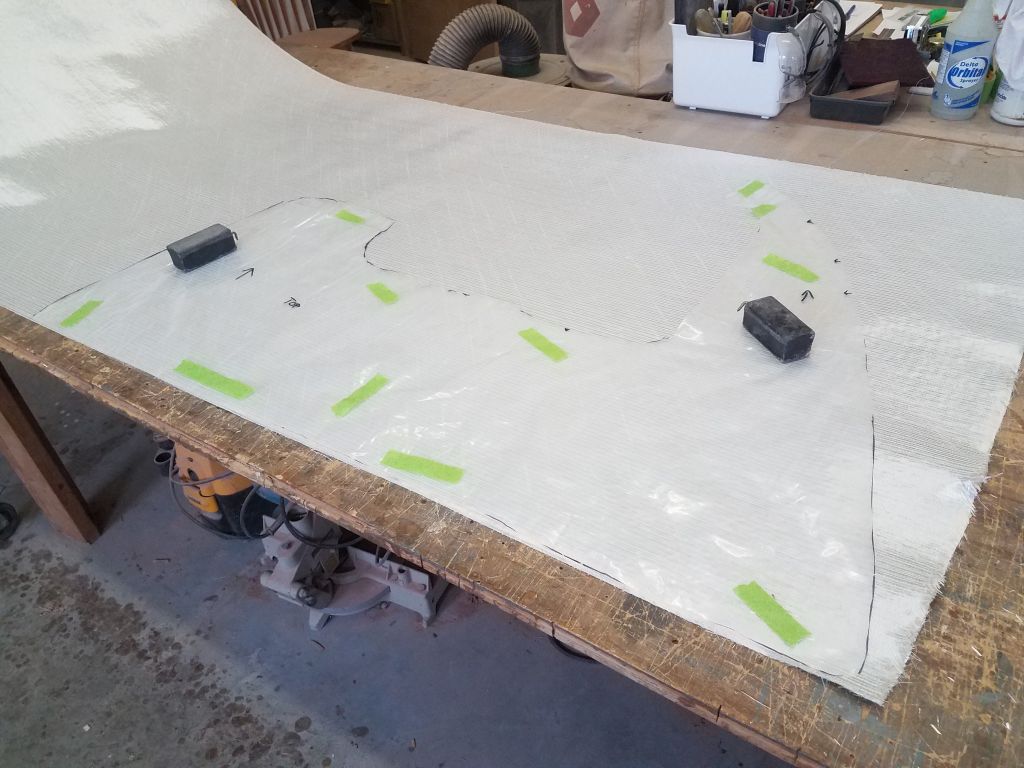
To build the mast beam, I ordered a 36″ long piece of 3/4″ prefabricated fiberglass sheeting for the job.  Since the beam trough had an overall height in the center of 2″ or more, I could use three layers of the fiberglass to create the full beam thickness as needed.  The length of the trough was just over 36″, but since it tapered to nothing at the ends, the 36″ length would work out well.

To begin, after sanding the smooth factory surface on both sides of the raw material, I cut a 6-3/4″ wide strip of the fiberglass as needed to fit within the trough.  A test fit showed that I needed to slightly ease the bottom corners, since the corners of the molded trough were rounded, and afterwards the blank fit properly and sat more or less flat on the bottom of the trough.

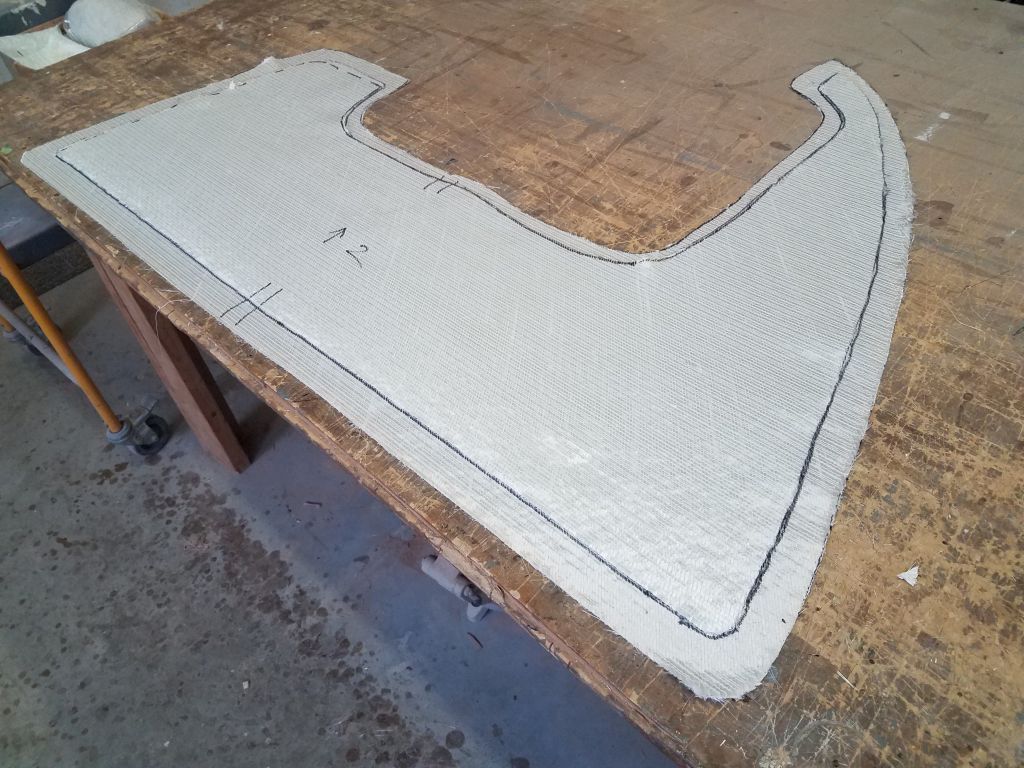
Each piece of fiberglass would require shaping at the ends to accommodate the deck camber and changing depth of the trough at the outboard ends, so I marked the blank on each side at the ends, following the curve of the deck’s inner skin.

In the bench, I used a grinder and belt sander to remove the excess material, after first connecting the marks with a ruler to give me guidance on all sides as I ground away the excess material from each side, creating an angle that corresponded to the shape of the deck.

I measured the length of the flat part of the first piece, then cut a second layer to that measurement (26″).  With the second layer atop the first, I repeated the marking and shaping process.  I didn’t try to shape these pieces to a razor’s edge at the ends of the tapers, partly because it was a substantial effort to remove the excess material to begin with and I saw no reason to do more work than necessary; and also because I intentionally kept the heights of the new beam just slightly below the adjacent decks, since I did not want the rock-hard beam to end up higher than its surroundings.  Instead, I planned to make up any slight height differences with some strengthened epoxy during installation.

After some eyeballing and measuring, I determined that I could use one more layer of the 3/4″ fiberglass for the top and center section without needing to remove too much material to make it work.  I didn’t want the center of the new beam to end up higher than the surrounding inner deck skin, nor did I want to have to remove too much material from the raw stock, but since the overall depth of the beam trough was over 2″ at centerline, it ended up that I needed only to remove about 1/8″ of height from the whole piece, in addition to the curved tapers on each end.  This was a do-able prospect.

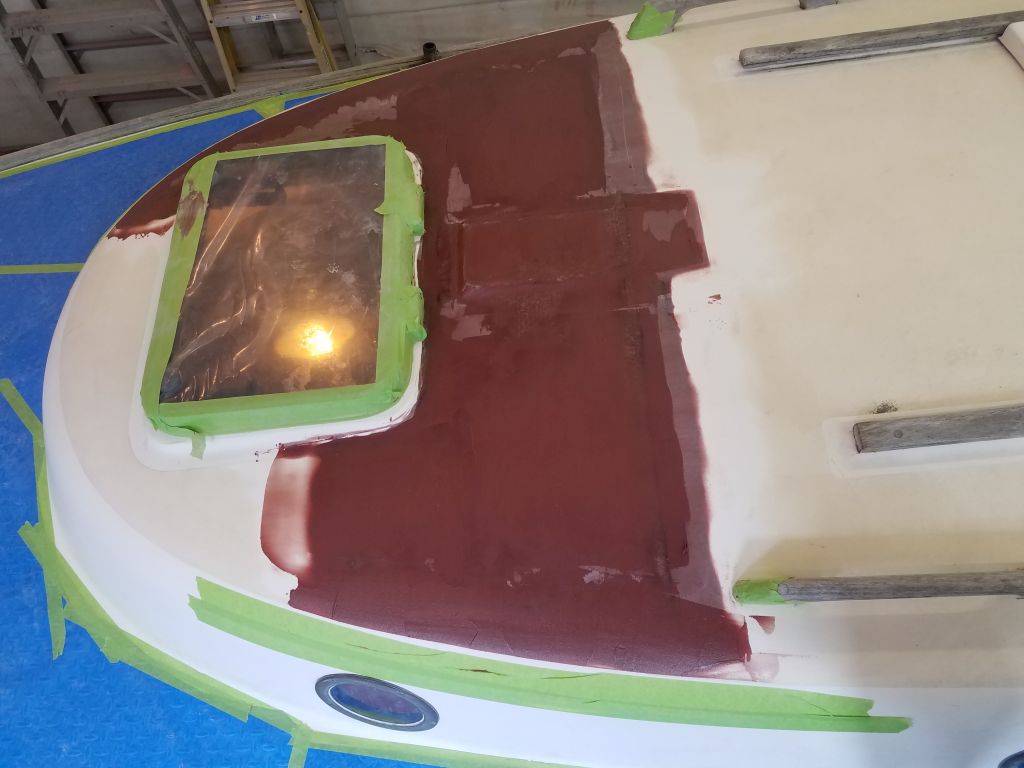
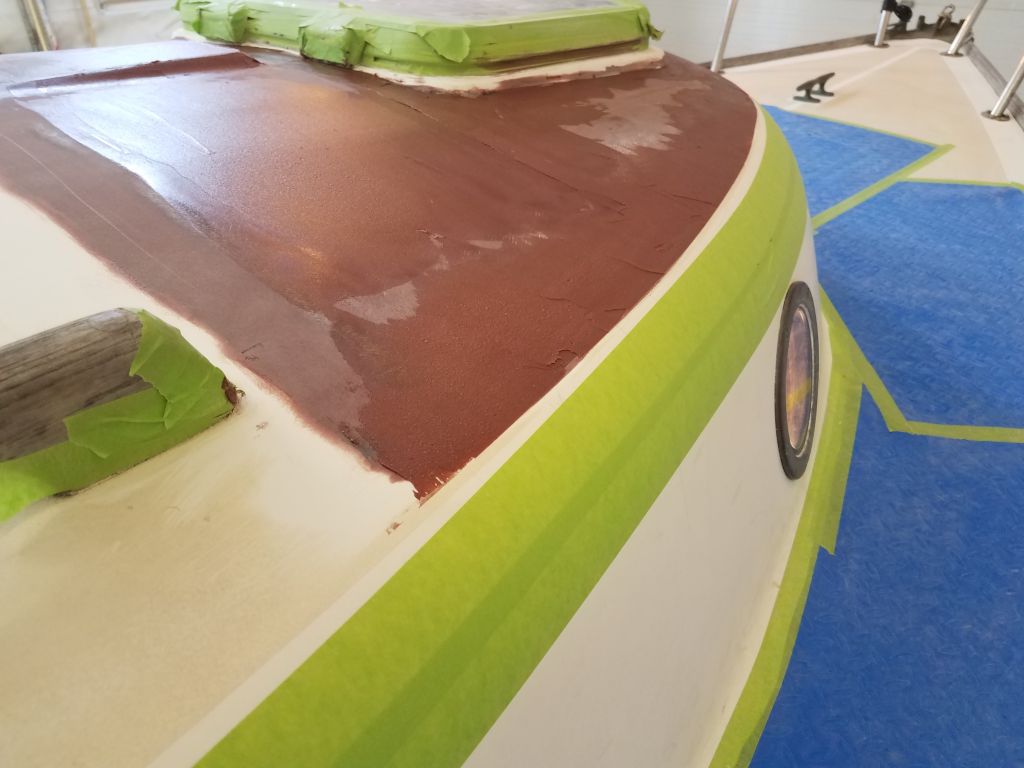
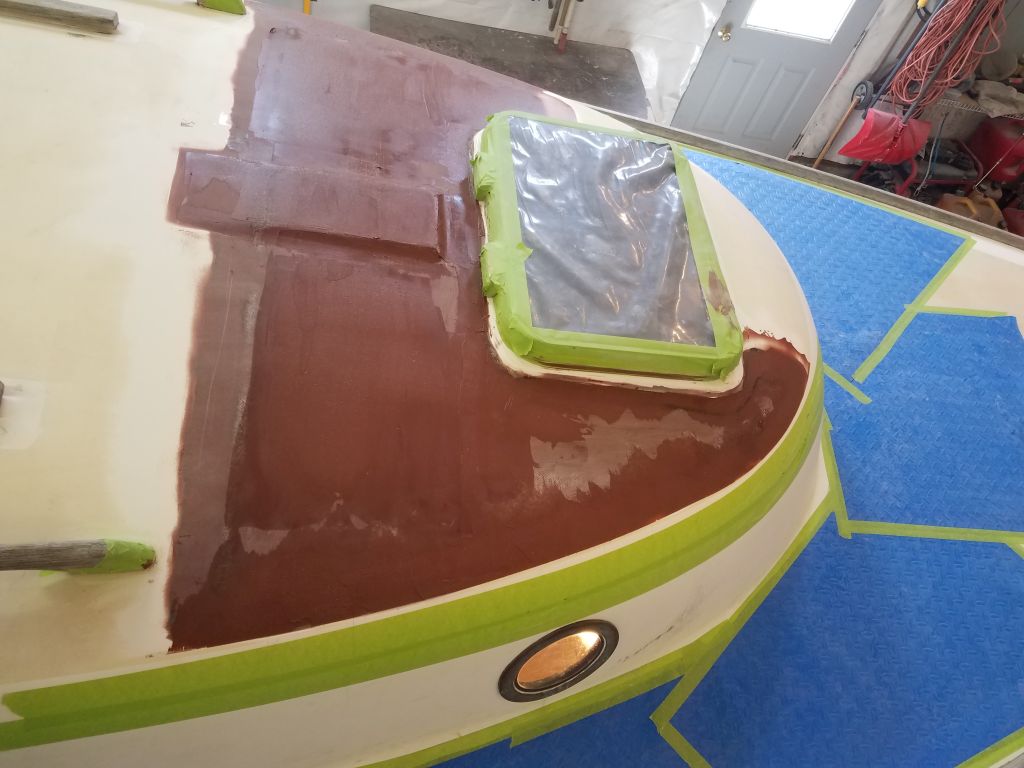
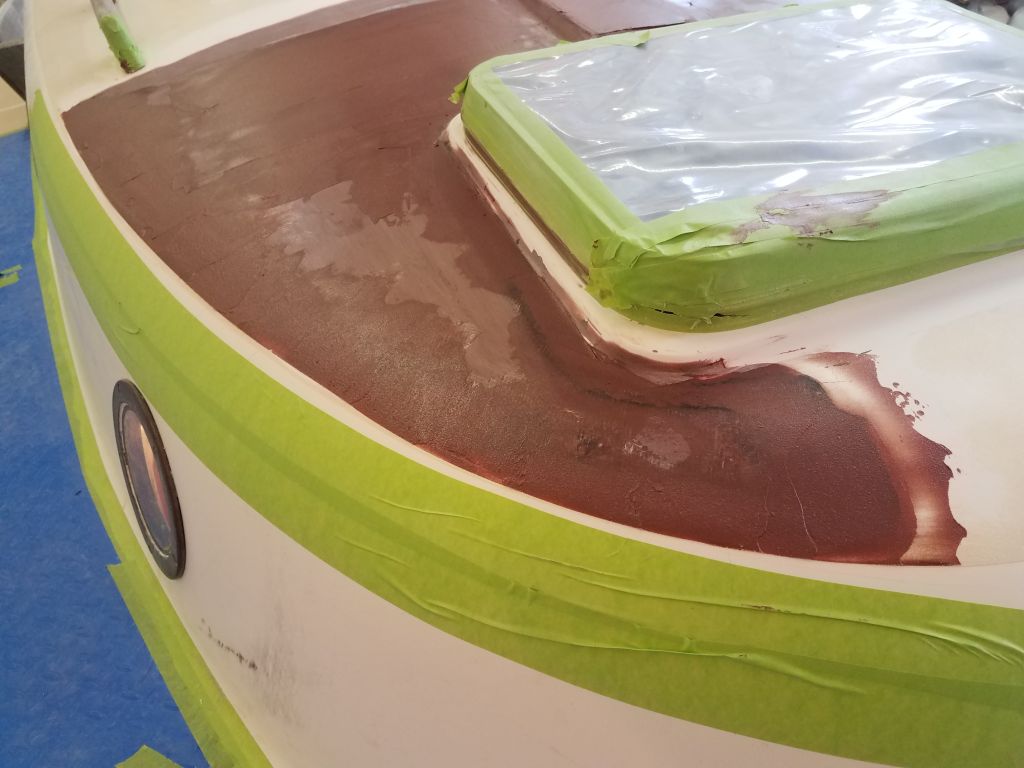
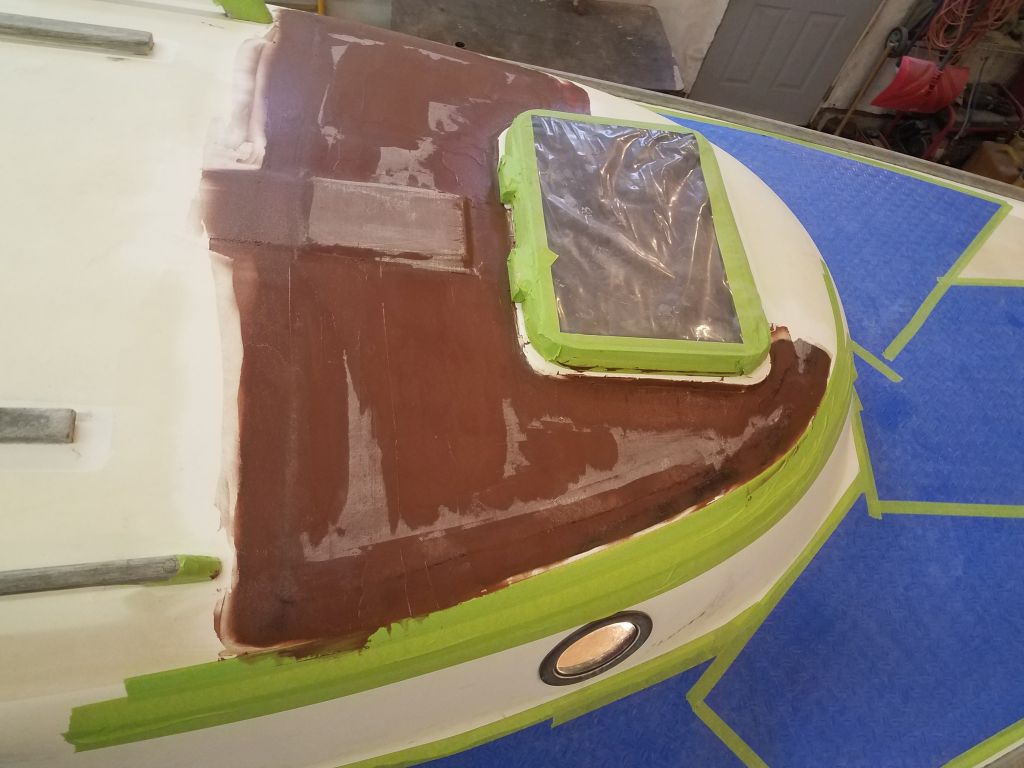
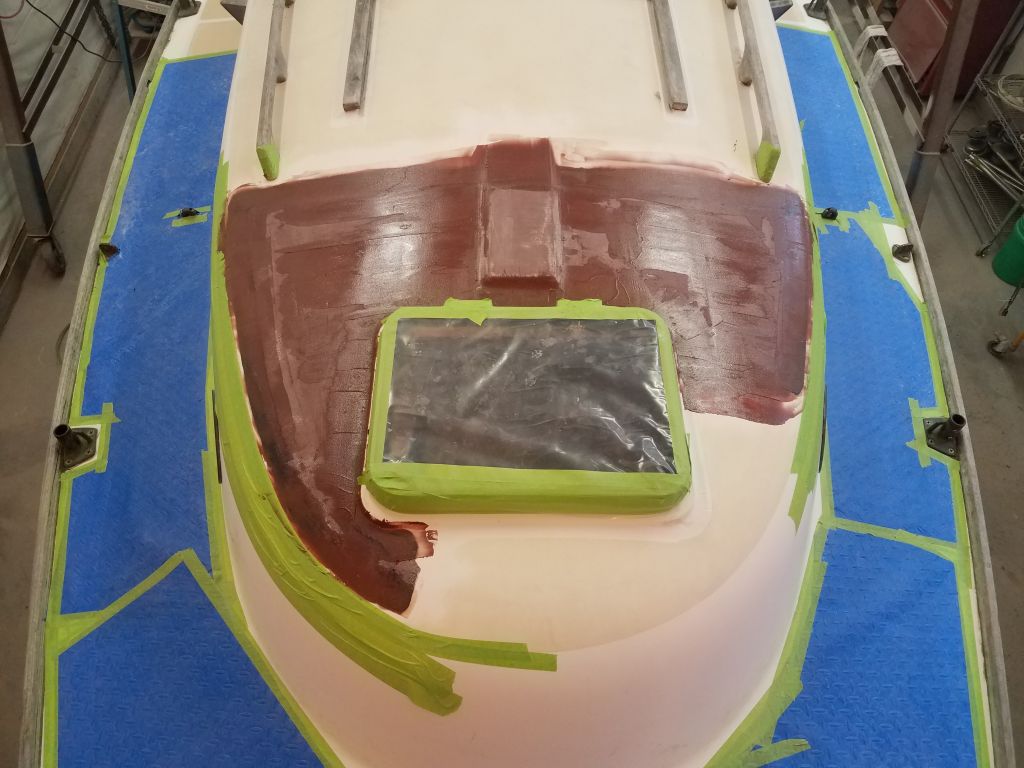
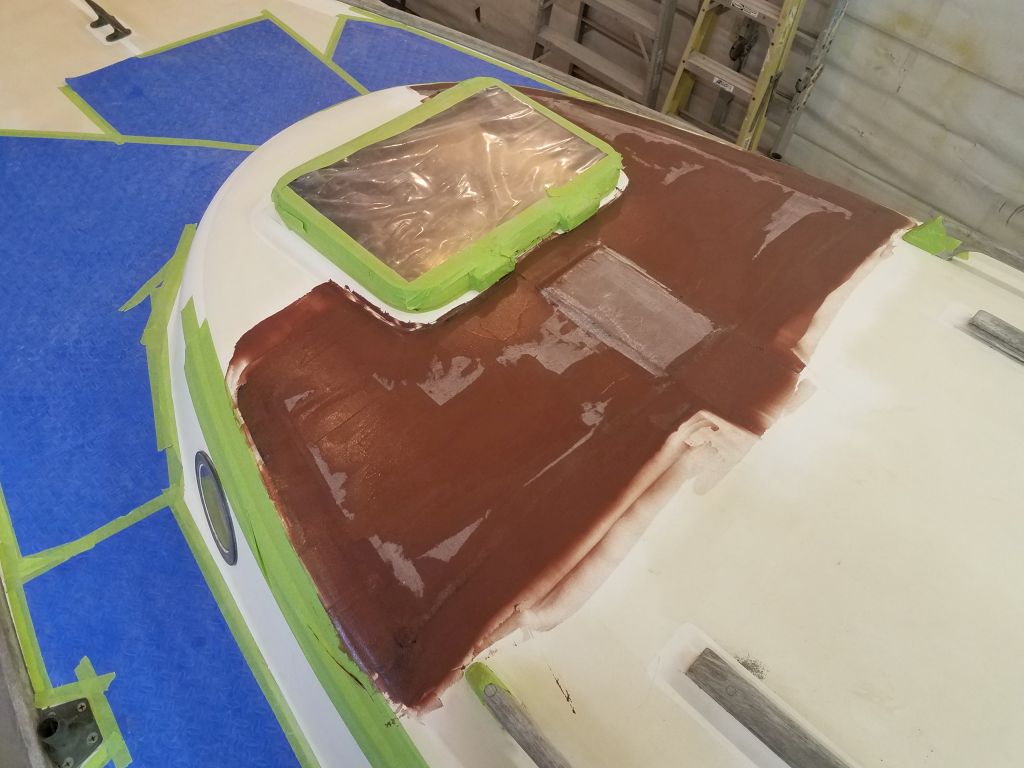
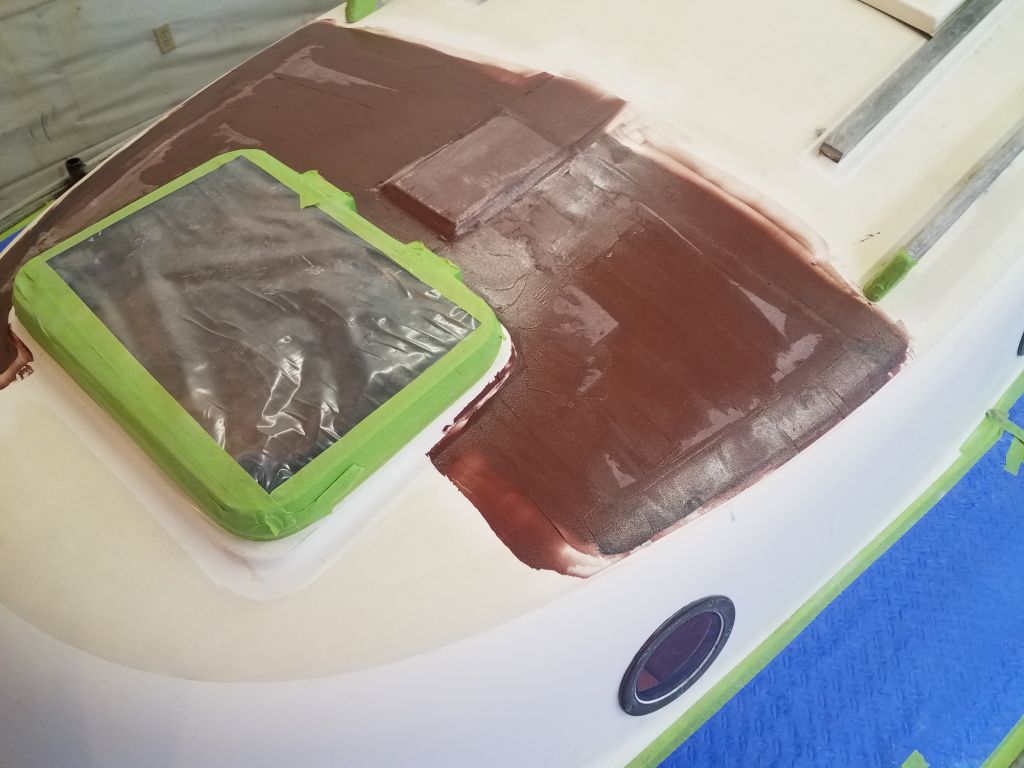
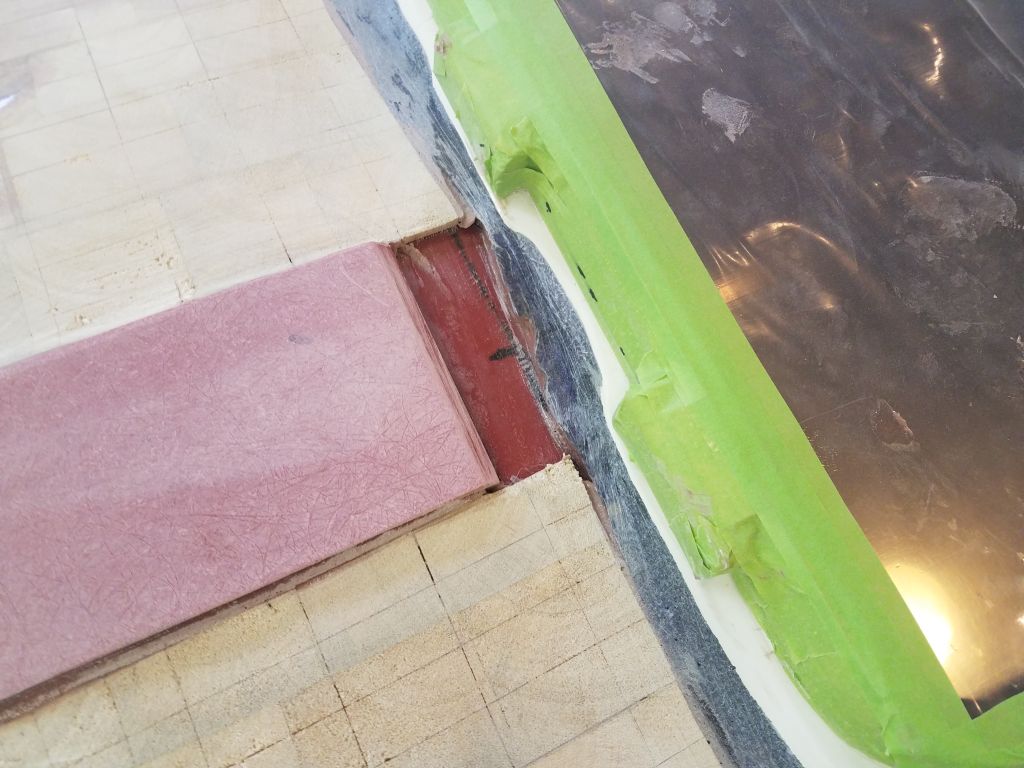
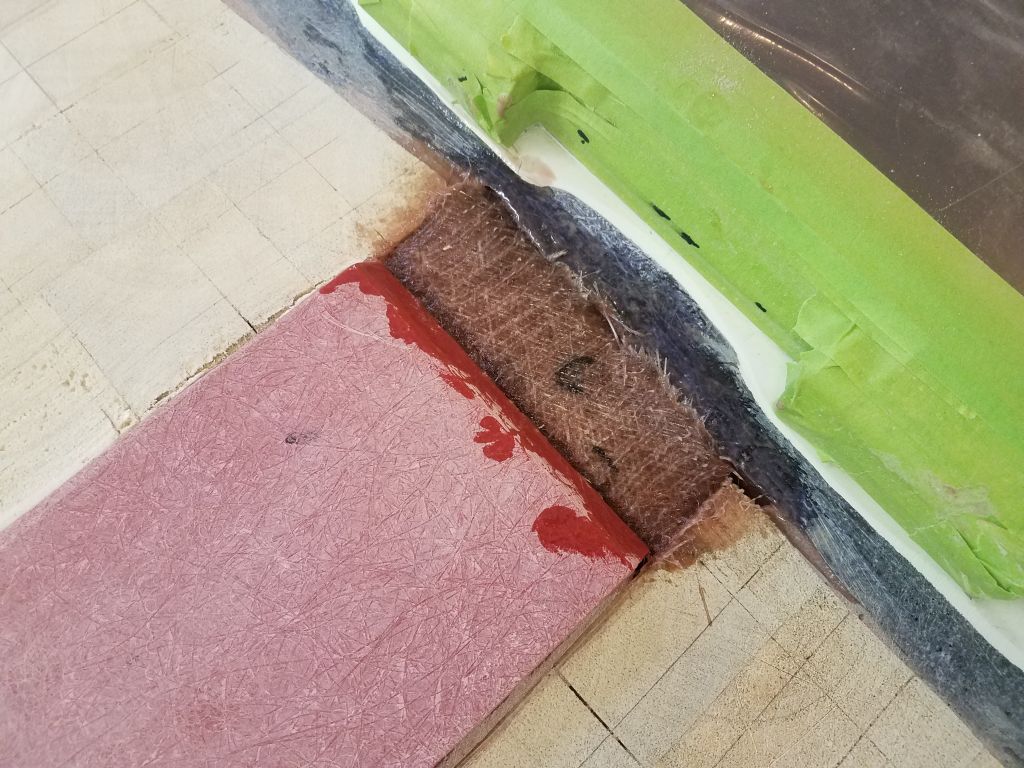
This is how the three sections looked when stacked up on the bench.

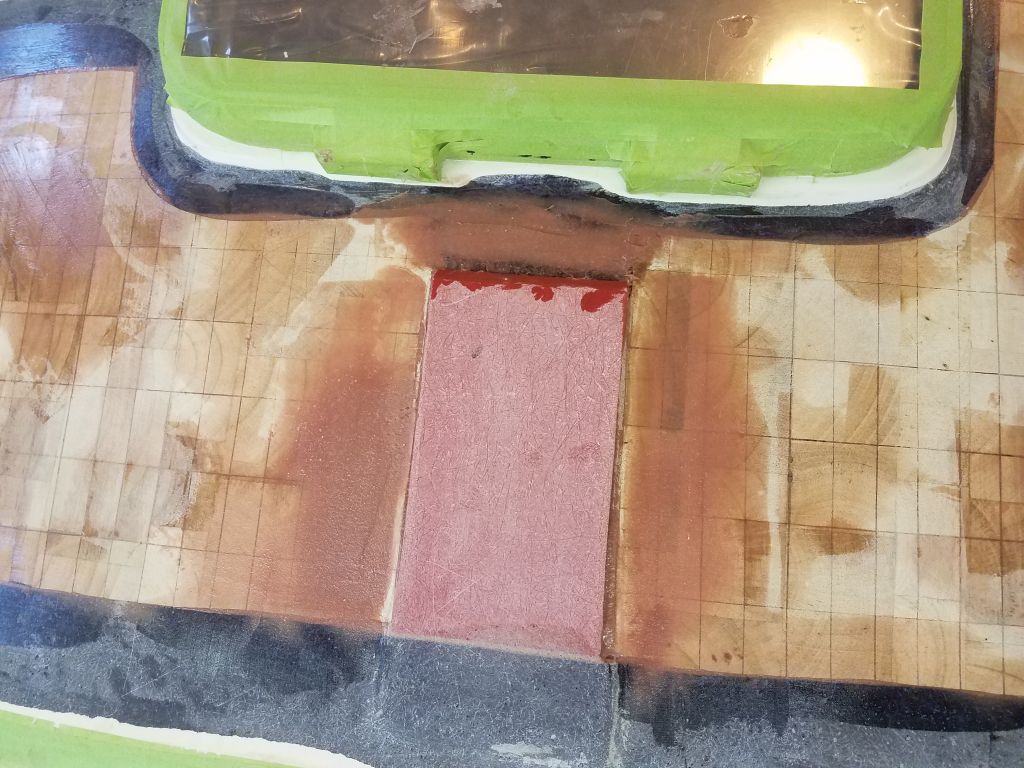
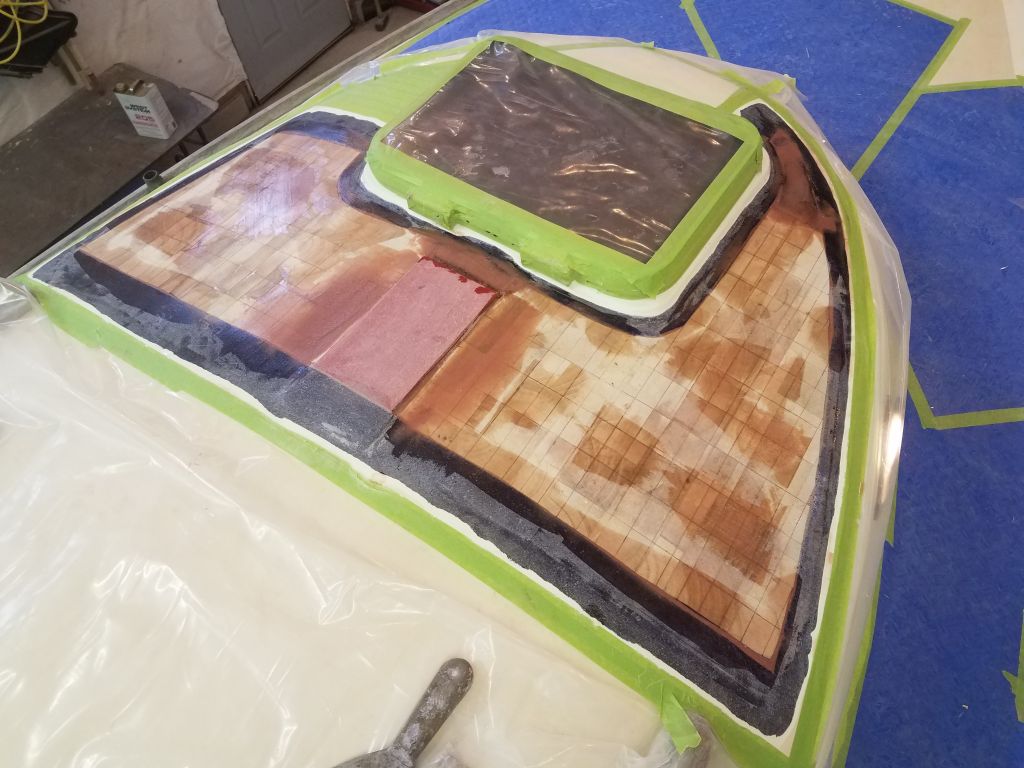
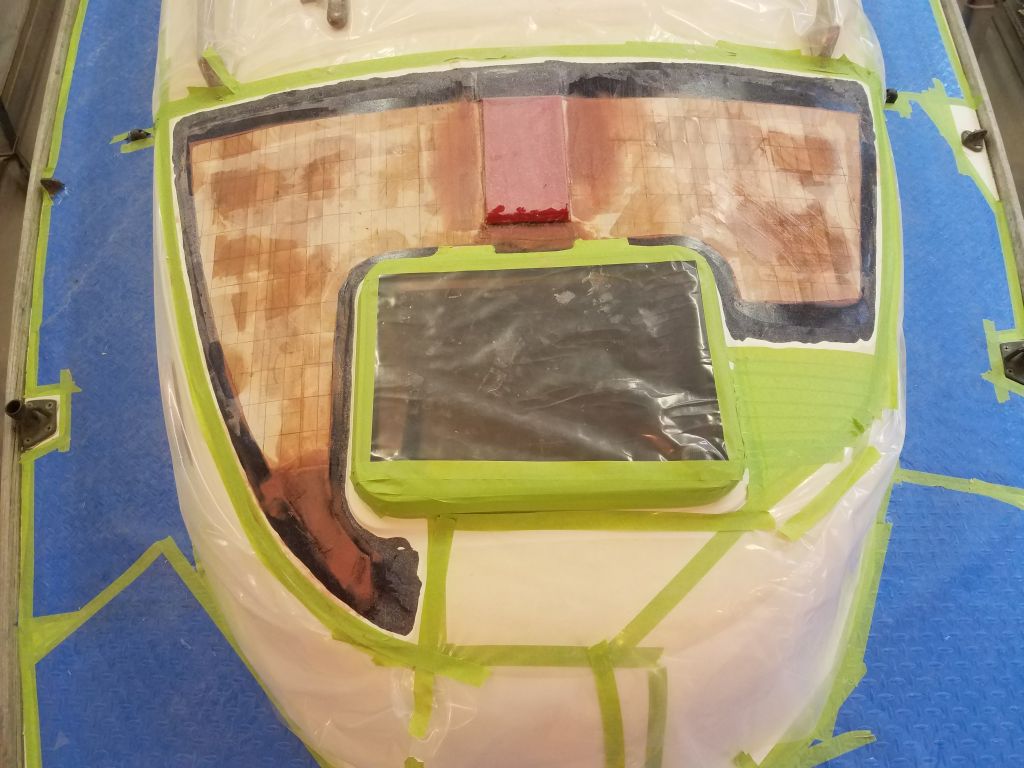
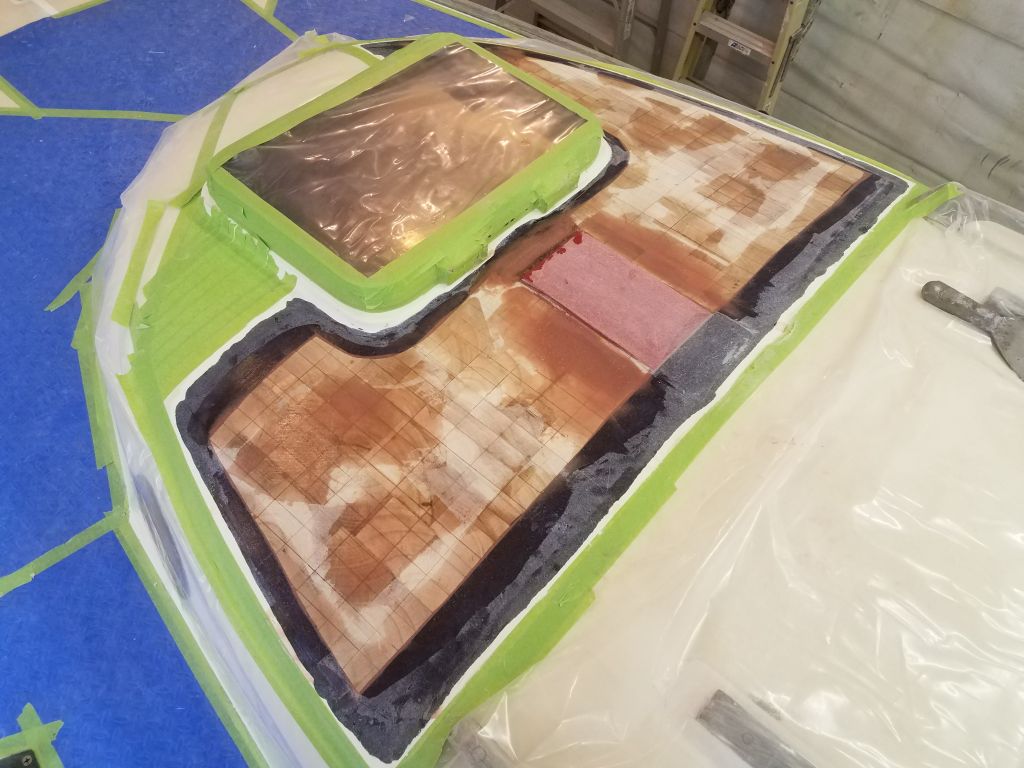
After final cleanup and surface prep, I installed the new beam, one layer at a time.  The messiness and time-sensitive nature of this work, as usual, obviates step-by step photos.

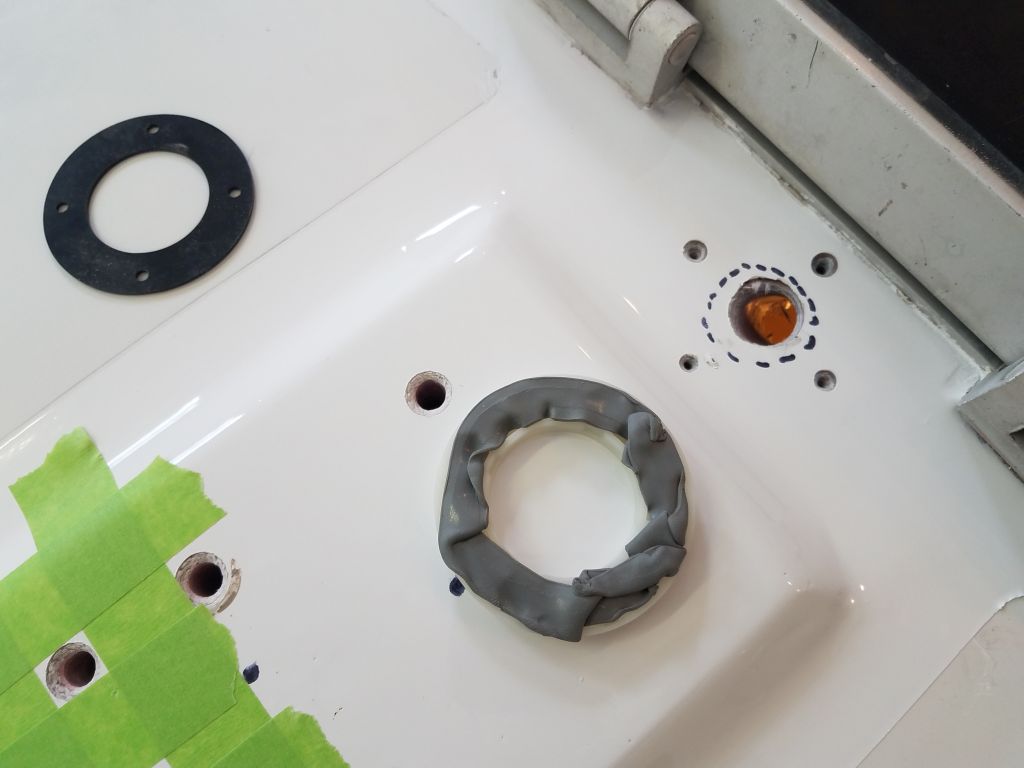
I began with an epoxy coat over all interior surfaces of the beam trough, and used some thickened epoxy to fill a few places where the drill bit I used in the early stages of the old beam’s removal had slightly run into the bottom of the trough.  I also masked over from inside the mast step bolt holes and the old wiring holes, to prevent epoxy from spilling through these openings during installation.

After wetting out the underside and edges of each beam section, I installed them in epoxy adhesive thickened with high-density filler and cabosil, using a notched trowel to apply the adhesive and leaving plenty of extra along the vertical edges to fill the small gaps.  Once the top section was in place, I used a thickened  epoxy mixture strengthened with choppings to finish off the top shape of the beam, filling the areas left by the short steps in each of the three layers.  I kept this filler just slightly lower than the adjacent deck as well, to prevent undue sanding later, as this filler would be quite hard and difficult to sand.

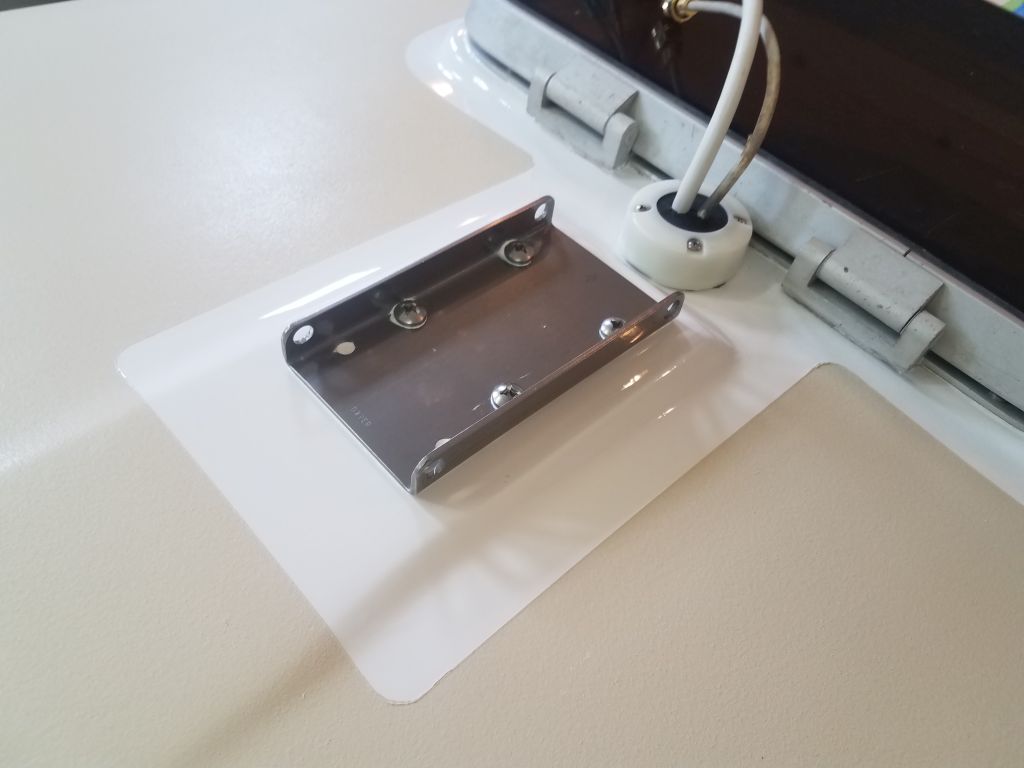
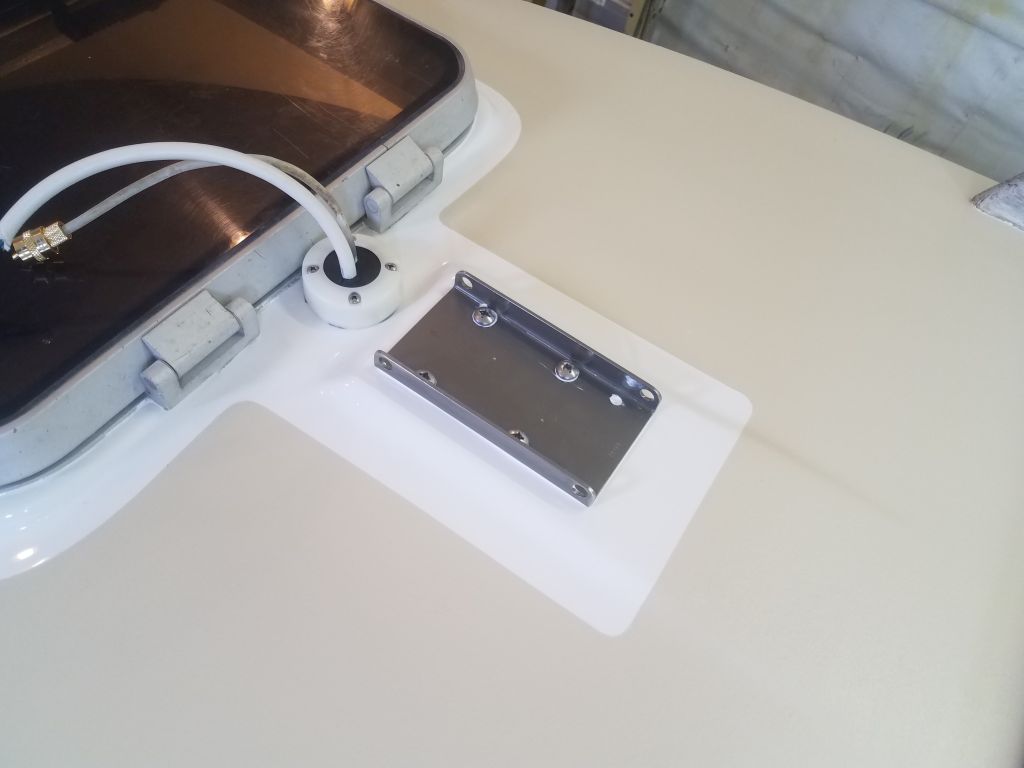
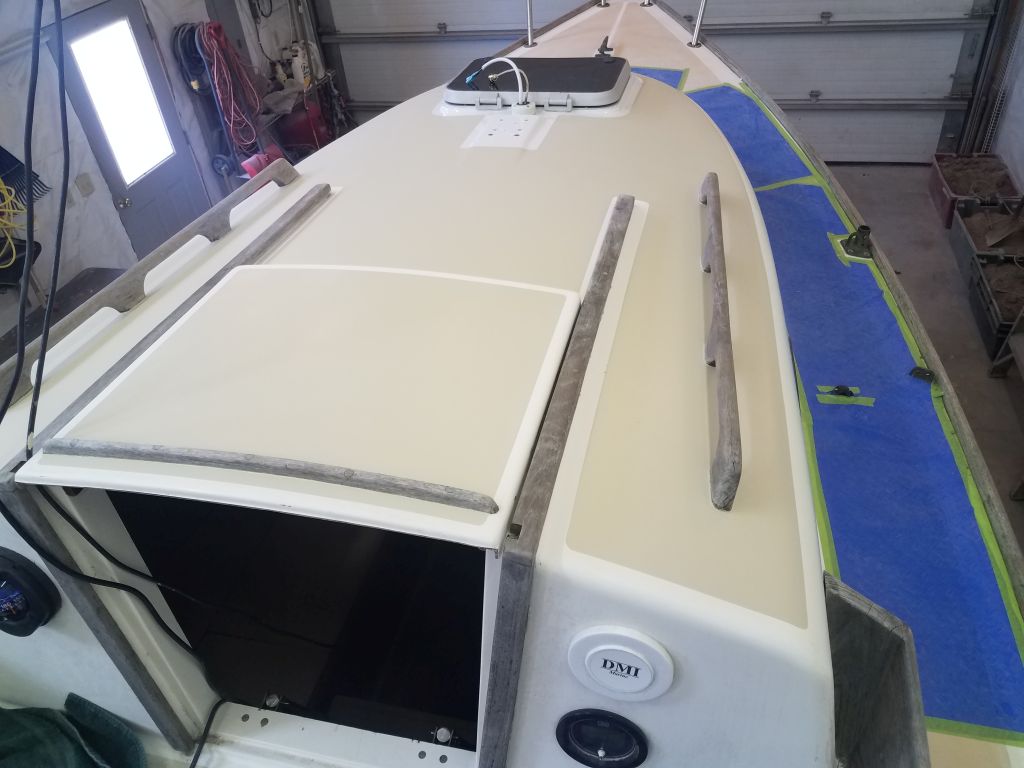
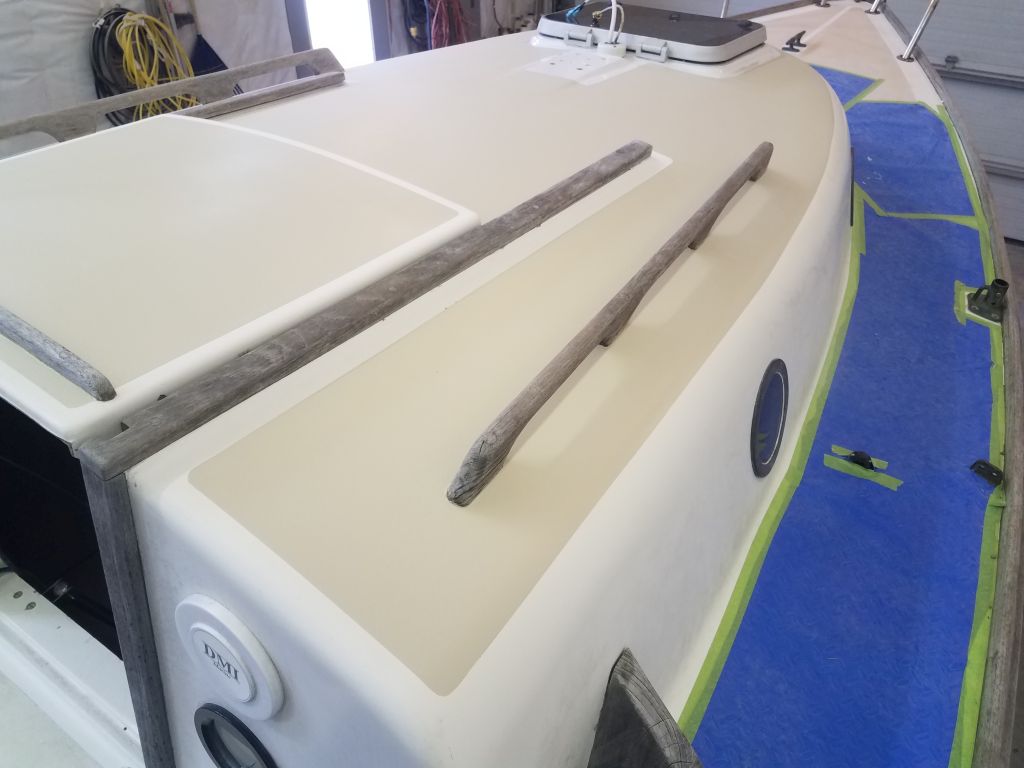
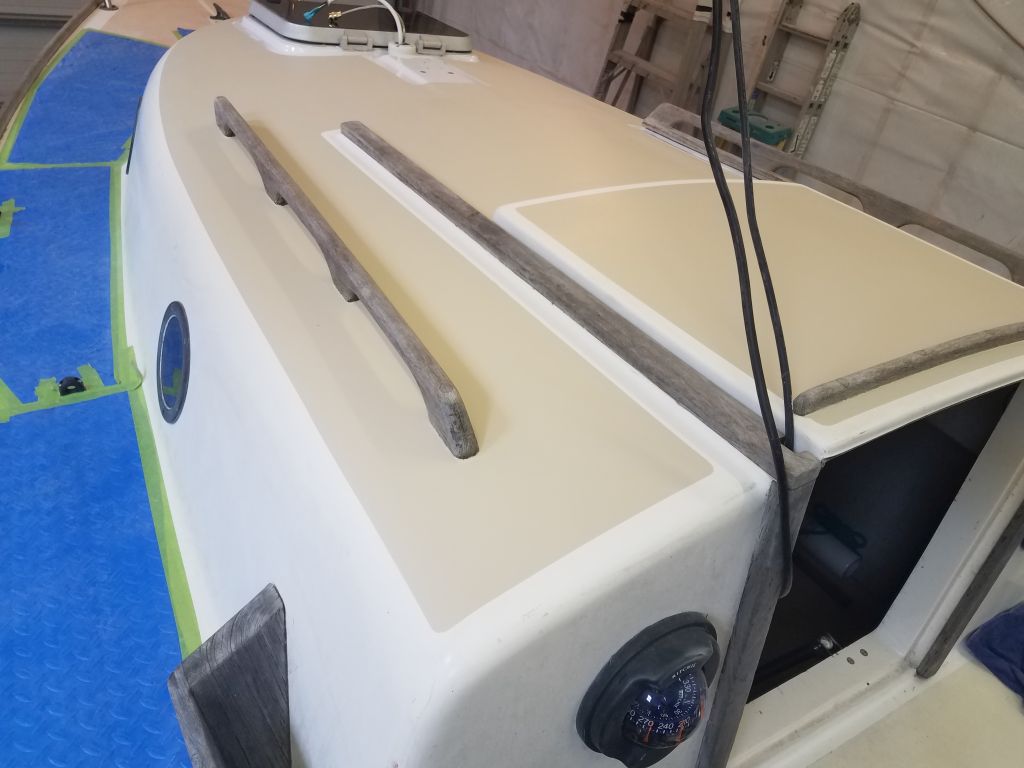
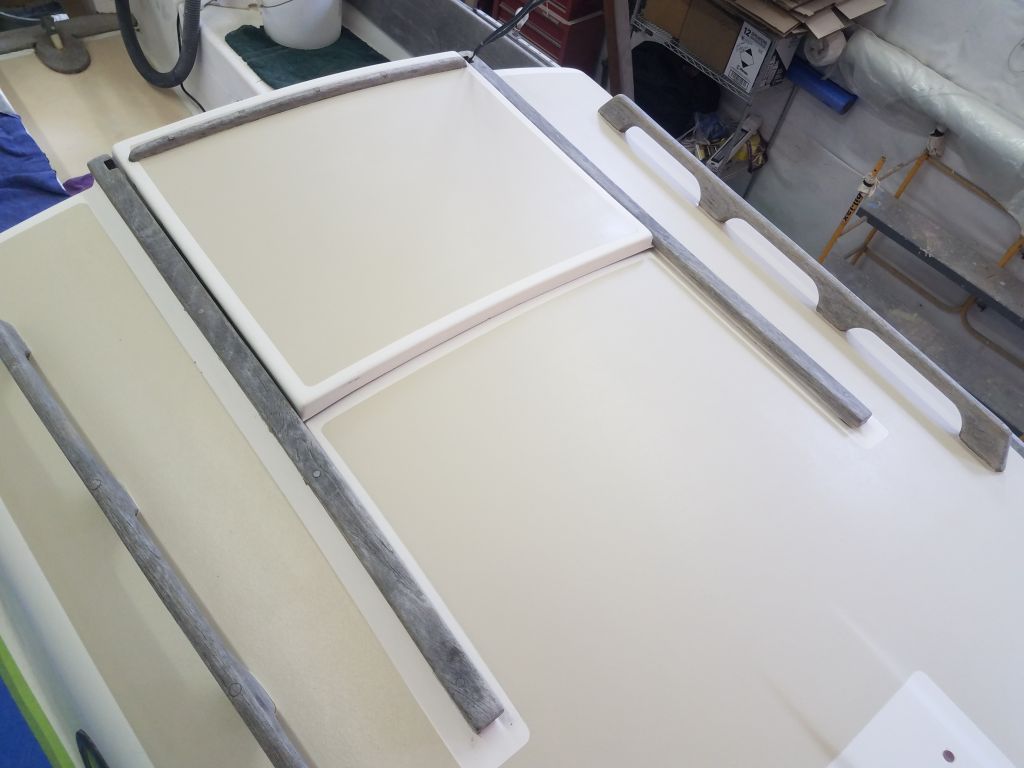
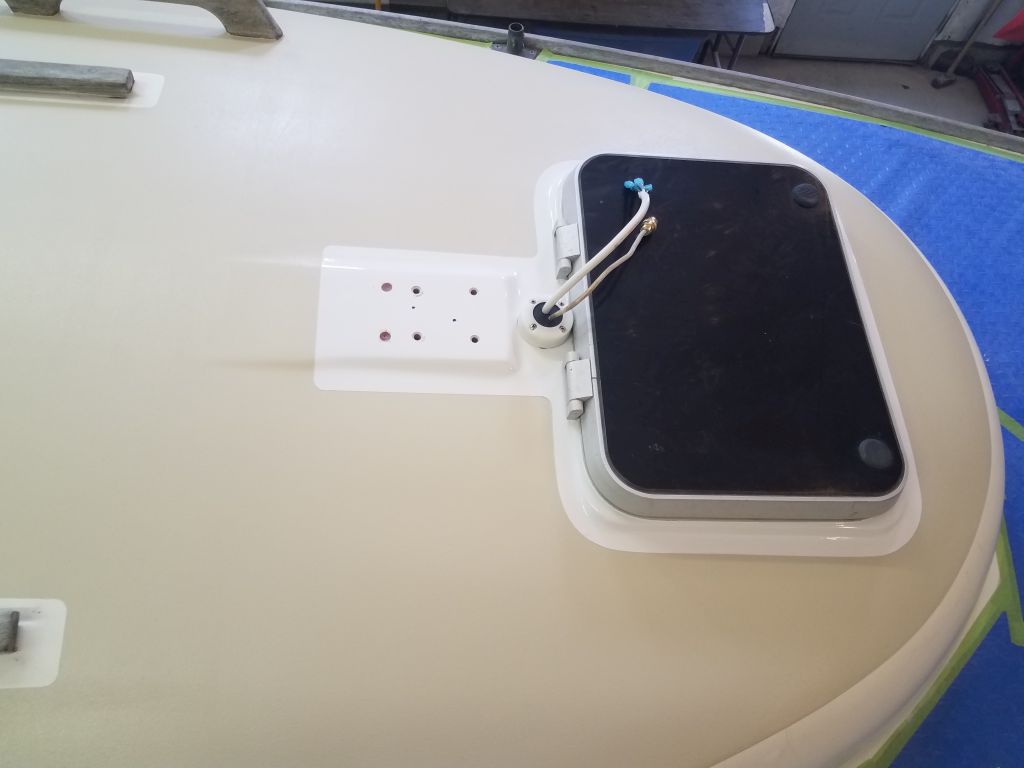
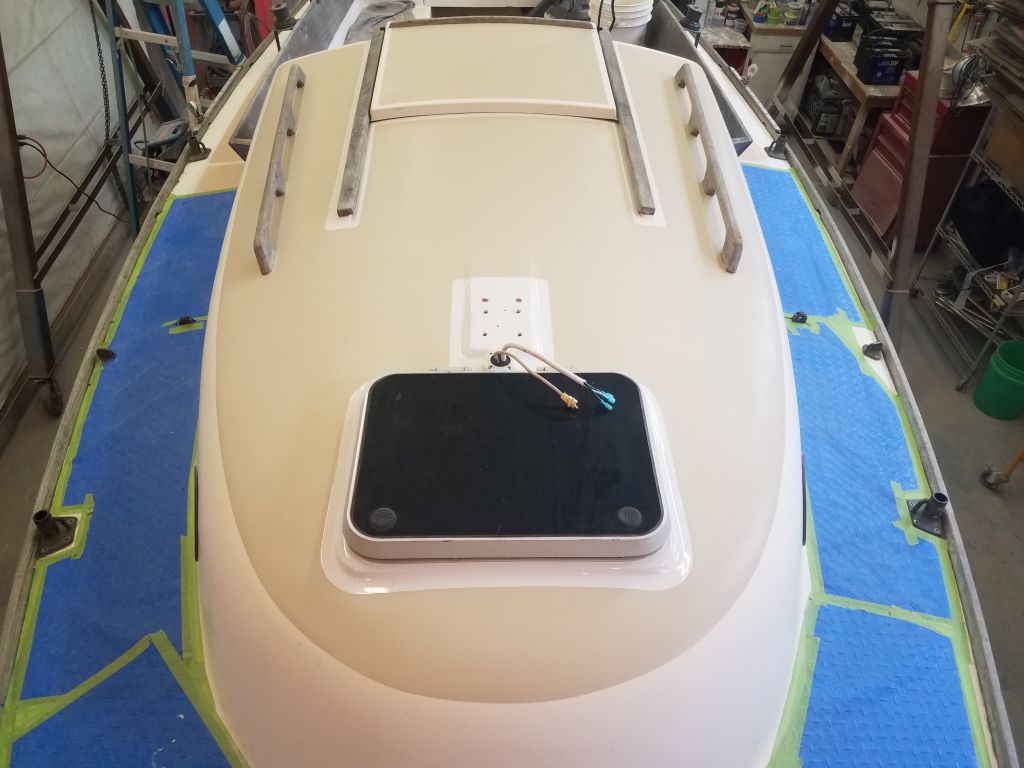
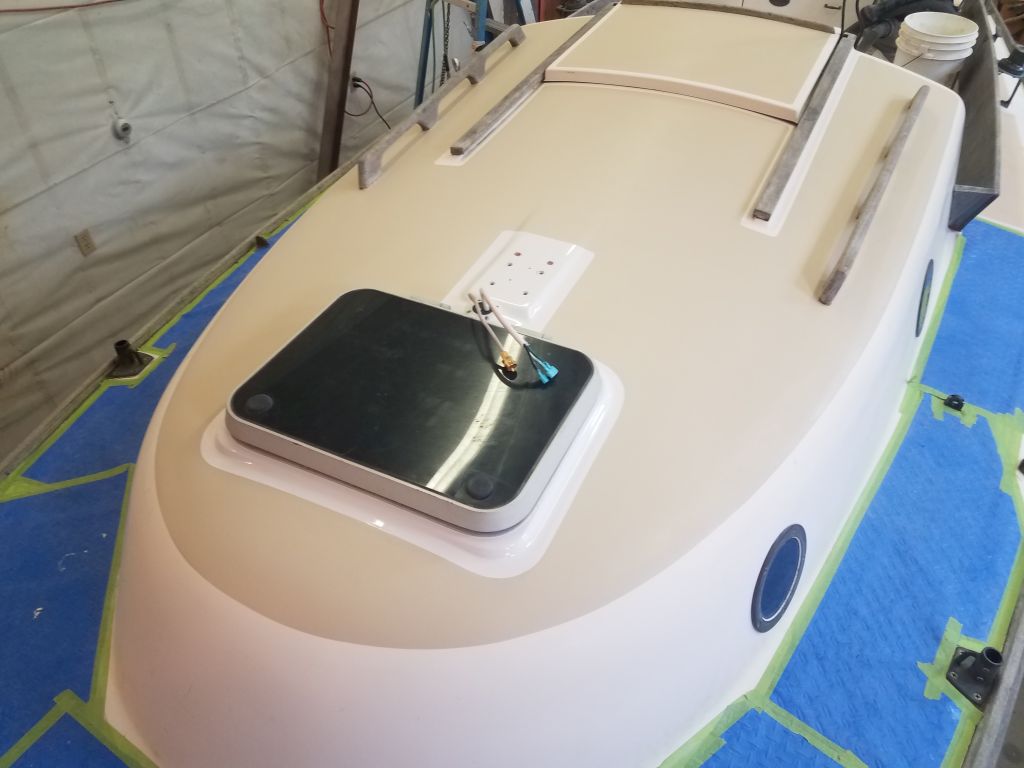
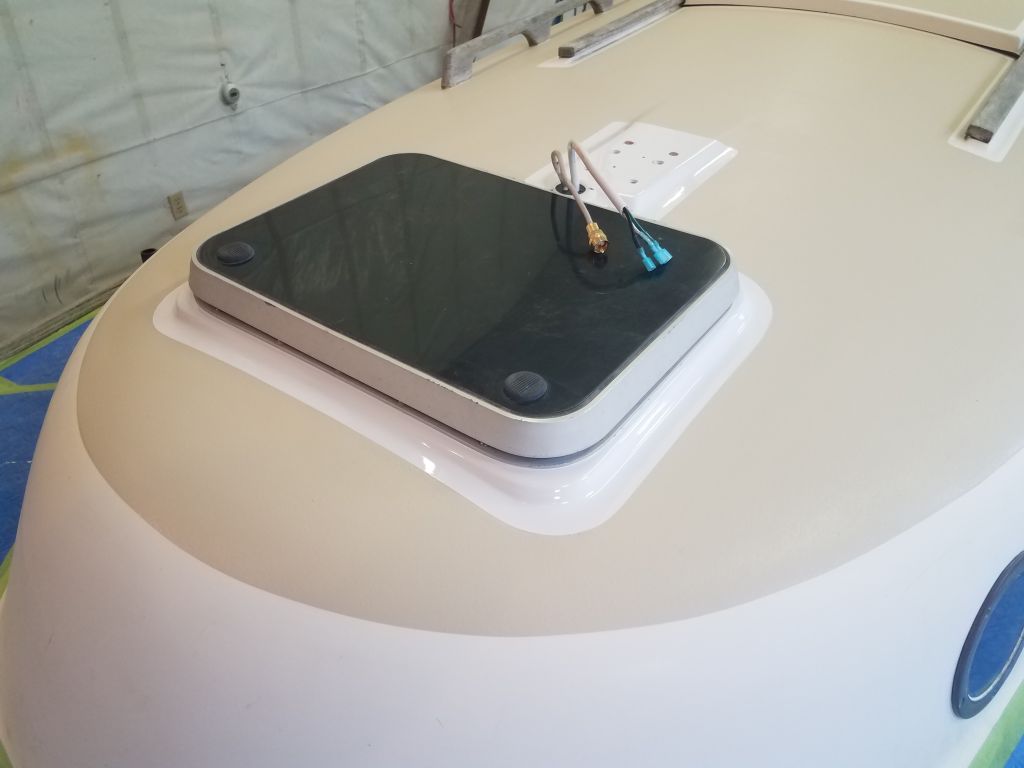
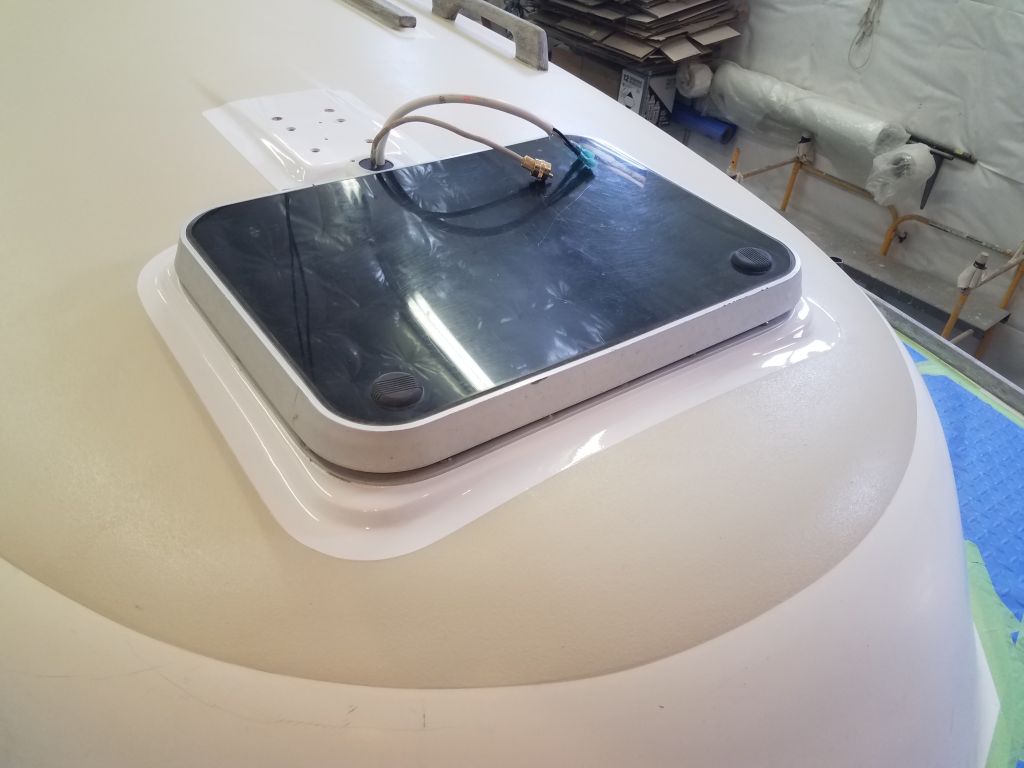
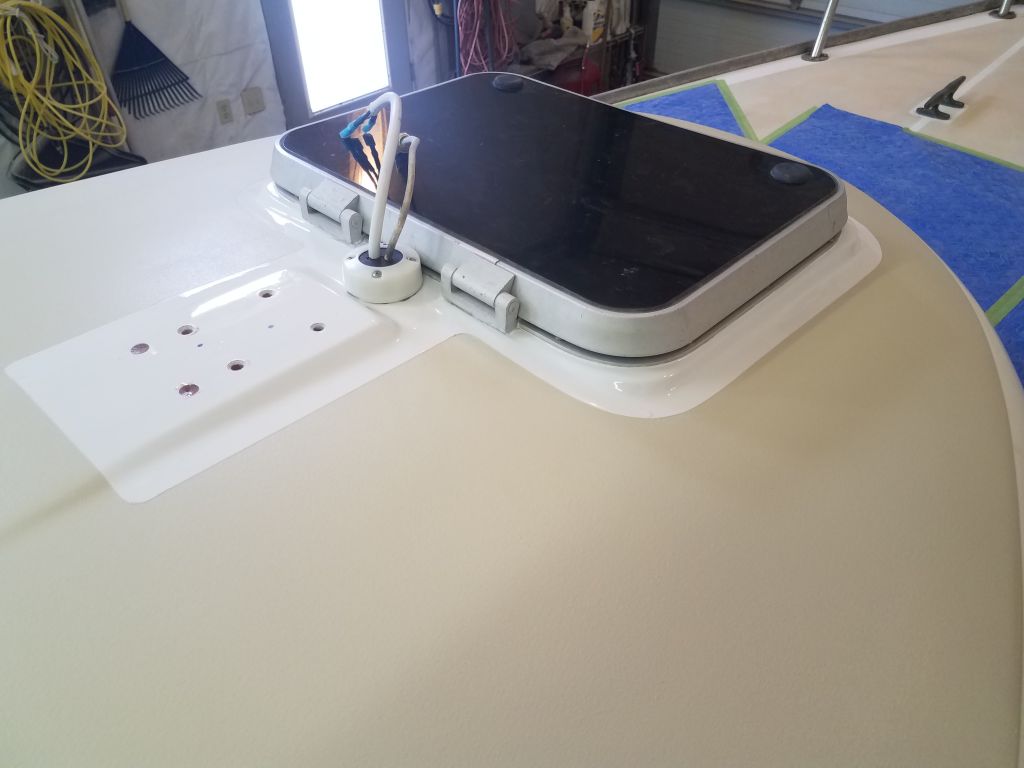
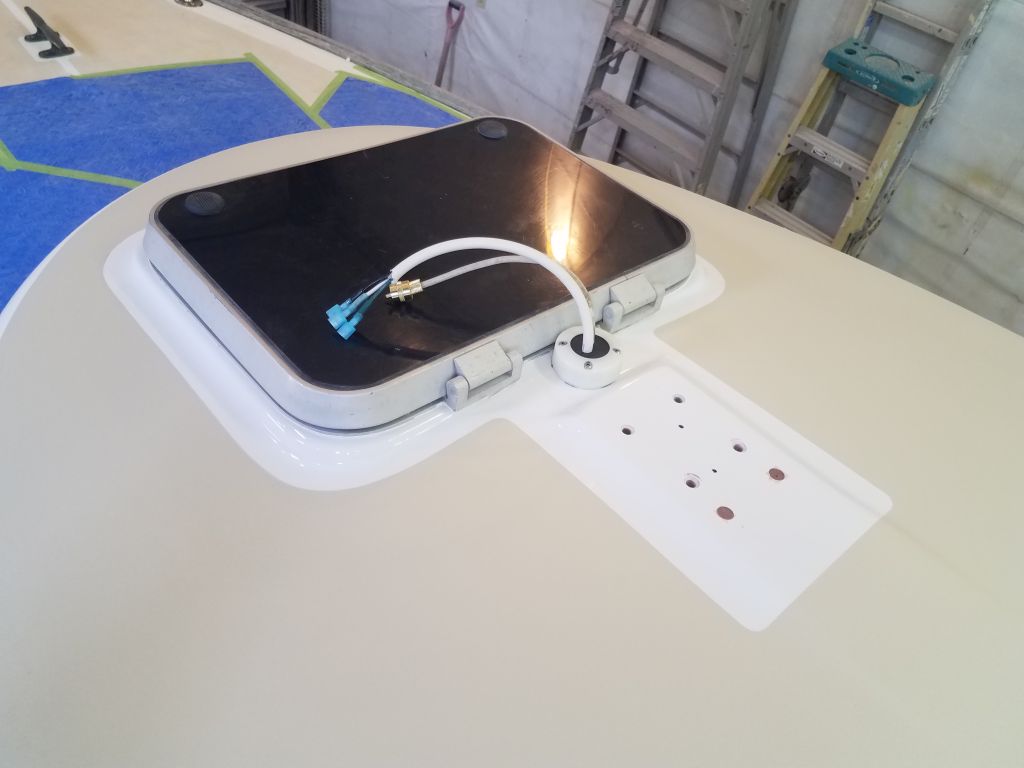
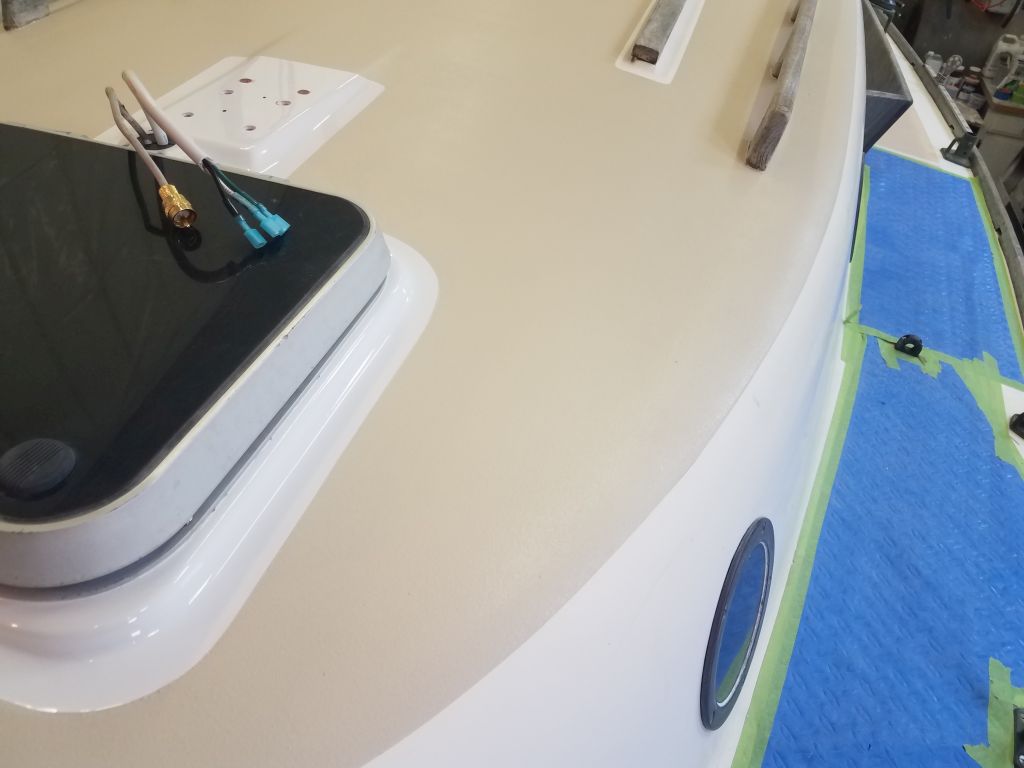
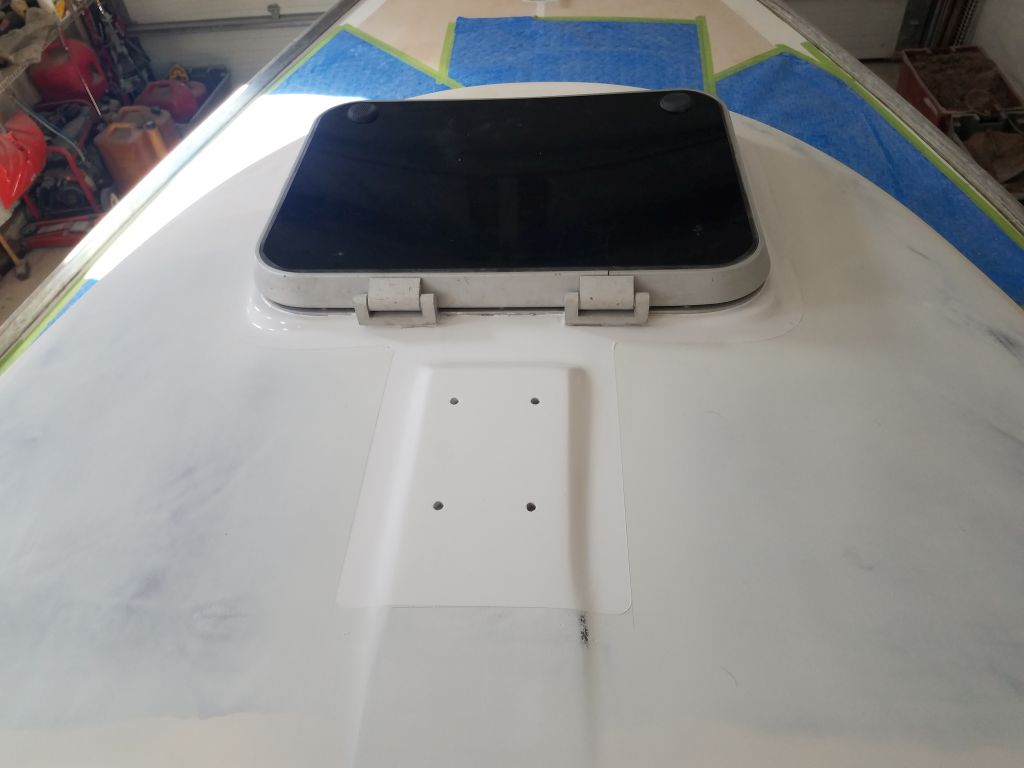
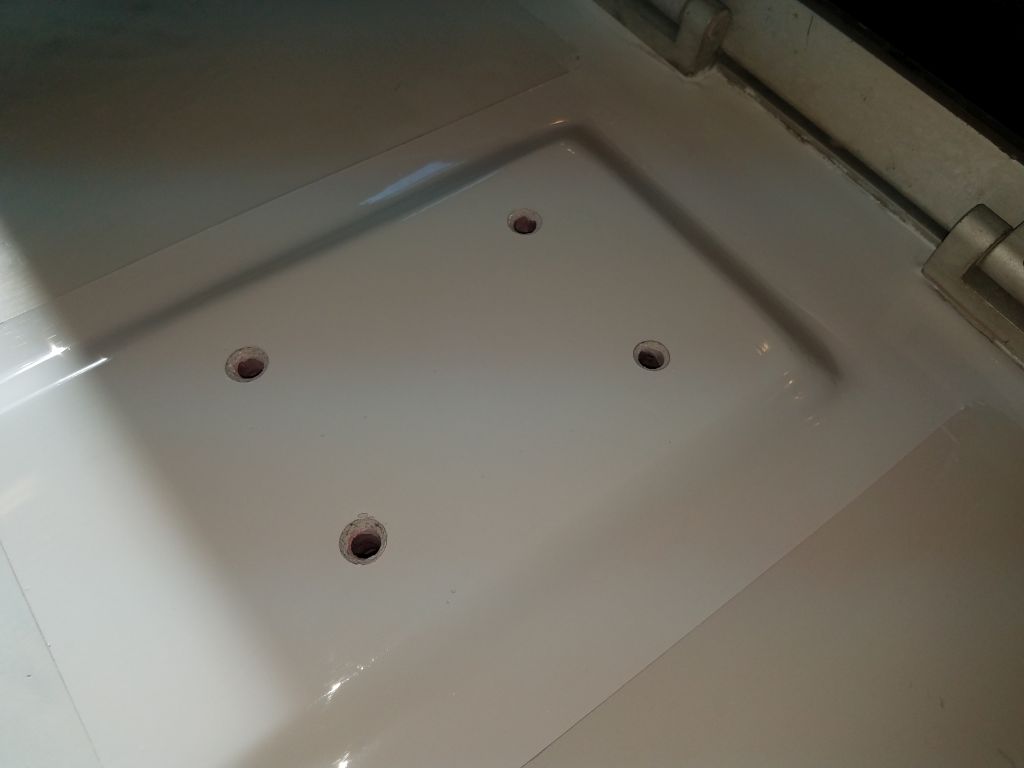
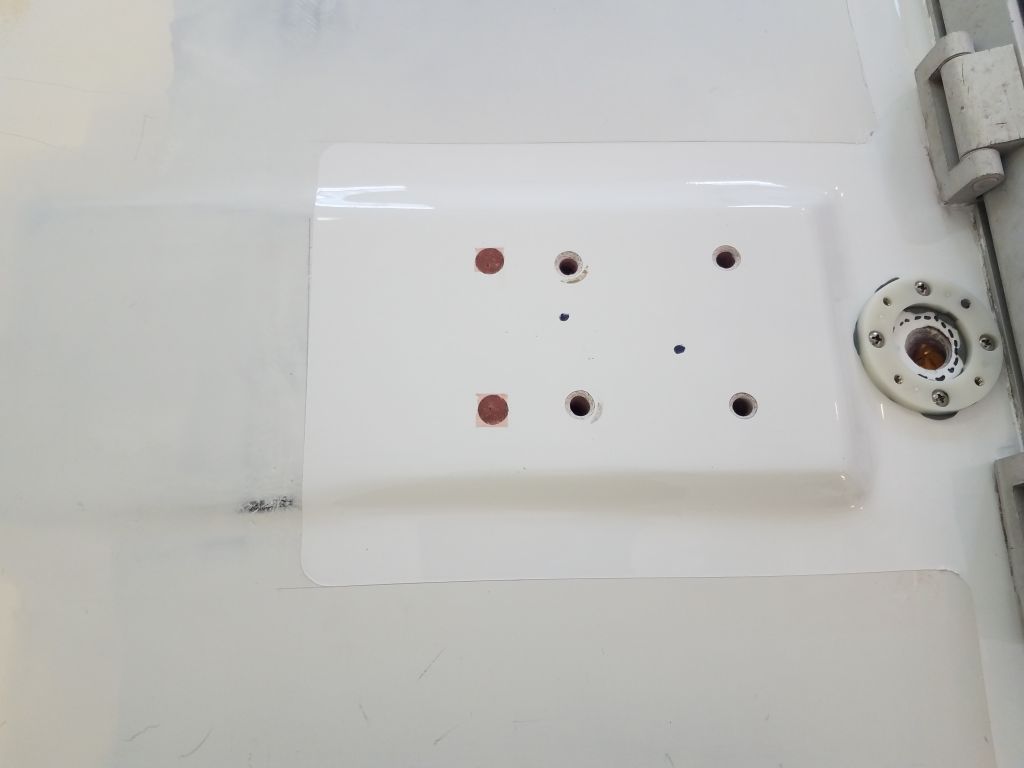
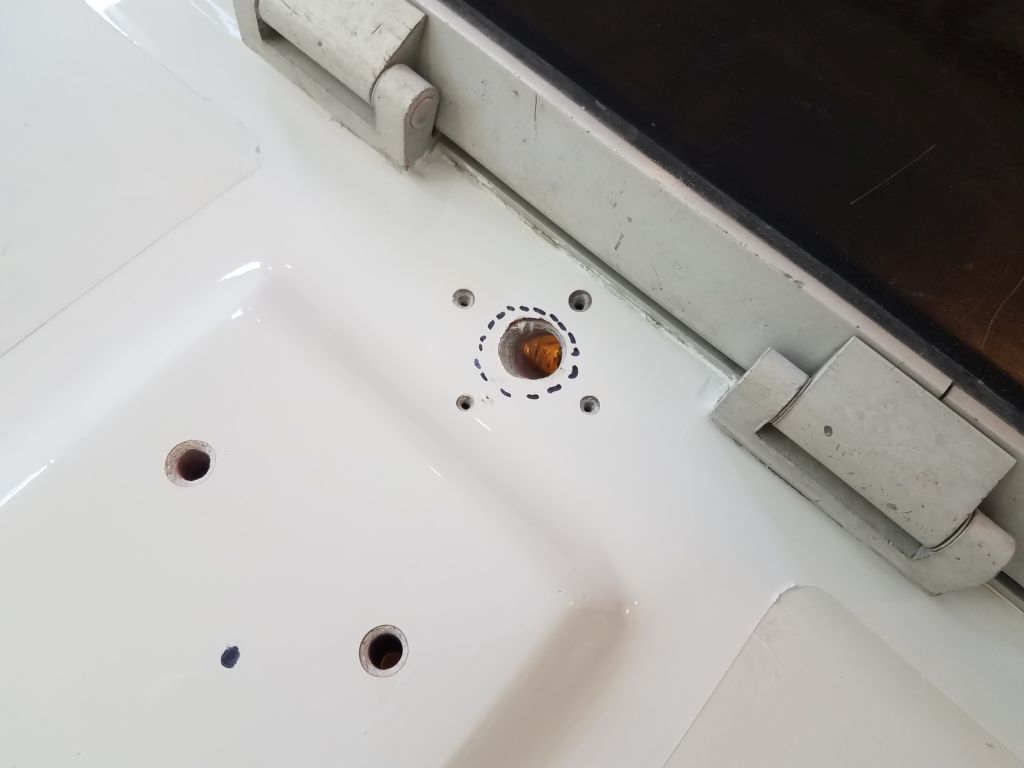
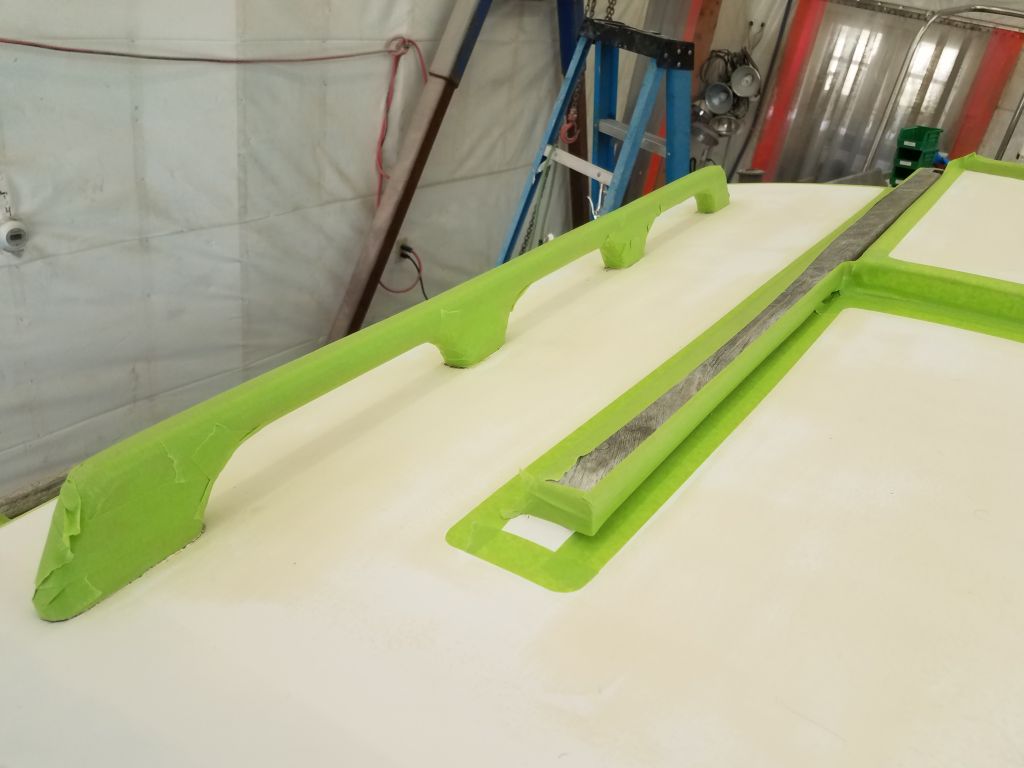
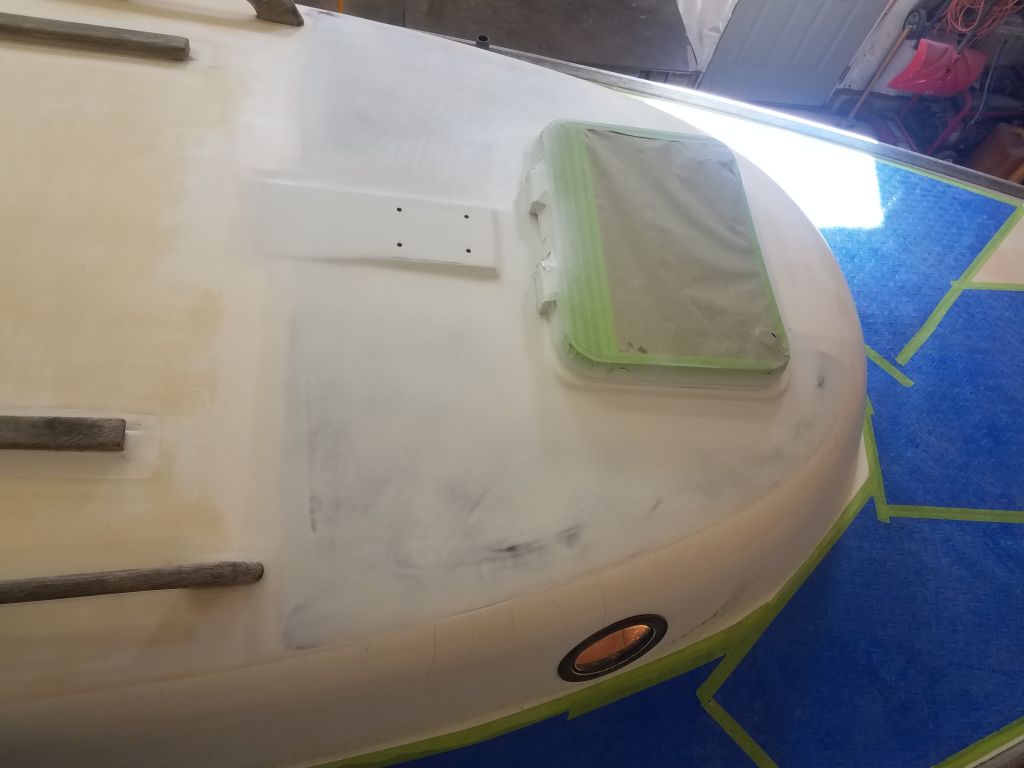
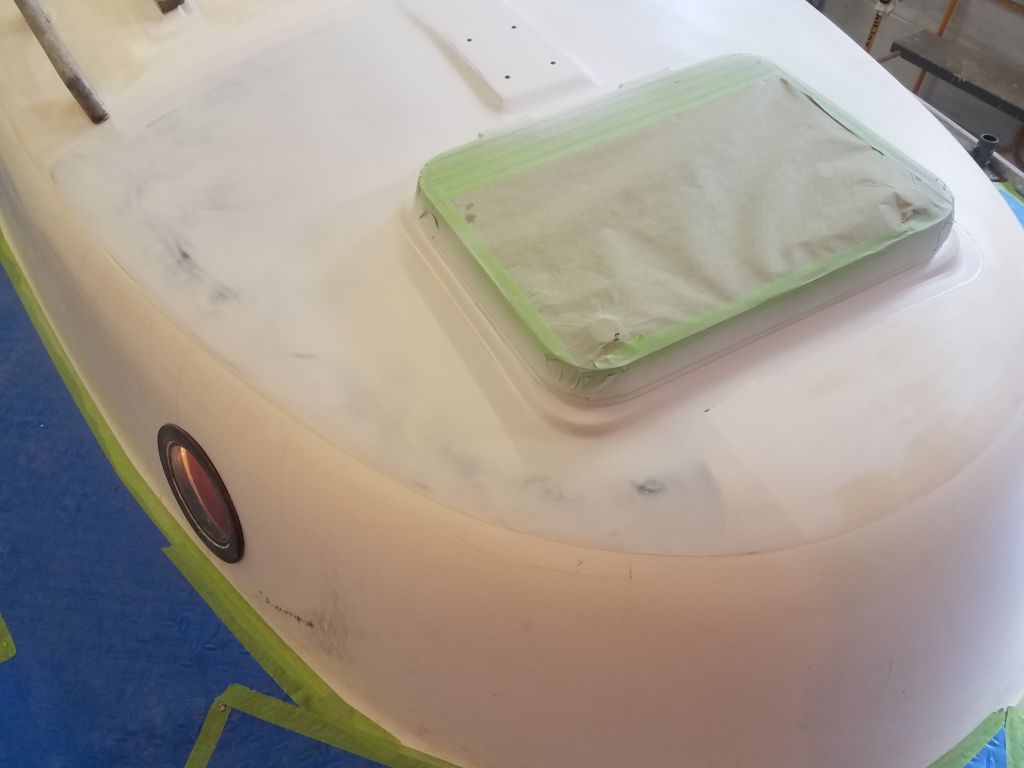
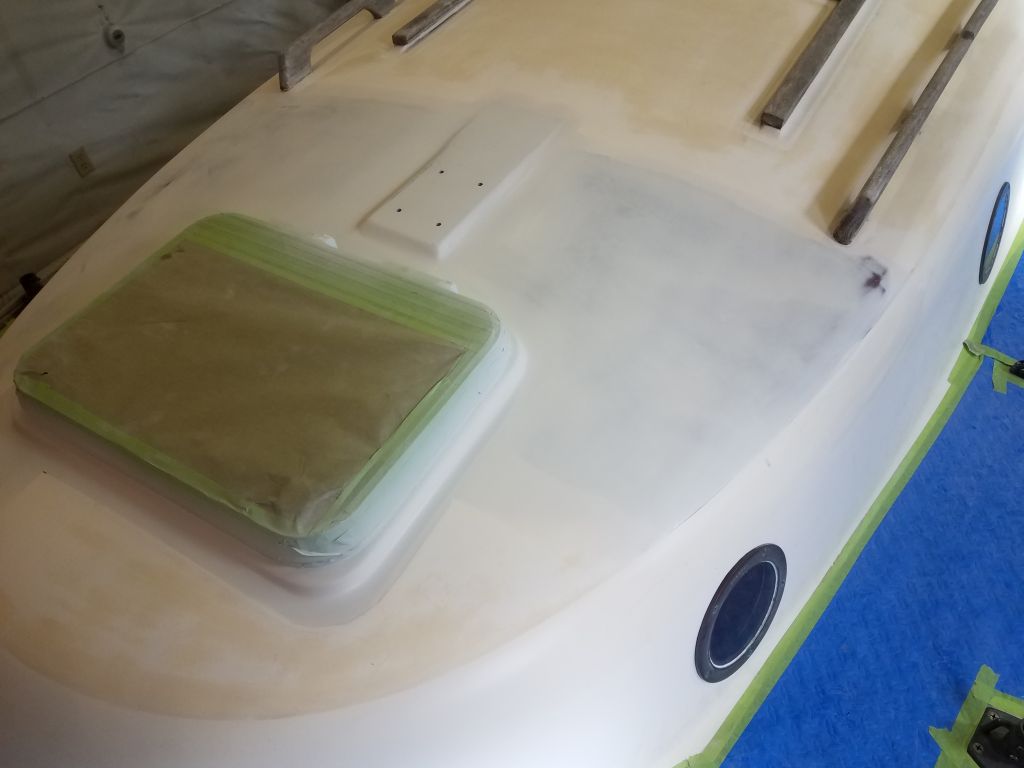
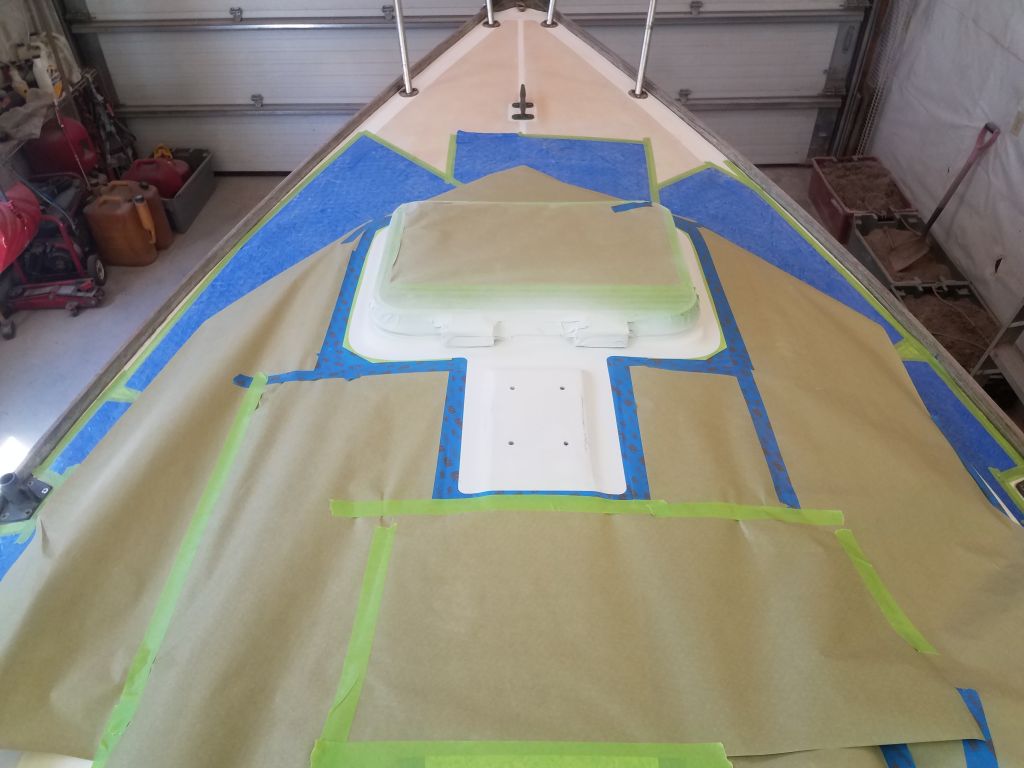
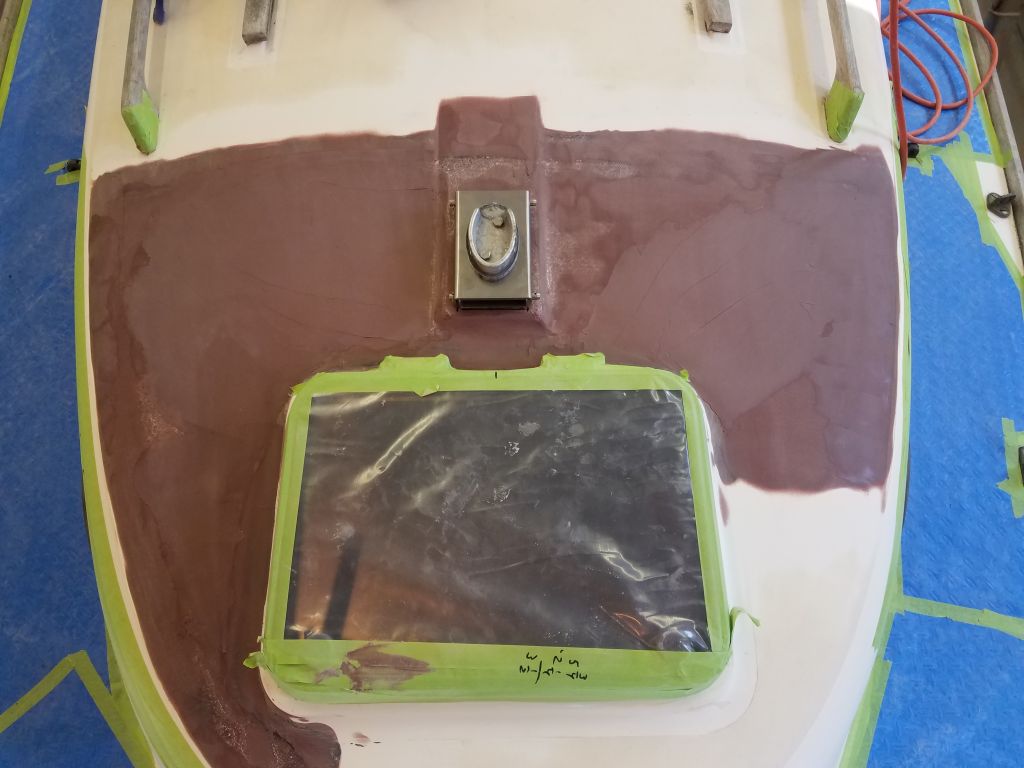
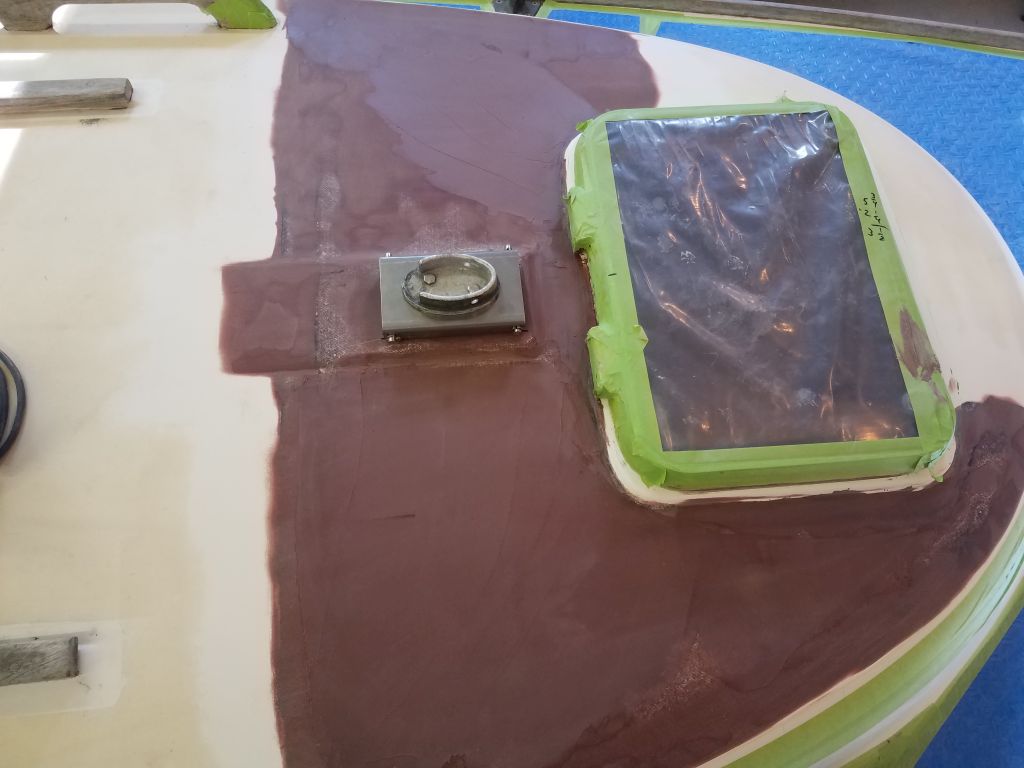
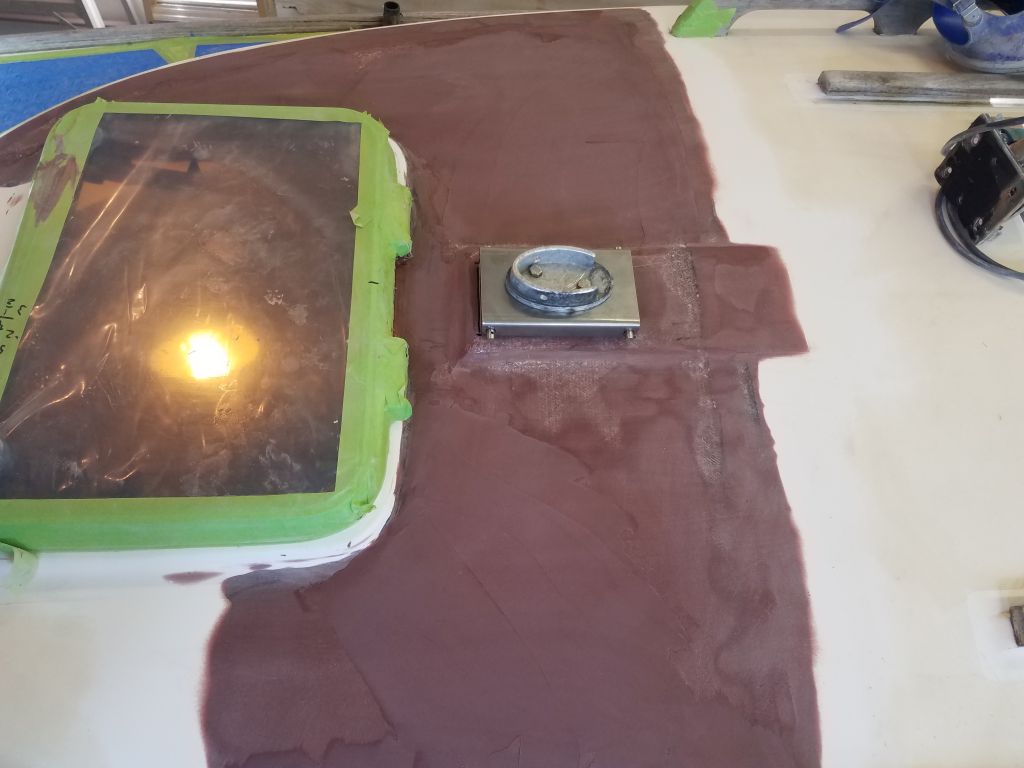
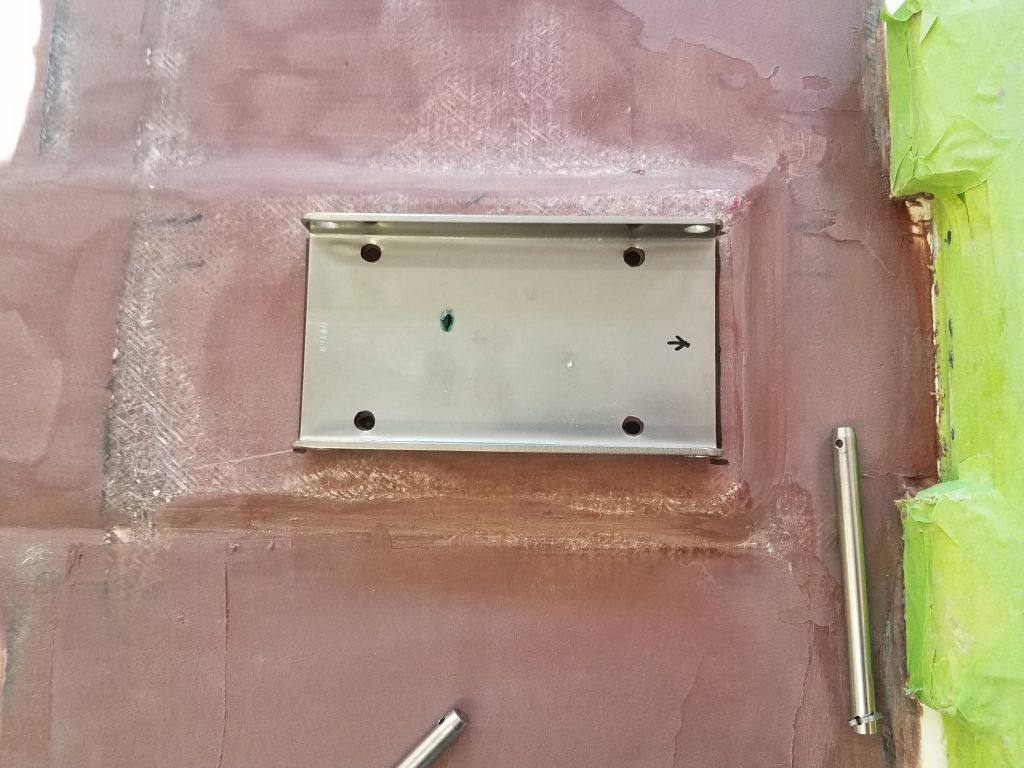
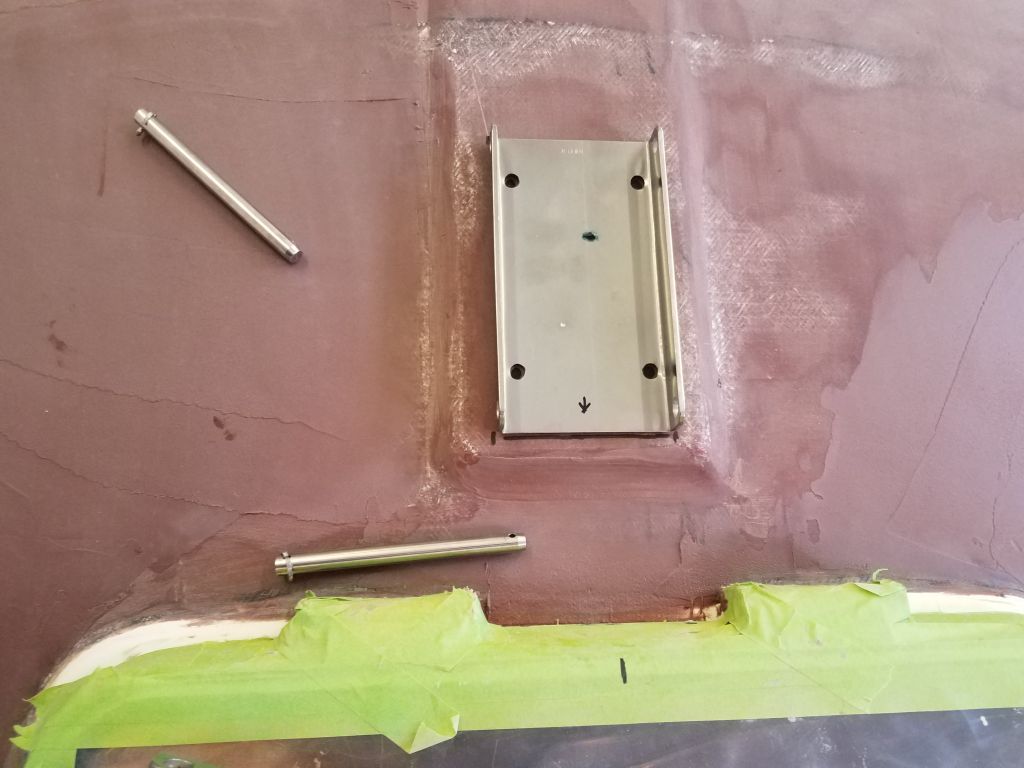
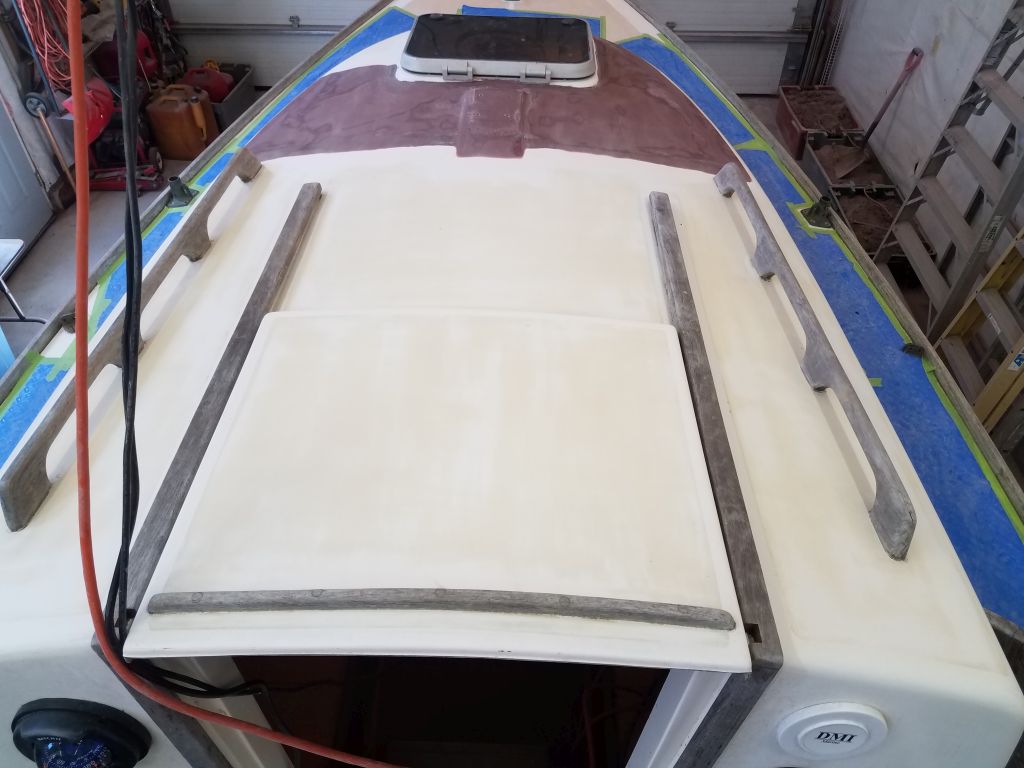
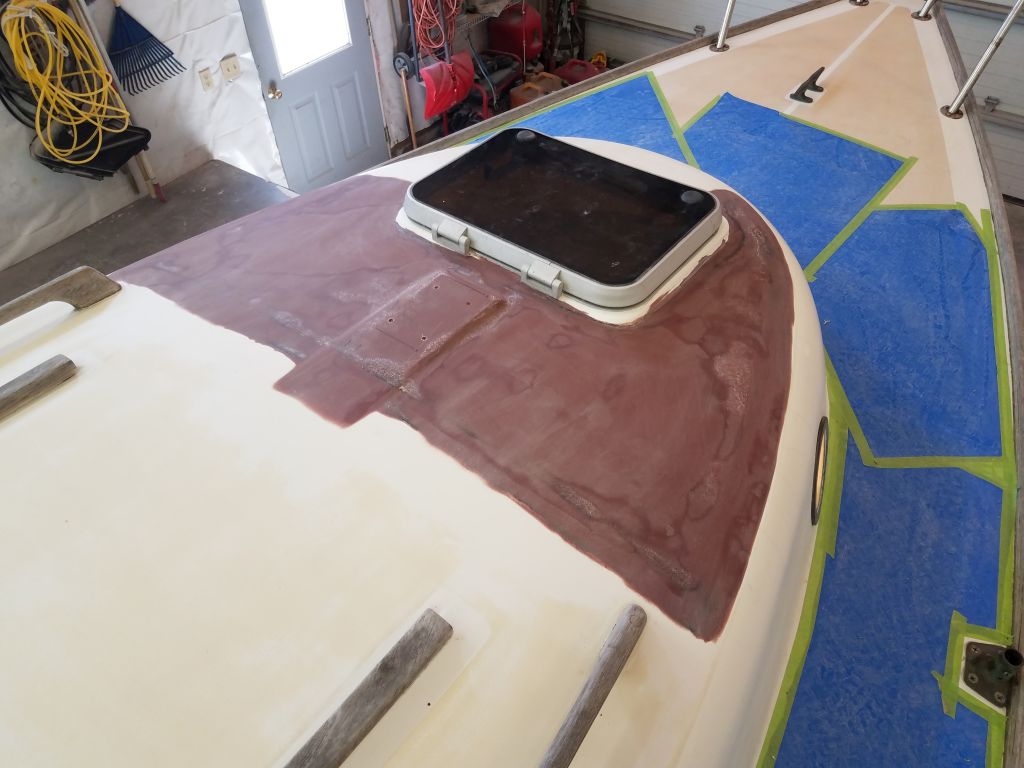
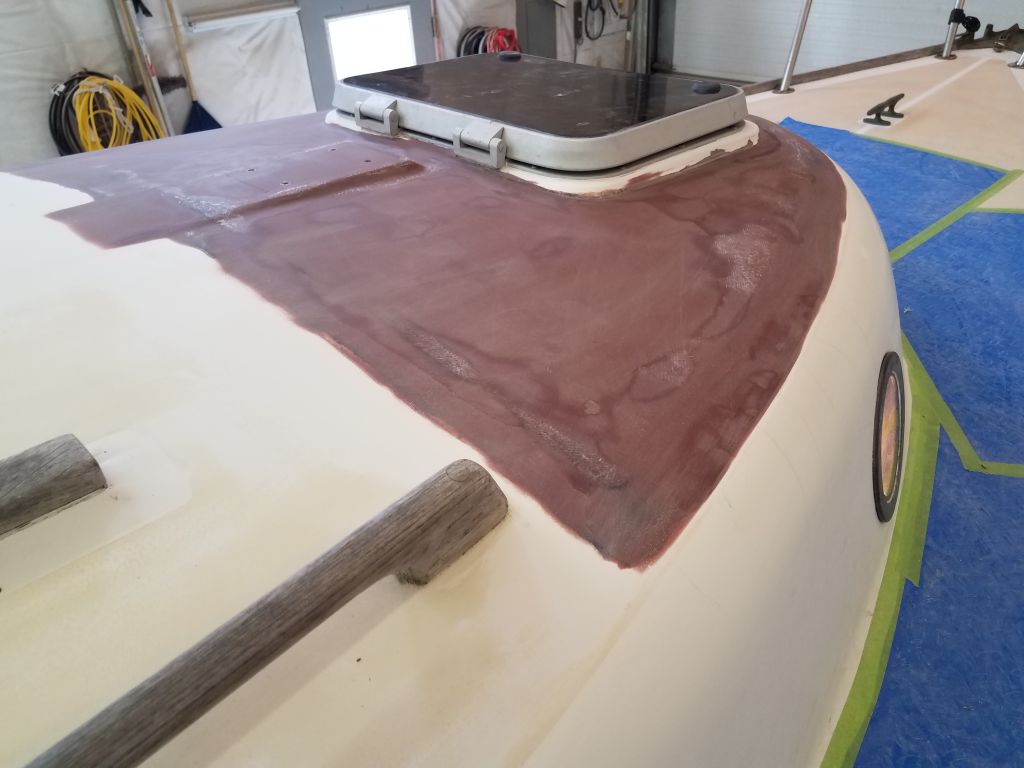
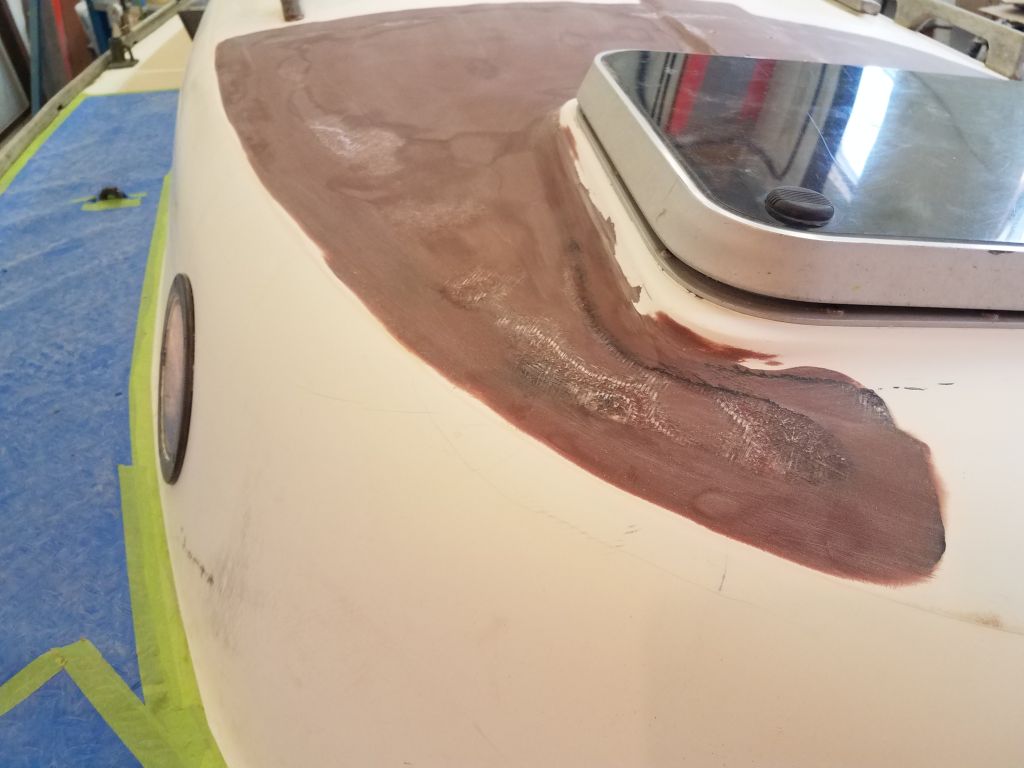
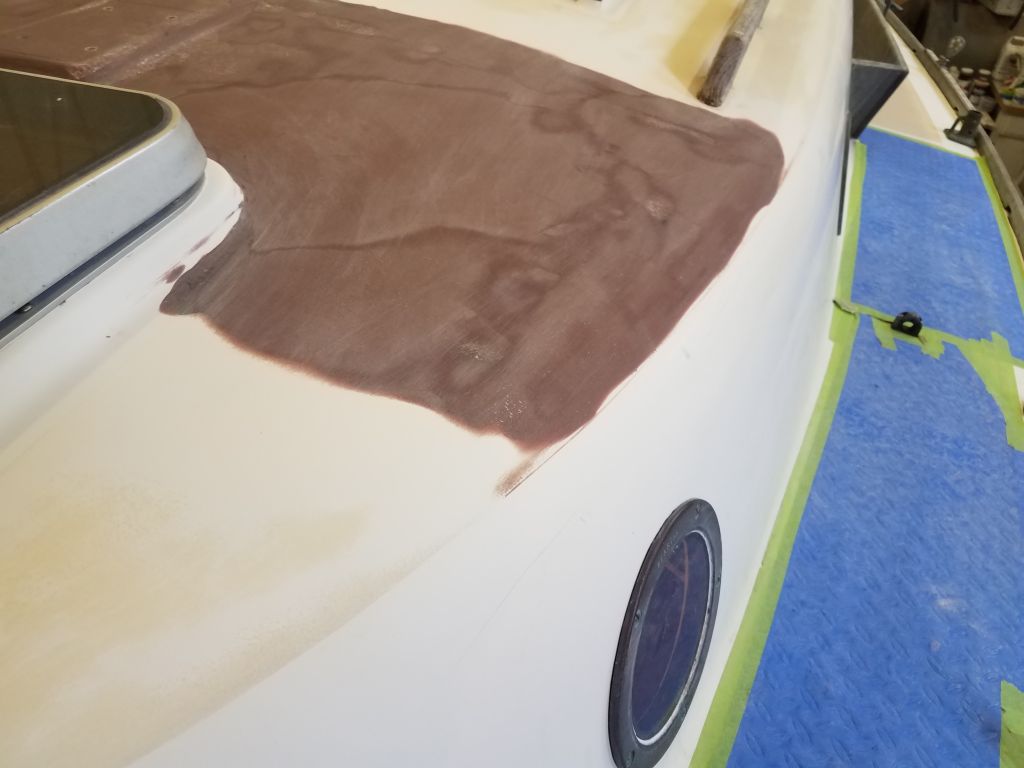
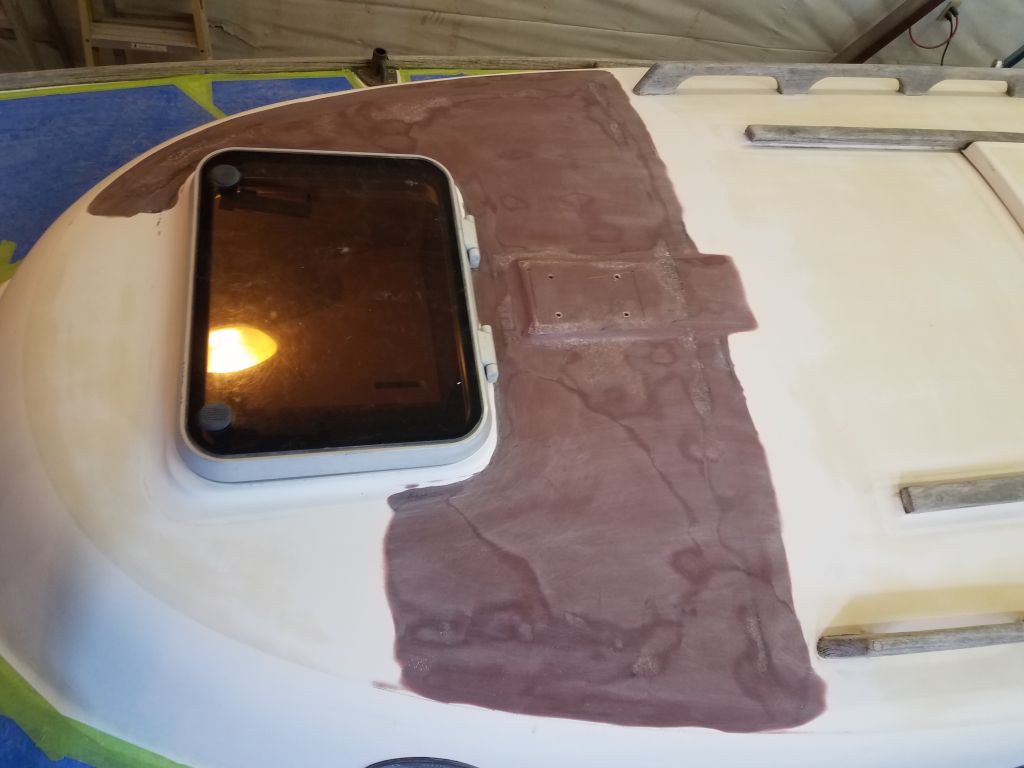
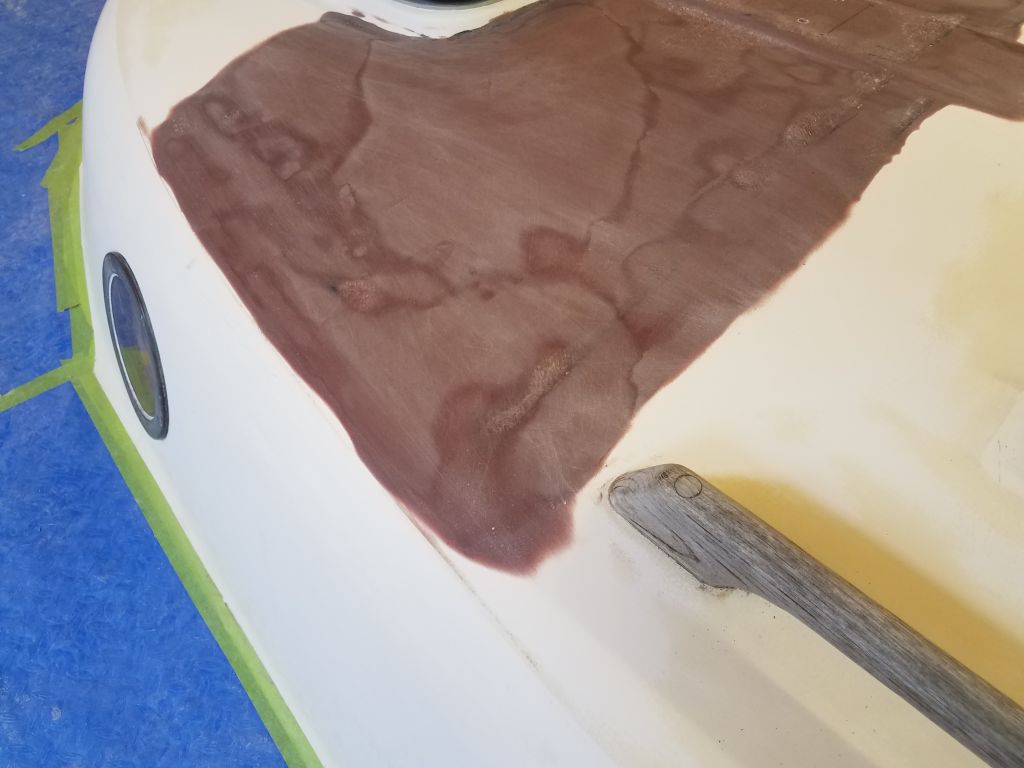
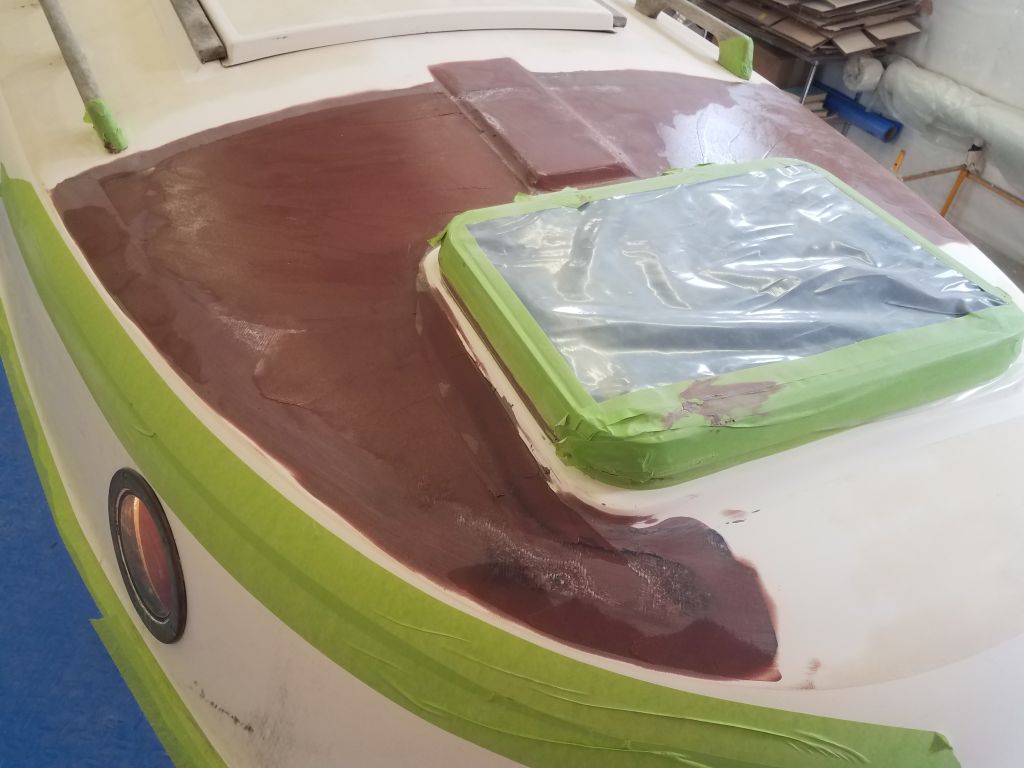
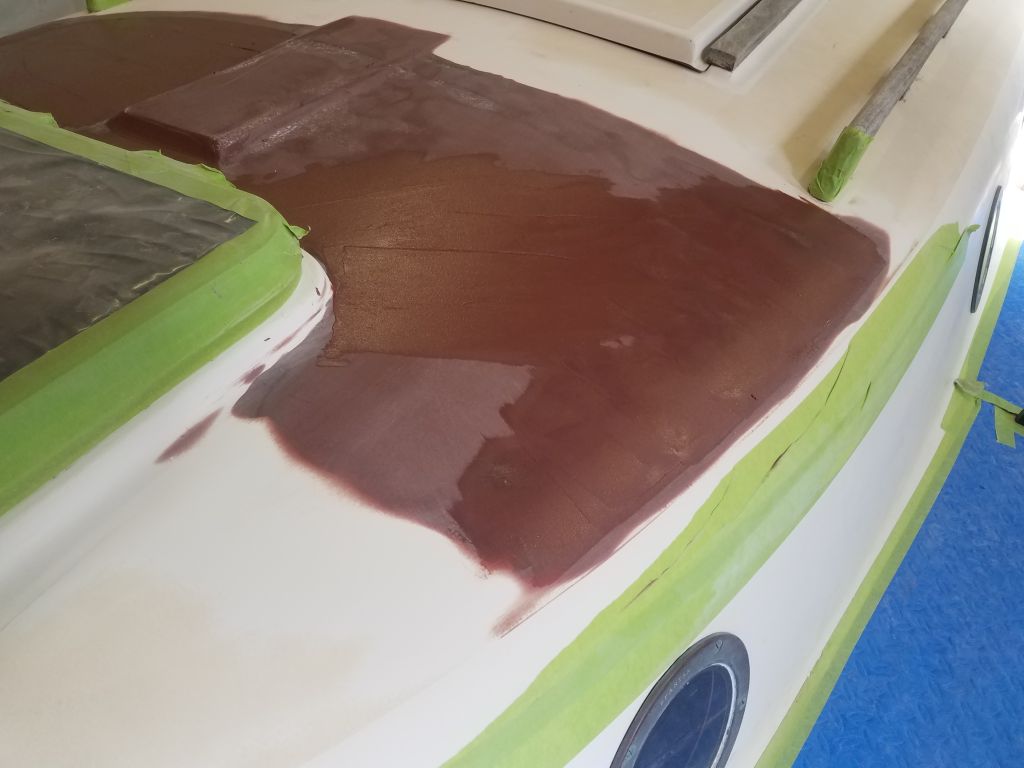
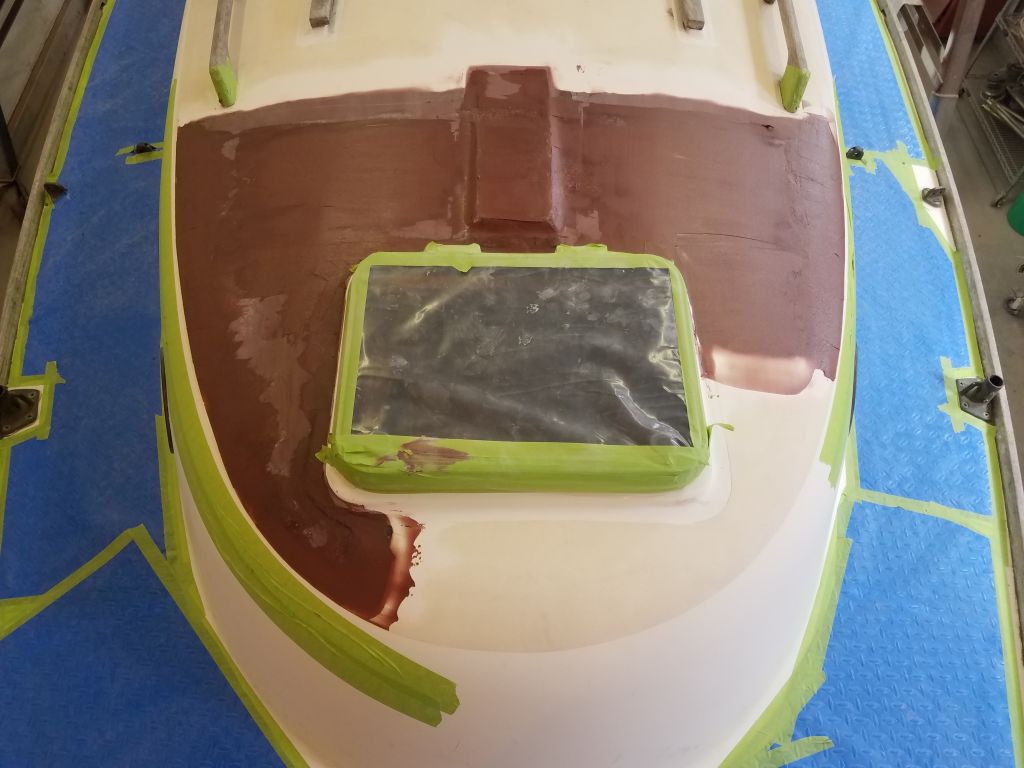
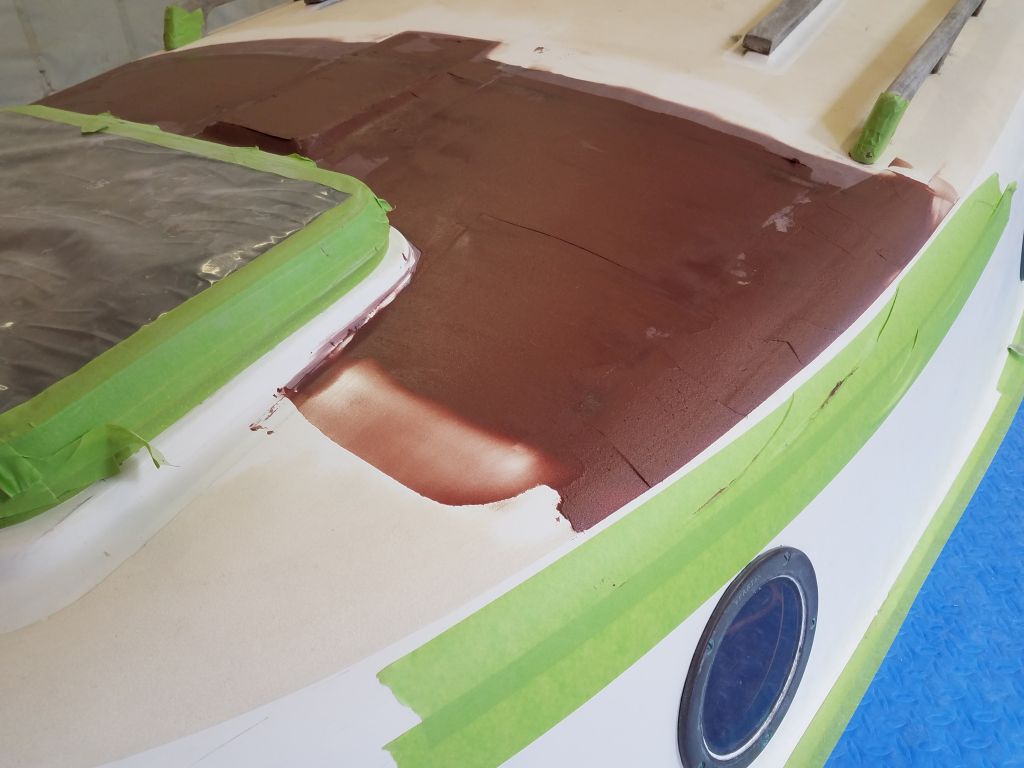
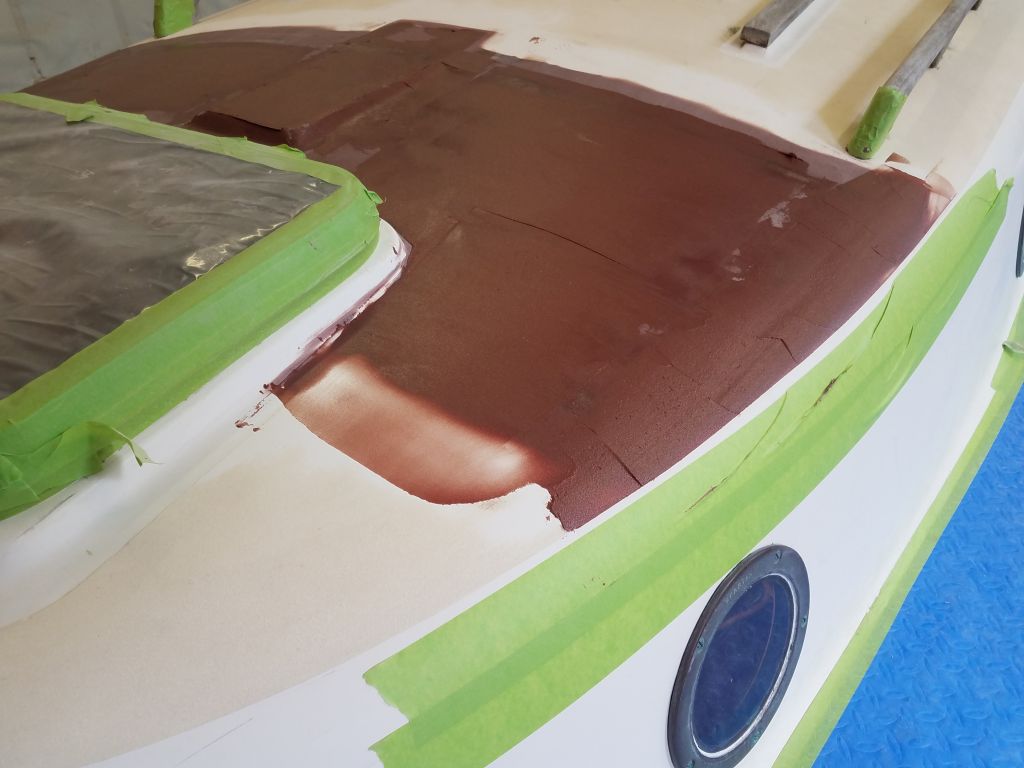
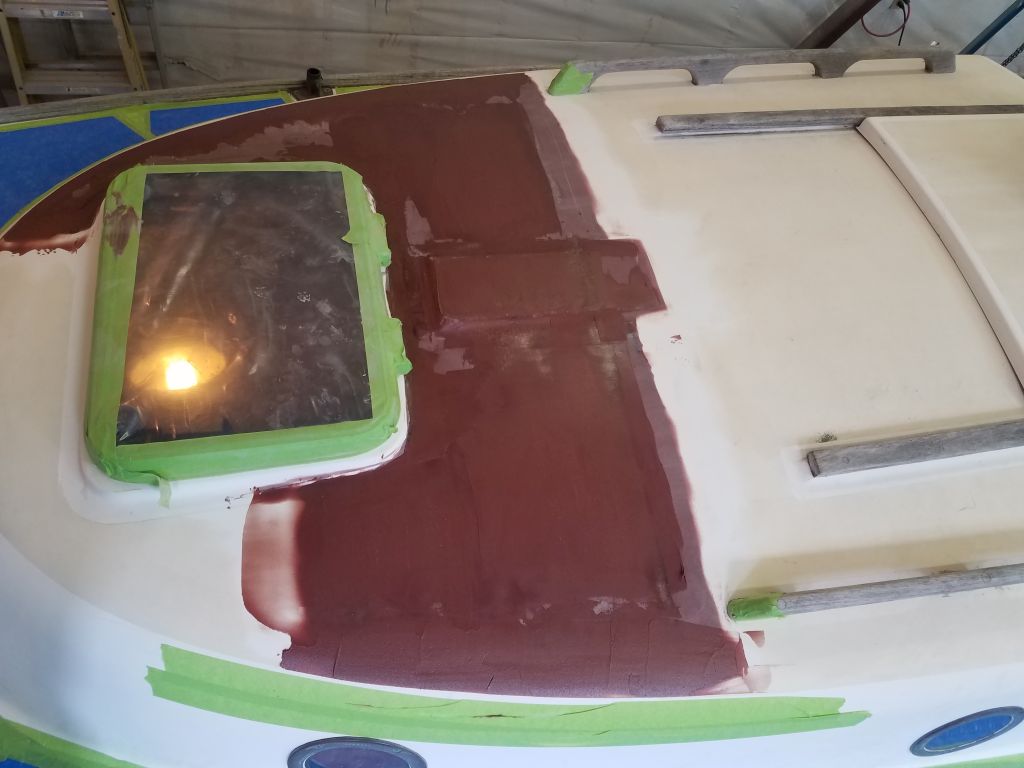
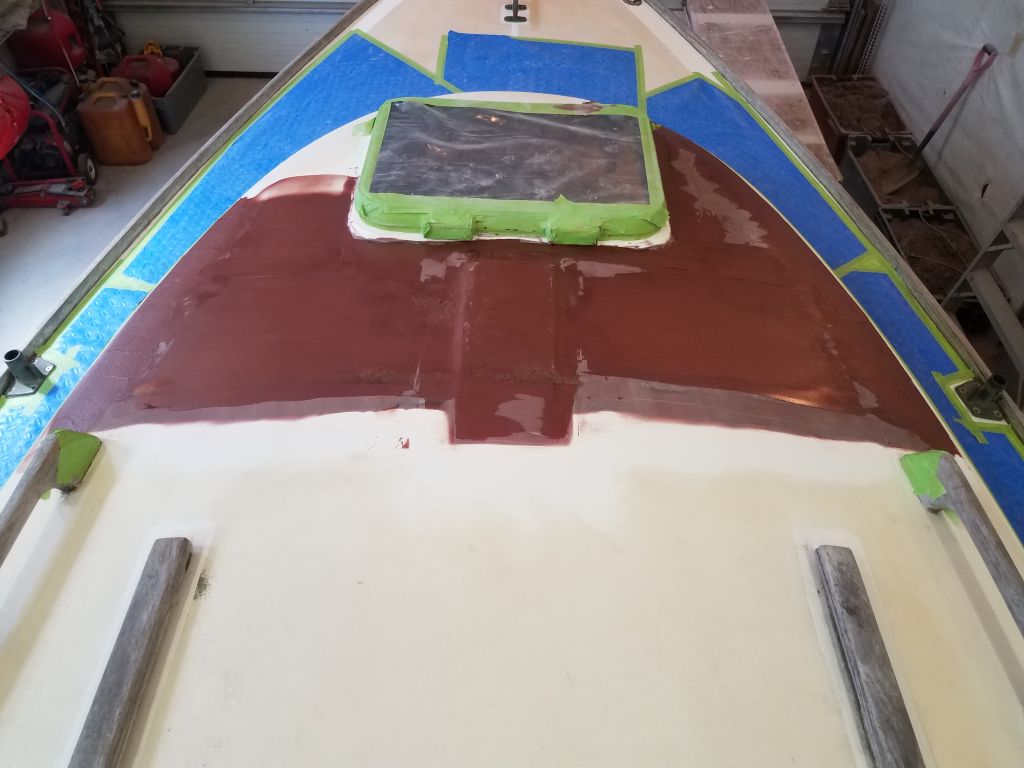
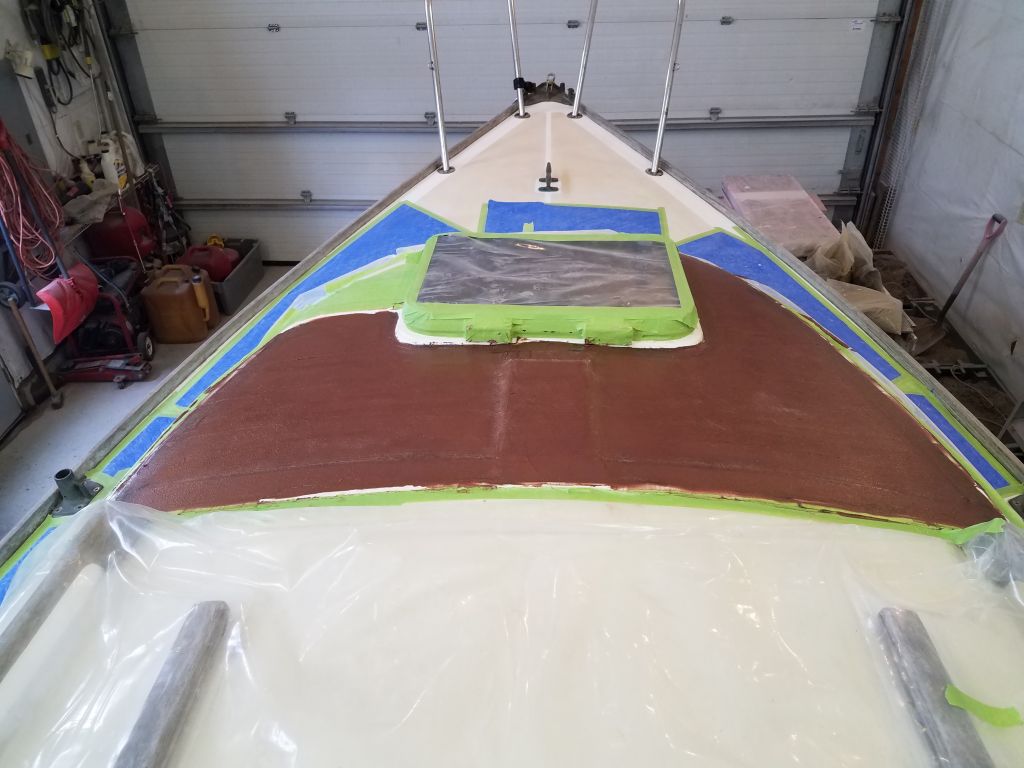
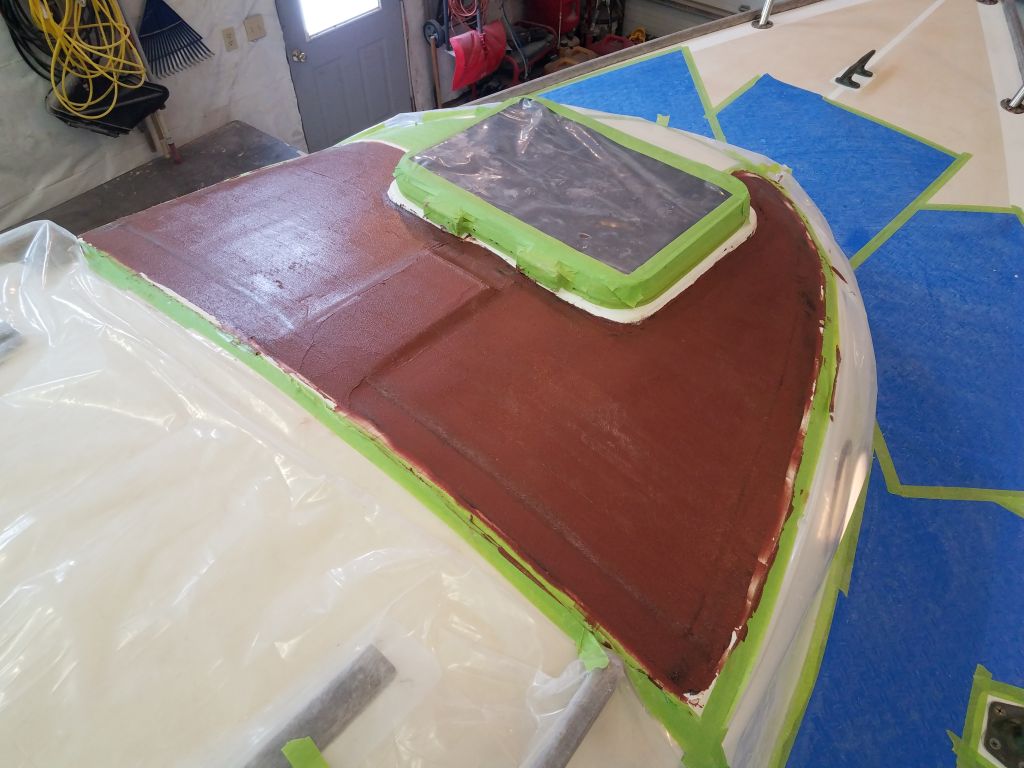
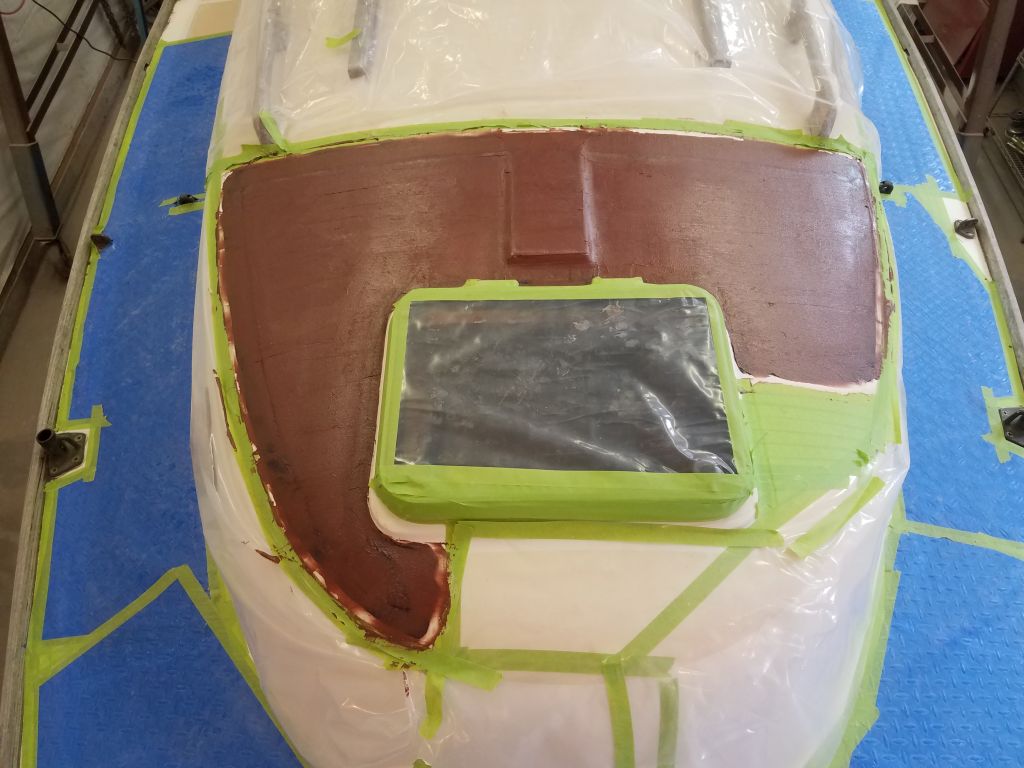
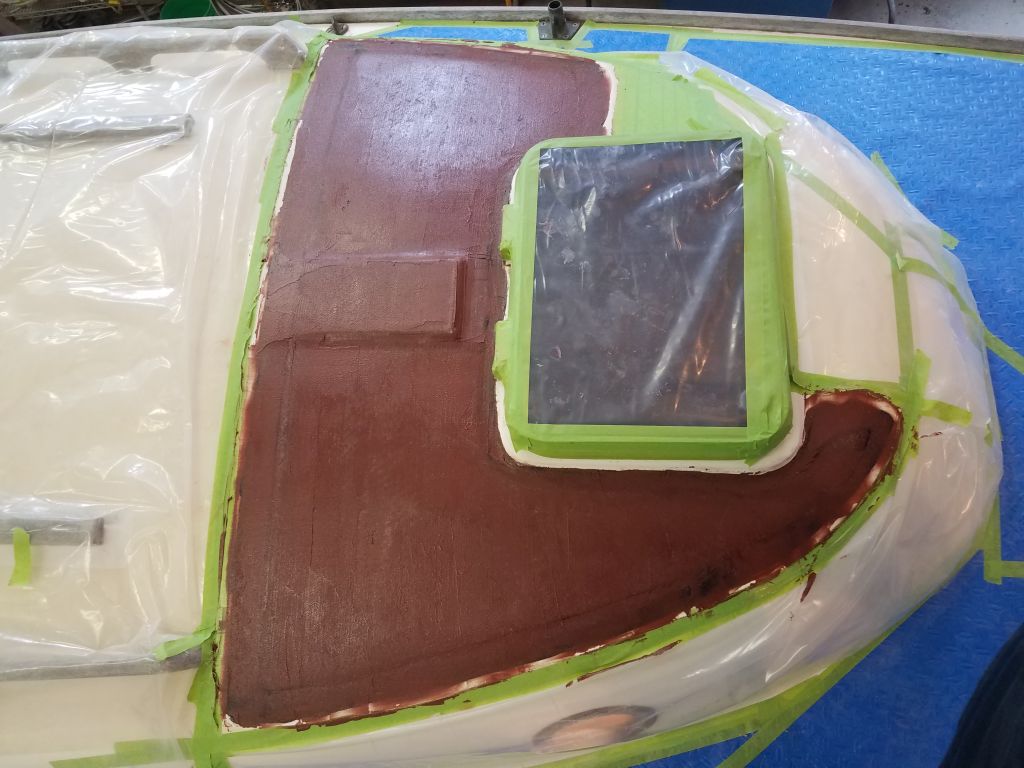
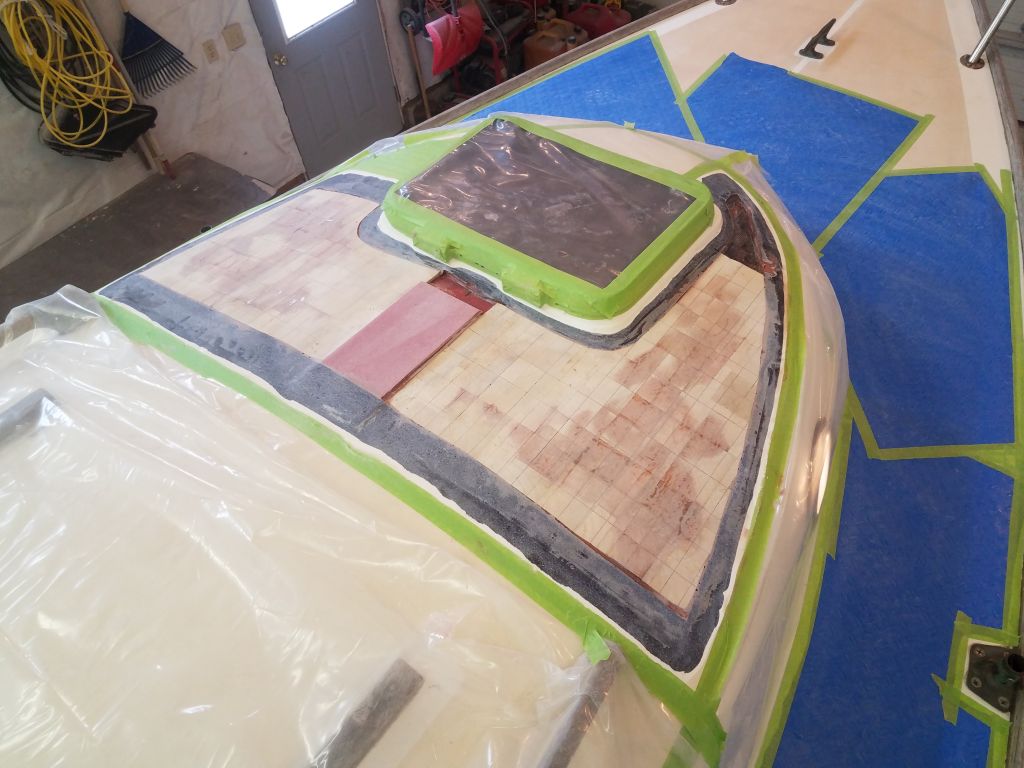
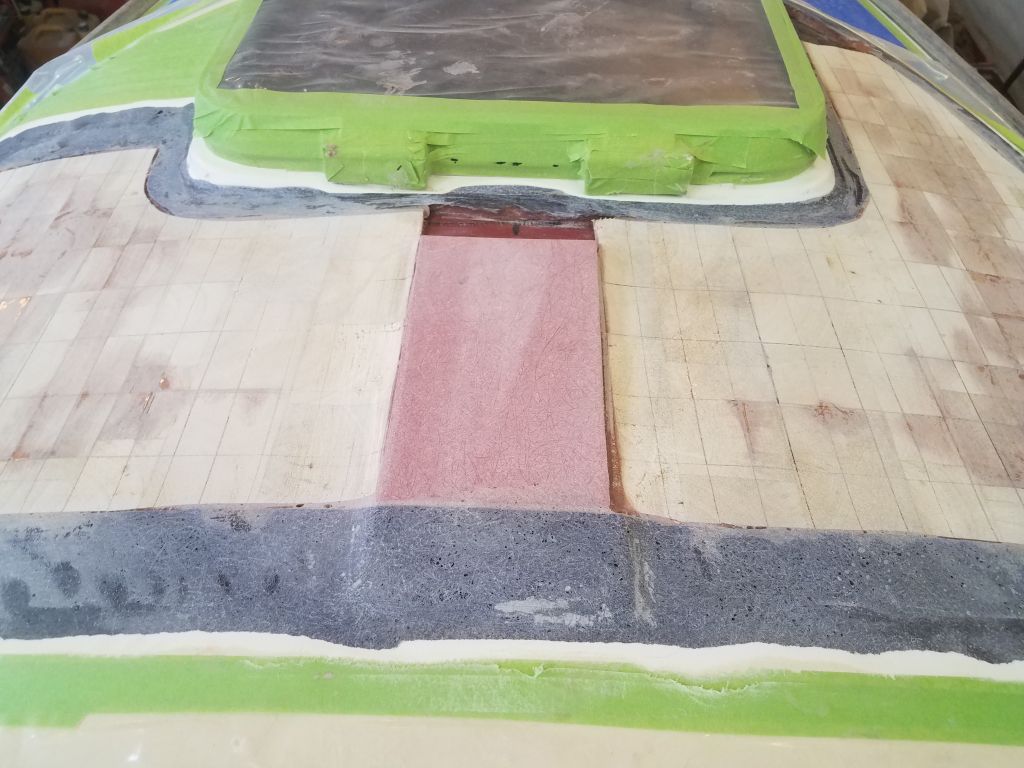
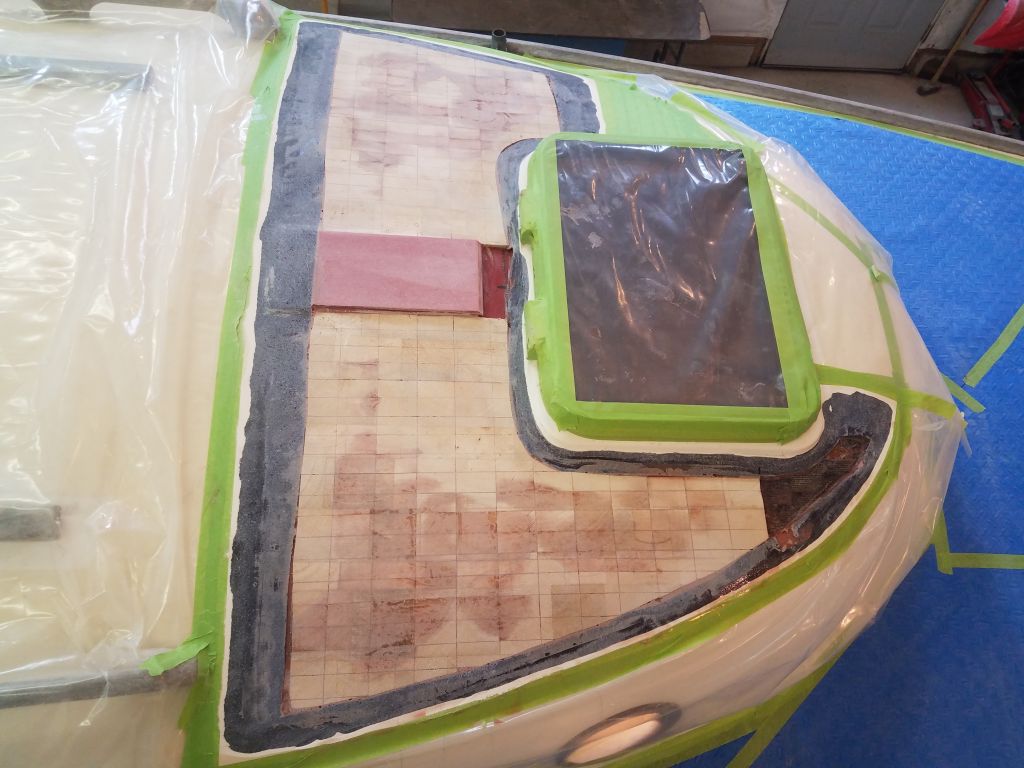
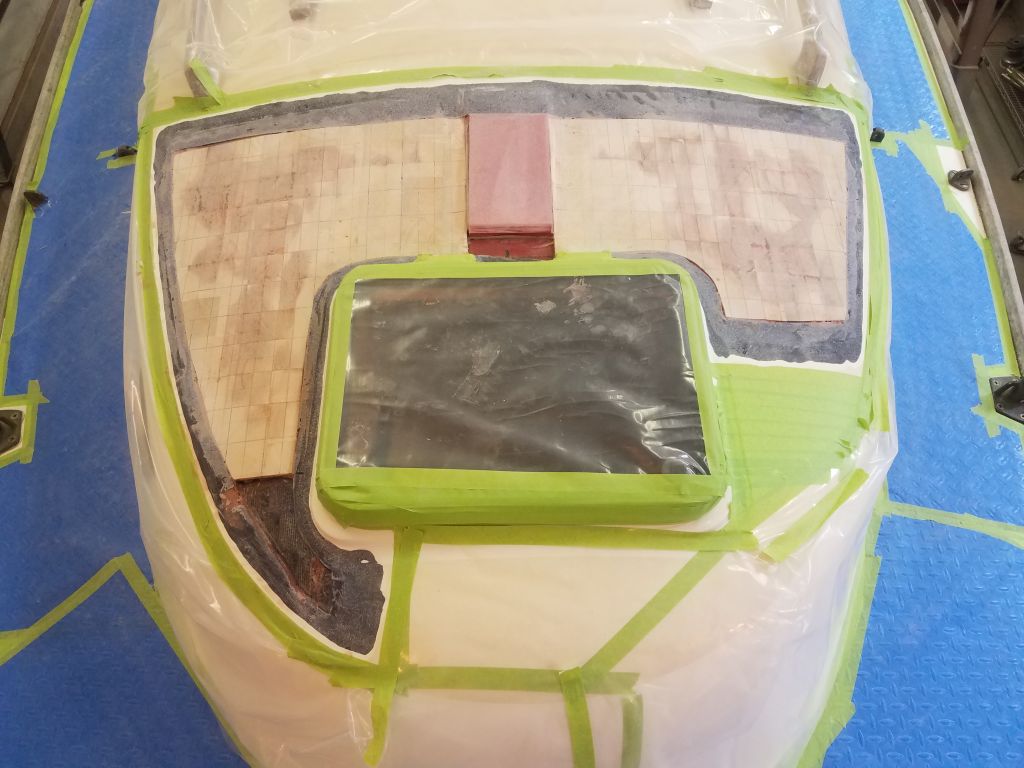
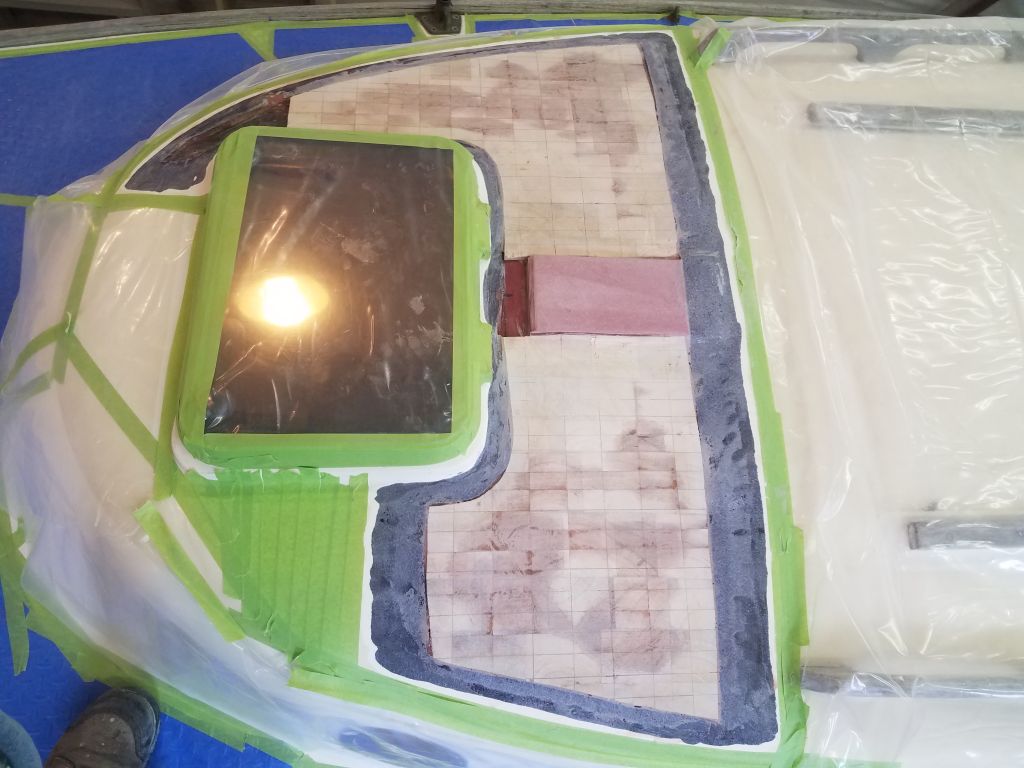
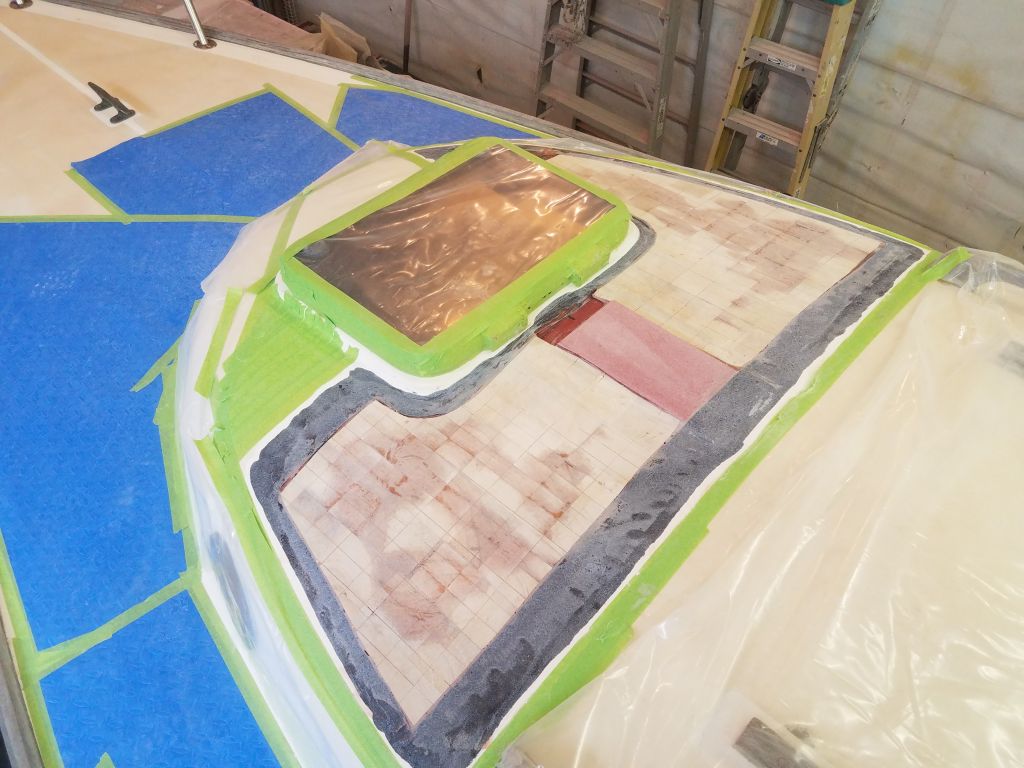
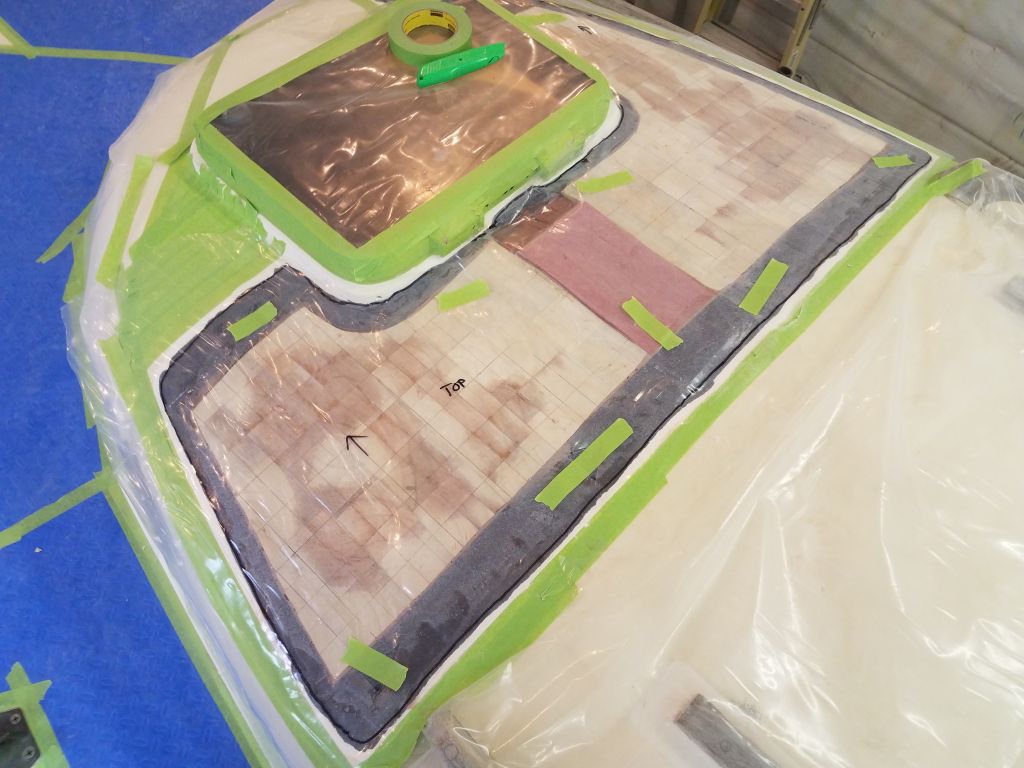
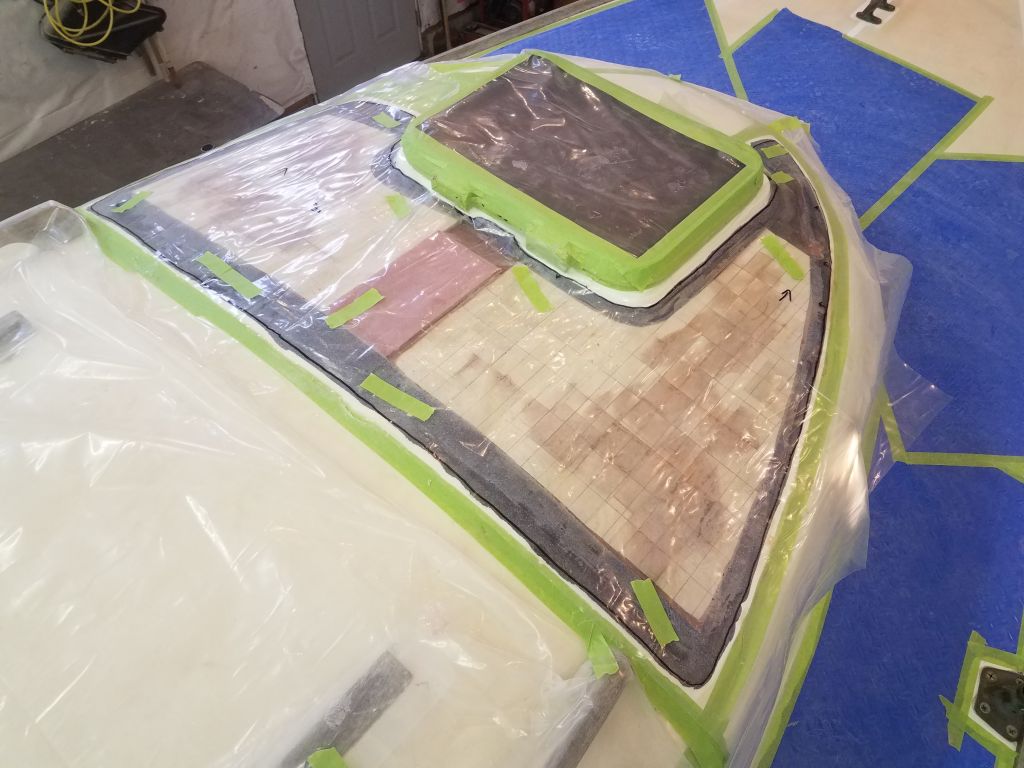
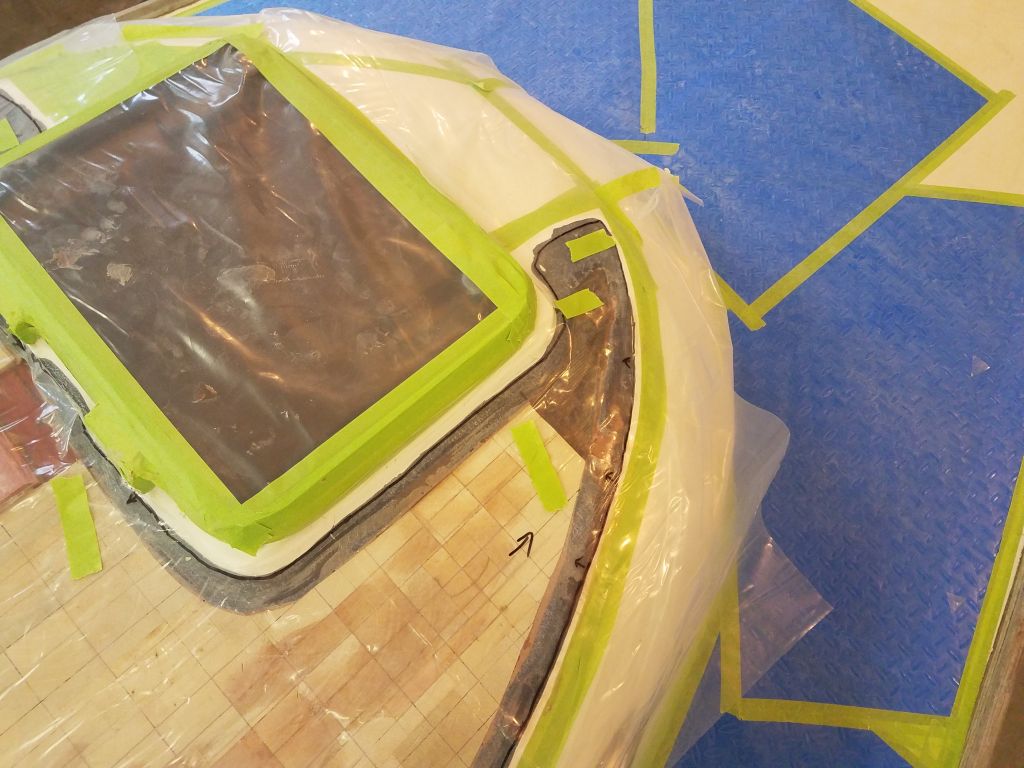
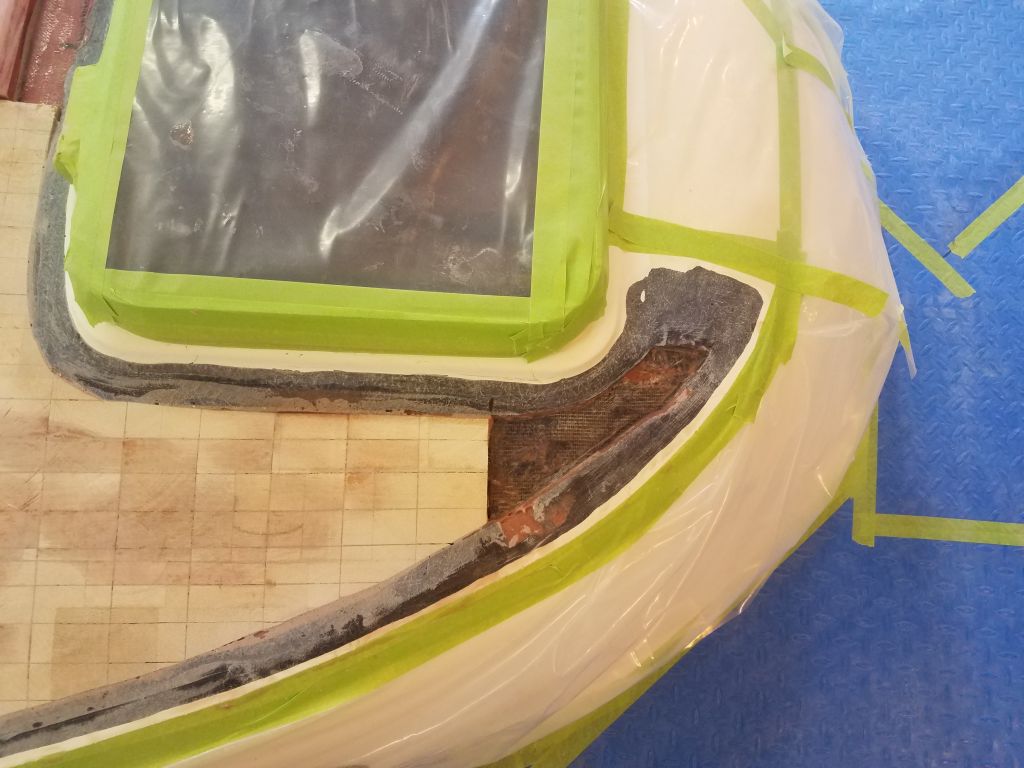
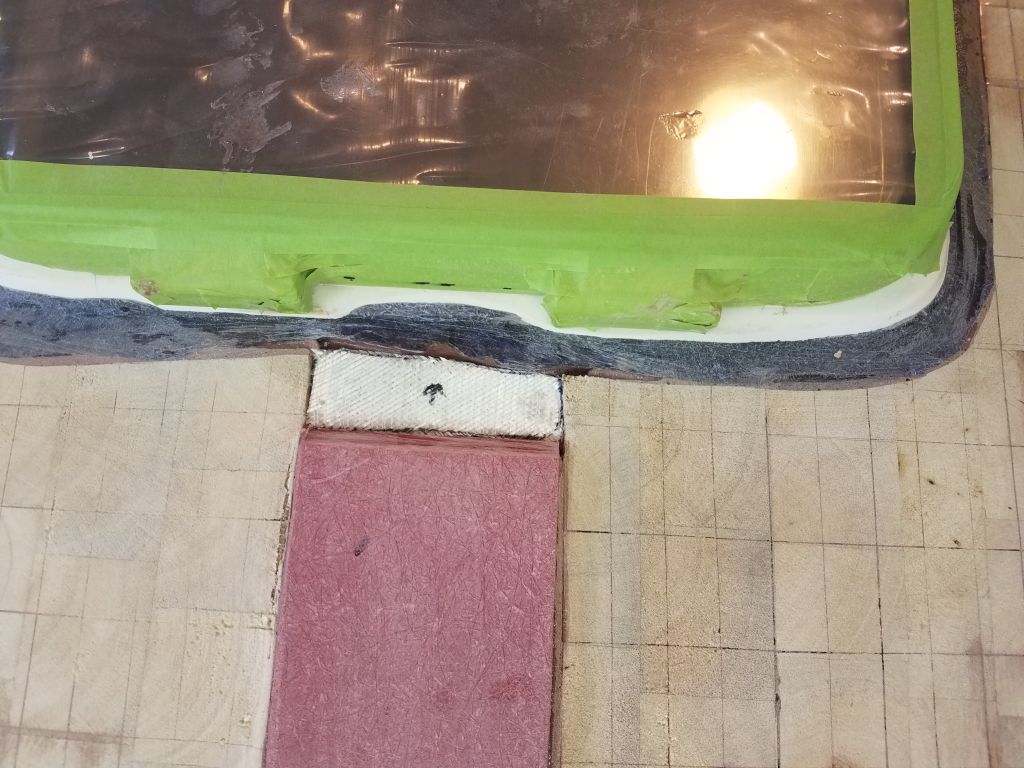
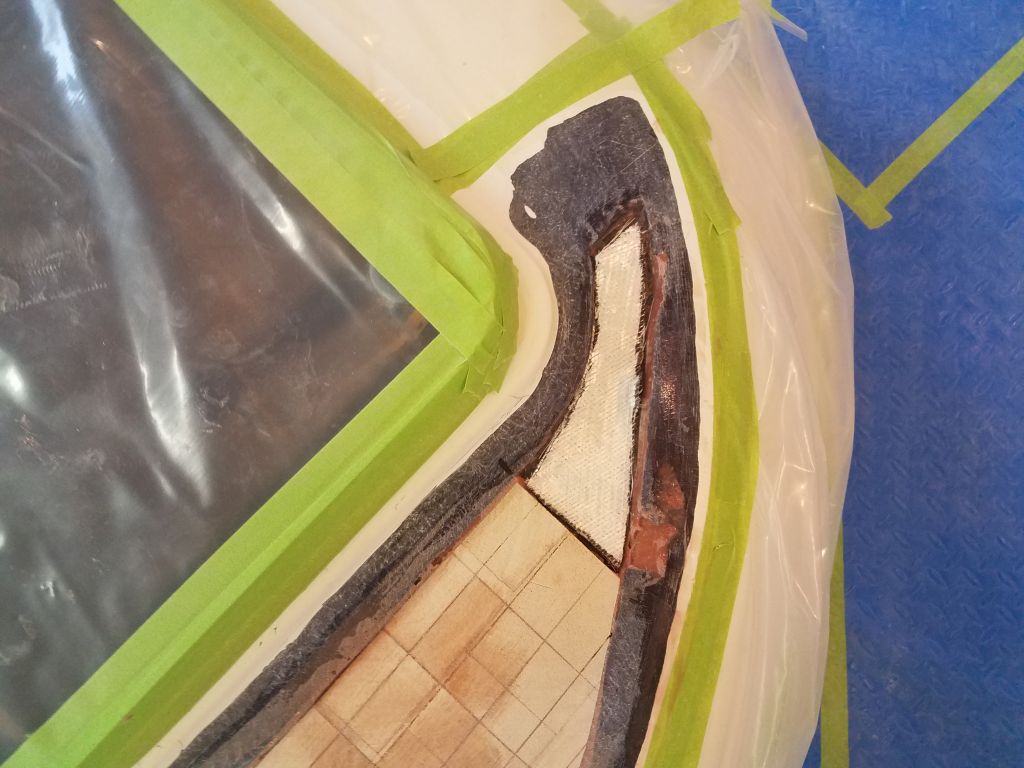
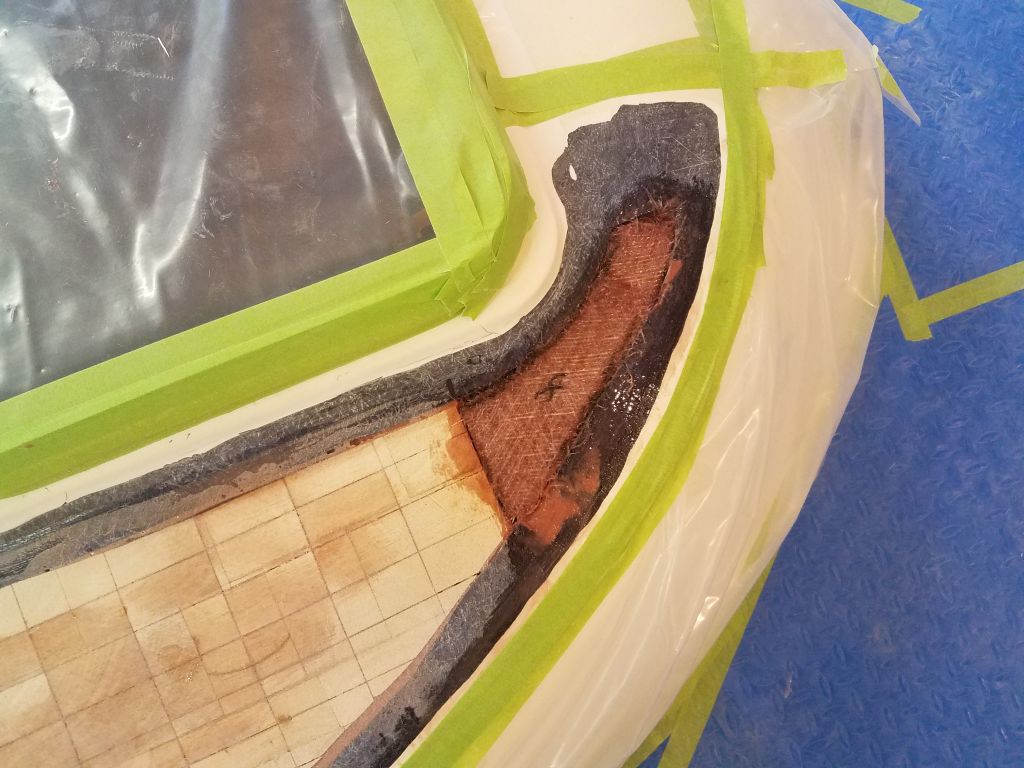
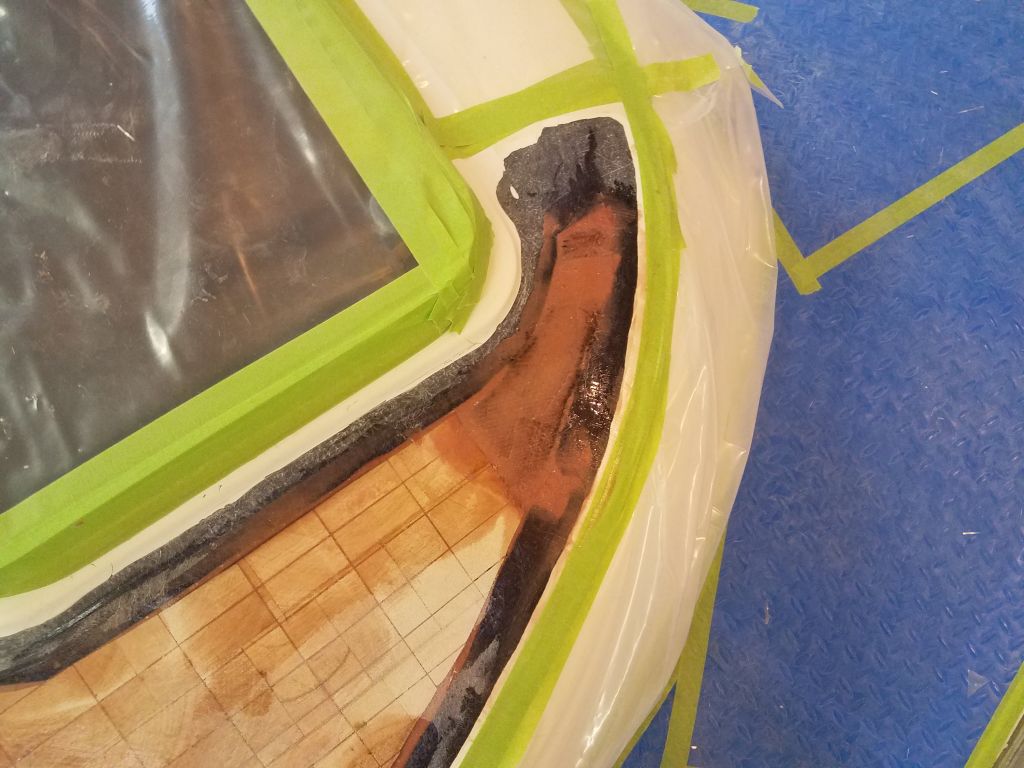
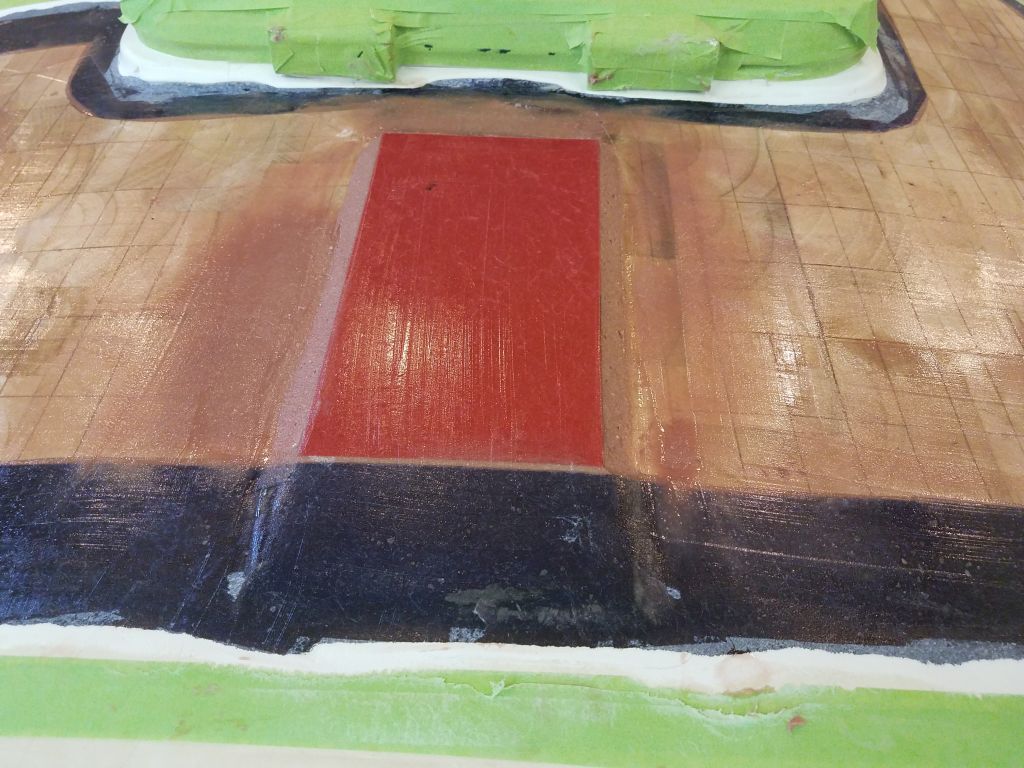
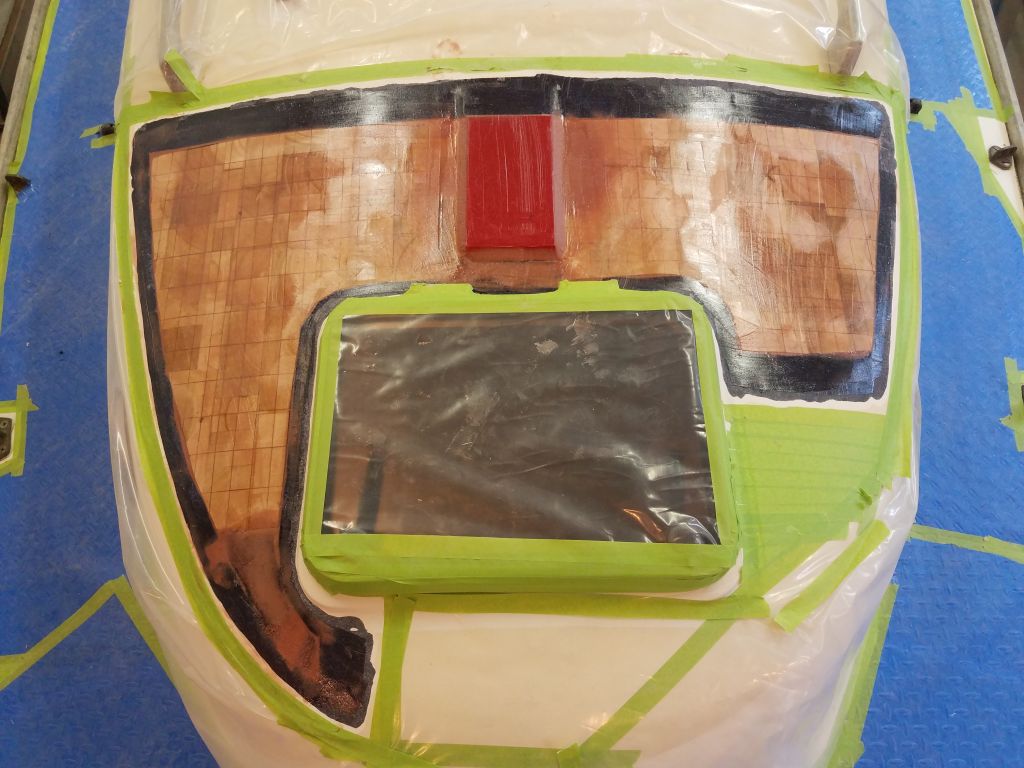
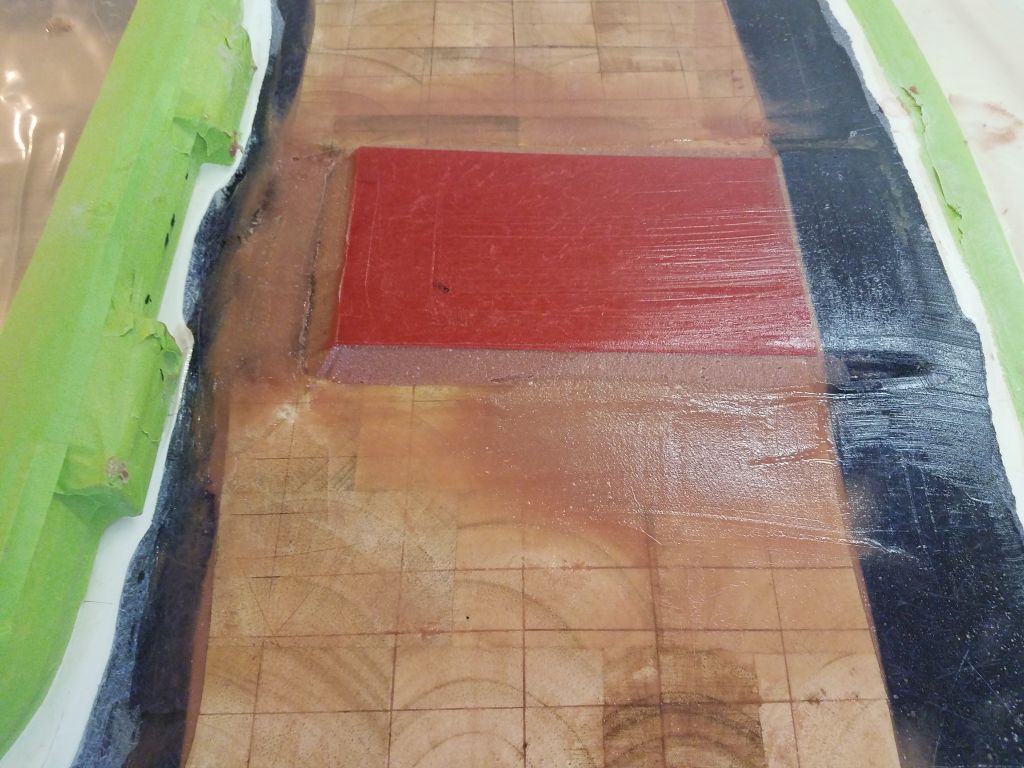
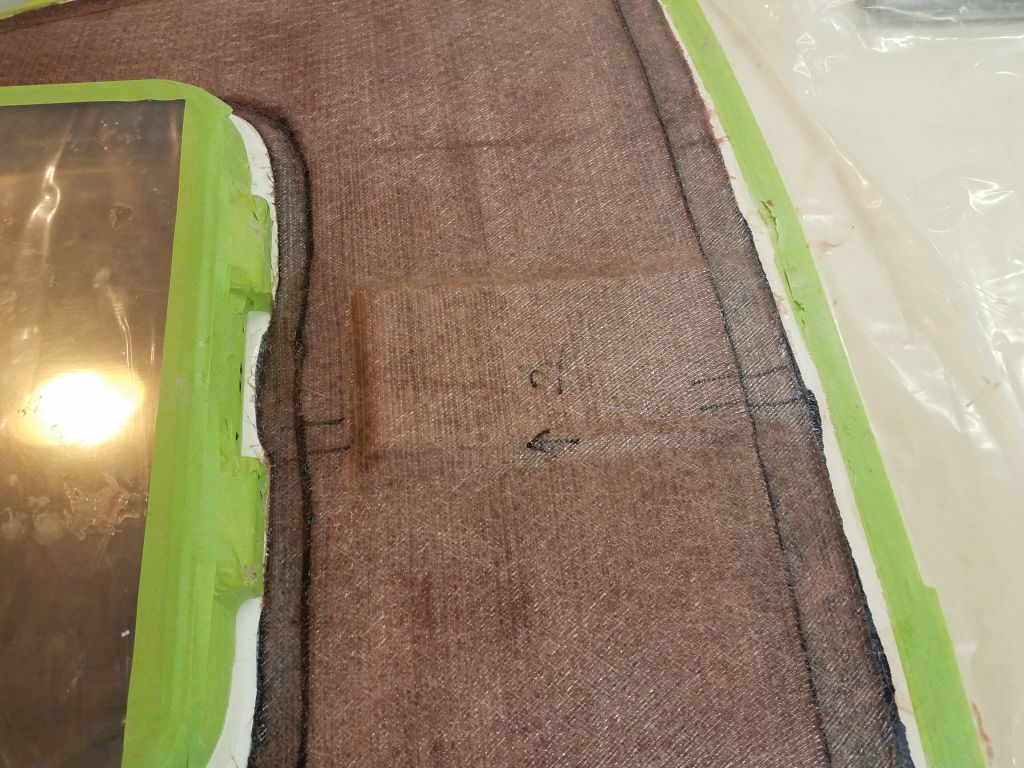
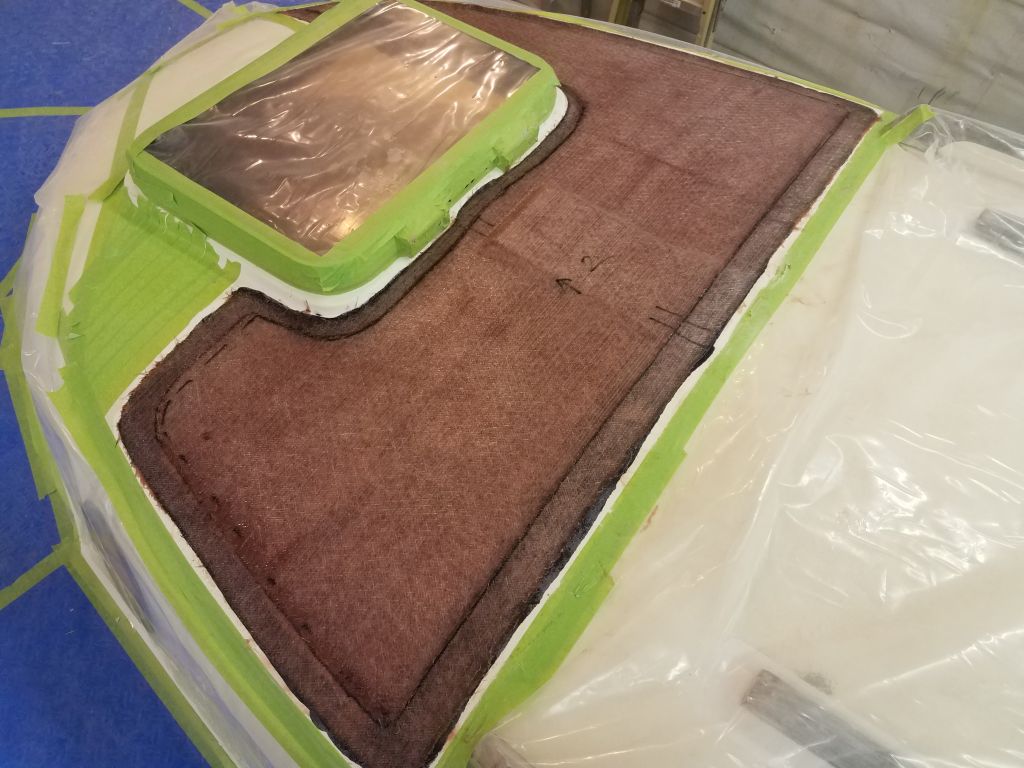
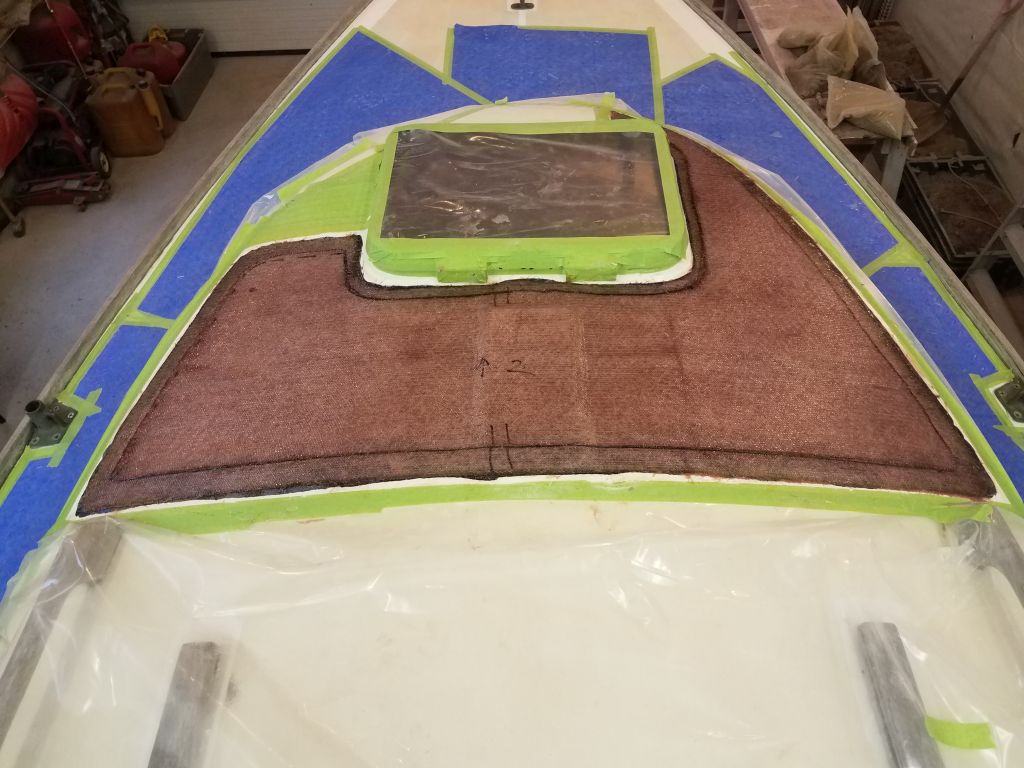
After lunch, the beam area had tacked up enough that I could do some preparatory work for the new mast step platform.  With a steel ruler in place between the short remaining section of the old platform (left in place for this purpose) and the marks I’d made on the forward hatch, I measured the height and found that it was just shy of 3/4″ (and taller at the forward end), so I thought I’d use another piece of my fiberglass sheeting to build the platform base.   The mast step needed to be solid fiberglass, and I’d originally considered building this up myself once the core was in place around it, but this was a quicker solution that would make building and shaping the little platform that much easier.  (Review the original platform design and shape here.)

I wanted to install the solid base, then glass over the top of it with the new top skin for the deck, so I needed the whole thing to be an appropriate height below the desired finished height as dictated by the ruler.  This meant that I had to remove some material from the underside of the piece to make it fit properly, mainly at the aft end, where it was too high, but I also had to shape and dish out the bottom to fit the general curvature of the deck beneath.  After some incremental shaping, I eventually got the new piece to fit the way I wanted it, essentially two layers’ thickness below the finished deck height.  (This gap is hard to see beneath the ruler in the bottom row of photos, but it’s there.)

To roughly match the shape and character of the original platform I was attempting to reproduce, I cut a bevel on the forward end of the fiberglass, which would ease the transition and shaping of the platform into the finished deck later.  The narrow area just forward of the mast step would be at nominal deck height (just a little lower), but instead of balsa core here, as in the original construction, I planned to fill that gap with solid fiberglass later, once the core was in place.  This would ensure that the wiring runs would never leak into any coring as they had in the past.

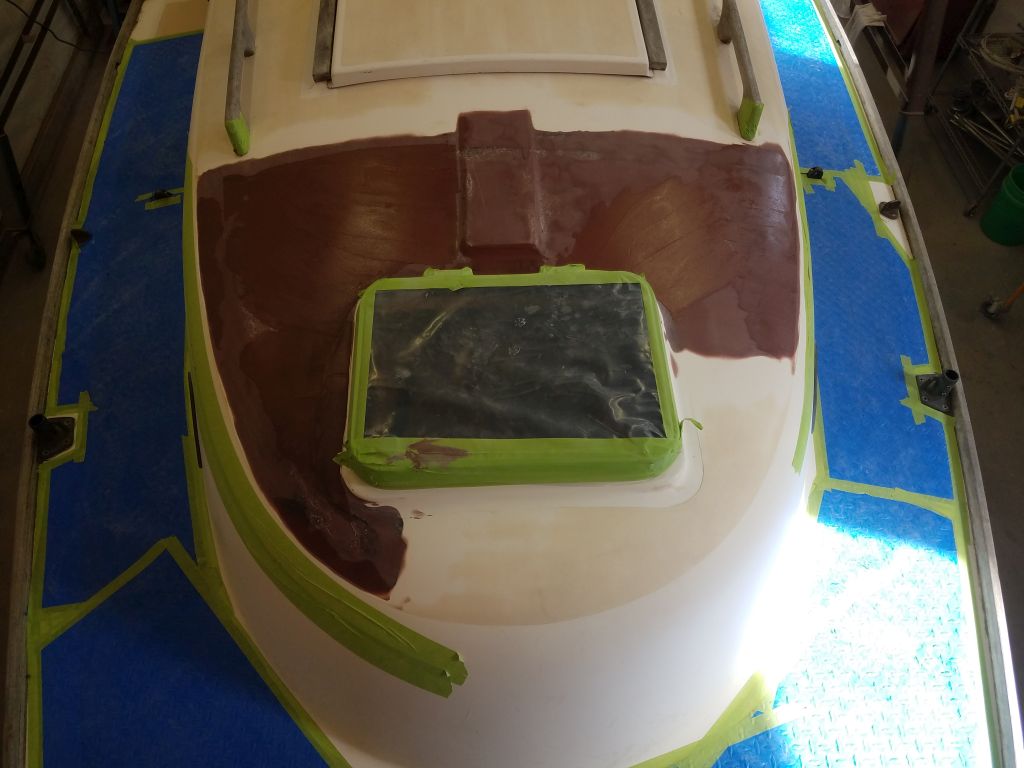
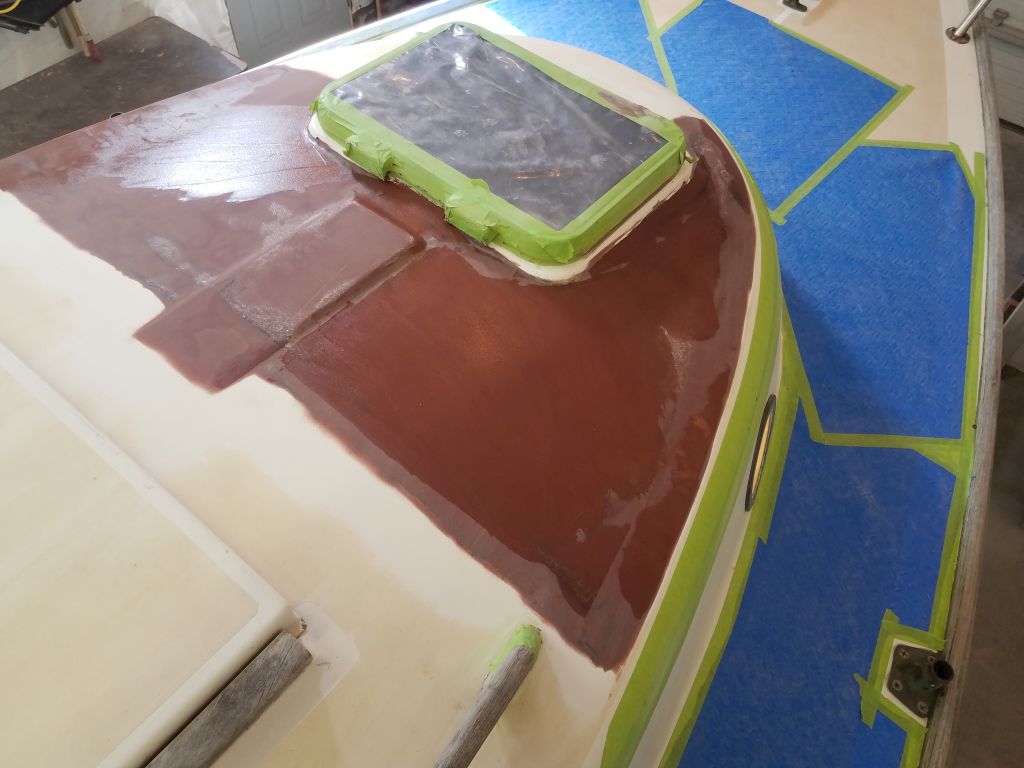
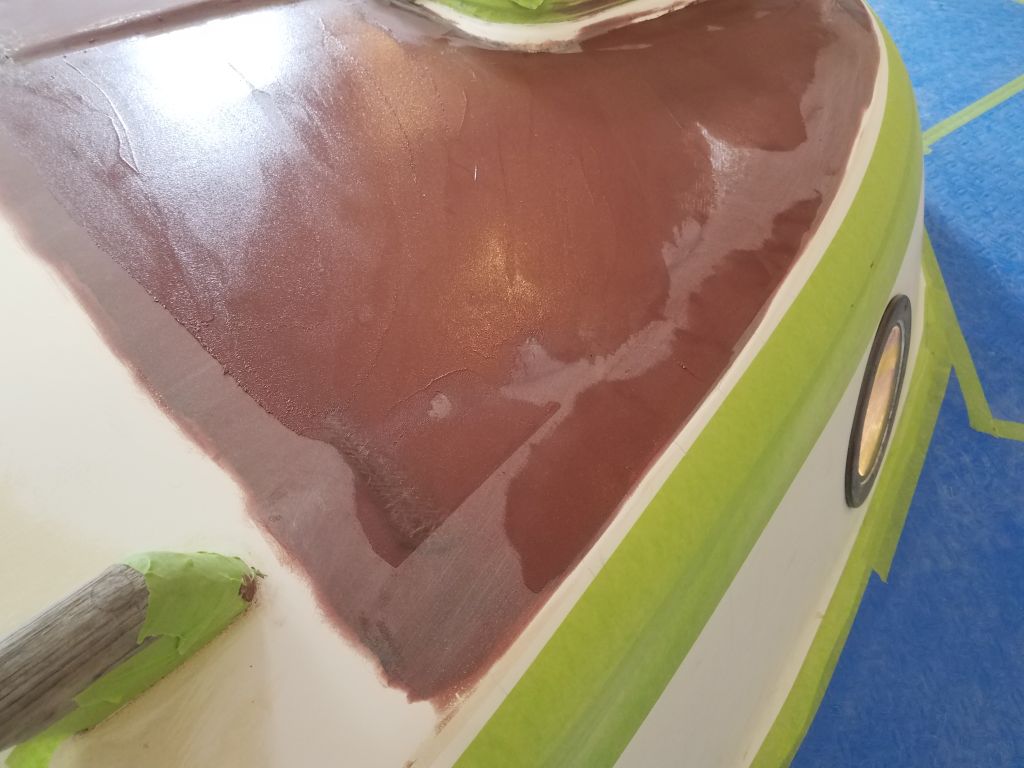
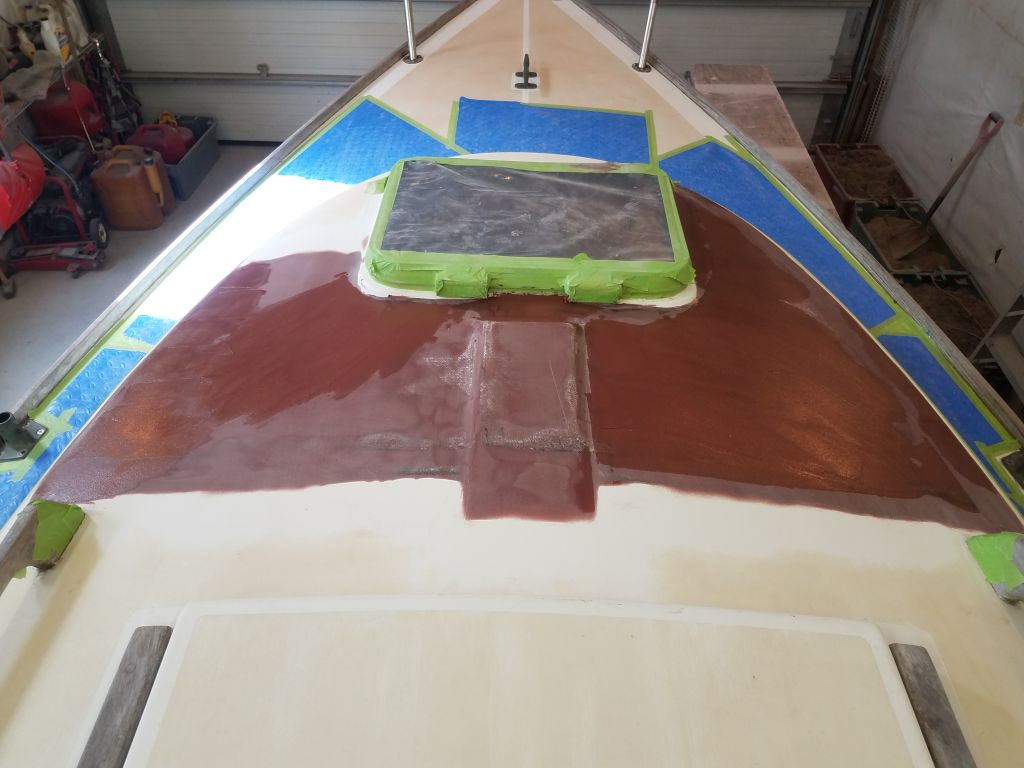
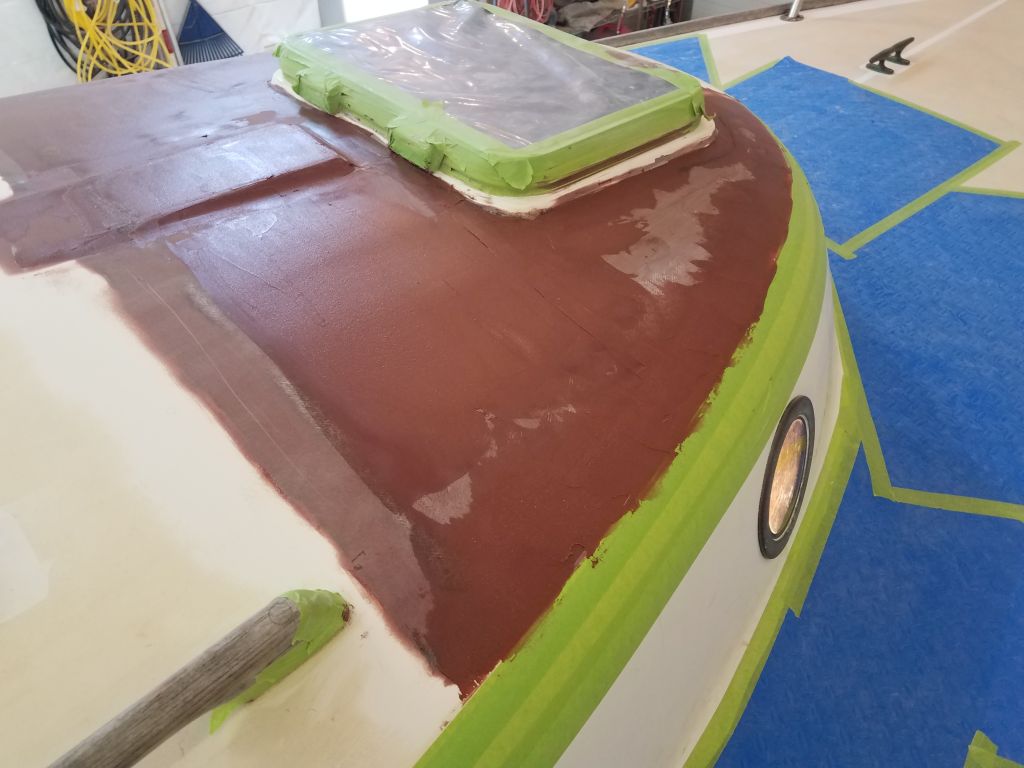
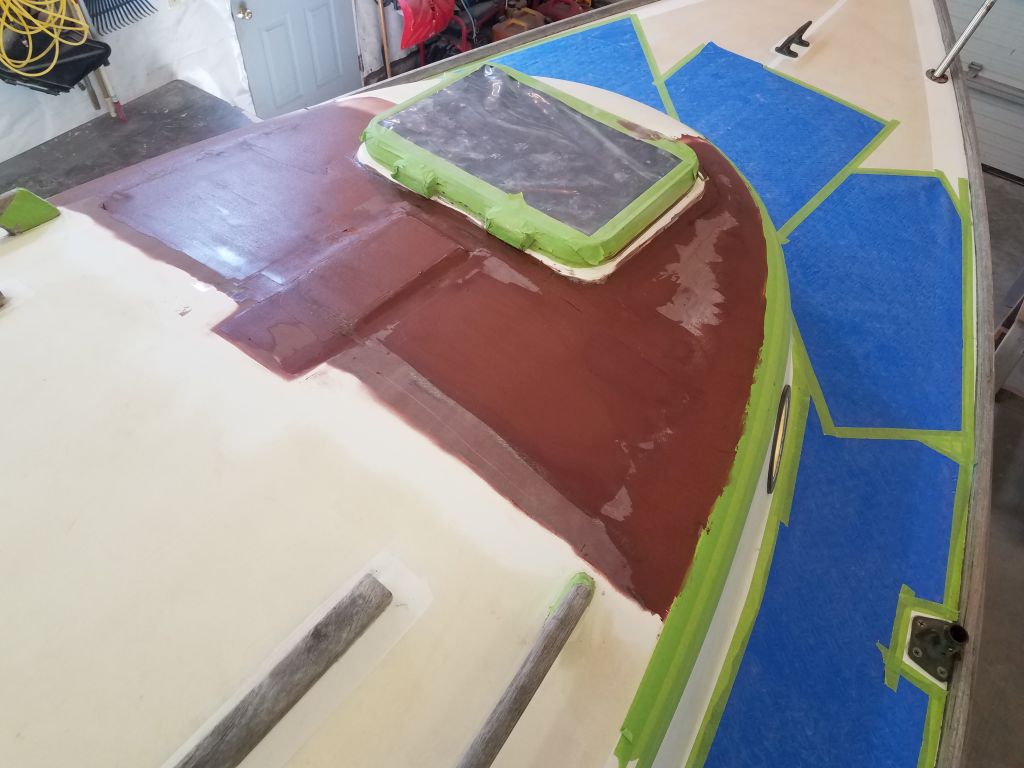
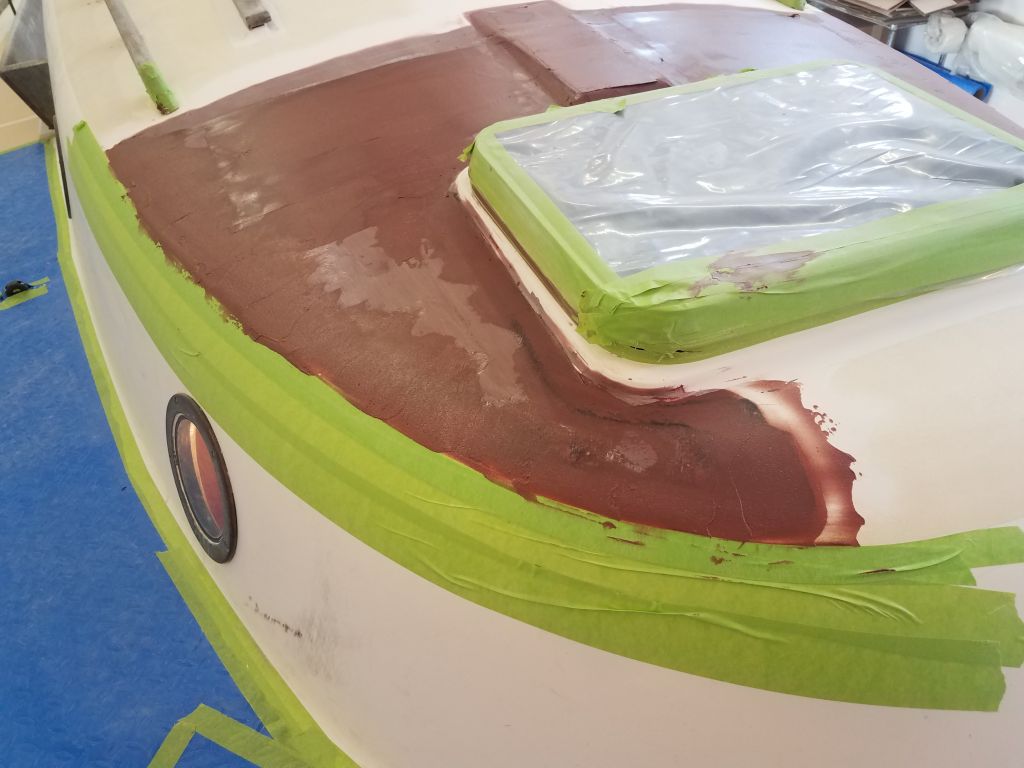
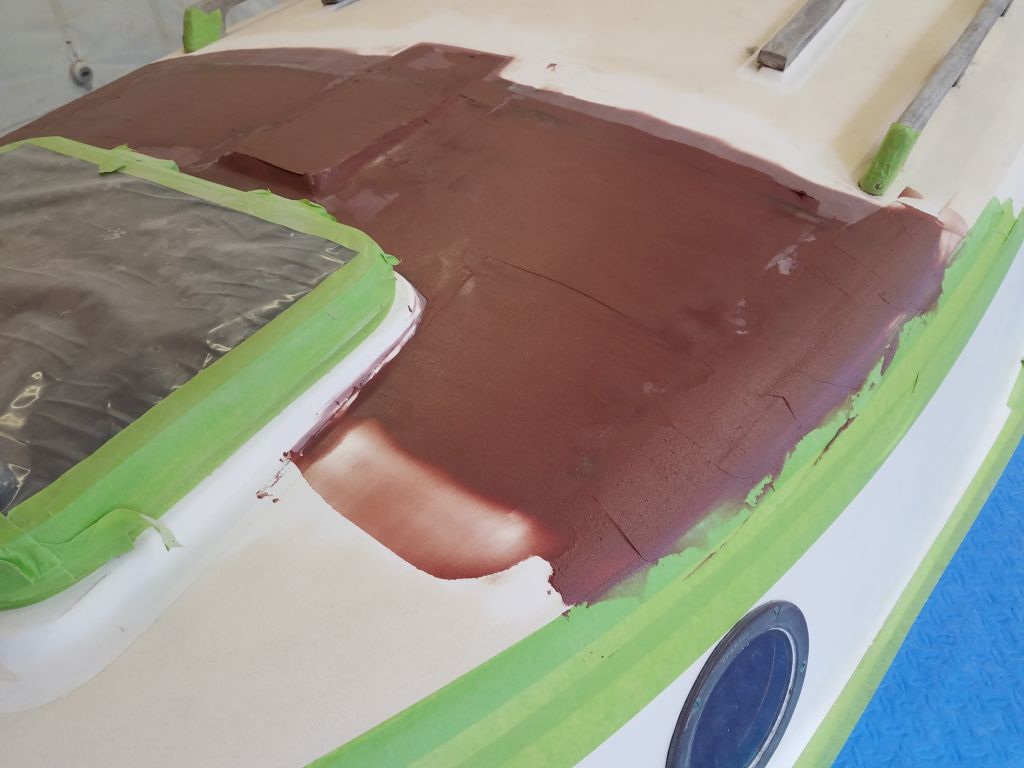
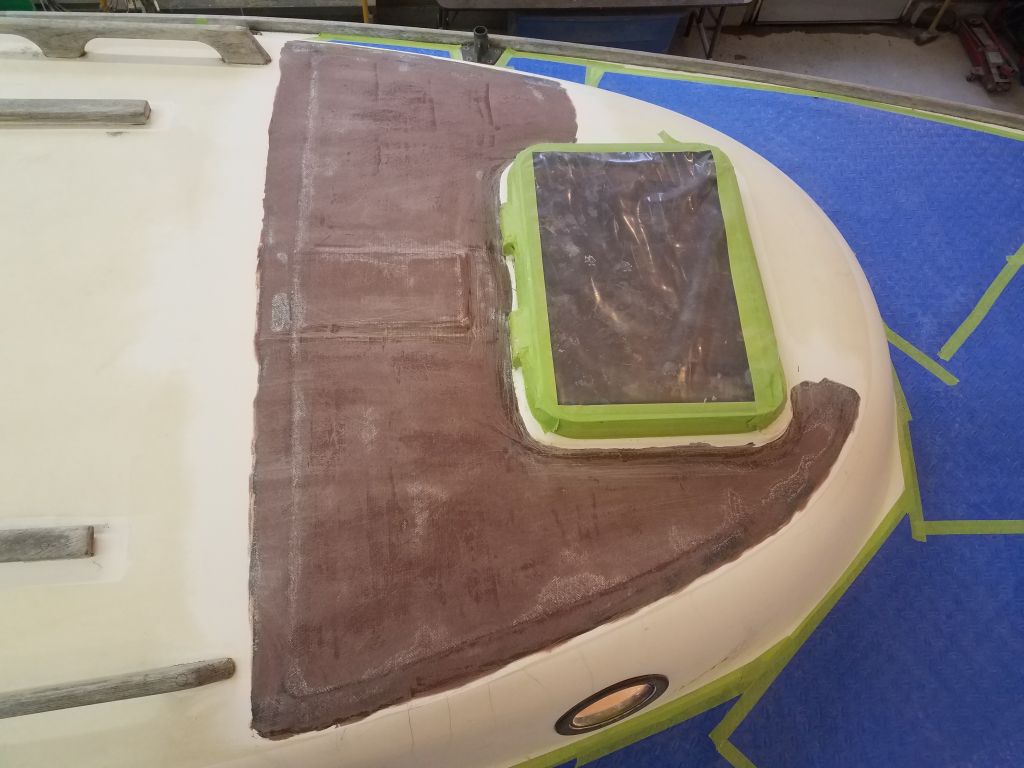
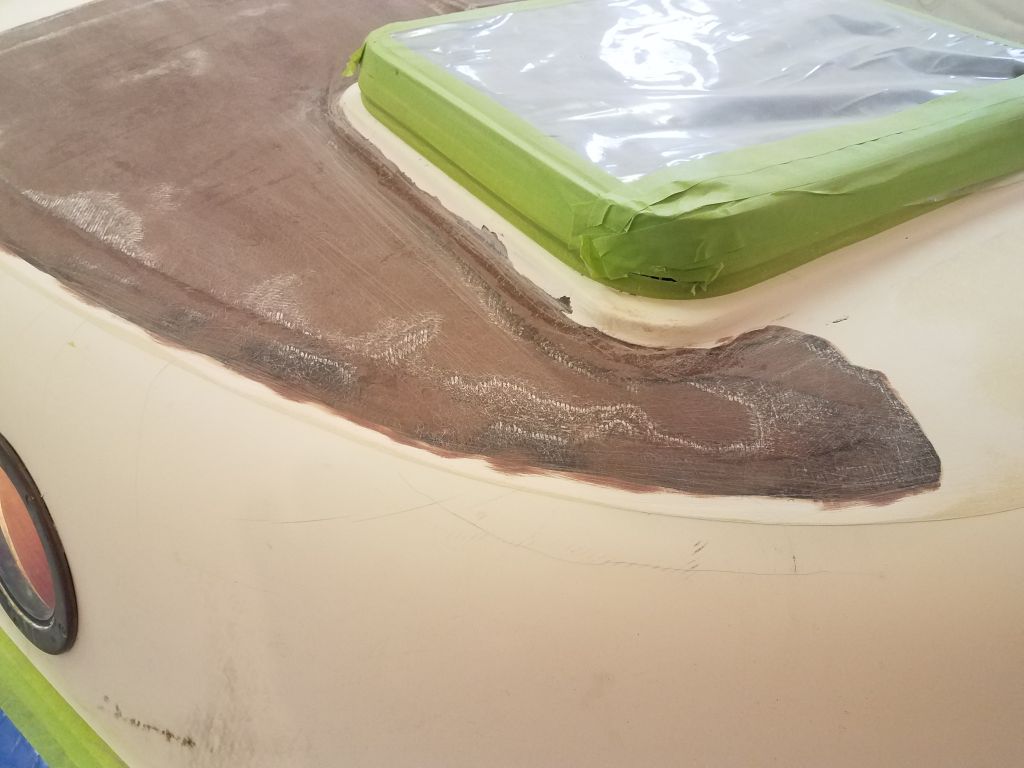
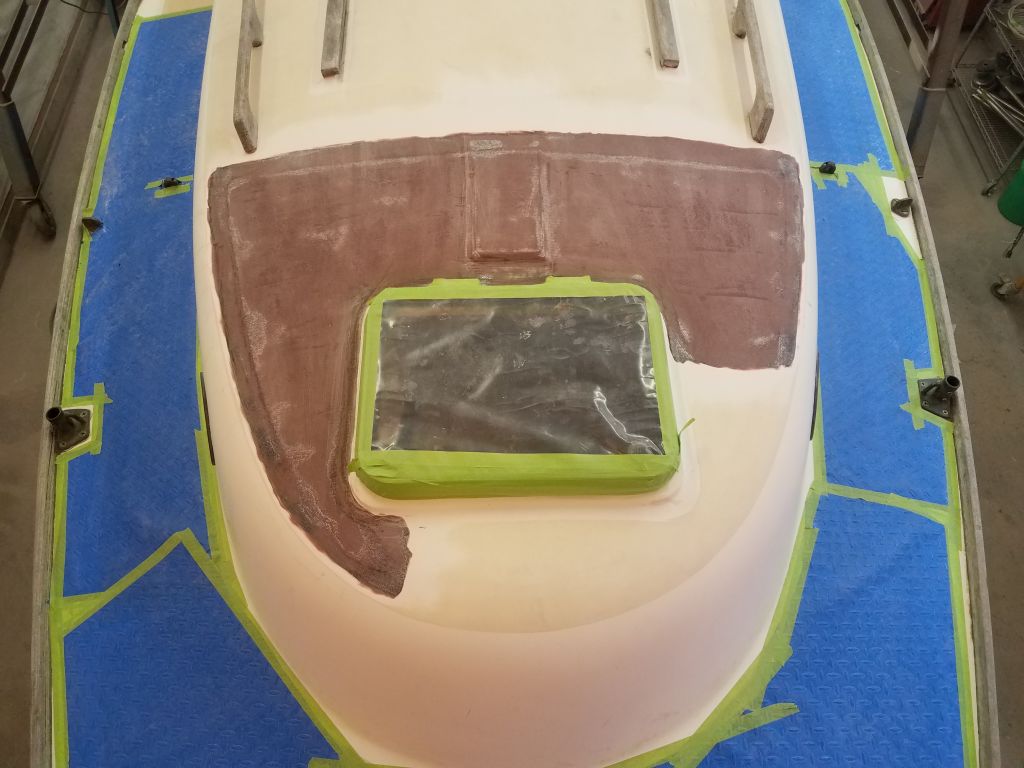
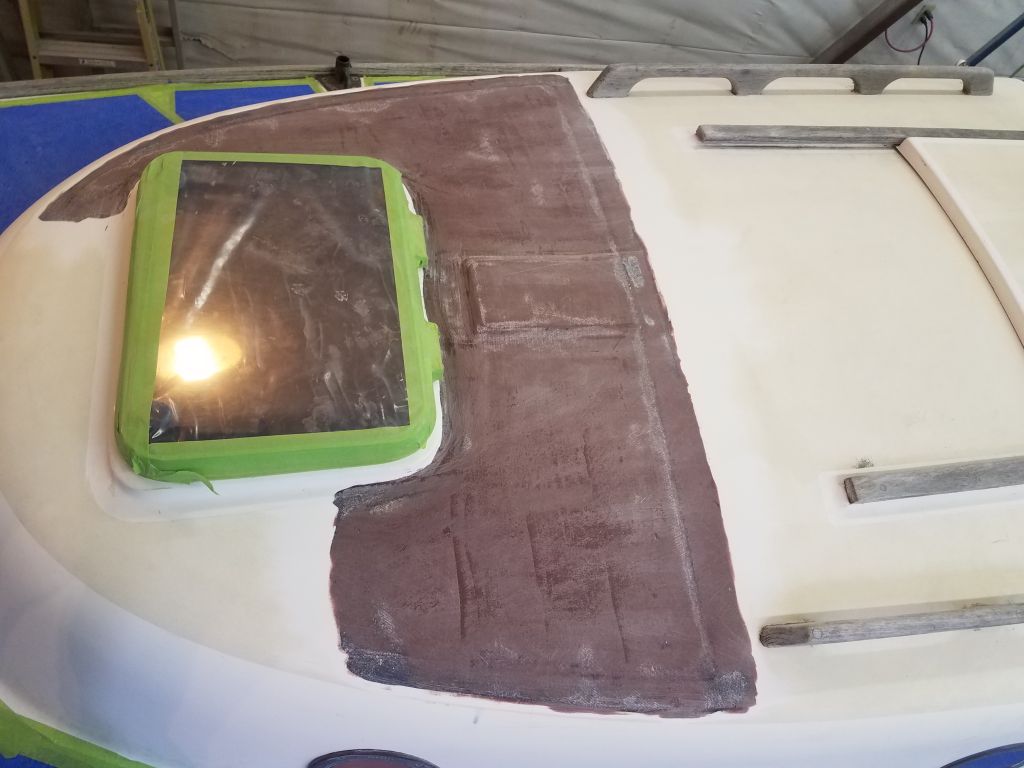
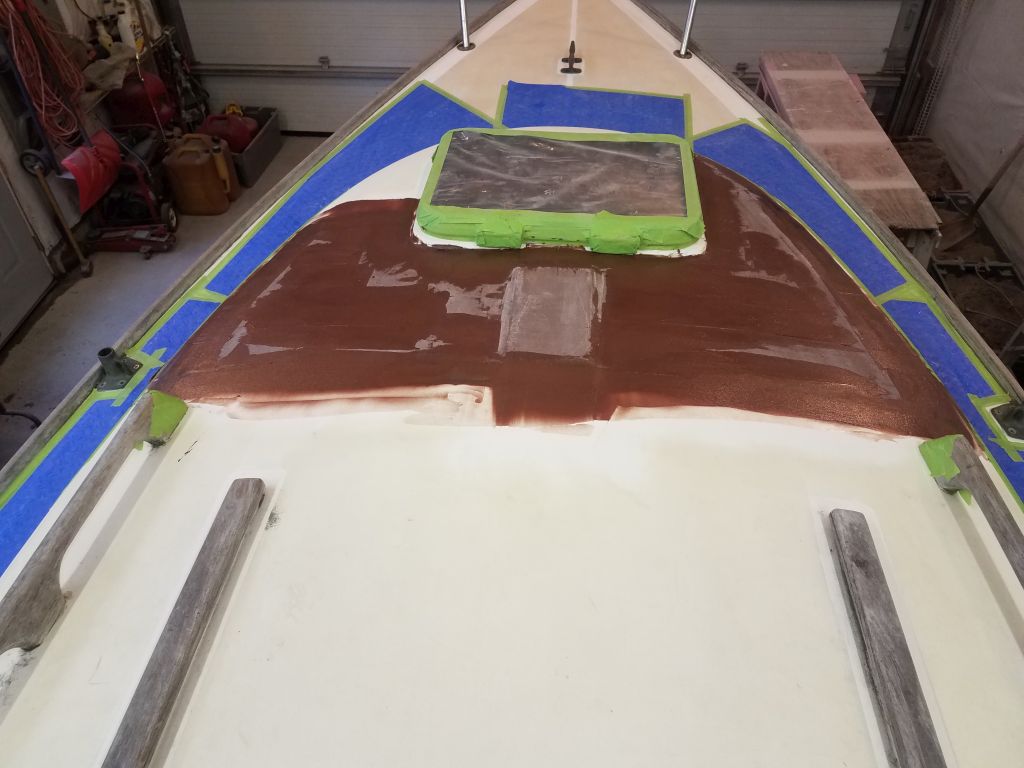
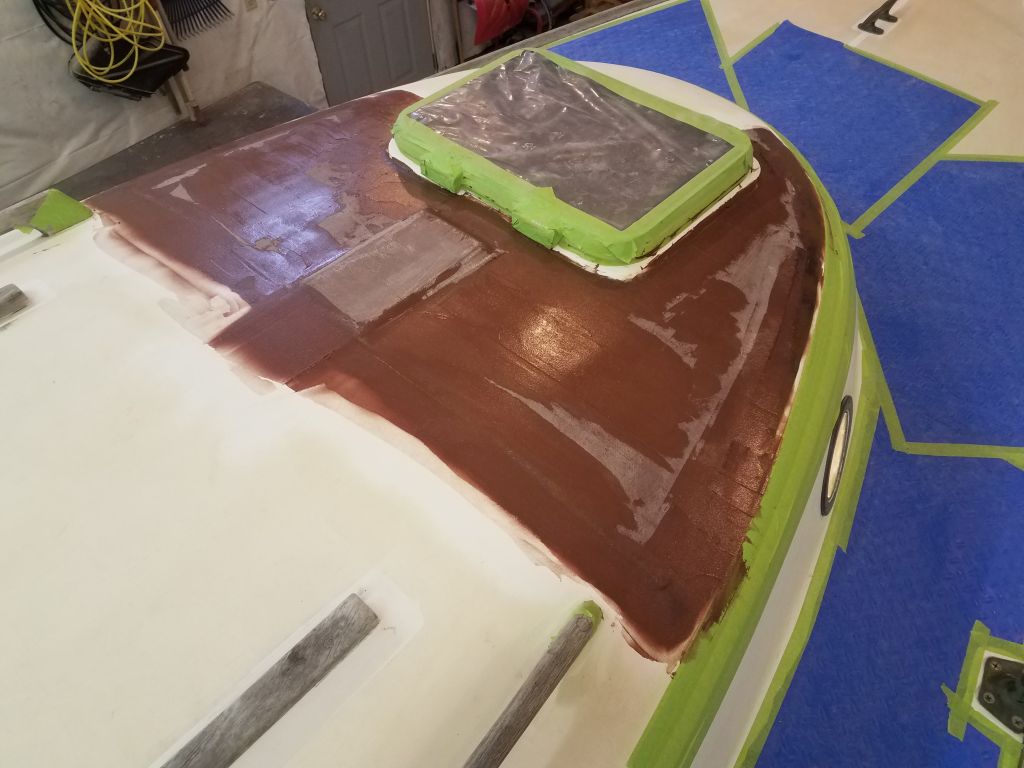
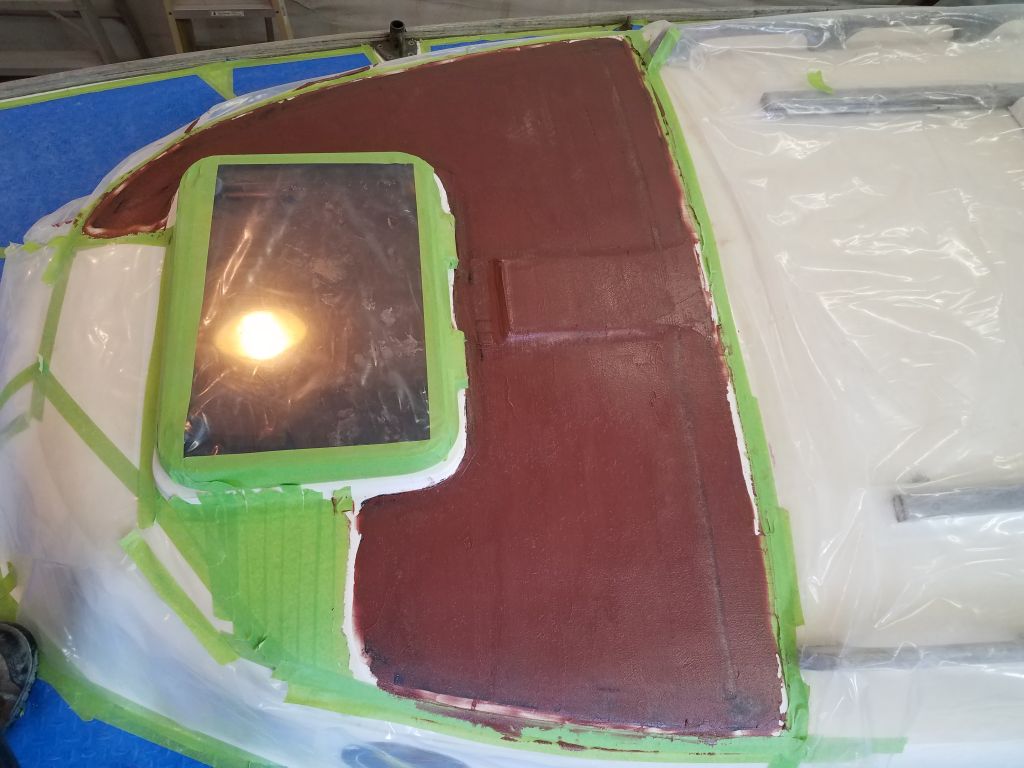
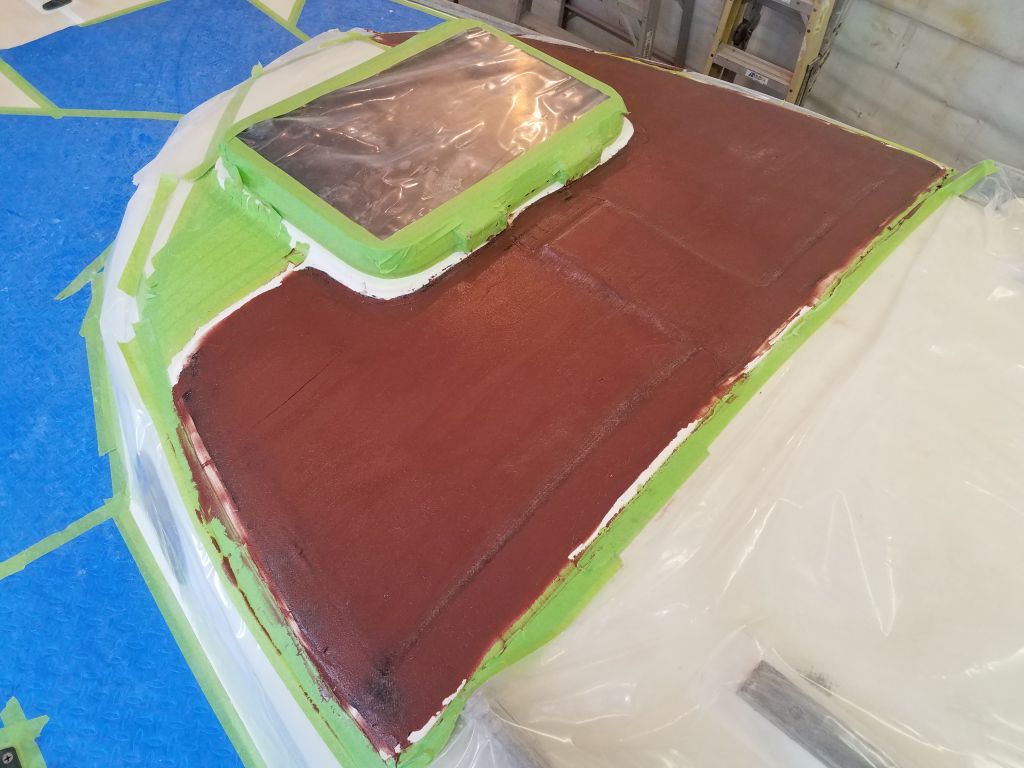
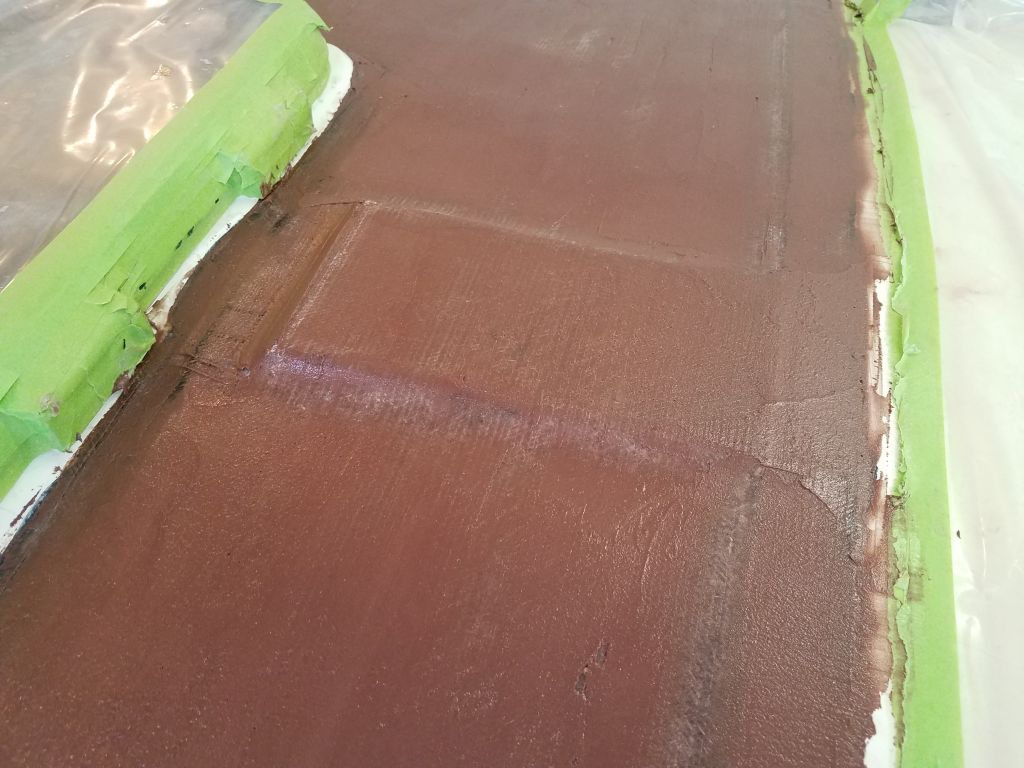
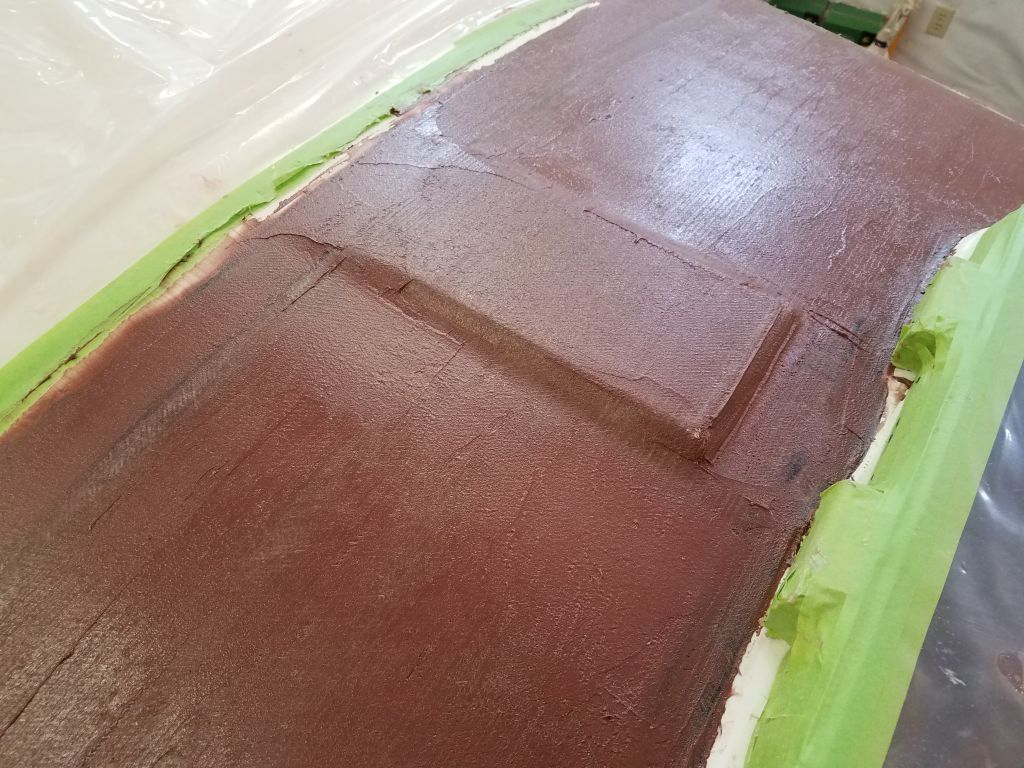
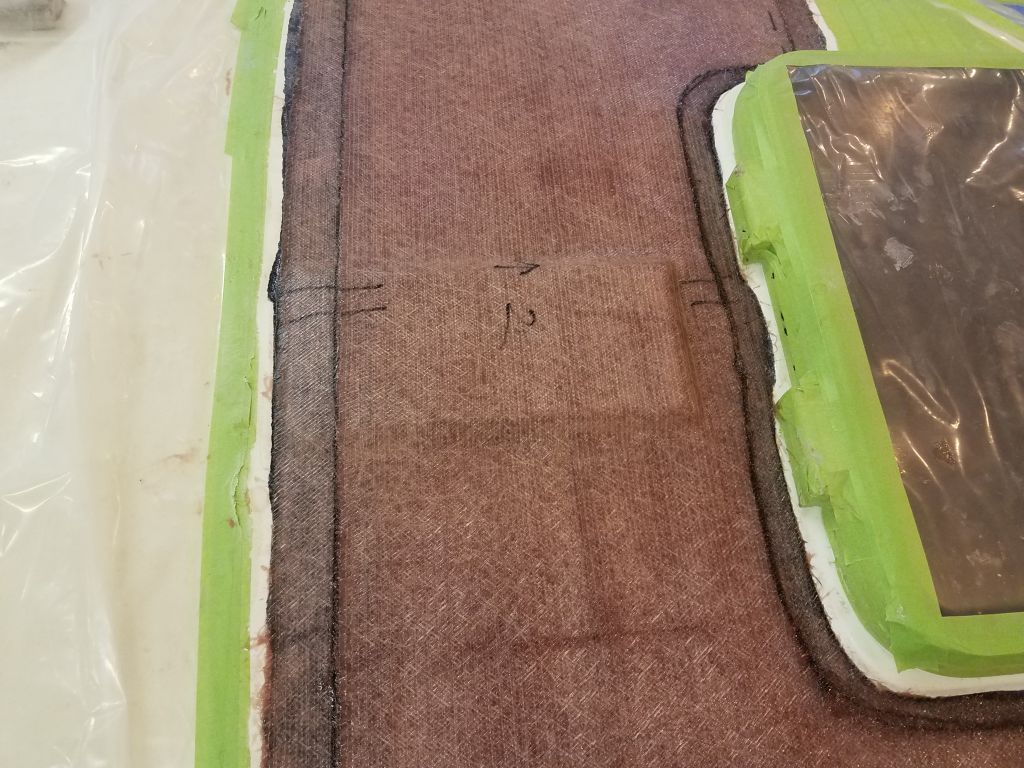
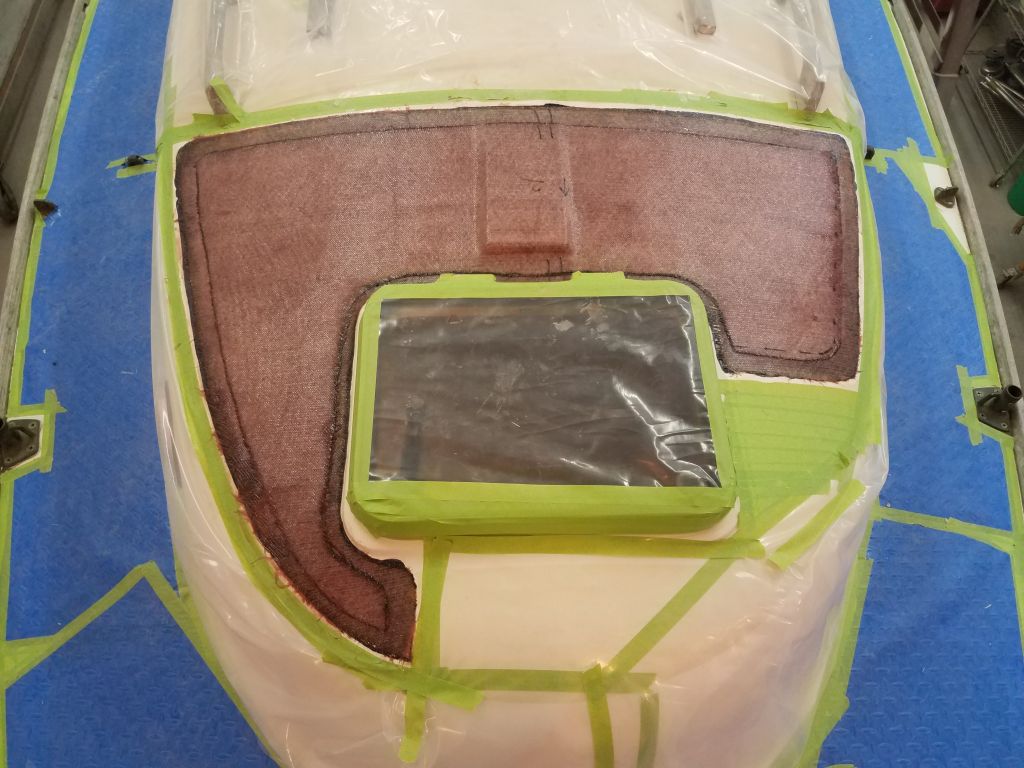
When I’d removed the old part of the platform, I found that this left a gap in the deck skin below, and over a couple “lifts” of epoxy I’d filled this void over the course of the day, finishing up with a final layer once I’d completed work on the mast platform and bringing the void up to inner deck level.

Total time billed on this job today:  5.5 hours 

0600 Weather Observation:  28°, mostly clear. Forecast for the day:  Sunny, 57°

Adeline 3

Thursday

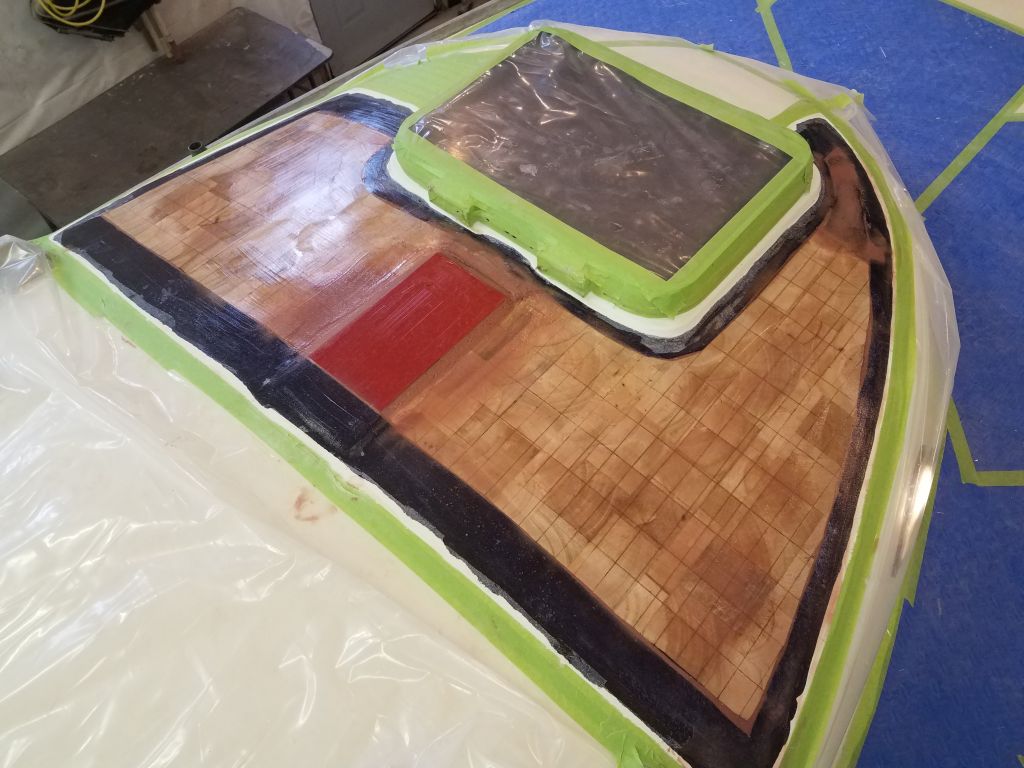
Picking up where I left off, I attacked the remains of the wooden mast beam.  Based on the small sections I’d removed last time, I expected a difficult time ahead.  I used a saw to cut a series of kerfs lengthwise through the wood, which was how the saw fit; there wasn’t really room to cut across the narrow dimension, but I added a few diagonal cuts where I could.  To my pleasure and surprise, this made the final removal startlingly quick:  I found that in short order I could remove large slivers of the wood, which then released the rest from the edges, so in no time at all I’d removed all the wood, leaving behind a nearly clean trough in the deck.  The wood may once have been secured in place by the laminate (I suspected the laminate was built up right over the wood once it was in place), and there were some minor ghosts of wood stuck to the laminate, but whatever bonding had been there originally had long ago failed as the wood became saturated, and because any bonding of this nature would have been minimal and weak to begin with.

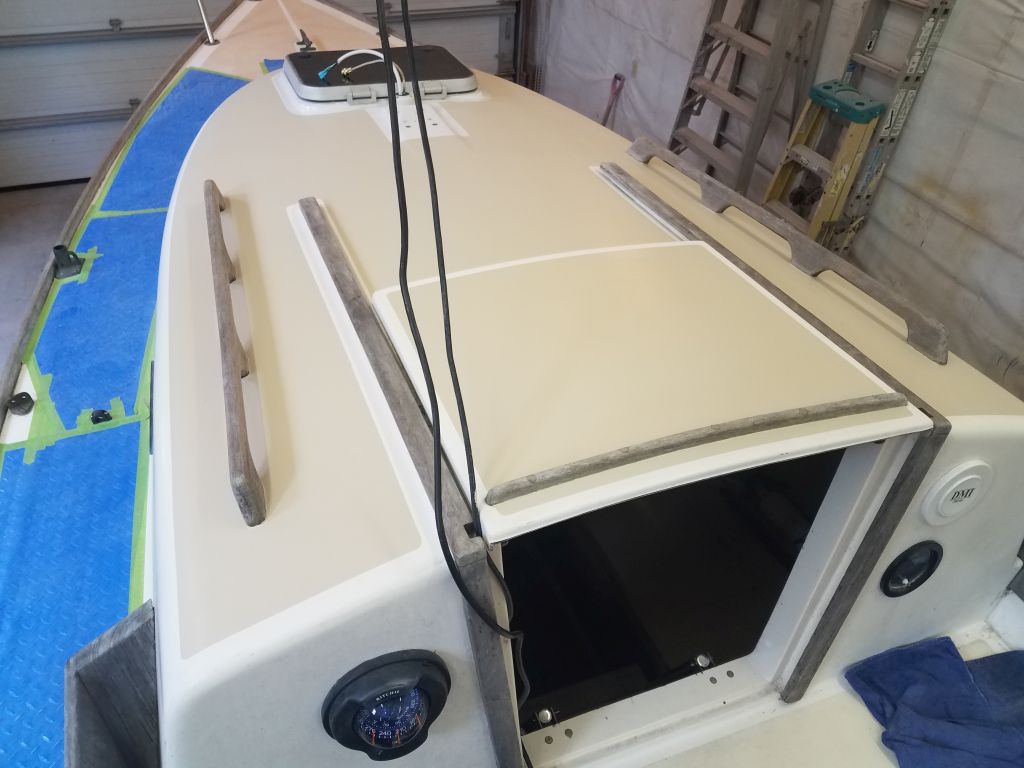
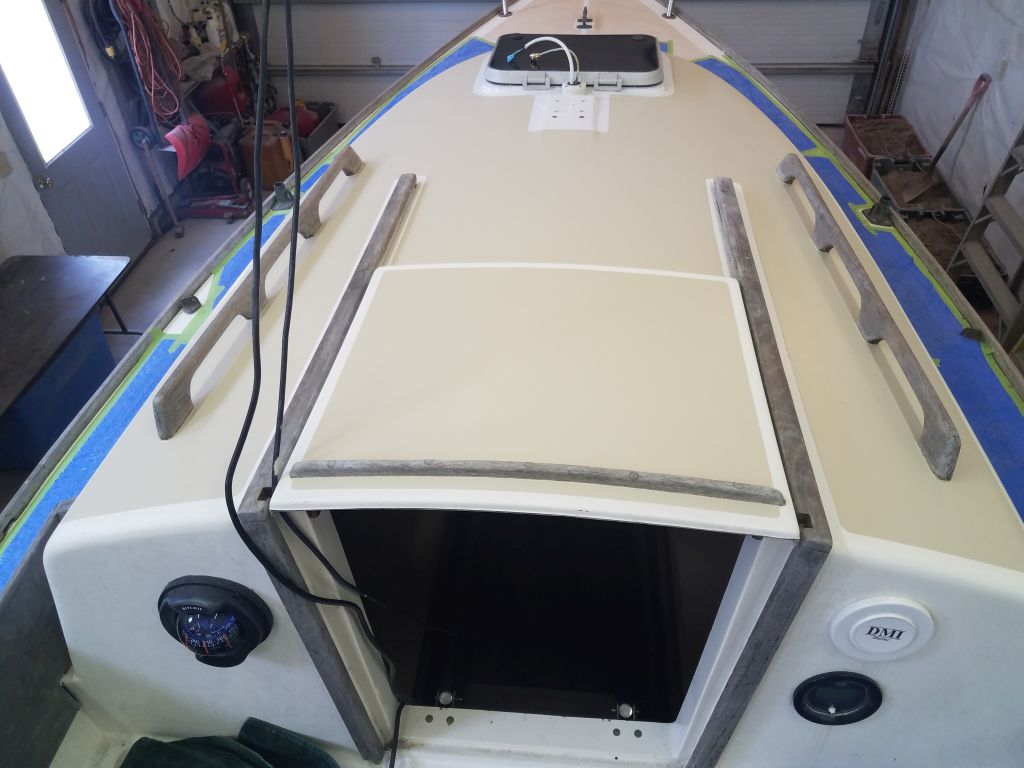
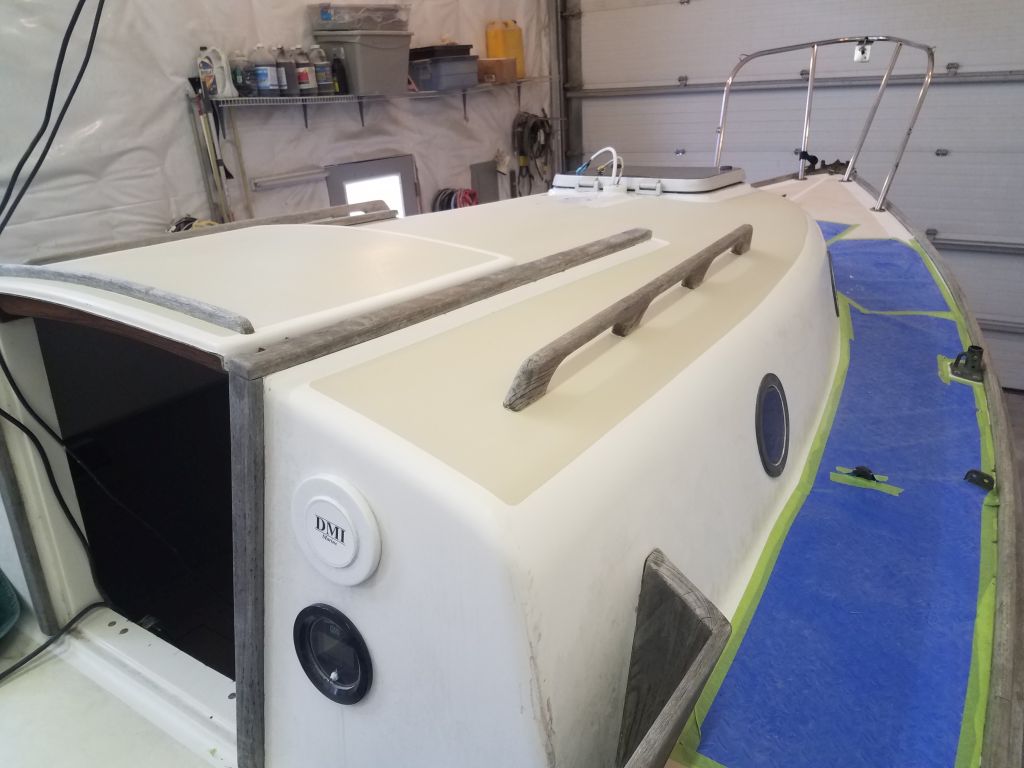
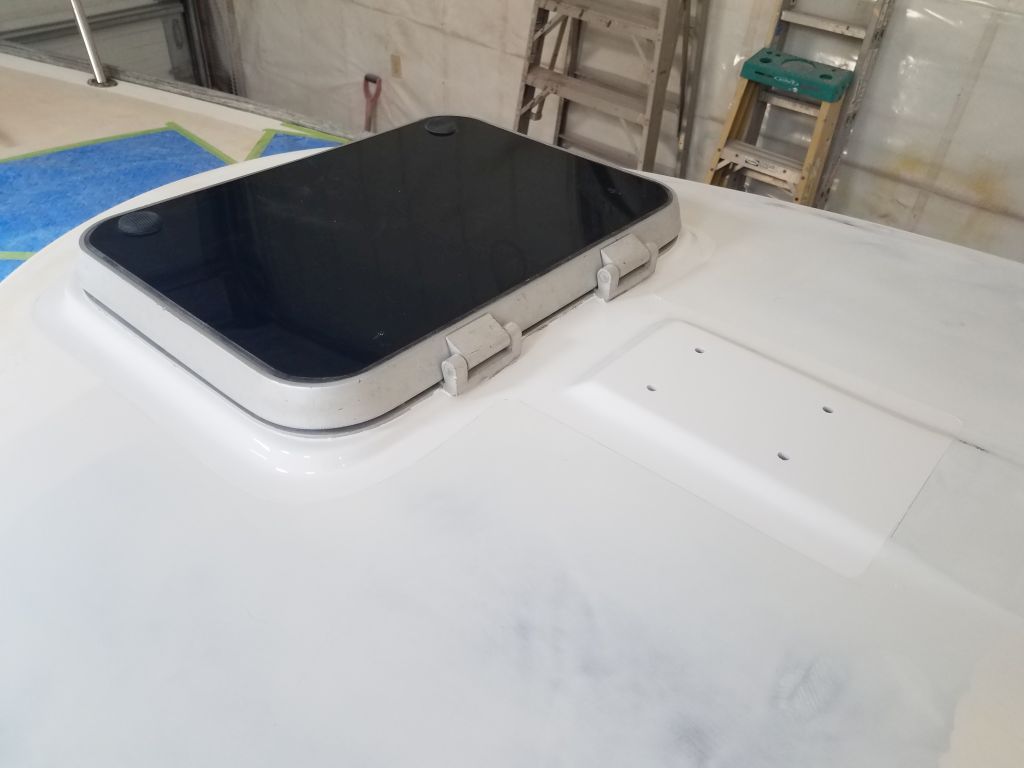
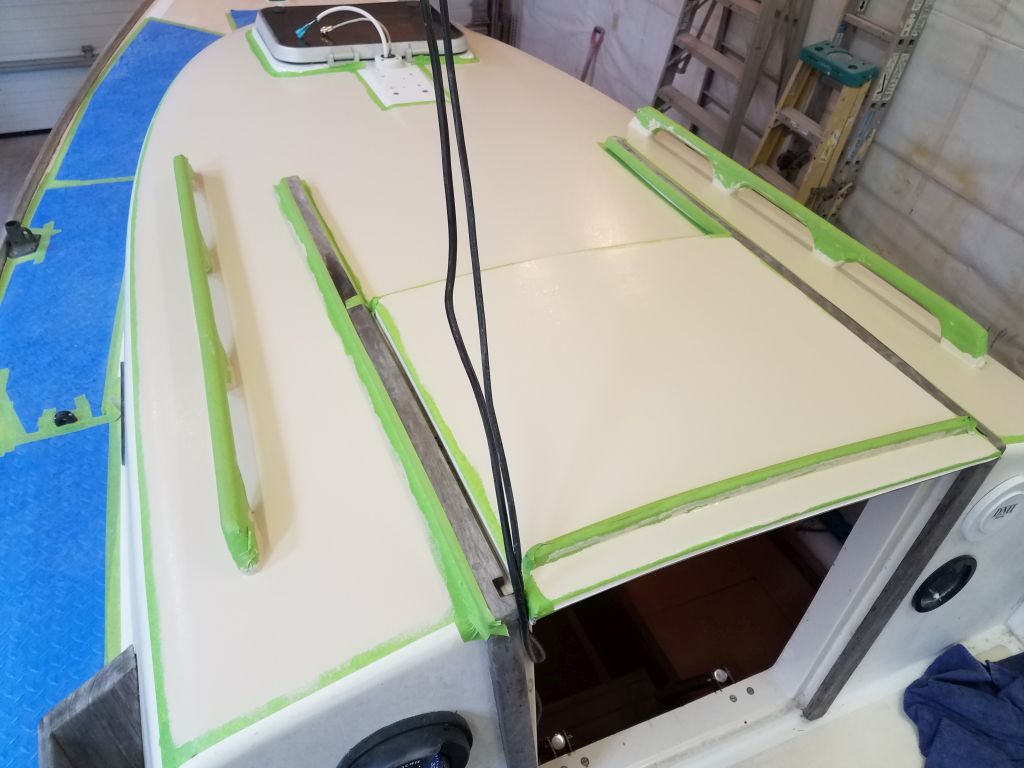
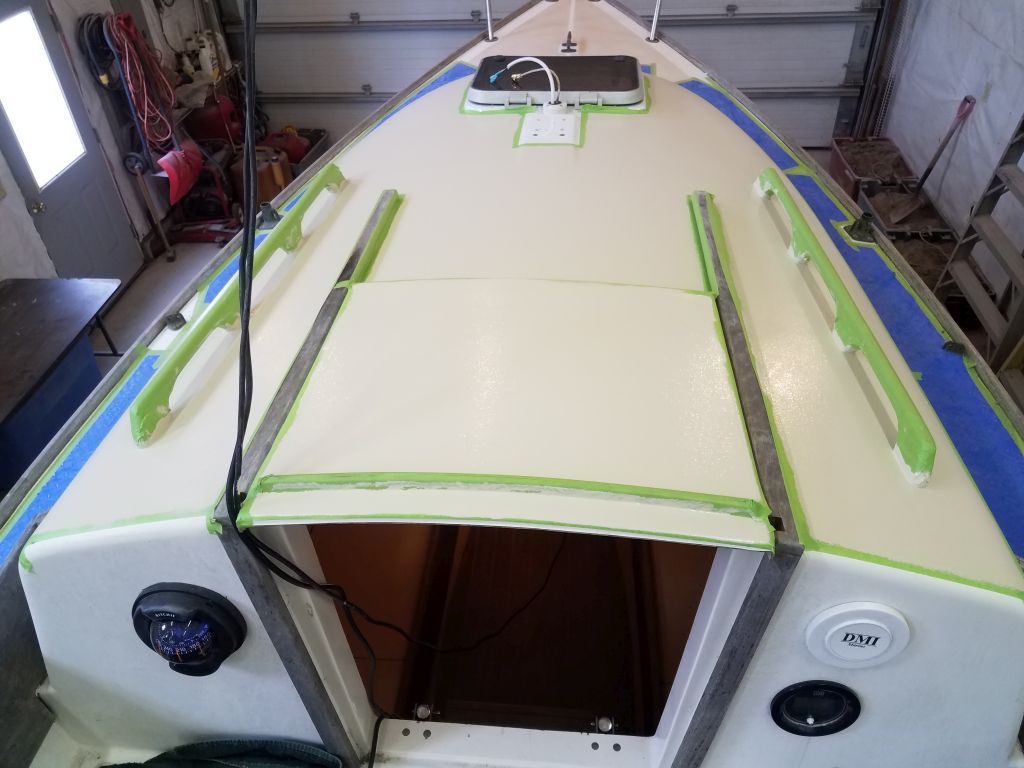
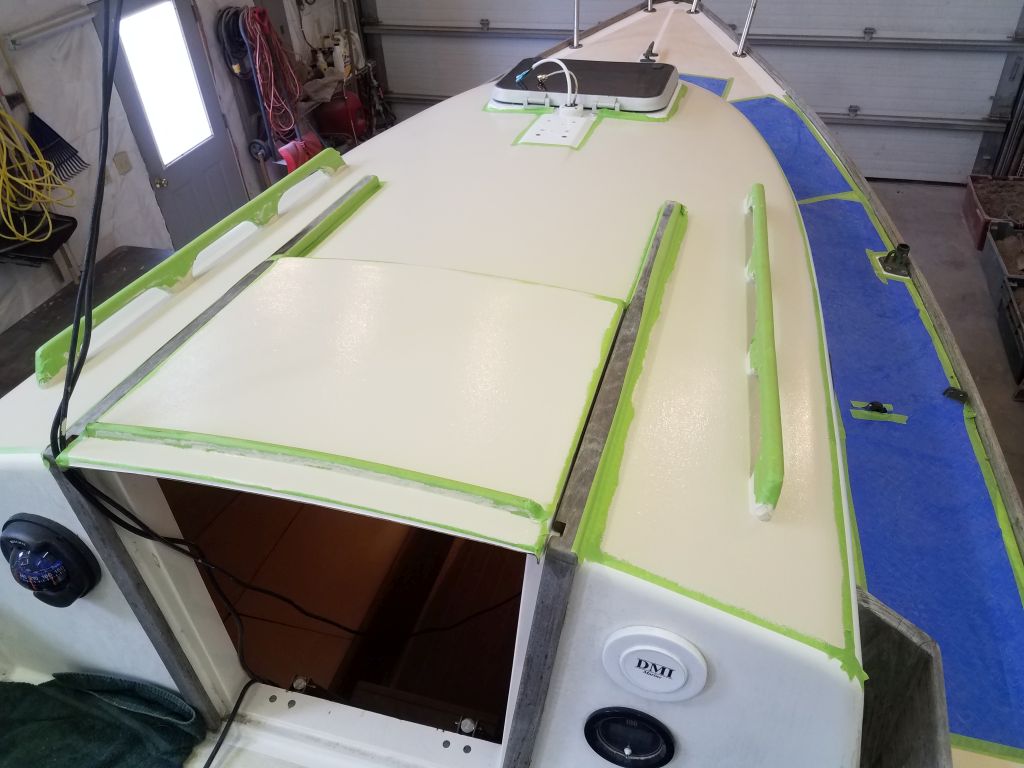
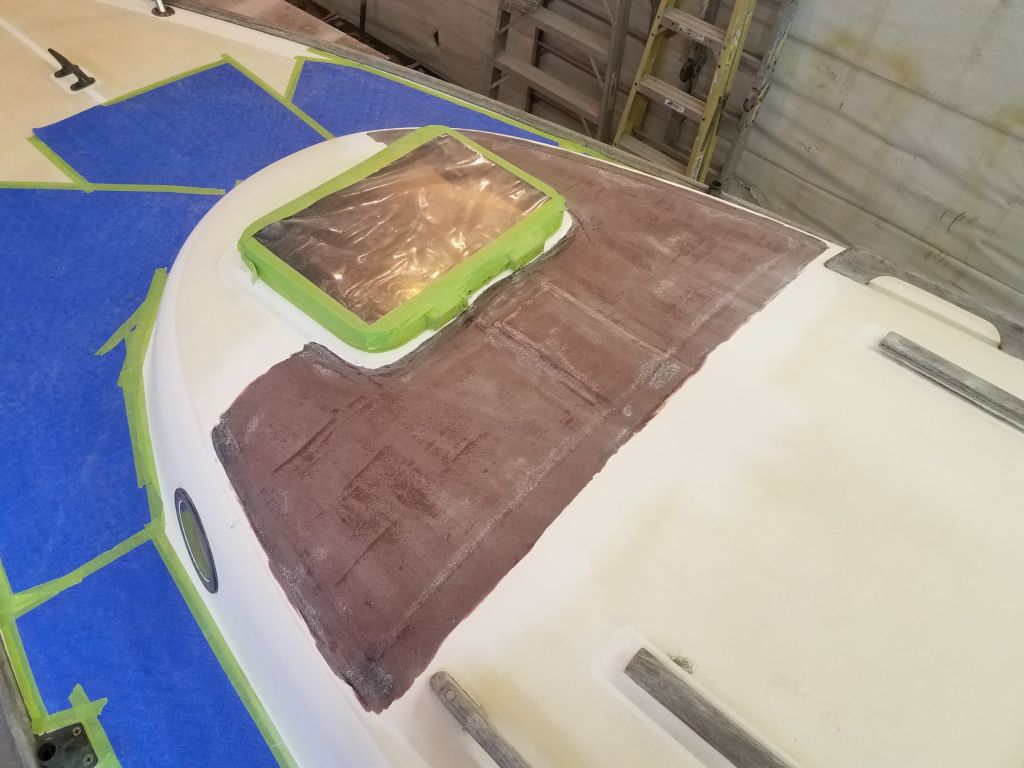
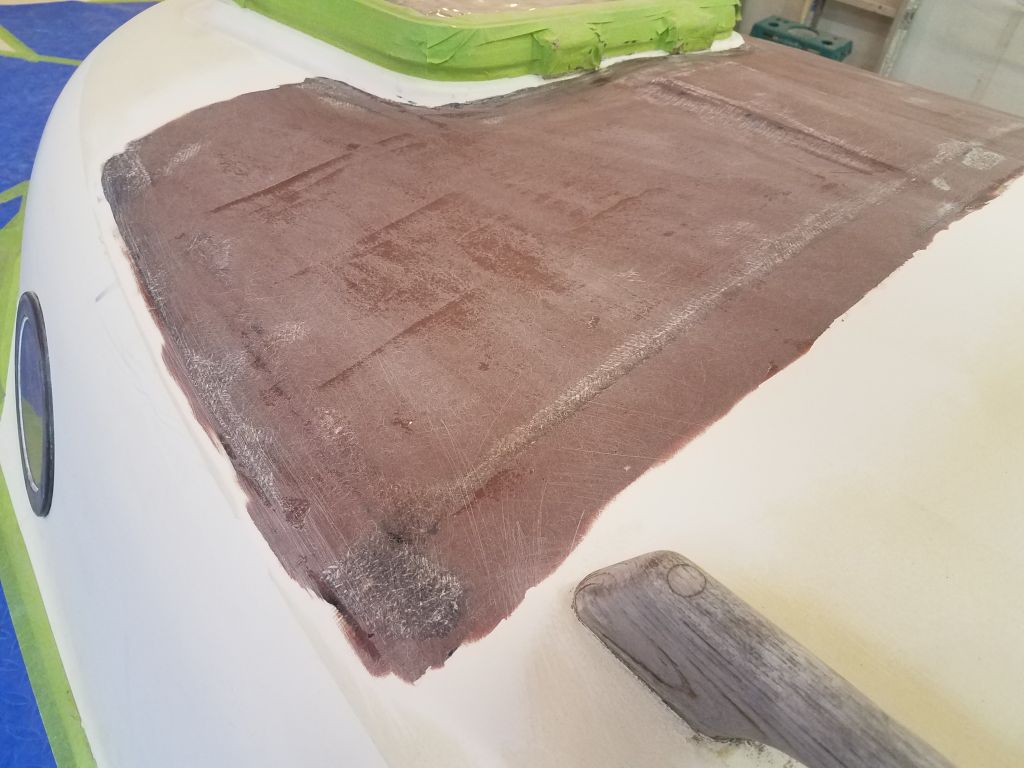
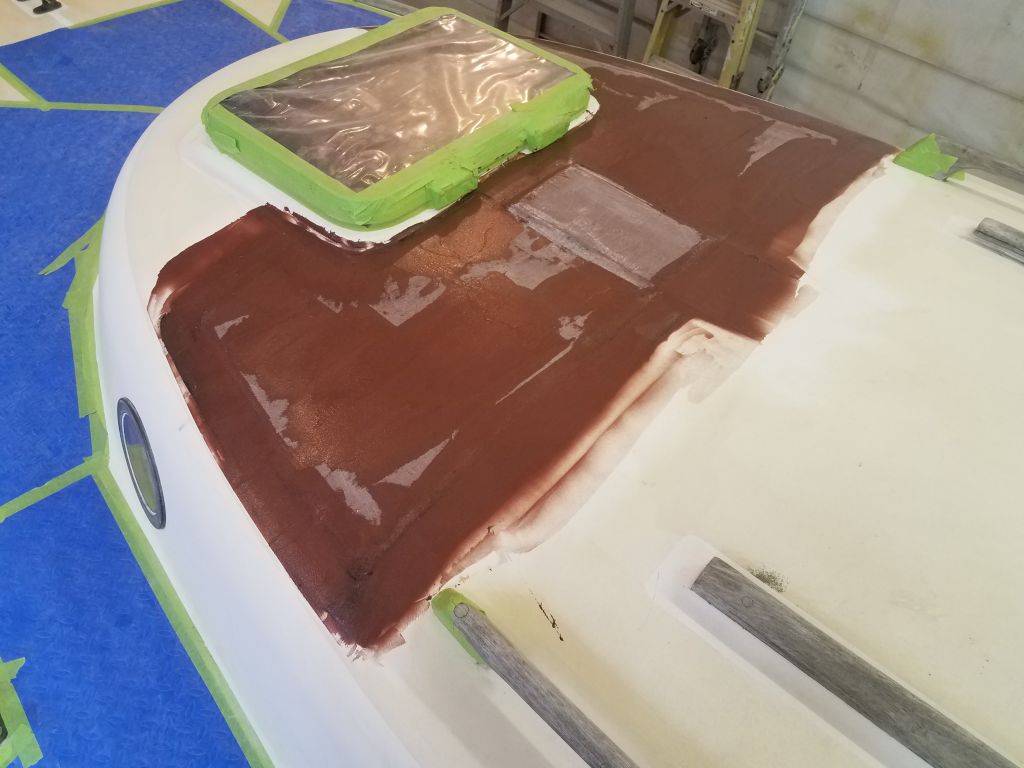
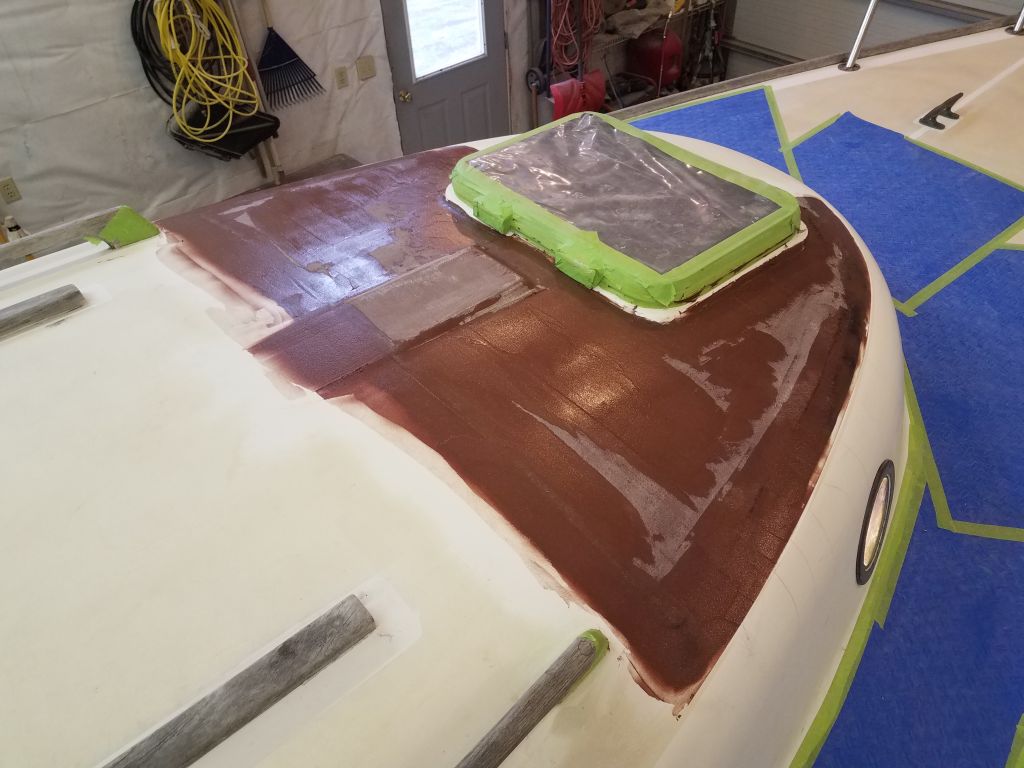
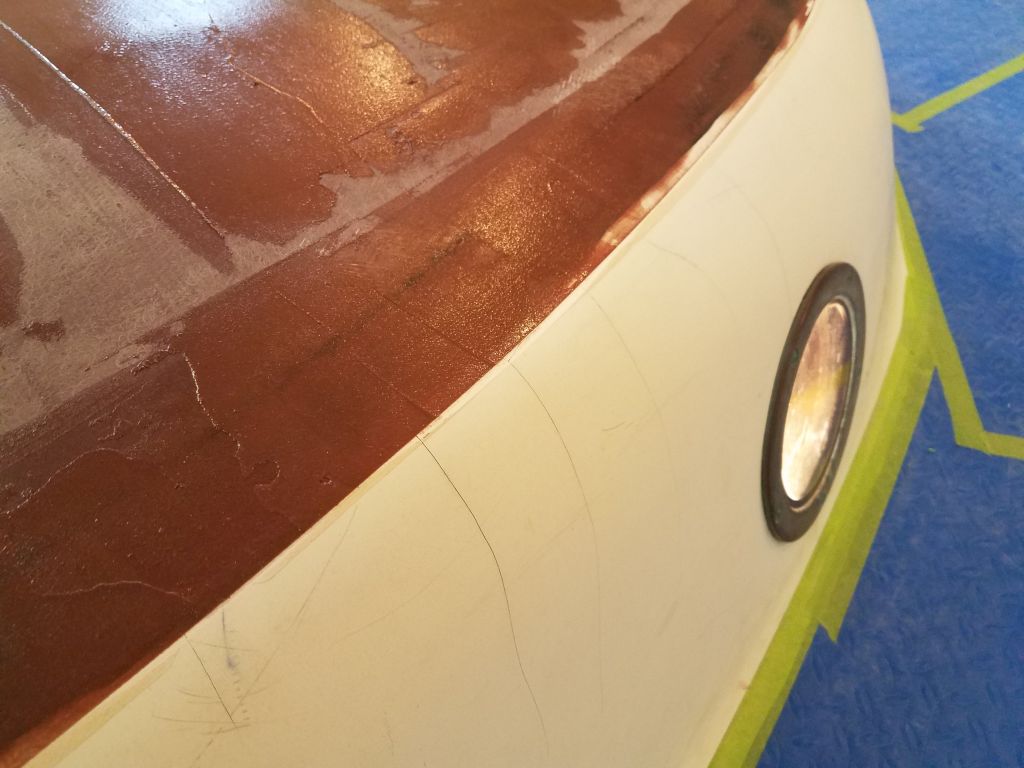
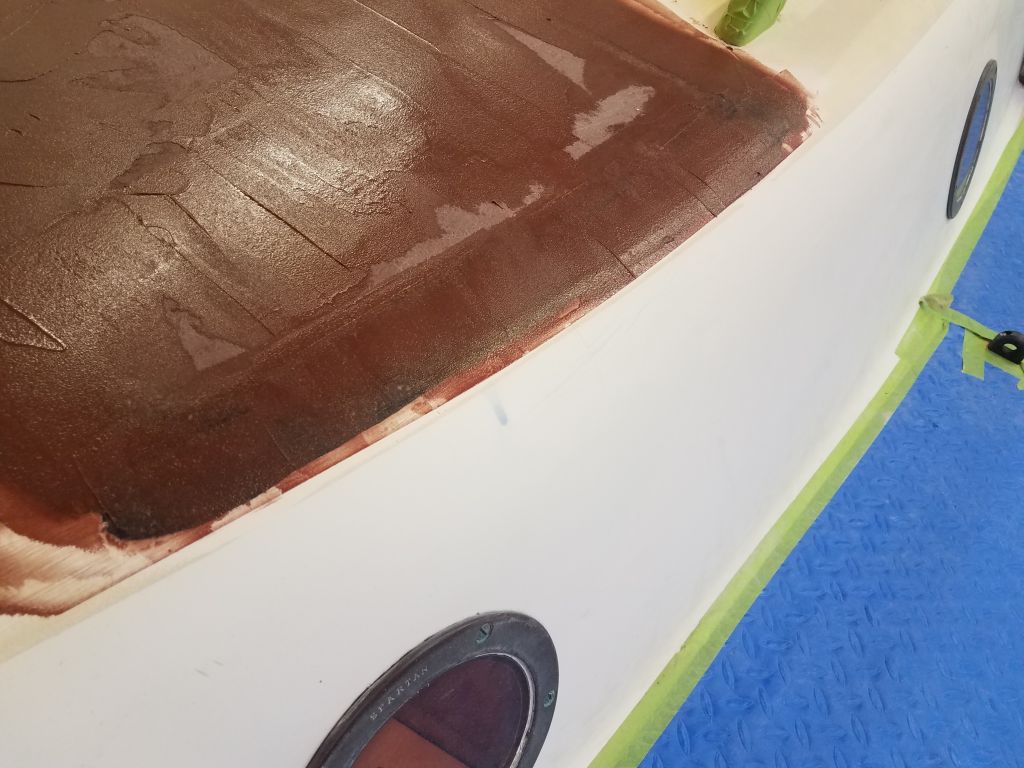
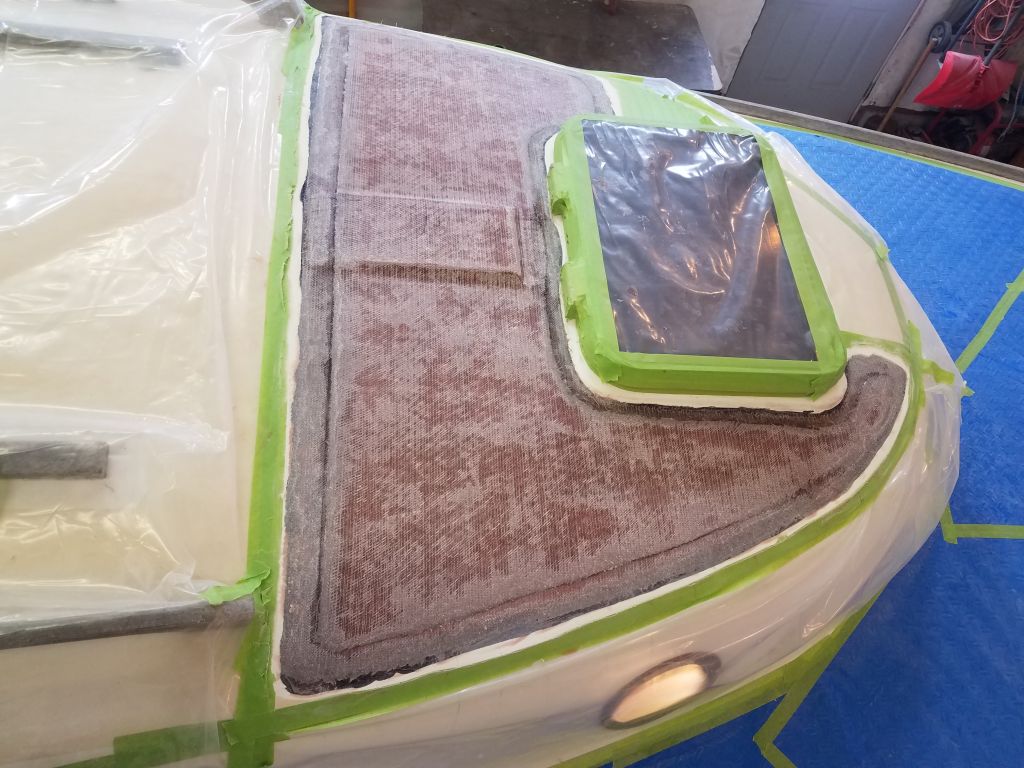
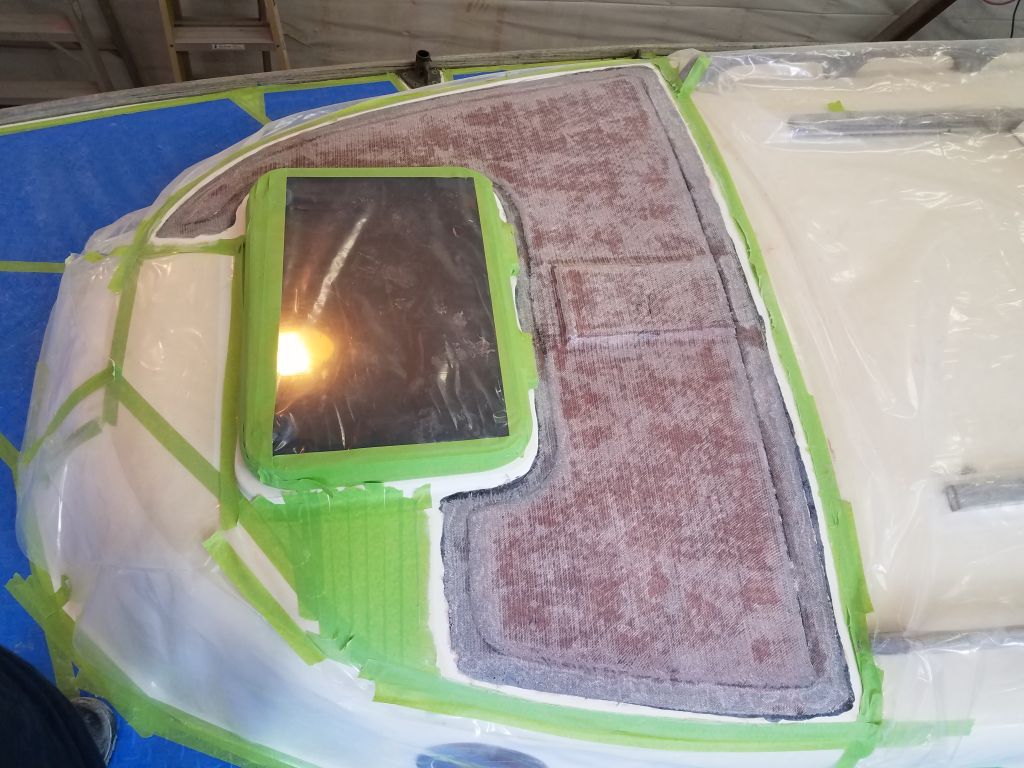
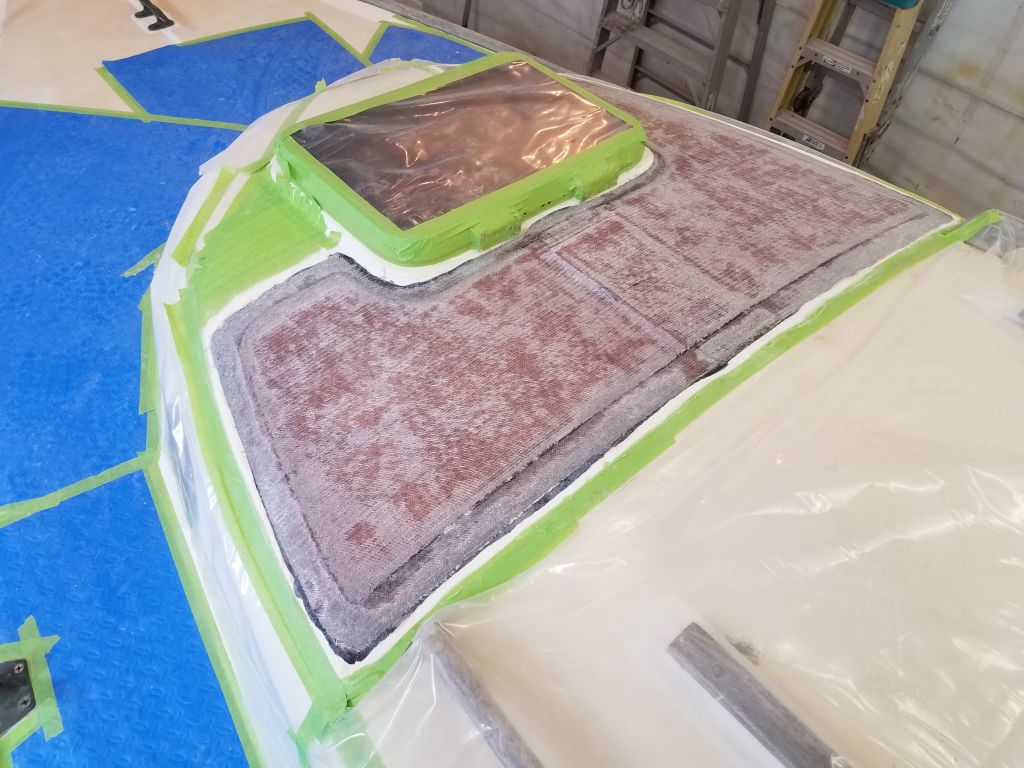
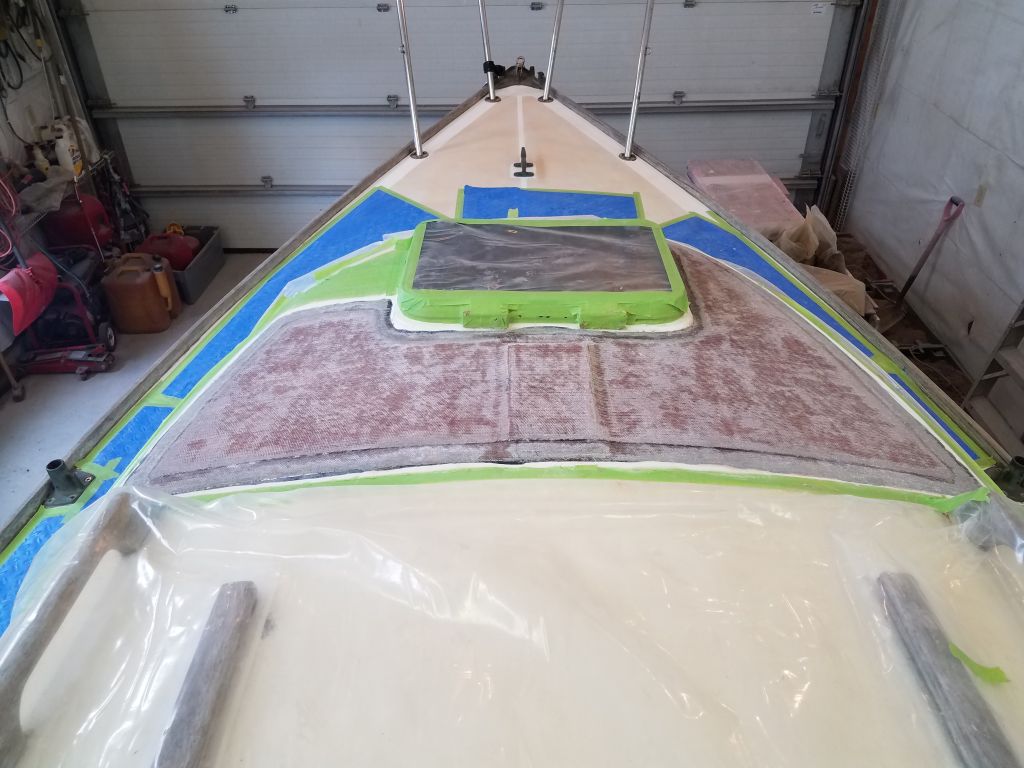
With all the core and beam removal complete, I cleaned out some additional core remnants from around the edges of the openings, scraping out the final bits of core with a variety of tools.  Then, I ground a tapered area around the entire repair, removing gelcoat and laminate at a slight angle from the inside of the opening.  At the edges of the coachroof, I used some tape to mark the absolute outside edge of the grinding, as I wanted to leave just a bit of the original nonskid outside of the repair to allow me to properly fair in the new work, as well as maintain the nonskid line without getting into the smooth gelcoat of the cabin sides.  At the same time, I sanded the exposed inner skin, and cleaned up the edges of the mast beam trough as needed to remove any overhanging laminate and so forth.

For the moment, I left the short after end of the old mast step platform untouched, as I planned to use it as a reference point for building up the new platform.  Once I’d done that, I would prepare the after end and laminate the new top skin over the entire area.

After cleaning up the worst of the mess, I finished up the prep work with some detail sanding as needed, getting by hand into tight corners, edges, and within the overhang around the edges as needed.  I ordered some solid fiberglass sheeting with which to build the replacement mast beam, but for now I’d done about all I could till the new materials arrived.

Total time billed on this job today:  5 hours 

0600 Weather Observation:  35°, light rain. Forecast for the day:  Rain, 44°

Adeline 2

Wednesday

When the owner bought this boat last fall, he knew that there was an issue with the coachroof in way of the mast step, and possibly with the mast support beam beneath, and brought the boat here for this specific repair.  As such, the overall scope of the job was limited to this area.

On deck, this issue manifested itself with a series of cracks across the coachroof,which, while indicative of the sort of construction at hand–that is, a deck structure in a highly-stressed area working independently of the other main structures in the boat, i.e. the deck was not tabbed to the bulkheads–it was still clear evidence of the stresses on the area.  However, there was no outward sign of deck compression, and I suspected that the molded raised area beneath the step was reinforced with additional fiberglass.

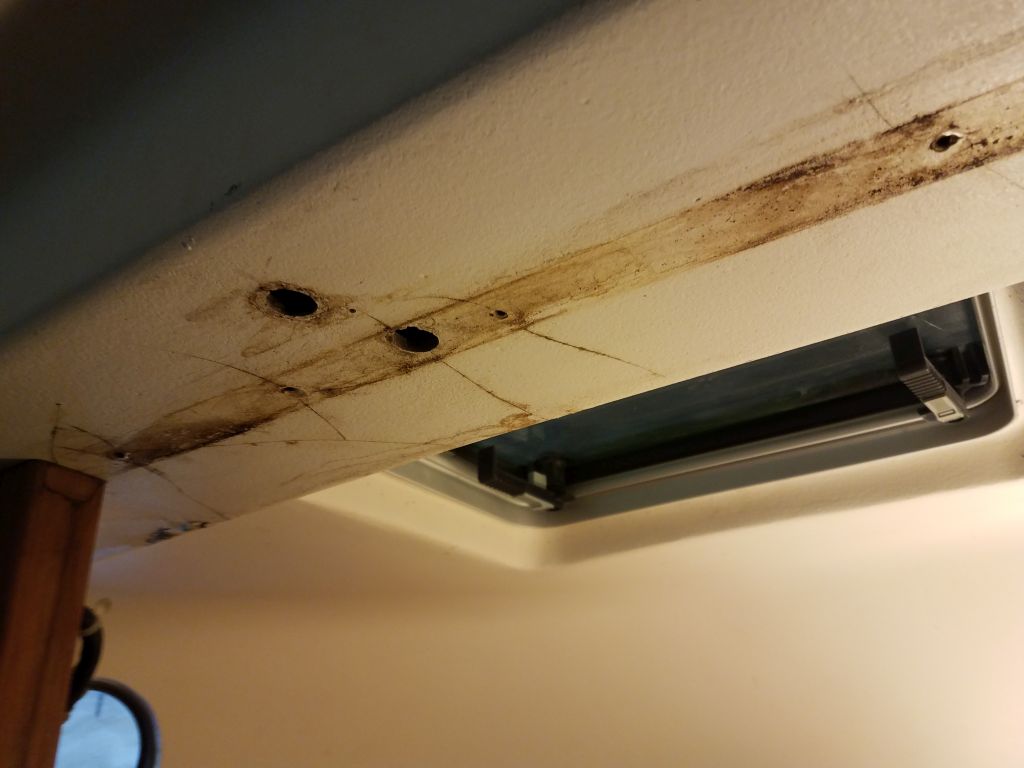
Belowdecks, while the structural components were hidden beneath the full molded cabin liner, there were additional cracks and signs of water ingress and wet wood-colored staining.  Anecdotal information suggested the support beam hidden within the molded liner, and which spanned the opening to the forward cabin between the structural bulkheads, was built of wood, but exactly how the whole arrangement was constructed was unknown at the beginning of the project.

Though the scope of the project was outwardly limited to the known issues on the coachroof, I started out by inspecting the whole deck and cockpit as a matter of course, sounding with a hammer and noting nothing of extreme importance.  I did note one confined area of top-skin debonding on the port sidedeck (likely a latent construction void), and an area of suspect core beginning near the rudderpost on the starboard side of the cockpit.  While these were noteworthy in their existence, neither required any immediate attention, though monitoring them going forward would be prudent.

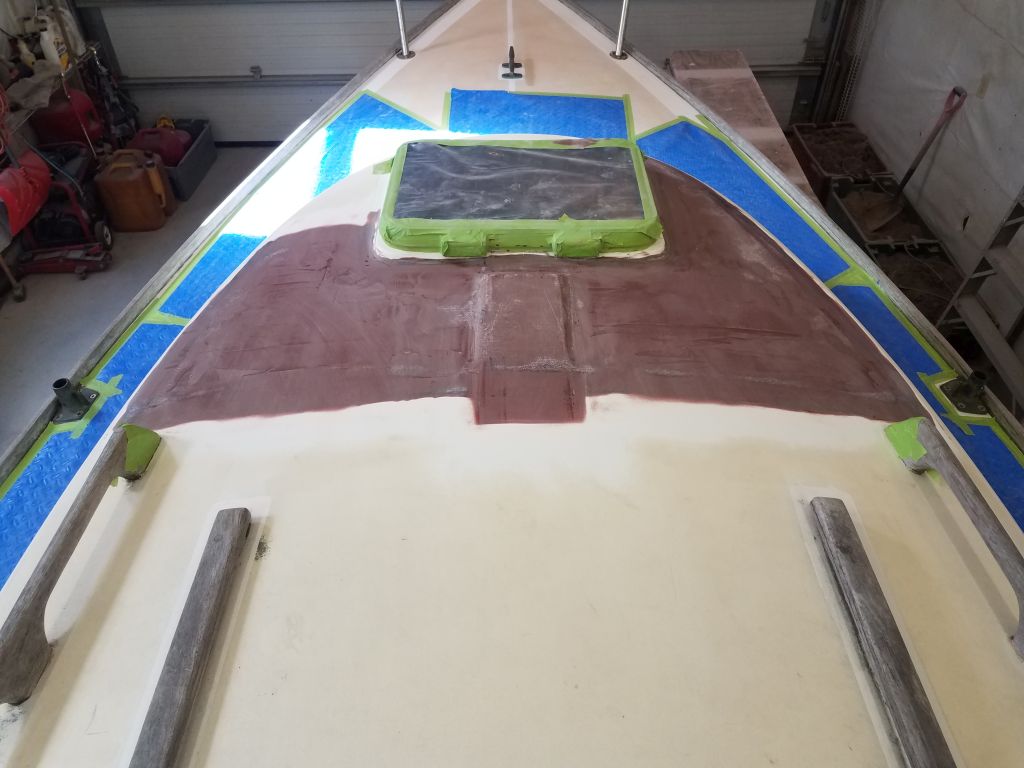
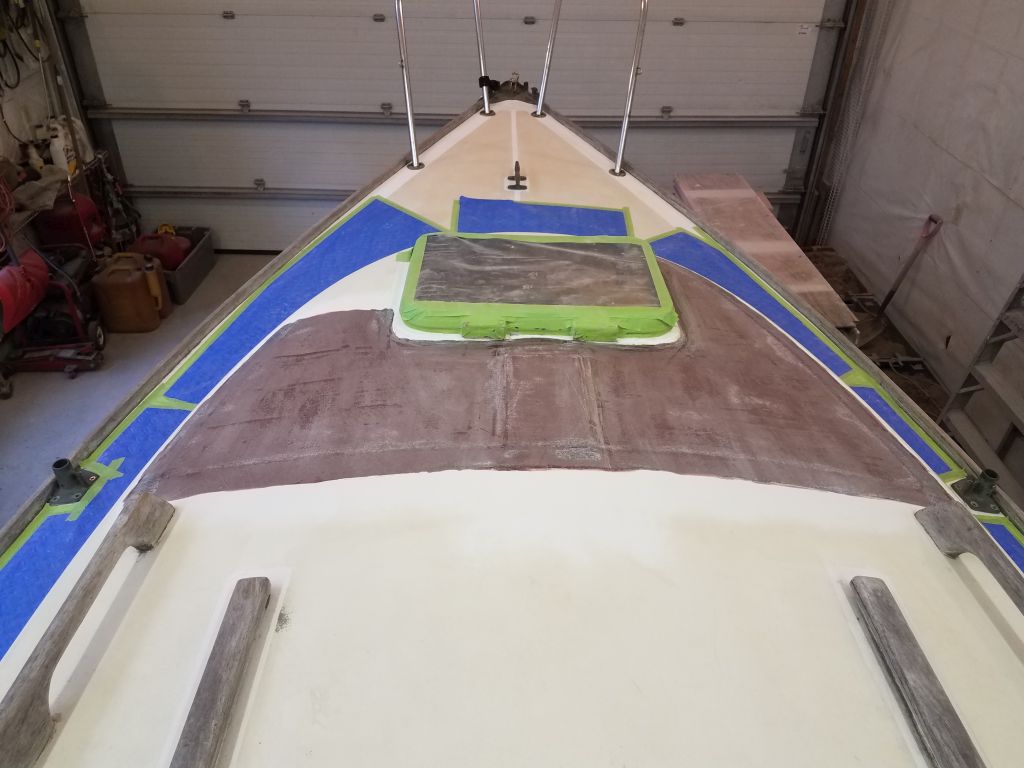
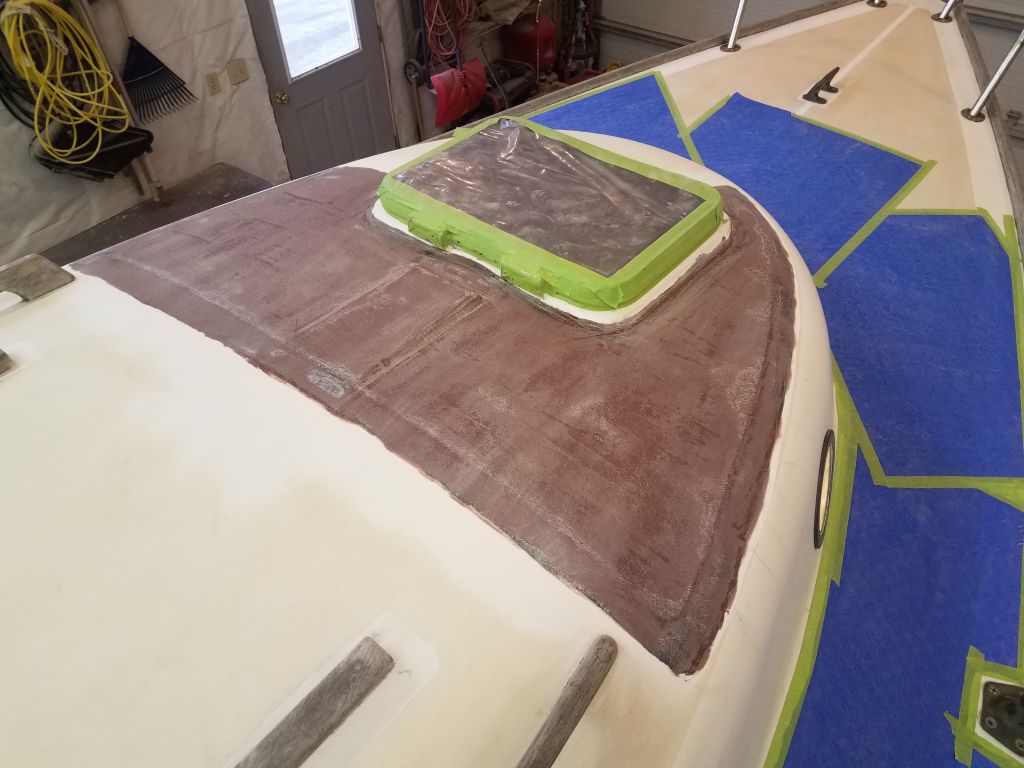
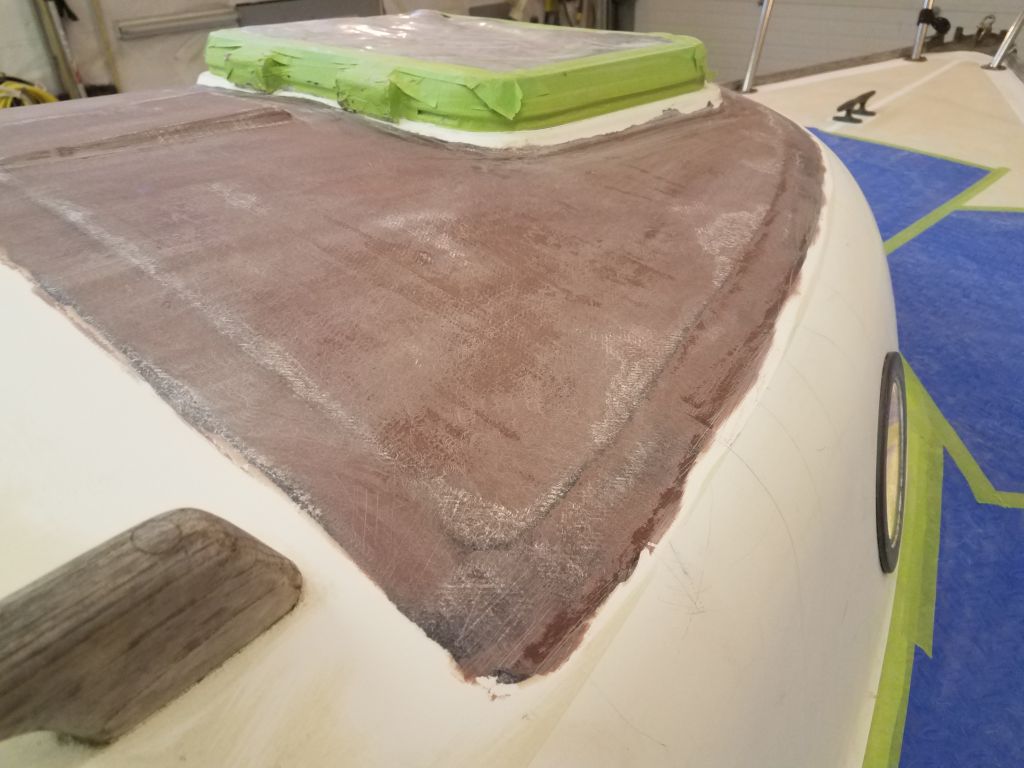
Most of the coachroof appeared sound, namely the after portions in and around the companionway hatch.  As anticipated, however, the area on each side of the mast step presented with obvious signs of debonding, delamination, and damp or sodden core.  I used the sounding hammer to determine the outer reaches of the obvious damage, and marked off the areas with tape.  The inside edge of the tape would be my cutlines for opening the deck for repair.  The apparent extent of the damage on the starboard side extended beyond the forward hatch, while to port the area was slightly smaller.

To prepare for the work ahead, I covered the sidedecks and foredeck with protective plastic, and assembled various tools, lighting, and electrical cords as needed.

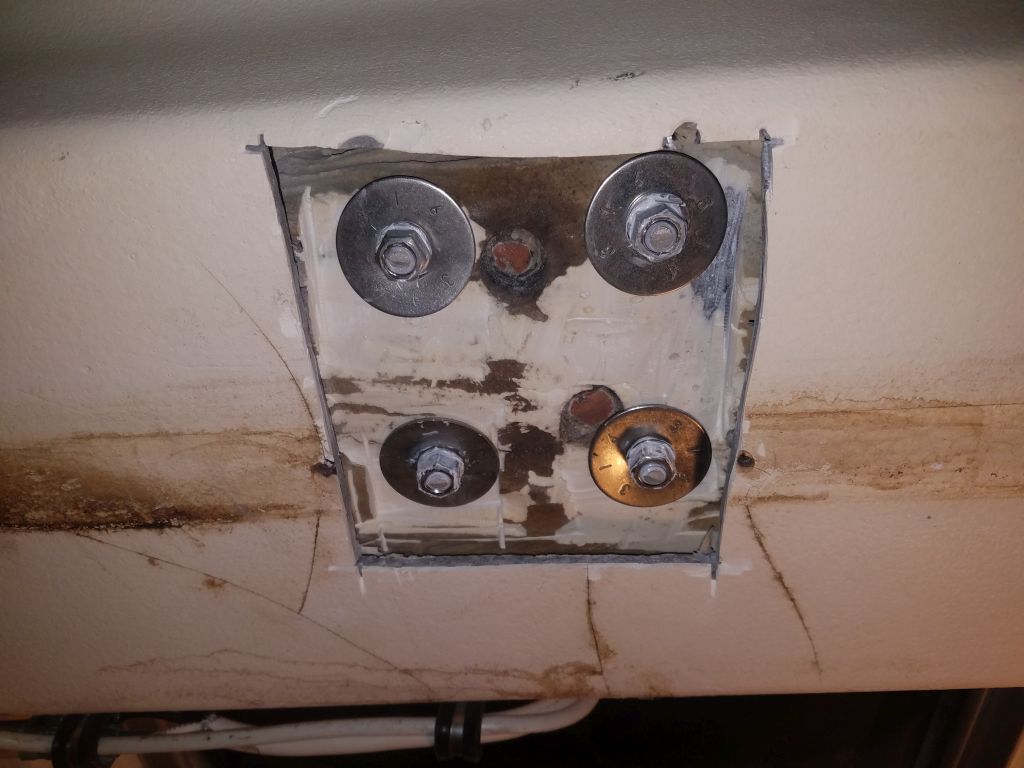
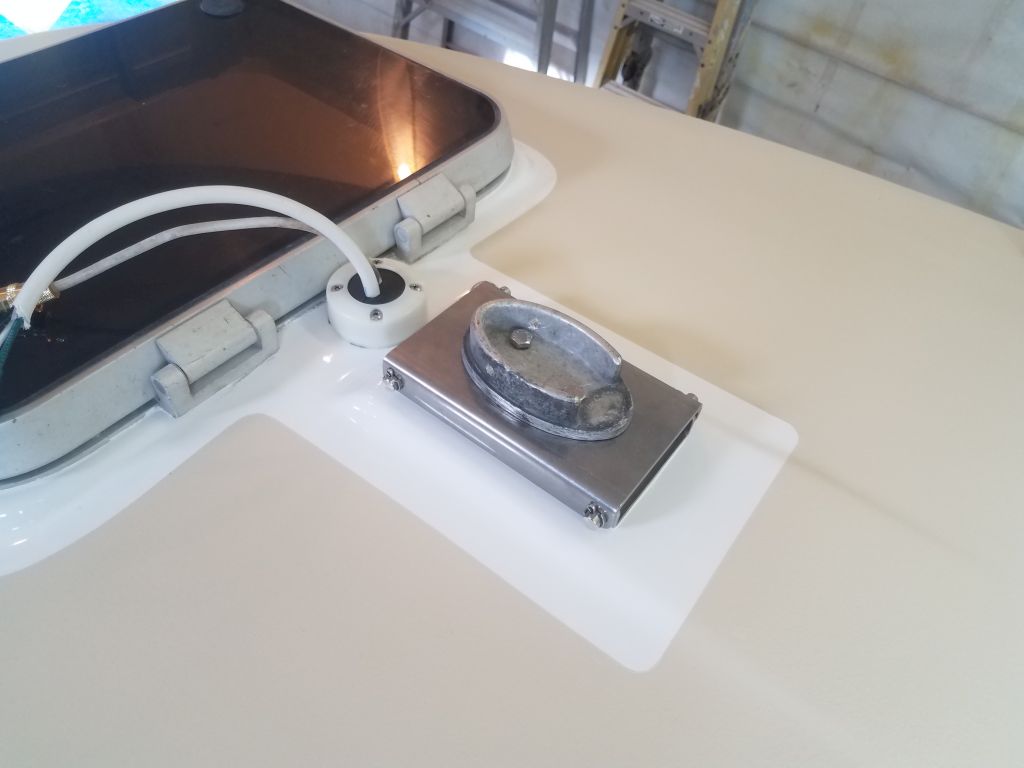
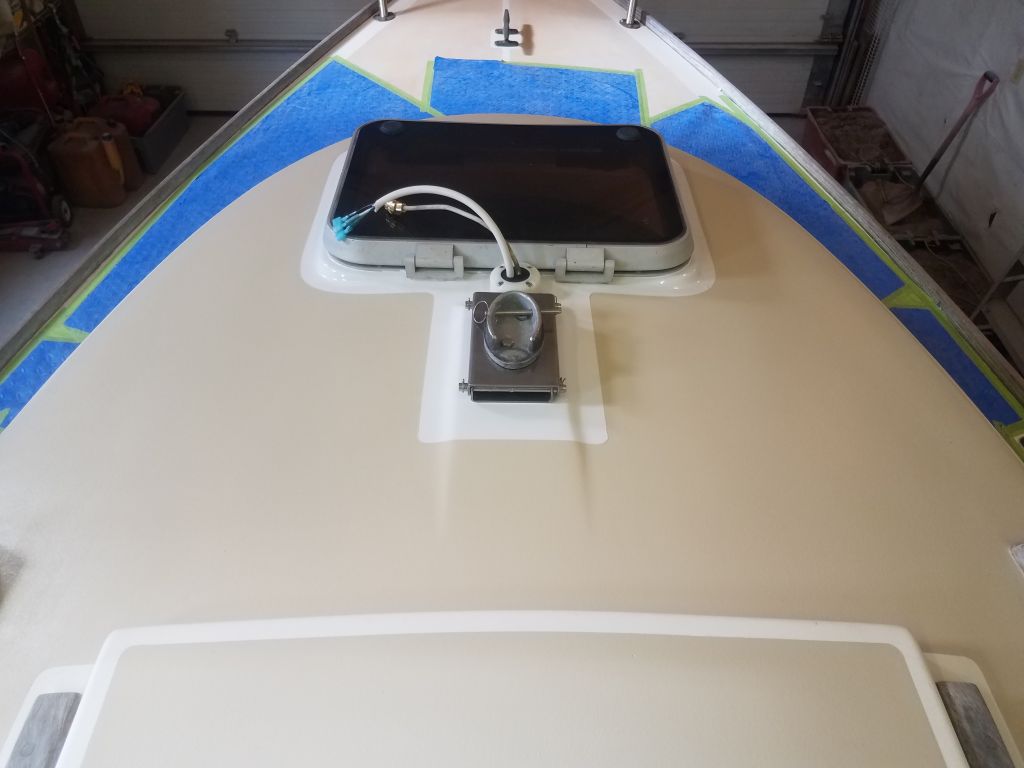
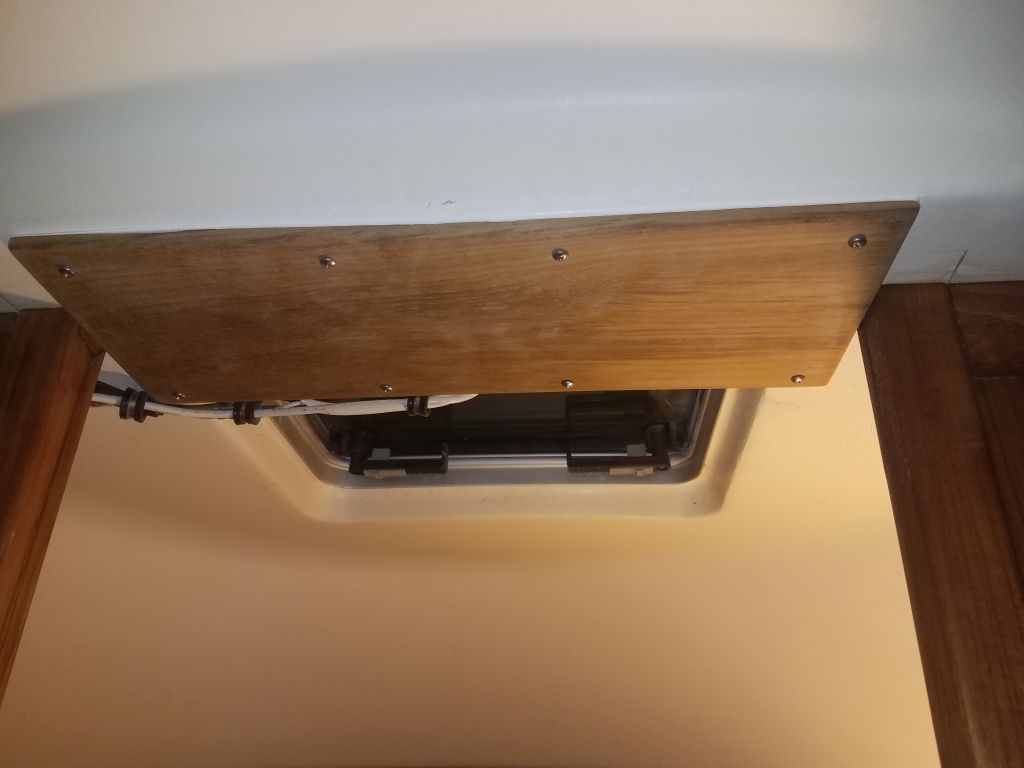
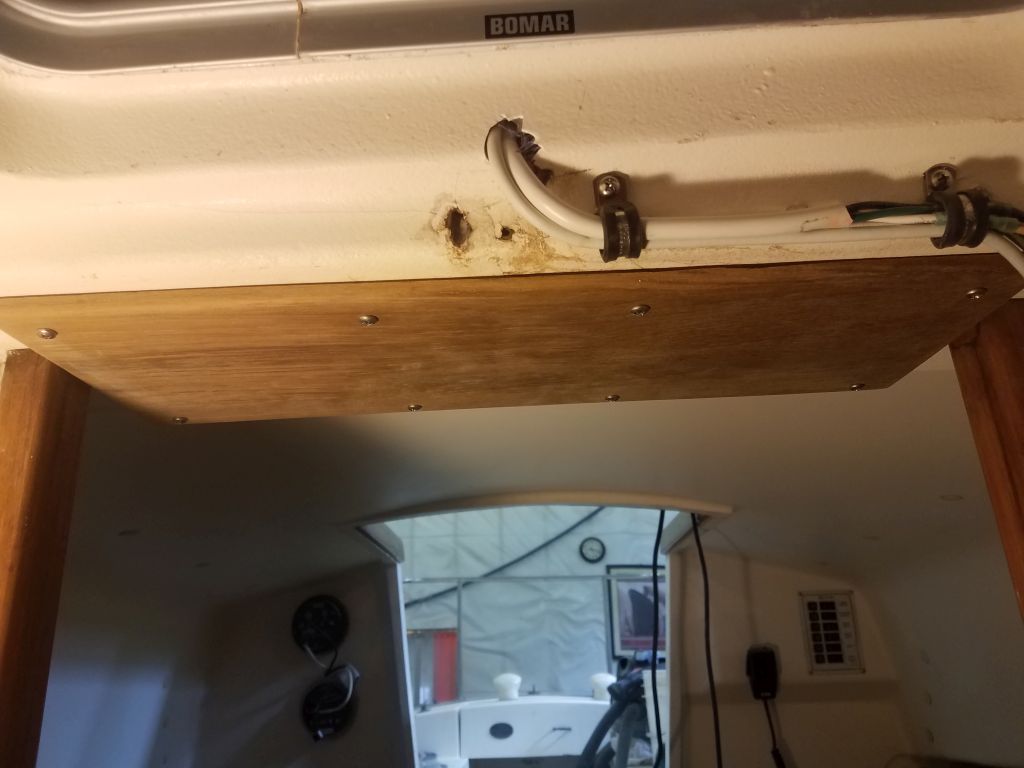
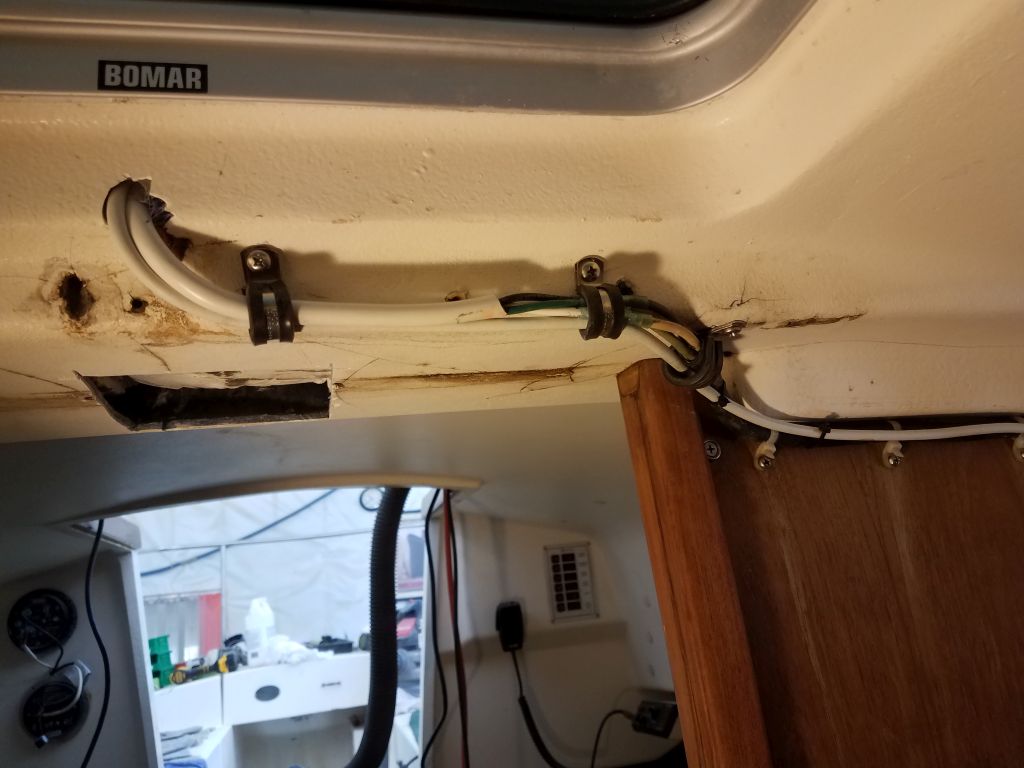
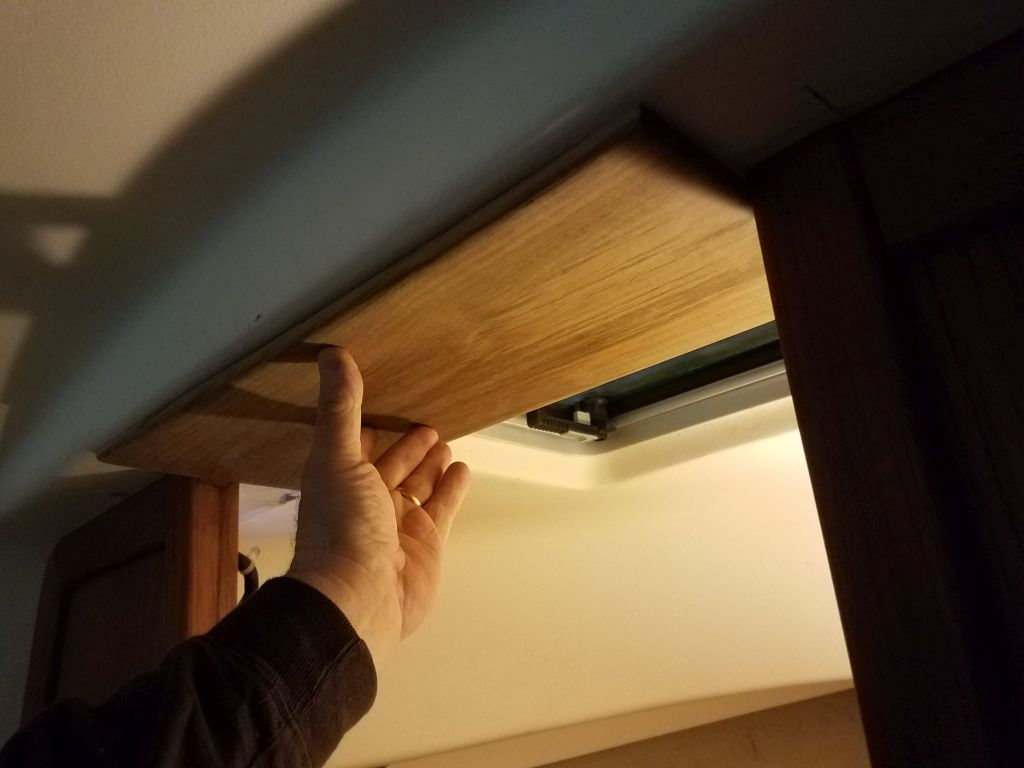
My first order of business was to remove the mast step itself, and also the wires leading through the deck, which were in poor condition with the insulation dried and cracked away, exposing corroded wire strands within.   Belowdecks, I removed a teak trim piece from the opening, as this covered one of the bolt holes for the mast step.  The underside of the trim was covered with standing water from within the molded liner, clear evidence of ongoing moisture issues that didn’t bode well for the wooden mast support.  With the trim removed, I unbolted the mast step with a small socket, and removed the wiring from the immediate area.

I drilled into the deck in a couple locations around the mast step to gauge the laminate thickness and overall core condition, then, beginning on the port side, cut open the top laminate inside the tape lines, ultimately exposing the core for removal.  As expected, the core material was wet, though not rotten in most areas on the port side.  I removed all the laminate and core from the opening, using chisels and an oscillating tool.  The core just beyond my cutlines fore and aft was still dry and sound.

Now I cut a small access hole in the exposed inner skin, allowing me to begin to assess the mast beam that I expected would be hidden beneath.  In this small access hole, near the mast step, I exposed a layer of badly water-damaged wood, apparently plywood, but once I removed the bad material I exposed additional wood–still wet, but sound.  At this early stage, this served only to begin to educate me on the construction beneath, as well as the conditions I could anticipate, and from what I could see through this small hole, it was apparent that the mast beam was going to require replacement as well.

For the moment, I left the molded area beneath the mast step alone, as I wasn’t sure how the overall deck was constructed and wanted to work my way back to that area once I’d learned more about the scantlings.  I figured I would probably have to remove the raised, molded flat area, however, so before I continued I made a quick template of the mast step location, registering it off the nearby forward hatch for reference, and also marked the plane of the surface on some tape on the hatch; these marks and templates would help me rebuild the area and install the mast step in the same location later.

Next, I repeated the deck and core removal on the starboard side.  Here, I found the core was in much worse condition than to port, which was pretty much what I expected since the outward visual signs and deck inspection had suggested this.  Once I’d removed all the material from within the new openings, I reamed out the core from beneath the deck edge along the side of the coachroof and around the forward hatch, and cleaned up the area for now.  As on the port side, the core at the edges of my cutlines was clean, dry, and sound.

With a sounding hammer, I worked out the approximate dimensions and location of the mast beam below the exposed bottom skin; this was relatively straightforward, but till I could begin to expose things and truly understand the construction I was dealing with, I erred on the side of caution as I marked out the beam’s location, as I didn’t want to cut unnecessary or unwanted material.  Once I had the extent of the beam roughly and conservatively marked out, I began to carefully cut away the skin to expose the entire thing.  To begin, I left the mast step assembly in place, since although I assumed the beam ran directly beneath it, I wanted to be sure before I removed the molded flat (which rested on an area of solid glass rather than core in the original top deck structure).

As I exposed the mast support, it became clear that it was completely wet, but further construction details also became apparent.  Because of the deck camber, the beam tapered to each side, and in the center, where it was thickest, there had originally been a layer of plywood, perhaps 1/2″ thick, and this was the heavily rotted wood I was removing as I cut.  Below this, however, was a dense, still-solid layer of wood which, while clearly wet, had not deteriorated.

Now I had exposed enough to know that I needed to cut away the mast step platform, so I did.  This exposed the rest of the mast beam.

To figure out what I was dealing with, I drilled a series of holes in the center, thickest section of the beam, then chiseled out a segment of the wood till I reached the bottom and sides of the molded housing.  It became clear that the beam was probably a piece of standard 2×8 pressure-treated construction lumber; because it was treated, it had not rotted, but the wood was completely saturated throughout and from side to side.

It was getting late in the day, but now that I knew what I was dealing with, I started at the port edge and began to remove the beam, drilling and chiseling away another section; because of the deck camber, the beam had tapered away to zero thickness near the deck edge, growing thicker as I moved inboard.  I’d come up with a more efficient way to chisel out the remaining part of the beam next time, but for now the day was done.

Total time billed on this job today:  6.75 hours 

0600 Weather Observation:  32°, mainly cloudy.  Forecast for the day:  Mostly cloudy, 43°

Adeline 1

Tuesday

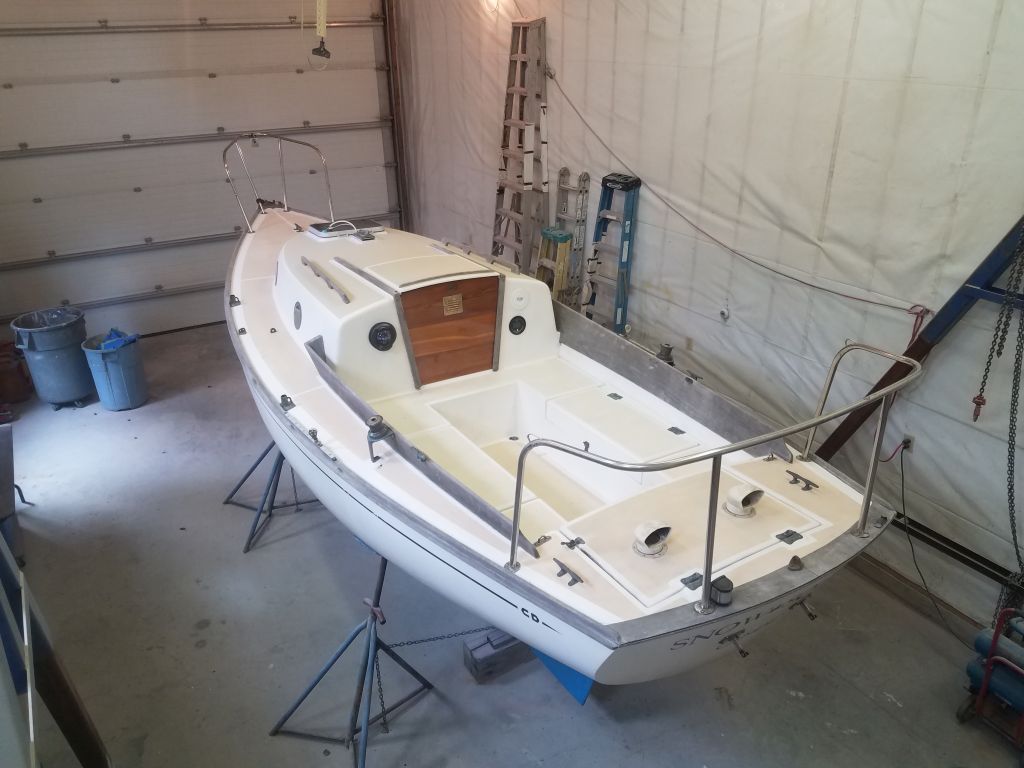
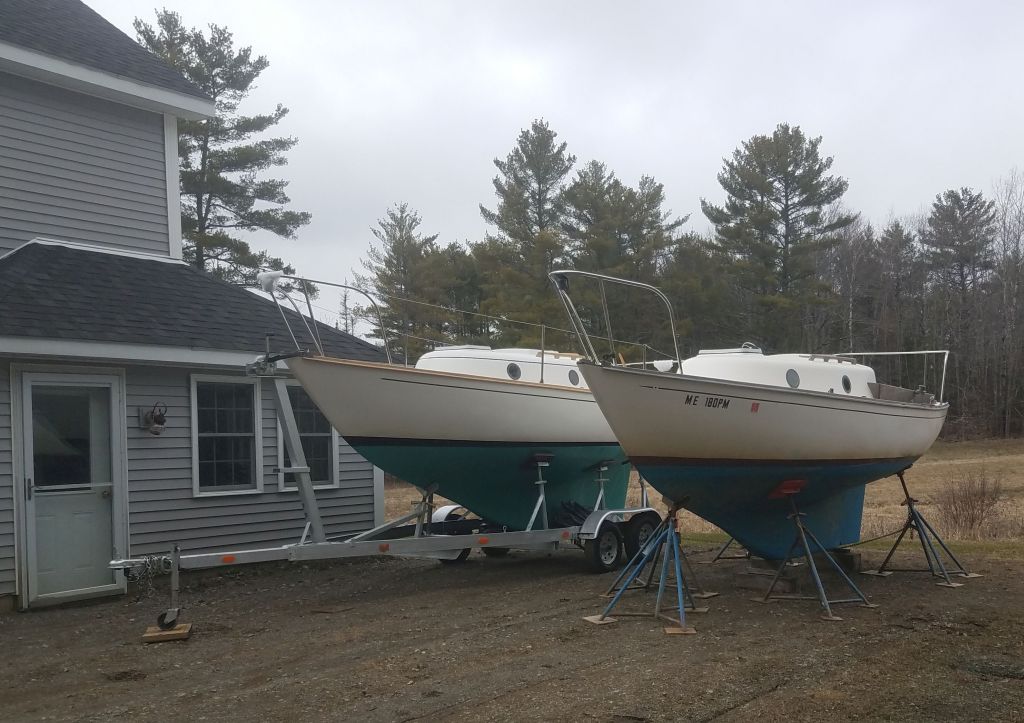
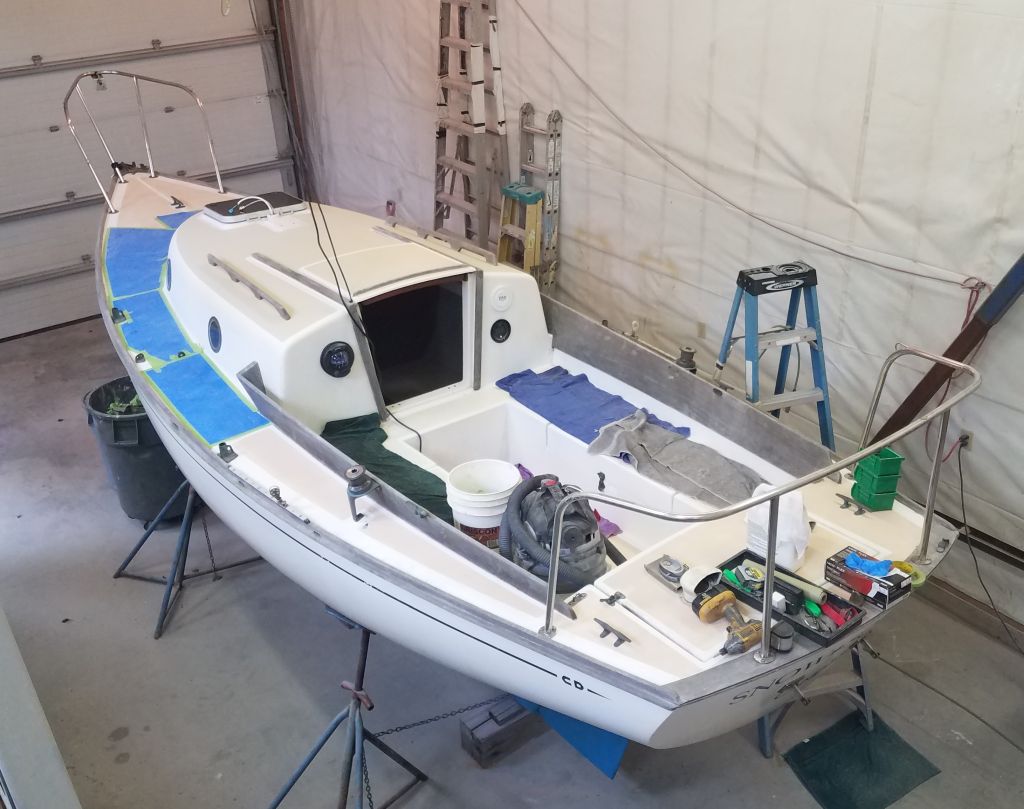
I’d planned to shuffle boats around Monday, but the weather outside was unpleasant, with sleet changing to snow that lasted all day, so with no desperate hurry, I decided to wait to move Adeline (currently called Snow Squall, ironically enough) into the shop, hoping for better weather Tuesday.  I fiddled around the shop on various maintenance projects for most of the day.

Tuesday dawned cold and raw, with an inch or so of now-icy snow on everything, and I wished I’d just done the move on Monday after all.  Nevertheless, it was time to get the boat indoors so that there’d be time for the new snow to melt off before I could get to work.  So after some adjustment to the trailer pads, I moved the boat indoors uneventfully.  Once the snow on deck had loosened up a bit after a few hours, I pushed most of it off onto the floor to hasten the melting and drying process overnight.

Total time billed on this job today:  1.5 hours 

0600 Weather Observation:  30°, partly clear. Forecast for the day:  Becoming partly sunny, 41°

Scupper 261

Final Days

After many coats of varnish, the tiller was complete and ready for final installation, which I began by installing the bracket for the tillerpilot; I’d marked and drilled pilot holes earlier, so now I could just screw in the bracket.  Afterwards, I secured the bronze tiller strap, and installed the tiller in the cockpit.

Next, I installed and hooked up the tiller pilot, and gave it a quick test run from side to side to confirm operation.  With the tiller bracket now permanently in place, I checked the fit of the canvas tiller cover, which fit well around the bracket as intended.

I spent a little time loading on some of the gear that went with the boat, including new running rigging (sheets etc.), some of the mast hardware (wind transducer, Windex, VHF antenna), boom vang, and other sundries, storing them carefully in various lockers in the boat.

After multiple coats of varnish on all sides of the two new companionway swashboards, I finished up the screen unit by stapling screening to the back side of the assembly, then installing some varnished trim pieces around the perimeter.  This represented the last new work on the boat, and on the project.

Total time billed on this job over the final days:  5.75 hours

August West 13

Friday

A quick second coat of nonskid on the new sea hood wrapped up the work there, and was also the final item on my list for the project.

Total time billed on this job today:  .5 hours 

0600 Weather Observation:  32°, clear. Forecast for the day:  Sunny, 53°


August West 12

Thursday

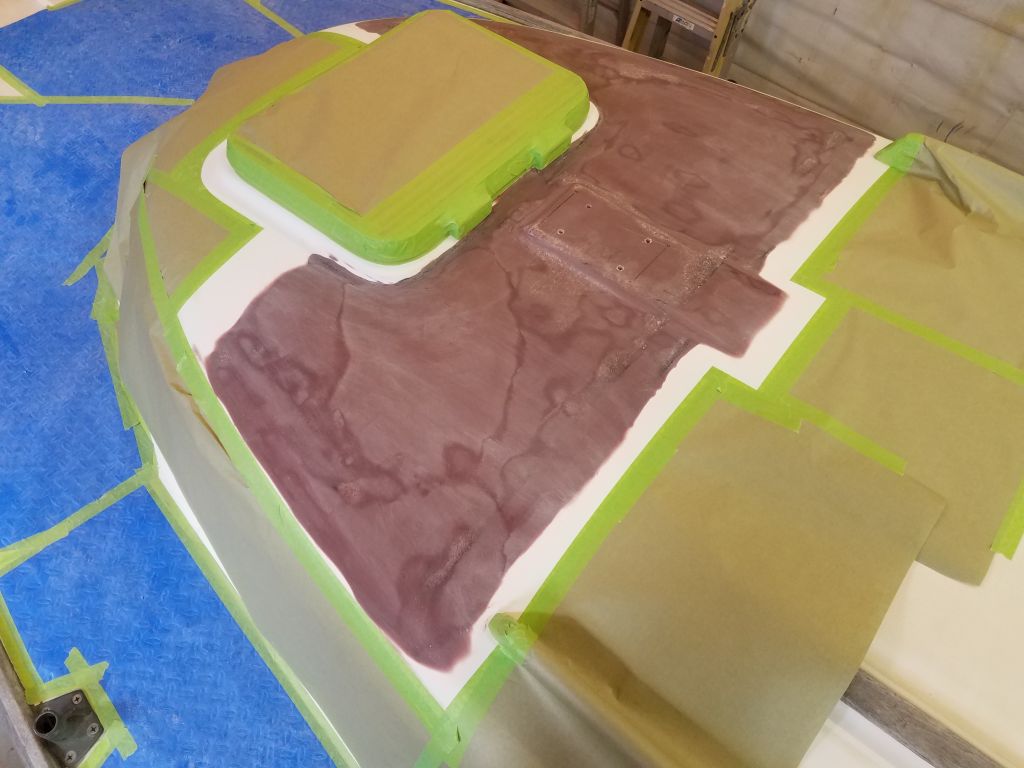
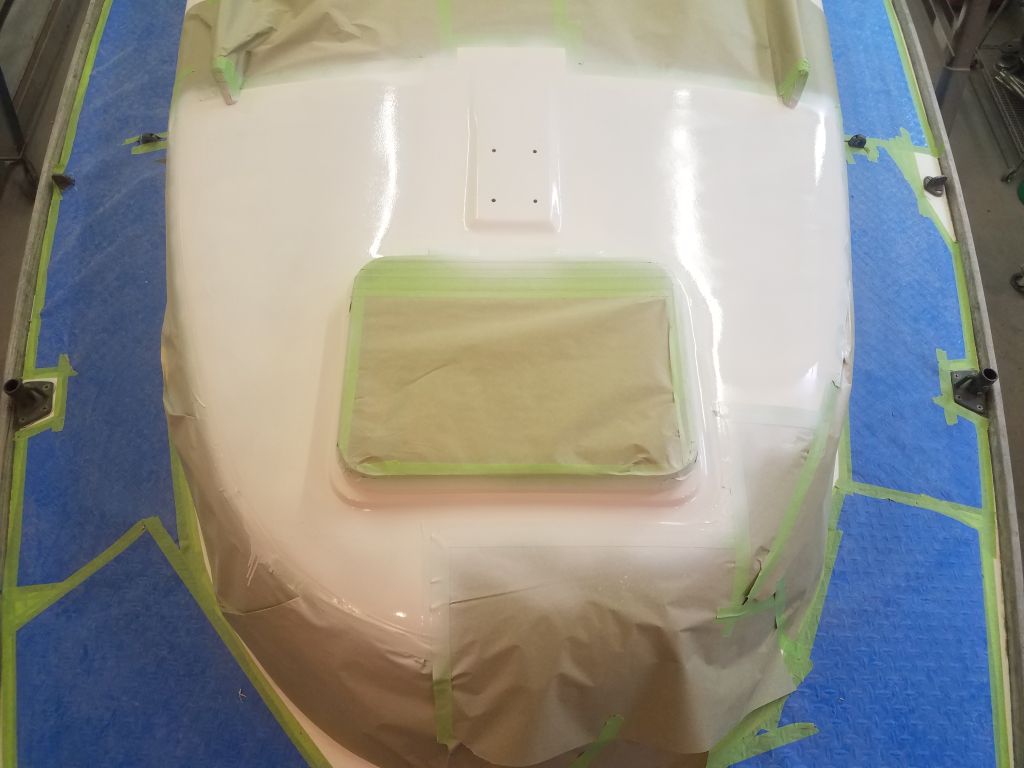
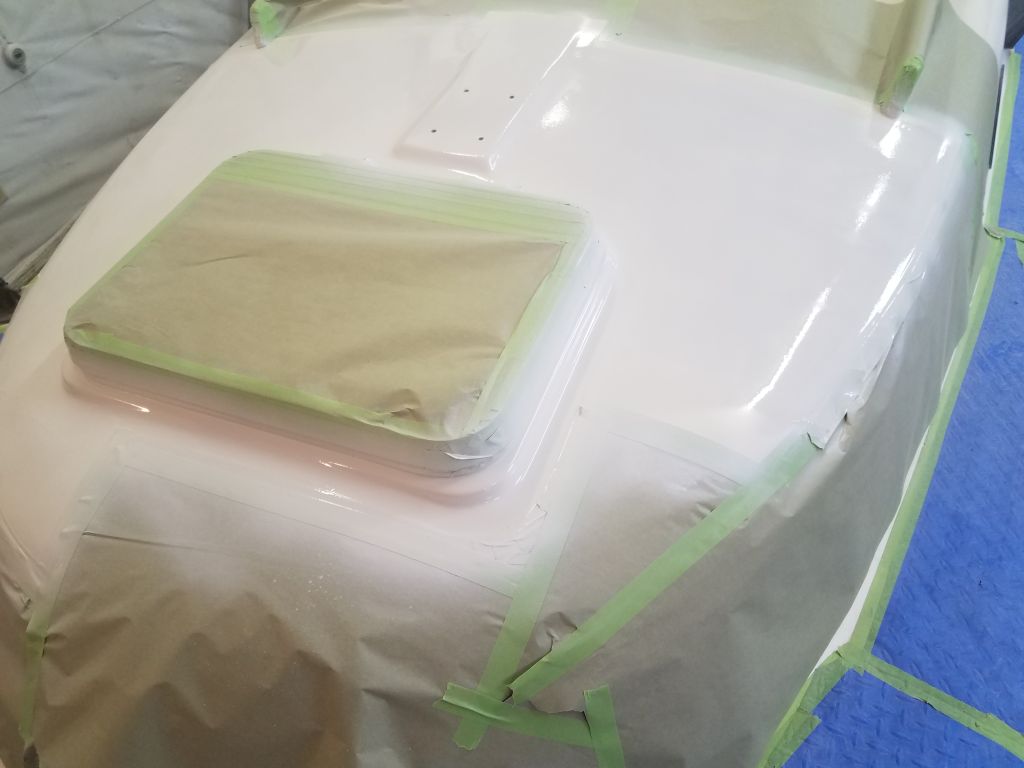
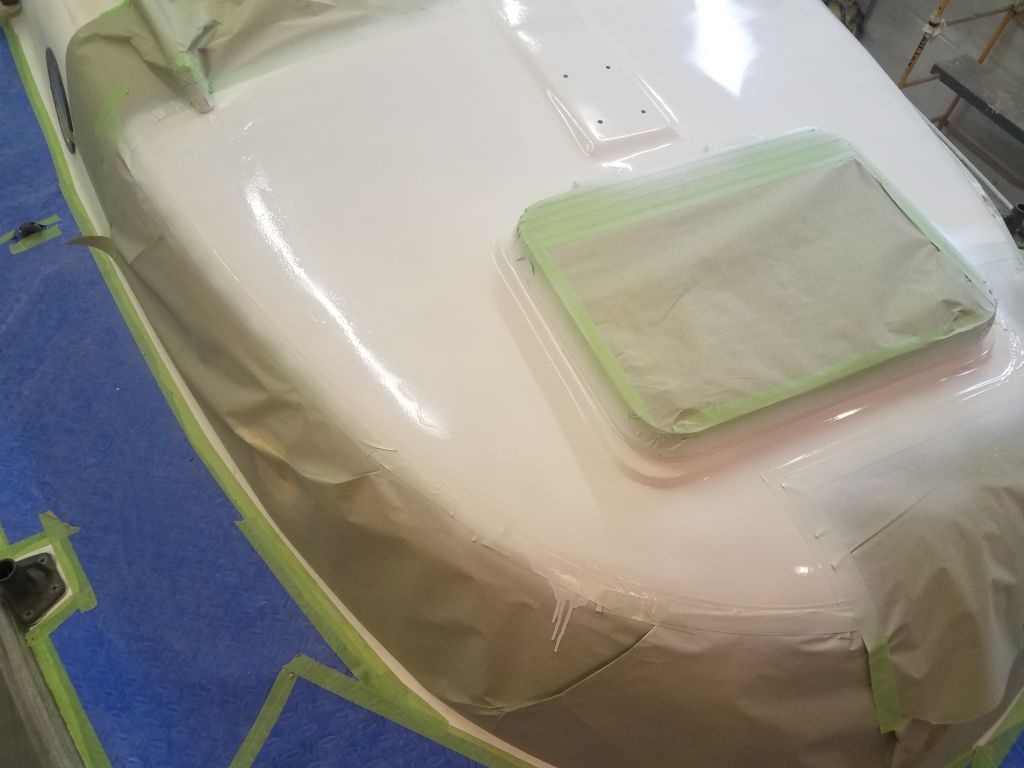
Now that the paint on the sea hood had had sufficient cure time since the final coat, I prepared for the final installation.  With the hood mocked up on deck, I drilled and tapped the decks at each fastener location to accept #10 machine screws, which would secure the assembly in place.  During an earlier stage of the project, I’d already drilled out the core from any of these locations and replaced it with a solid epoxy mixture.

I chose butyl tape sealant for the sea hood to allow for relatively easy removal.  After applying the sealant to the deck in way of the mounting flange, I secured the sea hood in place with machine screws and washers.  I chose not to through-bolt it since I didn’t feel it was necessary in this application, and also did not want to have to drill through and cosmetically deal with the fiberglass interior liner.  I still needed to apply the nonskid paint to the field area of the new sea hood, but I’d held off on that till after installation in the interests of efficiency; I planned to apply that later in the day.

After a follow-up conference with the owner, he decided to go ahead with both the new cove stripe and the vinyl eyebrow trim.  So with those decisions made, I got started on the installations.  With the ghost of the original cove stripe still visible, it was a straightforward matter to install the new striping in the same location with only minor changes to the ends of the striping from original.  While I often suggested classic gold leaf for cove stripes, something about this boat and the overall appearance seemed to demand black striping to match the new boottop.

For the eyebrow, I began by lightly tracing a pencil line at the bottom edge of the masking tape mockup before removing the tape, leaving the line behind as a reference.  Then I could install the new vinyl–also black–along this line.  The light green mockup stripe had been difficult to see clearly, and I was pleased with how the final version came out with the bold striping.  While a “real” eyebrow made from wood would have been the best choice, the curved shape of this cabin trunk would have made that installation challenging at best, and maybe impossible around the forward curves, so the striping ultimately had the same overall effect on the boat’s appearance, and could easily flow right around the curved forward part of the cabin trunk.

A little later, I pulled the boat outside again for some better and more distant views of the finished striping.

The owner asked me to service the two seacocks on board, for the cockpit scuppers.  When I went to inspect them, however, I discovered that they were newer than original (originals on this boat would have been tapered-plug types, which  types can and are designed to be disassembled and serviced), and were in fact bronze ball valves.  These particular valves featured bronze housings with PTFE balls within, and they were outwardly in good condition; both operated normally when tested, though cycling the valves a few times a season would help keep them from getting too stiff from inaction.  Similarly, the hoses and clamps (quality solid-banded type) were in good condition and needed no attention at this time.  The hoses were manufactured in 2011, which would be the absolute earliest they could have been installed in the boat, though it’s routine to find new hose direct from the chandler with manufacture dates up to a couple years earlier.  In any event, the overall appearance and substance of the installations matched the available dating data.

Meanwhile, I took care of the unpainted bottom patches beneath the center set of jackstands, which I lowered for access after retightening the other four that I’d released during the initial painting earlier.

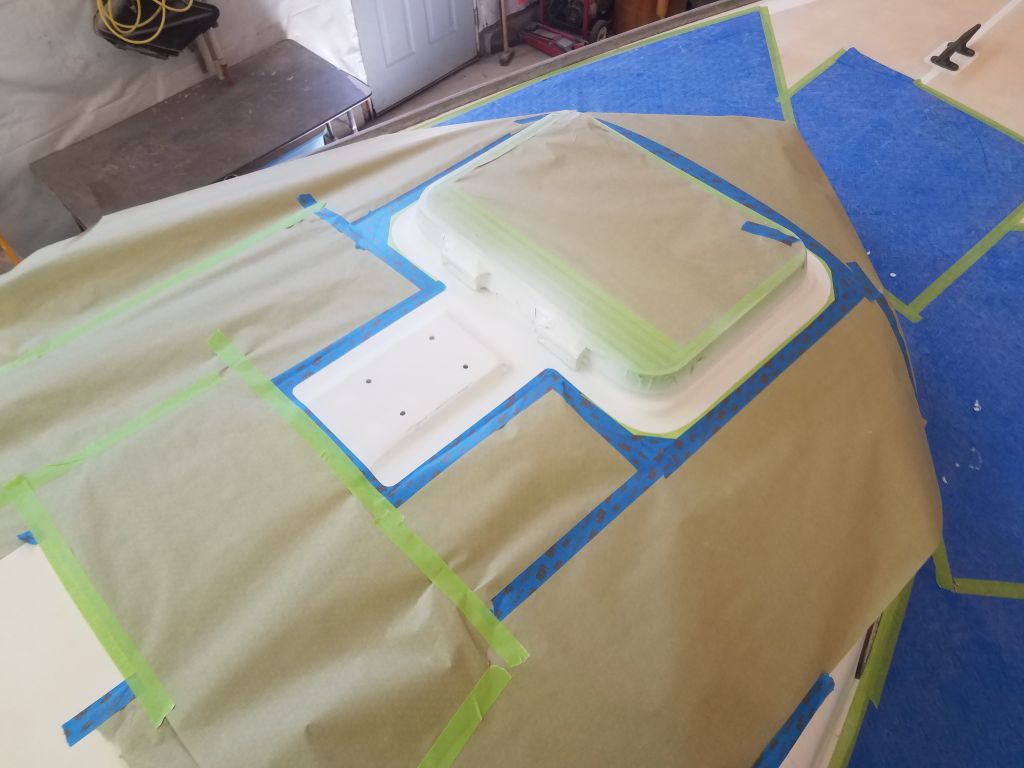
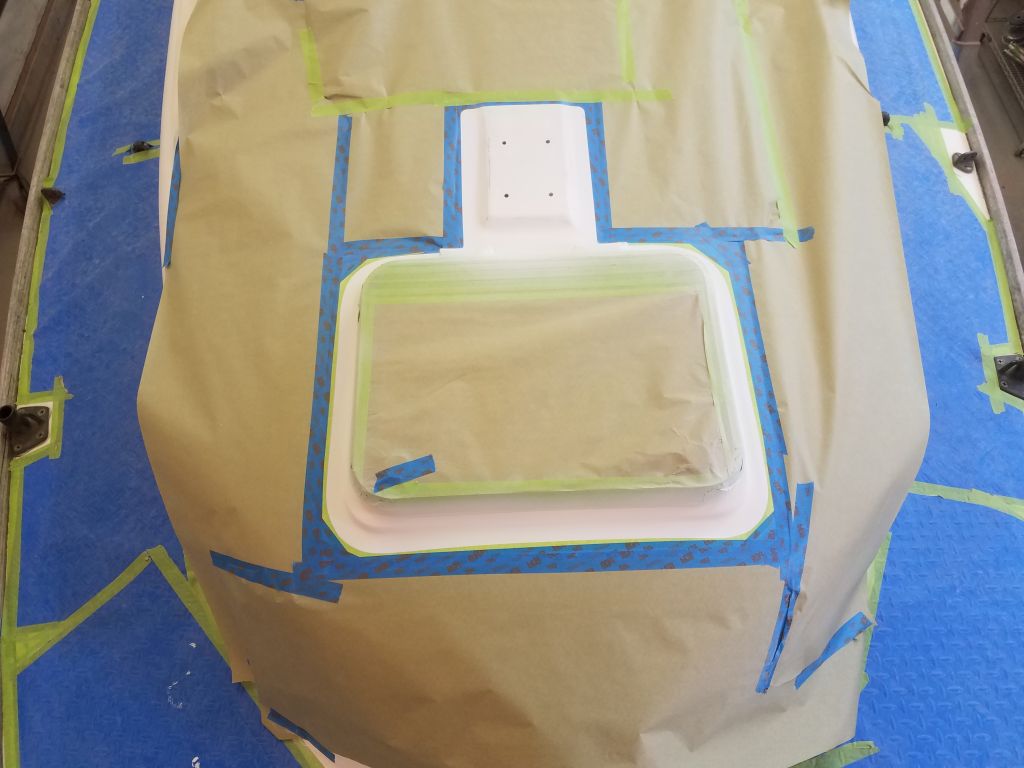
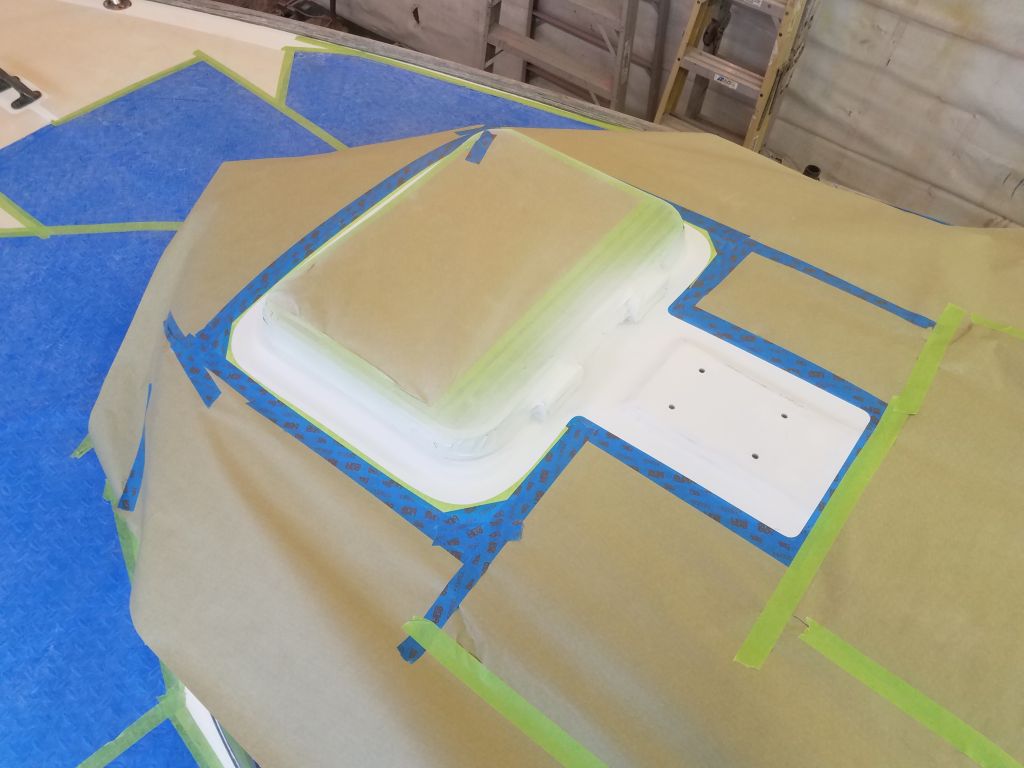
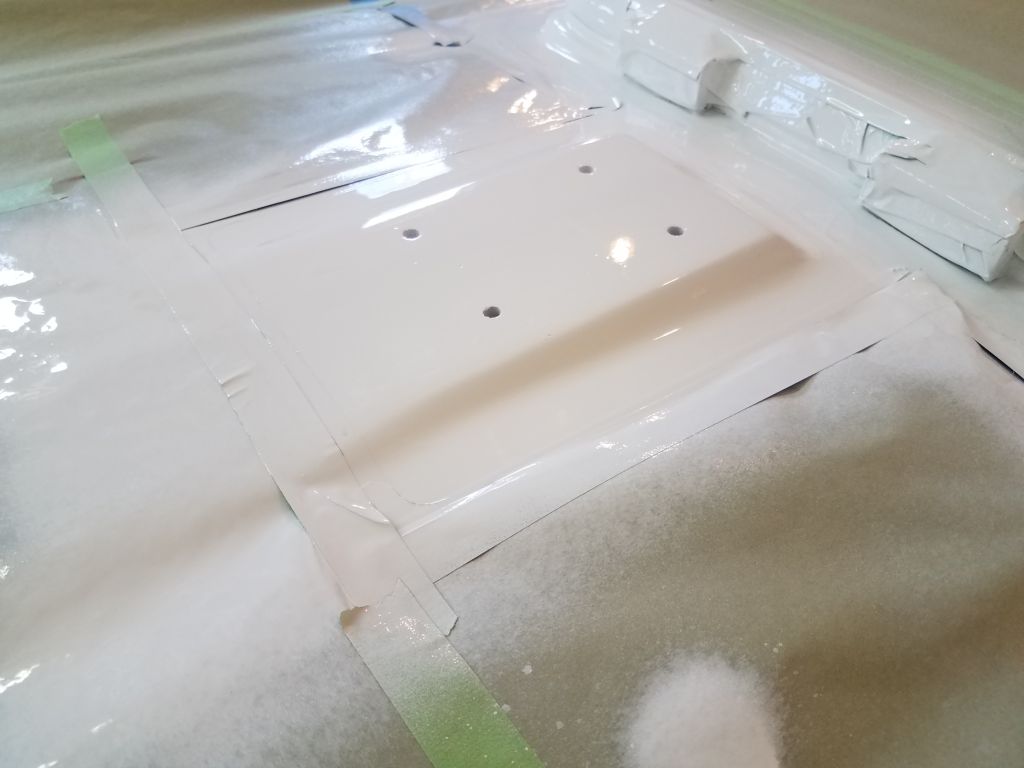
Finally, I masked off the sea hood as needed for the nonskid, and applied a coat of white nonskid paint to match the rest of the coachroof.

Total time billed on this job today:  6 hours 

0600 Weather Observation:  22°, clear. Forecast for the day:  Mostly sunny, 44°

August West 11

Wednesday

After solvent-washing the bottom to remove any dust and prepare the surface, I masked off the bottom edge of the boottop with some light-tack tape, then applied one coat of green ablative antifouling paint.

After the first coat had had a chance to cure long enough, I applied a second coat, more for overall coverage over the old black paint than for any true need in terms of performance.

To give the owner an overall sense of the boat’s new appearance, as well as to eyeball the proposed eyebrow and determine whether to reinstall a cove stripe, I moved the boat outside during the afternoon, giving me a chance to take a series of photos from more of a distance.  (Note:  these photo files are not resampled and are a bit larger to allow more detail.)

Total time billed on this job today:  3.25 hours 

0600 Weather Observation:  22°, clear.  Forecast for the day:  Mostly sunny, 44°

August West 10

Tuesday

Satisfied with the boottop, I removed the masking tape.  The new striping wouldn’t look right till I could repaint the bottom in its contrasting color, but it was too soon to overmask the fresh paint on the bootop, so that would have to wait a day or so.

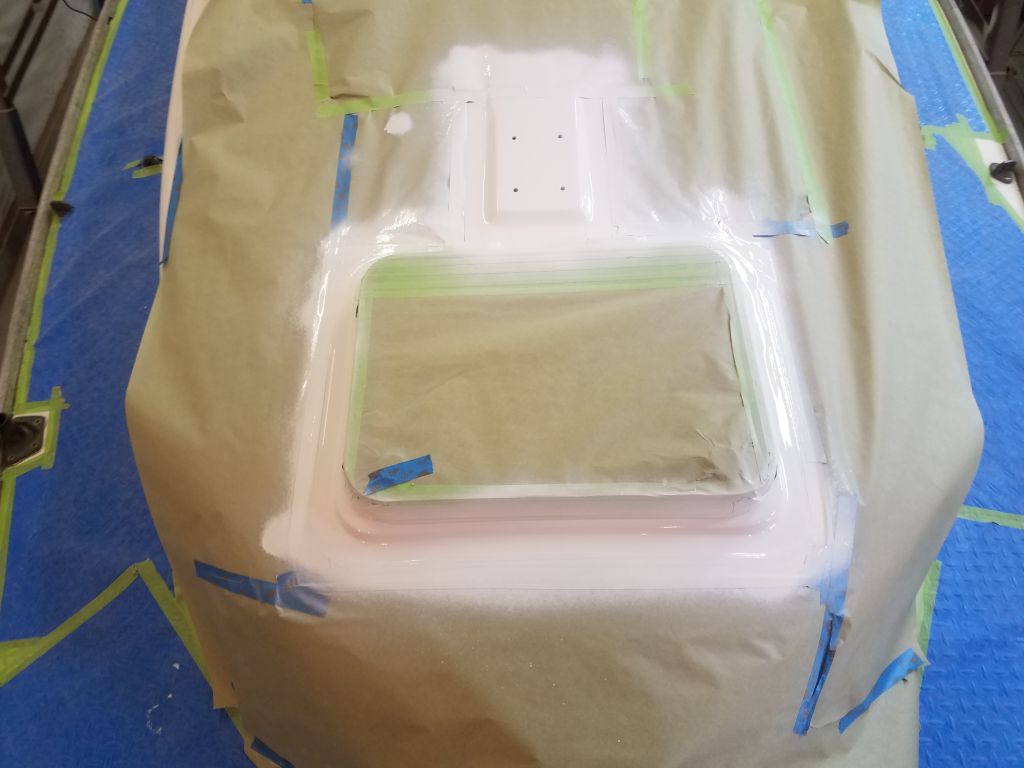
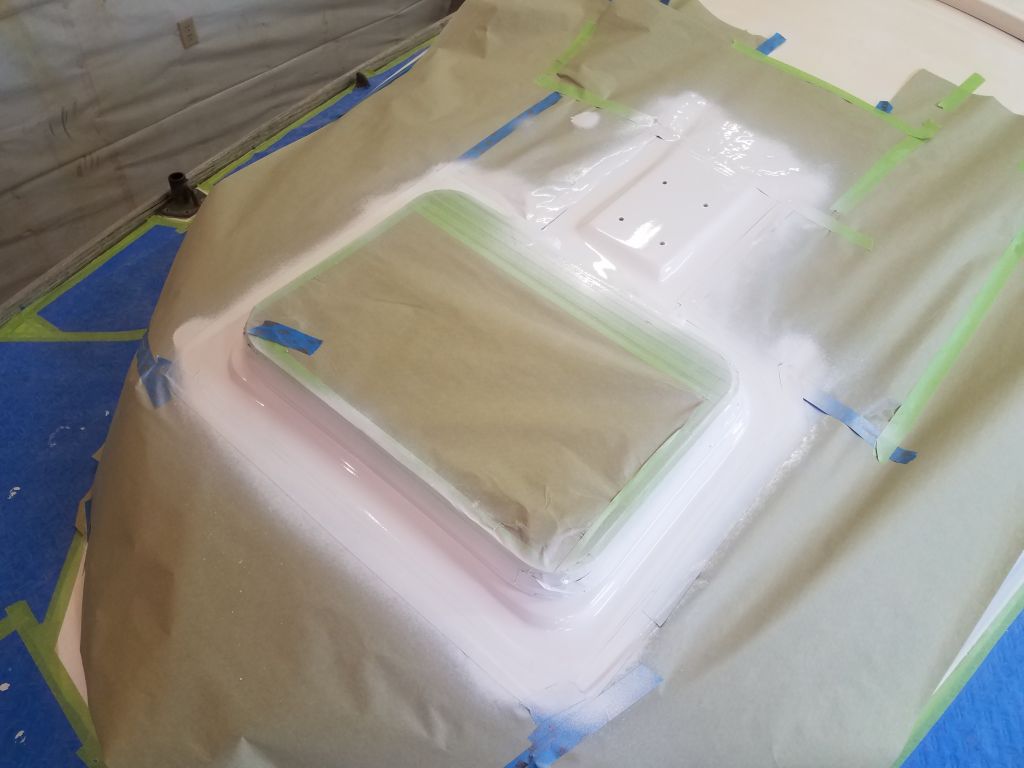
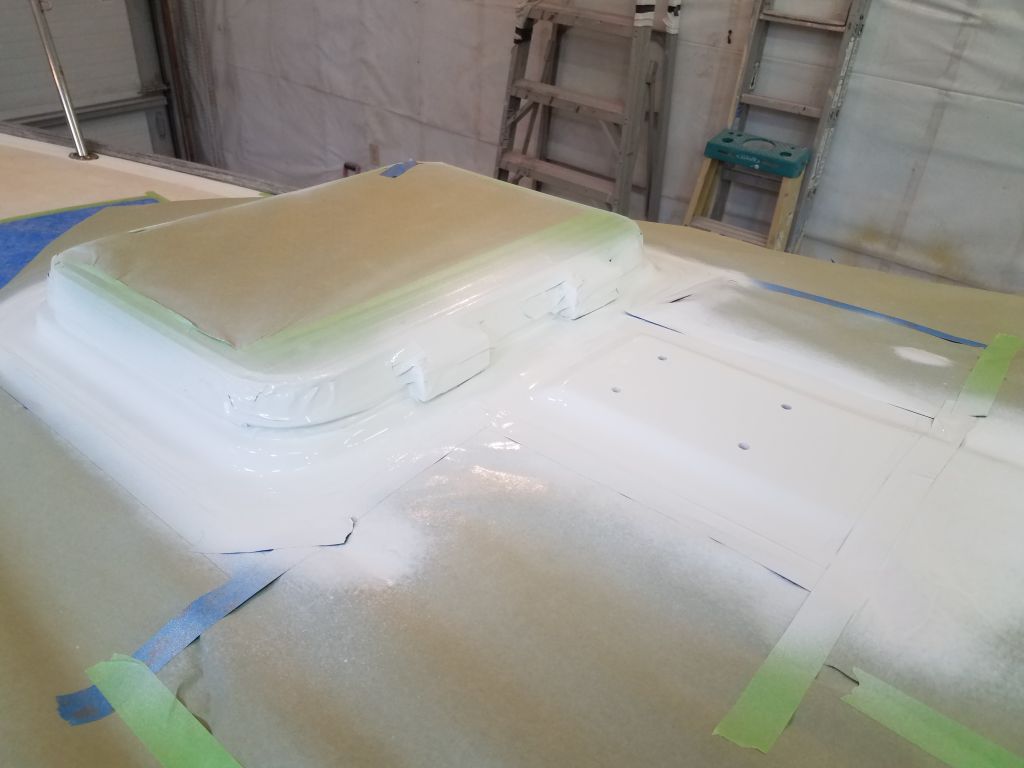
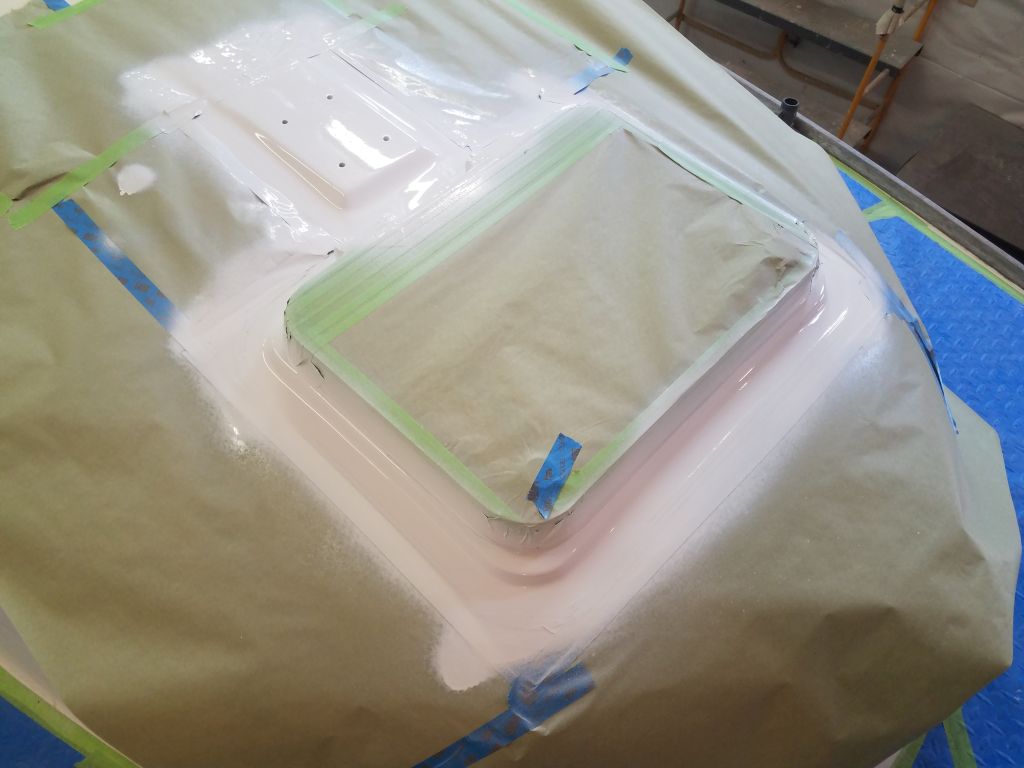
I wasn’t, however, happy with the sea hood, and decided it required another sanding and a 4th coat of the white paint.  Sometimes the smallest things are the fussiest.

This left me with few things to do for the moment, as I was awaiting getting the boat outdoors in her new colors before we could make final decisions on the cove stripe (whether or not to install one) and the eyebrow.  In the meantime, I spent a couple minutes fine-tuning the mockup eyebrow where it curved around the forward part of the cabin trunk, cleaning up some burbles in the first go-round.

The old sealant filling the gap between the motor mount and the trim beneath was in poor condition, and while I was stripping the wood earlier I’d removed much of the failed material.  Now, I reamed out the seam from inside and out (up inside the motor well), and applied a new bead of sealant to both sides.

Later in the day, I received some new supplies, including the shorter screws for the boom vang brackets on mast and boom, so I could complete those installations.

The new self-tailing add-ons arrived, and I installed those on the original winches.

Total time billed on this job today: 2.25 hours 

0600 Weather Observation:  32° , cloudy, 8″ new snow down overnight. Forecast for the day:  Becoming sunny, 51°

August West 9

Monday

To begin the day, I lightly sanded the new paint on the boottop, preparing it for another coat later in the day.  At the same time, I lightly sanded the sea hood as well, as I felt it needed a third coat of white paint.

Up on deck, I installed a new tiller extension that the owner requested, and also reinstalled the original sheet winches, as the owner had decided not to proceed with the new self-tailers after all, since they didn’t really fit that well on the winch stands, and he thought they seemed out of proportion with the boat.   Instead, we decided to try those rubber add-on self-tailing attachments, a simple and inexpensive alternative (and they come in gray now, not that horrible blue that used to be standard).  I ordered a set and would do the installation once they arrived.

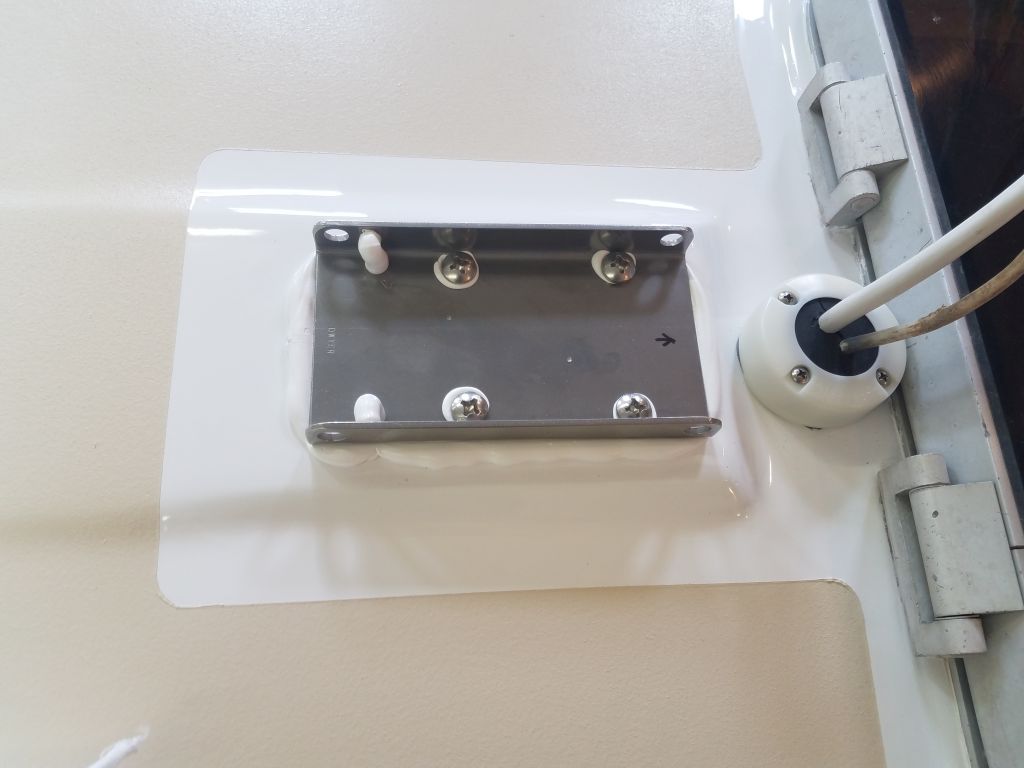
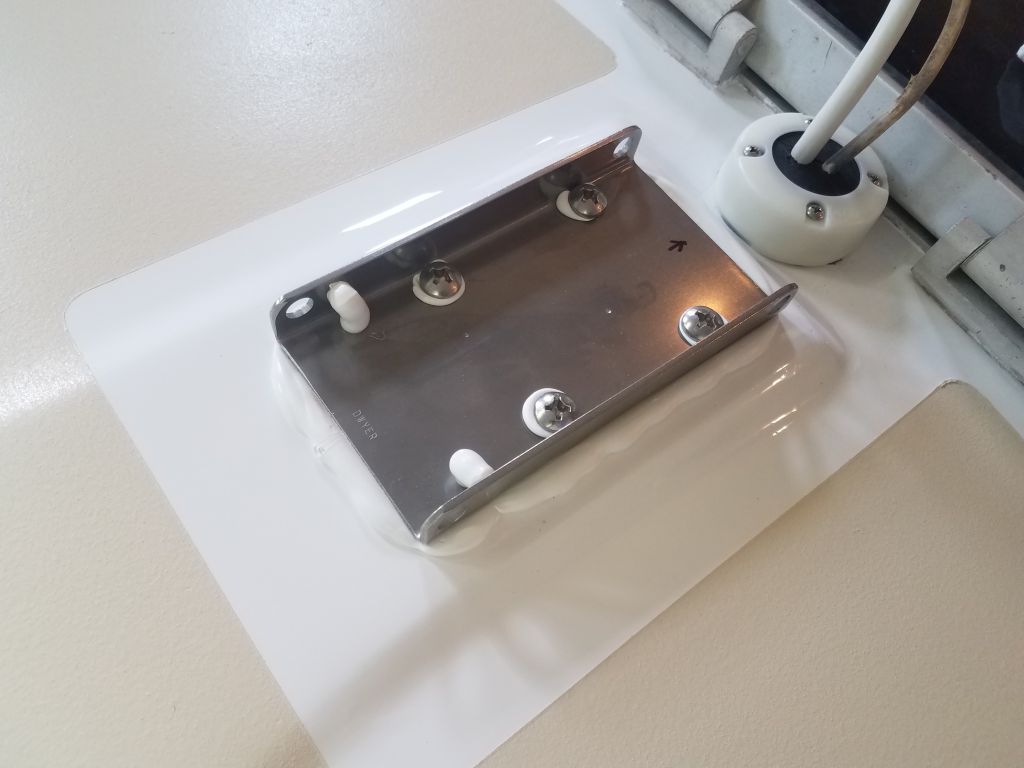
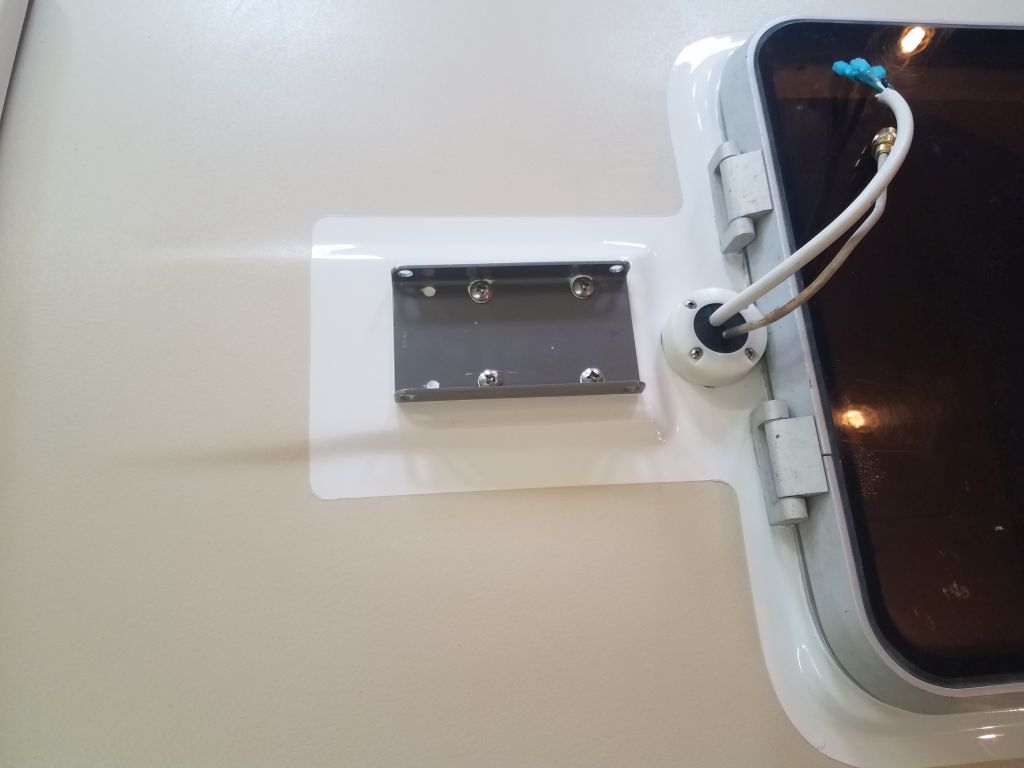
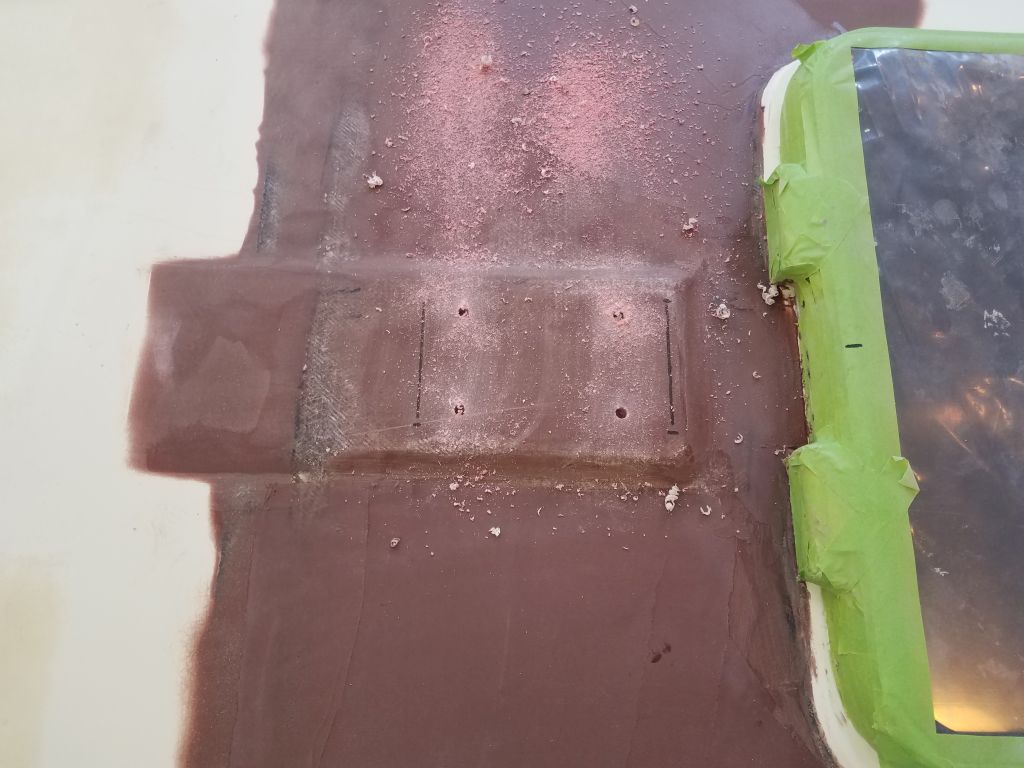
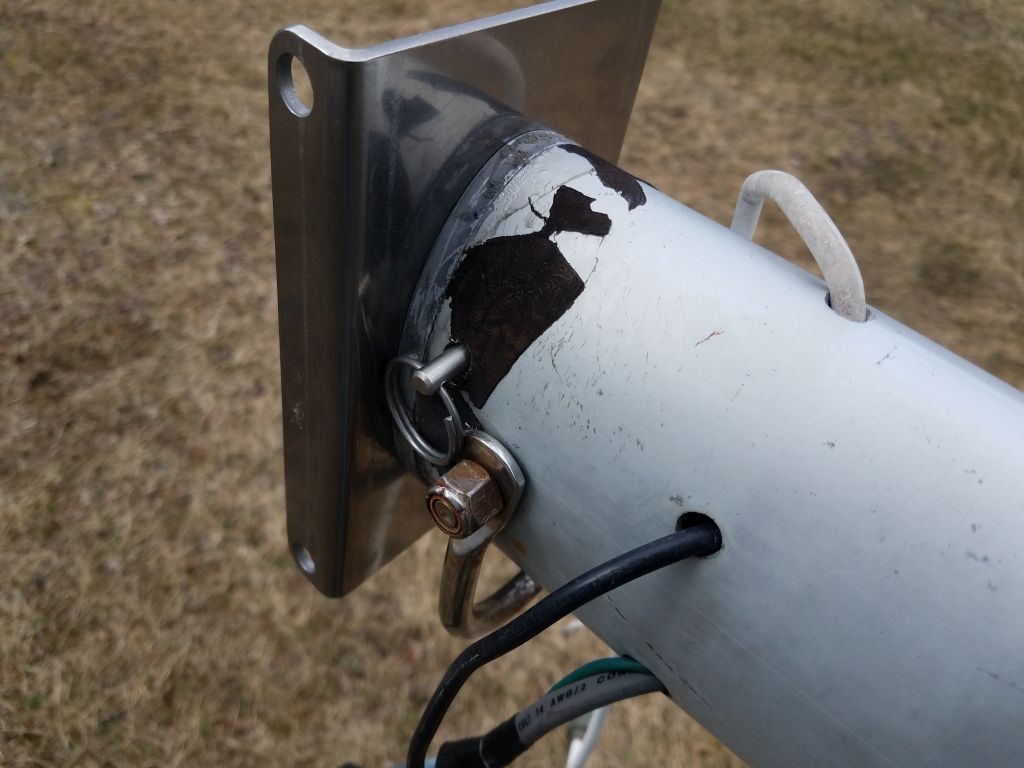
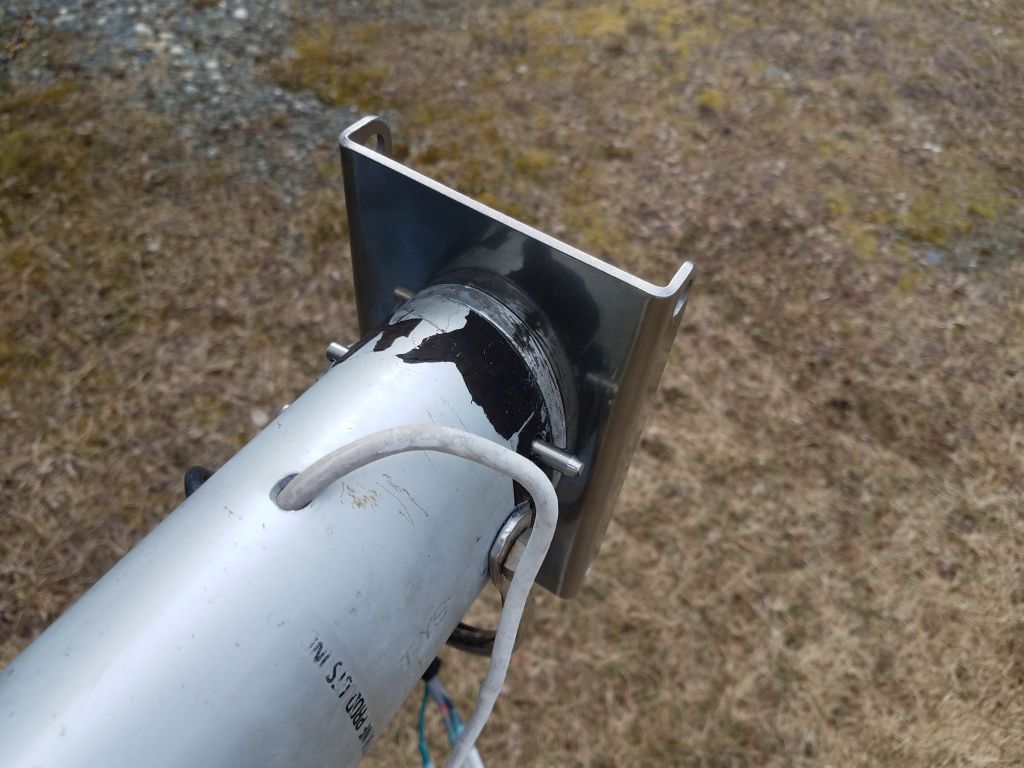
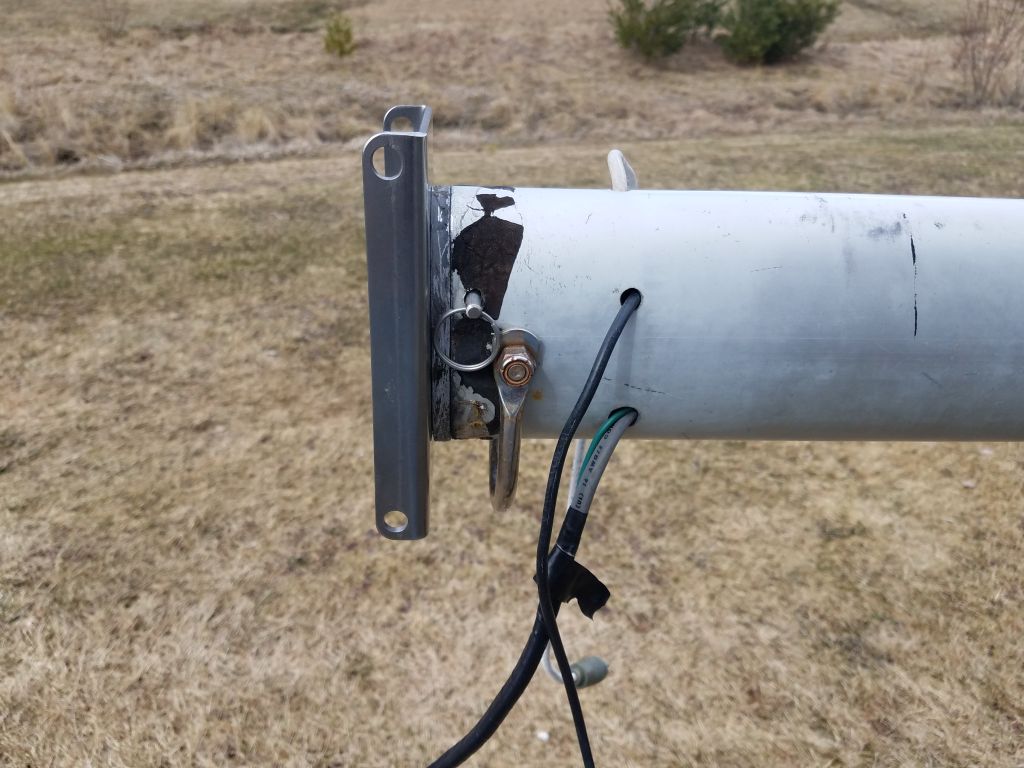
I had a couple small jobs to complete on the spars, starting with installing a new rigid boom vang.  To begin, I had to first remove two old bails–one each on the mast and boom–left over from the old vang.  Afterwards, I installed the mast bracket, keeping it about an inch above the base of the mast to ensure clearance within for the screws and the cast mast step on deck.  I had only over-length screws on hand, so for the moment I temporarily installed the bracket with a few of these, but I’d replace them and complete the installation with shorter screws once they arrived.

With the mast bracket in place, and all holes prepared for the correct screws later, I temporarily installed the boom so I could install the boom bracket for the other end of the vang.  I set the boom just below horizontal, and with the vang installed in the mast bracket, tightened the vang to compress it as far as possible; I couldn’t quite two-block the tackle, but this was as far as I could compress the spring.  Then, I let the boom end fall where it may on the boom, and installed the bracket with the two middle screws for now.

To double-check the placement of the bracket before drilling the remaining holes, I released the tackle on the vang, allowing it to push the boom up as far as possible.  I was looking to ensure that there was ample lift in the spring in order to properly lift the boom; there was.  Thus, I could finish drilling and tapping the fastener holes for the boom bracket, though final installation would await shorter screws a little later.

There was a set of basic, permanent lazy jacks in place on the mast, but the owner asked me to replace them with the adjustable/retractable jacks that I often installed.  To begin, I first had to untie everything from the mast, as it looked like someone had intentionally made as much of a mess of the stays, halyards, and other lines as humanly possible, and I needed access to the spar in order to properly install the new lazy jacks.

Above the spreaders, I removed the basic padeyes that held the top end of the old lazy jacks, and replaced the eyes with a pair of small cheek blocks.  I was able to re-use one of the old screw holes for each block.

These blocks formed the basis for the adjustable/retractable feature of the lazy jacks.  These are quite simple to install and use, but challenging to describe in writing, so suffice it to say I began by installing the lift/control lines through the cheek blocks, around an adjustable block on the front of the mast (with a control line leading down the mast to a cleat for adjustment), and to a pair of small blocks, one per side, which ultimately allowed me to lead two legs on each side (sufficient for a small sail like this) to new padeyes on the boom, to which I affixed the legs with snap hooks.

To determine the final length of the forward mast control line, I retracted the jacks, securing them through the gooseneck for now, which brought the forward control block to its highest point, therefore allowing me to finalize the length of the line.  For now, I used a spare cleat on the side of the mast since I didn’t have a dedicated cleat on hand that I could use; I’d order one and install it later.

With the rigging work complete, I straightened out and re-secured the rigging to the spar for storage and transport.

By now, it was late enough in the day for me to get to work on the day’s painting projects, starting with the sea hood.

After final preparations, I applied a second coat of black paint to the boottop.

Total time billed on this job today:  7 hours 

0600 Weather Observation:  15° , clear.  Forecast for the day:  Becoming cloudy, snow overnight, 40°

Older posts Newer posts