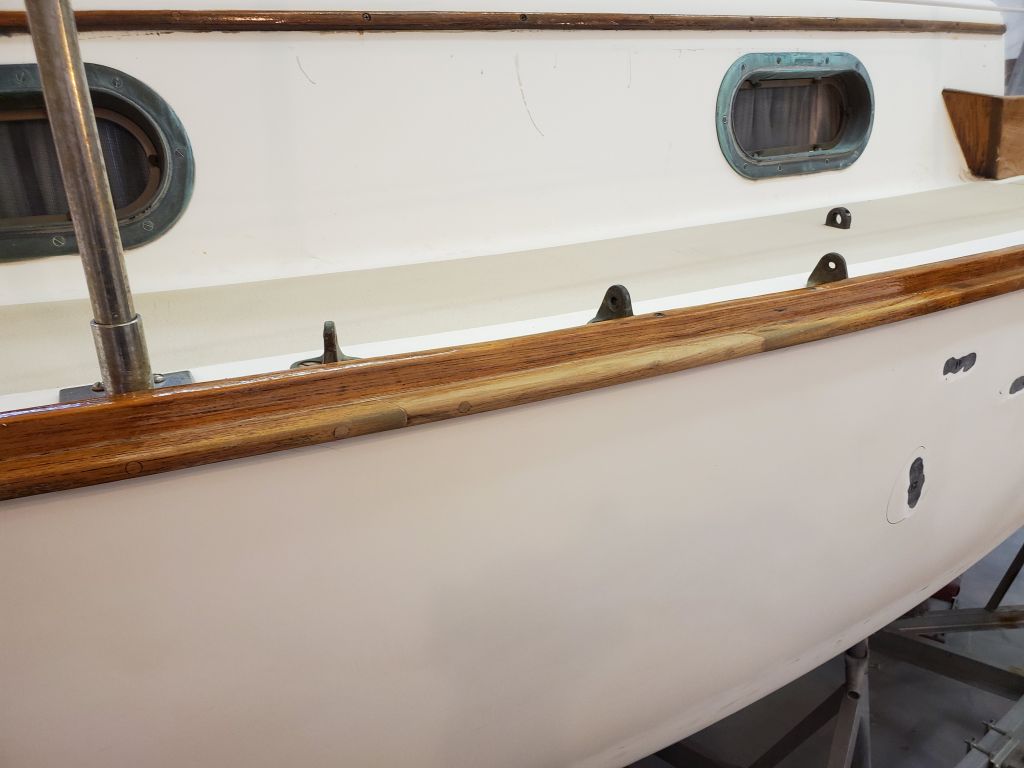
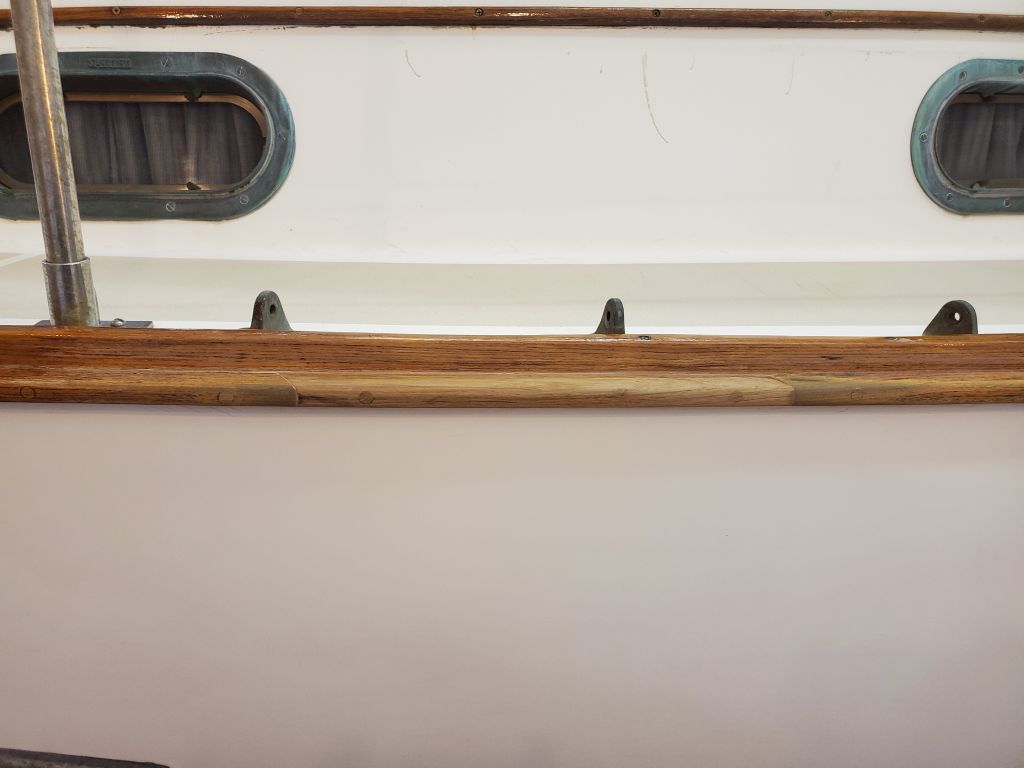
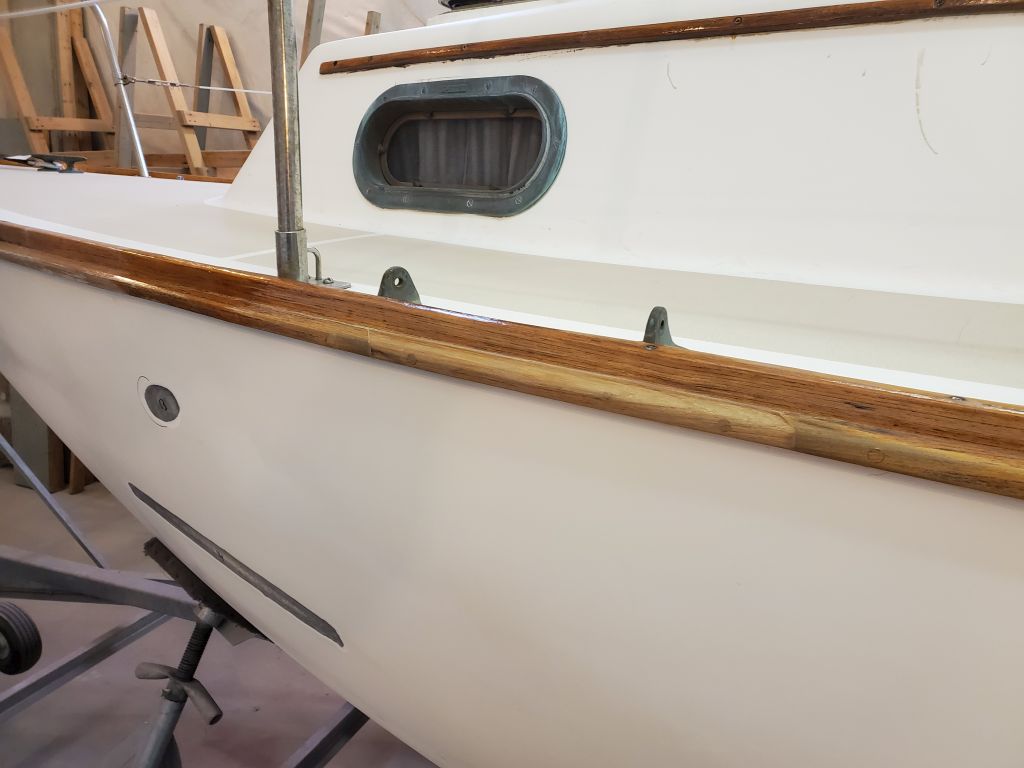
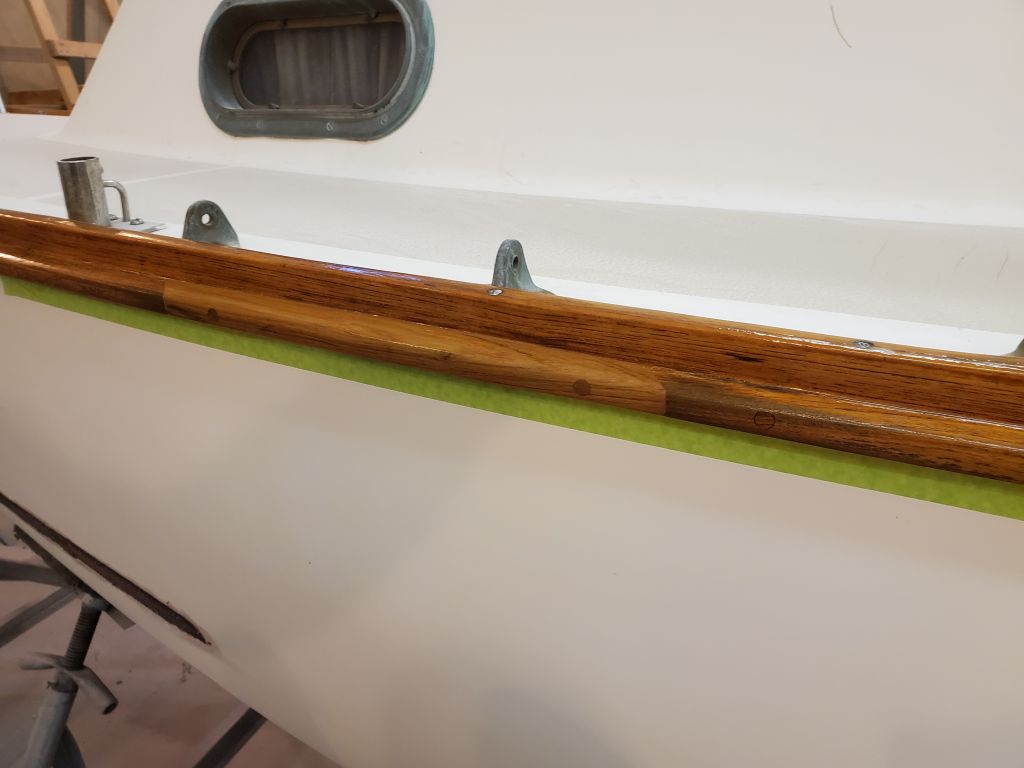
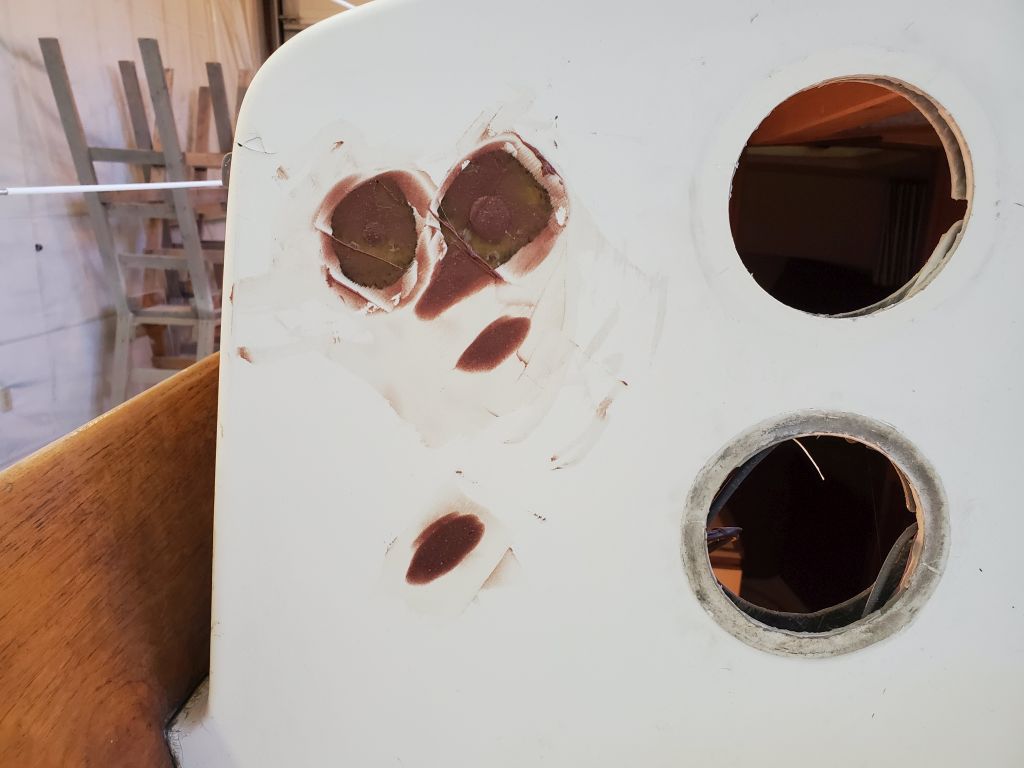
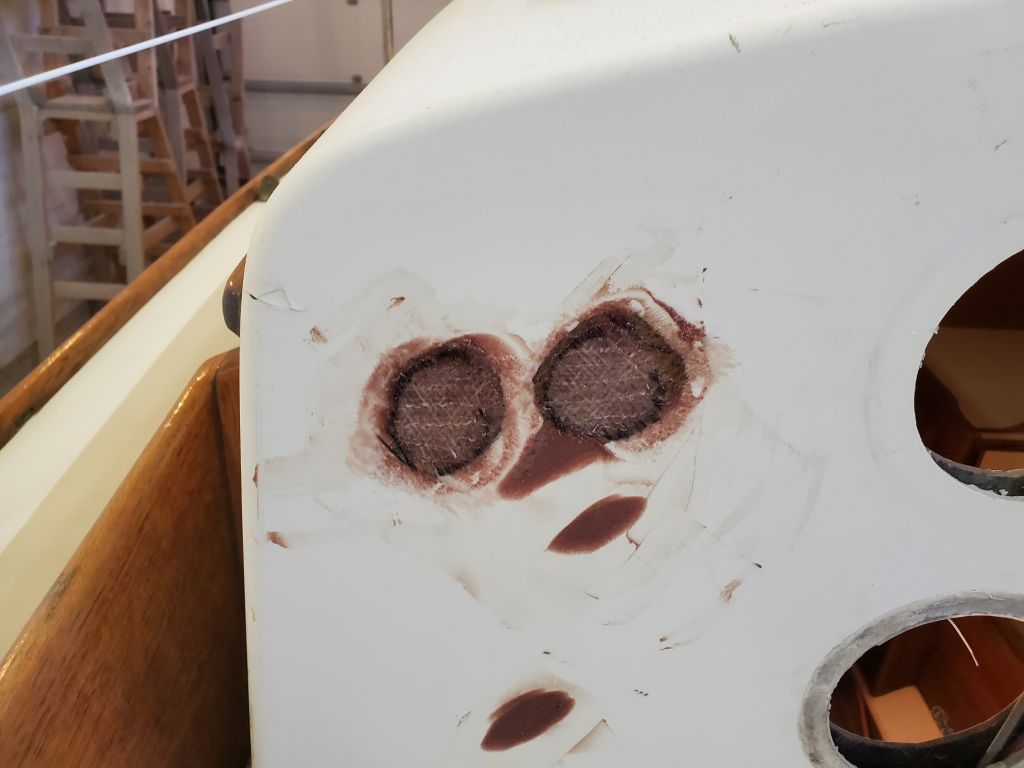
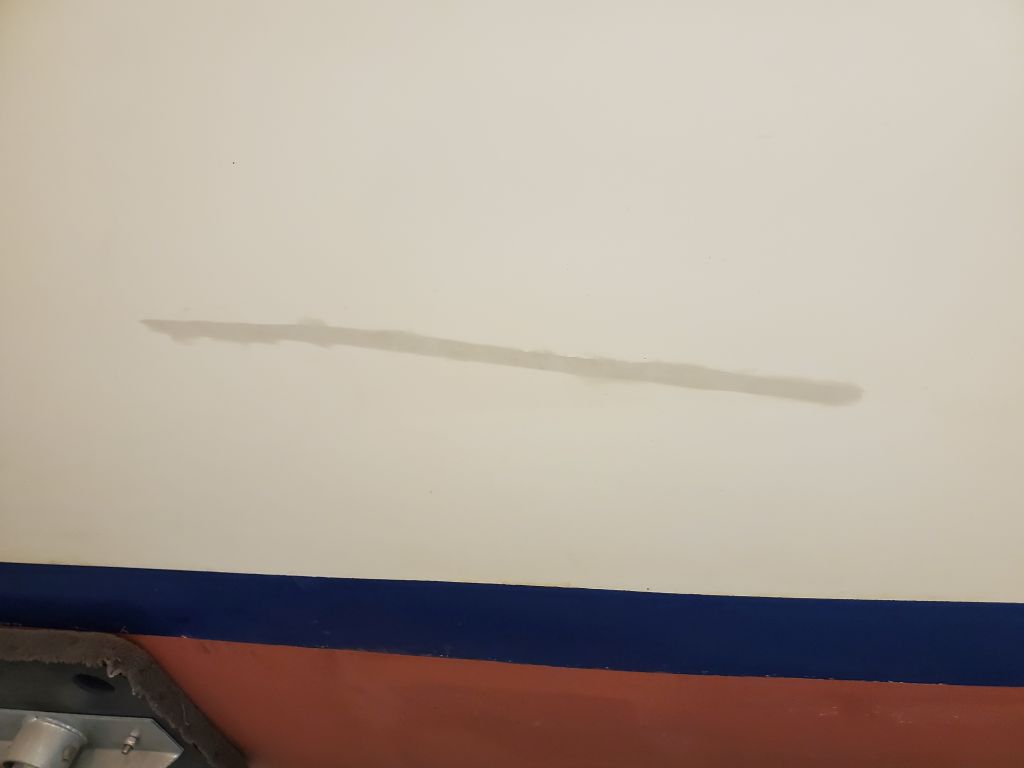
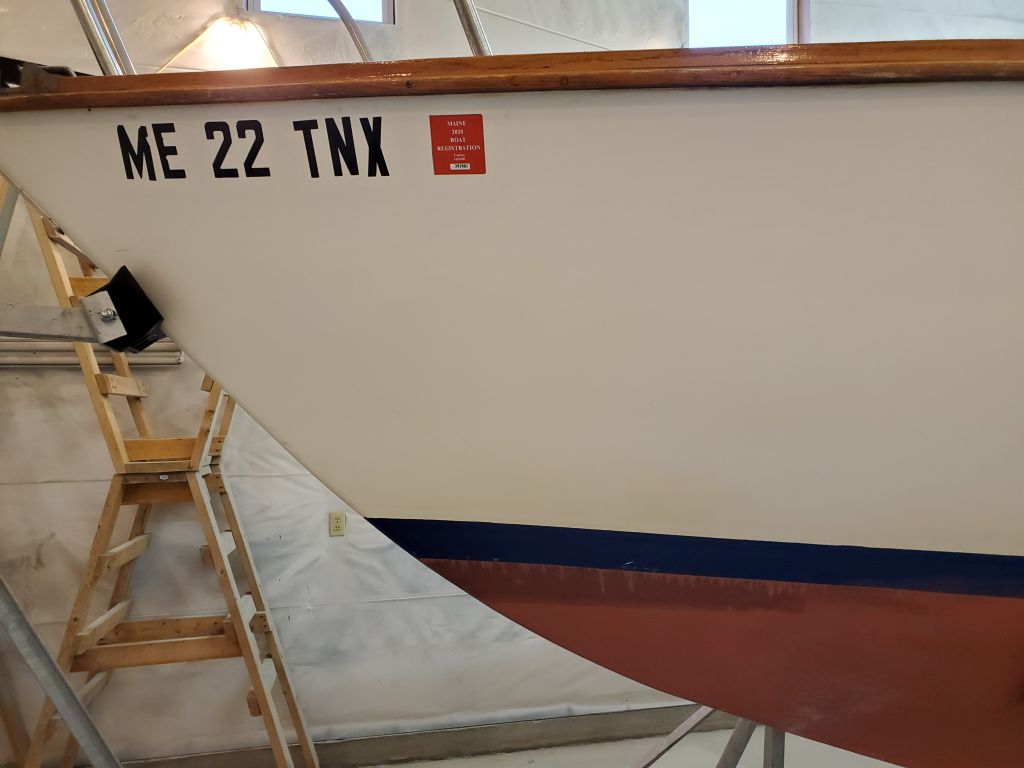
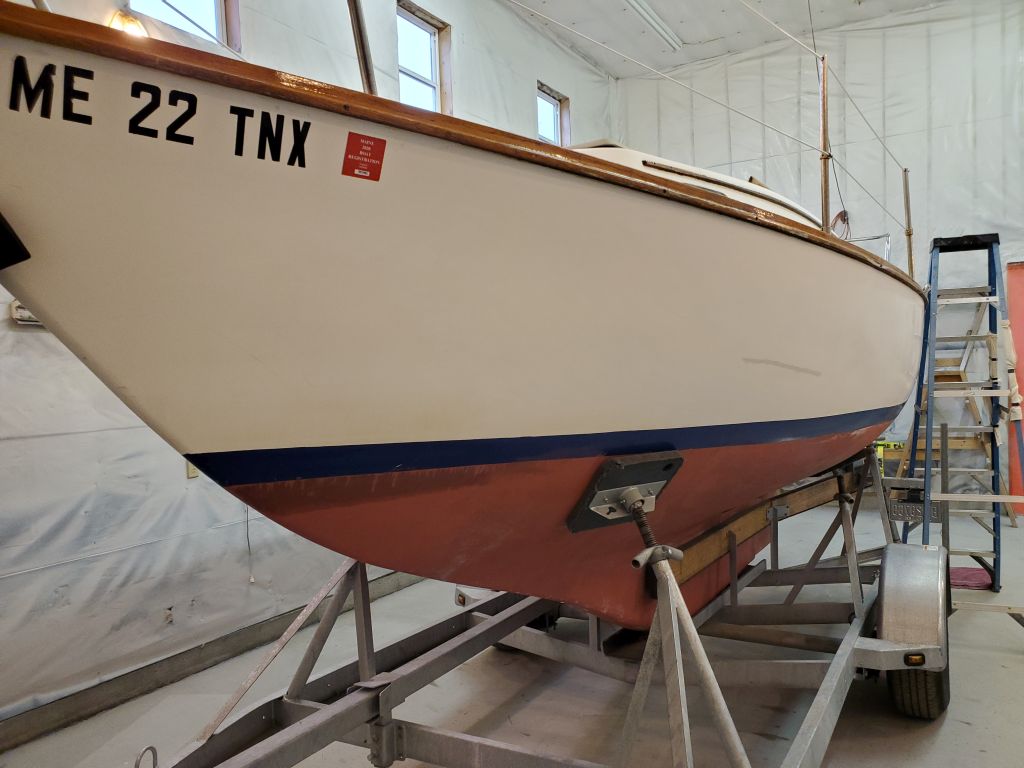
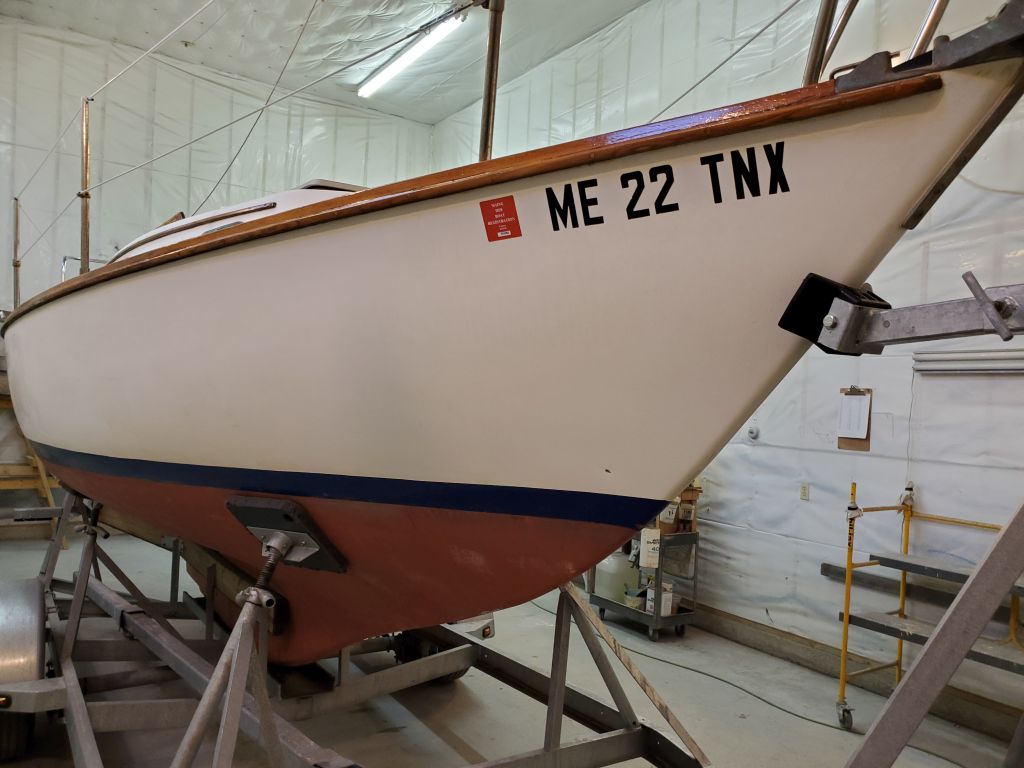
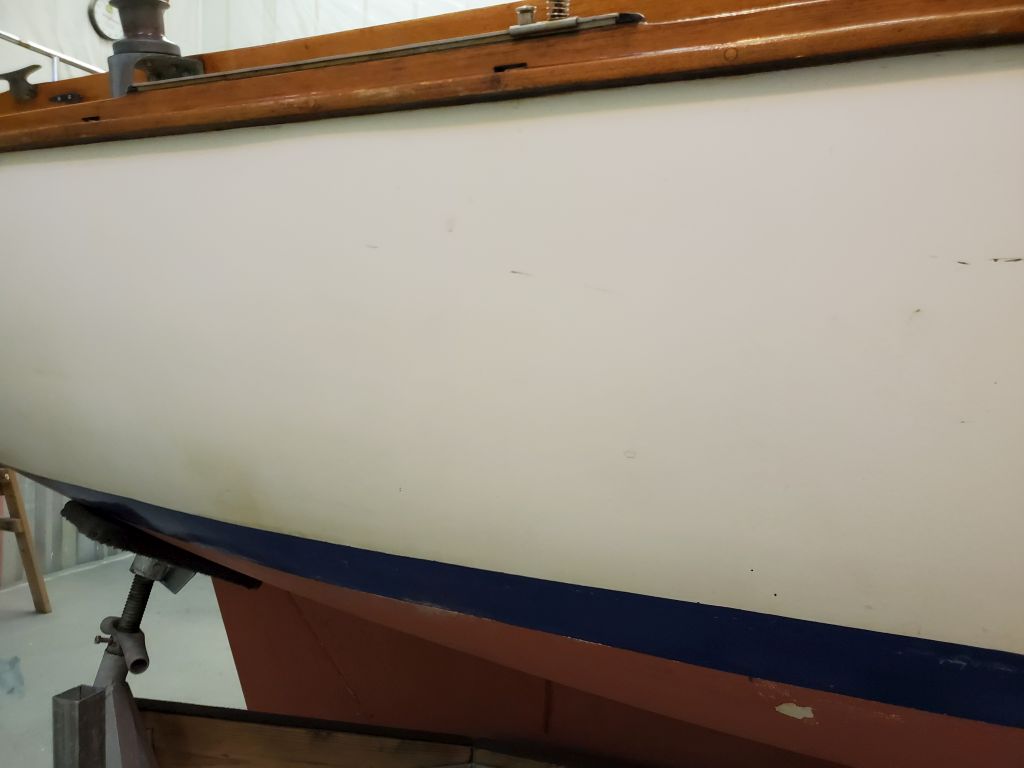
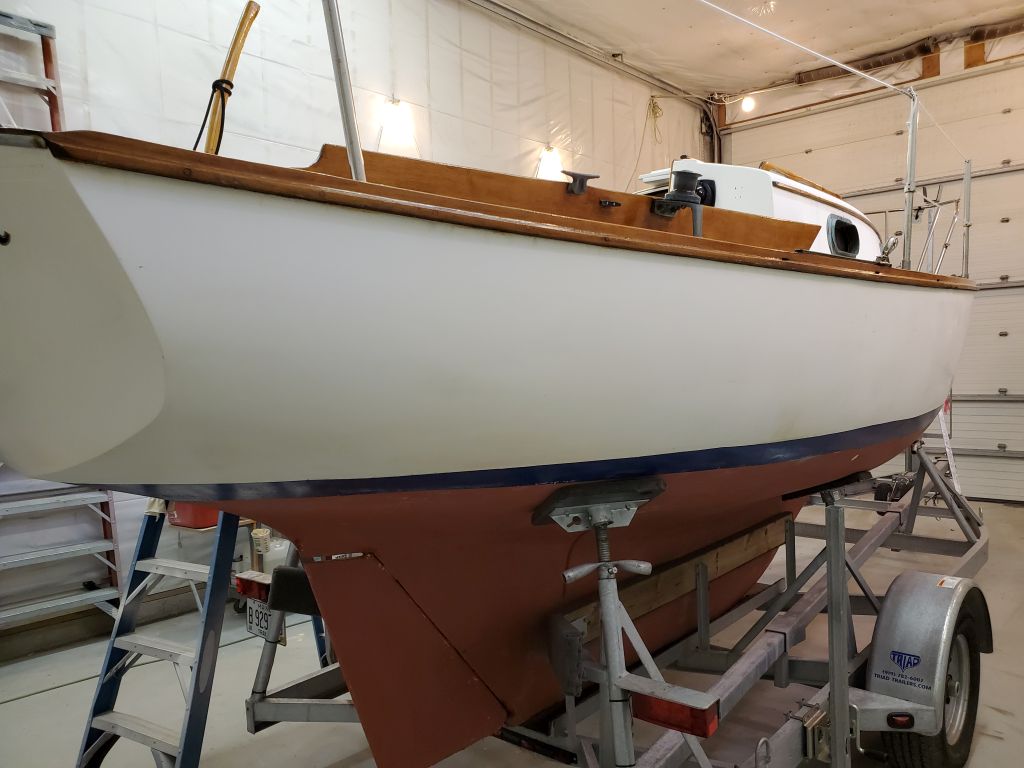
(page 72 of 165)

Lively Heels Phase 3-3

Monday

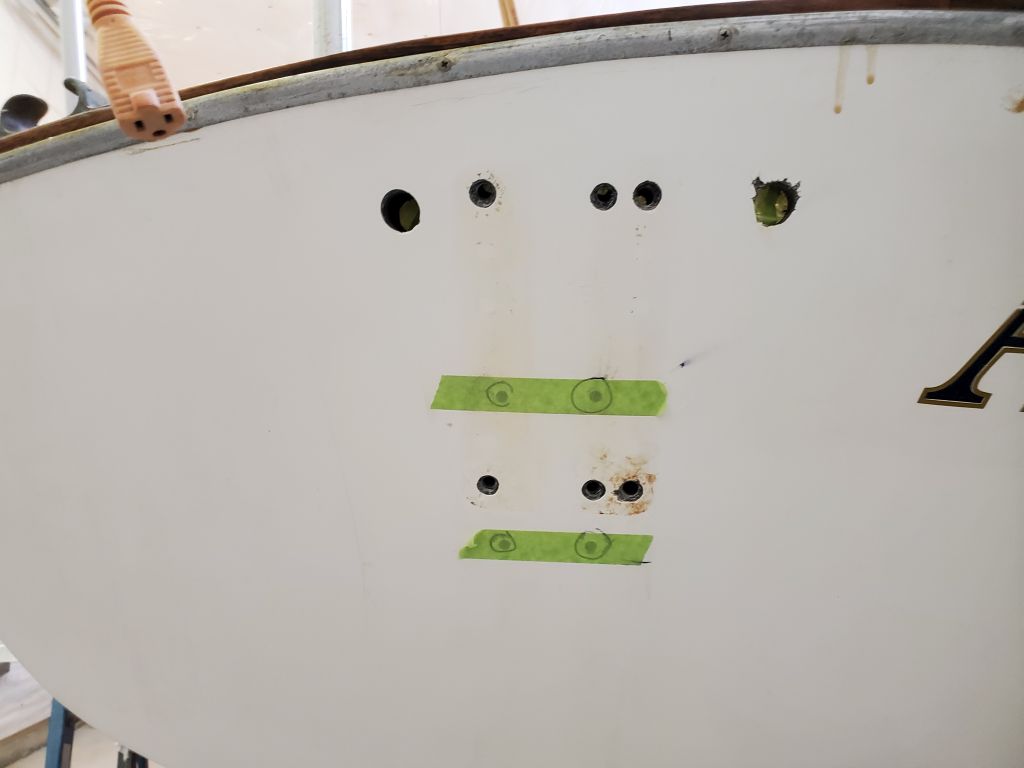
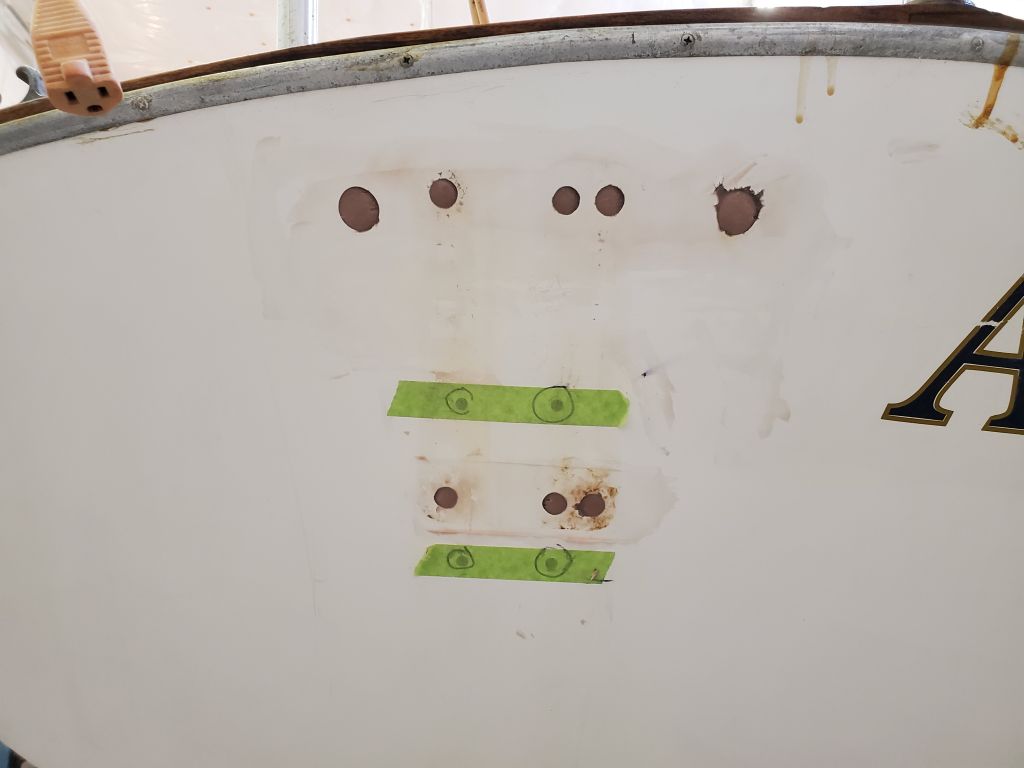
Picking up where I left off, I continued the tine-consuming work of removing the components of the old heating system, still focused mainly on the wiring for now even as I absorbed the existing hose situation in person and determined how to proceed on that front.

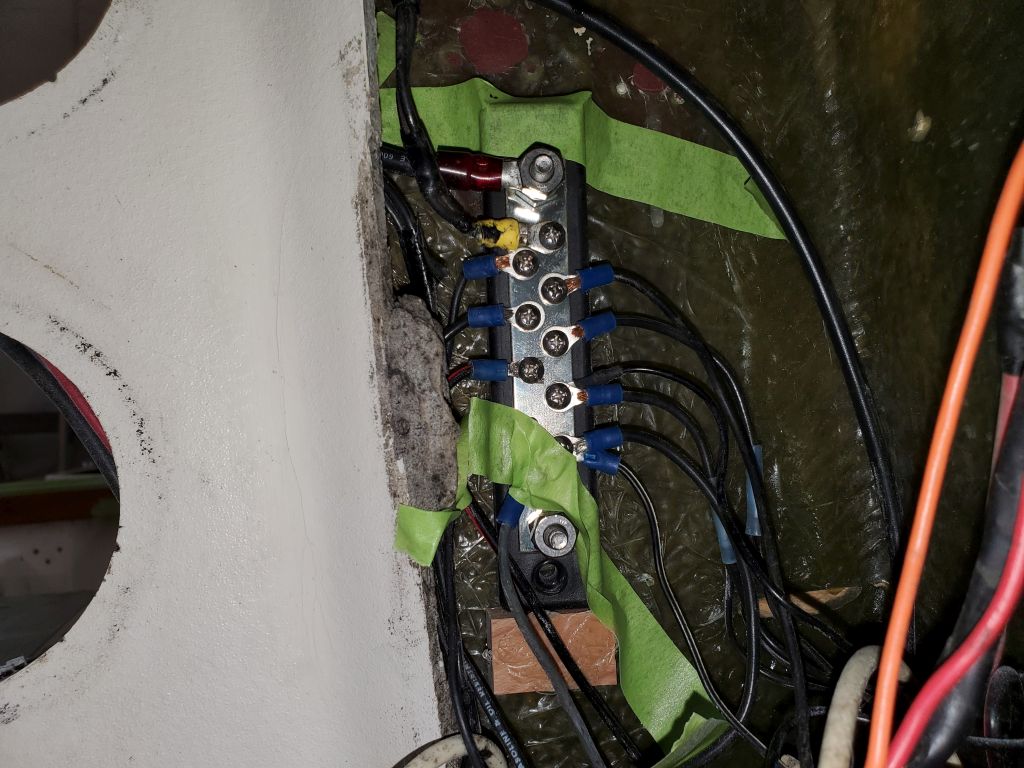
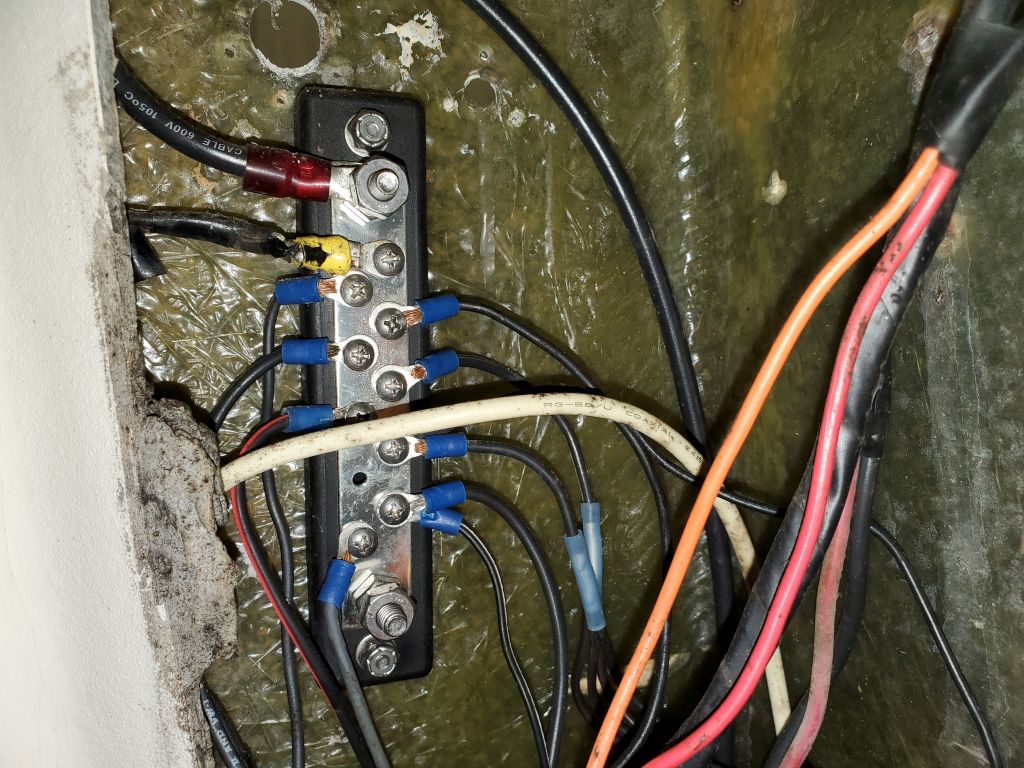
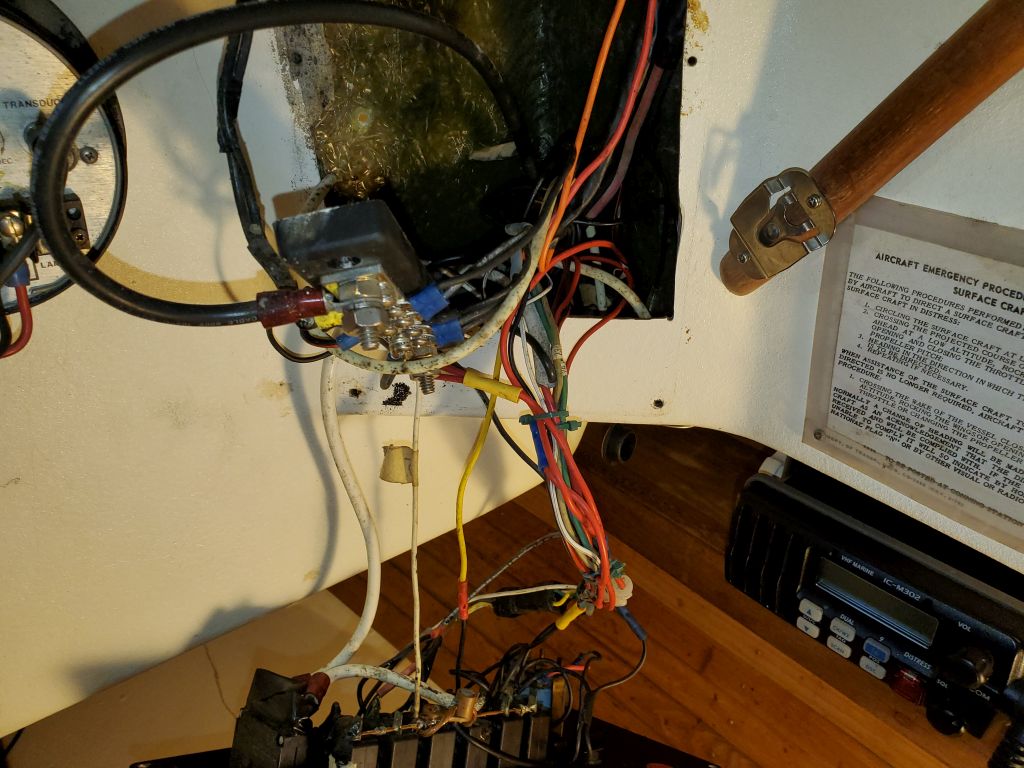
There were 6 or 7 wires I’d removed from the main heating control board in the engine room earlier, and now I had to pull them back into the console and eventually remove them entirely.  This took quite a bit of time since I had to determine their paths, and carefully remove various wire ties and cable clamps to release the wires, before finally tracing them to their ultimate connections, which in this case were mainly on a terminal block on the port side of the console, though two now-unneeded wires led to the thermostat in the main cabin.   I consulted and modified as I went a wiring list I’d made at the time of installation to ensure the numbered wires I was removing were the right ones, and that they were removable without affecting anything else.

Access was tight, as always, and these wires had been installed very early in the original wiring process, starting in 2012, so they were pretty buried and contained within several ever-growing wire bundles, but at length I removed them all cleanly, along with the main circuit breaker and power cables for the defunct boiler.  The old wires joined the control box and parts of the fuel system that I’d removed before.

Meanwhile, I continually assessed the heating system hoses which the owner had temporarily jury-rigged and connected after removing the boiler earlier.  The original system had been configured to allow heat and domestic hot water firing by the diesel boiler (now removed), or by the engine’s coolant bypass system, and for the moment this meant that the engine could and did still work to heat the system by way of a slim heat exchanger located down behind the port battery box.  Under this setup, the engine coolant warmed the heating system coolant (currently an entirely independent system), and a circulator pump moved that coolant through the system fixtures, which included the domestic water heater and two cabin heaters.

The project goal was now to simplify as much as possible the existing setup.  One option was to keep things more or less as is, which would be more straightforward in terms of actual work now, but would have only a minimal effect on removing excess hose and equipment.  The electric circulator pump would still be required in this scenario, and if we went this way I planned to wire it through a new switch for ease of operation.  There was still an opportunity to clean up and somewhat simplify the existing hoses, but they’d mainly be required and stay in place as is.

A second option that could greatly simplify the system was to plumb the engine’s coolant bypass (currently used only to run through the heat exchanger as indicated in the above schematics) directly into the heating system, using the engine’s coolant pump to circulate through the water heater and two fan heaters.  I contacted a knowledgeable source at Beta Marine about this to confirm, since I was unsure about the ultimate capacity of the engine’s coolant pump.  Under this scenario, I could remove a large portion of the old system, including hose runs, a separate high-mounted coolant tank, and the heat exchanger on the port side, and this would lead to a greatly simplified plumbing situation.  Shutoff valves in the coolant bypass (already in place in the existing system as well) could isolate the heating runs if needed or desired.  This option would require a substantial amount of work now, but the boat might benefit from the greater simplicity in the future.

For the moment, I didn’t know which way we would ultimately choose, and other considerations remained, so I wasn’t ready to start the work just yet.

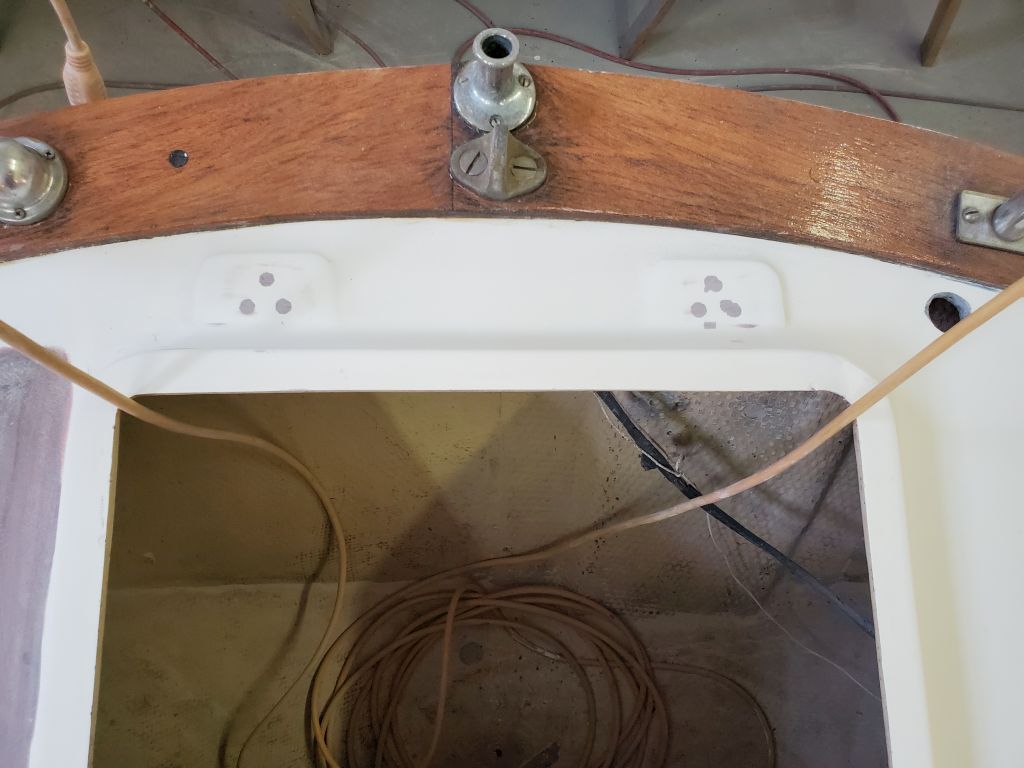
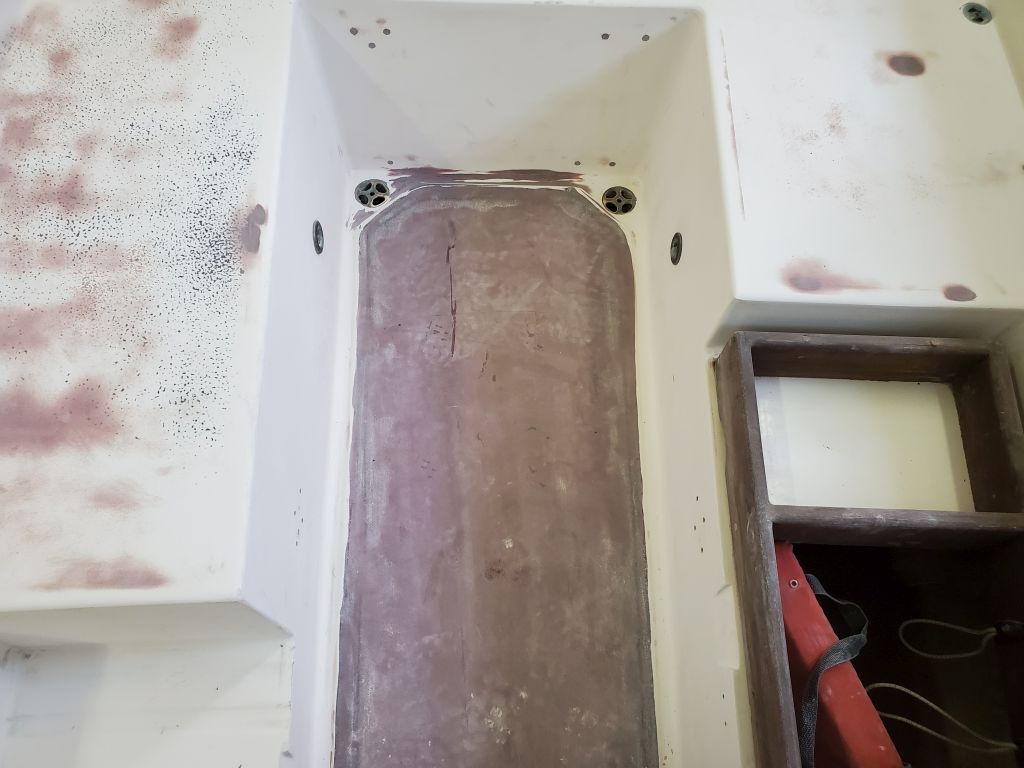
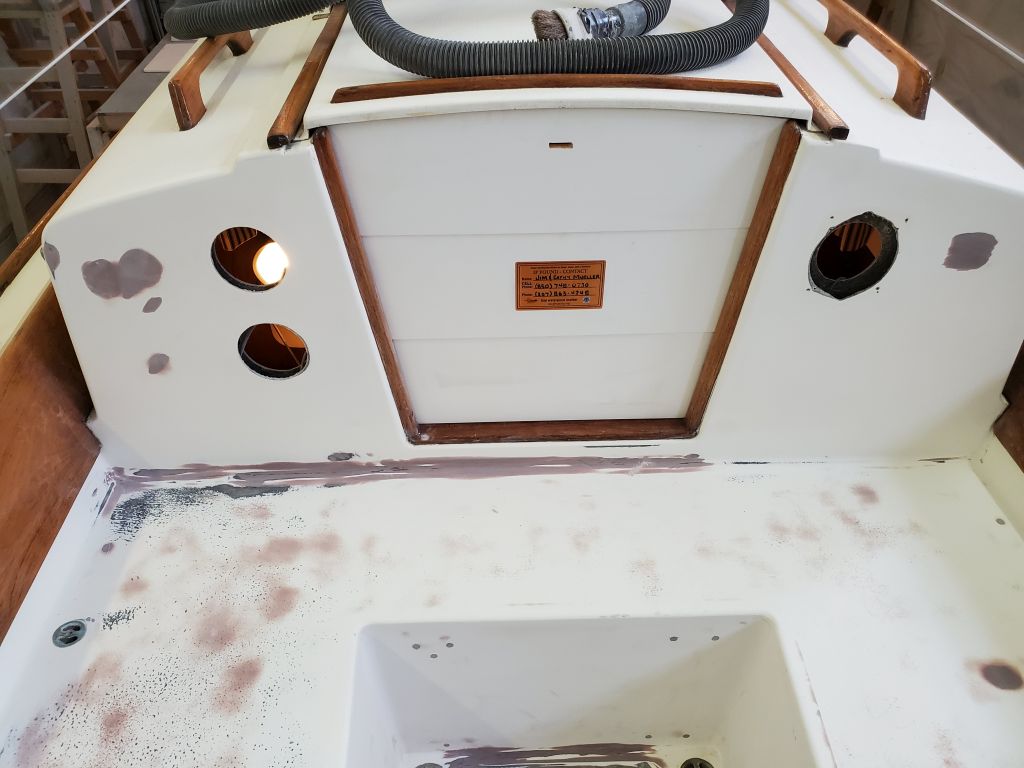
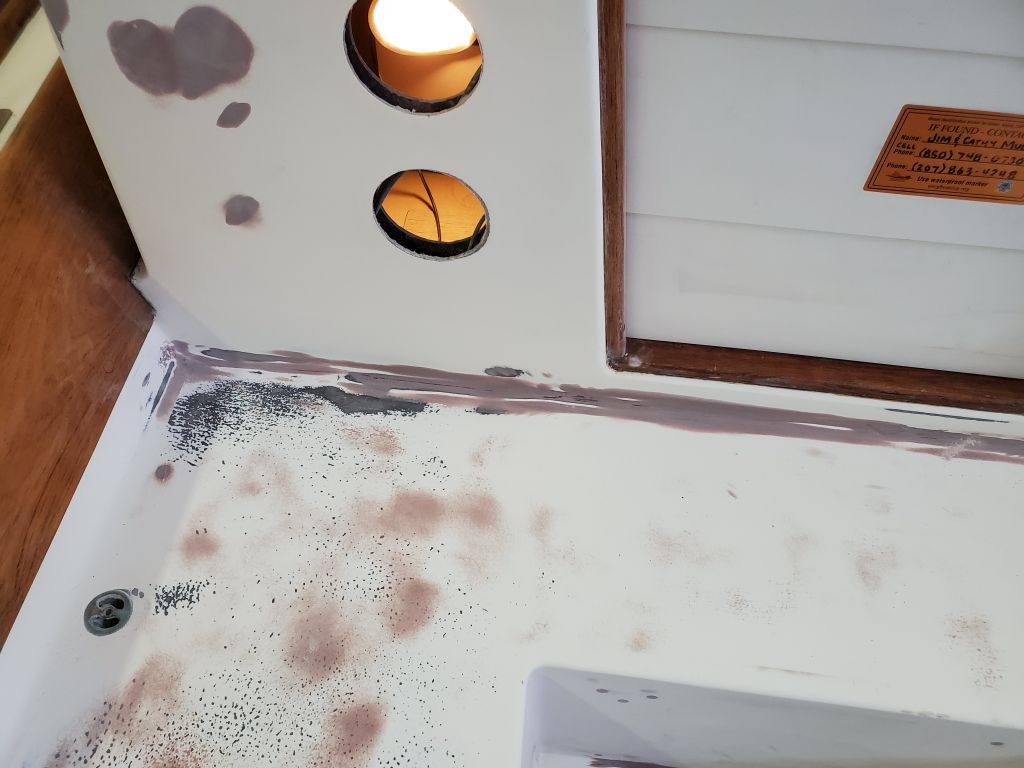
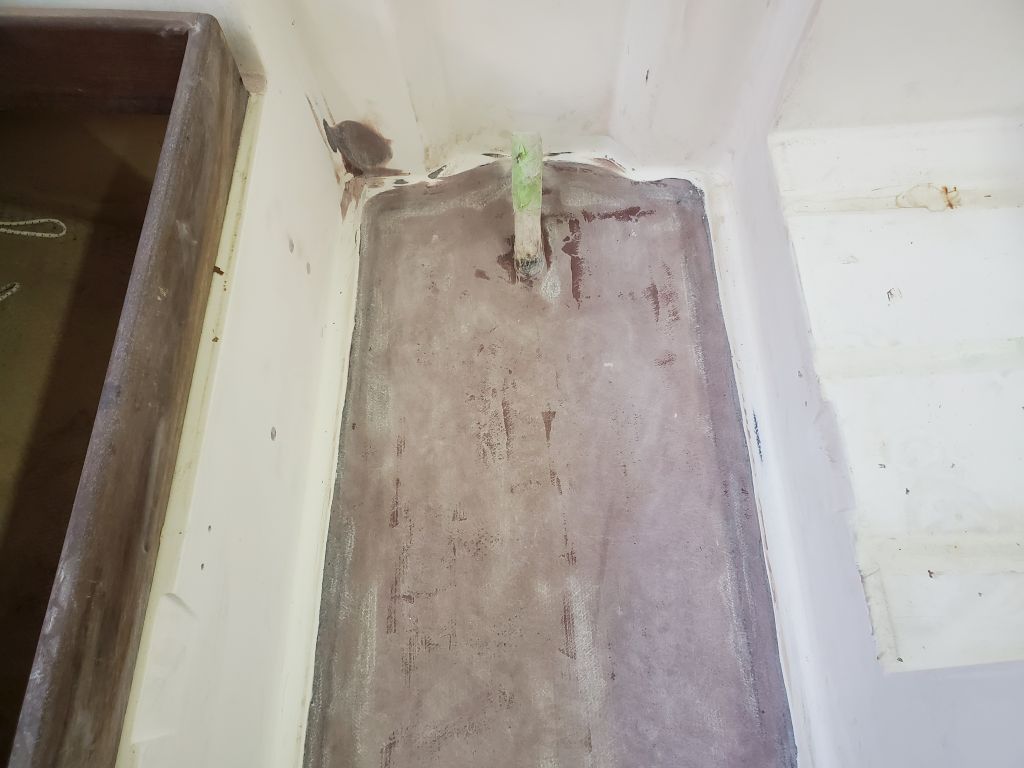
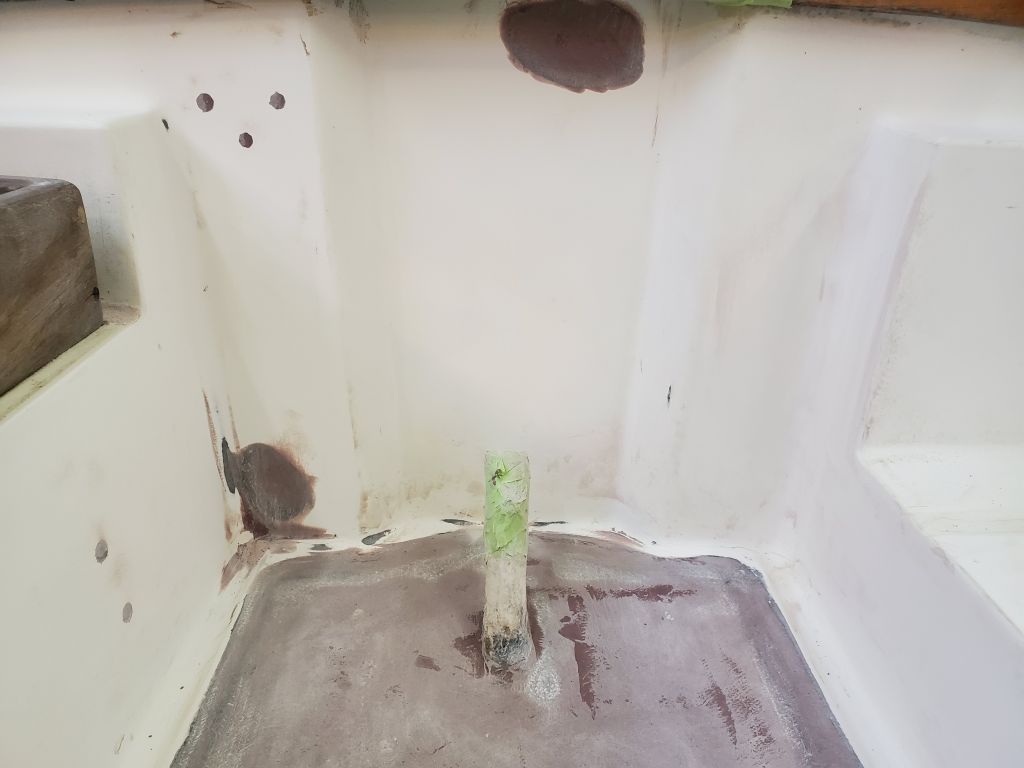
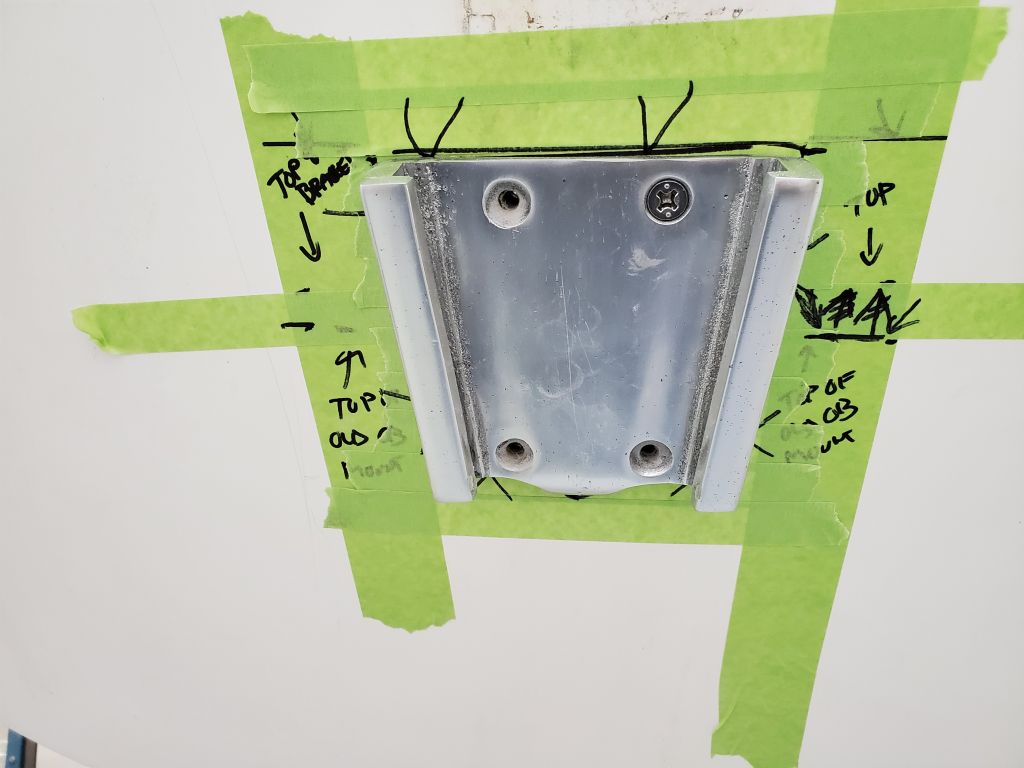
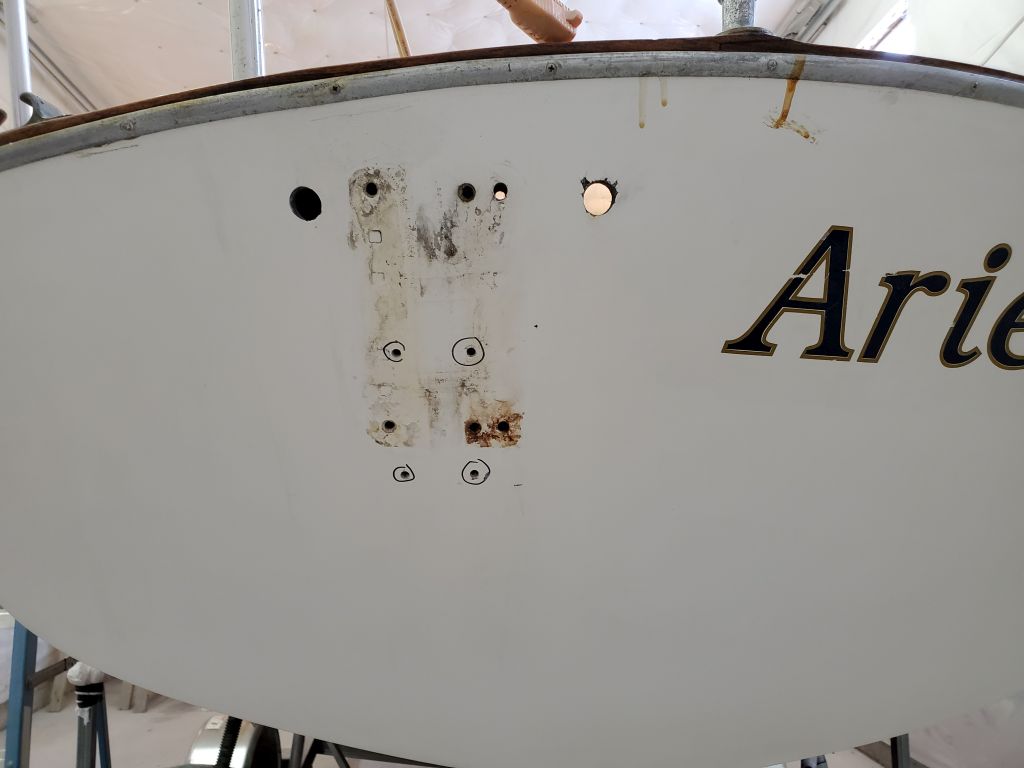
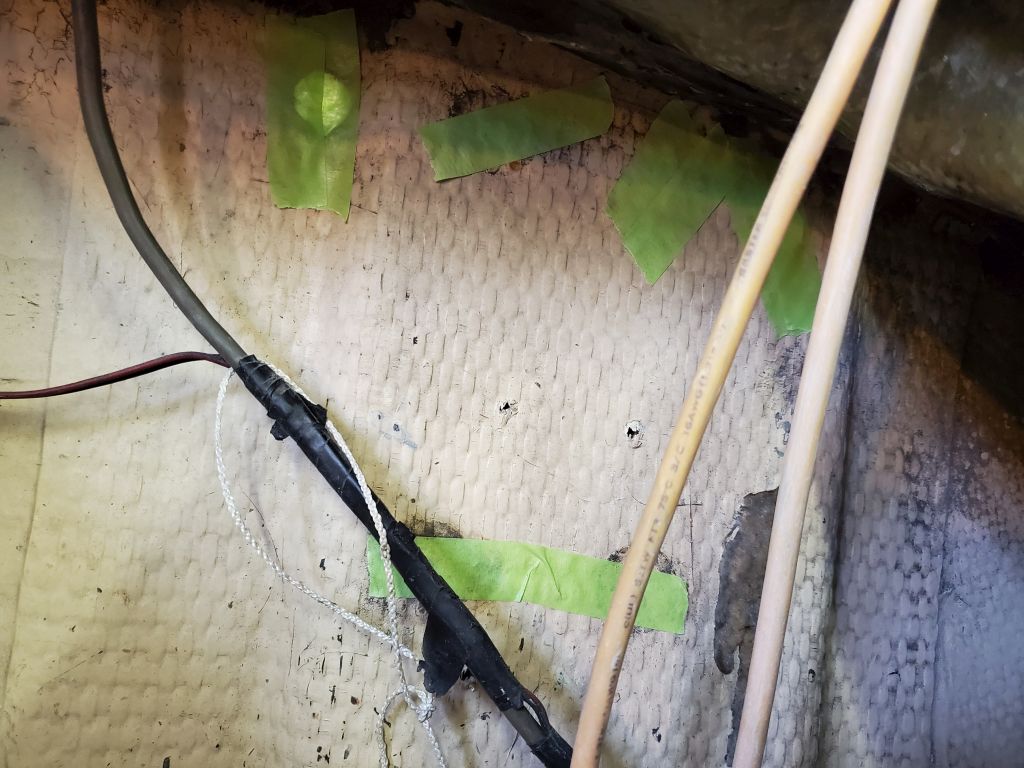
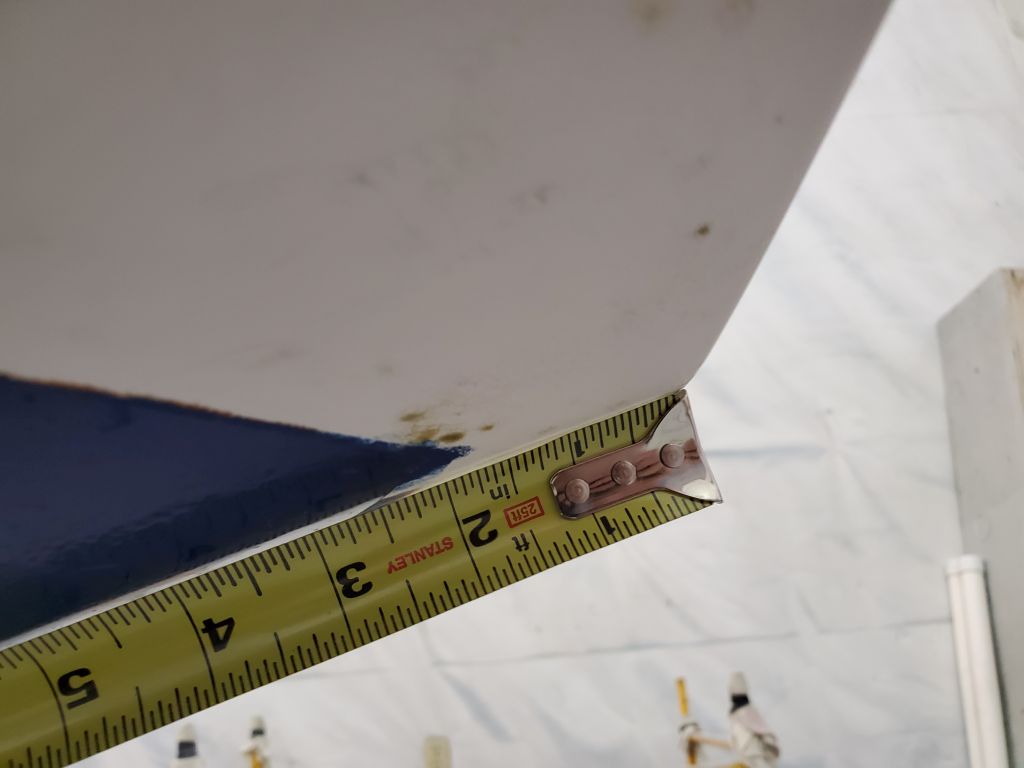
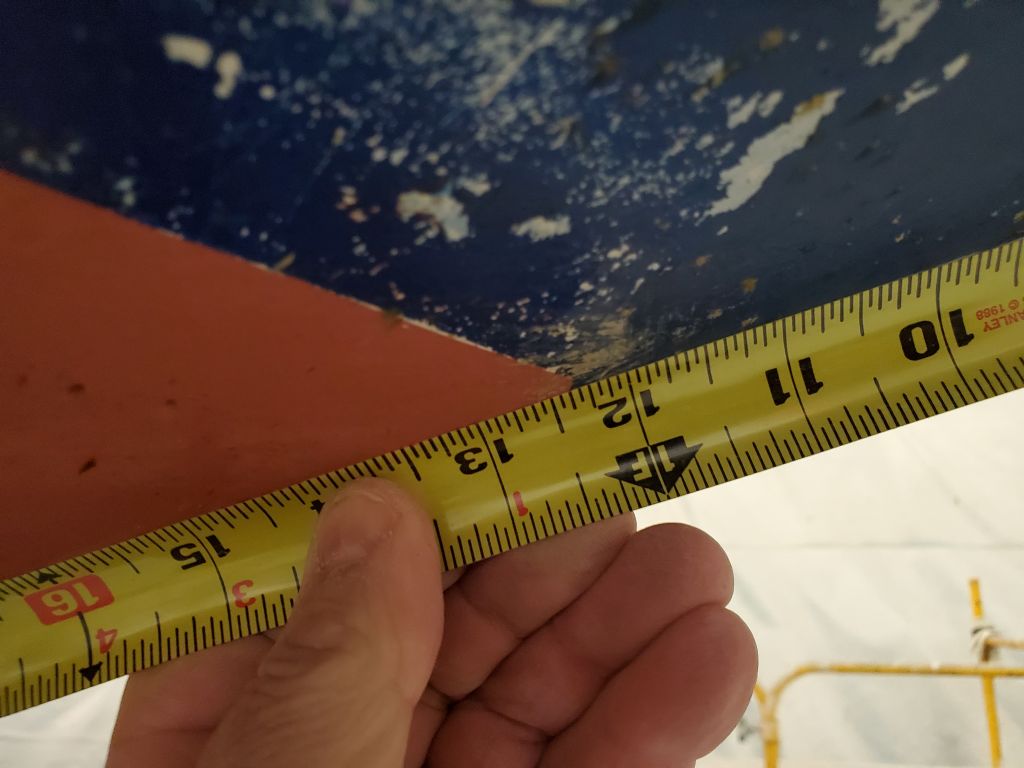
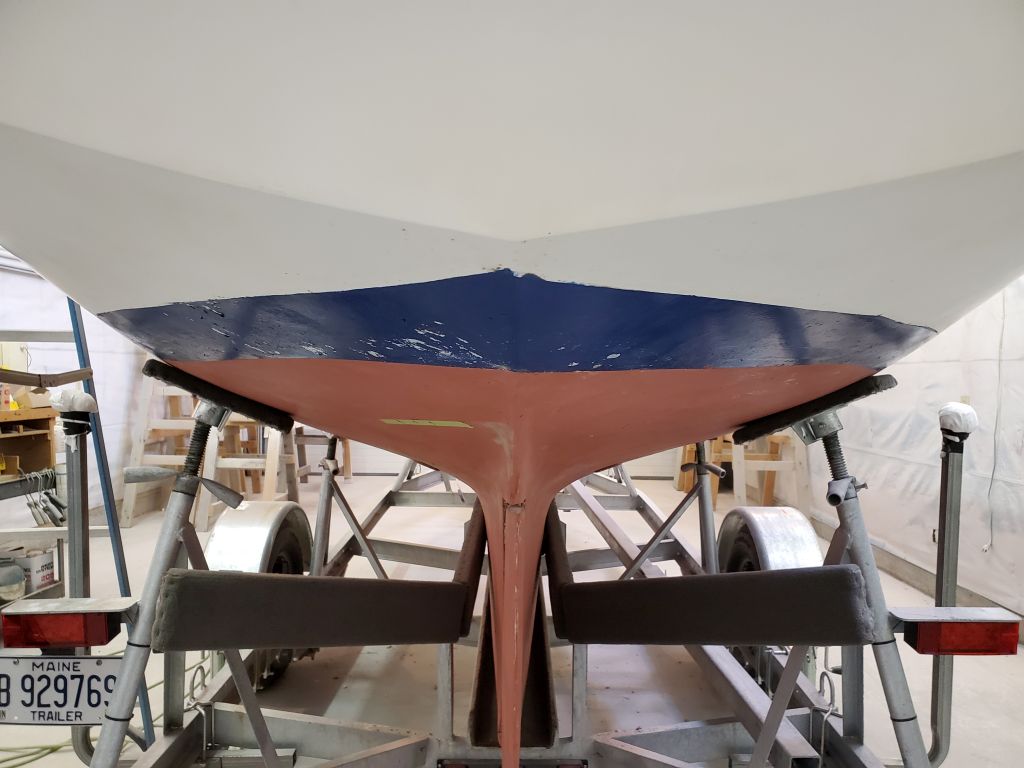
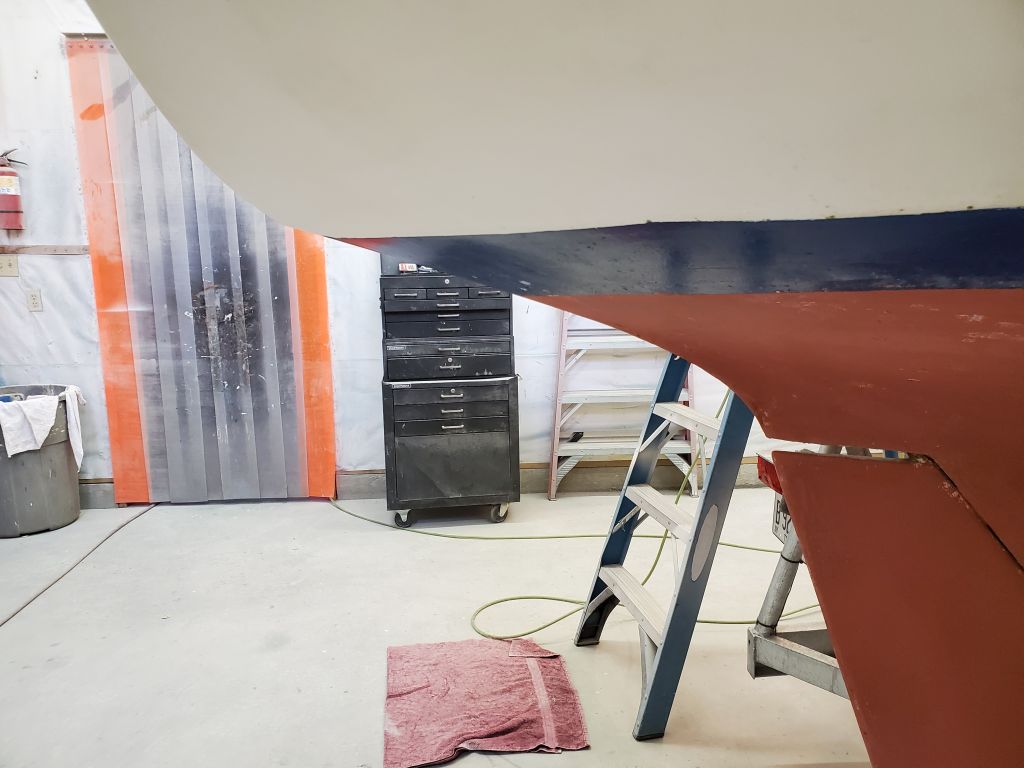
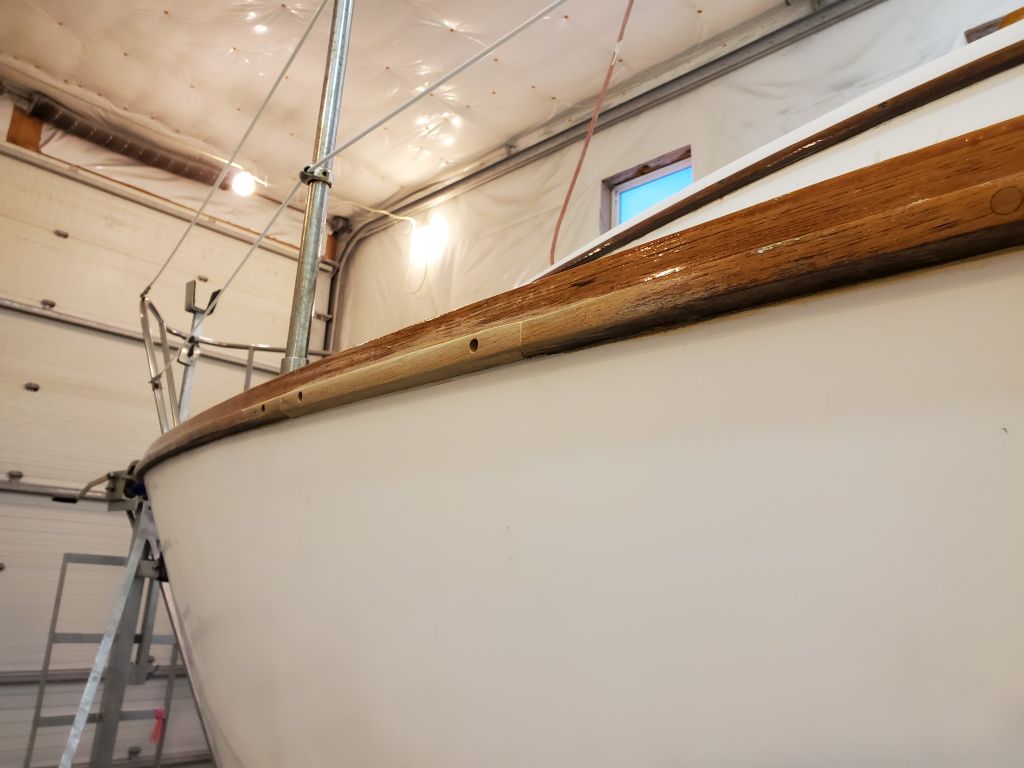
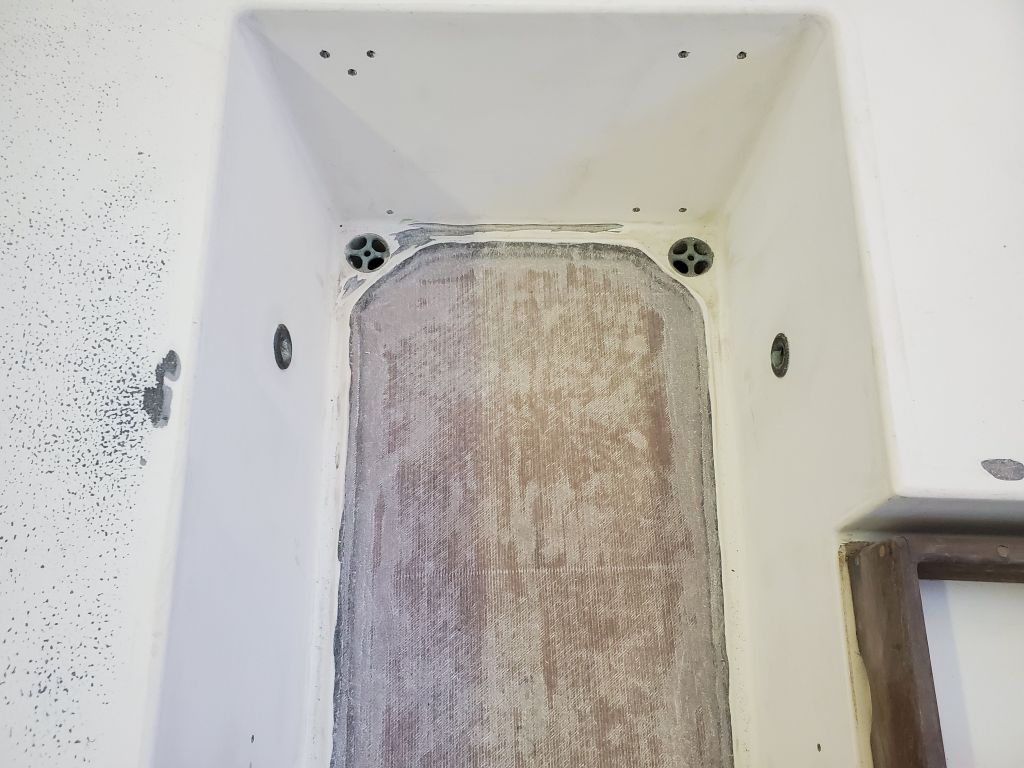
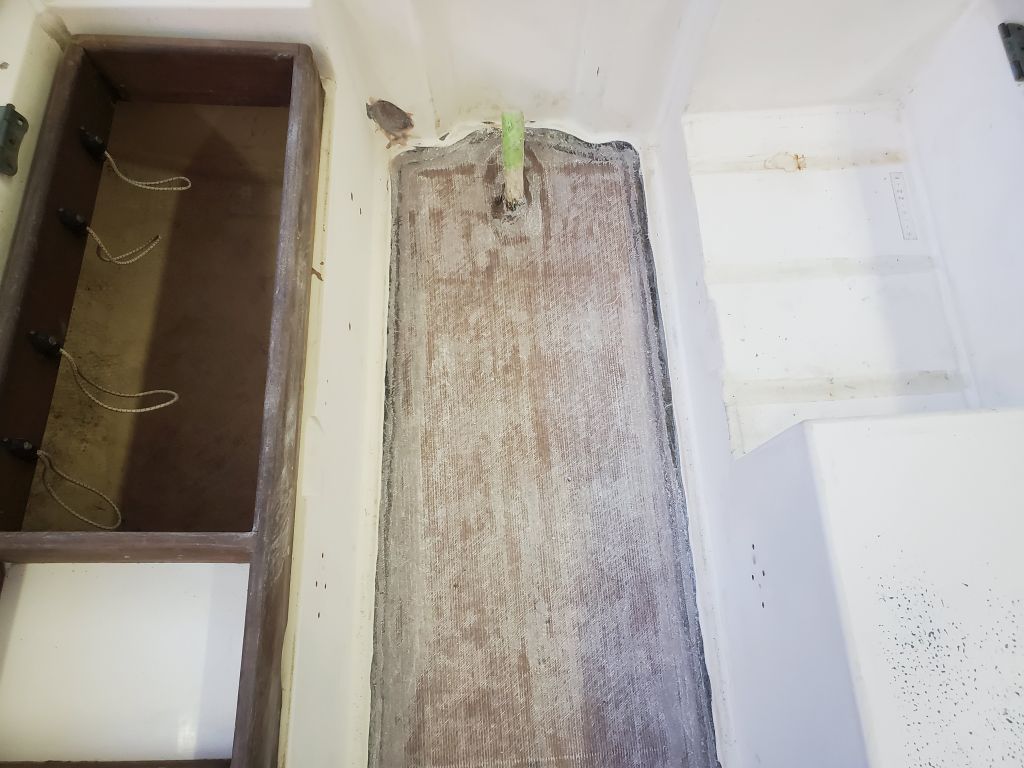
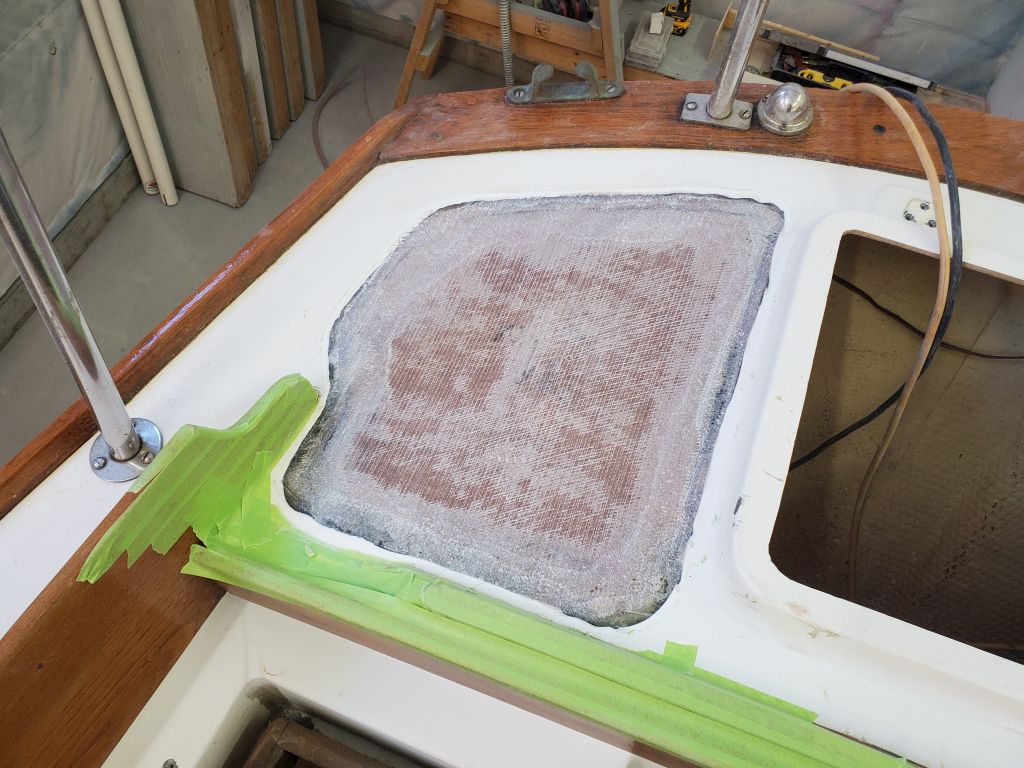
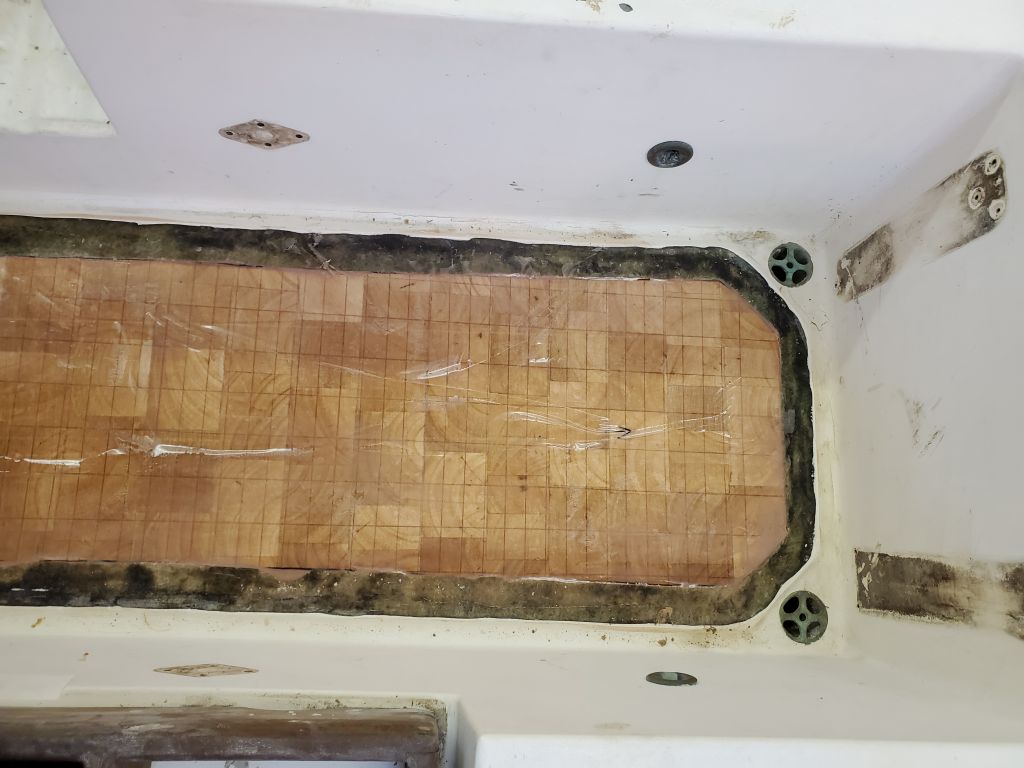
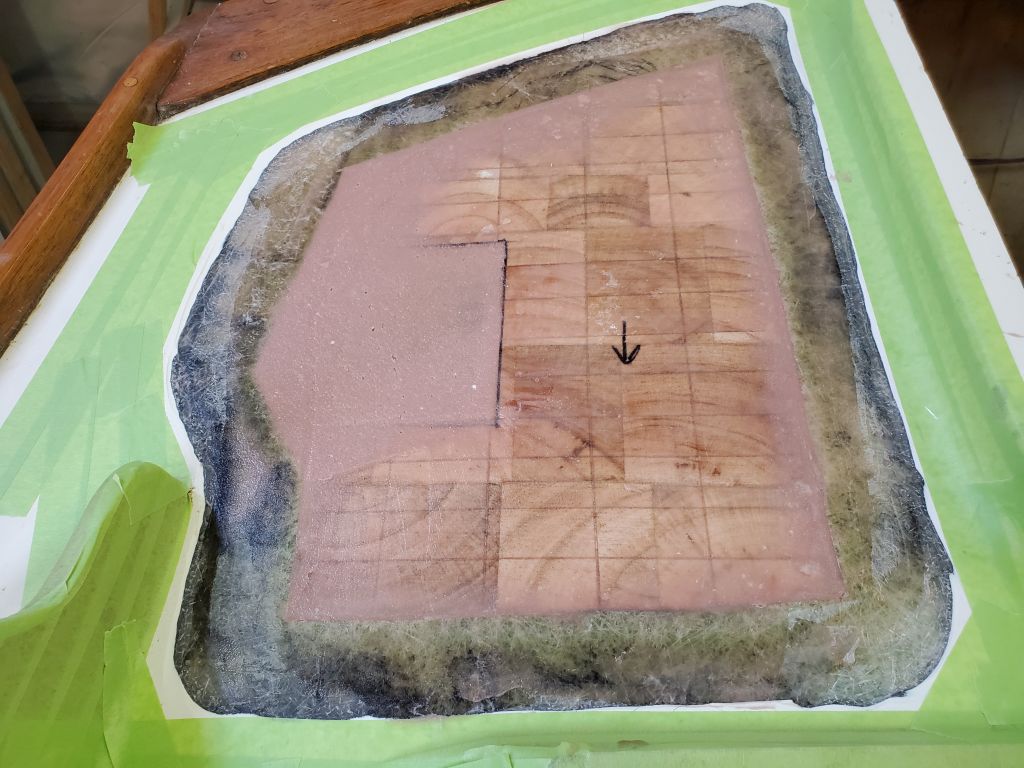
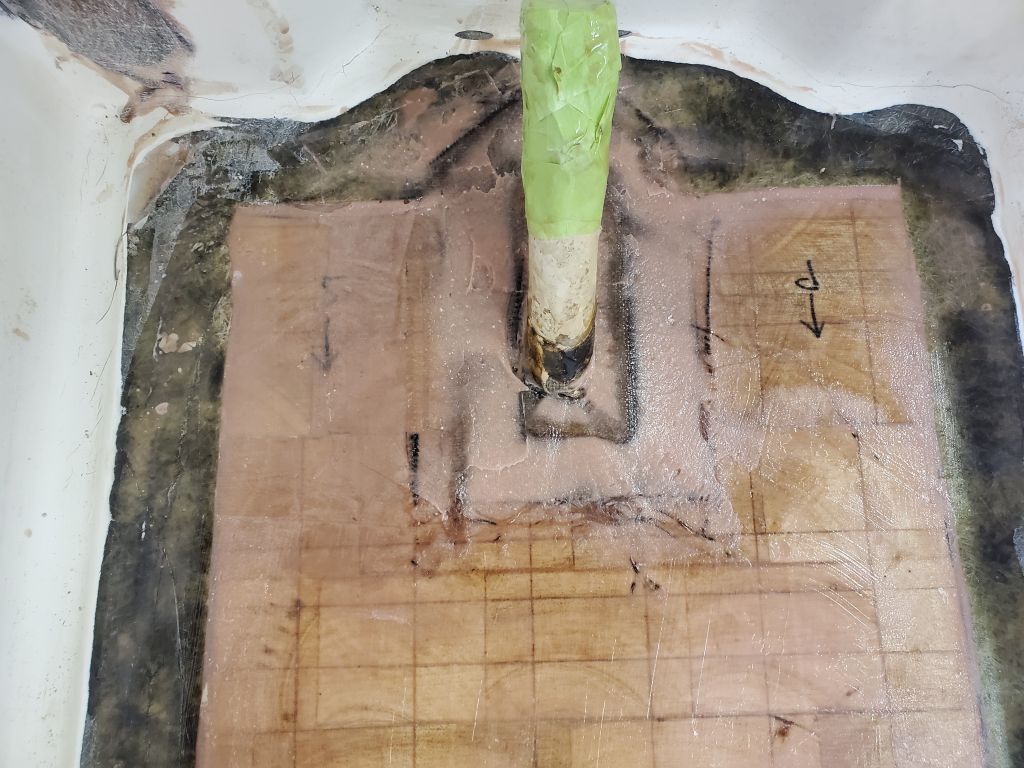
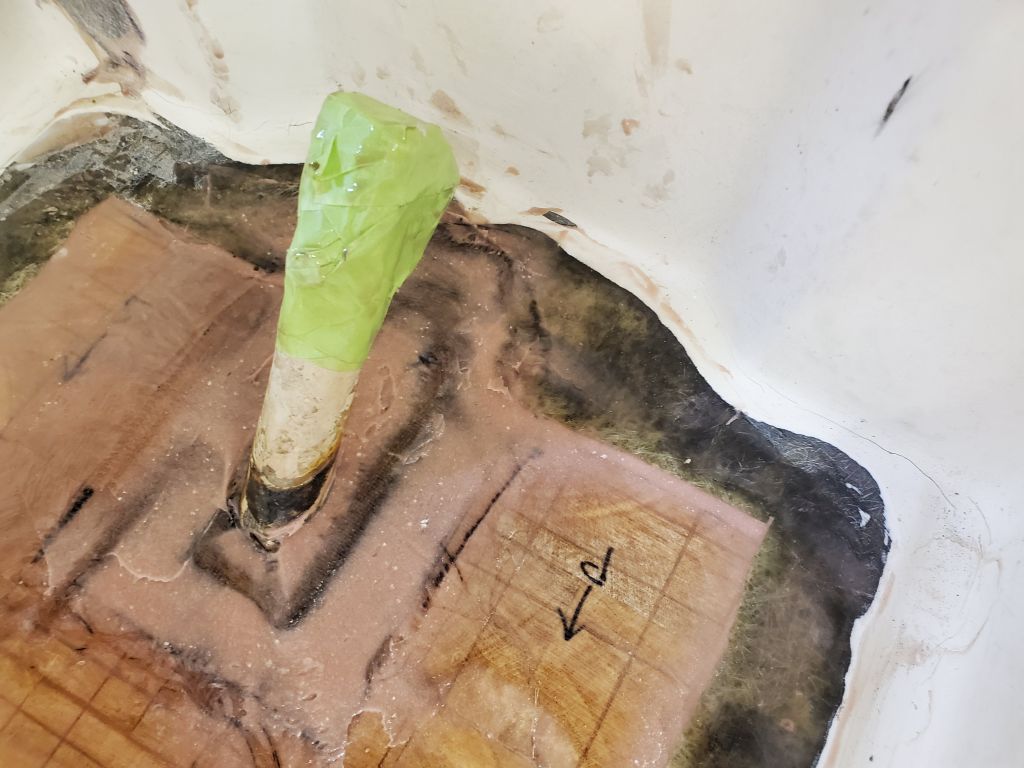
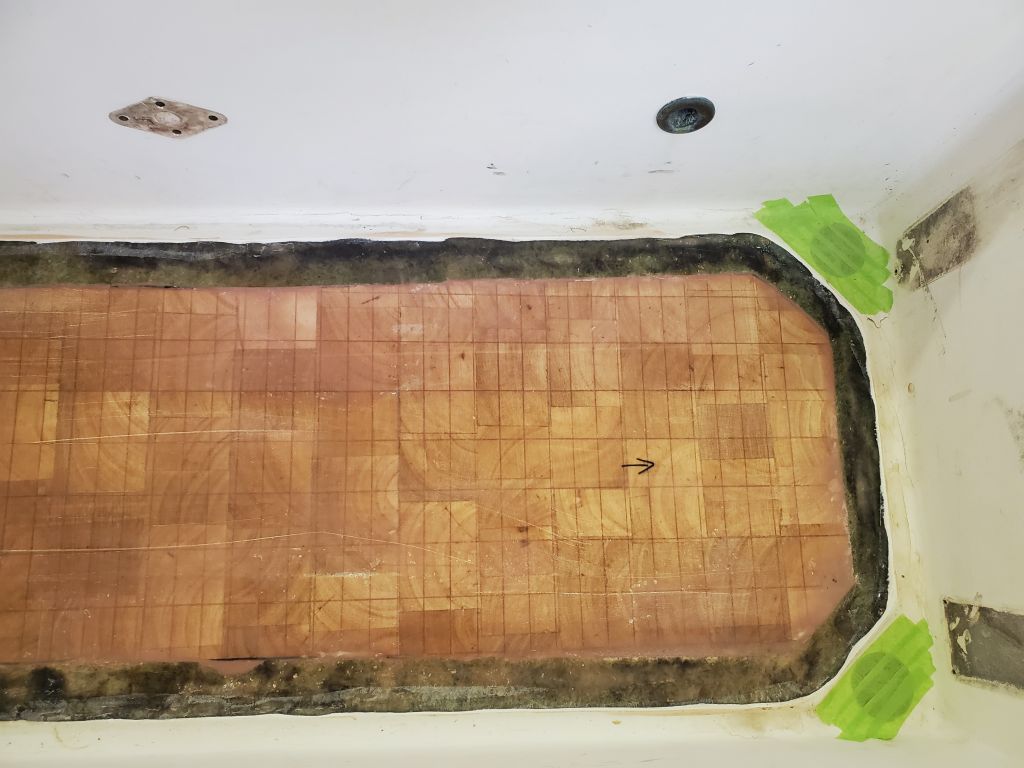
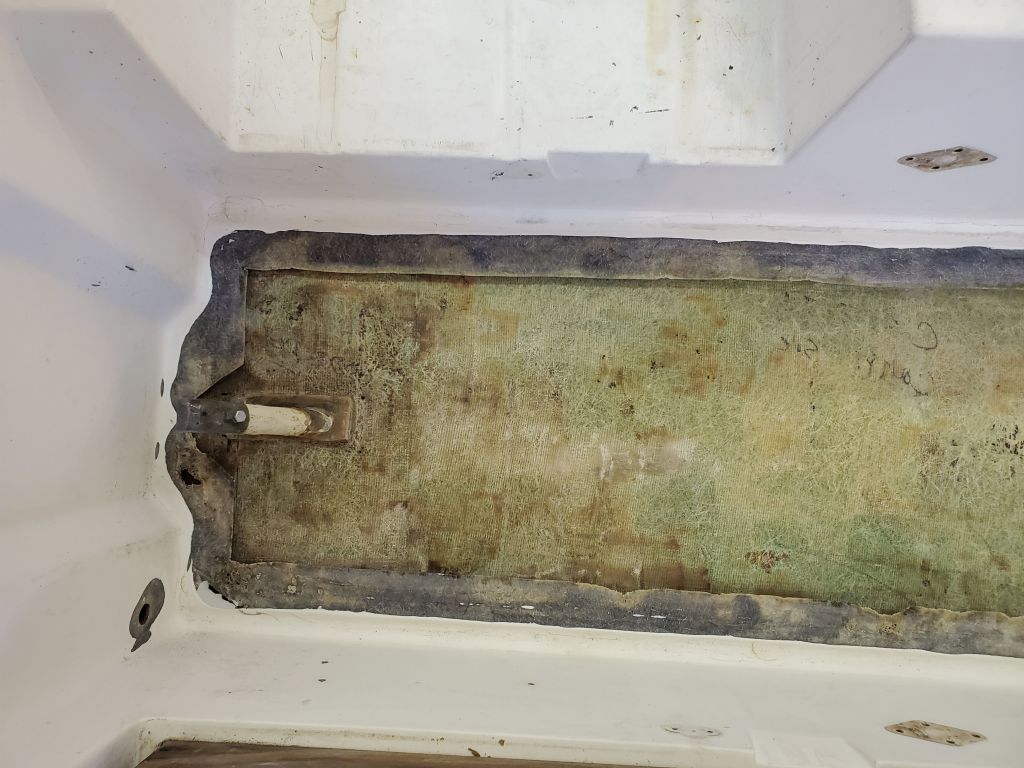
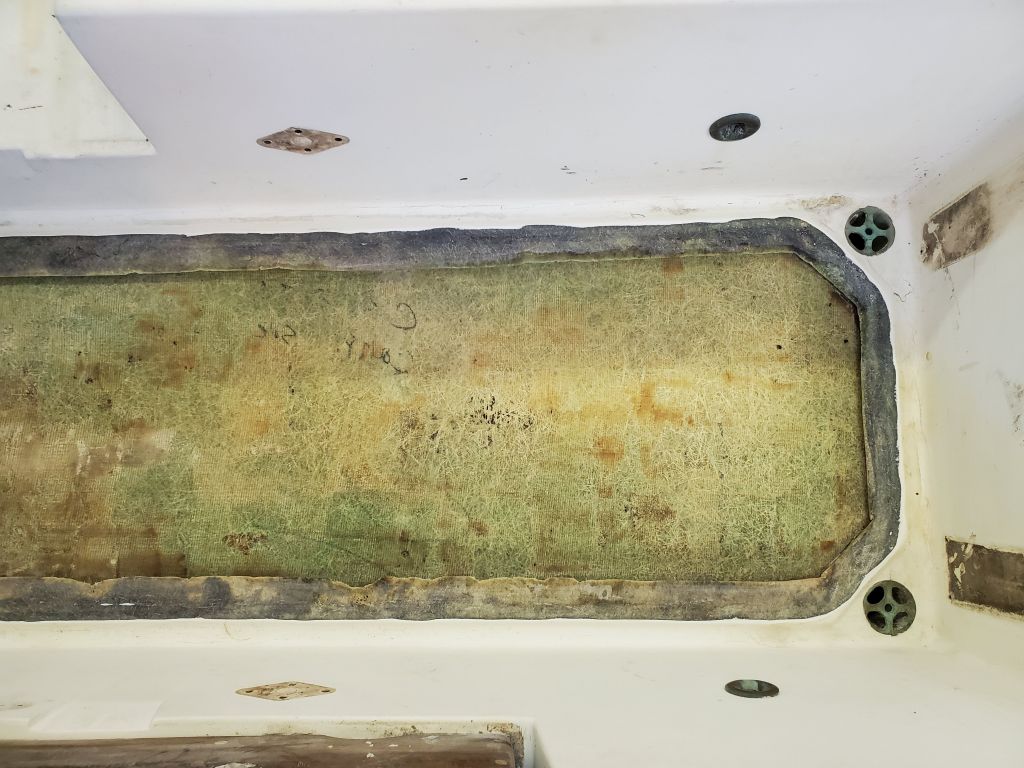
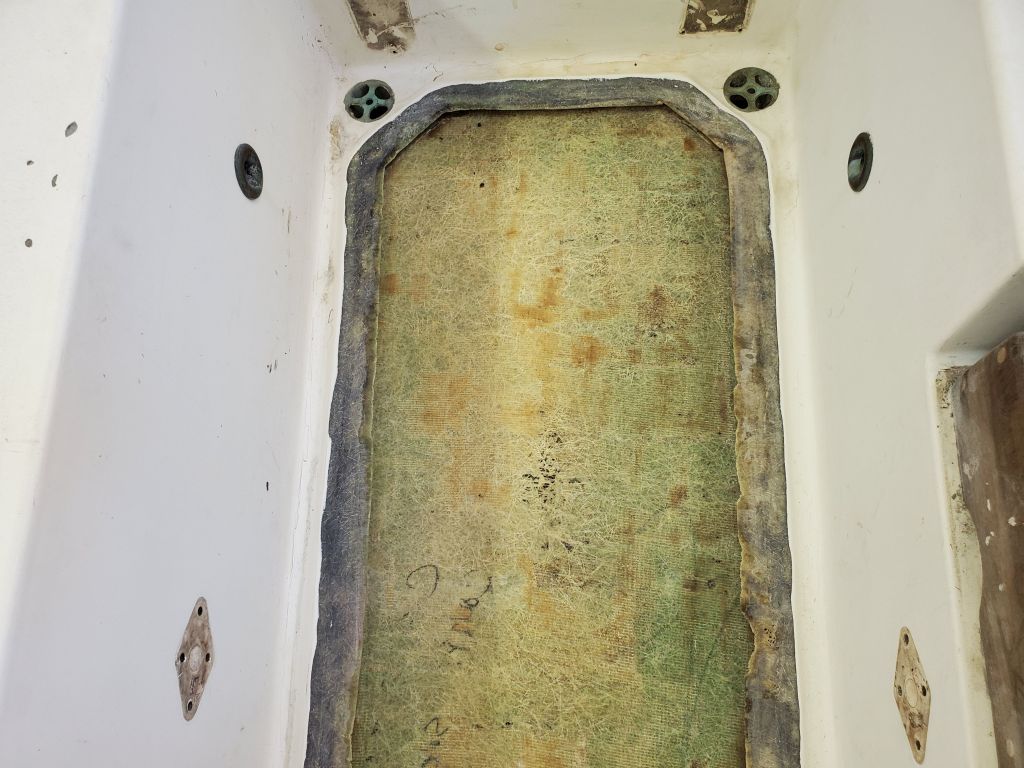
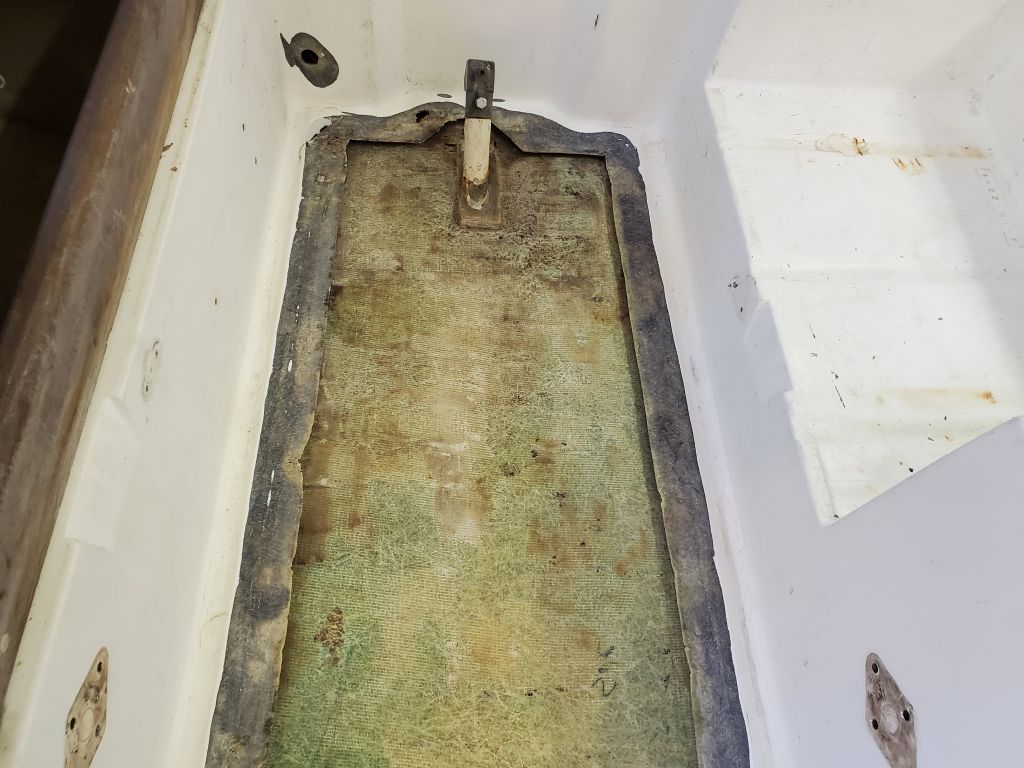
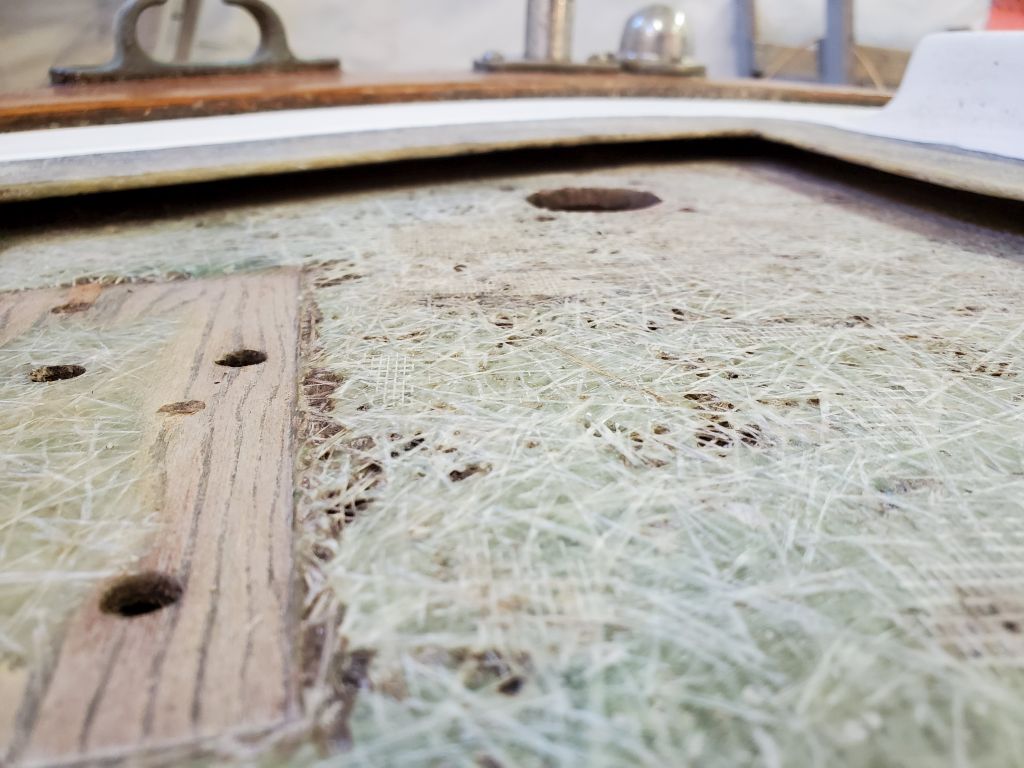
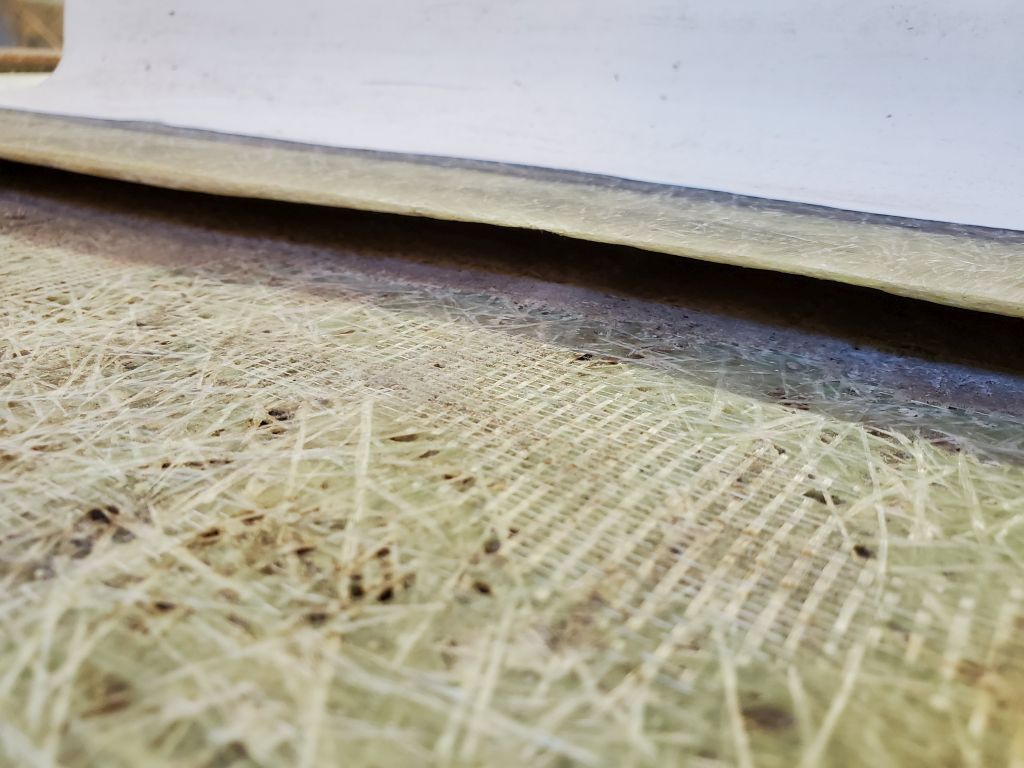
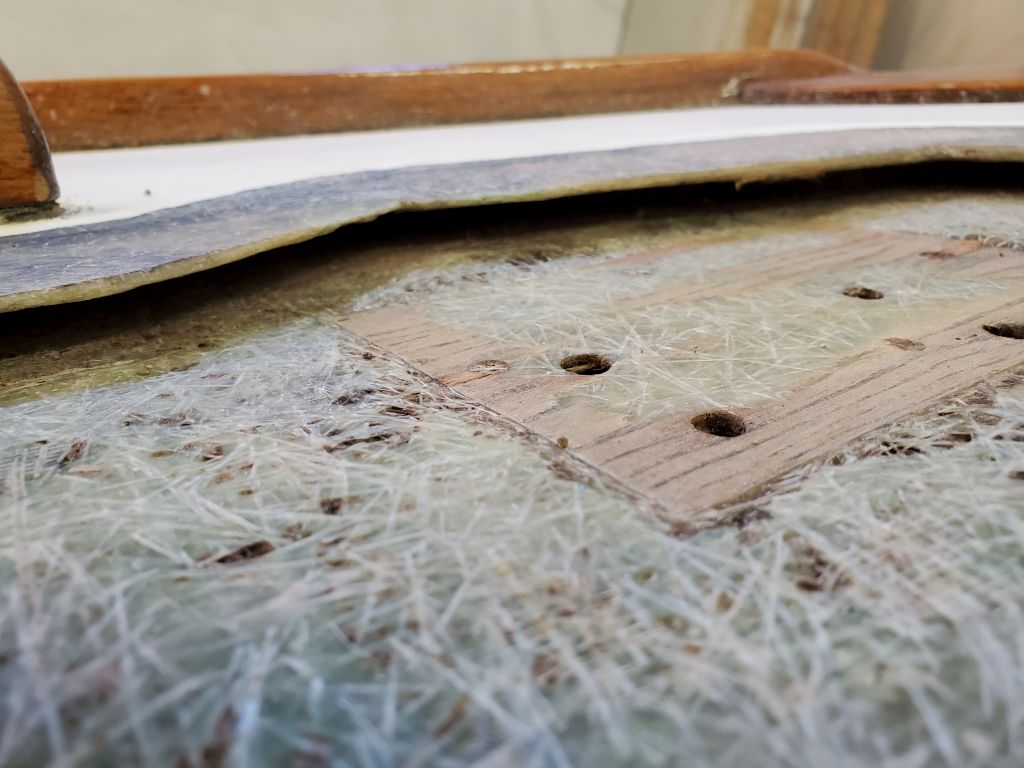
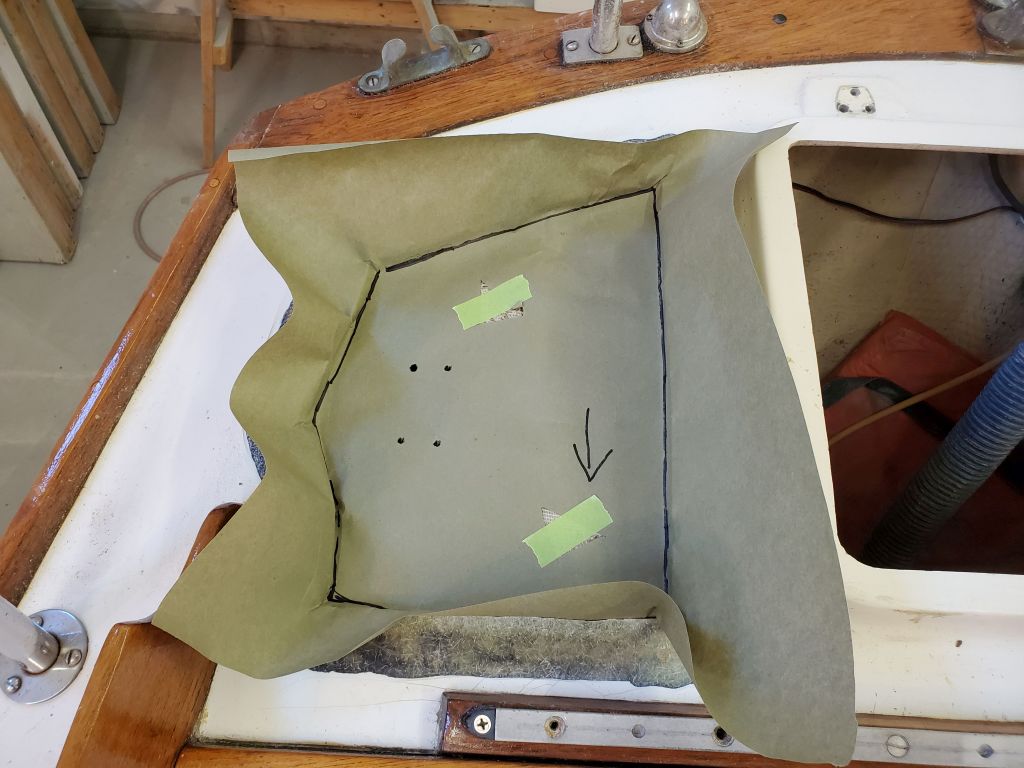
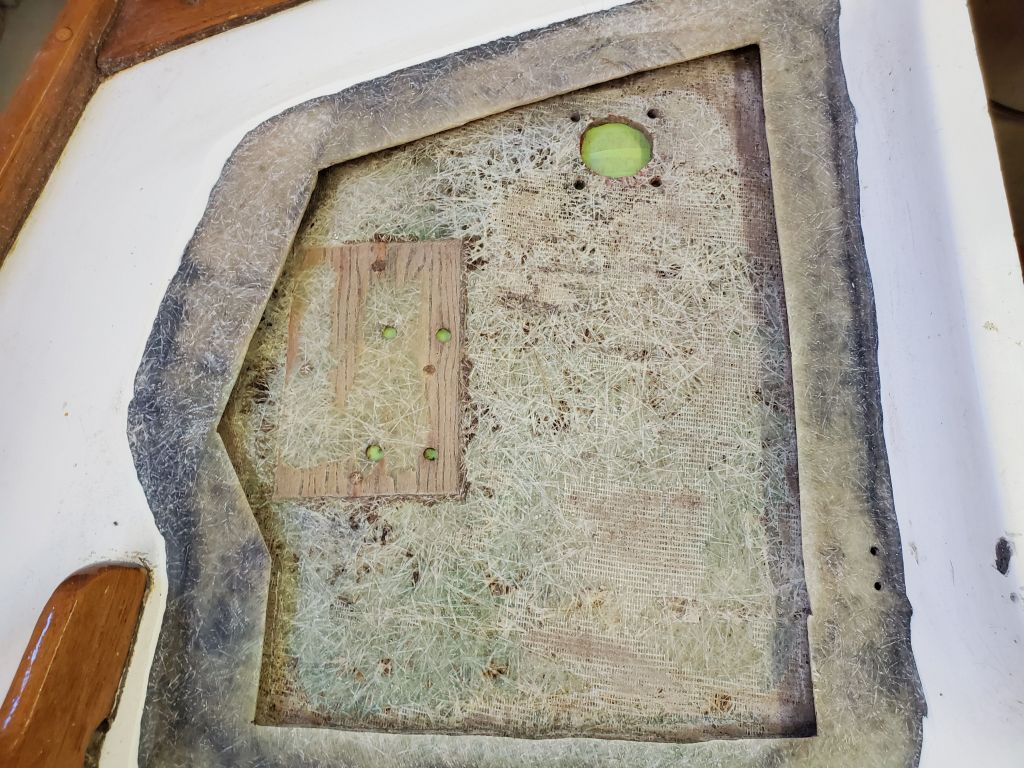
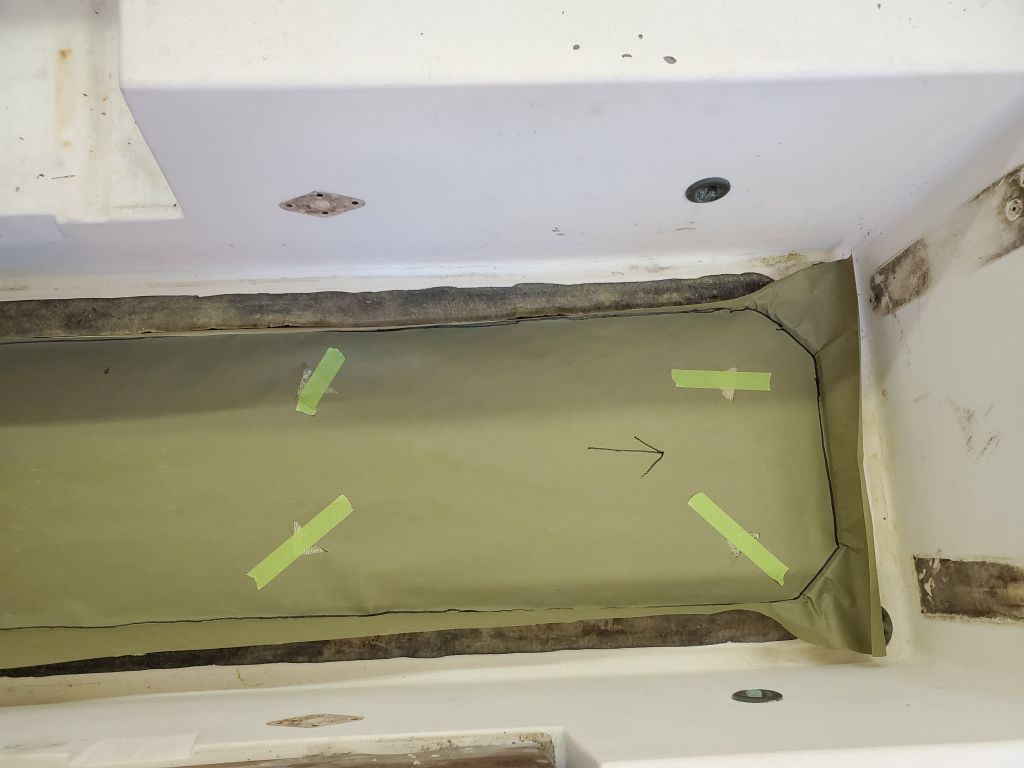
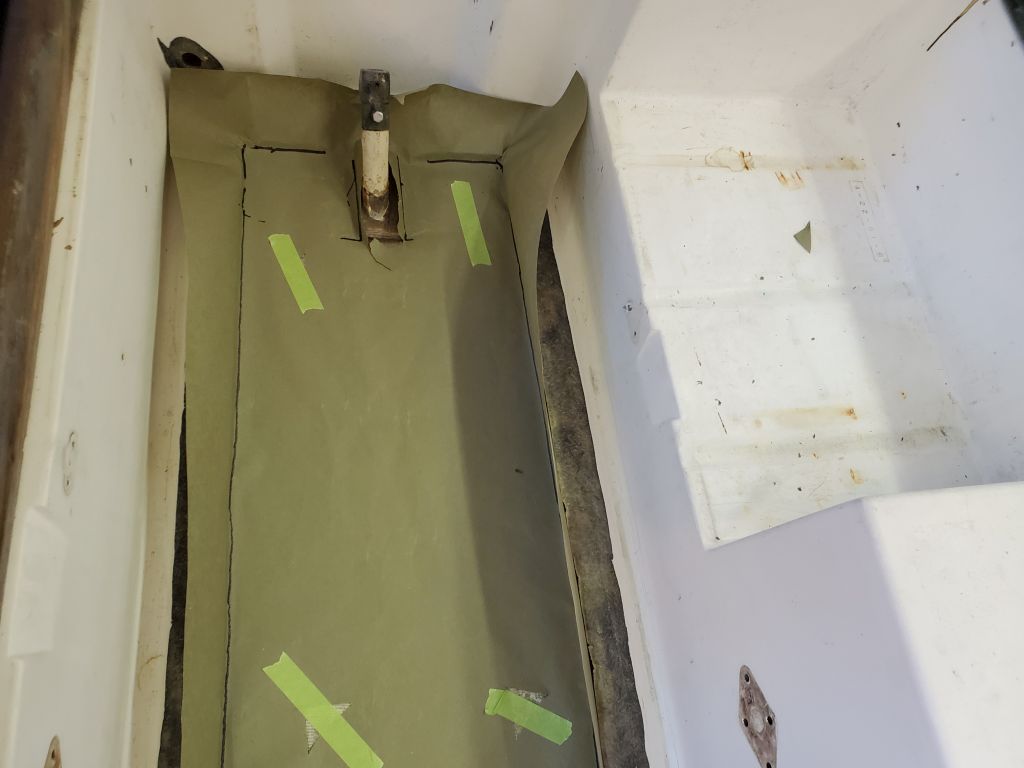
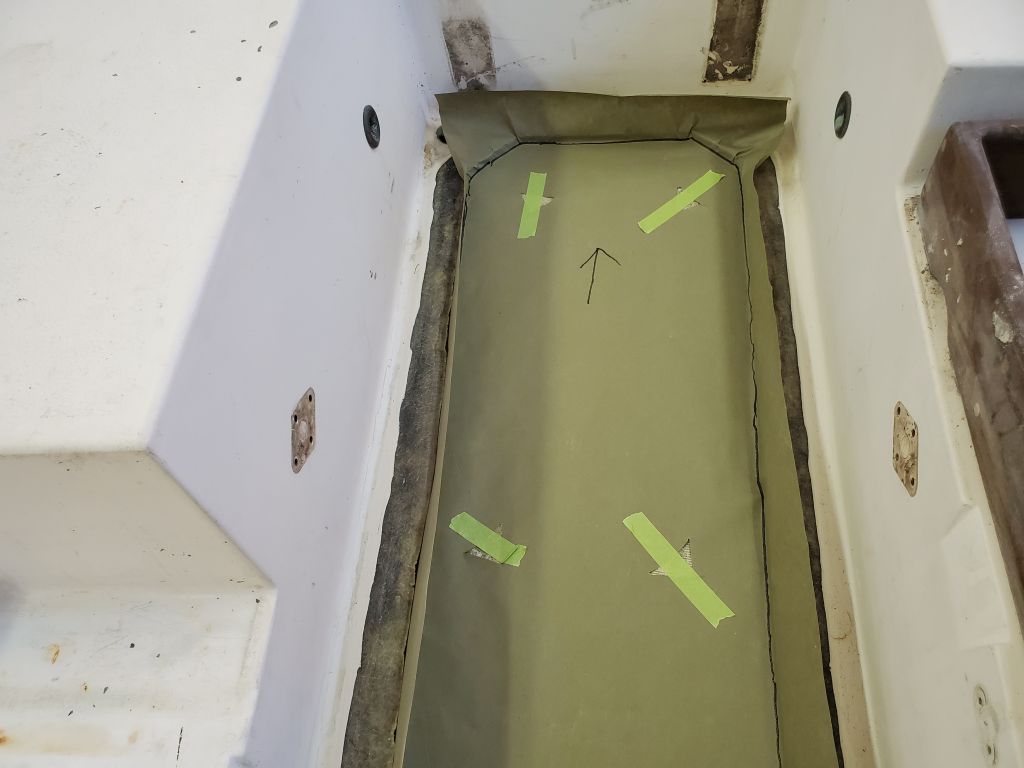
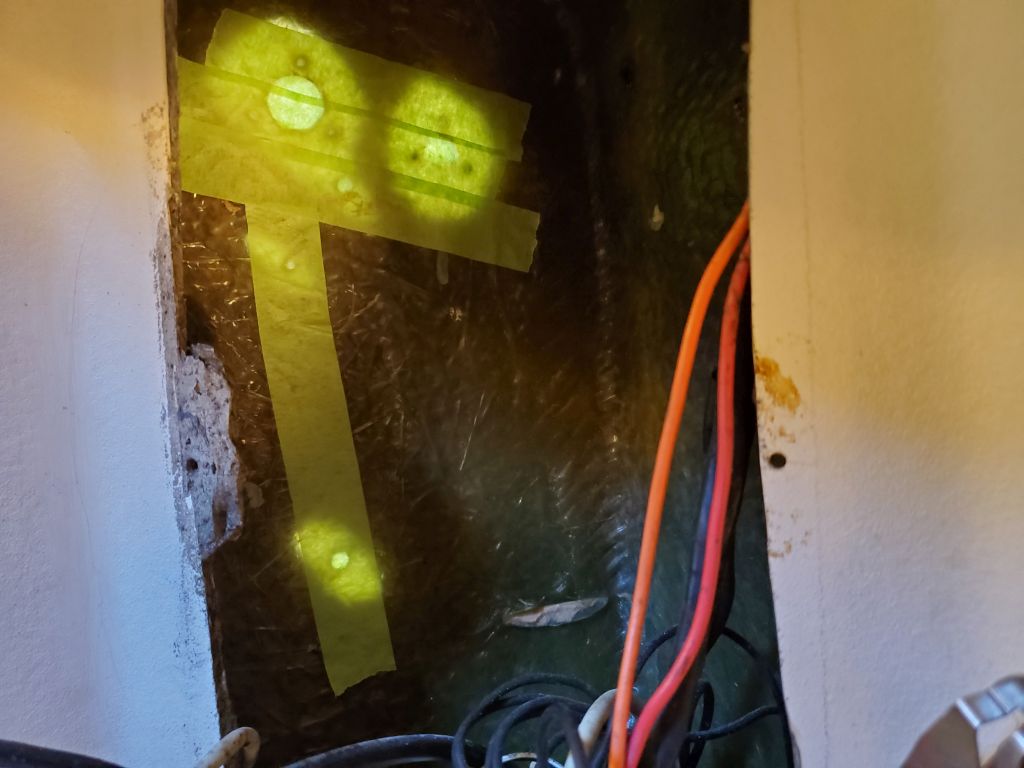
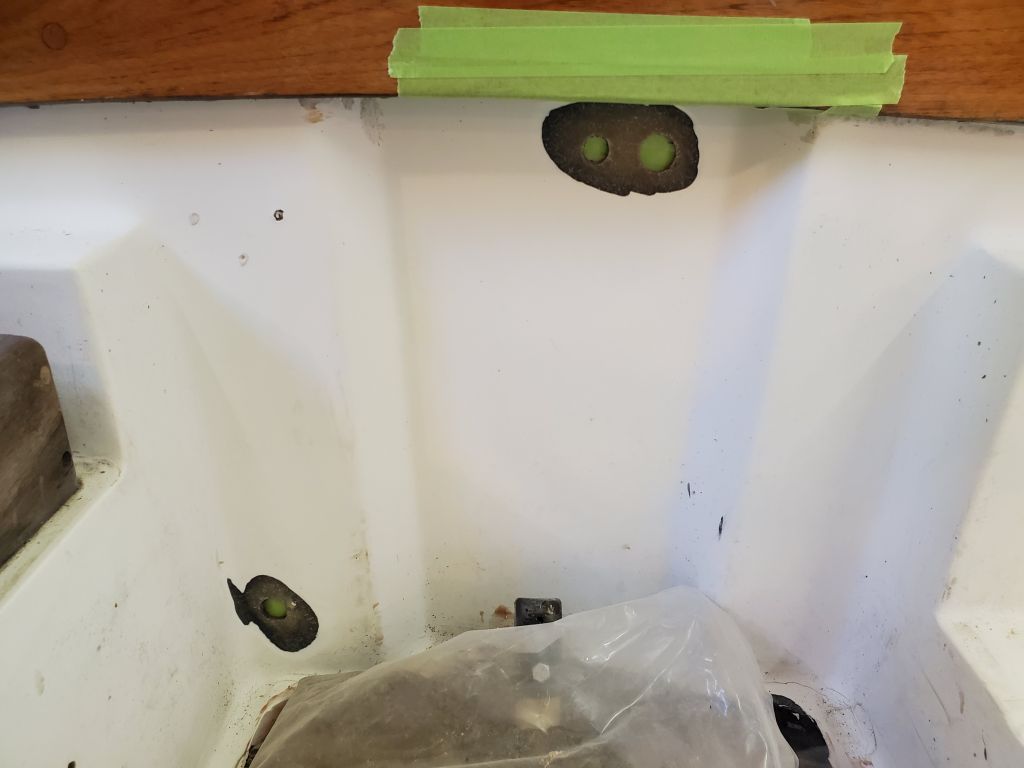
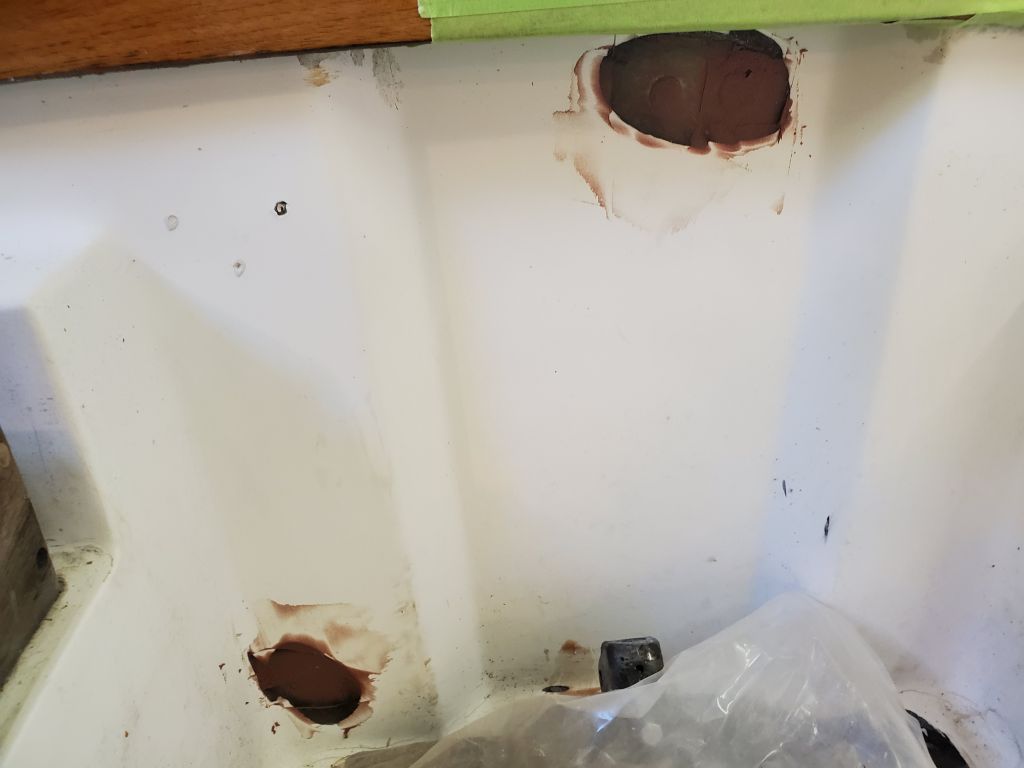
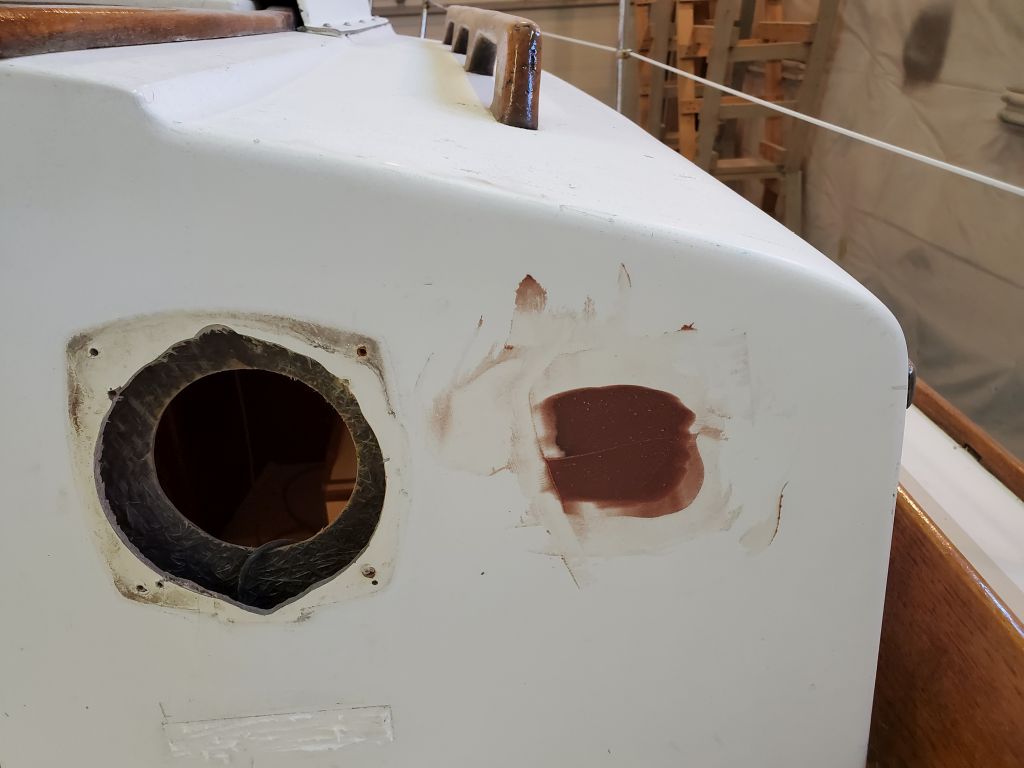
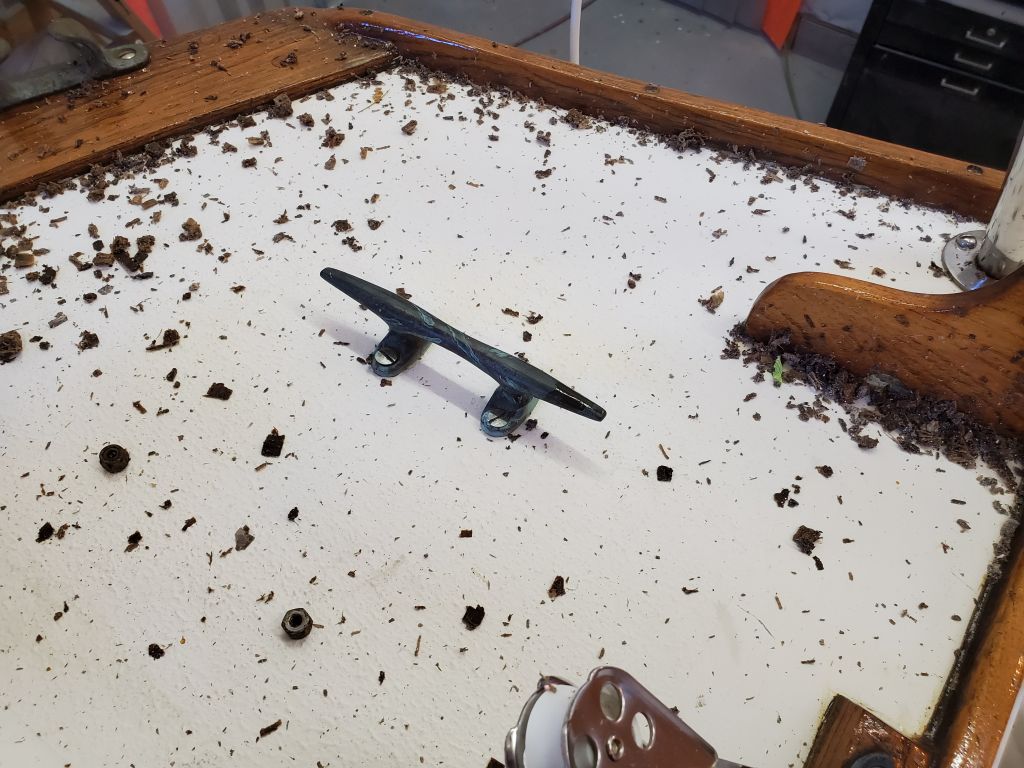
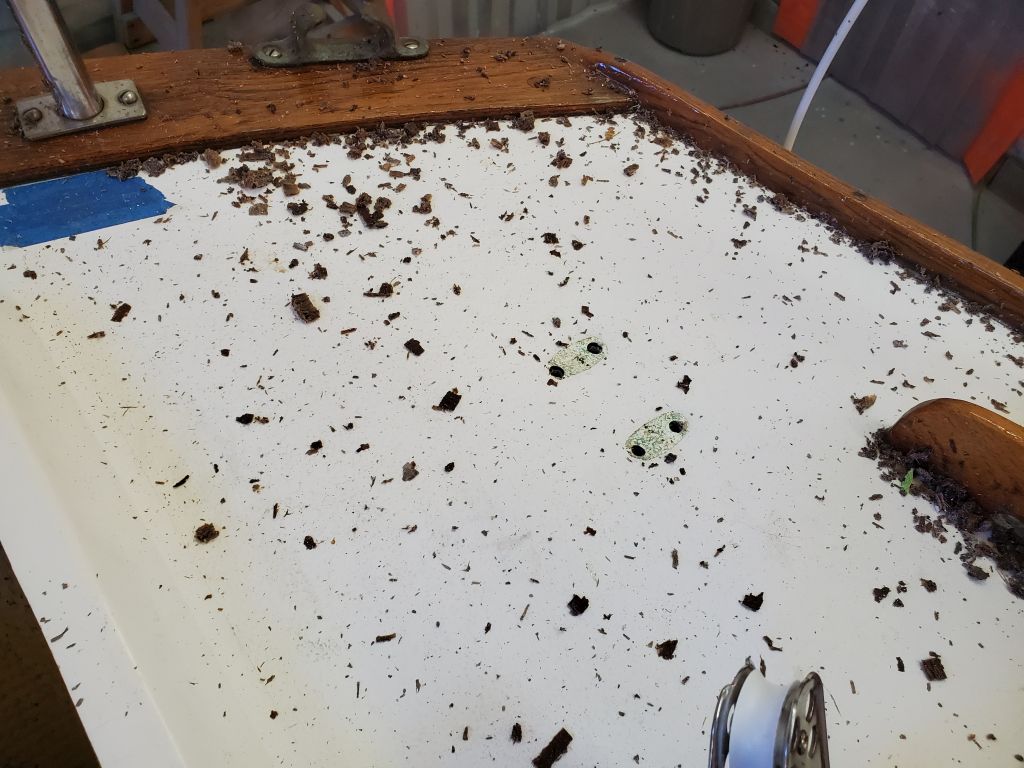
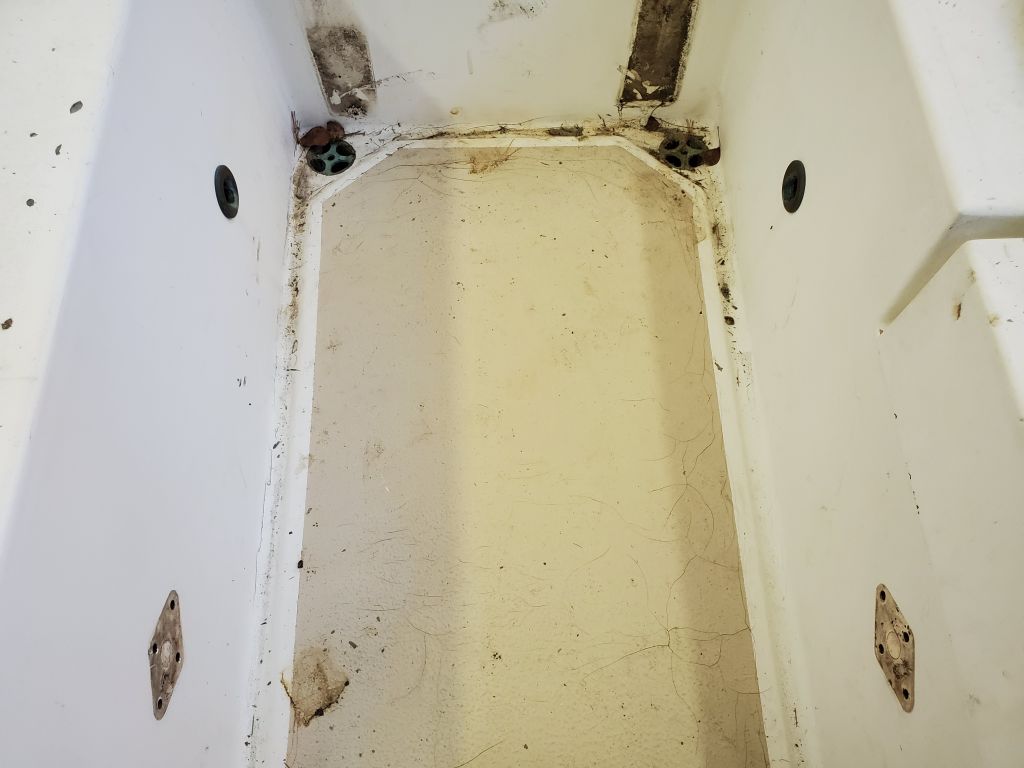
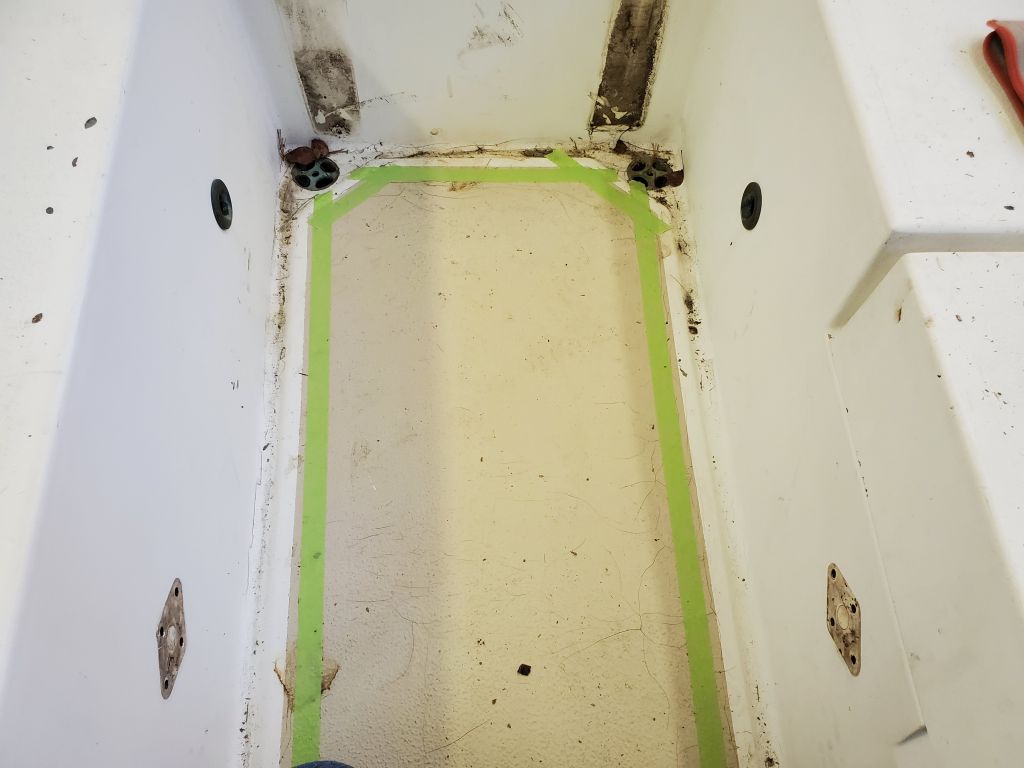
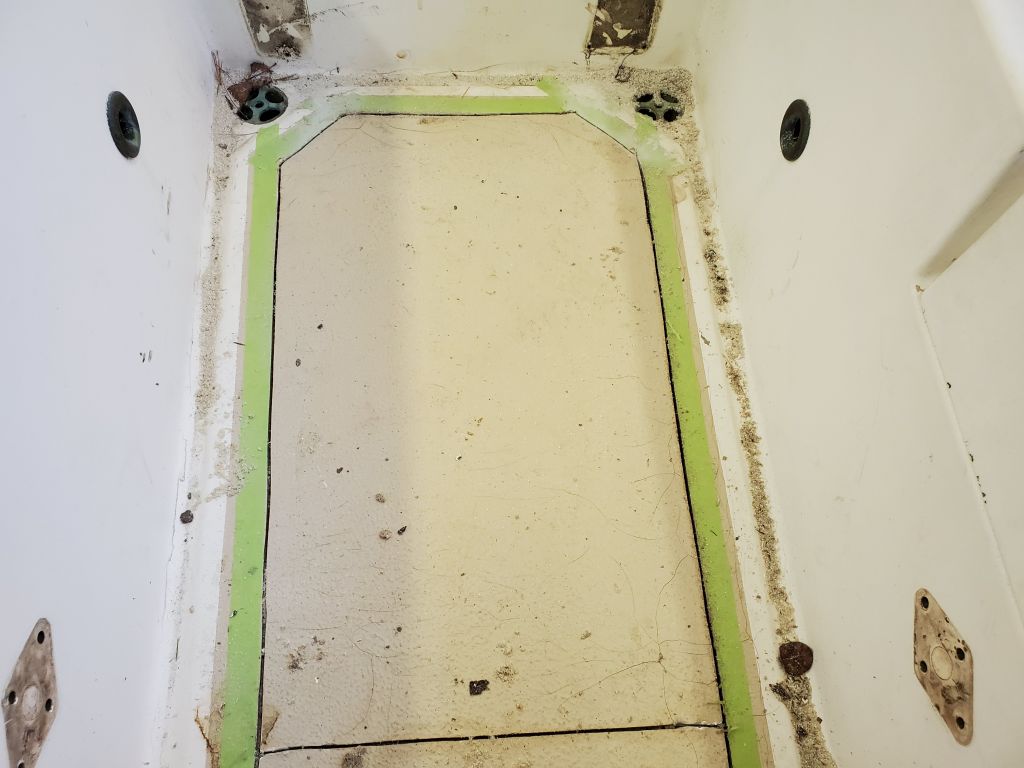
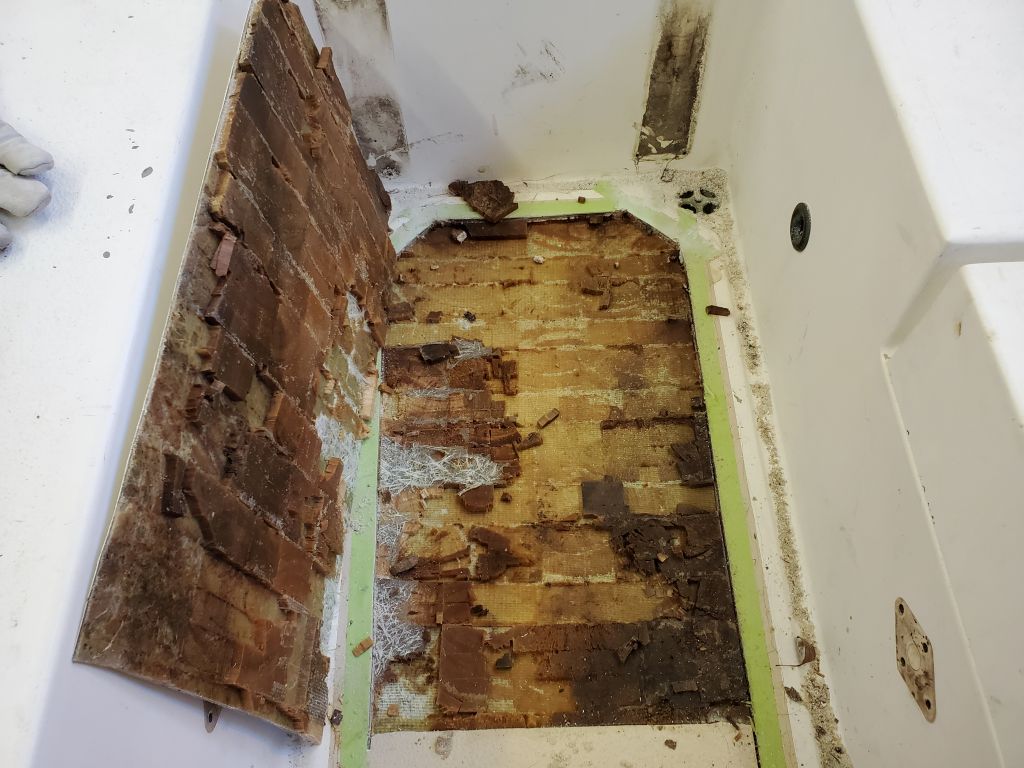
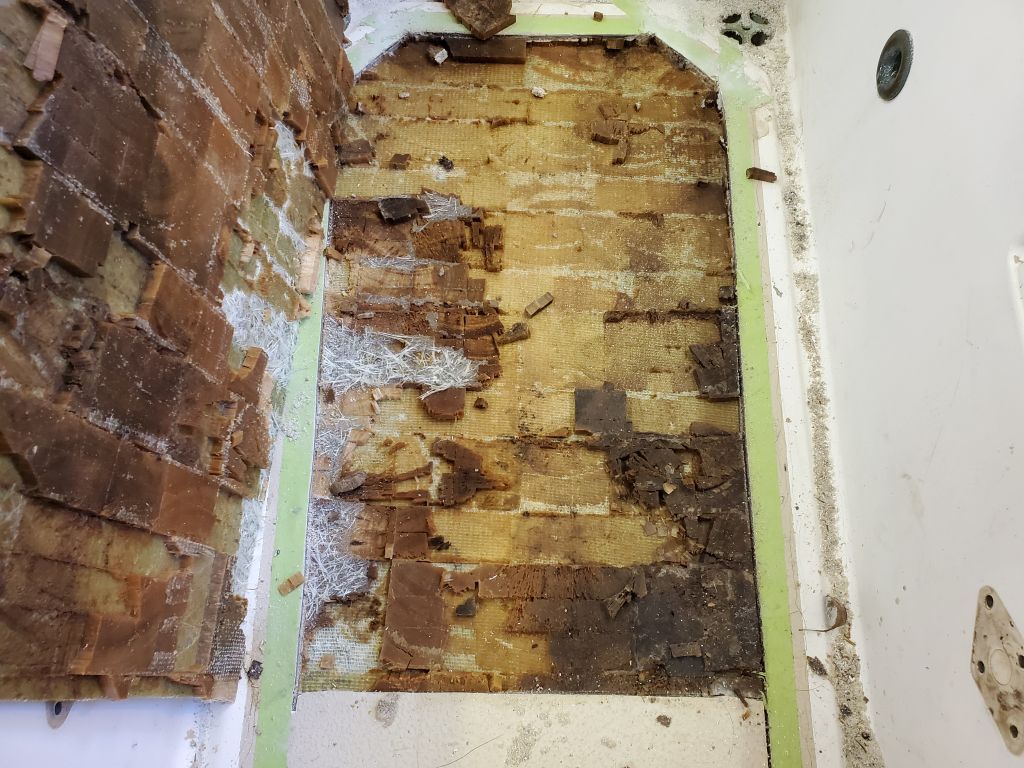
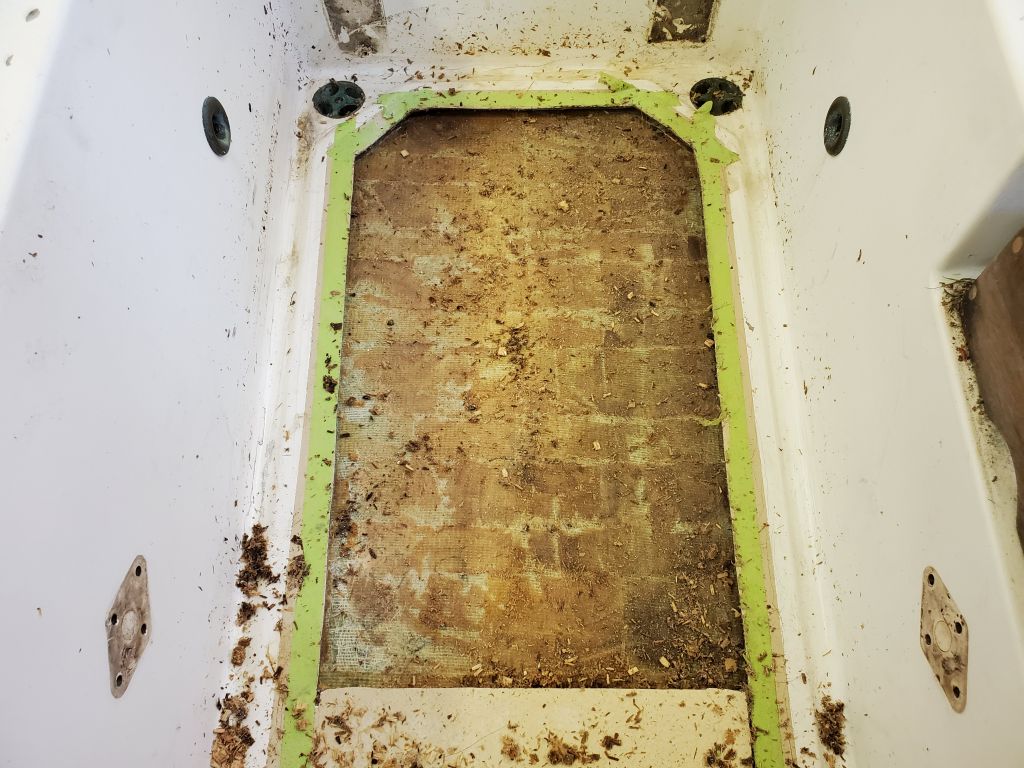
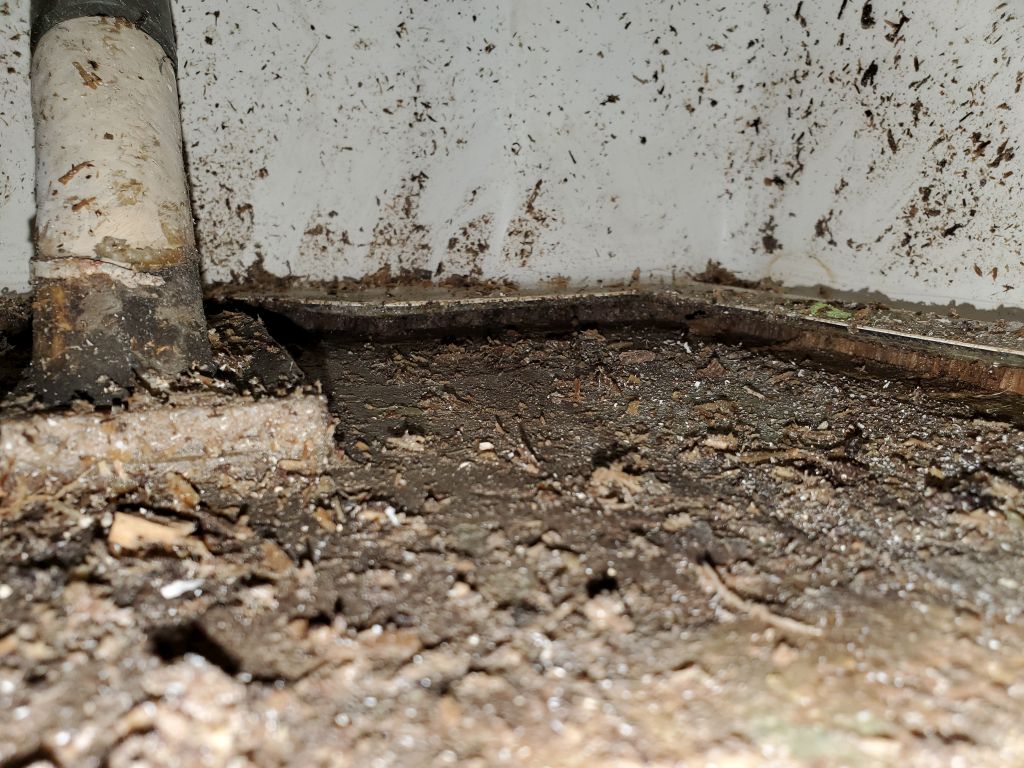
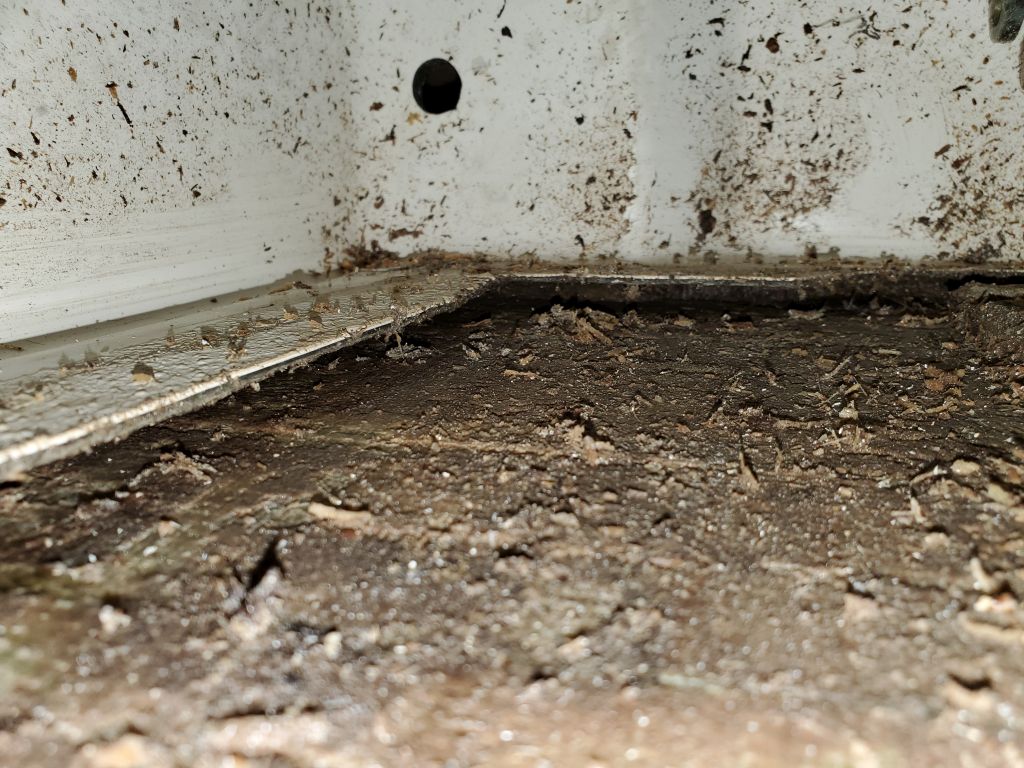
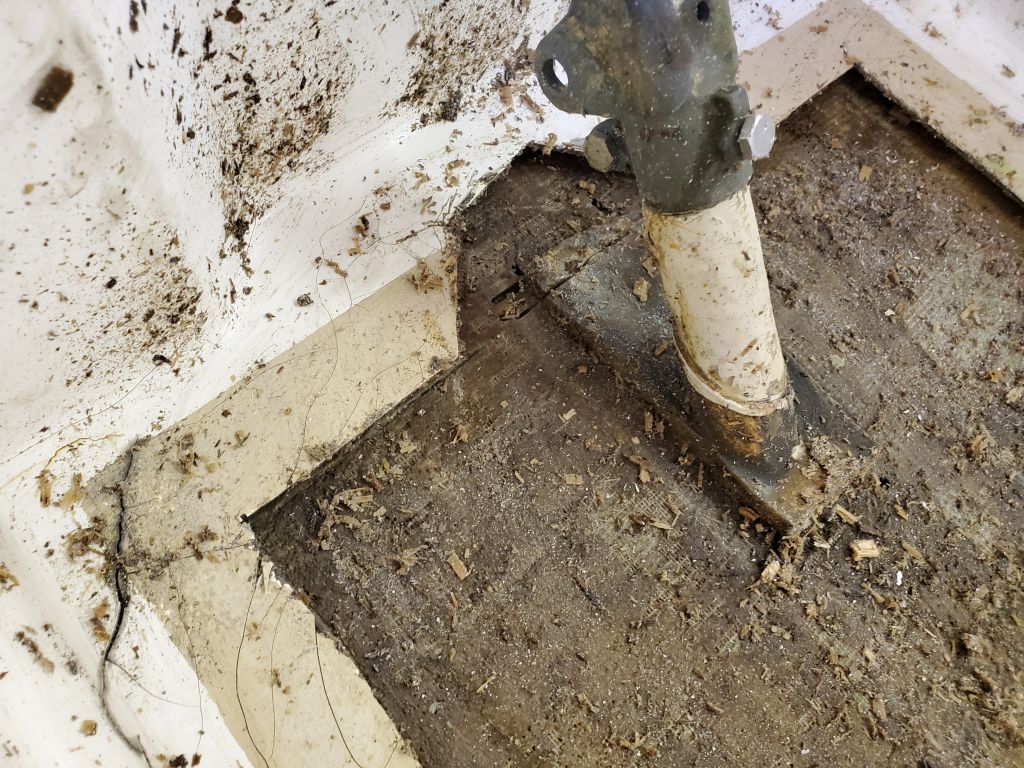
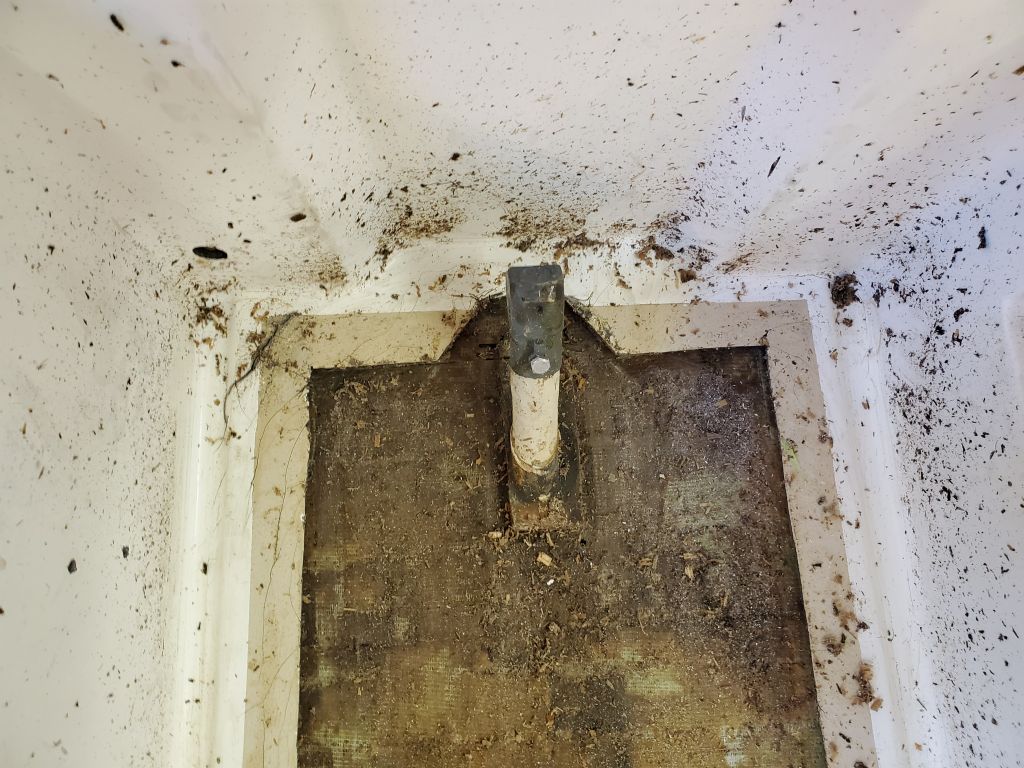
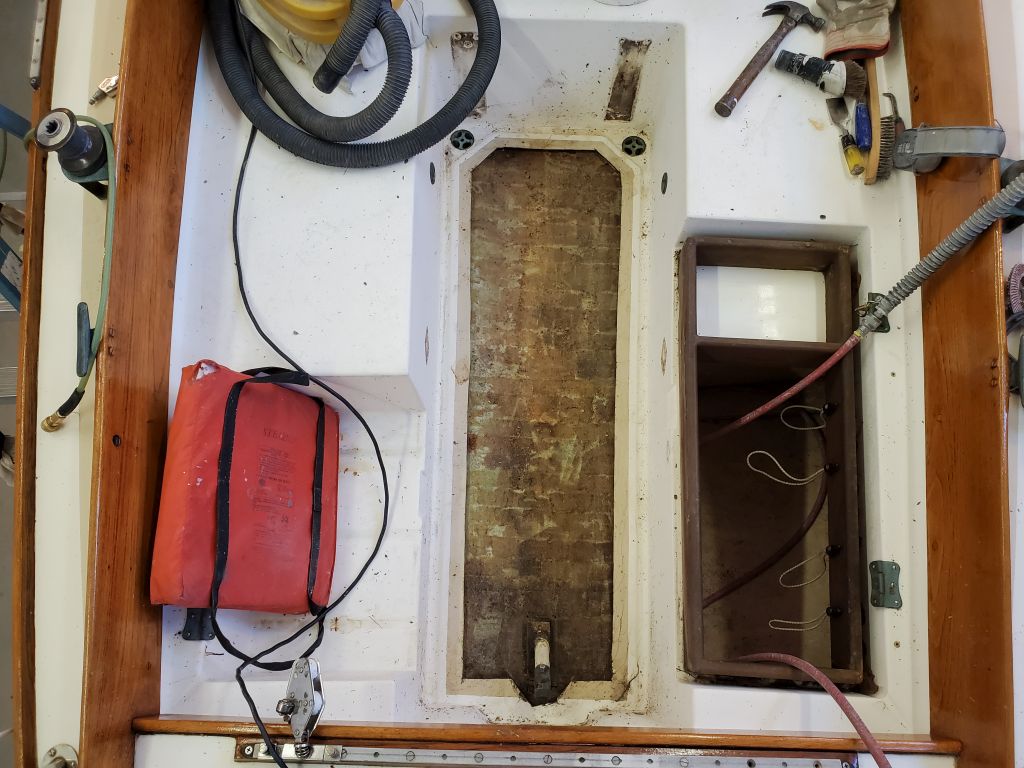
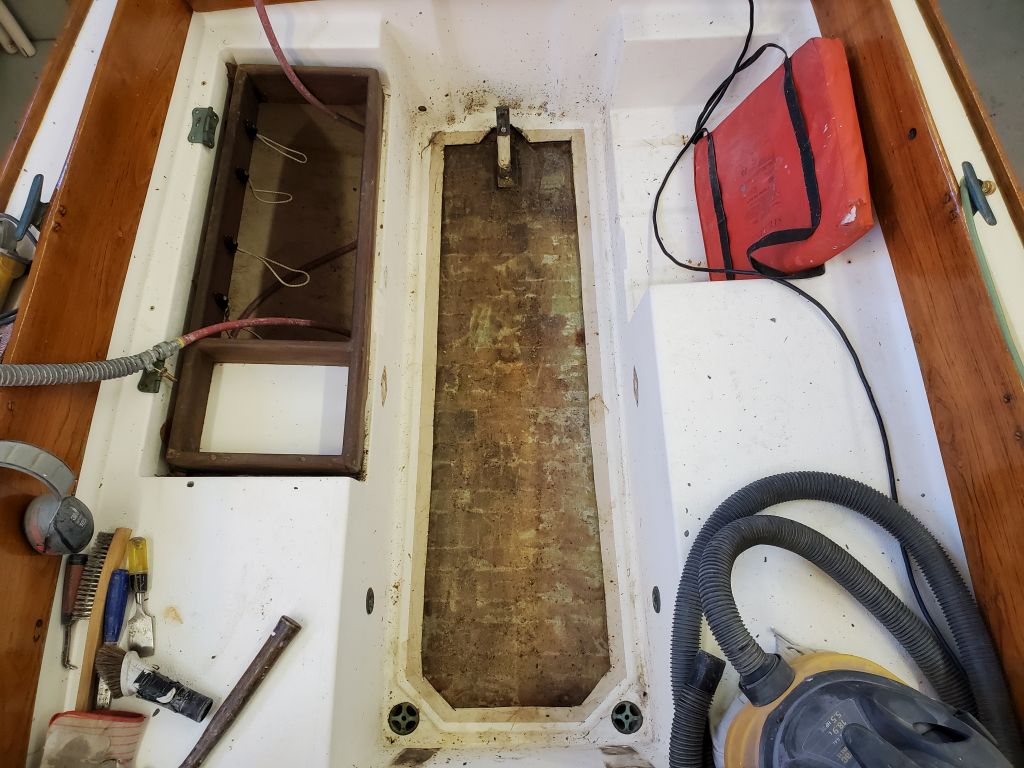
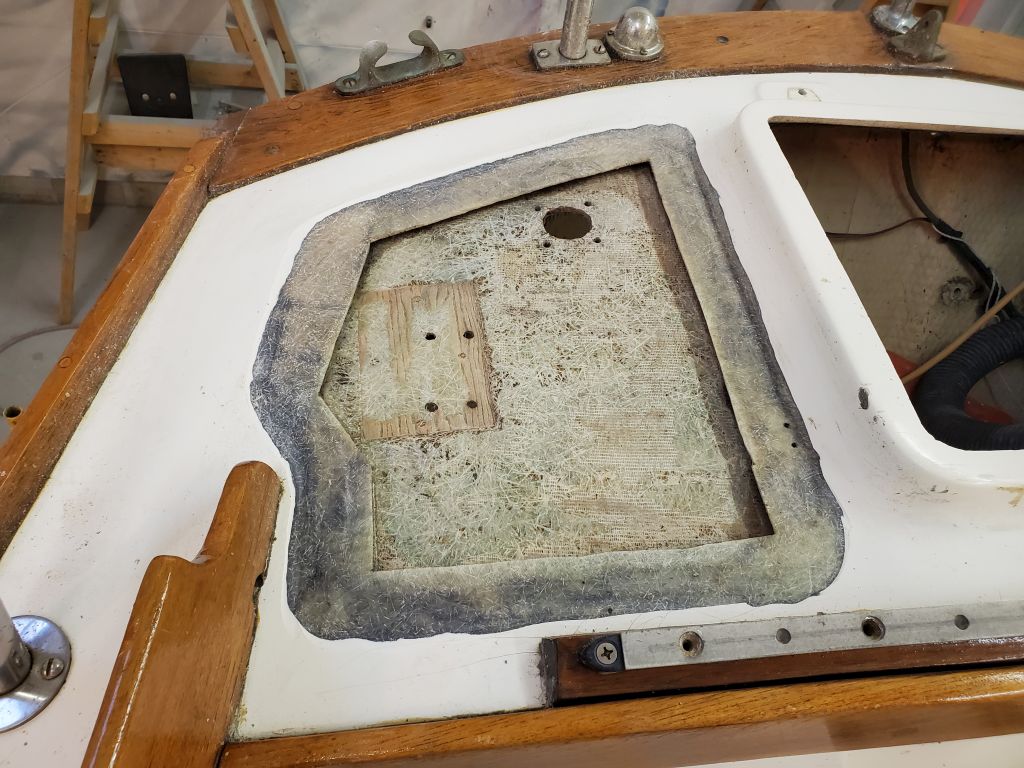
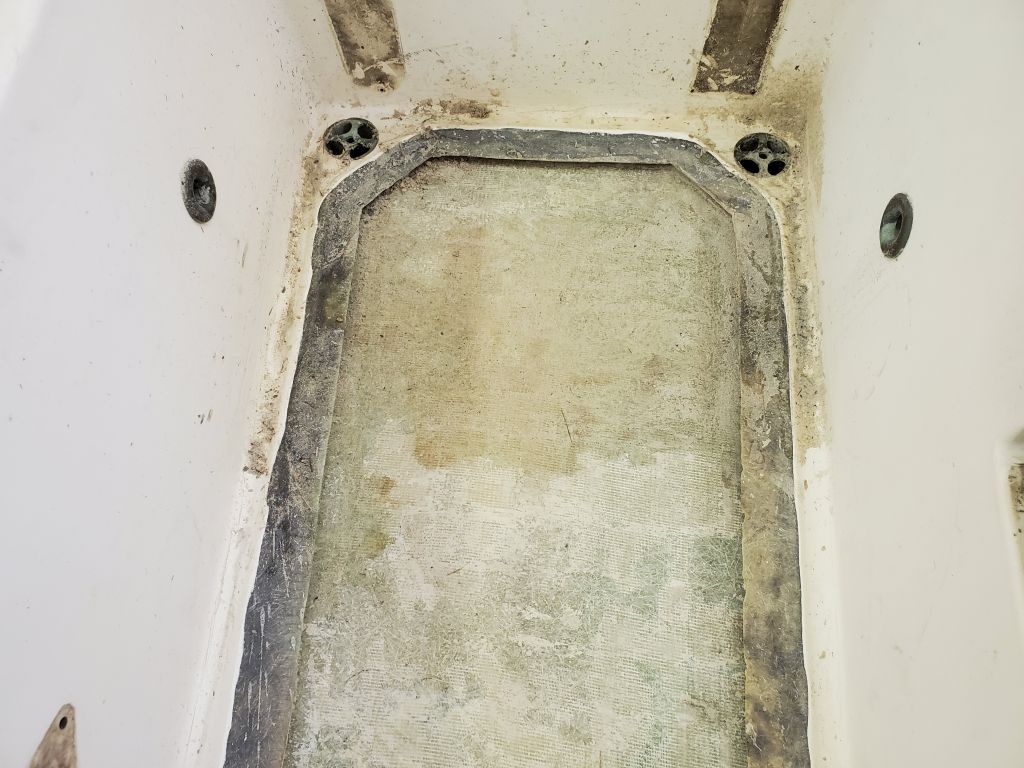
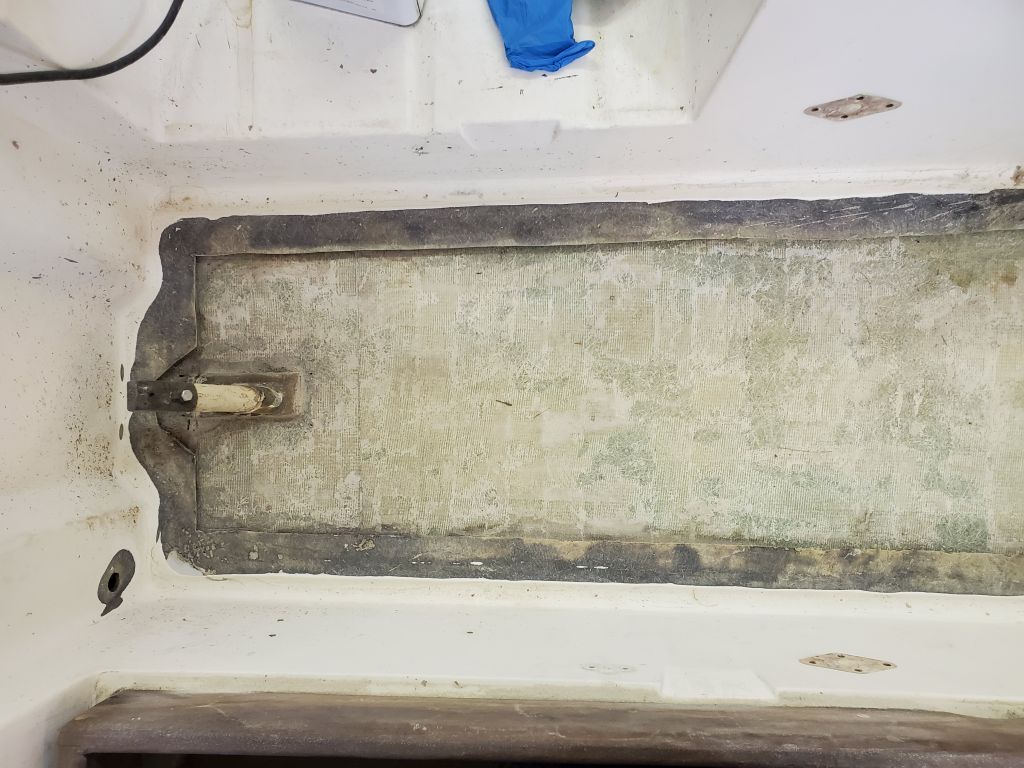
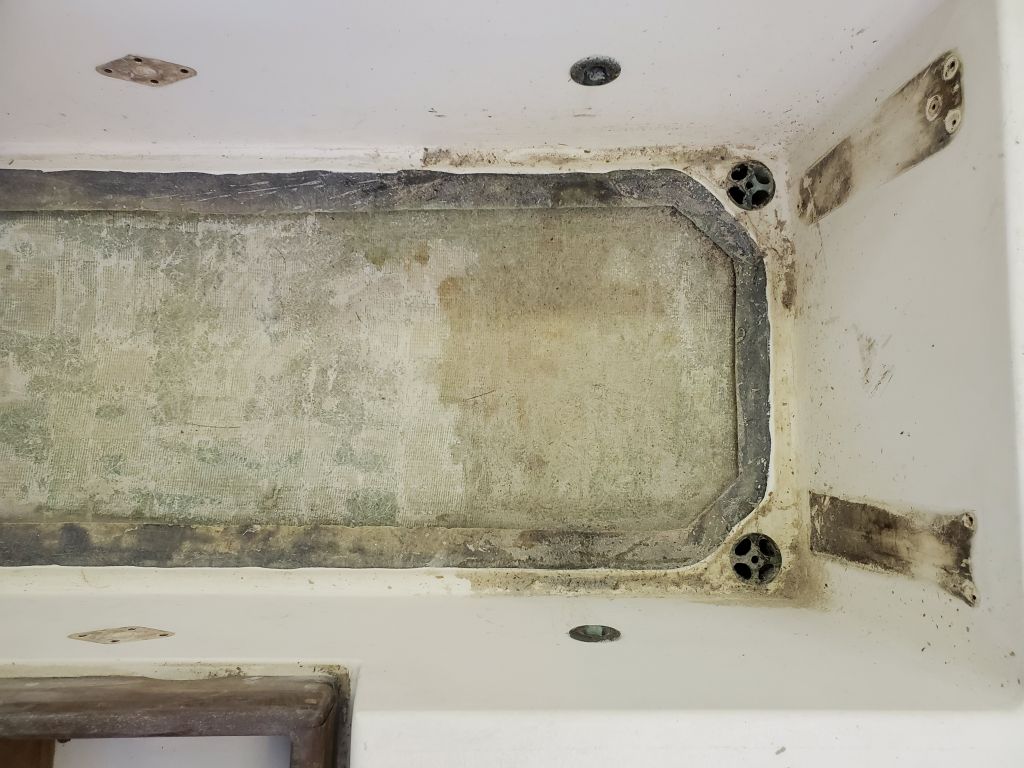
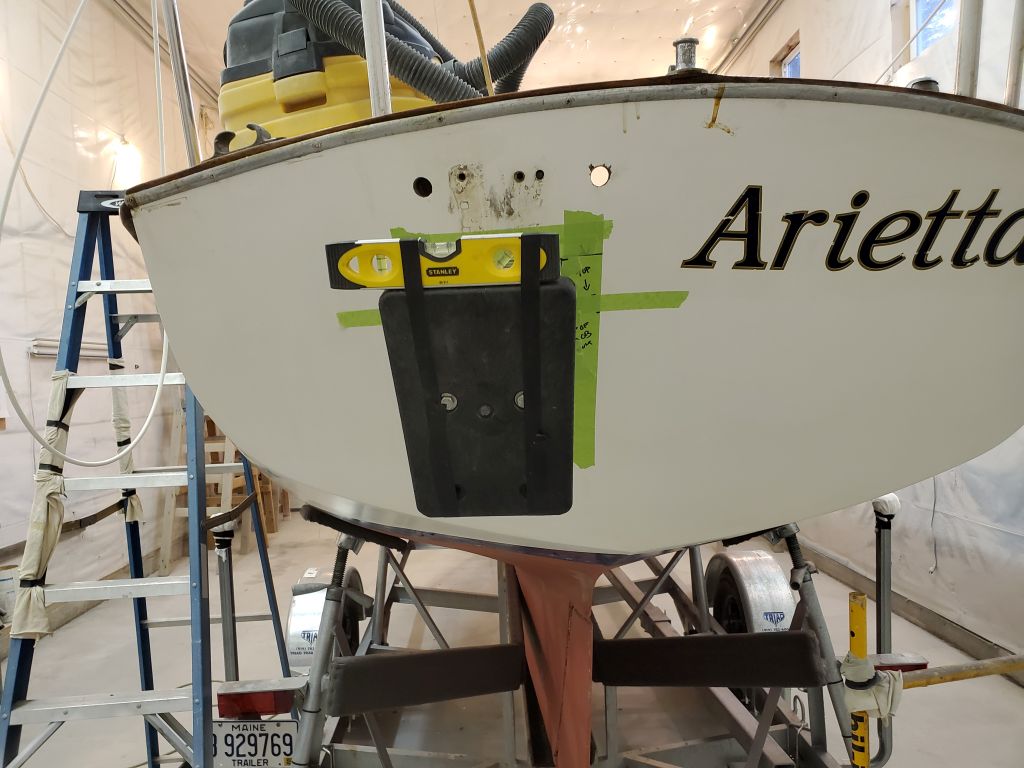
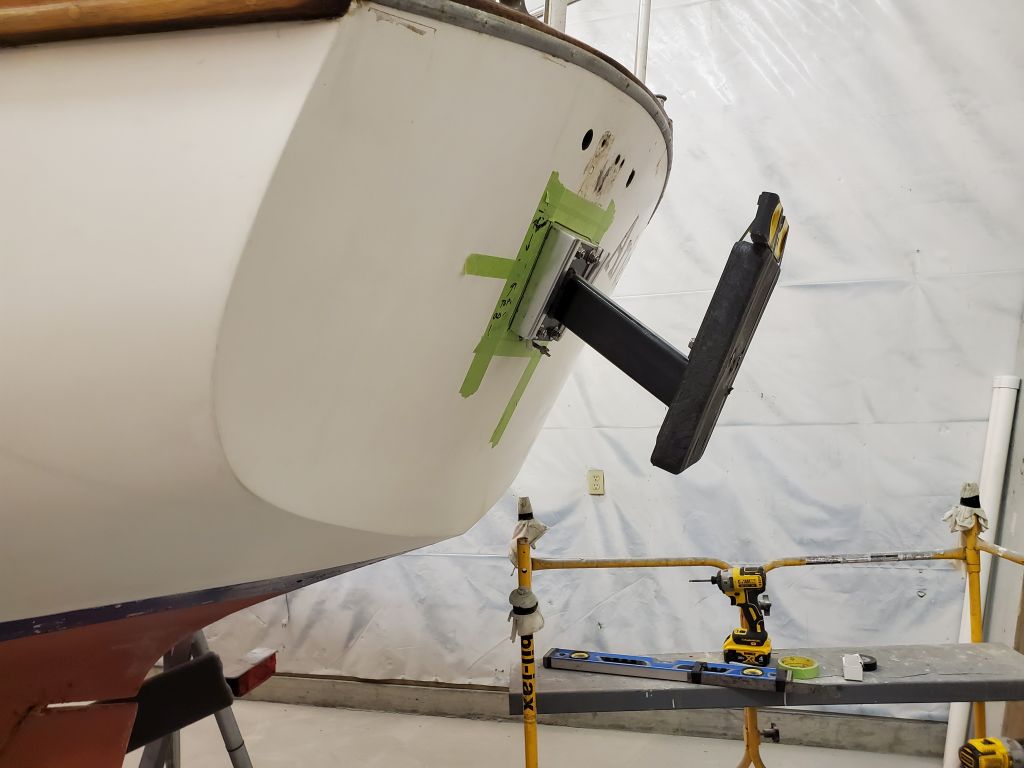
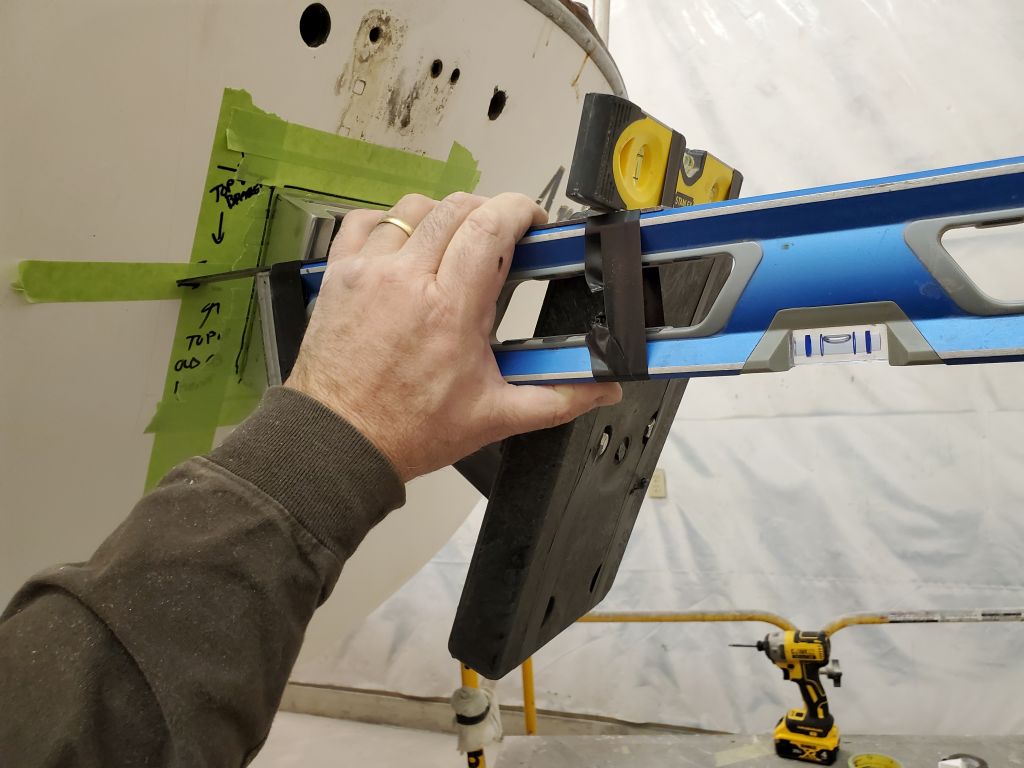
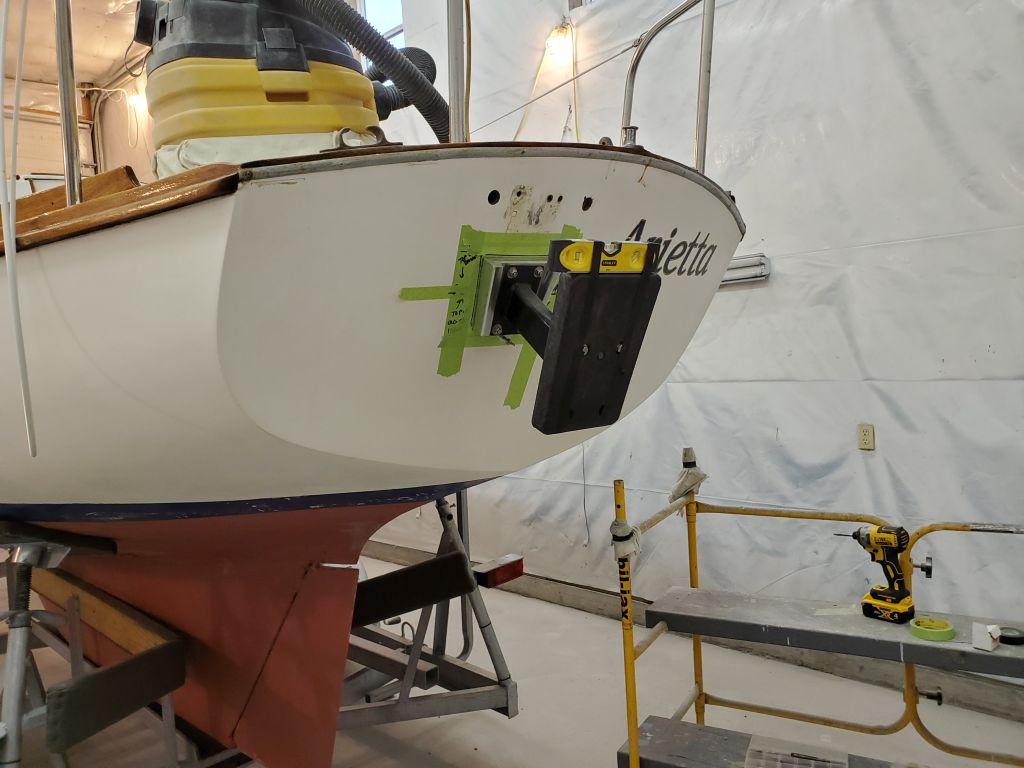
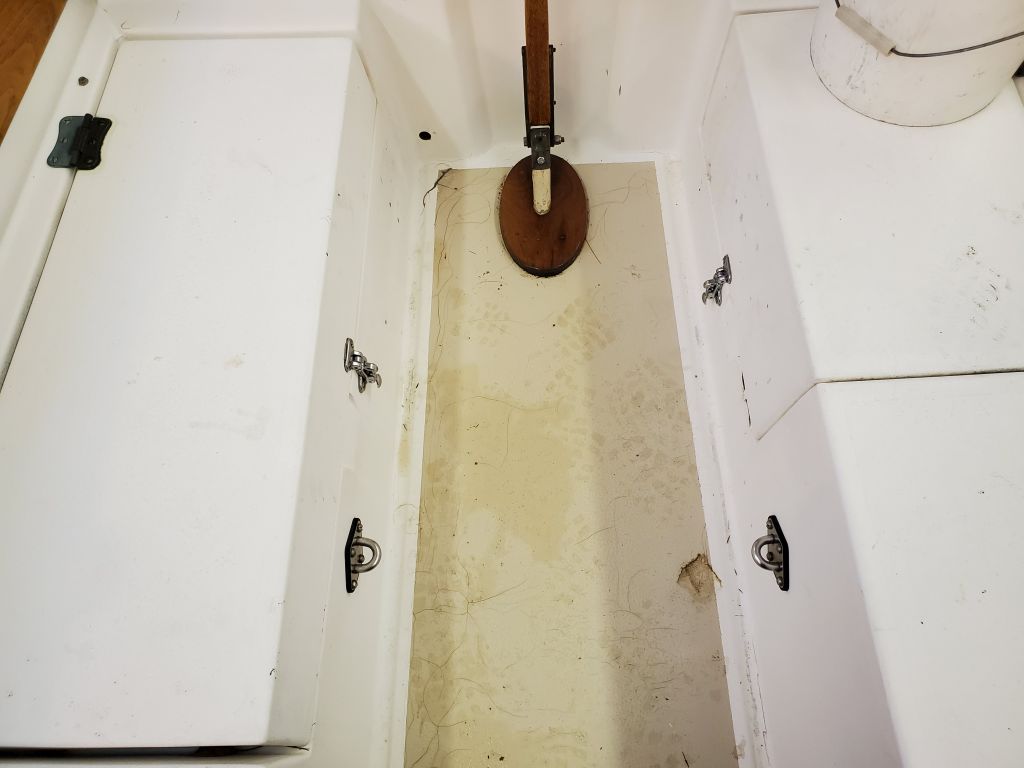
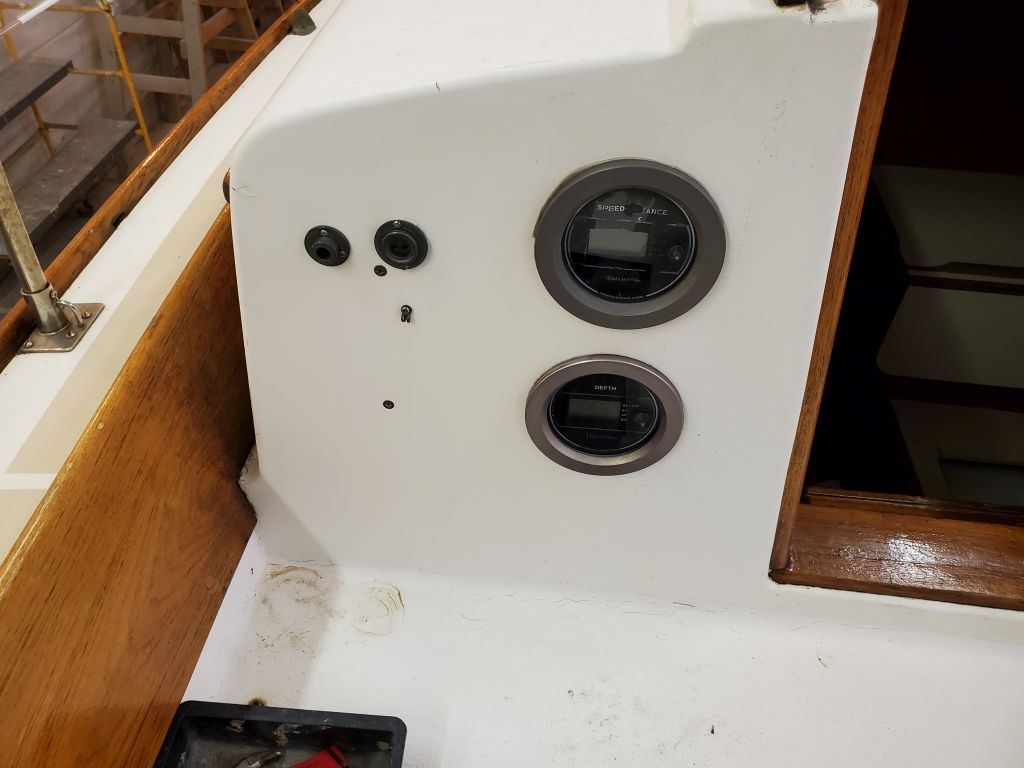
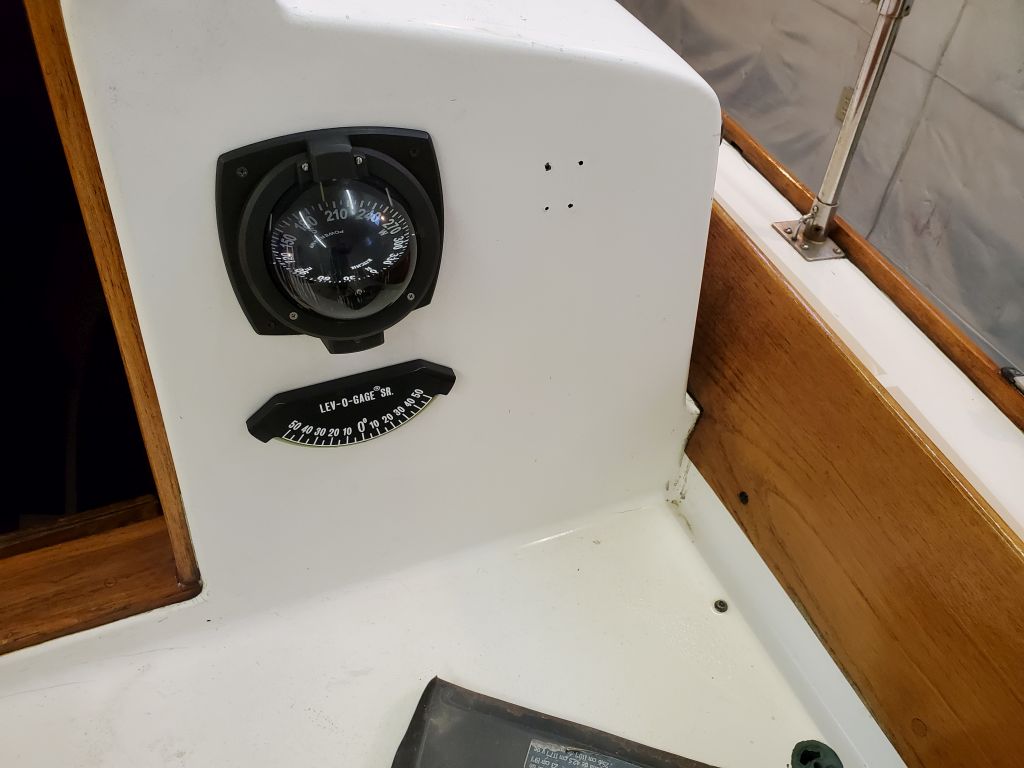
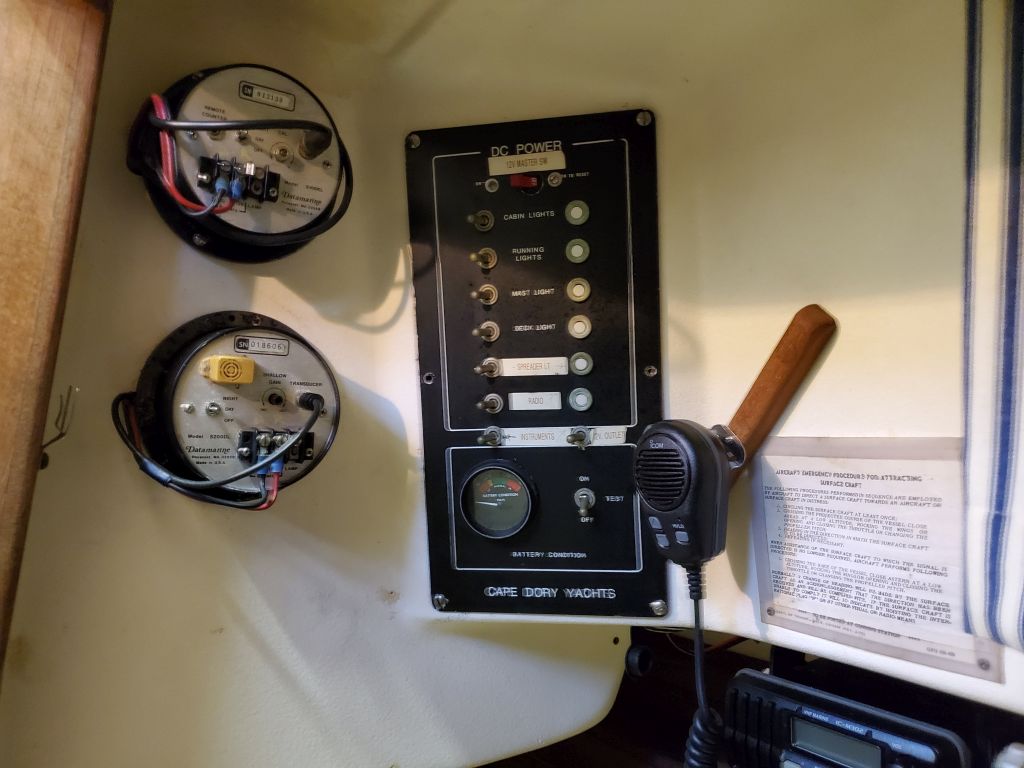
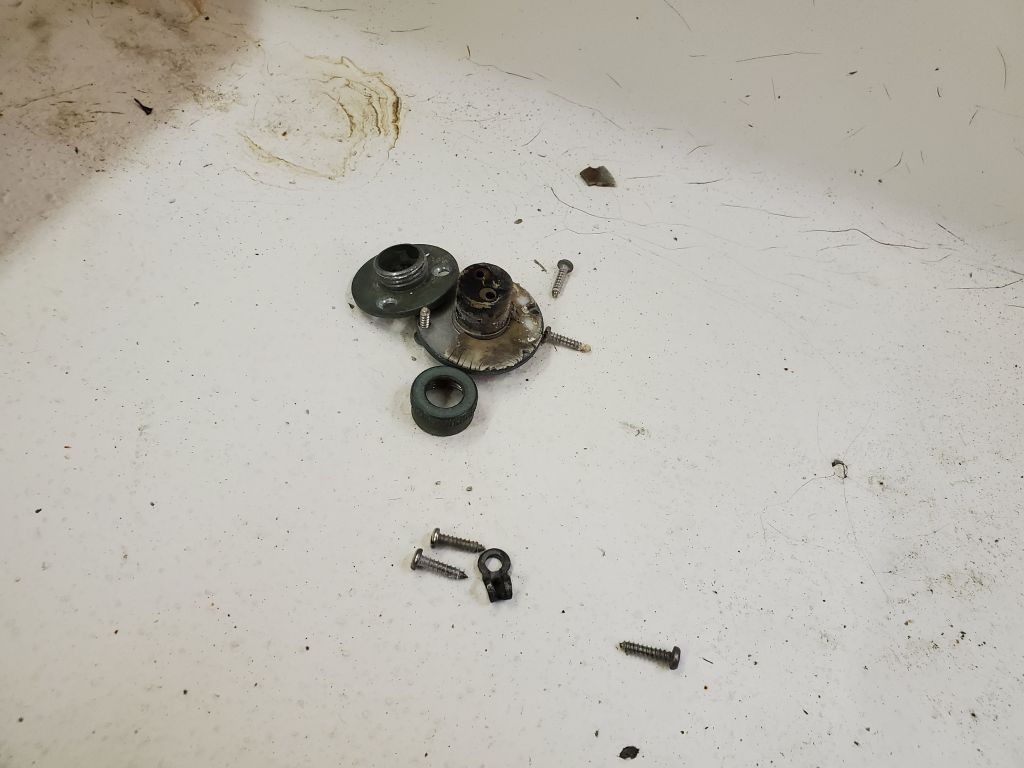
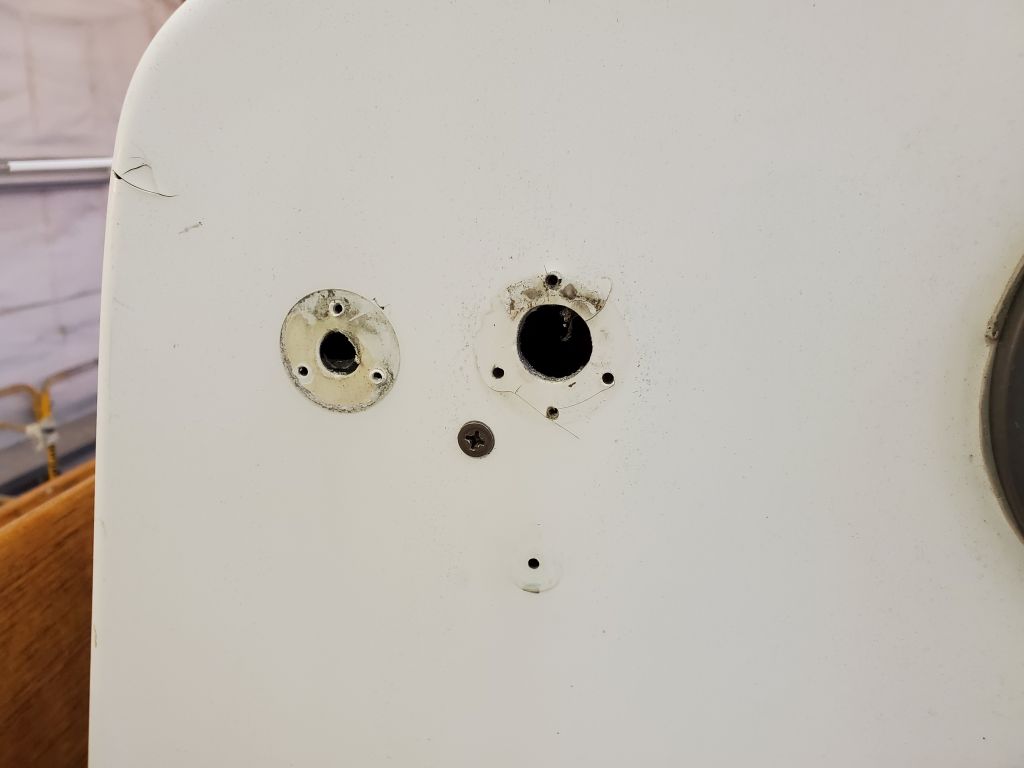
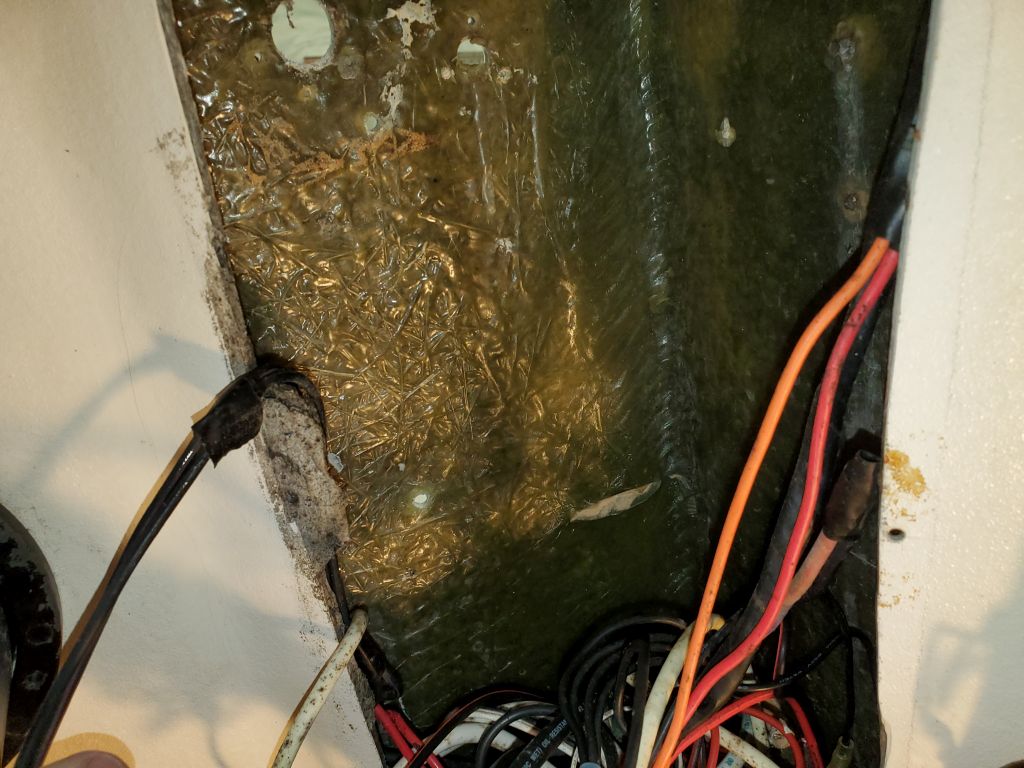
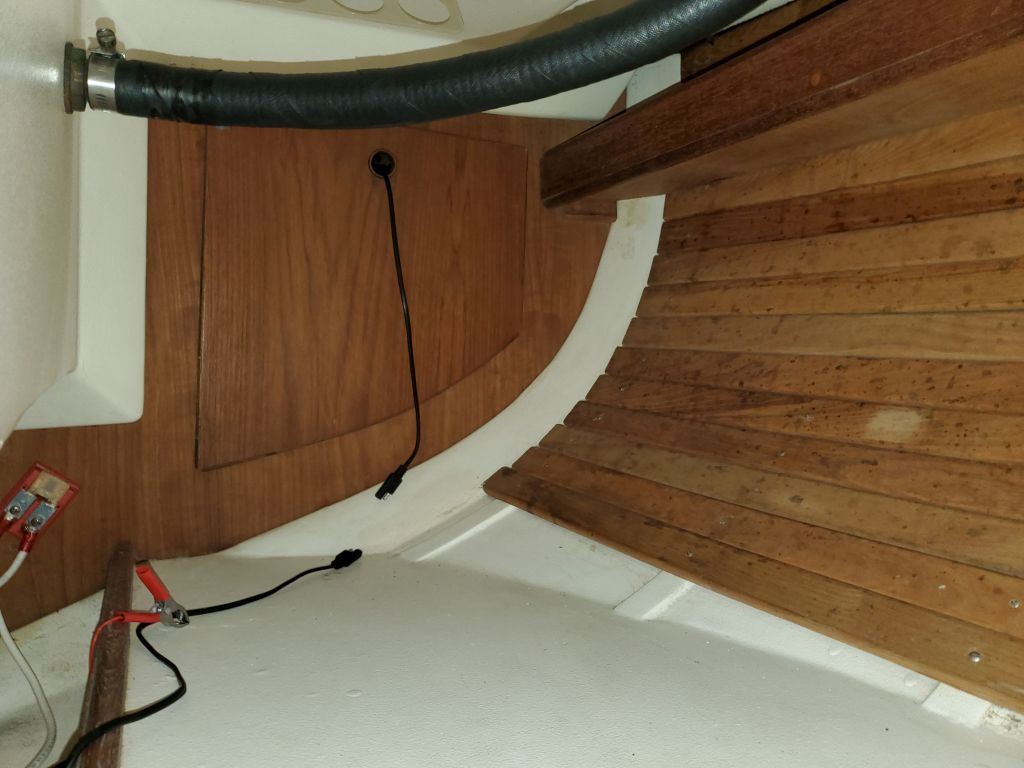
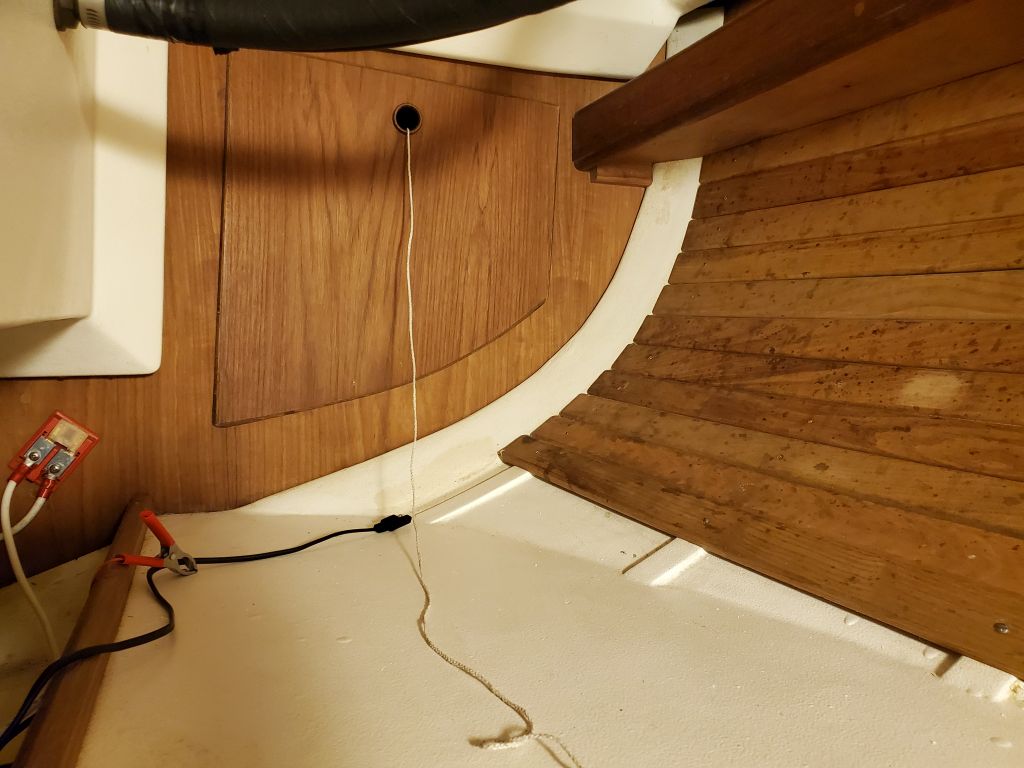
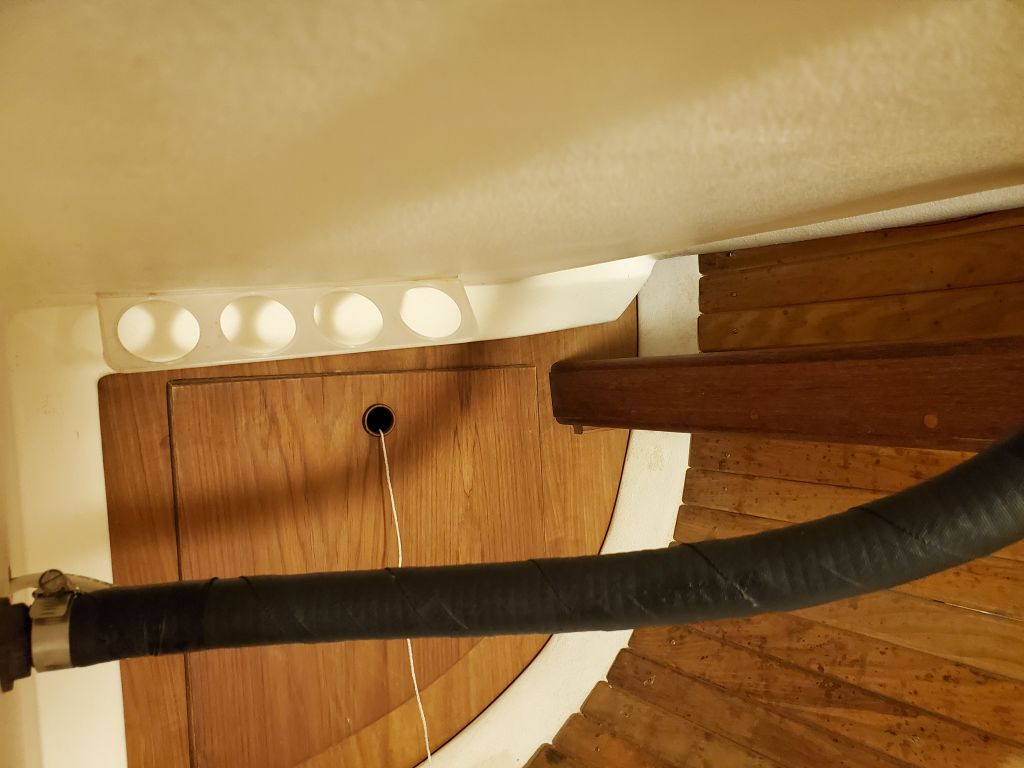
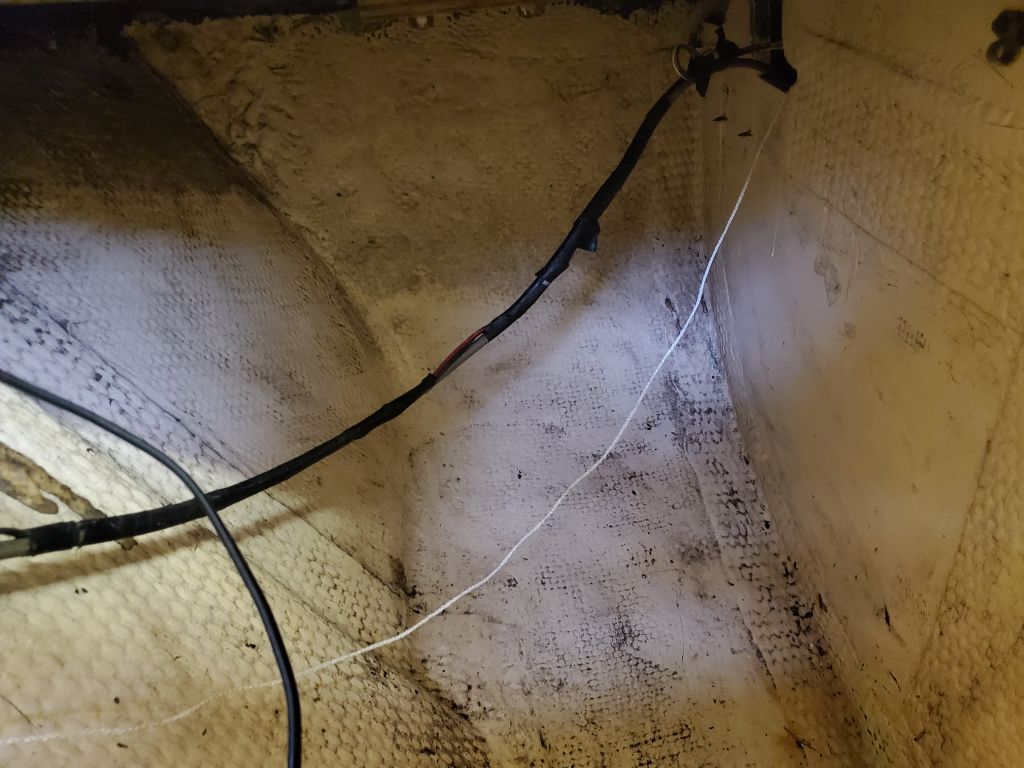
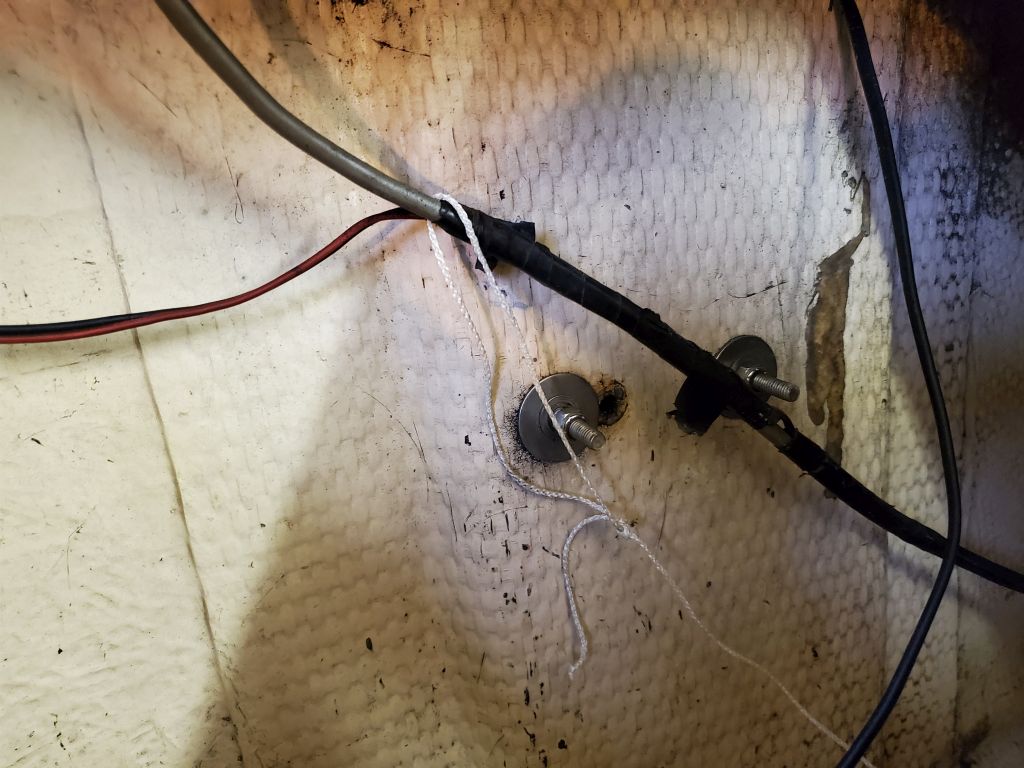
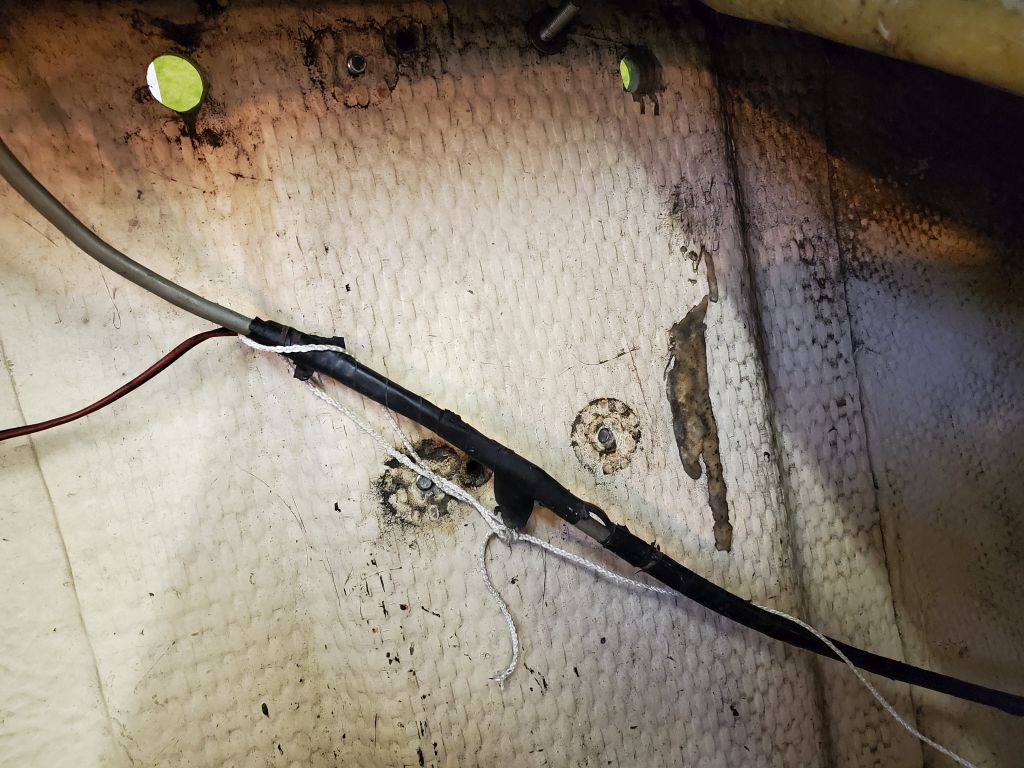
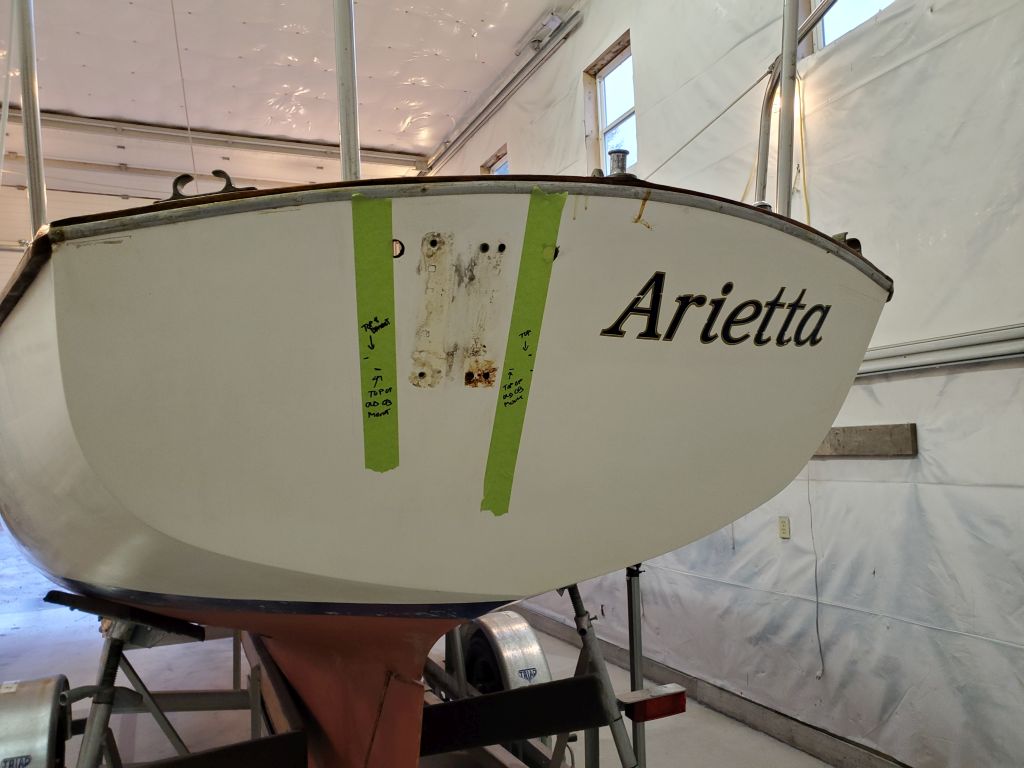
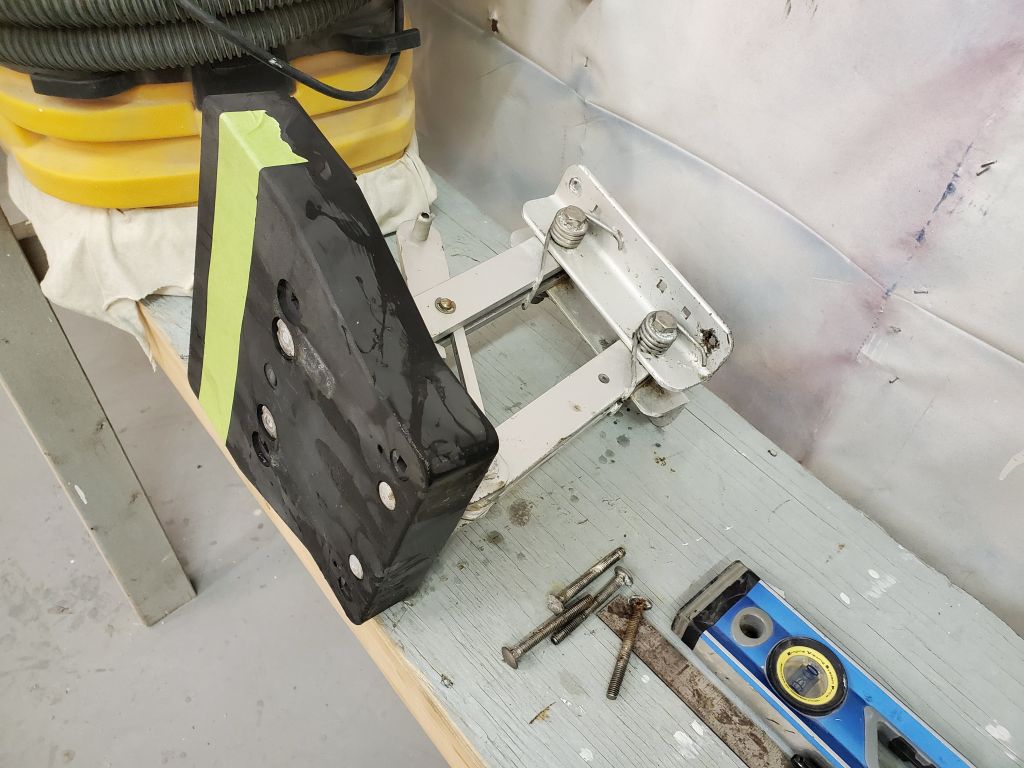
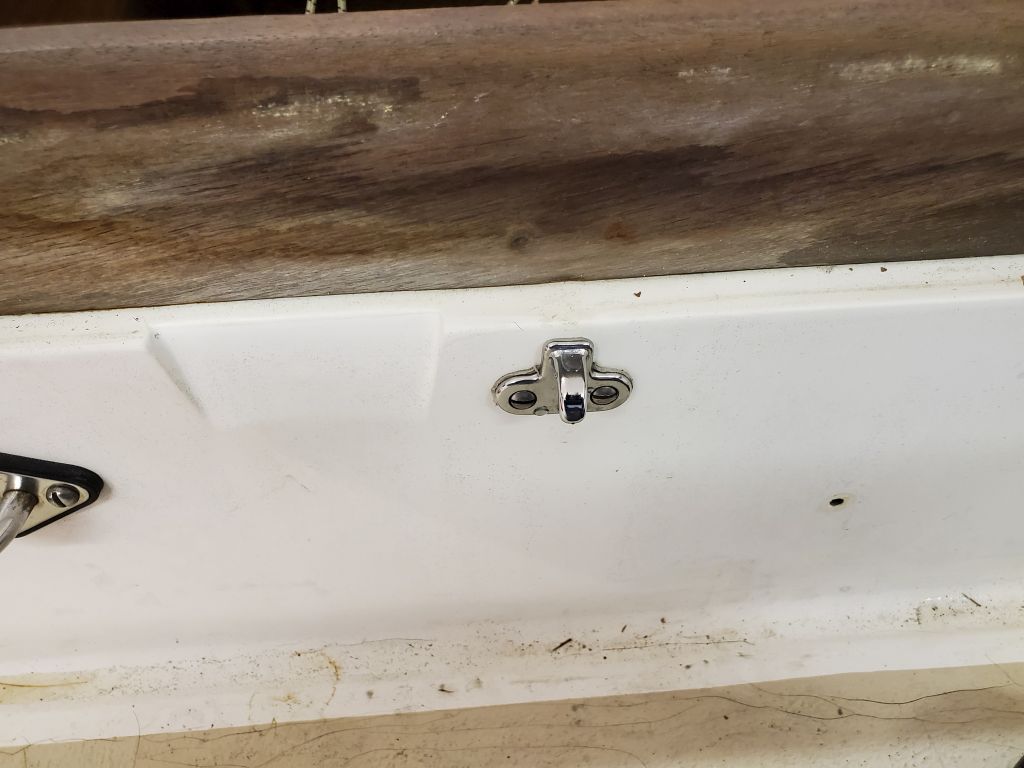
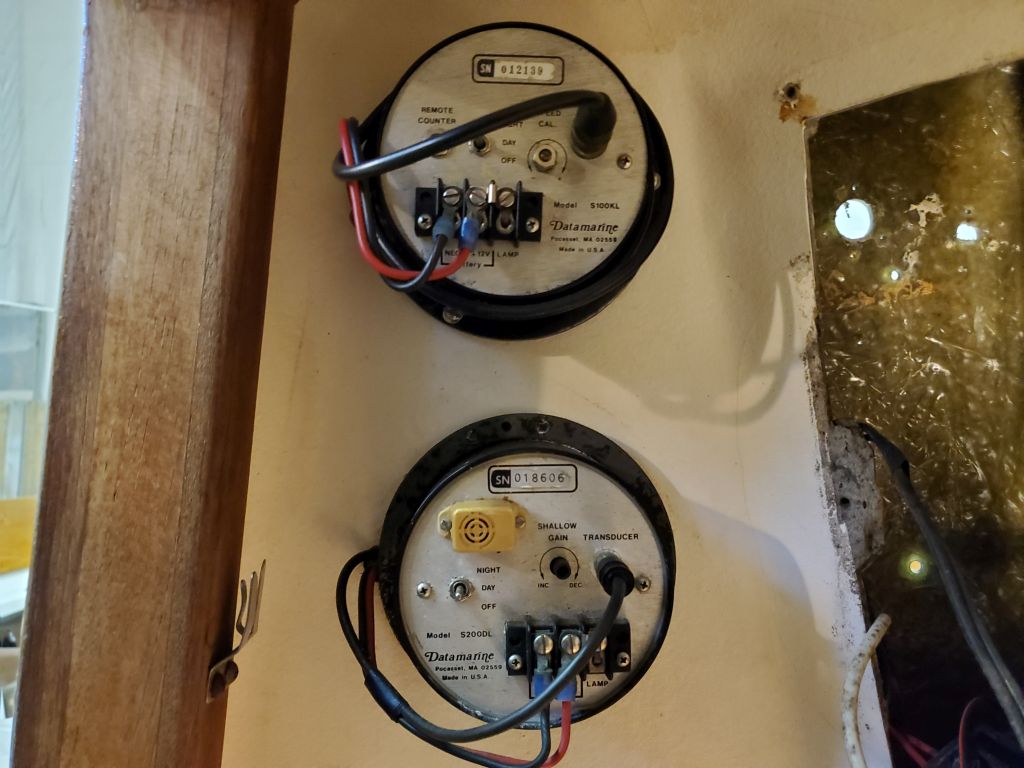
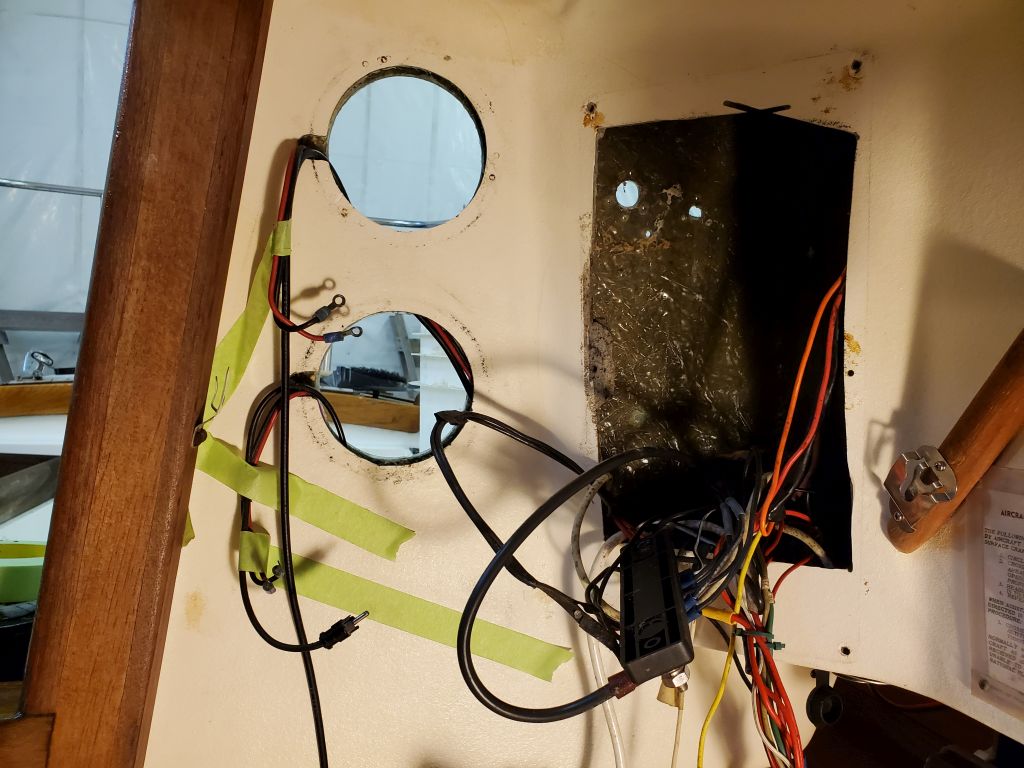
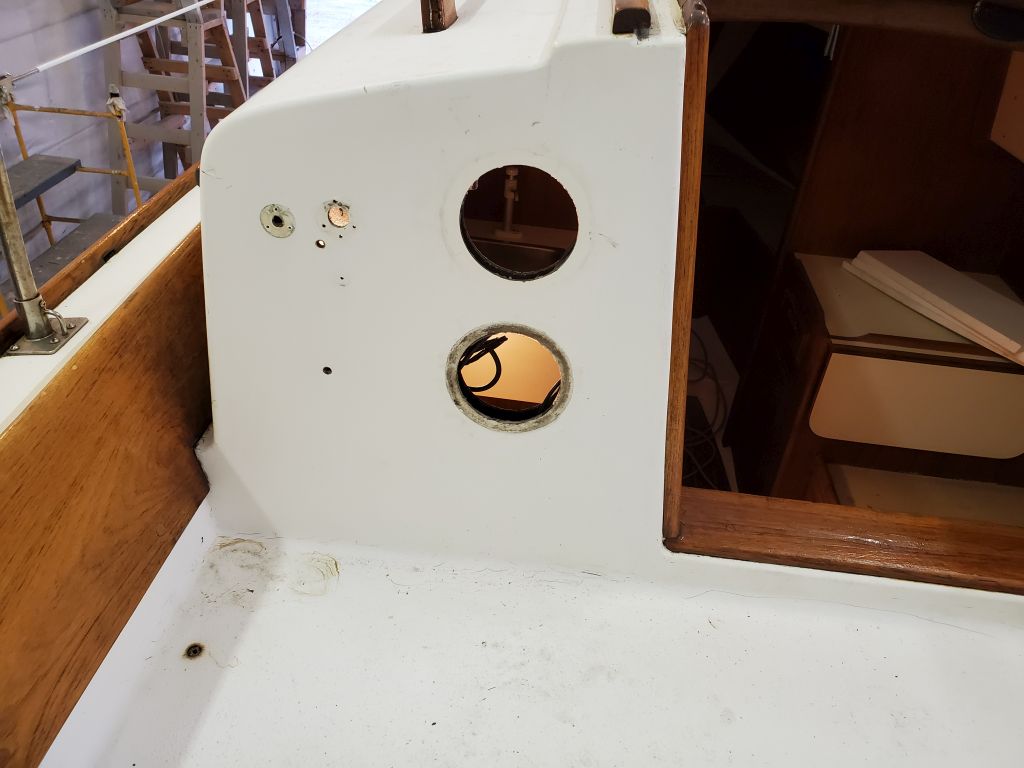
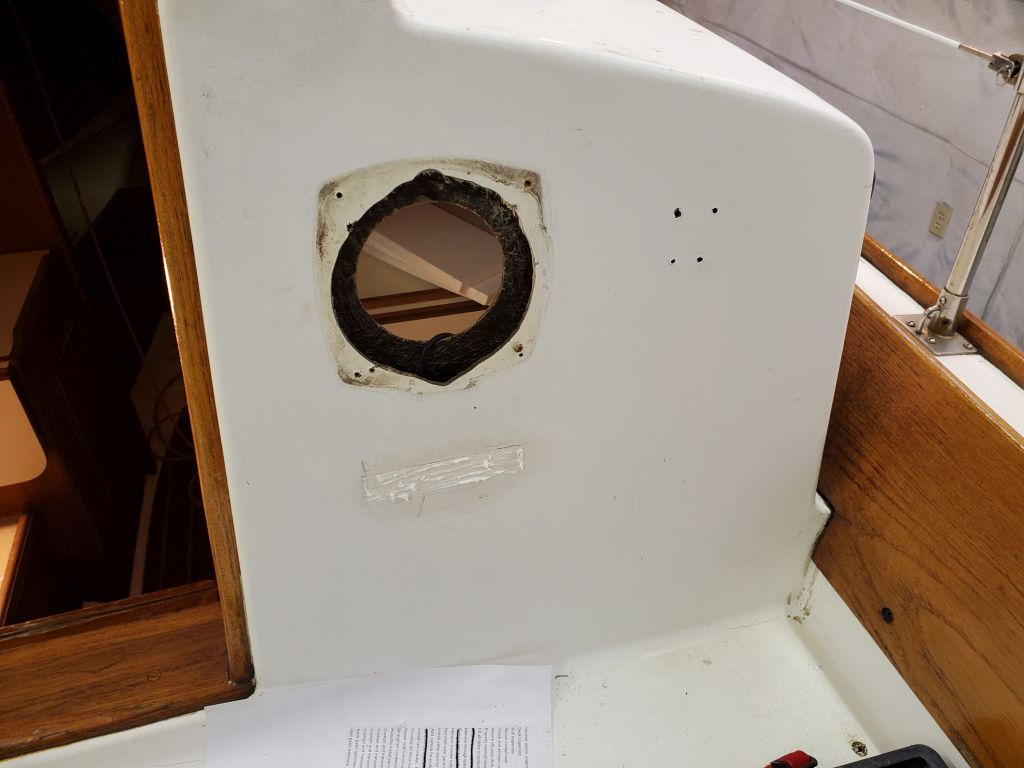
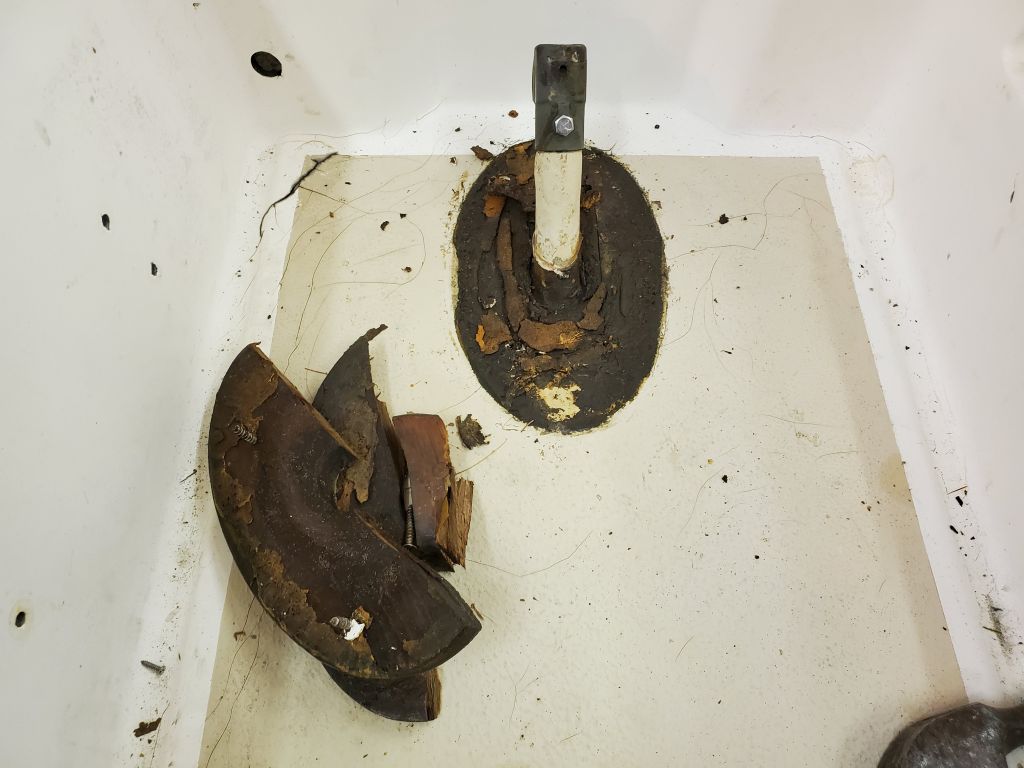
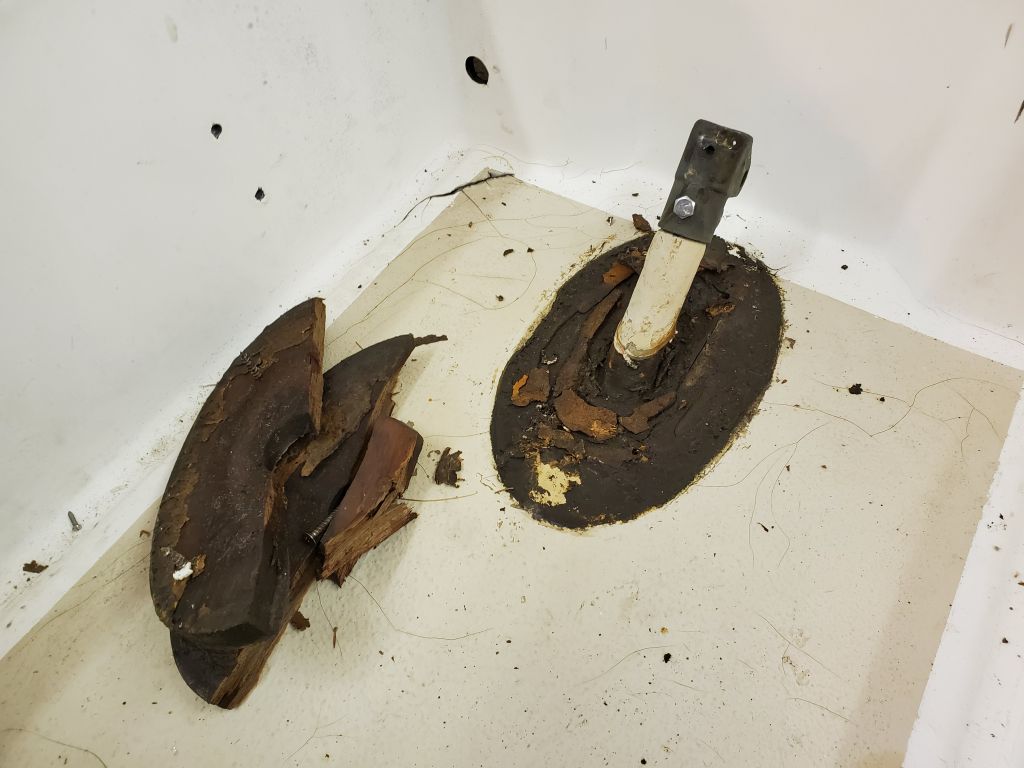
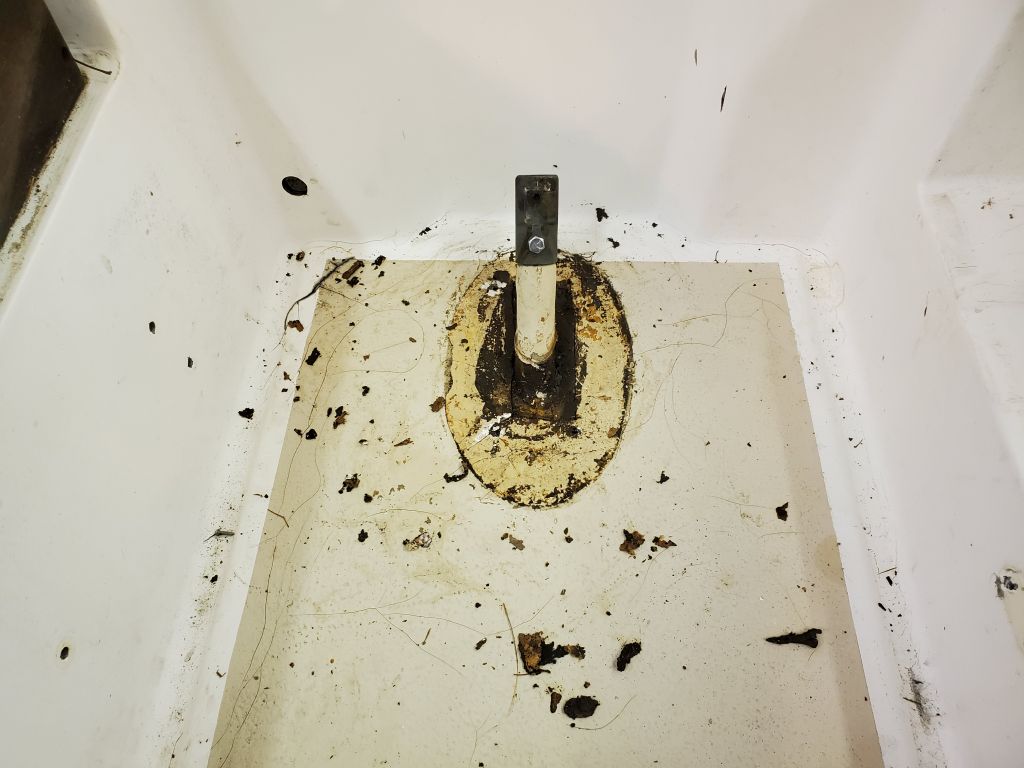
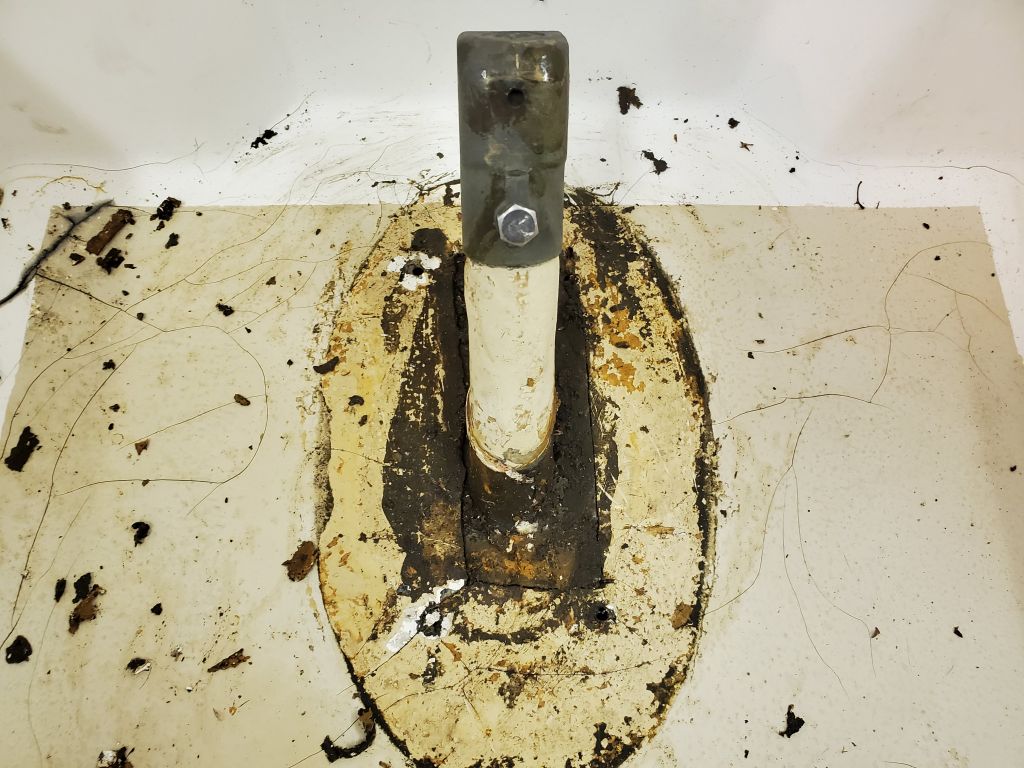
In the meantime, I addressed another of the owner’s concerns.  Because of the radar’s location on the mizzen mast, back in the day during the original project I’d located the radar network interface and connection box at the aft end of the engine room, where it was convenient to the radar’s cable that had to be removed each winter when the masts were unstepped for storage.  The first picture below is from the original installation of this interface box on 9/9/2012; the other ones from now.

This location was fine except it was difficult to reach when the engine room was fully put together with the removable after support beam in place (not shown in these photos).  The owner indicated that for such a simple and necessary job twice per year, it was unnecessarily difficult to access the box, since removing the heavy support beam also required removing all three pilothouse floor panels completely.  So he requested if I could find some other location for this interface that would be easier to connect and disconnect each time.

I wasn’t immediately sure what I could do with the box, but I determined there was ample excess wiring tied up nearby, which at least offered some options.  After releasing the wire bundle, and detaching the box itself, I considered a few different locations, none of which were suitable for one reason or another (impractical; wires too short; no room to mount the box; etc.) before eventually zeroing in on the mounting panel on the port side of the engine room, where the boiler and its related components had been located.  With some minor rerouting of the existing wire bundle that I’d only just remounted earlier in the day, there was an open and convenient space for the radar network box, and plenty of cable length to lead it there.

This location would be much easier to connect and disconnect, though the radar wire itself, which led through the cockpit deck just aft of the pilothouse, would have a longer run to reach it, but I checked the original photos and logs from when I installed the radome on the mizzen in 2015, and determined that there was plenty of cable length available for this, so I went ahead with the move.  This had the benefit of enhancing the bundled cable runs around the aft corner of the engine room from how they’d been originally.

Total time billed on this job today:  5.75 hours

0600 Weather Observation:  48°, showers.  Forecast for the day:  Heavy rain, 53°

Lively Heels Phase 3-2

Thursday

After spending additional time going over some of the details of the original installation process of the hydronic heating system, regaining an understanding of what I’d done between 2011 and 2013 (conceived and installed over many days between 7/11/11 and 2/3/13) during the original project, I eventually felt ready to start attacking the removal of as much of the old, complicated system as possible.

My first order of business was to remove the remnants of the boiler’s fuel system, which included a copper line running to the aft fuel tank, and a pump and valve assembly on the port bulkhead. Once I removed the compression fitting at the shutoff valve at the tank, the remaining assembly could be removed all at once along with its mounting plate, which I’d long ago made of prefab fiberglass and screwed to a beam bracket in the engine room.   This removal was straightforward and began to clear the way for the next steps.

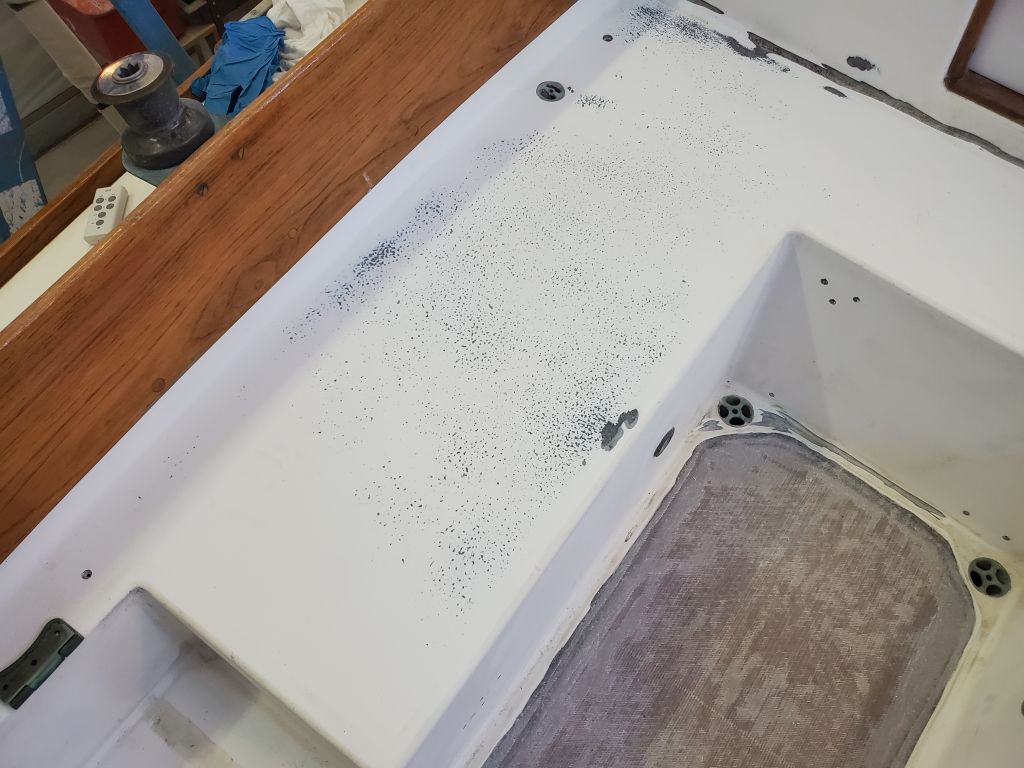
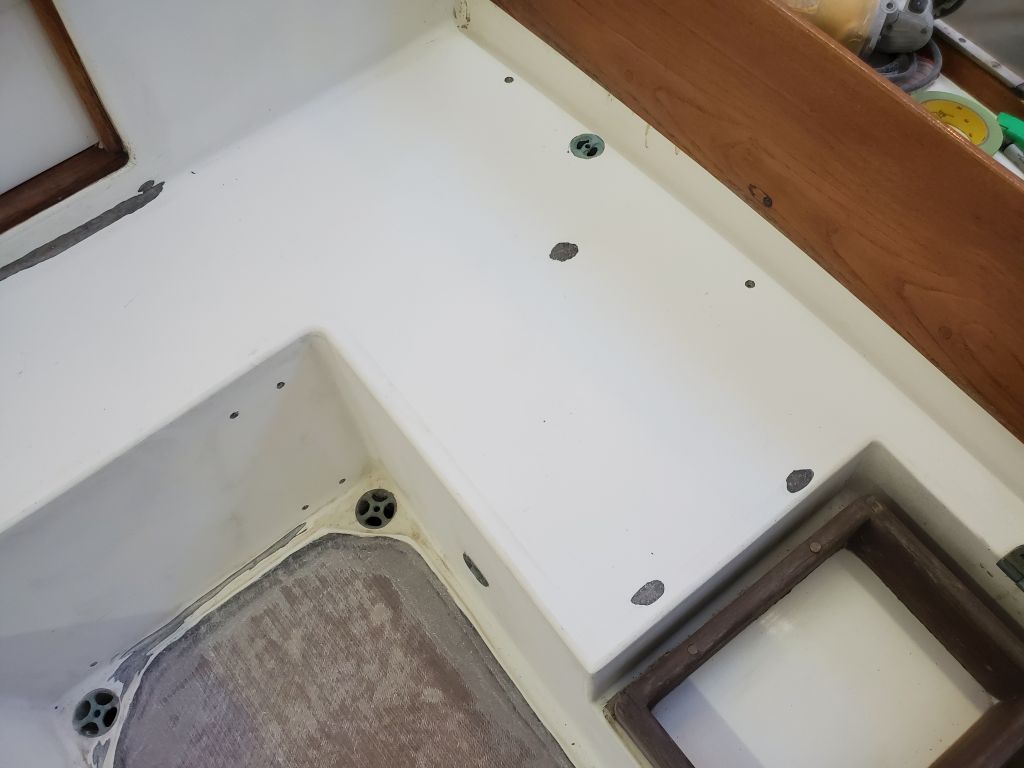
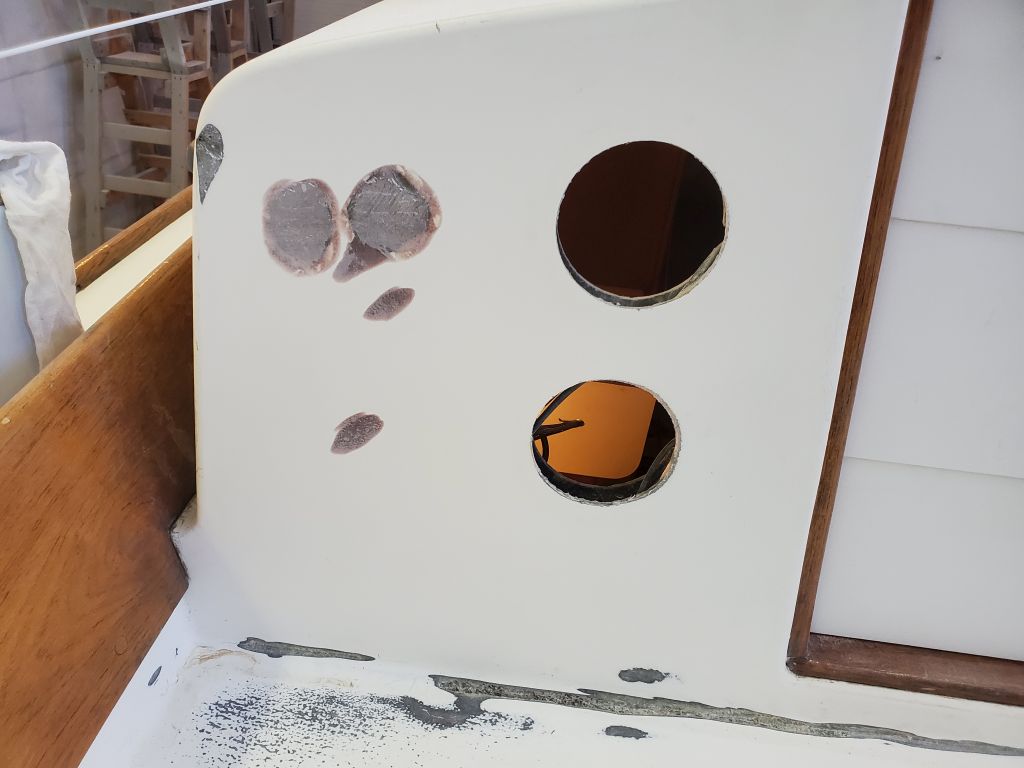
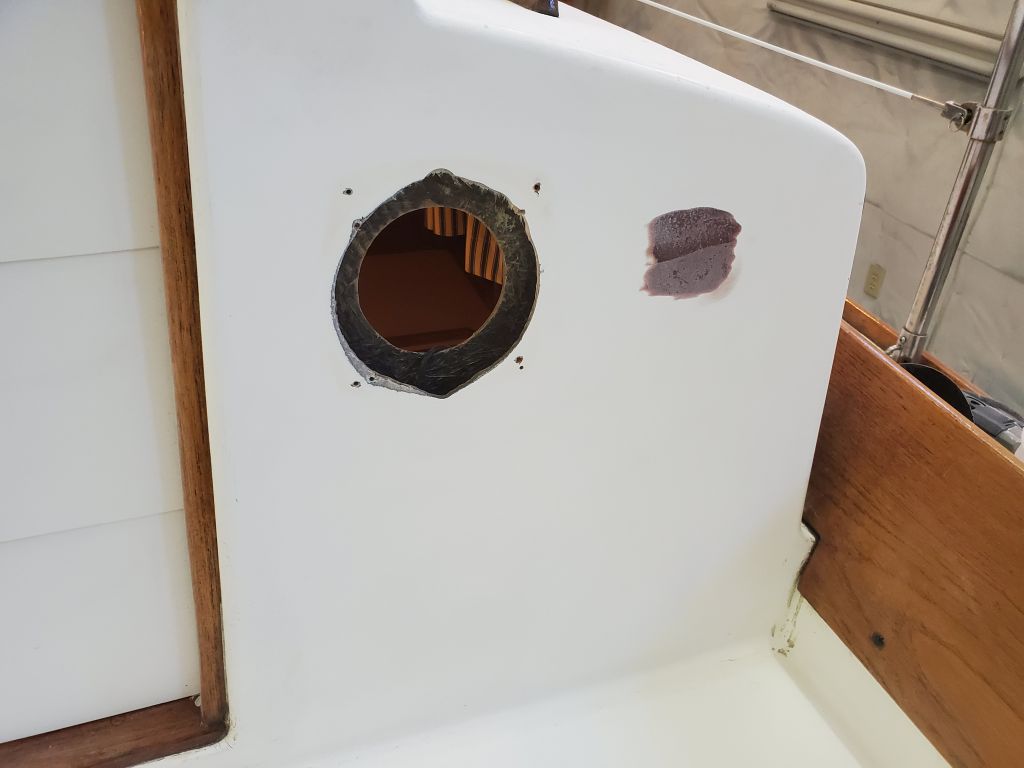
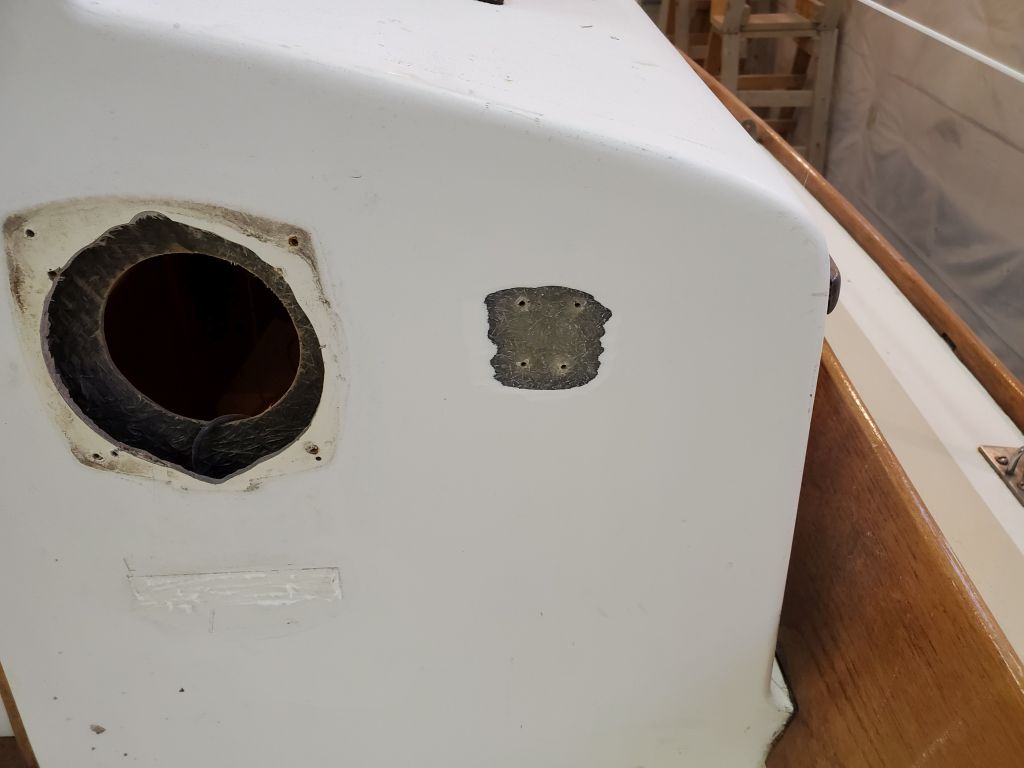
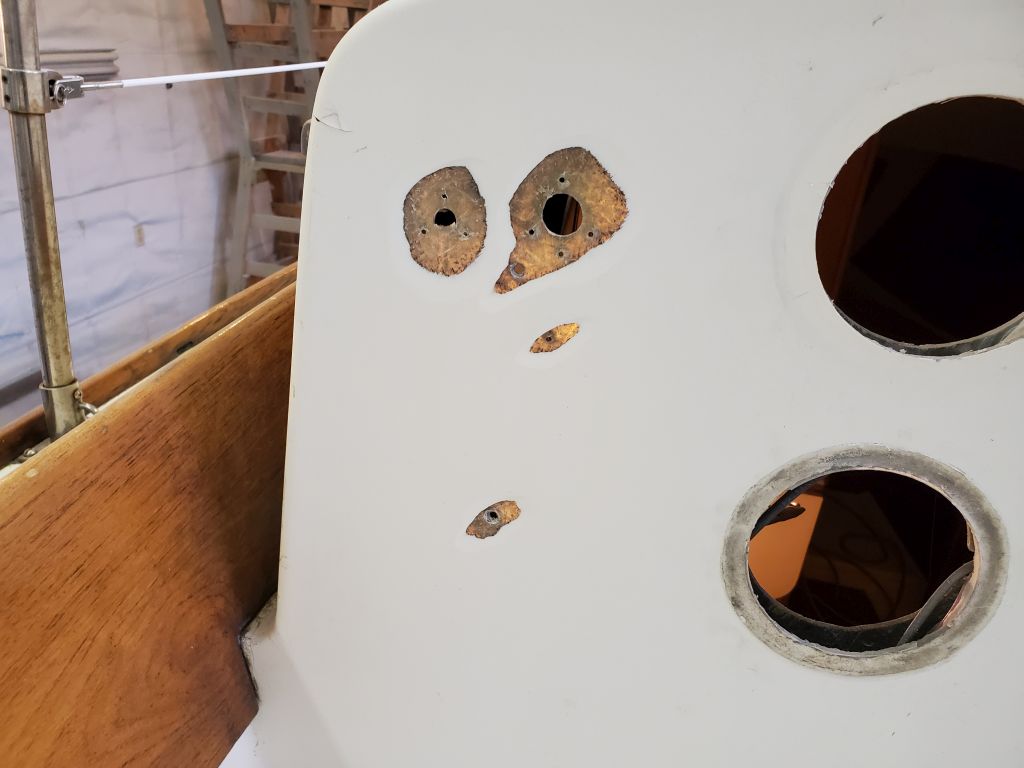
Next, I moved on to the exhaust pipe and intake vent leftover from the diesel boiler.  These led from the through hull fittings on the upper port quarter to the location of the old boiler, and access to the top ends, where they connected to the hull fittings, was through a pair of 4″ inspection ports in the cockpit–large enough to reach through, just, or to peer within (more specifically to hold the camera through for a view), but not both at the same time.

At the engine room end, the exhaust and intake lines disappeared aft into a tangle of other heat-related hoses, scupper drains, and wiring, which access had been tight enough during the original installation, but now, with engine exhaust, battery boxes, a new bilge pump installation, and more in the way, access was virtually impossible.  Complicating matters was the fact that the exhaust pipe was secured to a bracket beneath the cockpit, well out of reach, and the air intake hose was similarly secured to a clamp that was going to prove to be difficult to reach as well.

There was no alternative in the engine room but to remove temporarily the diaphragm bilge pump that I’d installed for the owner a few years back.  The pump itself was installed on a bracket that the owner had designed to be removable without too much effort, and after removing the hoses and wiring, I was able to clear out the pump and its bracket to improve (haha) access to the depths beneath the cockpit, where I had to get to in order to release the clamps securing the exhaust and air intake lines I was trying to remove.

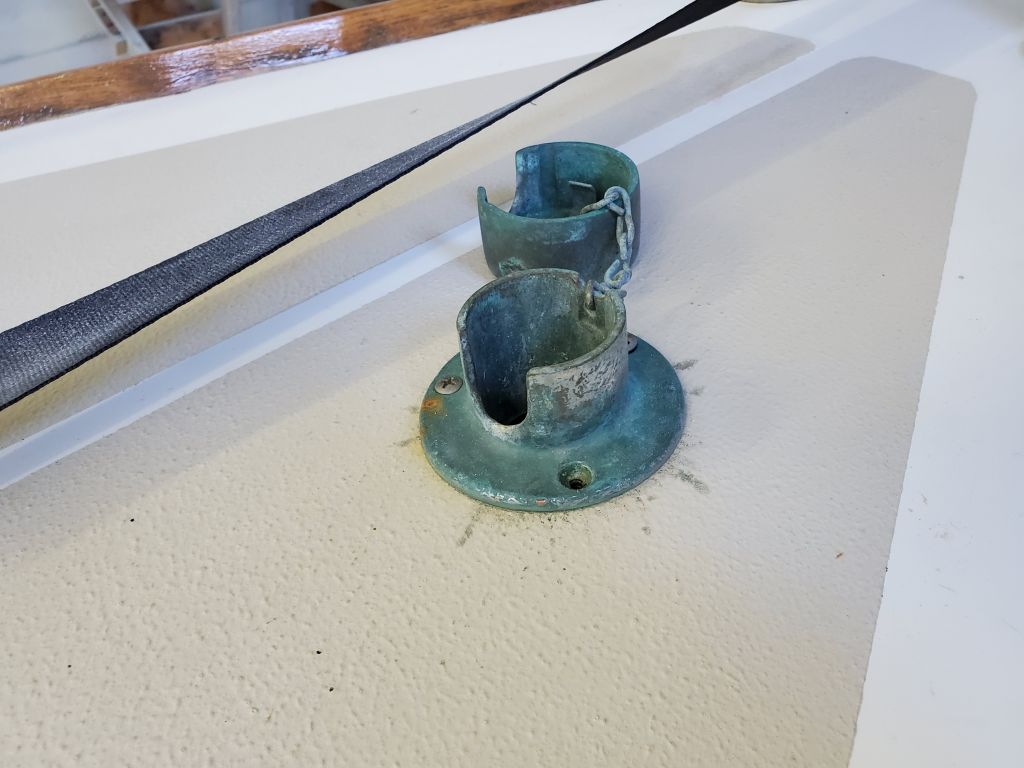
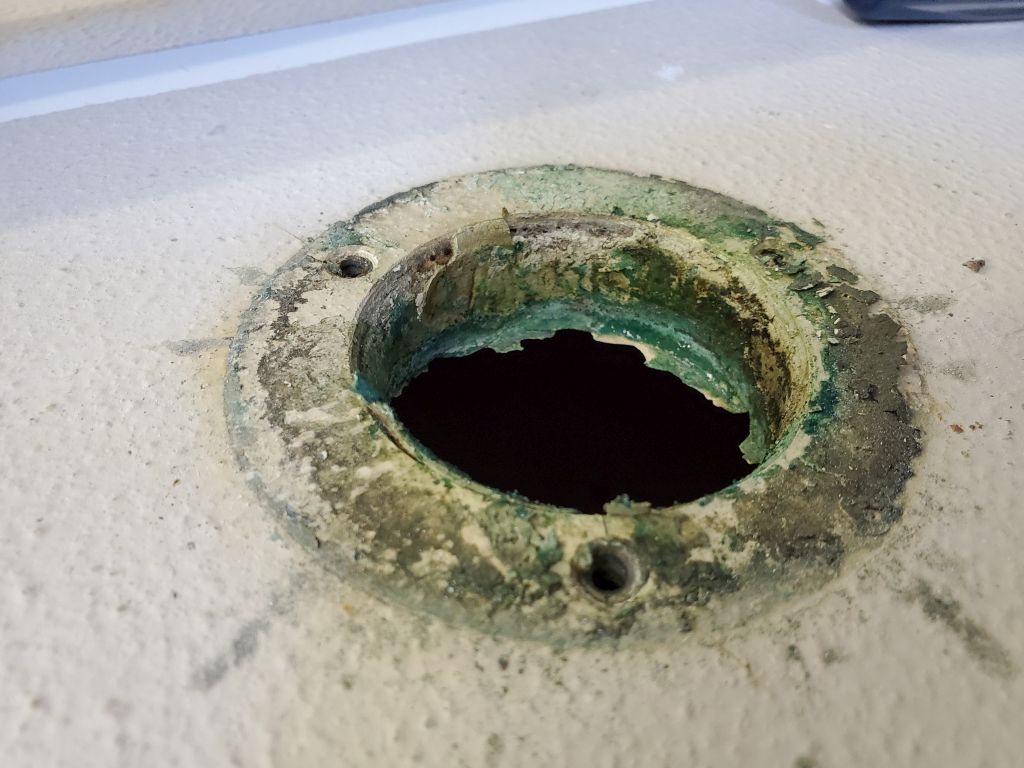
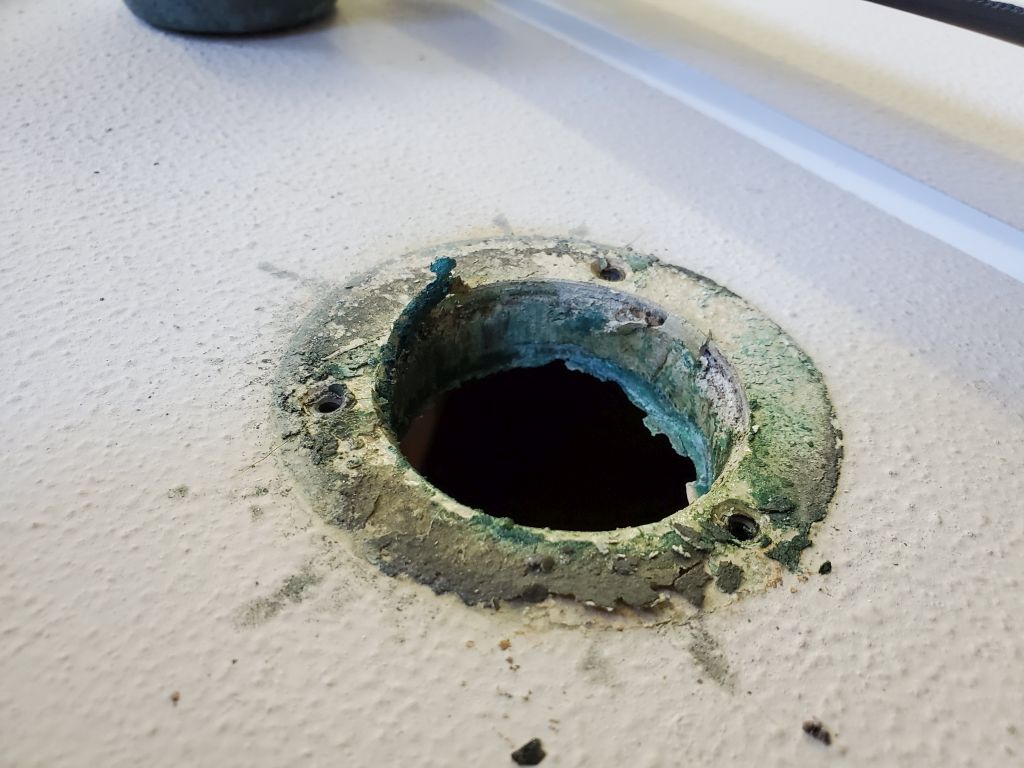
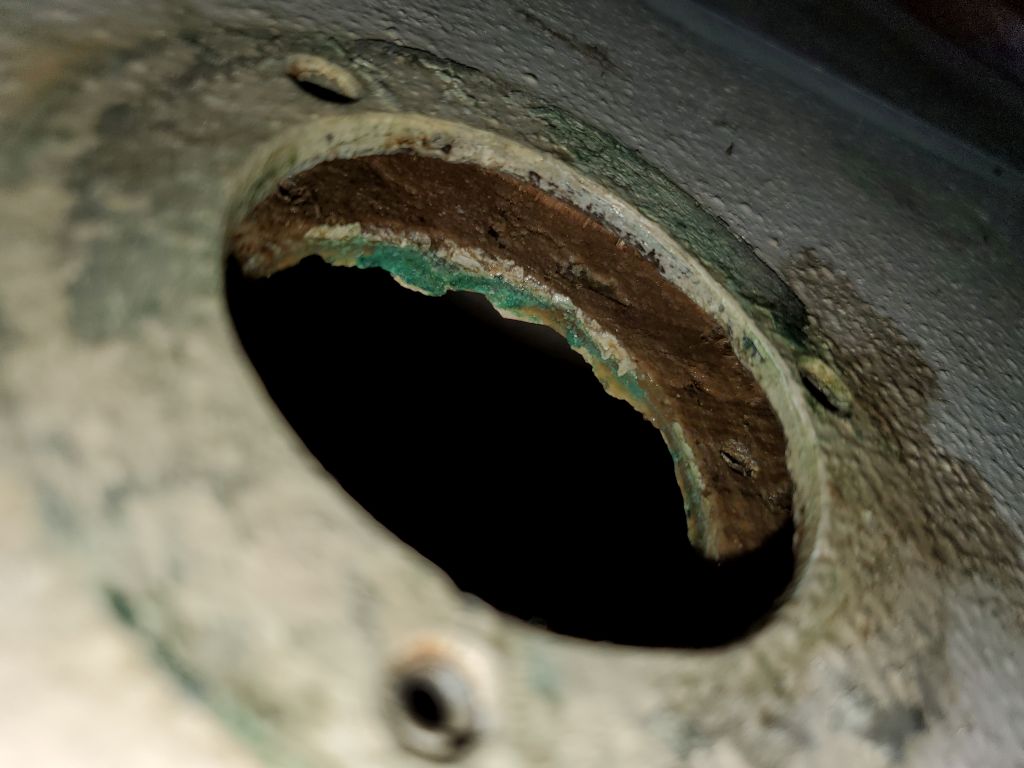
At the top end, with some effort, I eventually removed the clamps securing the two lines to their respective hull fittings, releasing the hoses.  I couldn’t get the air intake line off the barb completely and would have to try cutting it to release it later.  Then, I finally figured out a way to contort myself in the tight confines of the engine room to get an arm back far enough beneath the cockpit and laboriously undo the hose clamp securing the exhaust hose, and clip the wire ties holding the intake hose in place.  I couldn’t really get into the space because of various obstructions such as the engine exhaust elbow and, especially, the house battery box, both of which prohibited me from actually getting into a workable position.  I thought I might have to actually remove all this stuff, which I didn’t want to do unless absolutely necessary, but fortunately, somehow I managed to get the job done, and with great relief removed the insulated exhaust (the engine end of this was saturated with diesel fuel for unknown reasons) and the thin, flexible air intake hose.

With the bulky exhaust now out of the way, I turned to the wiring leftover from the boiler system, none of which would now be needed.  Before I ran out of time for the day, I removed the SureWire board (the main control board for the old system), and released all associated wires and most of the old clamps.  I left the now-loose wiring as is for now, but next time I’d get behind the electrical panel and remove the other ends to clear space and simplify.  Reconfiguring and simplifying, to the extent possible, the hose runs would also be part of the works ahead.

This system really had been mind-bogglingly complex, and between the installation frustrations at the time and the challenges in getting the system up and running in 2015, I’d long ago reformed my flawed thinking (flawed in allowing myself to install something so complicated).  The owner’s reports of the system’s foibles and eventual unacceptable failure only reinforced my forever-strong bias towards simplicity at all costs.  While the owner wanted to maintain the use of the system by continuing to use the engine’s coolant to run the water heater and dual cabin heaters, I looked forward to cleaning up the remainder as much as possible to make its ongoing use much more straightforward.

Total time billed on this job today:  4.5 hours

0600 Weather Observation:  18°, clear.  Forecast for the day:  Mostly cloudy, 39°

Lively Heels Phase 3-1

Wednesday

Returning to the shop after six seasons with her new owner, Lively Heels was in good shape, but the owner had come up with a list of miscellaneous projects and minor changes he hoped to make based on his own usage of the boat, as well as to address a few problems with some of the original installations.

After arriving at the shop in early October, the owner went through his winterizing tasks and unloaded the boat, and once he was done, as time allowed, I moved her into the second shop bay, where we’d arranged for her to spend the bulk of the winter while I worked on the sundry task list.

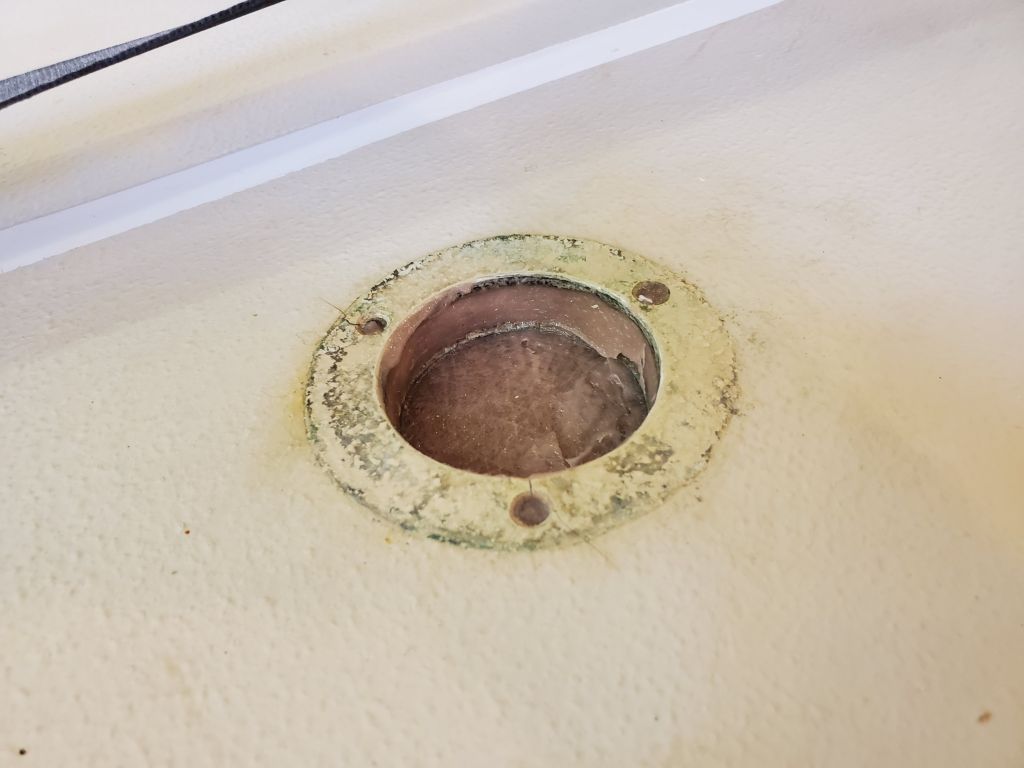
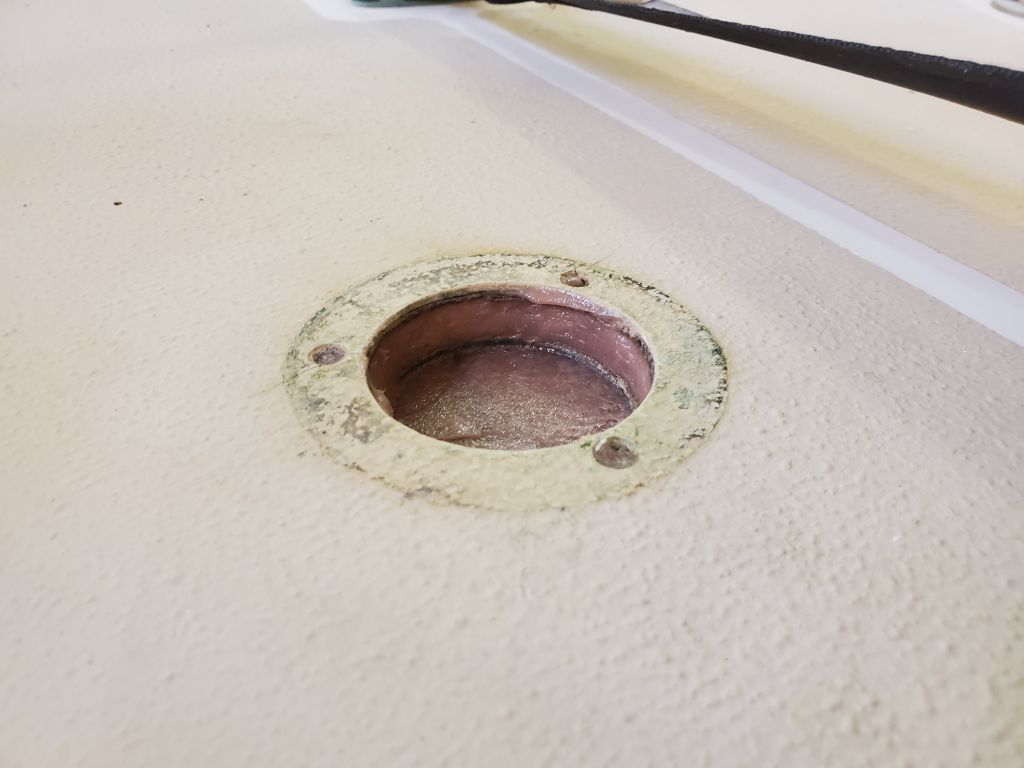
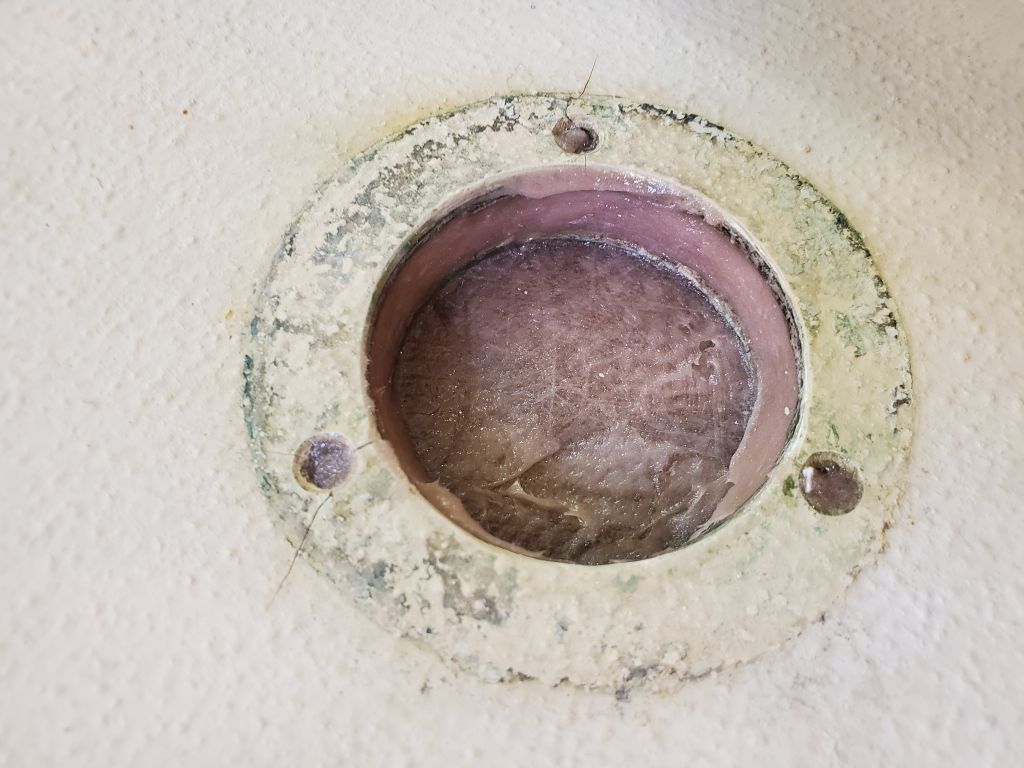
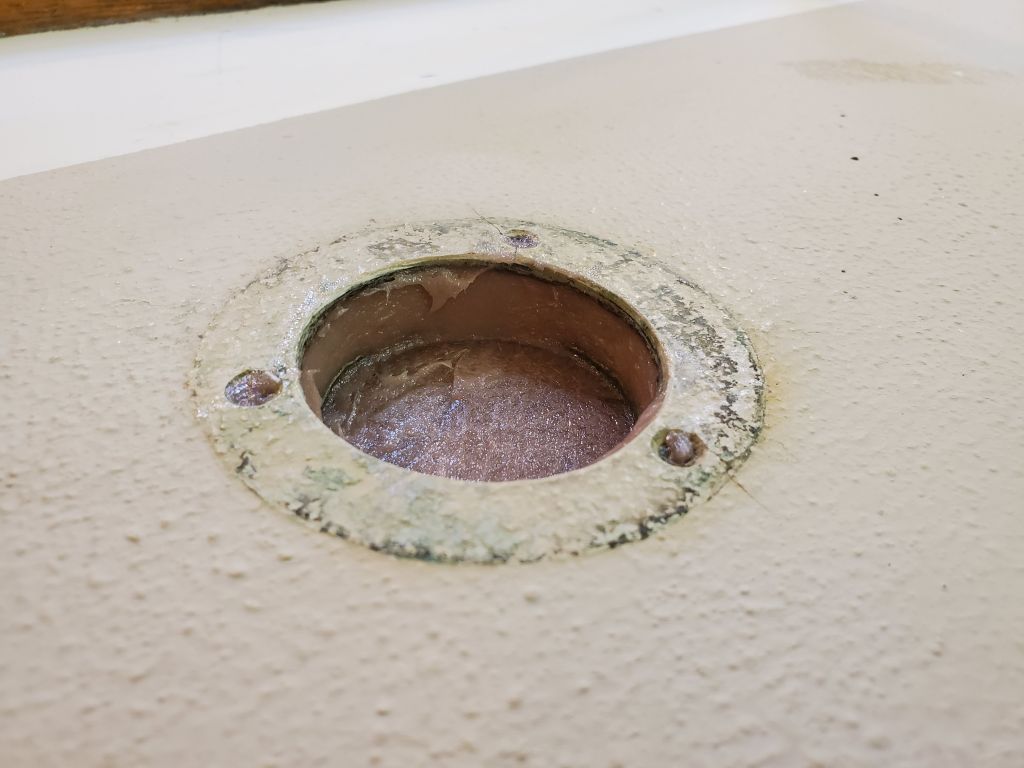
After getting set up with work lights, protective cloths and towels, and the like. the time came where I could start to look into one of the items on the list:  Cabin heat.  Somehow inevitably, if disappointingly, the expensive and complicated hydronic diesel heating boiler I’d installed at great length during the original restoration (which at the time I was doing for my own eventual use) had started to cause problems for the owner the year before–it had always been a fussy little thing anyway, but after experiencing problems lighting the boiler, he took it out and sent it to the service shop in Seattle.

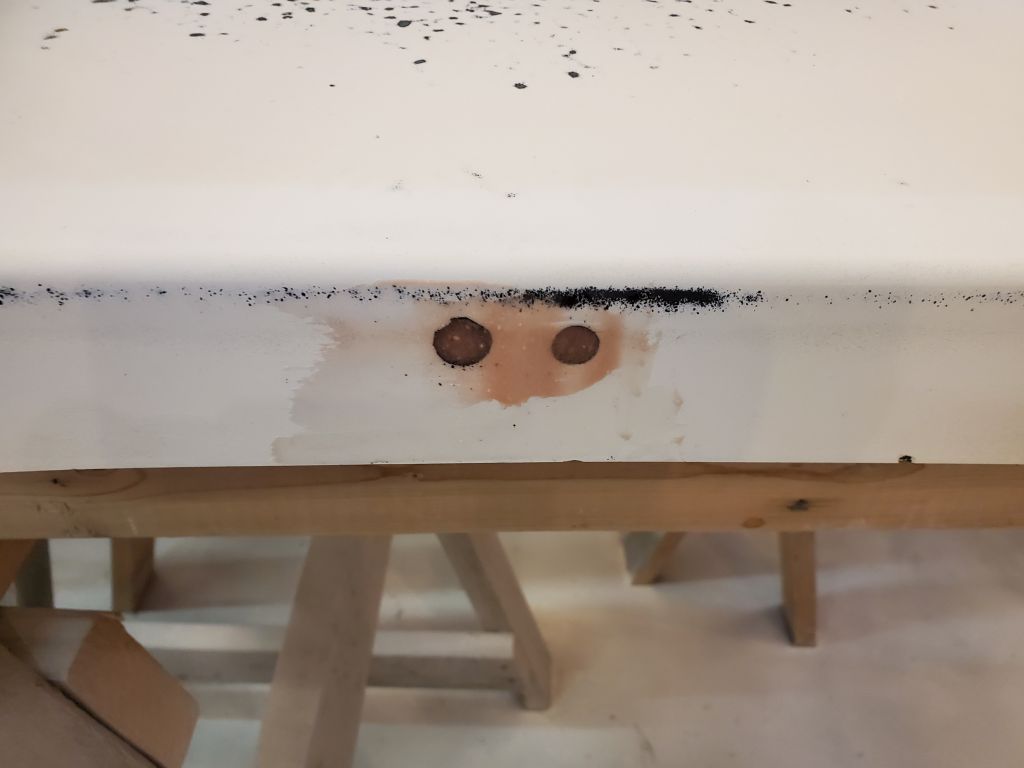
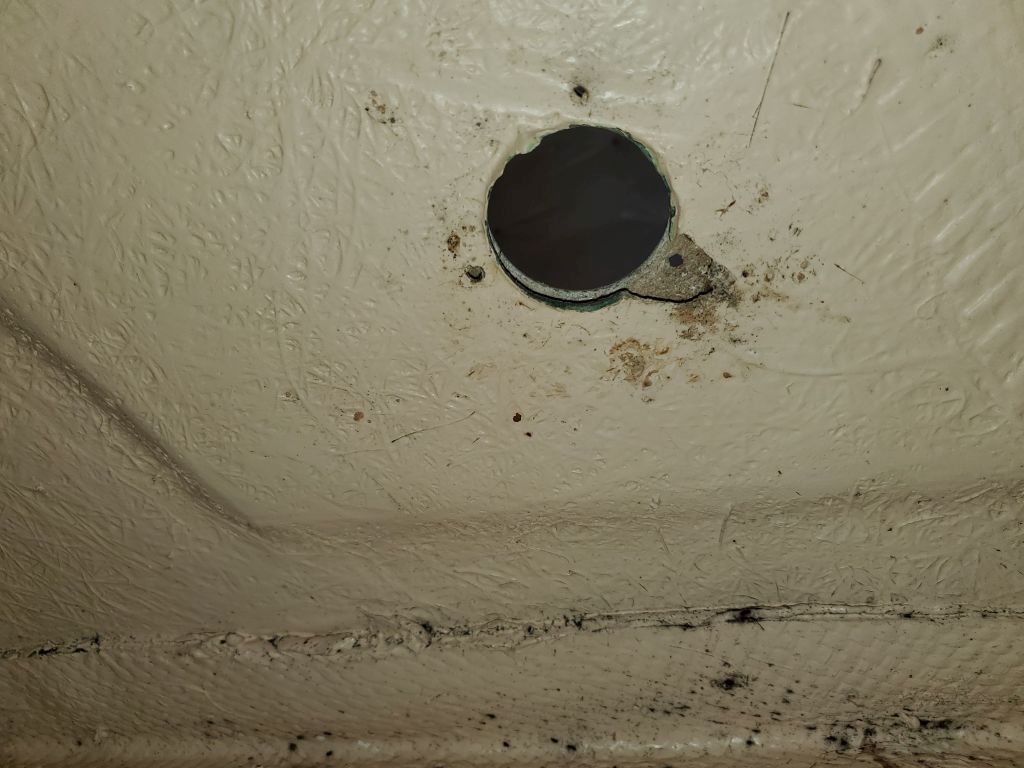
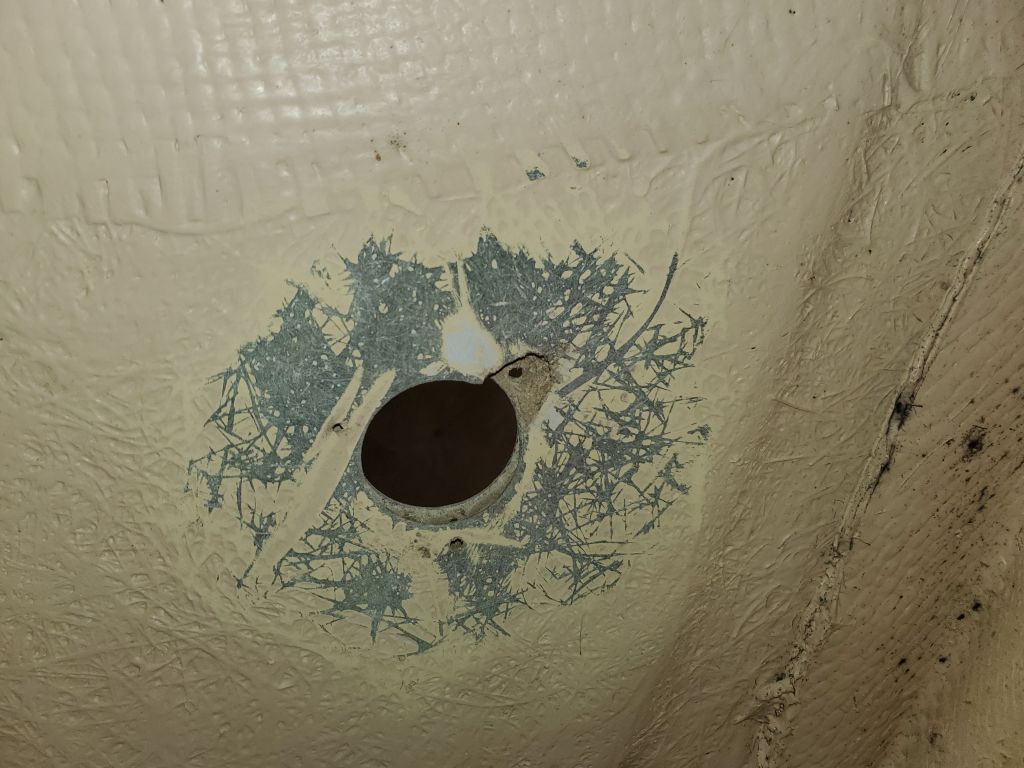
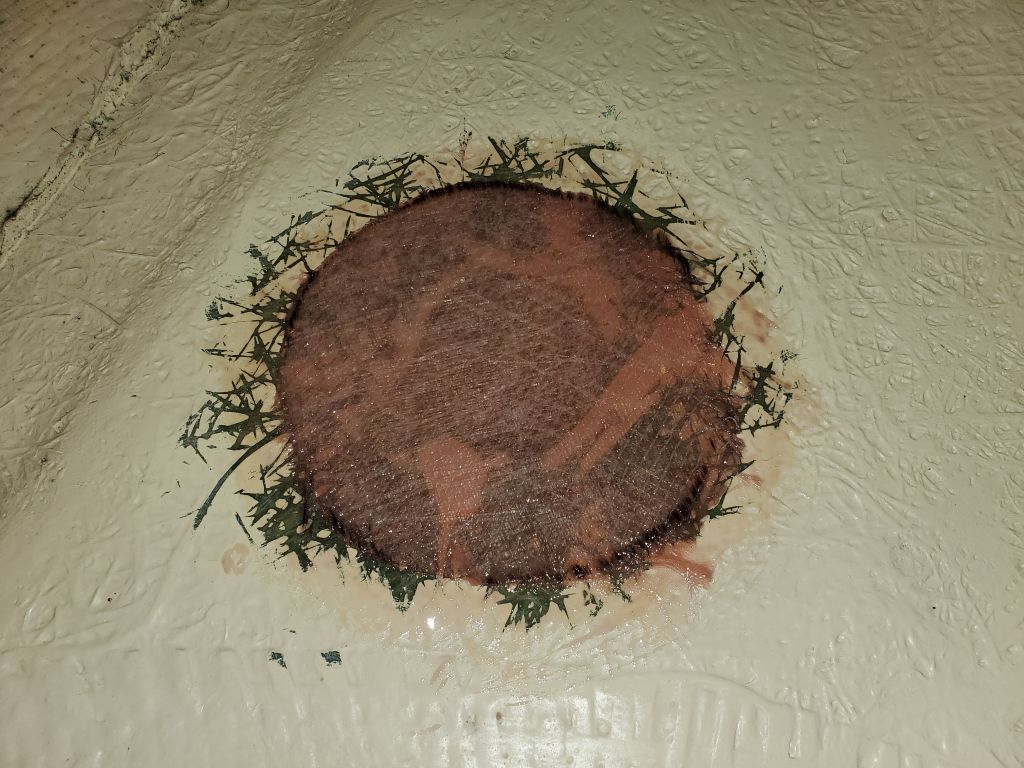
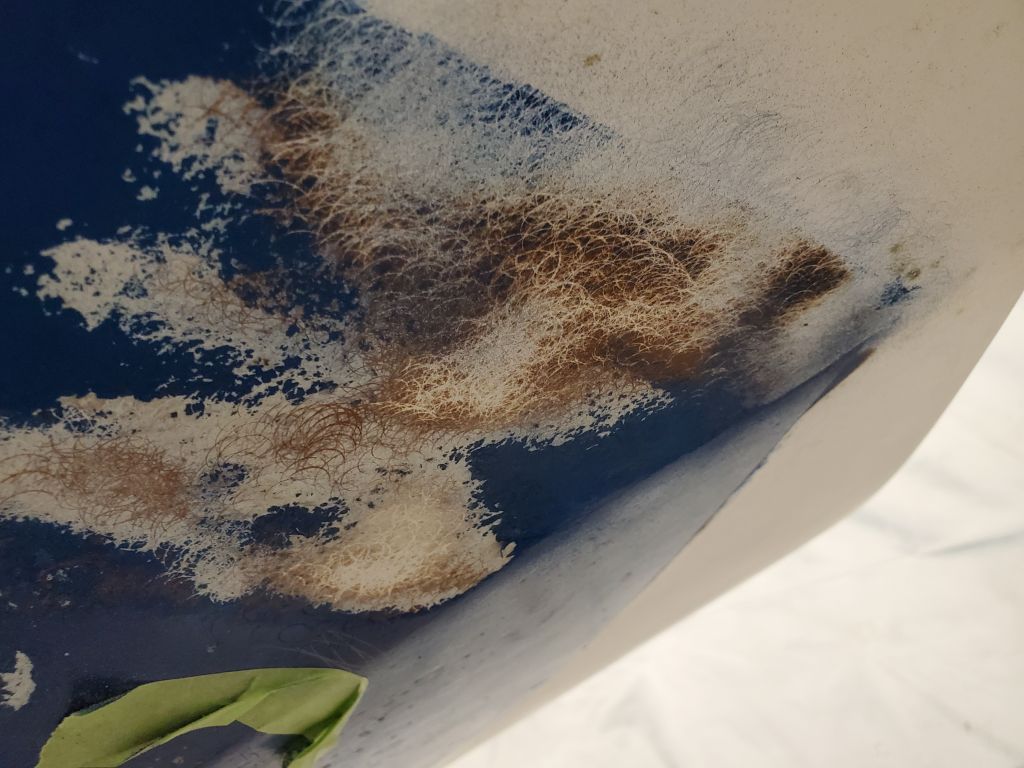
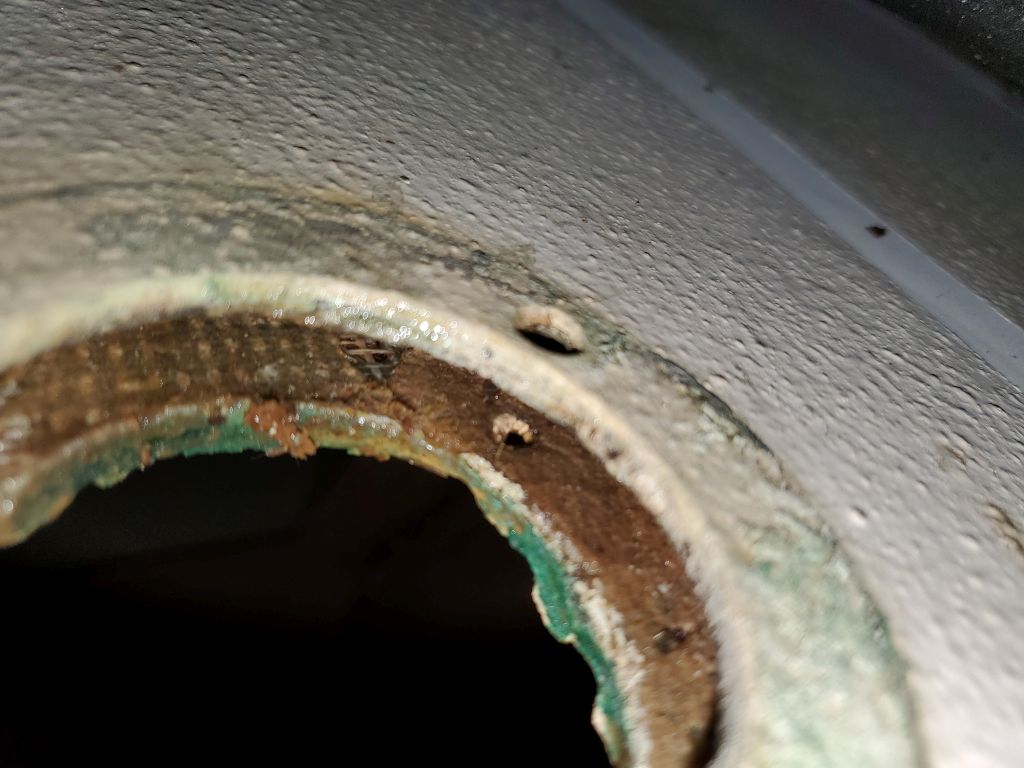
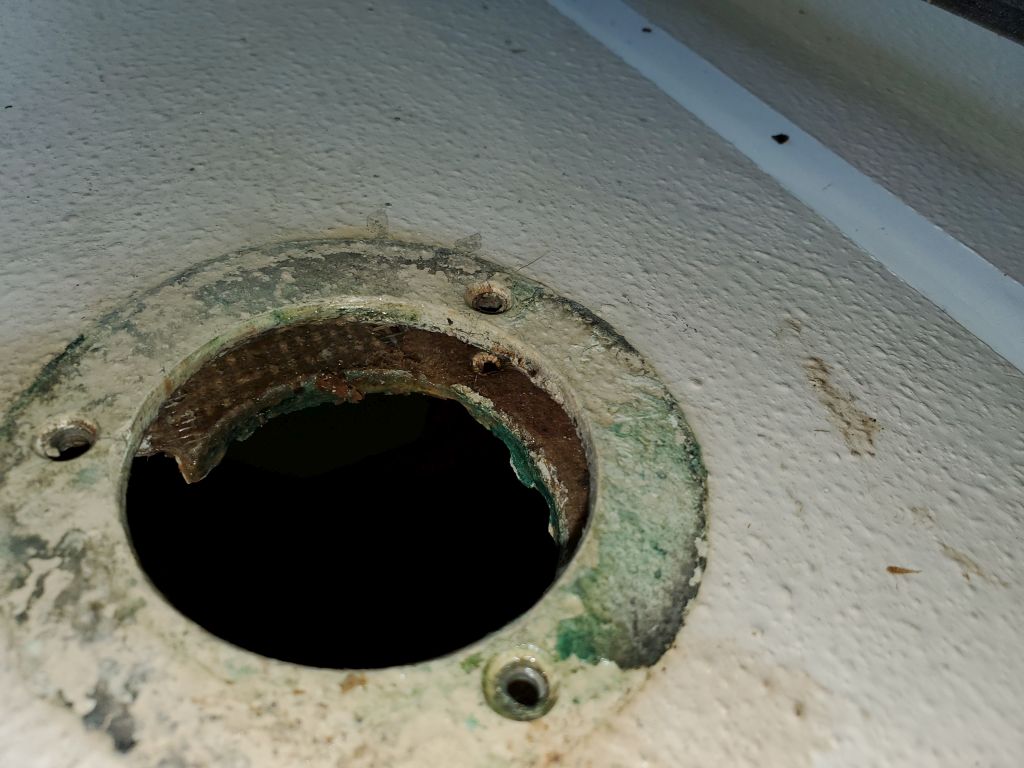
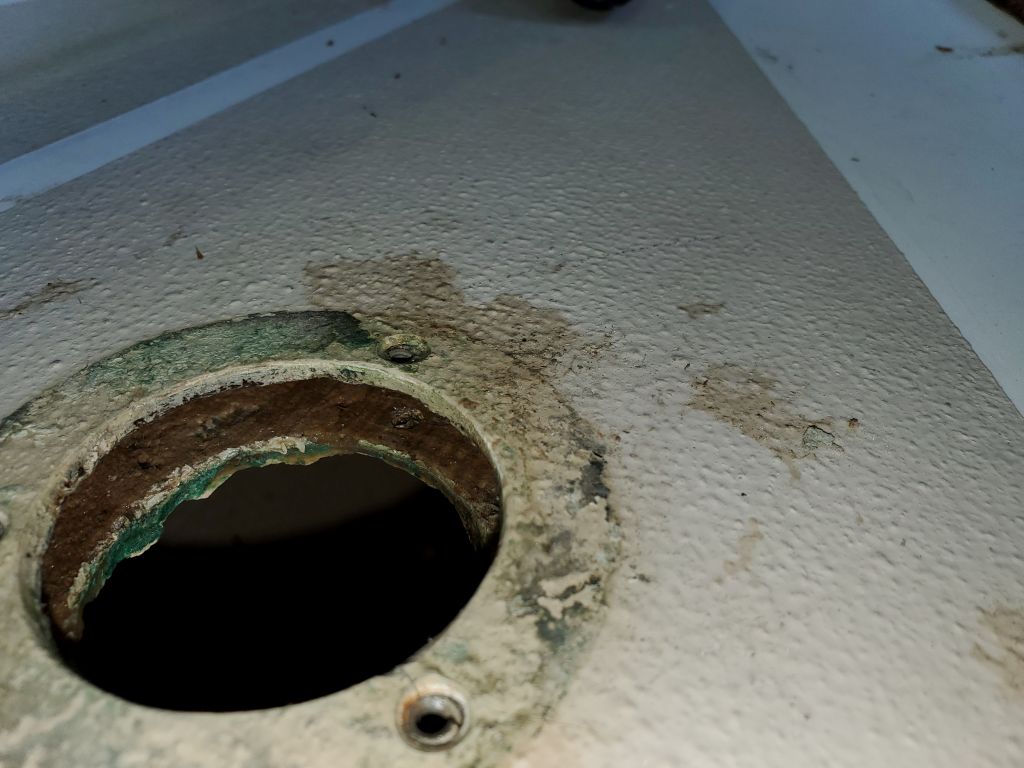
There, the technicians opened the unit and discovered extensive corrosion and other terrible damage:  The white pasty material in these photos is what forms from corroded aluminum.

This was obviously beyond repair, and diagnostics for the problem varied between the pH level in the coolant level being wrong to galvanic problems related to dissimilar metals and marine air.  Whatever the cause, it was clearly a devastating and disappointing development, but rather than attempt to install another, expensive boiler, the owner decided he preferred a simpler approach anyway.  As part of the work ahead for me in the shop this winter, the owner requested that I replumb parts of the existing heating system to simplify and to allow the engine coolant to heat the hot water and the circulation lines for the two heater fans in the boat.  I’d get to that in due course.

But for now my initial focus was on the other part of the new program to replace the heating system which, as requested by the owner, was possibly to install a small wood stove in the main cabin.  The owner selected the Cubic Mini, a compact, well-rated stove, and to begin the process I spent a fair bit of time researching the unit and various installation options and requirements so that I could determine how, where–and if–the stove would work as the owner hoped.

Armed with useful information regarding the minimum clearances from combustible materials and nearby surfaces, I could start planning the potential installation.

In addition to the stove and its related installation parts, for installation on a boat the flue required use of a Dickenson deck fitting and a couple different options for the Charley Noble.

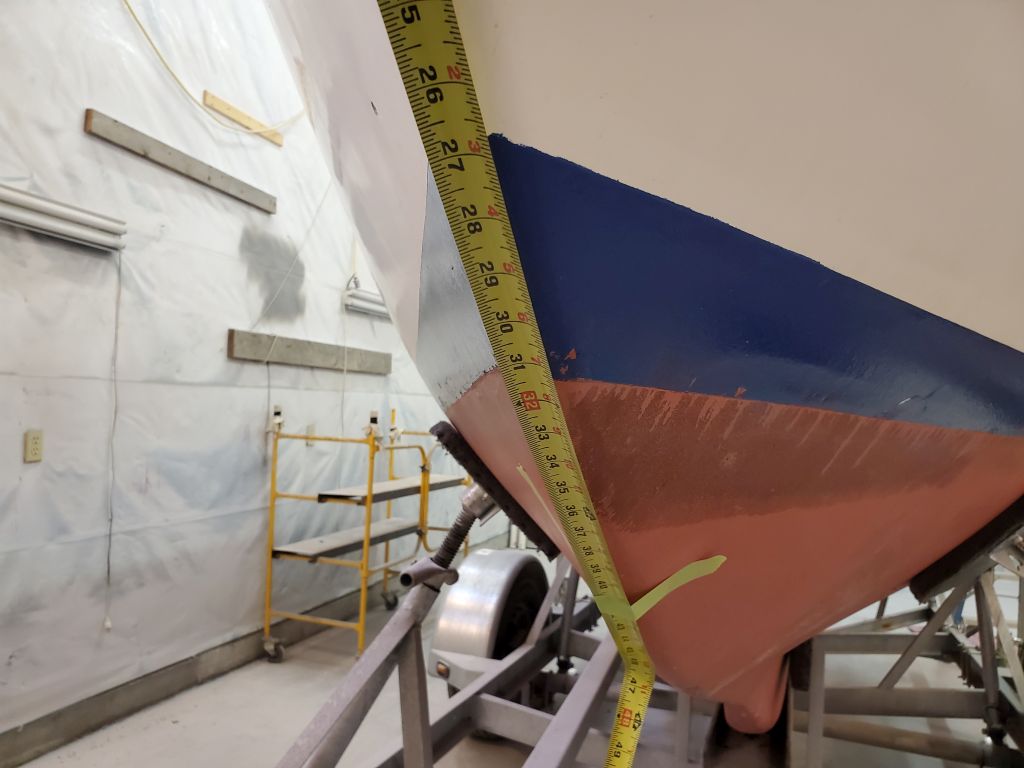
The location the owner envisioned, and frankly the only possible location on this boat, was the main bulkhead on the port side, at the forward end of the dinette.  Using the basic measurements listed above, and taking into account the required minimum clearances, I laid out the various installation measurements on the bulkhead, using green tape and a marker as needed.

First:  The minimum height of the top of the stove (i.e. the required 30″ from the overhead).  For this initial line, I chose the practical low point of the overhead above–just inboard of the light fixture on the bulkhead–since the overhead featured a camber and was thus lower further outboard than towards the centerline.

Clearly, any installation here was going to require that the existing backrest cushion be removed permanently, so I removed it now and continued with the initial layout measurements.  Here, I’ve marked the overall height of the stove and its base platform, measuring down 11-13/16″ from the first line.  This represented the lowest possible installation of the stove and its installation shielding based on the worst-case 30″ overhead clearance scenario I started with.

I also marked the top of the 4″ settee cushion, and measured between that and the bottom of the installation tray, which turned out to be 6″.

Next, I determined the nearest combustible material to the side, which in this case was the cushioned backrest/locker door located adjacent to the main bulkhead.   I used tape to make a mark on the main bulkhead to represent this.  Then, to ensure that the hinged backrest would ultimately clear the stove when installed, I made a mark roughly approximating the arc of the door’s operation, since the backrest was only a few inches aft of the bulkhead, and with a 10-9/16″ projection from the bulkhead, the stove would need to be located appropriately.

It was already pretty clear that the stove would require a side shield on the outboard side, but to be sure I measured 20″ from the point of closest combustible (the cushion in its closed position) and marked this accordingly.  Then, I marked the 3″ distance that the side shield would allow, if installed.  As expected the 20″ unshielded clearance requirement pushed the stove too far inboard on the bulkhead to fit, so the side shield would be required no matter where the stove was mounted.

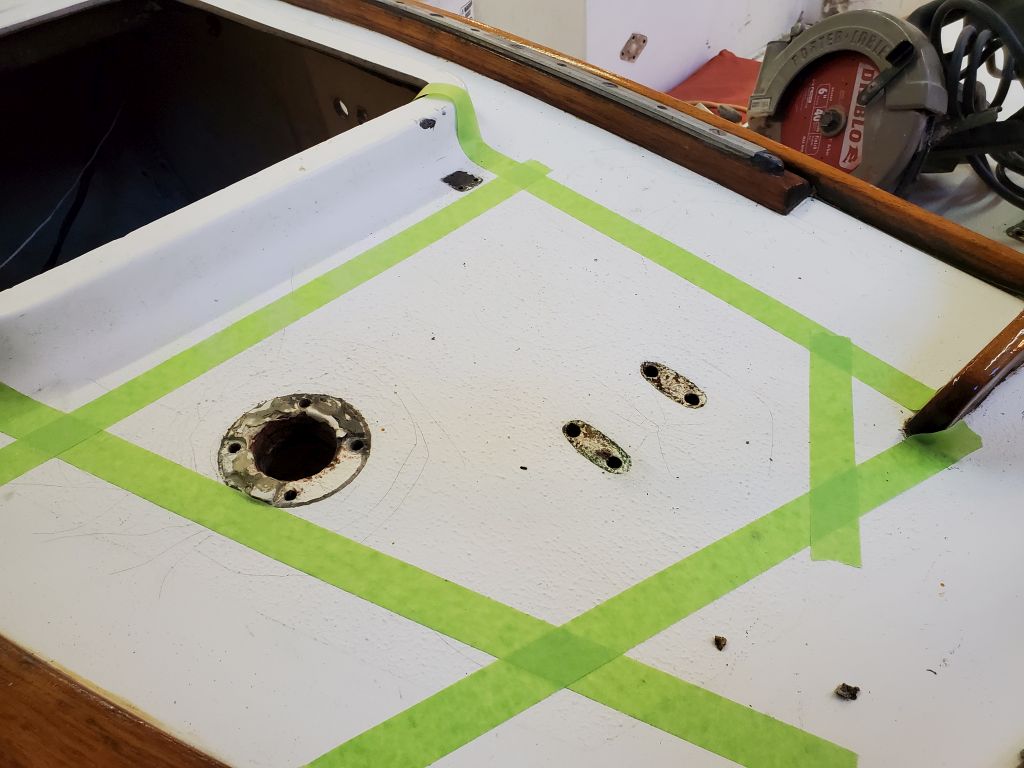
The next consideration was on deck itself:  Wherever the stove was mounted, its exhaust pipe needed to extend straight up (elbows were strongly discouraged by the stove manufacturer, though some installations apparently did use them), and there were limitations on deck as to where the deck fitting could be installed.  On this boat, there was a handrail with molded bases to port, and a raised section of deck along the centerline, both of which served to confine the practical mounting possibilities for the deck fitting and smoke pipe to a fairly narrow band, more or less in line with the 12″ deck hatch seen here.

Here, I saw no beneficial reason to force the stove outside these limits, since the downside of using any bends in the flue pipe more than outweighed any benefit for the potential stove location anyway (given its already strident limitations), so I planned to limit installation options to those places where the flue could remain straight.

Back in the cabin, I laid out the rough limits for the deck fitting on the overhead, and slightly down the bulkhead.

Now I made a simple cardboard template to the overall dimensions of the wall-mounted stove shield, which I could use on the bulkhead to illustrate the possible mounting locations while staying within all the required measurements and clearances I’d determined before.  I started out mounting this template in the center of the space I’d marked.  What the template doesn’t show is the depth of the stove, but other than appearance and functionality, there were no physical constraints to worry about in that direction.  If needed, I could make a 3-dimensional box to represent the stove’s actual size from here.

However, one final consideration that further limited the final stove placement was the overall base diameter of the deck fitting, which in this case was 7″.  So that meant that I needed to keep the edge of the stove pipe at least 3-1/2″ in from the edges of the deck area I’d marked out.  I made these marks on the bulkhead.

Now I could set up the template with the flue shield (and thus the flue itself) at the maximum limits of the space athwartships, given the requirements of the deck fitting flange, and with all other considerations also taken into account by default:  First all the way to port (where I made additional tape marks to show the stove location); then all the way to starboard.  The port-most location caused the edge of the stove shield and platform to interfere slightly with the arc of the hinged backrest, so in the final analysis and practically speaking, the furthest-to-port location would be an inch or two further inboard than shown here.

To my own way of thinking, I saw little benefit to installing the stove anywhere but the middle of the space (i.e. with the deck fitting and stove pipe in the center of the available deck area), but the ultimate height and choice of the Charley Noble and how that interacted with the boom vang or other such considerations still needed to be taken into account, even though the Charley noble would be removable and replaced with a rain cap that would minimize the height of the chimney during most sailing maneuvers.  Still, we must thusly consider all variables.

With the initial layout possibilities complete, and a better understanding of how the stove and its venting would work, now it was up to the owner to decide if the proposed installation met his expectations or not.  If so, we’d be able to order the stove, which had a fairly lengthy lead time, in order to ensure it arrived with plenty of time to do the installation.

Total time billed on this job today:  4.5 hours

0600 Weather Observation:  27°, clear.  Forecast for the day:  Sunny and windy, 31°

Skeedeen Phase 6-37

Tuesday

The project was mainly finished for now, other than a few final details.  In the morning, Jason, the contractor building the winter cover, came by to measure for the cover so he could begin building it before a final fitting in a week or so.  Afterwards, I reassembled and reinstalled the companionway hatches and bifold doors, the last of the brightwork to go back aboard.

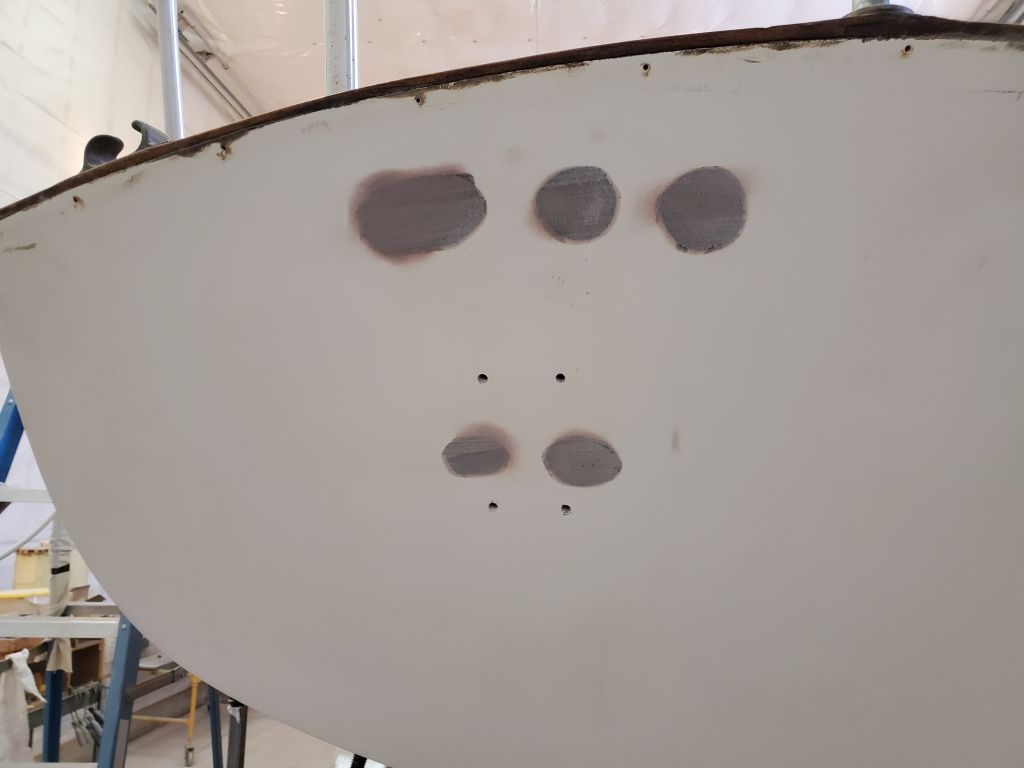
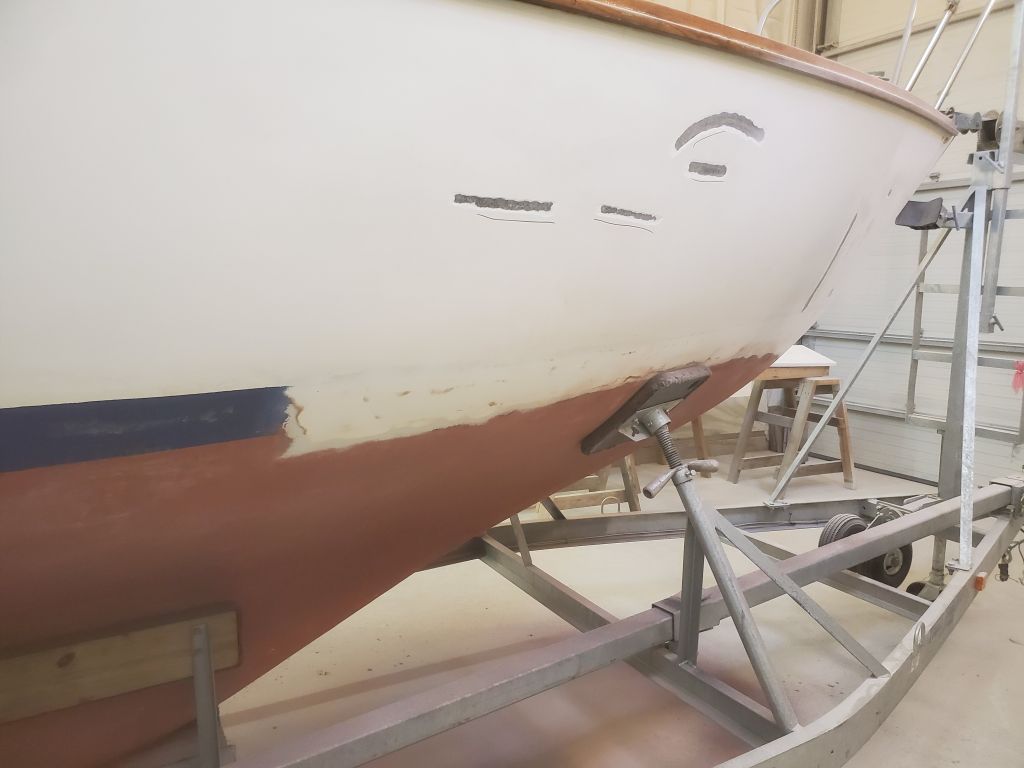
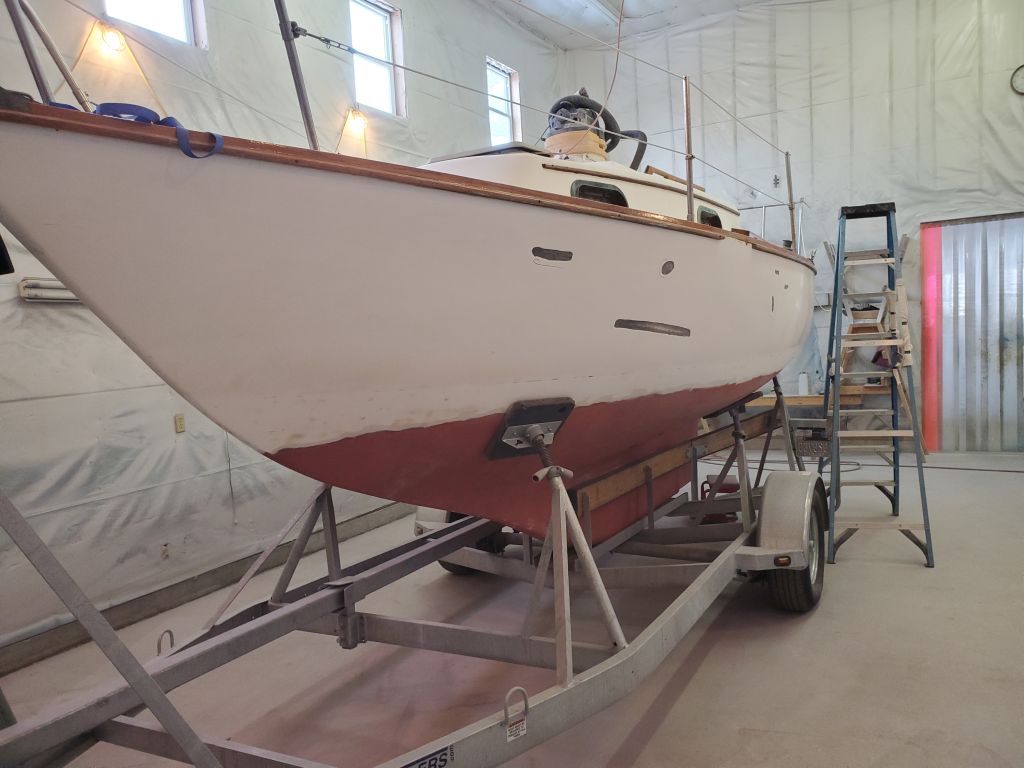
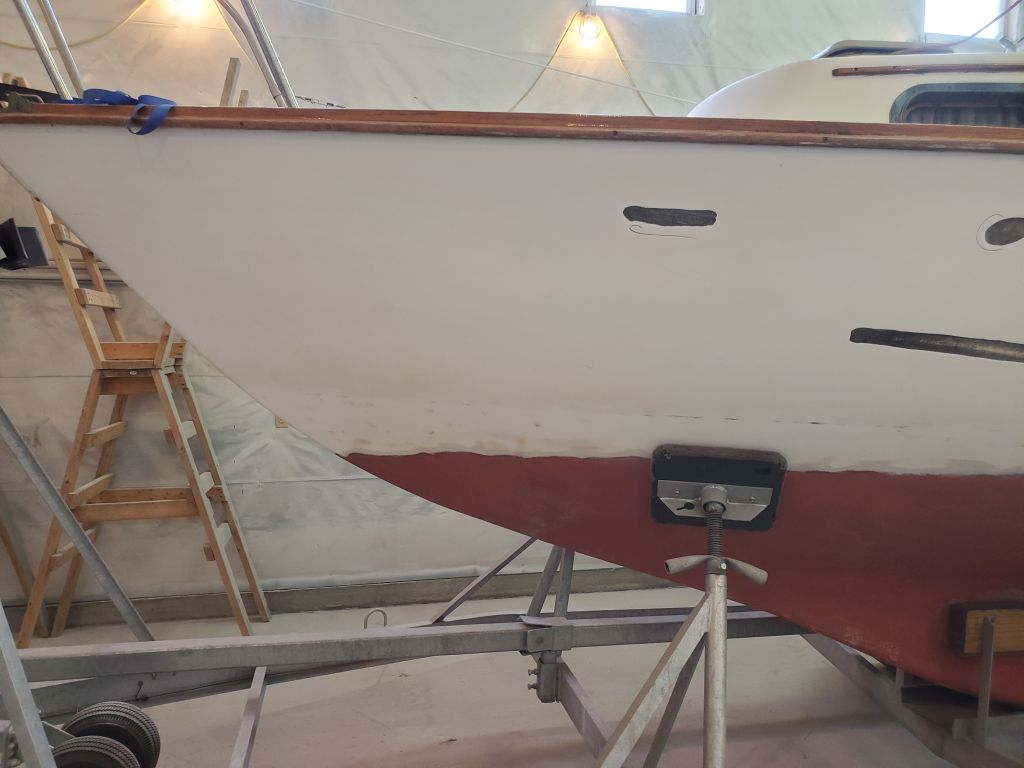
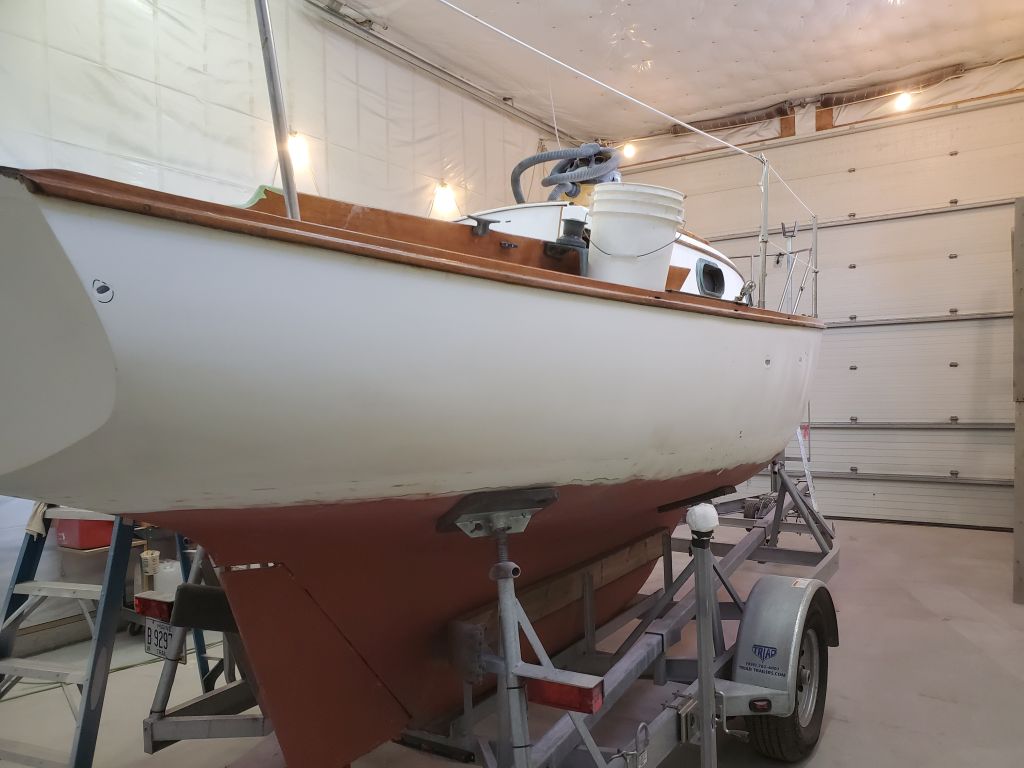
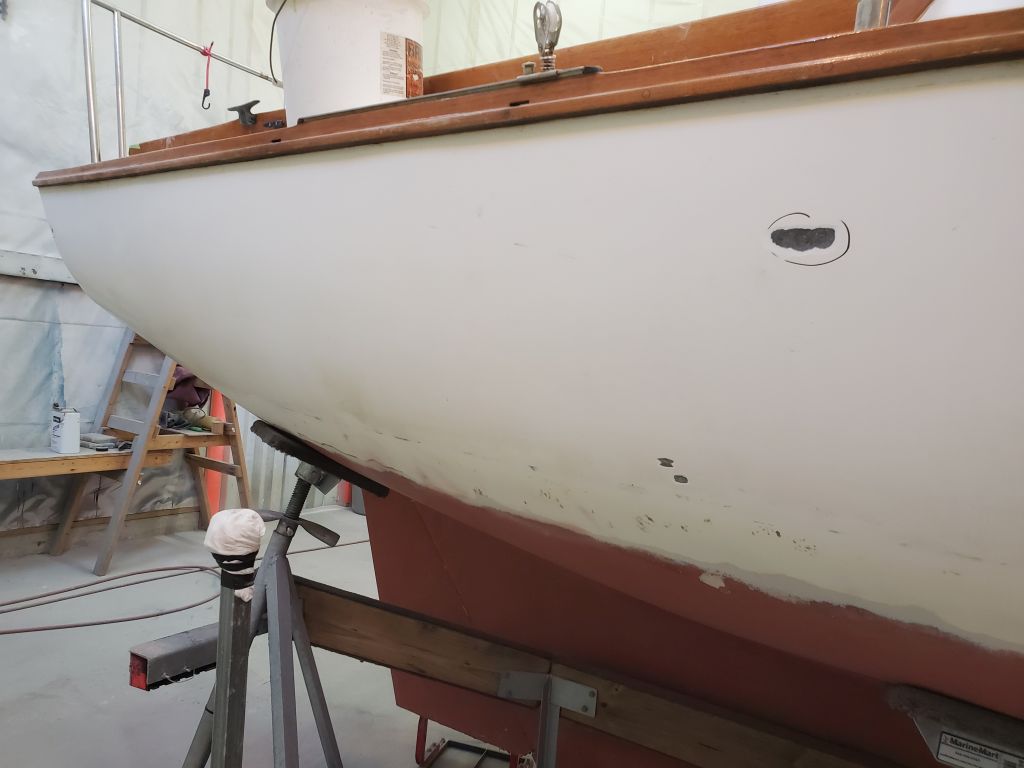
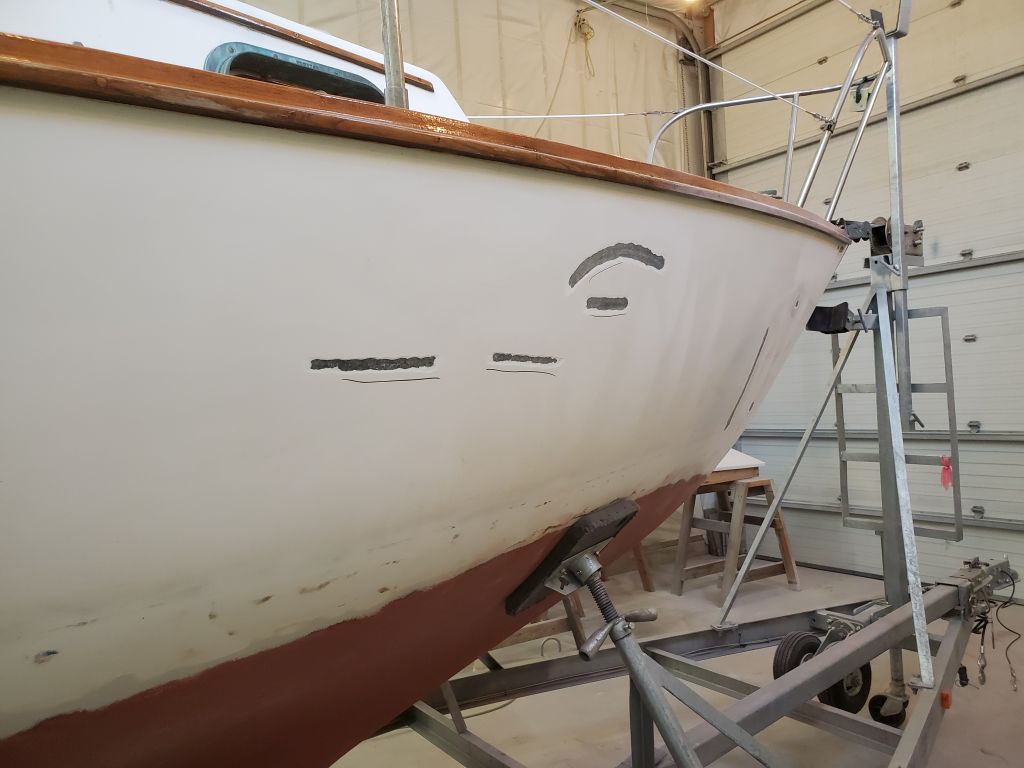
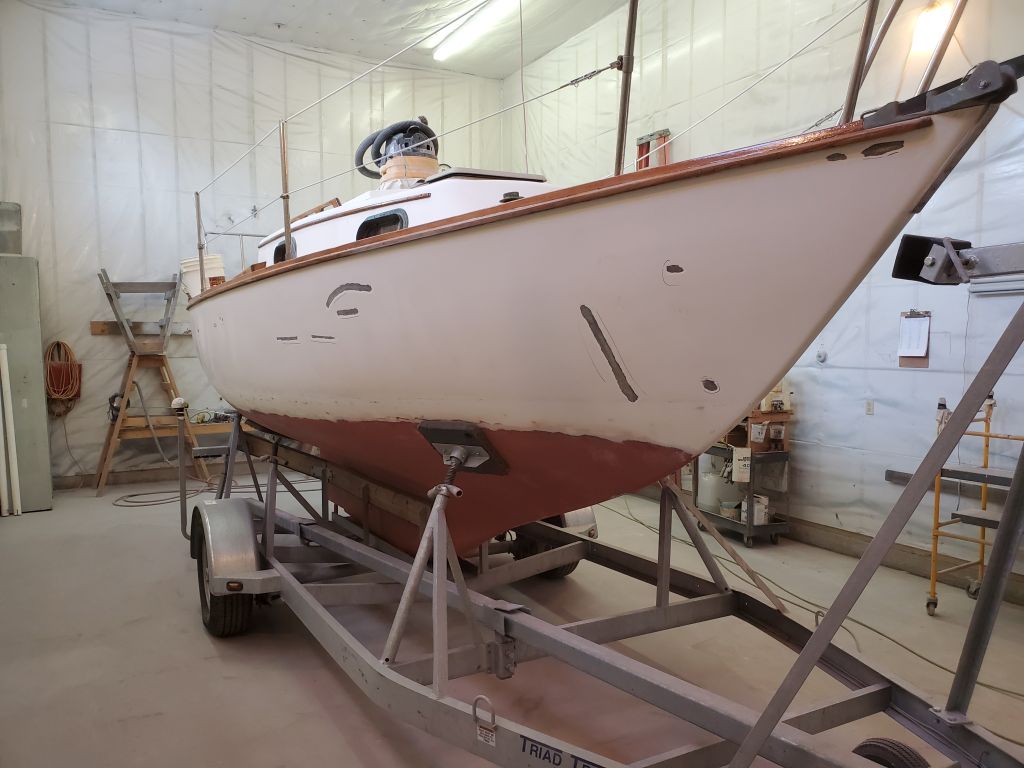
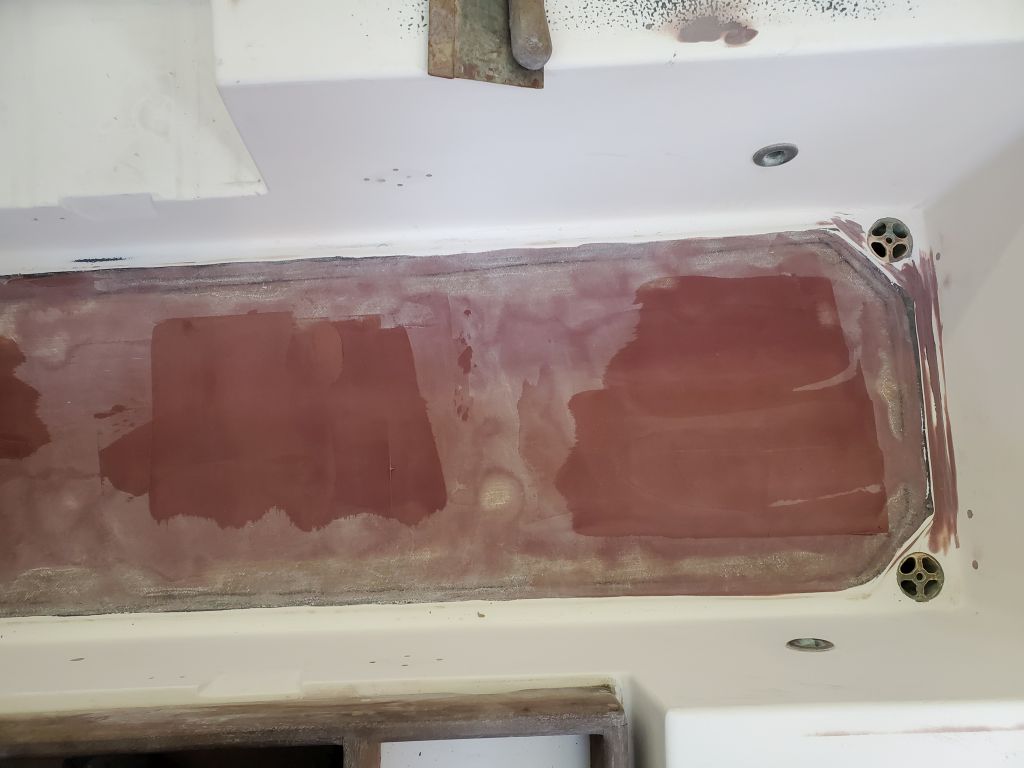
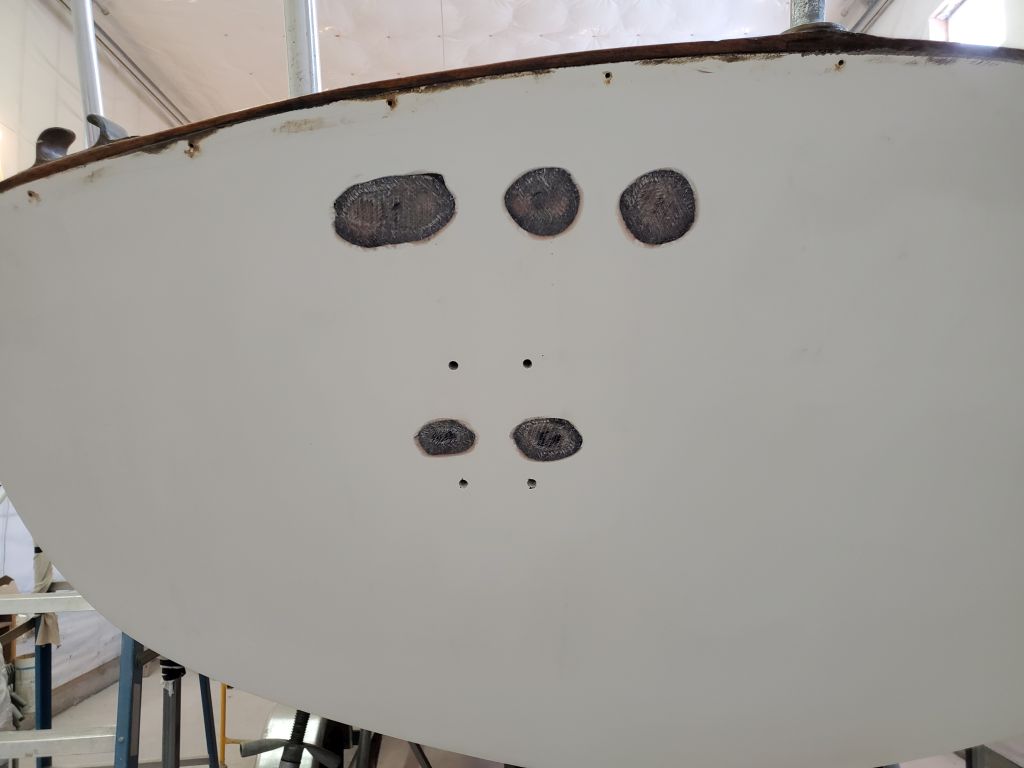
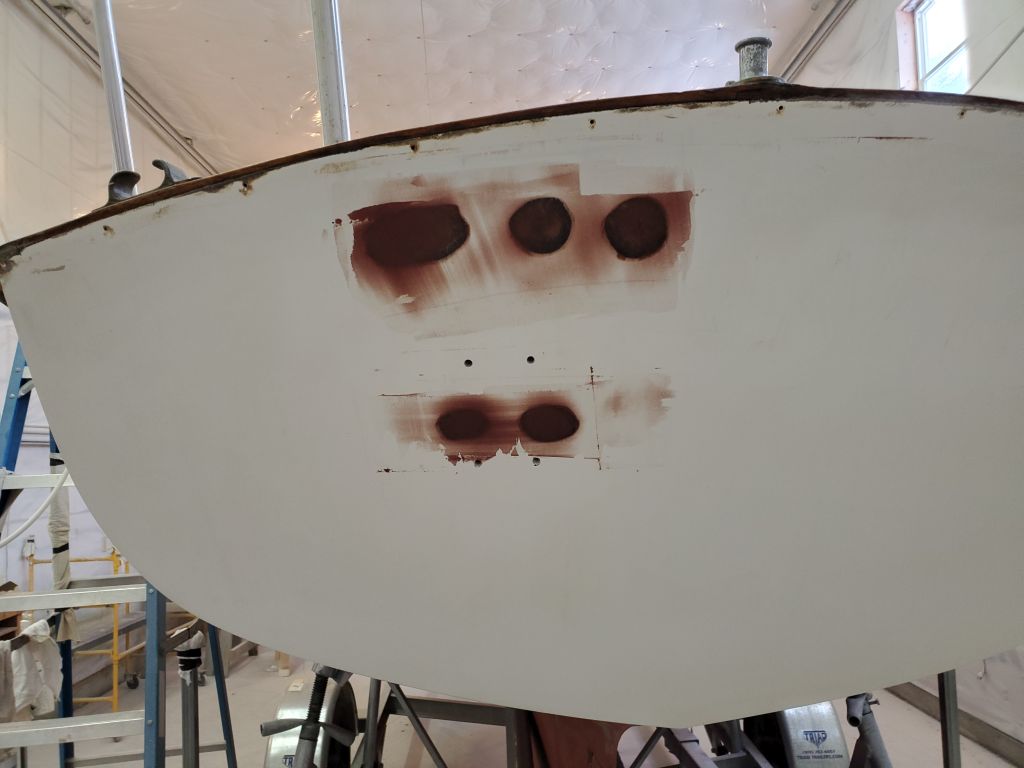
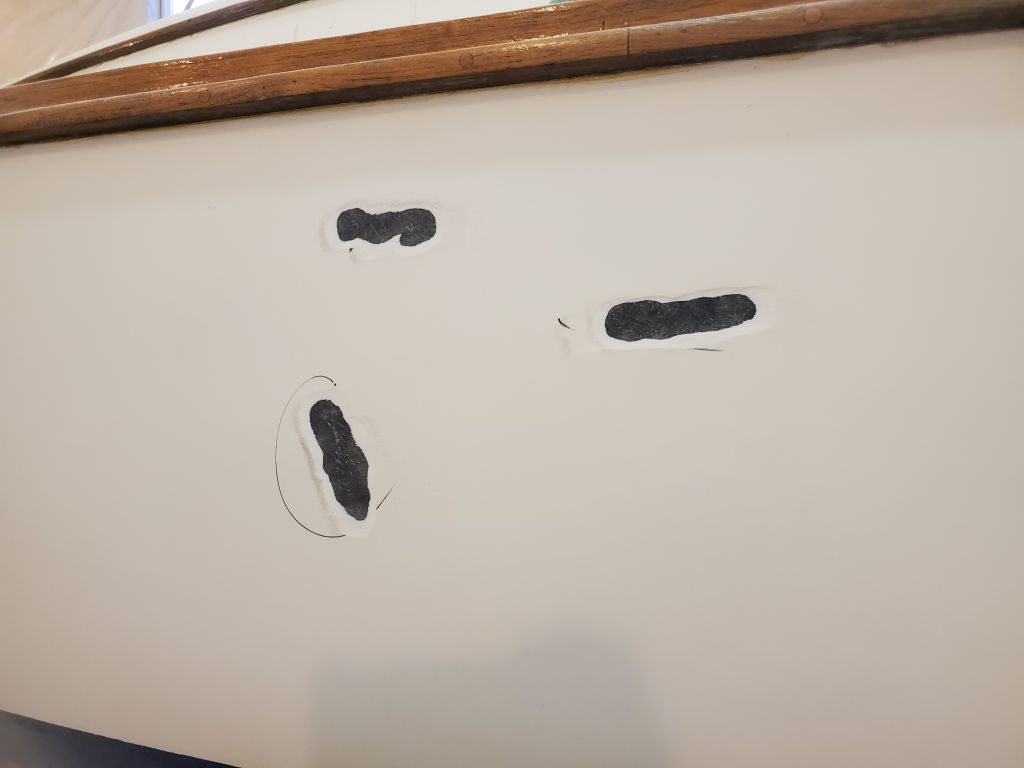
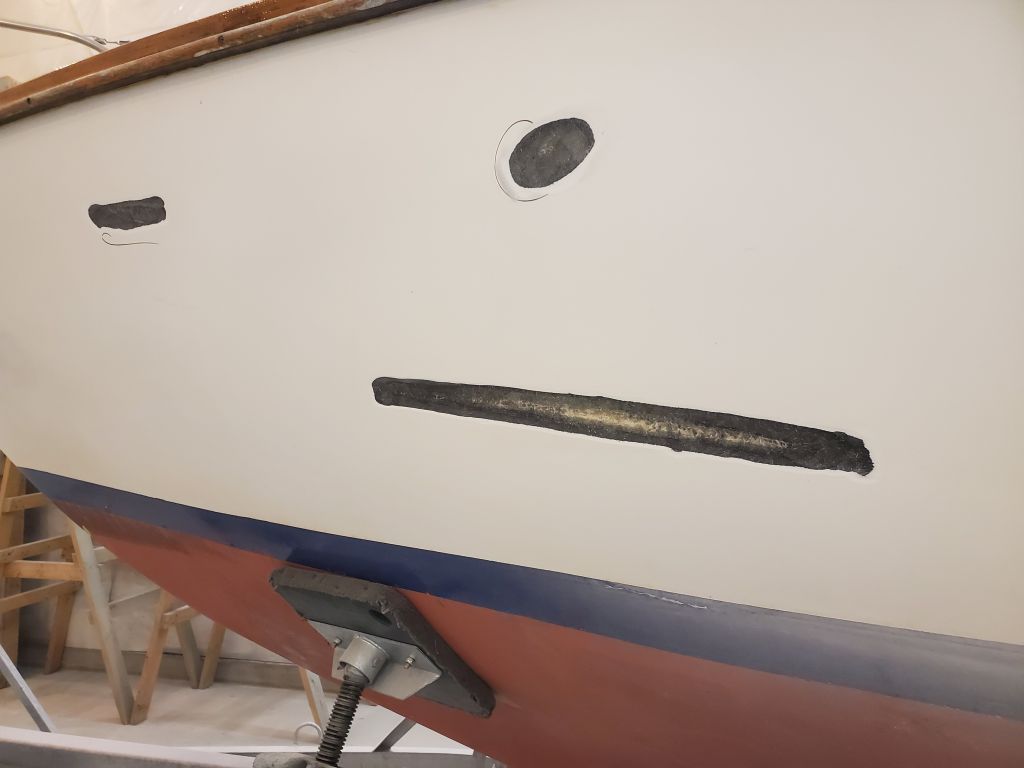
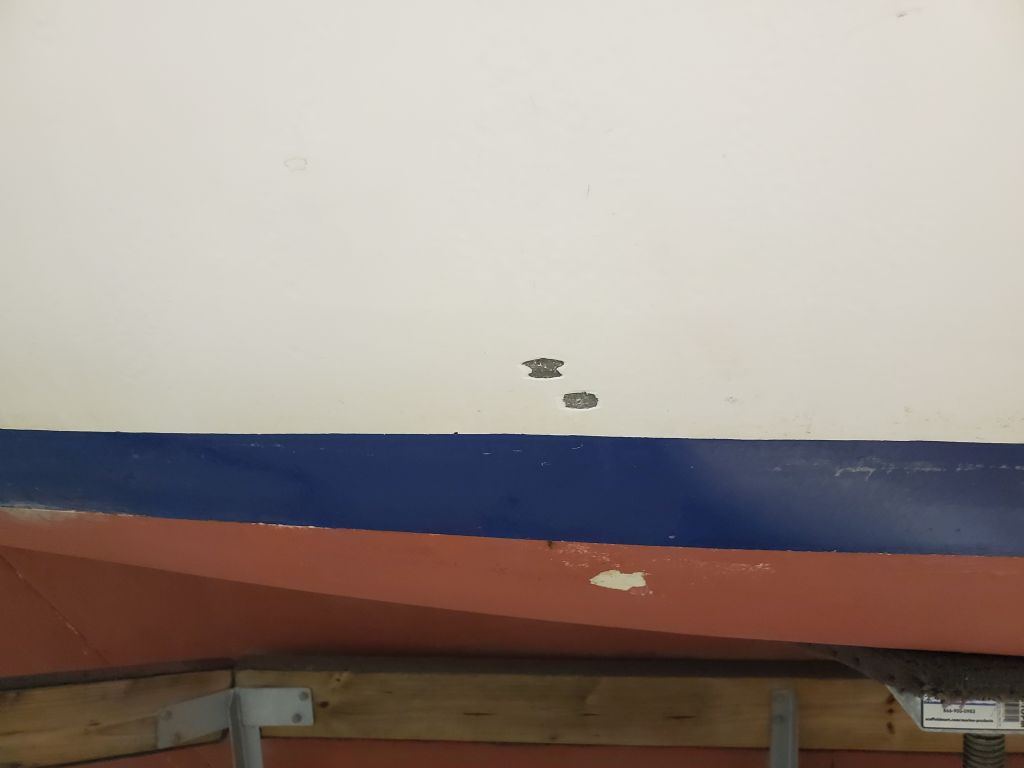
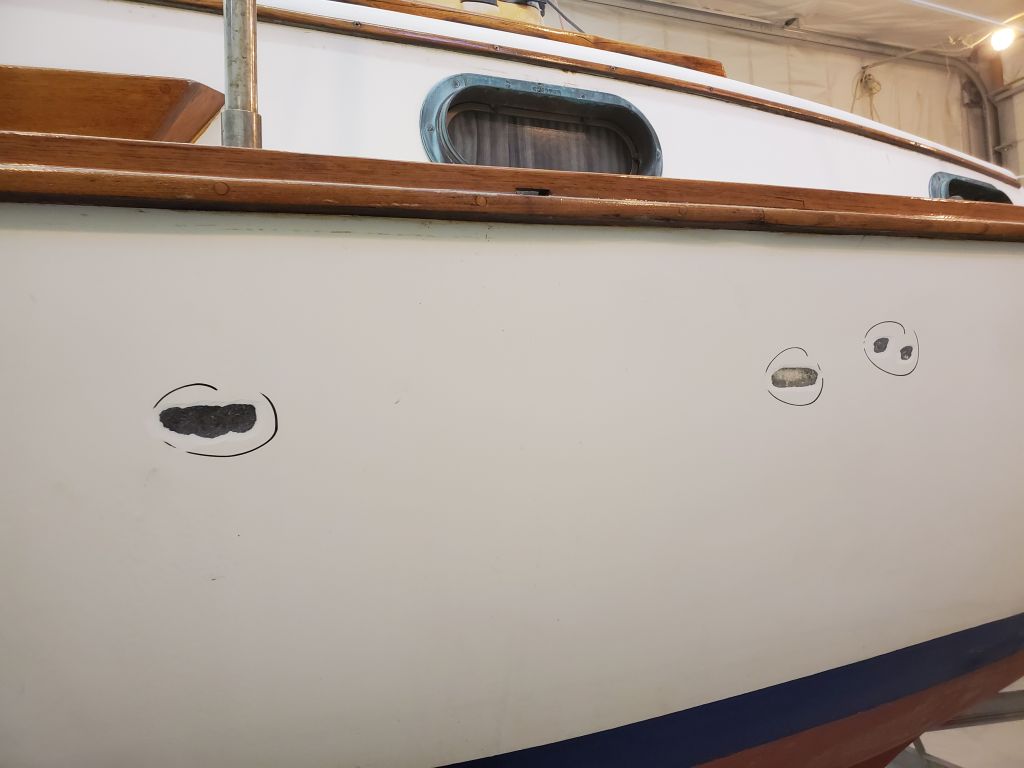
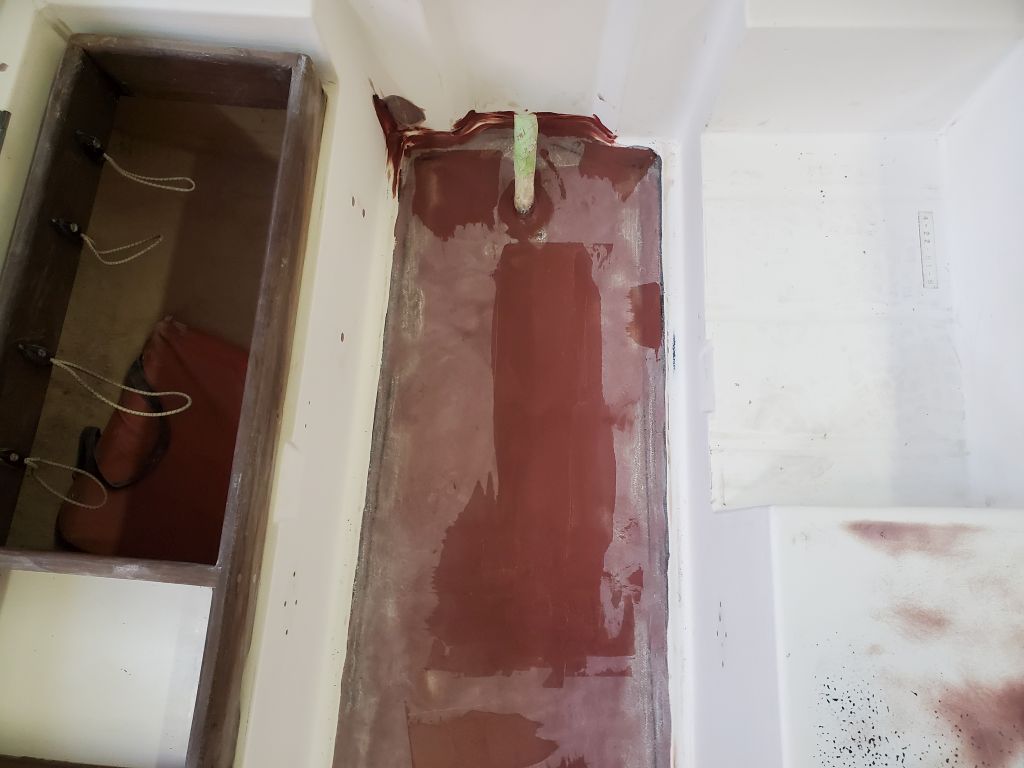
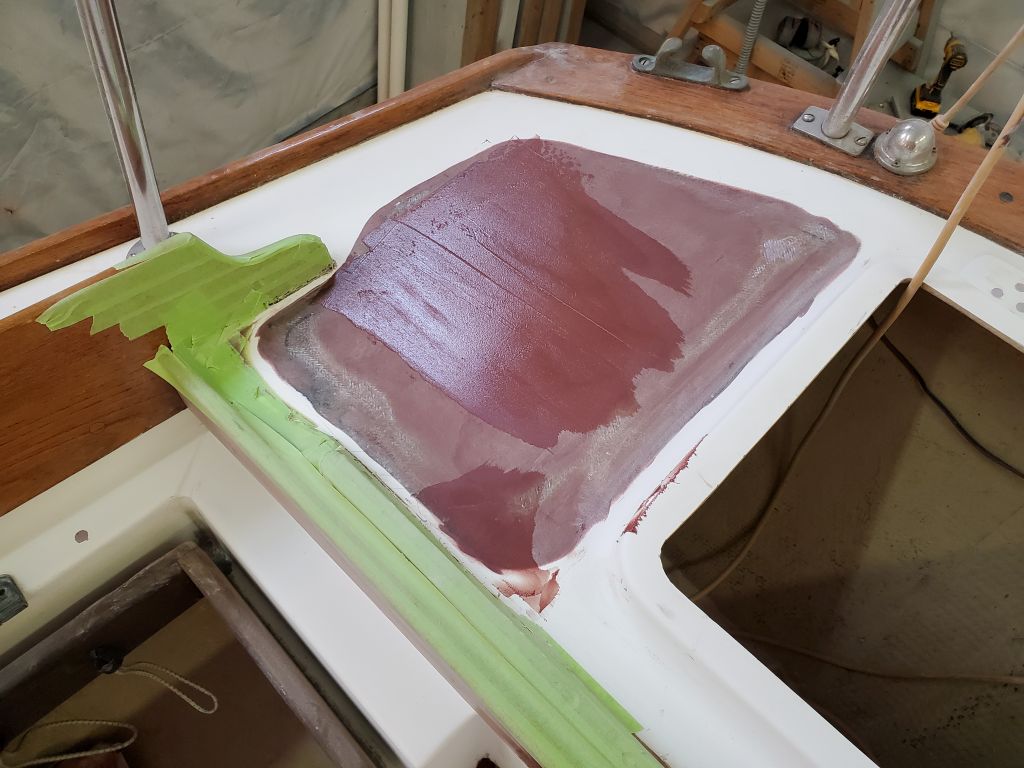
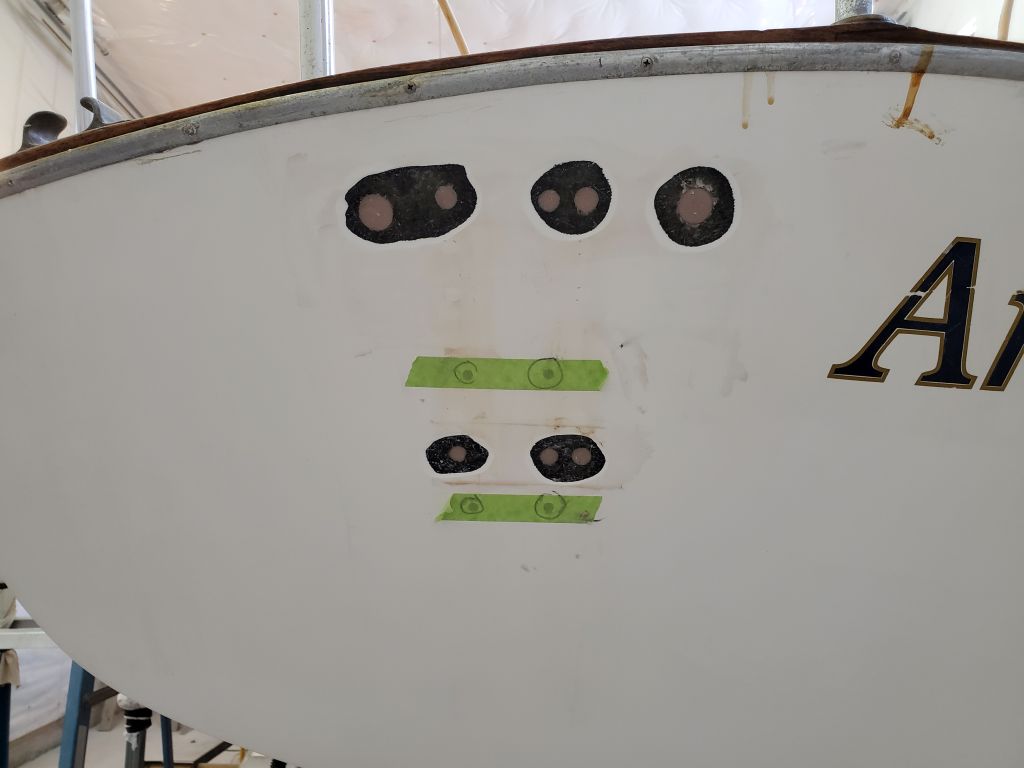
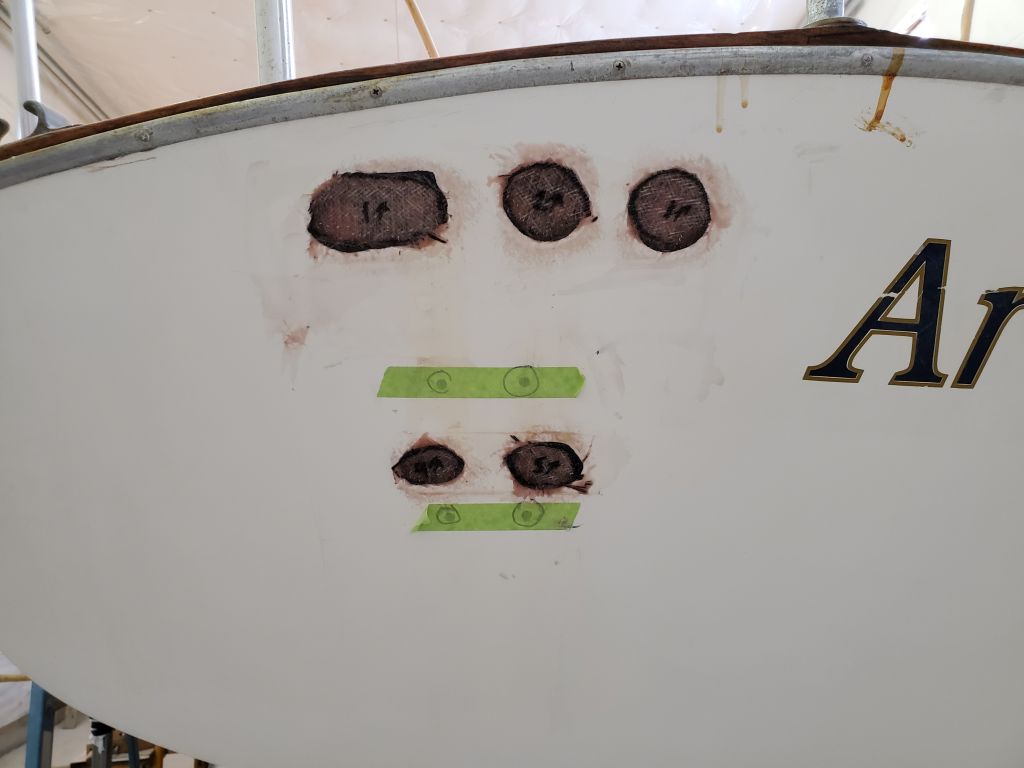
To finish up the through hull patches on the bottom, I applied a coat of unthickened epoxy to seal the fairing compound and new fiberglass.  Once this cured overnight, I’d lightly sand and apply some bottom paint over the patches.

The last detail on the transom was the flaps over the cockpit scupper openings.  The original flaps had been a sort of cobbed-together arrangement of something like Irish felt and half oval, and while these may have been effective they were not overly attractive.  So early in the project, the owner and I decided to replace them with new plastic flaps, but as the transom work progressed it became clear that installing molded ivory plastic flaps in the middle of the beautiful “wooden” transom would be a travesty.  Fortunately, I was able to ask Renee, the artist who did the transom work, to take the new scuppers and similarly faux-finish them so they’d blend in better with their surrounds.  With the completed units back on hand, now I could install them and complete the transom work.

Total time billed on this job today:   1.5 hours

0600 Weather Observation:  36°, partly cloudy.  Forecast for the day:  Partly sunny, 43°

Skeedeen Phase 6-36

Monday

For the long-term benefit, and also to protect the new paint from damage from standard tarps, the owner ordered a custom, fitted winter cover for the boat this season, and to begin the process my first step was to build a solid, simple, and hopefully easily-reusable frame for the cover.  Once that was done, the contractor could come in for measurements and fitting.

I’d been unhappy using dimensional lumber for frames over the years, as the lumber tended to twist and warp out of shape, causing installation and other problems.  Finding ways to join pieces of lumber and connecting them easily, strongly, and in a removable/reassemble-able  way also had caused issues, largely because the wood would swell around bolts and make removal or installation difficult, sort of at odds with the entire premise.

On a small frame I built earlier in the year for a small boat of my own, I tried flush T-nuts as a way to secure braces and joints in a 2×4 frame, hoping that the threaded inserts would make installing and disassembling the frame easy, but found that the wood was too unstable and soft, which allowed the barbed nuts to spin within the lumber, and ultimately I had to replace them with through bolts–exactly what I’d been trying to avoid.  This was a disappointment since this small frame was intended as a sort of test bed for Skeedeen’s frame, but ultimately it served its purpose, both as a frame and as a learning experience.

Ultimately, for Skeedeen I decided to build a frame from two layers of laminated plywood, which I hoped would help avoid the moisture and warping problems associated with the framing lumber.  This method would also allow simple, flush joints between lengths of the ridgepole.  To help deal with the wood swelling around the fasteners, which always made removal (in particular) and installation more difficult than it should be, I found some LDPE spacers (3/4″ diameter and 1-1/2″ long with a 3/8″ hole) that I hoped would work.

I chose 3/4″ pressure-treated plywood for the job, less because I thought the treatment was required and more because I felt the glue would hold up better over time.  (I had a sheet of this flat on the ground and half buried outside my shop for 15 years, and when I removed it to throw away this past summer it was completely sound, if waterlogged:  I could have still used it if I’d wanted.)  So, armed with a supply of plywood for the job, I began by milling the sheet into 3″ wide strips, from which I’d build all the frame pieces.

With some general measurements for the length of the main part of the ridgepole, I assembled three lengths of my raw material–two layers of the plywood glued and screwed together.  At the butt joints, I staggered the ends to create a removable, flush joint that I could bolt together.  With the first three sections secured together on the bench, I rounded over the top edges with a router and 1/2″ bit to ease the corners for the cover.  At each of the two butt joints, I secured the ridge with three bolts, using the plastic spacers through the wood.

Even though the bimini frame would be lowered for the cover, to ensure ample angle and snow-shedding capability, for now I left it in place so I could use it to help get the framing set up, and also to establish the height of the ridge.  I used this measurement to build three vertical supports in the cockpit, and a shorter one forward of the windshield to support the ridge.  I secured the verticals with ratchet straps and line as needed to stabilize the whole frame.  At the top of each vertical, I created a simple pocked with a pair of plywood pieces, which cradled the ridgepole within and accepted a single bolt to secure things there.

To finish off the forward end of the frame, I ran a final piece of ridge to the top of the pulpit, where I notched the frame accordingly, and built two angled braces to support the joint where the downward-angled piece met the horizontal ridge aft.

With the design of the vertical supports essentially self-supporting, I hoped that future installations and removals would be straightforward enough, whether the ridge was installed piecemeal or in one pre-assembled section (as I did).  The initial construction, including sourcing the materials, took the whole day, but I thought that annual installation of the frame should only take about an hour thanks to its simple design.

Next:  The cover.

Total time billed on this job today:  7.5 hours

0600 Weather Observation:  40°, partly cloudy.  Forecast for the day:  Sun and clouds, 50°
Skeedeen Phase 6-35

Friday

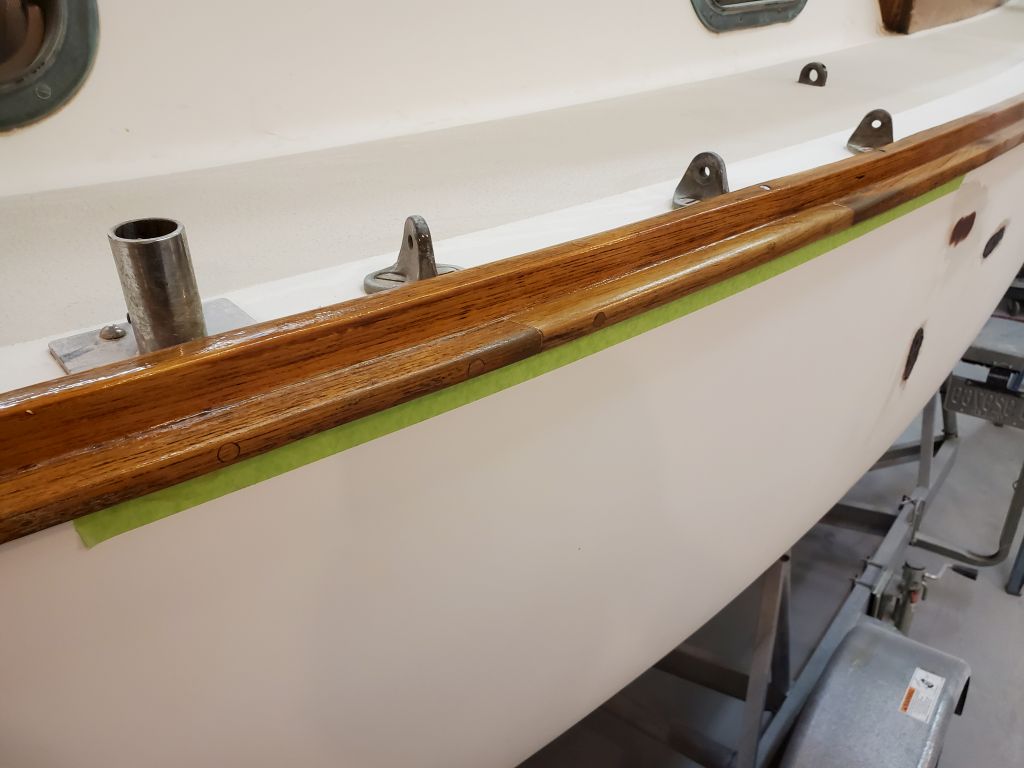
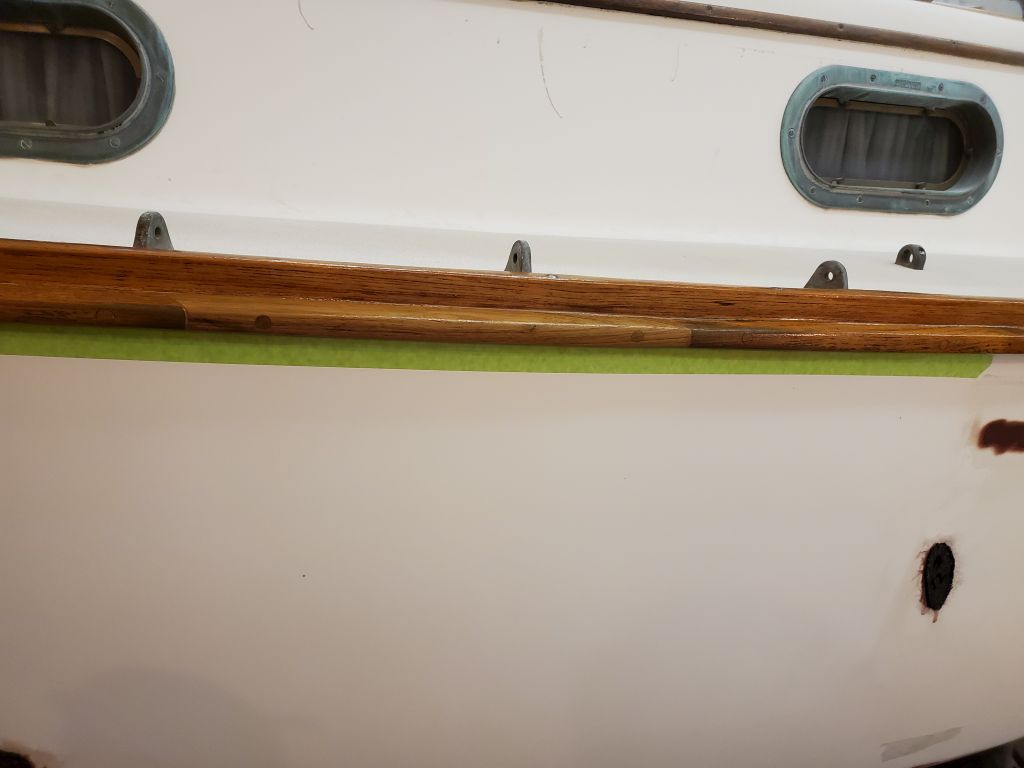
In a morning work session, I mostly finished up the work on Skeedeen, starting with removing the masking tape from the brightwork maintenance, and ending with reinstalling hardware and most of the wooden trim I’d removed for maintenance.

Still ahead:  Finishing up the companionway, a few odds and ends, and building a frame for a new fitted winter cover.

Total time billed on this job today:  3 hours

0600 Weather Observation:  34°, mainly cloudy.   Forecast for the day:  Cloudy with rain in the afternoon, 43°
Skeedeen Phase 6-34

Thursday

As is my wont, I started the day with a brief round of sanding on the companionway doors and hatches to prepare them for a second coat of maintenance varnish.  I also sanded and varnished again one of the cabintop handrails, as this one had worn strangely the season before and I wanted to get some extra coats of varnish on it now.

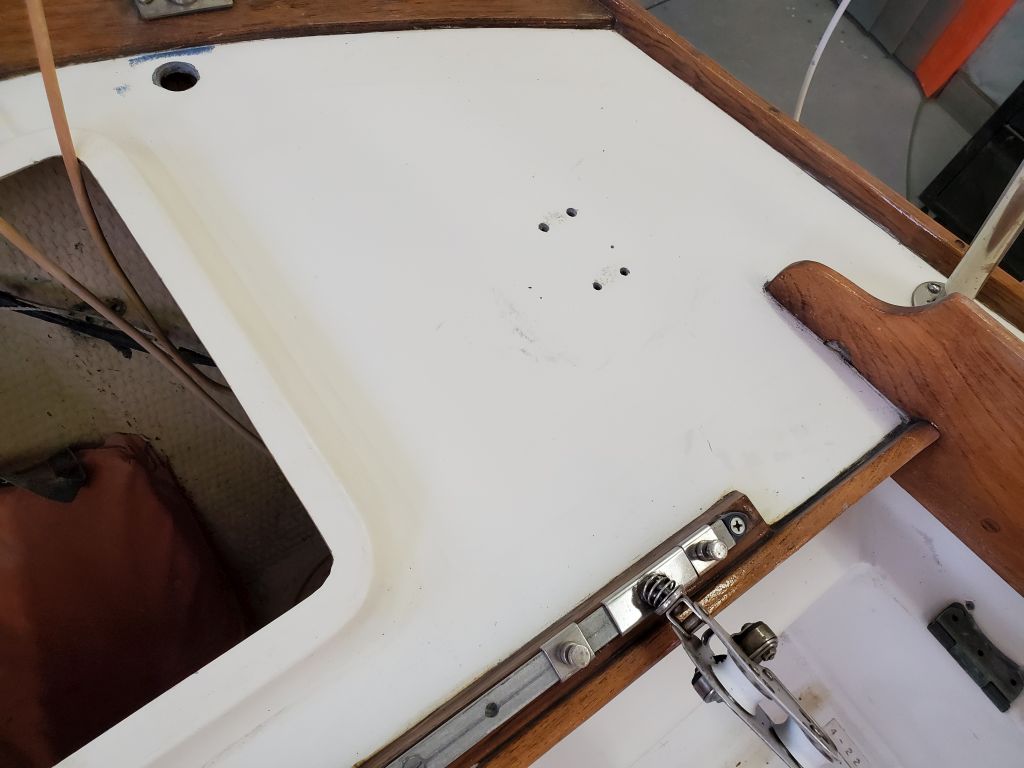
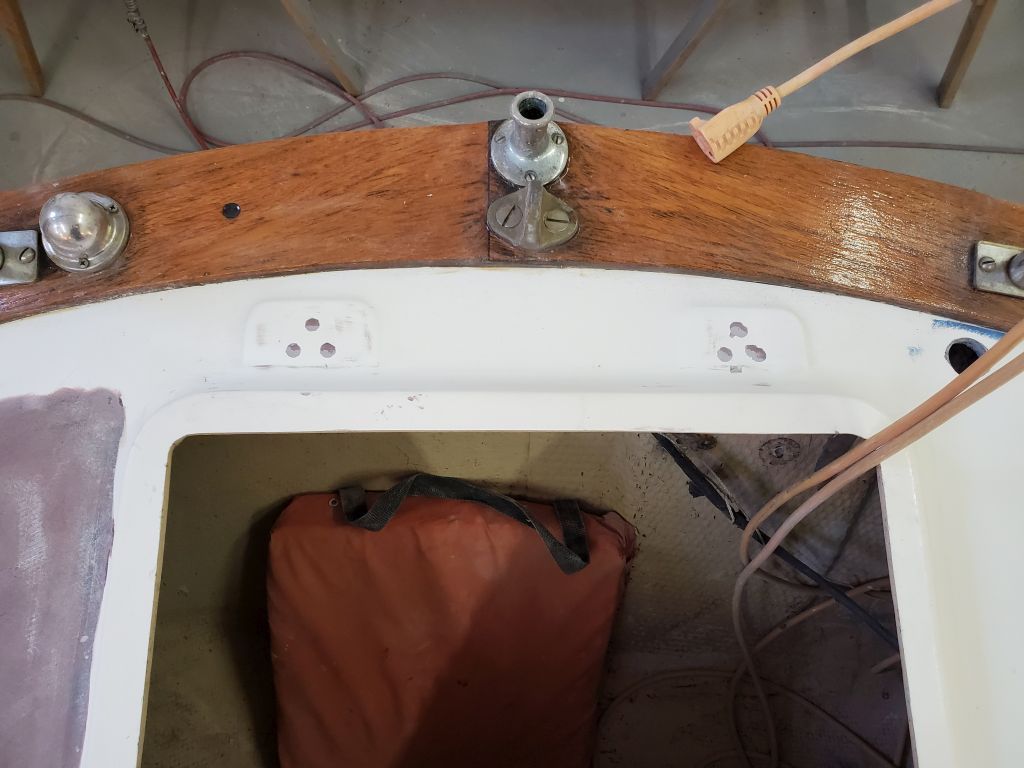
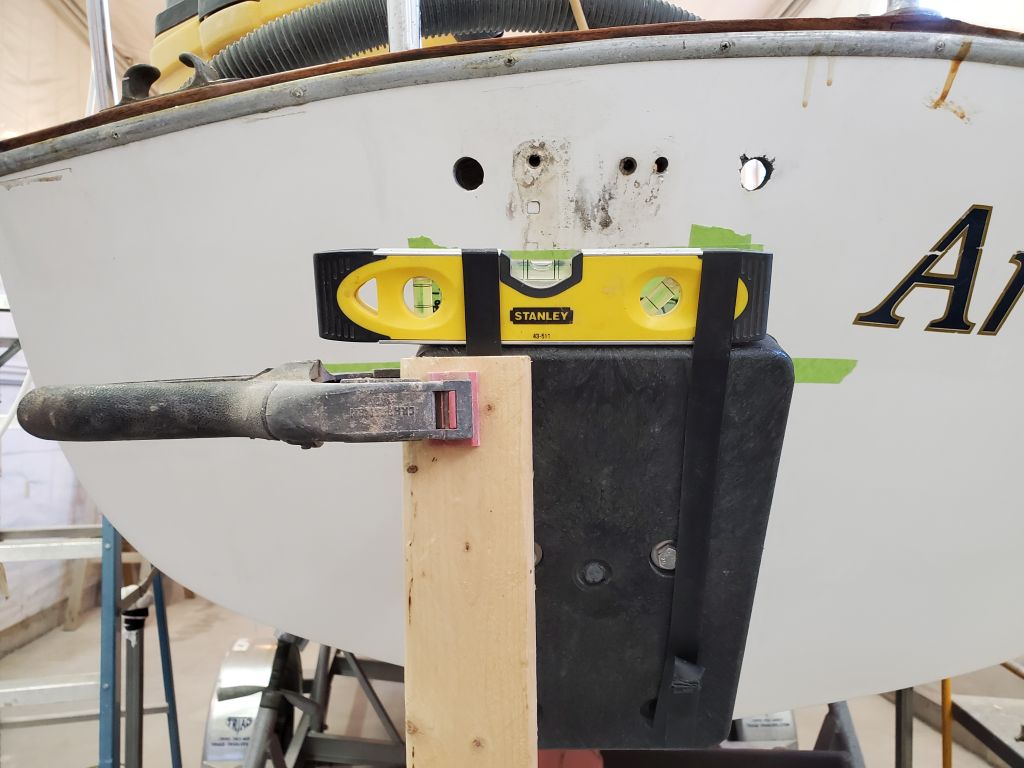
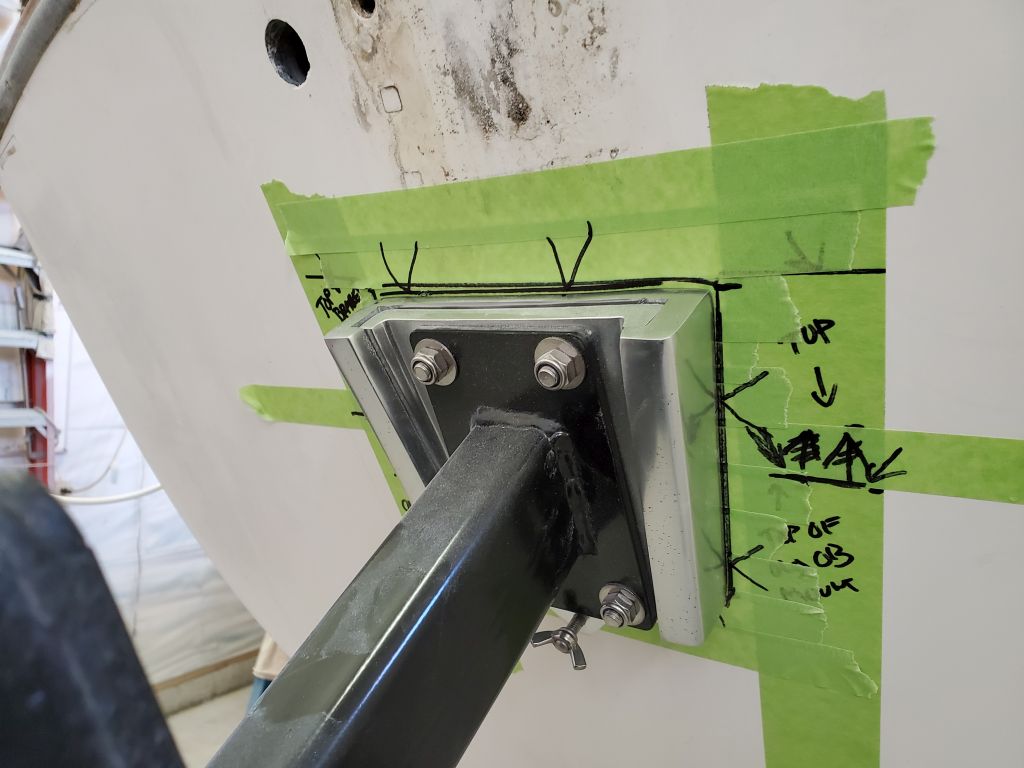
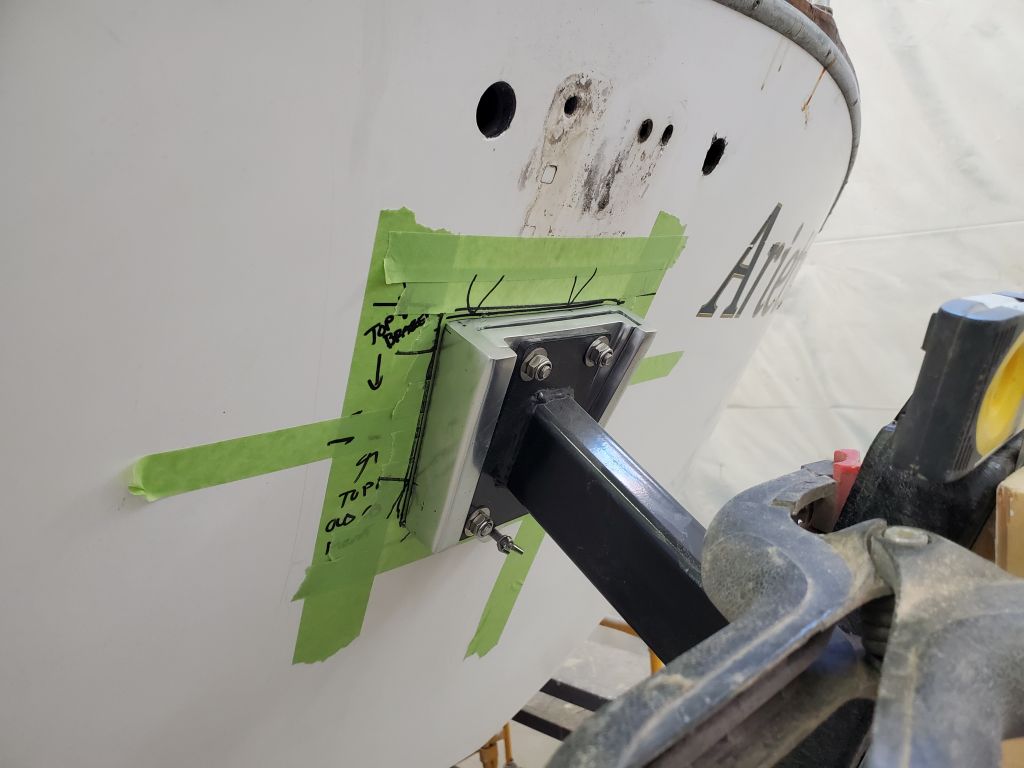
Armed with new fasteners, I continued with the swim platform installation, securing the three angle brackets to the transom with “bo-koo” sealant and the new #14 fasteners.

With the brackets in place, I could install the platform, securing it from beneath as needed with new fasteners through the brackets and into the teak.  This really finished off the new transom.  New scupper flaps to cover the scupper openings would come soon; they were up with Renee being faux-finished to blend with the transom.

Next, I reinstalled the three sets of stainless steel half oval moldings on the rubrails and stem.  I secured these with new fasteners and butyl sealant.

In the cockpit, I quickly wired up the new stern light, mating it with the wires left from the original installation.

In the engine room, I picked up where I left off several weeks earlier when I’d just finished painting the space.  Now, I reinstalled the large wire/hose bundle along the starboard side of the engine room as it had been originally, and a smaller bundle to port as needed.  I reinstalled the battery storage trays and left the negative engine cable loose pending the engine reinstallation sometime later.

I led new 3″ vent hose from the hull vent boxes and into the engine room, generally following what had been there originally and clamping the hoses to the boxes in the narrow spaces outboard of the cockpit.  There were three intake vents, plus the blower vent to starboard.  At the owner’s request, I replaced the electric bilge blower with a new version in the process.  ONce the large hoses were in place, I reinstalled a couple vent hoses that I’d removed for access before.

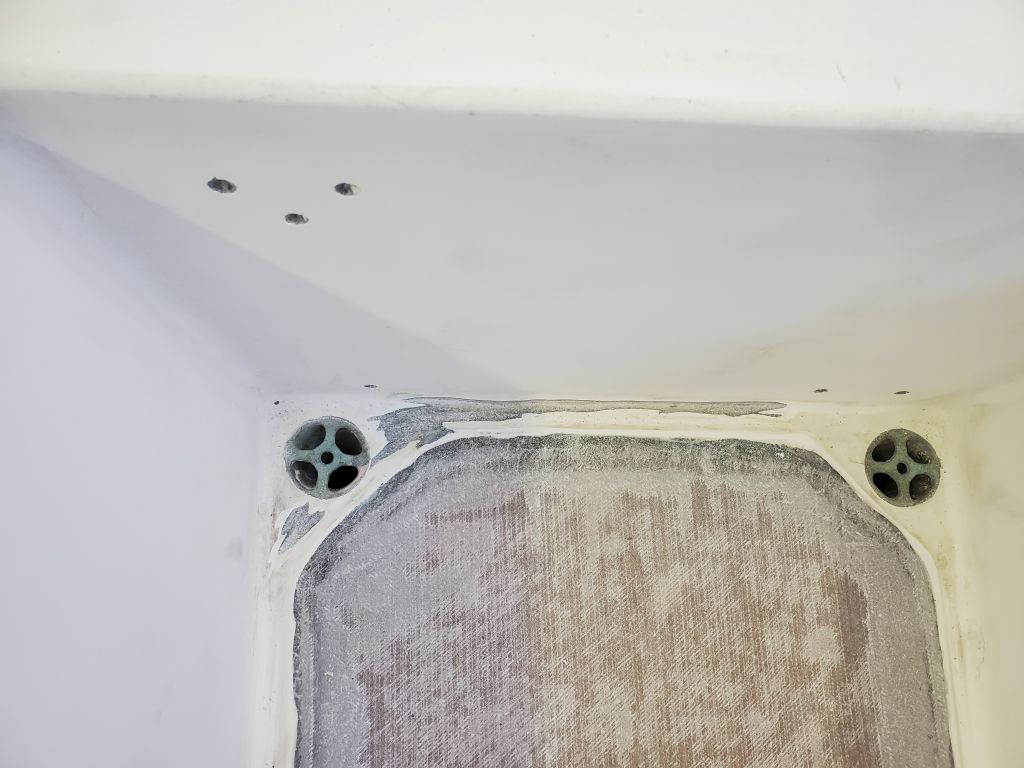
With the project winding down, I turned to one of the last items on my work list, which was to re-secure a set of socket mounts on the engine box, which held a removable tubular and wooden backrest that the owner used.  The sockets, which I’d installed some years before, had become a little loose, so I removed them and, after cleaning up the old sealant, tapped the screw holes for the next-larger fastener size (#10).  The larger fasteners fit well in the socket bases after I slightly enlarged the existing holes, and I applied sealant and resecured the sockets with the new fasteners.

Total time billed on this job today:  6 hours

0600 Weather Observation:  61°, cloudy, humid (November?)   Forecast for the day:  Cloudy and becoming cooler, 48°
Skeedeen Phase 6-33

Wednesday

After lightly sanding the fresh first coat of varnish on the deck areas, followed by vacuum, solvent wash, and tack rag, I applied a second coat of varnish to all areas.

This took most of the morning, and I had an unrelated commitment during the afternoon, but before leaving the shop for the day I prepared as necessary and applied the first coat of maintenance varnish to the second  sides of the companionway doors and hatches.

Total time billed on this job today:  4 hours

0600 Weather Observation:  48°, clear.  Forecast for the day:  Sunny with increasing c louds, 68°

Skeedeen Phase 6-32

Tuesday

To begin the day, I finished up masking the brightwork along the exterior sides of the windshield, forward hatch, handrails, and bow platform.

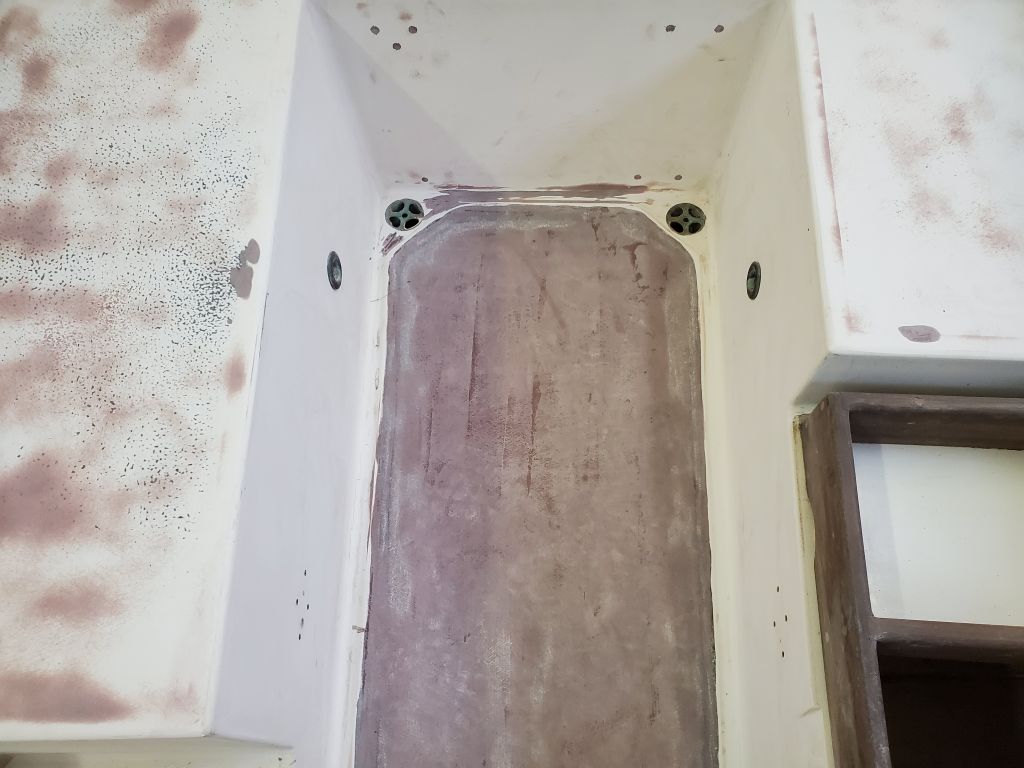
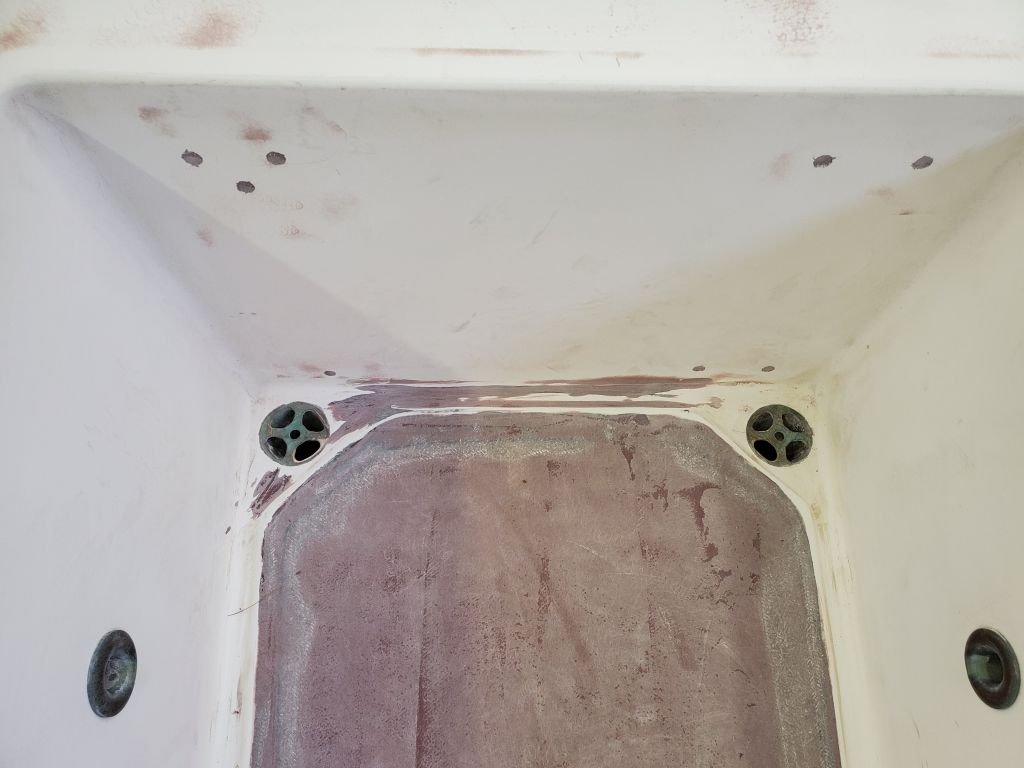
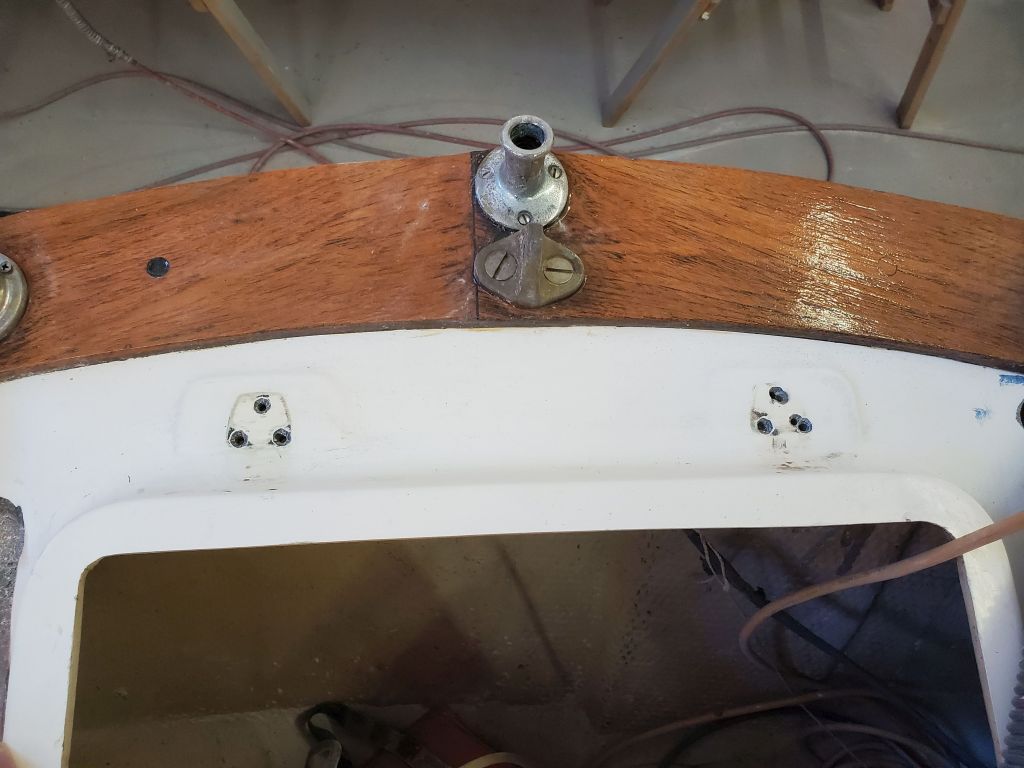
I didn’t have enough time to comfortably do the first coat of varnish before lunchtime, so instead I turned to the swim platform brackets.  Knowing I couldn’t reach the inside of the hull from any of the existing access ports in the cockpit, I’d come up with a plan to install the fasteners remotely, in reverse of how I removed them.  Because there was no way I could fiddle with separate washers and nuts to secure the bolts, I purchased flanged locknuts that would do the job on their own:  These nuts had a base as wide as the original washers that had been in place, and also featured a serrated mounting surface that would help lock the nuts in place.  This type of nut would also fit nicely in the end of the socket to make it easier for me to start the threads from three feet away.

After testing and proving the concept on the port side with a dry fit, I gooped up the bracket heavily with sealant and, using tape to secure the bolts from outside, used a long set of ratchet extensions to thread on and eventually tighten the nuts from inside to the extent possible, then, with the ratchet and extensions taped in place, I finished tightening the bolts from outside with a screwdriver.

I repeated the process with the starboard bracket.

The center bracket was more straightforward since there was an access hatch located so I could actually reach these fasteners.

I would have liked to continue with the angled support brackets that supported the after end of the platform, but I found I didn’t have the right screws in stock to replace the originals, so I held off for now.

After lunch, I got to work on the first coat of maintenance varnish on the windshield, companionway, helm area, handrails, forward hatch, and anchor platform.

With a bit of time left in the day, I reinstalled the trim tab cylinders and resecured them to the boat and trim tabs as necessary.

The original stern light, which I’d removed from the transom early in the project, was in poor condition, and I purchased a LED replacement, which I installed now.  I bedded the fixture and wiring hole with butyl  tape.

Total time billed on this job today:  6.75 hours

0600 Weather Observation:  40°, clear.  Forecast for the day:  Sunny, 71°

Skeedeen Phase 6-31

Monday

Now that the hull paint work was finally complete, I could focus on the remaining work list, including brightwork maintenance and reassembling the boat after the paint and engine room work earlier.

The remaining brightwork on deck was in generally good condition after a season.  I began as usual by removing any hardware that I could.

Next, I sanded all the brightwork with 220 grit to prepare it for the maintenance coats of varnish ahead.  Afterwards, I vacuumed and solvent-washed all areas to remove sanding dust.

During what remained of the day’s available time, I began masking around the woodwork, starting in the cockpit and helm area.  I’d finish up the outboard sides of the windshield and other areas next time.

Total time billed on this job today:  5.75 hours

0600 Weather Observation:  48°, foggy.  Forecast for the day:  Becoming sunny, 68°

Older posts Newer posts