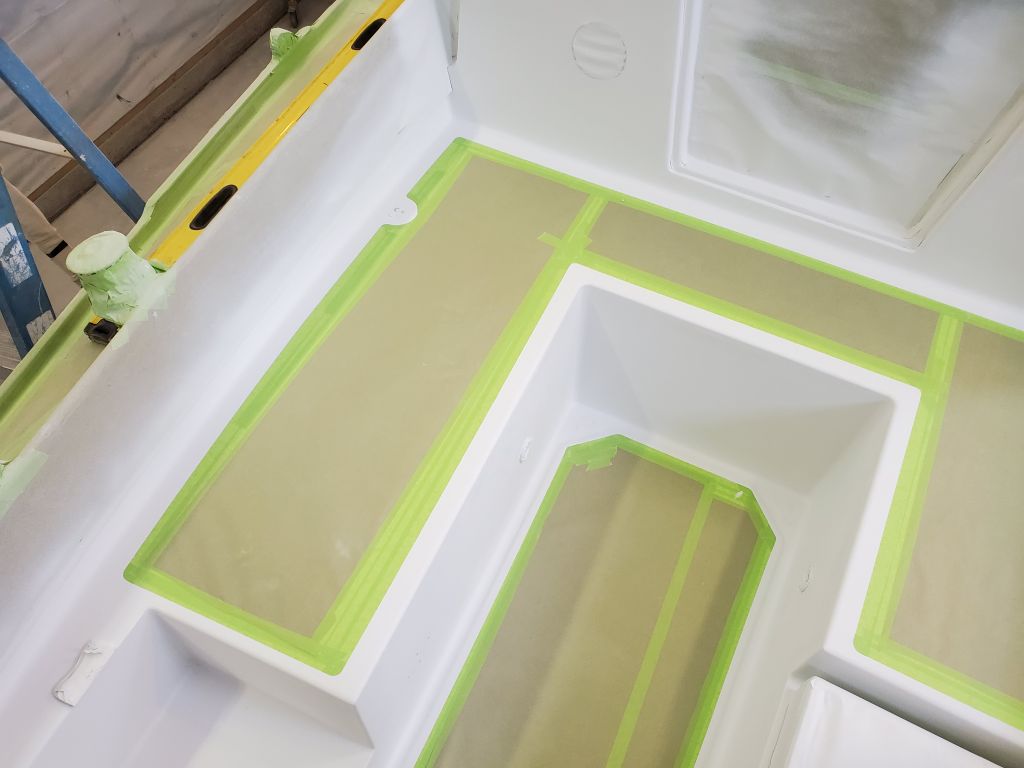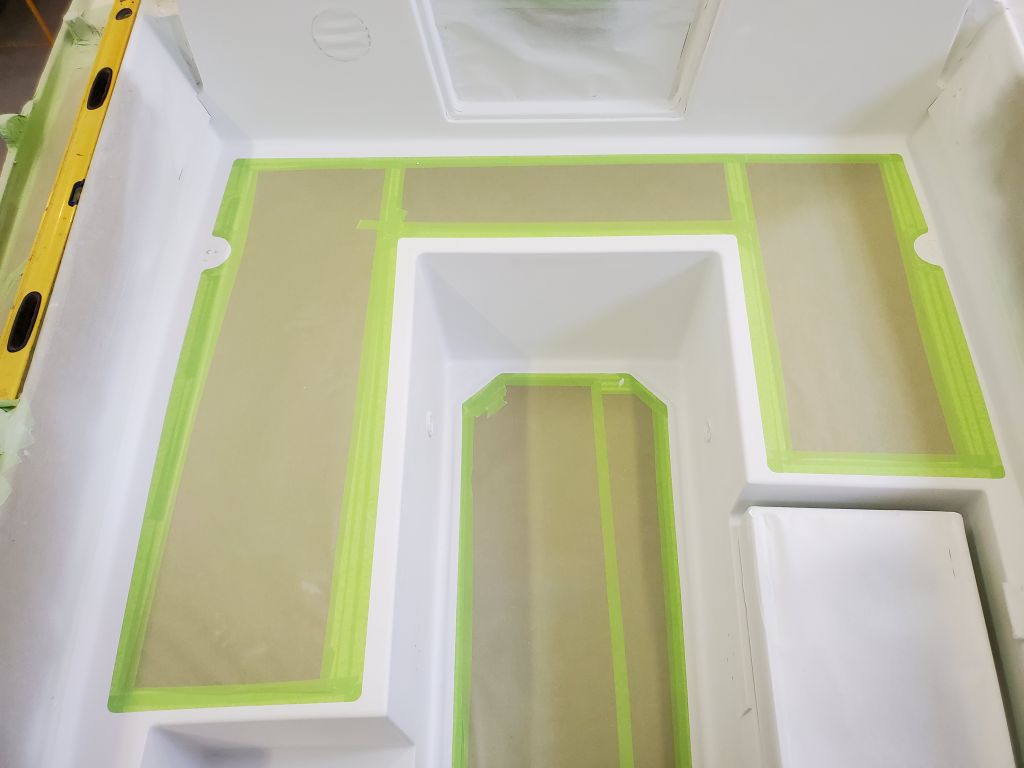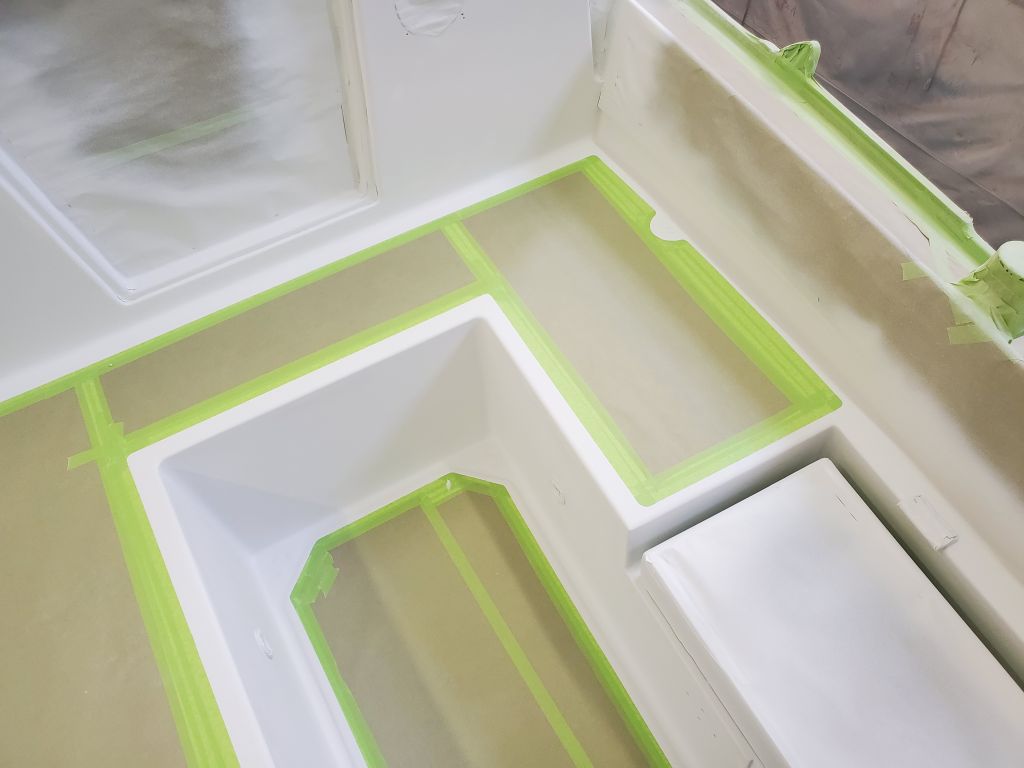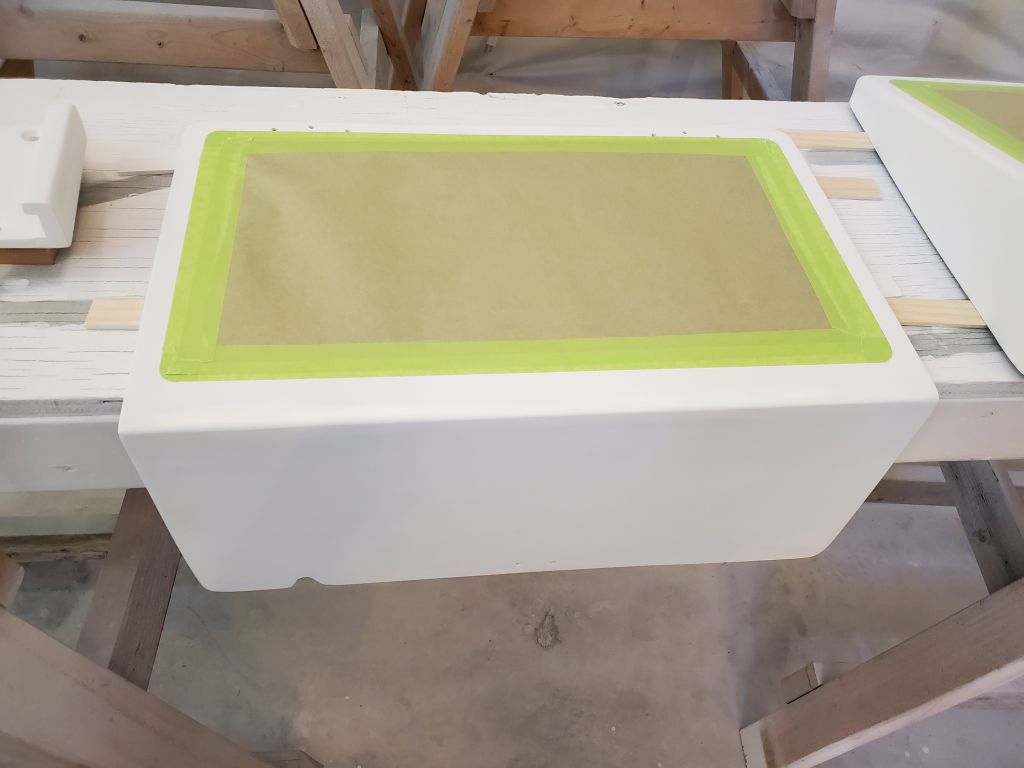

(page 70 of 165)

Arietta 18

Monday

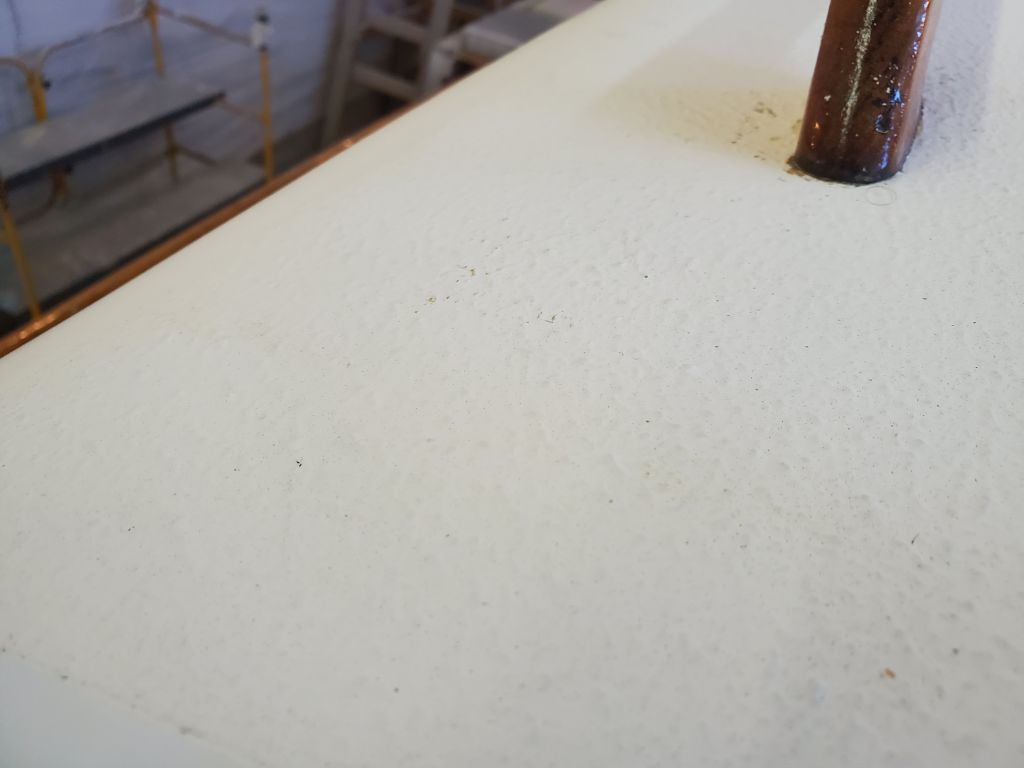
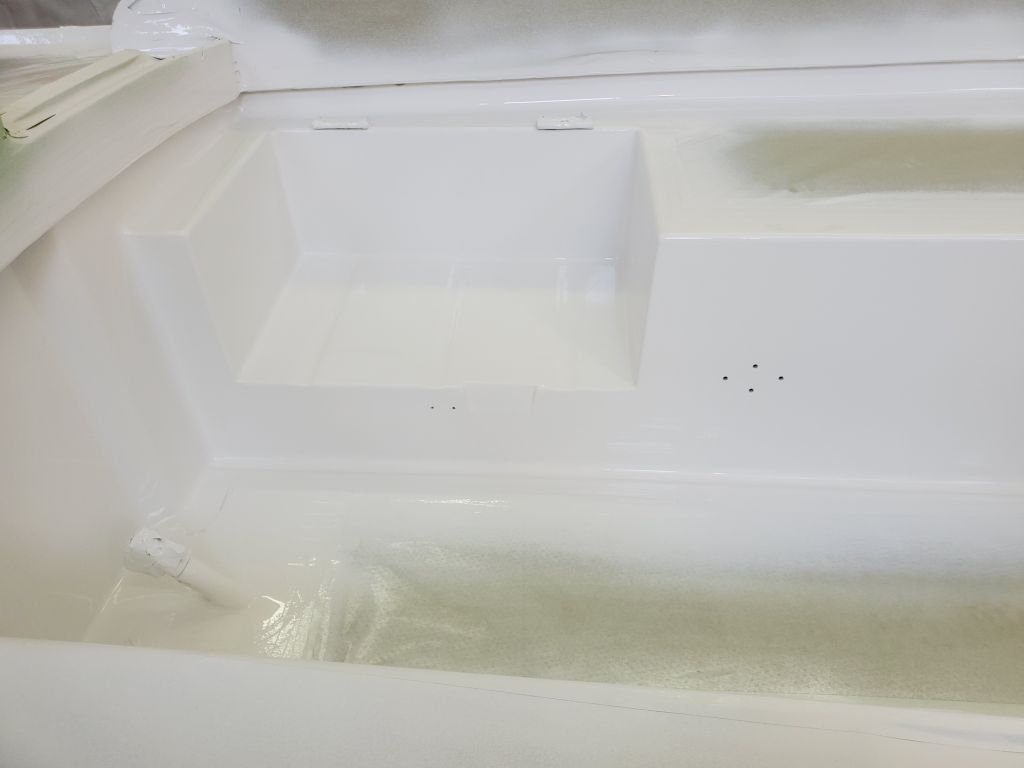
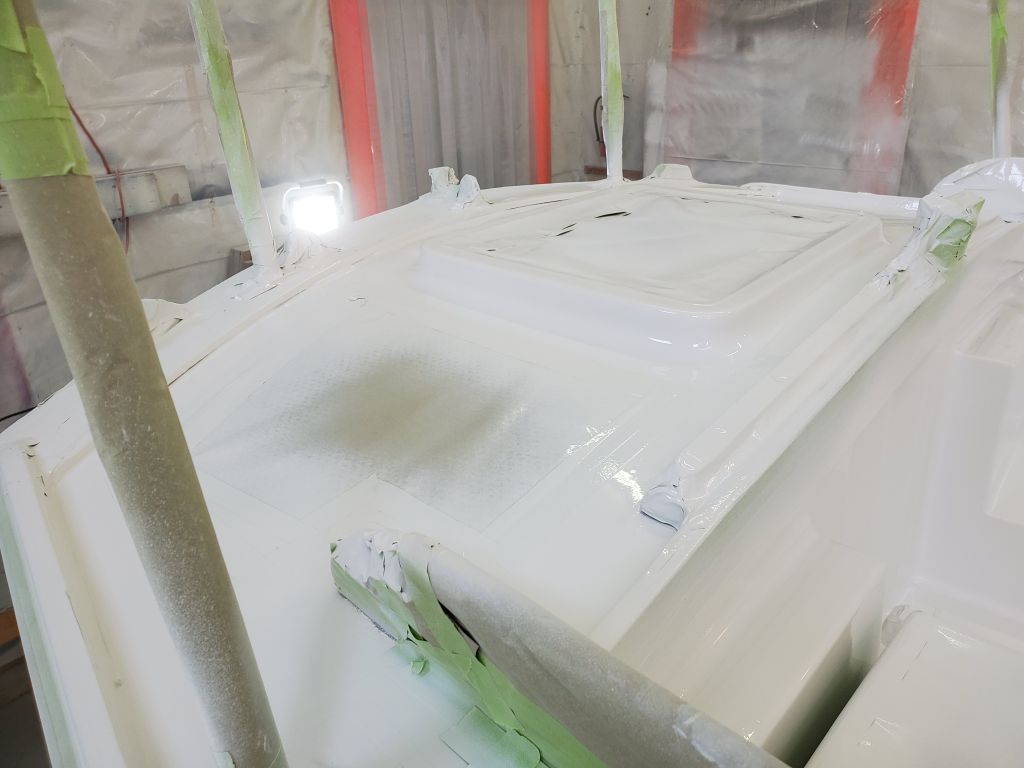
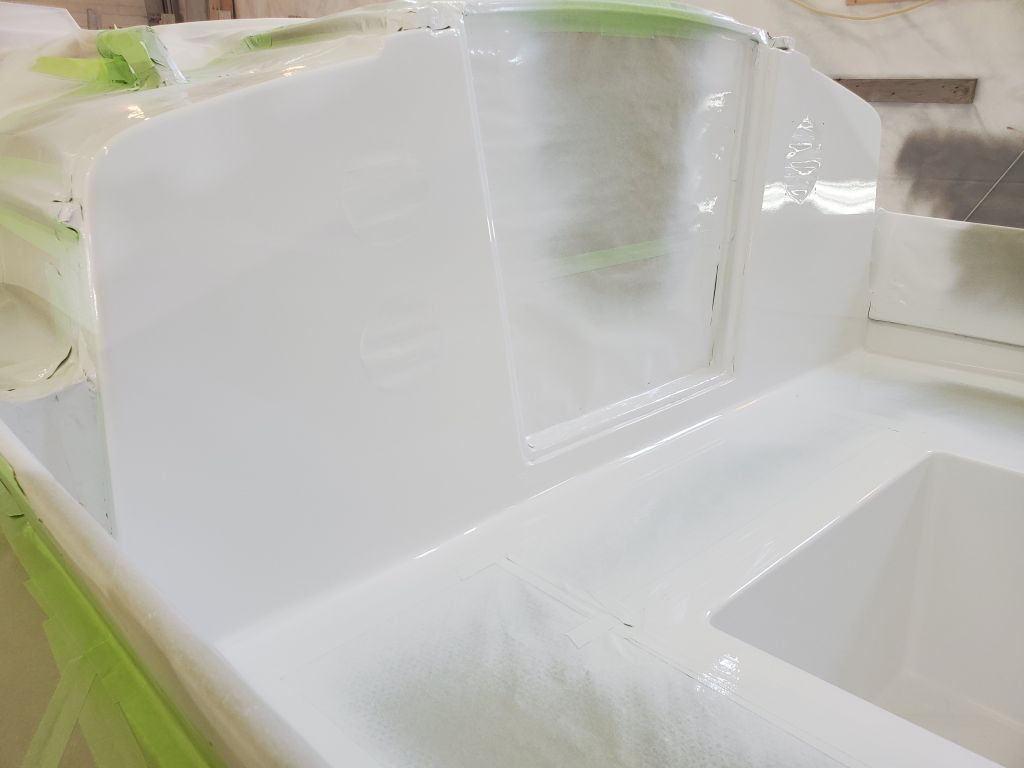
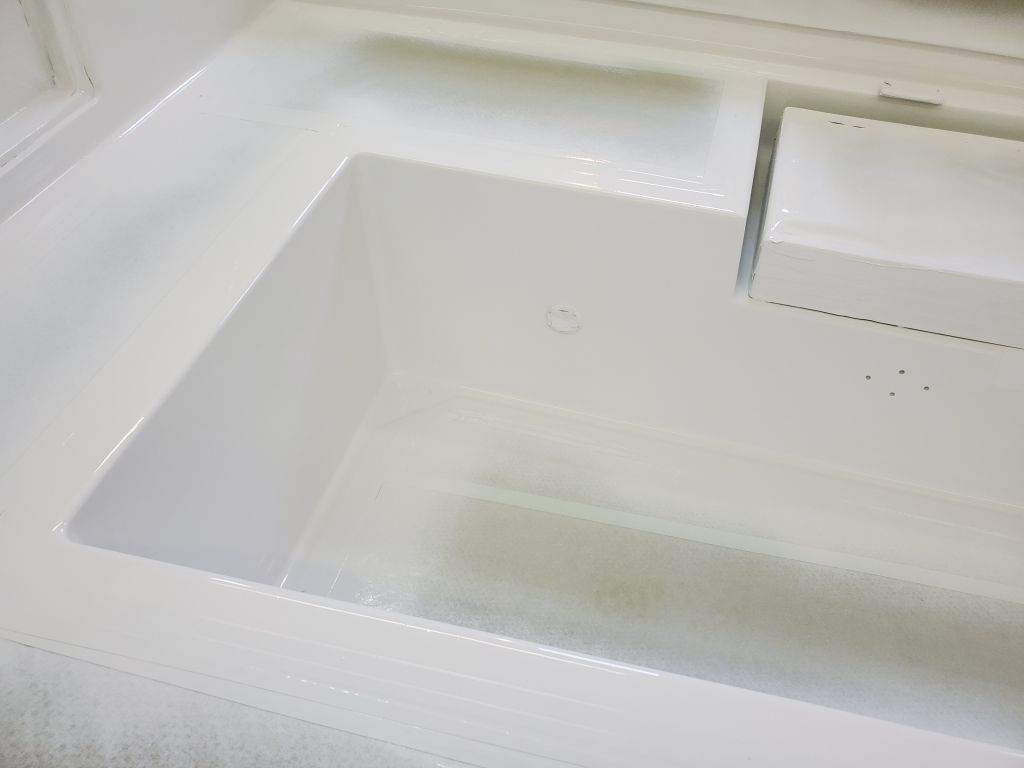
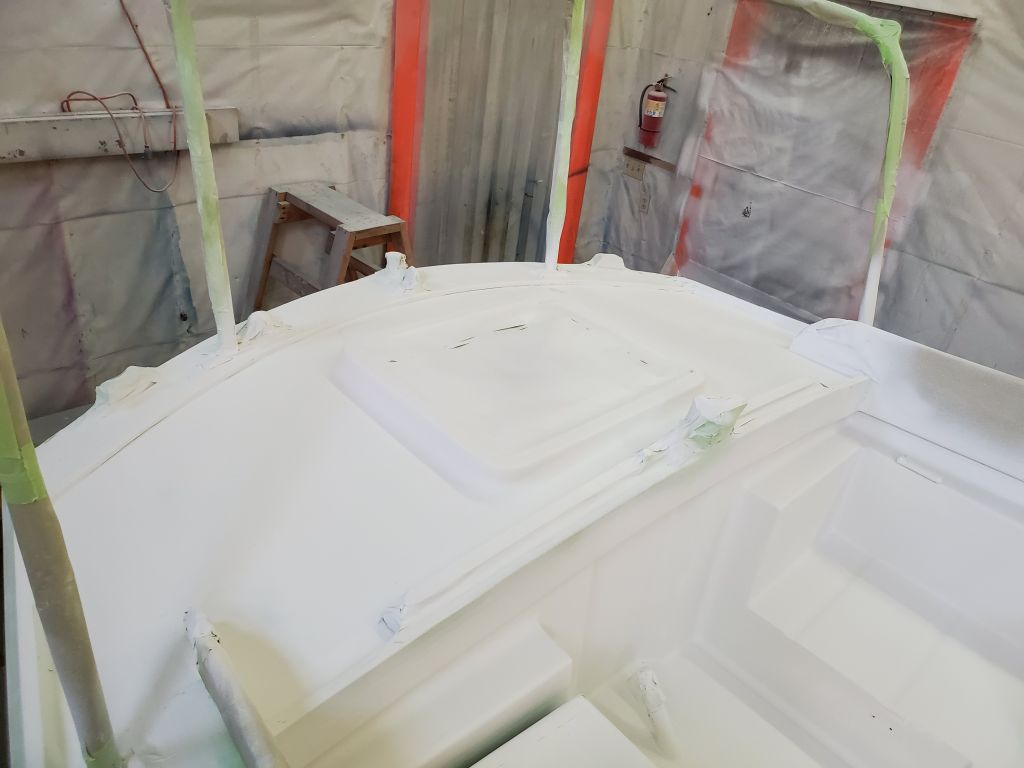
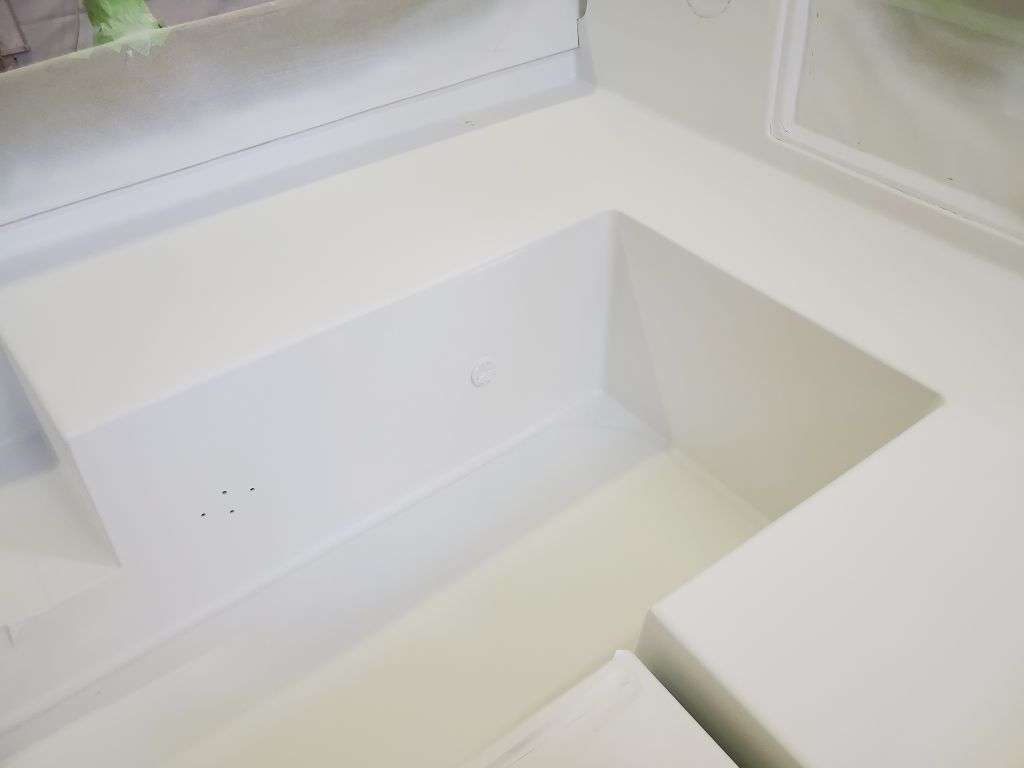
After cleaning the hull and deck from excess sanding dust, I applied light amounts of fine fairing compound where necessary, mainly to fill small pinholes and the occasional void that had escaped detection during earlier fairing steps.  On the hull, I could just see faint shadows beneath the primer to indicate some of the places I’d repaired and filled earlier, and I focused on these areas to be sure there were no pinholes left that the primer hadn’t filled.  On deck, I found several areas where some of the repair work required a bit of touchup.

The filler would have to cure overnight, so for now I’d done all I could on the boat.

Total time billed on this job today:  2.25 hours

0600 Weather Observation:  29°, cloudy.  Forecast for the day:  Cloudy, chance of showers, 43°

Arietta 17

Wednesday

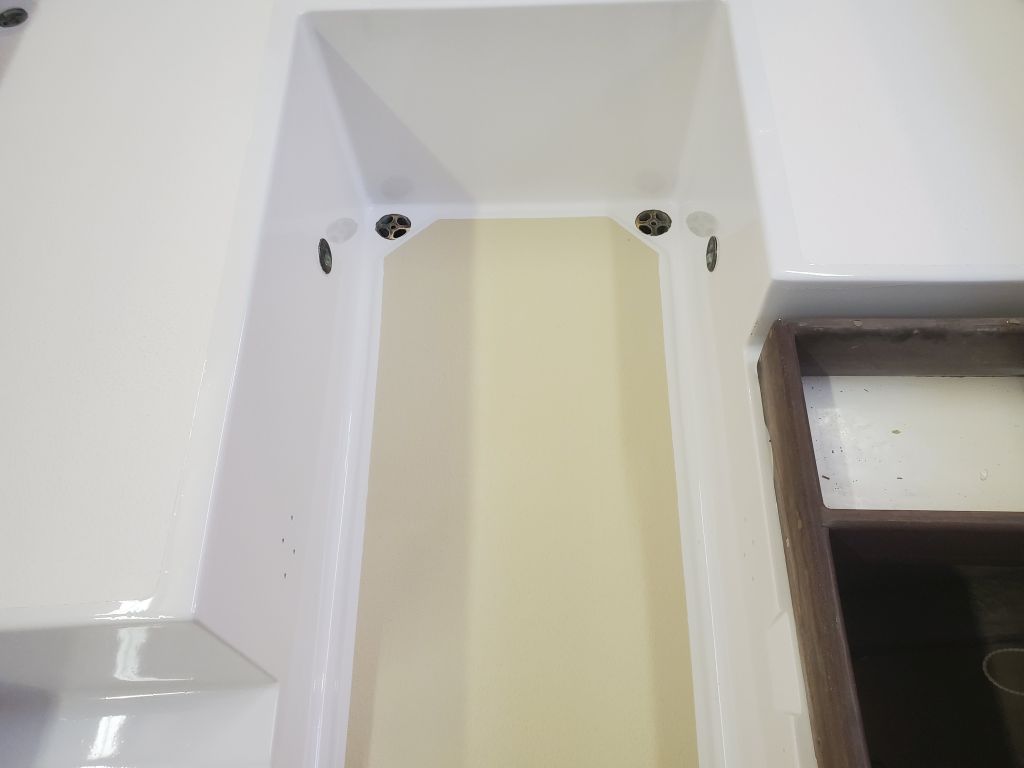
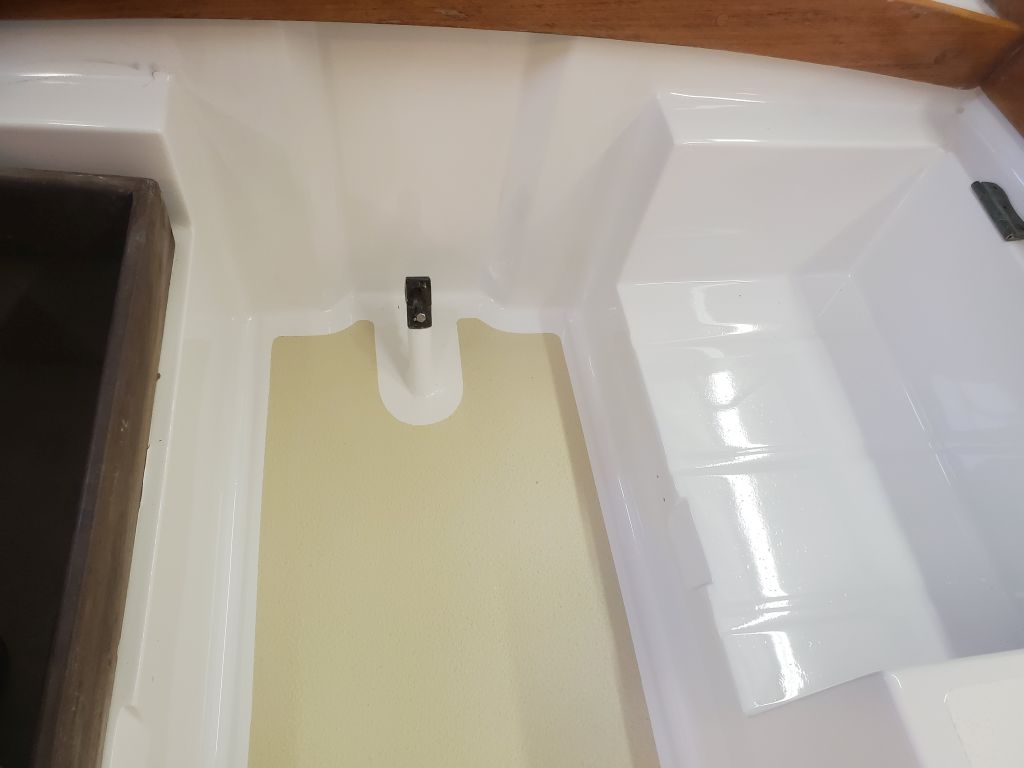
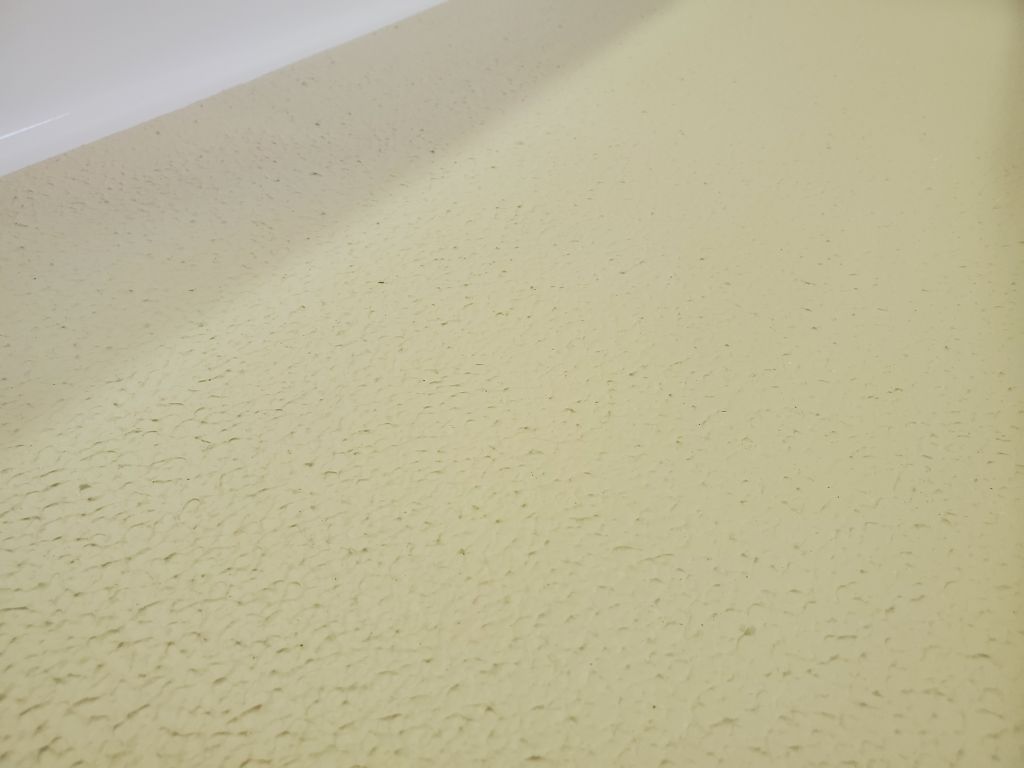
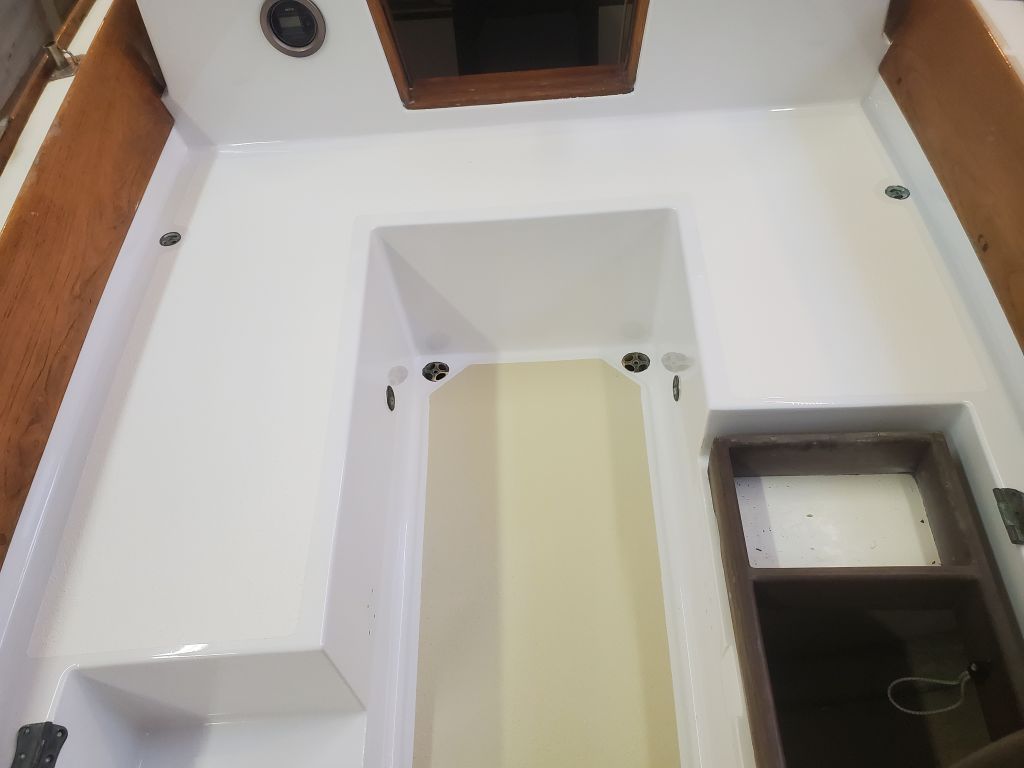
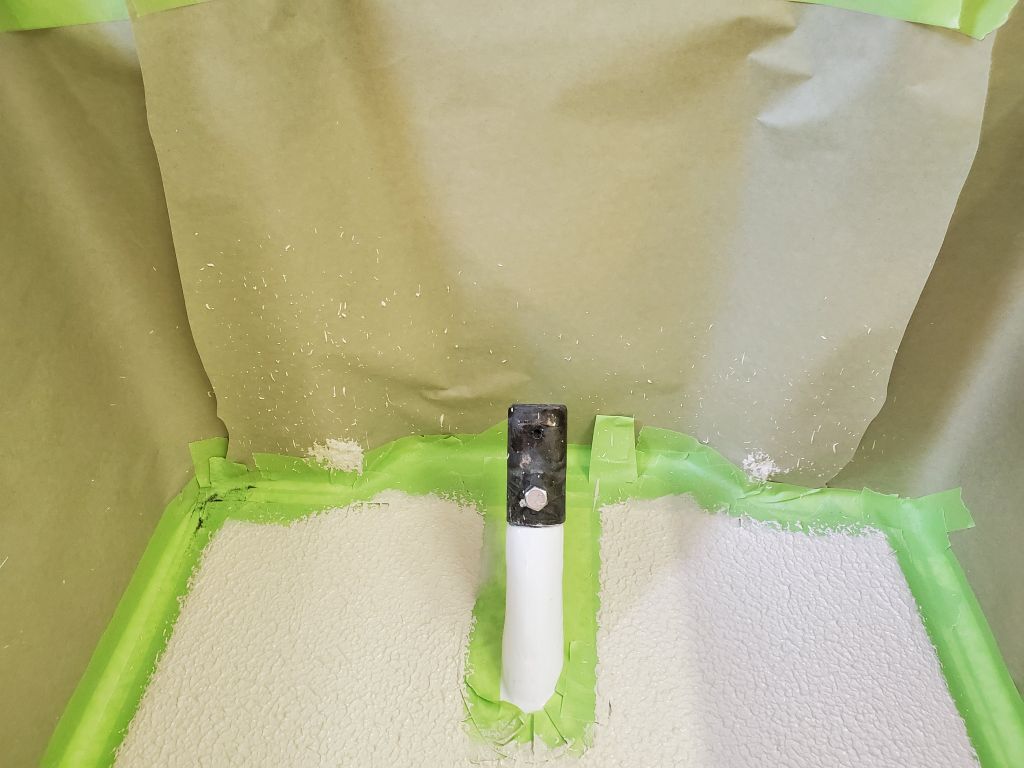
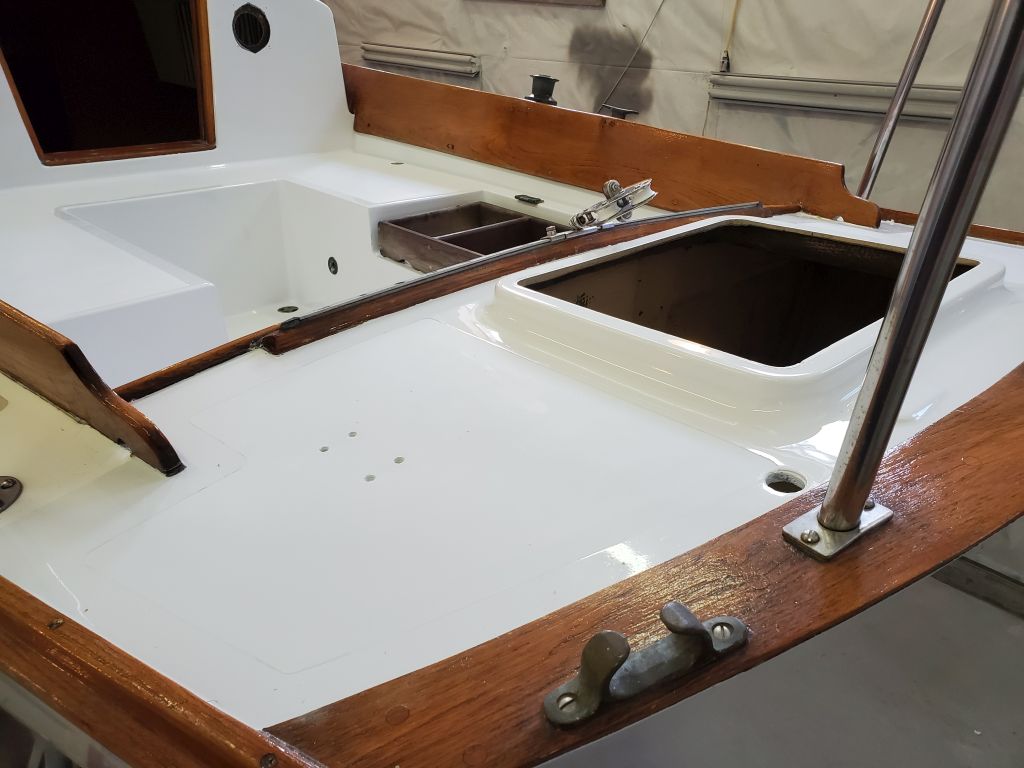
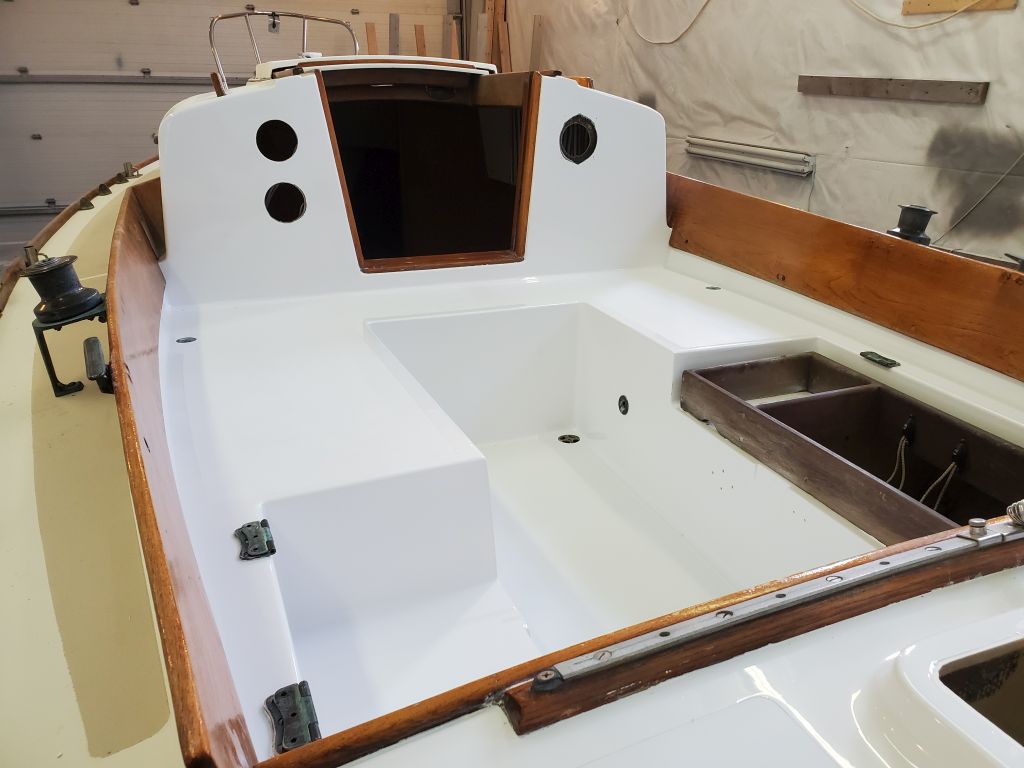
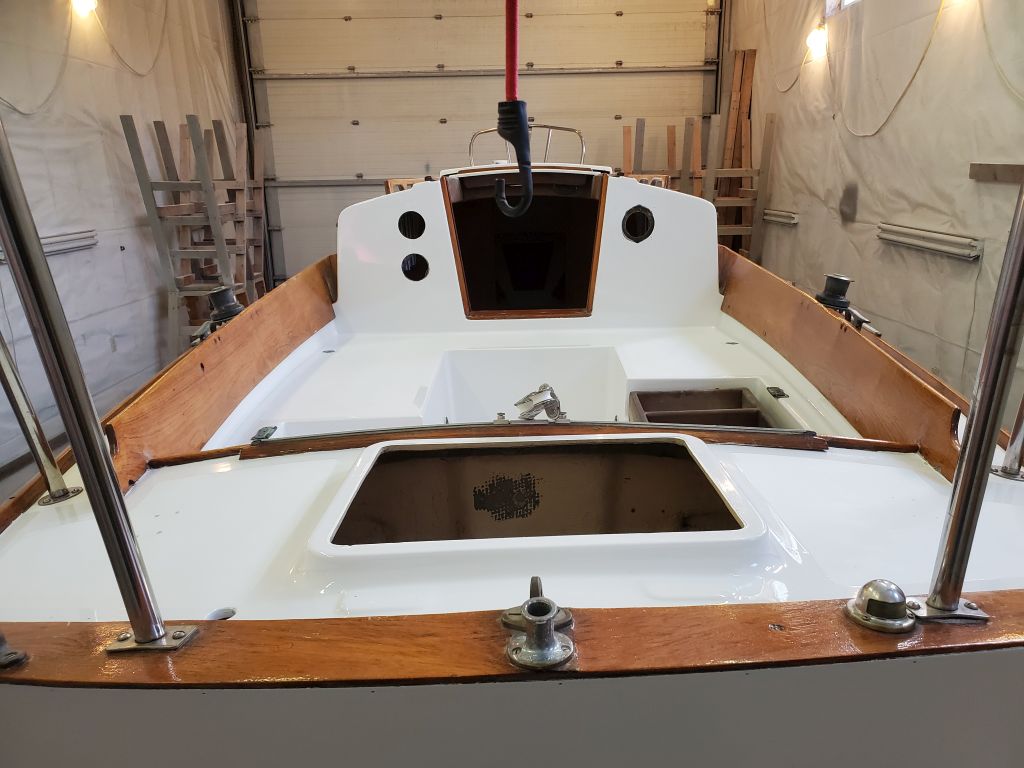
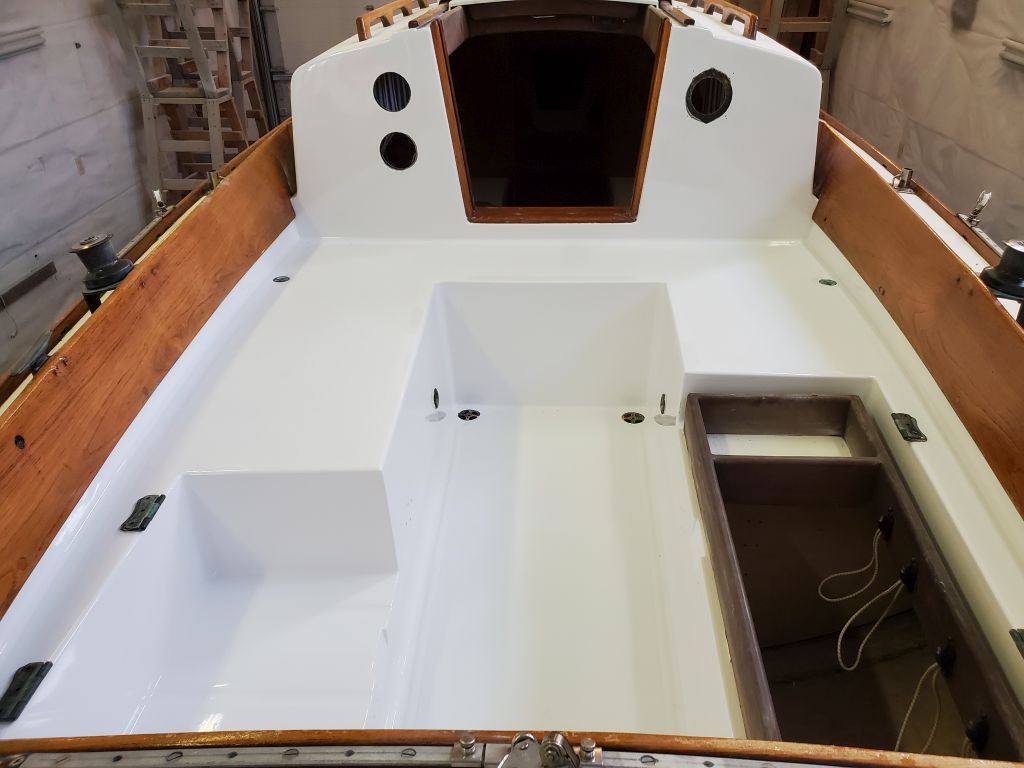
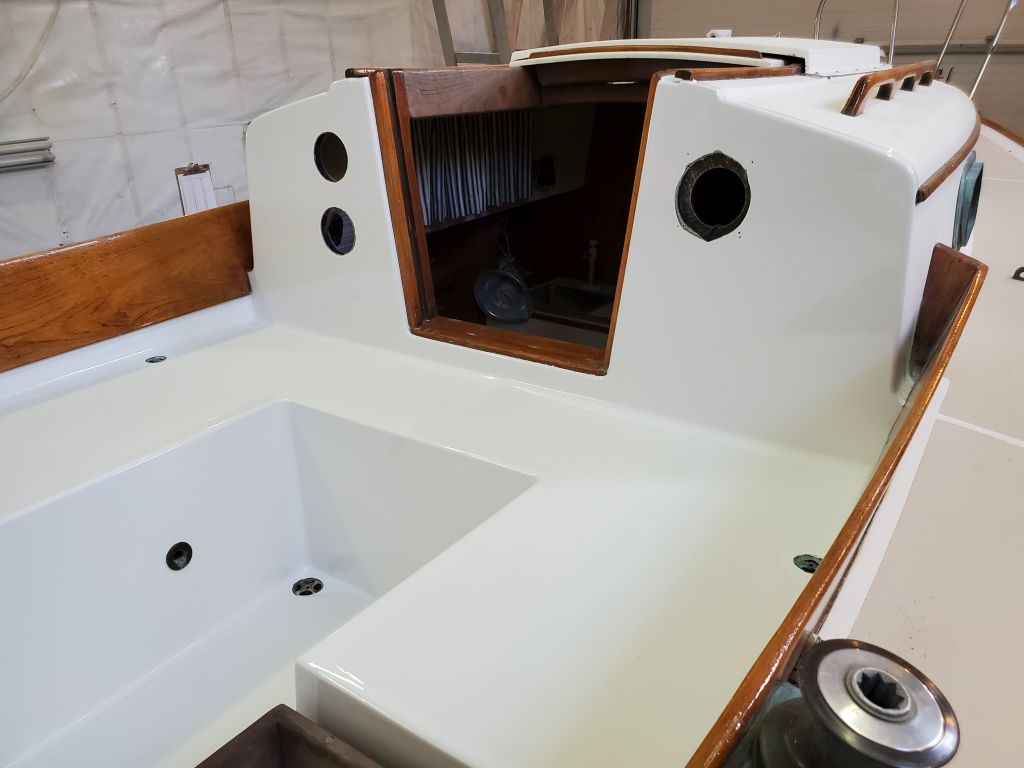
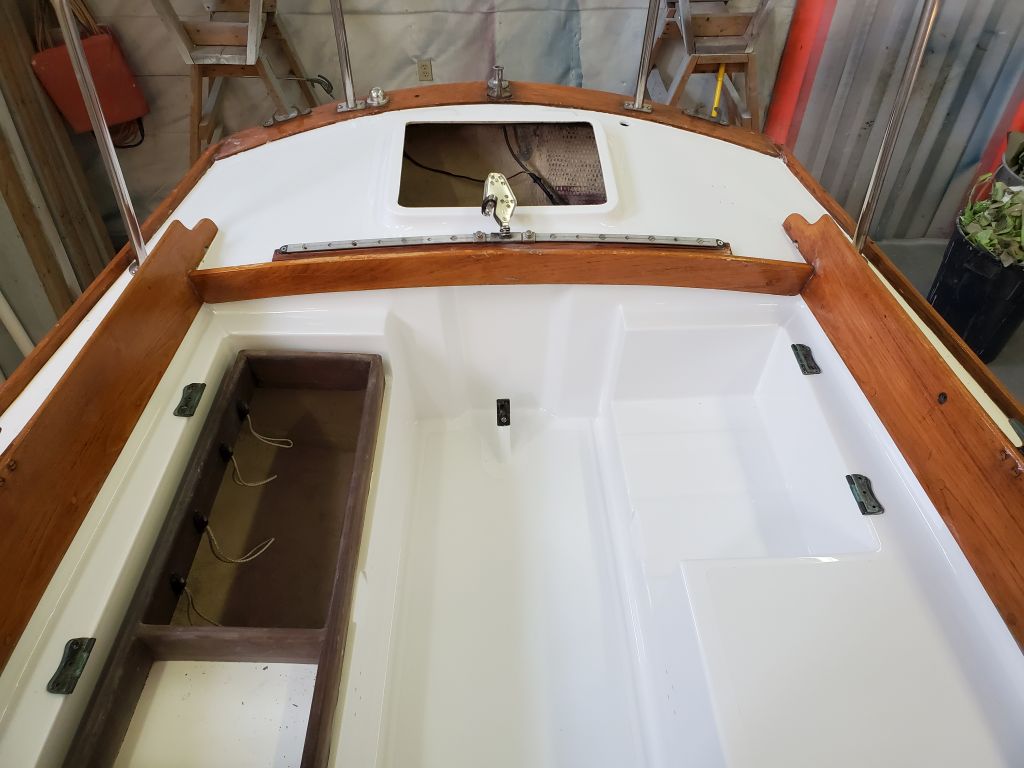
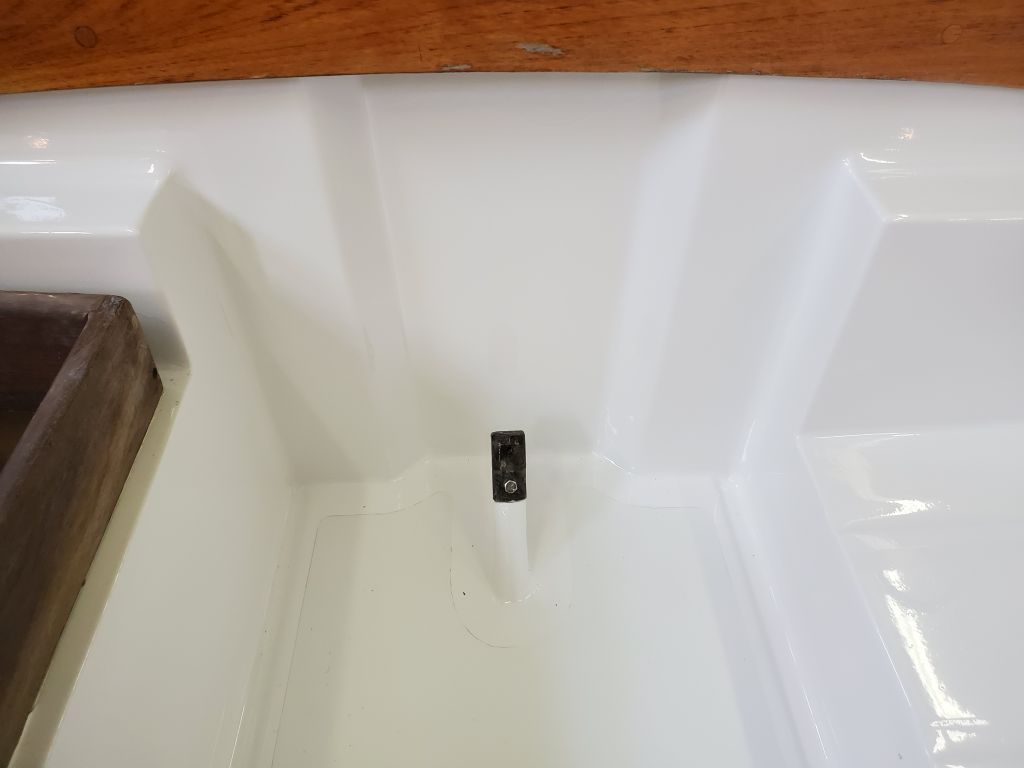
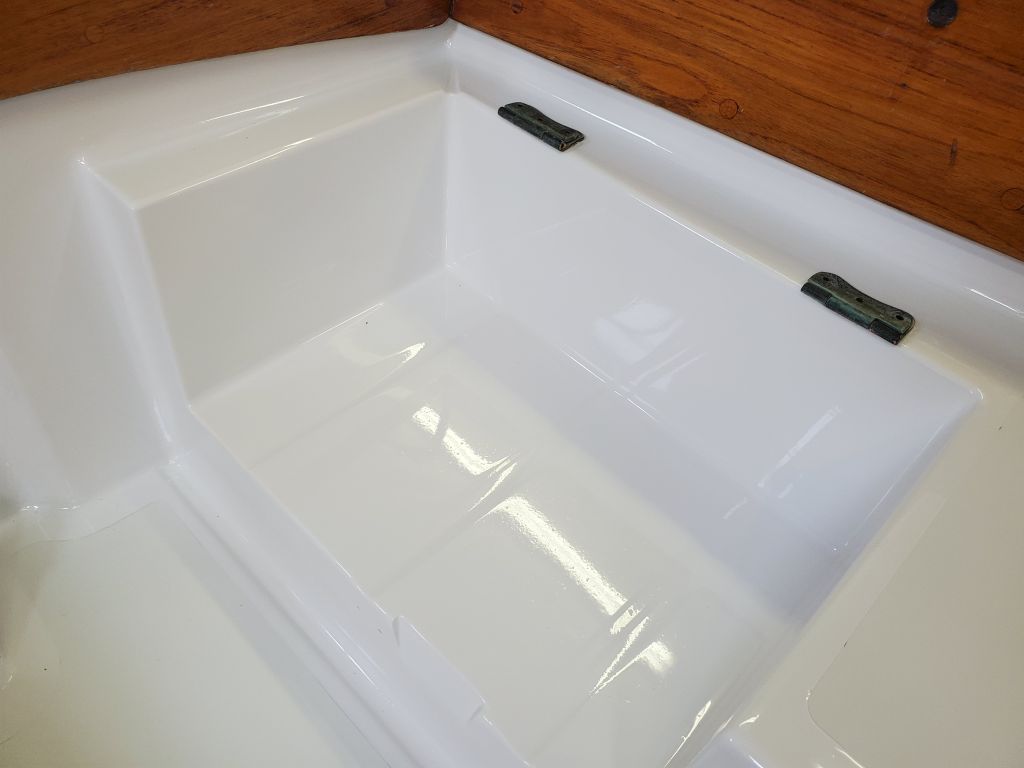
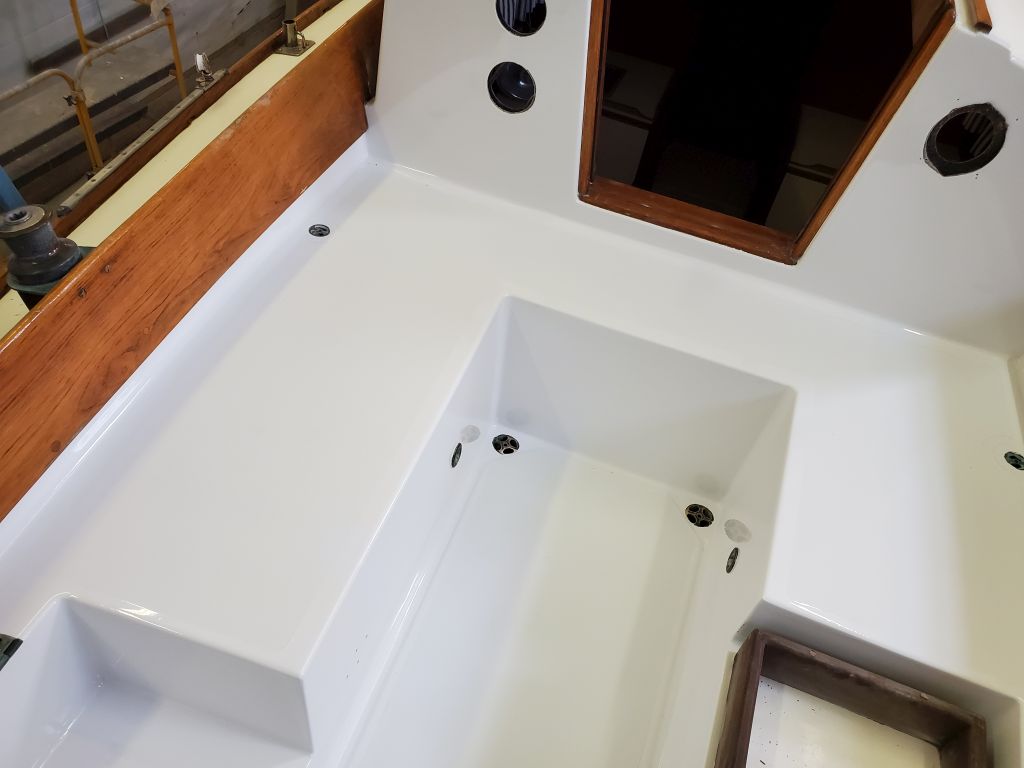
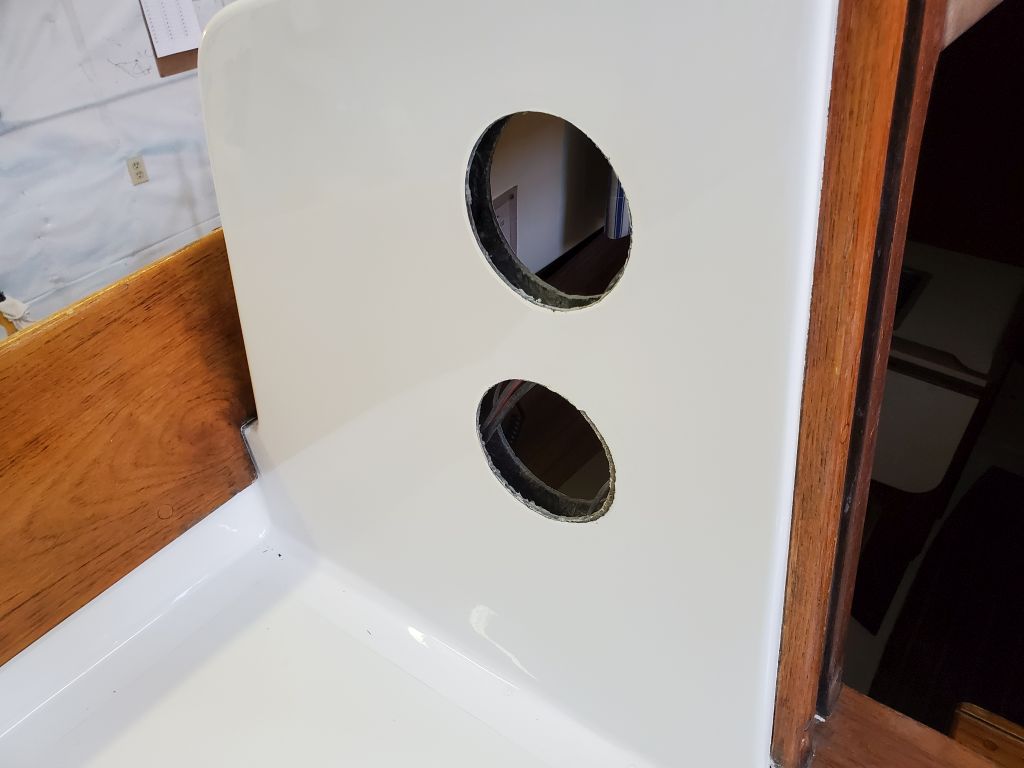
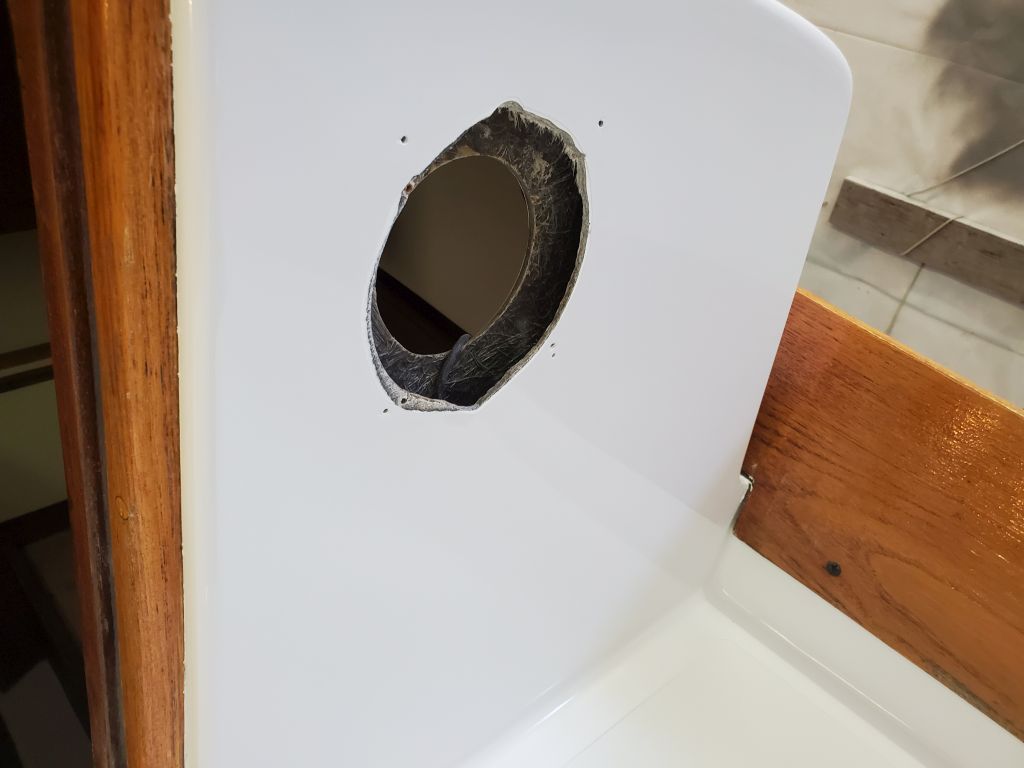
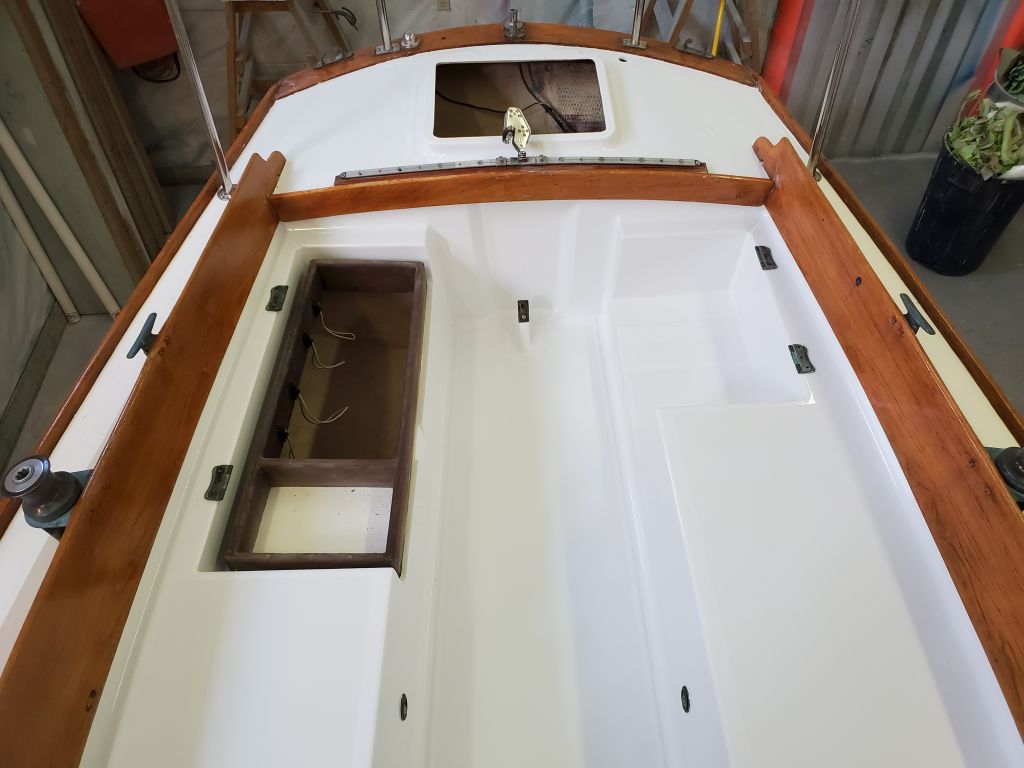
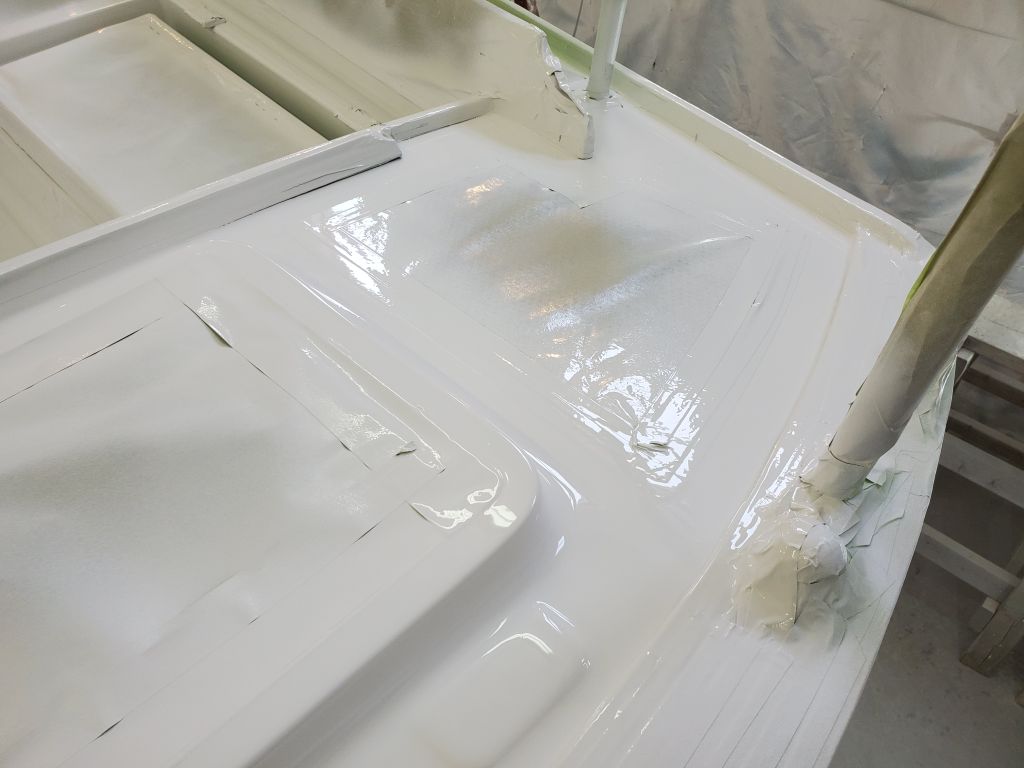
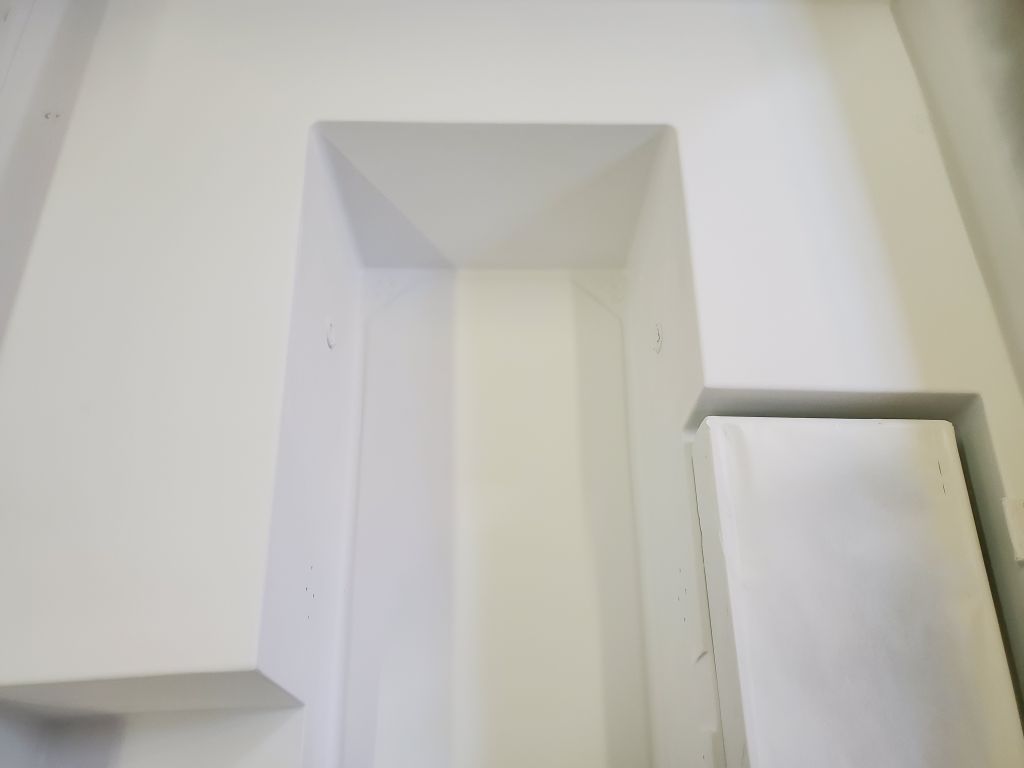
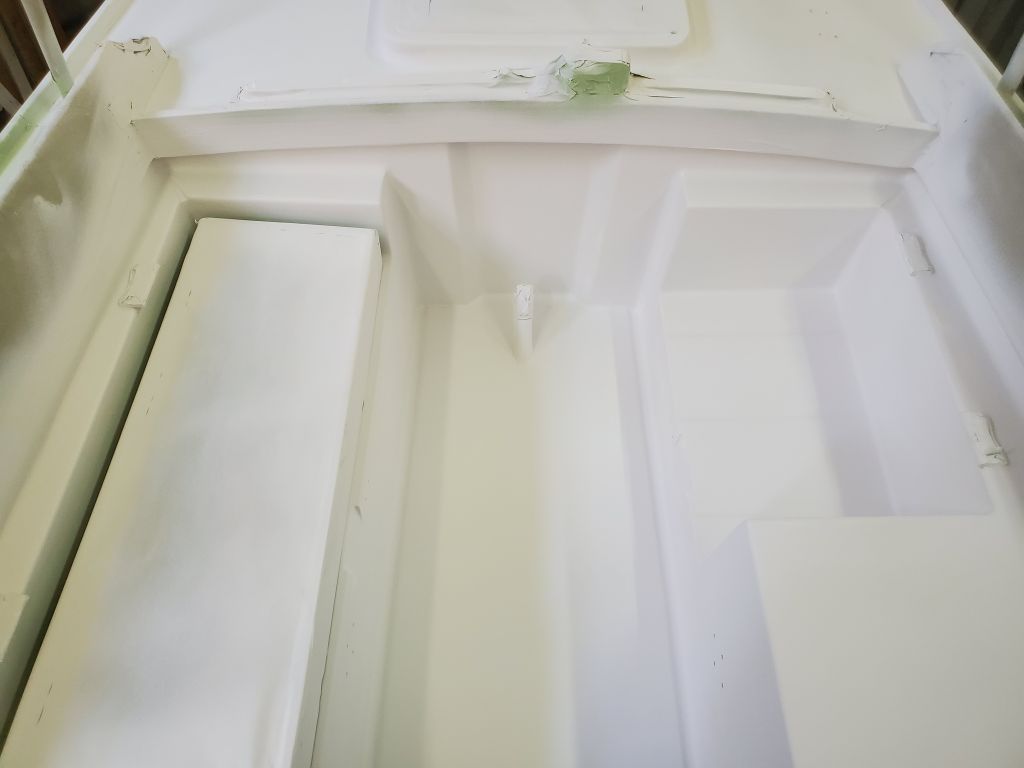
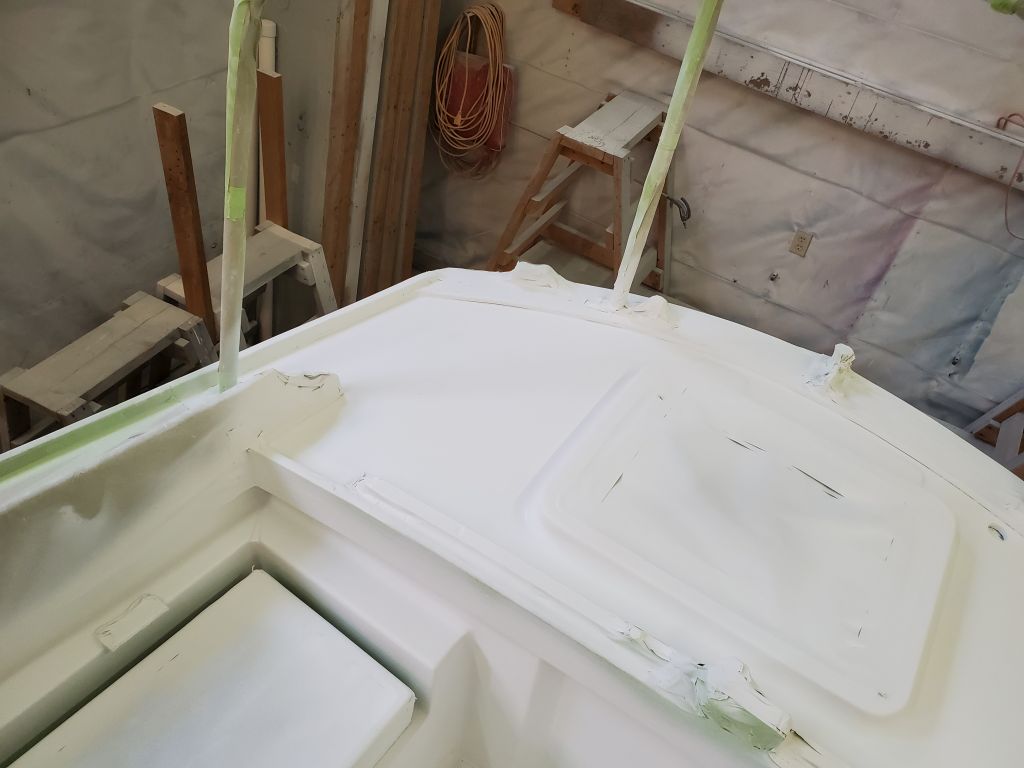
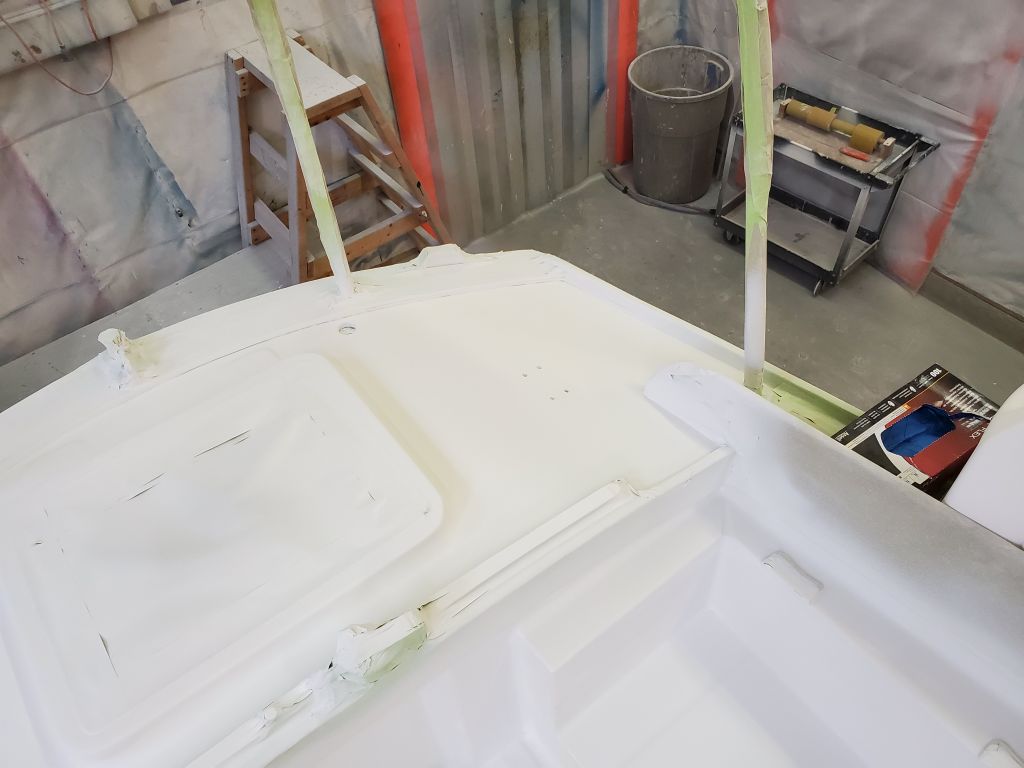
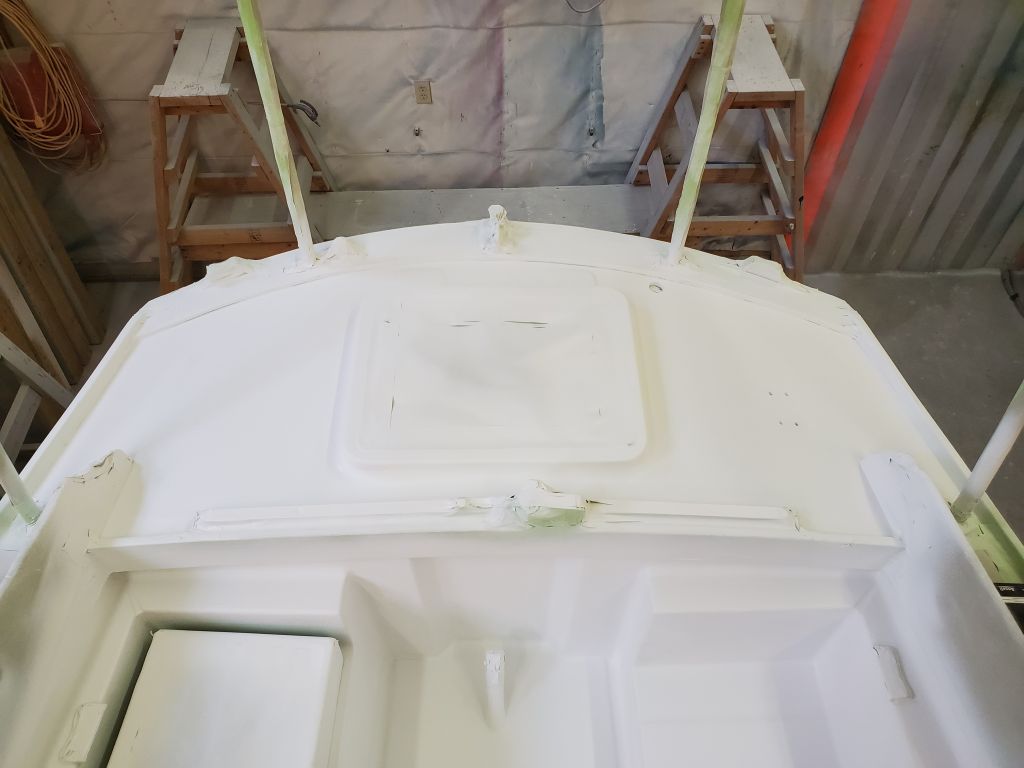
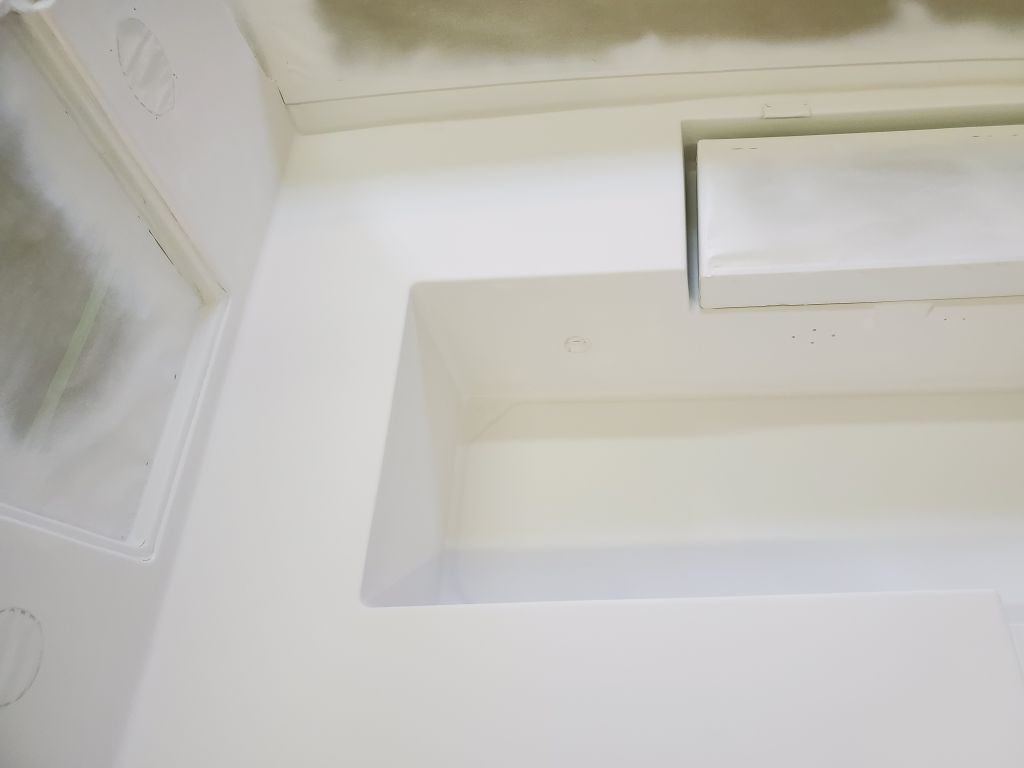
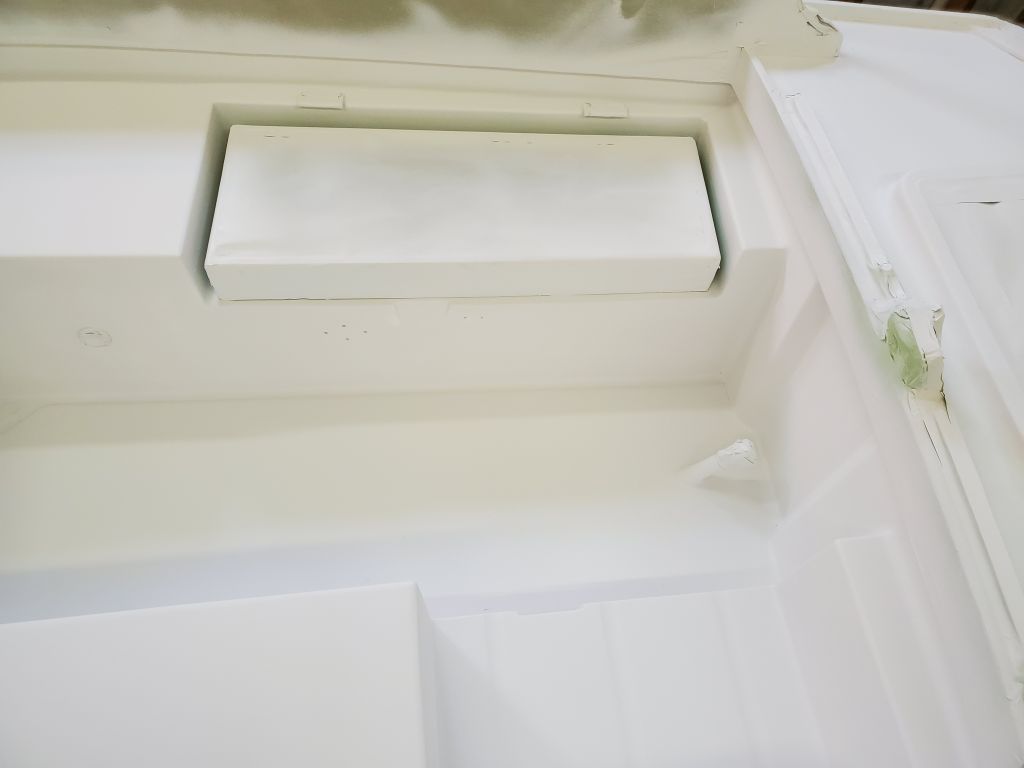
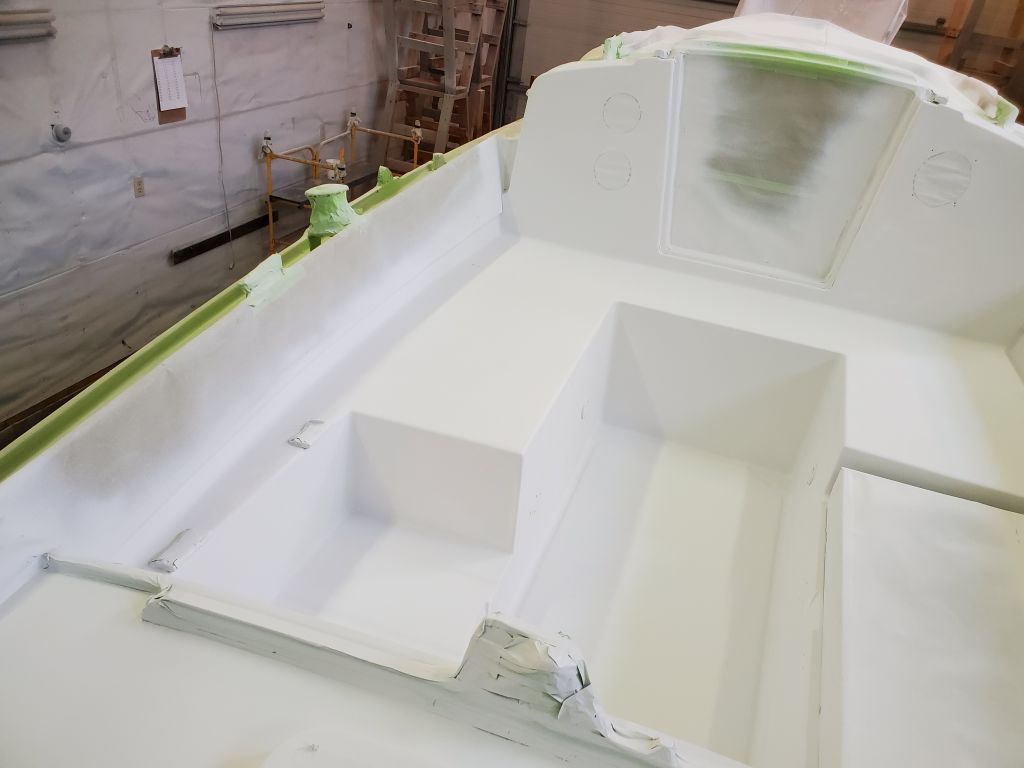
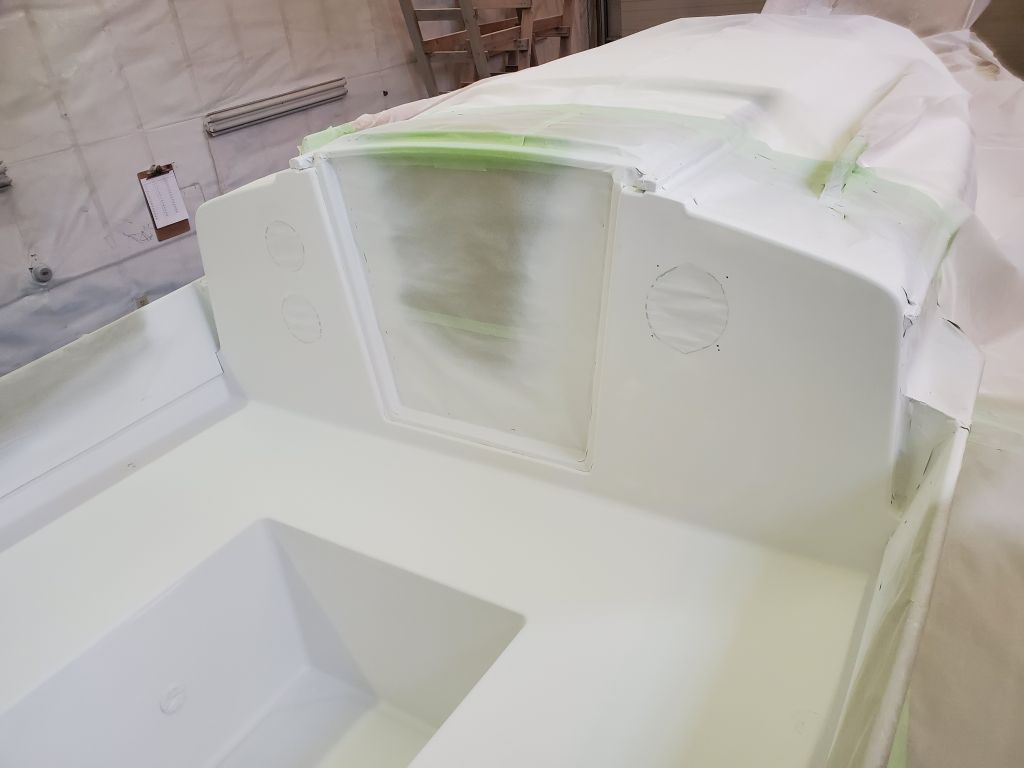
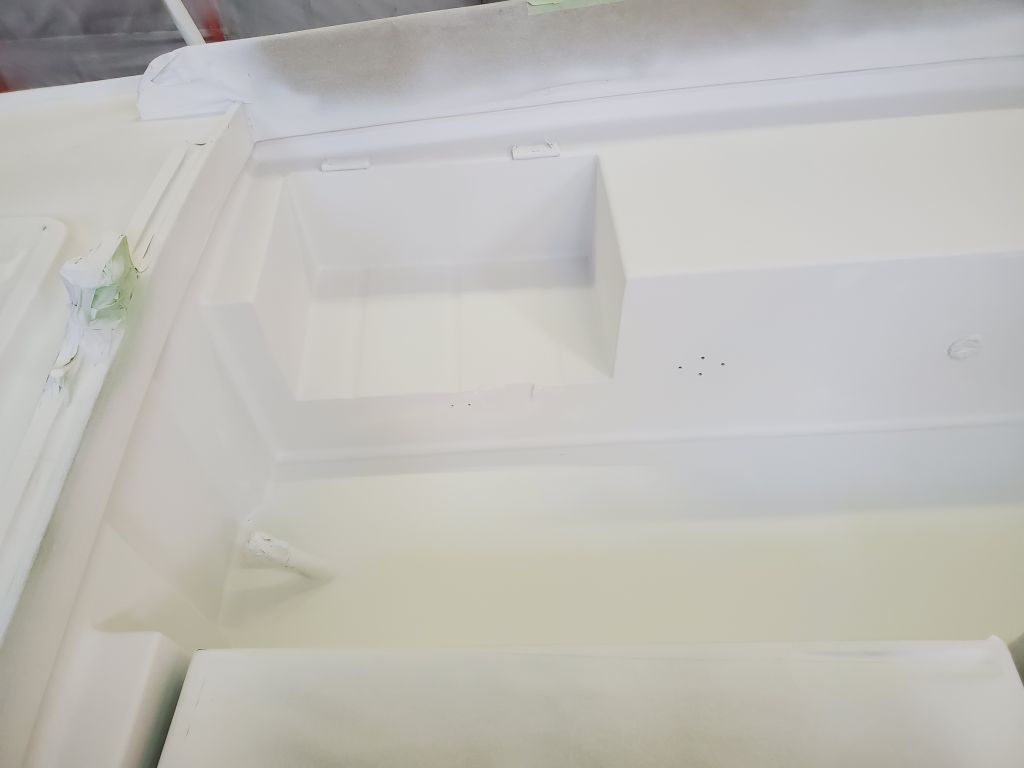
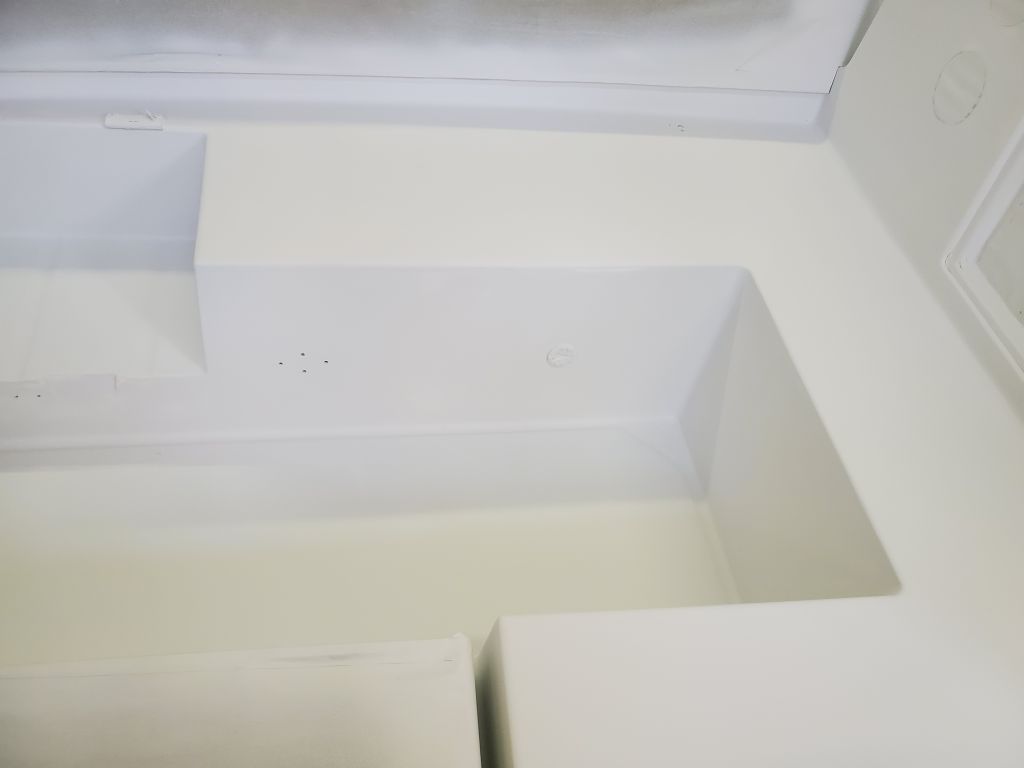
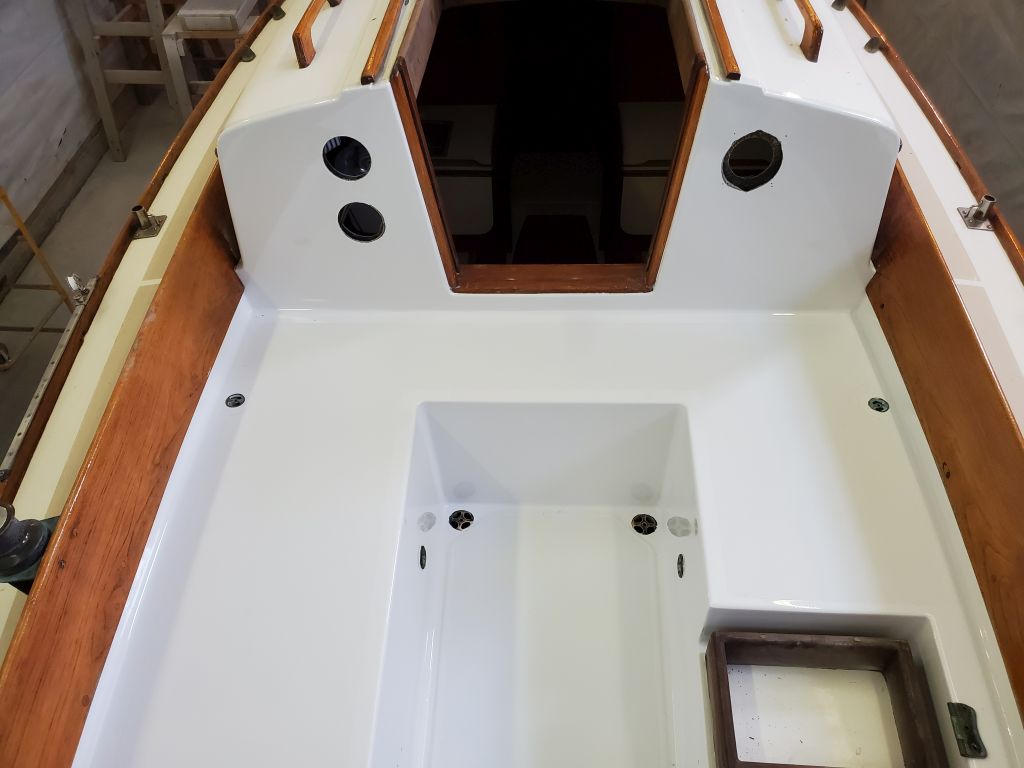
With the primer sufficiently cured overnight, I began in the cockpit and sanded all surfaces with 220 grit by machine and hand as necessary, smoothing the primer to prepare it for the next steps.

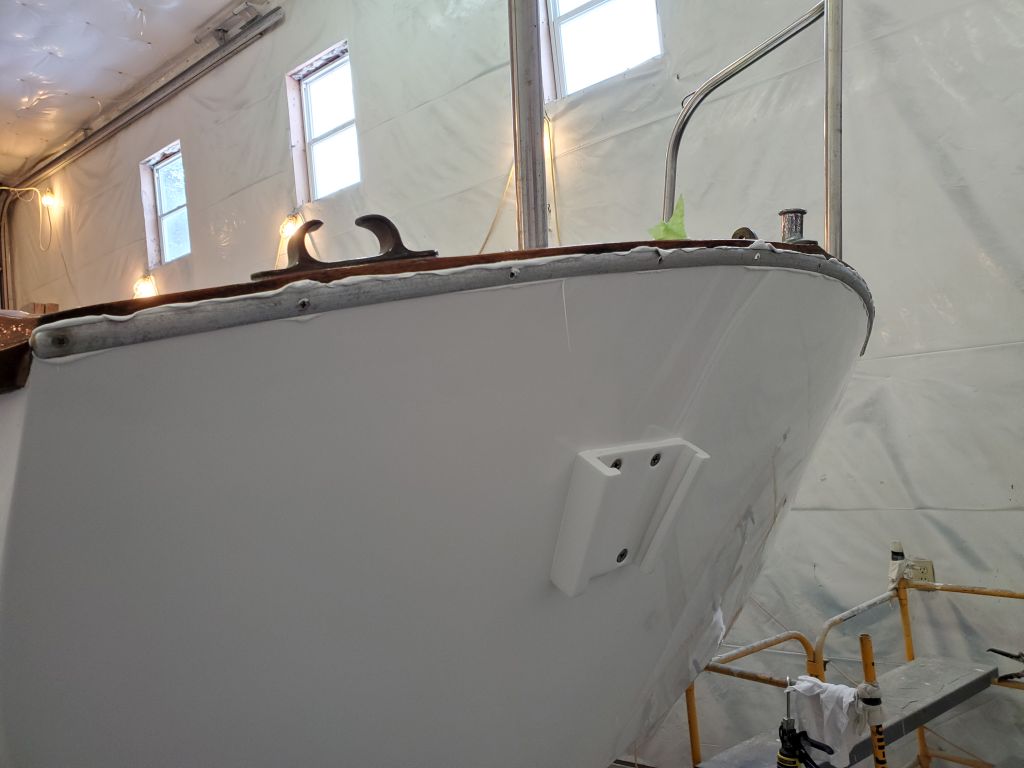
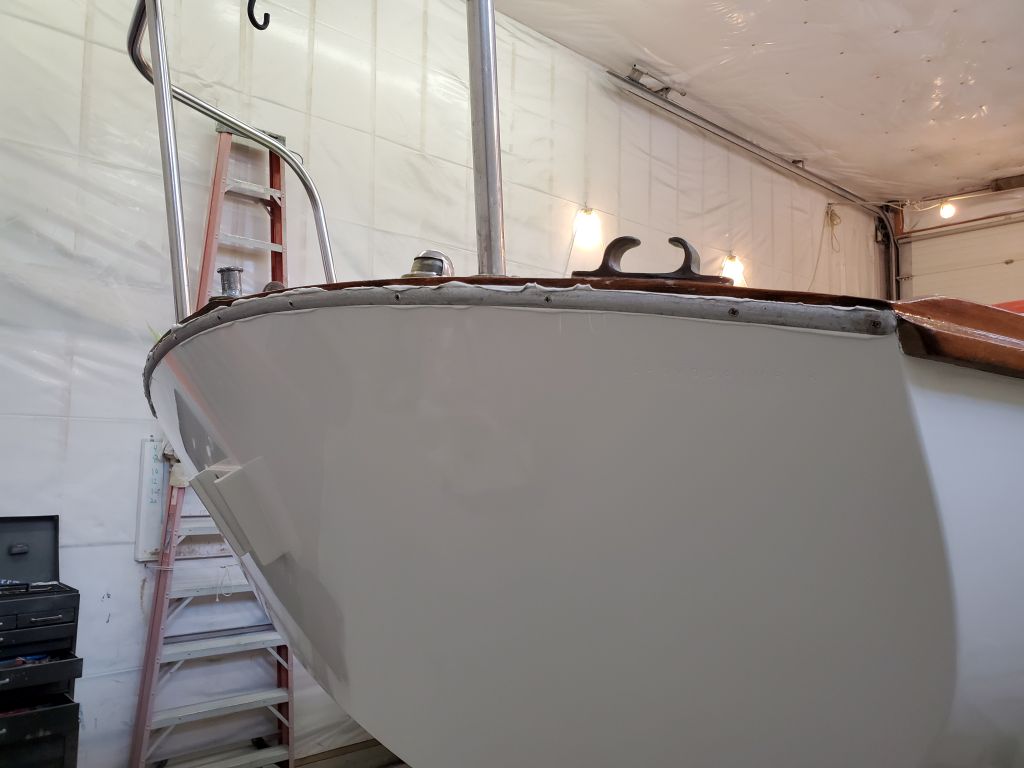
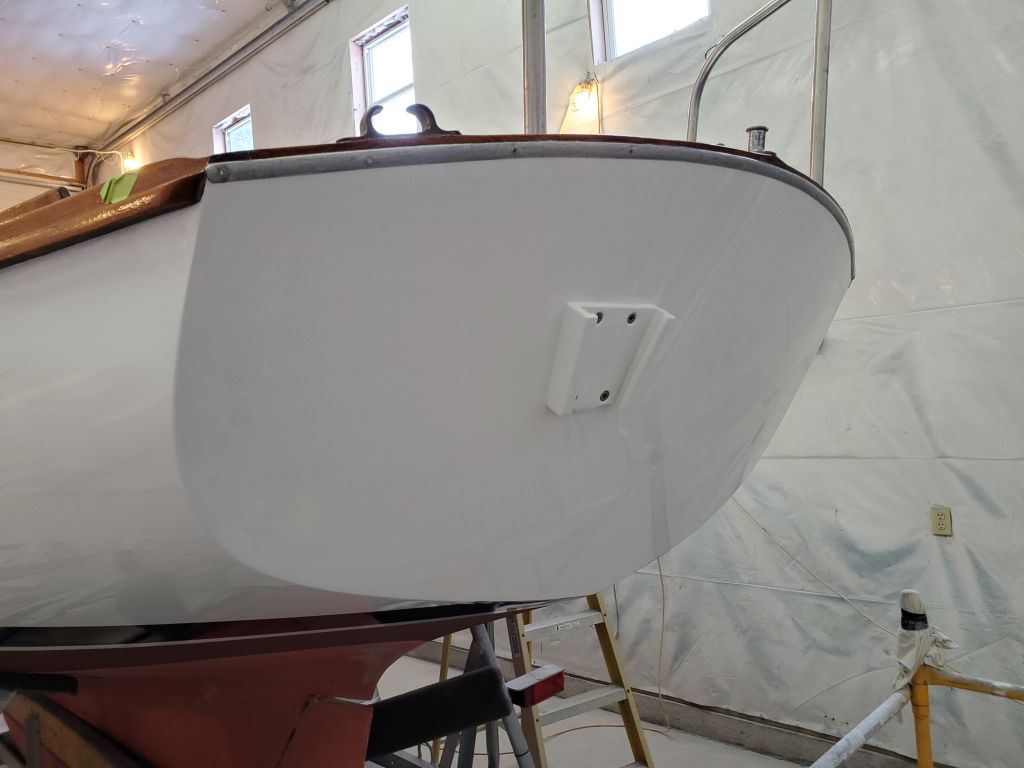
With the deck areas sanded, I moved on to the hull, sanding all areas with 220 grit paper.

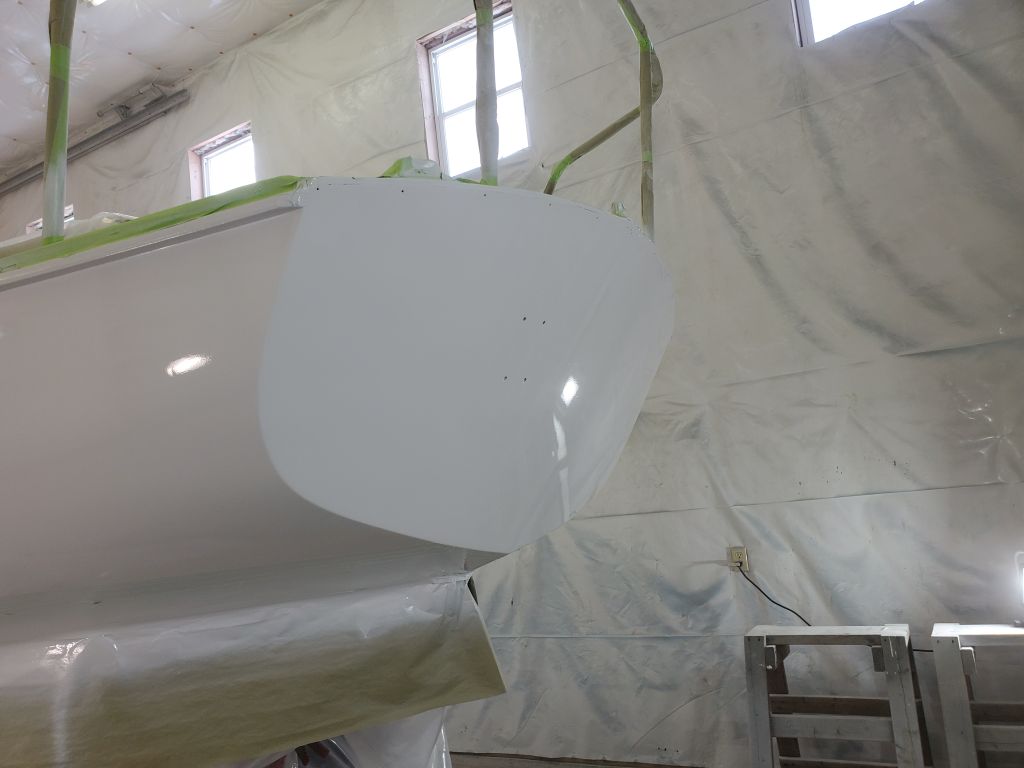
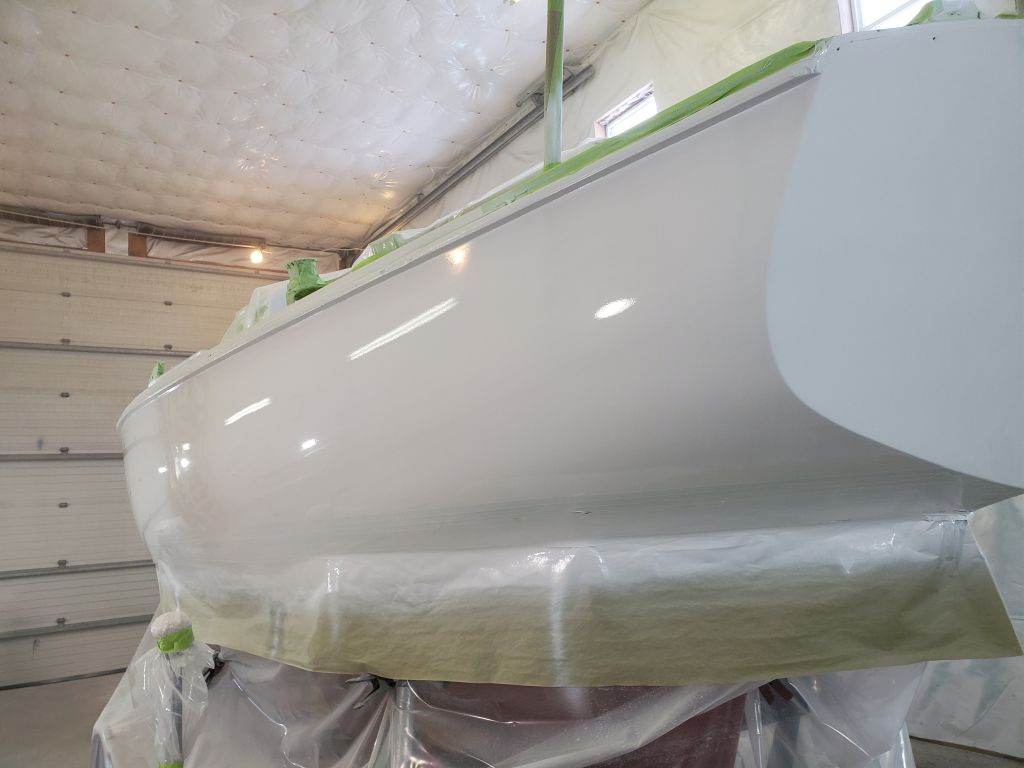
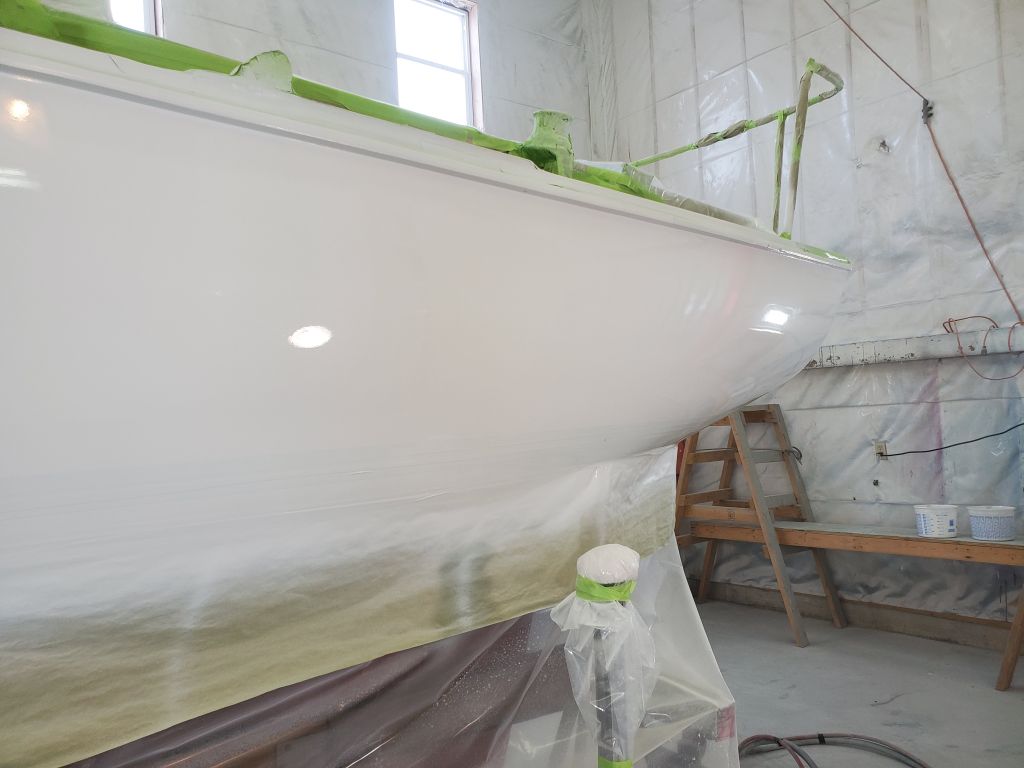
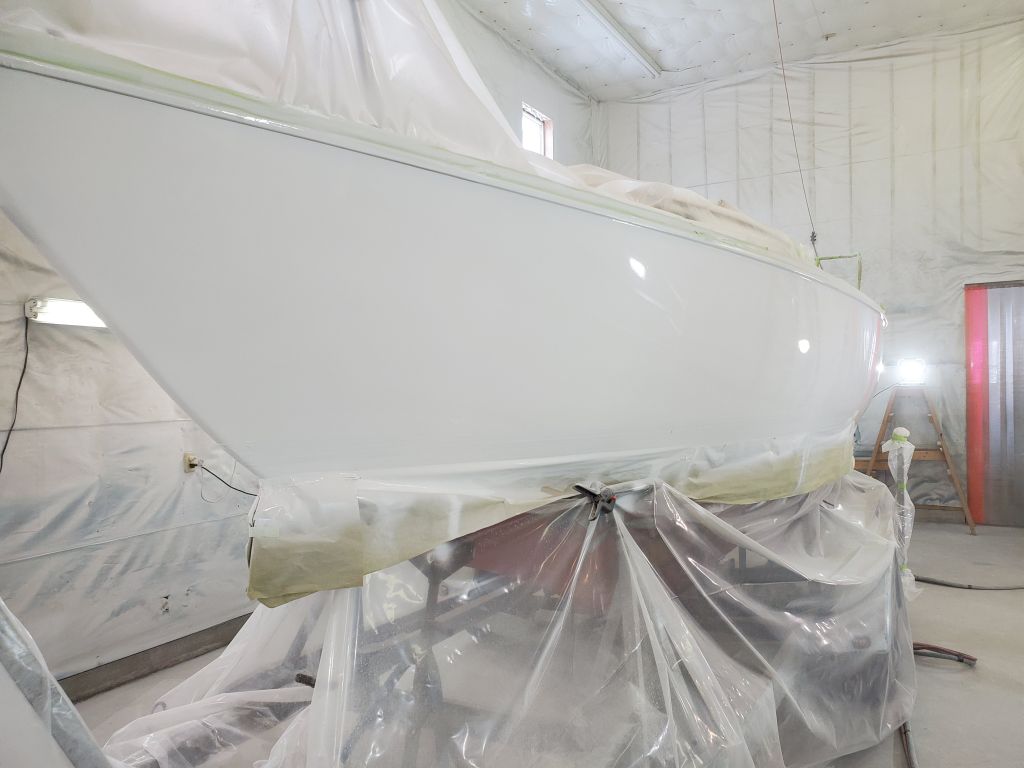
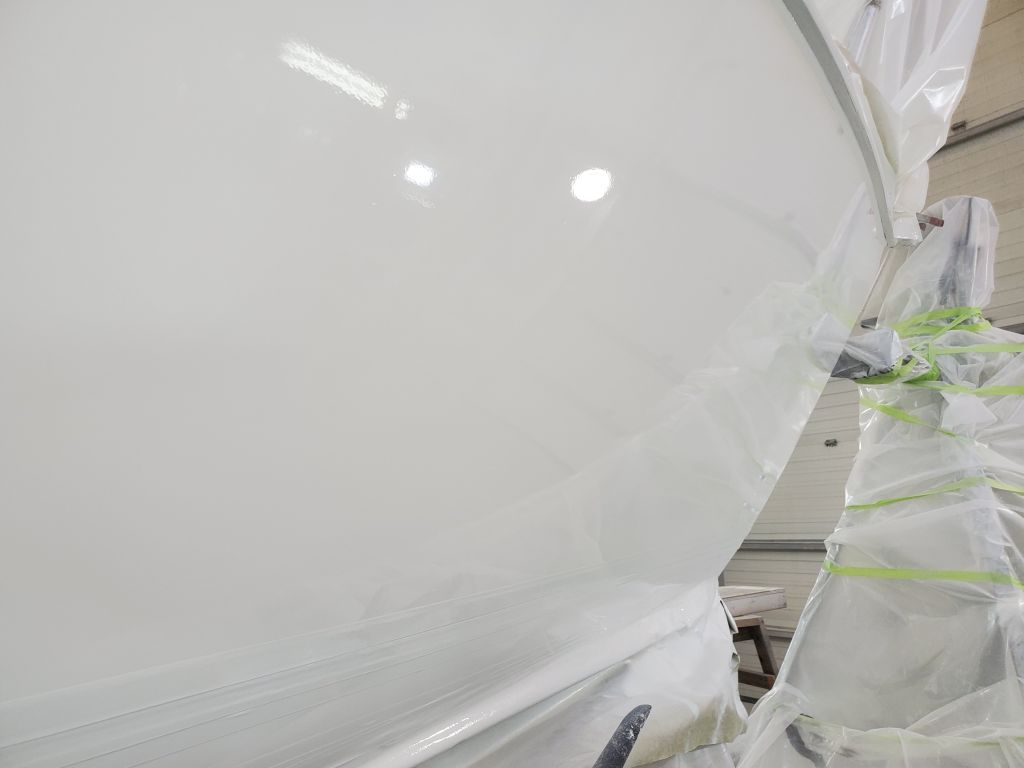
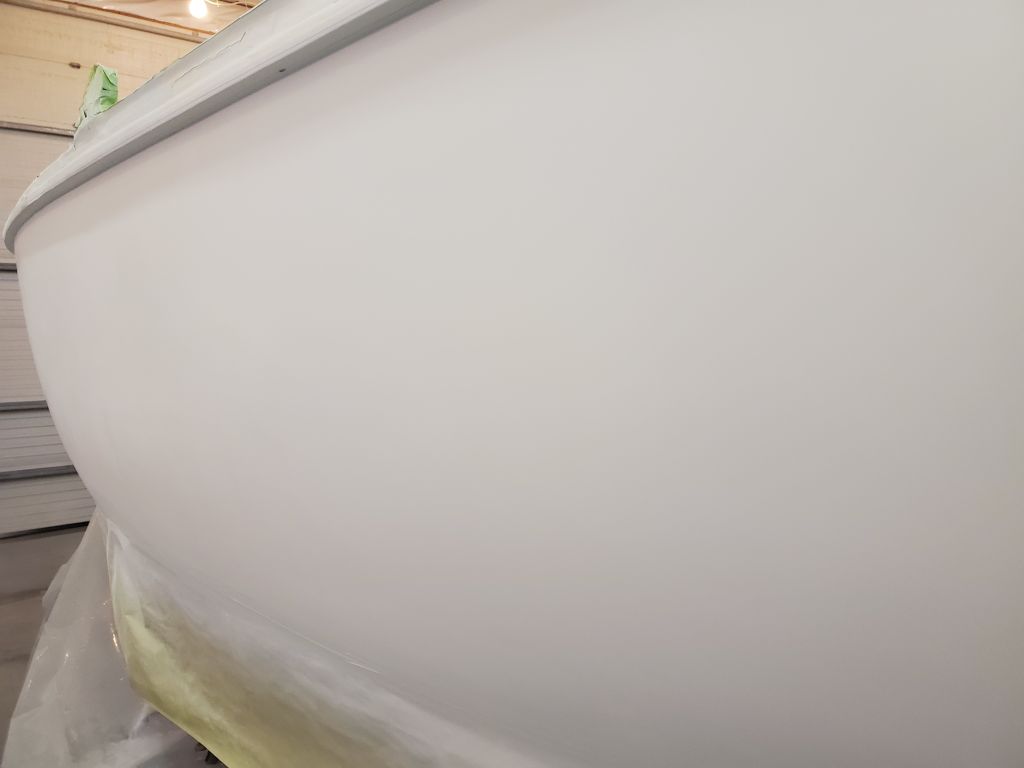
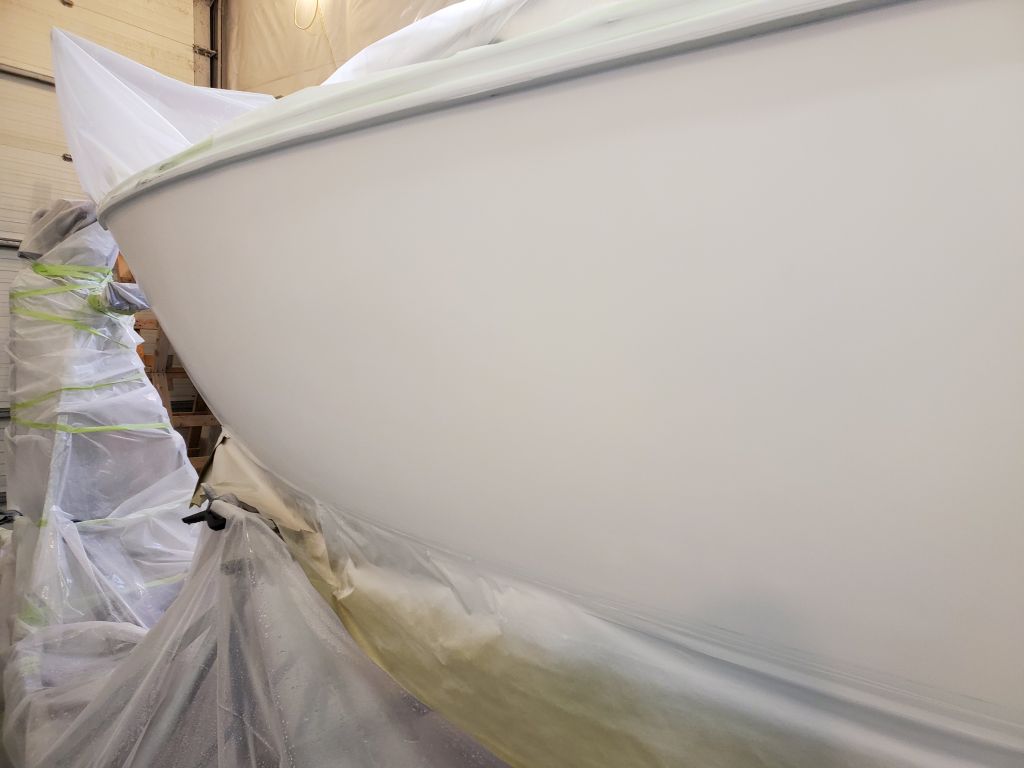
I was pleased with the primer and the resulting substrate in all areas.  Coming up next:  Cleanup, inspection, and fine filler application on pinholes or other areas requiring additional attention before finish primer.  But for now it was time for Christmas break.

Total time billed on this job today:  4  hours

0600 Weather Observation:  29°, clear.  Forecast for the day:  Increasing clouds, 31°

Arietta 16

Tuesday

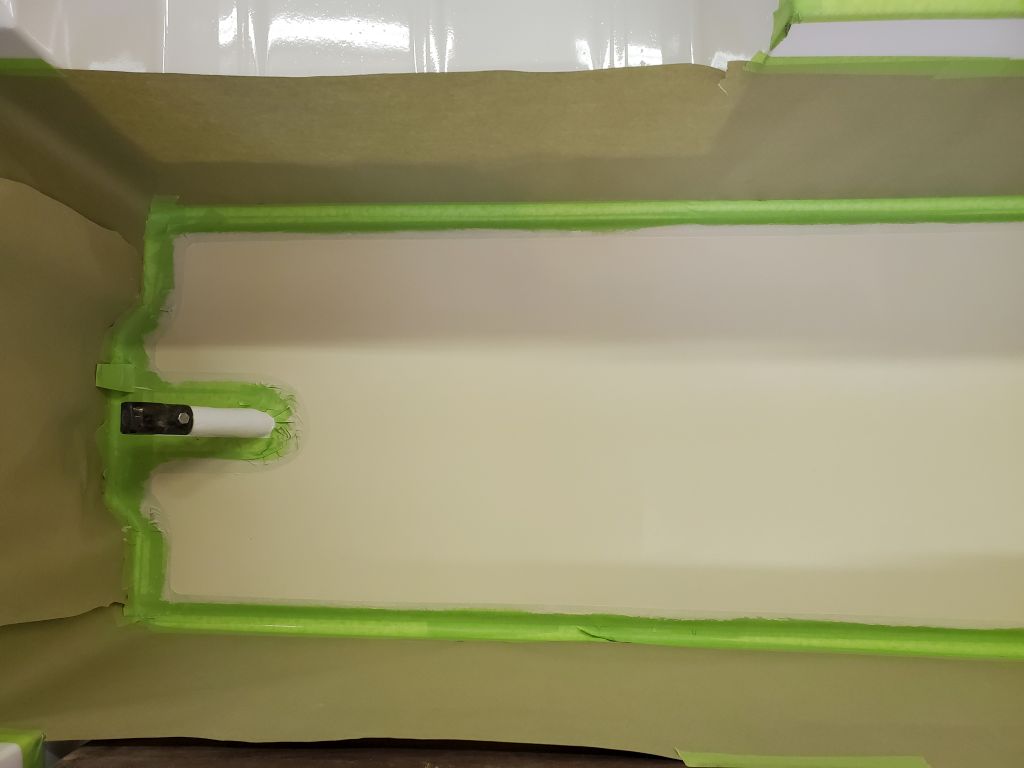
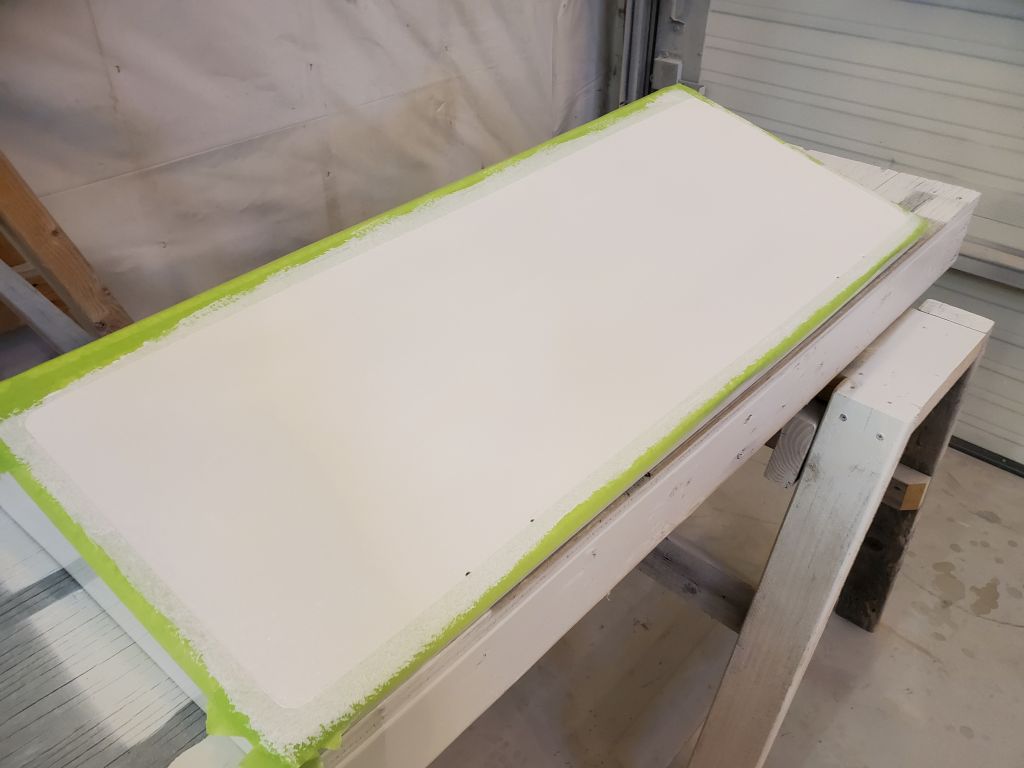
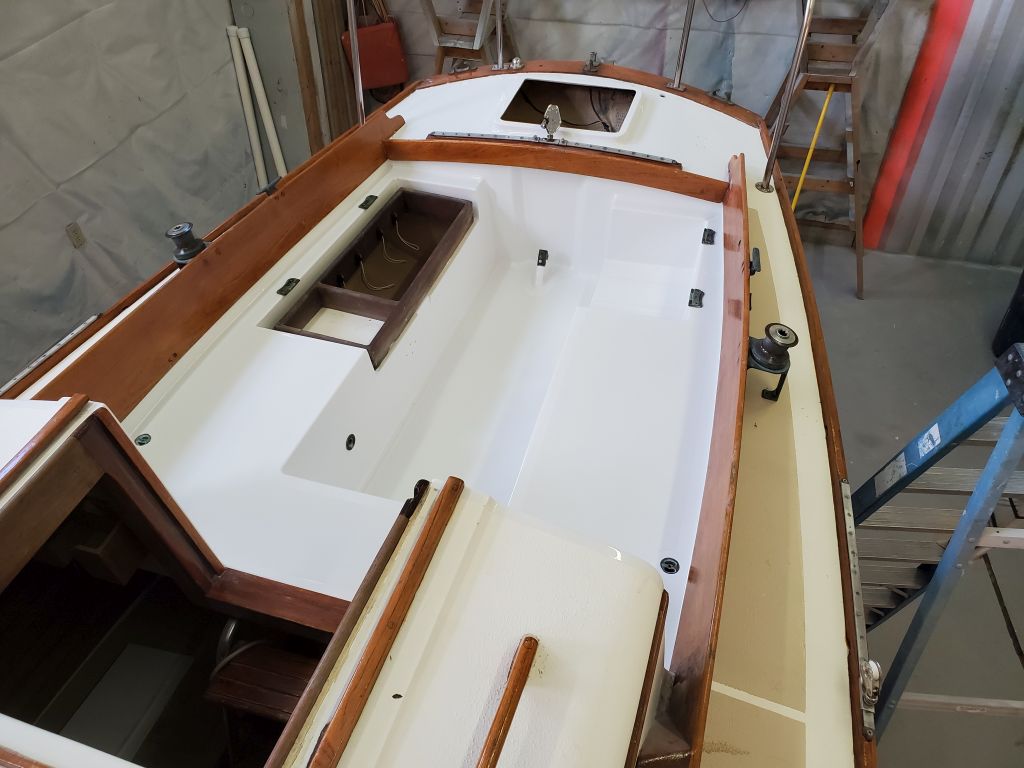
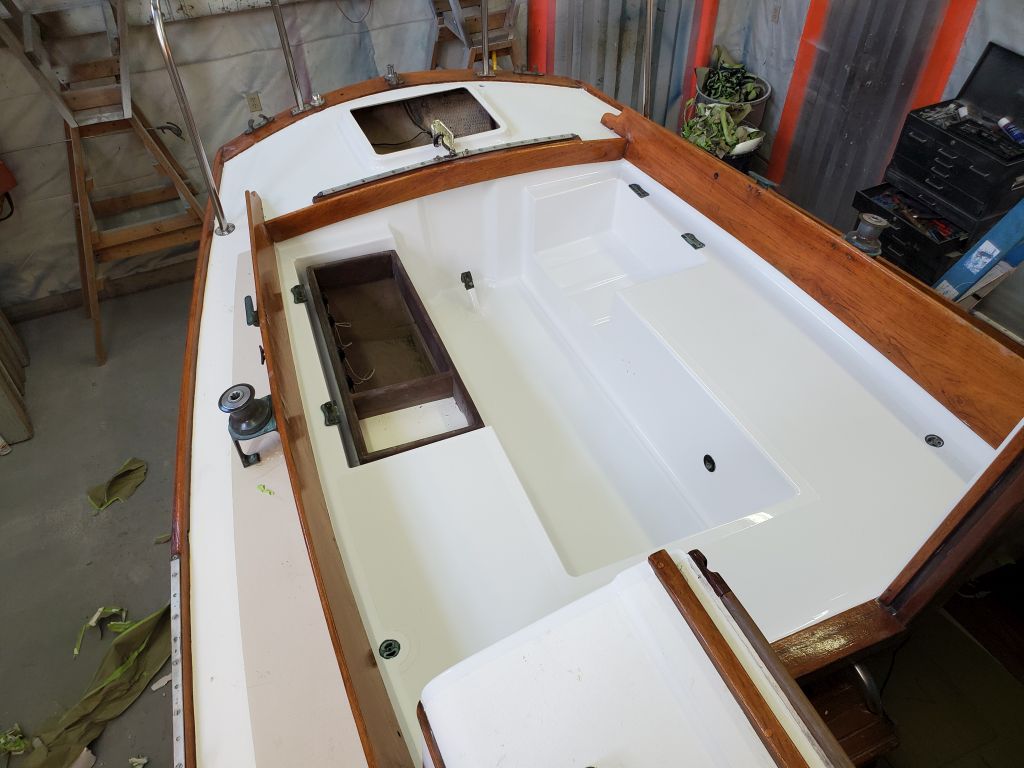
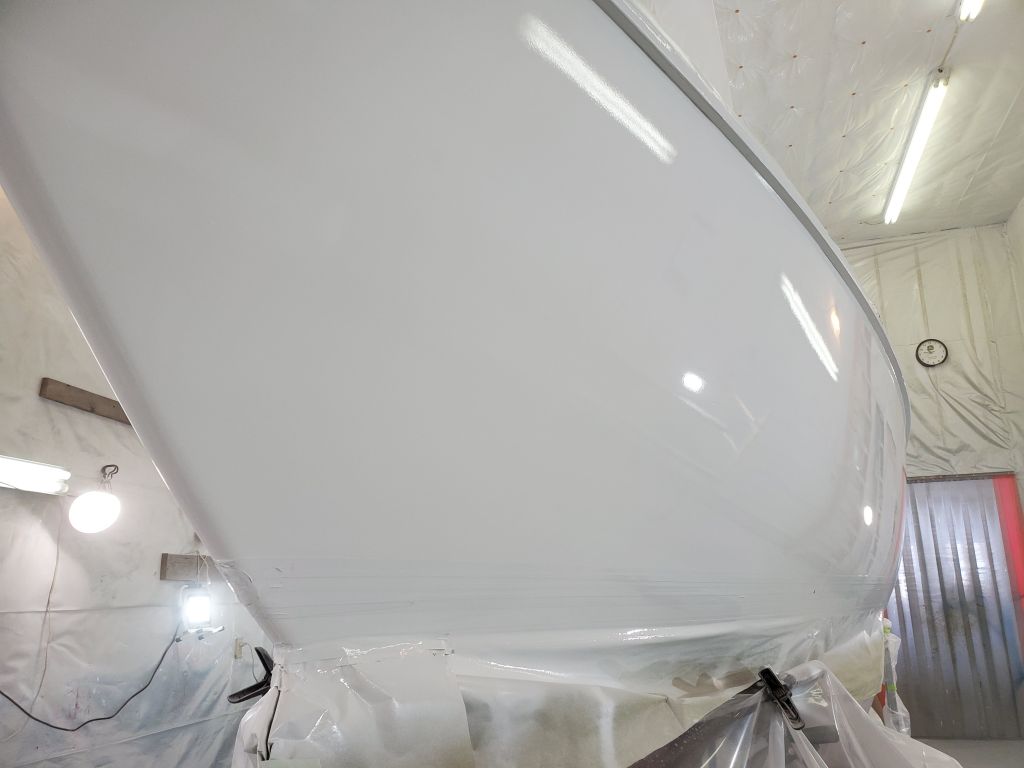
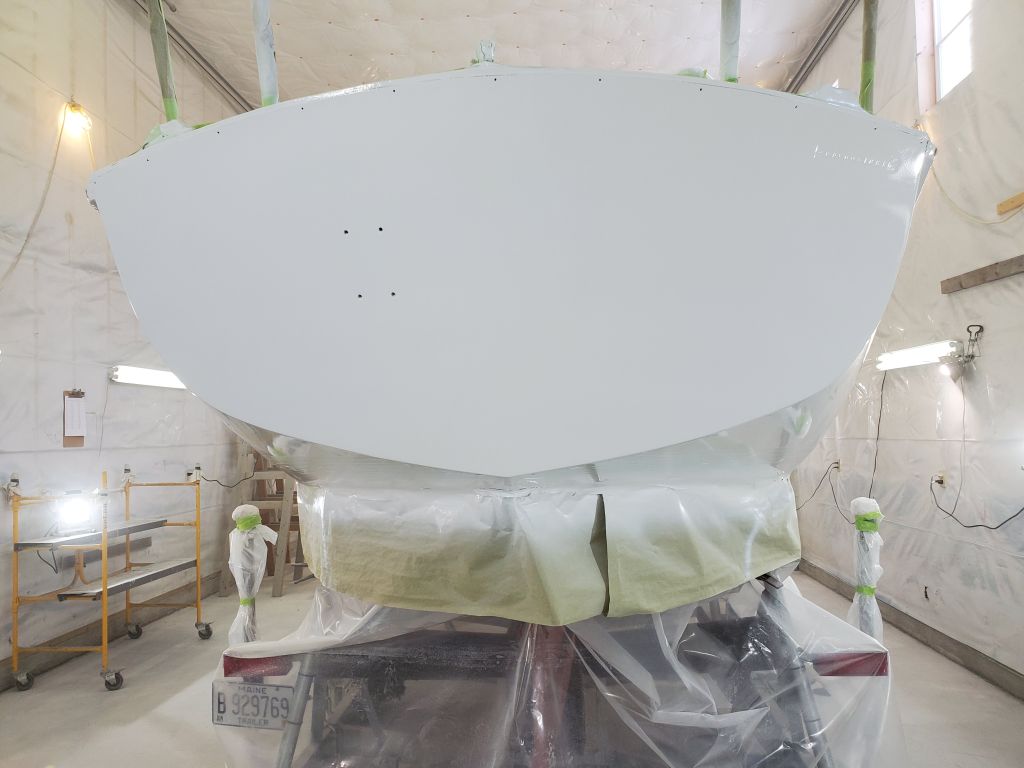
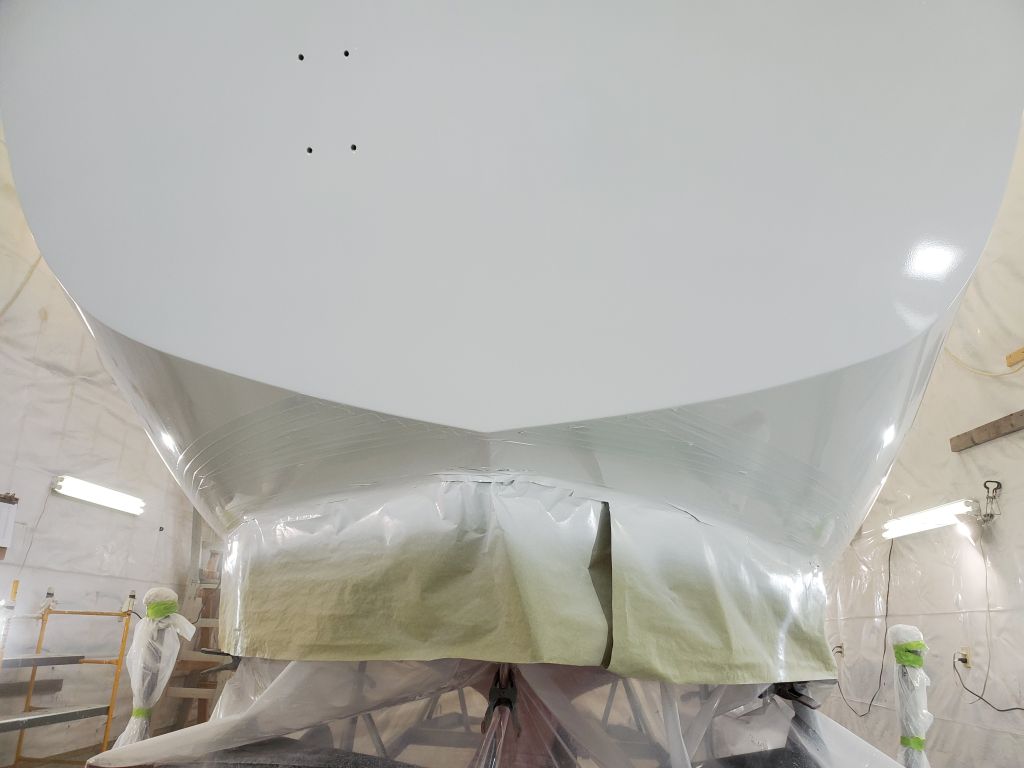
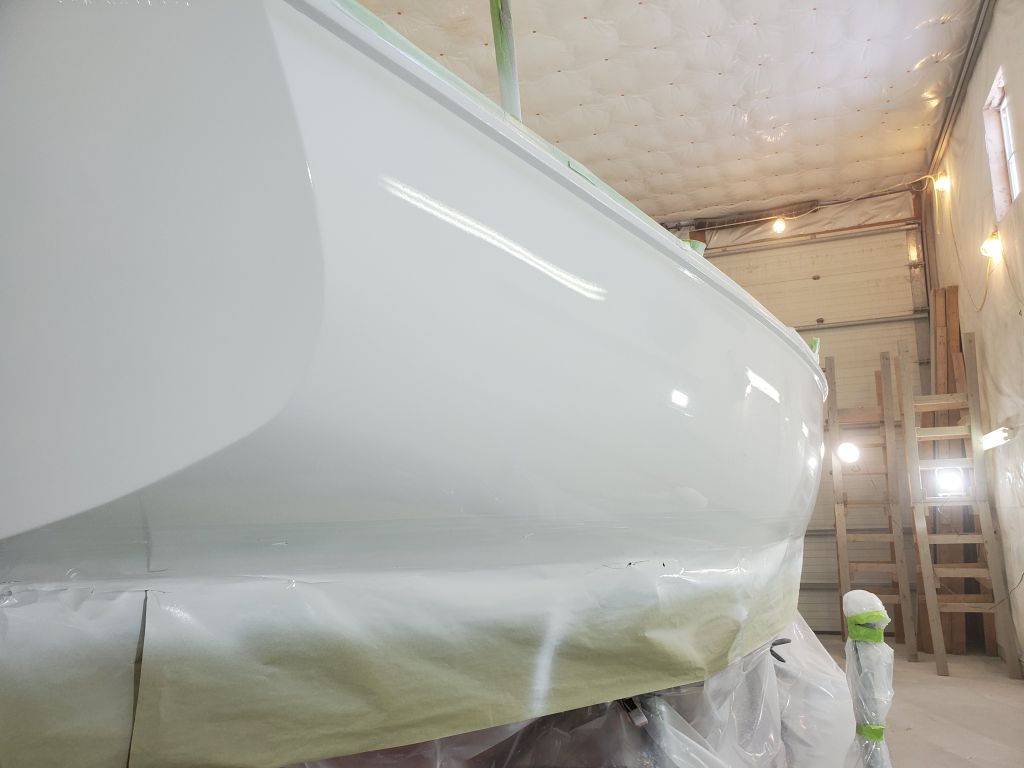
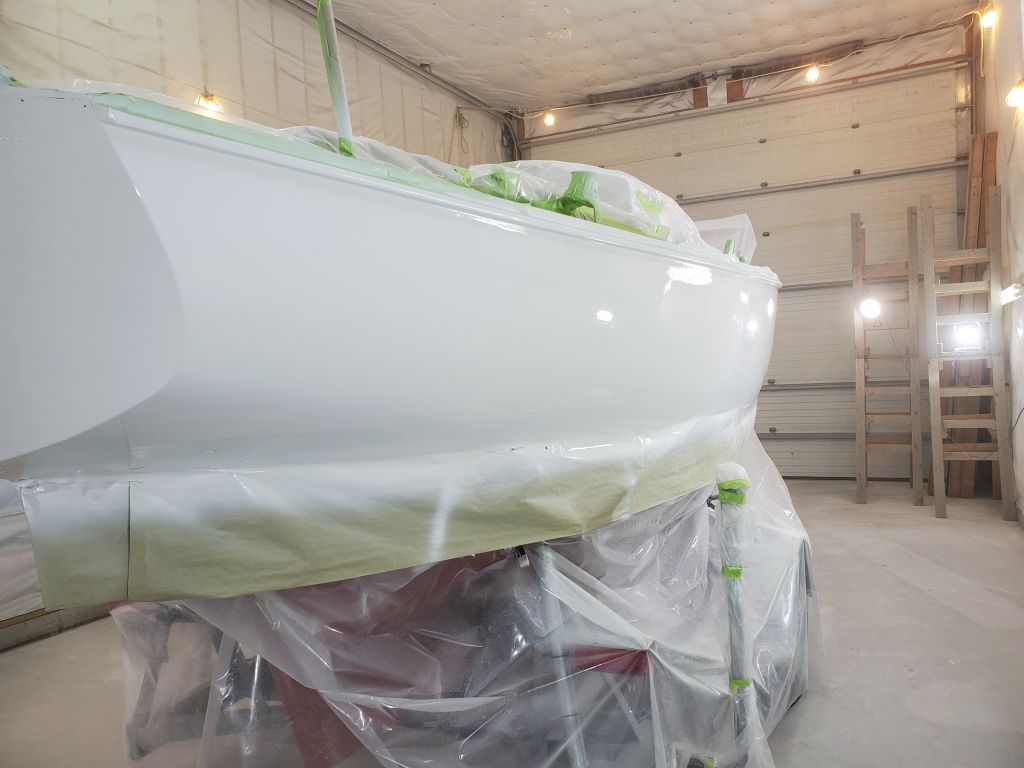
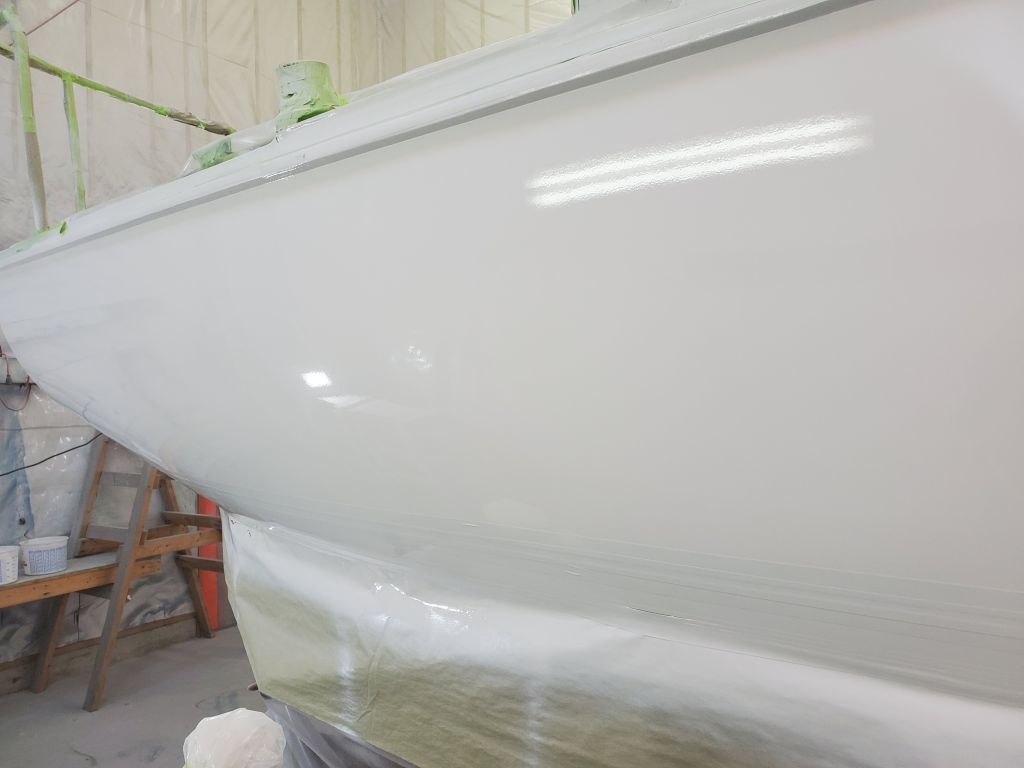
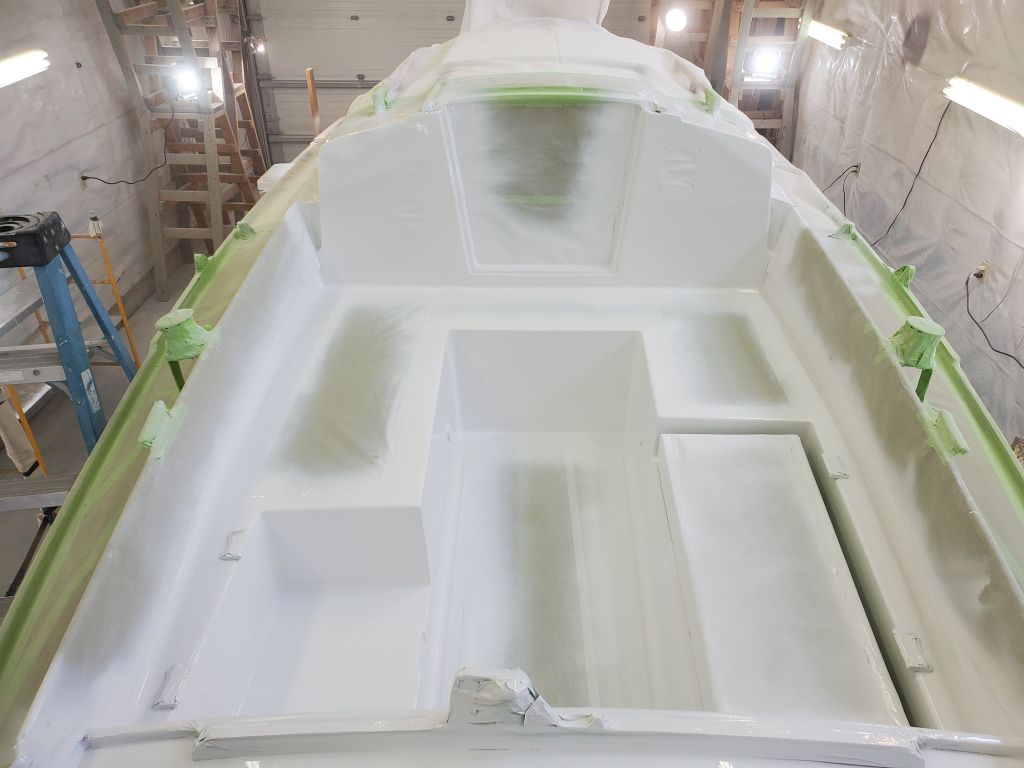
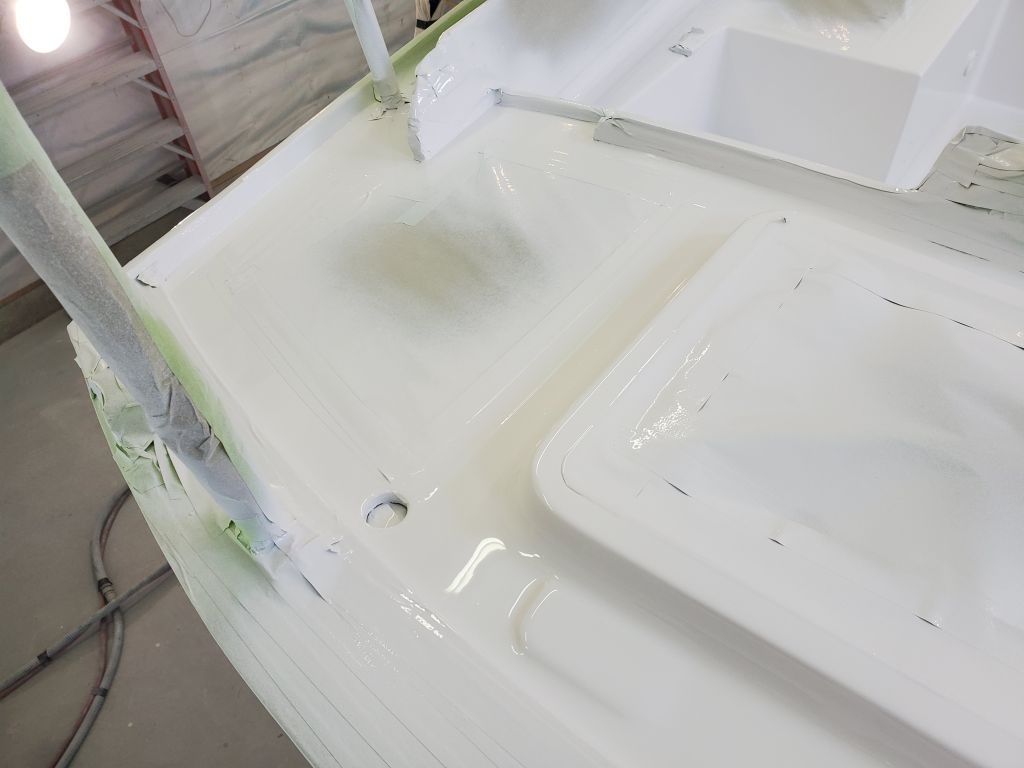
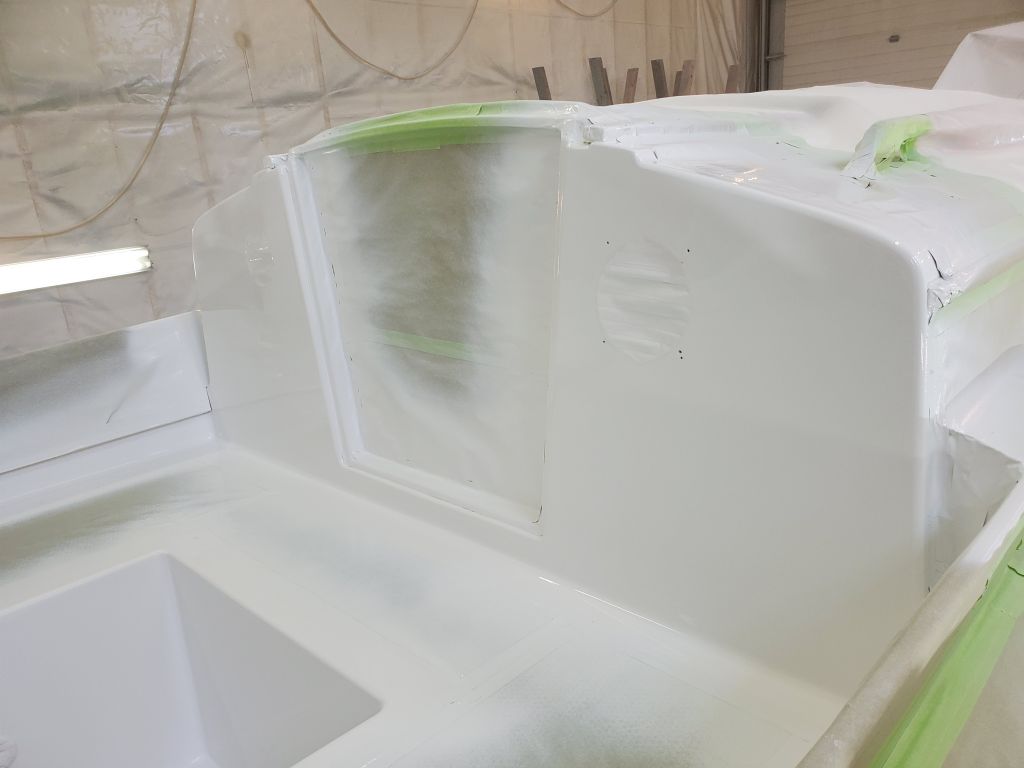
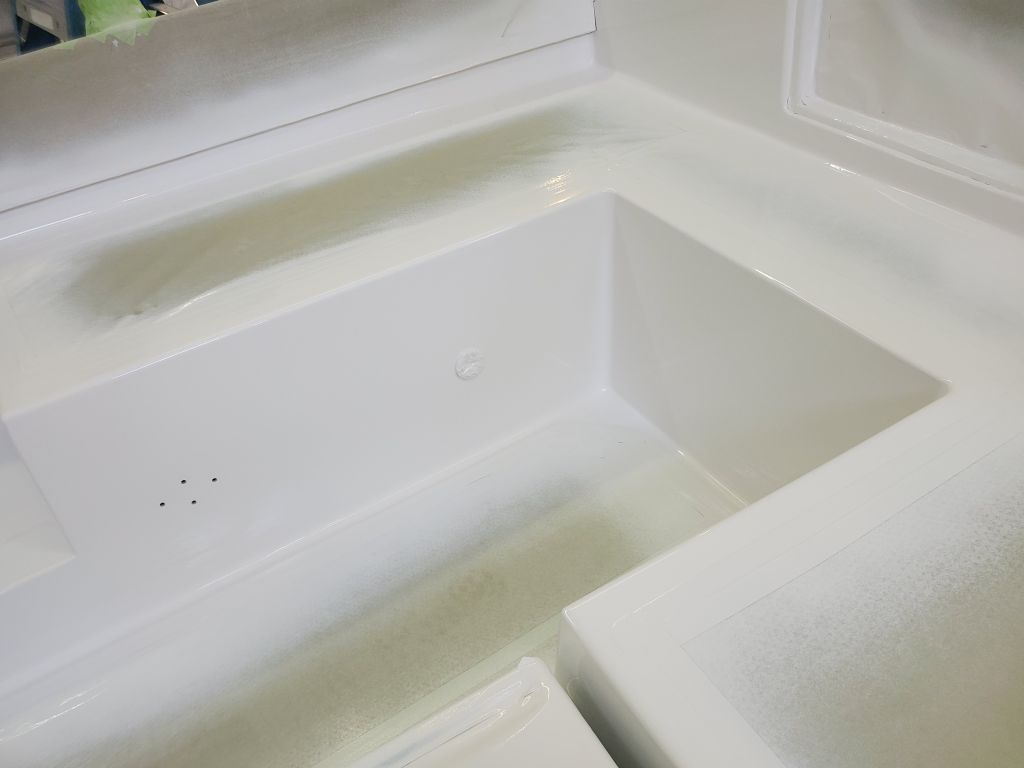
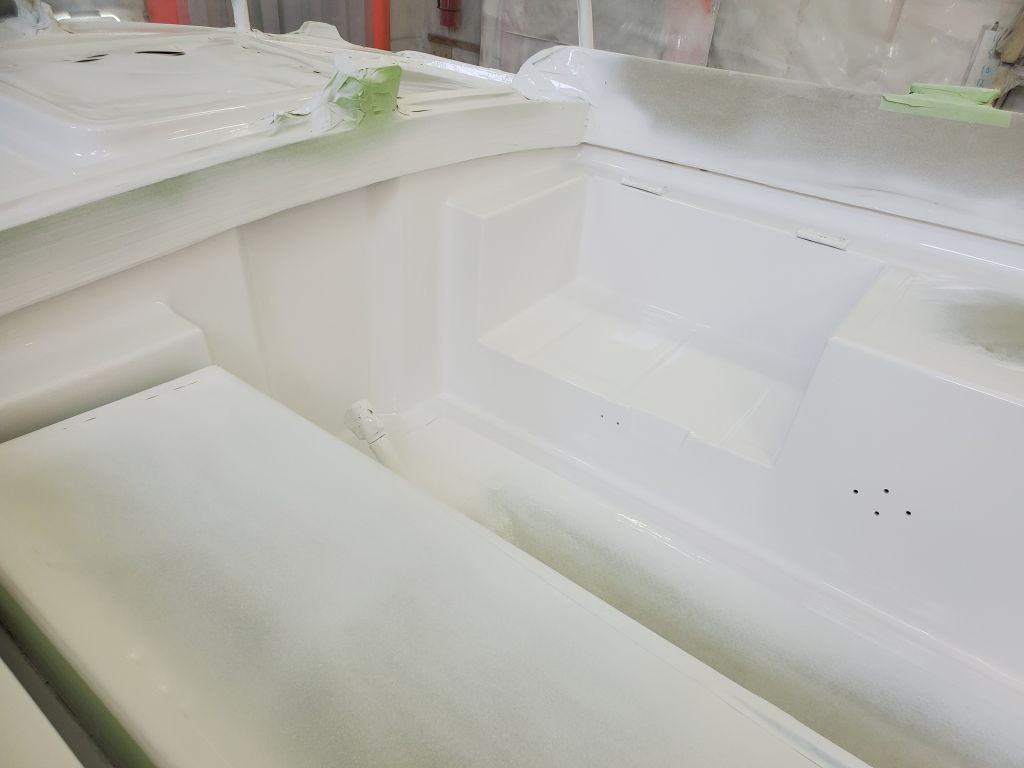
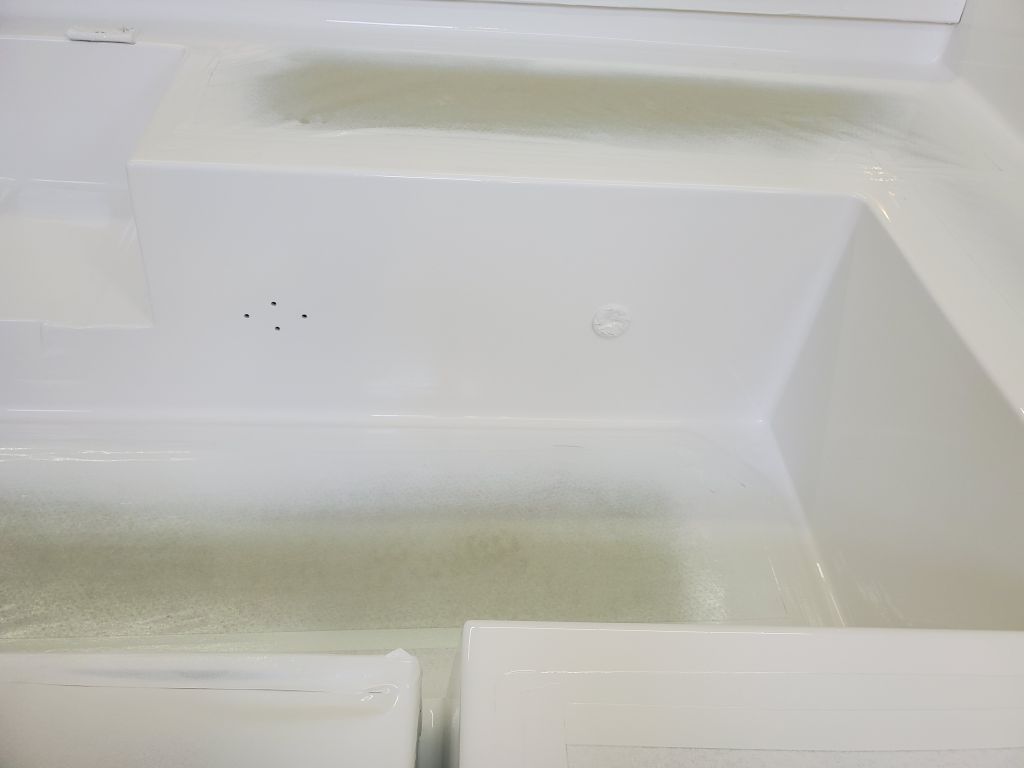
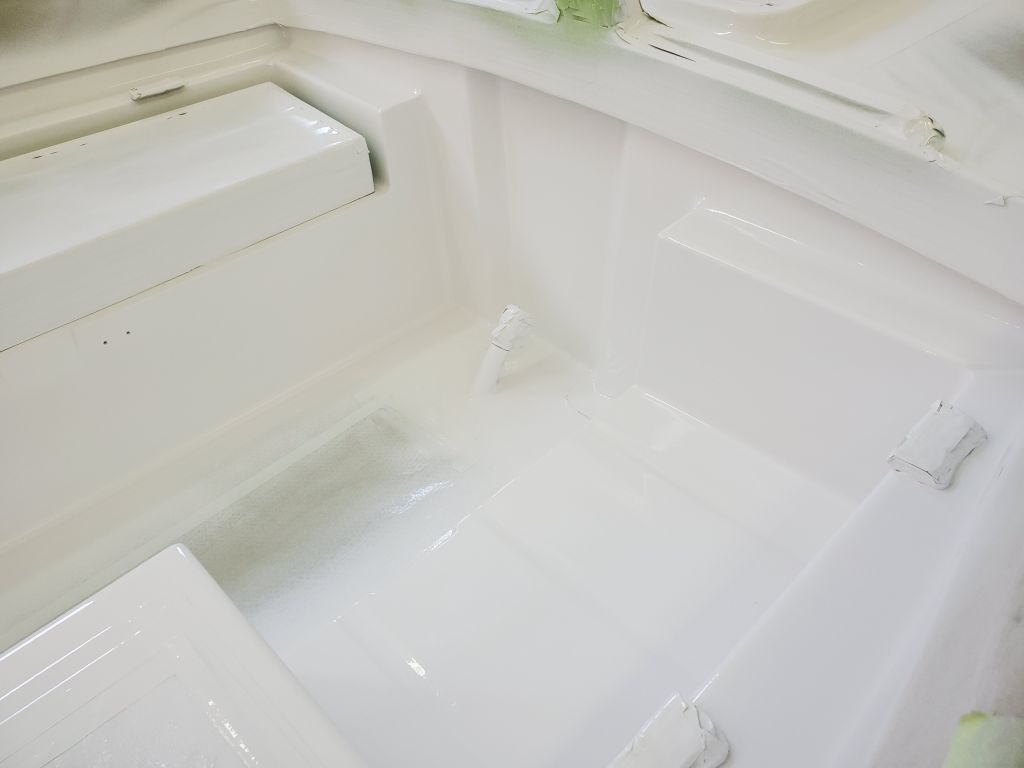
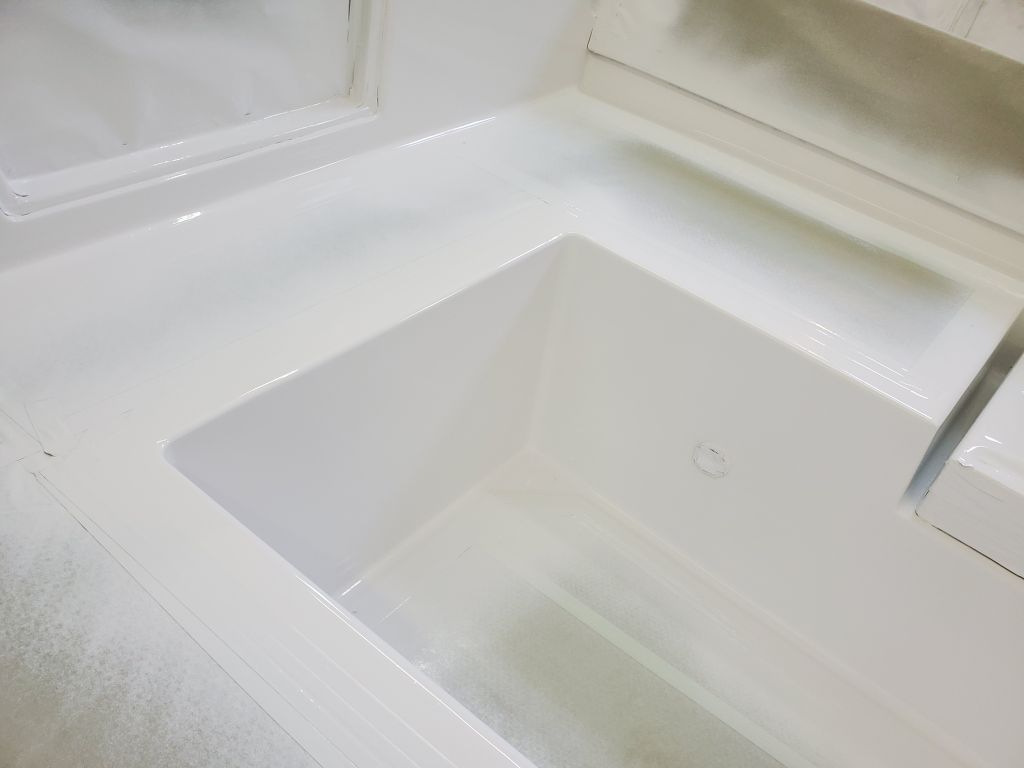
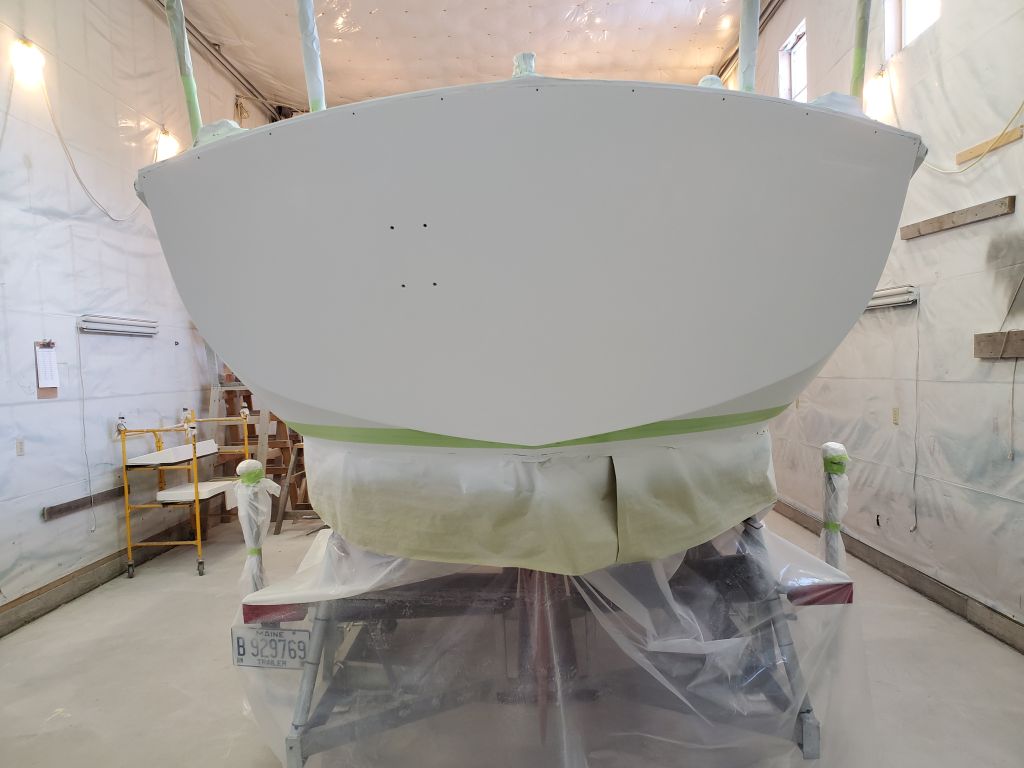
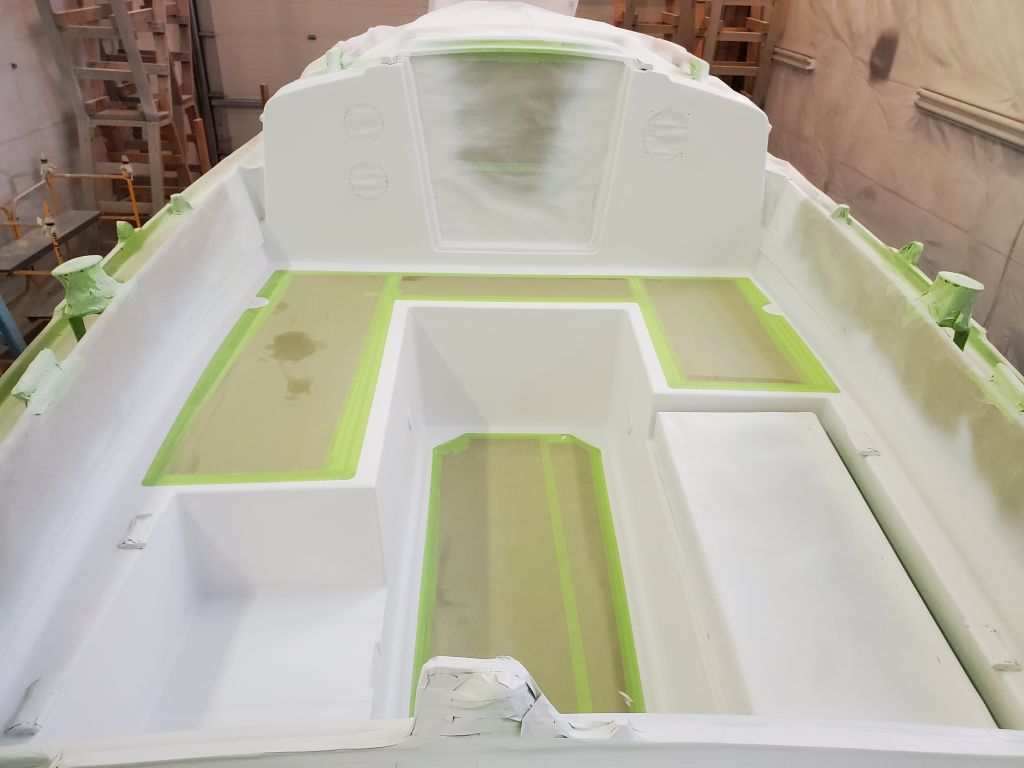
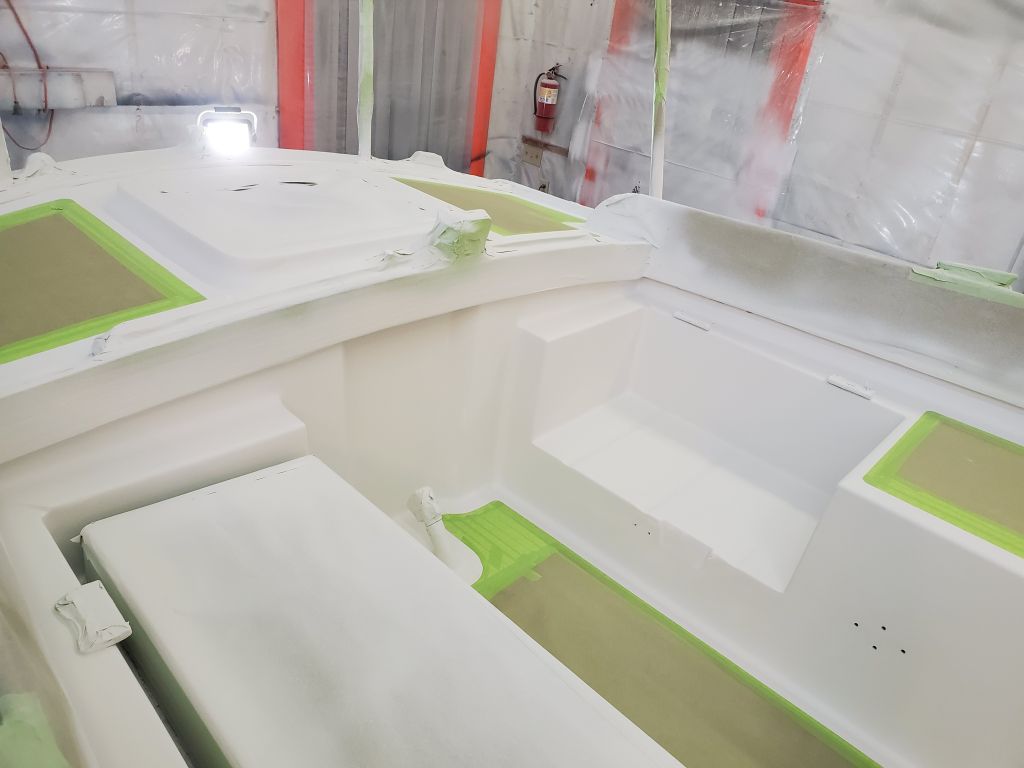
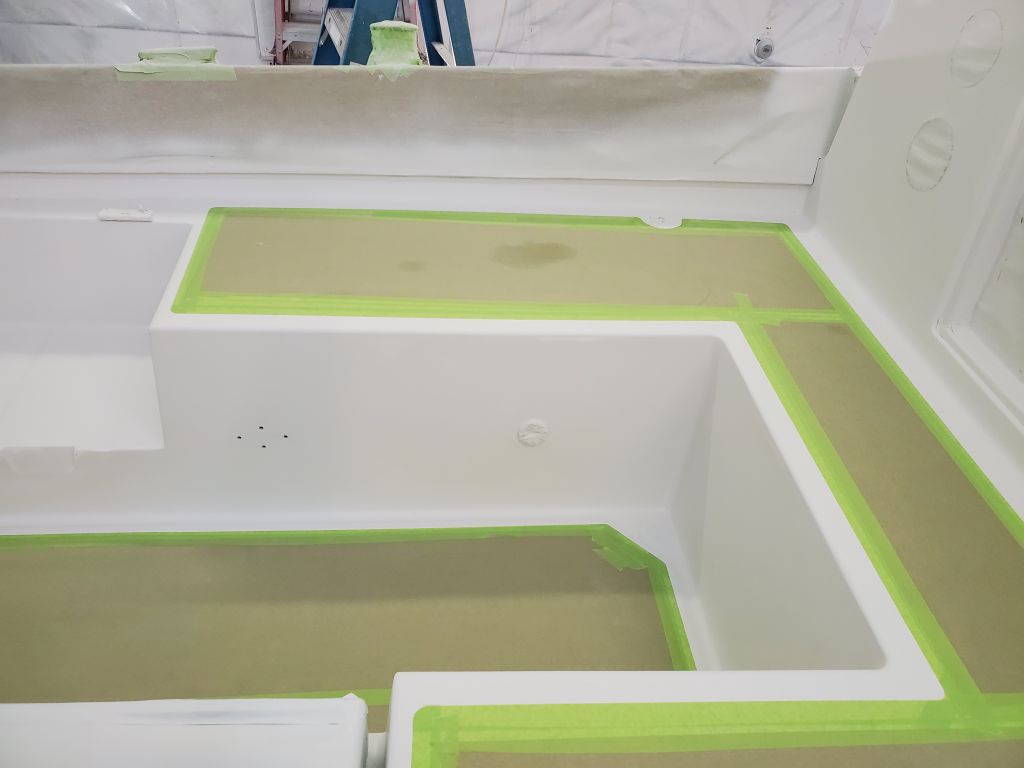
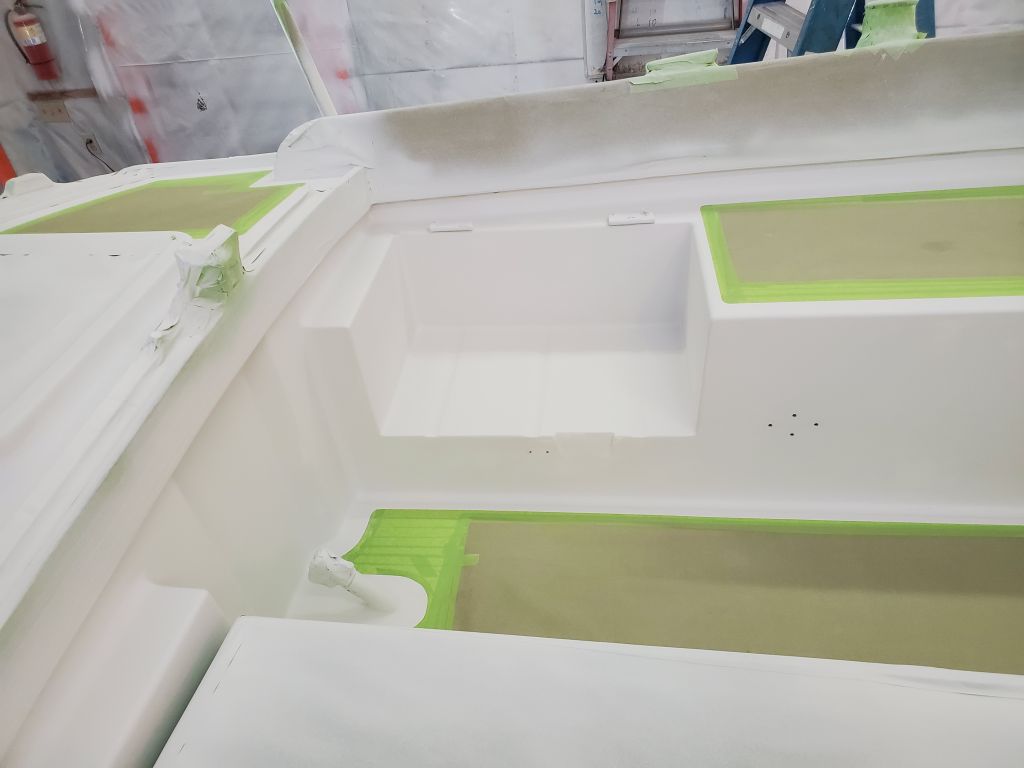
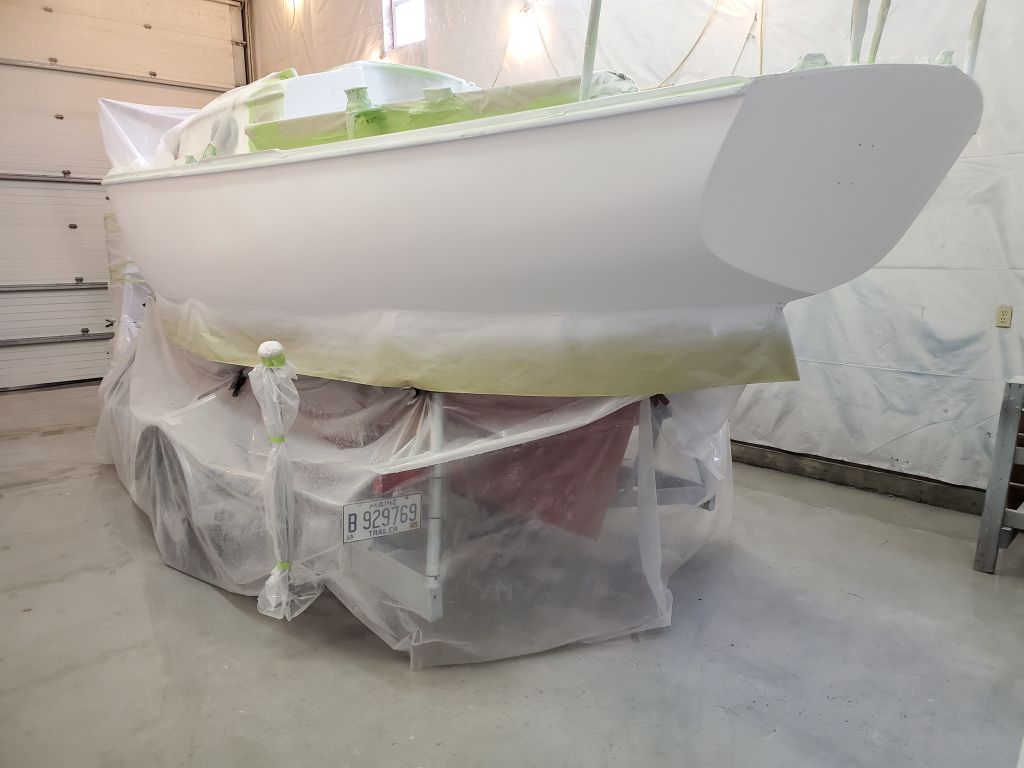
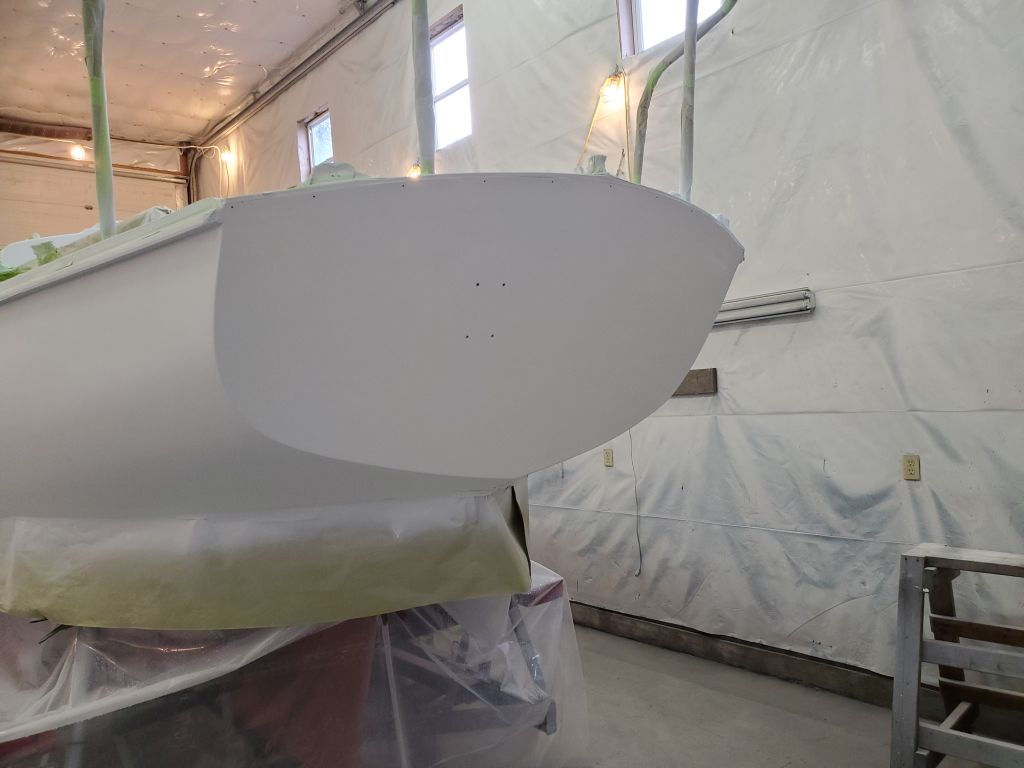
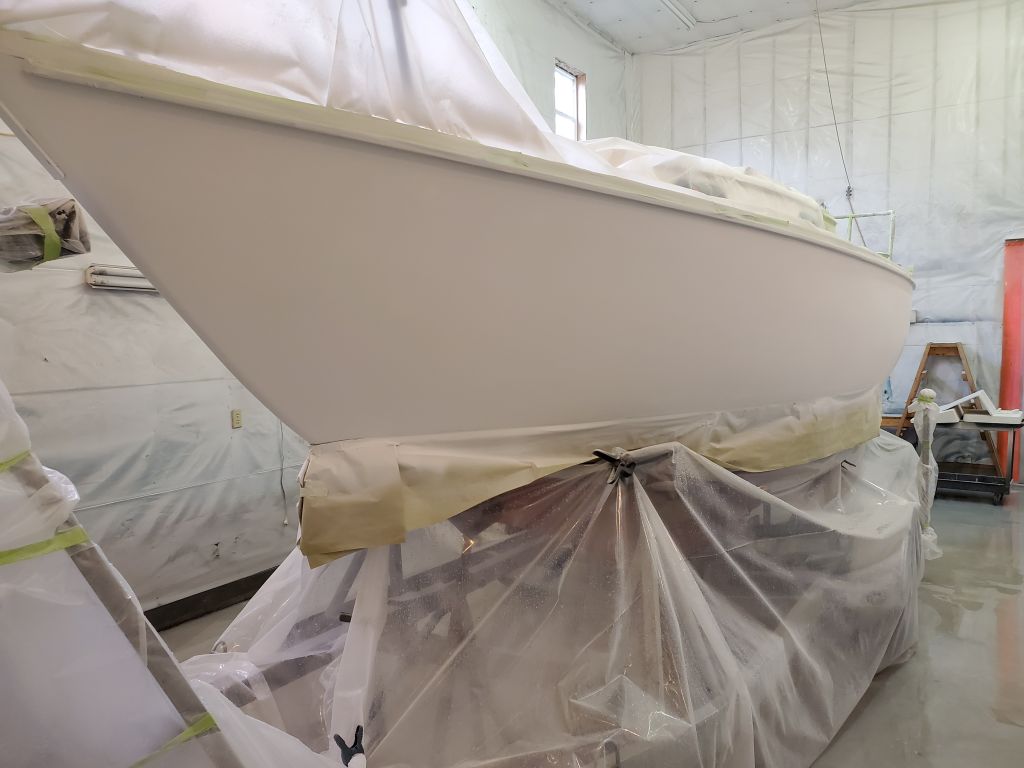
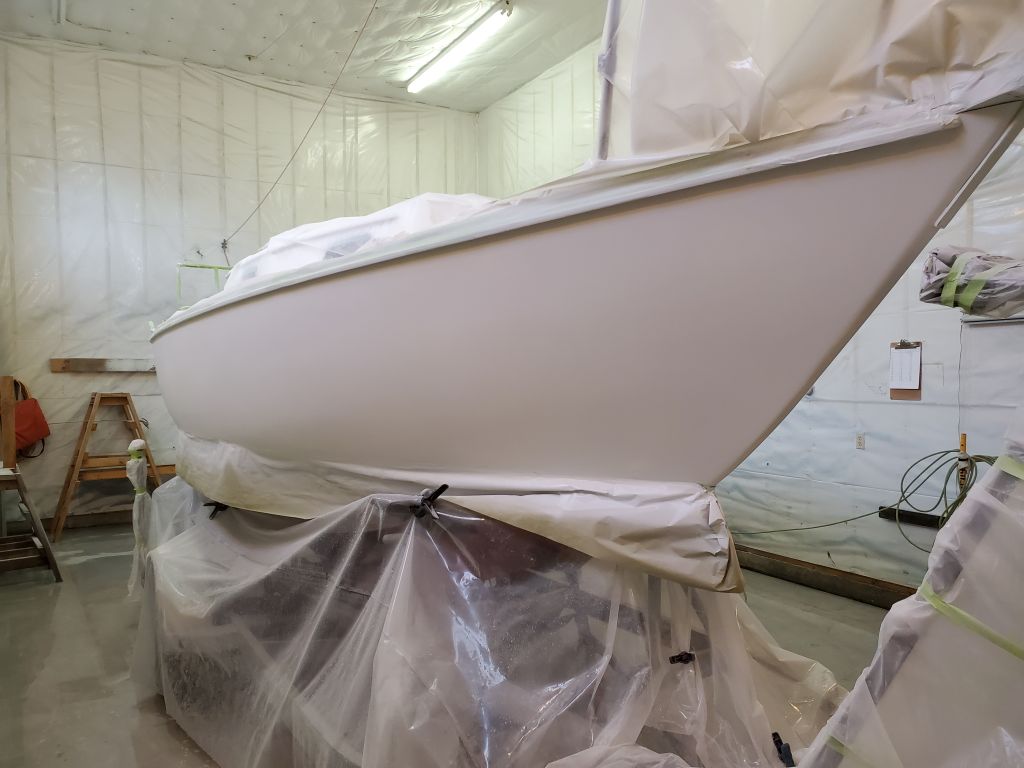
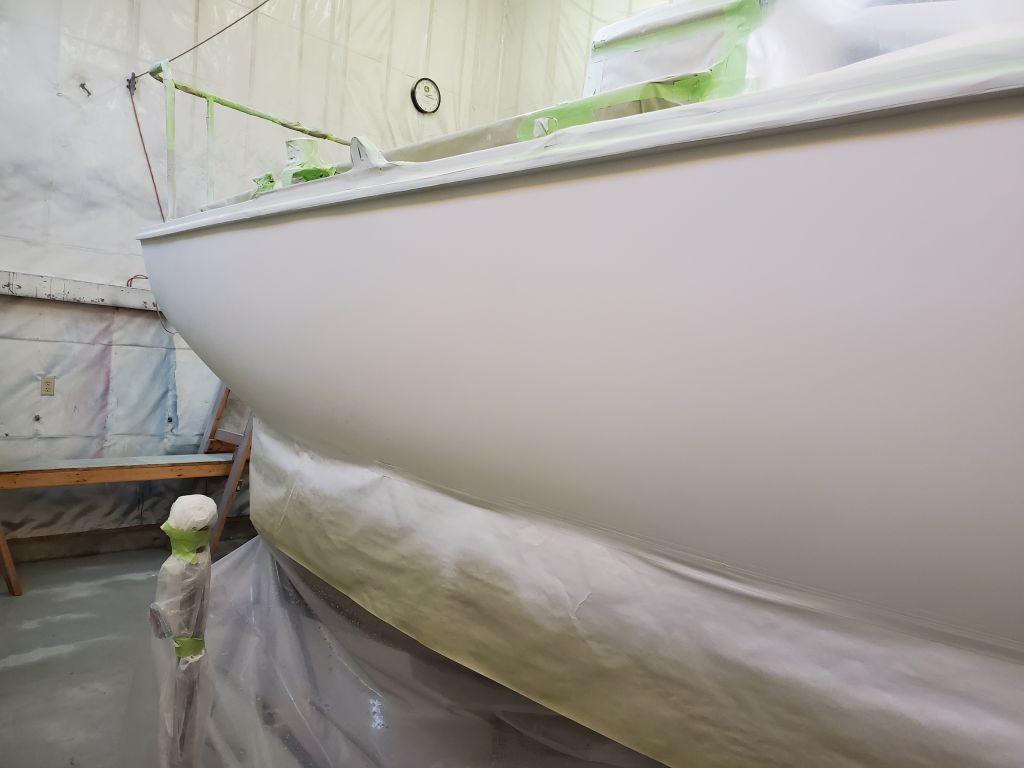
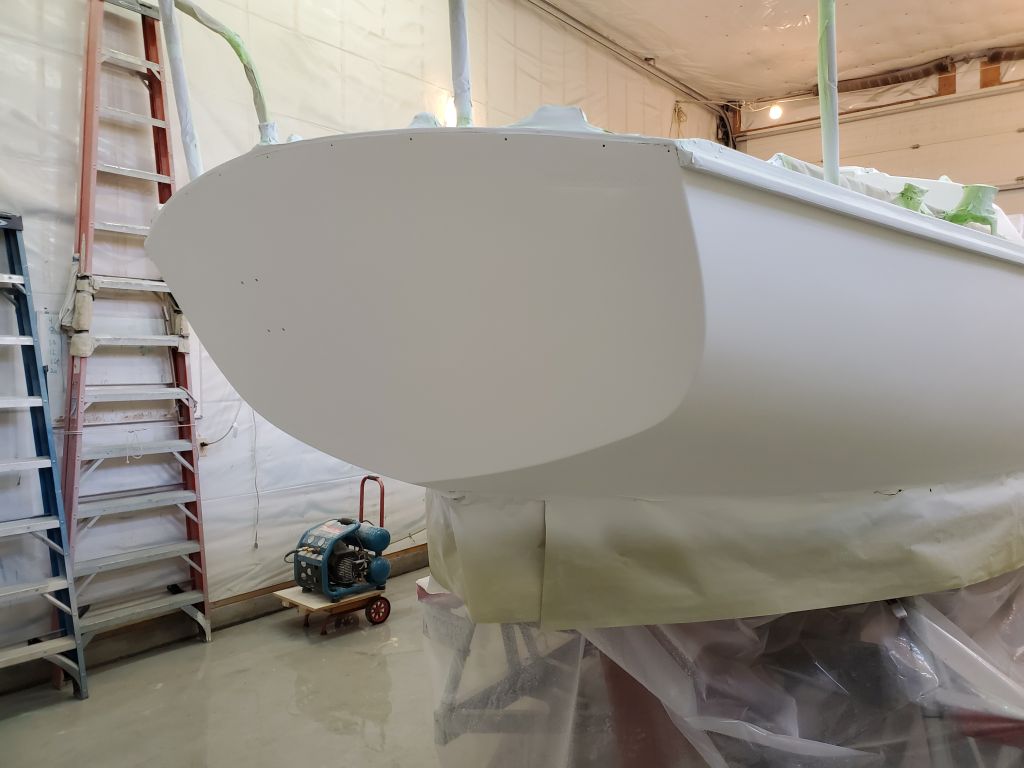
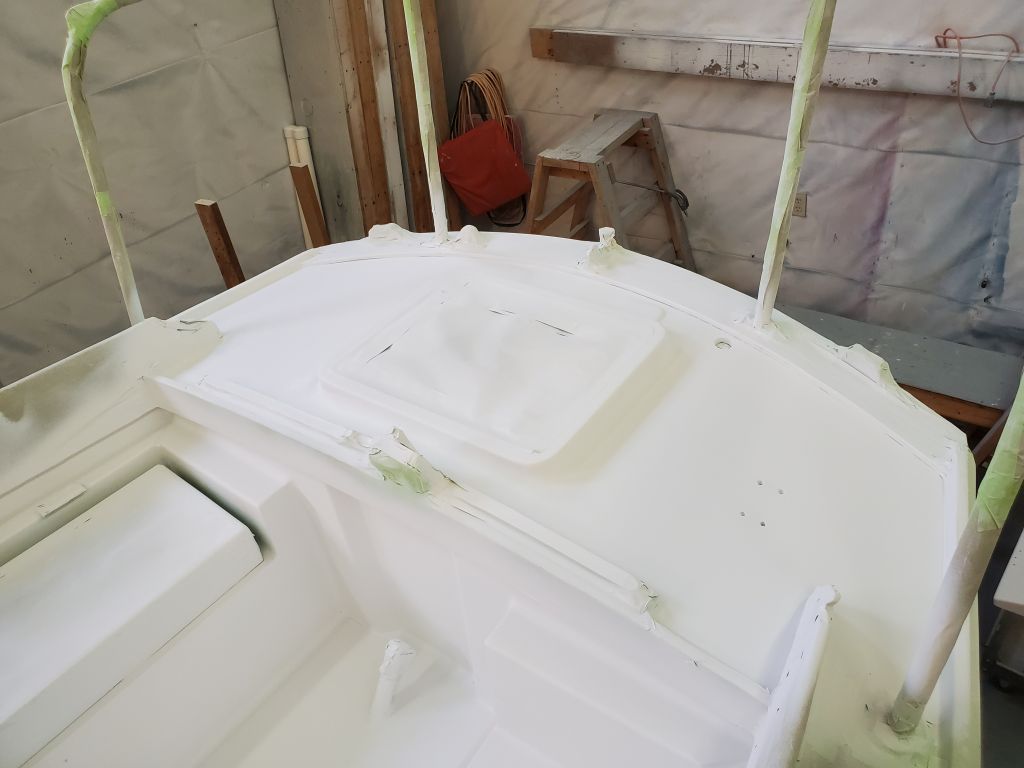
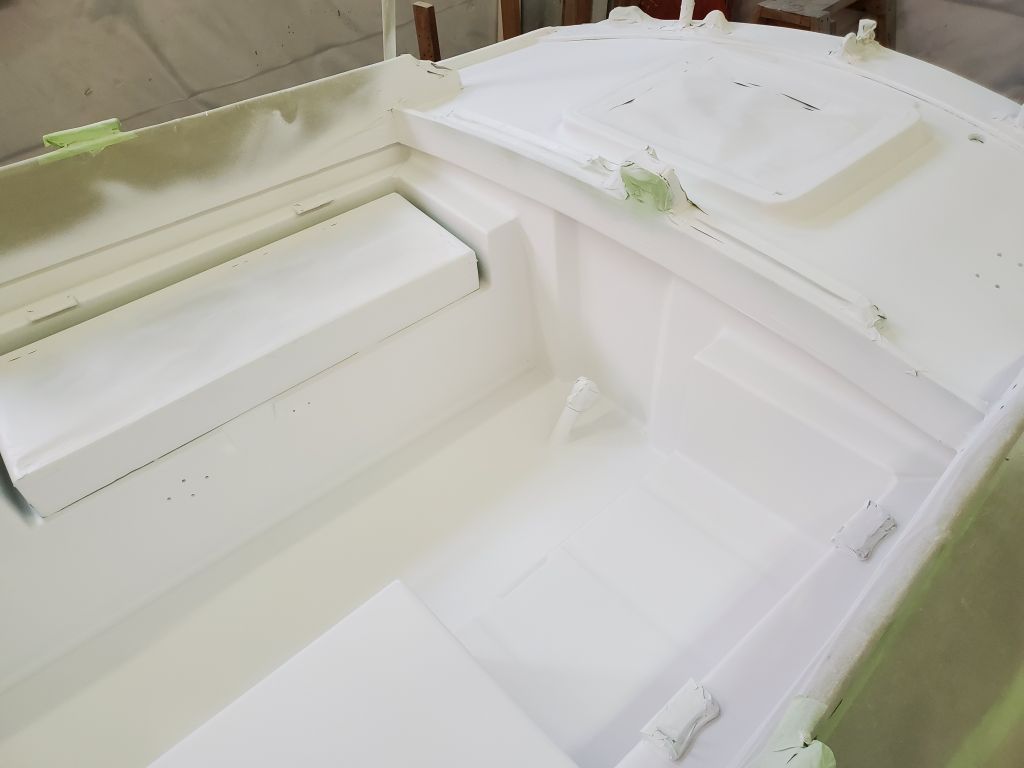
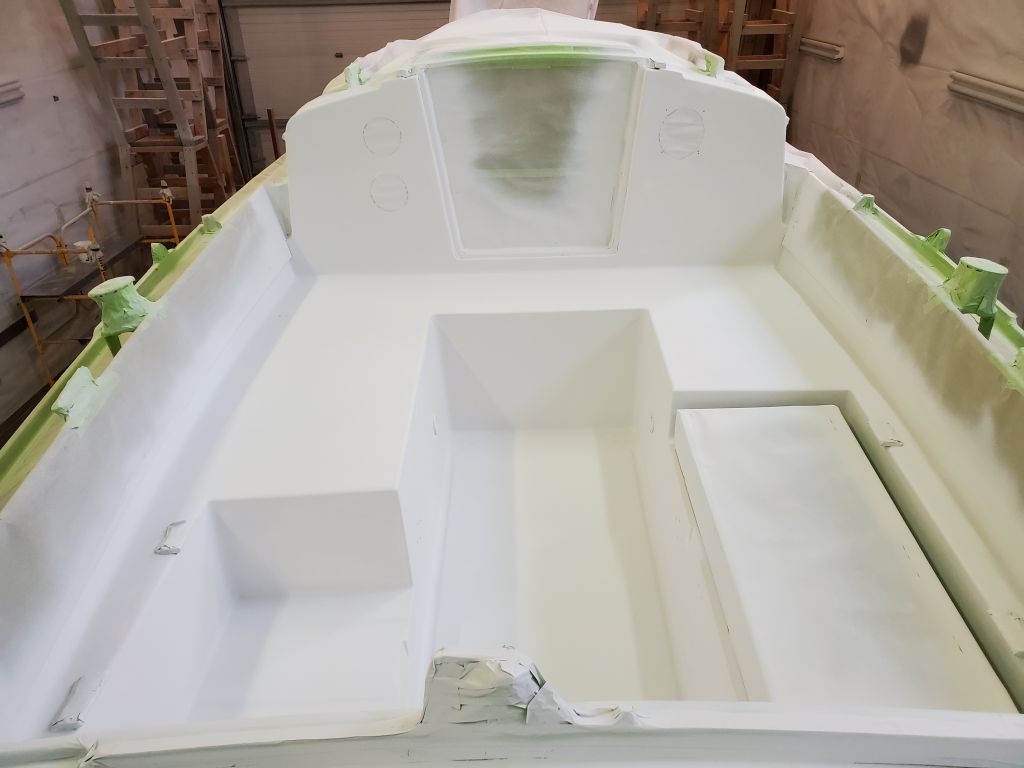
After final preparations, I sprayed three coats of epoxy-based high-build primer on the cockpit and poop deck.

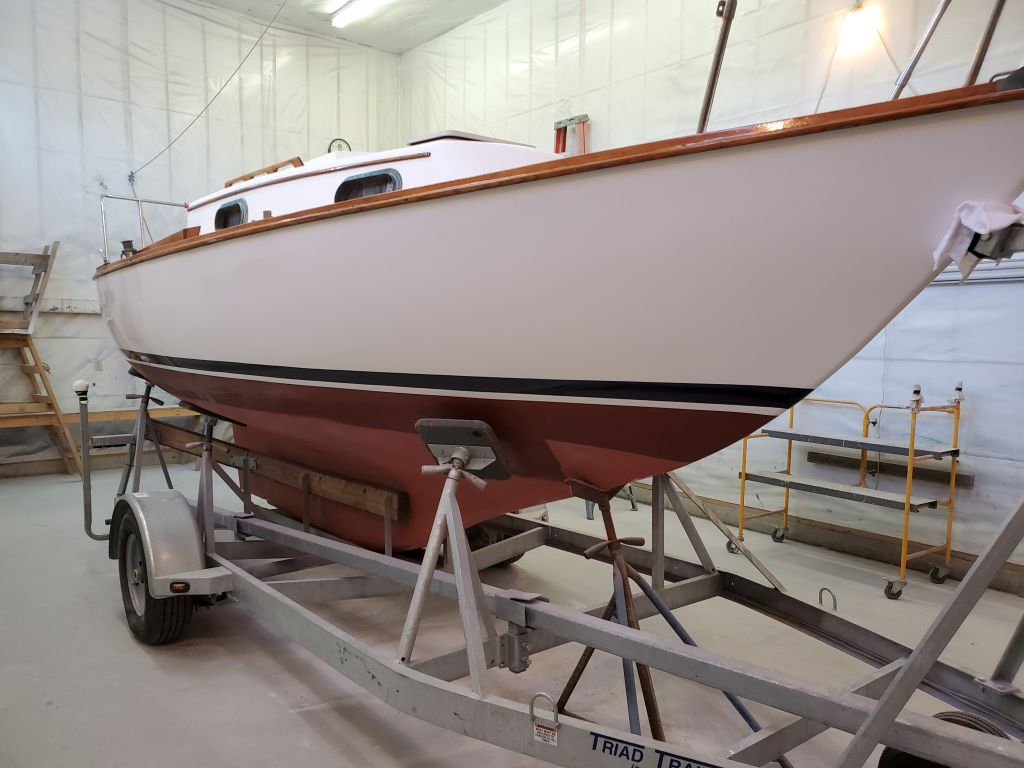
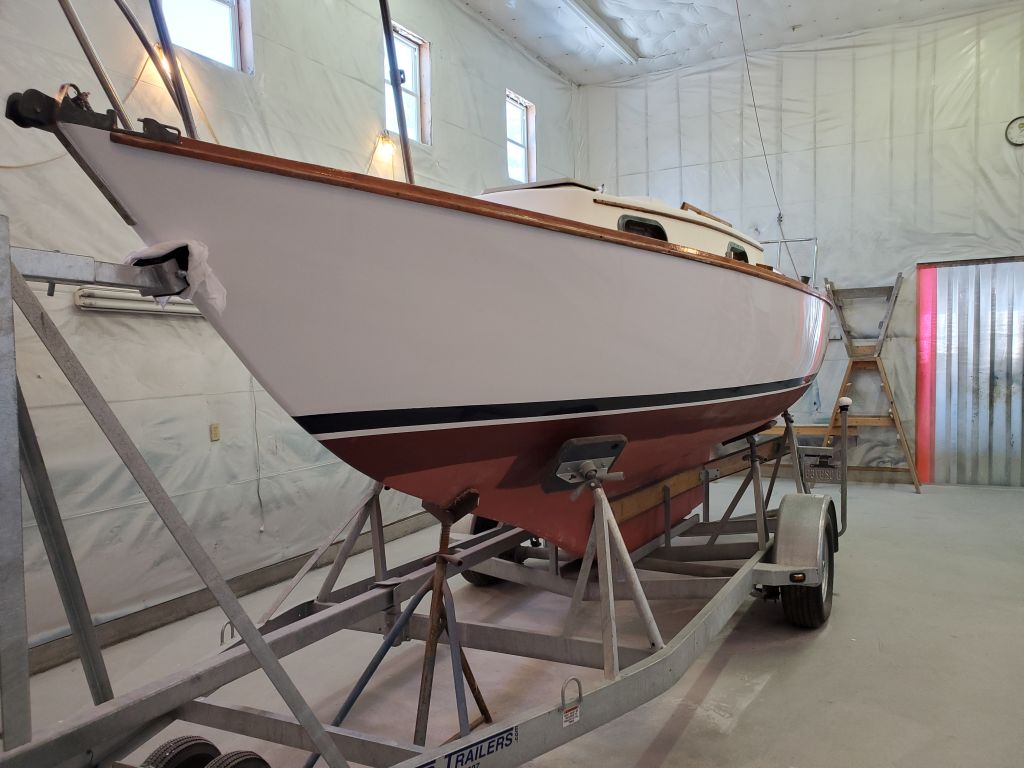
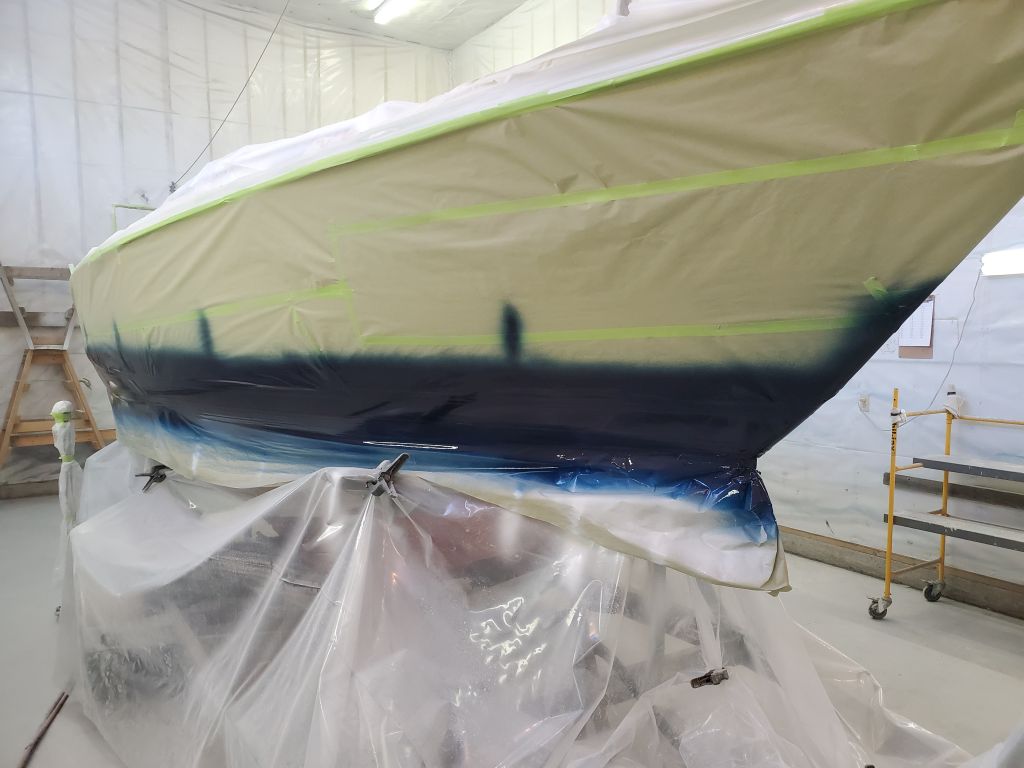
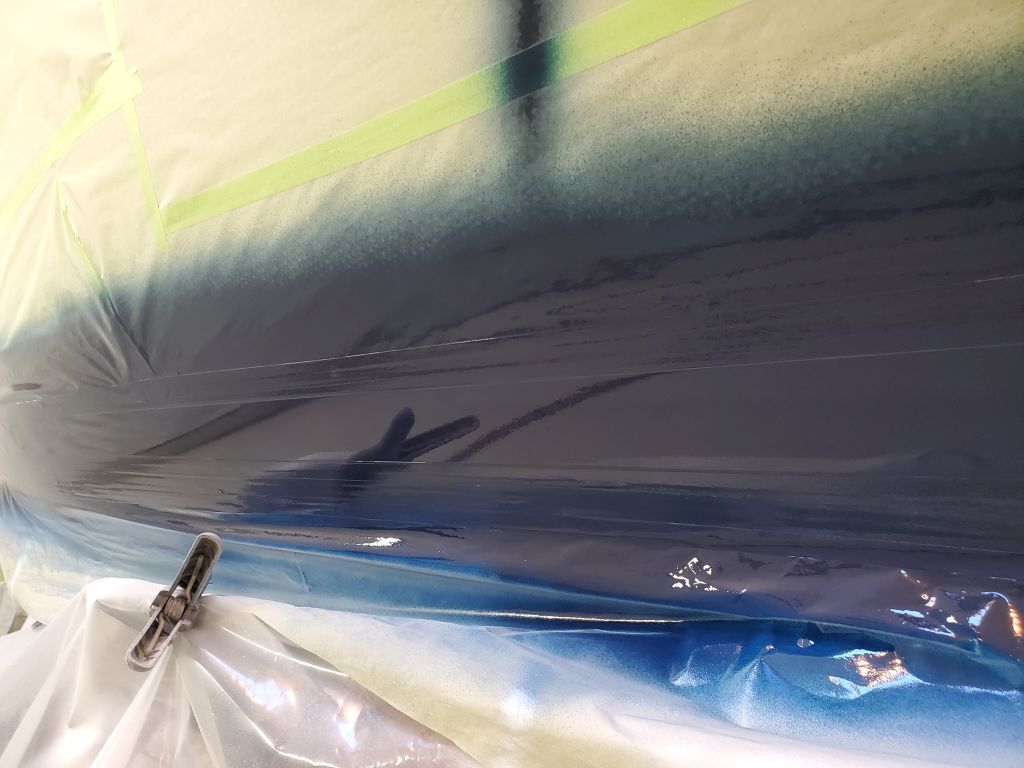
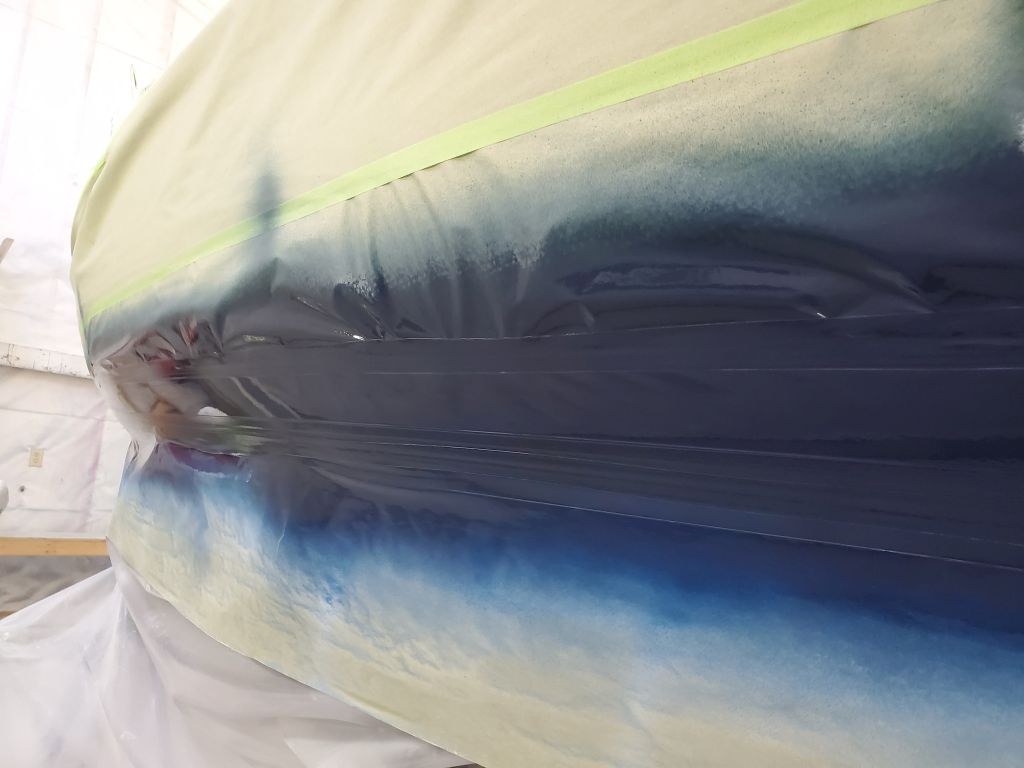
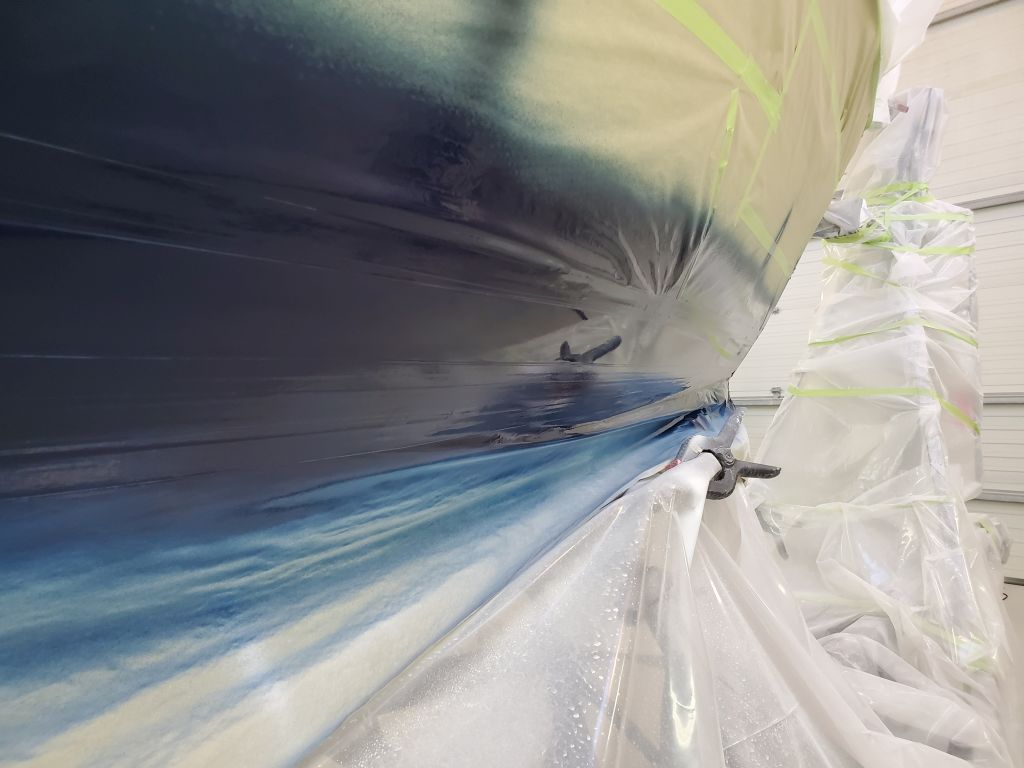
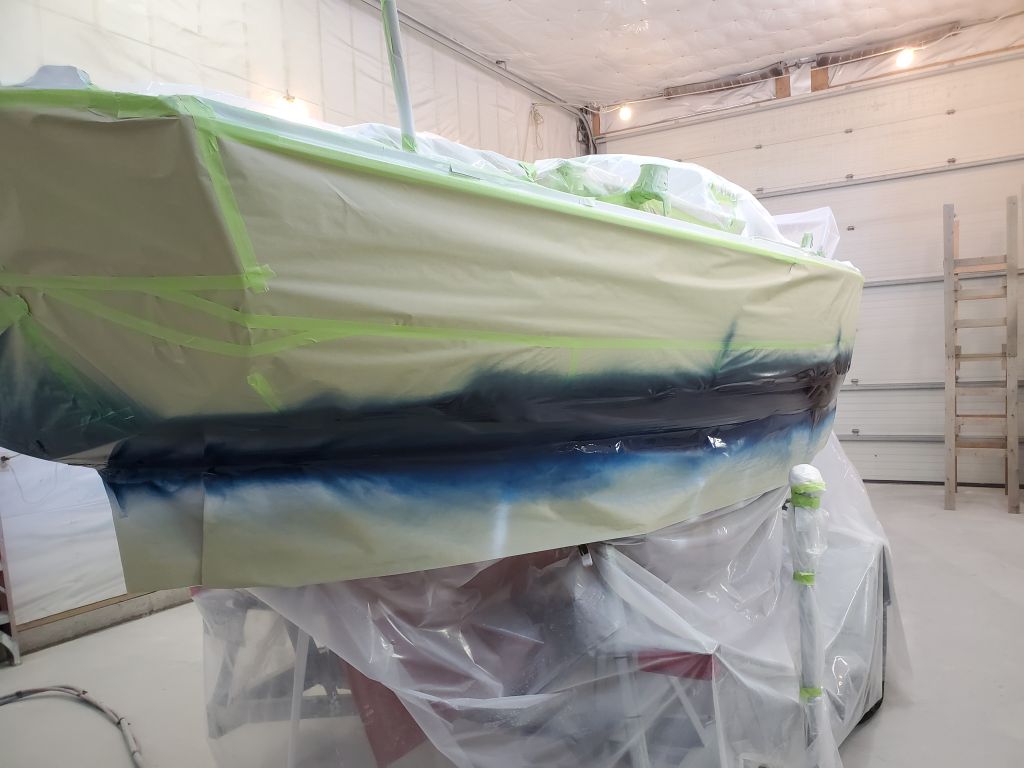
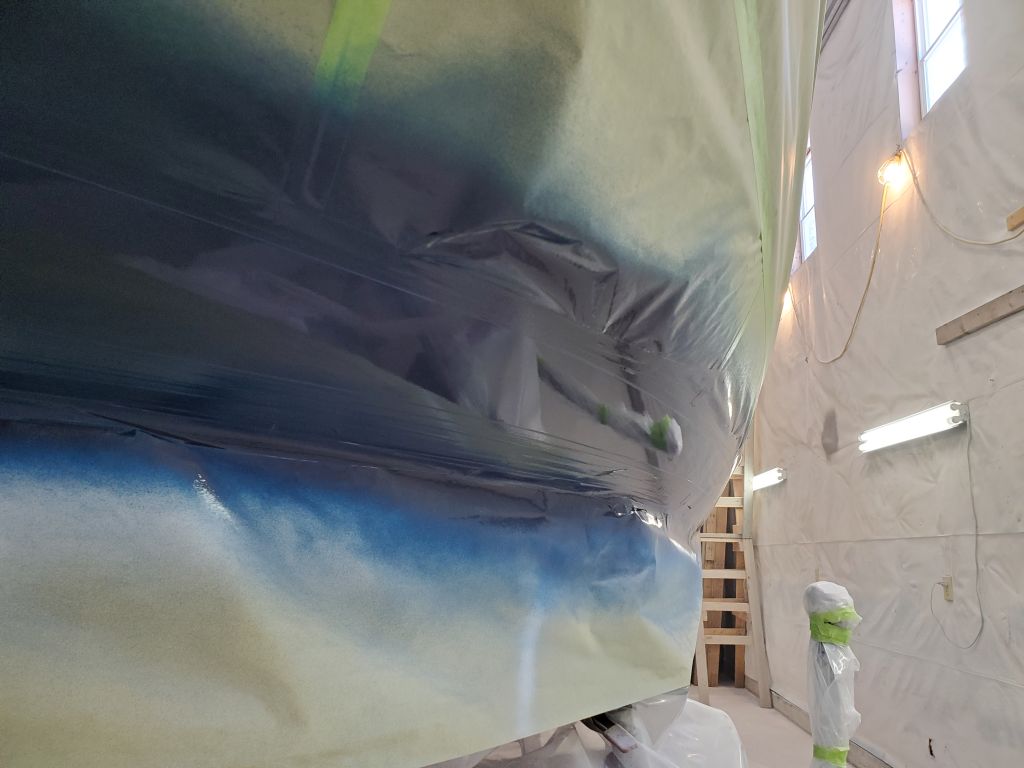
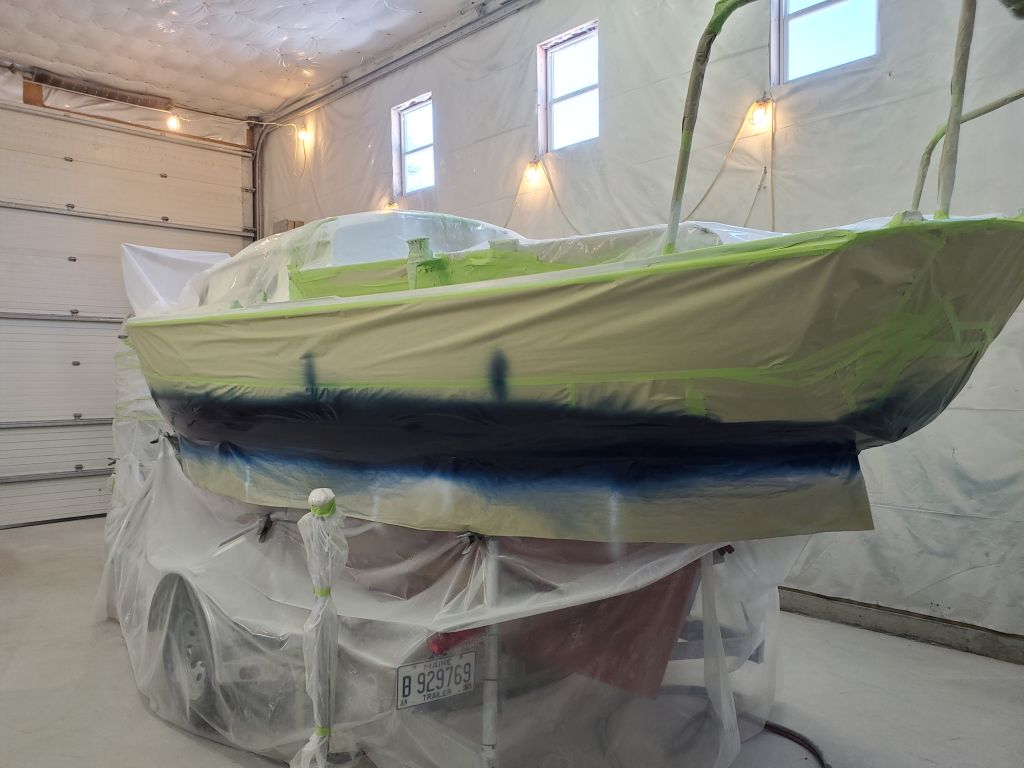
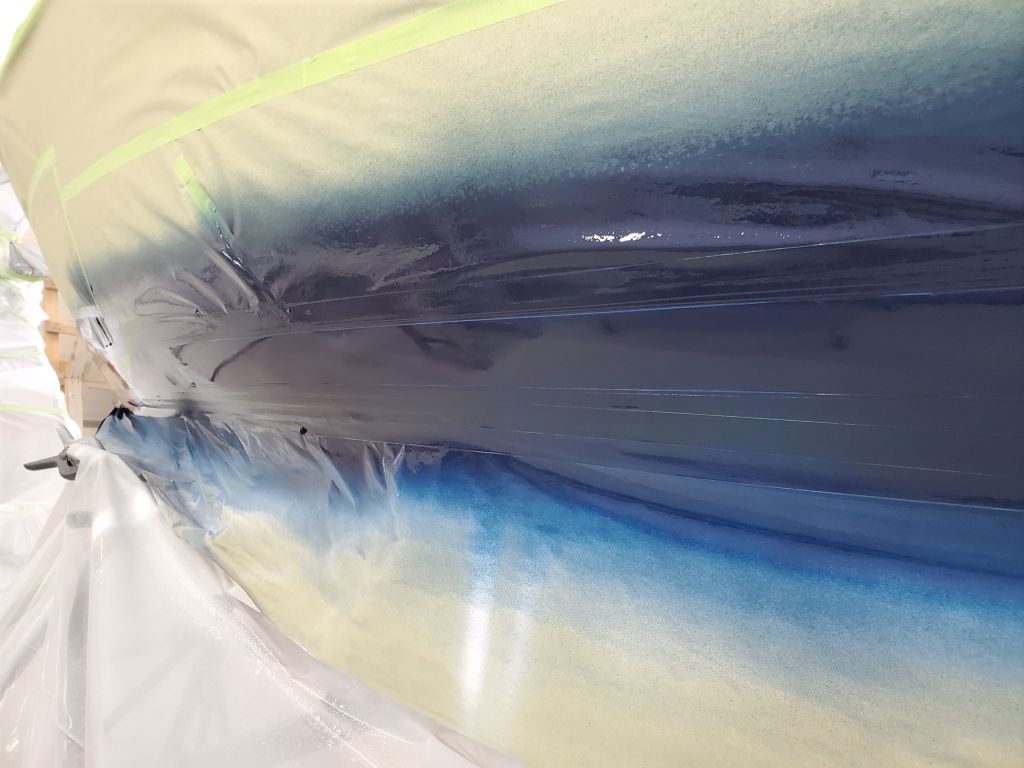
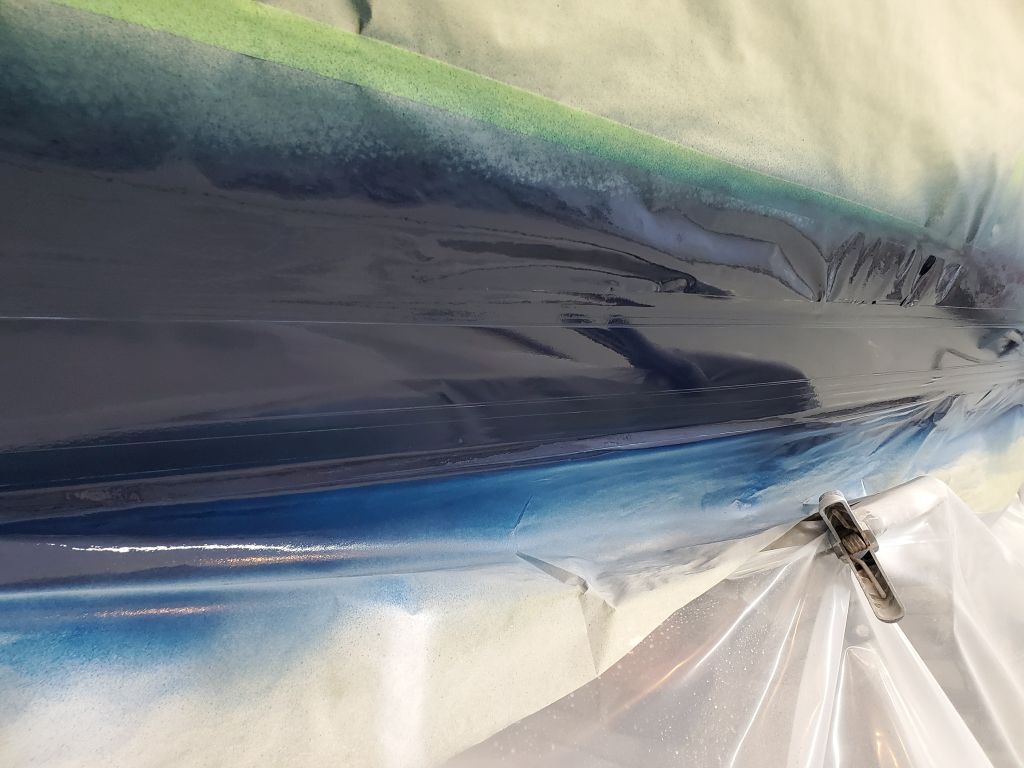
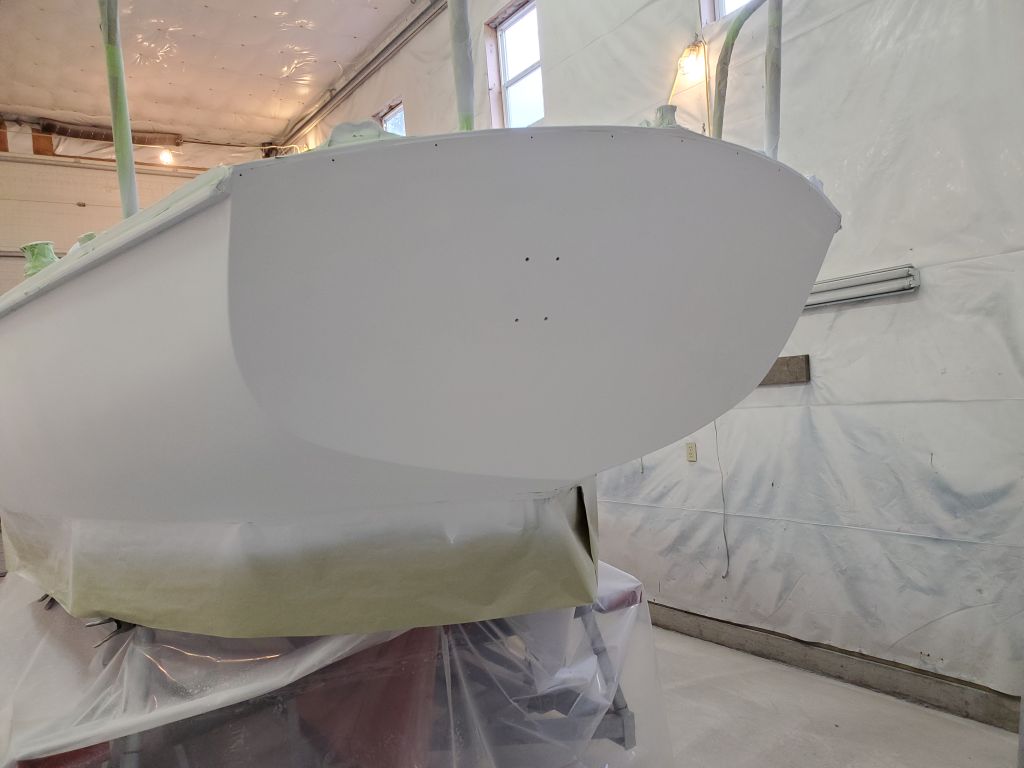
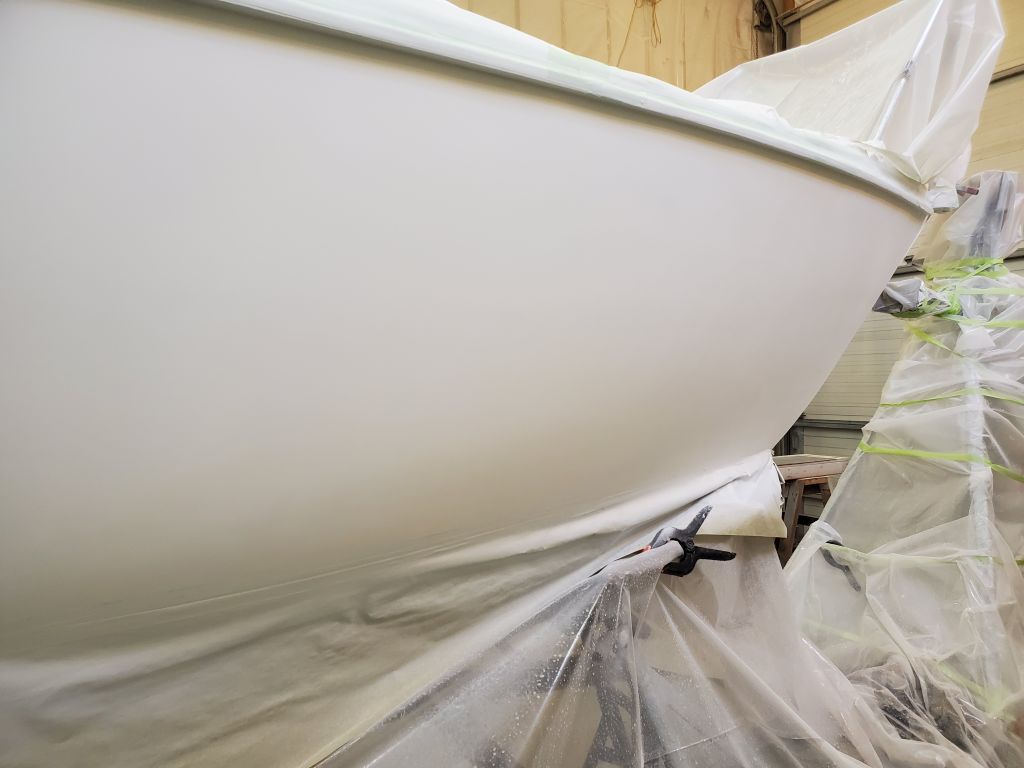
With the deck spraying complete, I continued with the hull, applying three sprayed coats of the primer there as well.

Total time billed on this job today:  4.75  hours

0600 Weather Observation:  32°, clouds.  Forecast for the day:  Becoming sunny, 38°

Arietta 15

Monday

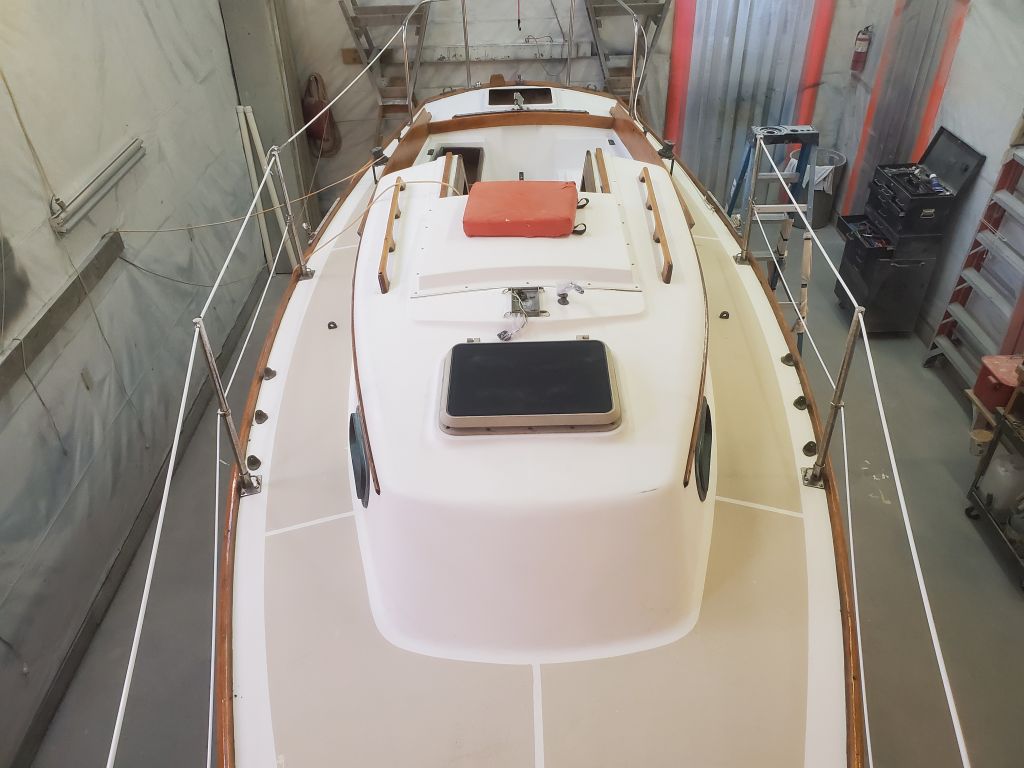
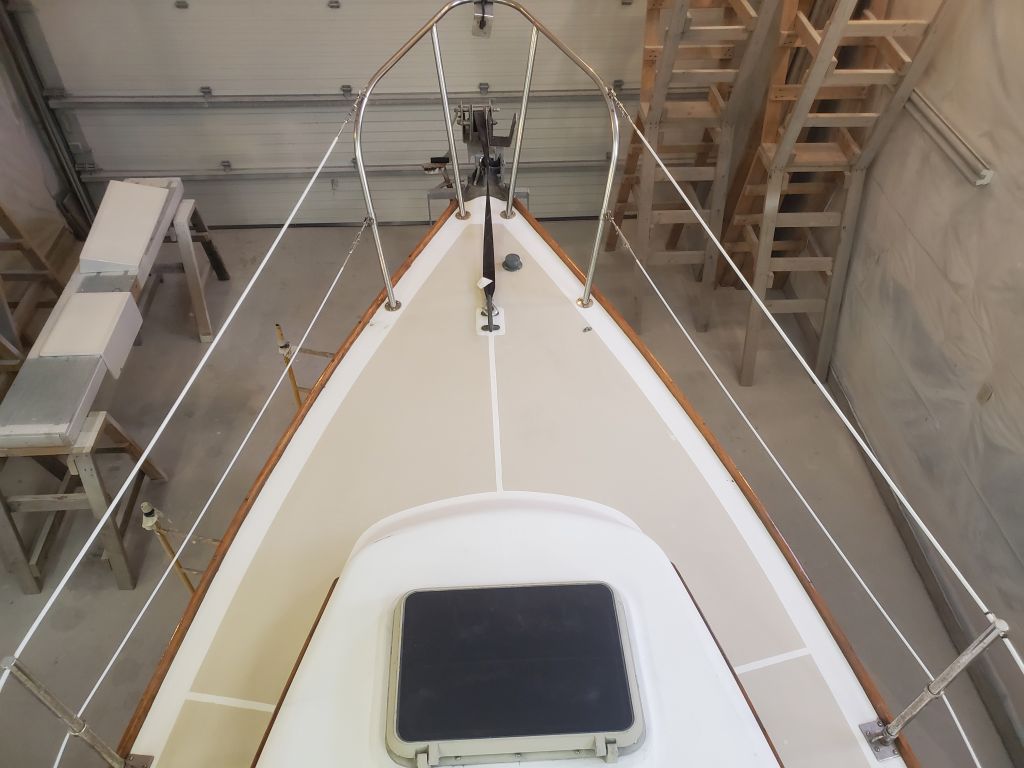
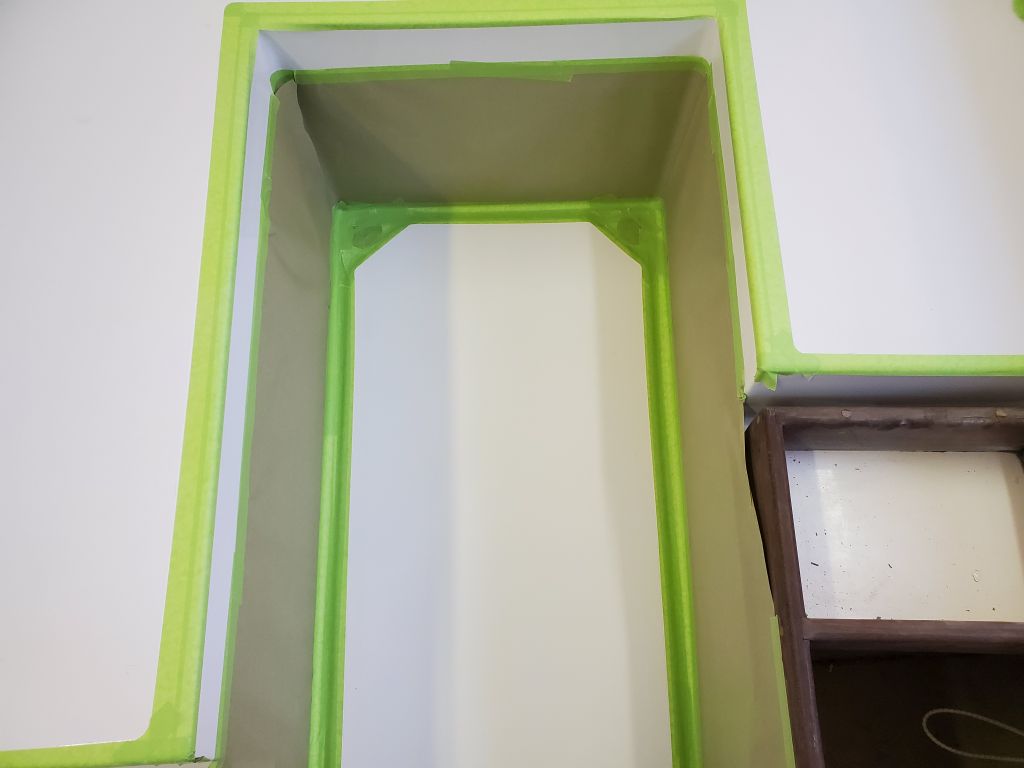
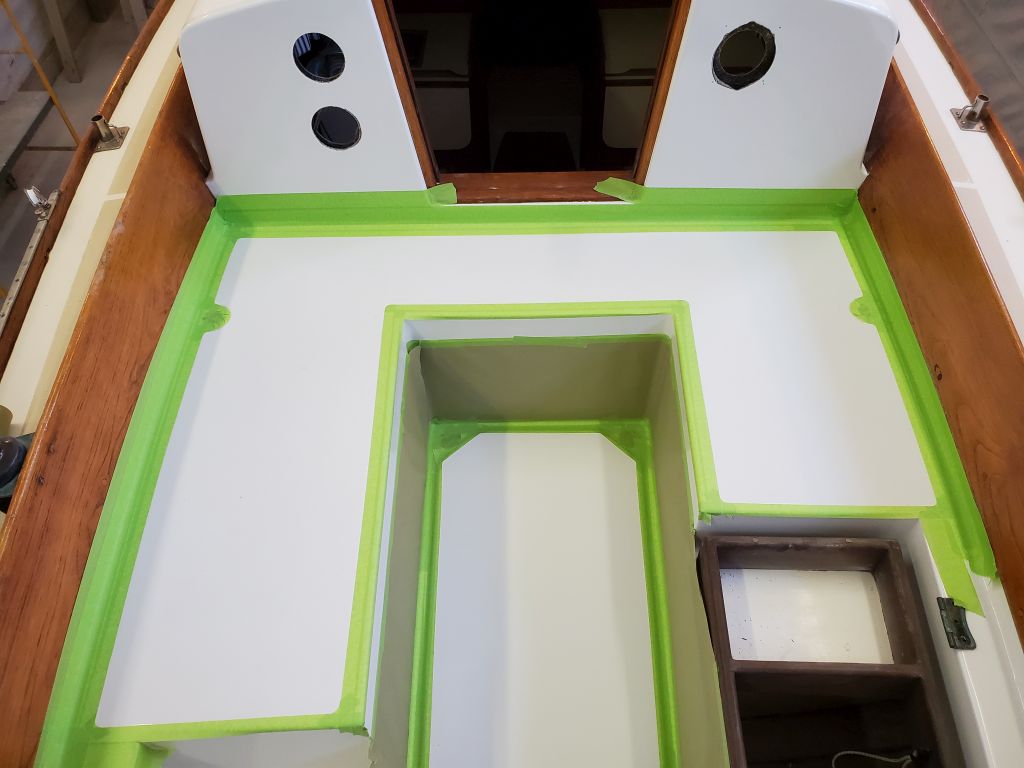
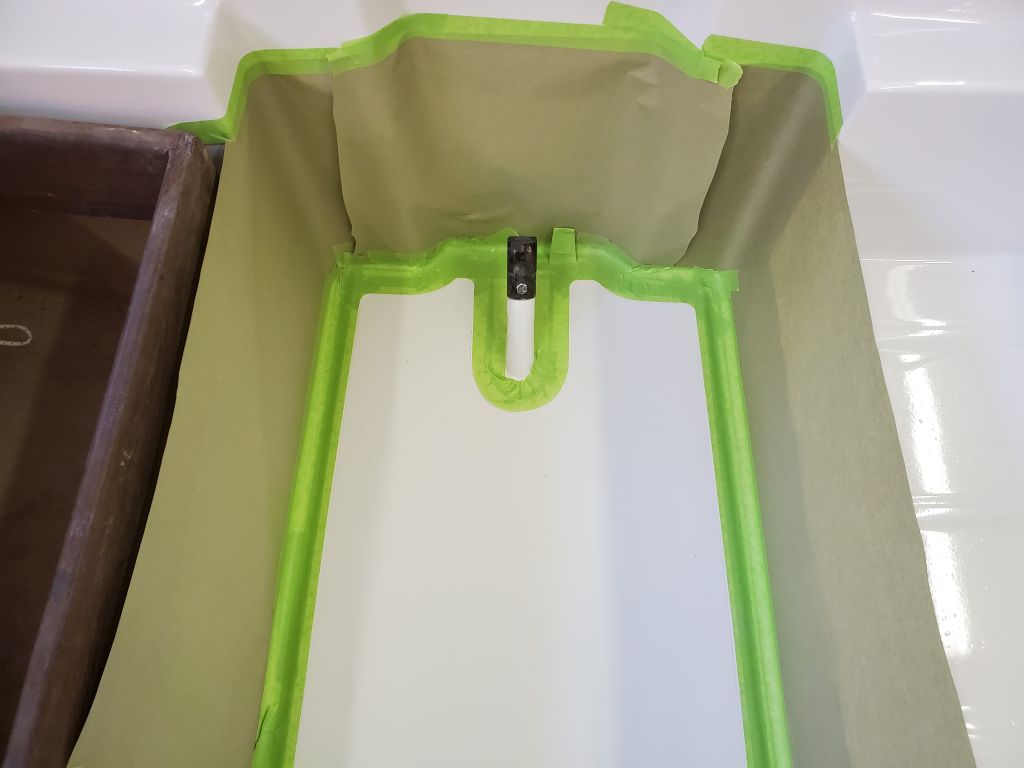
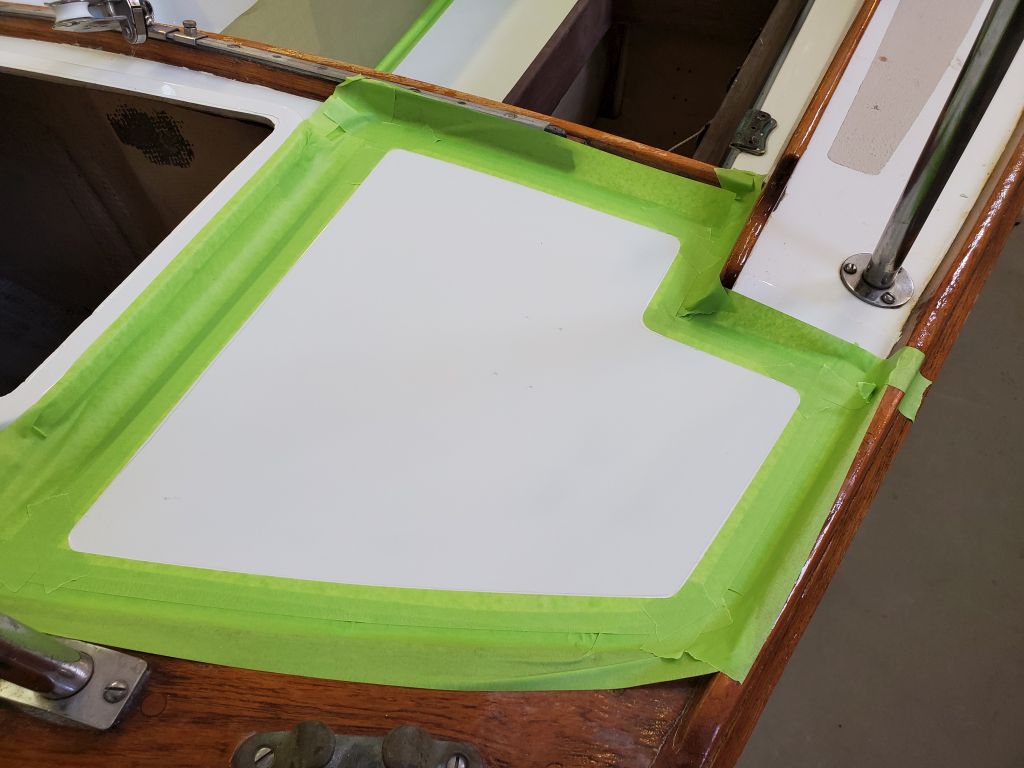
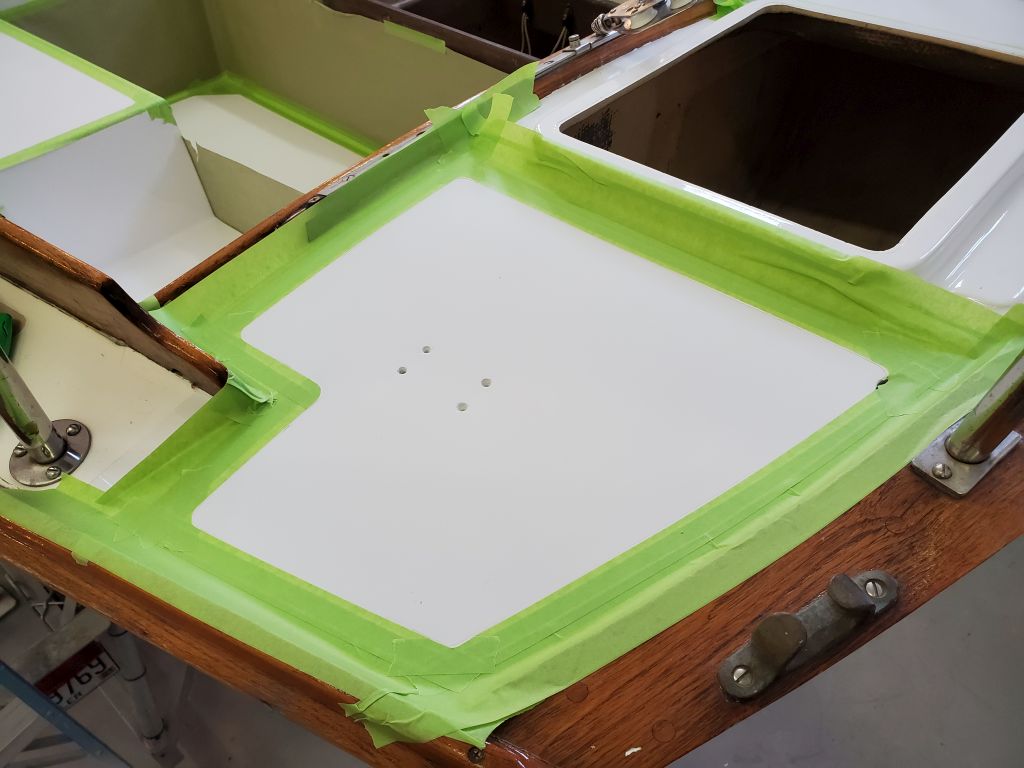
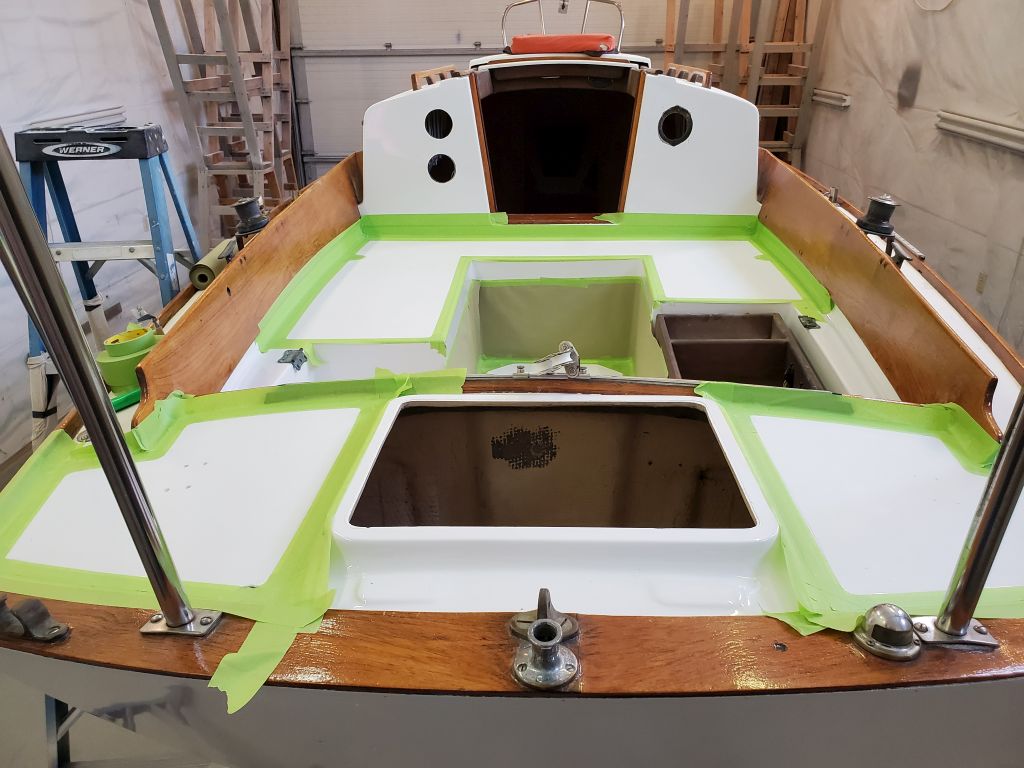
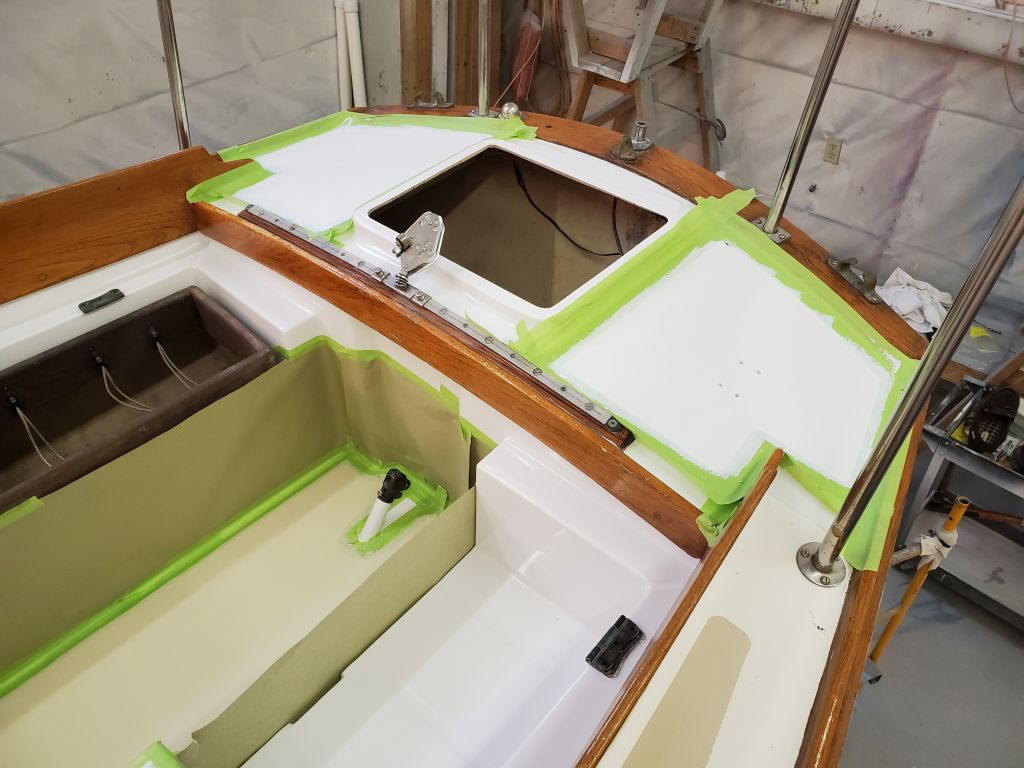
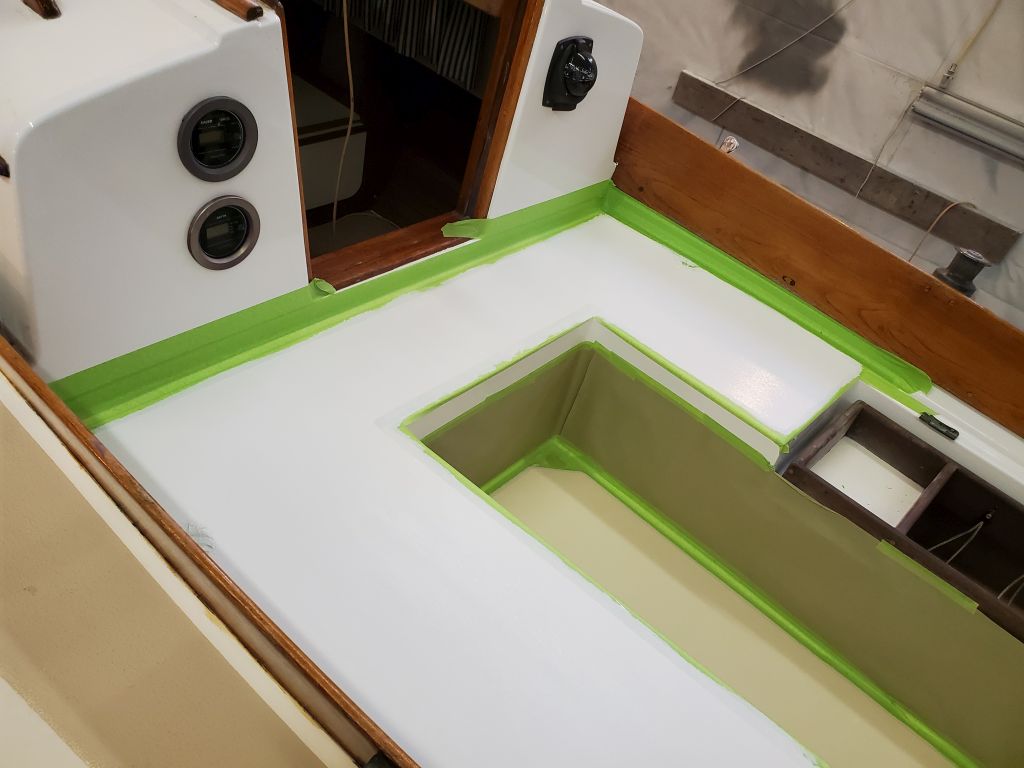
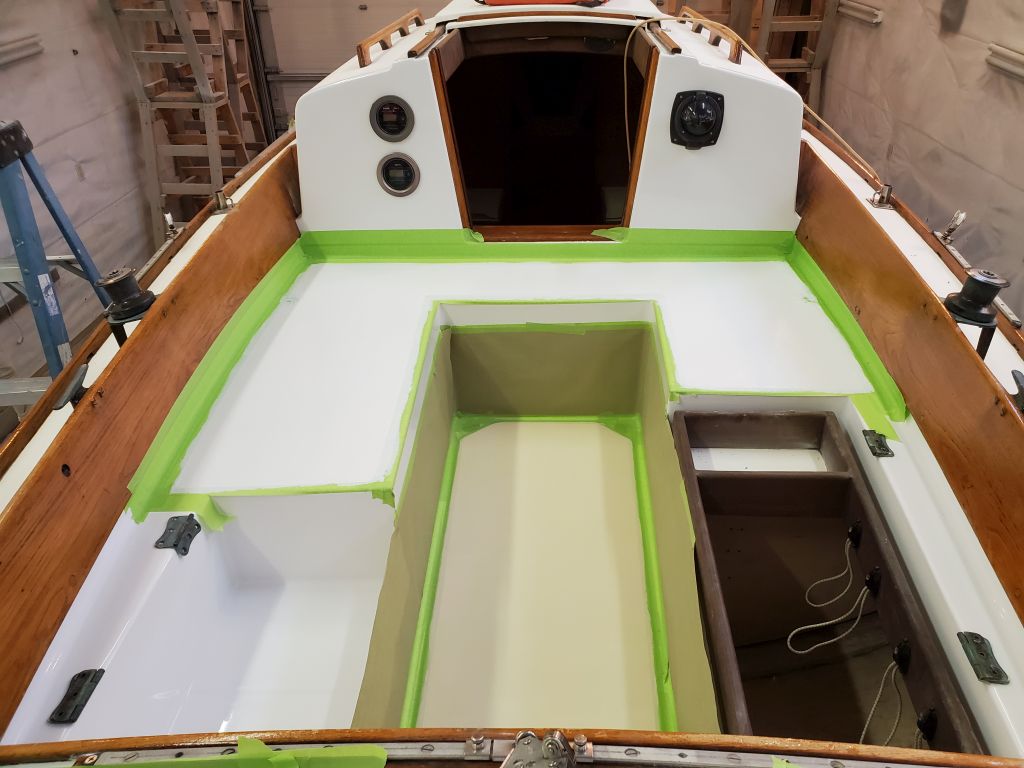
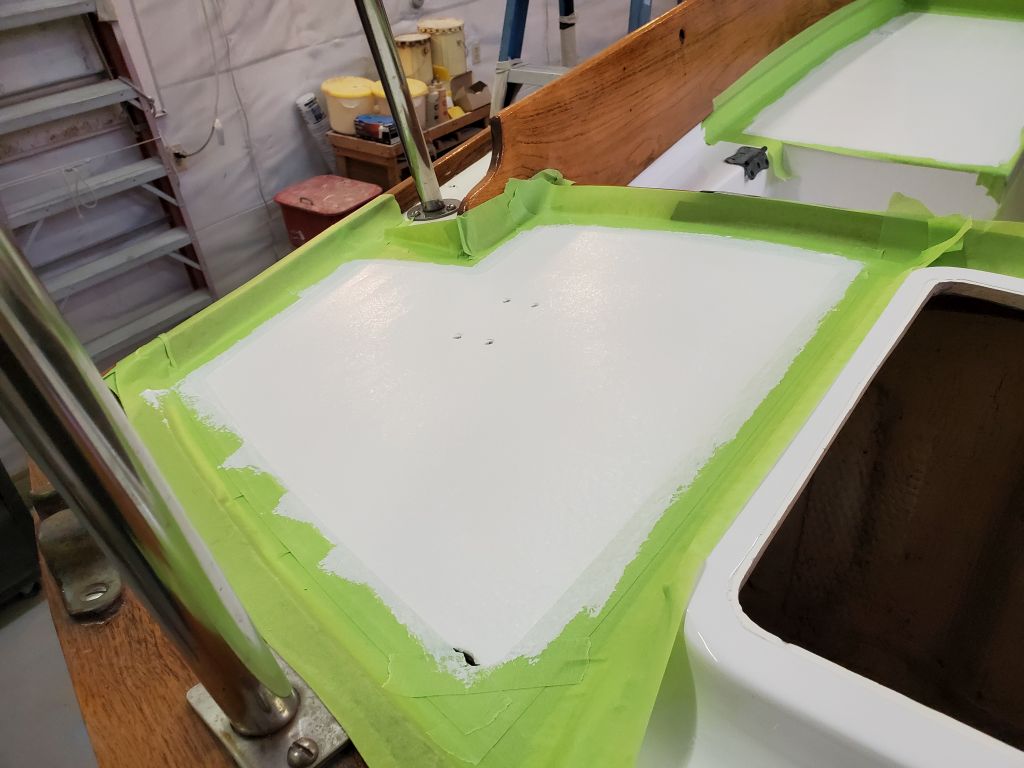
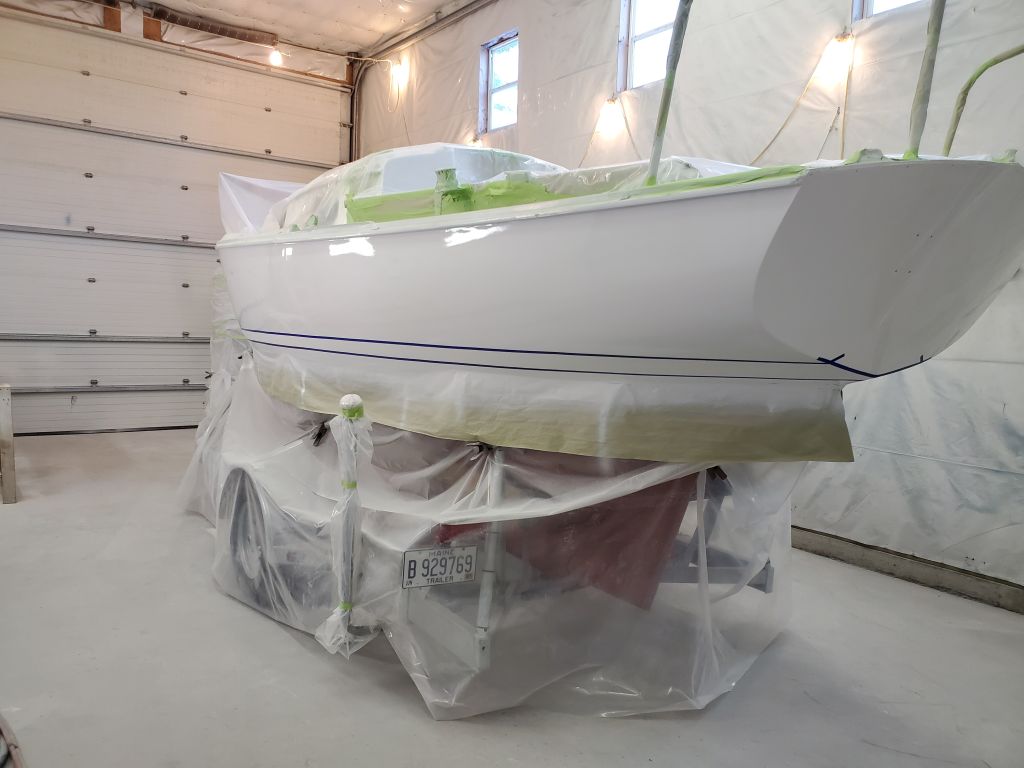
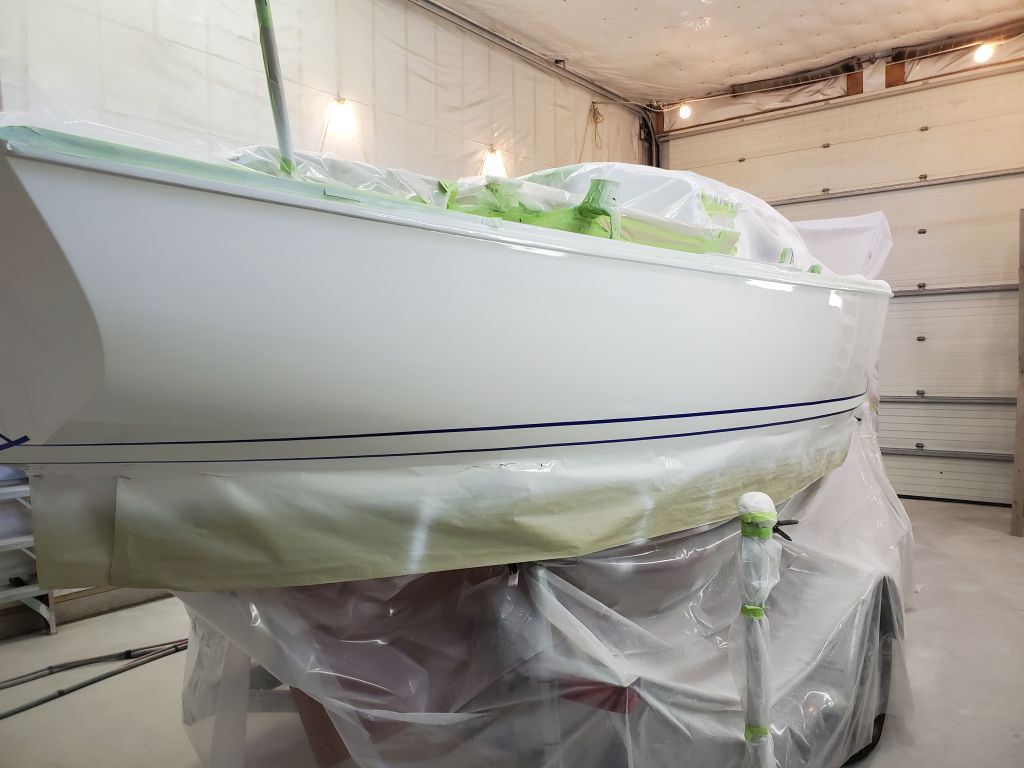
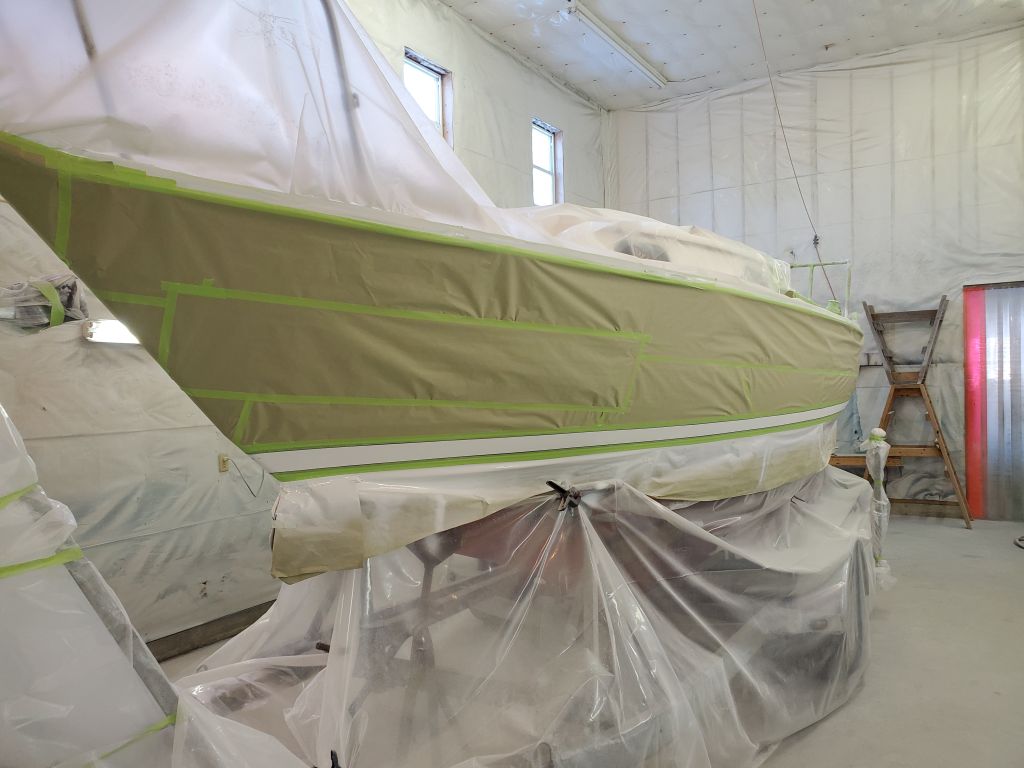
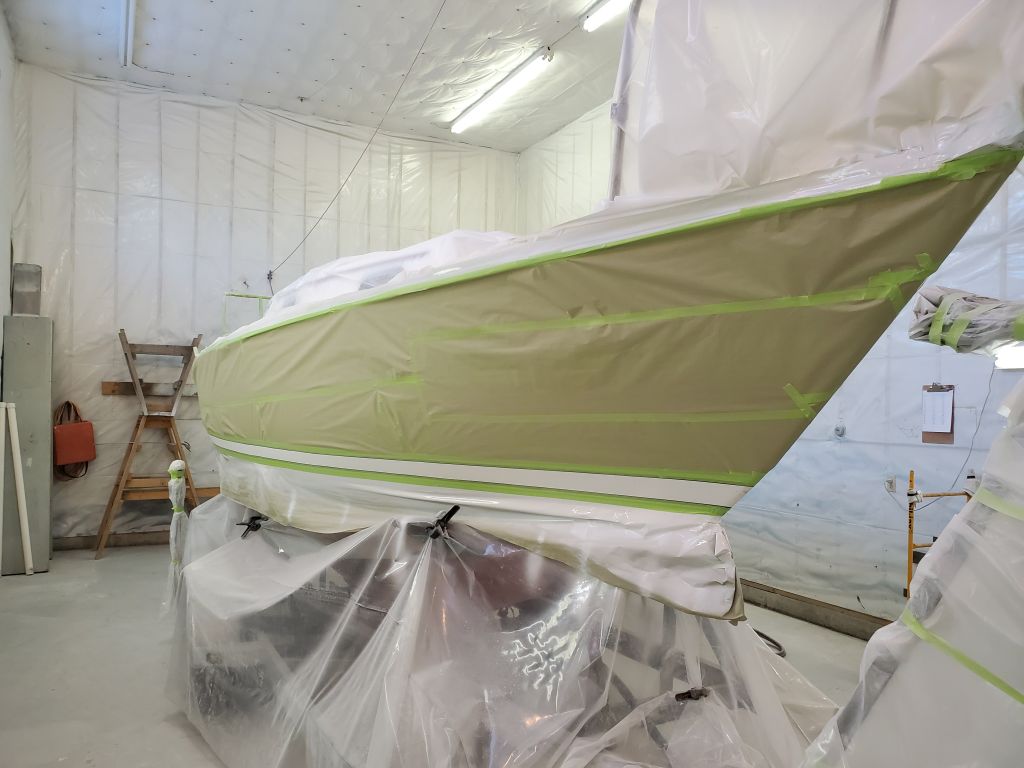
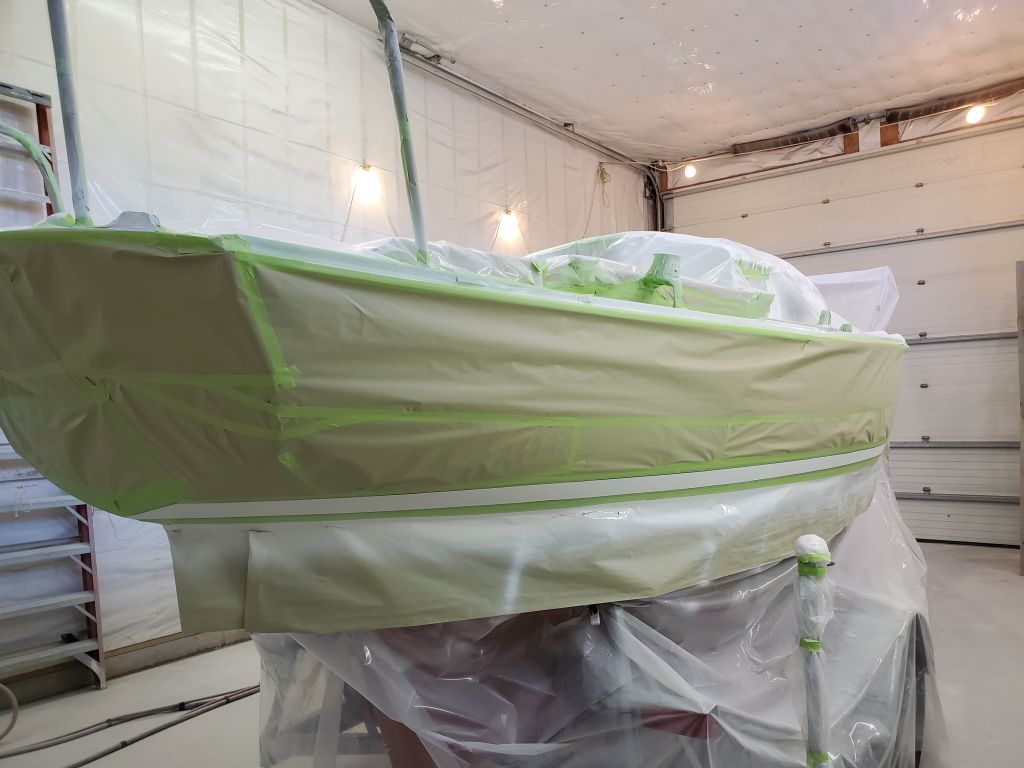
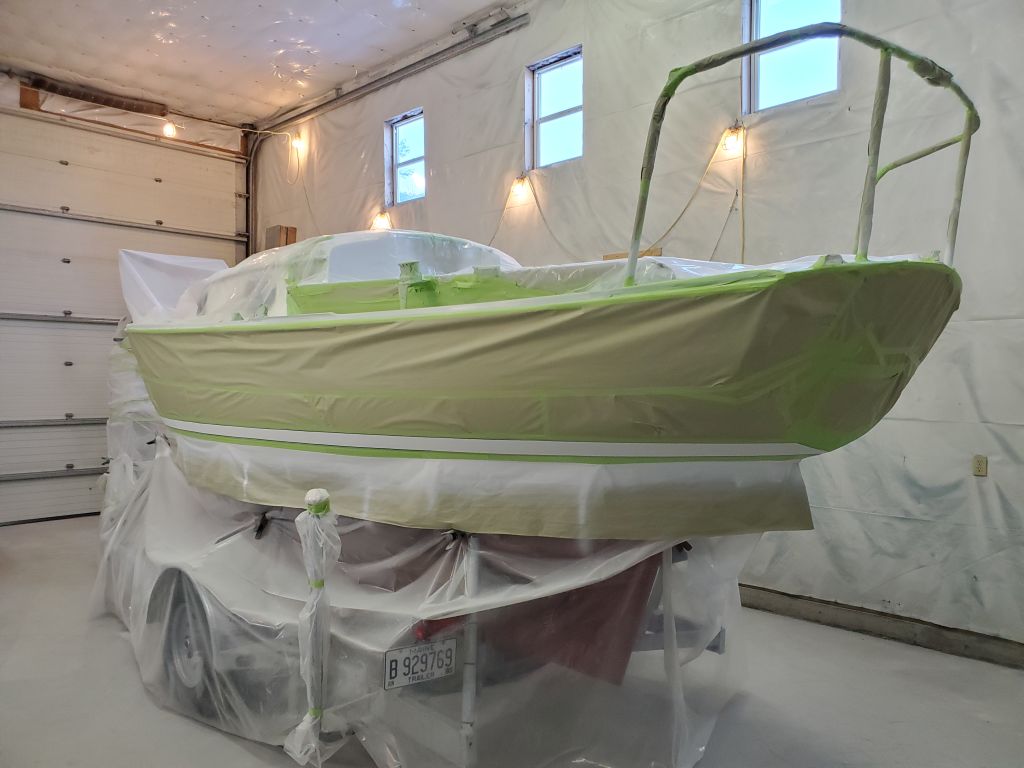
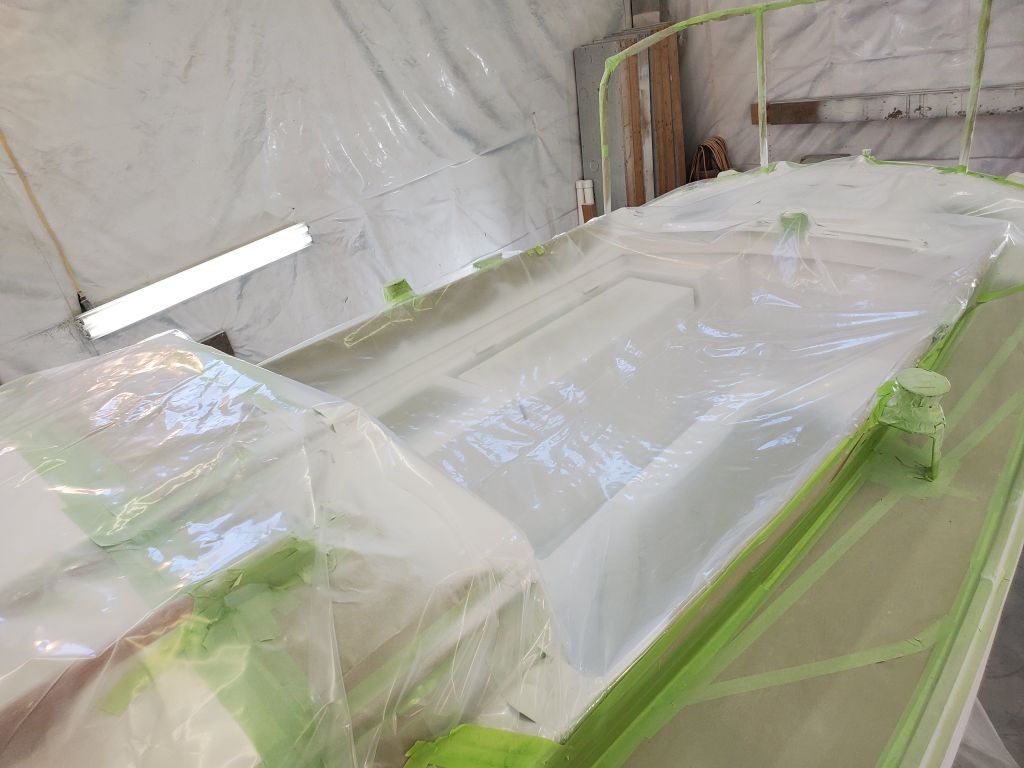
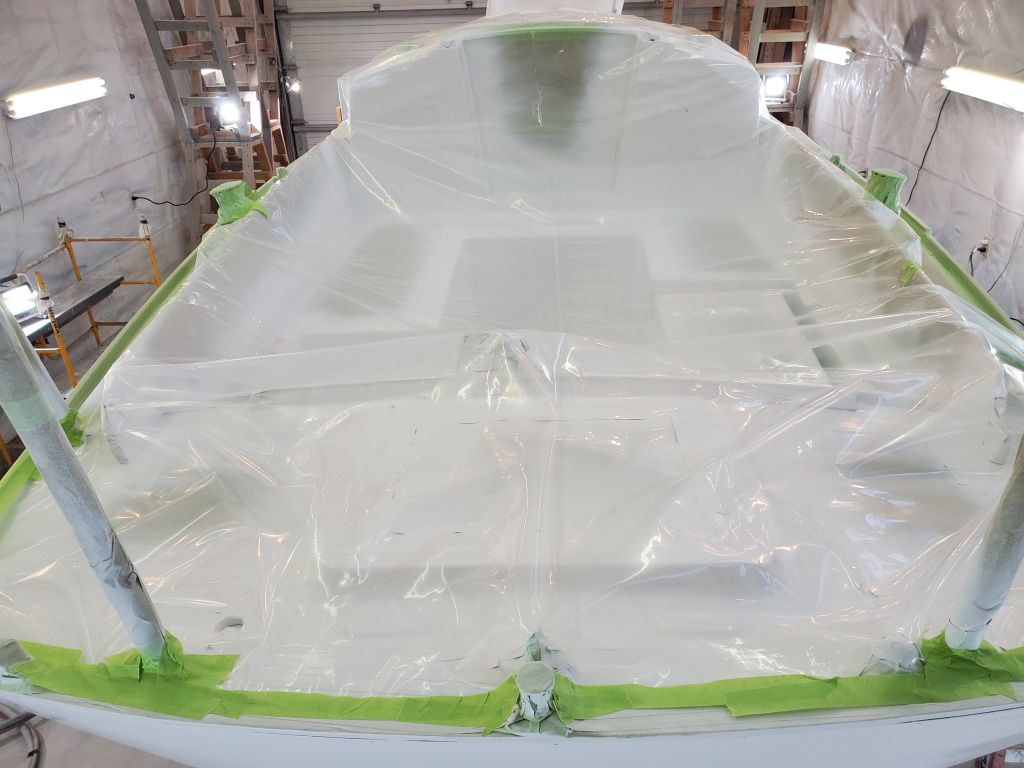
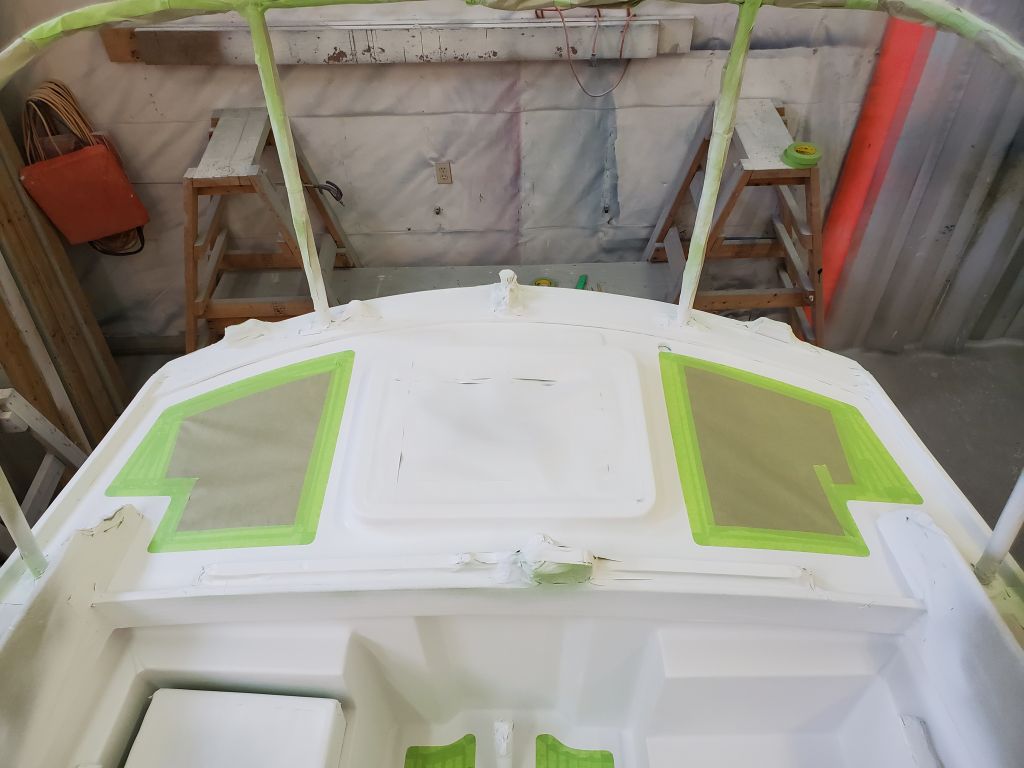
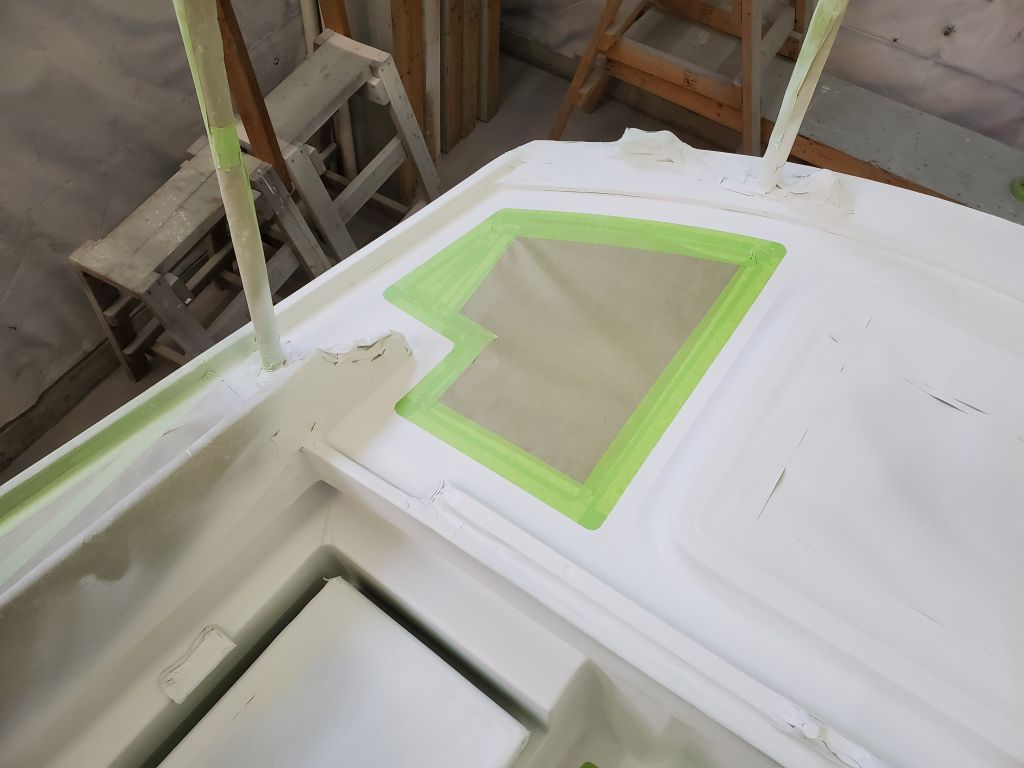
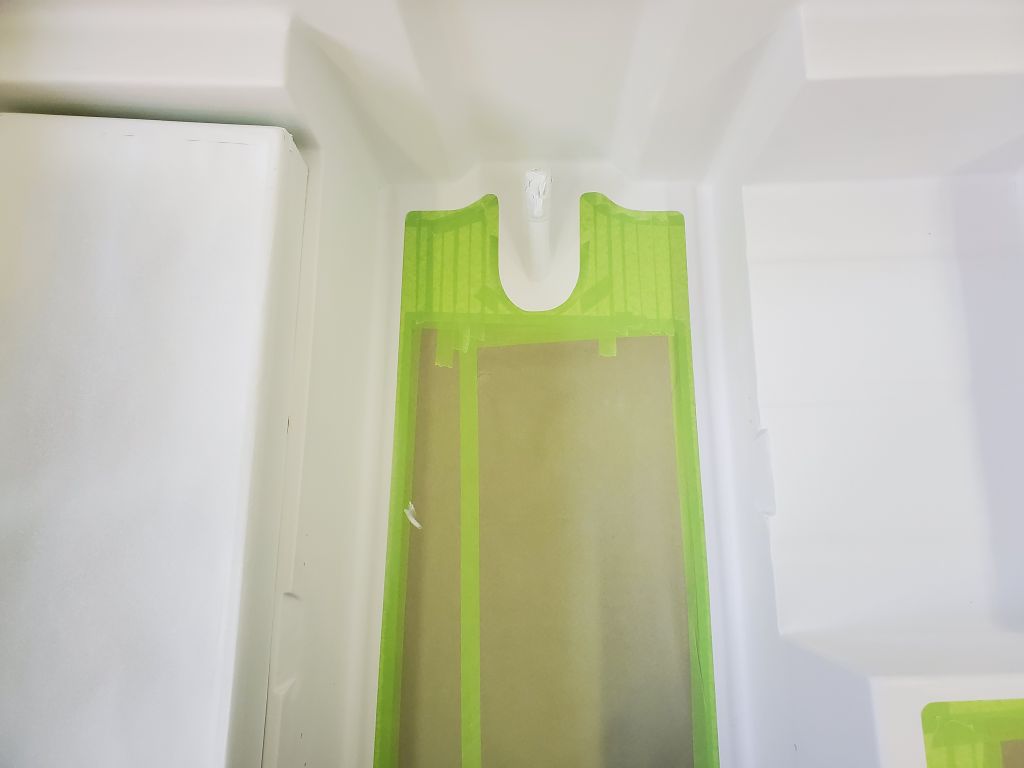
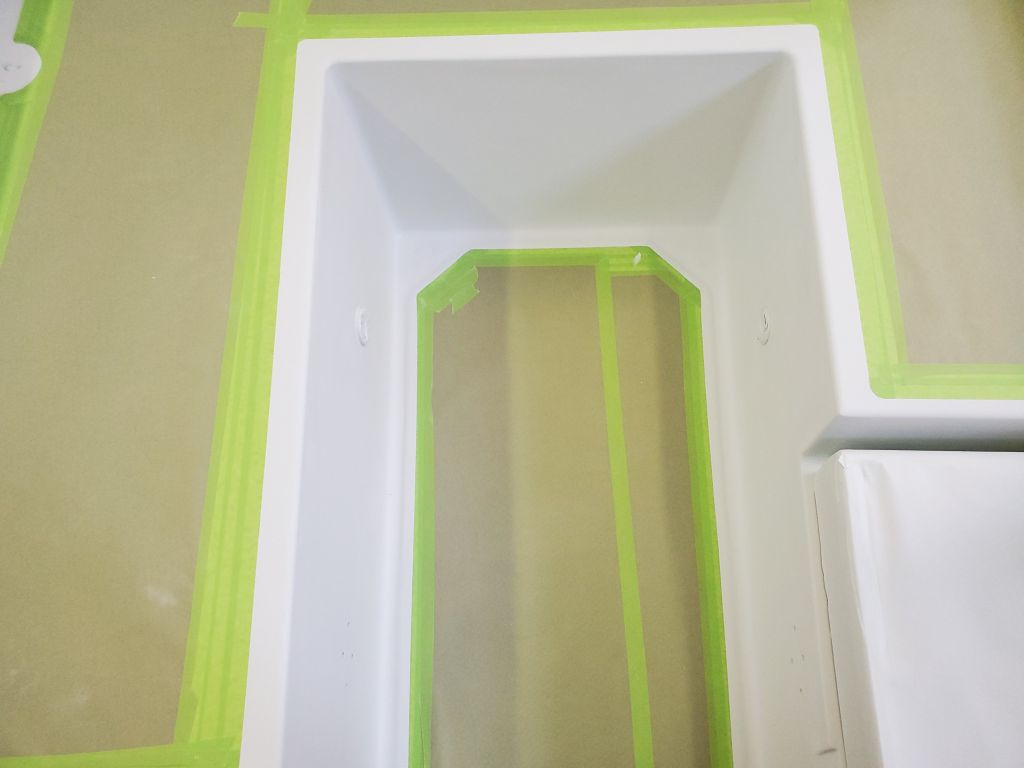
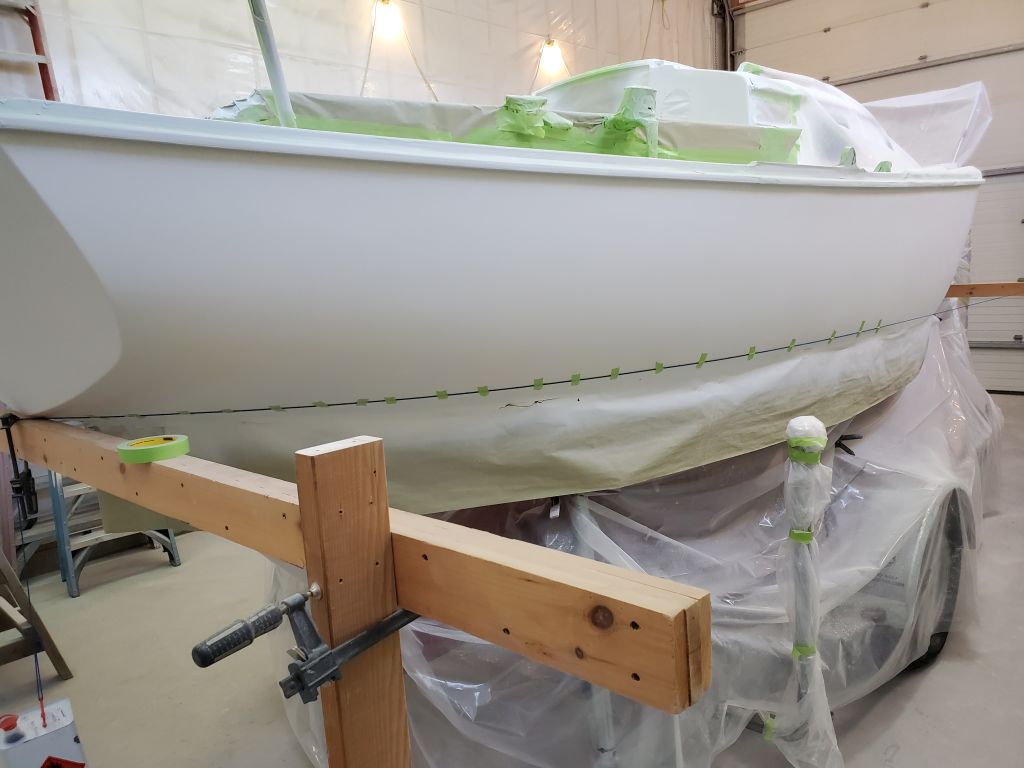
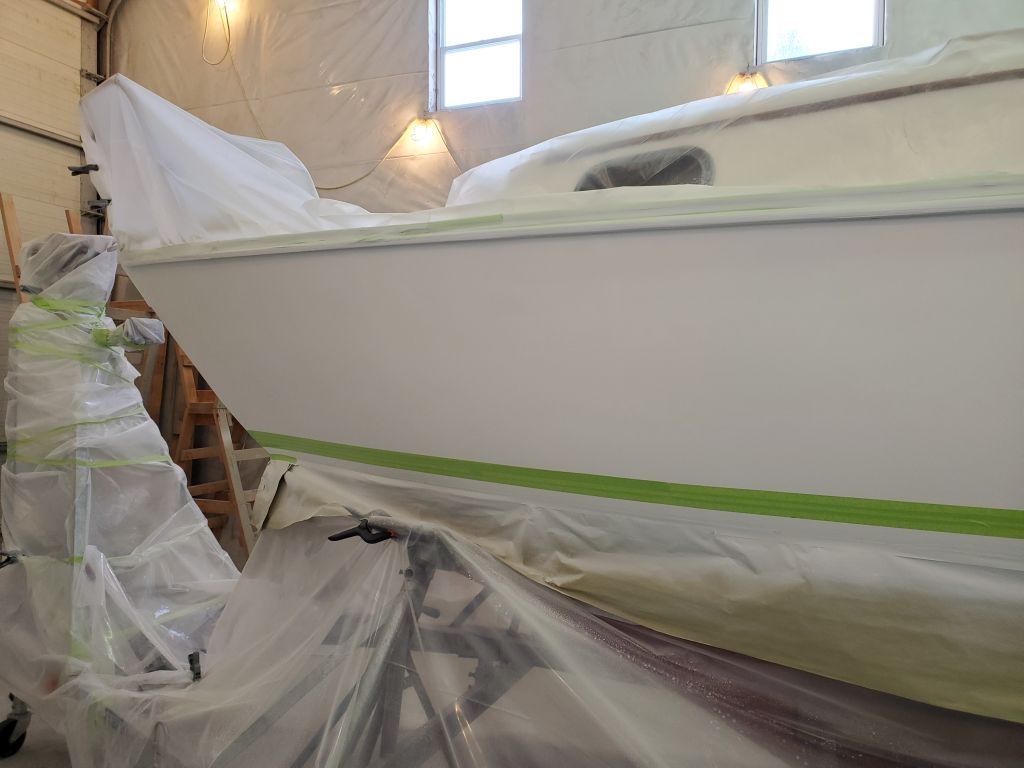
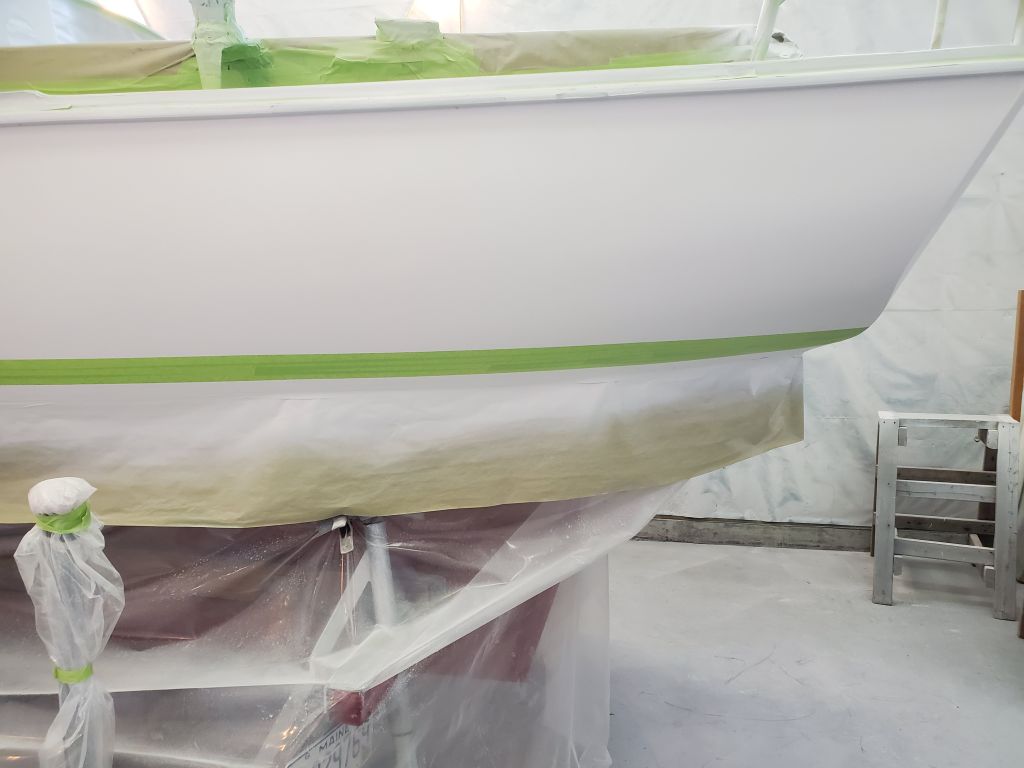
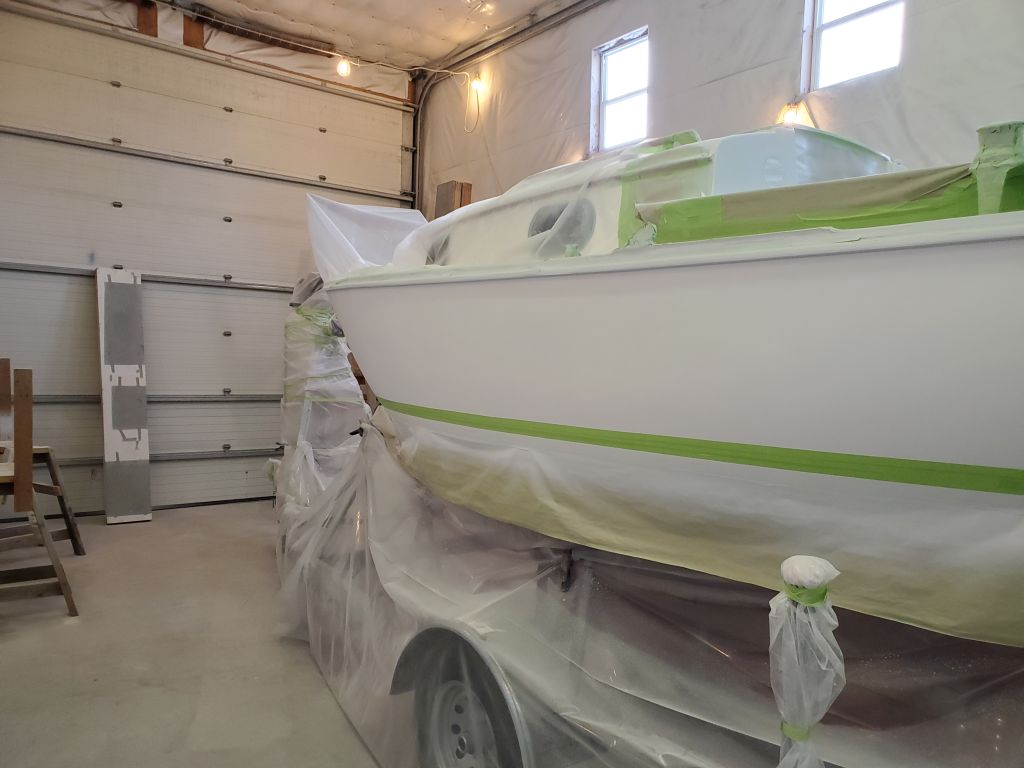
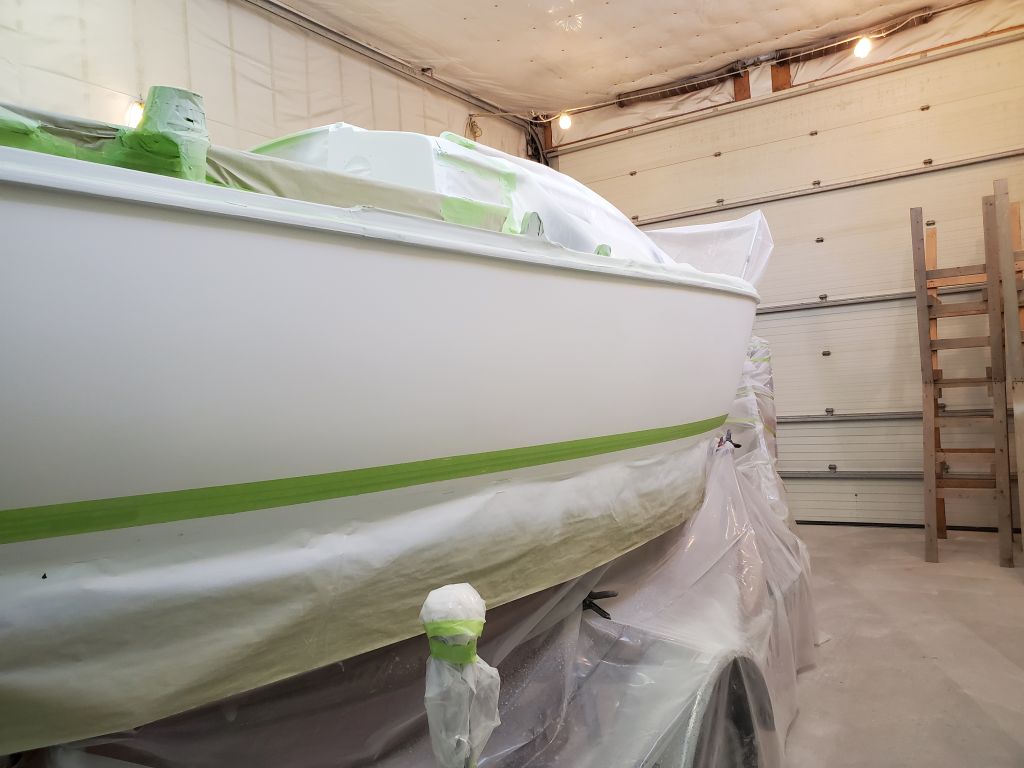
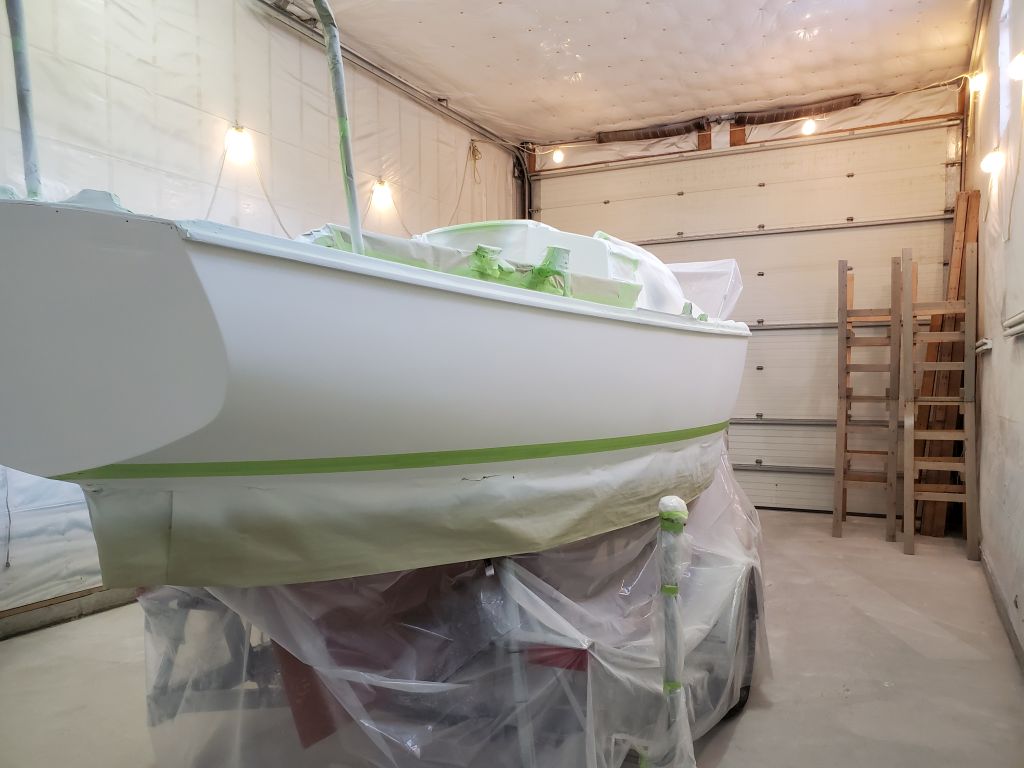
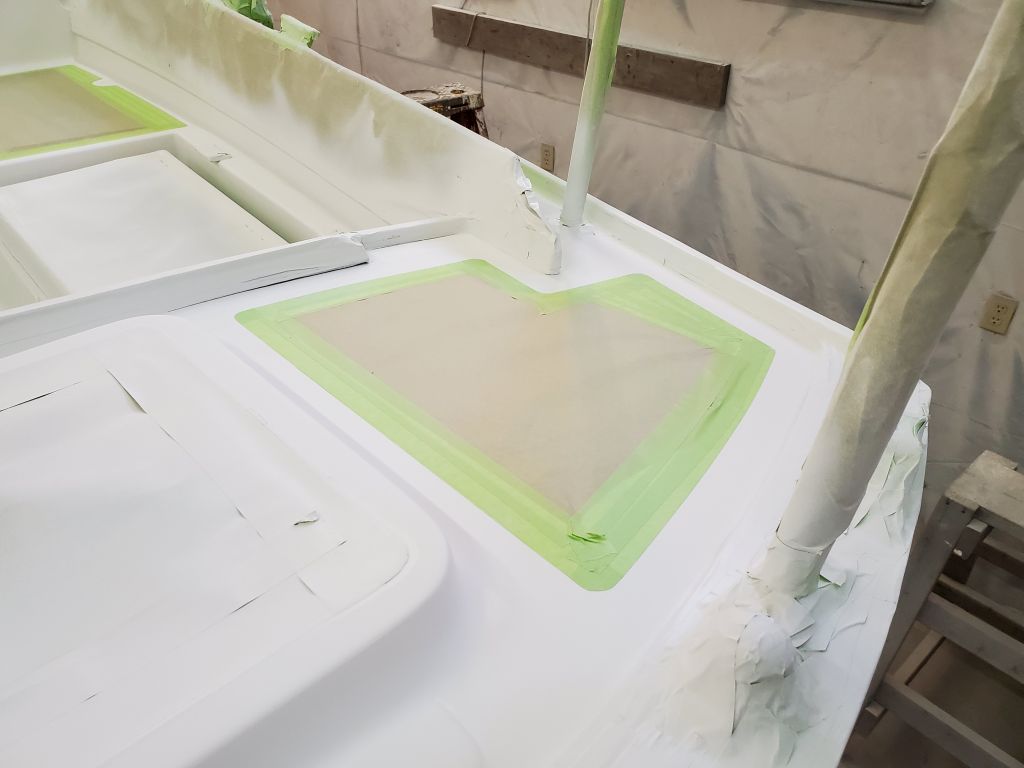
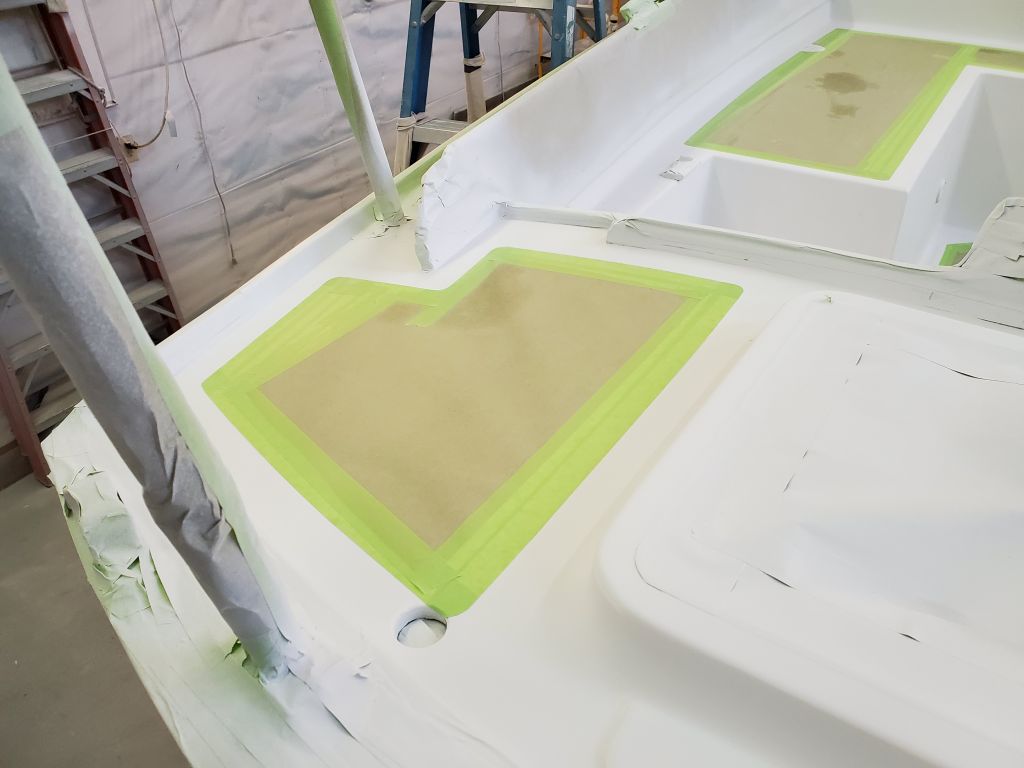
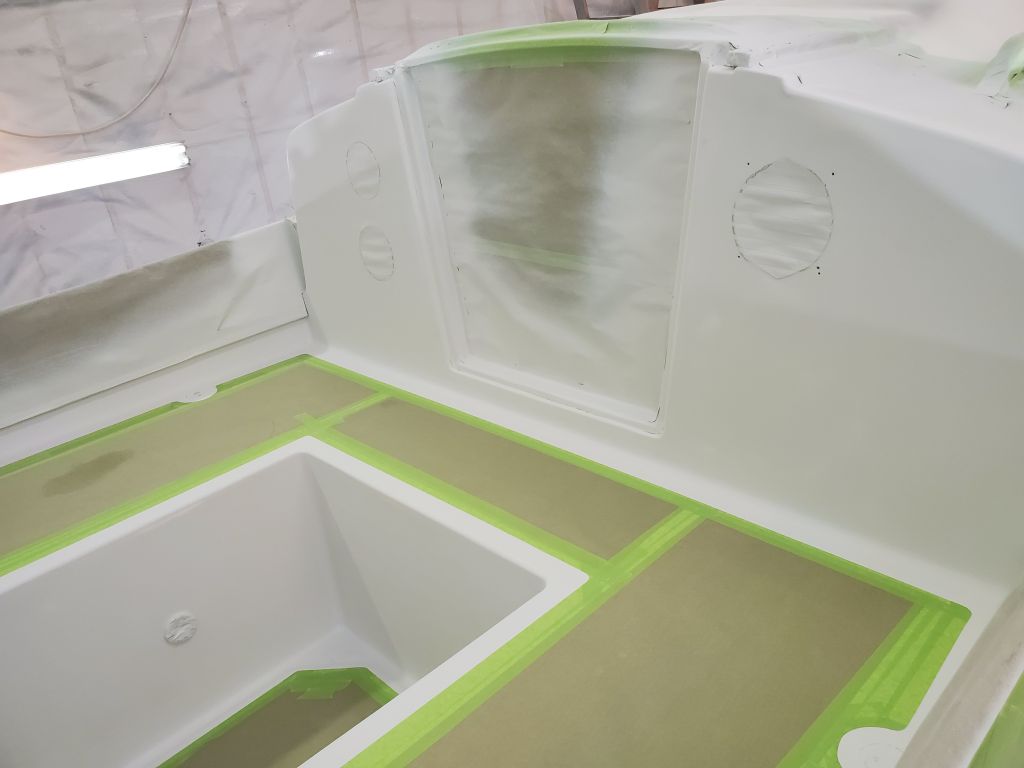
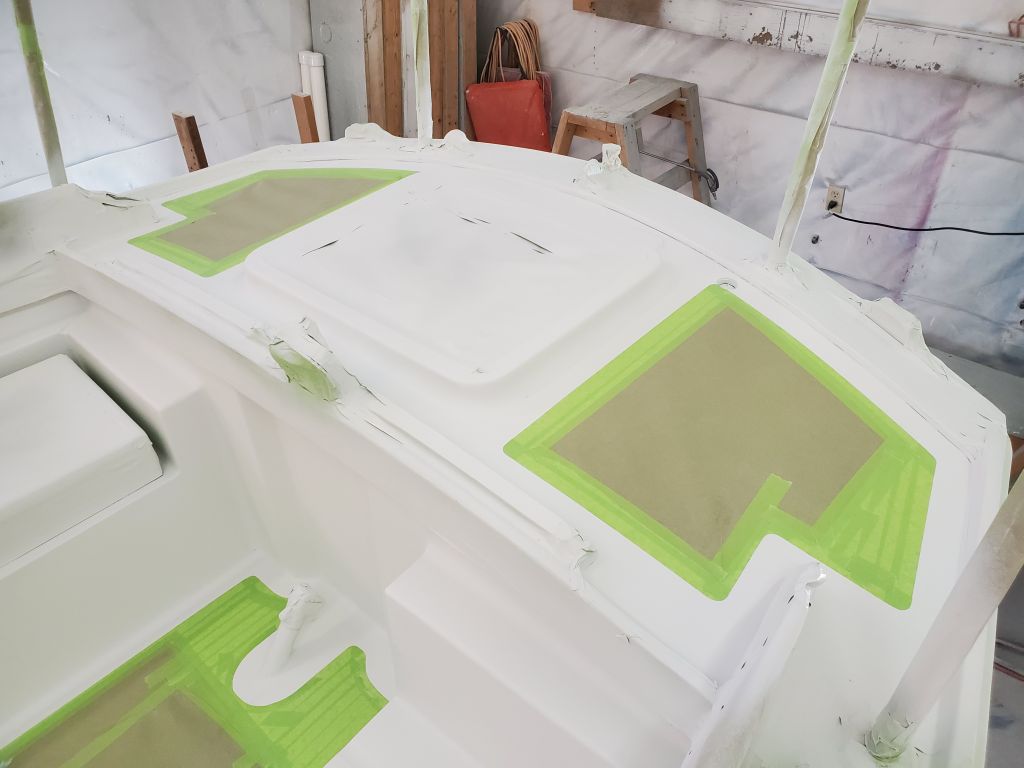
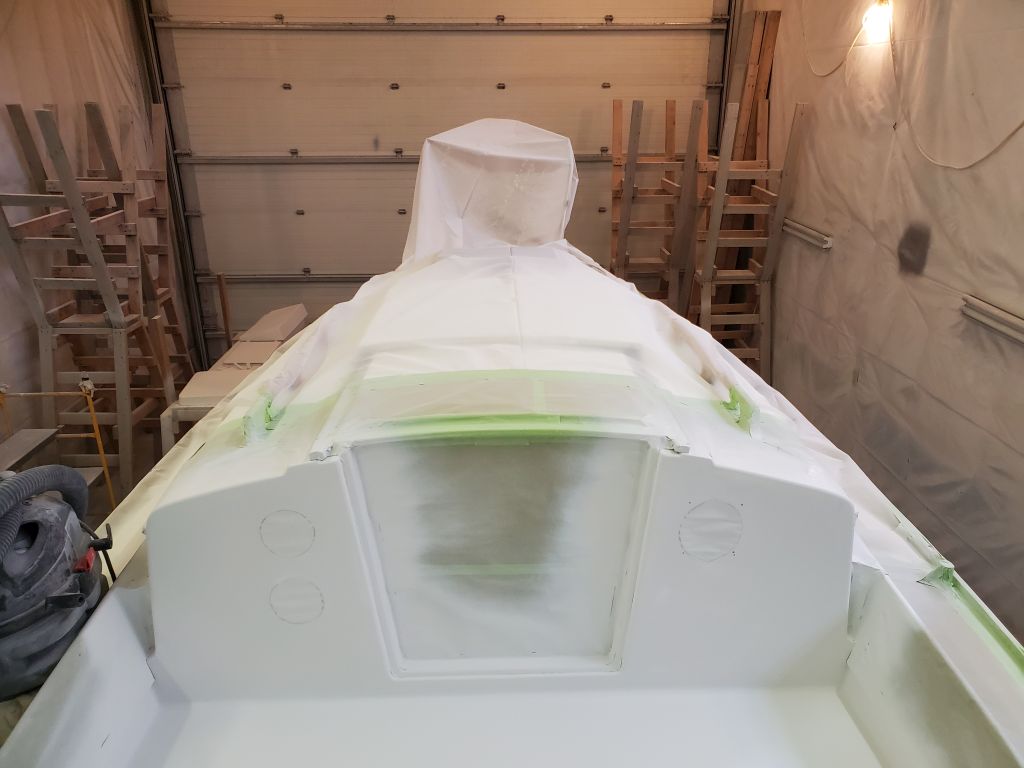
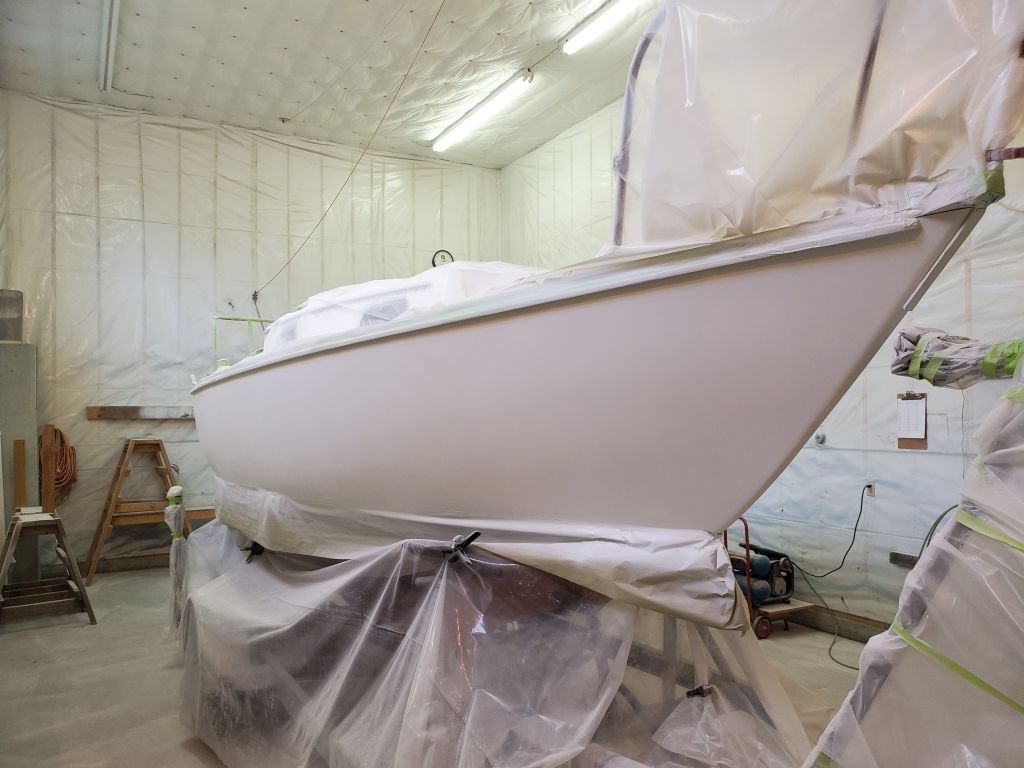
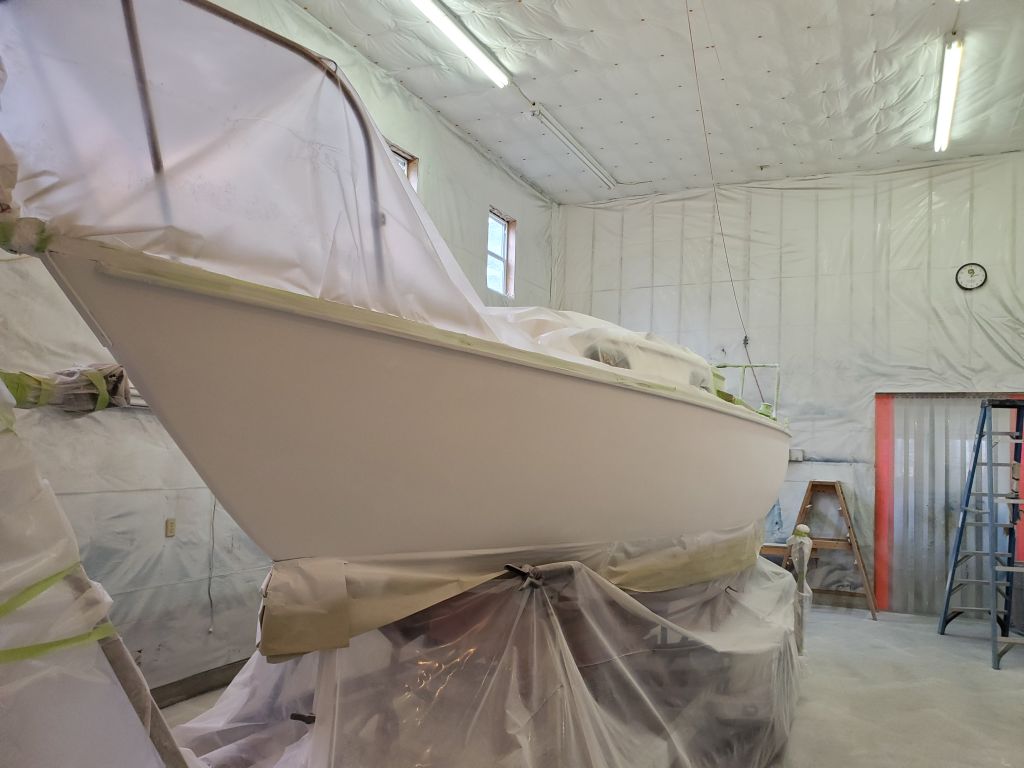
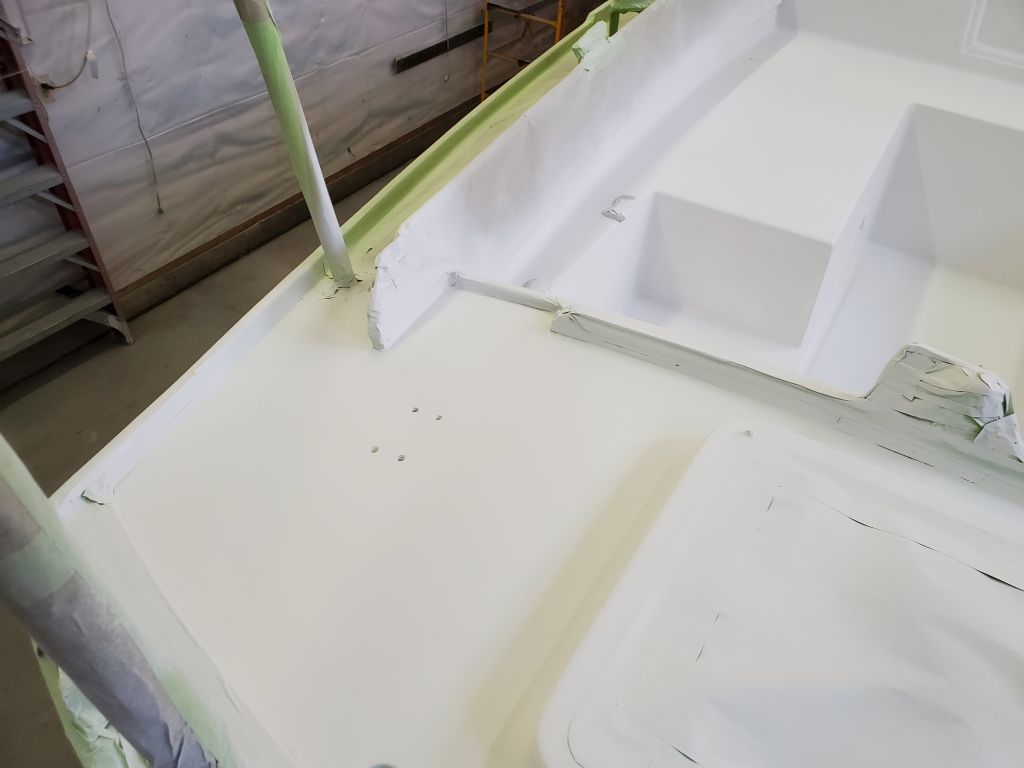
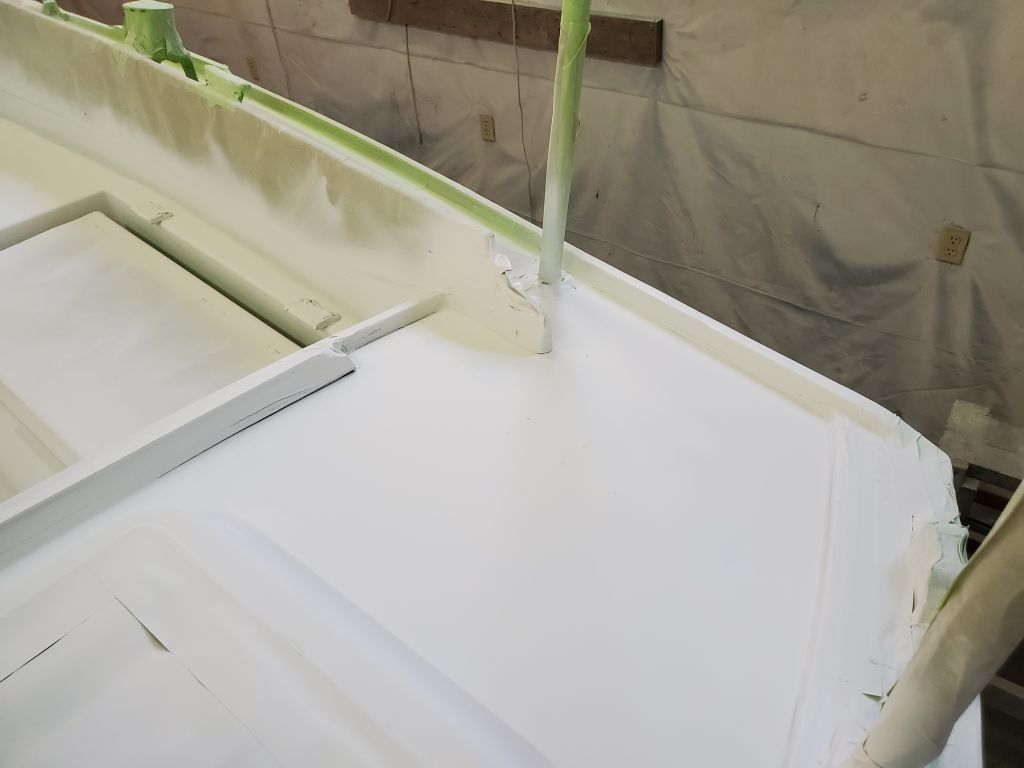
I spent the morning in the cockpit and surrounds, finishing up the masking.  I covered the coamings, sidedecks, trim, hatch openings, and stern pulpit, and forward of the cockpit I covered the remainder of the deck with plastic sheeting, masking it securely to the toerails and bow casting as needed.


The well-masked, papered sidedecks would allow me room to kneel or crouch and reach the furthest depths of the cockpit from the sides during spraying.

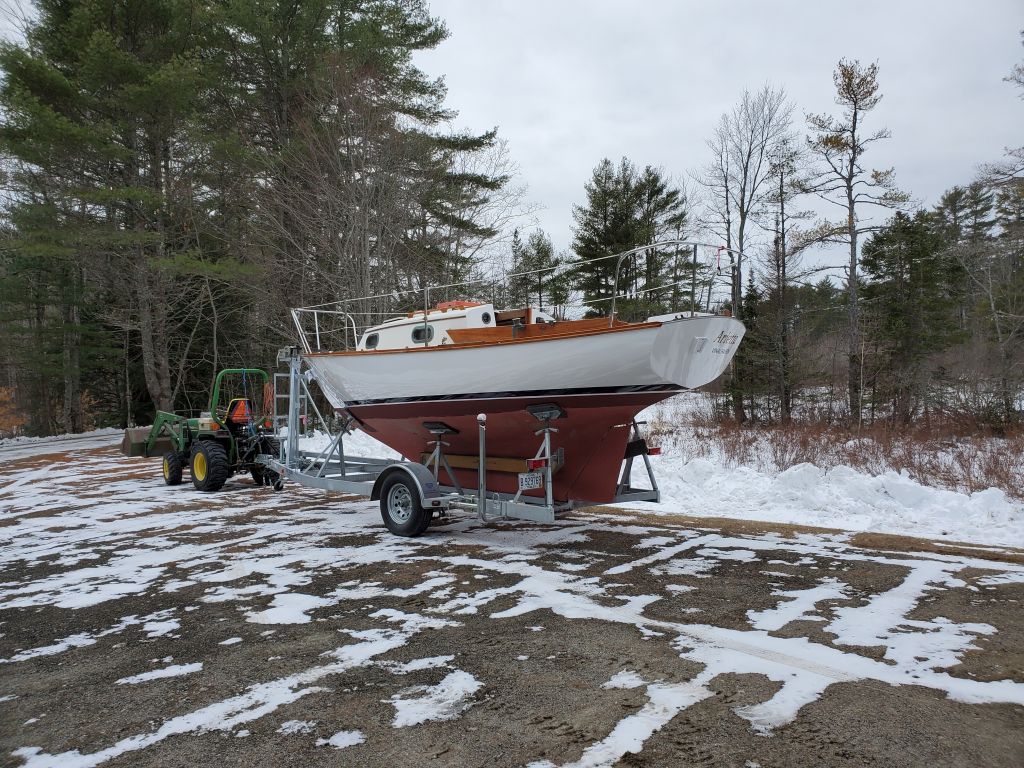
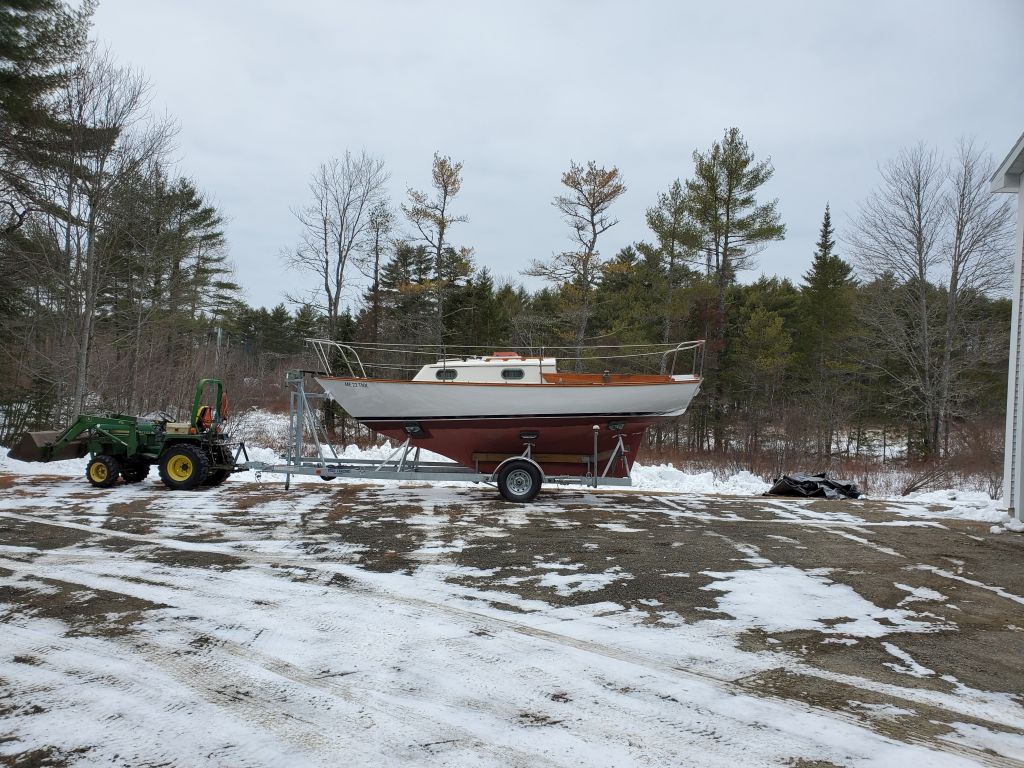
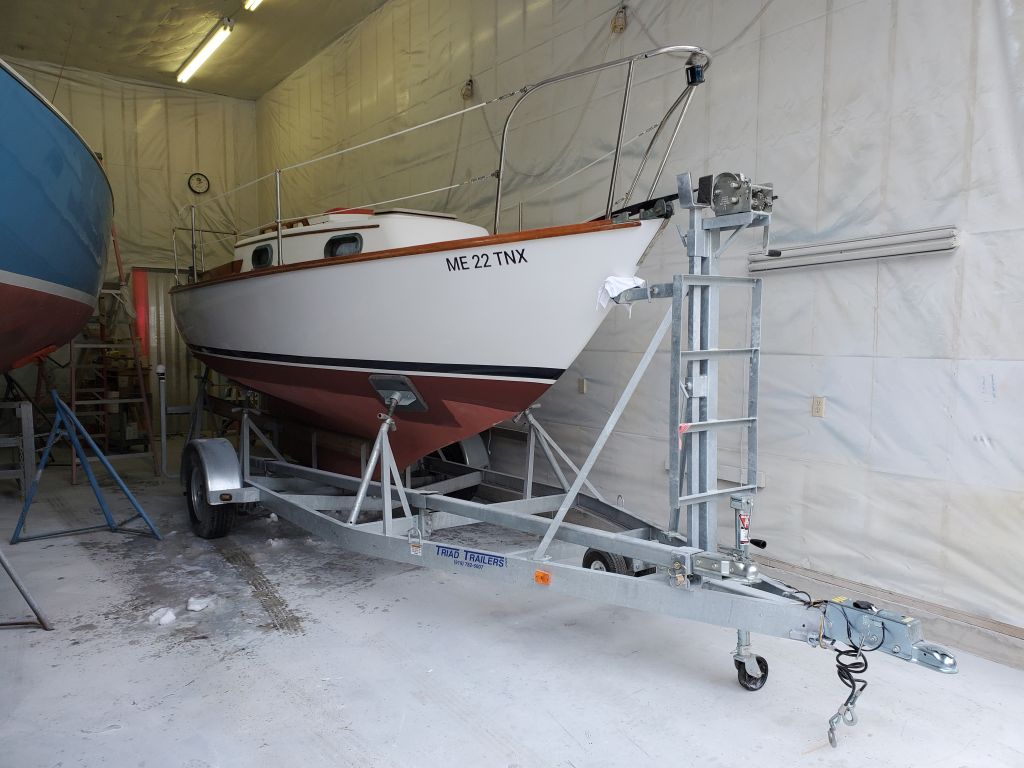
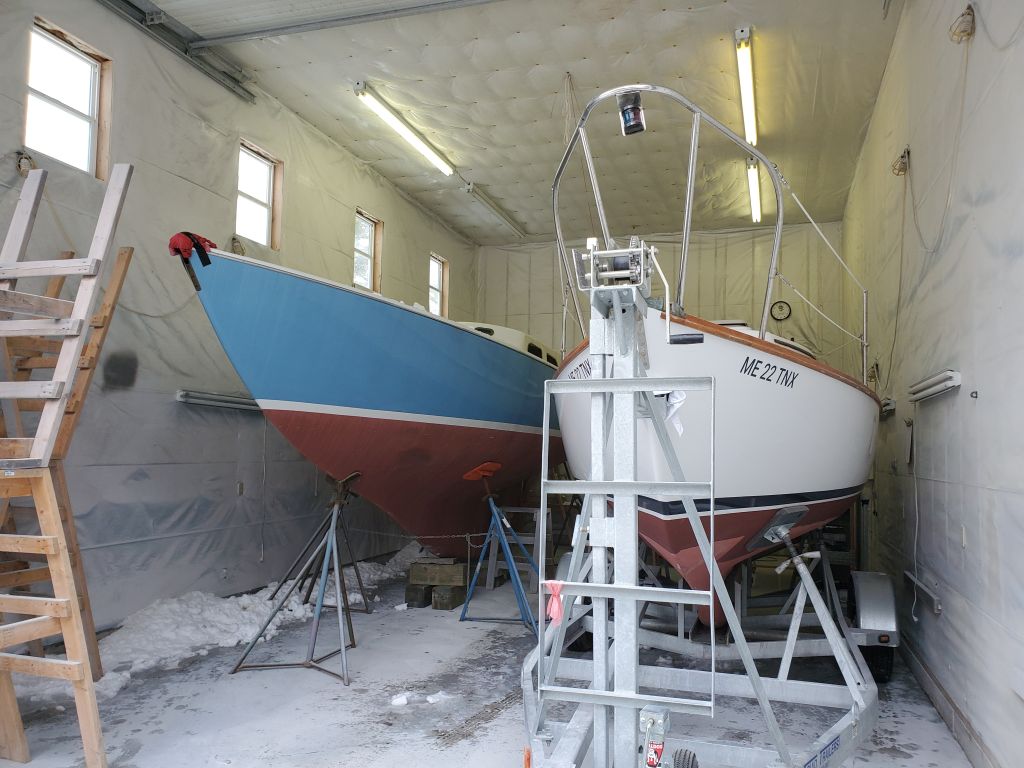
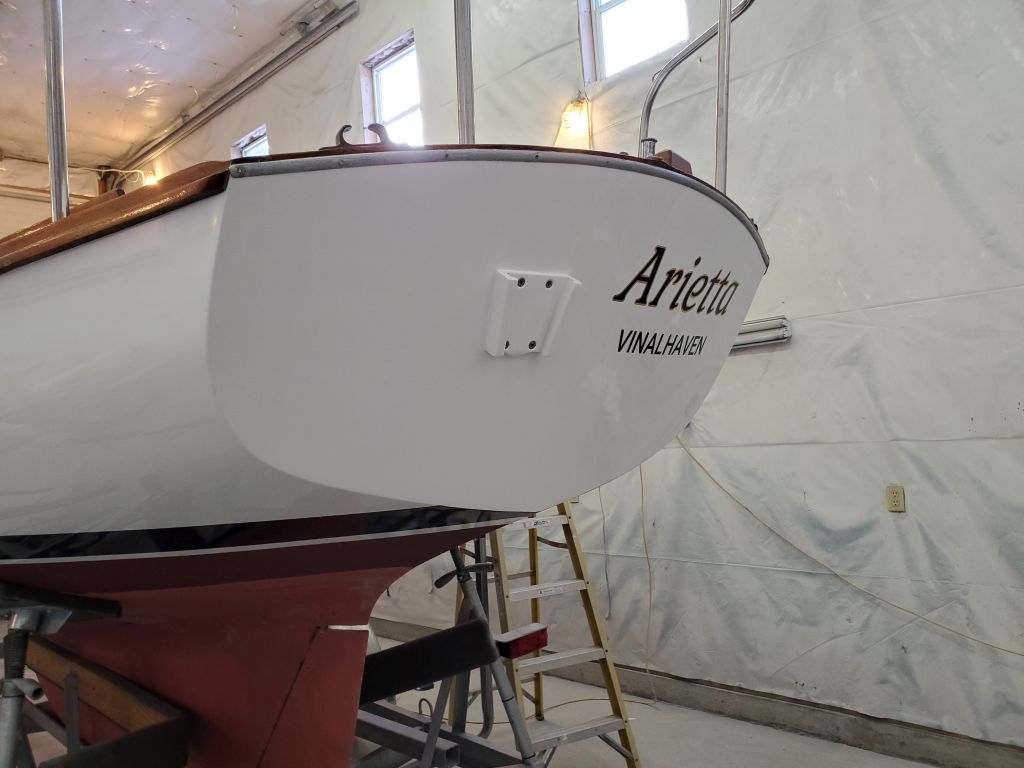
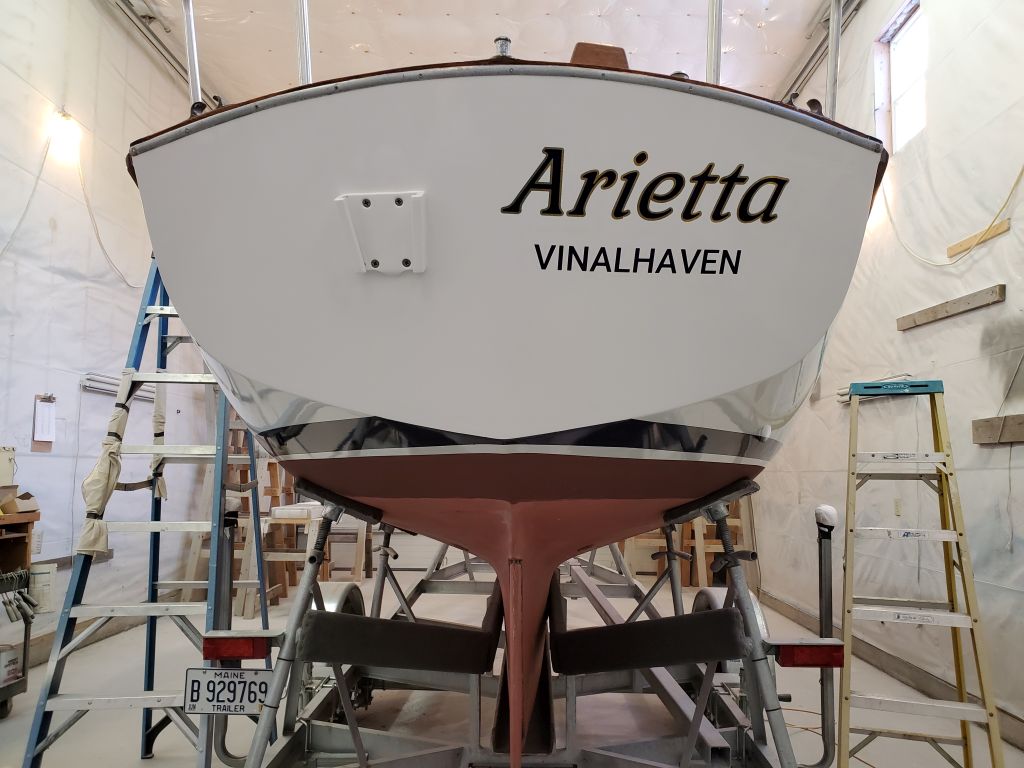
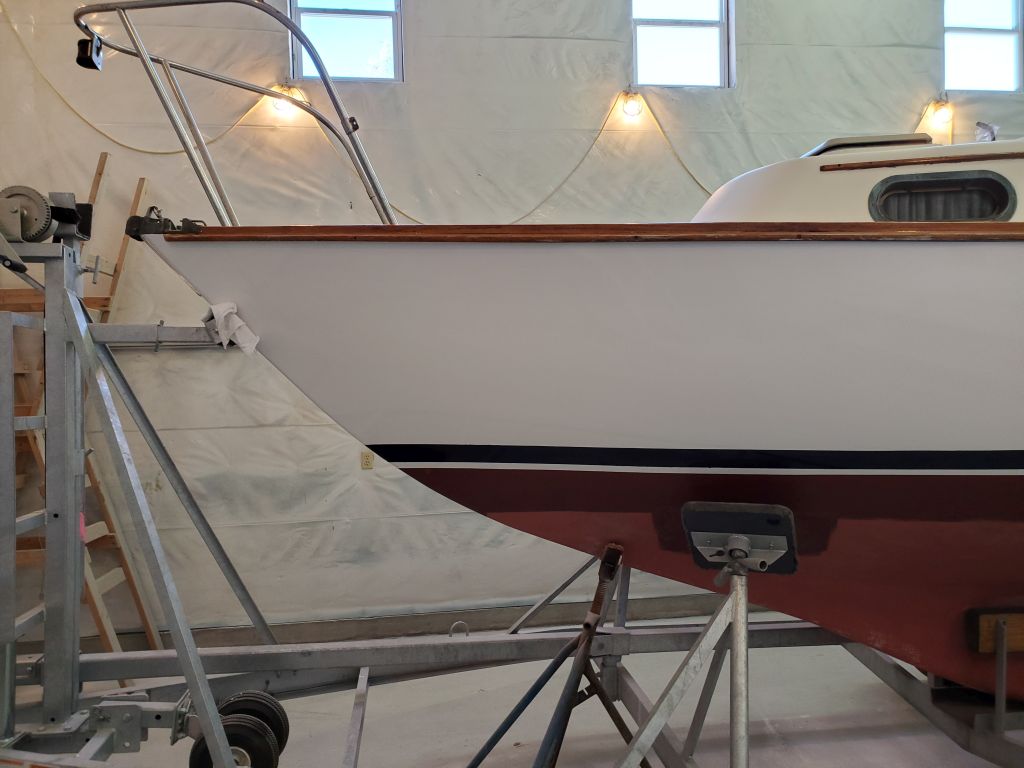
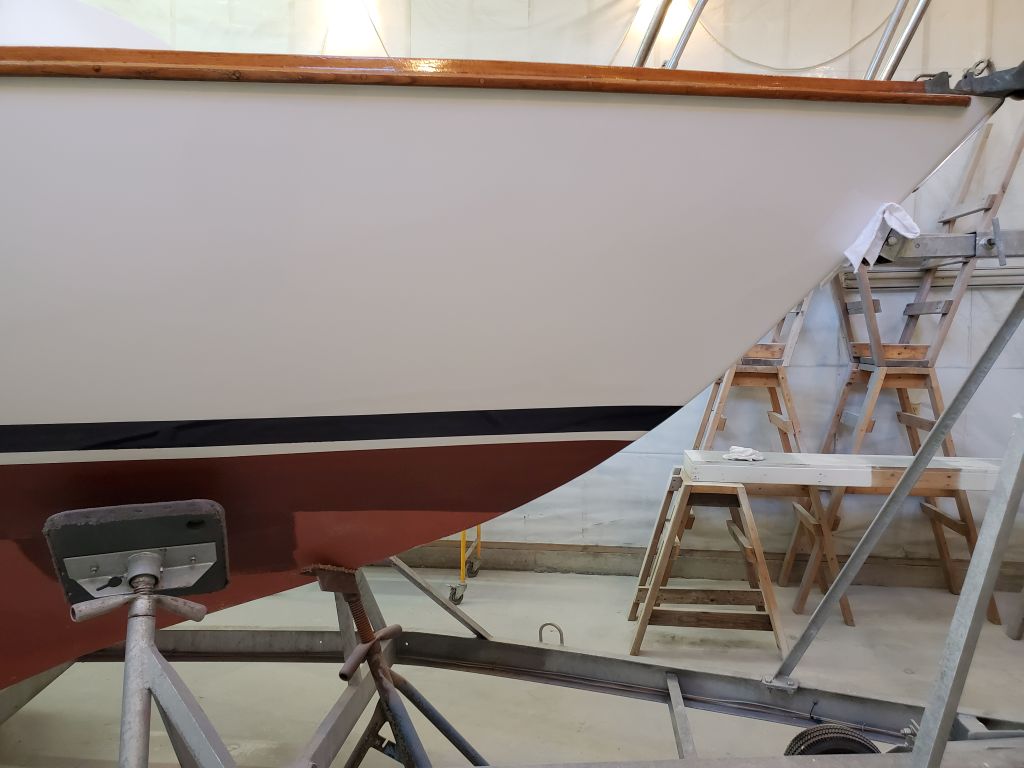
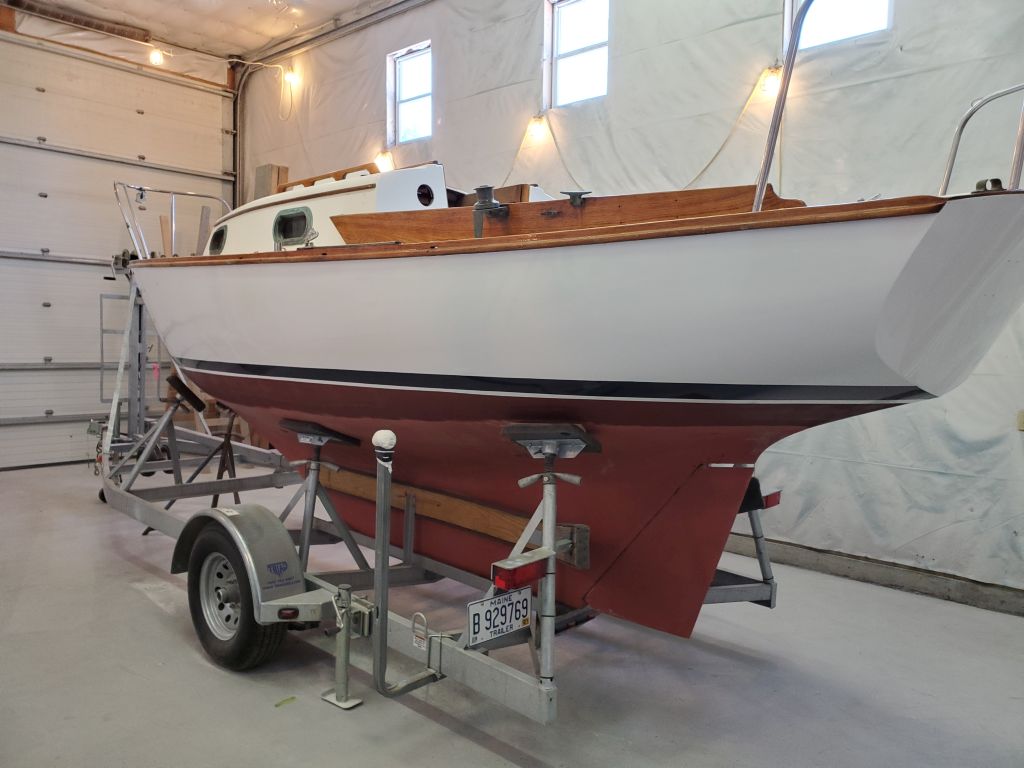
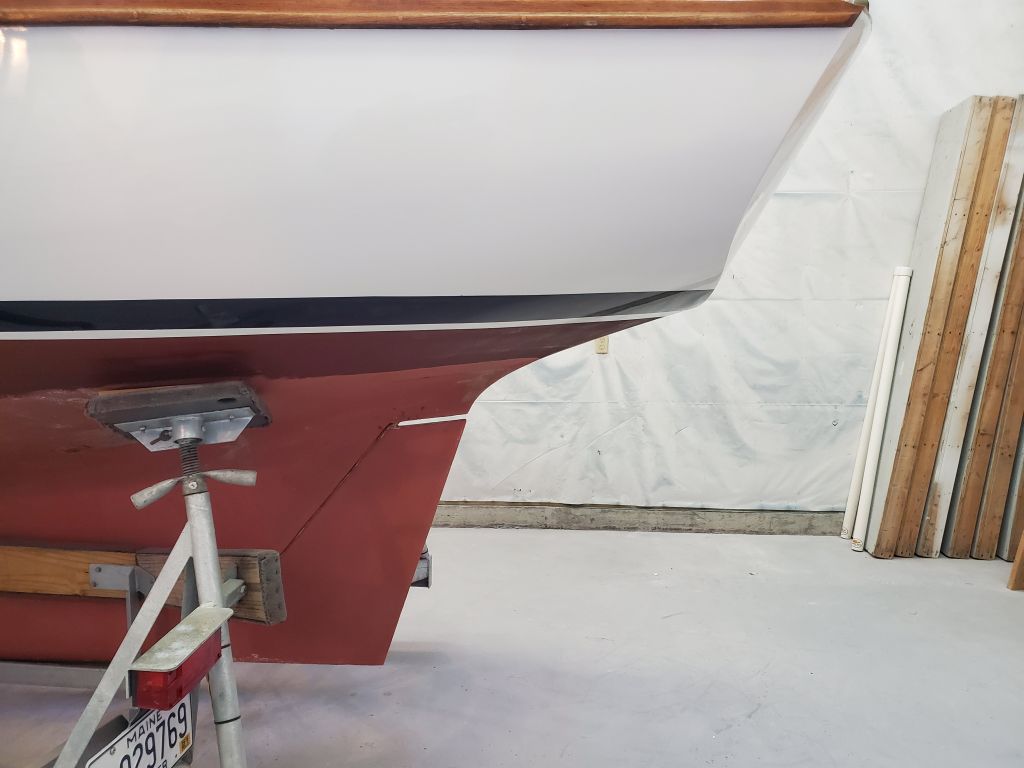
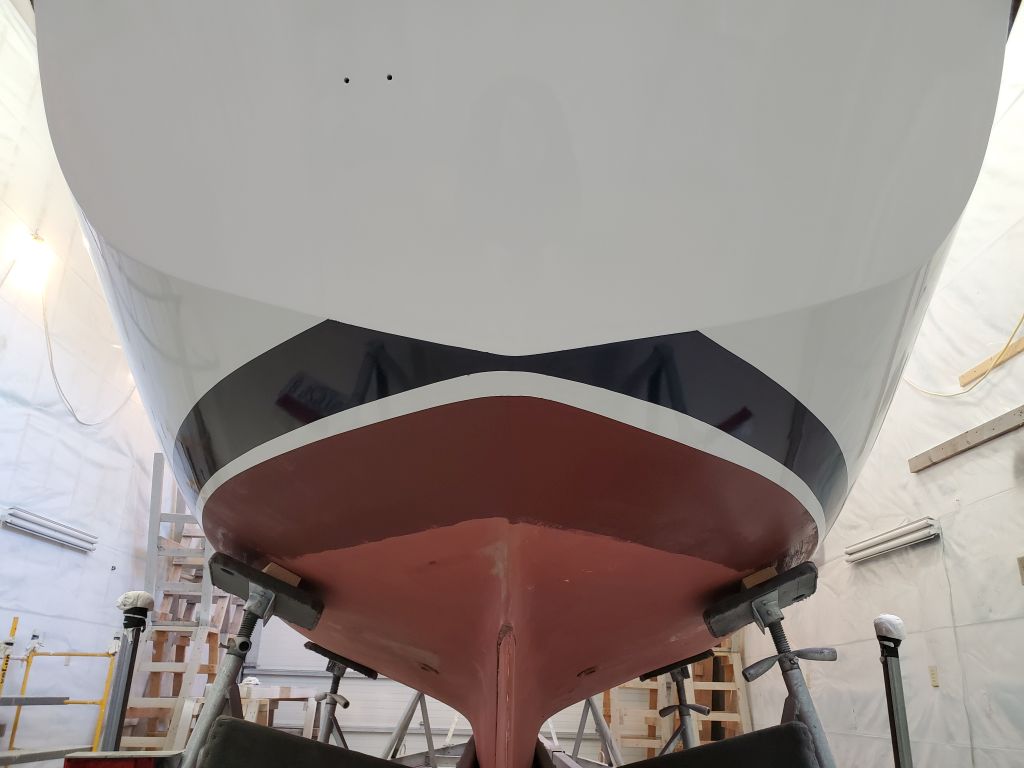
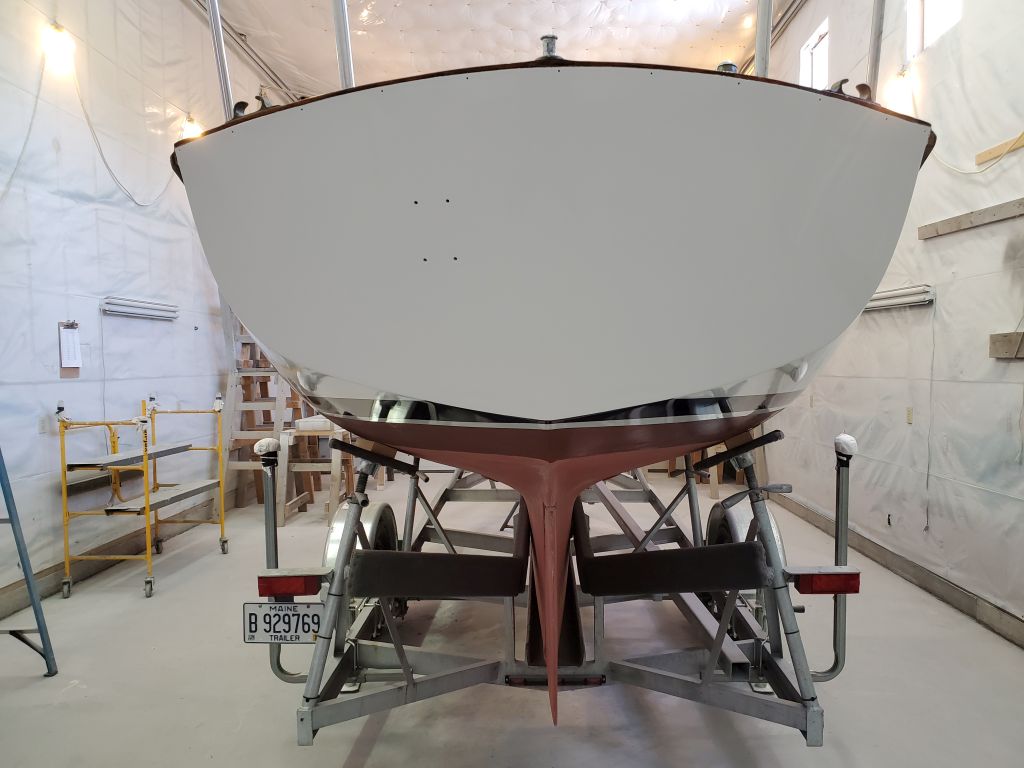
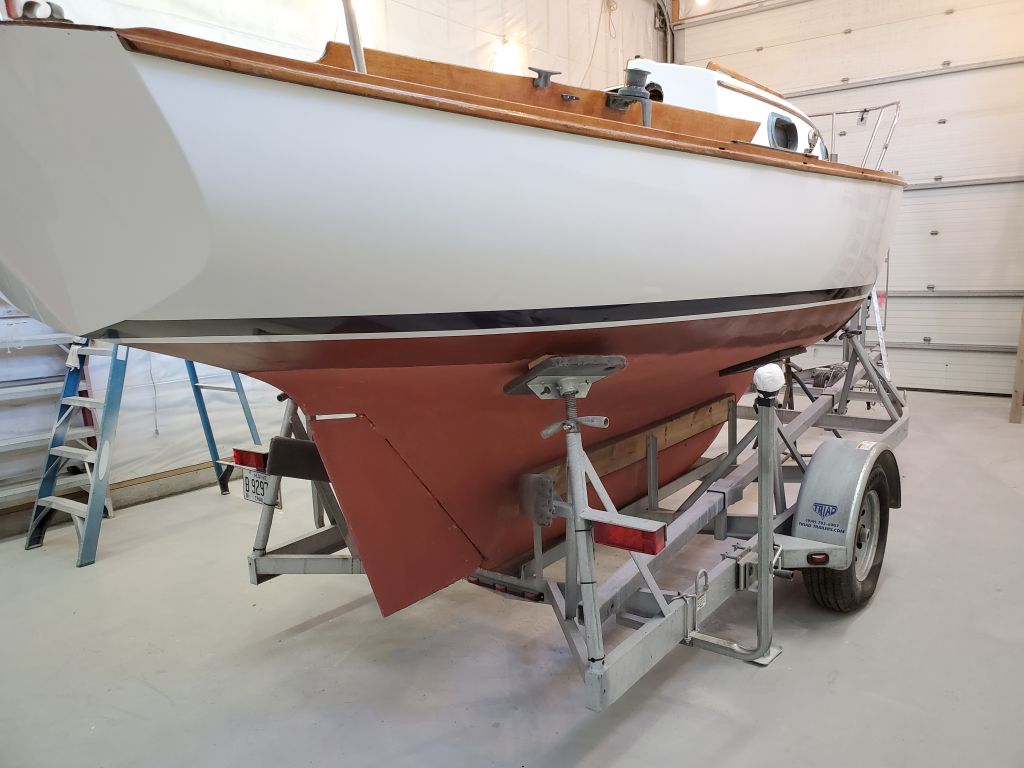
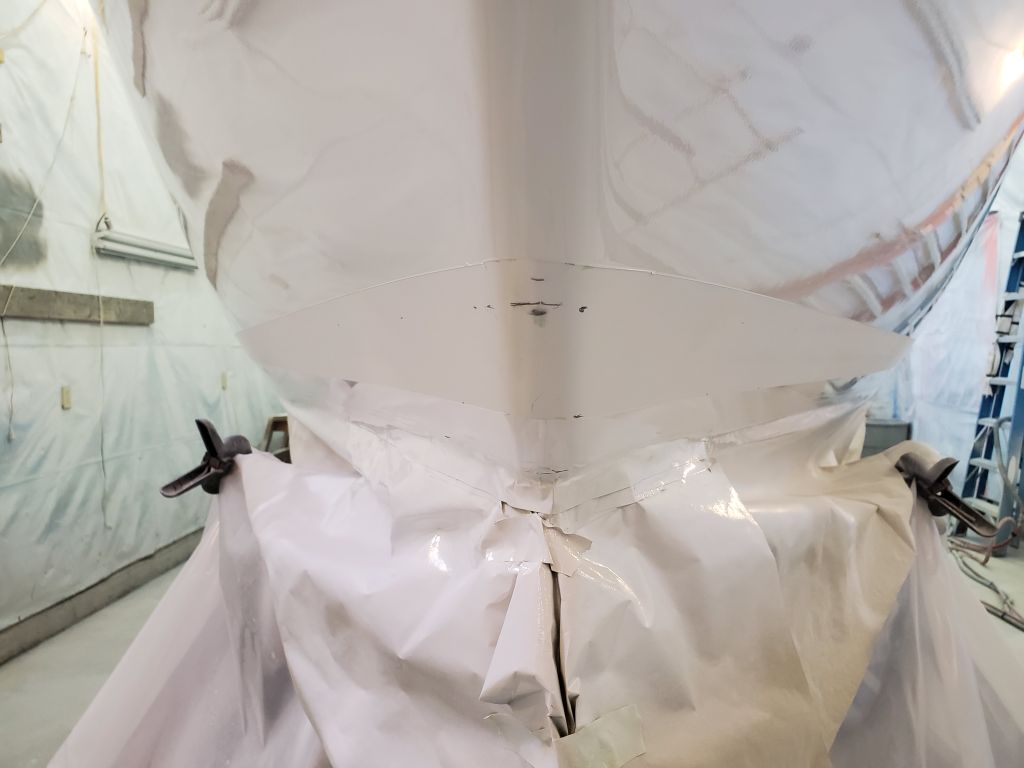
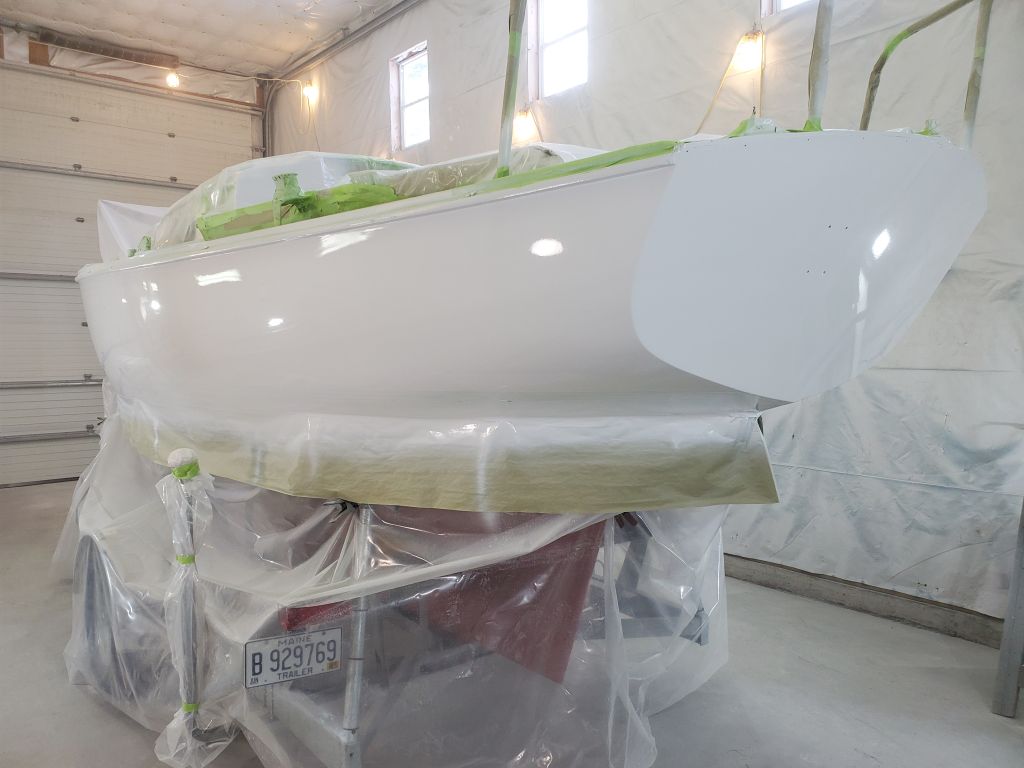
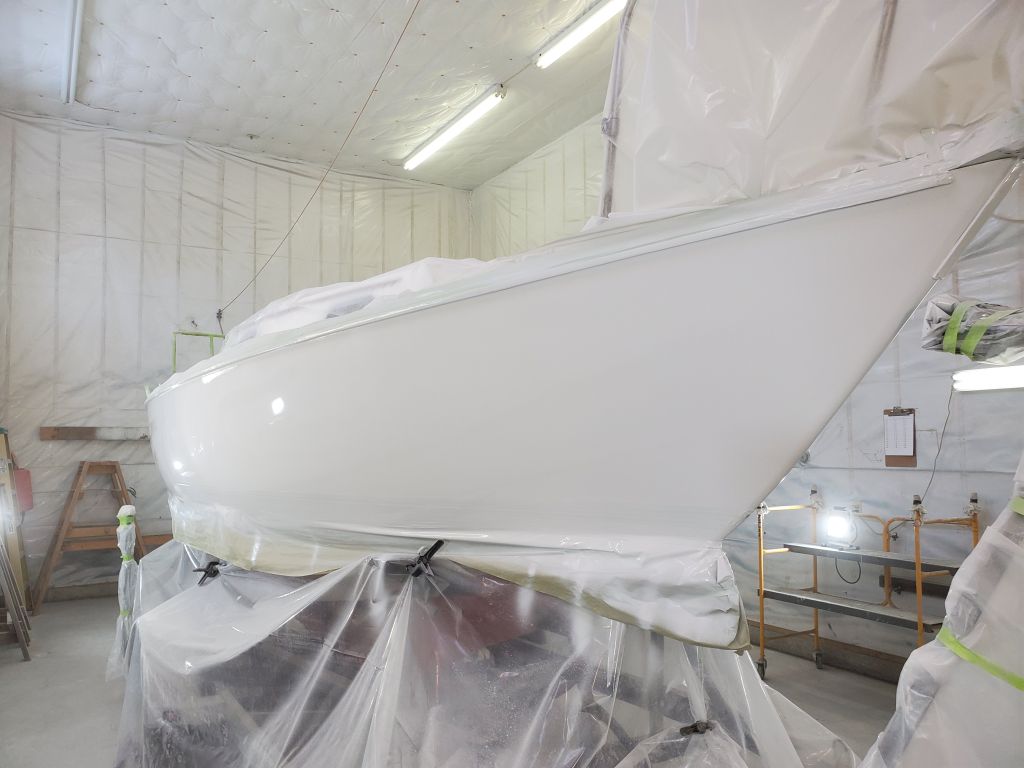
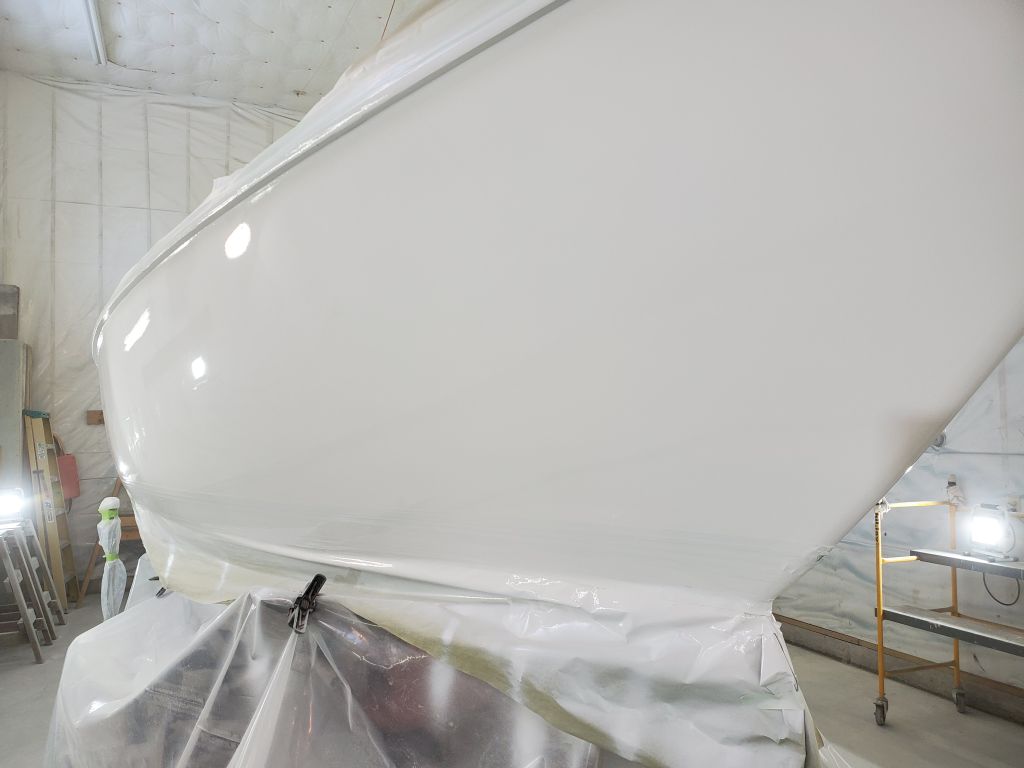
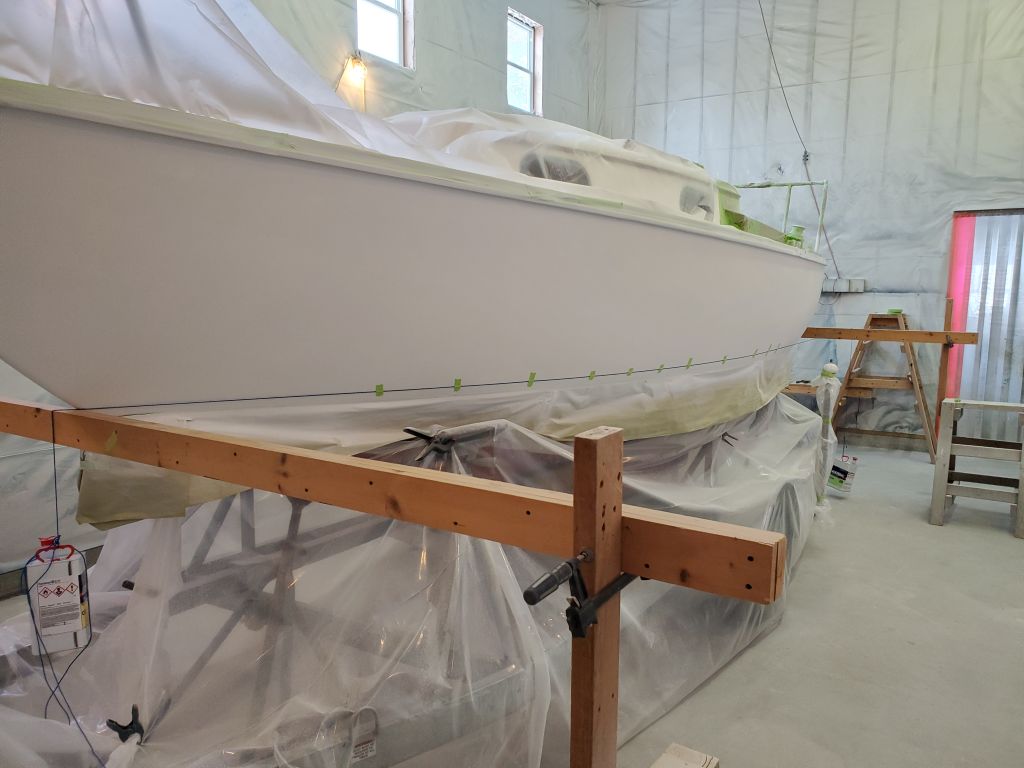
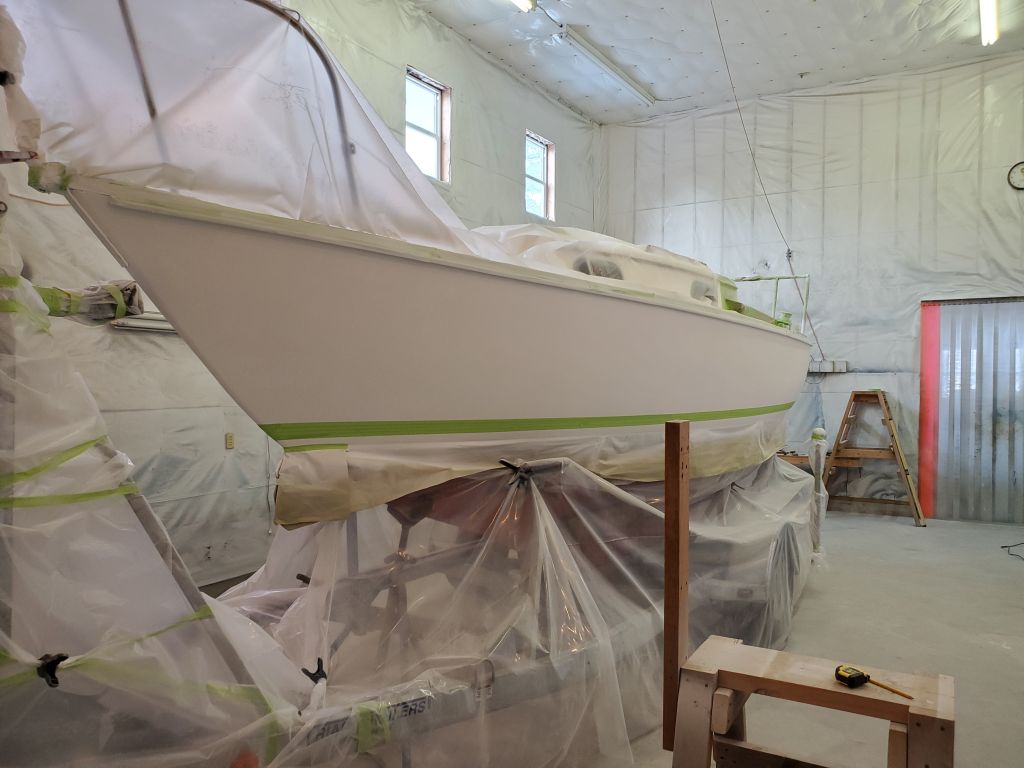
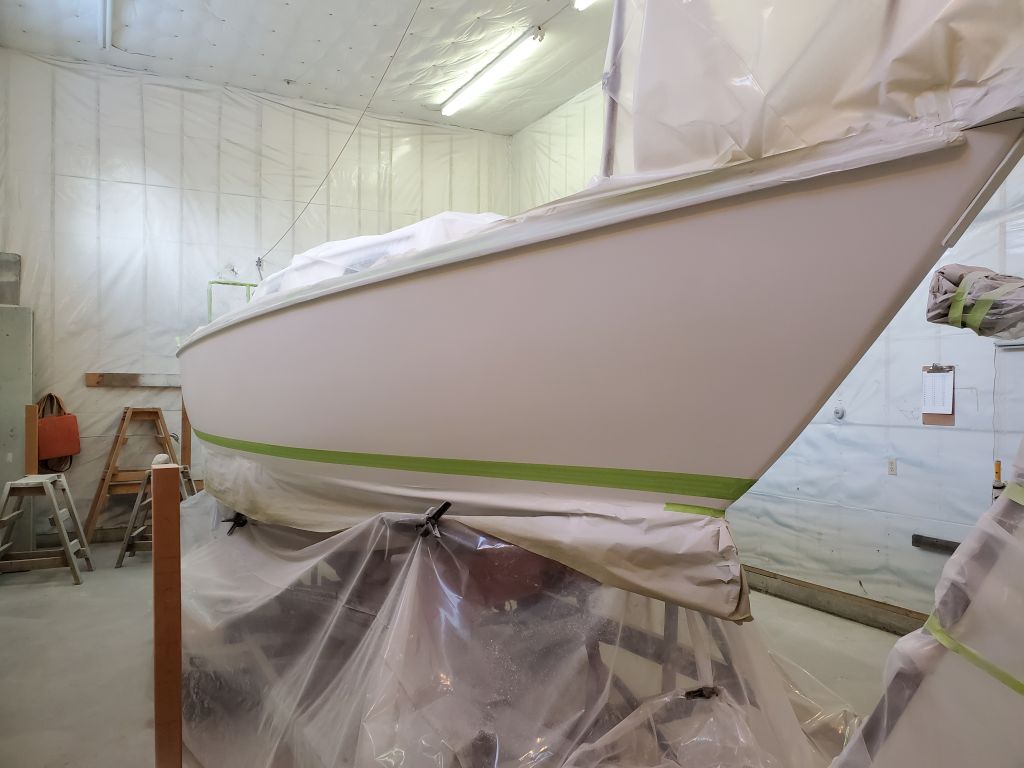
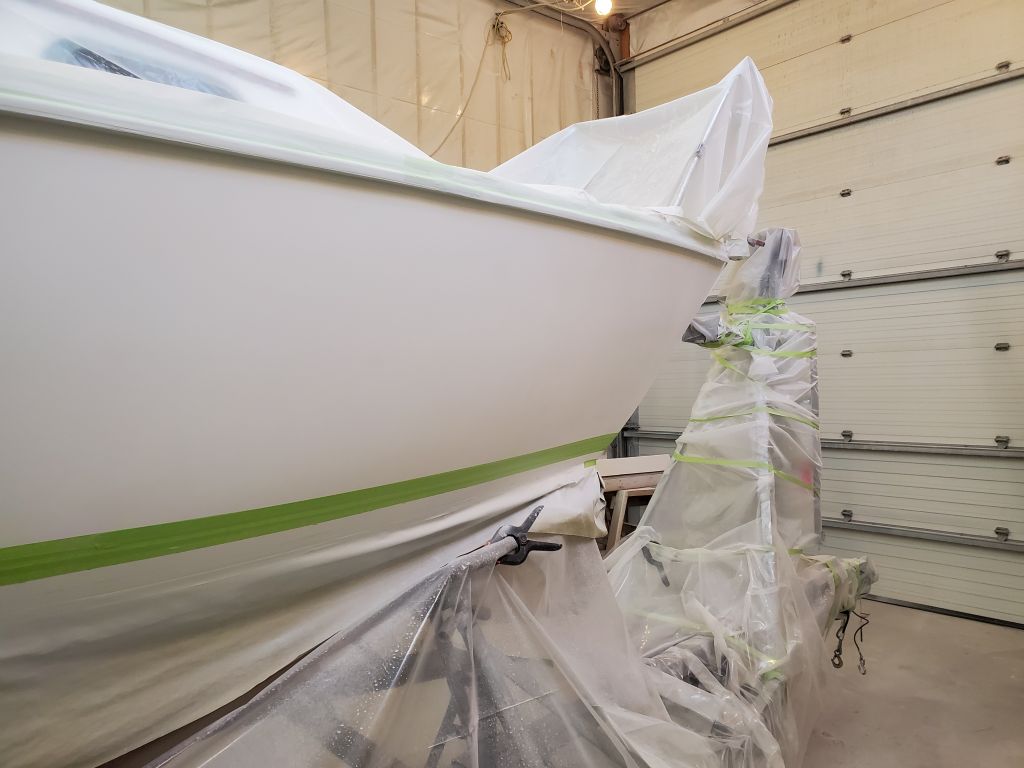
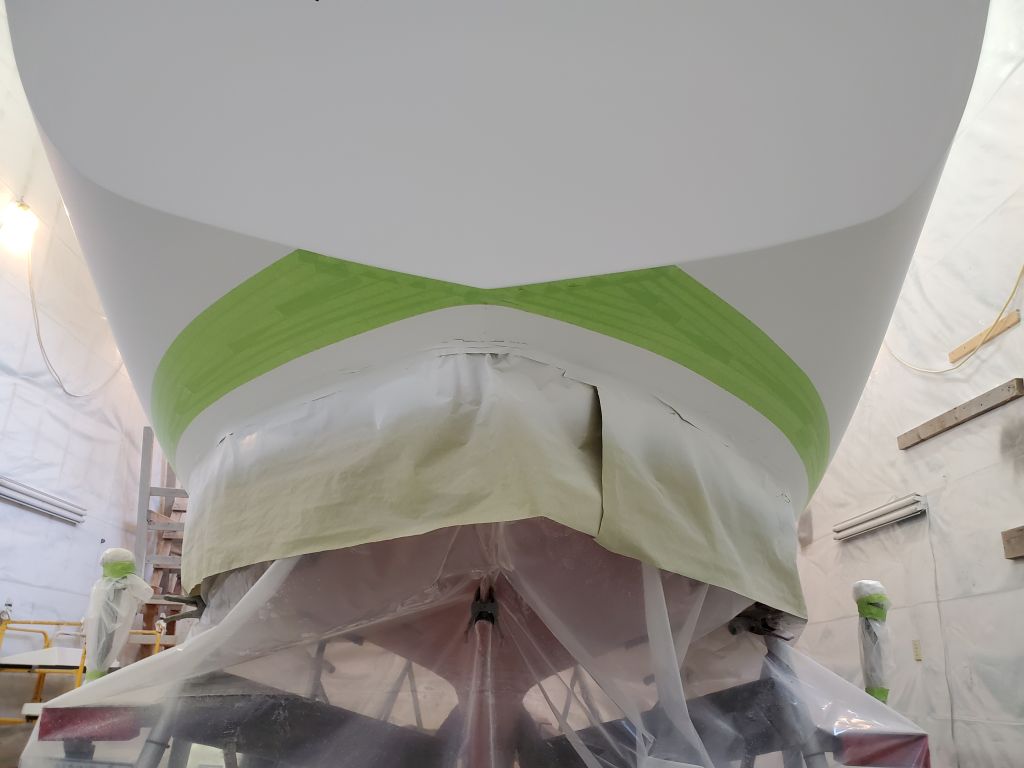
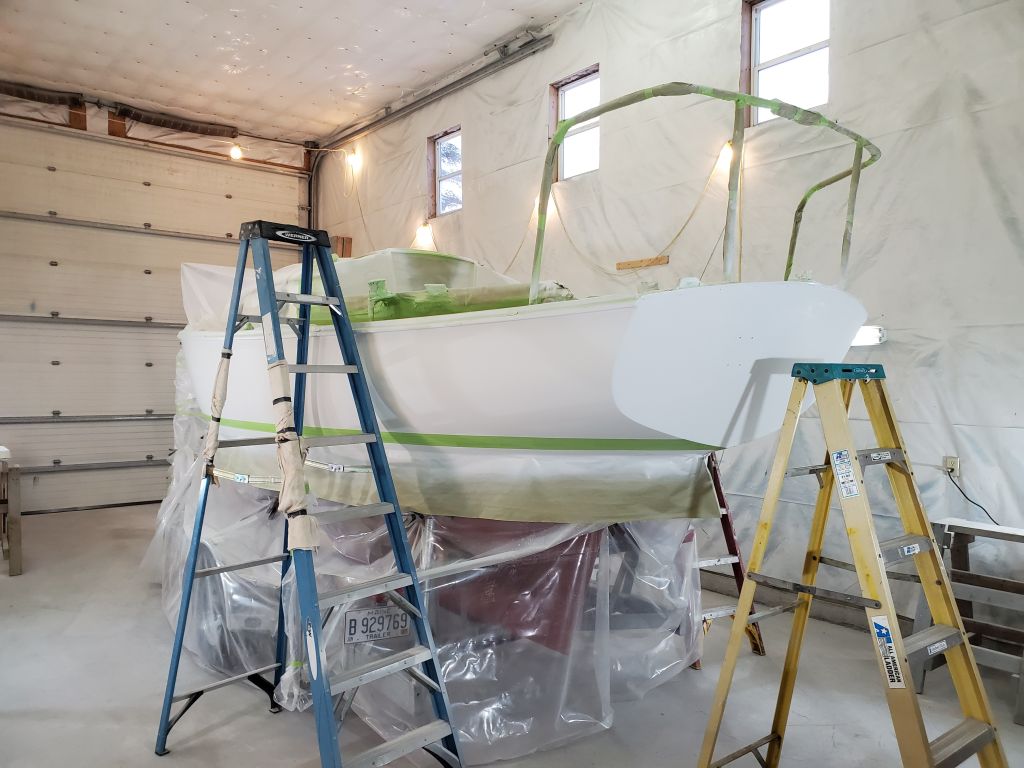
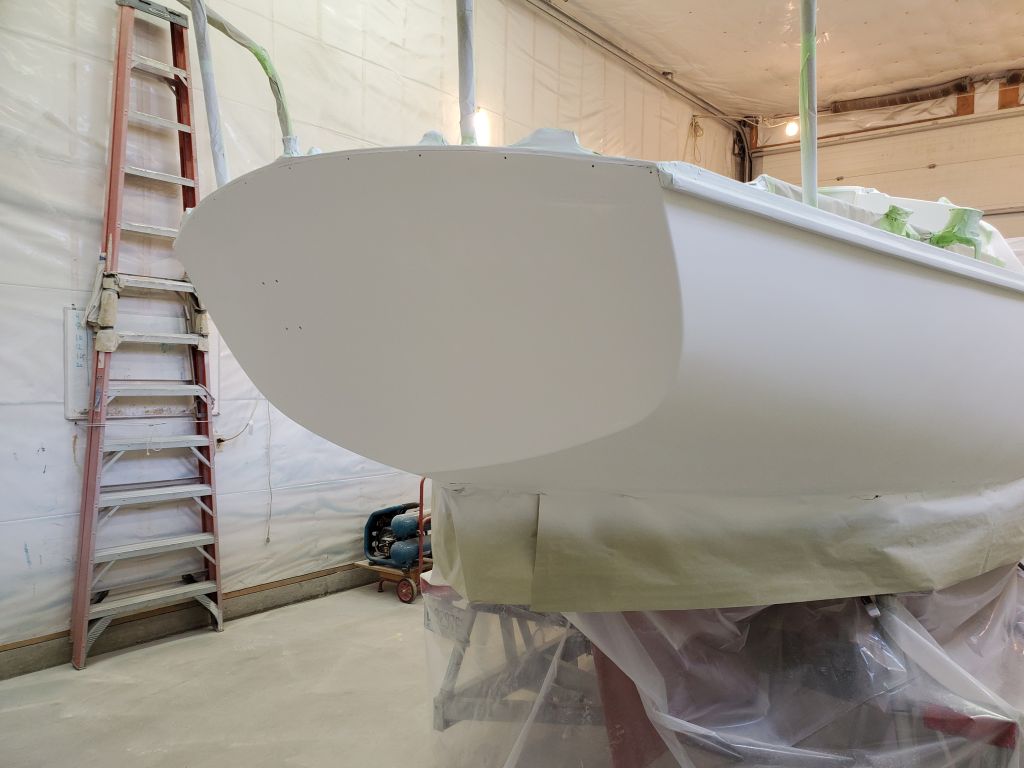
The new waterline passed just barely clear of the forward trailer pads, and for access I needed to lower these for now.  The boat was bow-heavy without any forward support (the V-shaped centerline stem fitting was also retracted for access to the hull), so I added an external stand to help support the bow during the work ahead.

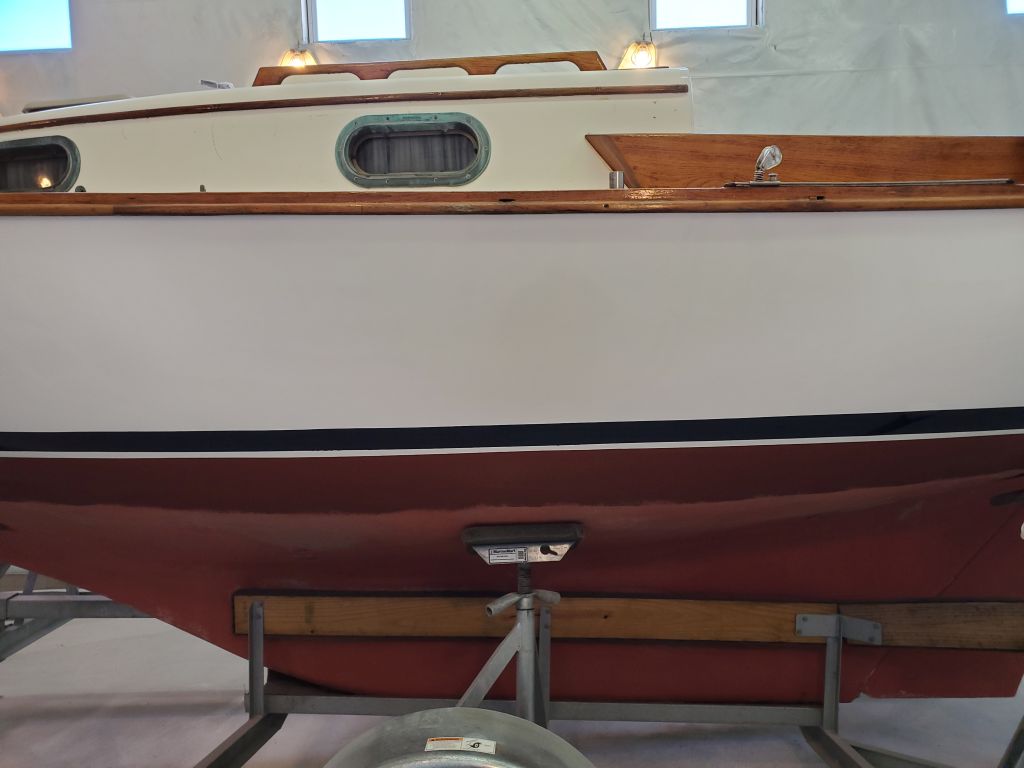
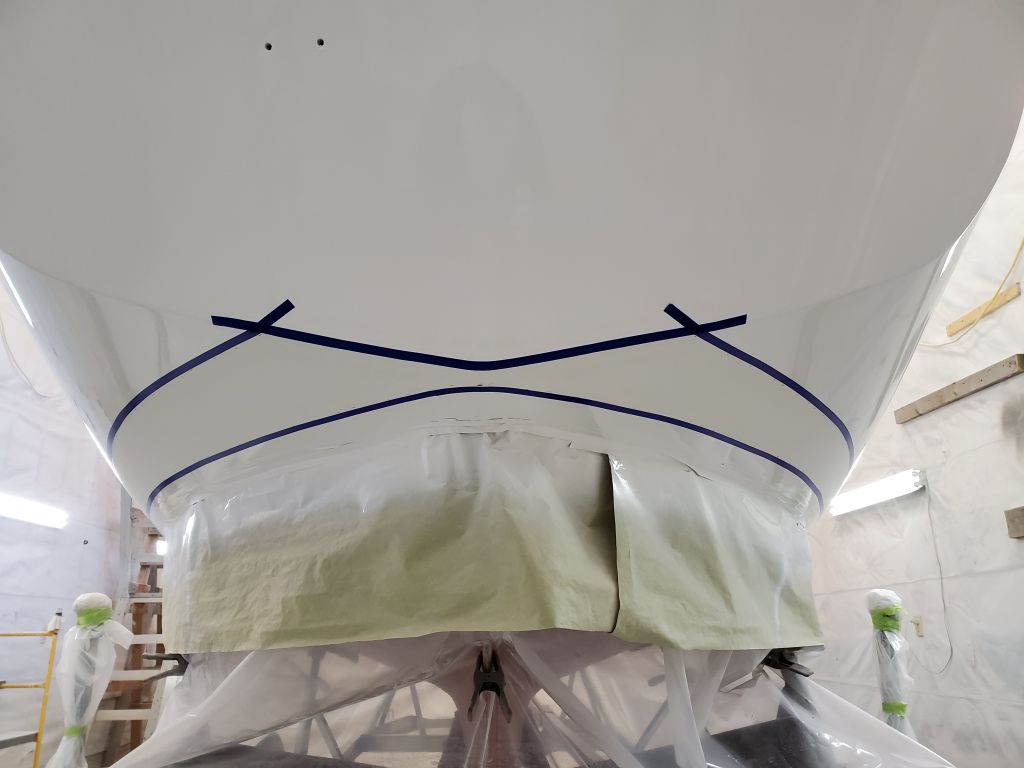
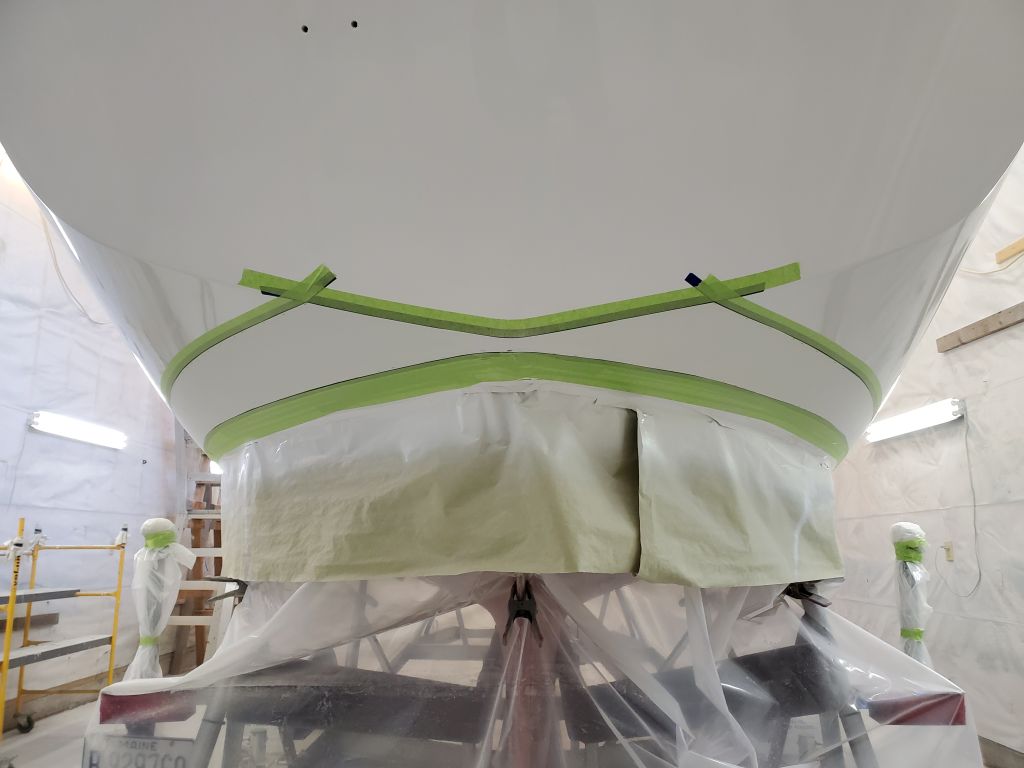
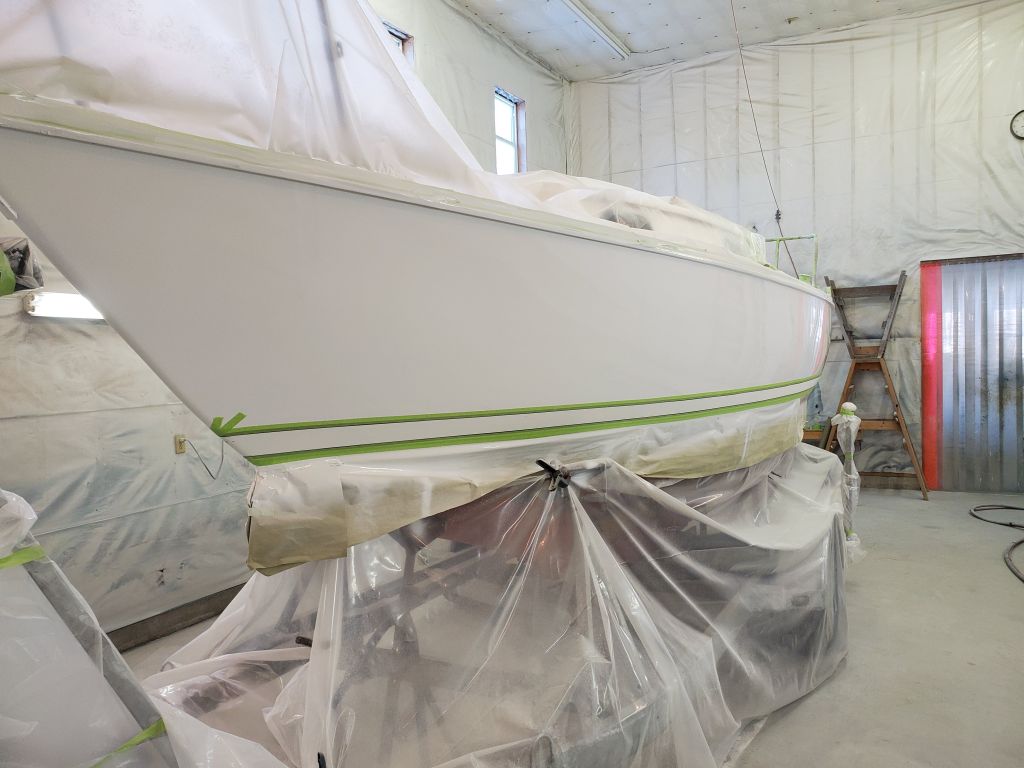
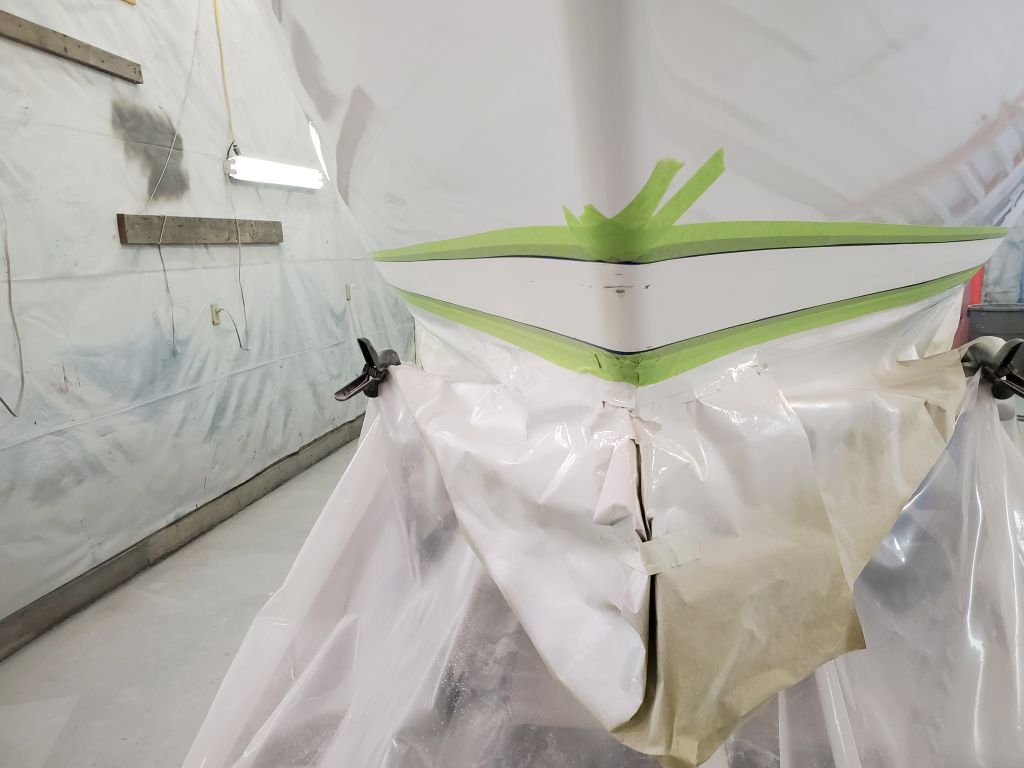
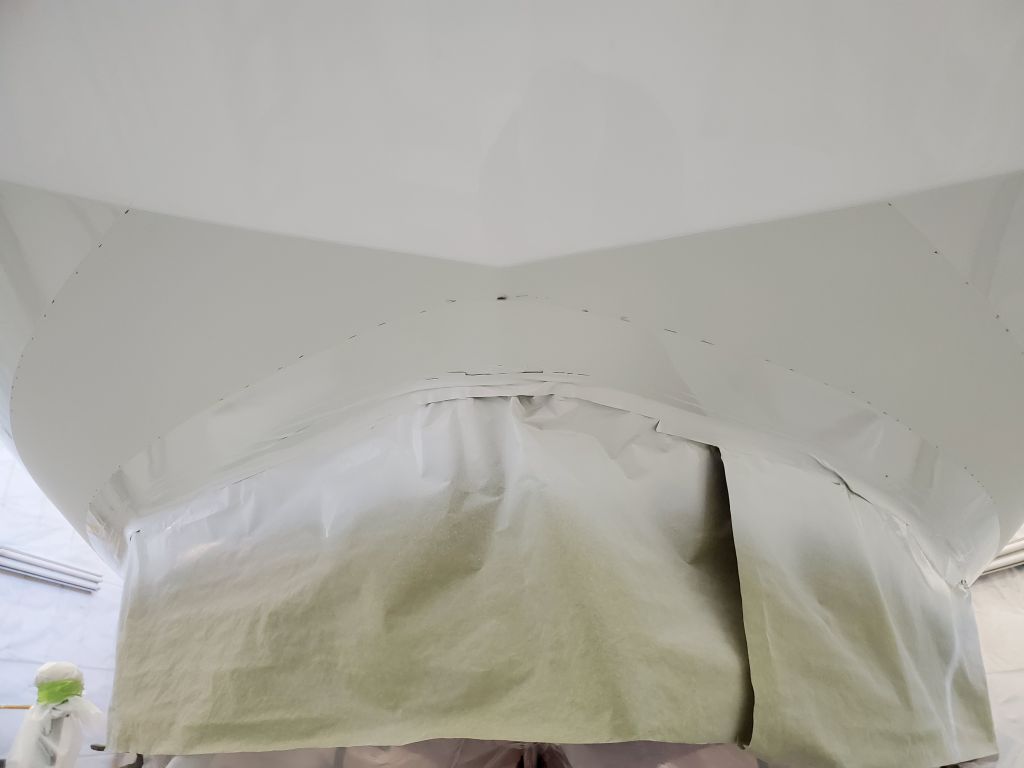
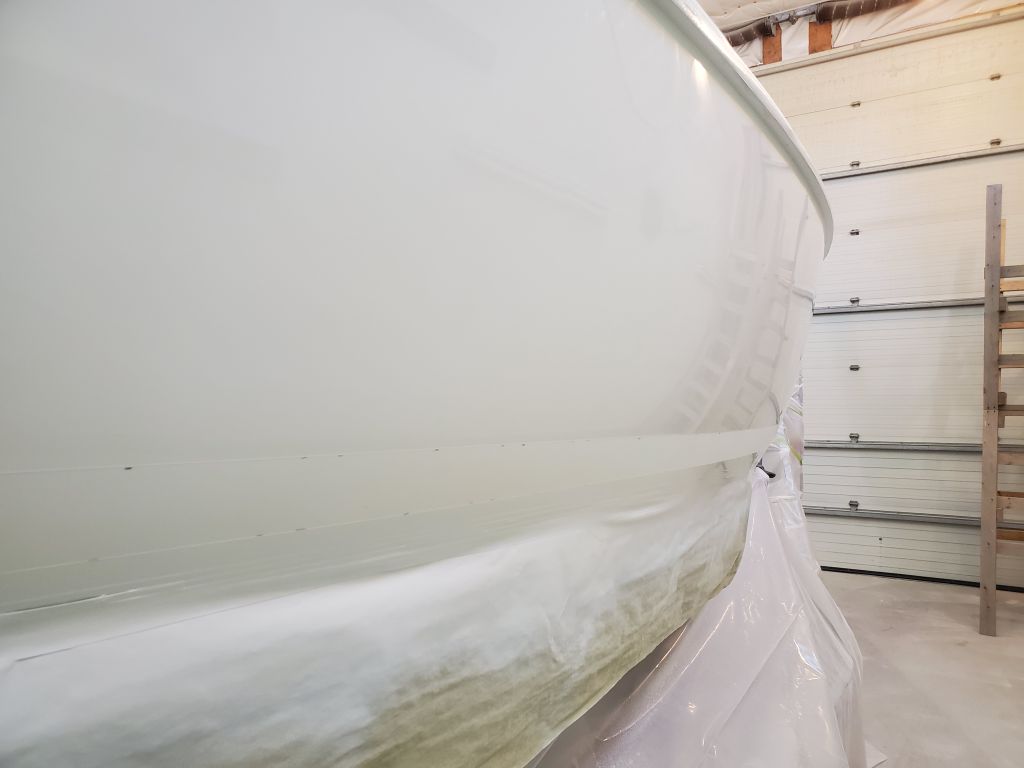
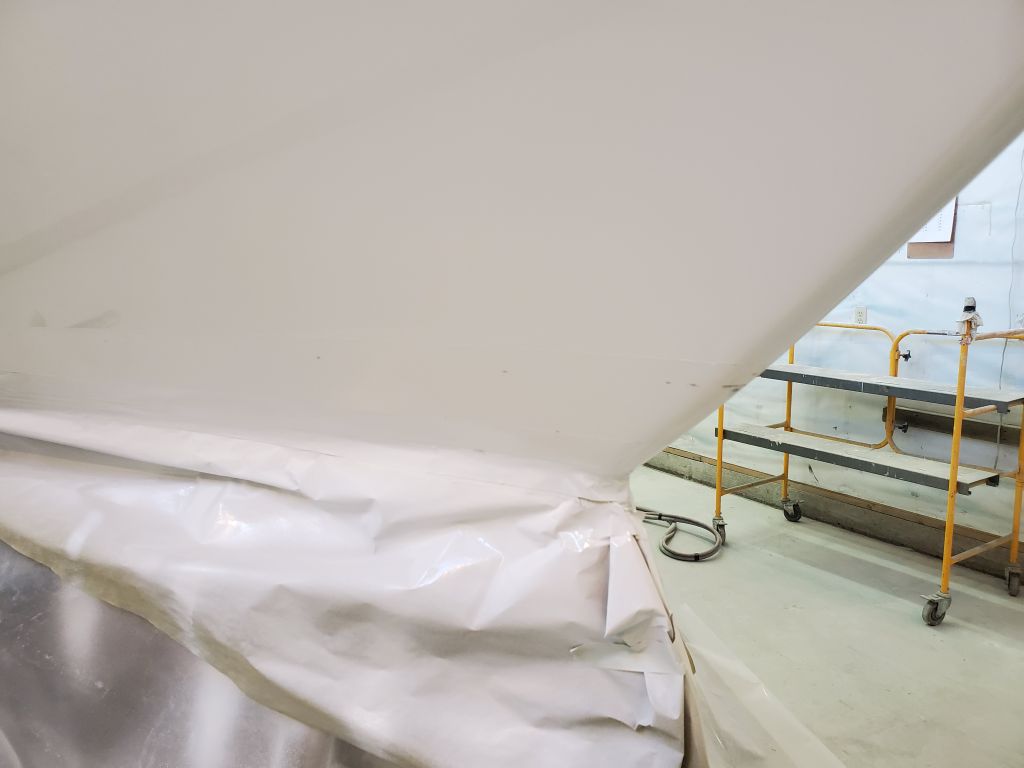
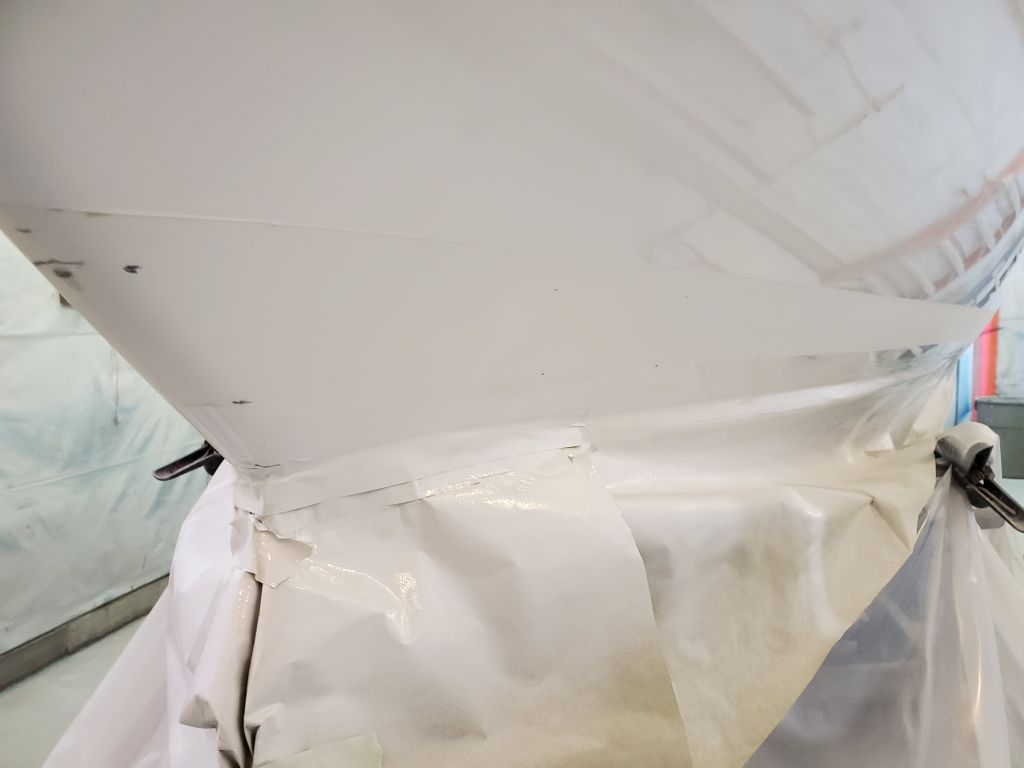
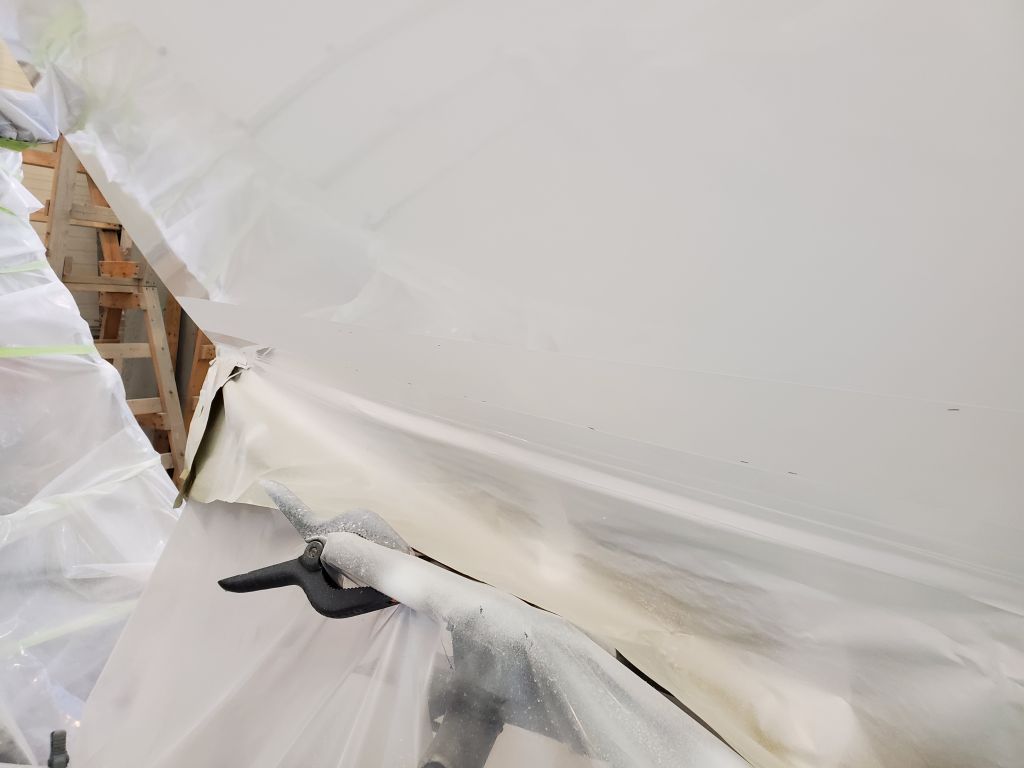
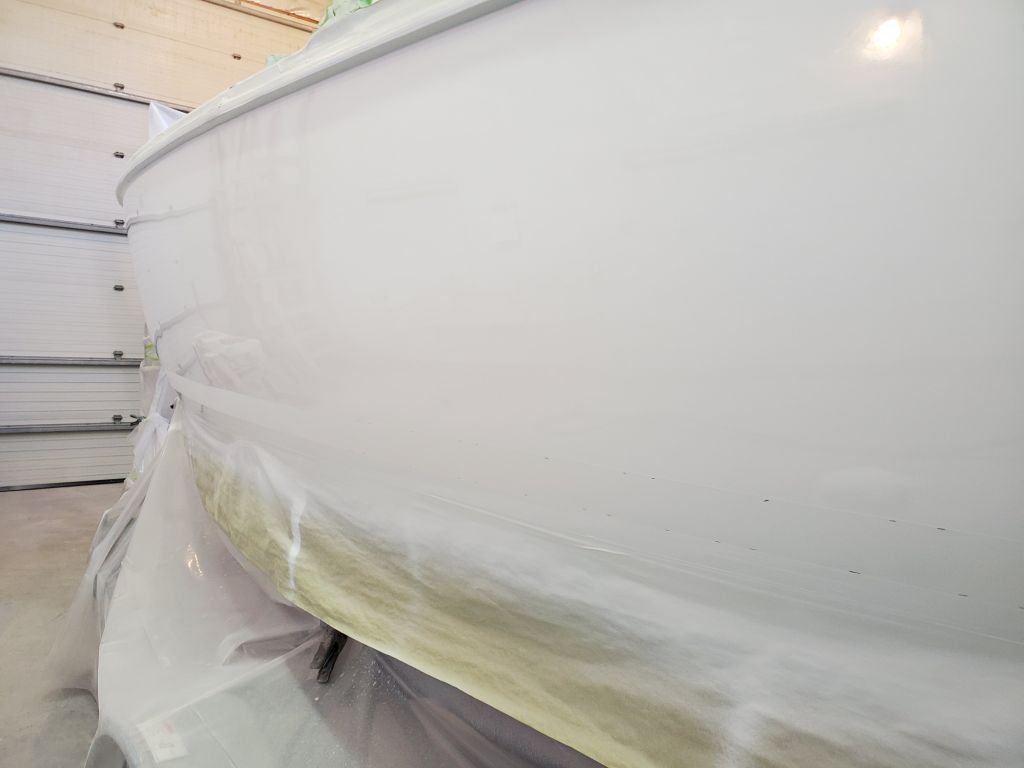
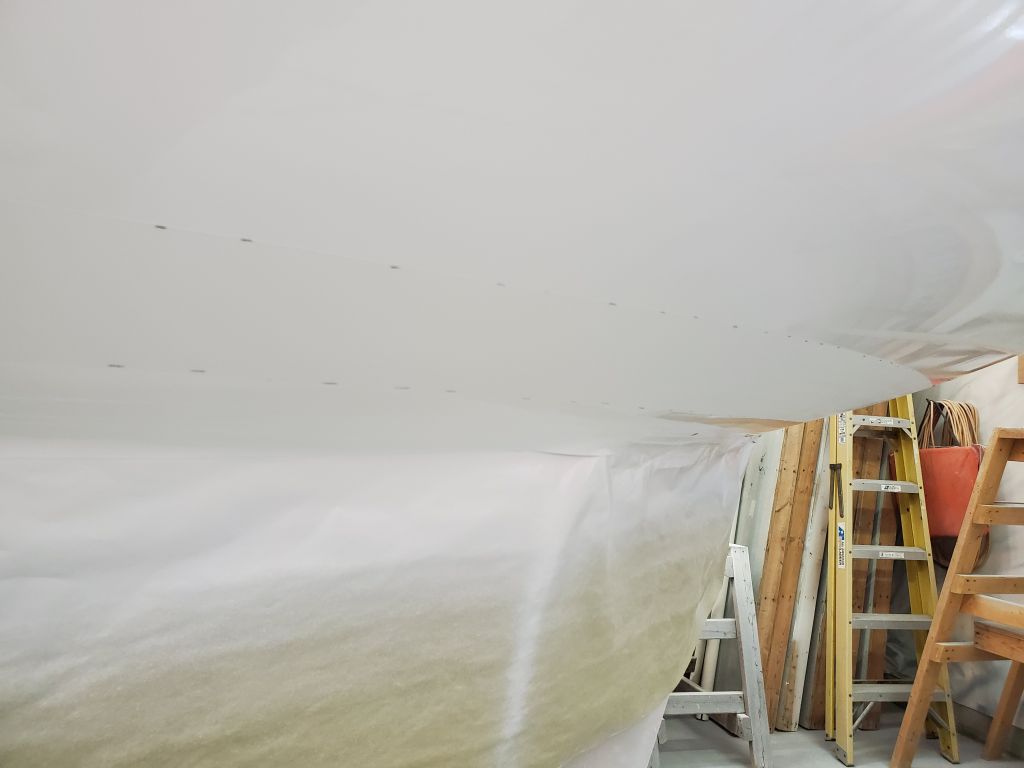
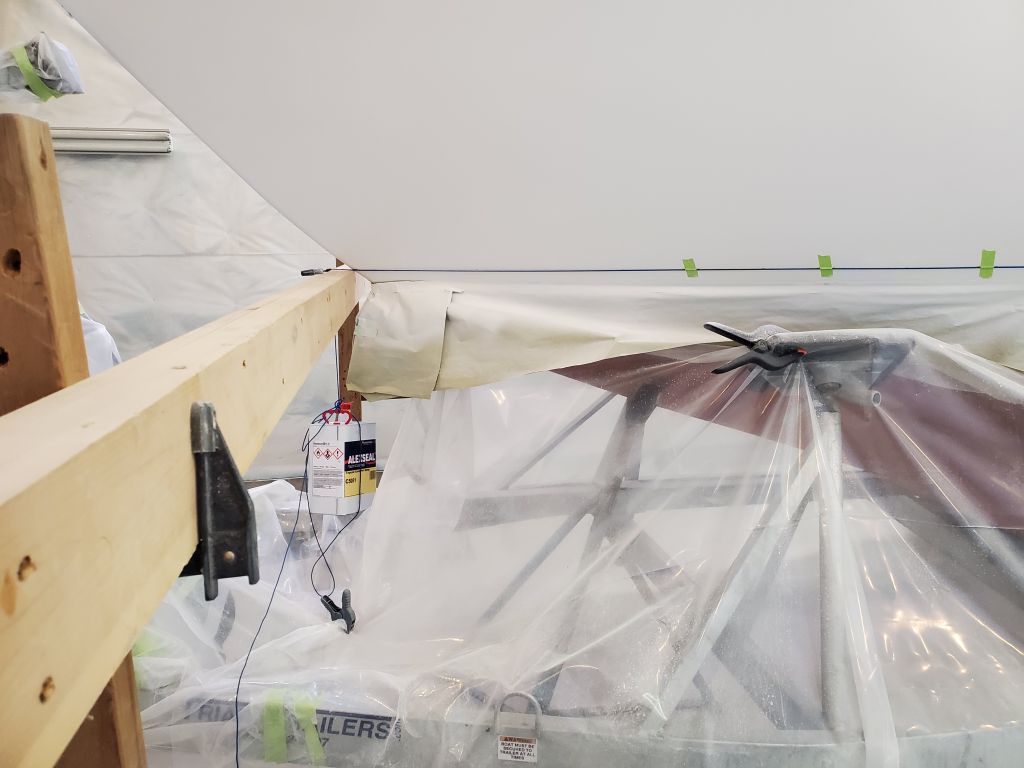
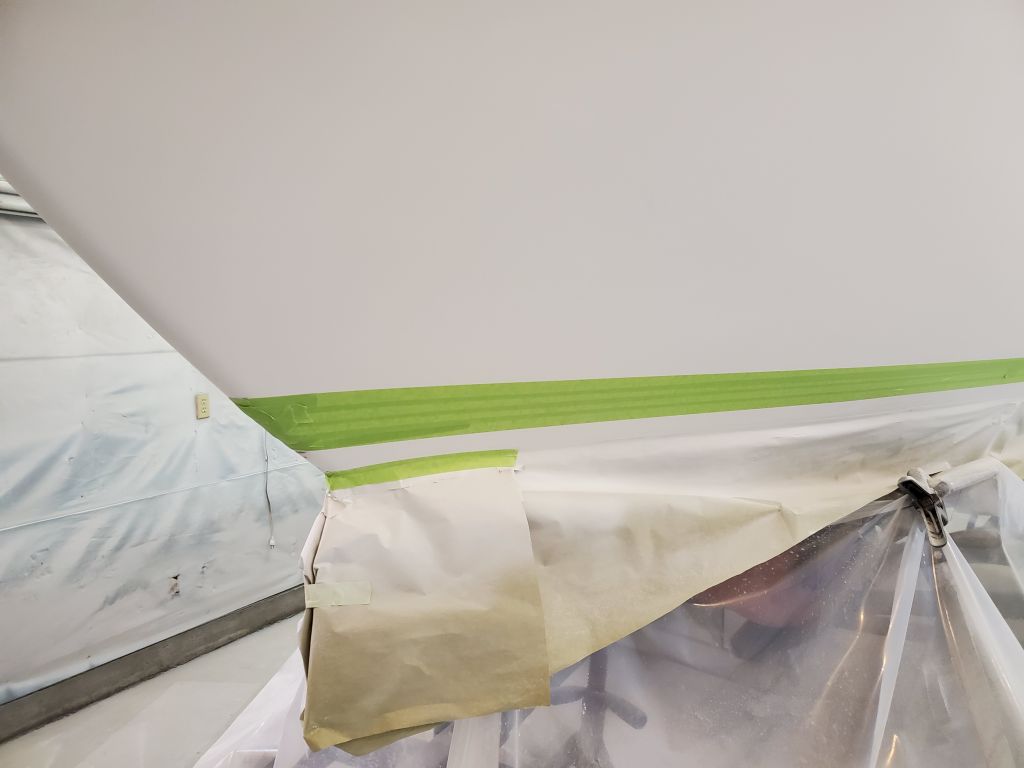
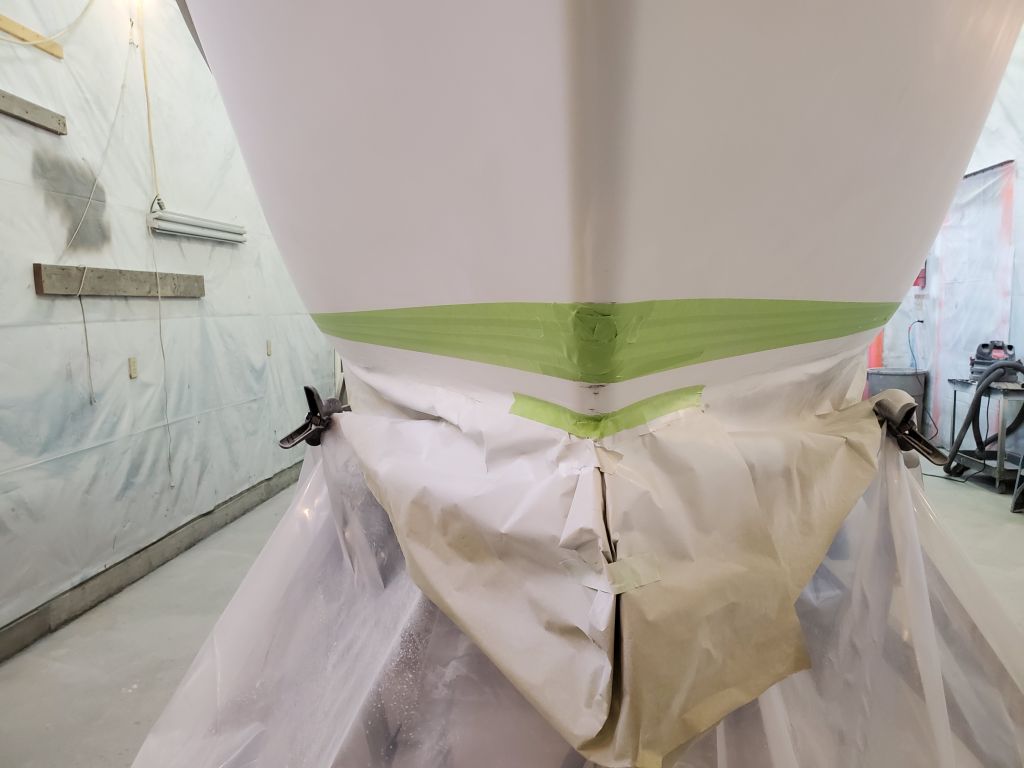
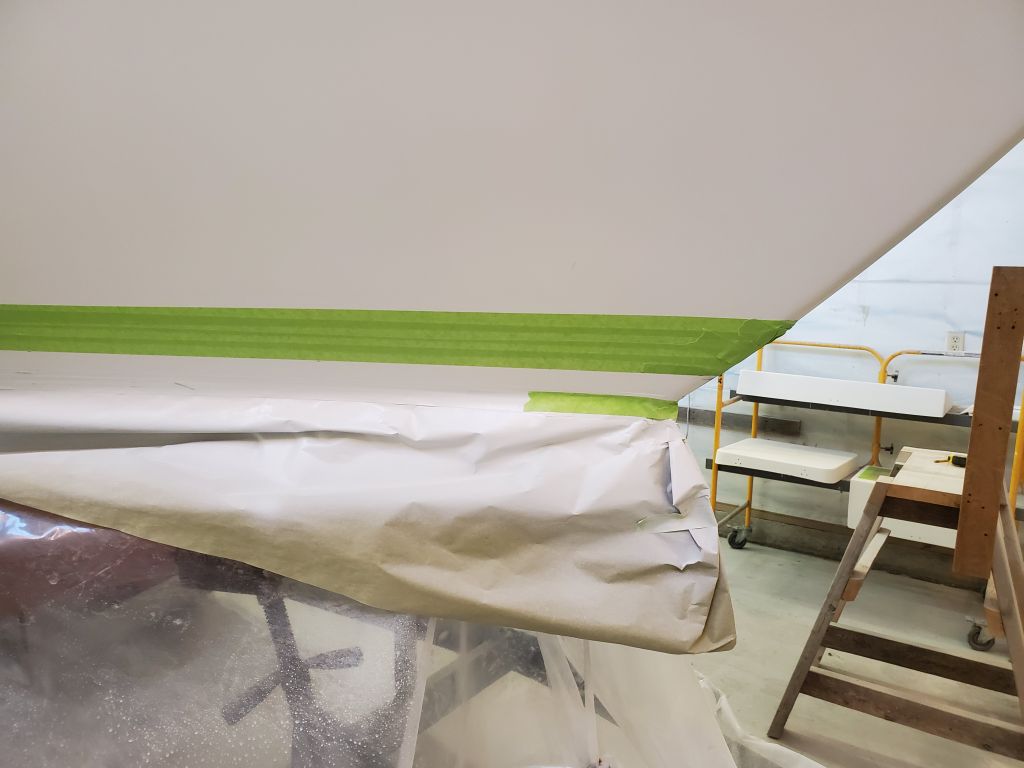
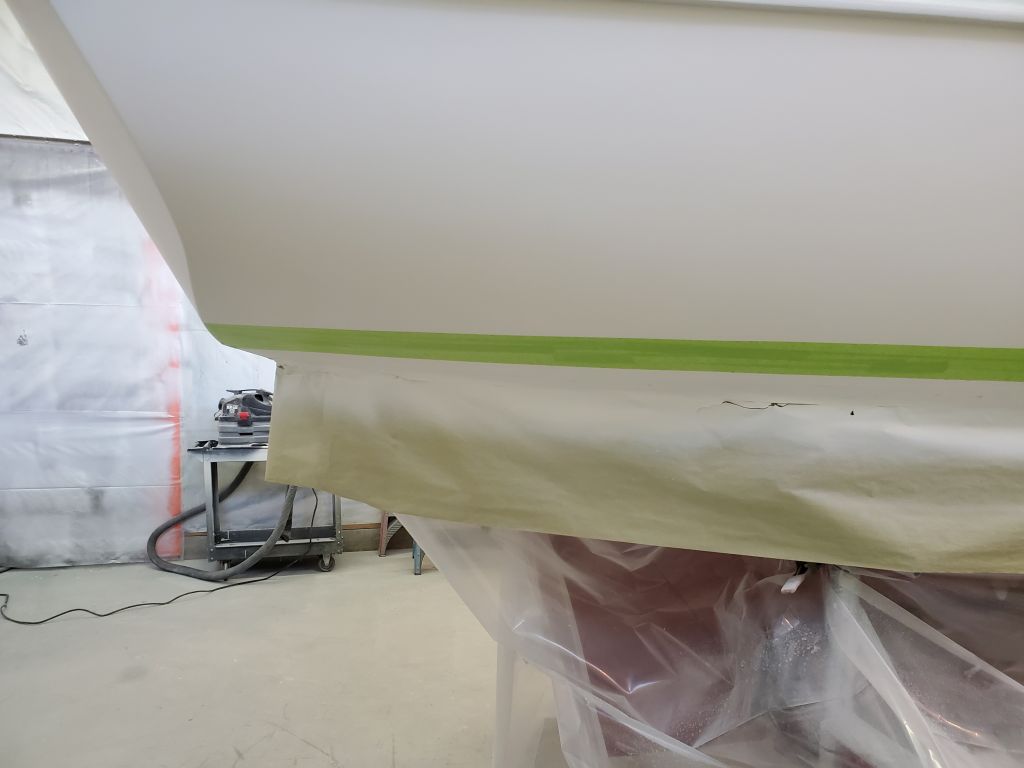
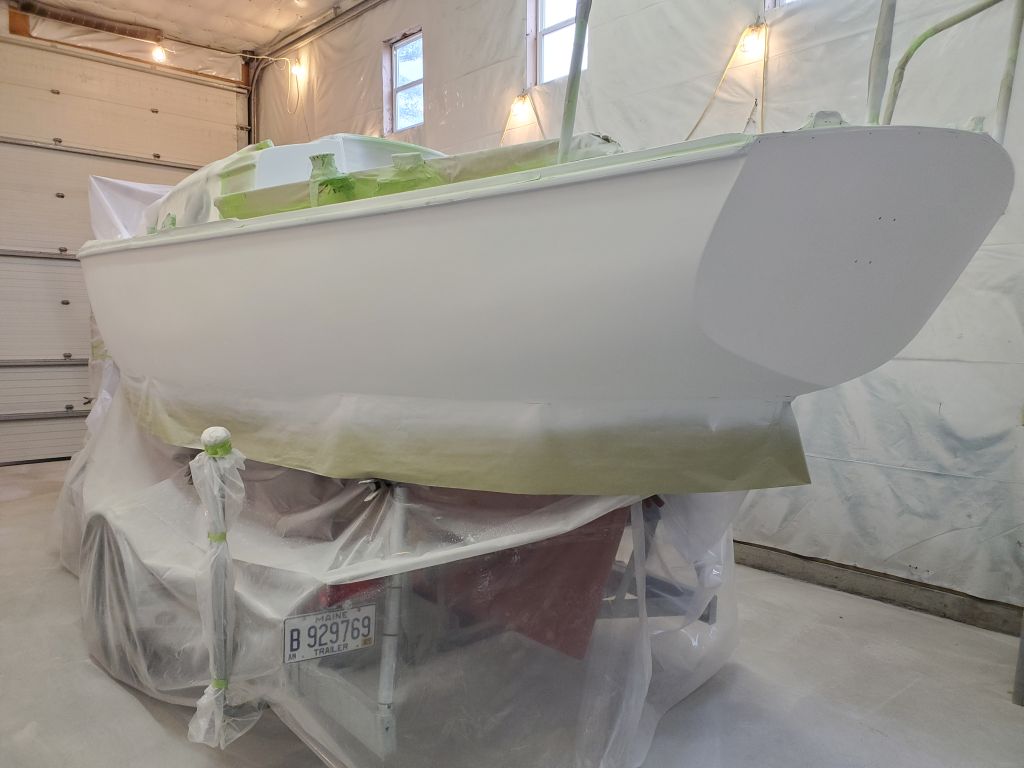
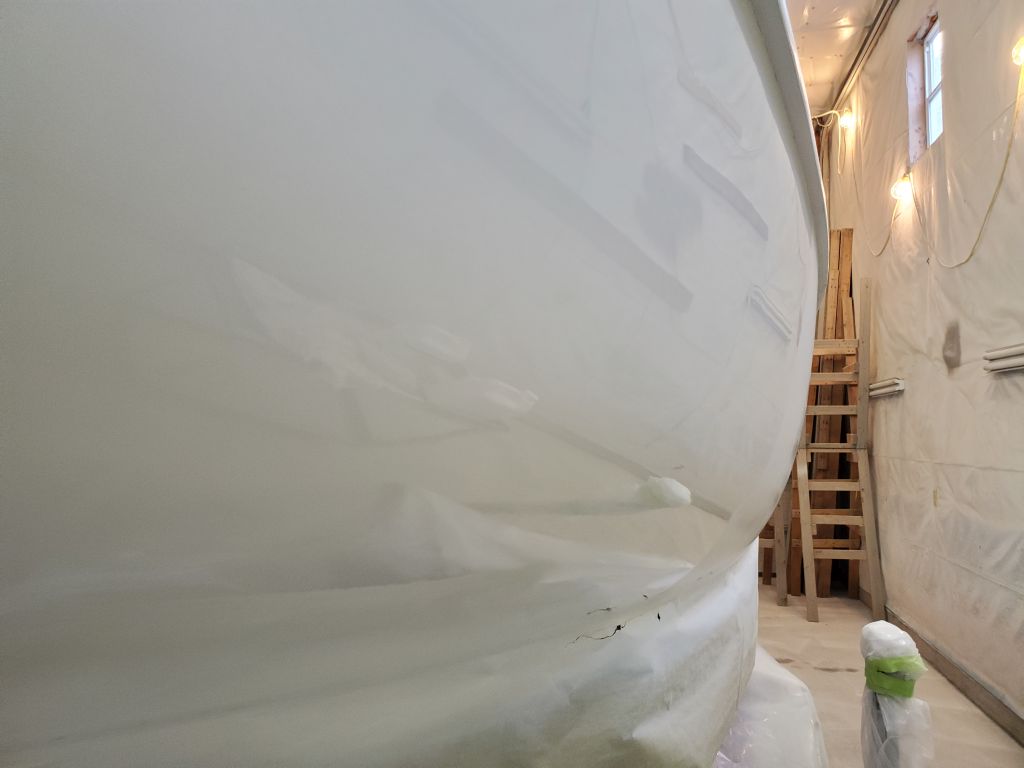
Next, I draped the entire trailer in plastic below the boat’s waterline to protect the trailer from overspray.  I secured the plastic with some clamps to the trailer and boat here and there to help hold the weight and take the pressure off the tape.  I wrapped the tall bow support and trailer tongue, and later wrapped the supports for the loading guides aft (not seen in these photos).

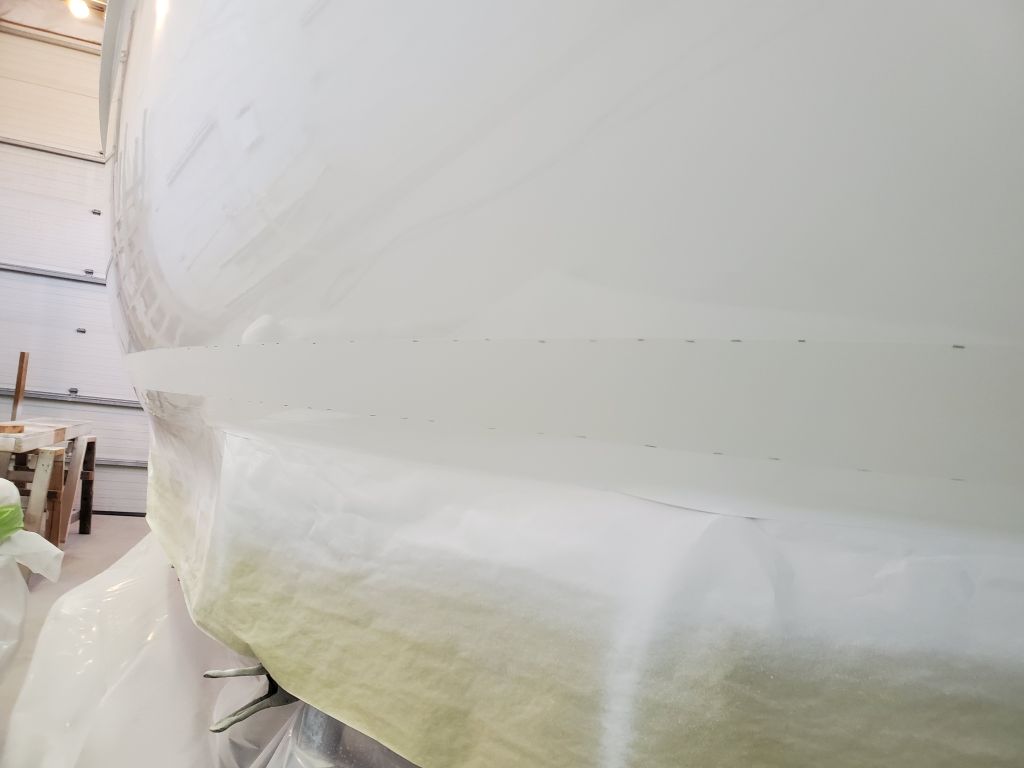
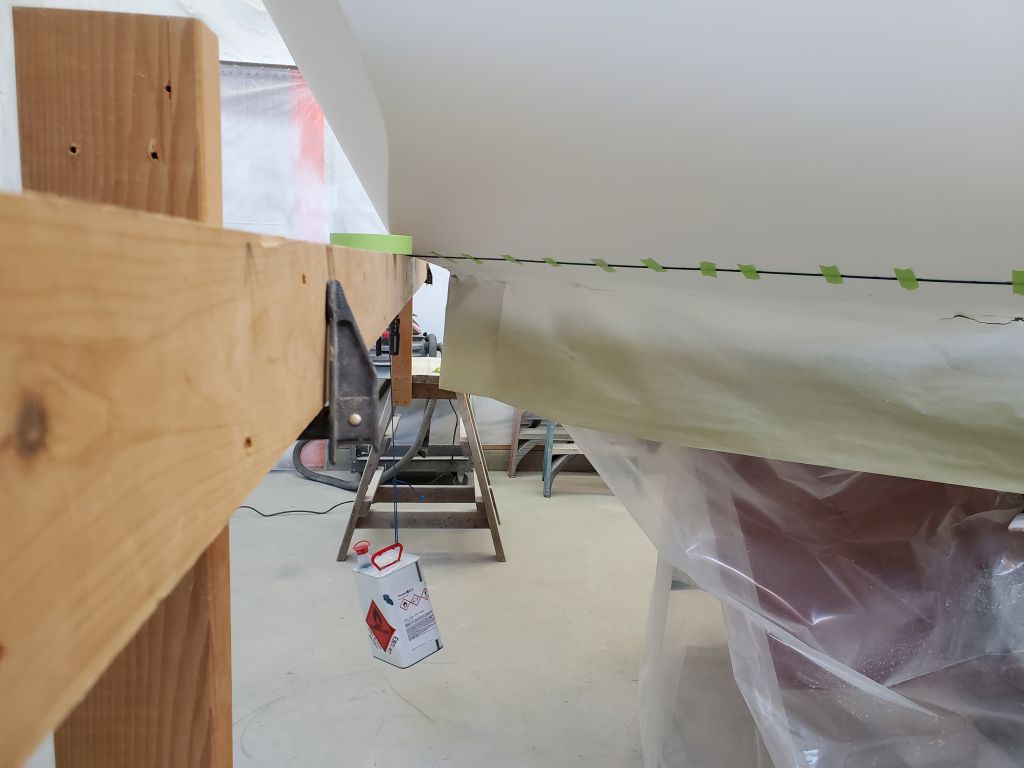
Right below the waterline, I added a strip of masking paper, since overspray on plastic tends to flake away and cause problems later.

To finish up the day, I prepared paint and spray equipment for the primer to come, otherwise readied the shop, and washed the cockpit and hull with the proprietary solvent designed for this purpose with the paint system.

Total time billed on this job today:  8 hours

0600 Weather Observation:  31°, clouds and fog.  Forecast for the day:  Clouds and fog, 33°

Arietta 14

Friday

I spent the morning masking, starting with the rubrail where it met the hull, as well as the stem casting and bow roller.  I masked up high enough all around so that when I installed the plastic sheeting over the decks, all applicable areas would be well covered.

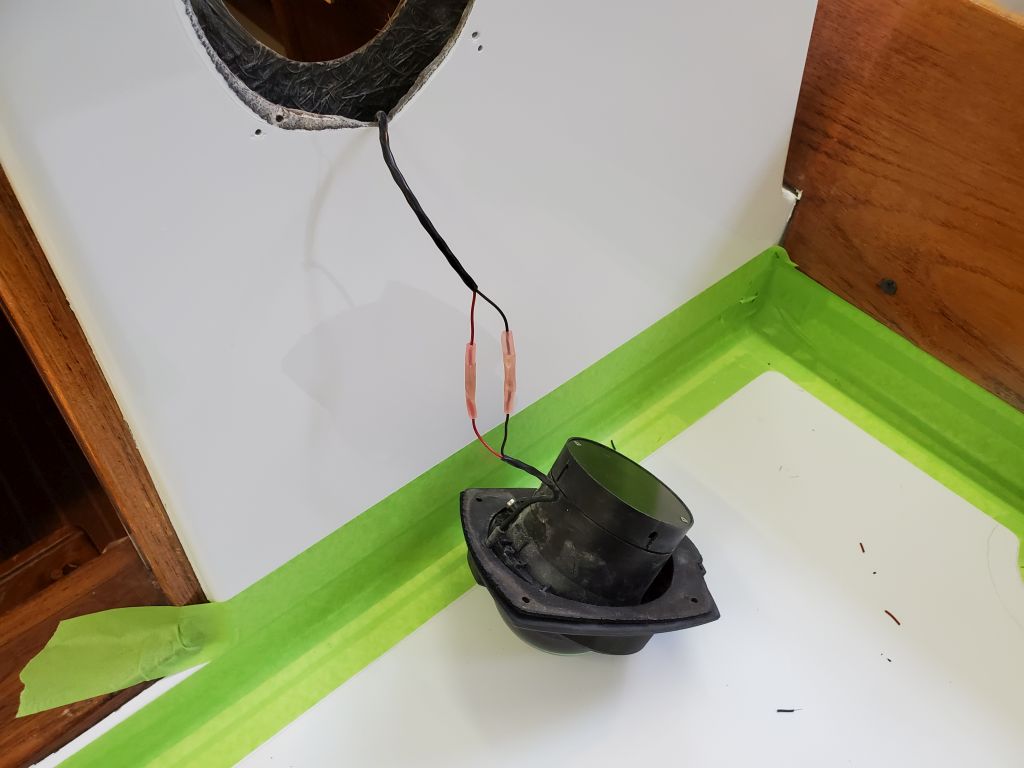
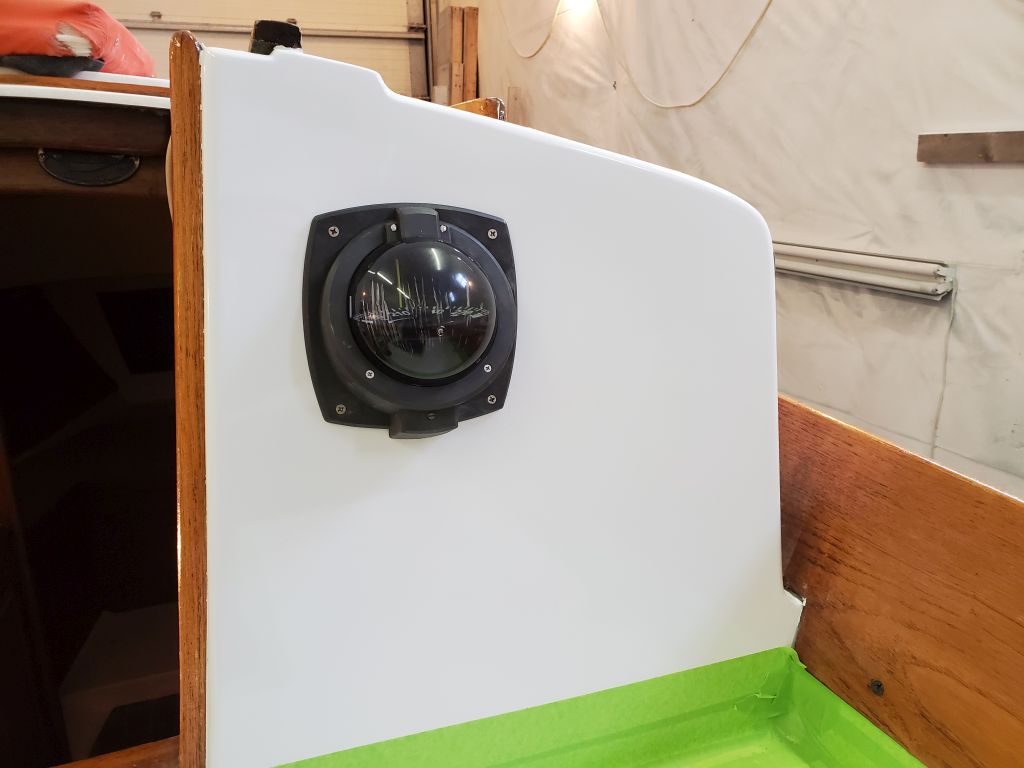
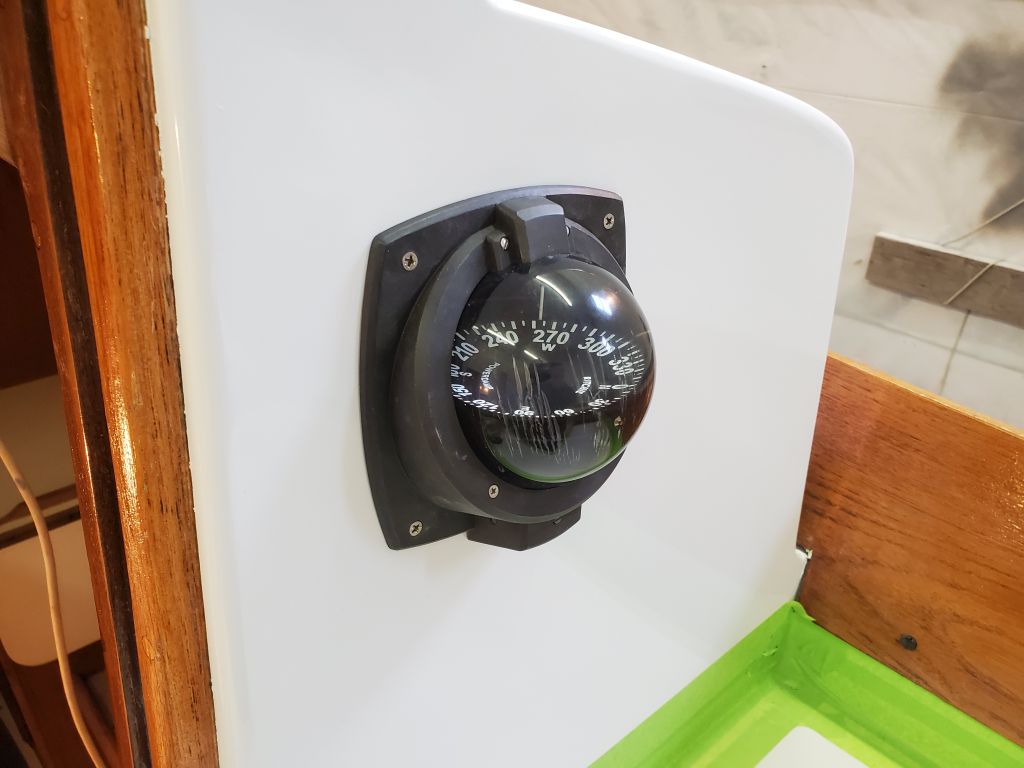
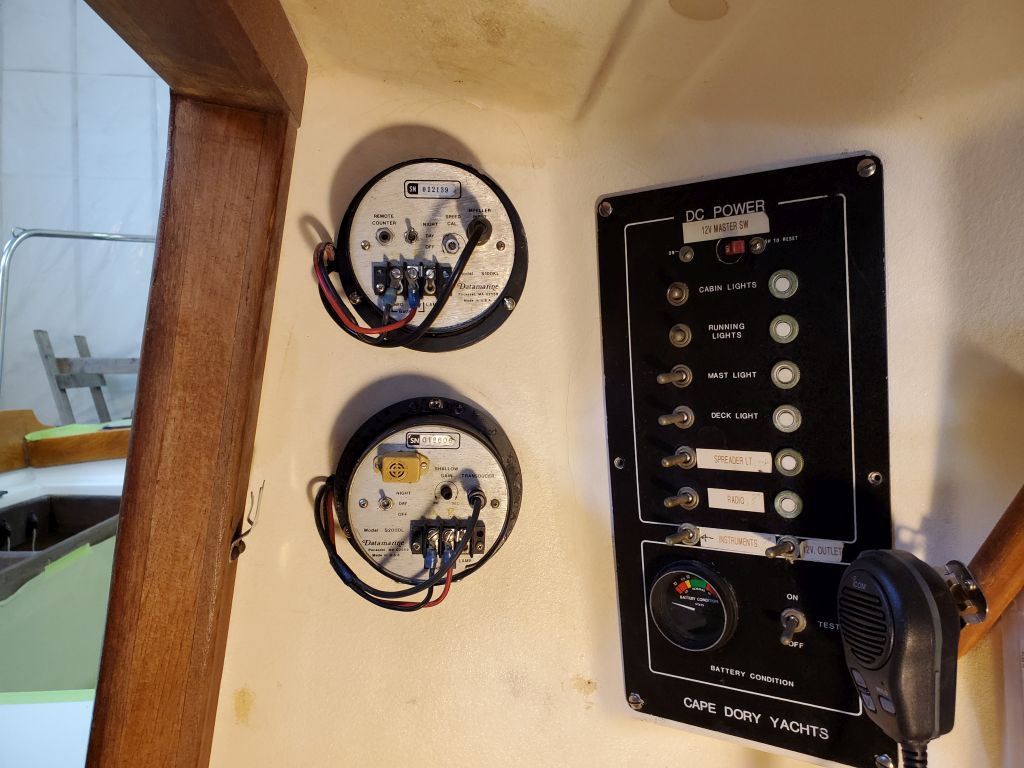
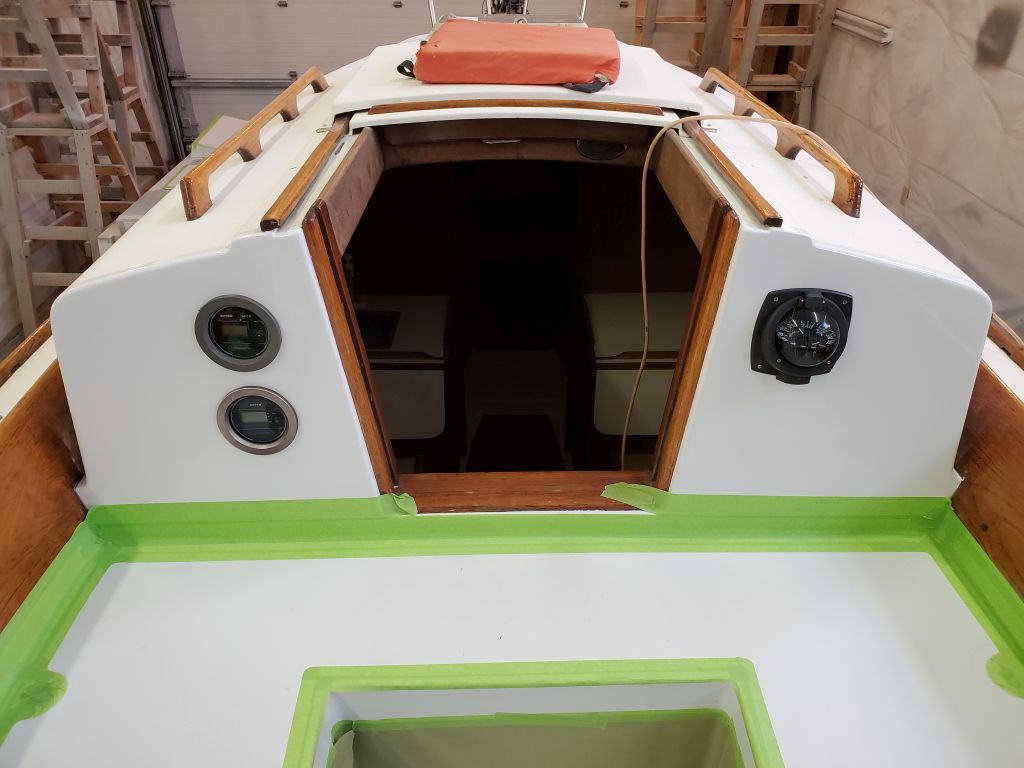
Continuing in the cockpit, I worked to mask off the cabin trunk forward of the cockpit bulkhead, as well as the instrument openings, scupper hardware, and the lower edges of the coamings plus the entire aft coaming before reaching a stopping point.  With only the cockpit and poop deck being painted at this time, there’d be a fair bit of additional masking to complete to cover the coamings, remaining hardware, and other areas not to be painted this time around, but I’d finish that up next time and then be ready for the first round of primer on the hull and cockpit.

For now, I needed to wash off the trailer (and at the same time the shop floor) so that it would have ample dry time in order to finish the masking below the waterline and cover the trailer to prevent overspray.

Total time billed on this job today:  4 hours

0600 Weather Observation:  15°, clear.  Forecast for the day:  Mostly sunny, 26°
Arietta 13

Thursday

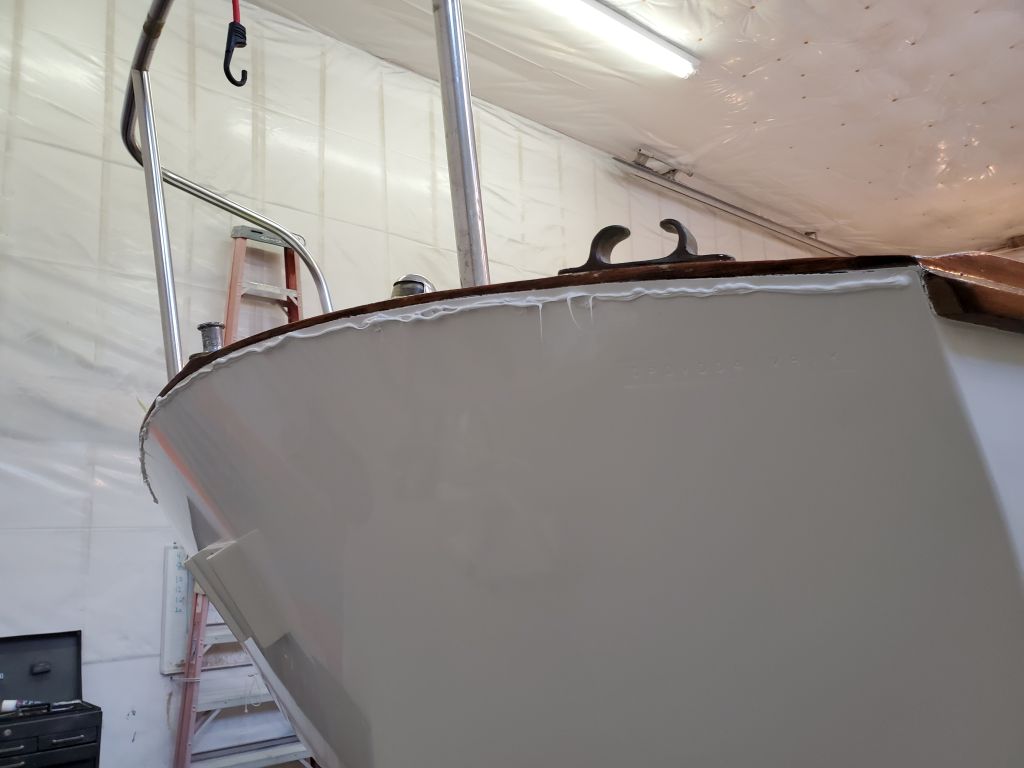
Focusing on the several patches where I’d applied a third round of filler, but going over the whole hull at the same time, I performed a final sanding of the hull, this time with a palm sander (and by hand) and 120 grit paper.  Any final fine-tuning, pinhole-filling, and other detail work would now wait till after high-build primer.

After blowing down the boat and shop, and sweeping up, I cleaned up the entire hull, deck, and (as needed) interior with vacuum and solvent wash to rid everything of dust and prepare the boat for masking and other final preparations.

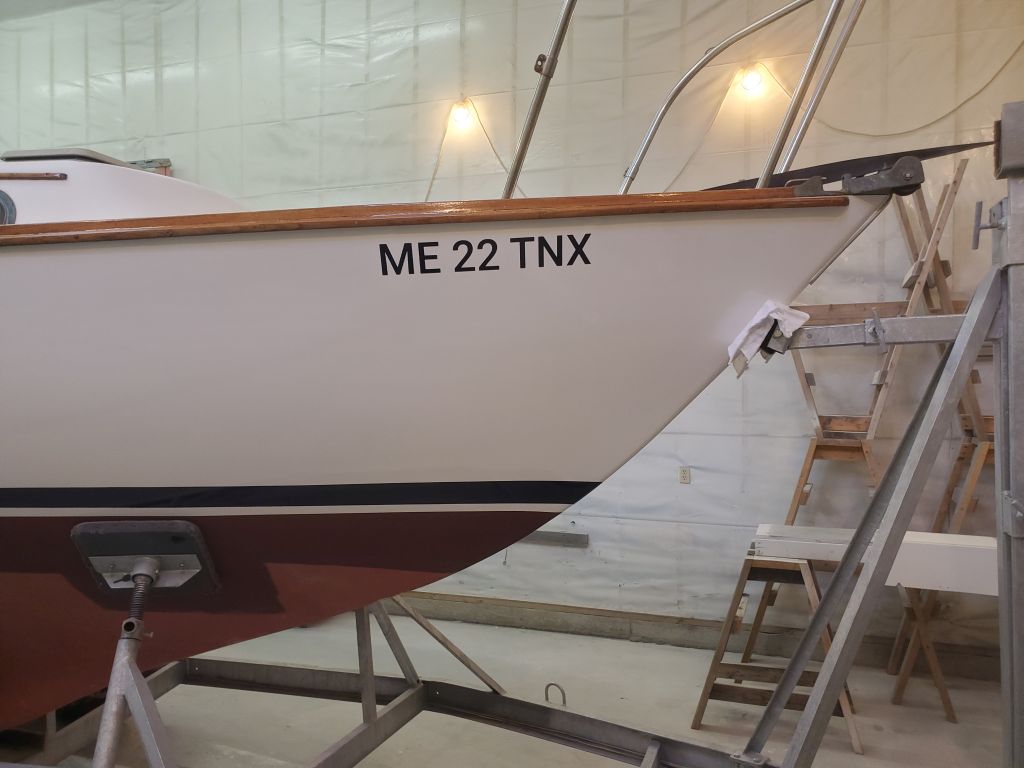
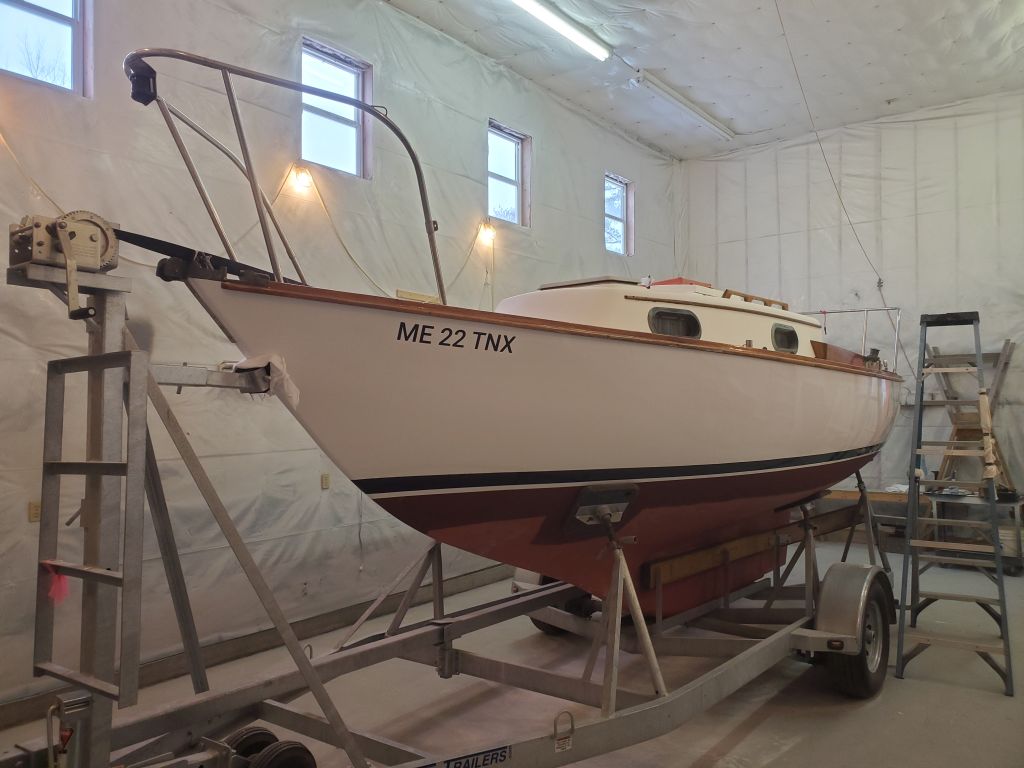
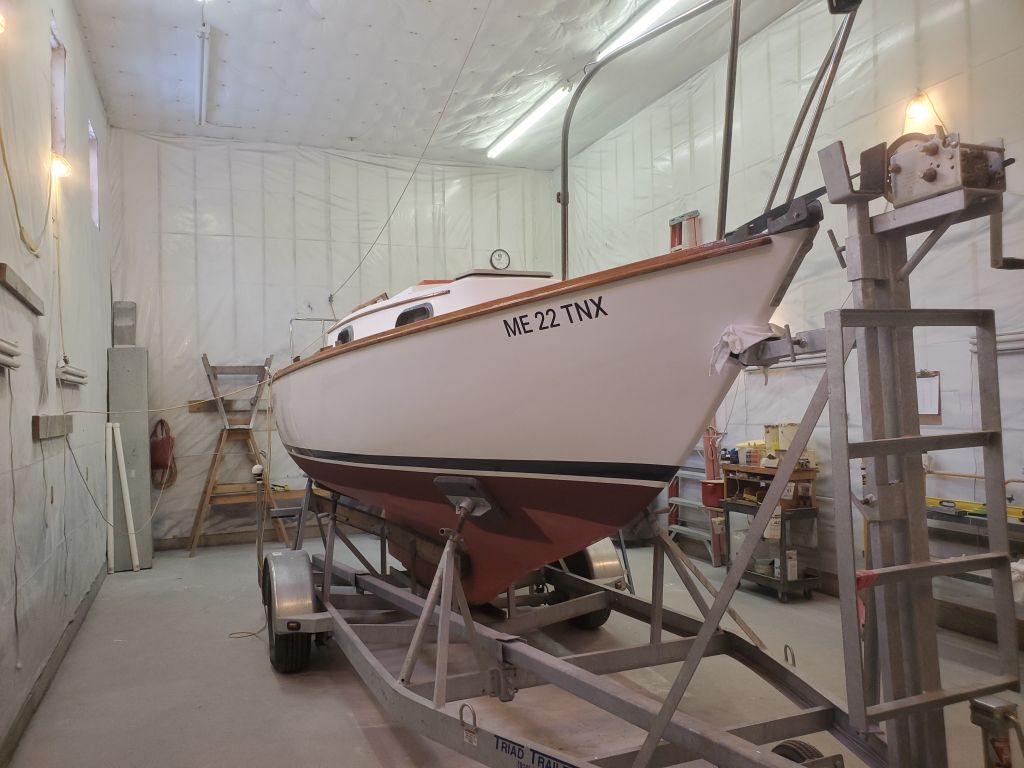
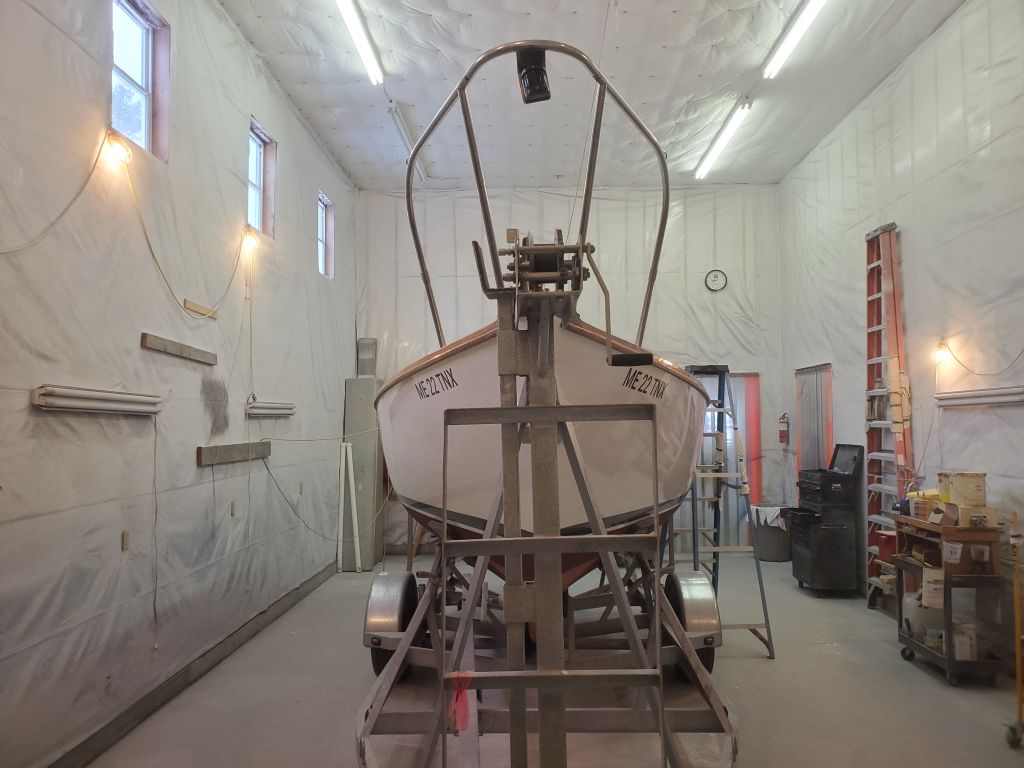
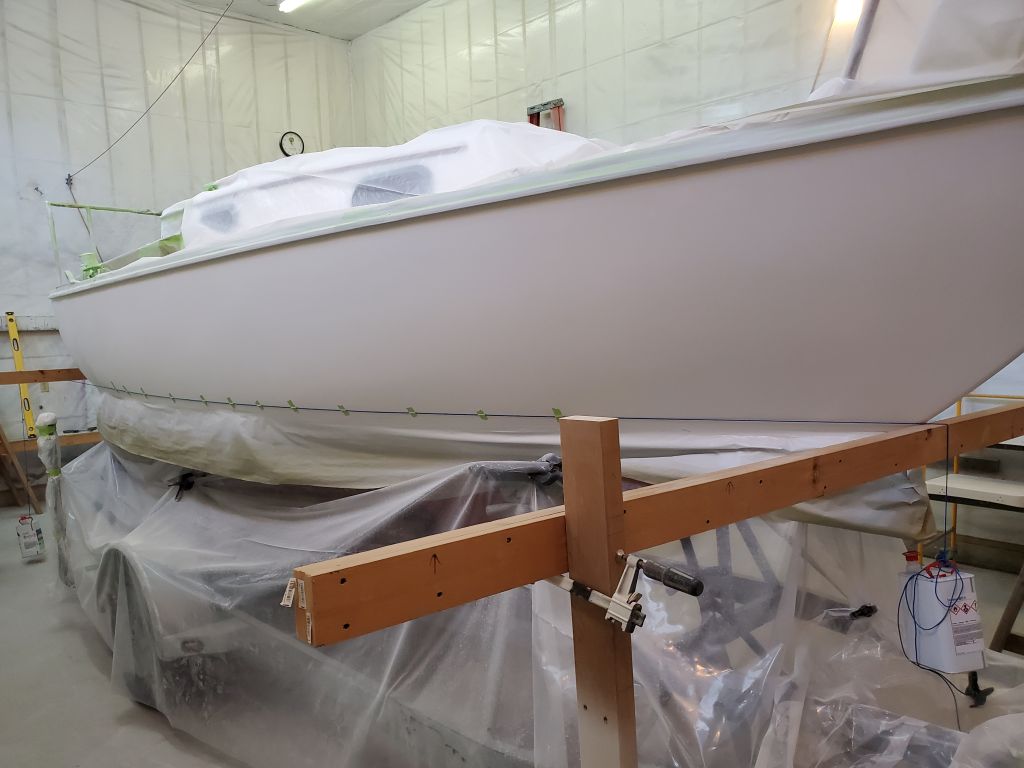
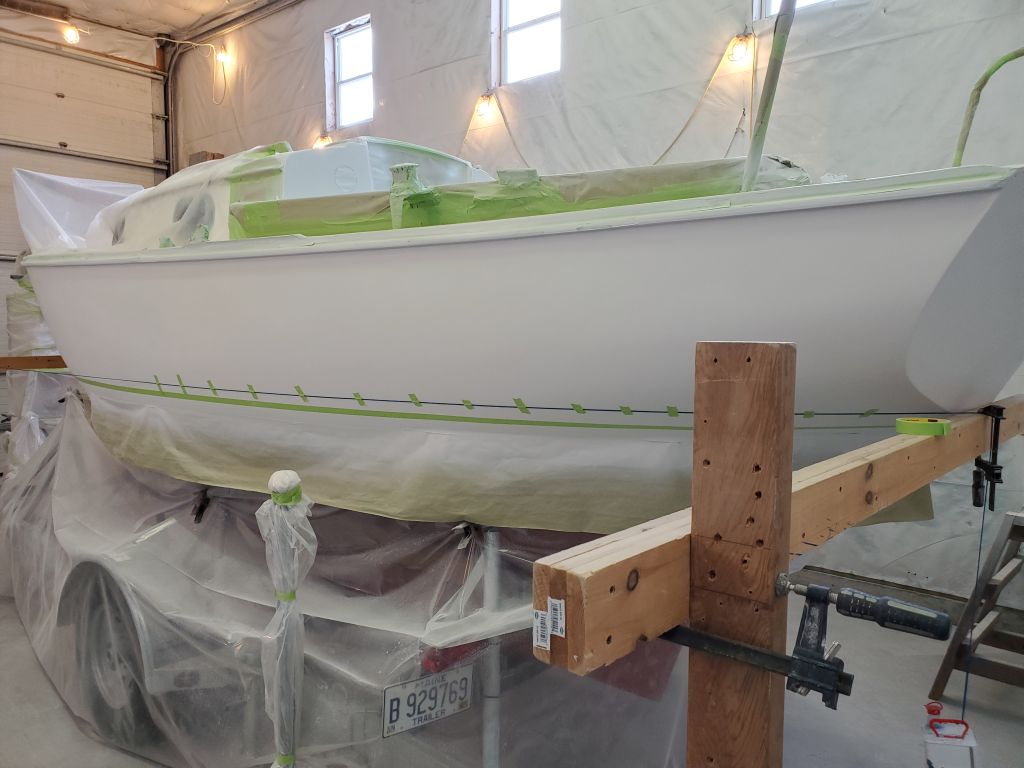
My first task once the boat was clean was to lay out and mark the new and improved waterline, by which I always mean the top edge of the bottom paint.  In this case, there was a fair bit of correcting necessary, and based on the owners’ information, photos of the boat in the water, and the existing (and fairly obvious) water marks on the hull, I’d already prepared for the new waterline’s position during the sanding phase.

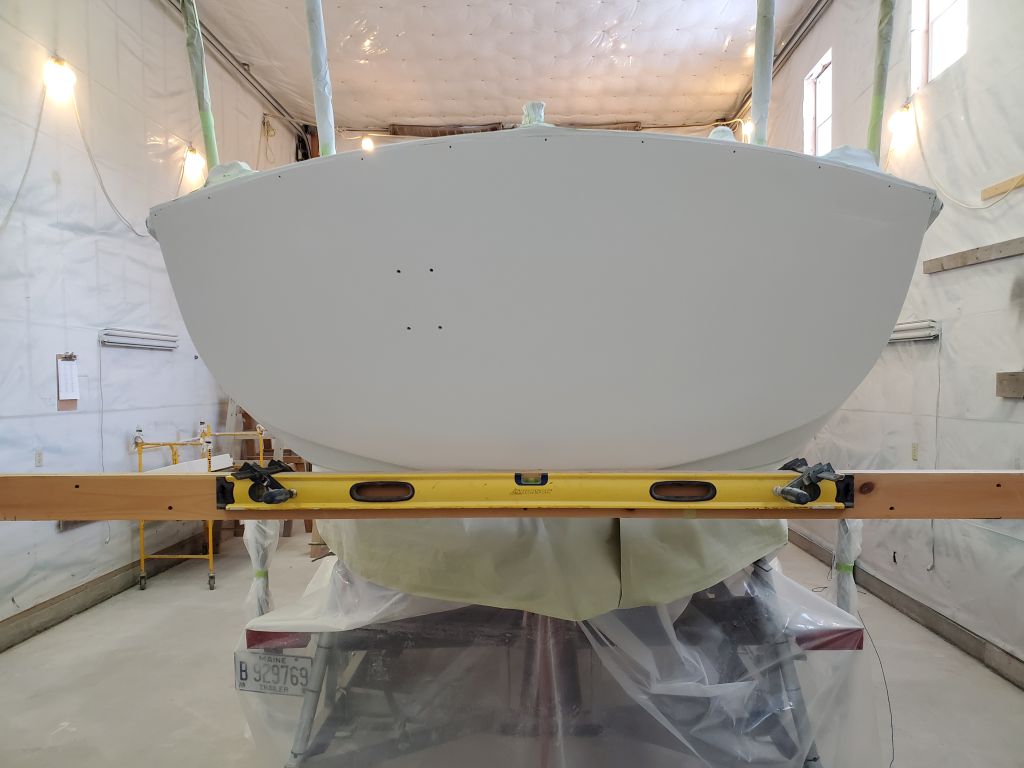
To begin, I adjusted the boat as needed on the stands to bring her level from side to side.  She’d been level on the trailer when I’d started, but the work and various adjustments of the stands for sanding access had thrown things slightly out of whack.

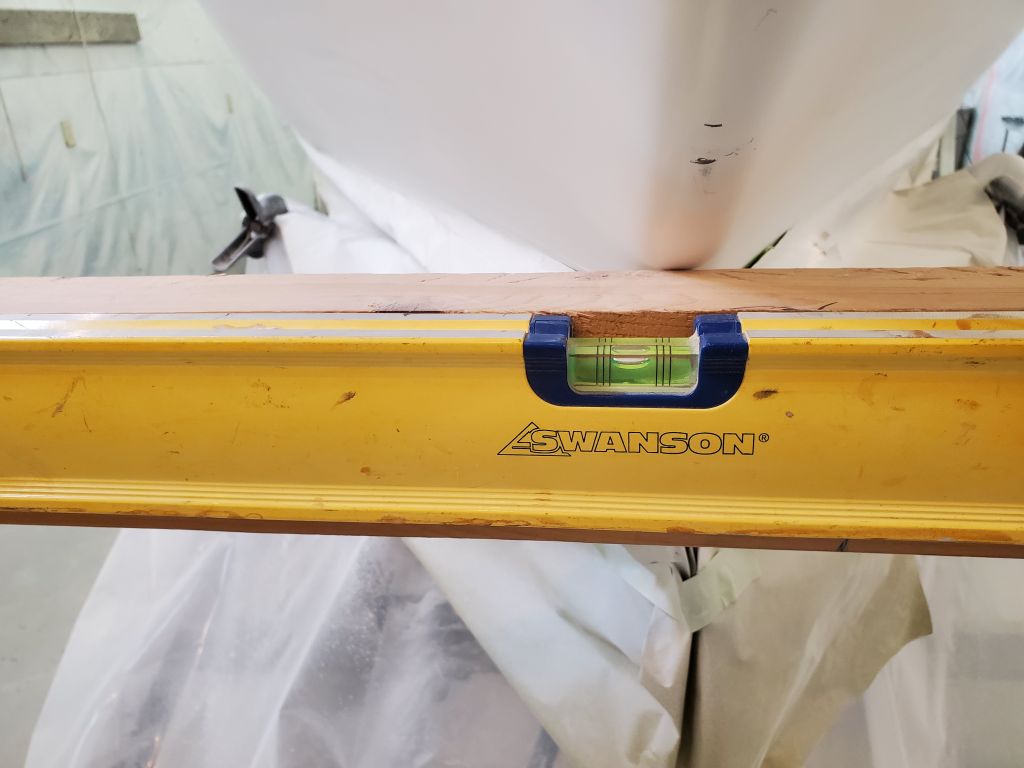
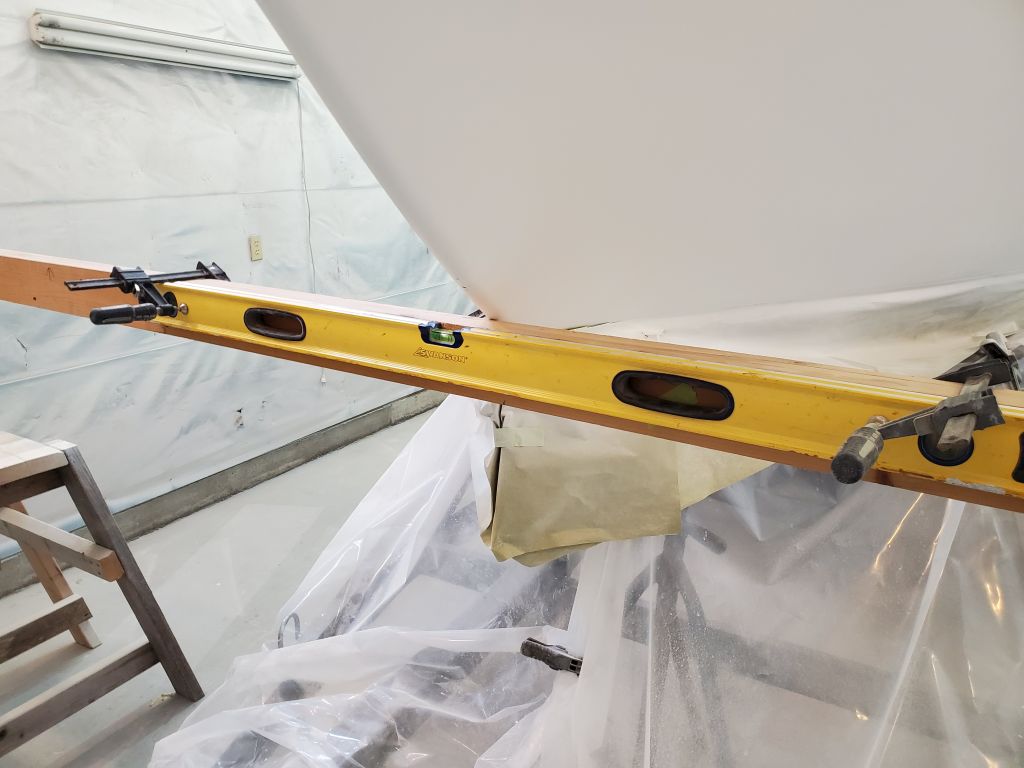
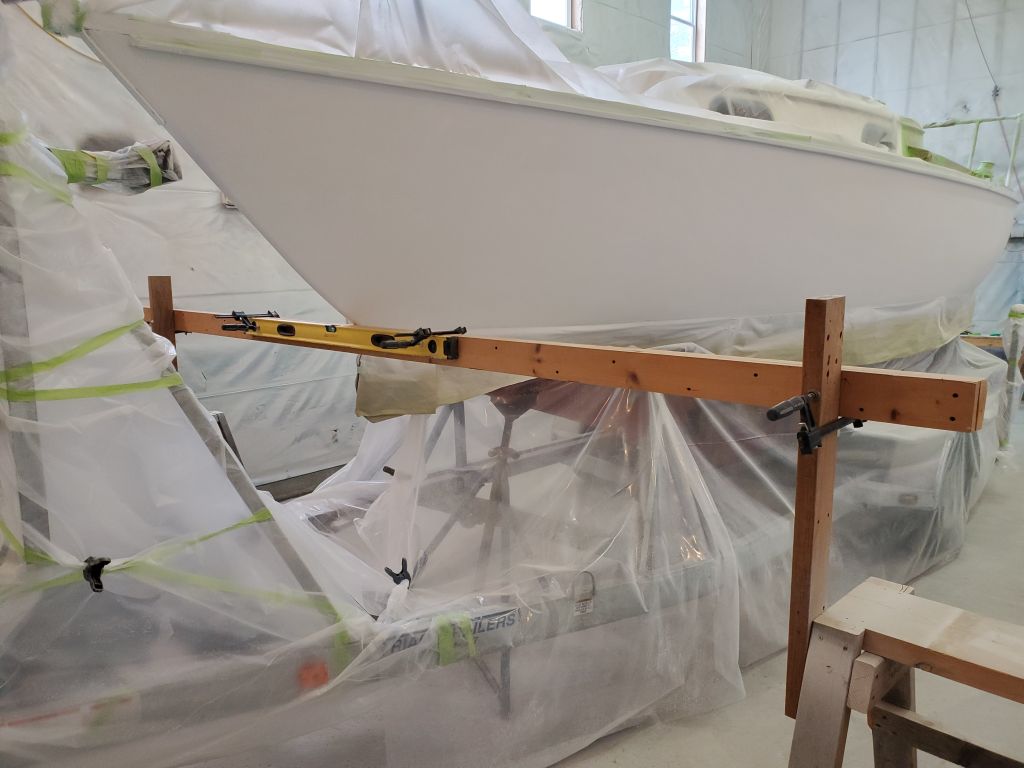
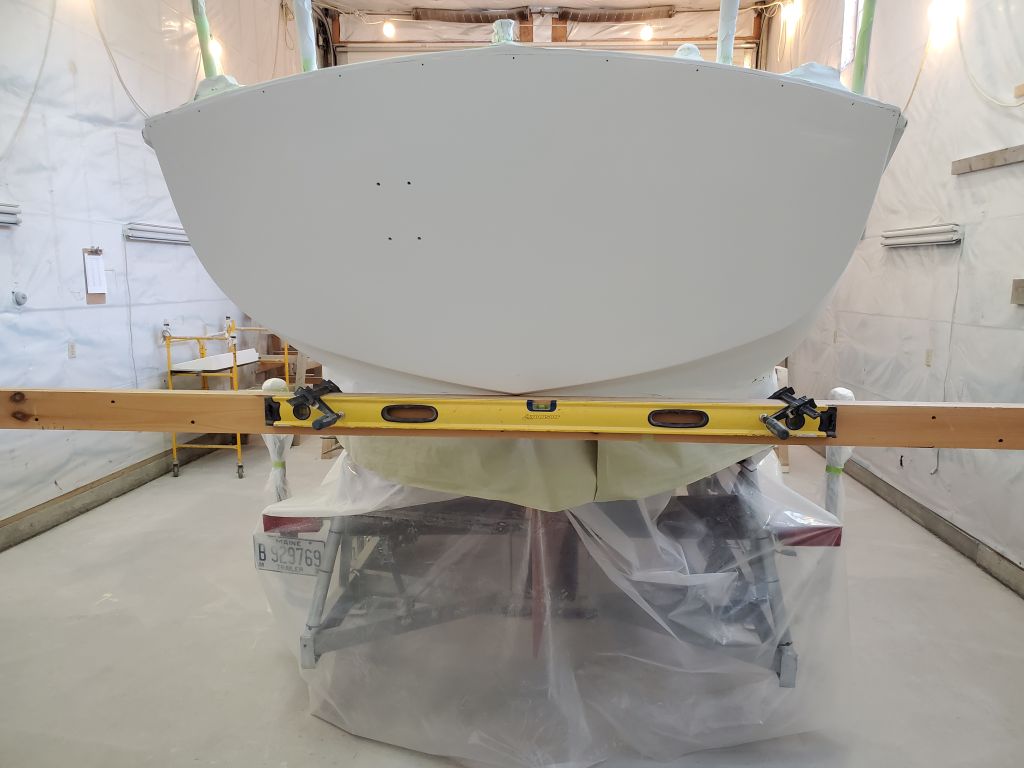
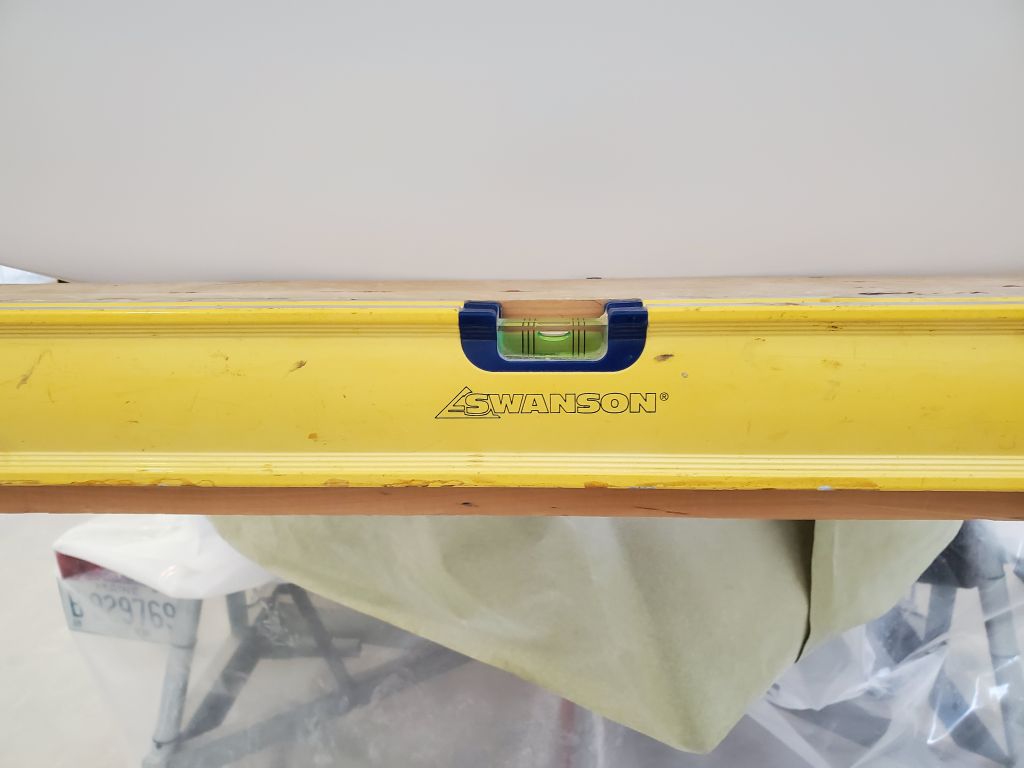
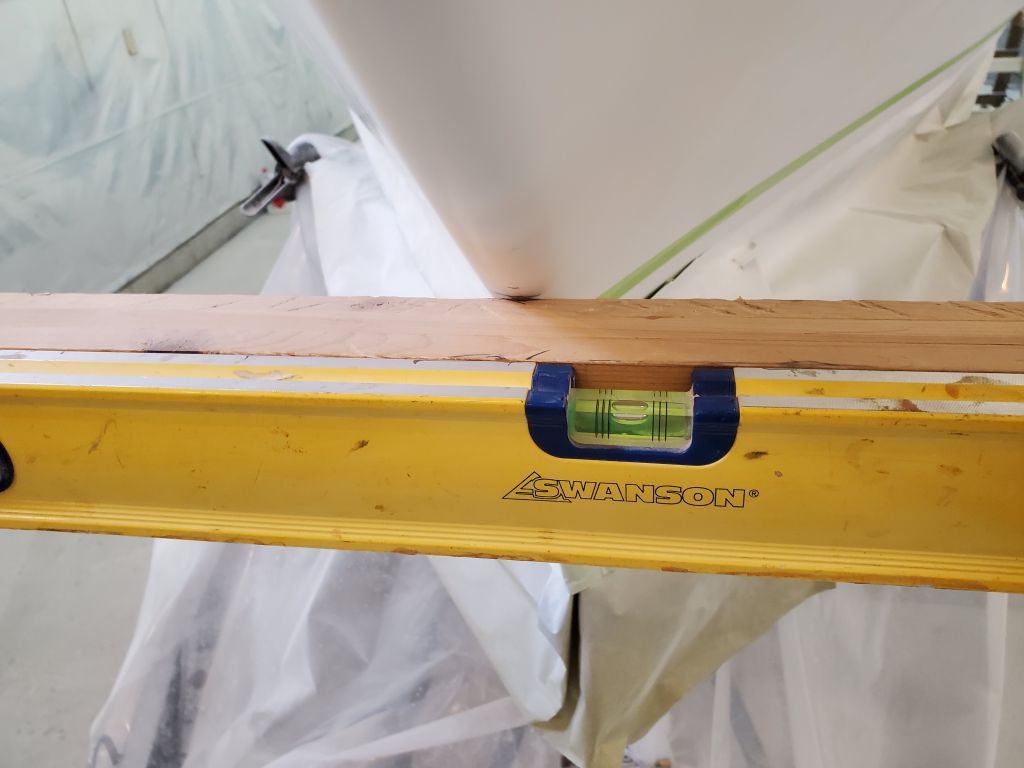
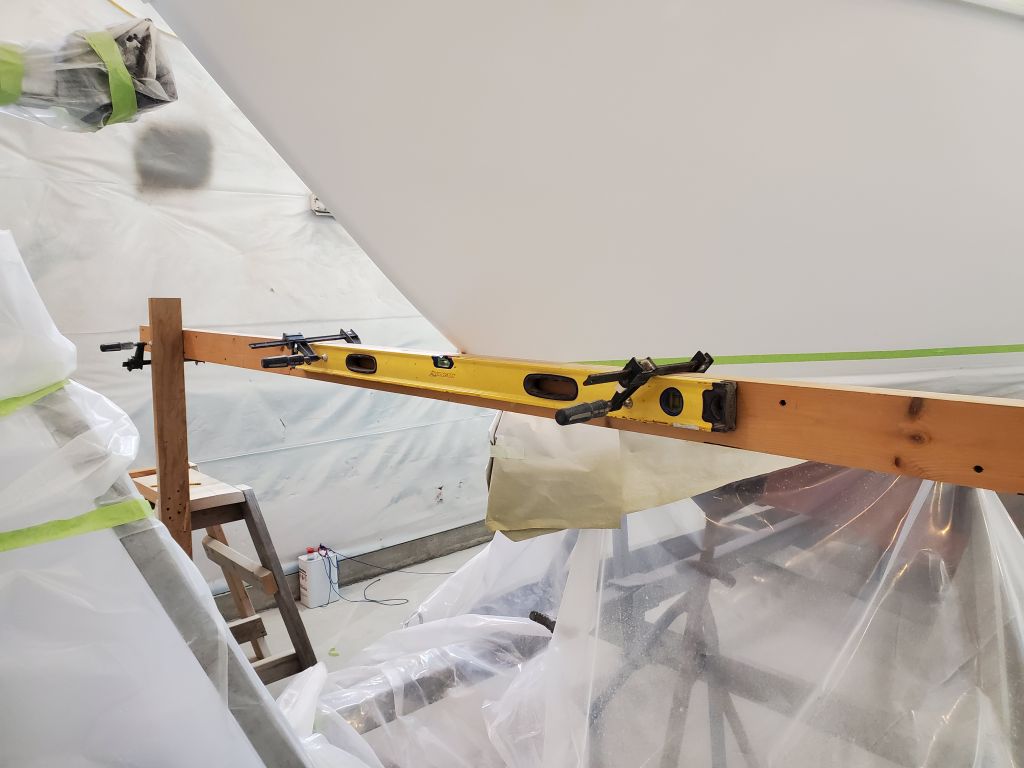
Now, armed with some reference measurements I’d taken before I removed the old paint, and starting at the bow “just because”, I recreated the position of the old, actual floating waterline (37″ down the stem from the chainplate).  This represented where the boat had actually floated, but to strike the new waterline, I had to transfer this measurement up enough to allow a border of bottom paint above the water.  With a straightedge and level, I made a new mark 1-1/2″ vertically above the original:  This would be the level of the newly-struck waterline, or, in this case, the lower edge of the new topsides paint and striping.

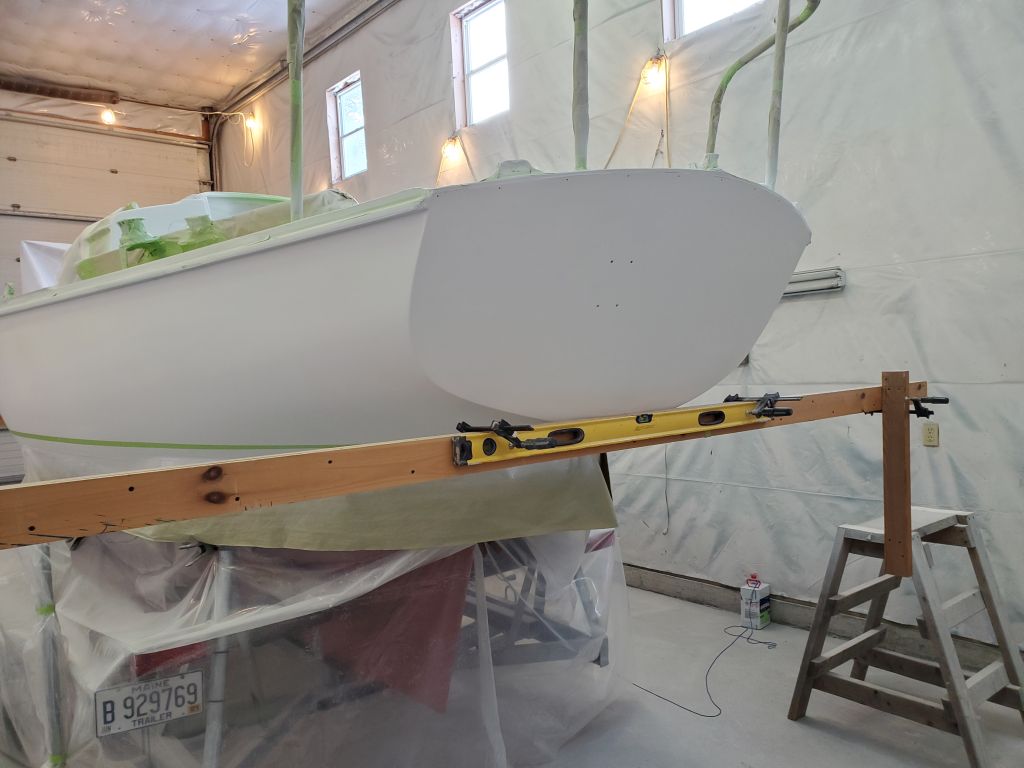
Note that all pictures of me holding levels are for illustrative purposes only, to show the process; the level may not be perfectly positioned as I juggle camera and hand positioning.

As it happened, the mark for the new waterline at the bow coincided with the faint factory scribe mark for the DWL.  This made sense because at the bow, the correct paint level actually needed to be lower than the paint-as-delivered, which is why I’d sanded off several inches of the old bottom paint in the forward quarters of the boat.

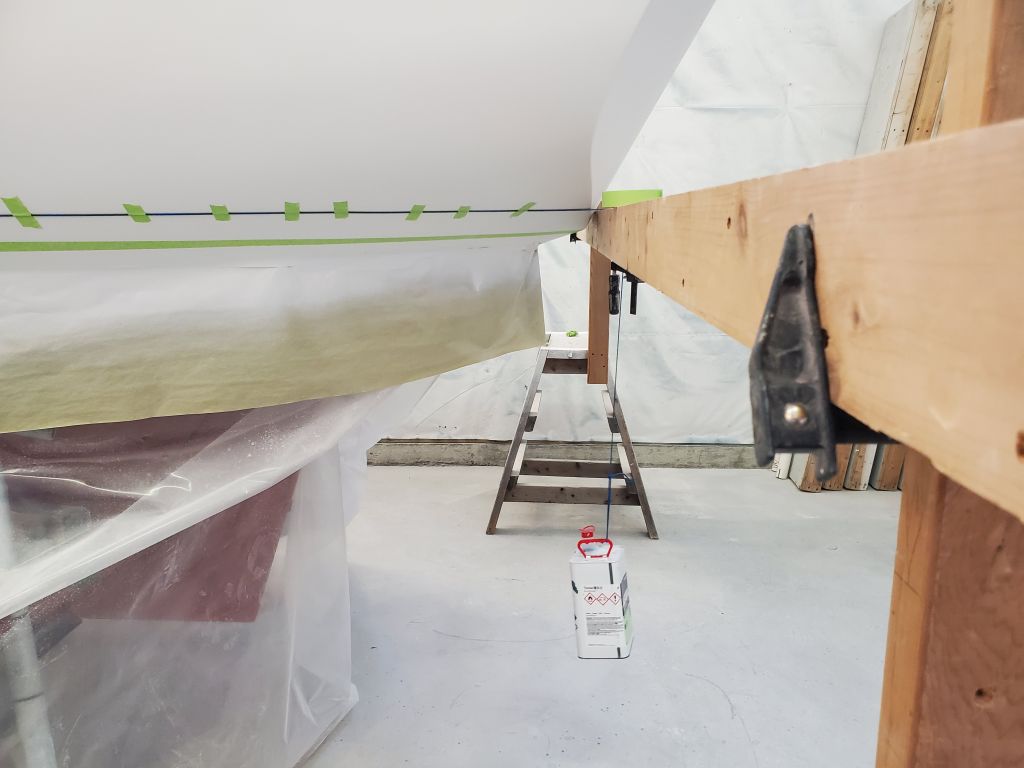
I set up a wide, straight beam at the new, leveling it side to side.

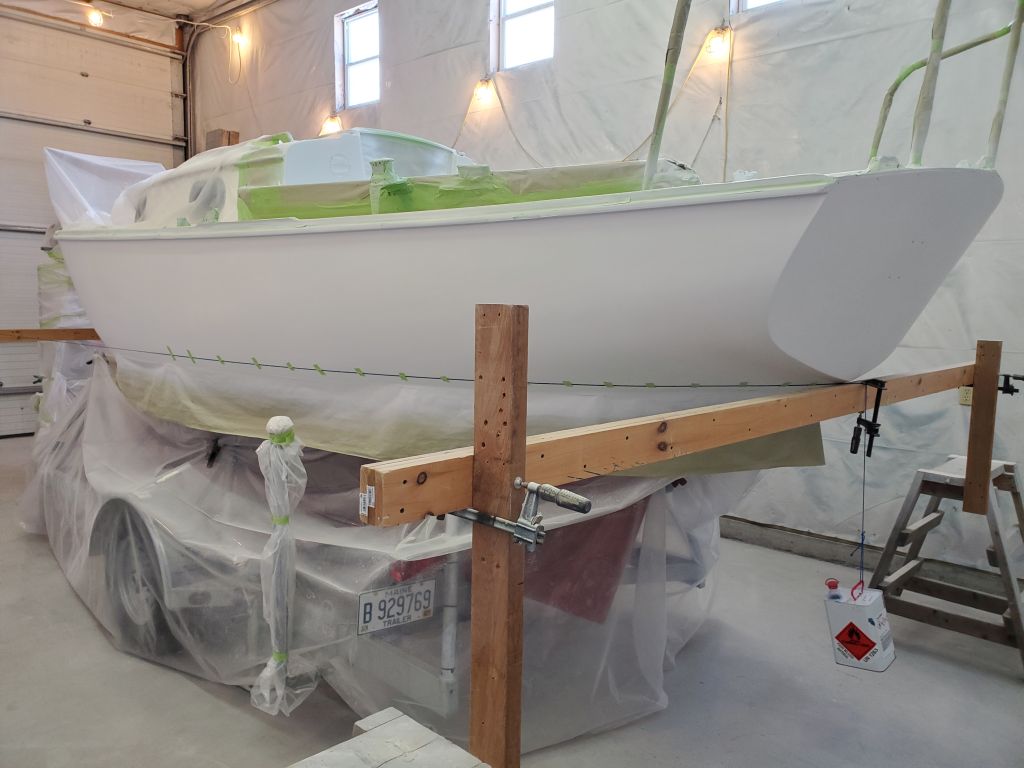
Next, I repeated the process at the stern, starting with an 8″ measurement on centerline from the transom corner, which signified the actual floating waterline according to anecdotal, visual, and photographic evidence as detailed earlier in the project.  Again, I transferred the mark up 1-1/2″ vertically to create the new waterline with appropriate reveal, and set up a second horizontal beam right at this mark.

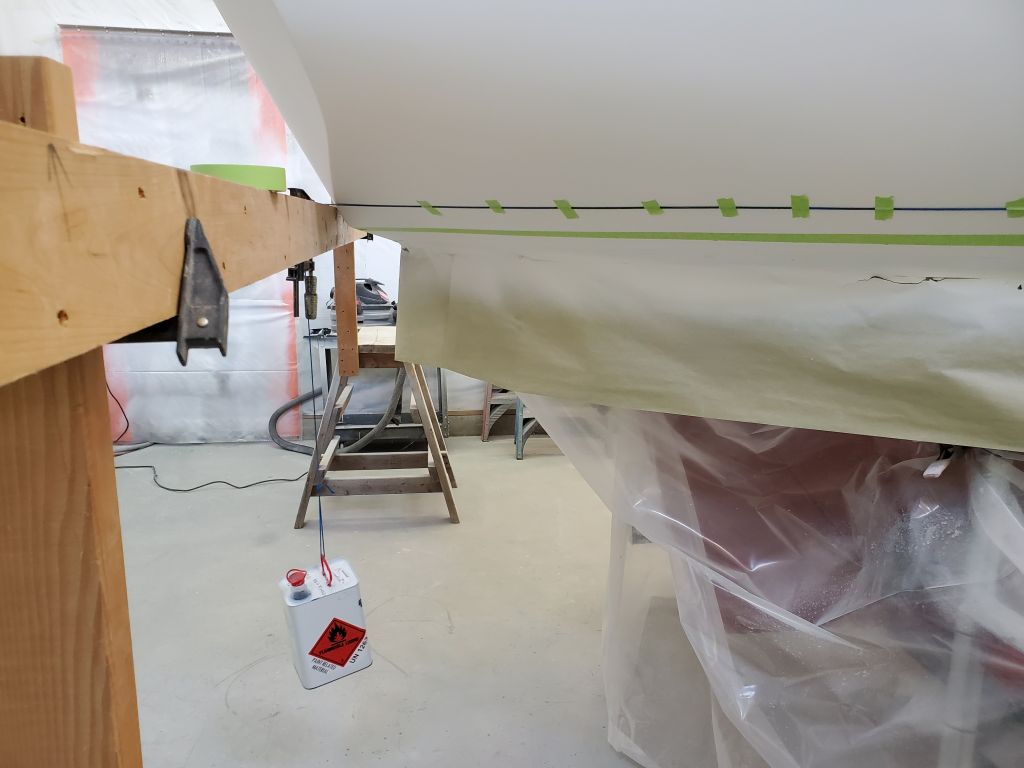
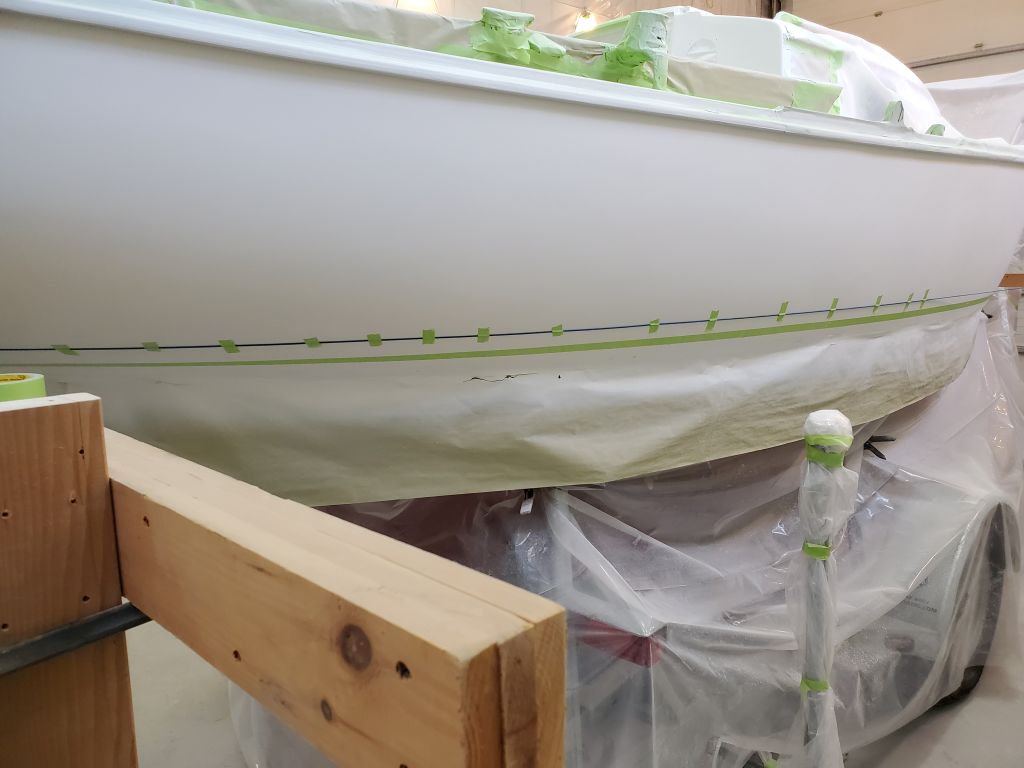
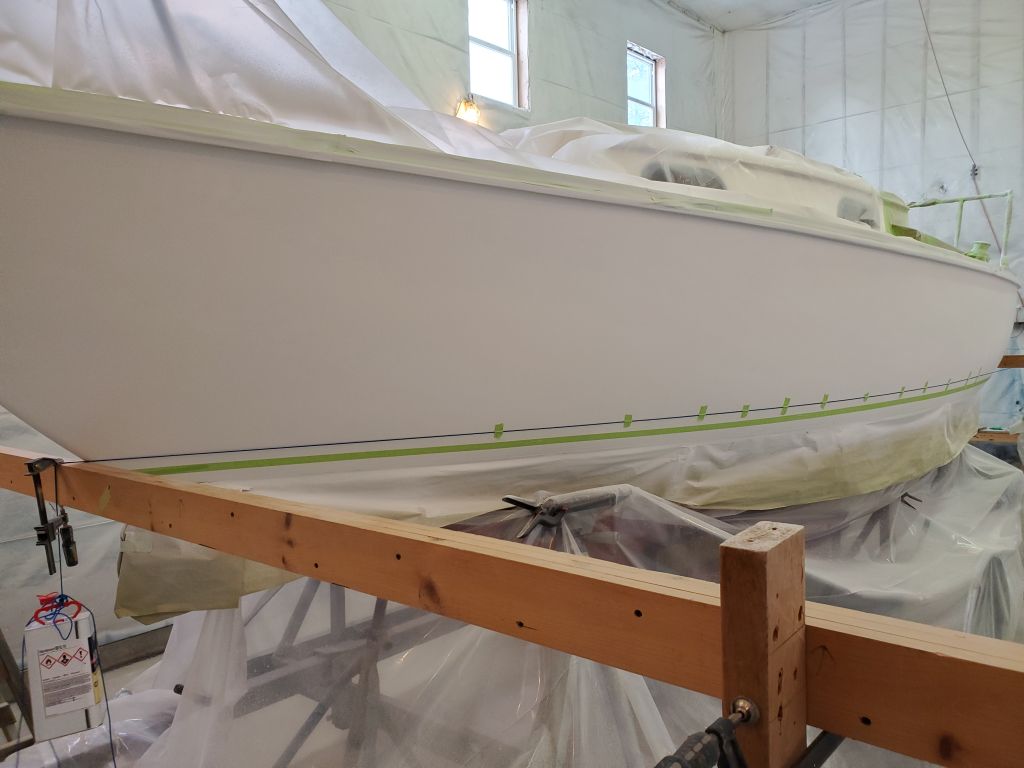
Now I went through my usual ritual to mark the line along the entire hull, using a tensioned string between the two beams.  With the string just touching the hull amidships on one side, I brought it in incrementally towards each end (first the stern, then the bow) till the string touched the hull, then taped it in place before repeating.  Each time, I made small pencil marks on the hull at the top of the string.  This simple, visual process creates a perfect planar line between the stem and stern.

I repeated the process on the starboard side.

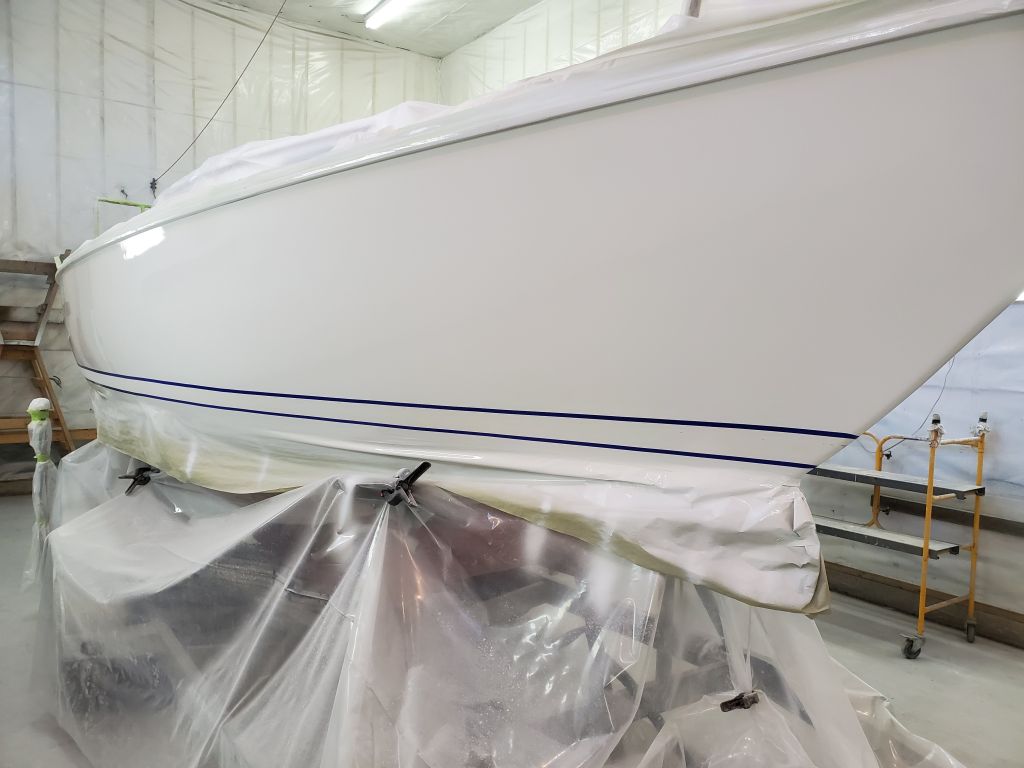
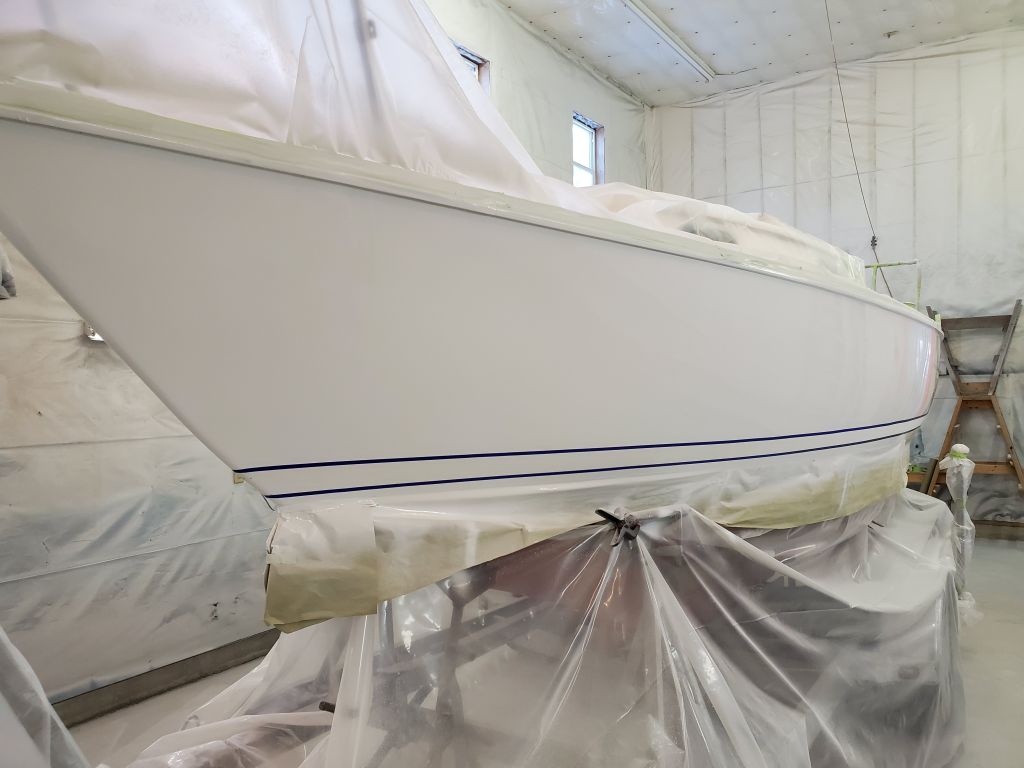
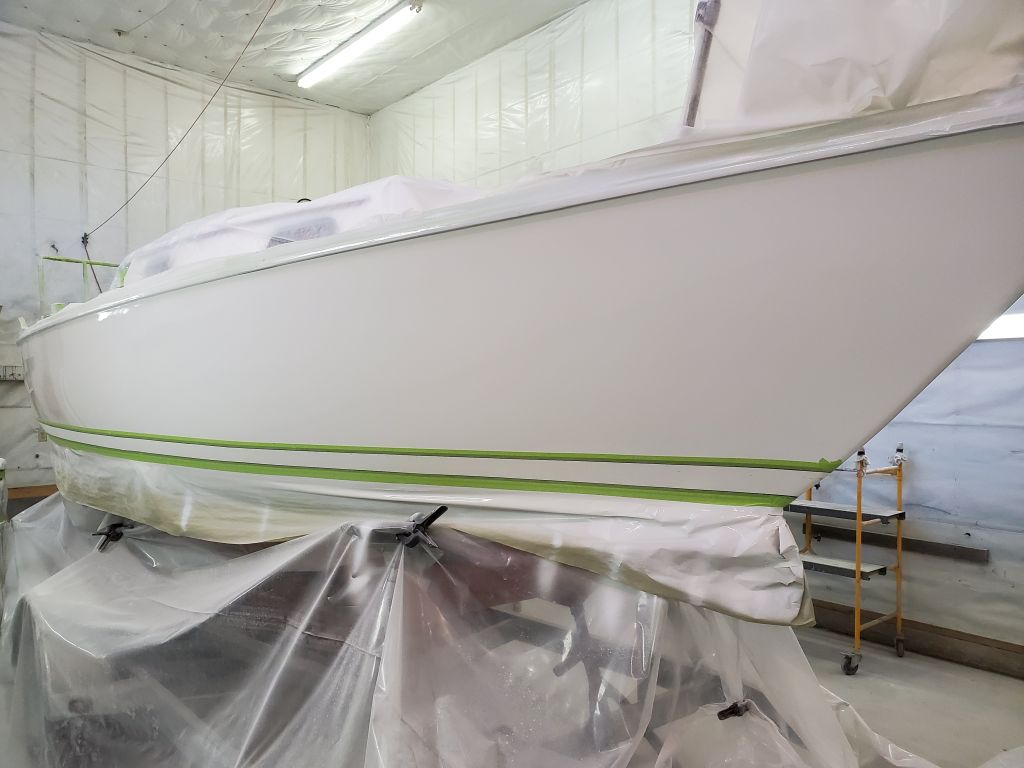
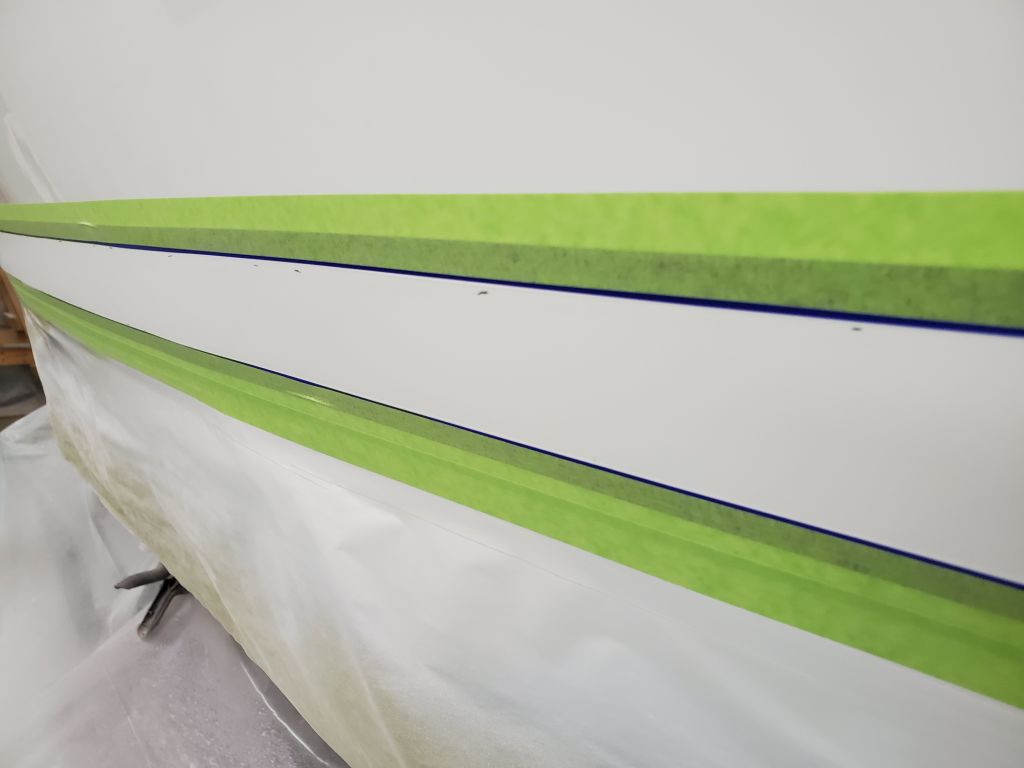
With the whole hull thusly marked, and after breaking down the beams, I masked off just below my pencil marks, creating the lower edge of the new topsides paint, and eventually the top edge of the antifouling paint.  Additional lines for striping would come later in the process, once the finish primer was complete.

Total time billed on this job today:  6.25 hours

0600 Weather Observation:  14°, cloudy.  Forecast for the day:  Snow, 3-5″ forecast, about 8″ in reality, 18°.

Arietta 12

Wednesday

Another round of finish sanding brought the hull nearly to its final readiness, but there were a few small low spots that would require another round of epoxy fairing compound, so after cleaning up I spot-applied the additional material where needed.

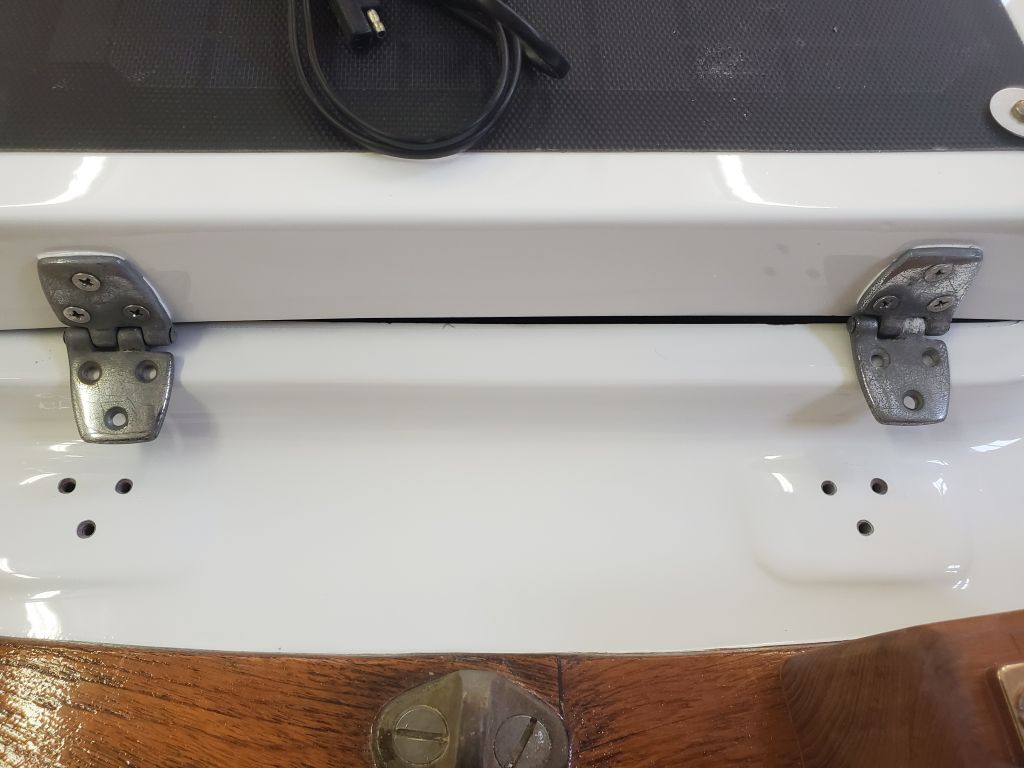
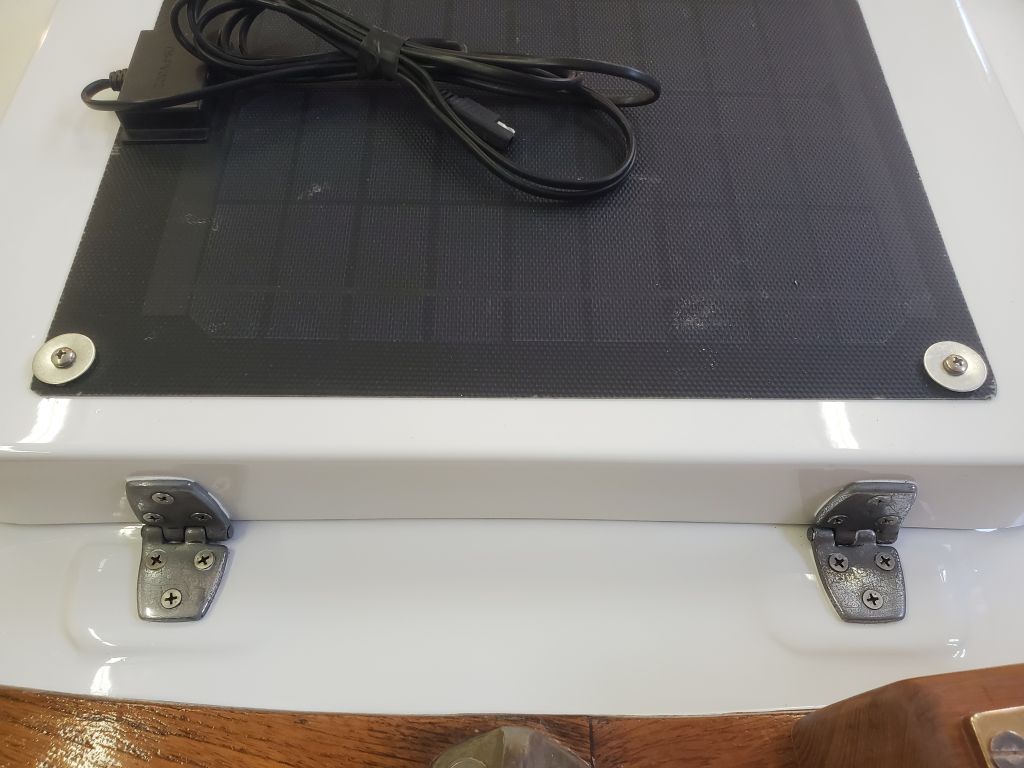
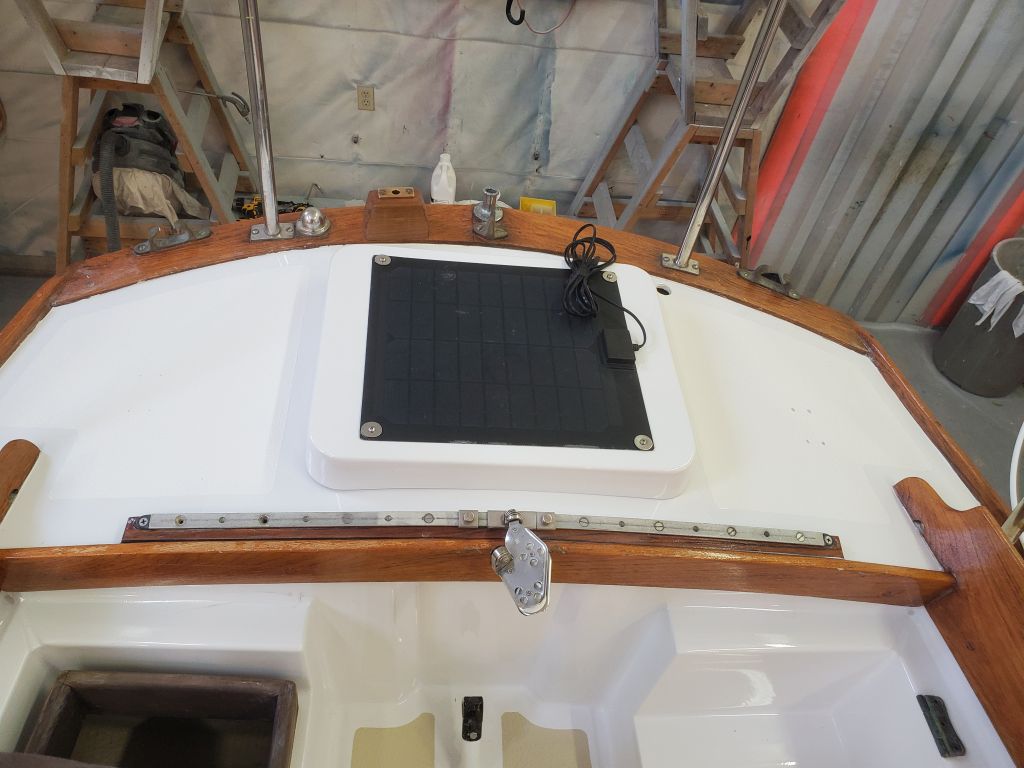
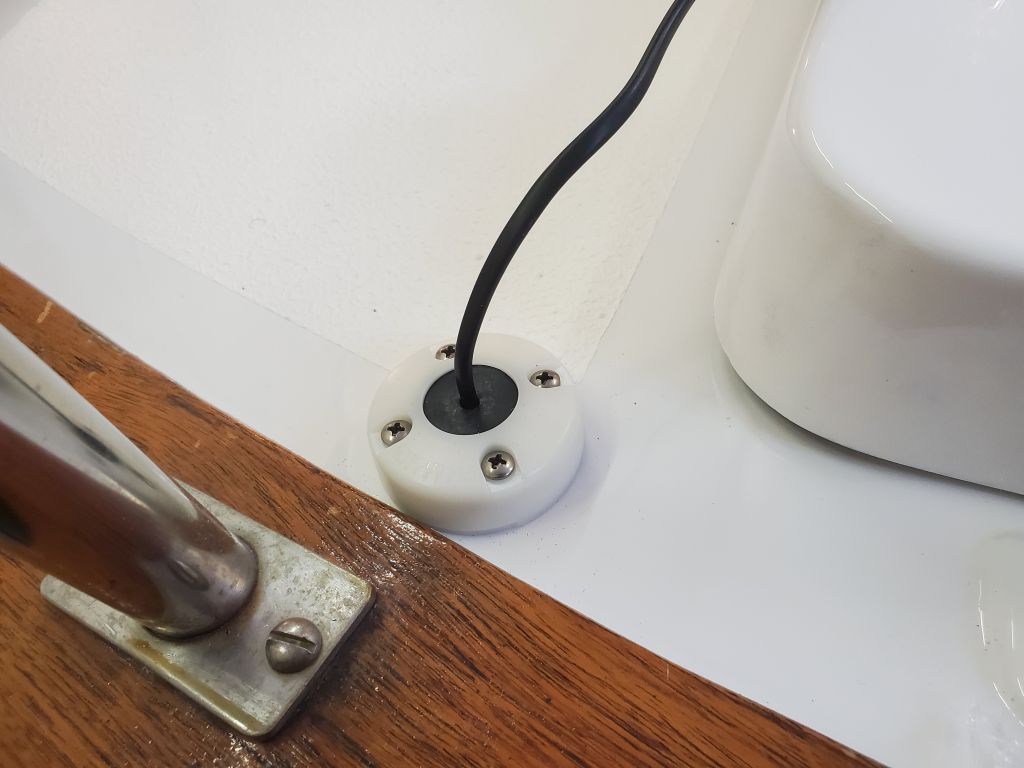
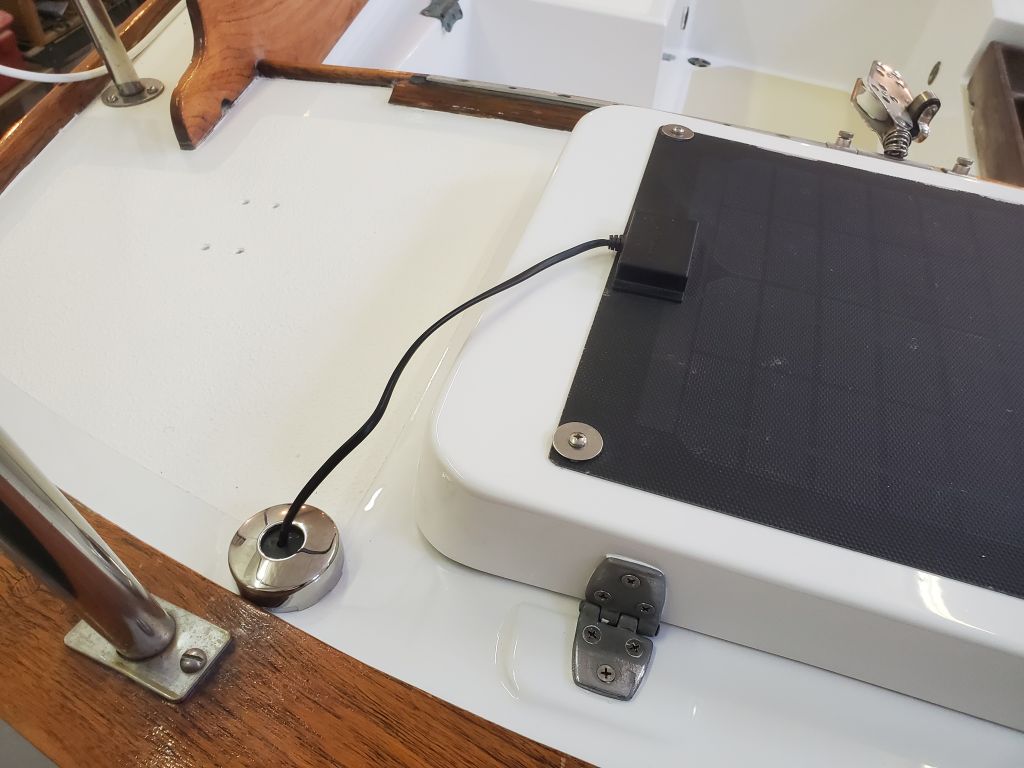
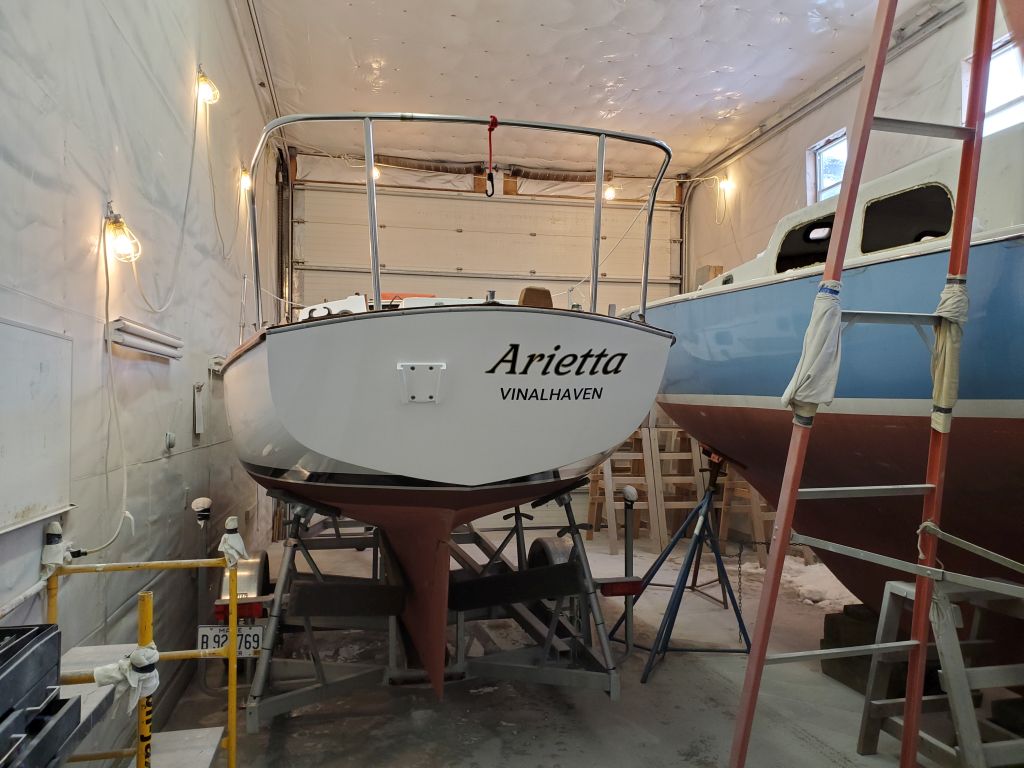
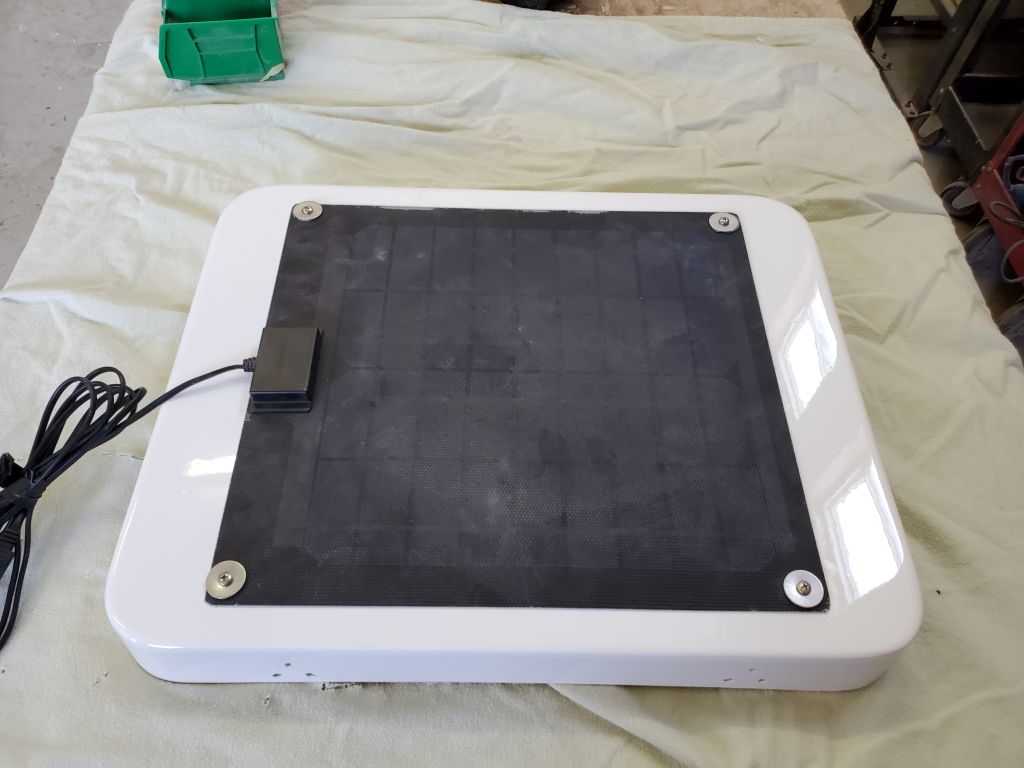
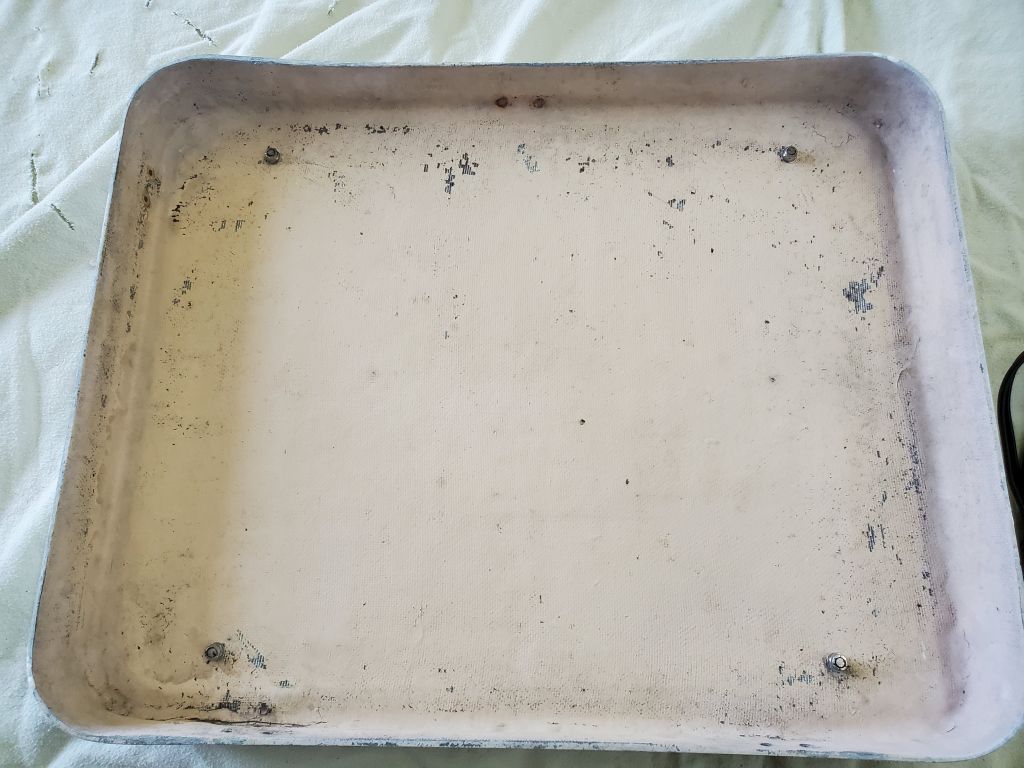
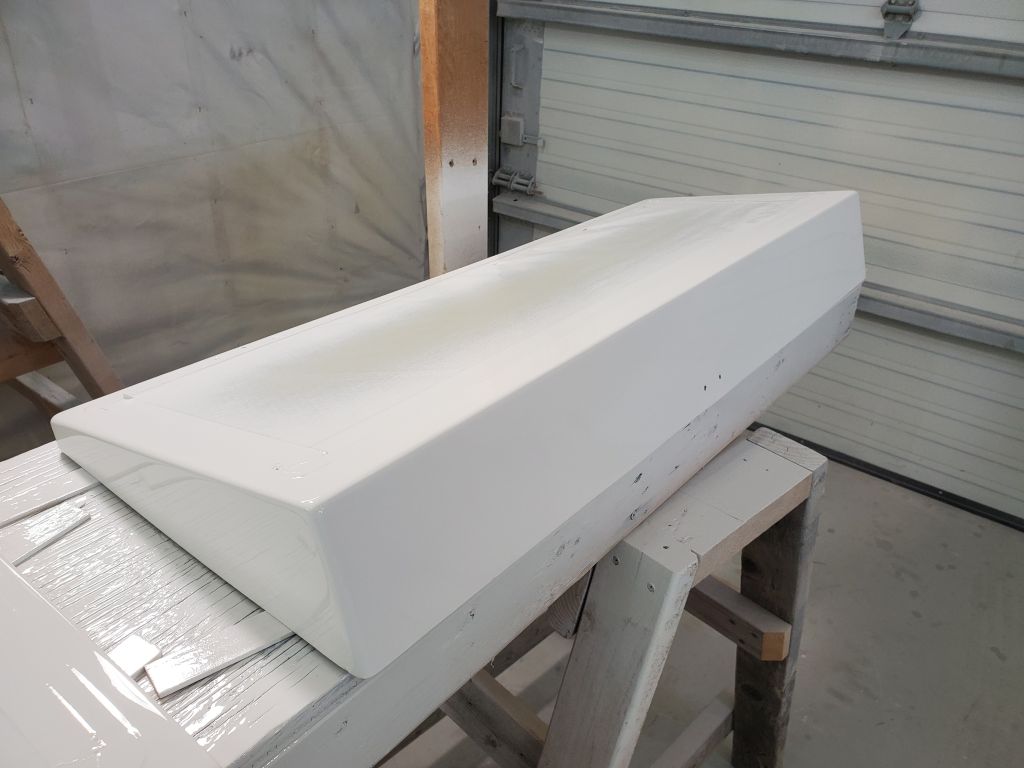
While I was thinking of it, I used the solar panel to mark the screw locations and drill pilotholes through the newly epoxy-filled holes in the lazarette hatch–another small item to tick off the pre-primer list.

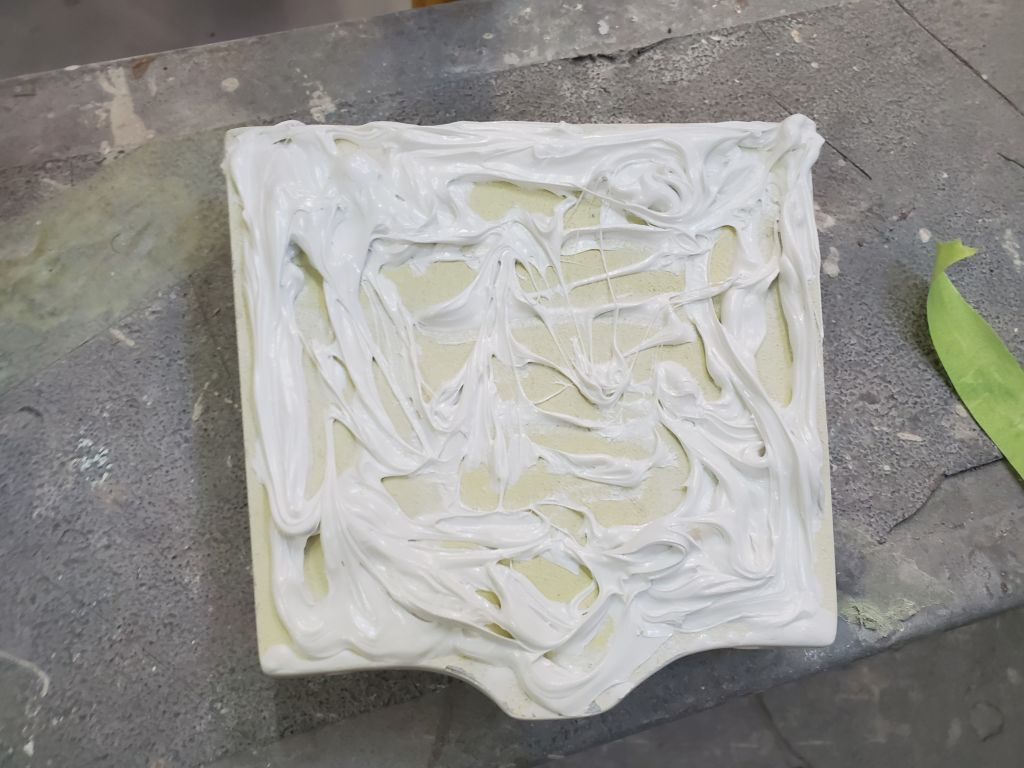
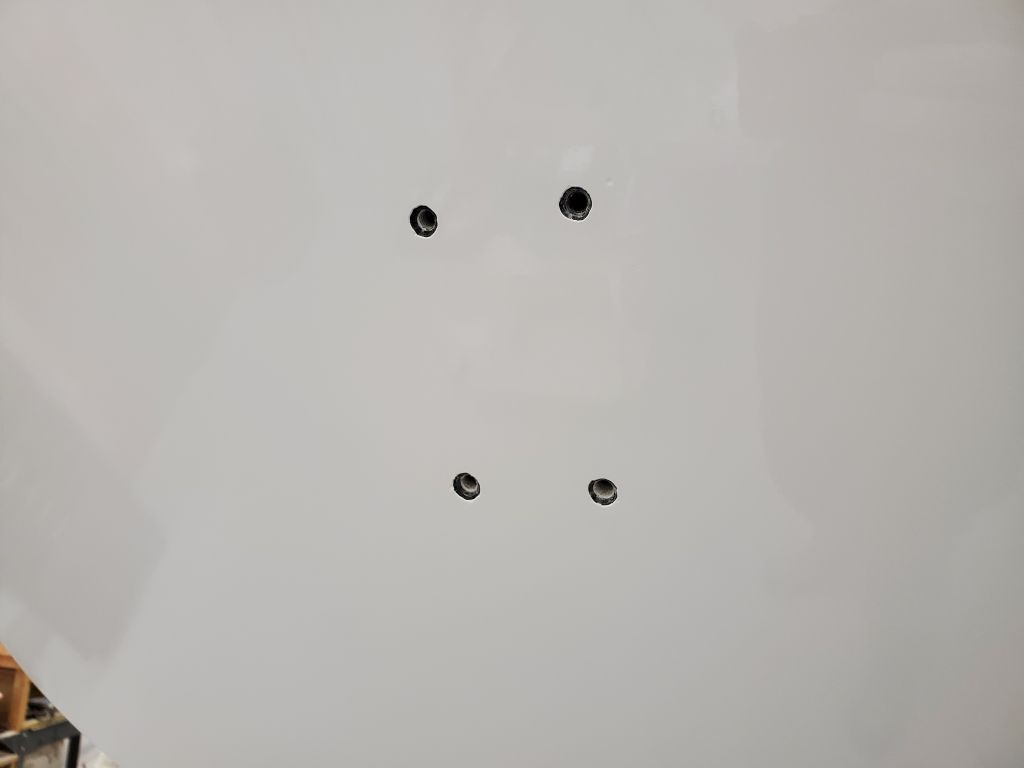
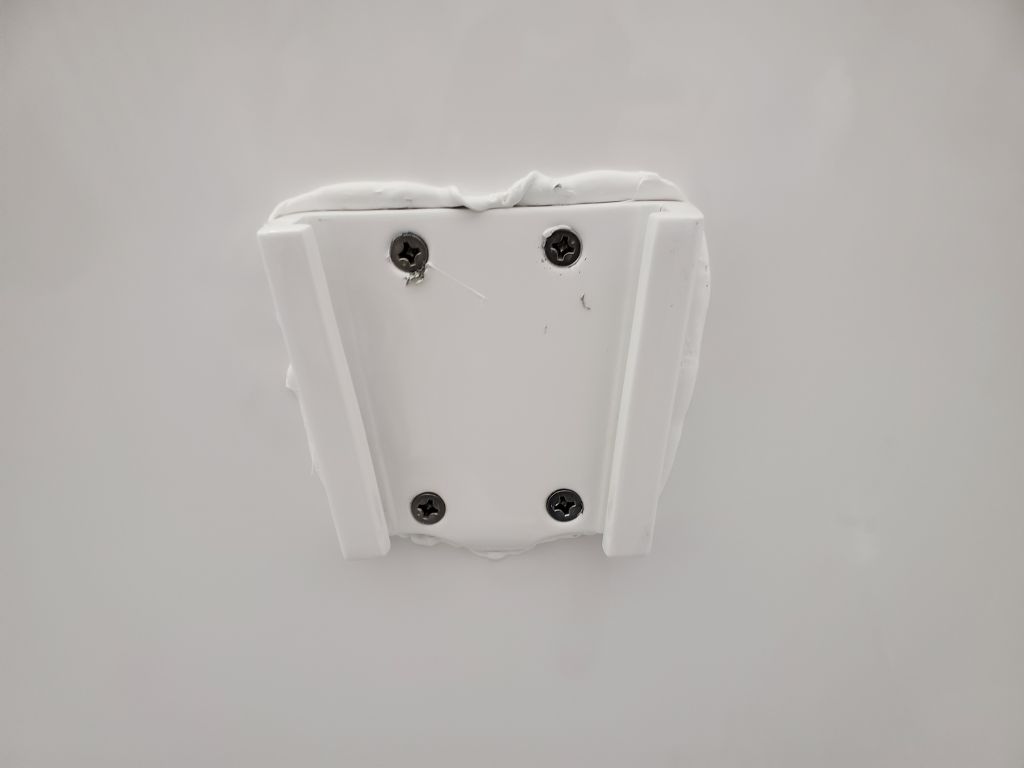
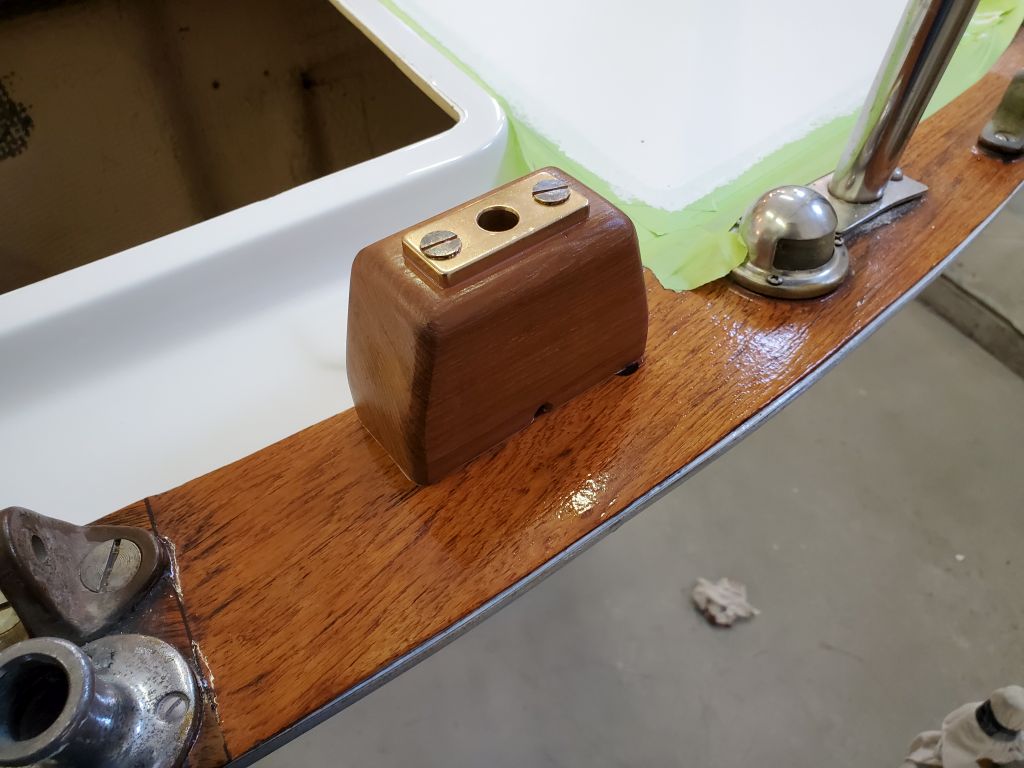
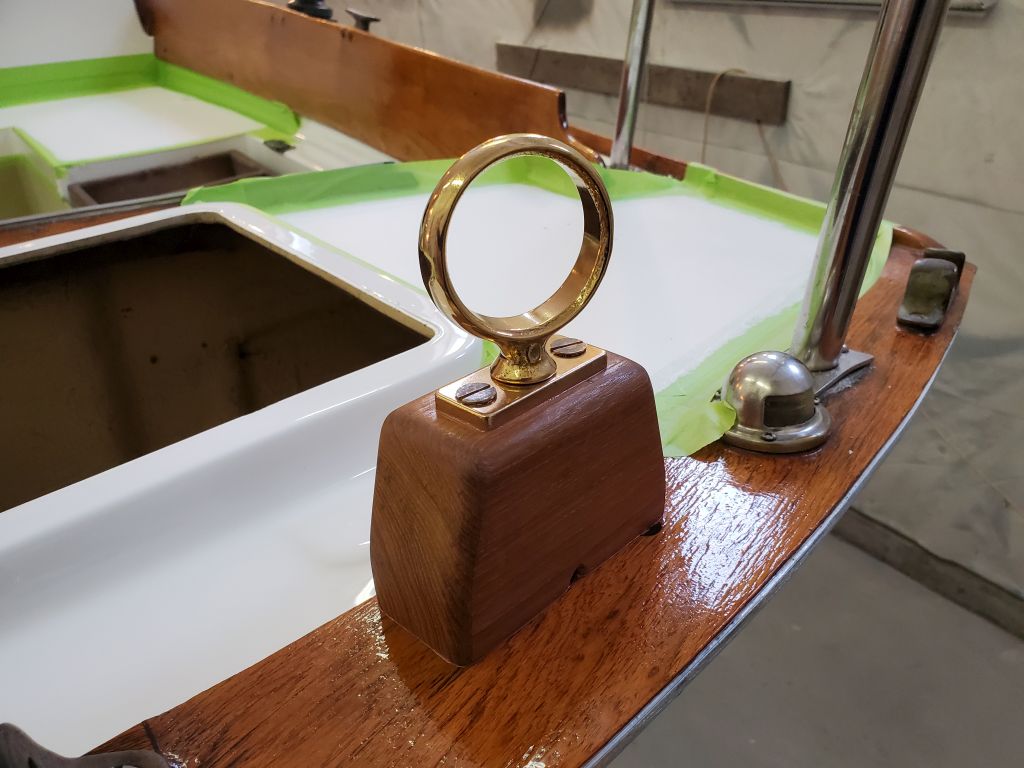
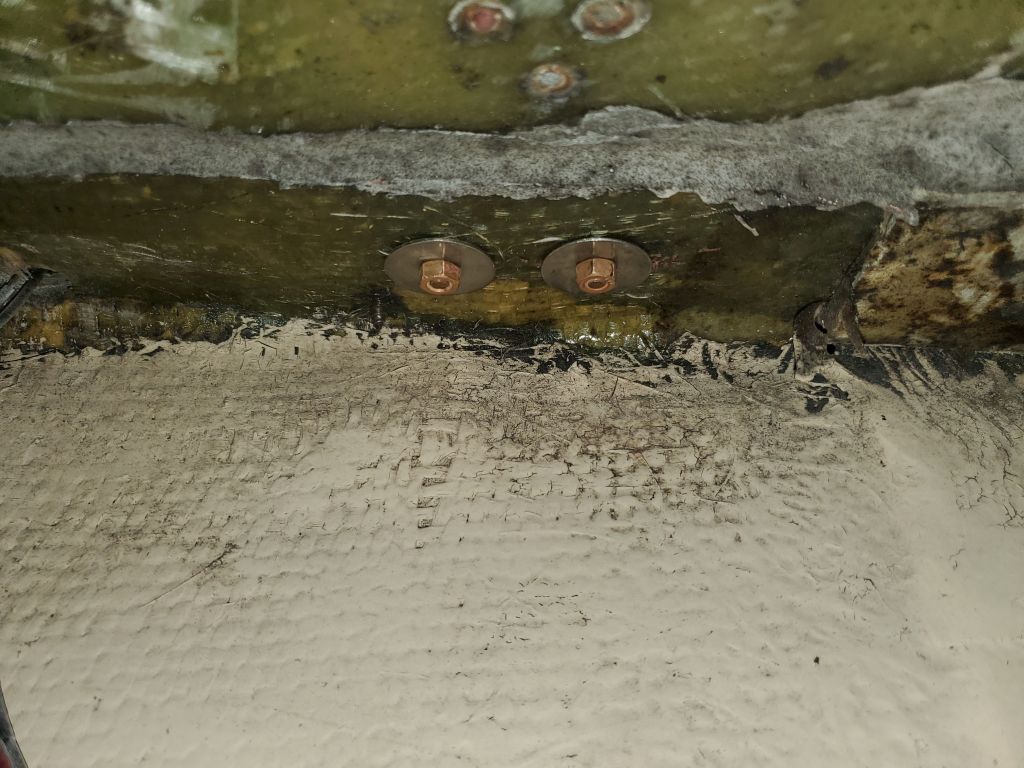
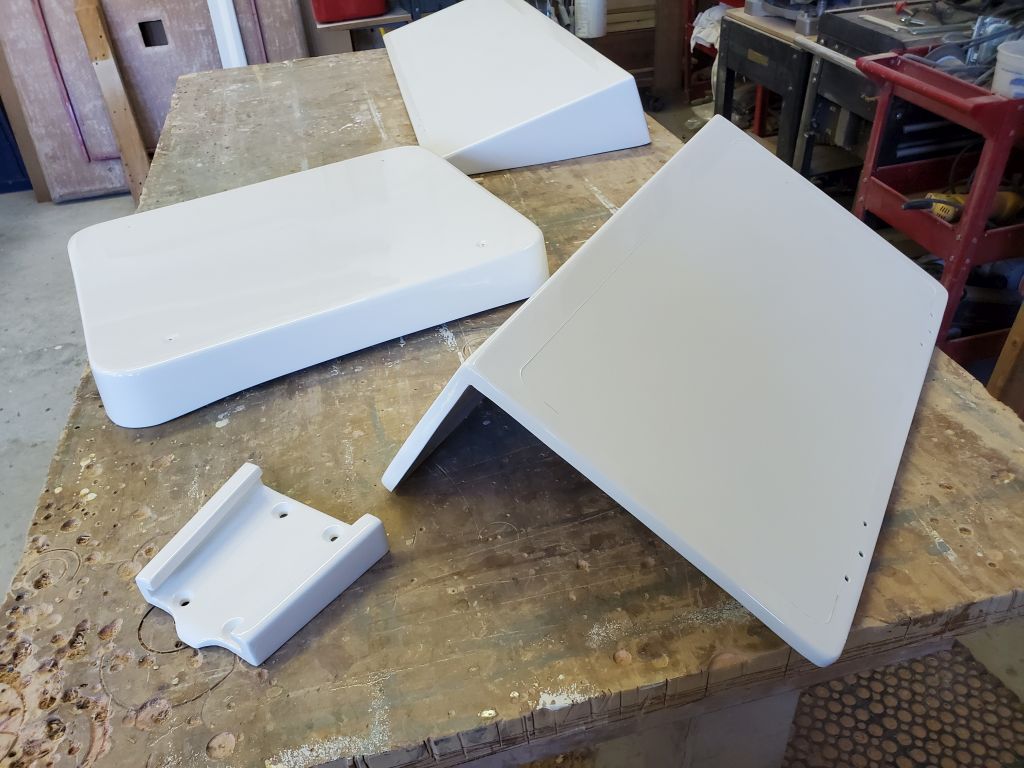
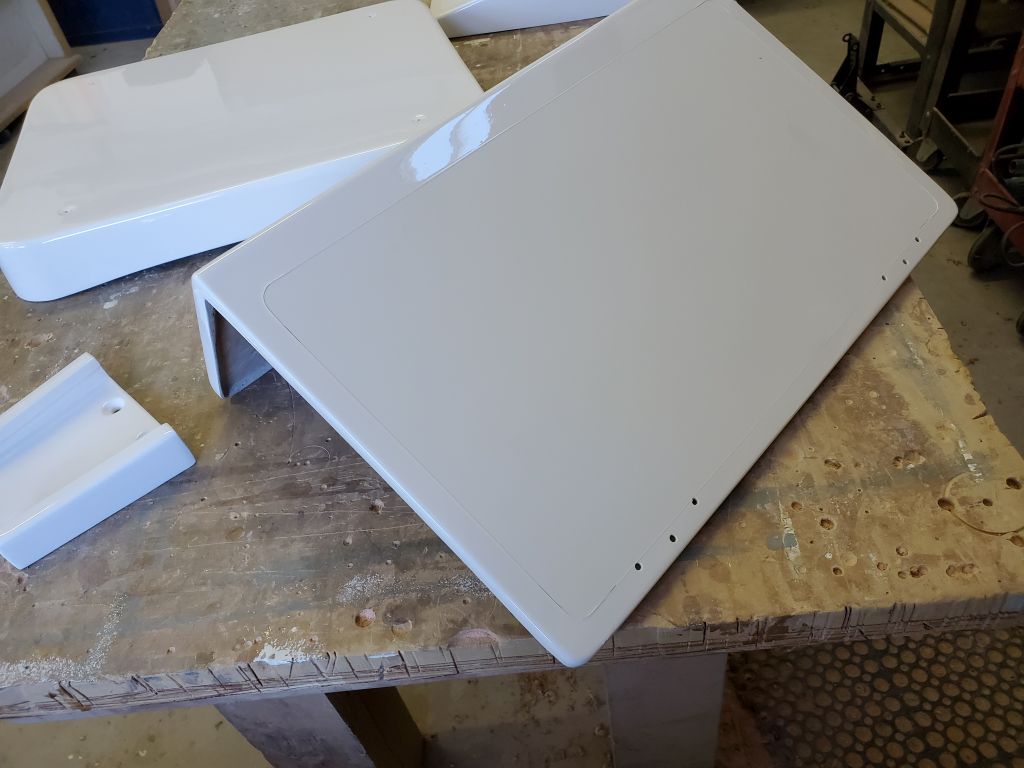
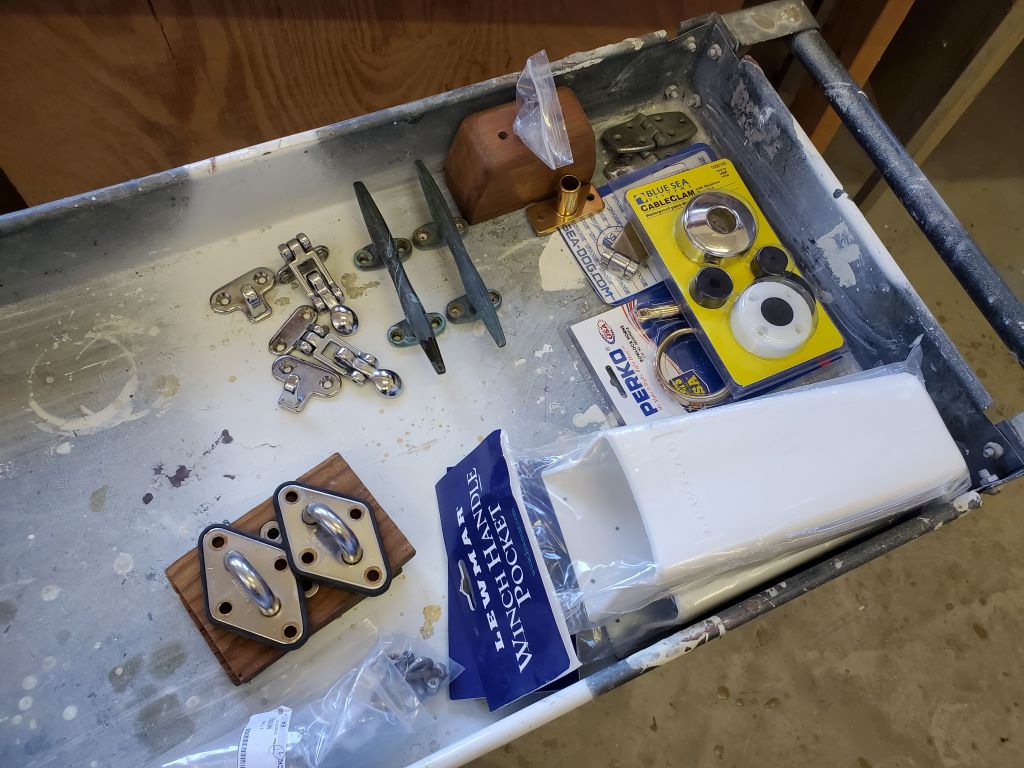
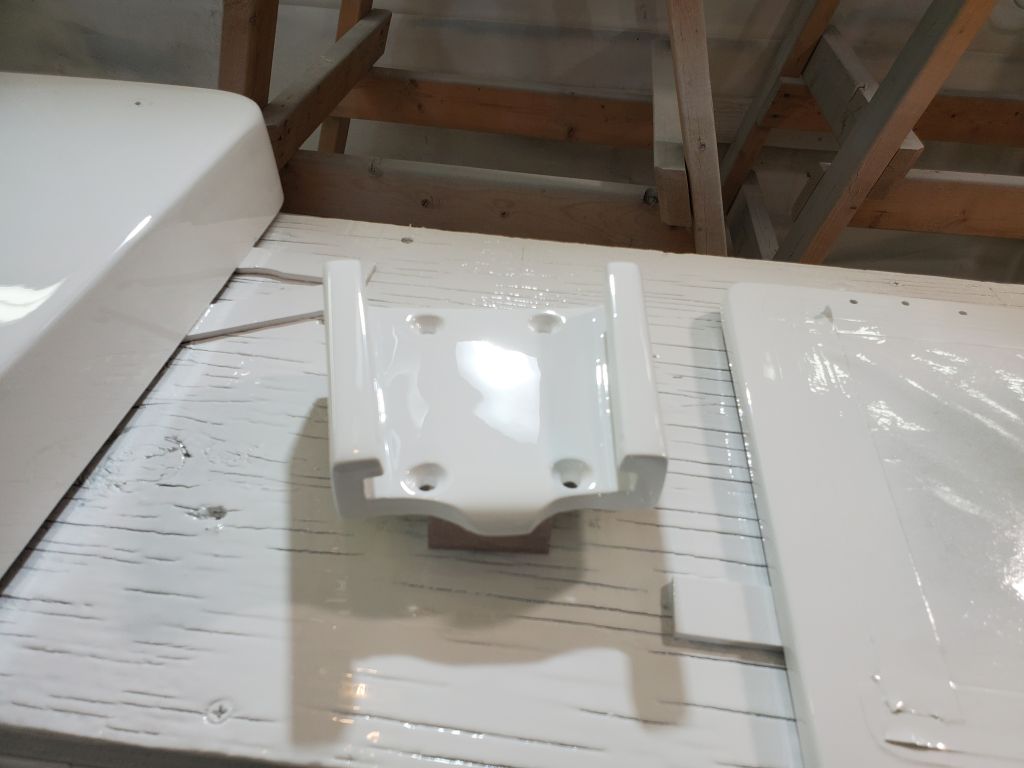
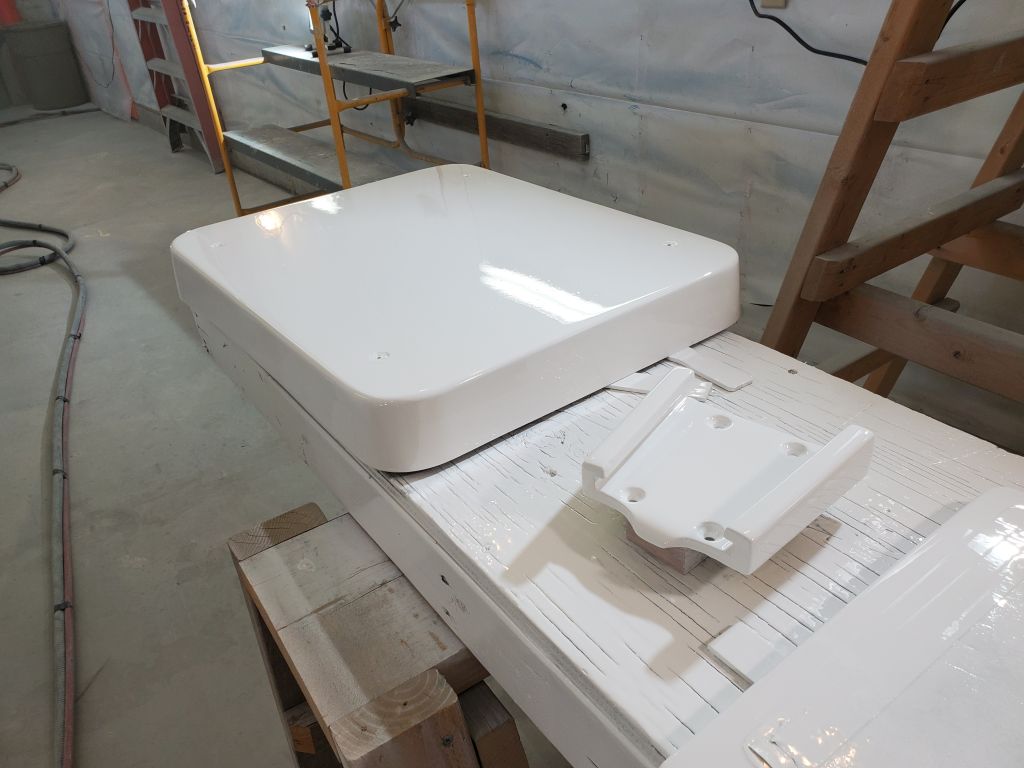
The owner requested that I install an oarlock for a sculling oar on the transom, and with some time on hand I made up a teak block to support the oarlock socket and raise it high enough for clearance over the lazarette hatch.  To better secure the base and oarlock to the taffrail when the time came, I enlarged the mounting holes from their standard #10 to 1/4″ size, which I not only felt would be stronger, but I couldn’t get the bolt length I needed (4.5″) in #10 anyway.

I’d await final installation till later, and I had to order the bolts anyway, so for now I finished up with a coat of Cetol on the new base.

Total time billed on this job today:  3.5 hours

0600 Weather Observation:  7°, clear.  Forecast for the day:  Mostly sunny, 18°.

Arietta 11

Tuesday

After a spritz of water, I got to sanding the fiberglass patches on various parts of the hull, bringing the new laminate down flush with the adjacent surfaces at each location.  Afterwards, I switched to a finishing sander and further smoothed these areas, as well as places where I’d applied fairing compound last time.

After vacuuming and solvent-washing the hull, I applied more epoxy fairing compound over these areas as needed.

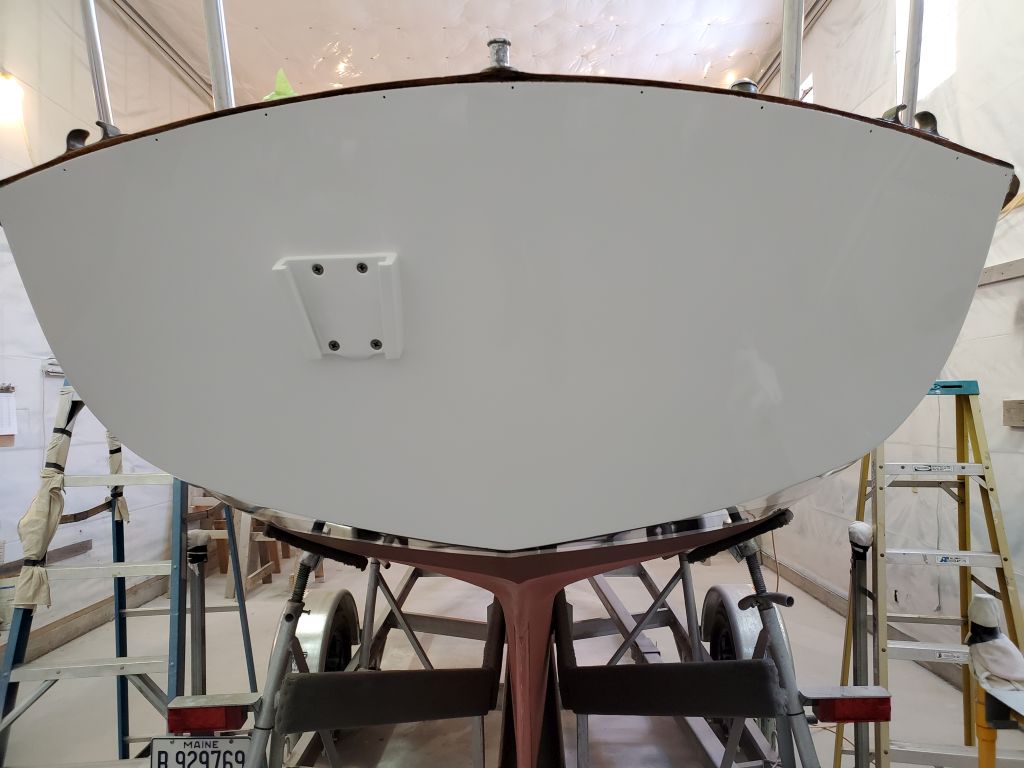
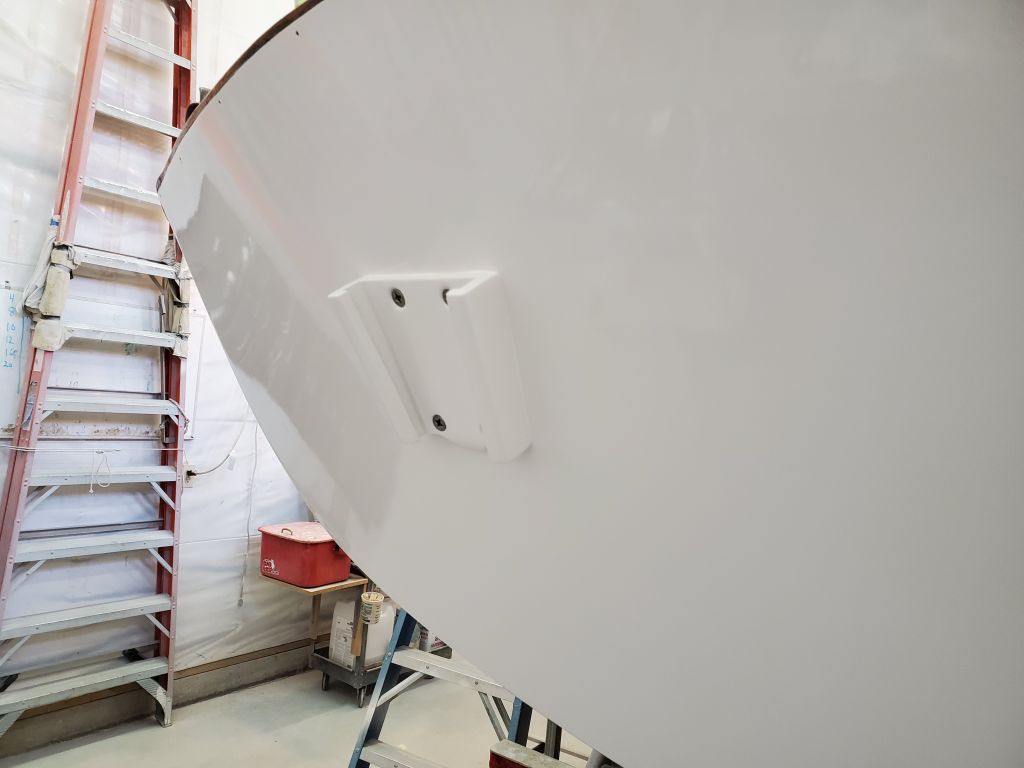
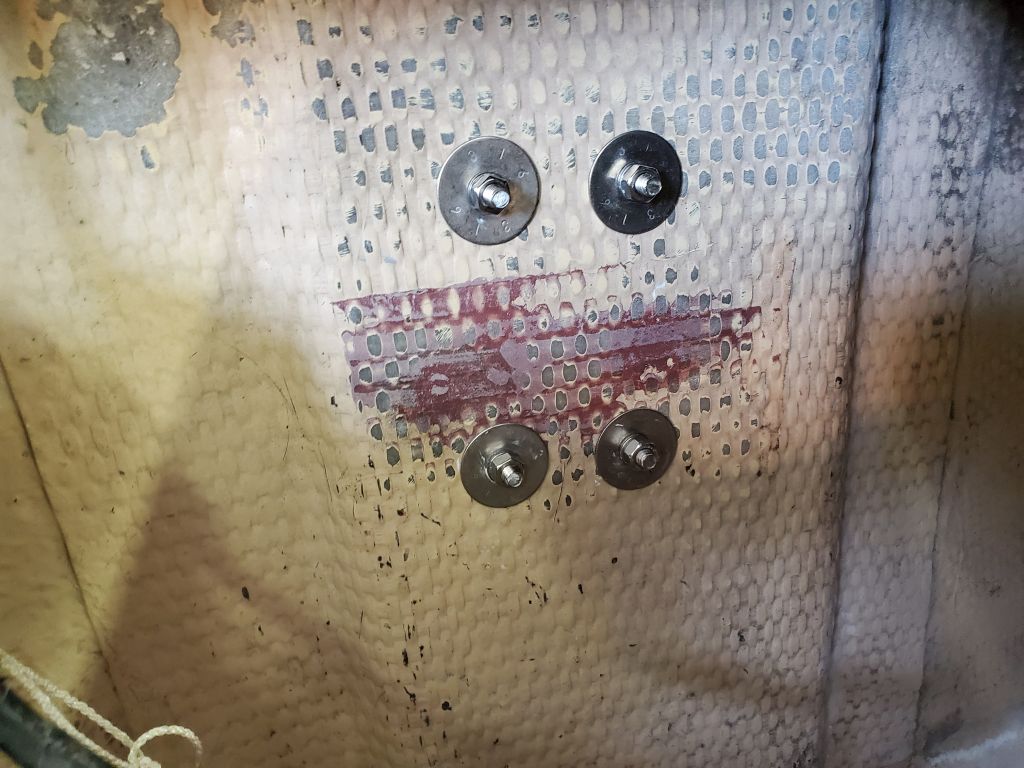
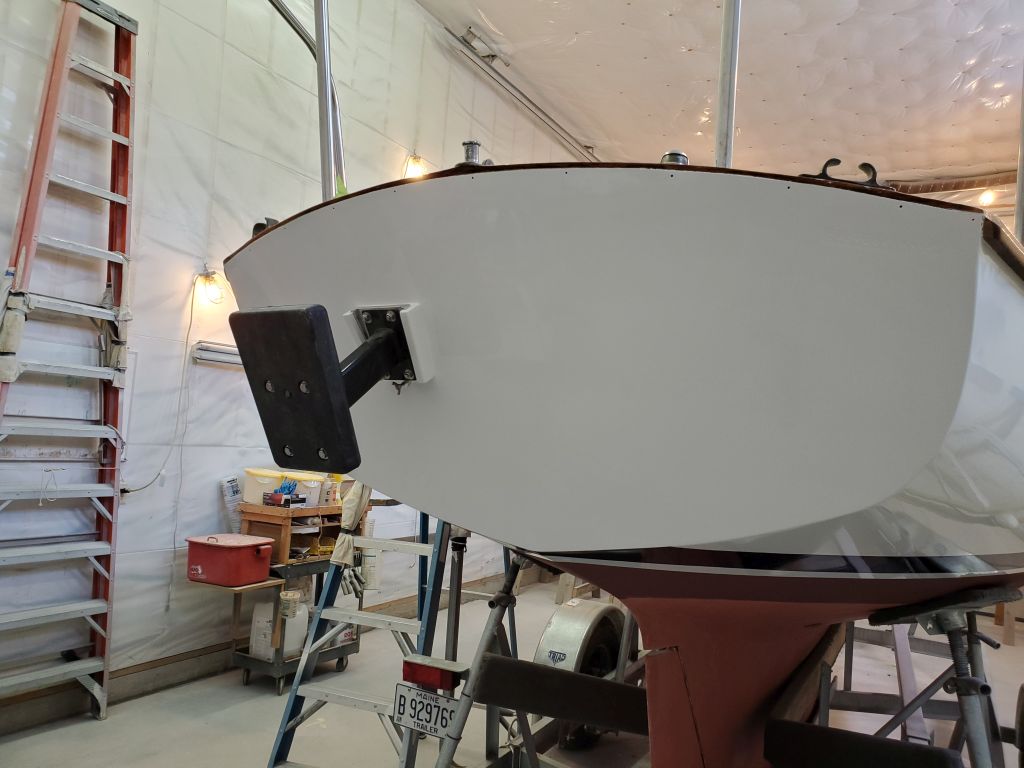
The slim permanent portion of the new outboard bracket was to be painted to match the hull and thus blend in all the more, and as a first step I wanted to apply special metal primer to the aluminum bracket mount, which would enhance corrosion protection and provide a better bond for the finish primer later in the process.  To prepare, I sanded the bracket with 80 grit paper, creating good scuff marks.  Then, after mixing my batch of paint and using a small disposable sprayer, I applied a good coat of the protective metal primer to both sides of the bracket, suspending the bottom side on a couple narrow supports beneath.

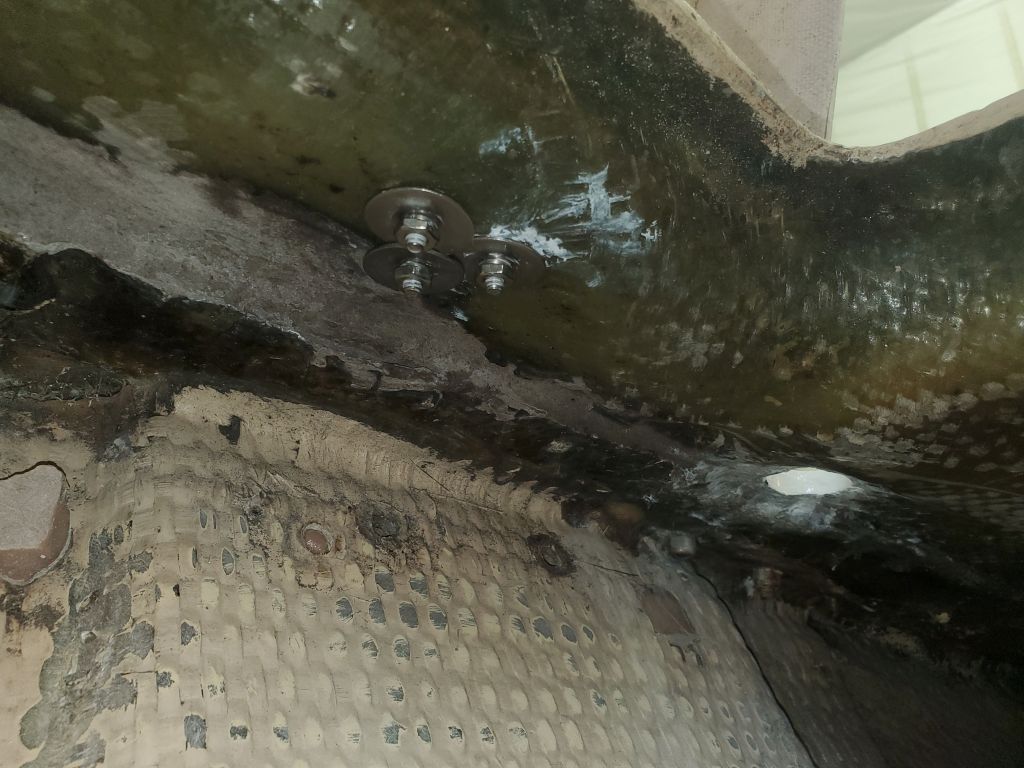
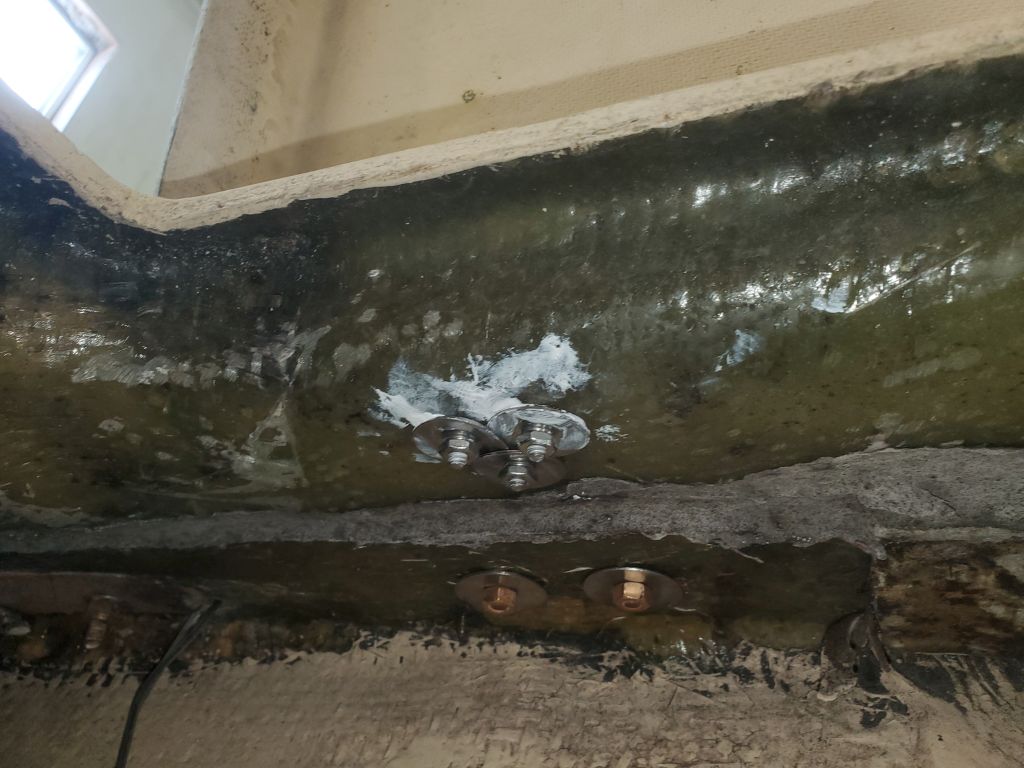
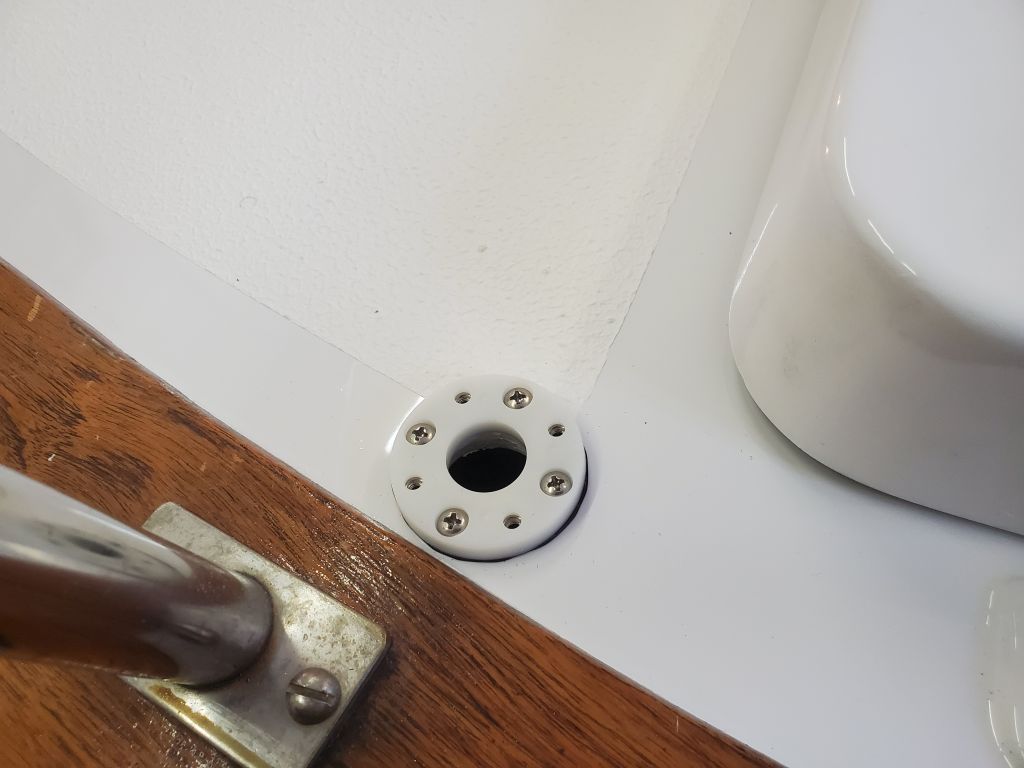
Back on deck, I reinstalled the bronze hawsepipe on the foredeck after first redrilling the 2″ mounting hole through the fiberglass I’d laid over the opening from beneath and preparing the screw holes to accept new 10-24 x 3/4″ bronze screws to replace the original stainless steel tappers.  I bedded the hawsepipe well in sealant.

I’d saved the core pattern I used on the starboard poop deck, since it showed the location of the deck cleat.  Now, using the pattern as a guide, I marked the holes for the cleat with a small pilot bit so that I could easily find them after the paint and primer was on and ensure the cleat was located where it needed to be, since I’d omitted the core and replaced it with solid fiberglass in that area.  I double-checked the position with that on the port side.

For the moment, that was what I could accomplish as I worked closer and closer to primer and paint time.

Total time billed on this job today:  5 hours

0600 Weather Observation:  27°, clear.  Forecast for the day:  Sunny and windy, temperature dropping through the day. 

Arietta 10

Monday

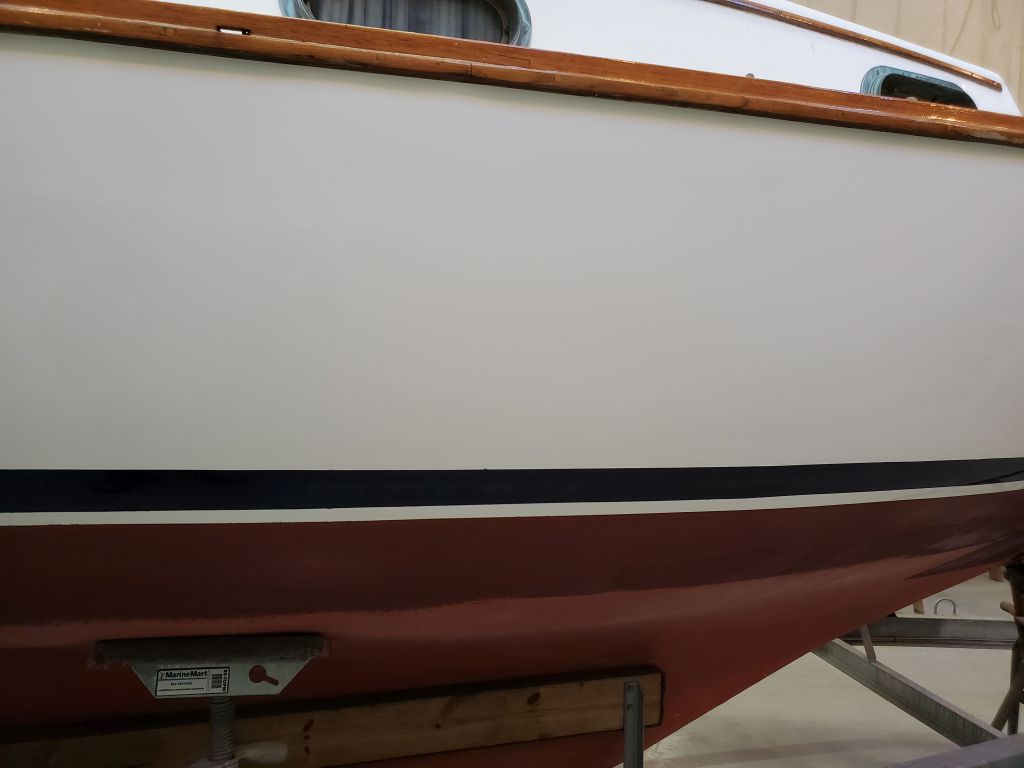
I spent much of the morning sanding the hull with a 6″ orbital finishing sander and 80-120 grit paper, going over the entire hull to prepare the original gelcoat for repairs and primer.  This removed vestiges of gloss, scuffed the surface, and removed final bits of paint from the old boottop.  As needed, I sanded by hand along the base of the rubrail, and at some of the tighter areas particularly at the stem, where the sander wouldn’t fit alongside the trailer’s bow support.

I vaccumed and solvent-washed the hull, then cut out the little fiberglass patches I’d patterned last time.  I wet out and installed the fiberglass in epoxy resin,  using a patch in each place on the hull where old surface cracking required stabilization before filling and fairing.  I filled smaller dings I’d ground out with epoxy fairing compound.

On the starboard side of the hull, there were a couple places where print-through (post-cure shrinkage that allows the pattern of the structural fabric to show through from the outside) was readily apparent to the eye and even the touch.  While eliminating print-through is a fool’s errand, where it was so noticeable I applied fairing compound to help even out the texture and improve the final results.  These spots on the starboard side were located mainly just aft of amidships, and right aft of the stem.

With the hull work stagnant for now, I moved on to the hawsepipe on the foredeck.  With the solid fiberglass patch covering the opening form inside, and having had plenty of time for the void to dry out, now was the right time to inject the void between the deck skins with a thickened epoxy mixture, shop-made from epoxy resin, high-density filler, and silica.

I finished up the port toerail repair by chiseling and sanding the bungs smooth, then applying more Cetol over the repair and immediately-adjacent parts of the rail.  Later, I removed the lifelines and stanchions to prepare for eventually wrapping the decks in plastic during the painting process.

Total time billed on this job today:  6.5 hours

0600 Weather Observation:  30°, mainly cloudy.  Forecast for the day:  Mostly cloudy, chance of light snow, 33°
Arietta 9

Friday

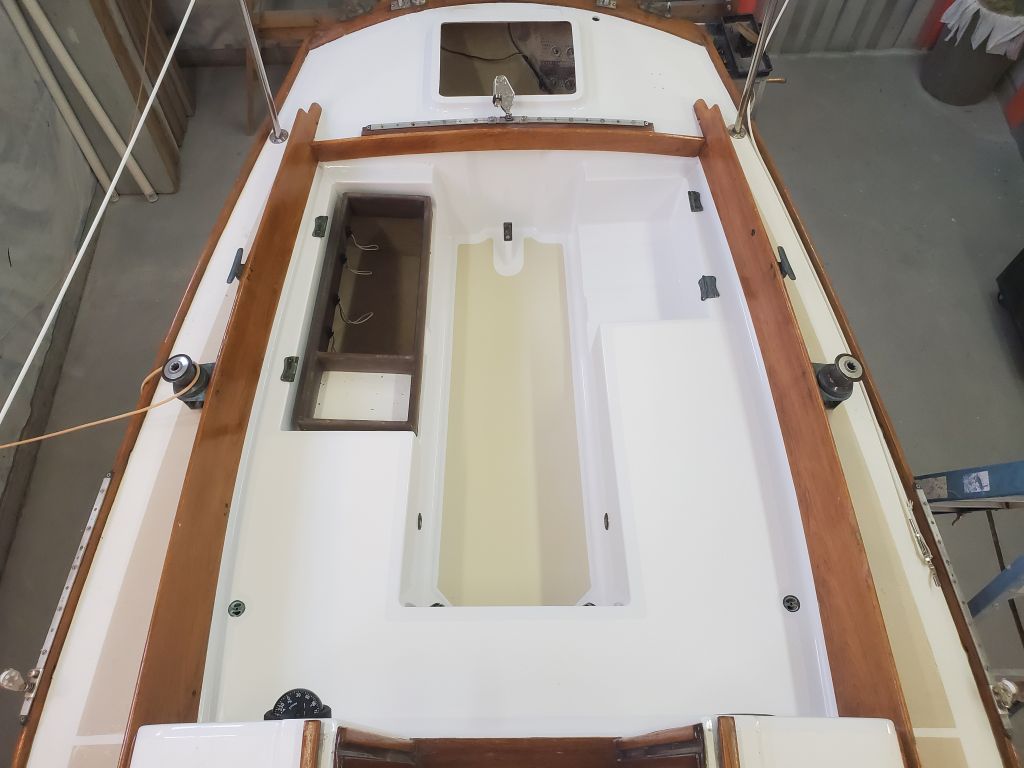
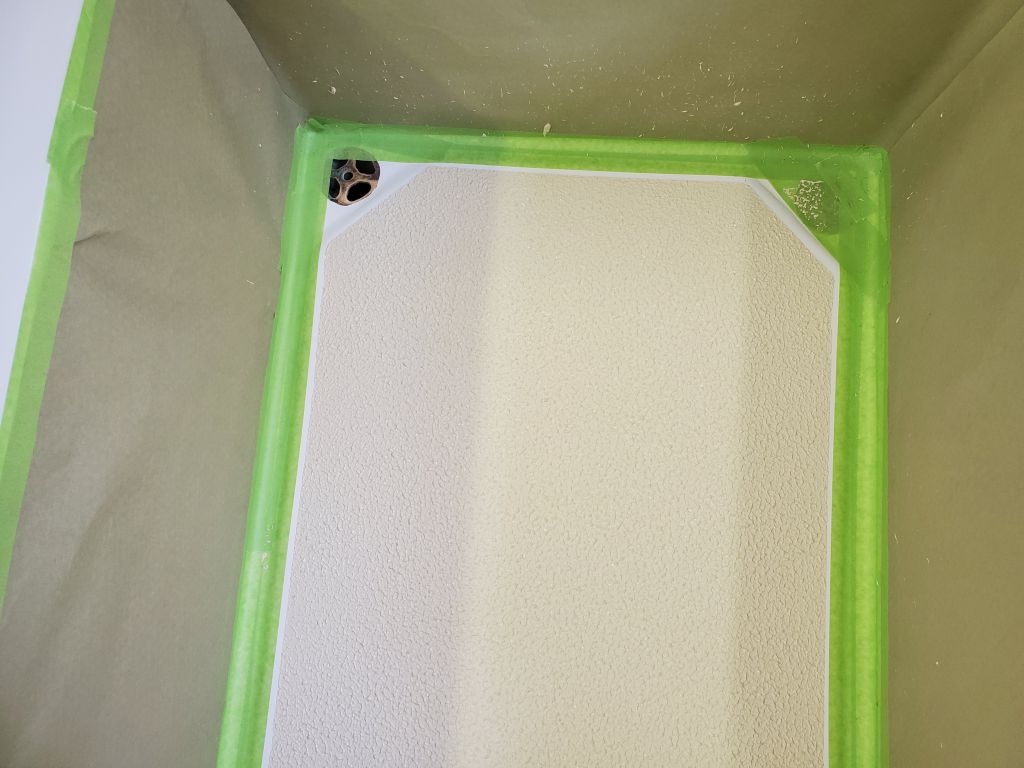
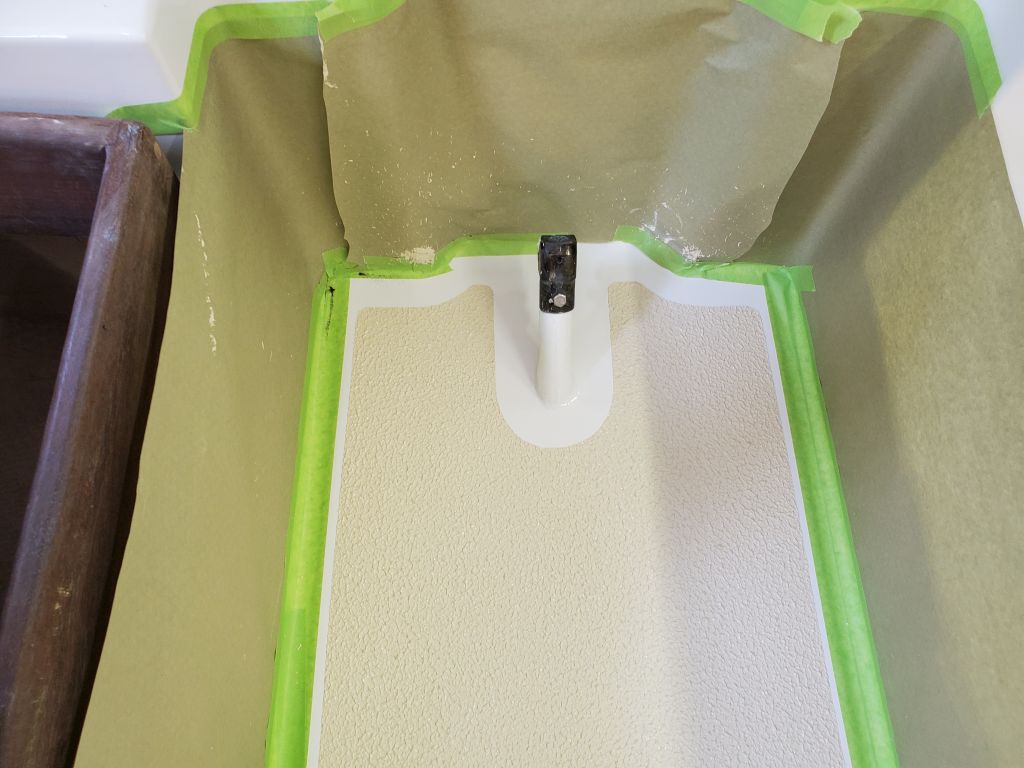
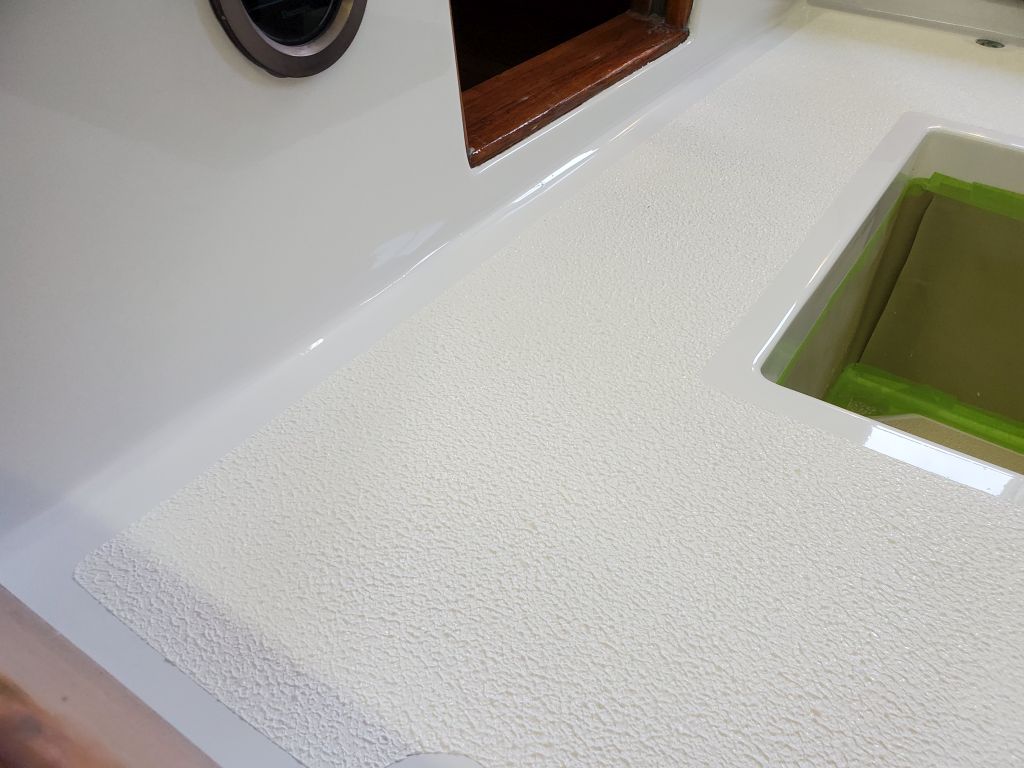
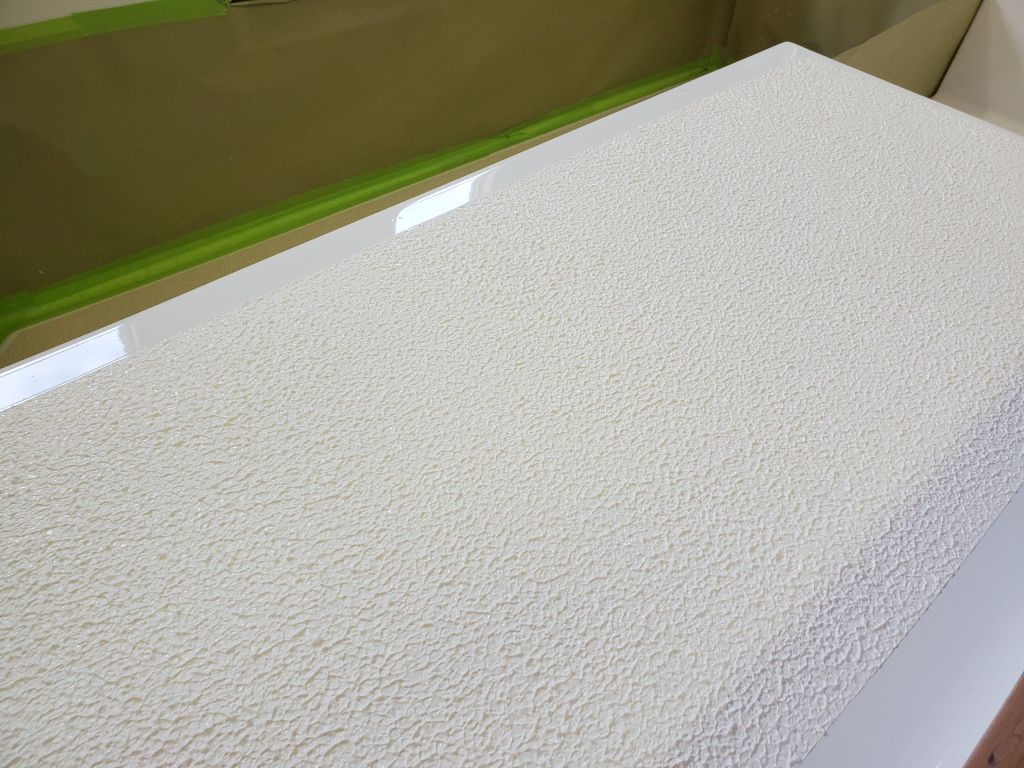
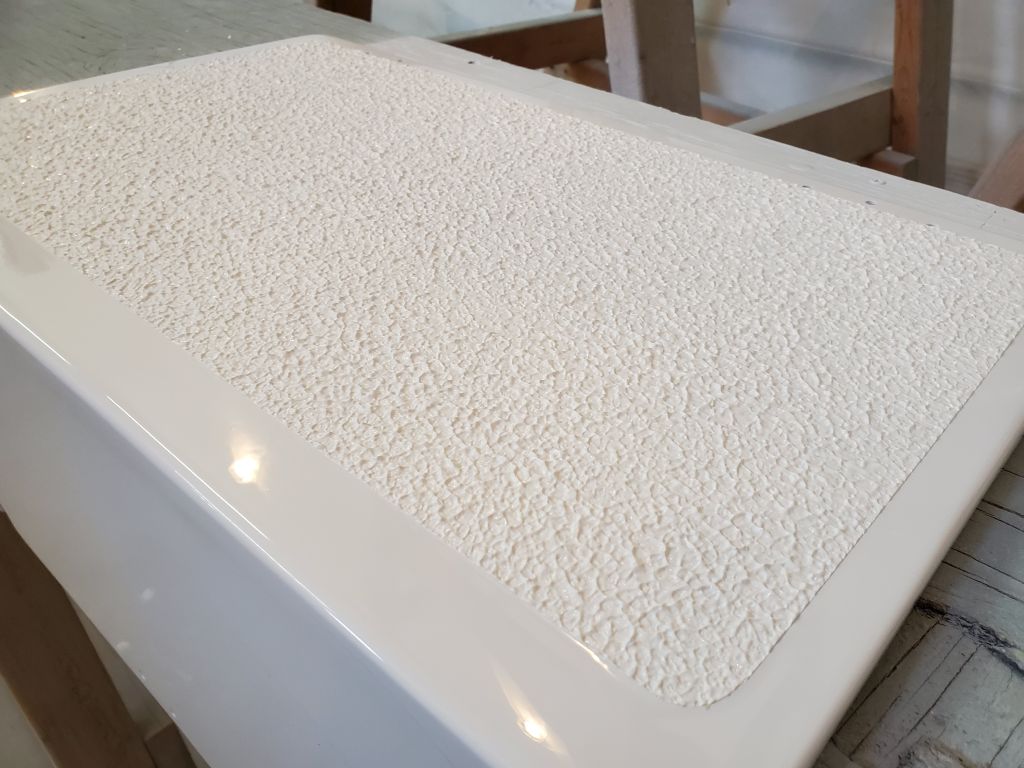
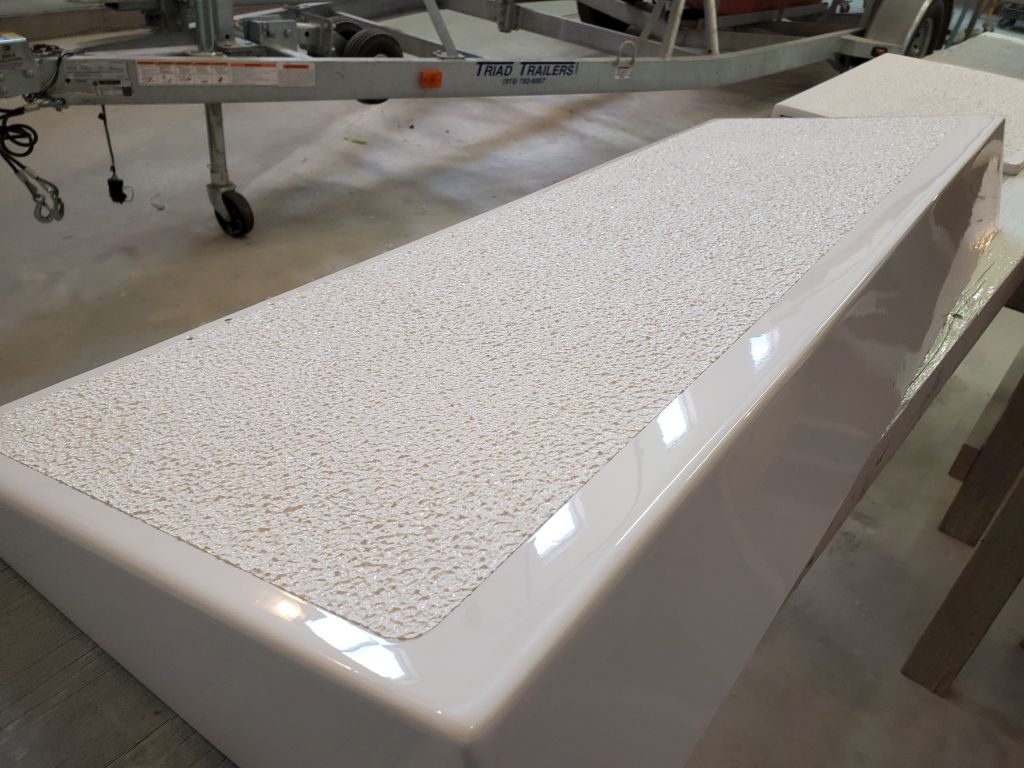
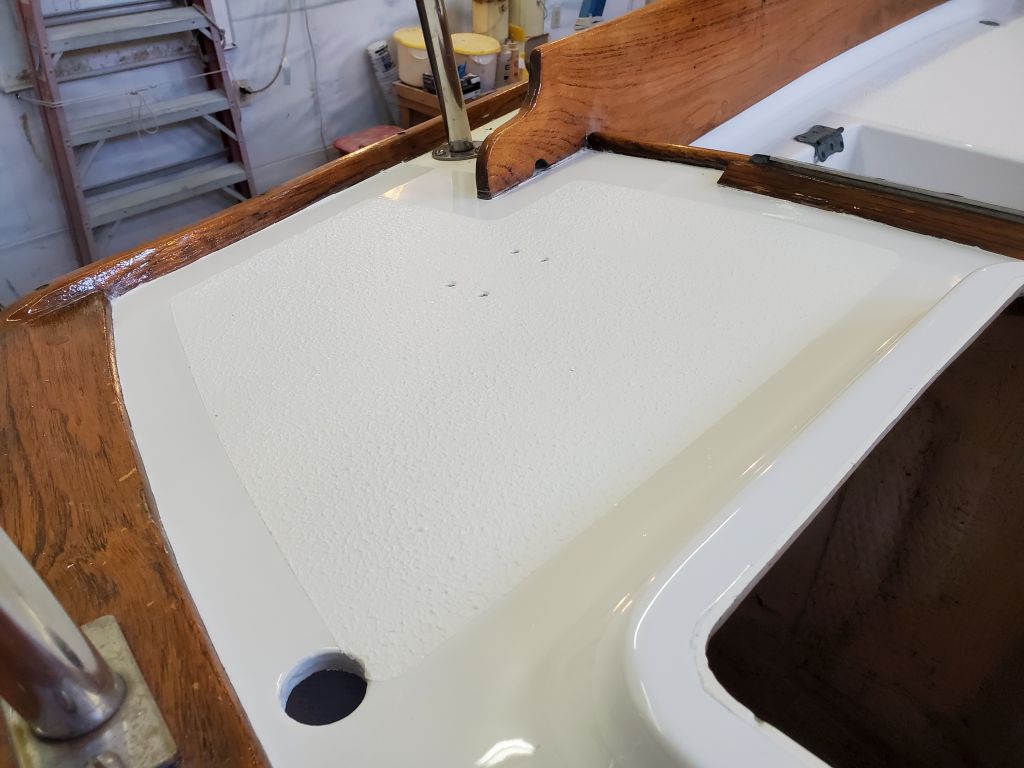
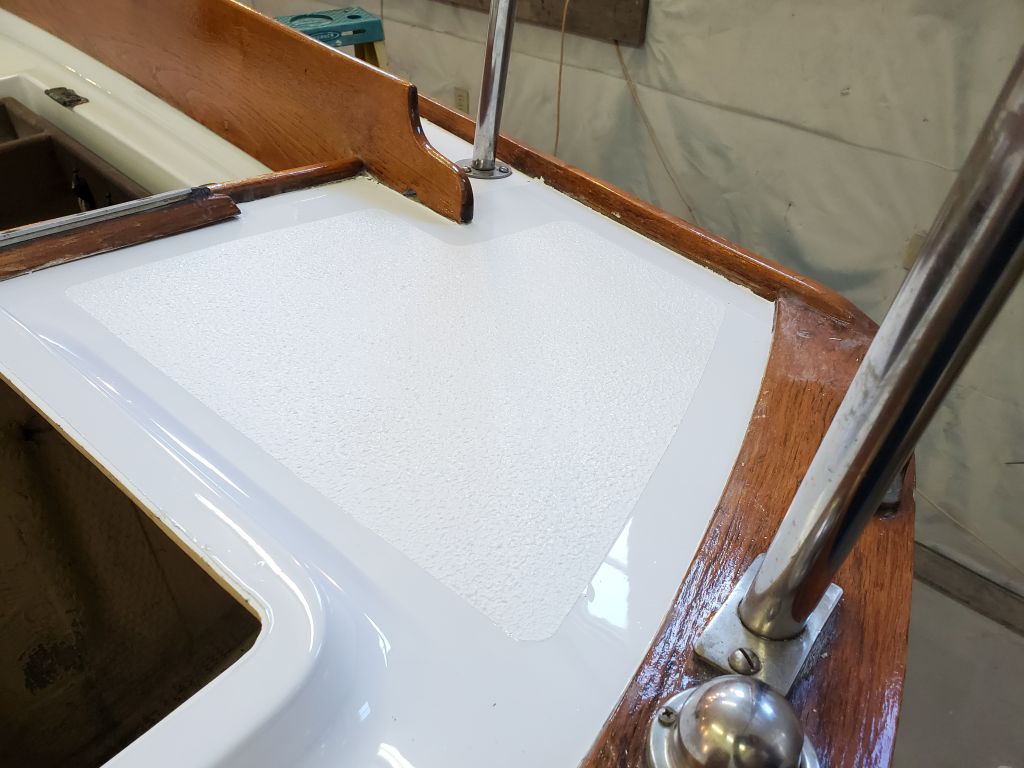
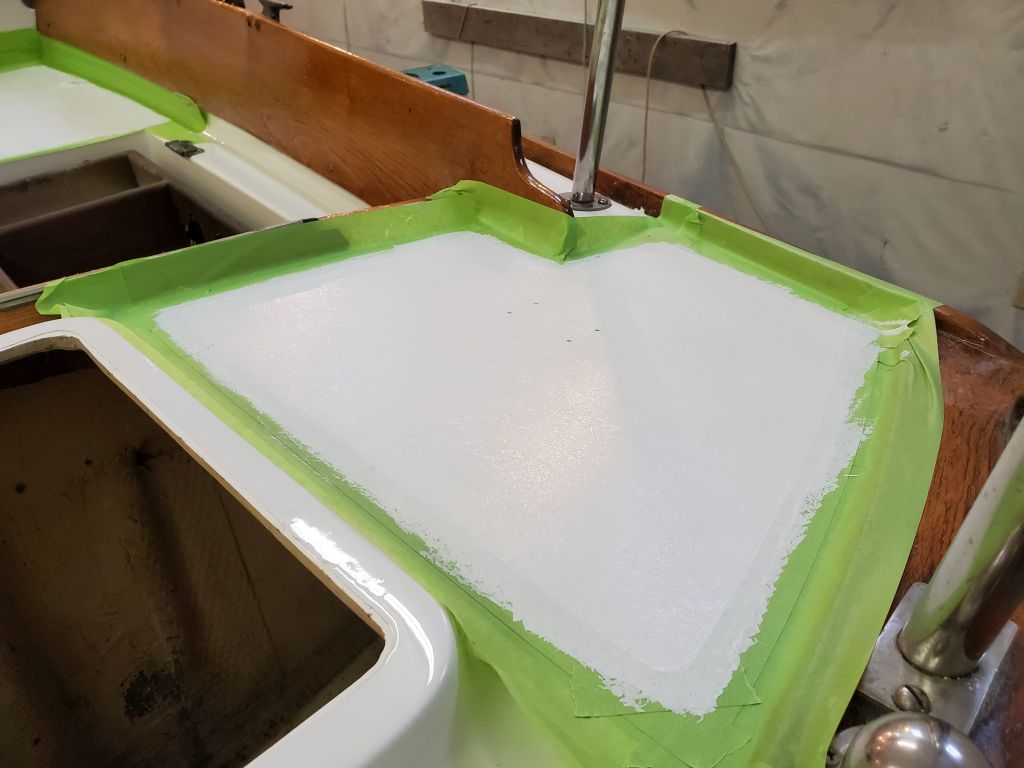
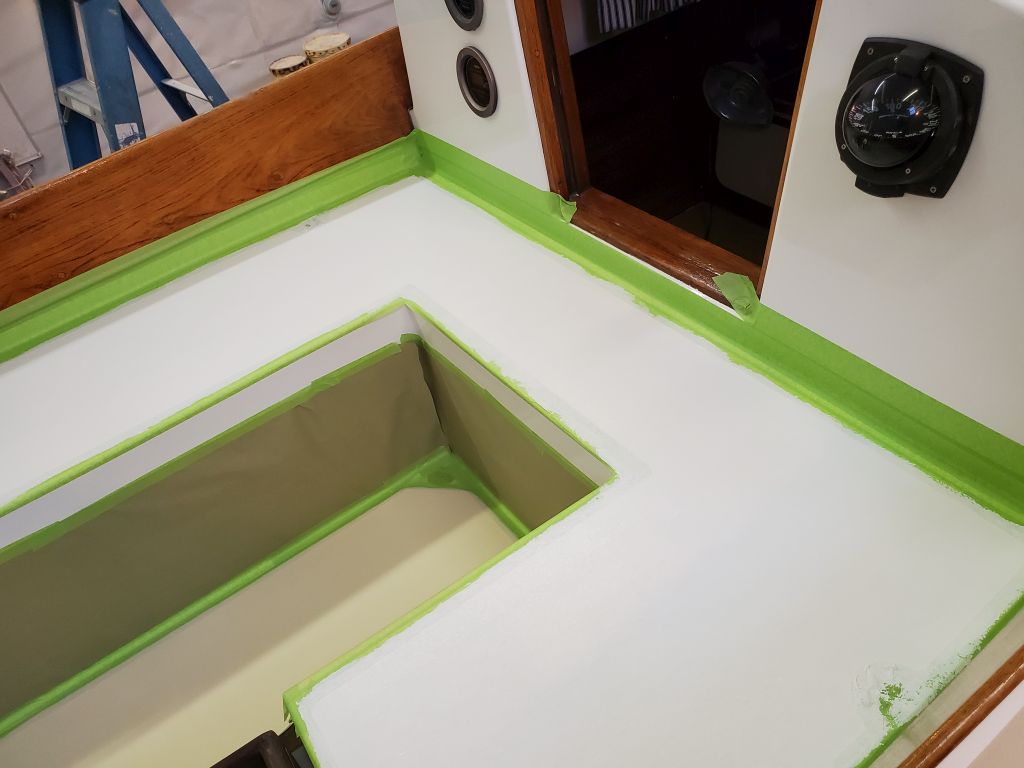
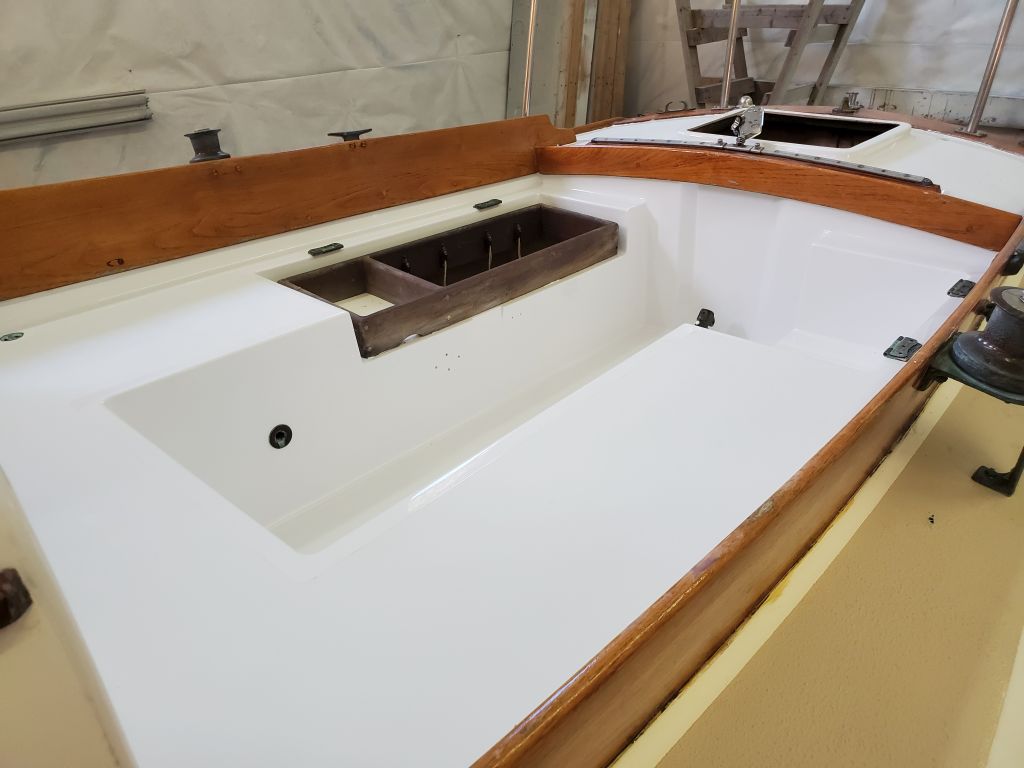
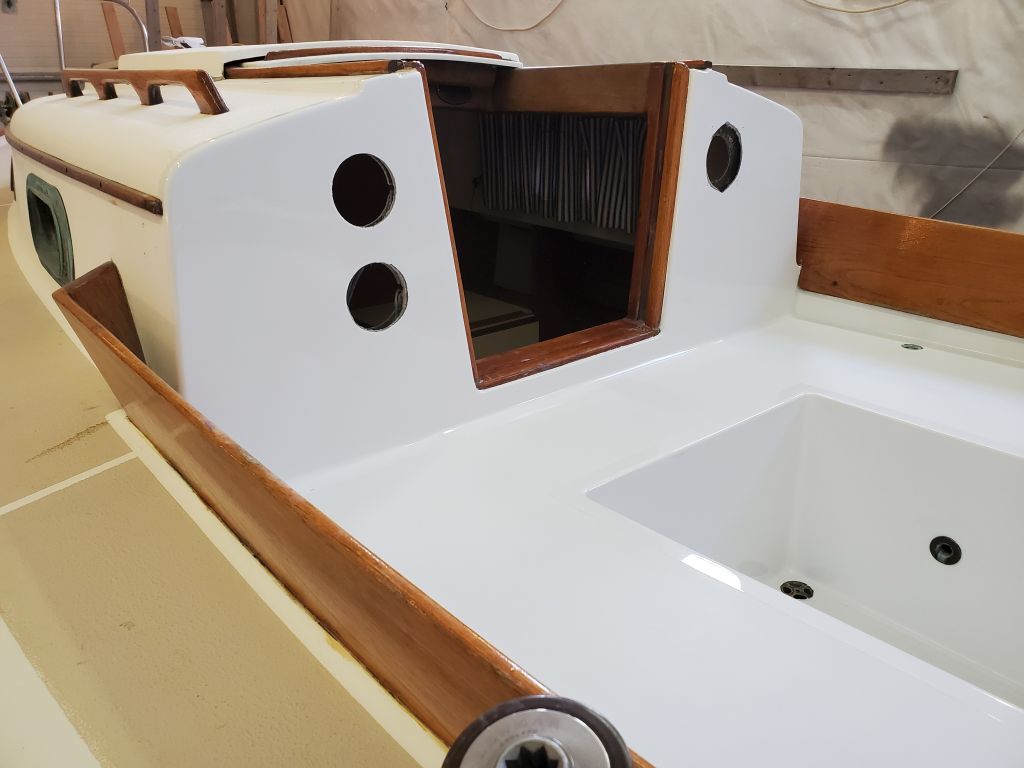
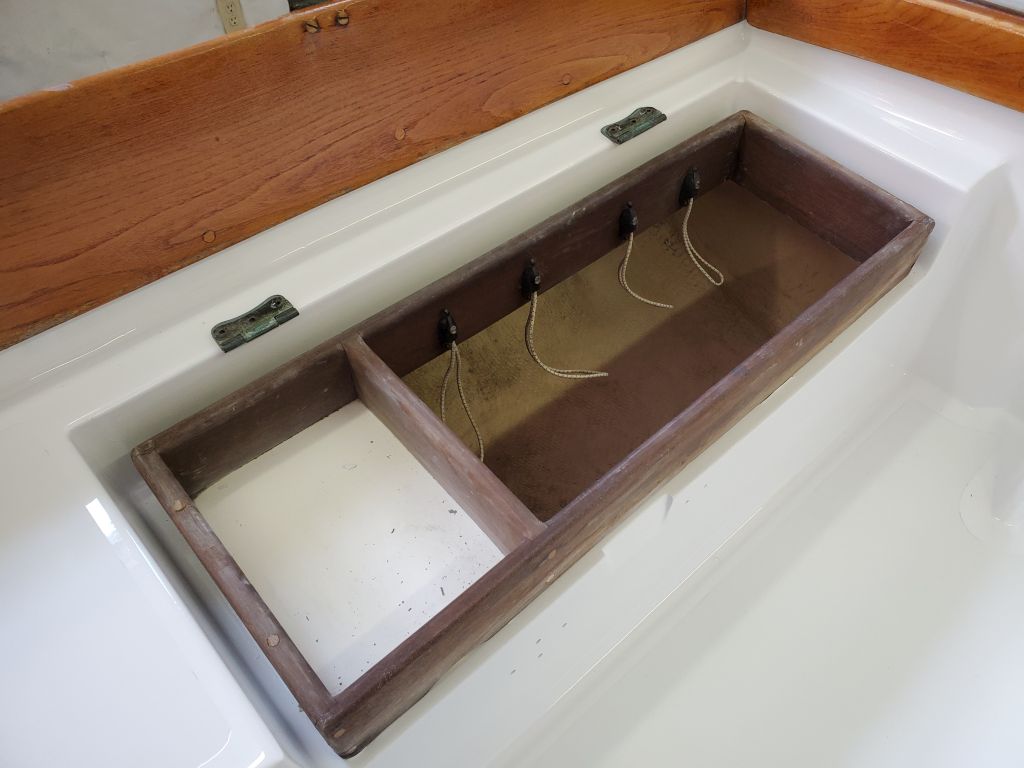
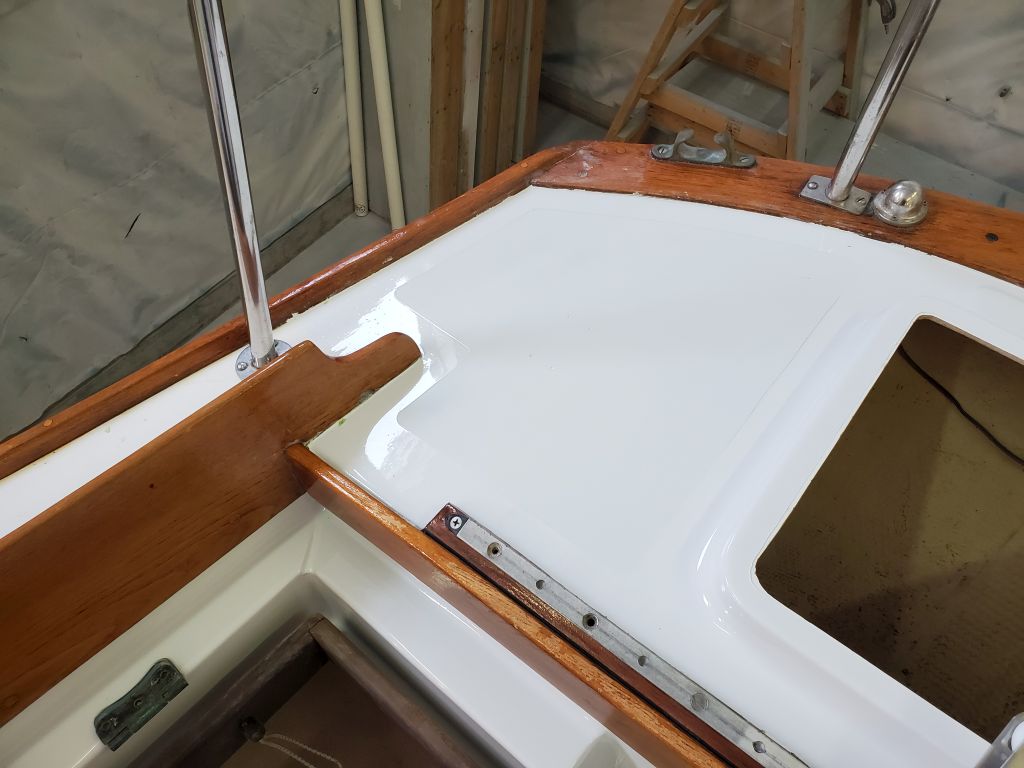
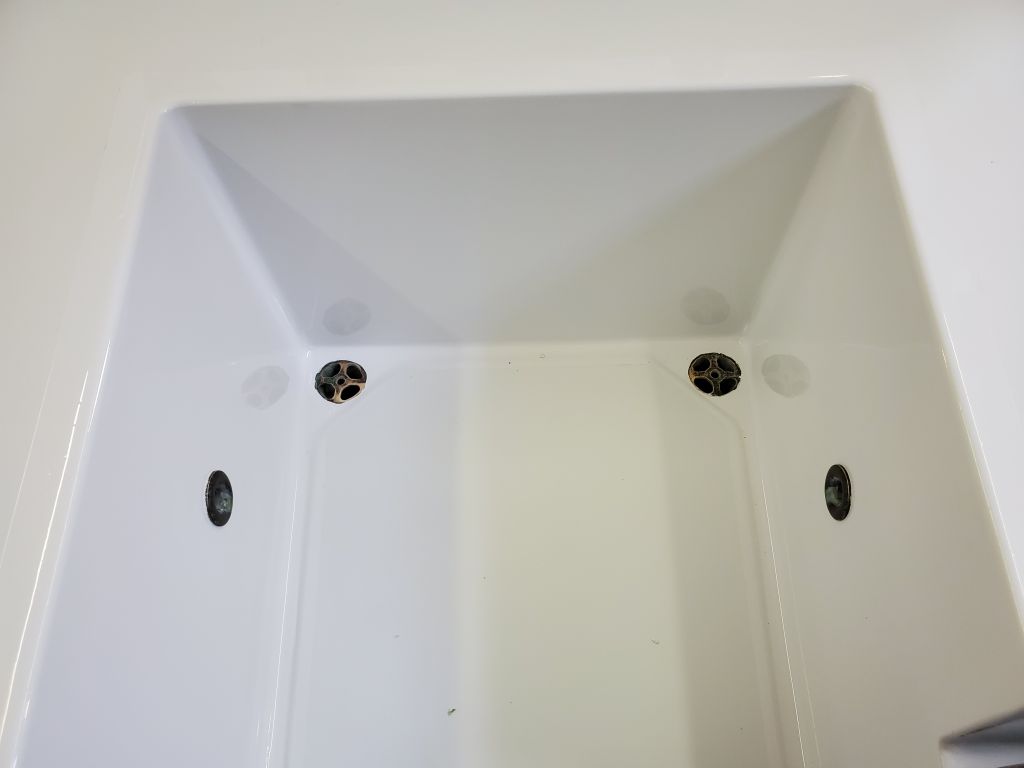
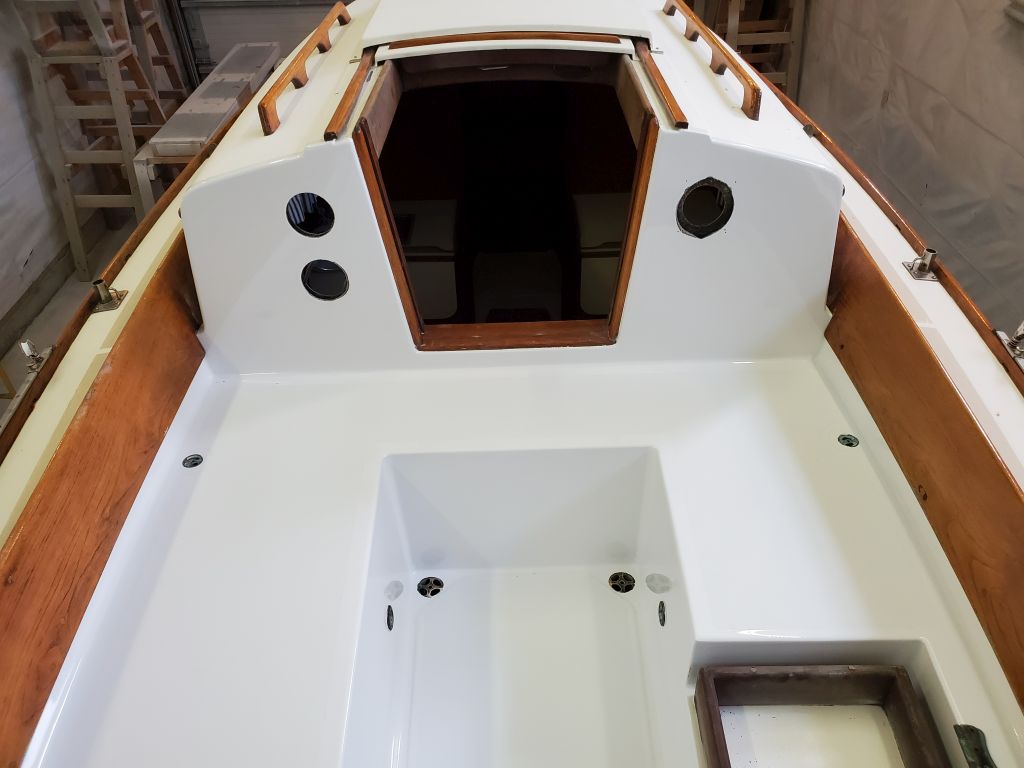
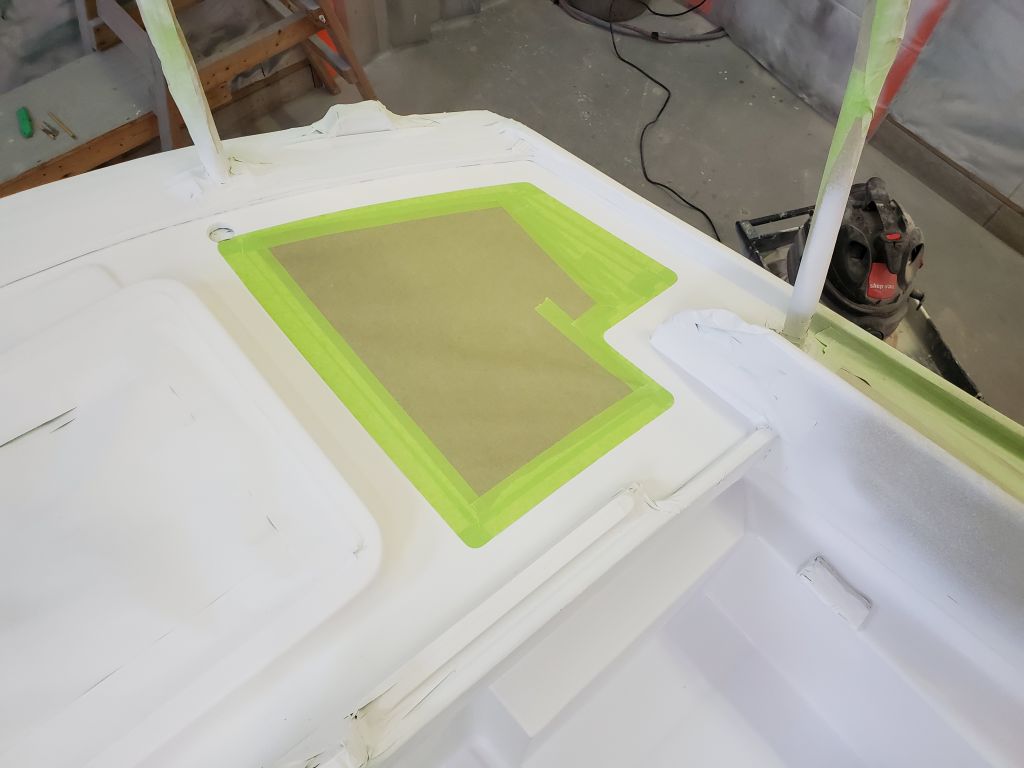
The small areas in the cockpit and poop deck required a bit of sanding to smooth and otherwise complete.  At this point, I thought the major work was done in the cockpit, though as I continued with the painting preparations I’d keep my eyes open for any spots that might need some touch-up sanding.  There’d be another opportunity for pinhole filling and fine-tuning following the high-build primer application.

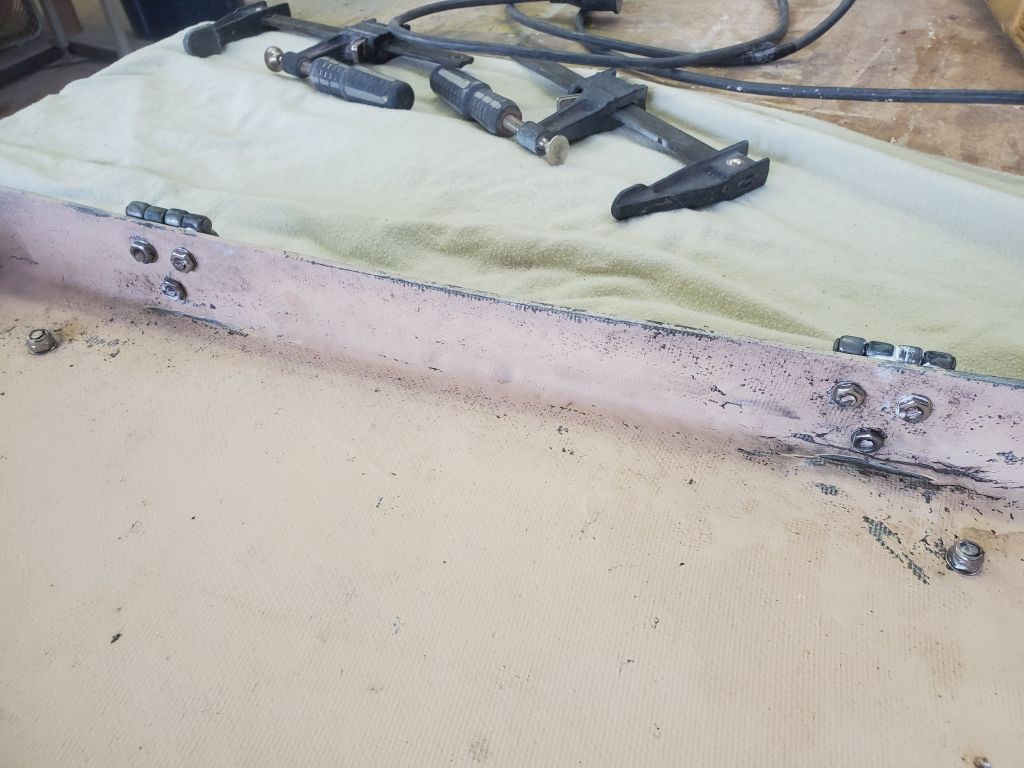
Meanwhile, I sanded as needed the lazarette hatch to smooth the recent epoxy application, and also on the transom repairs.

Next, I continued work on removing the old boottop and, as needed, a bit of bottom paint.  During the morning, I worked my way down the starboard side, then back forward along the port, removing most of the old paint and hard white coating (barrier?) beneath, leaving some vestiges of the old paint here and there that would be removed during the next several hull-sanding steps with finer sandpaper and less aggressive tools.

After cleaning up a bit, I installed permanently the little toerail section on the port side amidships.  I bunged the screw holes and left the glue to cure.

To round out the day, I made patterns of the various patches on the hull that I needed to repair, and transferred the patterns to a leftover piece of fiberglass.  I ran out of time and couldn’t get these patches installed as I’d hoped, but that would come soon.

Total time billed on this job today:  4 hours

0600 Weather Observation:  32°, cloudy.  Forecast for the day:  Mostly cloudy, 42°
Older posts Newer posts