(page 156 of 166)

Danusia 26

< Back to Danusia

Tuesday

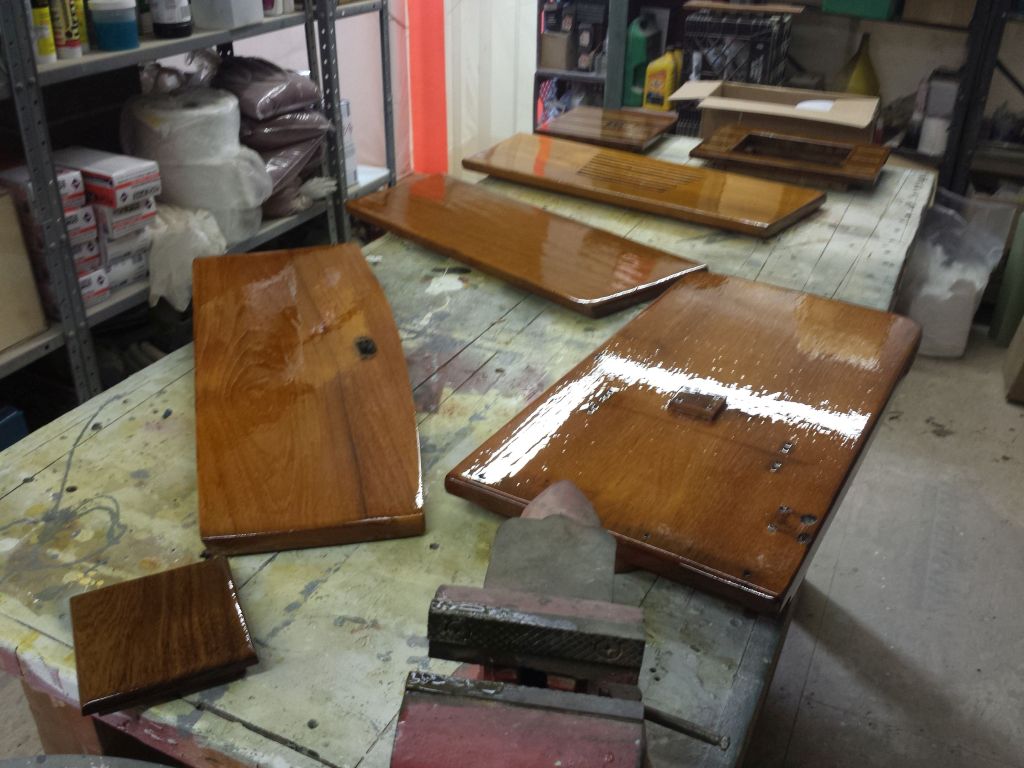
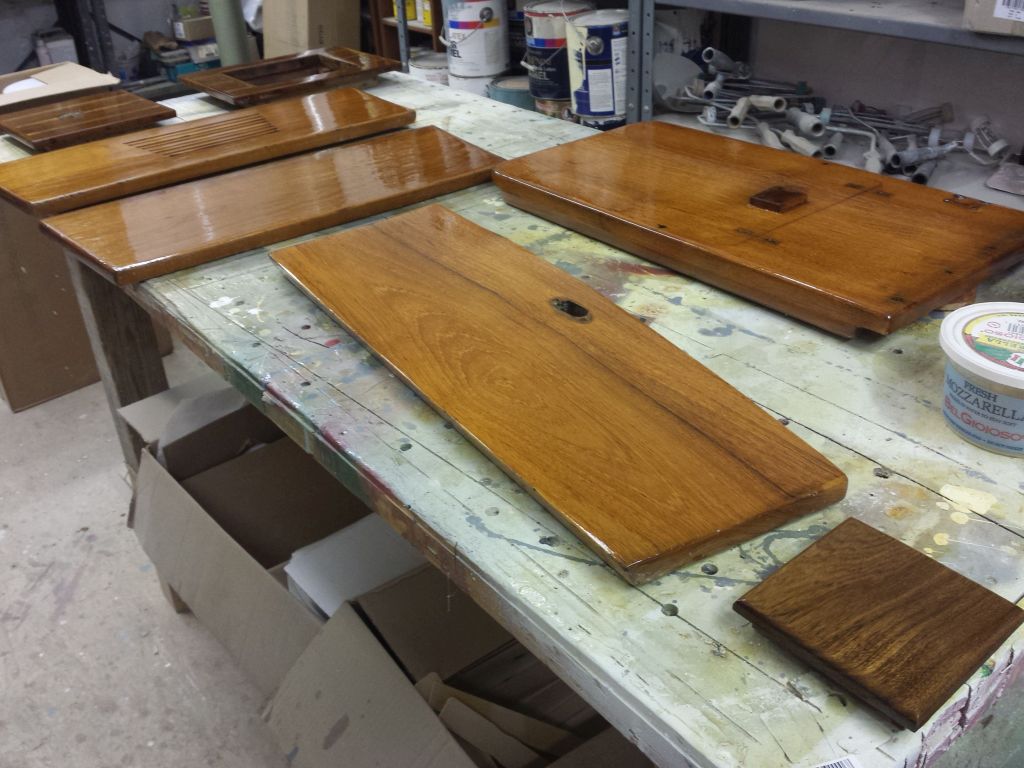
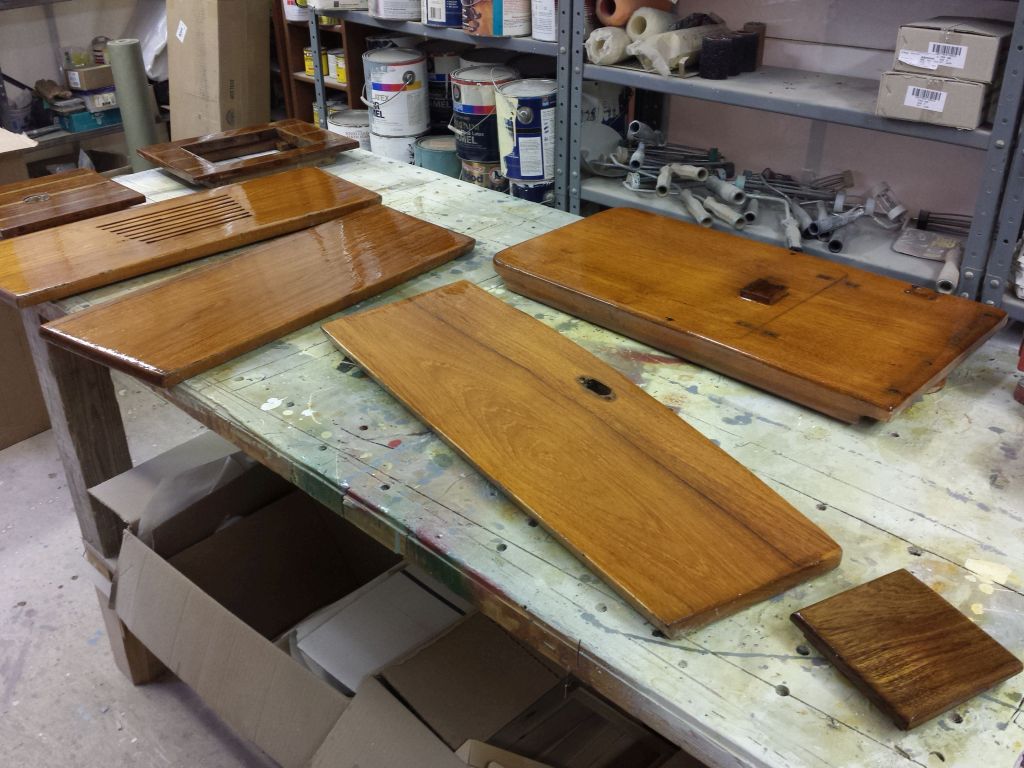
I began the day as per usual with sanding and varnish for the loose hatches (4th coat).

varnish1-20216

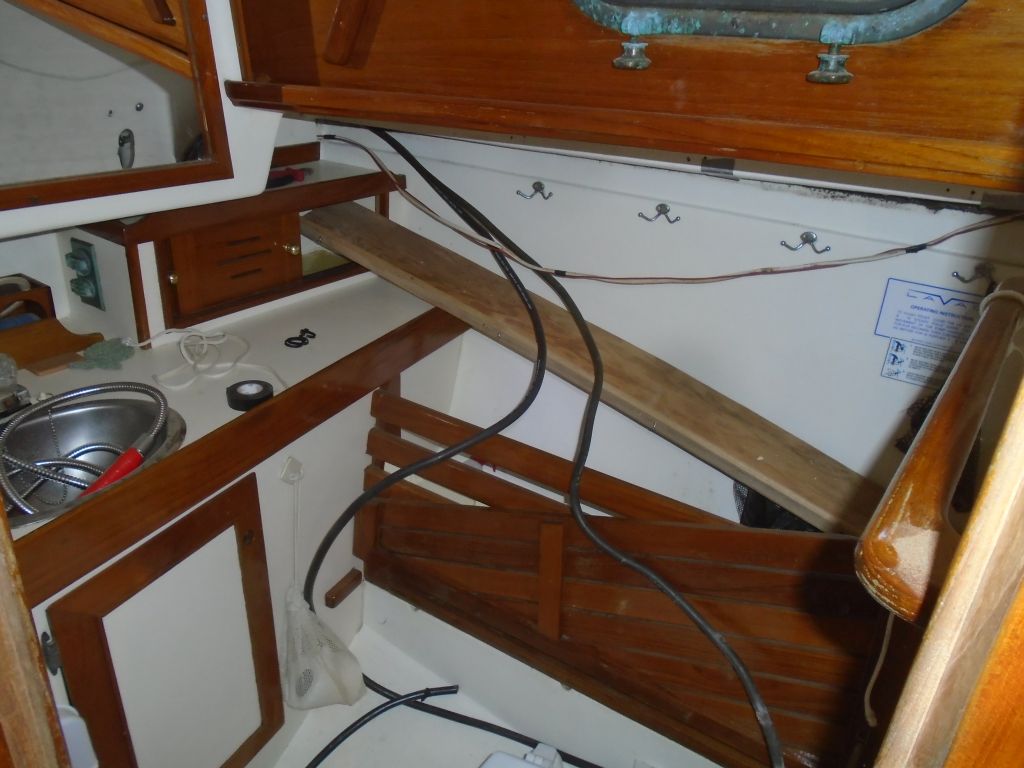
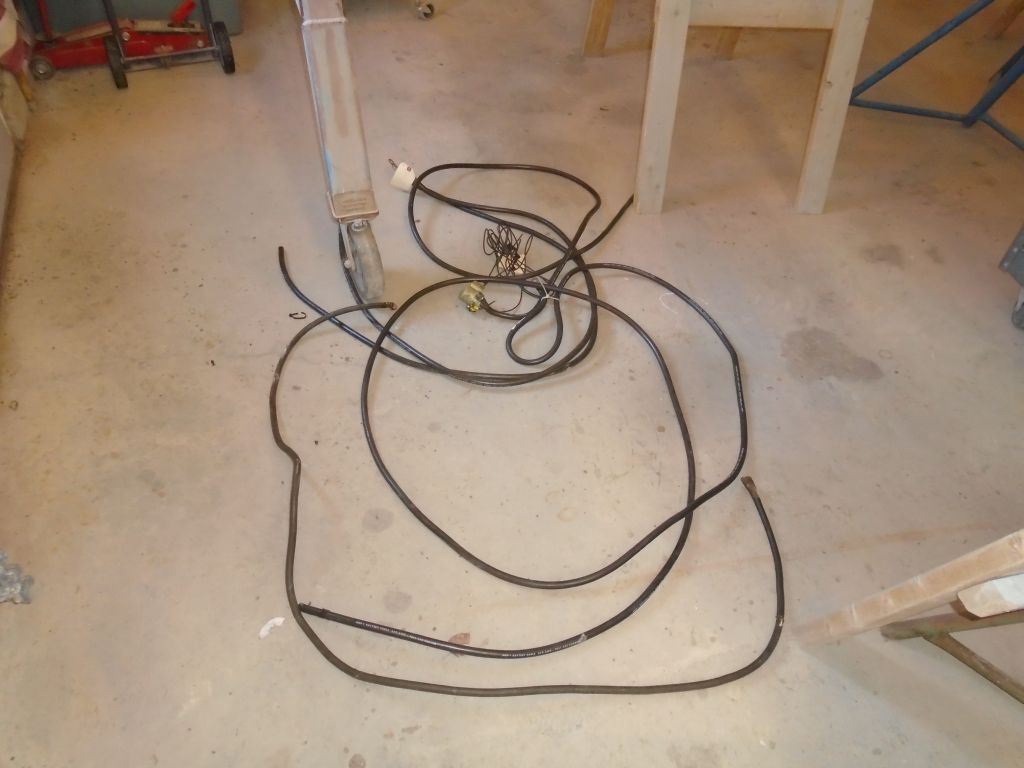
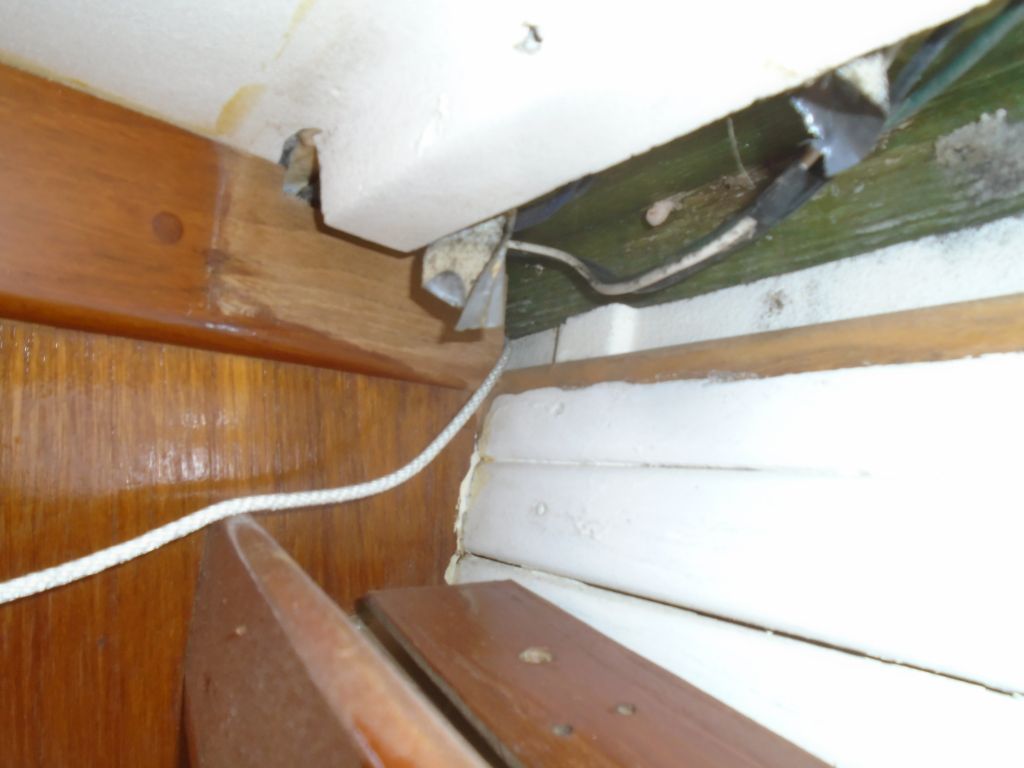
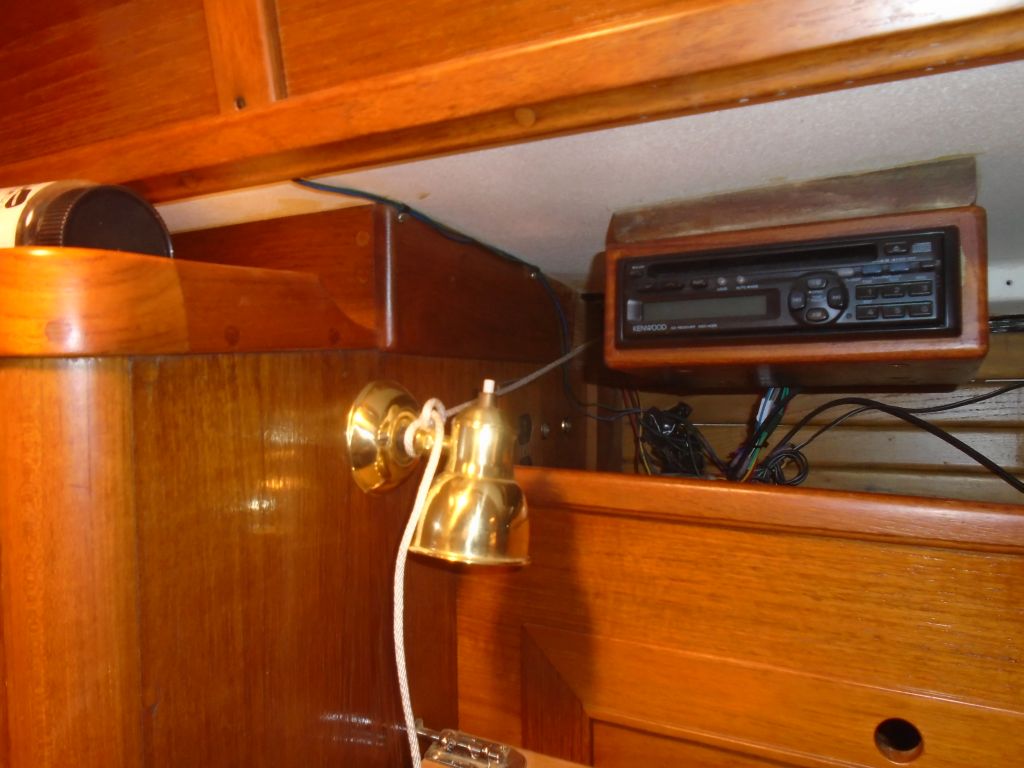
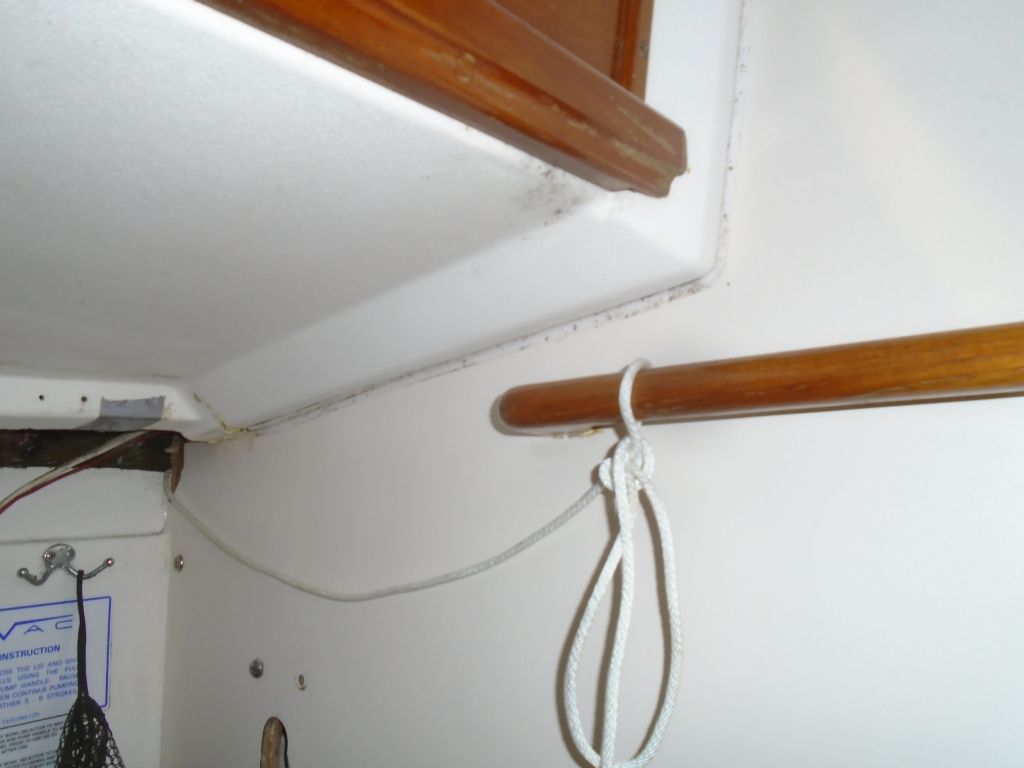
I continued–and completed–the removal of the old windlass cable, including the solenoid in the hanging locker and another small control wire that went with it.  For ease of removal, I’d planned to cut the cable into smaller sections, but my old cutters weren’t up to the job, so after struggling with one set of cuts I pulled the rest of the cable out whole.  Overall the cable had been in fair condition, but new cable would be better and of higher quality, as the original cable was not tinned and was less flexible than the good marine cable.  At a few places where the cable disappeared behind lockers, I pulled through a length of messenger line to make installing the new cable that much easier.

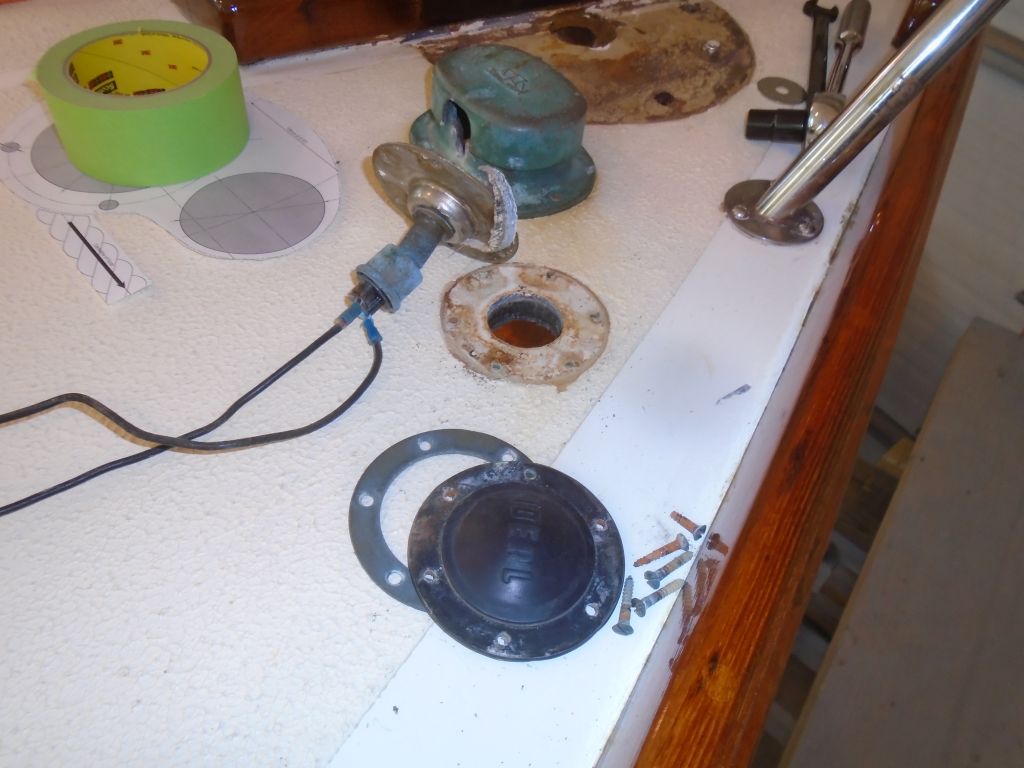
Afterwards, I removed some old wire ties and mounts from the chainlocker, and removed the original foot switch to make way for the new pair that I’d be installing along with the new windlass.  I finalized the order for installation materials and cable for the new windlass, so that would be along soon so I could continue the initial parts of the installation then.
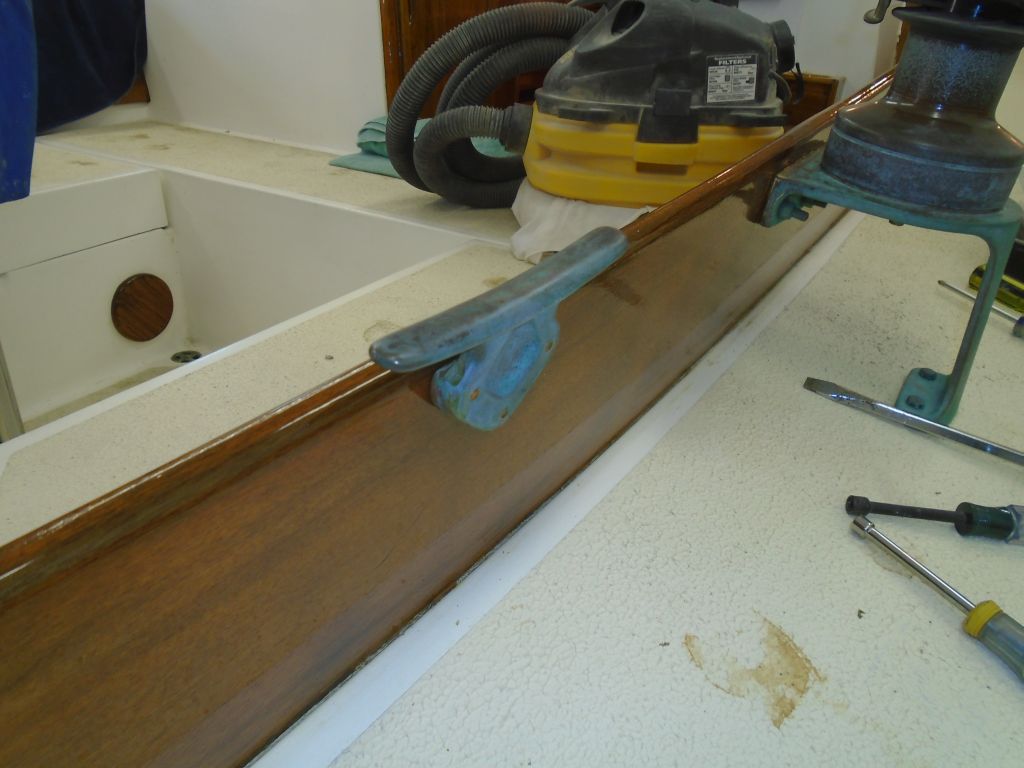
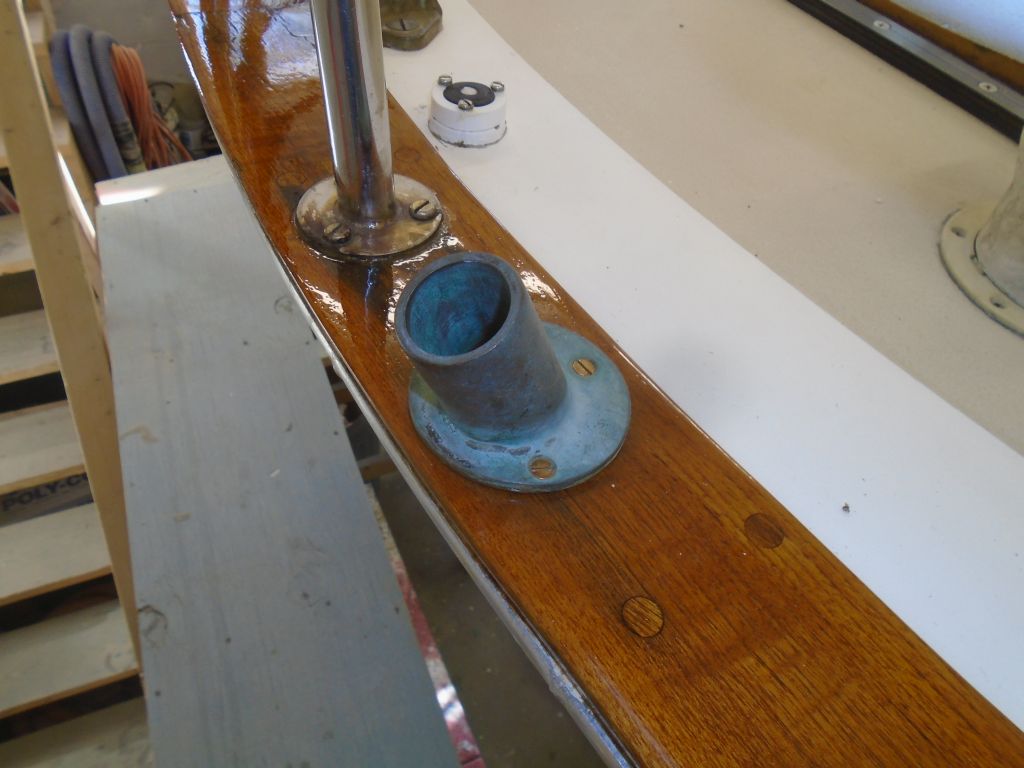
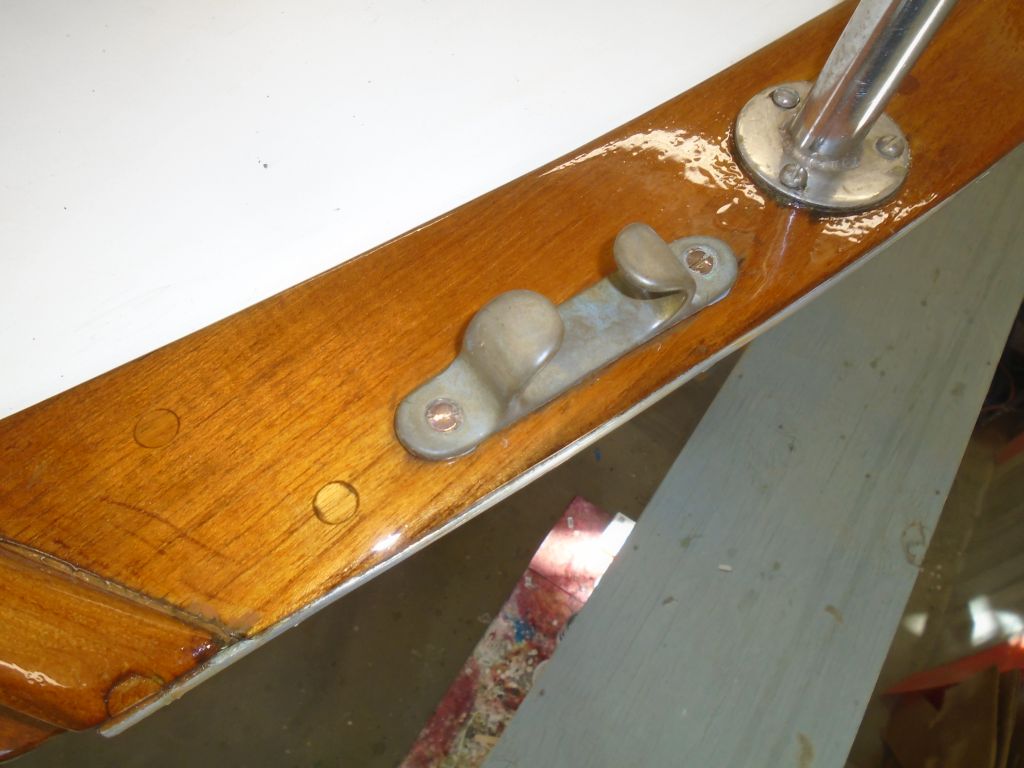
Next, I reinstalled the various bits of hardware I’d removed for the exterior varnish project, using mainly new (and mostly bronze) fasteners to replace the originals.
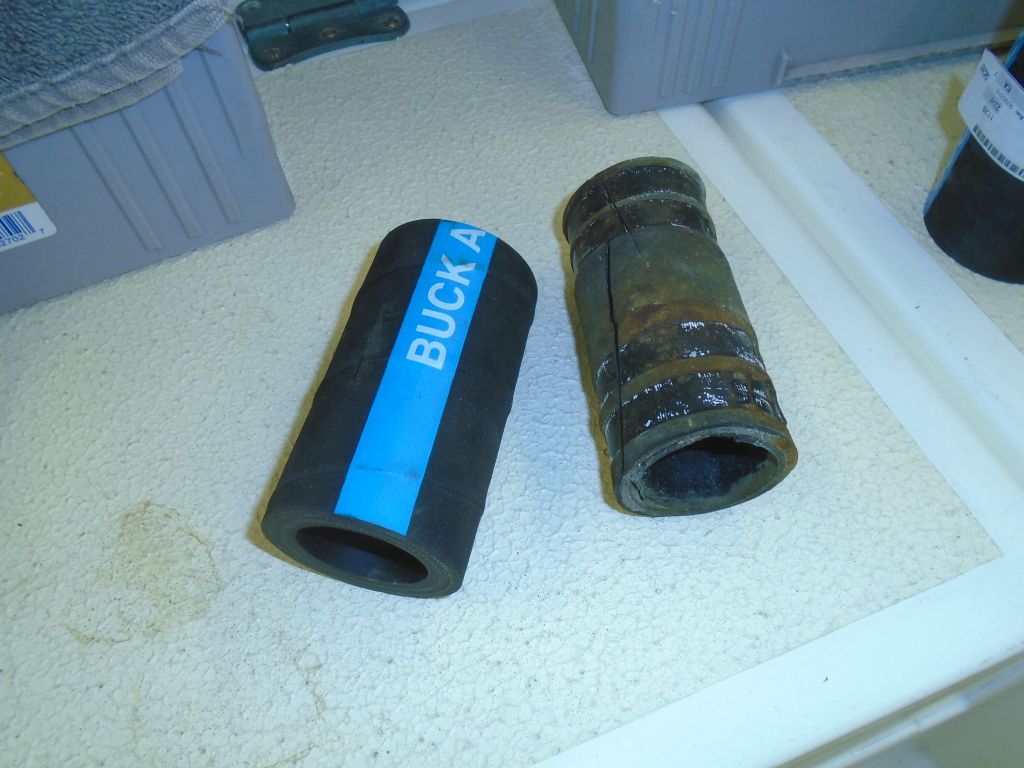
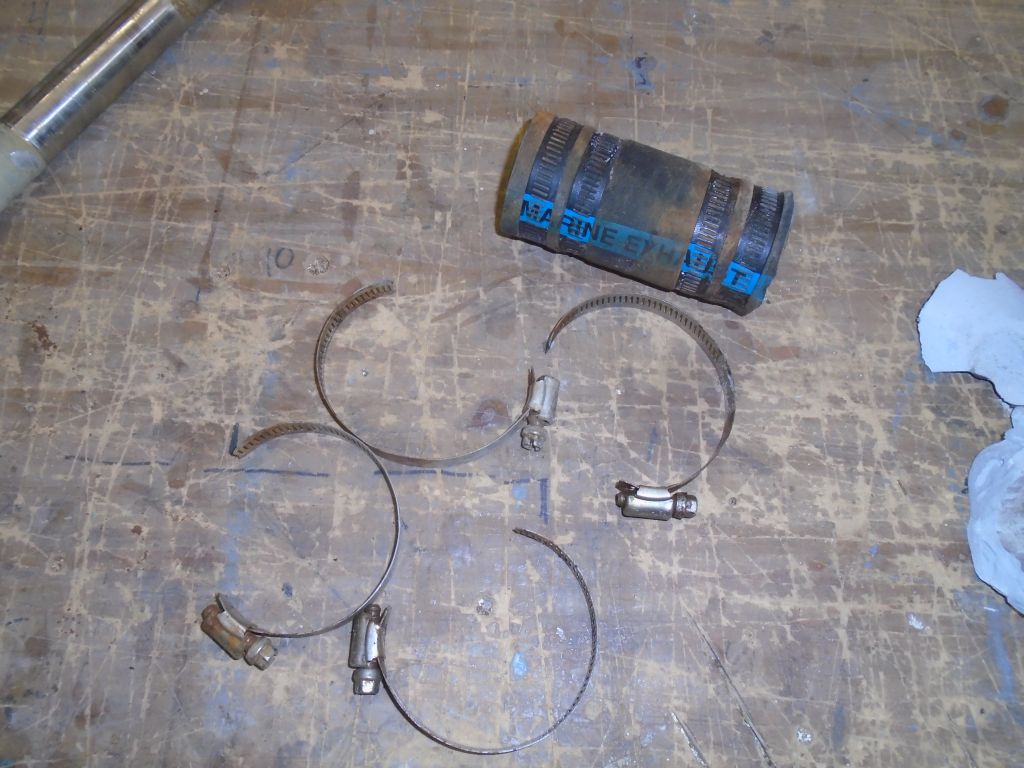
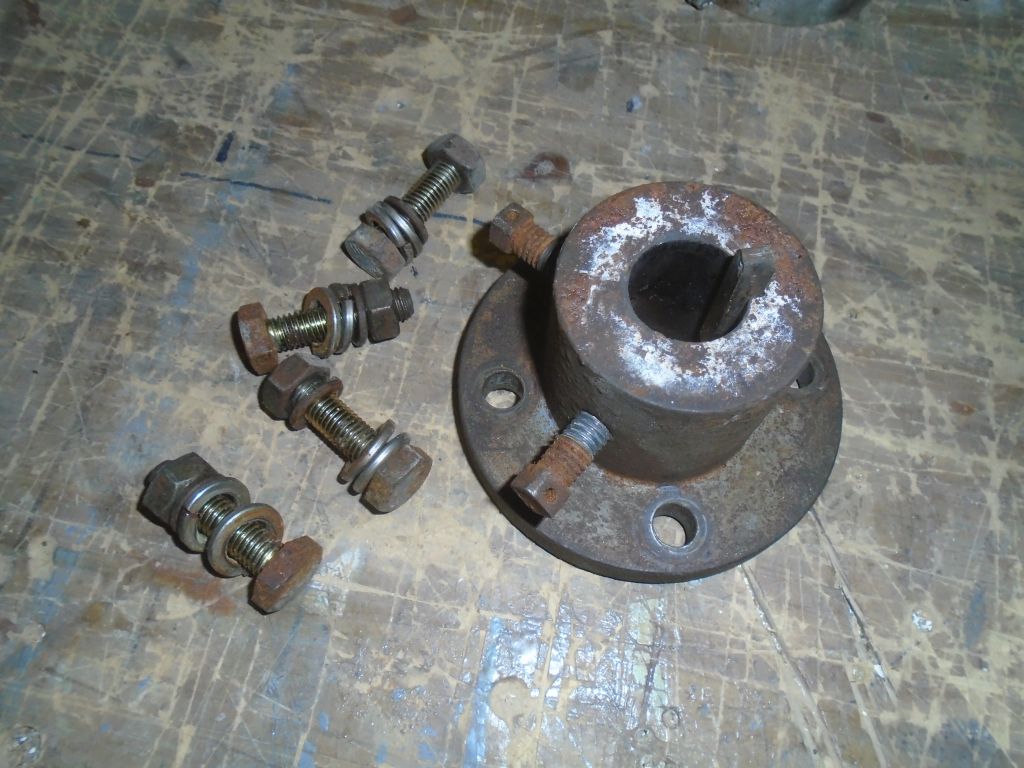
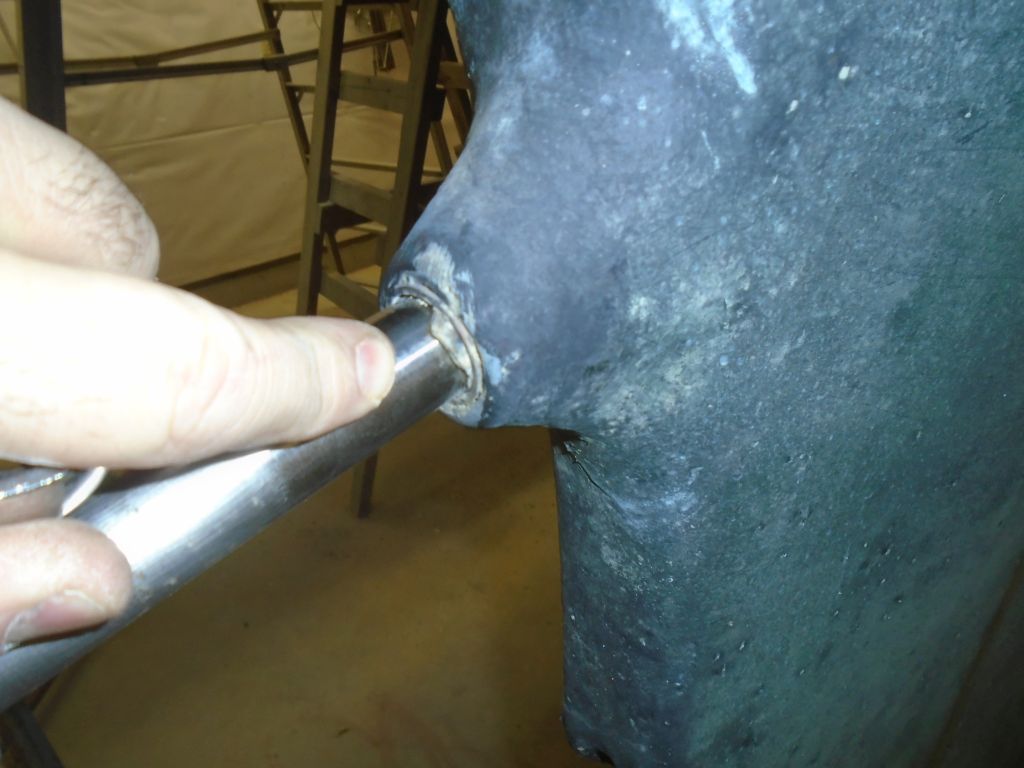
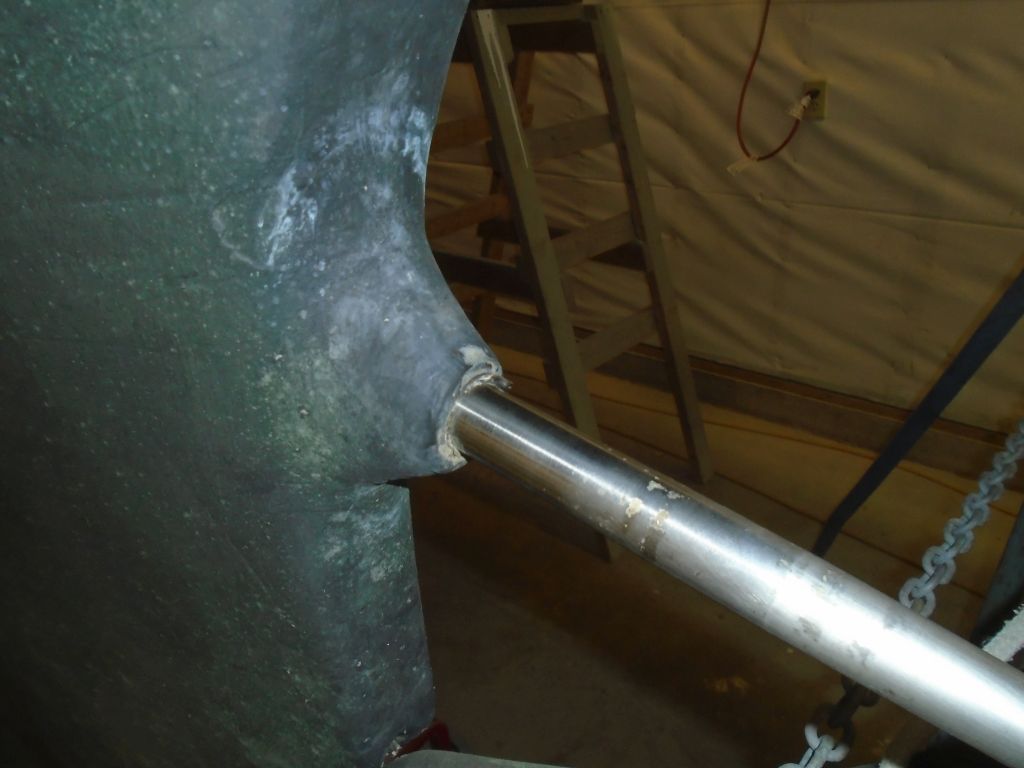
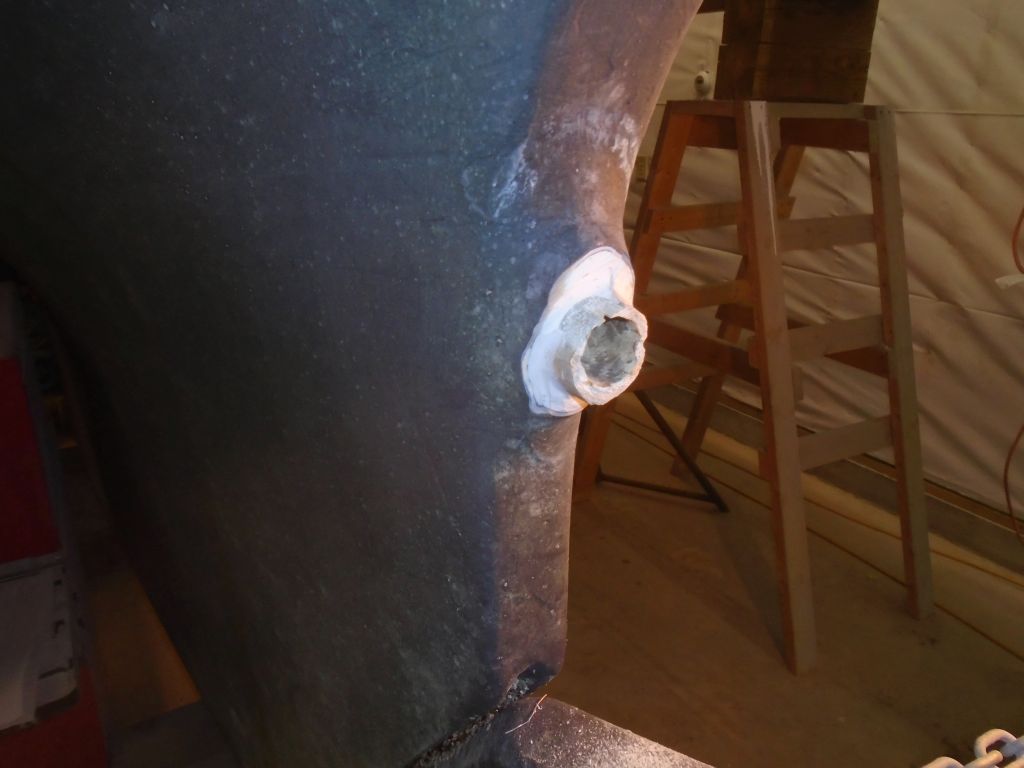
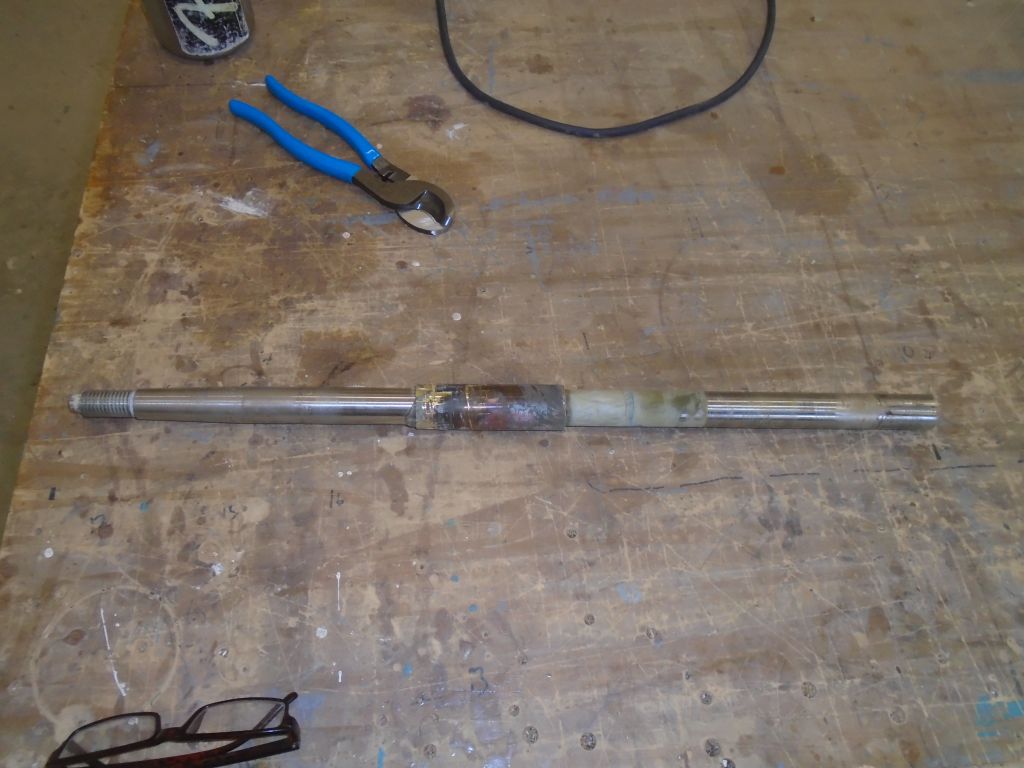
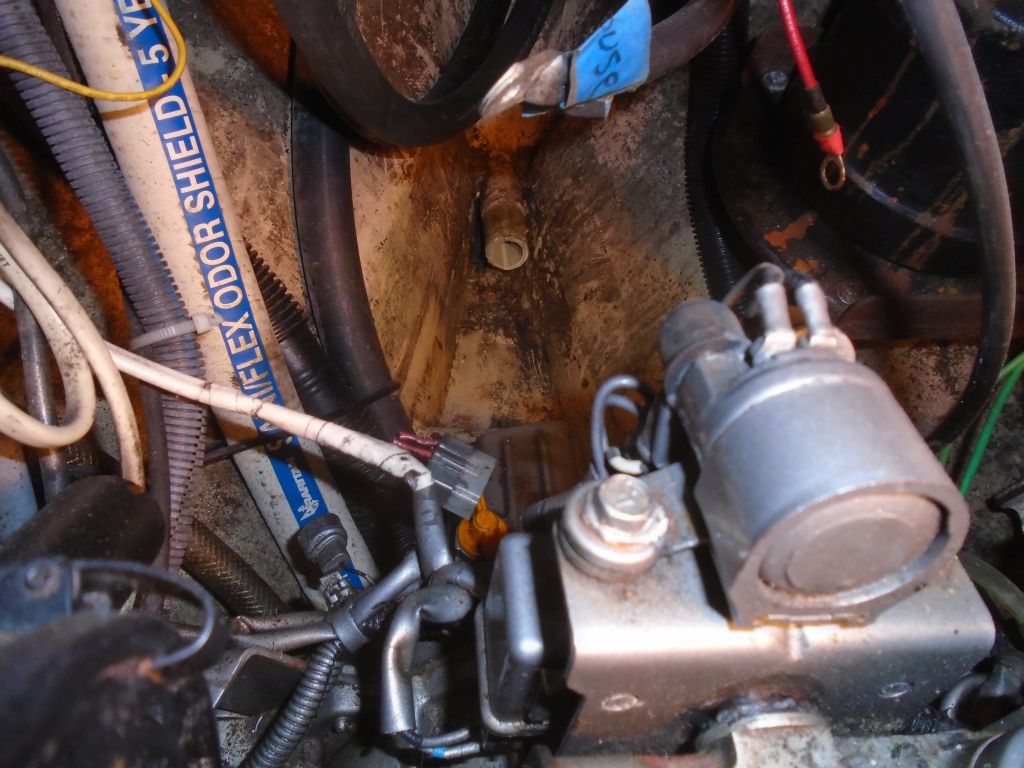
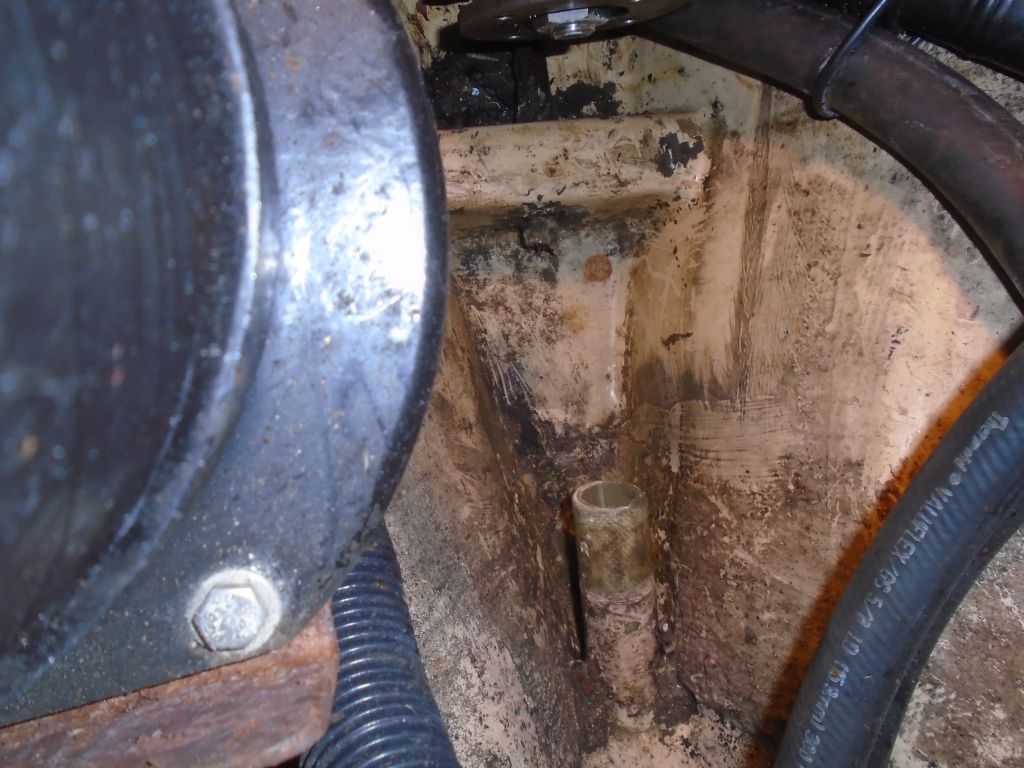
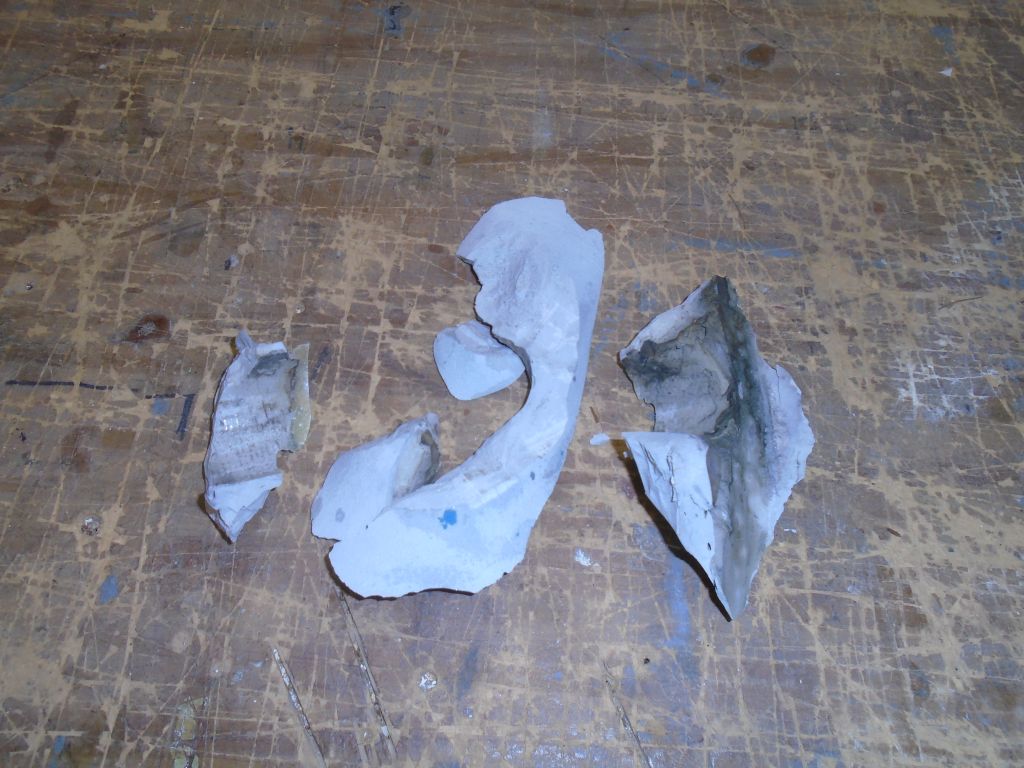
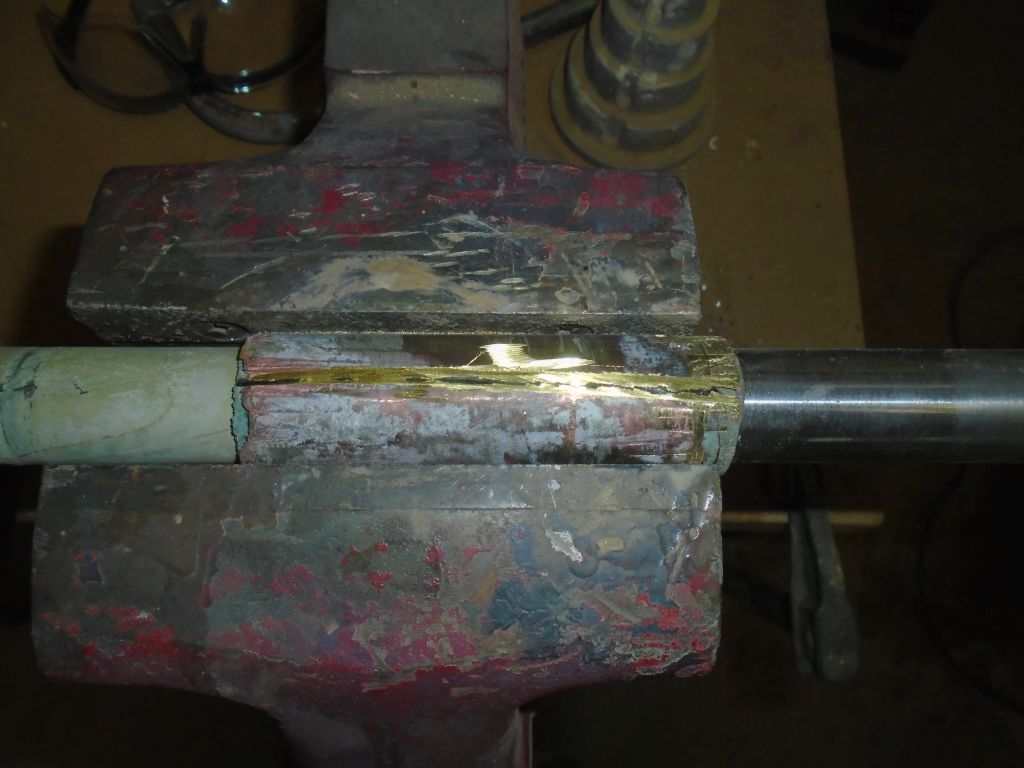
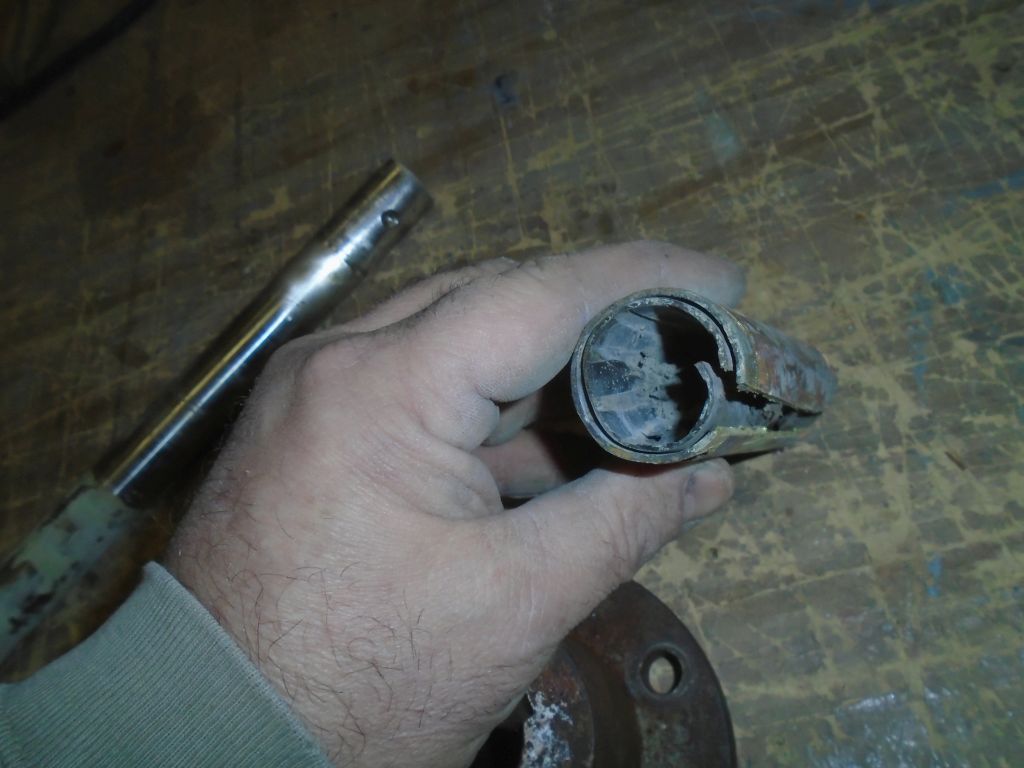
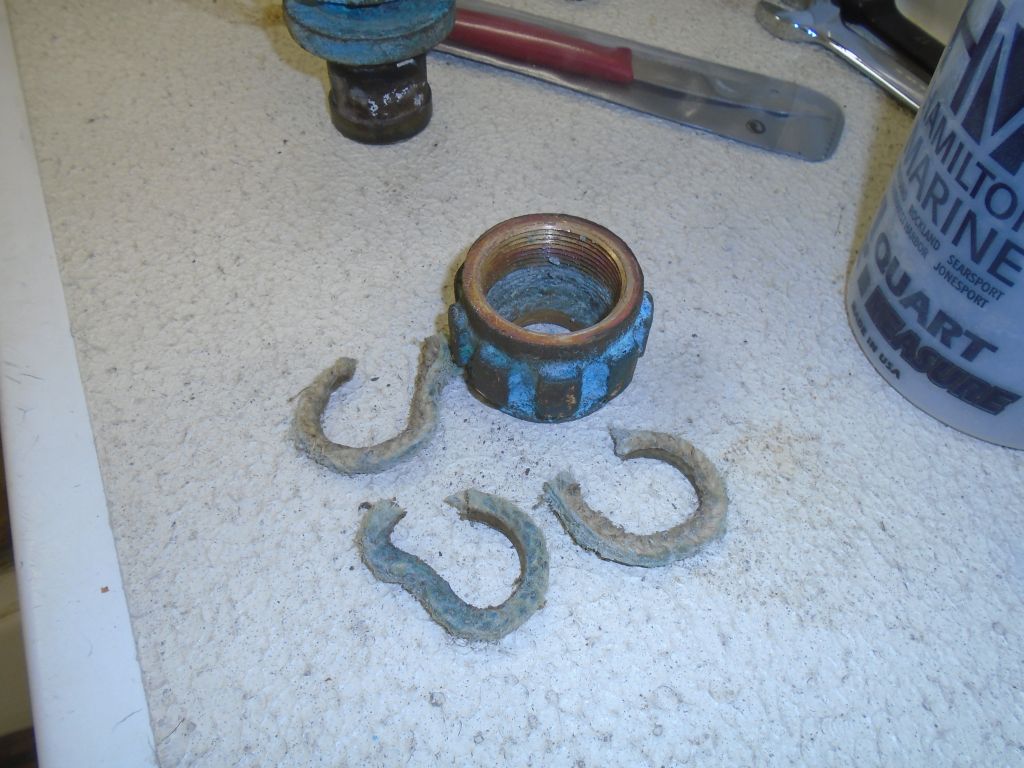
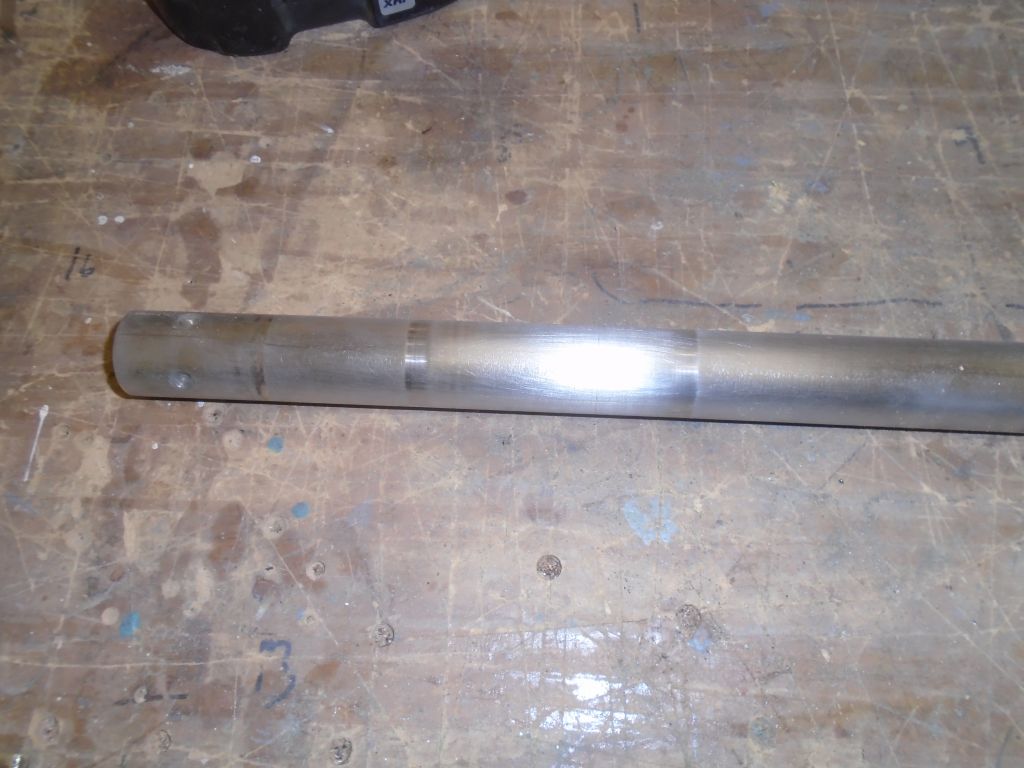
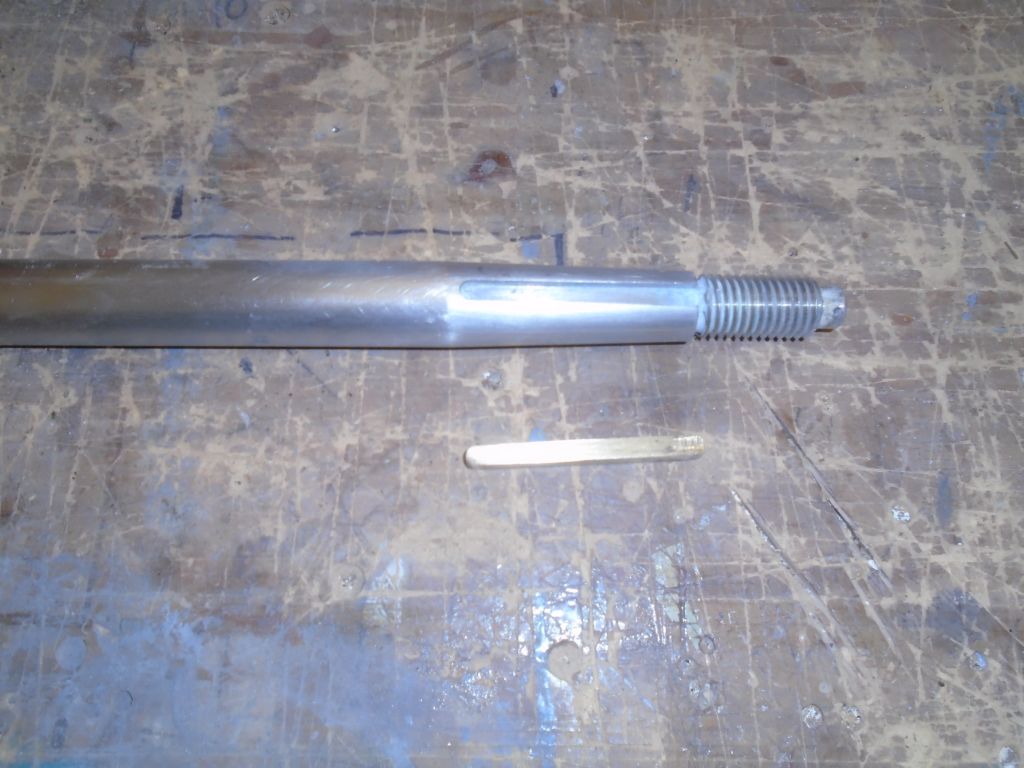
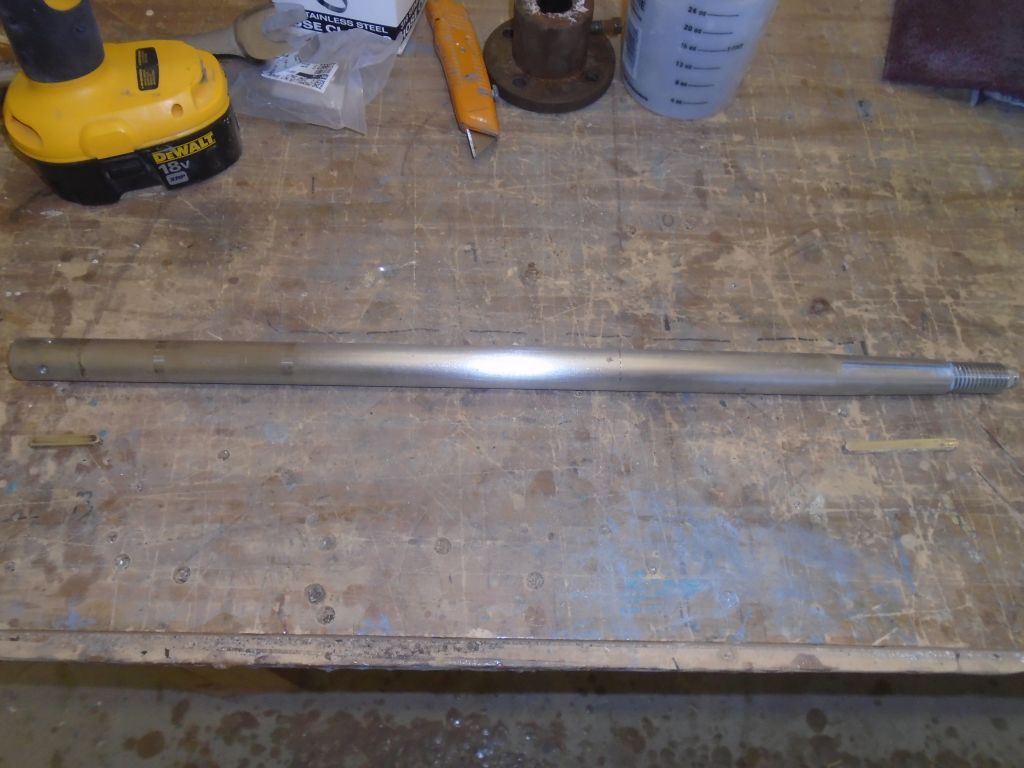
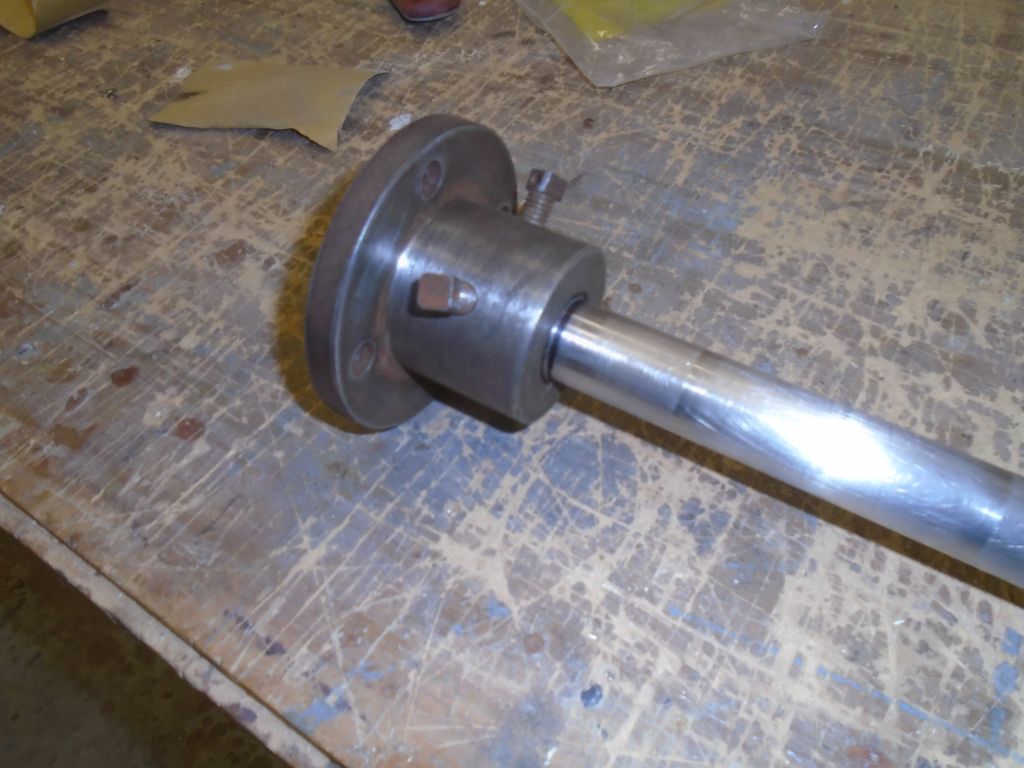
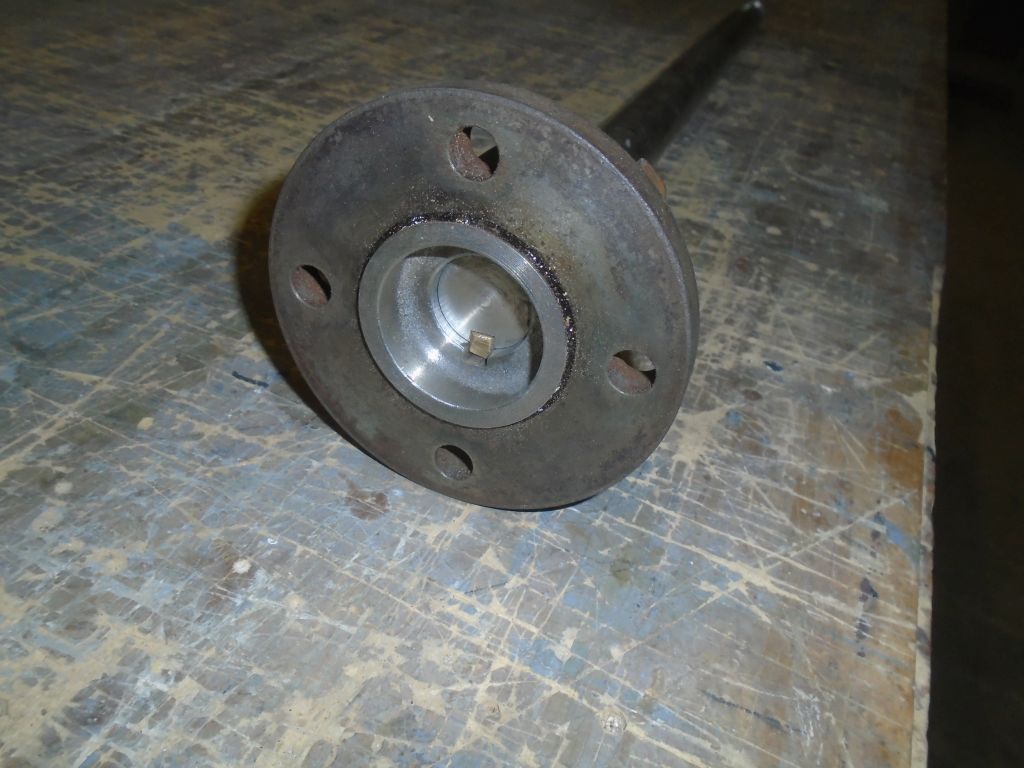
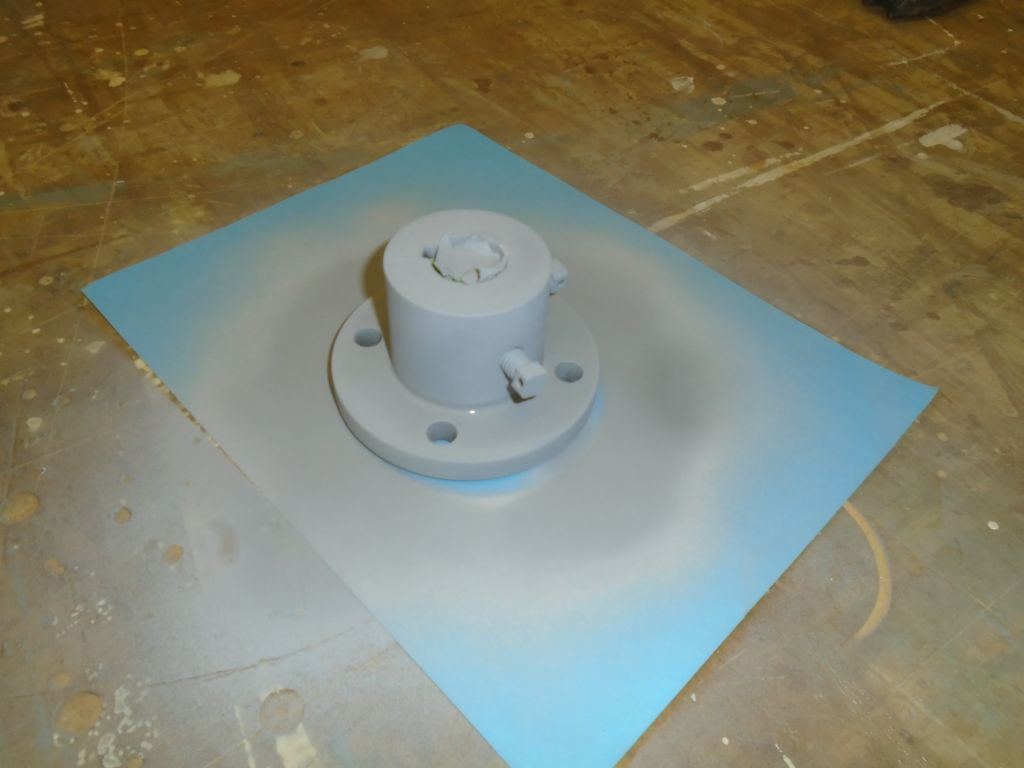
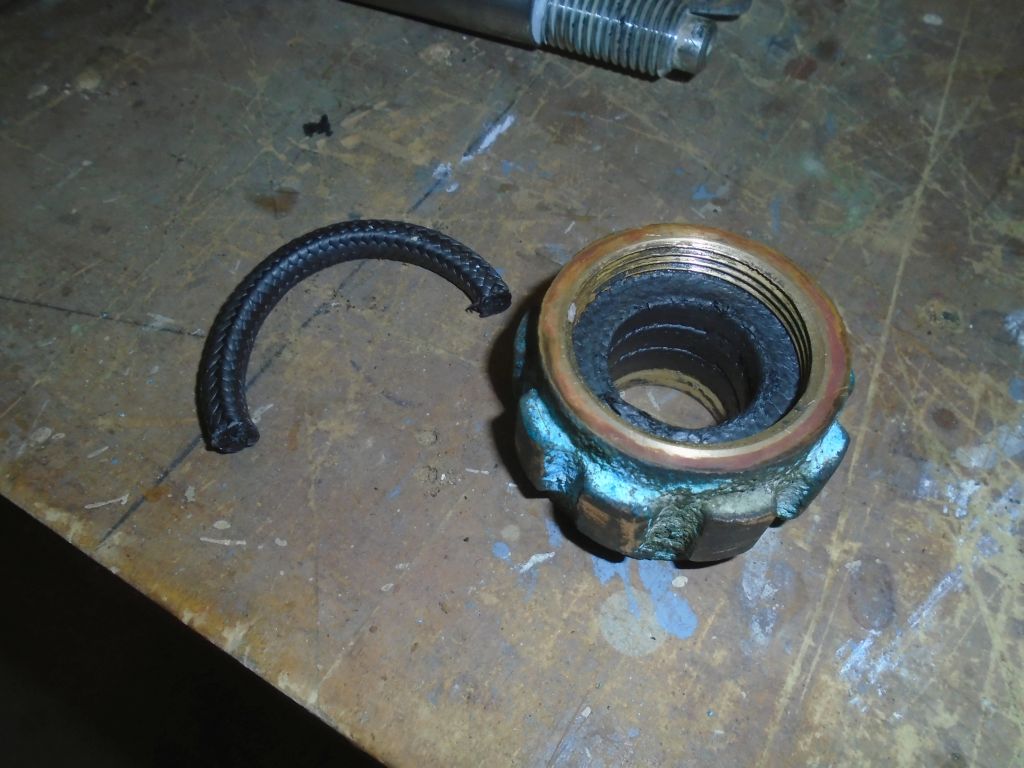
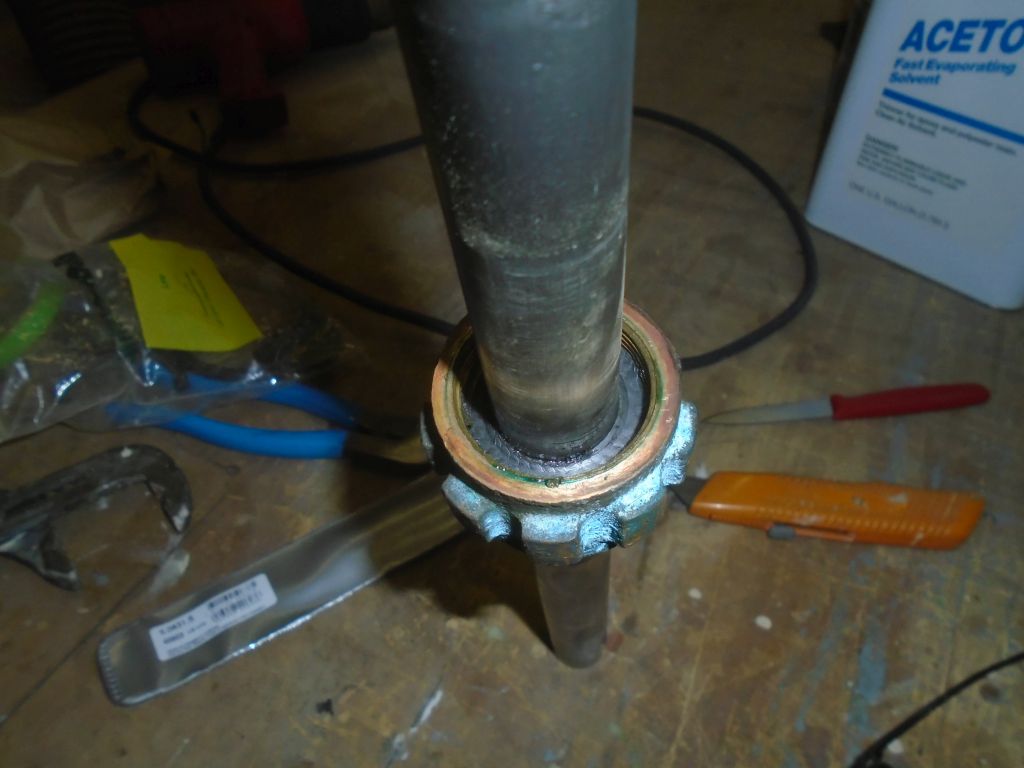
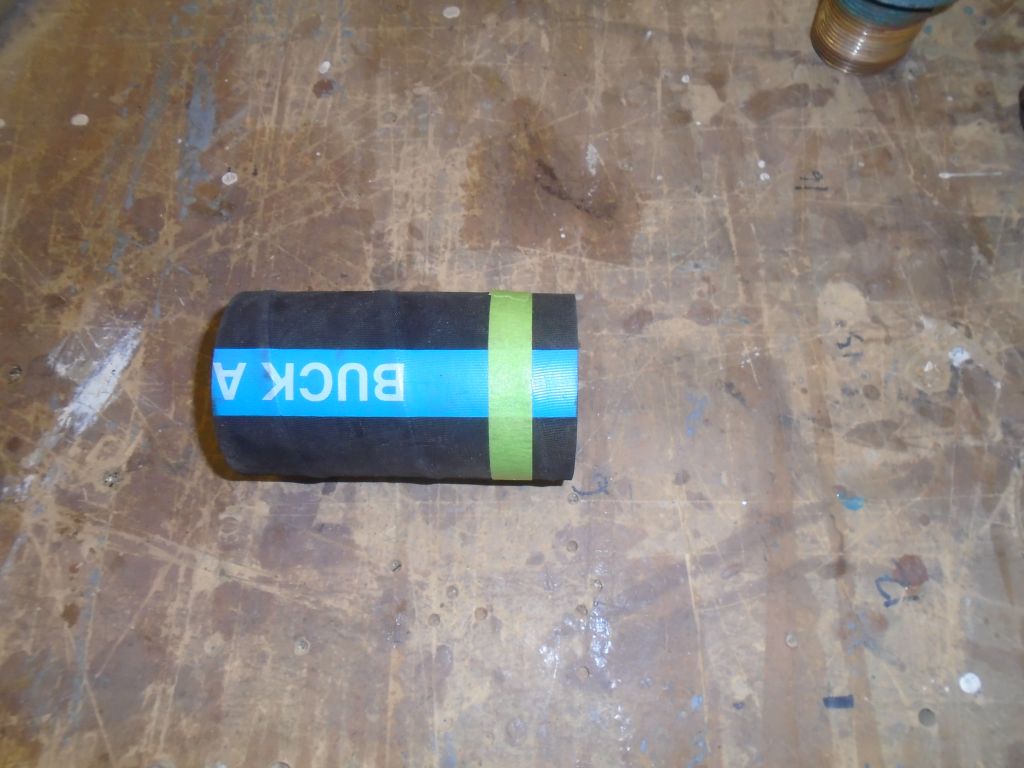
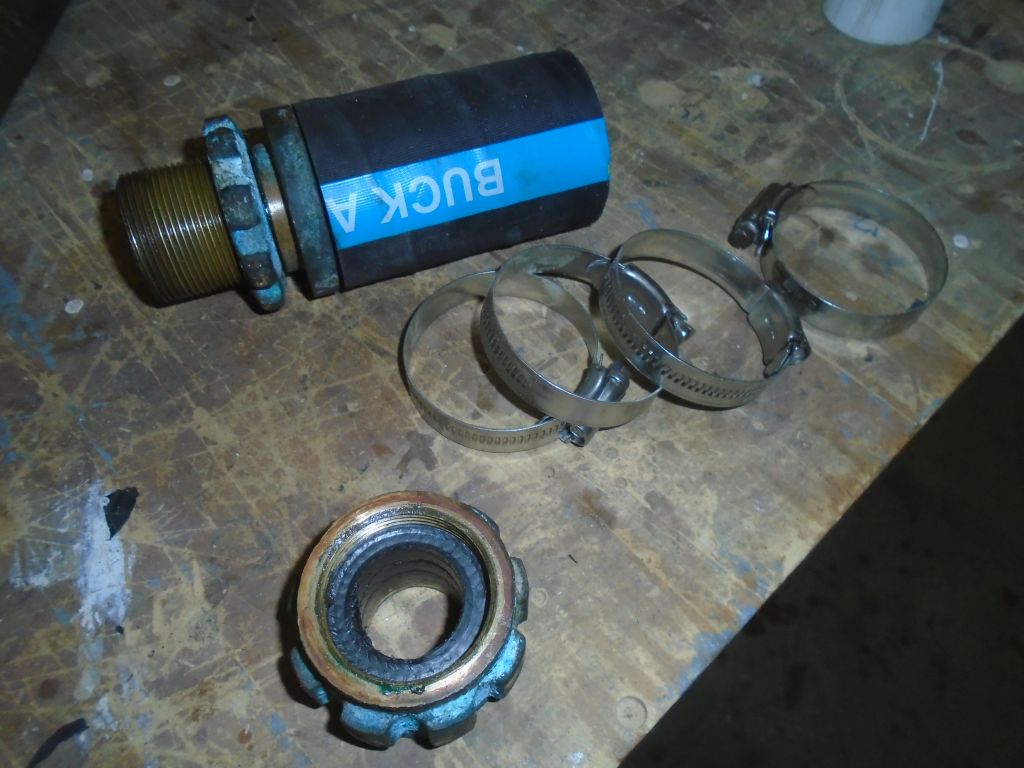
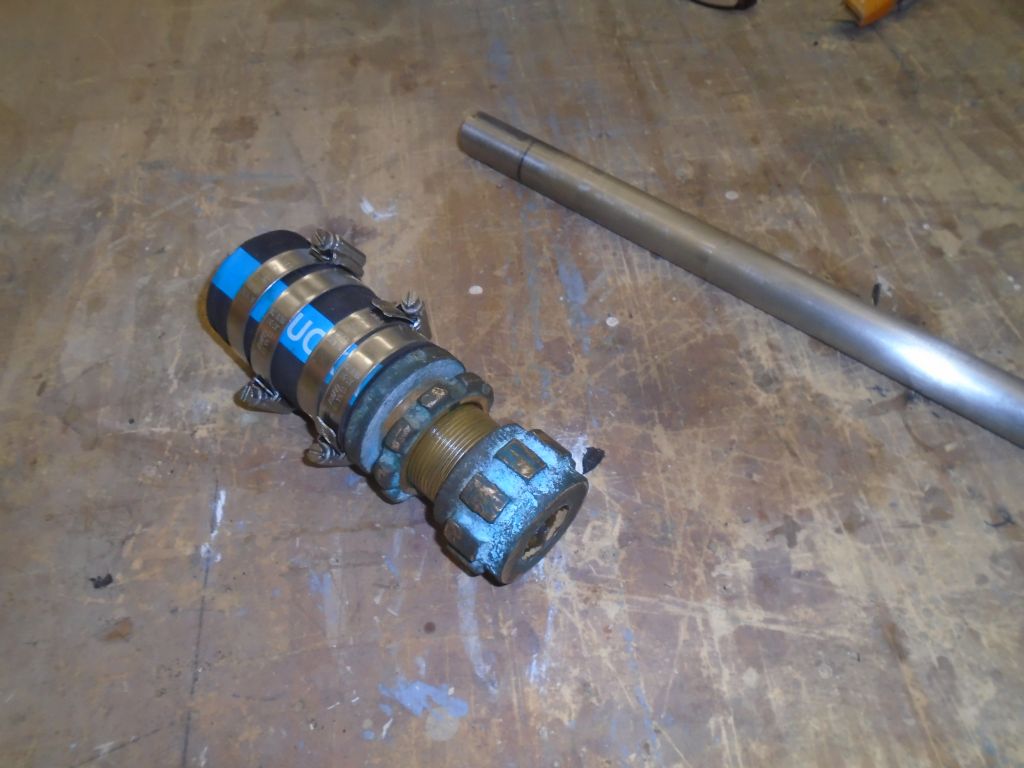
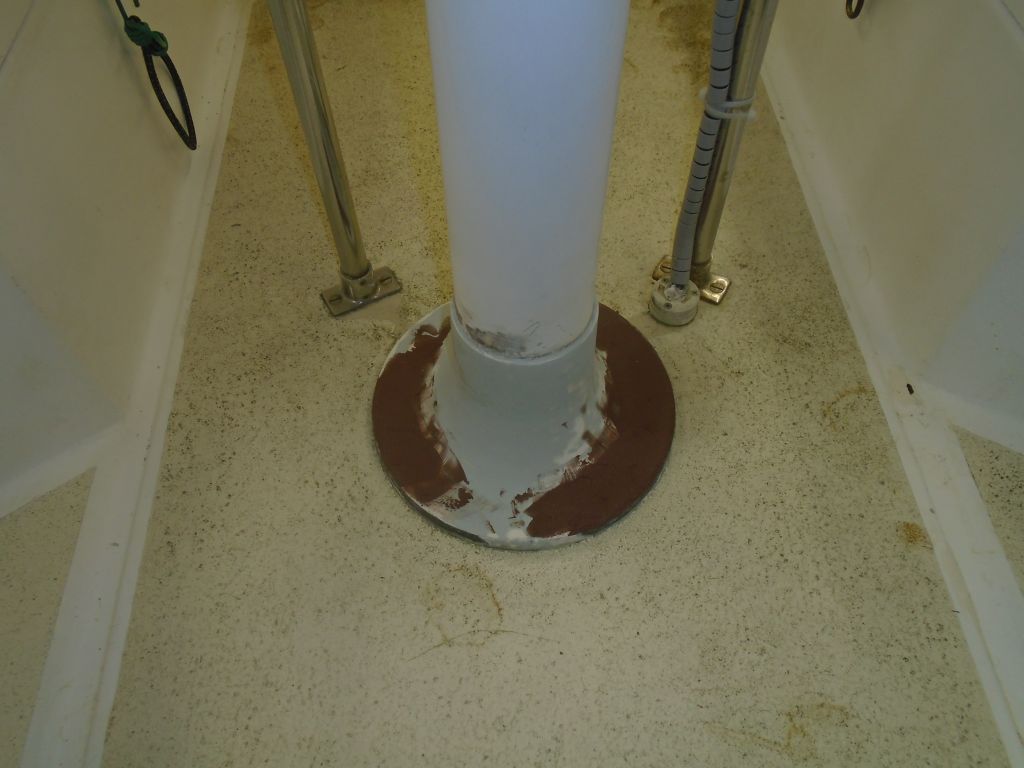
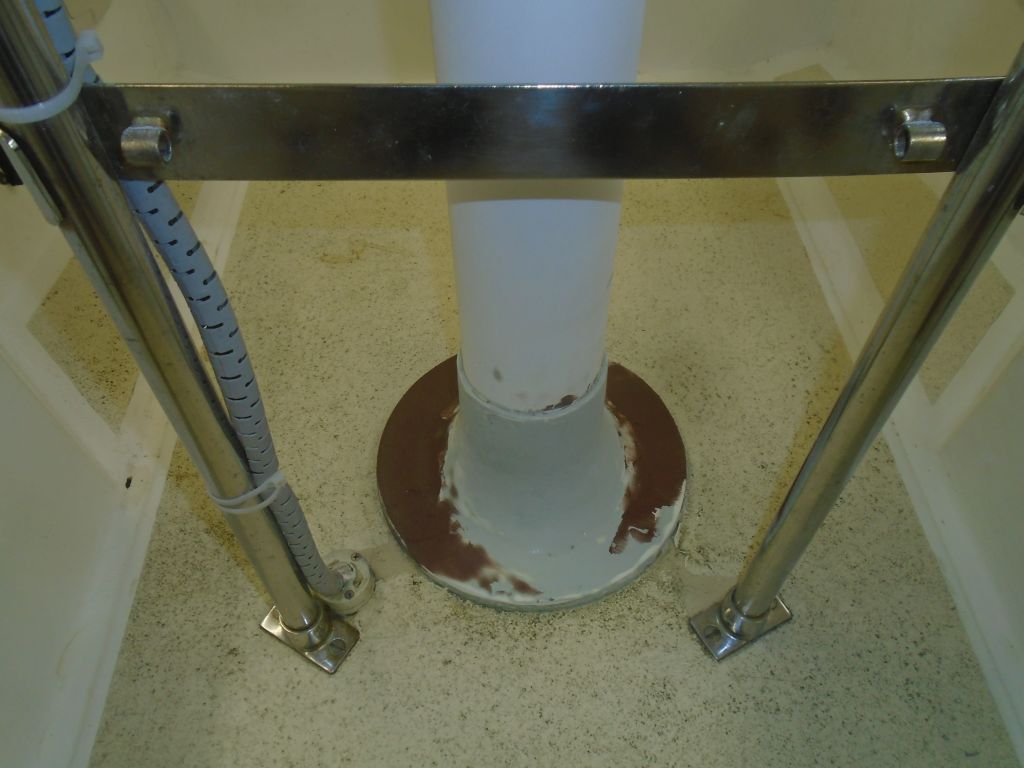
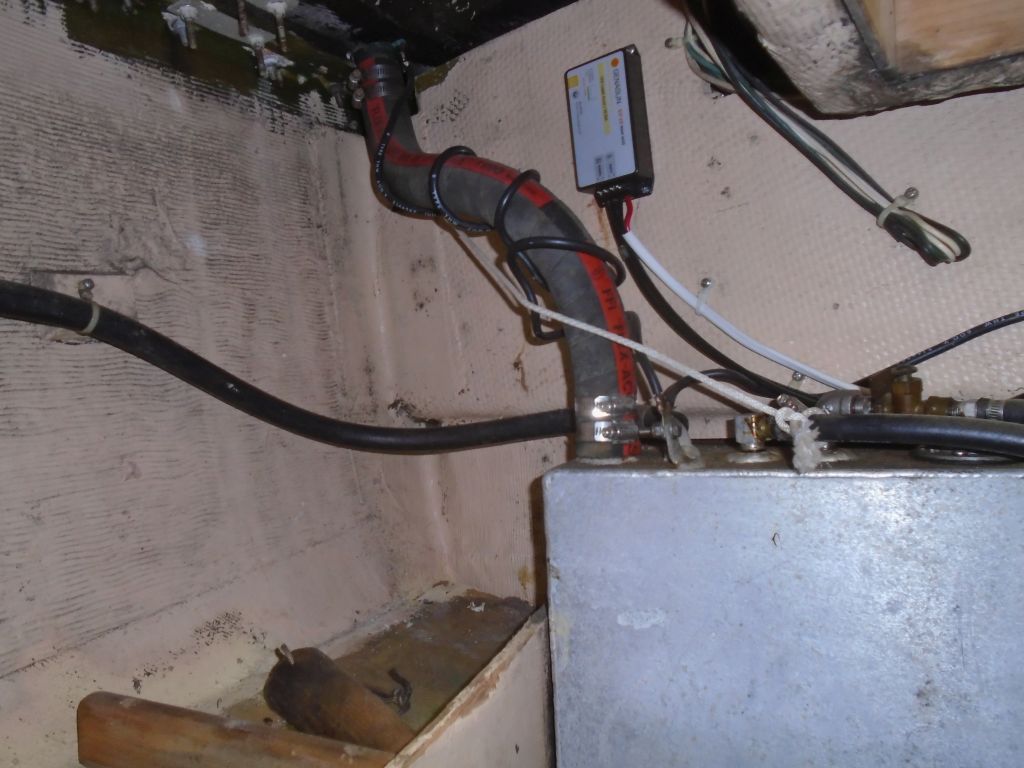
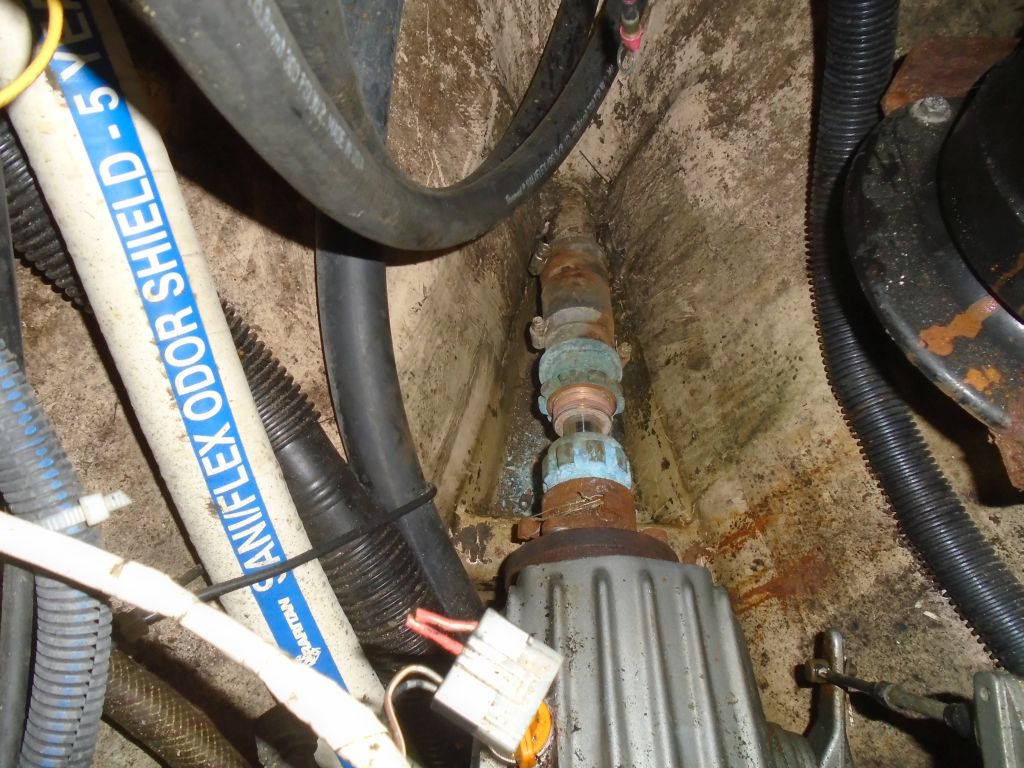
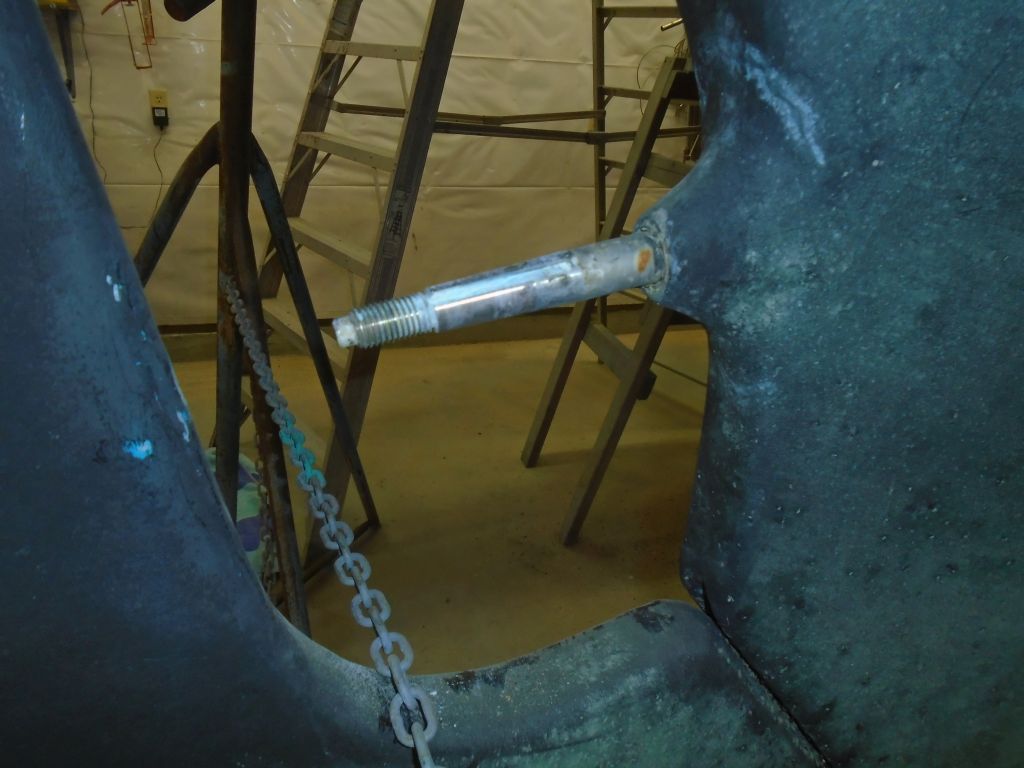
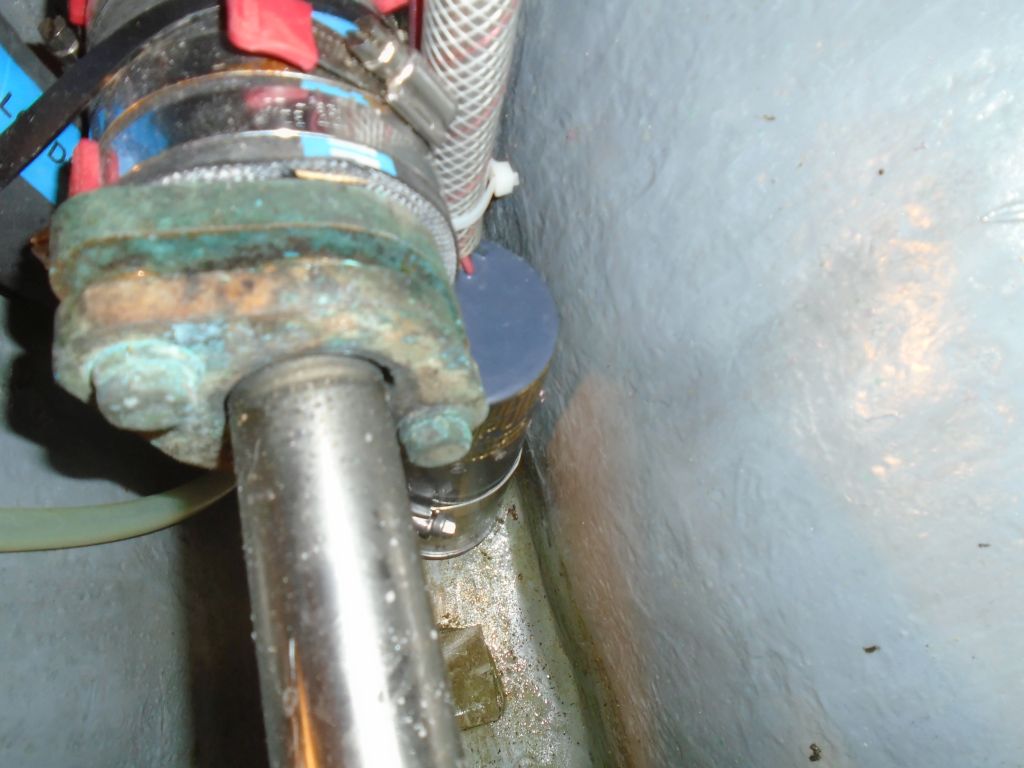
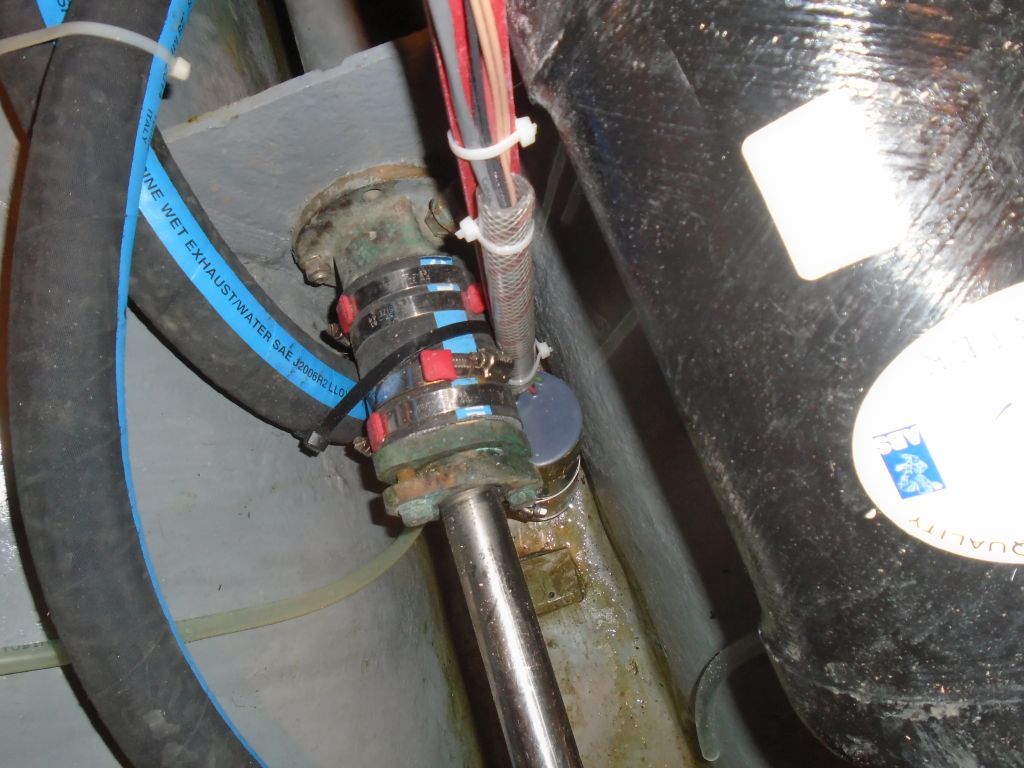
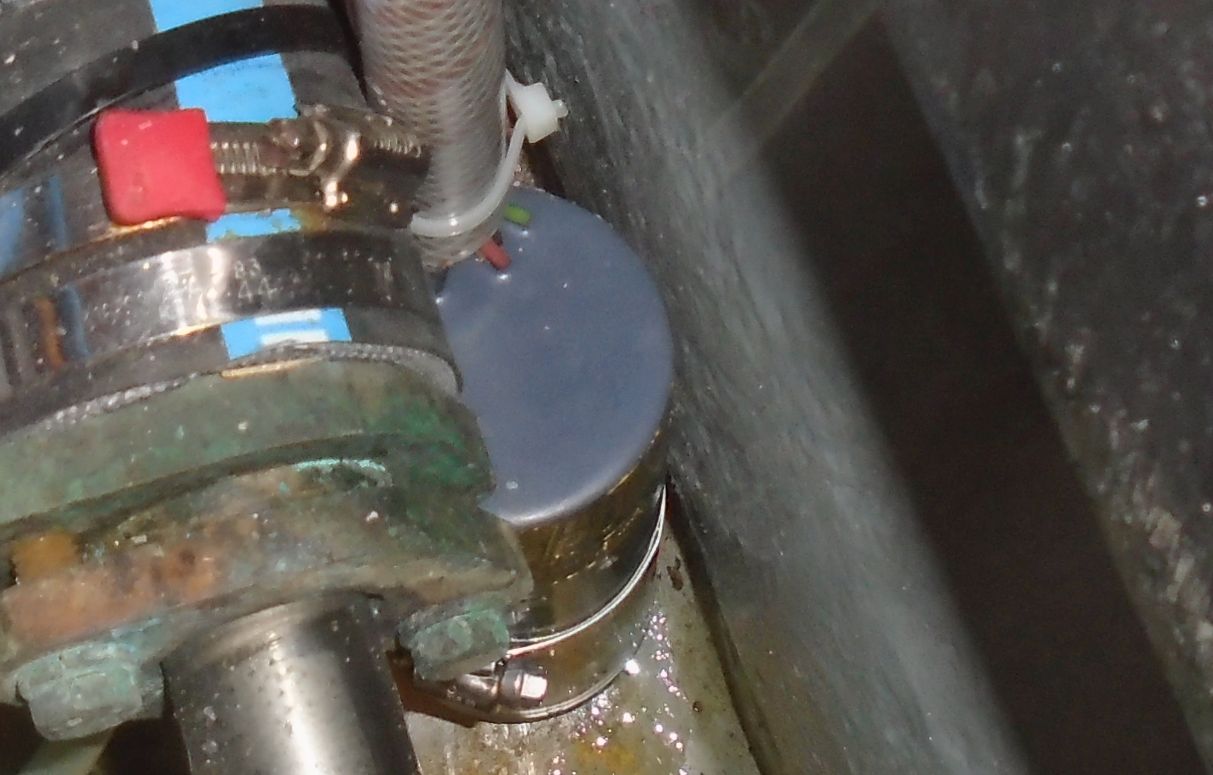
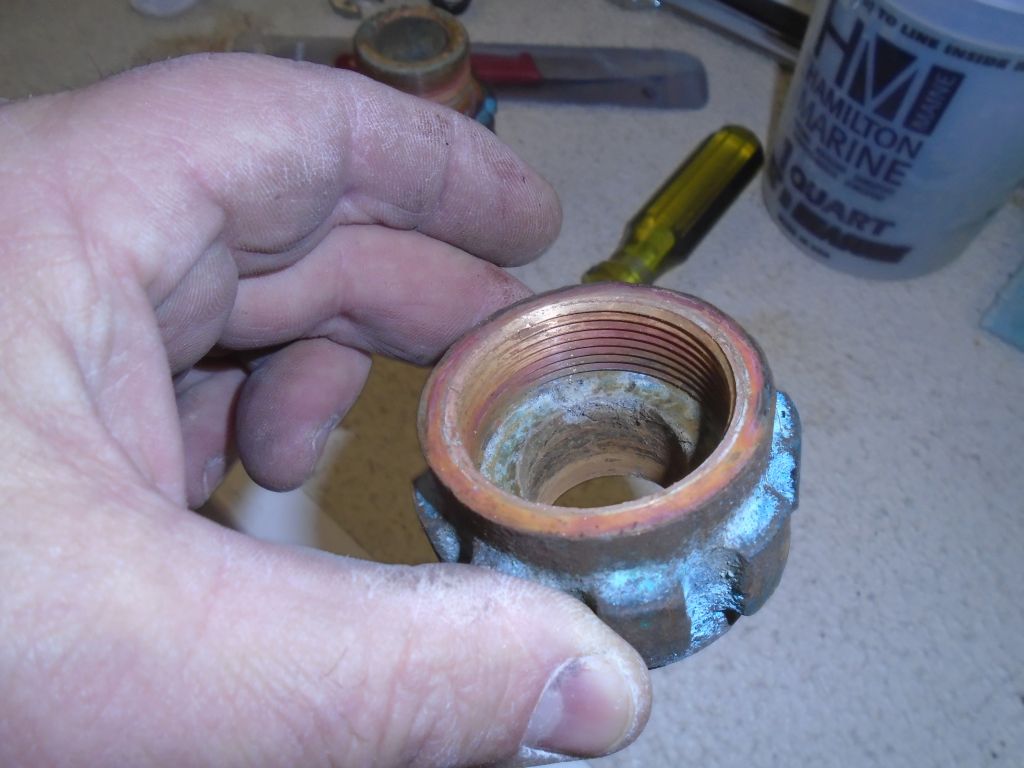
During a session of what he’d hoped would be routine stuffing box maintenance, the owner discovered that the stuffing box hose was in less-than-ideal condition, with rusty clamps and a suspect appearance.    Coupled with the fact that the old packing deep in the nut was highly compressed and impossible to move,  he decided, with my input, that we should go ahead and replace the stuffing box hose, which would also allow repacking of the existing packing box down on the bench since replacing the hose would require removal of the propeller shaft.  This job had been on and off the theoretical work list a couple times so far, but now it was clear the path that was required.
shaft3-20216

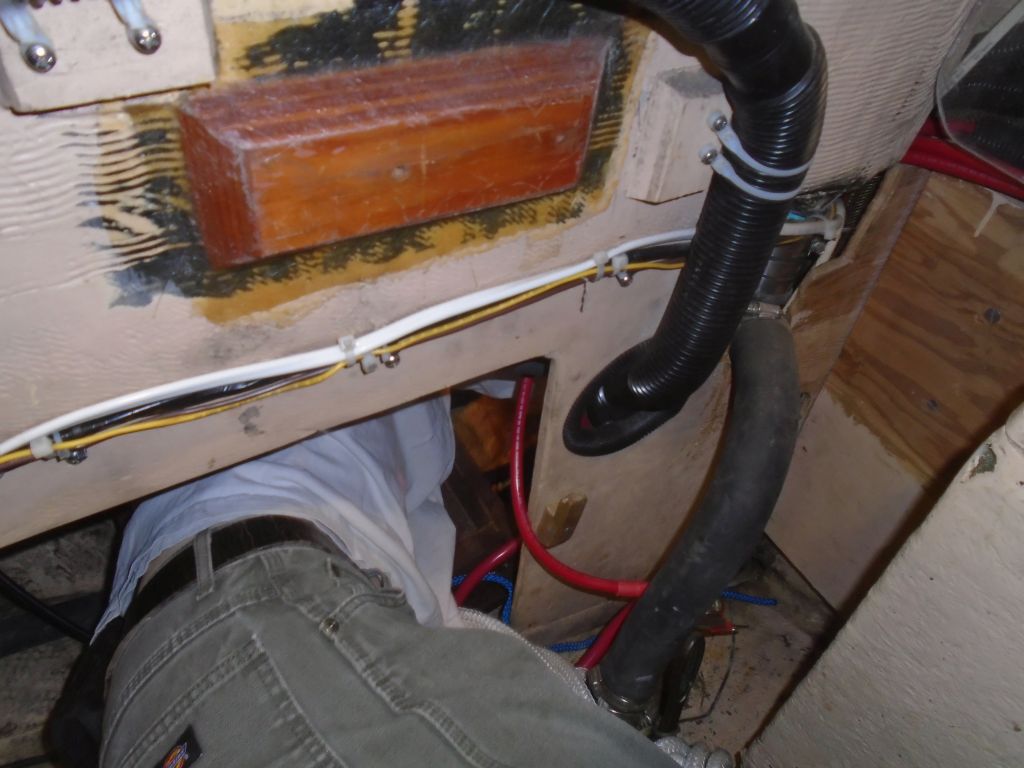
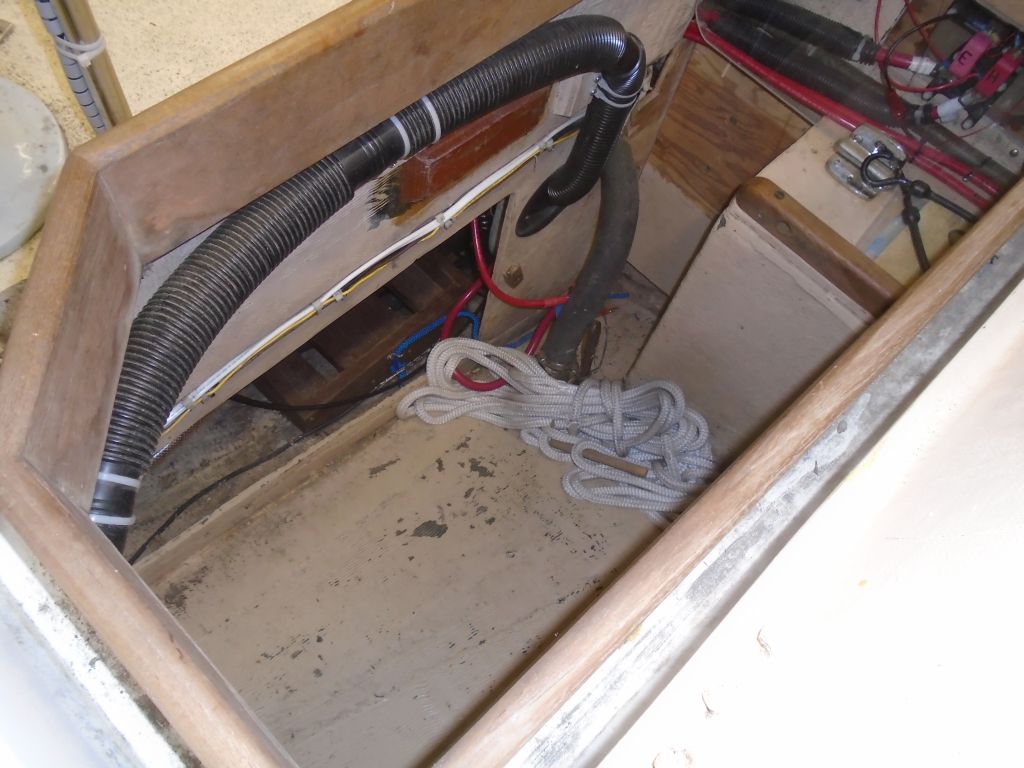
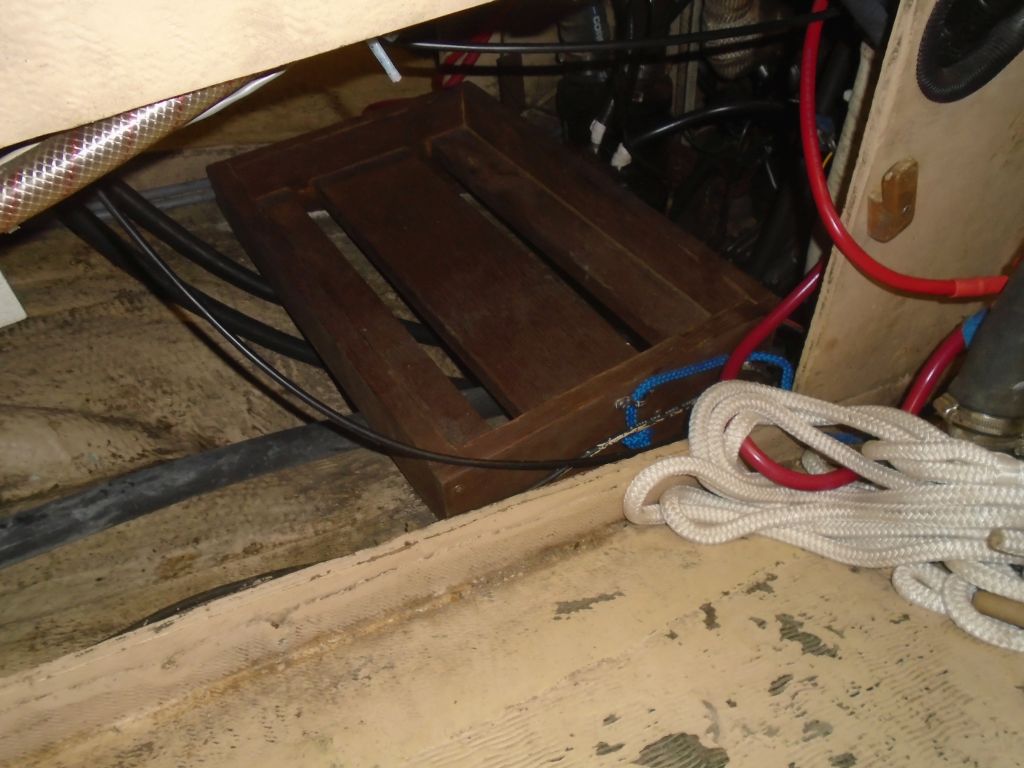
Access to this area, other than the convenient way I could hold a camera from the engine room to photograph the shaft and stuffing box above, was limited to a tight crawl space beneath the cockpit, which required the flexibility (and size) of a gymnast.  Permanent cabinets around the engine room prohibited access from there, and while I’d already been in both cockpit lockers a few times during earlier stages of the project, I was pessimistic about the prospects of gaining realistic access to the shaft myself.

Nonetheless, I determined to try.  Access into the cockpit locker was pretty good, but maneuvering space within was quite limited by the placement of two bulkheads and a large seacock, and once there, while I thought that theoretically I could get myself into the cozy space on top of the battery shelf, which was required in order to see–and work on–the shaft and coupling,  ultimately I decided that it’d be more efficient and prudent to call upon a helper to work in the space, so I made arrangements for a few days hence and in the meantime planned to collect the new materials required so we could complete the job on one sitting.

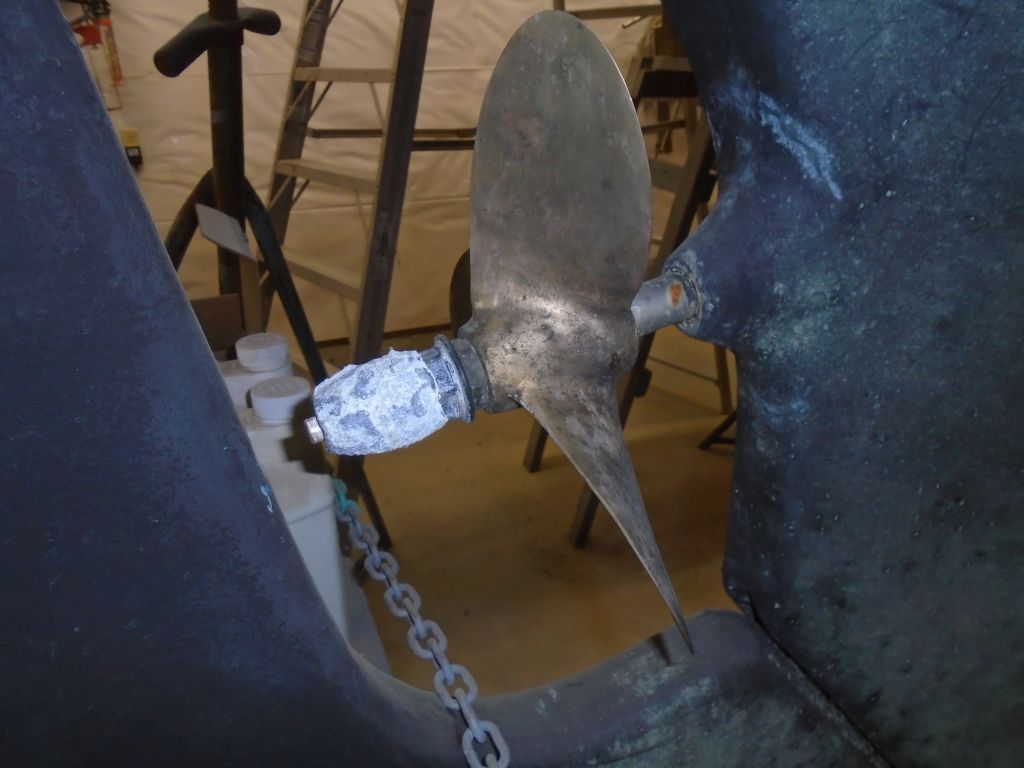
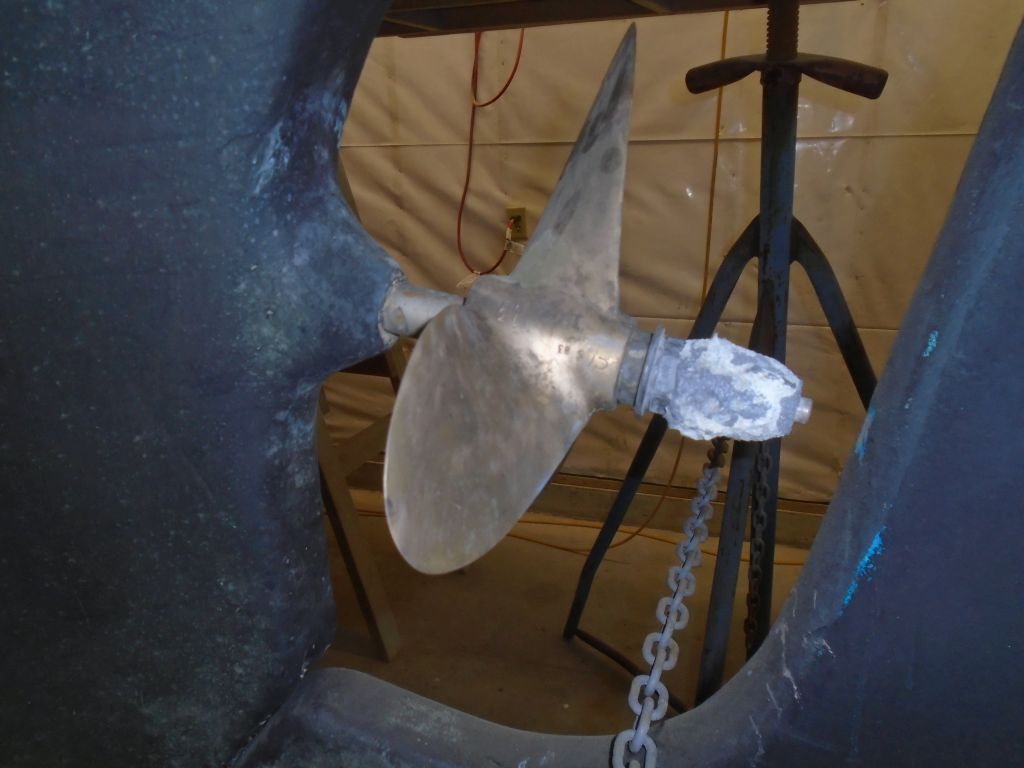
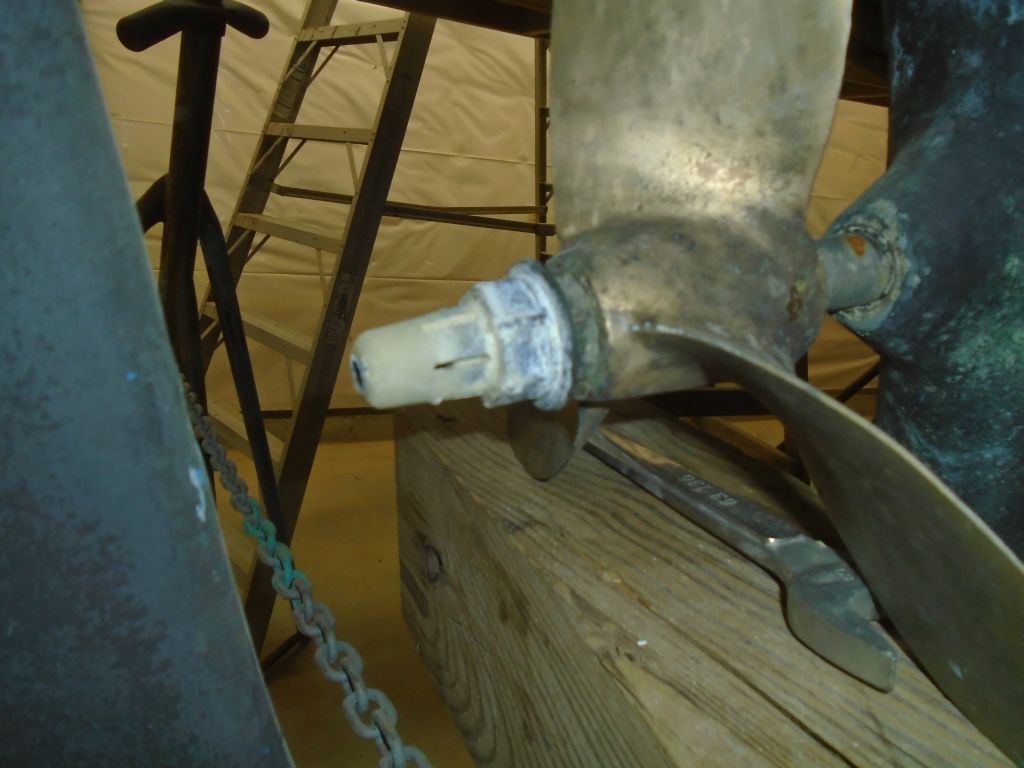
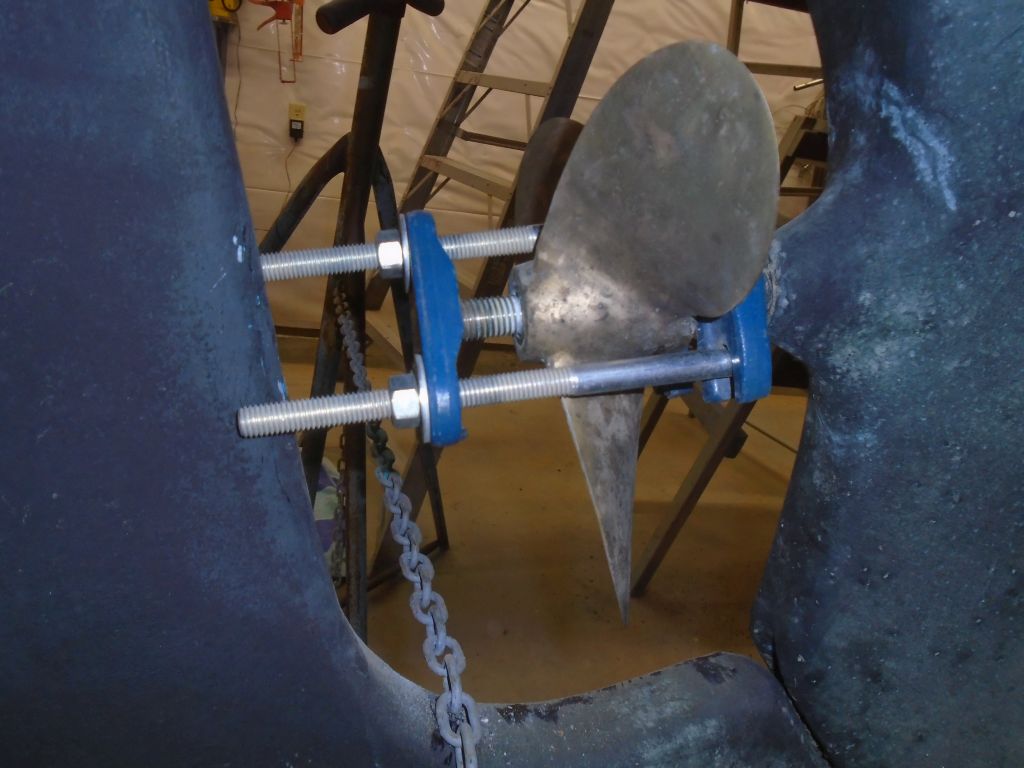
To mollify myself, I went ahead and removed the propeller so that the shaft would be free to move aft as required for the rest of the job.  The shaft zinc, nuts, and propeller came off without drama nor issue.


Total time billed on this job today:  5 hours

0600 Weather Report:
35°, mostly cloudy.  Forecast for the day:  clearing, colder, high around 38


Danusia 25

< Back to Danusia

Monday

Continuing the varnish work on the loose hatches, I sanded, cleaned, and applied the third coat of gloss finish to all pieces.

varnish1-20116

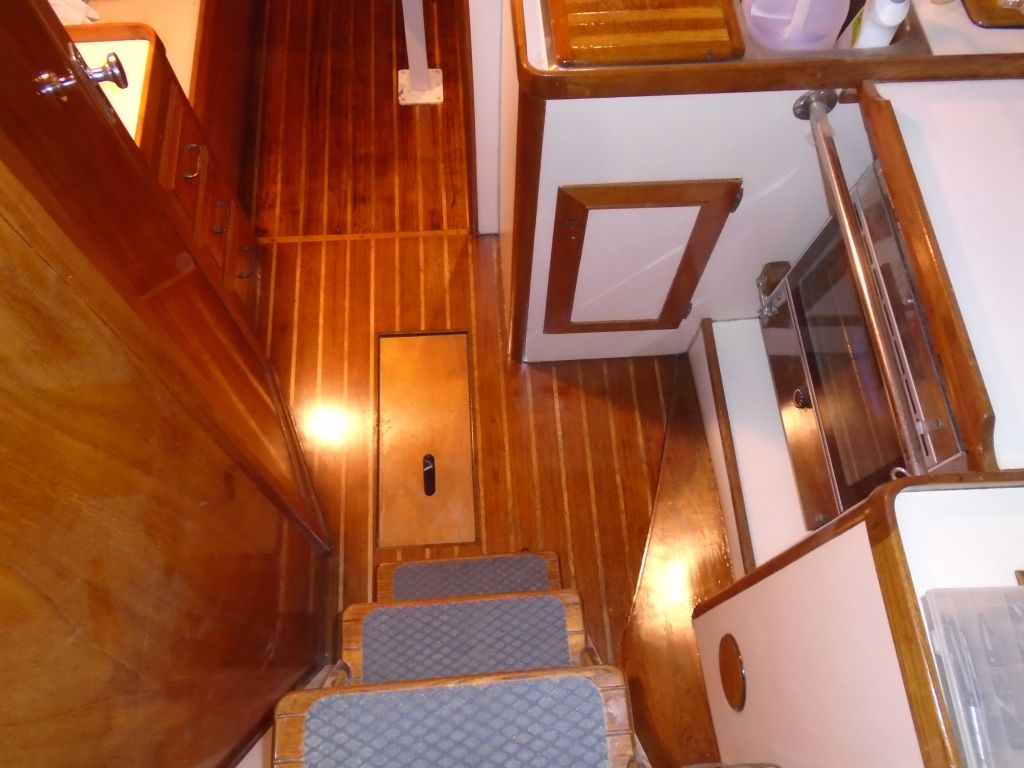
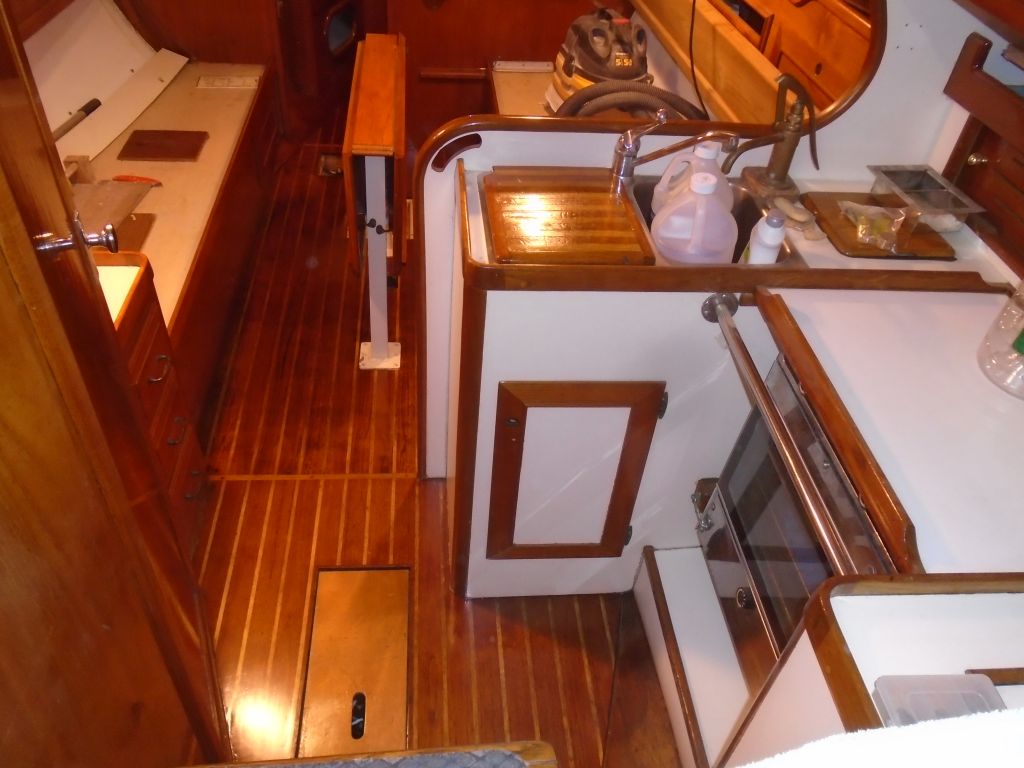
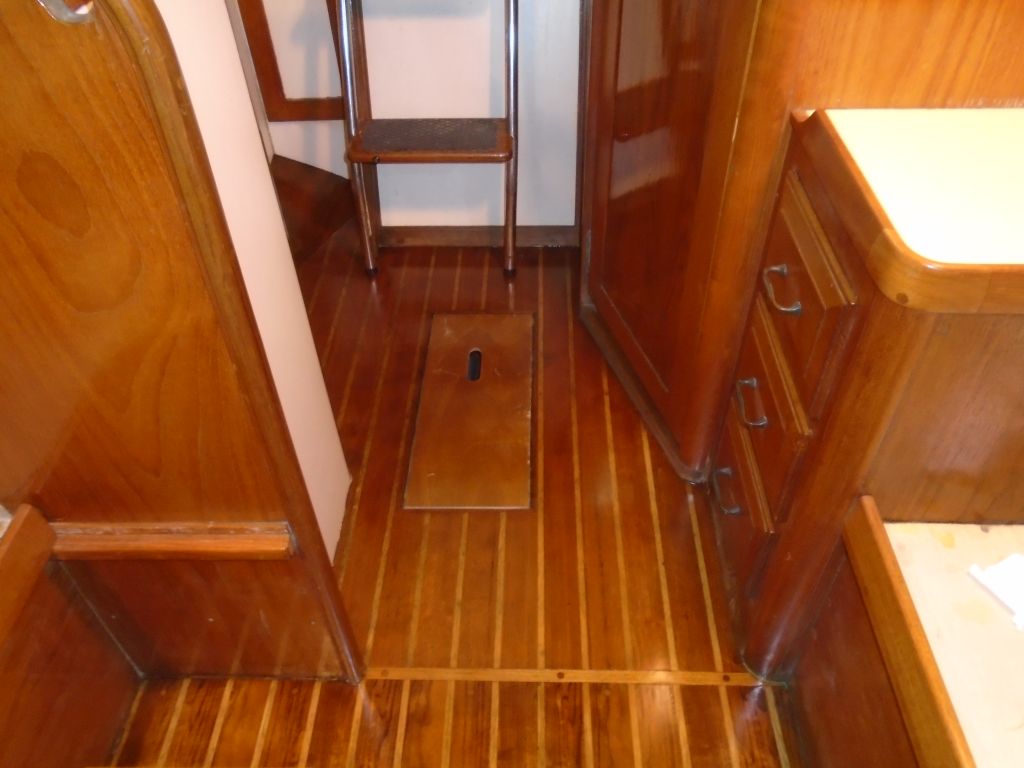
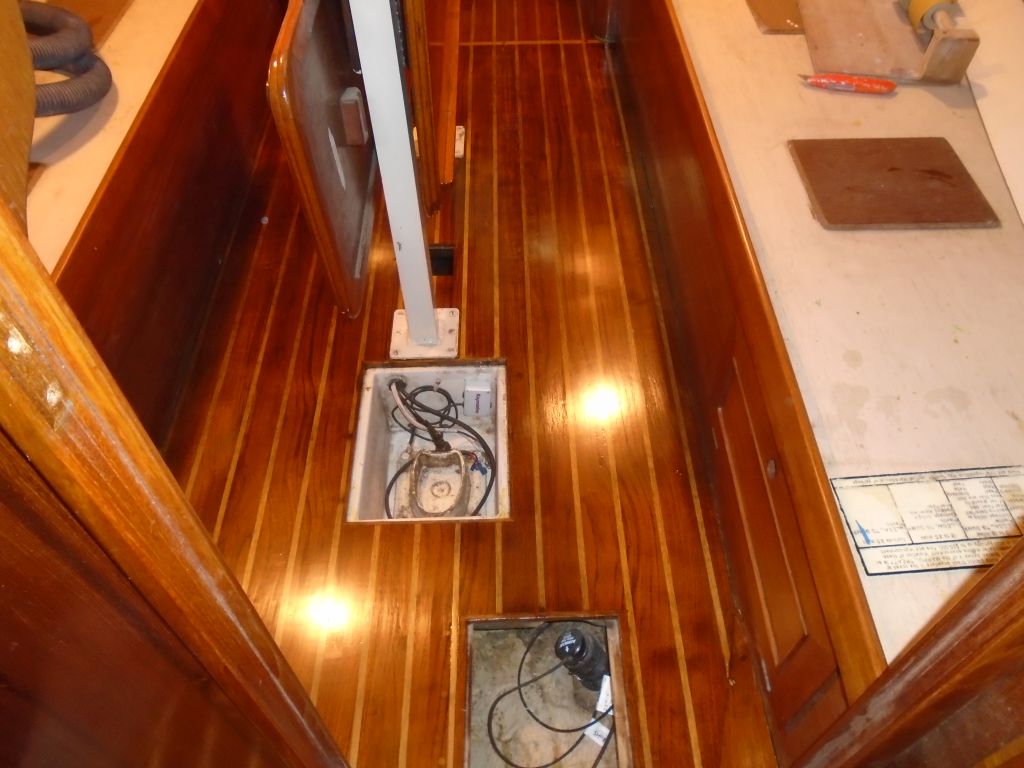
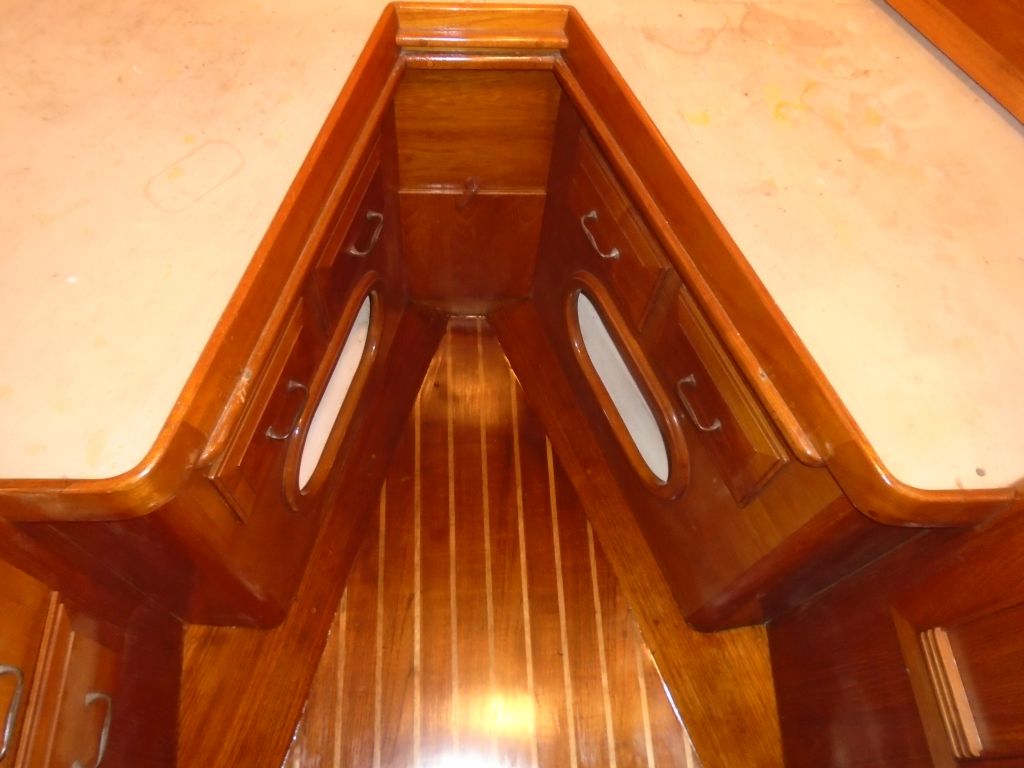
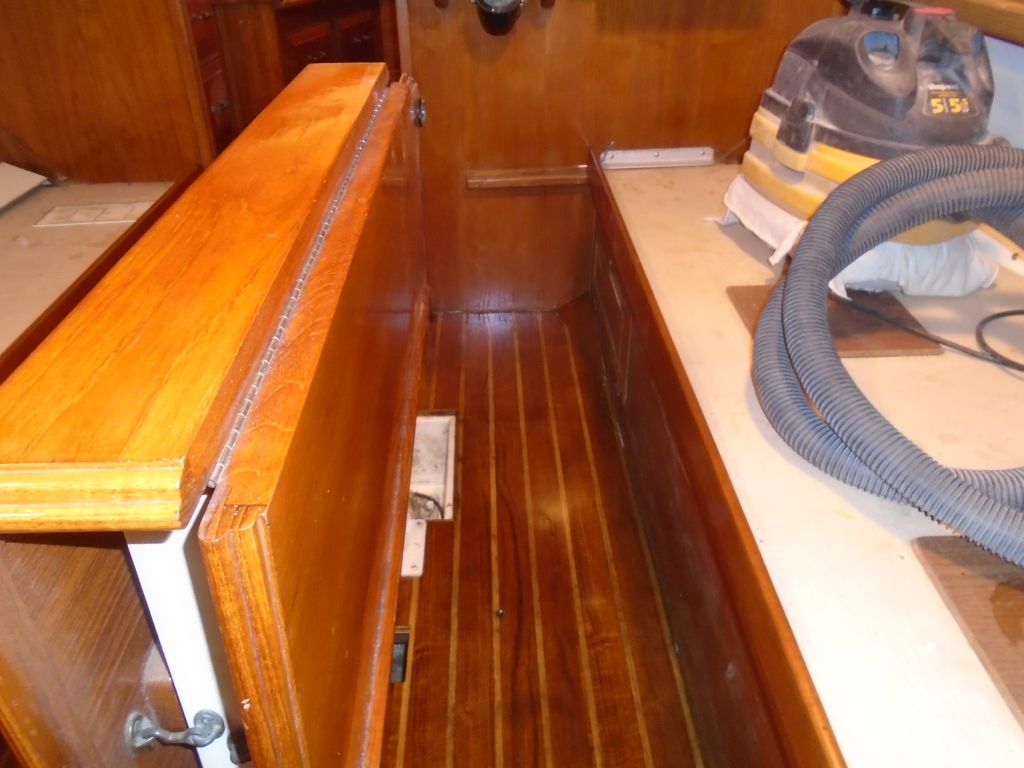
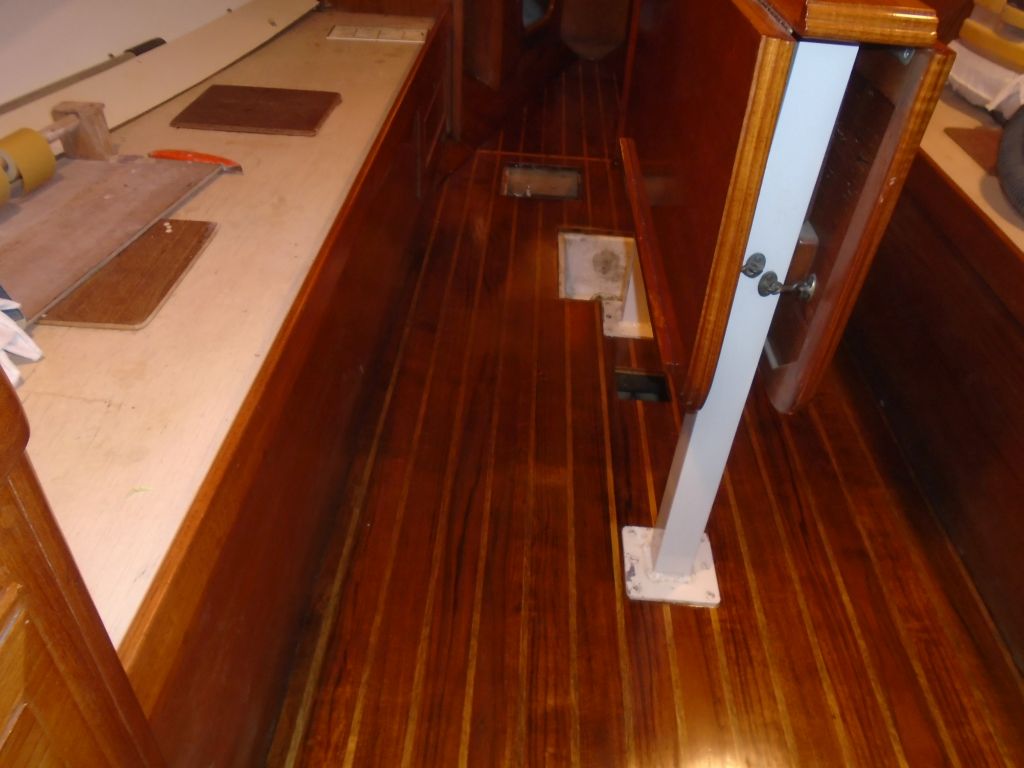
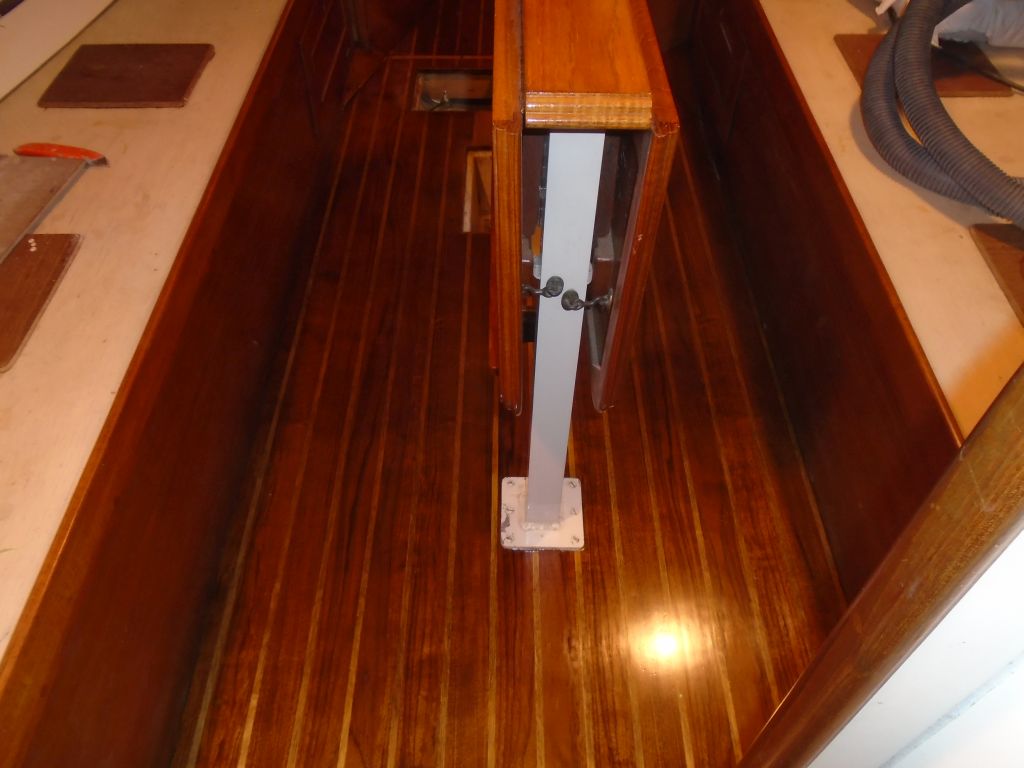
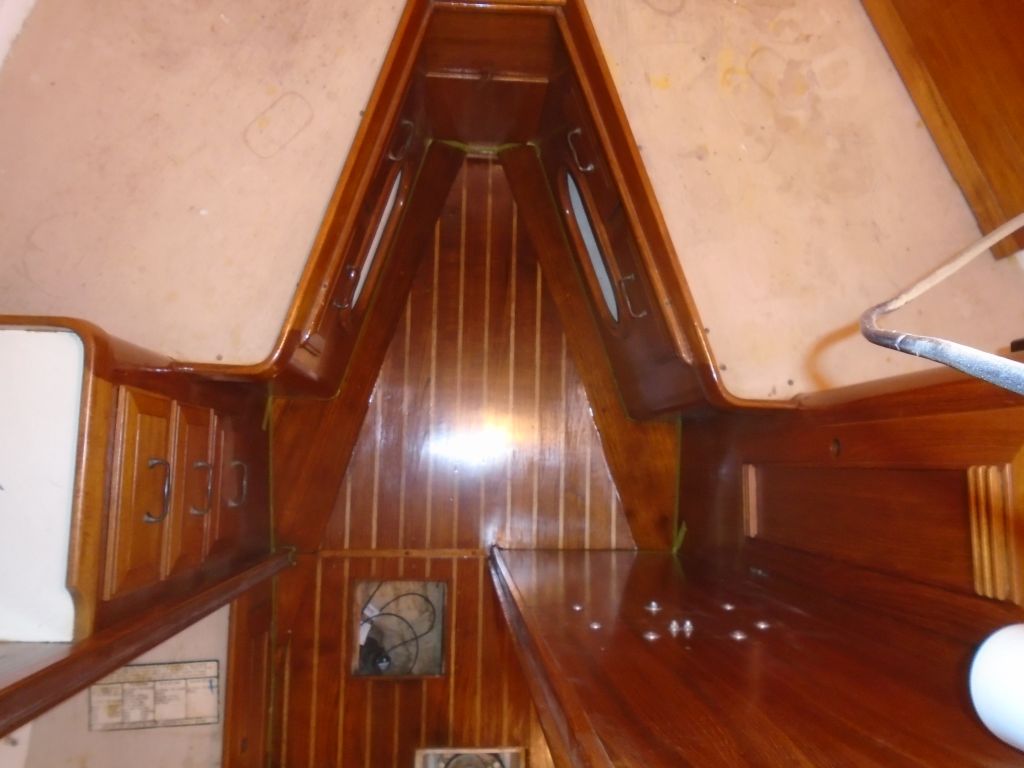
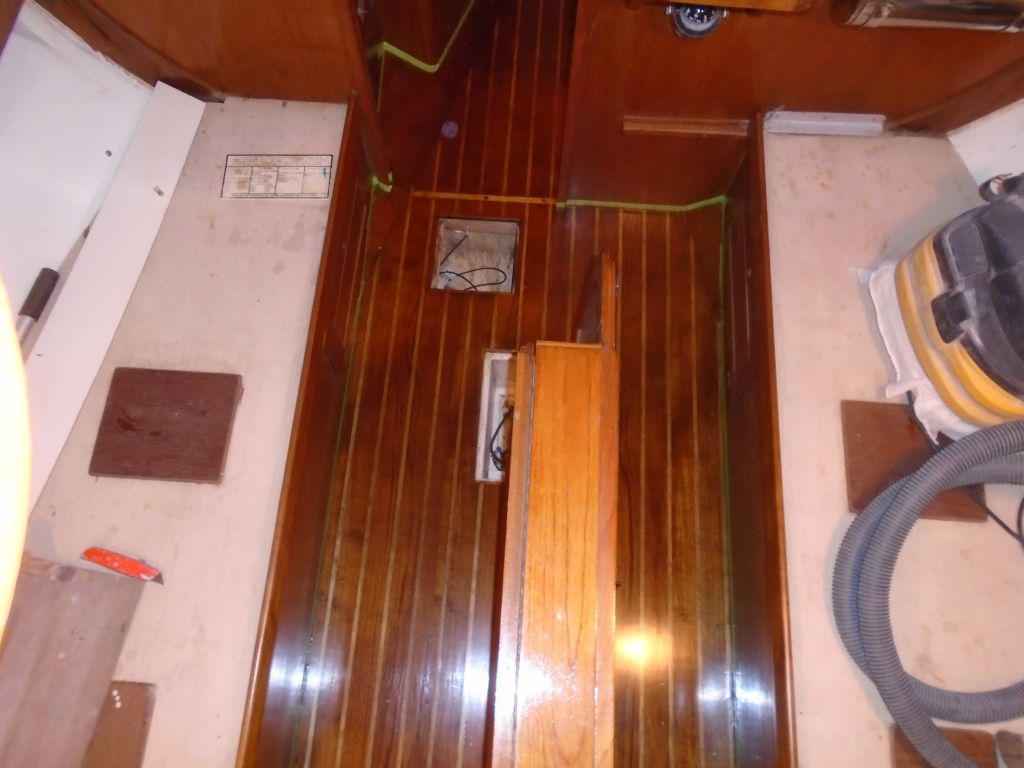
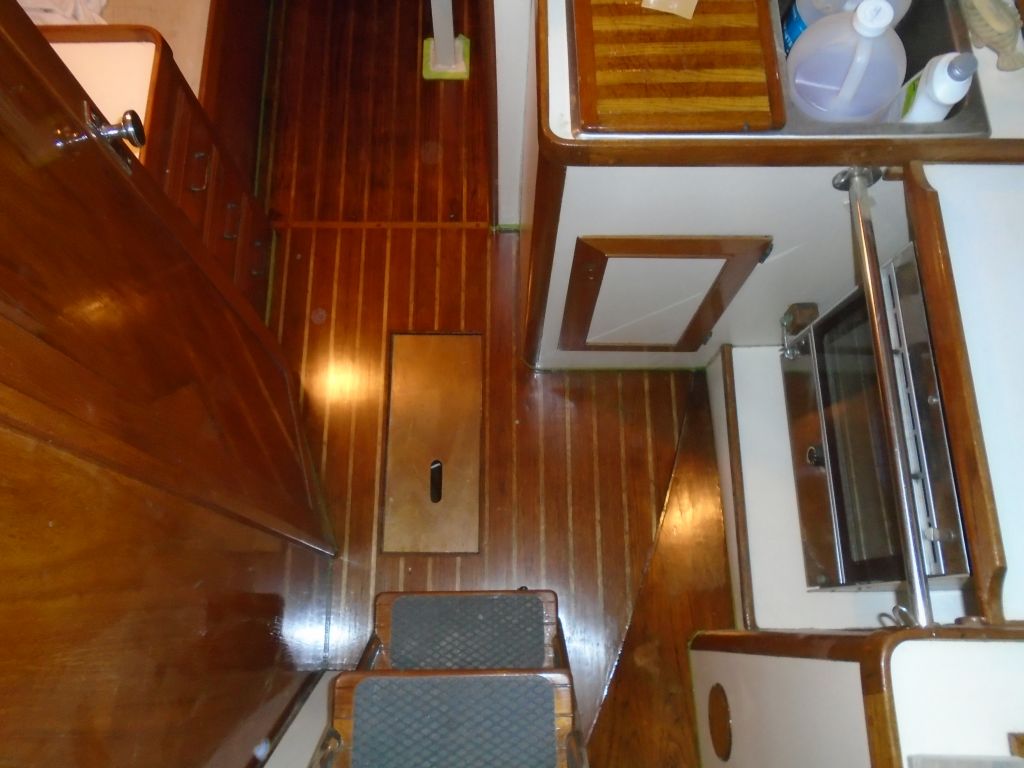
The cabin sole was looking good, and I declared it complete, so I went ahead and removed the masking tape.

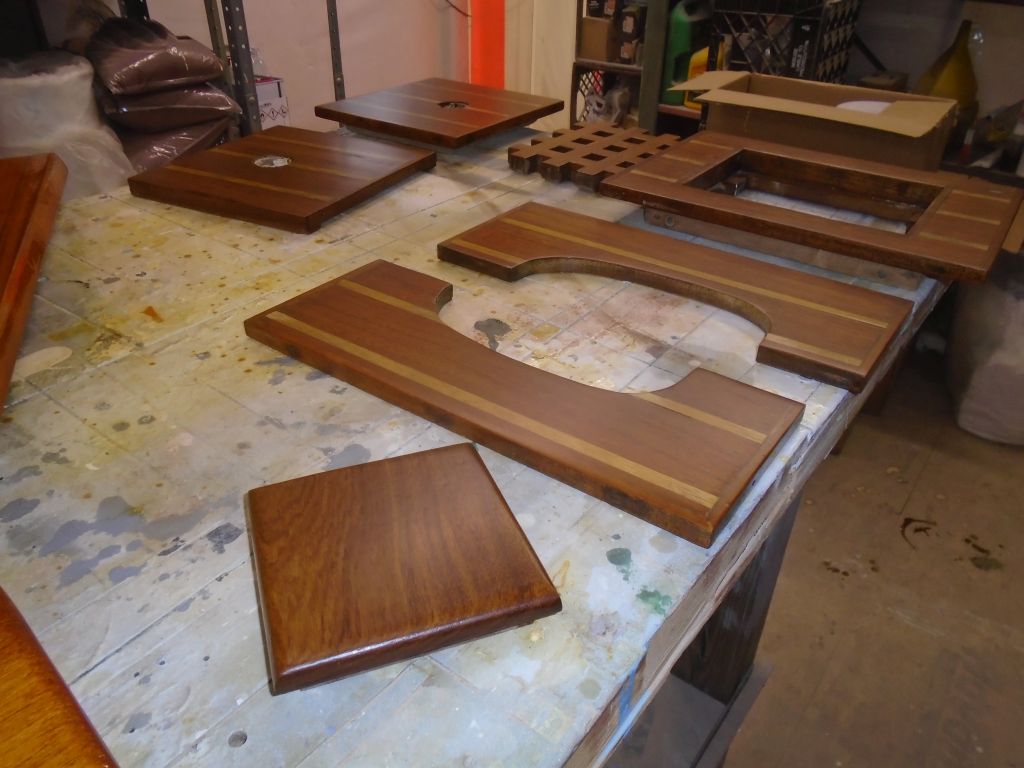
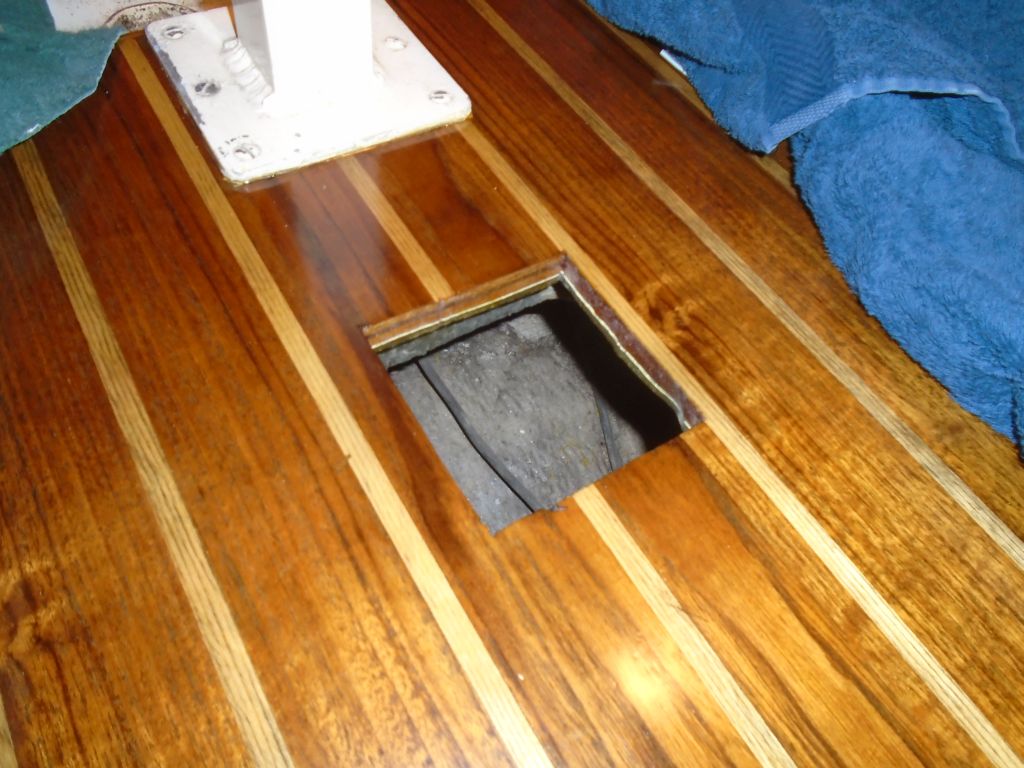
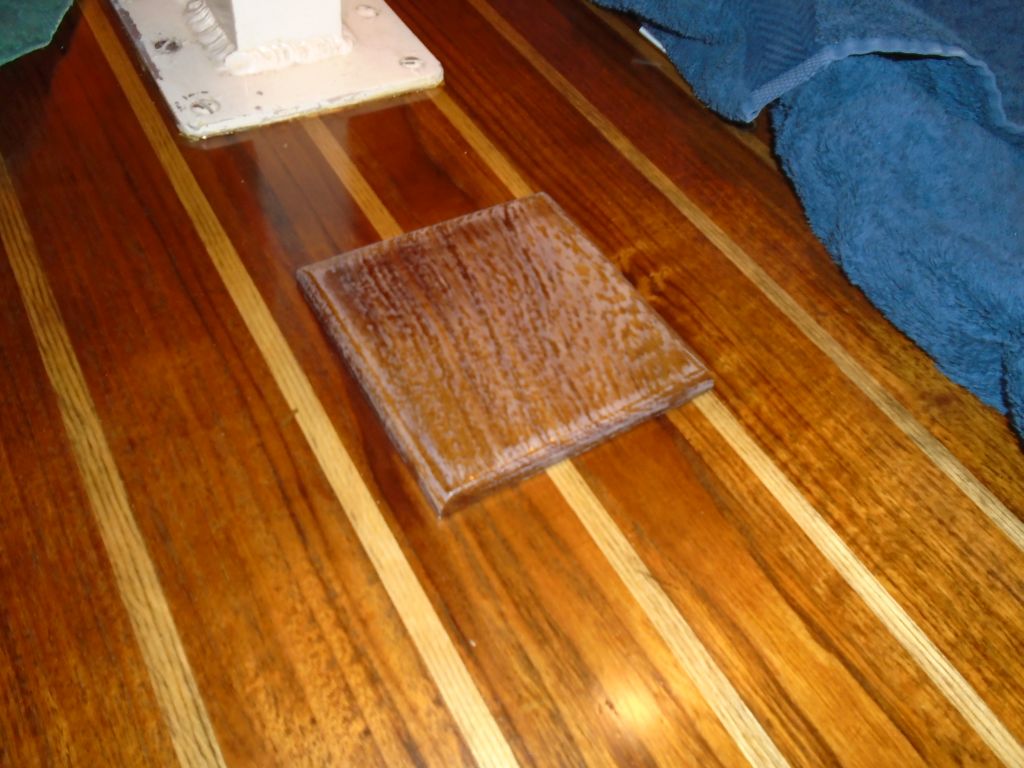
Earlier, I’d built a simple teak cover for a square hole in the cabin sole beneath the table.  Now was my first opportunity to test-fit the piece (shown here in newly-sanded varnish prep form).  If fit as expected, so I continued the varnish work on the new piece.

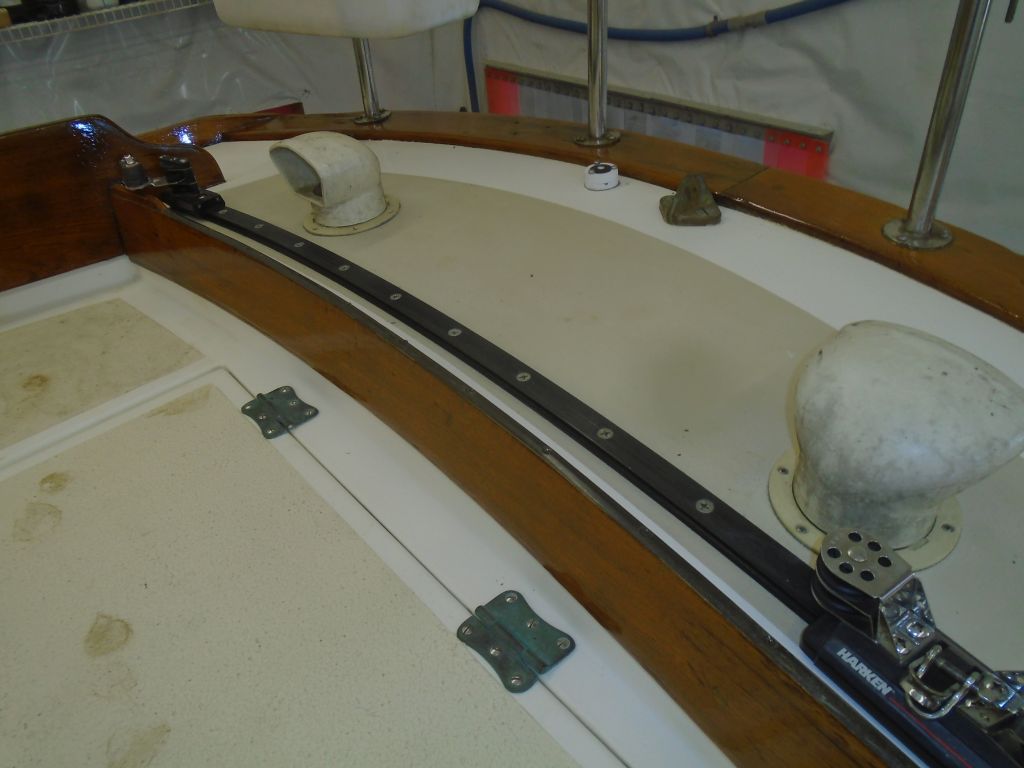
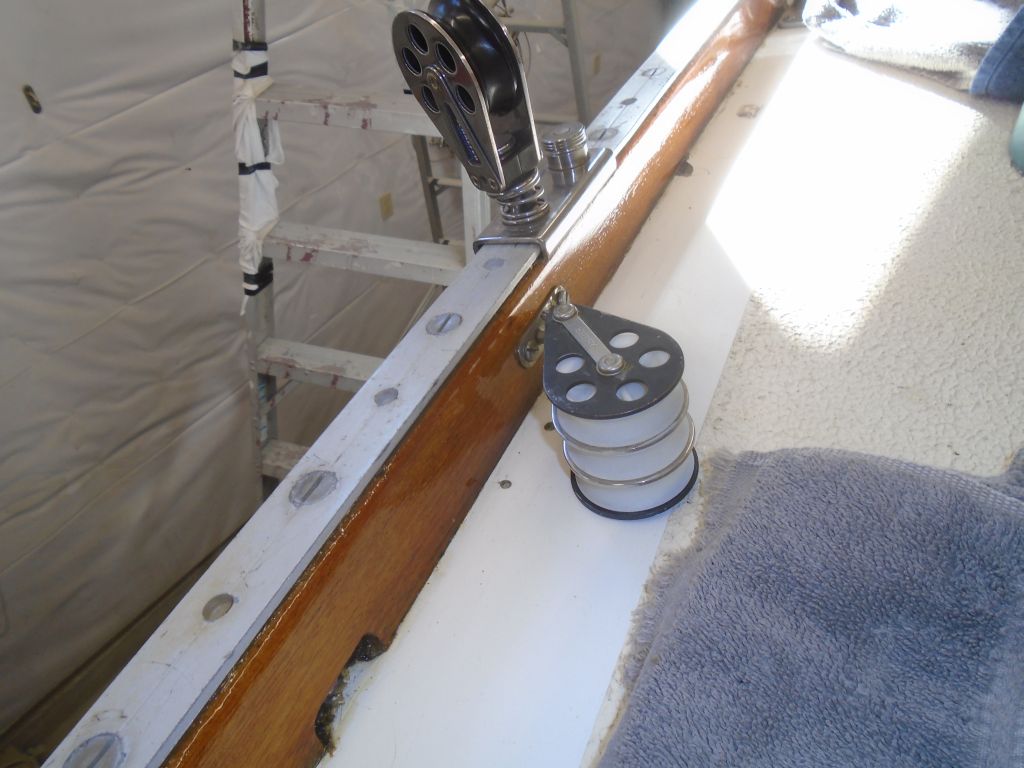
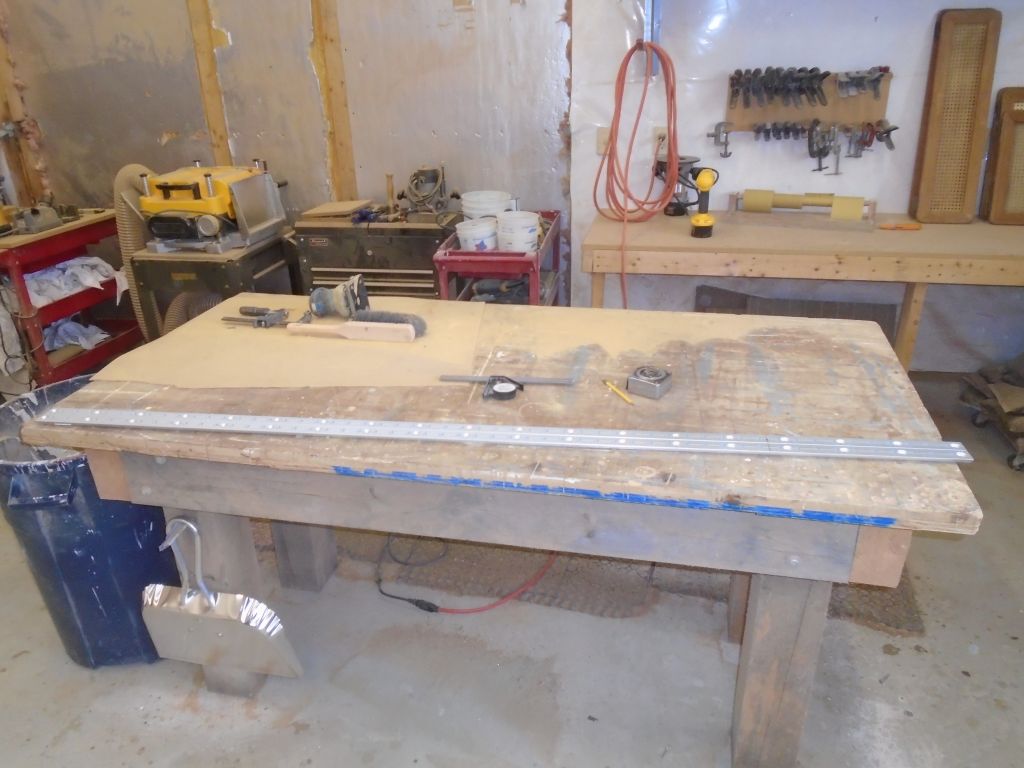
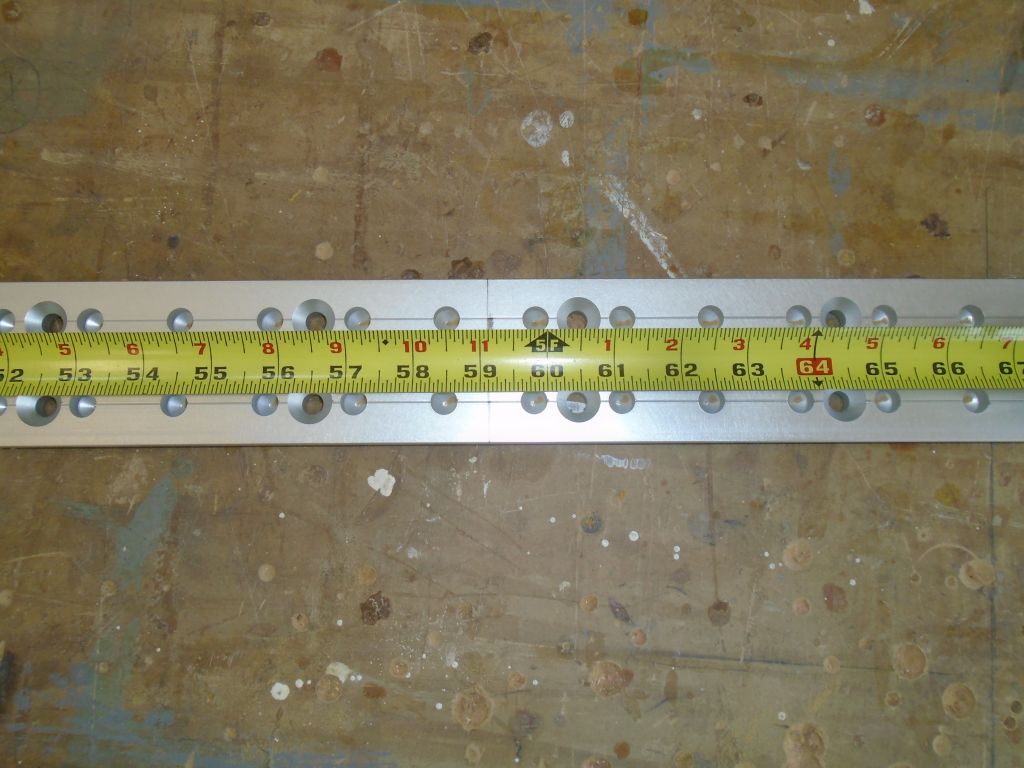
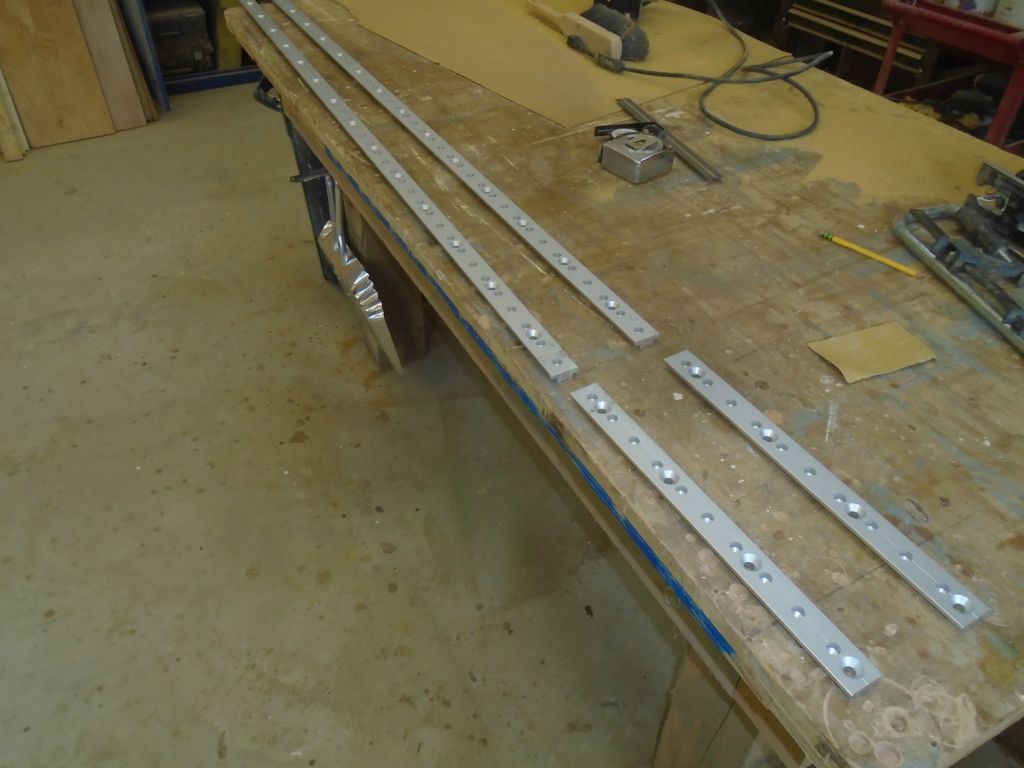
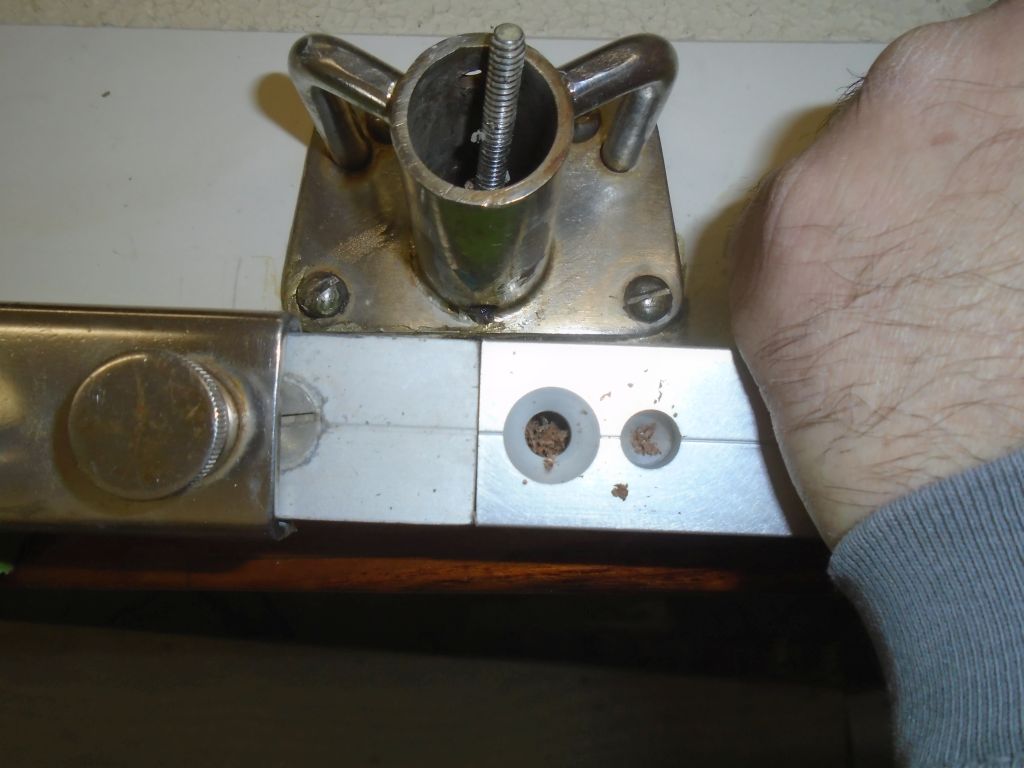
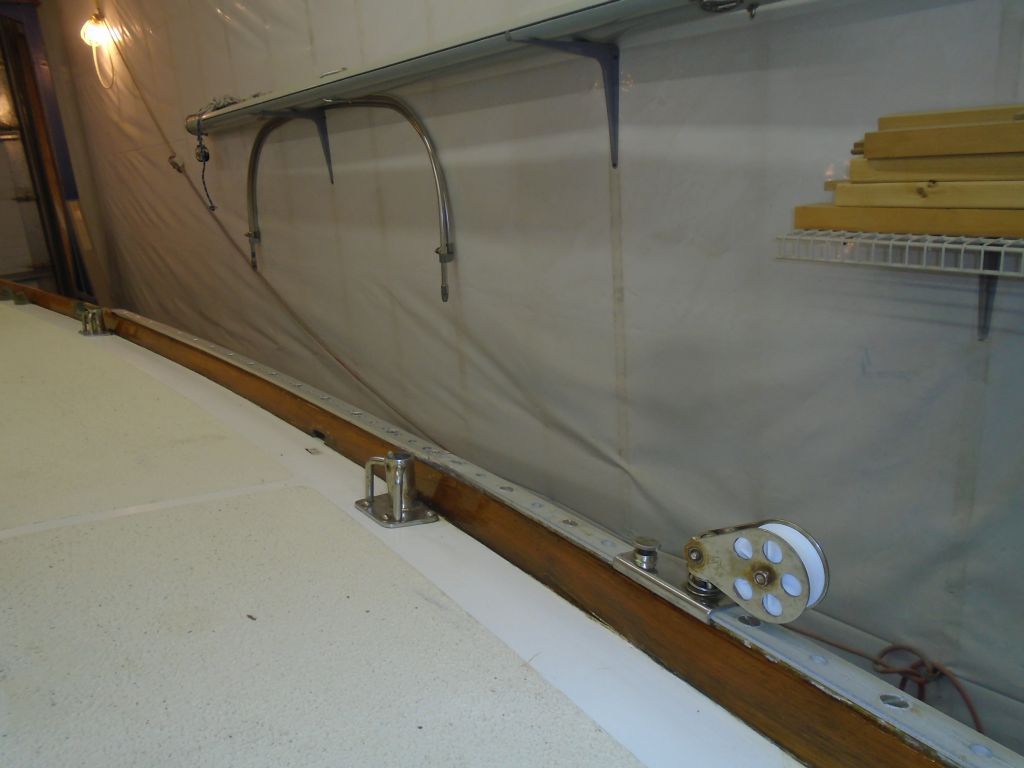
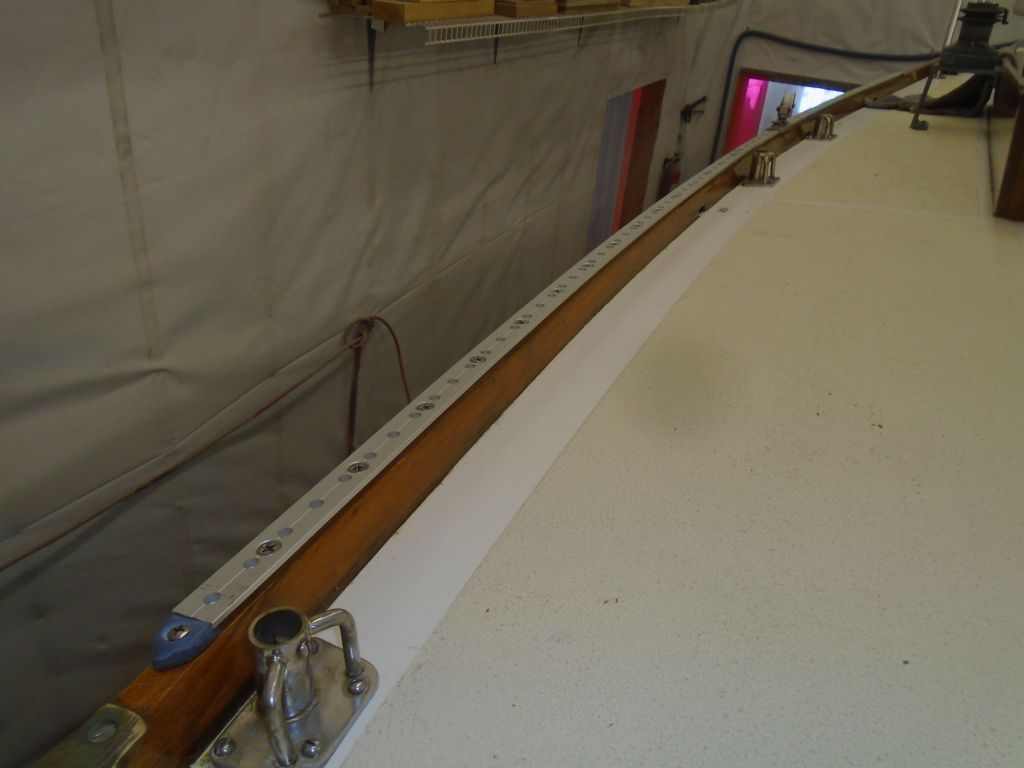
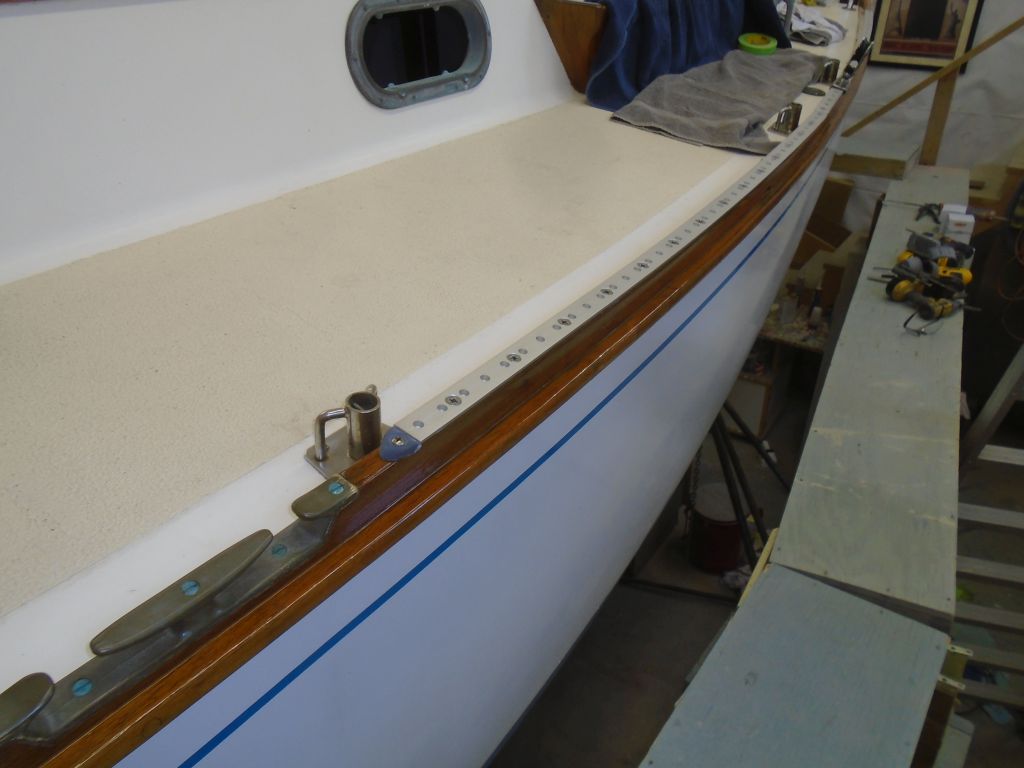
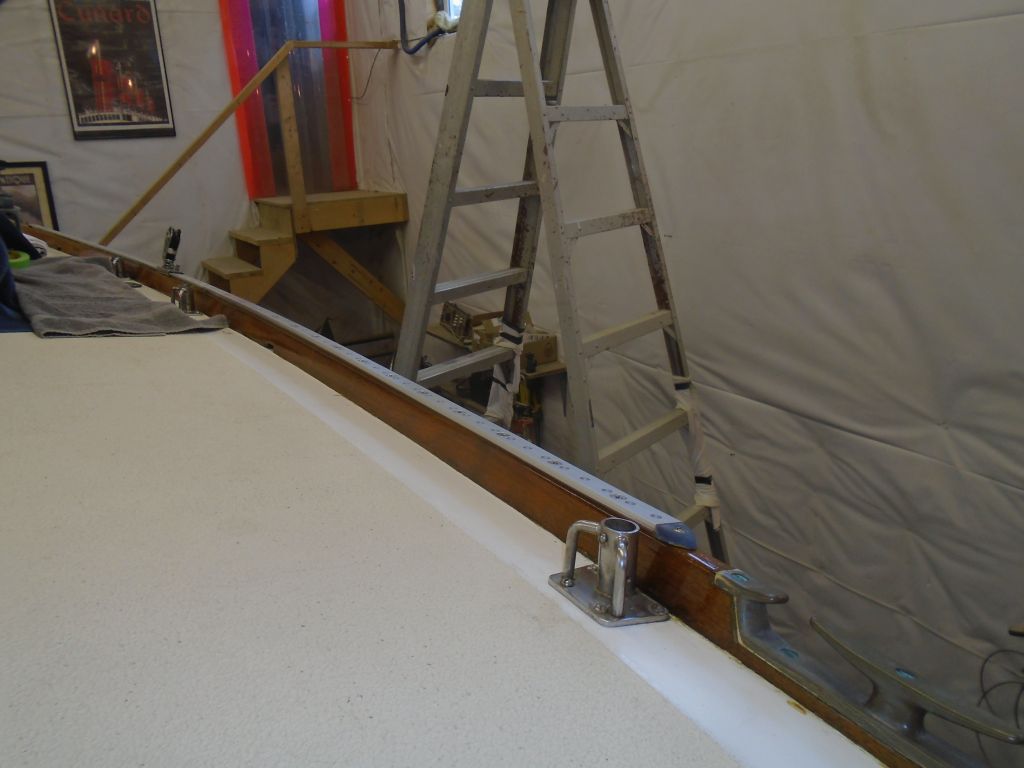
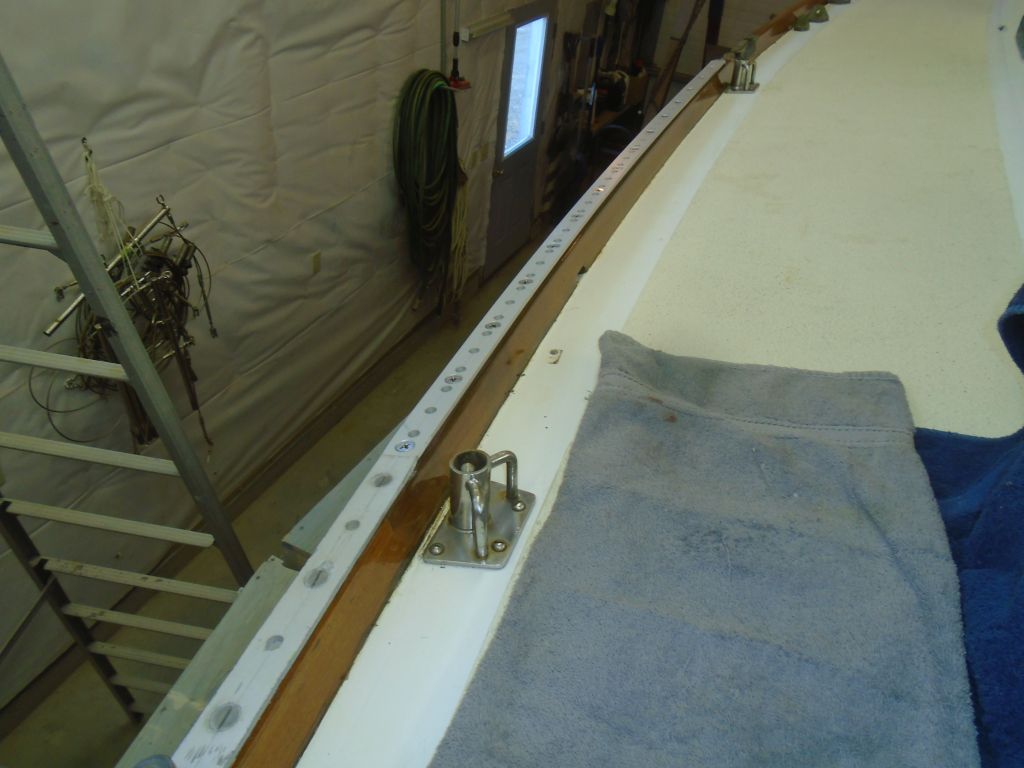
Next, I worked on the  genoa track extensions.  There was just under 5′ of space available between the mid-rail chocks and the existing tracks, and I left a little room for the end stops, eventually choosing to cut the new 72″ track sections to just over 59″ long for each side.

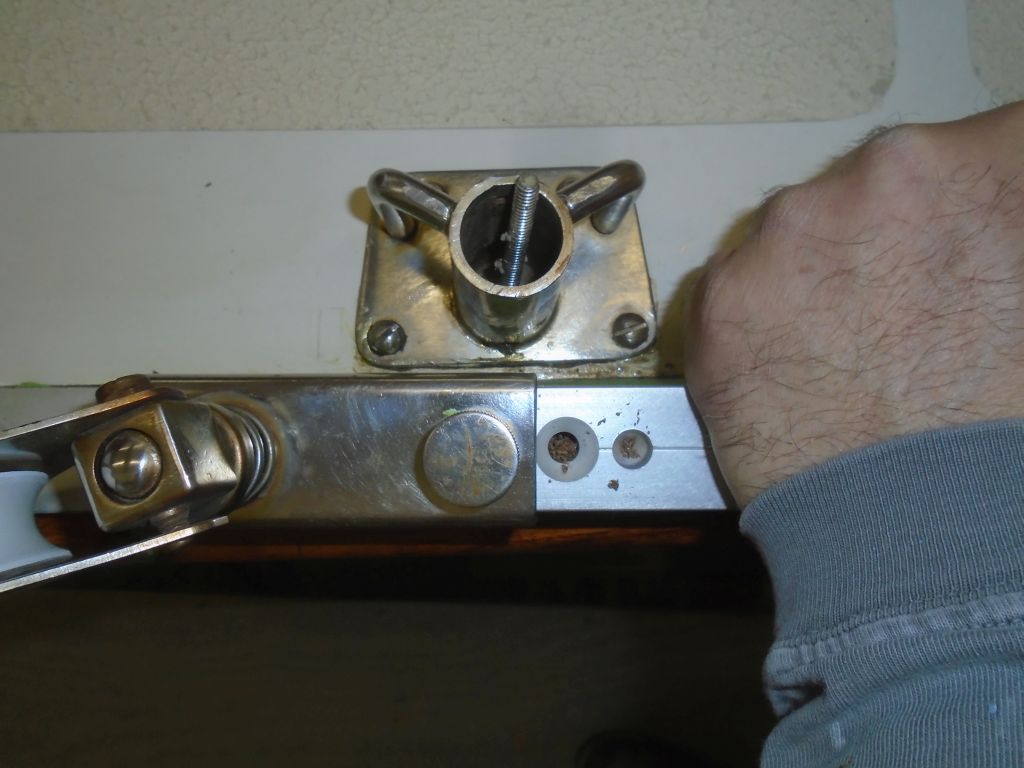
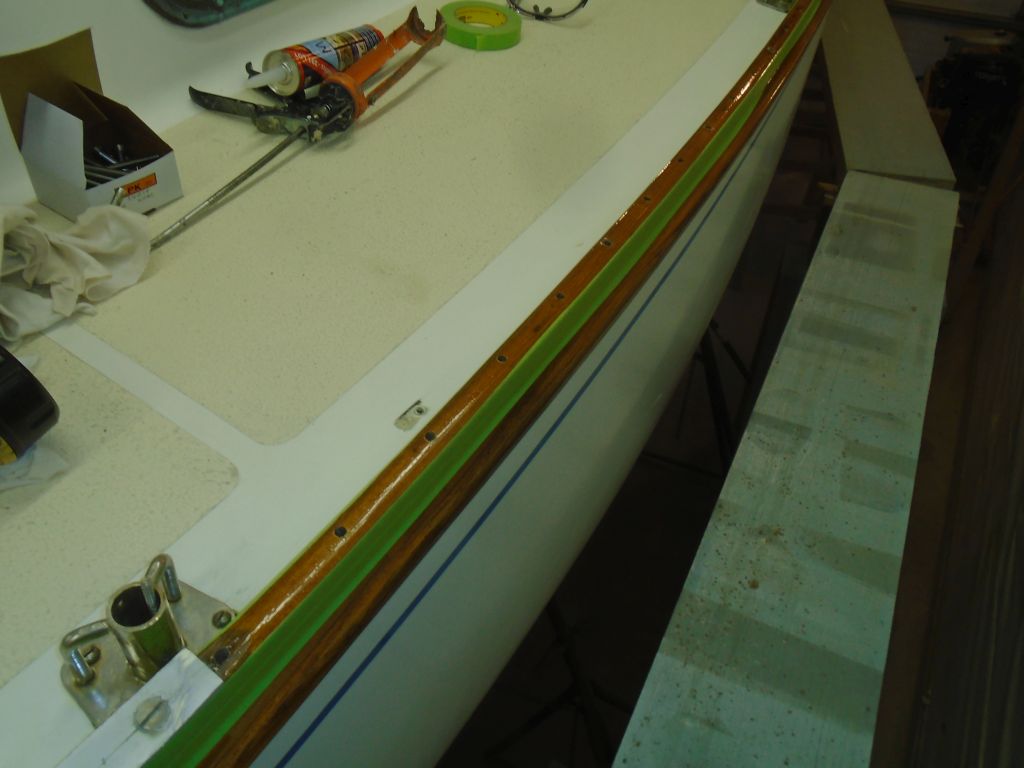
Taking care to align the new track end with the old, I dry-fit the new tracks on the toerail leading forward.  Despite extra care at the beginning end, I found that as the track bent into position, the end became slightly misaligned when all was said and done.  This was exacerbated by the fact that the ends of the original track sections were not necessarily pointing in the ideal direction to mate with a new section, but with a little fine-tuning of the seam between the two it was no problem to slide the lead car across the joint.  For each fastener location, I drilled and tapped the fiberglass deck and hull flange for machine screw threads, with a slightly larger pilot hole through the teak toerail.  Before installation, I masked off the newly-varnished surfaces on either side to protect the finish.

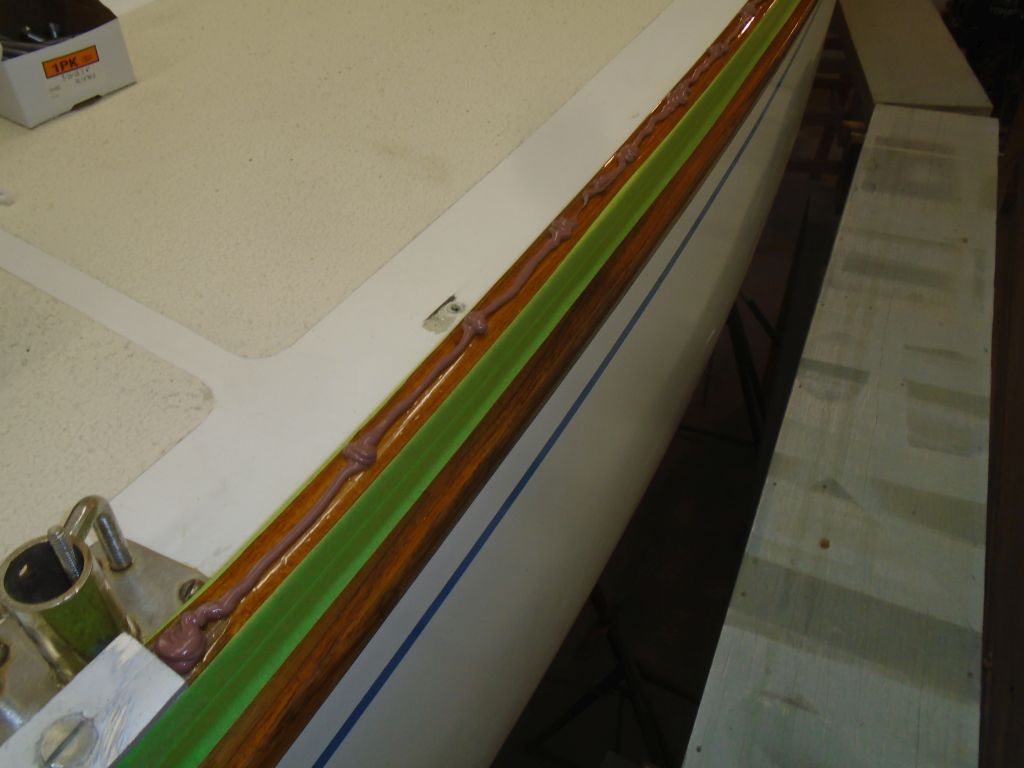
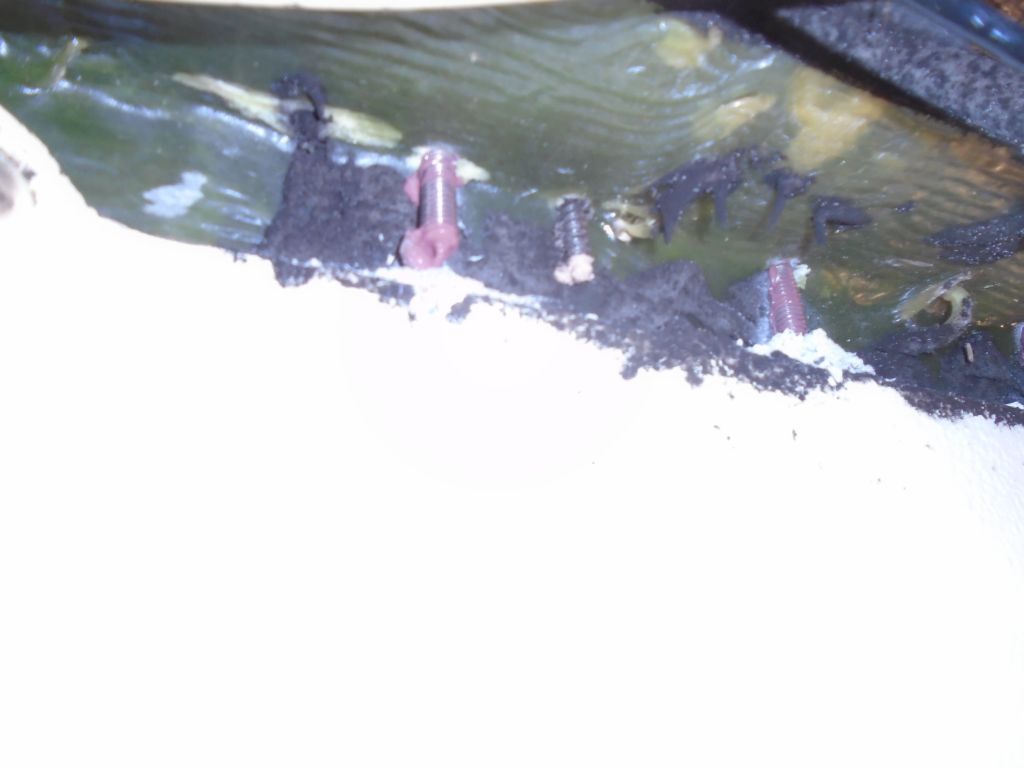
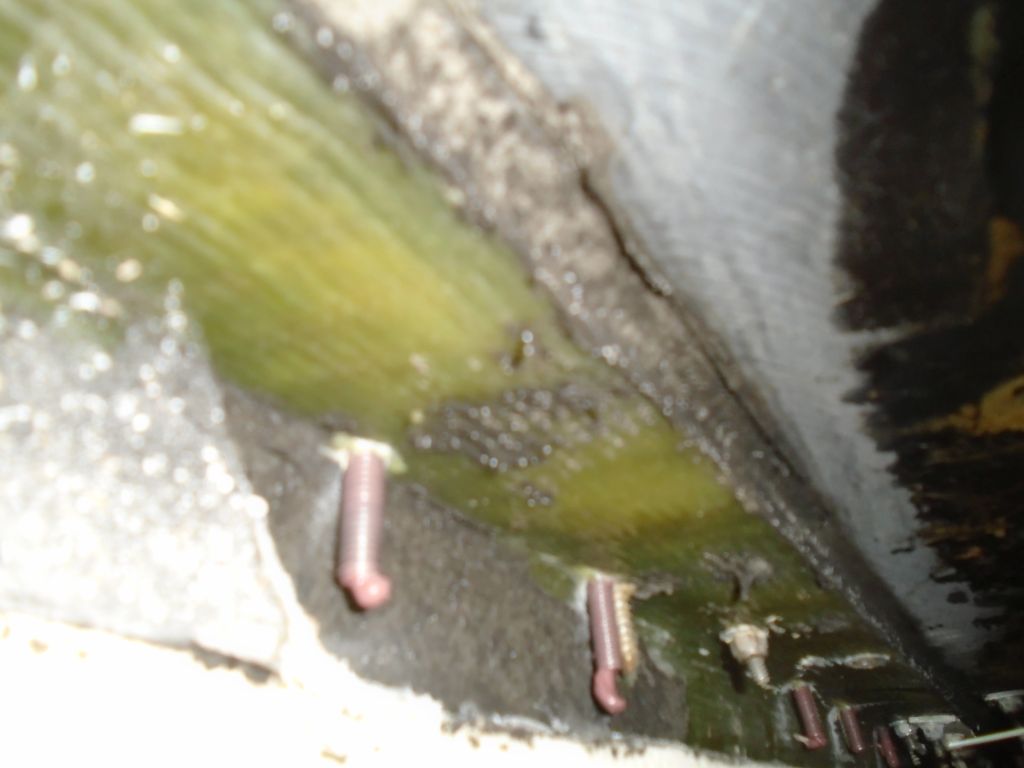
I removed the track and cleaned up the spoils, then installed sealant and secured the track in place, cleaning up excess sealant once the track was tightly secured.  I found that the position of the toerail so far outboard meant that the fasteners did not leave room for nuts and washers in most cases, with the screw threads often partially spun into the edge of the hull laminate.  There was nothing I could do about this, and while I’d intended (and certainly hoped) to install washers and nuts, it was not to be.  Fortunately the machine screws were threaded through a thick inward hull flange as well as the solid deck edge, and with their close fastener spacing and numerous screws I was confident the threads would hold nicely.

I repeated the dry-fit and installation process on the port side.

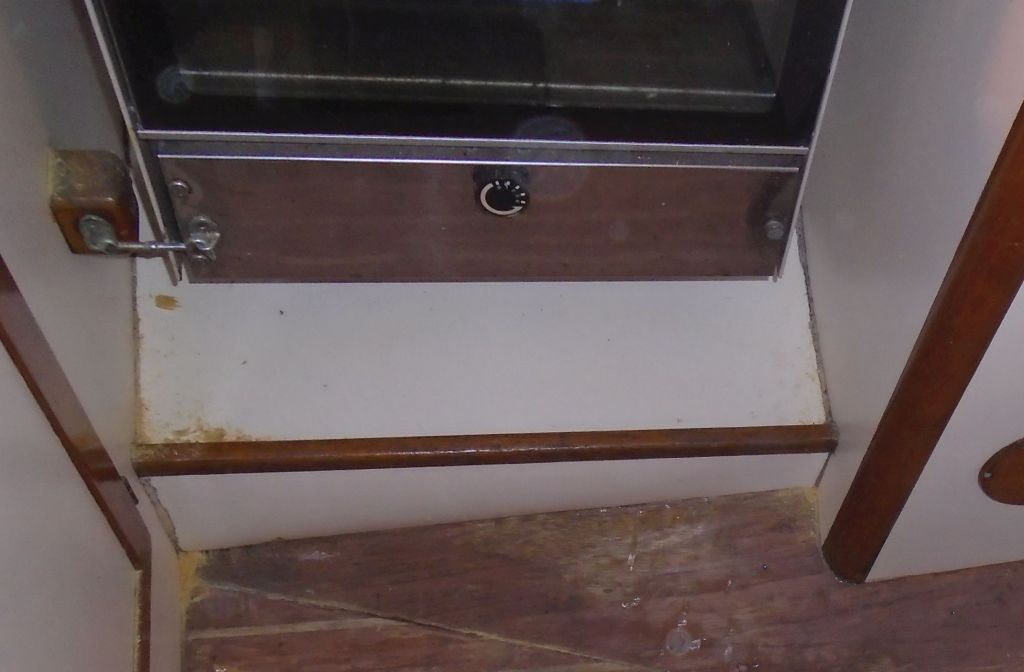
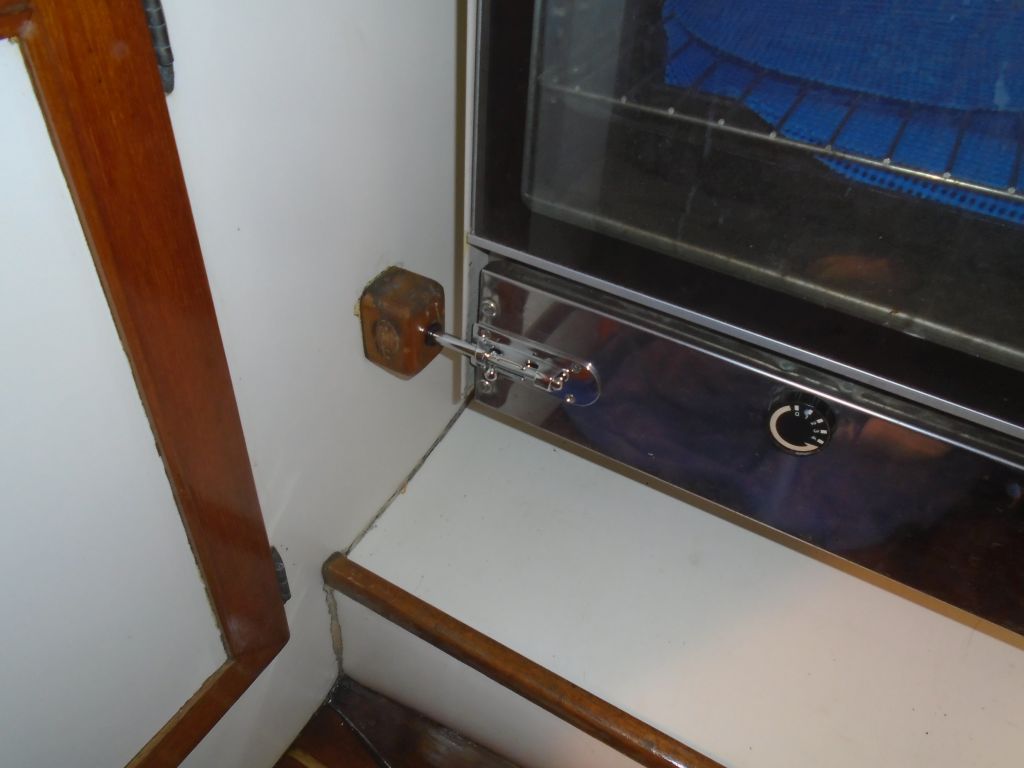
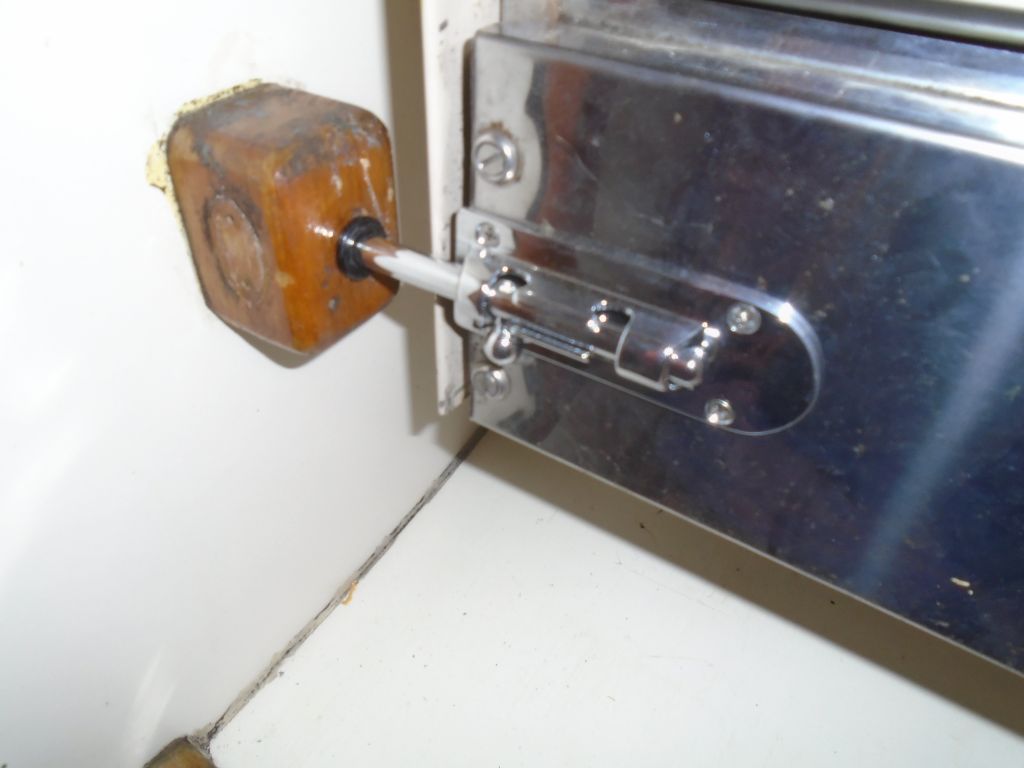
With the track extensions complete, I moved on to some smaller jobs to round out the day, beginning with what I thought would be a real quickie:  replace a non-functional hook latch “securing” the gimbaled stove with a proper slide bolt that would actually prevent the stove from swinging.  The existing hook didn’t hold the stove in a proper fixed, horizontal, position, and also allowed a couple inches’ movement.  This photo, taken at an earlier time in the project, shows the original latch.

stove4-20116

This seemingly simple project self-extended through various means, from requiring several tools that weren’t handy on board (each discovered singly and at the most inconvenient moment possible), and eventually requiring removal of the bottom section of the stove to remove–and then install new–nuts and washers on the fasteners, since the micro-thin sheet metal was unworthy of holding screws on its own.  Of course removal turned into an event of its own, as the whole hinge mechanism sort of self-destructed into several component pieces that required laborious reassembly.  In the end, I managed to get it all together, and the new slide bolt fulfilled all requirements nicely.

Finally, I began the process of unfastening and removing the old windlass power cables, which I’d be replacing with new.  I went through parts of the boat, clipping old wire ties and generally freeing the old cables, and before the end of the day freed the forwardmost ends from the chainlocker and into the forward cabin.  I’d continue the process next time.


Total time billed on this job today:  8.25 hours

0600 Weather Report:
35°, partly cloudy.  Forecast for the day:  clouds and sun, maybe a shower, highs in the mid 50s

lh3

< Back to Lively Heels

Friday

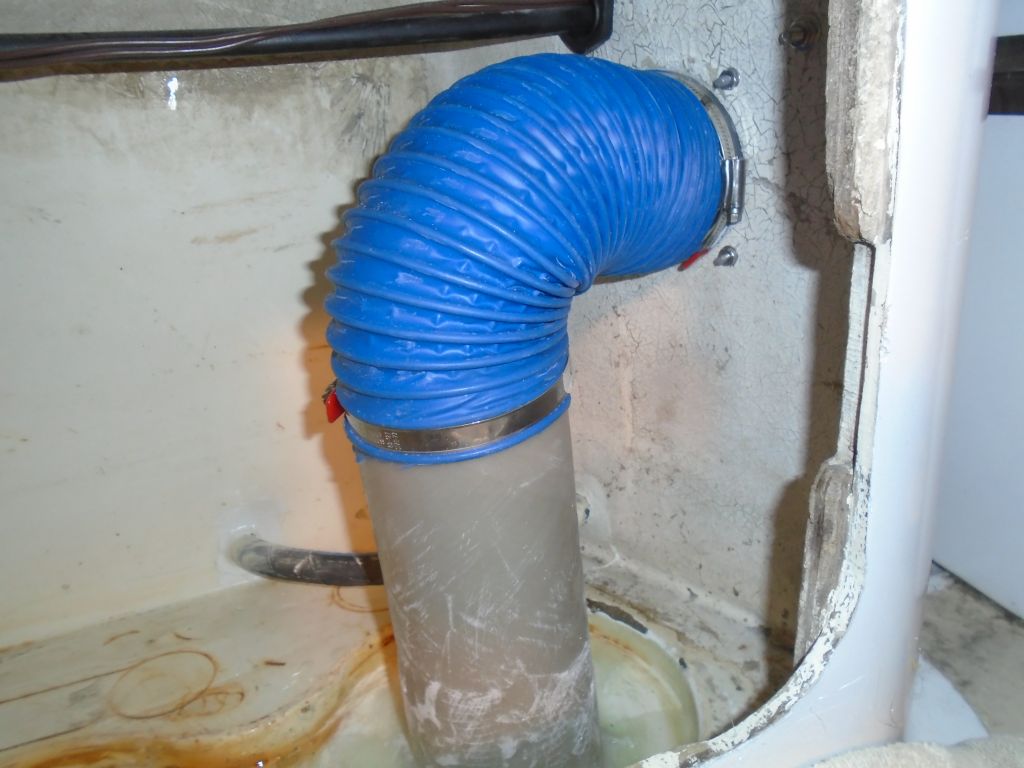
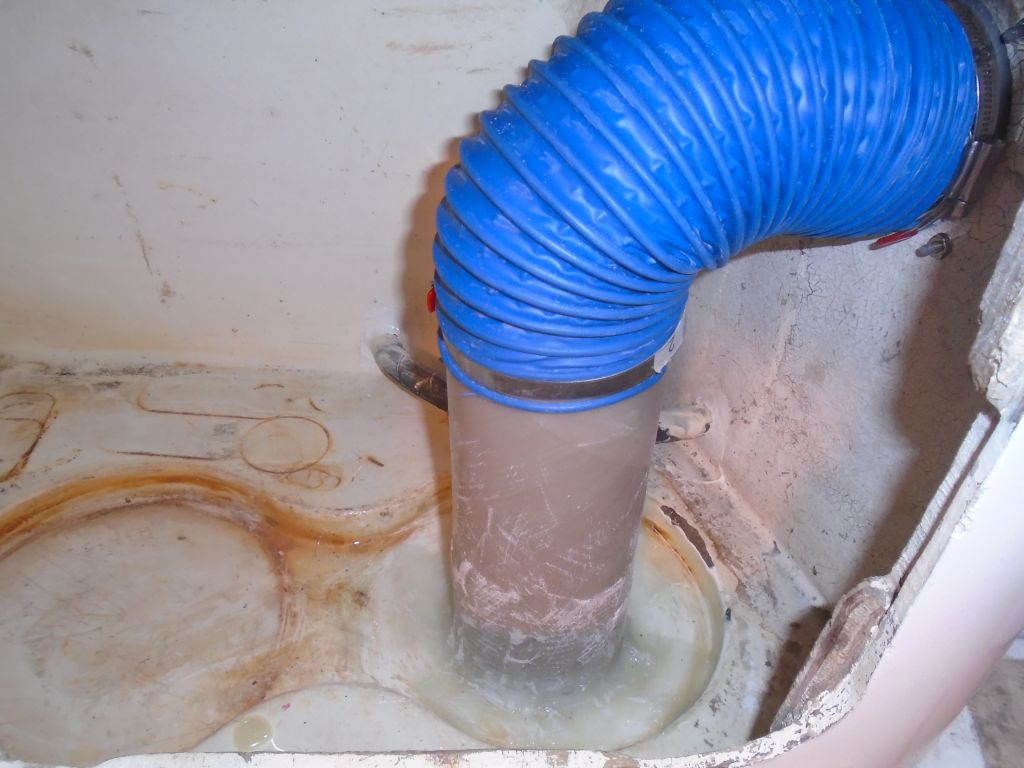
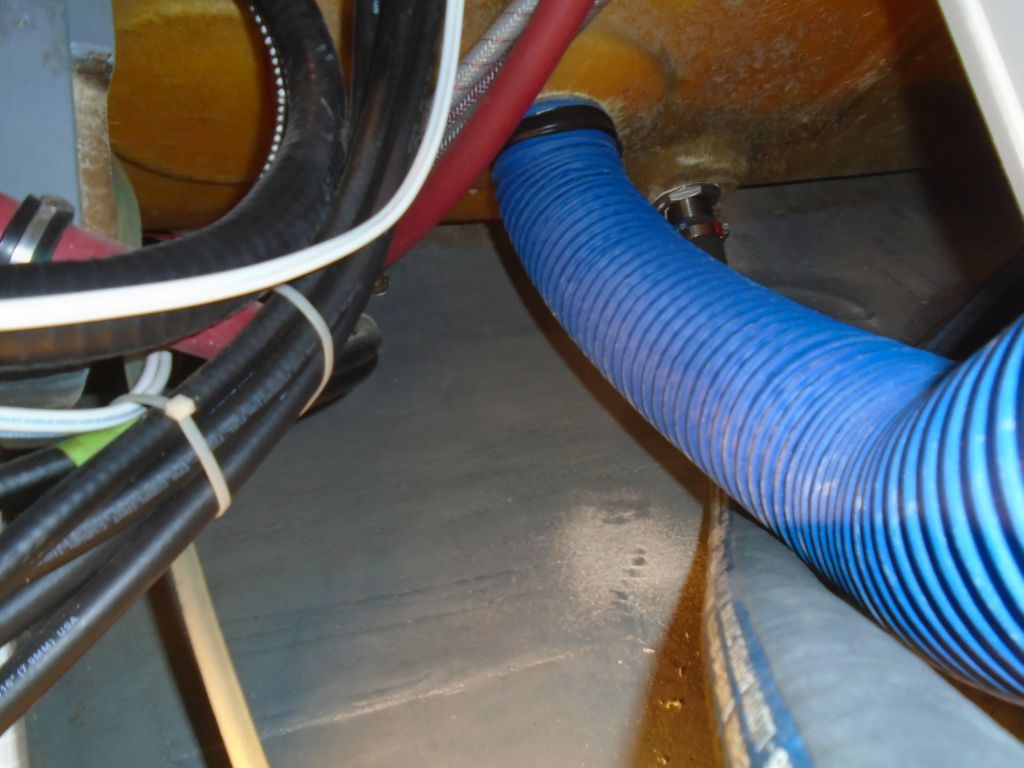
The tabbing securing the new blower vent pipe had cured in my absence, so with that complete I spent a few minutes touching up the new fiberglass with some sandpaper to remove sharp edges.  Then, I cut the flexible hose to length and connected it to the nearby vent through the aft end of the locker, completing the job.   This installation left a surprisingly usable amount of space in the tiny locker, which had been the goal of using the rigid pipe instead of simply running flexible hose only.

The owner would finish up the actual blower installation in the engine room, now that the wiring and vent components were in place.  All he’d have to do was install the blower on its platform–it was all ready to go–and then secure the platform as he’d designed.

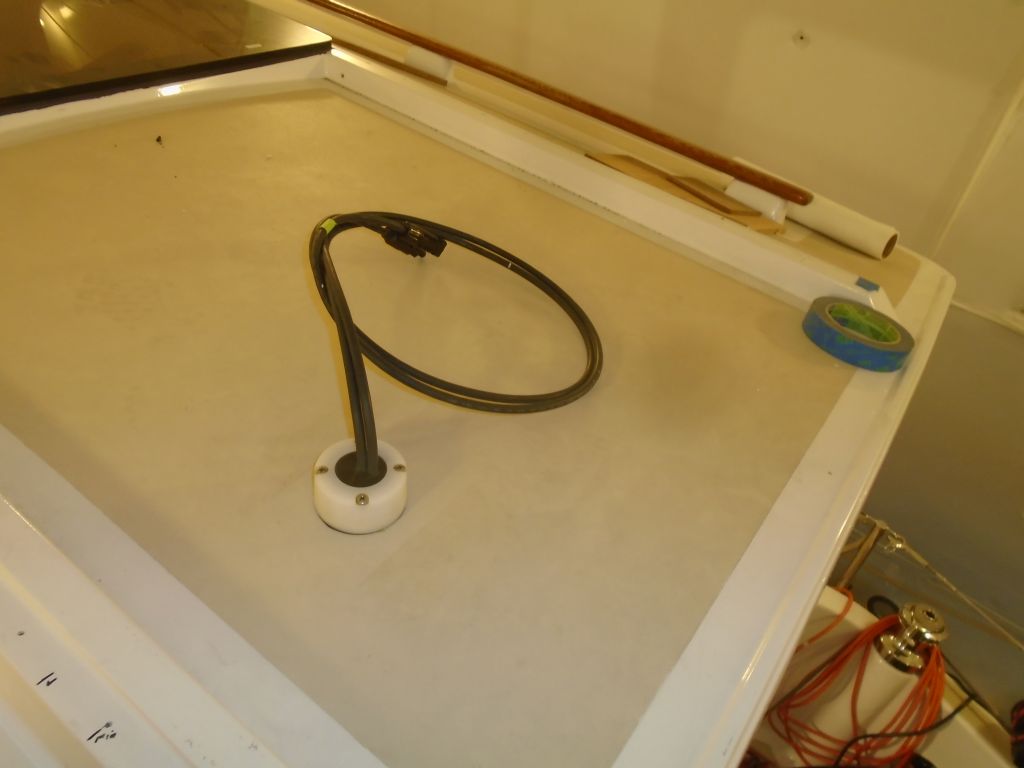
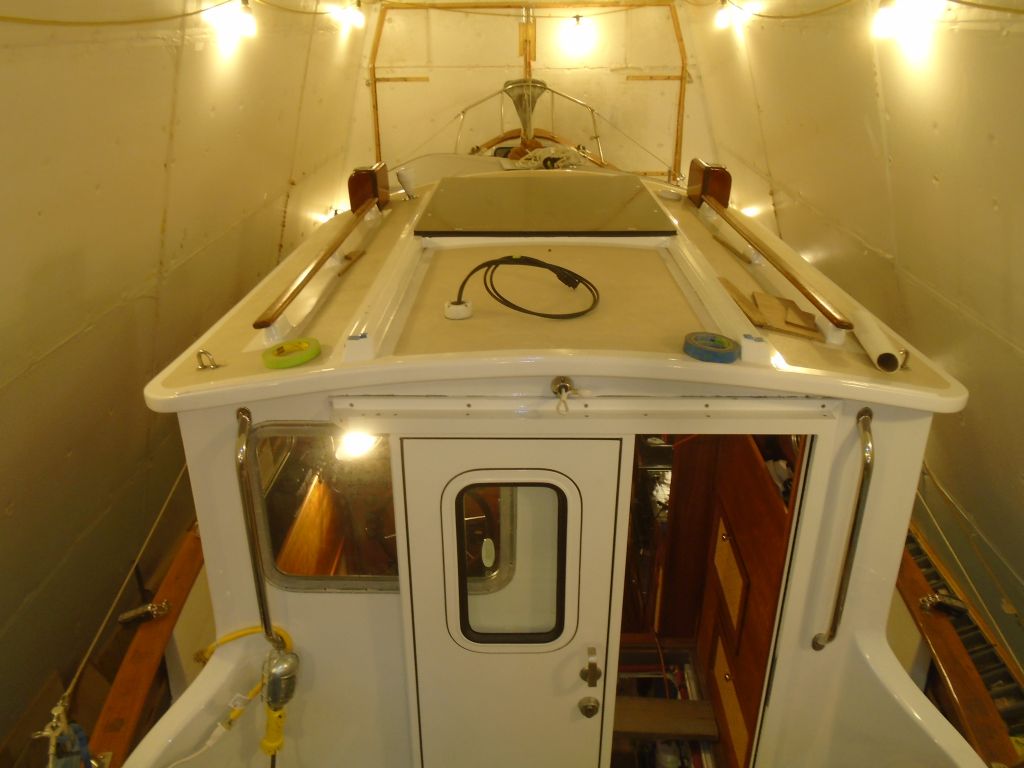
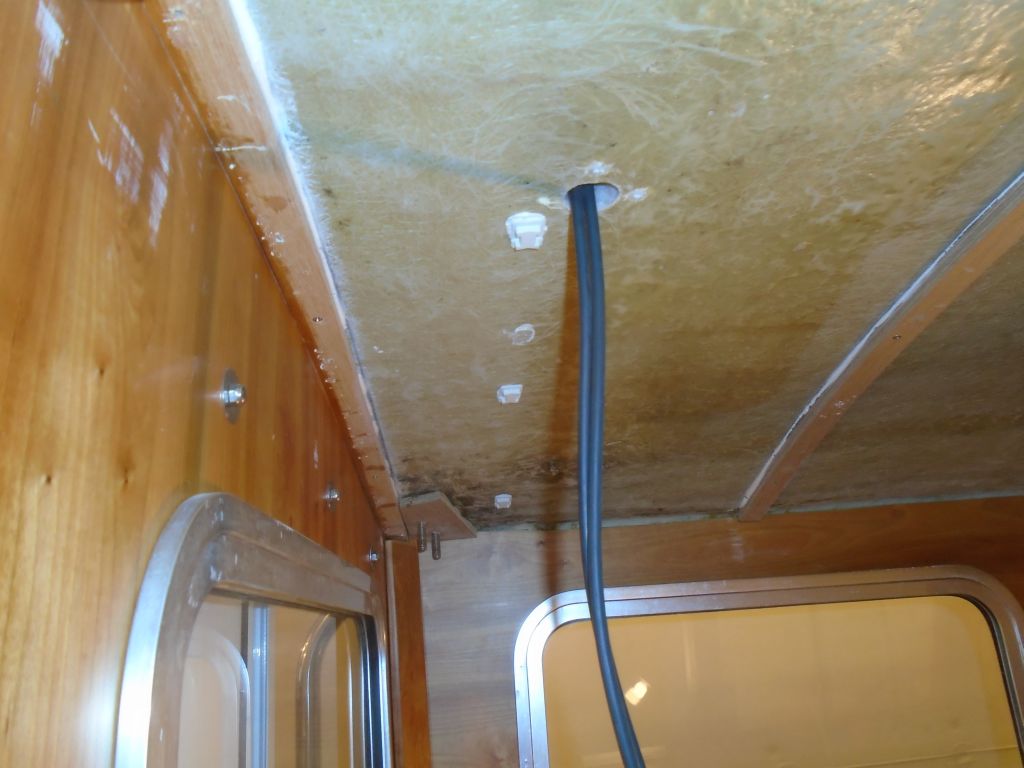
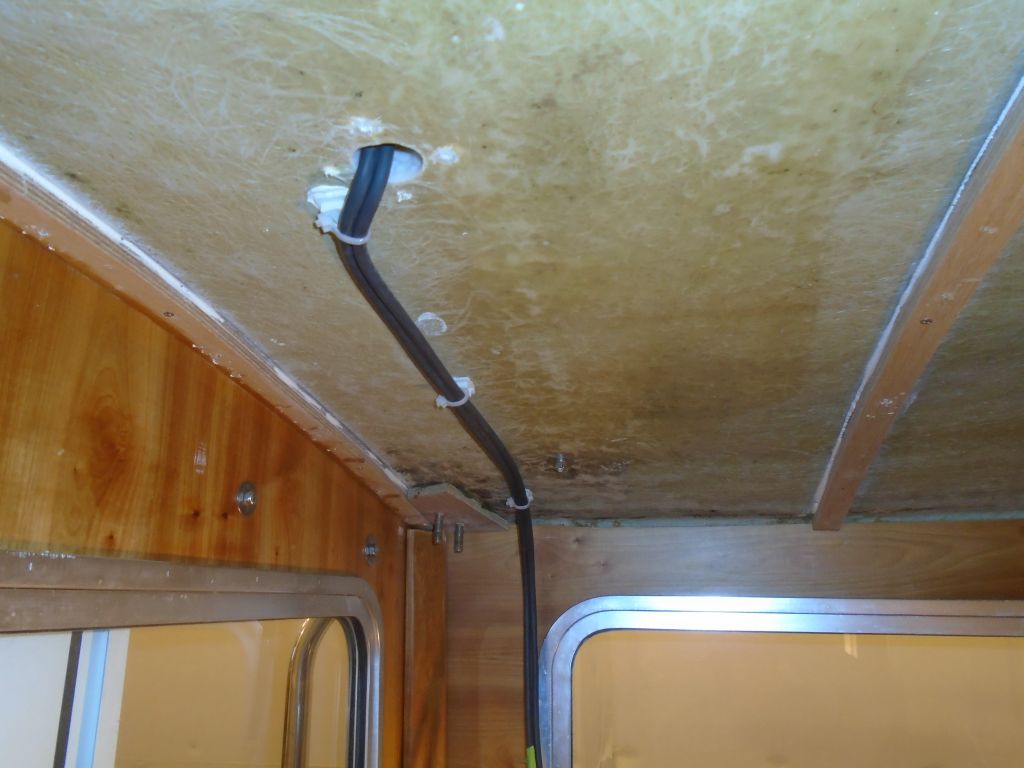
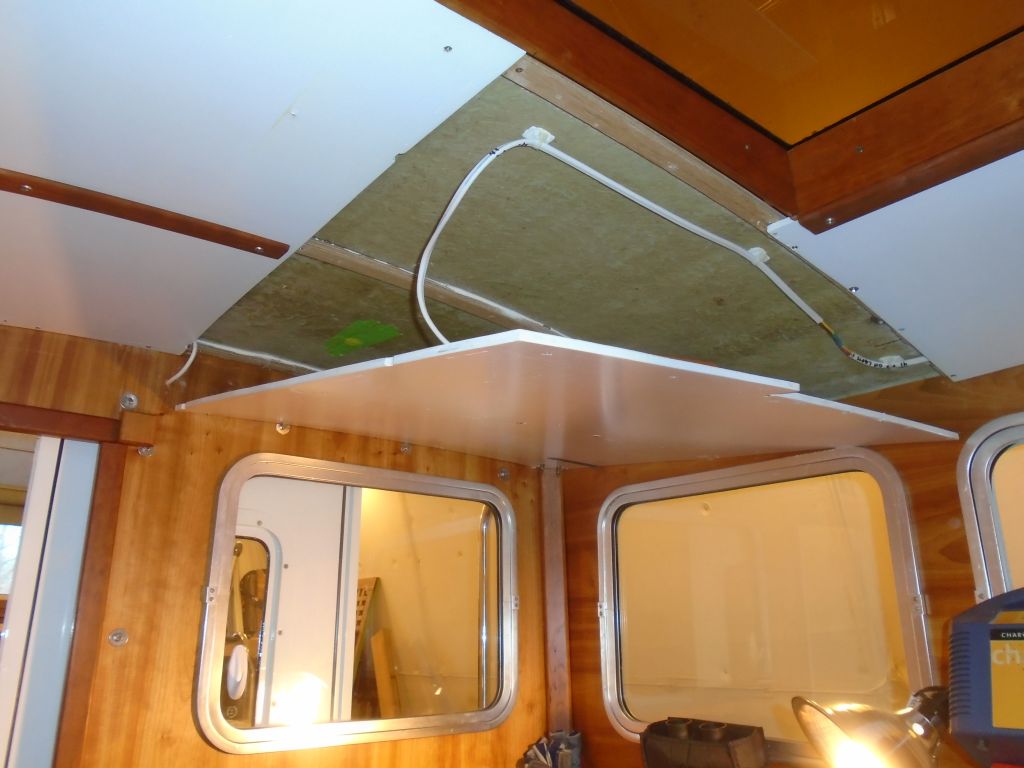
After cleaning up the rough edges of the epoxy filling the through-hole in the pilothouse overhead, I continued work on the wiring for the solar panel.  I installed some wire tie mounts on the overhead, and ran through the extension cables–with standard MC-4 plugs at the ends to connect with the panel itself, using a cable clam to seal the wire penetration.

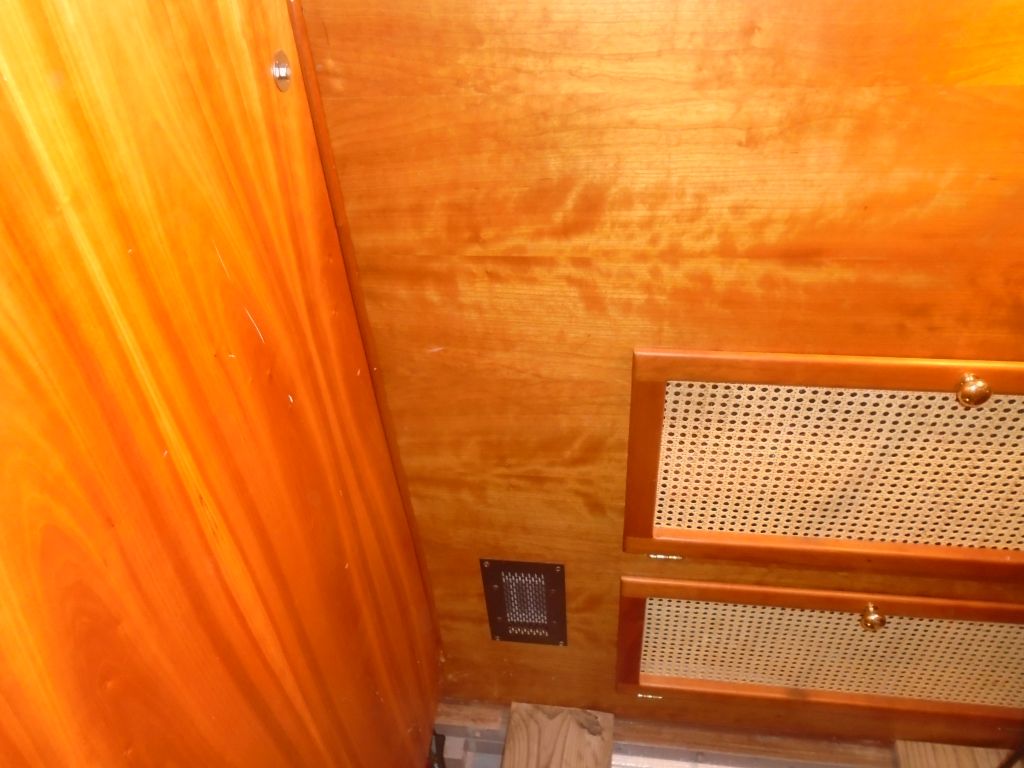
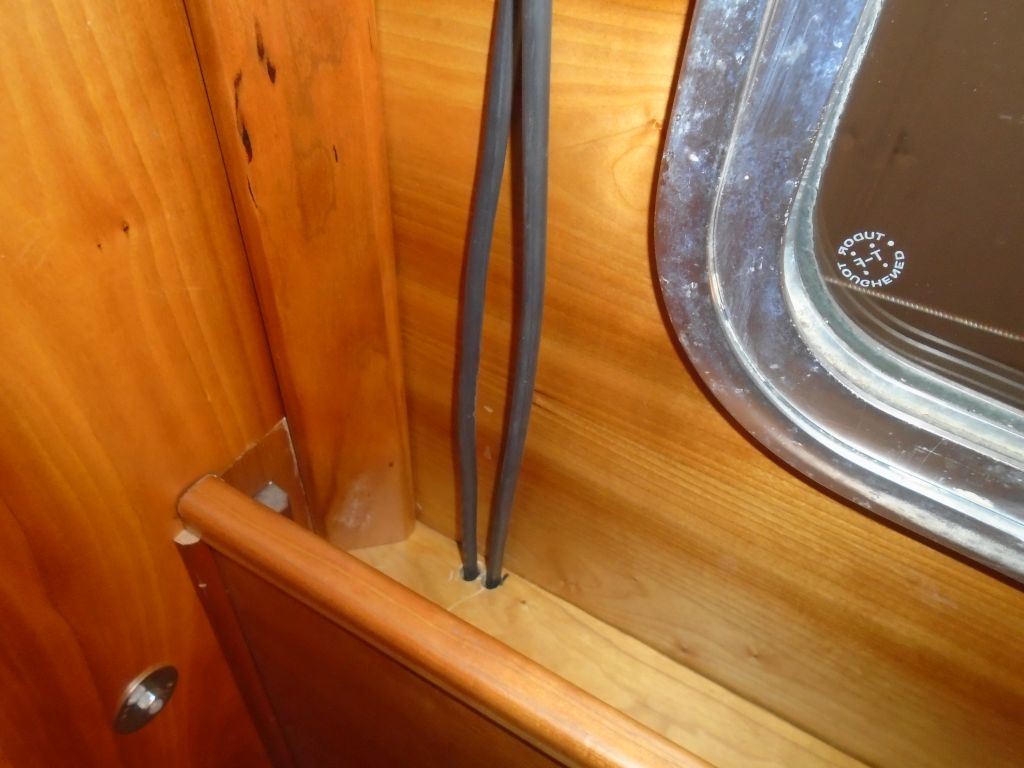
The wires needed to lead down into the utility space on the port side of the pilothouse, where eventually they could connect to the solar panel controller (and readout panel), which I’d later install in a blank space on the bulkhead there.  Because there was no way to run the wiring completely hidden, back at the shop while preparing for the project I’d made a cherry wire conduit for the job, to span the pilothouse wall between the overhead and the space below.  So now I ran the wiring along my new wire mounts on the raw overhead, and down the side of the pilothouse and through two holes in the little shelf, which allowed the remaining cable to enter the utility space beneath.  This was as far as I’d take the wiring for the moment, as I first wanted to focus on mounting the solar panel itself.

With the wire now secured, I could reinstall the overhead, but first I marked and cut out a notch to accept the top end of the wire  conduit.  Then I reinstalled the overhead panel and its trim pieces, and secured the wooden wire conduit over the exposed wires with a few screws.

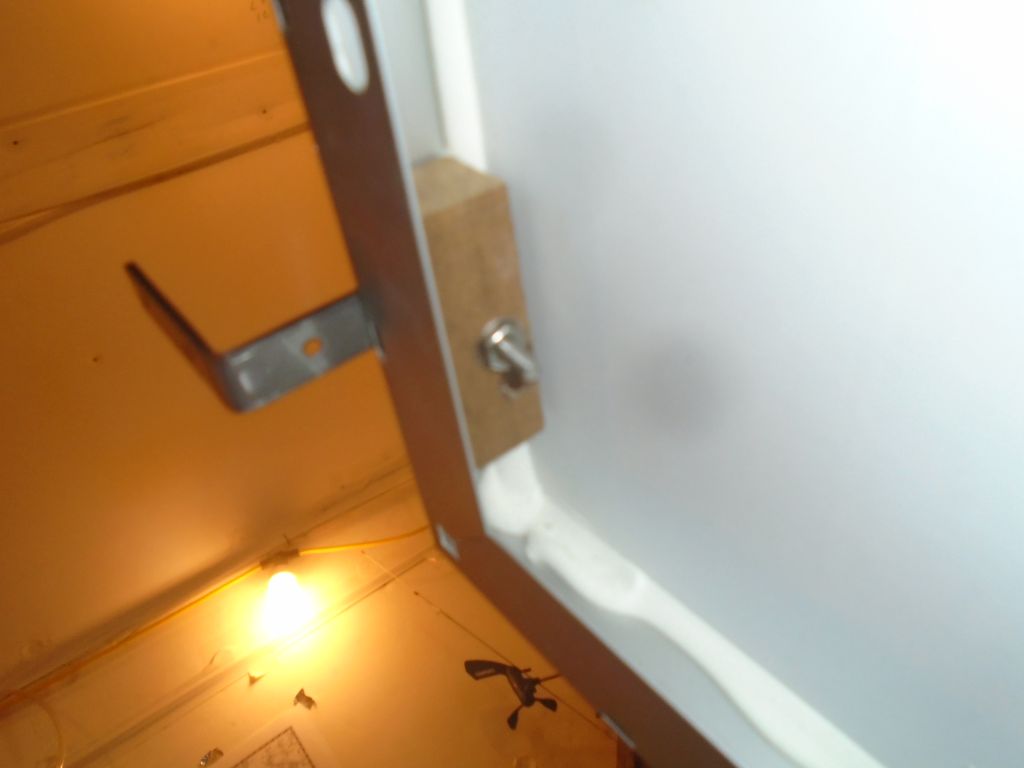
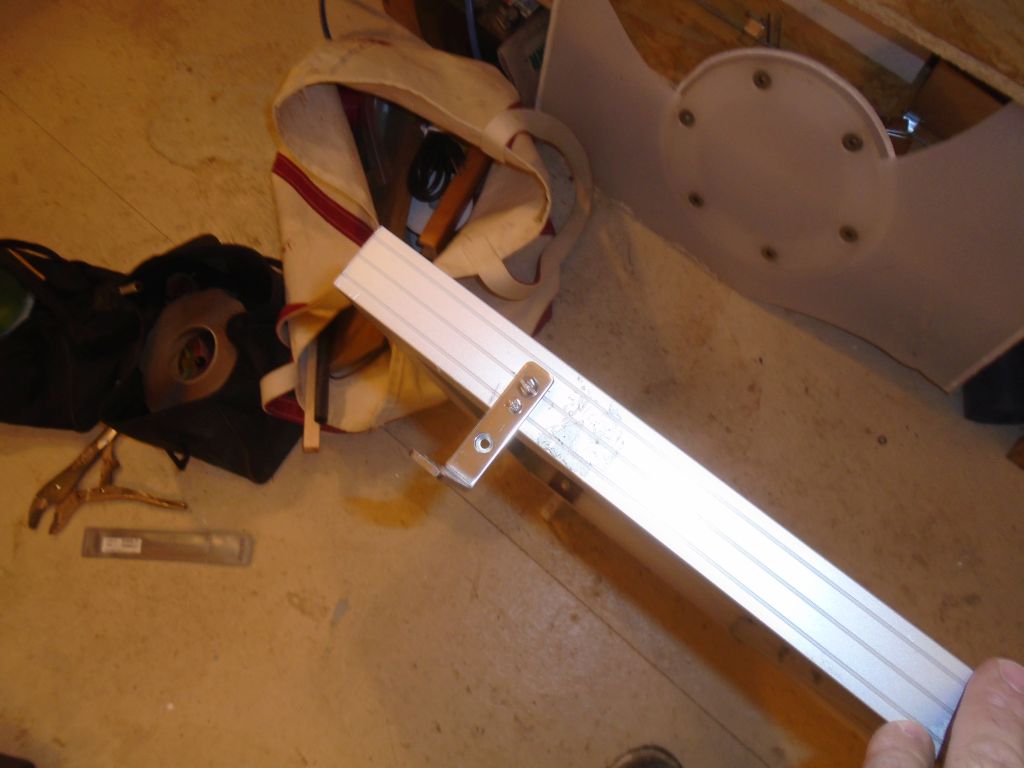
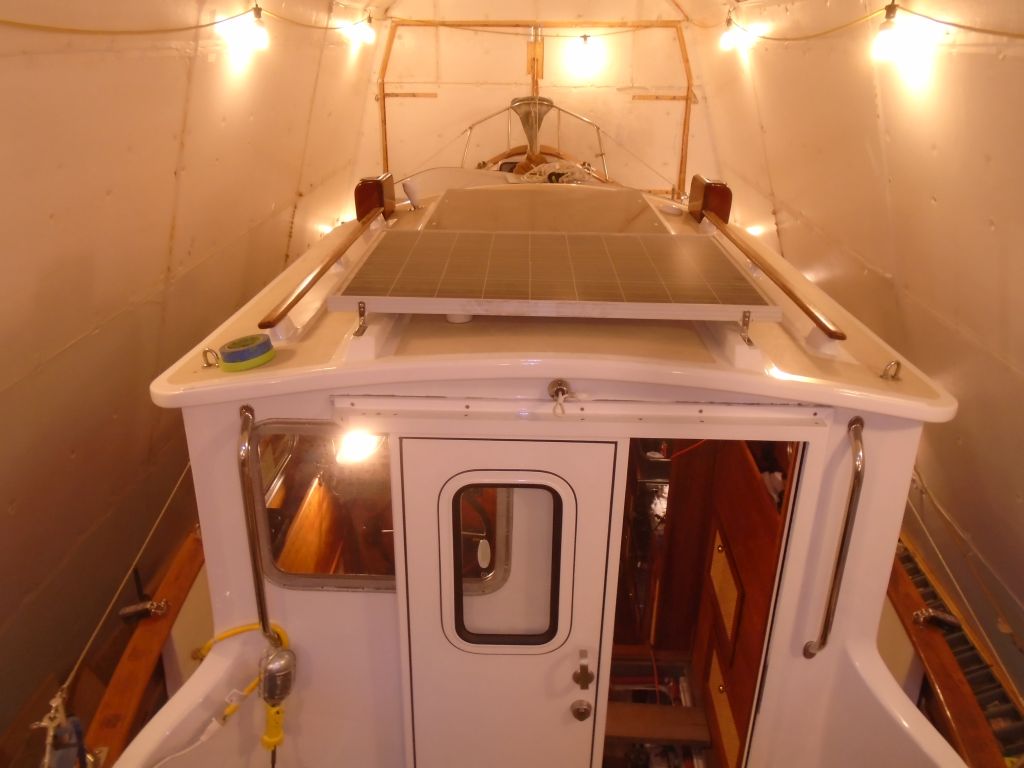
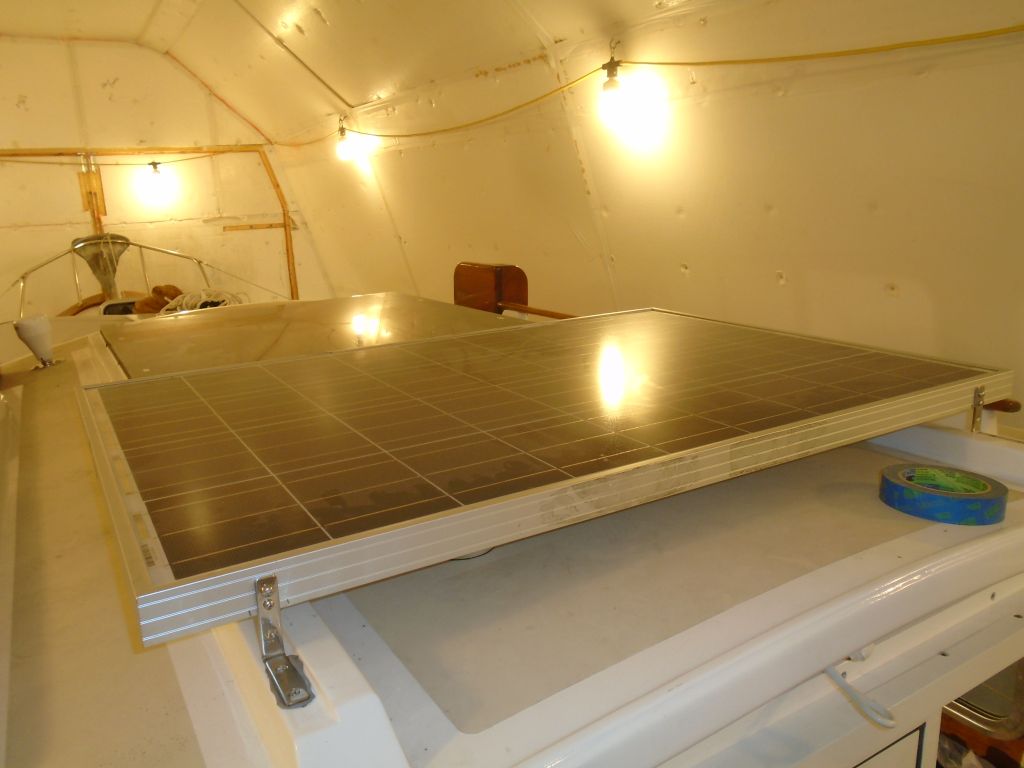
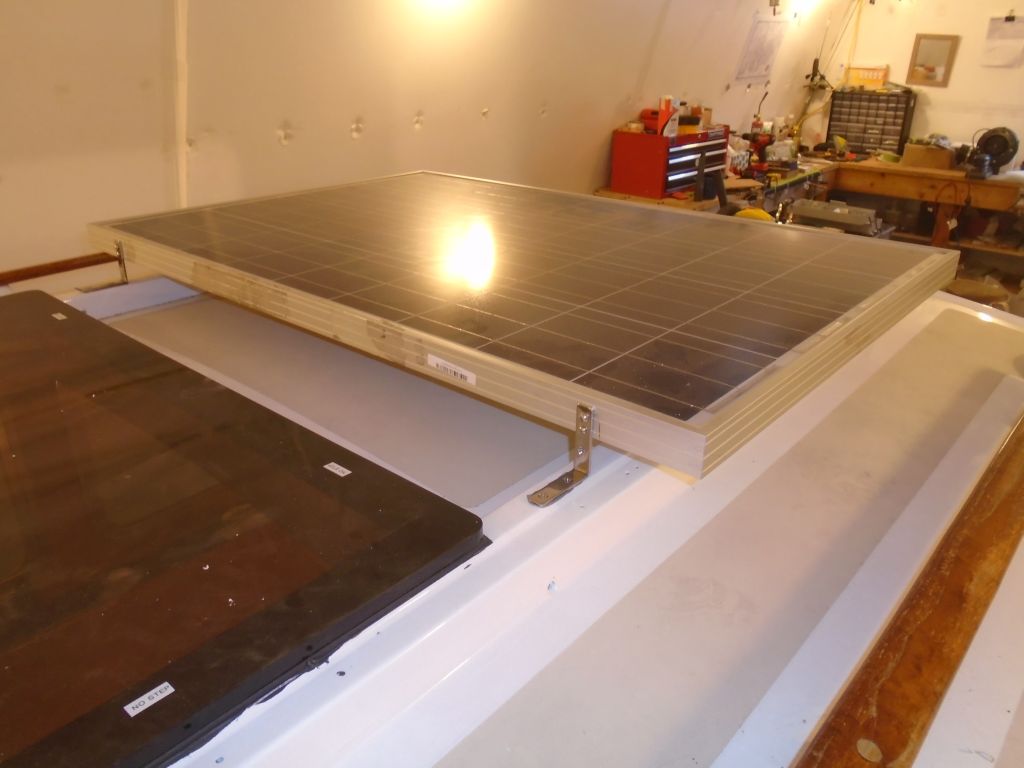
The owner wanted the panel removable without heroic efforts, so to mount it I chose some simple stainless steel angle brackets, which I secured to the panel frame with a bolt and wooden backing block to take up some of the space within.  There wasn’t room for a second bolt, but to prevent any possibility of the bracket moving I installed a small sheet metal screw beneath the bolt location, just into the frame itself.  Earlier, I’d marked where these brackets needed to be while the panel was mocked up on the boat, so the brackets would align with the molded rails that used to accommodate the sliding pilothouse overhead hatch.

With the brackets secured to the panel, I mounted them to the pilothouse, drilling and tapping the molded rails for machine screws before securing the brackets with some butyl tape for ease of removal, if desired.  The wiring entry point was hidden beneath the panel, but the wires were still accessible for disconnection as needed.  To complete the installation, I’d need to install and wire in the solar controller in the pilothouse, but that would be a job for another day once I’d collected some materials required for the job.

In an embarrassing flub that the owner and I had discovered back when we launched the boat for him the first time, in June 2015, I’d found that somehow–and despite what I recall as great care on my part to avoid the very issue–I’d installed the mounts and blocks for a spreader flag halyard on the wrong side of the spreader–the top side, rather than the bottom.  This was humbling, but ultimately minor for the moment, and the immediate fix at the time had been to simply remove the hardware and press on.  Now, however, it was time to correct the issue.  I used small screws set in Tef-Gel to fill the erroneous holes in the spreader top, and reinstalled the inchworms and blocks on the correct side of the spreader this time.

halyard1-12916

In the past few days I’d made solid inroads to the original project list, and felt good about the early jump-start.  But for the moment, I’d reached the end of what I’d hoped to accomplish during these few days, and it was time to regroup and focus on the remaining elements of the project ahead, which I’d take care of over a few days as needed in the near future.  So I cleaned up and packed away my tools and equipment, and would return soon to continue a few things and keep the job moving.  For the meantime, though, it was back to the shop and relative normalcy.

Total time billed on this job today:  4.25 hours

0600 Weather  Report:
25°, cloudy.  Forecast for the day:  Clouds, scattered snow and rain showers.

Danusia 24

< Back to Danusia

Thursday

After a morning away from the shop at an appointment, I returned to the cabin sole, and went through my process of sanding, cleaning, and another coat of the satin varnish.

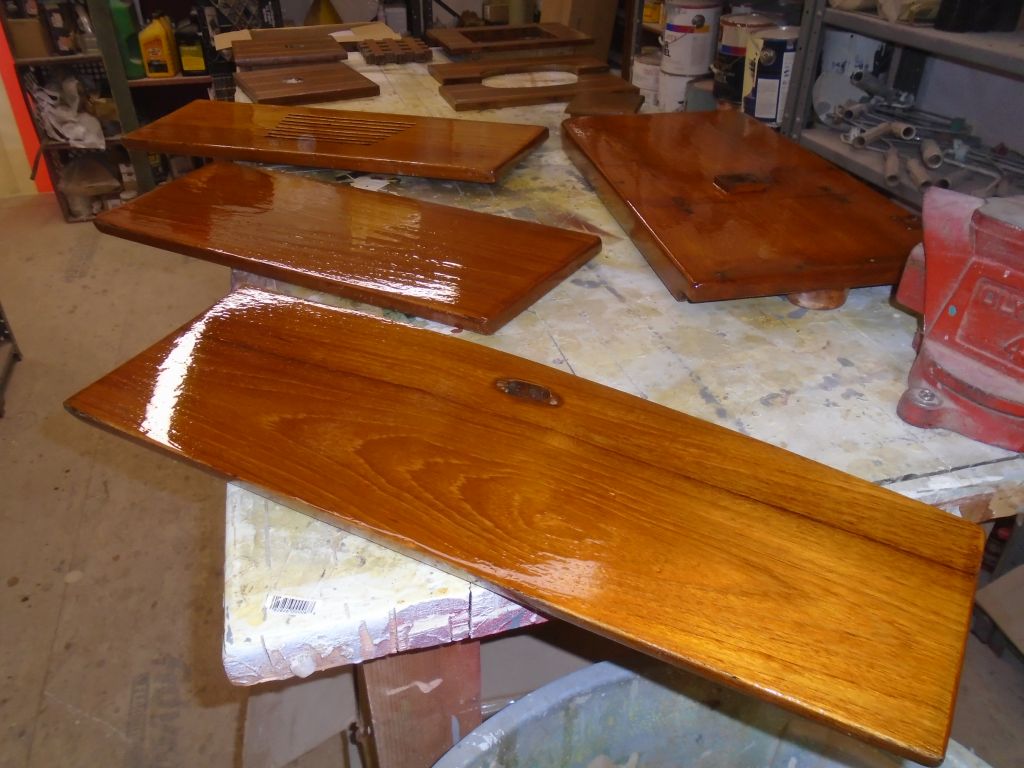
Meanwhile, I continued the varnish work on the loose hatches and companionway:  coat #2.

varnish1-12816

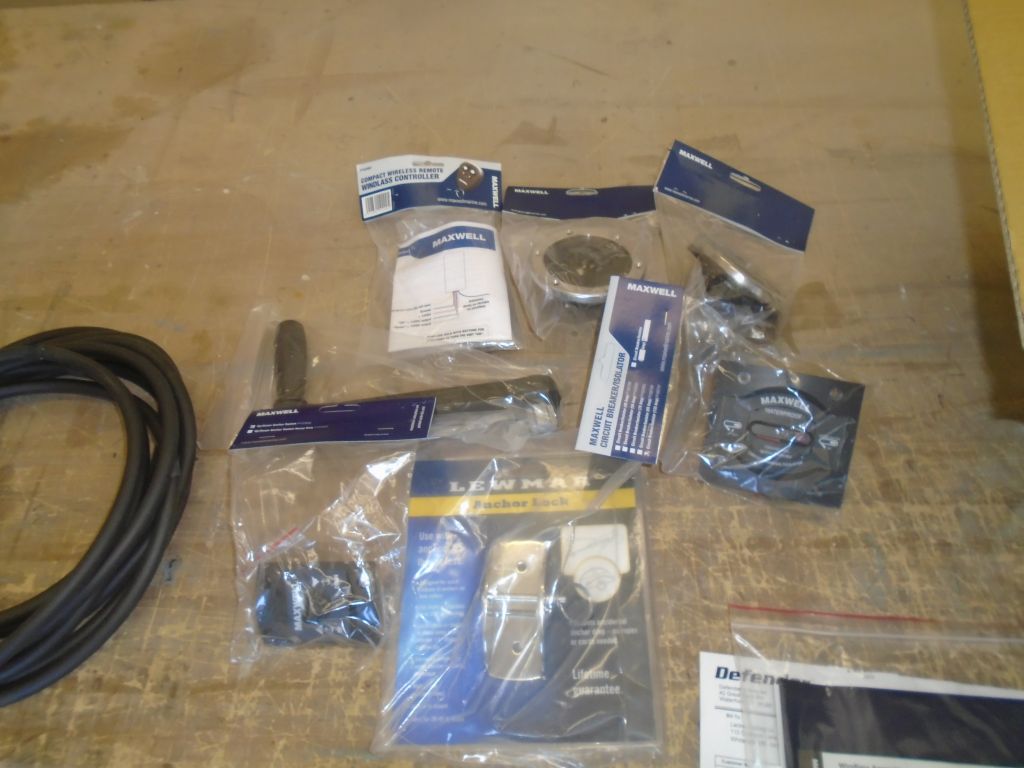
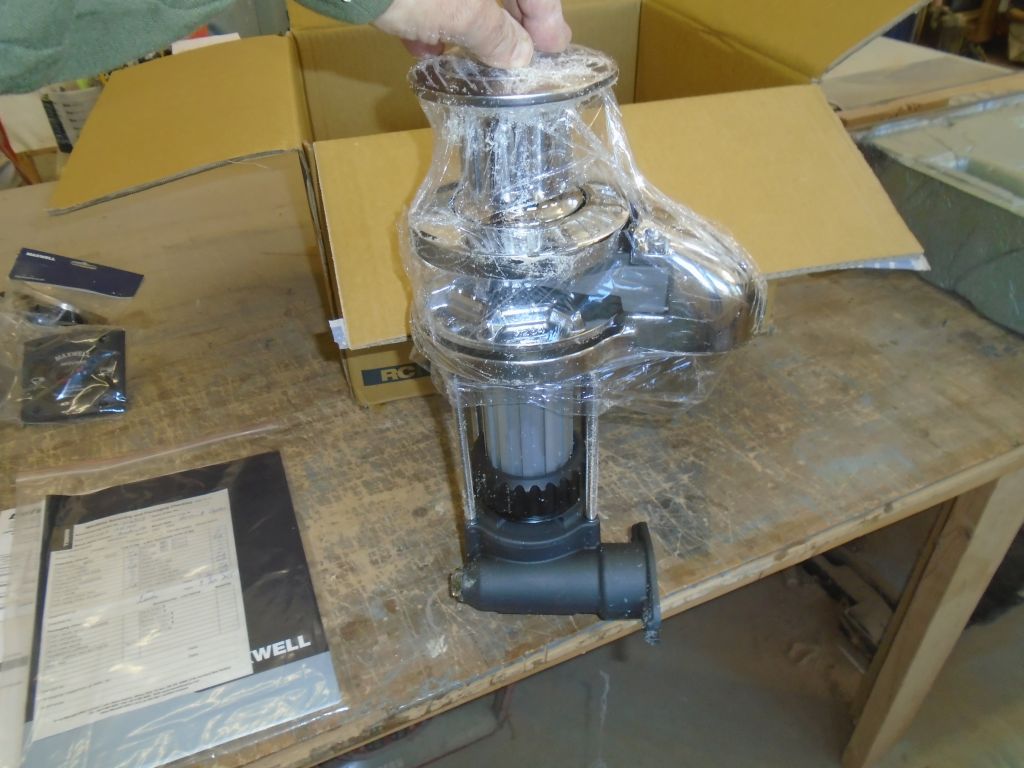
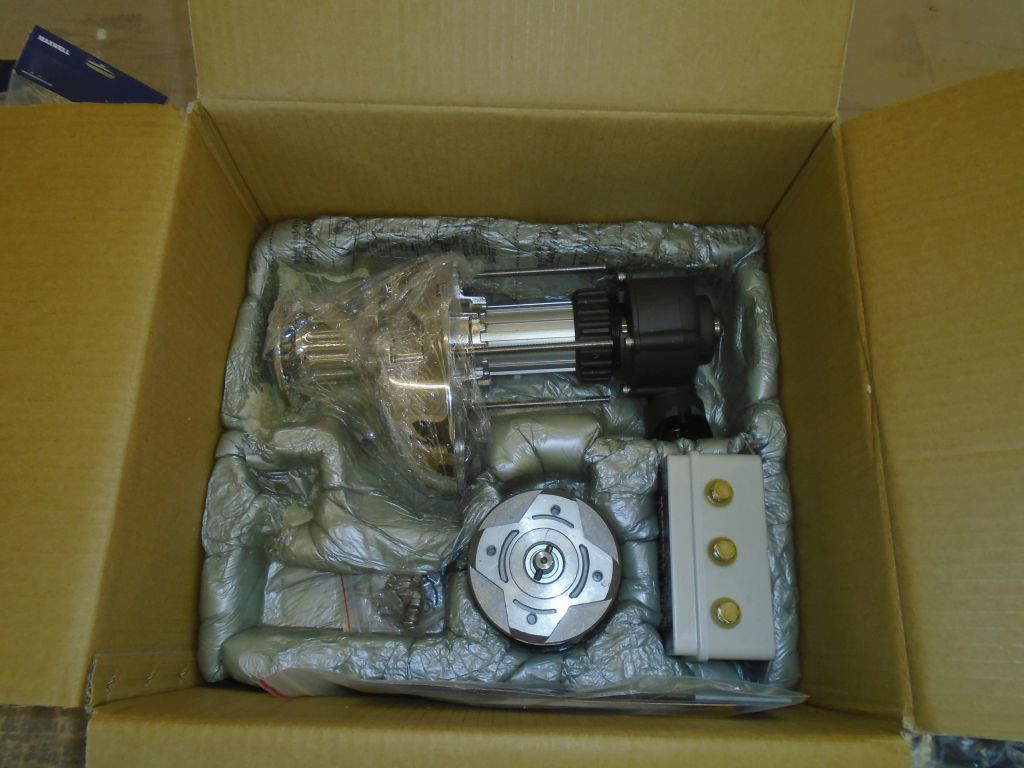
The new windlass and its related equipment was now on hand, and I temporarily unpacked the box to check it out.

Total time billed on this job today:  2.5 hours

0600 Weather Report:
15°, clear.  Forecast for the day:

lh2

< Back to Lively Heels

Wednesday

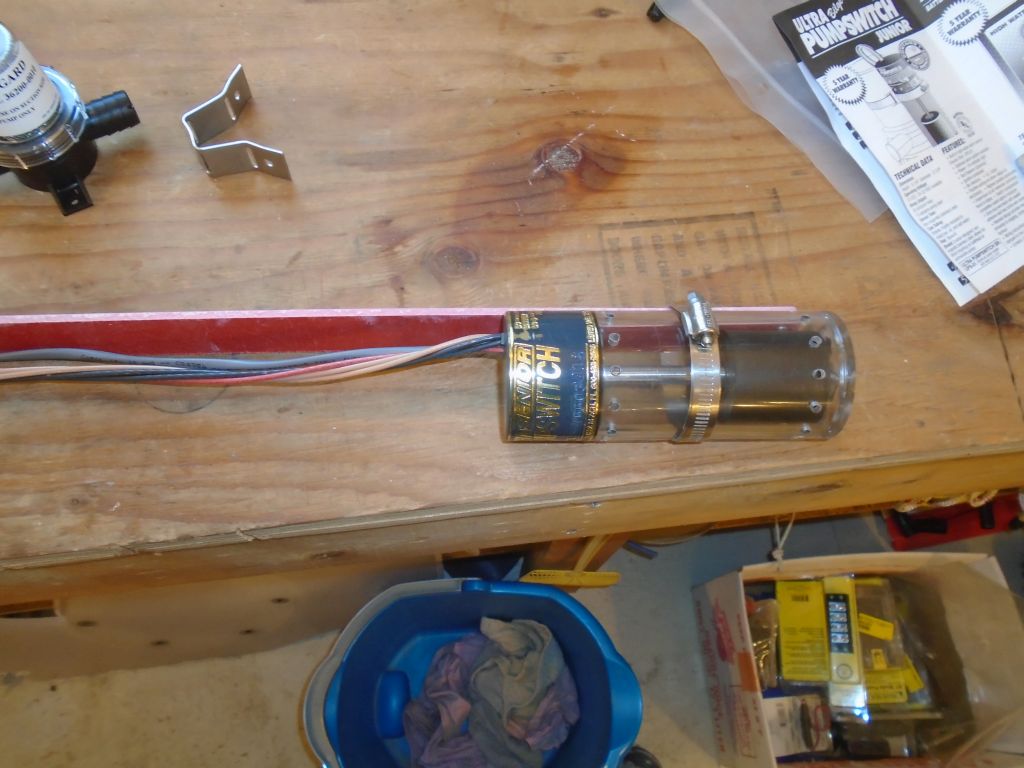
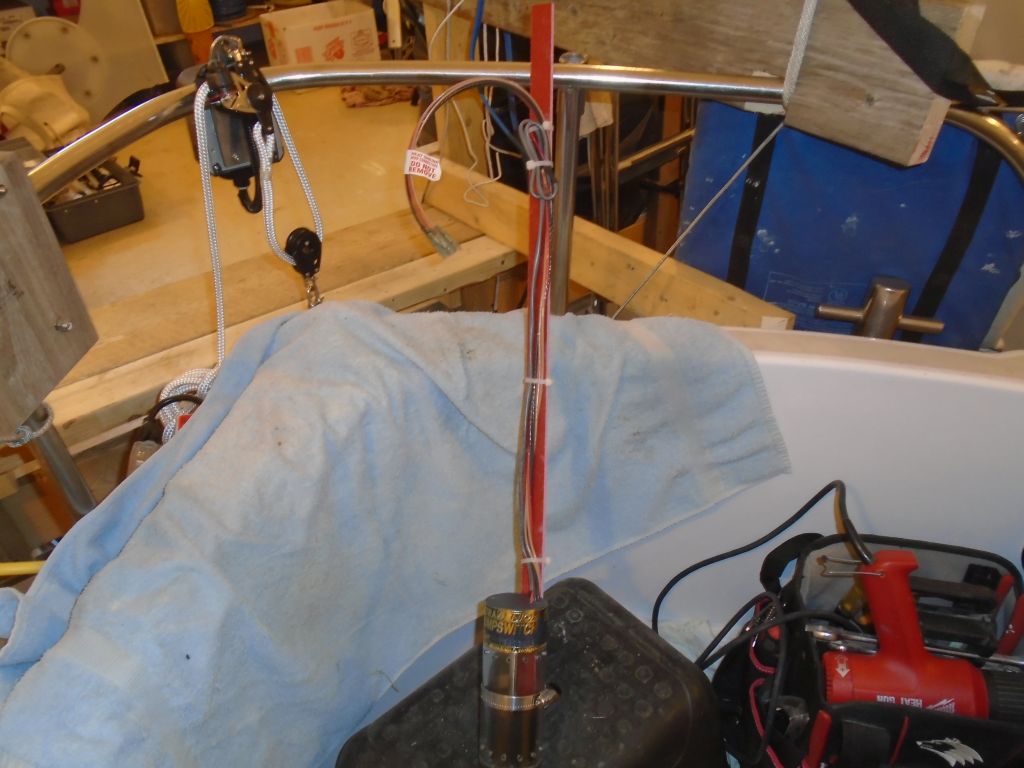
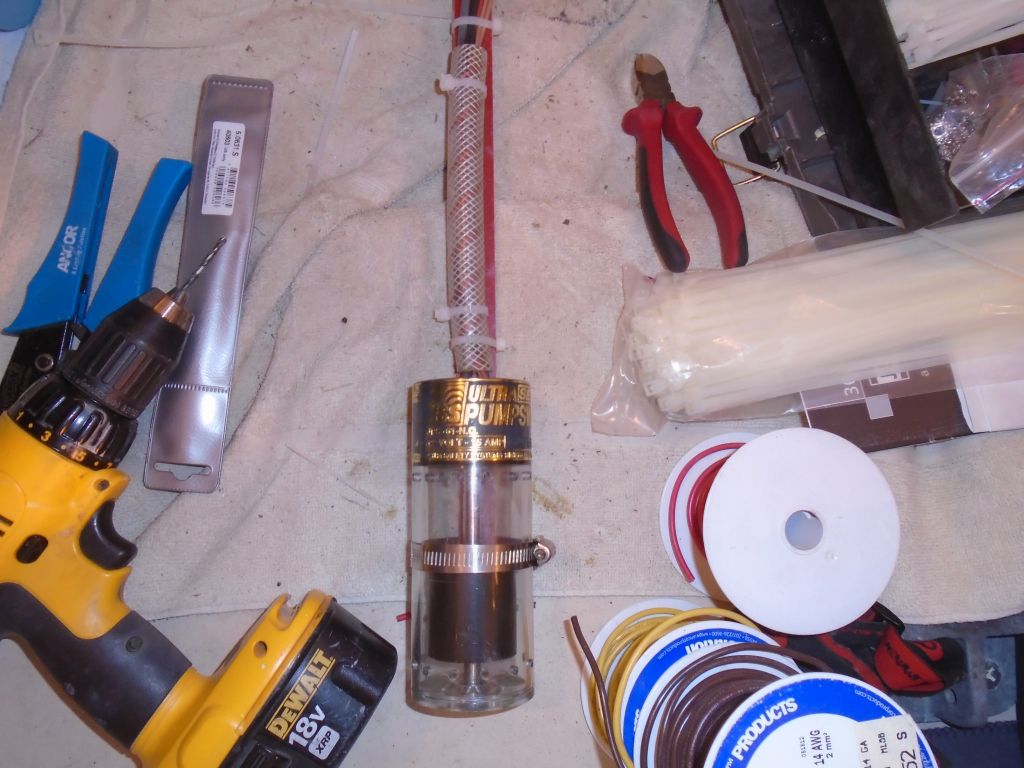
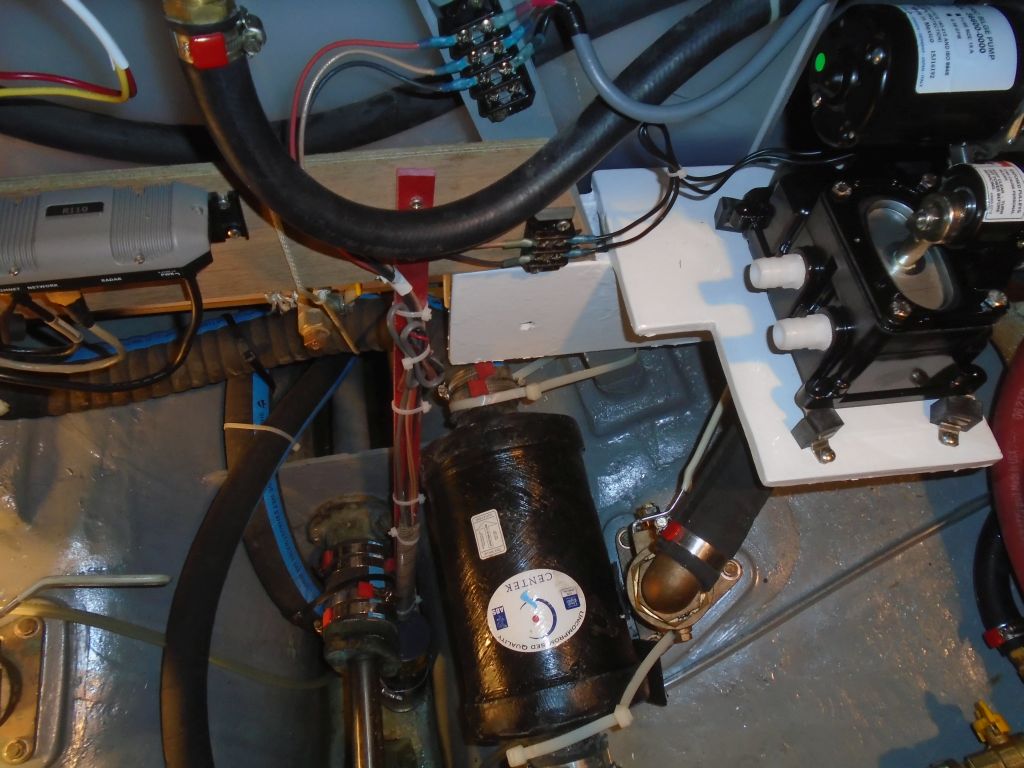
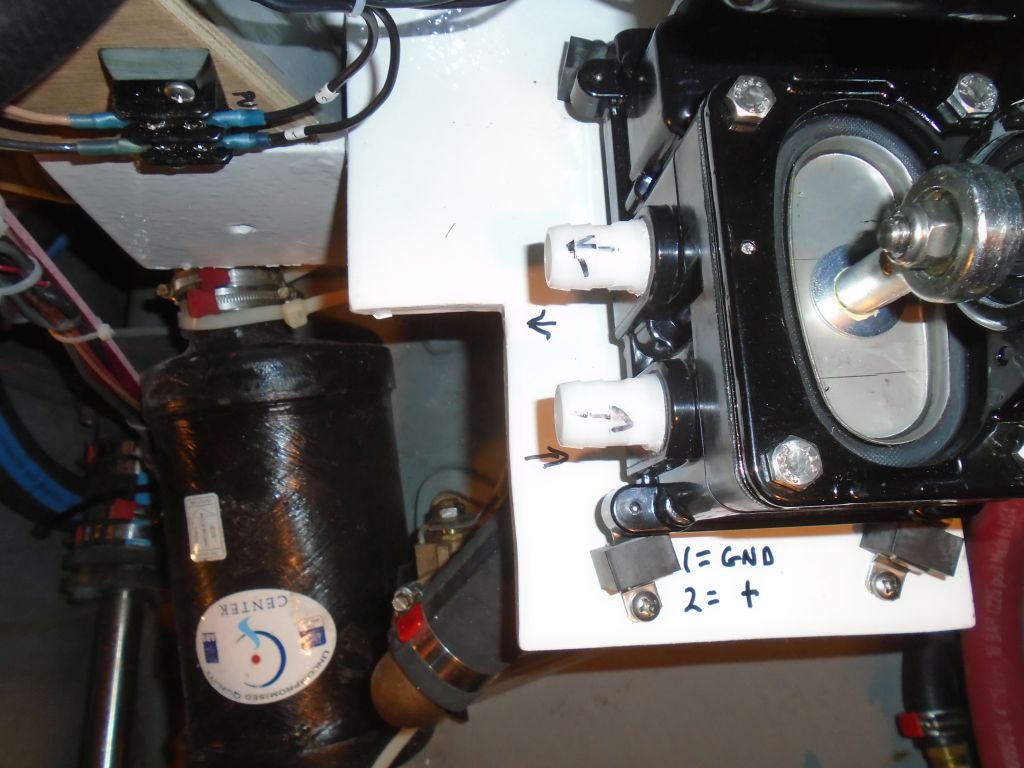
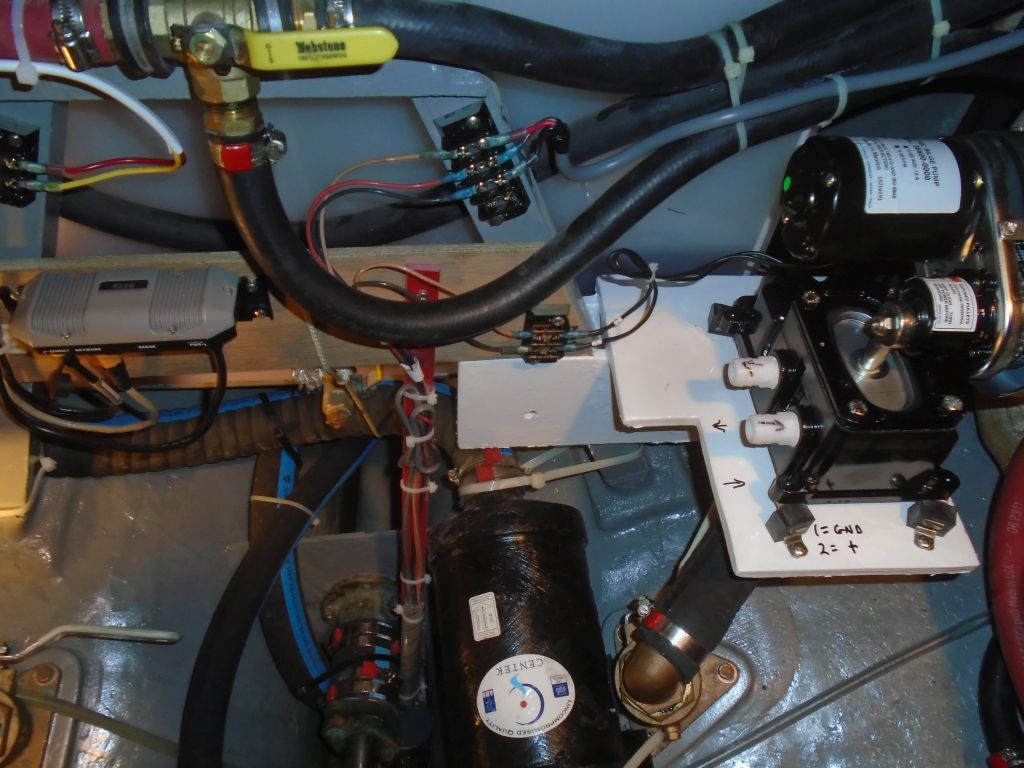
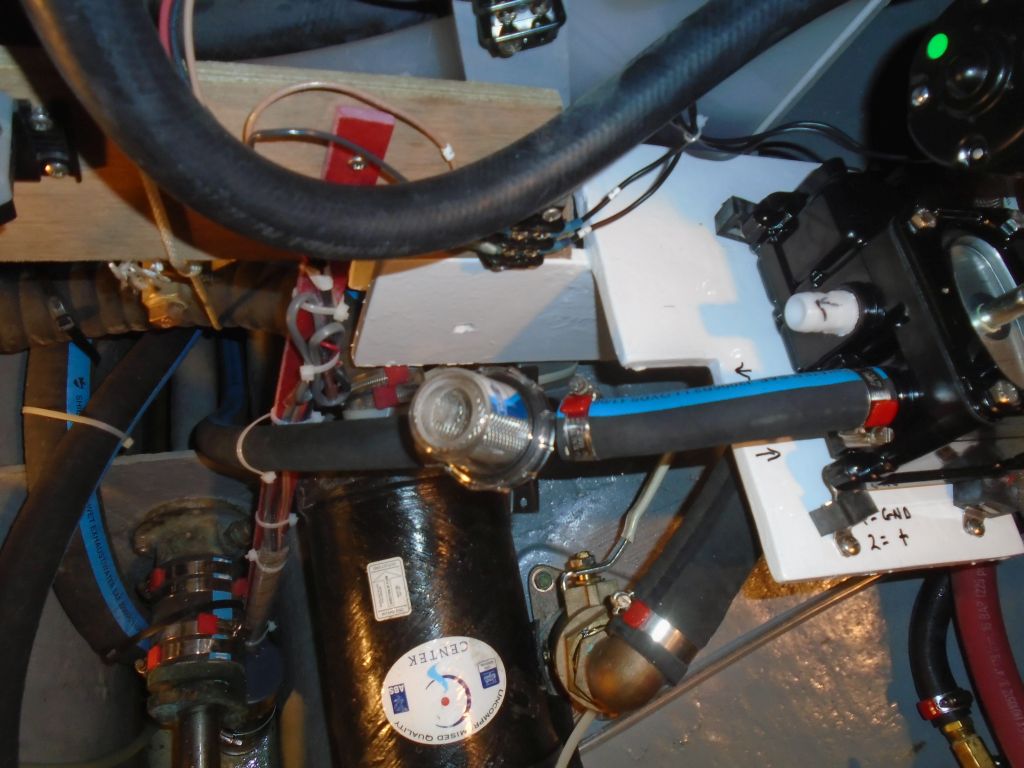
I got started with the new bilge pump automatic switch, a high-end float switch in a sealed containment.  Given the space availabilty and access to the bilge, and the way the switch could be mounted with its supplied mounting hardware, I chose to install the switch on a piece of narrow fiberglass flat stock to make mounting straightforward and retrieval of the switch easy.  I clamped the cylindrical switch to the stock after first cutting the fiberglass to length after a test-fit in the engine room, and led its wiring up the stick, securing it as necessary.  At the lower end, I added some chafing bear since the whole arrangement would be very near the stuffing box once installed.

With the switch mounted and wires in place, I installed the stick and switch in the bilge, at the aft end next to the shaft, and secured the mounting stick with two screws into a convenient plywood support member above.  Then, I made up the various wires–five in all–to interconnect the bilge pump and switch with the wiring to the boat’s bilge pump switch at the helm.

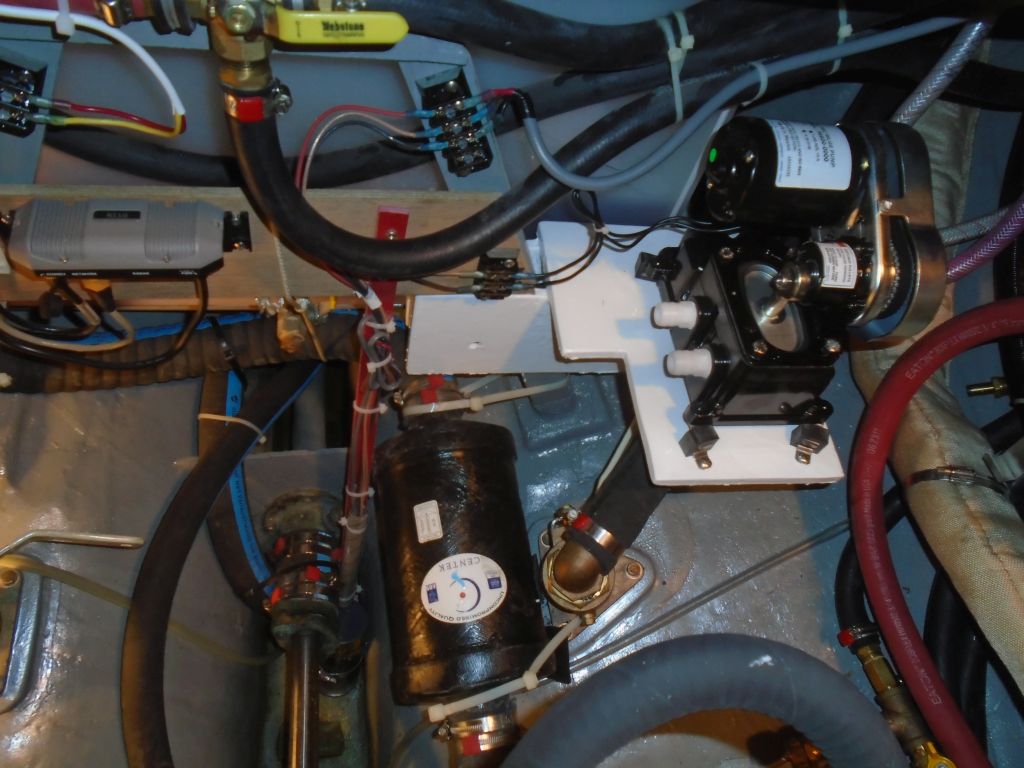
With the wiring complete, I tested the pump.  The auto switch could be tested by inverting it, but it also  came with a little green indicator light on the top of the switch to show that it was properly wired in the automatic position.  When switched to manual, the pump operated well.

light#-12716

One thing about these pumps is they don’t differentiate the wiring (two black wires) or inlet/outlet, since wiring one way versus the other would change the inlet/outlet position as it changed the direction of the pump motor.   I determined the flow direction of the pump–as wired–during the pump test, and marked the inlet and outlet myself for future reference.  Then, I attached a length of 3/4″ hose, along with the supplied strainer, to the inlet, running the suction end well aft into shaft alley.  The outlet end required an adapter to fit the 1-1/8″ hose that was already in place to the transom through hull, so I didn’t make this connection at the moment as I didn’t have the fitting on hand.

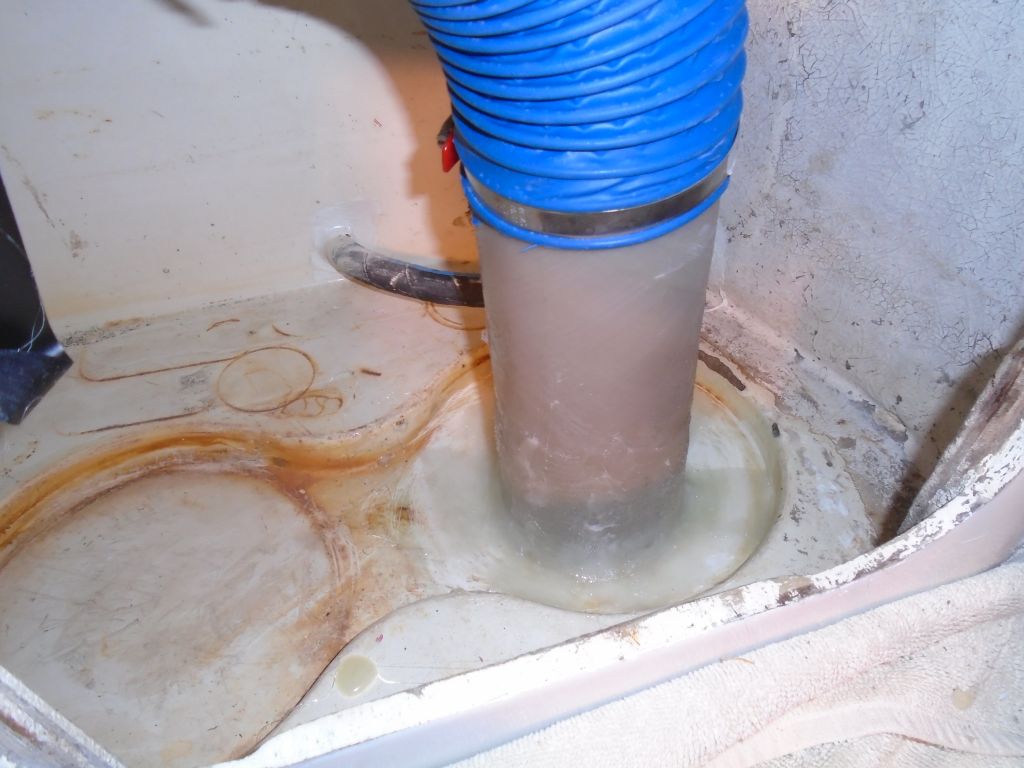
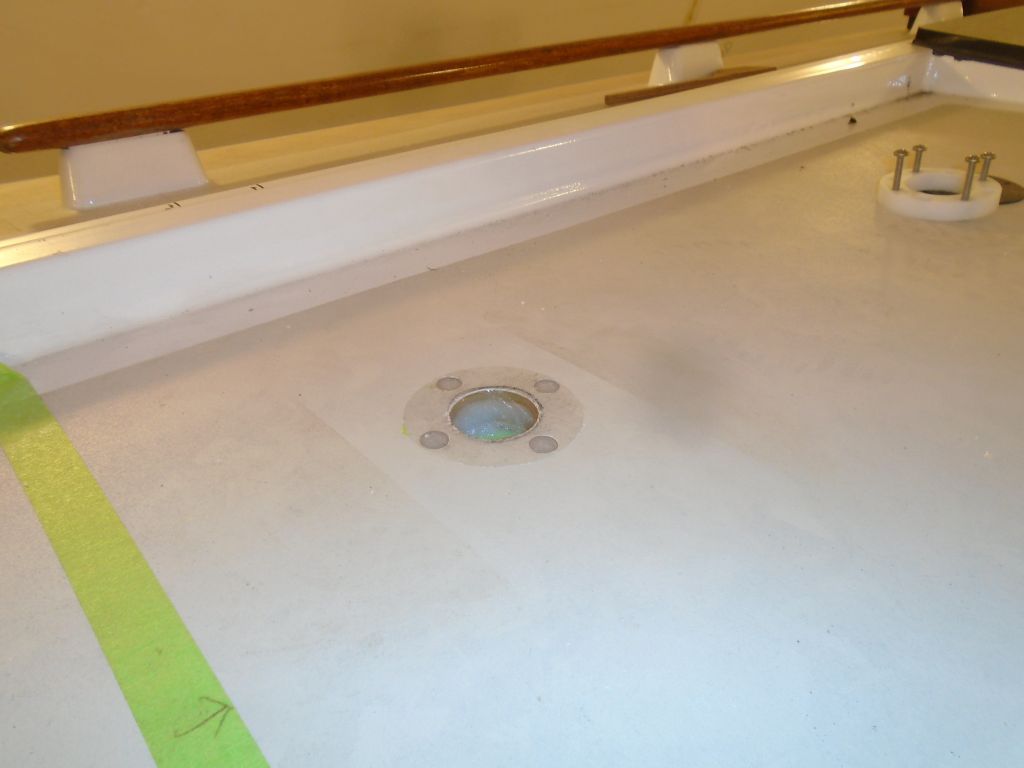
With the bilge pump complete for all intents and purposes, I turned again to the new engine room blower.  The plan for the outlet for the blower was to lead it through the defunct built-in propane locker and out a vent from there into the cockpit.  To maintain use of this locker as much as possible, we decided to use a length of rigid pipe installed through the locker floor, which would minimize fragile hose runs.  To this end, I drilled a large hole in the bottom of the locker (after ensuring the way was clear beneath) to accommodate the 4″fiberglass tubing.

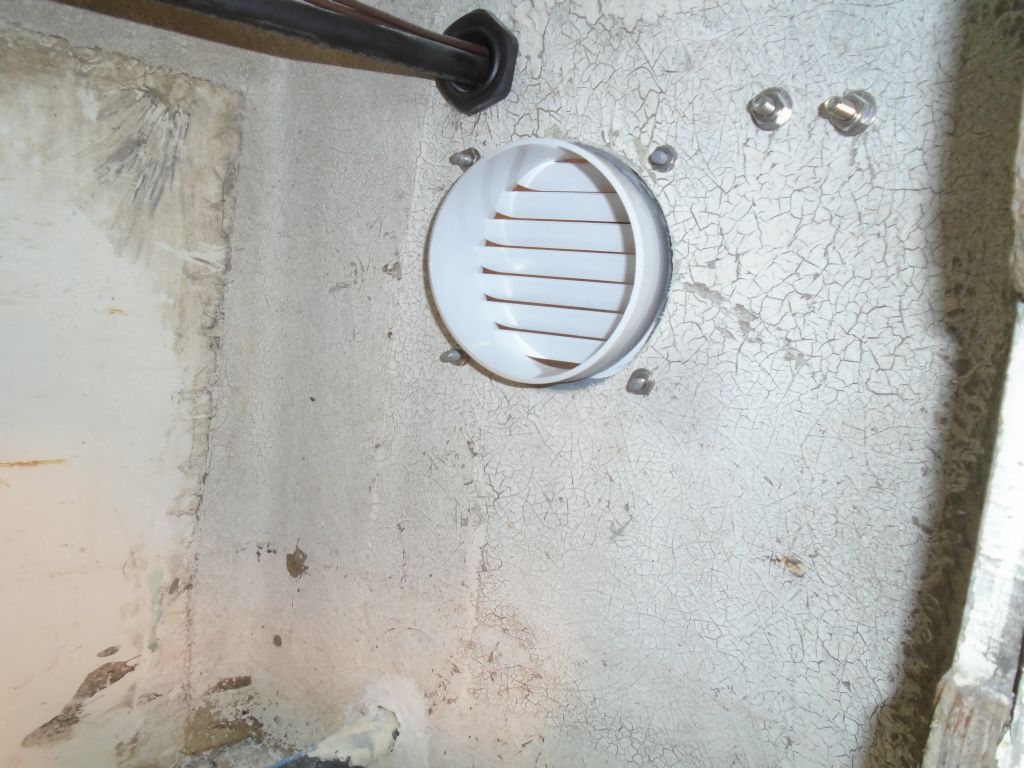
At the aft side of the locker, I drilled another large hole in which I mounted a louvered vent fitting to extend the discharge out into the cockpit.  I installed the louvers with sealant and bolts, only using the bolts because it made it easier to install in this location since access was tight with the new propane locker just behind.

After cutting a 12″ piece of the fiberglass tubing, I tacked it in place inside the new hole in the locker with hot glue.  Because the blue vent hose I chose was a tight fit on this tubing, I pre-installed two lengths of the hose before I installed the pipe, as it was easier to do on the bench than in this tight locker.  Once the hot glue had dried and was holding the pipe securely enough, I mixed some thickened epoxy for fillet material, and, later, installed fiberglass tabbing all the way around the pipe to secure it to the boat.  Before these steps I’d sanded clean the bonding surfaces in the locker.  I left the fiberglass to cure.

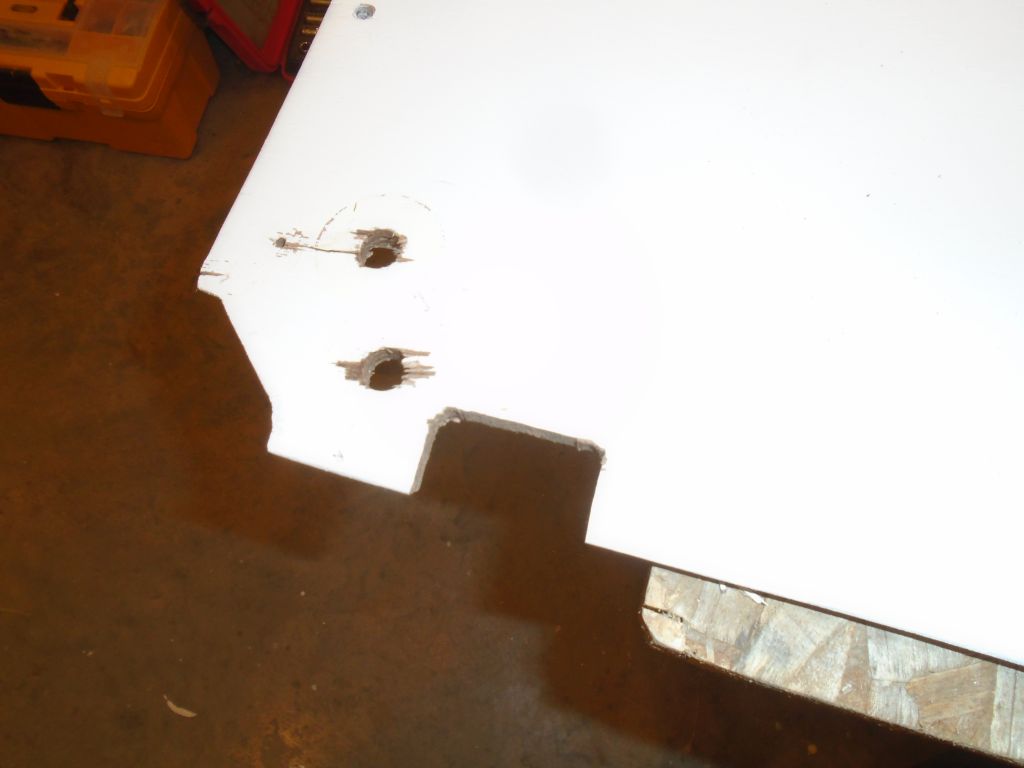
The owner had a solar panel that he elected to mount on the pilothouse roof, and its installation details were next on my list.  It was late in the day, so to begin, I prepared to install a through-deck wiring lead for the panel wires, and after making some reference marks and removing a section of the cosmetic overhead in the cabin, I drilled a large-ish hole through the overhead, then reamed out the core from within its opening and around the fastener locations, and filled these voids with thickened epoxy to isolate the core through these penetrations.  I left this to cure before continuing the process.

Total time billed on this job today:  6.75 hours

0600 Weather Report:
32°, cloudy.  Forecast for the day:  Mainly cloudy, highs in the 40s but dropping during the afternoon

lh1

< Back to Lively Heels

Tuesday

The owner of Lively Heels had a list of upgrades and additions to the boat that he requested help with, including several electrical jobs and other sundry items.  With the boat in a heated building, and not wanting any of the work to affect his planned early spring launch date, I planned several days of work at the boat during the winter to get ahead of the project list.

After getting my tools and related supplies unloaded and at least semi-organized, I started the first project on my list:  installing a battery monitor for the owner to better manage his electrical usage.  We chose the Victron 702 model that would monitor both house and starting banks.  One advantage of this particular monitor was its simplicity in wiring to the monitor itself, which required only a single Ethernet-type cable supplied with the unit.

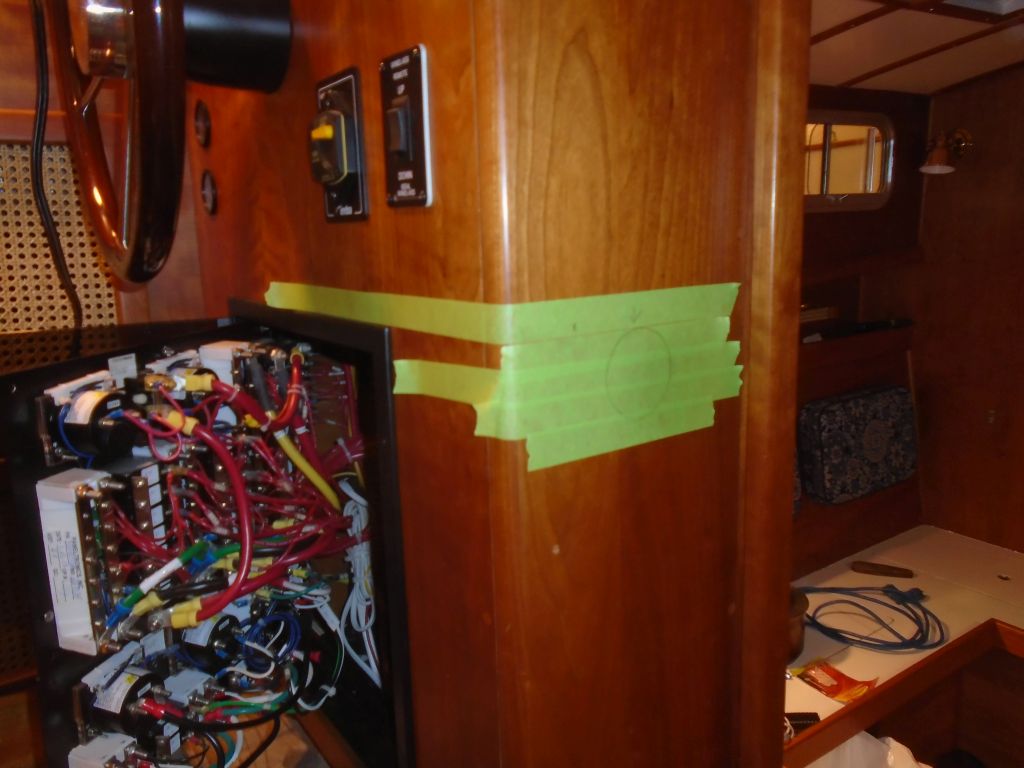
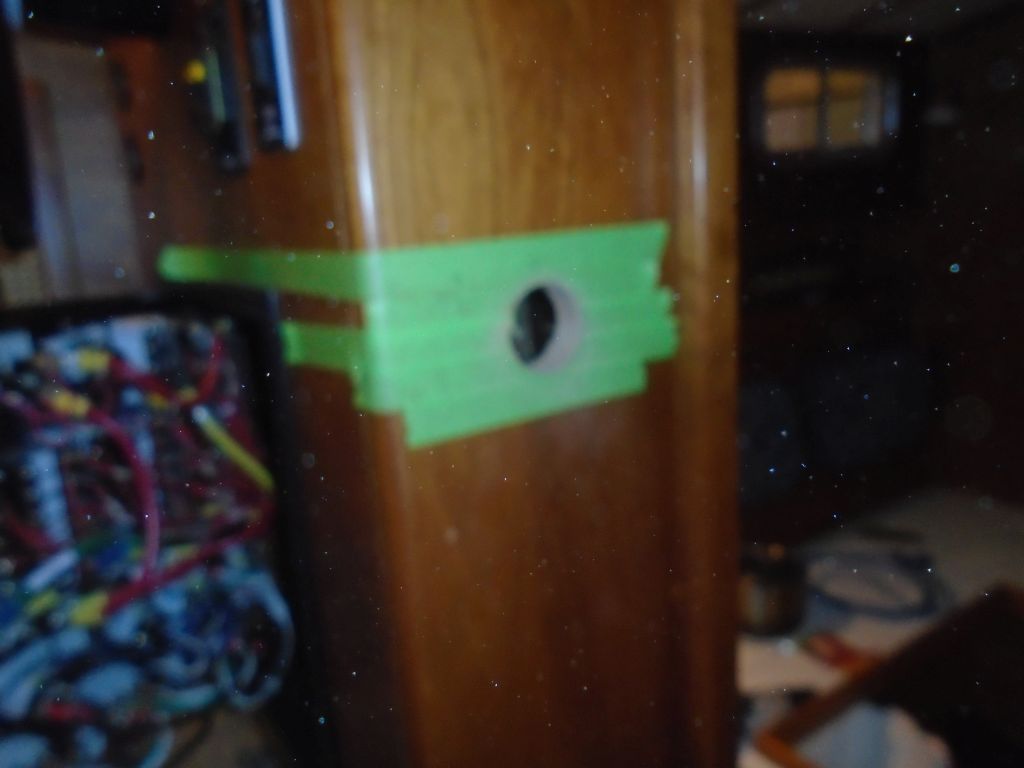
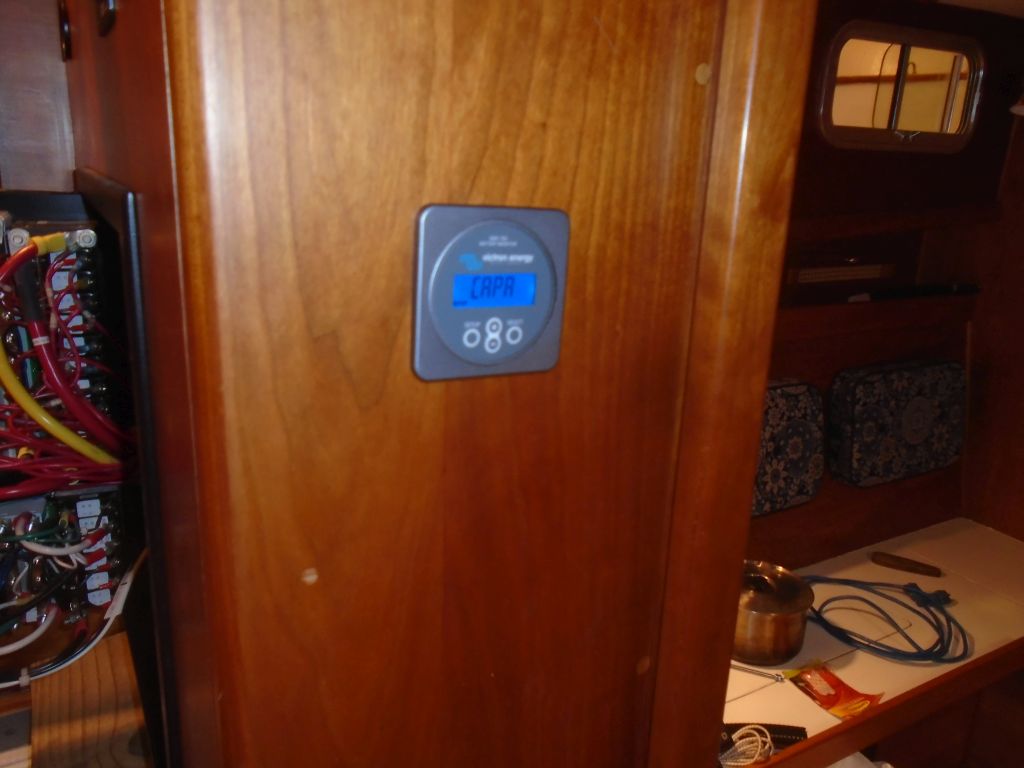
We chose the side of the helm/electrical console for the monitor, where the owner could easily see it from the cabin and where installation would be straightforward.  I elected to install it even with the top of the adjacent electrical panel housing, so I extended a line at that height to position the required hole, then masked off the varnished wood to protect it while drilling the 2-1/16″ hole required for the monitor itself.  This location was also free from obstructions on the inside, which had been a key factor in its selection.

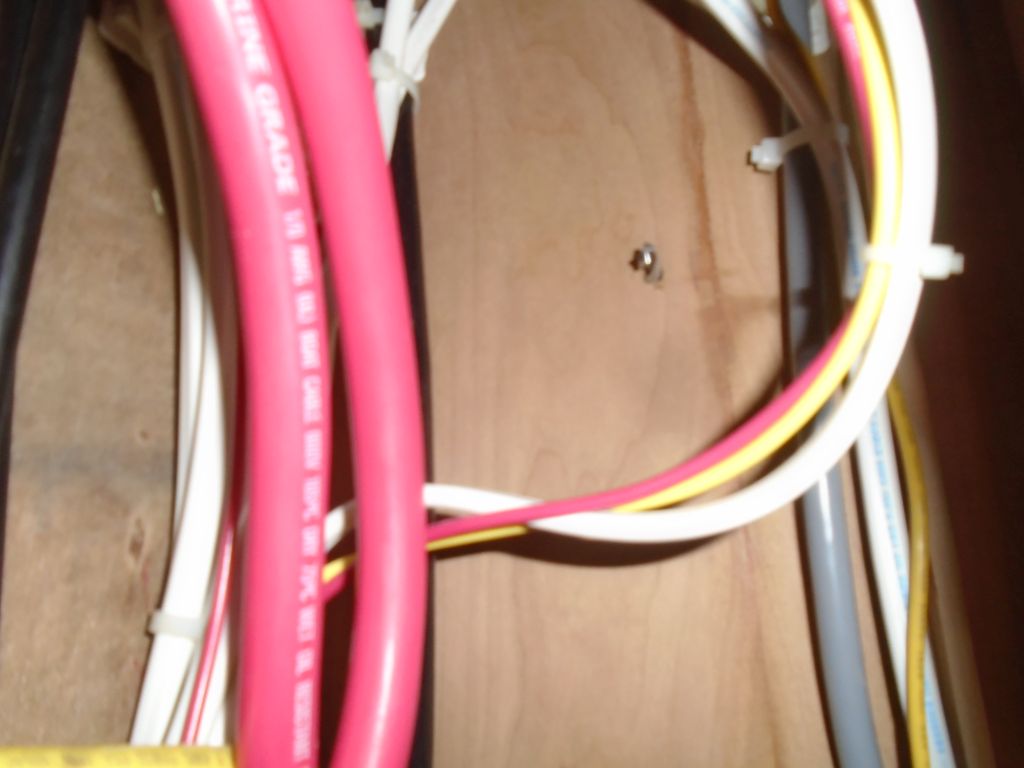
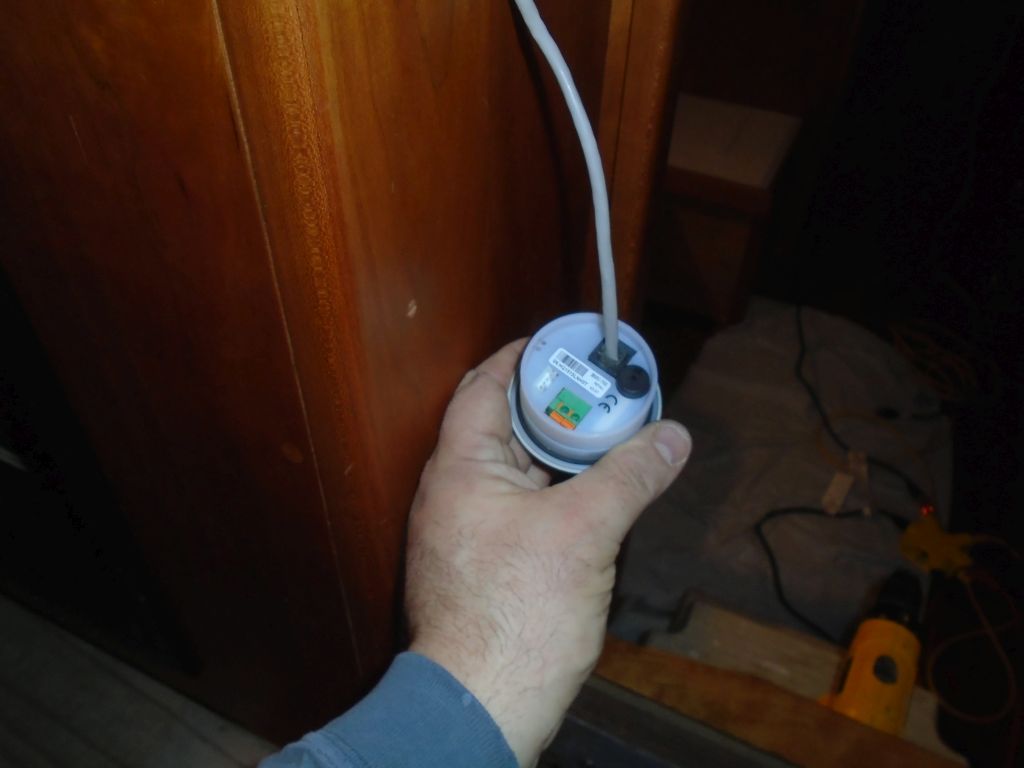
With the mounting hole in place, I led in the Ethernet cable, which connected the monitor to the shunt that I’d soon install in the battery wiring, and connected it to the monitor before installing the monitor with the supplied external bezel, which I had to use since the console material was too thick to allow use of the threaded backing ring.  I secured the wire inside the console, leaving a bit of excess cable at the top near the monitor.

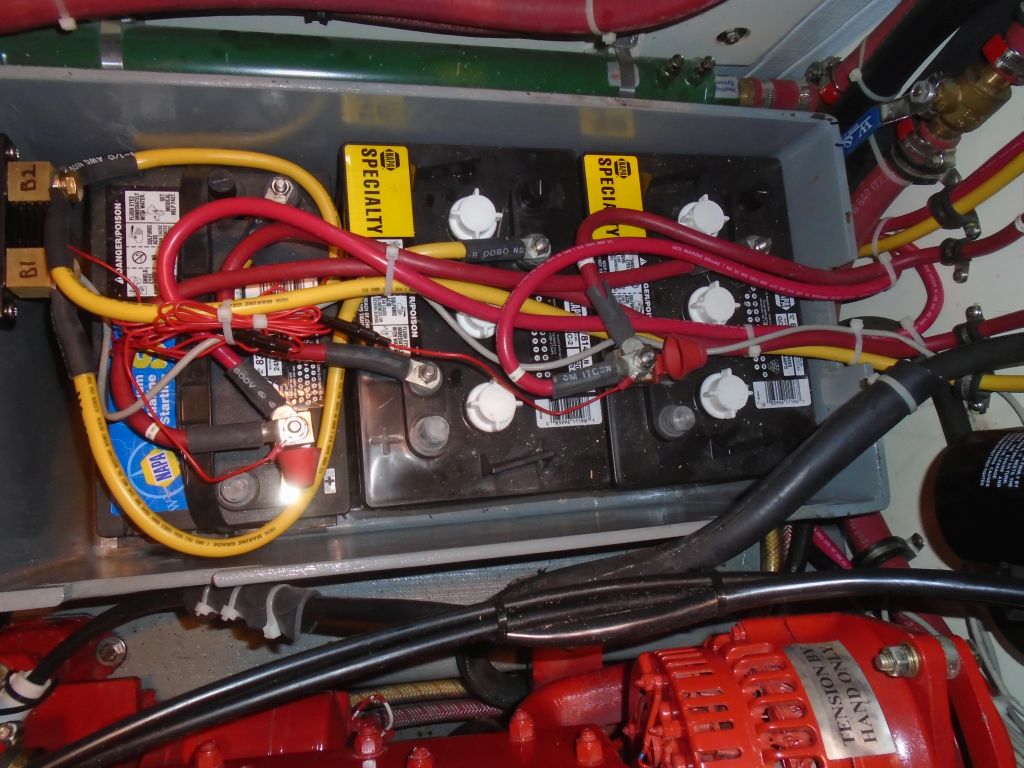
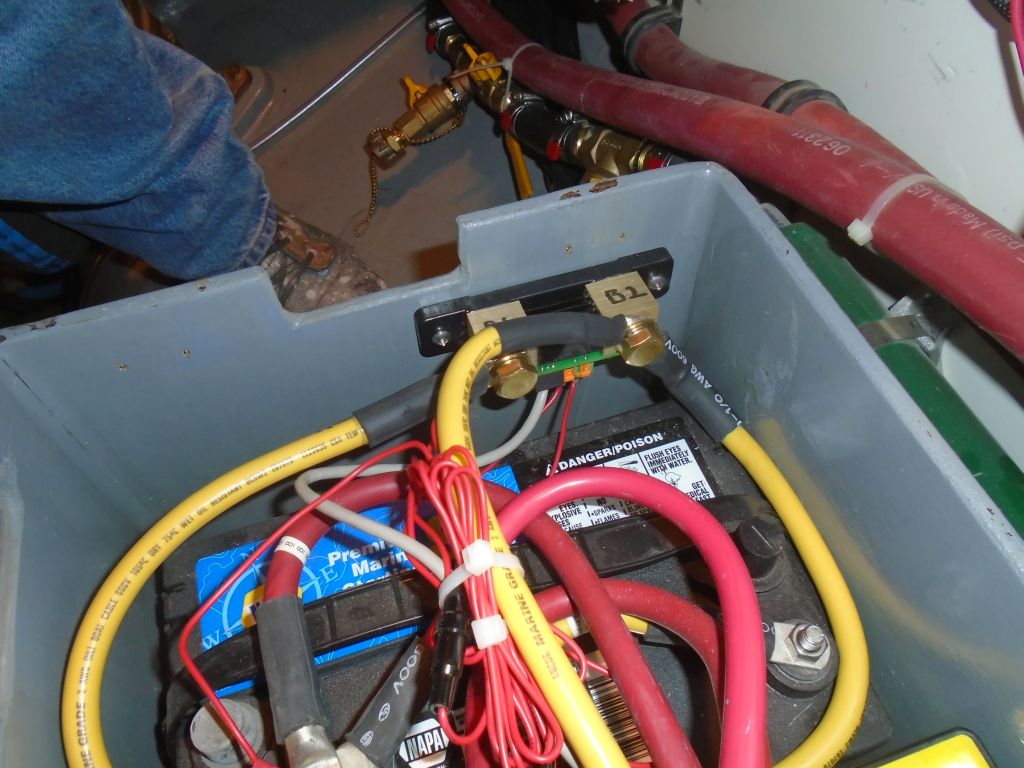
I chose to install the supplied shunt at the aft end of the port battery box since there was room there, it was convenient to the batteries, it was well-protected (when the box was covered), and, frankly, there were few other choices in the crowded space.  I wired the shunt into the battery negative circuits as directed, and connected the monitor’s Ethernet cable, as well as two small wires–one to each battery bank–for temperature monitoring.

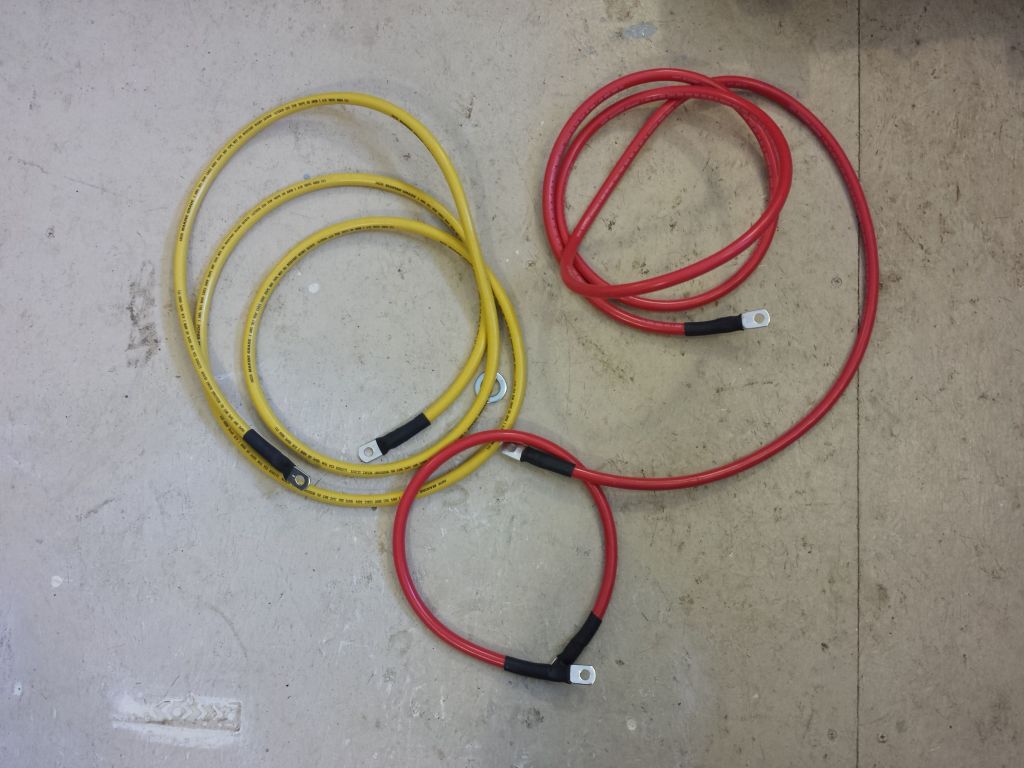
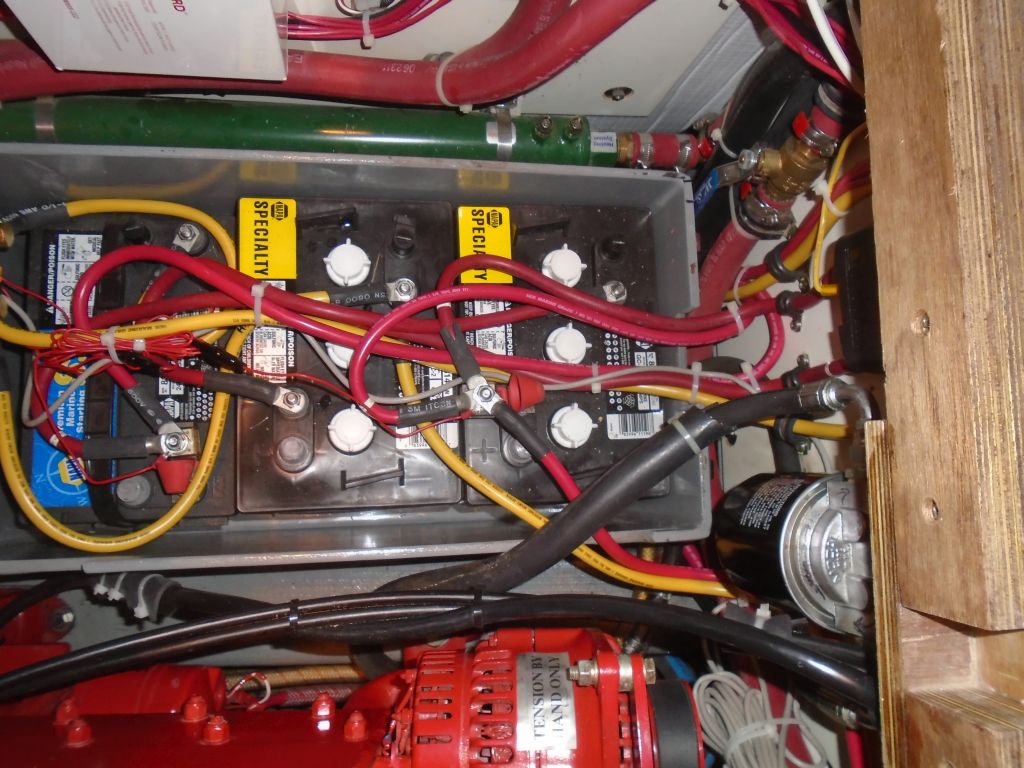
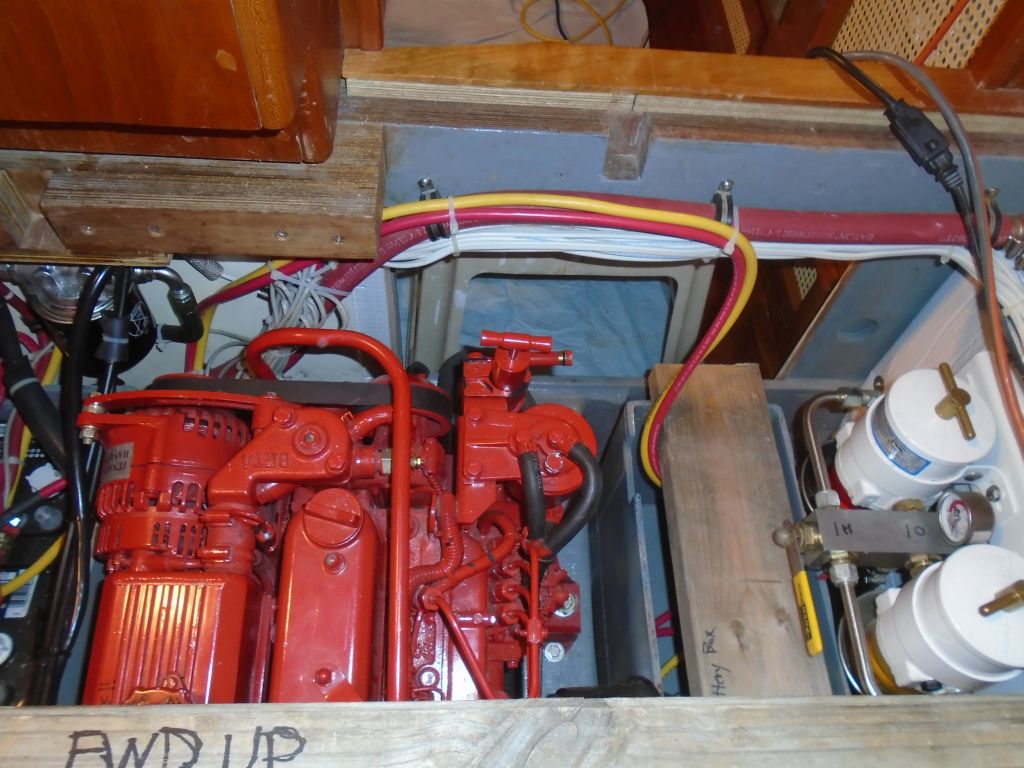
While I was working with battery cables, I decided to build the cables to lead over to the starboard battery box, where I’d soon be installing another pair of 6V batteries to double the capacity of the house bank.  We’d also be replacing the original house battery bank, as the batteries I’d installed in 2014 had been damaged by sitting in an undercharged state for too long (by me, the boat’s refitter at the time), and had never held a proper charge during the new owner’s first season with the boat in 2015.  I led these cables across the front of the engine room and into the battery box to await the new batteries later.

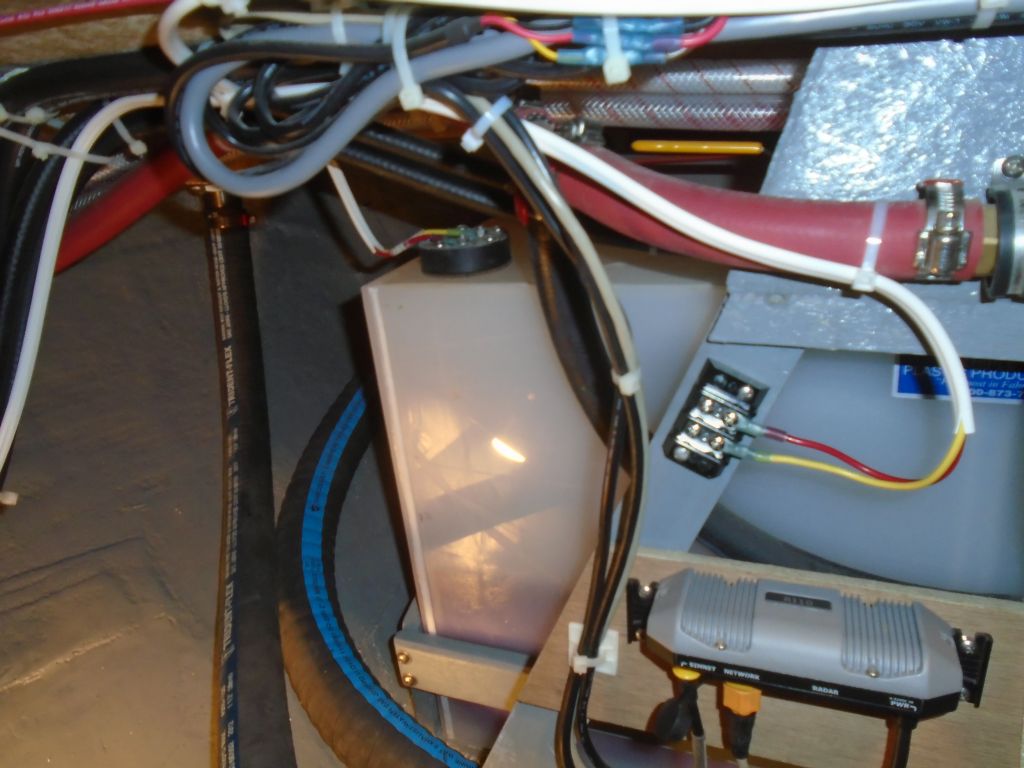
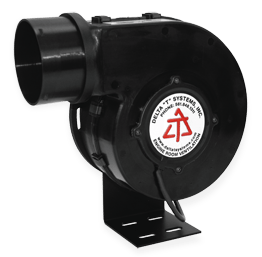
To assist ventilation of the engine room, which lacked any immediate external vents, the owner requested a heavy-duty, continuous-rated blower fan to help exhaust heat from the space, and selected a 4″ blower with the appropriate specifications.  Leading up to the project, the owner constructed a removable platform in the engine room on which to mount the blower, and my job would be to wire it and install the venting into the cockpit.

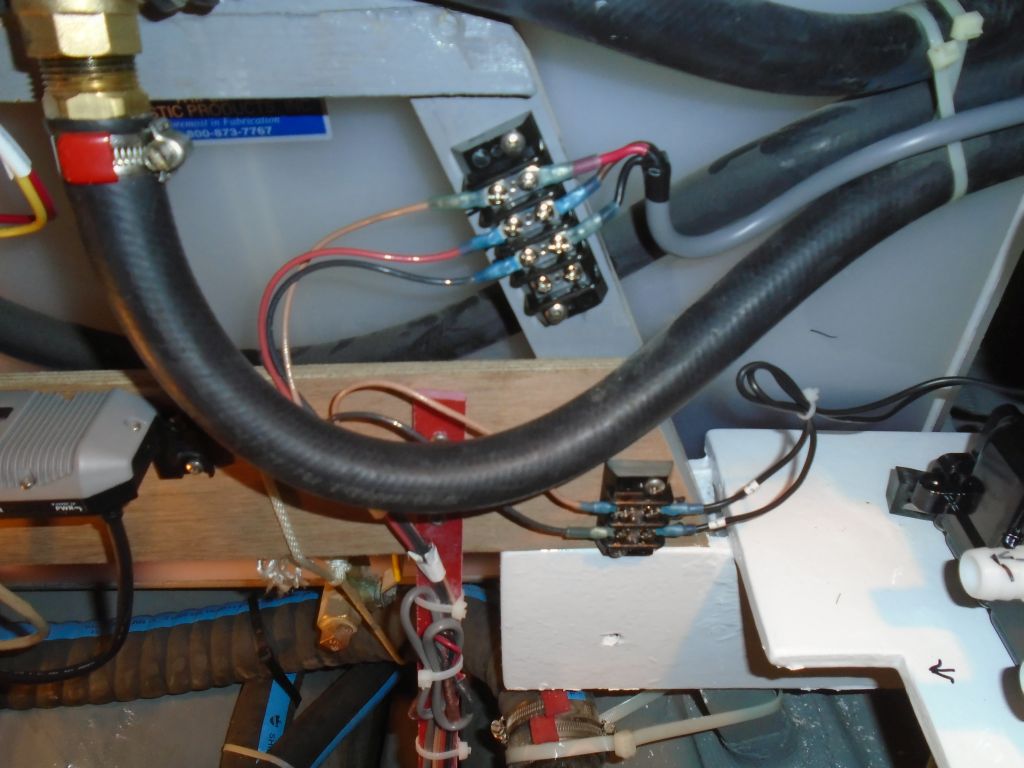
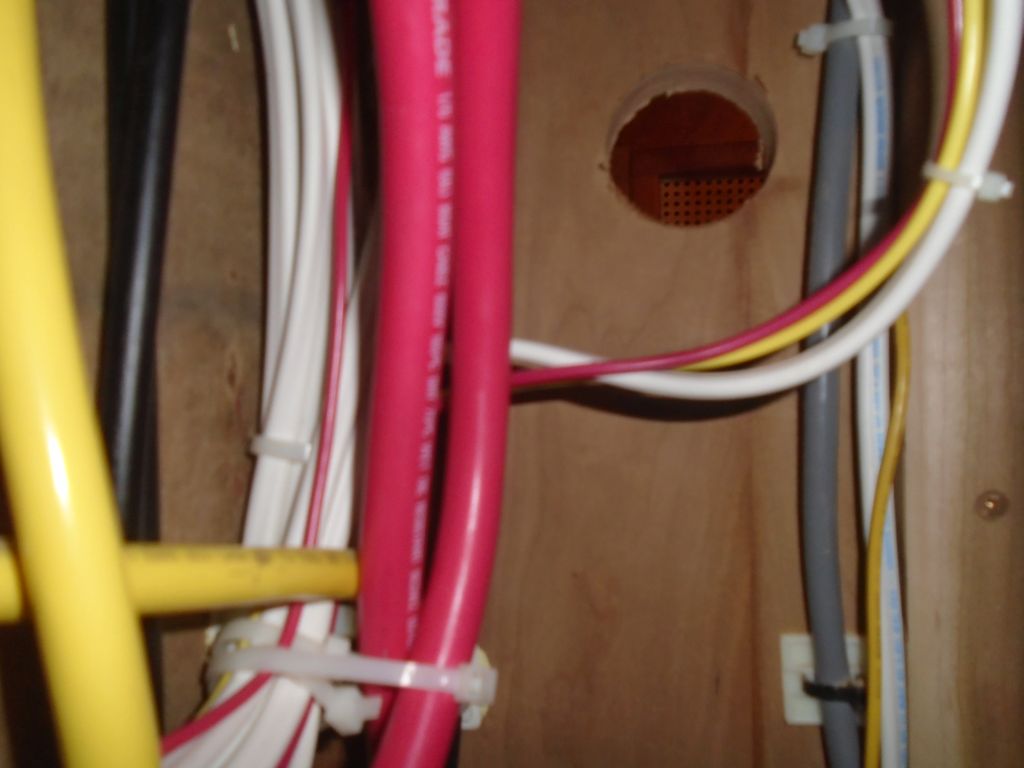
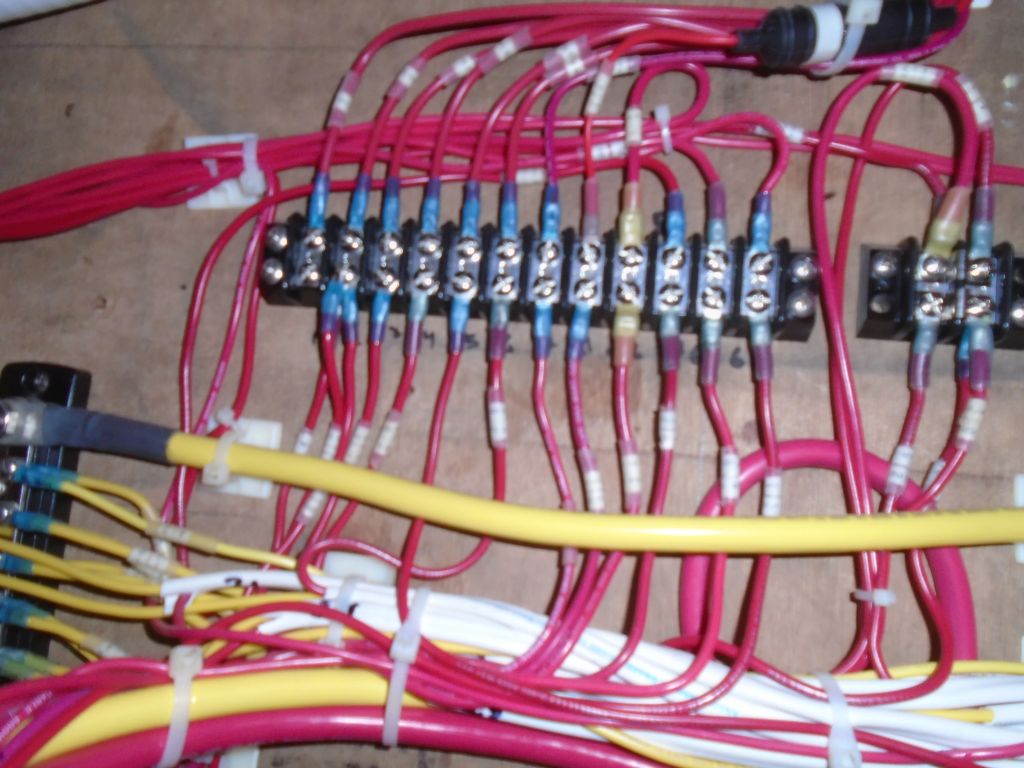
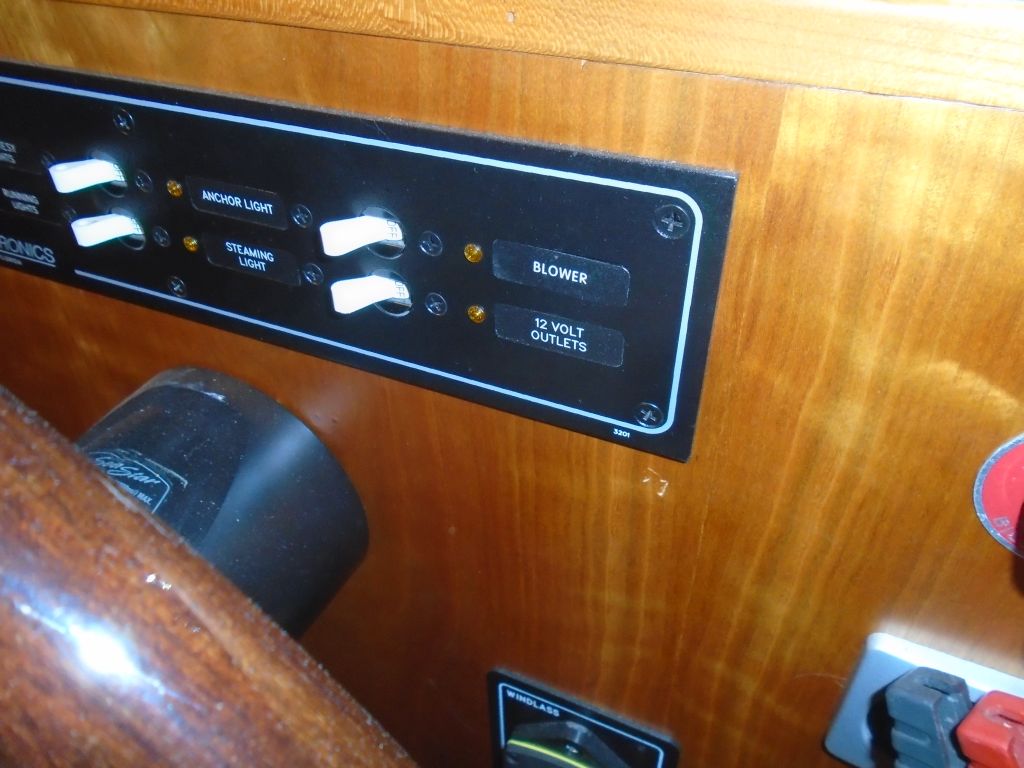
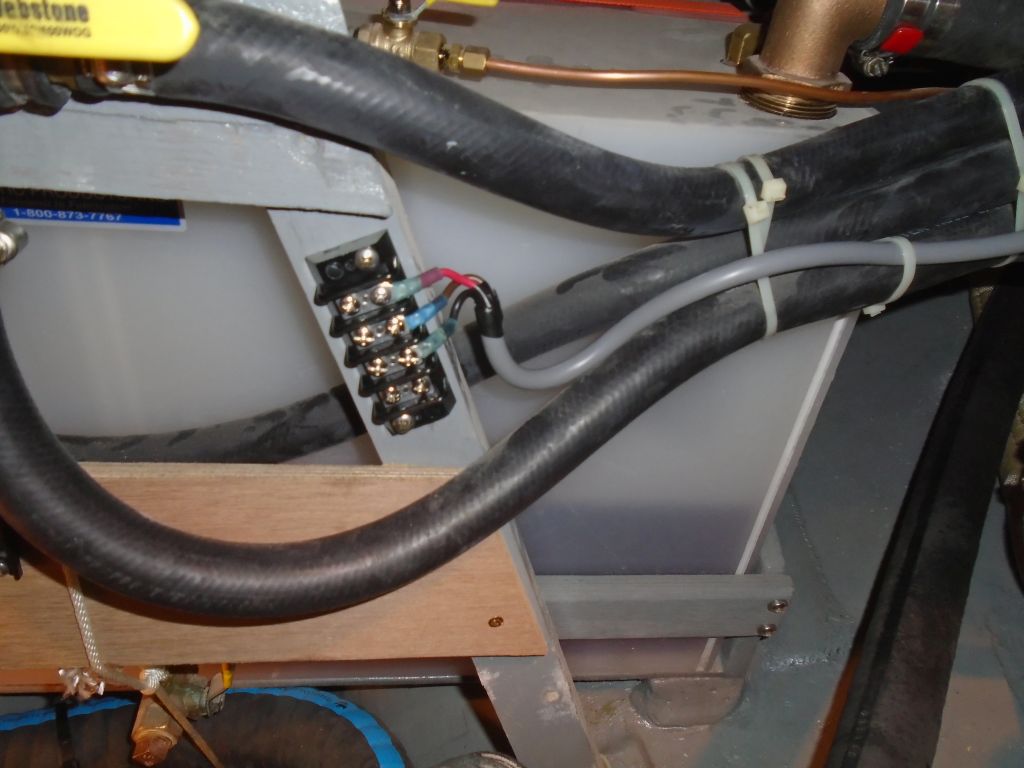
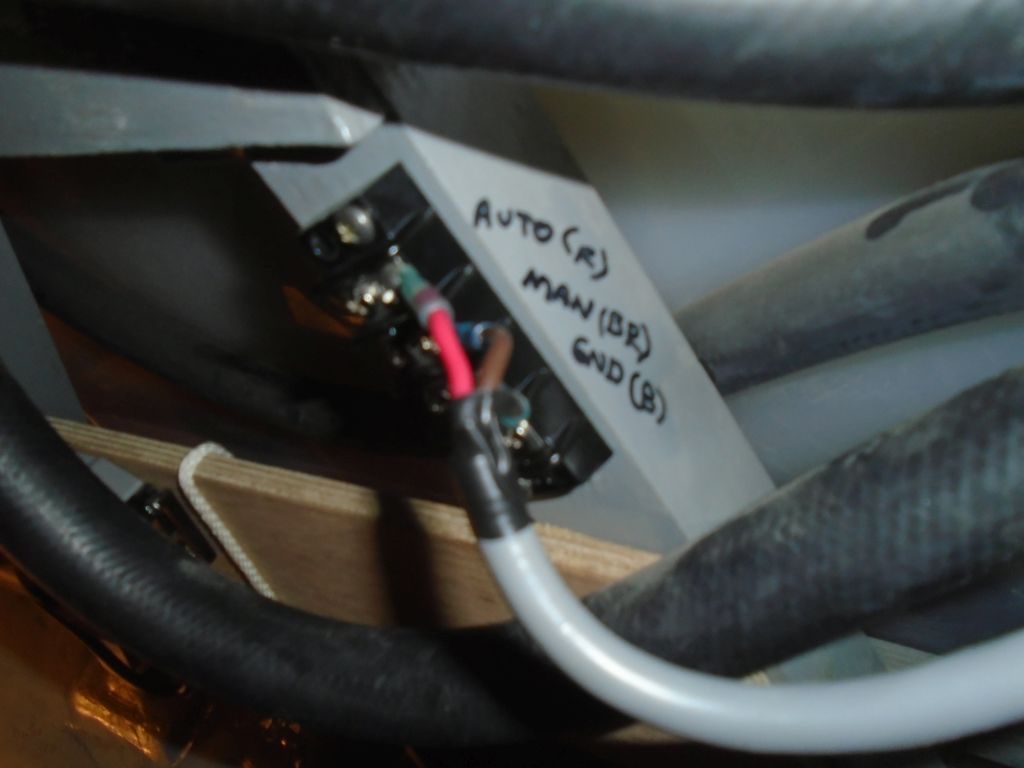
Wiring was straightforward.  I led a wire pair through the engine room along existing wire routes, and into the console, where I connected it to the terminal block (it’s #5) that ultimately connected it to an unused switch in the upper accessory switch panel at the helm.  At the blower end, I terminated the wires at a small terminal block, which would allow the blower and its shelf to be easily removed during the off-season or when access to the spaces behind was required.  The venting side of the project would be a bit more complicated, and I’d get to that in due course.

Lil_Champ_4_inch_DC_Blower

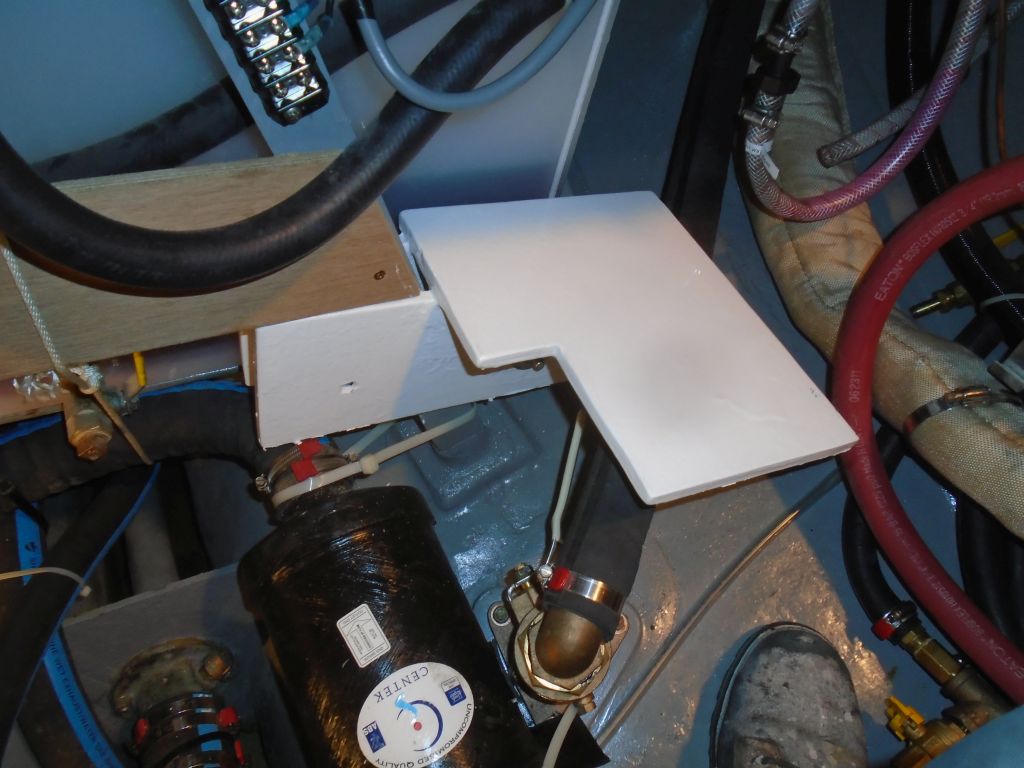
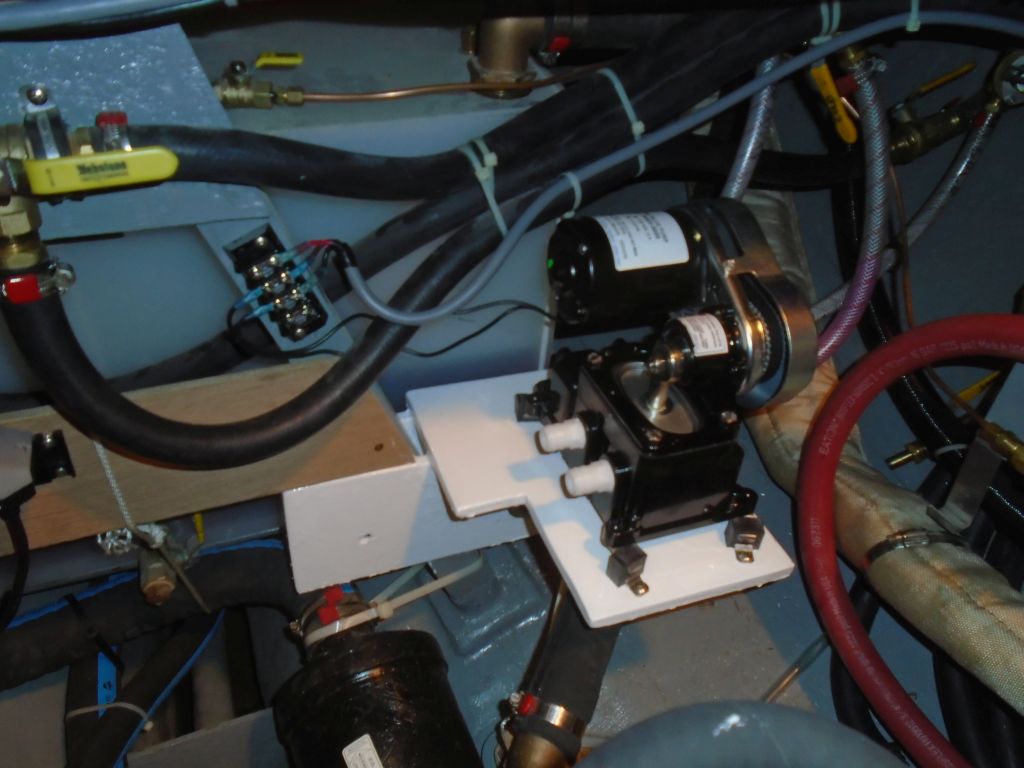
Similarly, on the opposite side of the engine room the owner prepared a platform for a new, remotely-located diaphragm bilge pump, an upgrade over the centrifugal pump that was previously installed.    I removed the old pump, reserving its wiring to the console and its discharge line for reuse, and mounted the new pump to the removable platform (removal would be handy anytime access to the spaces beyond was needed).  I connected the original wires from the console to a new terminal block, and wired the pump to the other side of the terminals accordingly.  Still to come in this installation was the bilge auto switch, which I’d be installing presently.

Total time billed on this job today:  5.75 hours

0600 Weather Report:
22°, mostly cloudy.  Forecast for the day:  clouds and sun, highs in the 40s

Danusia 23

< Back to Danusia

Monday

Over the weekend, I continued the buildup of gloss varnish base coats on the cabin sole, one coat per day.

Saturday (3rd coat):

Sunday (4th coat):

With sufficient base varnish in place, after sanding and cleaning once more, I switched to a satin varnish for the final coats.  I’d hoped one coat would finish up the job, as it sometimes does, but it looked like I’d need another coat to wrap things up.

cabinsole1-12516

Meanwhile, I worked on the bench to strip and sand the various loose hatches, including cabin sole hatches and the companionway swashboards.  With a heat gun and scraper, I removed the old finish from the pieces, and sanded them smooth and clean before solvent-washing the bare wood and applying a sealer coat of varnish, the first of many.


Total time billed on this job today:  6.75 hours

0600 Weather Report:
10°, clear.  Forecast for the day:  sunny, highs around 32.

Nomad 18

< Back to Nomad

Sunday

The starboard panel in the main cabin/pilothouse was badly water-damaged, and would require replacement.  I hoped and expected this would be the only interior panel requiring replacement.

To remove the panel, I first needed to remove the large window, so I started by removing the interior trim pieces  (aluminum, and fastened through to the structural window frame with screws).  This was easy enough, but I found one screw at the aft side was inaccessible thanks to a little teak rack installed on the bulkhead, so I had to remove that too.  With that out of the way, I could remove the rest of the trim ring, the only thing (other than sealant) holding the window in place.

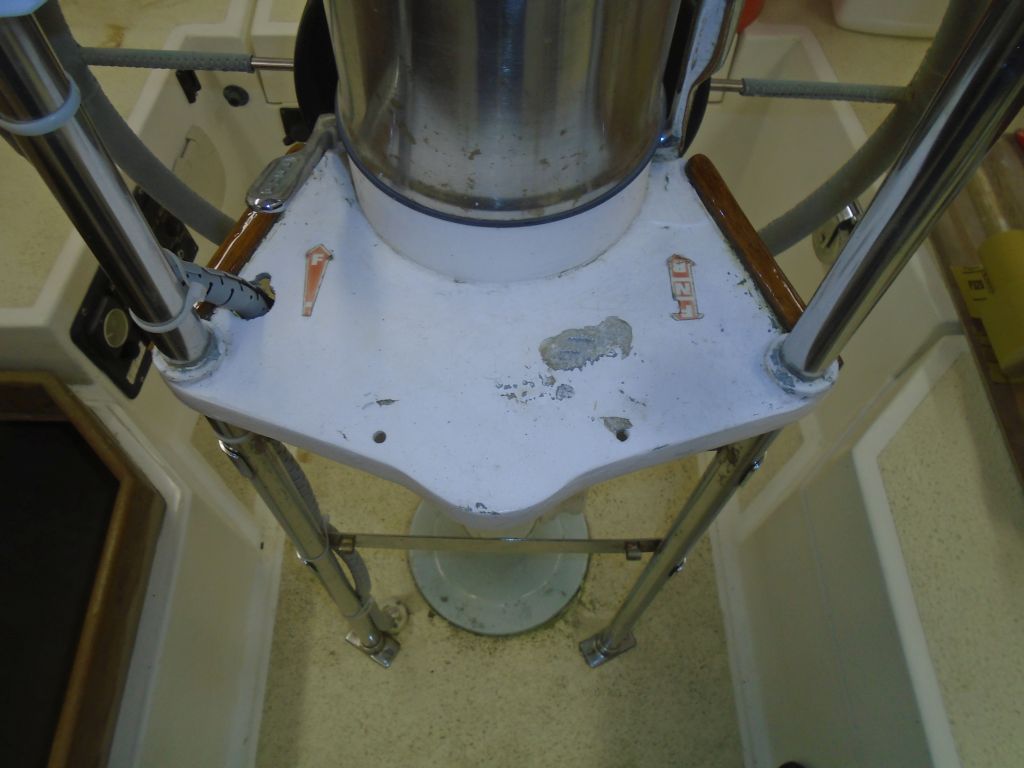
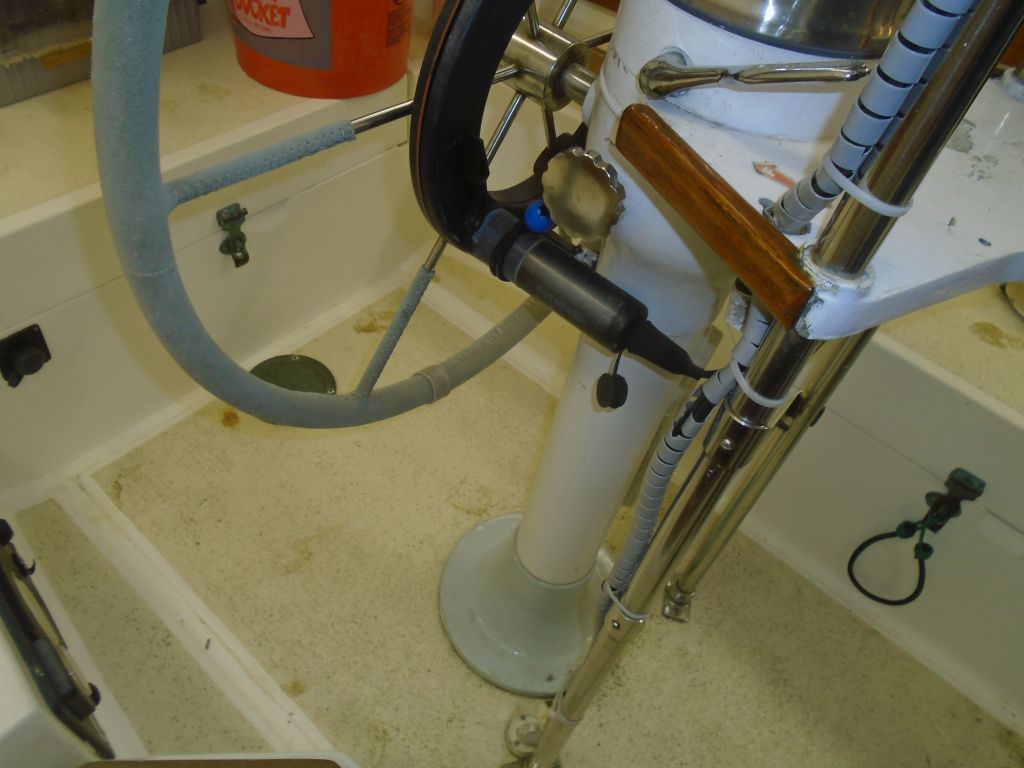
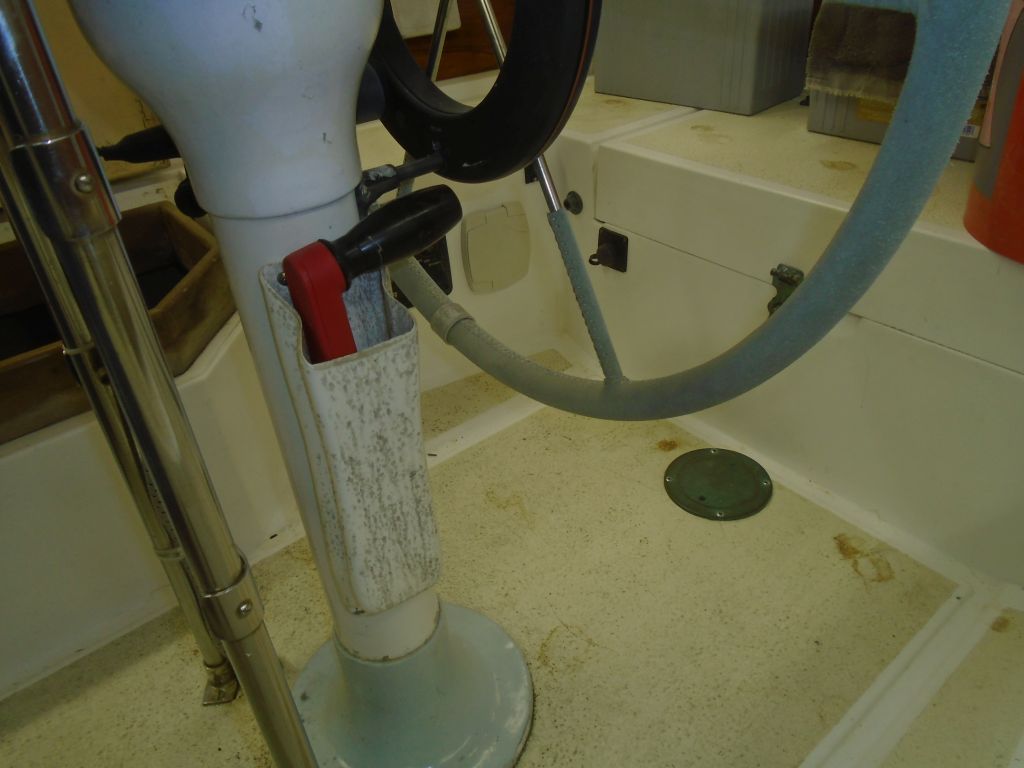
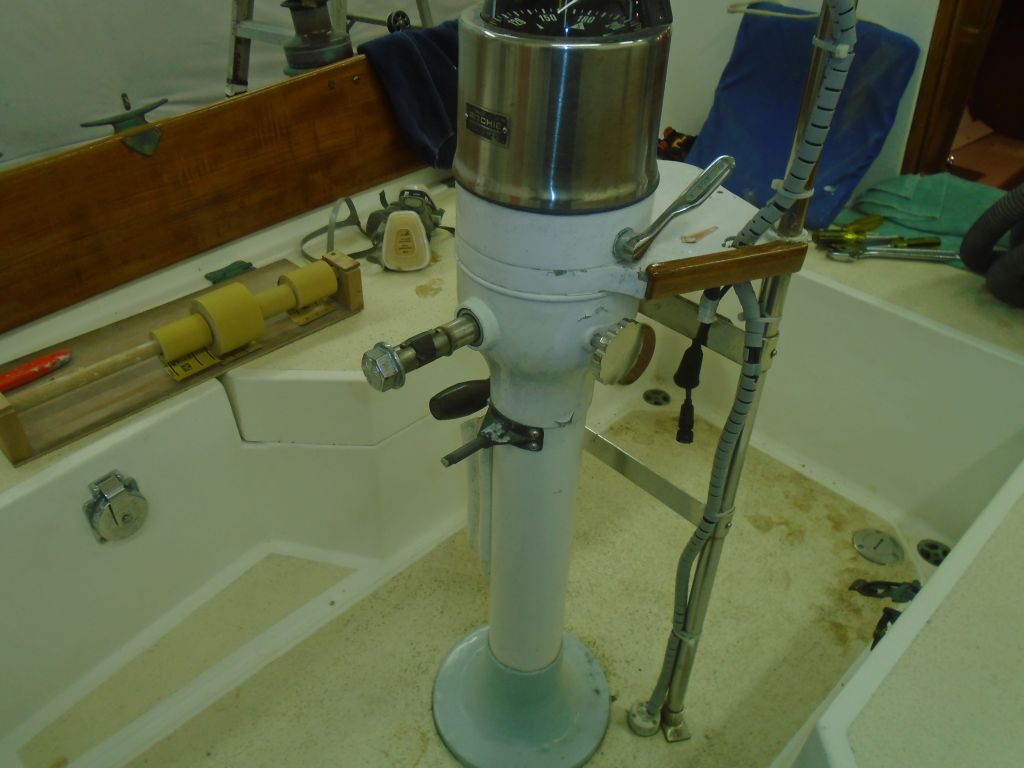
Also holding the panel in place were two pieces of solid teak trim, one on each end corner.  I drilled out the bungs covering the screws and removed the trim.  At this point, I also removed the helm console, which was pinning the panel in place at the forward corner, and also generally in the way and poorly designed to boot.  I removed the console in one piece, with its remaining installations (helm, compass) still intact.  There was much I didn’t care for about the console (especially that compass installation, yuck) and I suppose only time would tell whether I tried to work with it as is, or rebuilt it in my own image.

Outside the boat, I carefully pried the window away from the superstructure.  It was well-stuck with sealant, even though apparently the sealant had not been doing its job well given the extensive damage to the interior panel.  At the bottom edge of the window, the sealant was stuck so well that it actually damaged the exterior skin laminate, pulling it away from the foam core in ragged bits.  The outer skin was extremely thin–about layer of mat , enough to support gelcoat–so there was zero structural strength to it in terms of resisting the sealant removal.  On this boat, the inner skin was actually heavier than the outer, with at least some roving in the laminate.  This was a frustrating setback, and  by the time this problem presented itself the window was 90% free, and it was all I could do to complete the removal while minimizing (there was no preventing) the damage and outer laminate tearing,  I managed to keep most of the visible damage within the footprint of the window’s flange, which was important as I didn’t want to get into a major cosmetic restoration of the area.  I finally succeeded and set the window aside, bits of the boat still stuck in those two places.

As a final step, I removed the fasteners from a cleat mounted on the outside of the superstructure and bolted through the plywood panel.  It became immediately clear that the cleat was installed with the same tenacious sealant as the window, so I left the cleat right where it was on the gelcoat rather than try to pry it off.

With all the obstructions now out of the way, I proceeded to remove the plywood interior panel, which seemed to be only secured with some non-adhesive adhesive and a few little screws.  The damage to the wood was so extensive that it literally disintegrated into powdery splinters along the after side and adjacent top edge, which made removal easy although I’d hoped to have enough of the panel intact to use as a pattern (though making a new pattern would be no problem).  The original panel actually passed through the head and into the aft cabin, a full eight feet, but fortunately it was so badly damaged where it met the transverse head bulkhead aft of the helm that it was easy to remove the forward portion without damaging the remainder.

Meanwhile, I decided to assess the restoration possibilities on the other panels, all of which were water-stained and had very little finish on them–and what was there was in poor condition.  However, I hoped (expected) that the underlying veneer would be salvageable, appearance-wise.  I found there was so little finish in place that scraping and heat didn’t have much effect, but I stripped a small test section beneath the port pilothouse window, then sanded it clean with sandpaper to expose good-looking teak veneer.  I wet the bare wood with solvent to sample how it would look once refinished.  I was pleased with the result, and this project loomed large on my project horizon.

Total time billed on this job today:  1.5 hours

0600 Weather Report:
10°, clear and breezy.  Forecast for the day:  Sunny, 27°

Danusia 22

< Back to Danusia

Friday

Preparing ahead for another coat of varnish later in the day, I began the day by lightly sanding the cabin sole, then vacuumed and cleaned it.    Afterwards, amongst some miscellany and sundry tasks, I worked in the cockpit well and around the cockpit locker gutters to clean up and polish the remaining gelcoat there, which I’d not done during my earlier polishing stage.

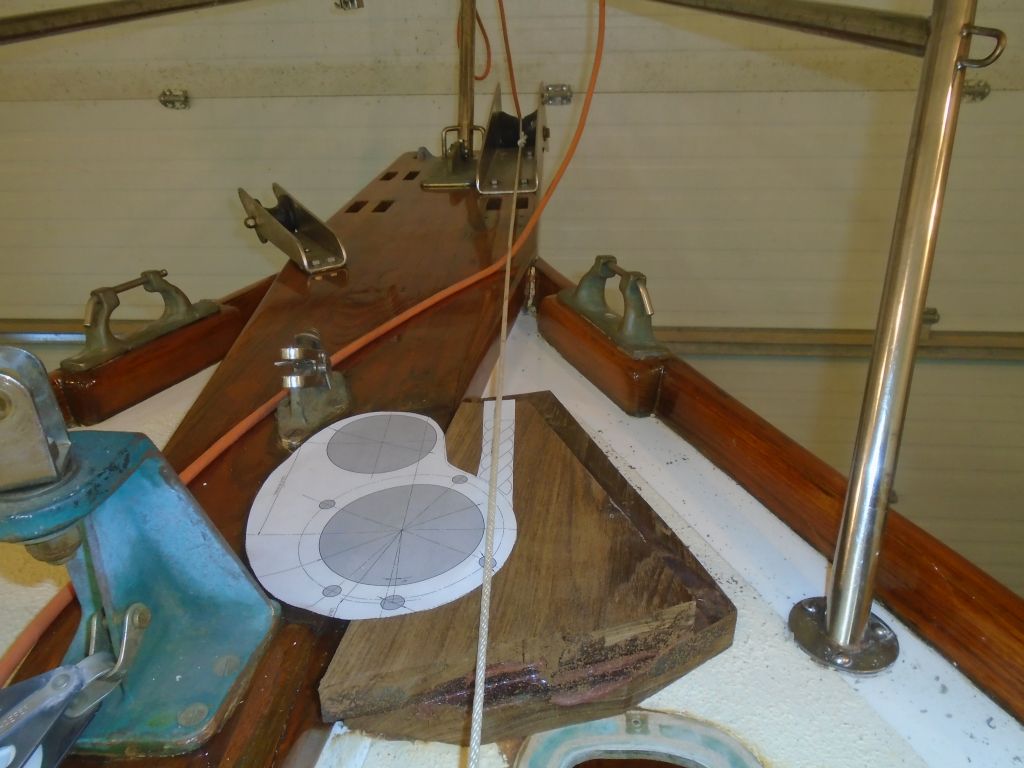
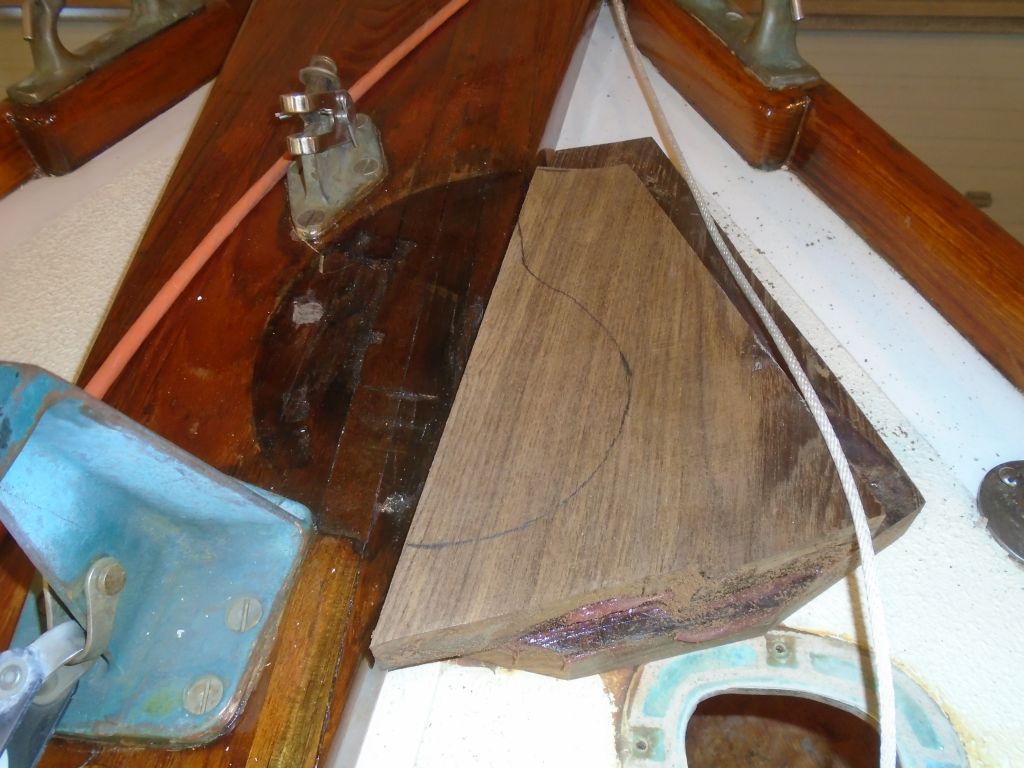
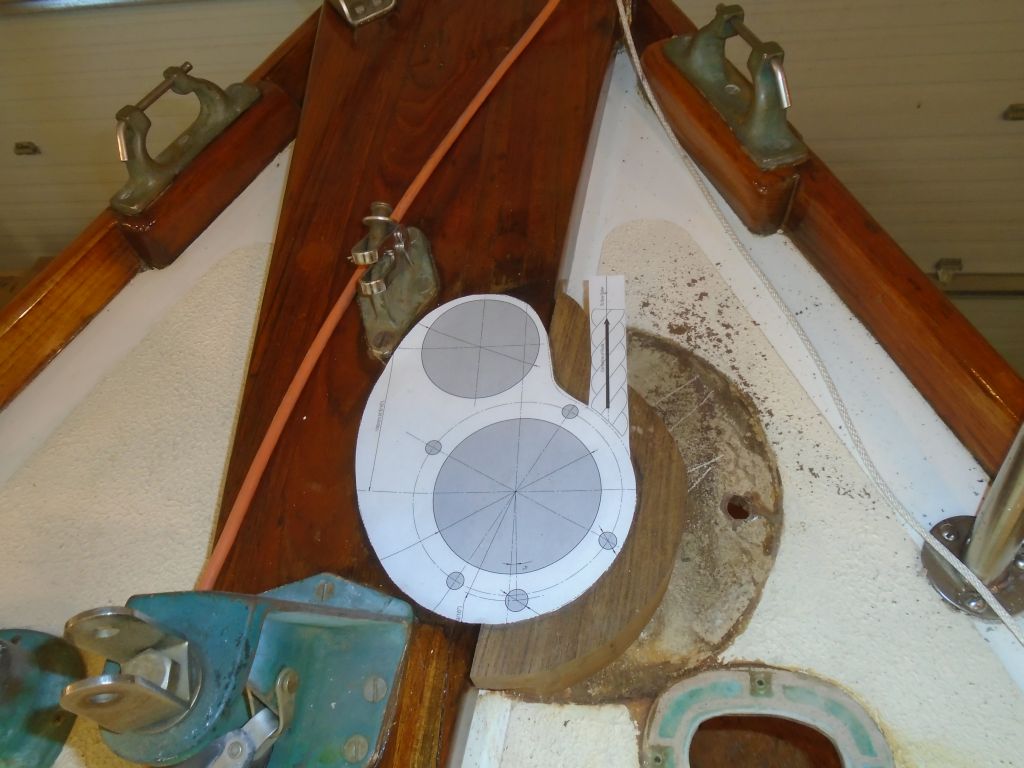
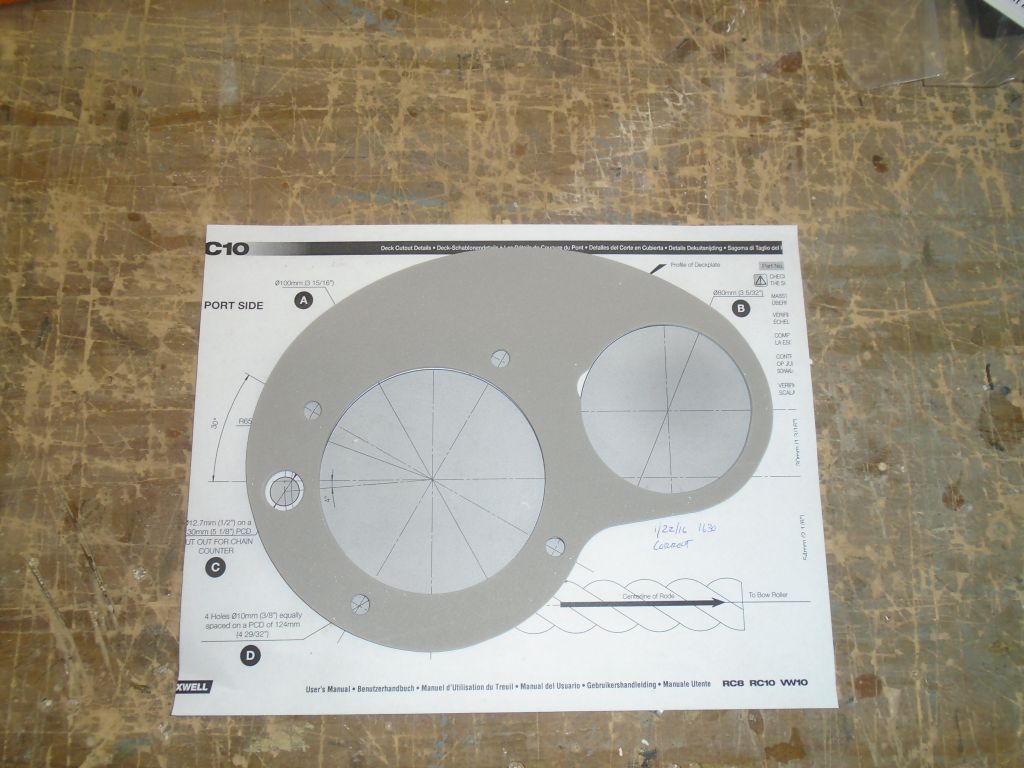
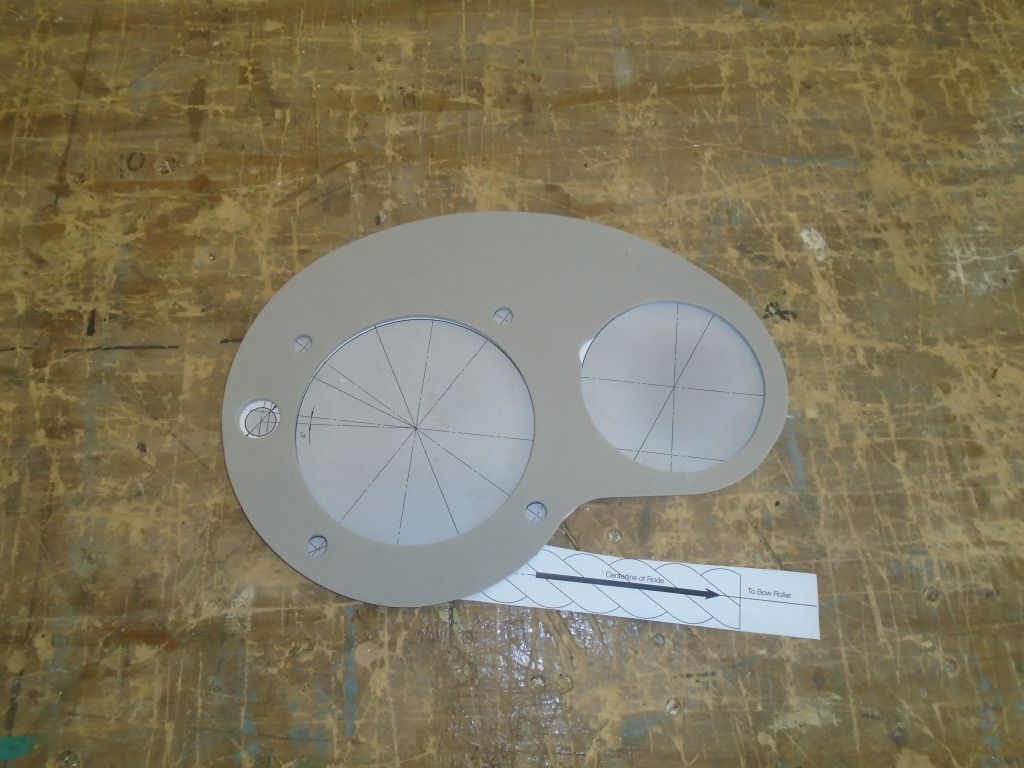
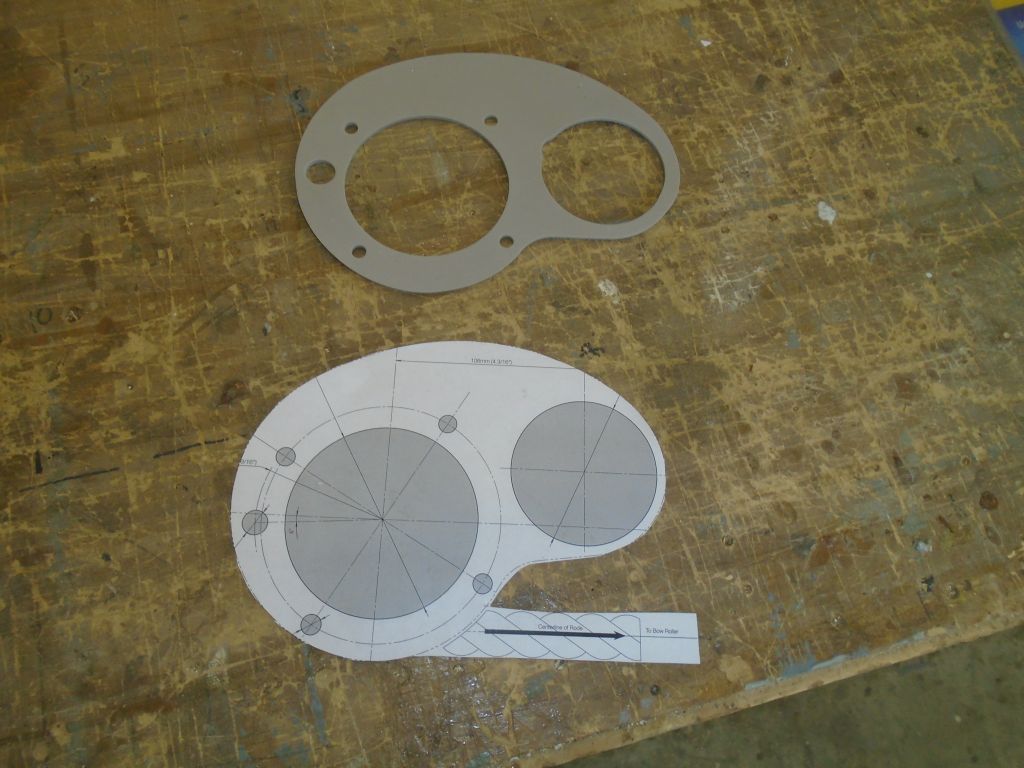
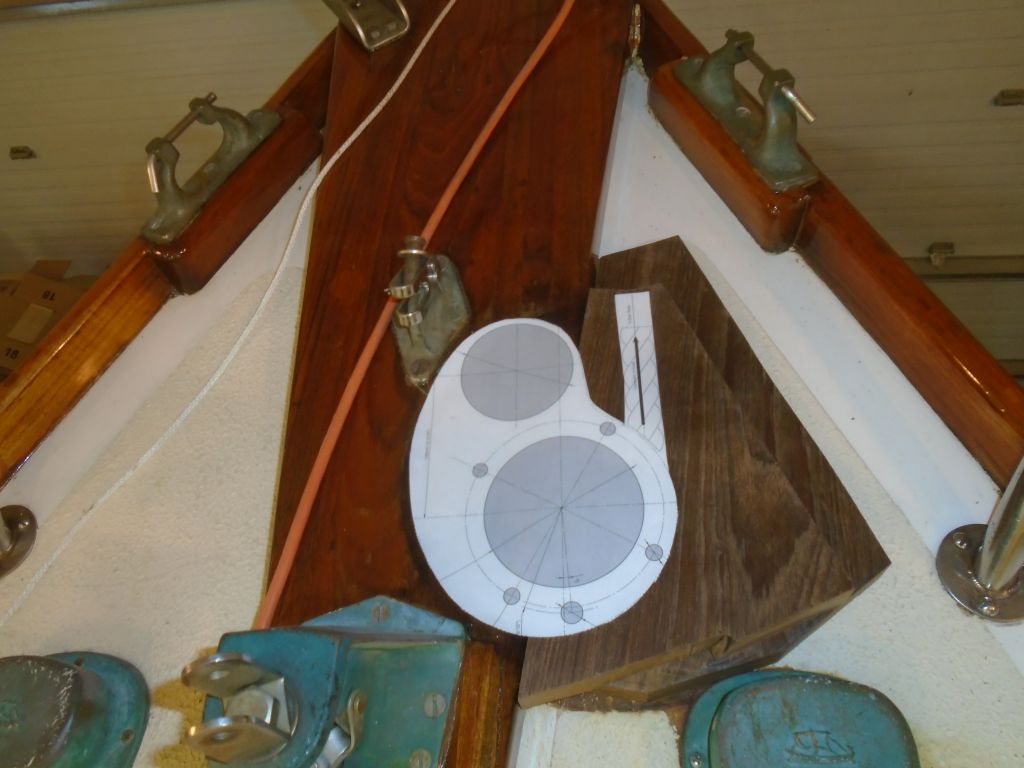
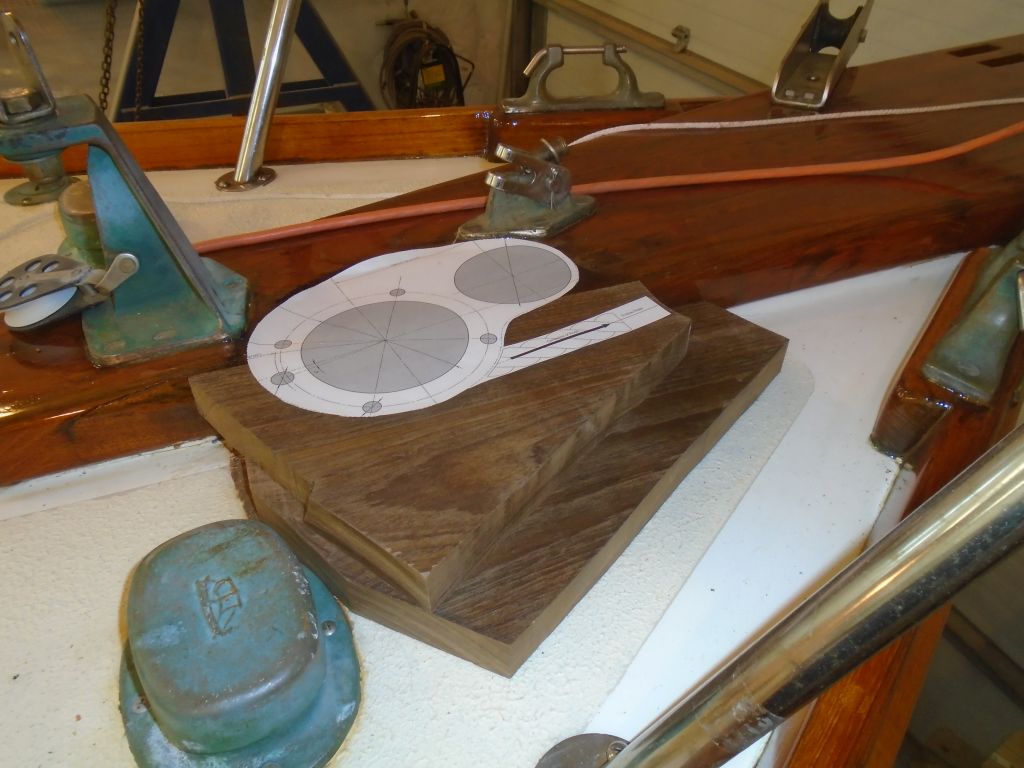
I had a meeting on the boat with the owner, and we discussed the new windlass possibilities and other upcoming tasks.  Later, I used a template of the chosen windlass (Maxwell RC10-8 with capstan) to work out some of the layout details on the bow.  Even this relatively small (footprint-wise) windlass created some challenges with the proximity of the staysail boom and inner forestay hardware, which limited where any windlass could be mounted on this boat.

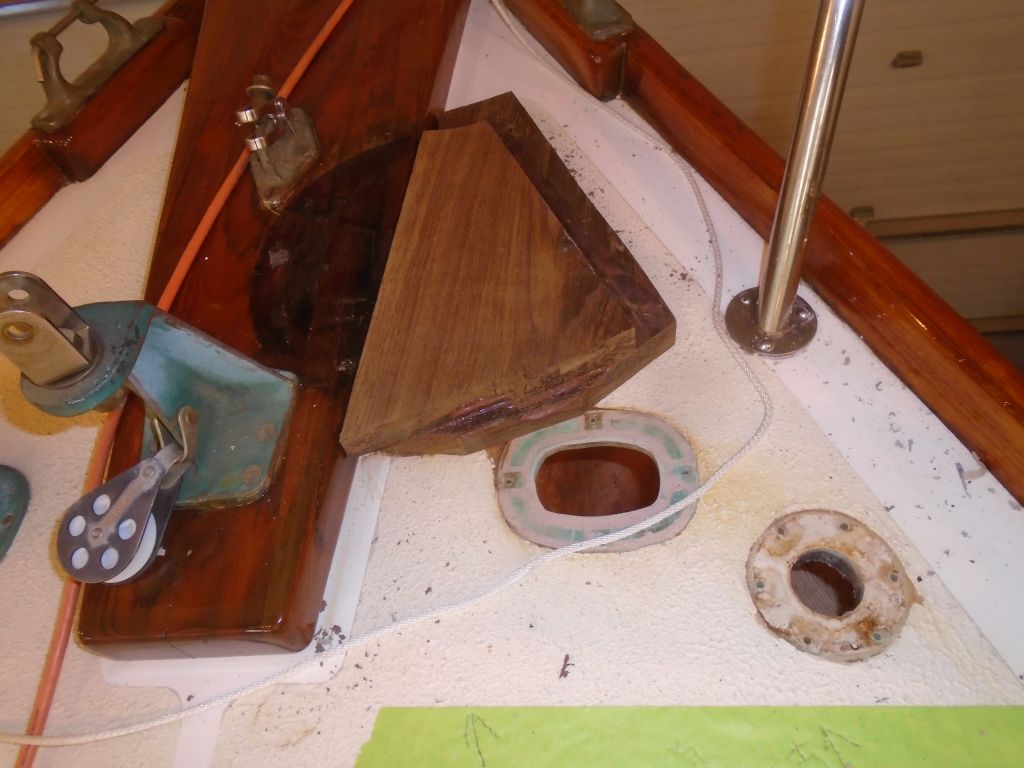
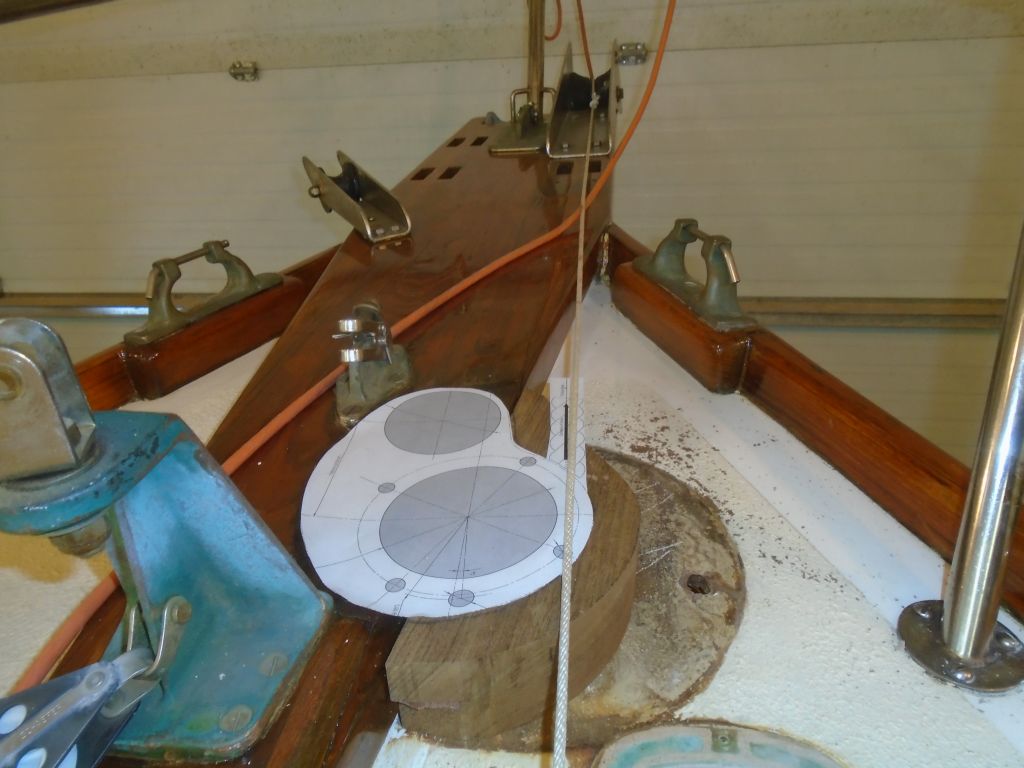
To help with the layout, I reinstalled the anchor roller on the starboard side of the bow platform (I had only three new bolts of the right length on hand, but that was enough for now and I’d install the final one later).  With a length of line, this gave me the ideal line on which the windlass should be aligned.  However, the nearby hardware prohibited the windlass from mounting in the ideal location:  the hardware forced it further outboard to starboard, so the direct line to the anchor roller ended up more inboard than it would be in a perfect situation.  That little narrow tail on the right side of the paper template represents the desired patch of the anchor chain and line entering the gypsy.

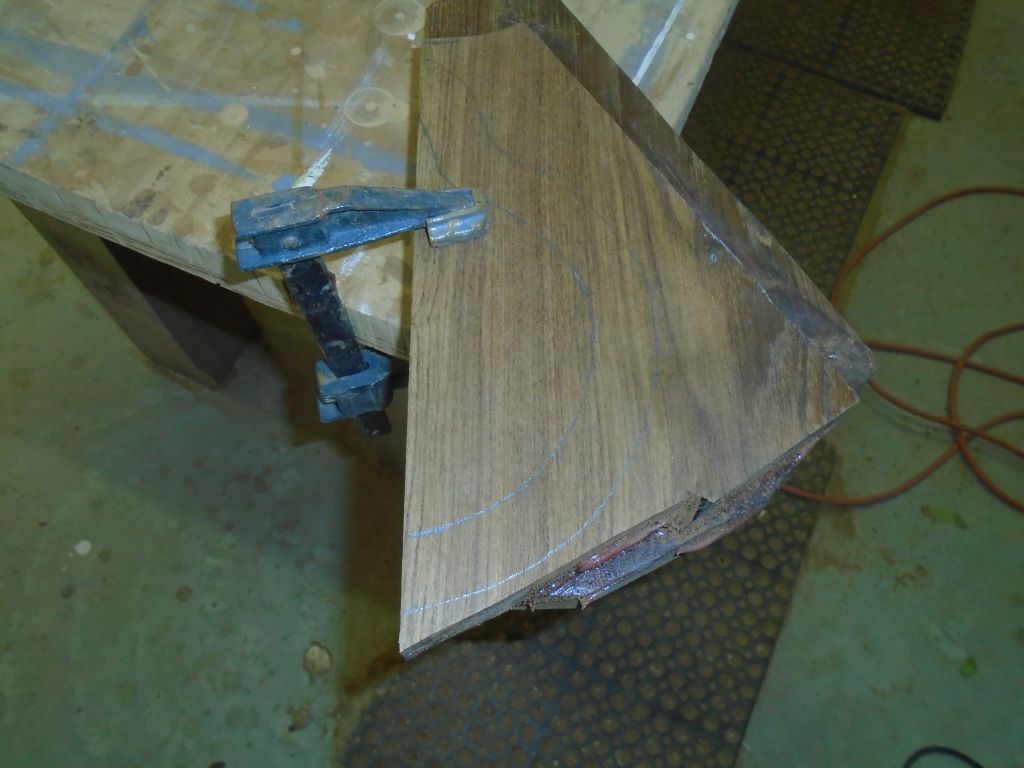
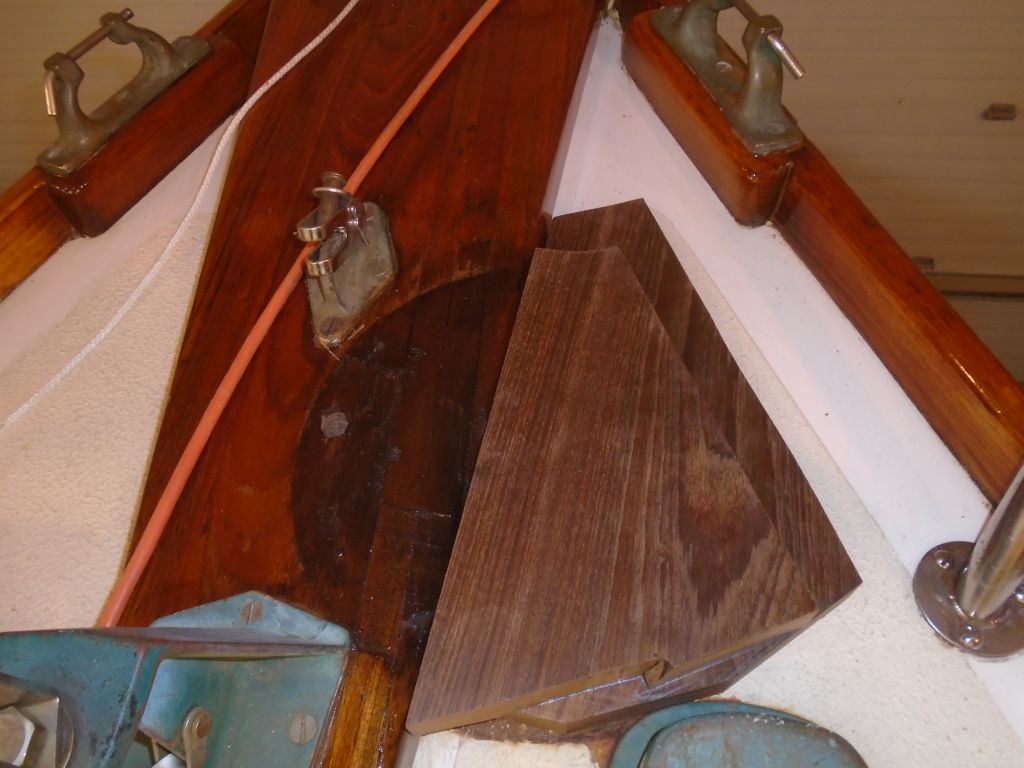
By angling the windlass template slightly towards the centerline, with a corresponding redirection of the anchor line from the roller, I could make the alignment work.  This didn’t move the anchor line/chain far enough towards the side of the roller to create any clearance or other issues, and the windlass itself could essentially be angled in any direction as long as it aligned properly with the chain.  So despite the unexpectedly tight installation area, it looked like the windlass would work just fine here, but without a lot of wiggle room in its installation.  The new windlass footprint would completely hide the stained and damaged area on the wooden platform where the original windlass had been,  and I’d build a new extension to starboard to support the new windlass as needed, while also dealing with the old holes and deck area beneath the old windlass’s footprint.

The new angle–as well as the updated function of the windlass–did mean that an existing anchor pin, which I’d removed from the platform for varnishing, would not work, as the design of that particular piece of hardware would not allow the chain to run through it.  With a combination chain/rope rode, all that would be needed was some way to secure the anchor when in the stored position, while still allowing the rode to pass through freely on its new trajectory, and this hardware was readily available.

At the end of the day, after final preparations, I applied a second coat of varnish to the cabin sole.


Total time billed on this job today:  6.5 hours

0600 Weather Report:
0°, clear.  Forecast for the day:  Sunny, 27°

Danusia 21

< Back to Danusia

Thursday

I began the day with the waste vent, first removing the old fitting, which fortunately came off without too much difficulty as the access was tough.    Since the boat’s name was being changed as part of this project, I went ahead and removed one of the old letters that would interfere with the new vent’s installation (I’d remove the remaining letters a little later).

With the old vent out and the area cleaned up, I installed the new vent fitting in a bed of sealant, protecting the polished bronze finish with tape during installation.  Inside, I connected the existing hose with a new clamp, completing the job after I reinstalled the cowl vent on deck.

Next, I returned to the cabin sole project, and after getting set up with tools and breathing equipment,  I sanded the newly-stripped surface to smooth it and prepare for new varnish.

This job went more quickly than I’d anticipated, a happy thing as it allowed me ample time to clean up from the sanding, mask off the sole,  solvent wash, and apply a sealer coat of varnish.  I’d not expected to be varnishing this day, so I was pleased with the advance.  To help give me somewhere to stand as I varnished myself into the aft corners, I installed a temporary plywood hatch over the bilge access in the galley (the actual hatches were down in the shop awaiting stripping and their own varnish).


Total time billed on this job today:  7 hours

0600 Weather Report:
10°, clear.  Forecast for the day:  Sunny, 28°


Older posts Newer posts