
(page 126 of 165)

Scupper 6

< Back to Scupper

Monday

To remove the bow pulpit, with its inaccessible fasteners, I chose to grind a flat area on the tops of the round-head slotted machine screw fasteners, which then allowed me to center punch and drill out the fastener head so I could push the shanks through.  I’d managed to remove two of the six fasteners in the traditional way during an earlier session, so I had four total to remove this time.

Afterwards, it was straightforward to unbolt the two forwardmost pair of pulpit bases located further out the wooden bow platform.

For the moment, my goal was only to remove all the deck hardware, and now only two pieces remained:  the forward sections of jib track, located just forward of the winch pods on the sidedecks.  Earlier, I’d removed the aftermost several fasteners from each track, which were located in the cockpit lockers.  The remaining 7 fasteners on each side had to be accessed from inside the cabin, where they were hidden behind the molded liner and  tougher to access.

The port side went well enough, as I found I could relatively easily clamp onto the nuts from beneath with locking pliers.

I initially thought the starboard side might be easier, since access was through a locker in the head that initially seemed pretty accessible.  Here, however, there was some additional trim in the way (I removed it), and then I found that all the fasteners were overlong and had been substantially bent to one side or the other, perhaps to hide the long shanks above the edge of the liner.  The bend meant that even if I could get to the nuts, I couldn’t easily get the nuts off.  I straightened the bent bolts as much as possible with a hammer, and, with substantial time and various techniques–mostly Vice Grips from below and impact gun from above–eventually removed the last section of track and its fasteners.  In most cases, I managed to get the nuts loosened enough to pull up the fastener to the point that I could cut off the head from above, which then allowed me to push the bolts through.

I spent the remains of the day cleaning up the tools and detritus from the previous days’ work efforts, and planned to soon cover and move the boat outdoors for storage till her turn for the bulk of the project arrived later in the winter, and to make room for another project due to arrive soon.

Total time billed on this job today:  2.75 hours

0600 Weather Observation:  Clear, 32°.  Forecast for the day:  Sunny, around 70

Scupper 5

< Back to Scupper

Tuesday

I continued work on hardware removal, this time with the farthest-aft reaches of the starboard quarter.  On this side, access towards the transom was somewhat better:  although there was a glassed-in fiberglass fuel tank in the space, there was not the tall, skinny bulkhead that impeded the port side of the boat, and I could more easily get aft to reach the various fasteners–including those towards the center of the wide poop deck, such as the mainsheet traveler and a sort of pole socket mounted nearby.

I spent quite some time in the locker removing all the nuts I could from beneath, which fortunately was most of them.  I figured I might as well finish off the space, so I removed all the nuts from the two sections of genoa track (the forward section continued into the main cabin, and I’d finish that part later) and anything else I’d need to remove.  Where necessary, I installed Vice Grips on the few nuts that I couldn’t get from beneath, and then, from on deck, I could remove those fasteners from above.

The double turning block on this side was even tougher to remove than its counterpart to port, as the stainless fasteners were truly rendered immobile by saltwater corrosion and reaction with the aluminum blocks.  Using the electric impact gun and socket, I managed to slightly free two of the fasteners.  A third broke off at the head, and the fourth, seen here, barely moved at all despite full power on the gun.

Later I was able to pry the block–fasteners and all–up off the deck successfully.

Afterwards, I returned to the port side and removed the genoa track nuts and the remaining mainsheet traveler fasteners that I hadn’t been able to access from the  other side, allowing me to remove at last all the hardware from this area.

At the bow, a few things remained that I could remove now, including some small hardware on the aft end of the teak bow platform, and the wooden blocks over which the chocks and cleats had been installed.

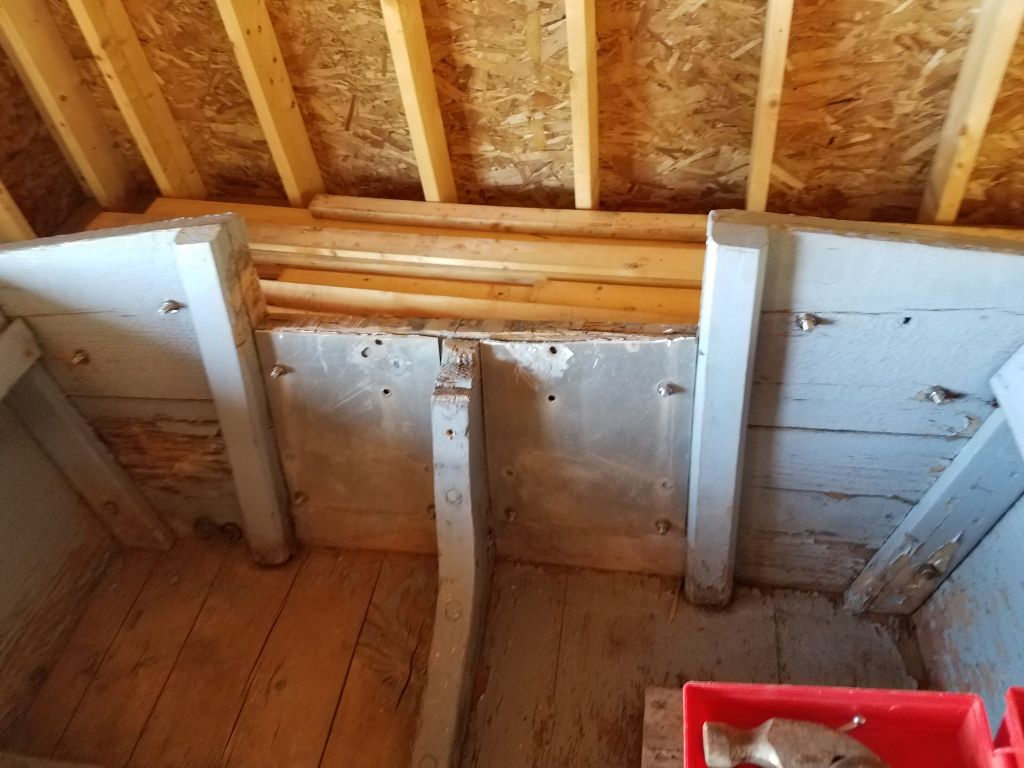
The two after mounts for the bow pulpit were proving to be a challenge.  Access from below was difficult in part because of a small opening into the chainlocker, but also because there was a tall and wide wooden backing block for the after platform bolts spanning the space from side to side, and this deep blocking blocked ready access–visual or otherwise–to the fasteners securing the pulpit bases.  On the port side, I managed to loosen the nuts without much difficulty (other than working blind and in a contorted position), since the nuts weren’t tight to begin with.  But to starboard (shown here), the angle was such that I couldn’t easily get any sort of tool on the nuts, and while the view looks clear in the photo, the realities of the access were significantly more challenging.

Since at least for the immediate moment I didn’t plan on removing the bow platform–I’d leave this pending final determination of the project scope–removing the backing block/beam wasn’t possible for now.   As of this writing, further action on these fasteners was pending.

Other than the pulpit, and the two forward sections of genoa track–which fasteners I’d need to access from inside the cabin, outside the edge of the overhead liner–the hardware removal was mainly complete.

Total time billed on this job today:  5 hours

0600 Weather Observation:  Clouds and fog, 60°.  Forecast for the day:  Clouds and fog, 70s

Scupper 4

< Back to Scupper

Monday

Much of the detail about the scope of this project was still up in the air, pending a much-discussed but as-yet unscheduled meeting with the owner here at the boat, but regardless, any work on this boat would require removal of the deck hardware, and with time on hand while awaiting other boats’ arrivals following the end of the northeastern sailing season, I continued work on the hardware removal, which would eventually give the project a good head start once it was time to dive in head first.

Continuing where I left off, I got to work on the stove pipe and Charley Noble fitting.  With the screws removed that held the base of the CN to the wooden deck fairing, and the top part of the fitting unclamped and removed, I could pry loose the fitting and, eventually, pull it away from the stove beneath and finally free and out of the boat.  I removed the inside and outside wooden fairings around the stove pipe, revealing a raw and unsealed hole through the cored deck.  Finally, I removed the stove itself:  it was  simply screwed to the aft bulkhead and was easy to remove (and lighter than I expected).   I stored these items away for safekeeping.

Earlier, while removing other nuts from the underside of the coach roof deck, I’d also removed the nuts holding the teak handrails in place, and now I removed a few more from the forward cabin, releasing these rails for removal.  The rails were in poor condition, and the starboard rail broke during removal, having become punky or fastener-sick at one location.

Now I turned to the cockpit area and poop deck, still fully populated with winches, mainsheet traveler, stern pulpit, and more.  To begin, I removed the control lines and mainsheet assembly from the traveler, setting these aside with the other parts I’d removed so far.

Snuggled into the port cockpit locker belowdecks, I prepared to remove the nuts securing the various hardware above.  Nearly all the hardware  was secured with overlong bolts, calling to mind stainless steel and bronze stalactites oozing from the primordial overhead.

The sheet winch itself, a vintage Lewmar 42 self-tailer, was secured with refreshingly short bolts, and all but one of the nuts came off without spinning the fastener.  I’d hoped to just pull the winch off without disassembly.  But with a single loose bolt, I had to secure a set of locking pliers on the nut, then go back on deck and remove the winch top and winch drum for access to the fastener so I could remove the winch.

I continued aft, laboriously unthreading the nuts from the 2″ overlong fasteners at the mooring cleat, a nearby padeye, and the forwardmost stern pulpit base, along with a couple other nearby fittings.  Access to the farthest aft reaches of the compartment, to which I eventually needed access, was tight thanks to some built-in transverse bulkheads inside the locker, so before trying to crawl back there I removed the long fasteners from the closer fittings to limit what could catch and scrape me later.  With slightly better access,  I could then clamp some pilers onto the three nuts securing the port after pulpit base, and then spin the bolts free from above, freeing the port half of the pulpit.

A stacked double turning block, located at the aft end of the genoa track, proved challenging to remove, even though the nuts below came off with ease.  But I found that the fasteners were welded to the various aluminum components of the block, specifically the anodized spacers at each end, and I couldn’t turn them with a wrench or ratchet from above.  I had to press into service my large impact gun and impact sockets in order to release and, finally, pull free these long fasteners.

Moving over to the starboard side, I had enough time to remove the starboard sheet winch–this time without a need to disassemble the winch from above, as all nuts came free from below without issue.  I’d continue work on the remaining hardware on this side later.

While I was in the dank, dark space, I took the opportunity to take some photos of the engine, shafting, and steering mechanism for future reference.  The ultimate fate of these items had yet to be determined, but it was clear that there was ample opportunity for changes or upgrades.  Access to these spaces would be a challenge–not necessarily any more nor less than in other boats–and might require modification to some of the internal dividers and structural members to gain access.  But all this was for another time.

Total time billed on this job today:  5 hours

0600 Weather Observation:  Dense fog, 60°.  Forecast for the day:  Fog, clouds, drizzle, low 70s

Scupper 3

< Back to Scupper

Friday

The wide, cambered coachroof was home to a series of fairleads and cleats, a complicated arrangement leading 6 or 7 lines from the mast aft to a single winch near the cockpit.  Since my goal during these few days of work on this project was to strip the boat of hardware, particularly hardware that would complicate covering the boat when I moved her outdoors for storage till the meat of the project in a few months, I focused next on this area.  The photos below show the area when the boat was outside in June 2017.

Inside the boat, the  overhead appeared to be a series of panels held in place with transverse and longitudinal trim, a typical arrangement.  While the overhead was peppered with the sort of small nut-and-washer access holes favored by the builder and/or previous ownership, I thought I’d remove all the trim and panels for better access, and for the type of access I’d want later during the project.  Plus, the trim and overhead itself was in need of cosmetic work.

Preparing for the removal, I marked each piece of trim and overhead panel with tape so I would remember its placement, whether for reinstallation (unlikely) or fabrication of new pieces as needed.

Next, I began to remove the trim, starting in the port aft corner over the galley, where the bulk of the hardware was located.  Here, I discovered that indeed there was an overhead panel–just a flimsy sheet of high-pressure laminate–that covered what appeared to be a solid overhead liner beneath, though in this area the original liner had been hacked to pieces to allow access for the Christmas tree of jam cleats at the “winching station” on deck.  Calling this area ugly would be a dreadful understatement, but there you are.

But I also determined that this was the only area that had this sort of panel:  the rest of the overhead was simply a full molded liner, broken up with the affectation of wooden trim pieces to simulate a more traditional installation.  This meant that all the fasteners would need, again, to be accessed just though the little holes.  Nevertheless, I continued removing the transverse trim pieces, since they’d have to go sooner or later anyway, but for the moment I left some of the other trims–which were fastened and bunged, making removal more time consuming–in place for now, till some later time when I focused more on the continued disassembly.

Now I went ahead and removed all the nuts from below.  Fortunately, in most cases I found the nuts to be nearly hand-loose, and the fasteners didn’t spin for most of the removals.  This made my life easier since clamping the fasteners from below with locking pliers–the second pair of hands a lone practicioner requires for many fastener removals–would have been impossible through the silly little socket holes.  In a few cases, though, where the nuts caused the fasteners to spin (specifically on a matched pair of dated jam cleats located at the cabin corners near the cockpit), I had to get inventive with taping sockets and ratchet handles in place to allow me to go on deck and ever so delicately turn the screws from above.

With the nuts removed, I could then remove the winch, cleats, and fairleads from above.

The mast step required a little more work and investigation, as the arrangement was held together by various bolts, some of which were hidden, others of which seemed to have been added sometime after the original boat’s construction.  Attempting to spin the nuts free from below, I found that the fasteners tended to spin, so from on deck I clamped on as many locking pliers as I could to hold the various fasteners while I removed the nuts in bulk  from beneath.  Once I had a few out of the way–the four originals holding the mast step itself through the longitudinal cleats securing the compression post in the cabin–I could move the post slightly one way or the other to gain access to additional fasteners beneath.

At length, I eventually removed–piece by piece–the mast step assembly, beginning with the original mast step, which was secured atop an aluminum plate (almost certainly later than original), to which was fastened a series of turning blocks for the multitude of aft-leading control lines and halyards.  Eventually I removed the plate by itself after discovering that the wooden fairing block beneath was individually secured to the deck with screws,  Finally, I pried off the damp and weak wooden base, which wilted uncomplainingly into three pieces upon removal.

By now it was late in the day, but, hoping to wrap up the coach roof work, I started work on removing the Charley Noble fitting at the starboard aft corner of the cabin, but when removing the screws that secured it to the wooden base failed to release the fitting, I decided discretion was the better part of valor and left this removal for another time.

Total time billed on this job today:  4.5 hours

0600 Weather Observation:  50s, cloudy, a shower.  Forecast for the day:  showers, clouds, 70s

Scupper 2

< Back to Scupper

Thursday

Continuing early preparations even though I didn’t plan to get to the major jobs involved in this project for some months, I got to work removing some of the deck hardware, starting with the lifelines and stanchions.  After removing the old lifelines for storage–they’d require replacement–I marked each stanchion for its location before continuing.  Access to the underside of these fittings was only so-so, with the molded interior liner obscuring some of the fasteners and making removal more difficult.  Fortunately, the fasteners themselves gave in to the removal efforts with nary a whimper, and the bulk of the time spent on the task came from the usual back and forth and up and down and challenges in fastener access.

With the six stanchions removed (which improved fore and aft access along the narrow sidedecks for now), I continued at the bow and removed the two large mooring cleats, bow chocks, and the anchor line hawsepipe through the foredeck.  The cleats and a small eye strap fitting were frustrating to remove since the nuts were embedded deeply in narrow holes drilled through a solid plywood backing located between the interior liner and the deck above, with barely enough clearance for a deep socket to fit through, but fortunately the fasteners themselves didn’t spin when I removed the nuts from beneath, as this would have substantially complicated the removal.

Total time billed on this job today:  4 hours

0600 Weather Observation:  50s, clear.  Forecast for the day:  Sunny, 80s.

Scupper 1

< Back to Scupper

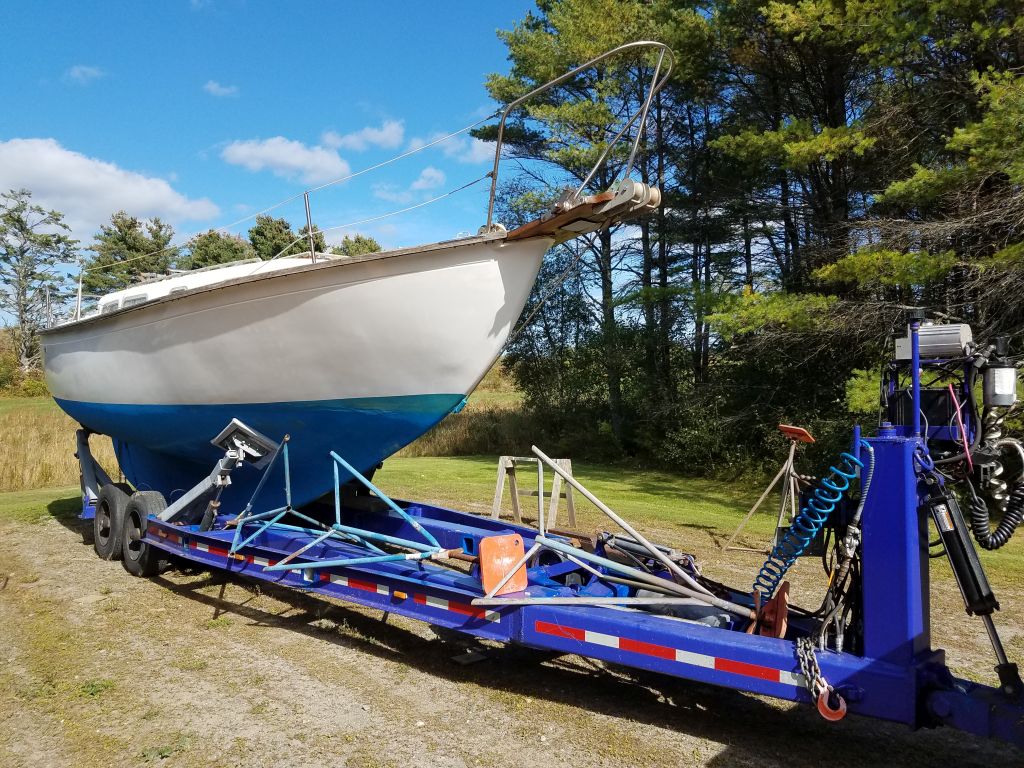
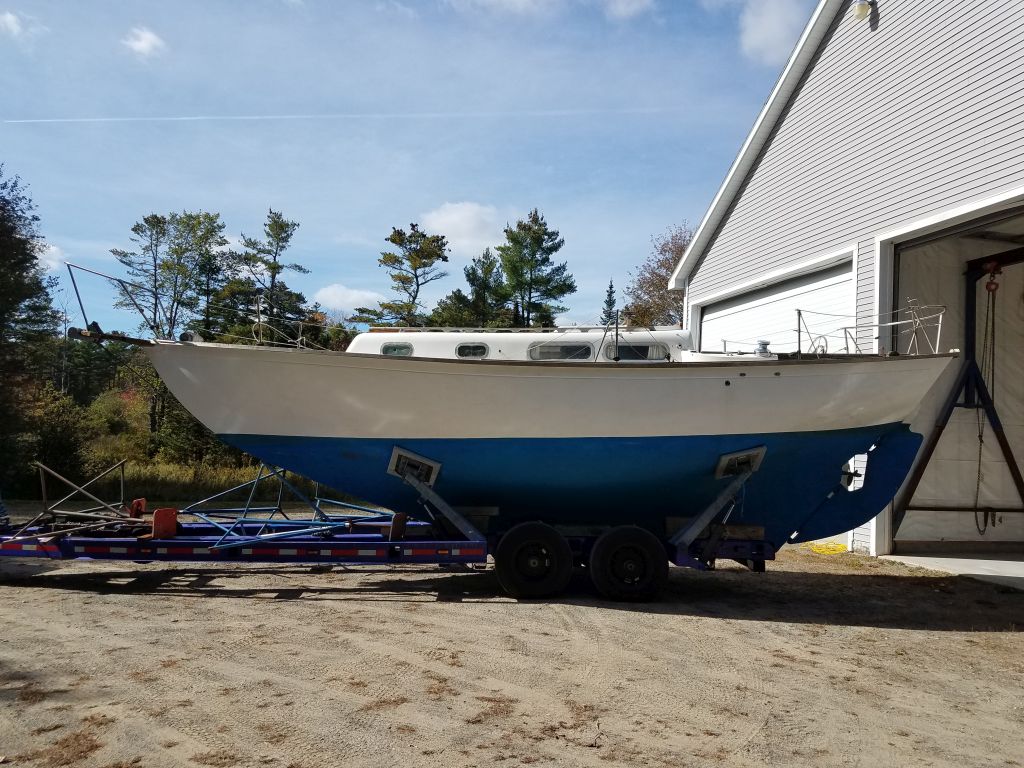
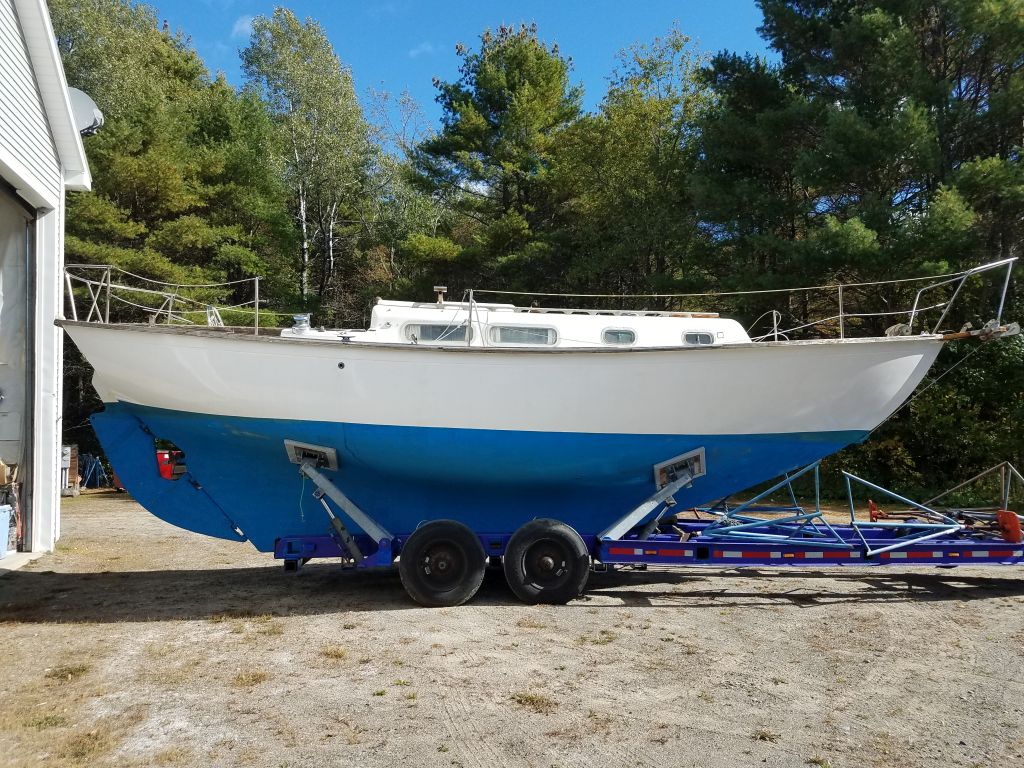
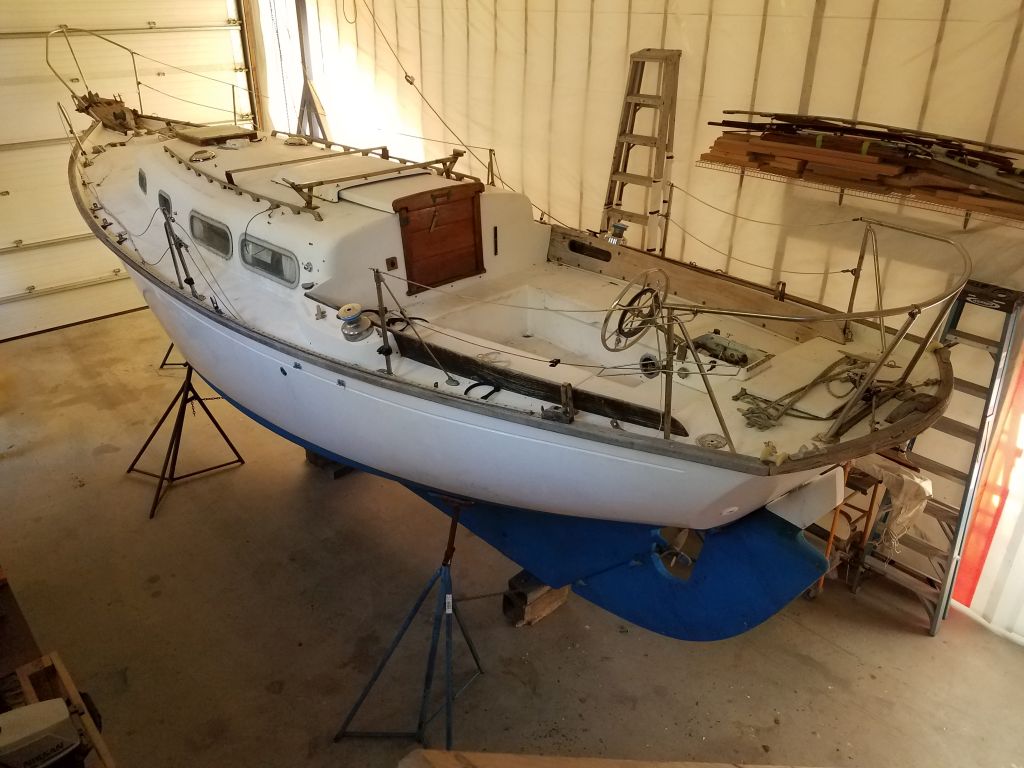
Shortly after arrival at the shop in June 2017, I performed a walk-through and visual inspection of the boat to observe her overall condition and help determine, along with the owner’s eventual input, the project scope ahead.  The boat, a unique design called a Mystic Legnos 30, was in pretty rough shape overall, with substantial cosmetic requirements as well as the usual collection of deck problems and old systems.

Click here to view numerous photos and the initial inspection report.

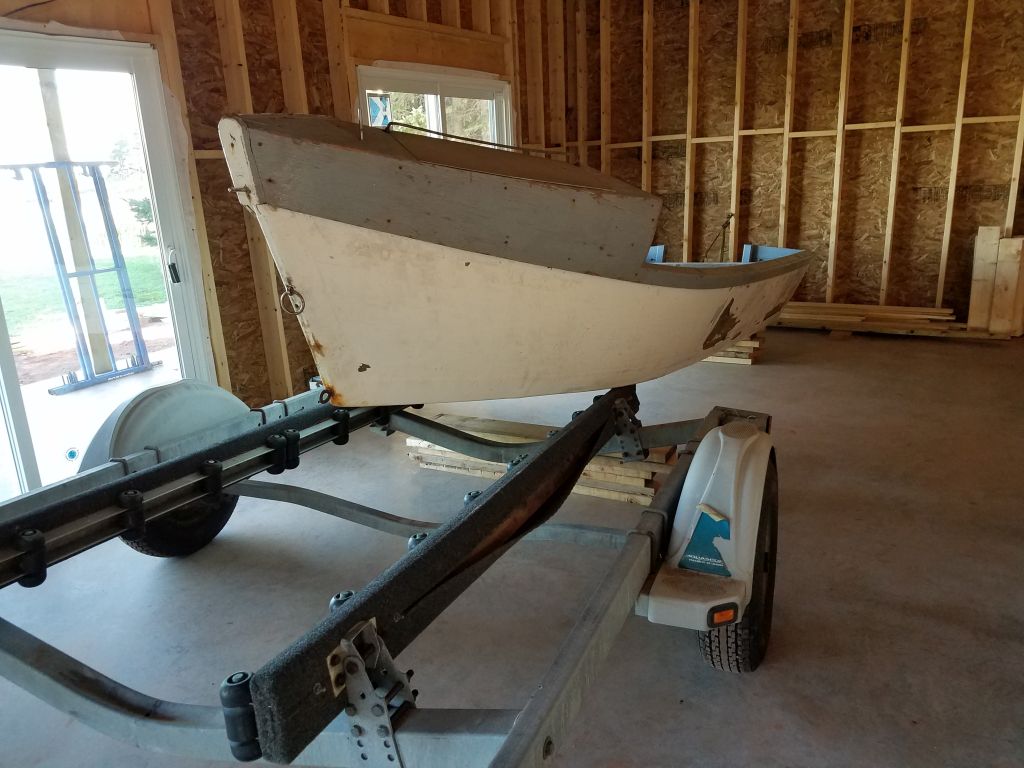
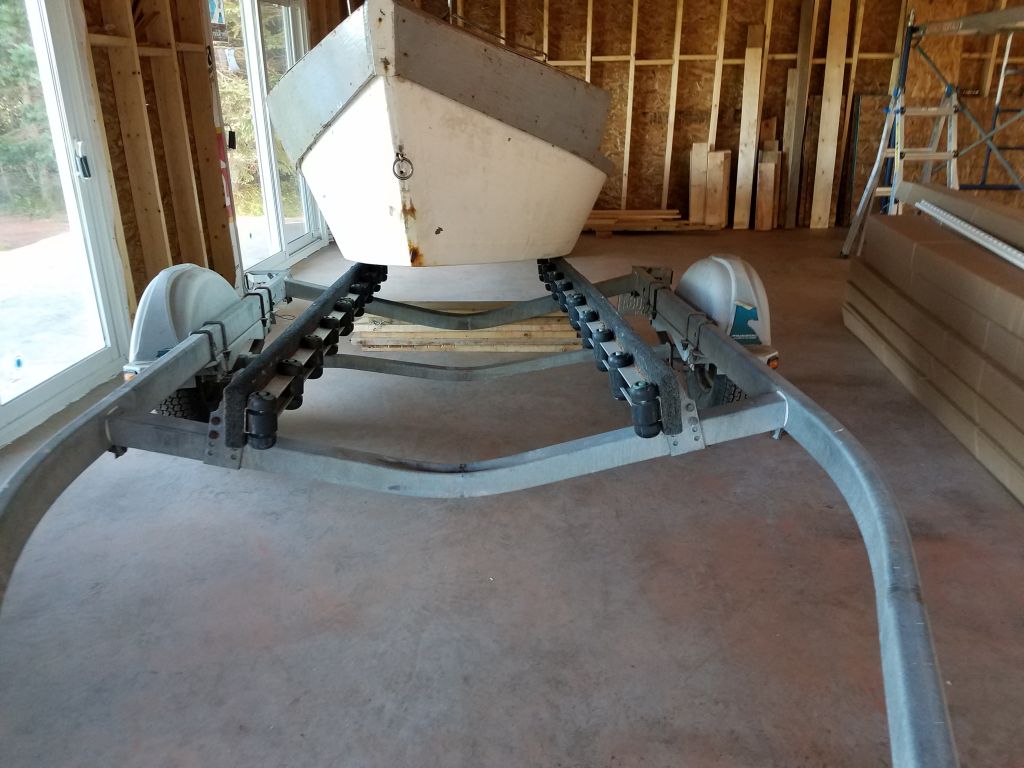
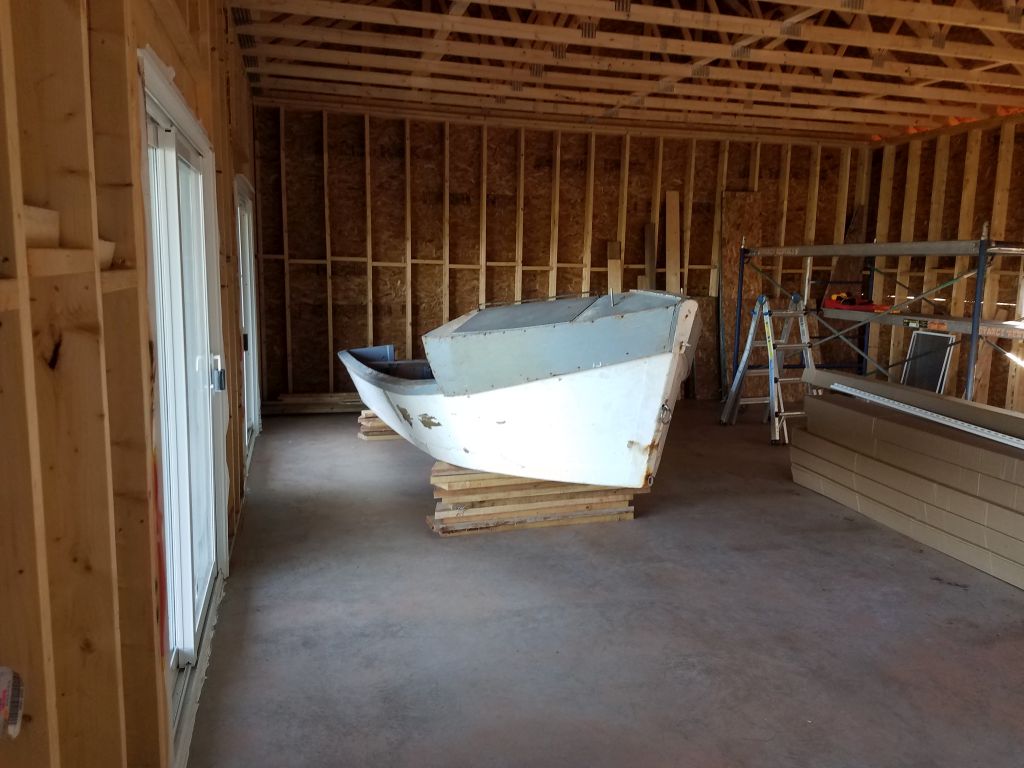
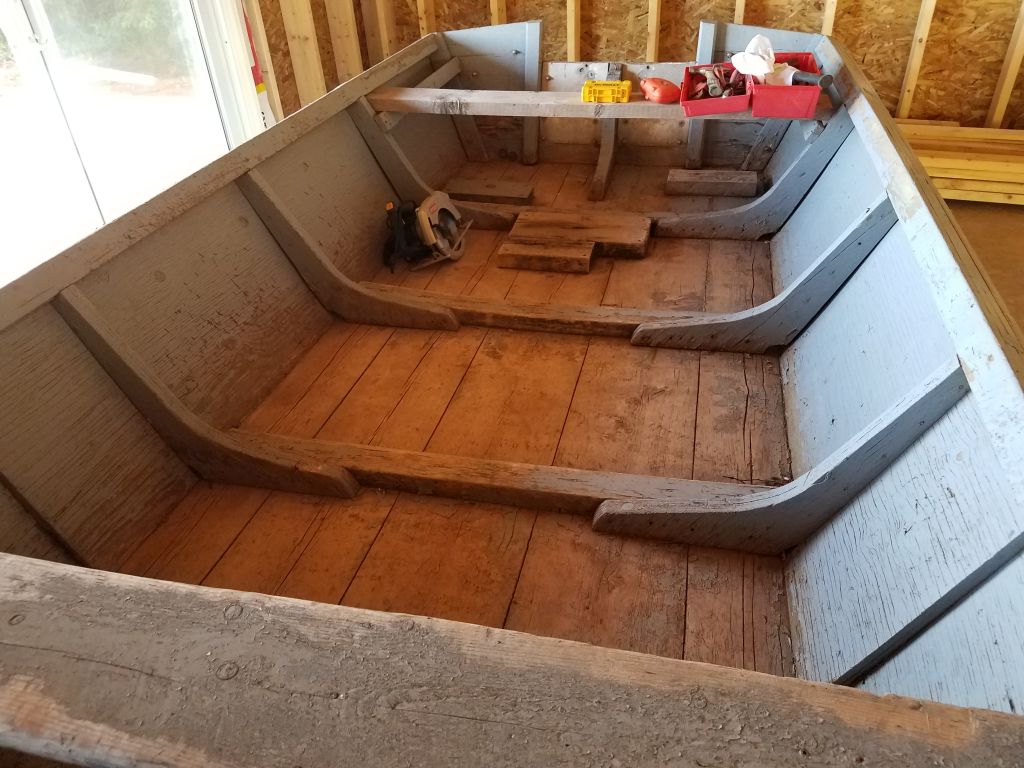
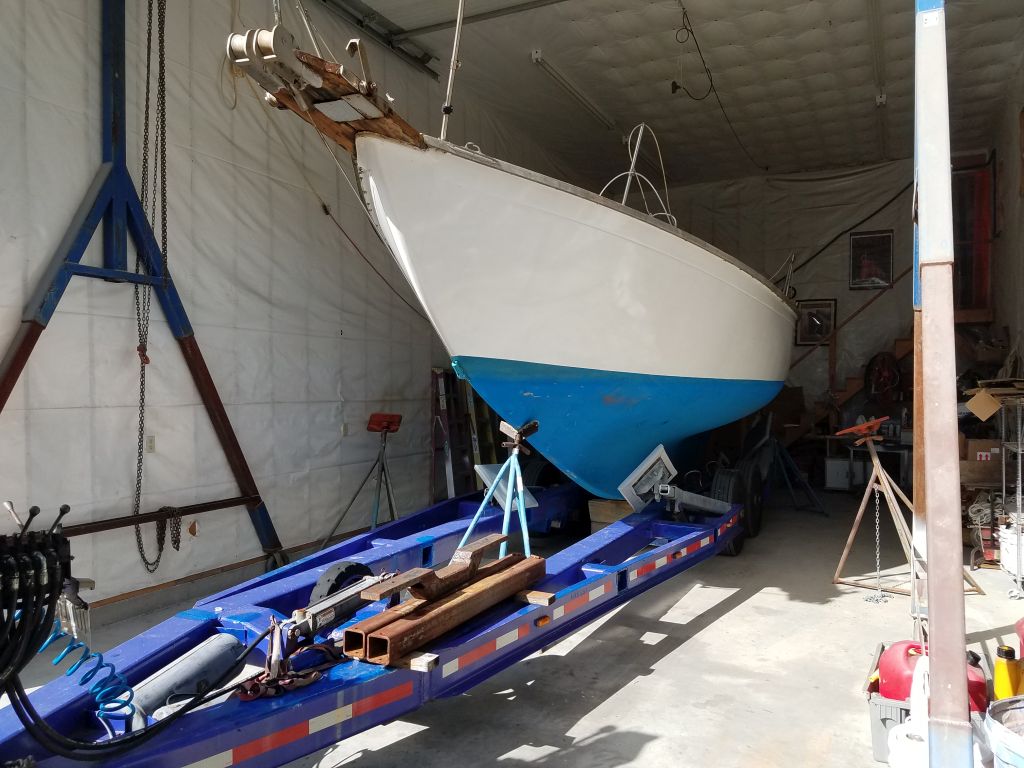
Though I didn’t expect to begin the substantial portion of the project for some months, with some availability in the schedule and shop I took the opportunity to move Scupper indoors and begin some of the preliminary work, mainly cleaning out and the beginnings of disassembly and hardware removal.

Once she was indoors, I spent part of a day removing various items from the cabin and storage areas.  More work to come.

Total time billed on this job today:  3 hours

Inspection Report


<Back to Scupper

Initial Photos, Inspection, and Comments

Bottom:

The bottom looks to be in pretty good shape, at least as far as the outward appearance.  The bottom paint is sound and not overly thick, and there are no obvious signs of damage visible through the paint.   The rudder has some issues top and bottom and will require attention.  The propeller aperture is very small, and enlarging it may prove to be desirable or required depending on the course we choose with the engine.  Stripping the bottom will help determine whether there are any underlying issues, but isn’t strictly necessary either.


Topsides:

The topsides are in cosmetically poor condition with various indications of previous damage (i.e. docking incidents, etc.) and poorly-executed repairs.  These areas are visible near the stem on both sides, and most notably along much of the port side of the hull.  Normal surface prep procedures will help highlight any real issues, if any, and will also address these cosmetic interruptions during the natural course of the work.  While there is substantial work required to bring the topsides back to excellent condition, it’s within normal bounds of boats of this age and nature.

The original boottop and waterline, marked with molded scribe marks in the hull, are clearly off-kilter, in the wrong position in places, and wiggly, noticeable both by eye (in terms of overall fairness) and by the position of the floating scum line still visible.  We can correct or enhance this during painting as needed.


Deck:

The deck is in fair to poor condition, with plenty of cosmetic restoration required in all areas (including woodwork), as well as several immediately-noticeable soft areas that will require structural repair, most notably on the bridgedeck in way of the two deck prisms.  Other areas will surely come to light.  The coachroof is covered with Treadmaster applique that will require significant labor to remove during the refinishing process.  Deck hardware is of similar vintage to the boat and in various condition, mainly usable but mostly dated and in rough cosmetic condition.  This can all be assessed later during removal.  The teak  bowsprit, with pulpit attached, appears sound but has some cosmetic issues.  As with every part of the boat, many of the decisions related to the final scope of work will come down to personal preferences and the expectations/desires for the final condition and appearance of the boat.


Systems and Mechanical:

The engine, a 2-cylinder Yanmar, appears original vintage.  I’ve not yet assessed its true or operating condition.  Access for general maintenance is fair; removal and/or replacement of the engine, with its location behind the head and beneath the cockpit, will require a fair expenditure of effort since there is no direct way to lift or hoist the engine.  Changes to the engine may require reworking the propeller aperture to fit a different propeller.

Other systems, such as plumbing, through hulls, and electrical, will require a complete and comprehensive overhaul and replacement to suit your needs and requirements.  The final scope of the project in all ways will be directed largely by the extents (and installation complications) of these systems.


Interior:

Barring any significant reconfiguration of the interior layout or built-in cabinetry (molded fiberglass with wooden trim in most cases), the interior restoration will revolve largely around cosmetic repairs, enhancements, and upgrades as you see fit for your own vision for the boat.  Existing woodwork, at a minimum, should be refinished, but replacement may be worthwhile in some cases.  The interior is generally dank and dirty and will require the usual amount of significant cleaning, surface preparations, and refinishing.  Interior cushions are fair but should likely be replaced.  The work list for the cabin will likely be substantial, but the basics appear to be in place and we can work from there.

The existing sails and canvas are serviceable, but old and worn.  Other equipment, including anchors and rodes, docking equipment, etc. is old and, while serviceable in a technical sense, not generally worthy of re-use.

Continuing discussions and the natural progression of work on the boat will help fine-tune the final project scope and needs.  These comments are based only on initial visual inspection, and more will surely come to light as time goes on.

<Back to Scupper

Total time billed on this job today:  .5 hours

Acadia 74

< Back to Acadia

Tuesday

First thing in the morning, a local boat hauler arrived to take Acadia to her owner’s home port for launching and the season.  Thank you!

< Back to Acadia

odds6

< Back to Odds’n’Ends

Wednesday

A final touch for the project was to put a name on the boat.  The owner chose an old family boat name, and after various iterations with font and style choices, selected the final version for the transom, which I ordered from a local graphics shop and installed.  The vinyl is gold leaf with green outline.  The little holes in the transom are screw inserts designed for the traditional wooden nameboards often seen on these boats.

Later, with some “custom-painted” white screws, I finished up by inserting the screws in the threaded holes to help hide them.  From a modest distance, this made a significant difference.

Total time billed on this job today:  1.5 hours

0600 Weather Observation:
40°, clear.  Forecast for the day:  sun, clouds, some showers, around 60

Acadia 73

< Back to Acadia

Tuesday

Finishing off the interior work were a few final touches from the upholstery contractor, including curtains on the cabin windows, a curtain to hang and close off the passageway by the head, and two filler cushions designed to fit in the convertible starboard settee in the saloon (one of which stored against the hull in the quarterberth; the other as a small backrest on the port settee), as well as some throw pillows in a coordinating fabric.

0600 Weather Report:
42°, cloudy.  Forecast for the day:  mostly cloudy, drizzle, and a shower, 50s
Older posts Newer posts