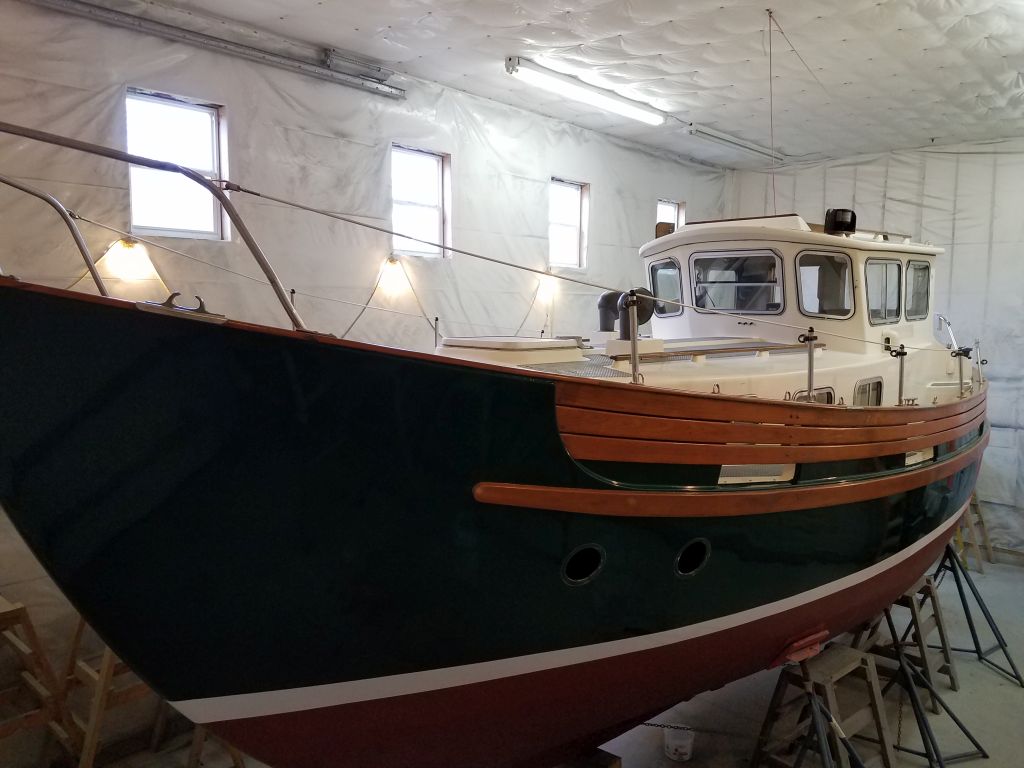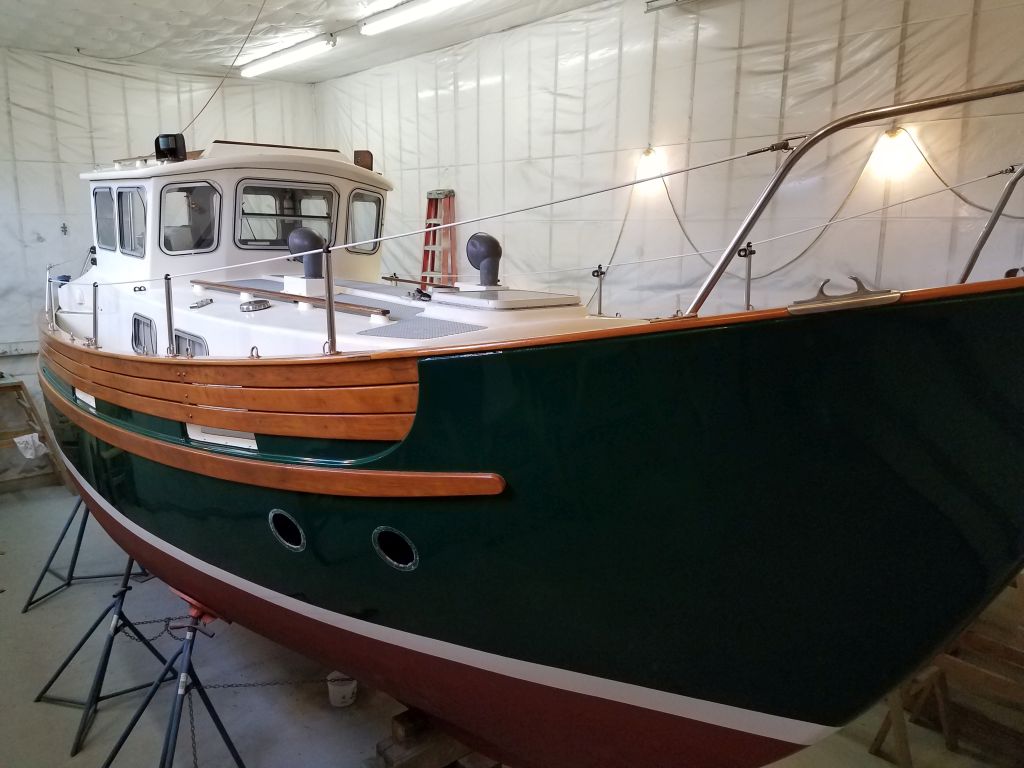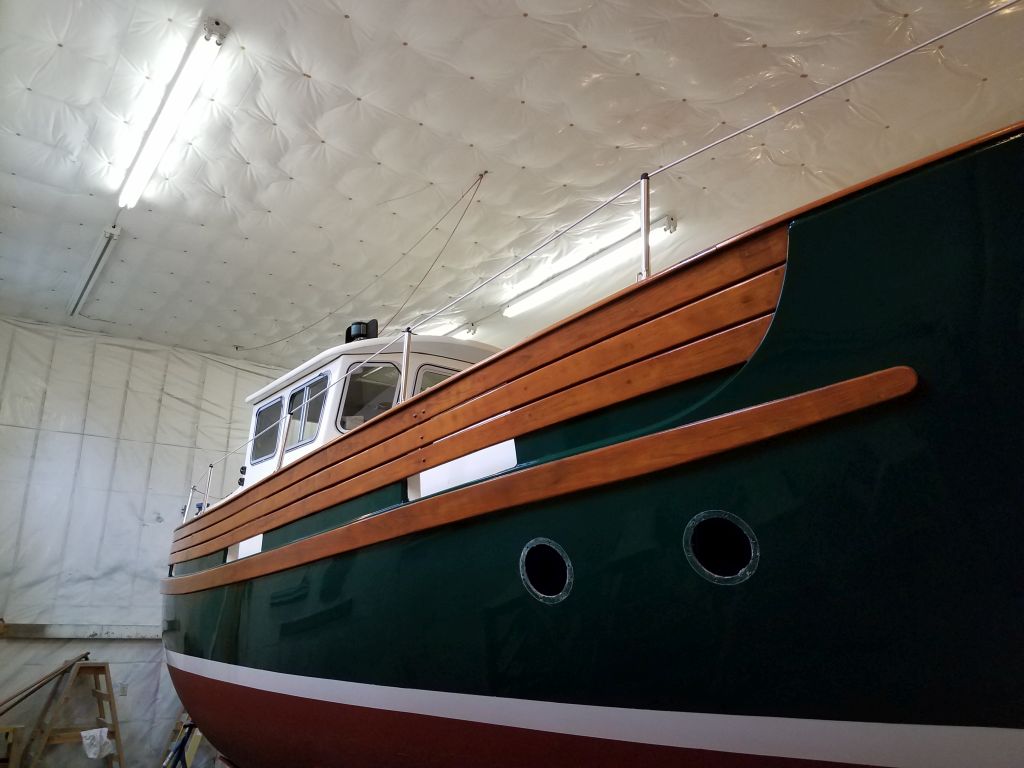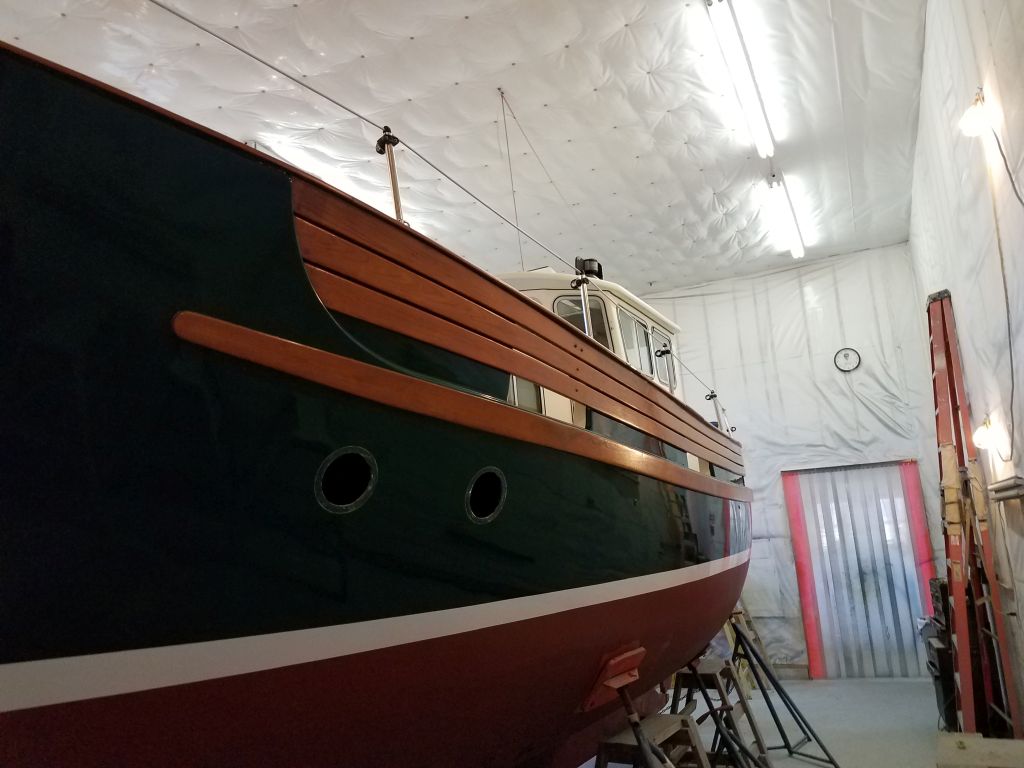

(page 124 of 168)

Jasmine 3

< Back to Jasmine

Monday

Earlier, I’d moved Jasmine from my secondary work bay and into the main shop, where I planned to complete the bulk of the project.
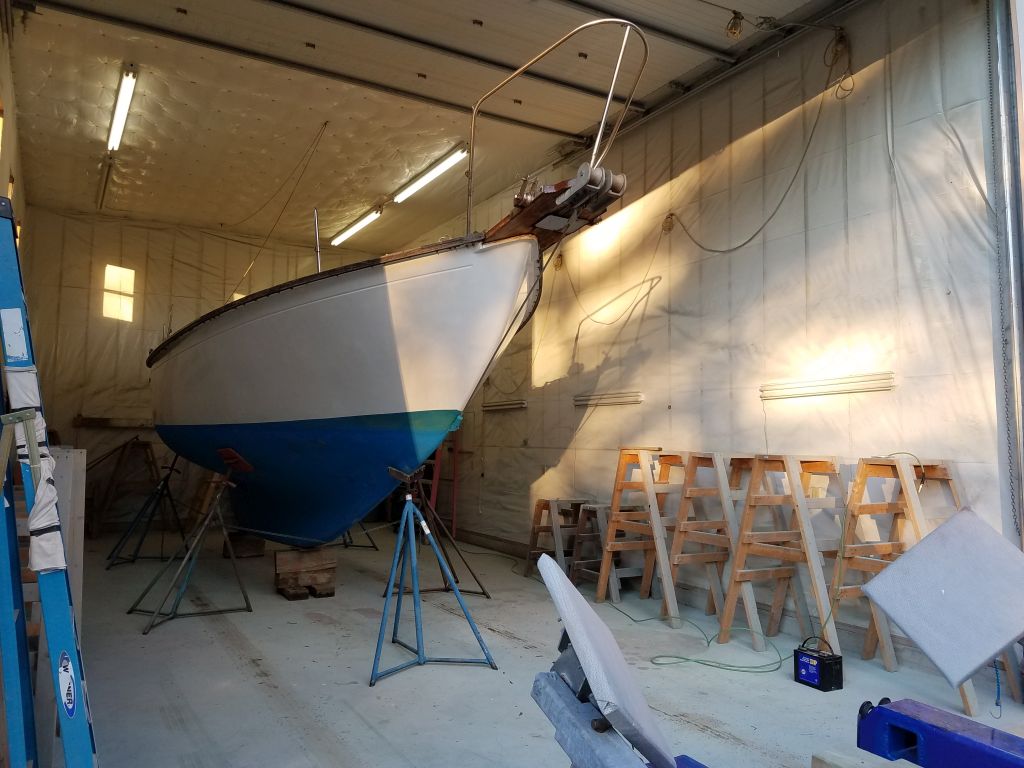
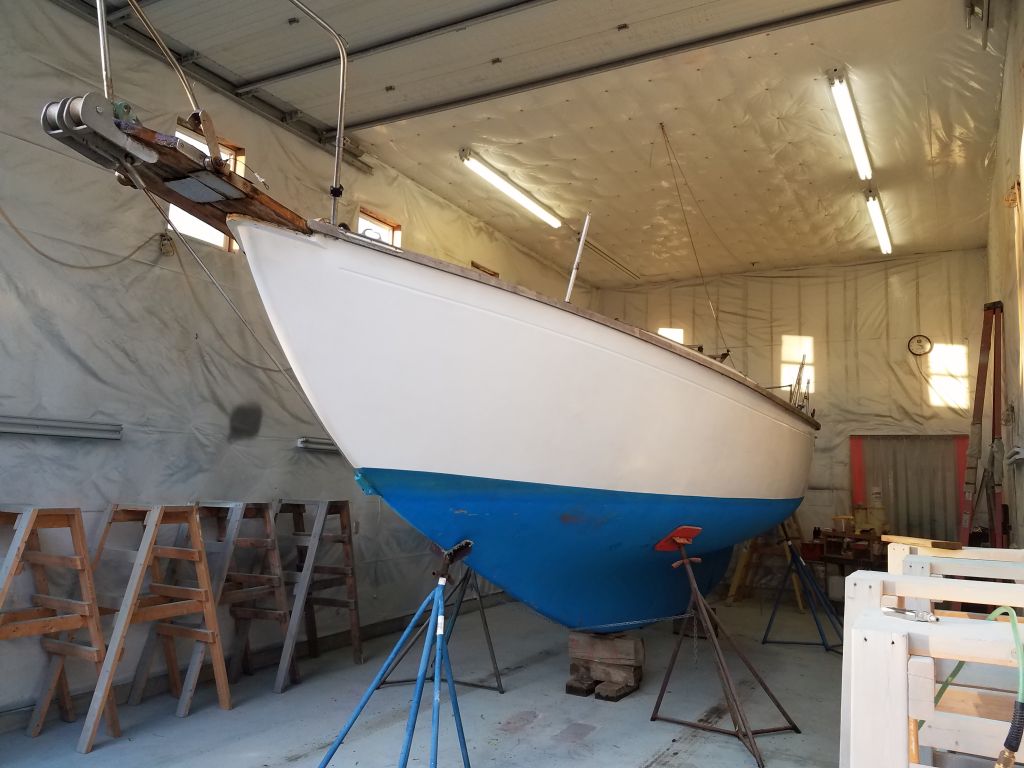
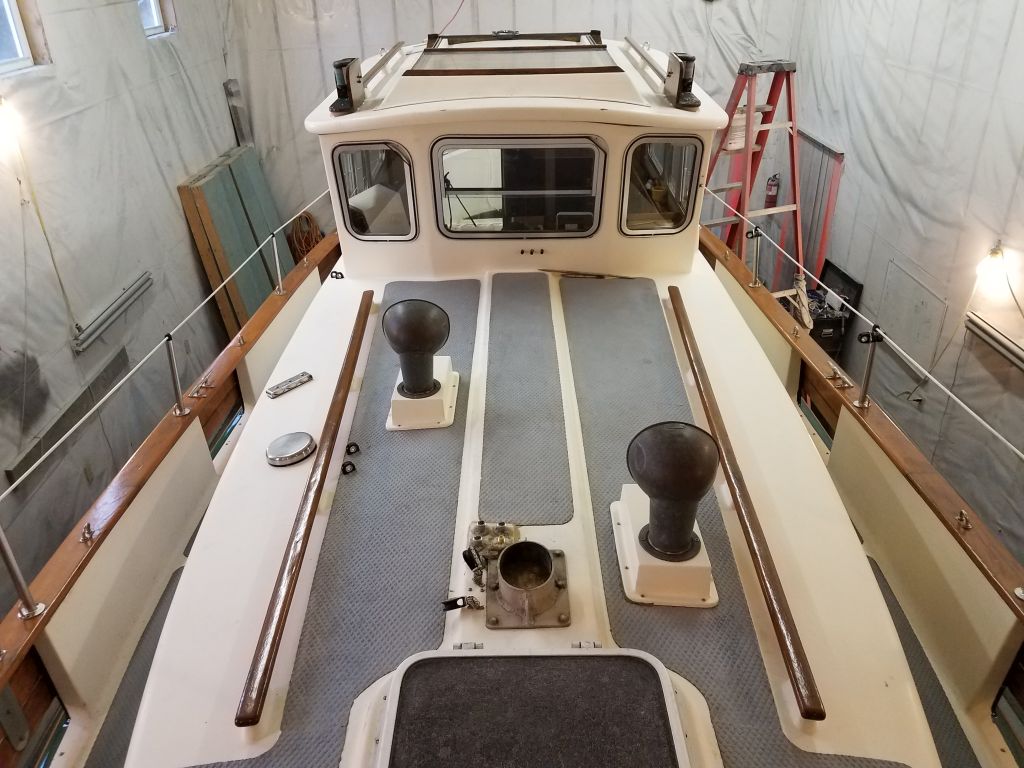
To begin, I set up staging around the boat at deck height to allow good access to all deck areas.
Ready to get to work in earnest on this project, I spent a little time first thing perusing various notes and emails to refresh myself on the scope of the project and various jobs ahead.  The main focus of the job in the coming weeks would be the deck, which featured several areas with known or suspect core issues and all the usual shortfalls of boats of this age.  In addition, my work list included a revamped electrical system, chainplate work, particularly on the mizzen mast, and some other related projects, plus installing a Norvane wind vane.   In addition, I’d be subcontracting a fair bit of rigging work to ensure the masts and their standing and running rigging were in good shape.  The net result of the project was to ensure a sound and safe vessel by taking care of these known and suspected issues.

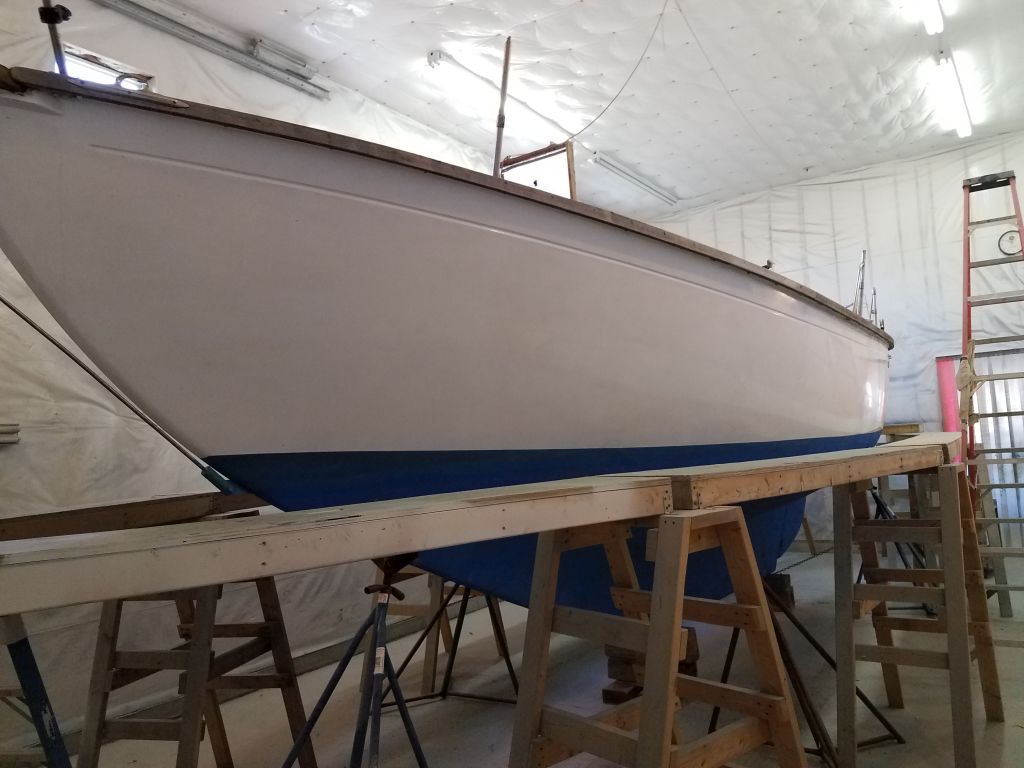
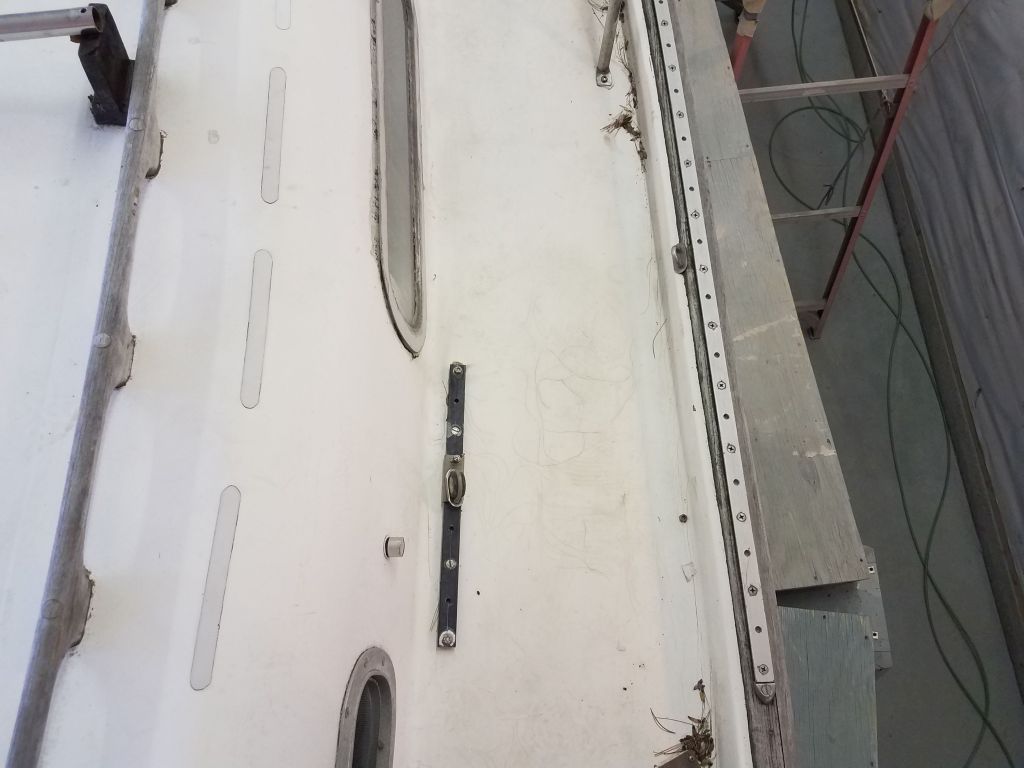
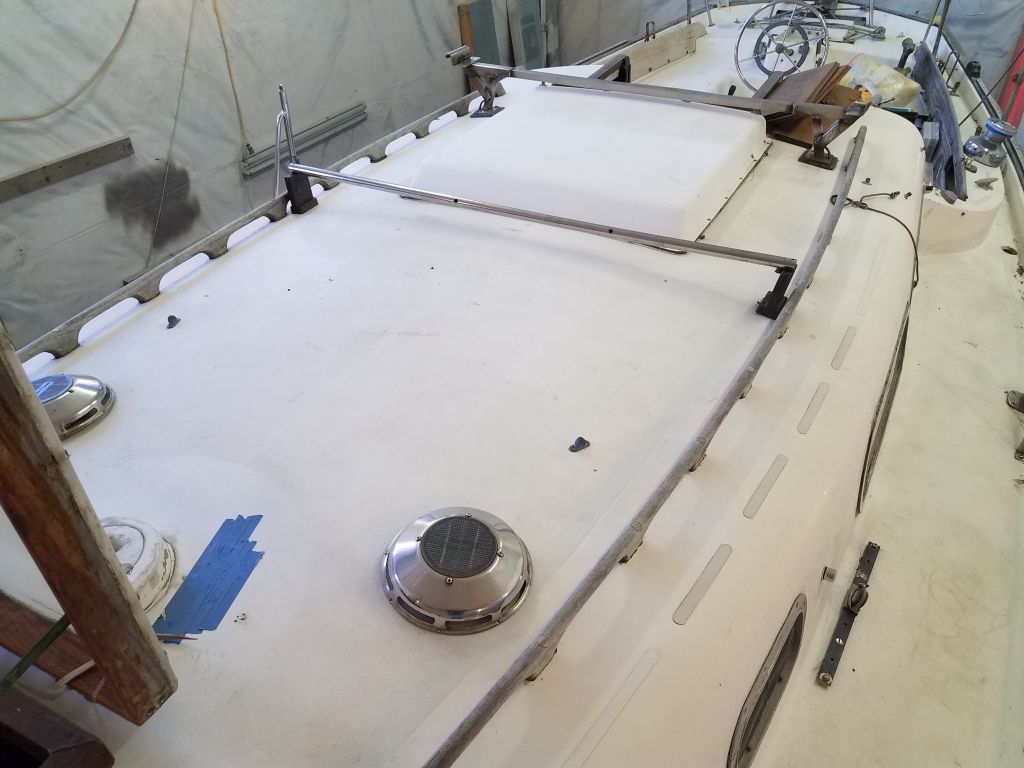
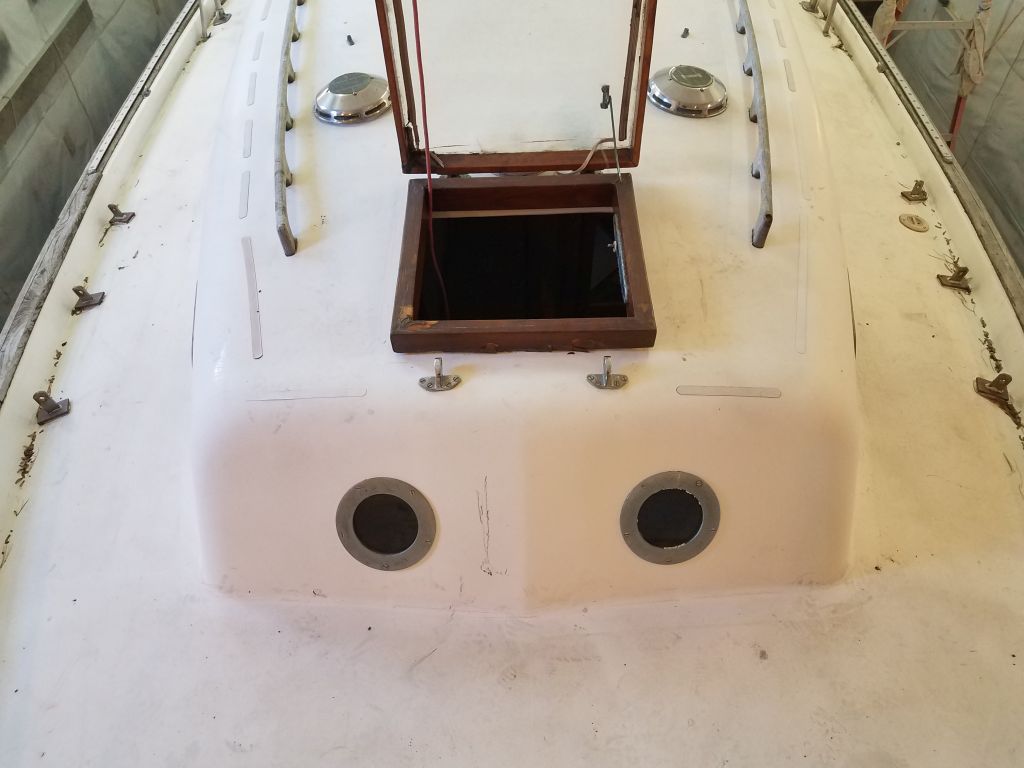
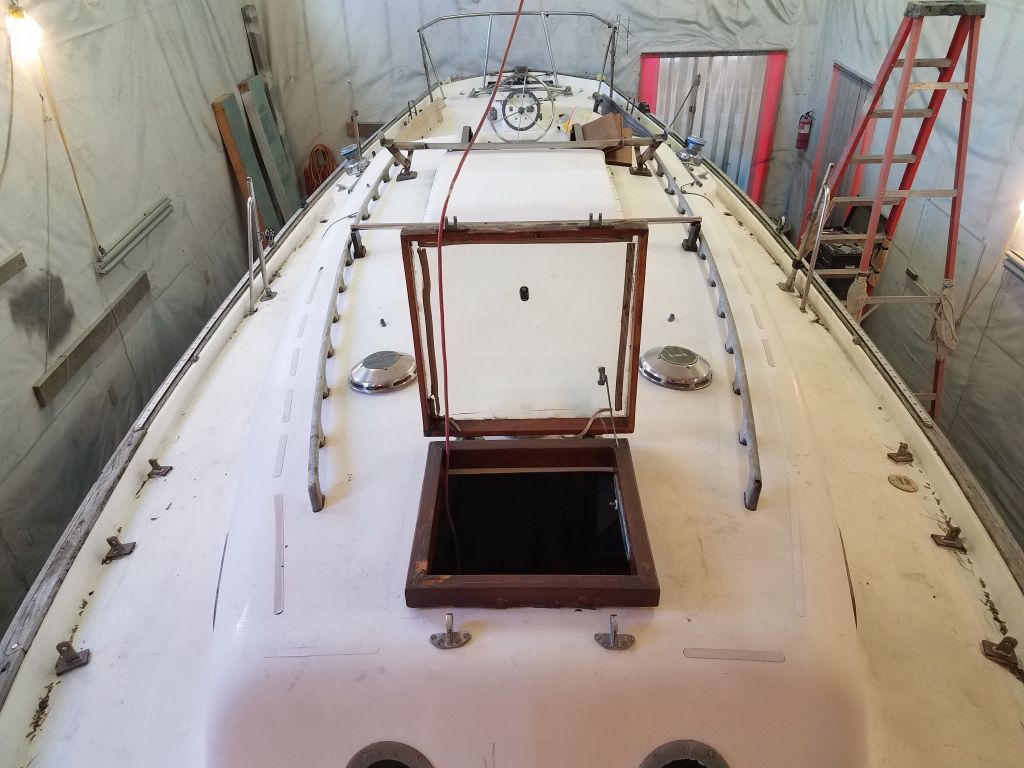
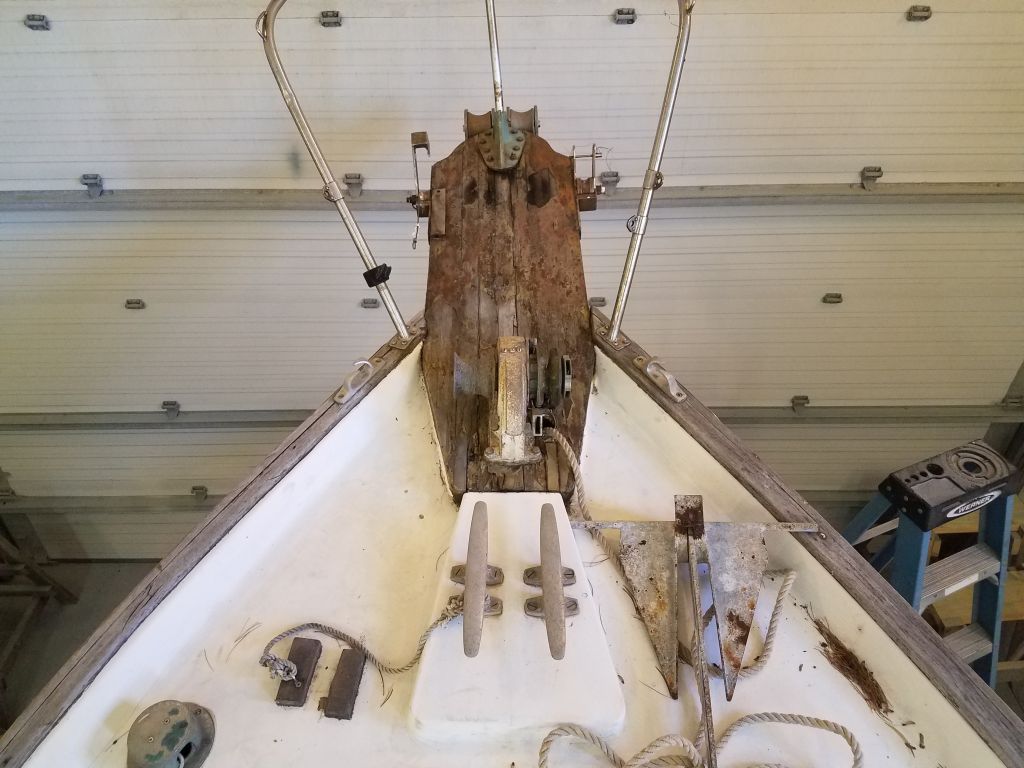
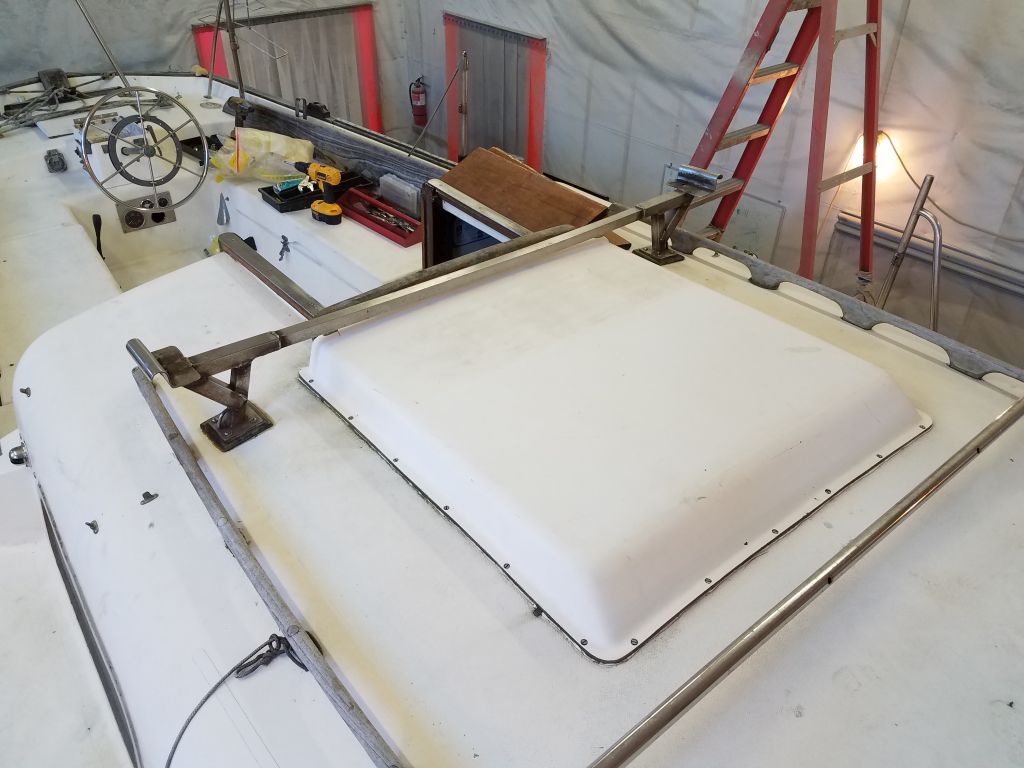
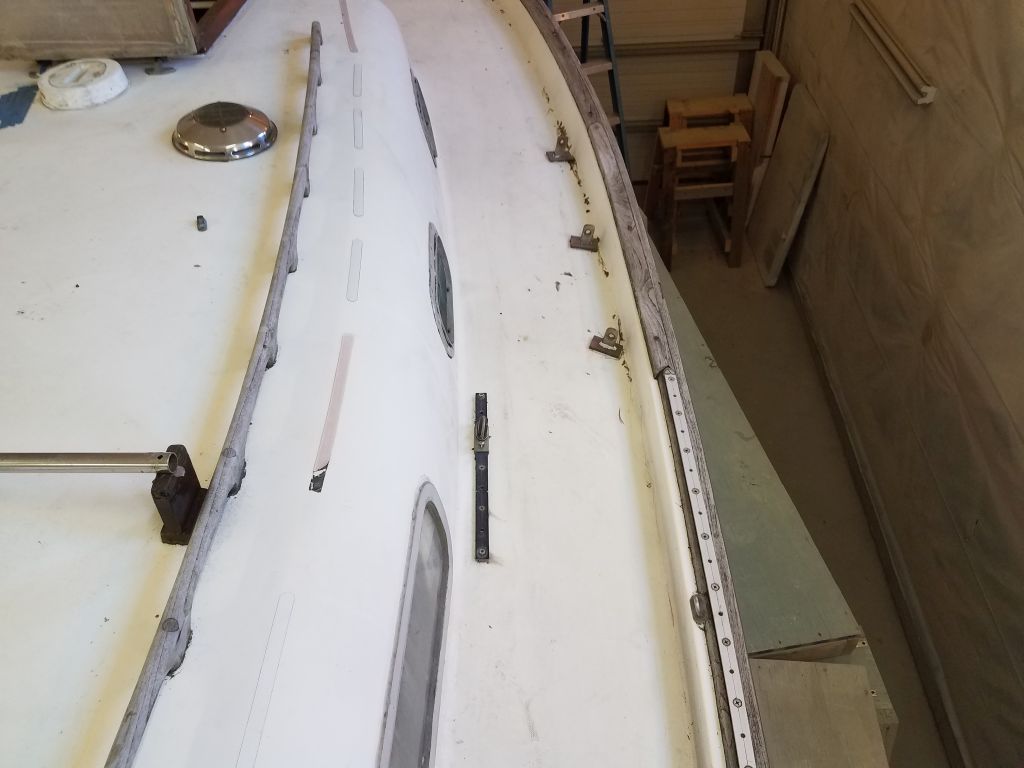
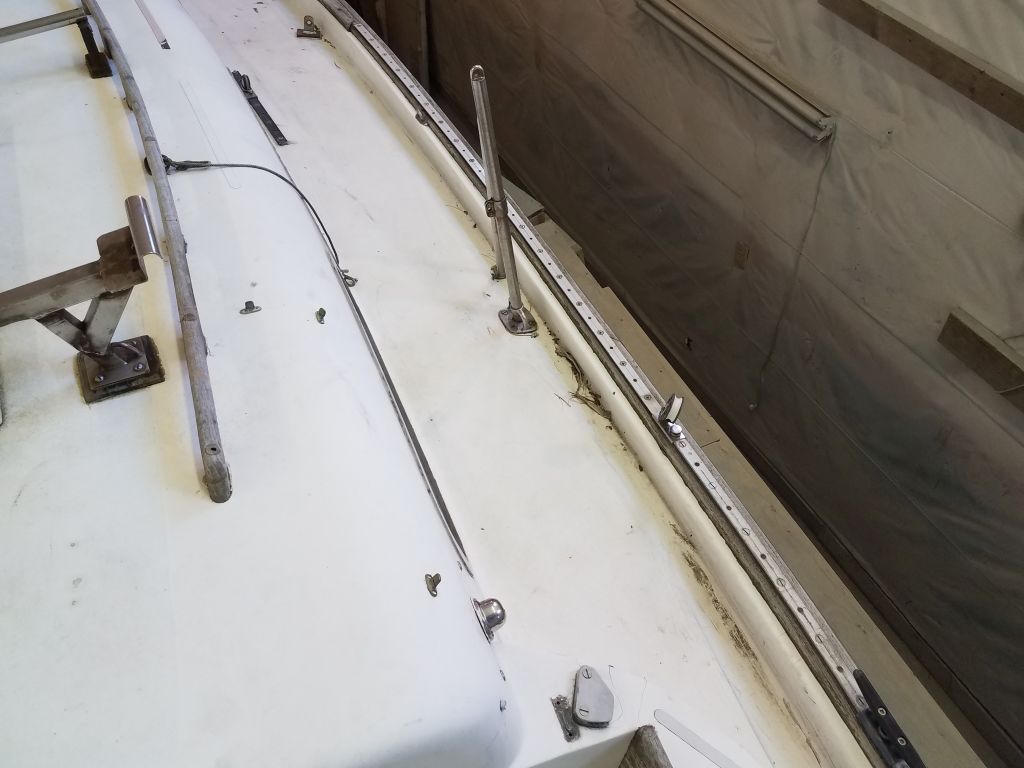
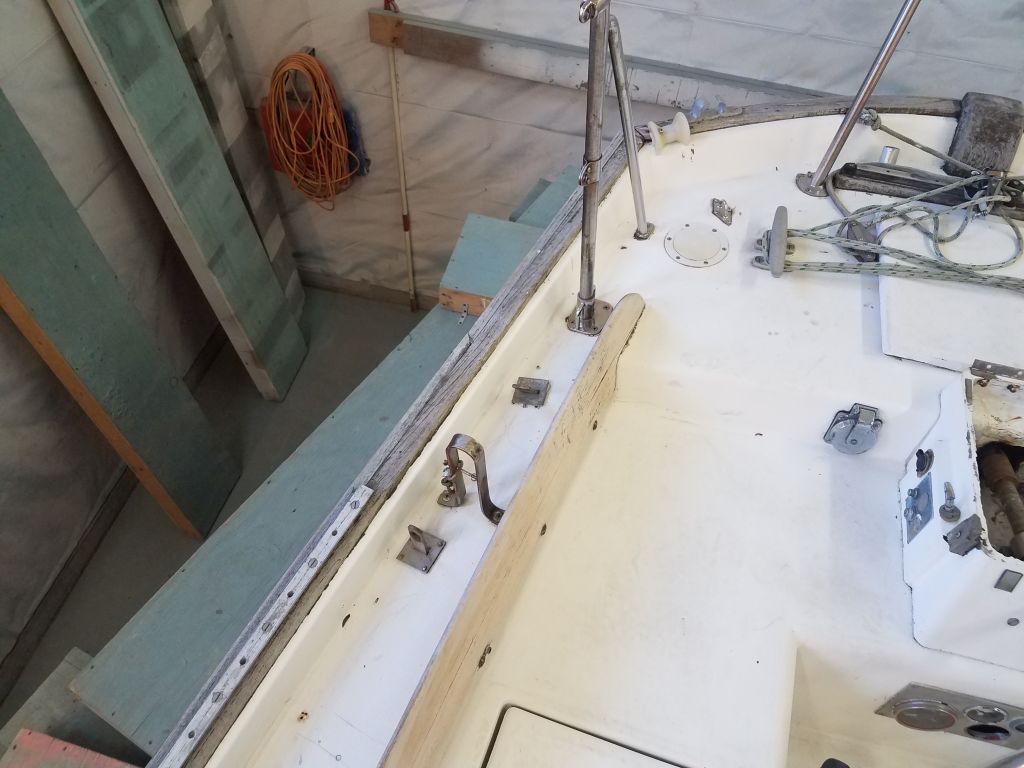
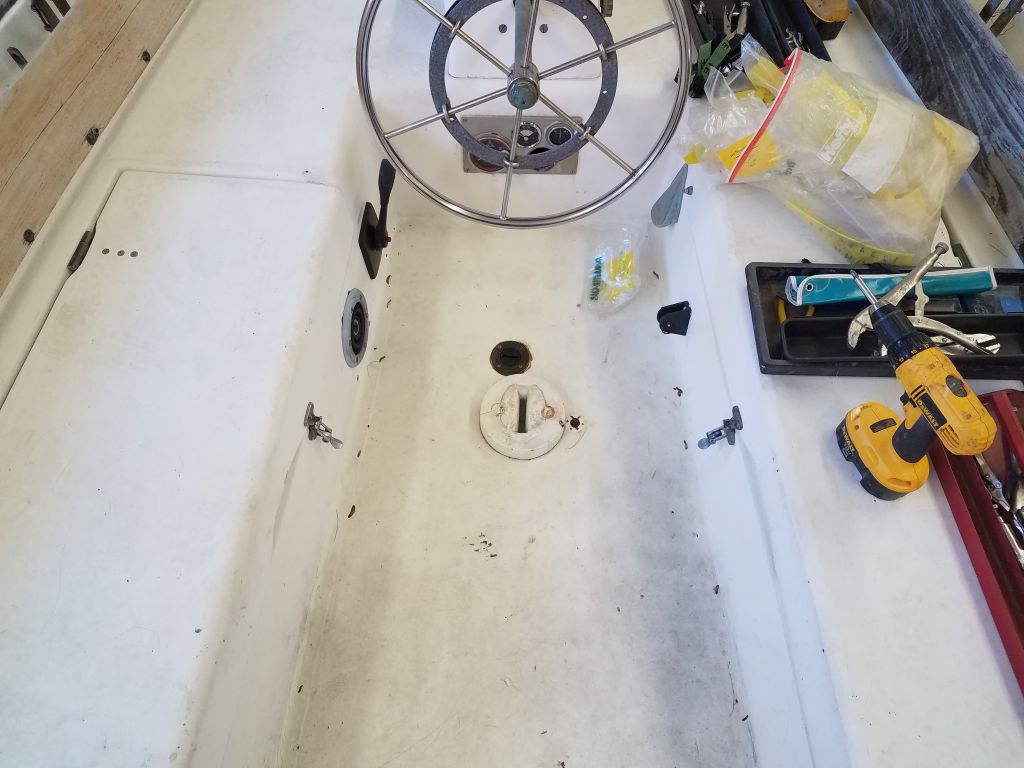
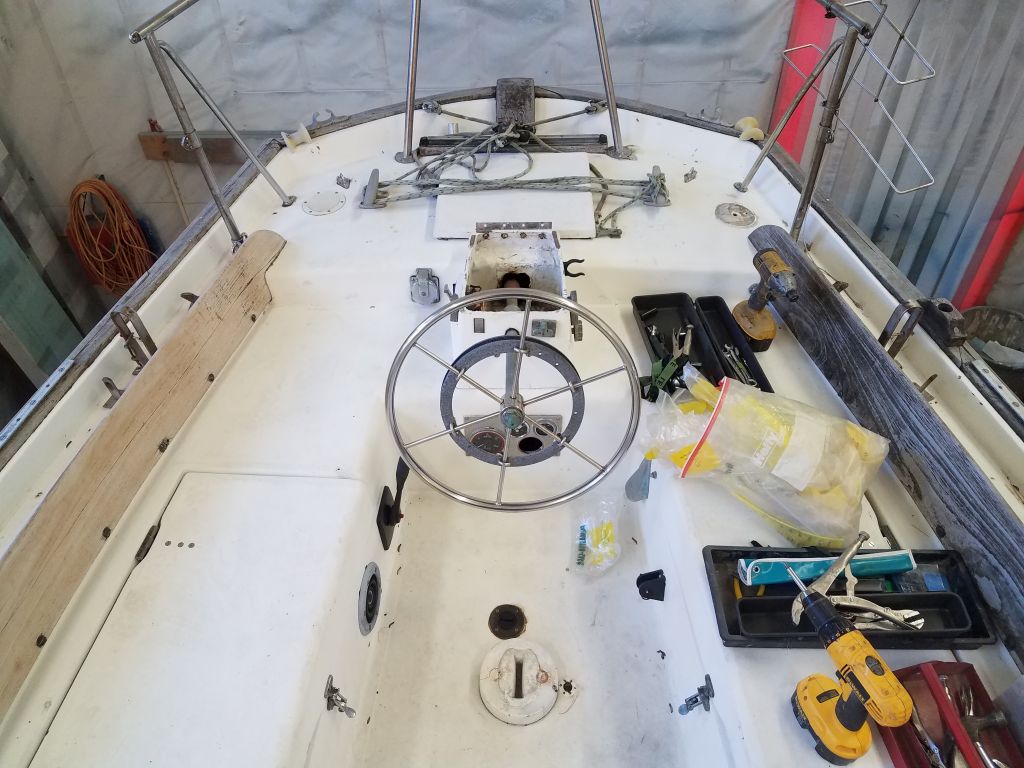
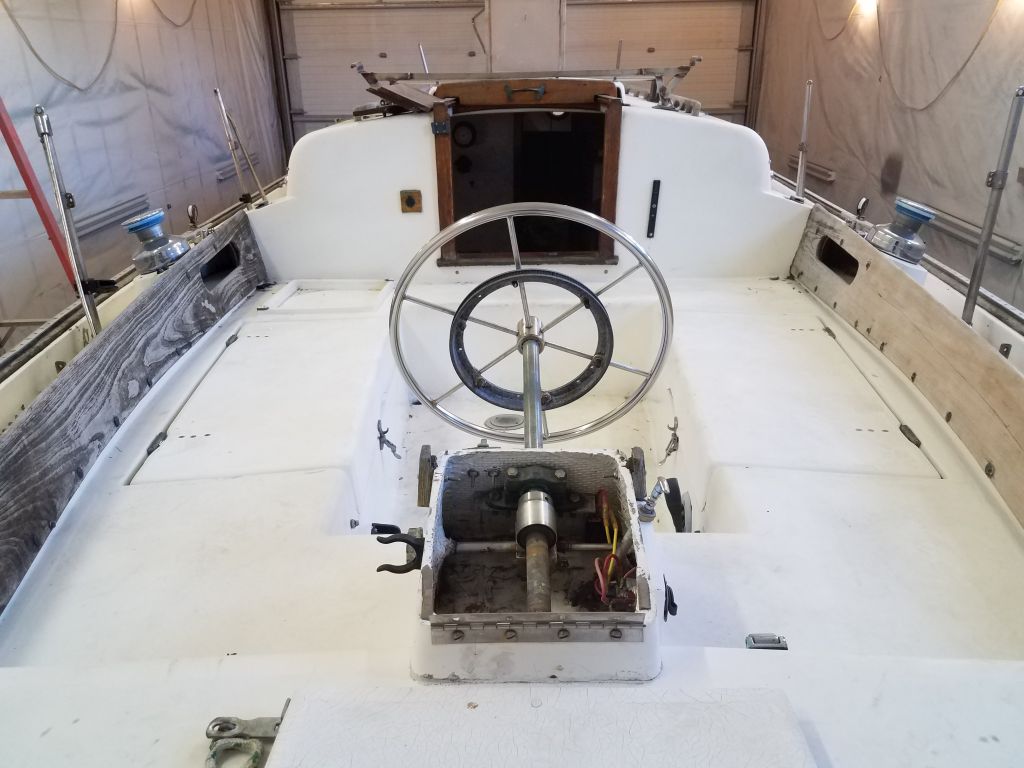
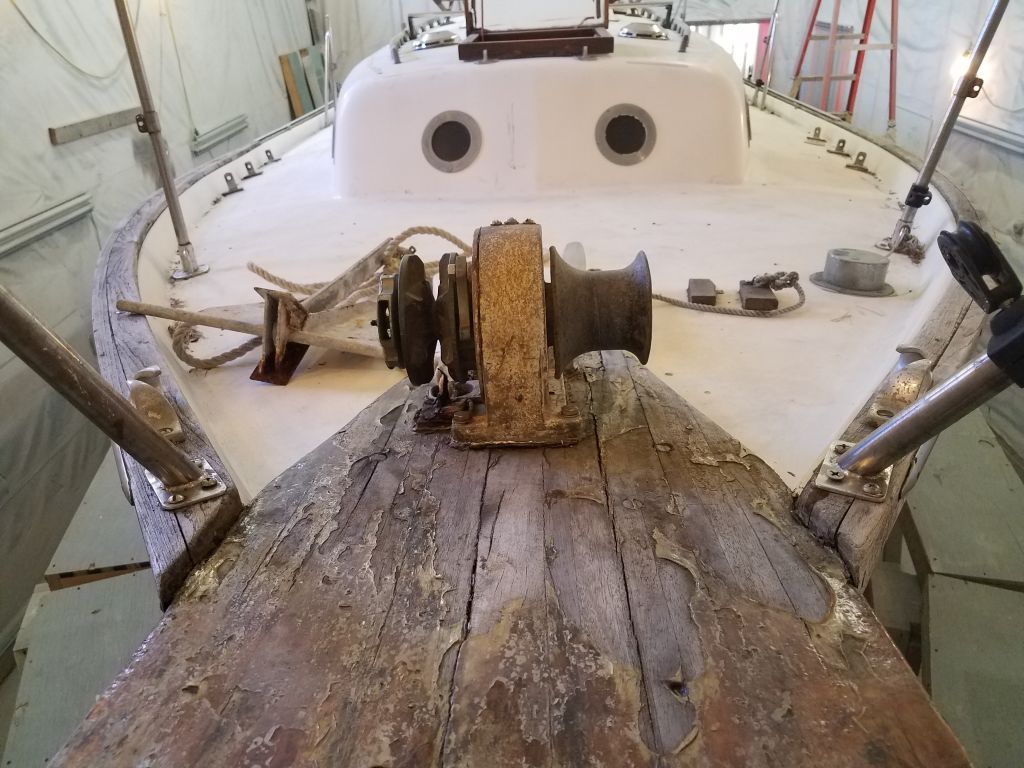
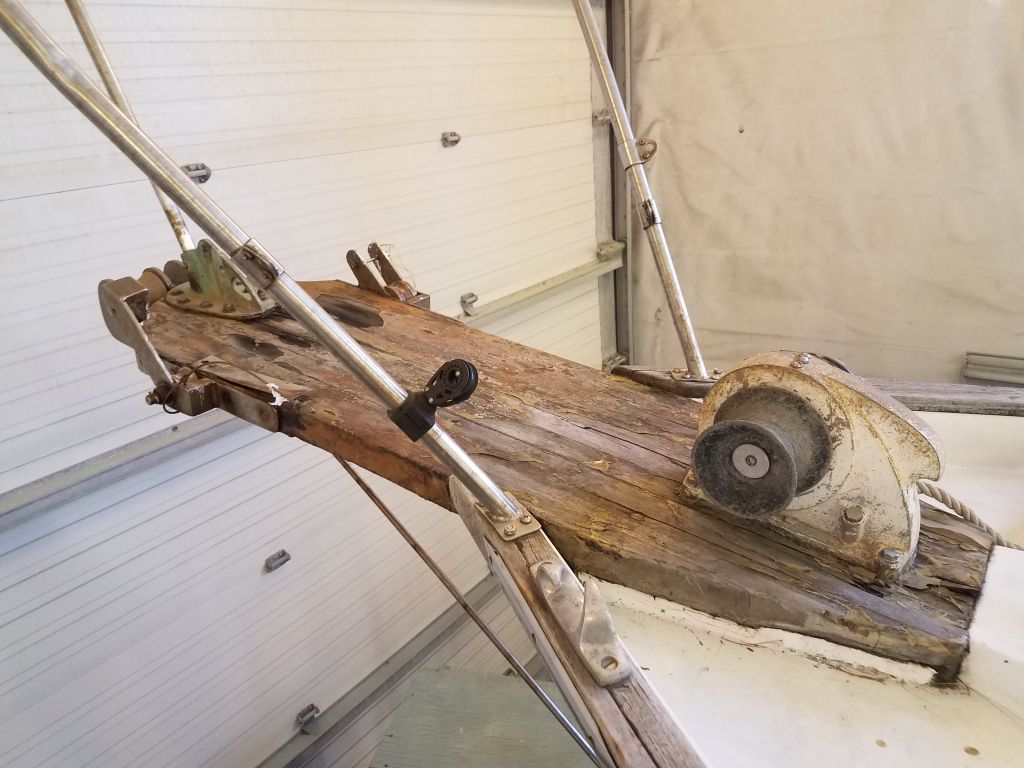
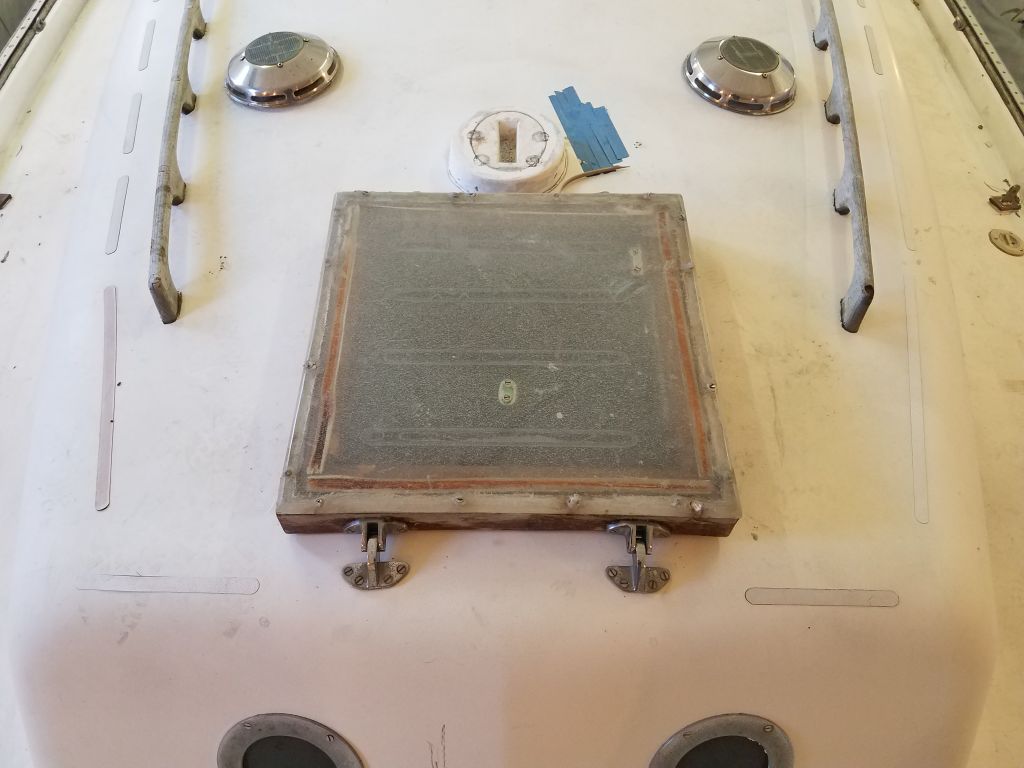
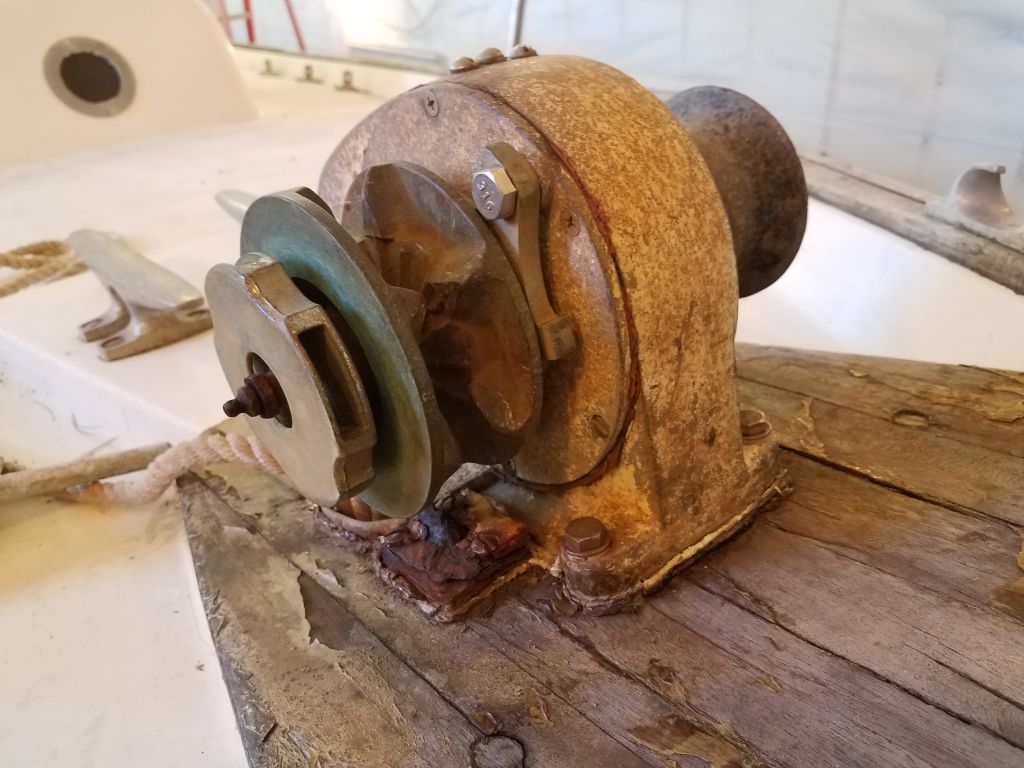
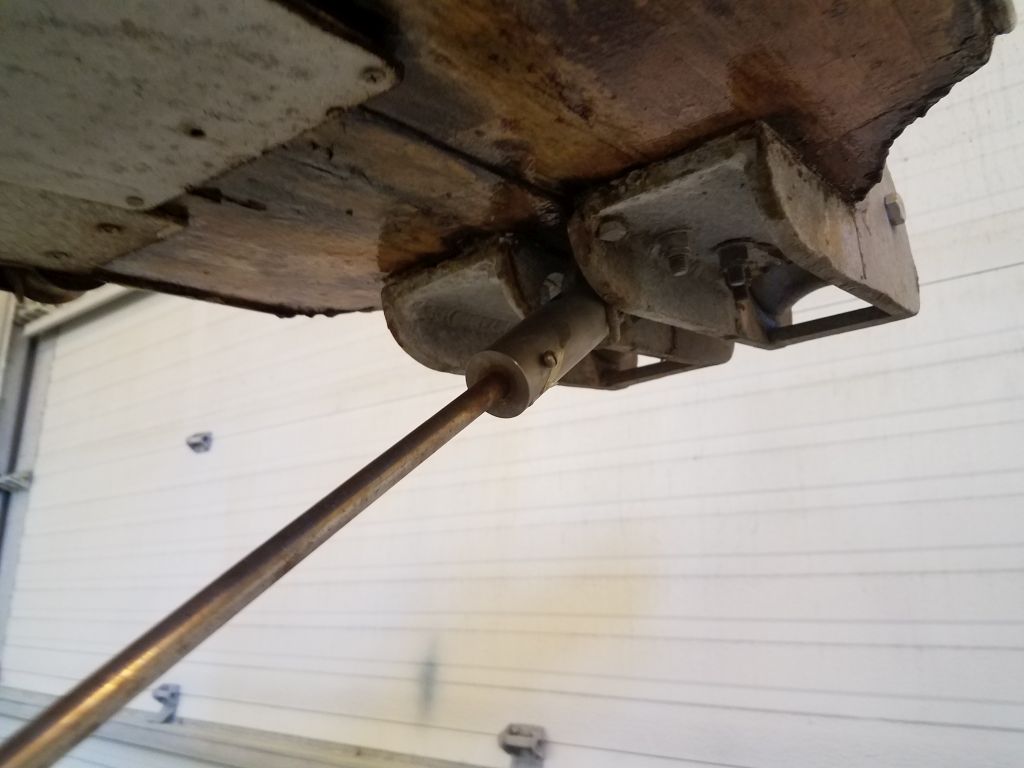
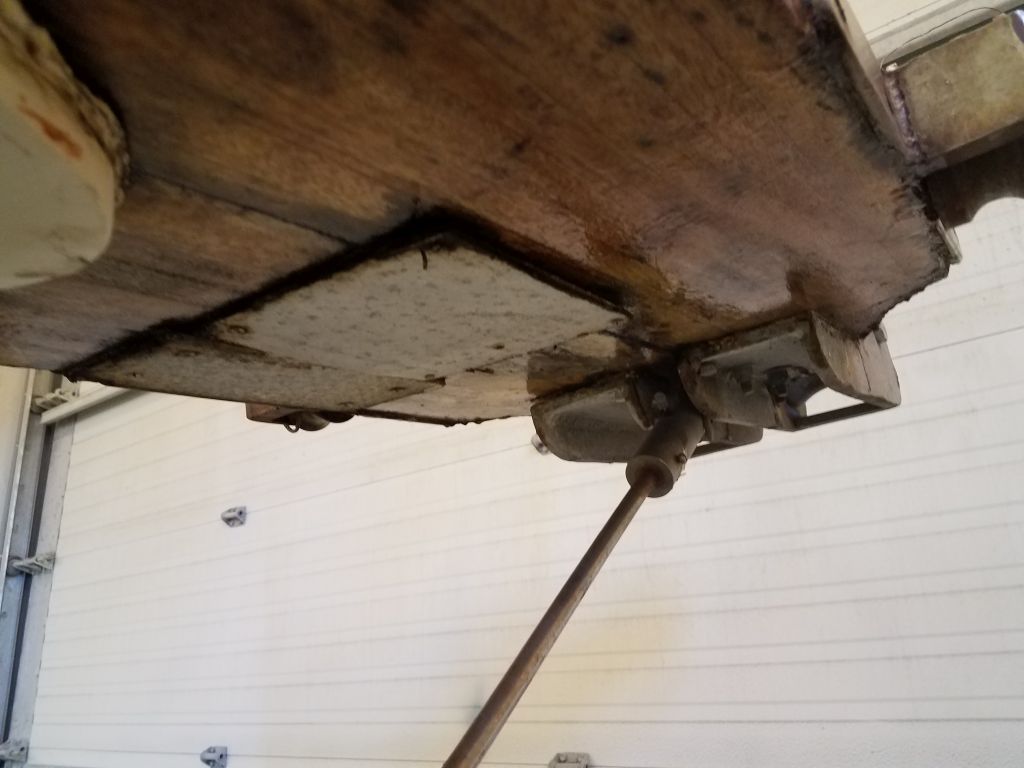
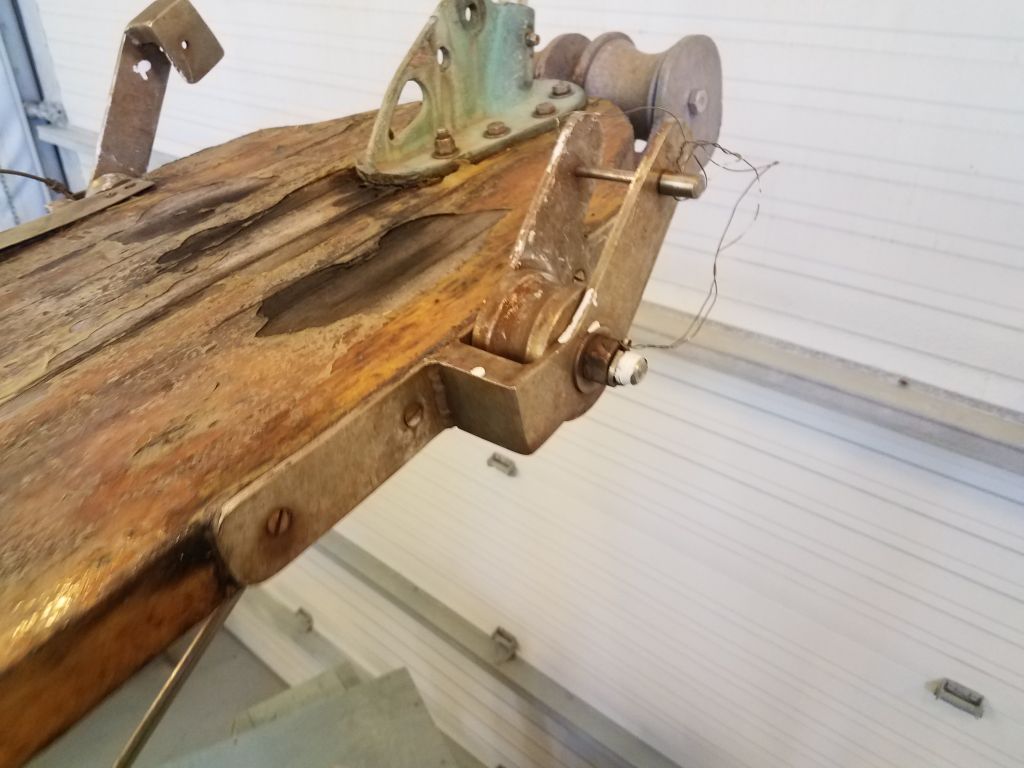
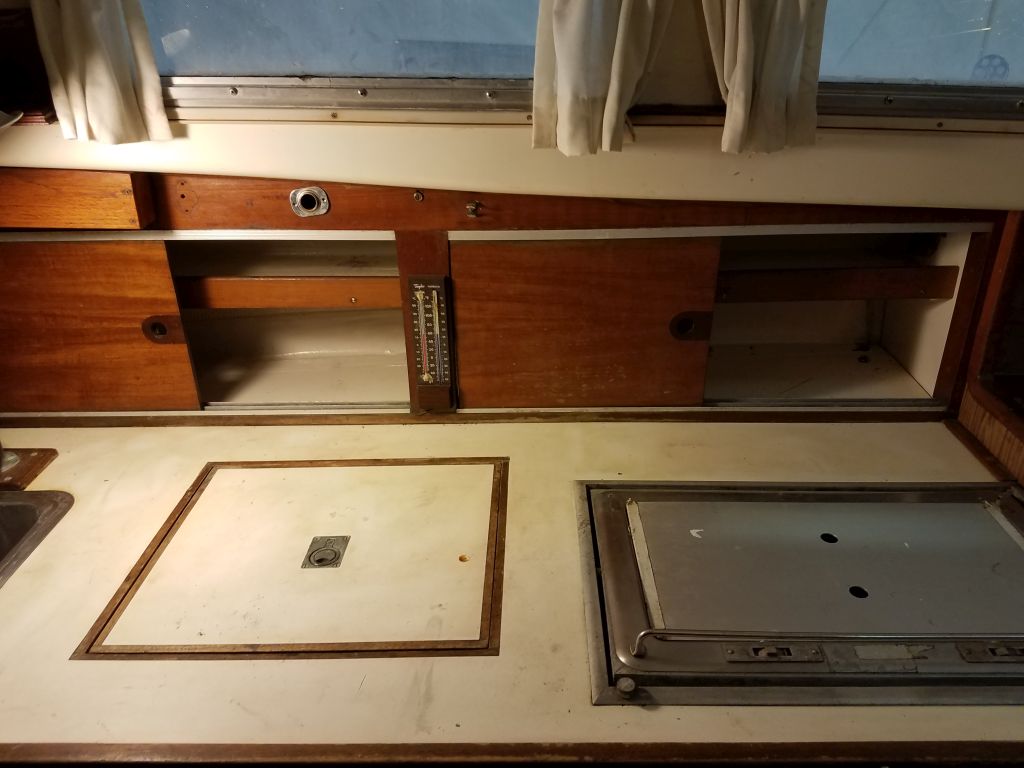
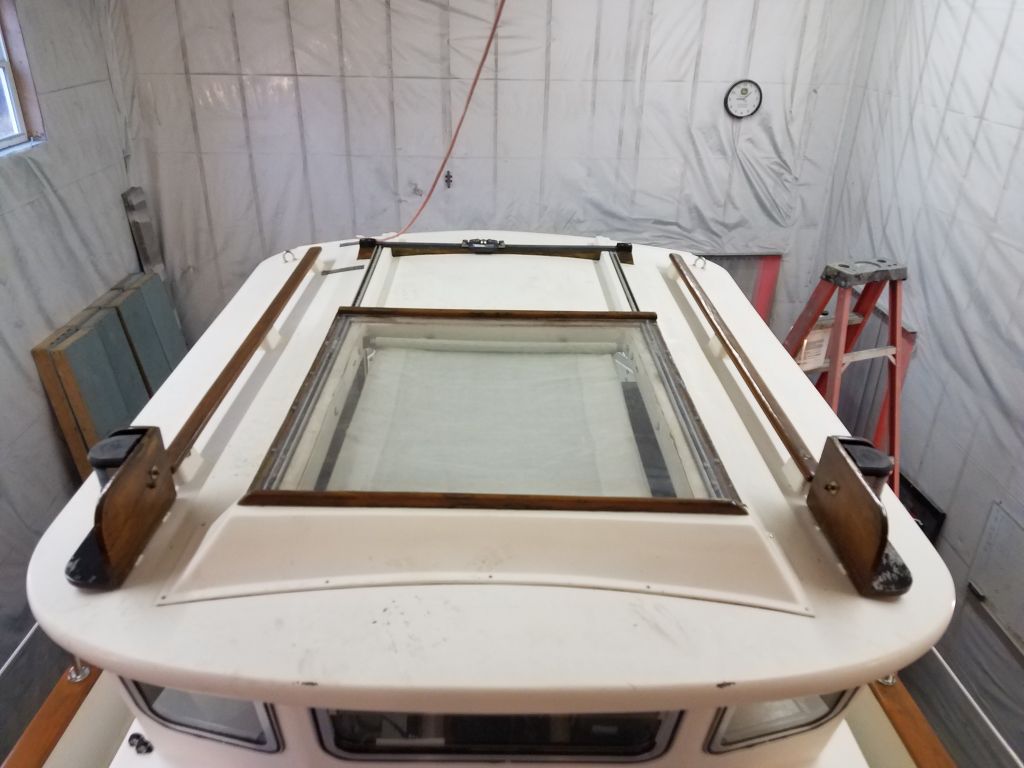
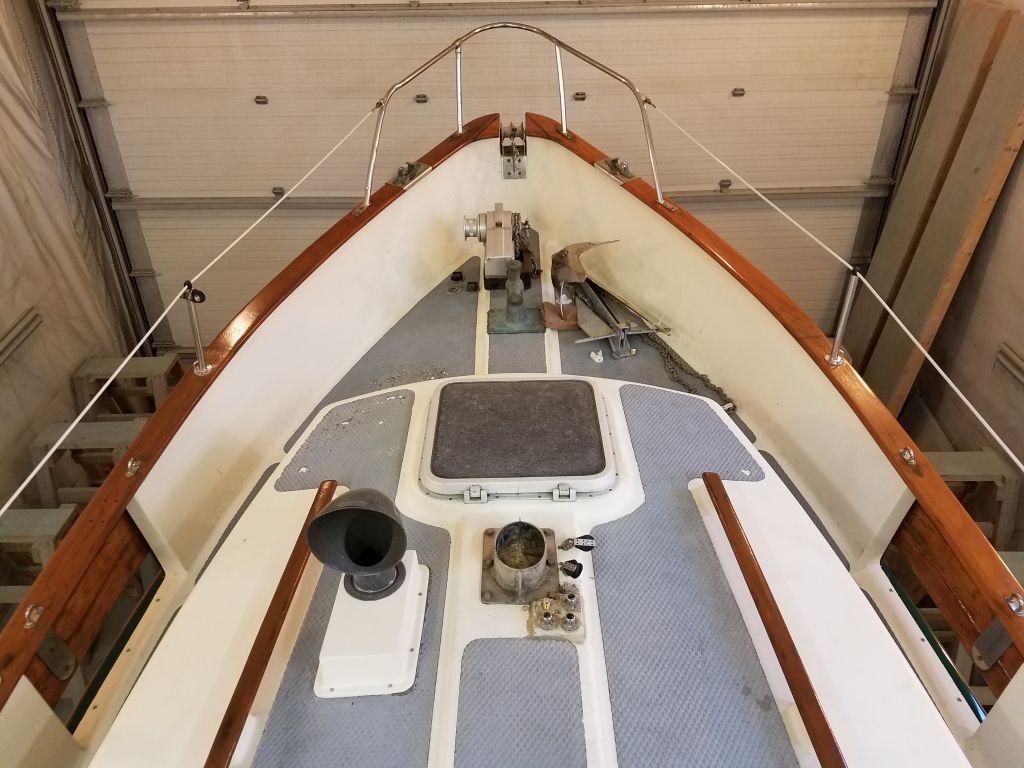
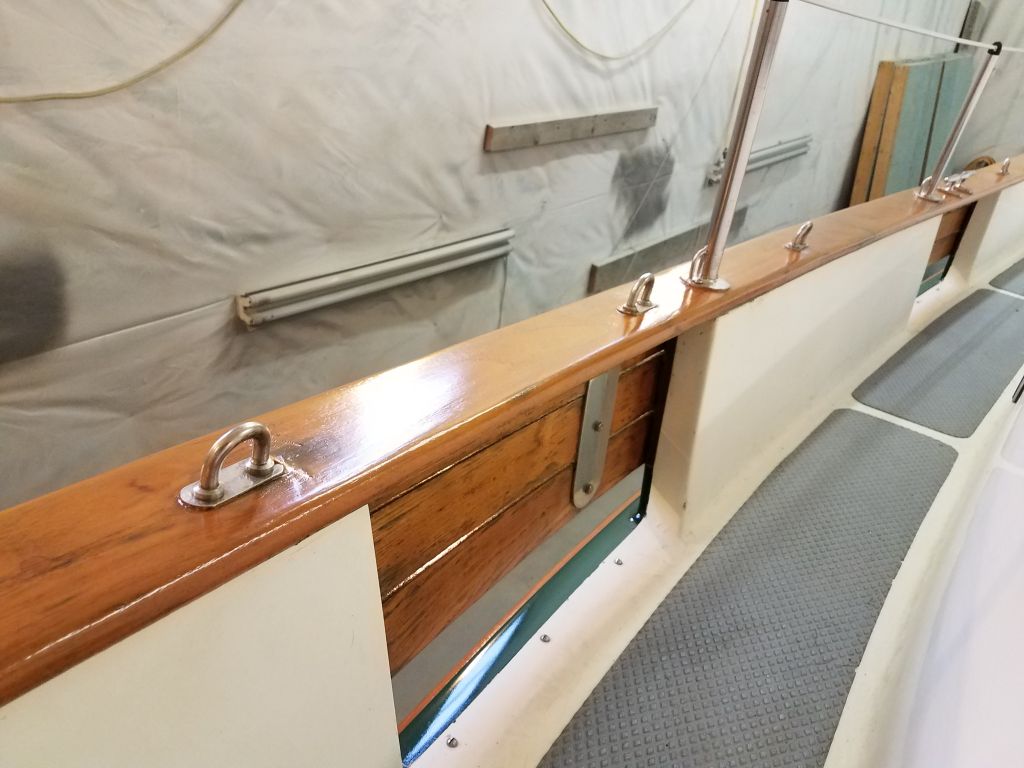
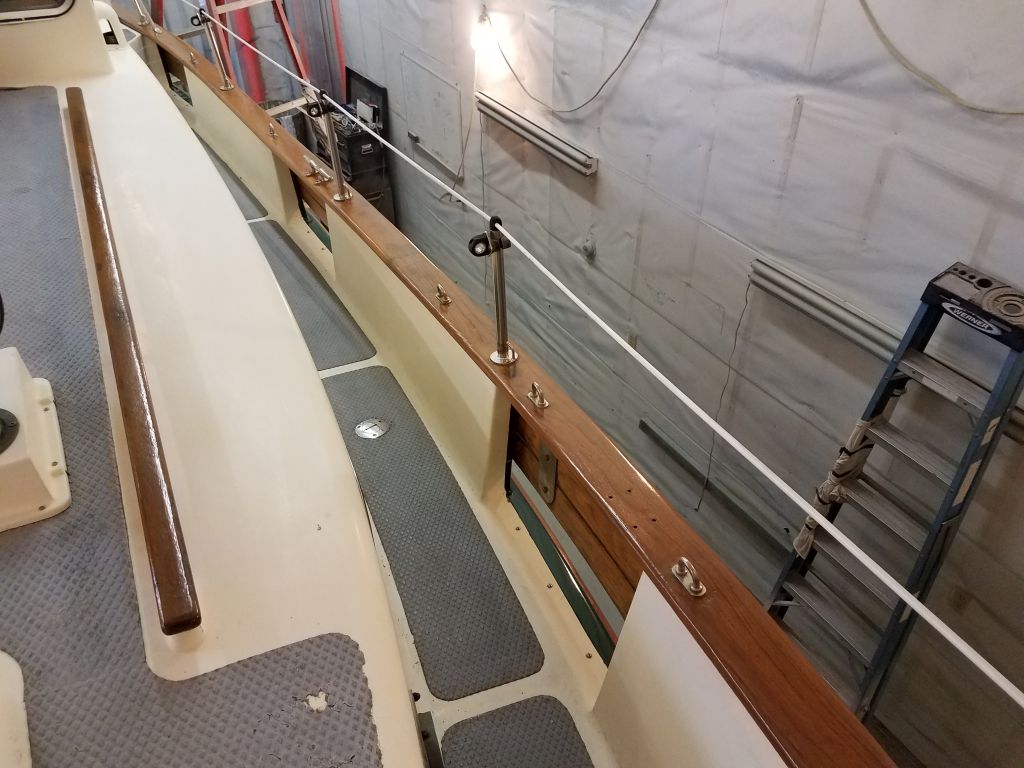
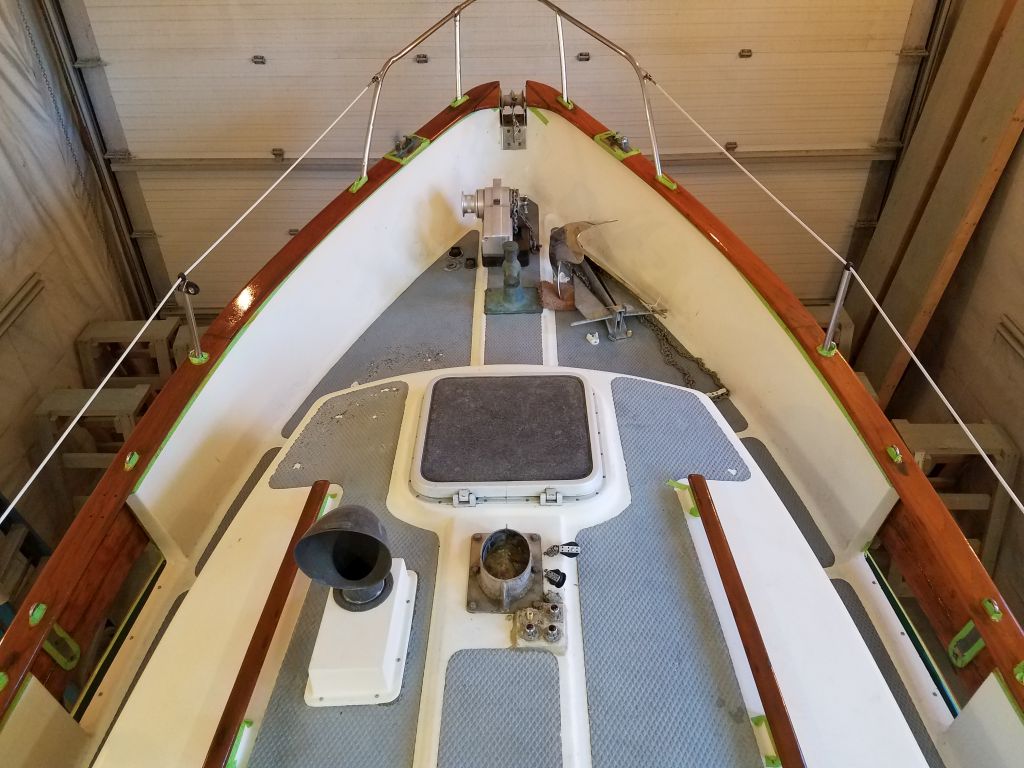
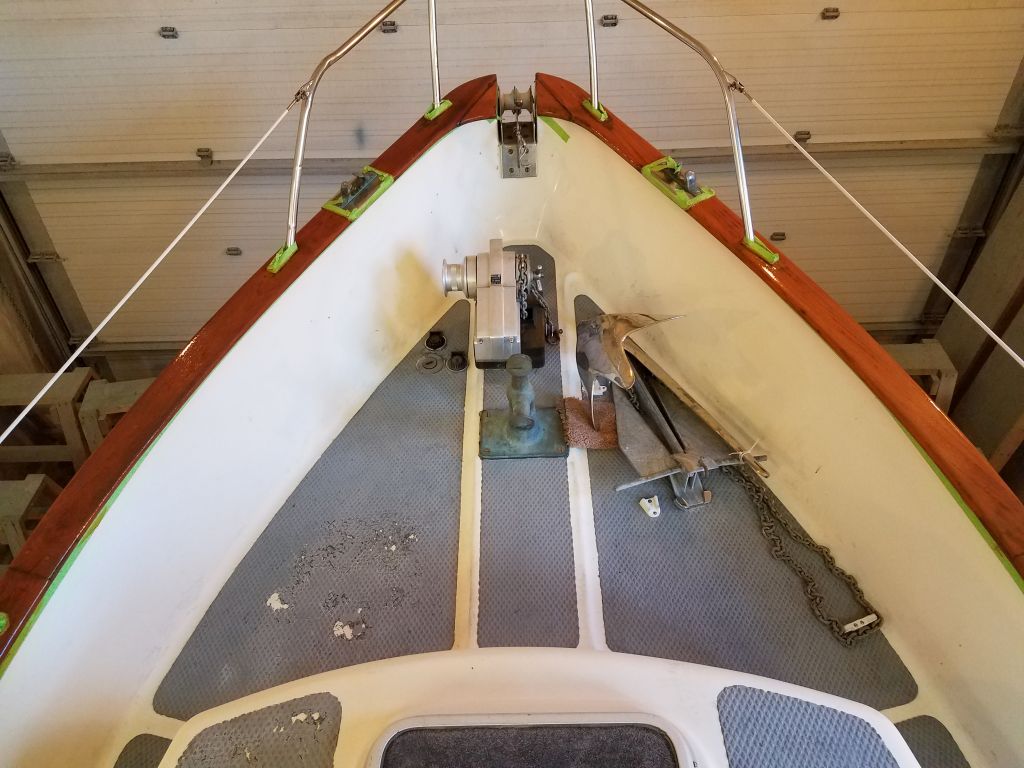
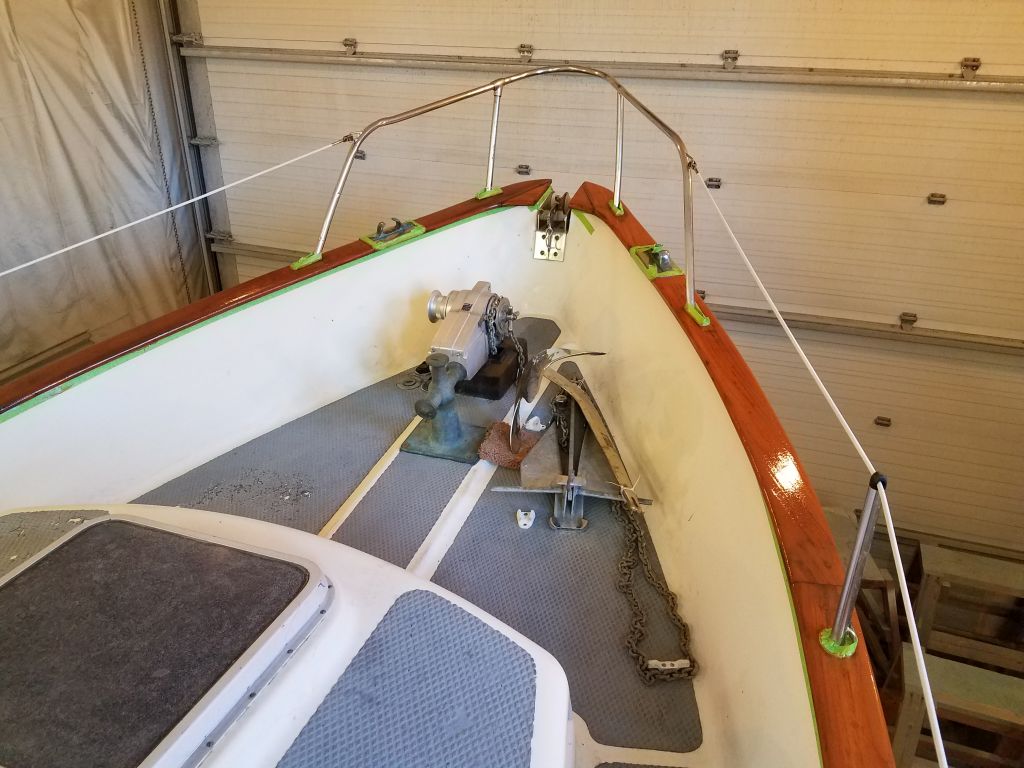
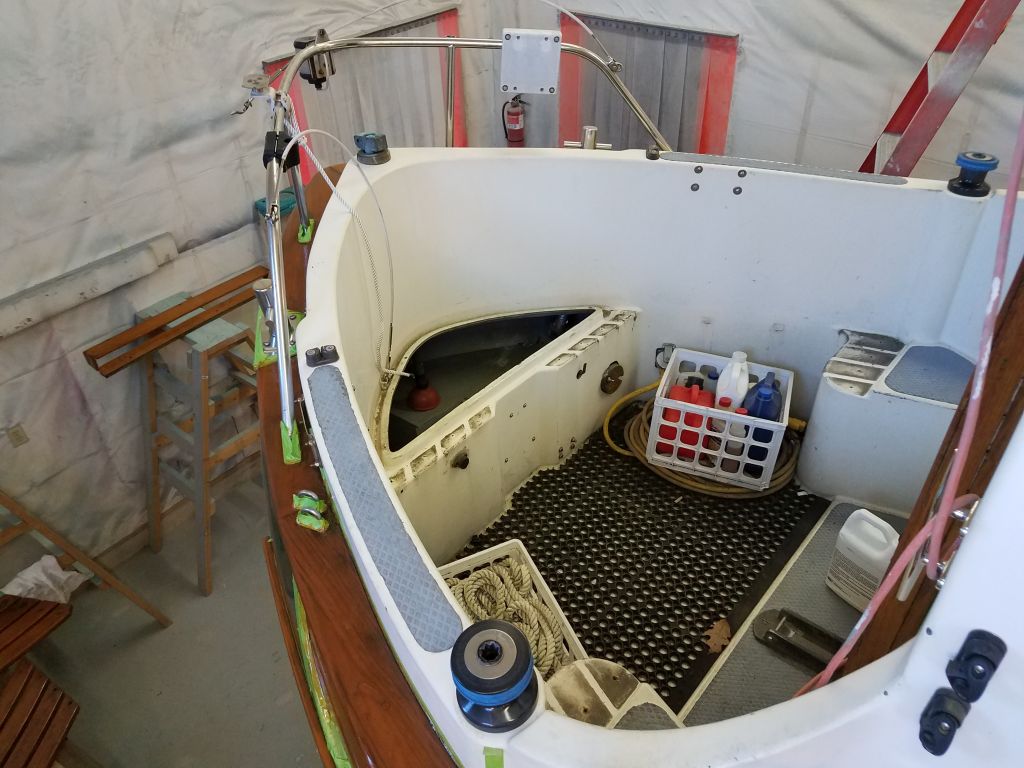
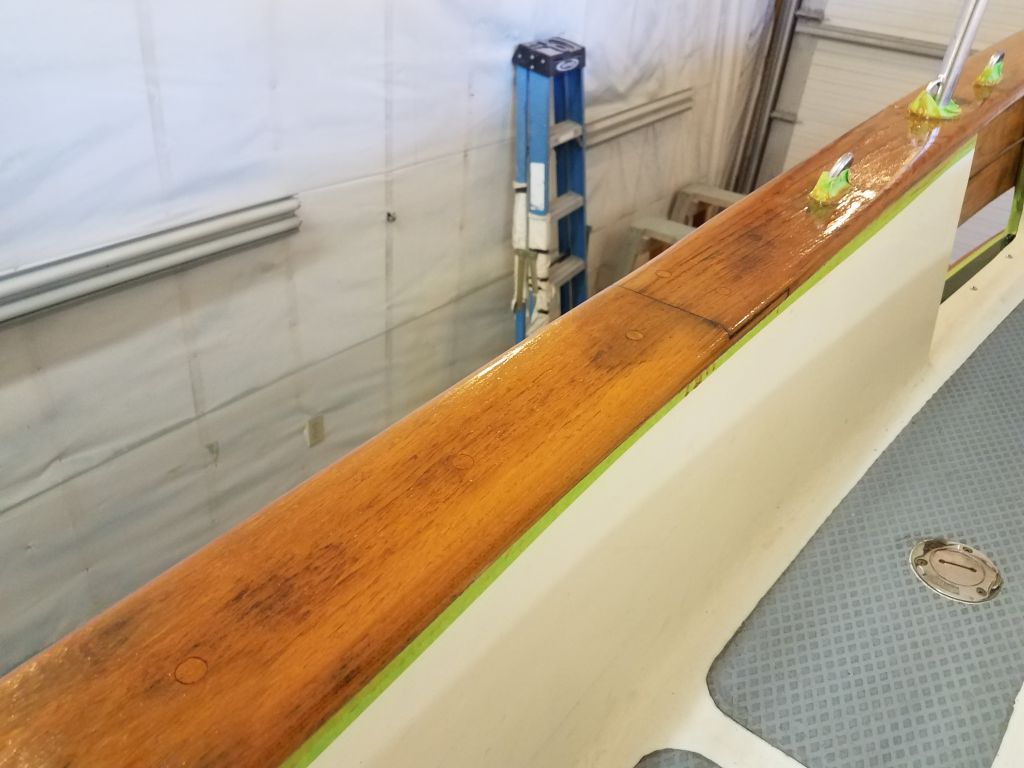
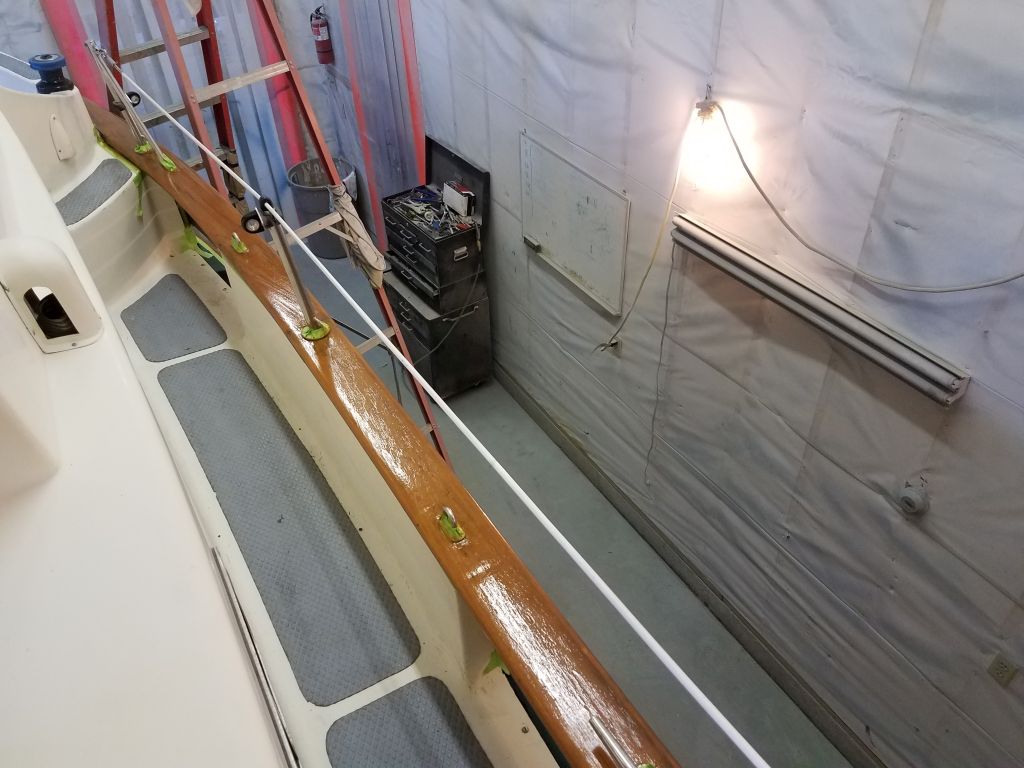
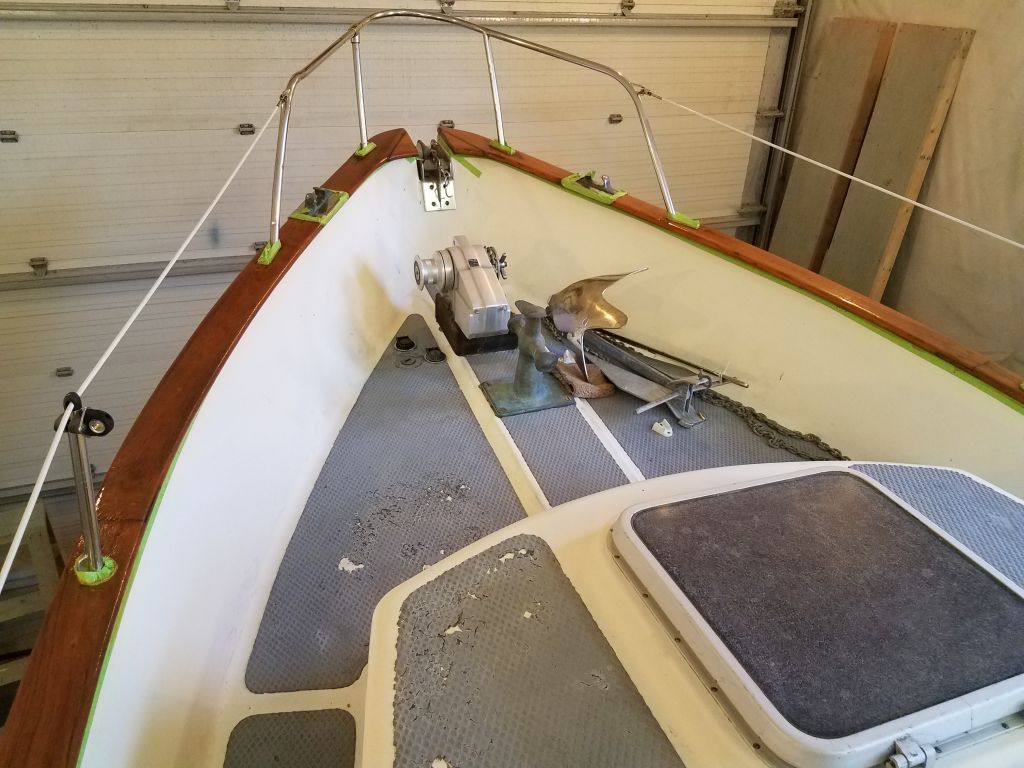
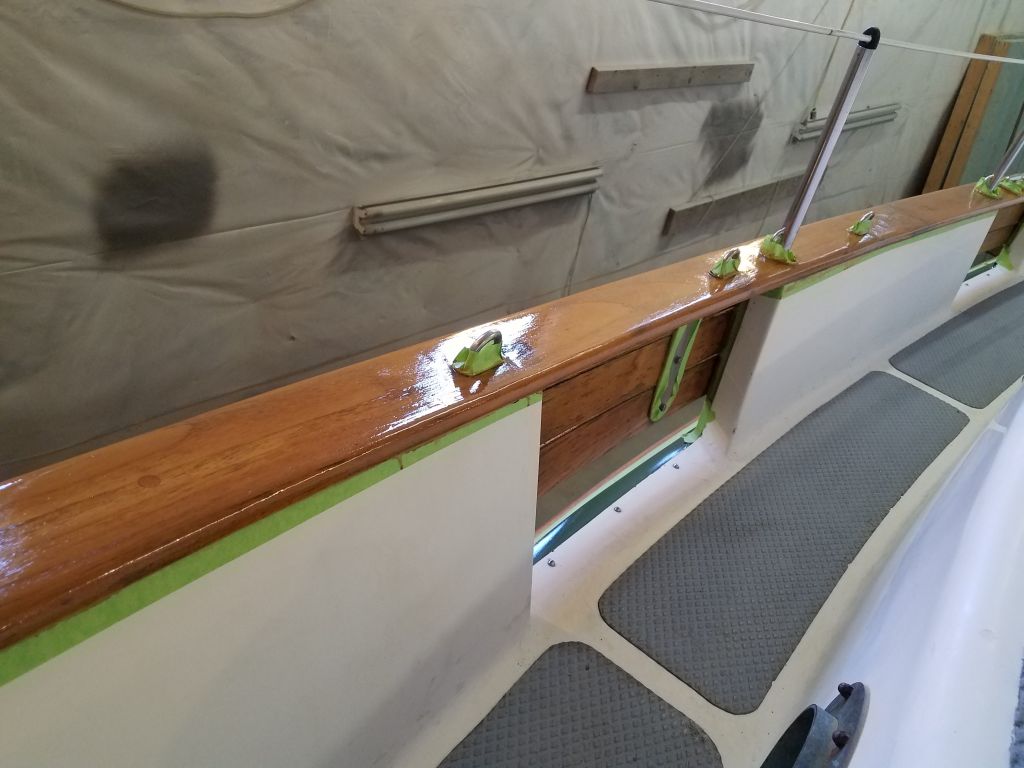
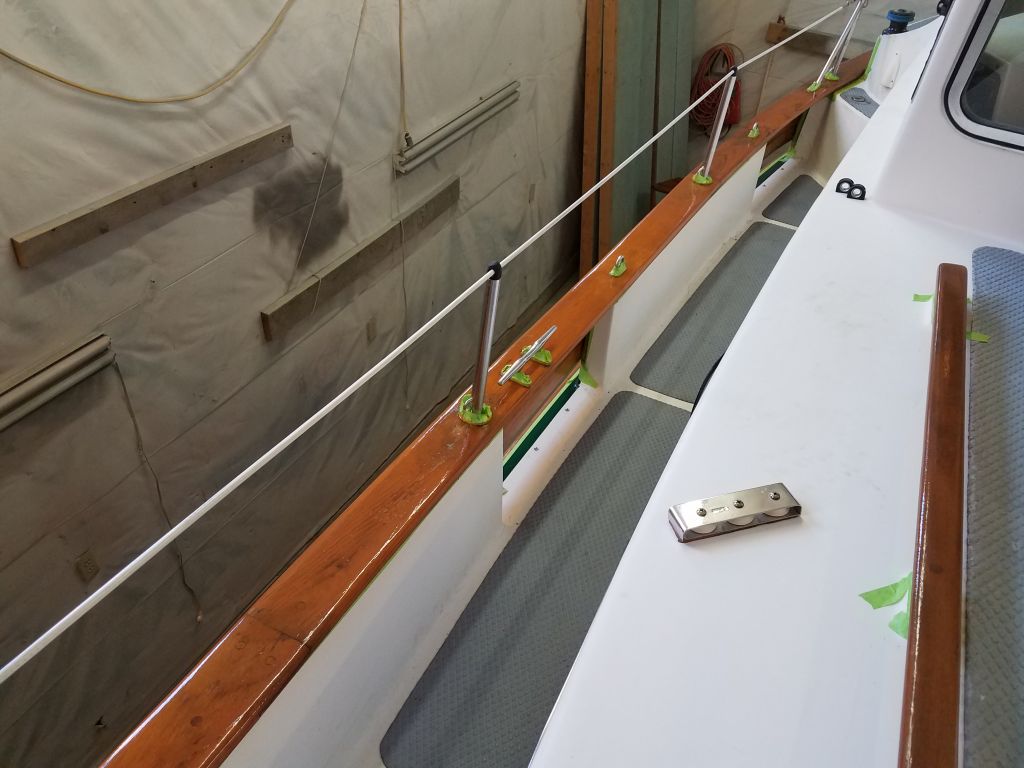
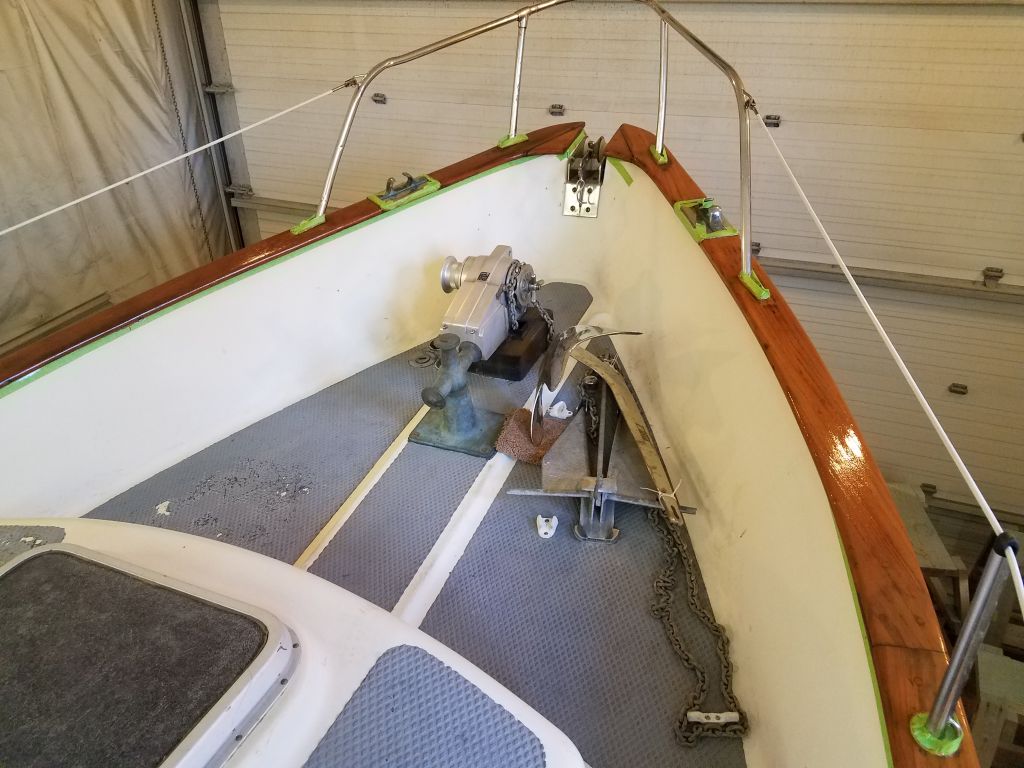
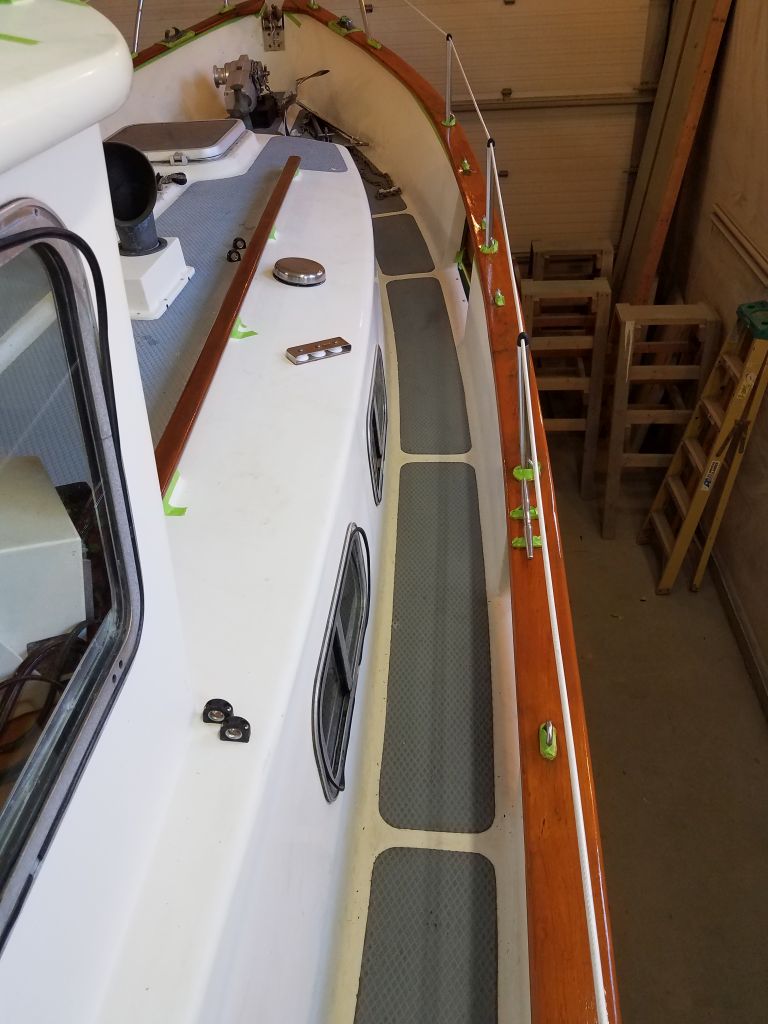
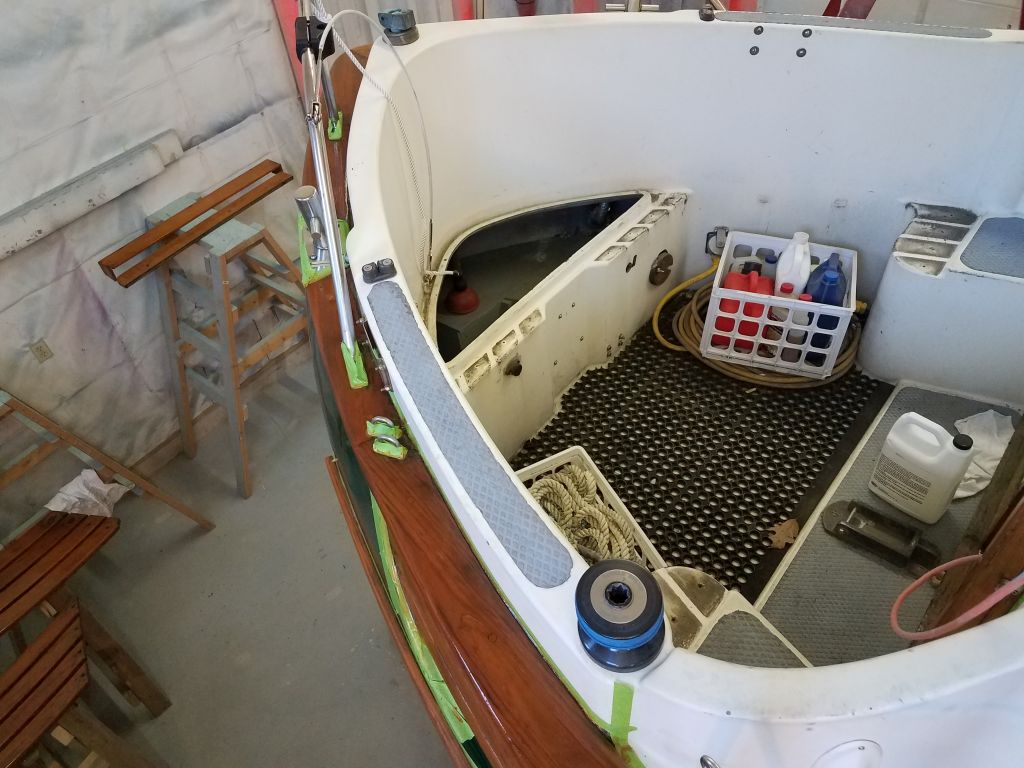
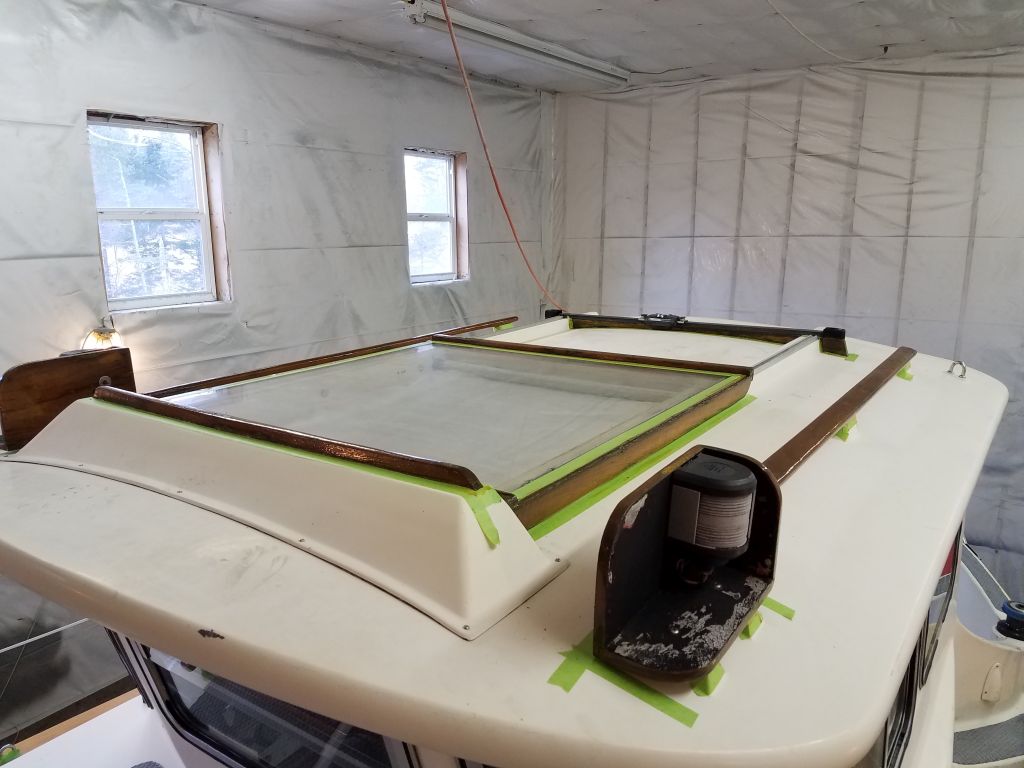
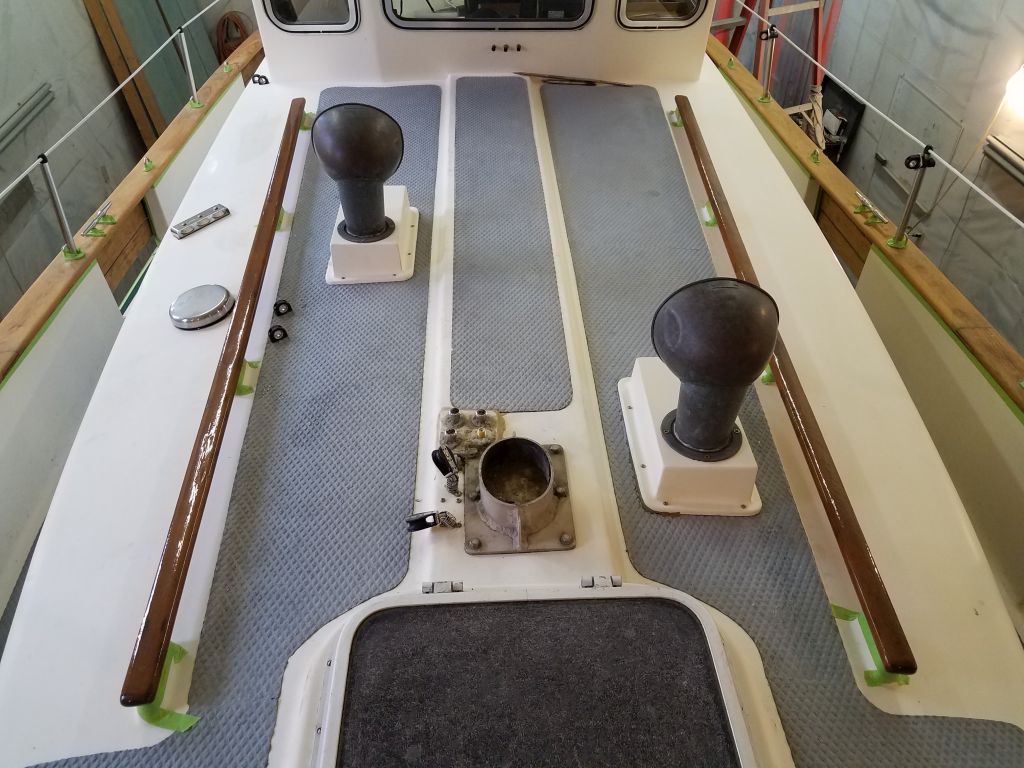
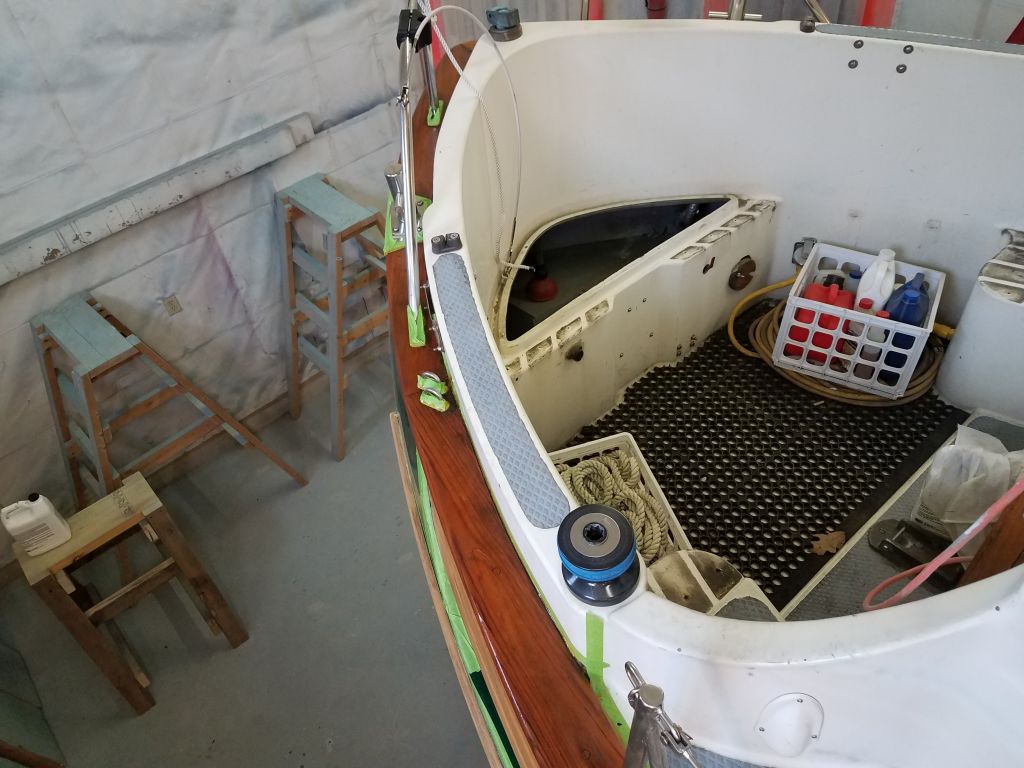
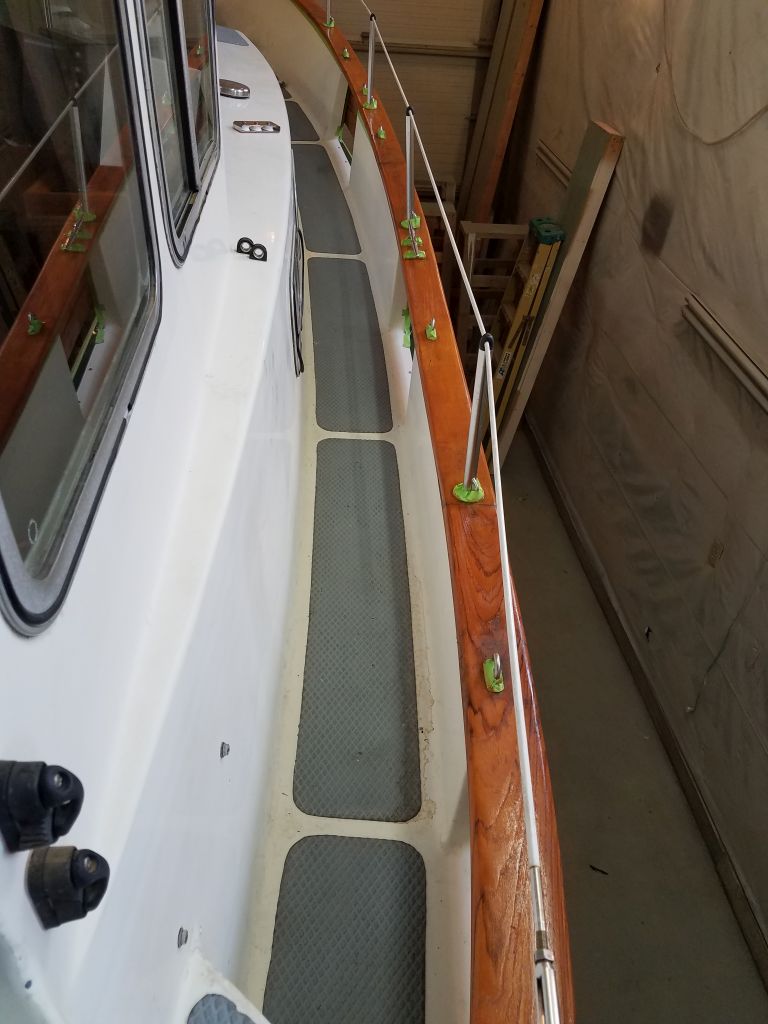
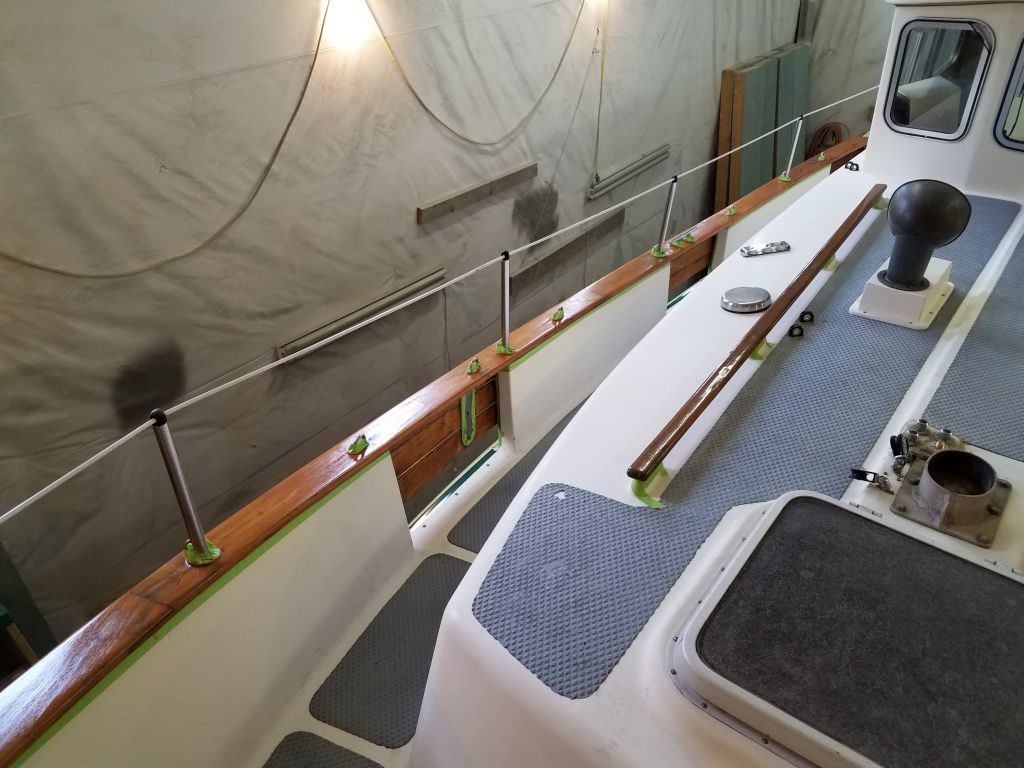
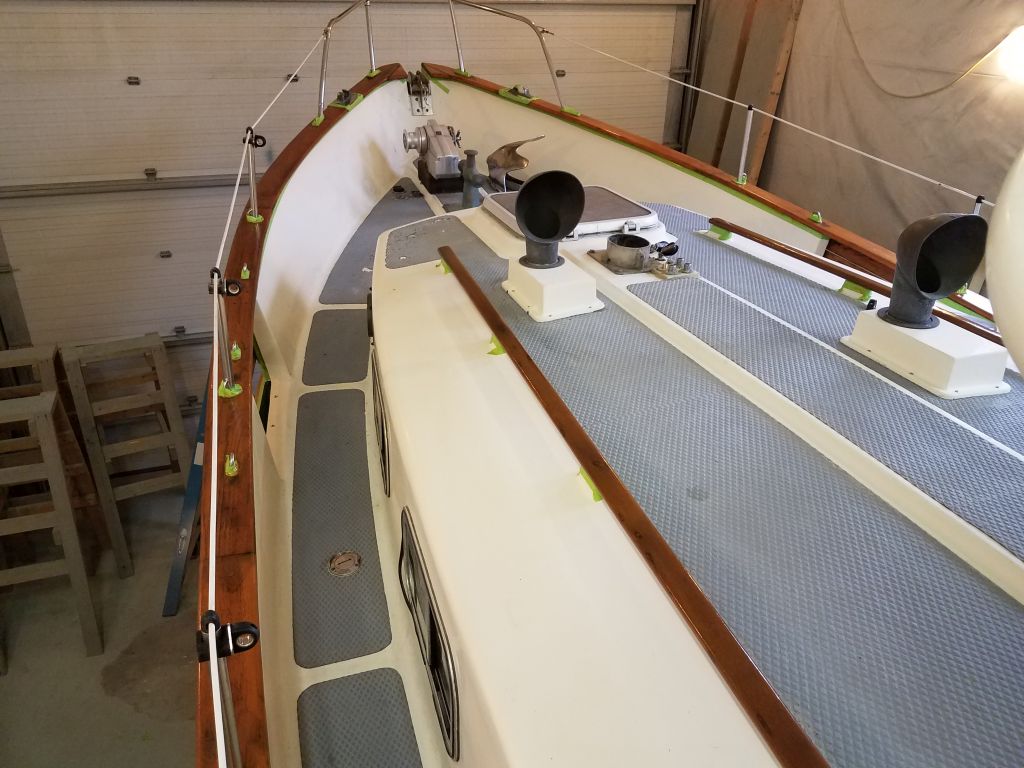
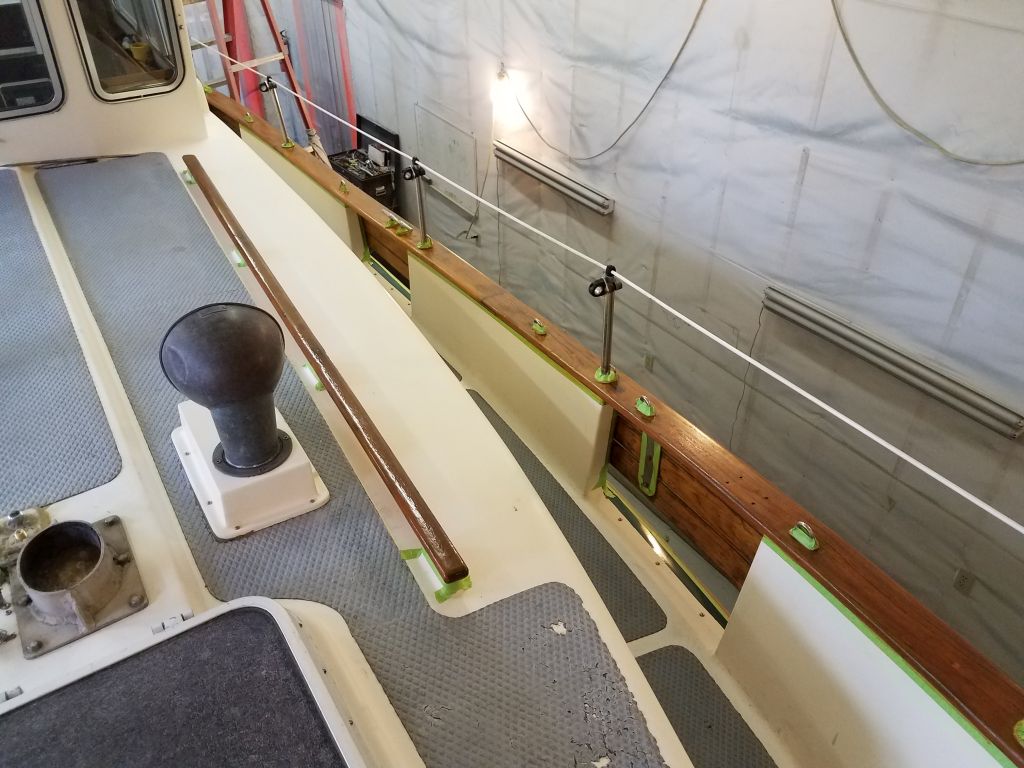
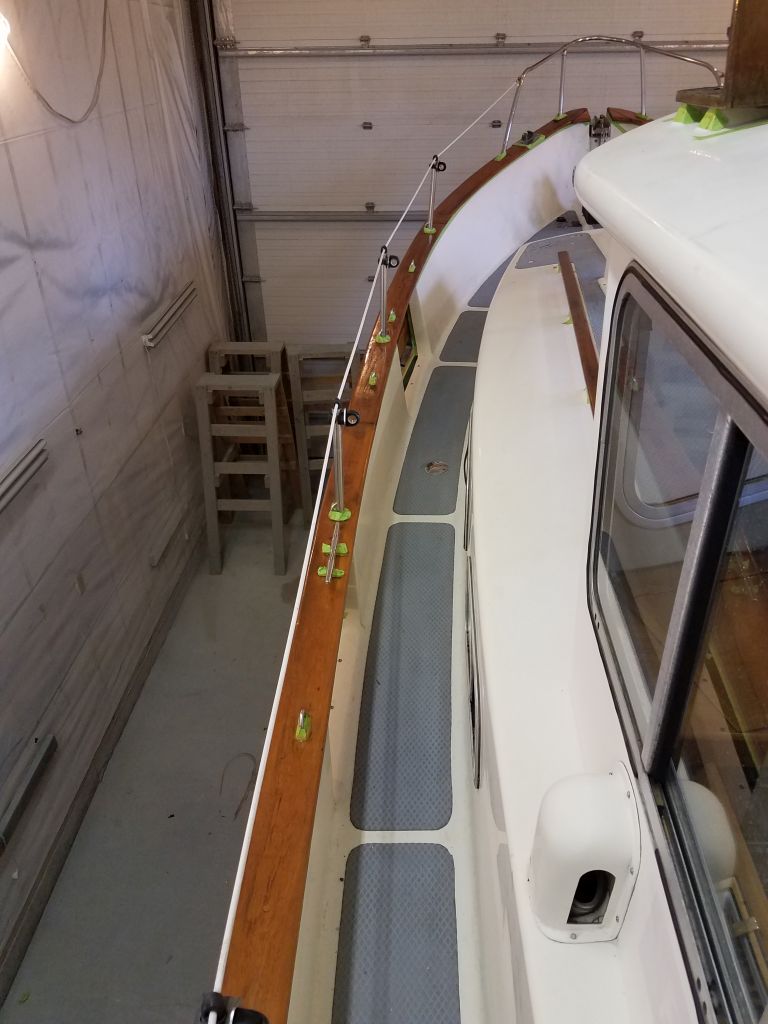
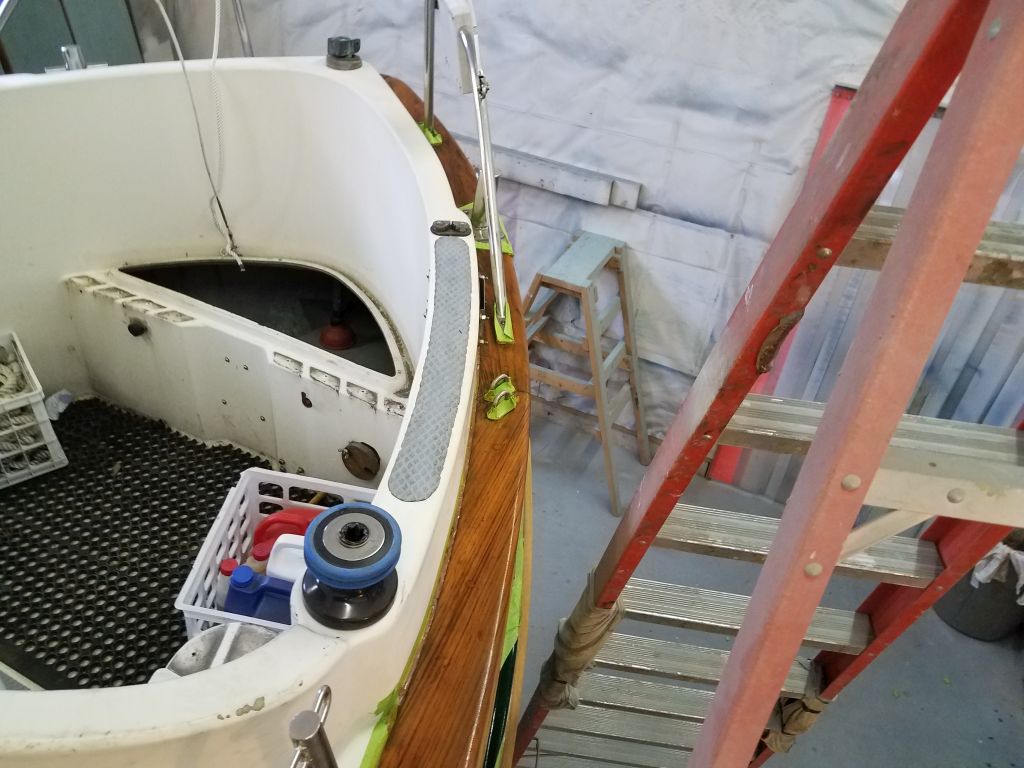
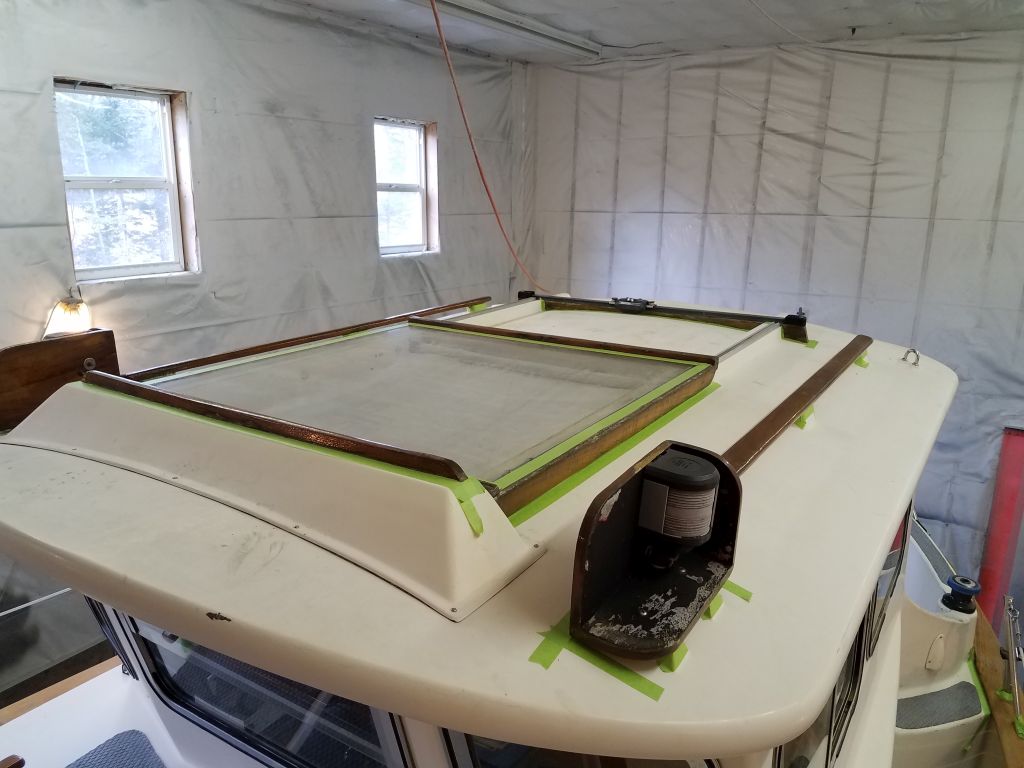
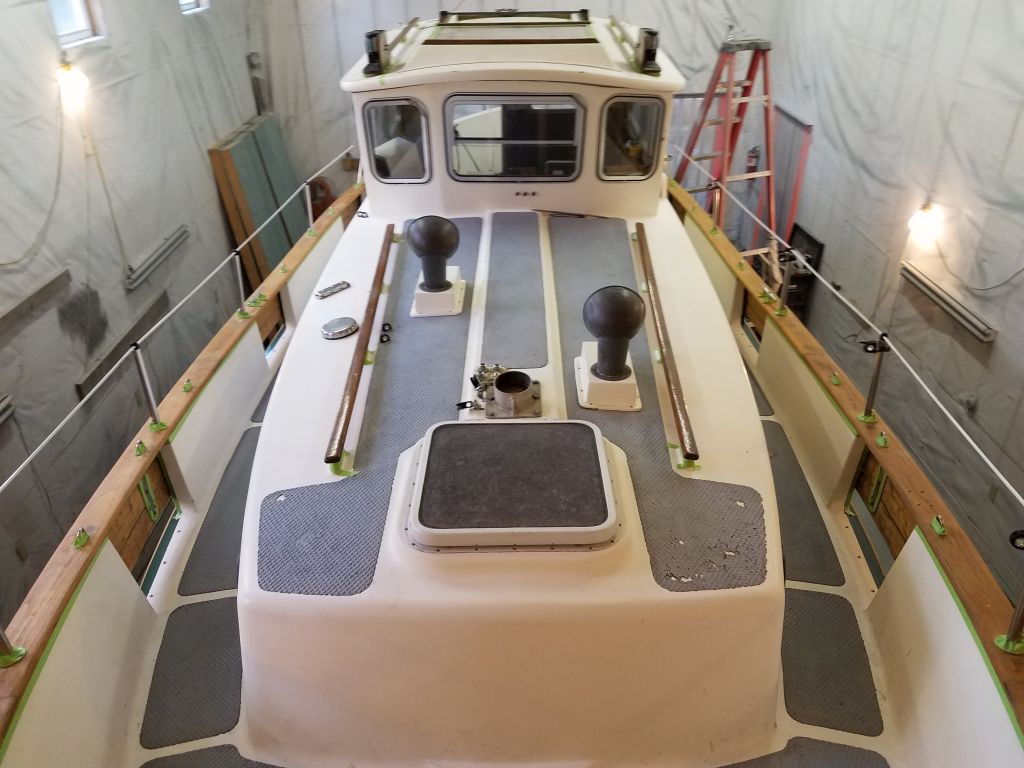
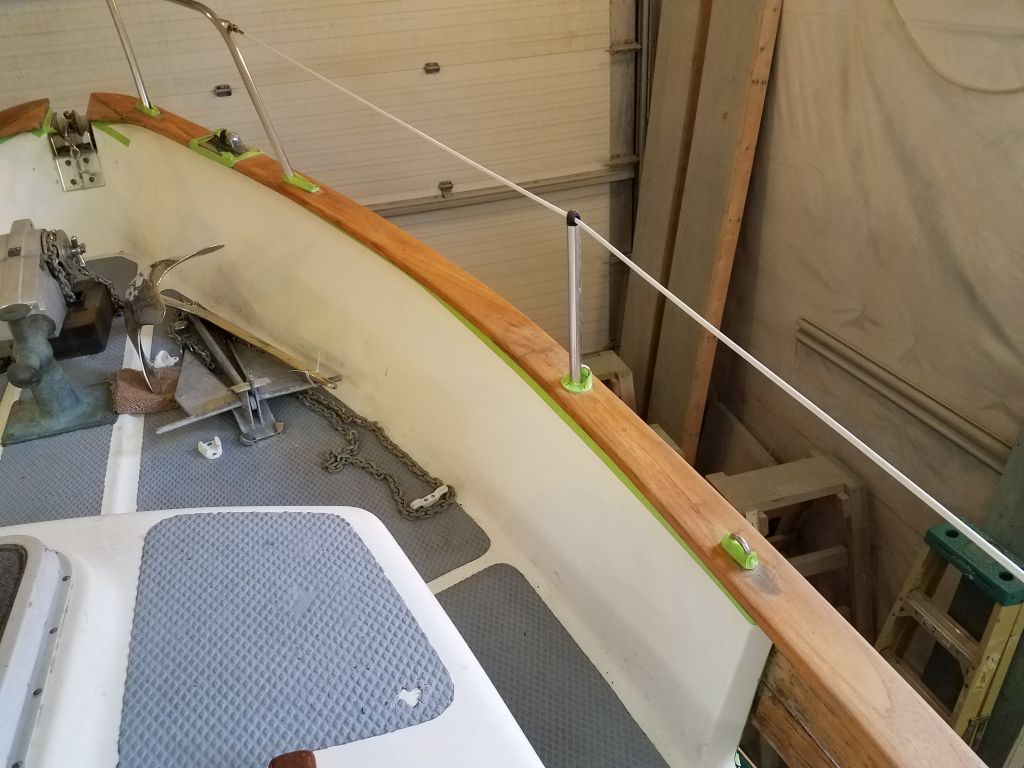
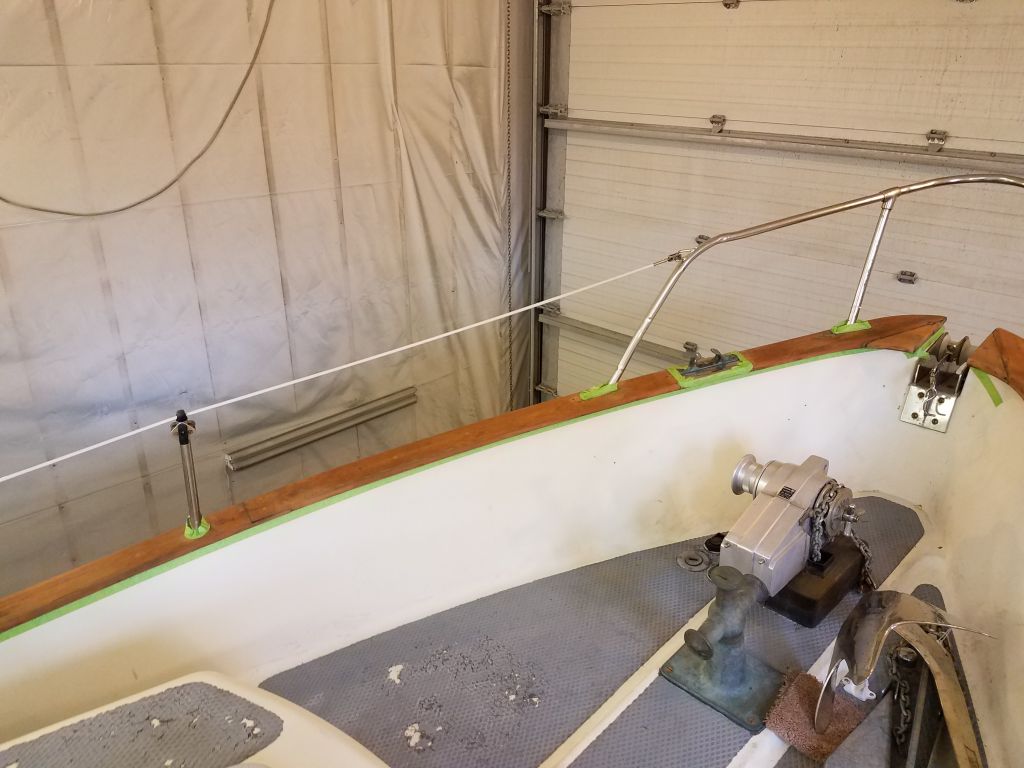
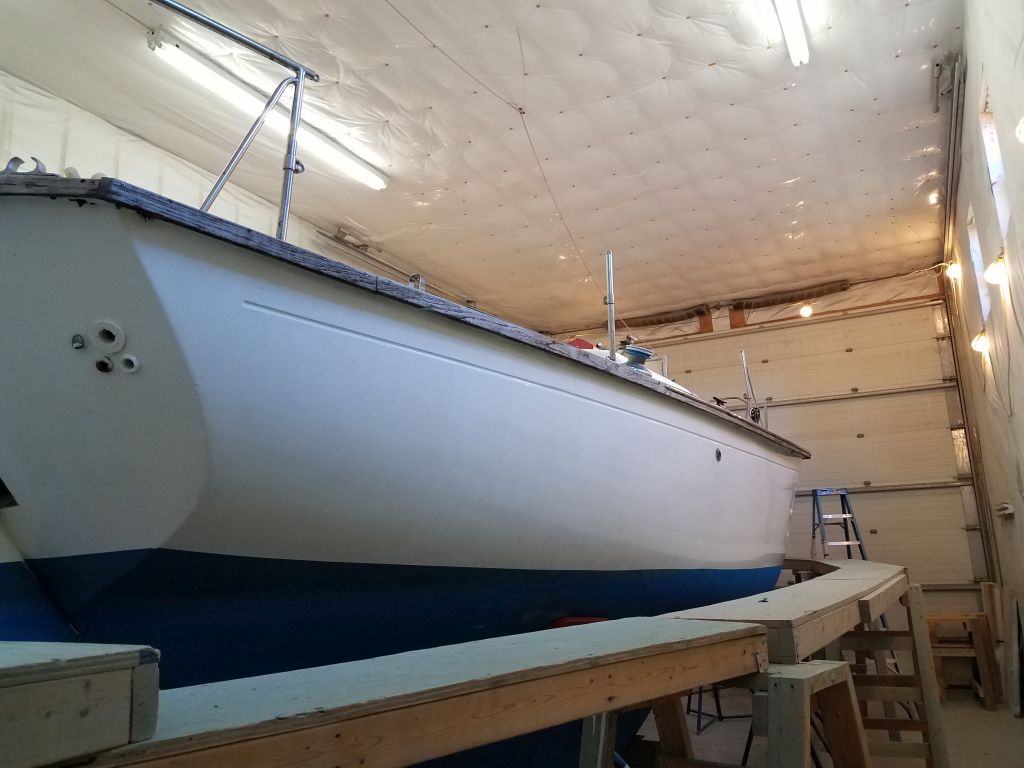
Before beginning any real work, I thoroughly documented the existing condition of the decks and hardware for future reference.  These photos represent the overall condition of things, but I had many others on hand to show specifics on installations and initial condition.
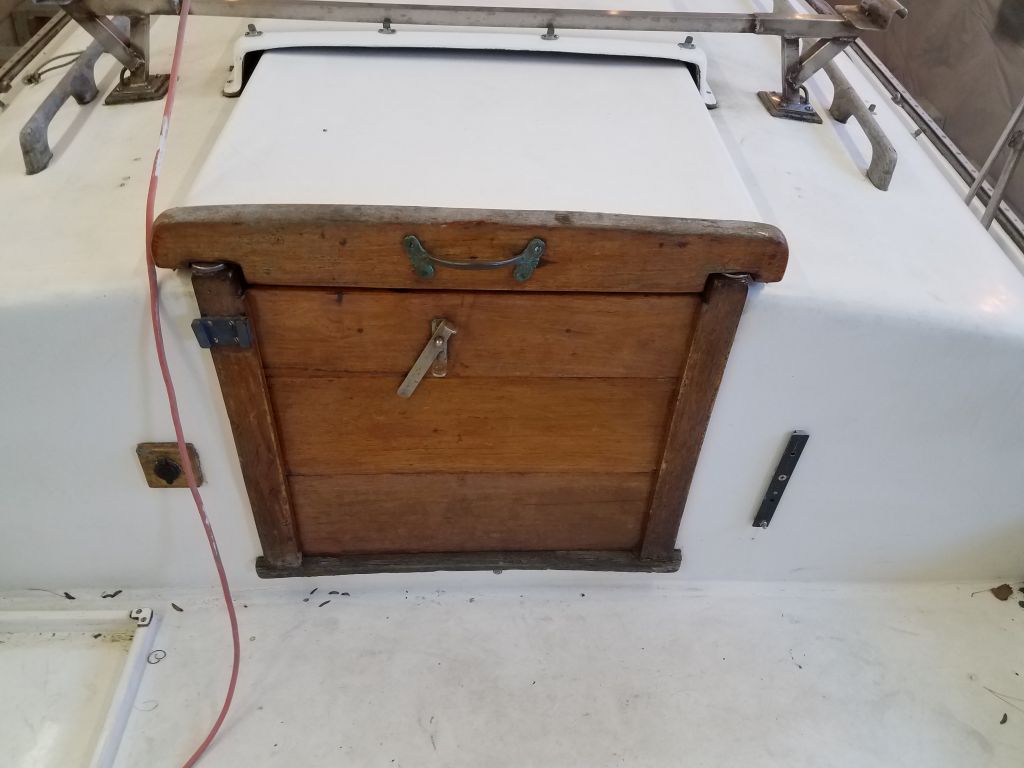
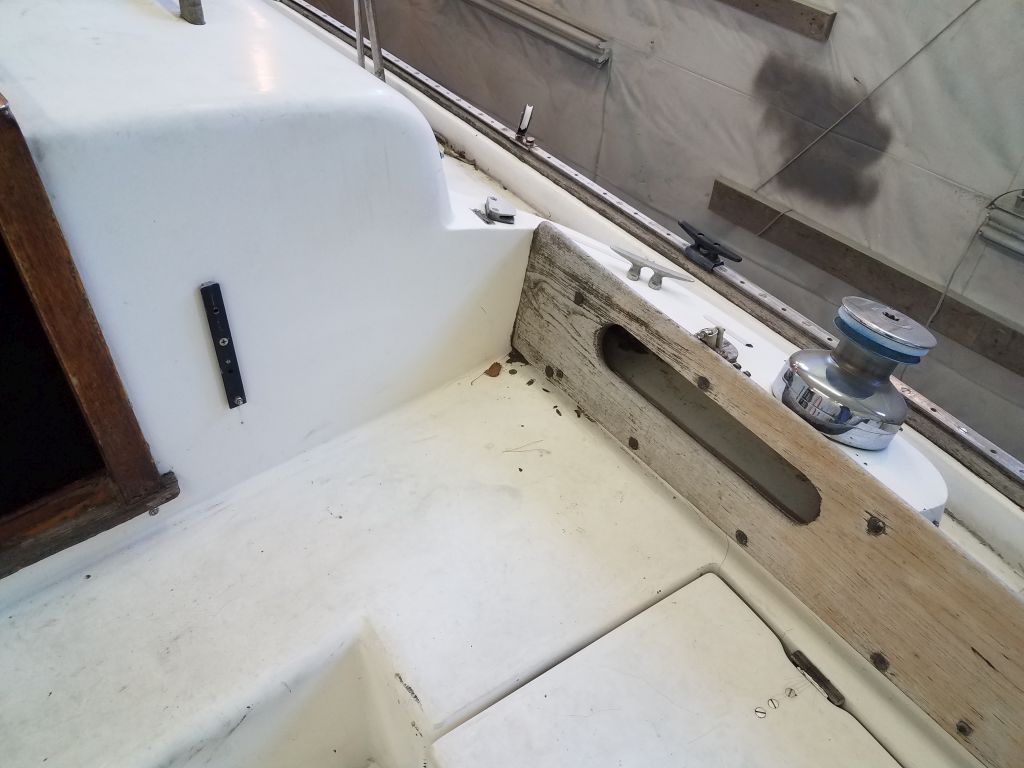
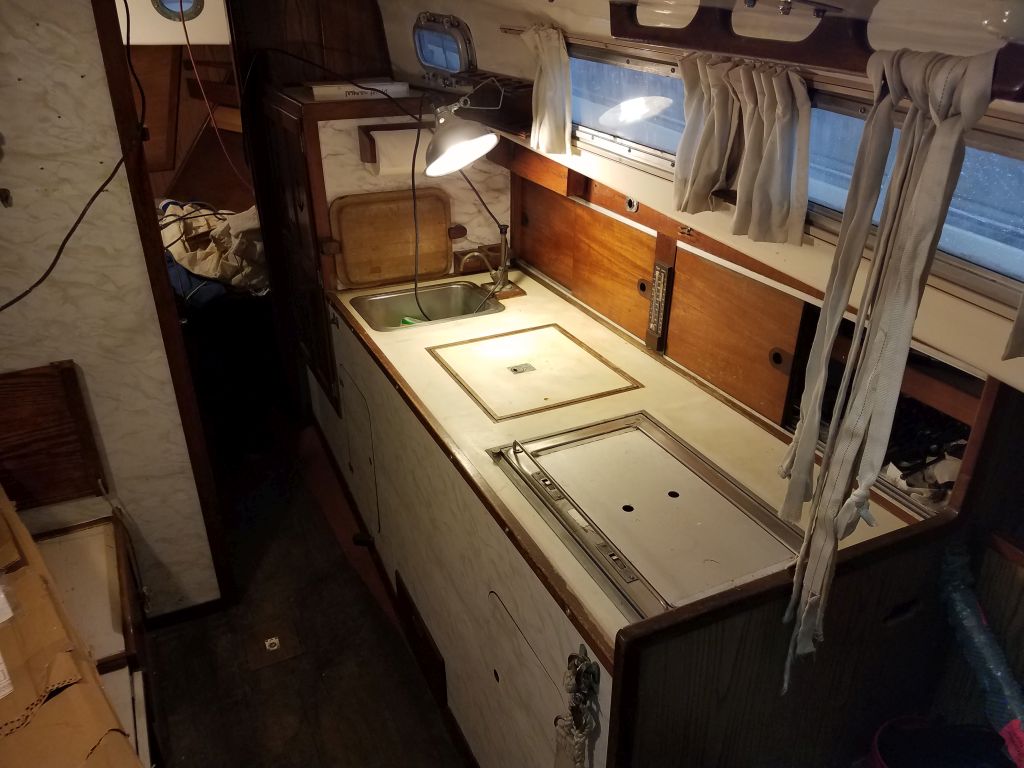
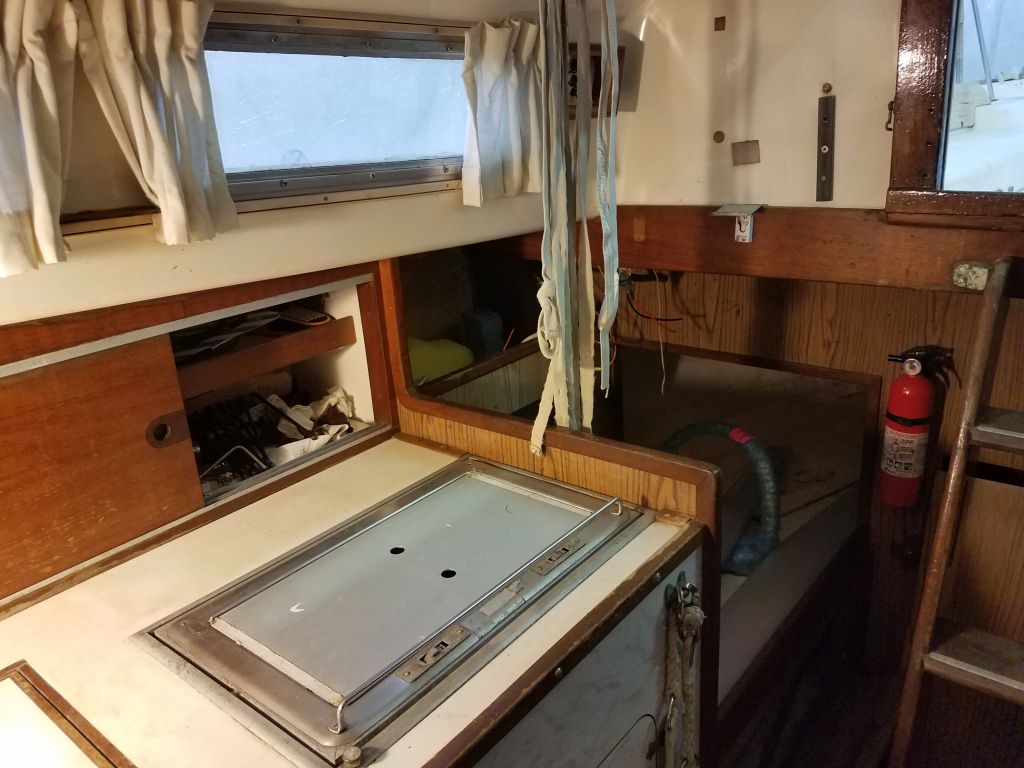
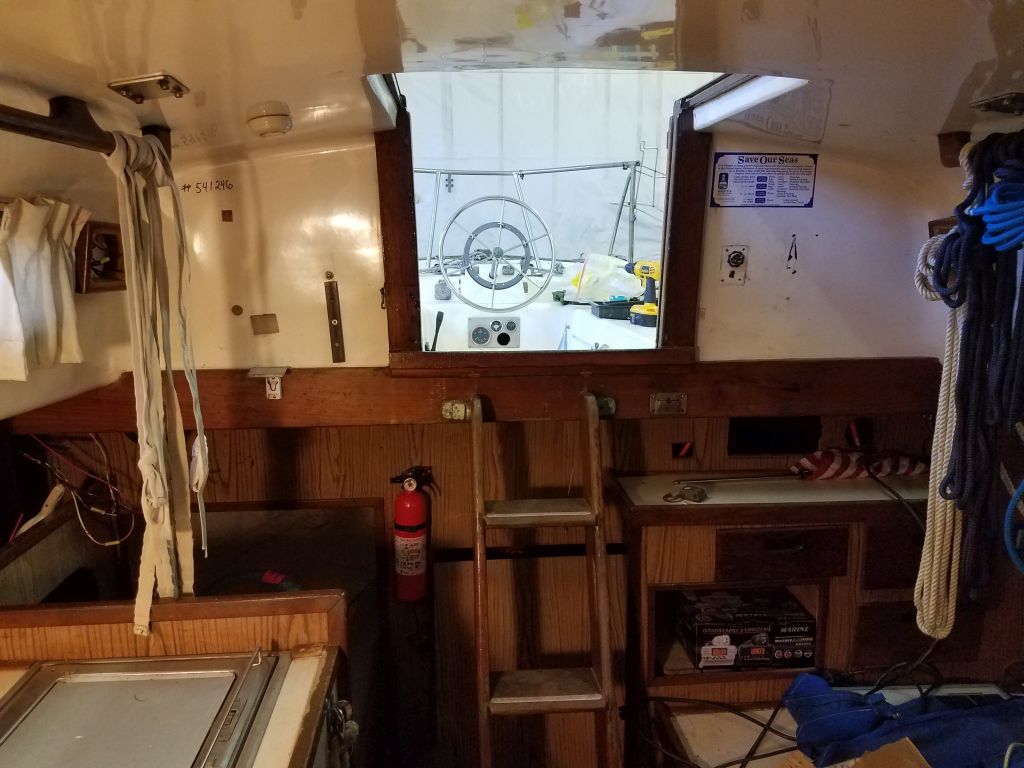
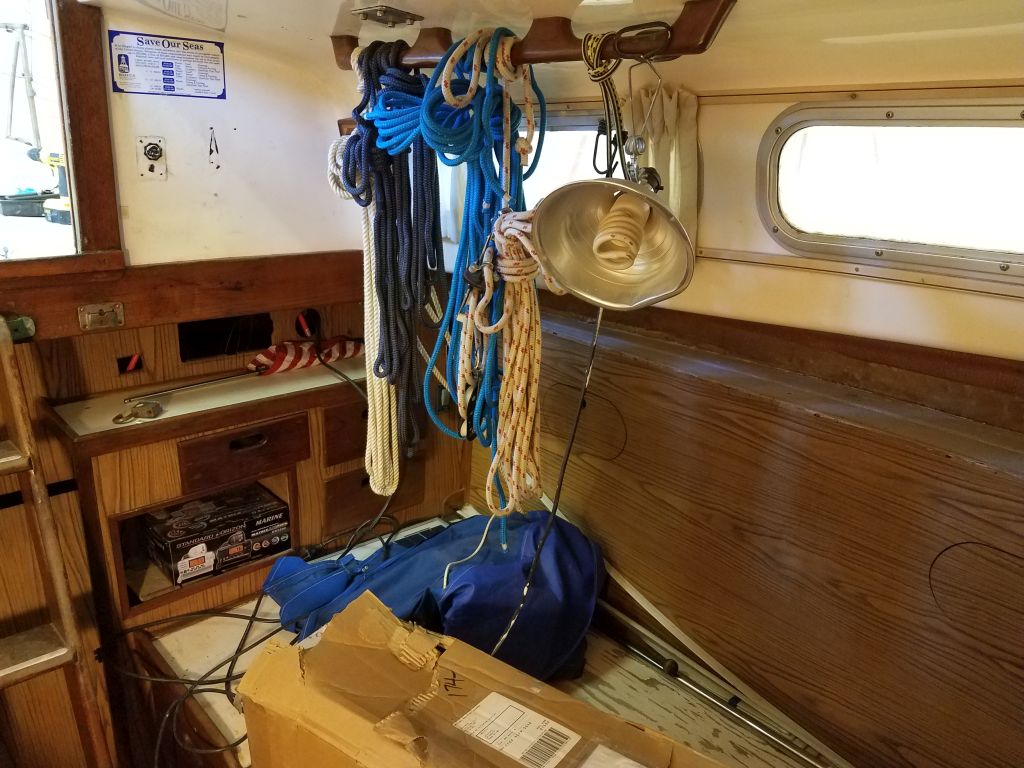
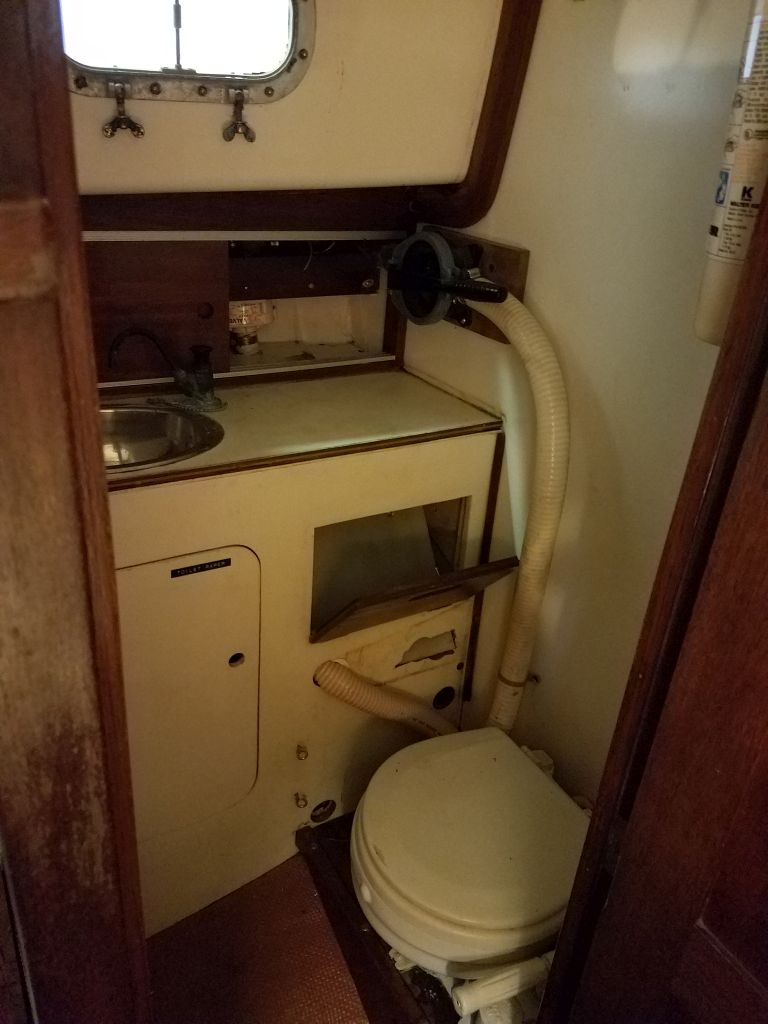
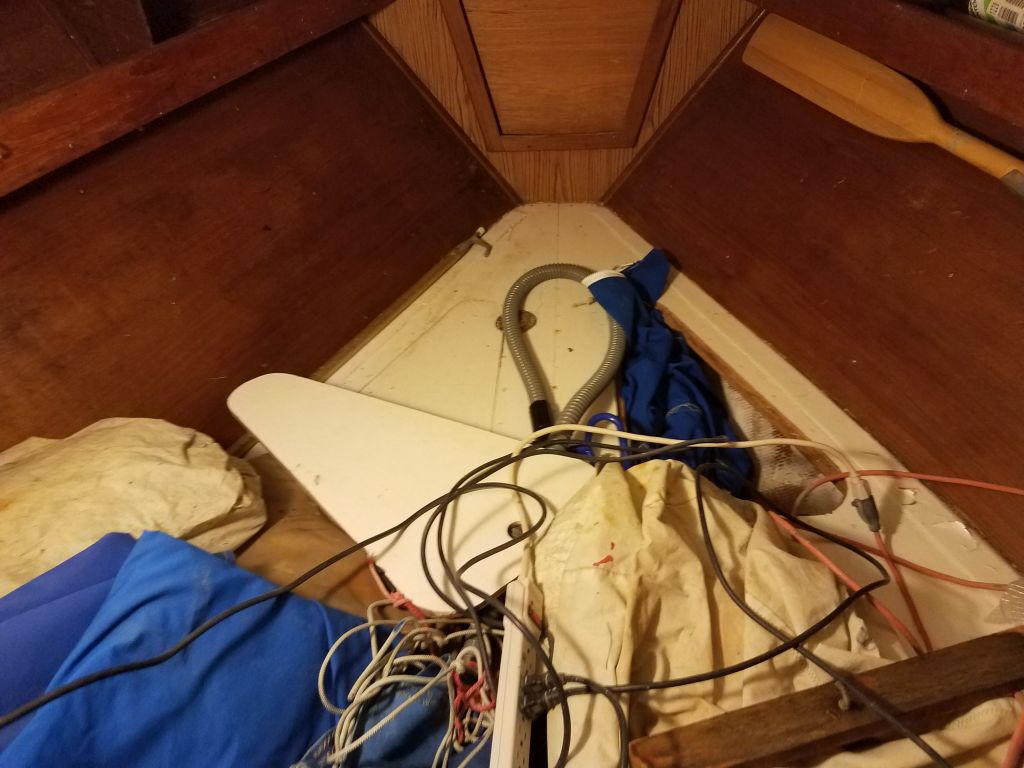
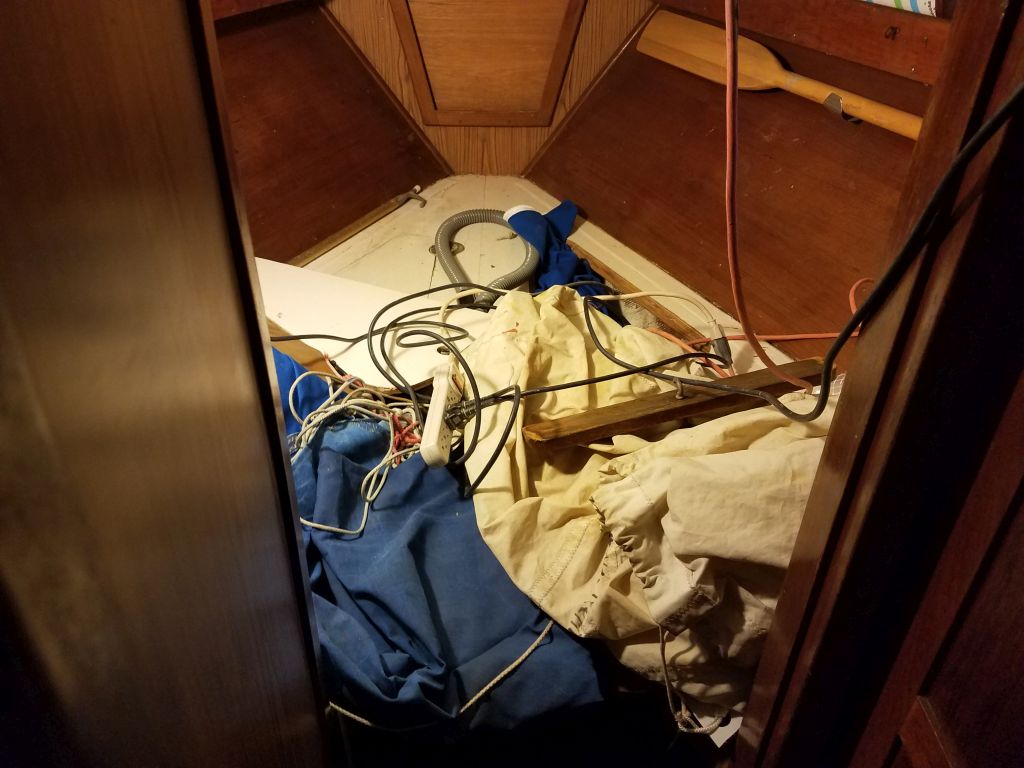
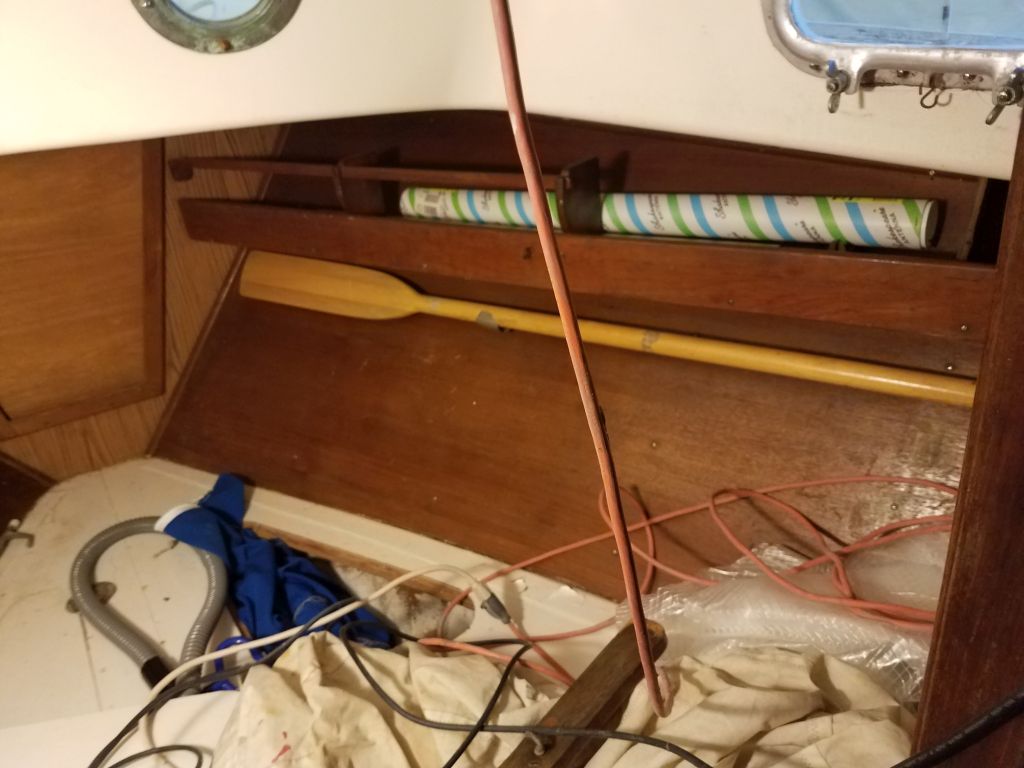
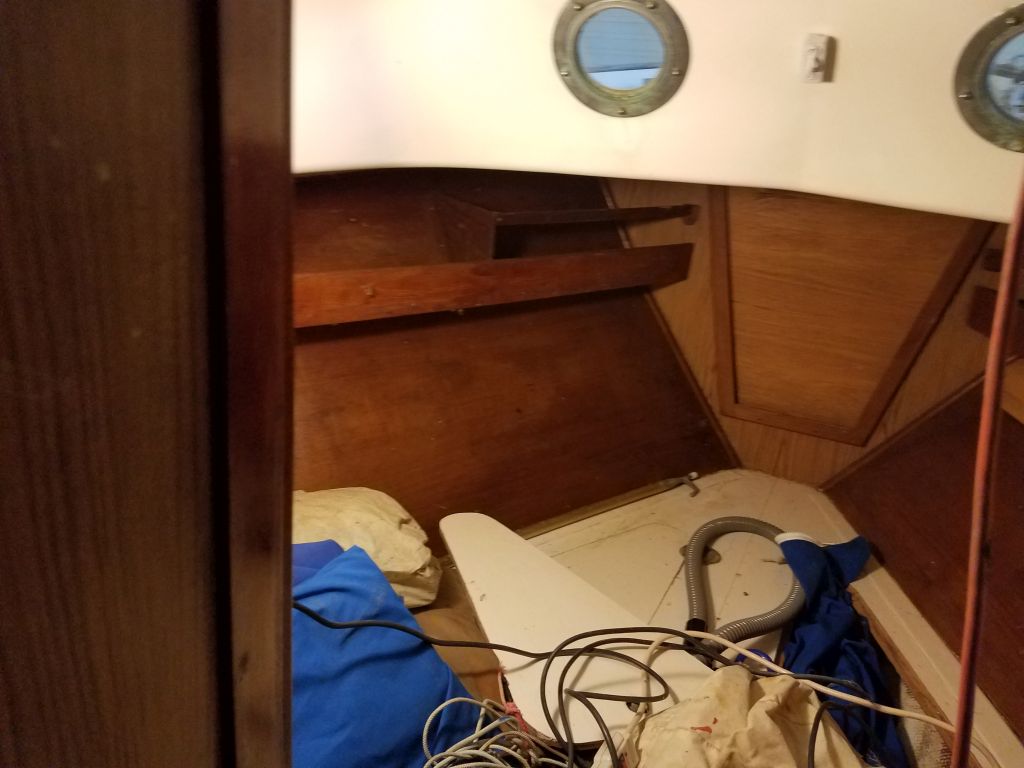
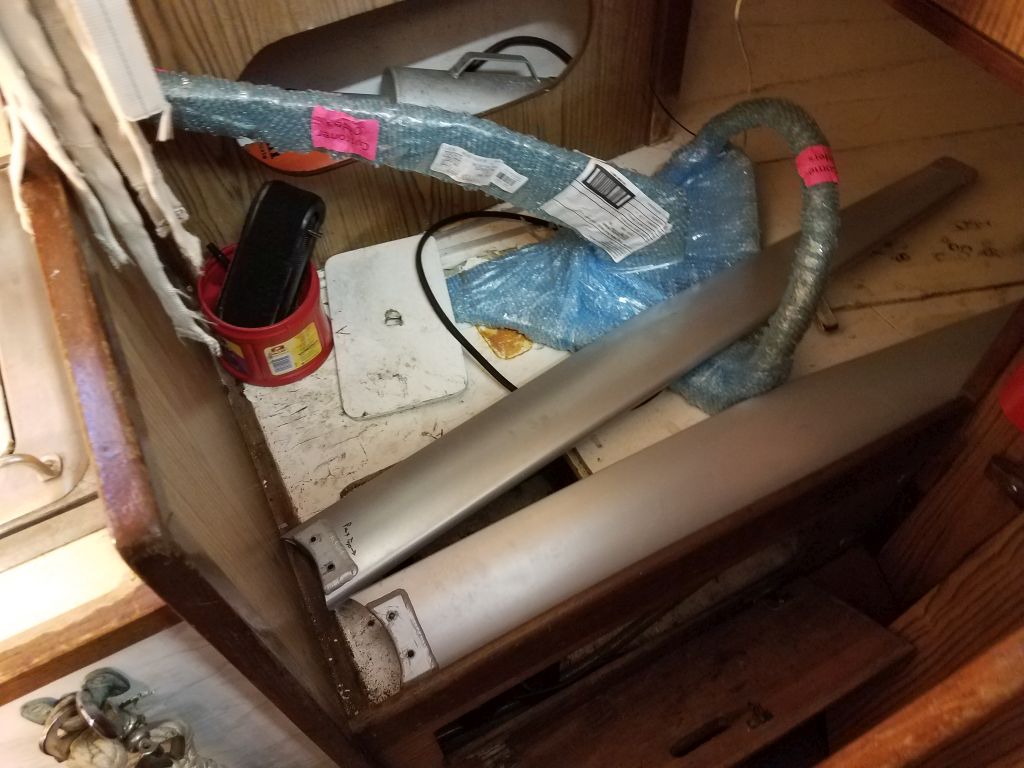
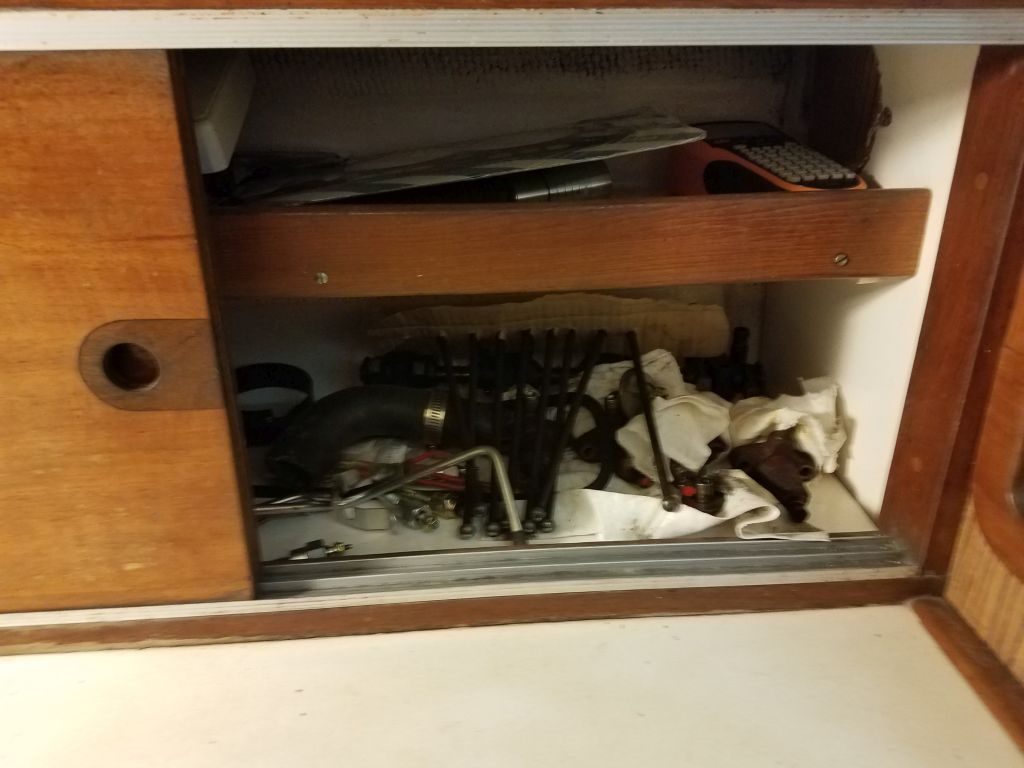
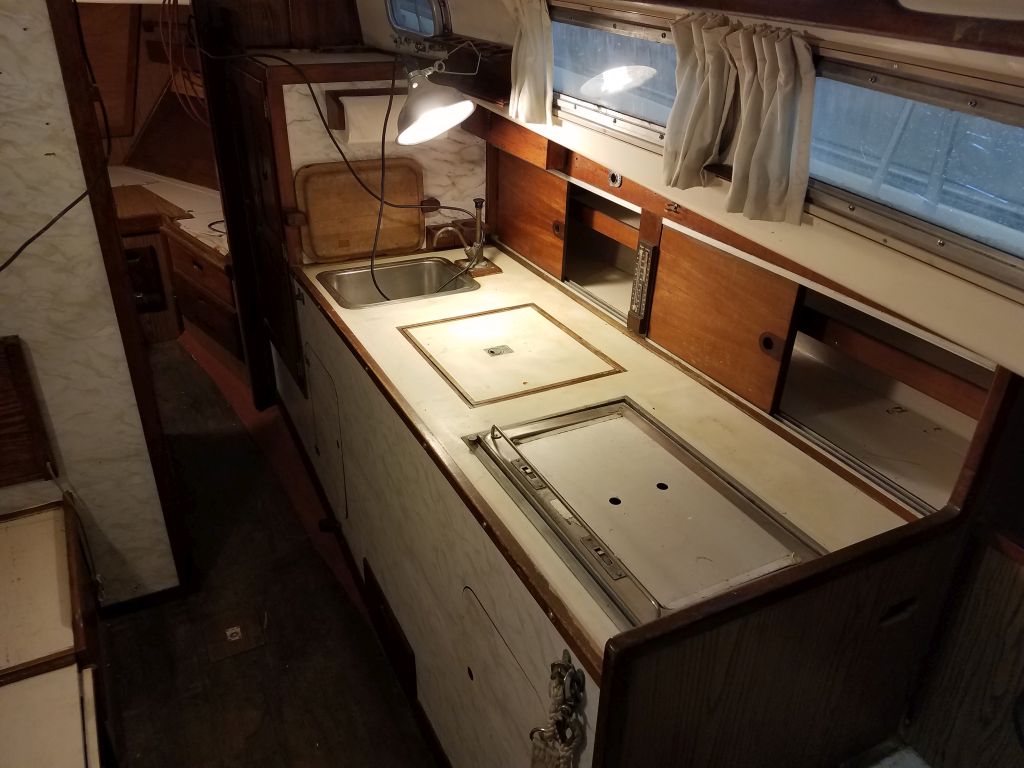
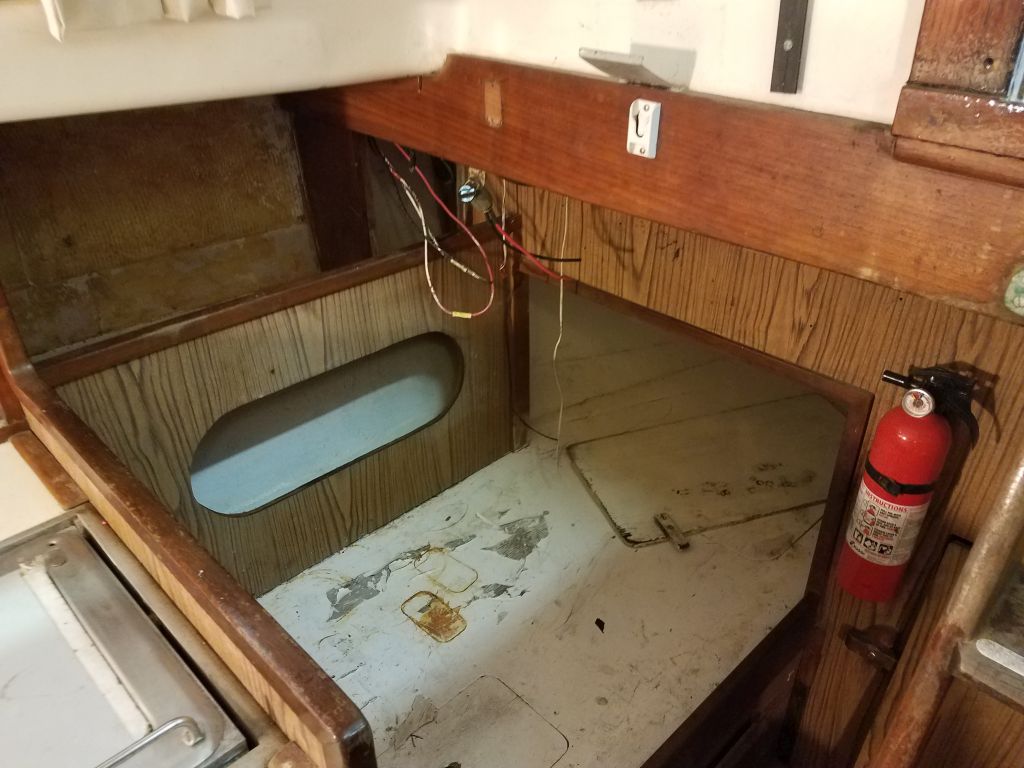
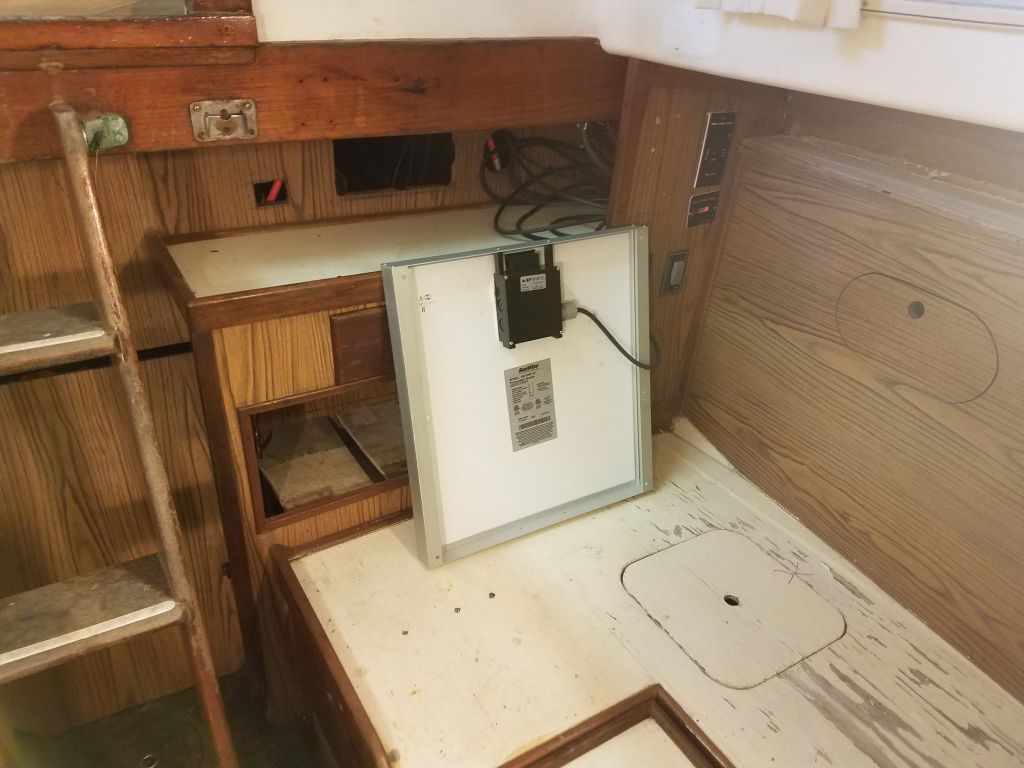
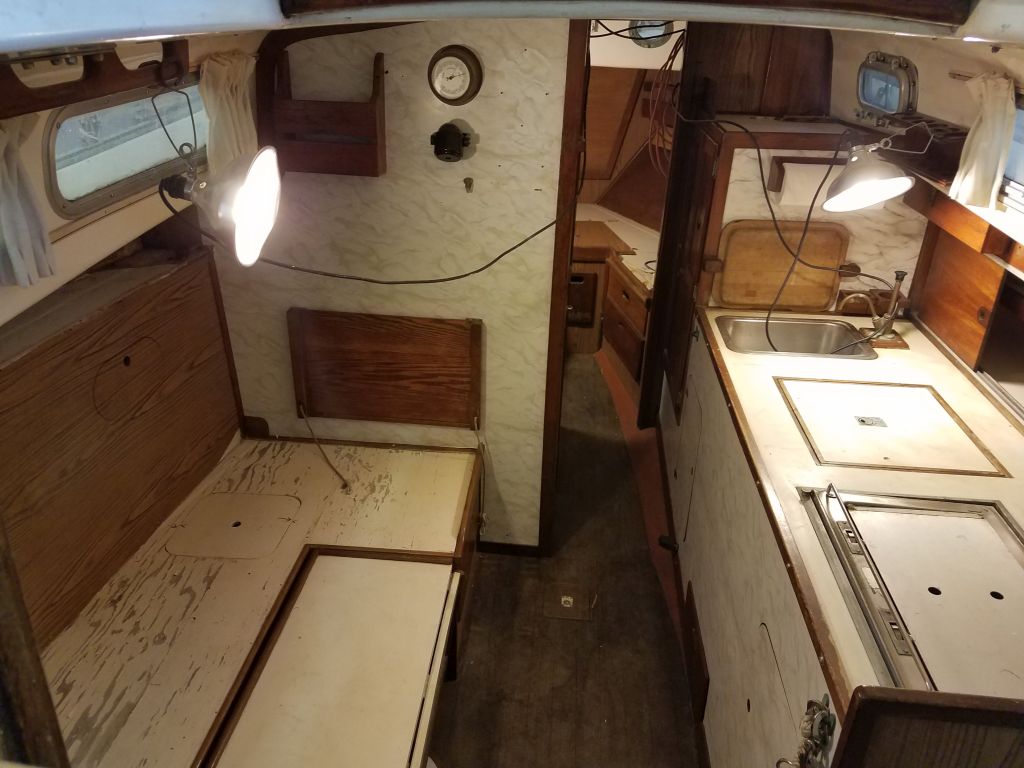
I’d soon begin work on hardware removal, but first I had to clean out the cabin, which contained various boat parts, some sails, and miscellaneous equipment.

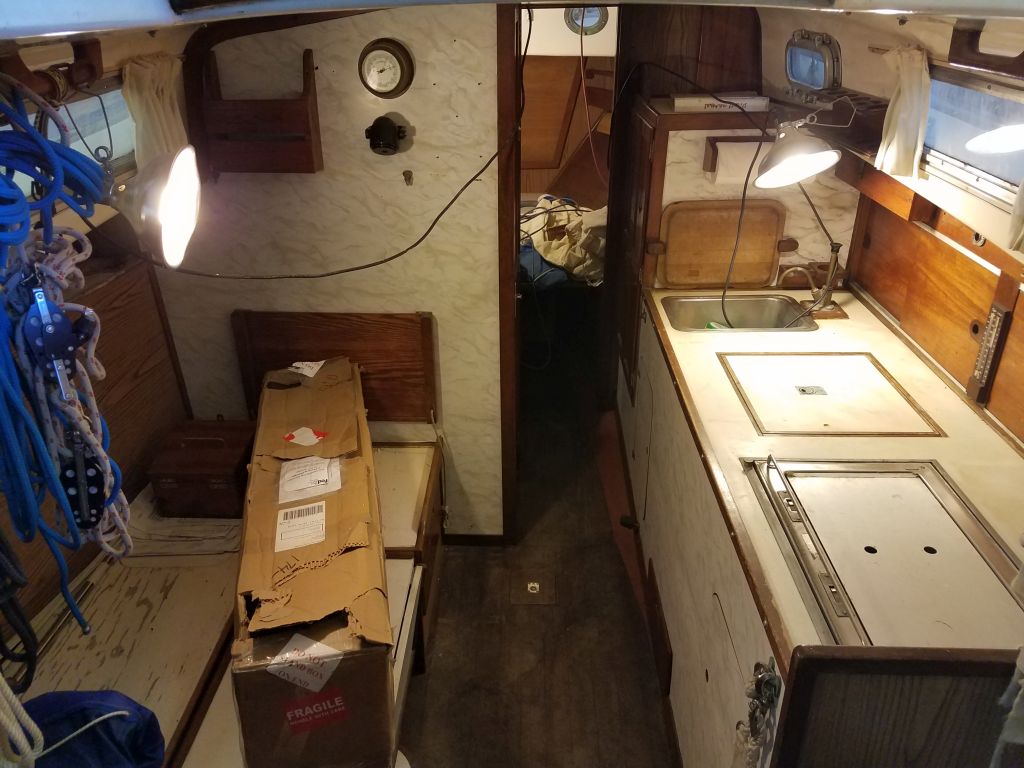
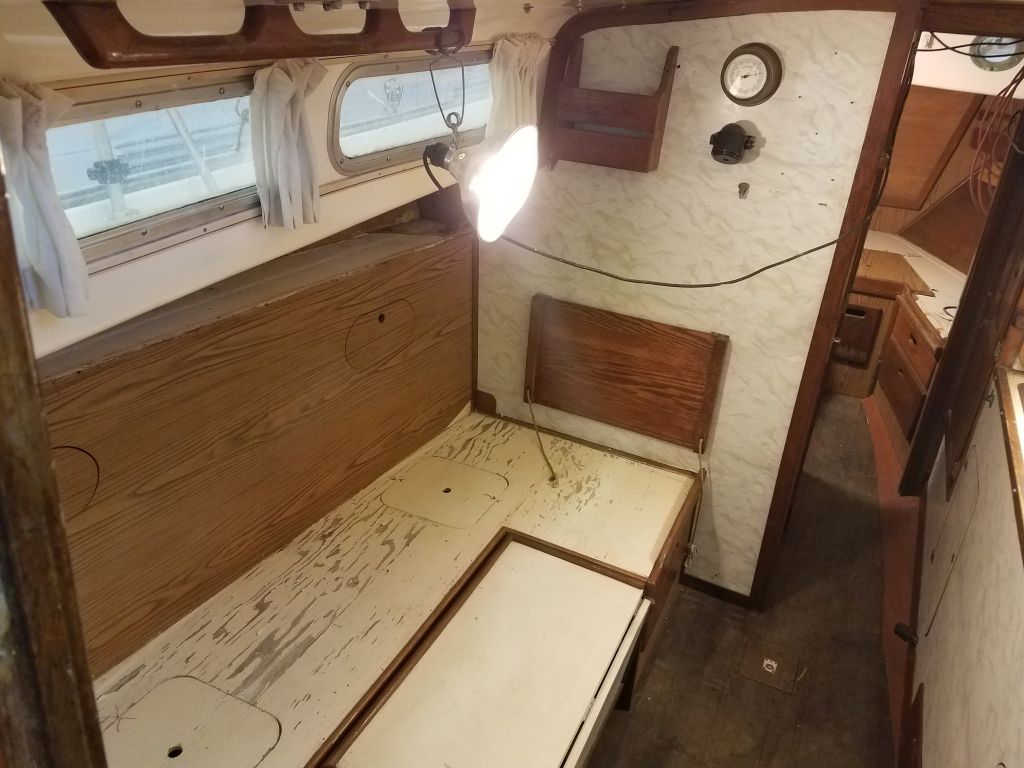
I needed clear access to all areas of the boat in order to effect the work ahead, and didn’t want anything unnecessary left behind to minimize worries about project dust and the like, so over the course of the afternoon, I removed and stored these items elsewhere in the shop to make room, leaving the way clear to begin the deck work next time.
Total time billed on this job today:  5 hours

0600 Weather Observation:  20°, clear.  Forecast for the day:  Sunny, 40s
Steadfast 29

< Back to Steadfast

Monday

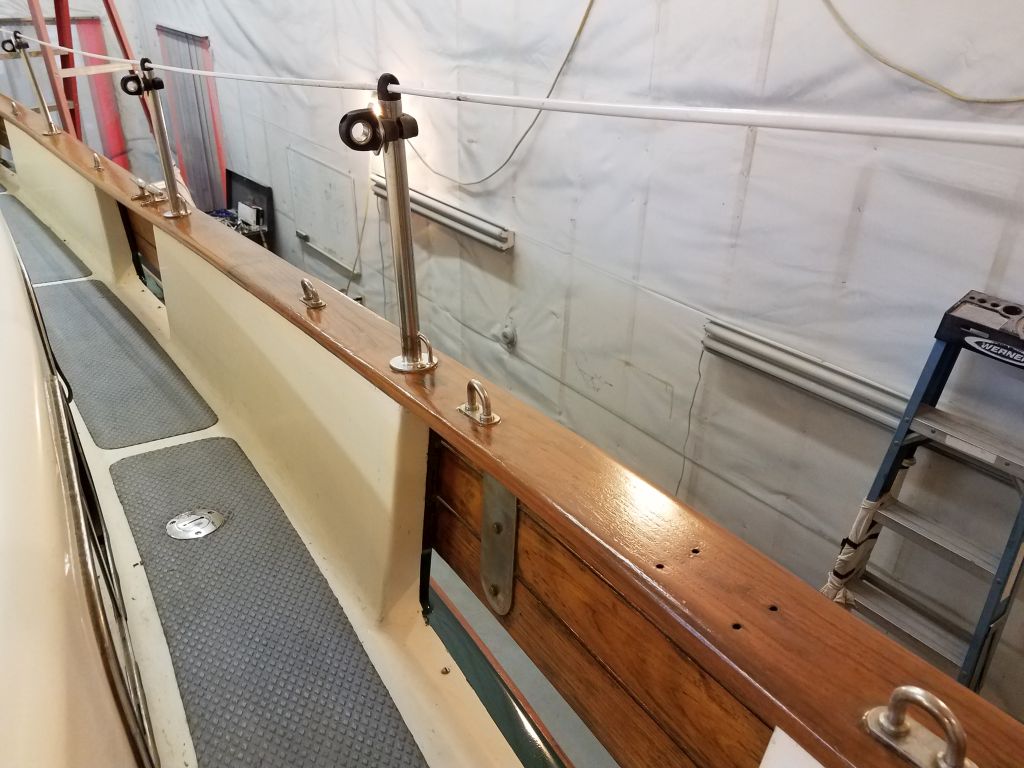
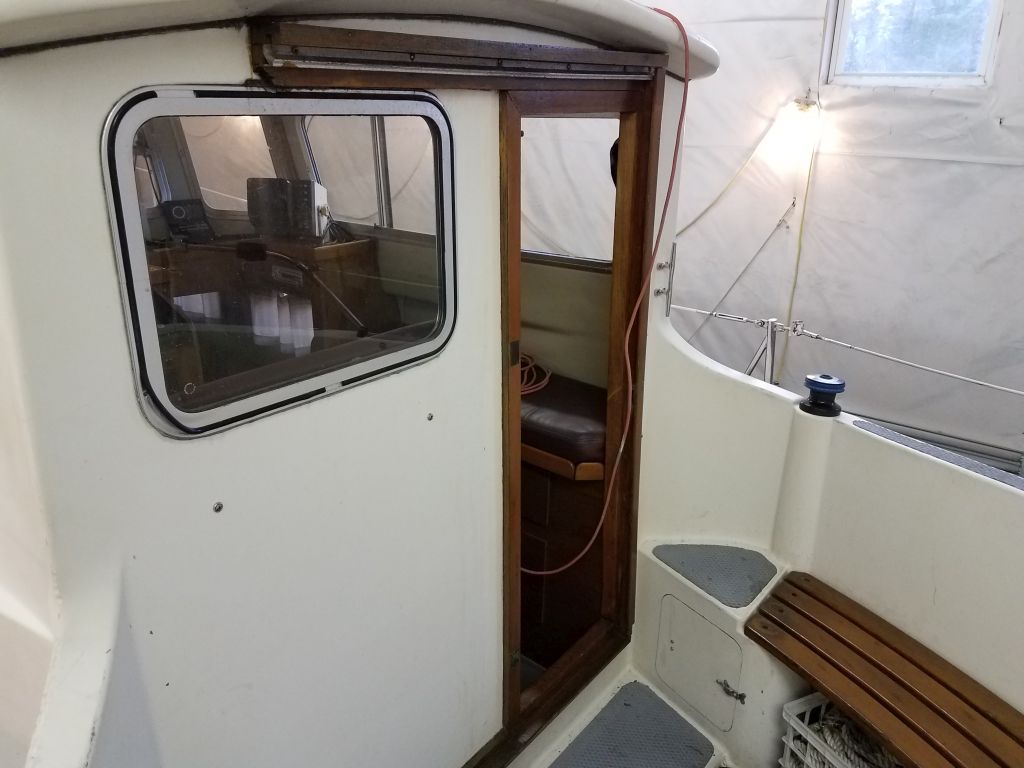
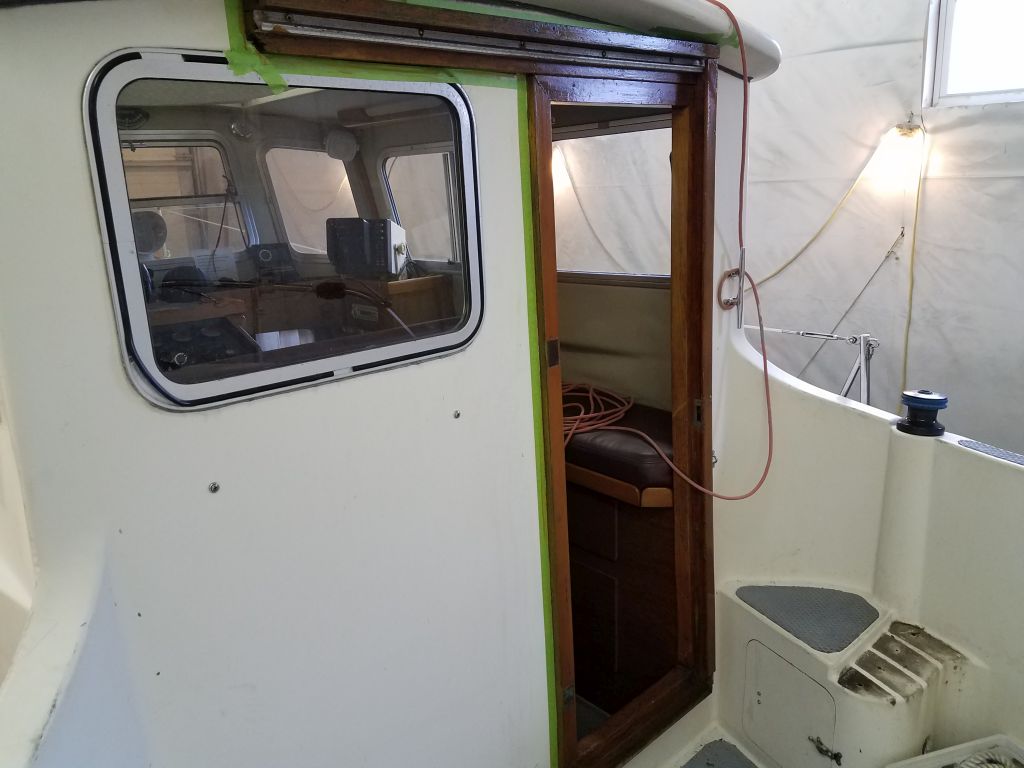
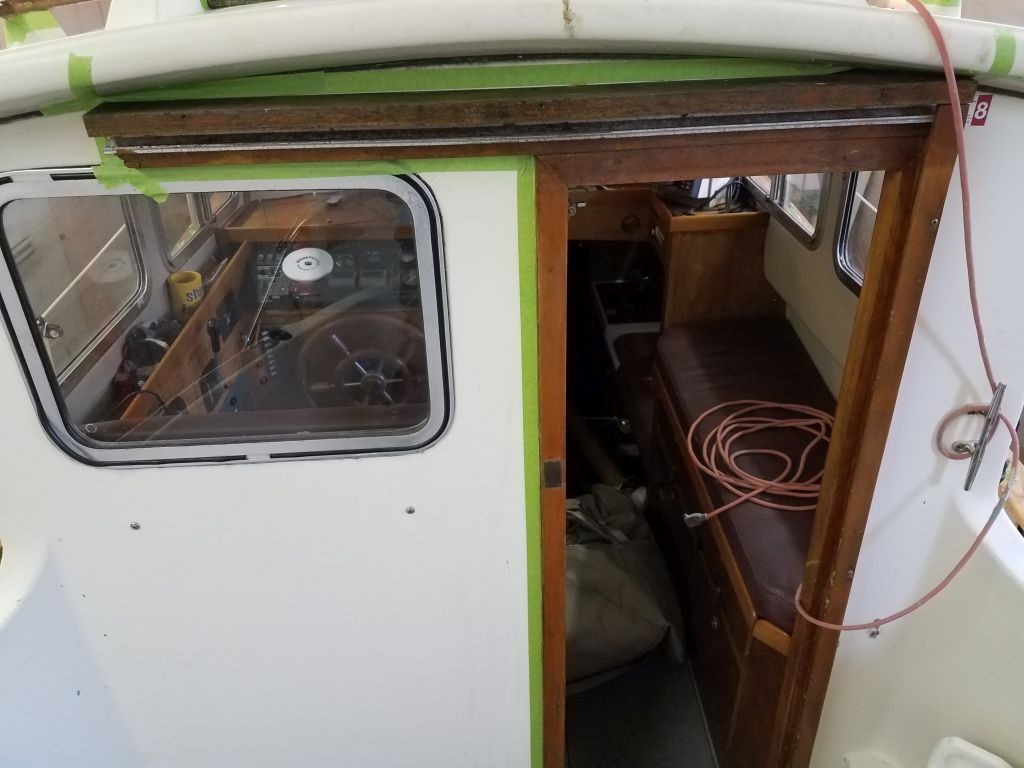
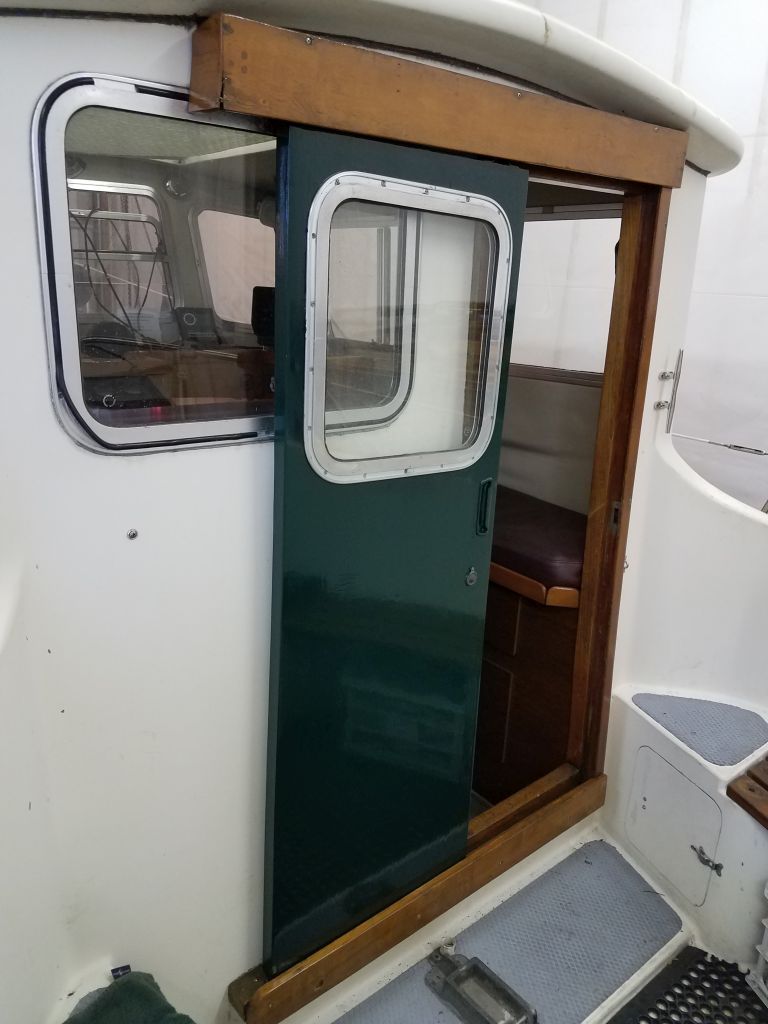
A few small jobs remained for me to take care of, starting with the reinstallation of the pilothouse door and its trim.  This was a straightforward process; I used new fasteners to secure the wooden trim back in place.  I also put back the newly-painted lazarette hatch.

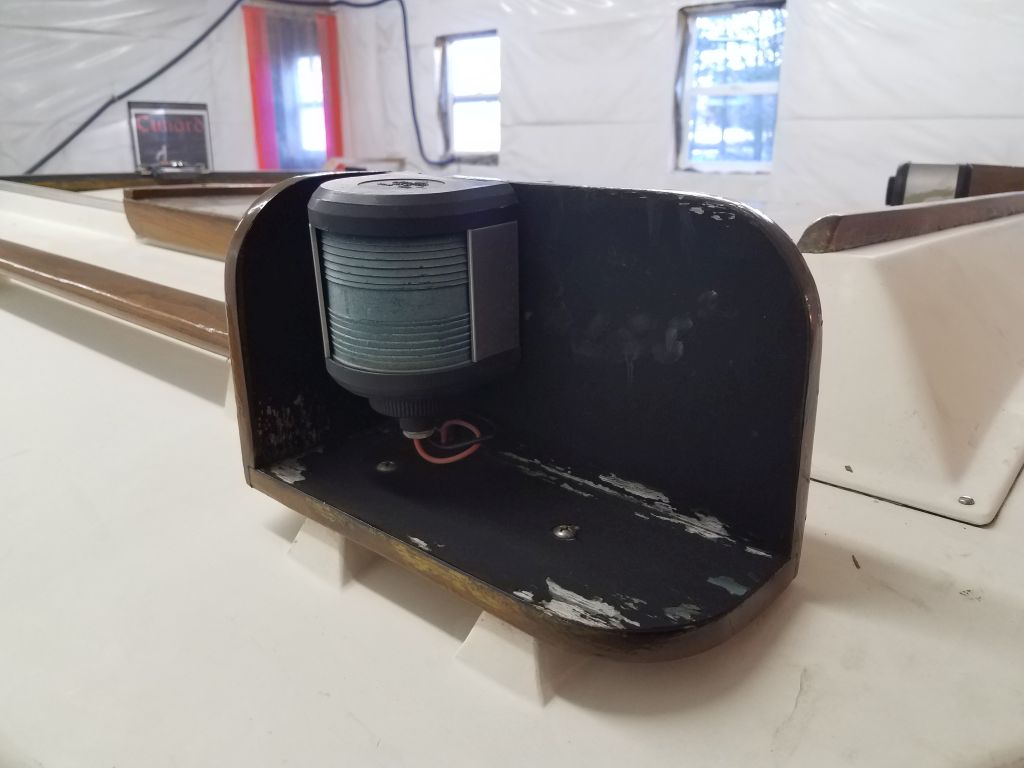
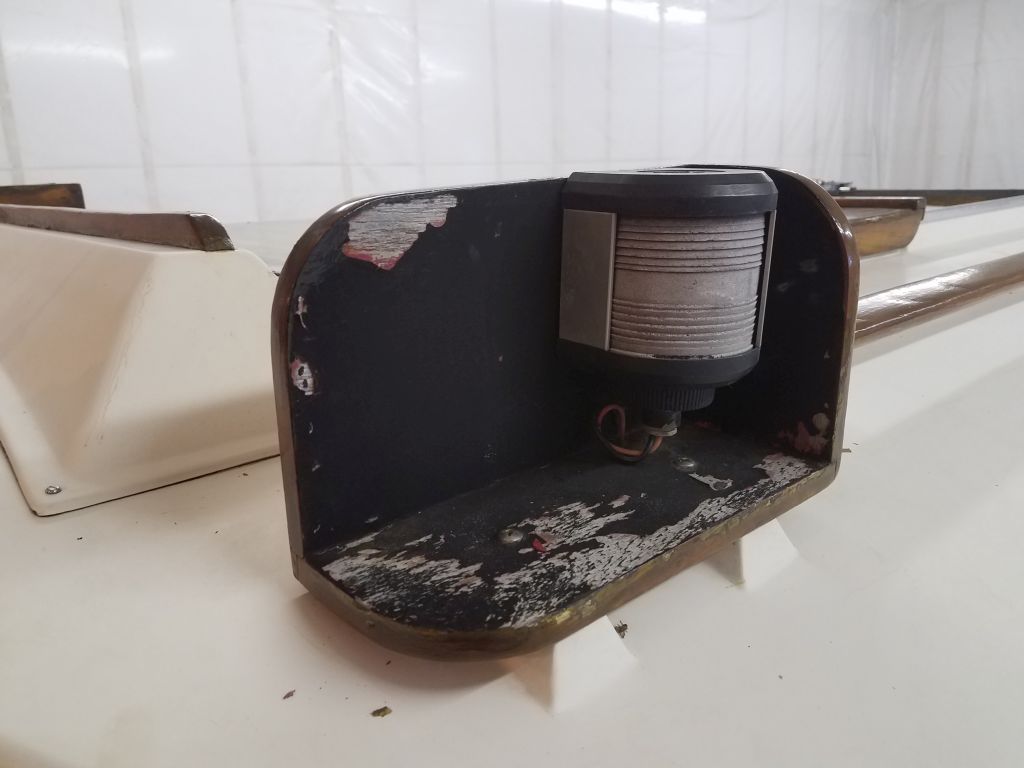
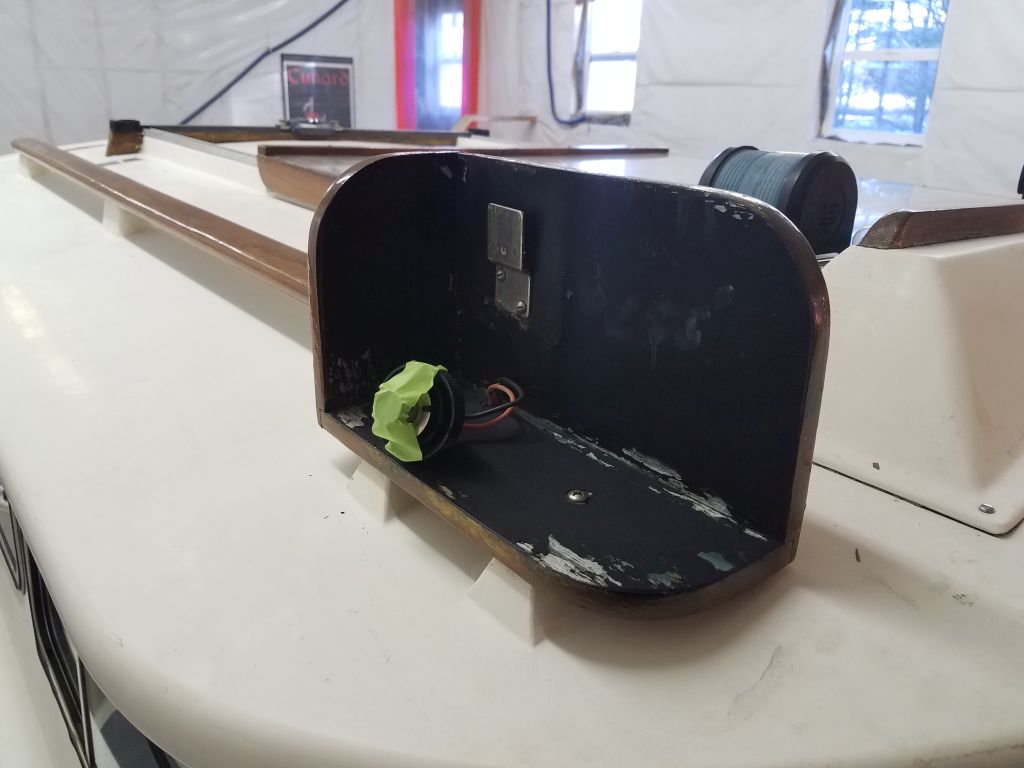
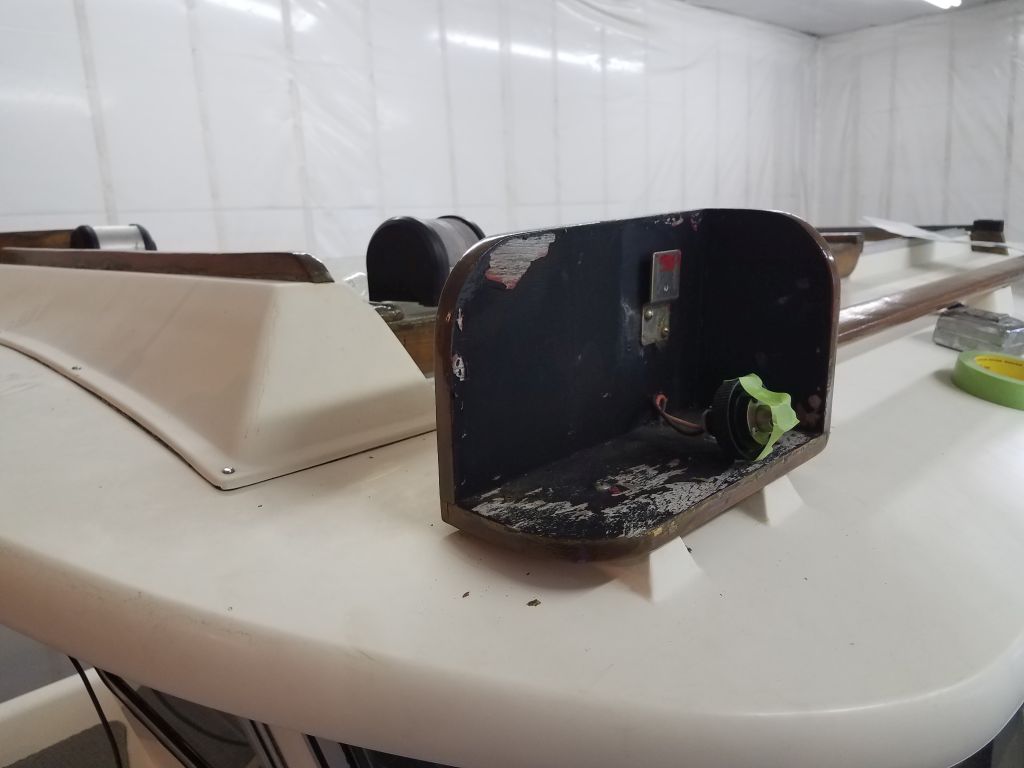
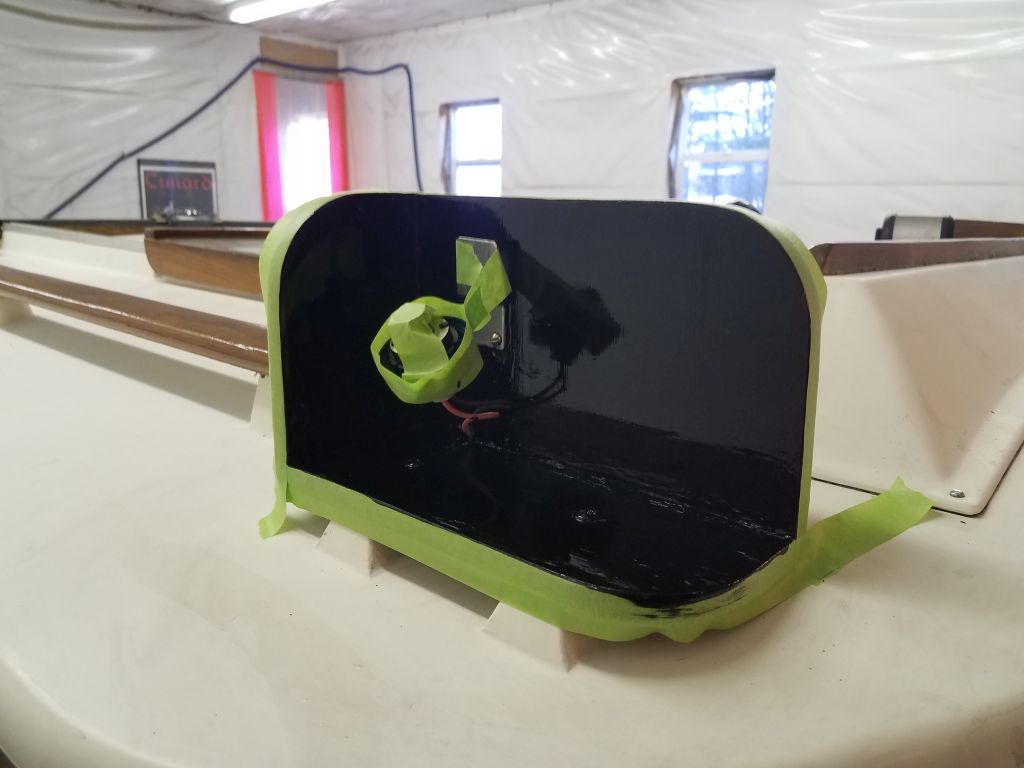
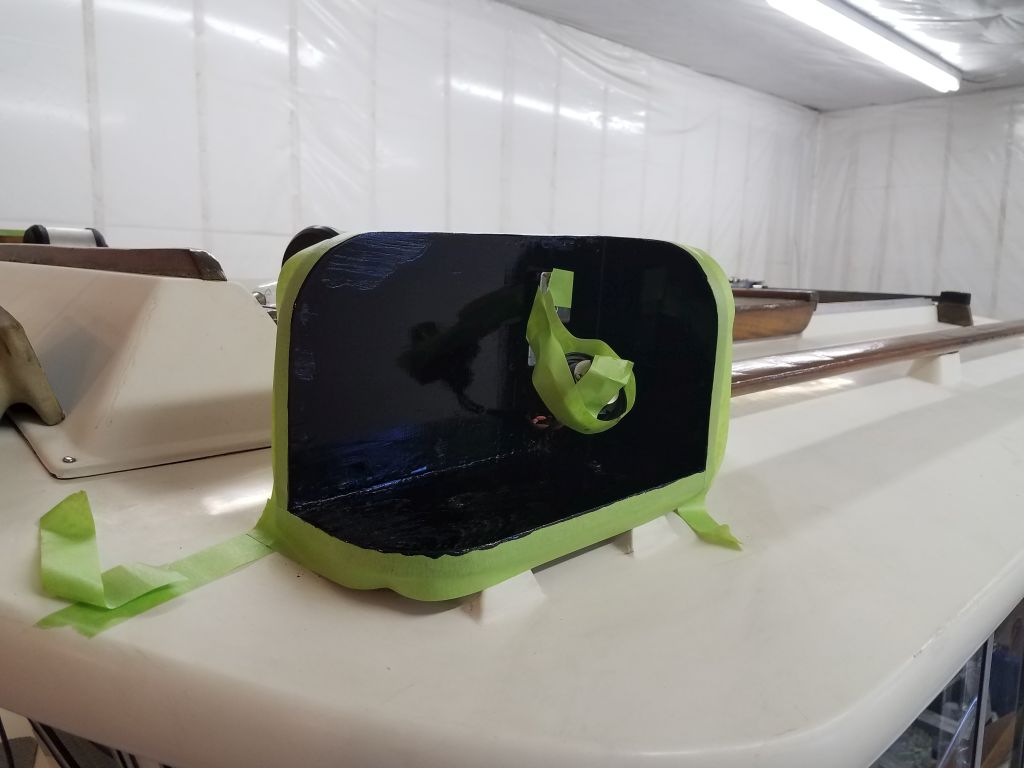
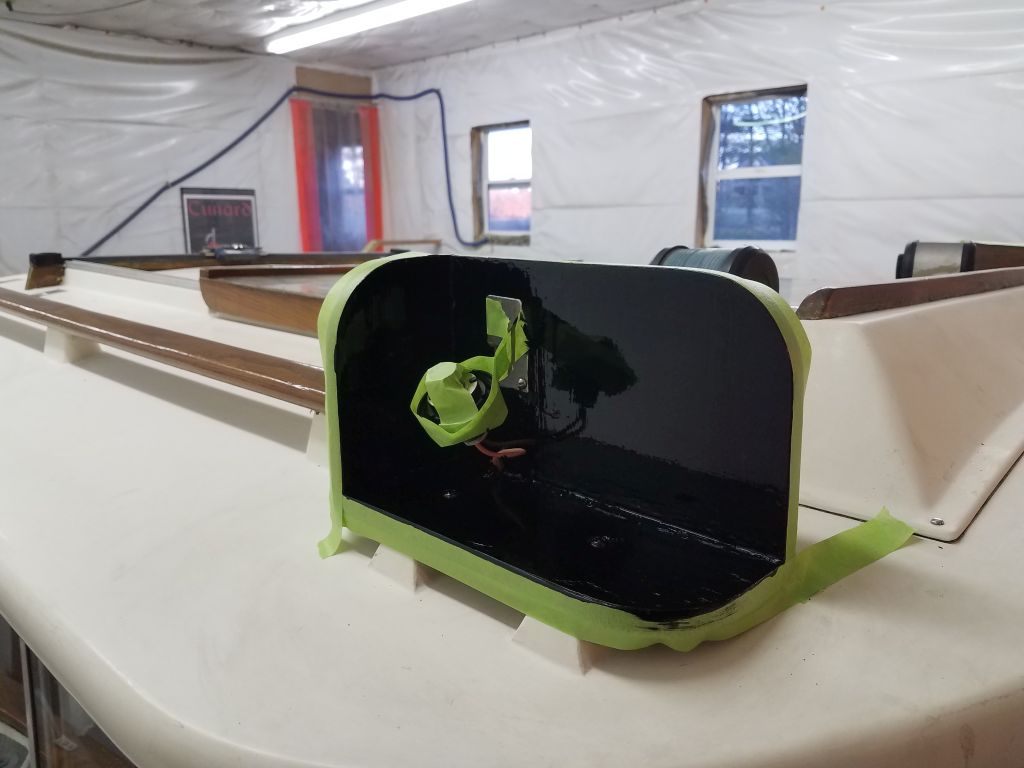
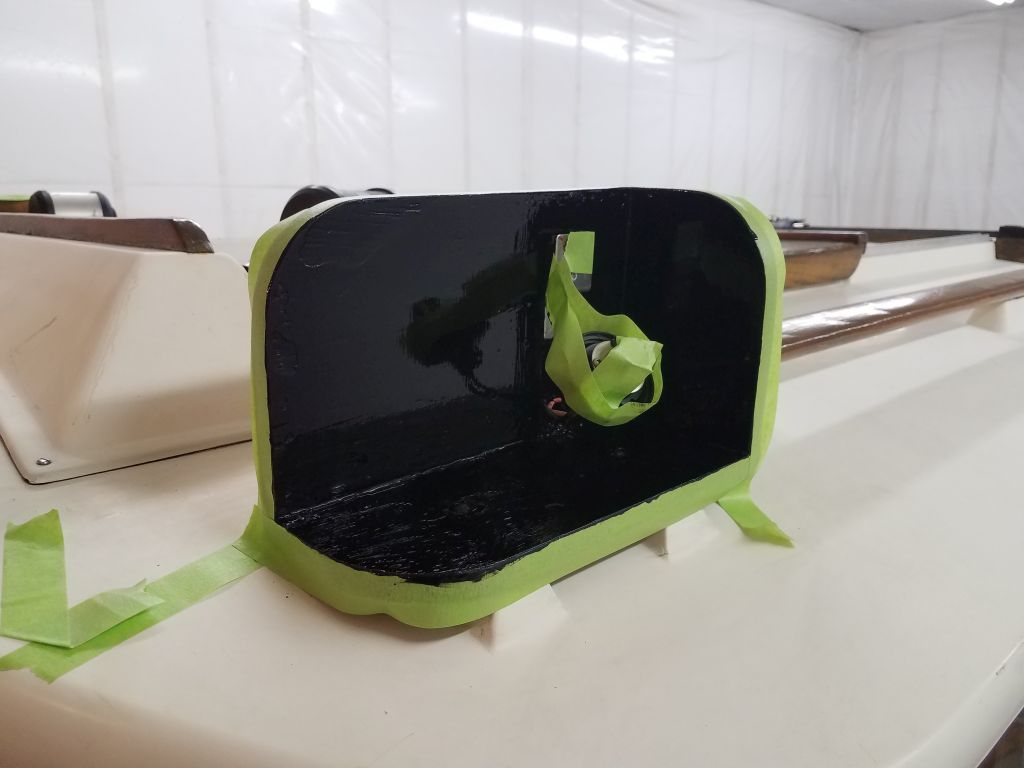
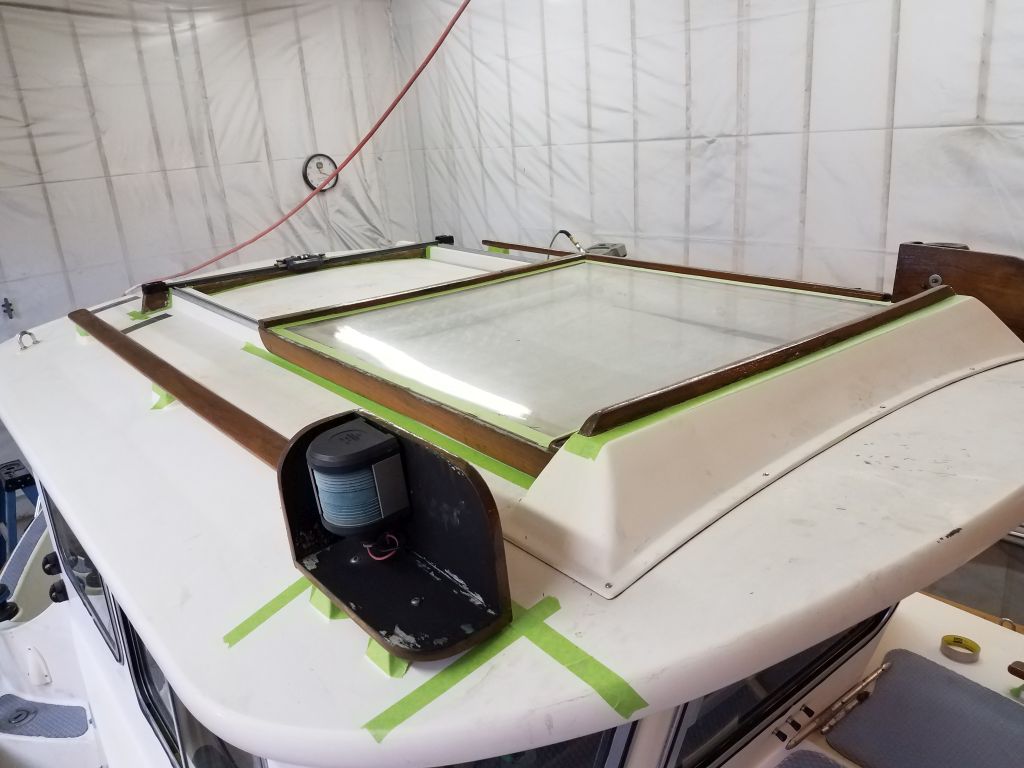
The owner requested that I repaint the insides of the running light boards on the pilothouse; the existing paint was weathered and worn.  I removed the running lights from their brackets and the covers from the sockets, leaving the wiring in place, and prepared the black-painted boards with sandpaper and masking tape as needed so I could apply fresh black paint.

Late in the day, the first coat of paint had cured to the point that I could apply a second coat over the top.

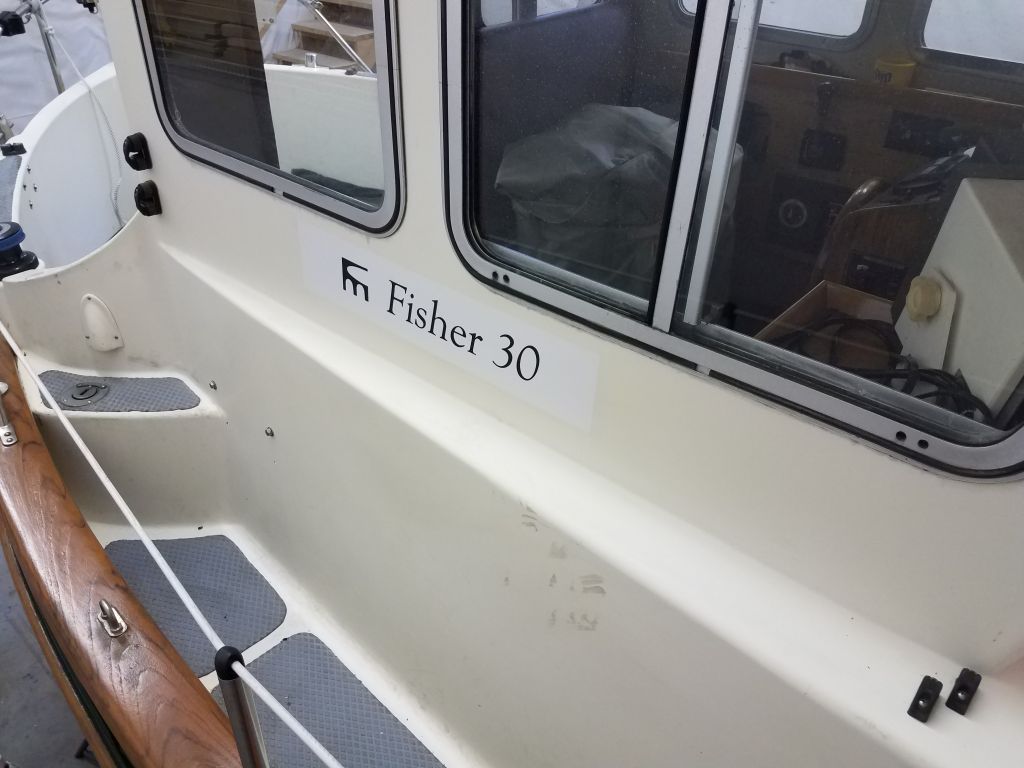
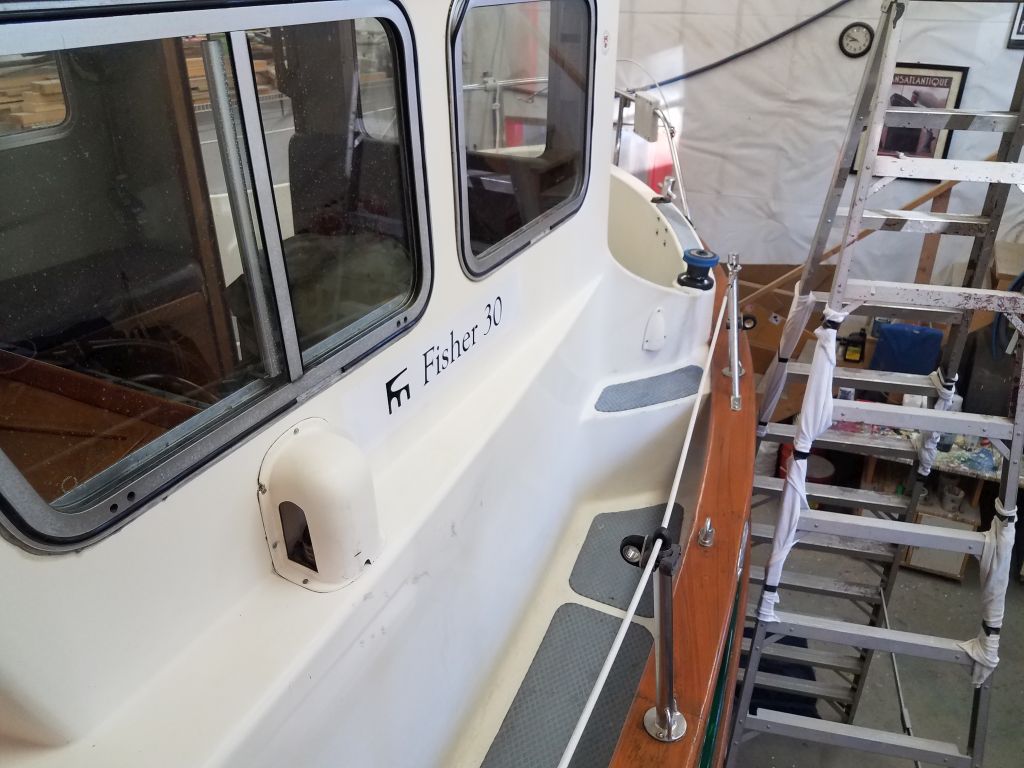
The owner requested that I replicate and install  some logo stickers that had once been in place on the pilothouse, the ghost of which was still visible on one side.  I happened to have a plastic placard with the logo and text from a previous Fisher 30 project, so I dropped this off earlier with my local vinyl shop for reproduction in new vinyl, which I installed now.

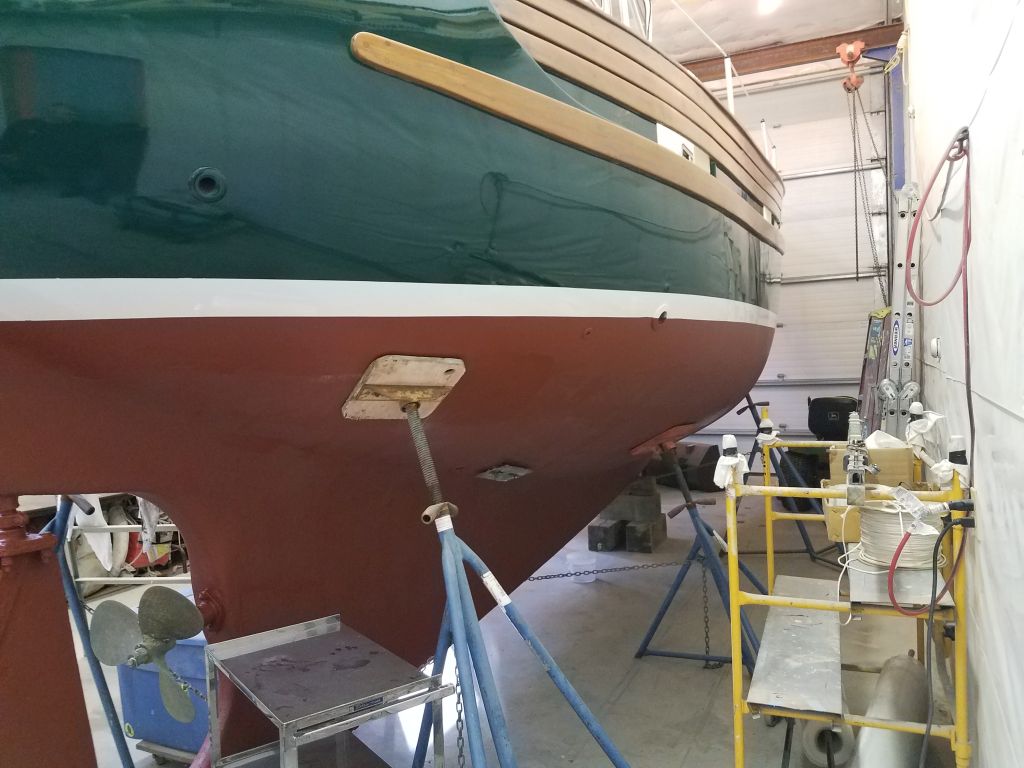
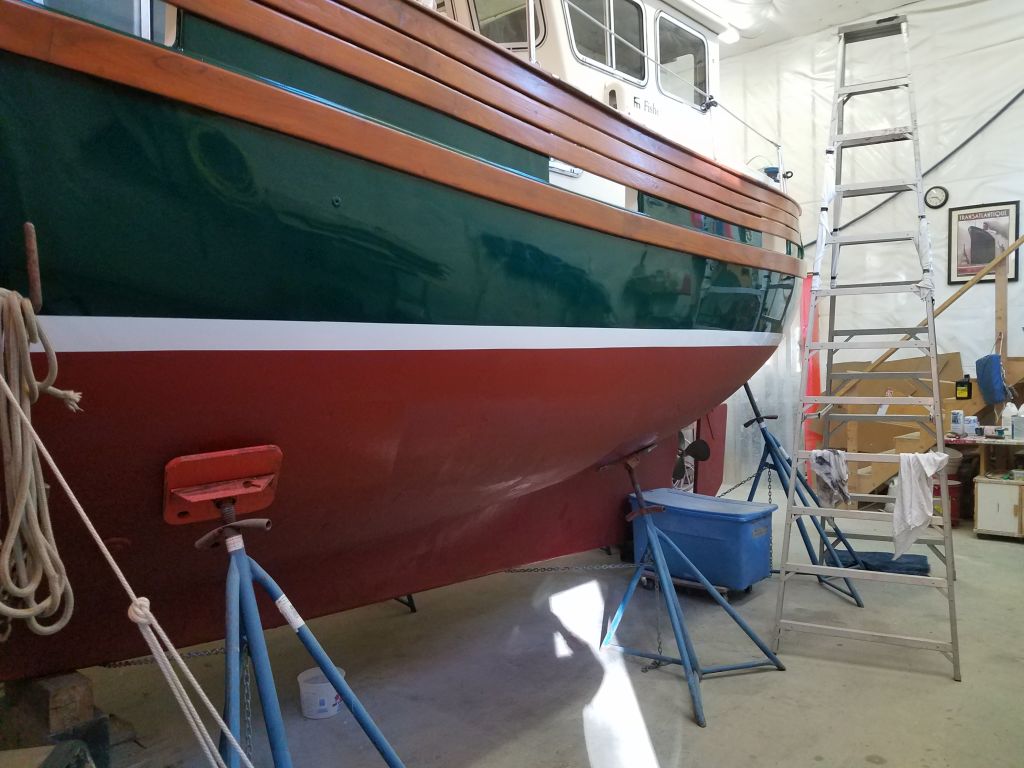
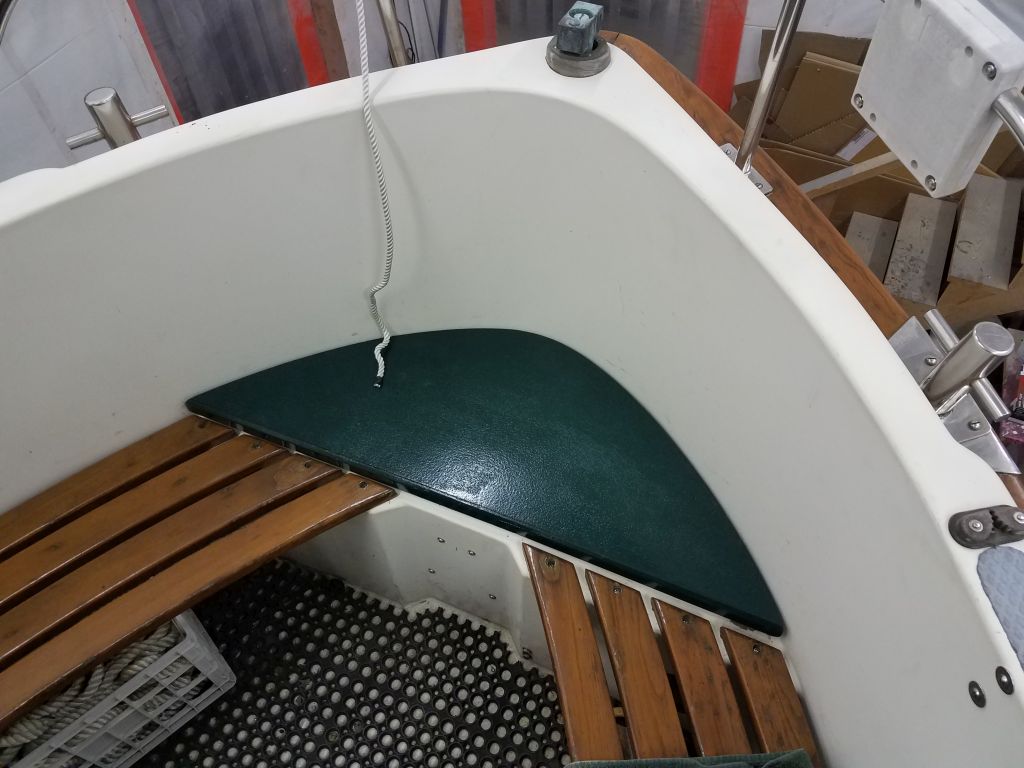
I also took a moment to paint the patches where the jackstands had been originally; when I moved the boat, I’d staggered the stands to expose the unpainted patches for access.

< Back to Steadfast

Total time billed on this job today:  1.5 hours

0600 Weather Observation:  20°, clear.  Forecast for the day:  Sunny, 40s
Steadfast 28

< Back to Steadfast

Friday

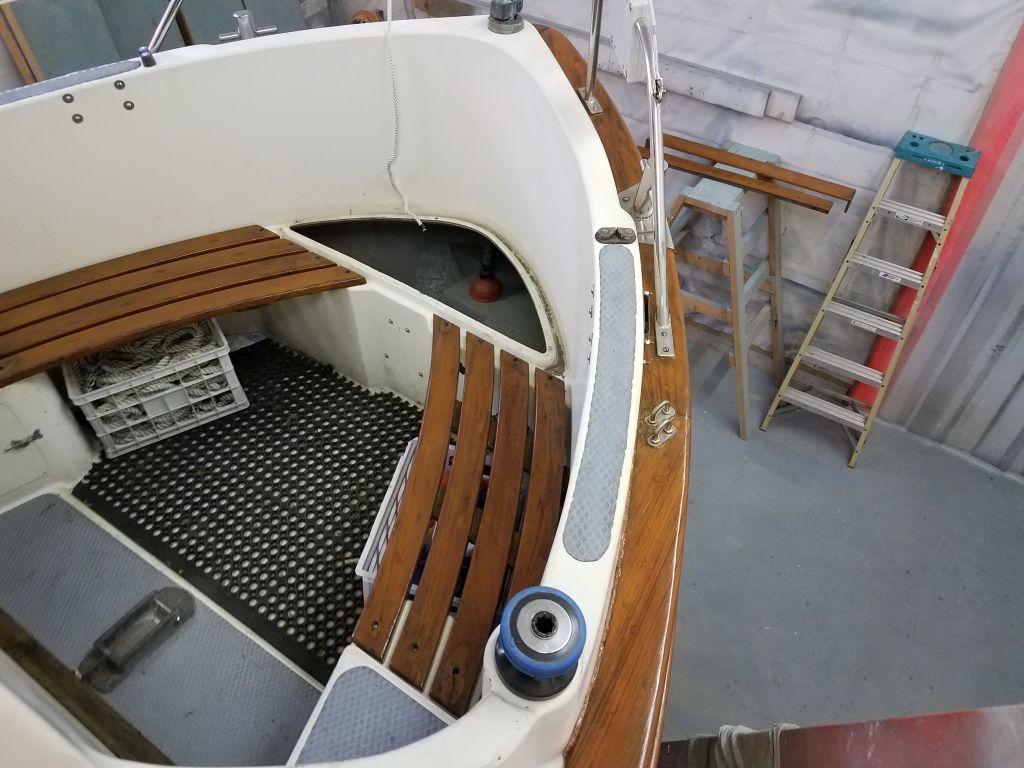
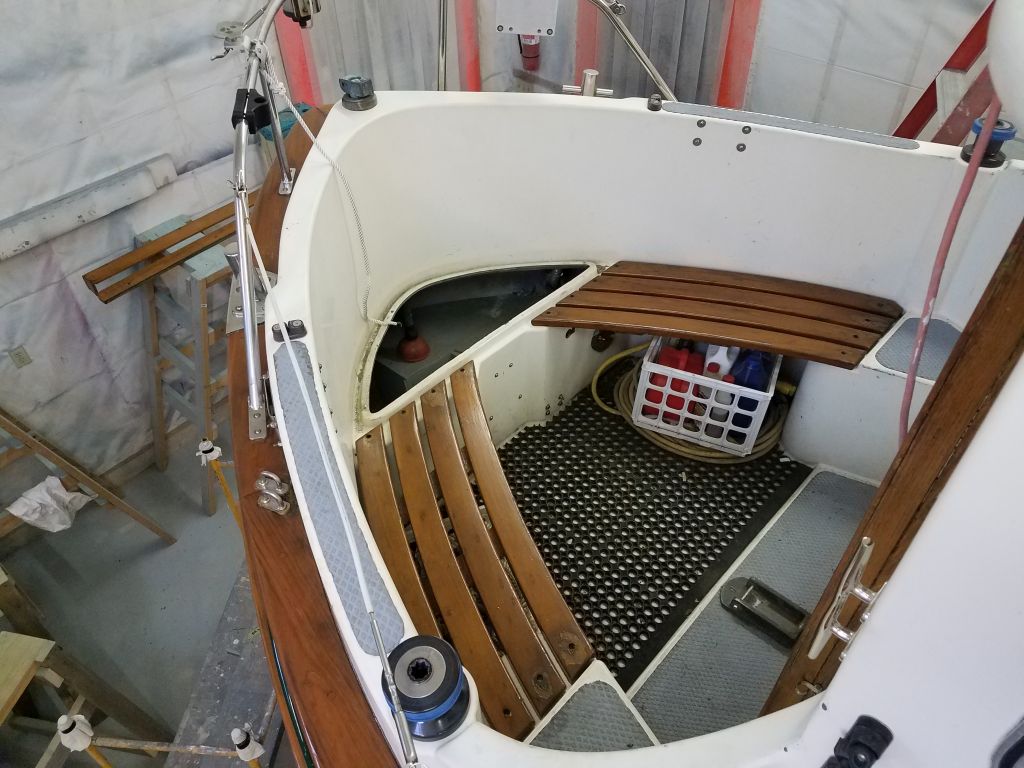
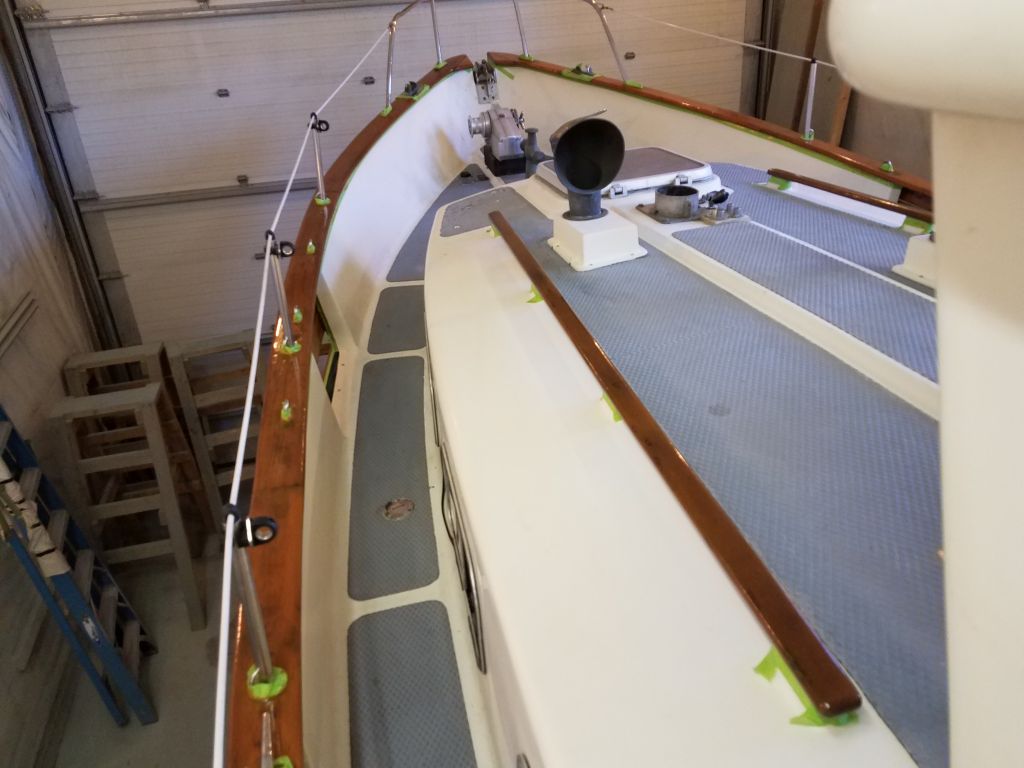
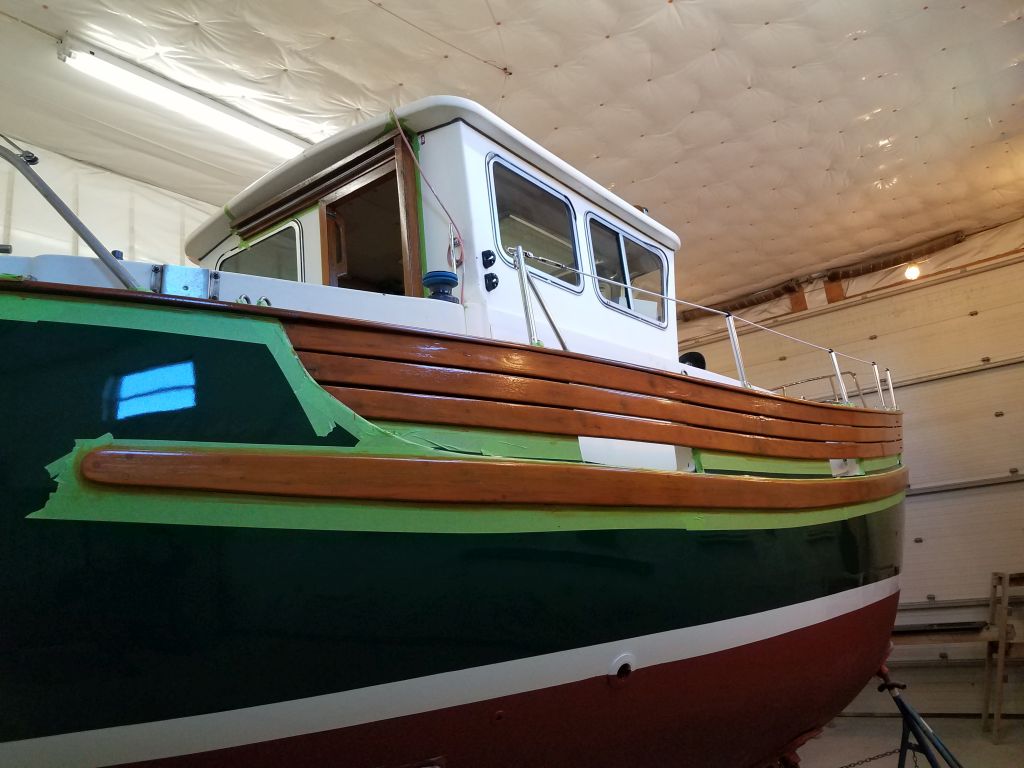
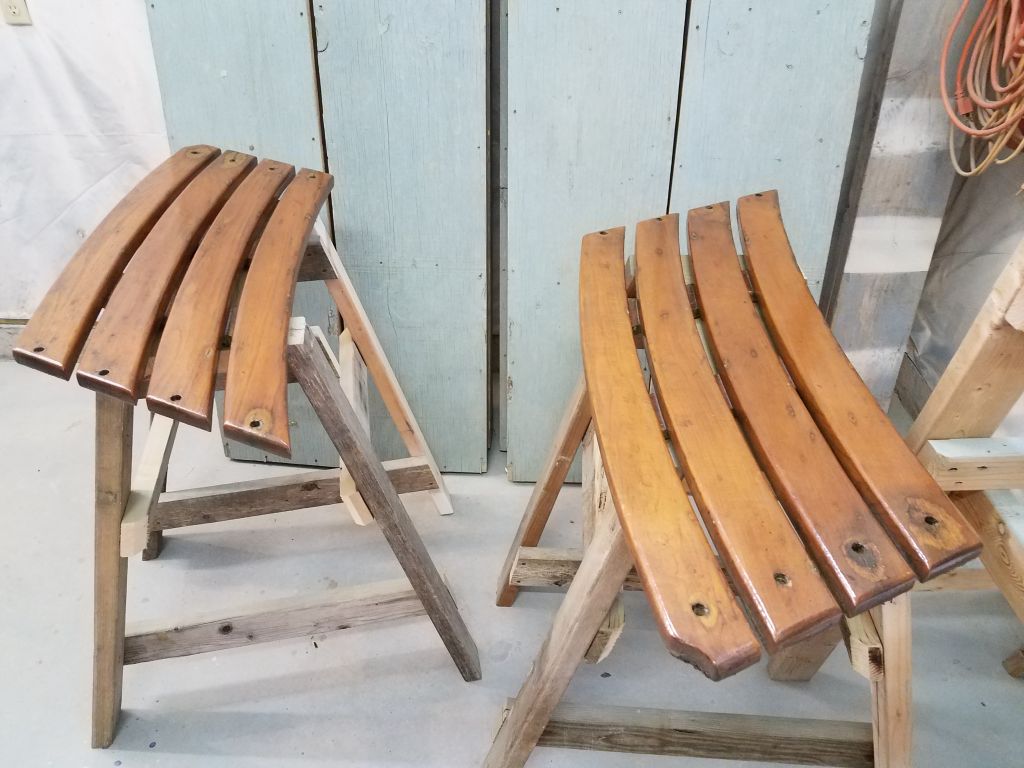
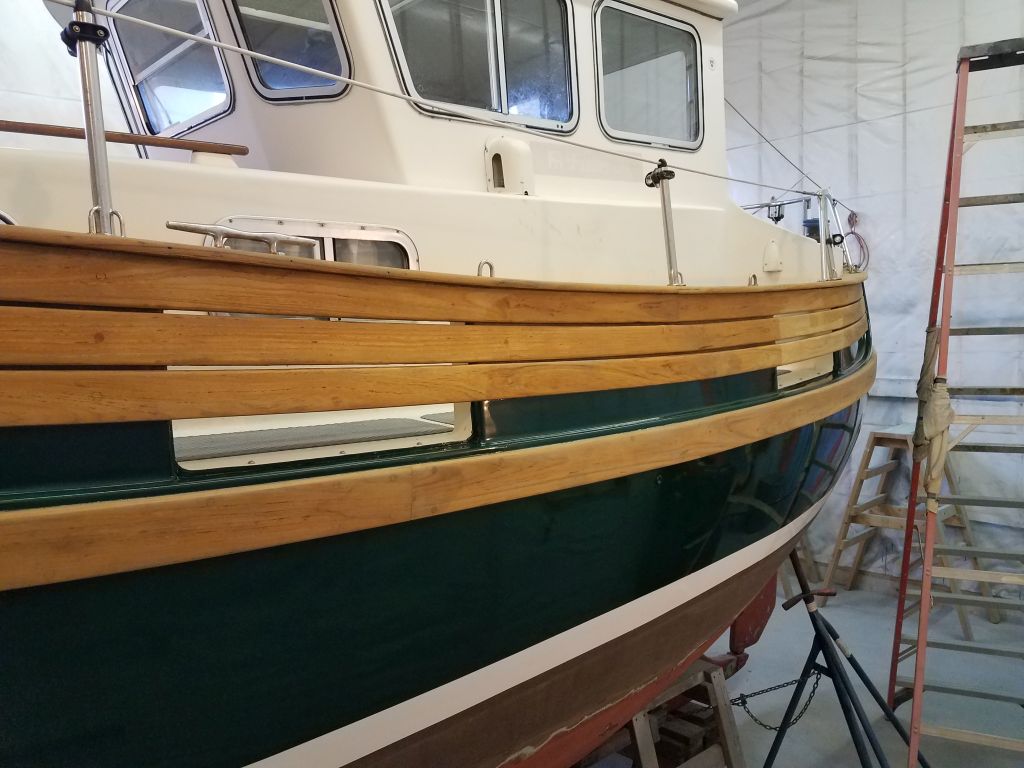
My work on the brightwork was complete, and I spent the first part of the day removing all the masking tape.  I reinstalled the cockpit seats, and also some metal half-oval that I’d removed from one of the caprails.

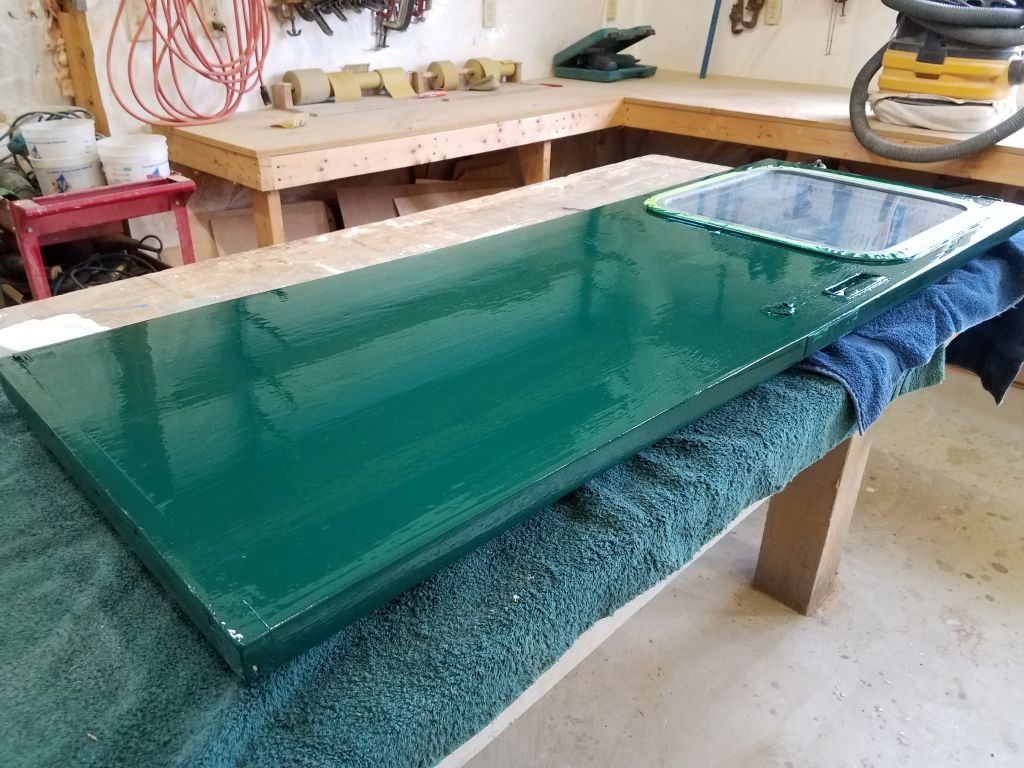
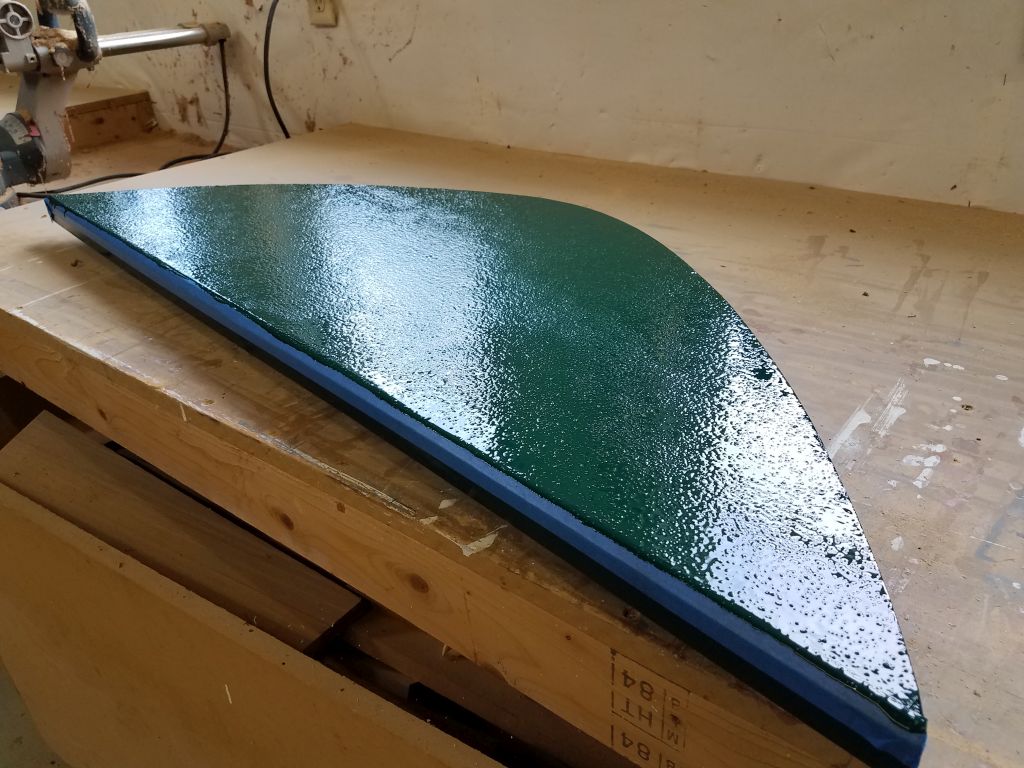
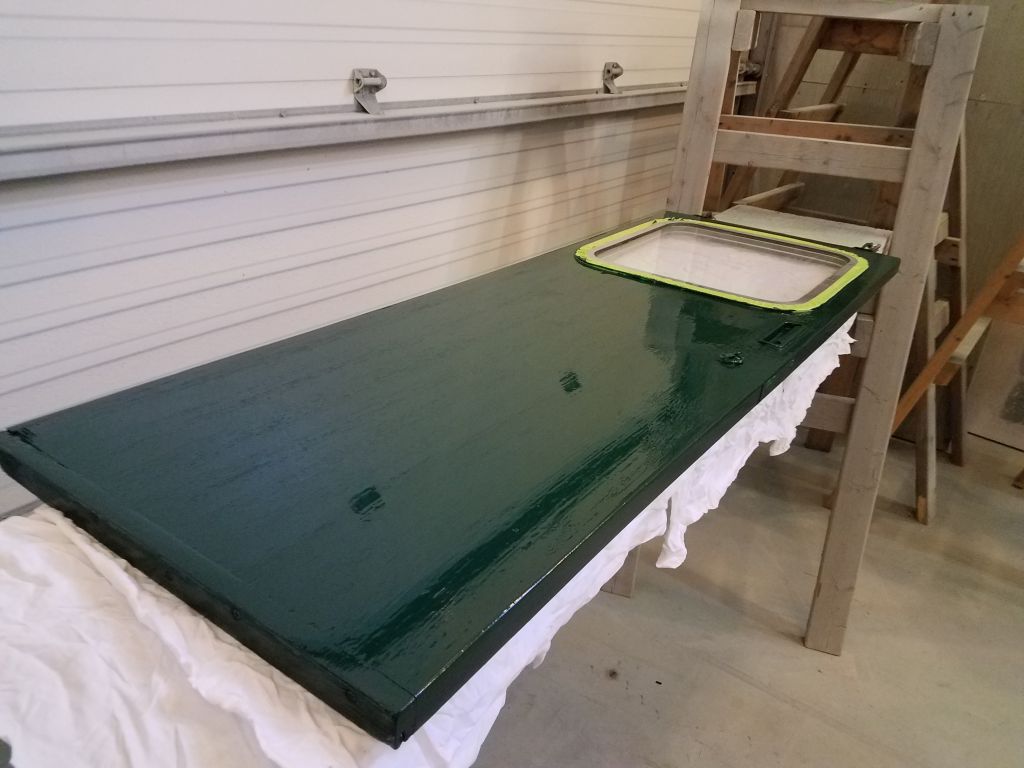
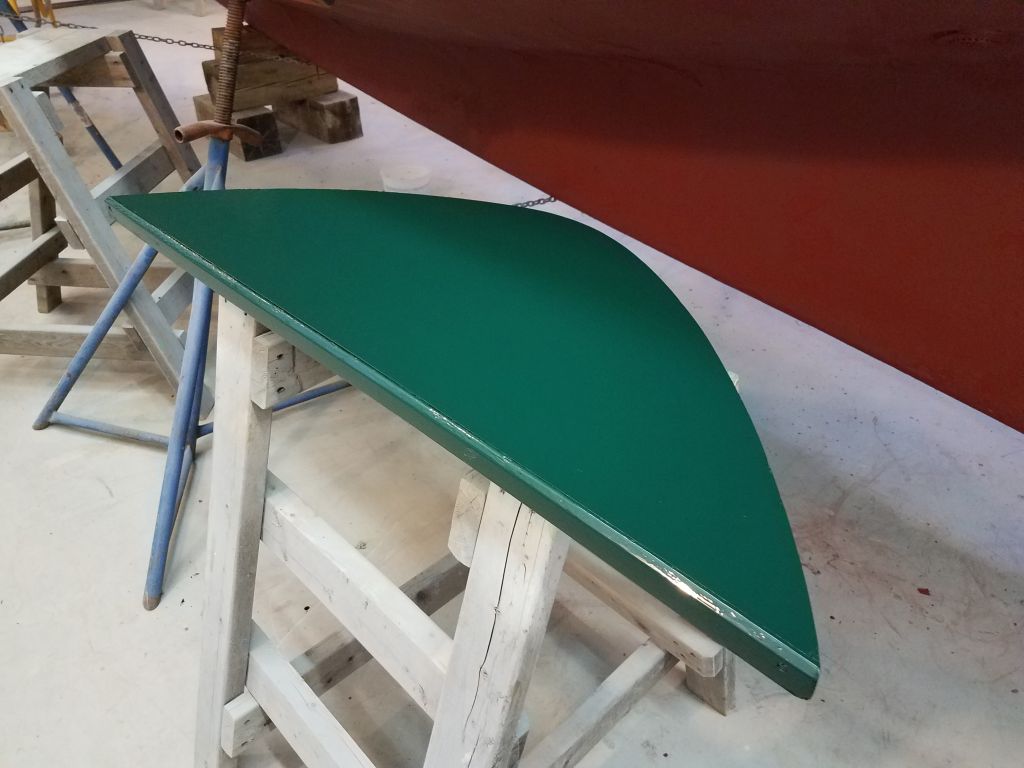
The pilothouse door (exterior side) required another coat of the green paint, so after a light sanding and final preparations, I applied more.  For the lazarette hatch, to match the original finish, I mixed some rubberized nonskid particles into the paint and applied a nonskid coat to the top surface.

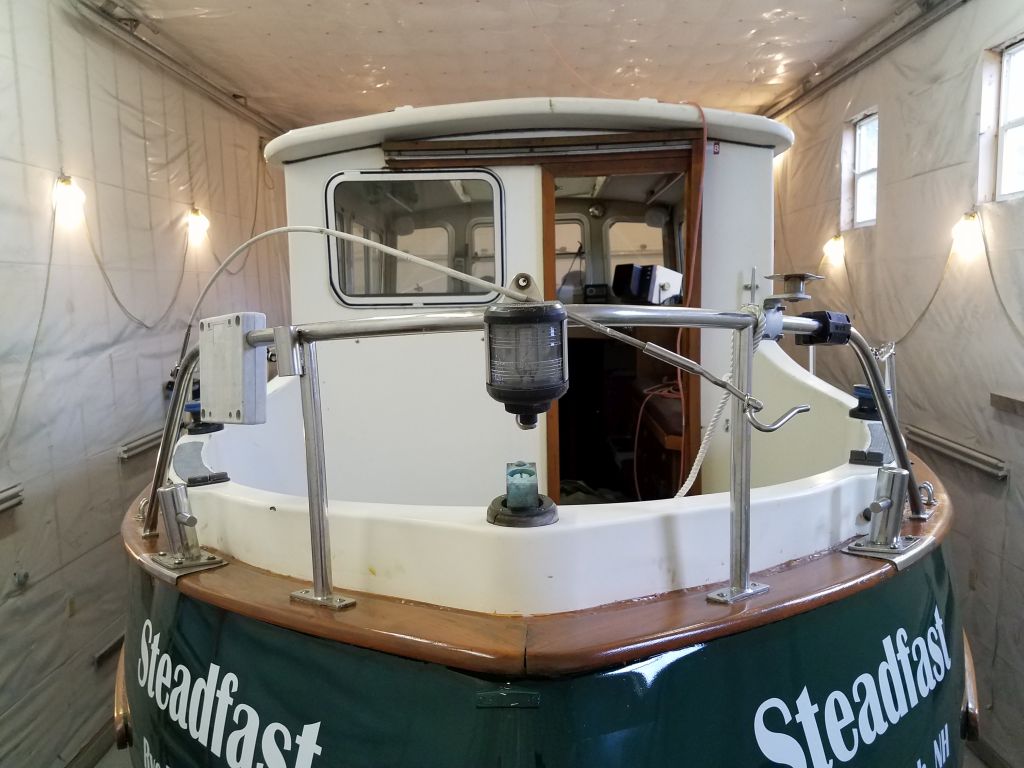
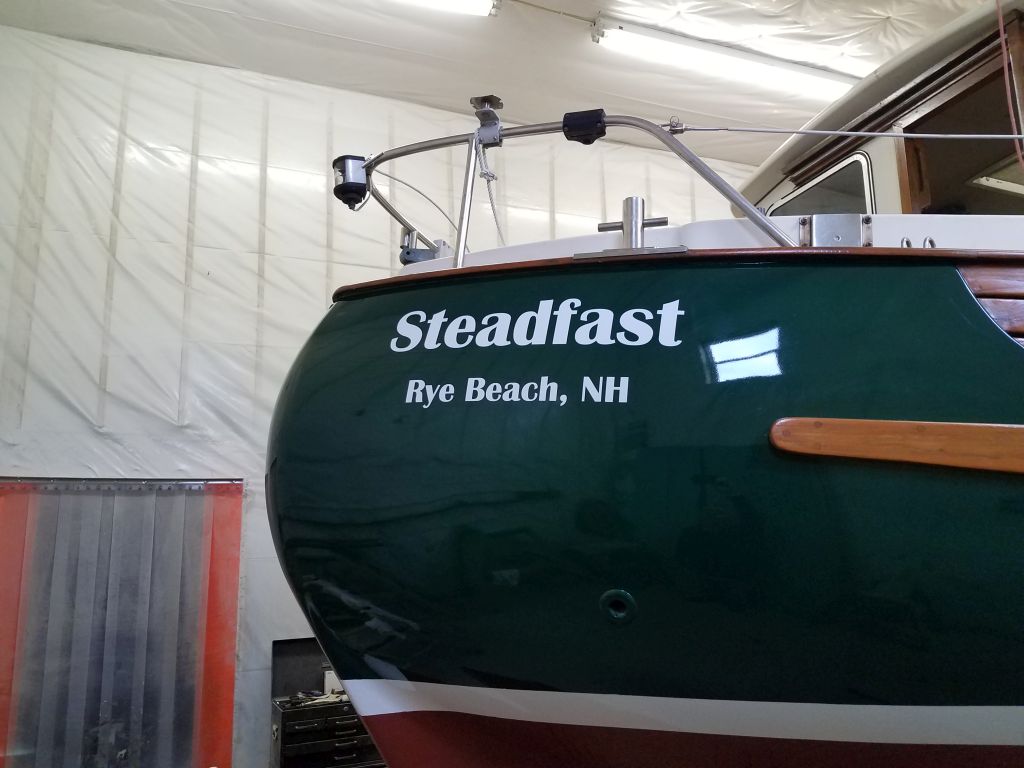
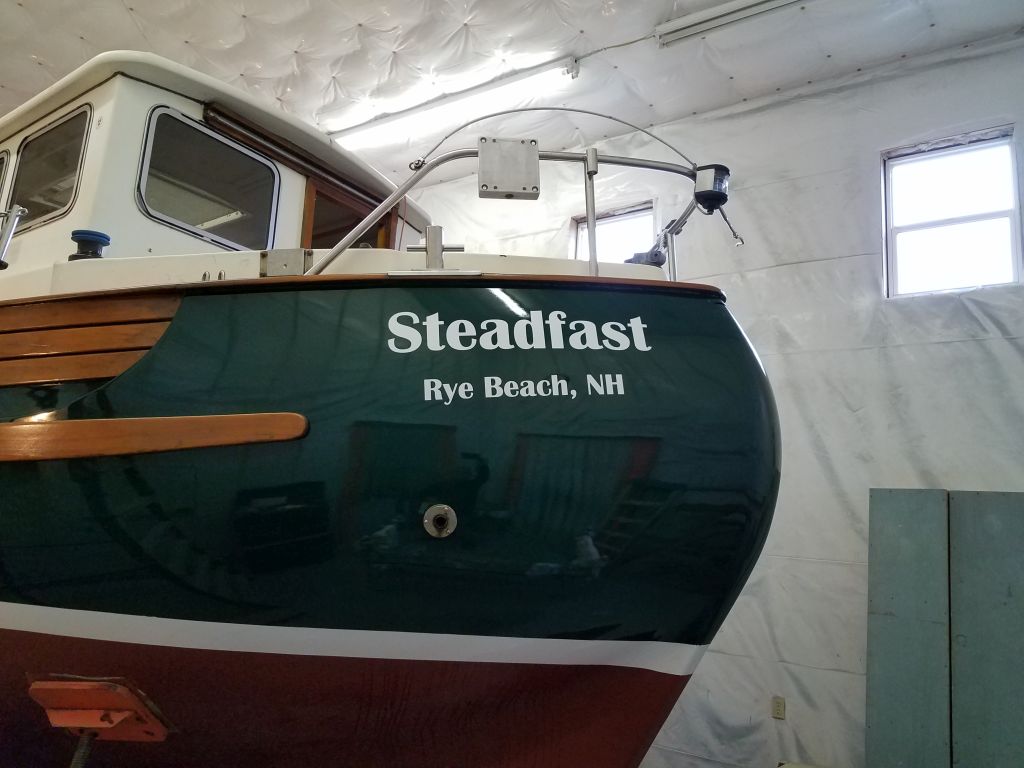
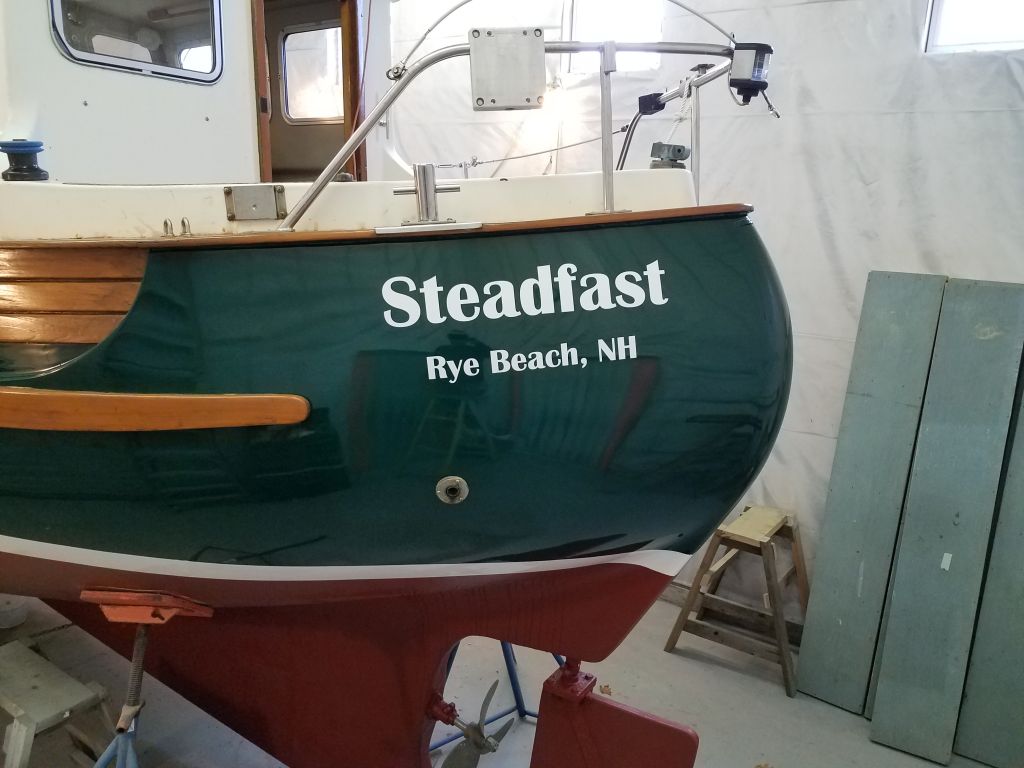
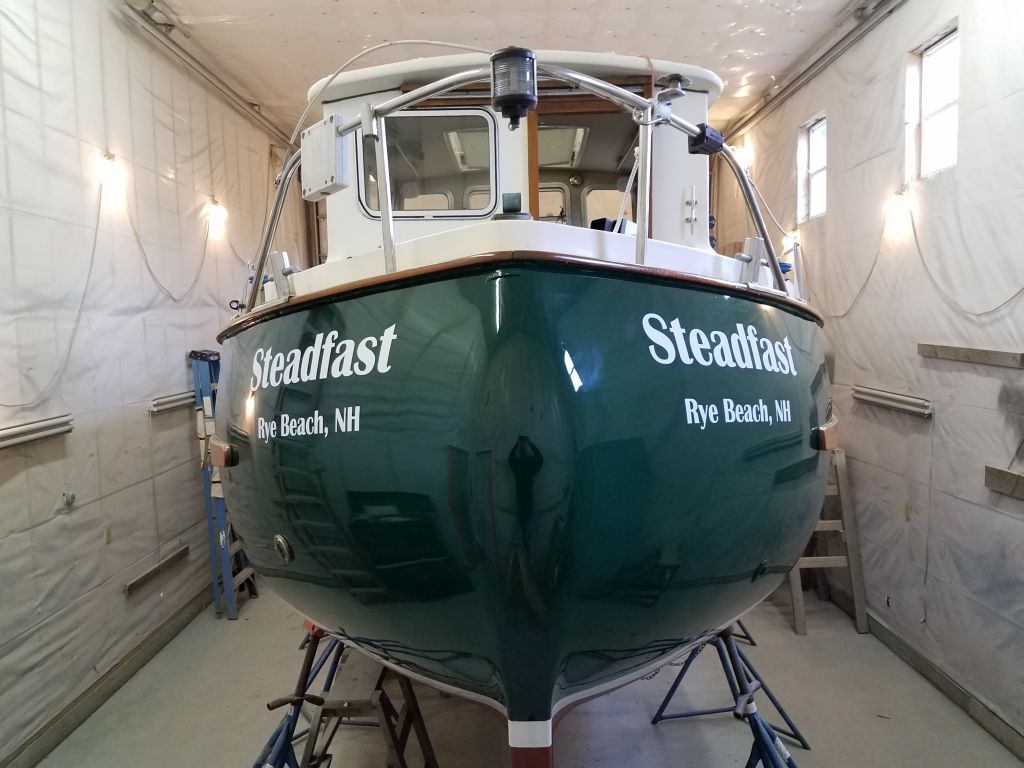
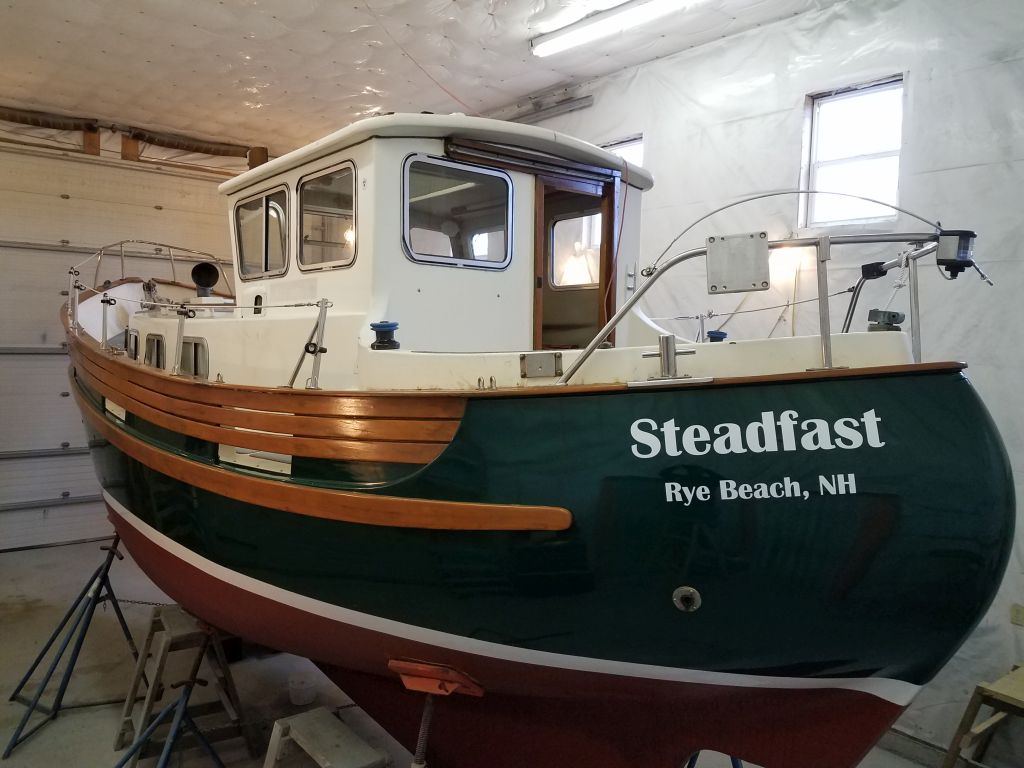
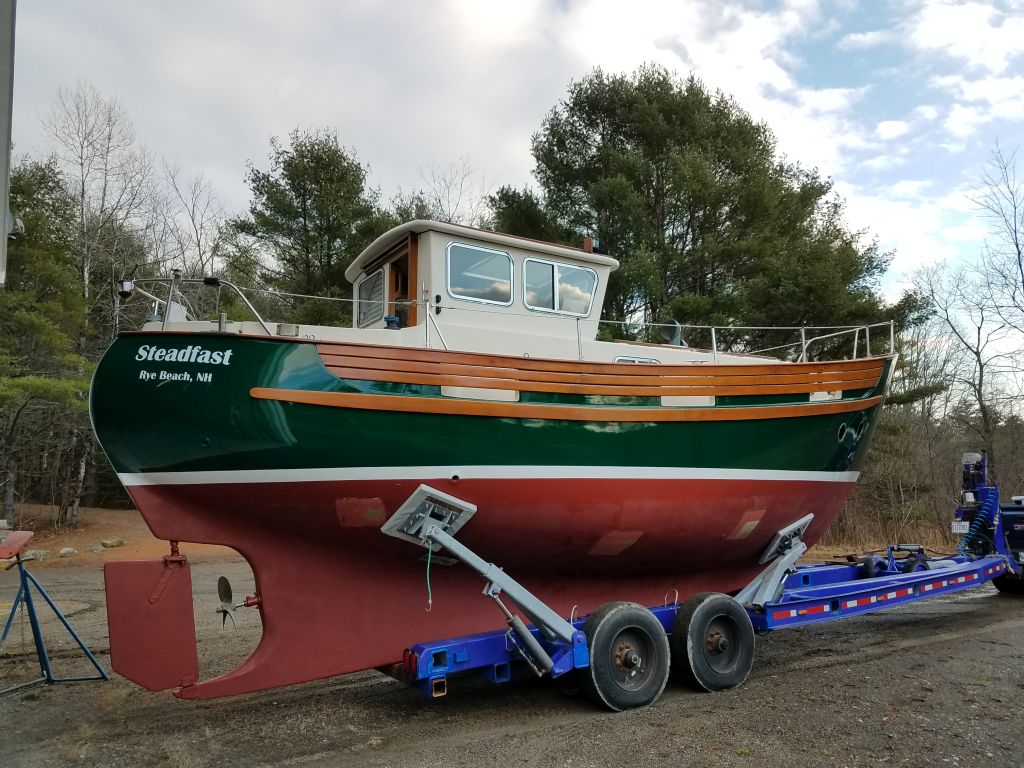
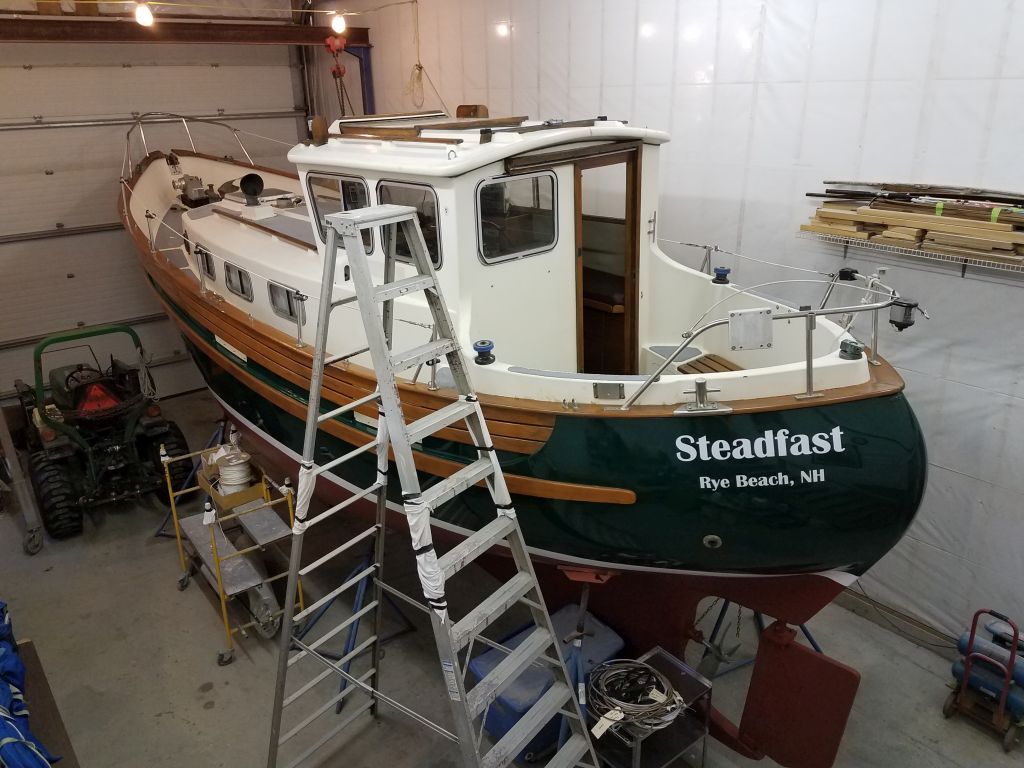
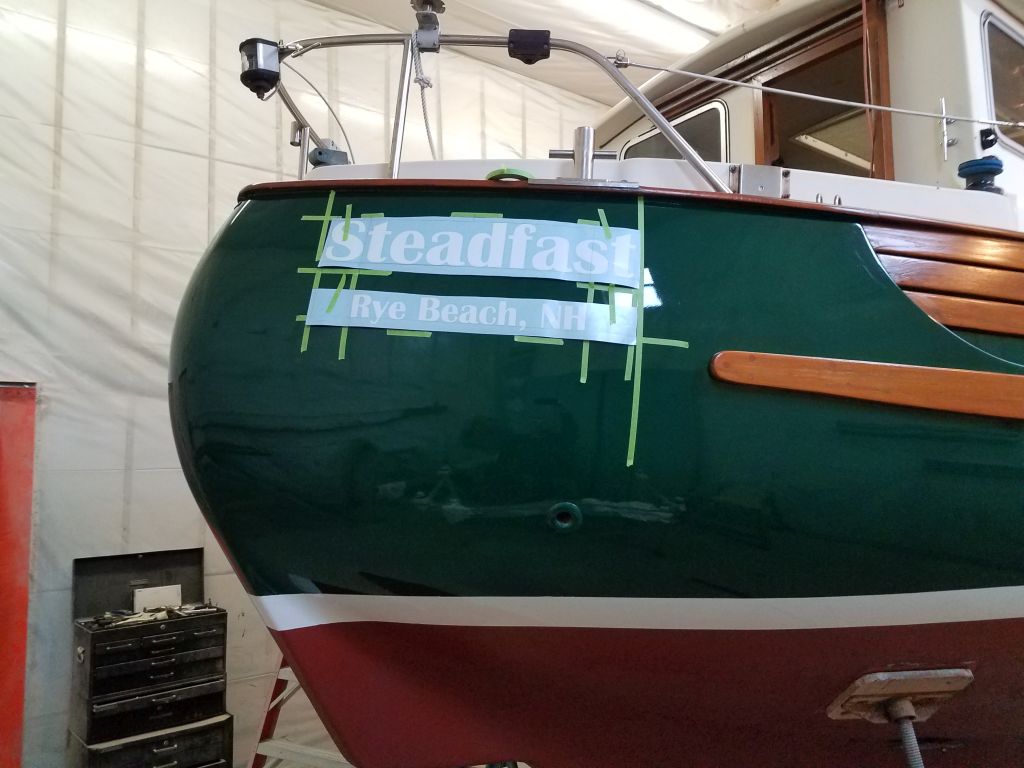
Earlier, I’d ordered and picked up new vinyl for the name and hailport according to the owner’s wishes (the font is Brittanic Bold), and now I applied these to the stern, using reference measurements I’d noted when I removed the original name at the beginning of the project.

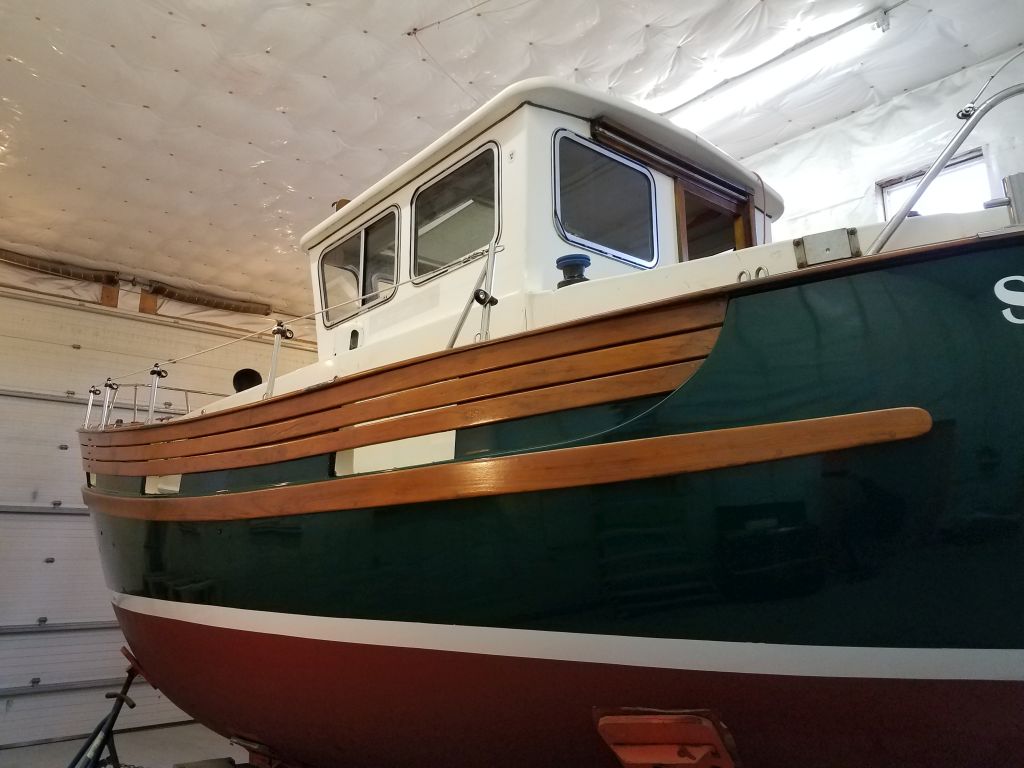
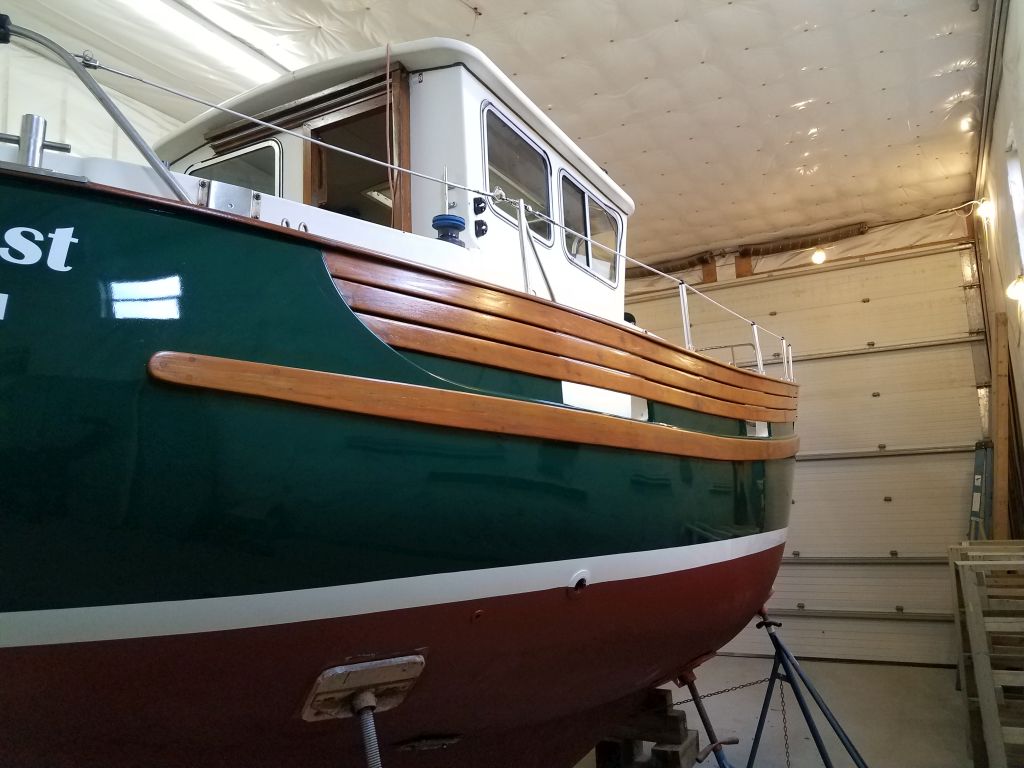
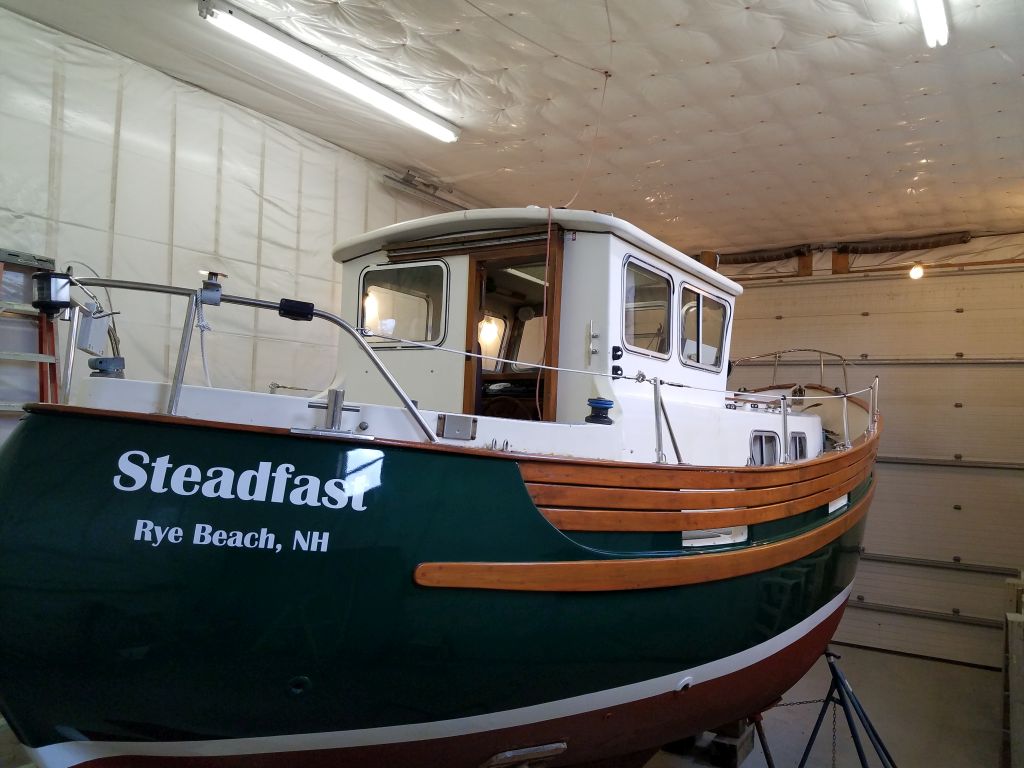
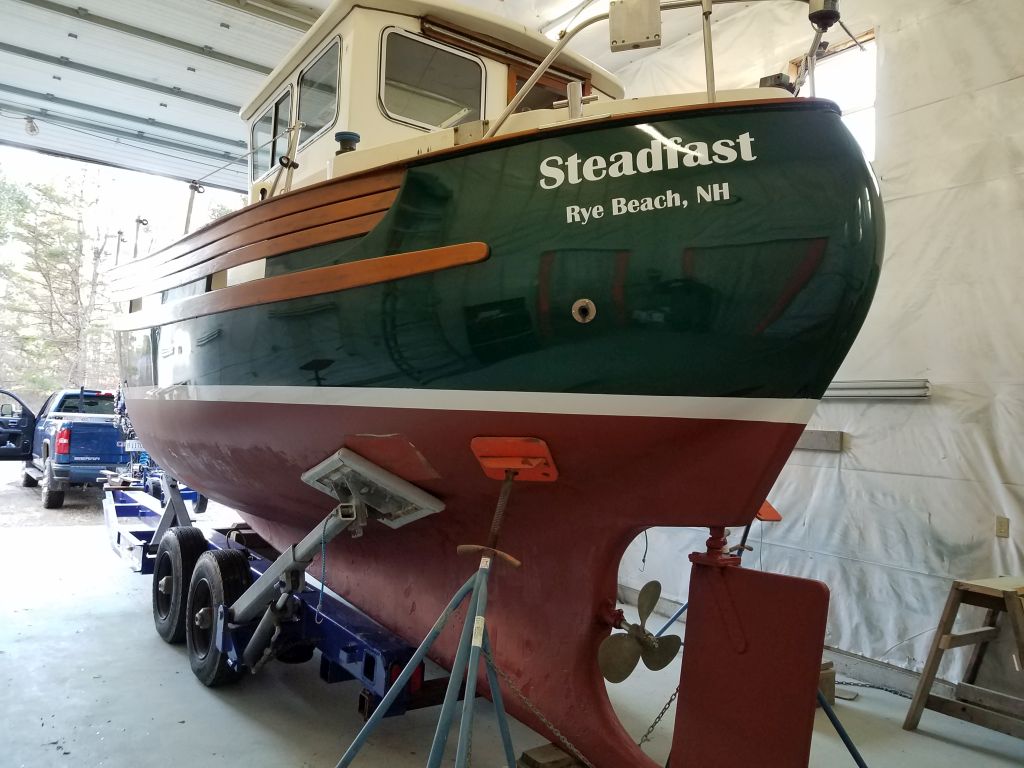
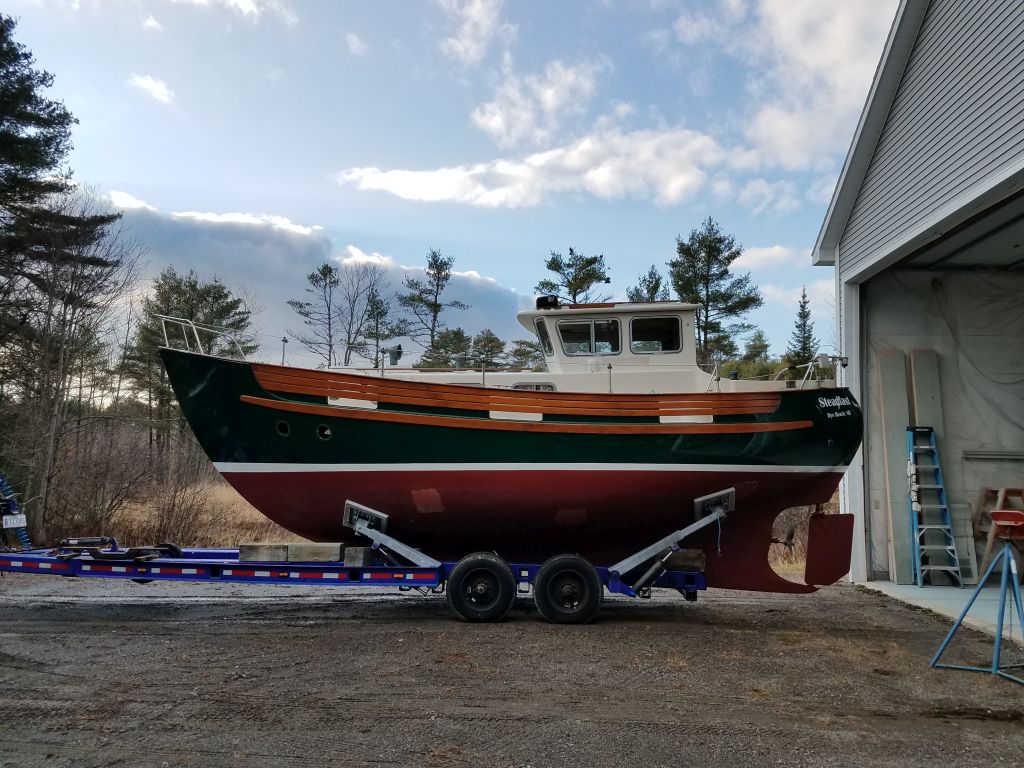
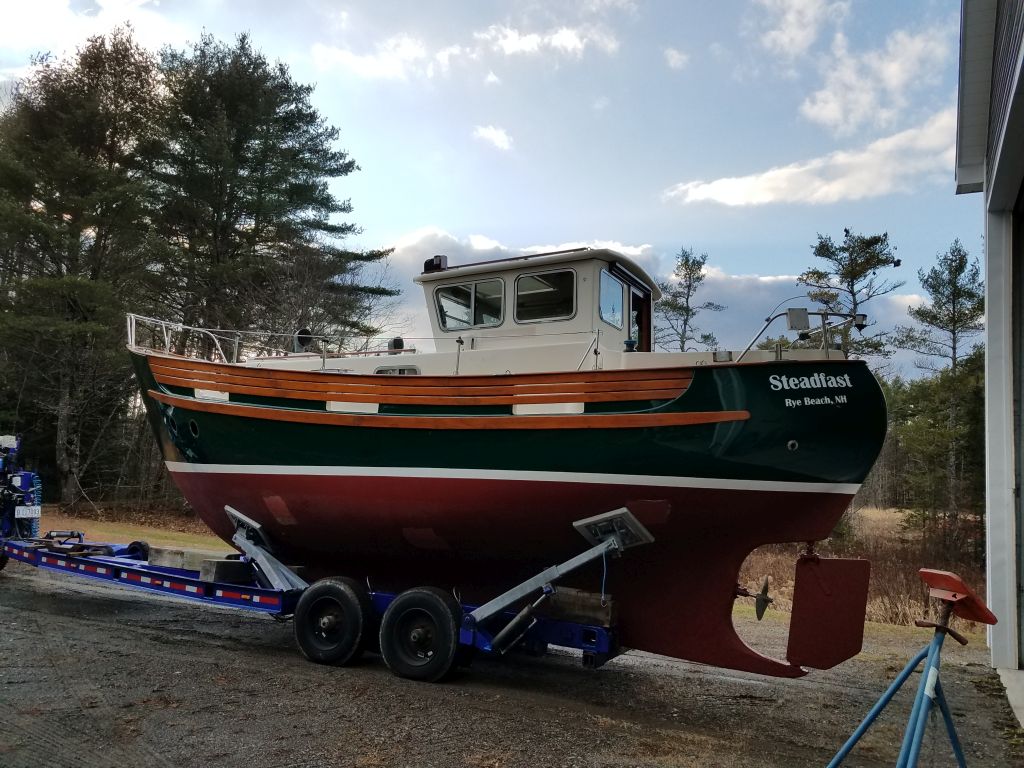
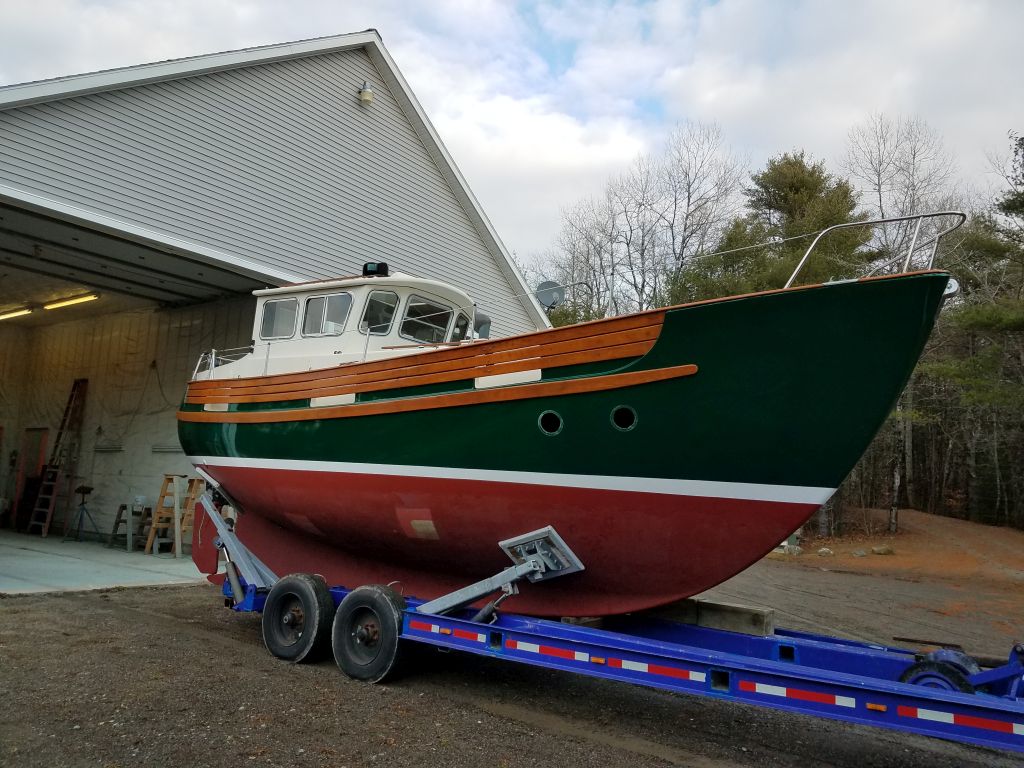
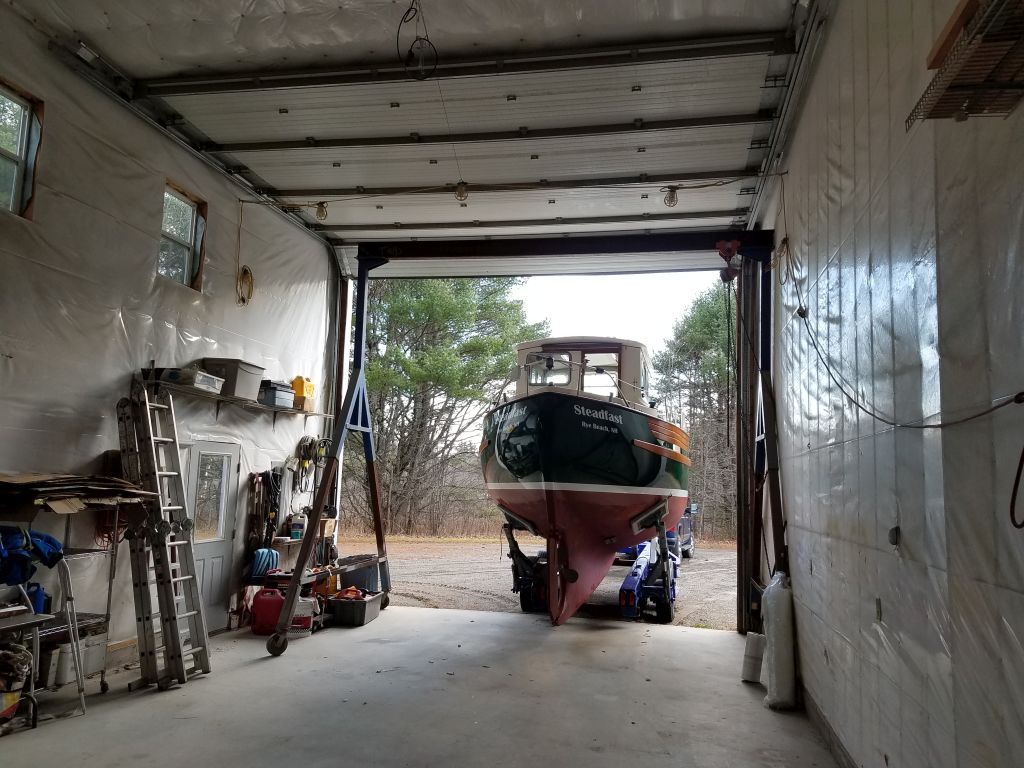
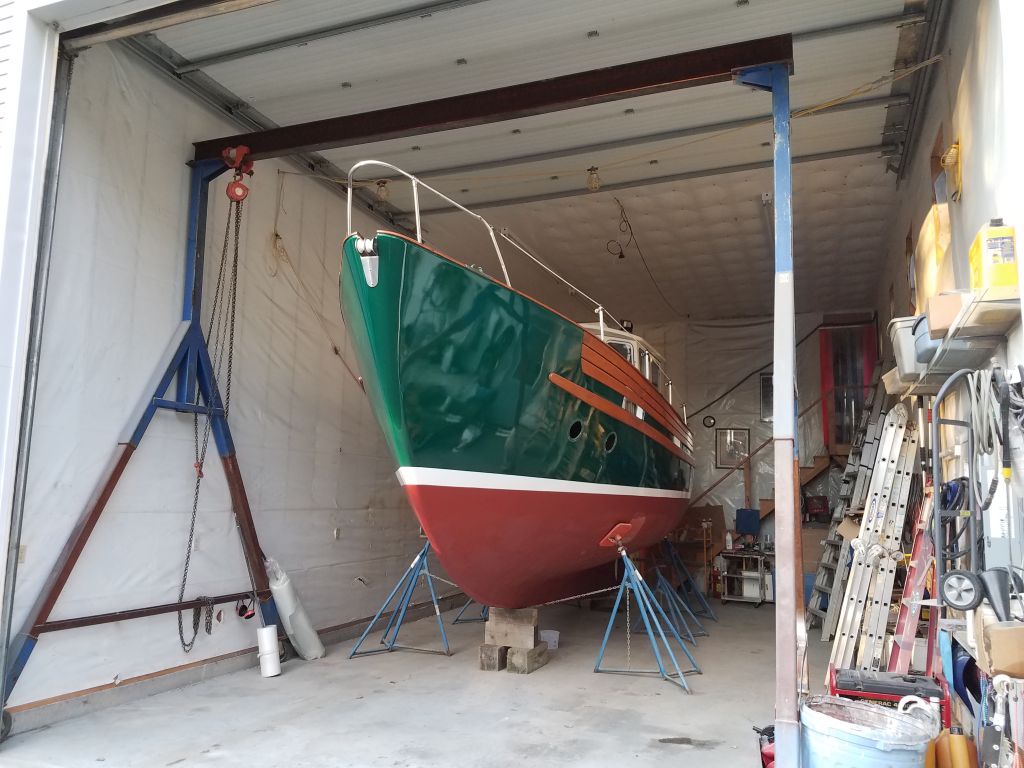
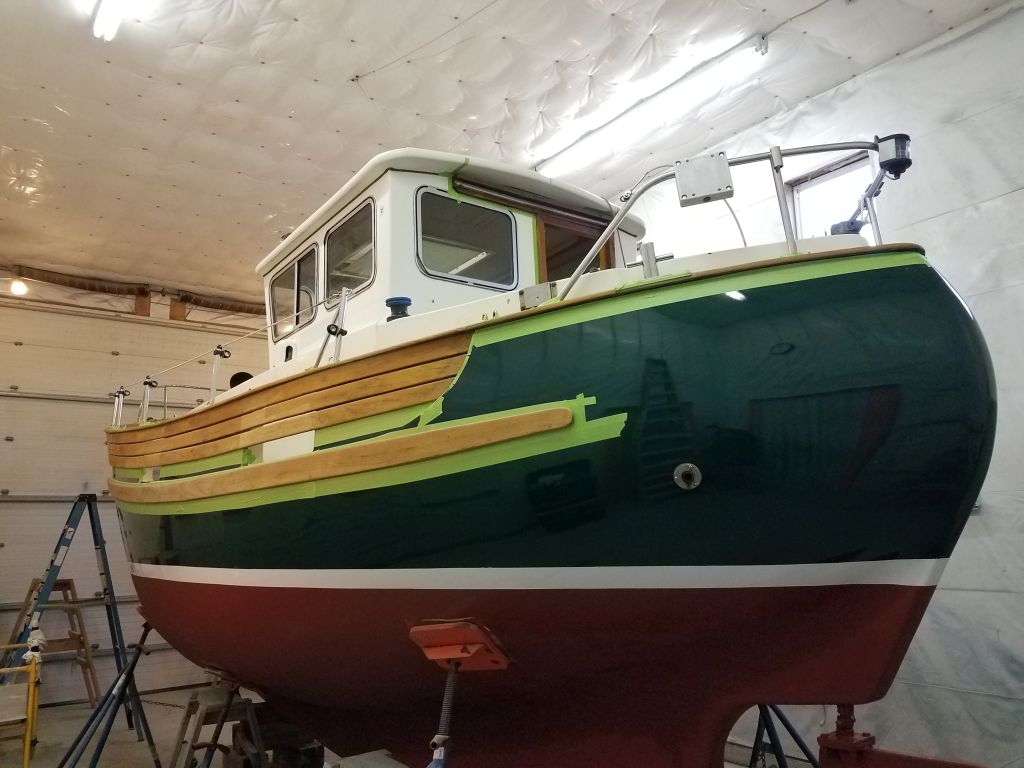
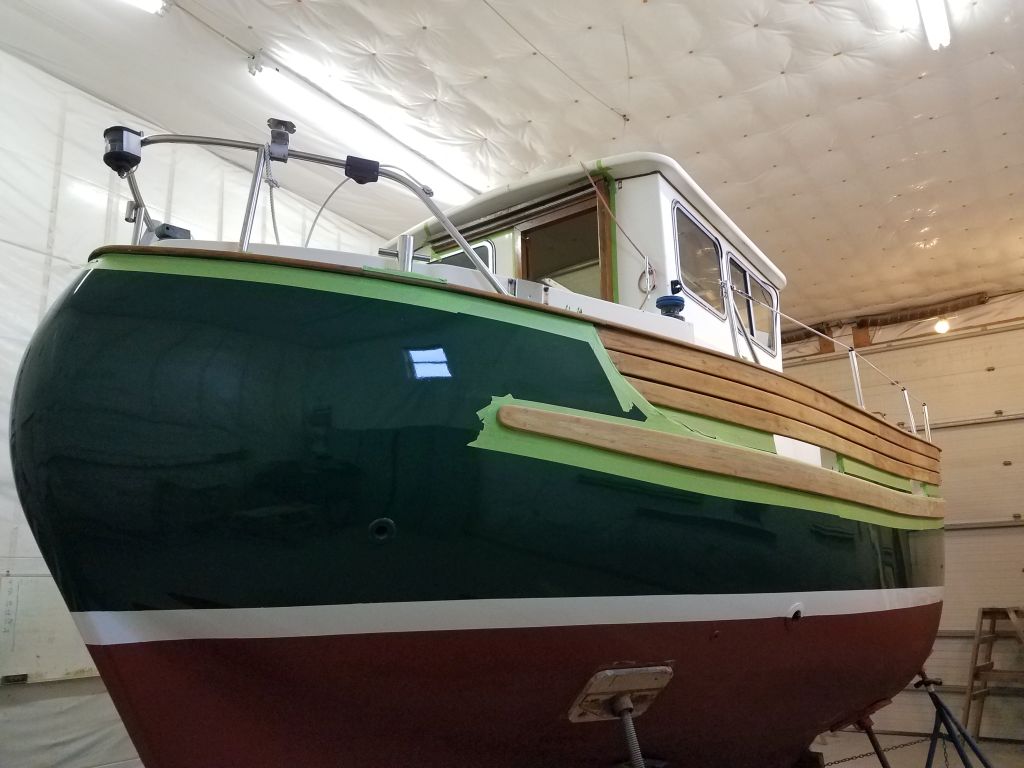
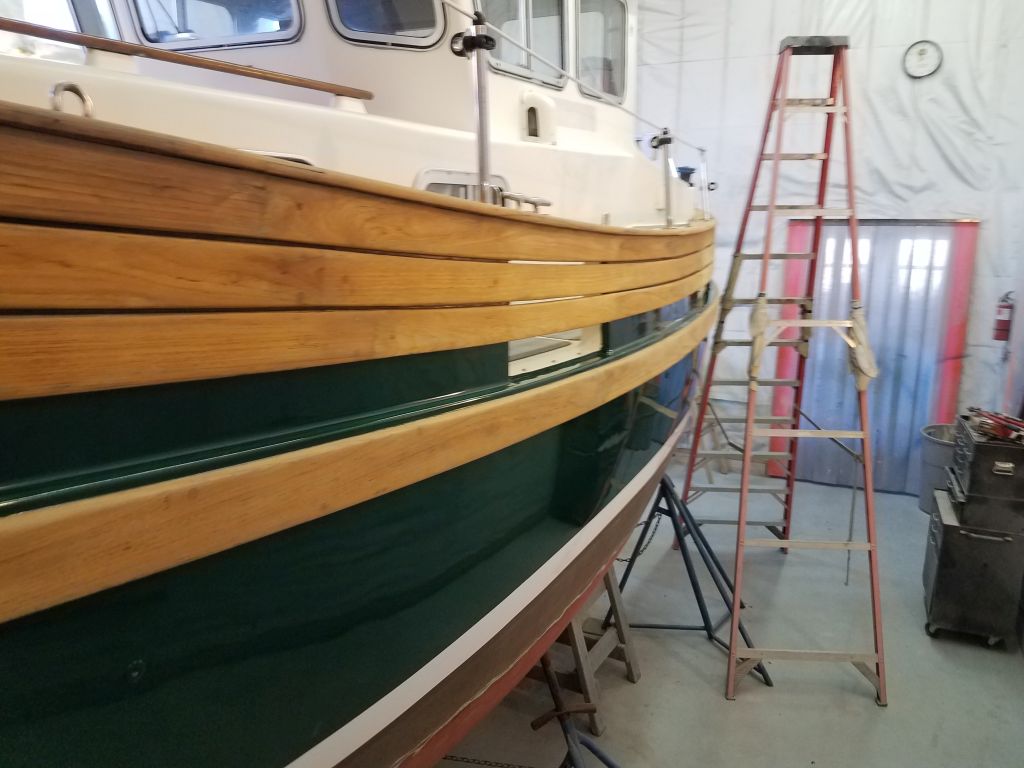
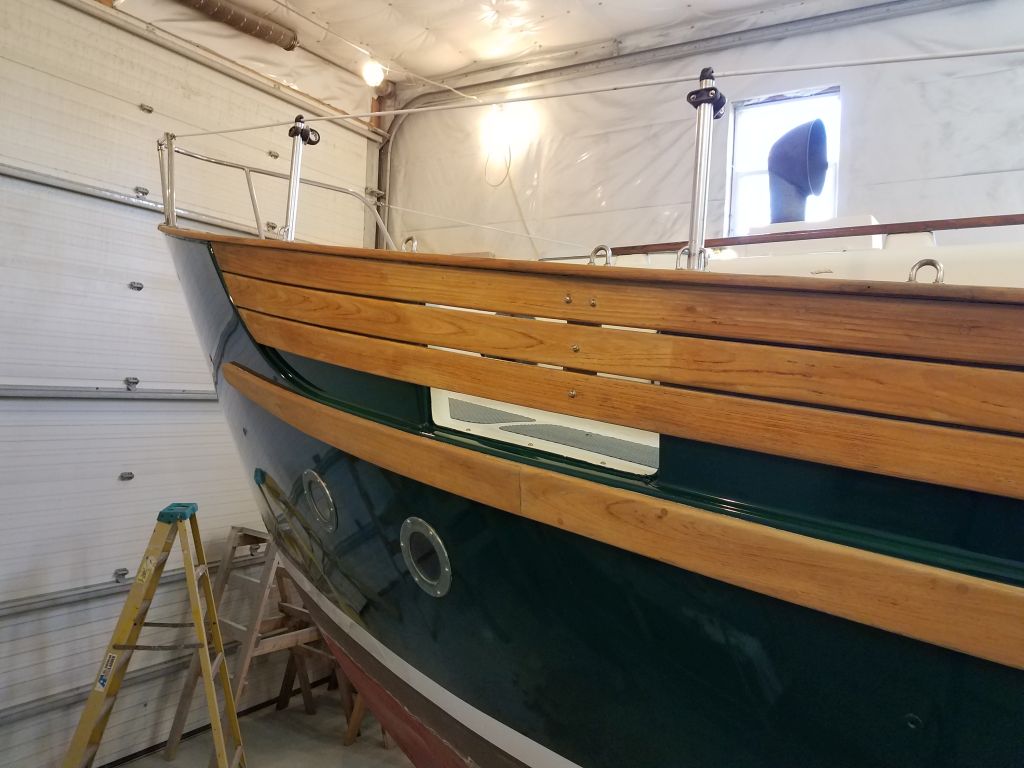
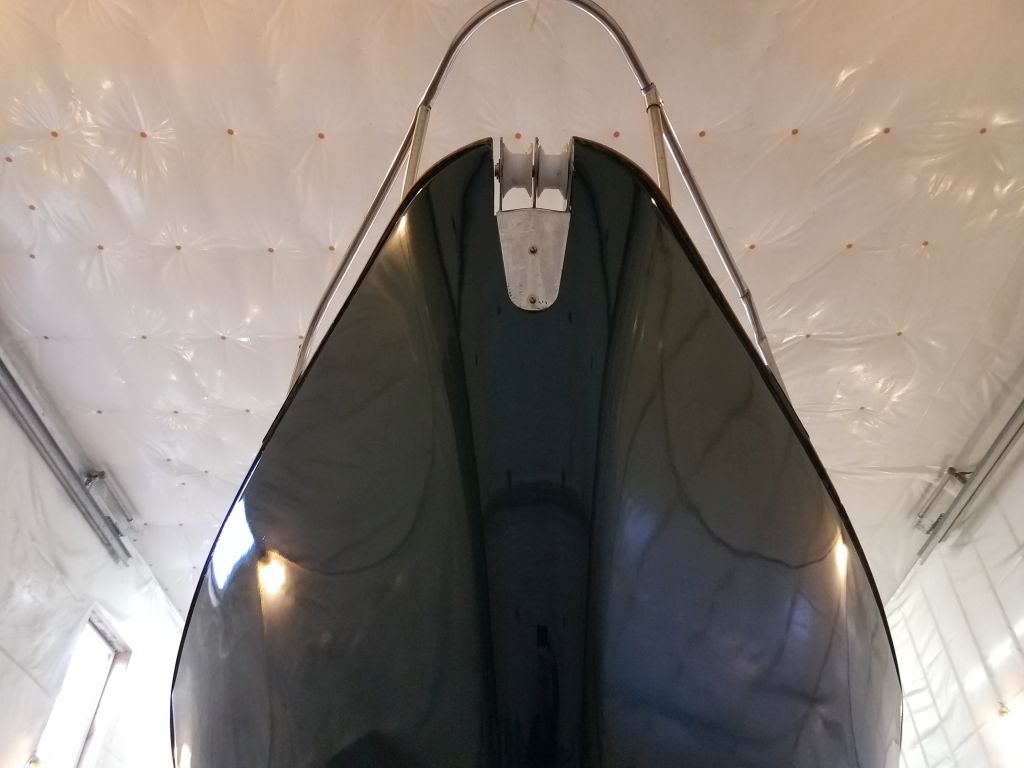
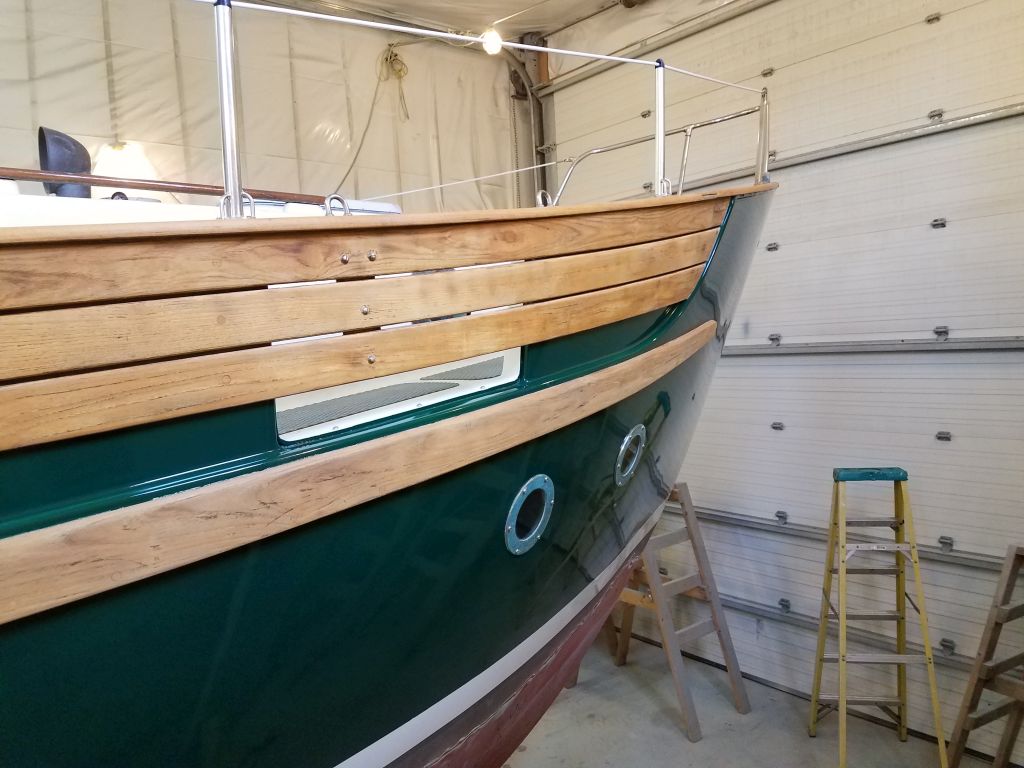
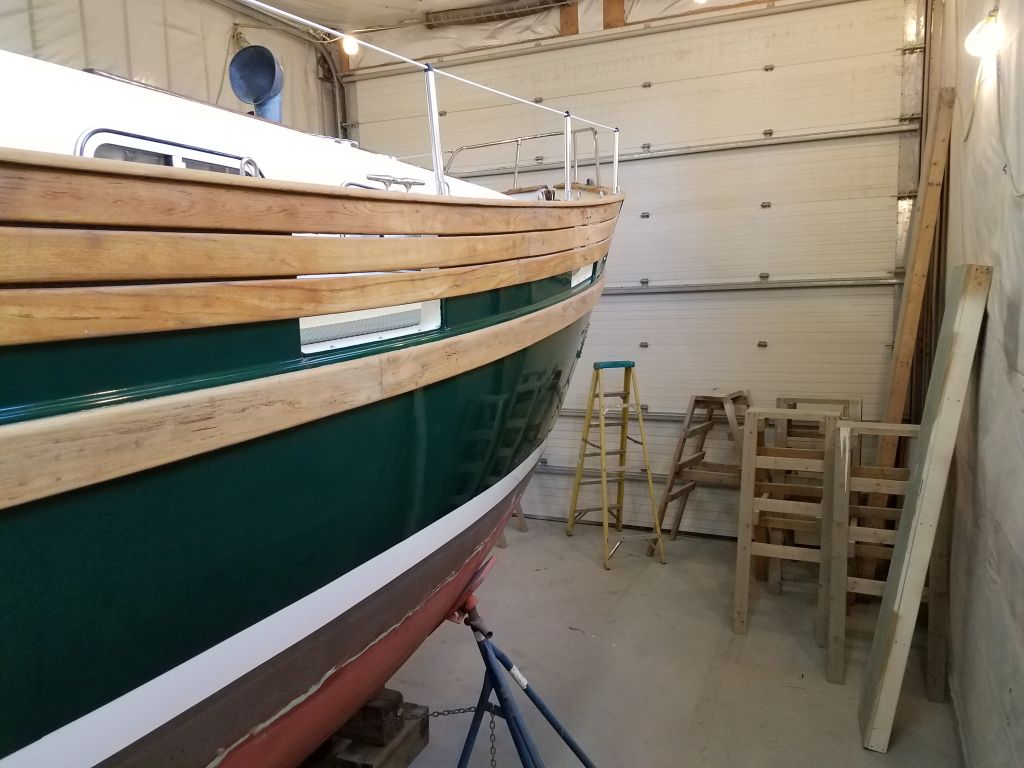
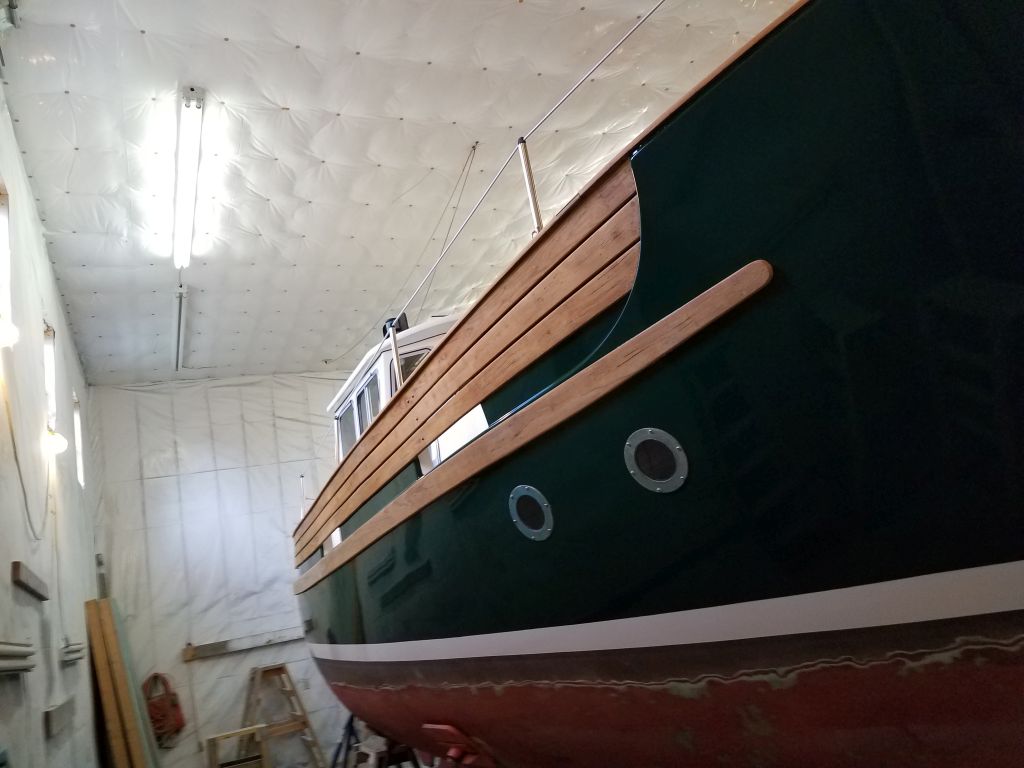
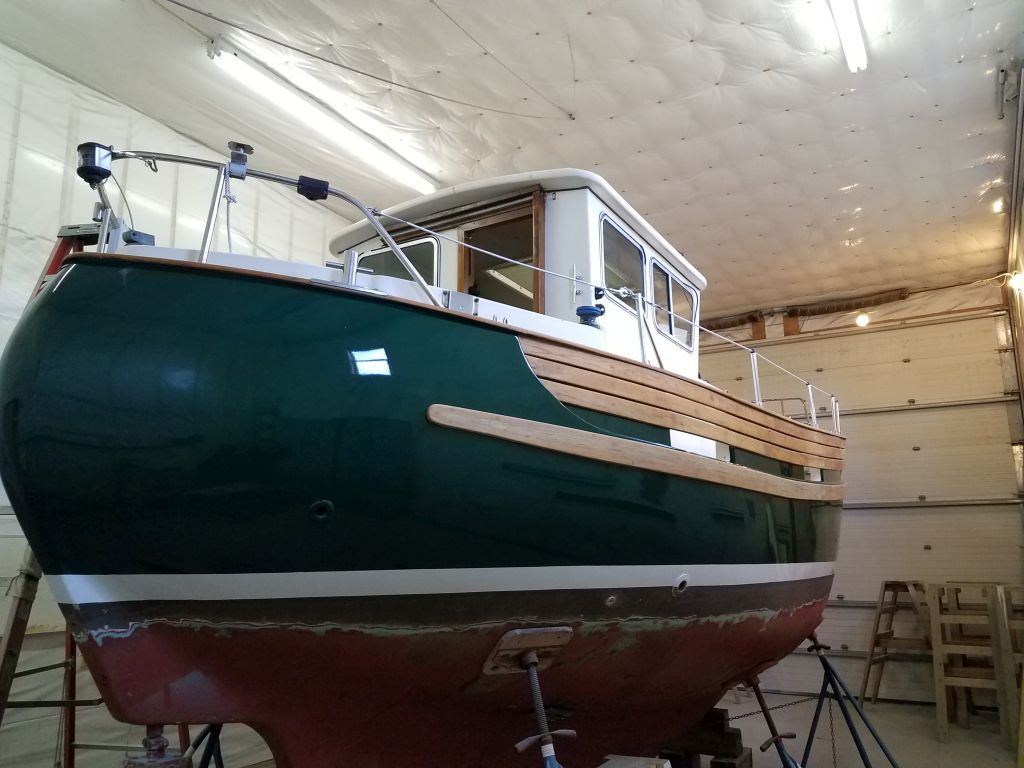
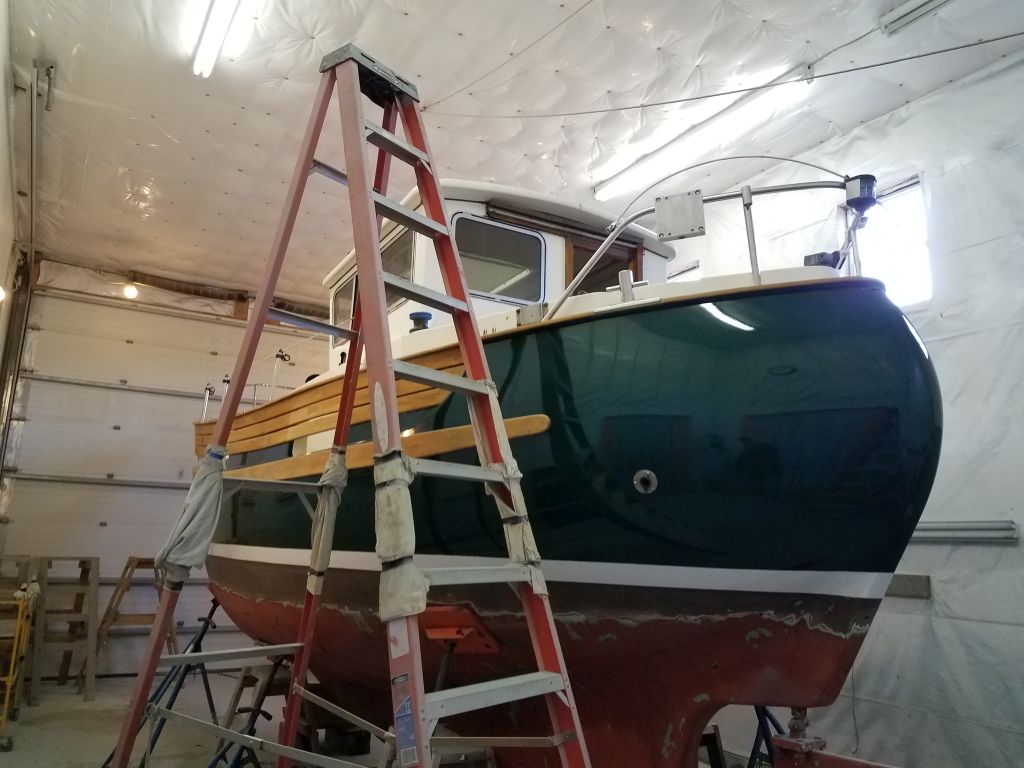
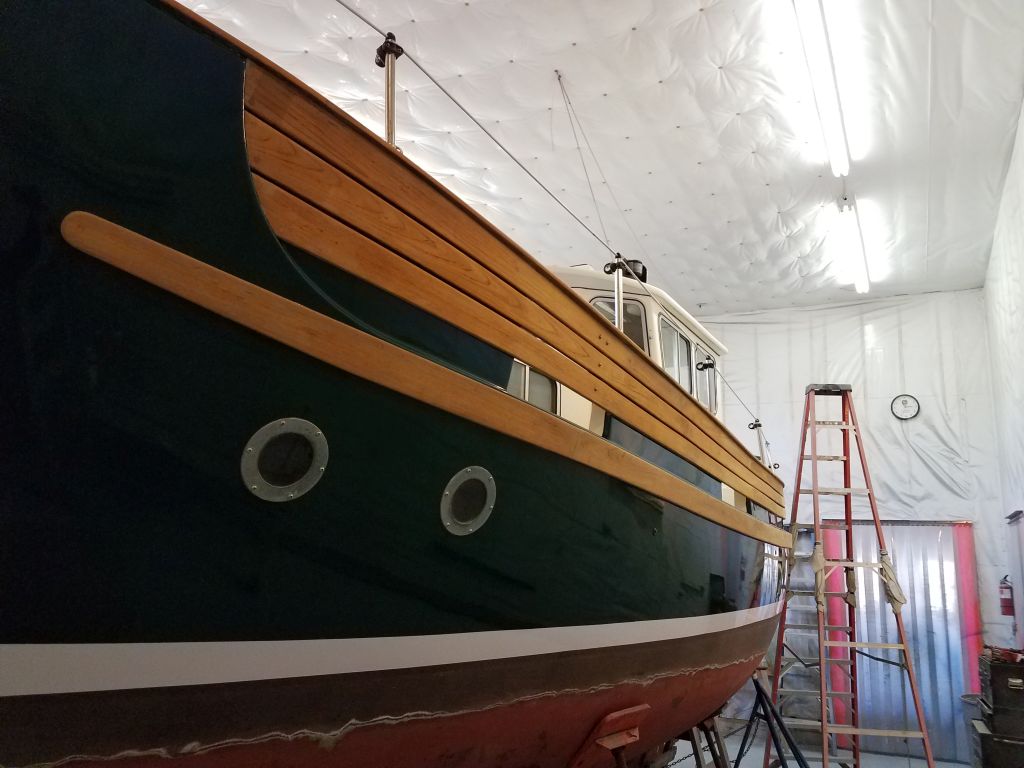
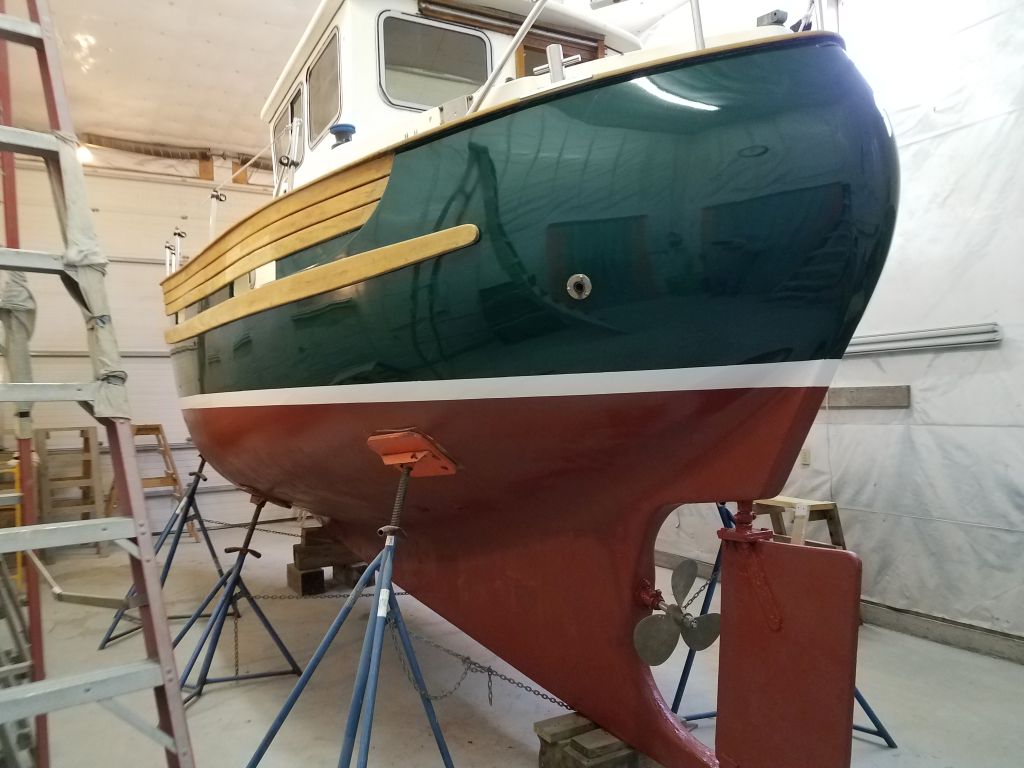
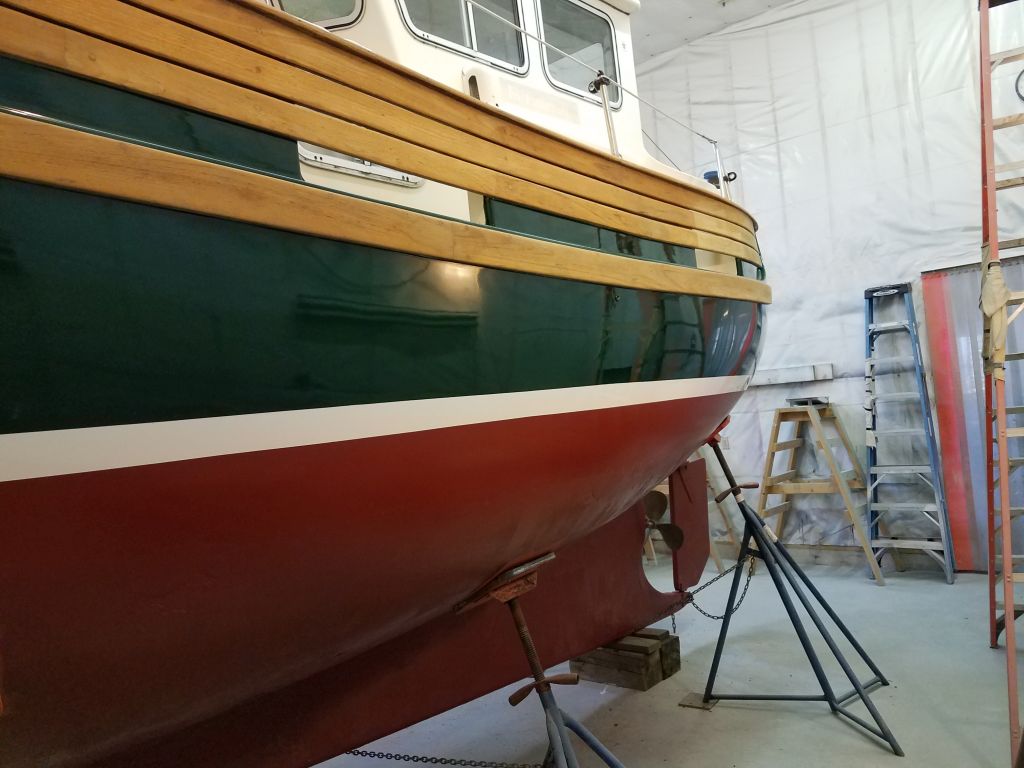
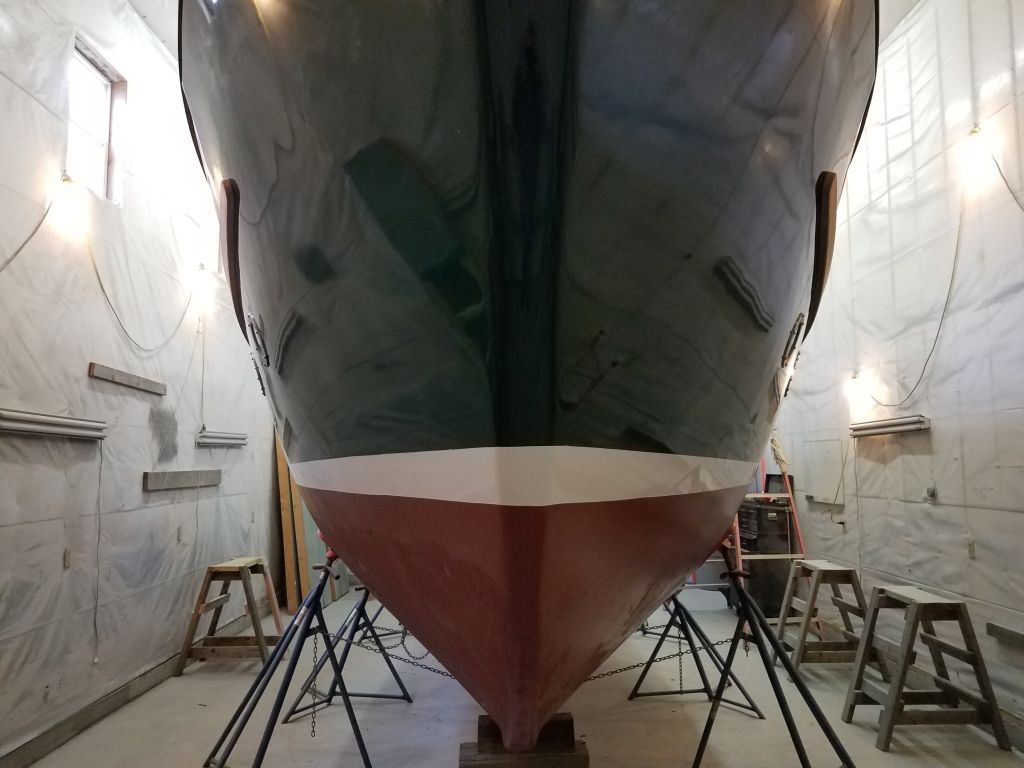
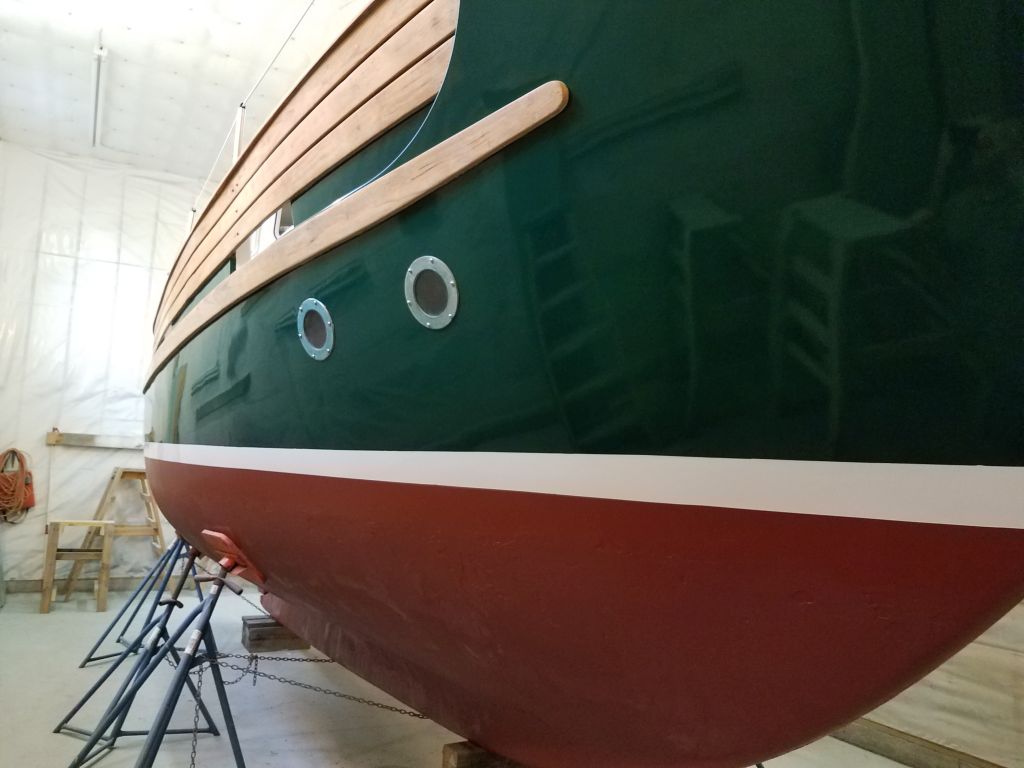
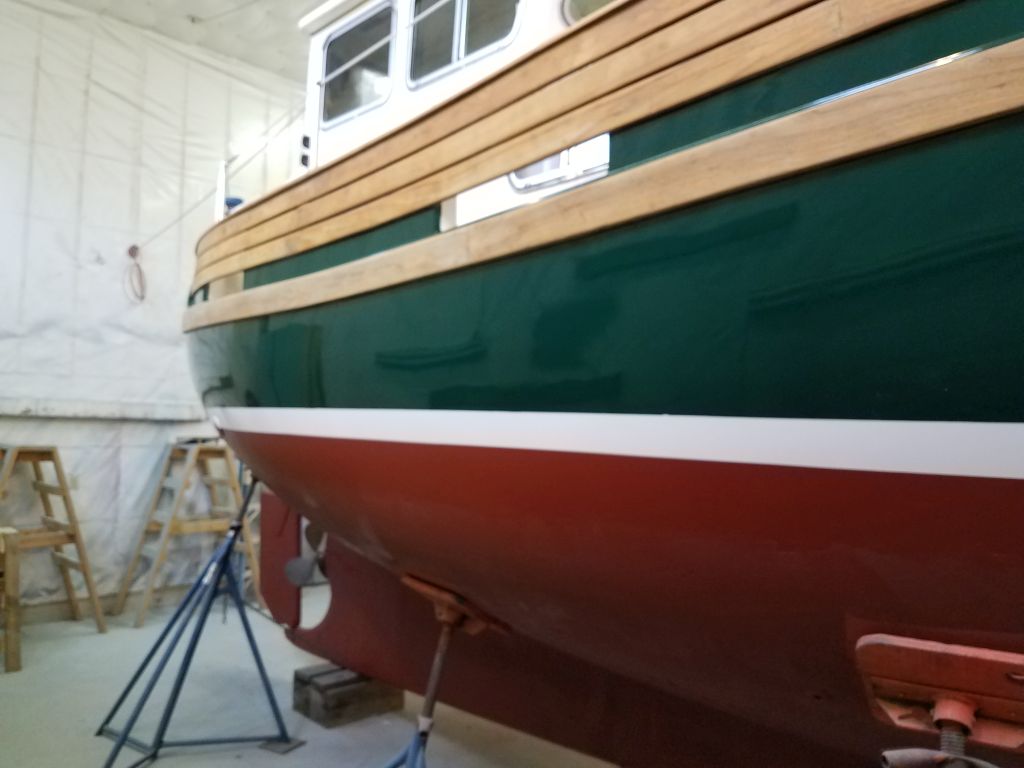
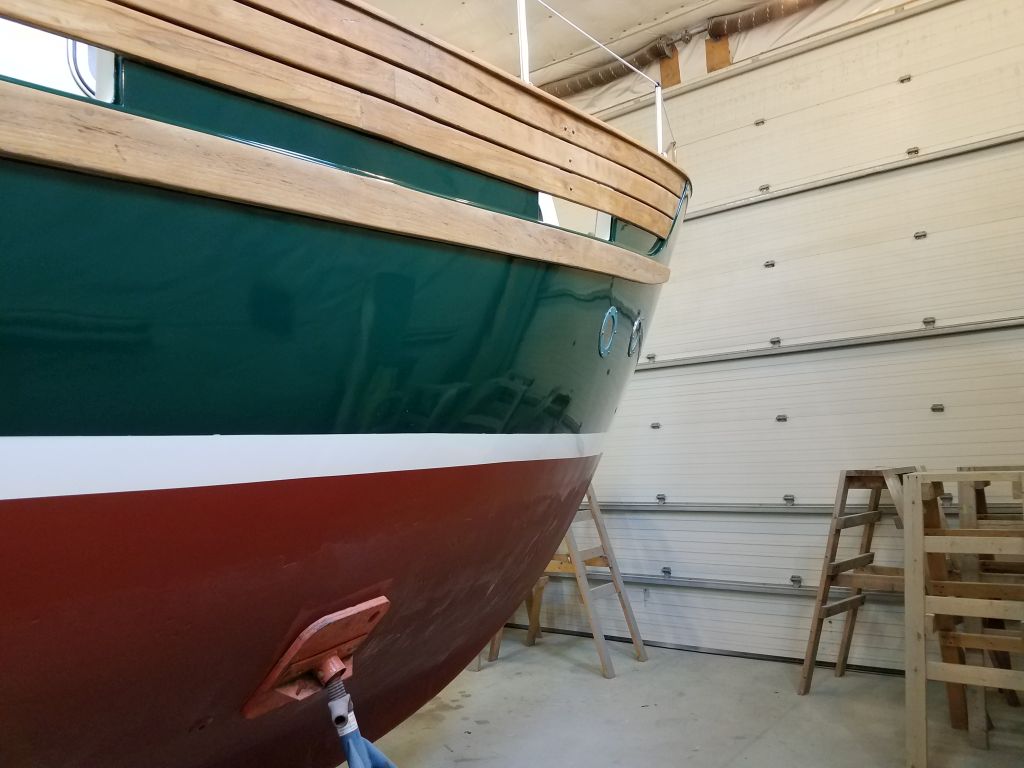
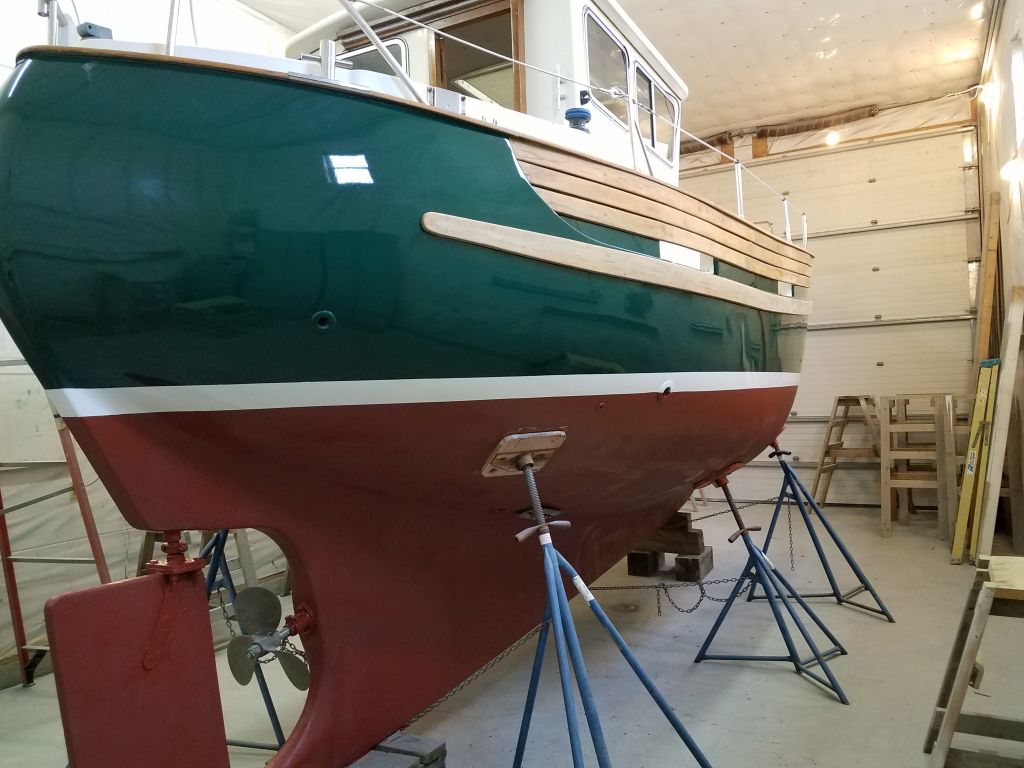
Other than a few final details, this completed the work I’d been hired to do.  The owner had made arrangements with me to store the boat indoors during the winter, but I couldn’t keep her in my main work bay, so I spent the afternoon shuffling boats (I had first to move out a boat in the other bay to make room)  so I could move Steadfast into the other bay for comfy storage.  This gave a good opportunity to have a look at the refinished topsides from a distance, though the winter light was low  and hidden in a cloud bank, so failed to give a true sense of the vibrancy of the jade green hull.

Total time billed on this job today:  4.25 hours

0600 Weather Observation:  Clouds and a shower, 40°.  Forecast for the day:  Clearing, high near 50

Steadfast 27

< Back to Steadfast

Thursday

I applied the third and last coat of finish to the brightwork during the morning.

Afterwards, I turned once again to the pilothouse door and lazarette hatch.  The hatch required a second coat of paint on all areas, and I turned the door over so I could paint the second (outside) side.

Total time billed on this job today:  3 hours

0600 Weather Observation:  20°, clear.  Forecast for the day:  sunny, increasing clouds in the afternoon, upper 30s

Steadfast 26

< Back to Steadfast

Wednesday

During the morning, I applied the second coat of Cetol to the exterior woodwork.  Later, I spent some additional time running errands related to the project.

Total time billed on this job today:  4 hours

0600 Weather Observation:  40°, clear.  Forecast for the day:  Partly sunny, 50°

Steadfast 25

< Back to Steadfast

Tuesday

I got right to work on the first coat of finish for the exterior woodwork.  The owner chose Cetol Lite for the finish, the same product that had been used previously.  On the various bits and pieces on the pilothouse and coachroof, I applied a maintenance coat over the existing finish, as I’d not stripped these areas.

For the caprails, I applied the first of three coats of the new finish, working my way around the boat up one side and down the other.

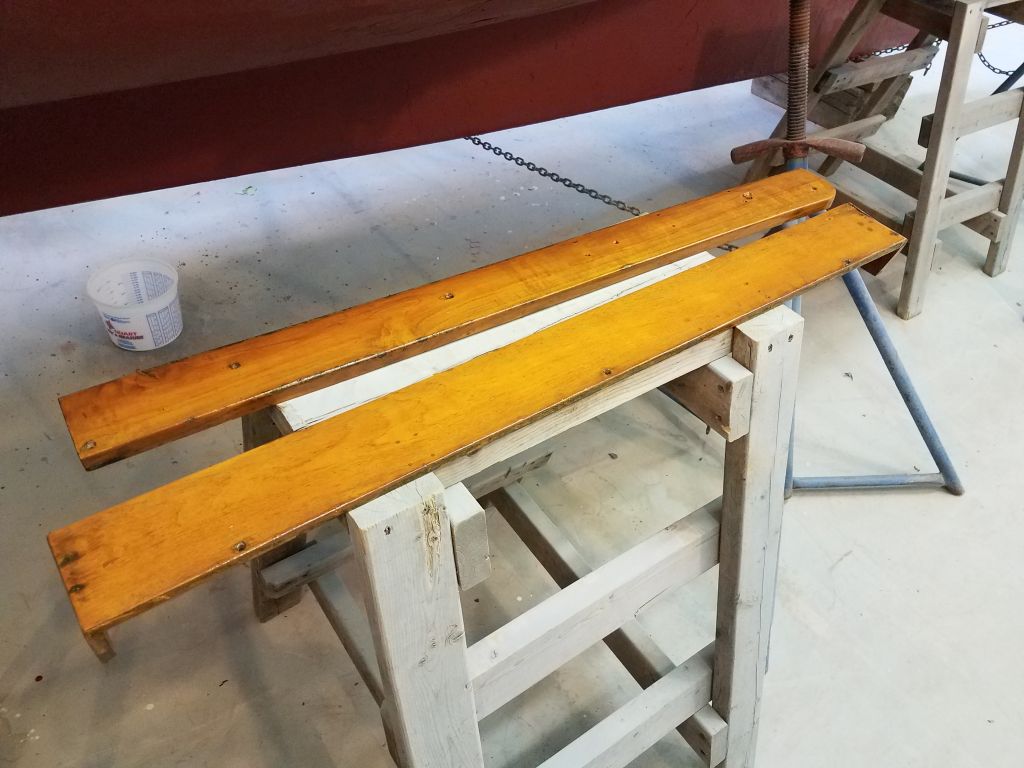
I continued with the bulwarks and rubrails on both sides, along with some loose parts including the cockpit seats and some trim from the pilothouse door.

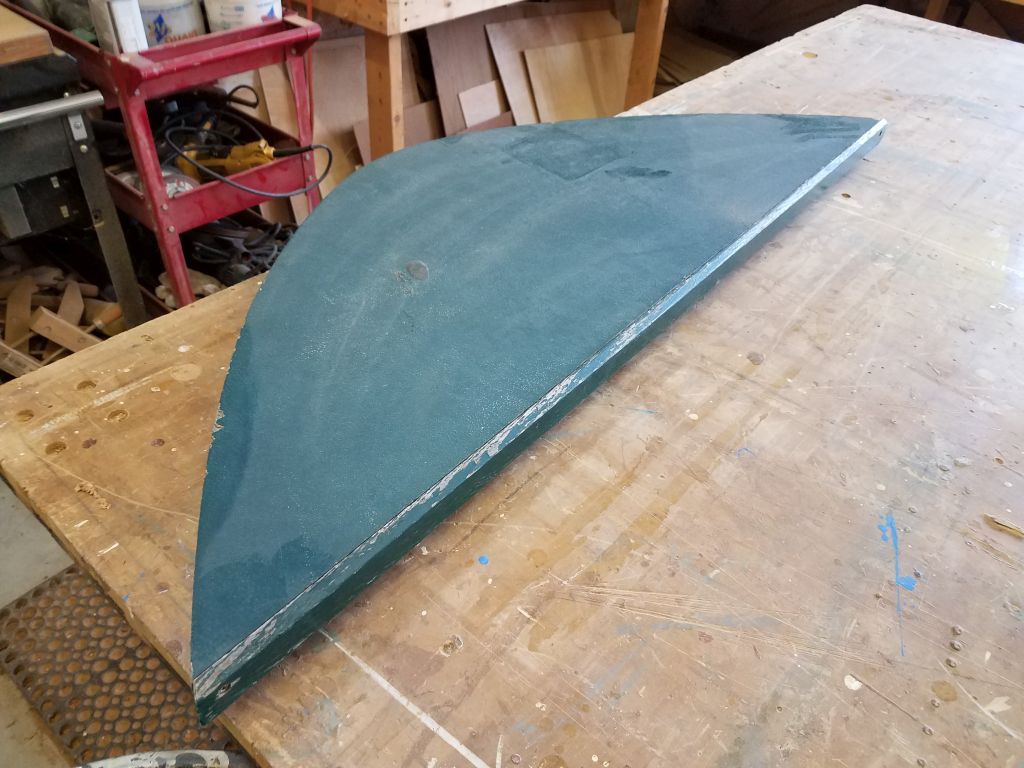
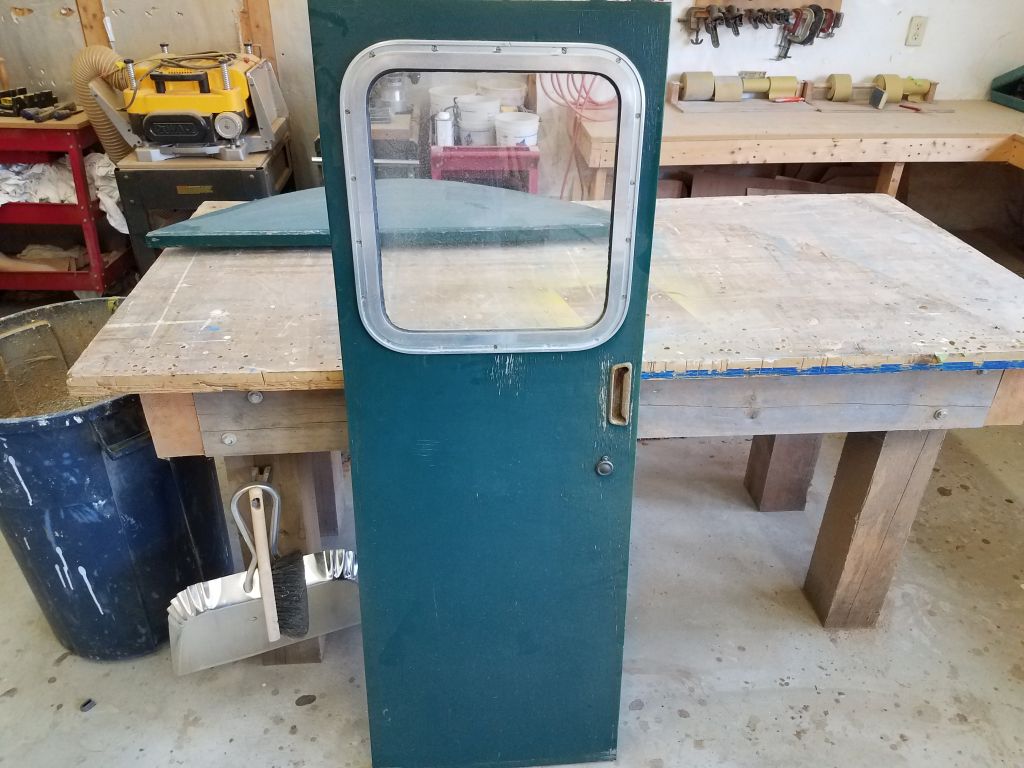
The pilothouse door and a small lazarette hatch cover had been painted green in the past, matching the hull color.  The finish was weathered and worn, but generally sound on both parts, so preparation was a straightforward matter of light sanding and cleanup.  Afterwards, I painted the lazarette and the inside/back side of the pilothouse door with one-part green paint that matched the new hull color.

Total time billed on this job today:  5 hours

0600 Weather Observation:  12°, clear.  Forecast for the day:  sunny, 30s

Steadfast 24

< Back to Steadfast

Monday

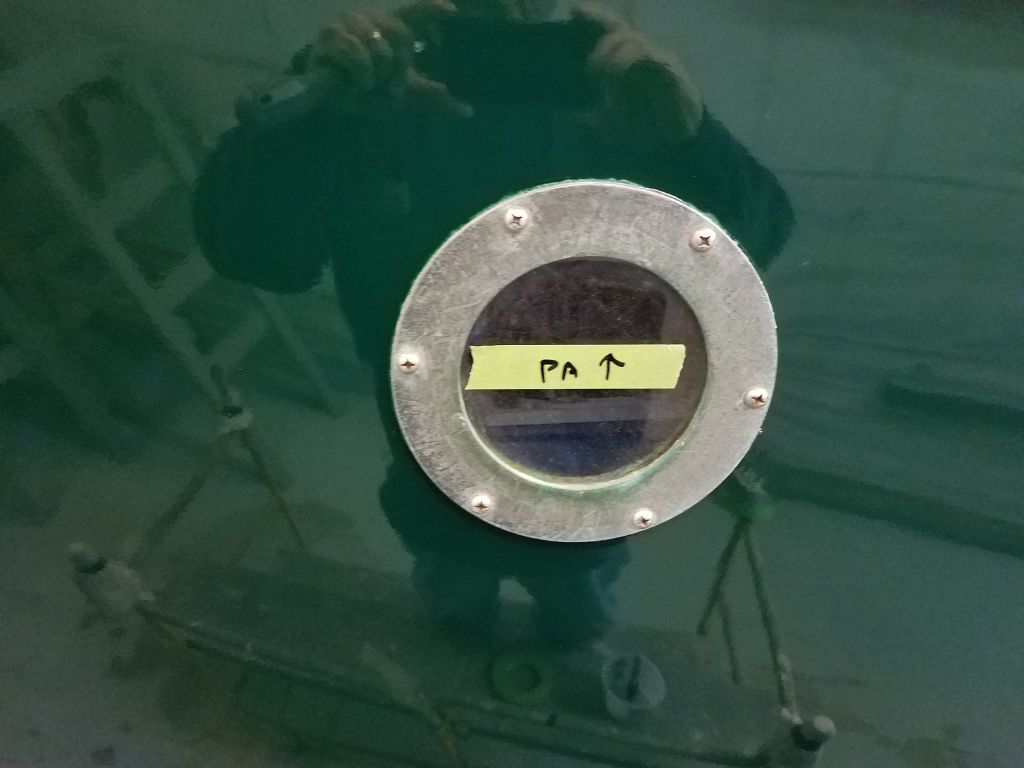
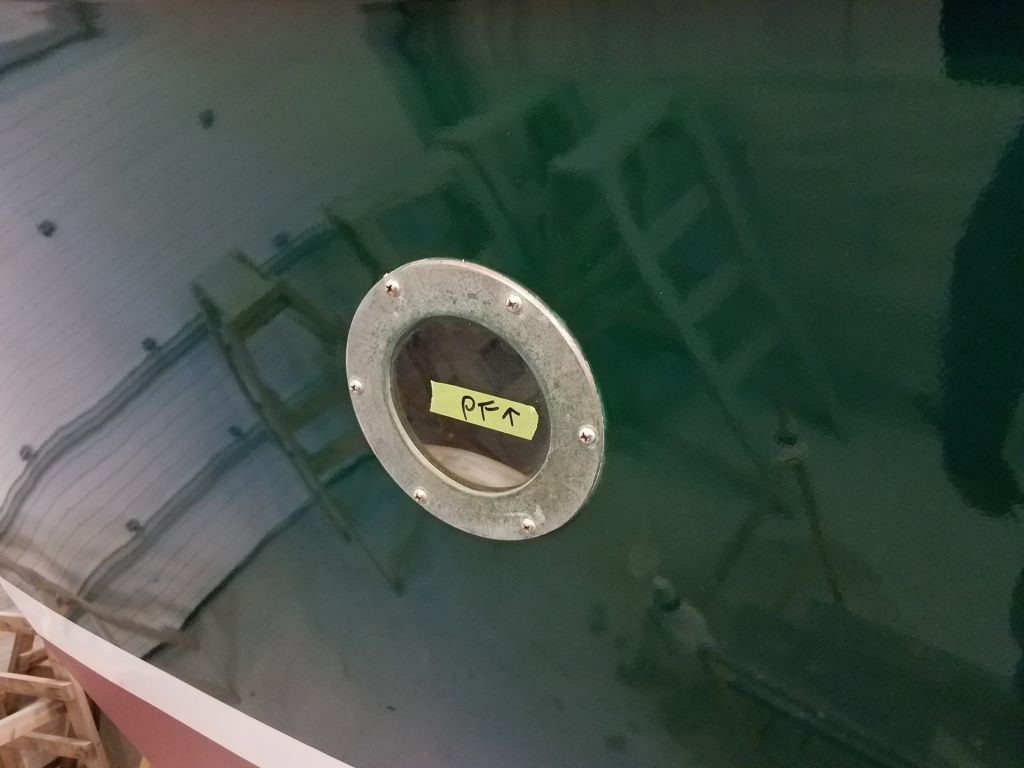
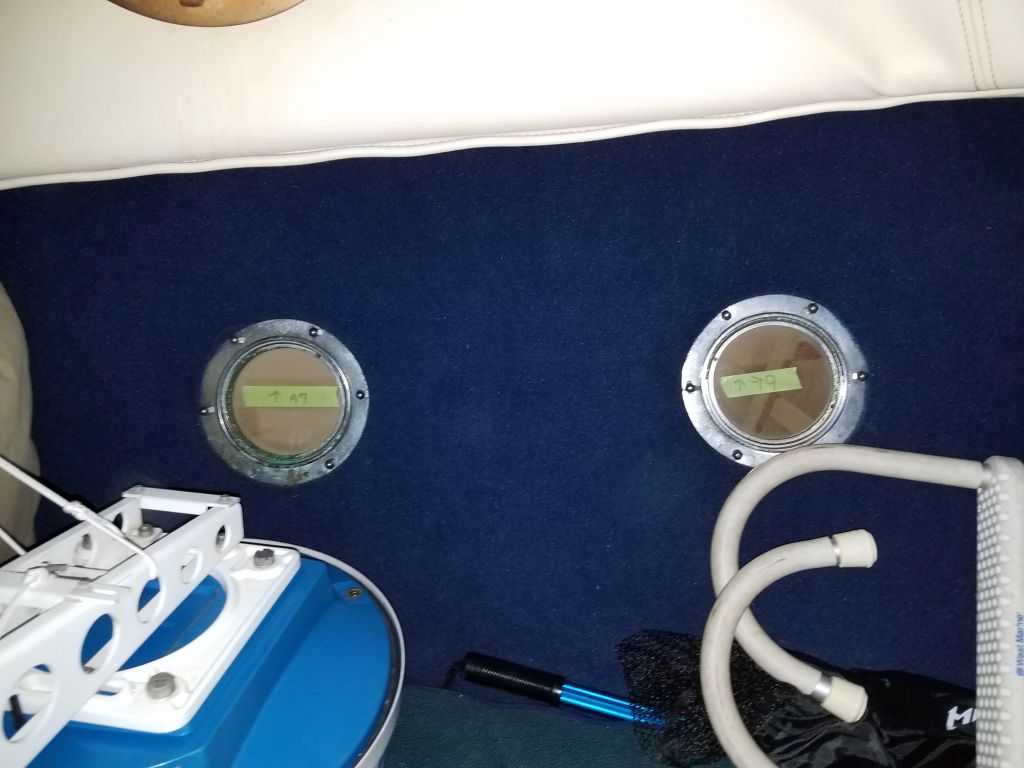
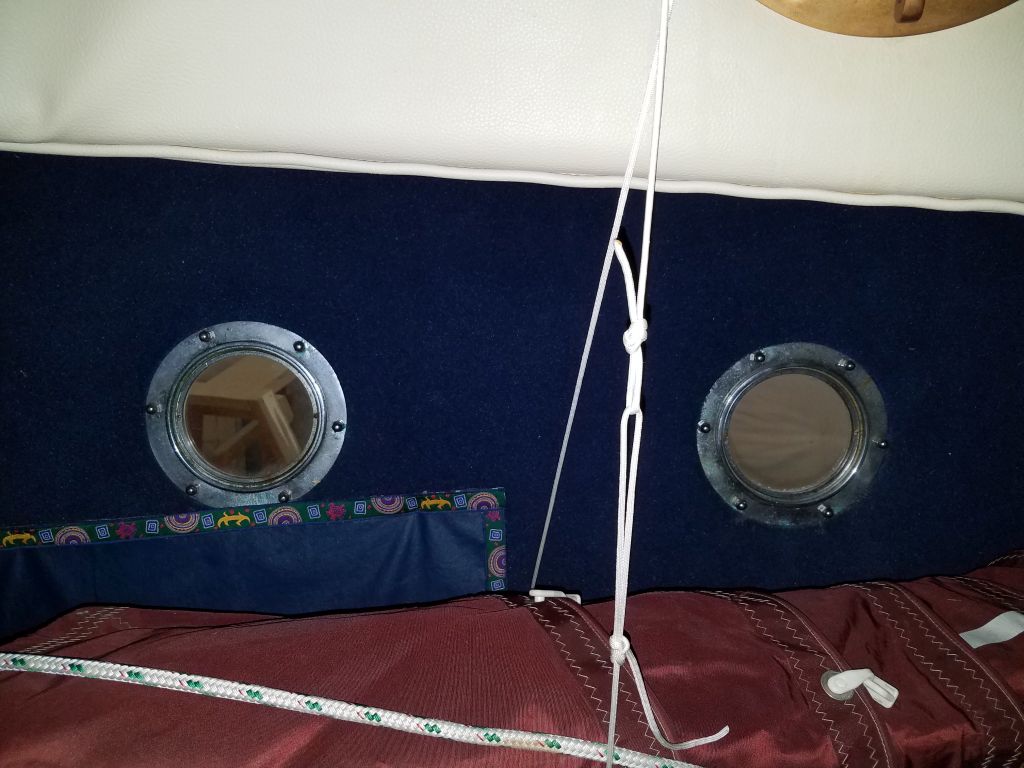
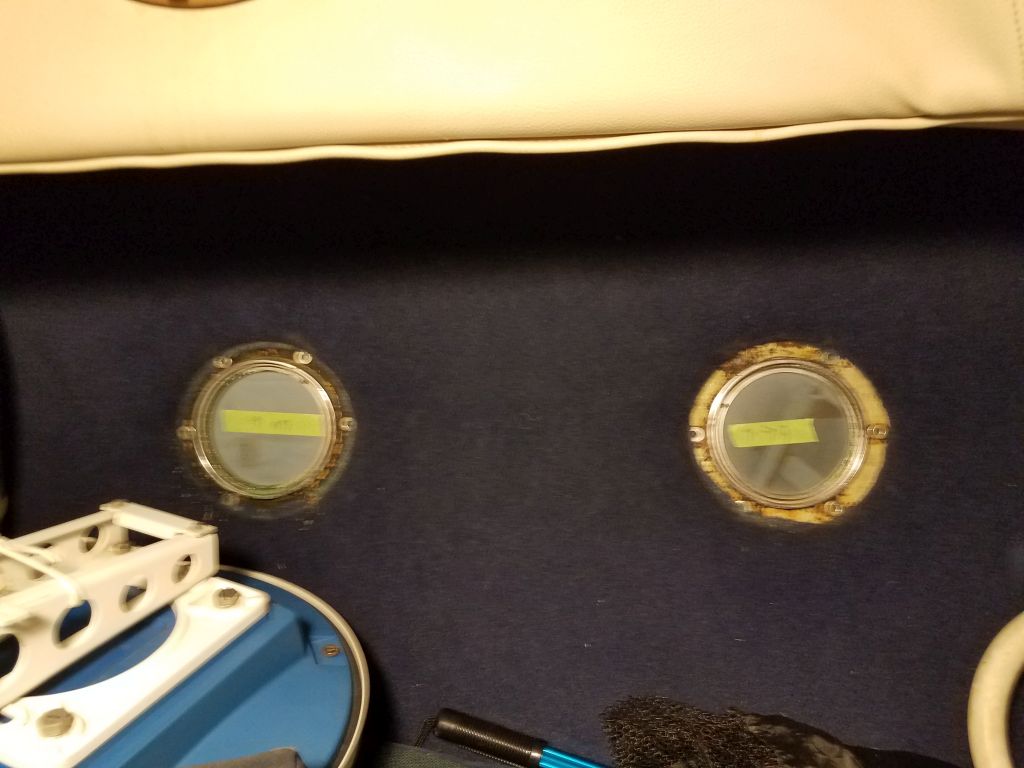
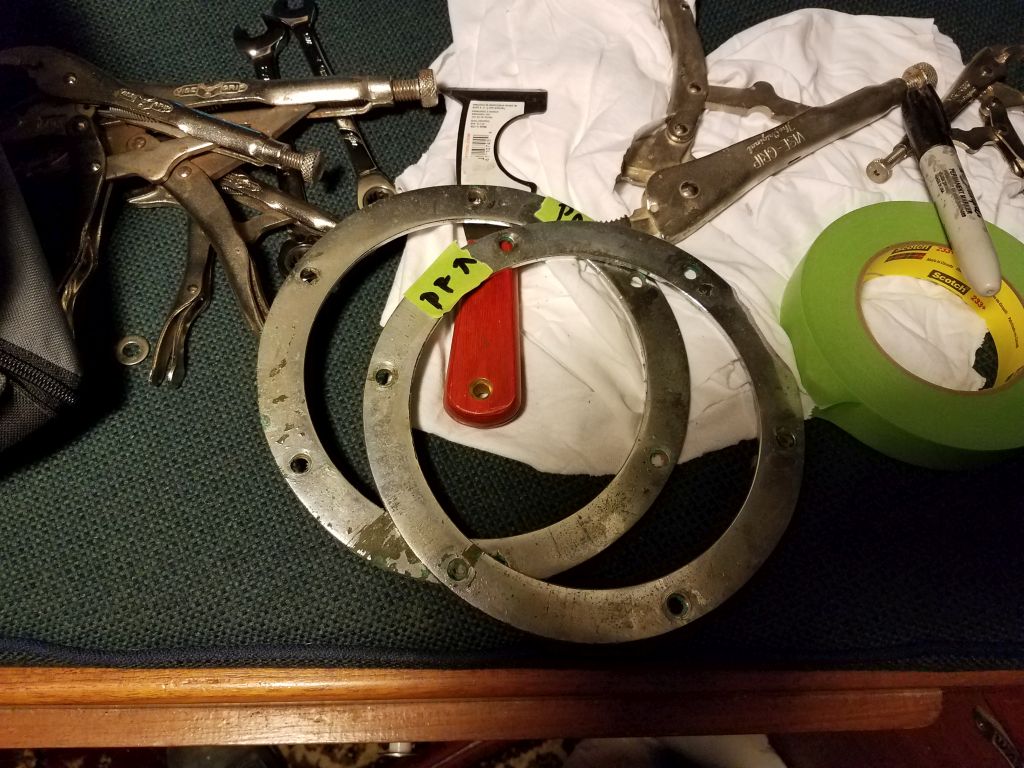
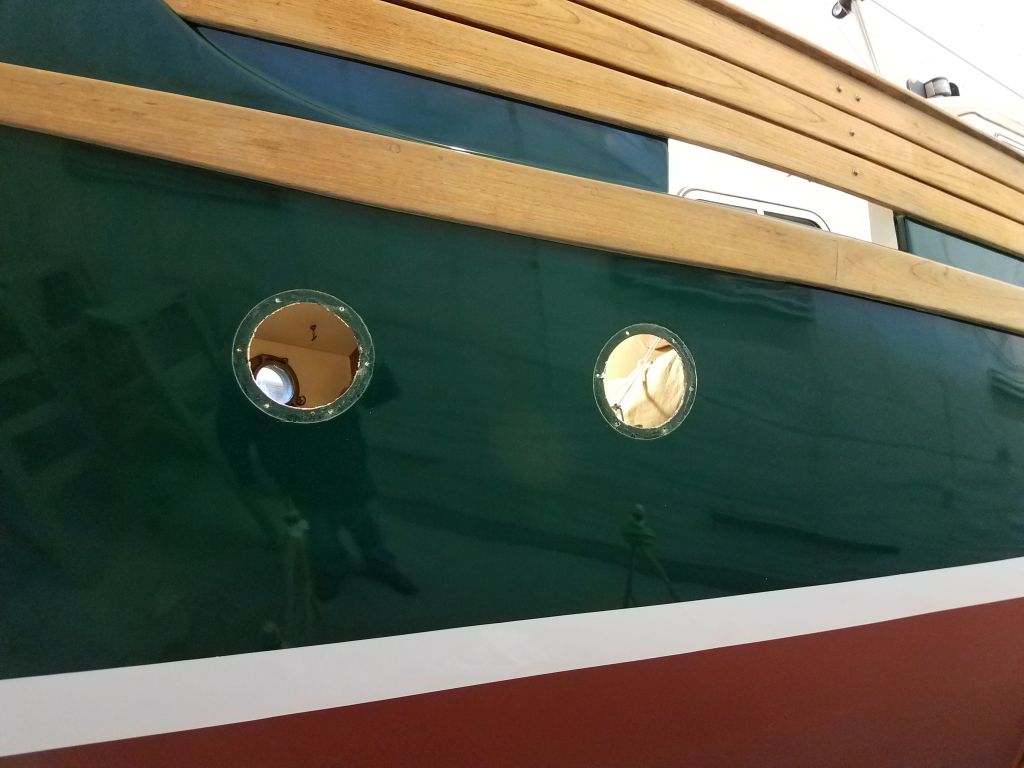
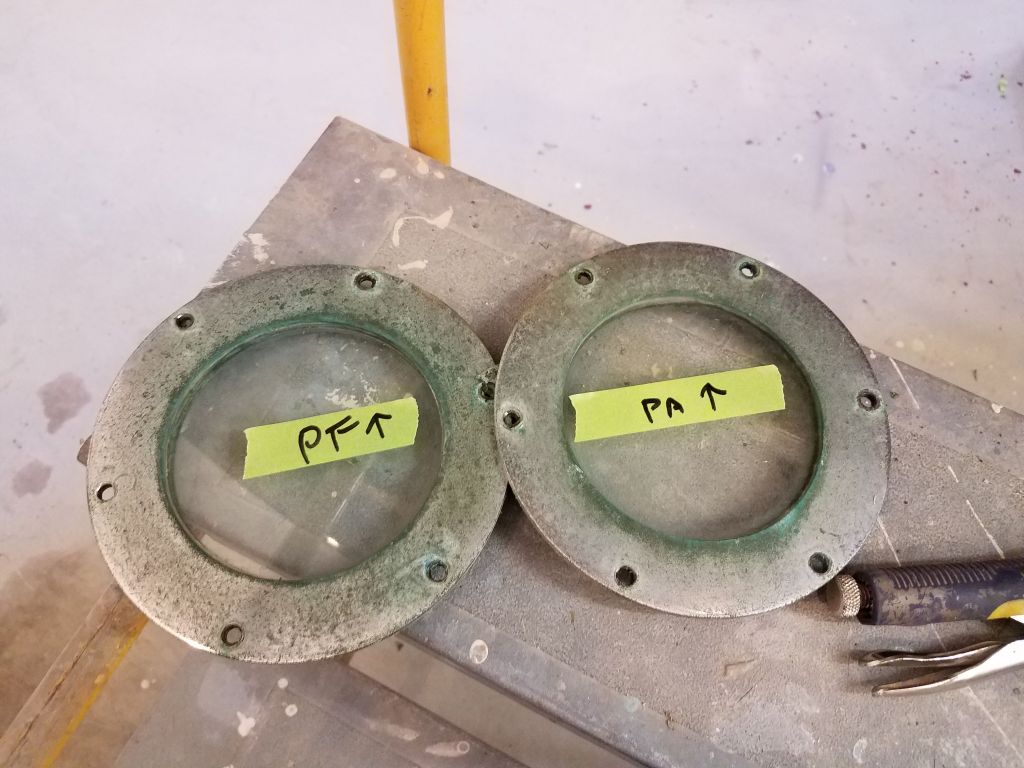
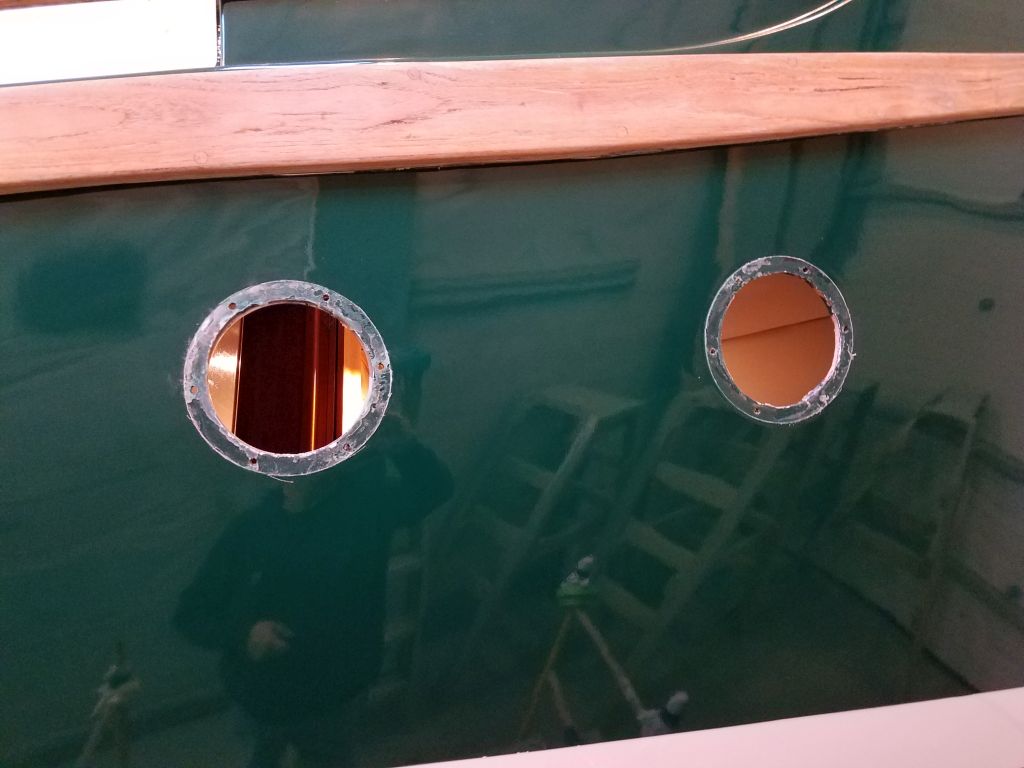
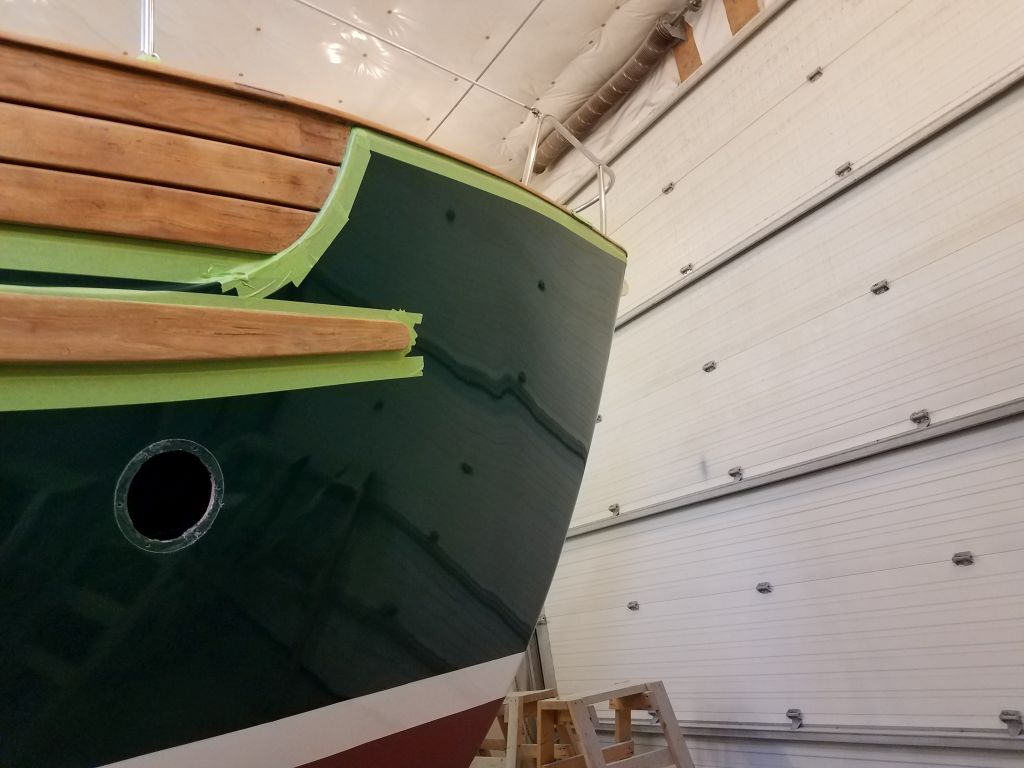
The owner requested that I remove and send to him the four round deadlights from the forward hull so he could have them rechromed, all the better to complement the freshly repainted hull.  So now that I had all the masking removed and once more had access inside the boat, I removed the frames and their backing rings.  The deadlights were secured through the hull with machine screws and nuts inside.  In some cases, I could remove the nuts without the fasteners spinning, but in other locations I had to secure the nuts inside with locking pliers and remove the screws from outside.

Once I’d removed all the fasteners, I carefully pried loose the external frames and glass to avoid any damage to the hull paint.  I packaged the frames up and shipped them to the owner, as he had a local shop ready to do the refinishing.

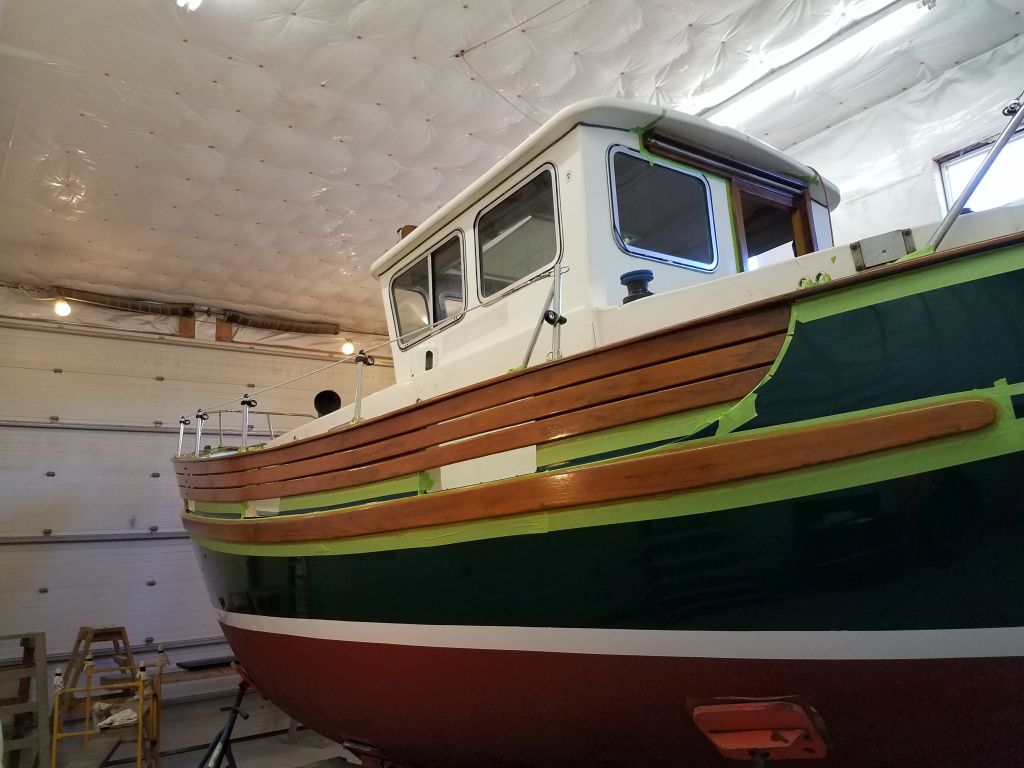
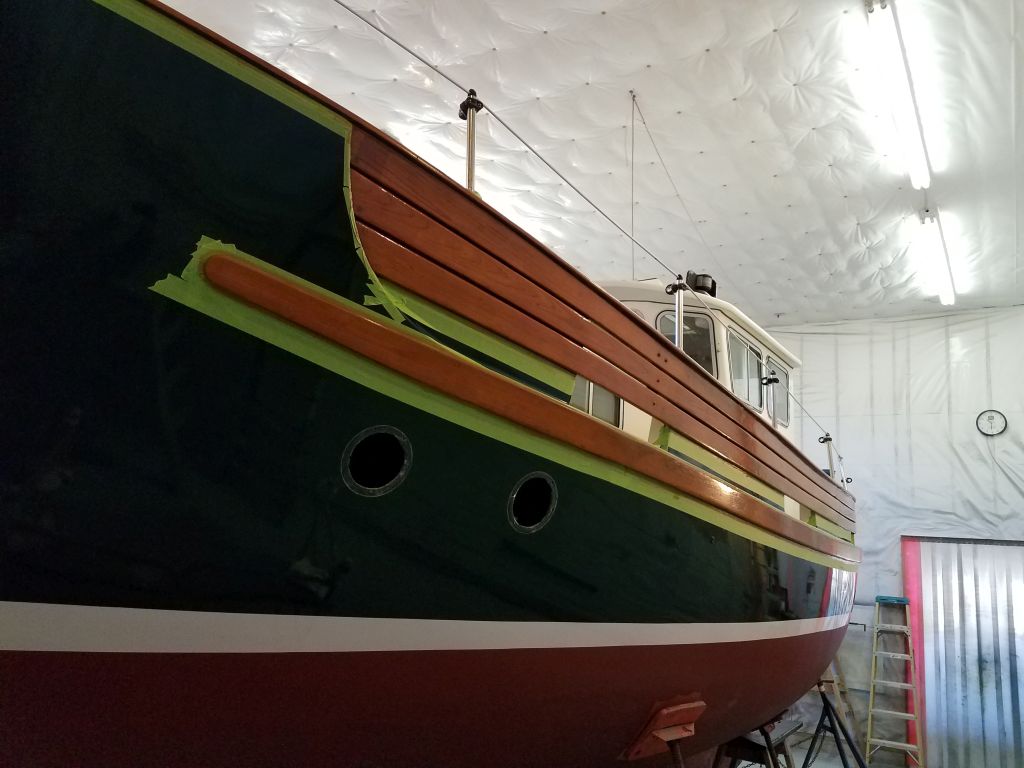
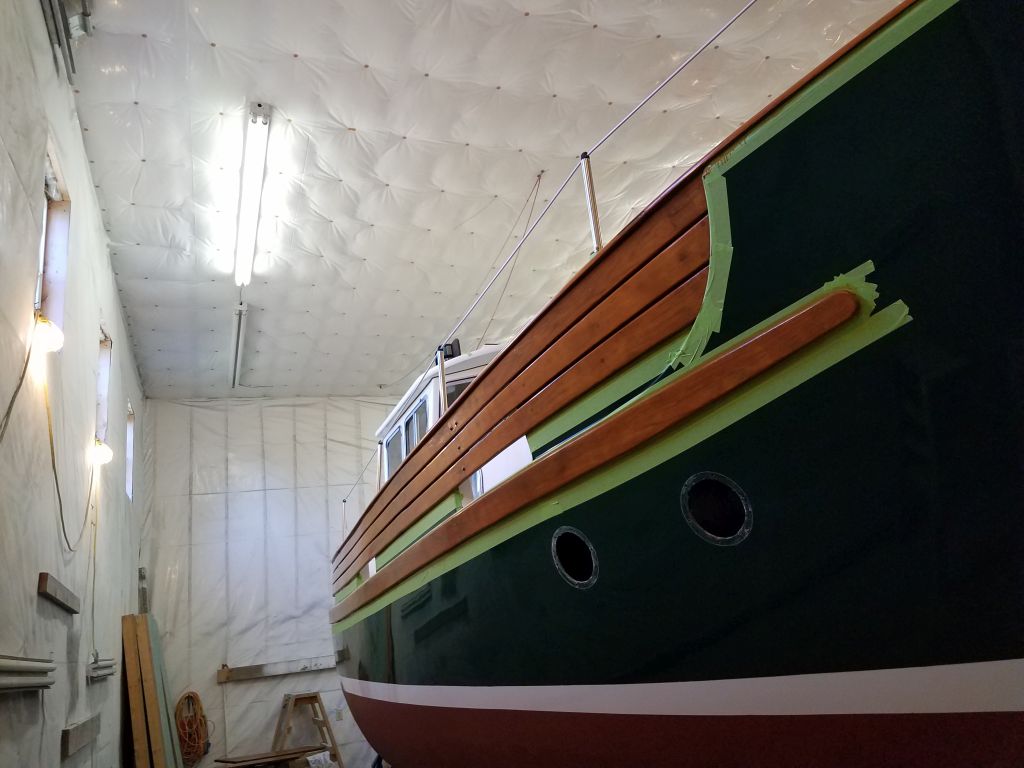
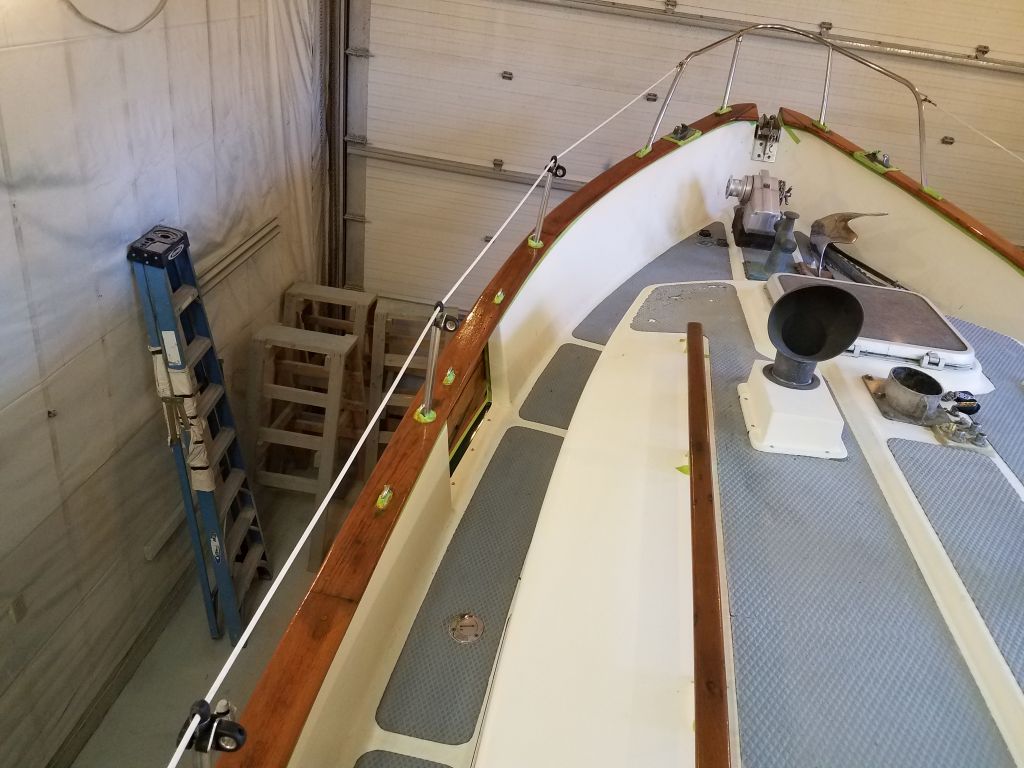
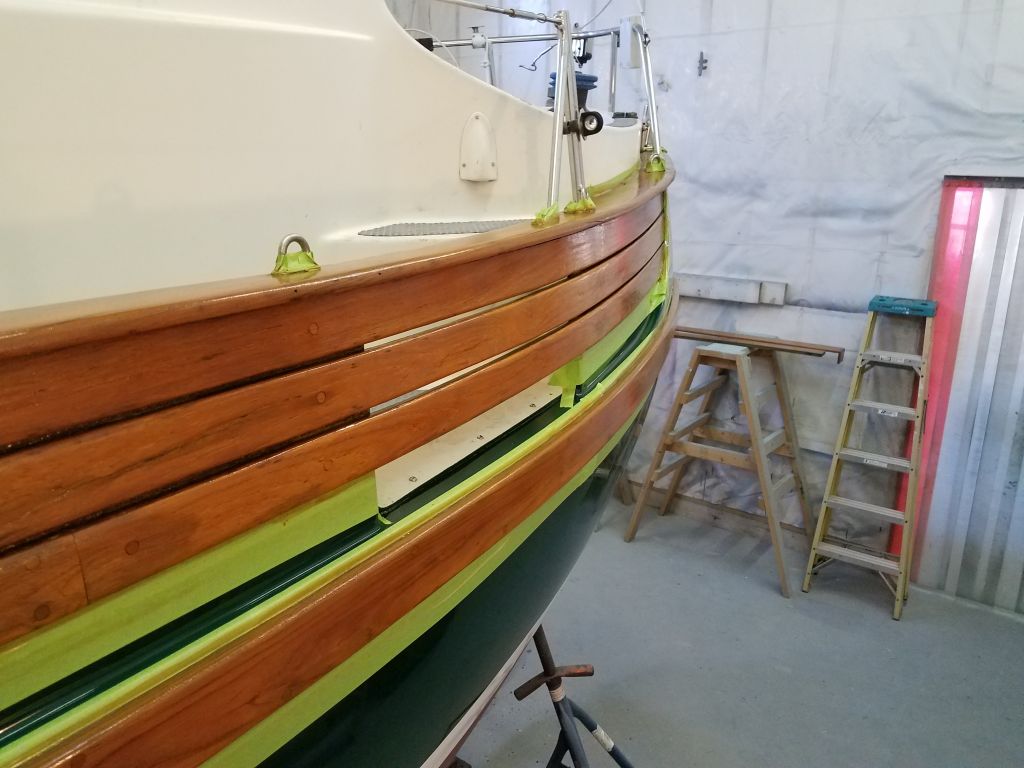
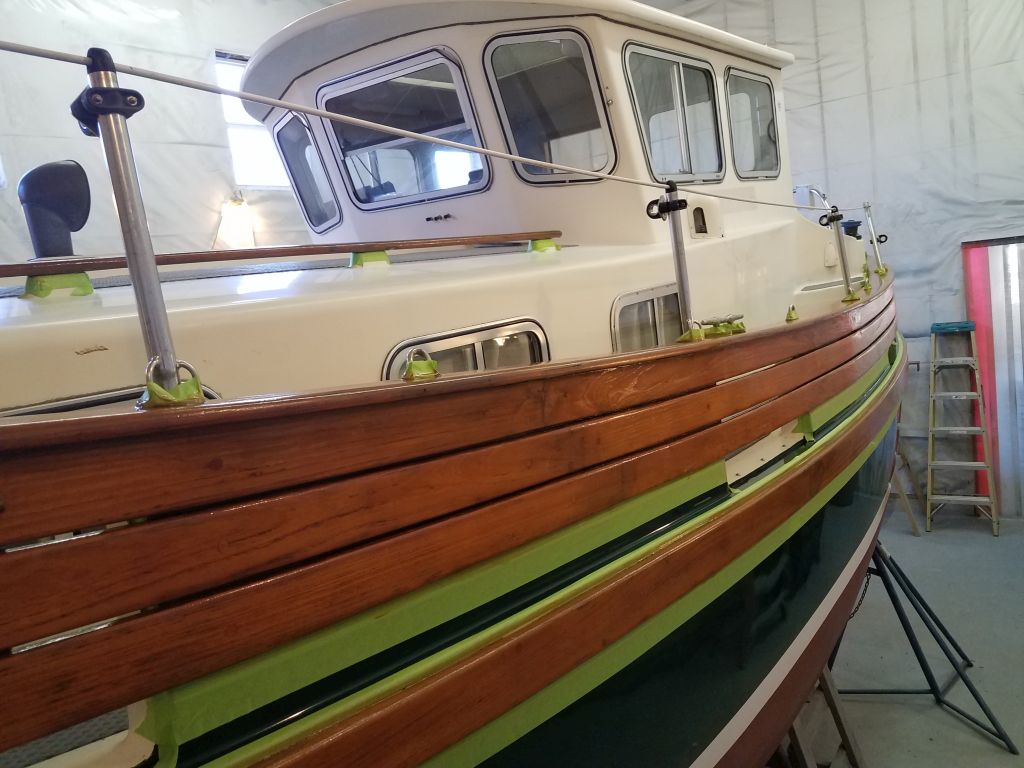
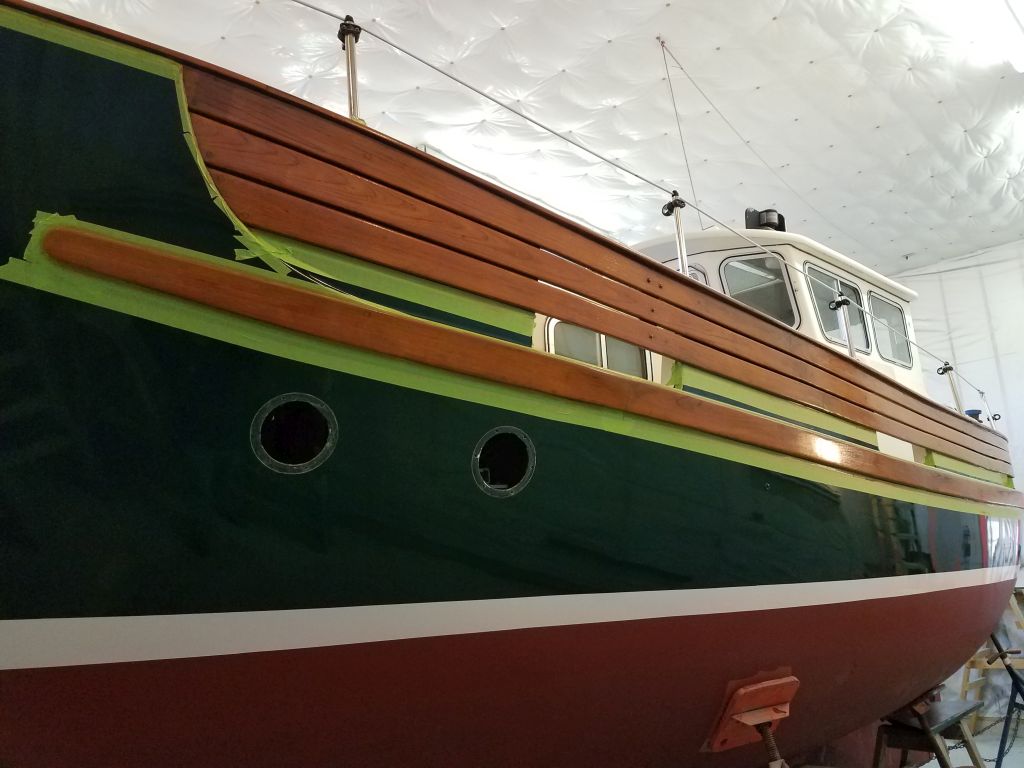
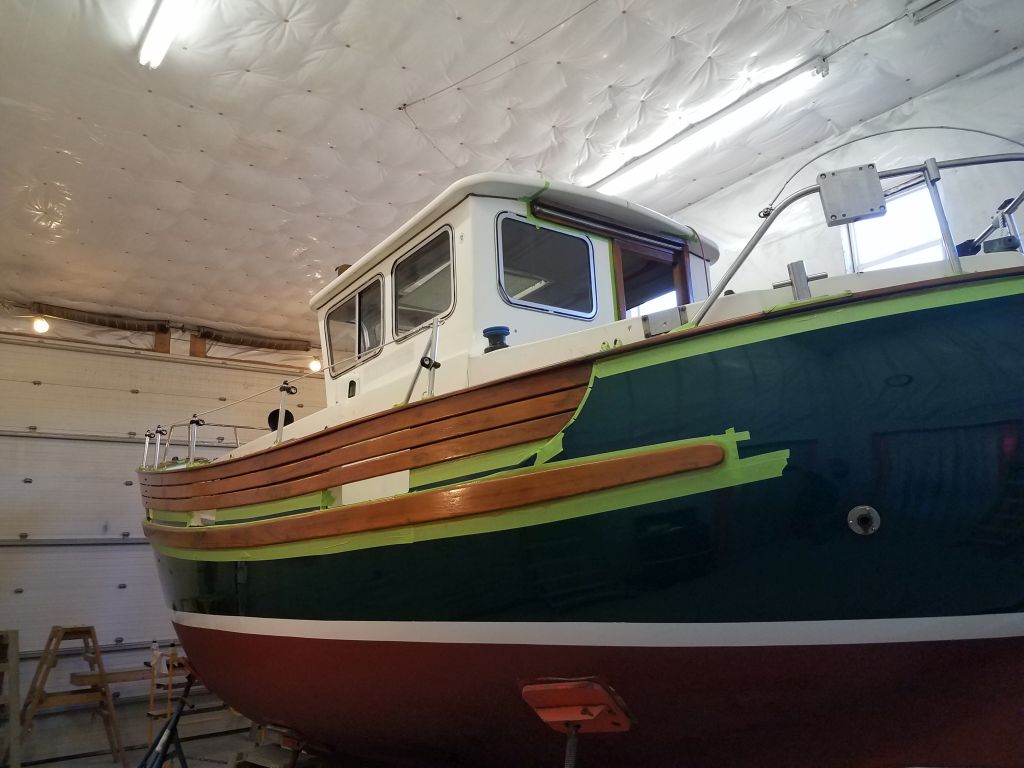
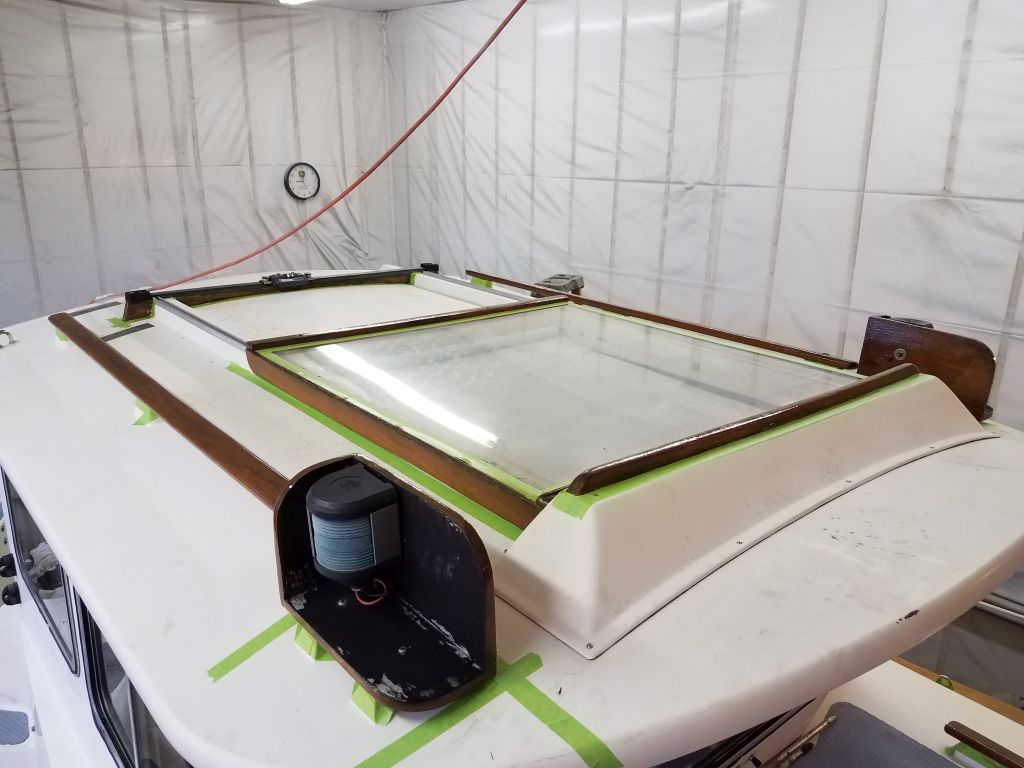
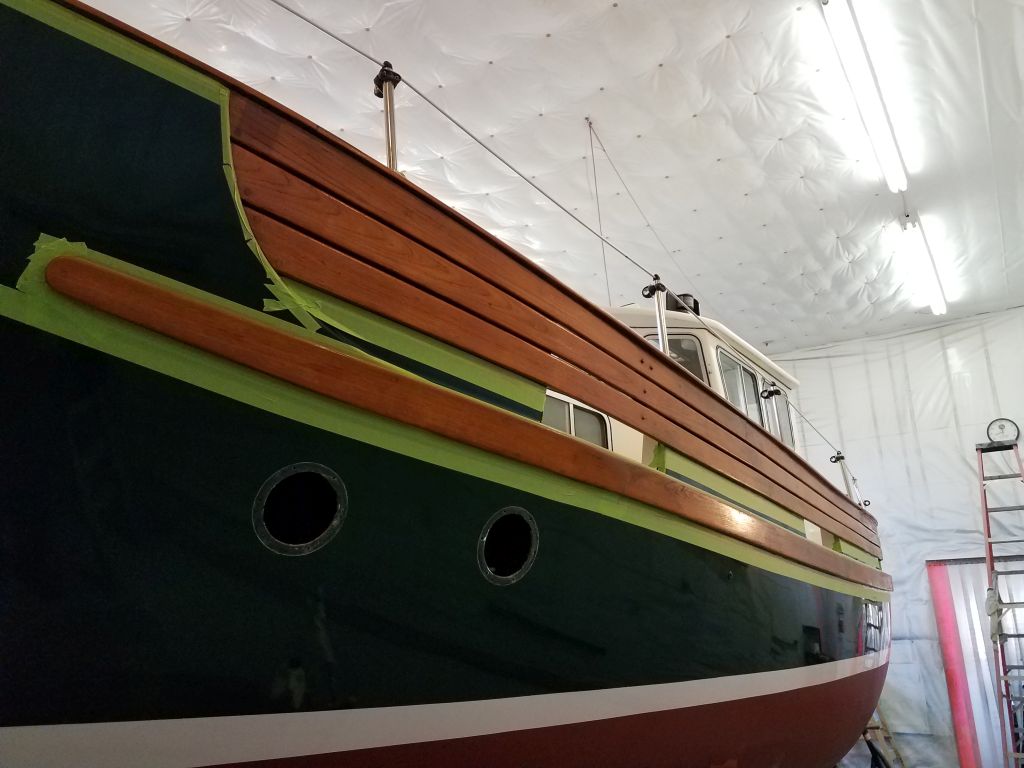
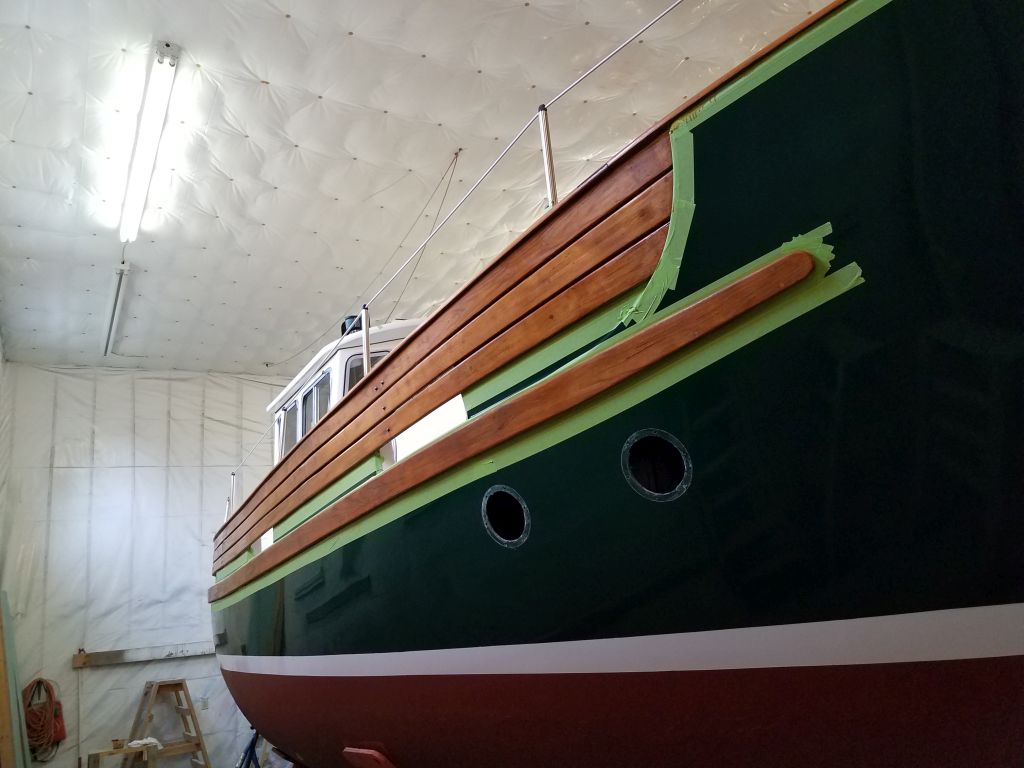
Next, I moved on to masking for the brightwork, starting at the top of the boat with the pilothouse roof, and working my way around the deck areas, masking around handrail supports, existing hardware, and against the decks as needed to prepare the woodwork for maintenance coats of finish (on the pilothouse and coachroof), and all-new finish on the caprails.  I removed the wooden cockpit seating areas so I could refinish them down on the bench.

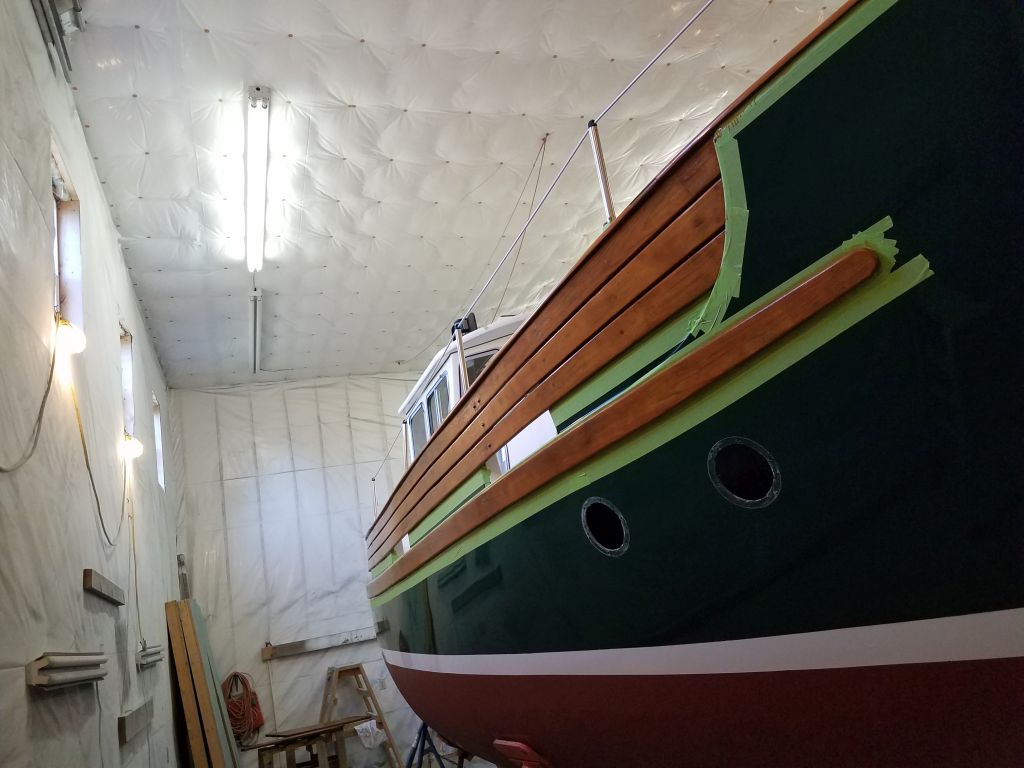
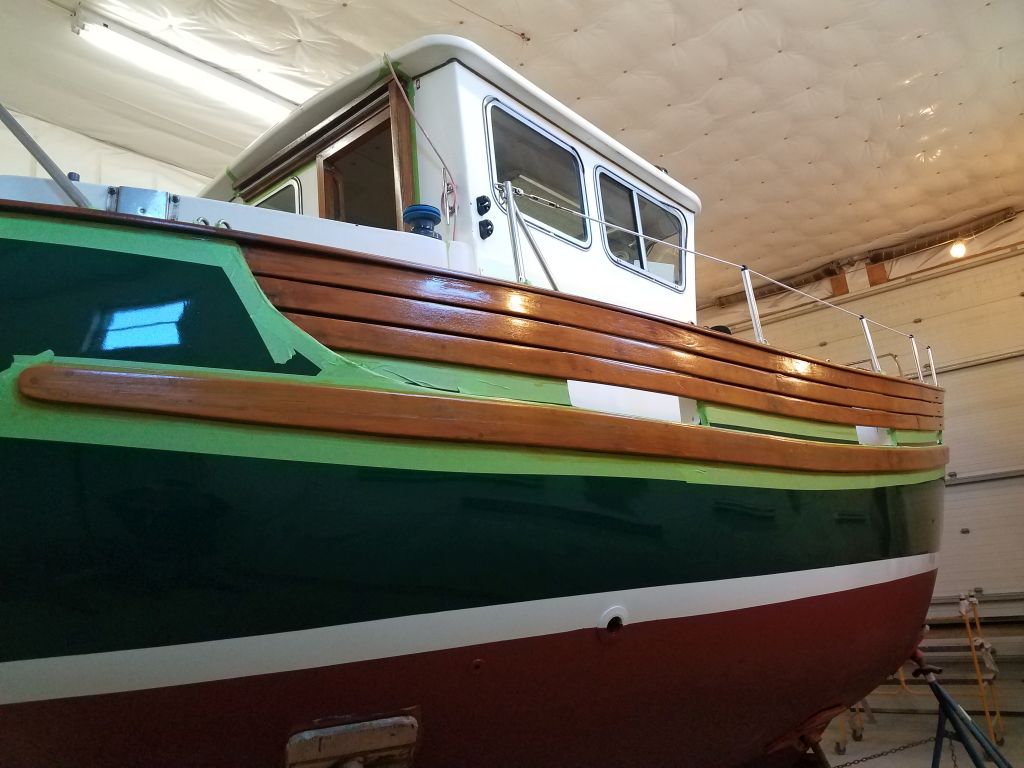
With the decks masked, I continued on the hull, masking off the lower edge of the caprails bow and stern and around the bulwarks and rubrails to prepare for their new finish.  Afterwards, I wiped down all the woodwork with paint thinner to clean it one last time, so the wood would be ready for new finish next time.

Total time billed on this job today:  5.5 hours

0600 Weather Observation:  29°, clear.  Forecast for the day:  Sunny, 40°

Steadfast 23

< Back to Steadfast

Sunday

Over the long weekend, I unmasked the rest of the boat, including the bulwarks and deck areas.

Later, I masked off and painted the bottom with red antifouling paint to complete the  hull paint work.

Total time billed on this job today:  3.25 hours

0600 Weather Observation:  20°, clear.  Forecast for the day:  sunny, 40

Steadfast 22

< Back to Steadfast

Thursday

With only a short time available before departing for Thanksgiving festivities, I still wanted to remove the masking to expose the fresh boottop, and during an early morning session I did just that, along with the plastic covering the topsides.  I’d take care of the remaining plastic and masking in the near future, after which I’d be ready to continue work on the brightwork.

Total time billed on this job today:  1 hour

0600 Weather Observation:  27°, clear.  Forecast for the day:  sunny with a chance of turkey, 37°

Steadfast 21

< Back to Steadfast

Wednesday

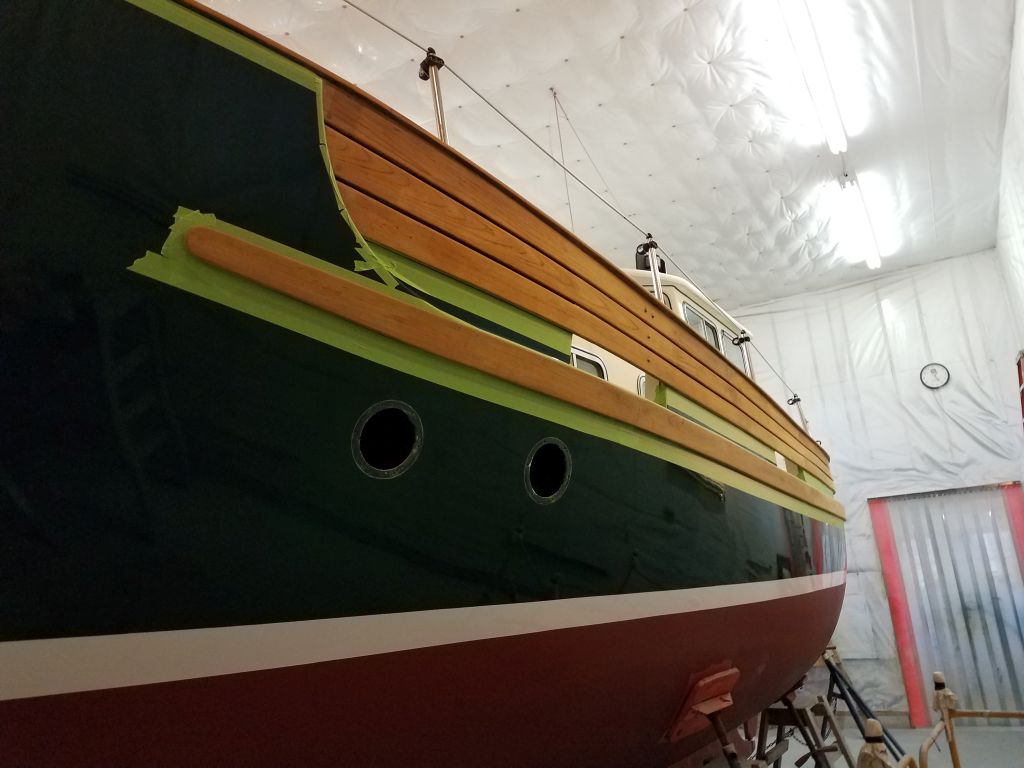
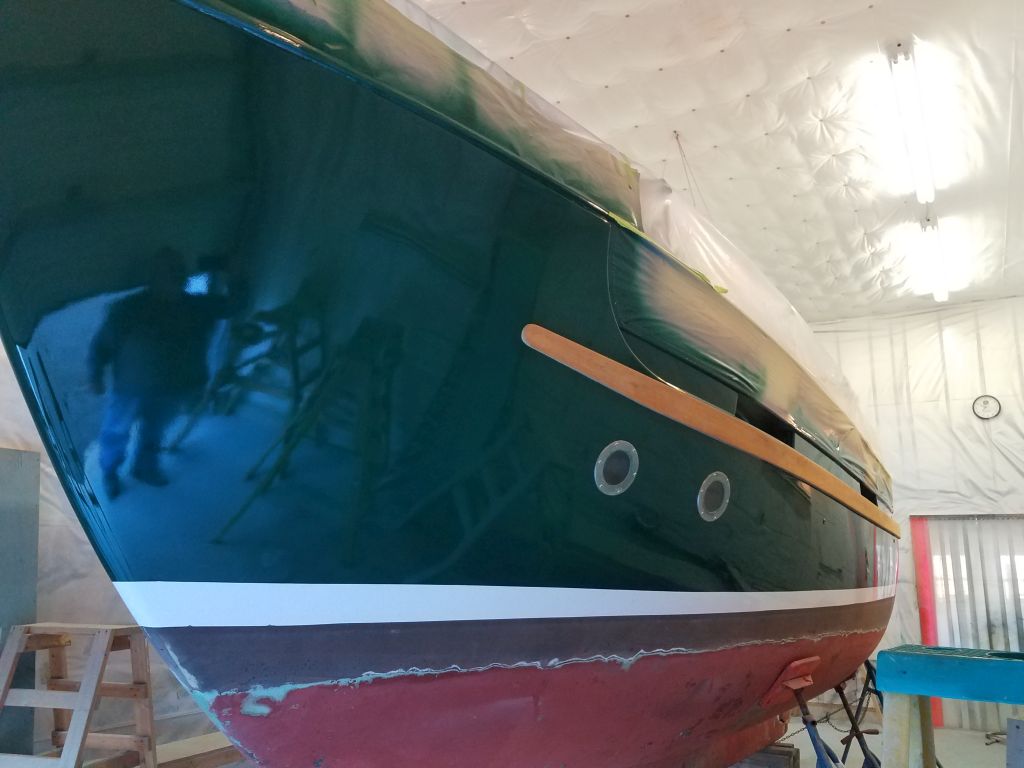
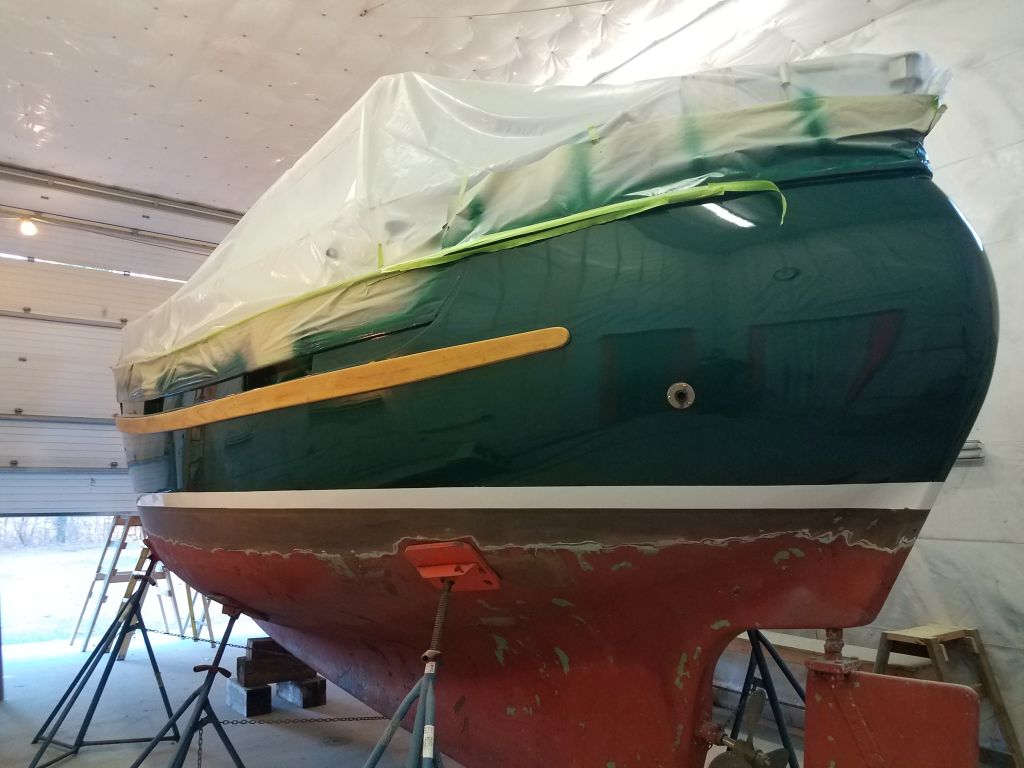
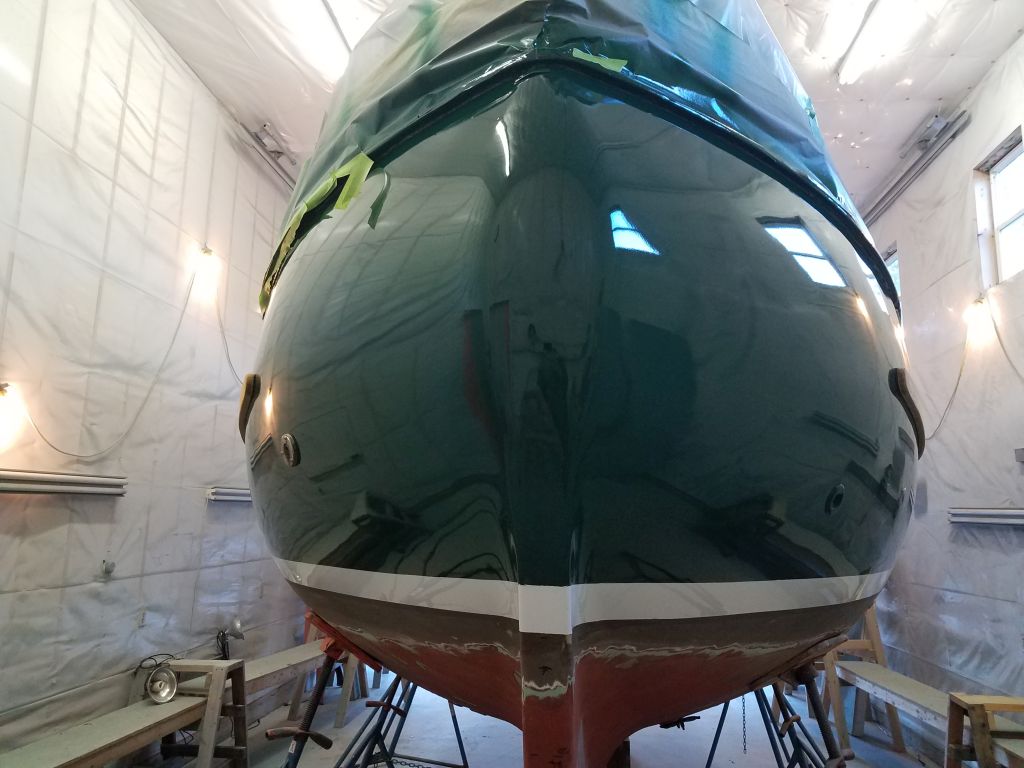
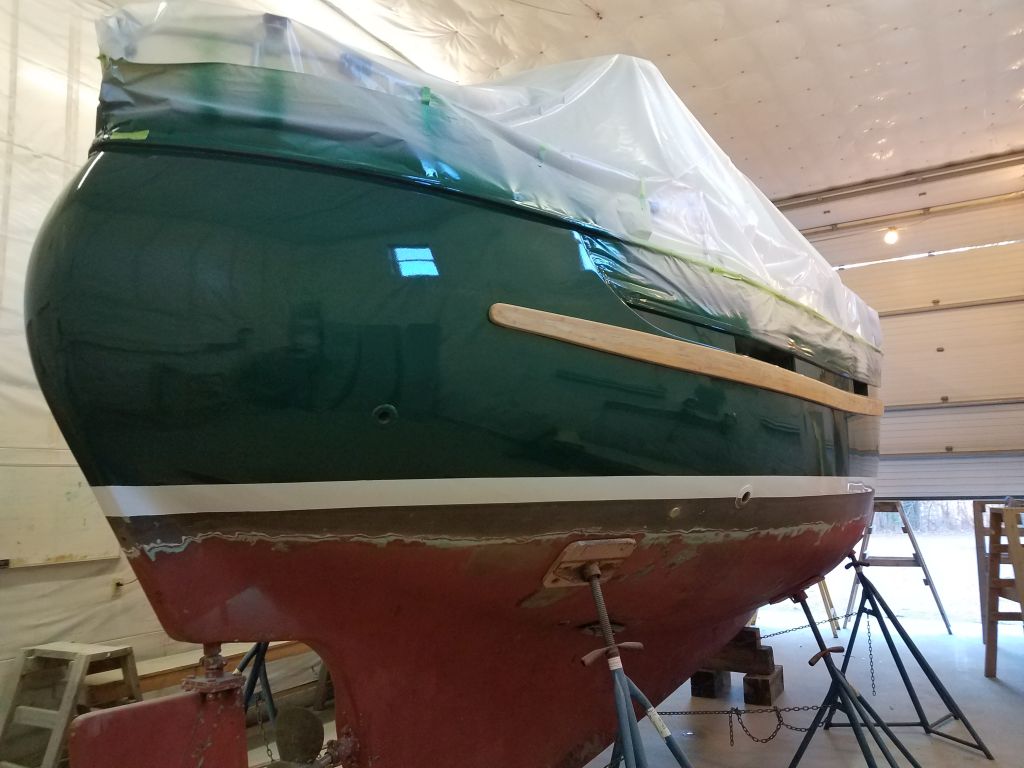
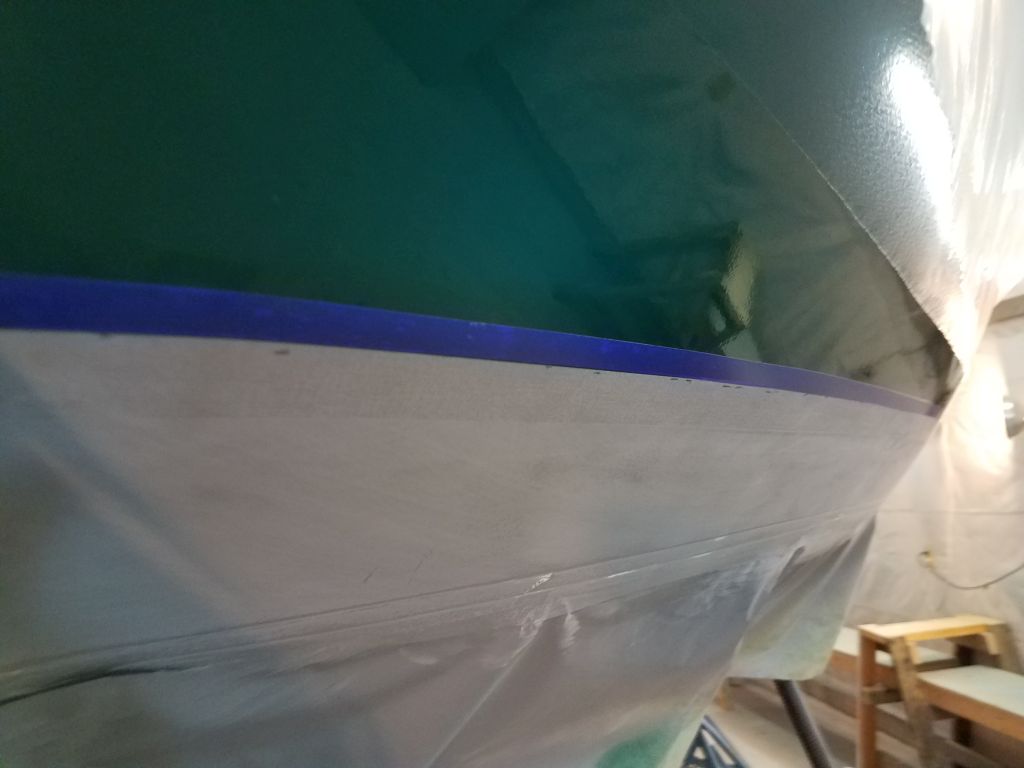
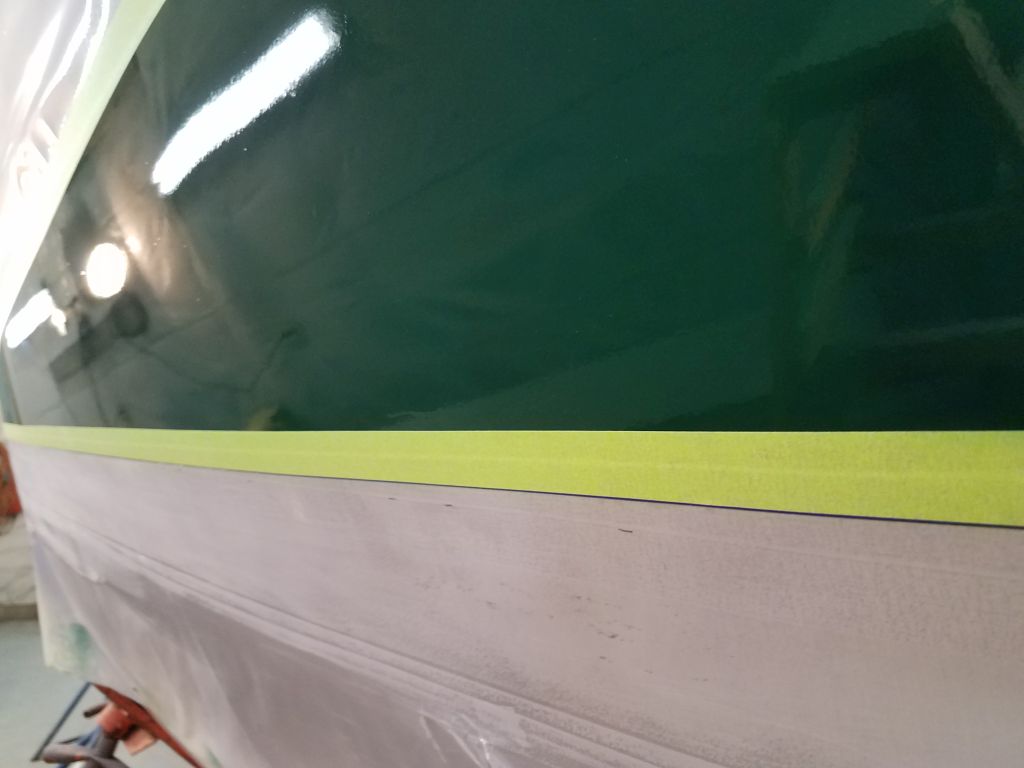
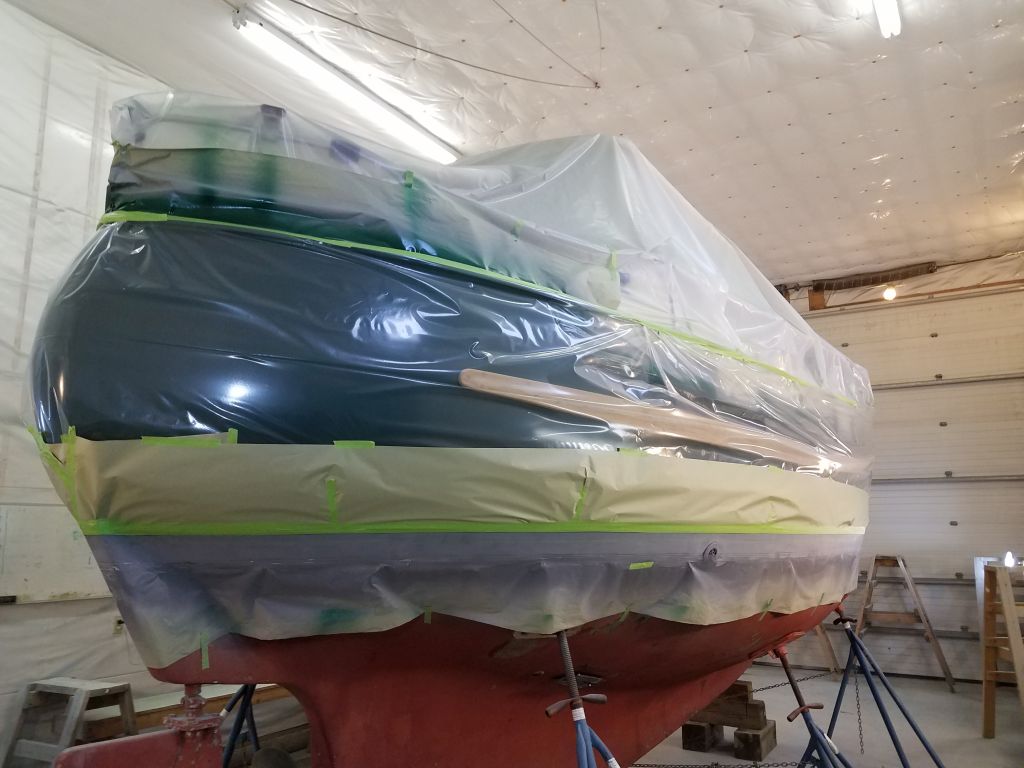
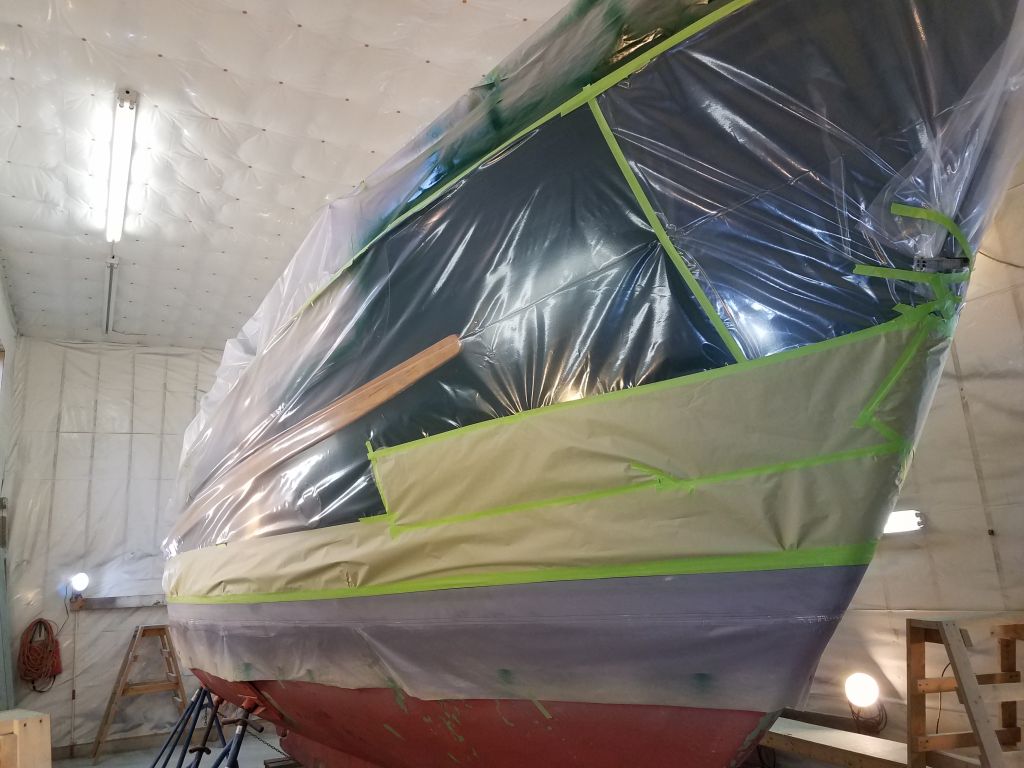
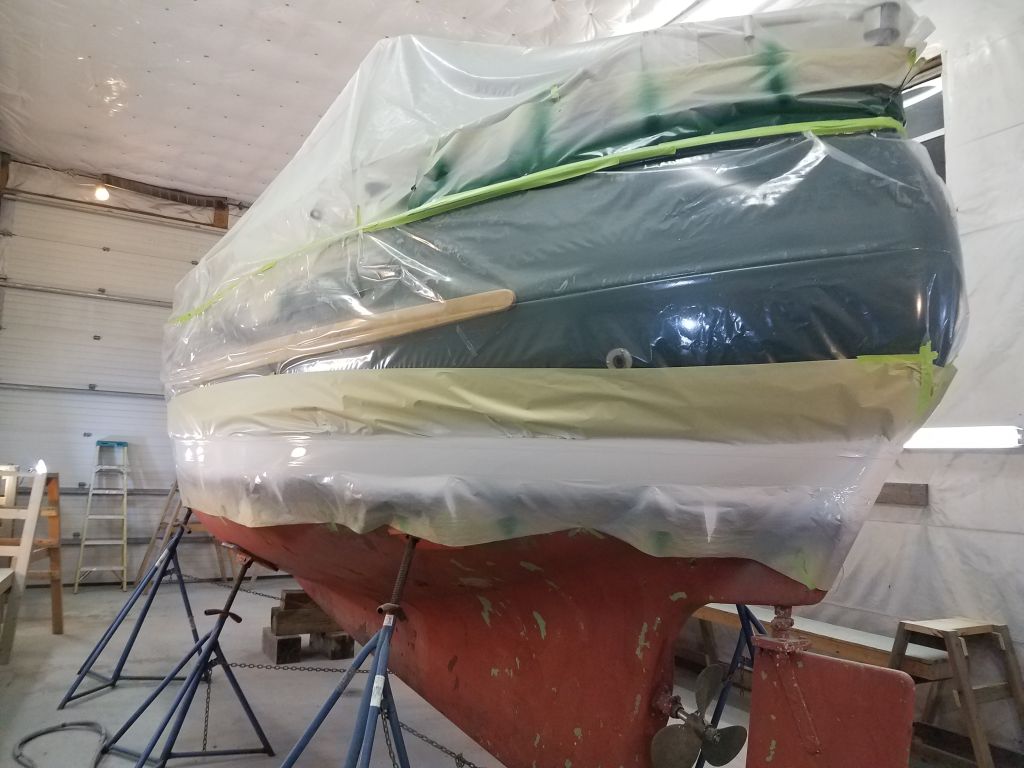
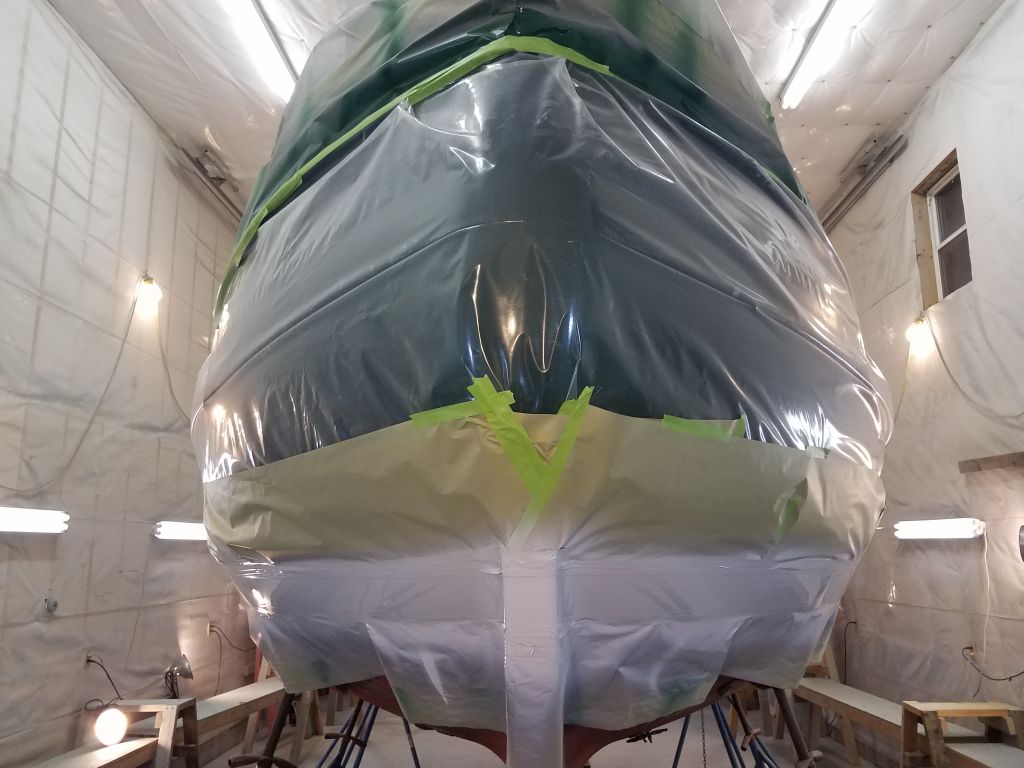
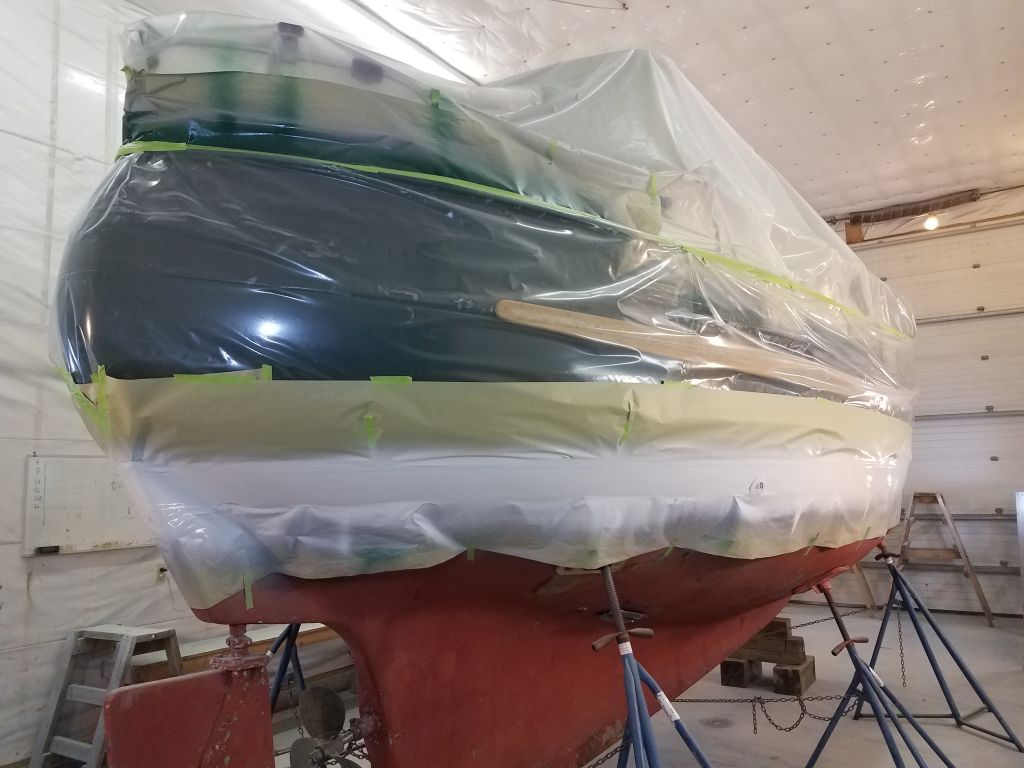
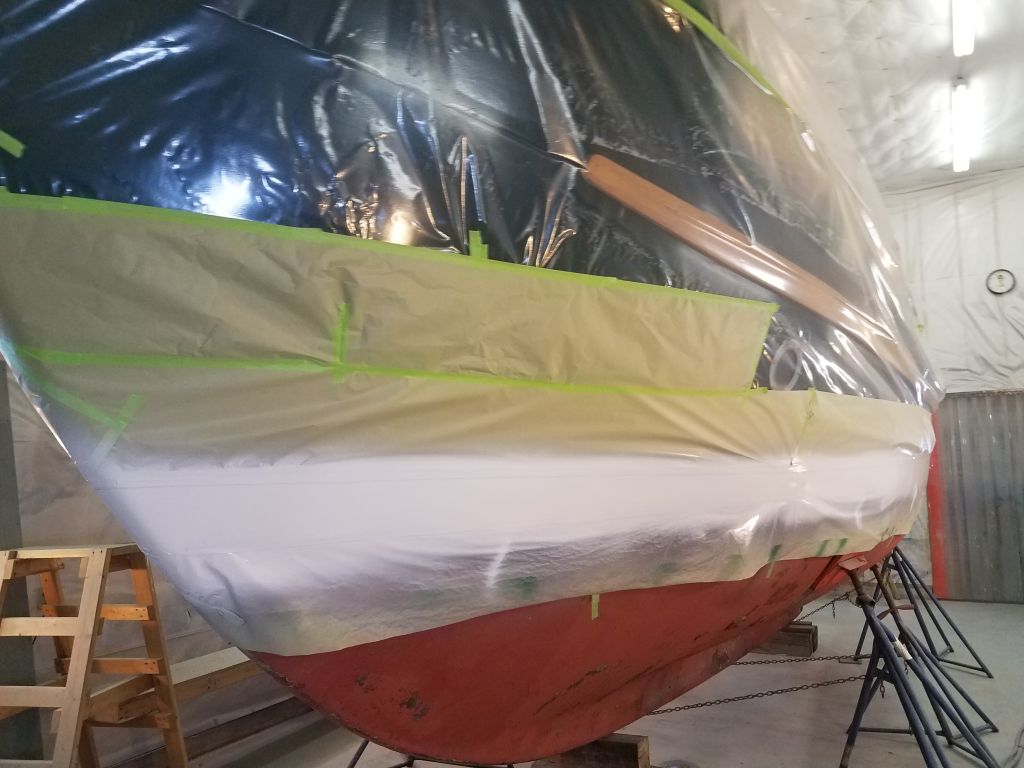
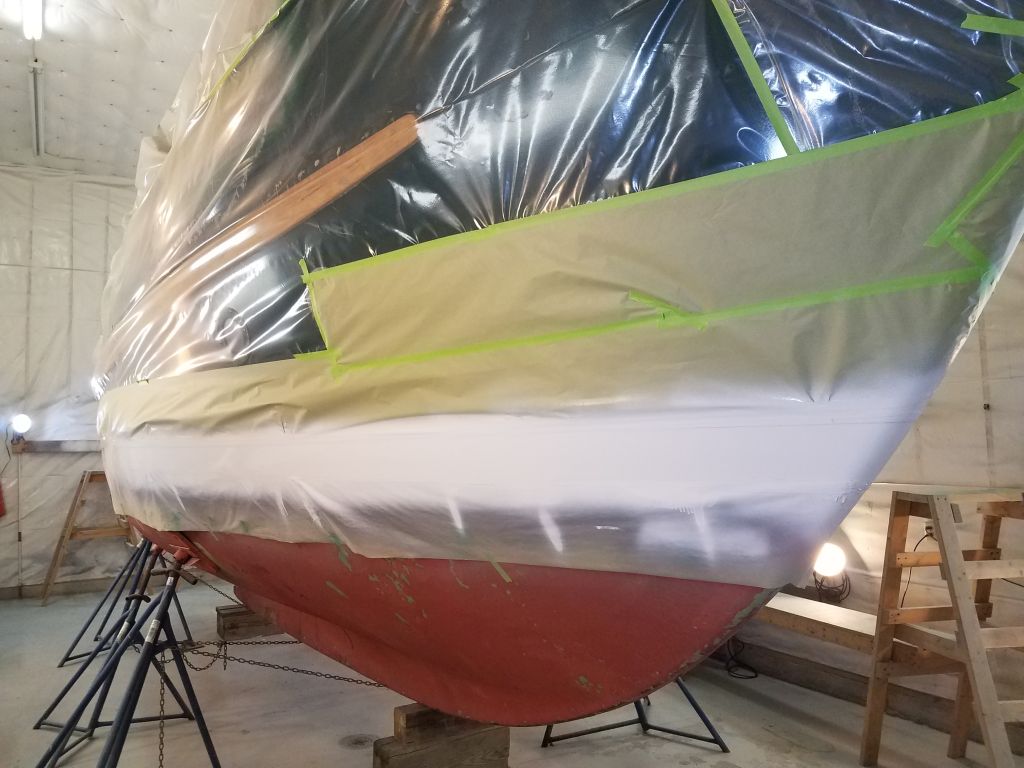
With 45 hours’ cure time on the hull, now I could proceed to mask off the fresh green paint so I could finish up the boottop.  To begin, I applied a narrow strip of solvent-resistant vinyl fine-line tape along the top edge of the boottop area; this tape would help create a crisp paint transition and avoid tape bleed-through between the colors.  Afterwards, I masked over the vinyl with regular masking tape.

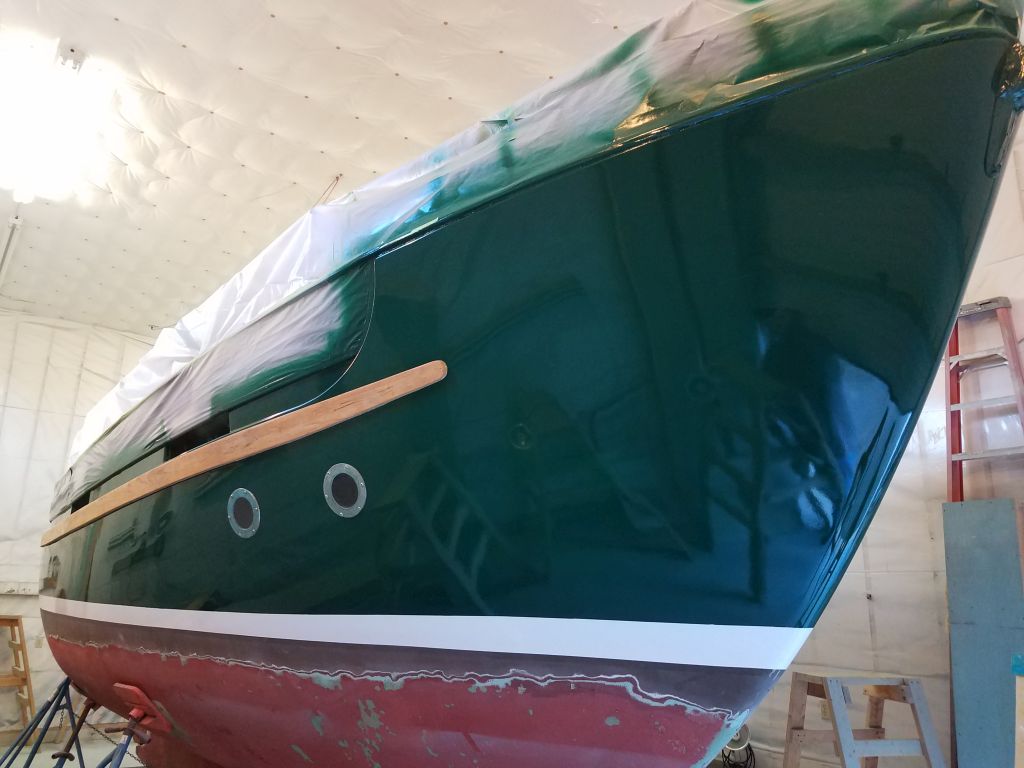
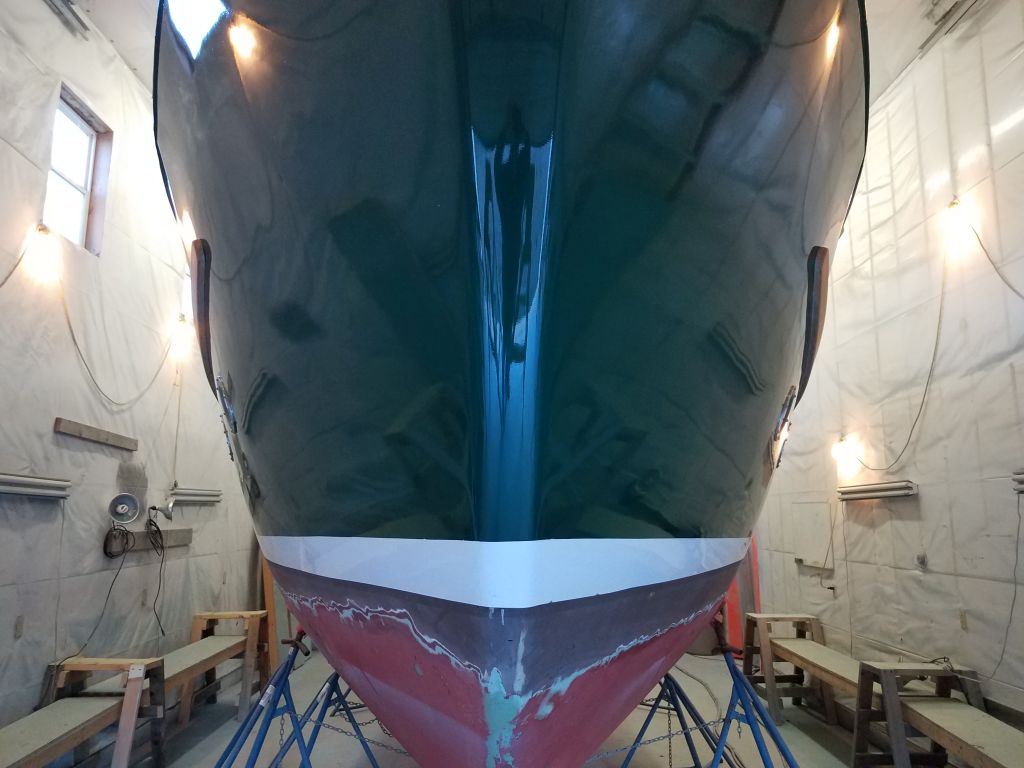
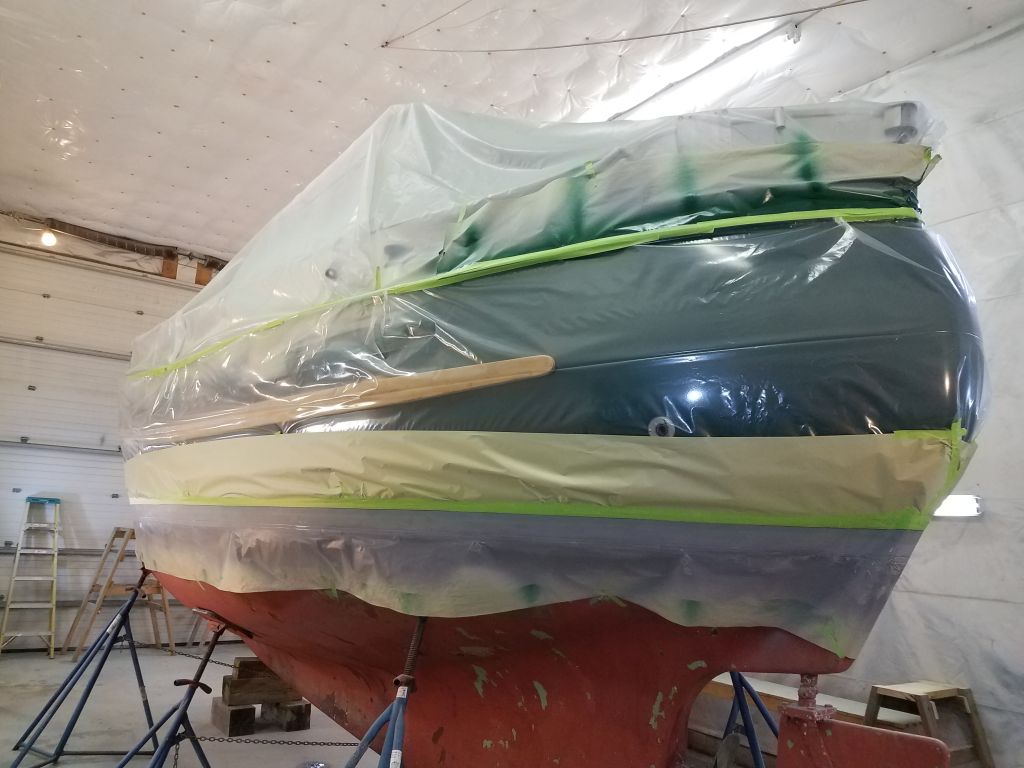
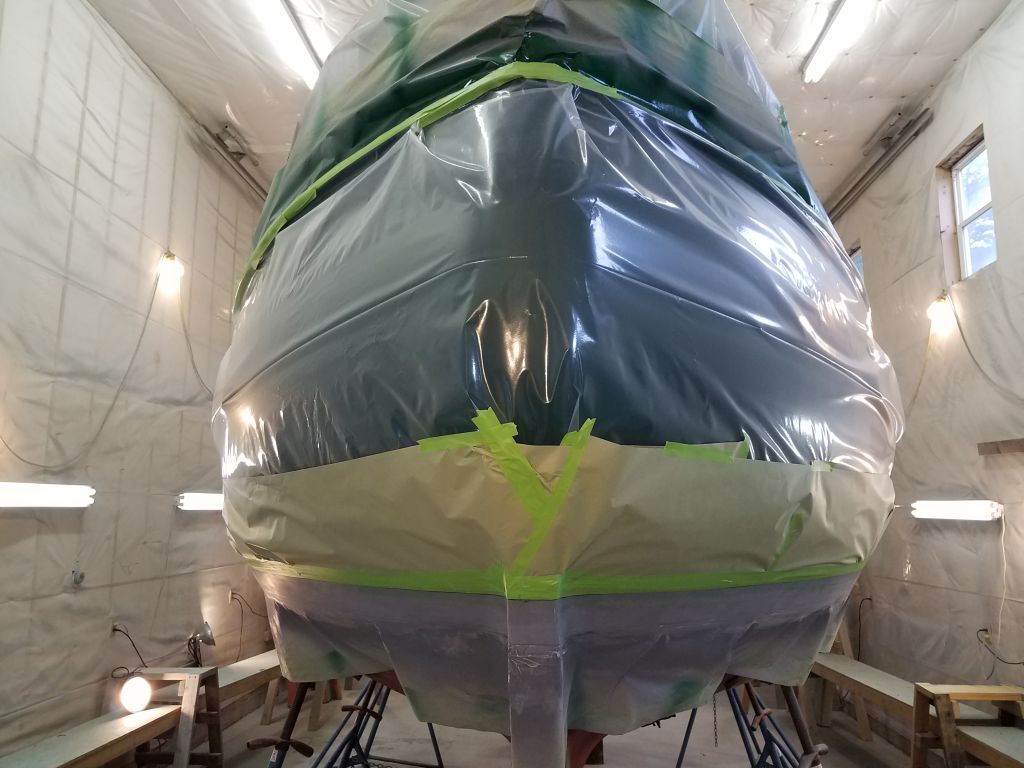
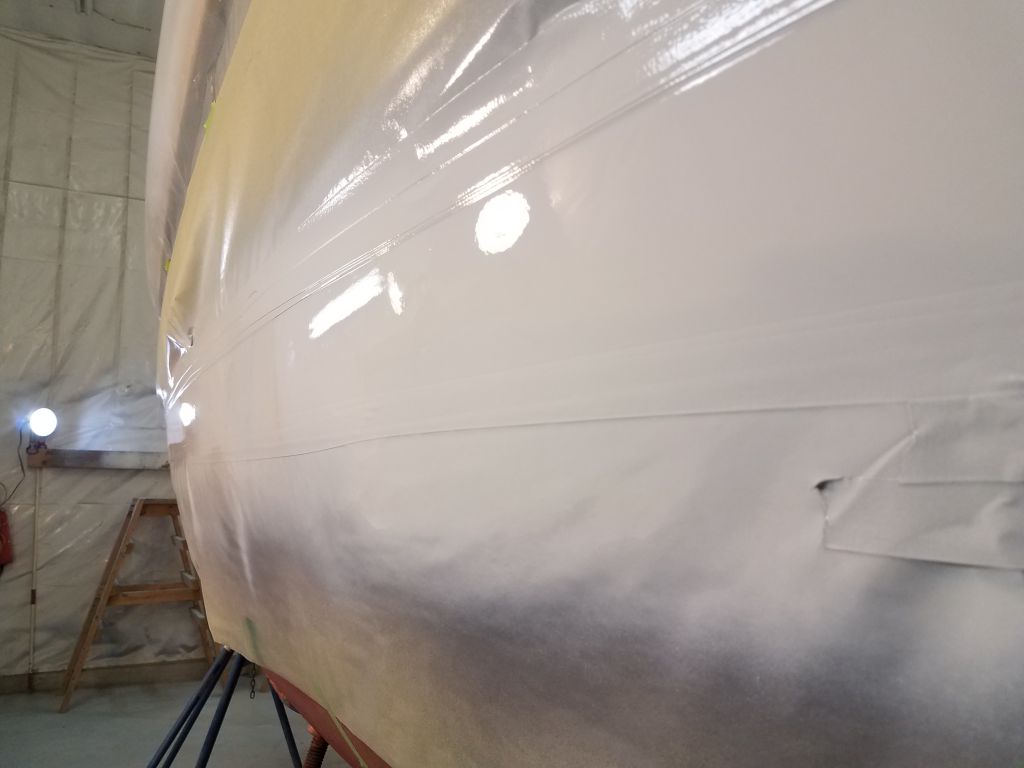
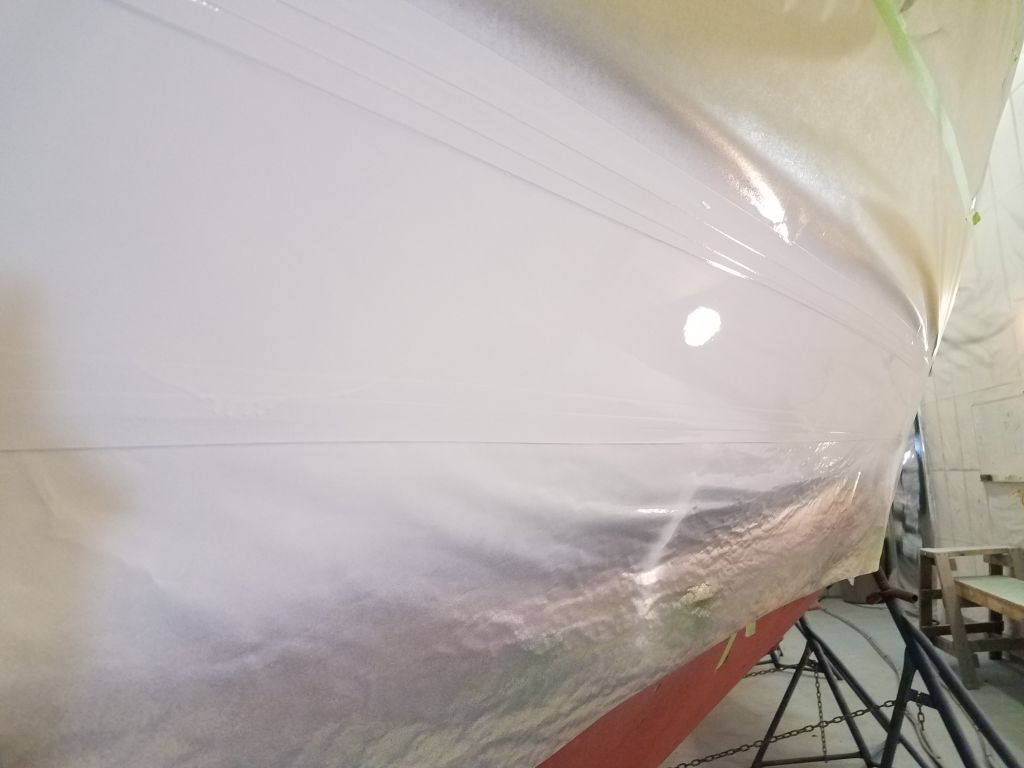
I draped the entire hull in sheet plastic, securing it at the caprails and elsewhere as needed.  Along the bottom edge, where I’d be spraying later, I applied masking paper as additional protection against overspray and because the plastic alone, being non-absorbent, might allow paint to run and drip onto the boottop below.  At the bow, I made up the difference between the 3′ wide plastic sheeting and the top of the boottop with additional paper, masking everything thoroughly.

After a final solvent wash and tack-off, I spray applied four coats of Alexseal snow white gloss topcoat to the boottop area.

Total time billed on this job today:  5.5 hours

0600 Weather Observation:  Cloudy, 32°.  Forecast for the day:  clouds, advancing showers and rain, 40s
Older posts Newer posts