(page 120 of 165)

Jasmine 19

< Back to Jasmine

Friday

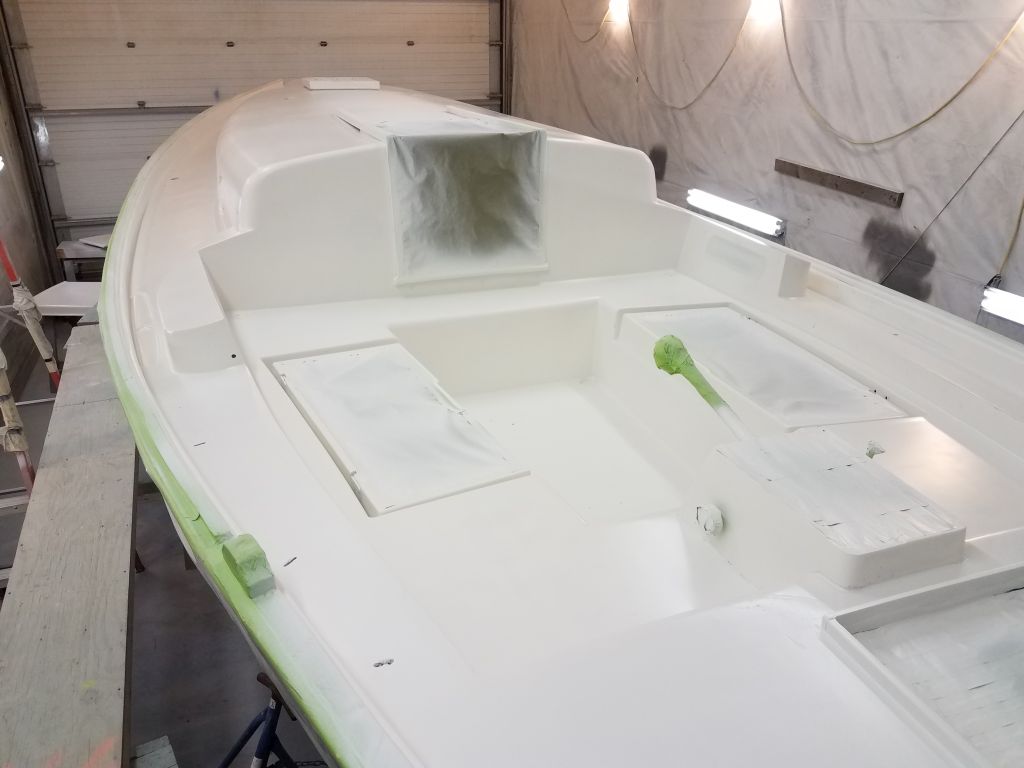
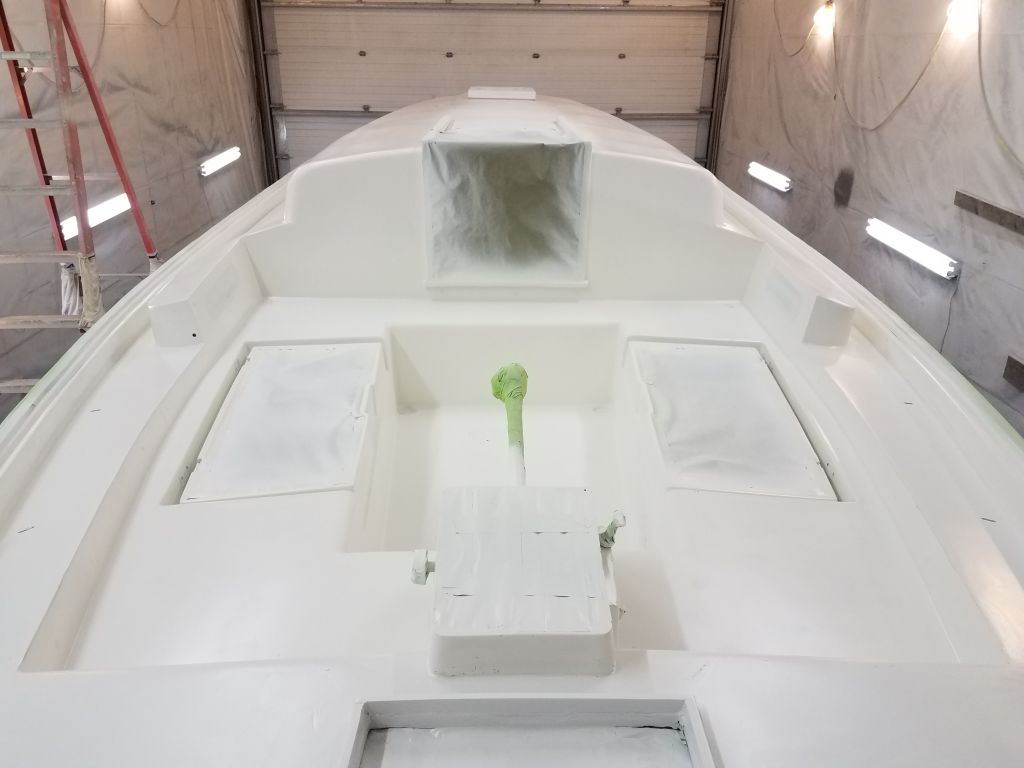
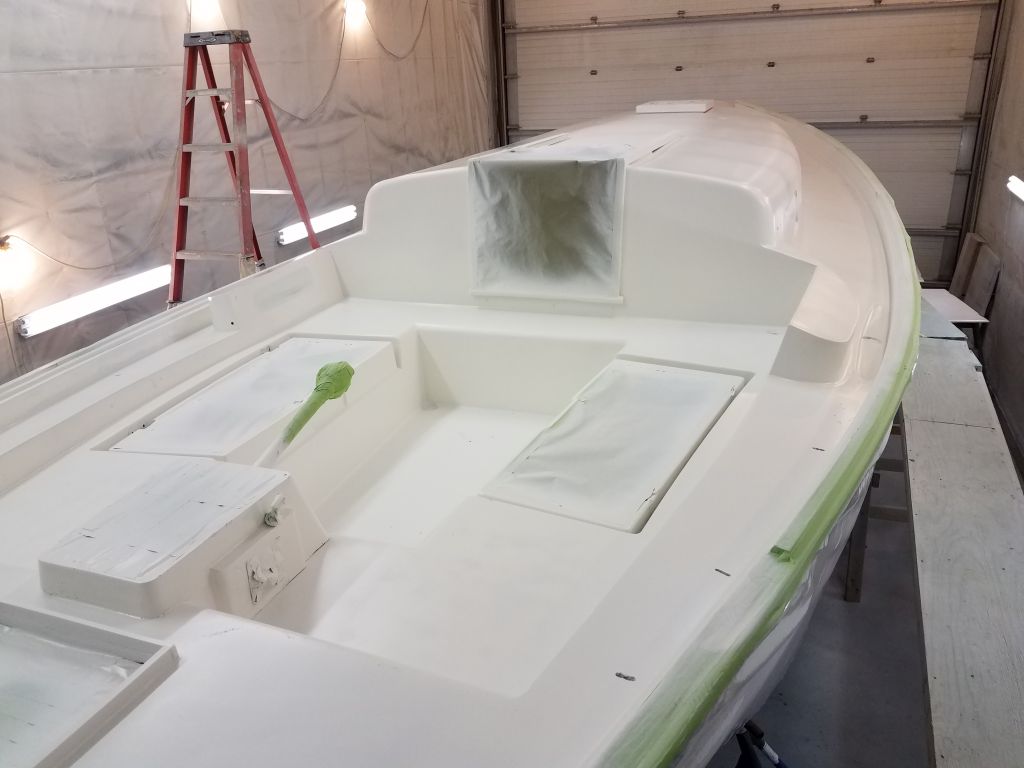
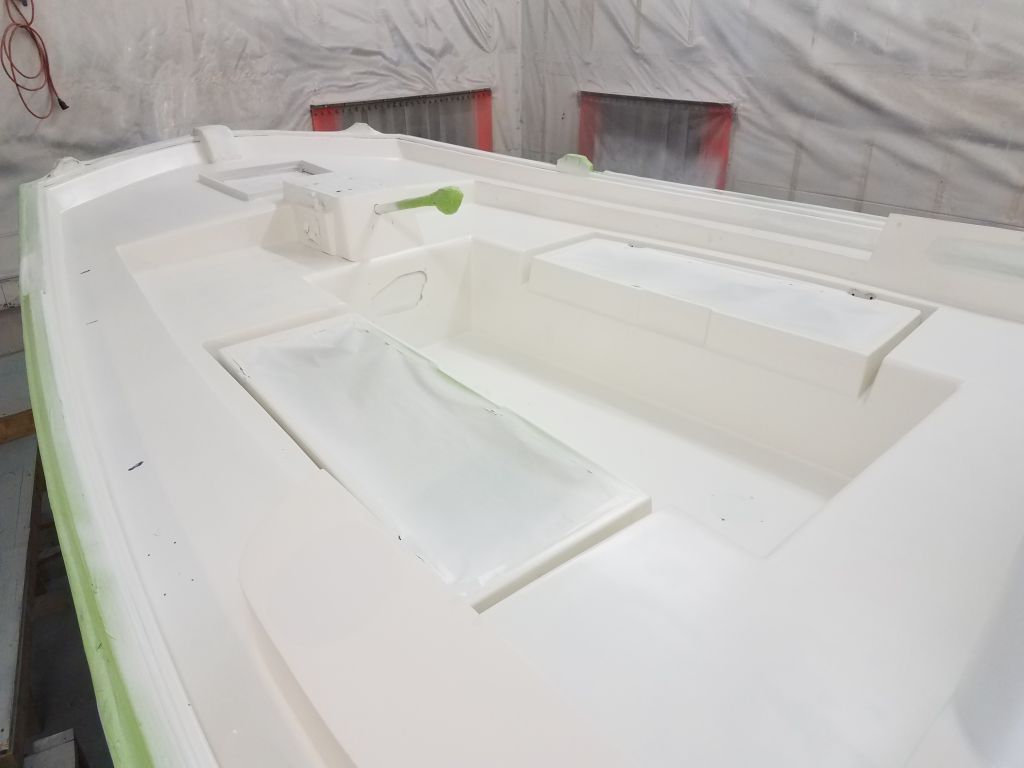
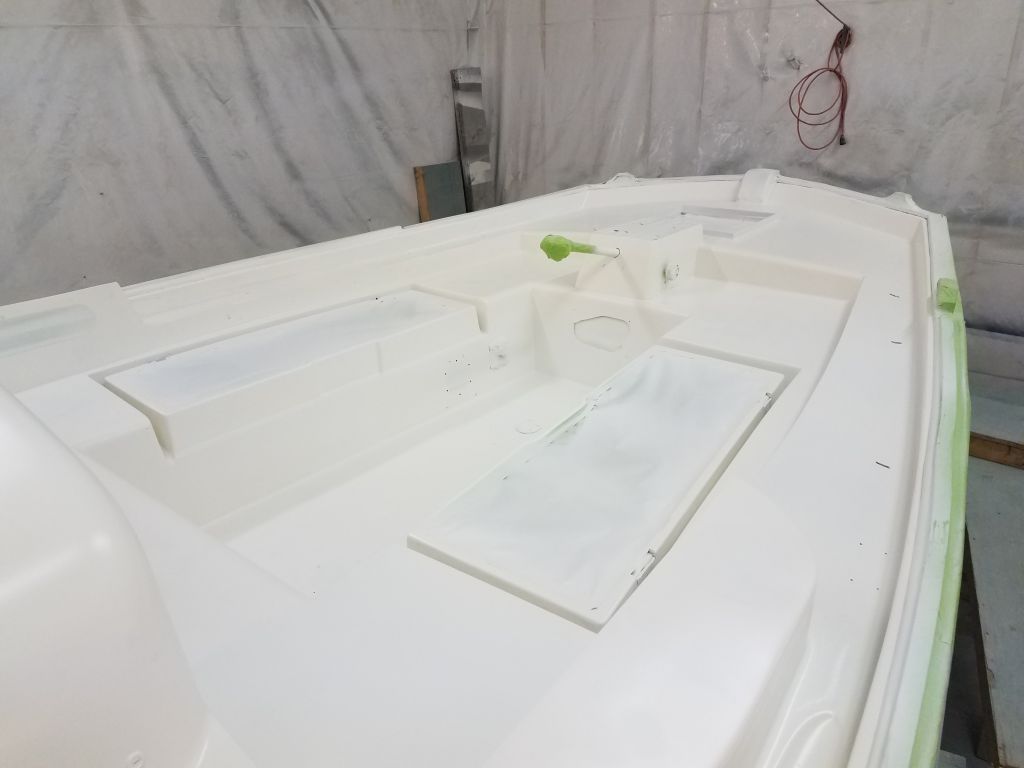
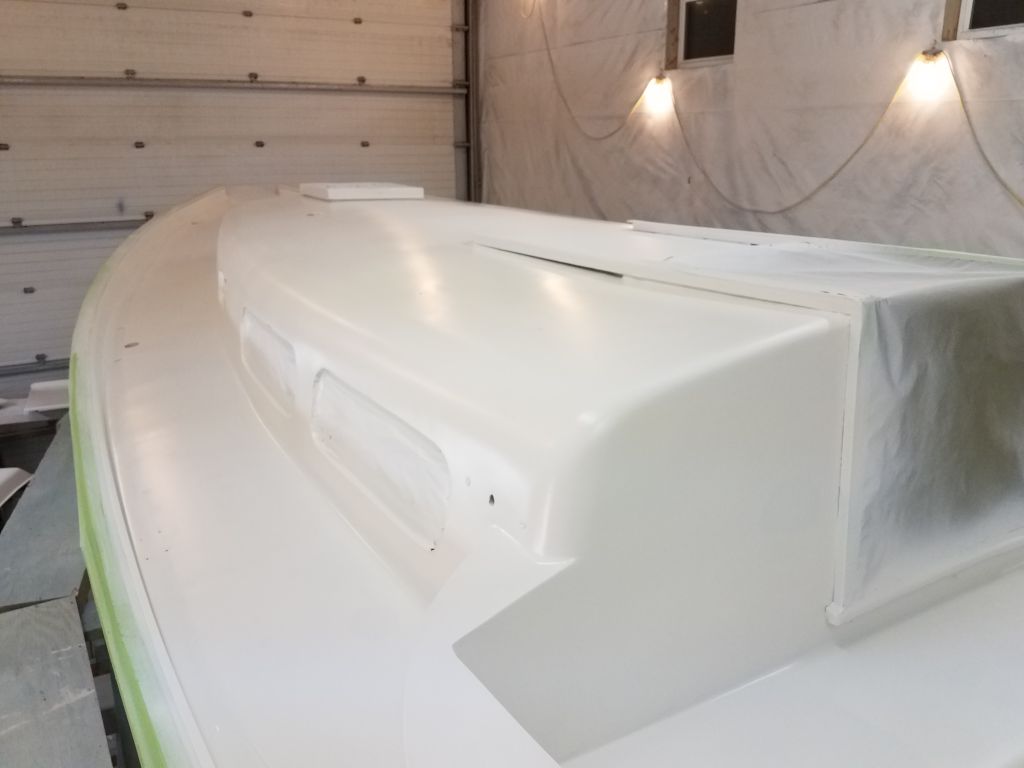
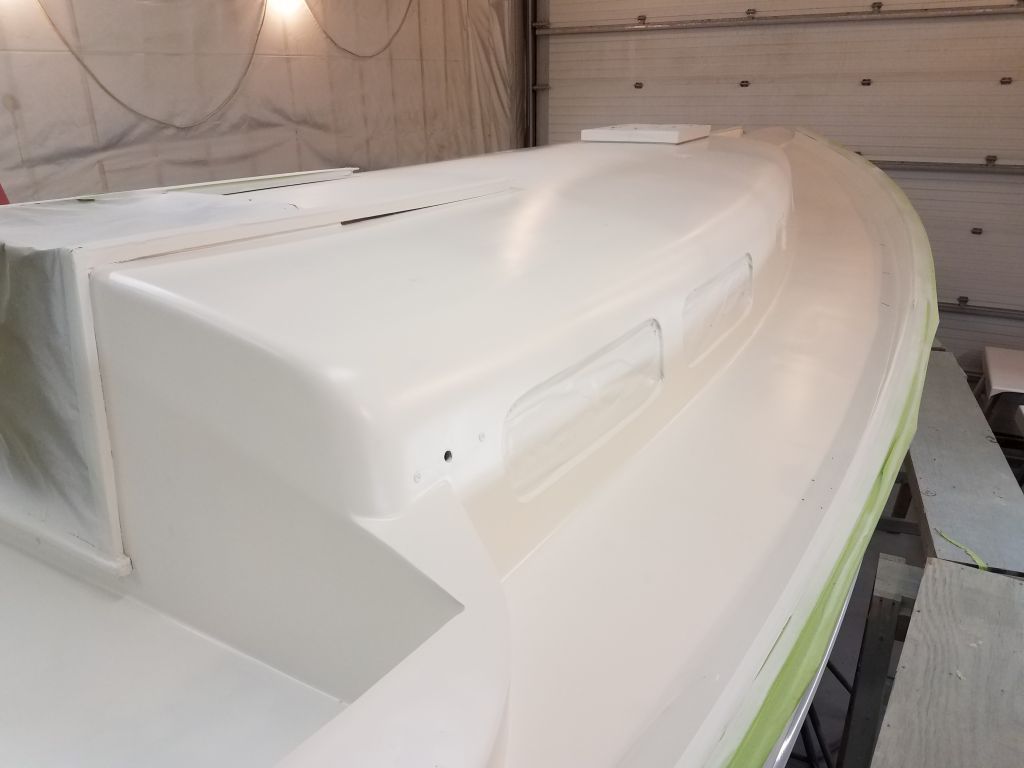
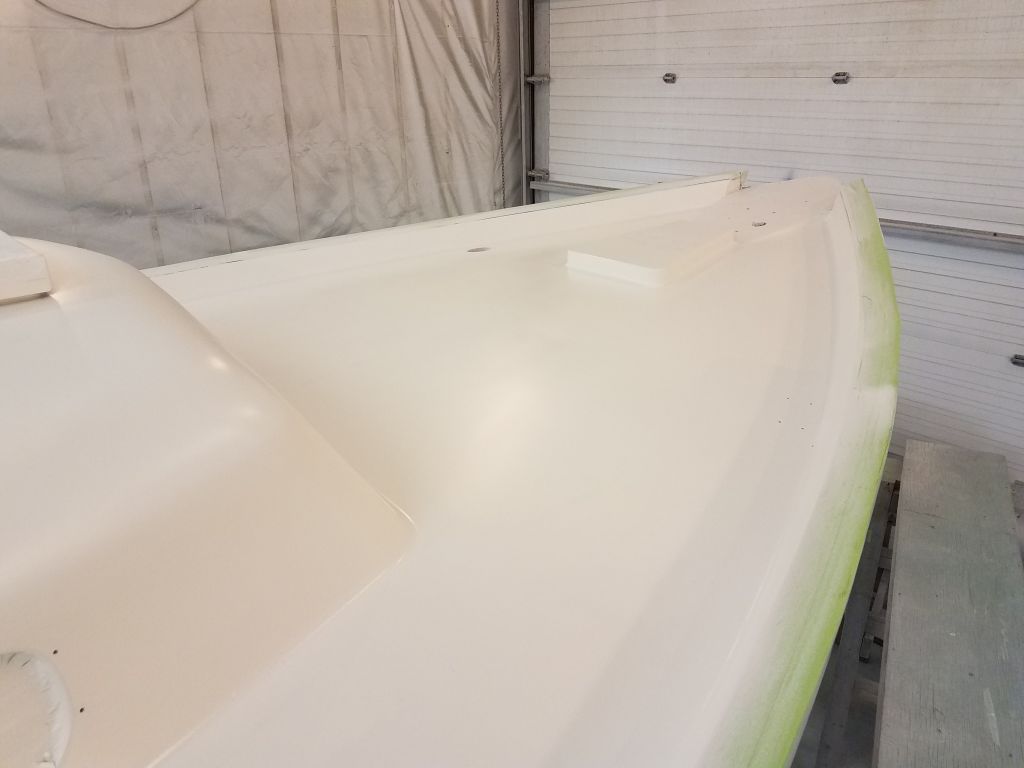
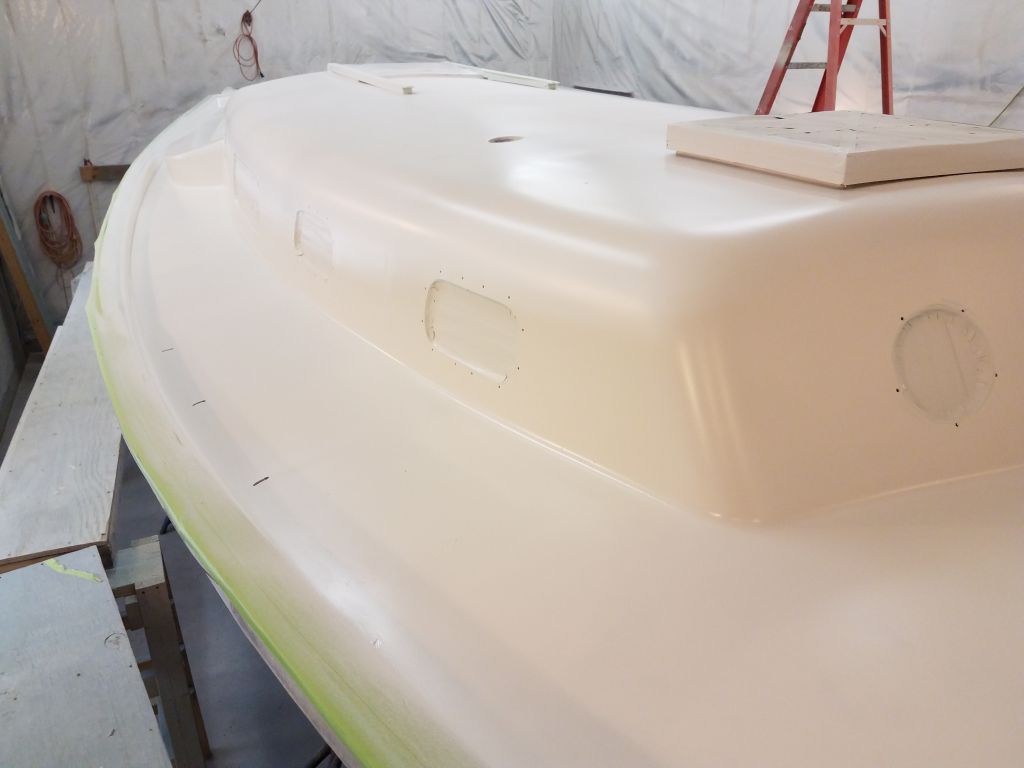
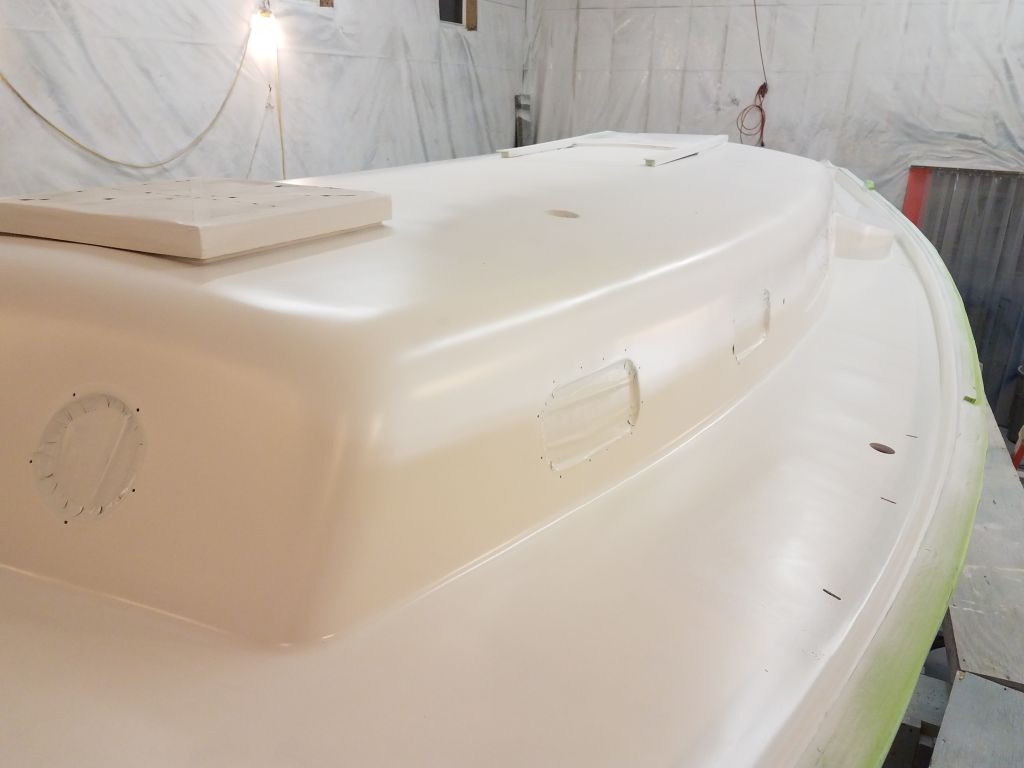
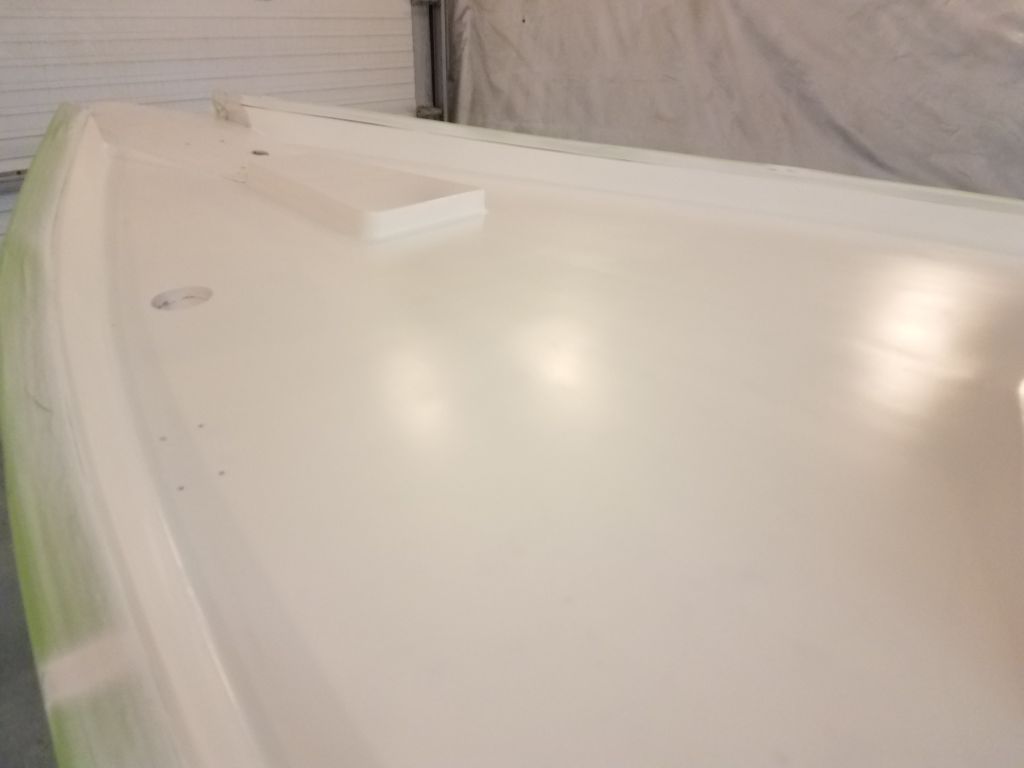
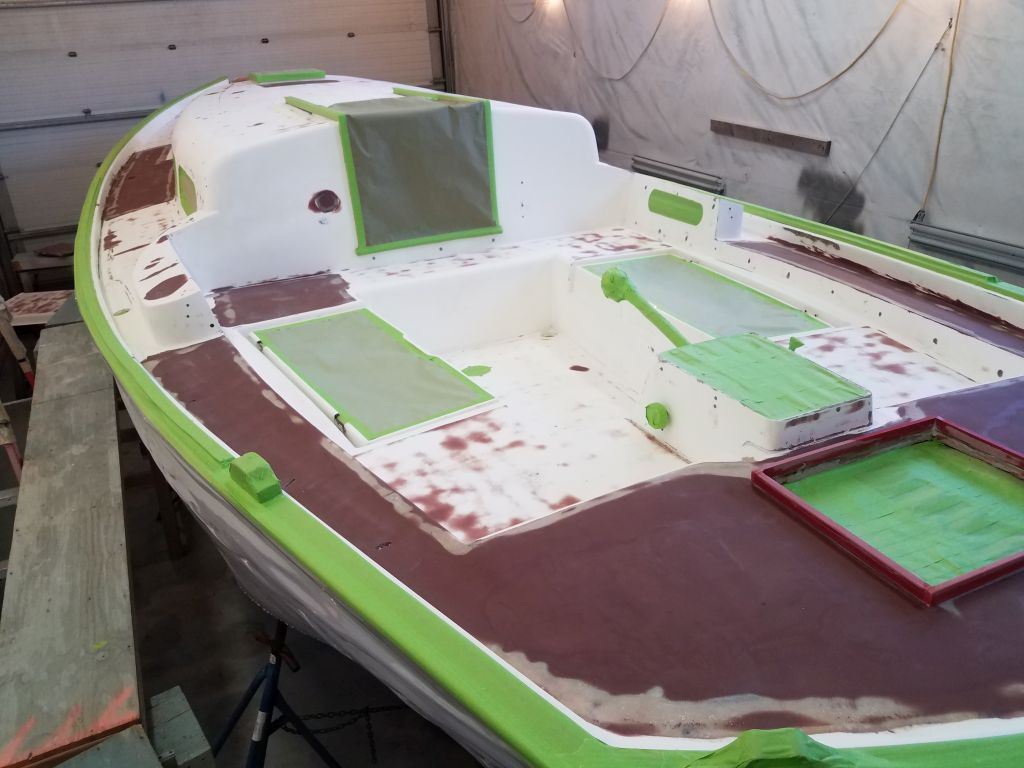
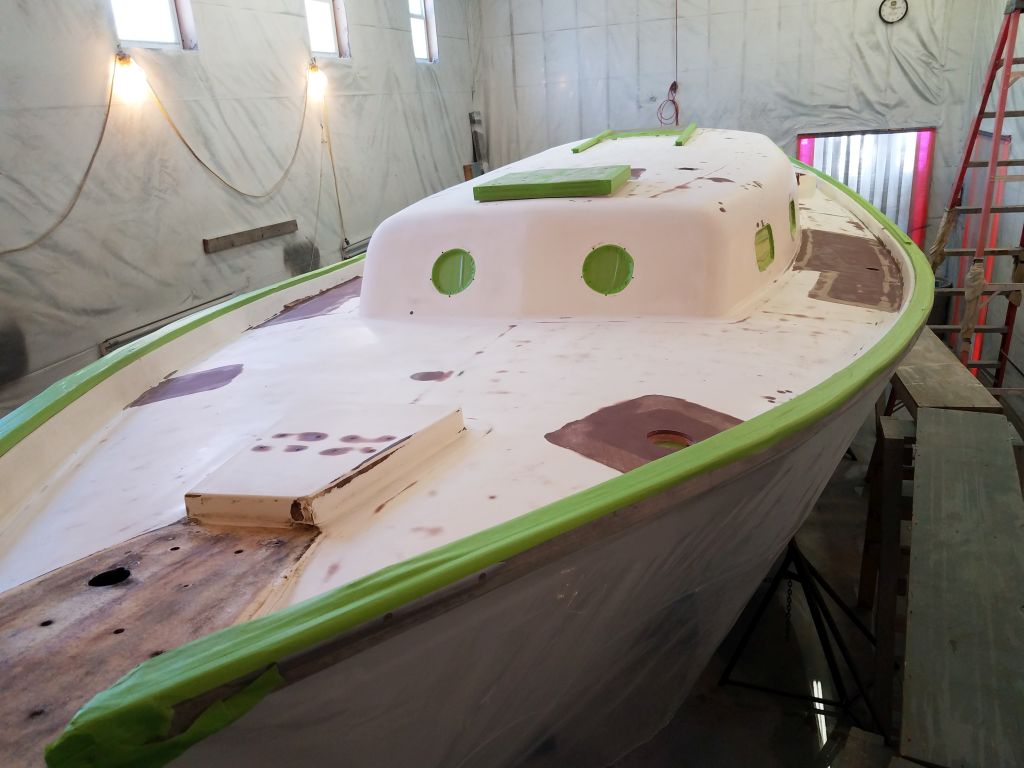
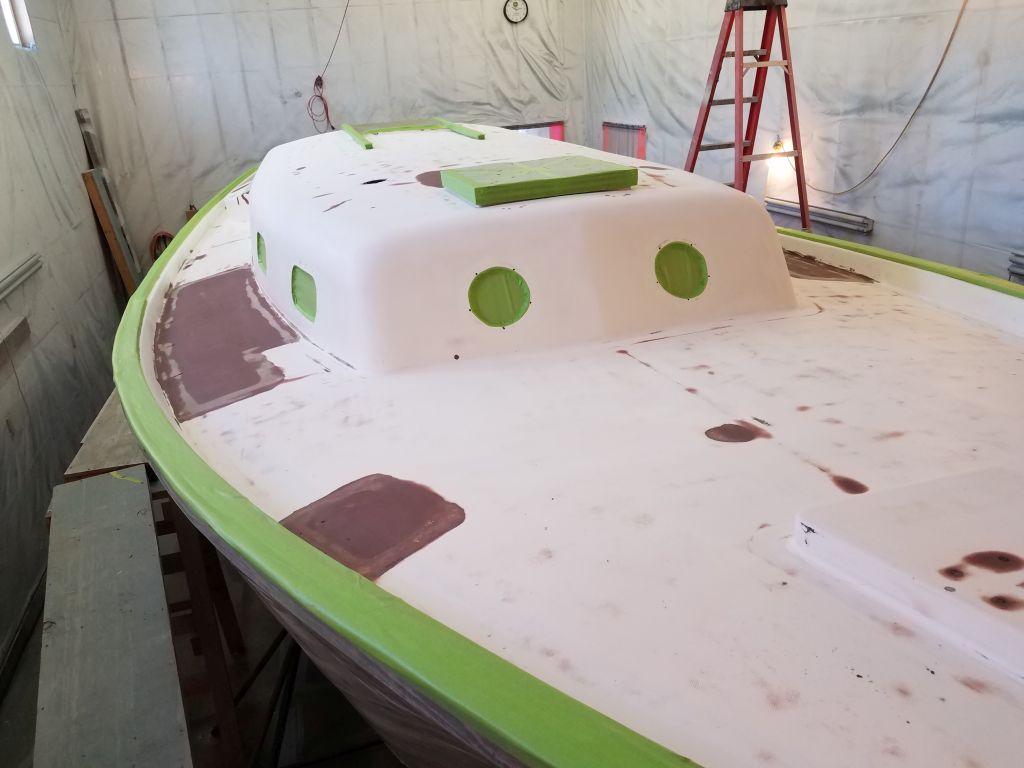
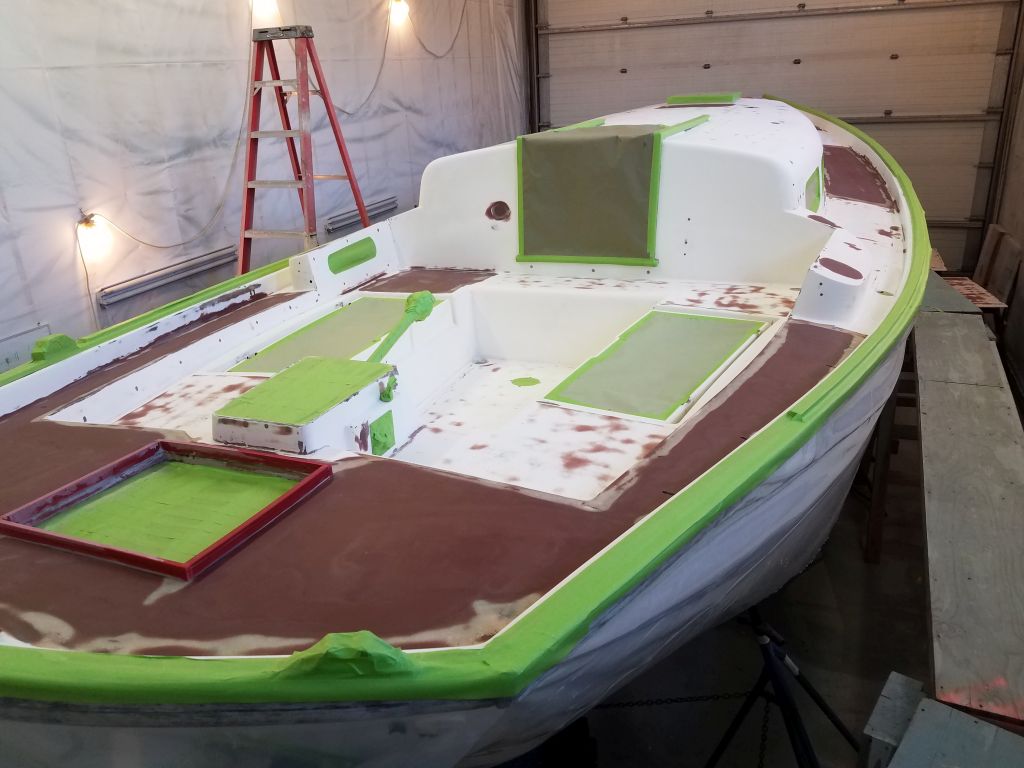
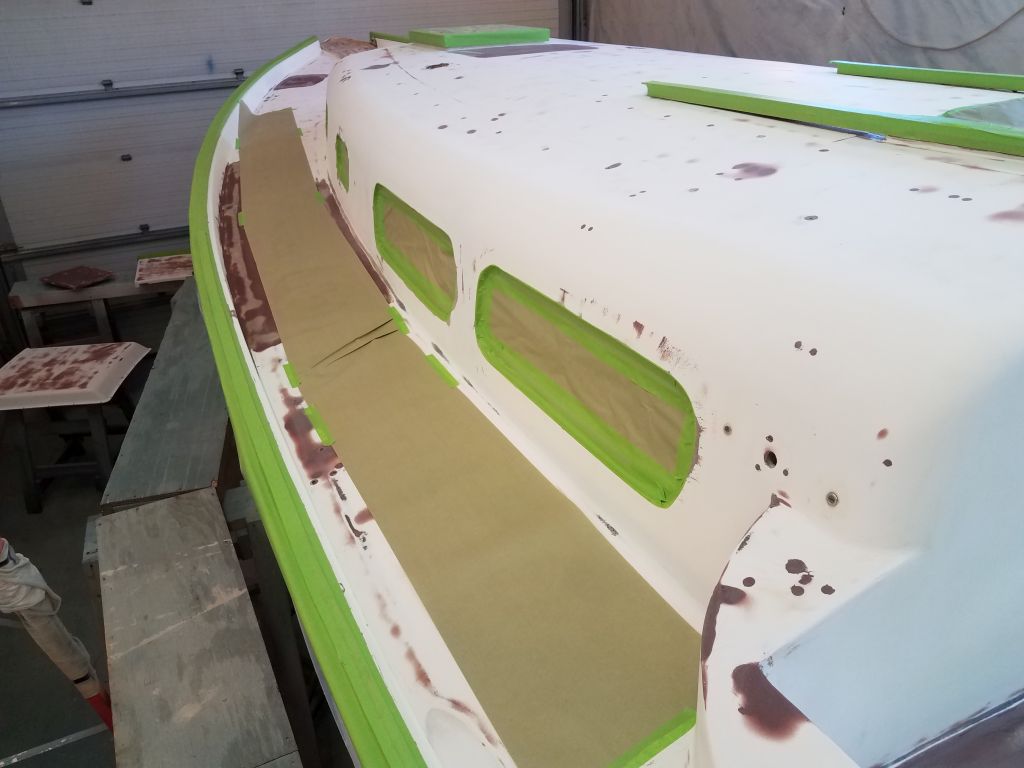
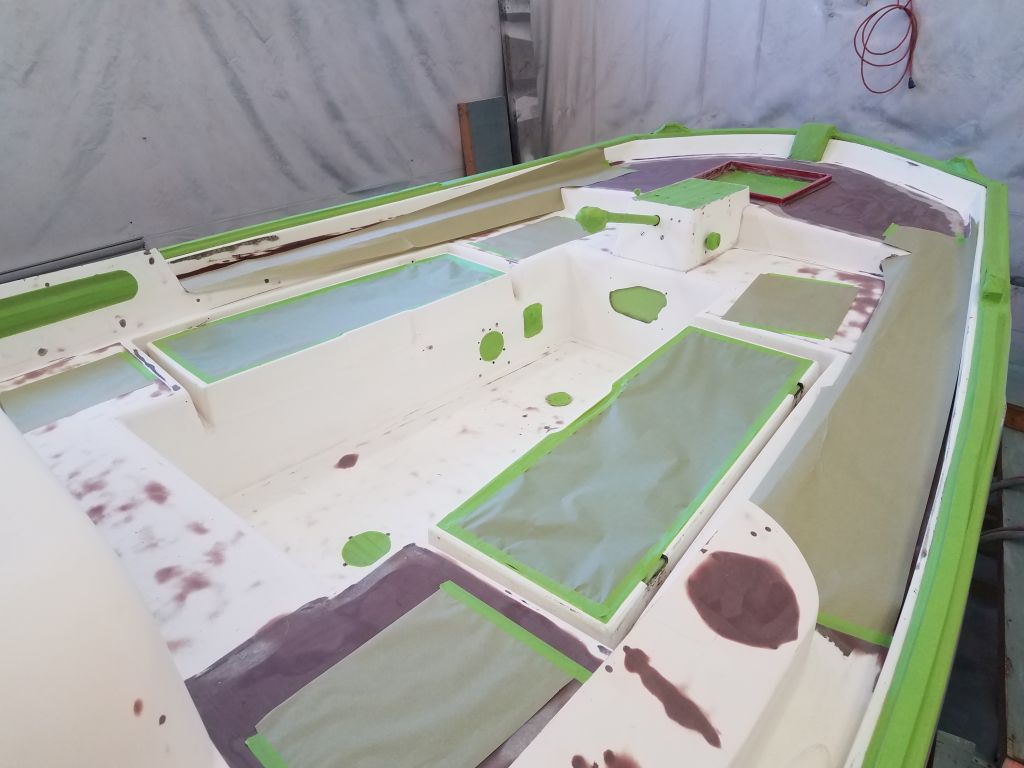
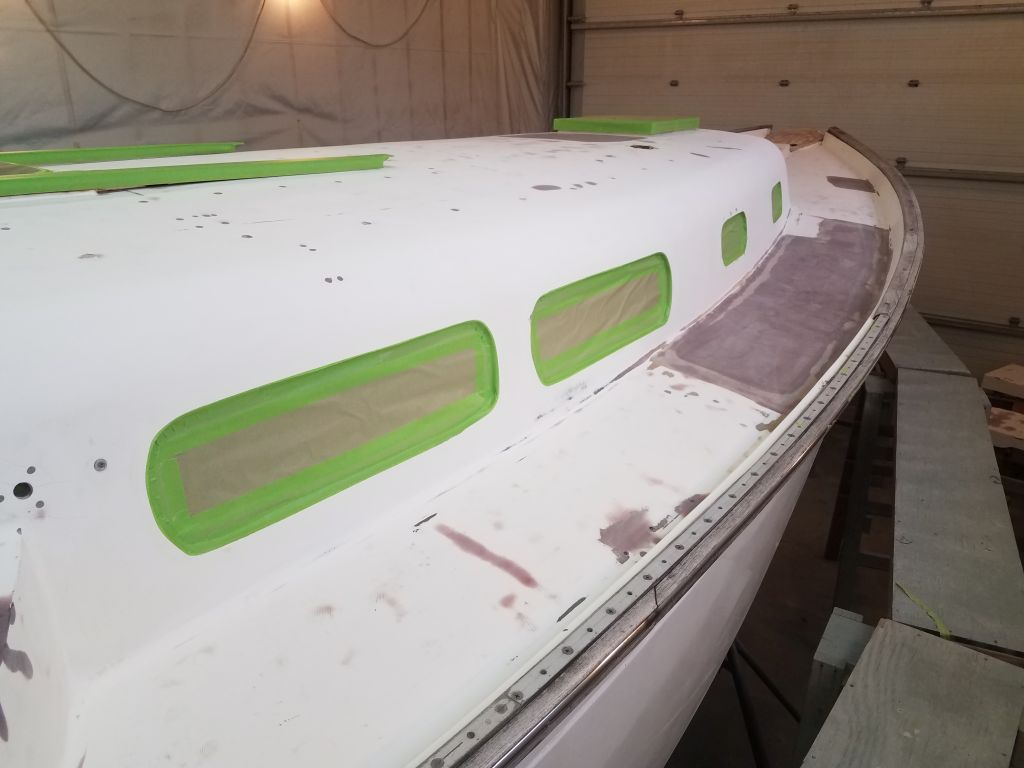
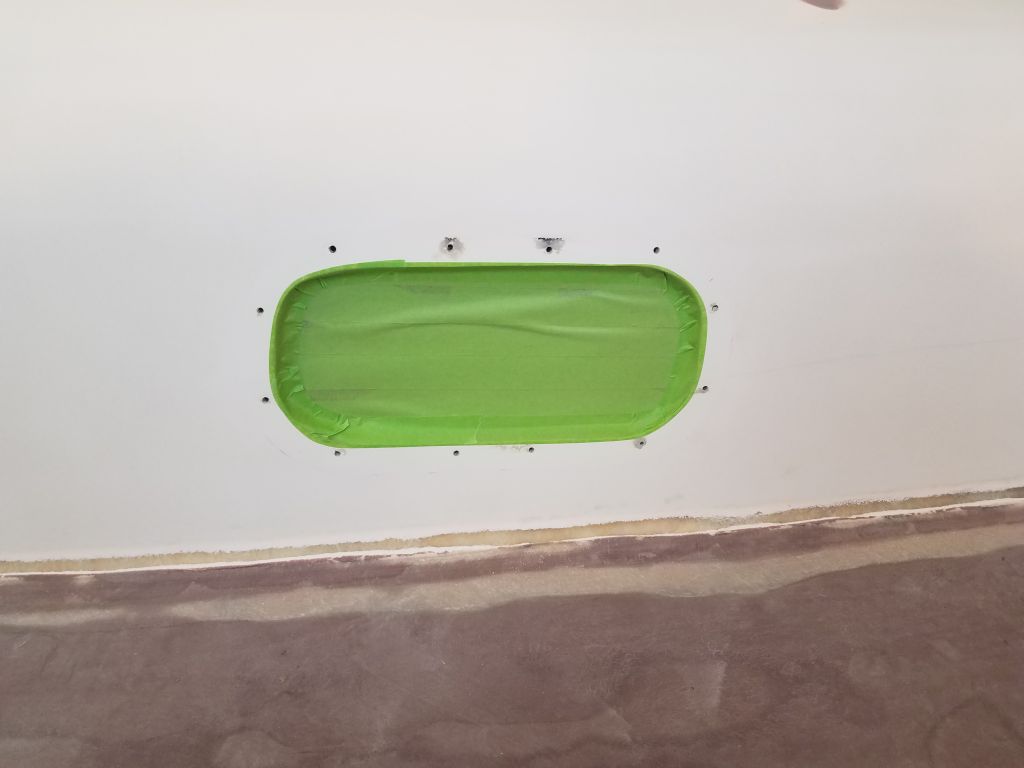
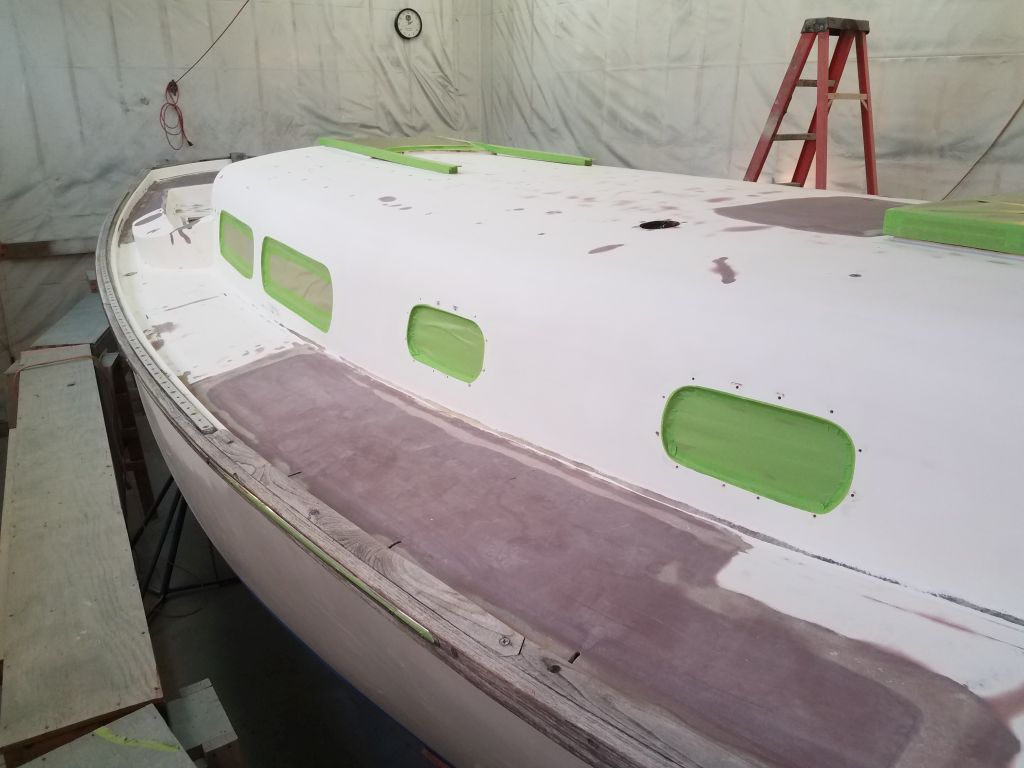
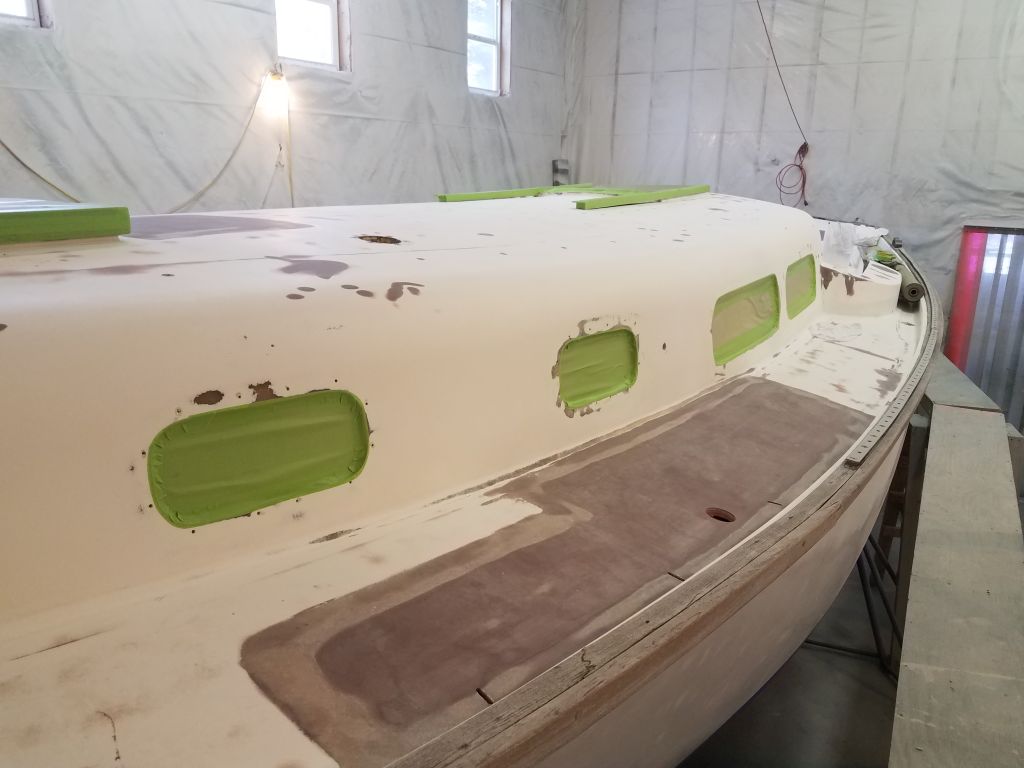
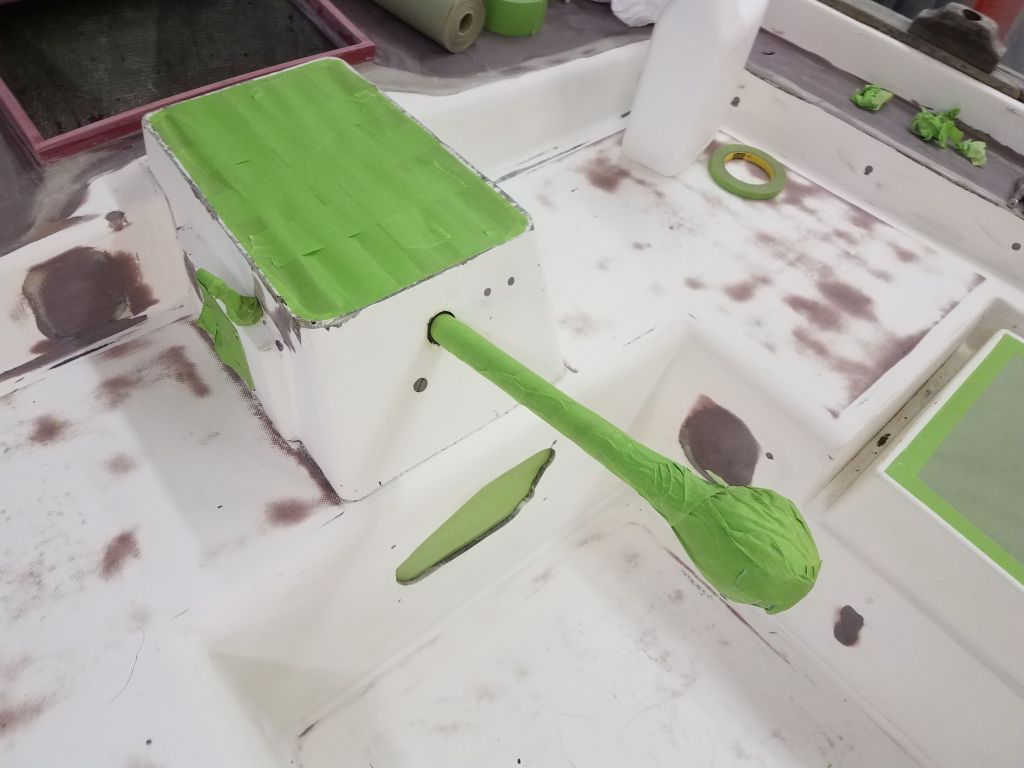
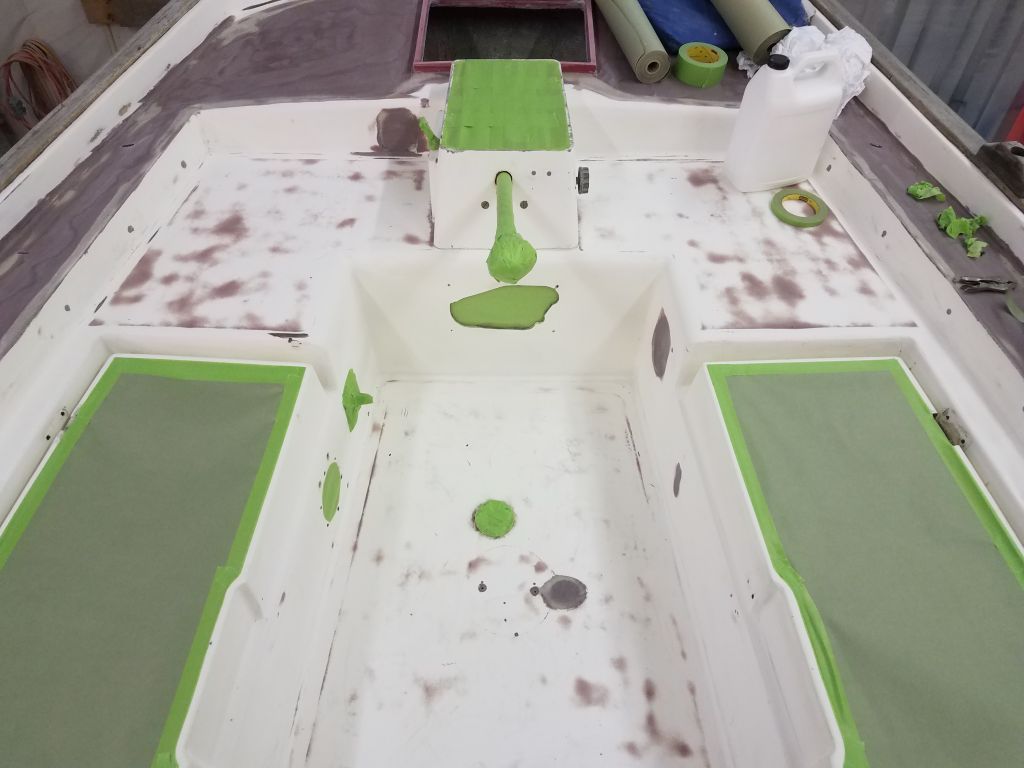
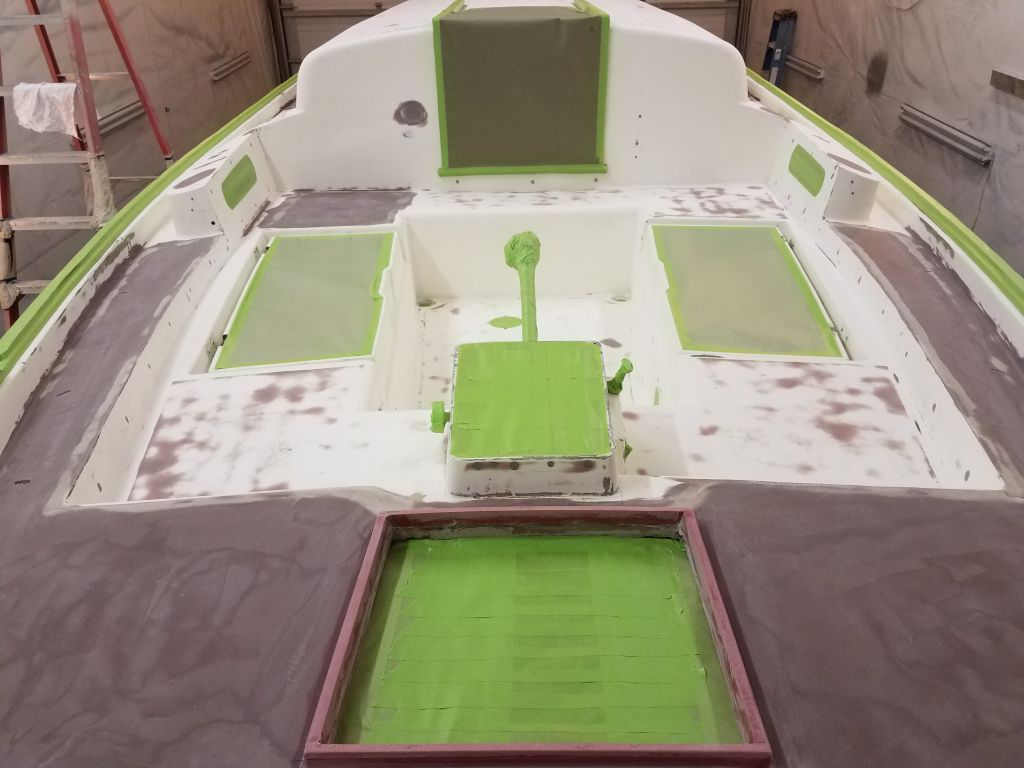
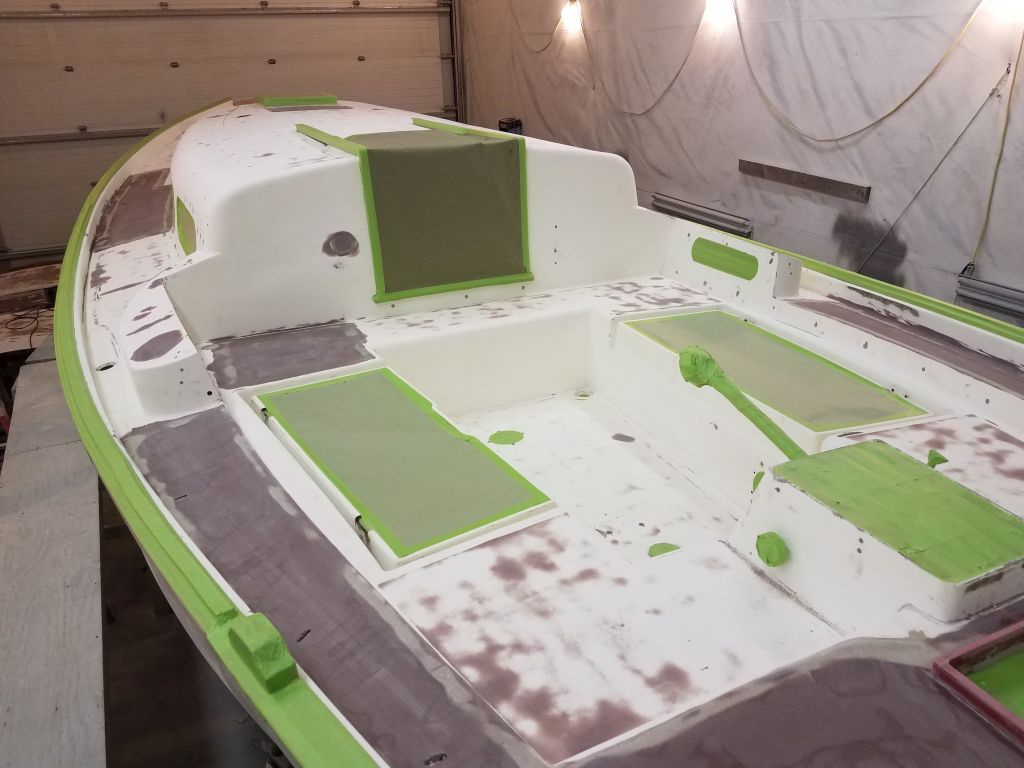
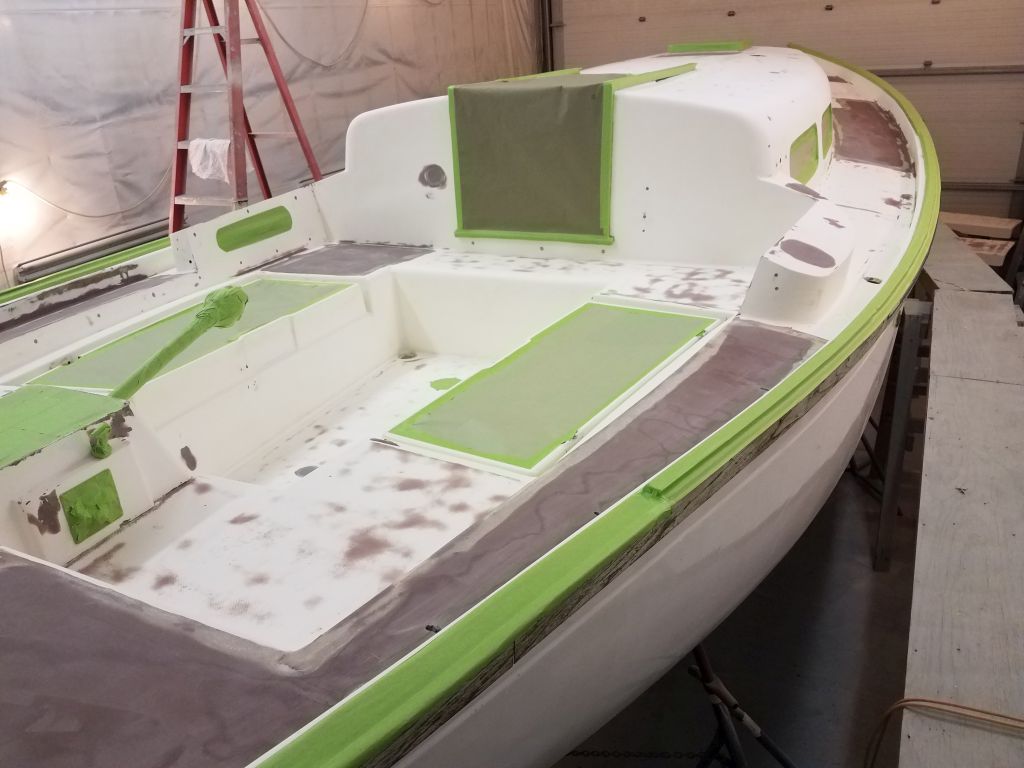
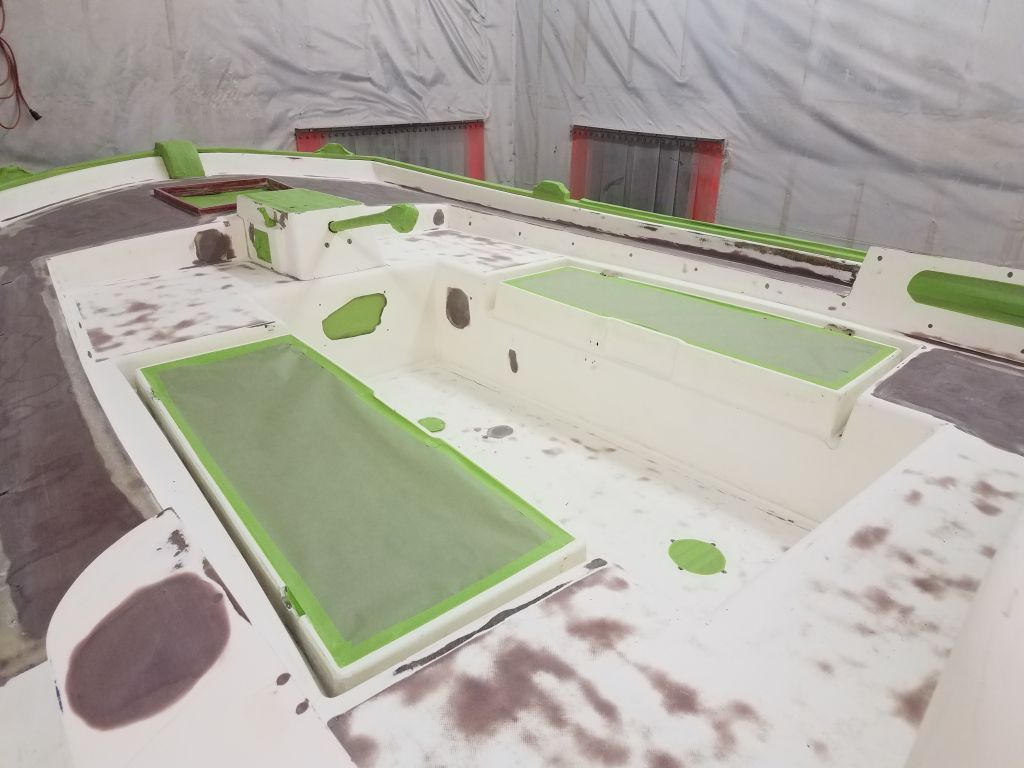
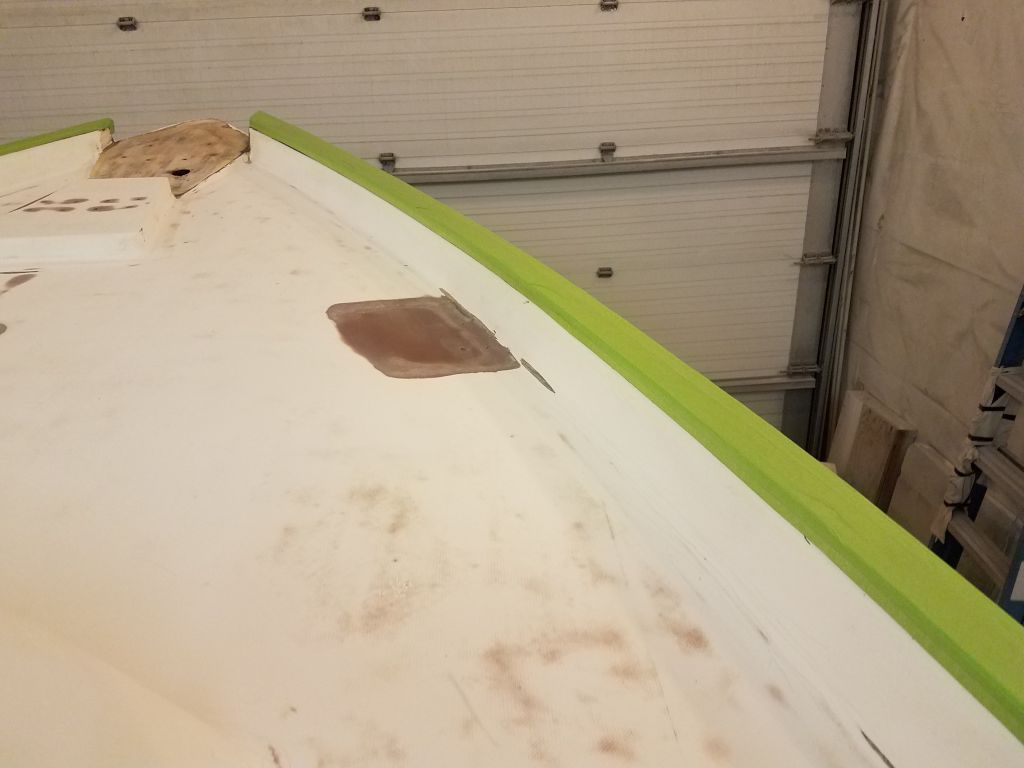
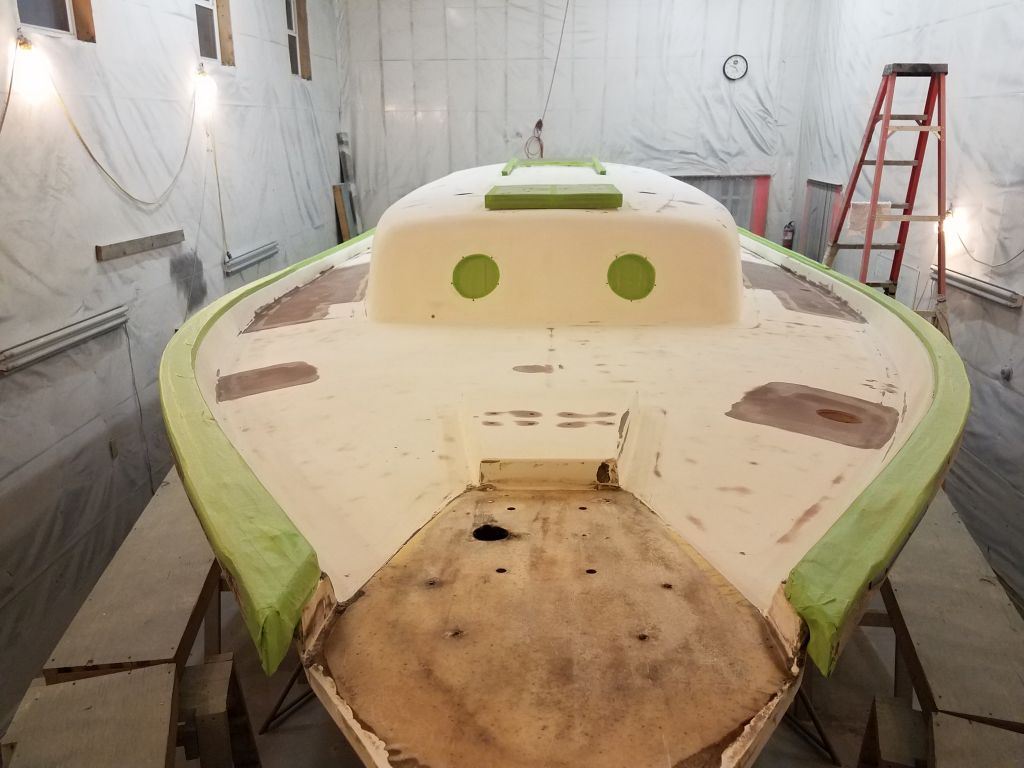
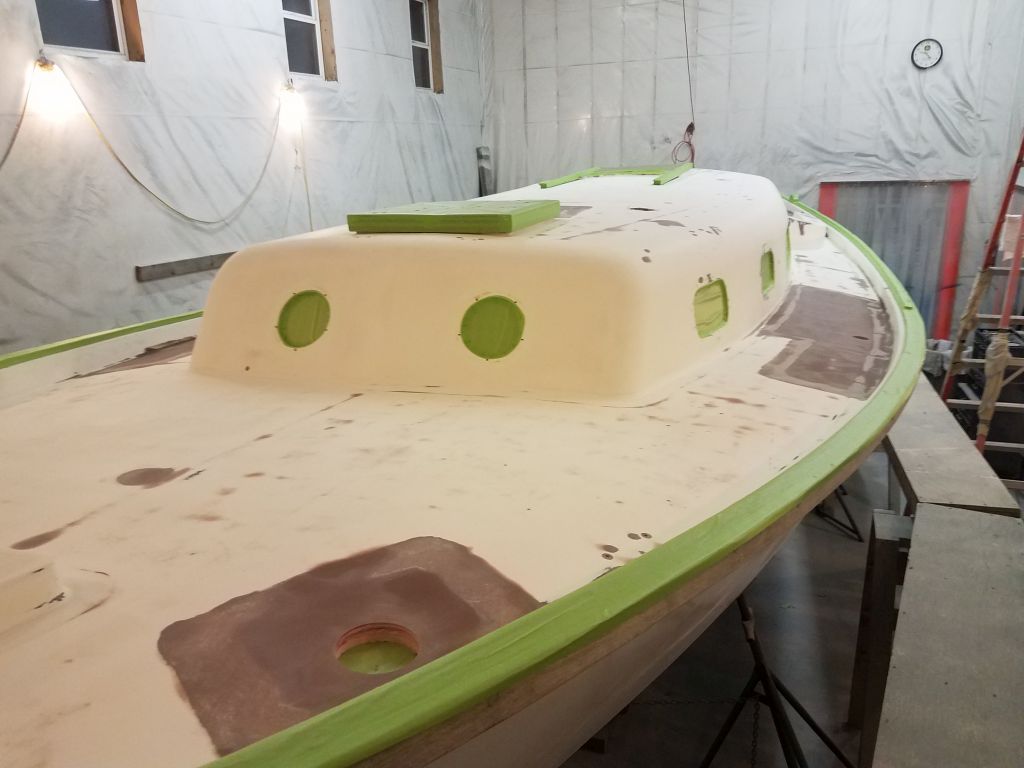
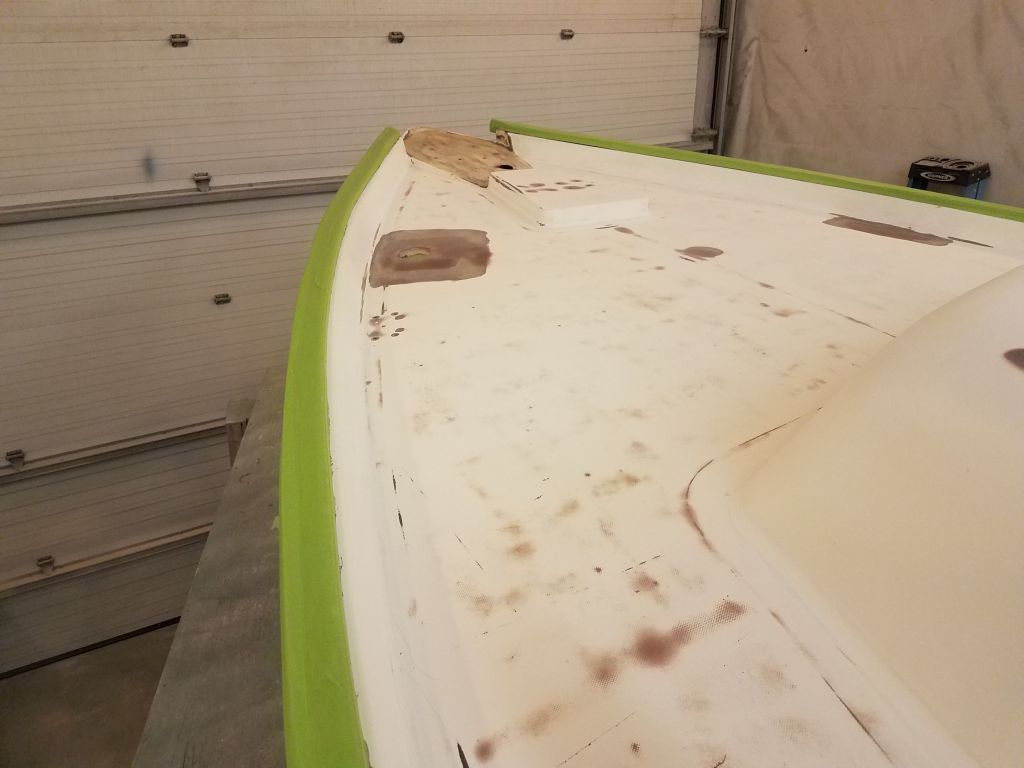
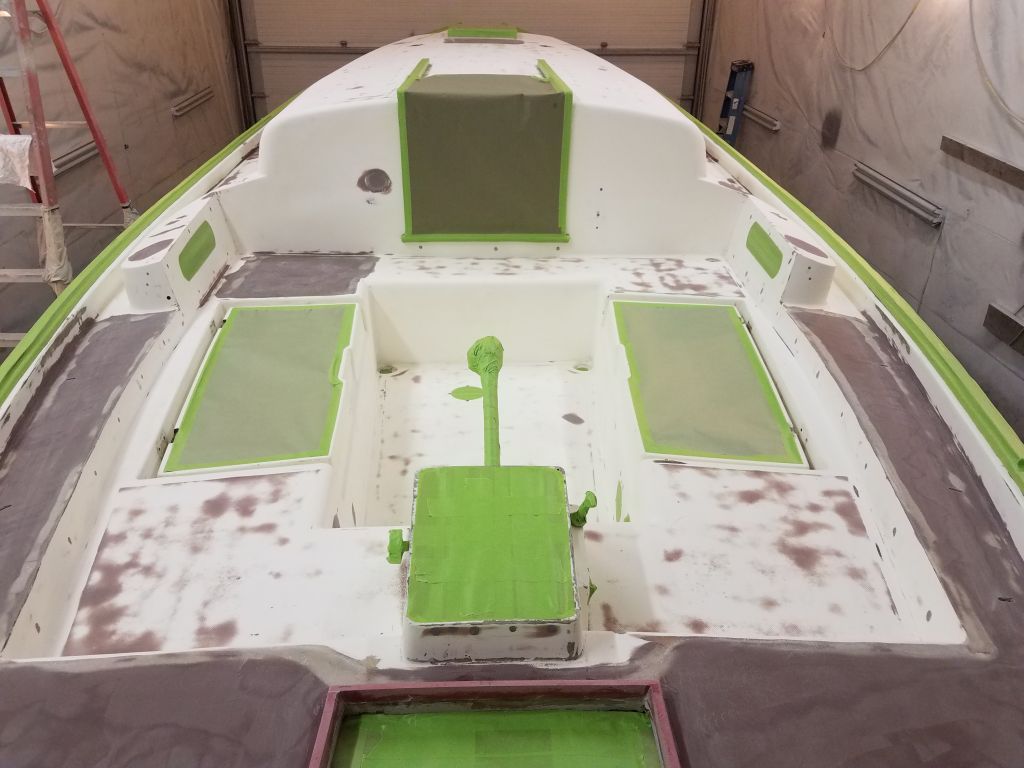
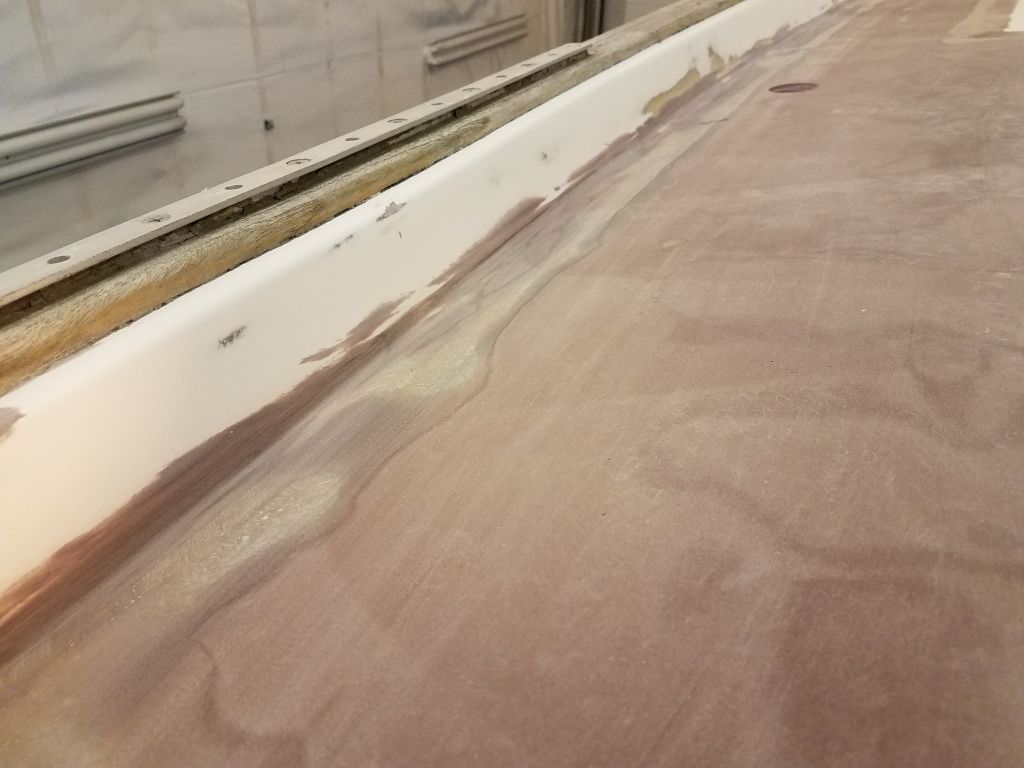
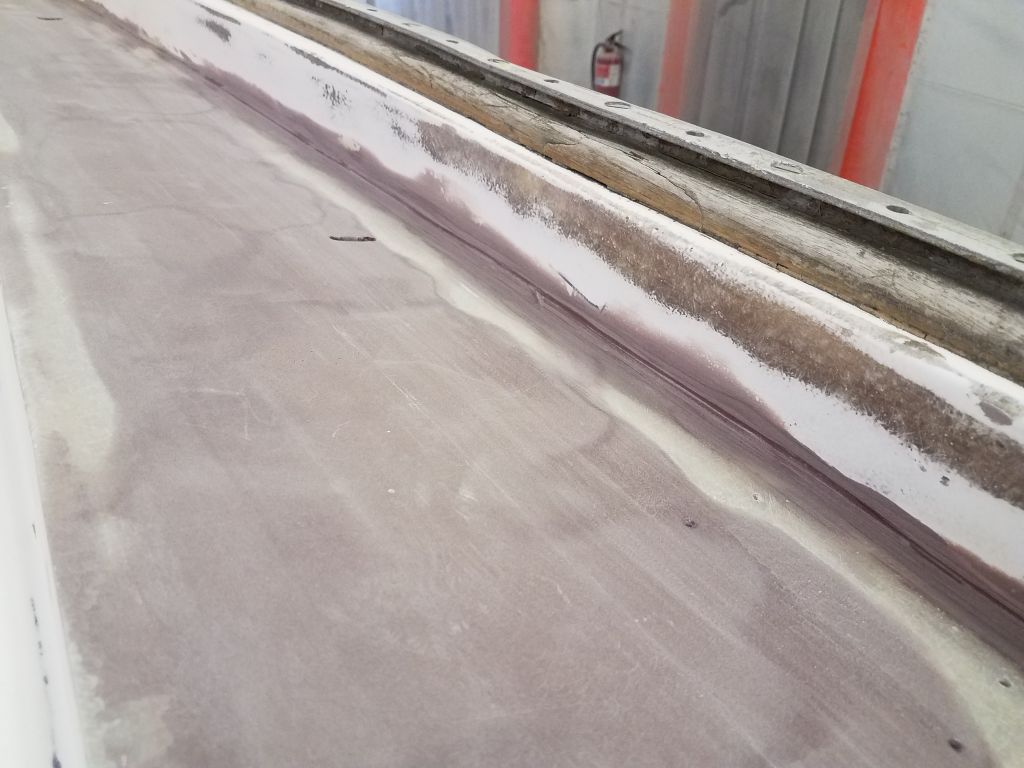
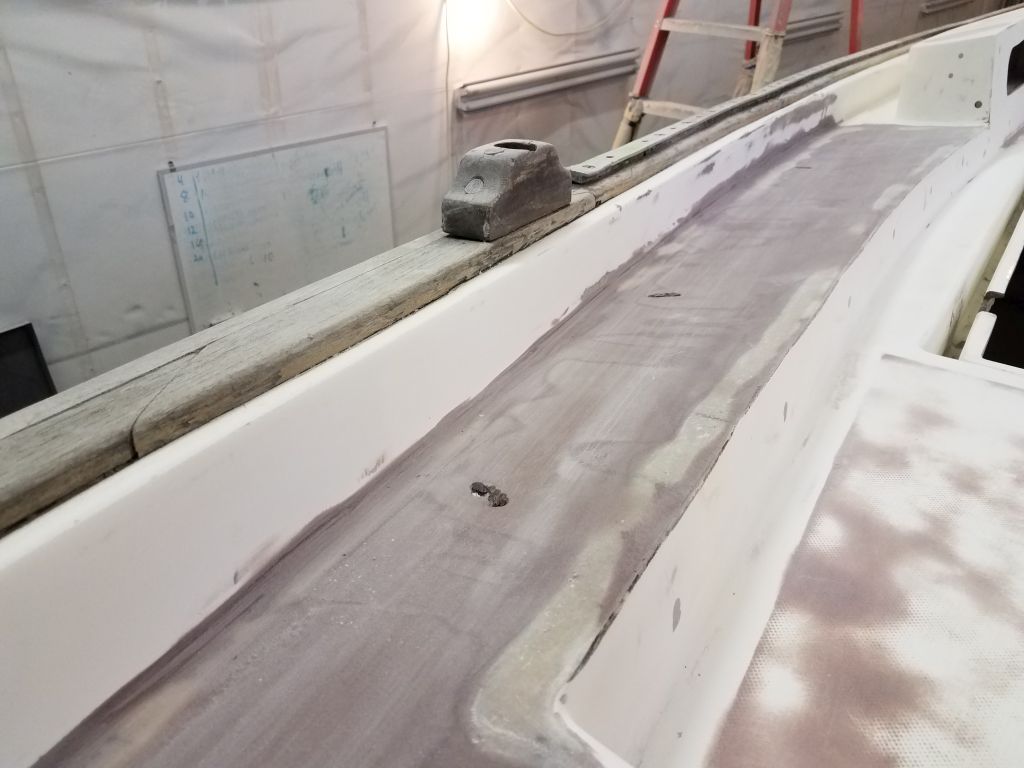
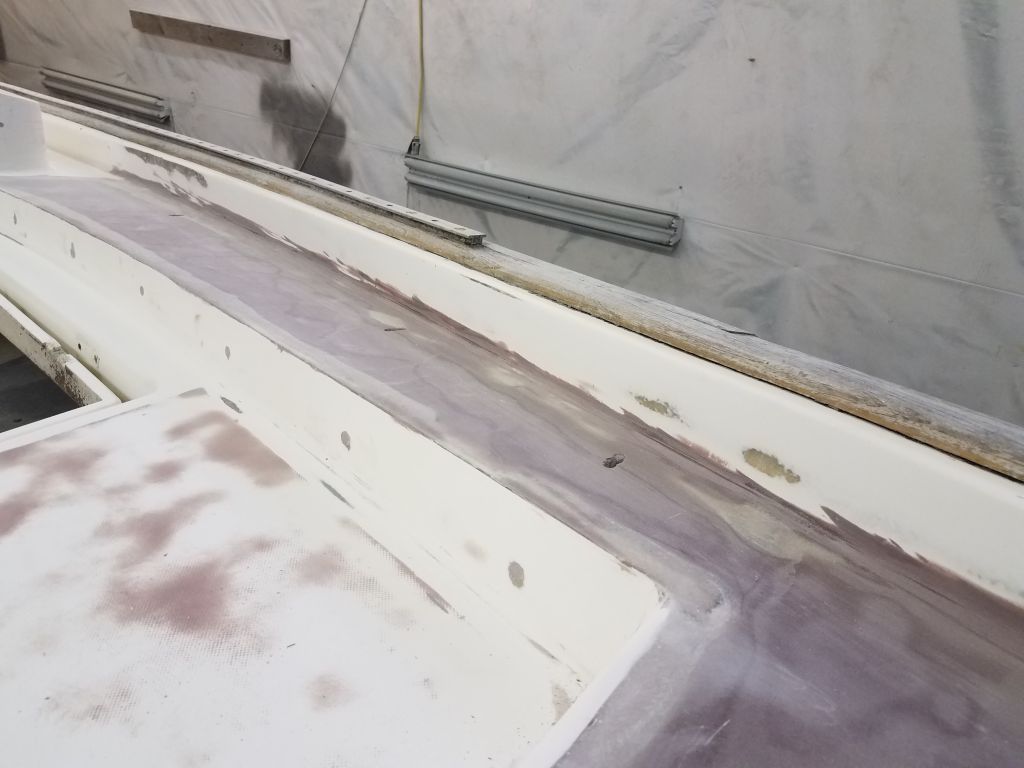
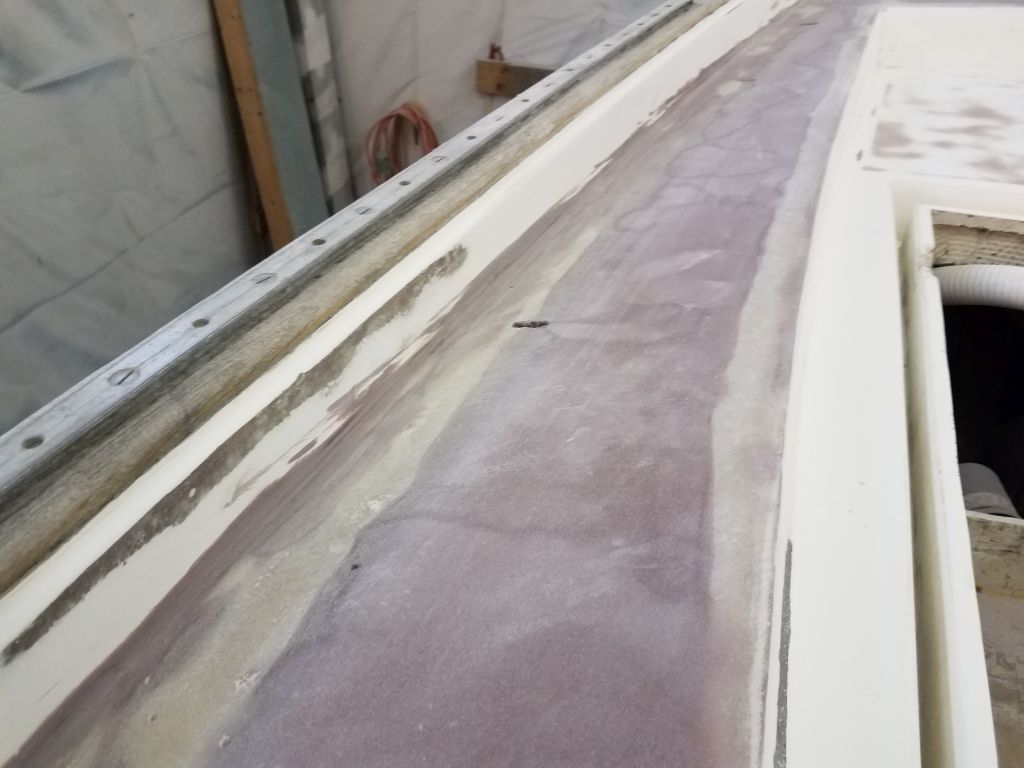
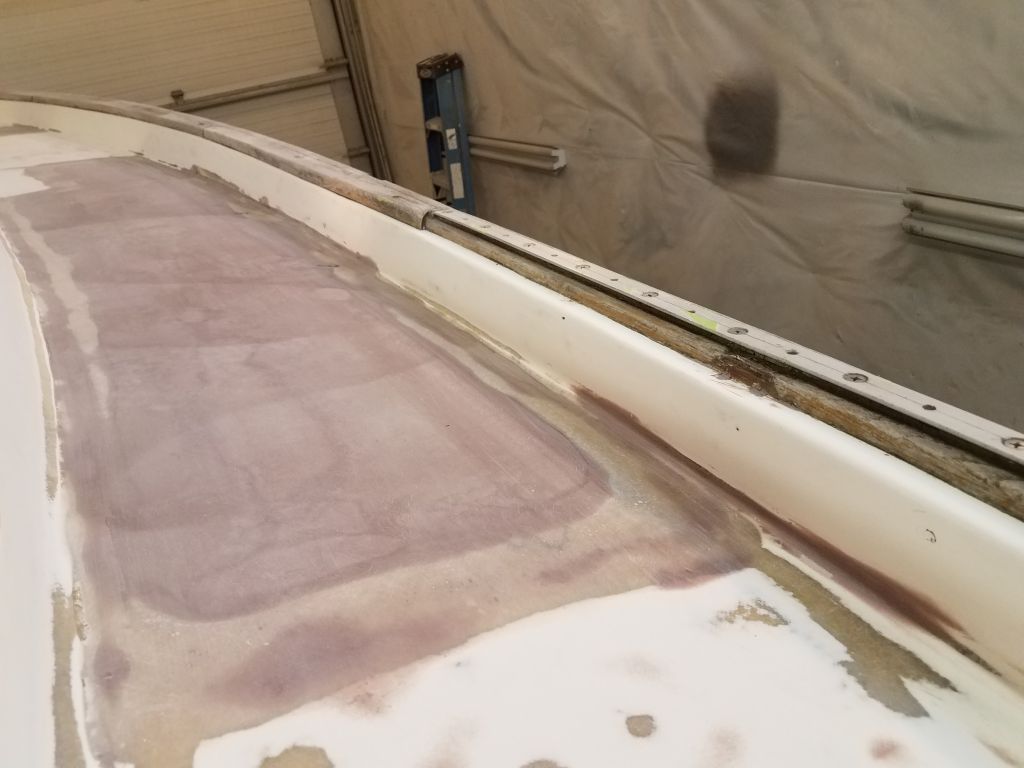
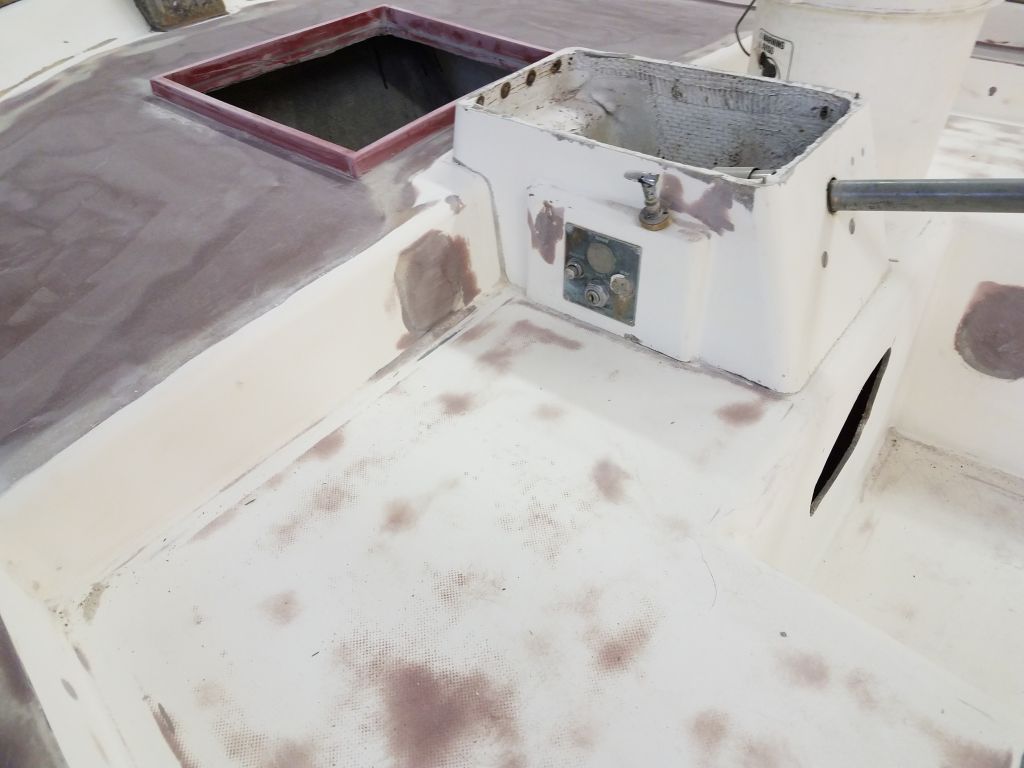
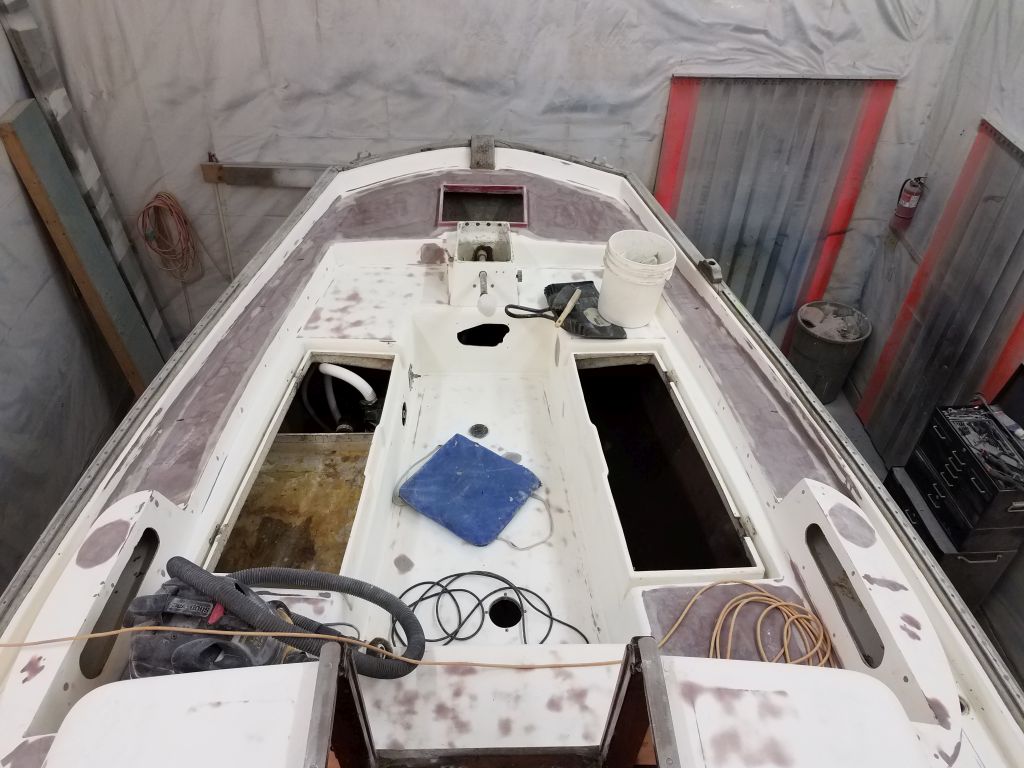
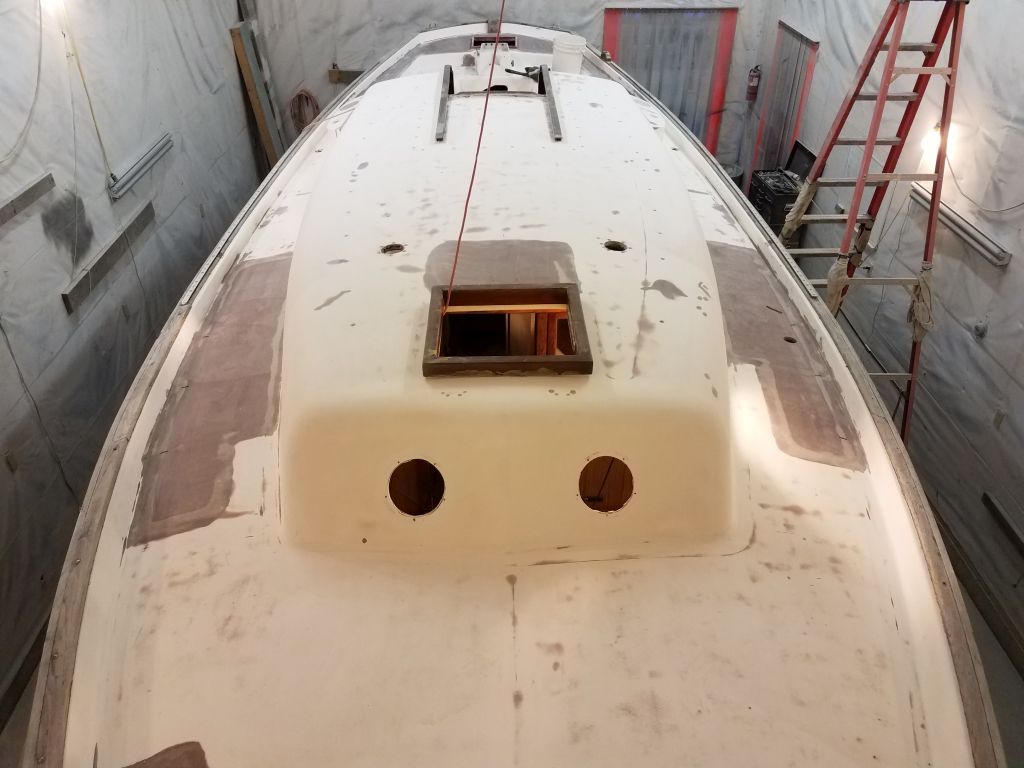
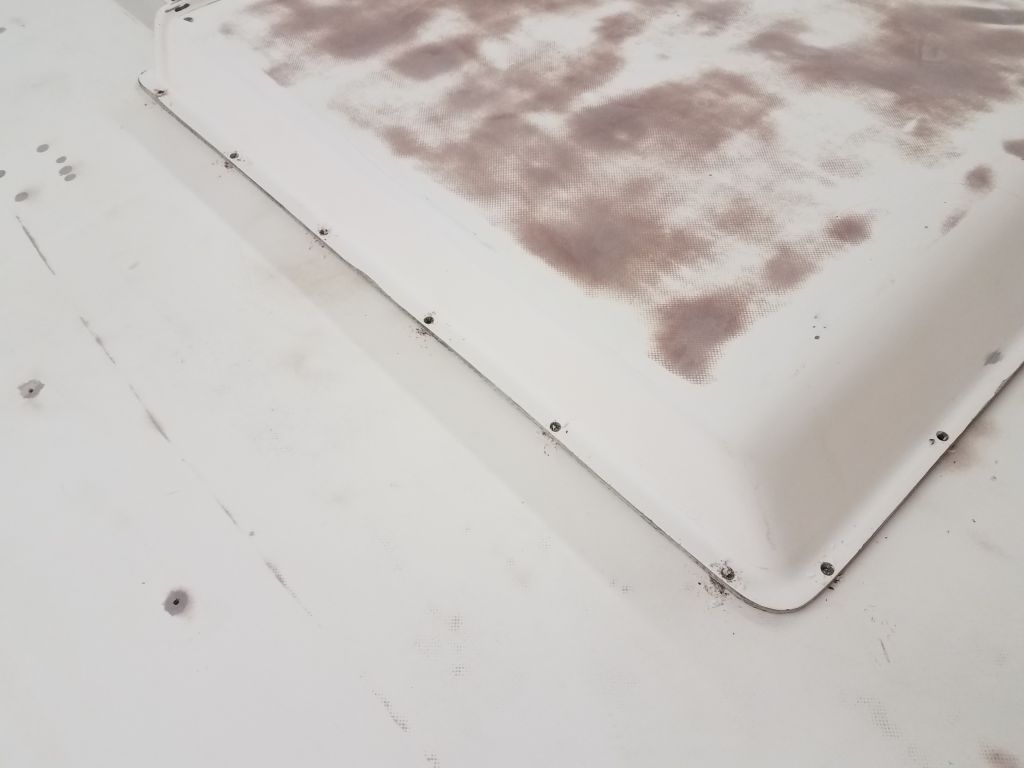
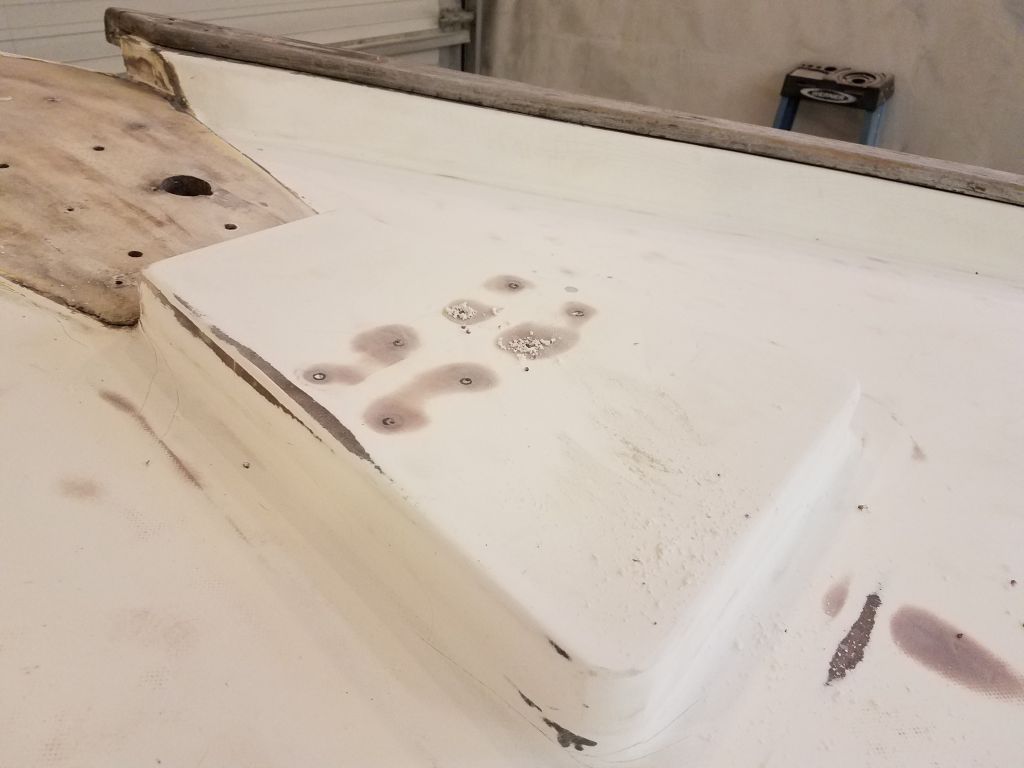
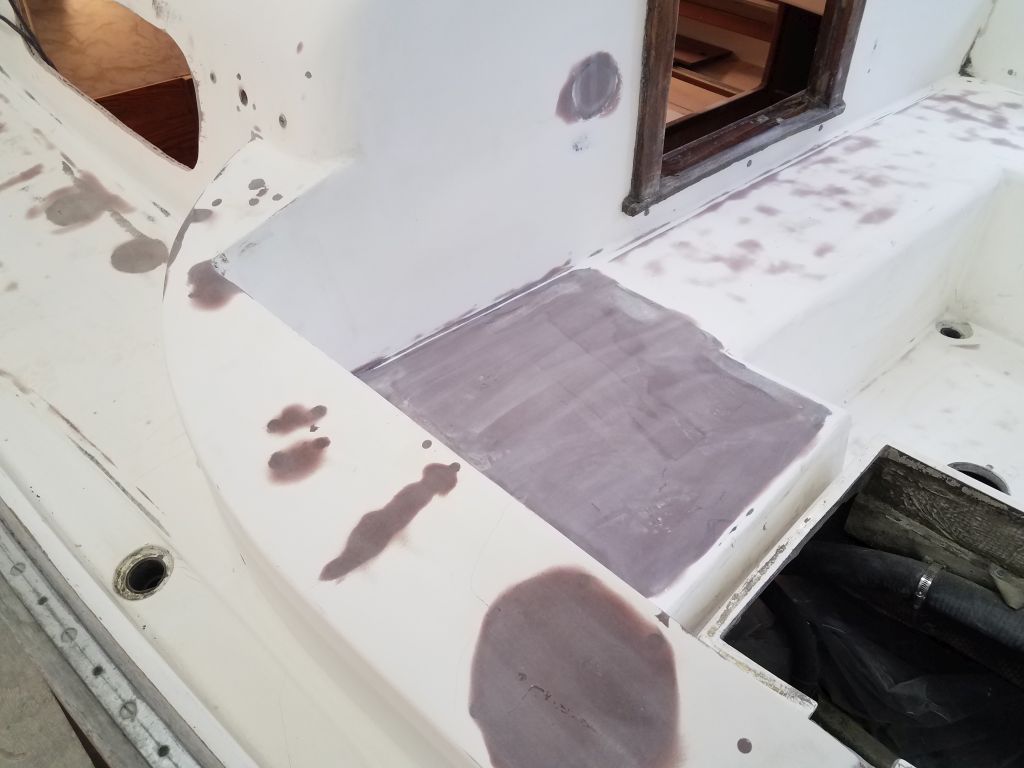
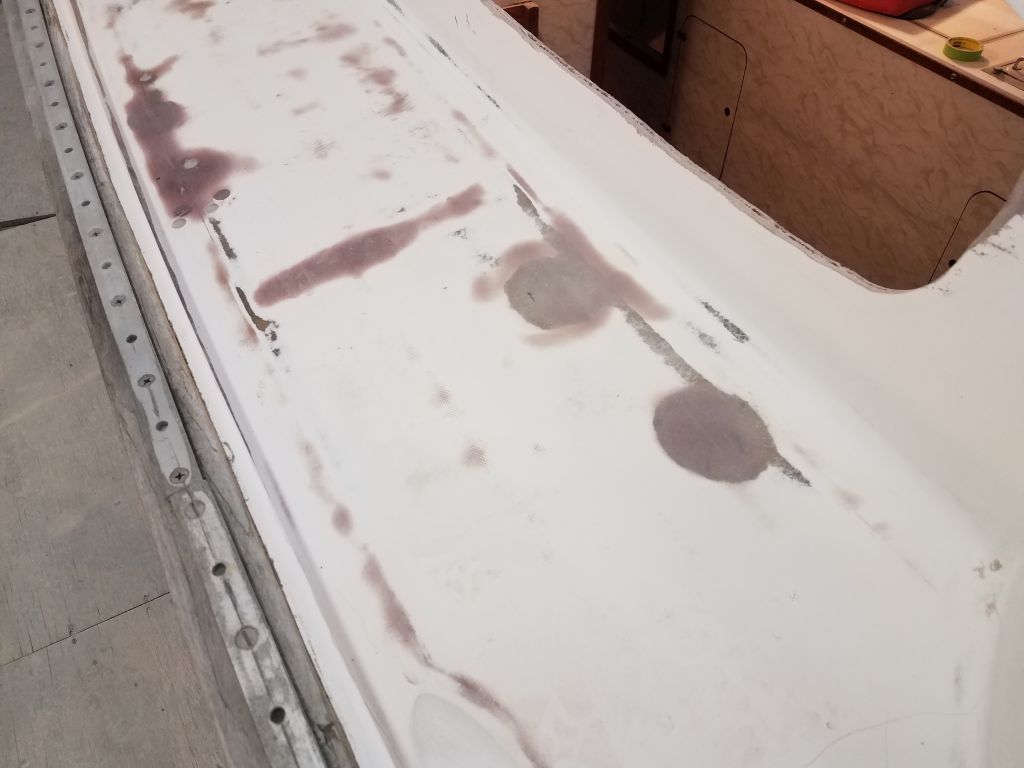
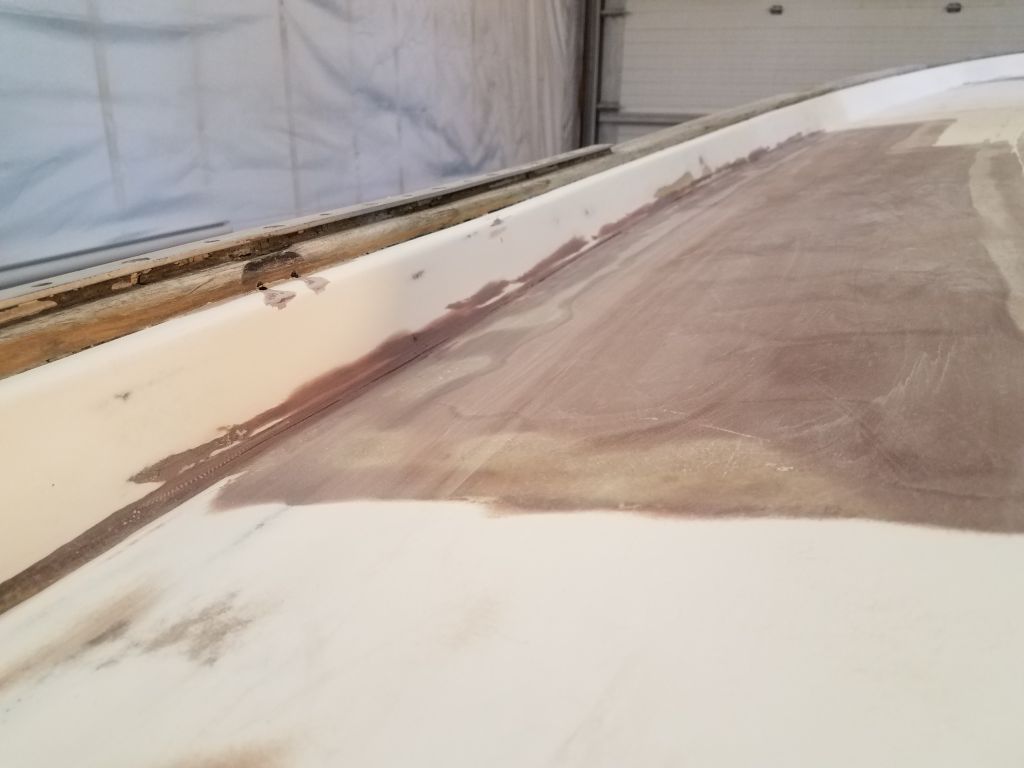
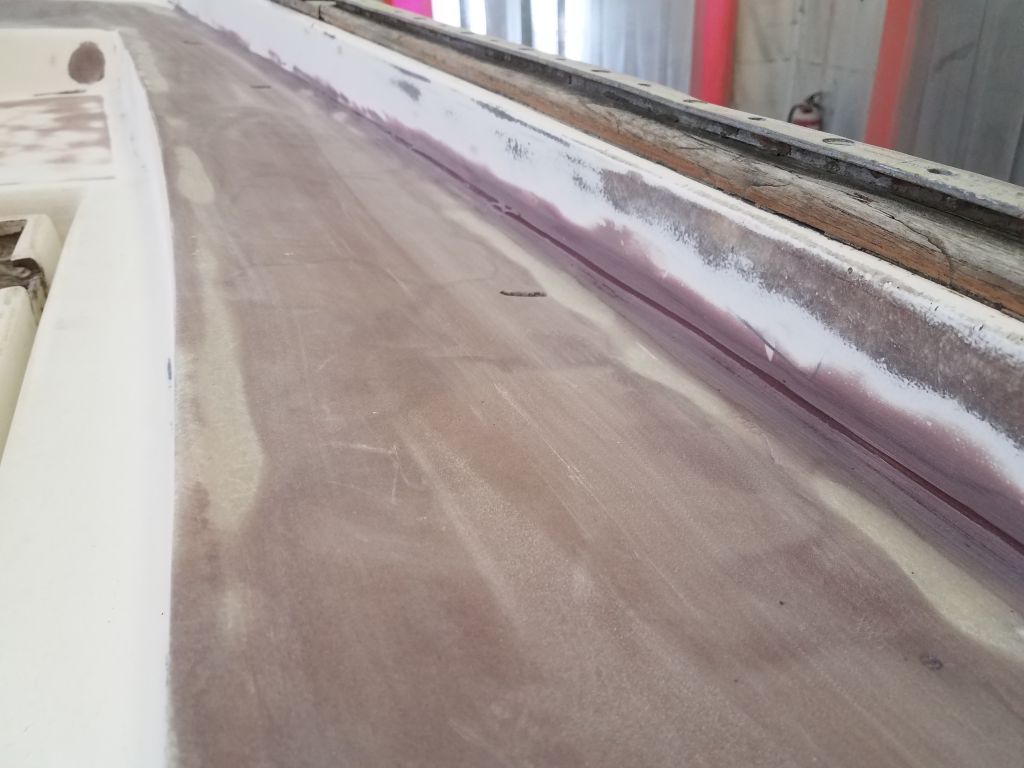
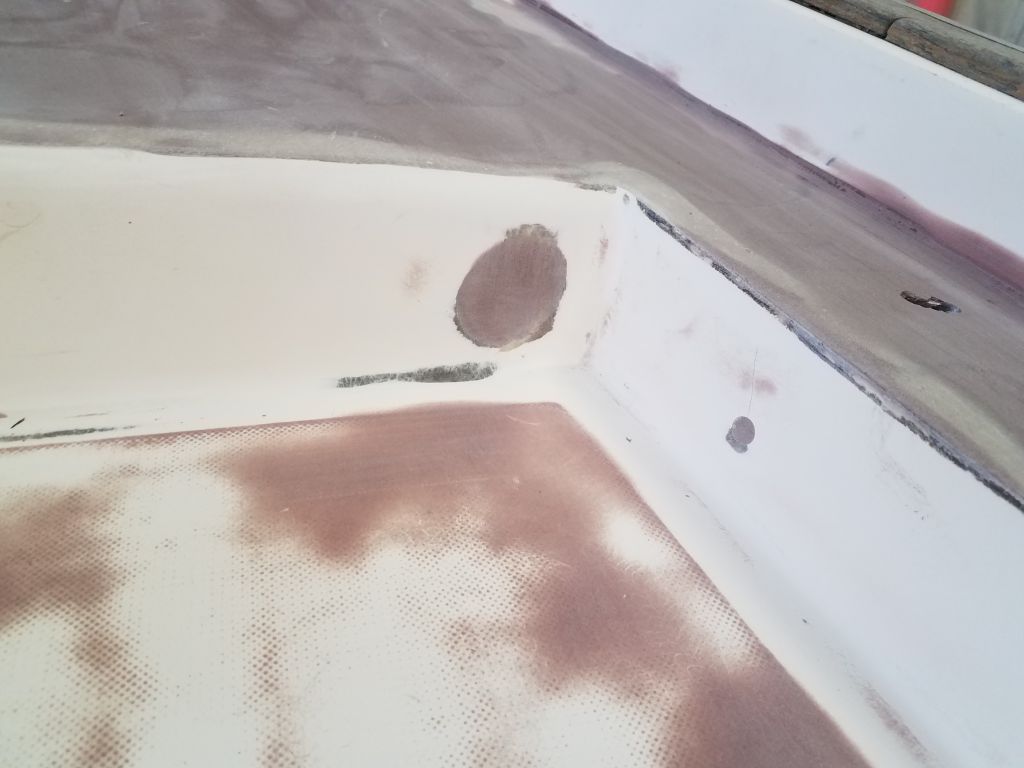
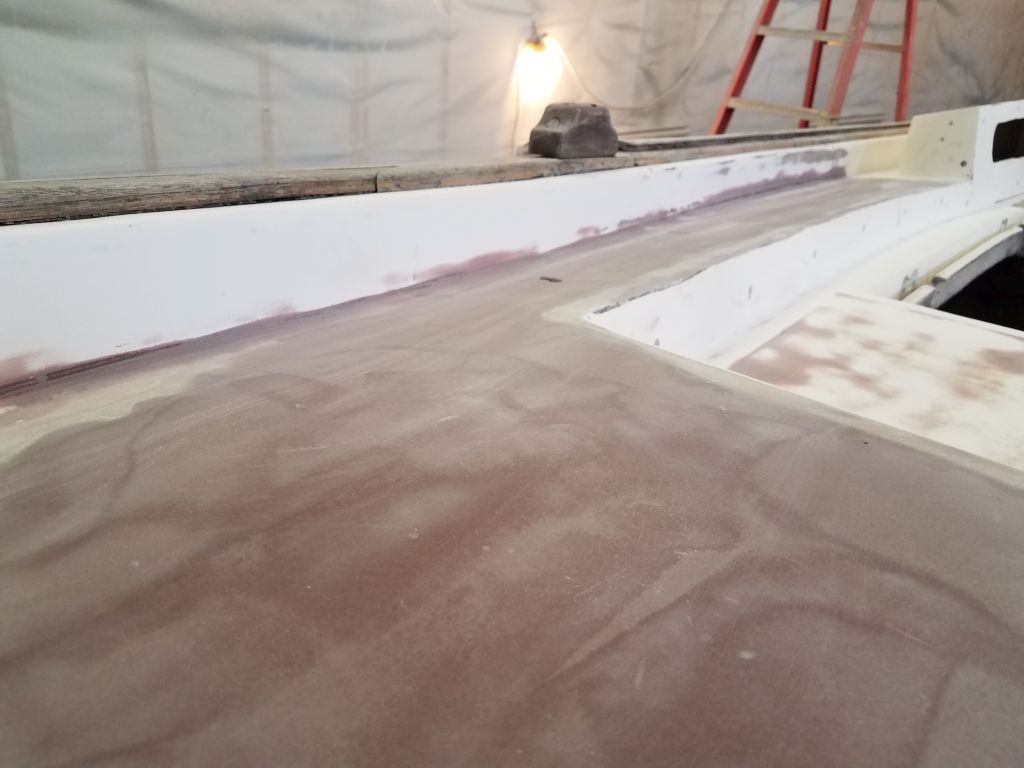
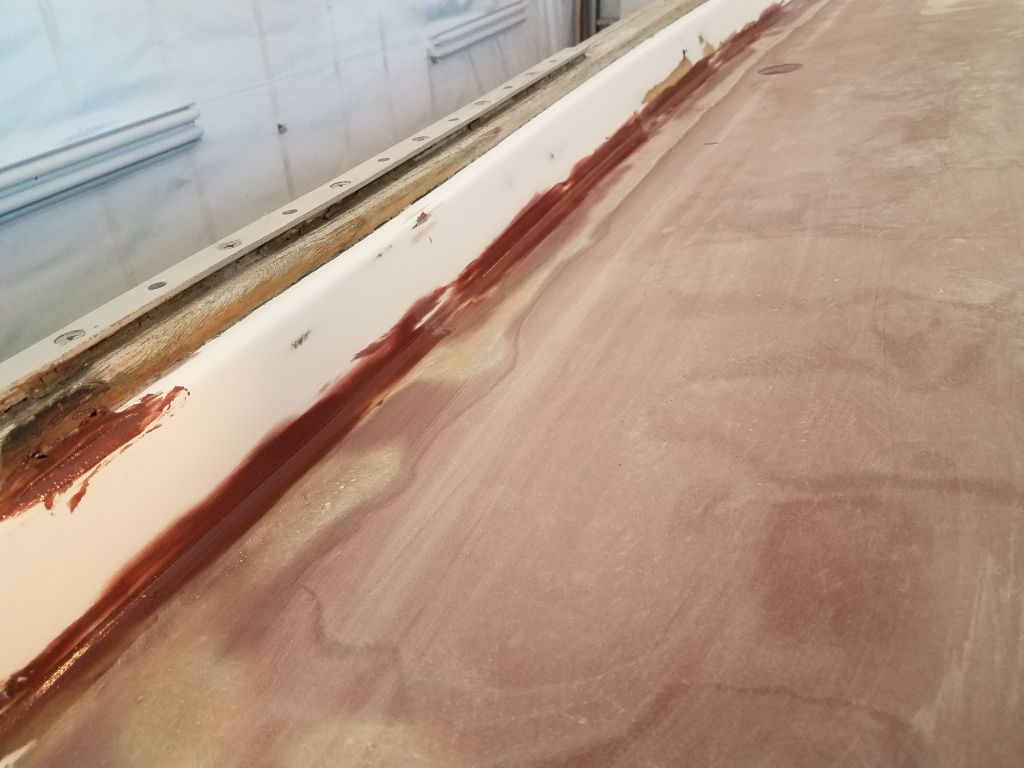
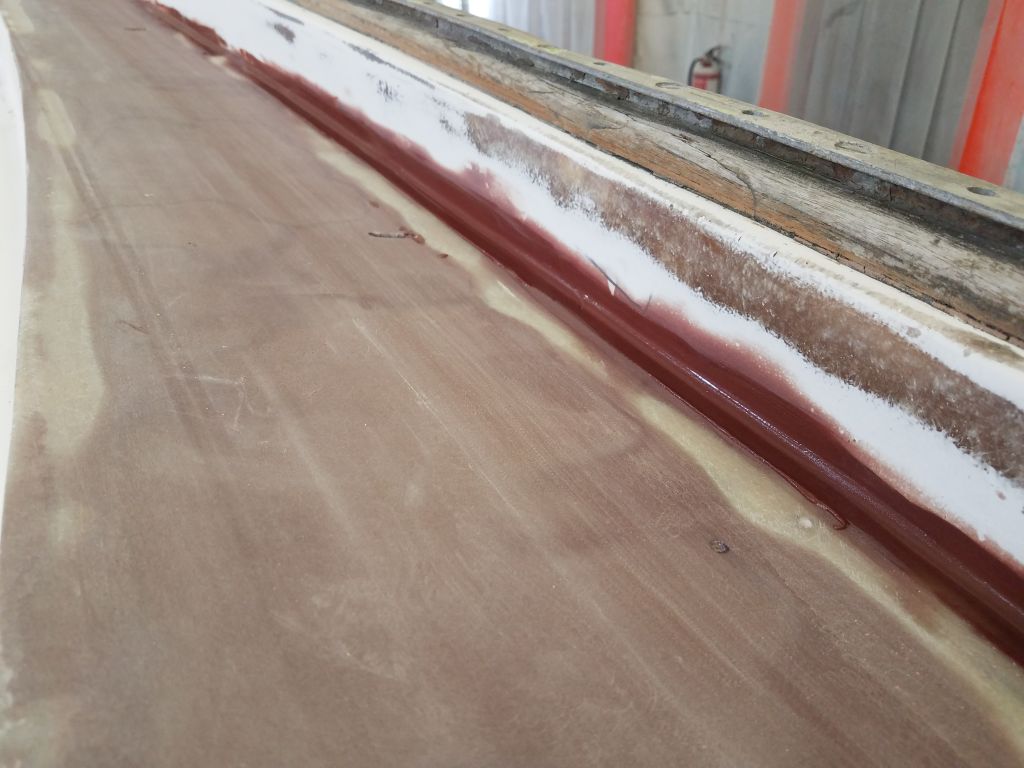
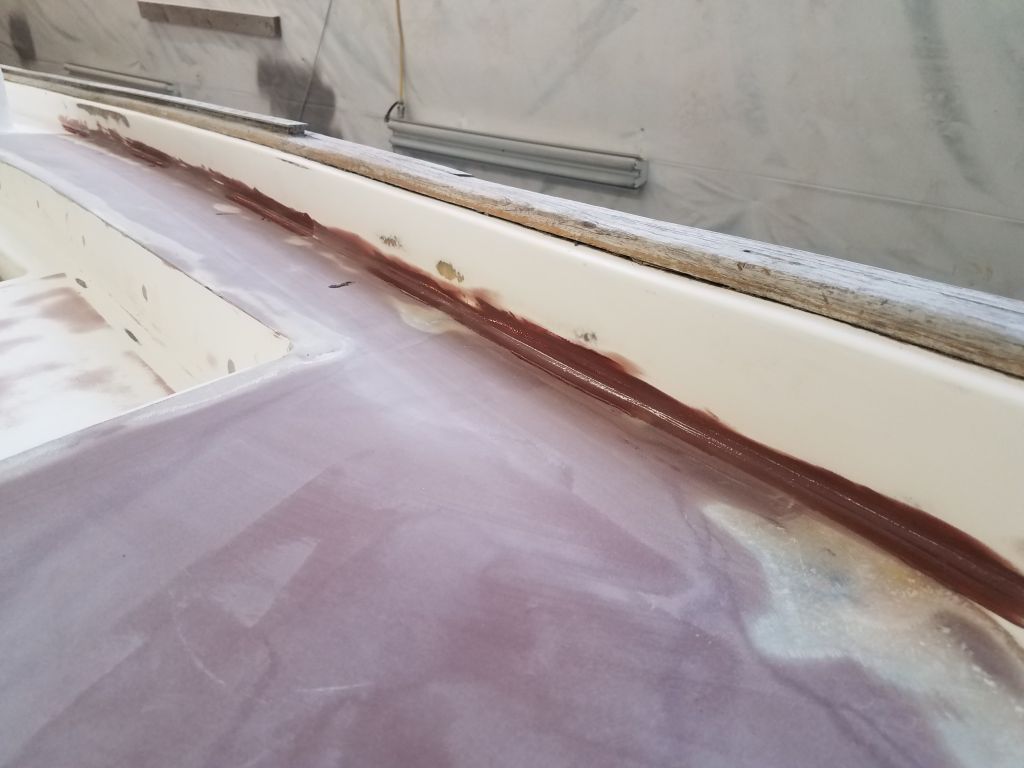
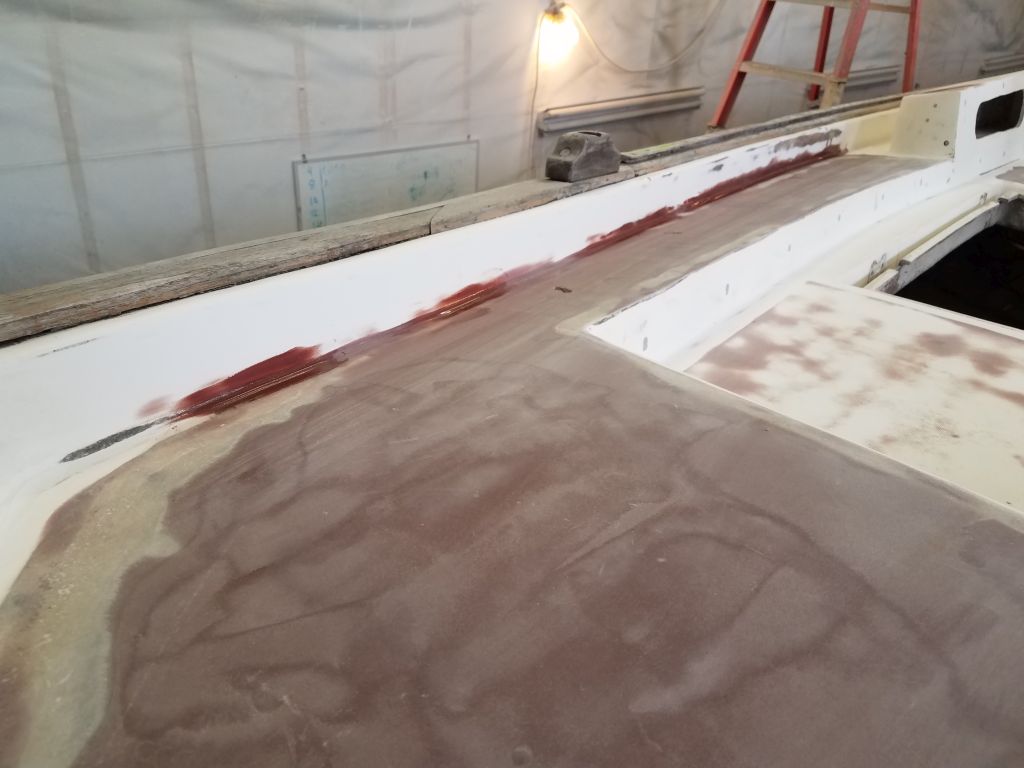
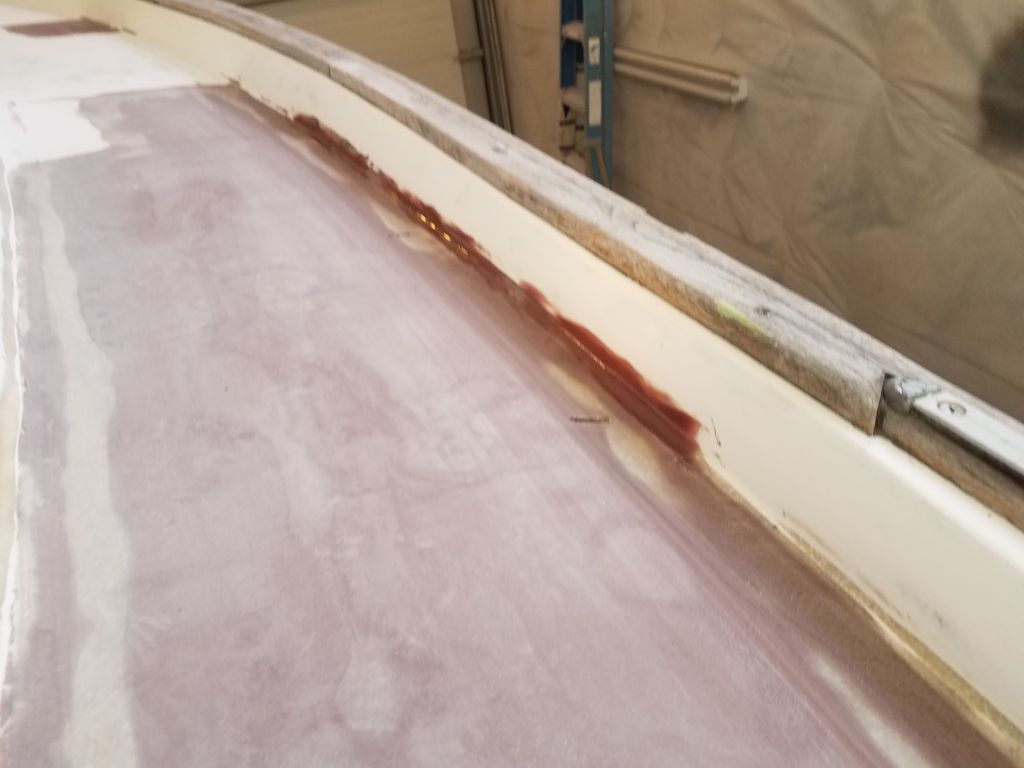
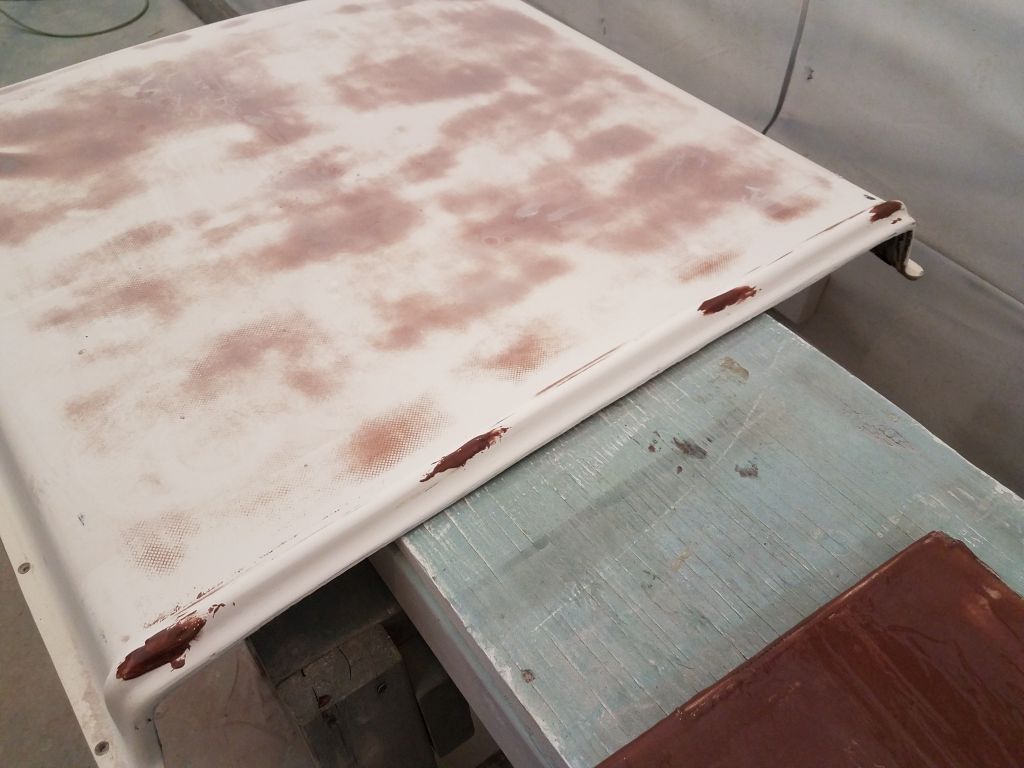
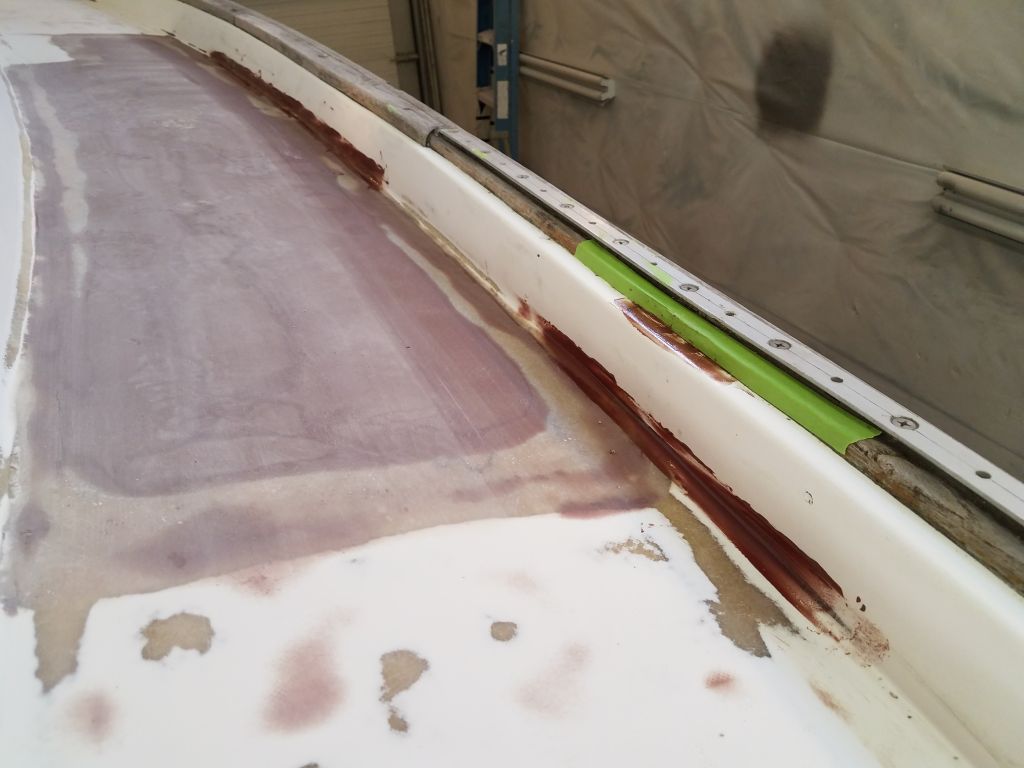
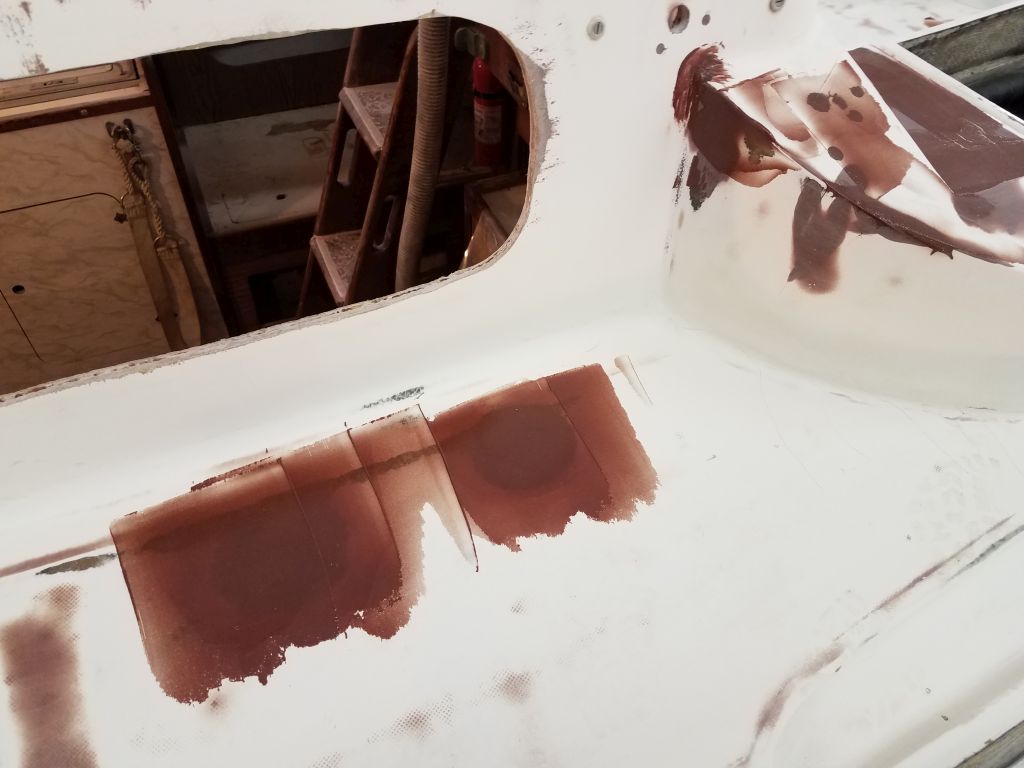
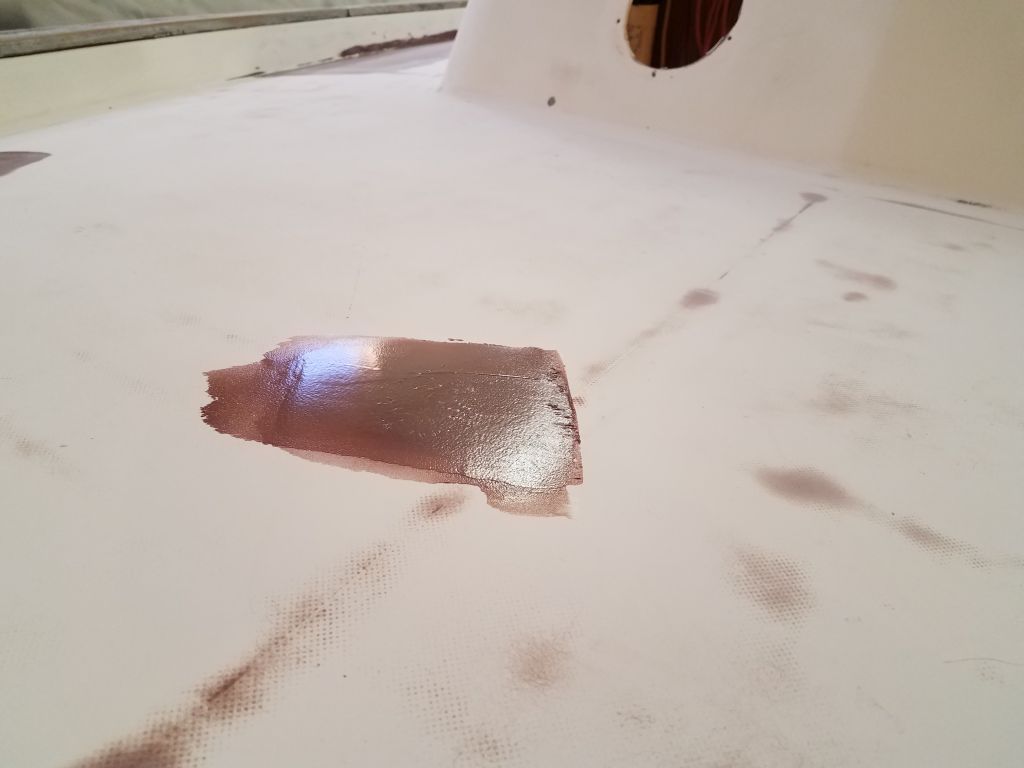
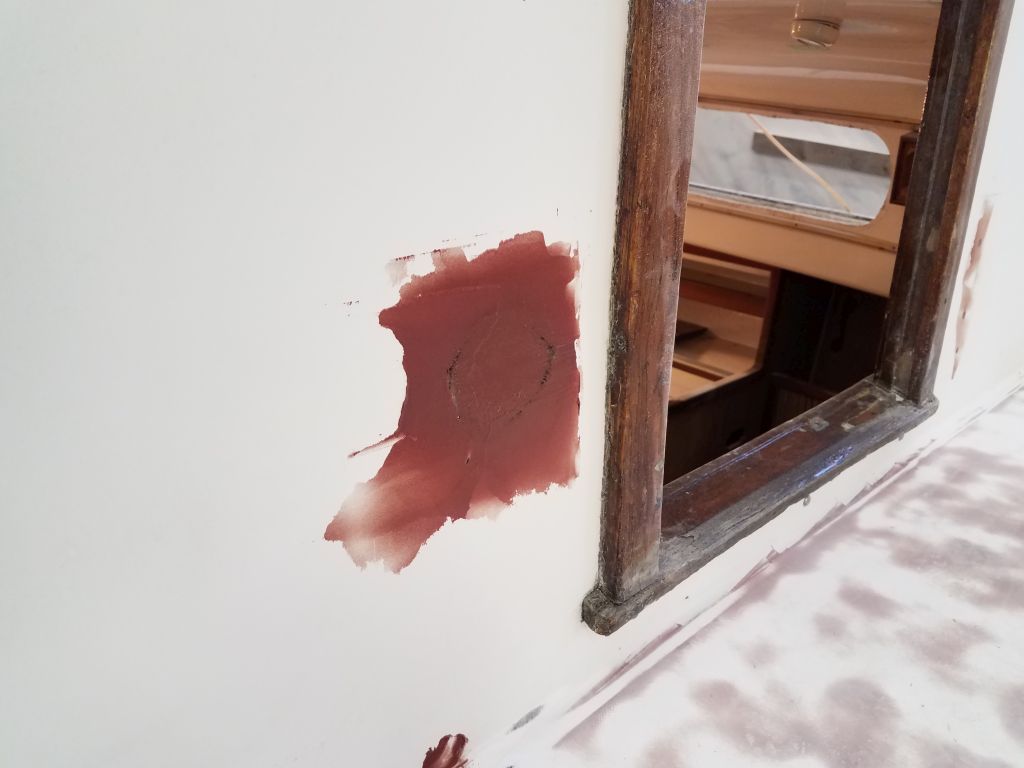
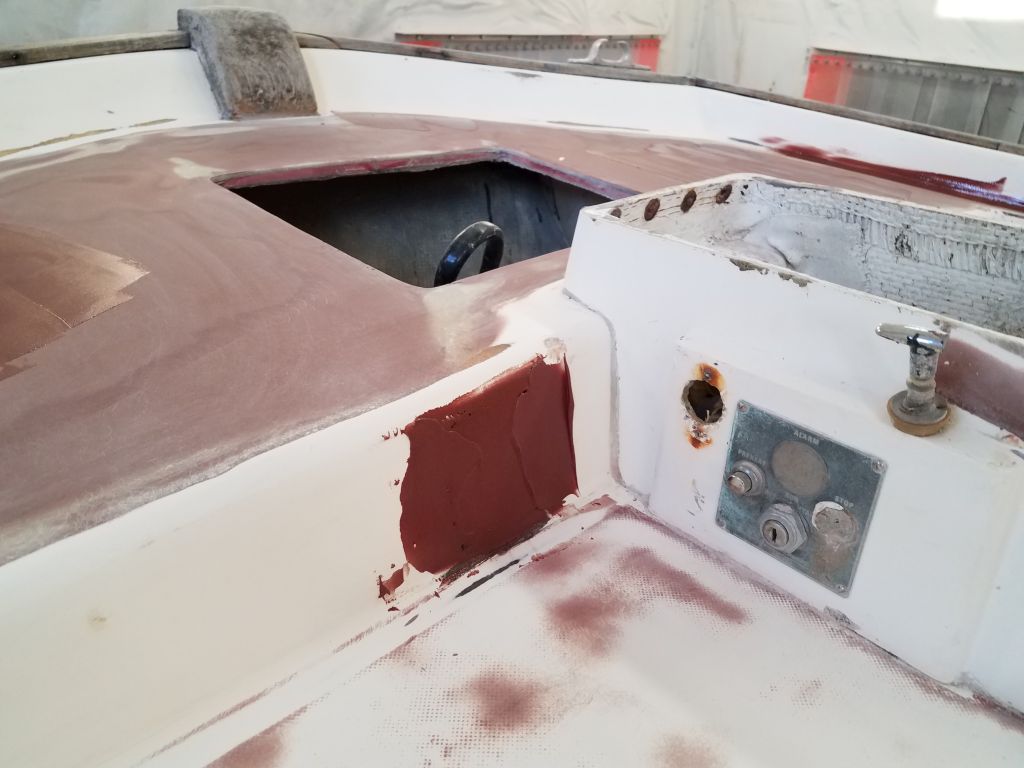
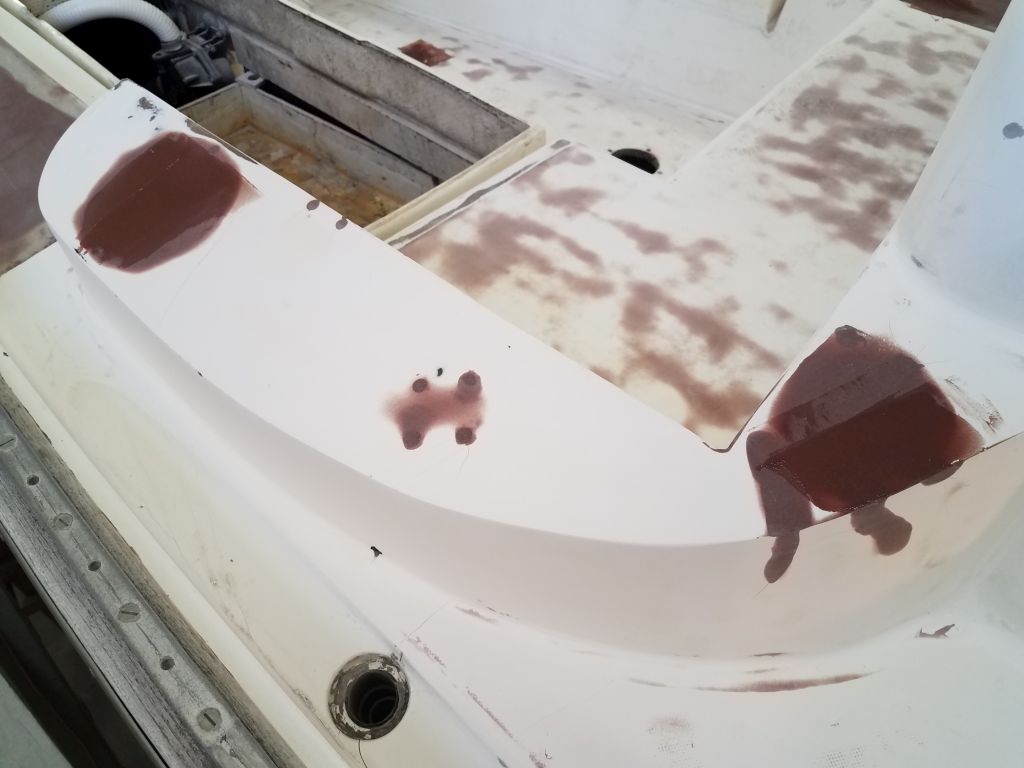
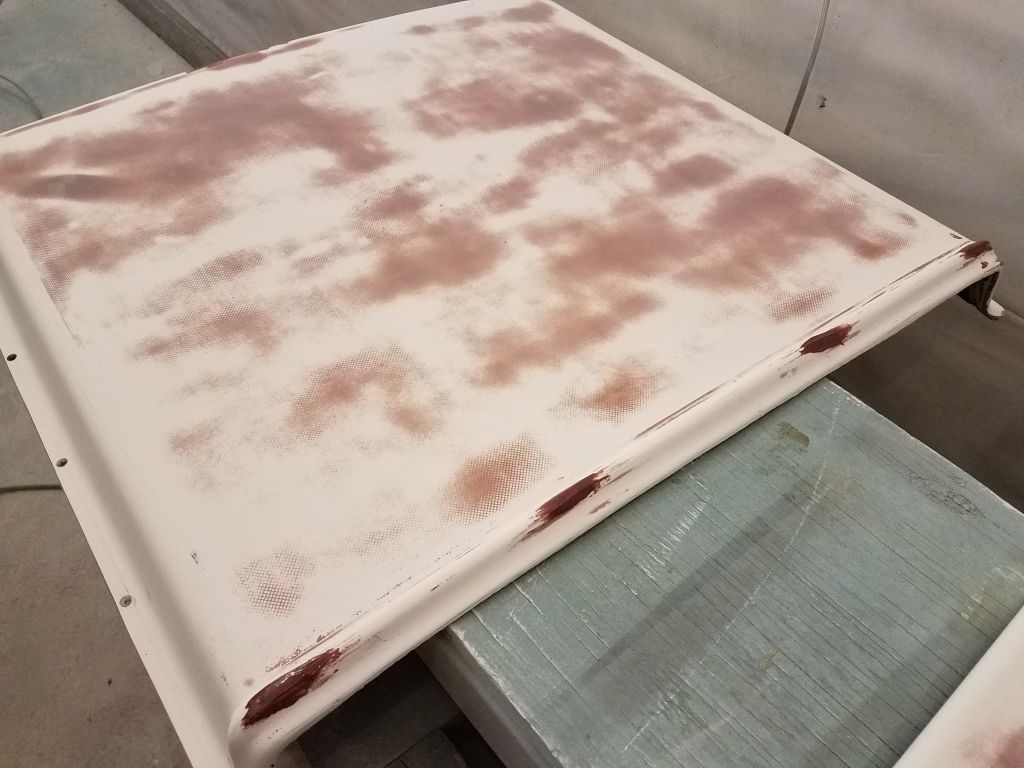
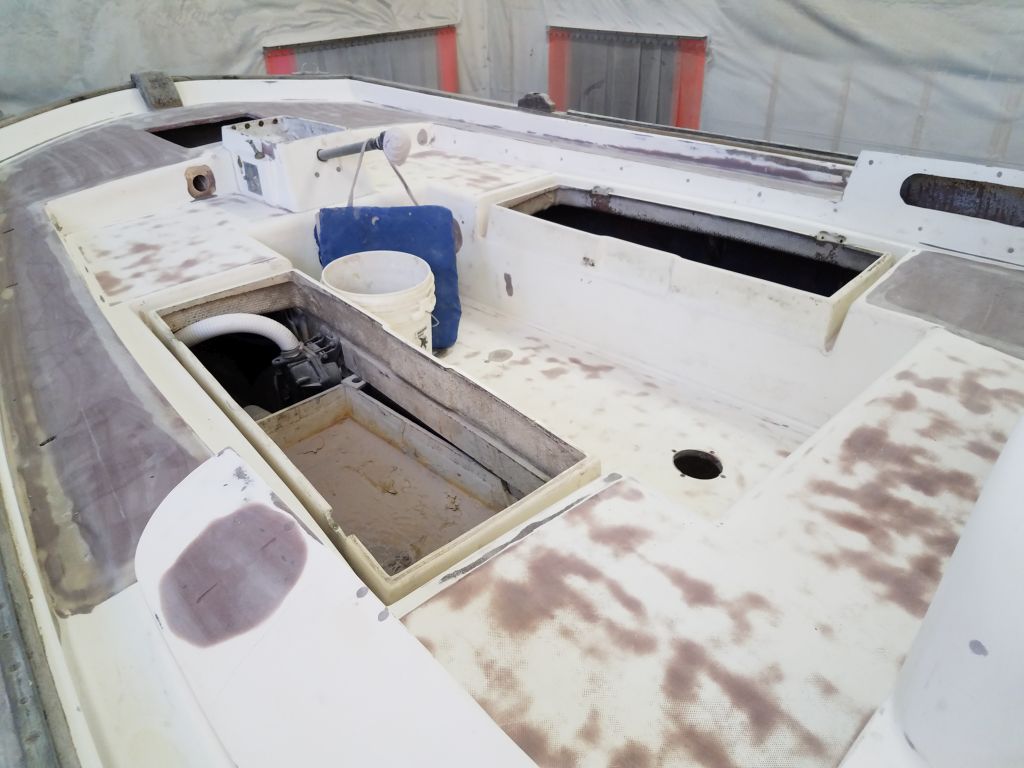
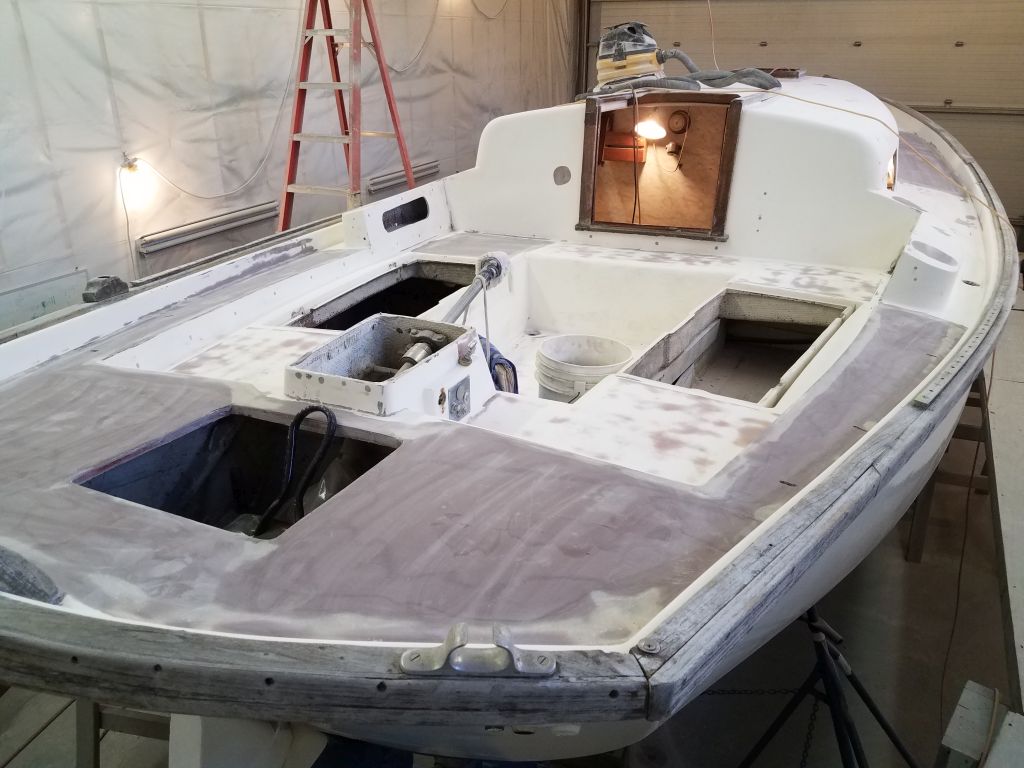
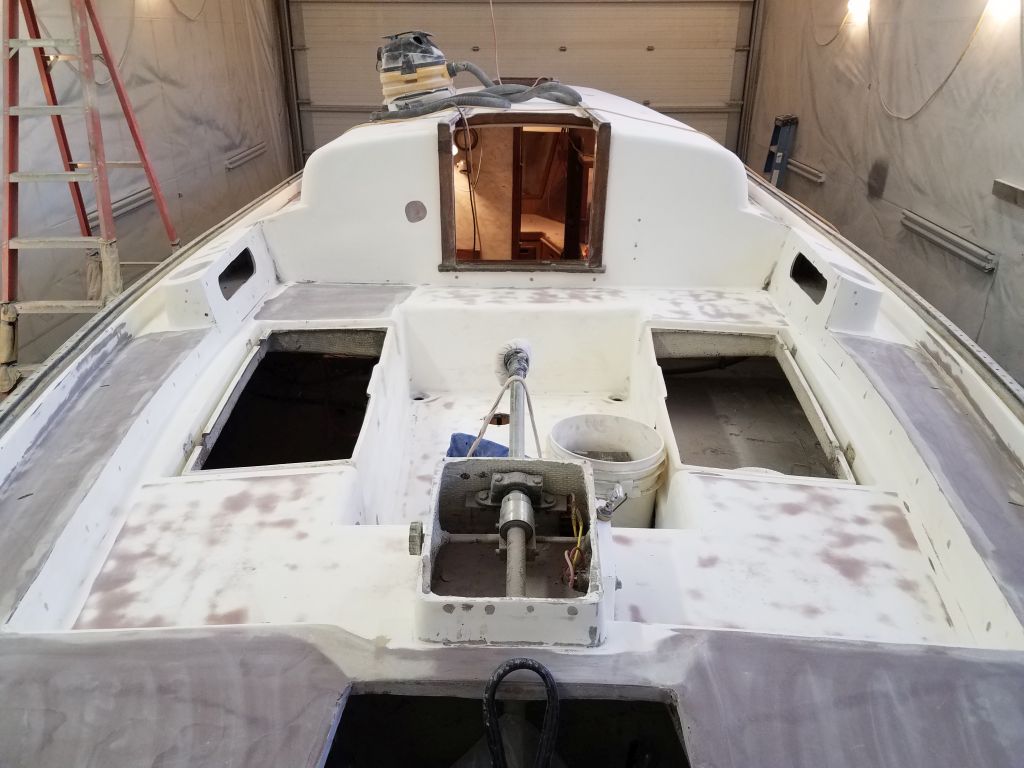
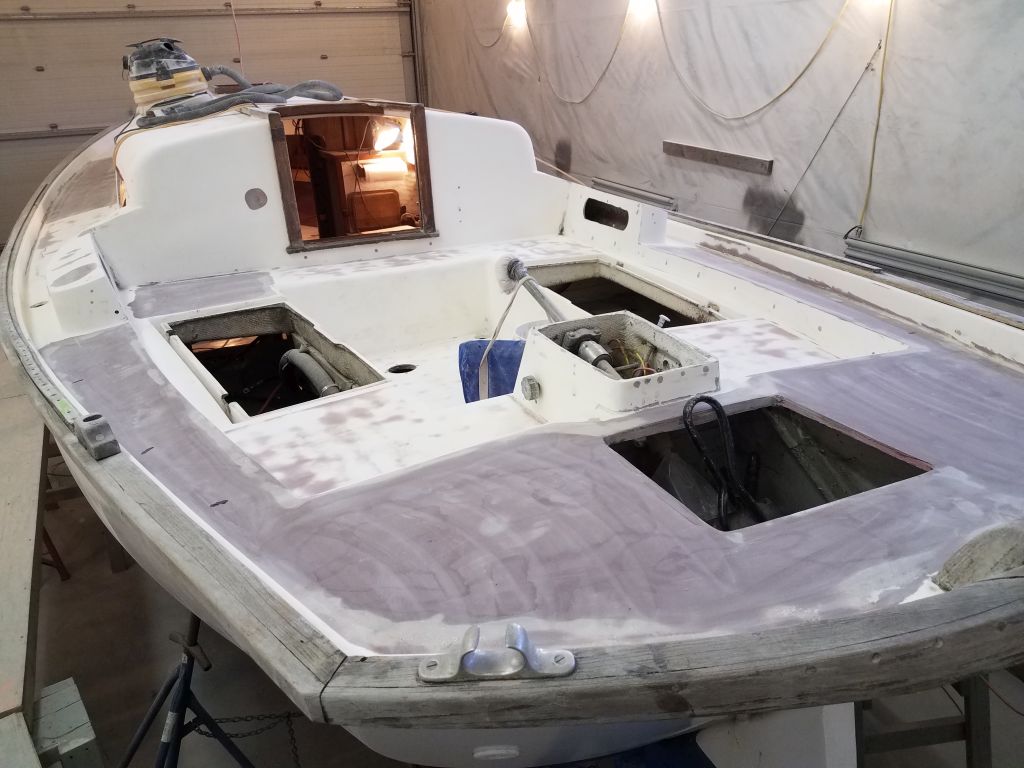
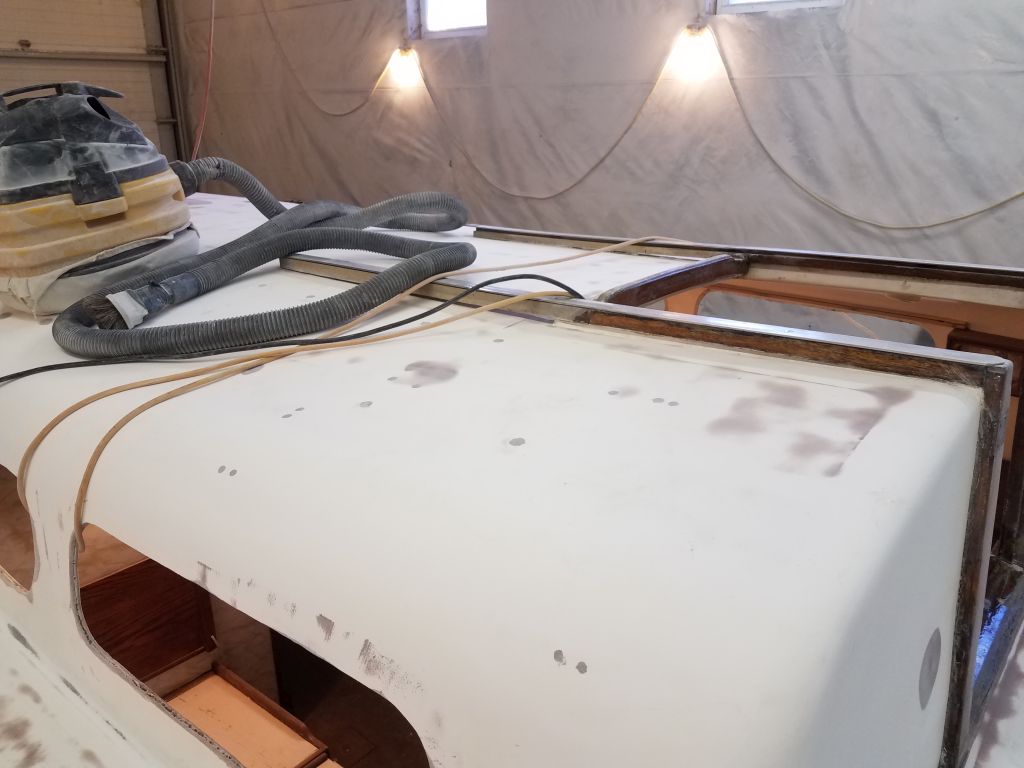
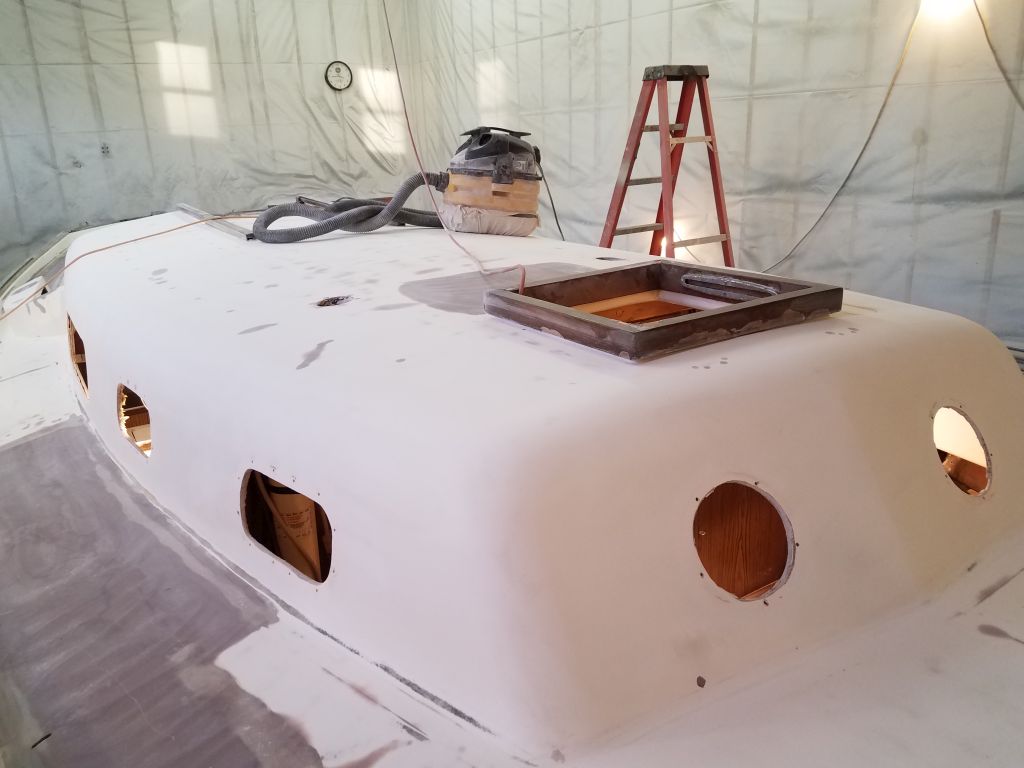
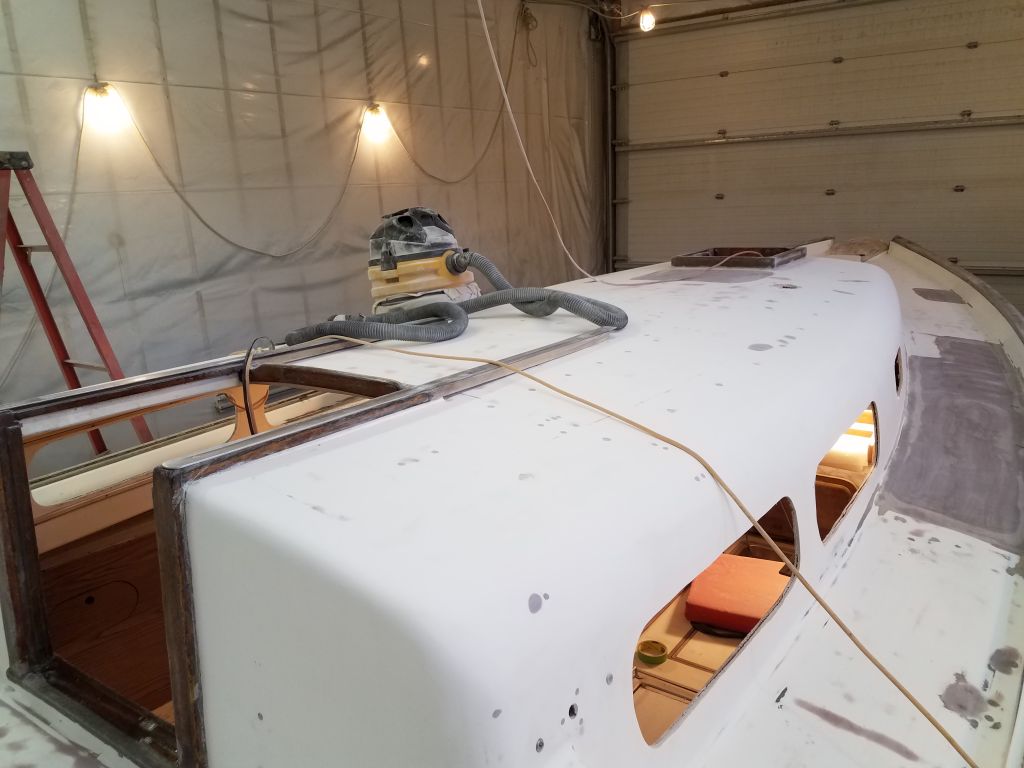
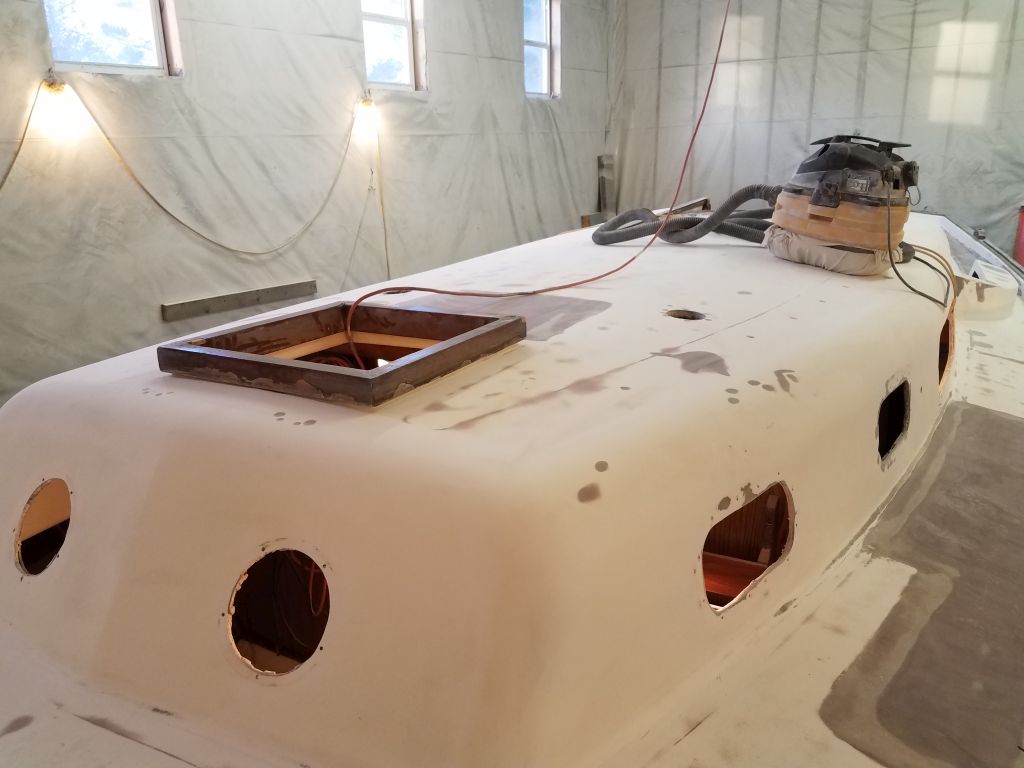
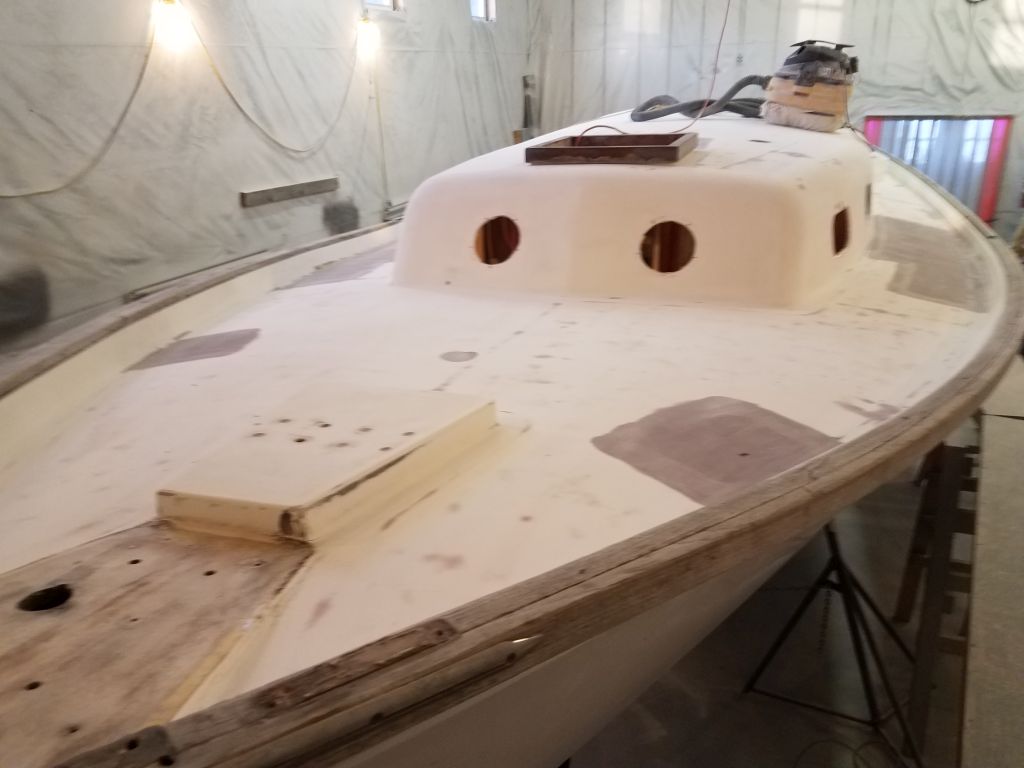
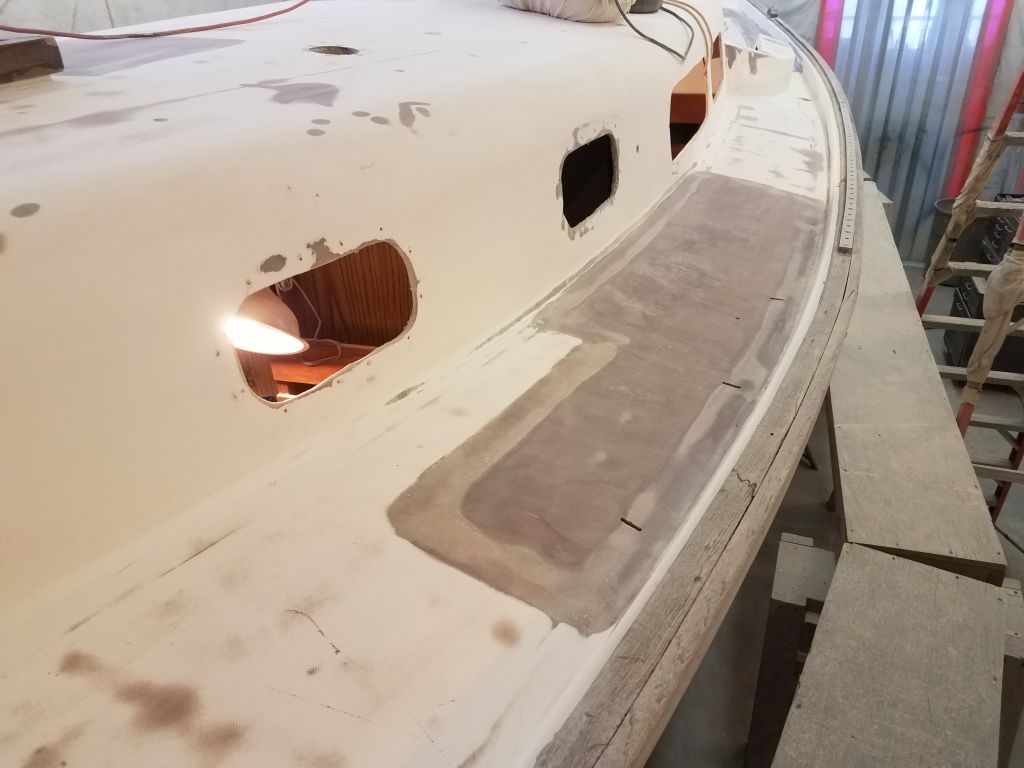
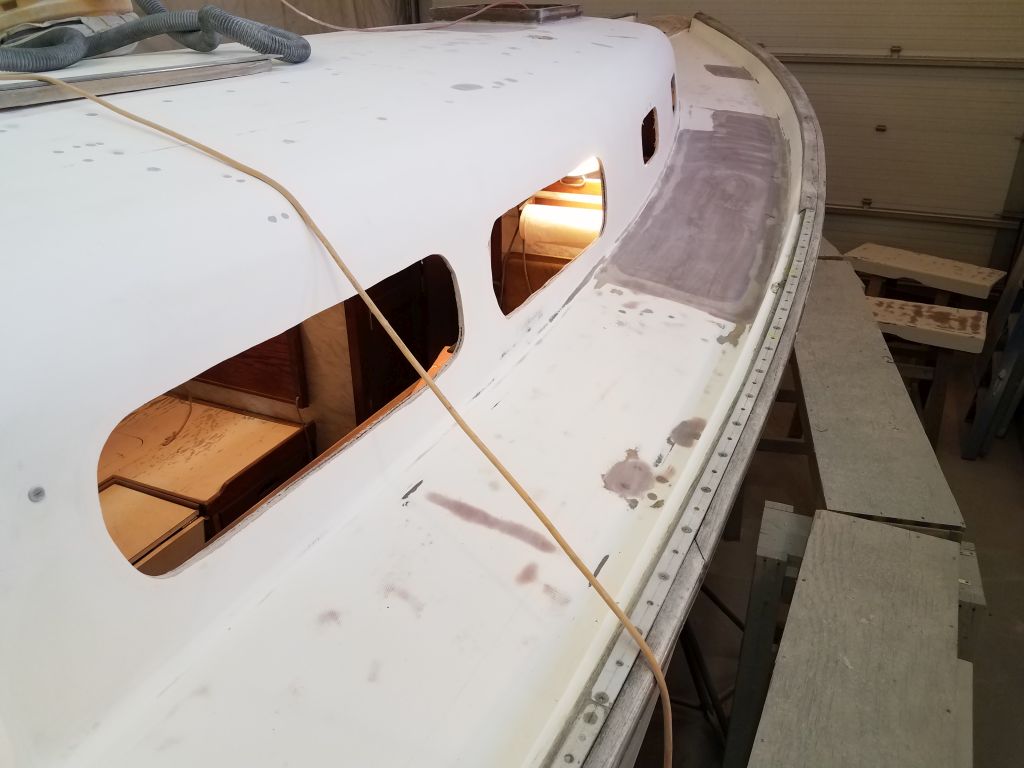
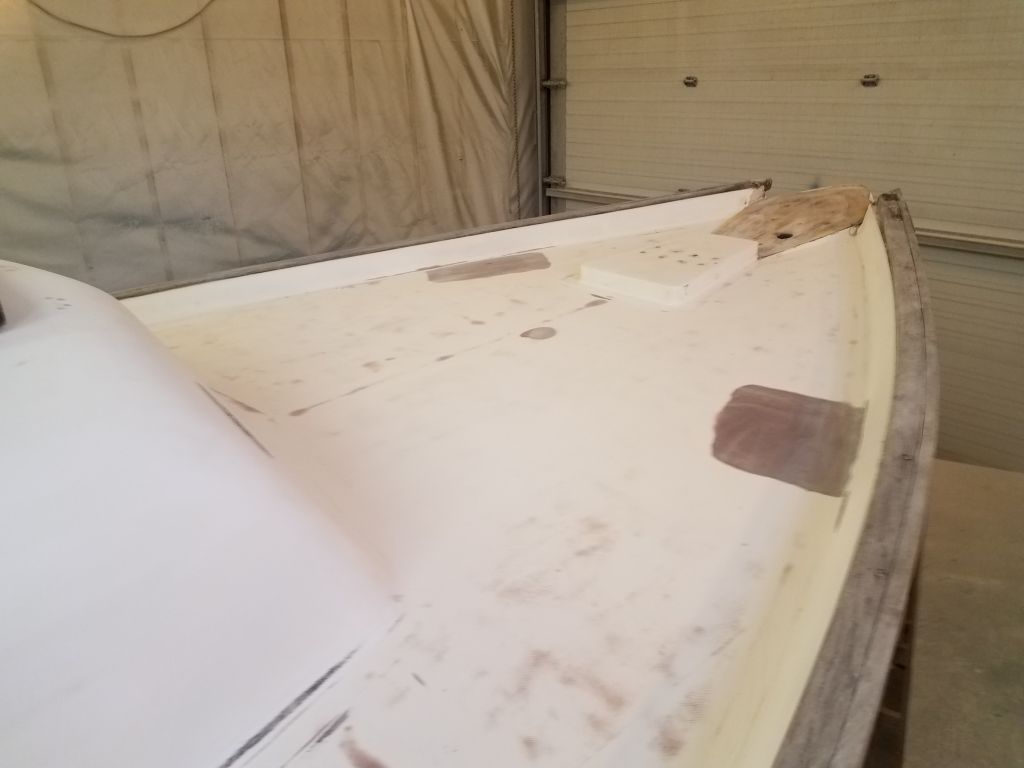
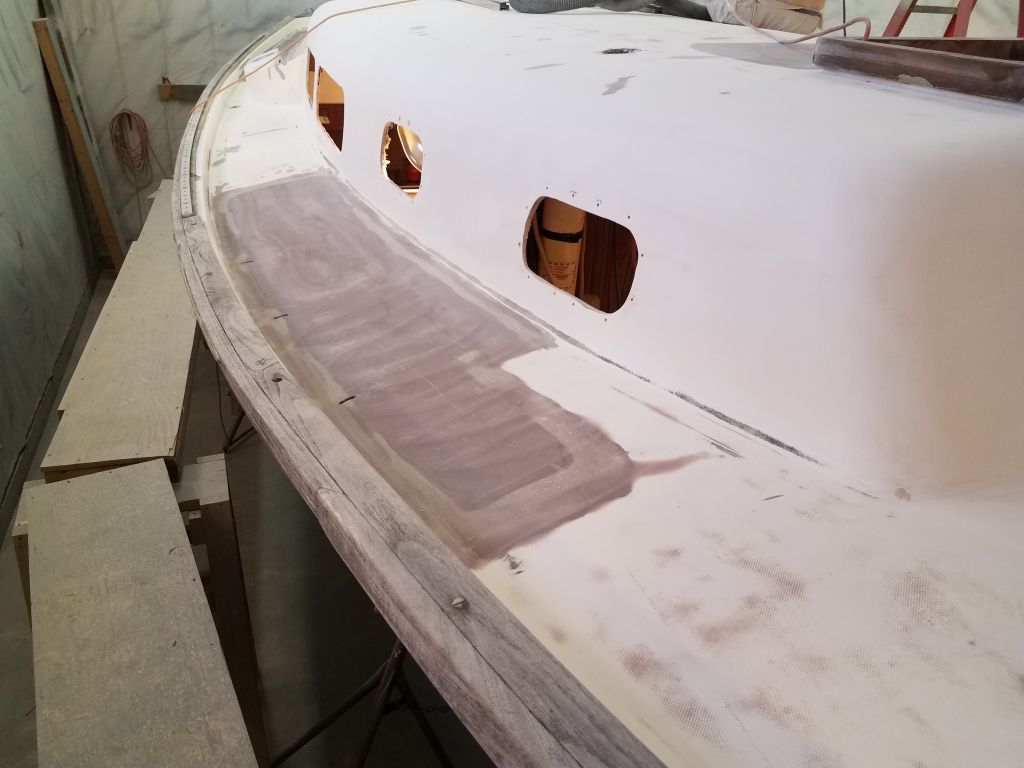
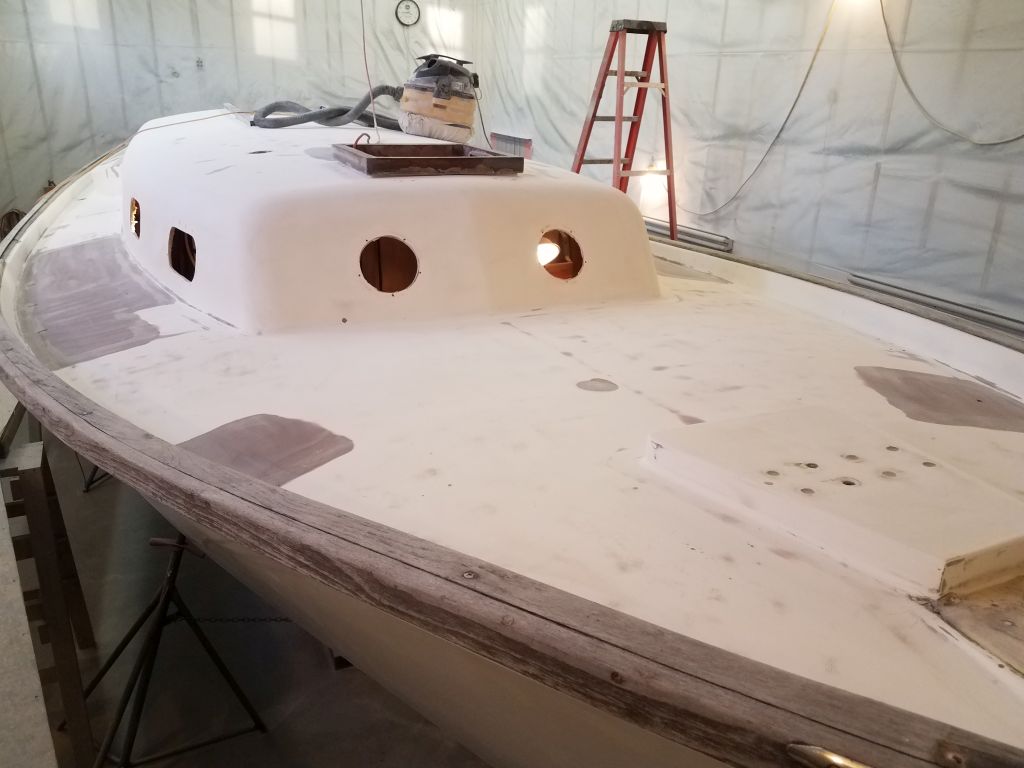
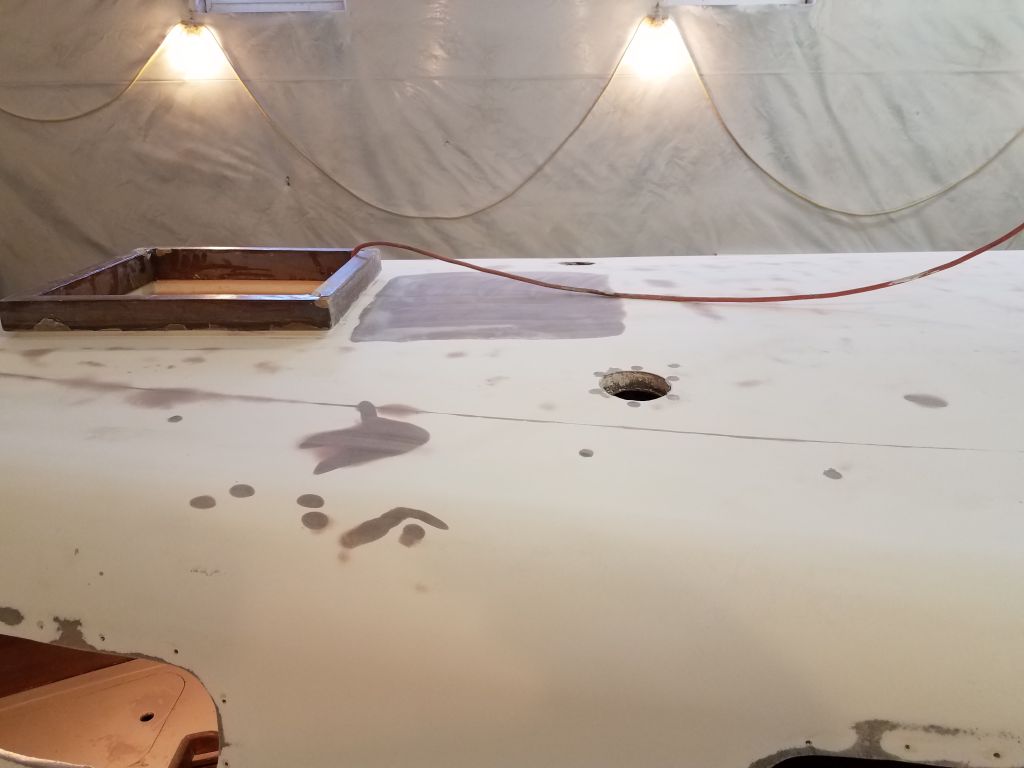
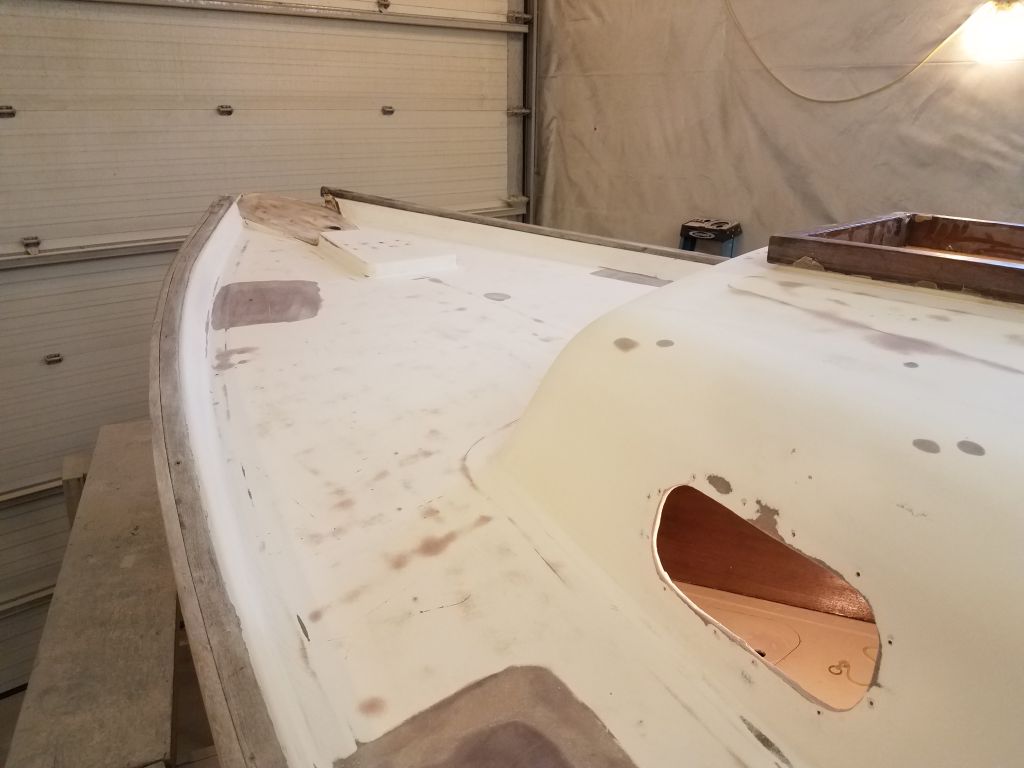
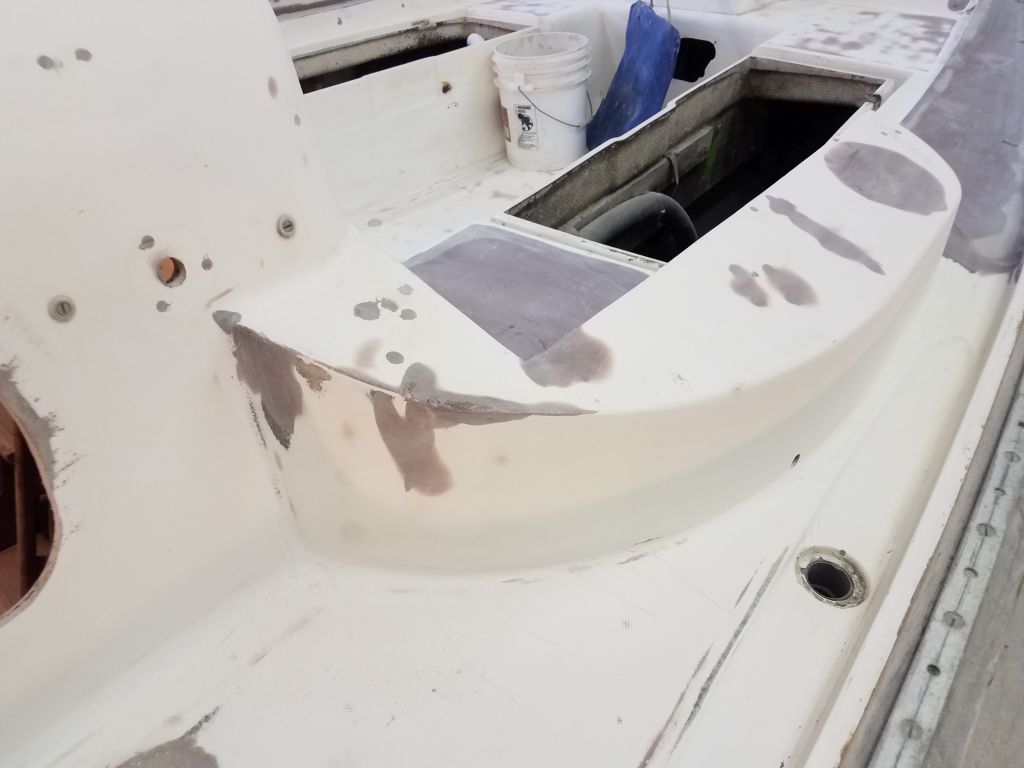
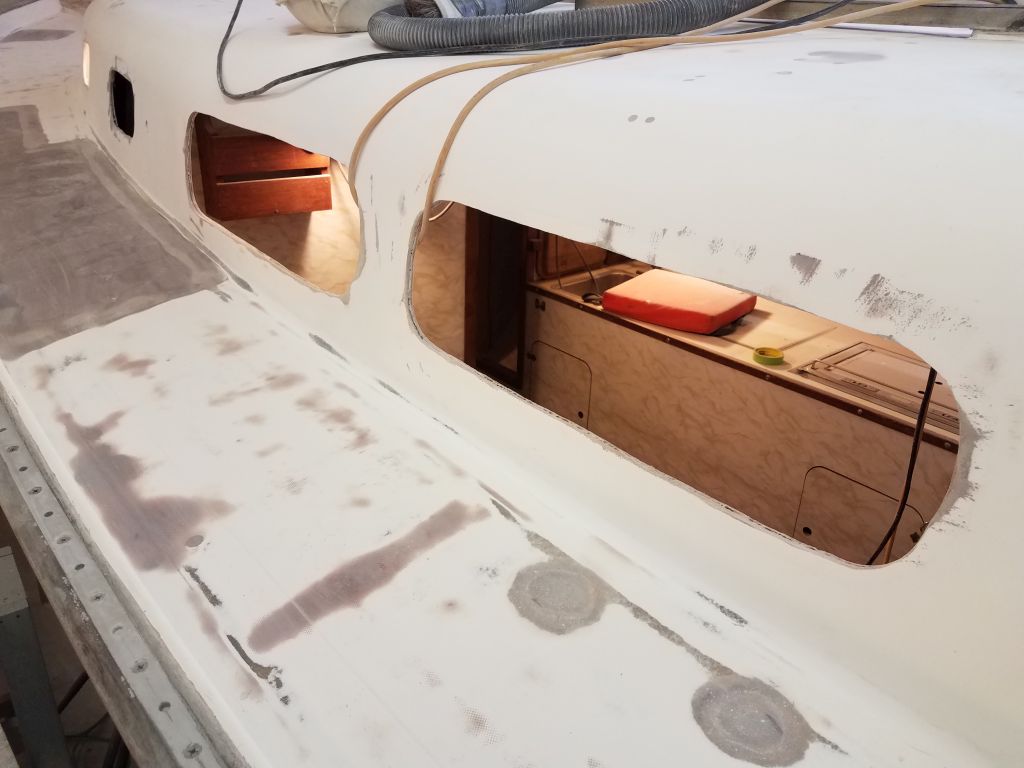
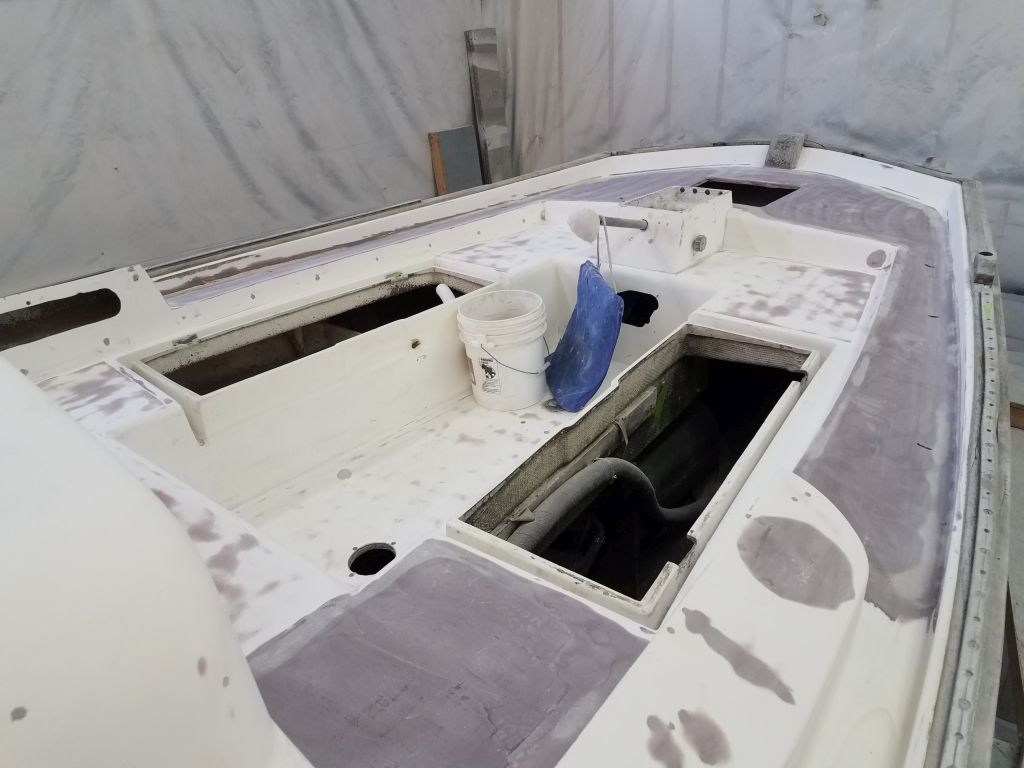
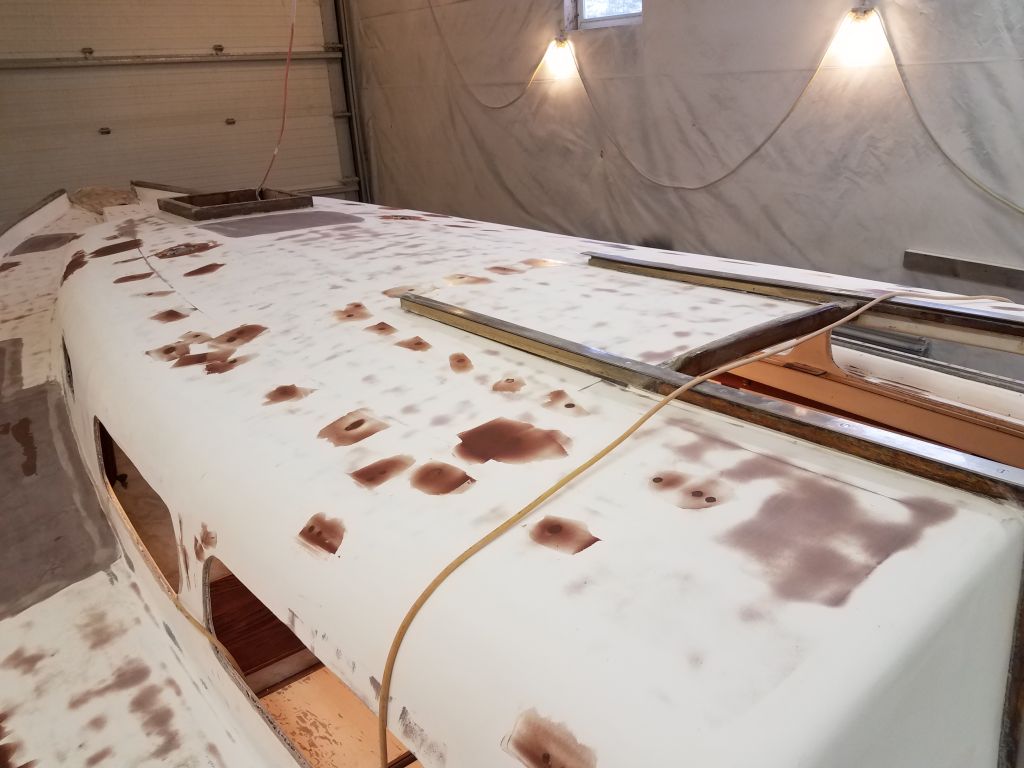
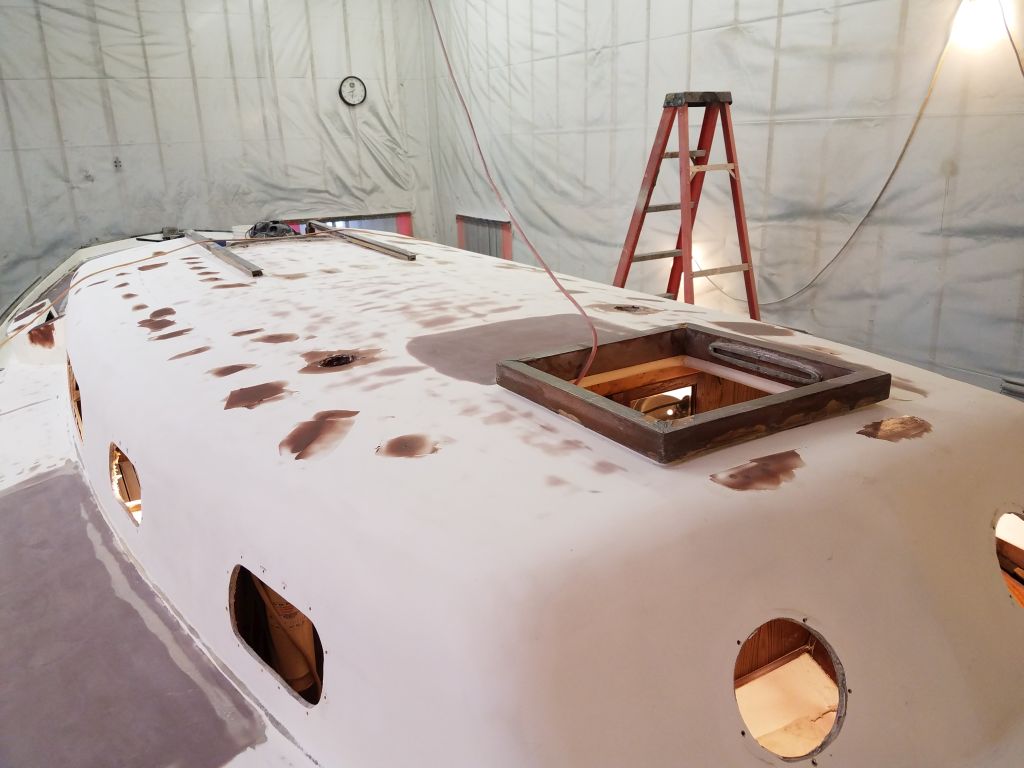
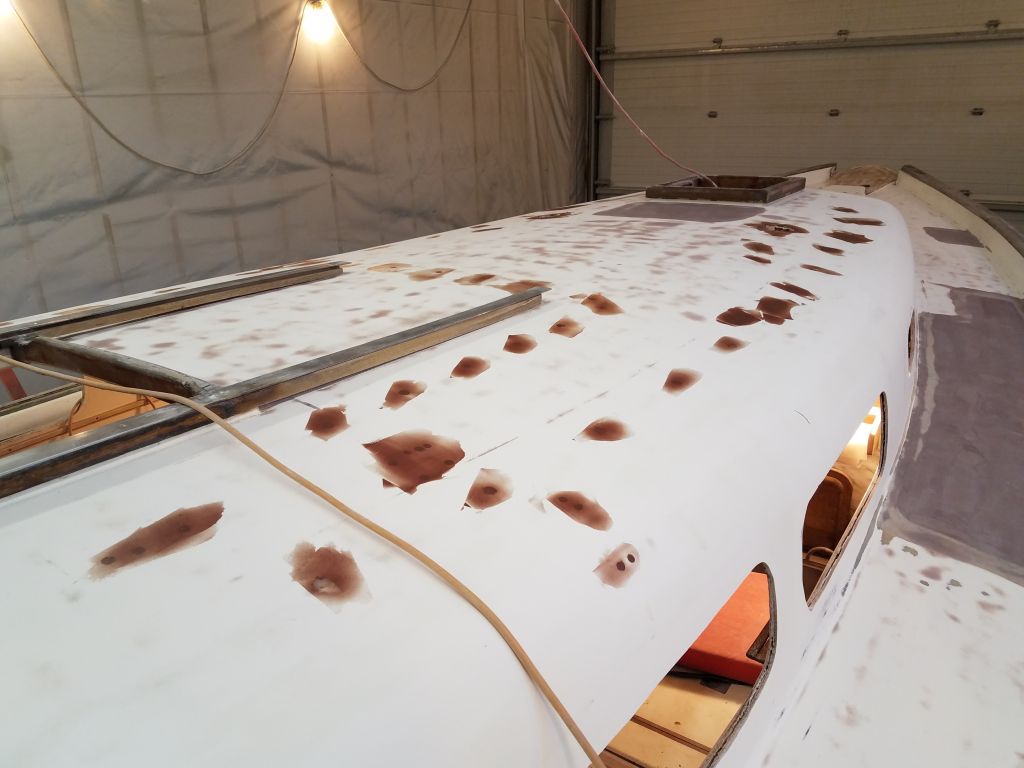
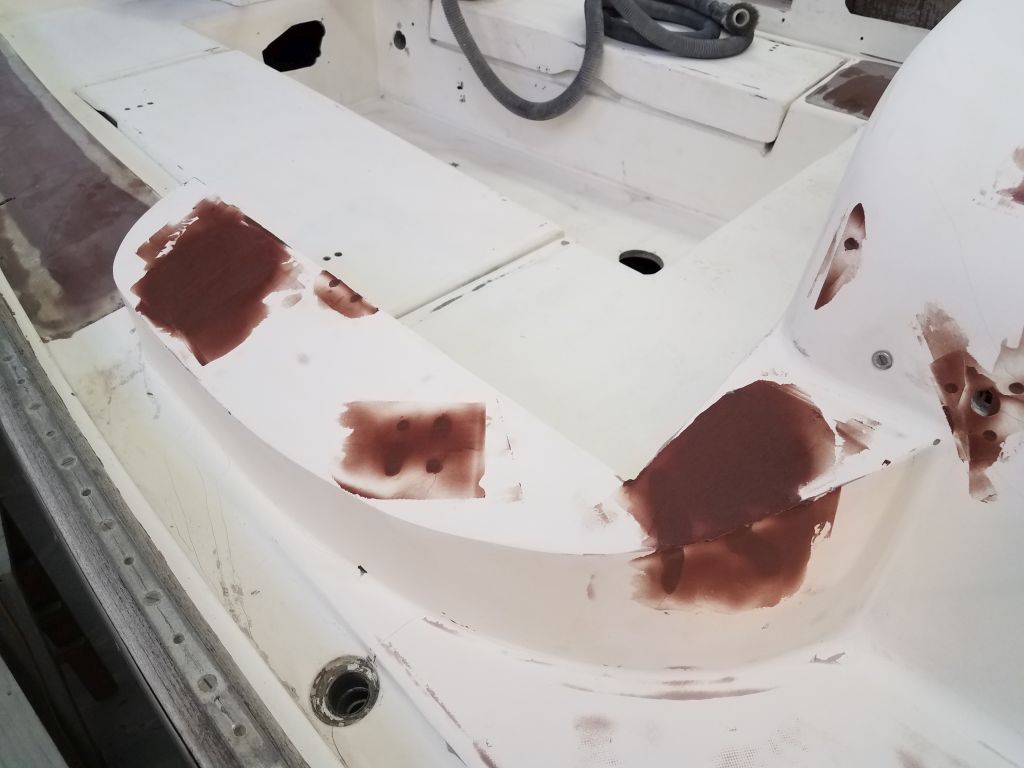
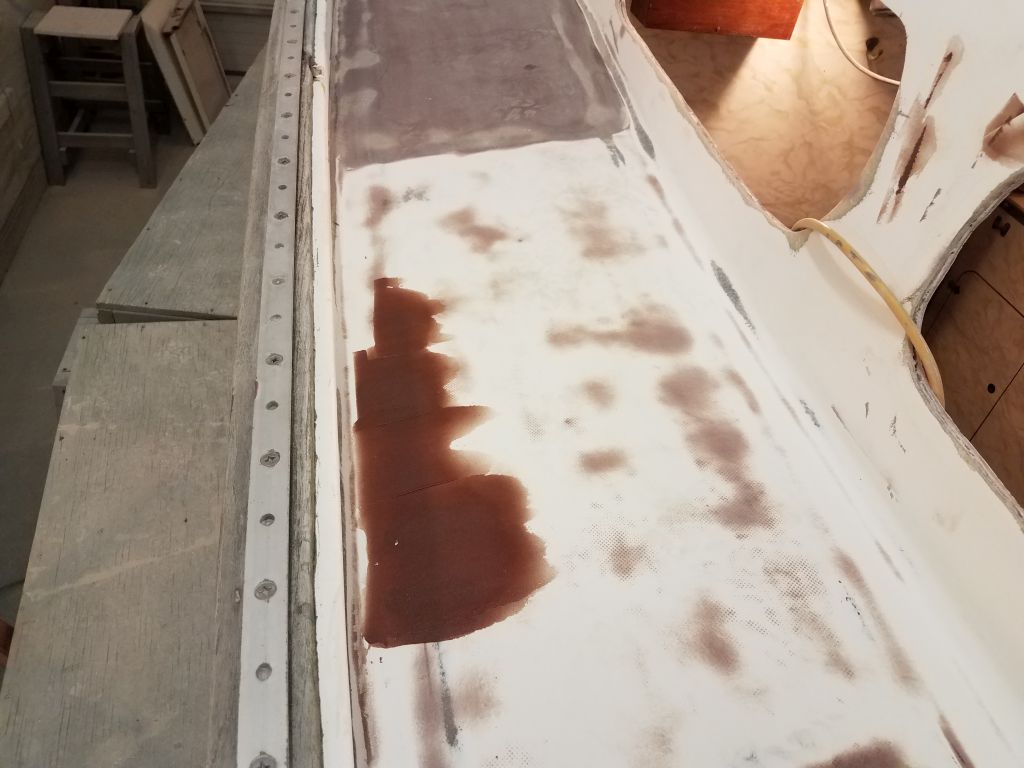
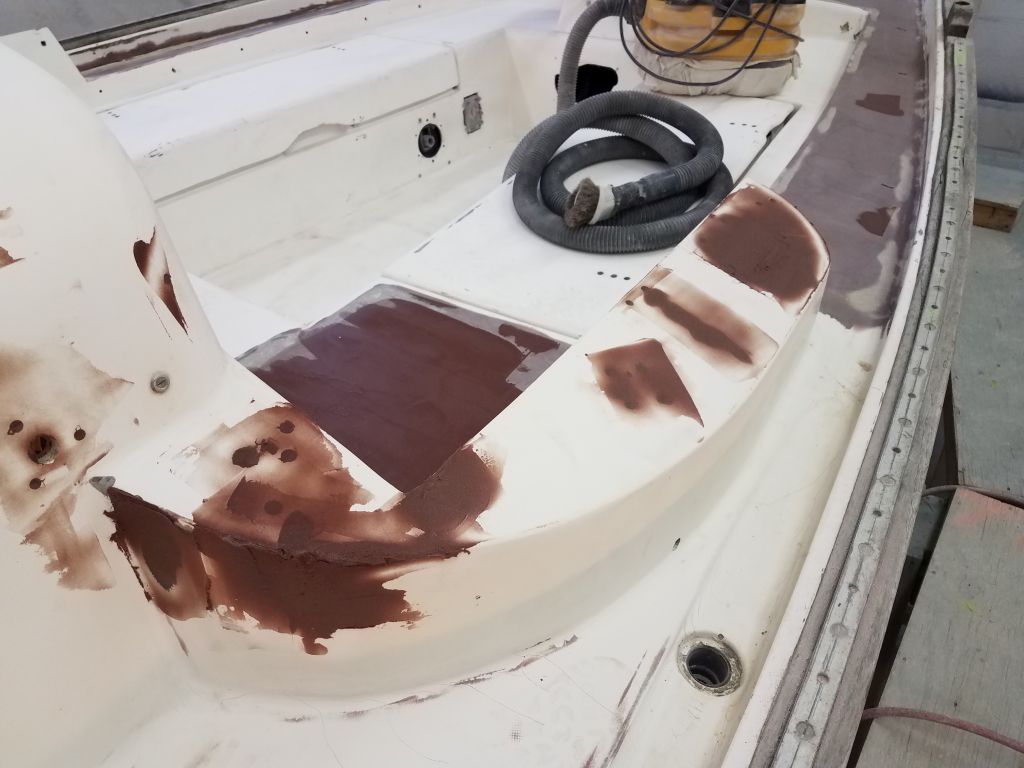
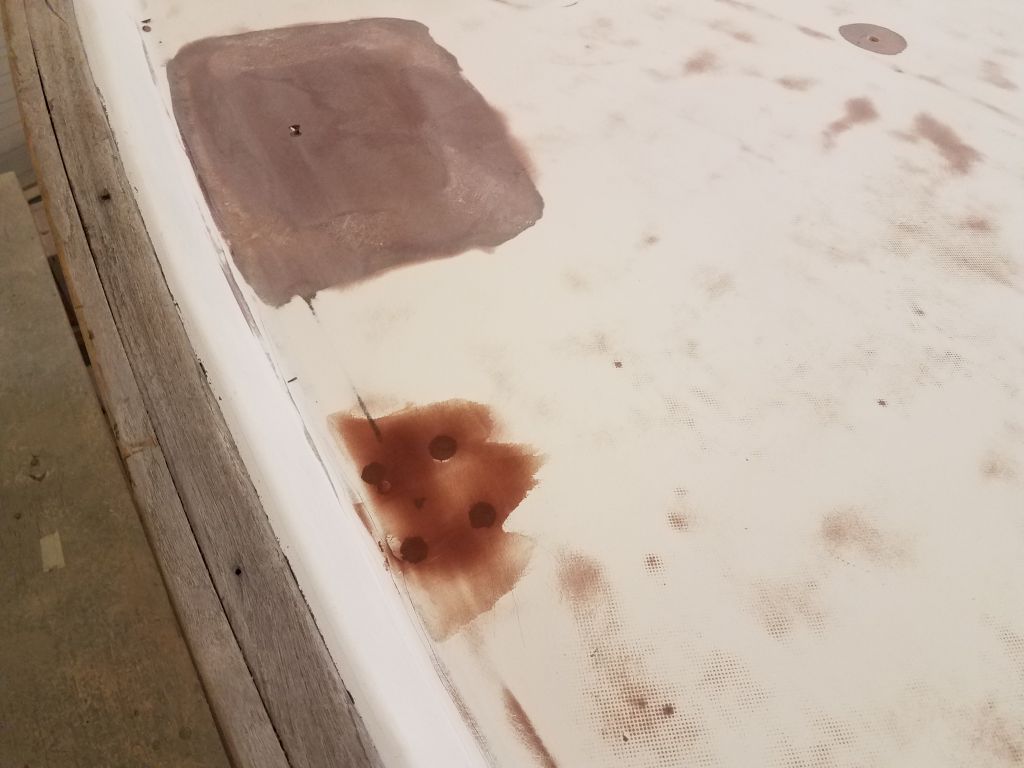
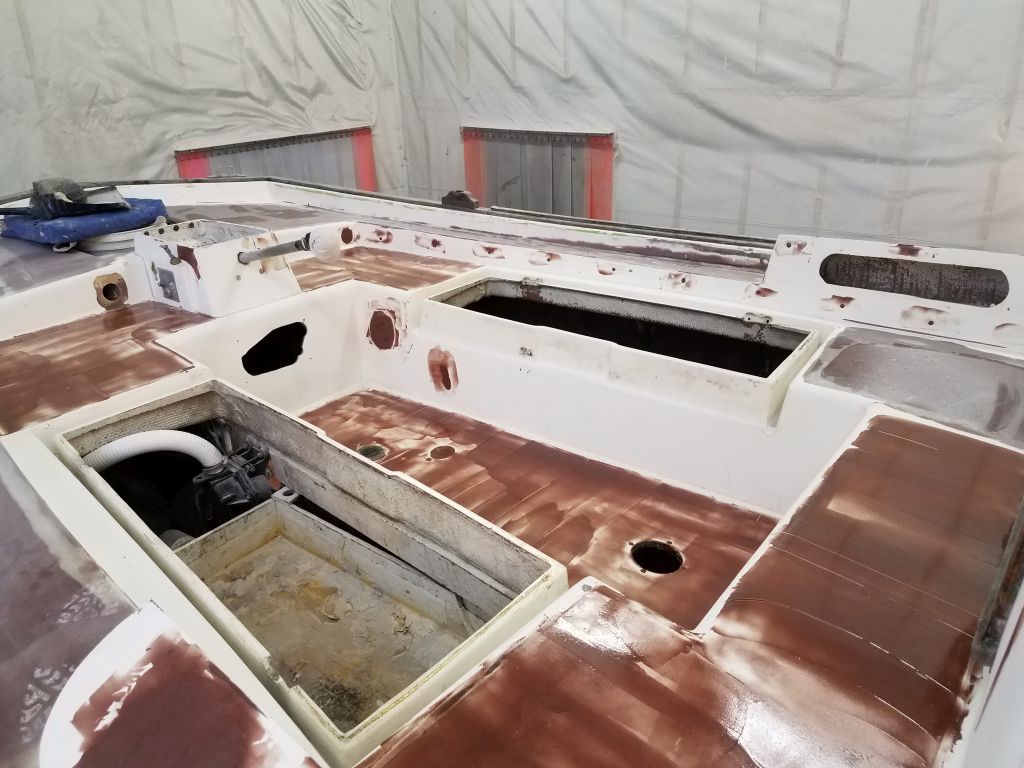
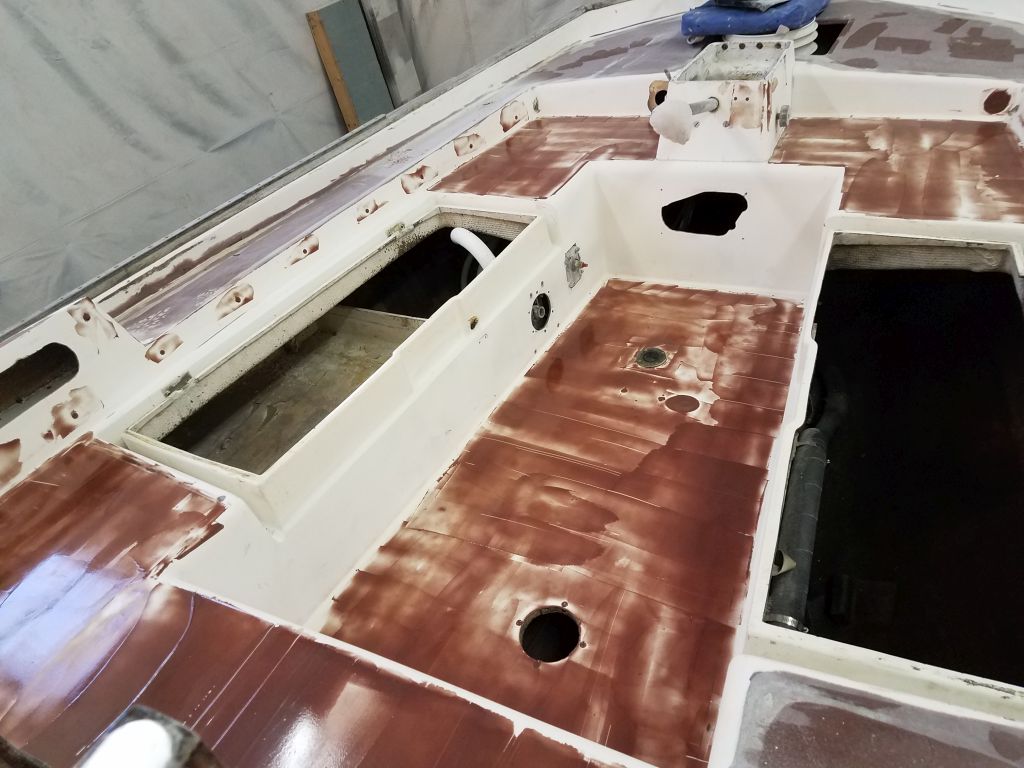
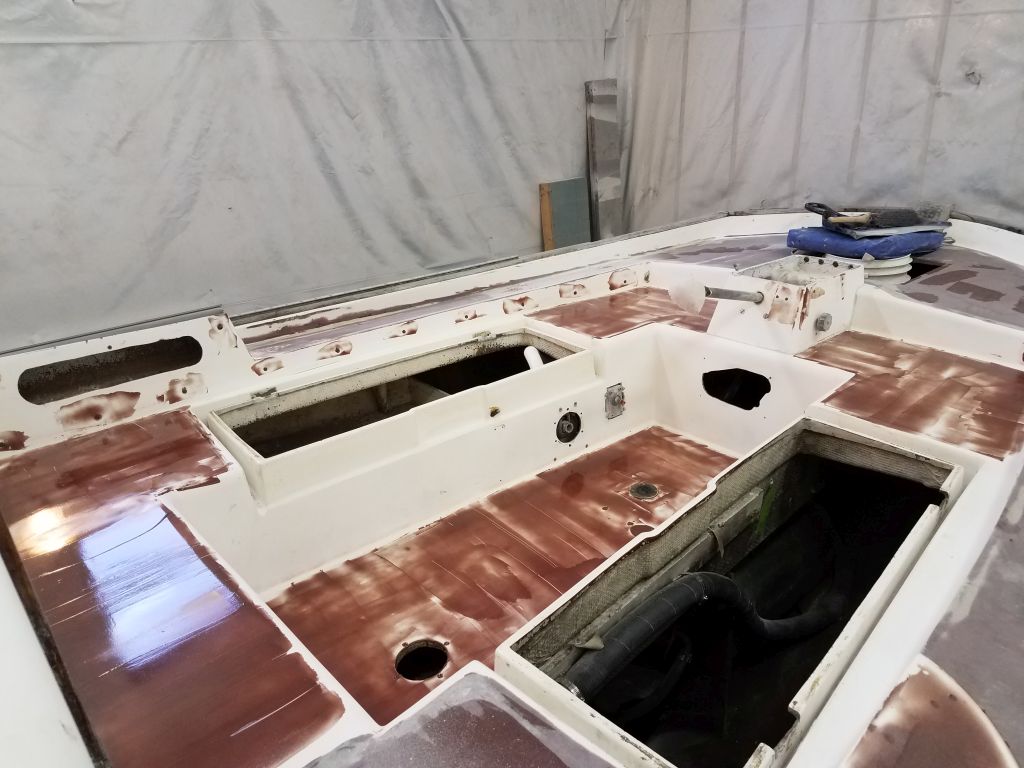
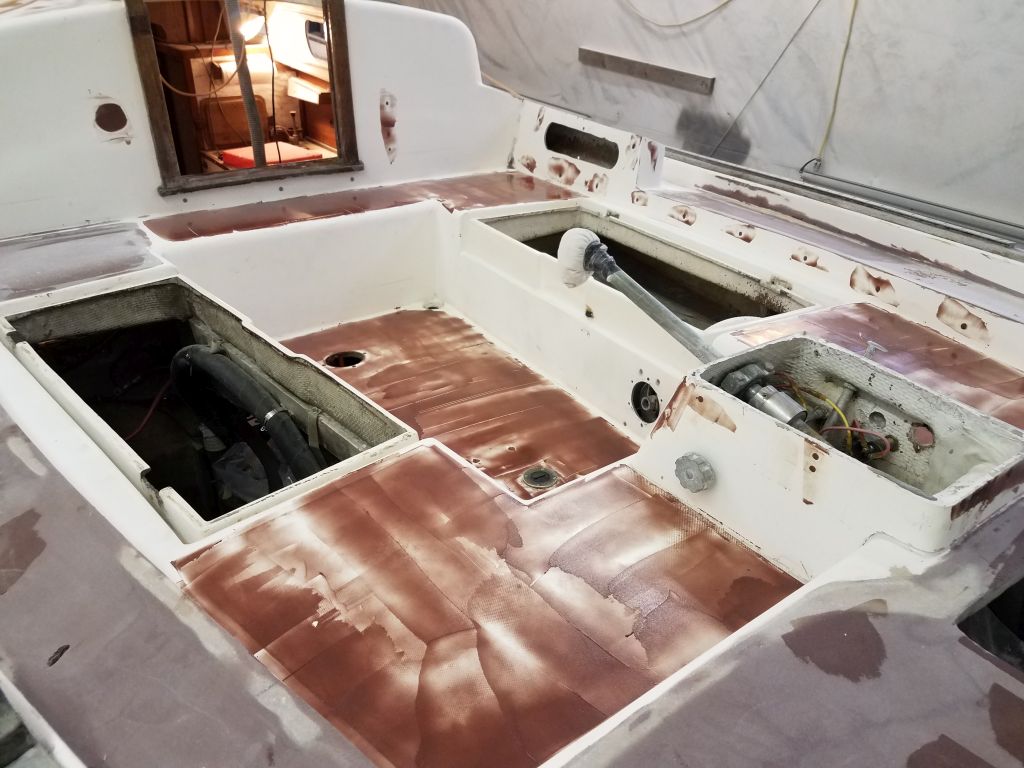
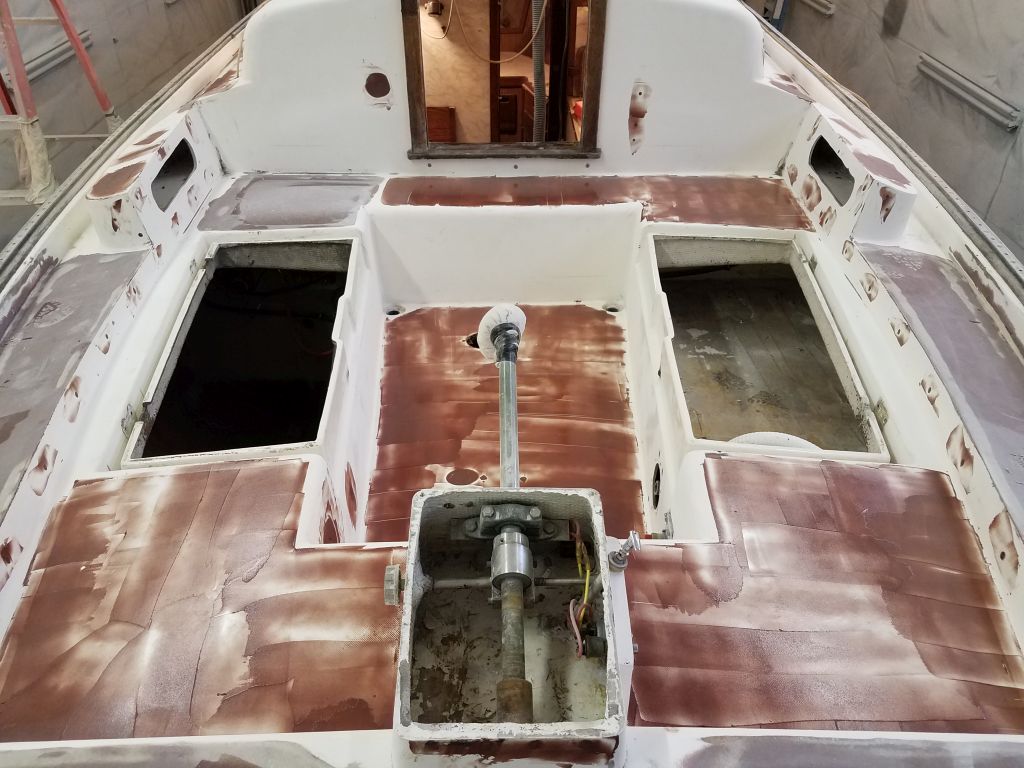
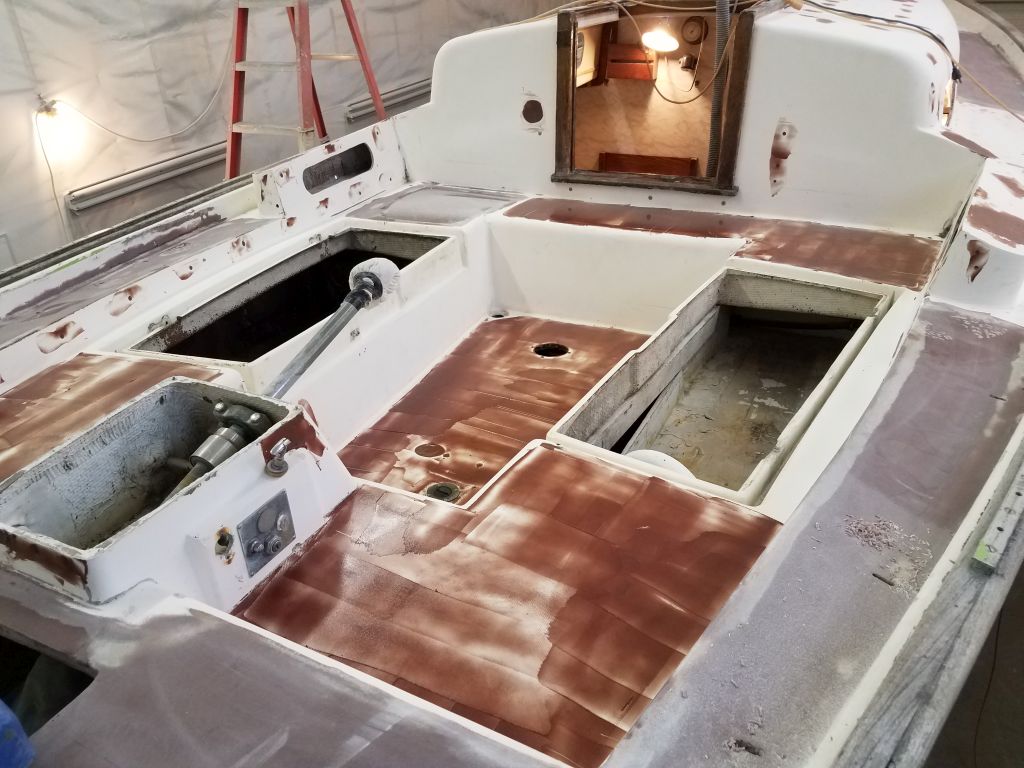
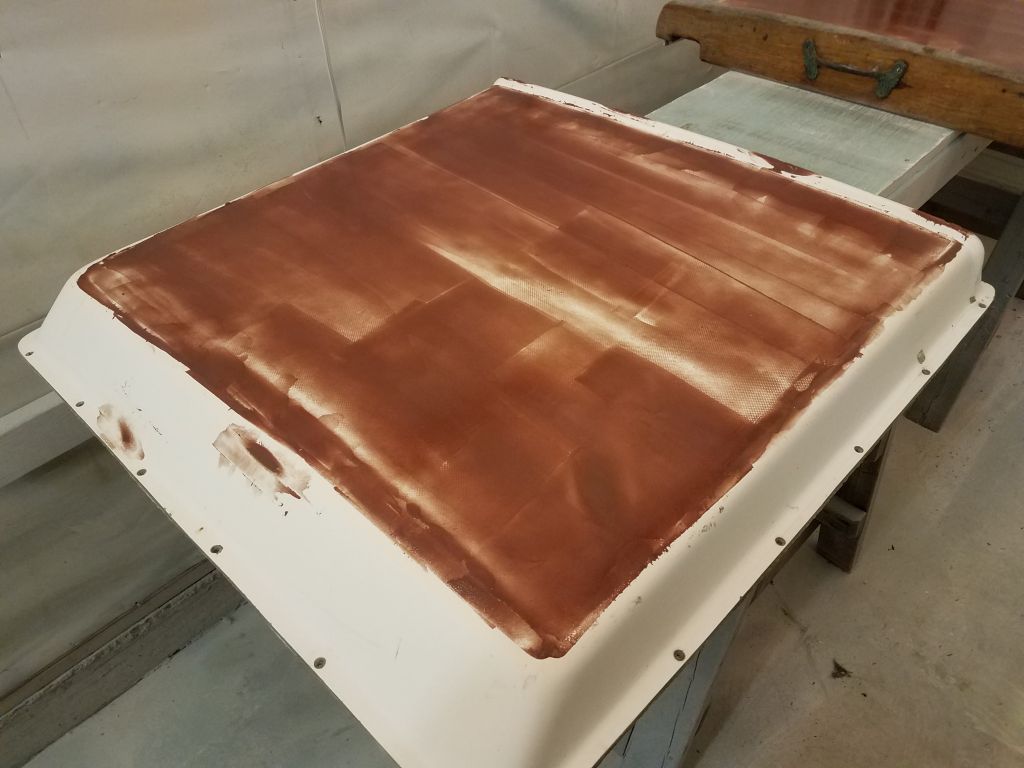
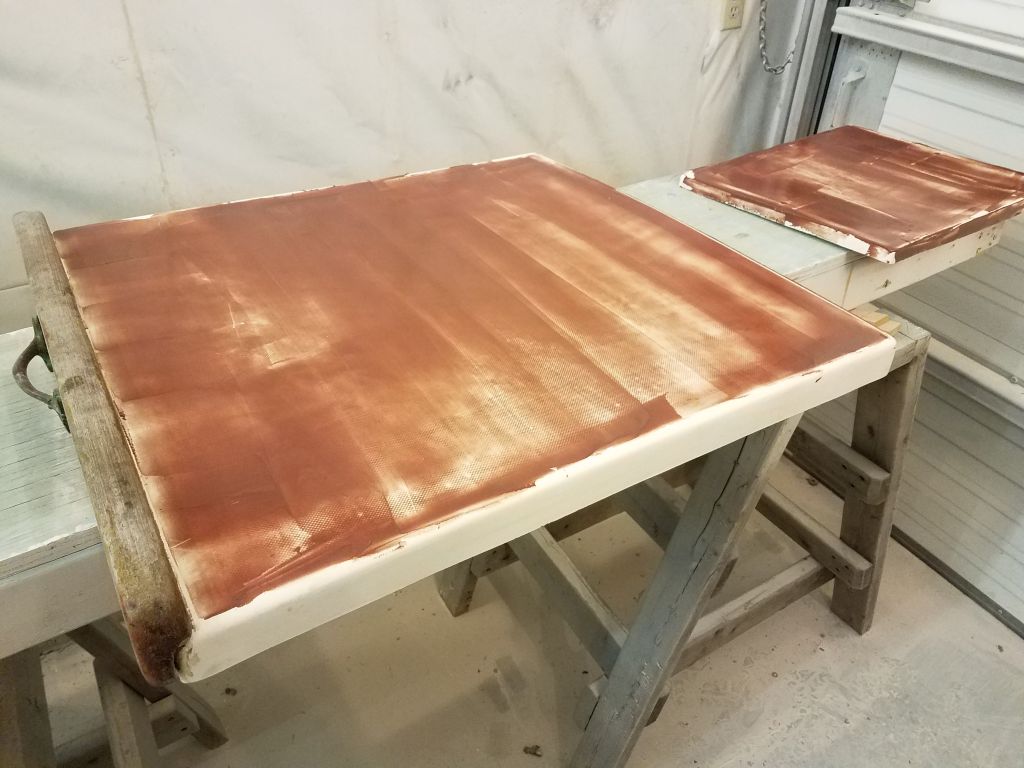
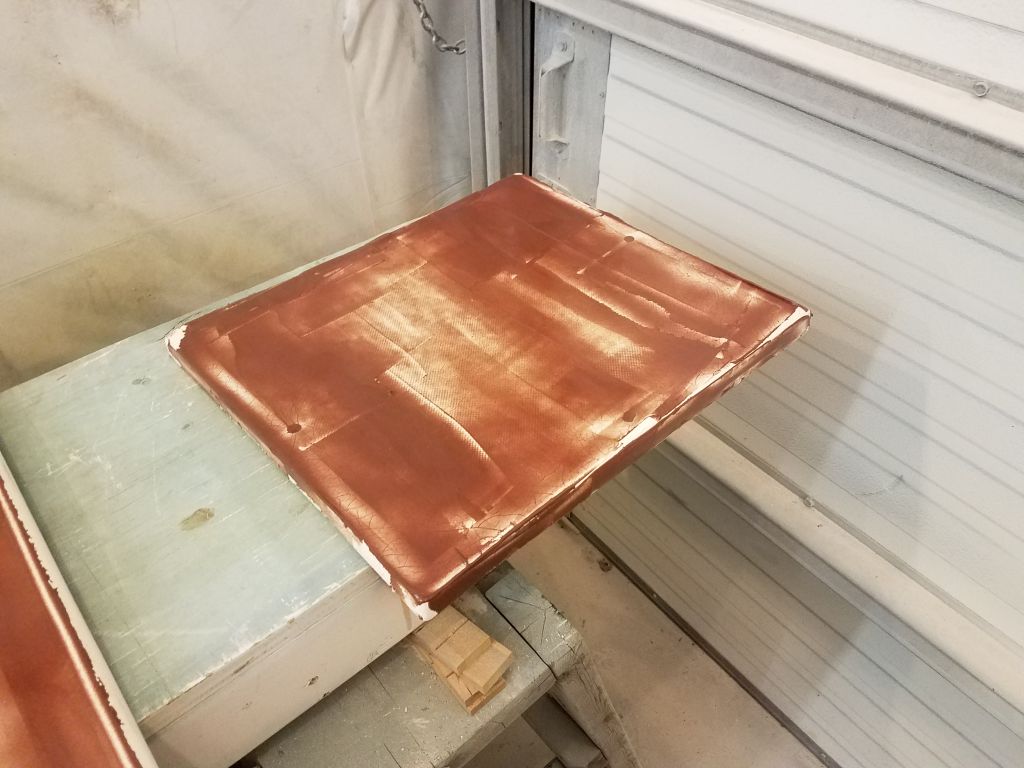
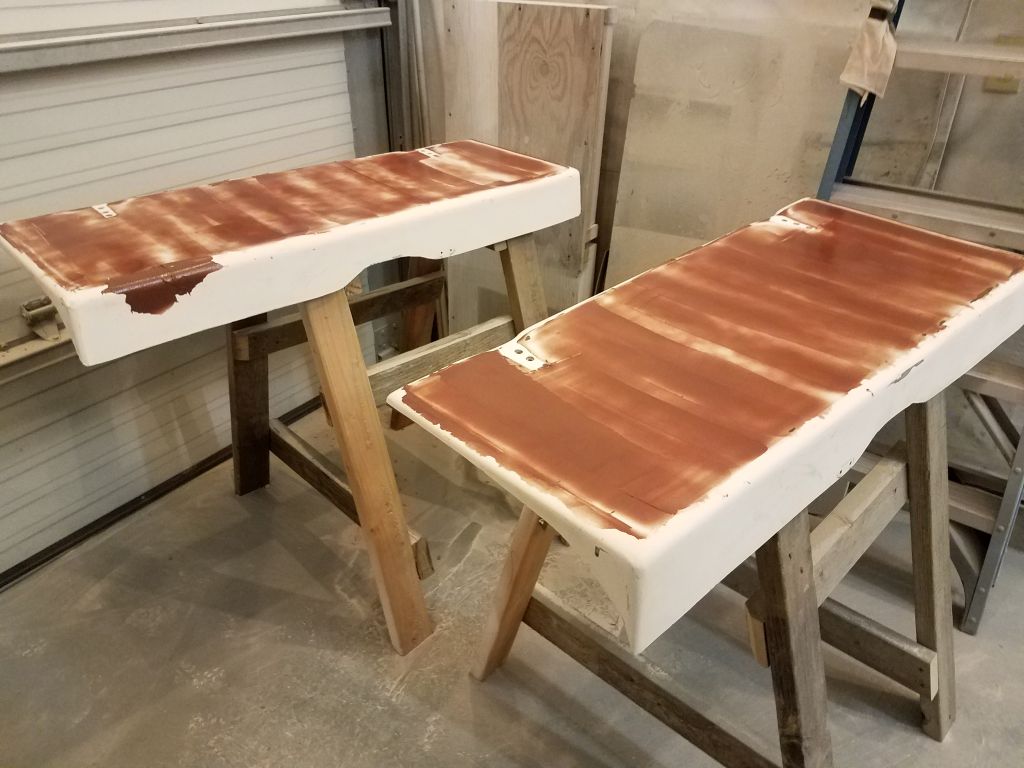
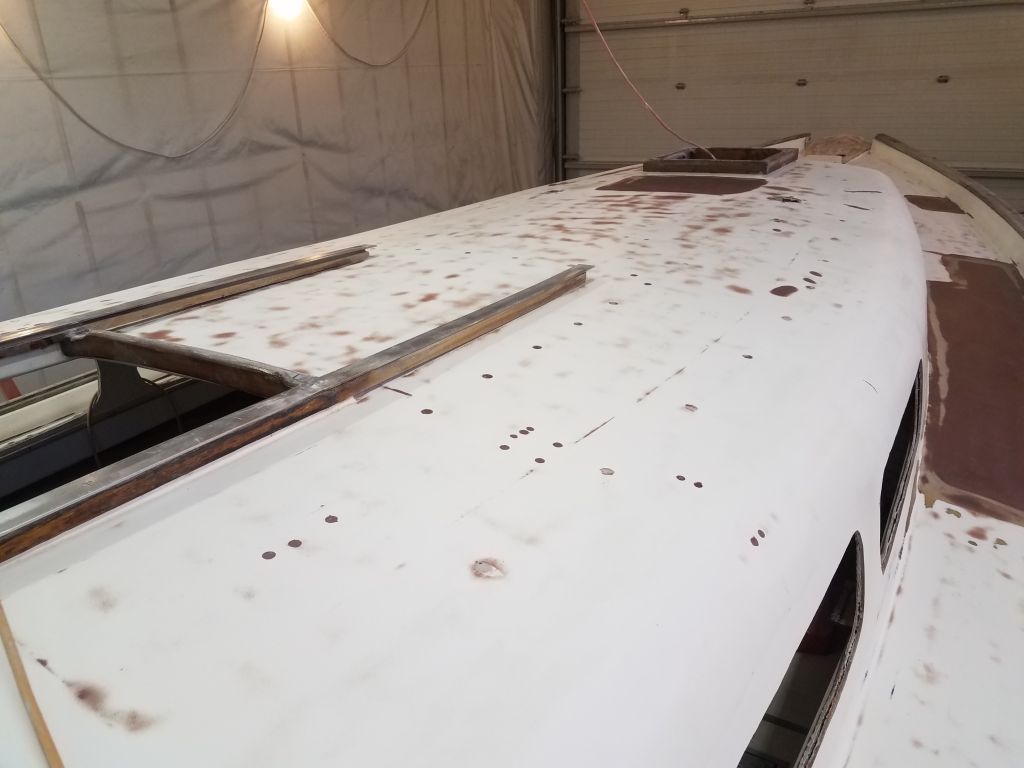
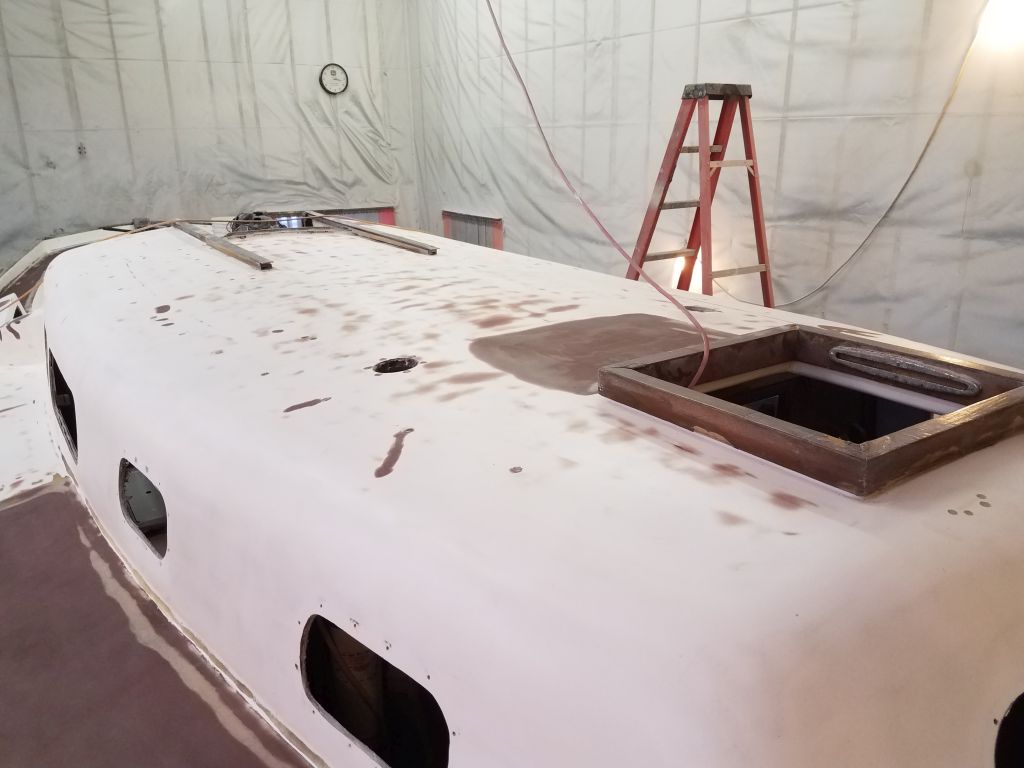
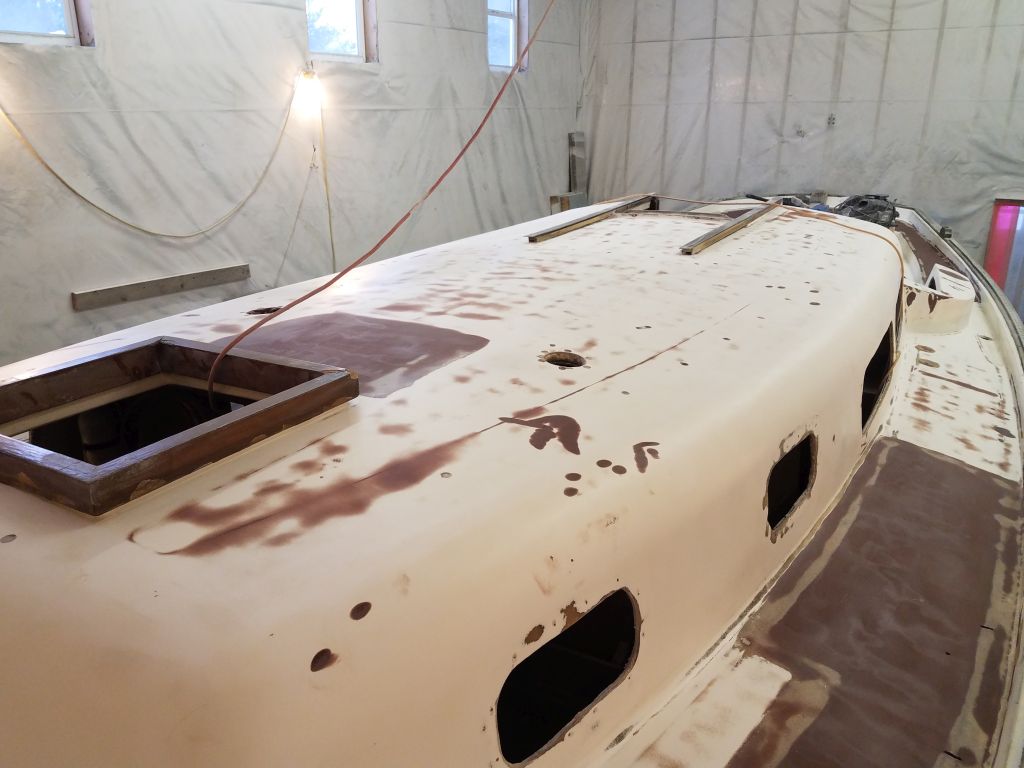
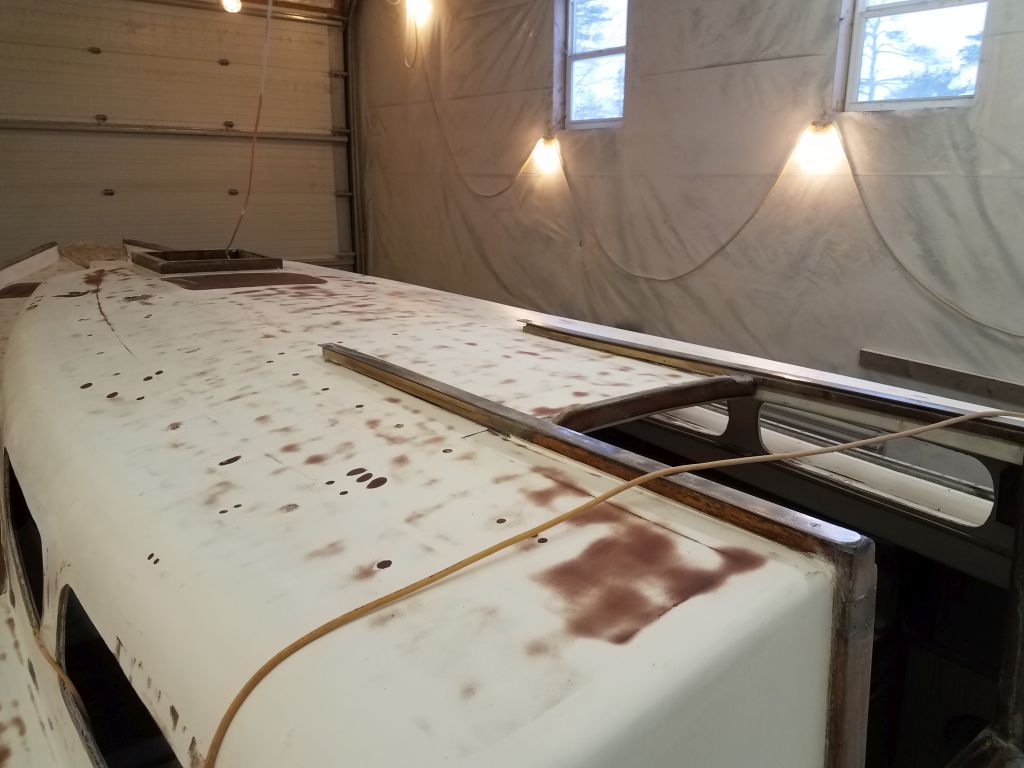
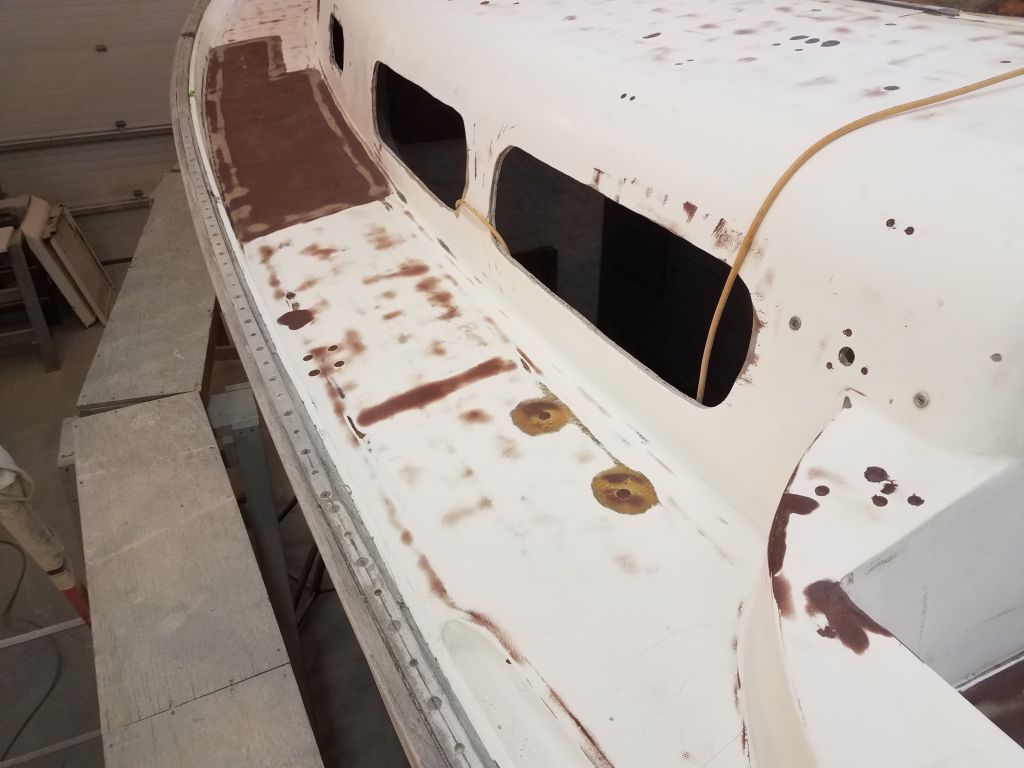
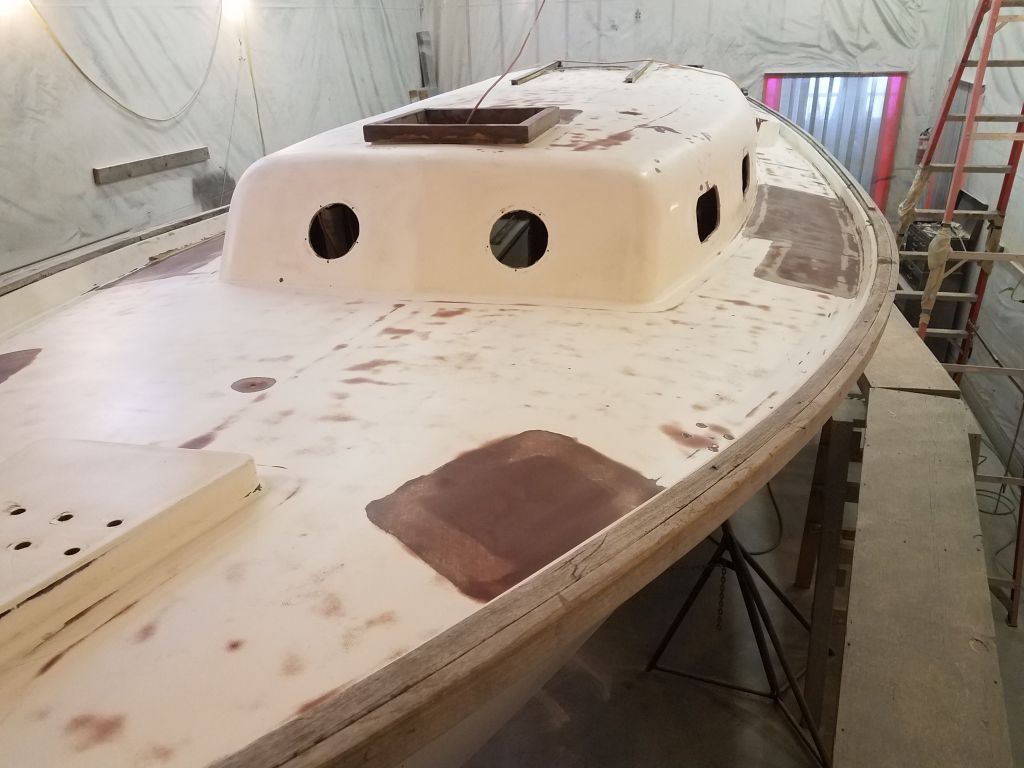
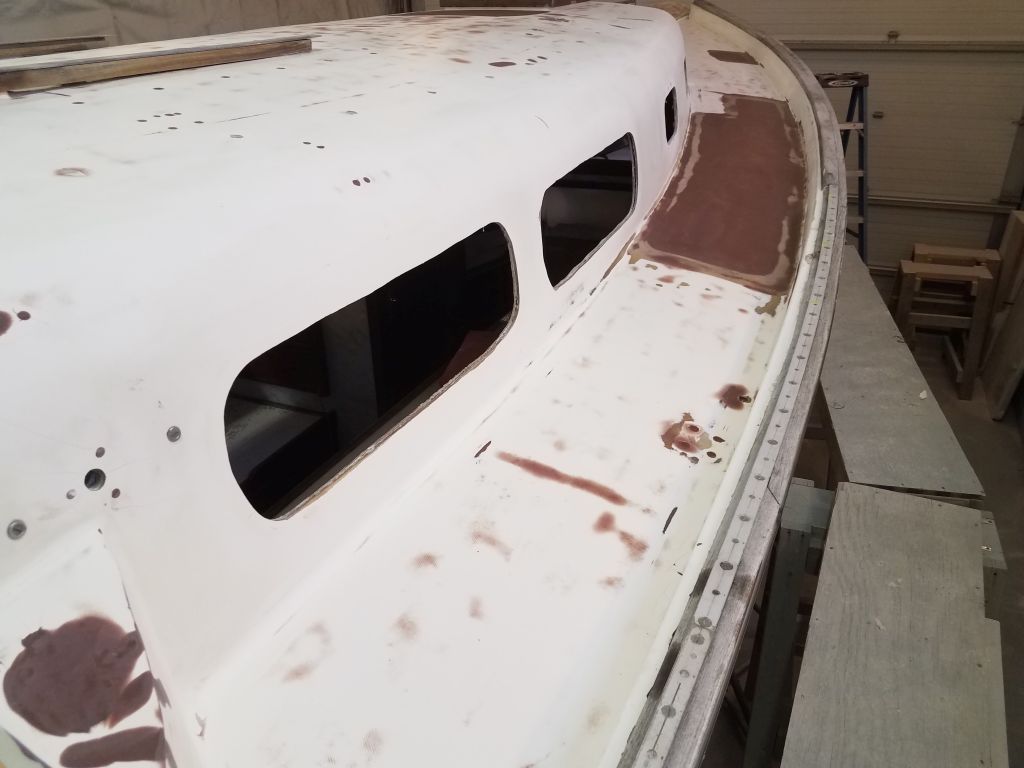
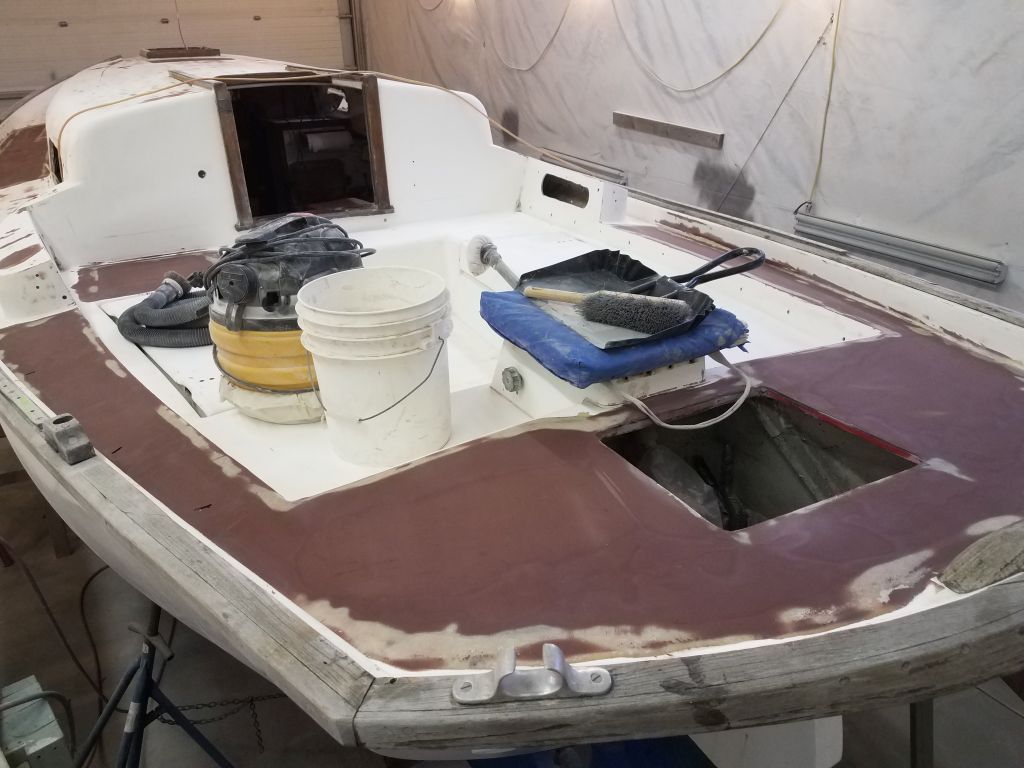
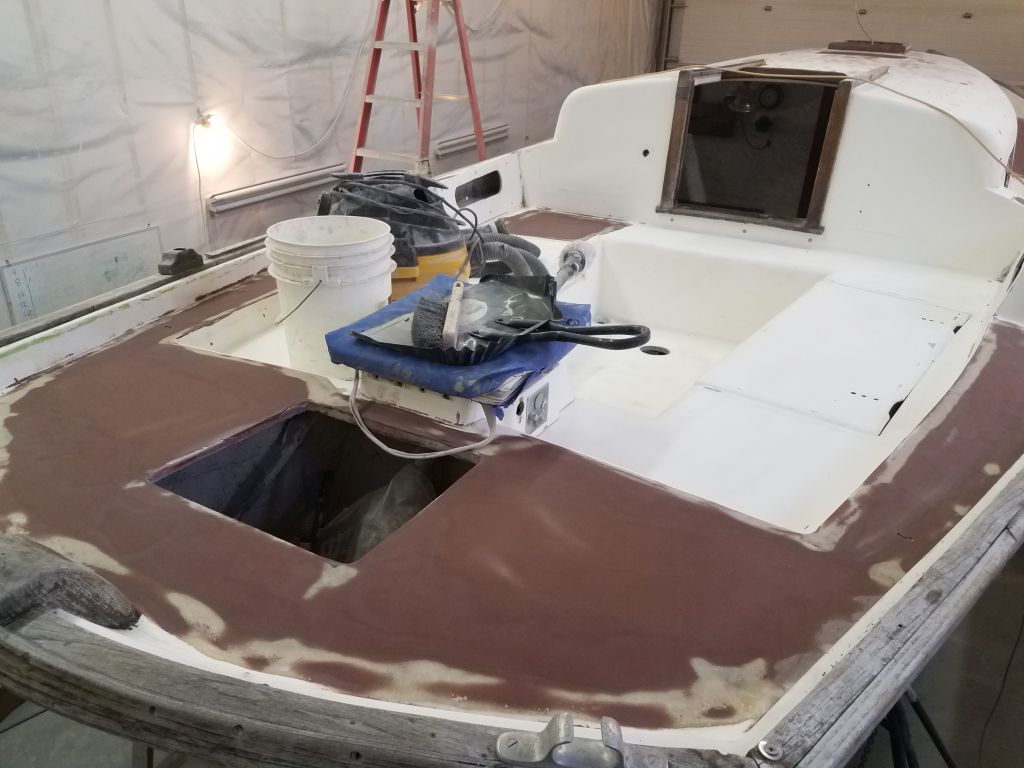
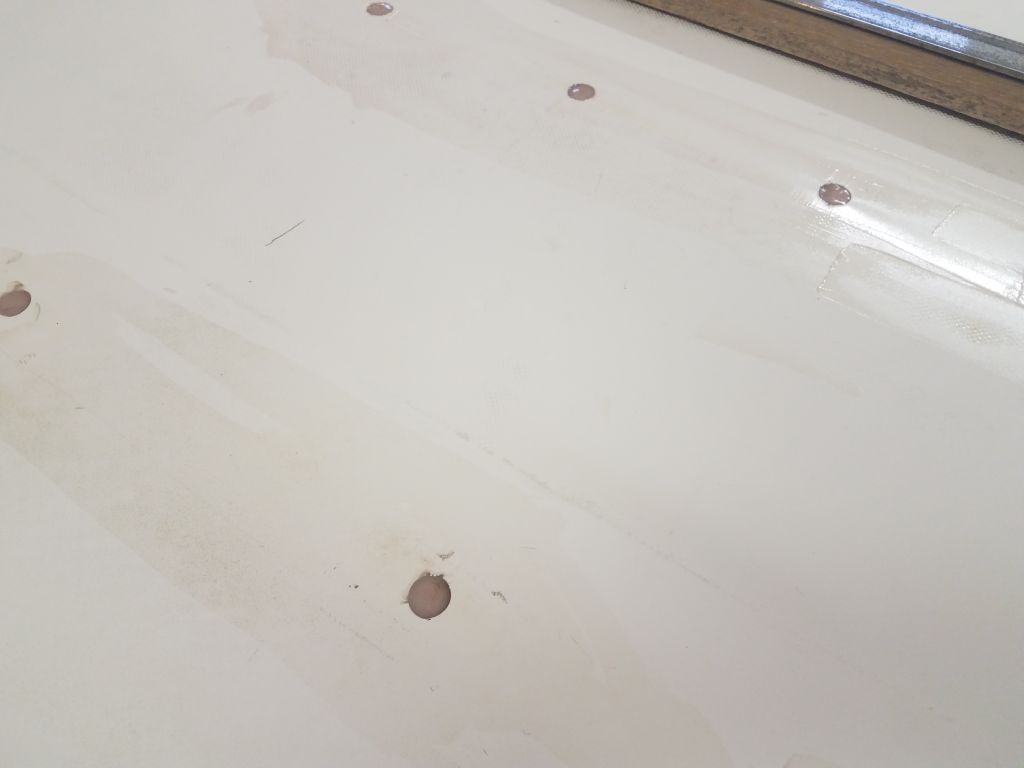
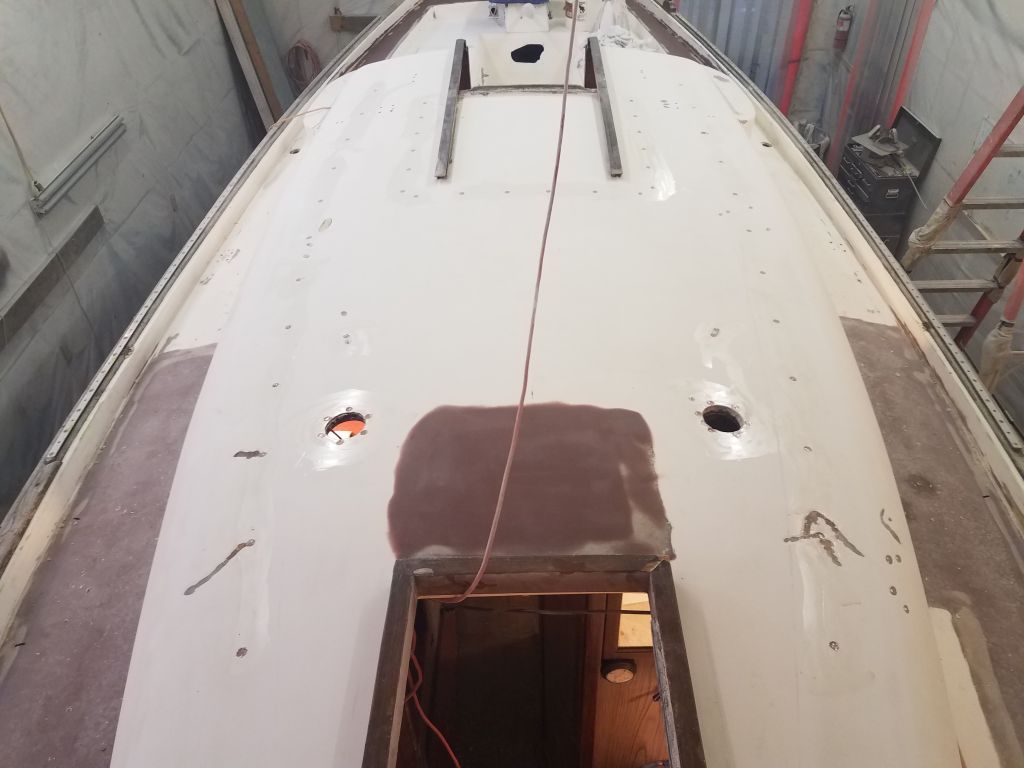
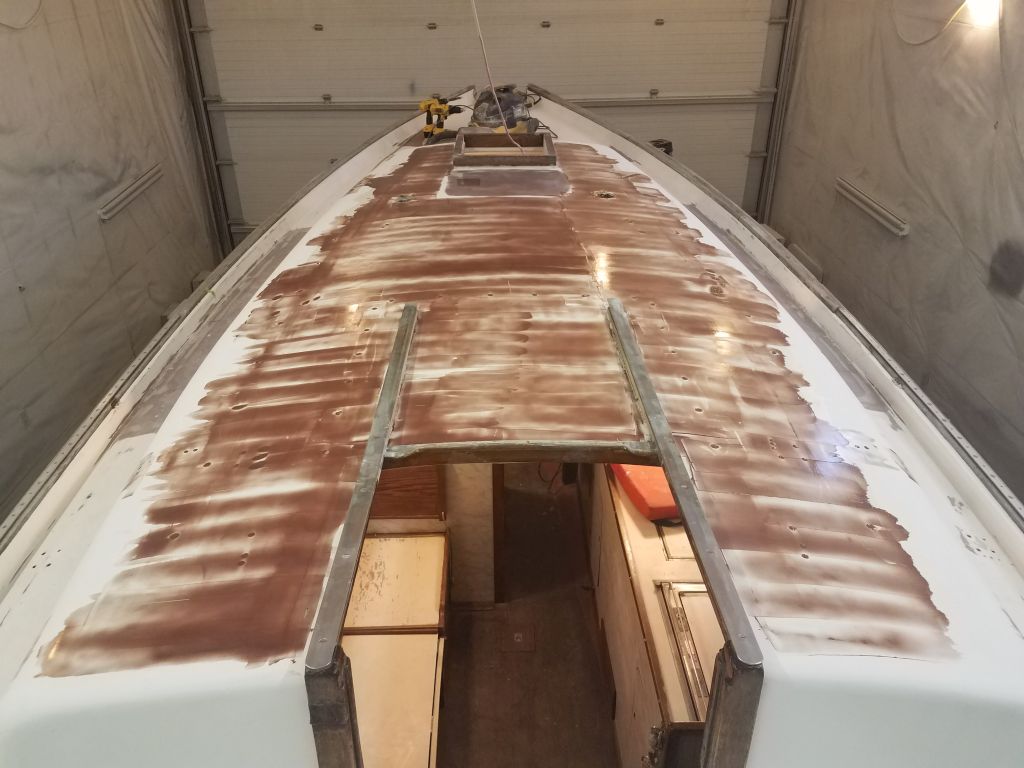
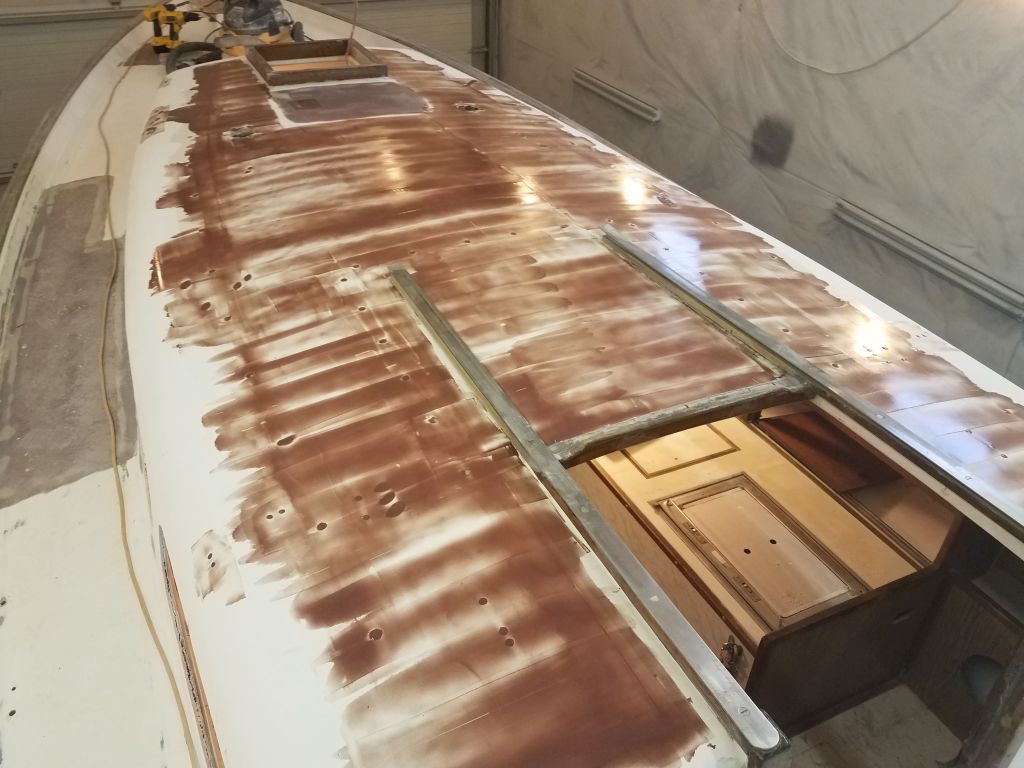
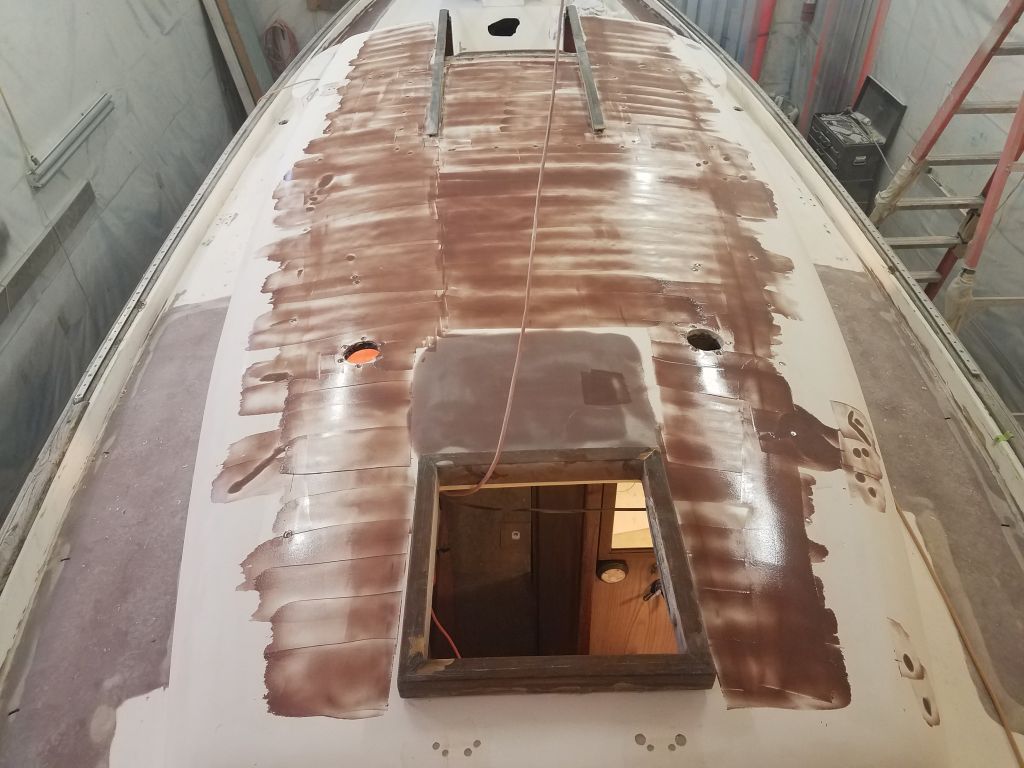
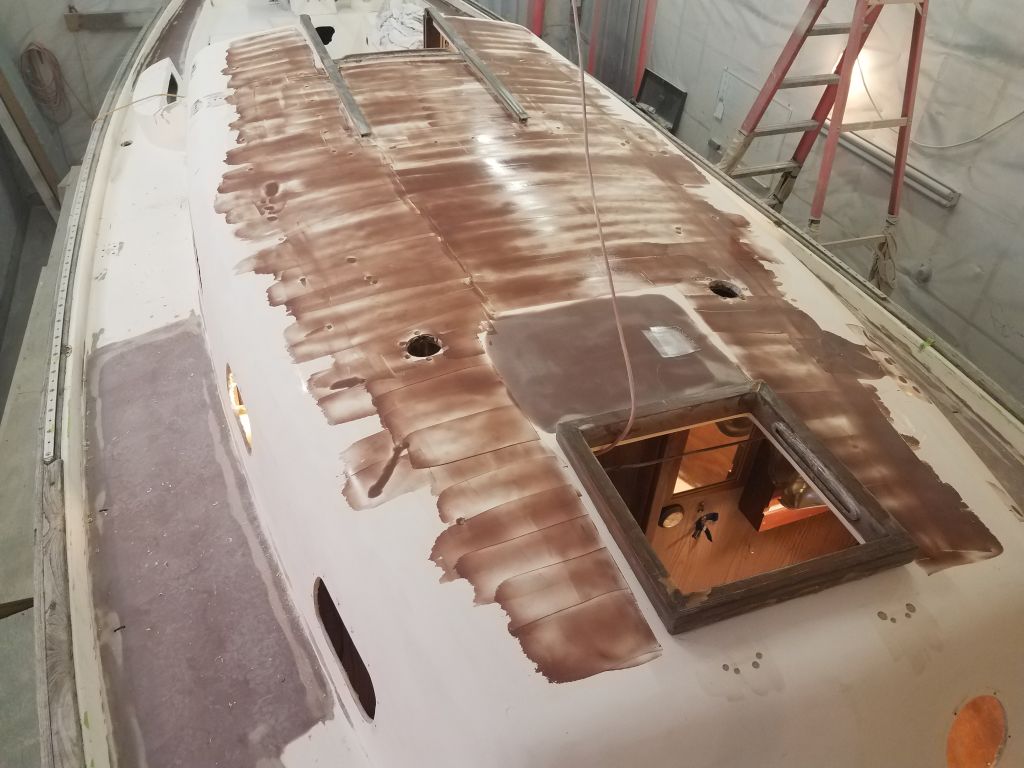
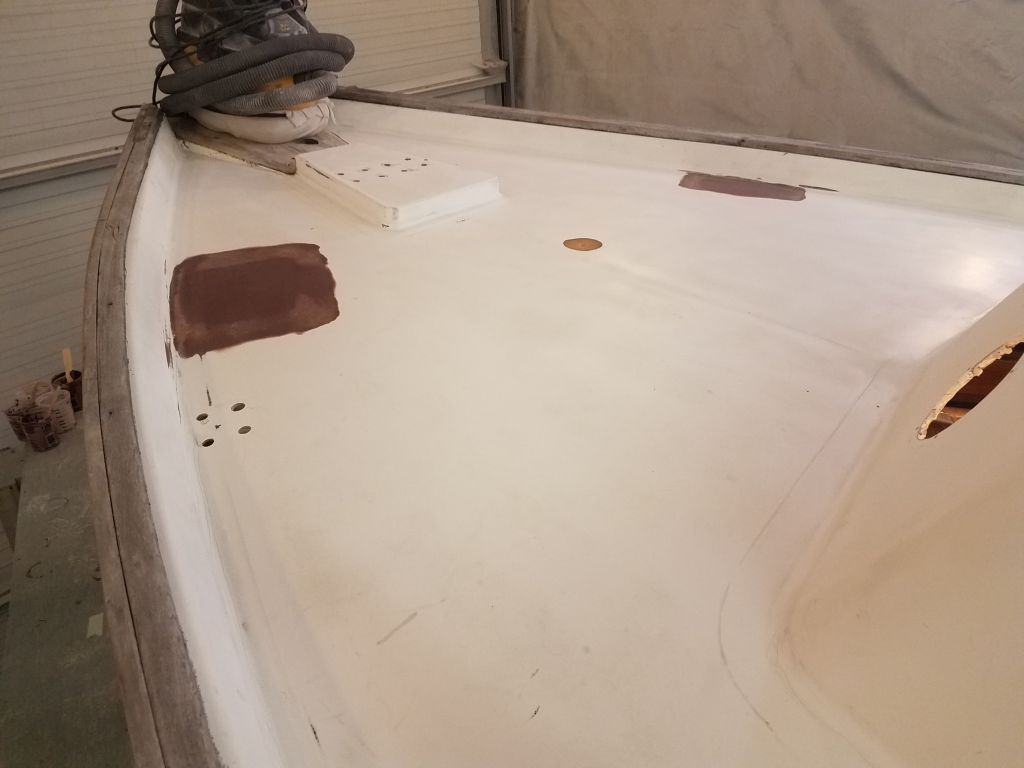
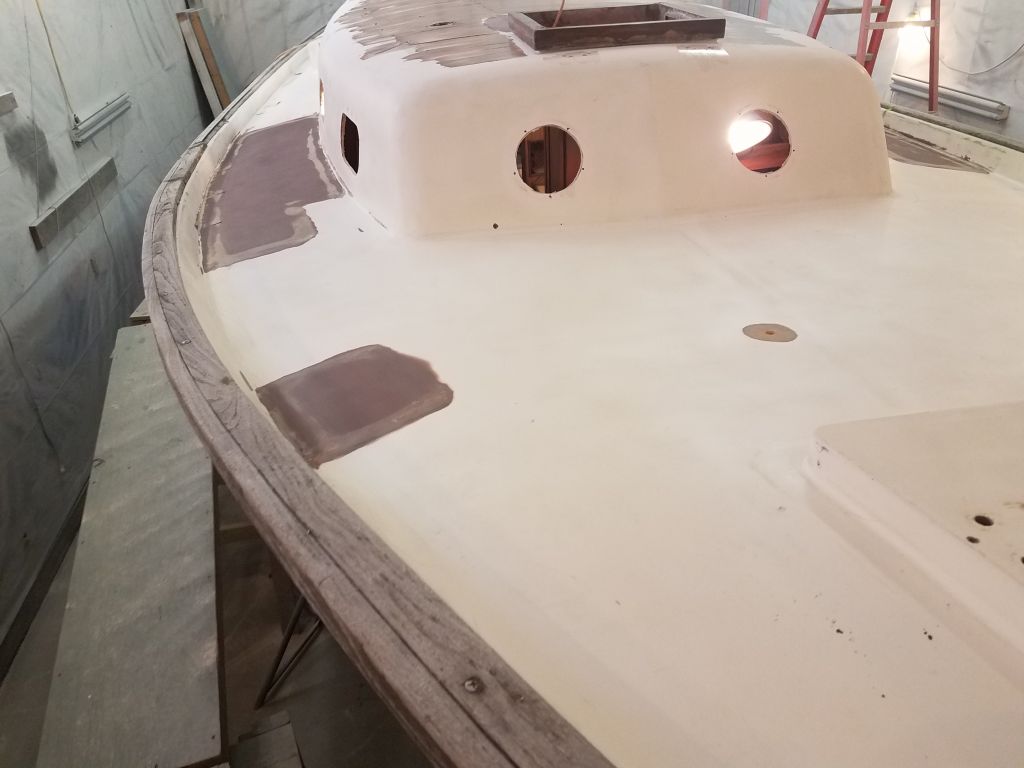
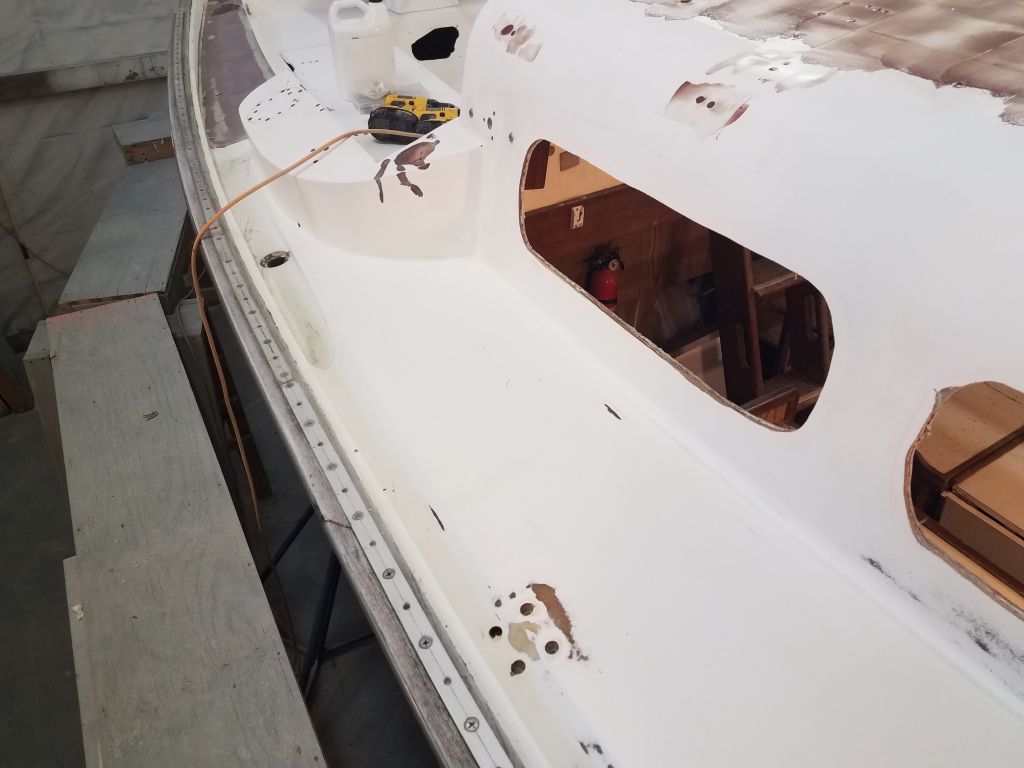
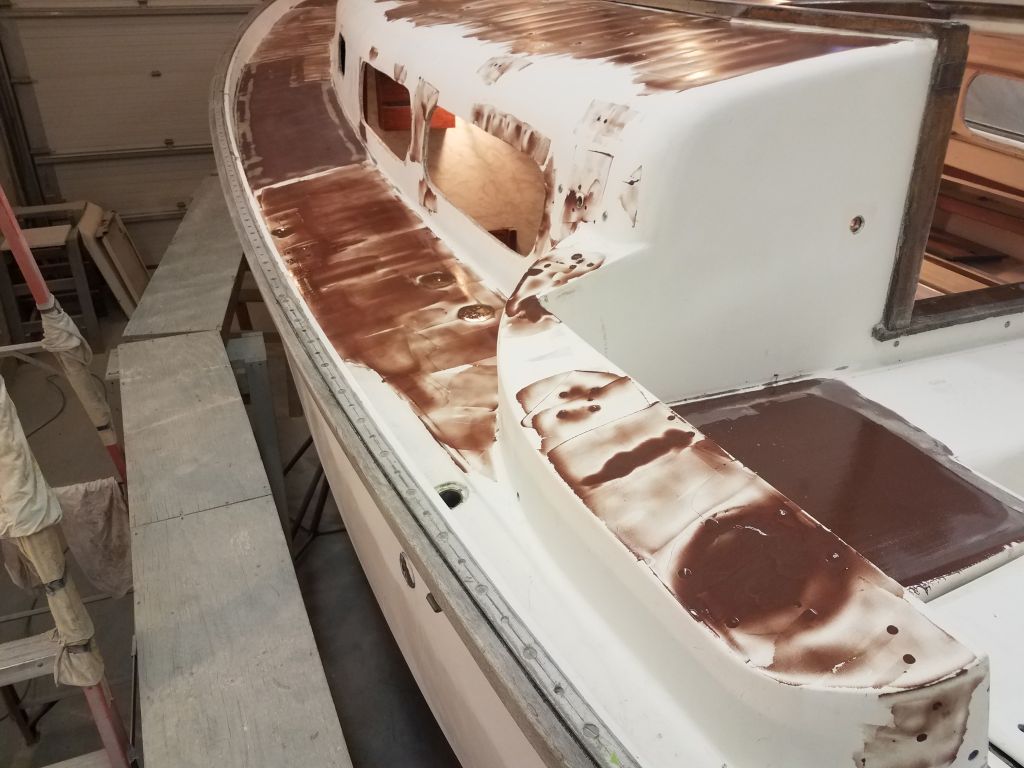
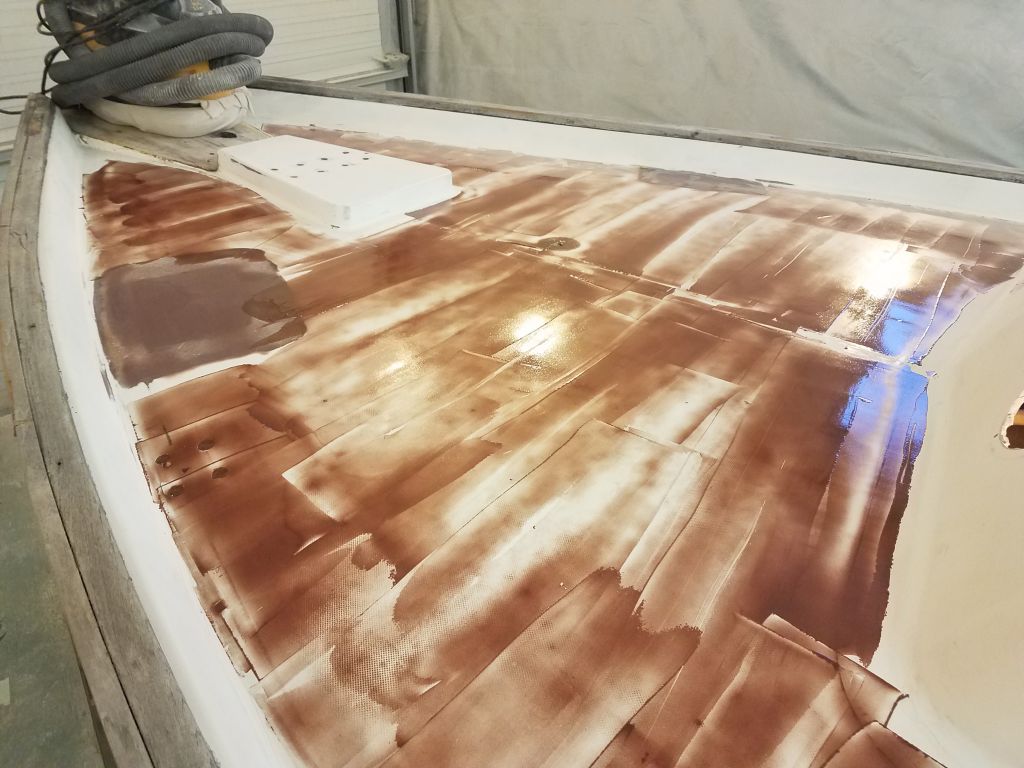
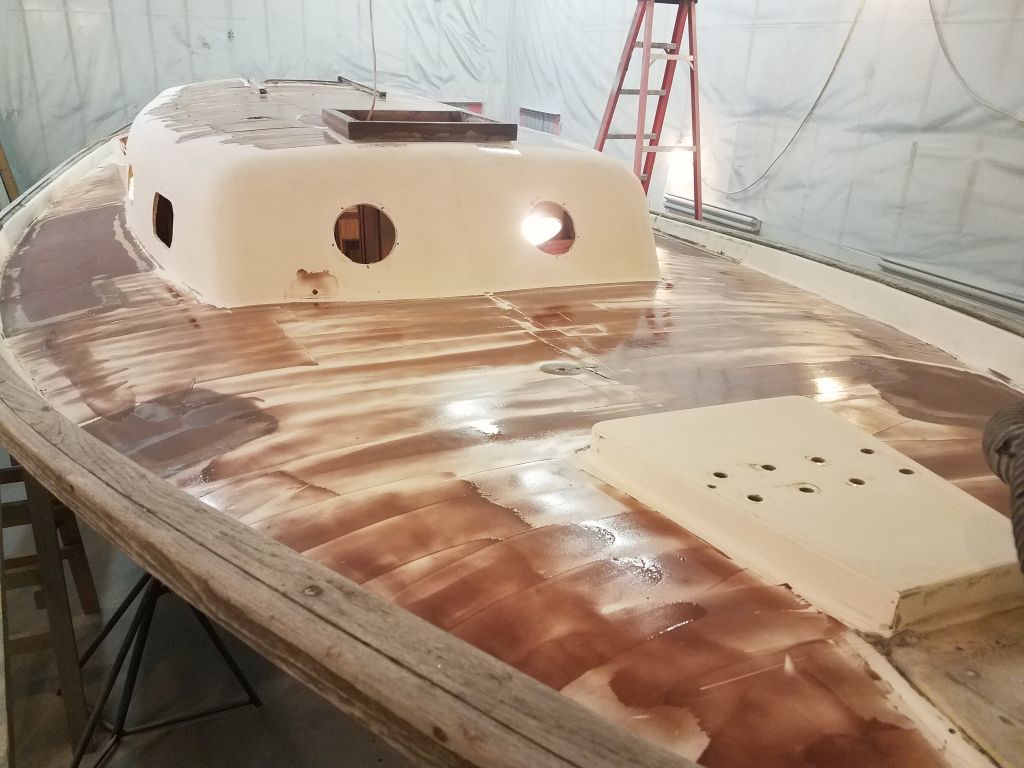
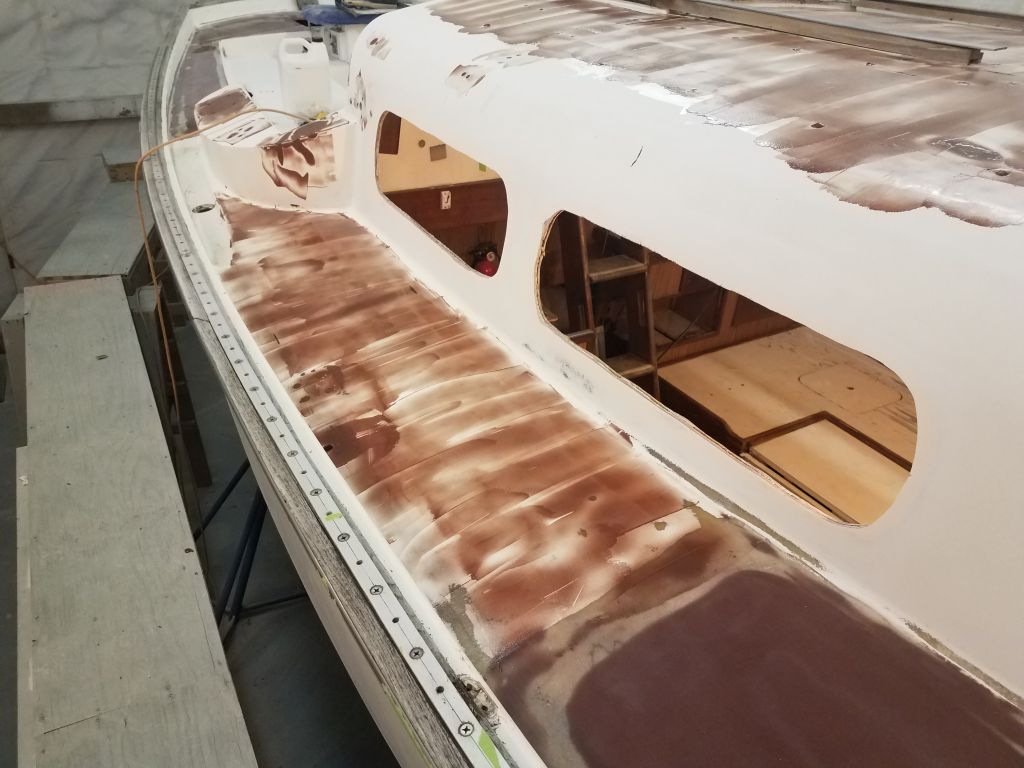
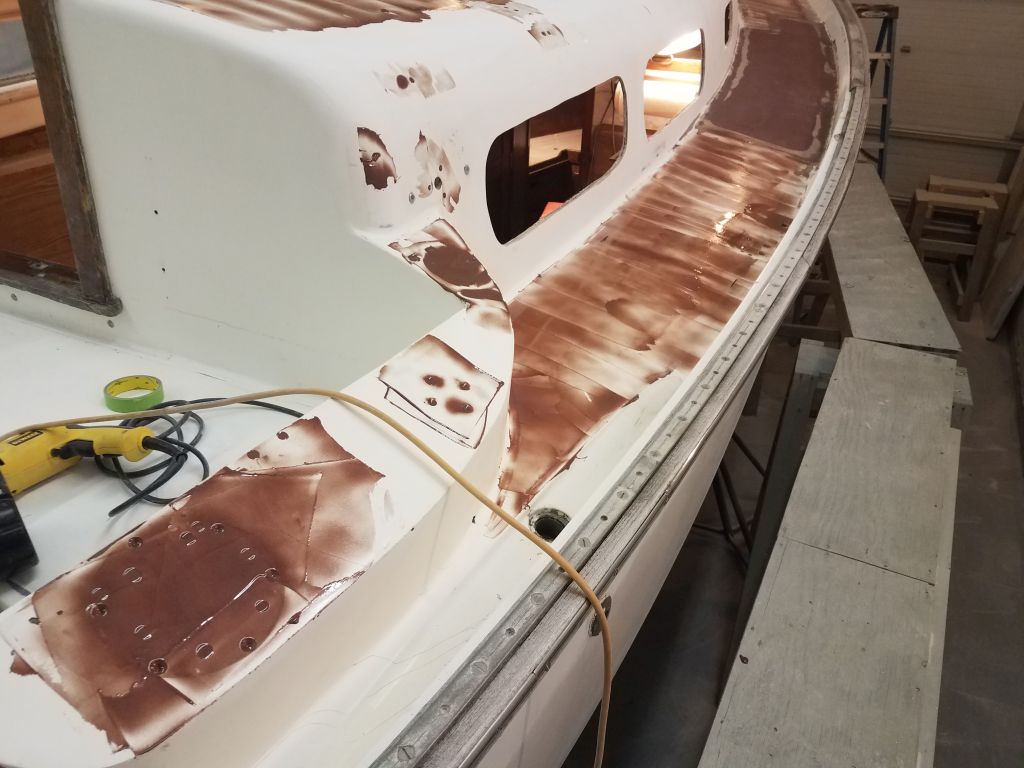
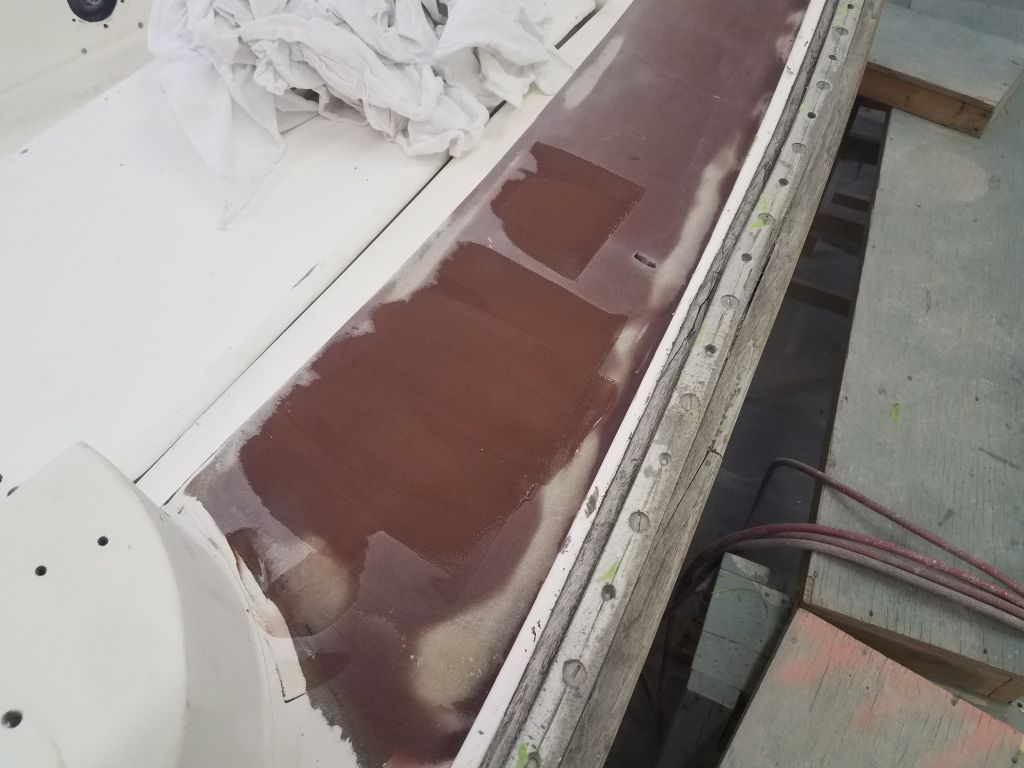
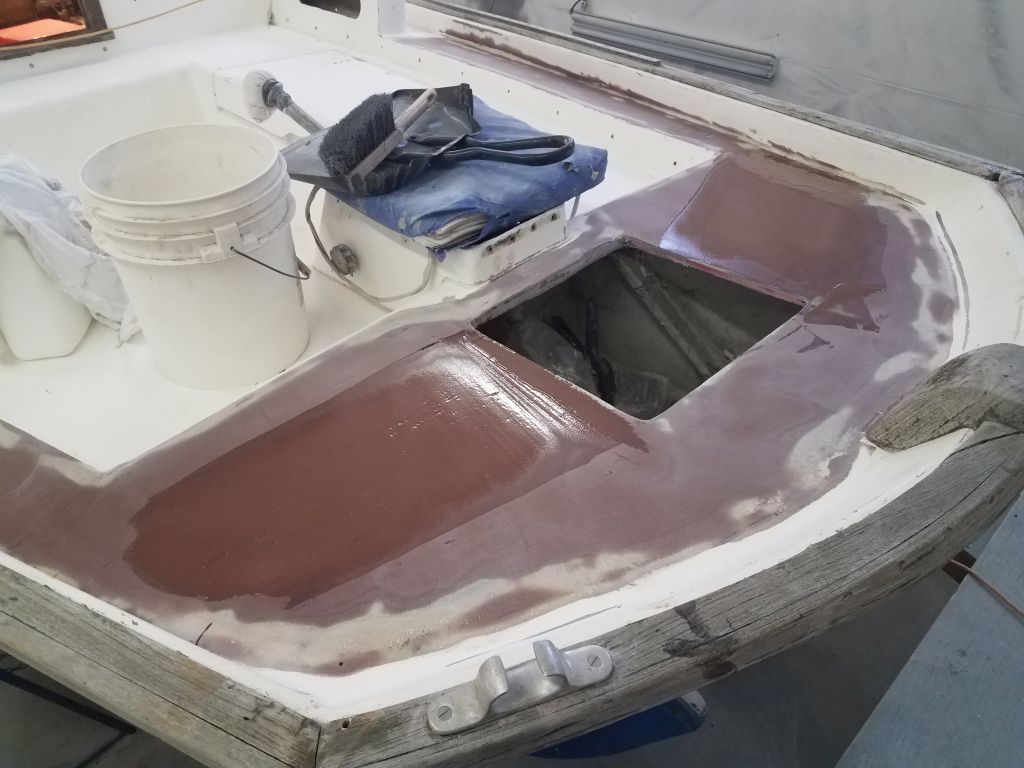
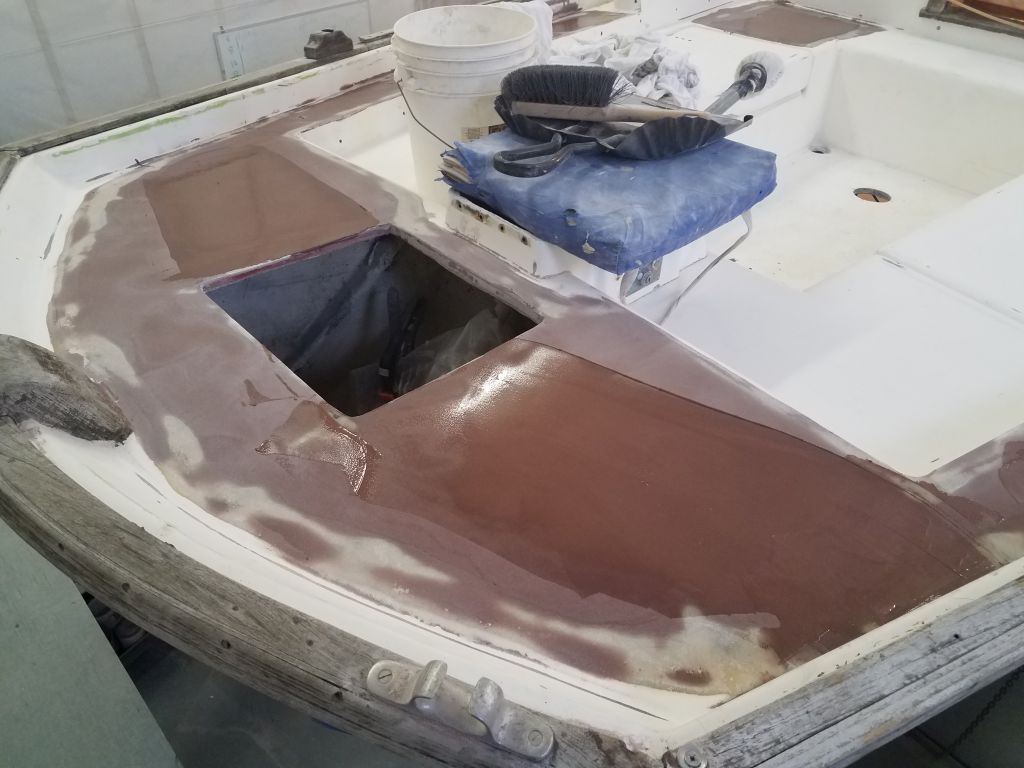
After the usual preparations, I spent a couple hours sanding the first round of fairing compound over the various deck areas.  The first pass of fairing compound brought most of the deck areas to their proper overall contours, leaving behind some low spots requiring additional filling and fine-tuning.

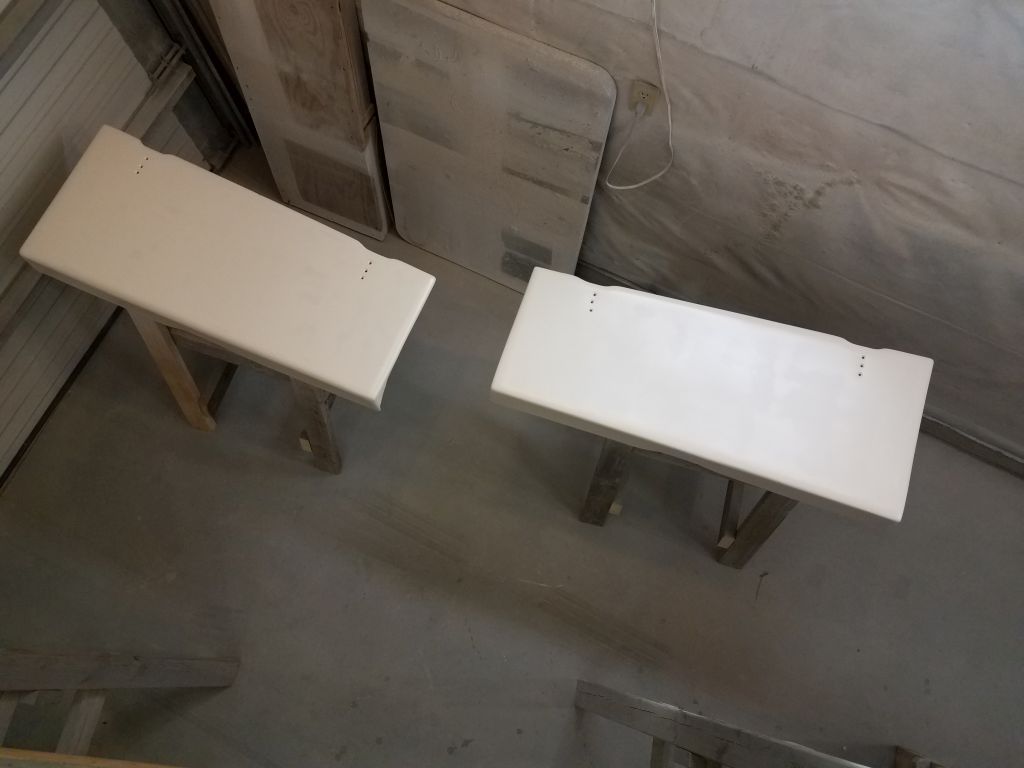
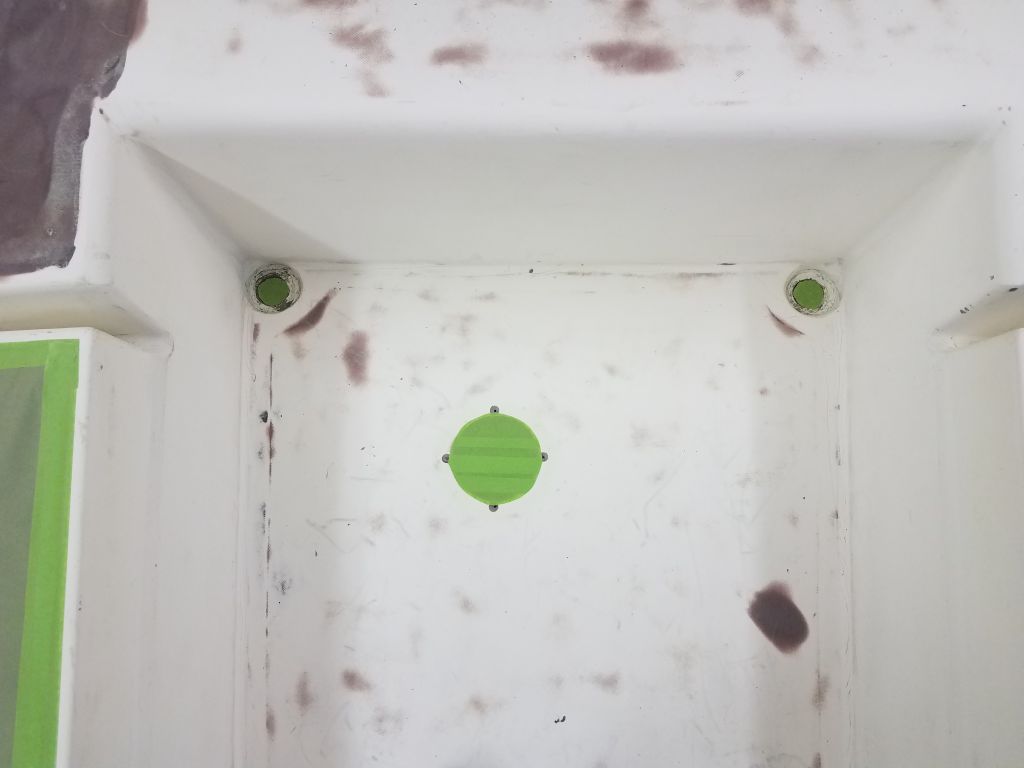
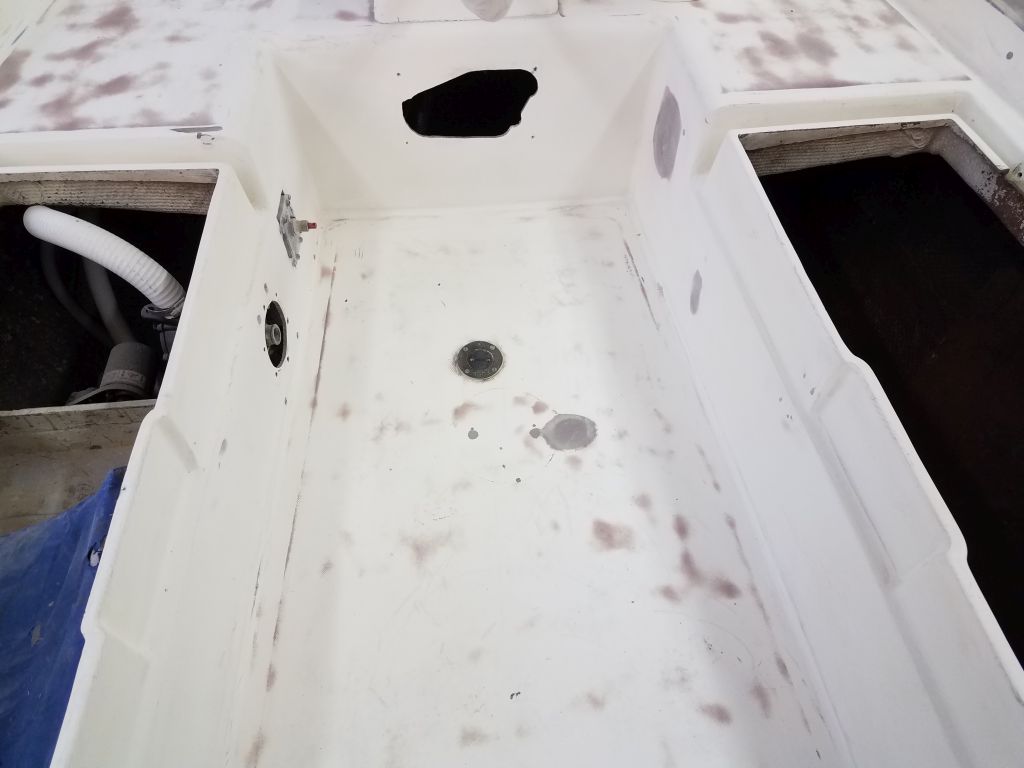
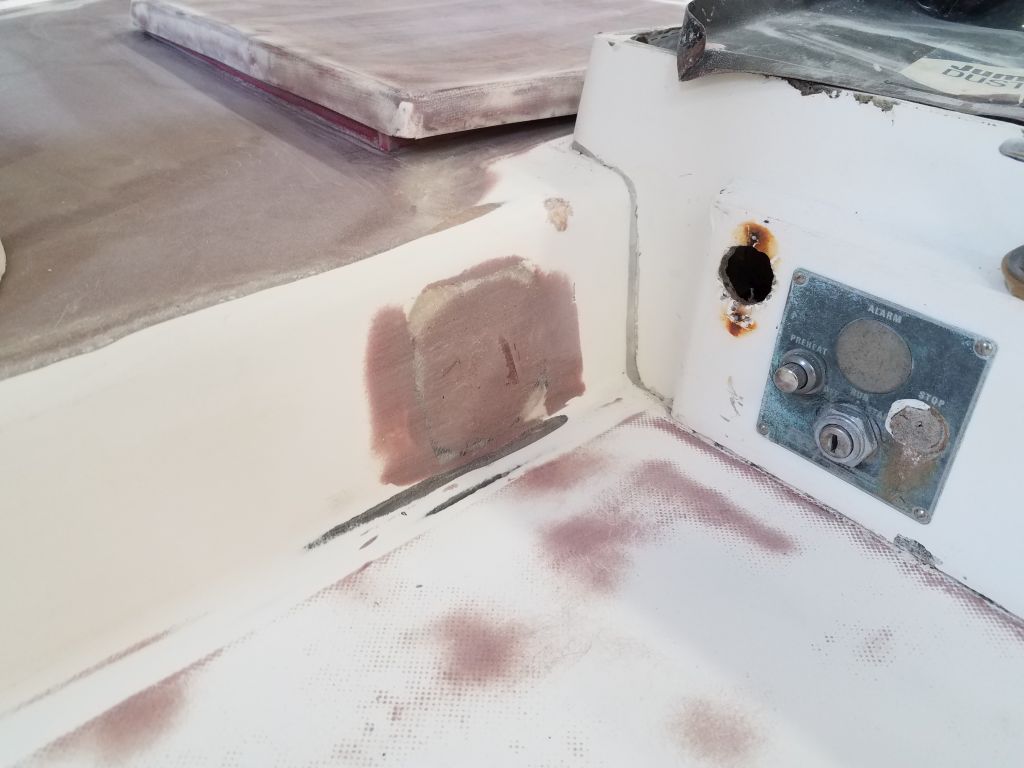
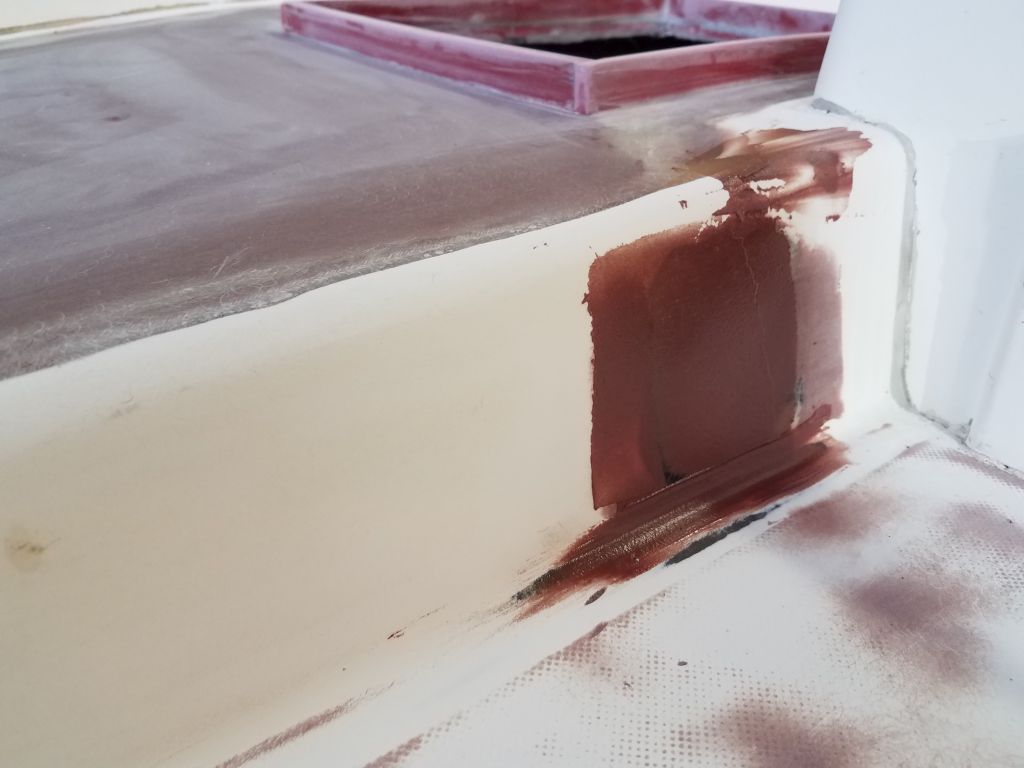
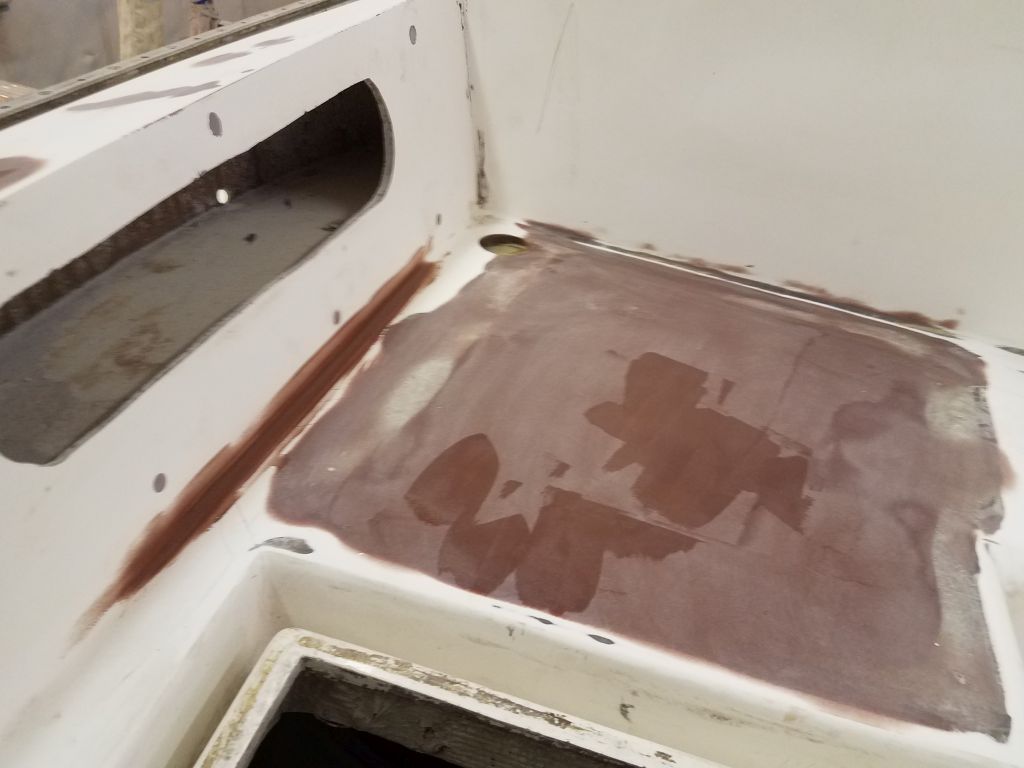
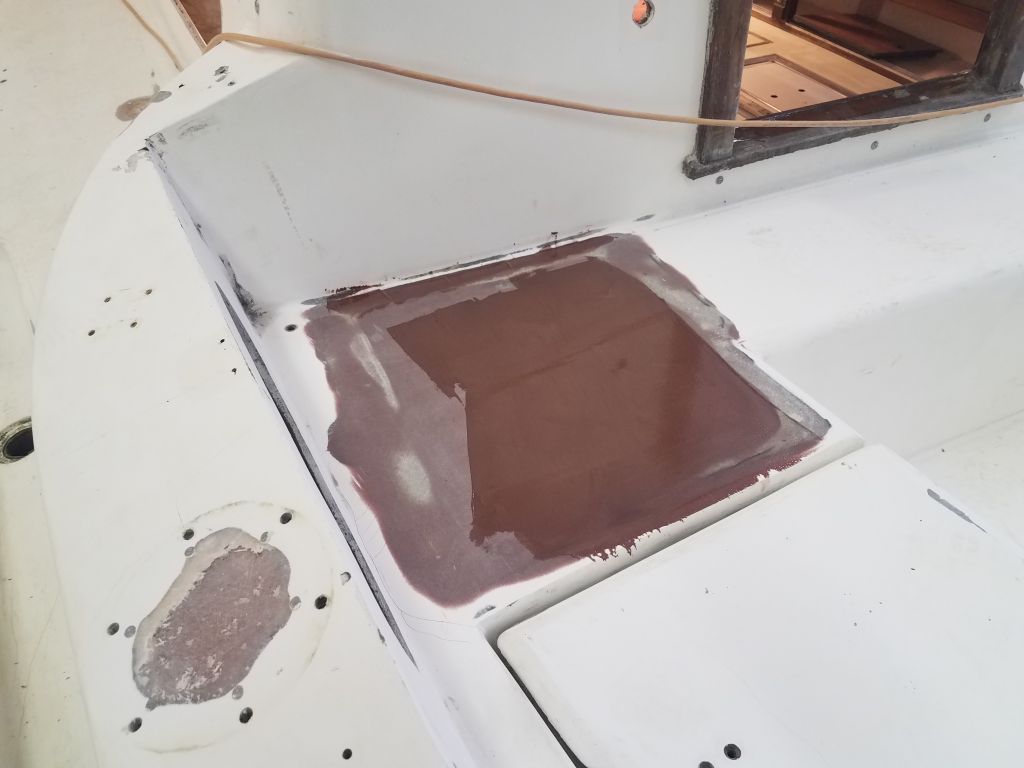
Once I’d cleaned up, I applied a second coat of epoxy fairing compound as needed,  and a first coat on the new icebox repair.

Total time billed on this job today:  3 hours

0600 Weather Observation:  Clear, -20°.  Forecast for the day:  Sunny, then snow flurries and light snow in the afternoon, around 7°
Jasmine 18

< Back to Jasmine

Thursday

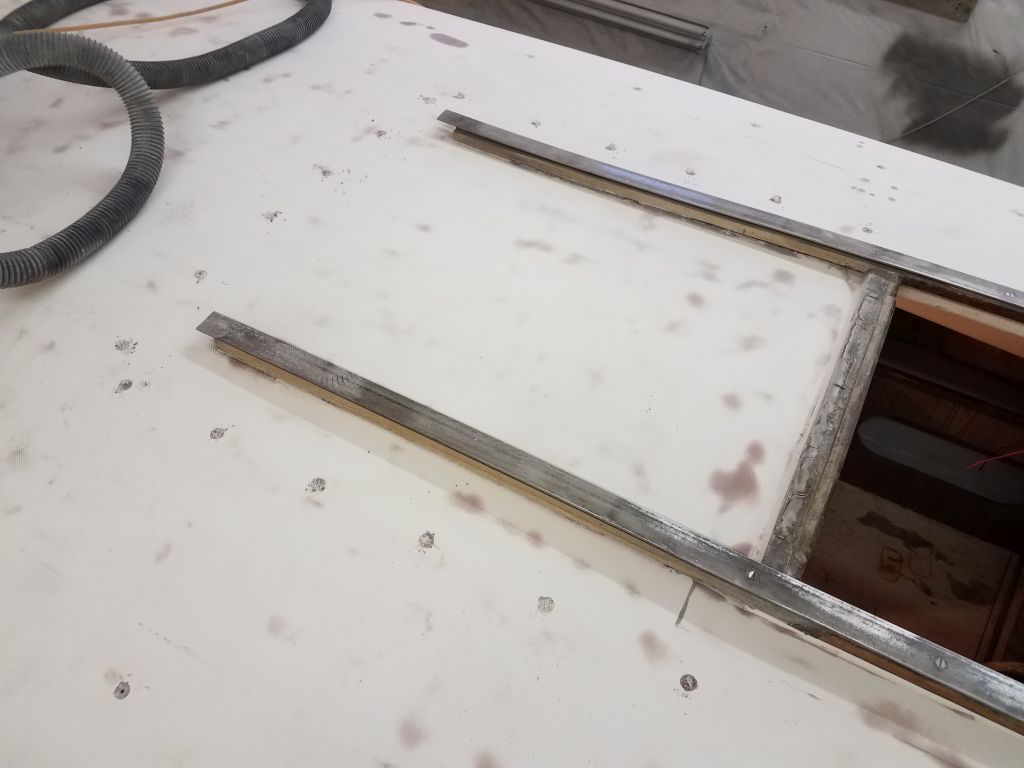
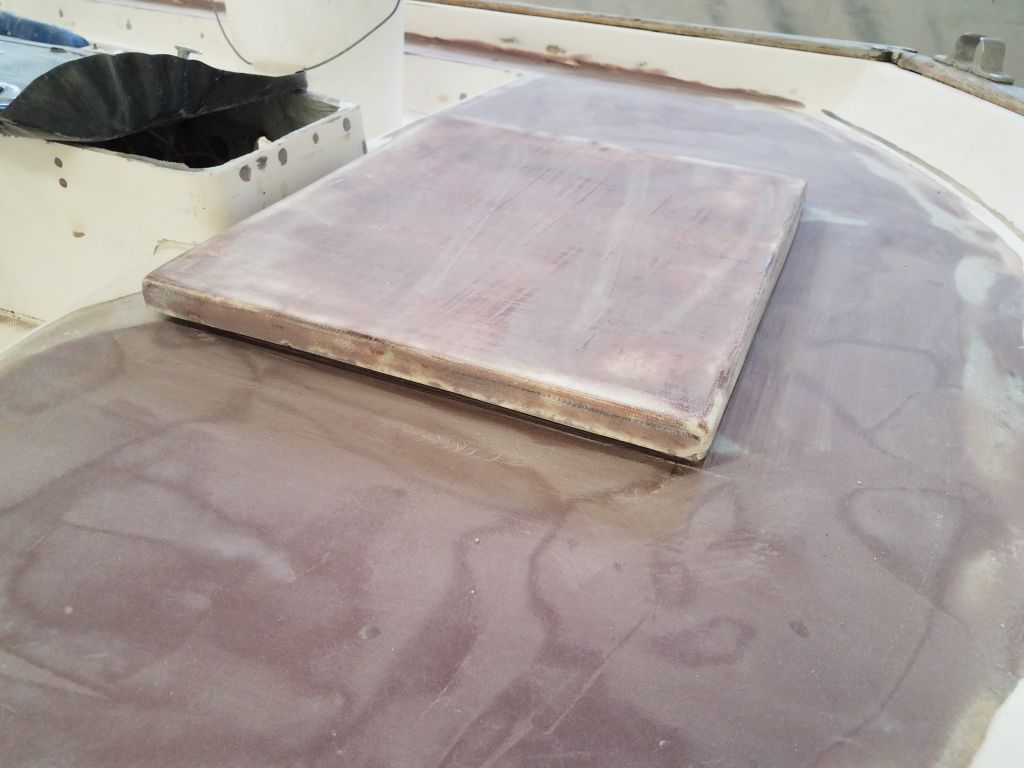
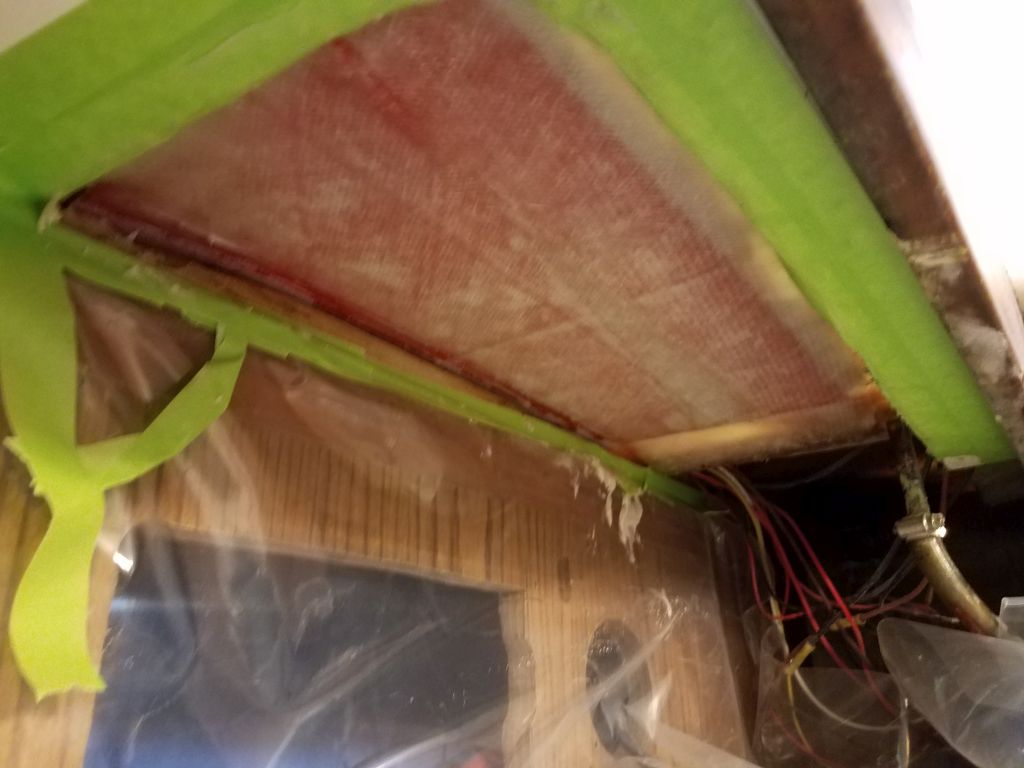
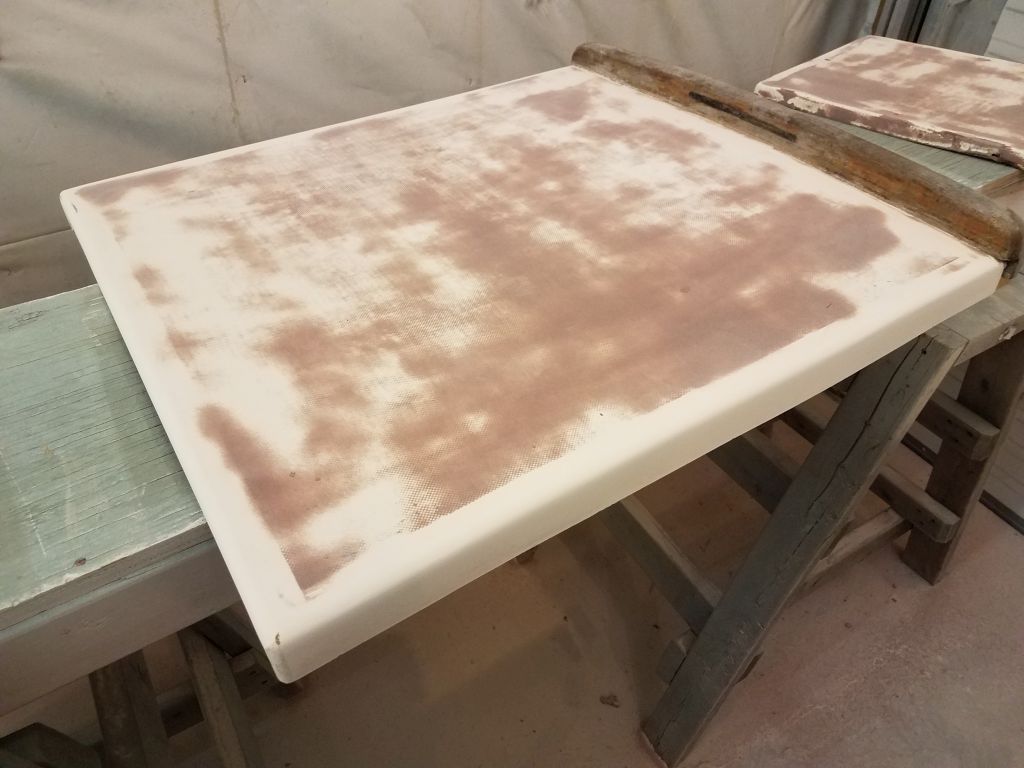
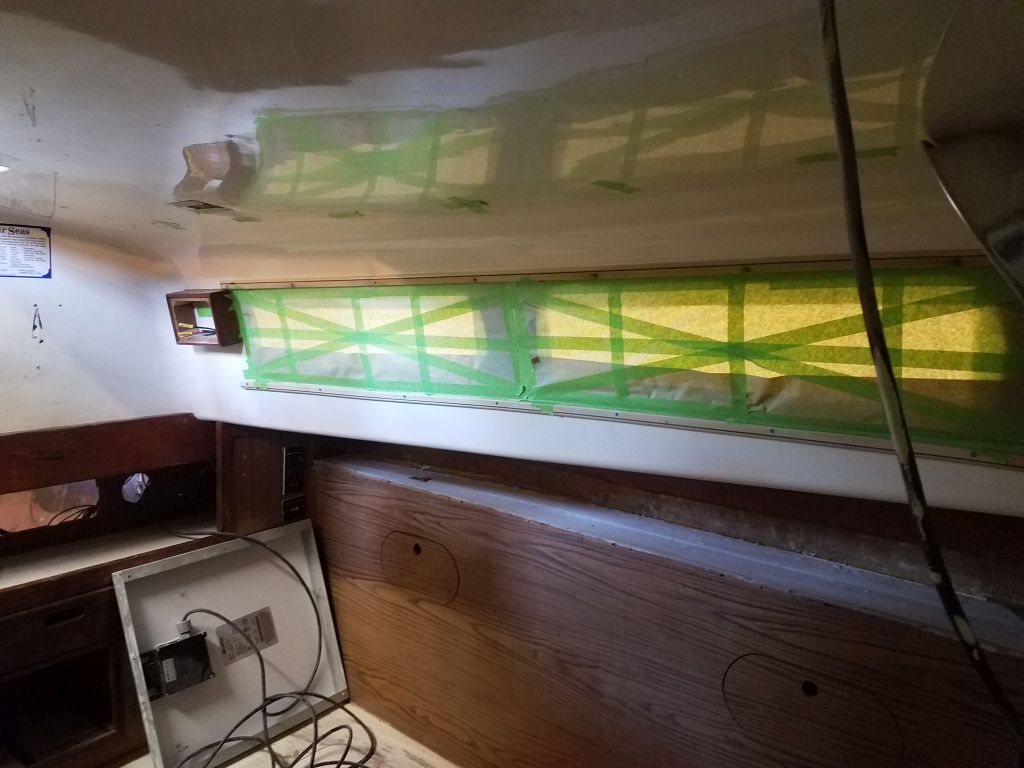
To begin, I sanded the new fiberglass over the icebox hatch in the cockpit and the main mast step, bringing the edges flush as needed and lightly scuffing the remainder of the patches to prepare for additional work ahead.  I removed wedges and tape from the underside of the icebox hatch and also lightly sanded these areas as needed, as I’d have to come back later and fiberglass from beneath as well.

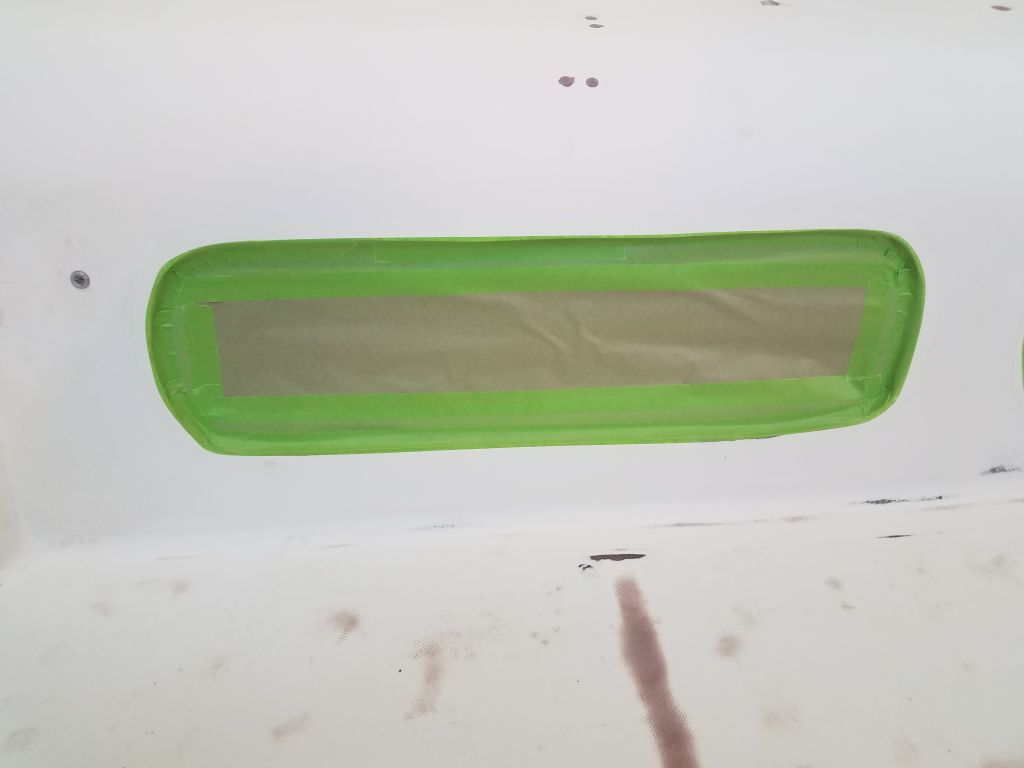
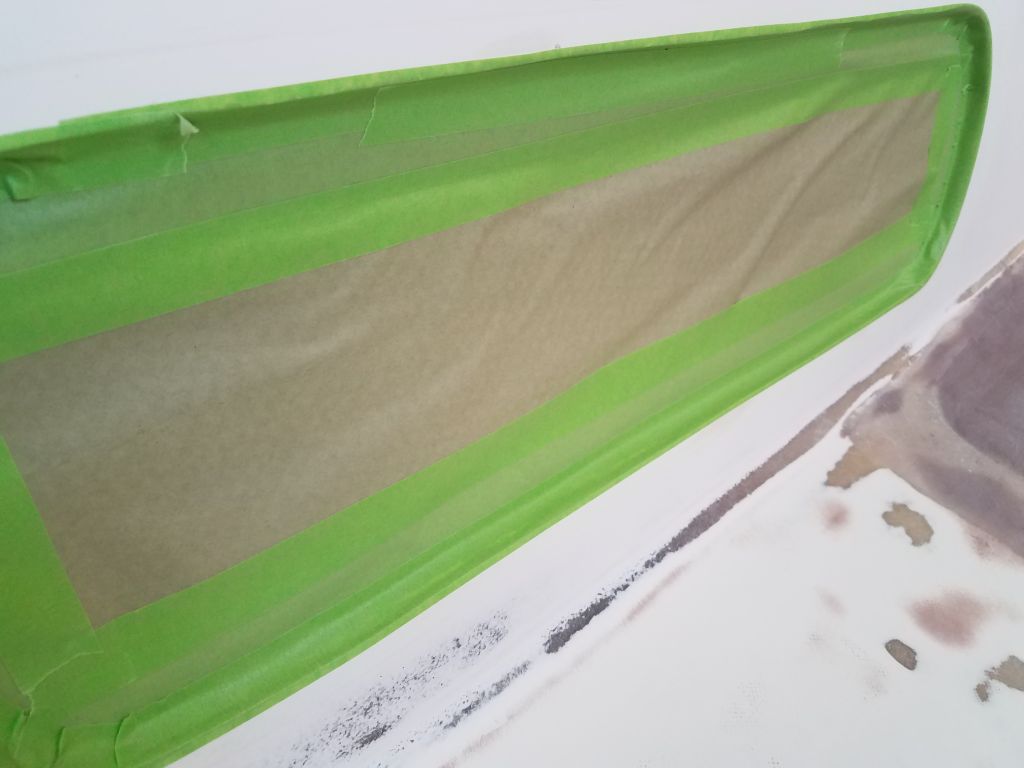
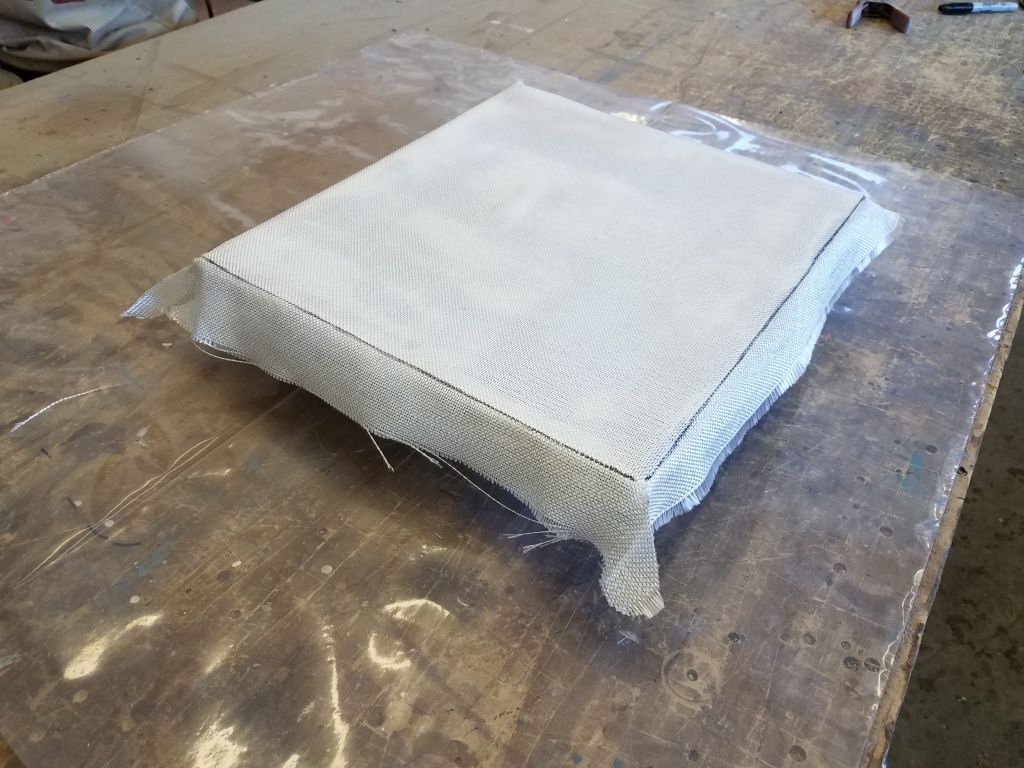
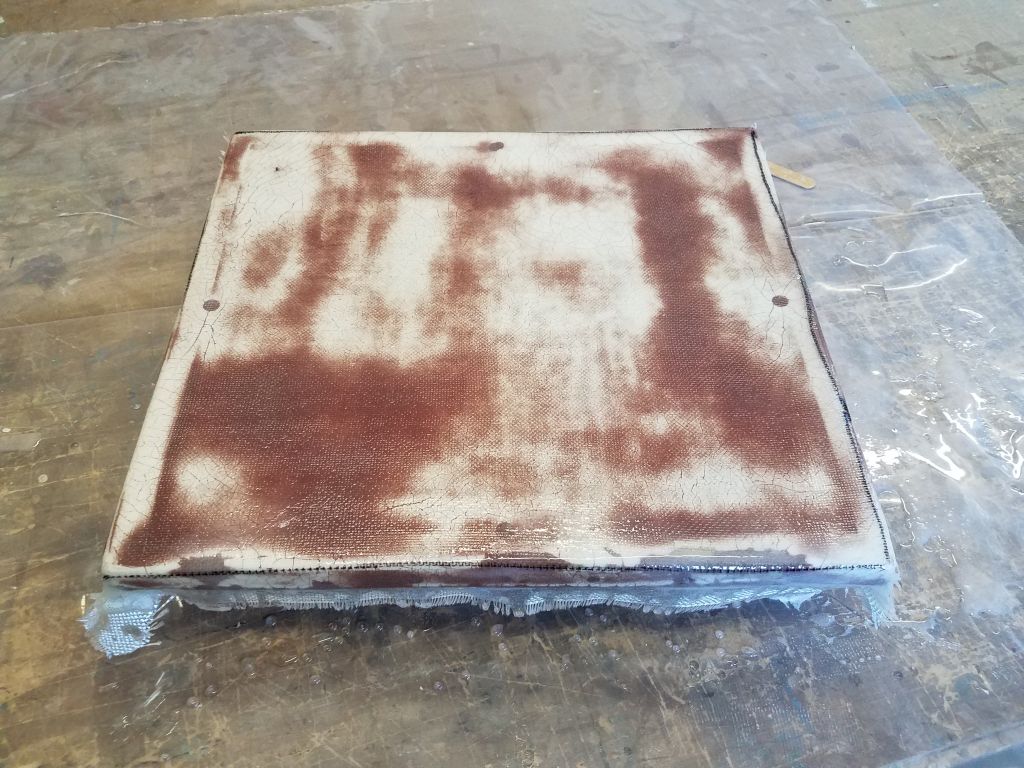
Meanwhile, I cut, wet out, and applied three additional layers of fiberglass to fill the center of the ice hatch from above, bringing the center nearly level with the adjacent decks.

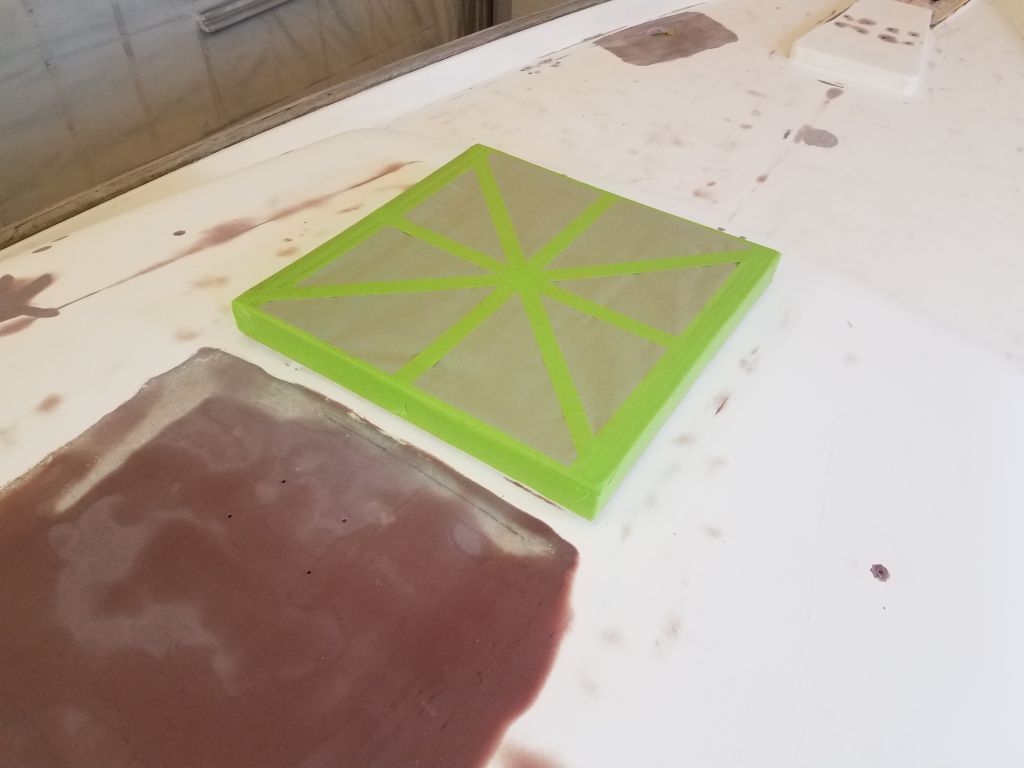
After some additional cleanup and solvent wash, I applied a first round of epoxy fairing compound to the new deck repairs in all areas, skim-coating to fill the weave of the cloth and beginning to fair out any low areas.

Total time billed on this job today:  3.25 hours

0600 Weather Observation:  Clear, -12°.  Forecast for the day:  Sunny, 3°

Jasmine 17

< Back to Jasmine

Wednesday

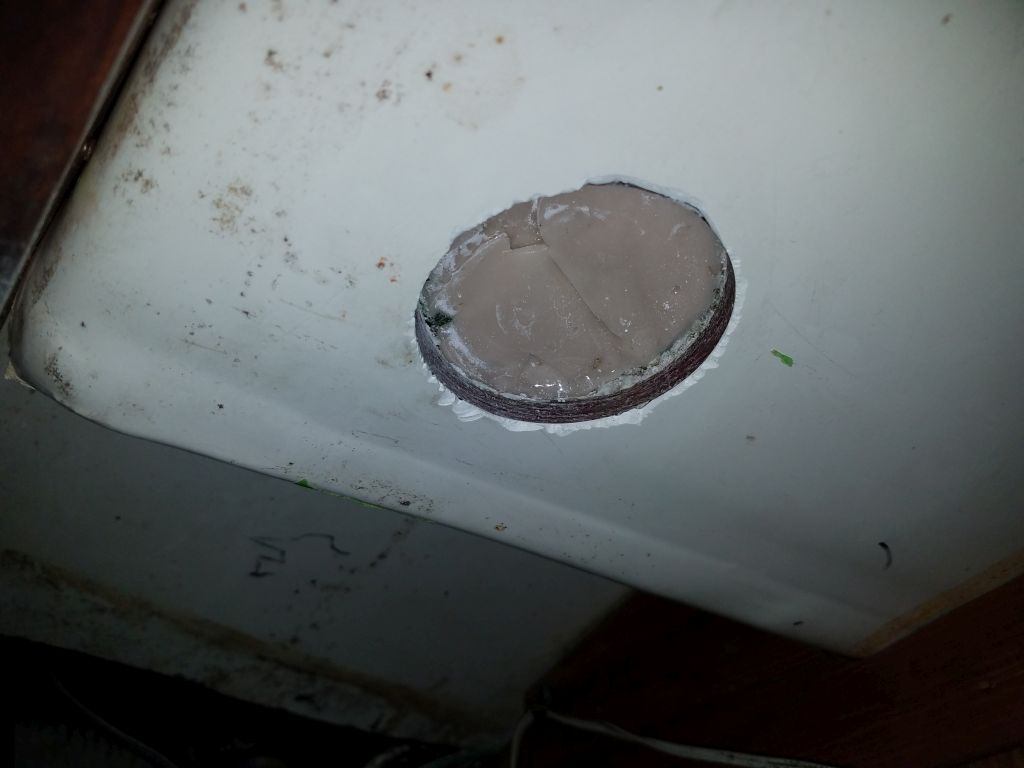
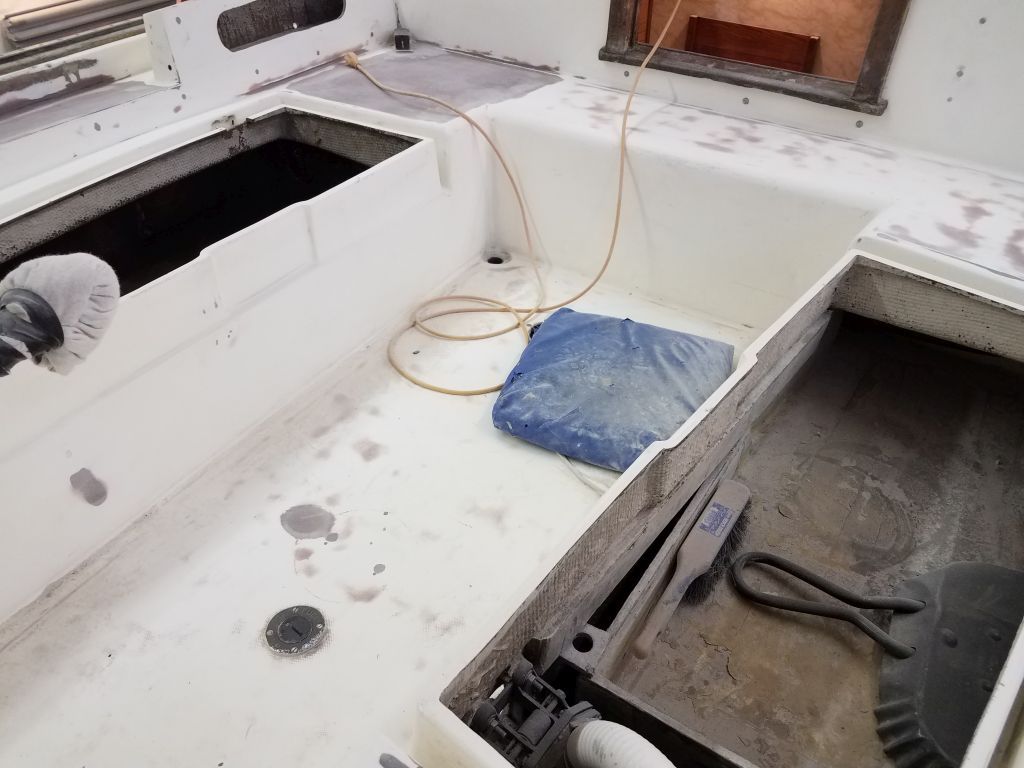
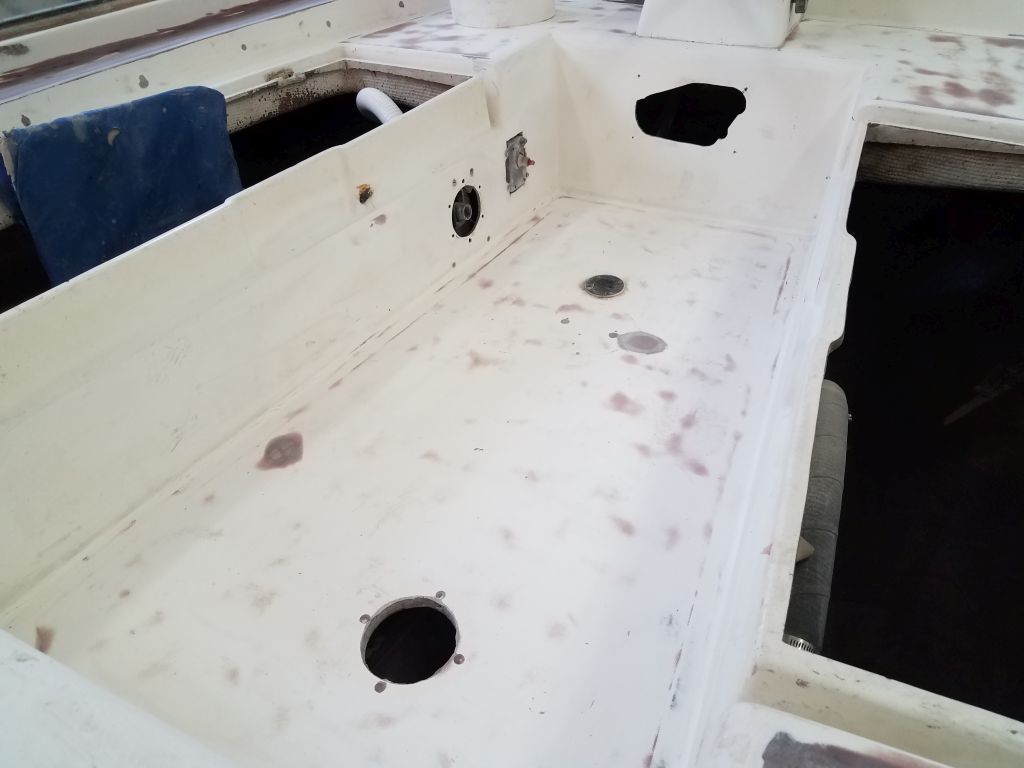
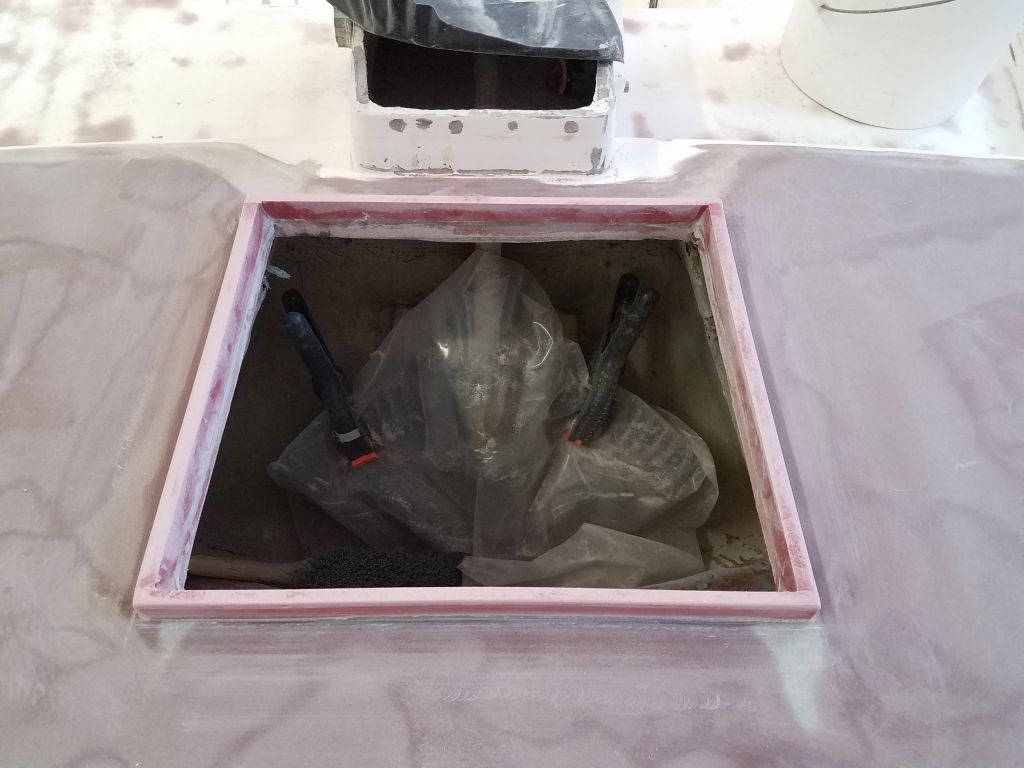
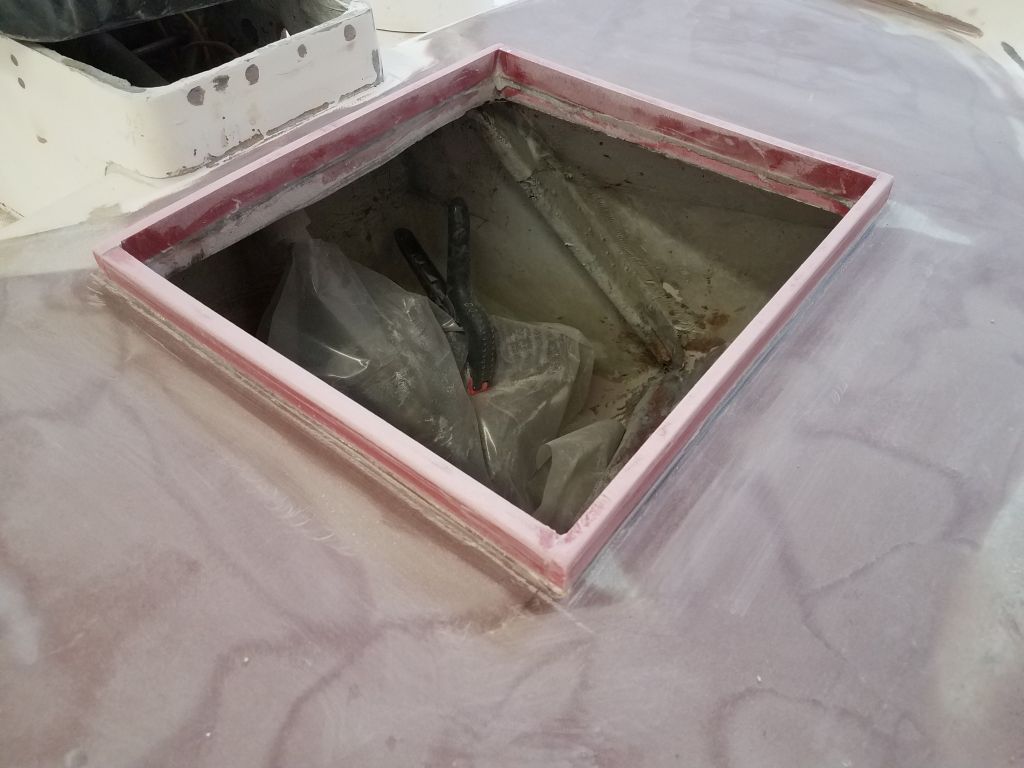
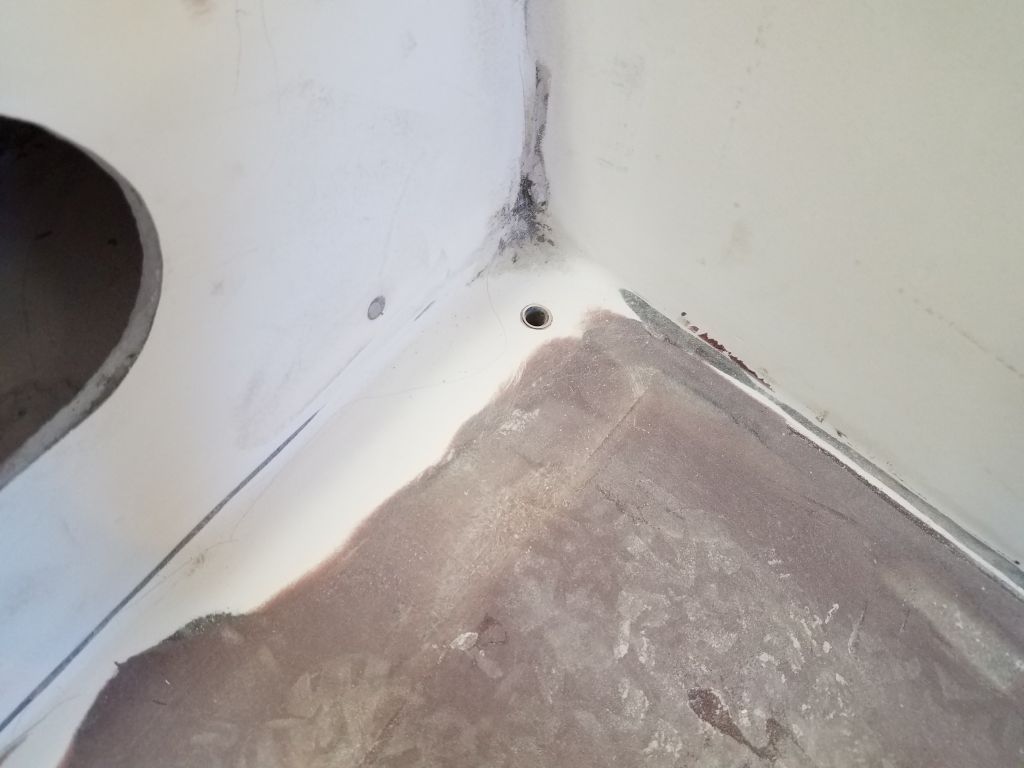
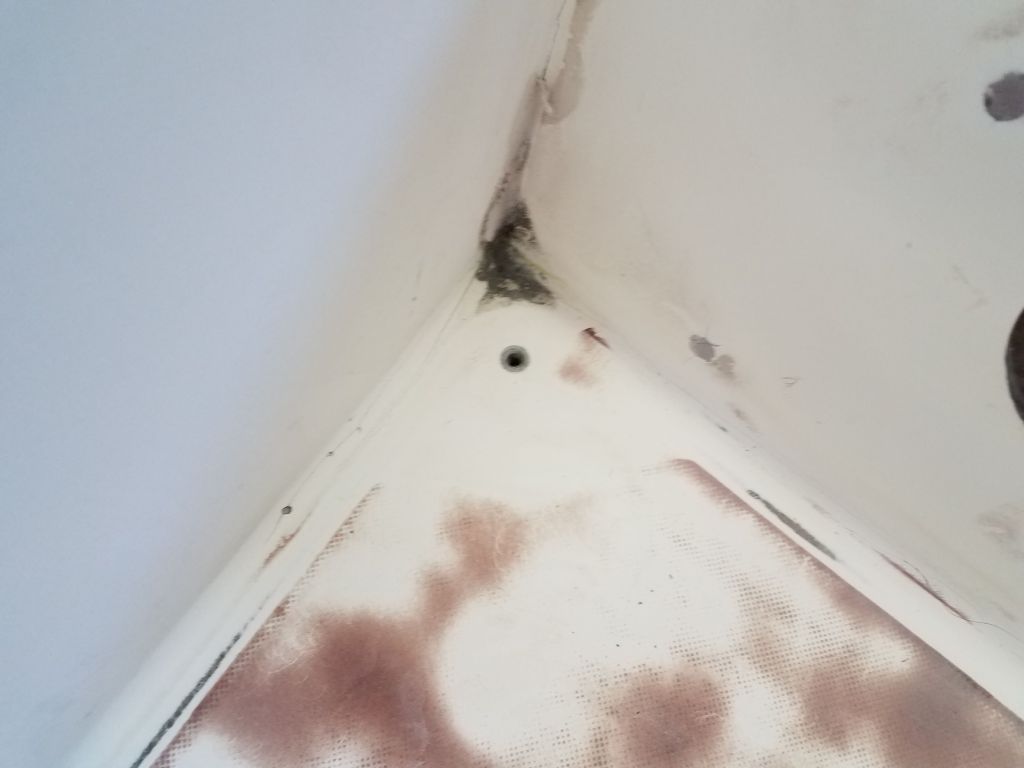
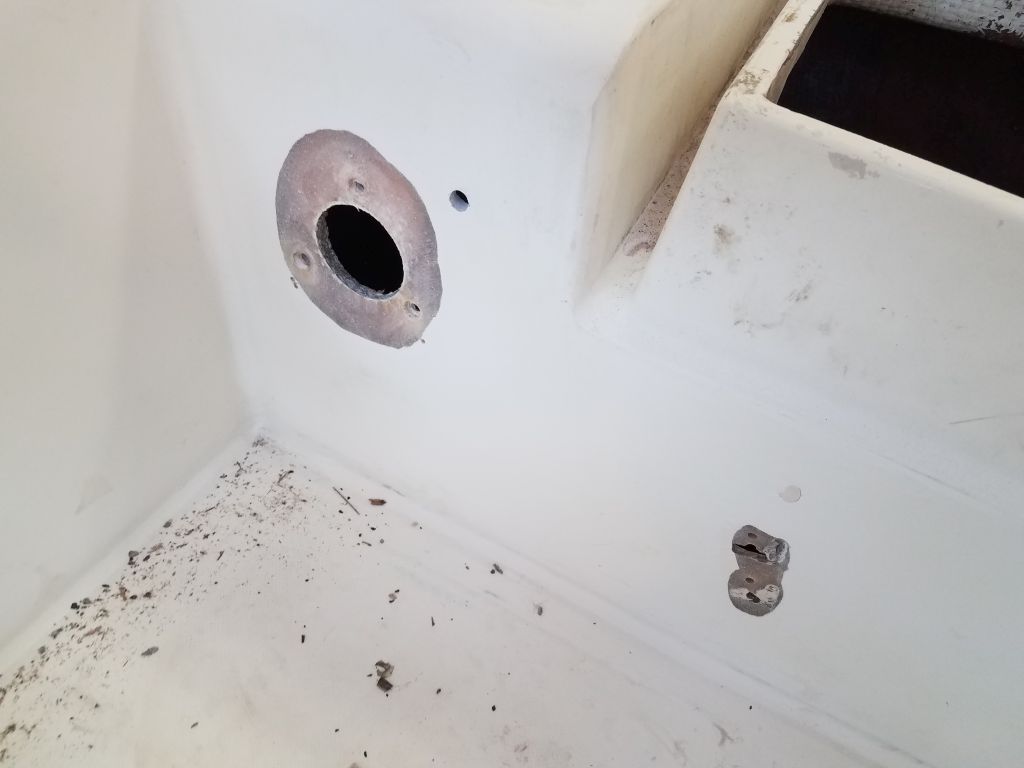
Next on my agenda was the old icebox hatch in the port forward corner of the cockpit.  Earlier, I’d removed a molded collar and the center portion of the opening, leaving a raw hole through the deck that required patching and reinforcement.

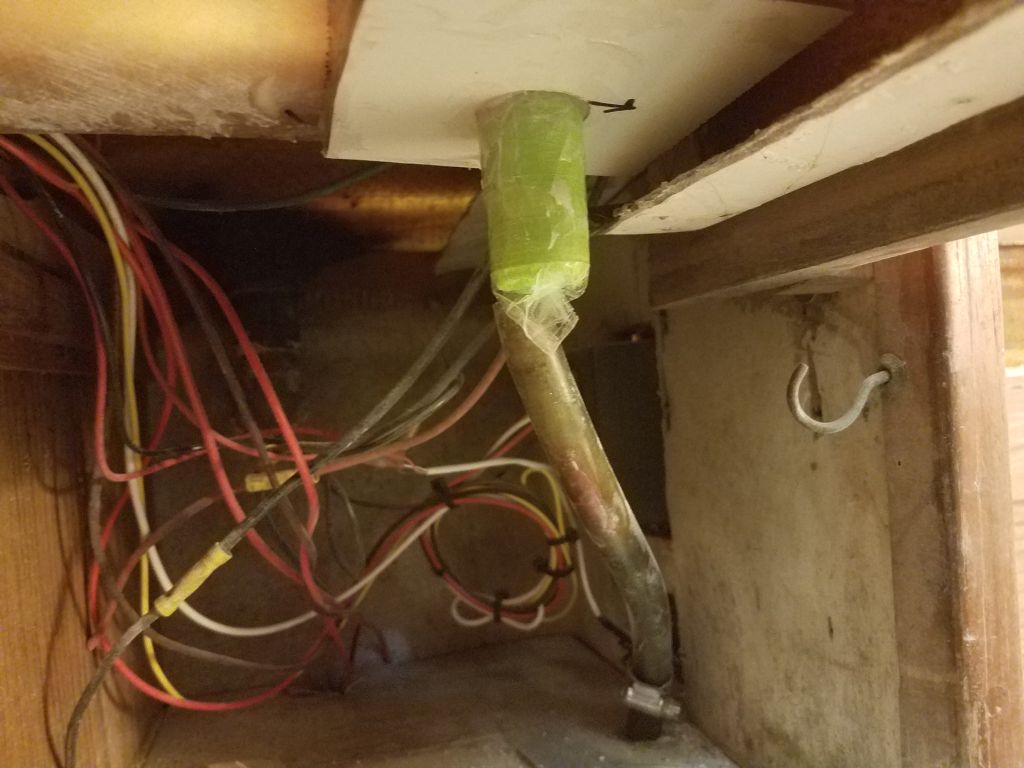
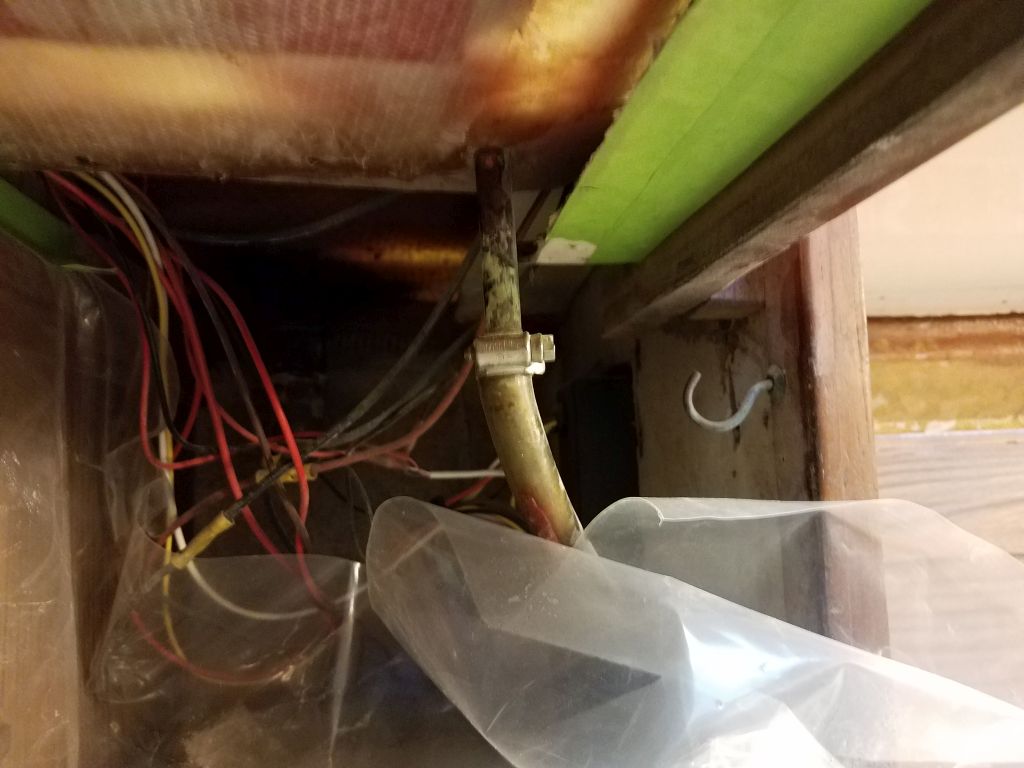
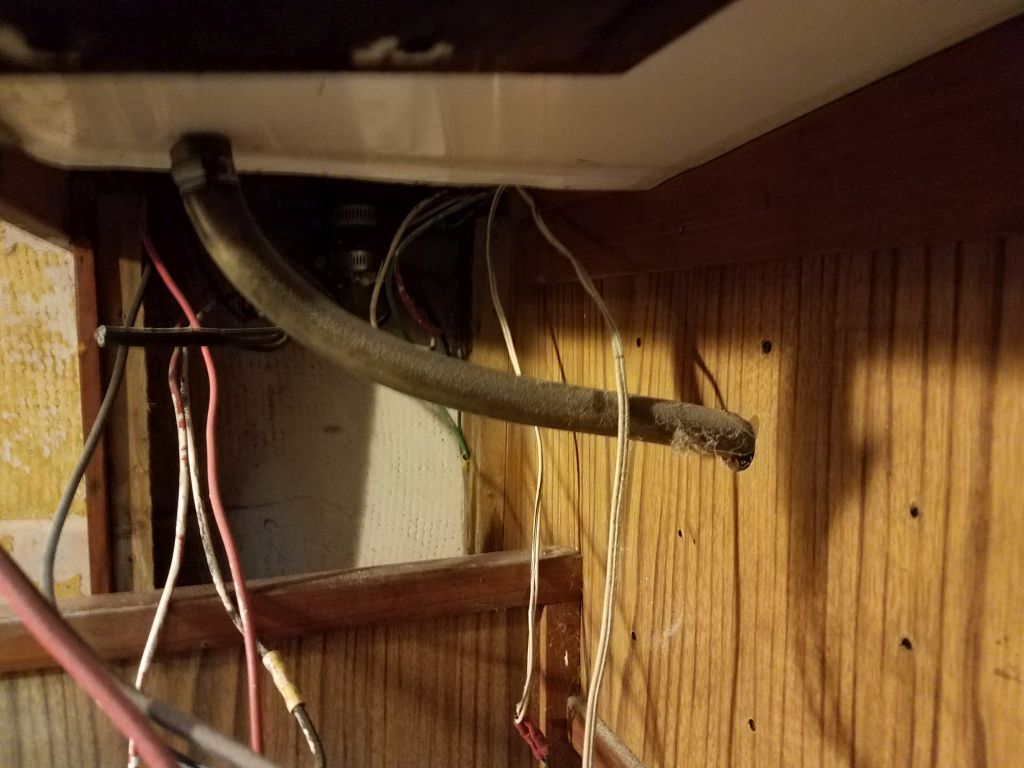
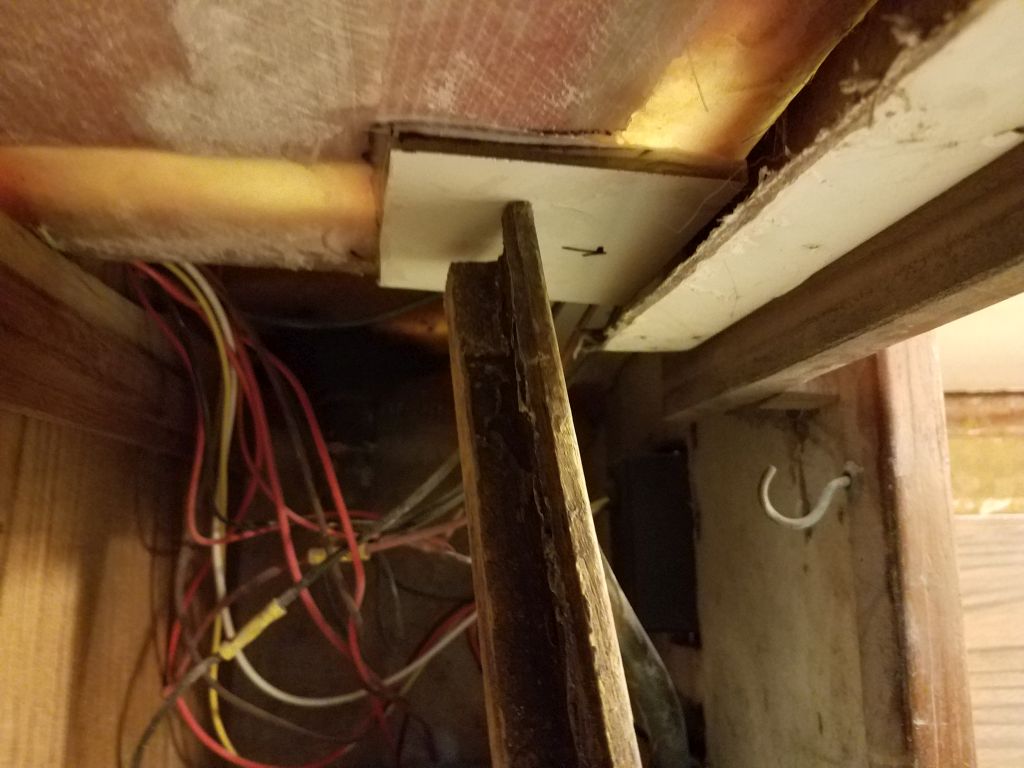
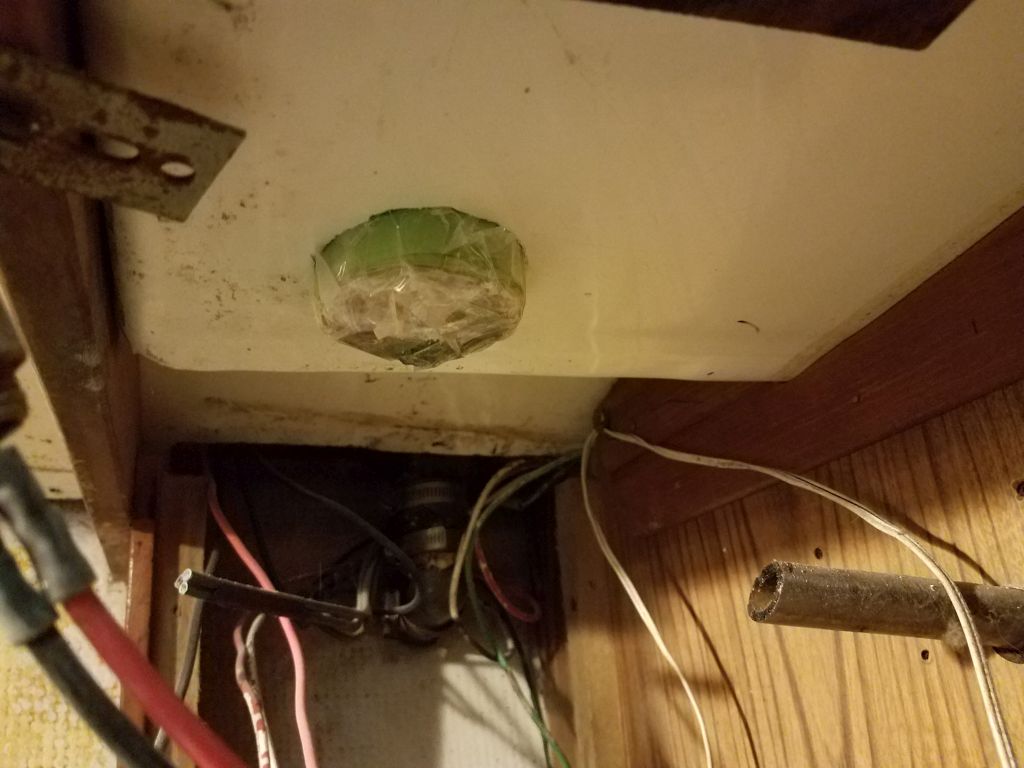
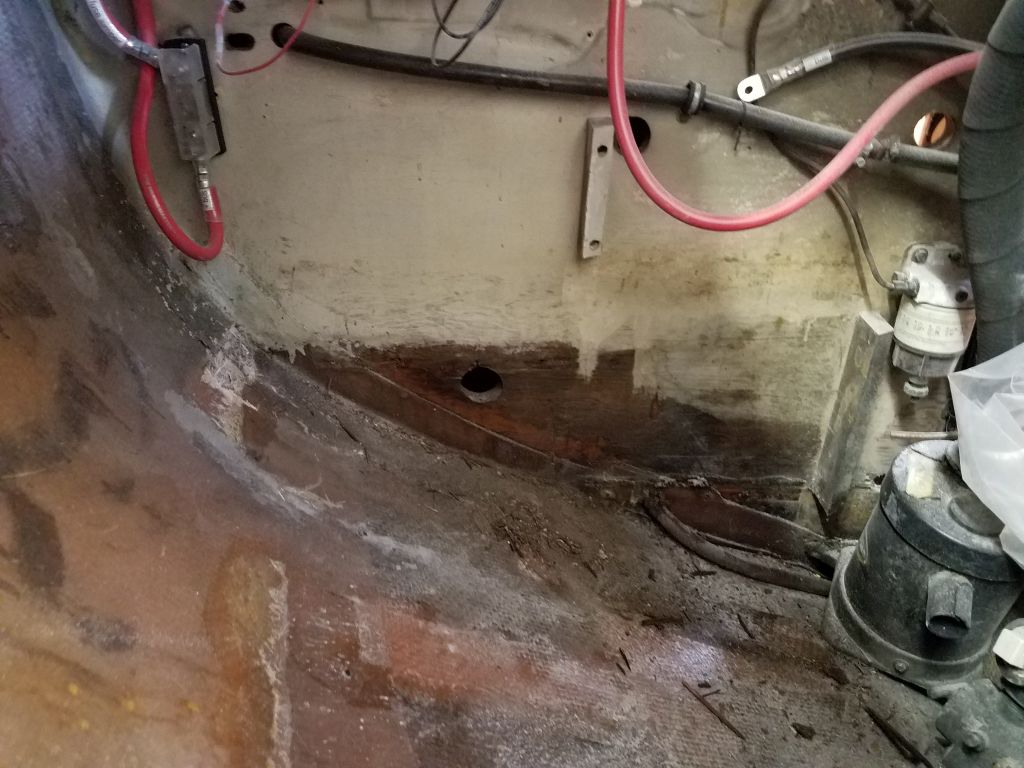
Before getting into the rebuilding in earnest, I turned to the rudimentary electrical system located just below the hatch, consisting of a pair of battery boxes and some simple wiring that the owner had installed earlier in the year.  Some of the cabling ran through wire mounts near the deck, on the old tabbing that had once connected to the ice hatch blank above.

Additional work on the electrical system and battery storage area was part of the scope of this project, part of the upcoming list that I’d get to soon enough once I finished up most of the deck work and surface prep, but for now I wanted to clear the area to allow best access for the repairs above.  Since the old half-attached tabbing on the bulkhead was in the way of my planned repair, and wasn’t worth salvage regardless, I removed the wires from the clamps in that area, freeing me to remove the tabbing itself with a chisel and just a little bit of elbow grease.  I removed the batteries and some of their cabling, storing the batteries elsewhere for safekeeping; the battery platforms would require partial rebuilding, as well as expansion, according to my work list from the owner, so they needed to come out in any case:  the upper area, at least, showed signs of significant damage to the plywood, with some crushing and breakage.

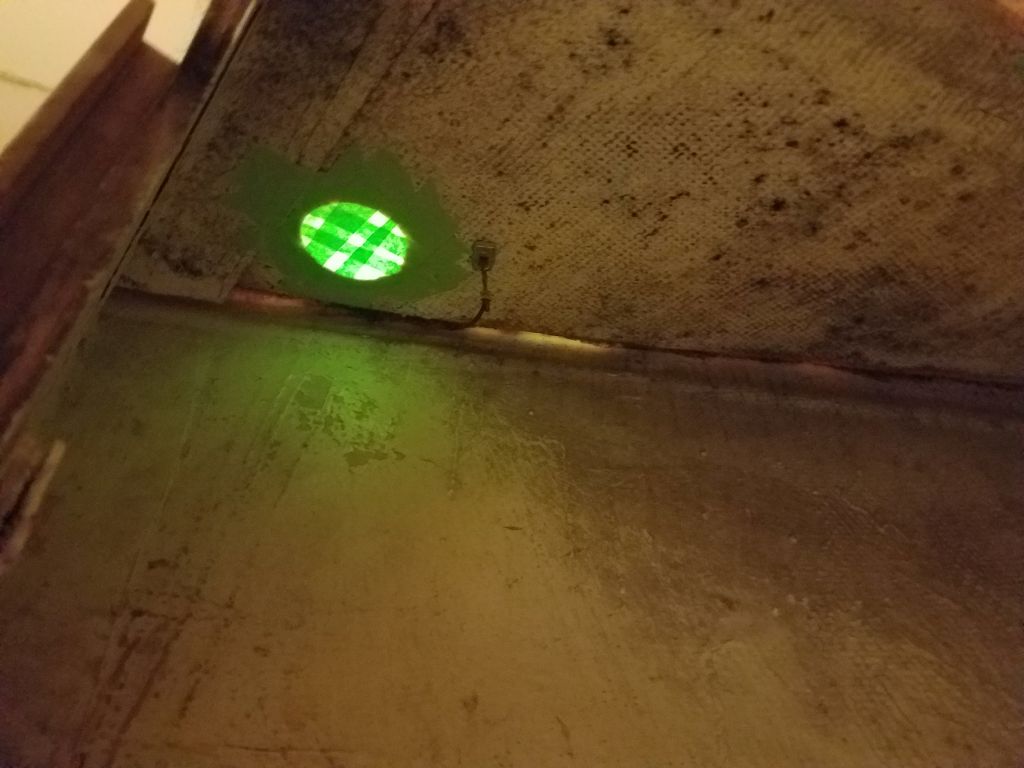
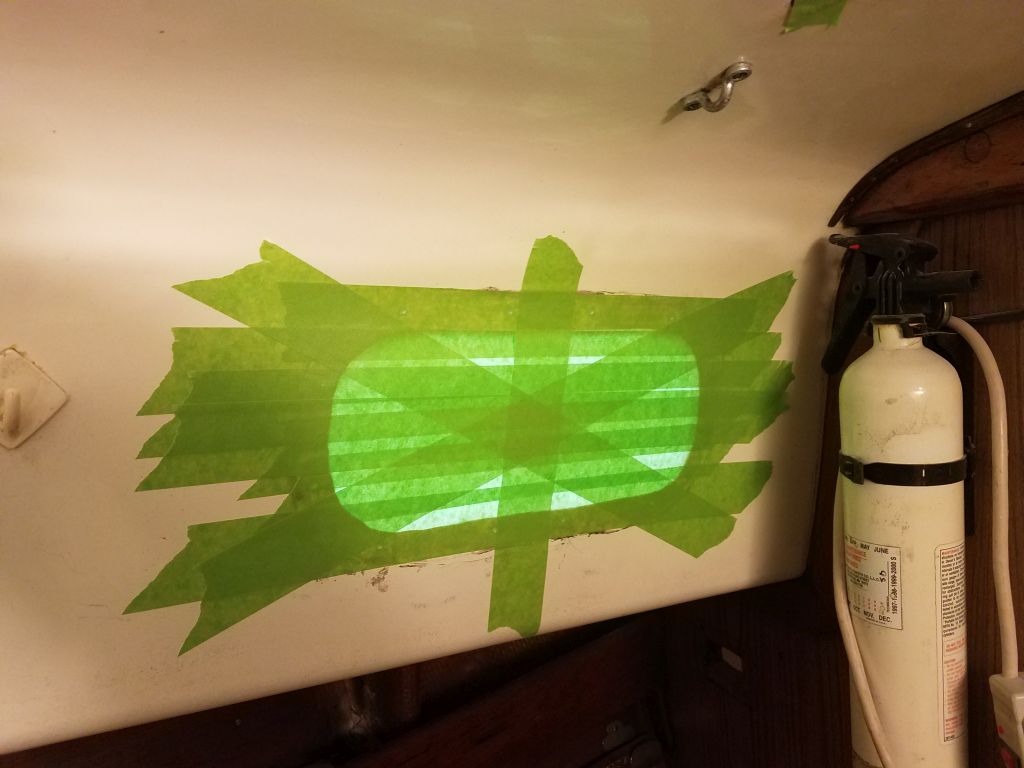
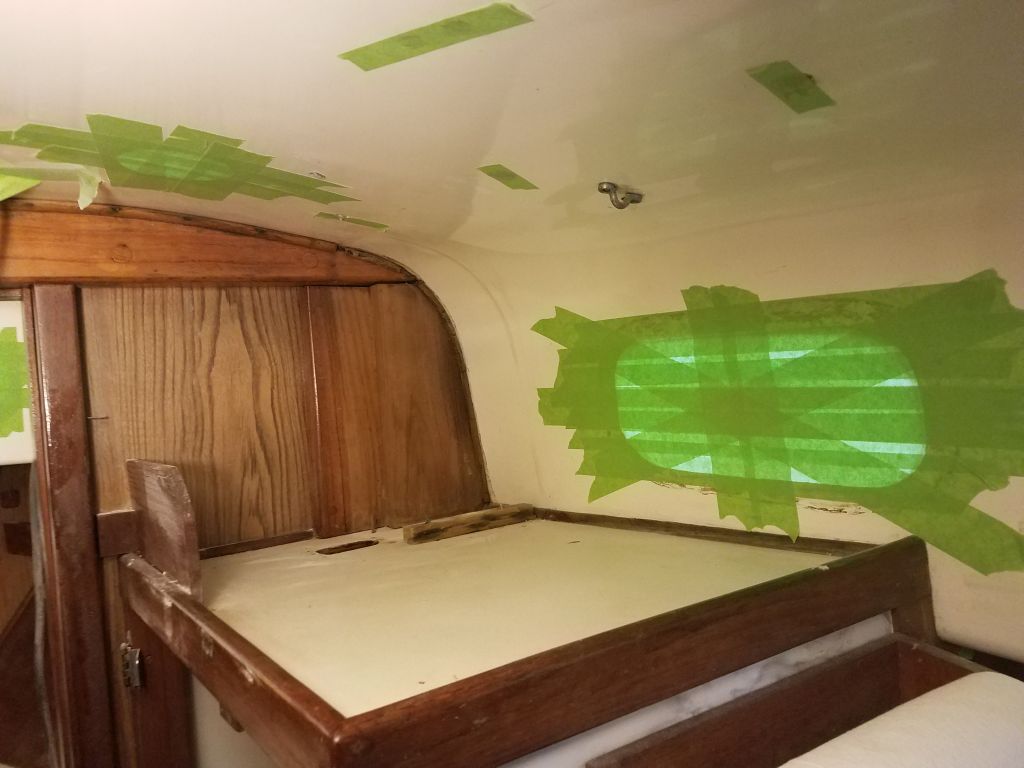
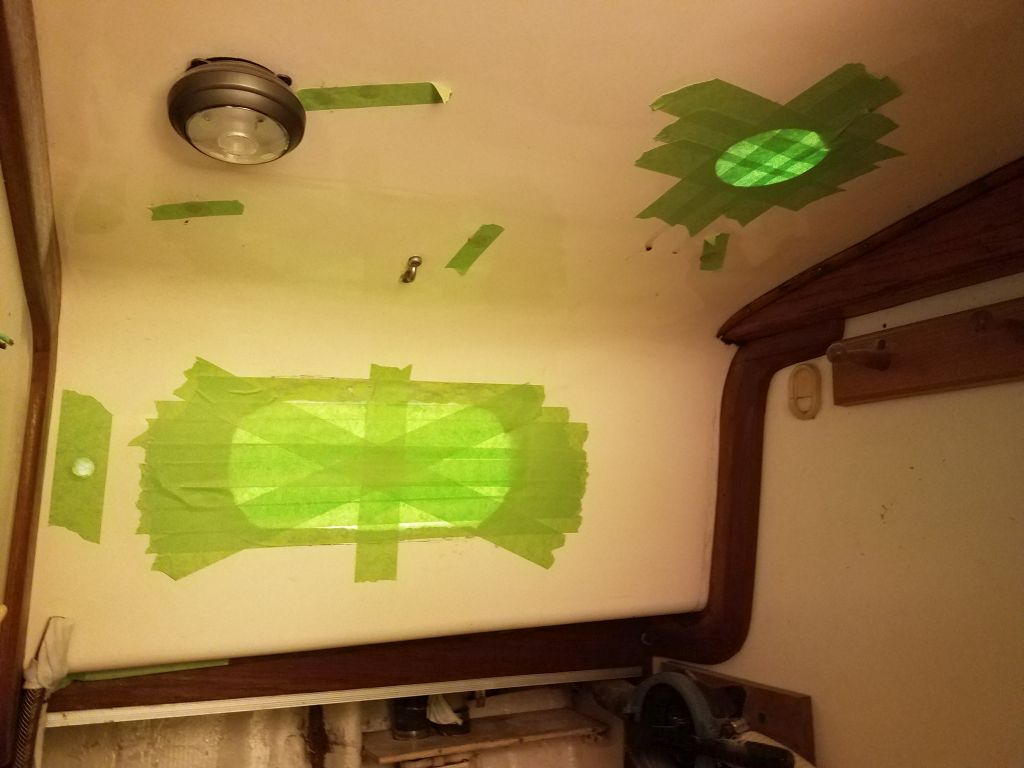
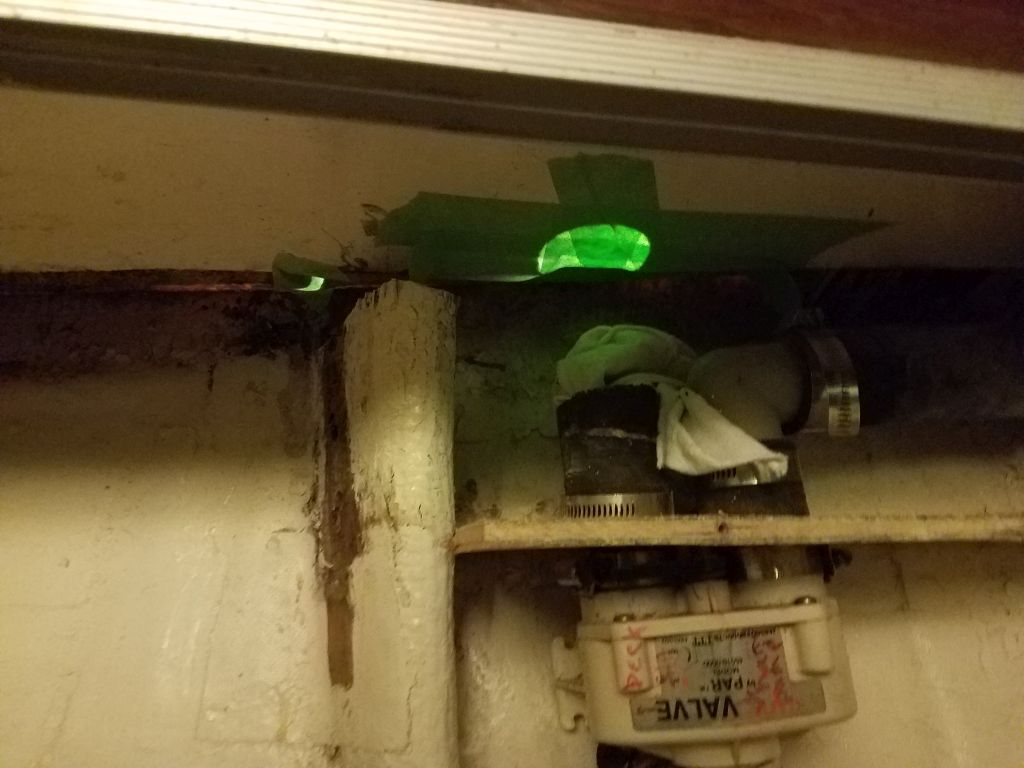
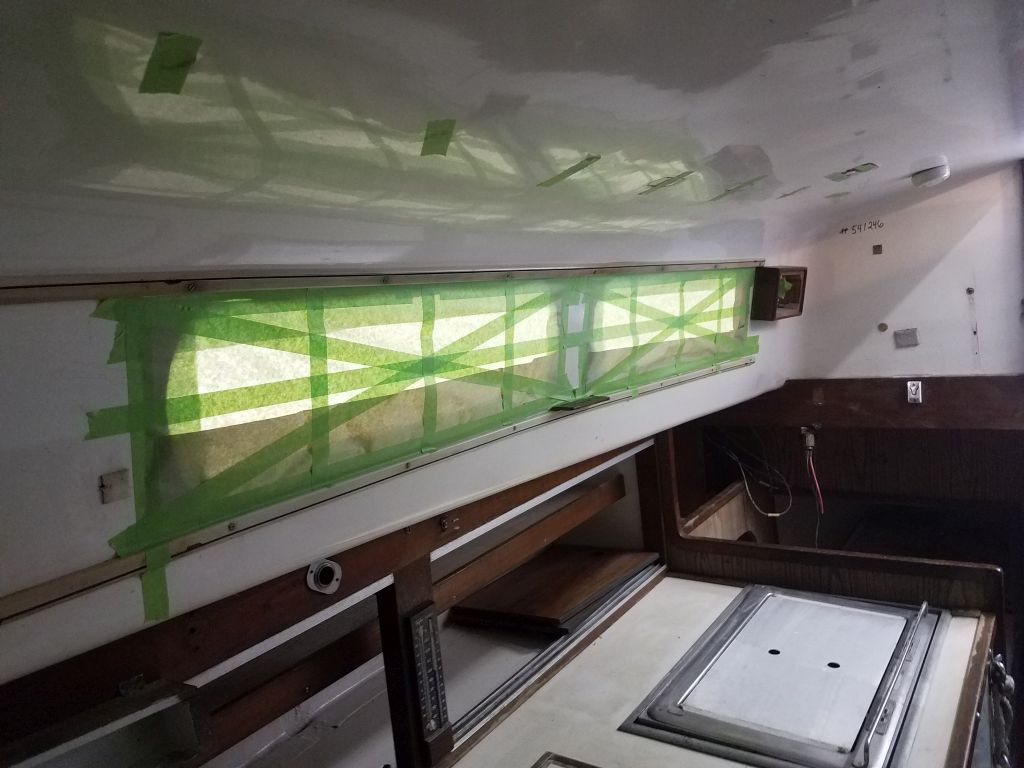
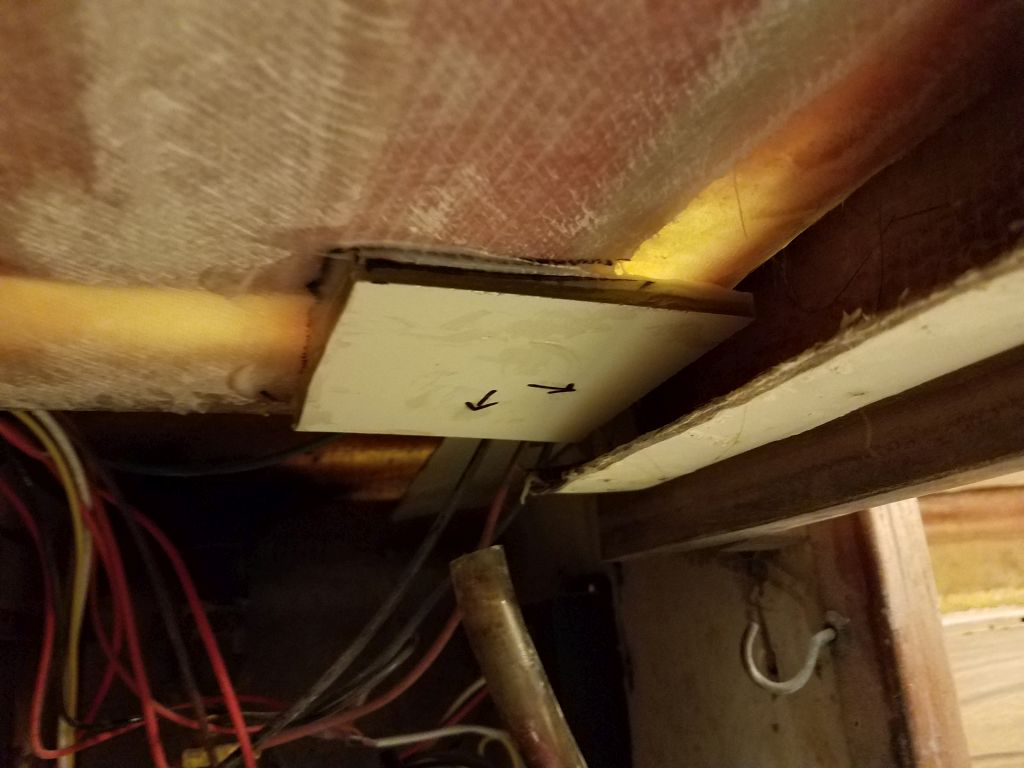
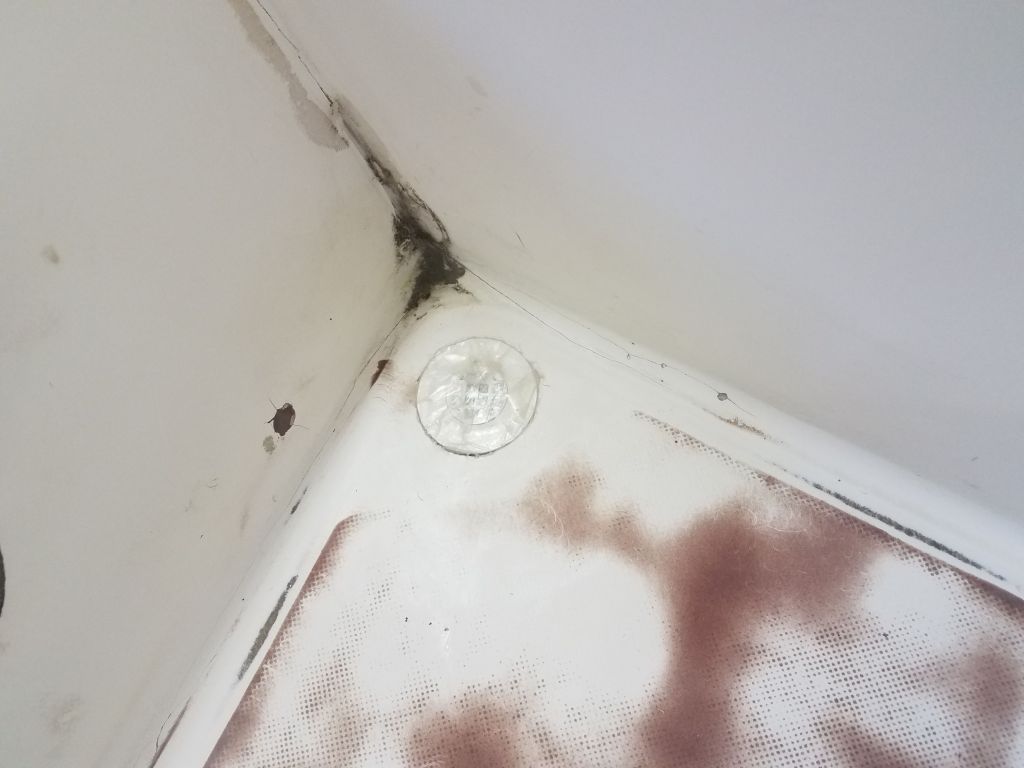
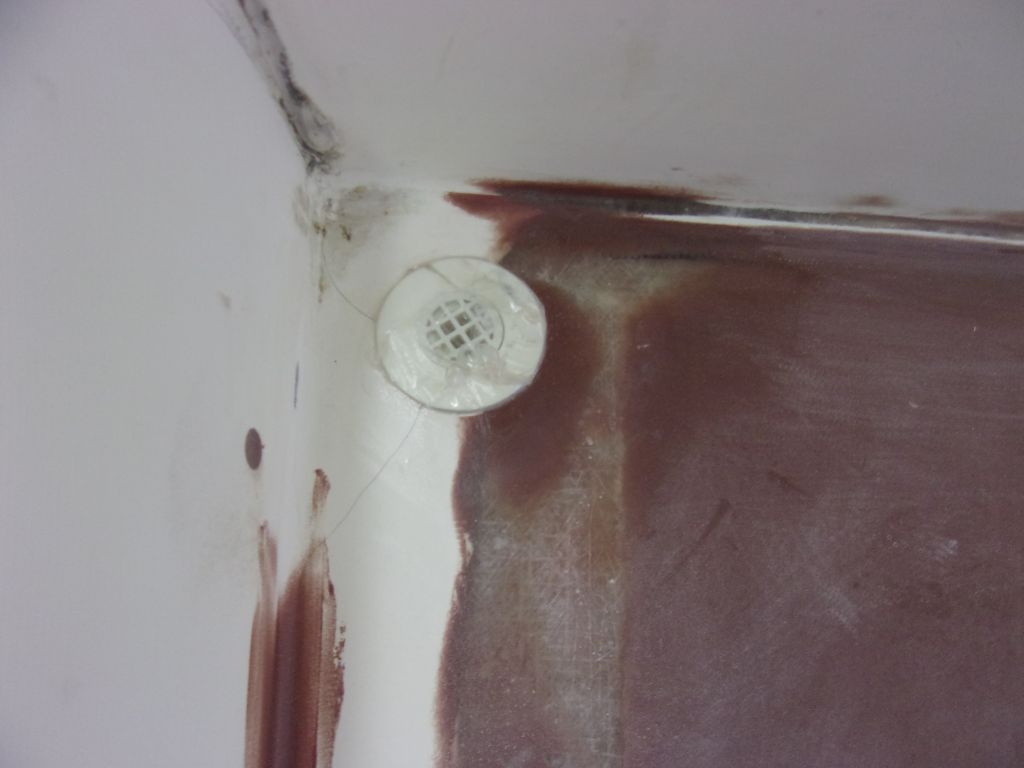
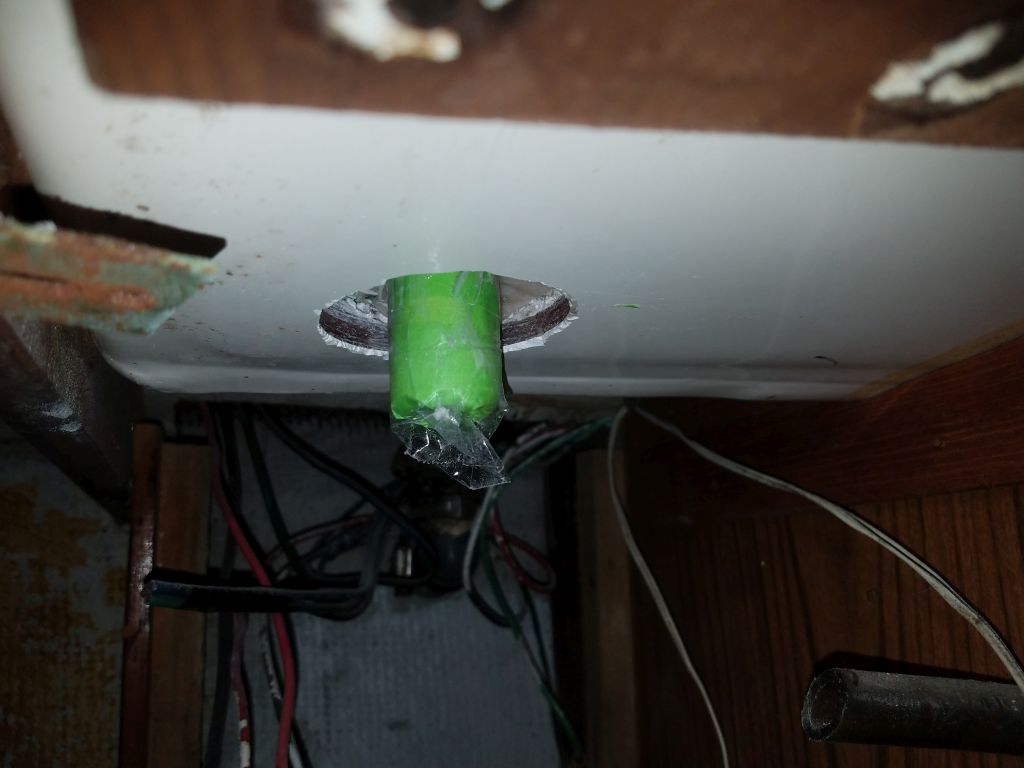
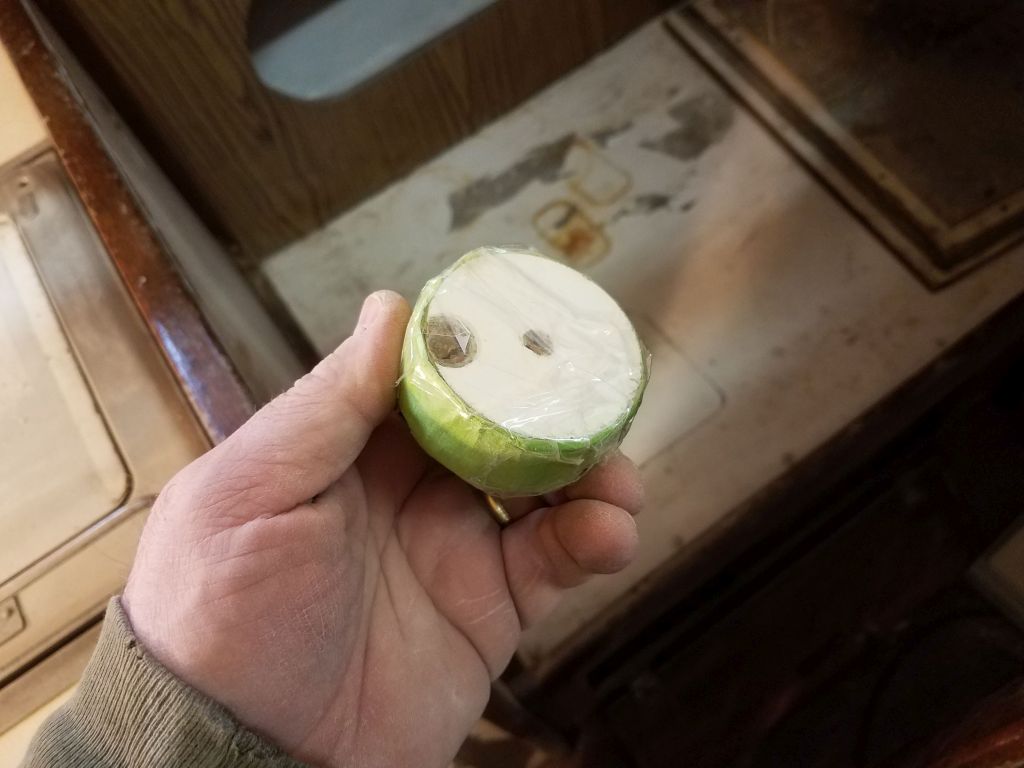
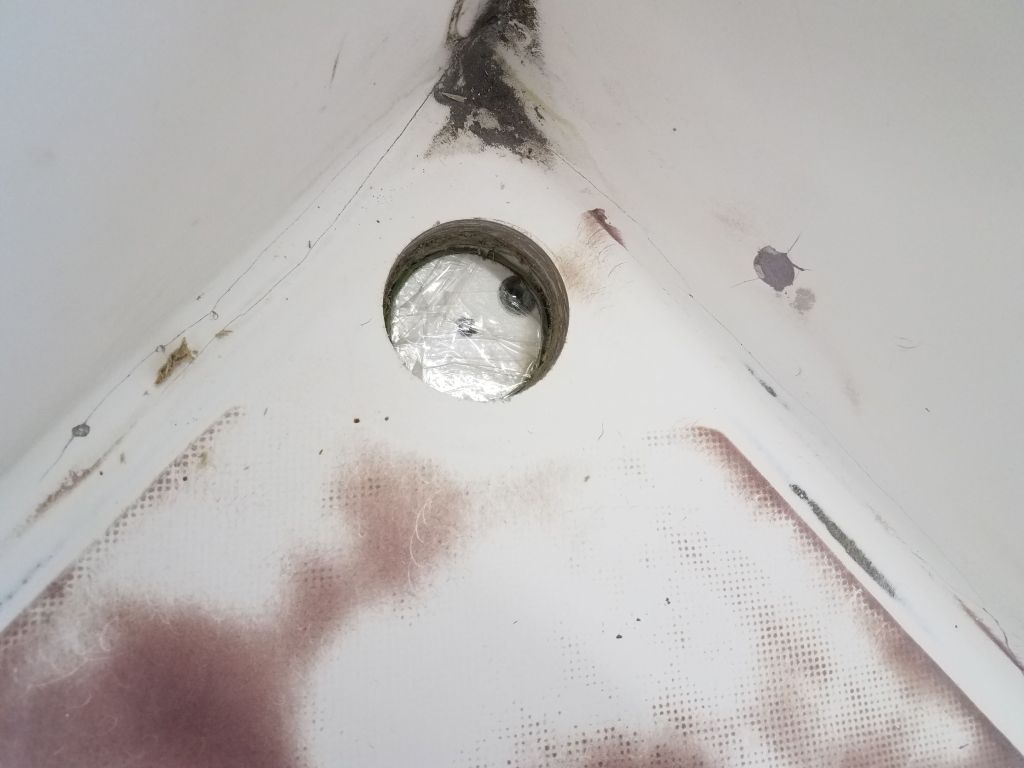
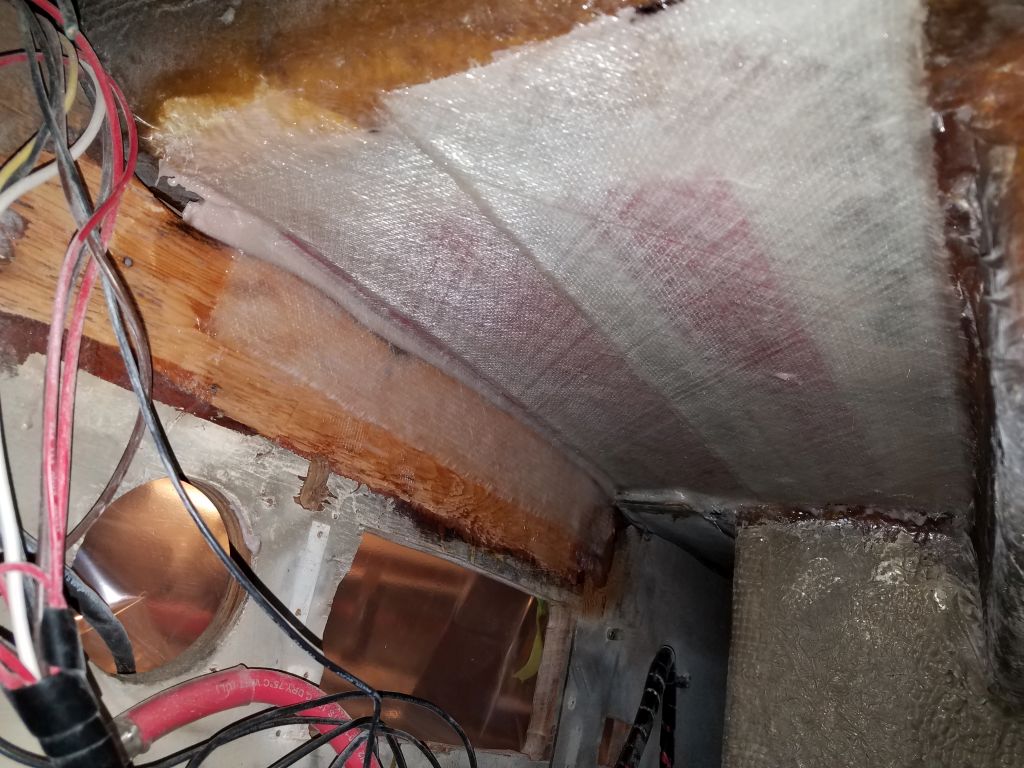
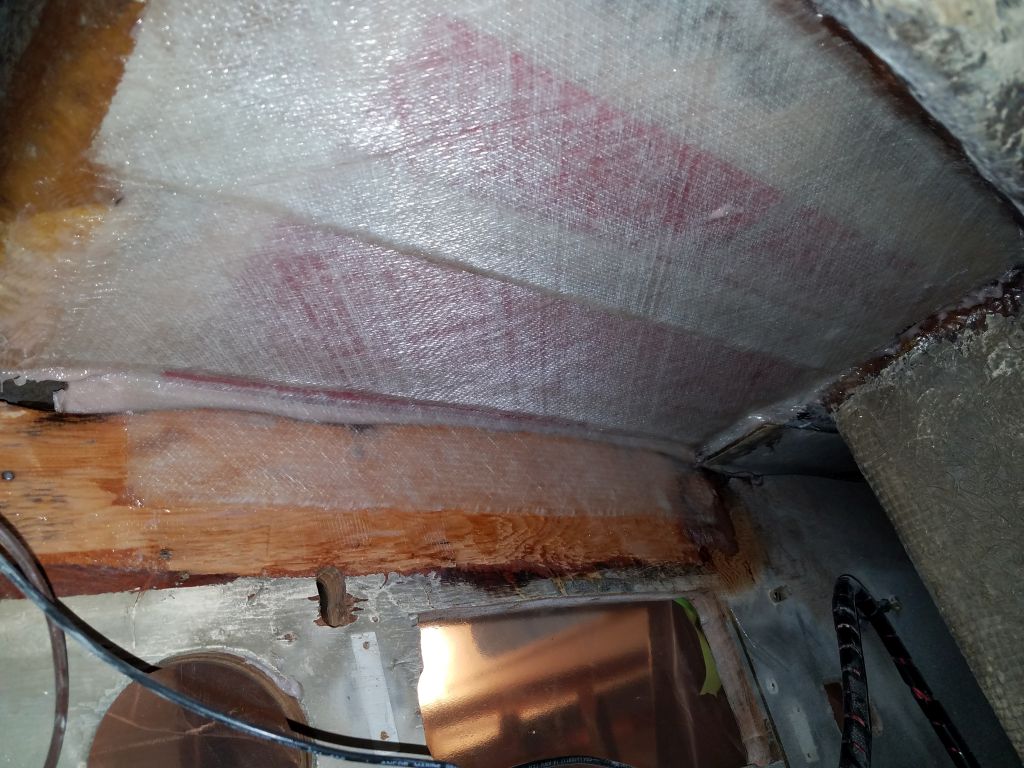
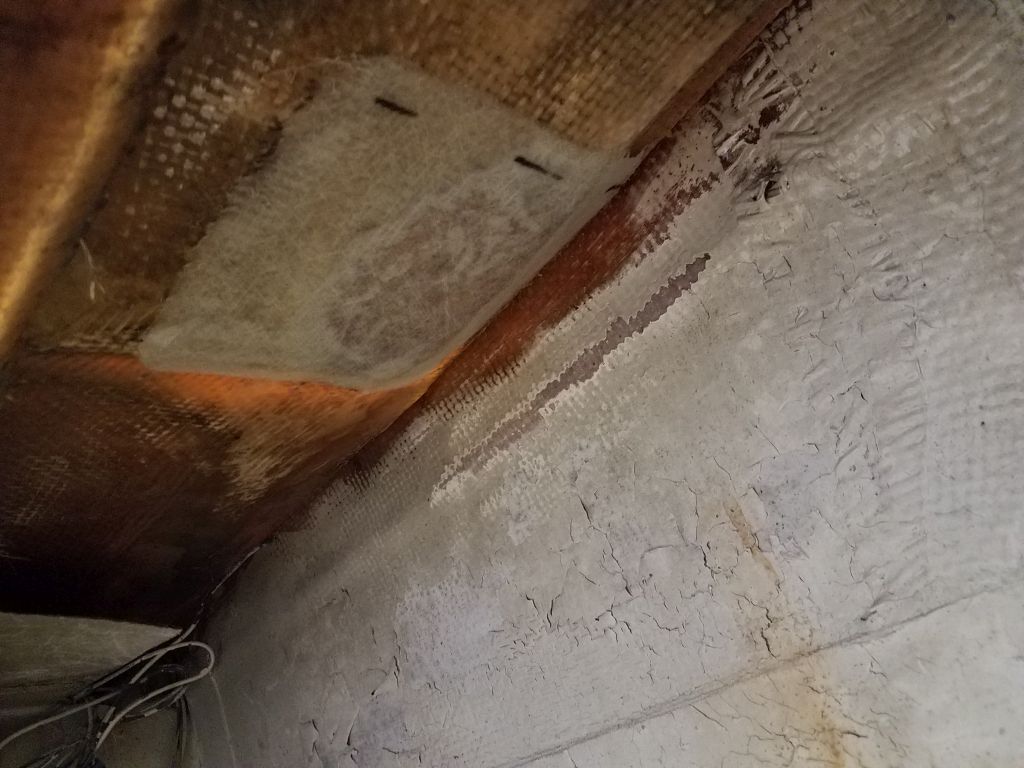
After some final surface prep to the underside of the laminate adjoining the icebox hole, as well as to the bulkhead where the old tabbing had been secured, I covered the opening from beneath with a prefabricated sheet of 1/8″ fiberglass, securing it with wedges and tape from beneath.  This laminate would serve as a permanent mold for the new work, allowing me to laminate strongly over the top as well as tab securely from beneath to seal and strengthen the old opening.

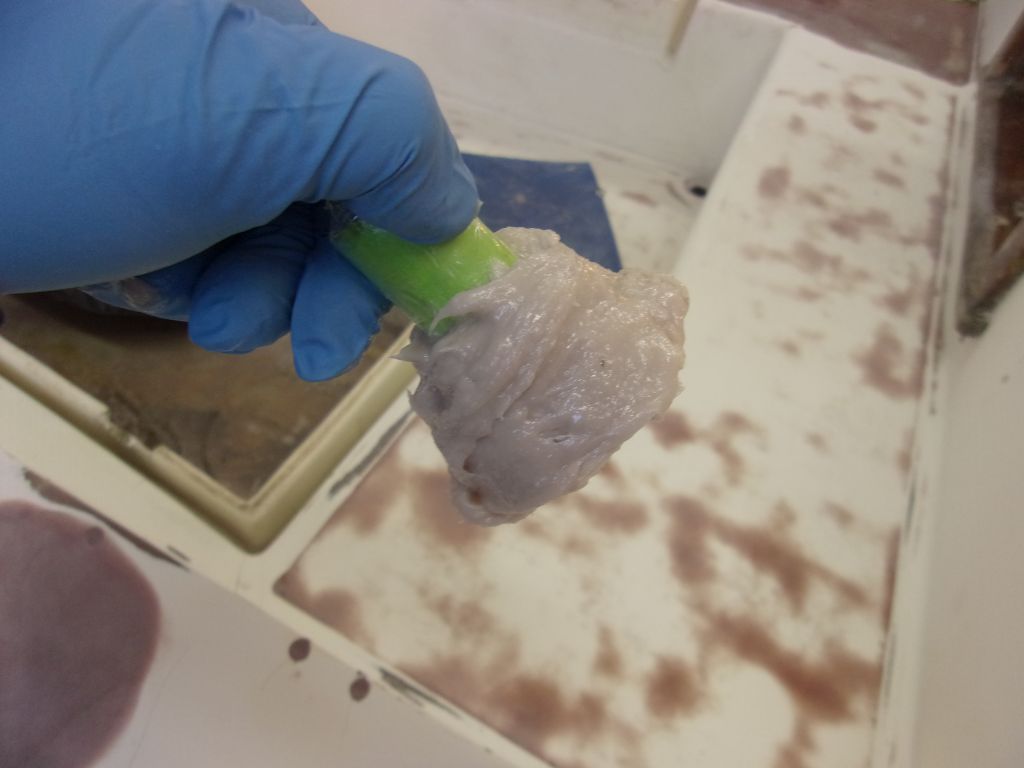
To secure this for now and also to allow a smooth transition between the fiberglass sheet and the surrounding deck areas,  I filled the gaps around the edges with a strengthened and thickened epoxy mixture, forcing the adhesive into the gaps and creating a wide fillet on all sides.  I left this to partially cure for the moment while I prepared a couple layers of fiberglass for the area and worked on a couple other related projects.

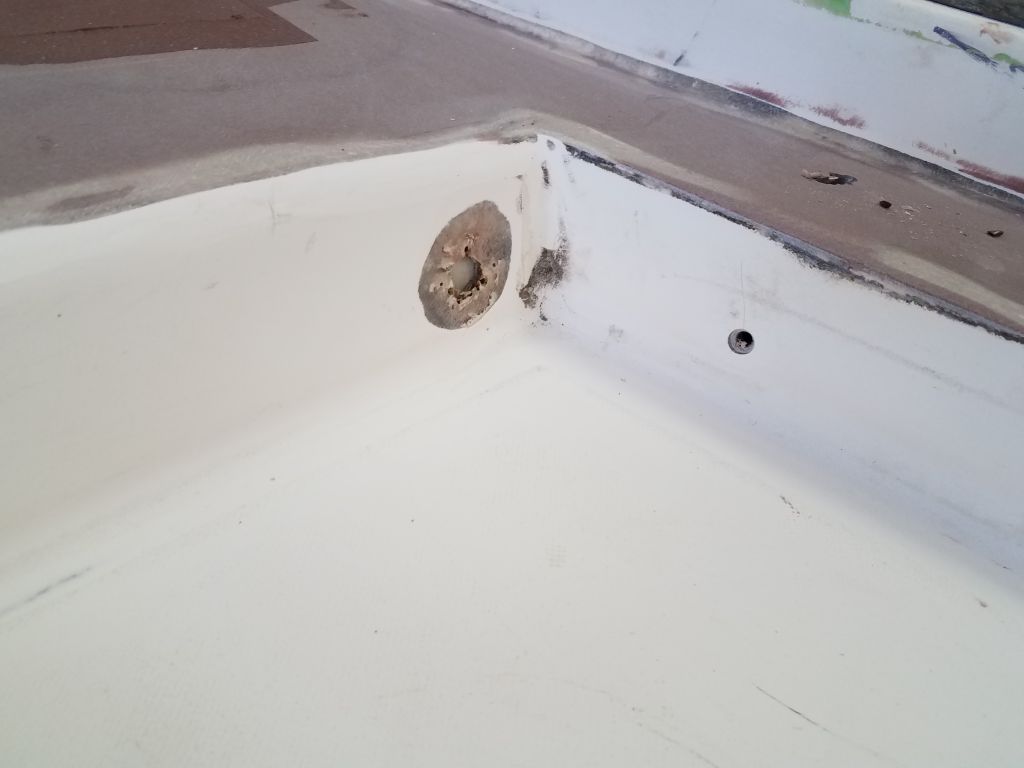
Meanwhile, I got back to work on the main mast step.  My earlier laminates had nearly filled the void left by core removal, but since the inner skin was a bit inconsistent in its shape and depth, the forward side, particularly to starboard, was a bit lower than the port and after sides.  So to start, I installed three additional layers of fiberglass over the lowest area, bringing this section nearly level with the surrounding deck and the other areas of the patch,  then filled what remained smooth and level with epoxy thickened and reinforced with high-density filler and silica, just to even out the surface so I could laminate over the top.

After a lunch break, the high-density epoxy filler on both patches had cured sufficiently to allow me to continue, starting with the icebox hatch.  With two layers of newly-cut fiberglass, I laminated over the top of the new base, bringing the material out to the edges of the ground/prepared areas of the adjacent decks.  These layers would form the basis for all that was to come.    The patch was still low in the center, but I’d wait to install additional layers of fiberglass till the initial setup cured, mainly to ensure stability of the whole arrangement.

At the mast step, I installed two overlapping layers of fiberglass over the center of the patch and extending out over the adjacent sidedecks, completing the laminate work for this repair and tying the whole patch into the coachroof.

During the remainder of my reduced holiday-week-hours shop day,  I prepared the chainplates to bring to a machine shop for reproduction, determining which ones were identical and could be used to copy related plates rather than bring the whole stack in.  I also worked on other hardware assessment, busywork (yet necessary) that seemed to fit well with the lightweight schedule for the week; more on this to come in subsequent posts.

Total time billed on this job today:  4.75 hours

0600 Weather Observation:  0° , clear.  Forecast for the day:  Sunny, high about 10°

Jasmine 16

< Back to Jasmine

Friday

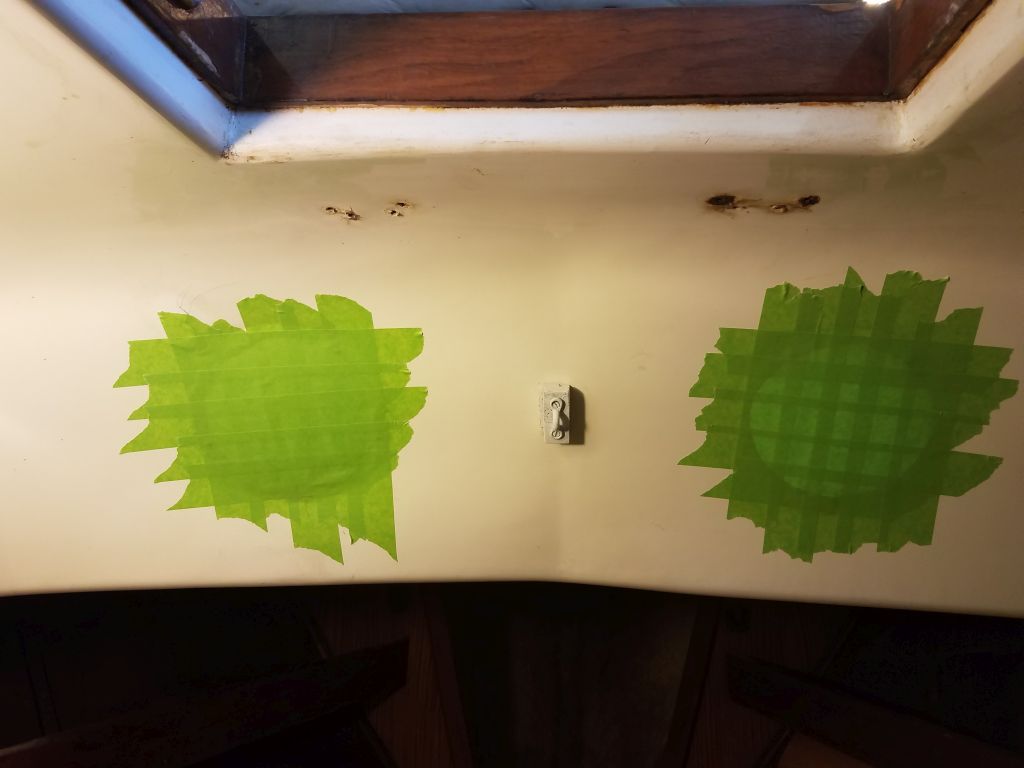
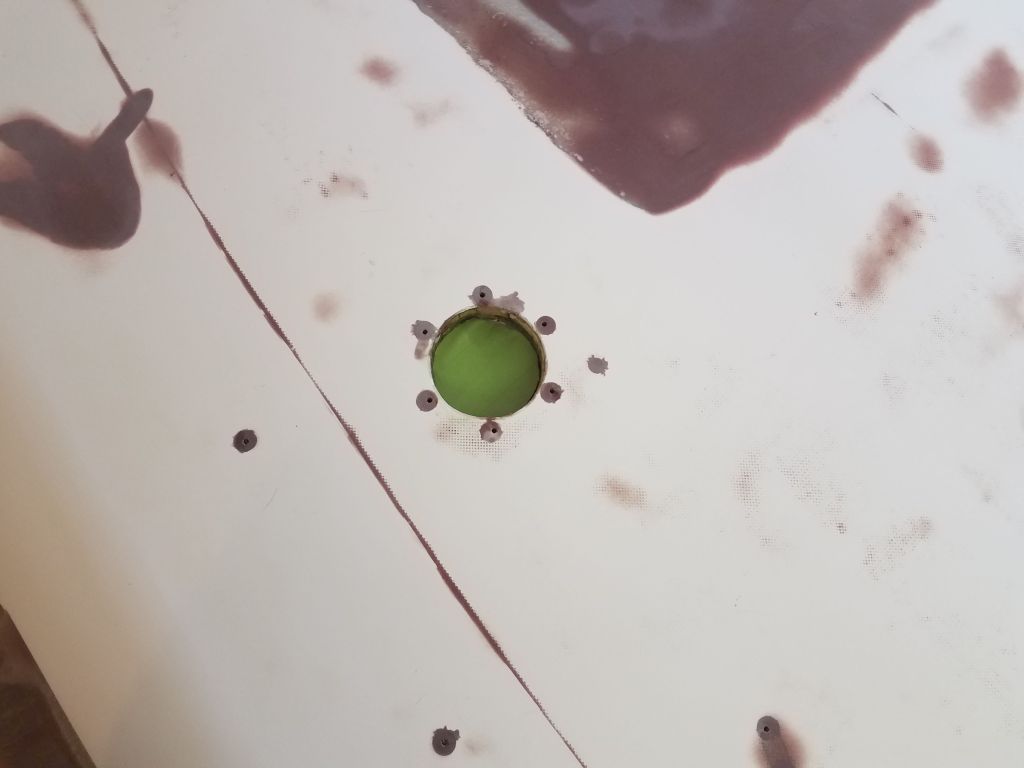
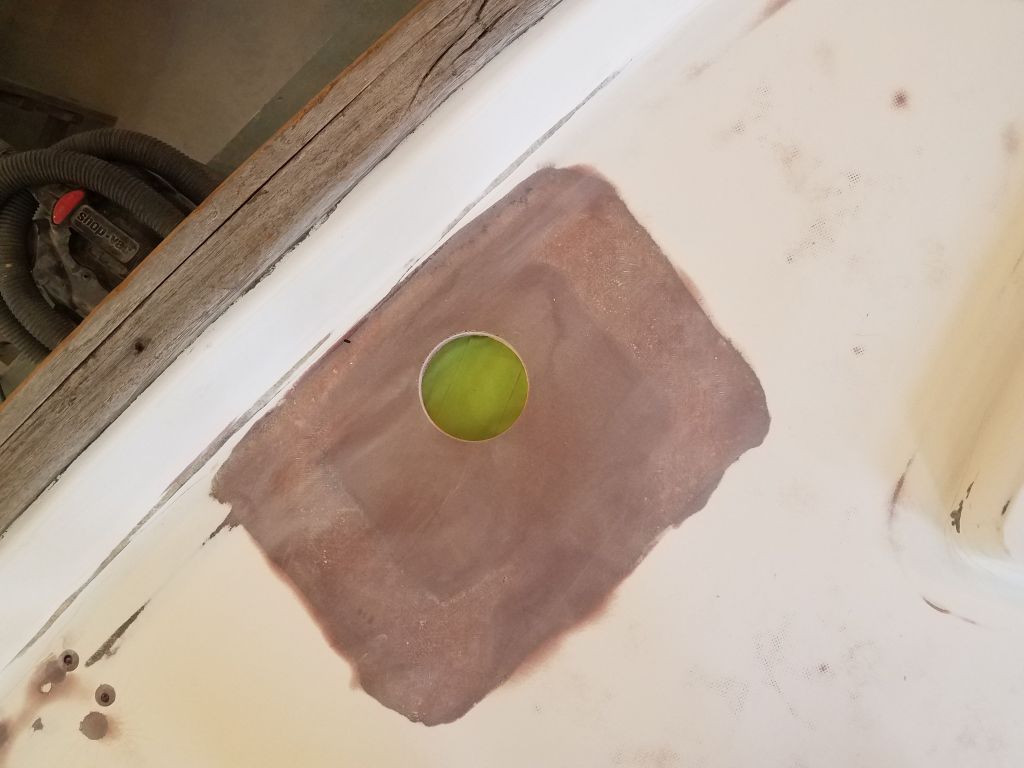
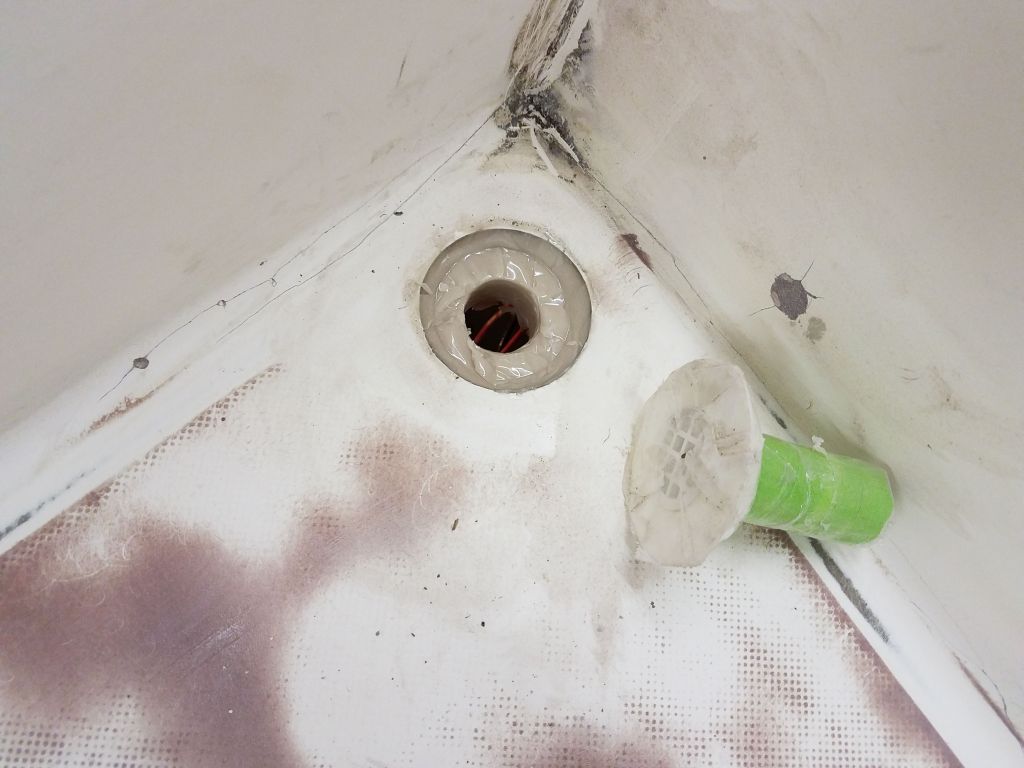
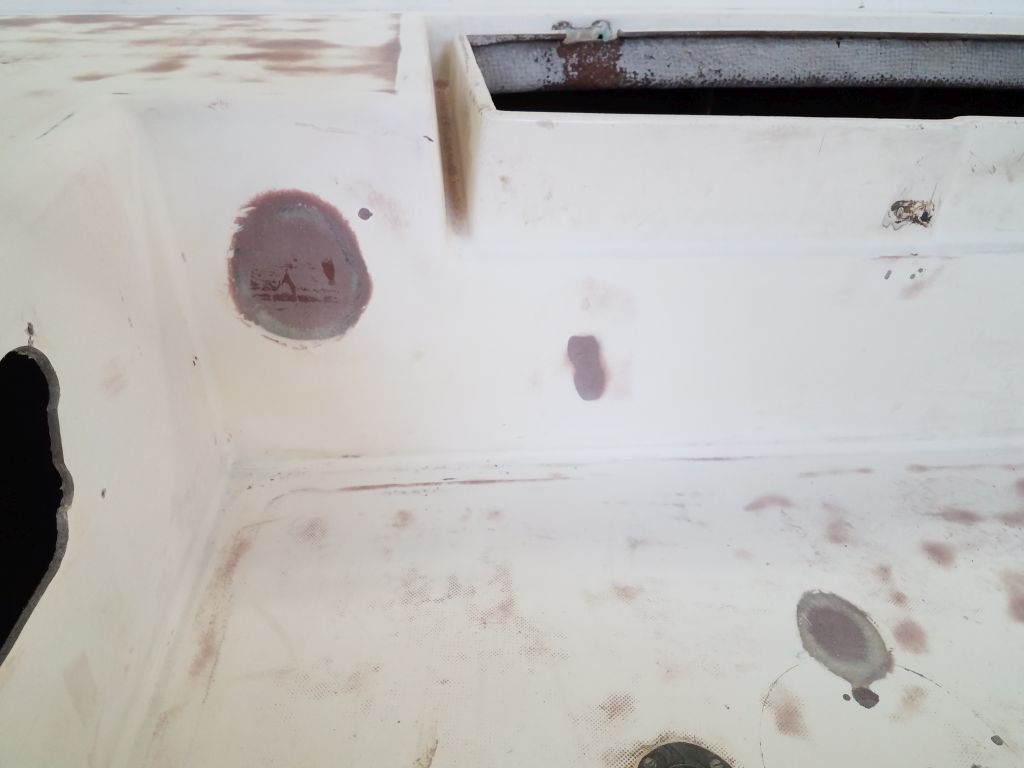
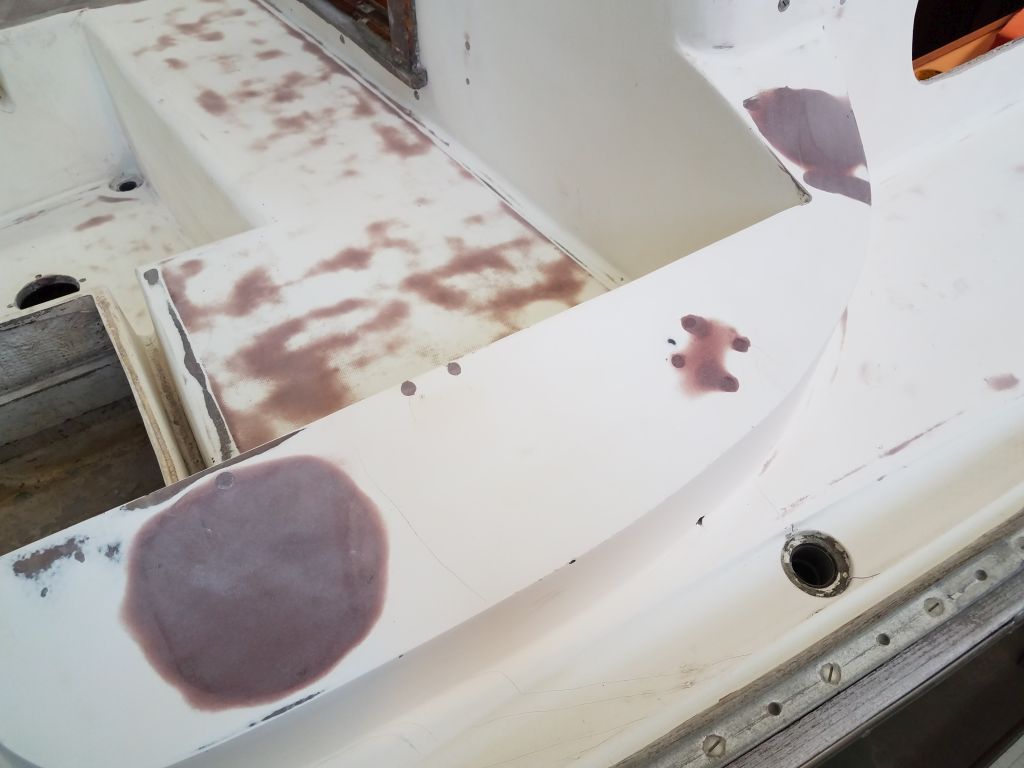
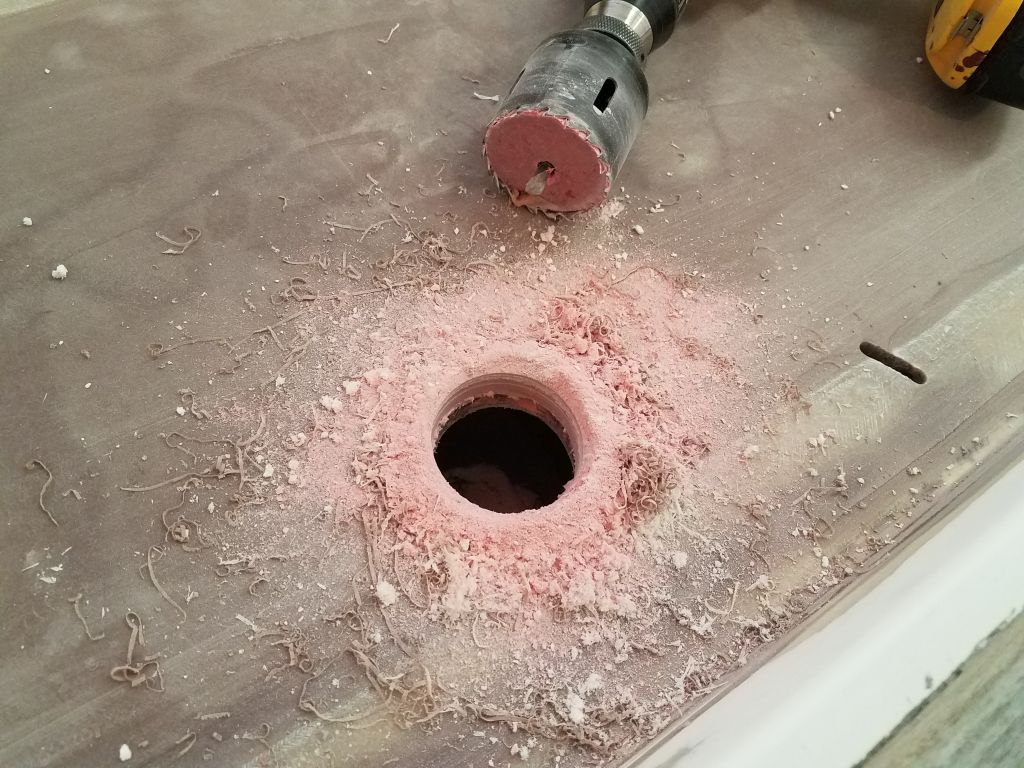
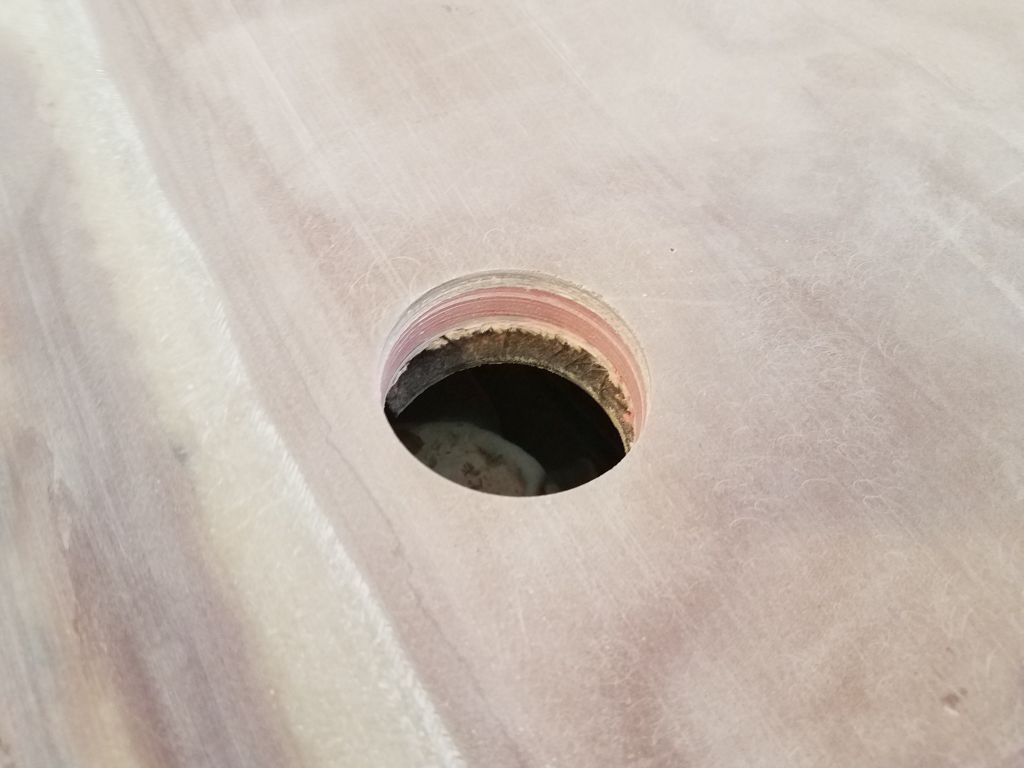
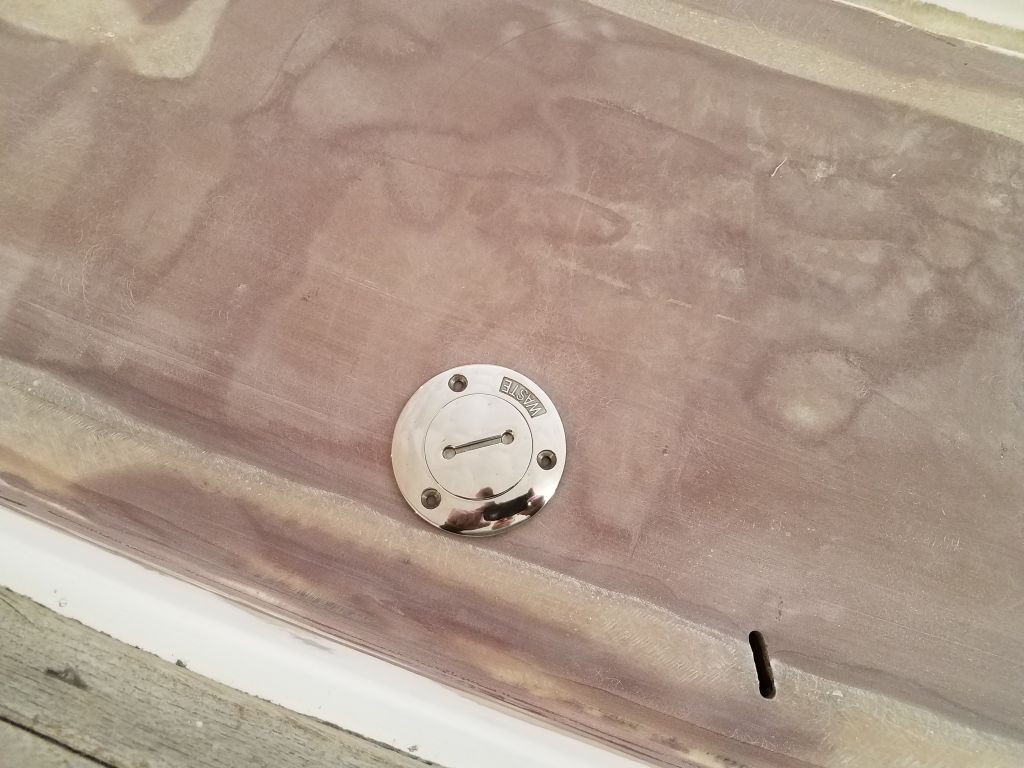
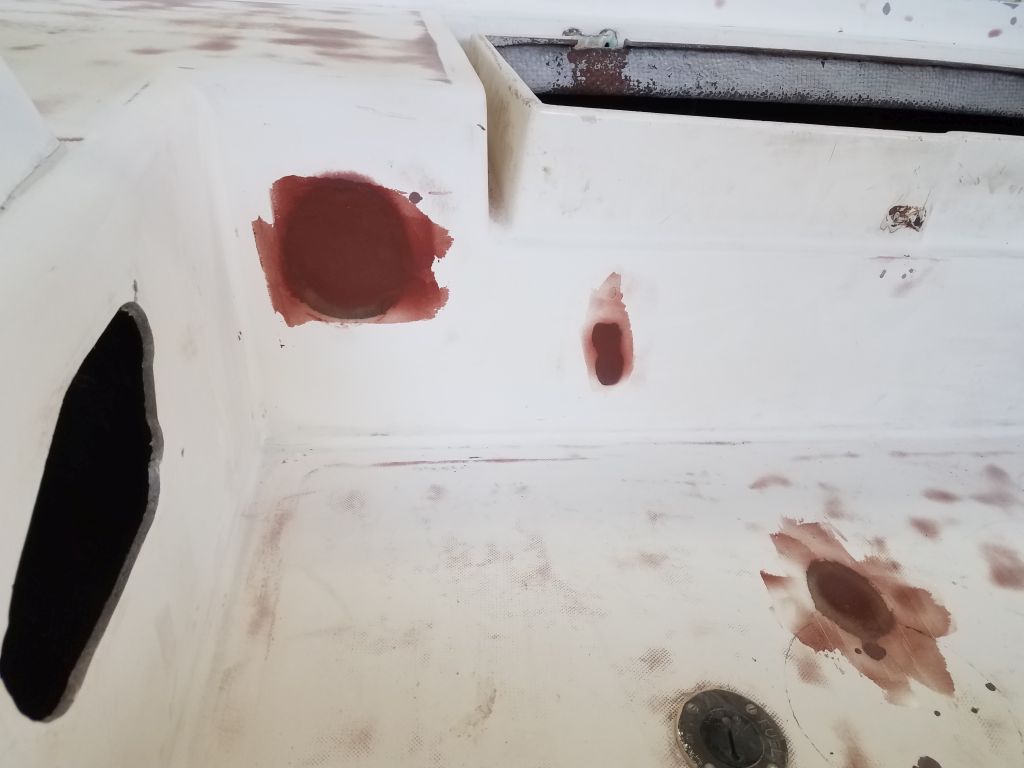
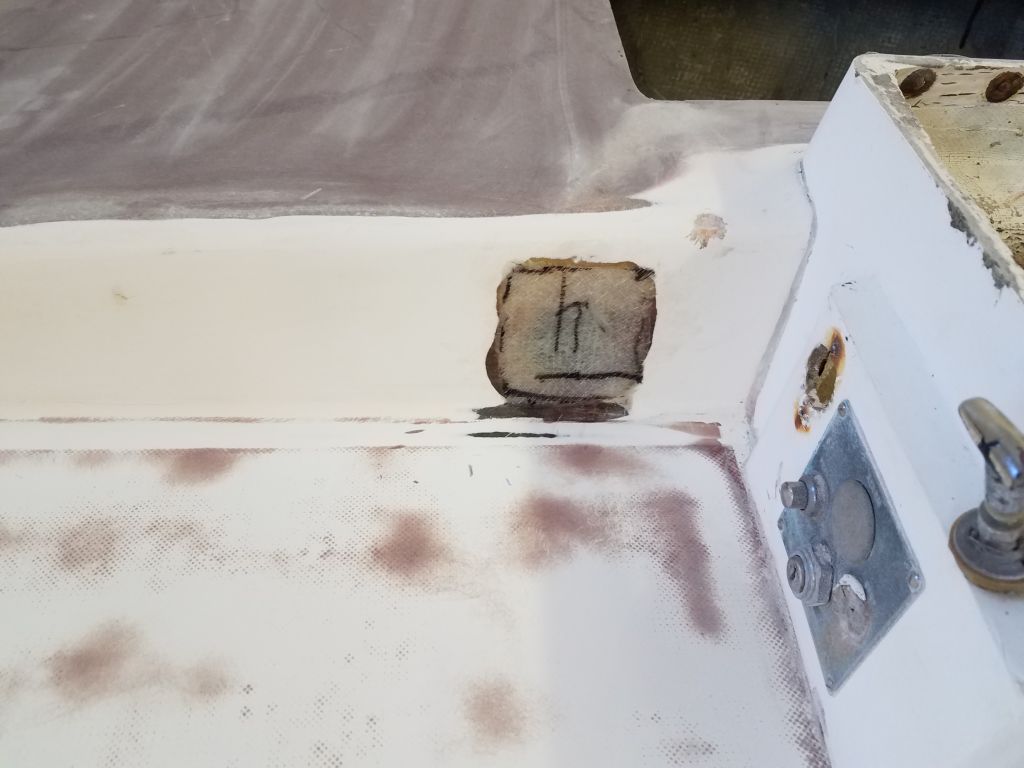
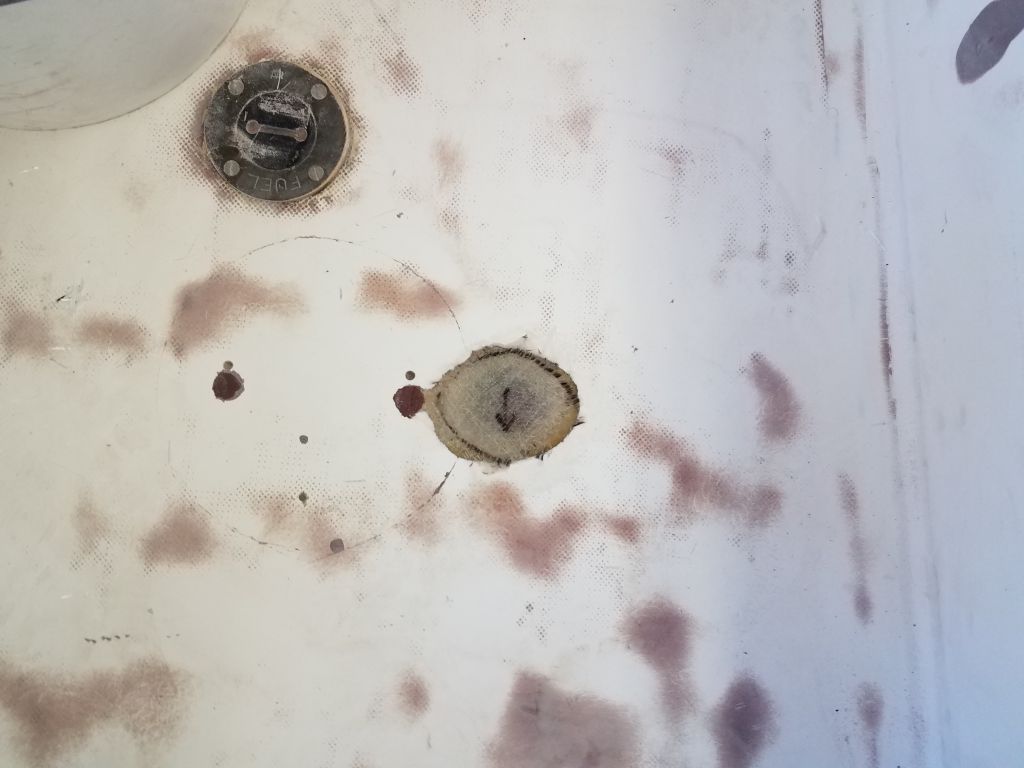
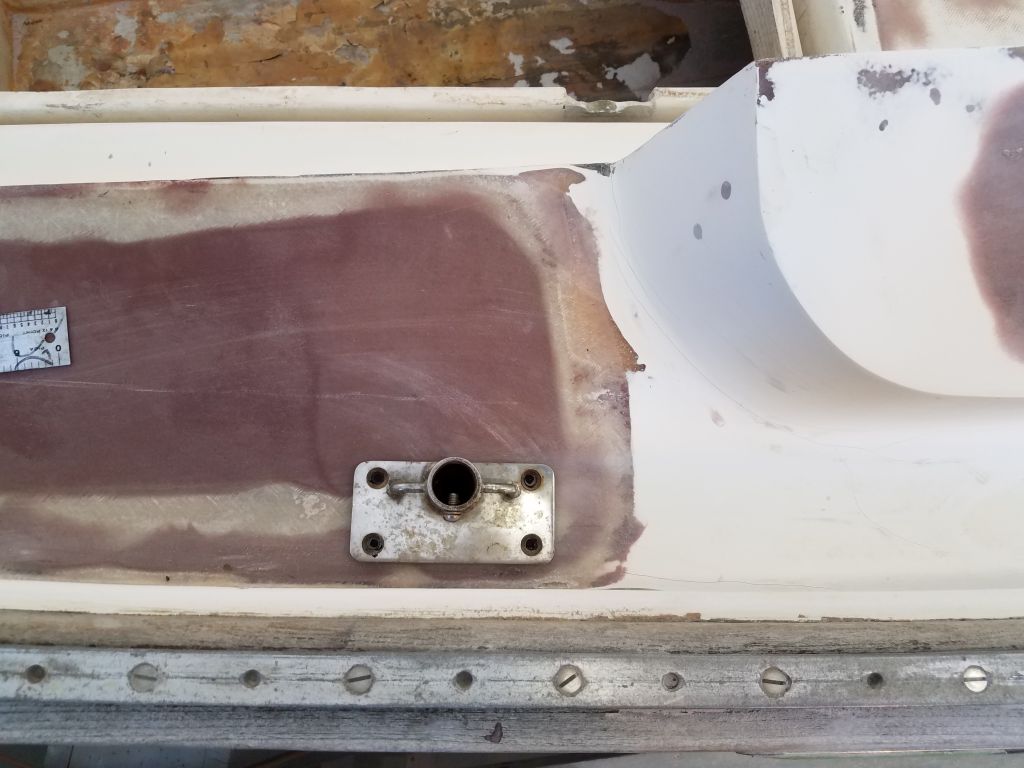
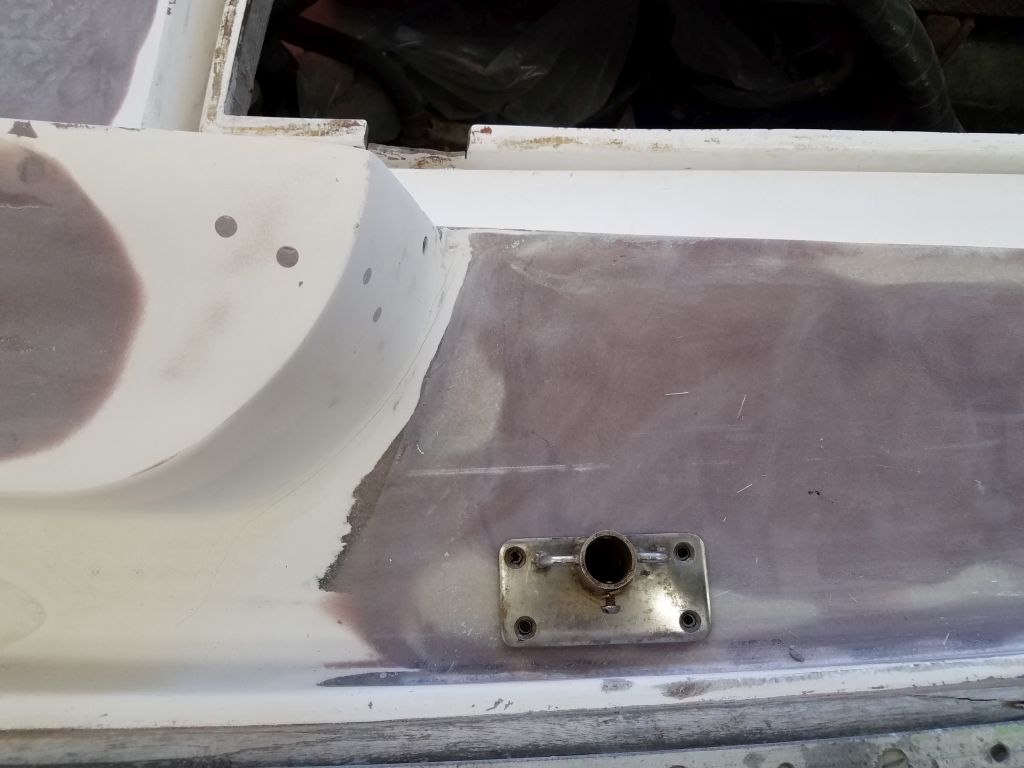
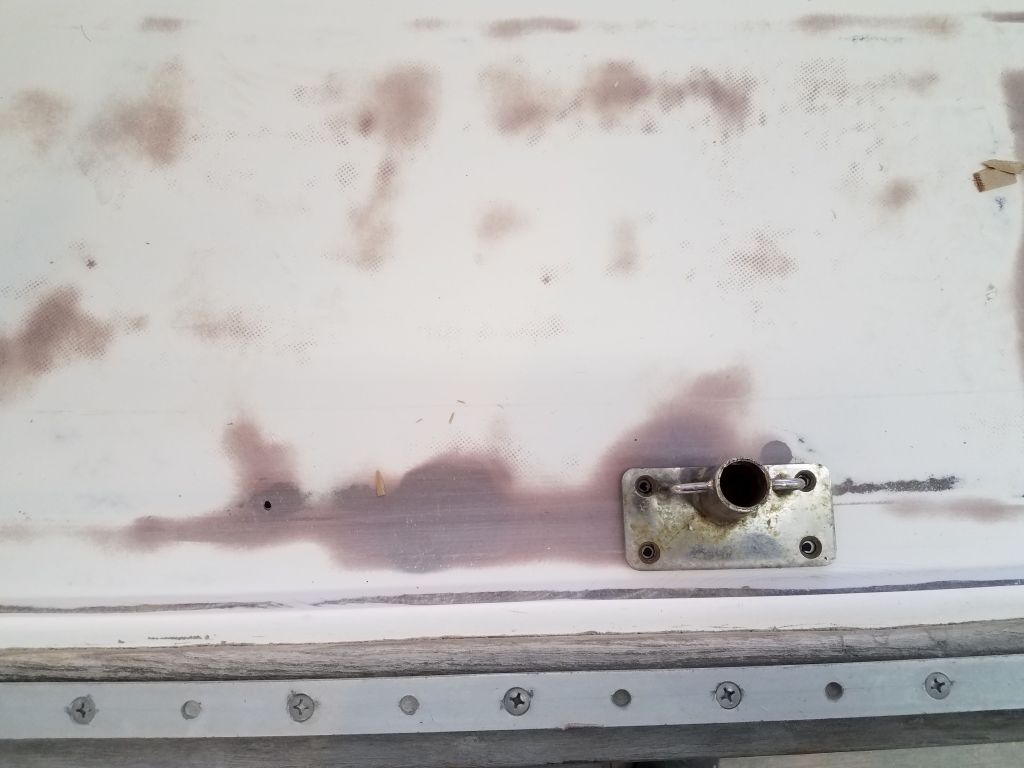
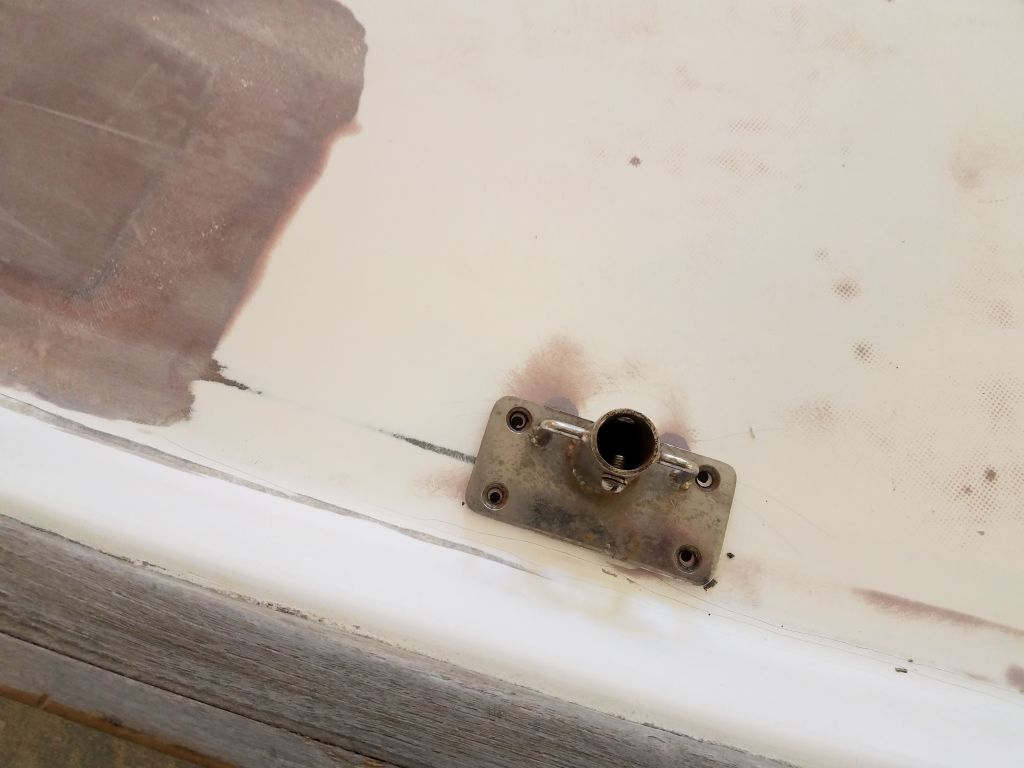
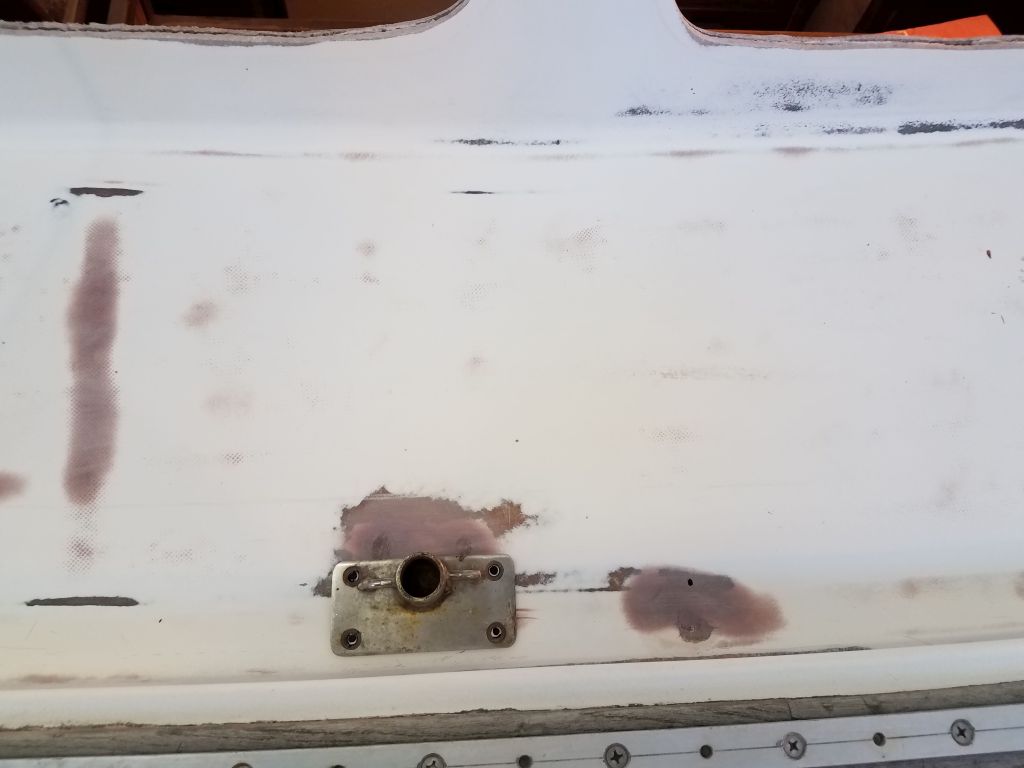
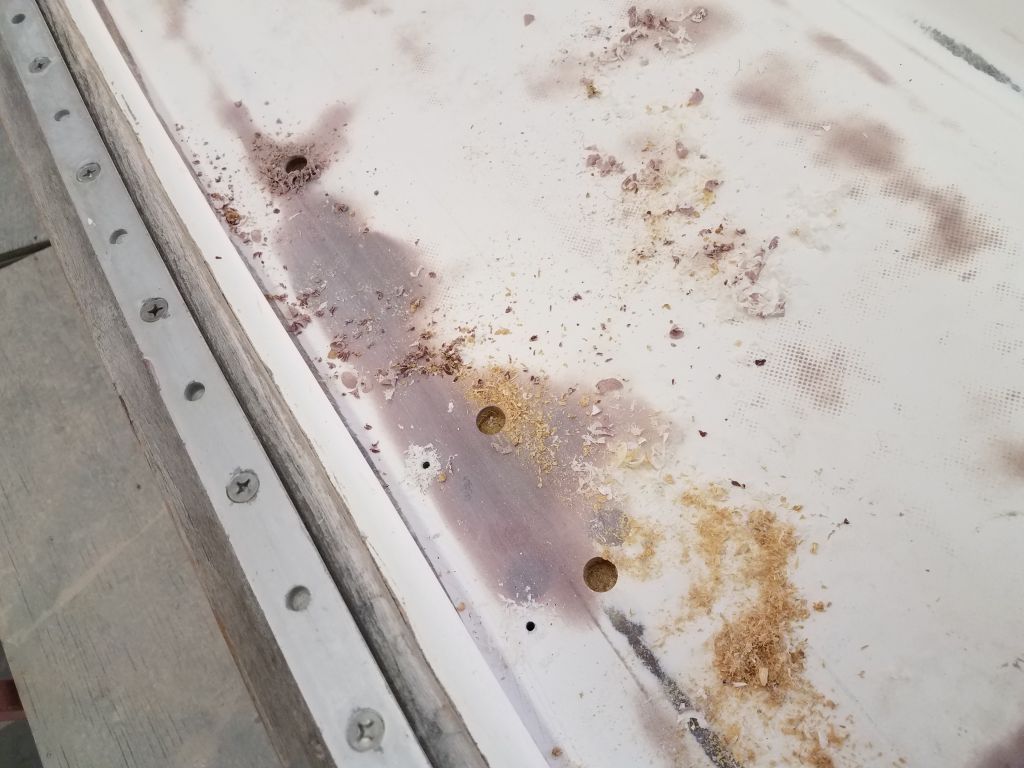
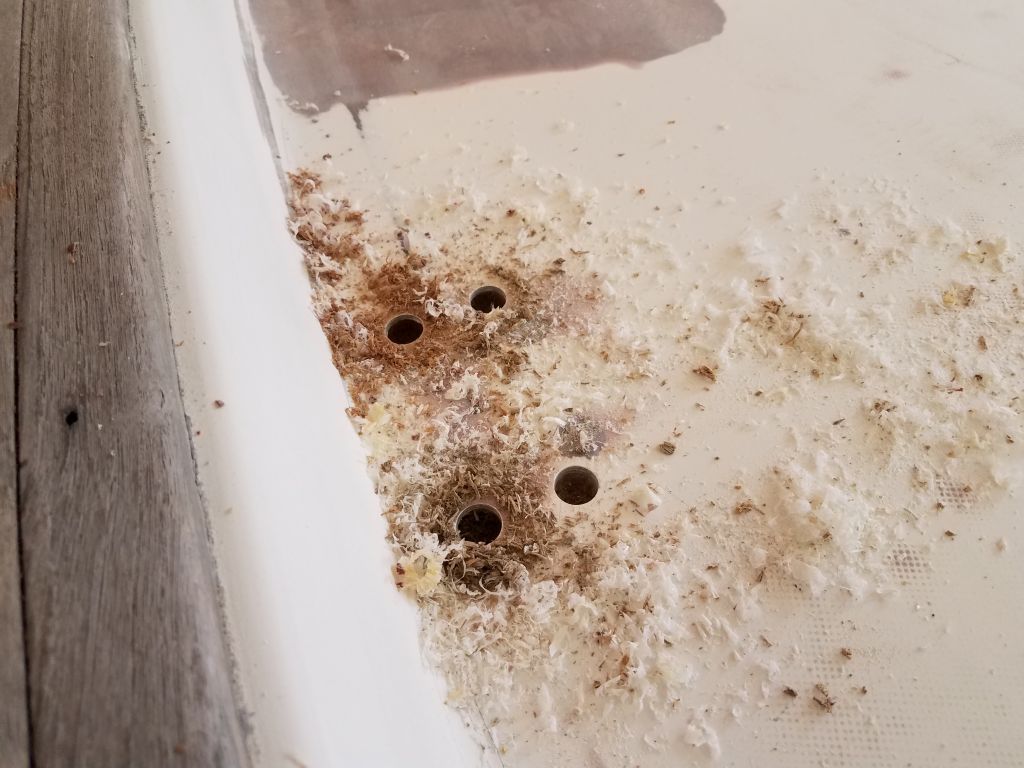
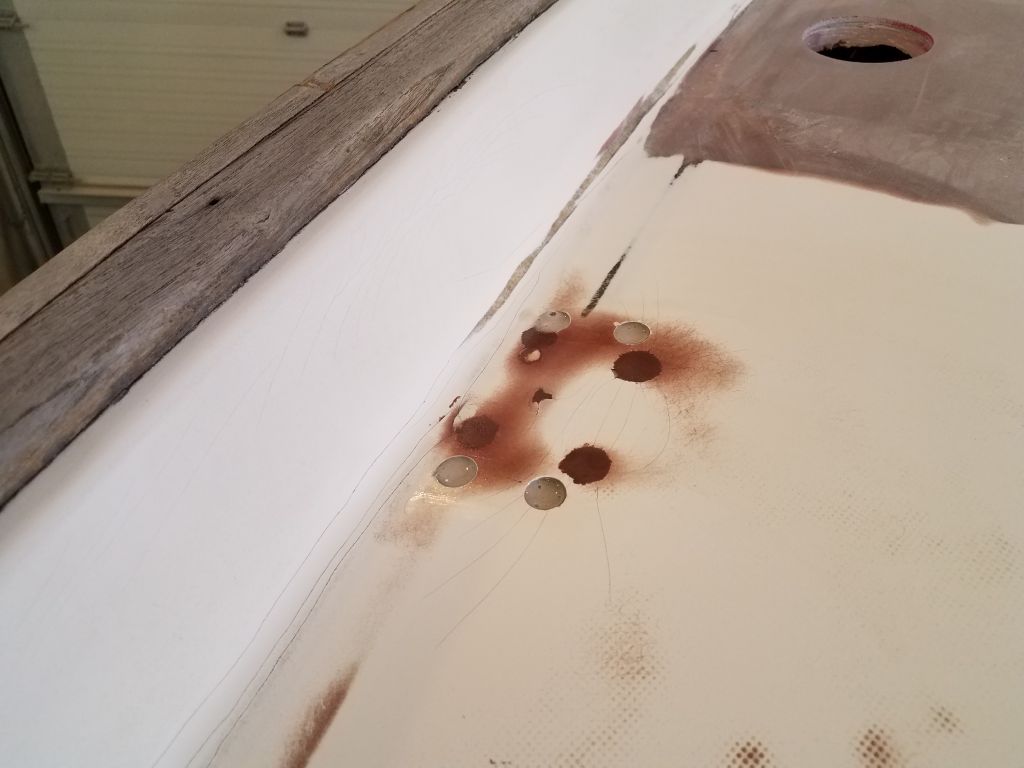
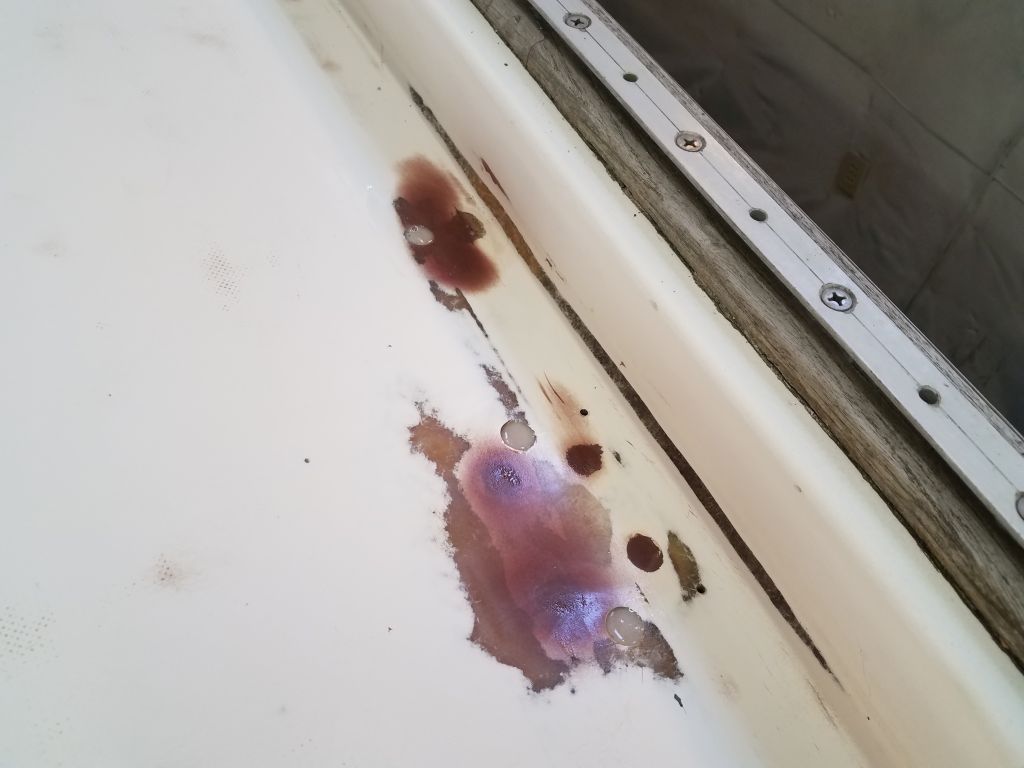
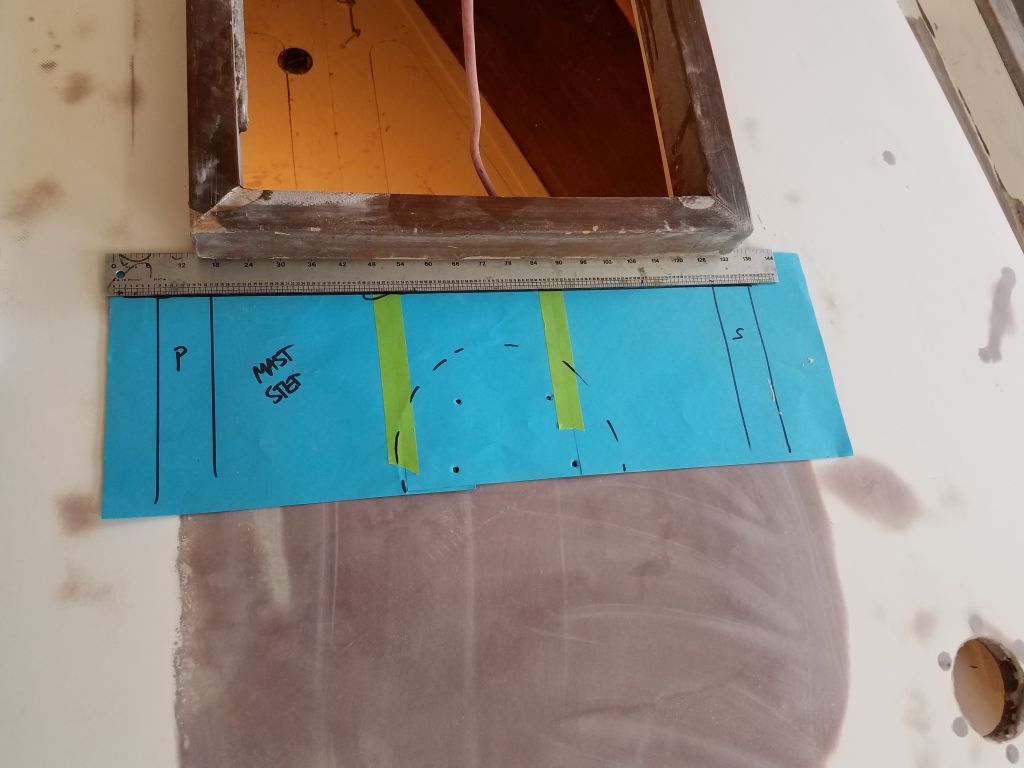
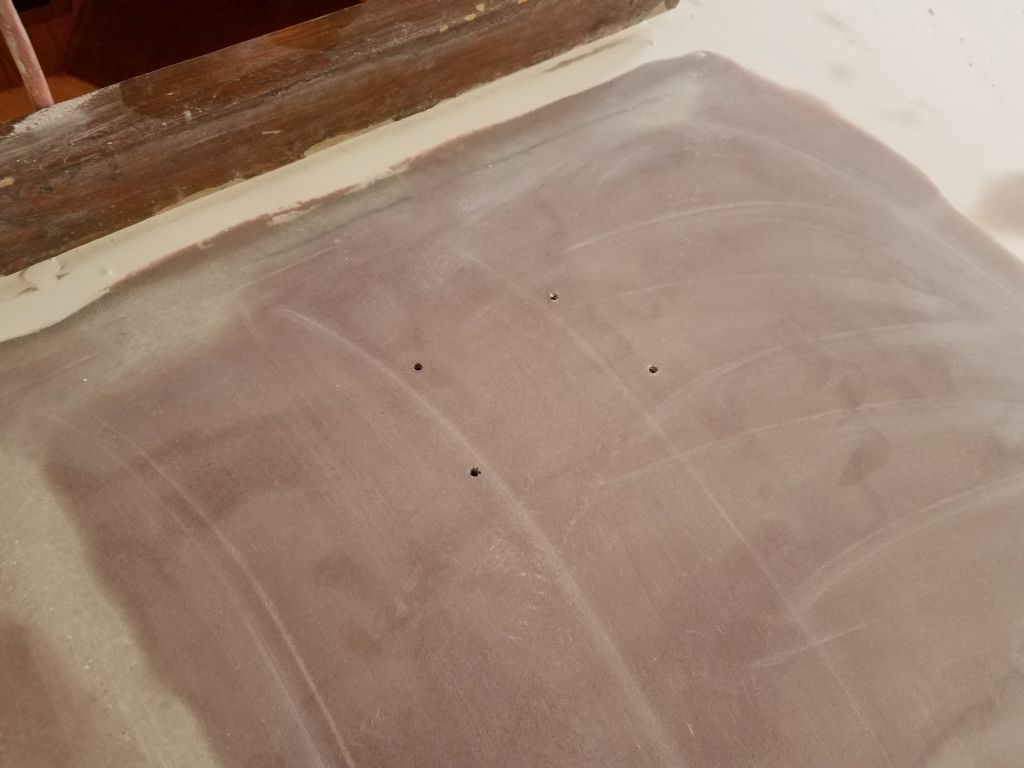
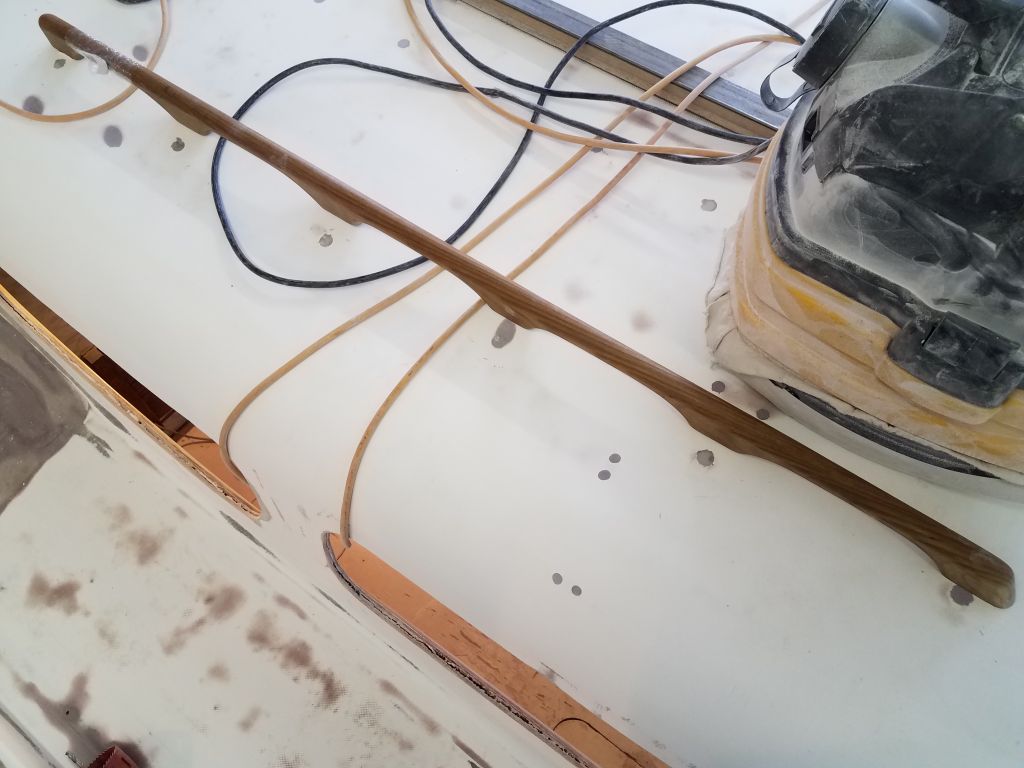
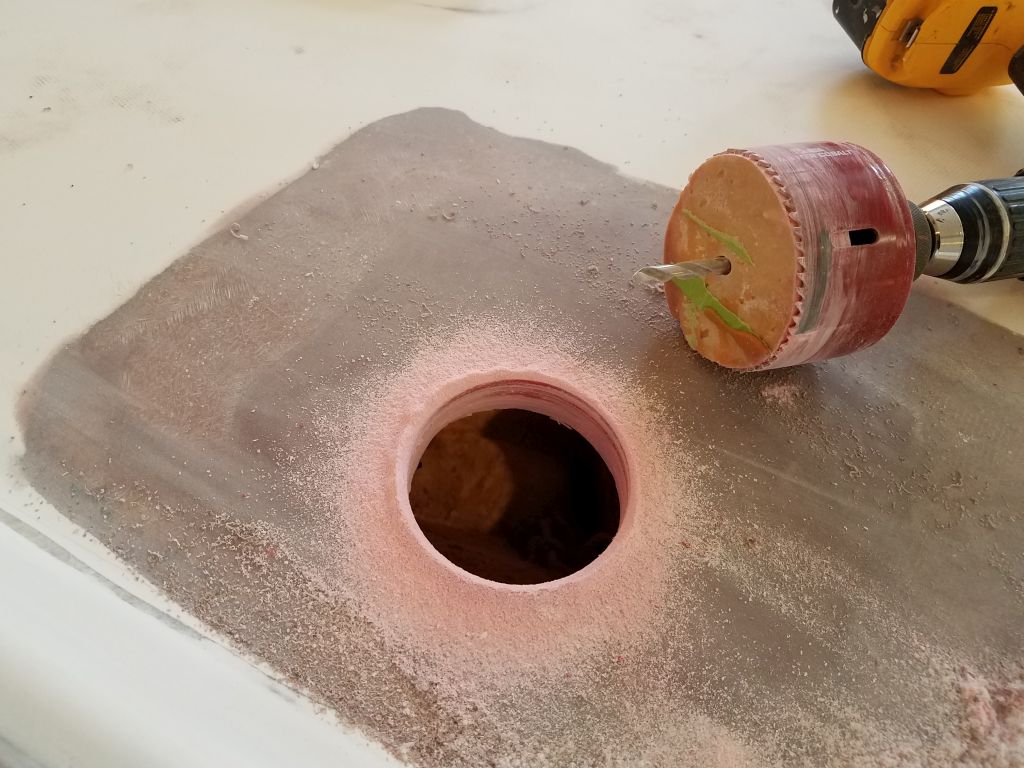
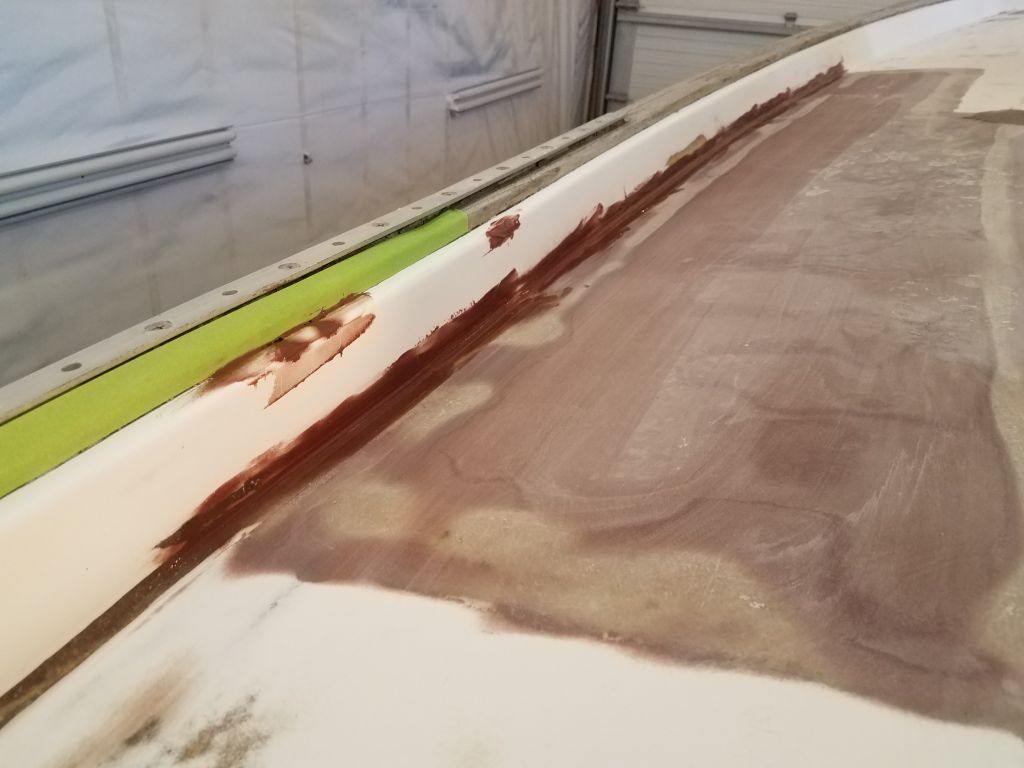
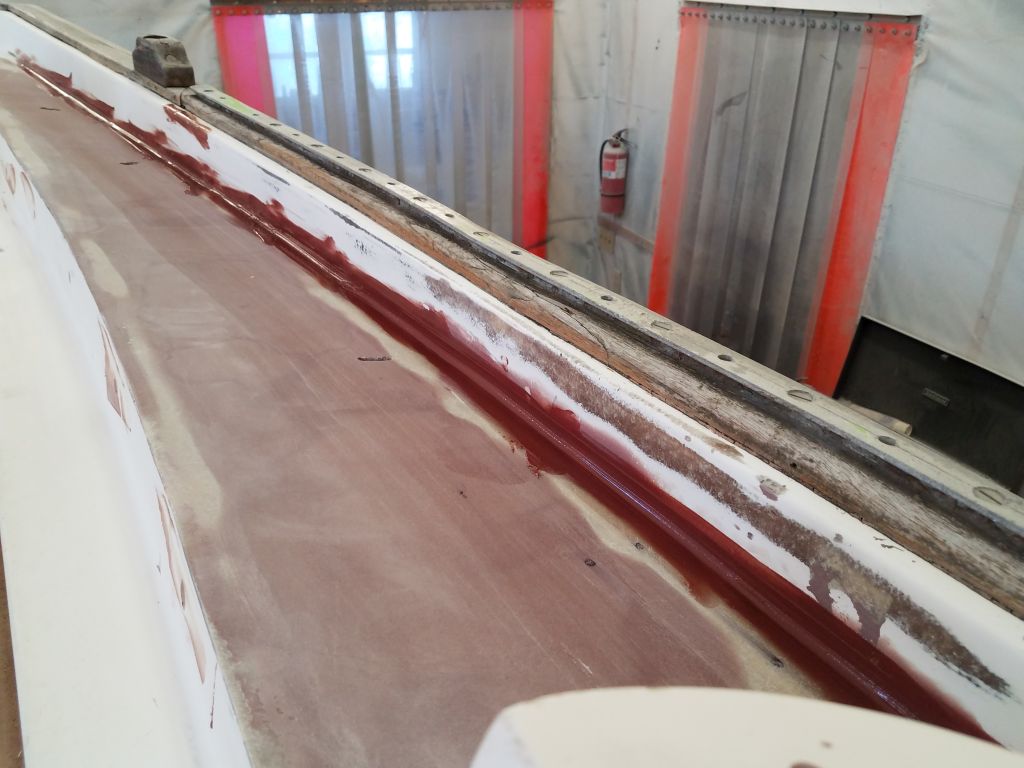
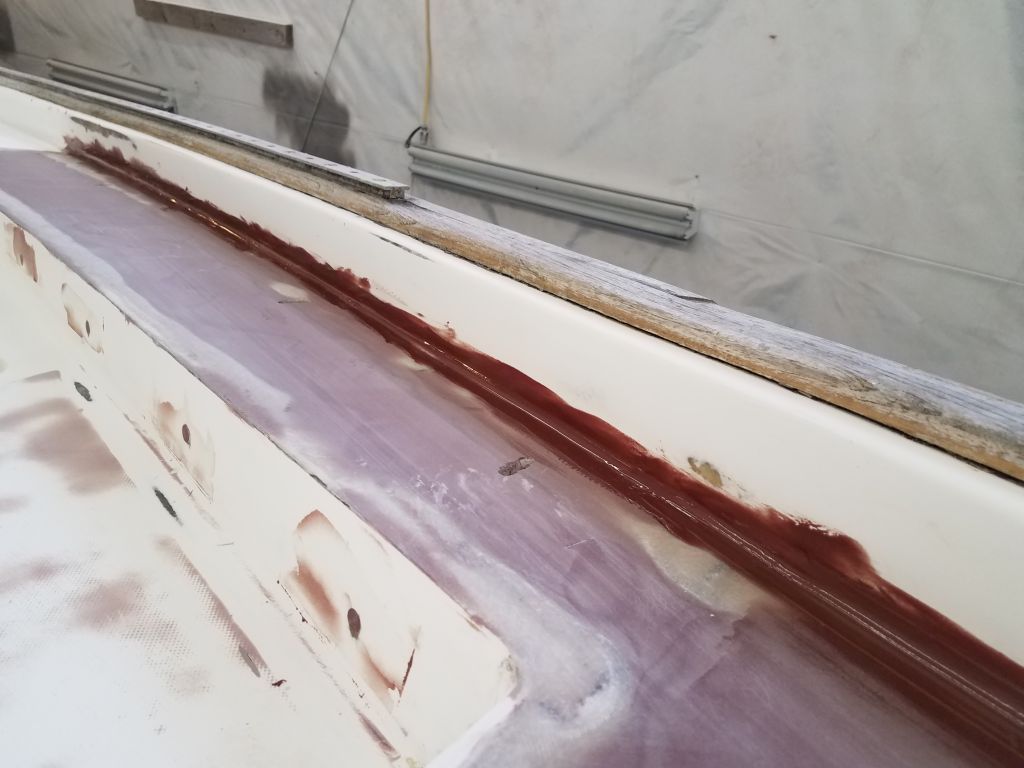
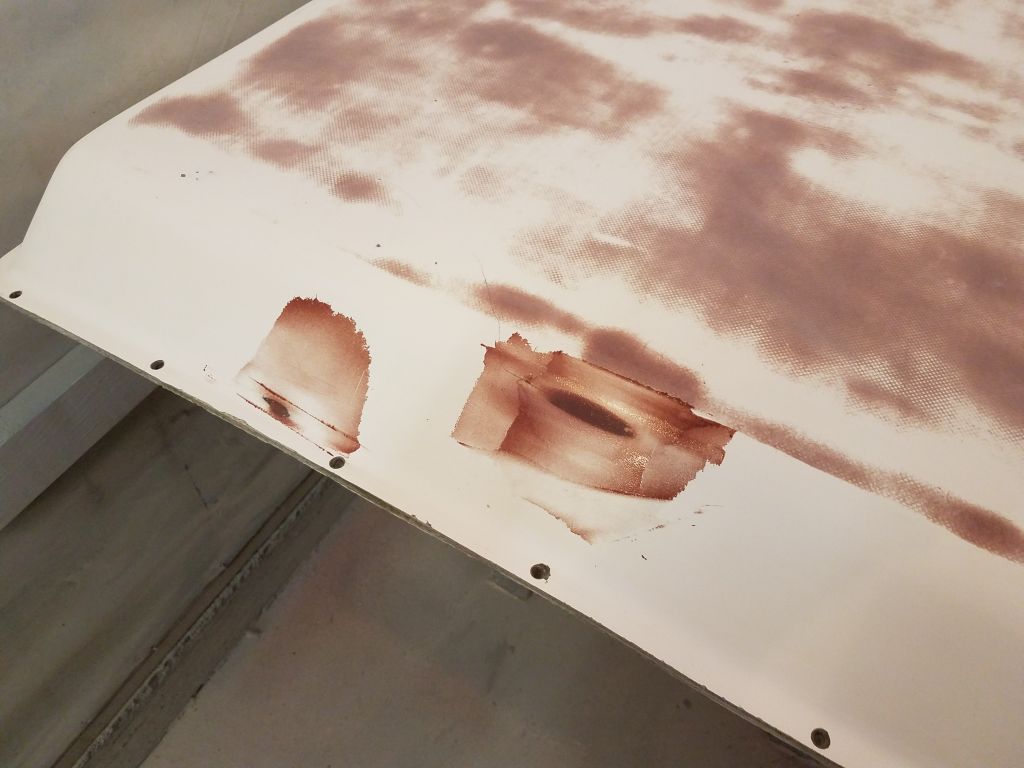
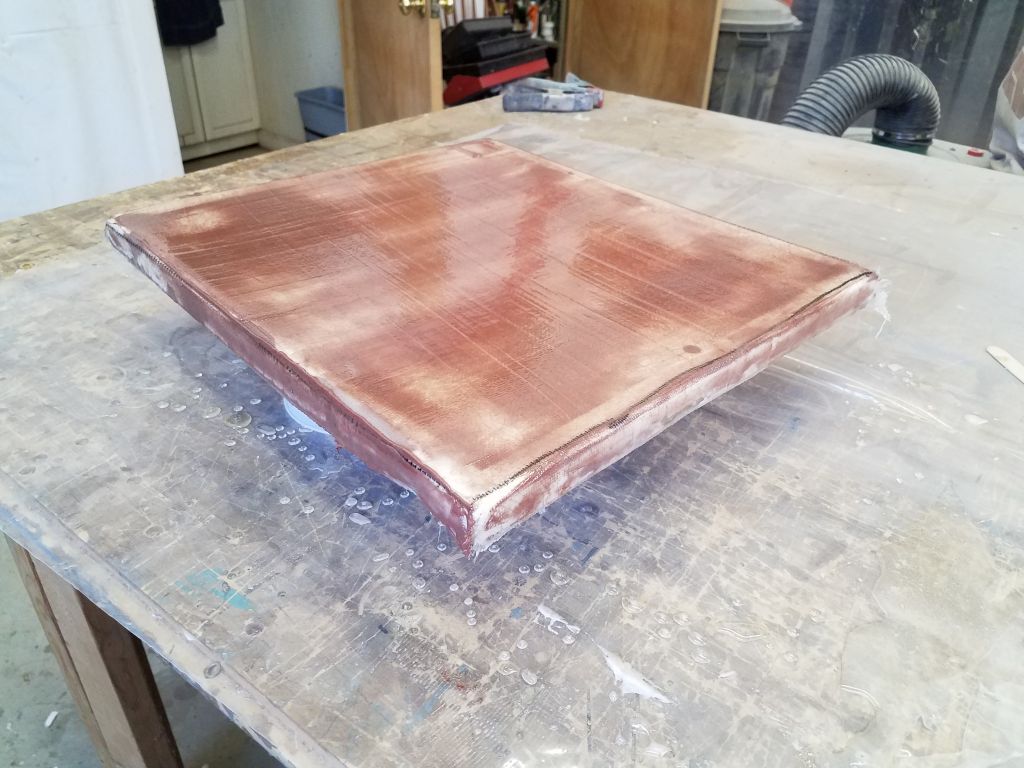
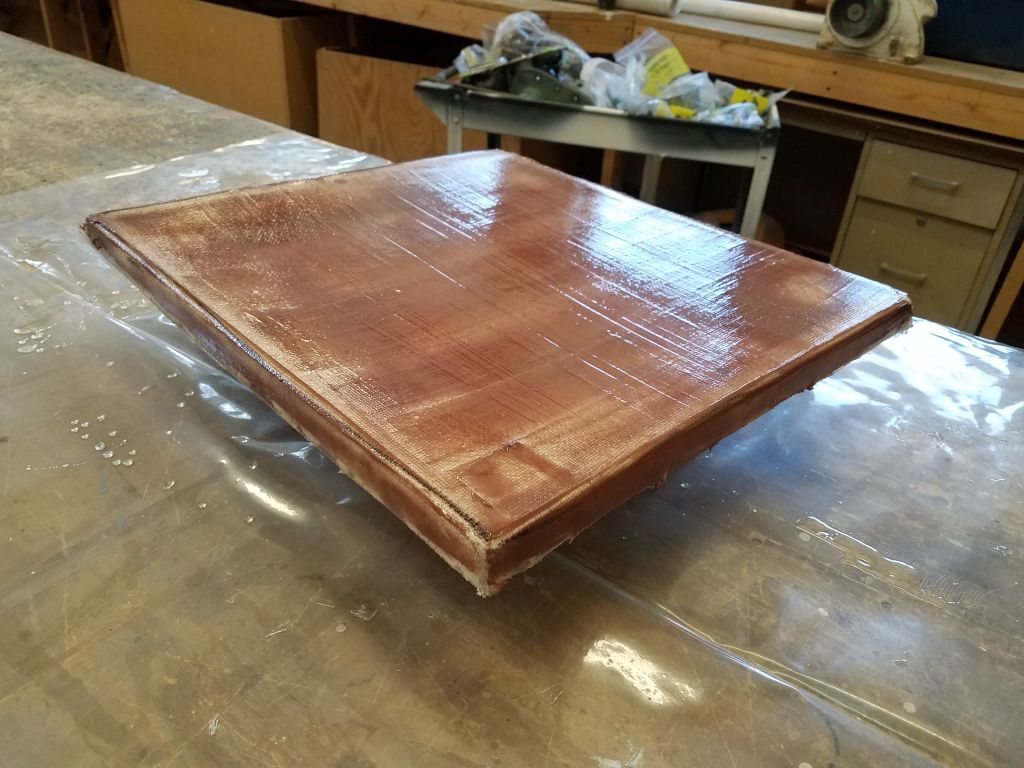
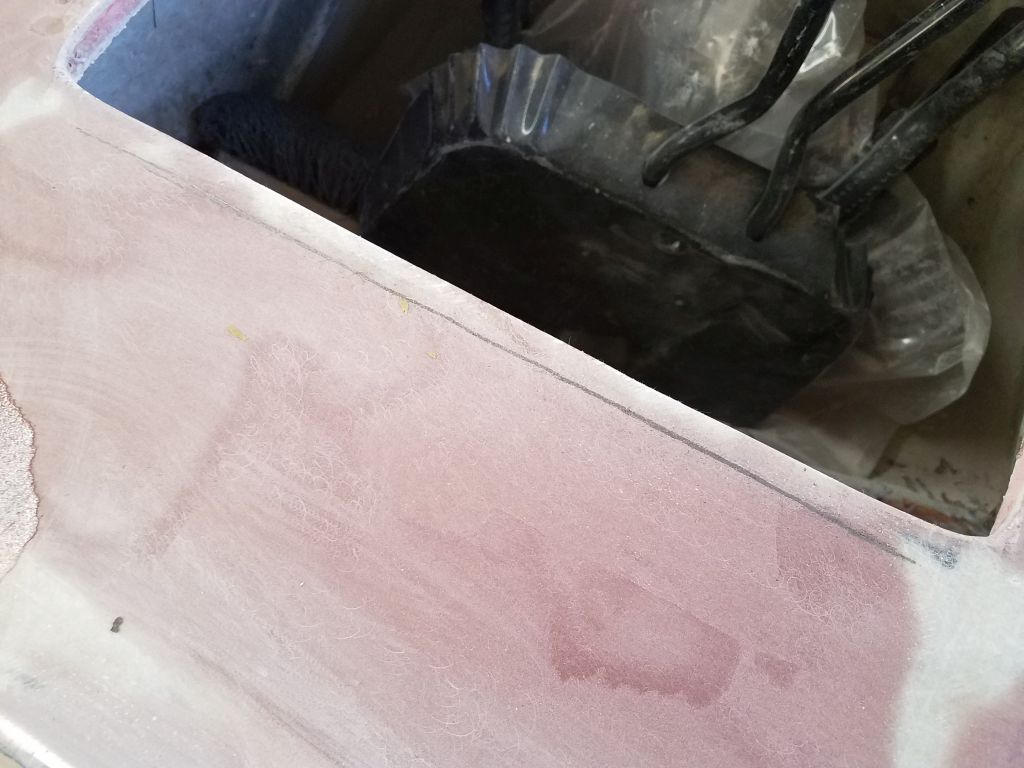
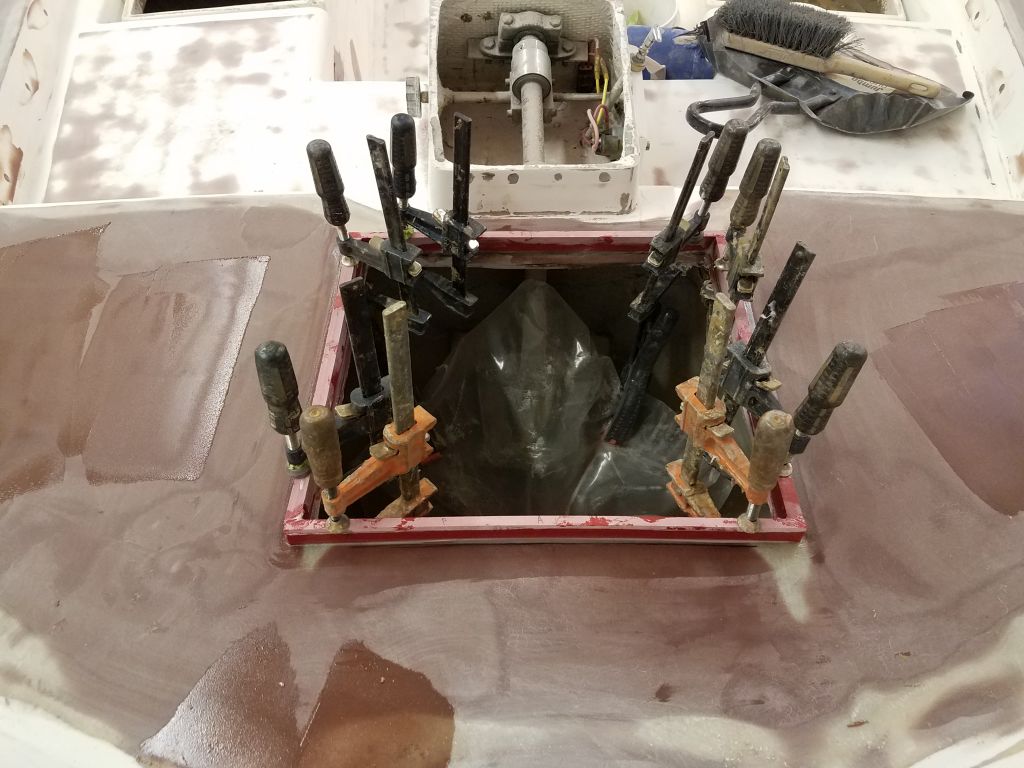
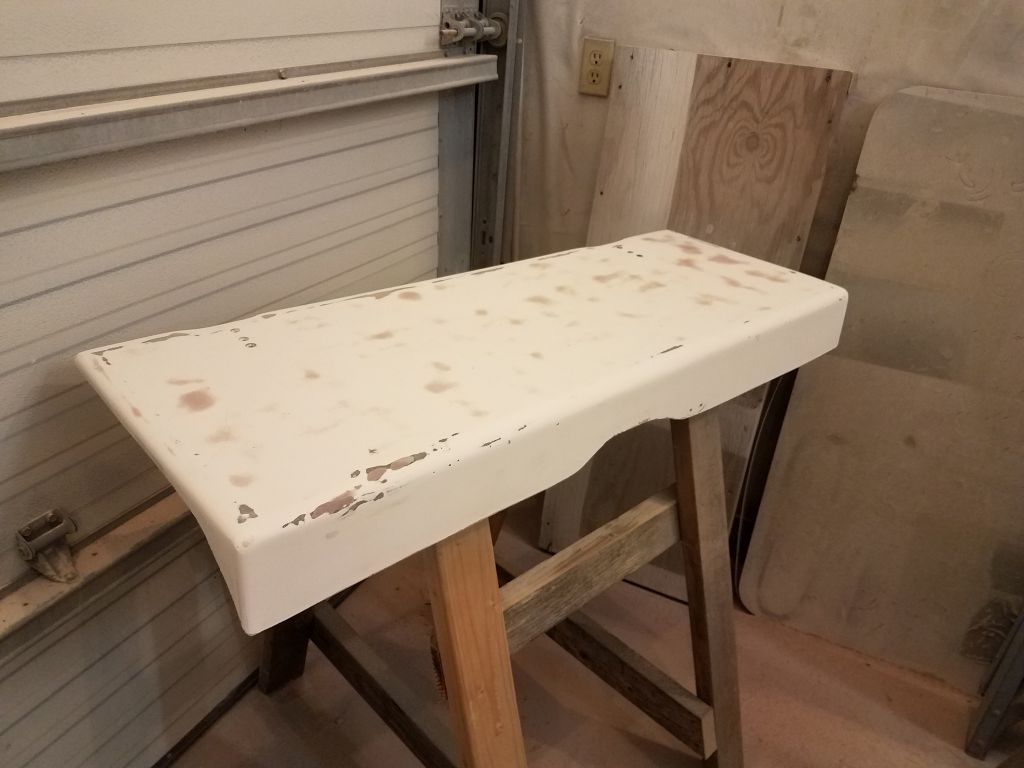
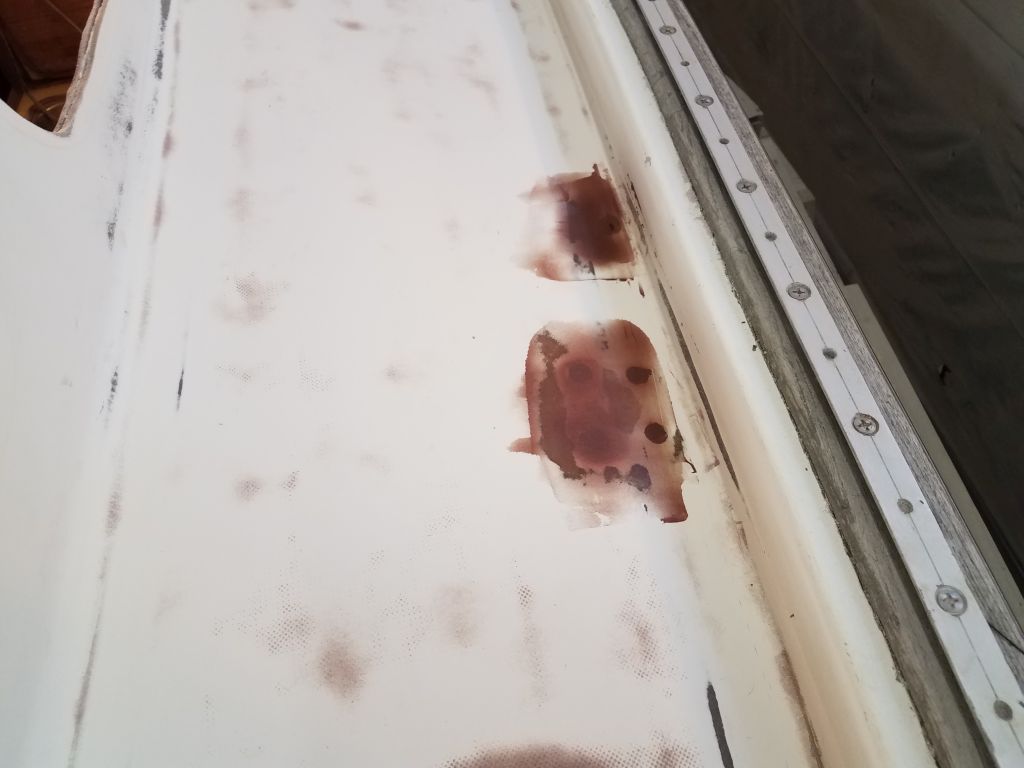
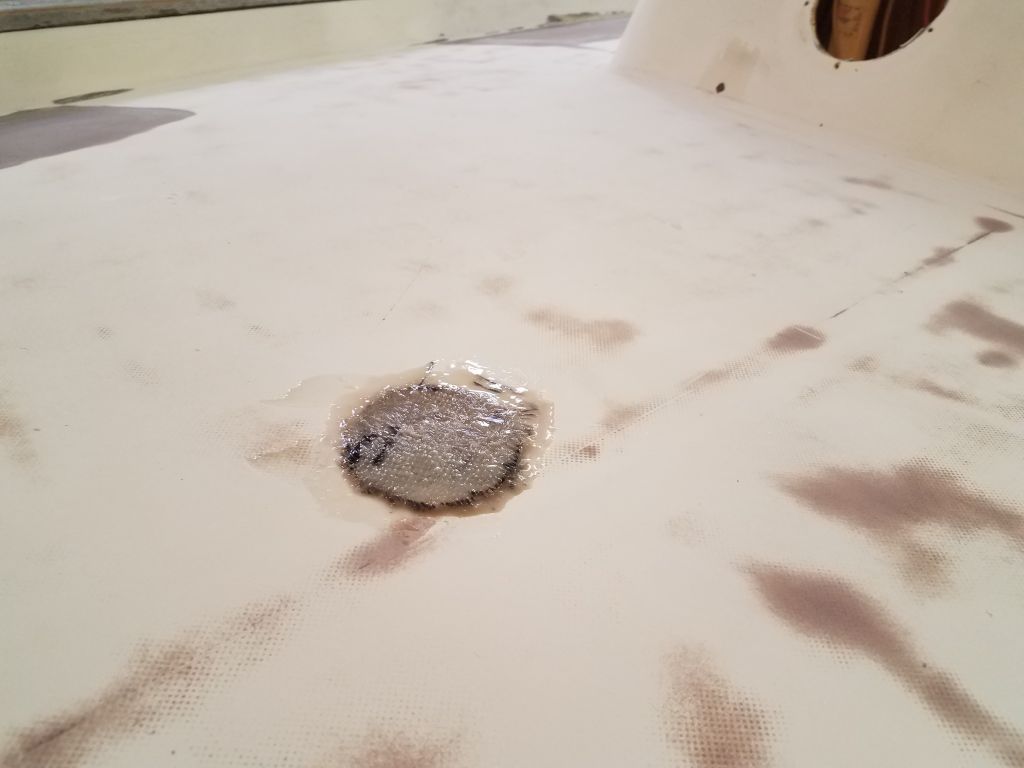
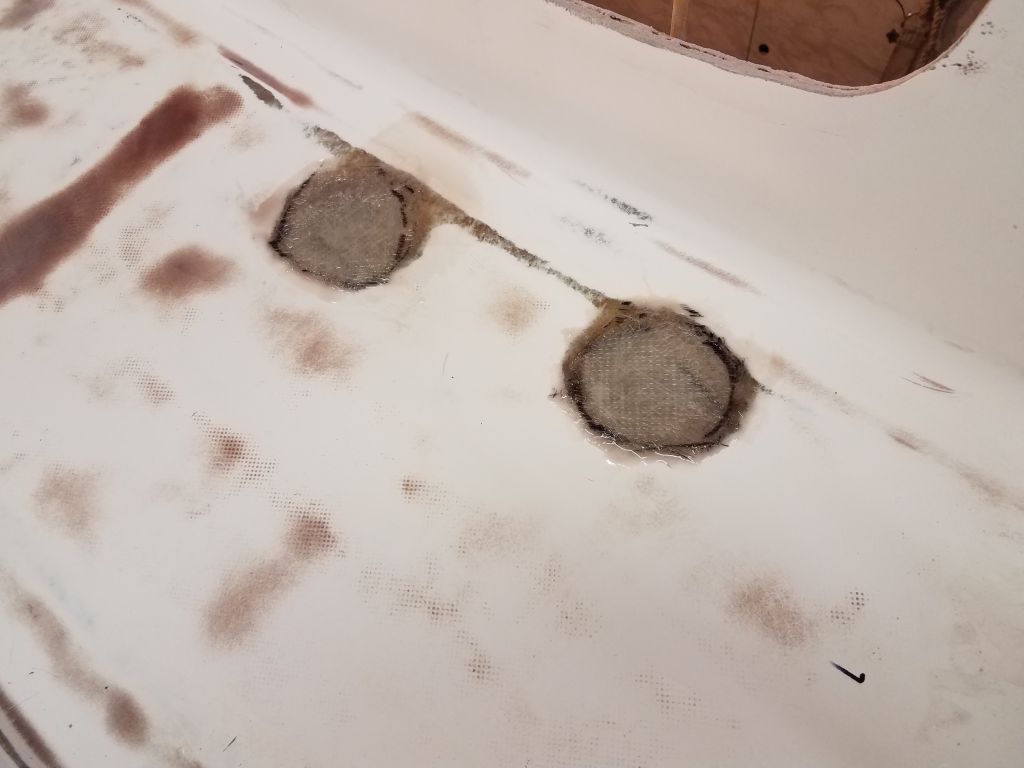
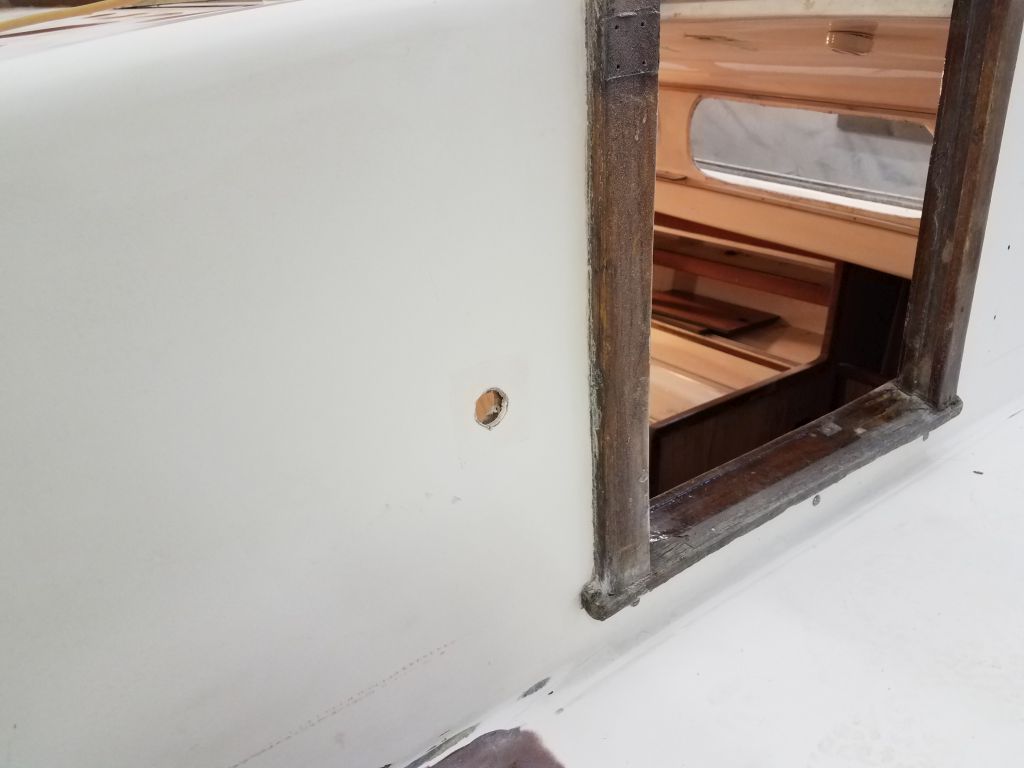
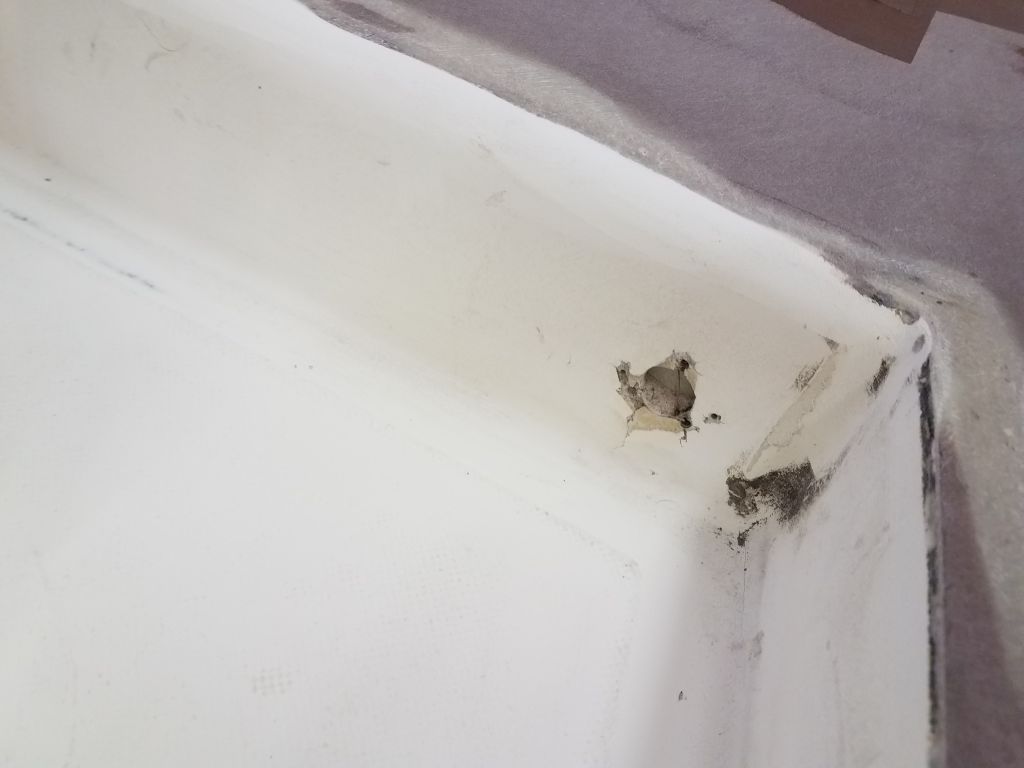
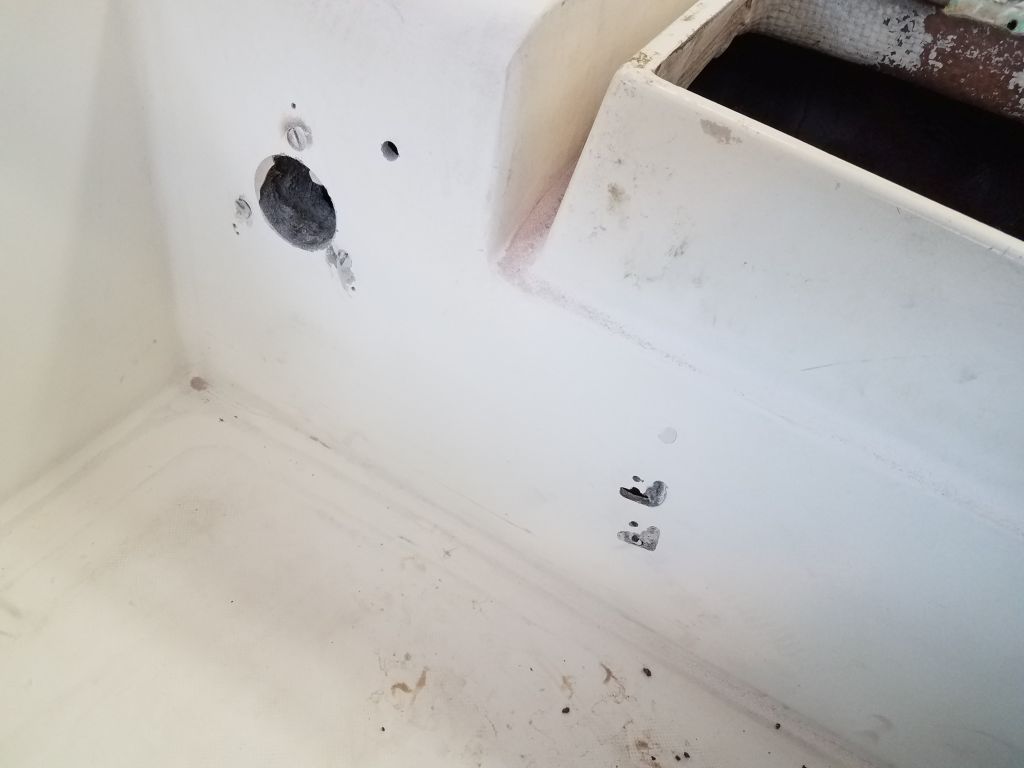
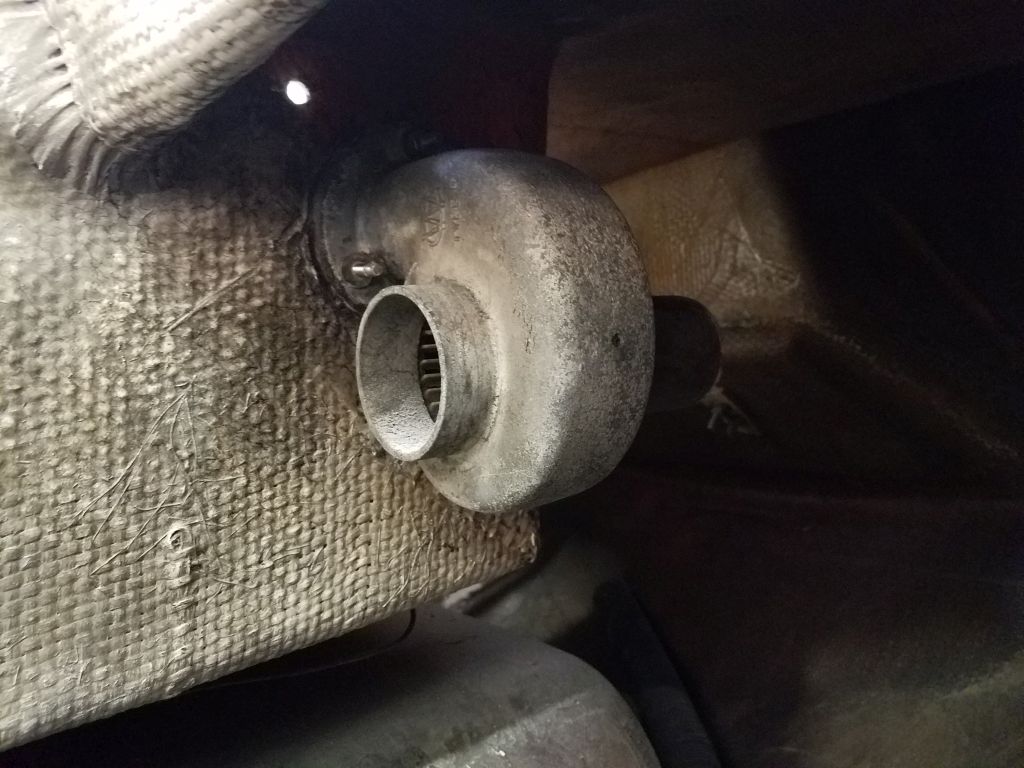
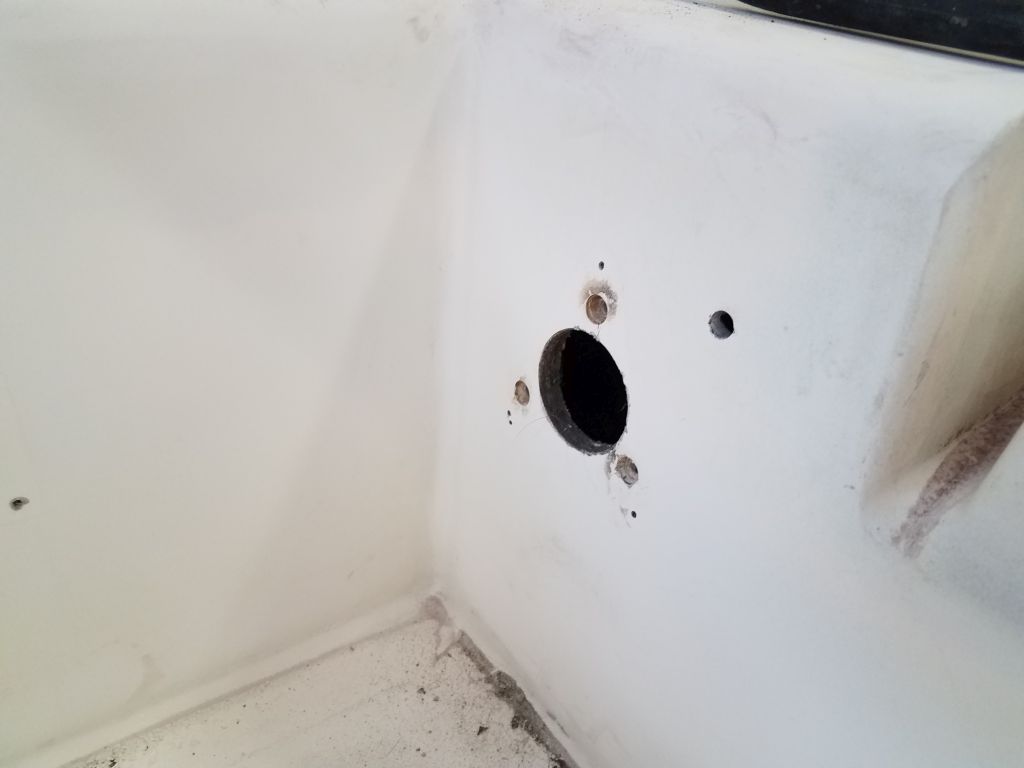
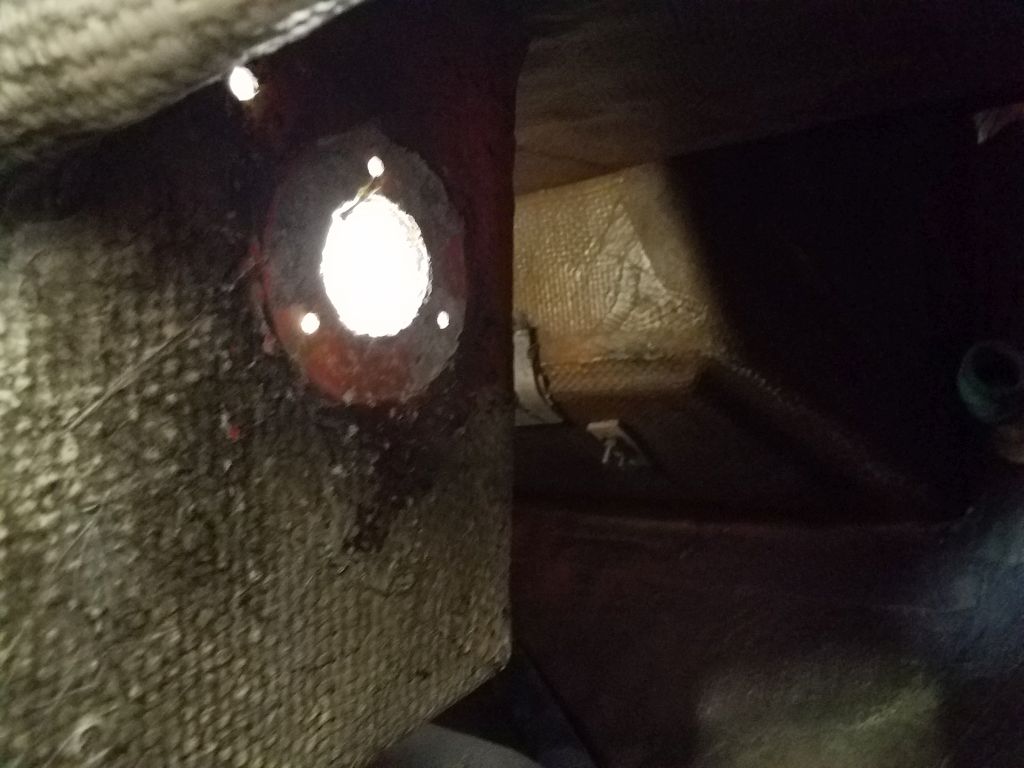
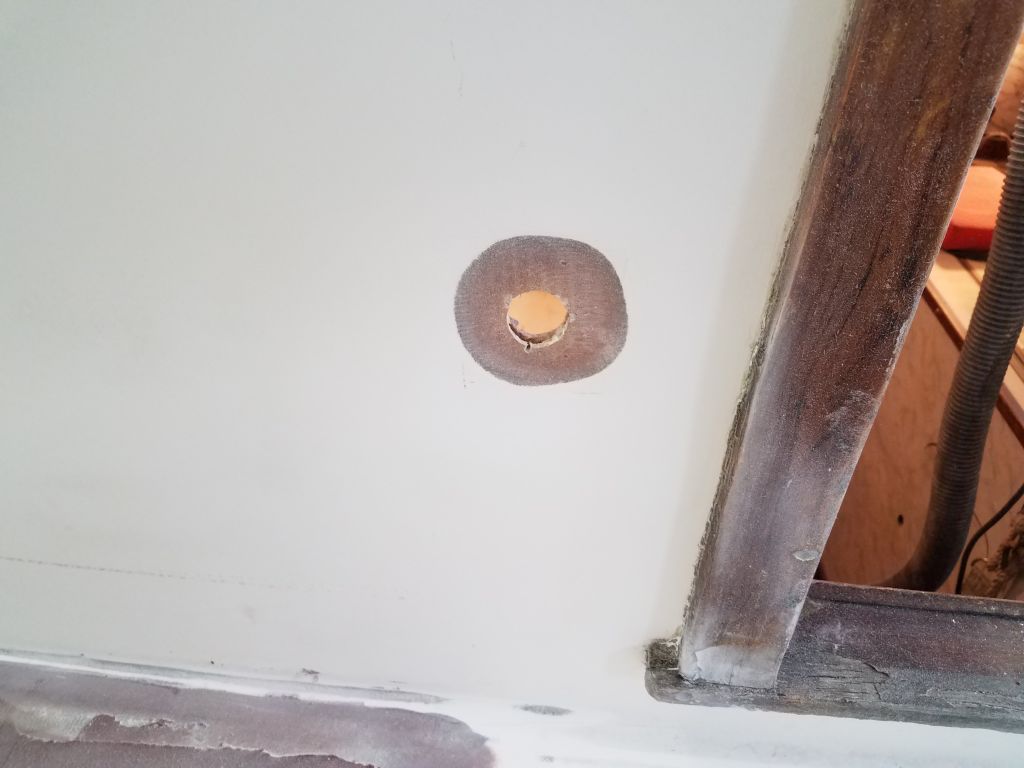
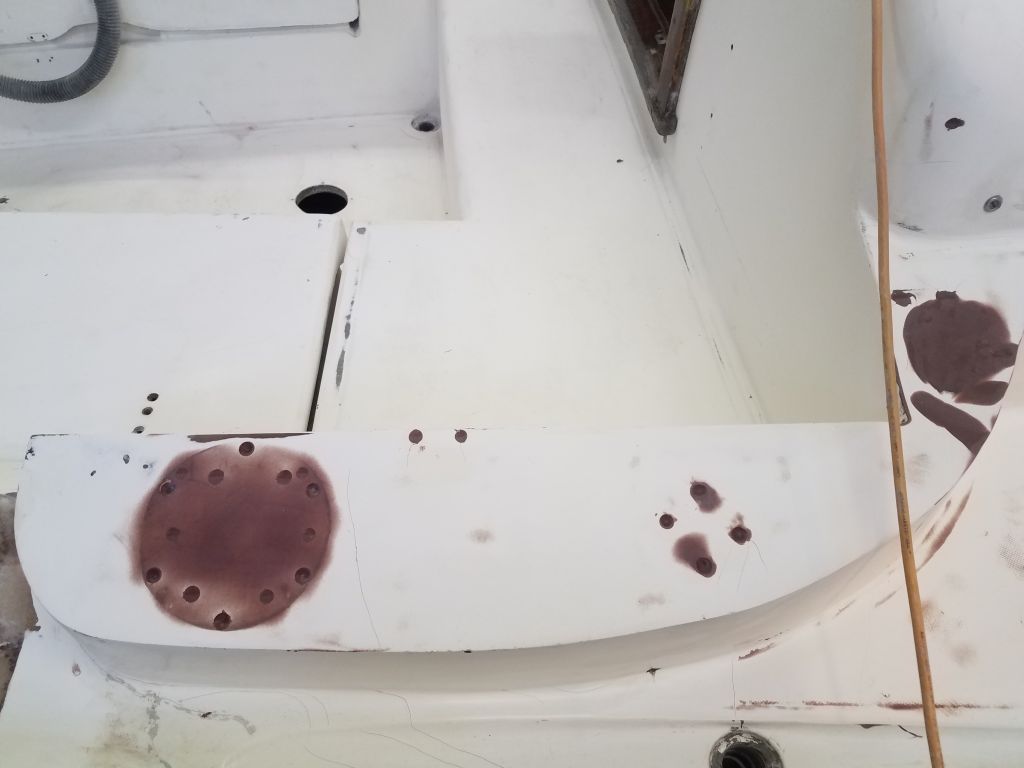
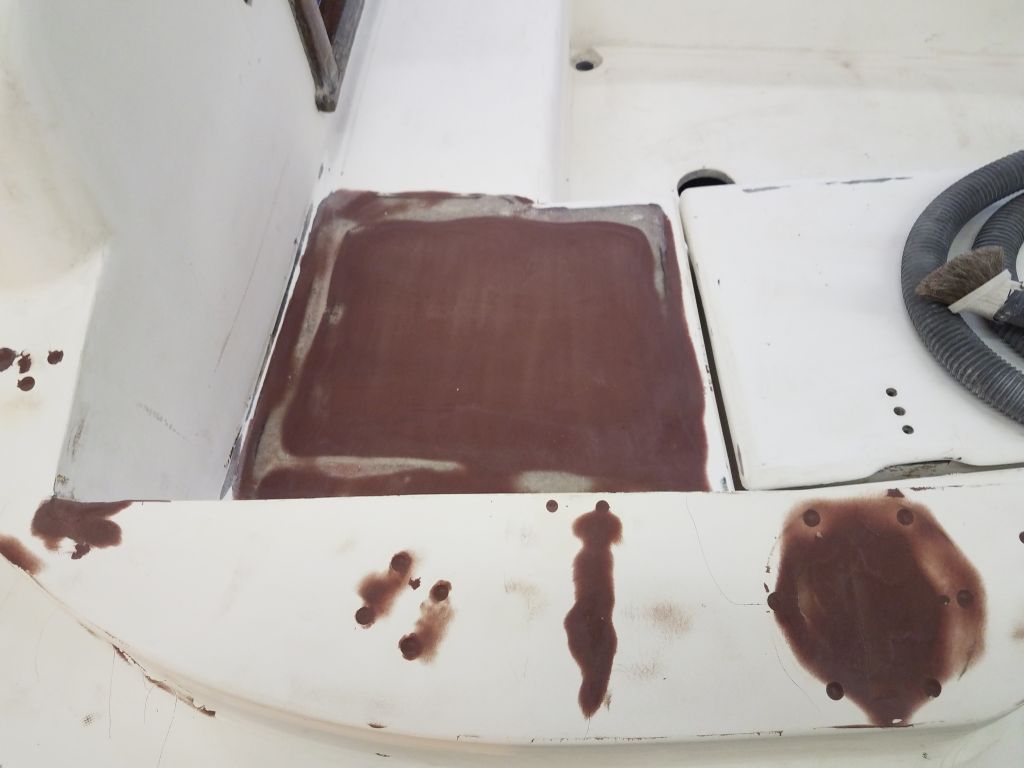
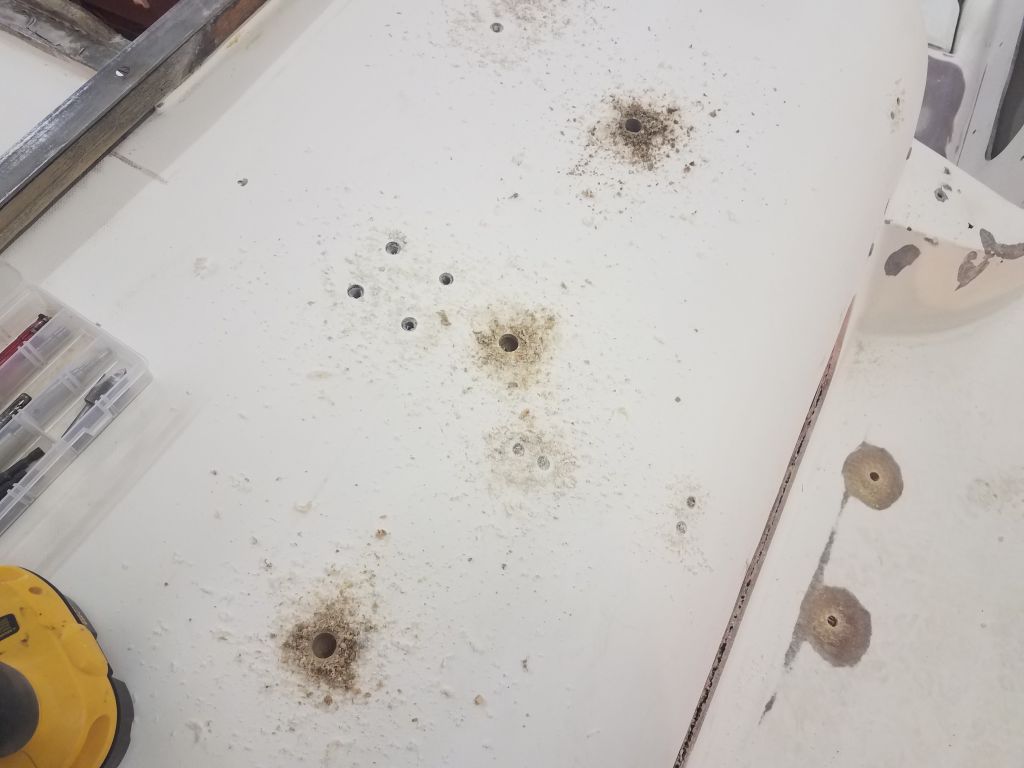
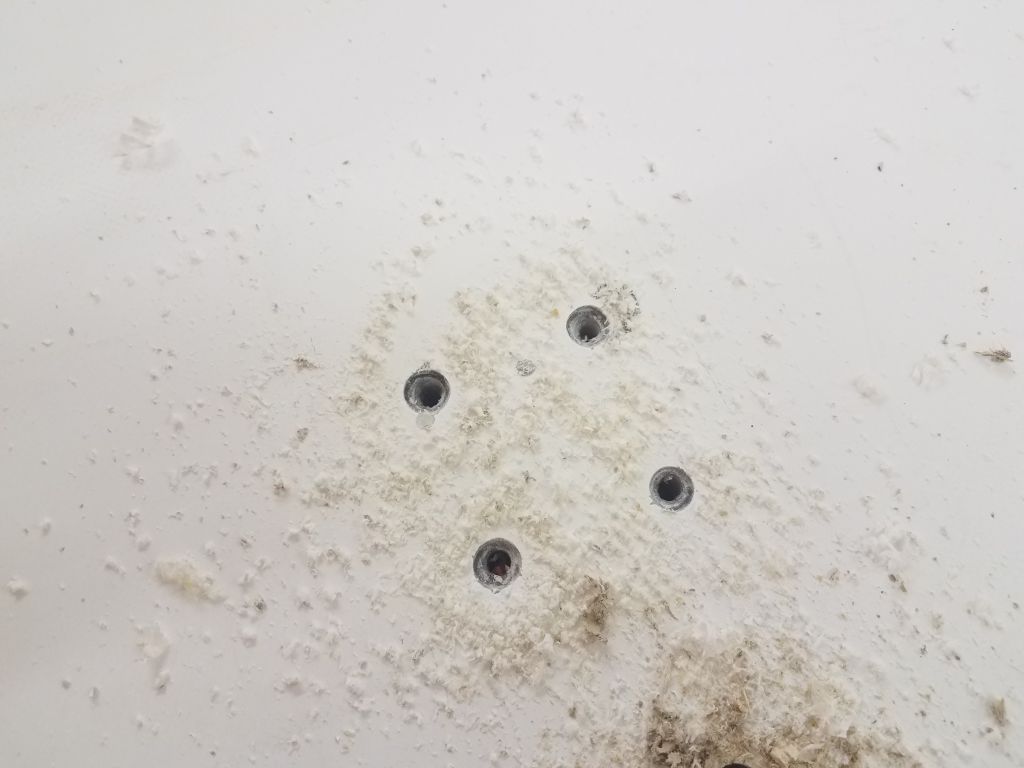
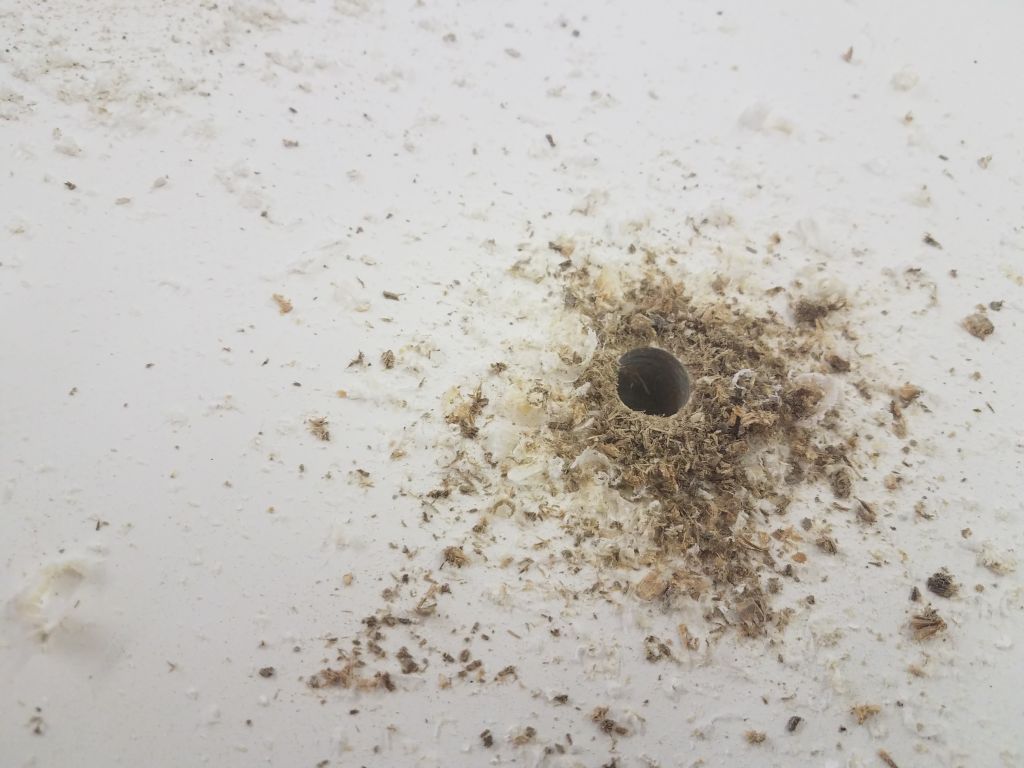
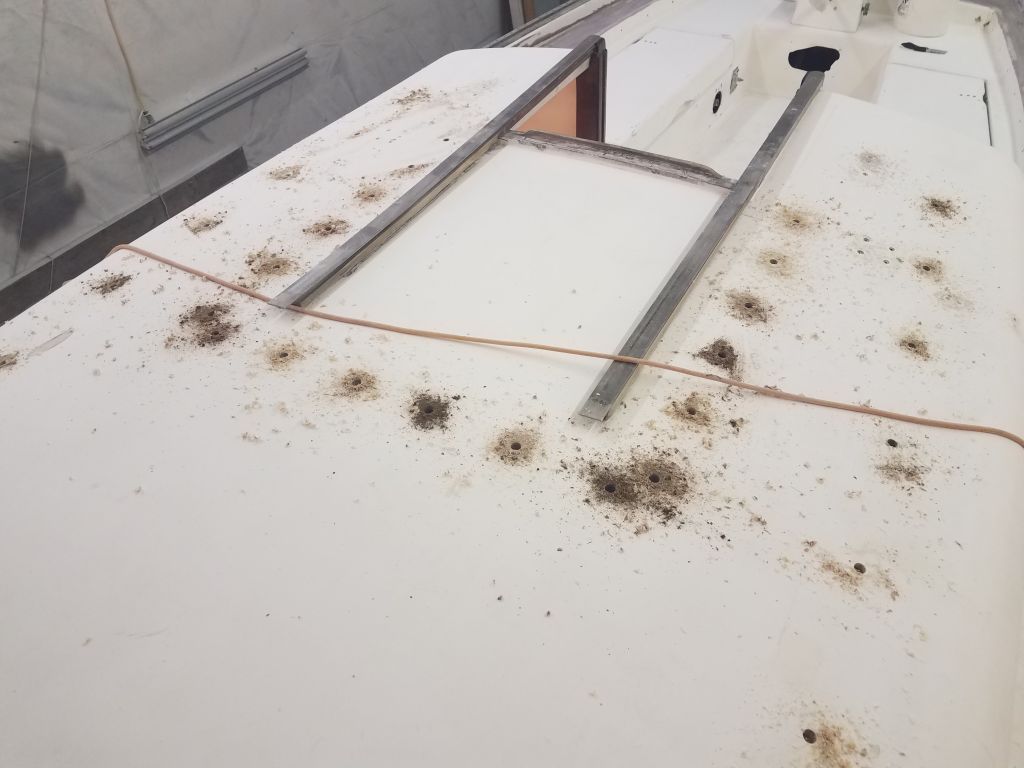
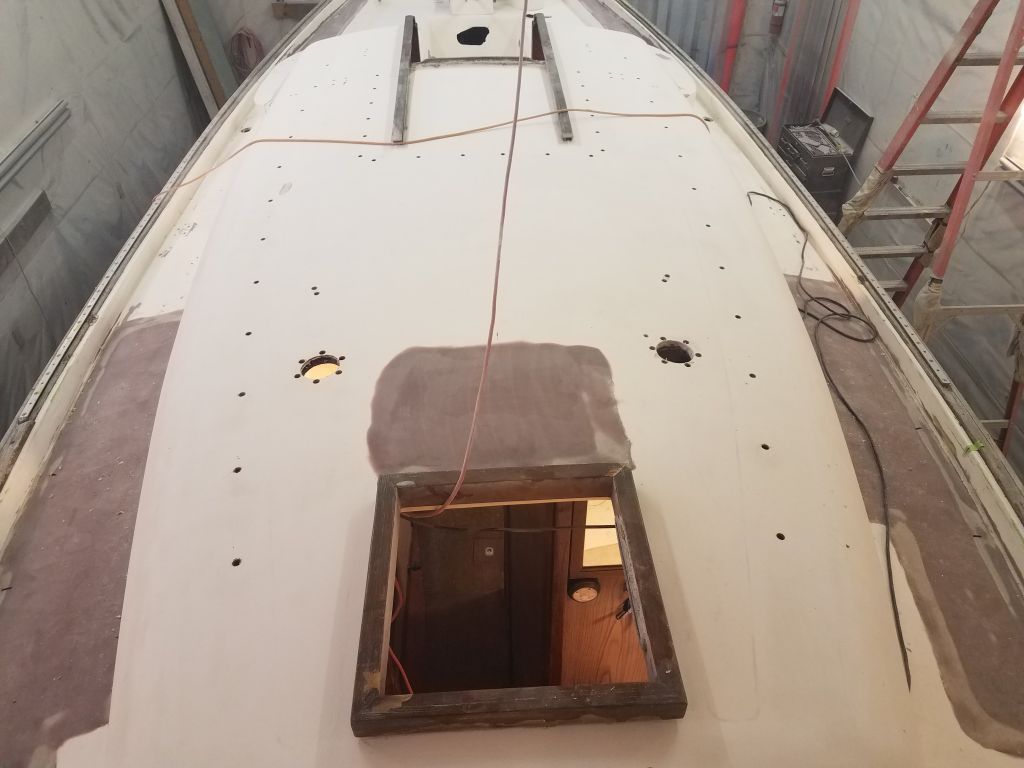
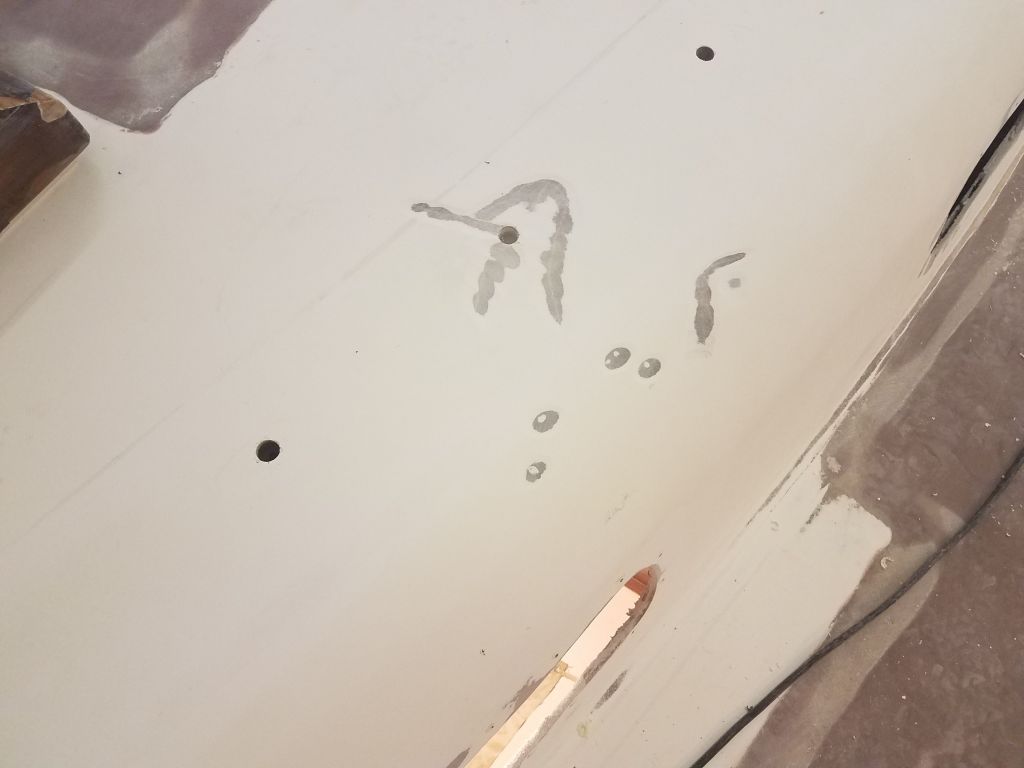
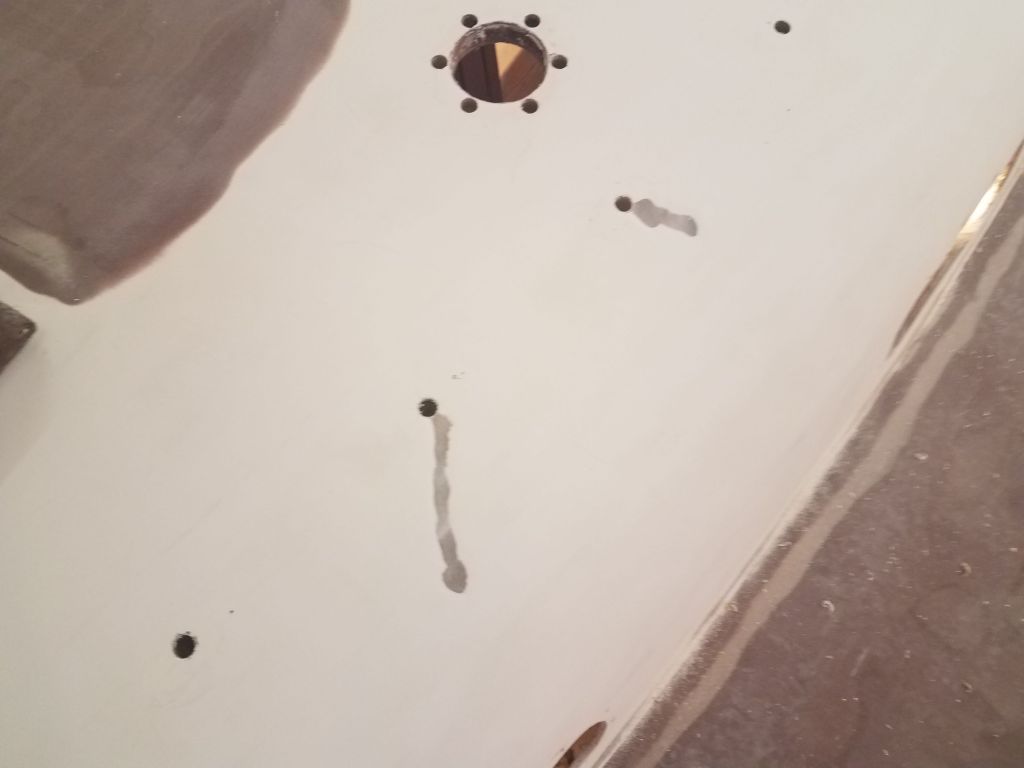
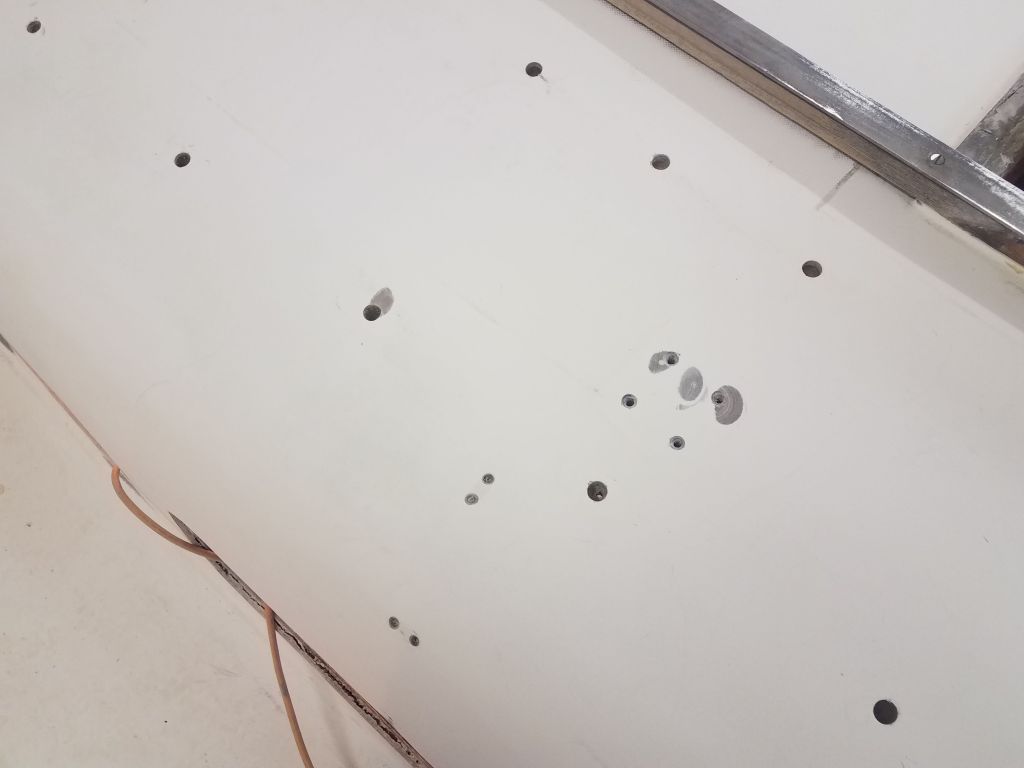
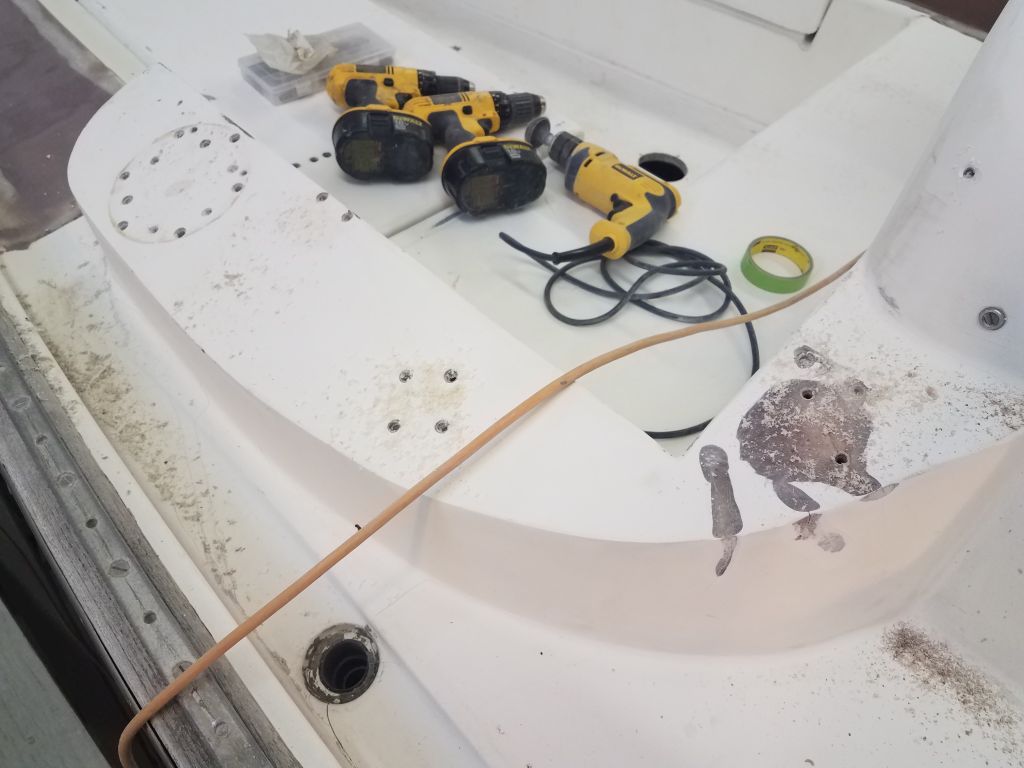
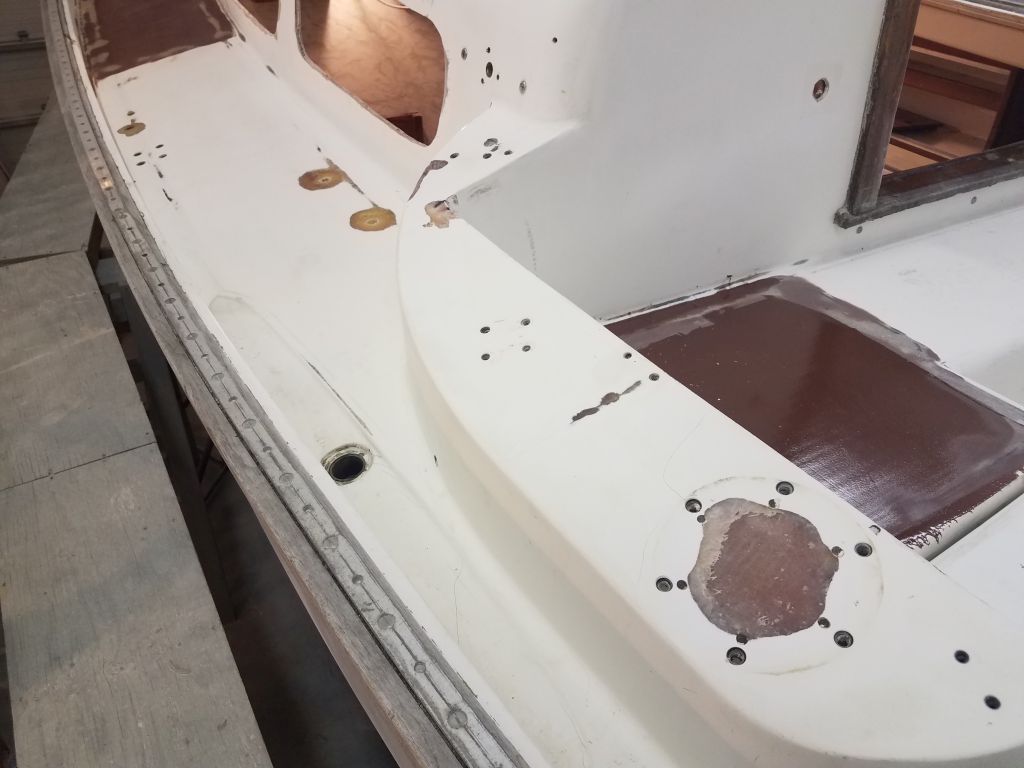
Since sanding and other work might obliterate my pattern markings for the chainplate locations, I made my first task marking, then roughly re-cutting, the 12 chainplate locations.  My 5-minute patterns worked excellently.  The reddish-tinged hole on the port sidedeck (the last photo) marks the center off the waste deck fill, which I’d filled with solid laminate sheeting and had earlier measured and marked for with a reference on some tape at the toerail.

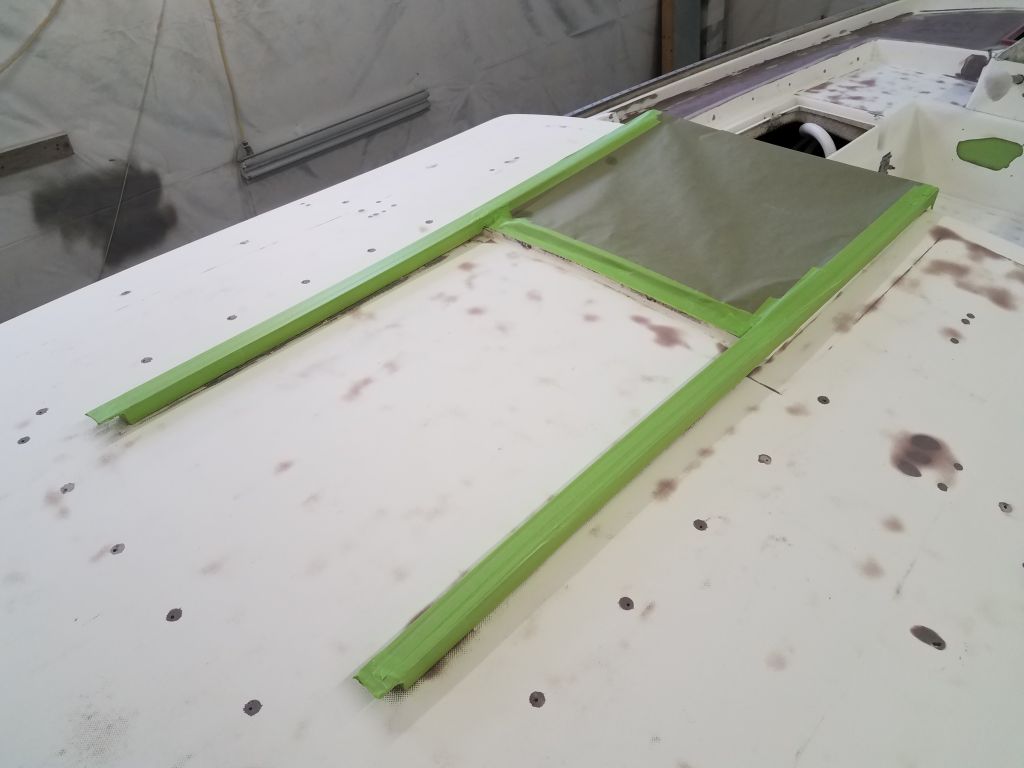
With the chainplate holes re-cut for now, and a rough cut to remove most of the excess material over the steering room hatch, I sanded the new laminate to bring the edges flush with the adjacent decks as necessary, and otherwise scuff the patches to prepare them for additional work and fairing, all of which would be soon to come.  I was pleased with the new fiberglass and happy to have the most major part of the deck repairs behind me, though lots of additional work, including the bulk of the deck surface prep, remained for the weeks ahead.

Total time billed on this job today:  2.25 hours

0600 Weather Observation:  Mostly clear, 4.  Forecast for the day:  Clouding up, snow in the afternoon and overnight, 3-5″ predicted (we ended up with about 4″)

Jasmine 15

< Back to Jasmine

Thursday

To begin, I lightly sanded the newly-filled core areas, just to scuff the surface and remove any hard ridges.  I also sanded the fiberglass patches on the foredeck.

Afterwards, I finished up cutting all the material for the rest of the job:  4 layers of 1708 biax for each section of the deck.

With all material cut and ready, I spent the remainder of the day wetting out and installing all the new fiberglass over both forward sidedecks and around the poop deck and cockpit sidedecks.   At the poop deck, I extended the large after pieces of cloth right over the steering room hatch, though I didn’t wet out the center portion.  I did this to help the material hold together once wet out.  I’d cut out the center section later.

Total time billed on this job today:  8 hours

0600 Weather Observation:  14, clear.  Forecast for the day:  Sunny, 20s

Jasmine 14

< Back to Jasmine

Wednesday

After uncovering the fresh core on the poop deck, I went over all areas lightly with a sander to remove any epoxy ridges and otherwise prepare the surfaces for the next steps in the process.  Afterwards, I vacuumed and blew out all the dust, and solvent washed each area.

With everything dry, smooth, and clean, I made paper patterns of each section, following the outer line of the ground tapered areas on the adjacent decks.  I’d use these patterns to cut the fiberglass for the new top skin laminate.

To bring the recored areas up close to flush with the inner edge of the adjacent deck, each section would require two layers of new material directly over the new core (I could re-use the core patterns for these pieces), plus two larger pieces to overlap and tie into the surrounding decks.   This meant a lot of material cutting ahead.  My initial plan was to work on some of the additional prep work on the foredeck and forward sidedeck areas, such as filling any gaps around the edges of the core, filling in solid material in various voids and around the chainplates, and filling the kerfs in the core as necessary, after which I’d leave the new work to partially cure while I cut material, with the idea of doing the fiberglassing later in the day.  This way, I hoped, I could keep working with green epoxy and avoid another interim sanding step.

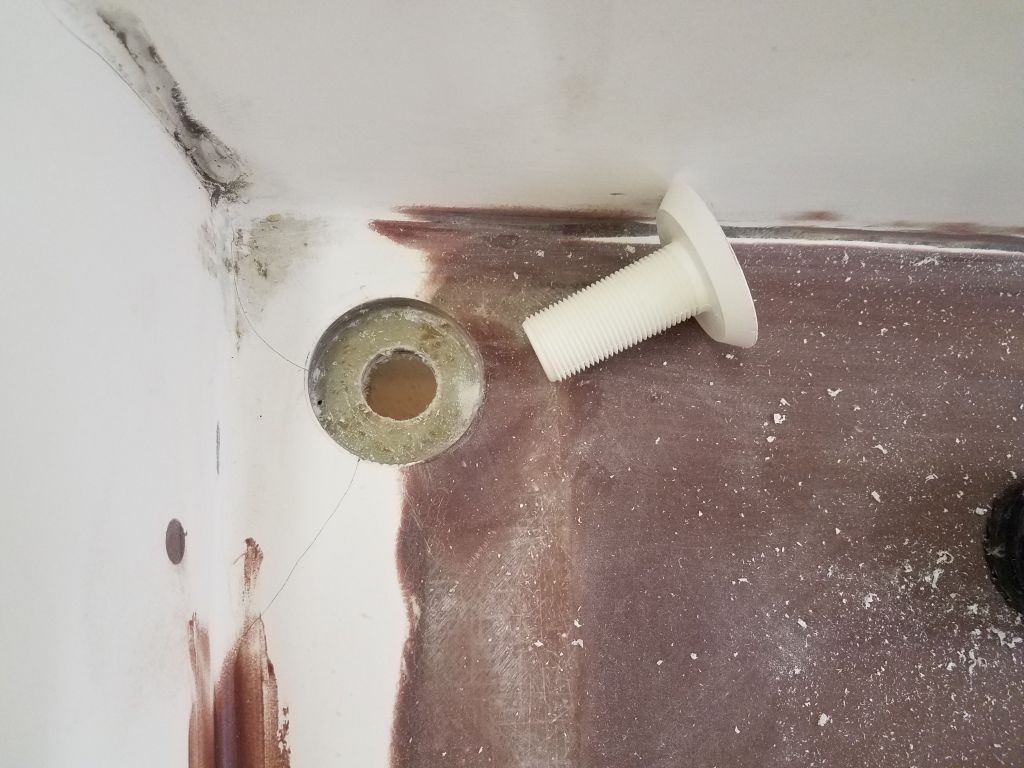
As it happened, I changed my plan during the day, but for now I got started with the chainplate slots.  Earlier, I’d covered all the original chainplates with two layers of clear packing tape as a nonstick device, and now I temporarily installed the old chainplates back in their slots, holding them in place with clamps or a pin through one of the bolt holes as necessary.  I did this to maintain the slots and their positions during the epoxy and fiberglass work ahead.

I wanted to fill the voids around the chainplates with solid, reinforced epoxy, but later I also wanted to remove the chainplates and fiberglass right over the holes, avoiding the issue of cutting the glass around the chainplates and its related irritations.    So while the slots would be there, petrified in epoxy, I needed a down-and-dirty reference for re-finding the holes once I’d fiberglassed over the top.  To this end, I made the simplest, quickest patterns that could help me do the job:  a piece of paper over each chainplate, slotted over the metal itself, allowing the paper to wrap up the nearby bulwark where I outlined the paper edges with a marker right on the still-unsanded bulwark for ready realignment later, and easy relocation of the slots.  I did this for all 12 locations.

Meanwhile, I cut, from 3/8″ solid fiberglass, blocking to fill the various voids I’d left in the new core at certain hardware locations, and trial-fit everything in place.  Then, starting on the foredeck and with the two sidedeck areas, I epoxied in the blocking, and filled the voids around the chainplates and elsewhere with reinforced, thickened epoxy.  For the port foredeck, in way of the anchor line hawse, I filled the entire large void over the original opening with epoxy, though all I really needed was some at the edge; later most of this plug would get cut out, but it would make it easier to continue and fiberglass with the entire void filled.  I focused first on these four forward area as my plan was still to work to do all the fiberglassing of these areas later in the day.

My hope was that I could spend some time cutting new material while the epoxy around the chainplates partially cured, at which time I could remove the chainplates and continue the glasswork.  So for an hour or so, I cut various pieces of material for the two small foredeck patches, and for the starboard sidedeck.

Somewhere in here I changed my plan for the remainder of the day, probably because I realized that it was more important for the next day’s work that I continue some of the gap-and chainplate-filling tasks on the after portions of the boat, where there was still plenty to do, and I decided it would be more efficient to concentrate on all the prepwork first, even though it would mean another quick round of sanding the next day.  So with enough material cut for the foredeck patches, along with the starboard sidedeck, I changed tacks and got back to work on the remaining detail work, using thickened epoxy to fill all the edge gaps and fill the kerfs, and installing  more solid blocking in the core voids on the after decks.

Meanwhile, I installed four layers of new biaxial fiberglass over the two foredeck patches:  two layers over the new core, bringing it up level with the inside edge of the deck, then two larger layers overlapping the adjacent deck and each other to complete the lamination.

Late in the day, once I’d finished up all the other epoxy work, I went ahead and removed the taped-over chainplates, now that the epoxy around them had cured sufficiently.  This left neatly-formed slots through the deck and surrounded by solid material, but next time, after a quick smoothing with a sander, I could easily fiberglass over the tops of the slots for a clean and strong lamination with fewer obstructions.

Total time billed on this job today:  8.25 hours

0600 Weather Observation:  32, clear.  Forecast for the day:  Sunny, 35

Jasmine 13

< Back to Jasmine

Tuesday

To begin, I unloaded the sandbags from the newly-laid core on the sidedecks and elsewhere, exposing the new core.

I had other commitments away from the shop later in the day, so with only a limited amount of time I chose to focus on the new core installation at the poop deck.  After final preparations, I installed the core in the same manner as the rest of the deck.

Total time billed on this job today:  1.75 hours

0600 Weather Observation:  Clear, 20°, 4-5″ snow yesterday afternoon and overnight.  Forecast for the day:  Clouds and sun, near 40

Jasmine 12

< Back to Jasmine

Monday

Working on an unrelated shop project over the weekend, I decided to take a few moments to disassemble the two side anchor rollers from the old bow platform, which would leave the wooden portion available for easy patterning; frankly, the platform was in my way.  The old stainless steel rollers–one on each side–featured a 5/8″ thick threaded rod passing through the meat of the platform, secured with a nut on each end, along with wood screws to secure the roller frames to the side of the platform.    The wood screws were easy enough to remove, but the large nuts seemed at first not to budge–but then simply shattered apart on each side under the wrench pressure.  At that point, it was a matter of a little elbow grease to force the old roller assemblies off the shaft, then hammer out the shaft from the platform itself.

After double-checking the positions of the previously-marked cutout areas on all the core pieces, I removed the core and cut out these areas, the final step before core installation.  After various other preparations, including gathering sandbags, plastic sheeting, and so forth, I got started on the core installation with the two smallest pieces on the foredeck.  Here, and for all other areas to come, I began by wetting out the core on both sides, getting epoxy resin into the scrim and the kerfs between core blocks as much as possible.  In the voids on deck, I wet out any exposed/adjacent coring, filled the empty space beneath the deck edge with a thickened epoxy mixture, and applied epoxy adhesive to the substrate with a notched trowel before pressing the core into place and applying weight to hold it while the epoxy cured.

Continuing, I repeated the process with the large area of the port sidedeck…

…and then the corresponding area on the starboard sidedeck.  Here, during a quick break in the activity while changing gloves, I took advantage of the rare “clean” moment to snap a couple pictures of the deck and core after applying the notched adhesive and all other related preparations.

Moving aft, I similarly prepared and installed the new core in the narrow sidedecks outboard of the cockpit.

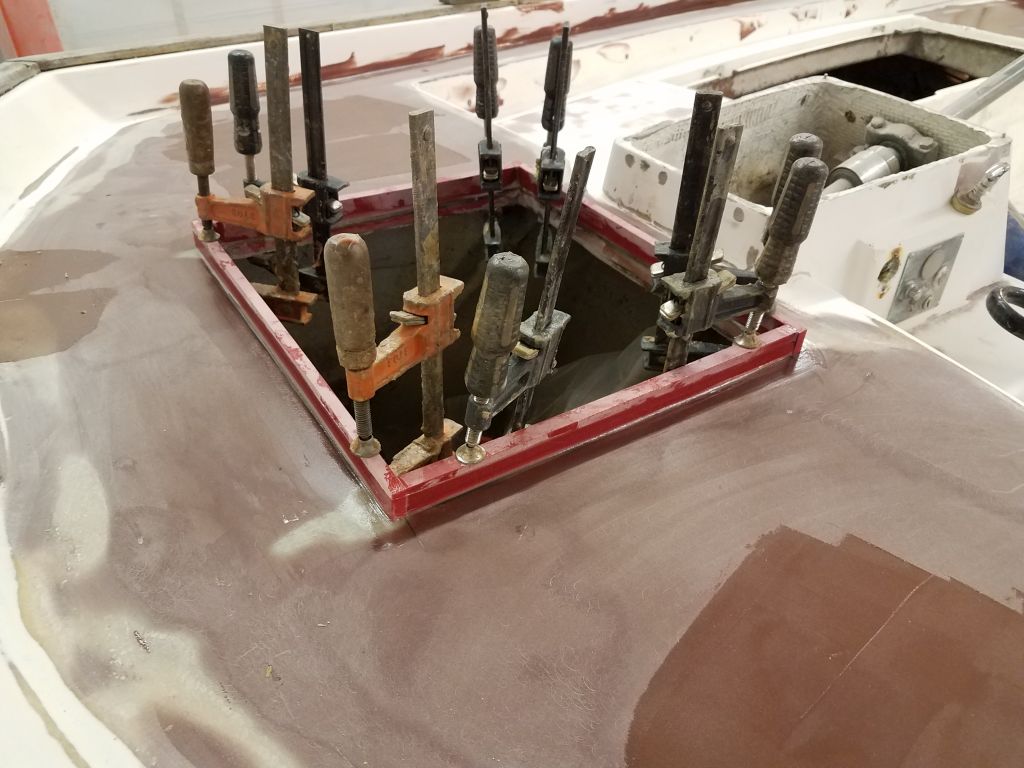
I would have liked to install the final core pieces on the poop deck , but didn’t have enough weight bags to continue.  However, this gave me an opportunity to first install solid 3/8″ fiberglass strips, 1″ wide, around the perimeter of the steering room hatch opening.  These would seal off the core around the opening, and provide strength and stiffness to the whole area as well.  I glued these in place with more thickened epoxy, clamping them around the opening for the glue to cure.

Throughout the day, in a series of three separate installations to prevent excess heat buildup during curing, I installed about 13 layers of 1708 fabric set in epoxy resin in the main mast step area, bringing it close to flush with the adjacent deck.

Total time billed on this job today:  7.75 hours

0600 Weather Observation:  0°, mostly clear.  Forecast for the day:  Increasing clouds, light snow in the afternoon, 1-2″ forecast.

Jasmine 11

< Back to Jasmine

Friday

After a quick water wash, I lightly sanded the epoxy skim coat in the deck areas to be re-cored, cleaning up thoroughly afterwards.

I made simple paper patterns of each area, pressing thin paper into the deck openings and tracing with a marker before cutting out the pattern for a test-fit.  In known hardware locations that wouldn’t change with the reinstallation, I marked out areas to eliminate the core so I could later fill the sections around the hardware (including chainplates and stanchion bases, and around the perimeter of the steering room hatch) with solid material.  I chose not to eliminate coring in way of the old stern cleat locations, as I wasn’t sure whether these locations might change with the new Norvane windvane installation.  Once I finalized those locations later in the project, I’d do the standard core removal at bolt locations through the completed deck.

With my patterns complete, I spent the remainder of the day cutting out new 3/8″ balsa core to fit all areas, as well as a series of 1708 fiberglass layers from which I’d build up the mast step reinforcement.  I left most of the core whole for the test-fitting to double-check the locations for hardware core omission, but before final installation I’d remove the core from those areas.

Total time billed on this job today:  6.25 hours

0600 Weather Observation:  0°, clear.  Forecast for the day:  Sun and increasing clouds, low 20s.

Jasmine 10

< Back to Jasmine

Thursday

With another round of sanding, I dressed up the newly-exposed inner deck skin in all areas, cleaning up and beginning to smooth the rough surface and getting into corners with a detail sander.  The end result didn’t look vastly different, but this step would help ensure that the new core had the best possible bonding surface.  I also sanded the immediately-adjacent deck surfaces where necessary to remove the molded nonskid pattern.  I’d get to the rest of the deck sanding soon, but for now my focus was on the major repair work.

At the forward end of the starboard sidedeck outboard of the cockpit, I cleaned up the raw hole left in way of the stanchion base, removing loose material and sanding belowdecks as well as from above, so I could begin patching the area.  After vacuuming and solvent-washing the deck areas under repair, including this spot, I masked over the opening from below to form a rudimentary mold, and applied a piece of fiberglass from above, covering the opening.  Later, once this layer cured, I’d add additional reinforcement from beneath.

On the port aft side, I’d cut slightly too far out when I removed the top skin, just outboard of where the core actually ended, so I ended up with a kerf in the edge of the conjoined top and inner skins.  To reinforce the cut, I lightly sanded the underside of the lower skin from inside the cockpit locker, then installed some tabbing across the cut areas.  The rebuilding from the top side would complete the repair to this area.  I had to put a couple small weights in place on top since the inner section had sprung up slightly after the cut.

The nature of the original core installation left an irregular series of lines, dips, and high spots on the inner skin, along with variations in the texture of the substrate.  My earlier round of sanding cleanup had helped, but it wasn’t possible to completely sand the area smooth.

To clean up and stabilize the surface and better prepare it as the bonding substrate for the new core to come, I elected to skim coat the exposed inner skin with thickened epoxy now.  This would mean one more round of light preparatory sanding afterwards, but the surface was irregular enough that I didn’t want to count only on the troweled application of epoxy adhesive to even these areas out during core installation.  So with several batches of epoxy mixed with cabosil, I skimmed over the inner skins in all areas, filling the low areas and exposed cloth weave and creating the beginnings of a smooth substrate that would accept the core well later on.

Total time billed on this job today:  6.25 hours

0600 Weather Observation:  10°, clear.  Forecast for the day:  Sunny, 20s

Older posts Newer posts