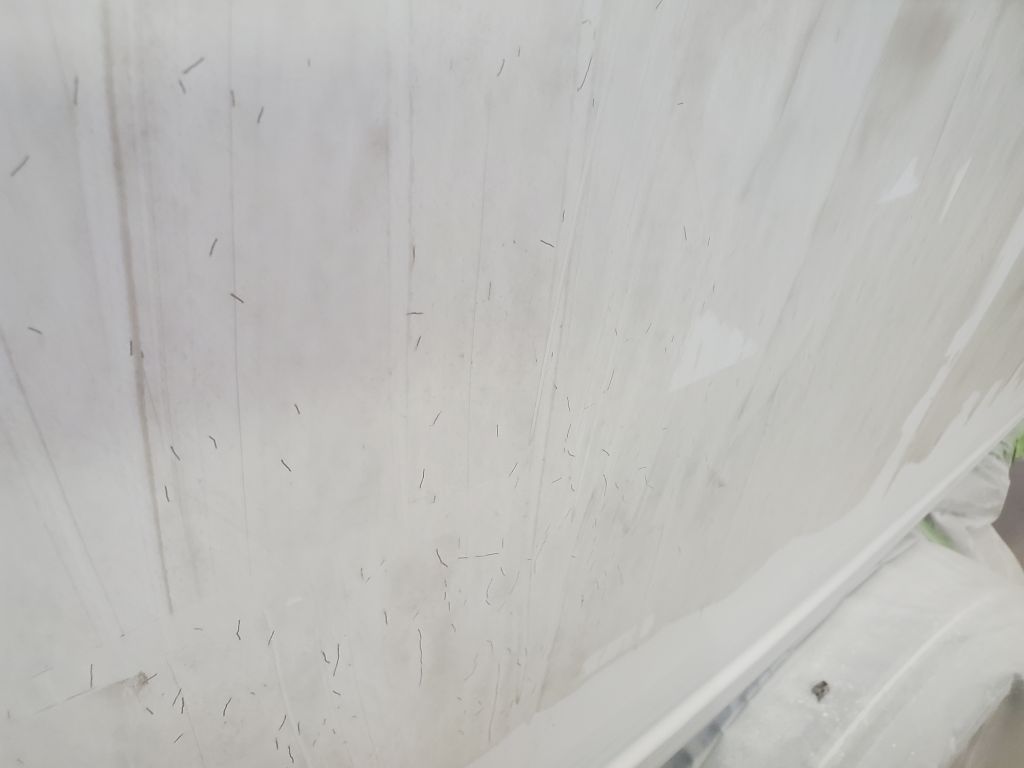
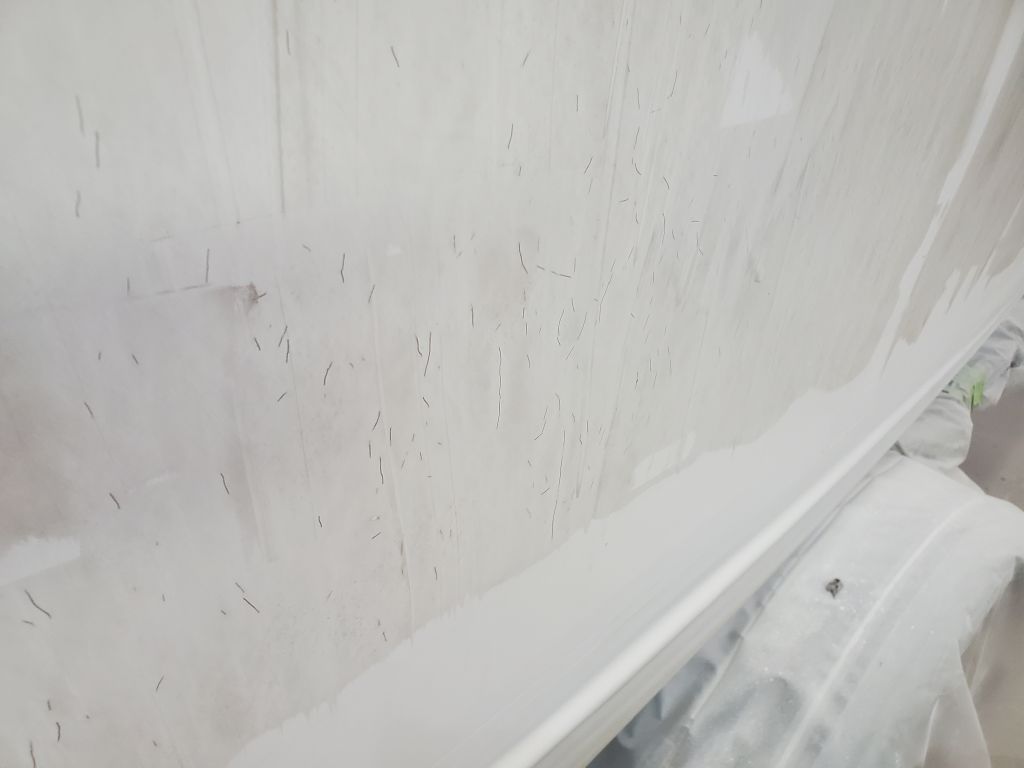
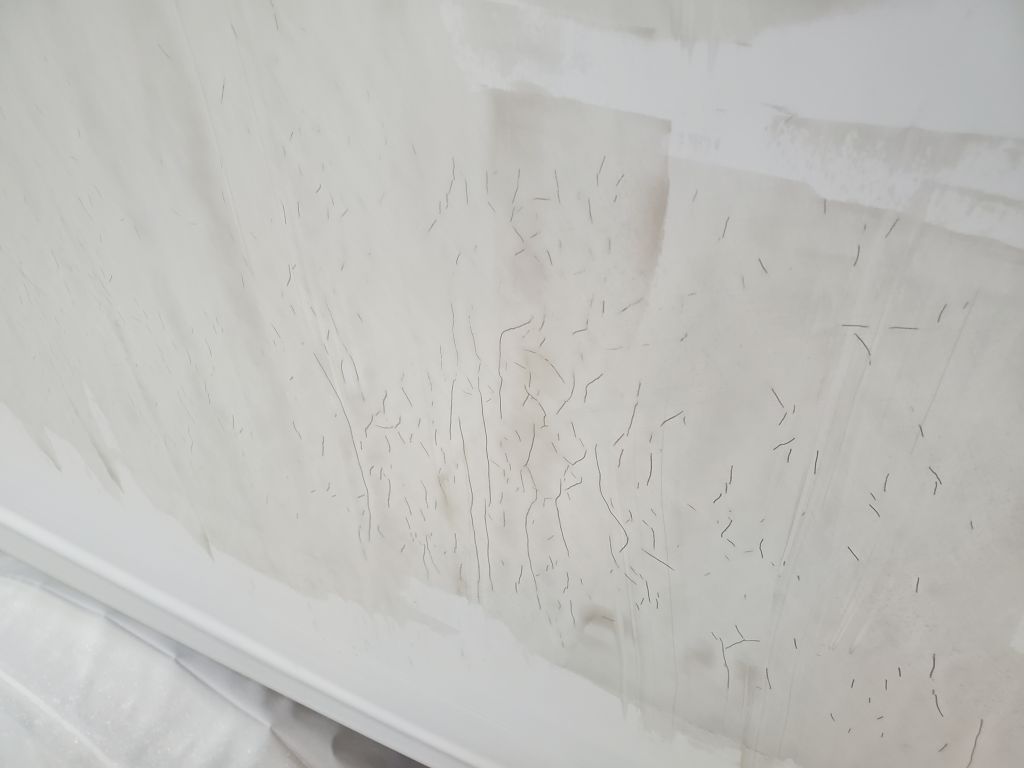
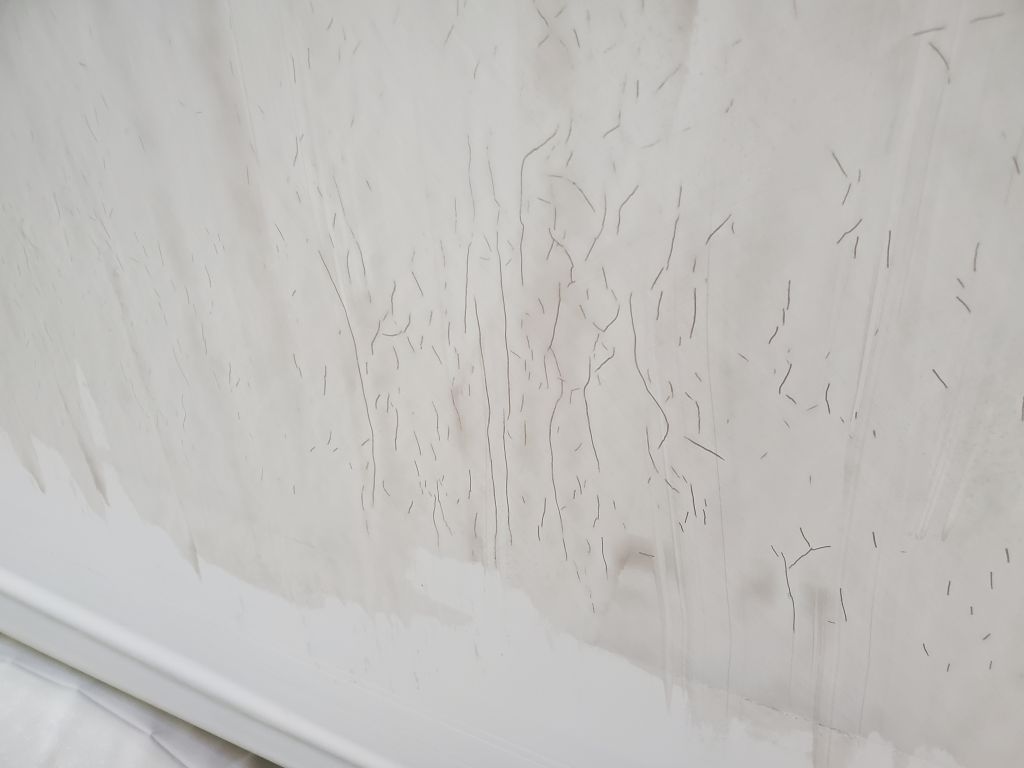
(page 40 of 165)

Holby 43

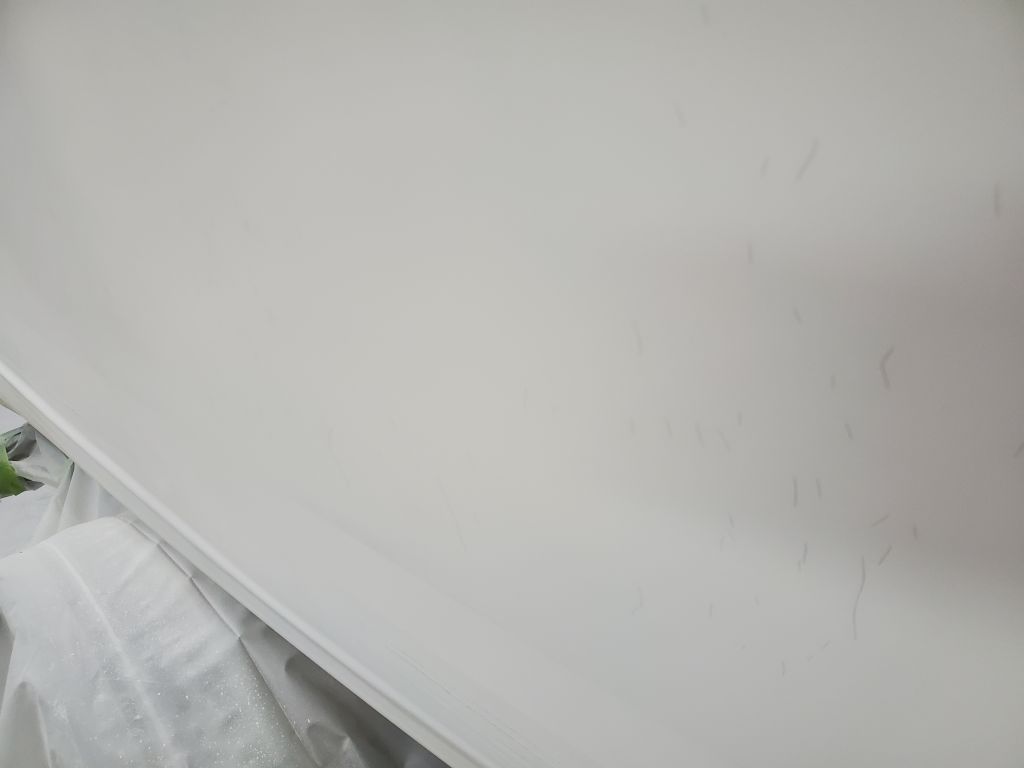
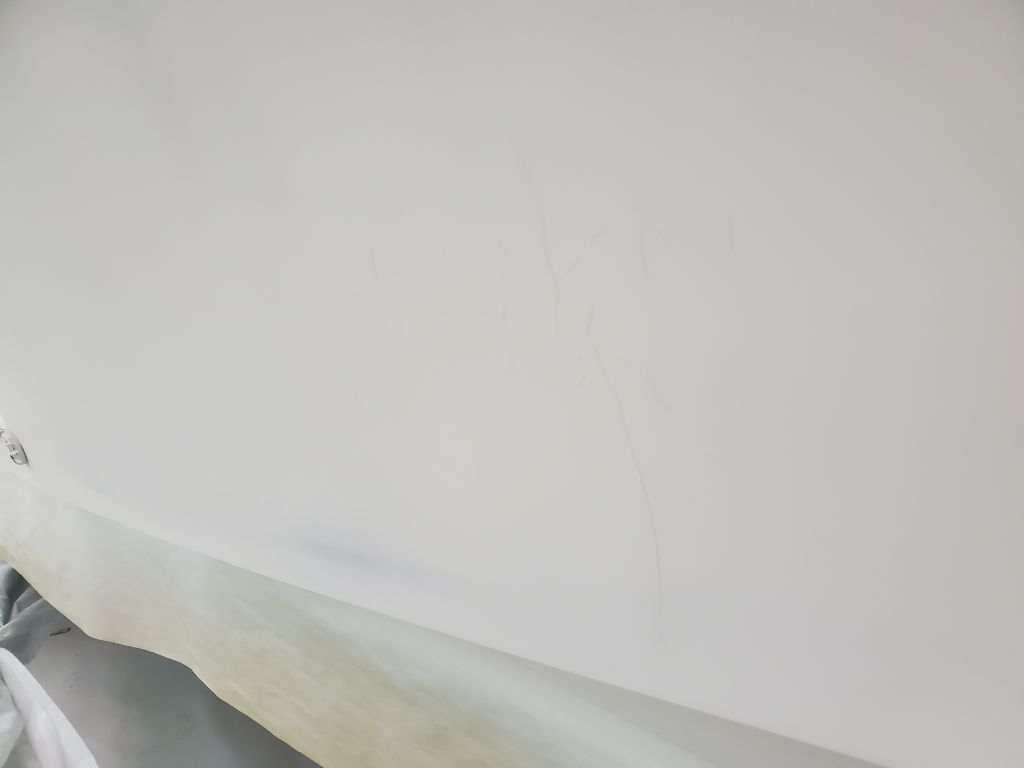
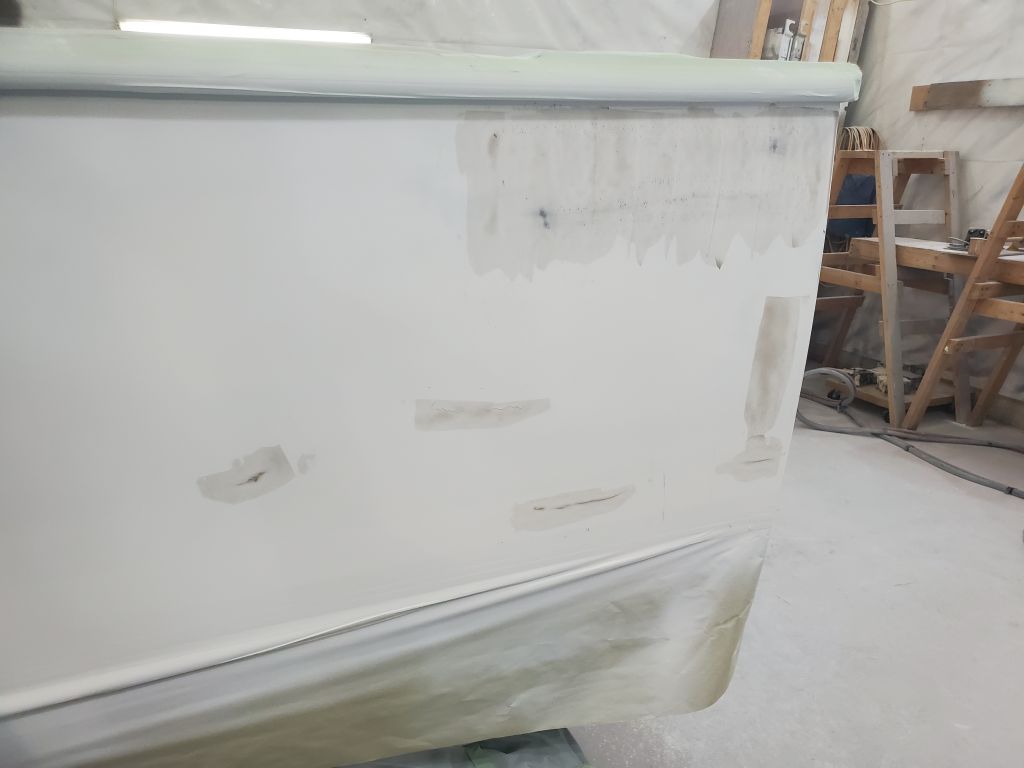
As needed I lightly sanded the small epoxy patches filling the screw holes that I’d done last time, and some additional fine sanding at the two gelcoat repairs near the windshield, completing this prep for now.

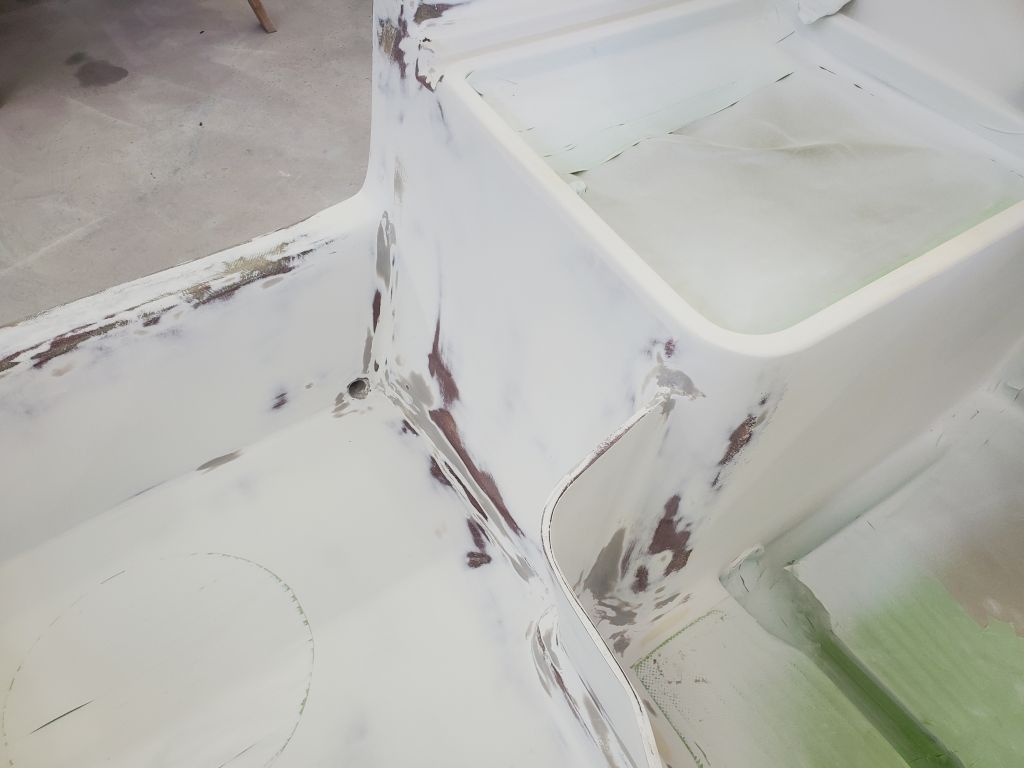
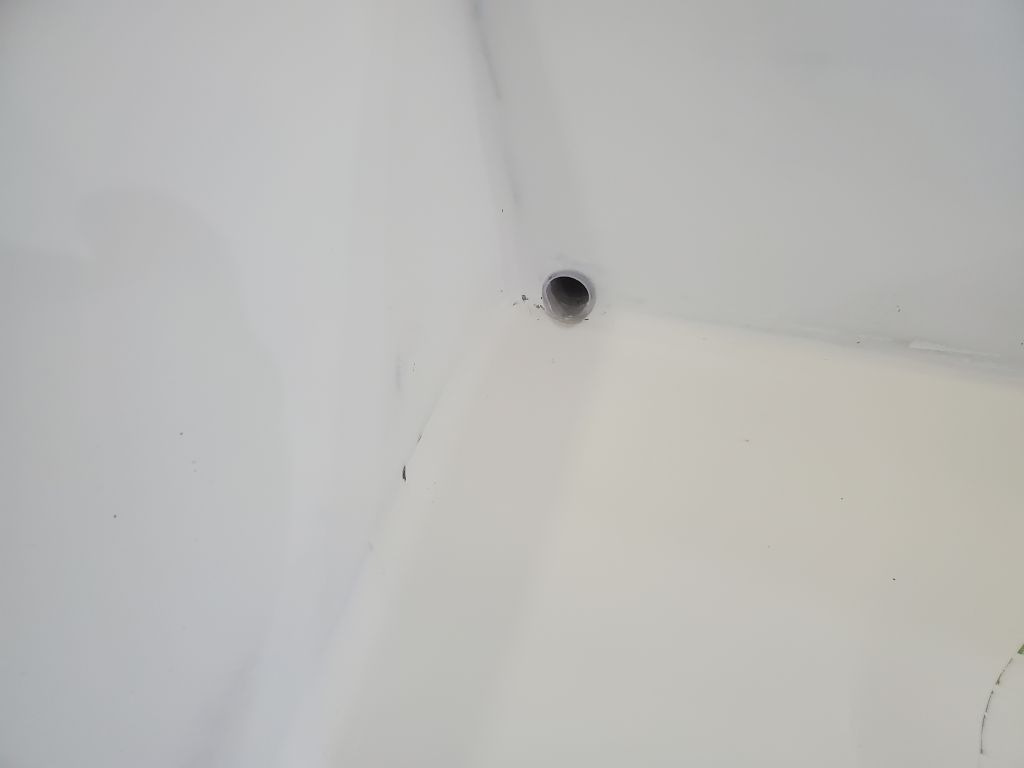
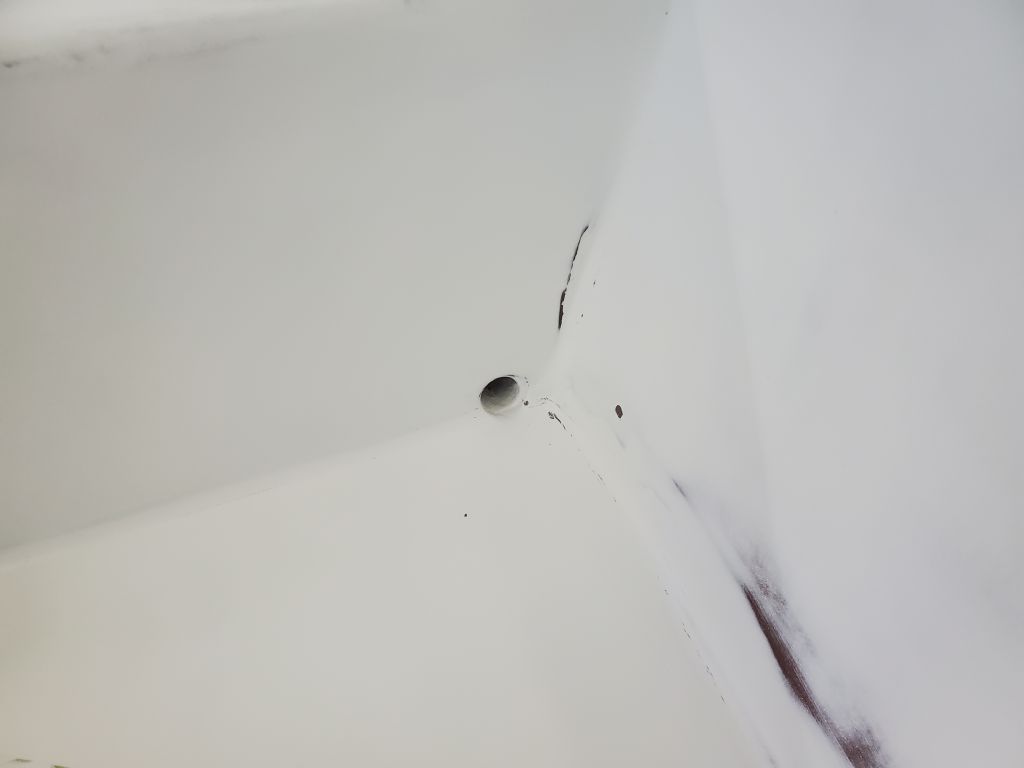
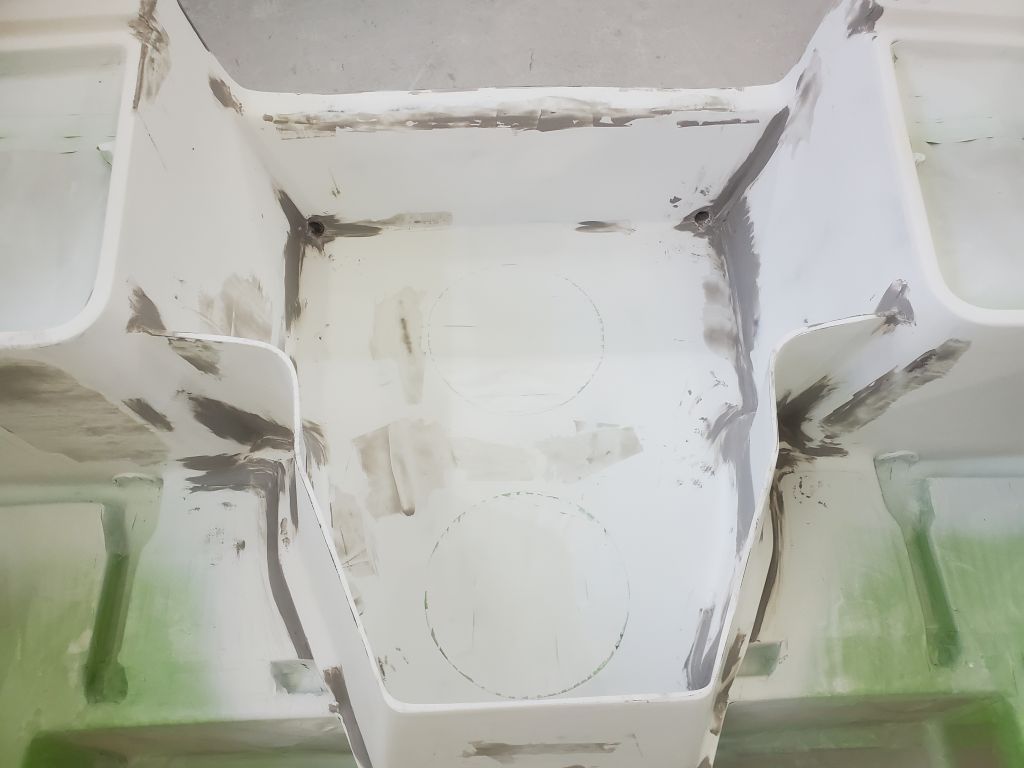
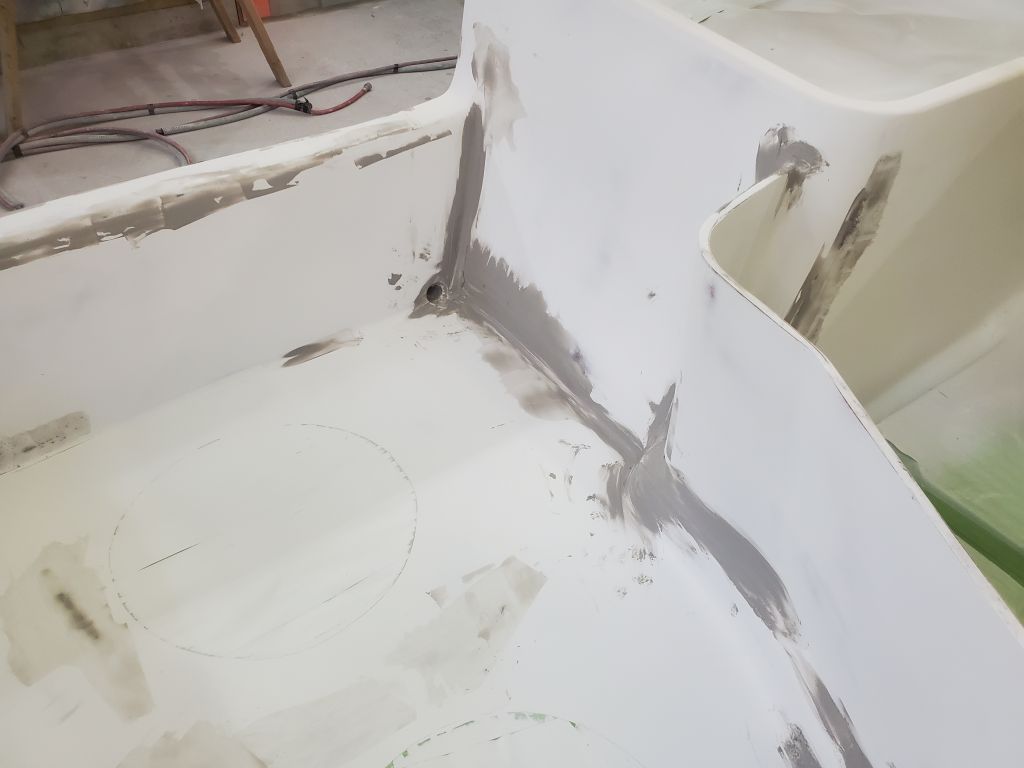
I realized it’d be better to install the brass scupper liners for the outboard well now, rather than after primer or paint, since there might be minor additional epoxy work required, so after final preparations I installed these tubes with a thickened epoxy coating, holding them tightly with masking tape while the adhesive cured.  Later, I dressed up the inside edges with additional epoxy fairing, and by the end of the day I could remove the tape from outside.

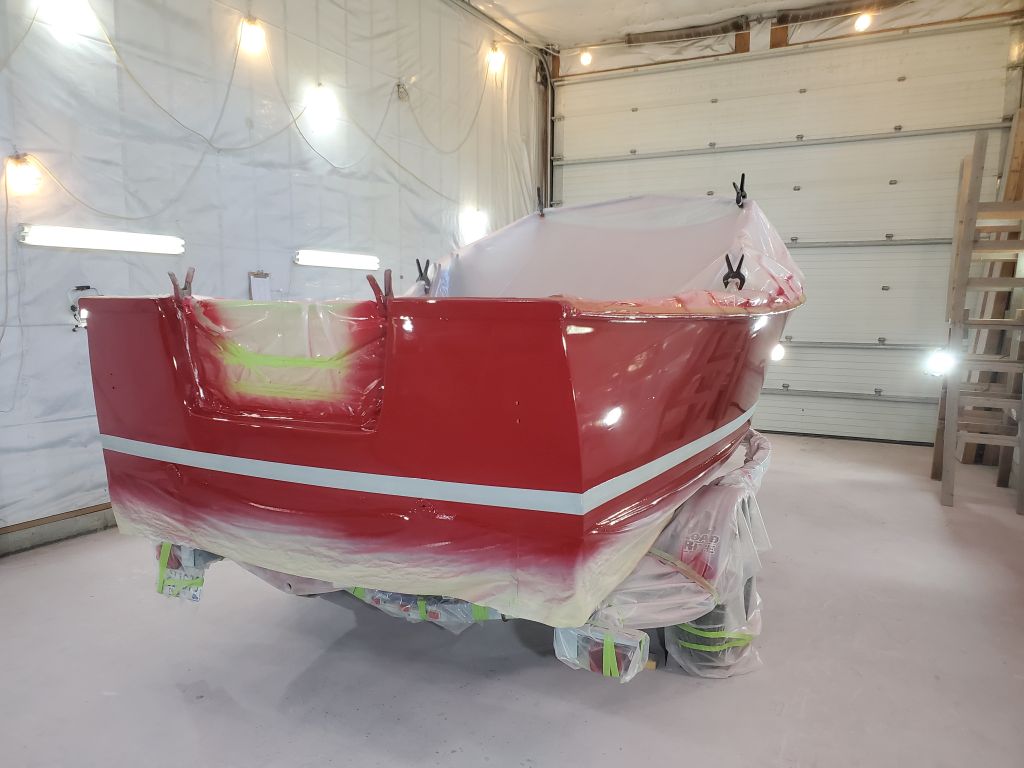
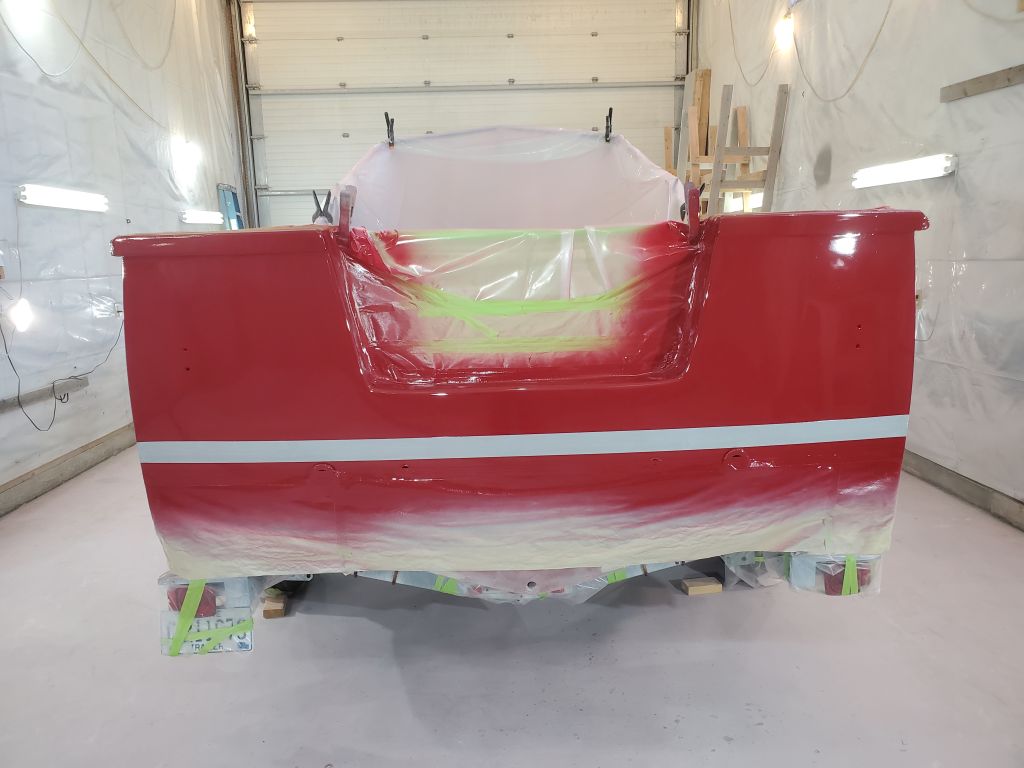
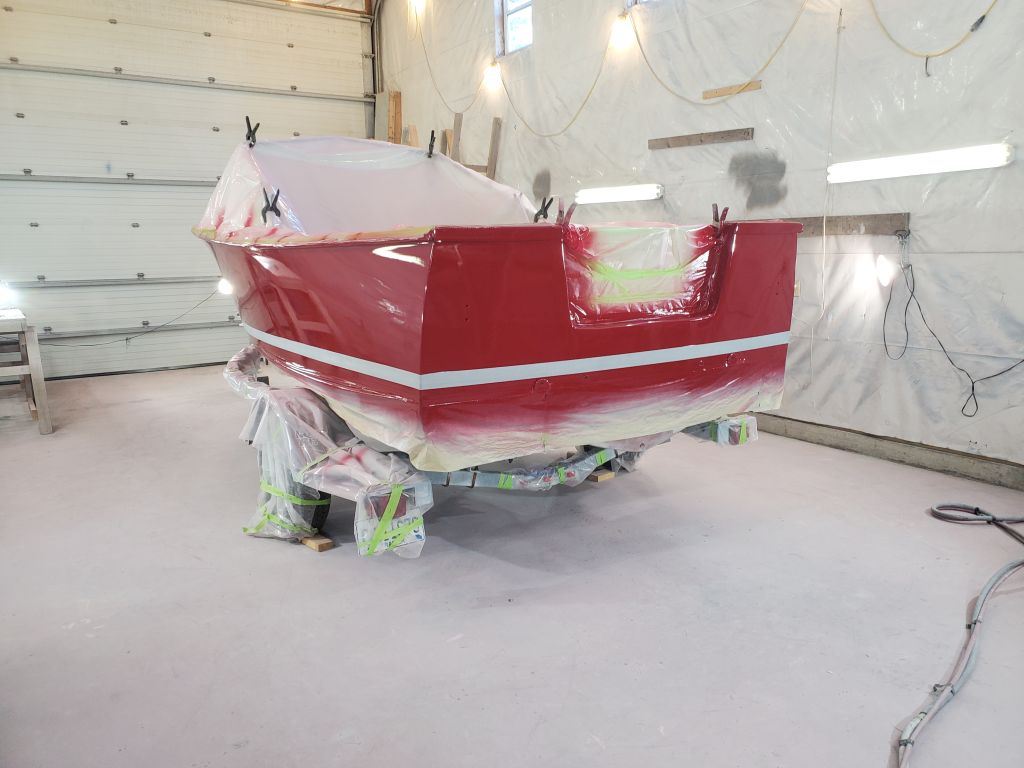
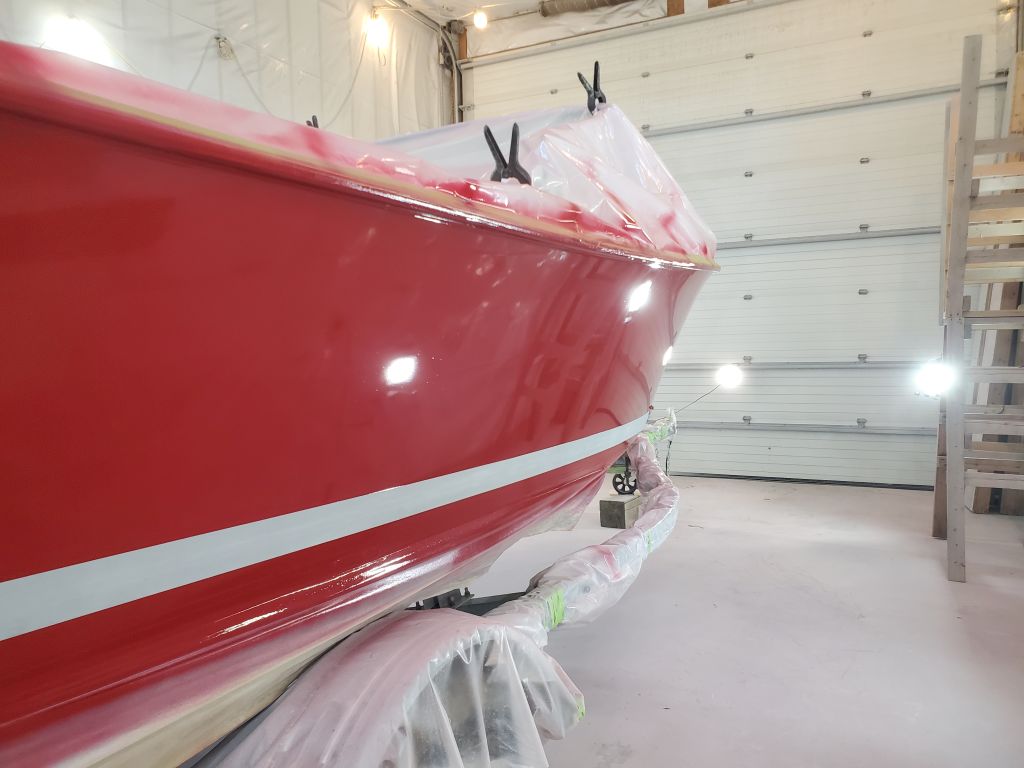
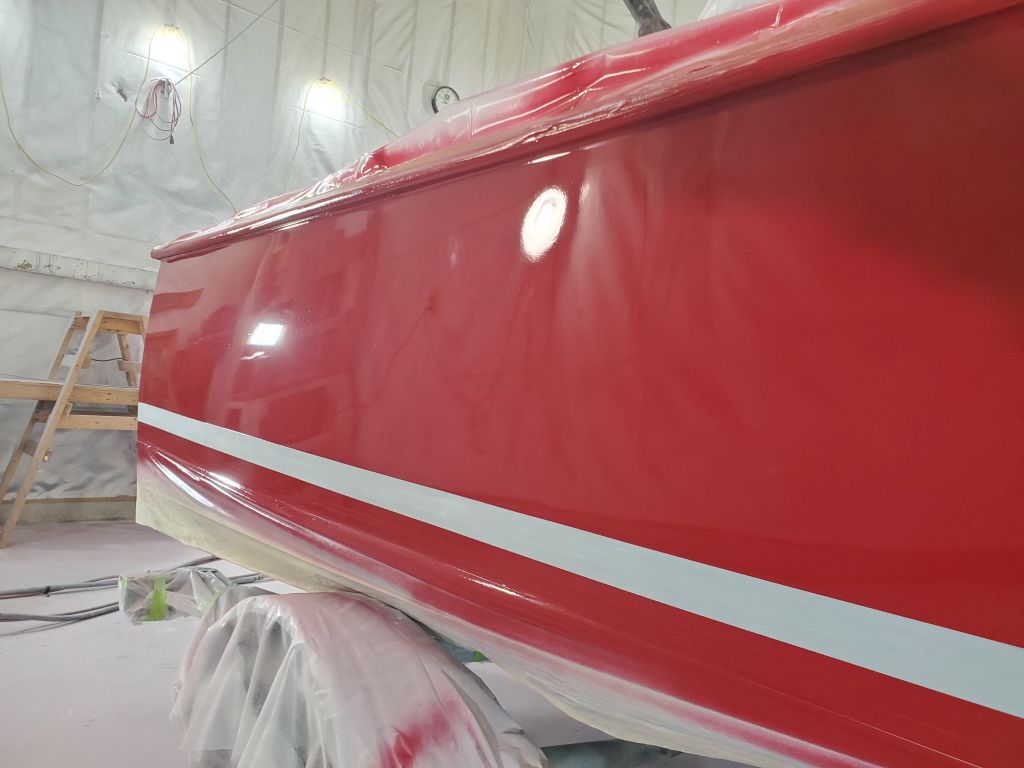
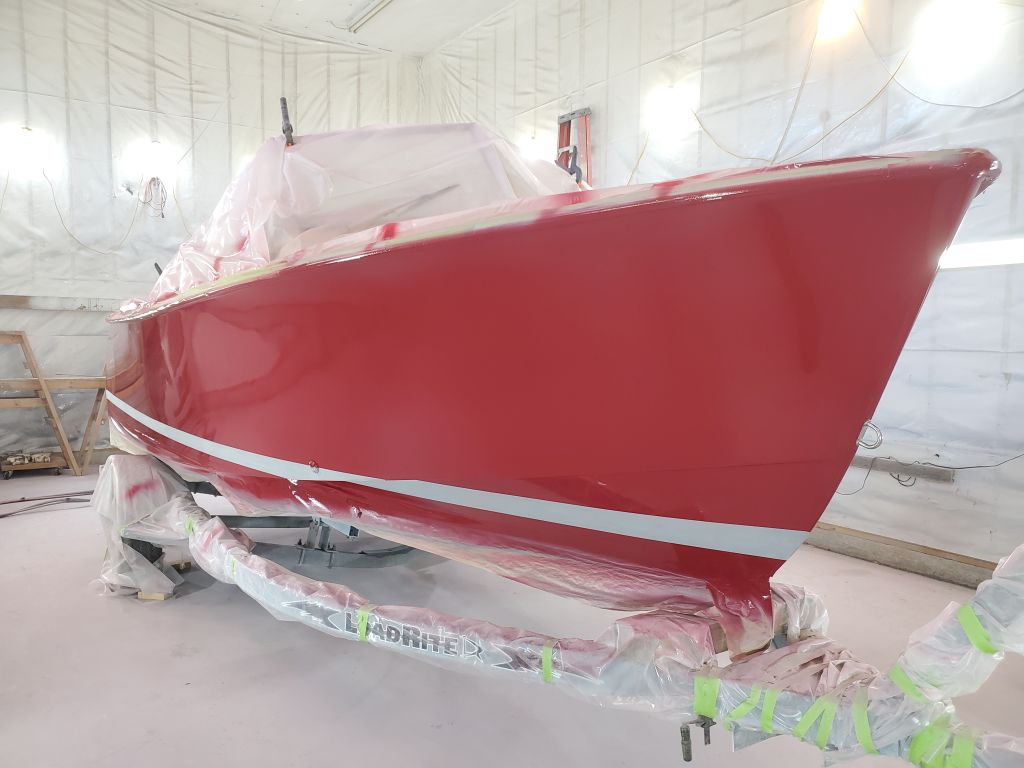
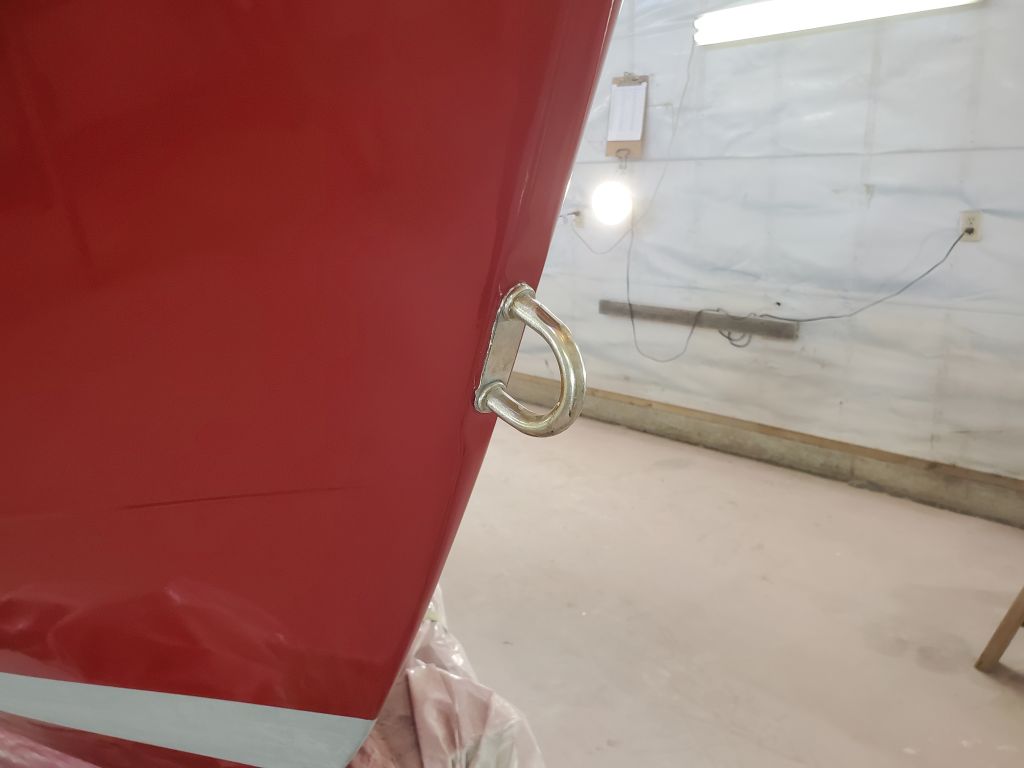
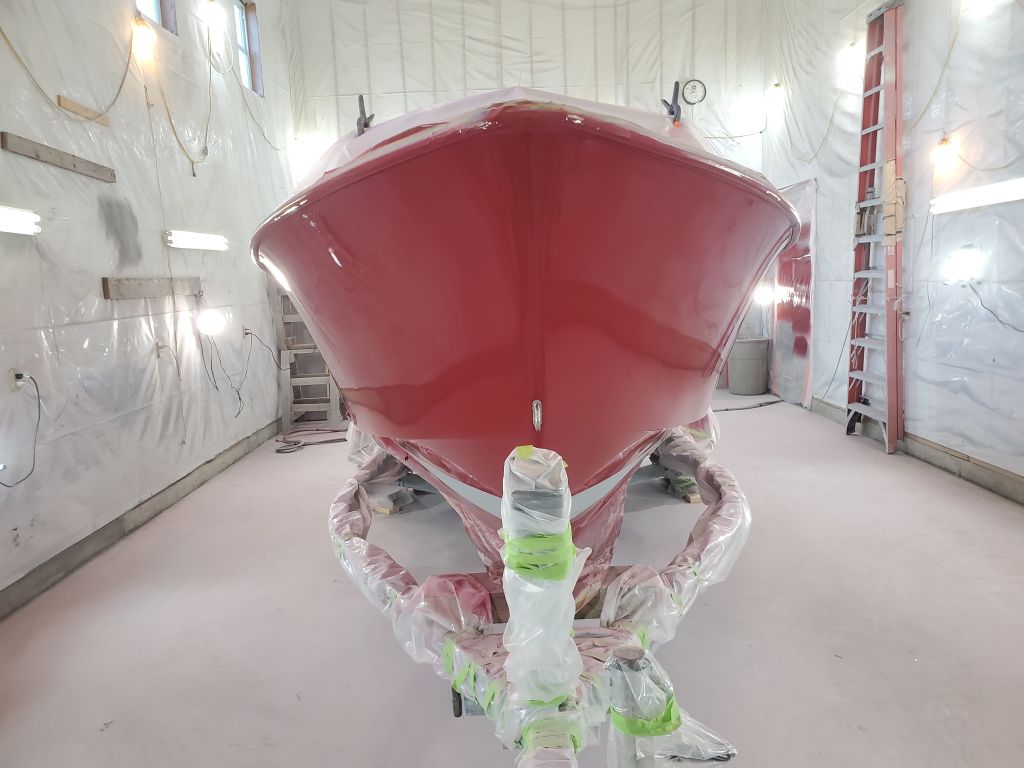
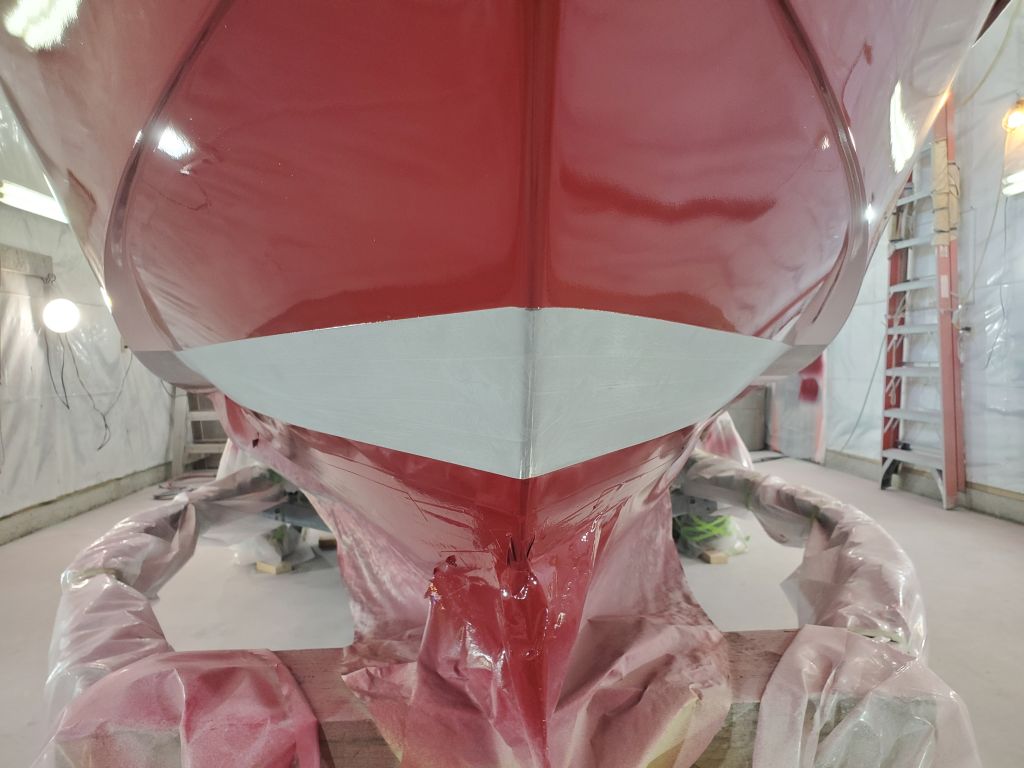
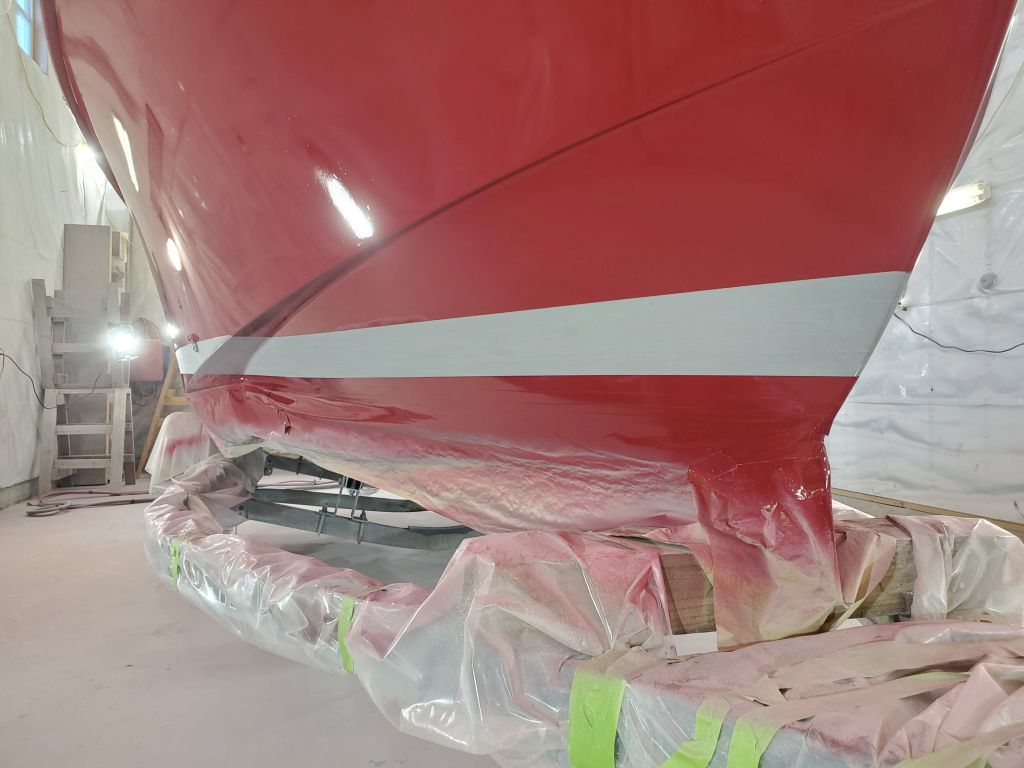
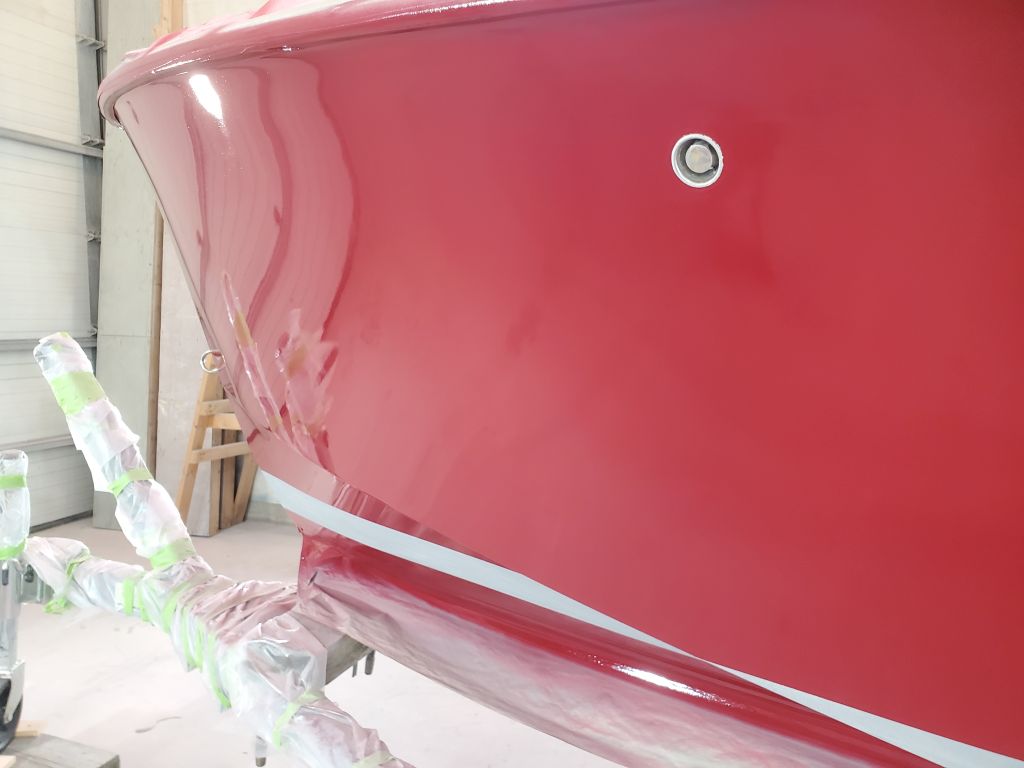
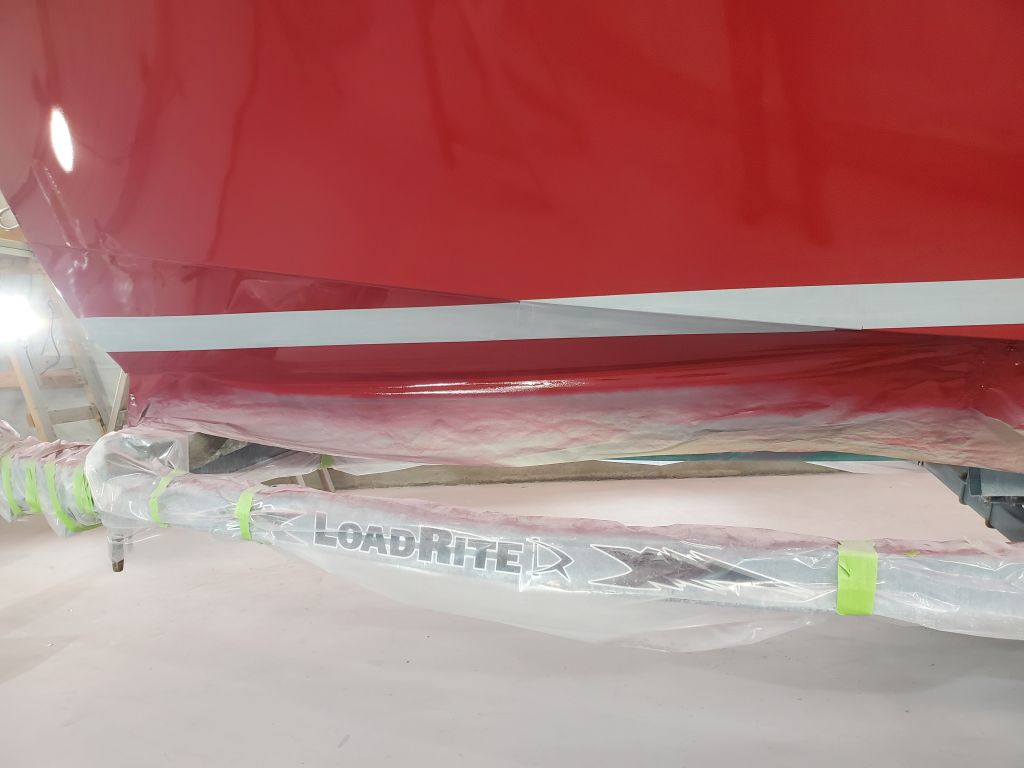
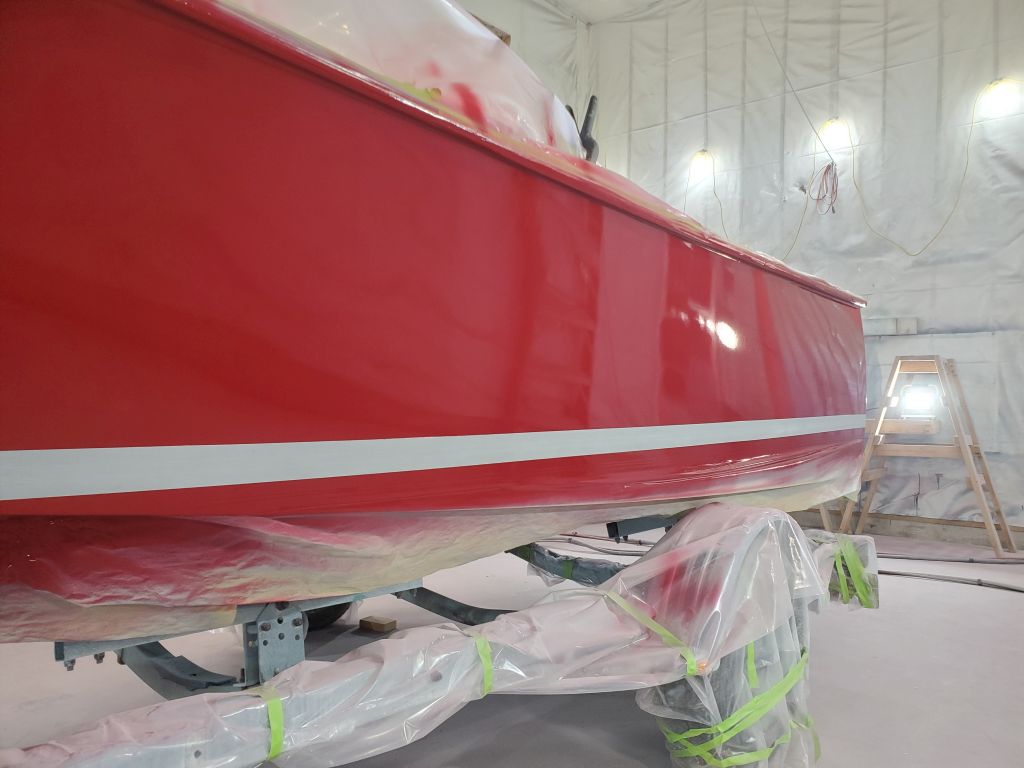
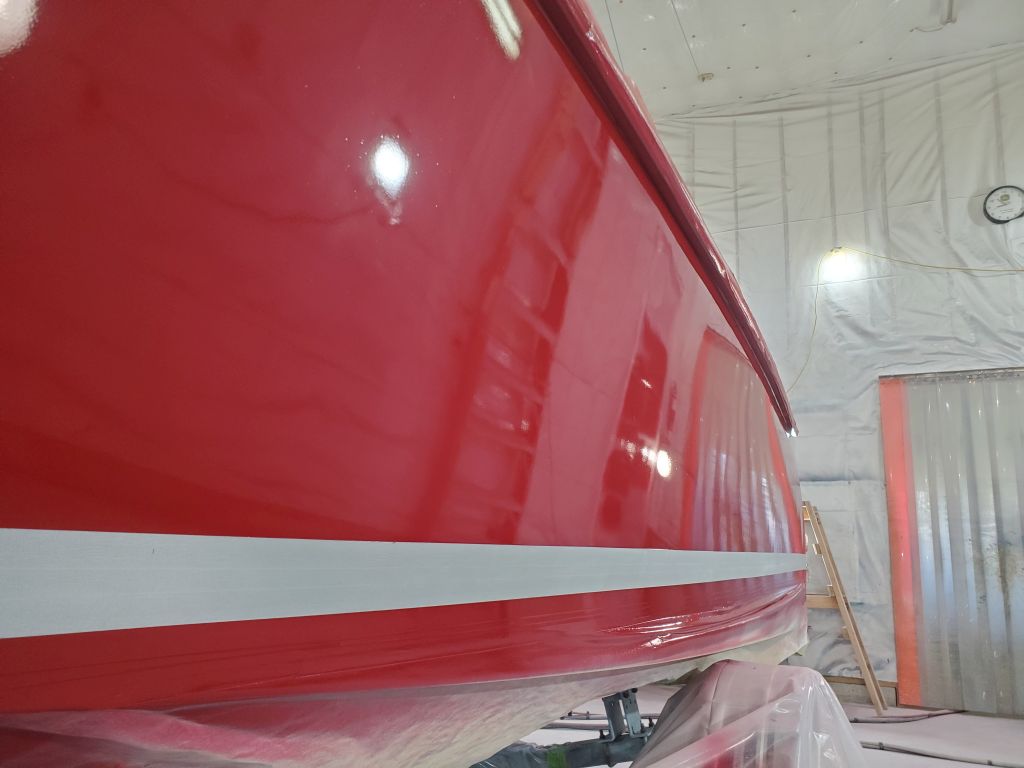
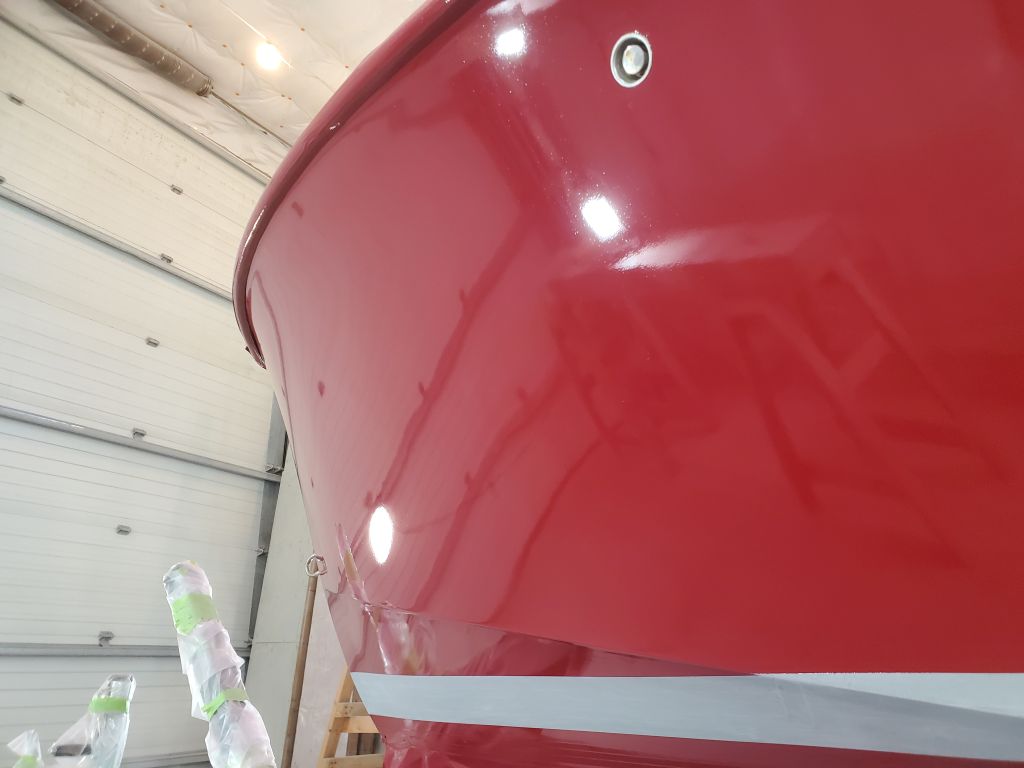
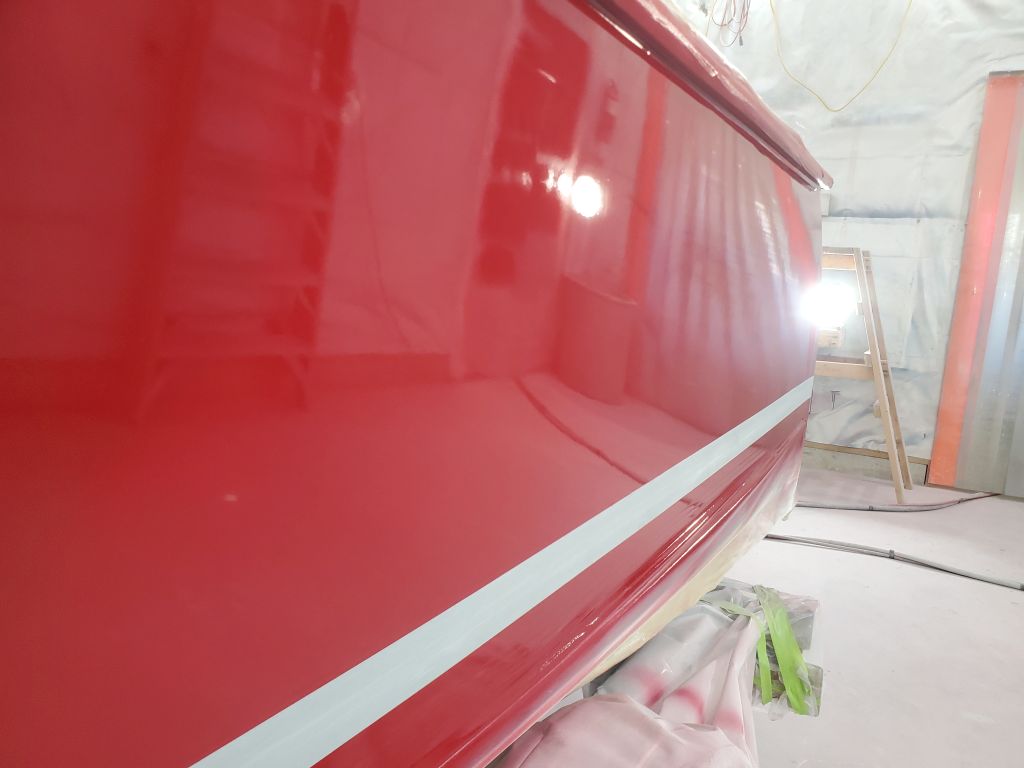
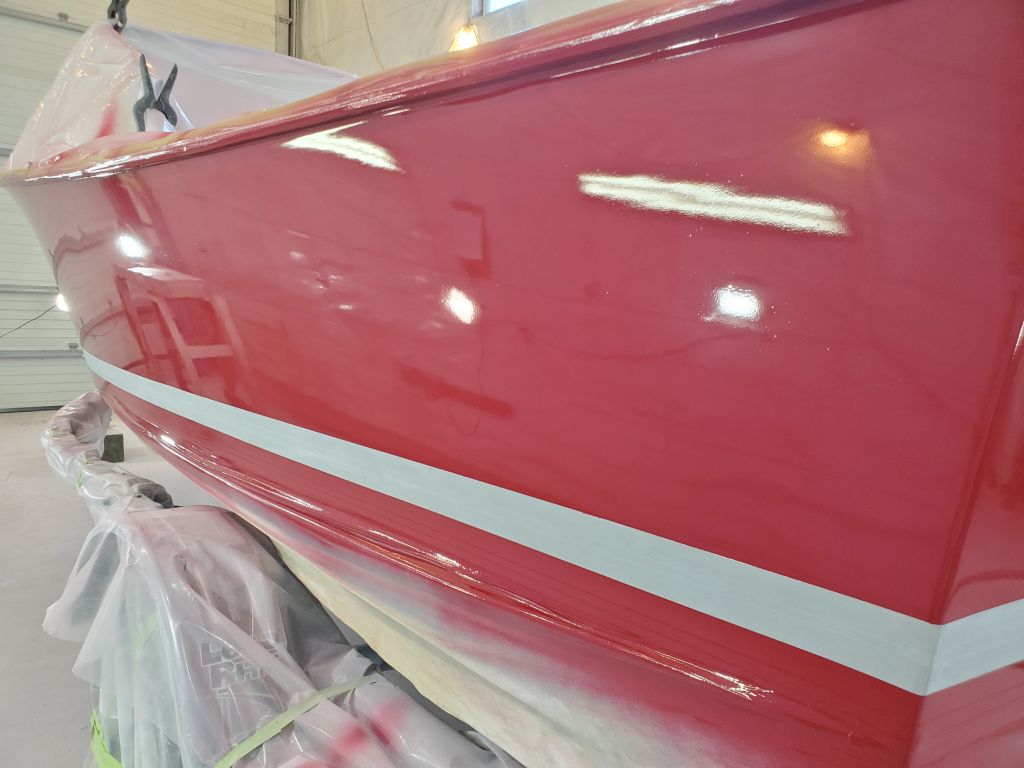
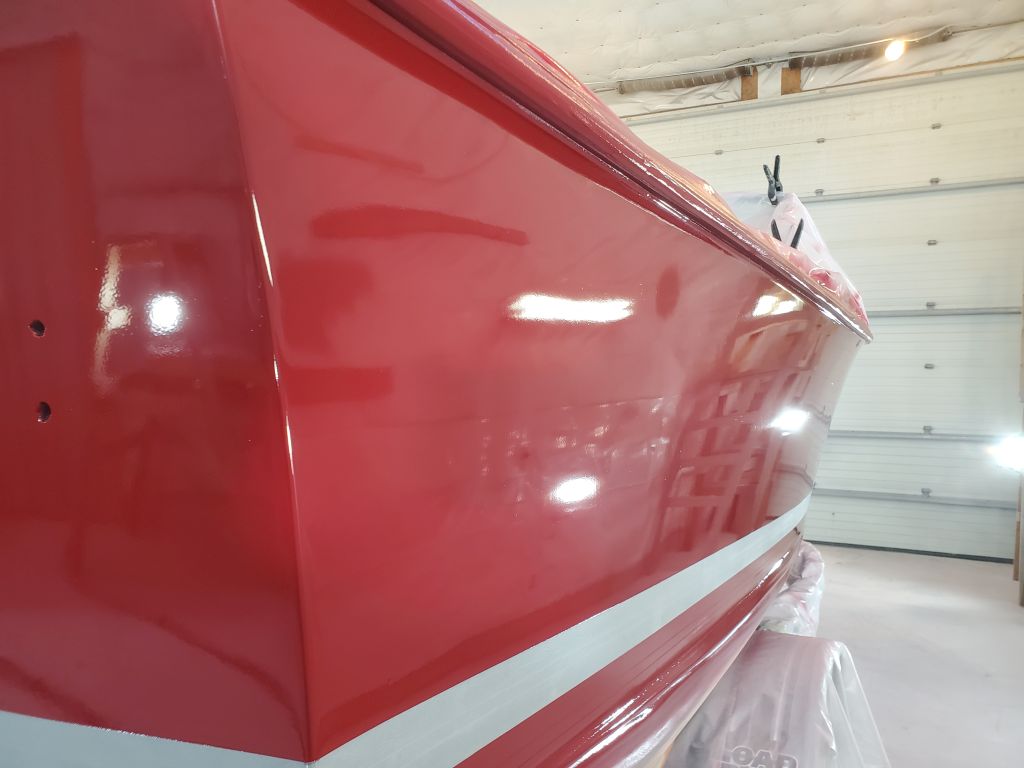
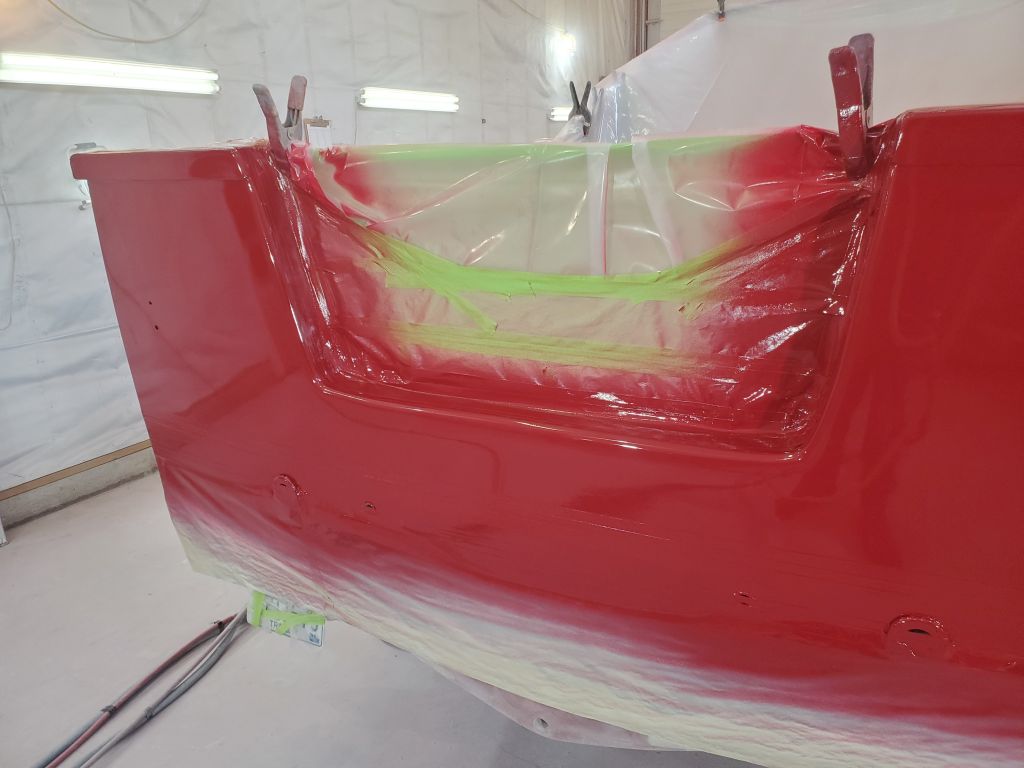
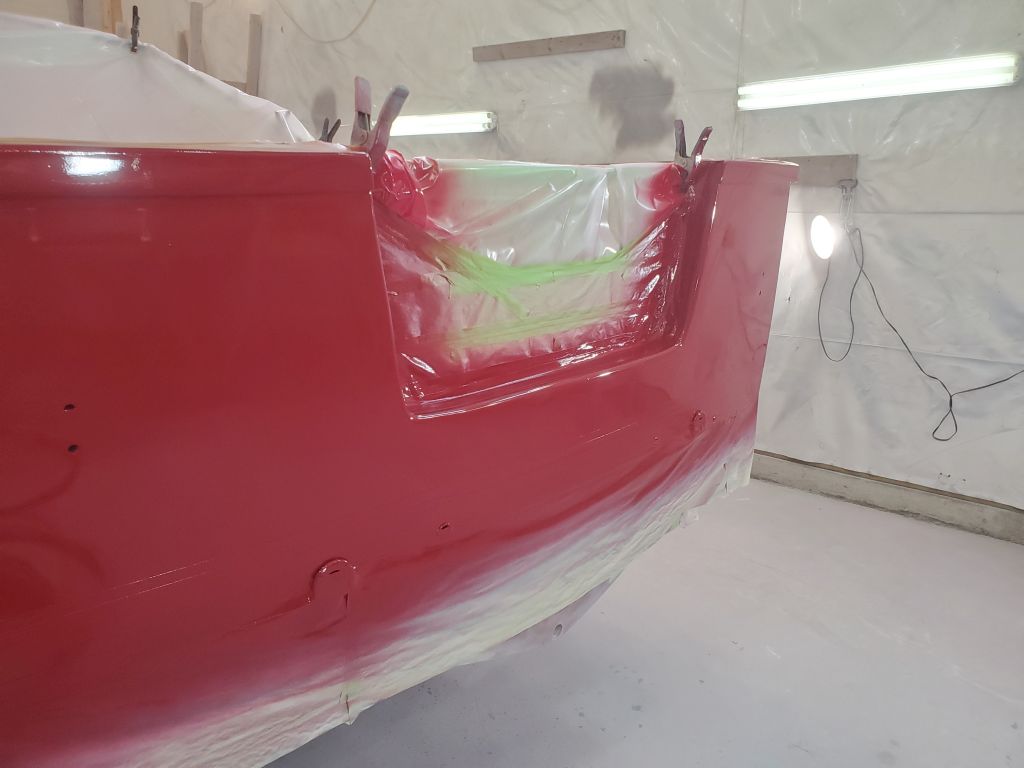
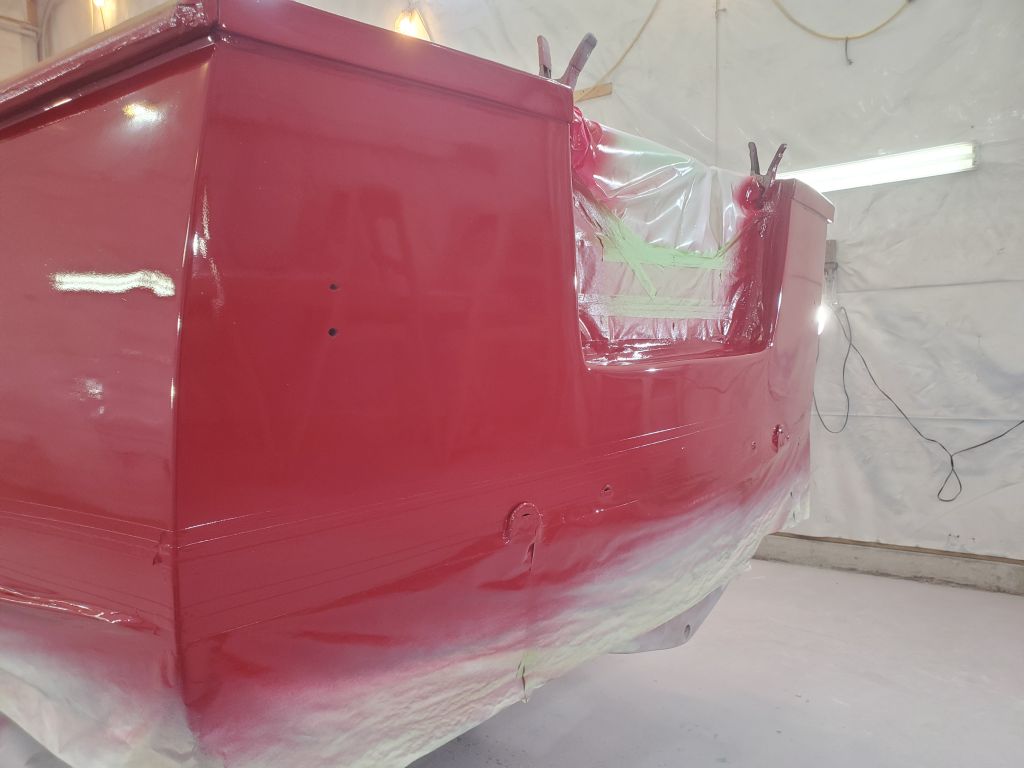
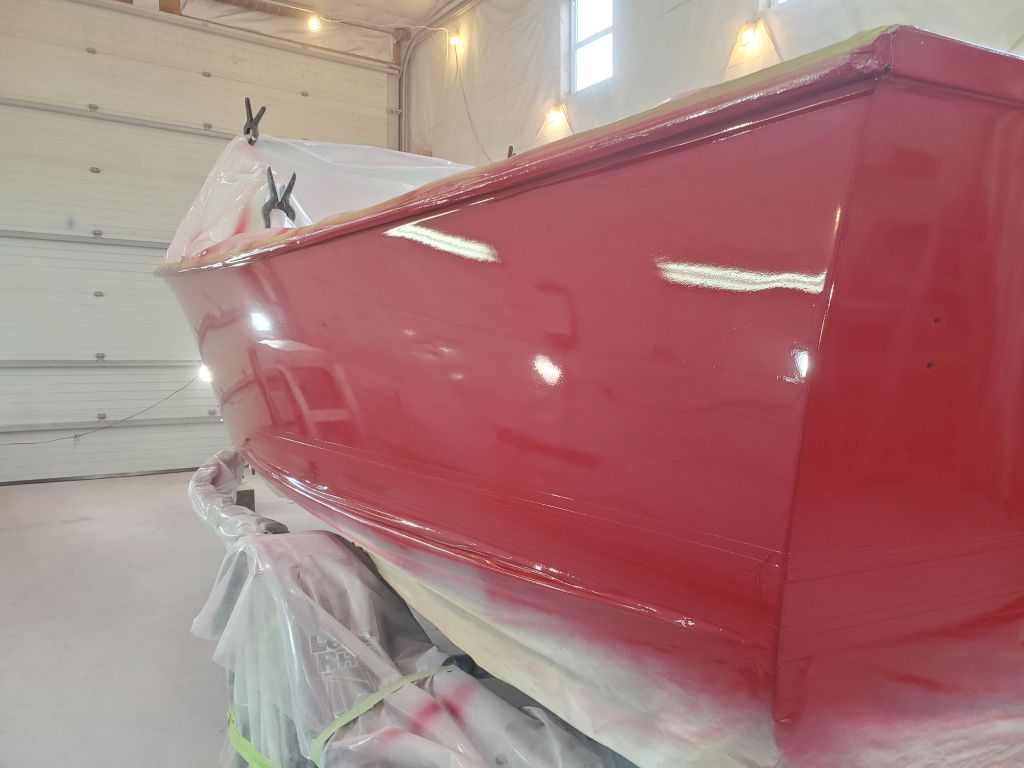
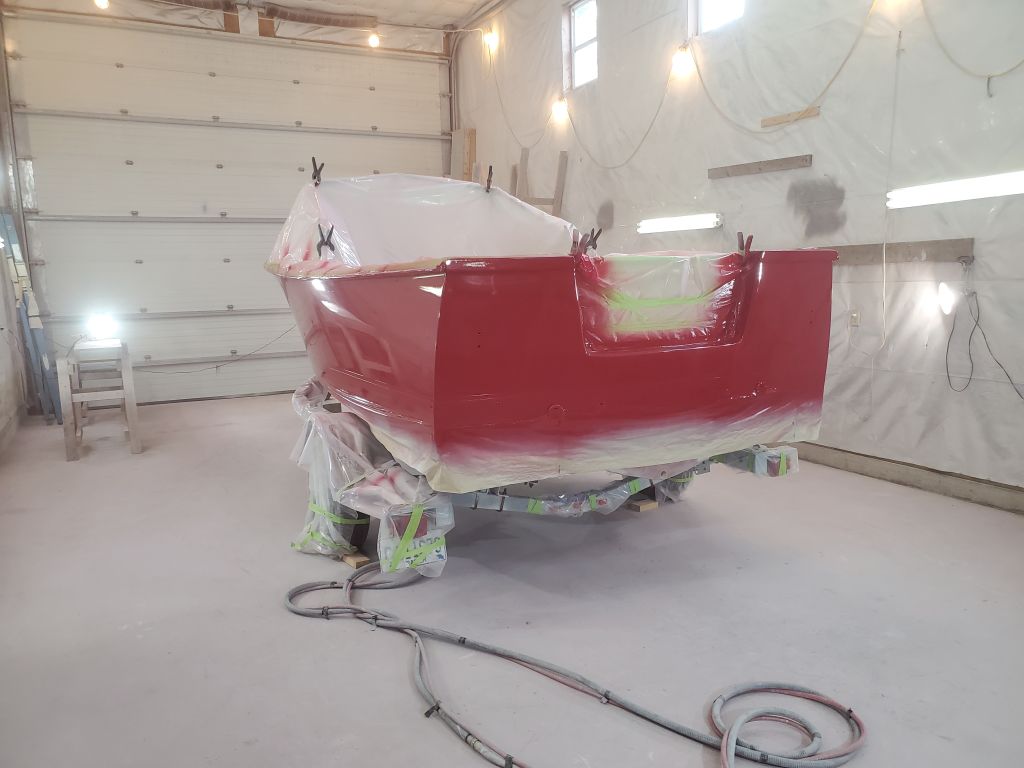
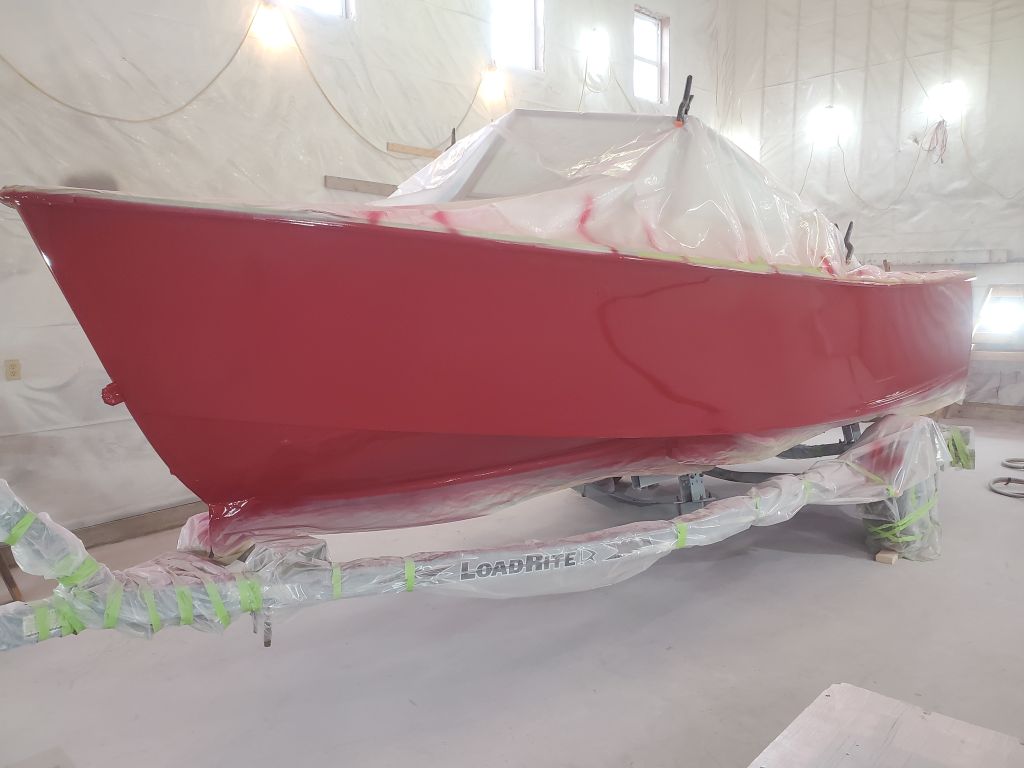
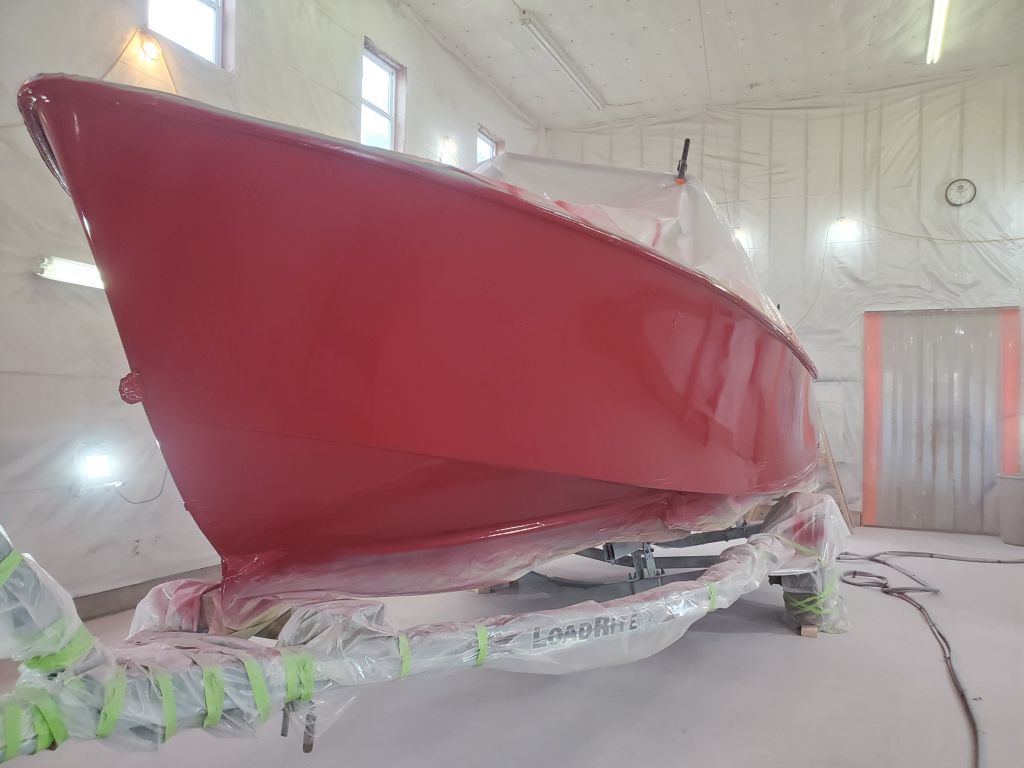
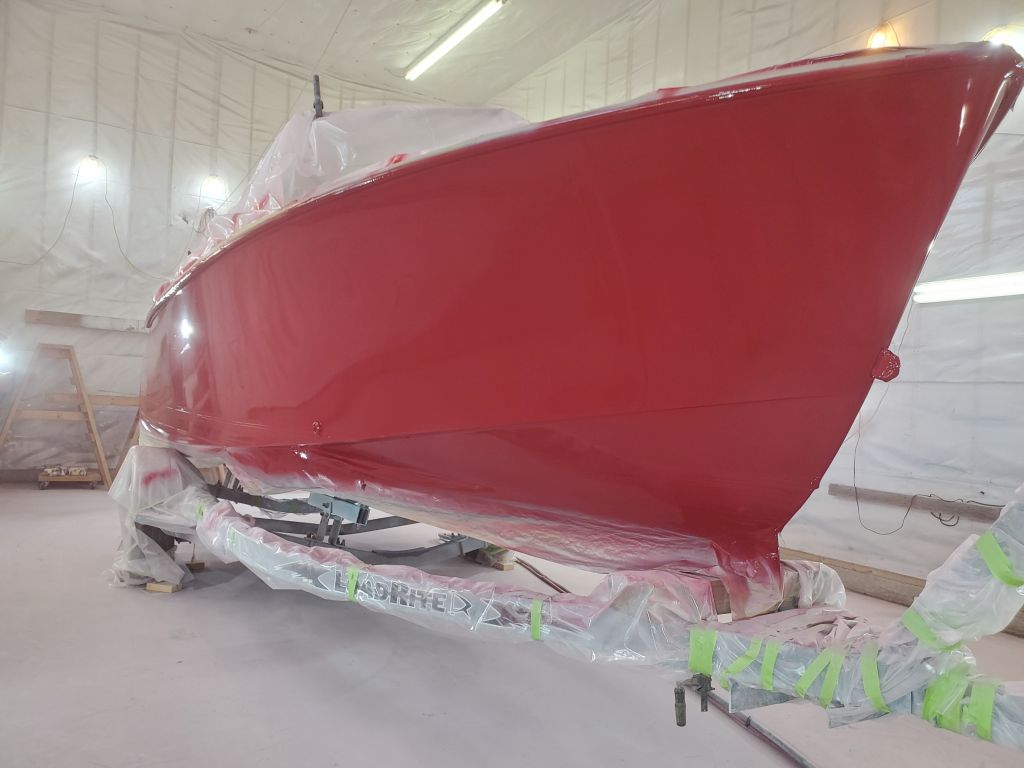
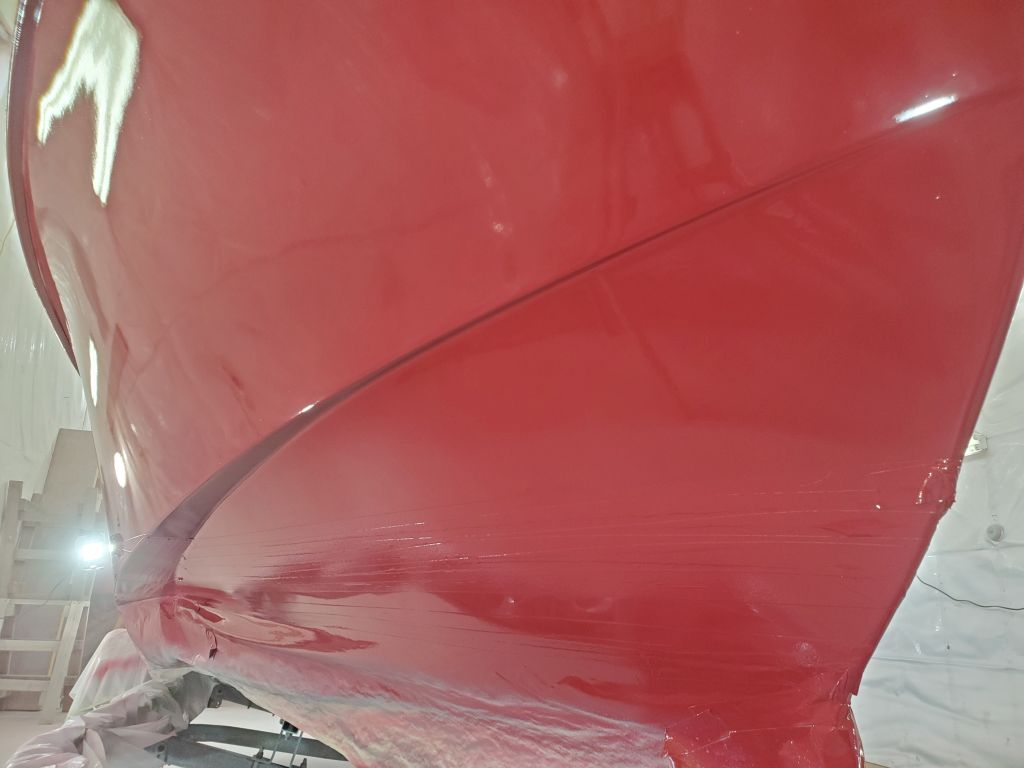
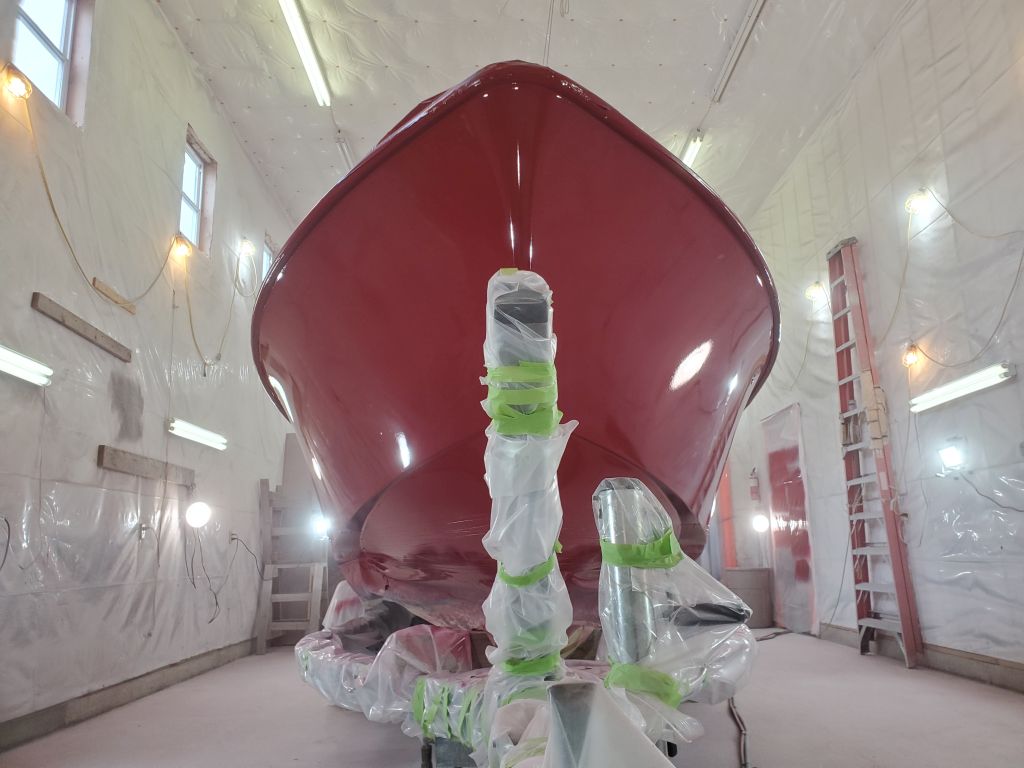
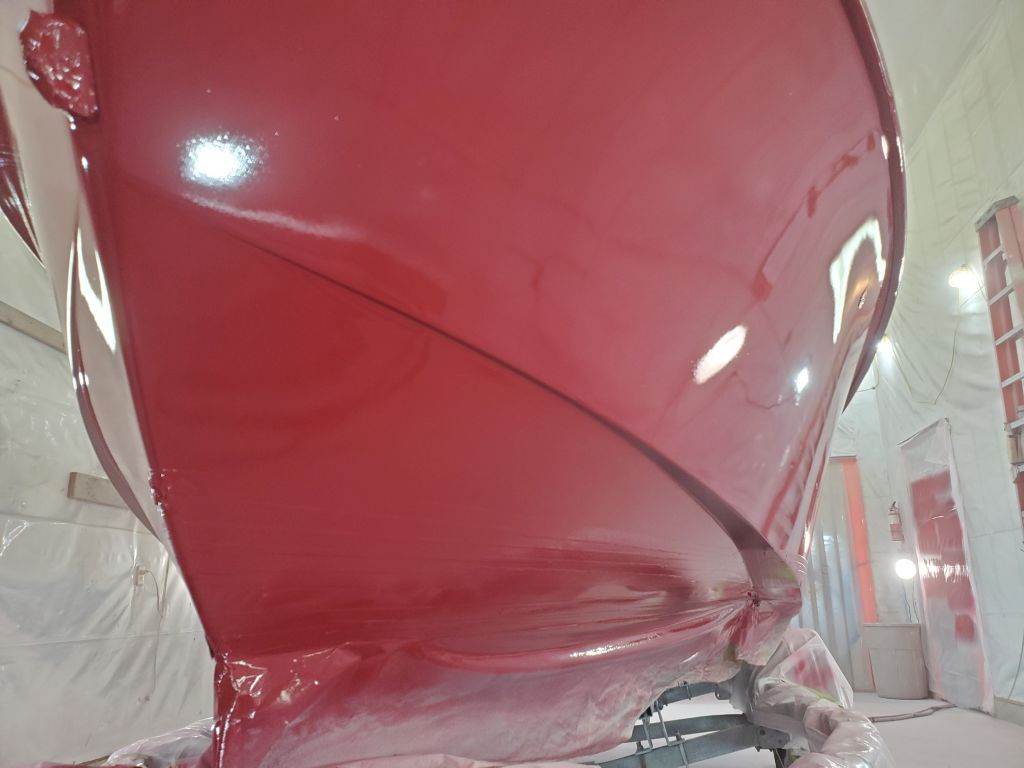
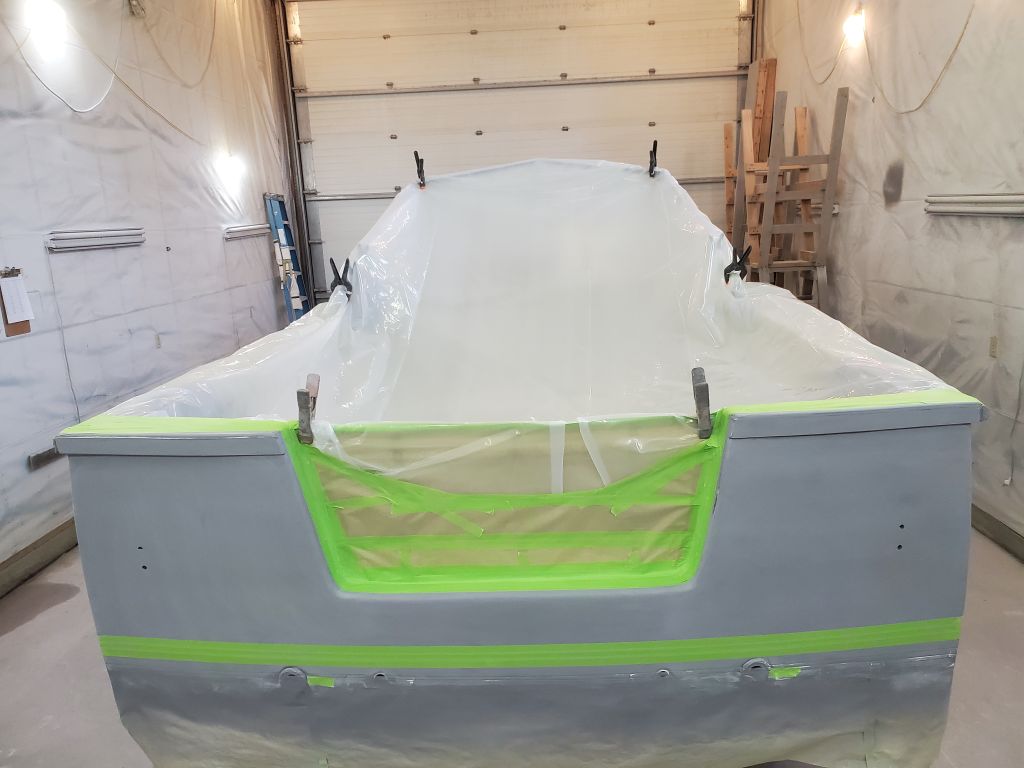
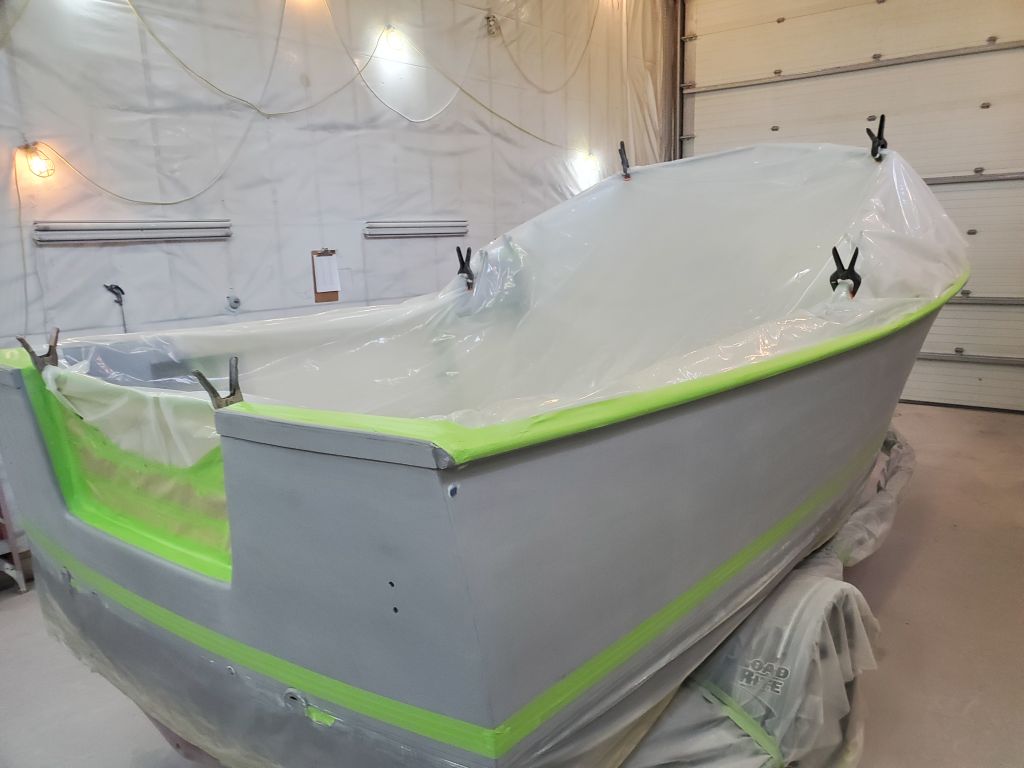
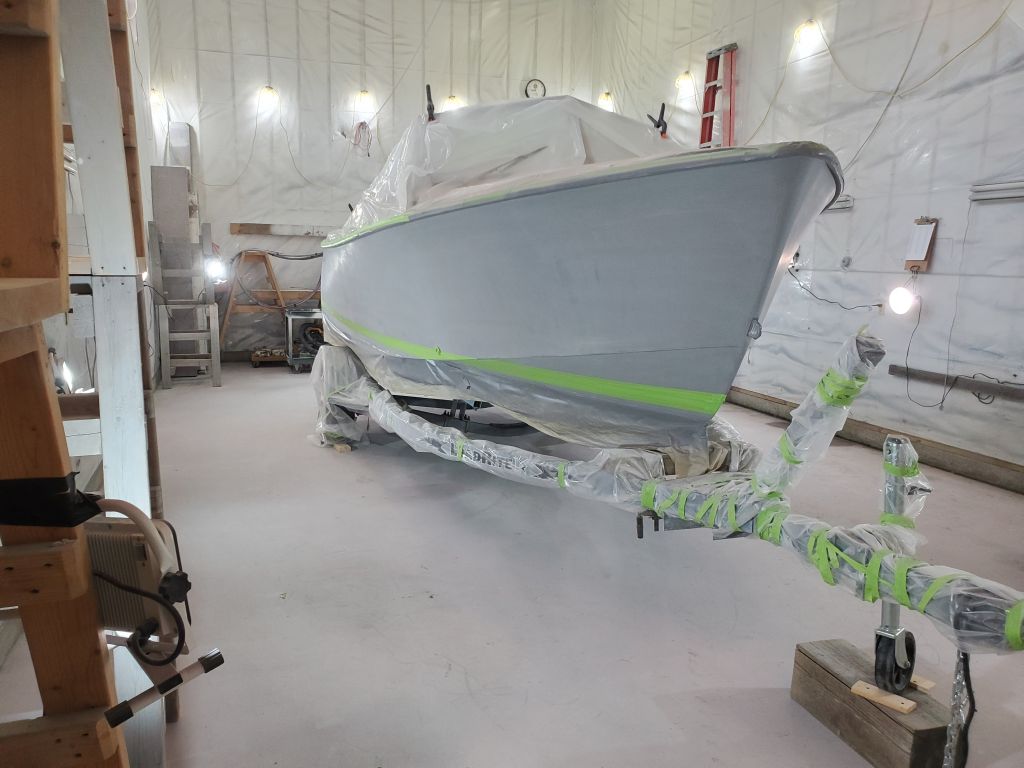
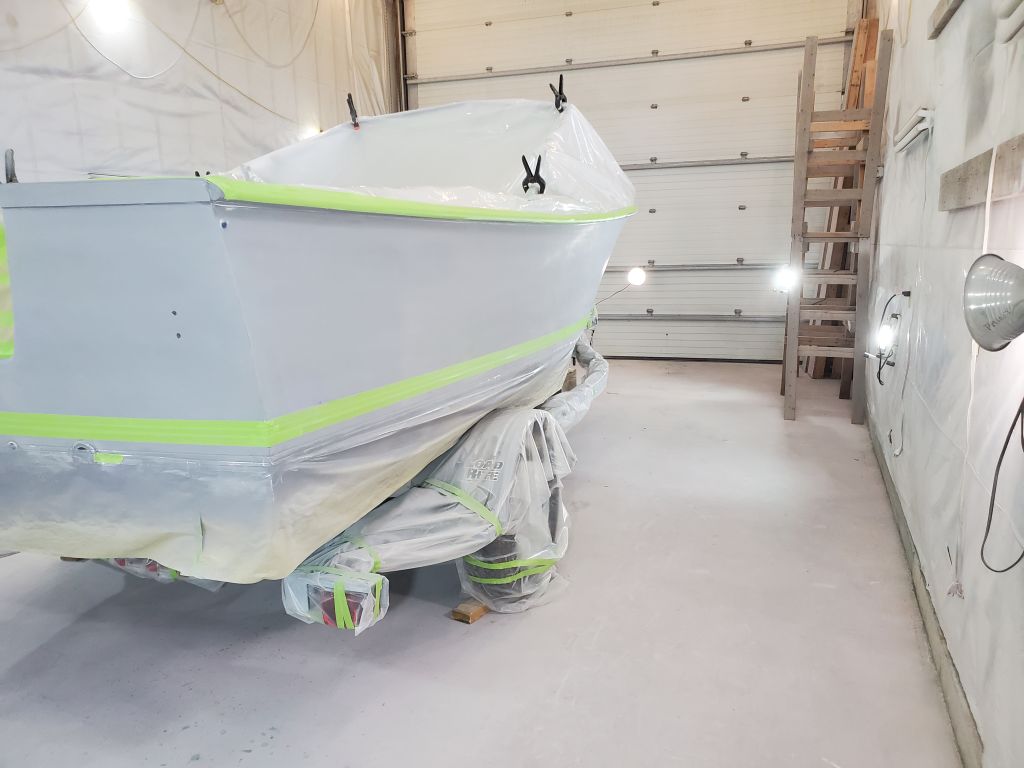
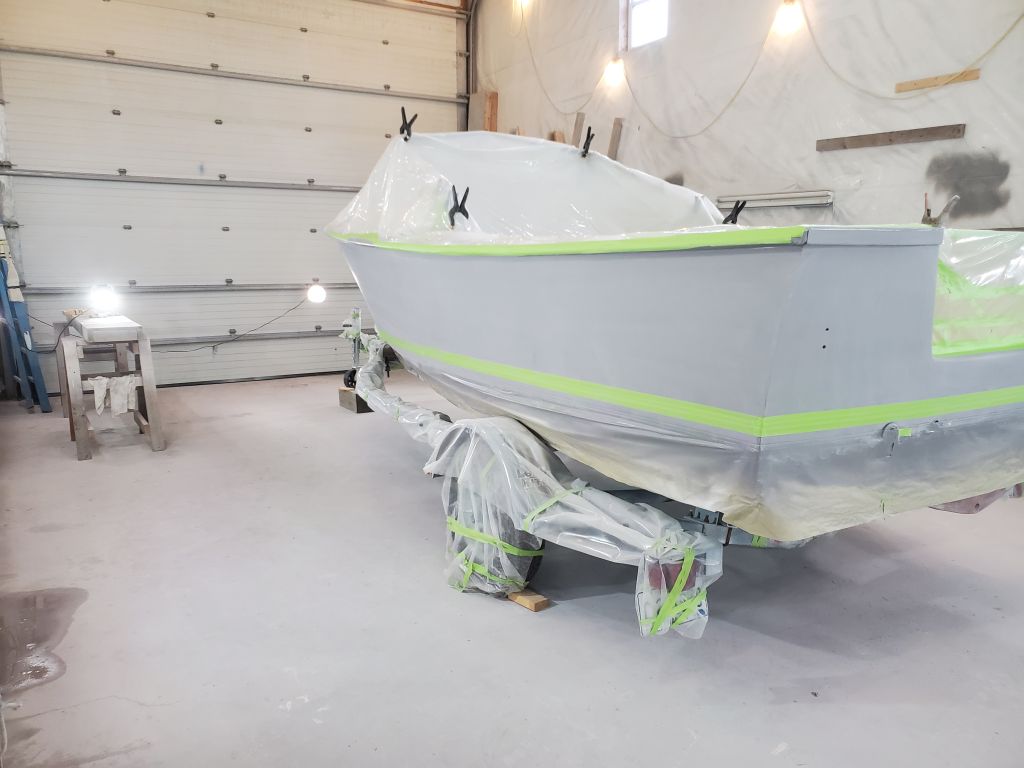
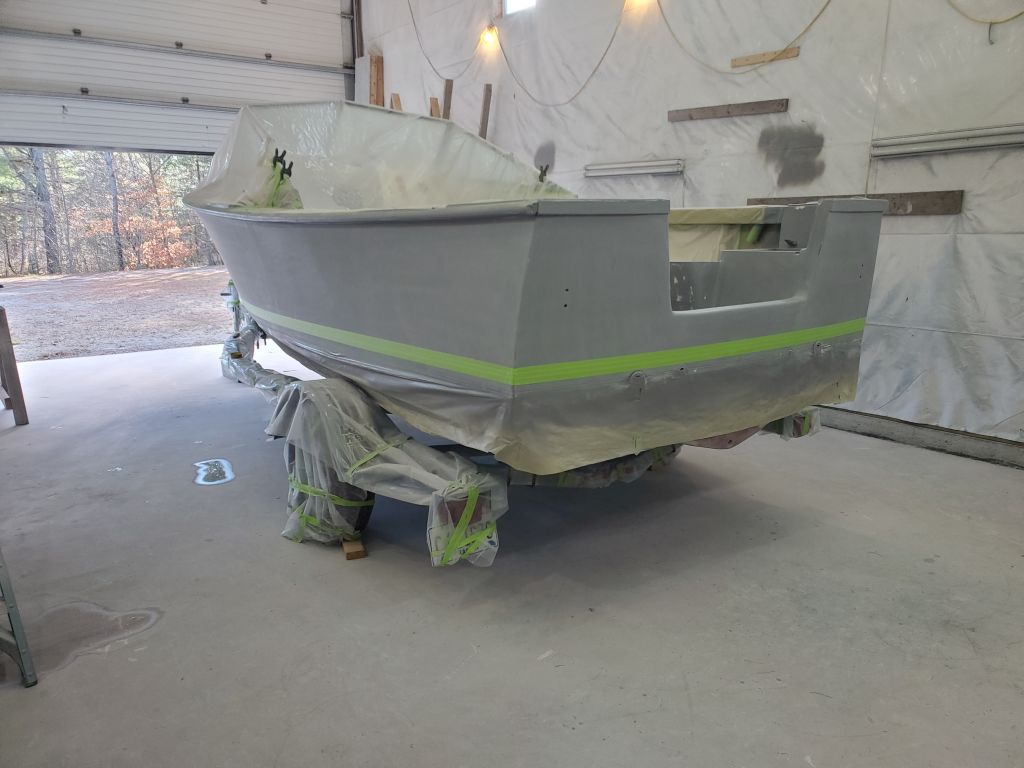
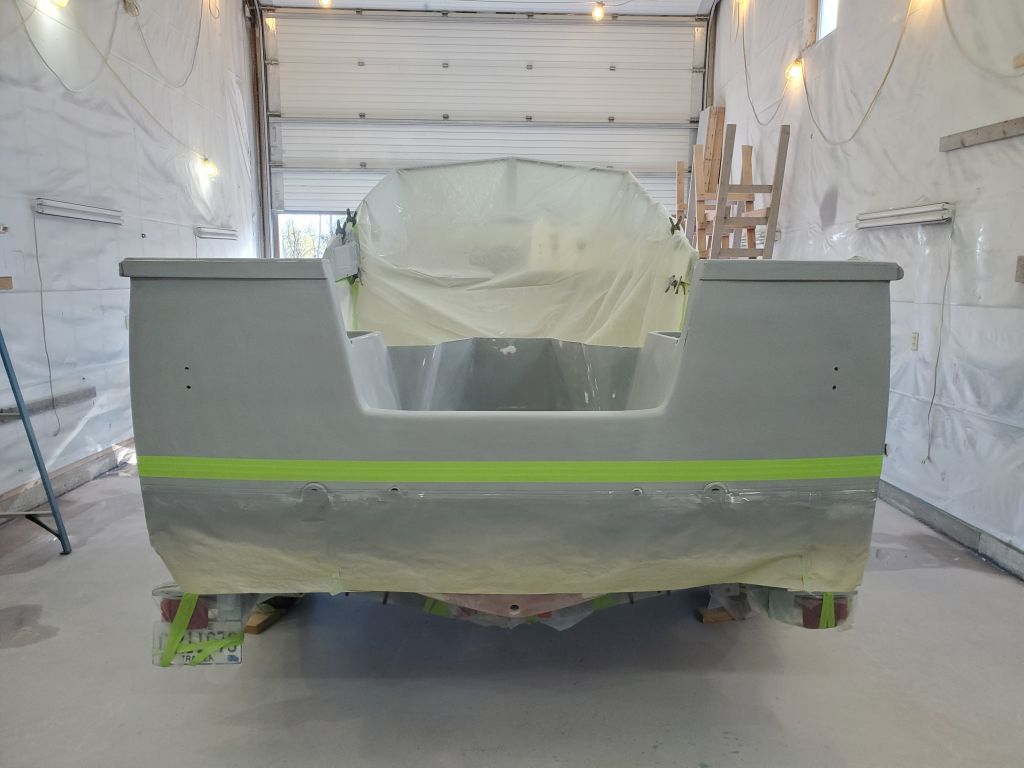
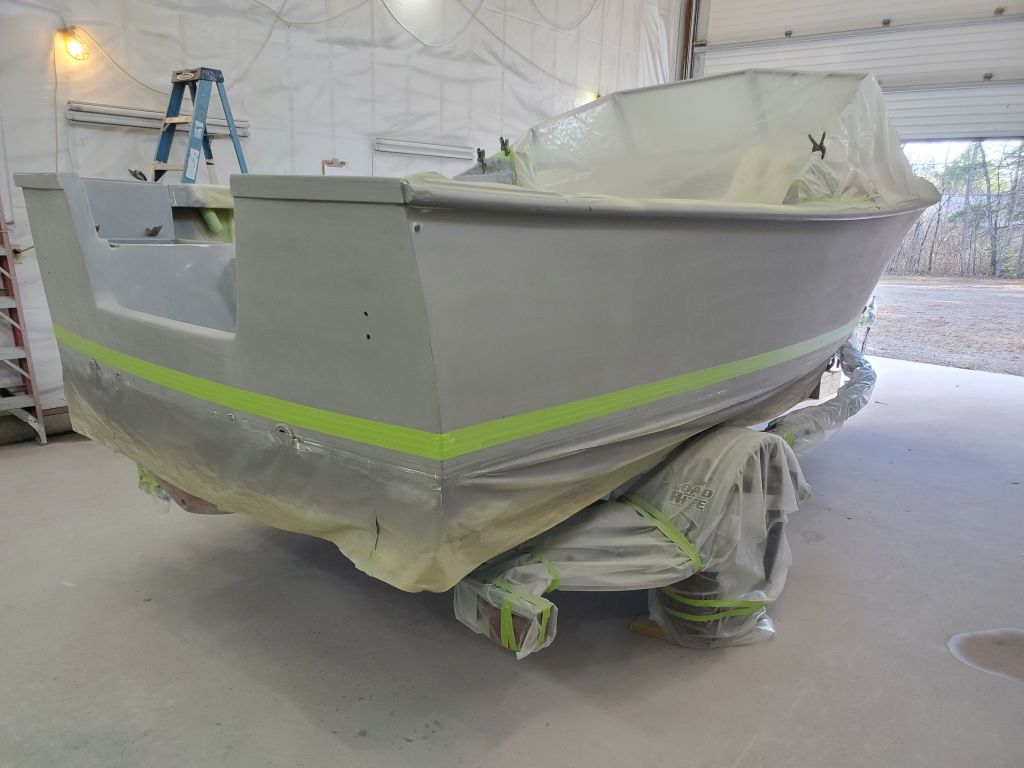
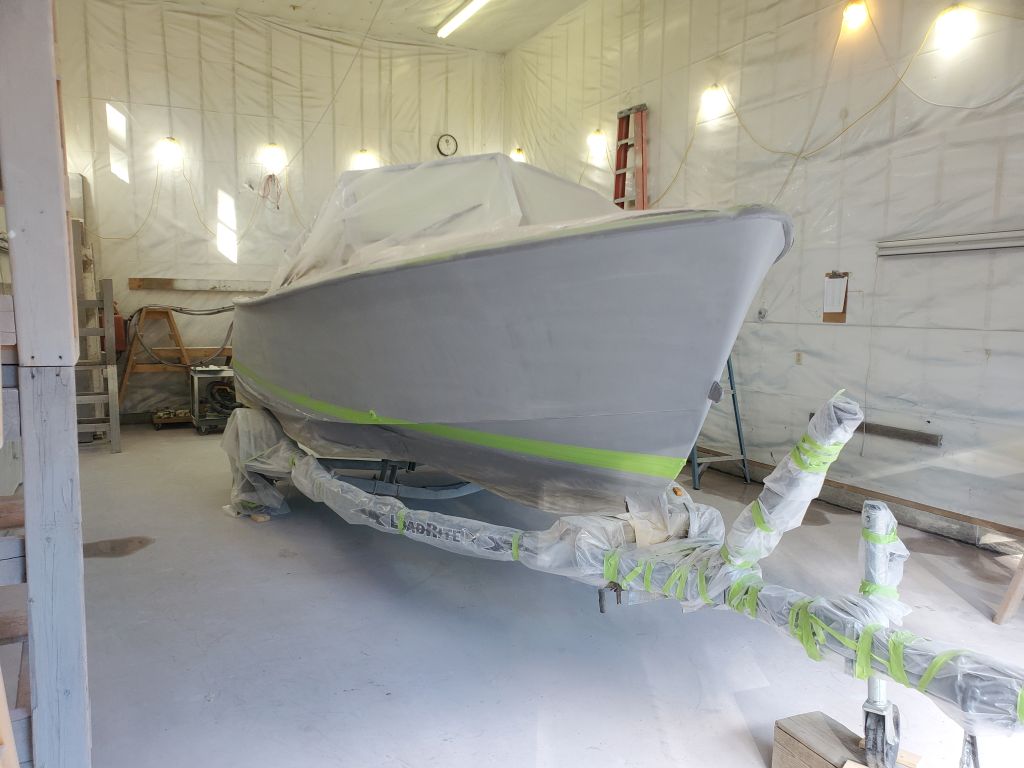
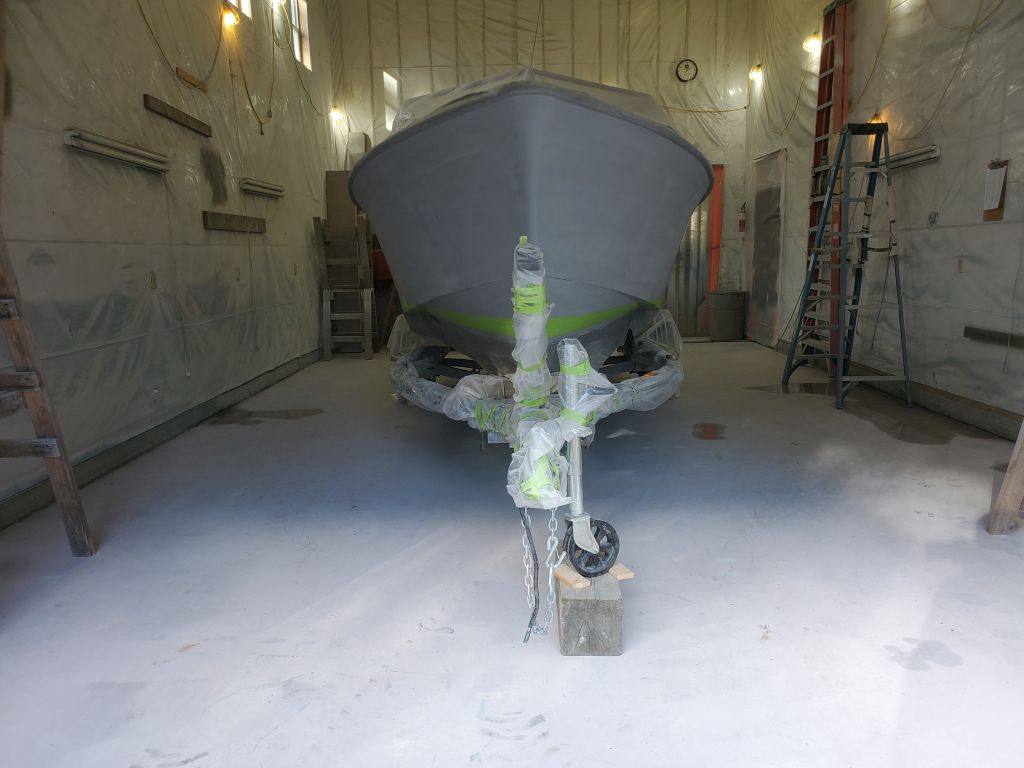
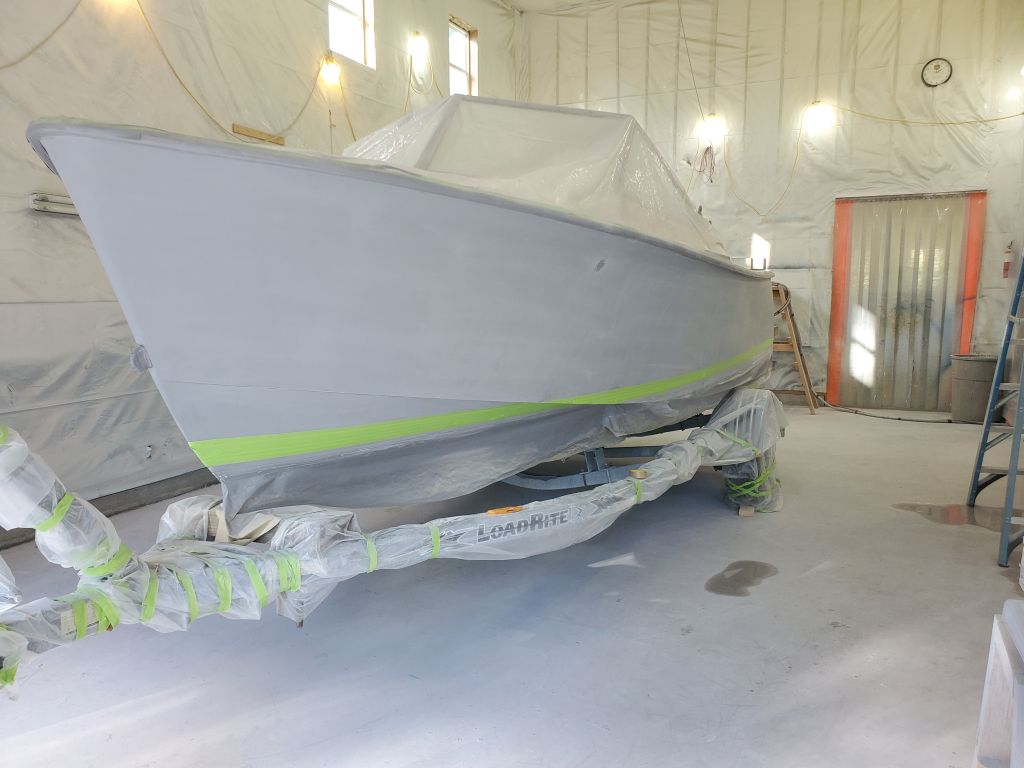
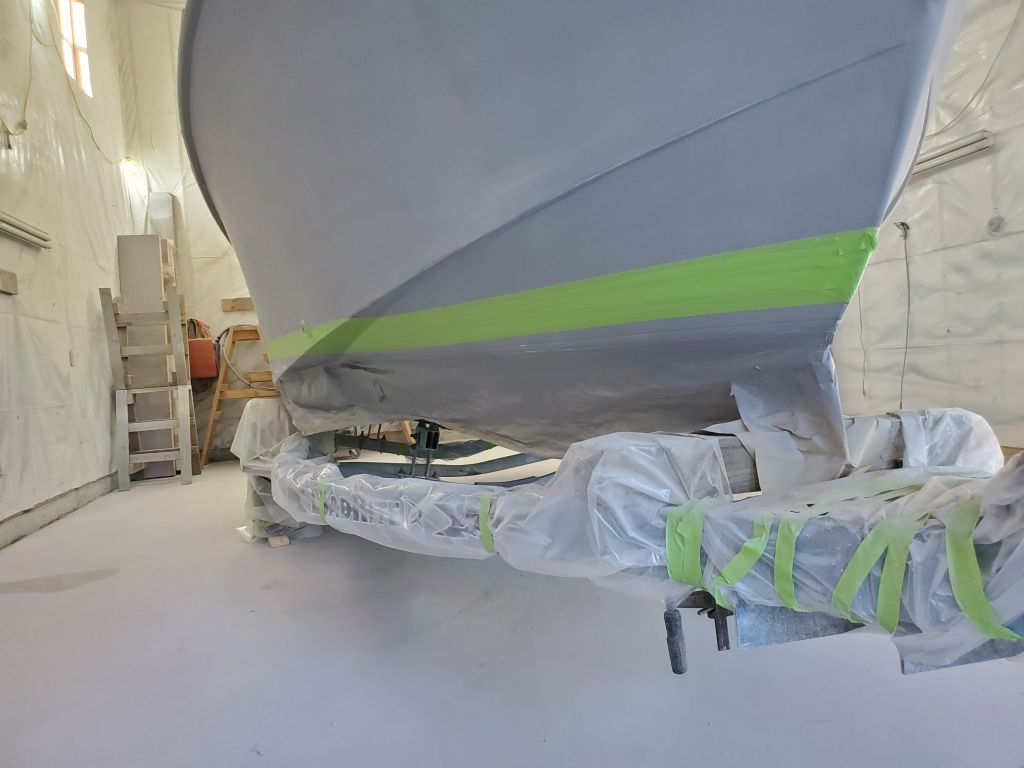
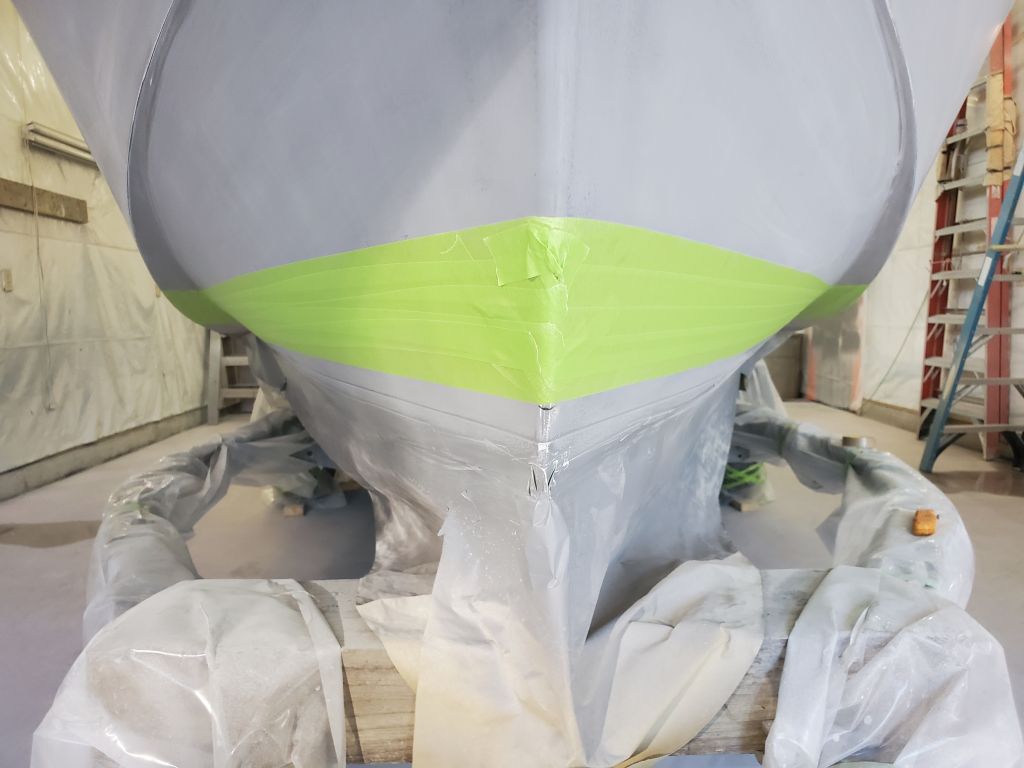
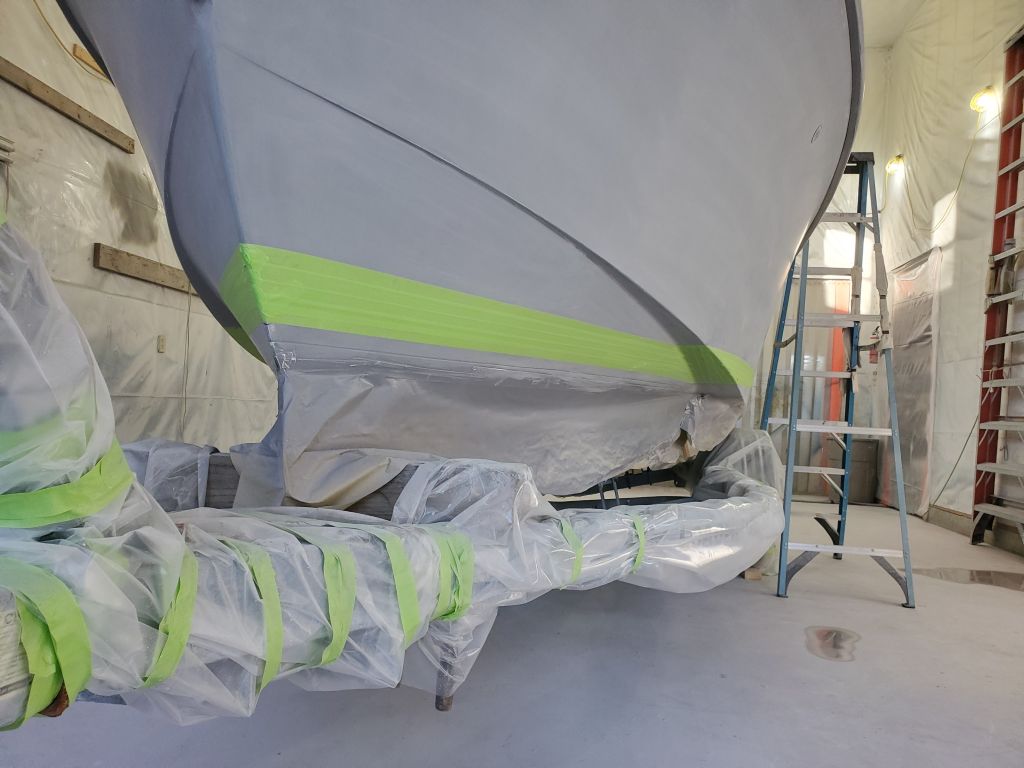
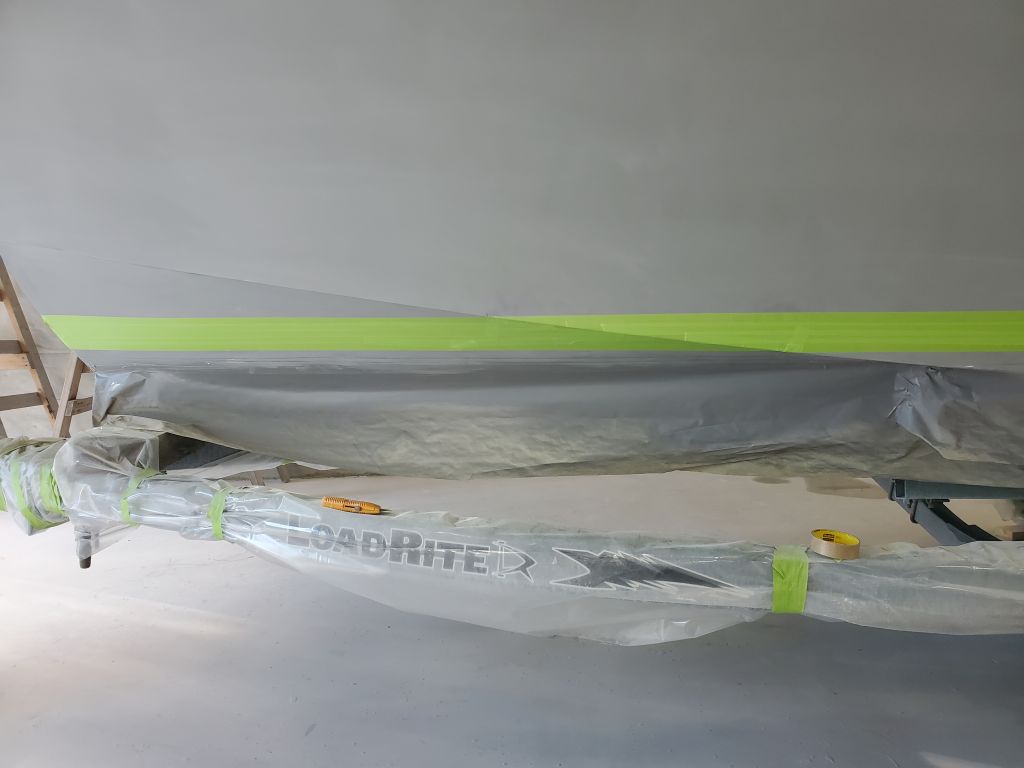
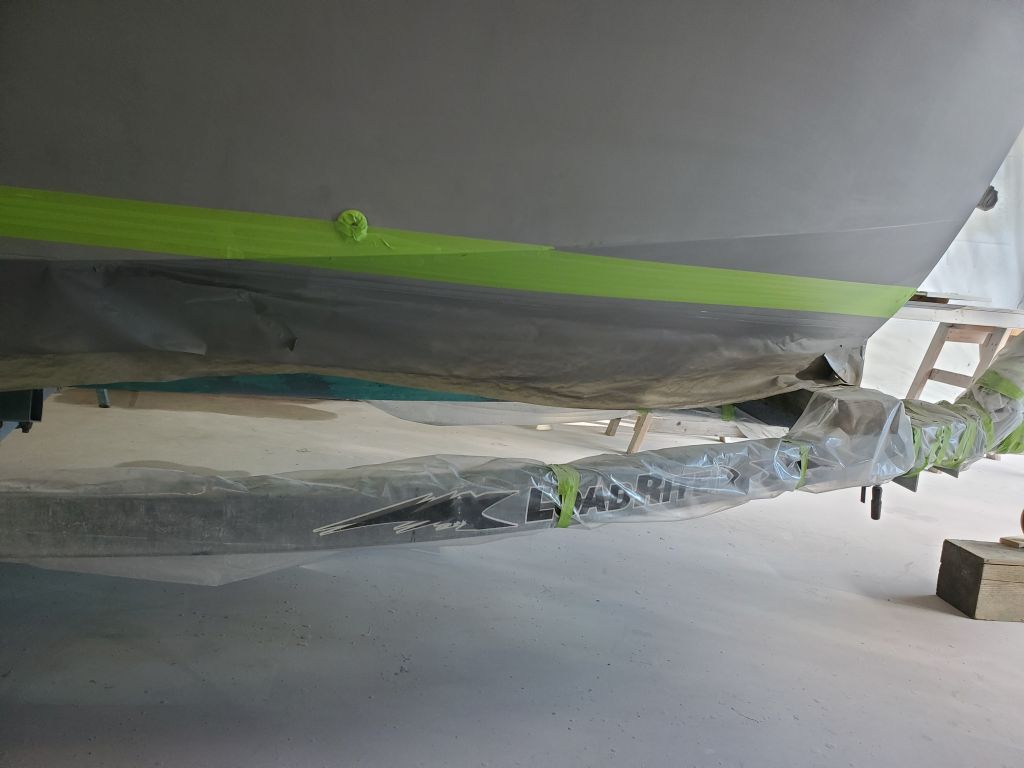
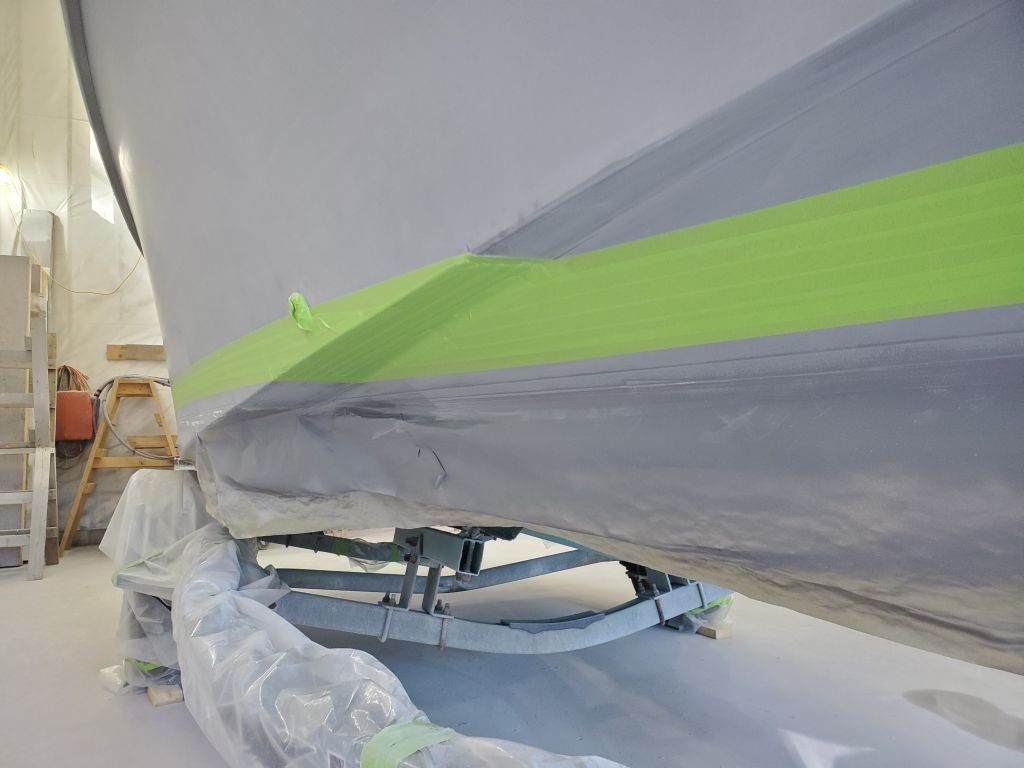
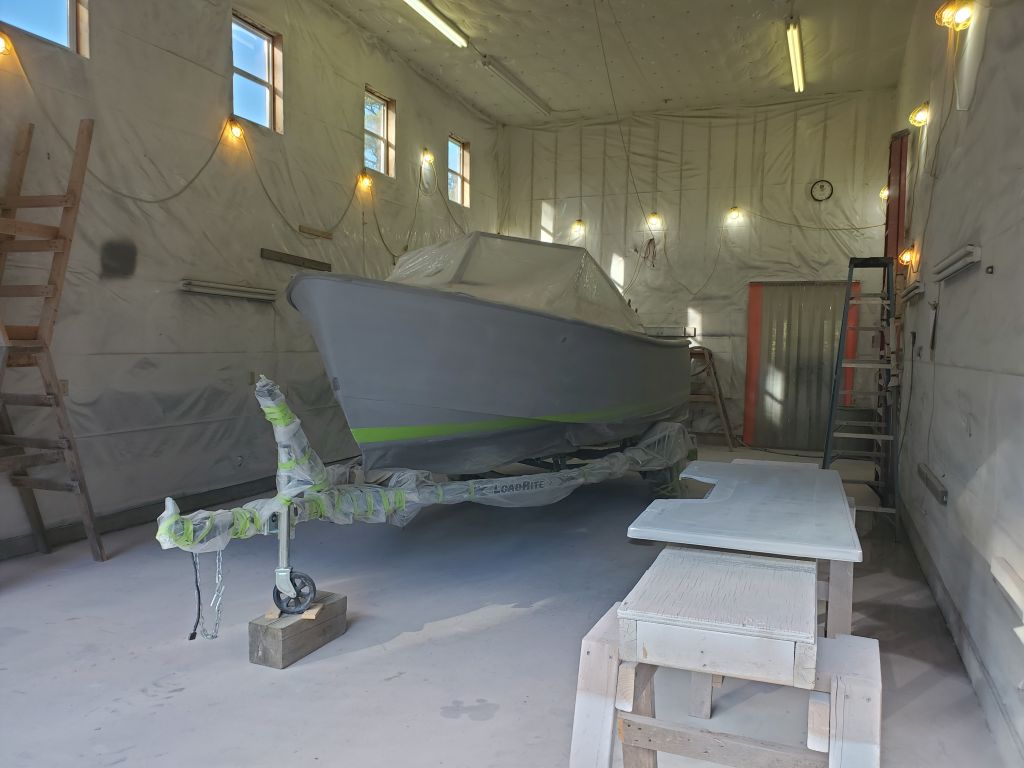
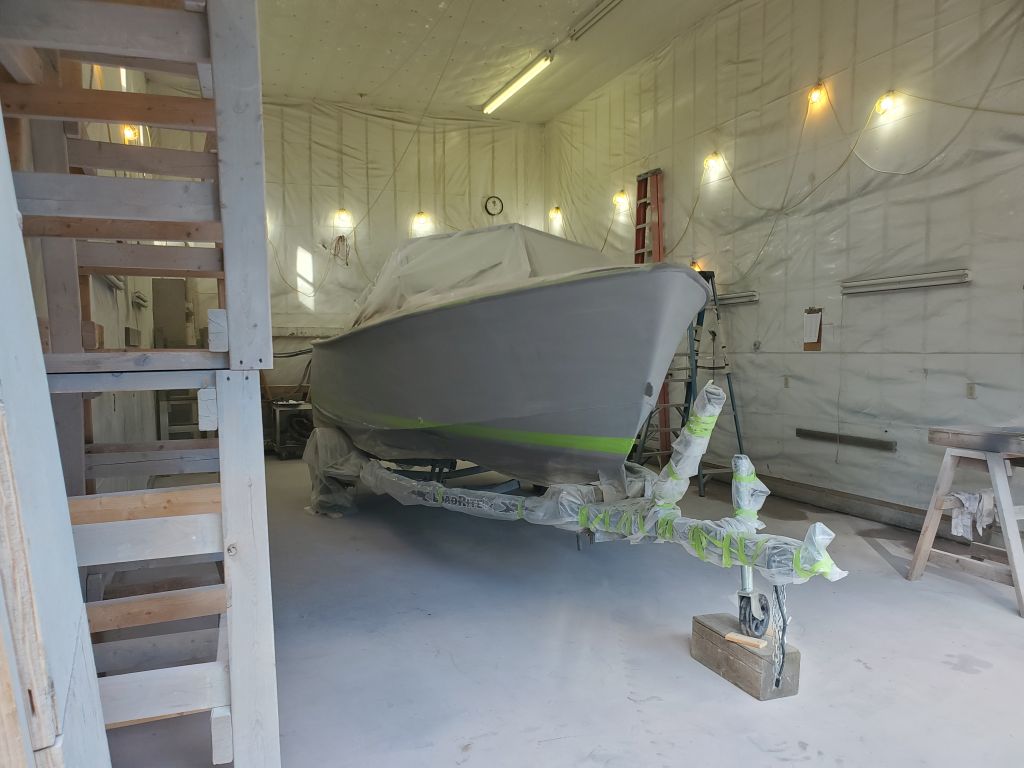
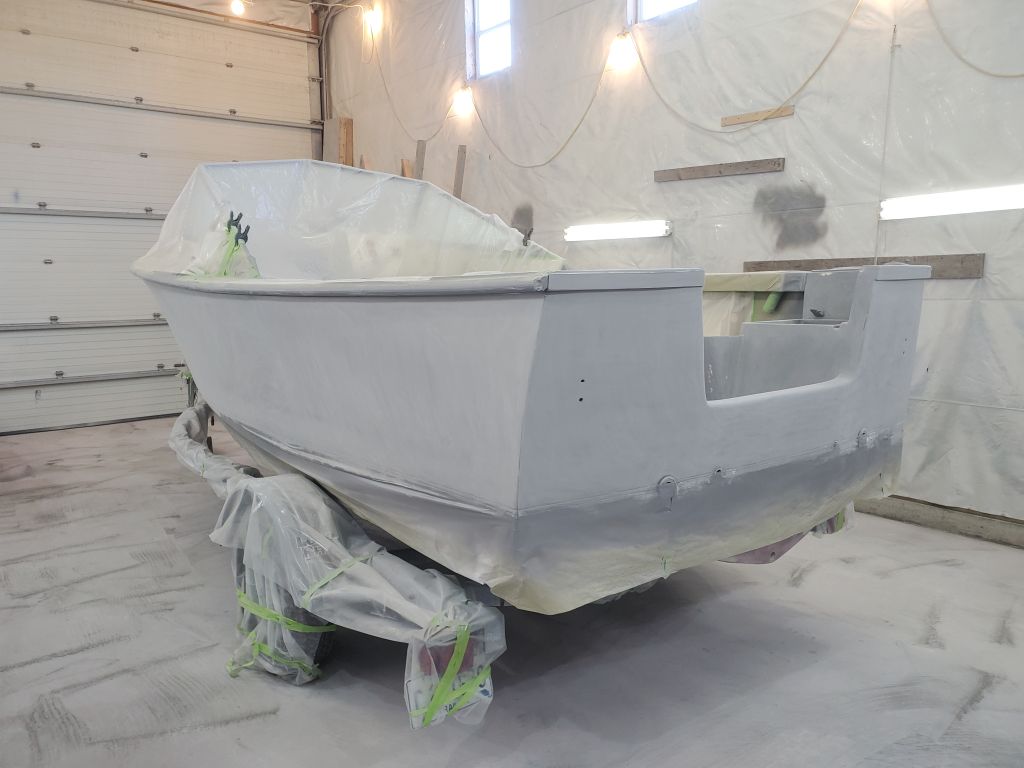
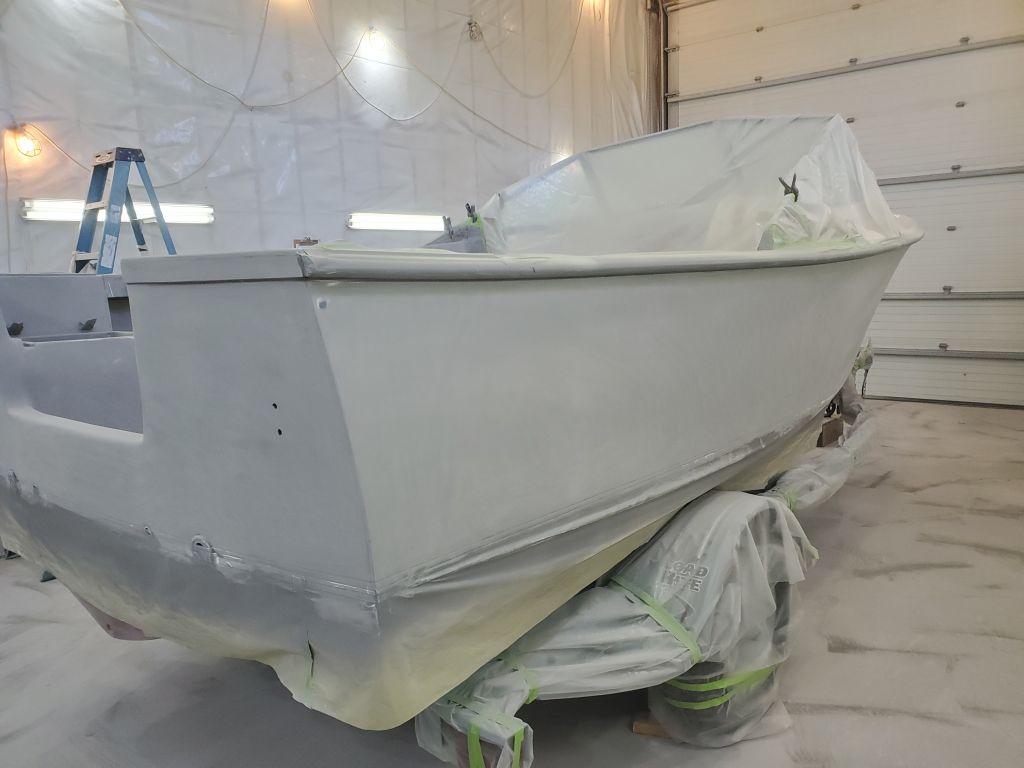
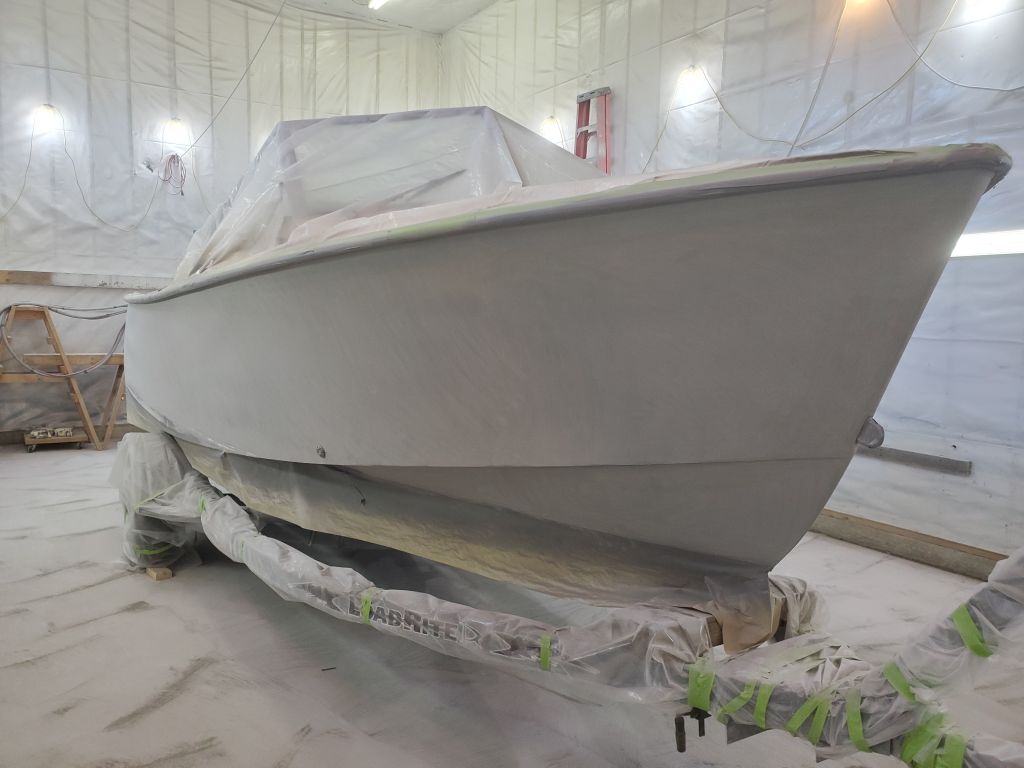
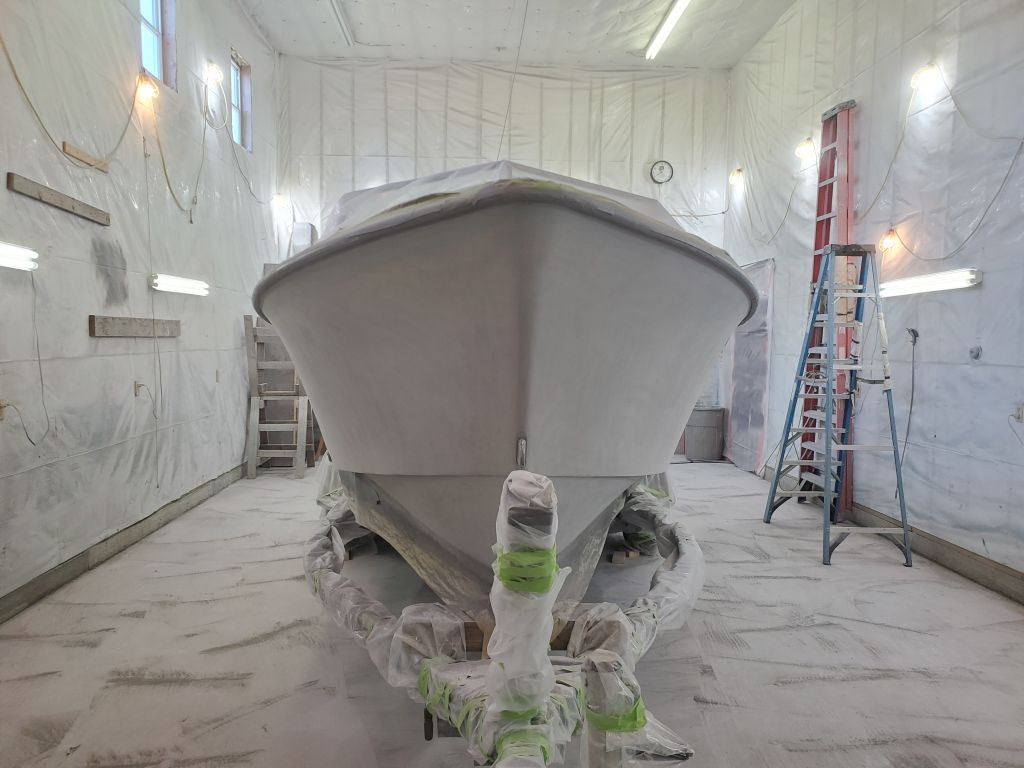
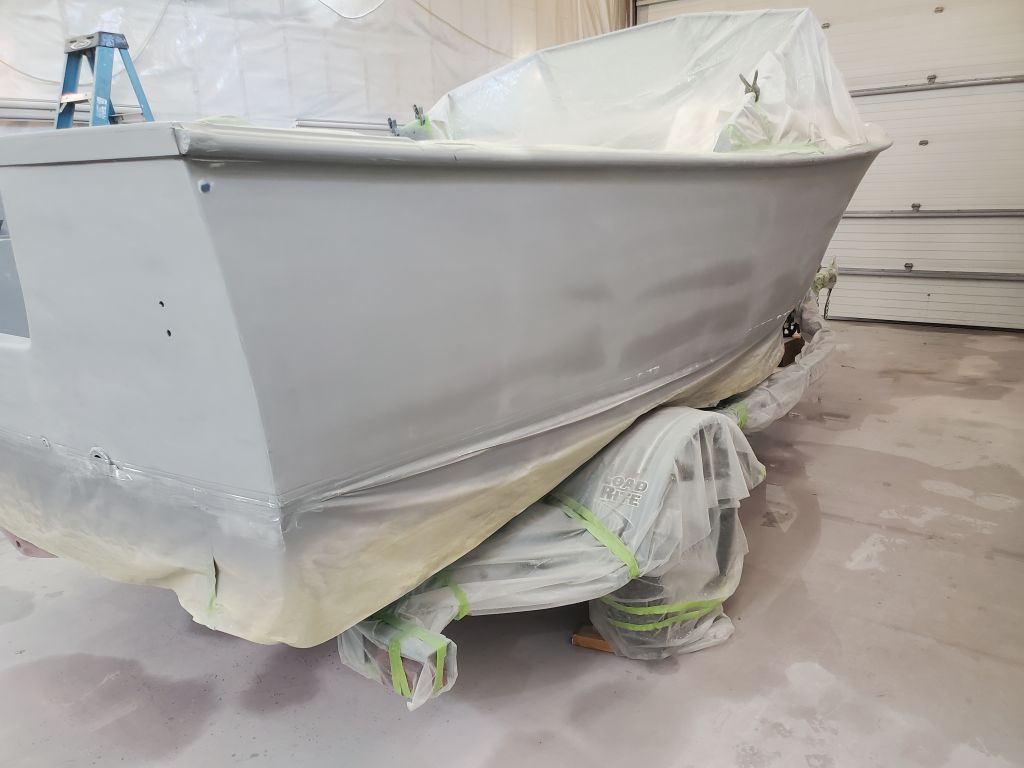
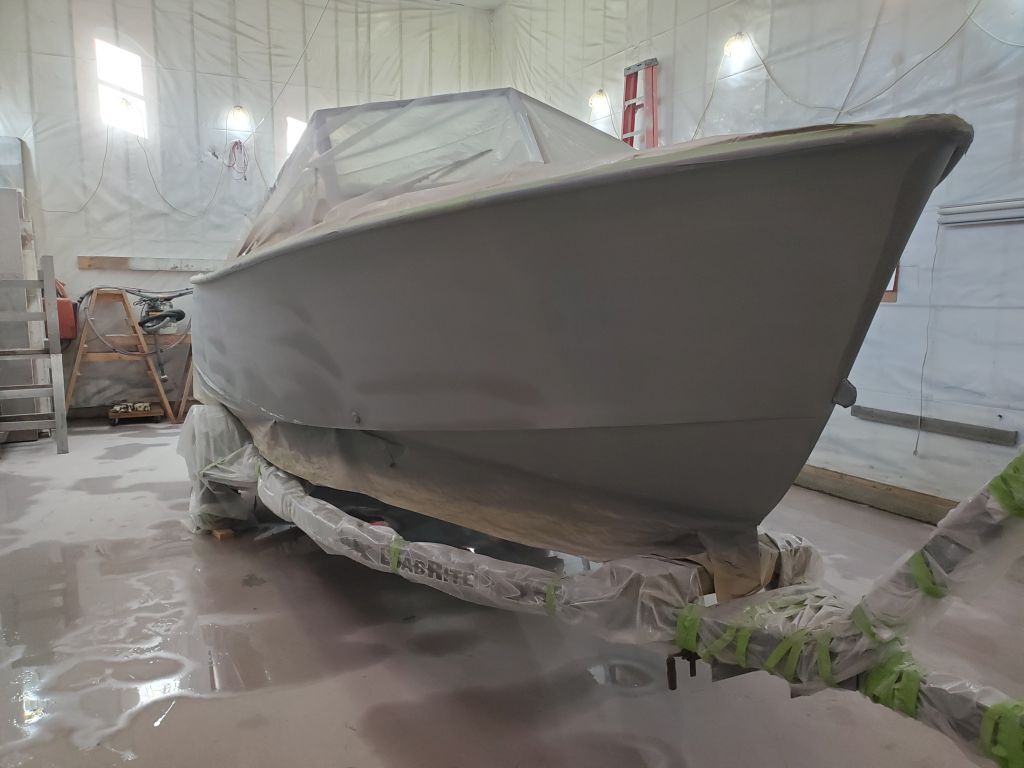
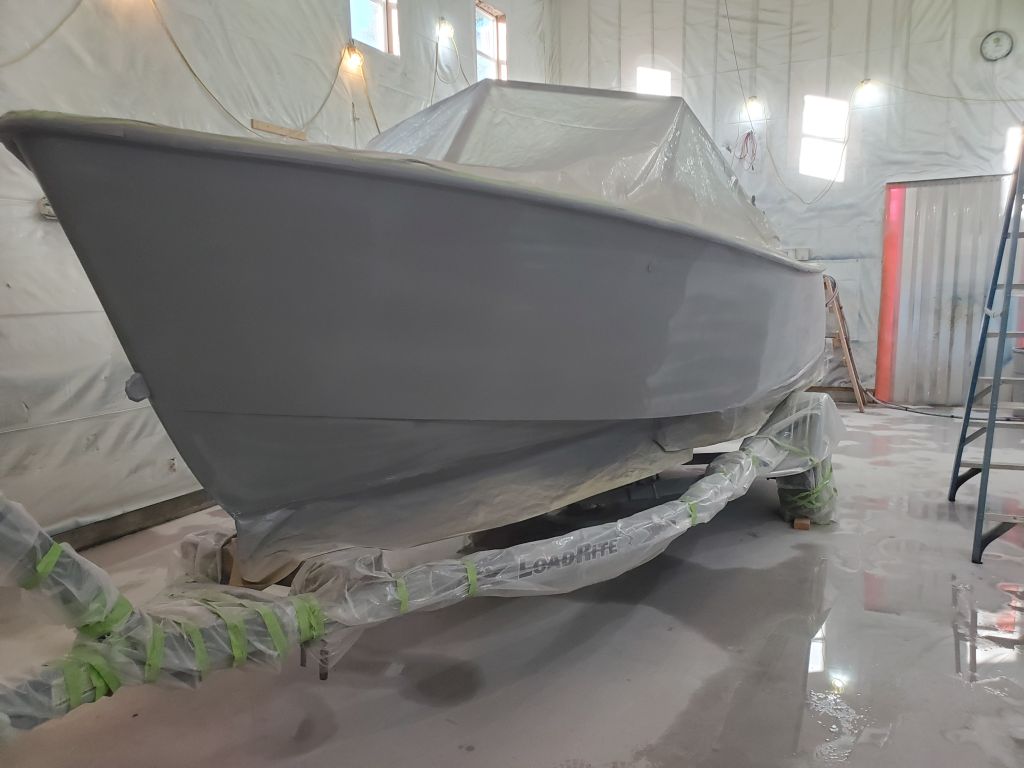
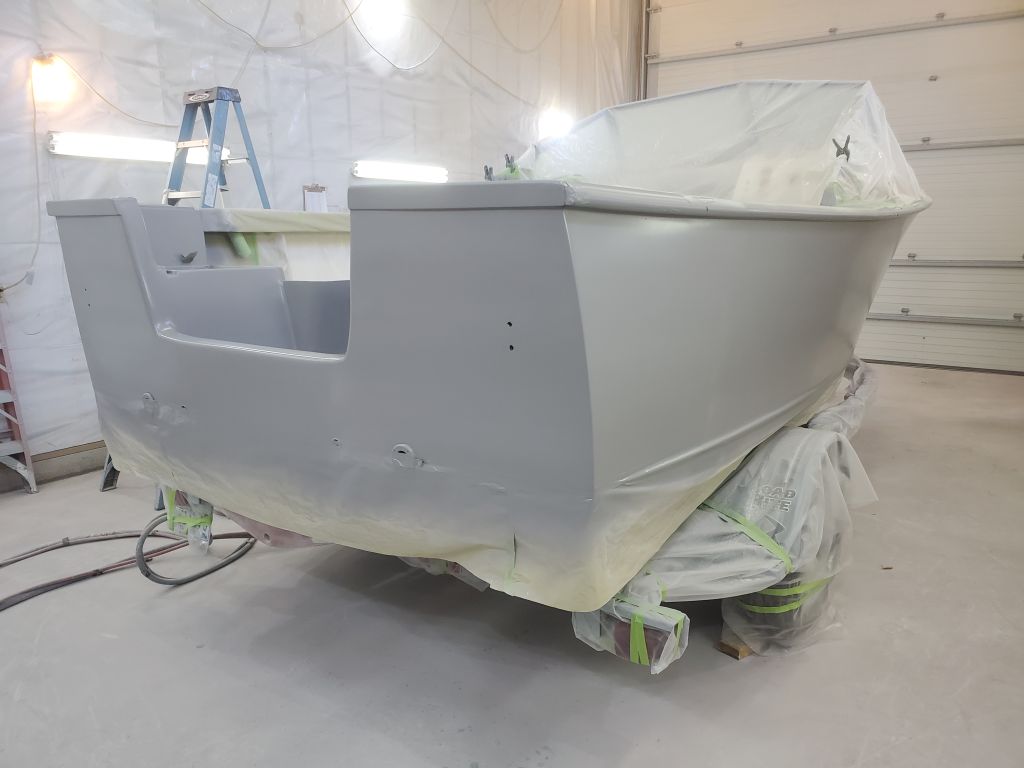
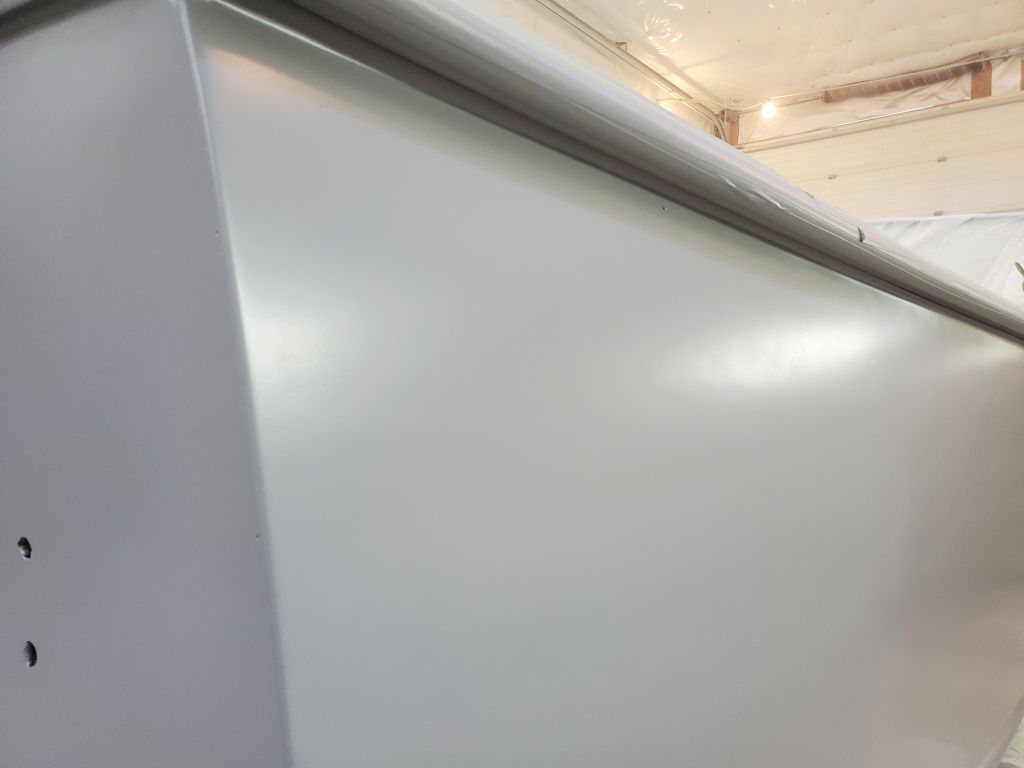
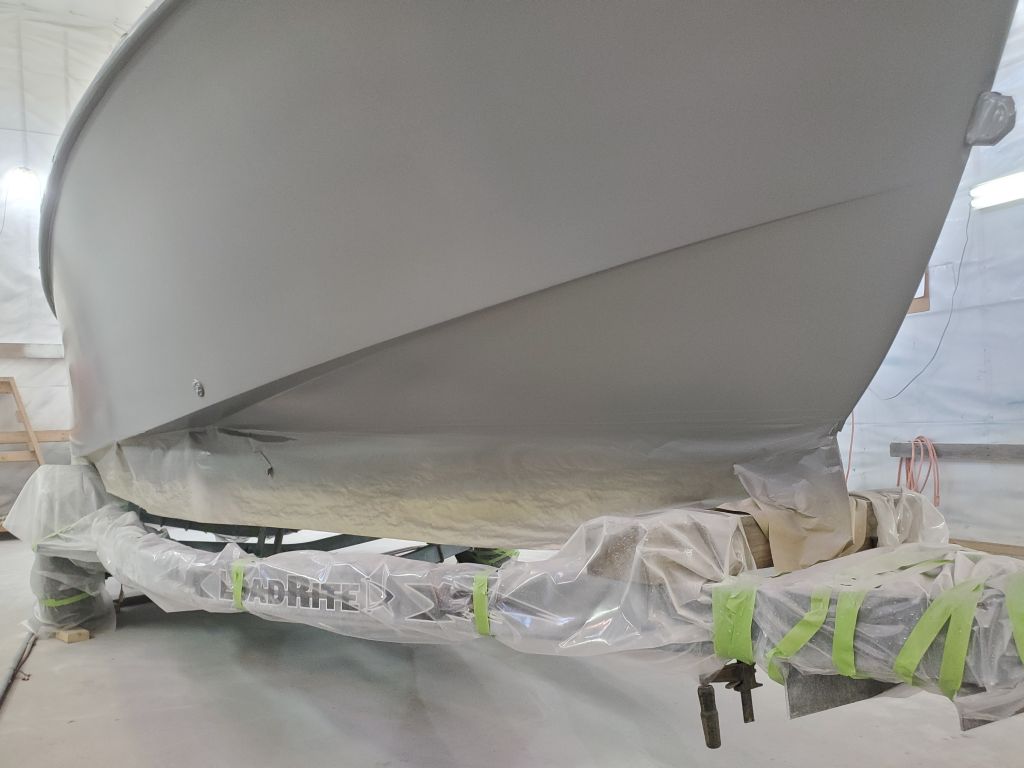
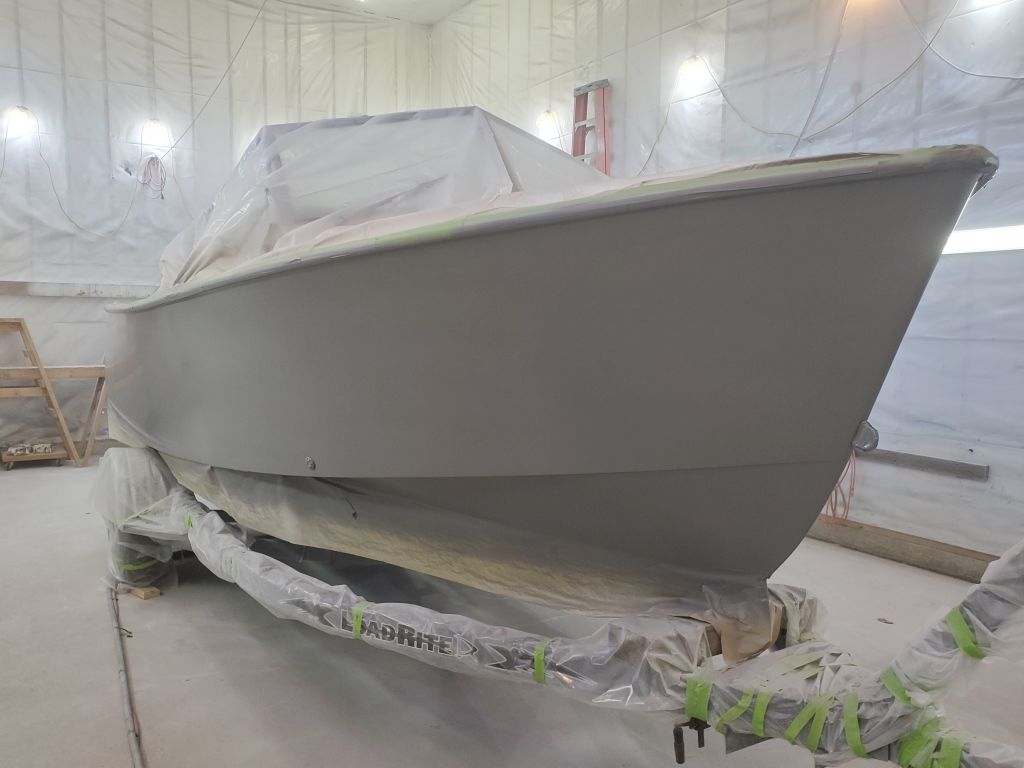
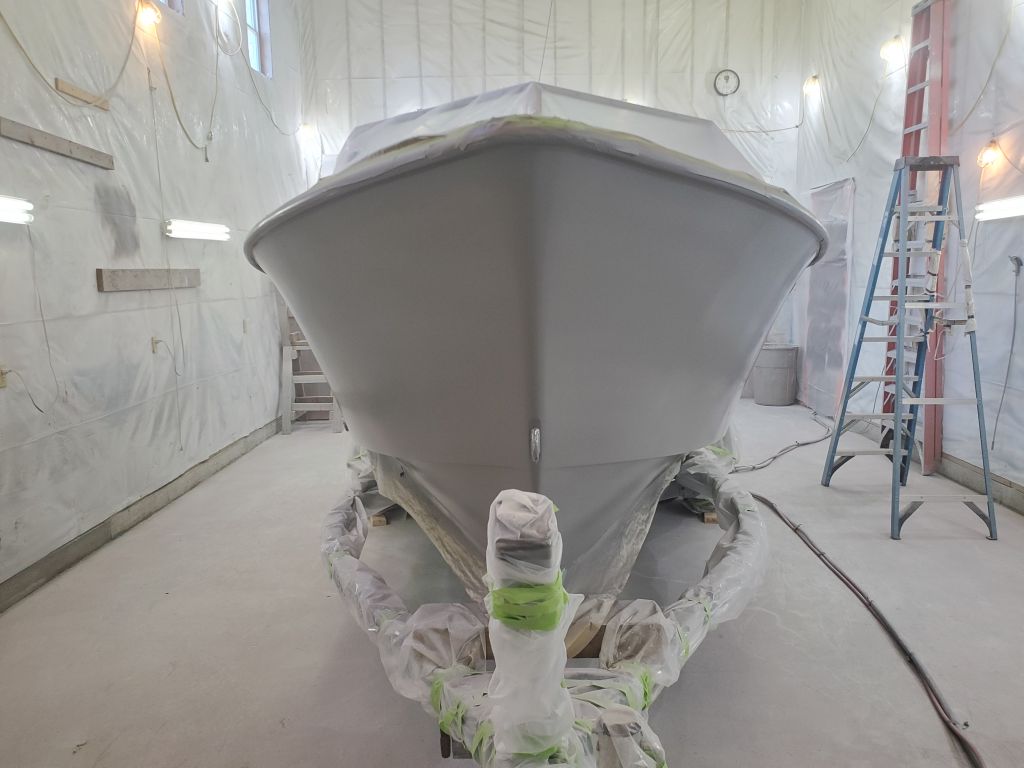
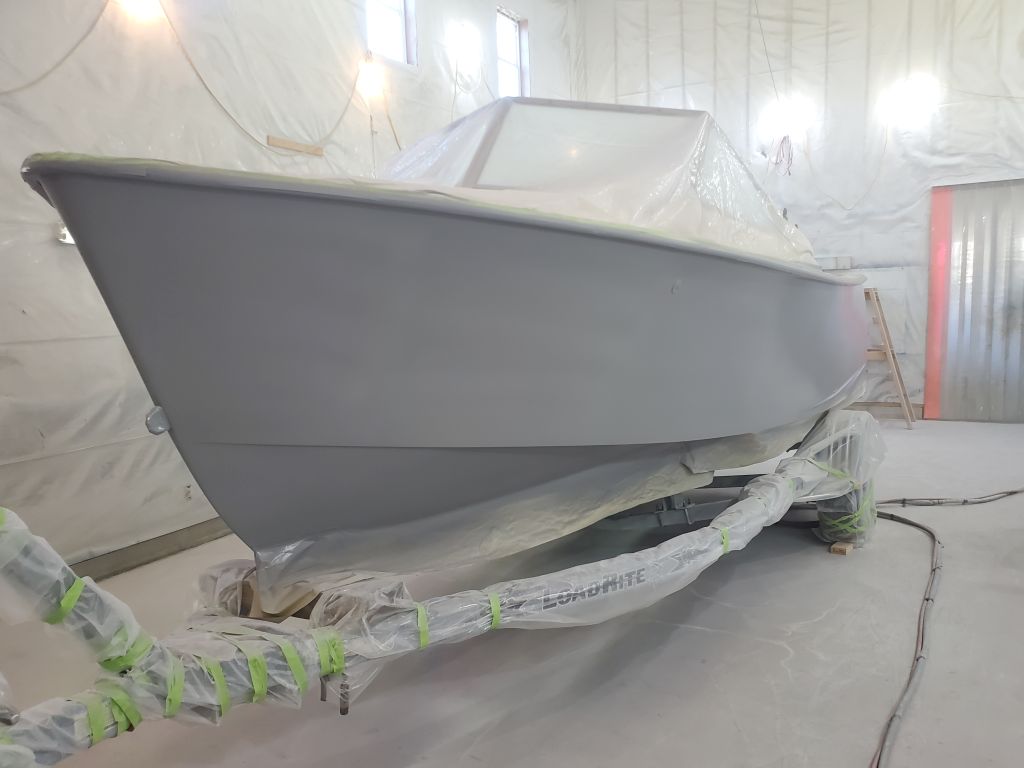
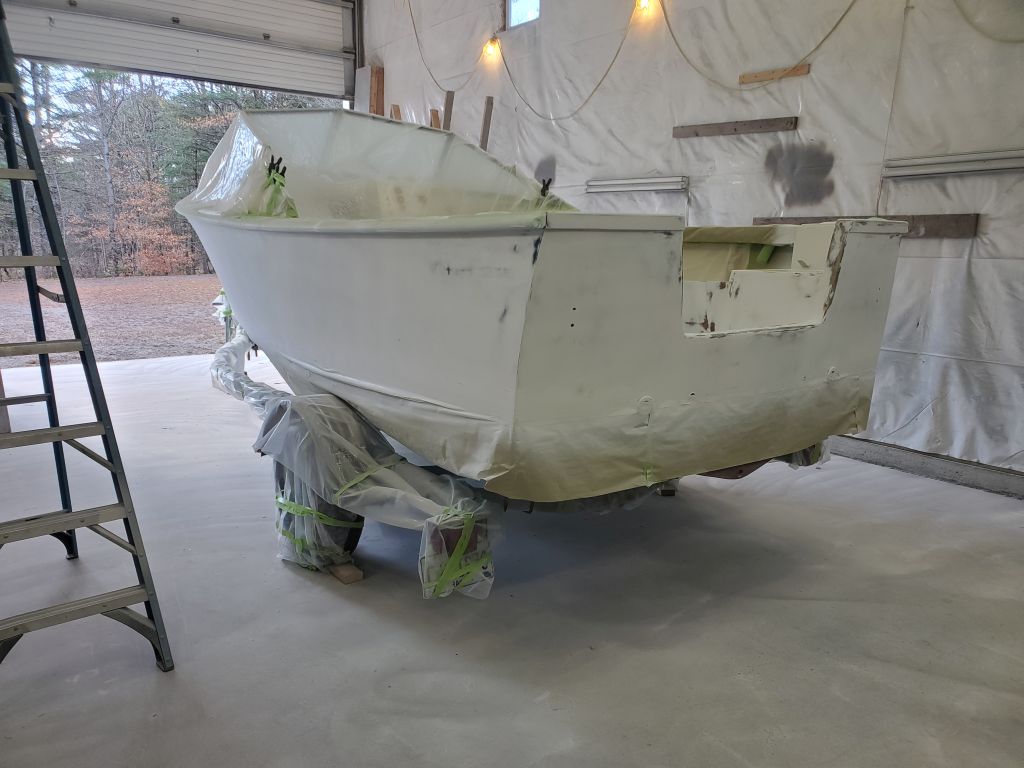
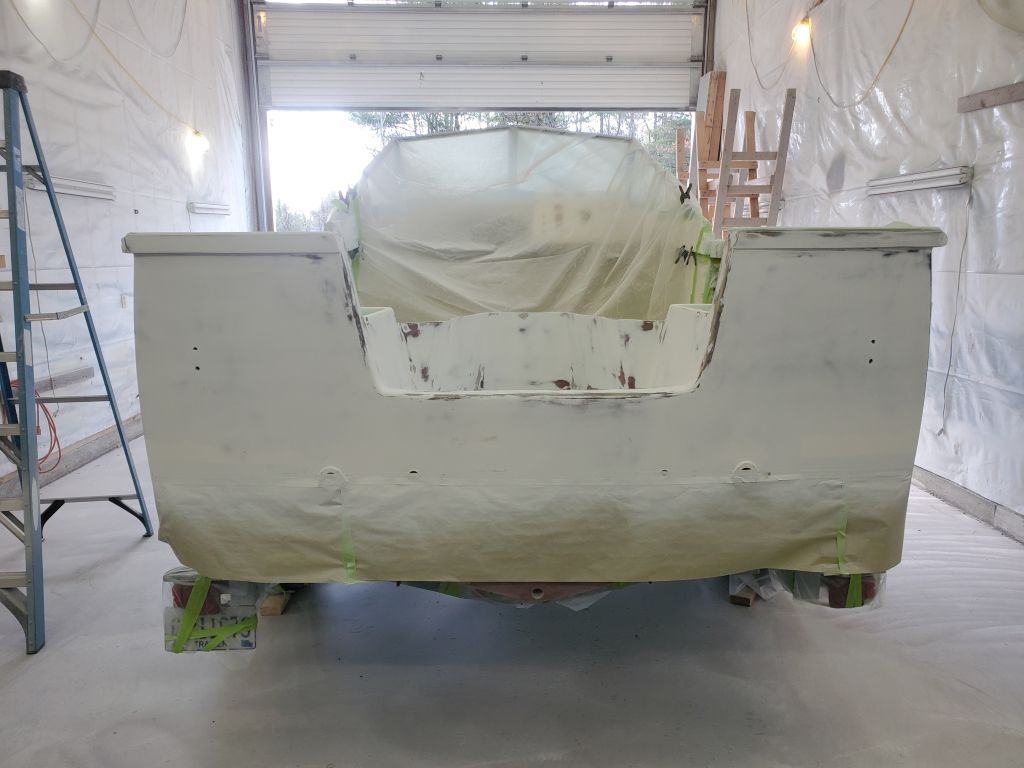
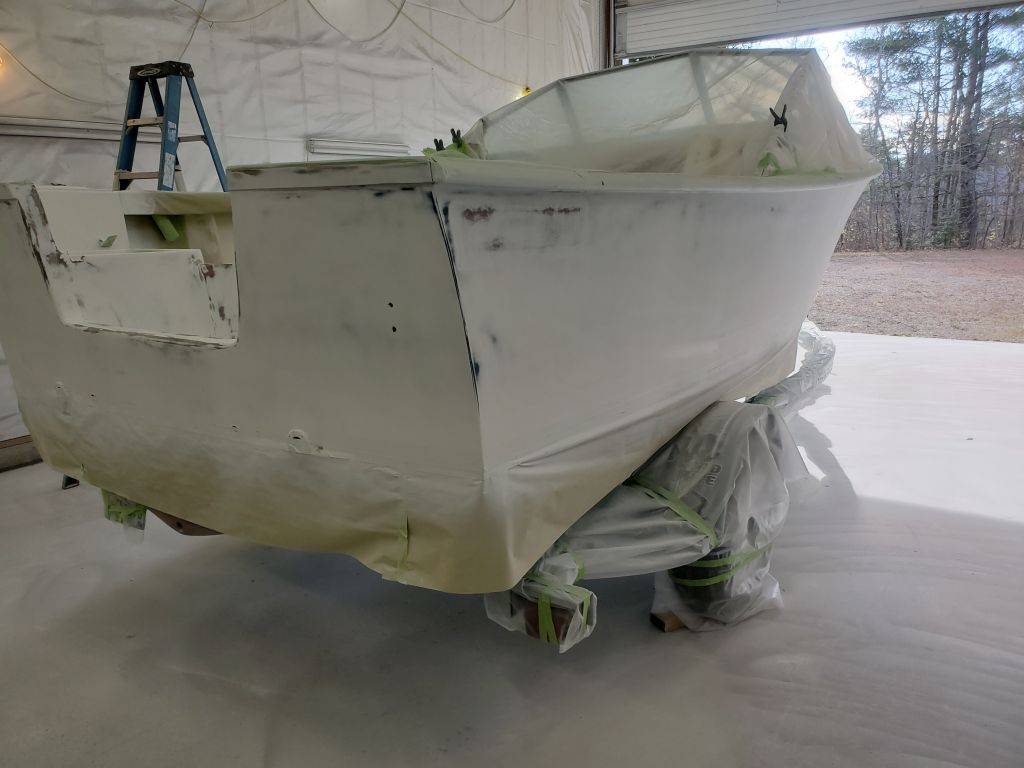
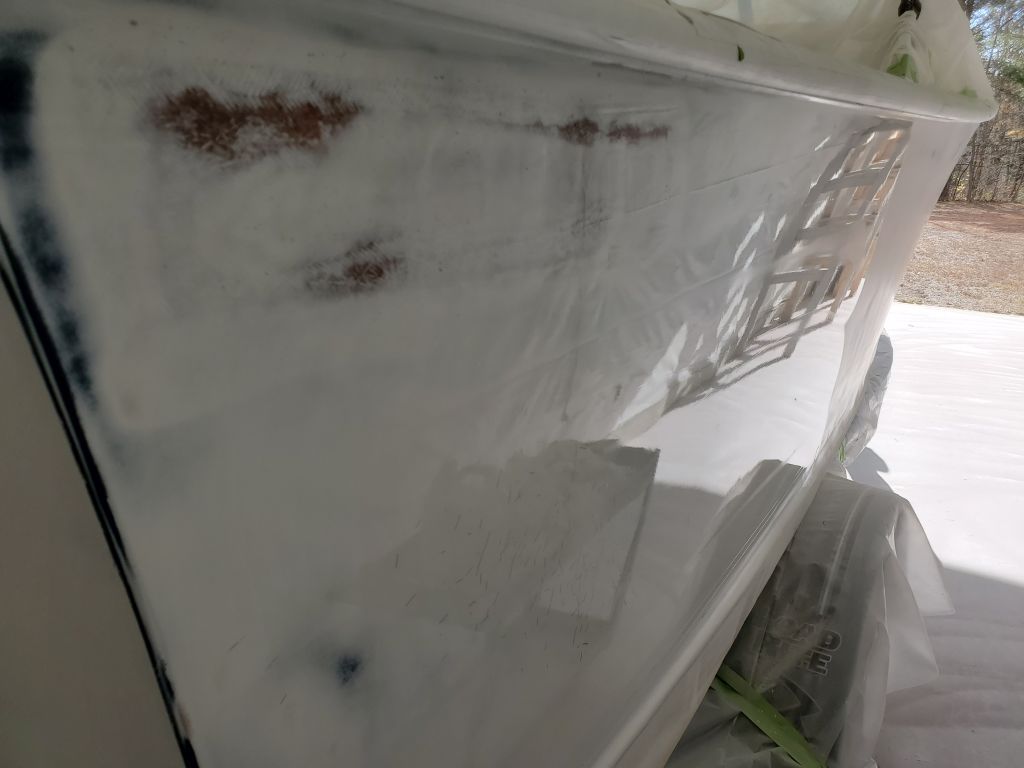
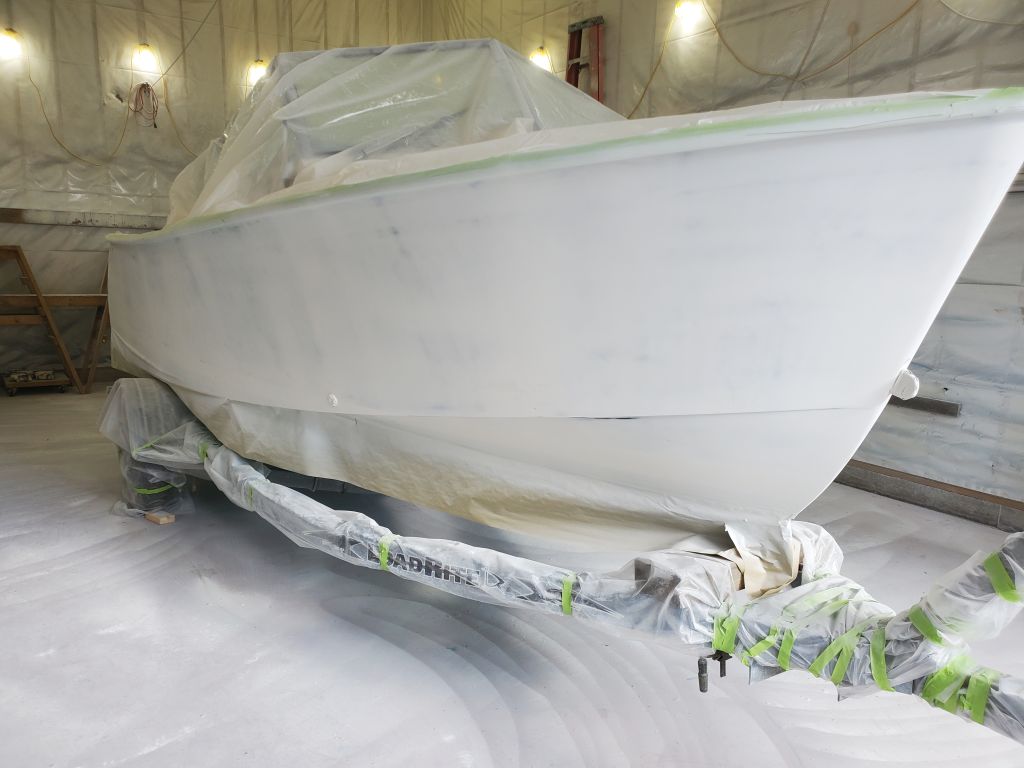
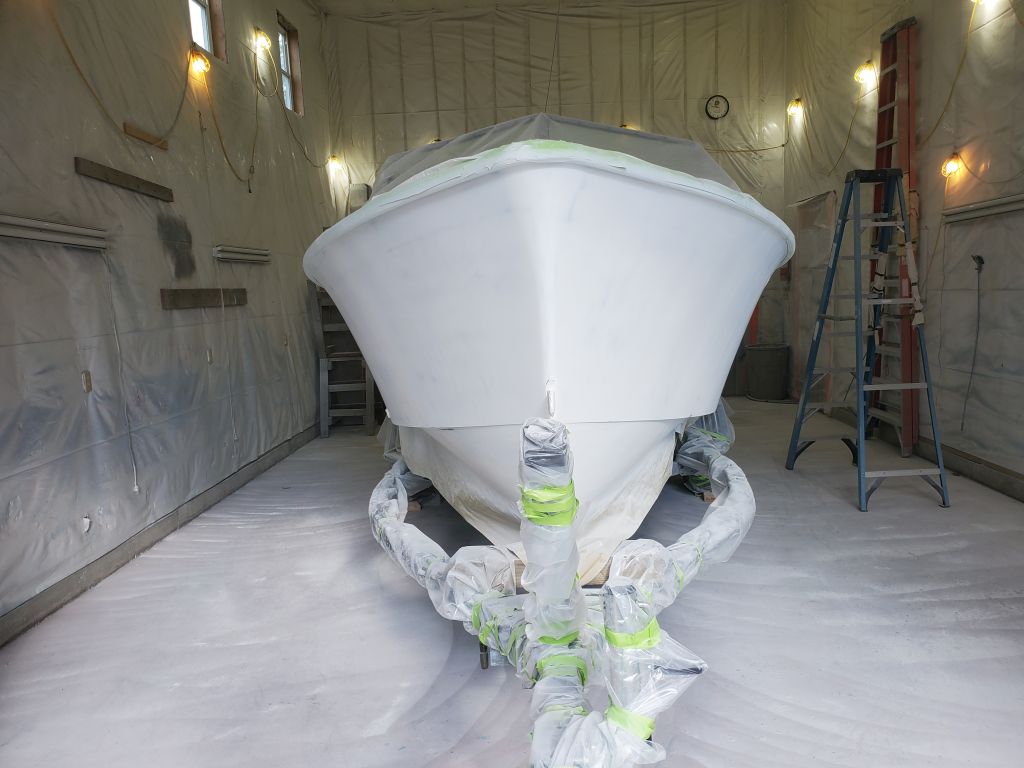
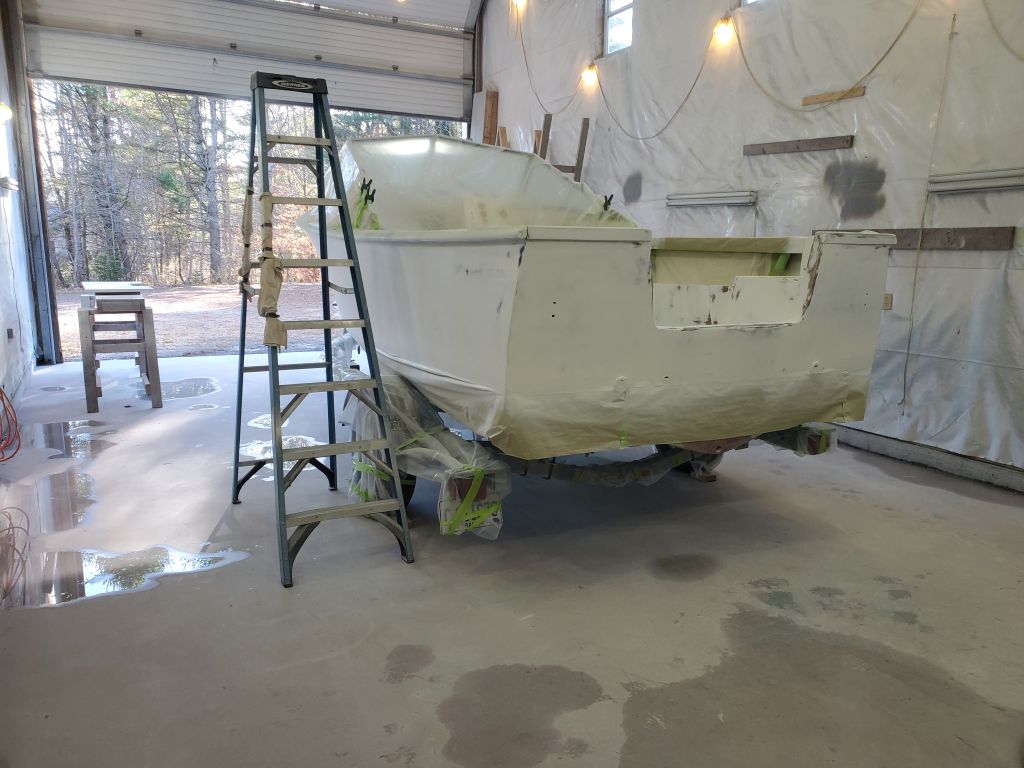
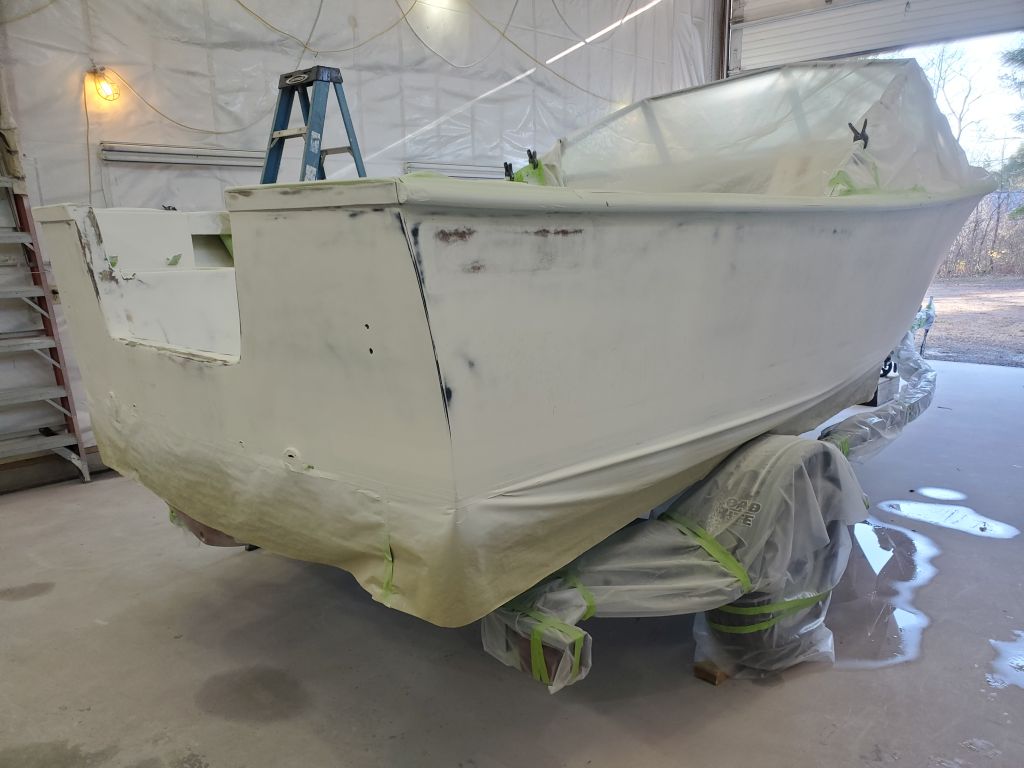
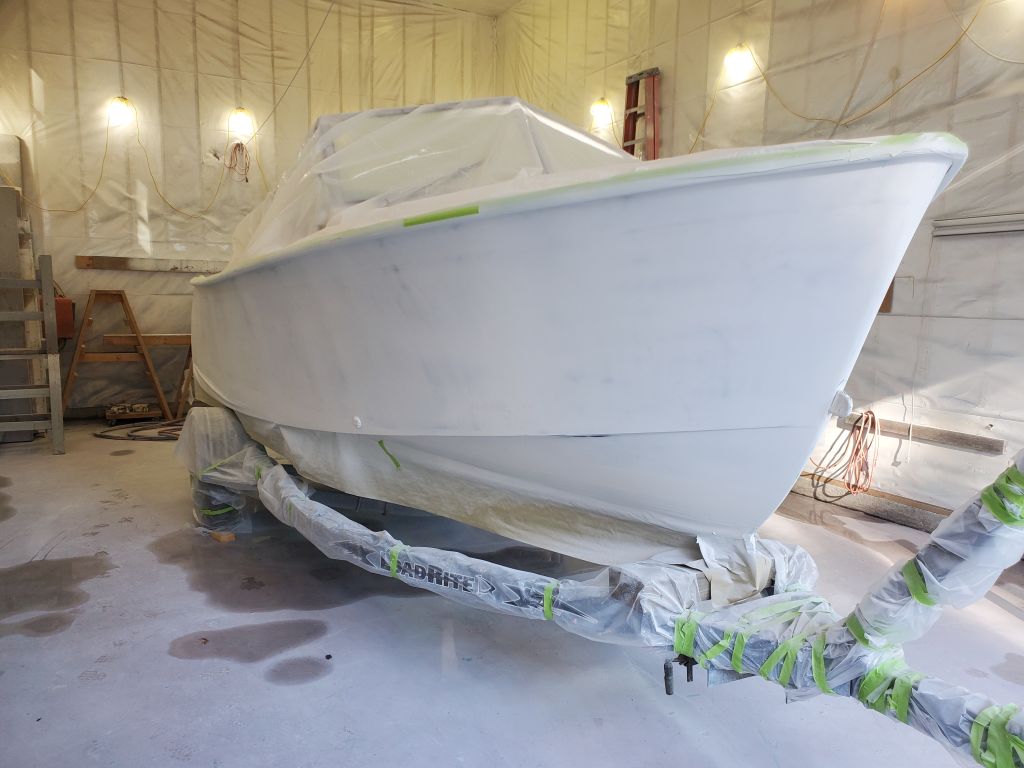
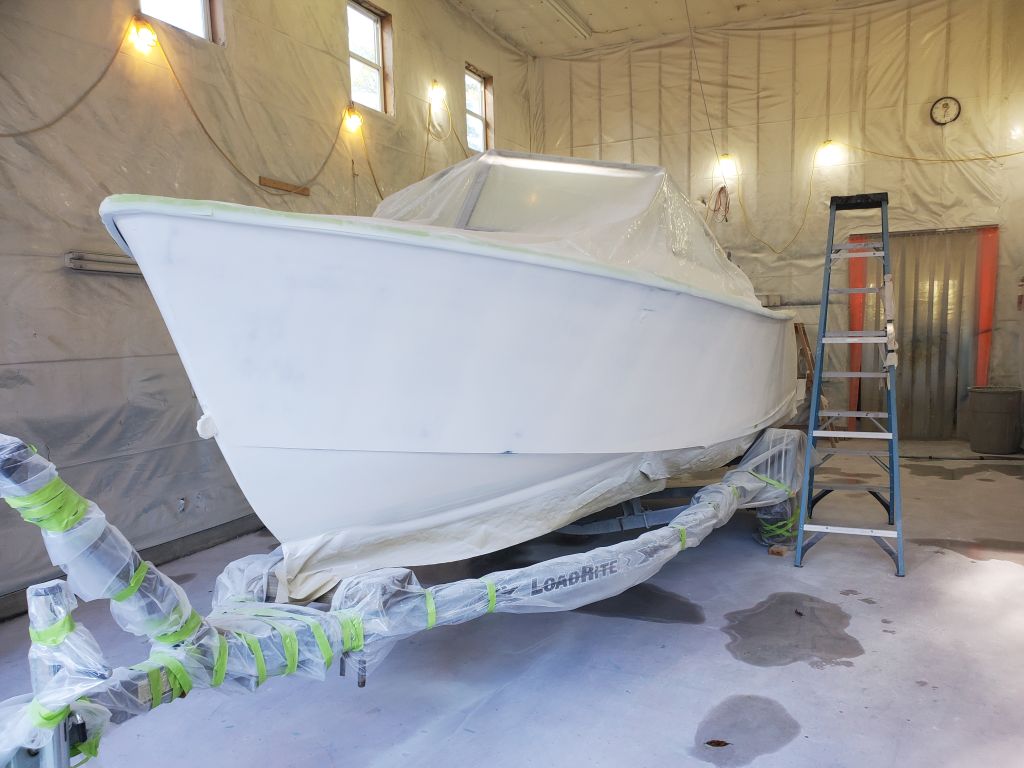
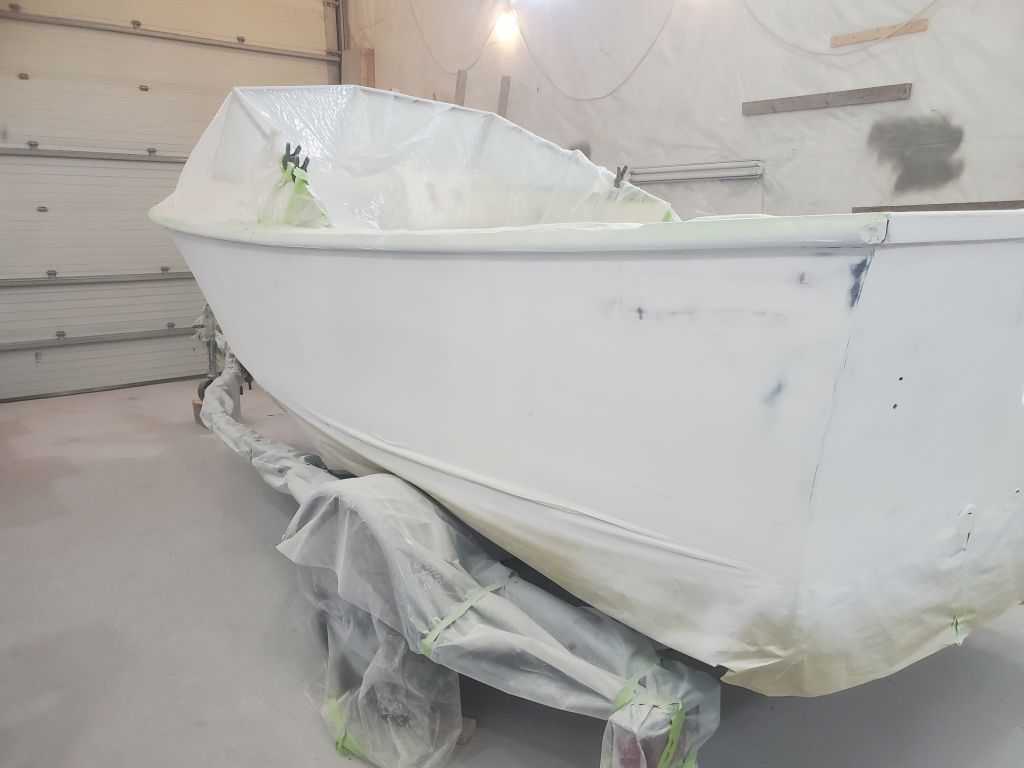
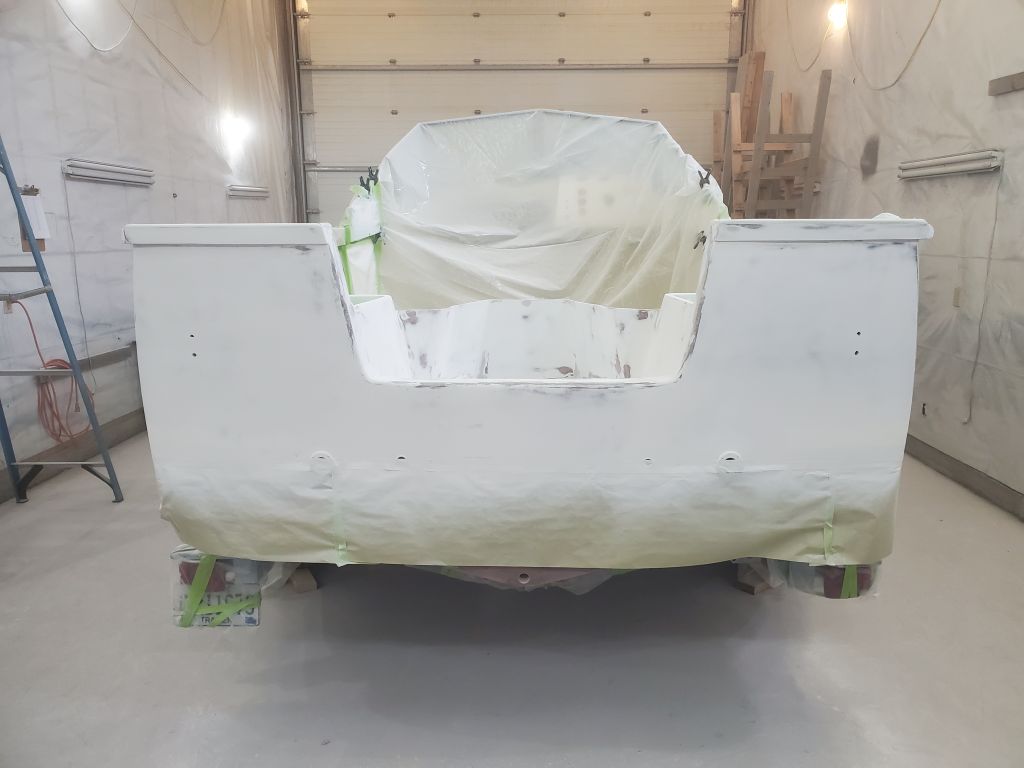
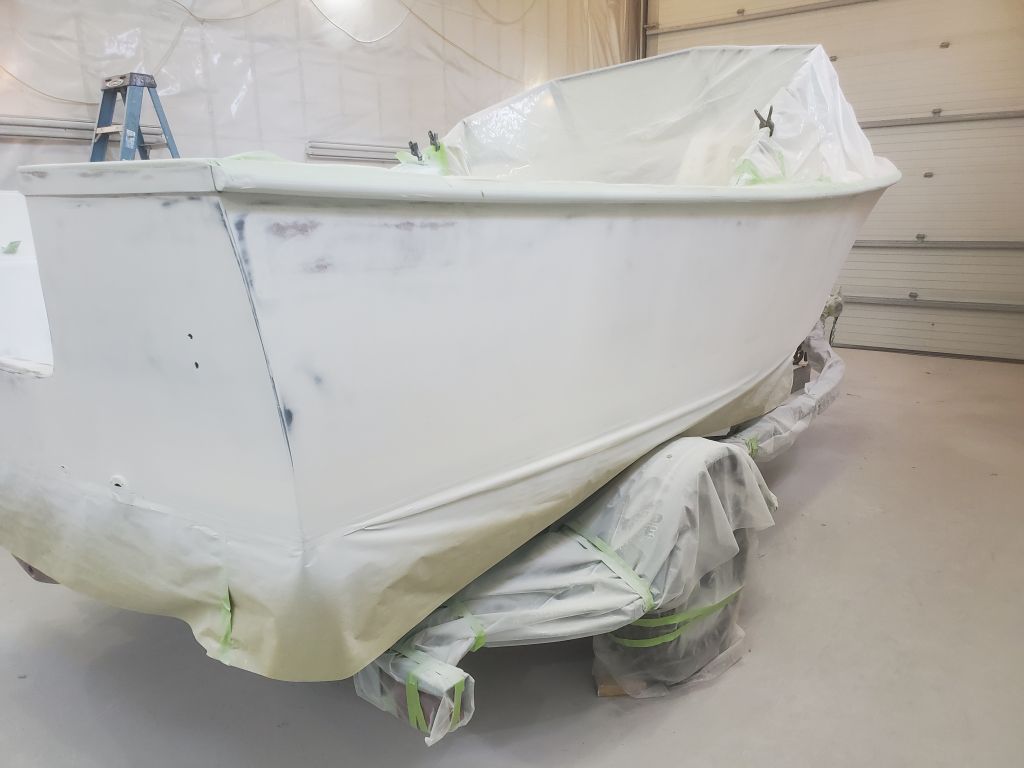
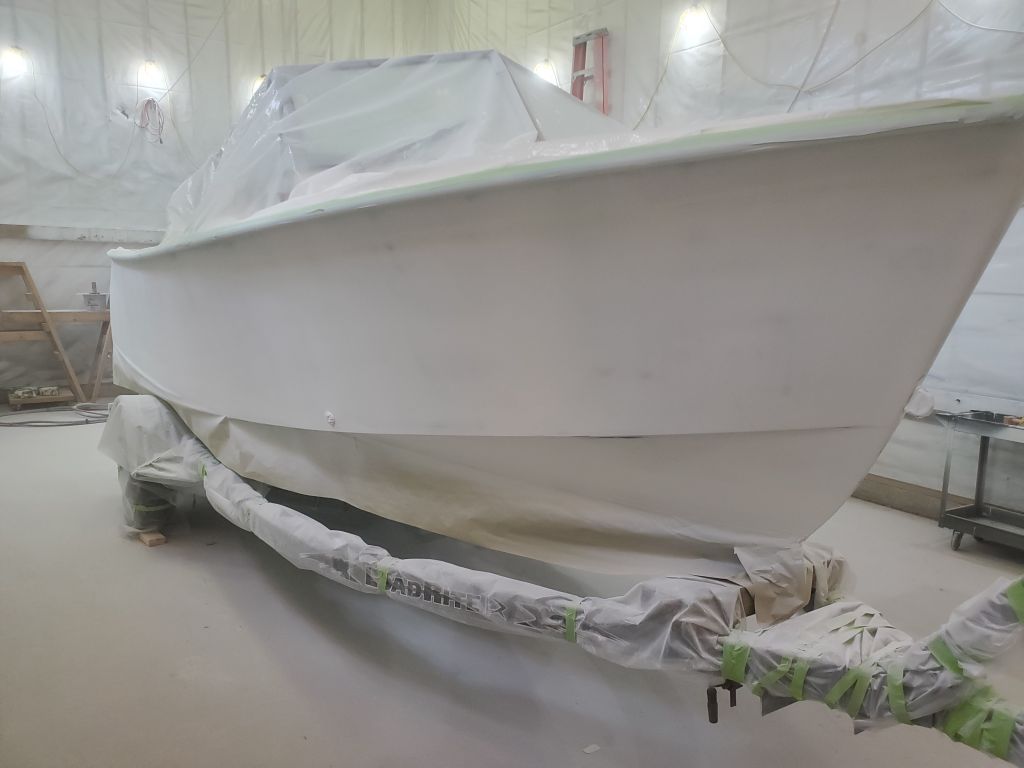
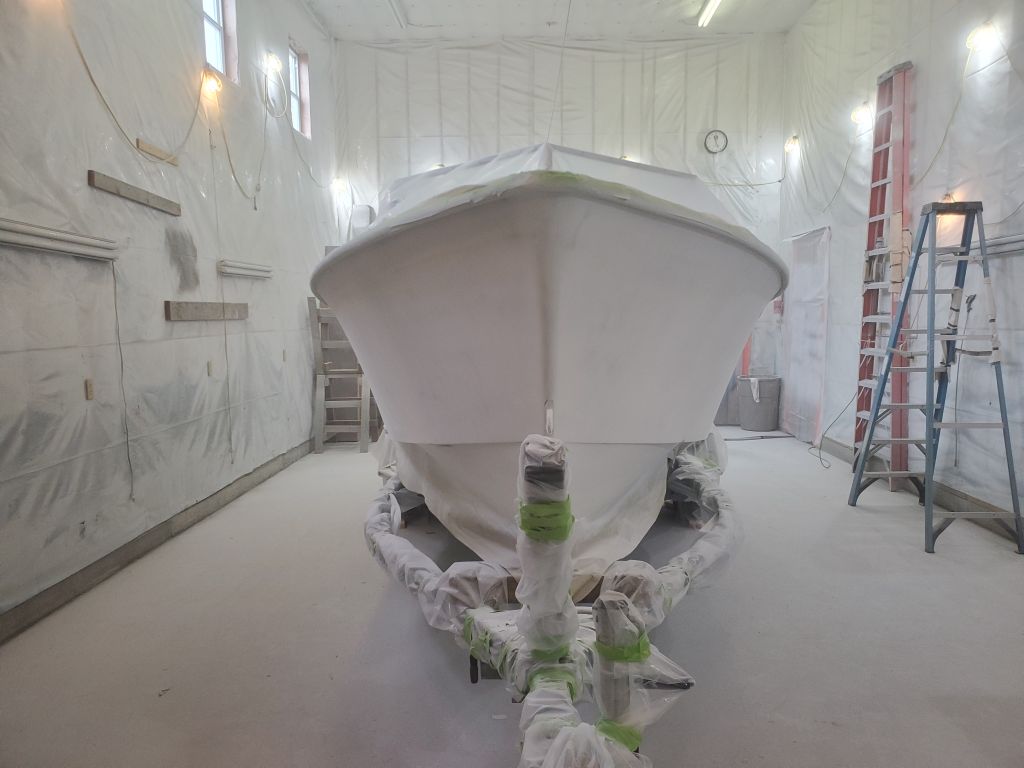
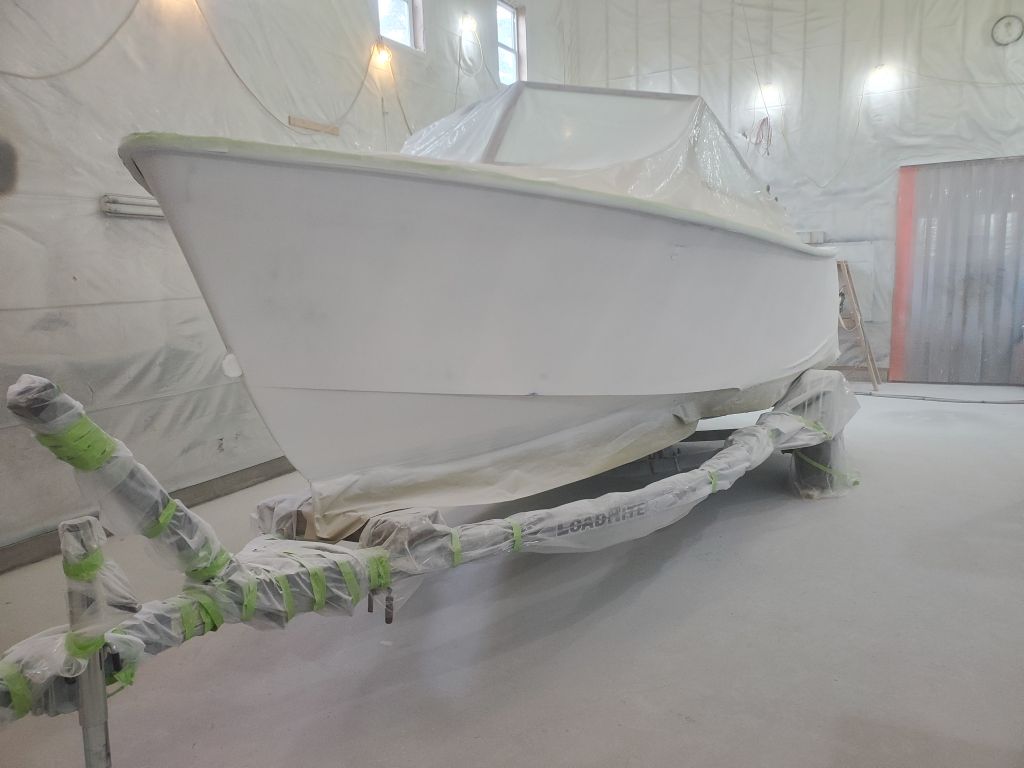
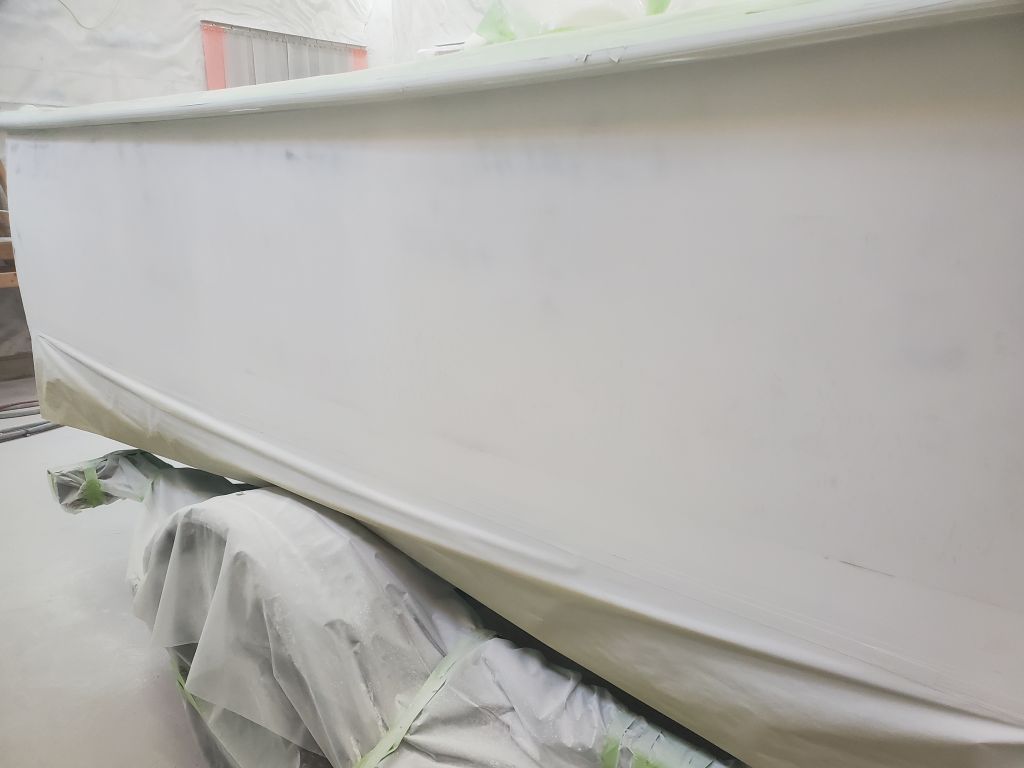
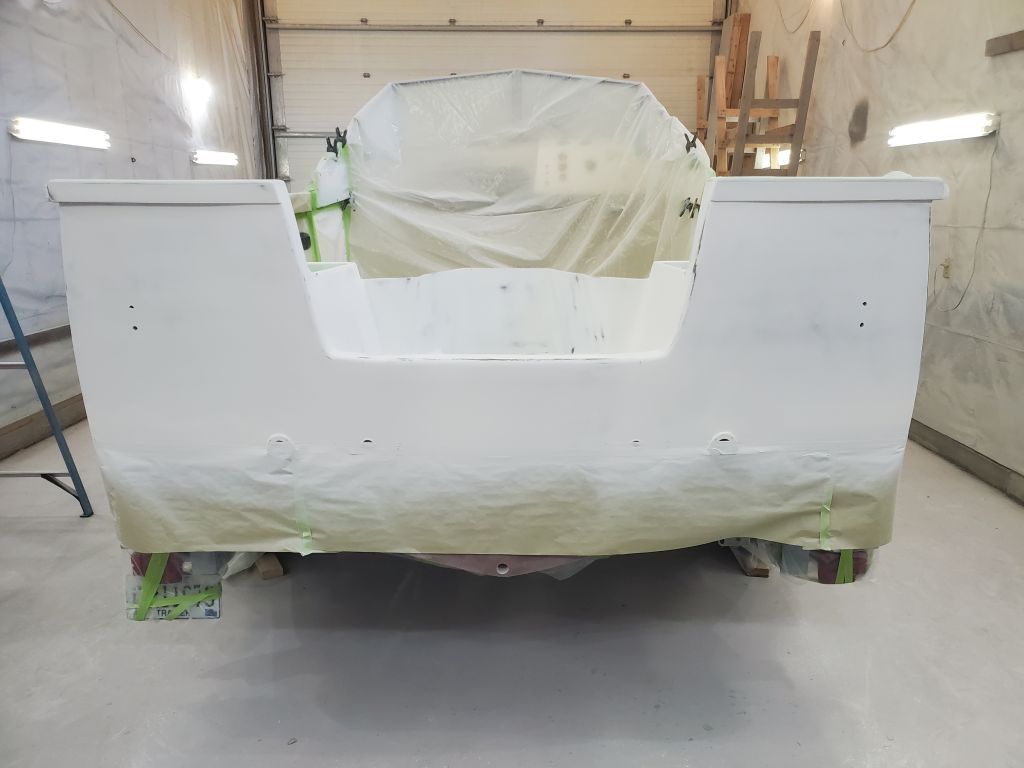
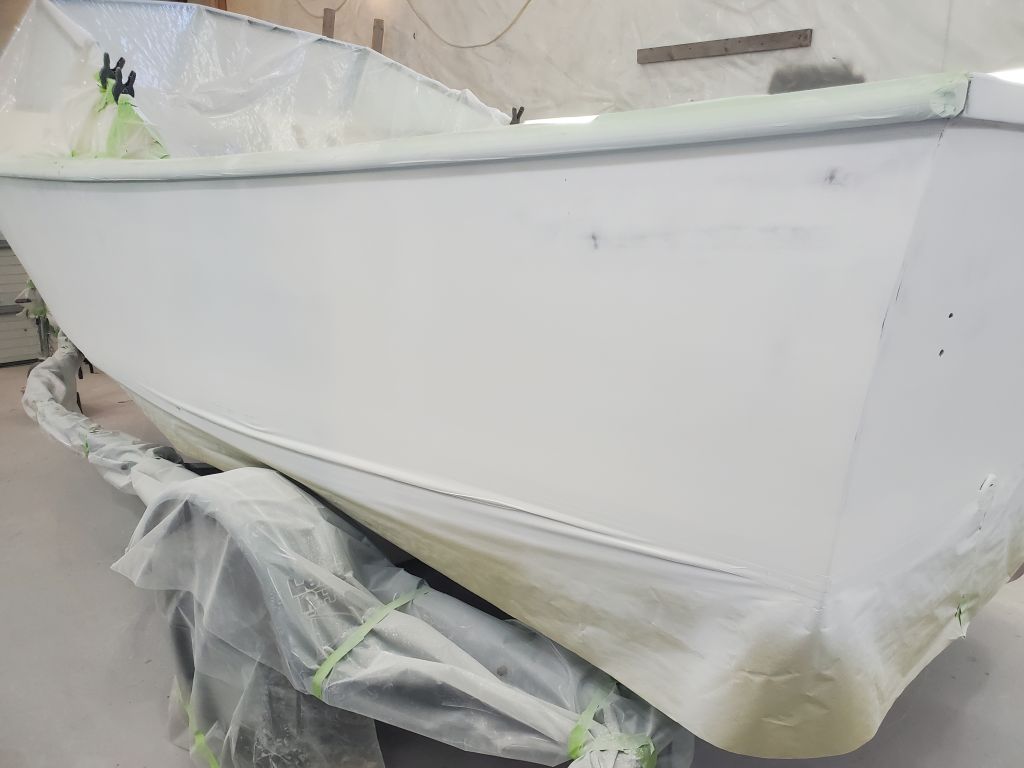
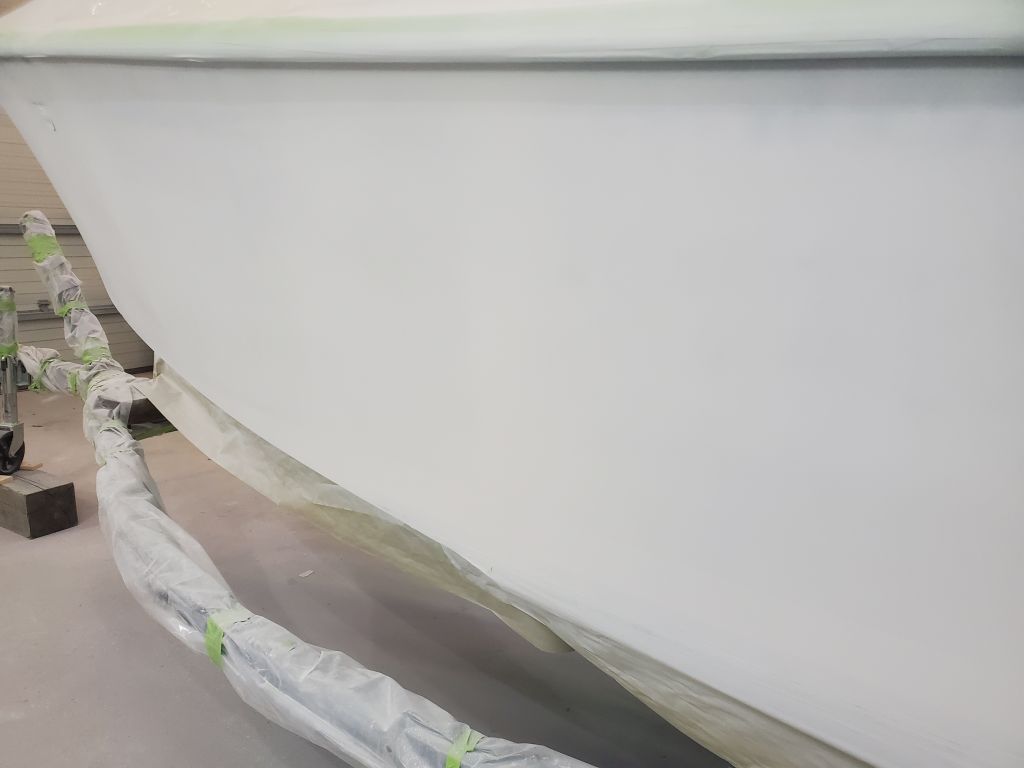
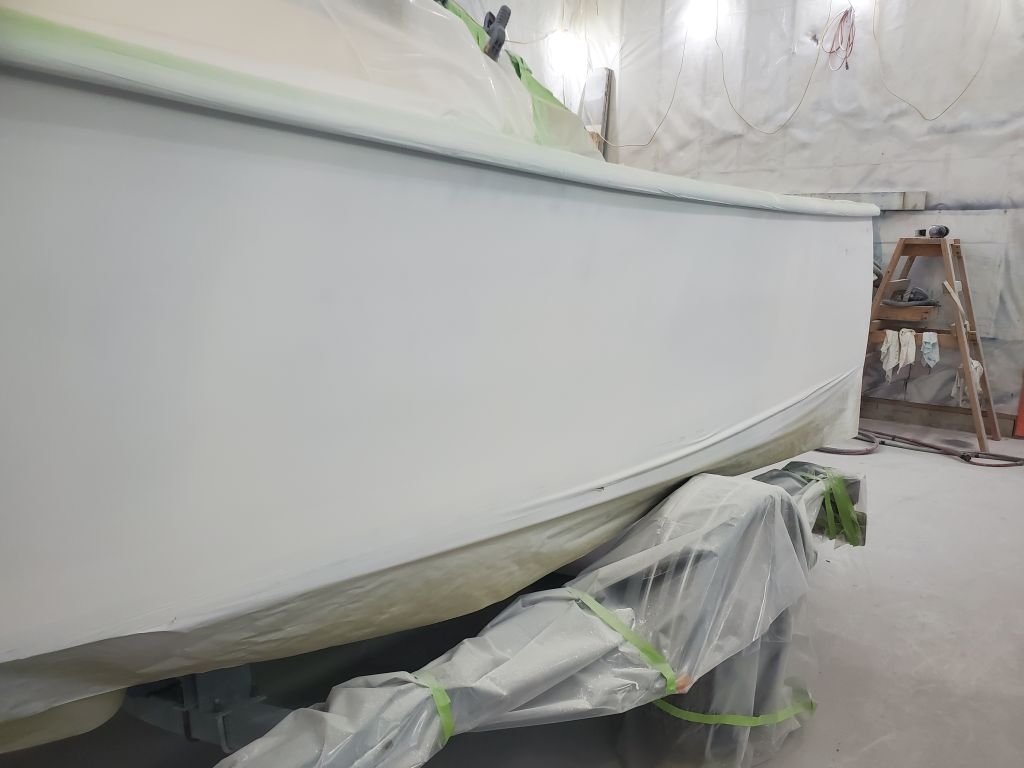
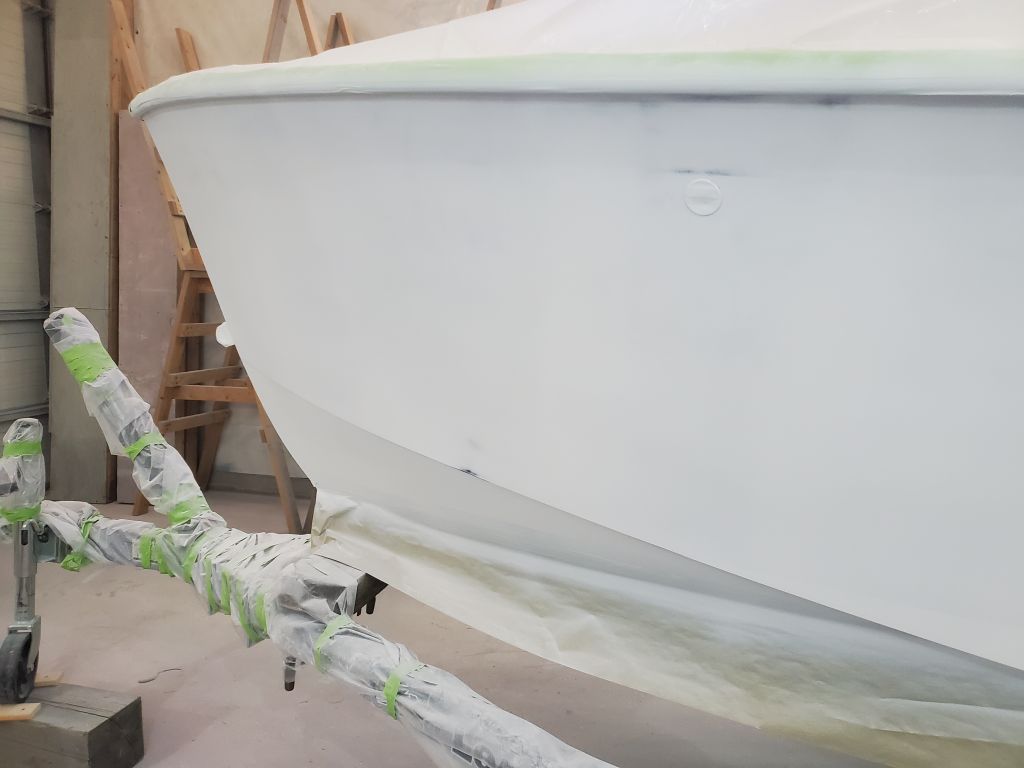
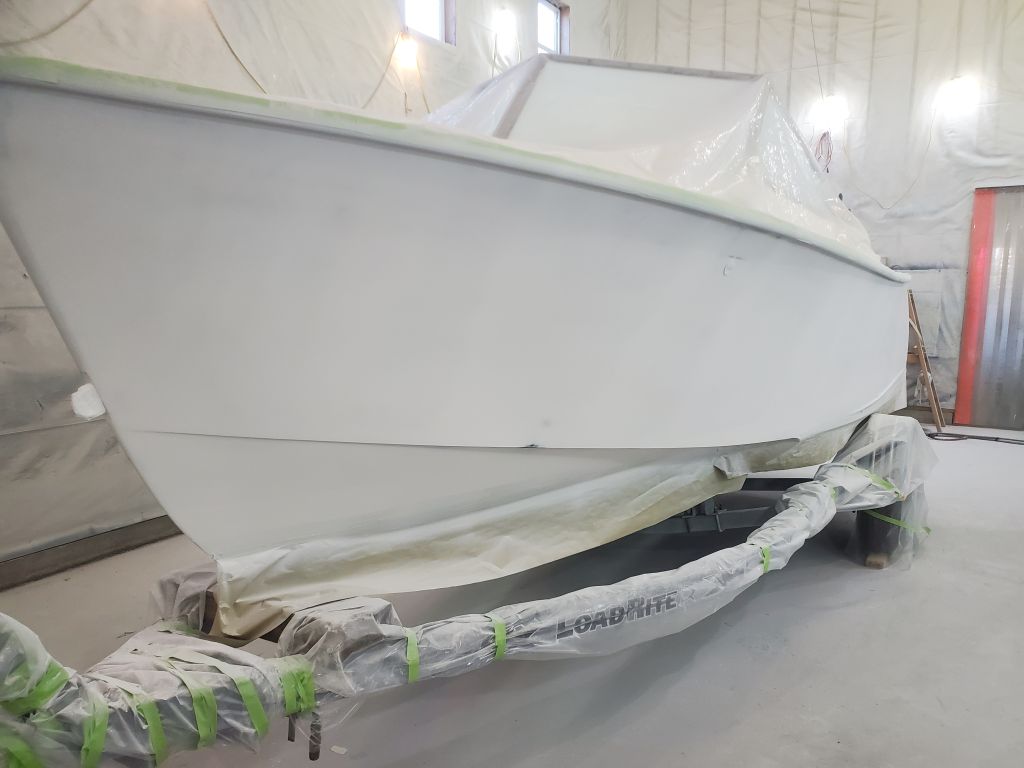
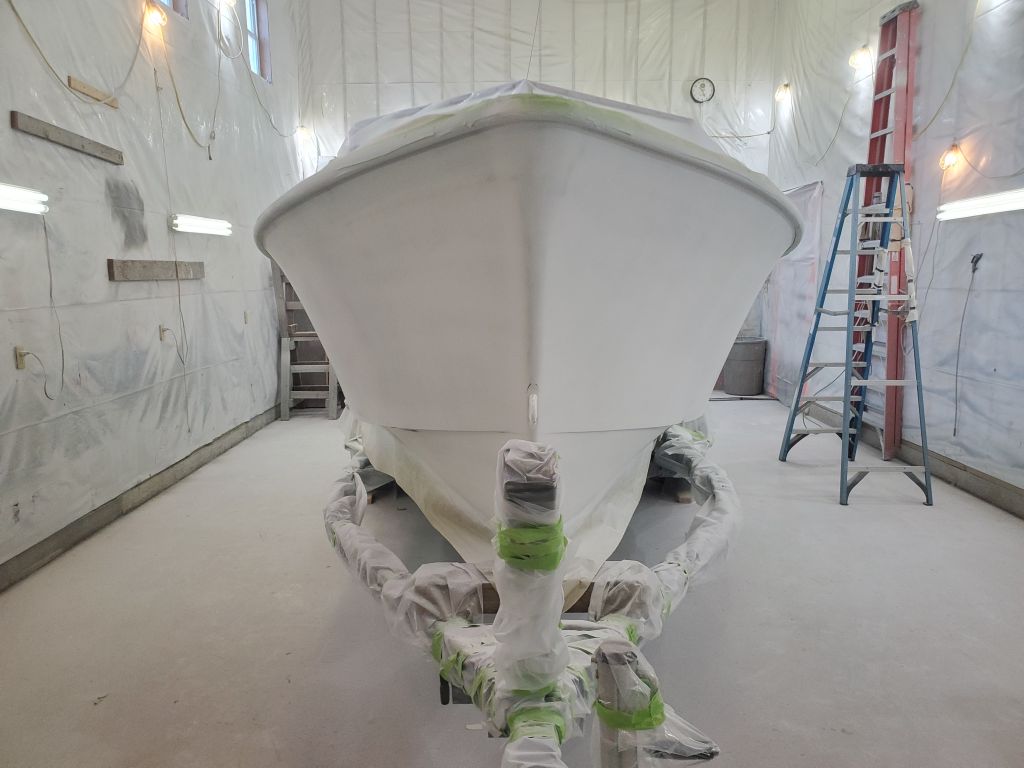
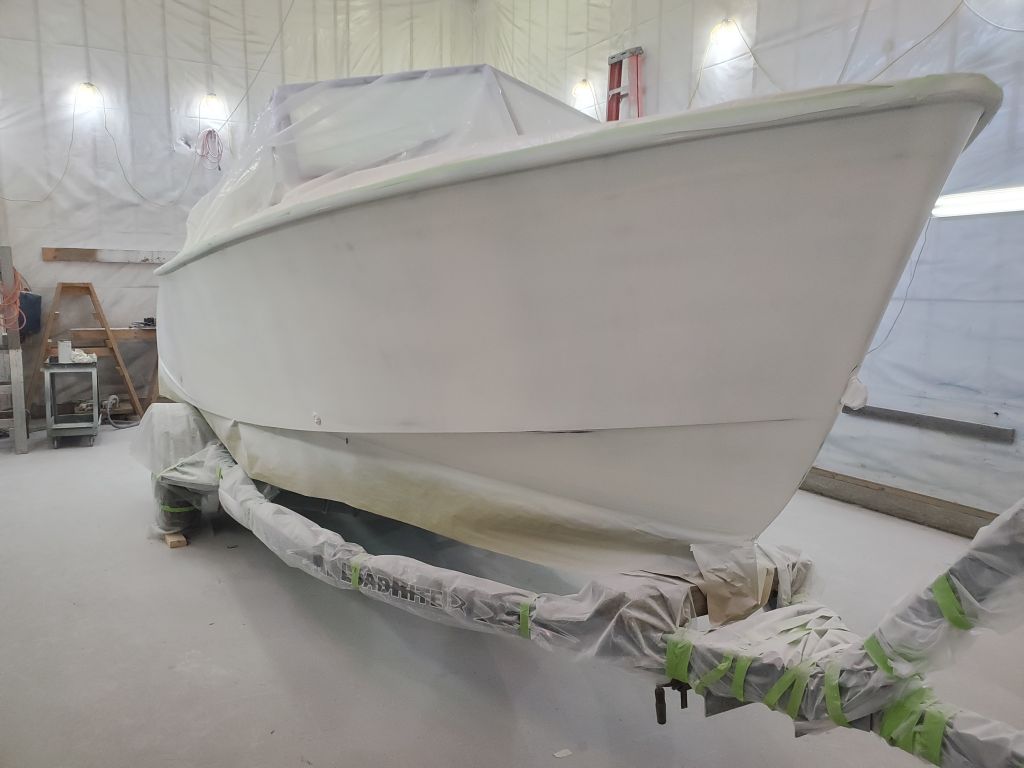
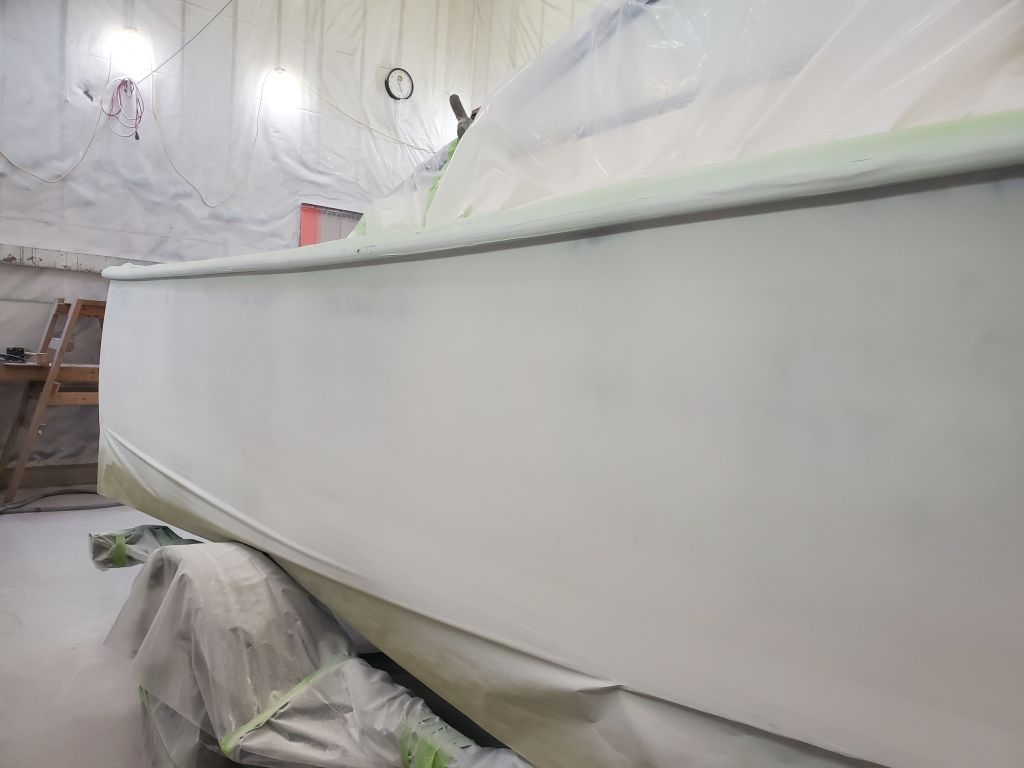
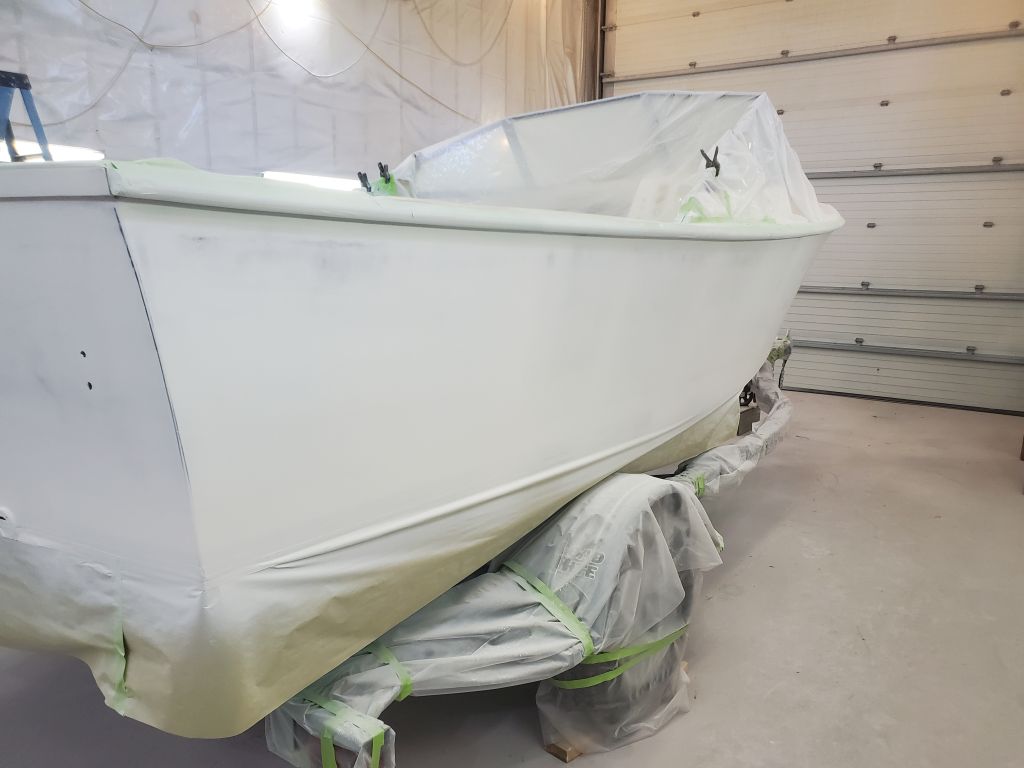
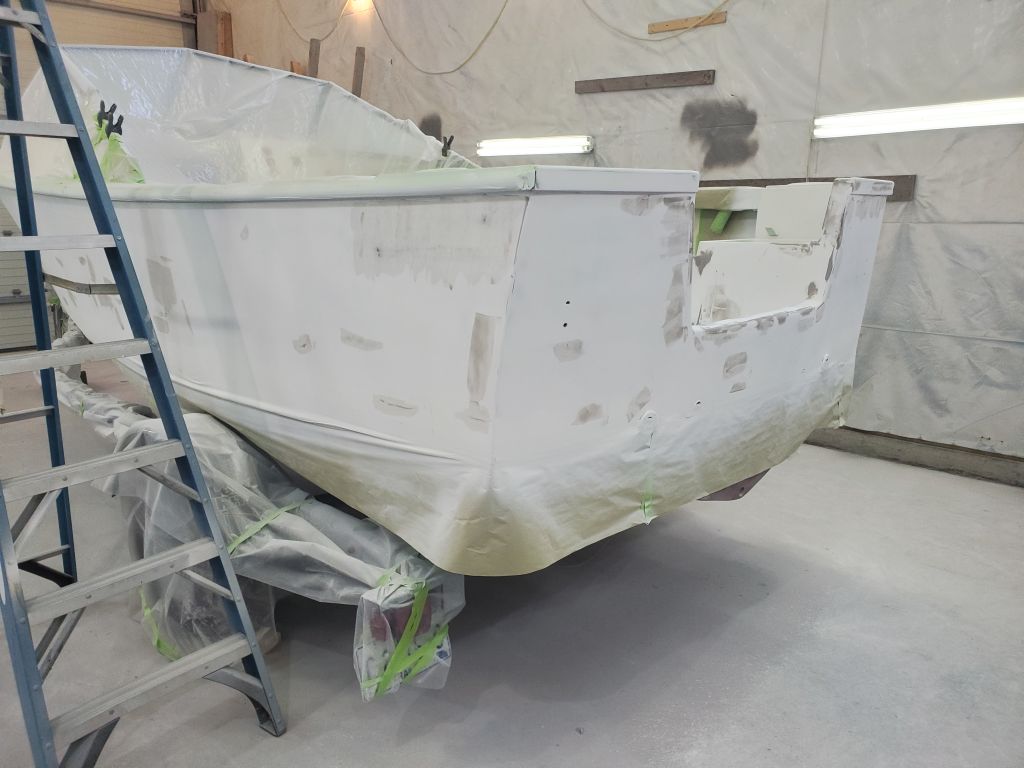
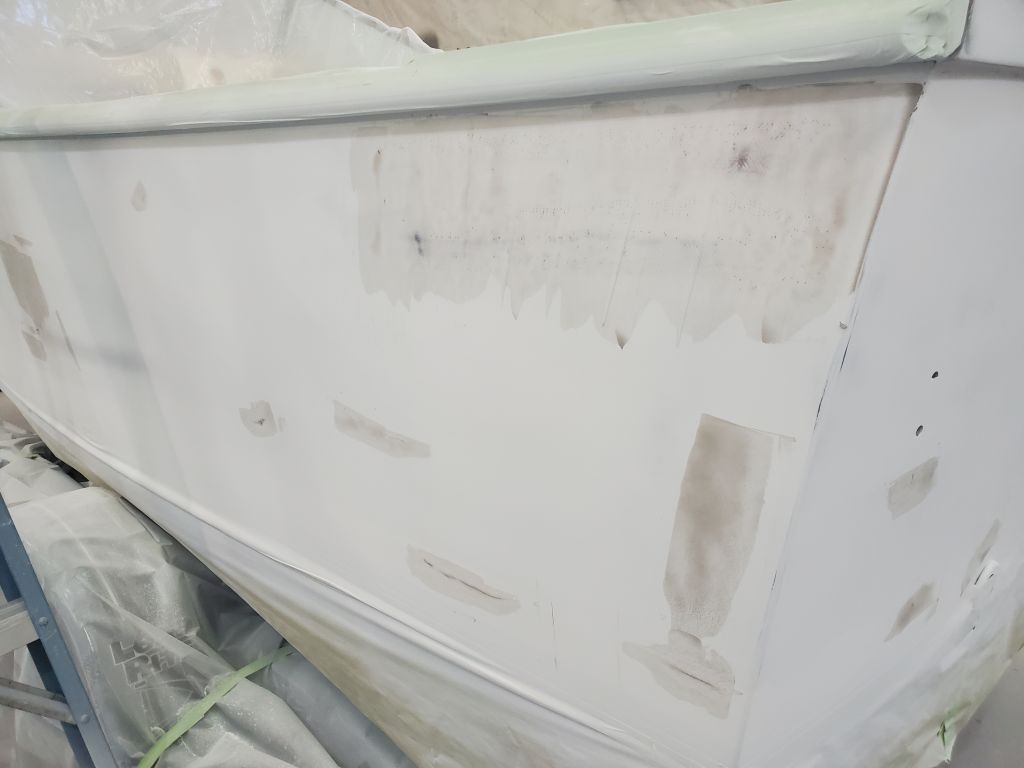
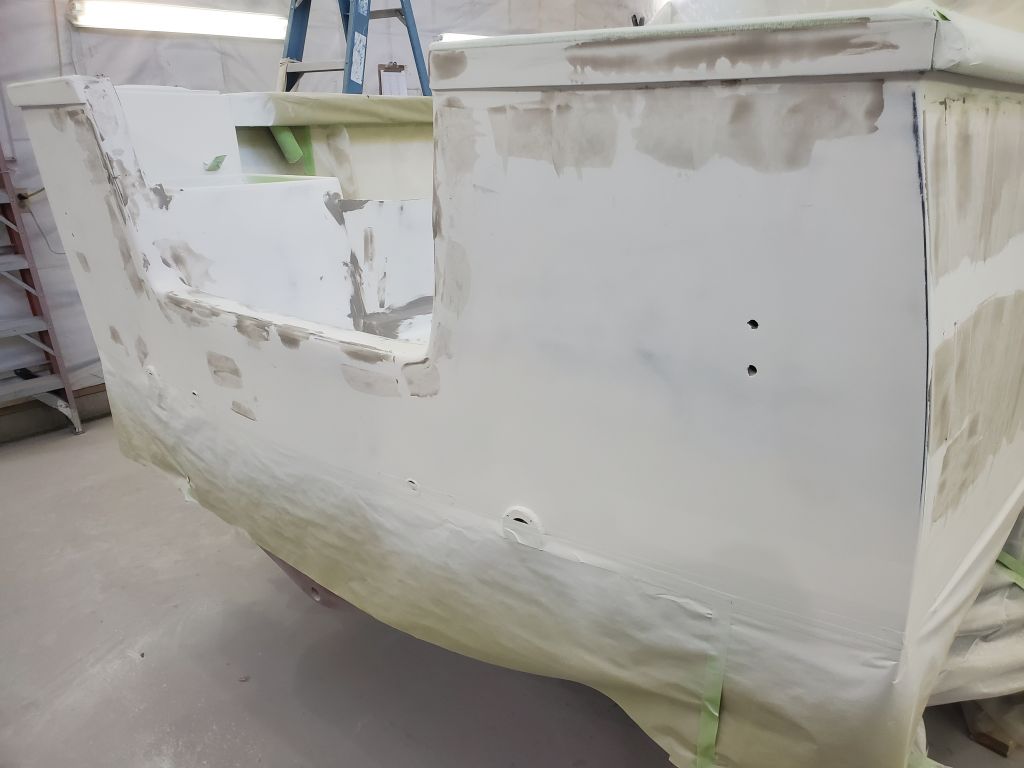
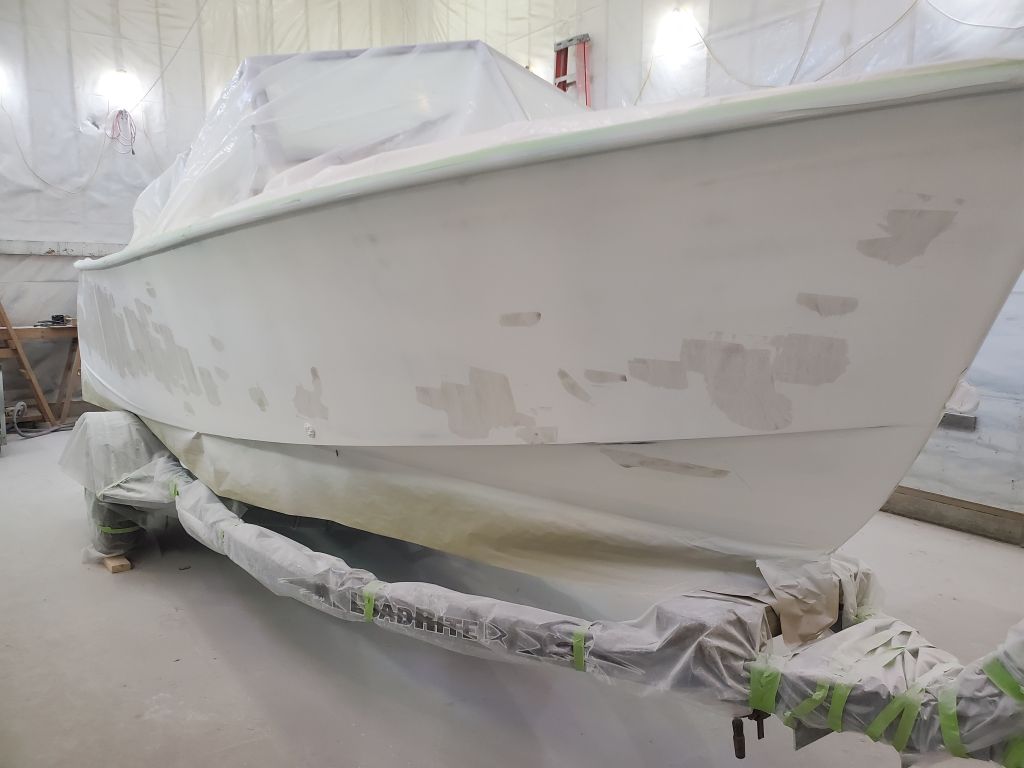
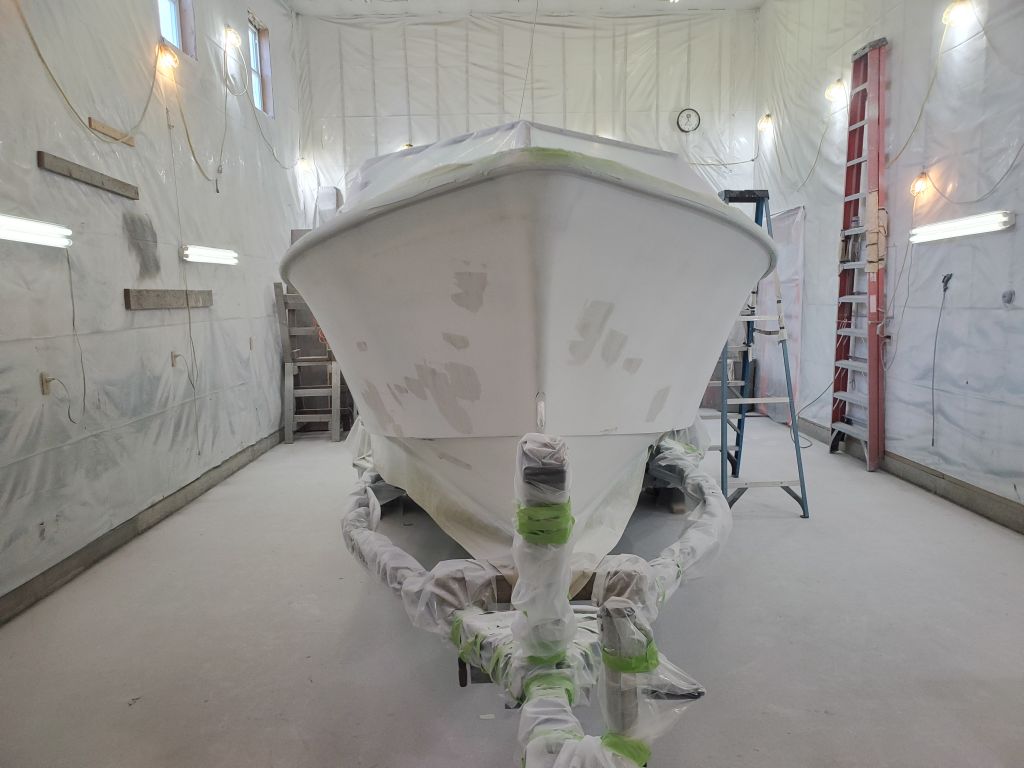
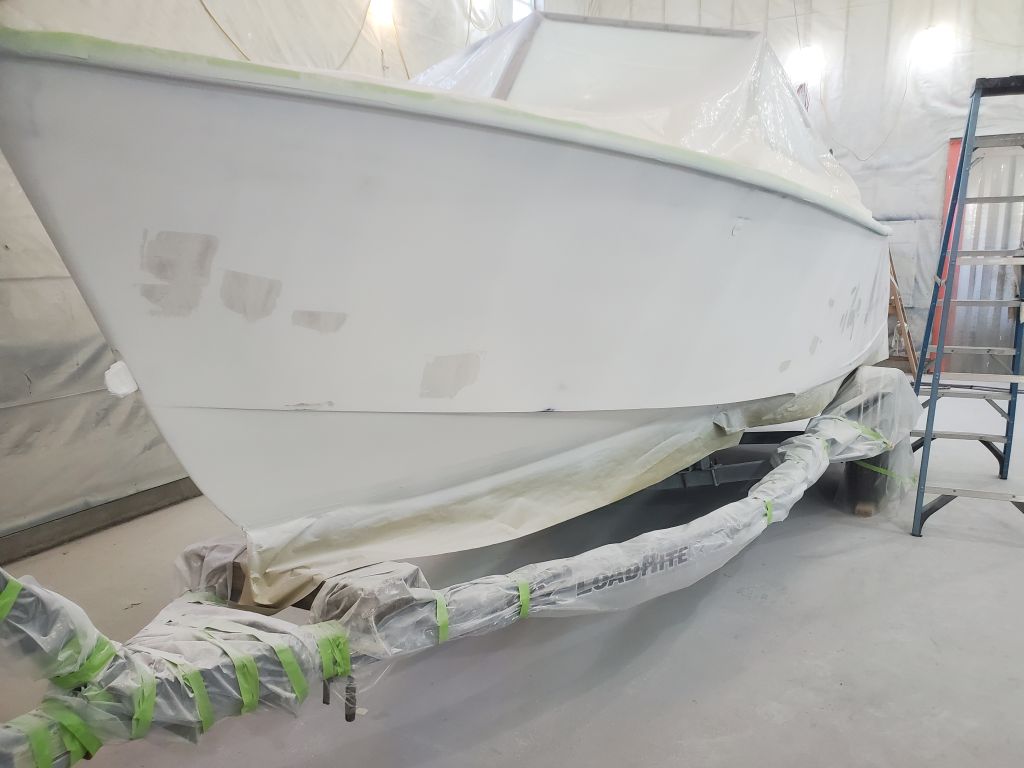
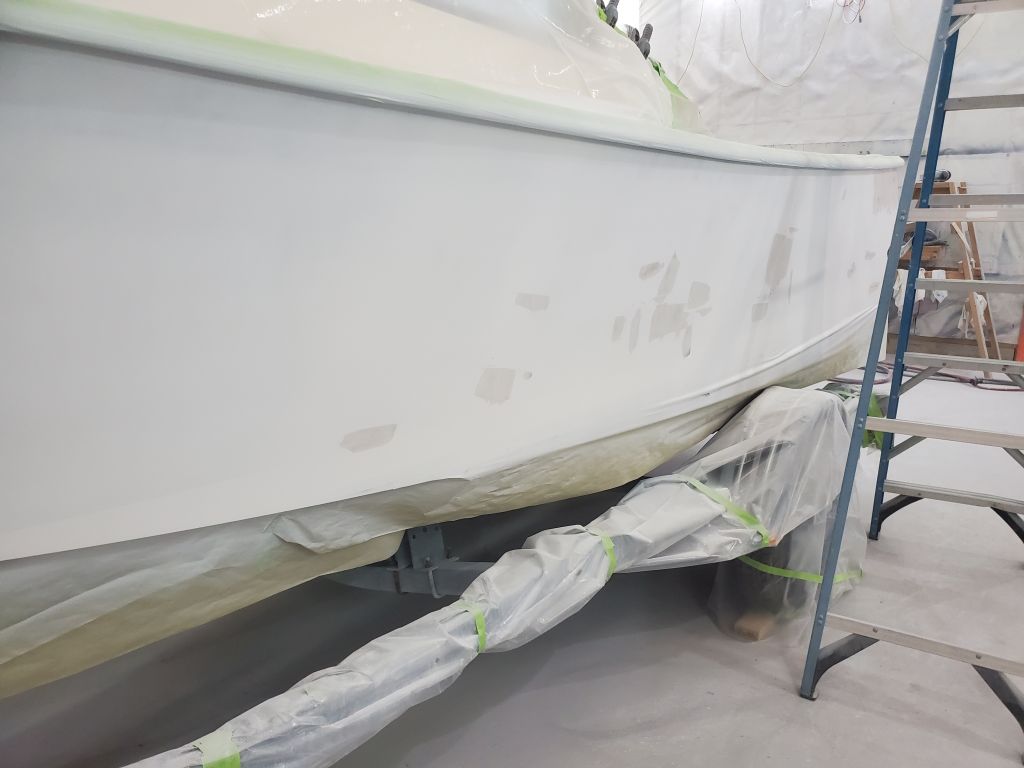
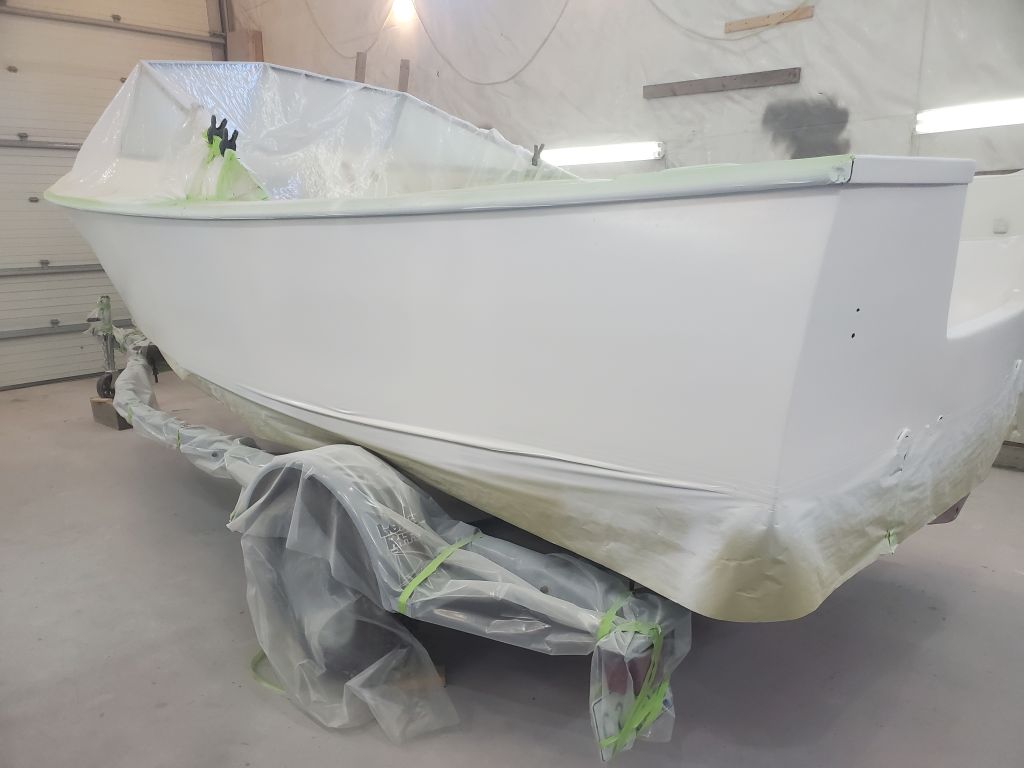
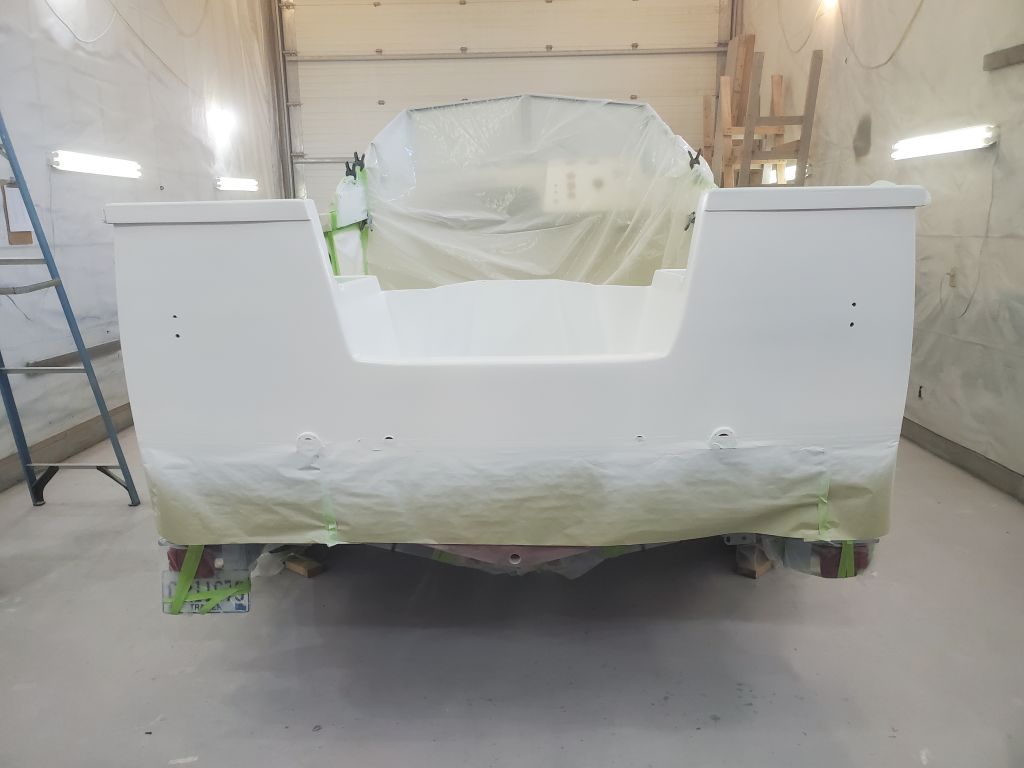
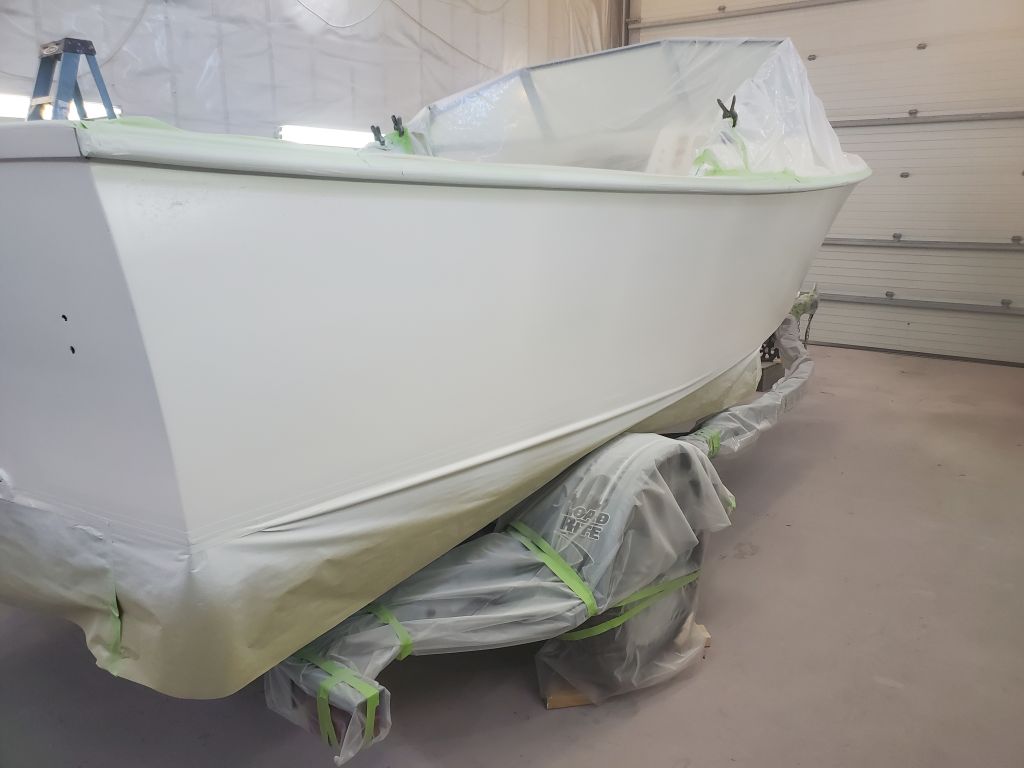
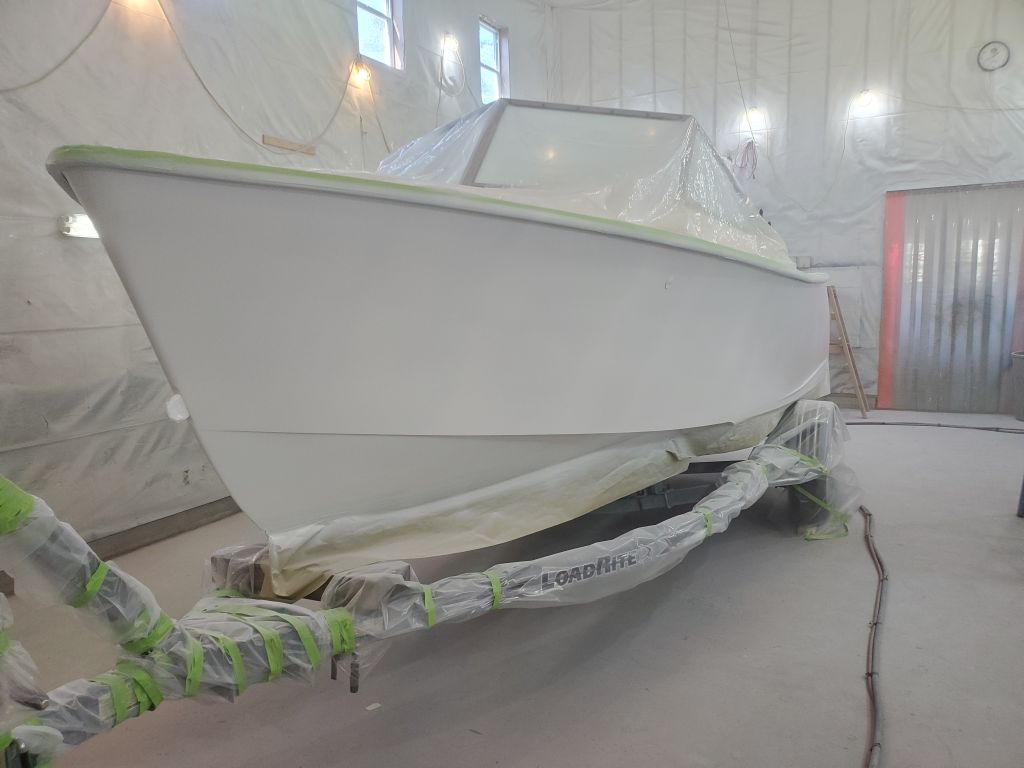
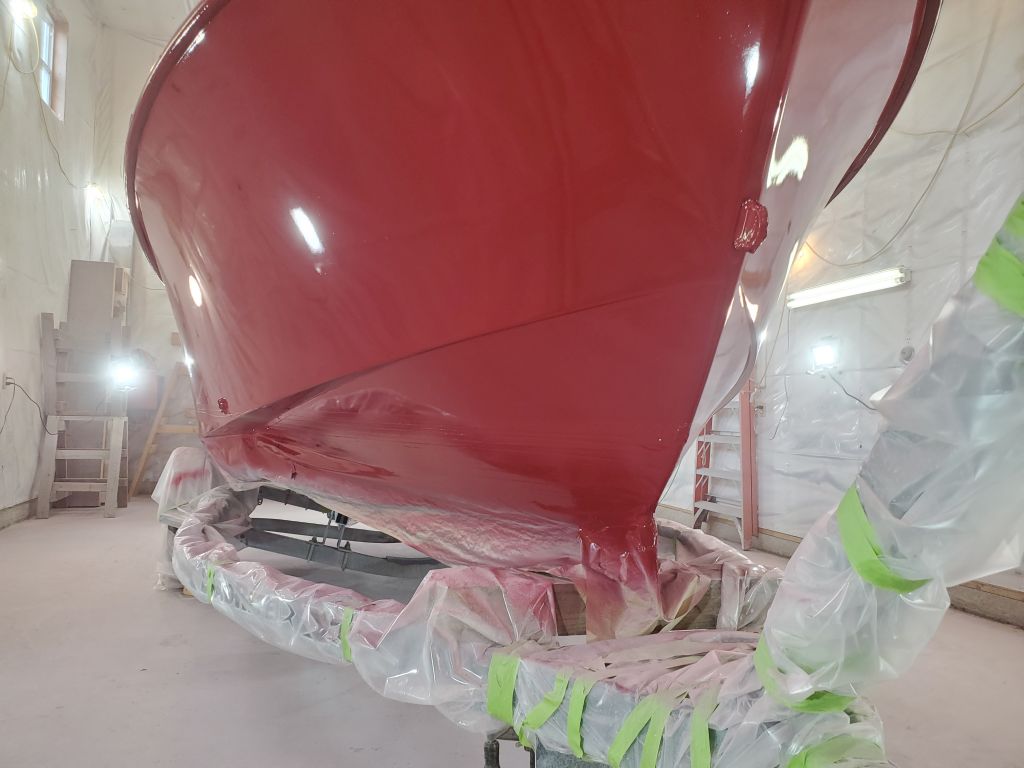
On the hull, I applied masking paper below the waterline, and masked off the rubrail and a few pieces of hardware to more or less complete the masking work there.

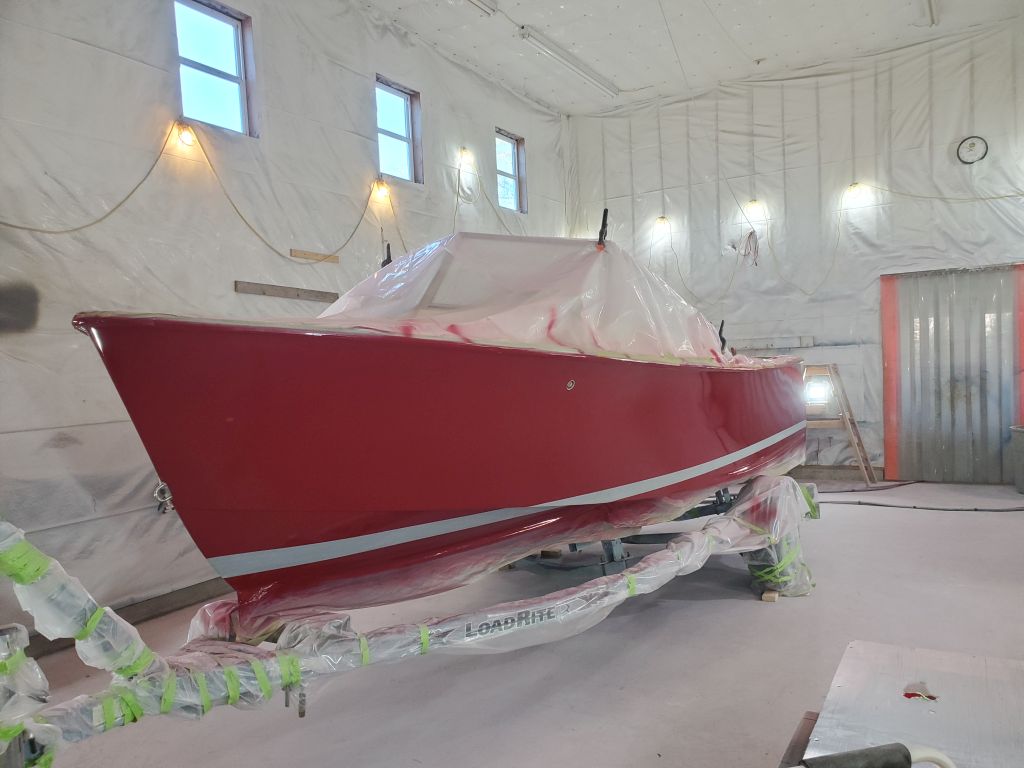
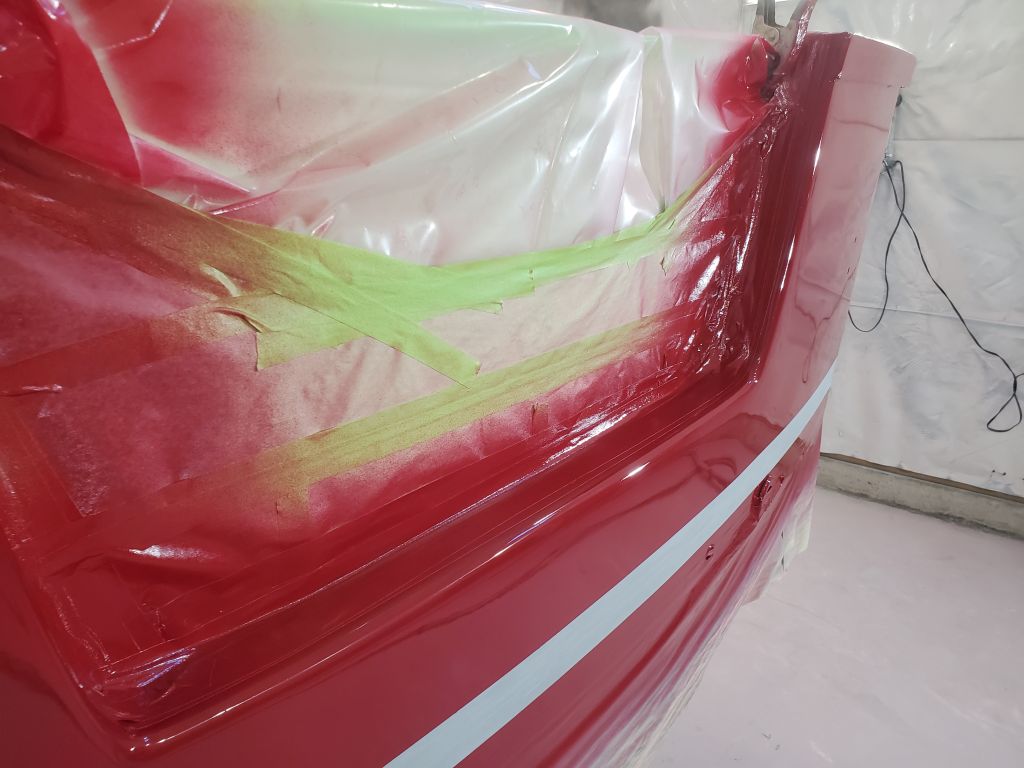
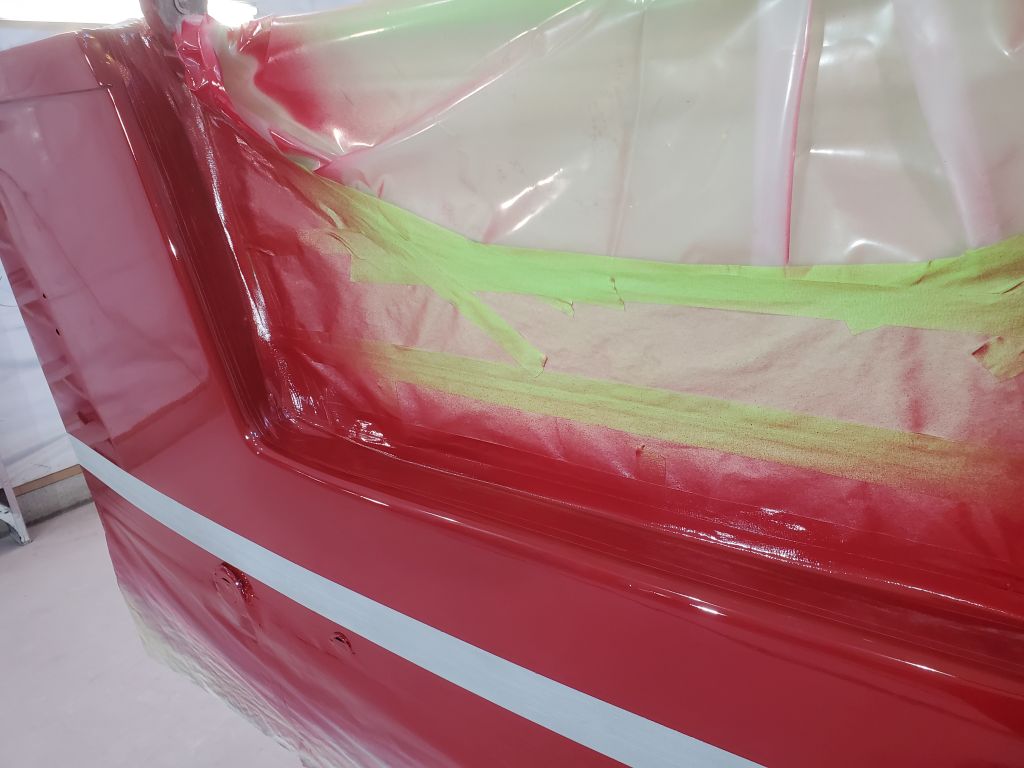
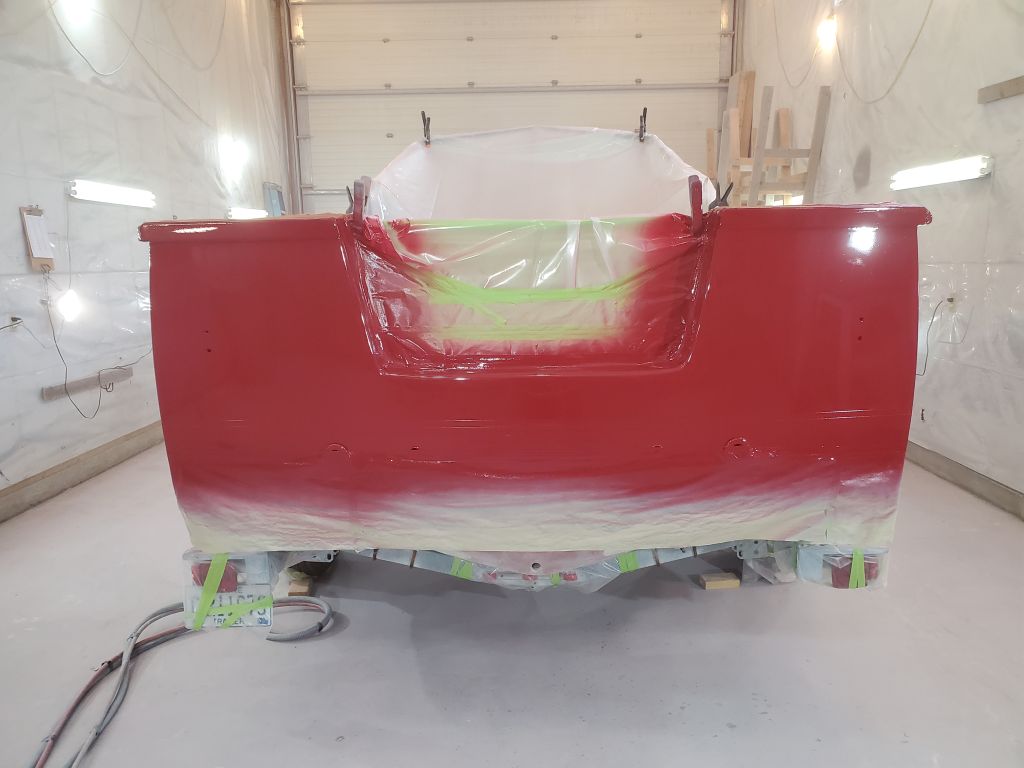
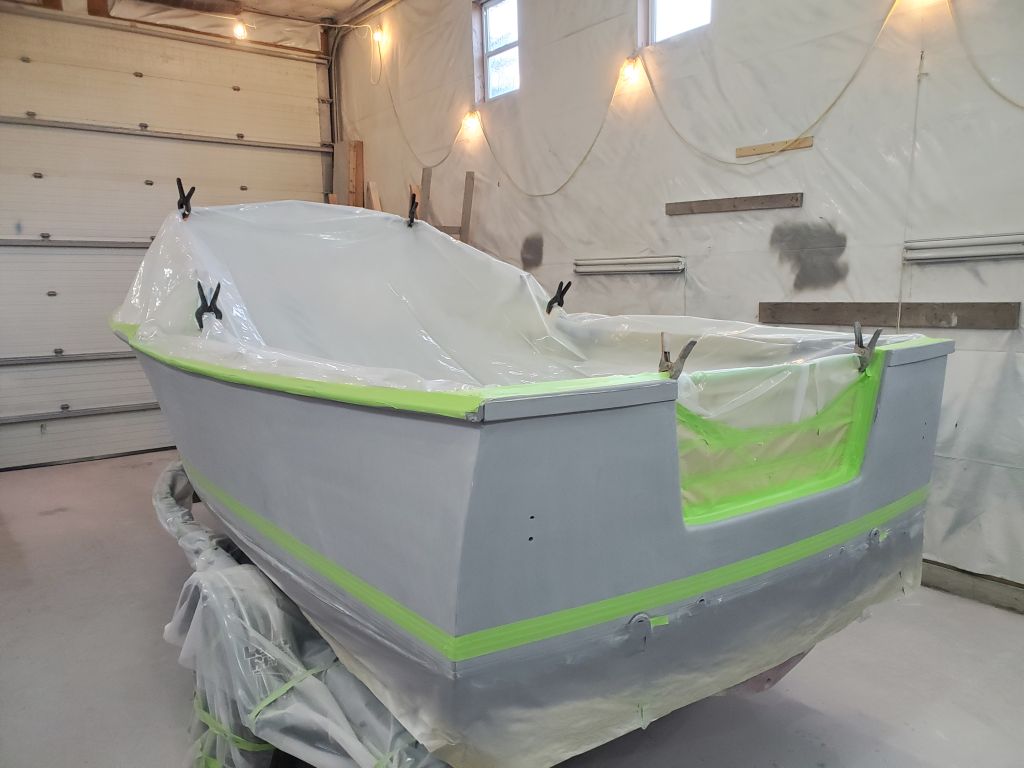
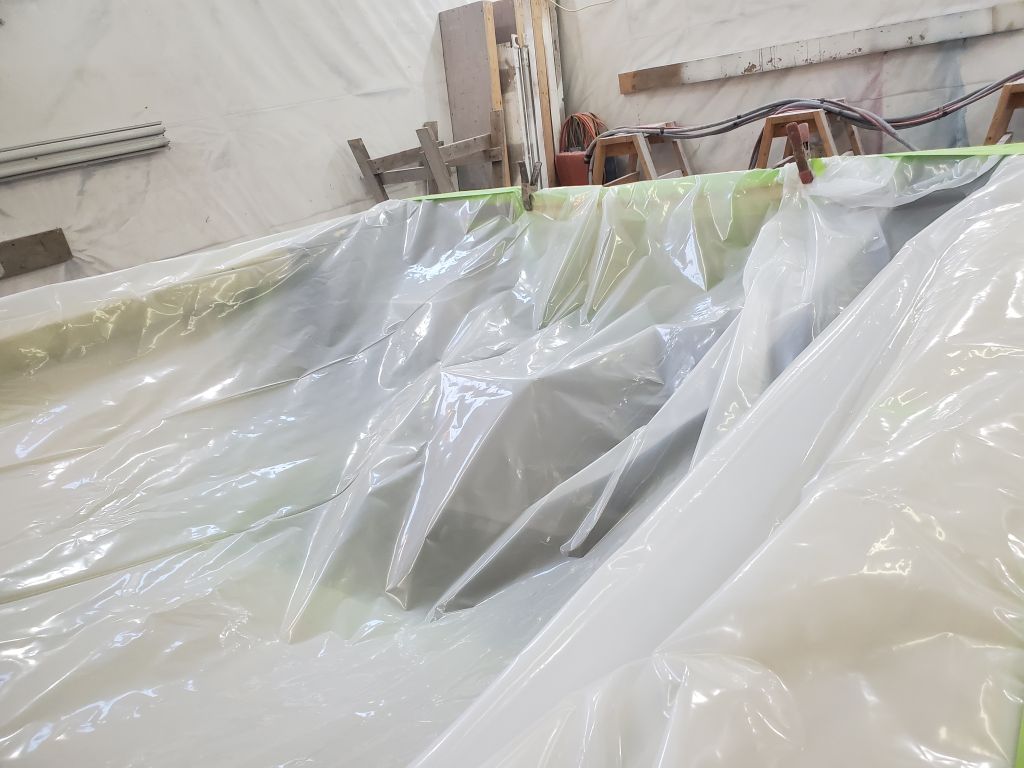
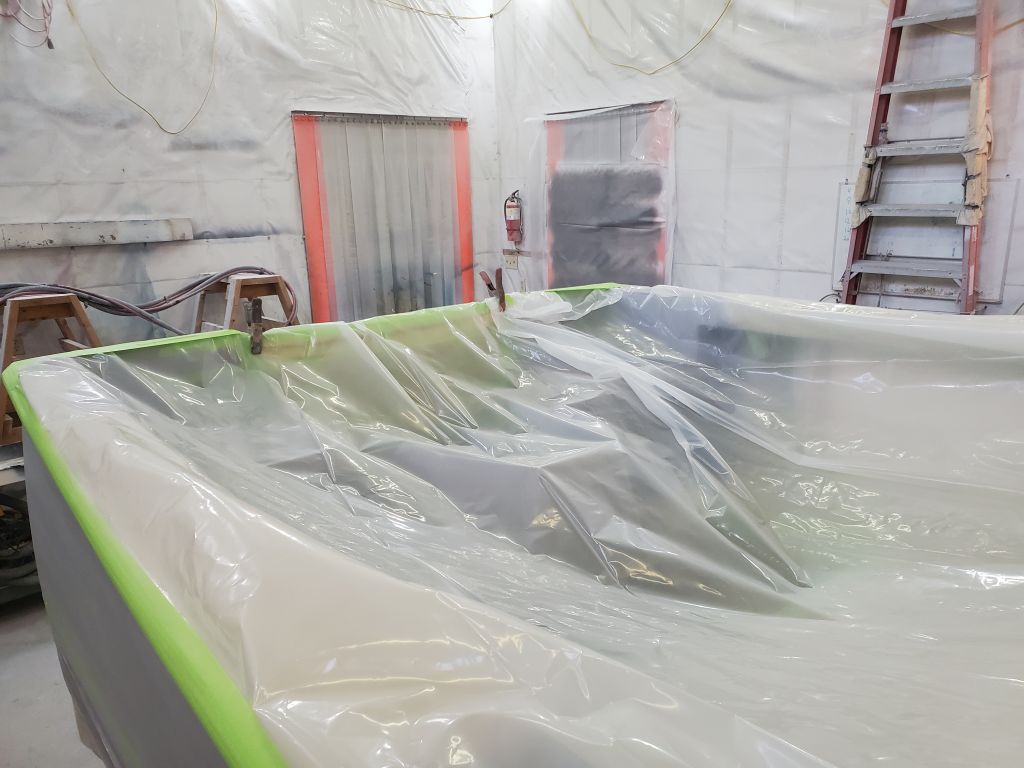
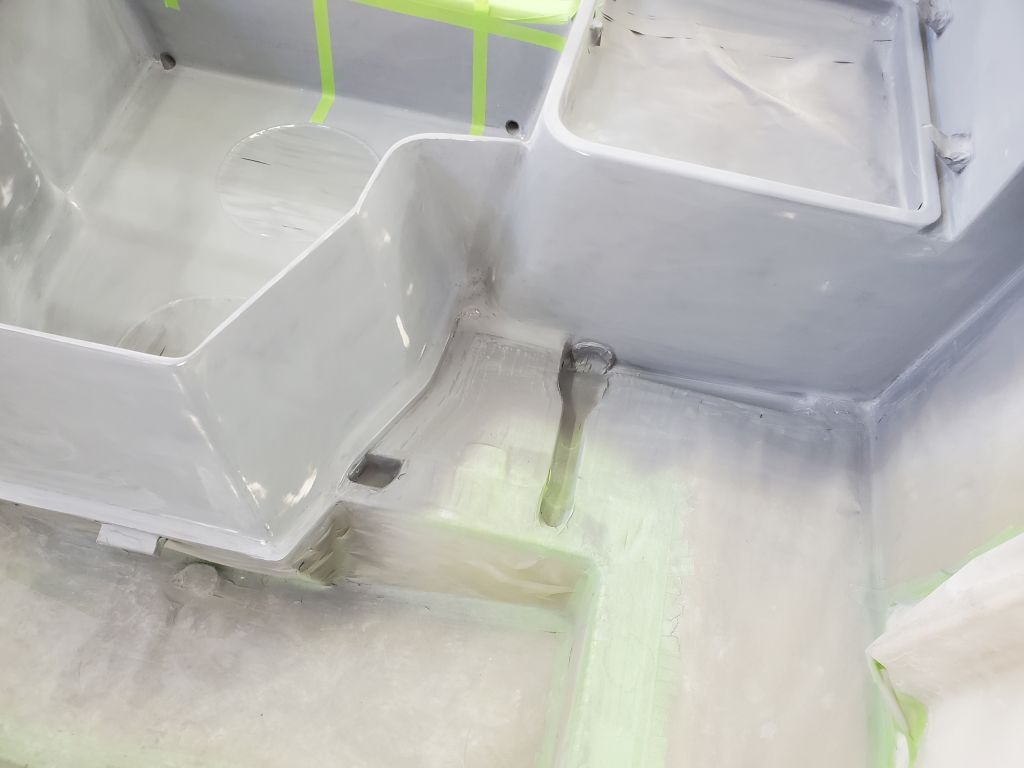
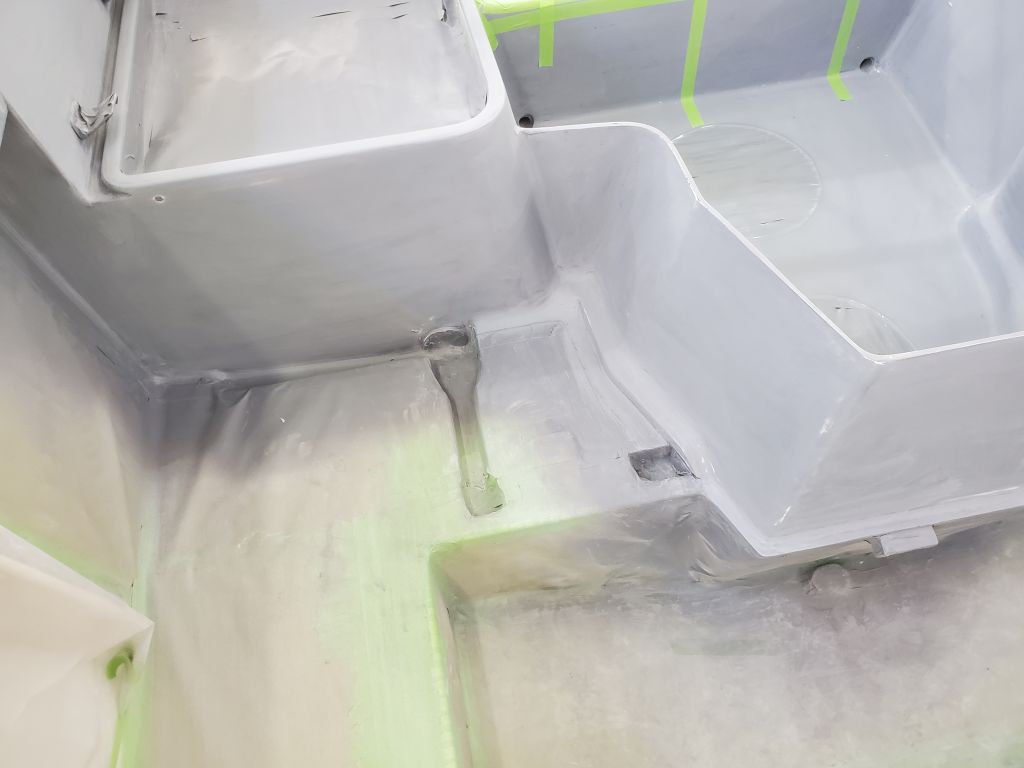
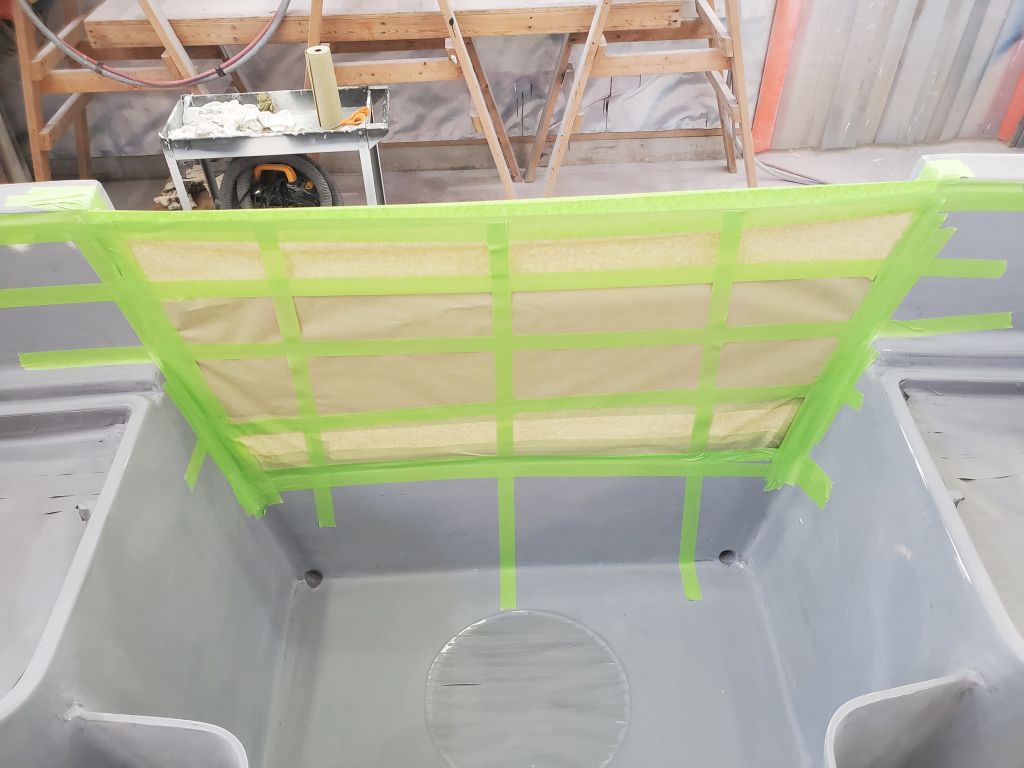
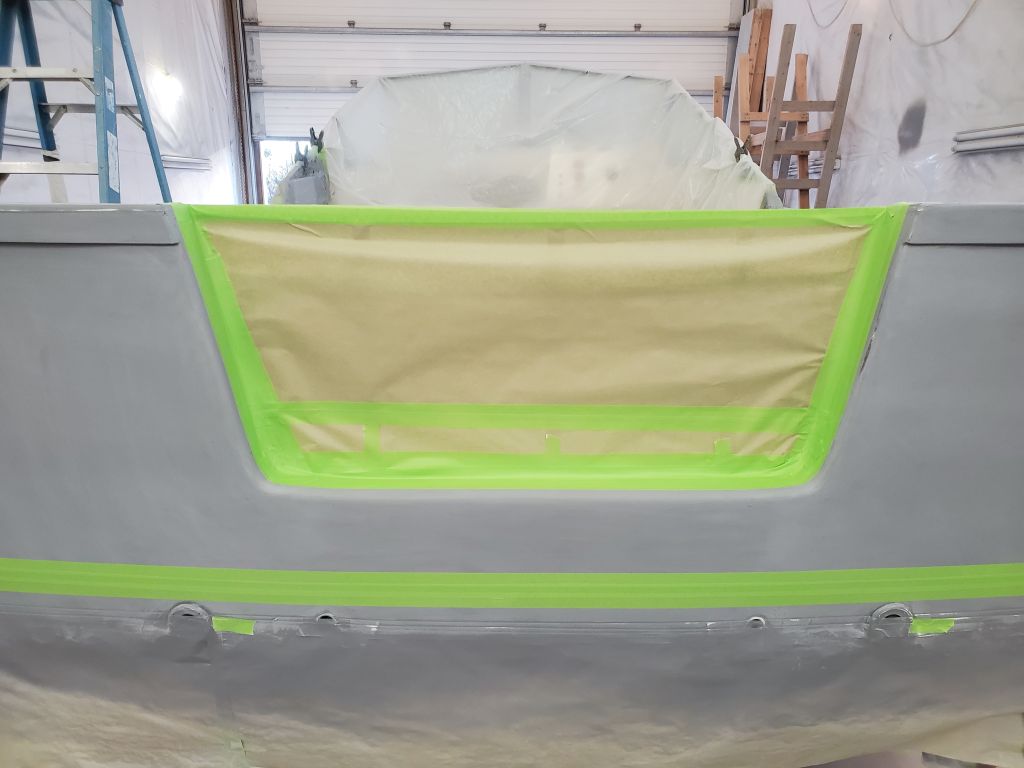
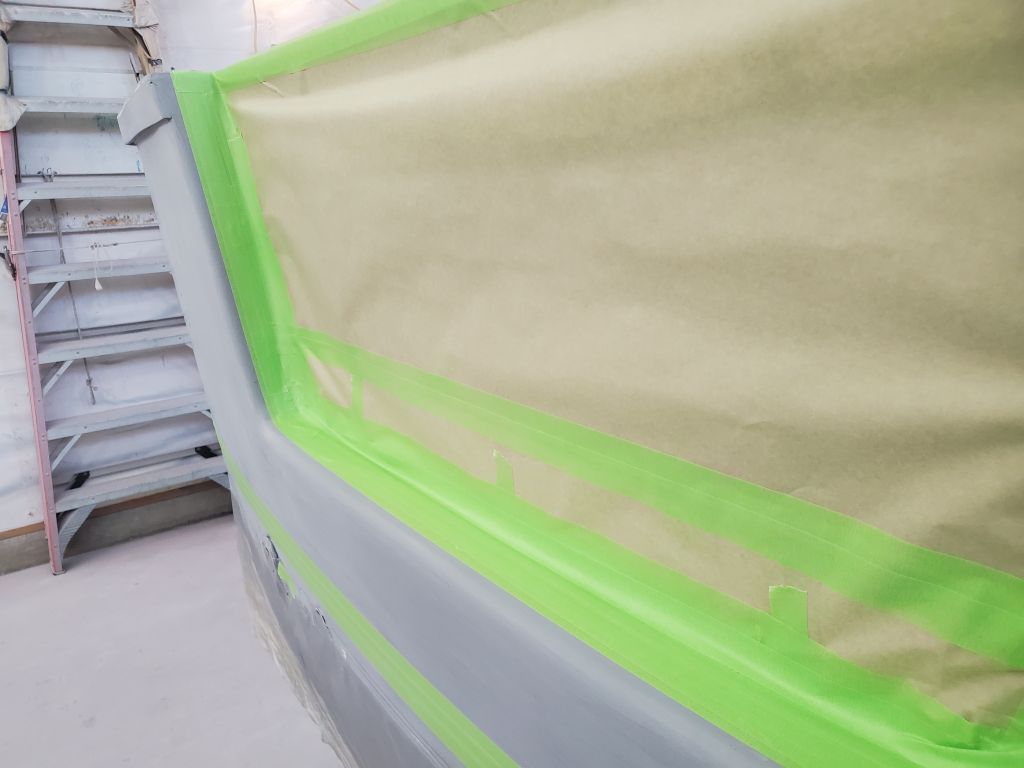
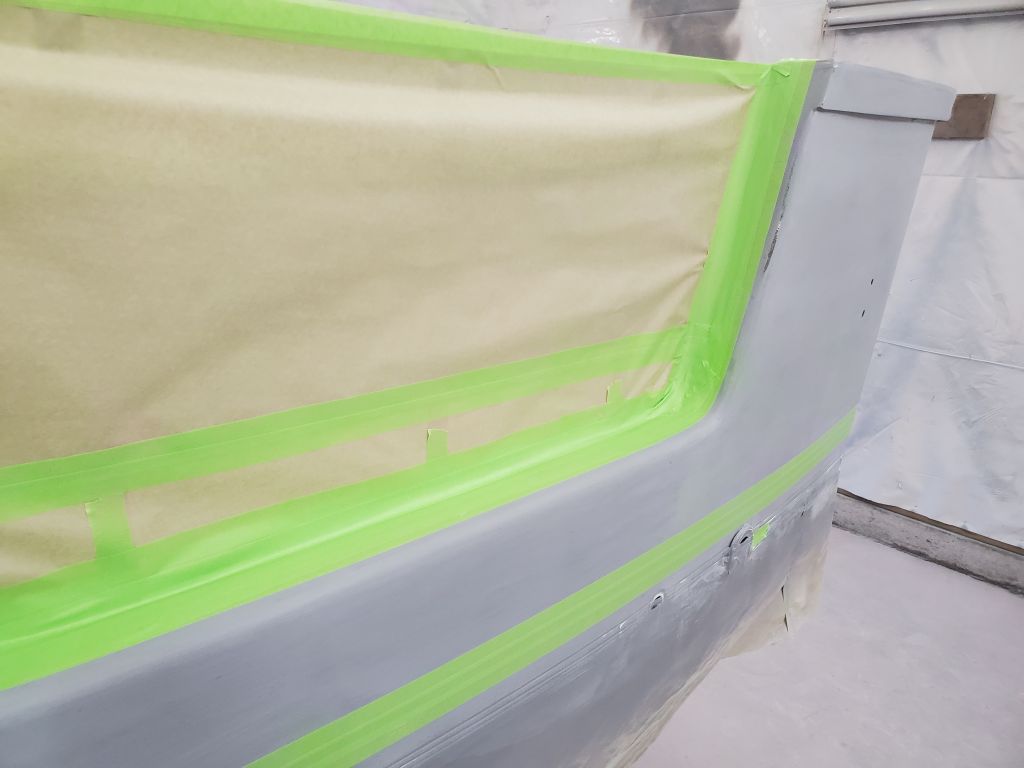
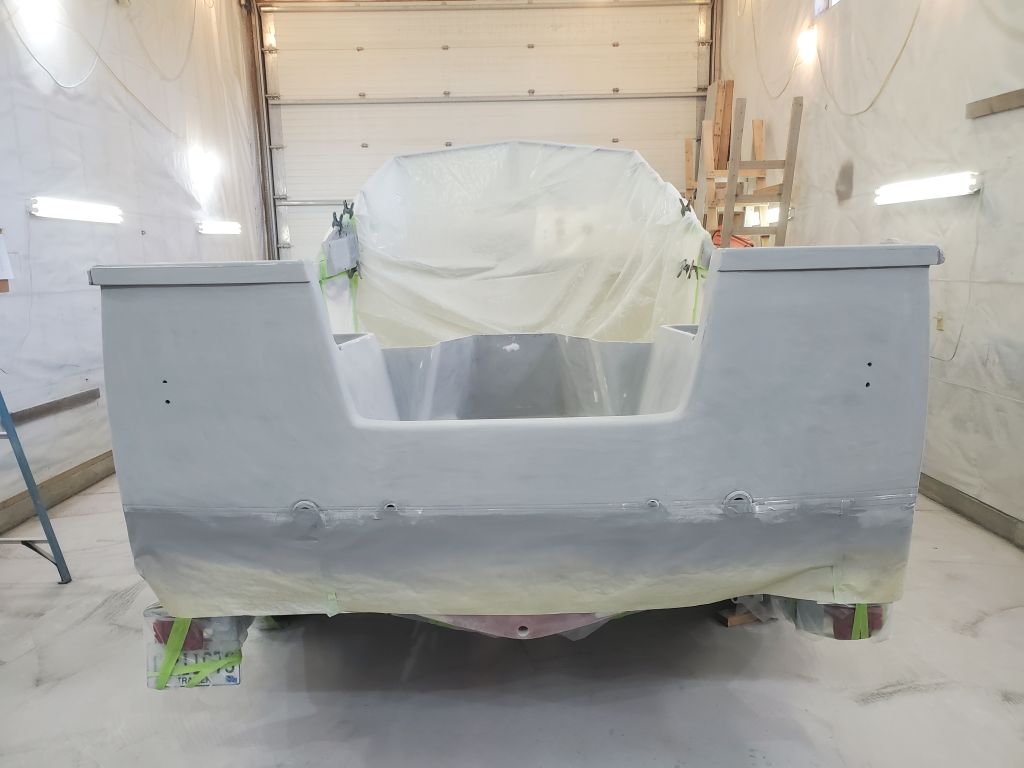
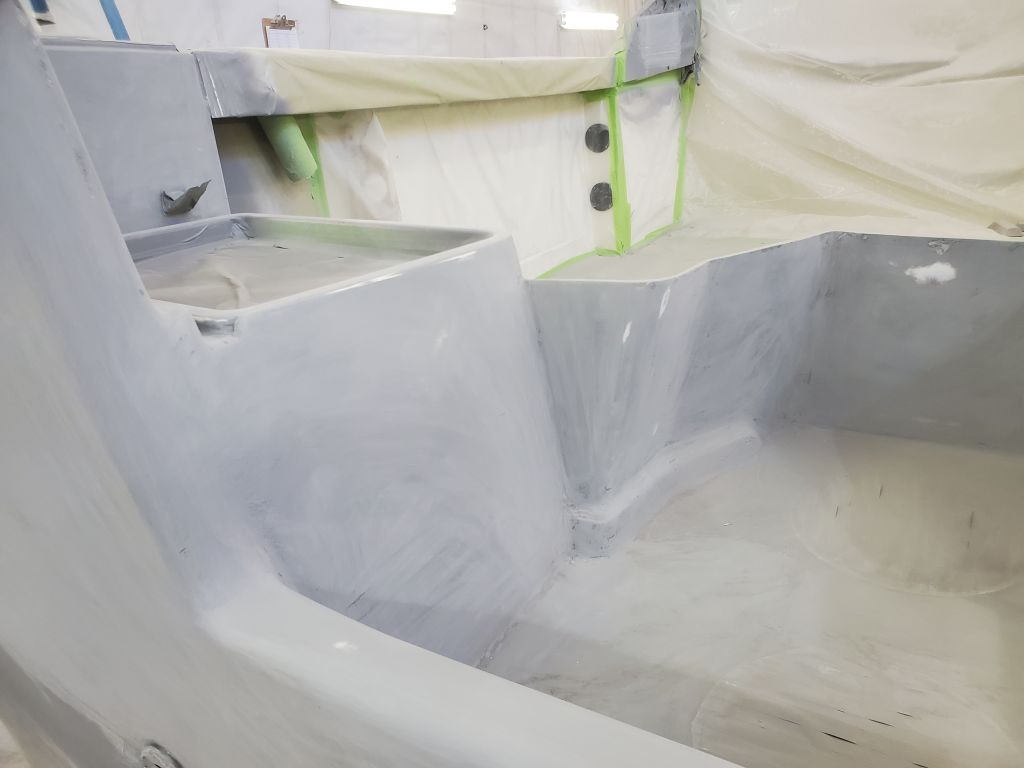
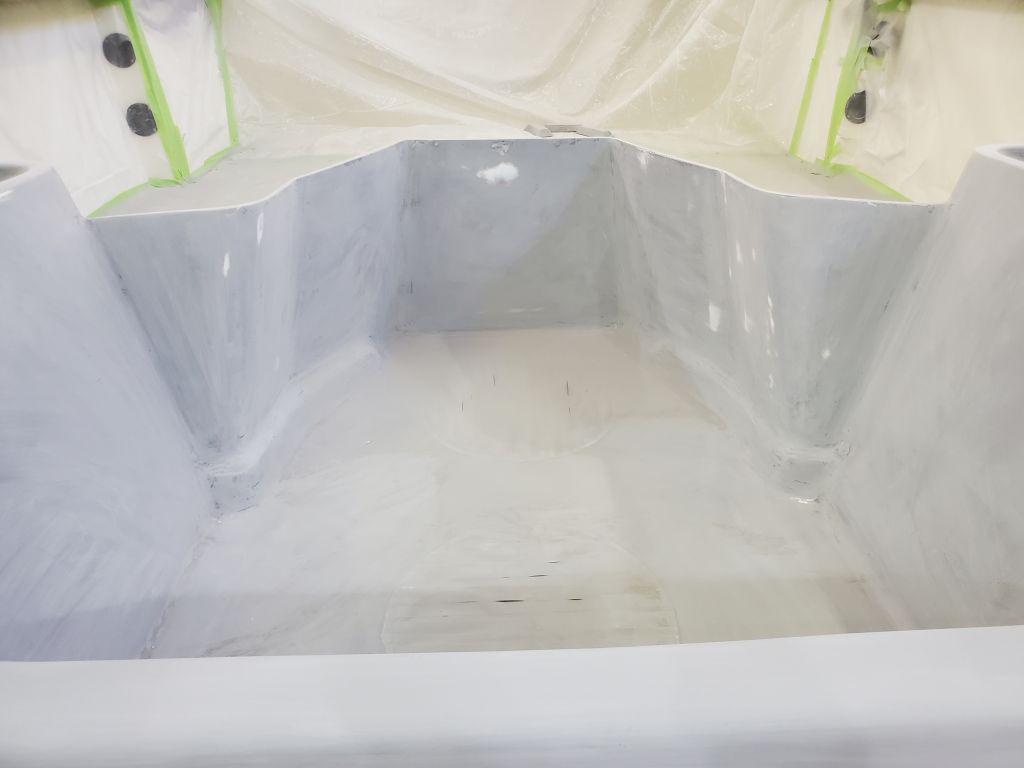
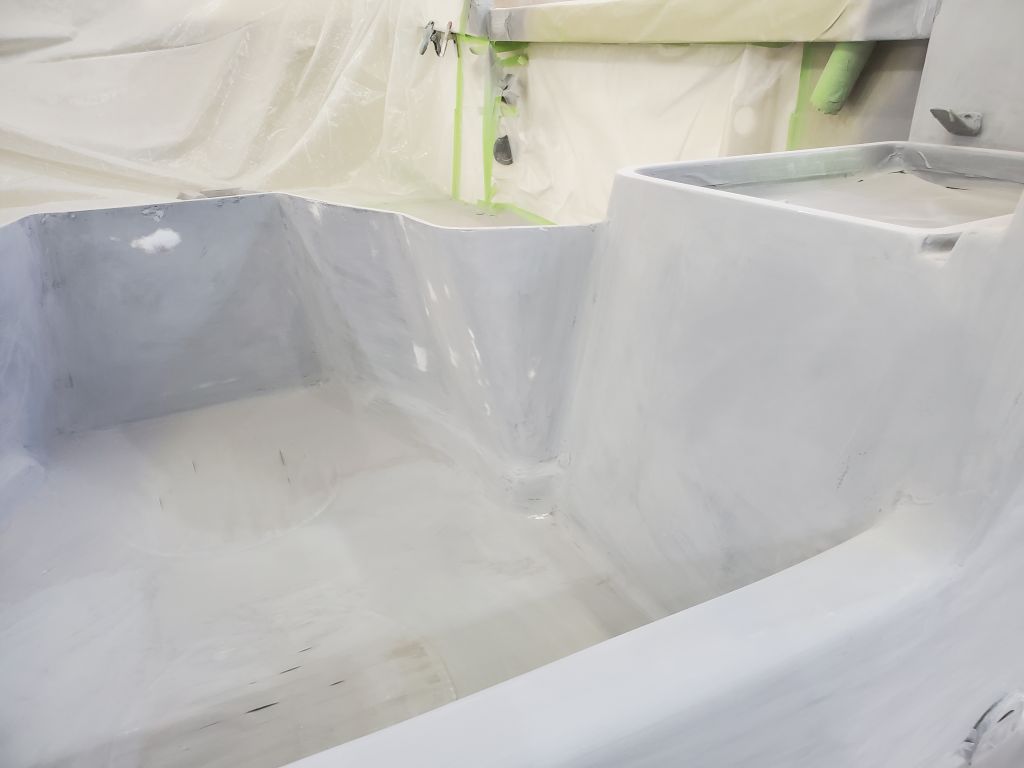
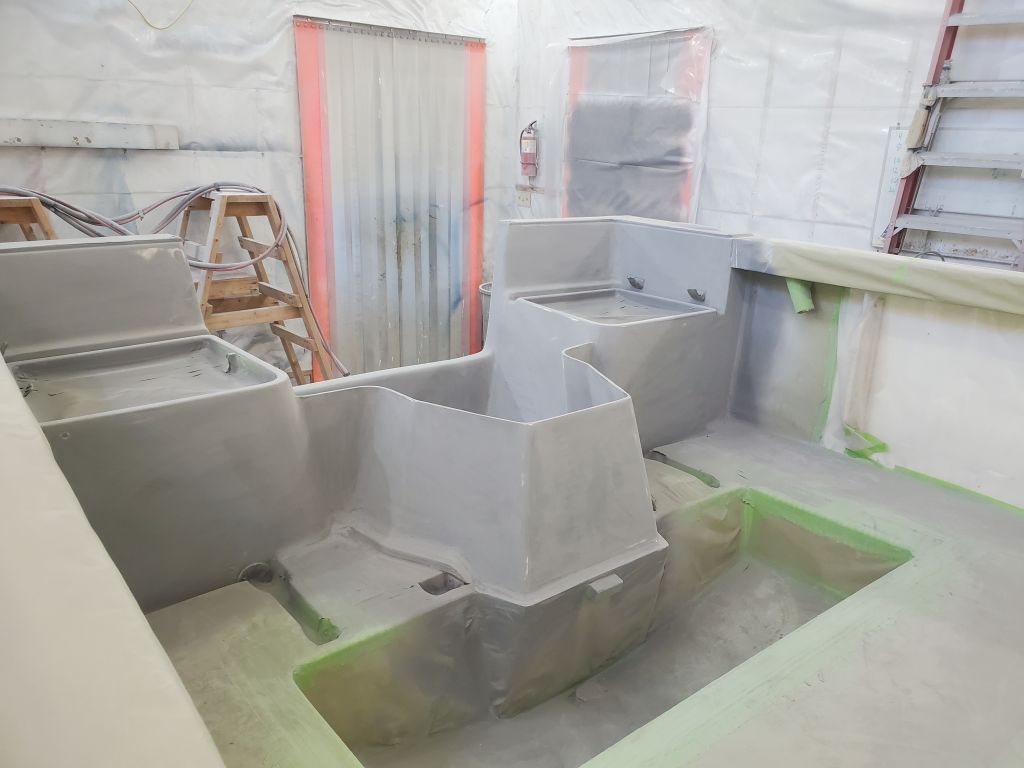
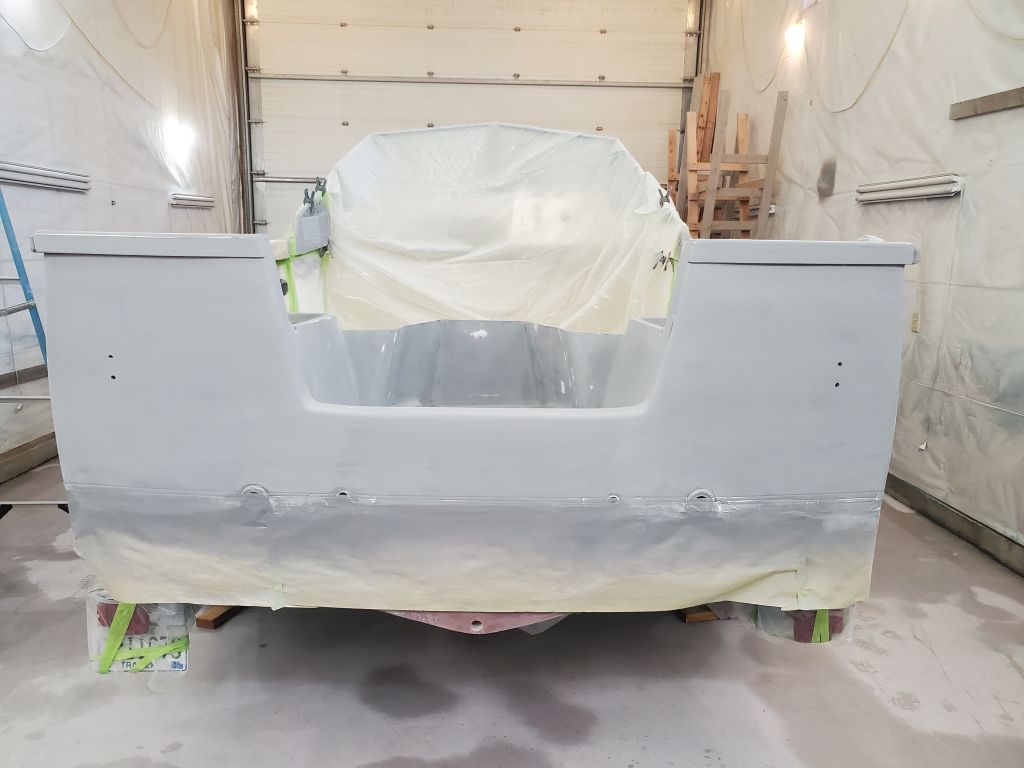
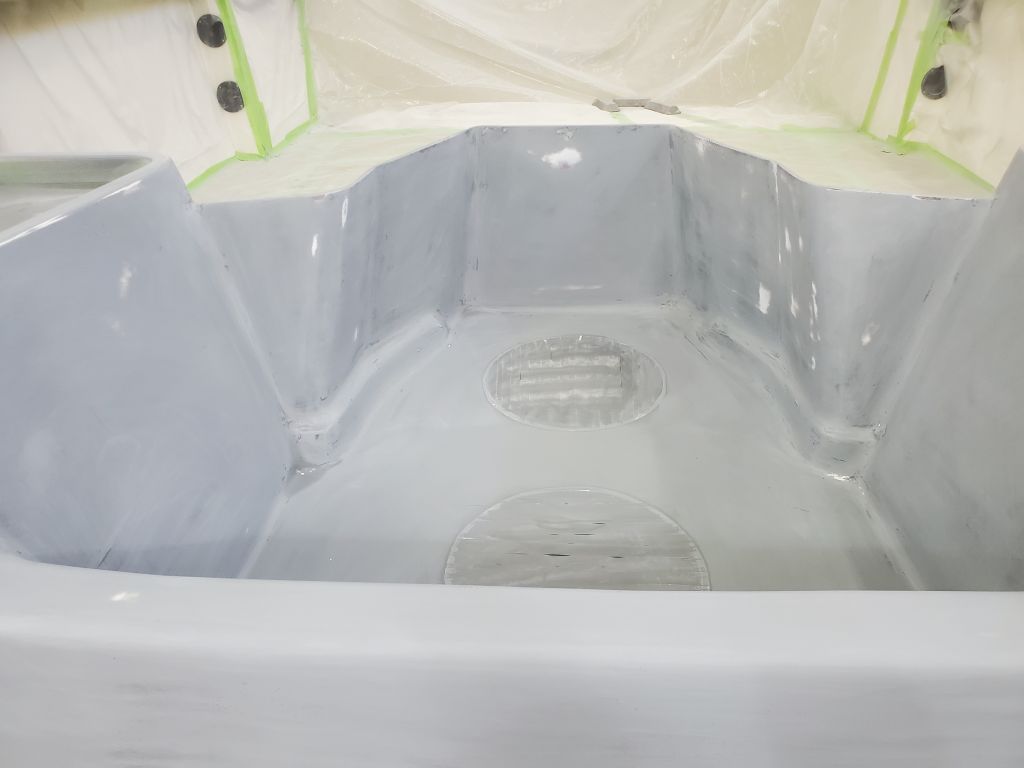
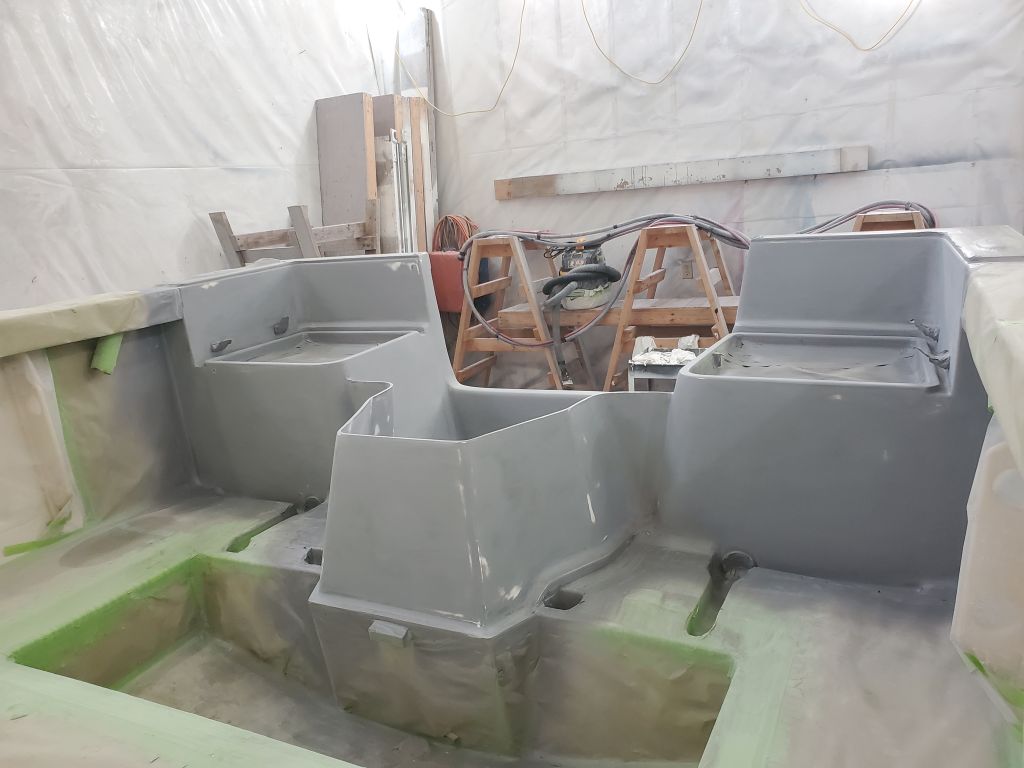
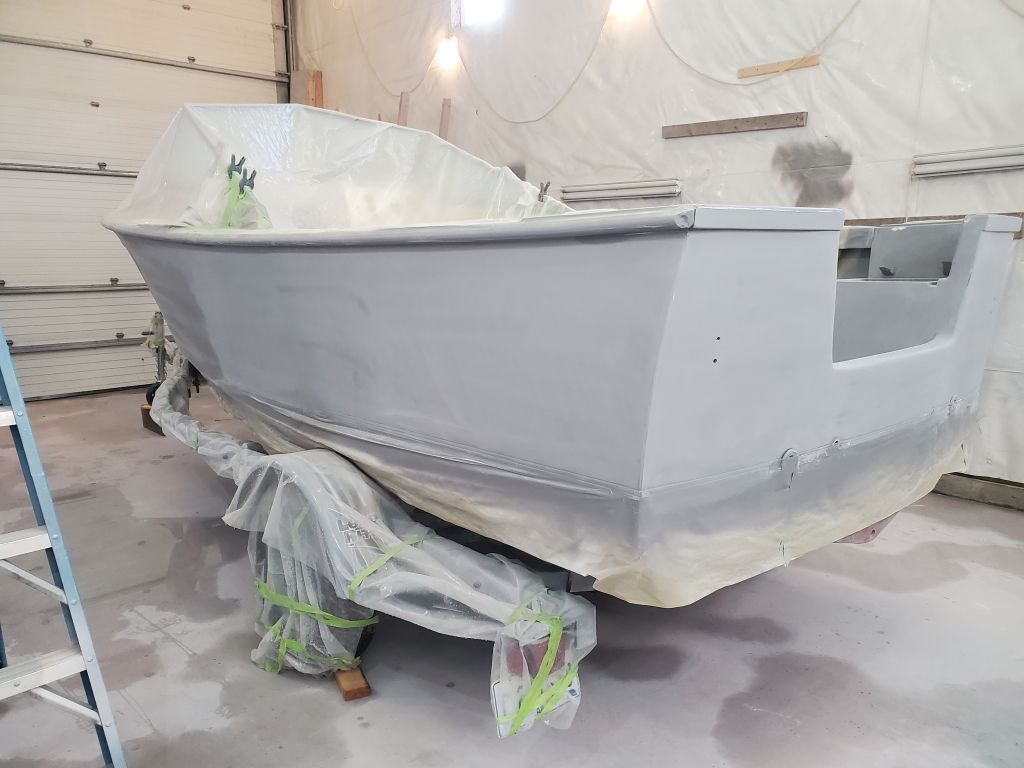
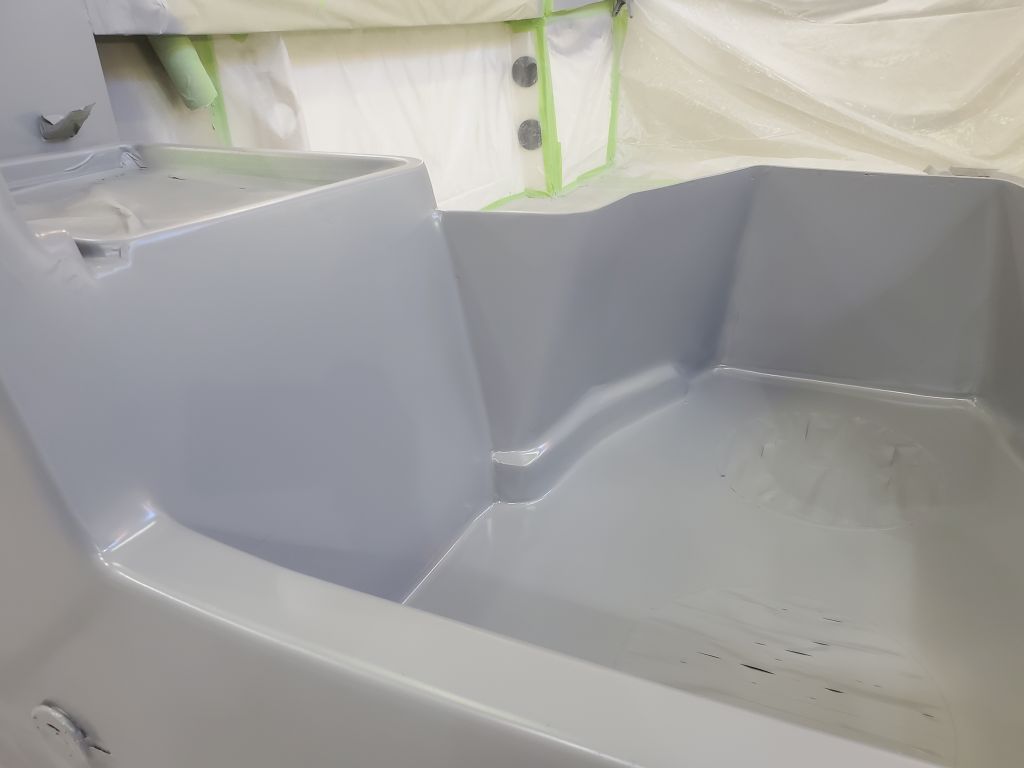
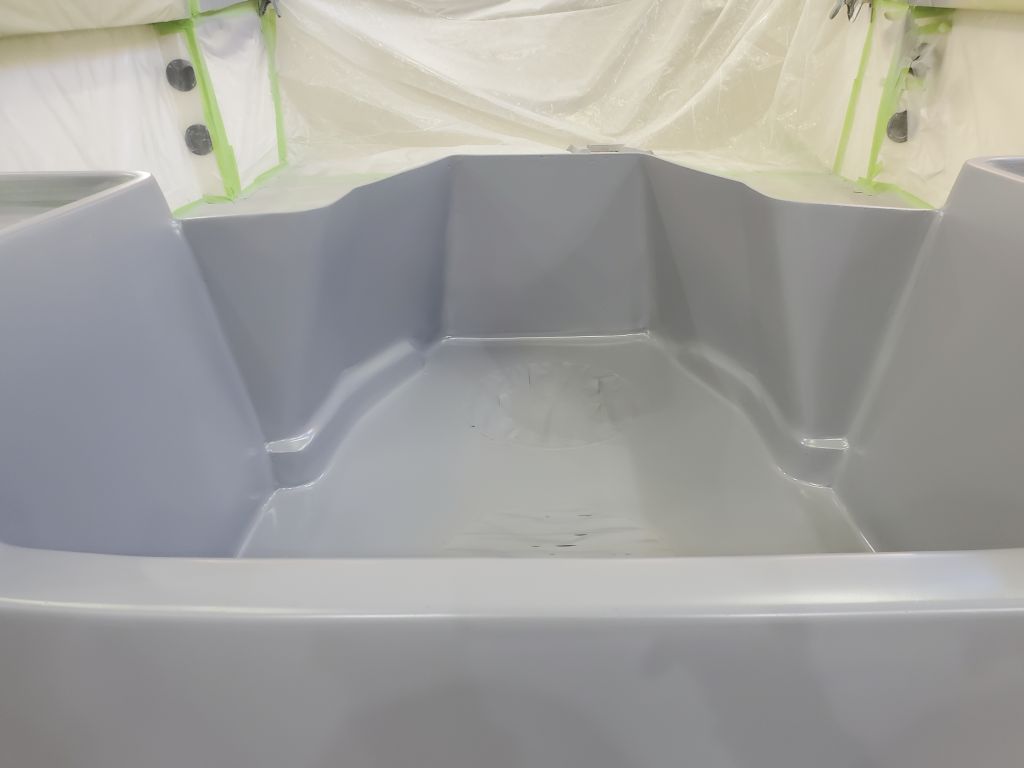
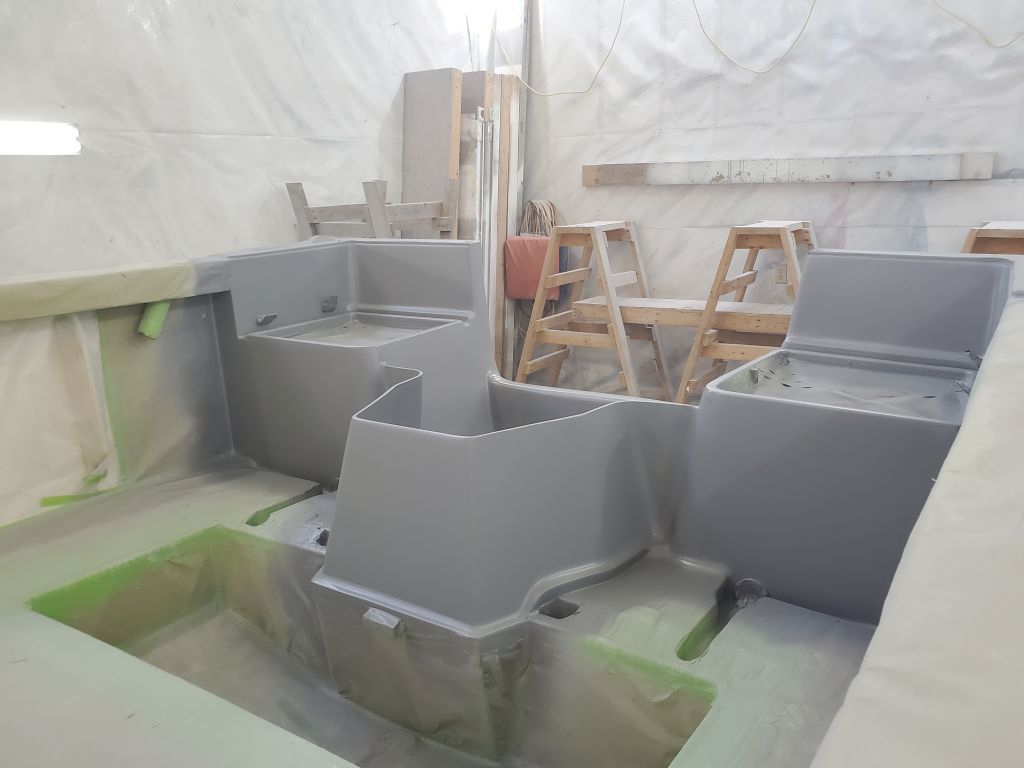
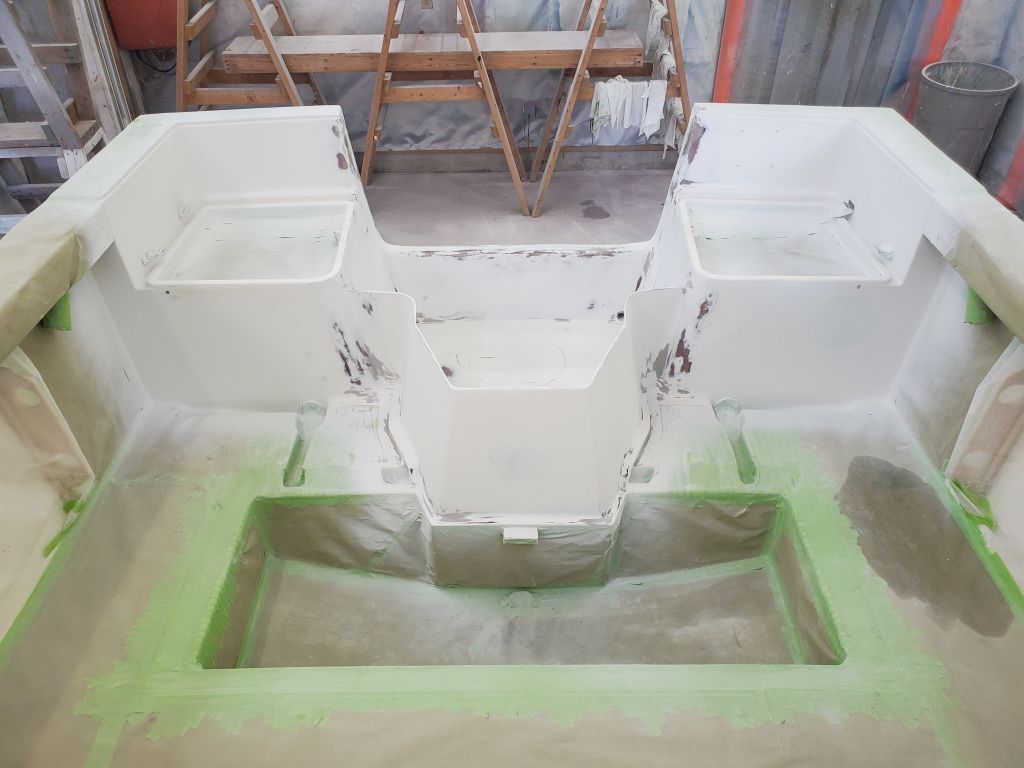
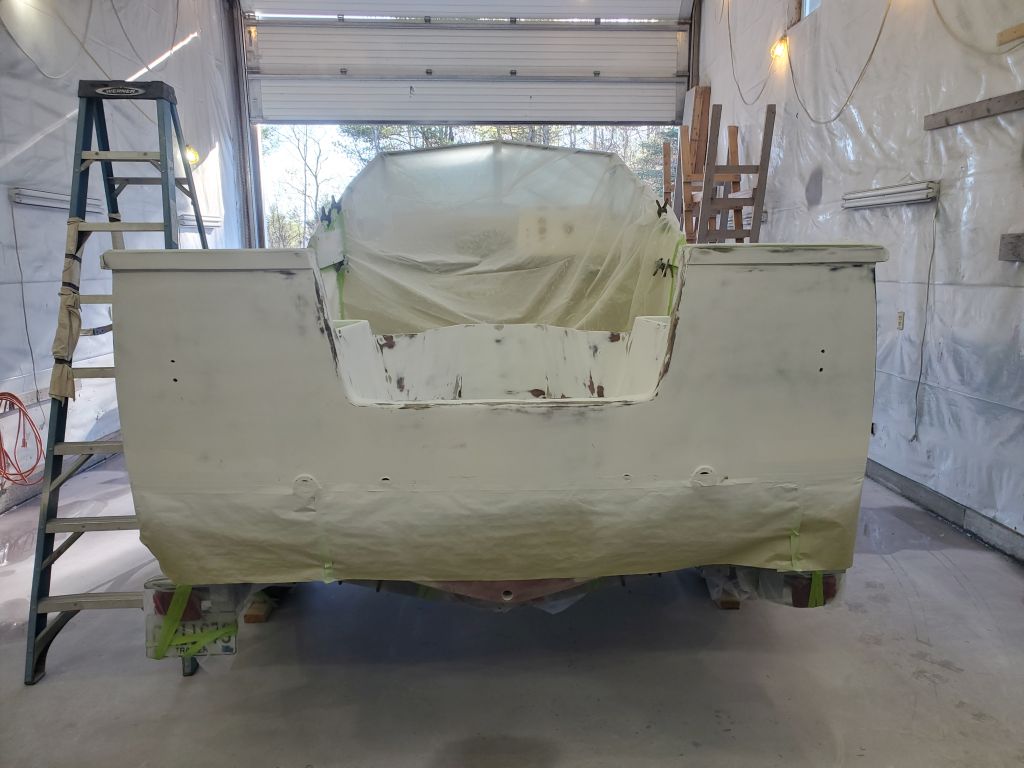
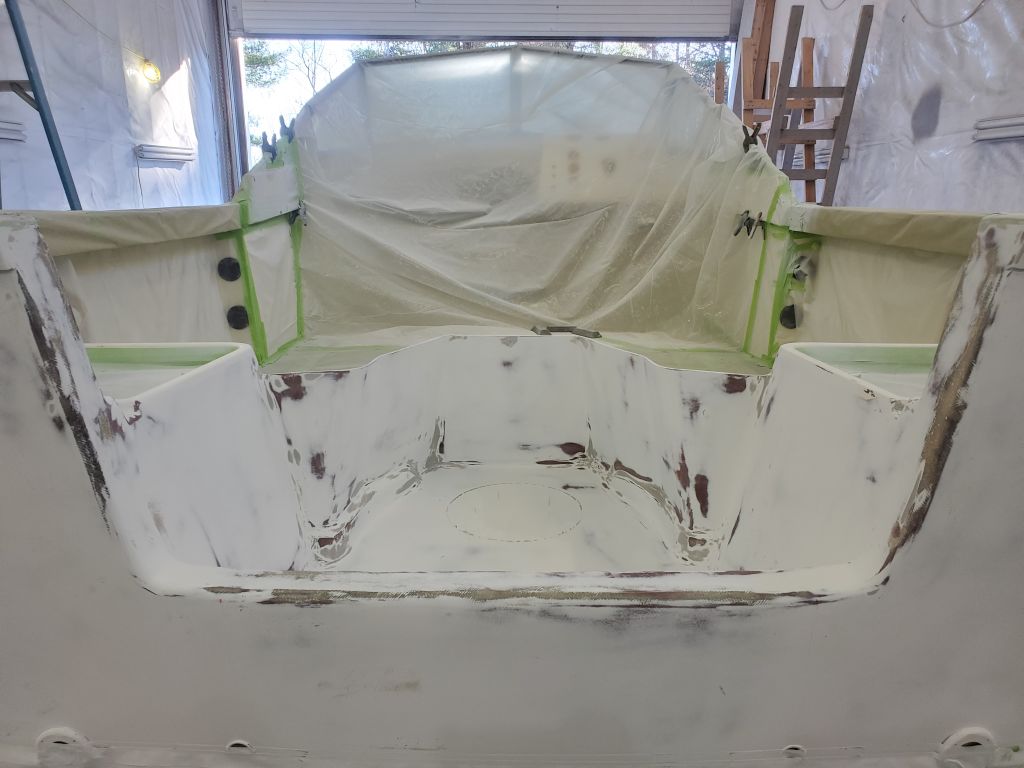
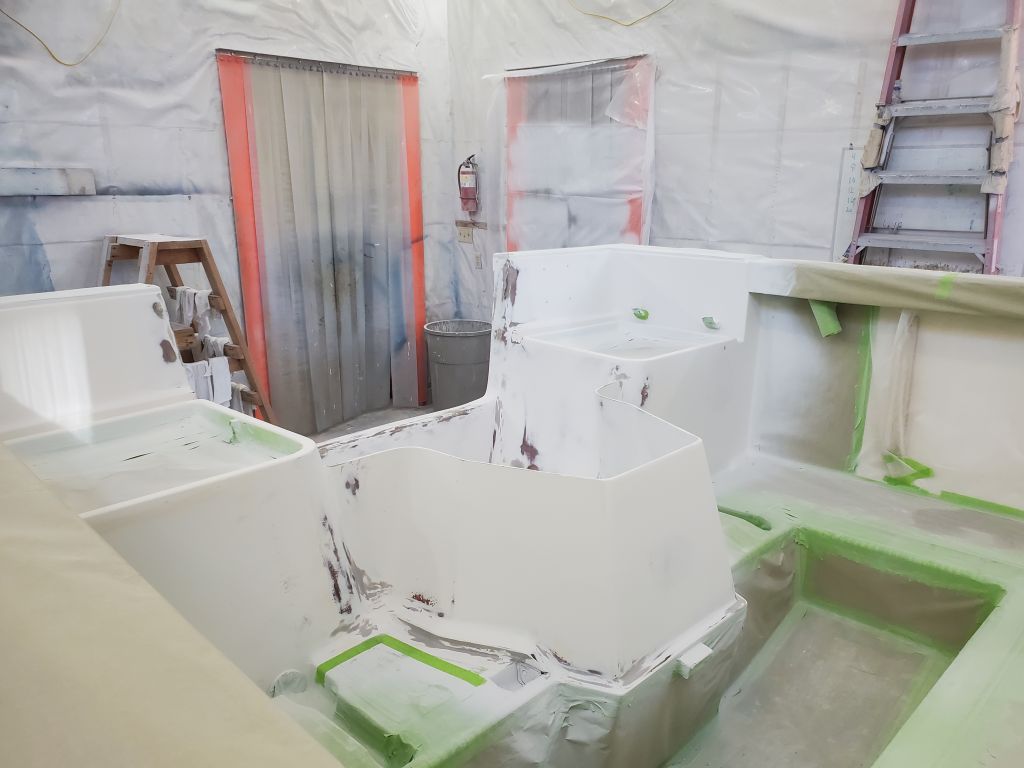
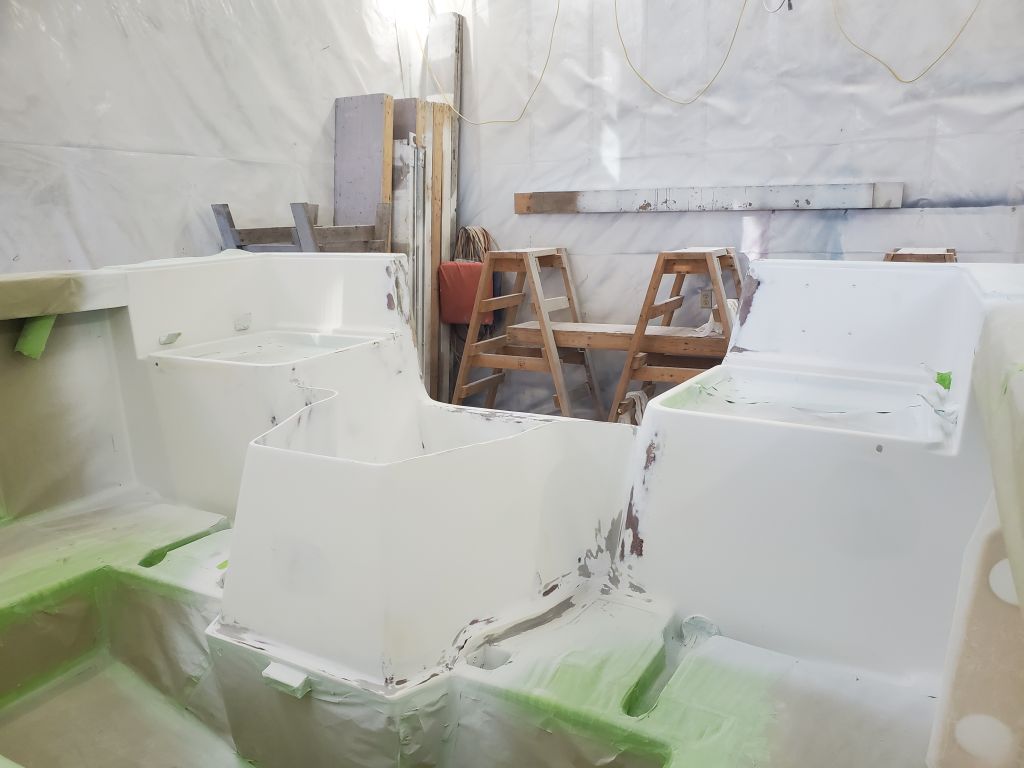
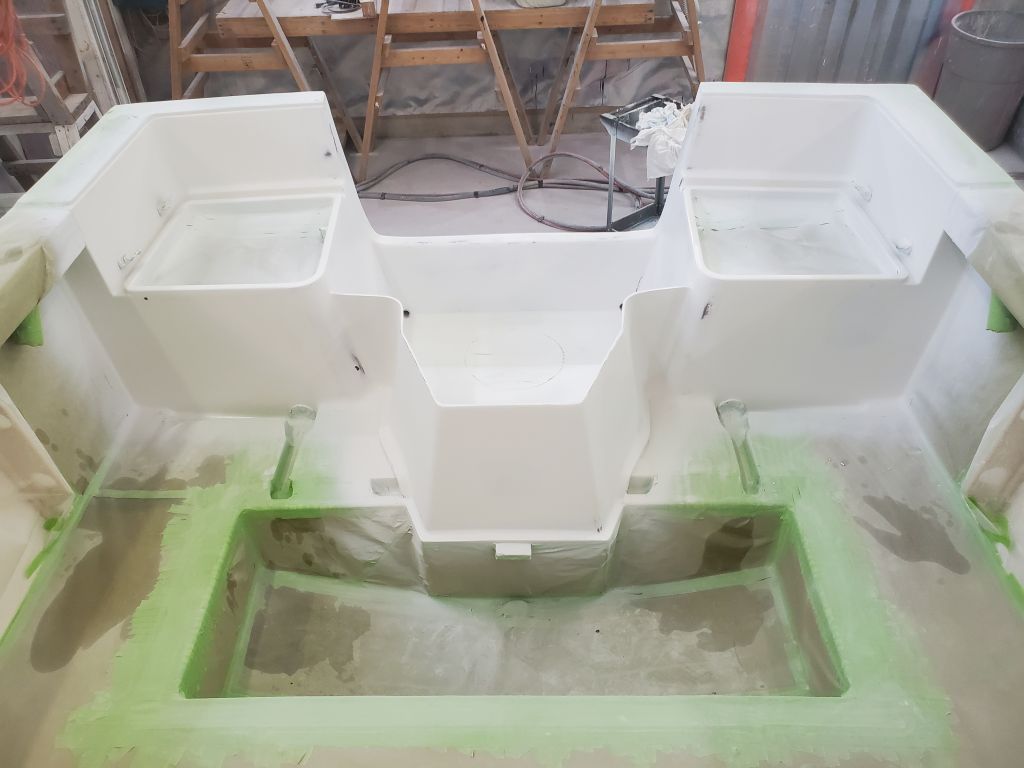
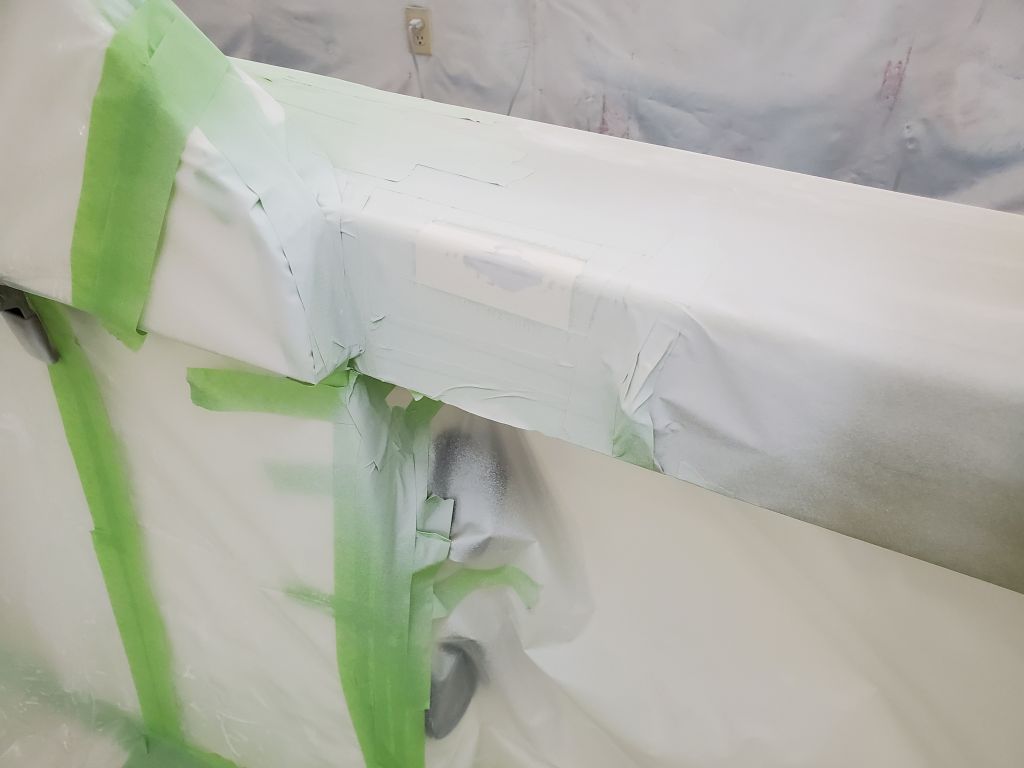
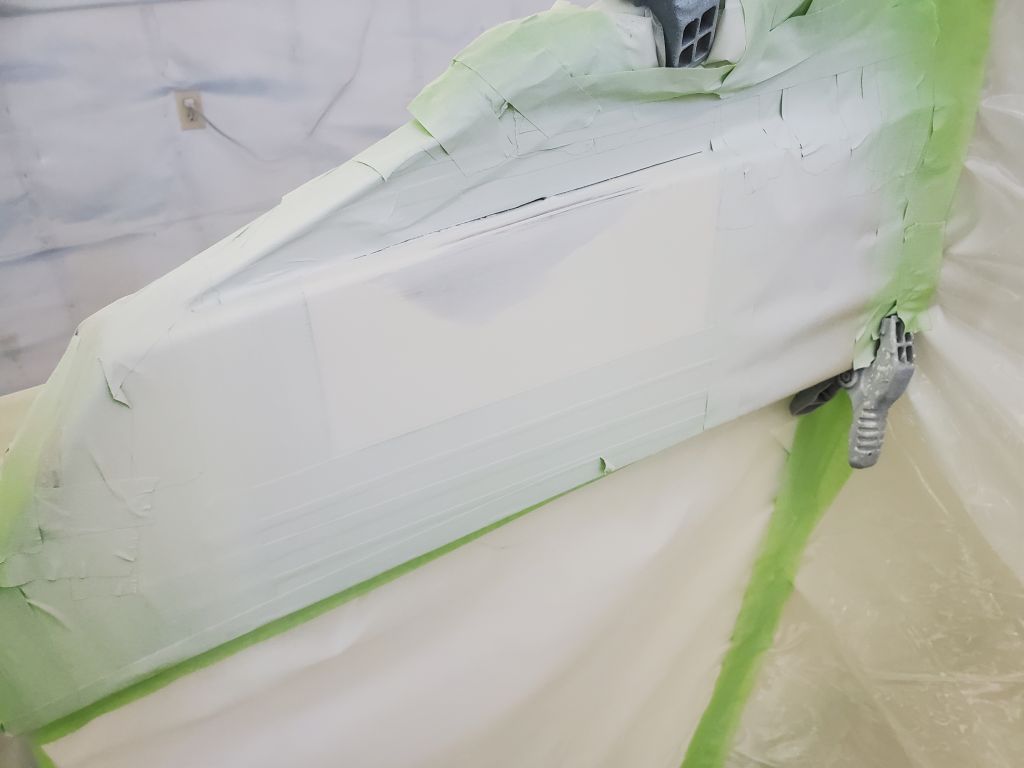
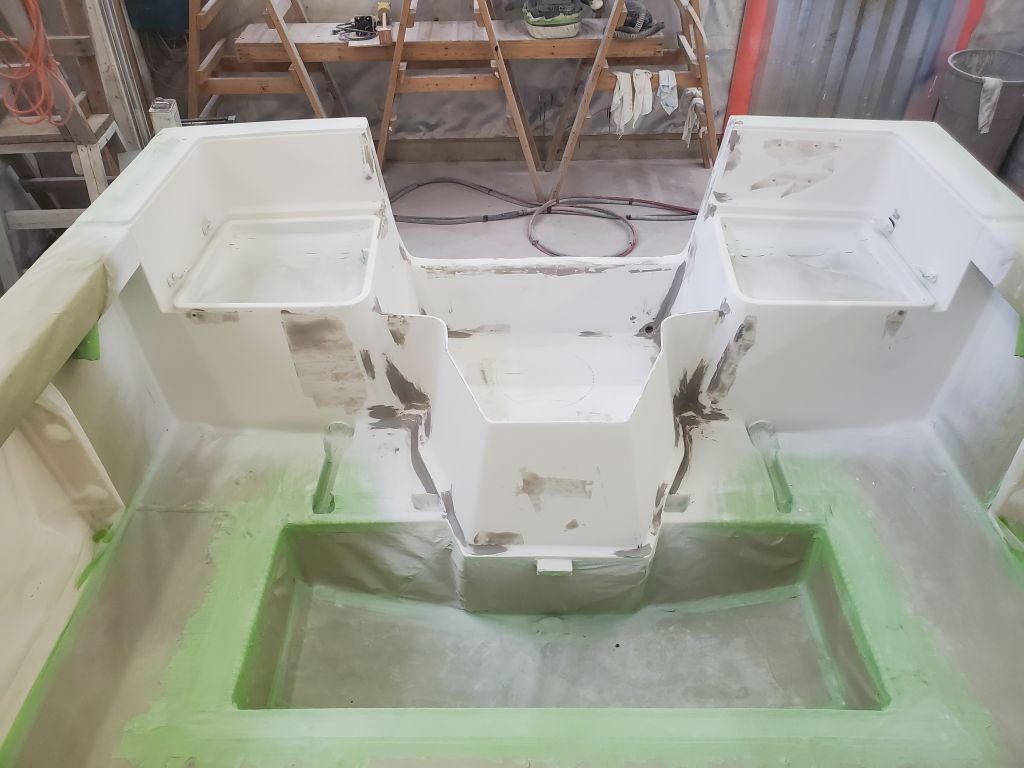
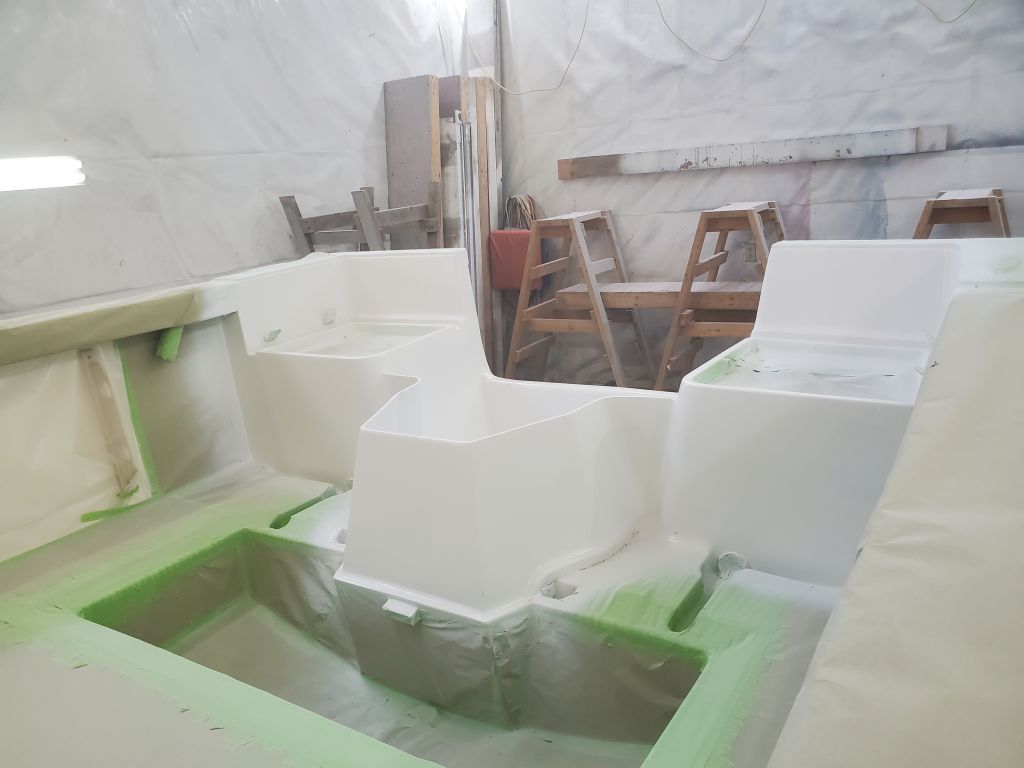
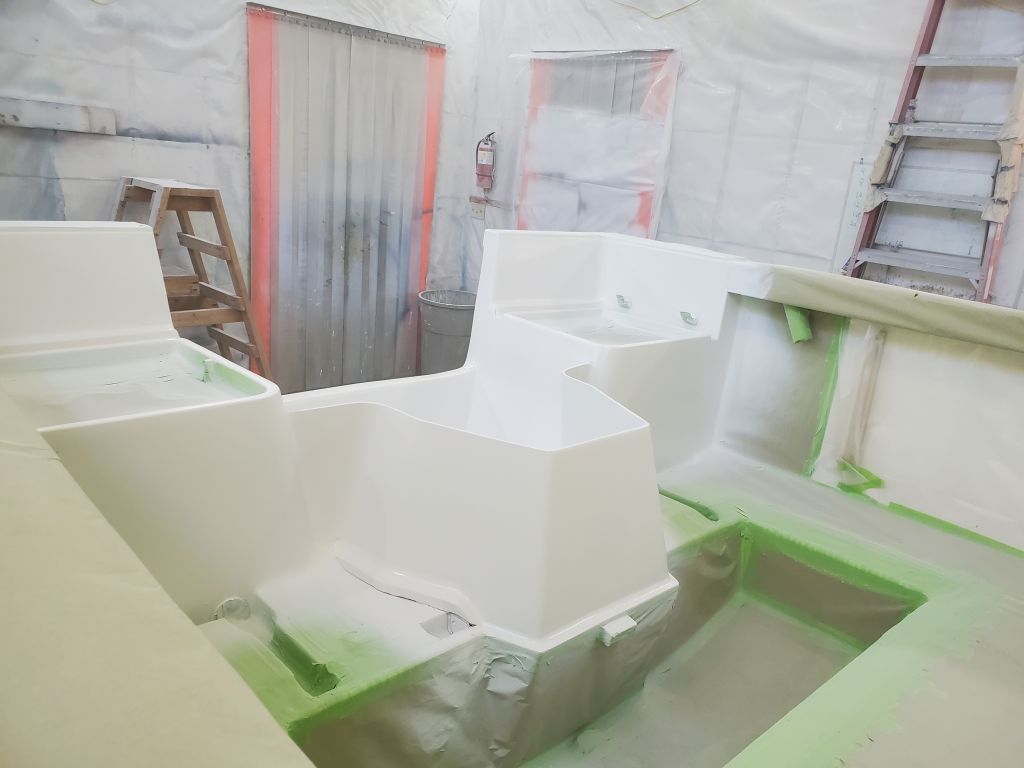
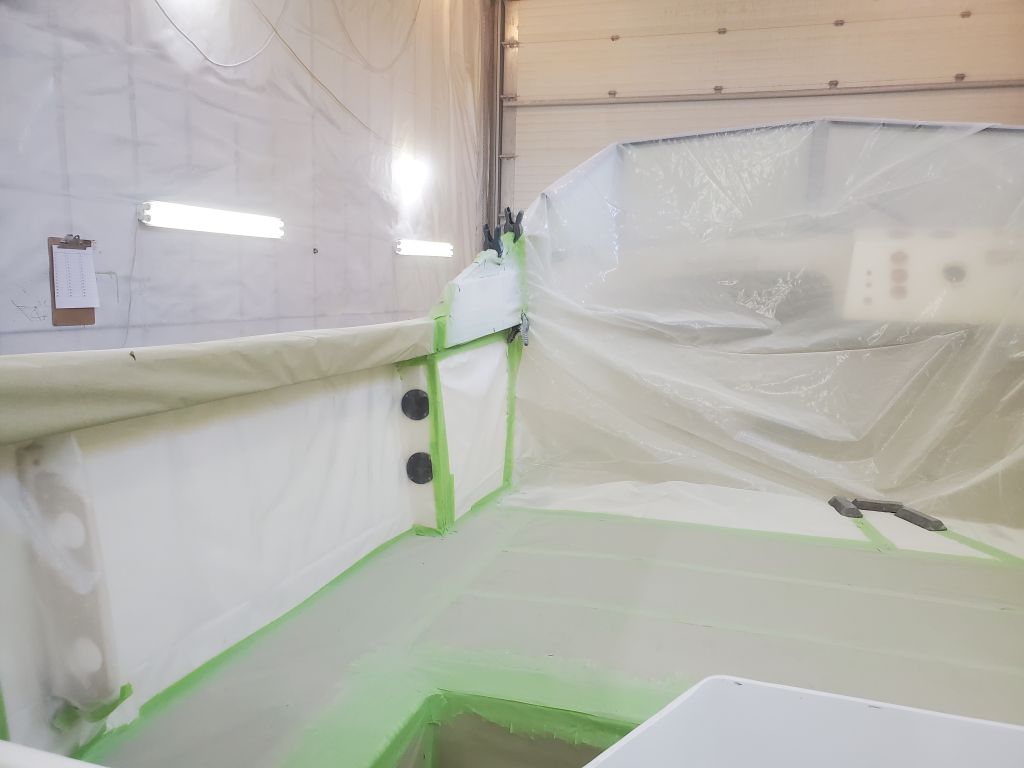
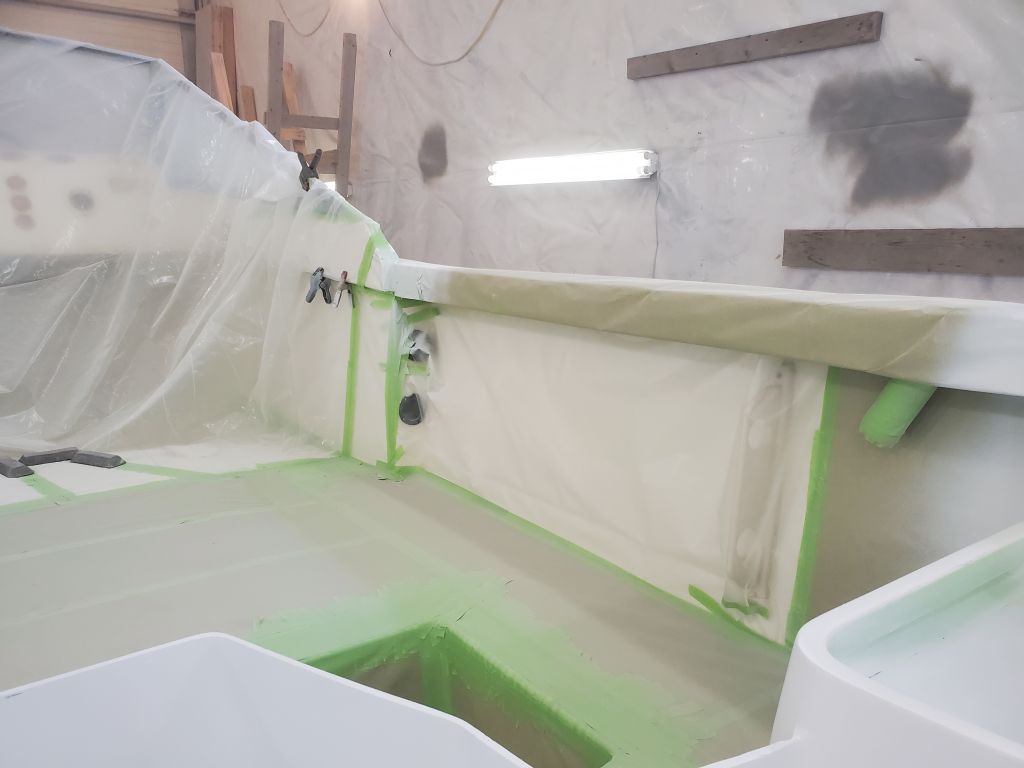
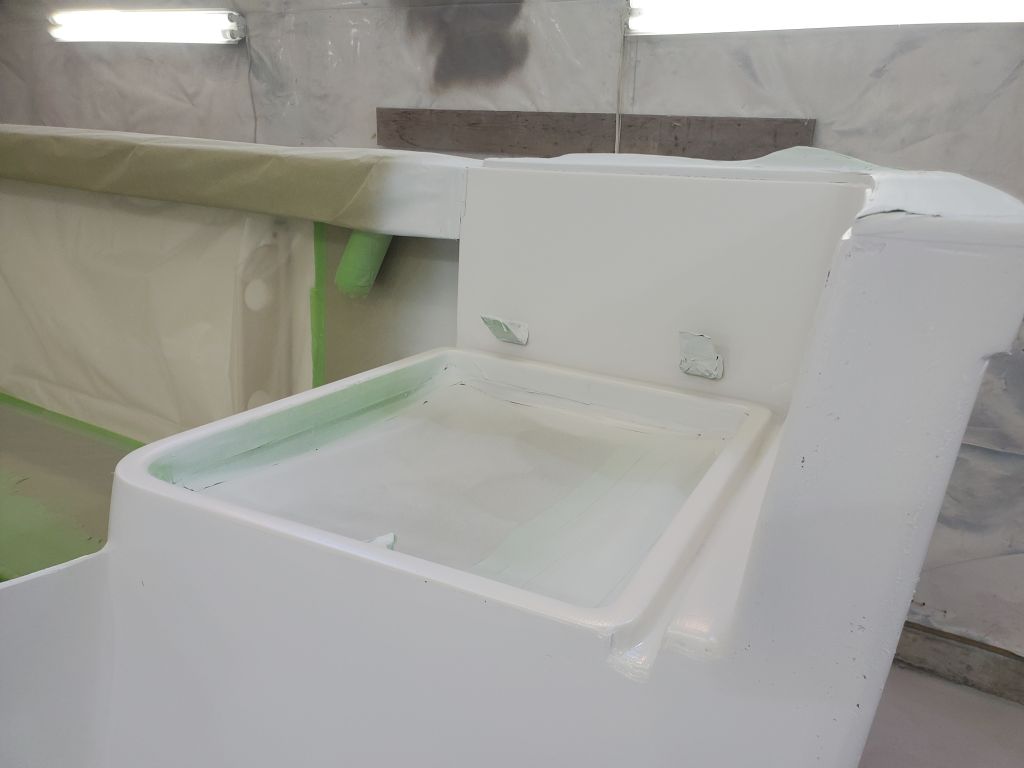
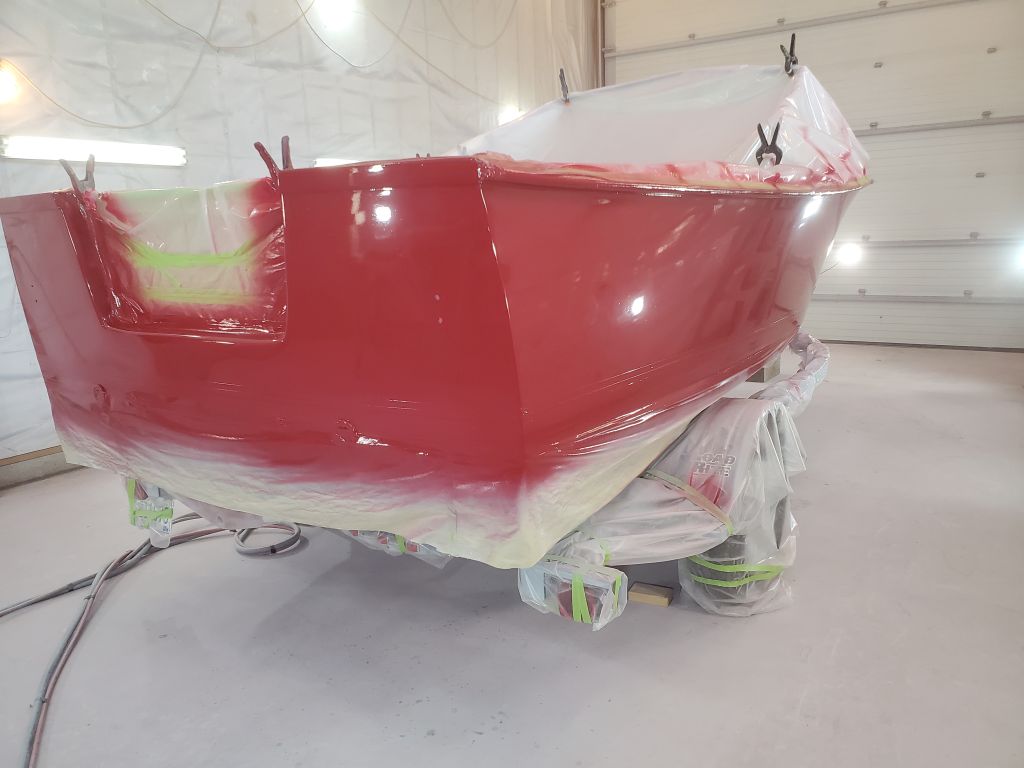
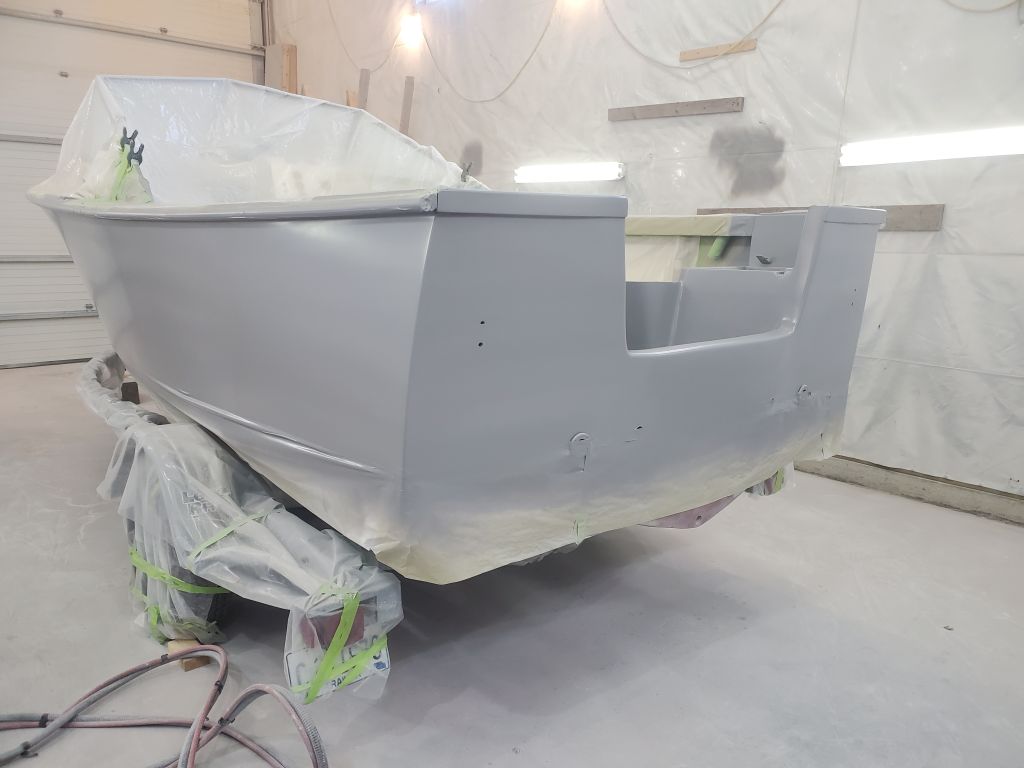
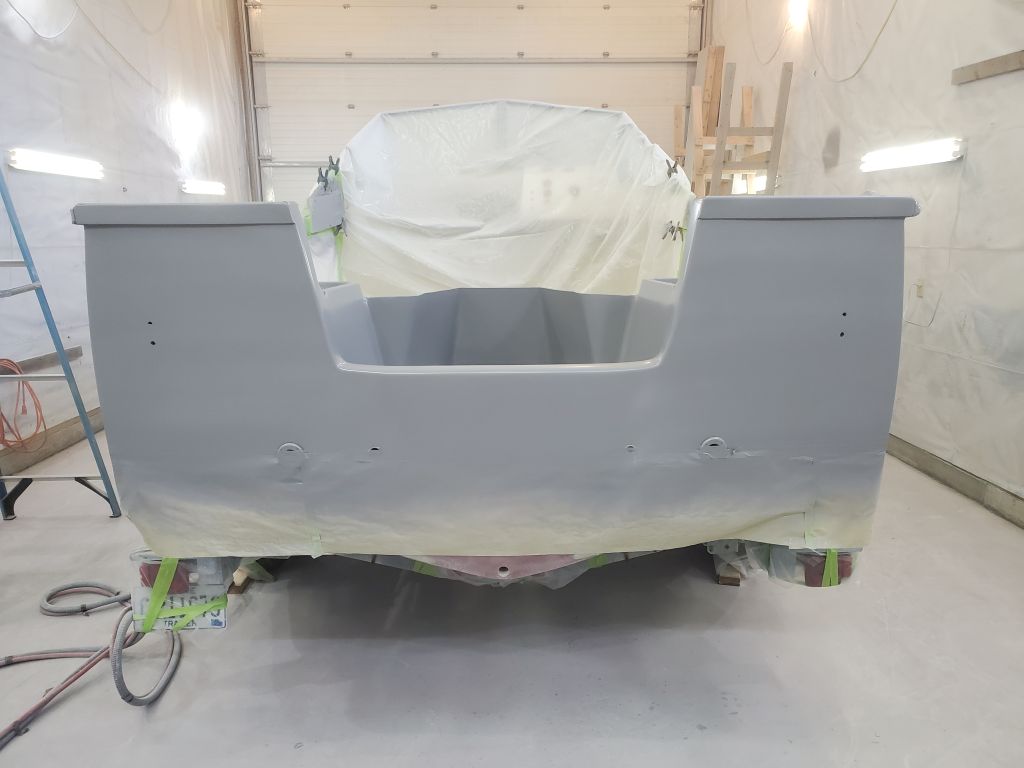
I planned to do the primer coats for both the hull and the aft part of the deck (i.e. the stern and new outboard well area) all at once, so I needed to mask the deck in a way to allow me to paint these areas.  I’d originally planned to do the two tiny gelcoat repairs separately after the fact, but thought I could probably arrange the masking and coverings to allow access to these areas as well.  TO this end, I spent the remainder of the day masking at the stern of the boat and nearby, making good progress but leaving a bit to finish off next time–mainly the round openings in the outboard well, the cockpit immediately forward of the transom, and plastic sheeting over the remainder of the deck areas.

Holby 42

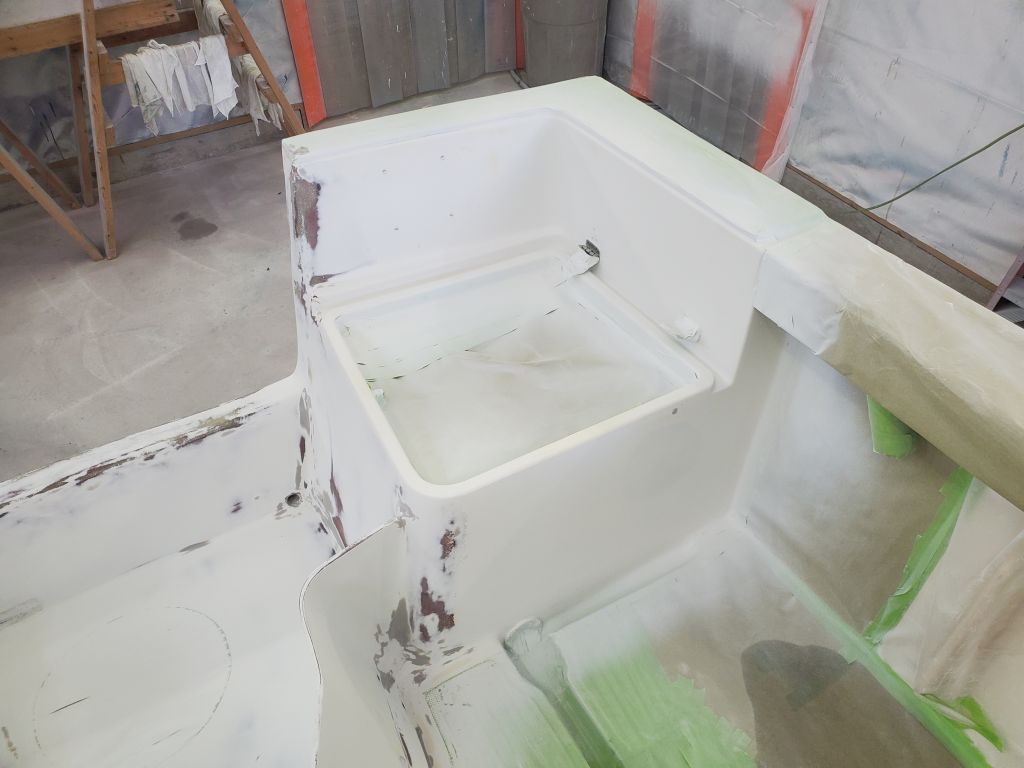
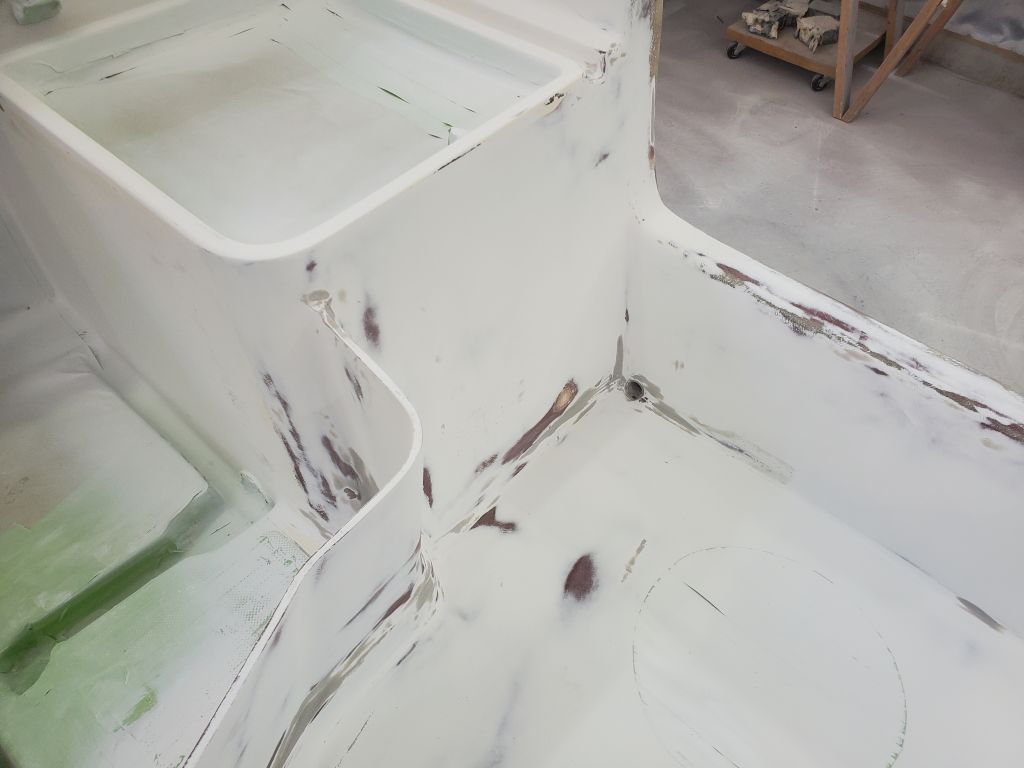
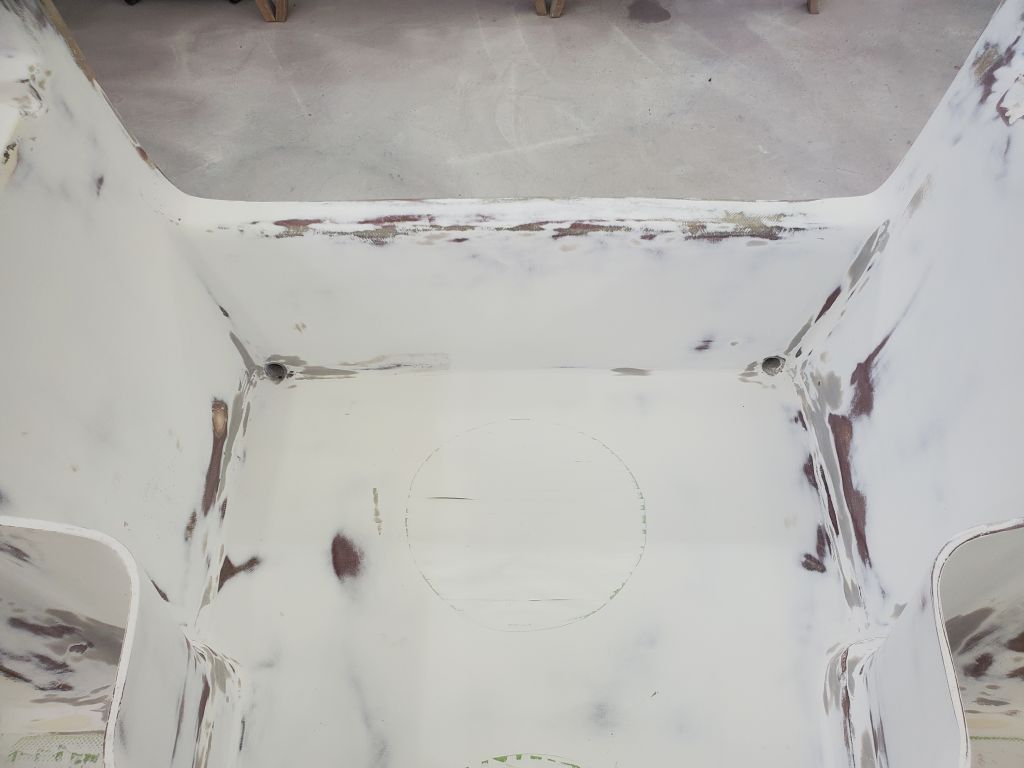
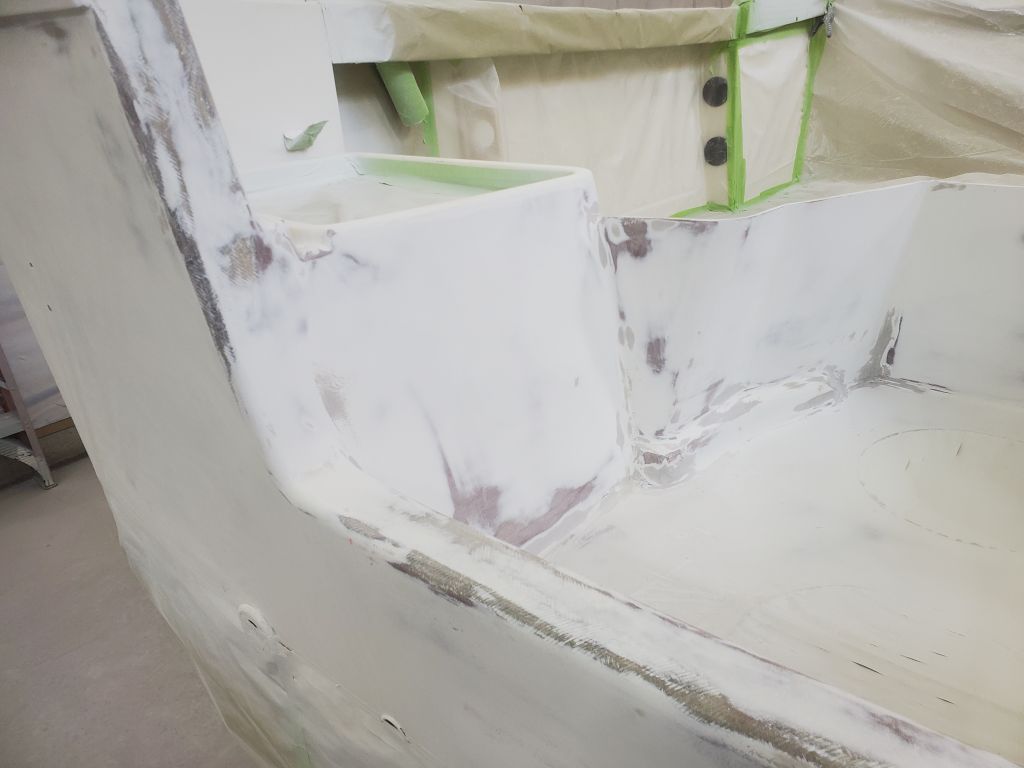
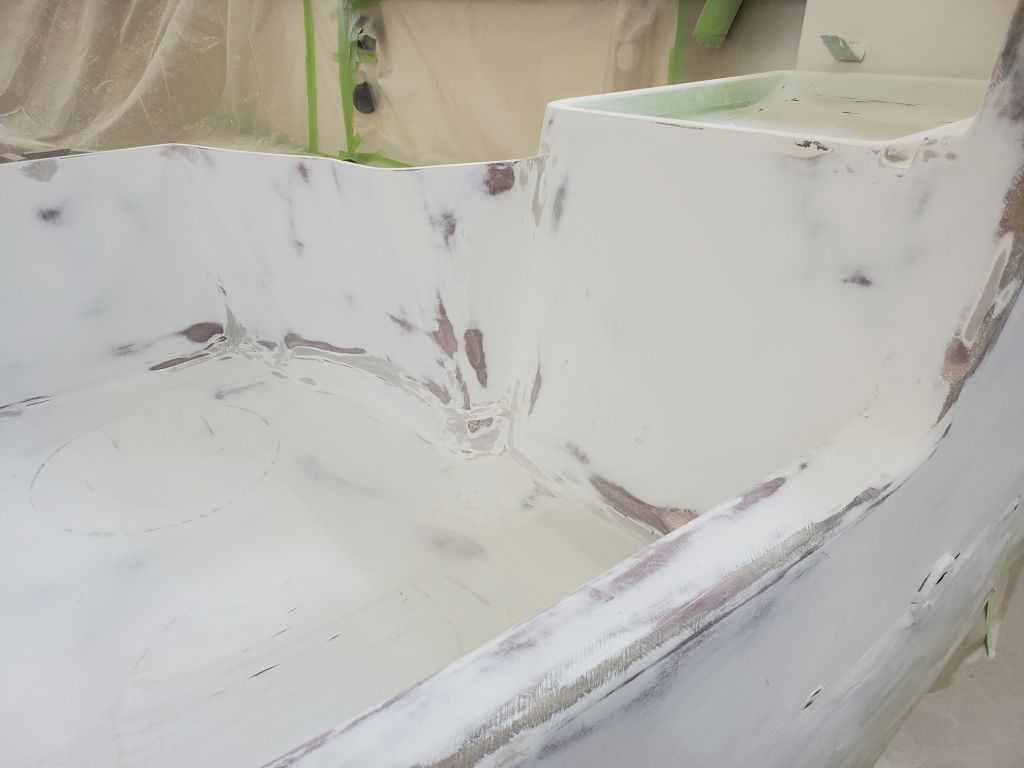
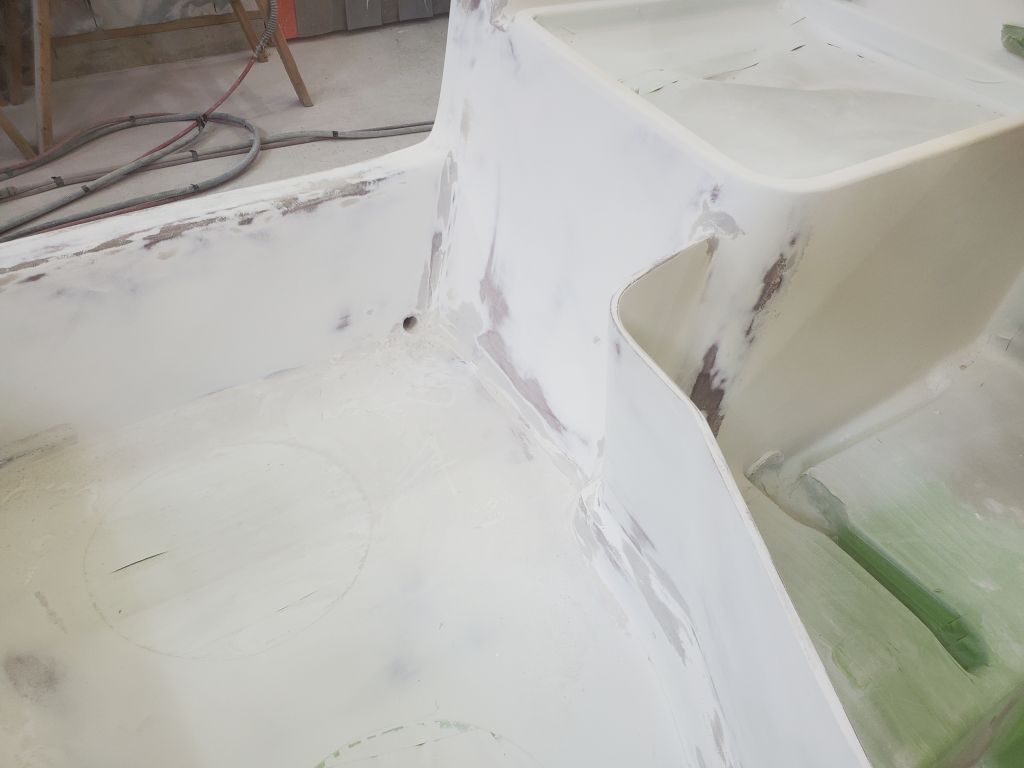
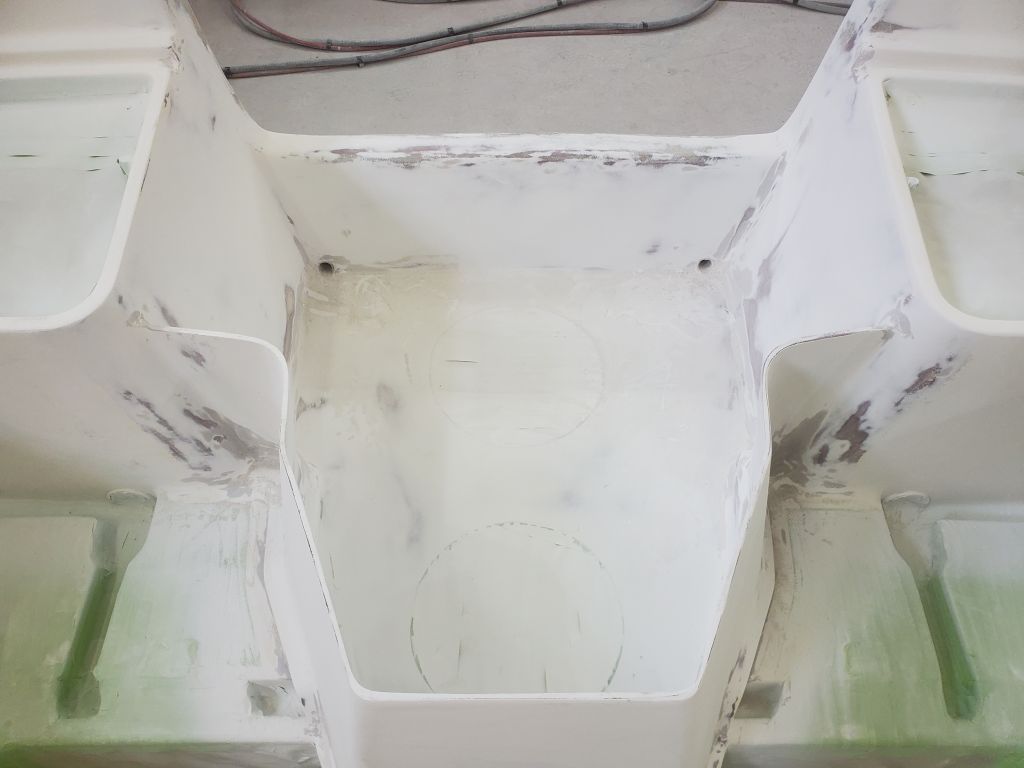
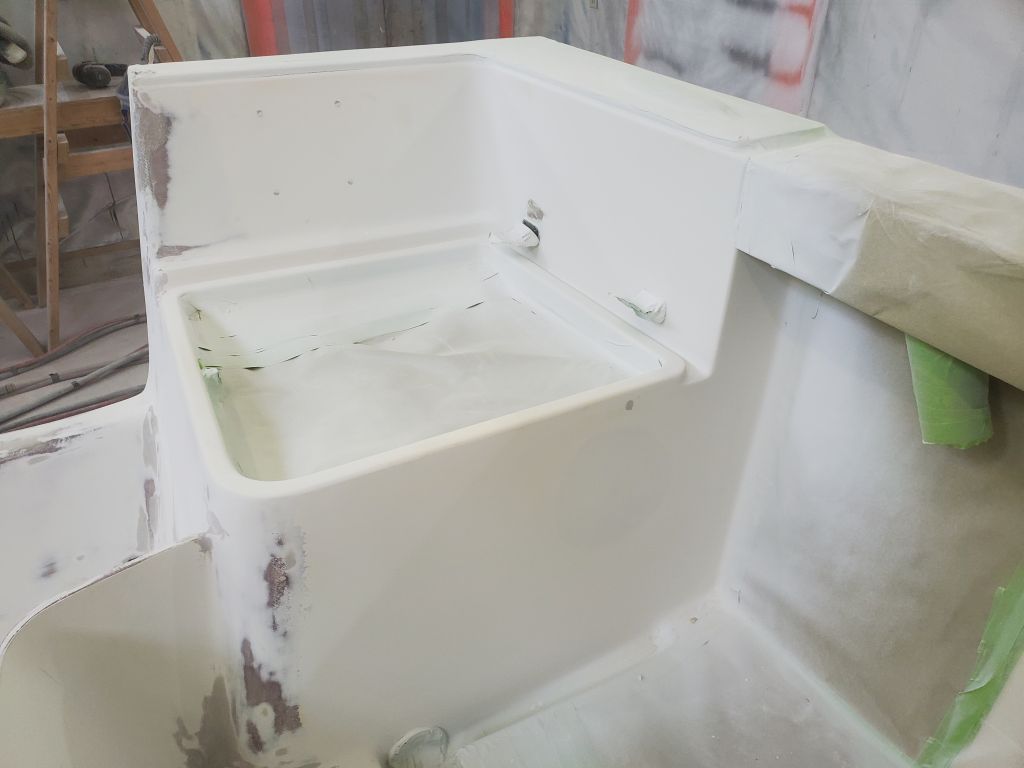
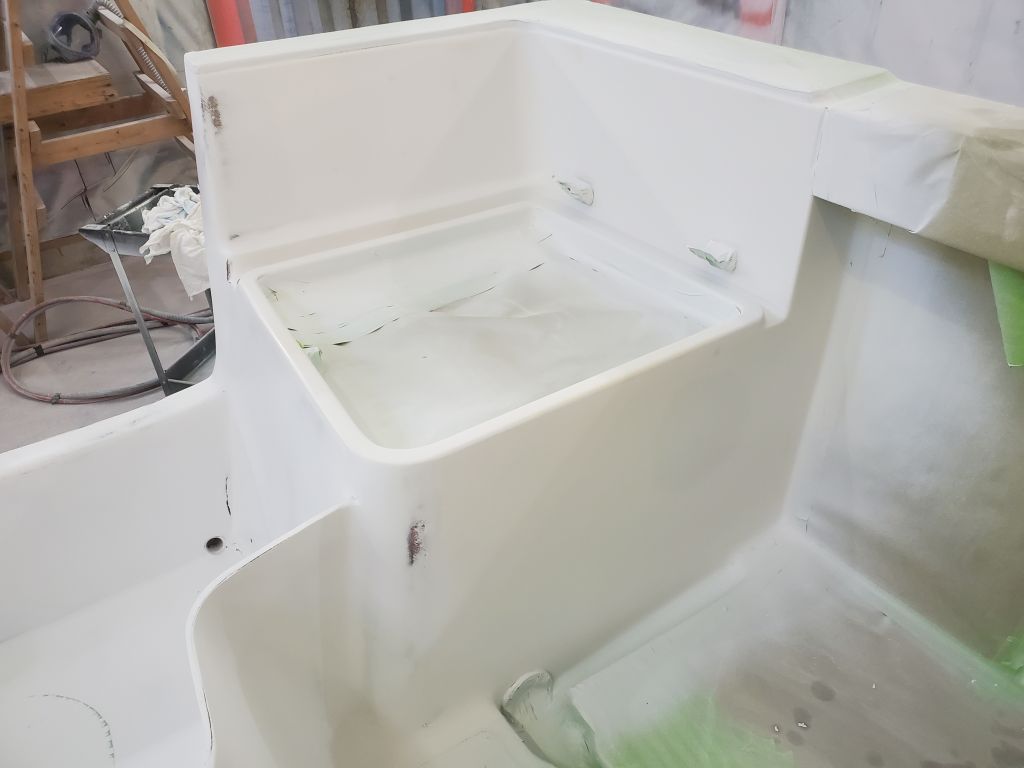
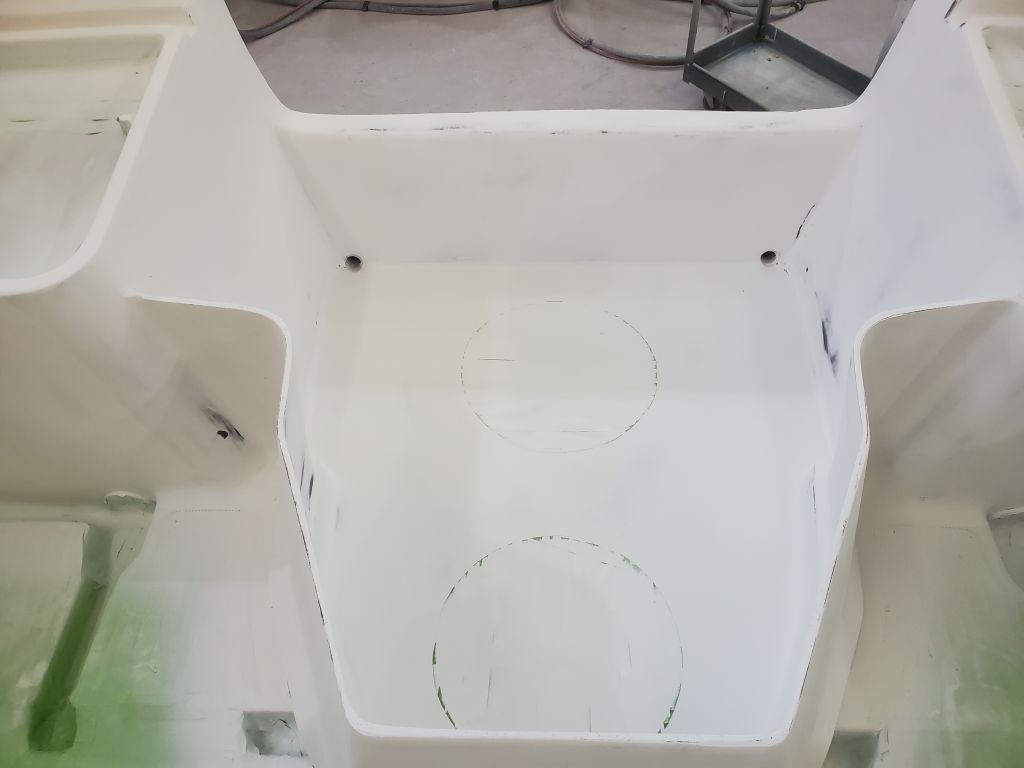
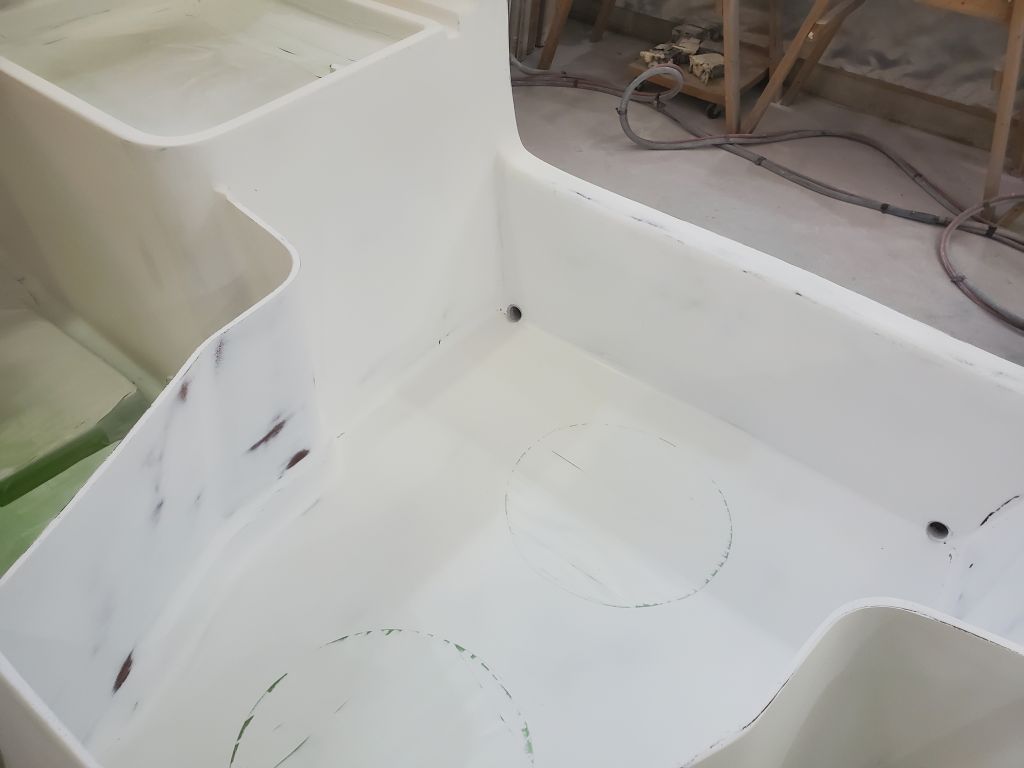
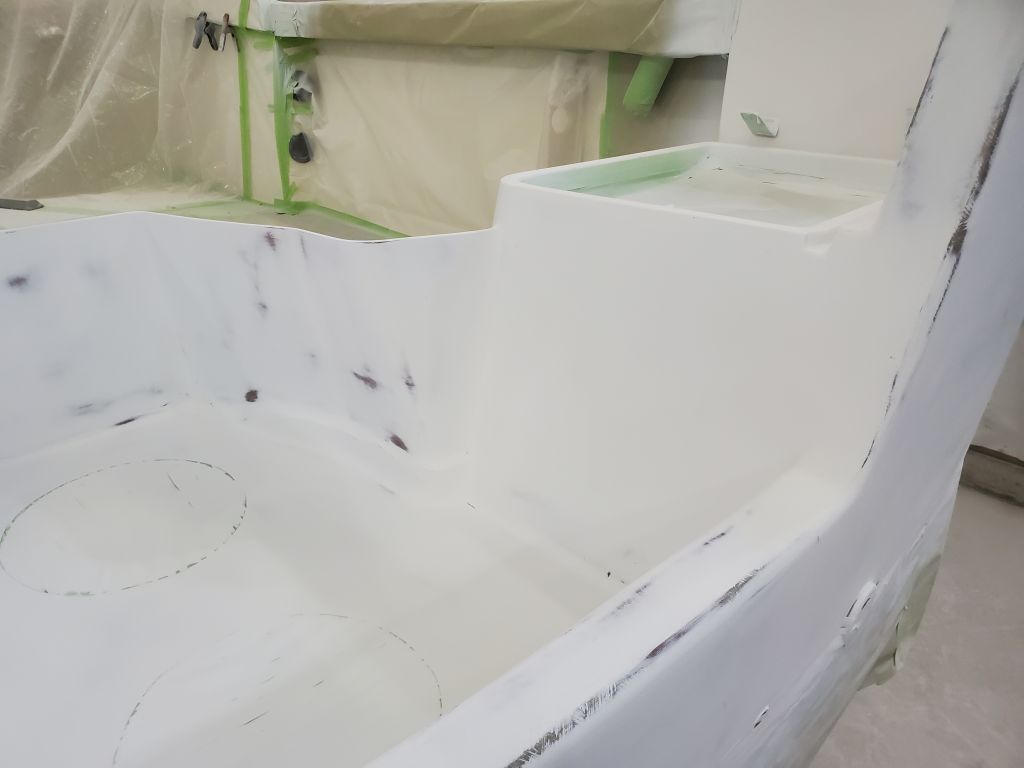
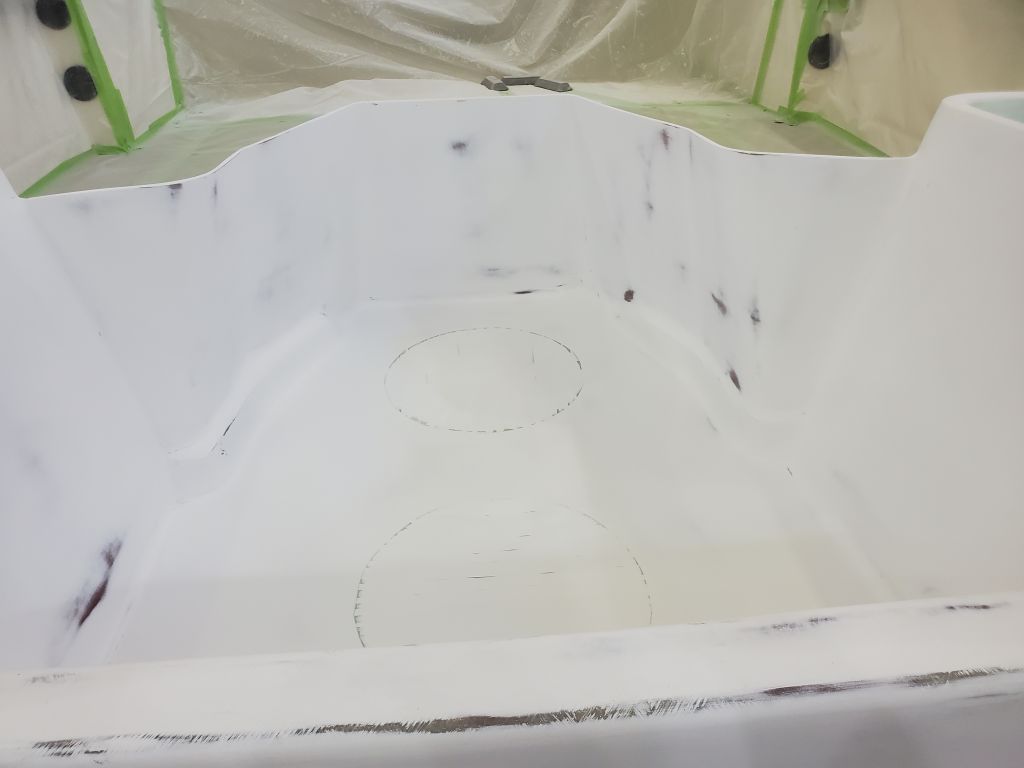
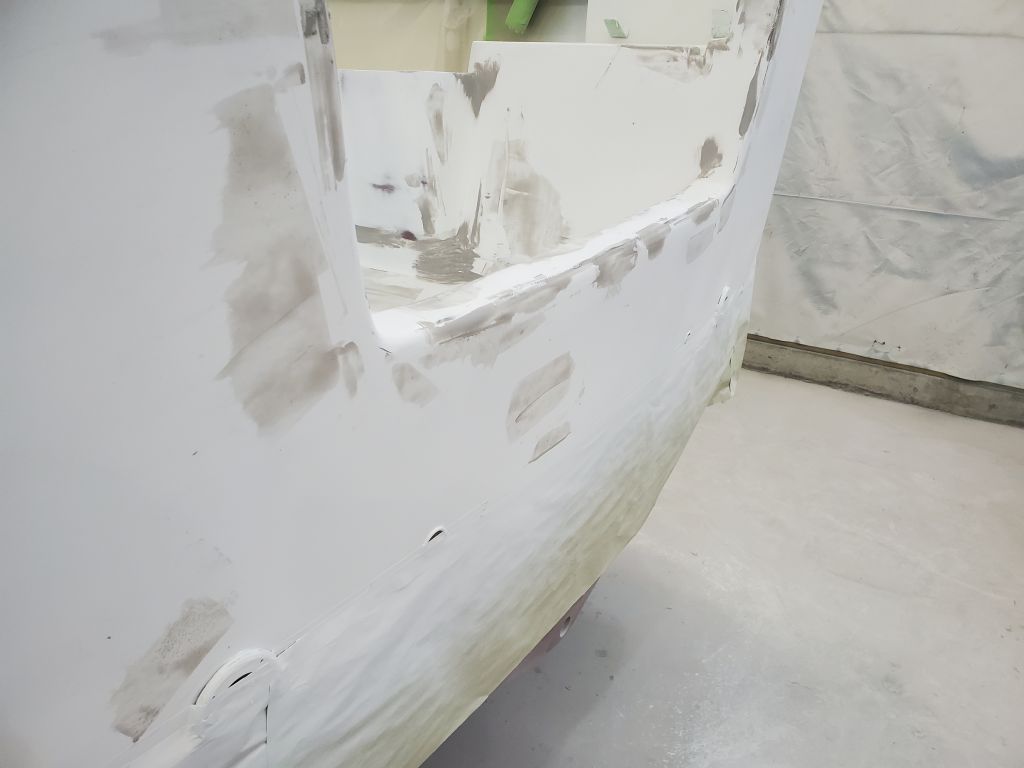
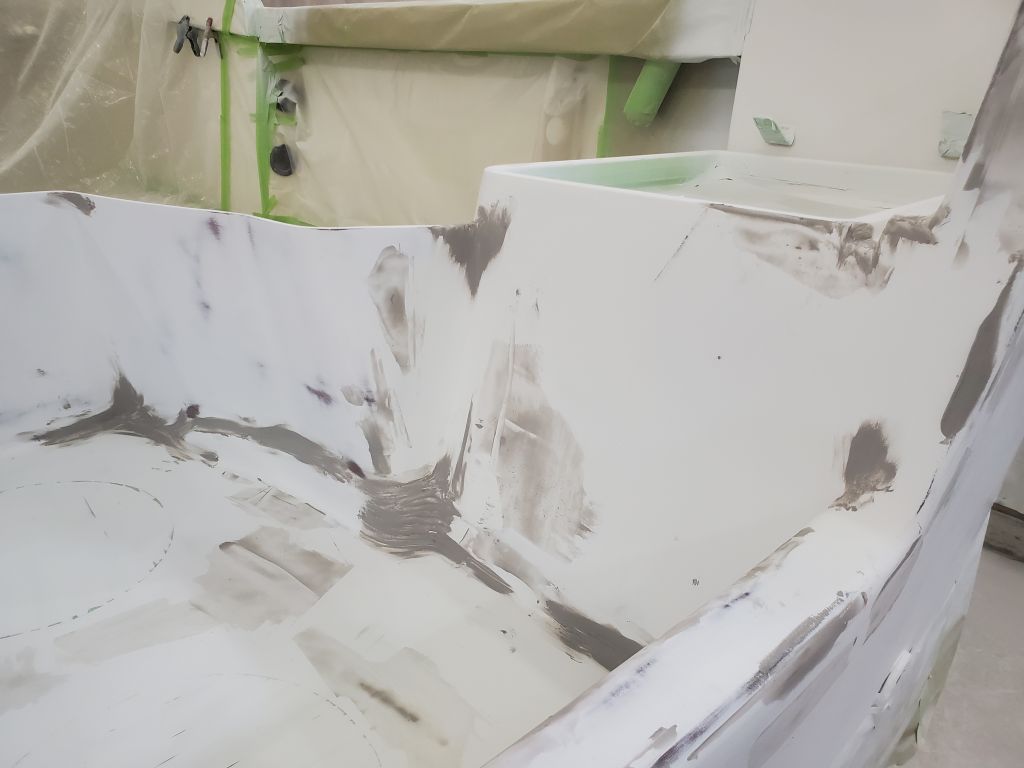
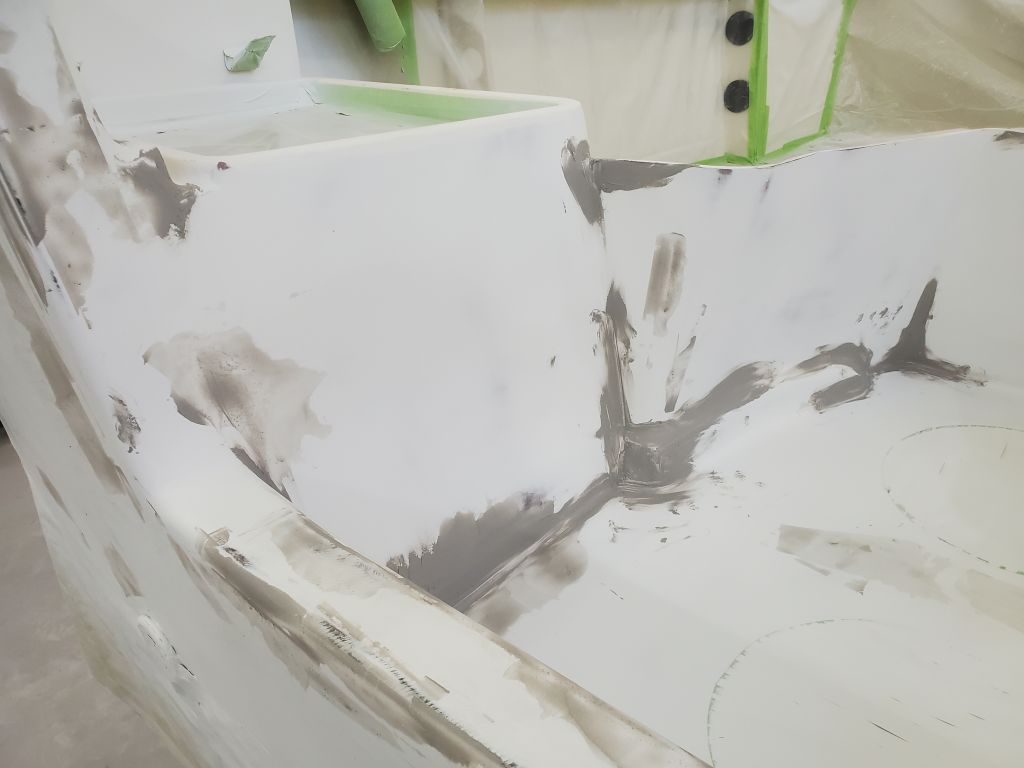
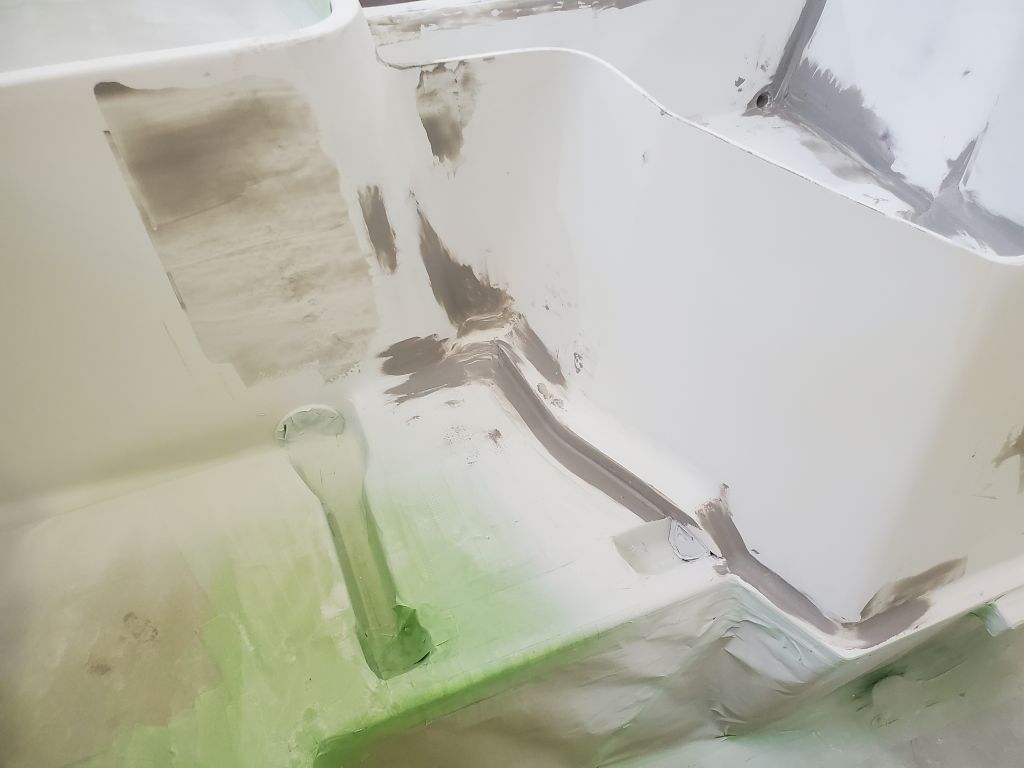
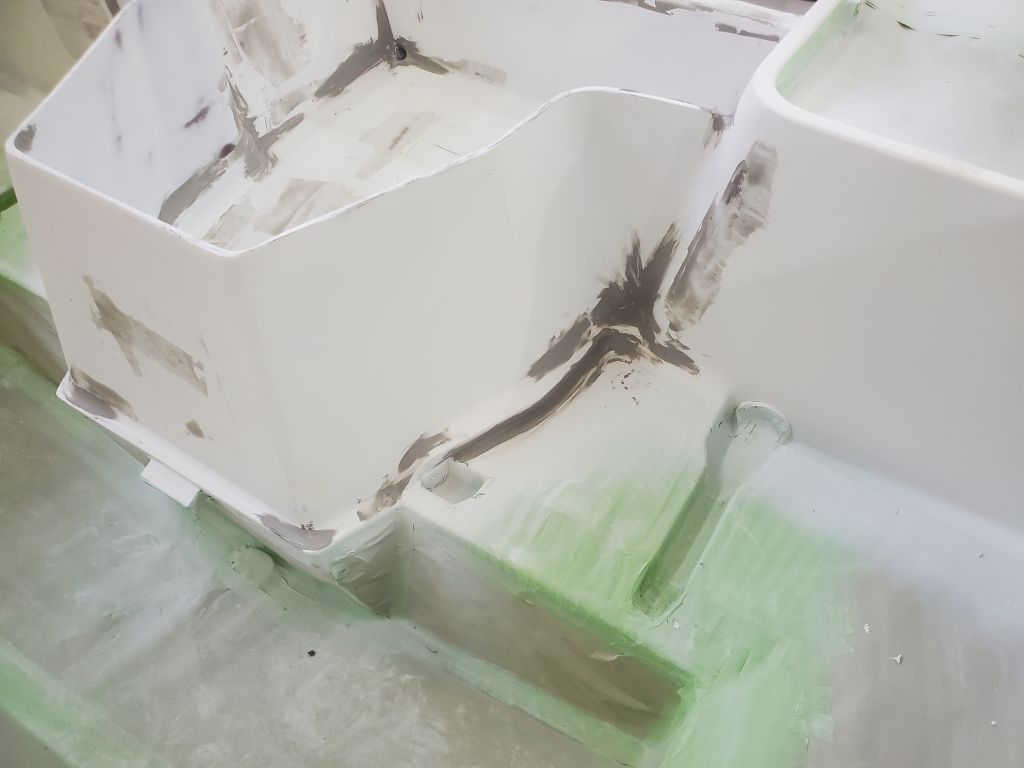
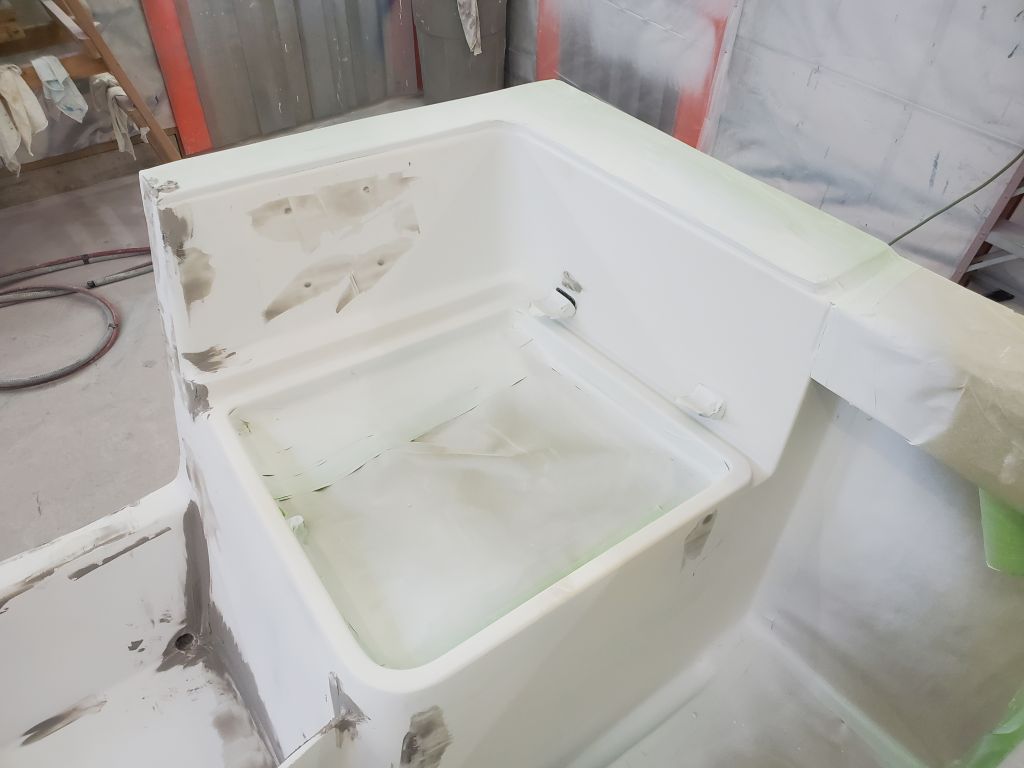
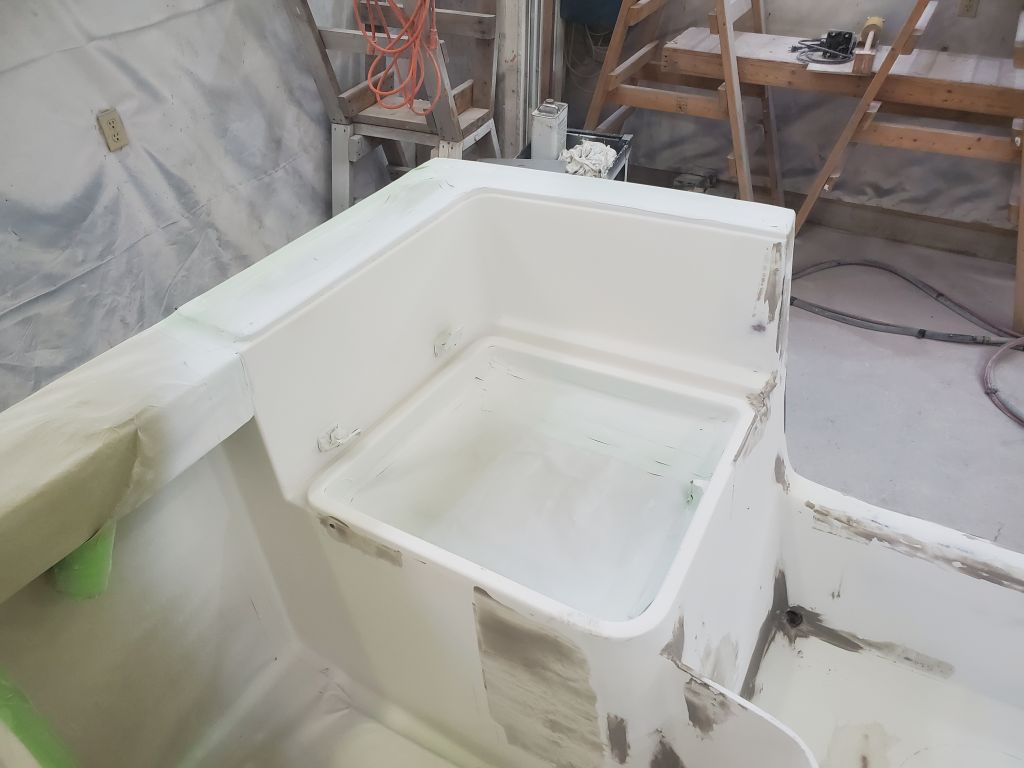
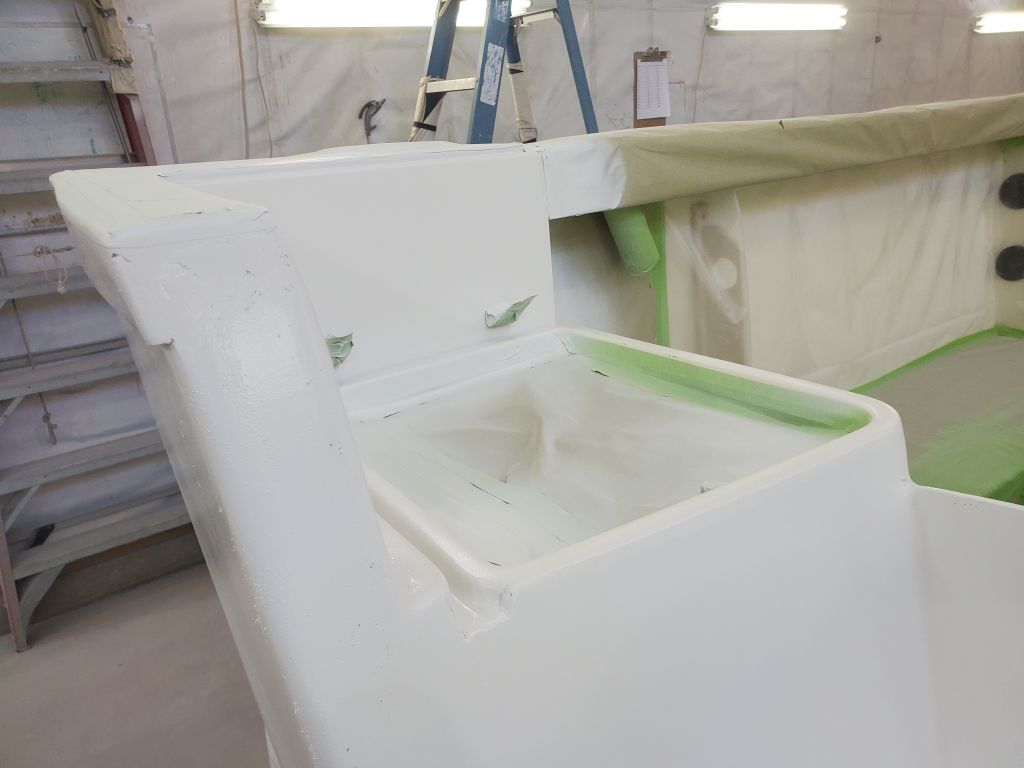
The aft end of the cockpit, particularly around the small seating areas and nearby corners, required some detail sanding to complete the preparation for primer work.  This was all hand work as required in the corners and edges, and the seat gutters, as well as around the caprail above.  There were several obsolete fastener holes that I reamed out and filled with epoxy as well, and I took a moment to re-drill the outboard well scupper holes, which I’d covered over with tabbing from the inside.  The paint demarcation line would follow the natural seam in the coaming, then down along the corner between the seat and the hull liner, and across the front of the seats and outboard well bulkhead at deck level.  Eventually I’d mask to this line.

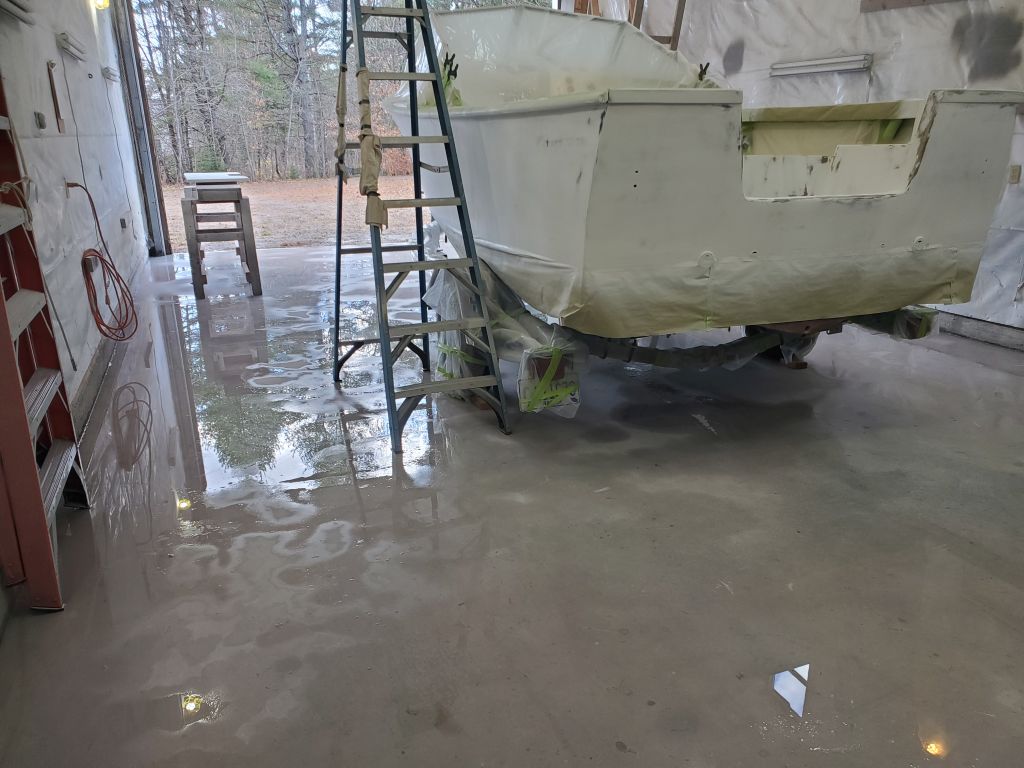
Next I vacuumed and cleaned the entire boat to rid it of excess dust and prepare all the surfaces for masking as needed.  With the boat on its own trailer, it was easy to move outdoors temporarily while I cleaned up the shop:  sweep, vacuum, blow down, and finally a water rinse to settle remaining dust.

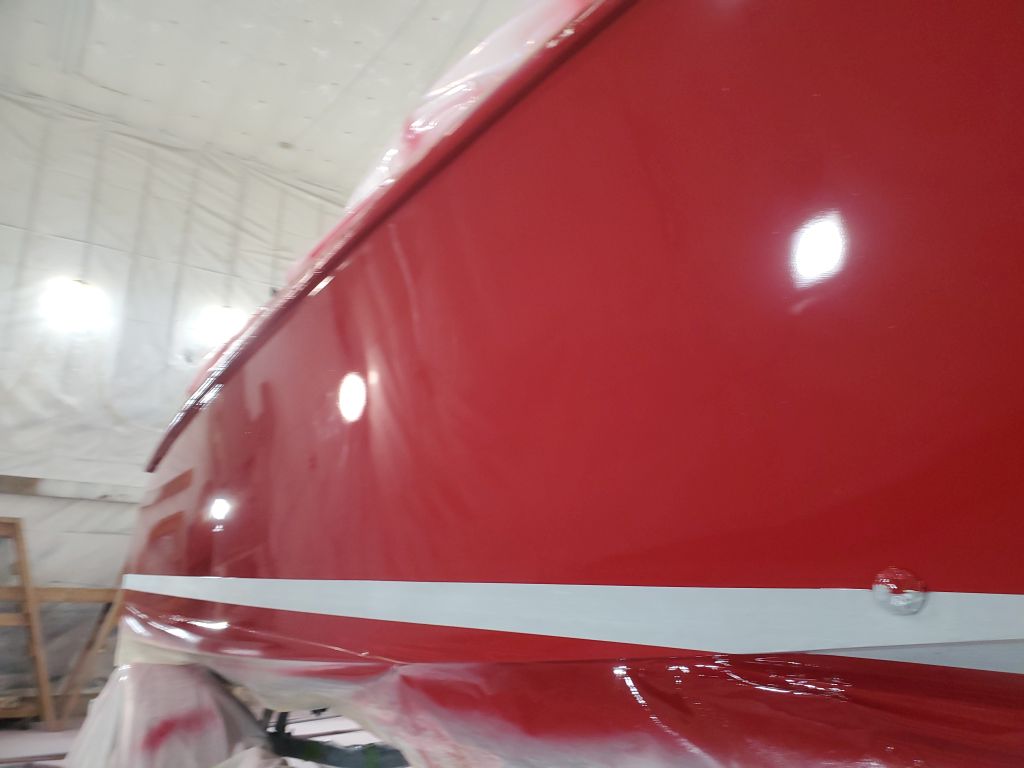
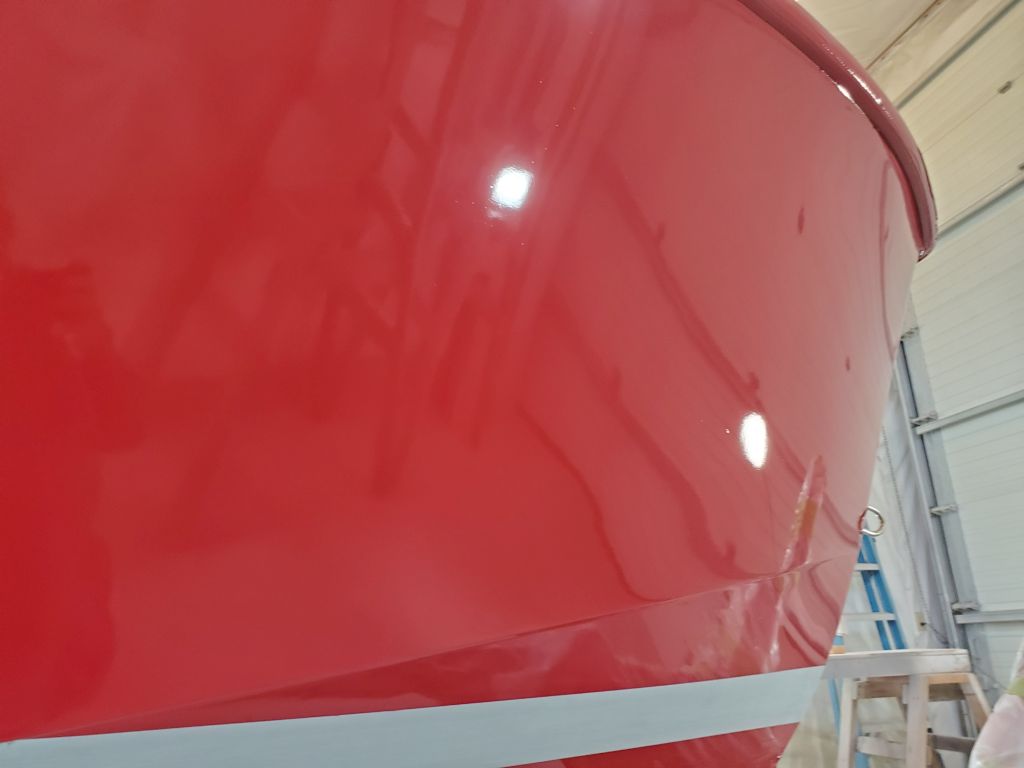
After the cleanup work, I moved the boat back indoors and masked off the waterline, aka the top edge of the bottom paint.  This was straightforward enough as there was a faint line still visible in the gelcoat, and this made restriking the line relatively quick, especially on the slab sides and transom.
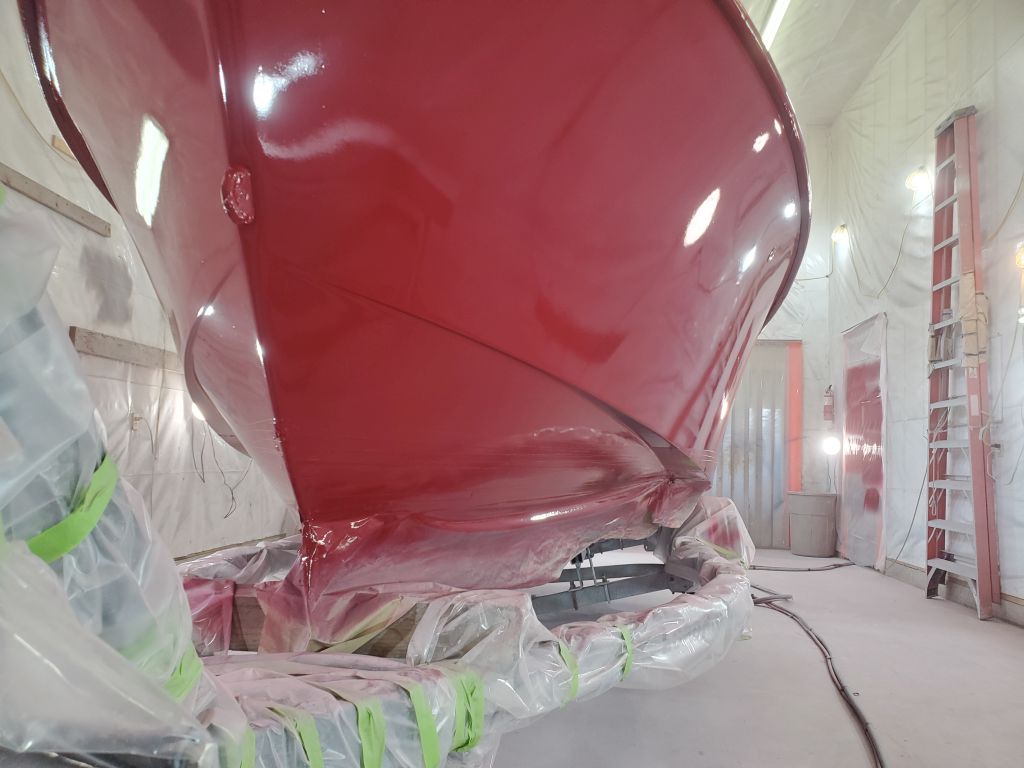
Afterwards, I covered parts of the trailer in plastic to protect against overspray.  This brought me to the end of the day, but I’d continue masking and related prep work next time.

Holby 41

A short Friday began with a meeting with the owner and local canvas contractor at the boat to work out some details of the new bimini and helm enclosure, and a few other project details.

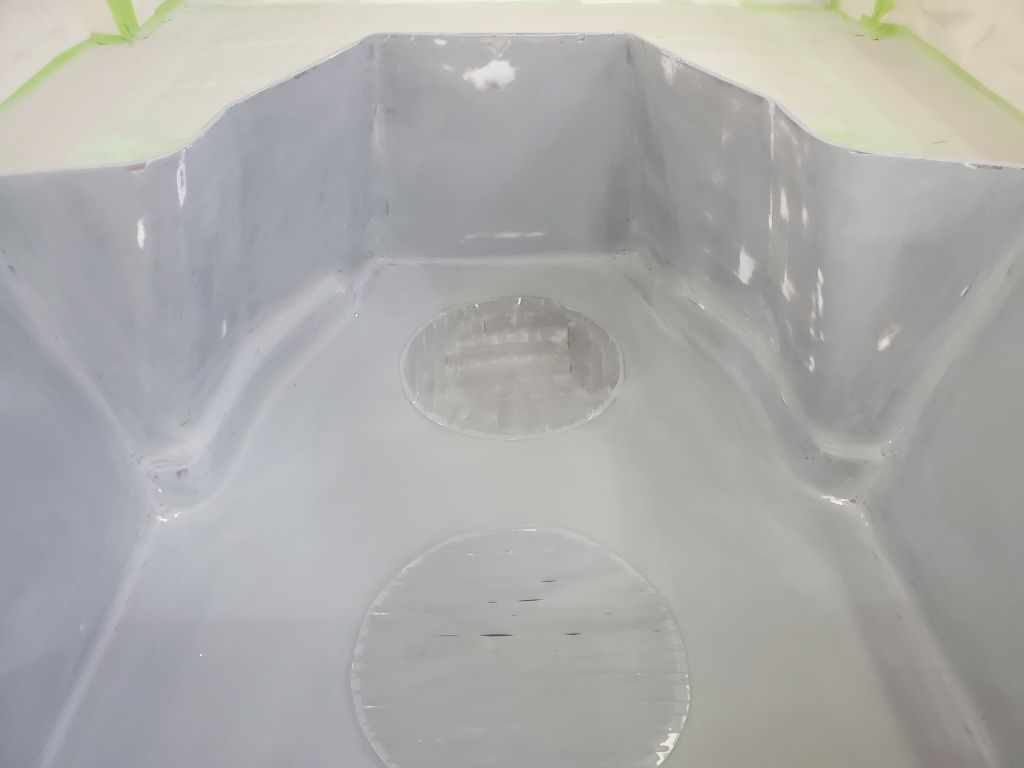
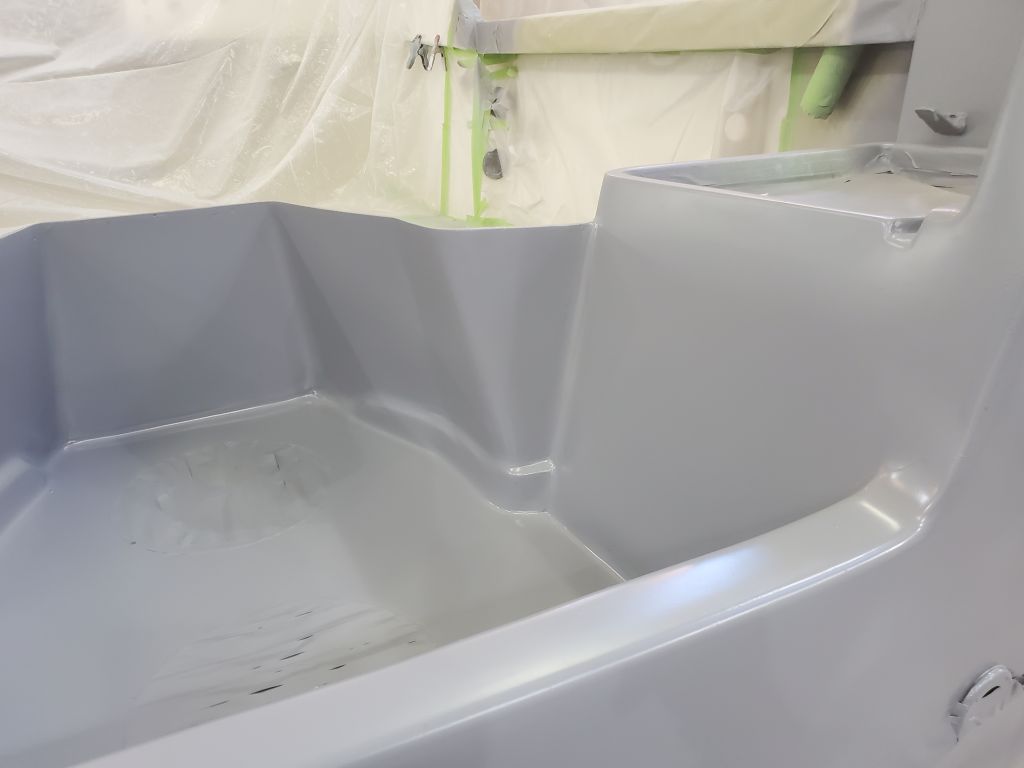
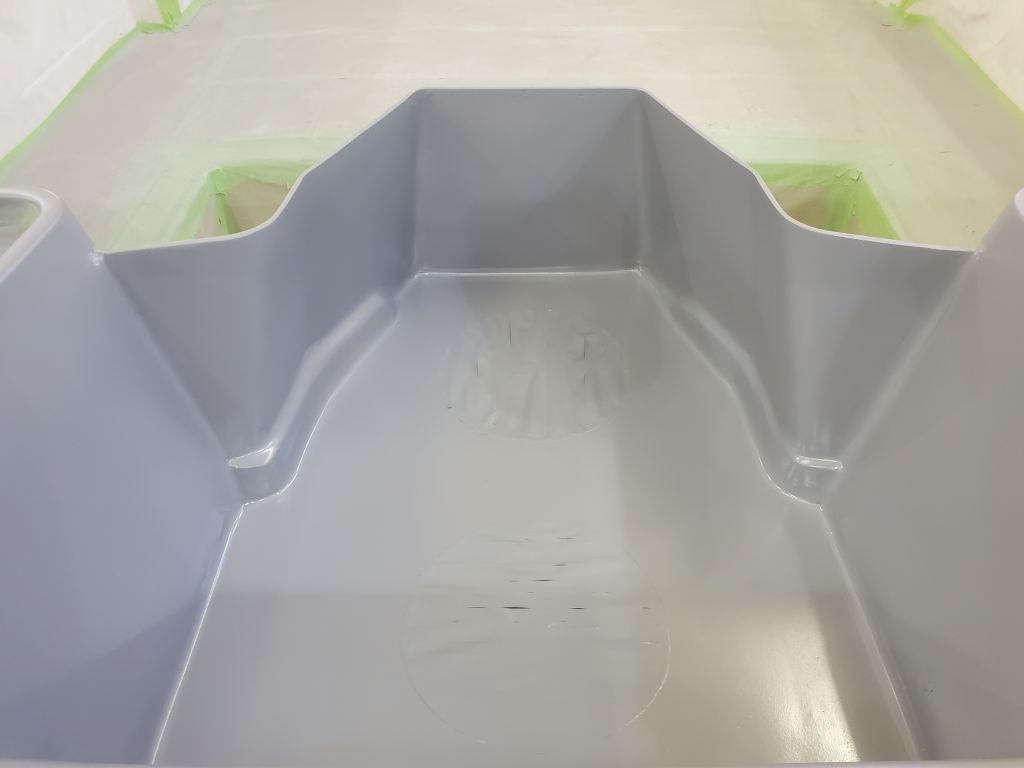
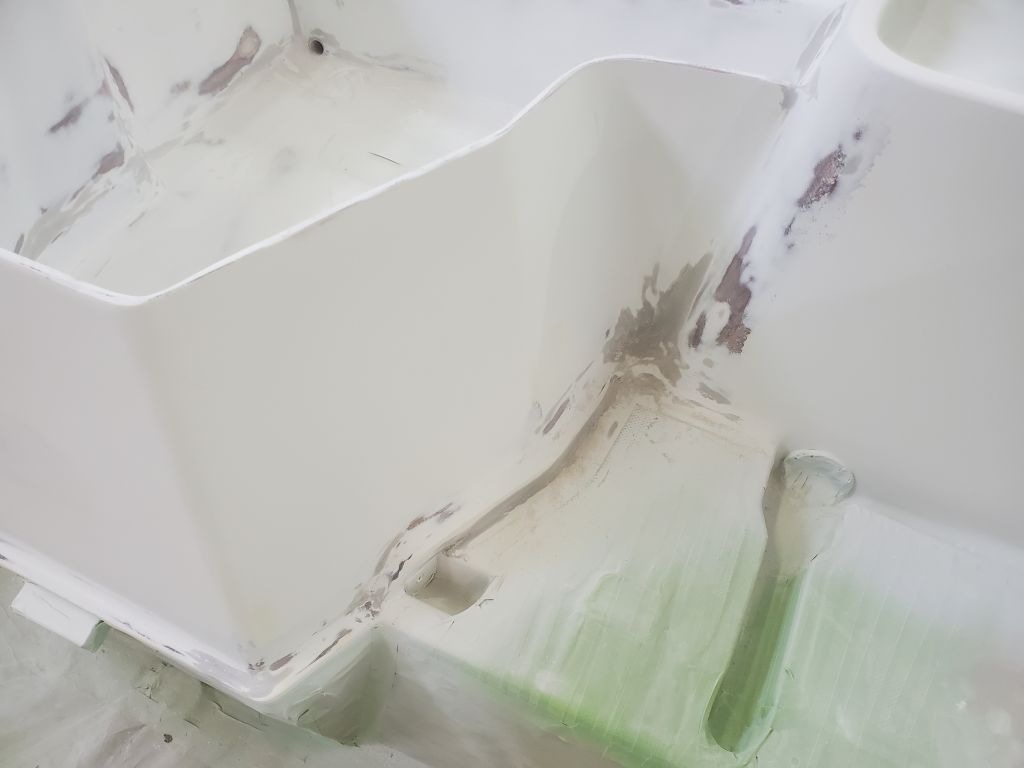
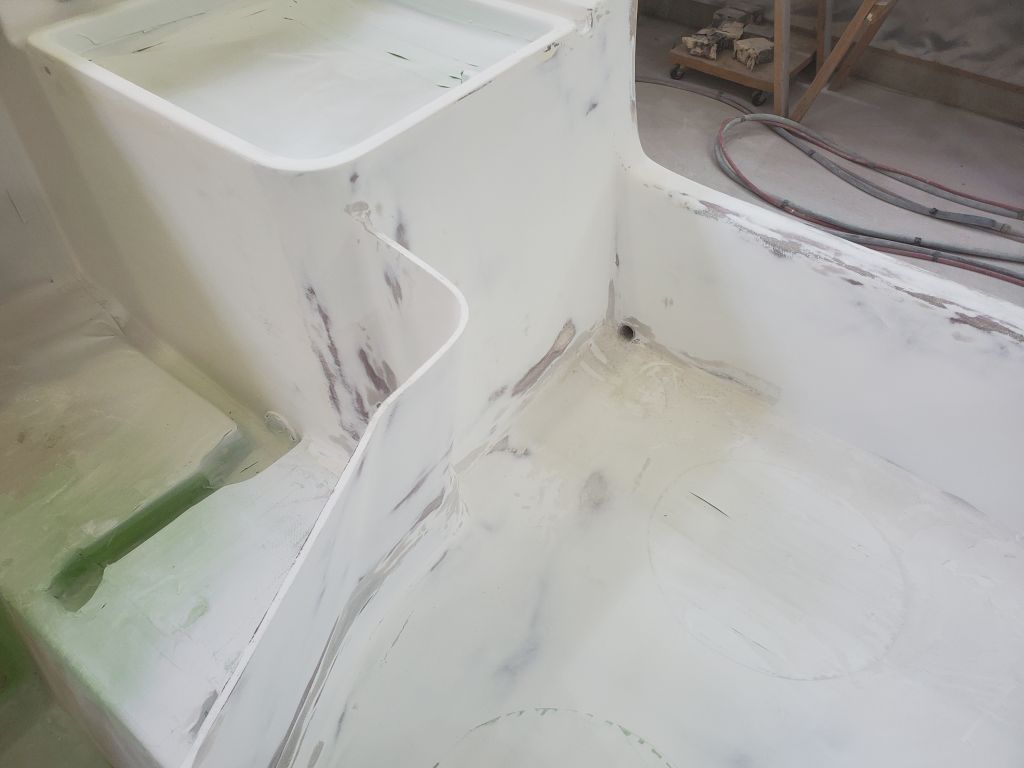
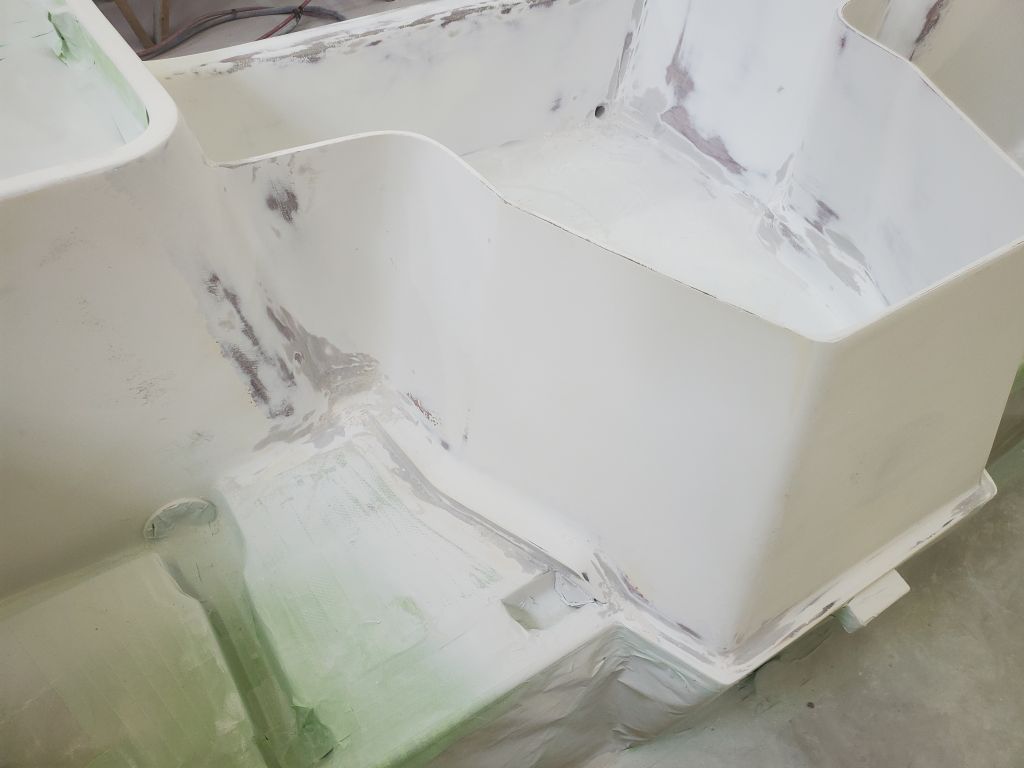
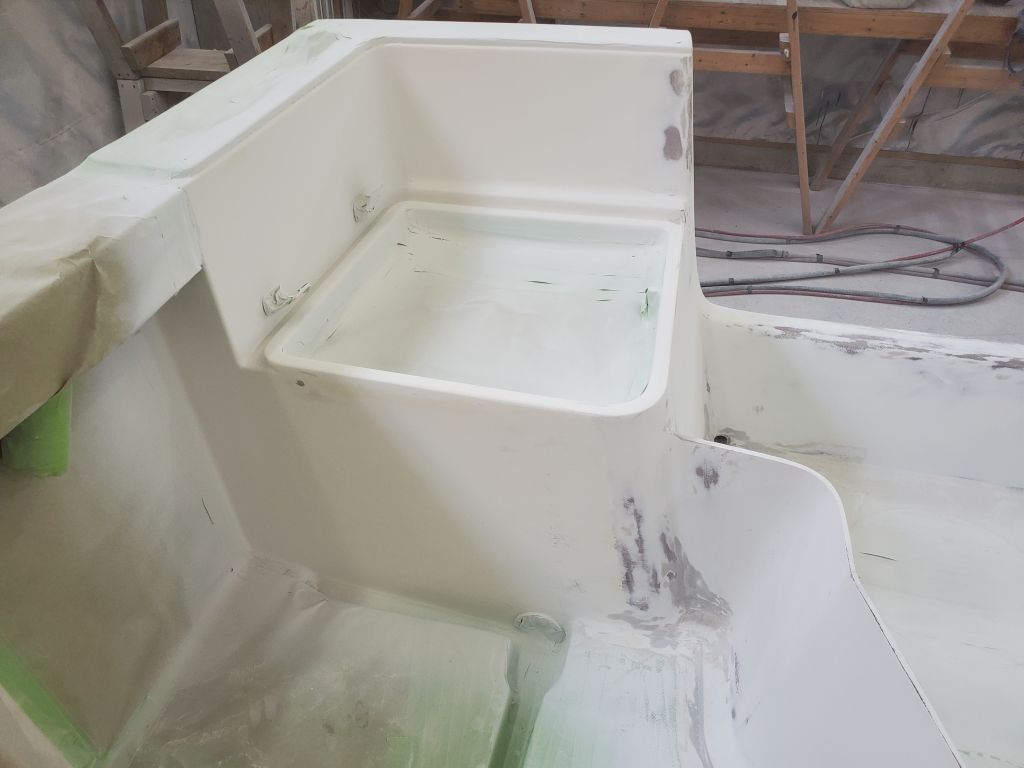
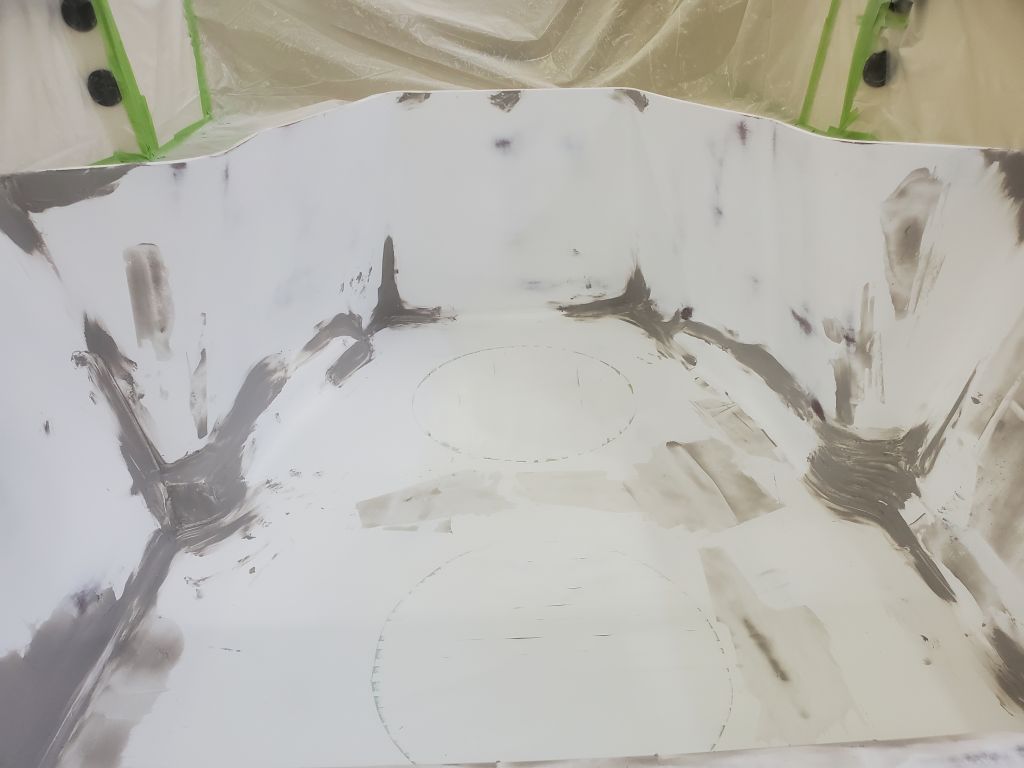
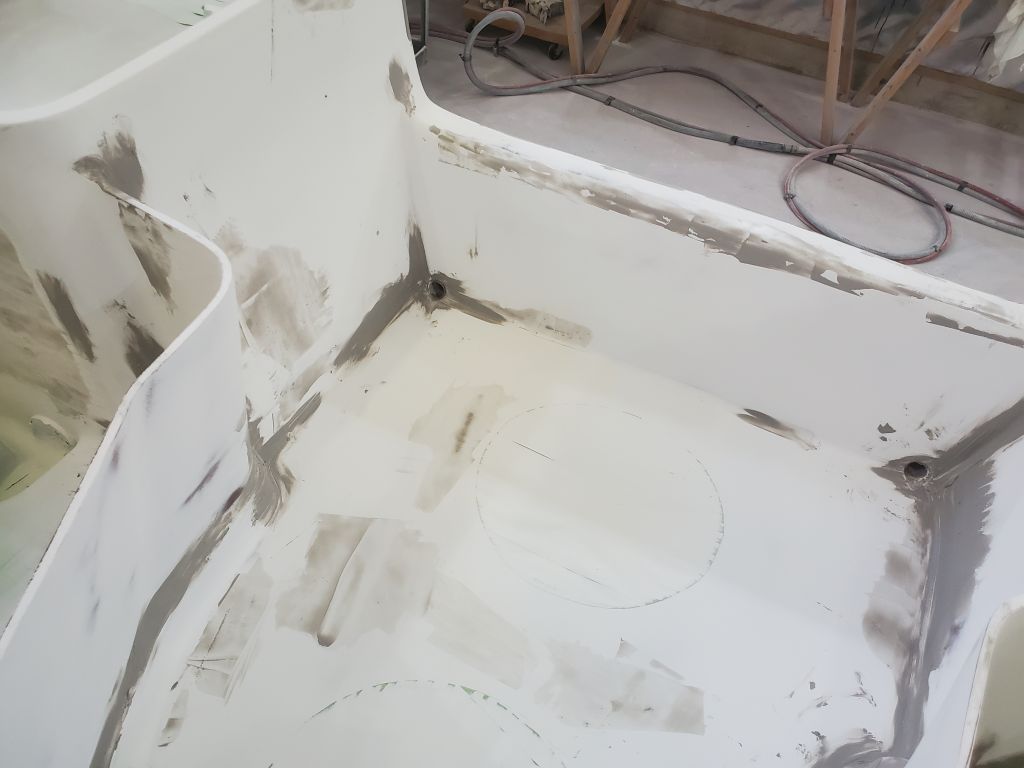
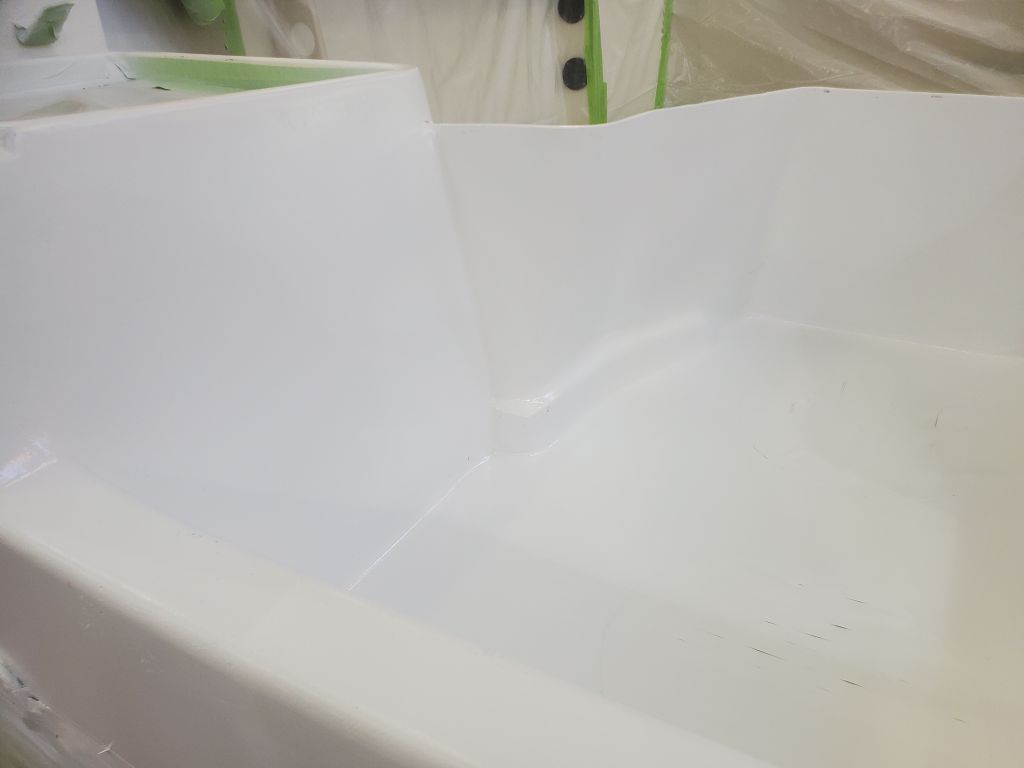
Afterwards, I turned to the daily round of sanding in the outboard well and elsewhere, this time with finer grits and, eventually, finish-sanding tools.  The well was looking pretty good now and I felt it was time to move forward with high-build primer soon, then address any lingering and noticeable flaws or fine-tuning thereafter.

The entire stern area of the cockpit, including the new well and the seats/lockers on either side, would be primed and painted as part of this project, stopping at the deck itself and the outboard corners of the liner.  Now I sanded these areas with 80-120 grit and finish-sanding tools, preparing the original gelcoat for the work ahead.  I’d return later and finish up the required hand work at the corners and seat gutters.

Meanwhile, I lightly sanded the small gelcoat patches near the windshield, bringing them nearly to their final stage other than some additional light hand sanding.  At the transom, per the owner’s request, I trimmed the overhanging teak caprails flush with the new fiberglass trims beneath, and rounded the top edges for a clean and smooth look.

Holby 40

After another round of sanding, the outboard well was looking better than anticipated, leaving only various (and expected) low spots requiring additional attention.  The forward sides of the new work were nearly where they needed to be.

After cleanup, I applied a third round of fairing filler as needed.

Similarly, I sanded the smaller patches currently underway–for the obsolete livewell control lever, and the two small gelcoat patches forward–and applied additional fairing material as needed.

In two “lifts” of thickened epoxy filler, designed to reduce heat buildup, I filled the old gauge holes in the console.  For now I left the compass hole alone, as I wasn’t sure whether or not it was worth relocating the compass into the bulge in the molding intended for it, or better to leave it as is, which happened to be directly in line with the helm.

I cleaned up the channels in the deck surrounding the fuel tank, and also the edges of the fuel tank hatch, then reinstalled the hatch, using butyl sealant on the bonding surfaces beneath the hatch, as well as around the screw heads, where I also installed a washer to improve overall bearing and sealing capacity.  I chose butyl in this instance since the hatch wanted to be easily removable for maintenance.

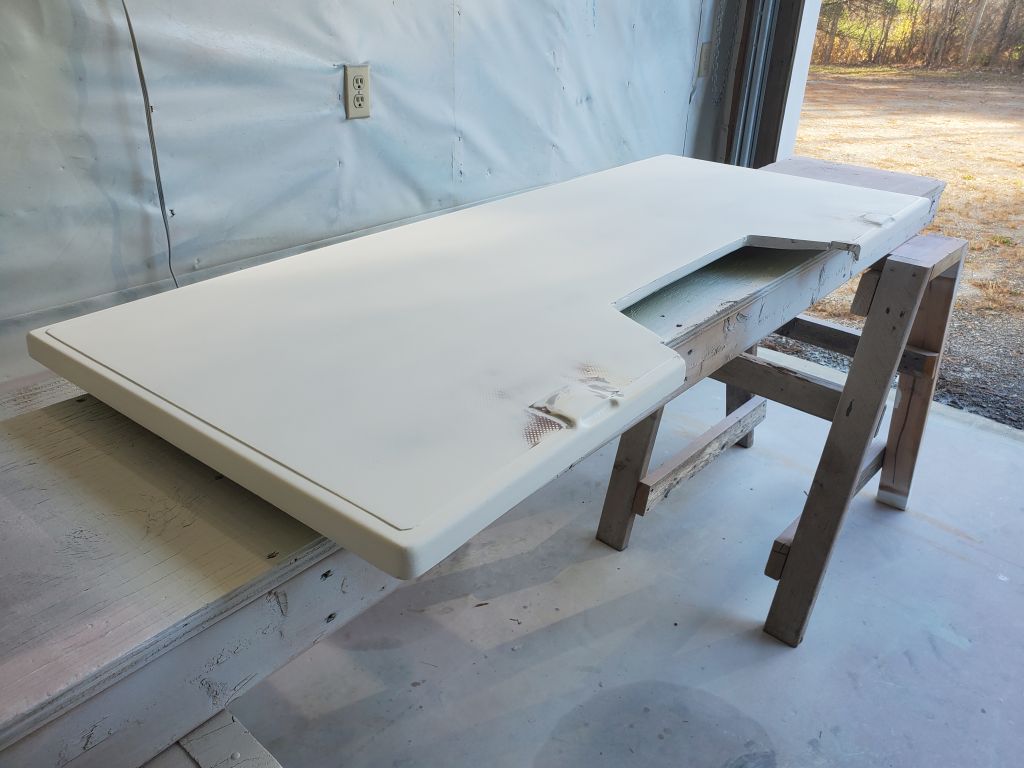
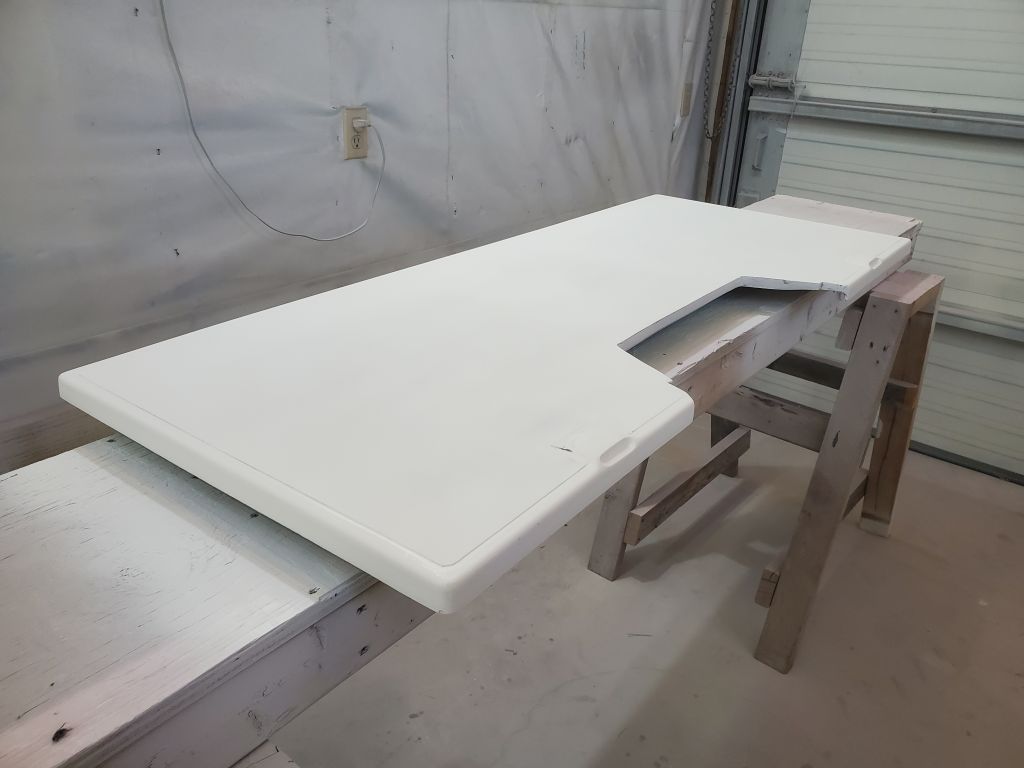
Meanwhile, I hand-sanded the edges of the livewell hatch to prepare the original gelcoat for primer and paint.
Holby 39

Continuing on the outboard well, I began the day by sanding the first round of epoxy fairing compound.
After cleanup, I applied a second layer of fairing compound to all areas as needed.

The owner requested that I patch a spot on the port aft seat where there had originally been some kind of control lever for the livewell.  I’d previously removed the remnants of the old fitting, so now I prepared the remaining hole for patching and, to begin, filled the round hole with a thickened epoxy mixture.  Later in the day, I applied two layers of fiberglass over the exterior, once the epoxy plug had cured sufficiently.

There were two damaged gelcoat areas forward that the owner requested I repair, one on the inside of the coaming near the helm, and another on the opposite side beneath the aft edge of the windshield,.  Now I cleaned these up and prepared them for patching with epoxy; neither was structural or significant in nature.  I masked around each repair, applied epoxy-based filler, then removed the tape to let the repairs cure.

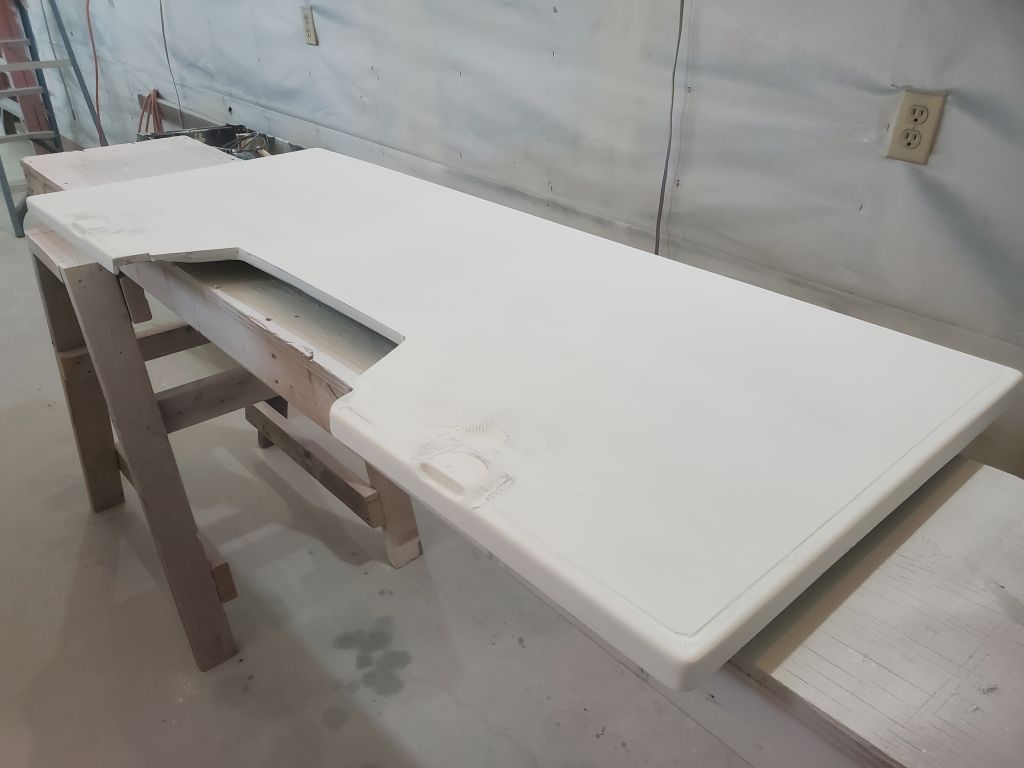
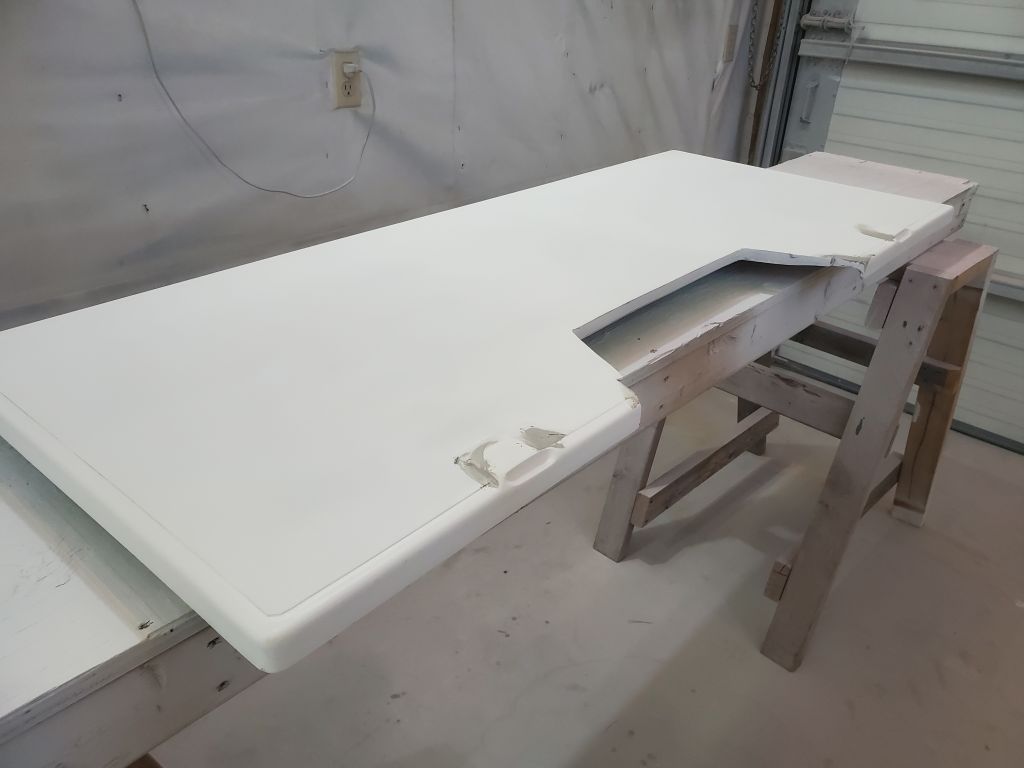
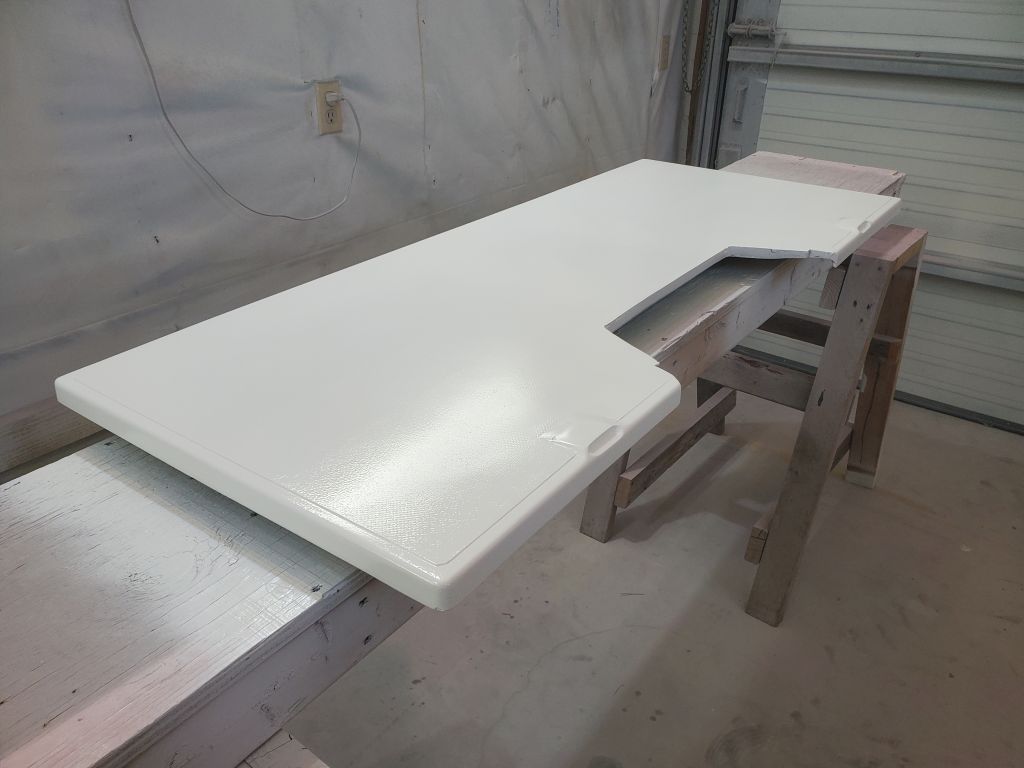
I sanded the skim coat of epoxy on the livewell hatch nonskid field, working through the grits and tools to bring this to its final stage of pre-primer readiness at 120 grit.  The edges of the hatch would require sanding and prep later.
I lightly sanded the primer I’d applied to the repair work on the undersides of the livewell and fuel tank hatches, then masked as needed and applied a coat of Bilgekote to these areas.

At the helm console, I made three simple templates to prepare for new black cosmetic panels that would cover the existing console and its myriad old holes and improve appearance.  Keeping 1/4″ in from the edges in each case, I used plywood strips and hot glue to template each of the three facets of the console.  At the top section, which featured a curved area originally intended, one supposes, to house the compass (originally the compass was not installed in this area, however), I used a piece of paper registered to the plywood template to make a rubbing of the shape that I could later use to create an appropriate curved panel.

With the templates complete, I prepared the panel for simple patch work by masking over the holes from beneath, and around on the top surface.  I planned to fill these with a strengthened epoxy mixture later, just to provide a flat and sound surface going forward and to allow for appropriate new openings to be cut as needed; there was no structural need to fill the old holes and I didn’t plan on making “structural” repairs, though the epoxy would be strong once installed.

Holby 38

I started the day with a light sanding of all the new tabbing and related work in the outboard well.

After cleaning up and final preparations, I applied a coat of epoxy fairing filler as needed over the entire area, working to fill the weave of the cloth (and existing laminate on the back side of the bulkhead) and begin to smooth in the various transitions between tabbing and adjacent areas.

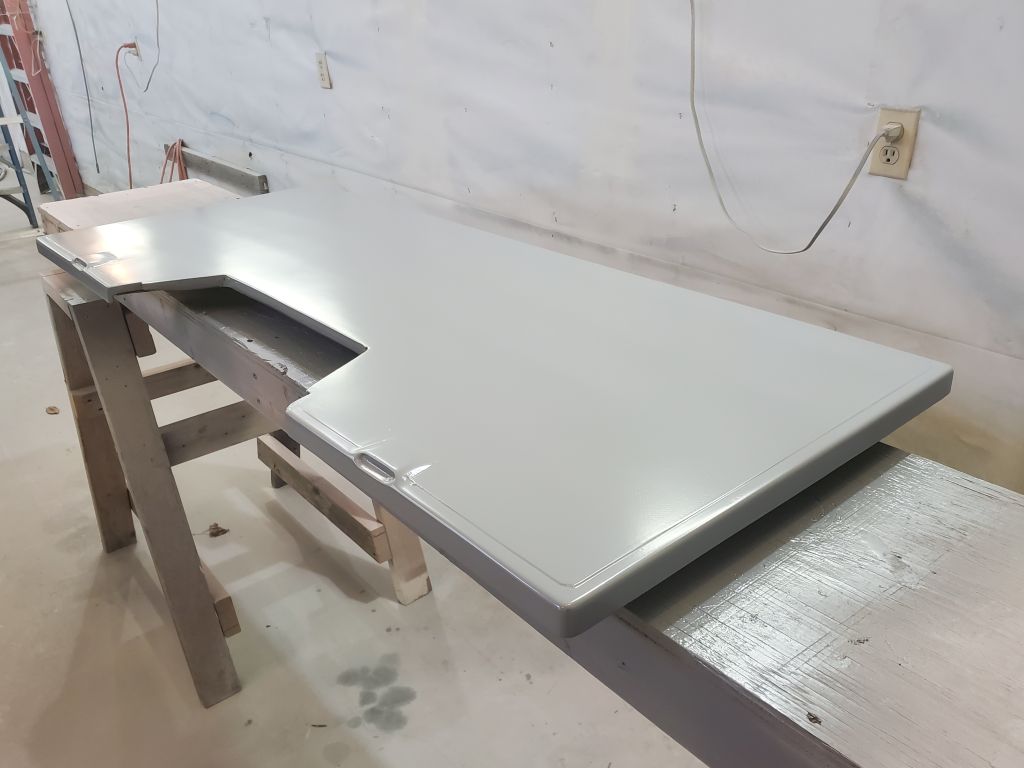
The livewell hatch was a little rough looking on its visible side, with wear and stains and a minor boo-boo or two from the recoring work, so after consultation with the owner we decided that it made sense to repaint this hatch along with the new work at the outboard well and stern of the boat.  So to prepare, I first drilled a pilot hole through the center of the currently-filled latch location, so I could easily relocate it later, then lightly sanded the nonskid surface, stopping well short of attempting to remove the molded pattern as I decided to leave the raised nonskid area in keeping with the surrounding deck surfaces; I sanded only to prepare for skim-coating and filling the existing pattern, which I did next after masking off the area.  I removed the tape immediately thereafter to maintain the sharp edge around the existing raised nonskid area.

To prepare the undersides of both hatch covers for painting, I applied a coat of two-part epoxy primer to the repairs I’d completed, which would ensure the final coating would cure properly over the fresh epoxy.

In other works, I addressed the existing vinyl rubrail surrounding the boat, which was scuffed and stained from use.

Earlier, I’d determined in a test area that the rail would clean up easily with solvent, so now I cleaned the entire rail accordingly.

Thuth endeth the day.

Holby 37

I prepared the outboard well and bulkhead for the next steps, removing the glue blocks, water-washing the epoxy, and lightly sanding the pre-fillets as needed.  Afterwards, I laid out and measured or cut fiberglass tabbing for all areas as required.

With that done, I applied new, larger, final fillets to both sides of the bulkhead and around the perimeter of the well deck.  I left the epoxy to partially cure while I finished up cutting the tabbing as needed.

Once the epoxy fillets had cured past the mushy state, I wet out and installed the tabbing, starting at the forward end, from the cockpit.  Here, I only used a single layer at the edges where the bulkhead met the existing structure, to avoid excess fairing in the most visible cosmetic area; the aft-facing side of the bulkhead is where all the actual structure, in the form of extra fiberglass, would be.  Around the forward three sides of the bulkhead, I applied no fiberglass as there wasn’t enough room on the narrow ledge to make it worthwhile; again, the structural component would be on the back side.  I installed two layers over the opening that had once held a handhold for the original engine box.

On the other side, I applied two layers of tabbing to all the seams and around the aft edge of the outboard deck, securing the bulkhead assembly and the deck to each other and to the adjacent areas of the boat as applicable.  This entire structure would also greatly reinforce the transom against its new-found outboard-related stresses.   I left the new fiberglass to fully cure; later I’d fair in all this new work to create a cosmetically-pleasing well.

Holby 36

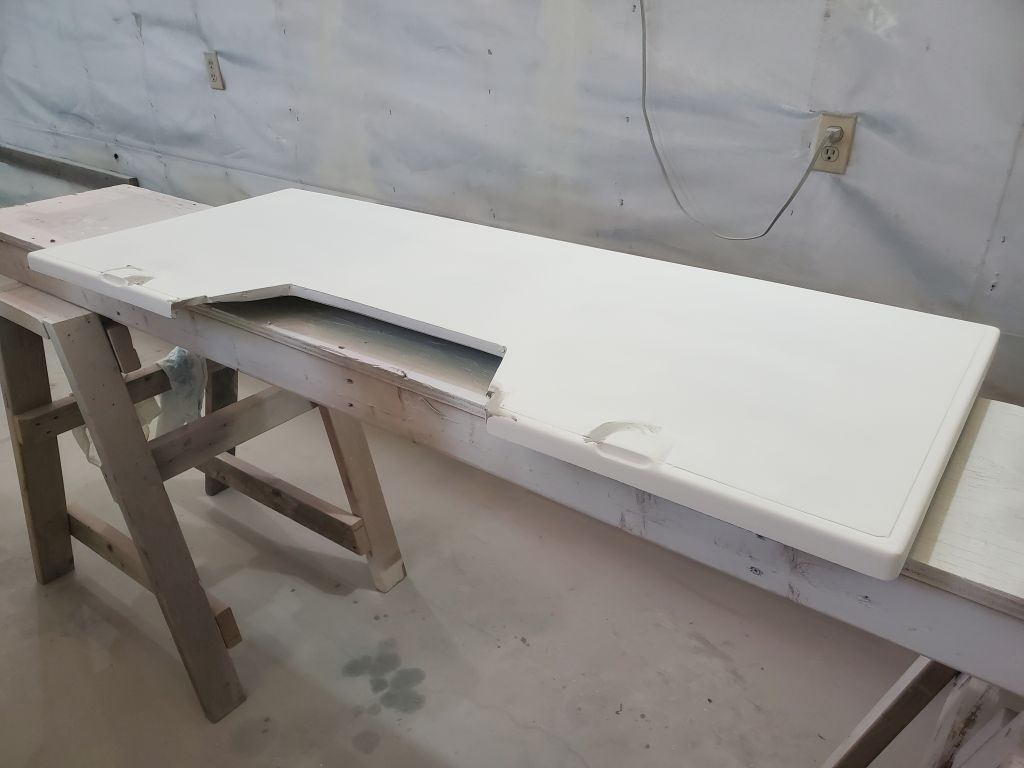
Before moving forward with installing the repurposed engine box/splashwell bulkhead, I checked the fit of the lazarette hatch, which was originally cut out to fit around the engine room opening.  There had been some “custom” notches at the outer reaches of the original cutout that I’d filled with epoxy during my core rebuild, and now I wanted to see if I had to make additional relief cuts for the hatch to fit.  As expected, I did need to cut back these areas a small amount to fit around the molding on which the engine room hatch (now the splashwell bulkhead) rested, and after a couple backs-and-forths, the hatch fit as needed.  I set it aside for now.

There were sizeable gaps between the outboard well deck and the moldings on each side, which I now covered from beneath with tape to provide a basic backing and mold to limit the amount of epoxy required to span the gaps.  These areas would eventually be covered in tabbing.  I solvent-washed all bonding and adjacent areas.  Then, I set the bulkhead in its proper position–it fit naturally best in one place, which happened to be the “right” place–and used small glue blocks to secure the piece from moving during initial installation.

With thickened epoxy, I filled the minimal areas backed by the green tape, and created fillets on both sides and all accessible areas to bond the bulkhead in place, staying away from the glue blocks.  There’d be additional filleting and shaping to come, but for now these formed a basis for future work and would, when cured, secure the bulkhead in place.  I left the epoxy to cure and spent the remainder of the day preparing an order for painting supplies that I’d need in the near future.

Holby 35

Before I could start installing and finishing the new outboard splashwell on the inside of the boat, I wanted to prepare the main bilge (garboard) drain and the splashwell drains.  Using the typical bronze transom-mounted drain fitting, I marked the inside of the boat where the center of the hole should be and, after confirming its position would work on the exterior as well, started drilling from inside a hole large enough for the bronze body of the drain.  With the basic hole placement determined, and a center hole from the pilot, I used a 1/4″ bit to drill all the way through to the outside, where I finished up the hole.  Afterwards, I sealed the inside of the new hole with a thickened epoxy mixture and left it to cure.  The transom is roughly 3″ thick overall, and in this area, which was all-new construction during this project, consisted of various layers of fiberglass, prefab fiberglass, and foam core.

I temporarily installed the outboard well deck, securing it with temporary screws to ensure it was held tightly in place and in the proper position, then made some measurements and reference marks to place the drain openings, one per side near the edges of the deck.  I transferred the marks to the outside of the transom to determine how straight I made the initial pilot holes through the thick transom, with the bottom edges of the 1″ holes flush with the top of the deck.  The pilot holes ended up close to the marks I’d made on the transom, so I continued and drilled out the rest of the holes from there.  Here, in the original transom structure, were two layers of balsa core, with laminate between and on either side, plus the new fiberglass panel and additional laminate on the interior.

These drains would eventually be lined with the usual brass flanged liners, which accept those ubiquitous 1″ rubber plugs if desired.  For now, as with the garboard drain, I treated the insides of the holes–slightly oversized–with a thickened epoxy mixture to seal off the exposed interior structures.

Now I could move on with the installation of the new deck.  After final preparations, I secured the new deck with epoxy adhesive to the fiberglass cleats I’d installed for this purpose, securing it with four temporary screws to hold it tightly.  This step would hold the deck securely once cured, after which I’d finish off the installation with tabbing along with the splashwell bulkhead in the coming days.

The helm console was full of now-obsolete gauges, switches, and riff-raff leftover from past installations.  The owner’s new outboard would come with its own controls and gauges, and the owner had a new GPS plotter we hoped to incorporate into the dash, so for now all the old stuff needed to be removed to clear the way for repairing or covering the console somehow to give it a fresh and clean look for the new installations to come.

I removed everything for now, disposing of the gauges and related wiring but saving the helm, compass, and other things at least for now while we worked out the new plan.

Holby 34

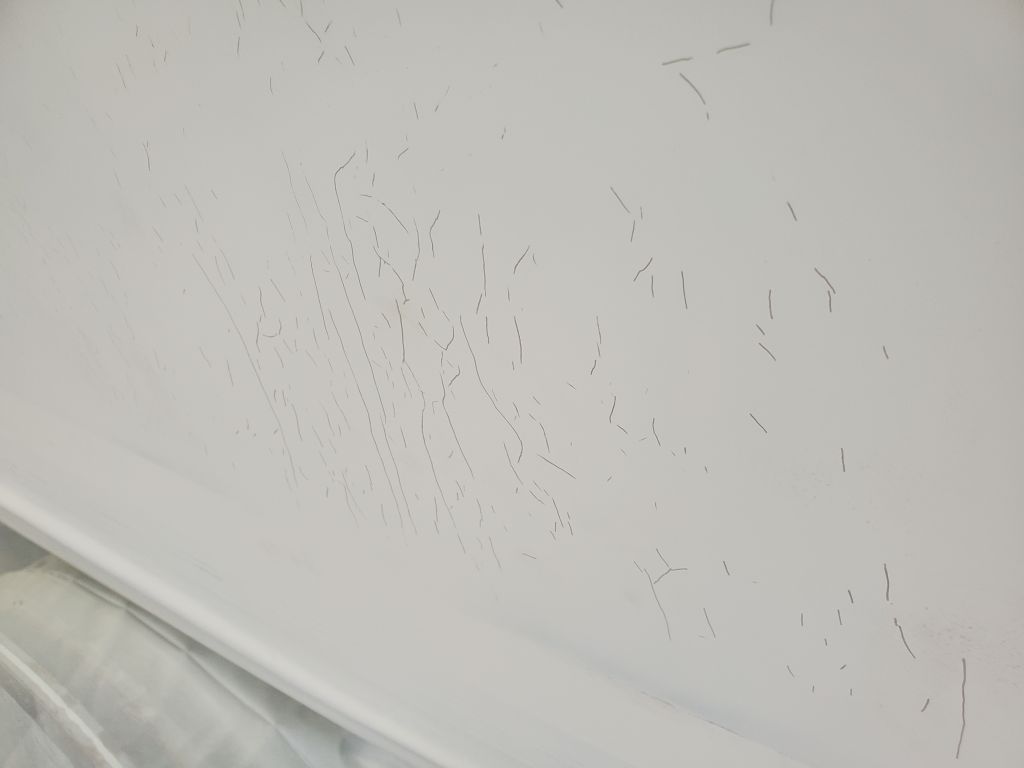
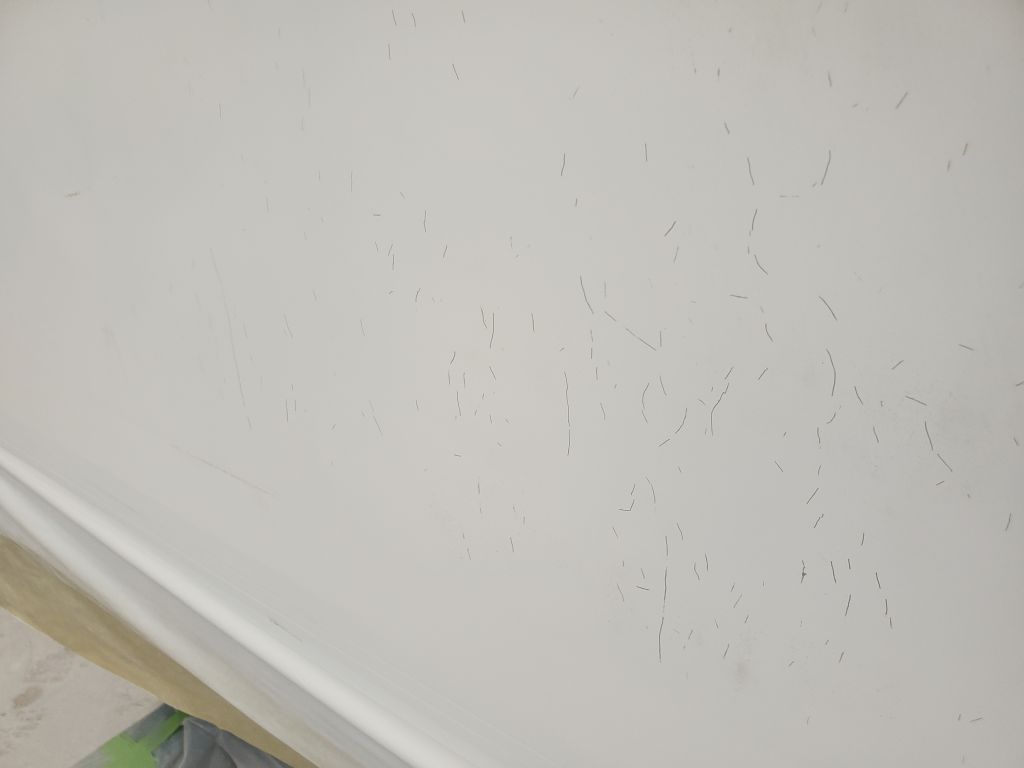
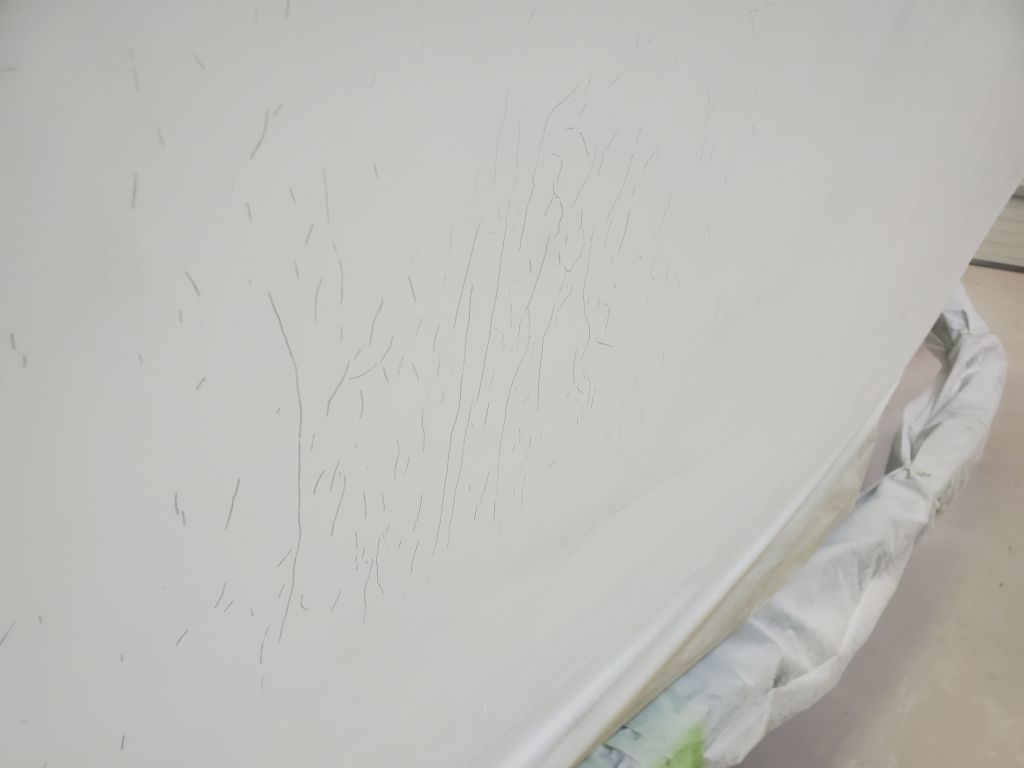
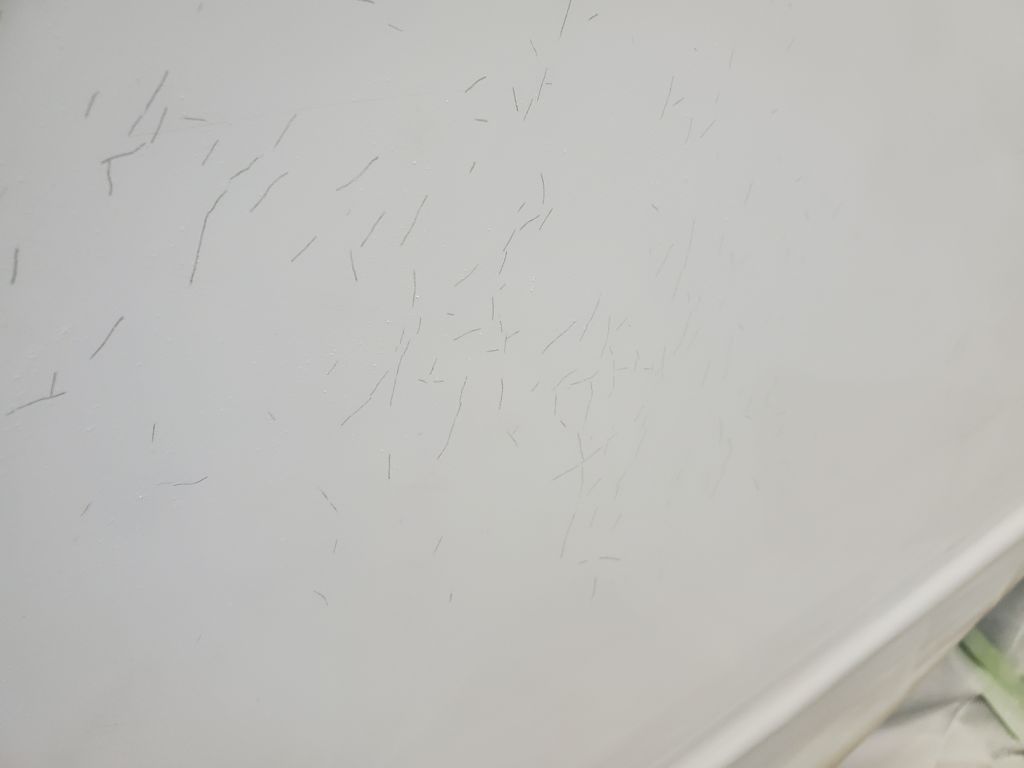
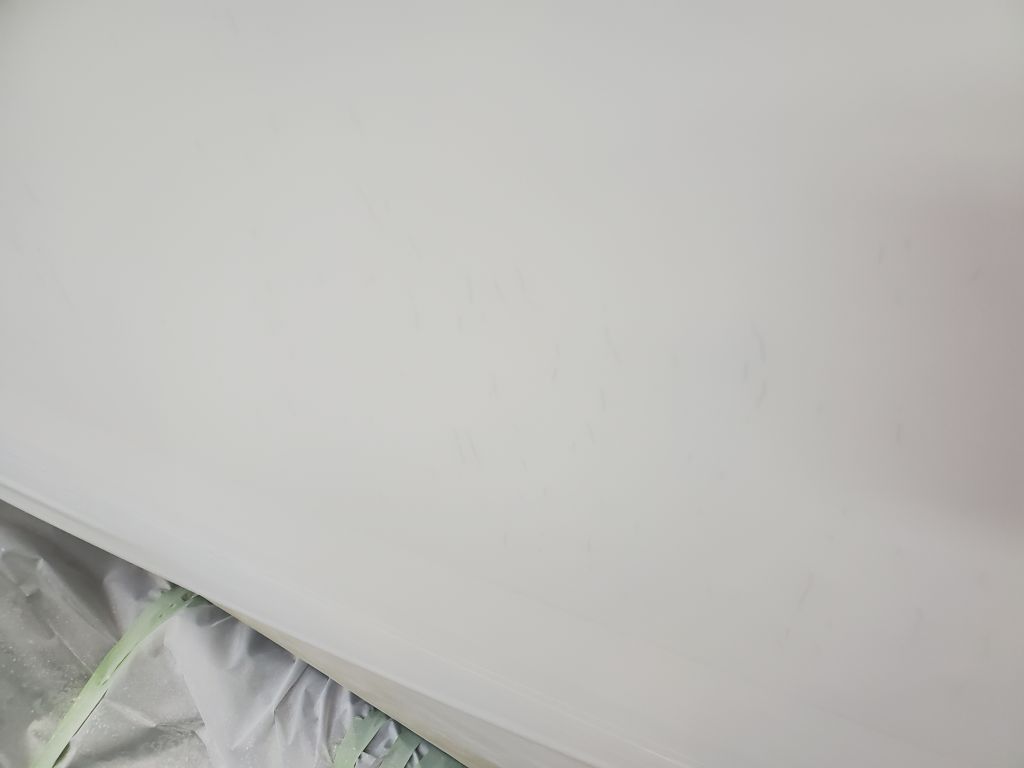
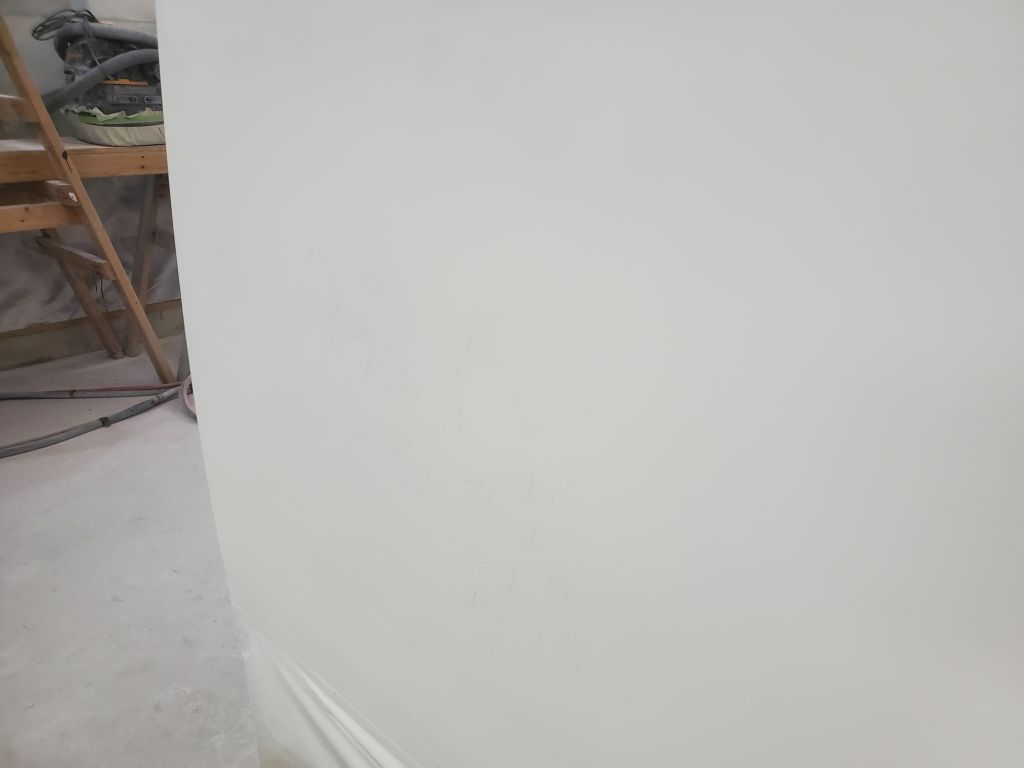
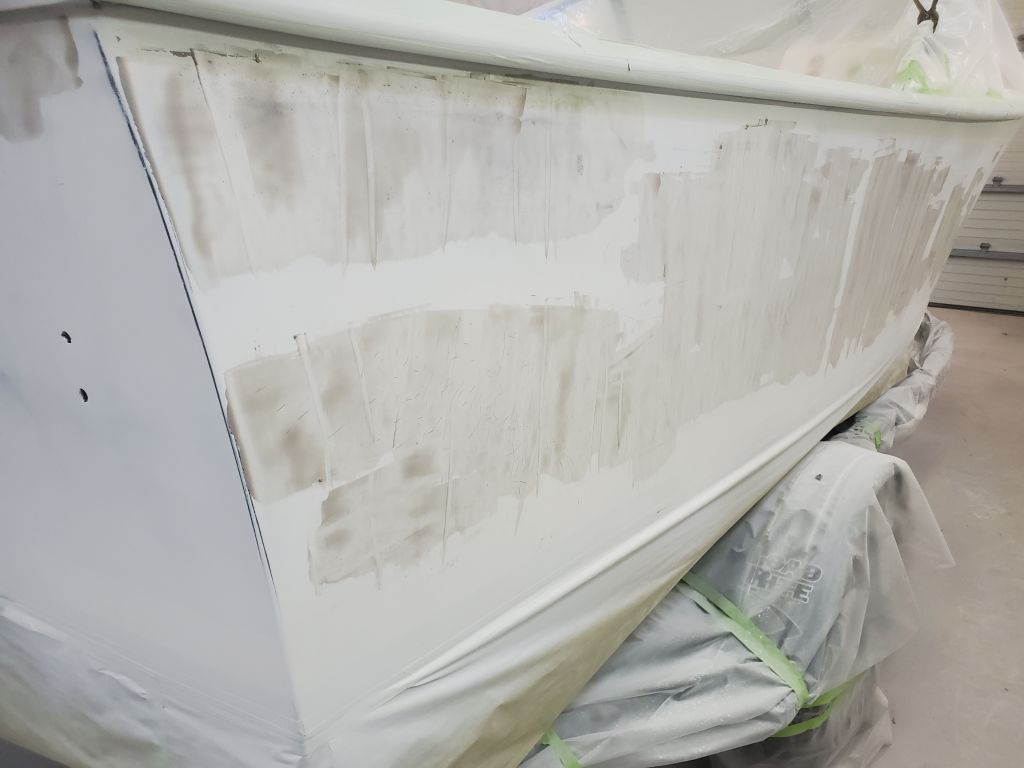
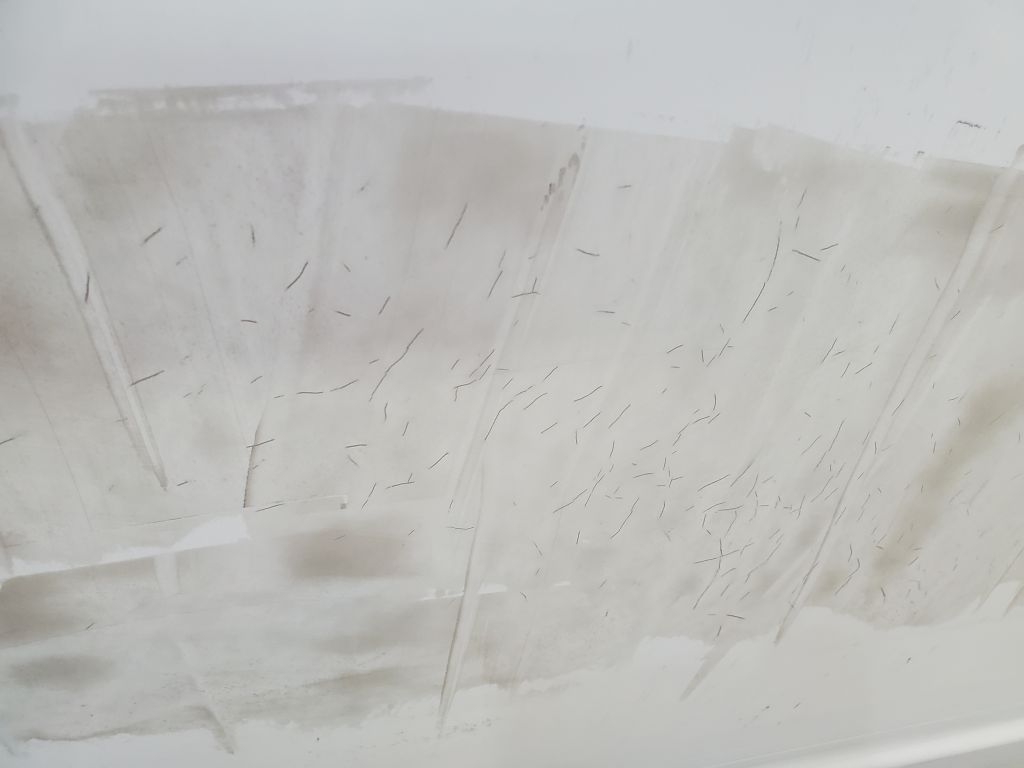
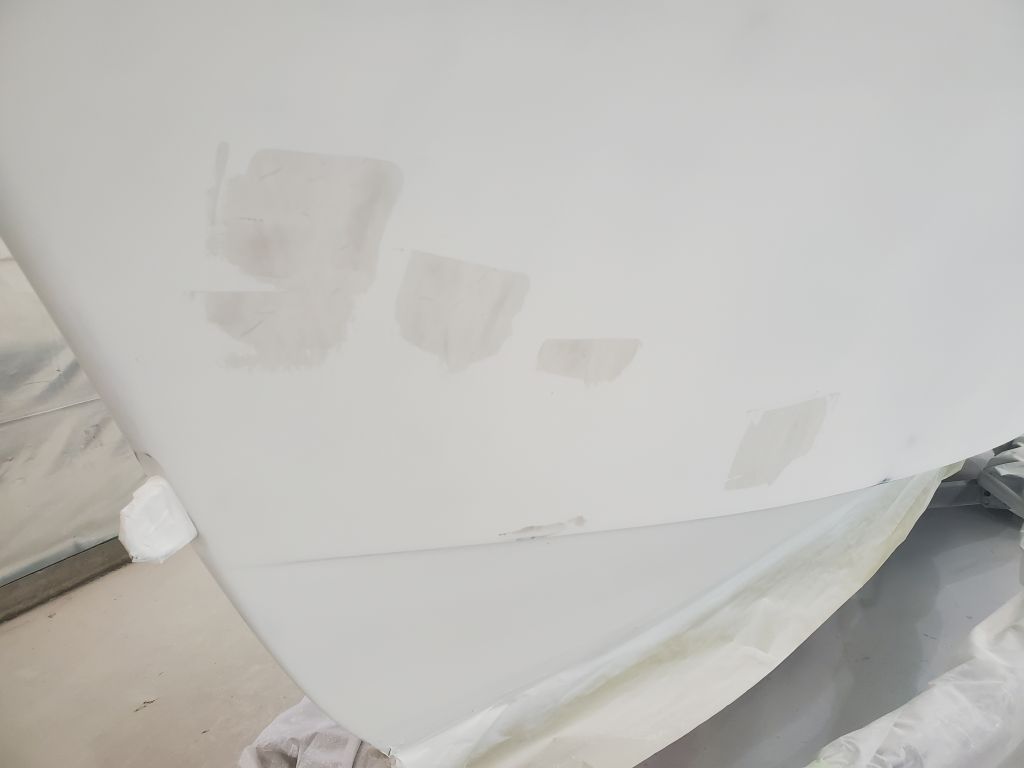
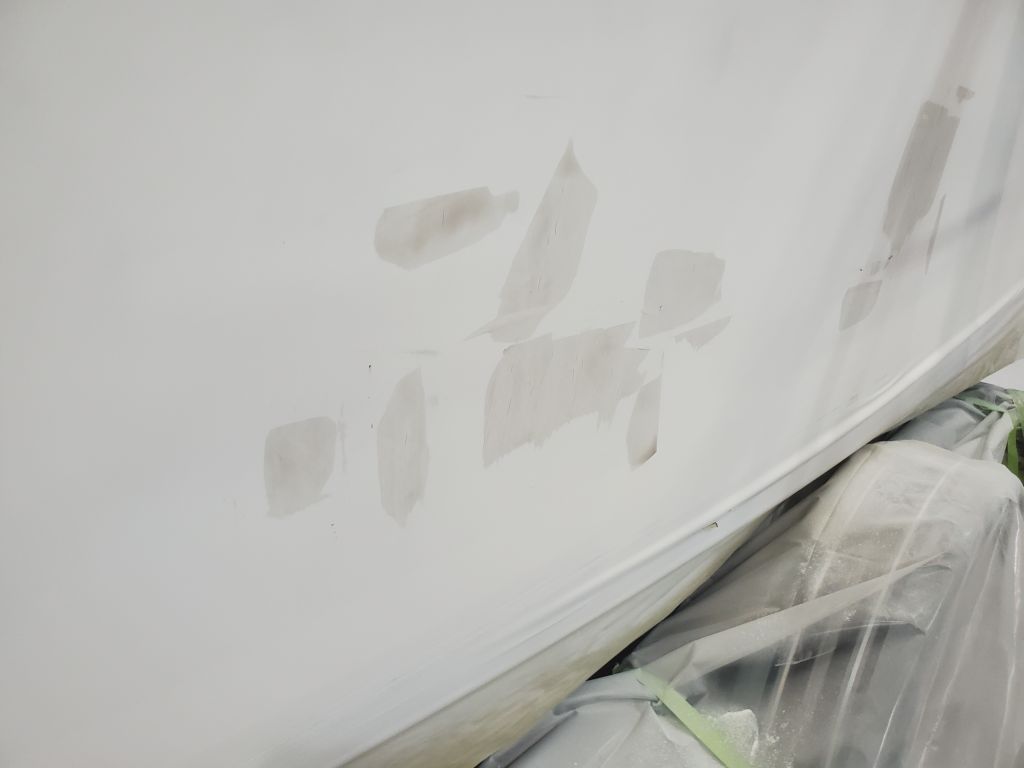
In a short work day, I sanded as needed the minor epoxy repairs on the hull, then sanded the entire hull once more with 120 grit paper on my 6″ sander, the final round of sanding required for now other than some minor detail and touch-up work.

The next focus would be on completing the installation and fairing/finish work on the new outboard splashwell.  I planned to get started on that in a few days, immediately upon my return from some unrelated business over the next few days.

Older posts Newer posts