
(page 123 of 165)

Steadfast 17

< Back to Steadfast

Thursday

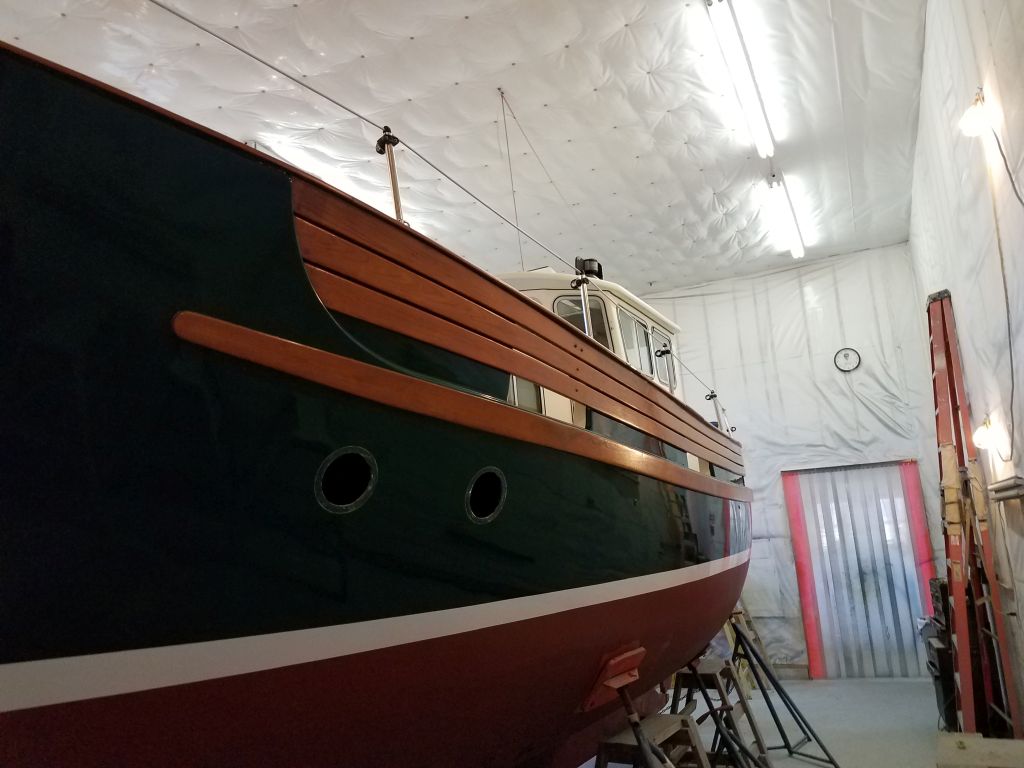
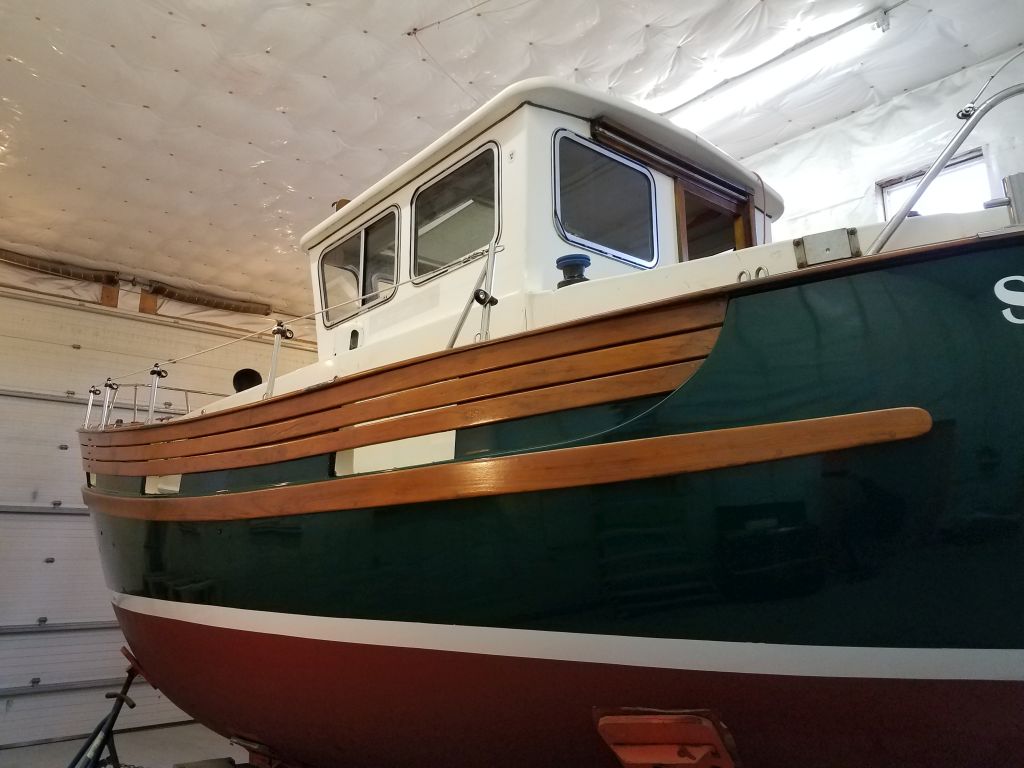
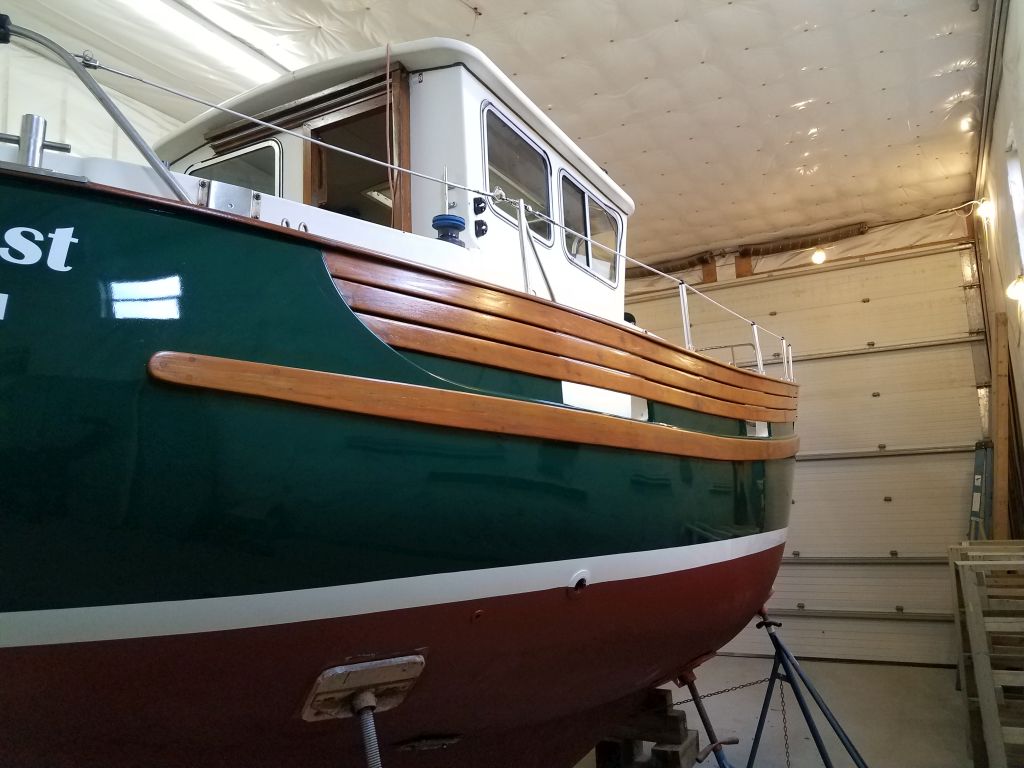
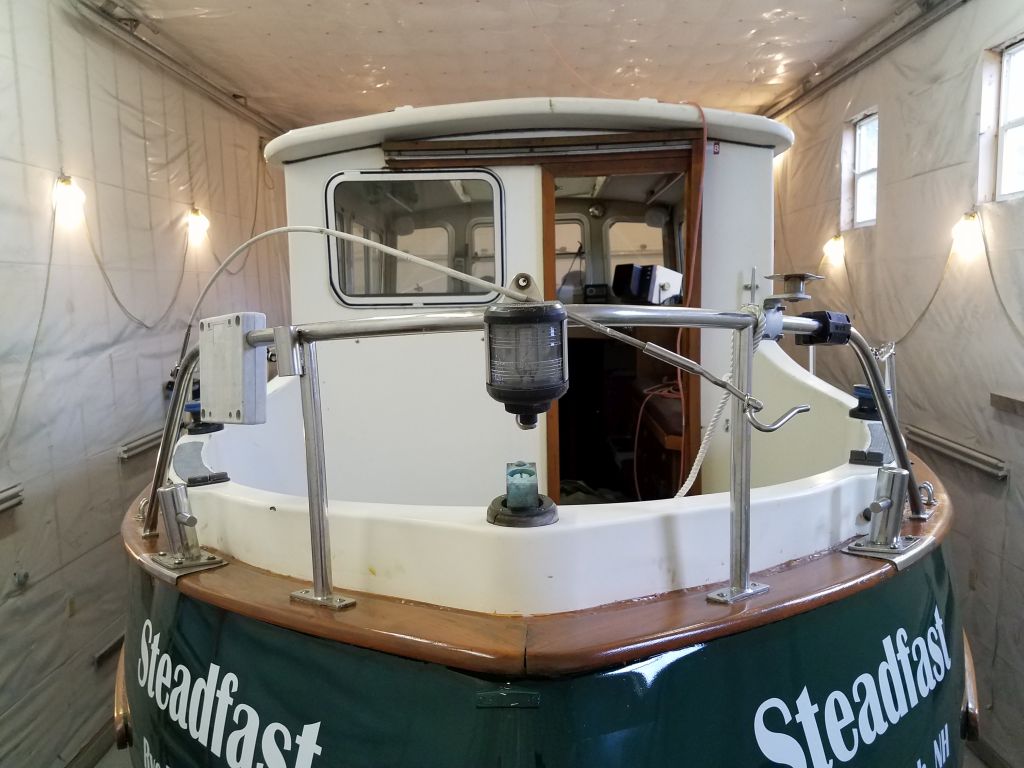
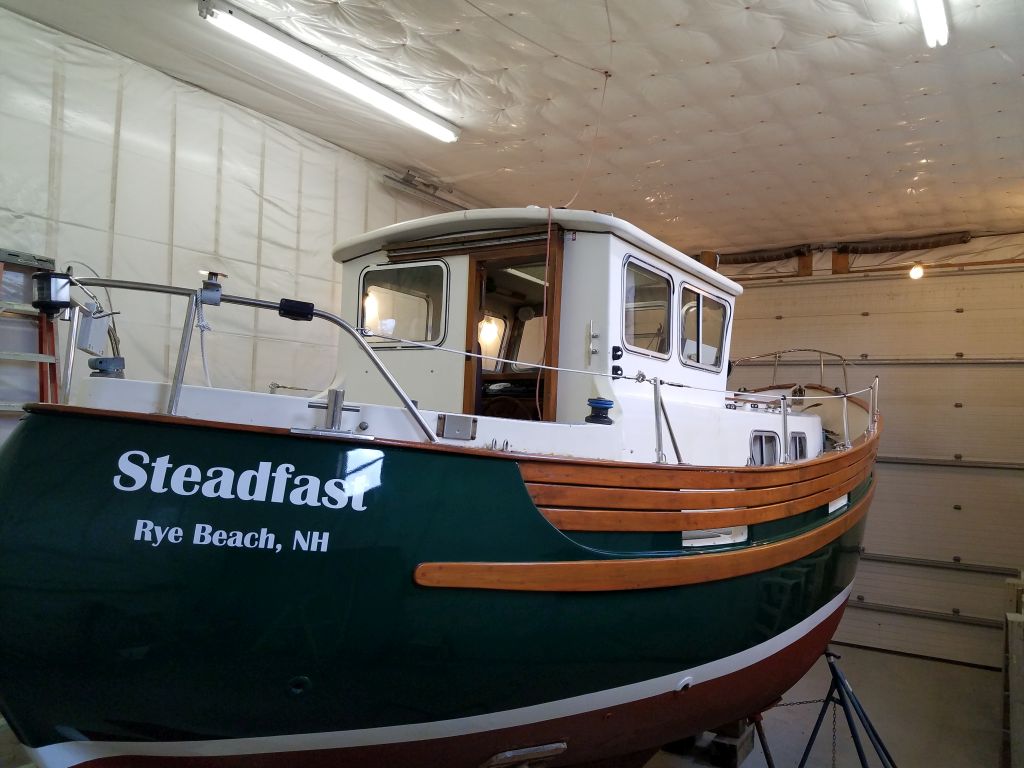
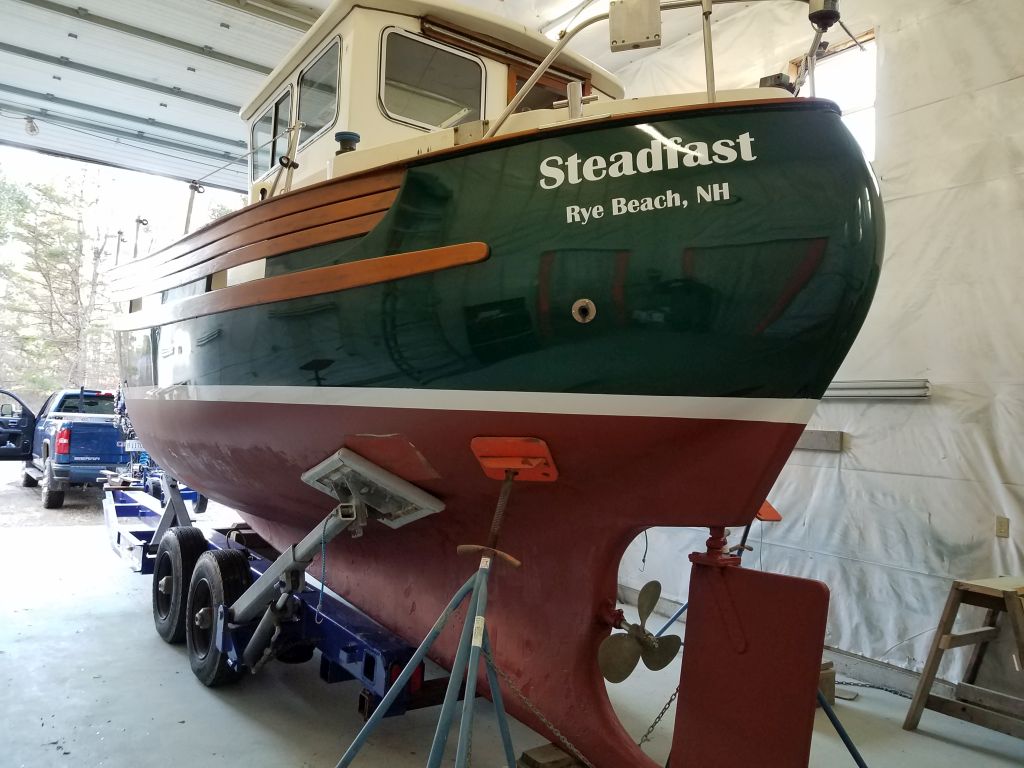
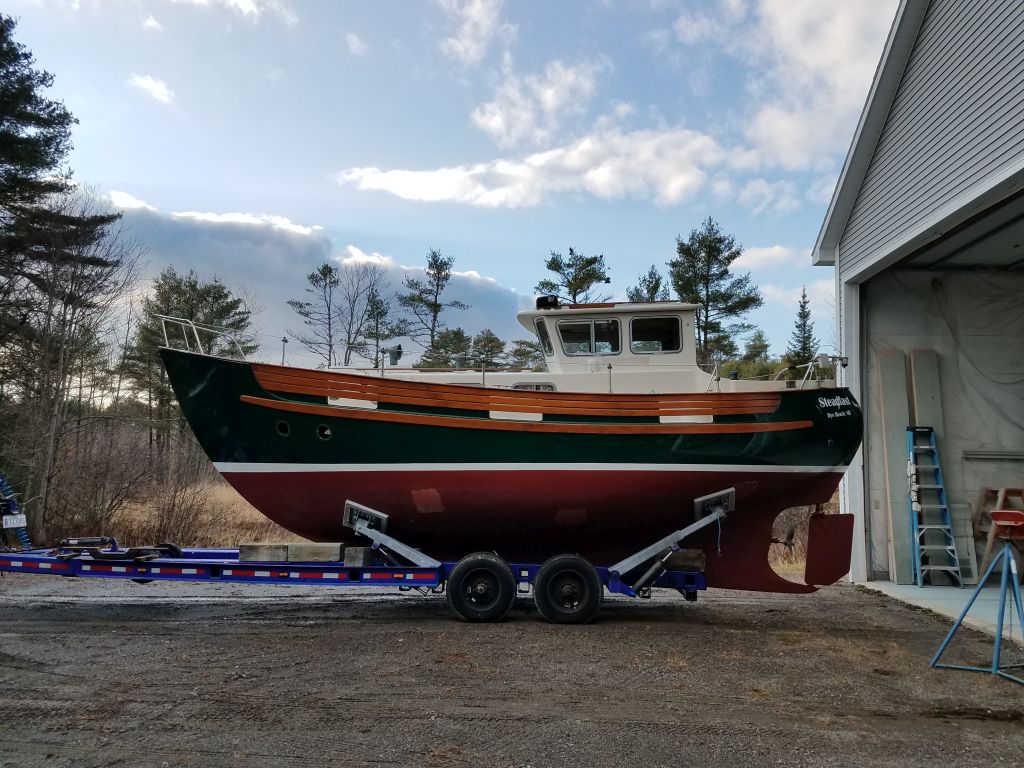
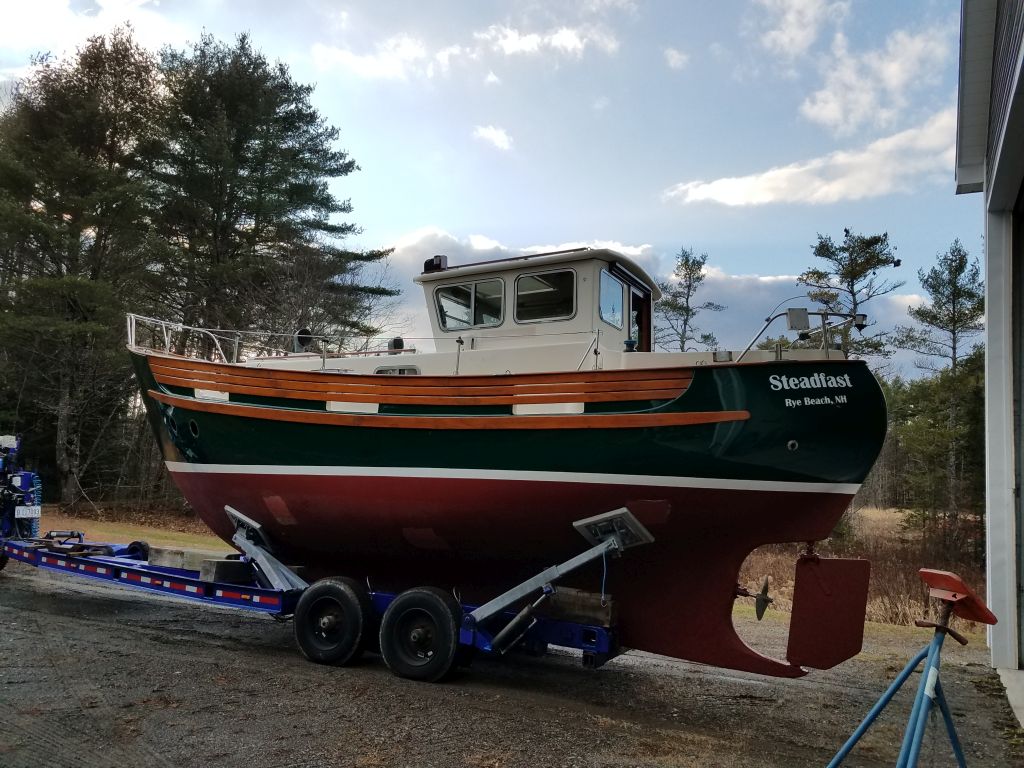
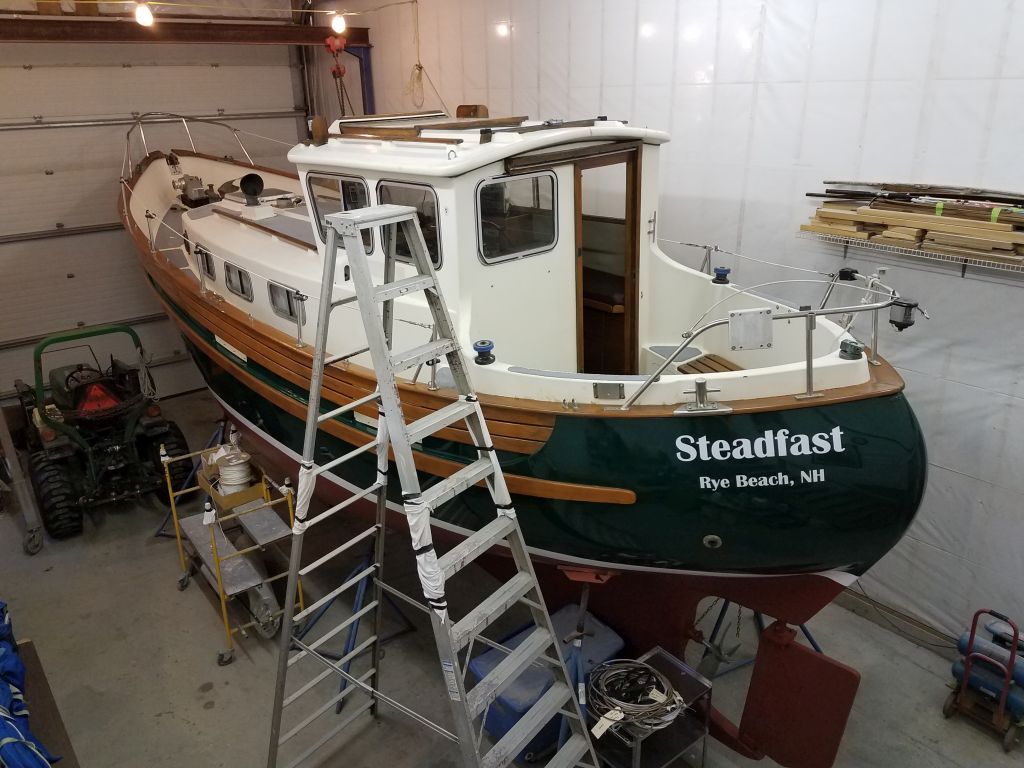
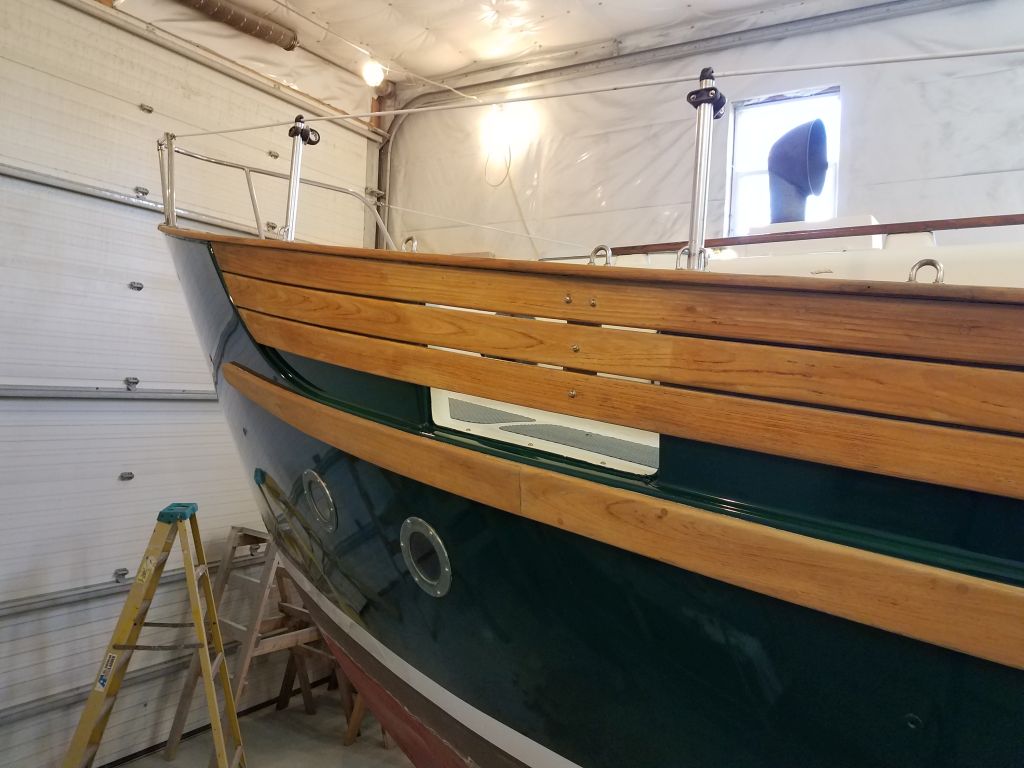
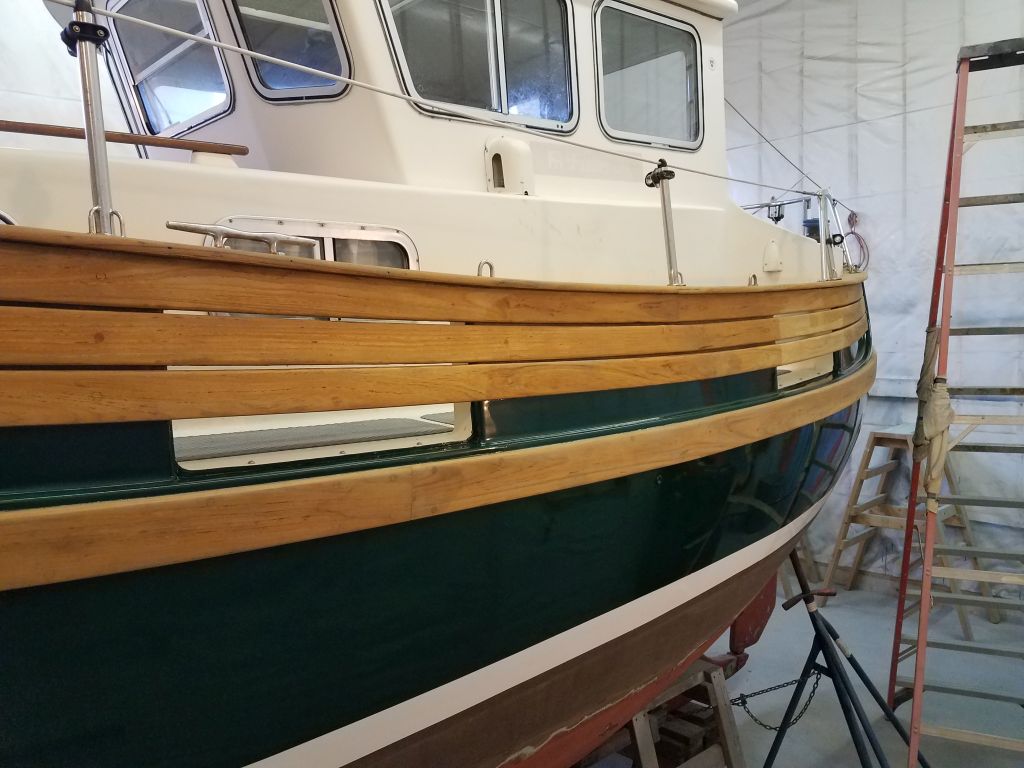
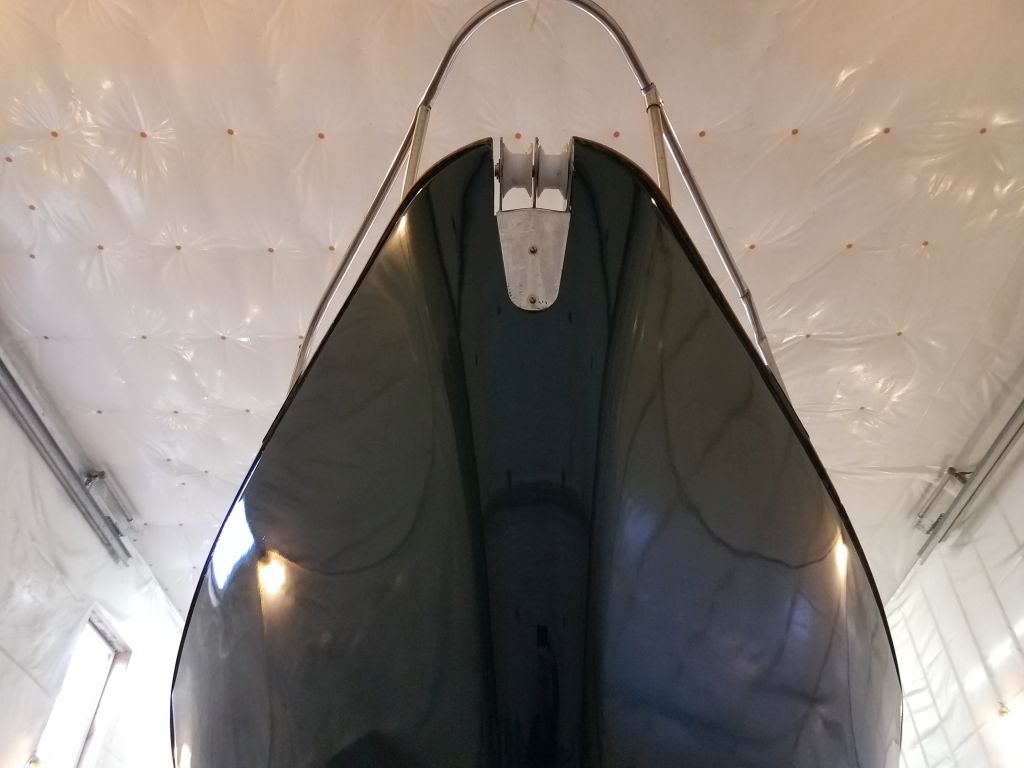
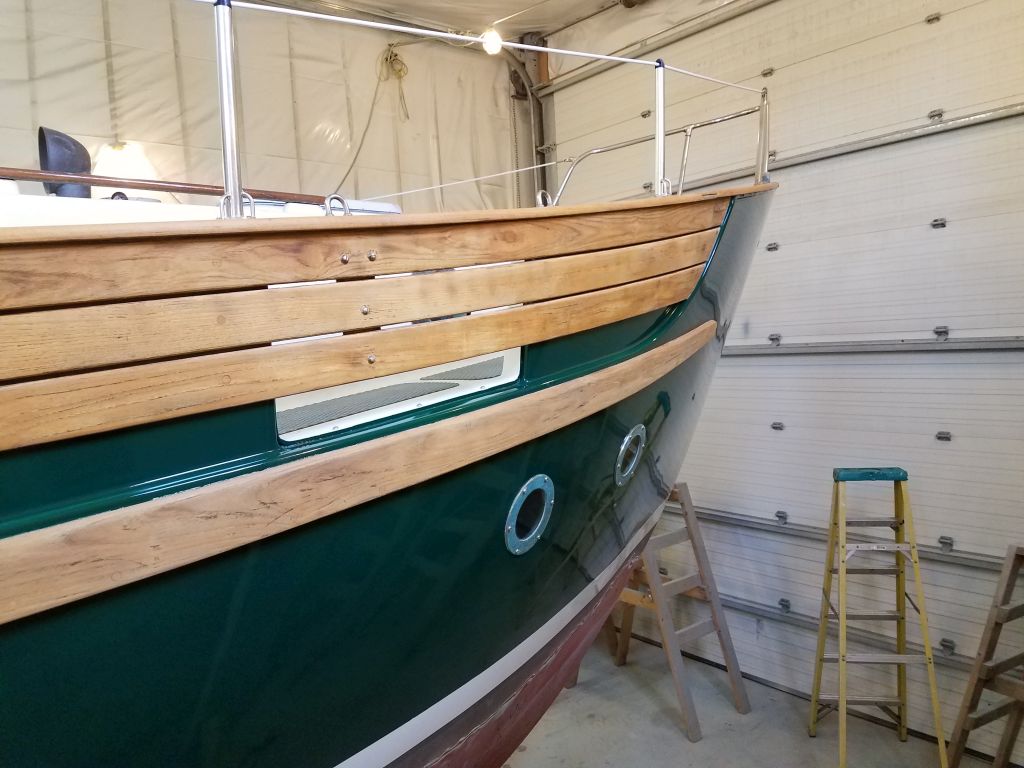
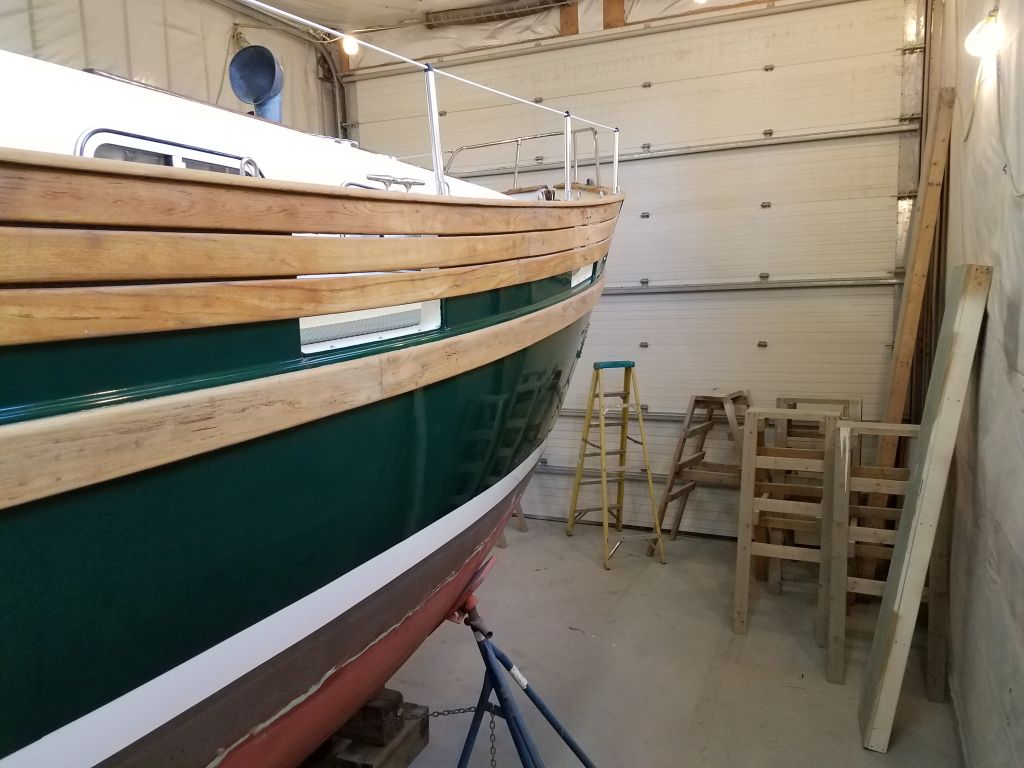
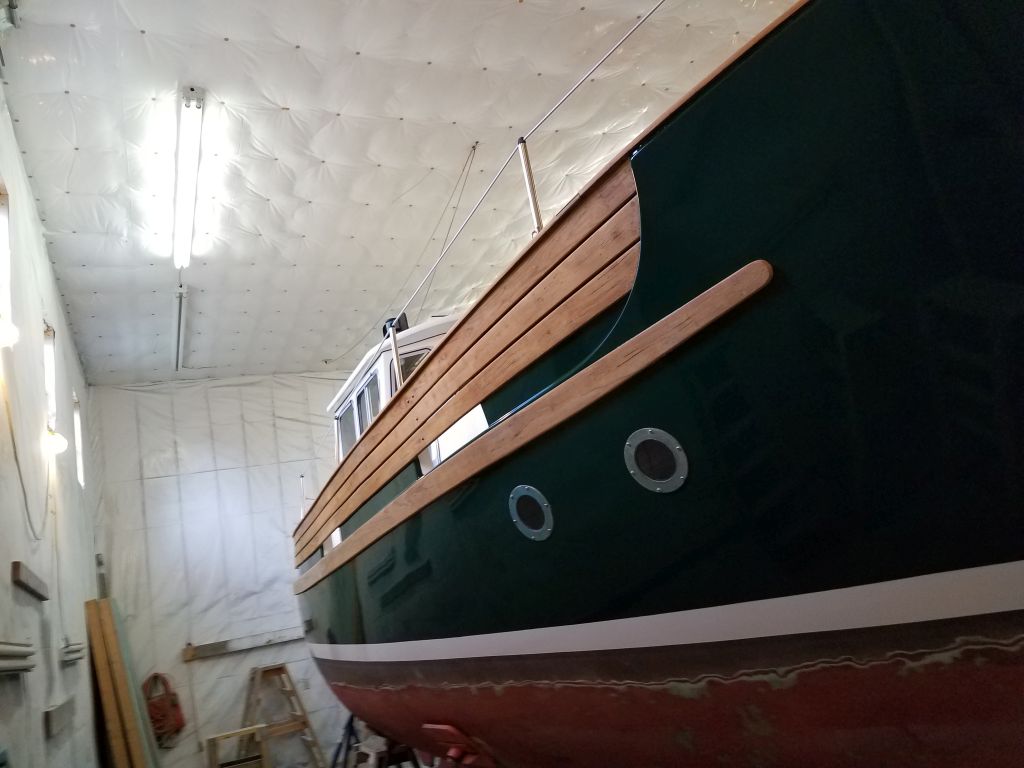
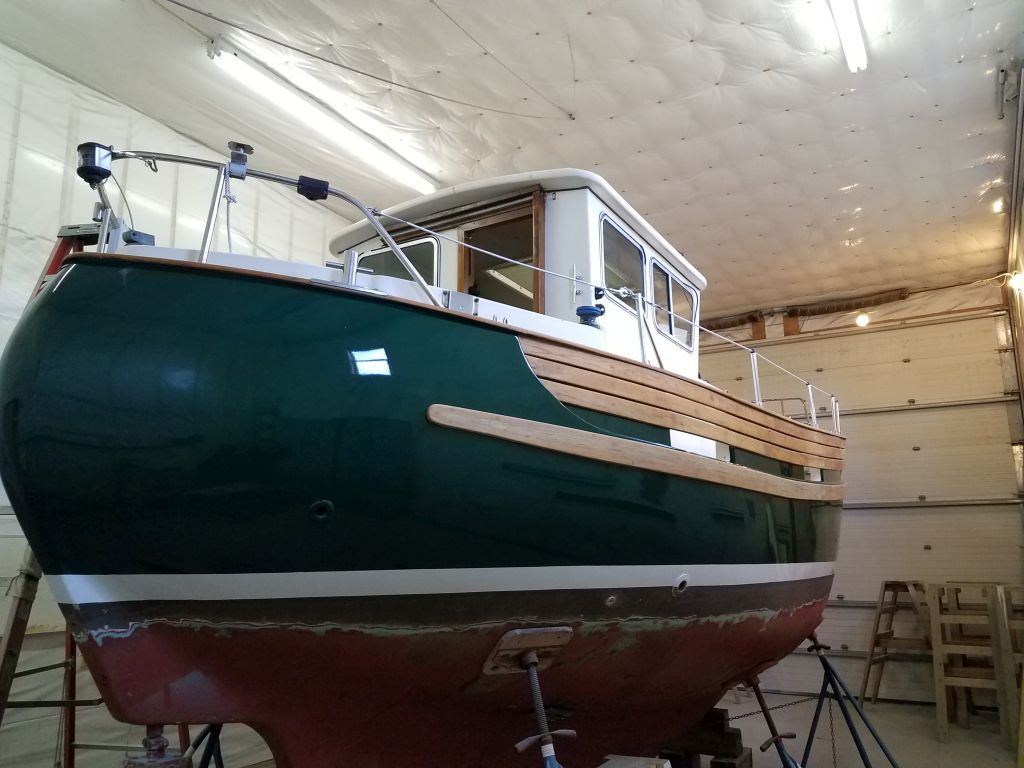
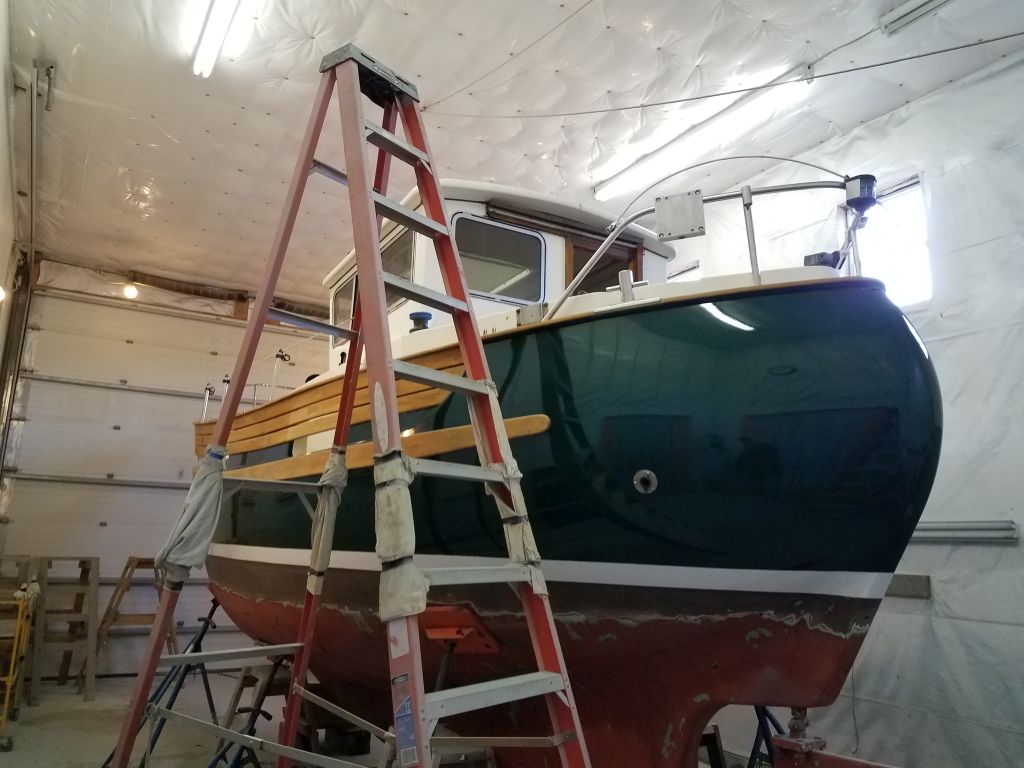
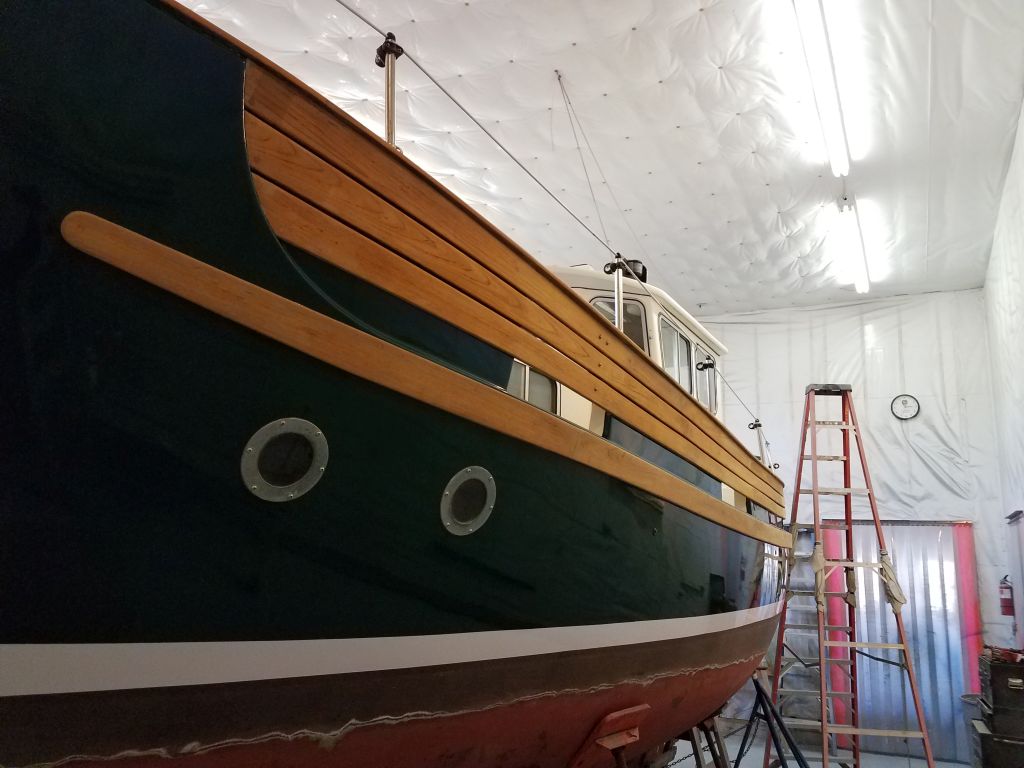
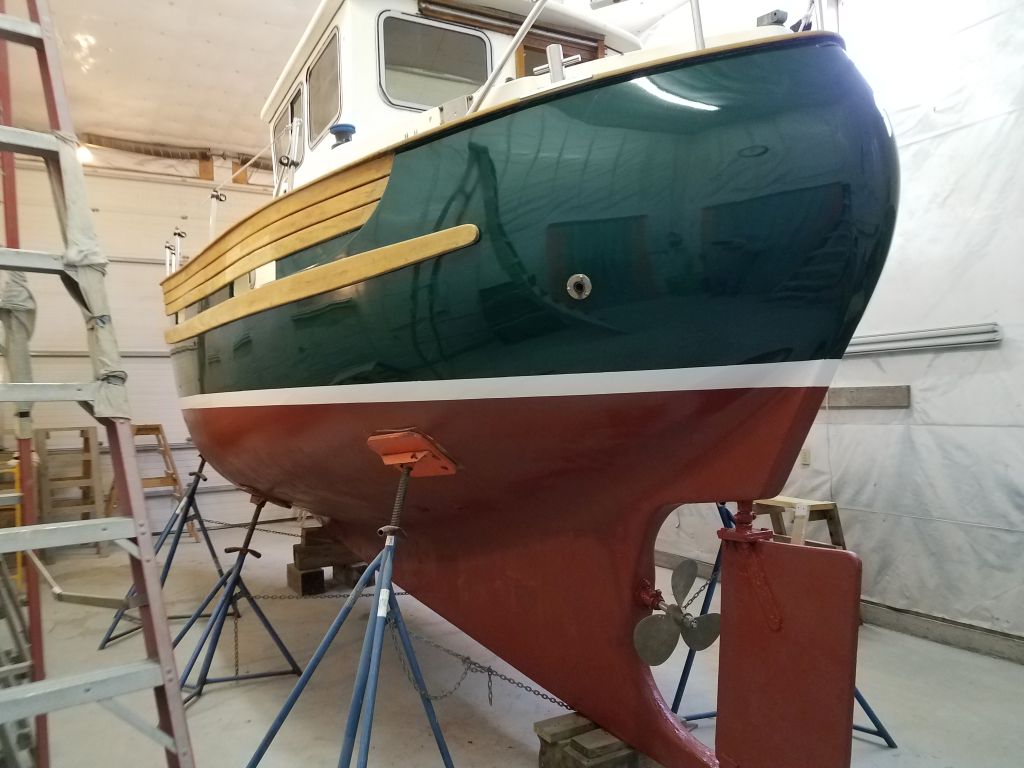
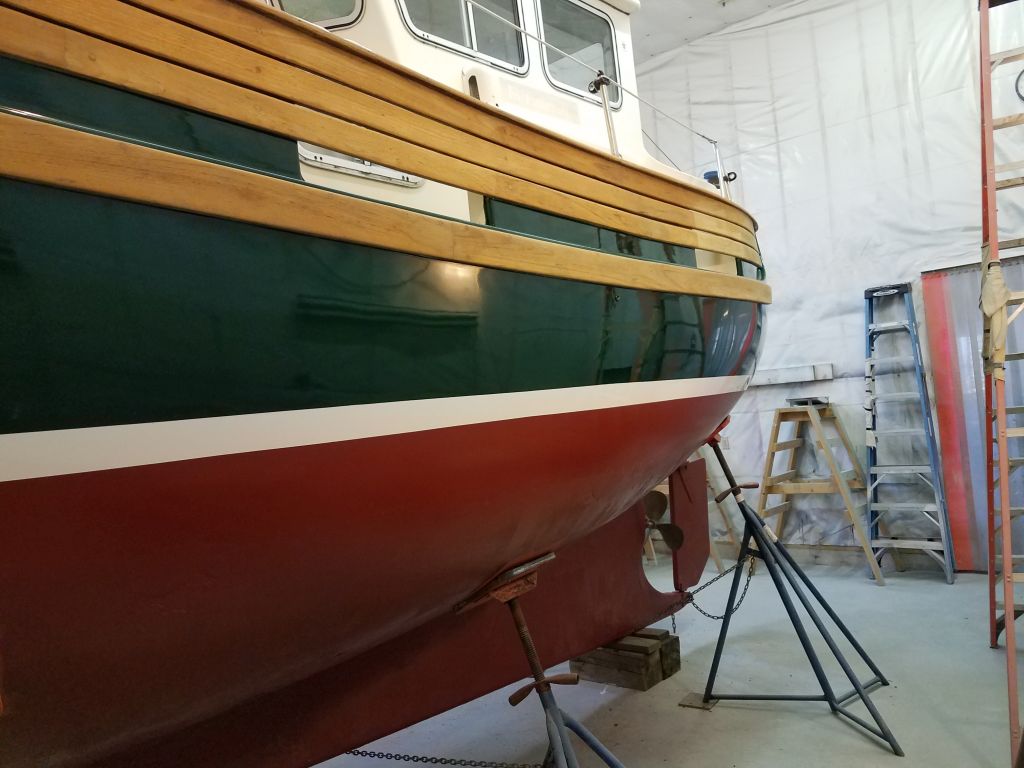
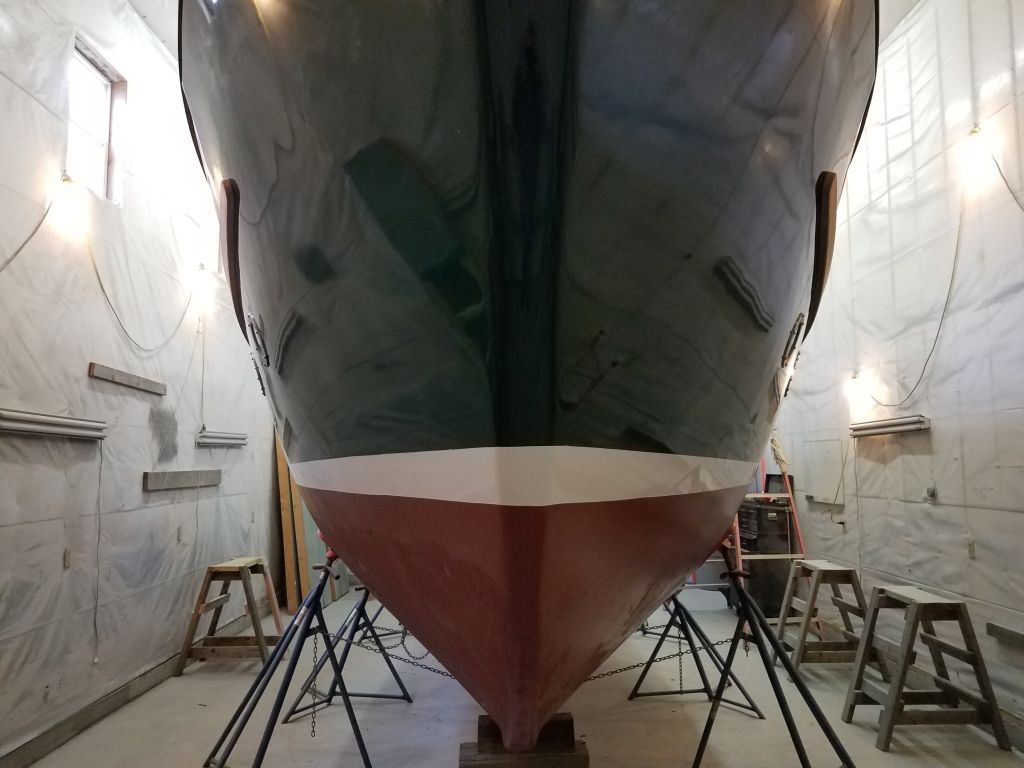
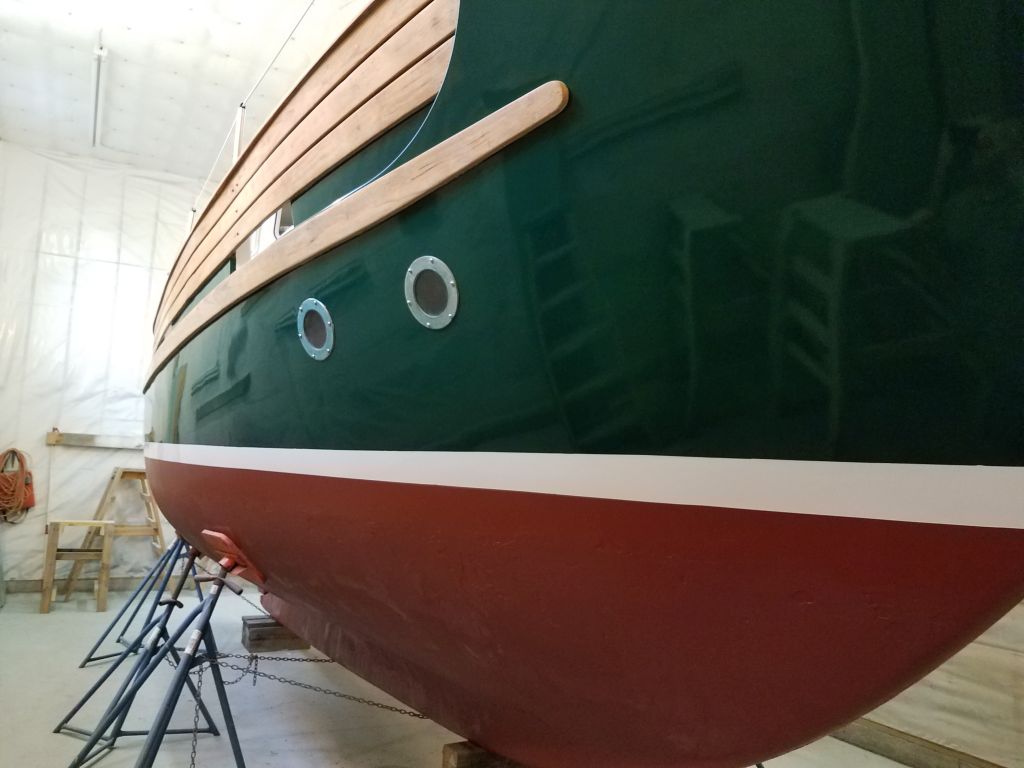
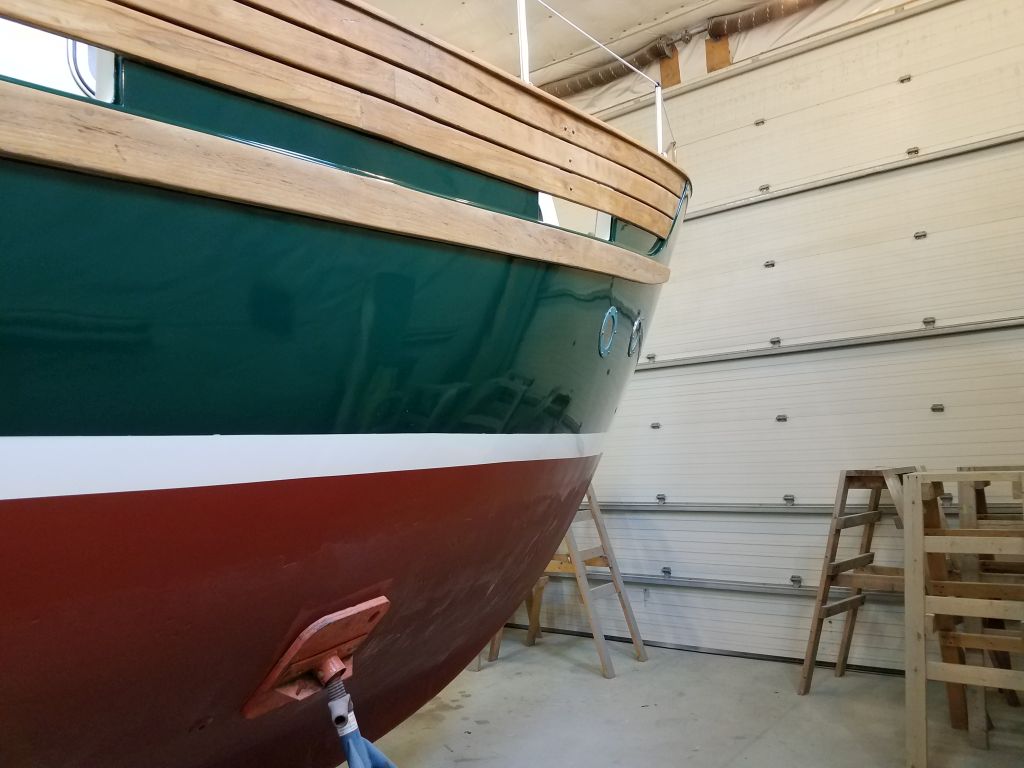
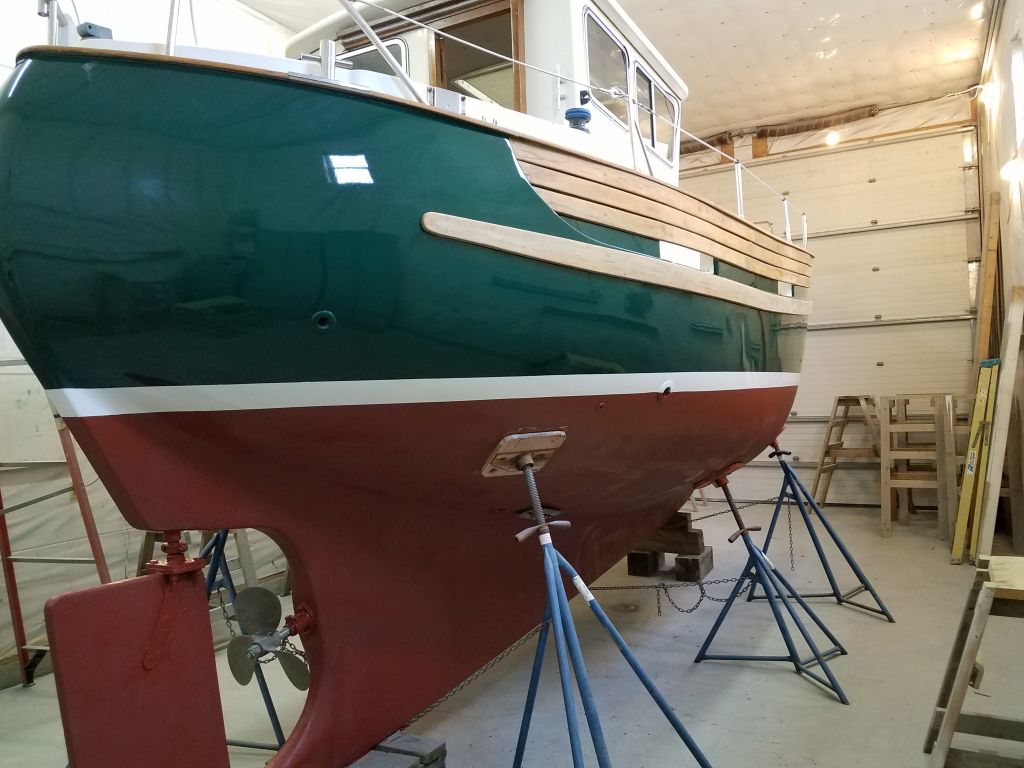
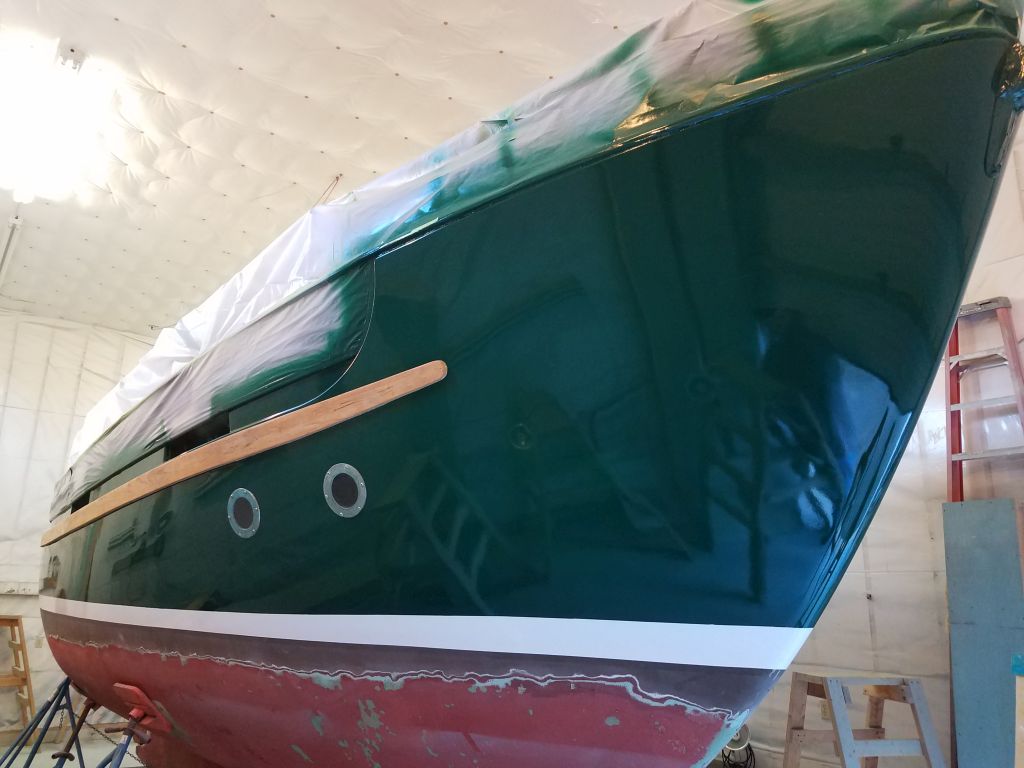
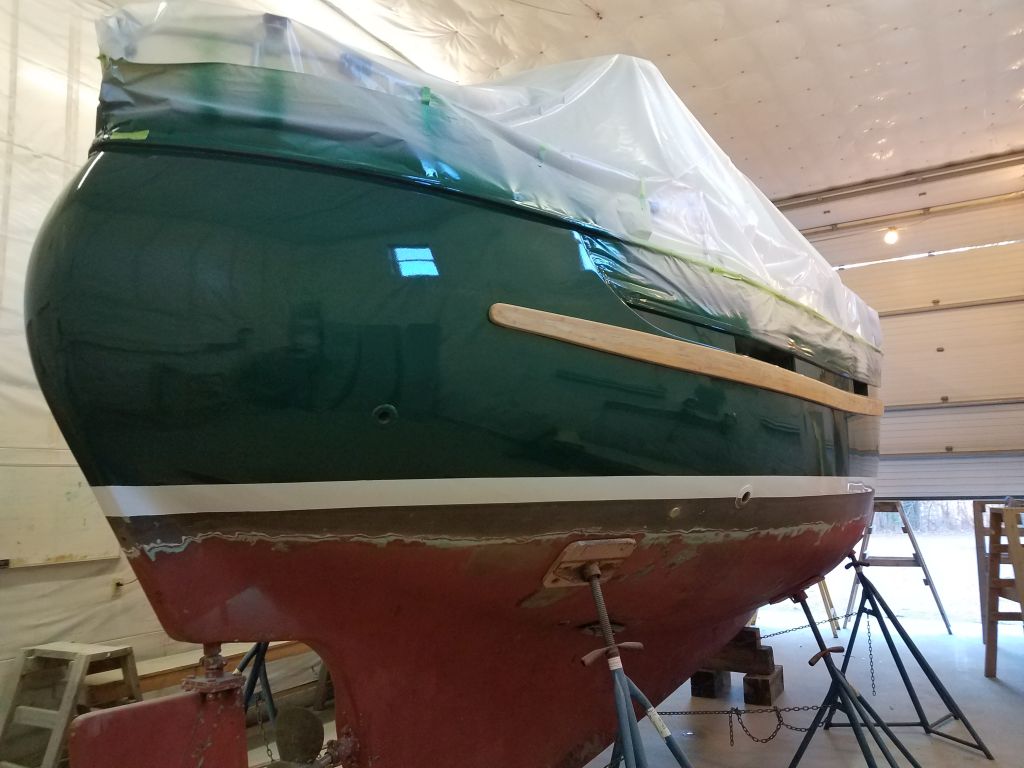
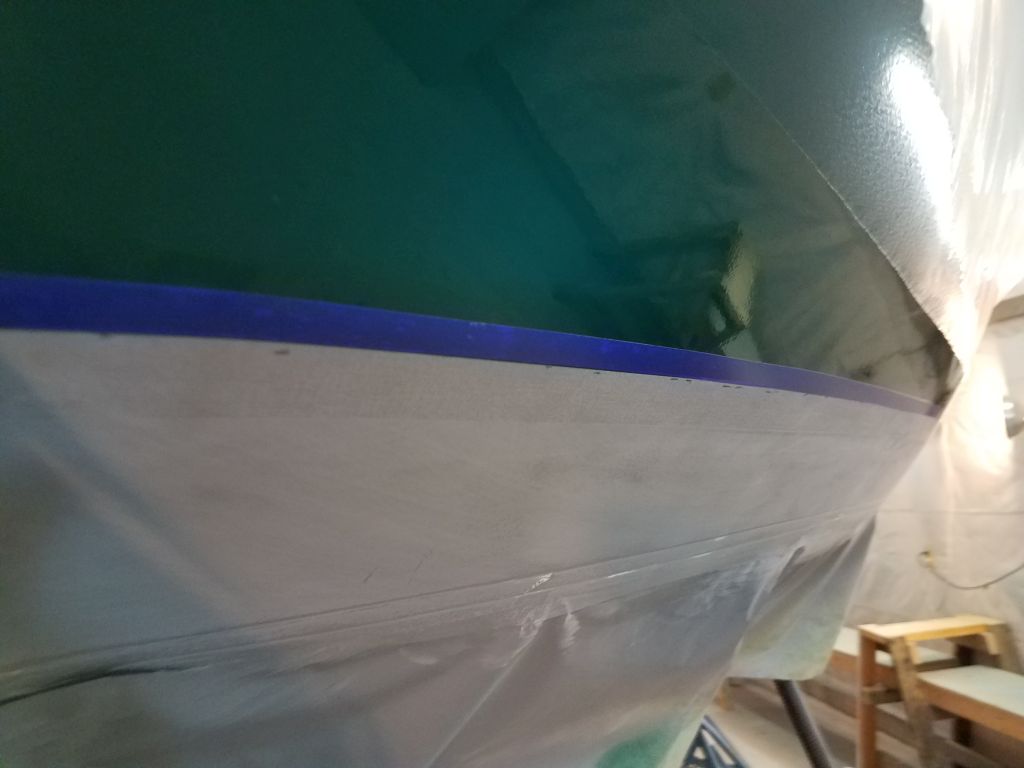
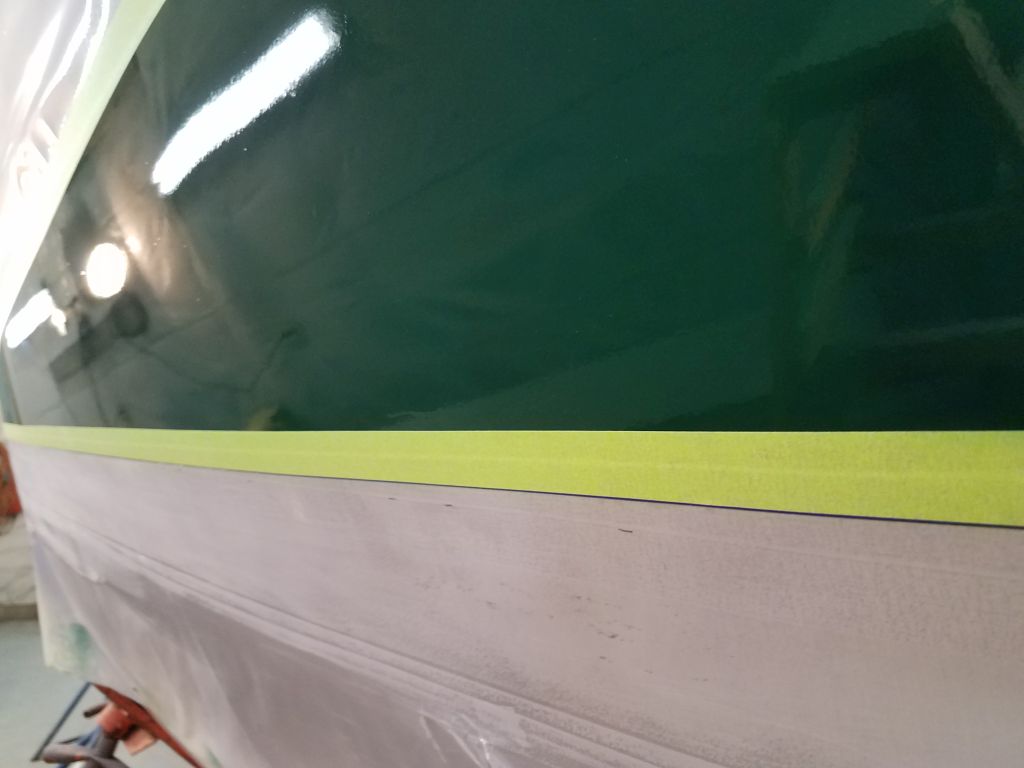
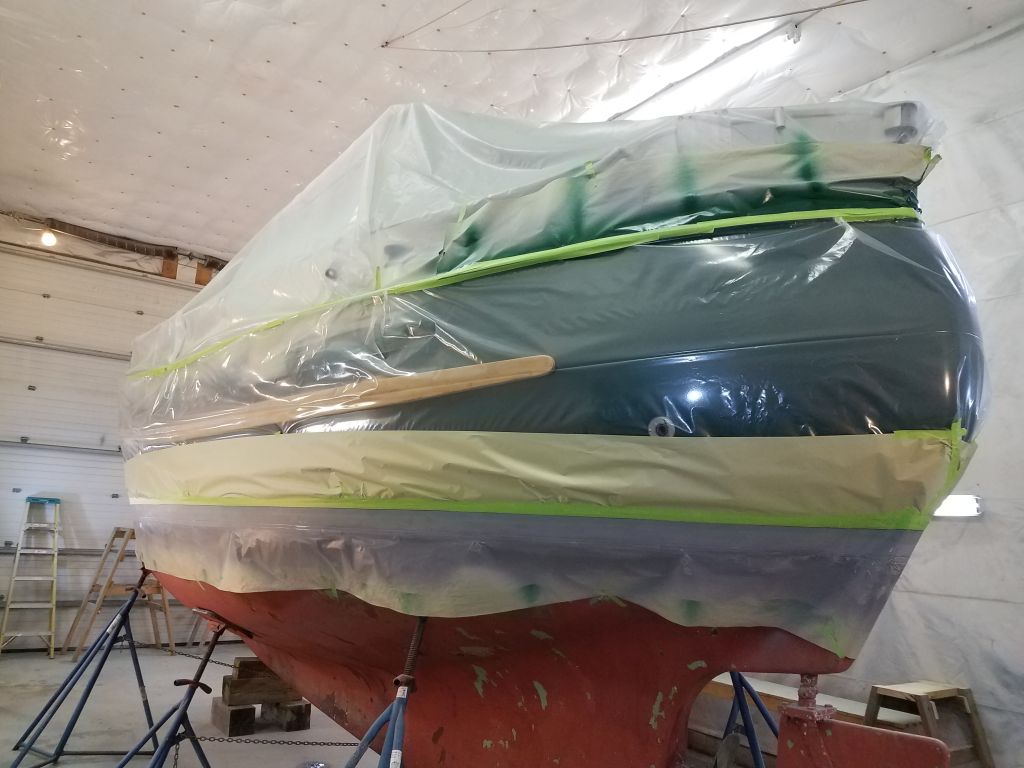
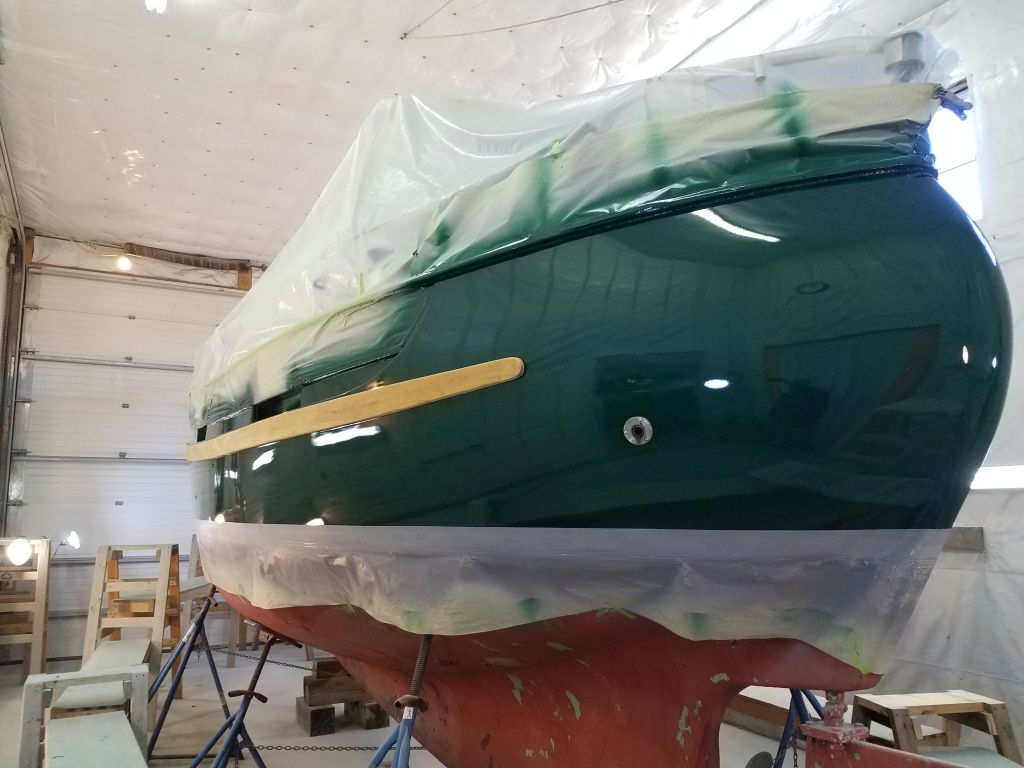
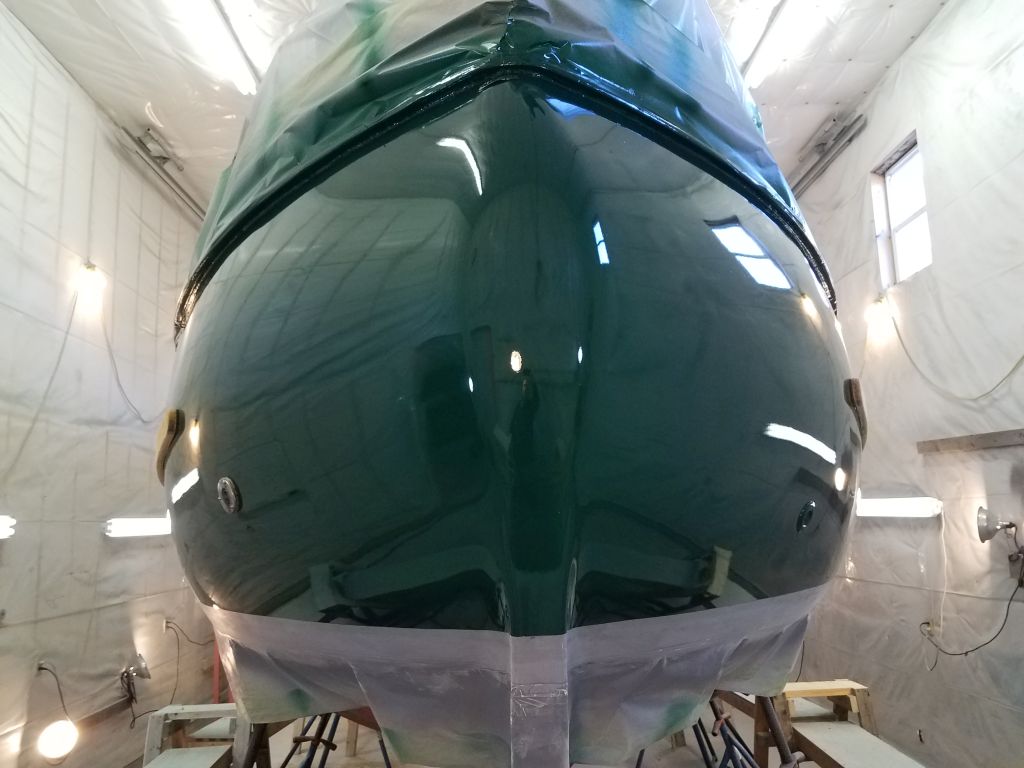
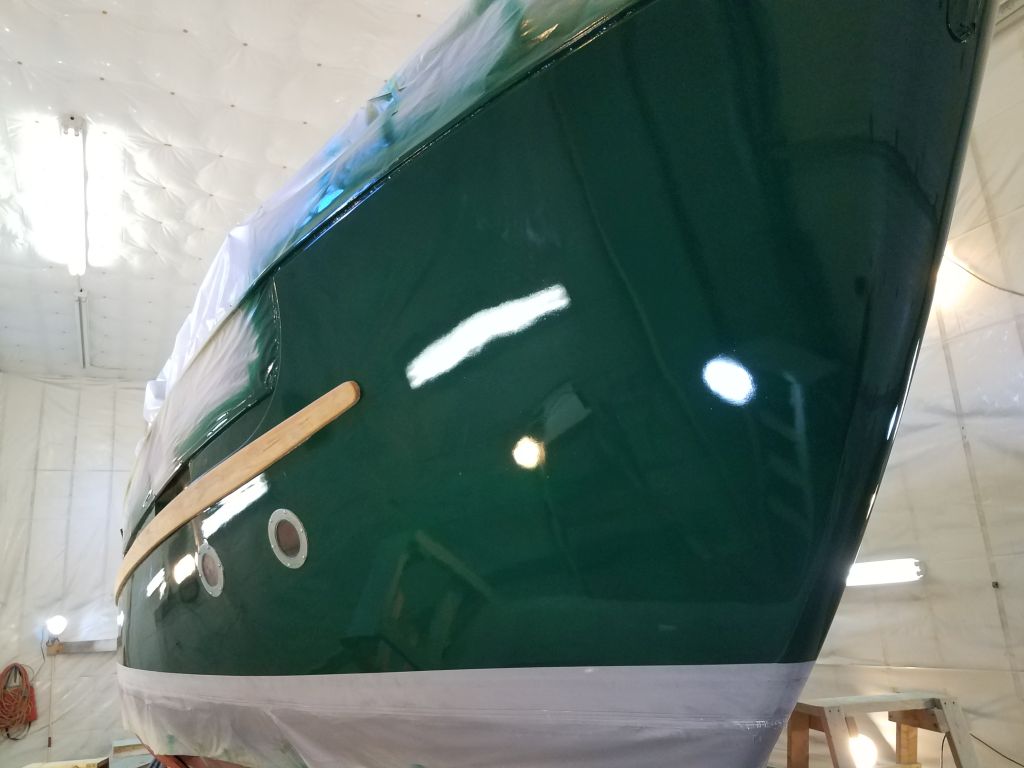
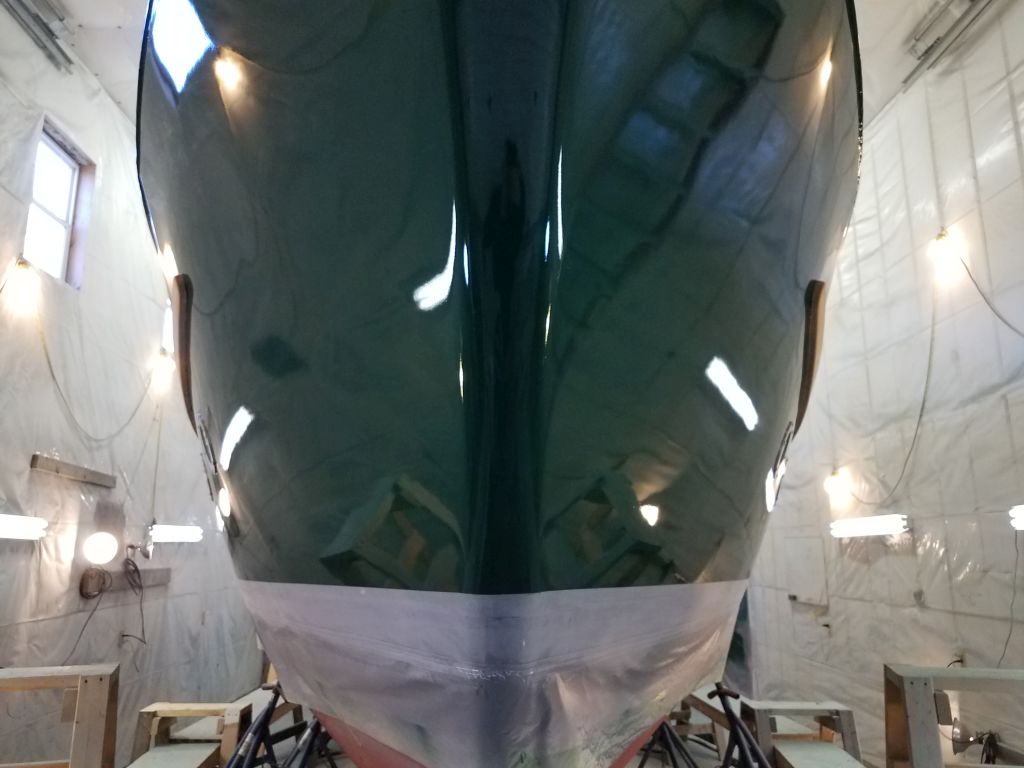
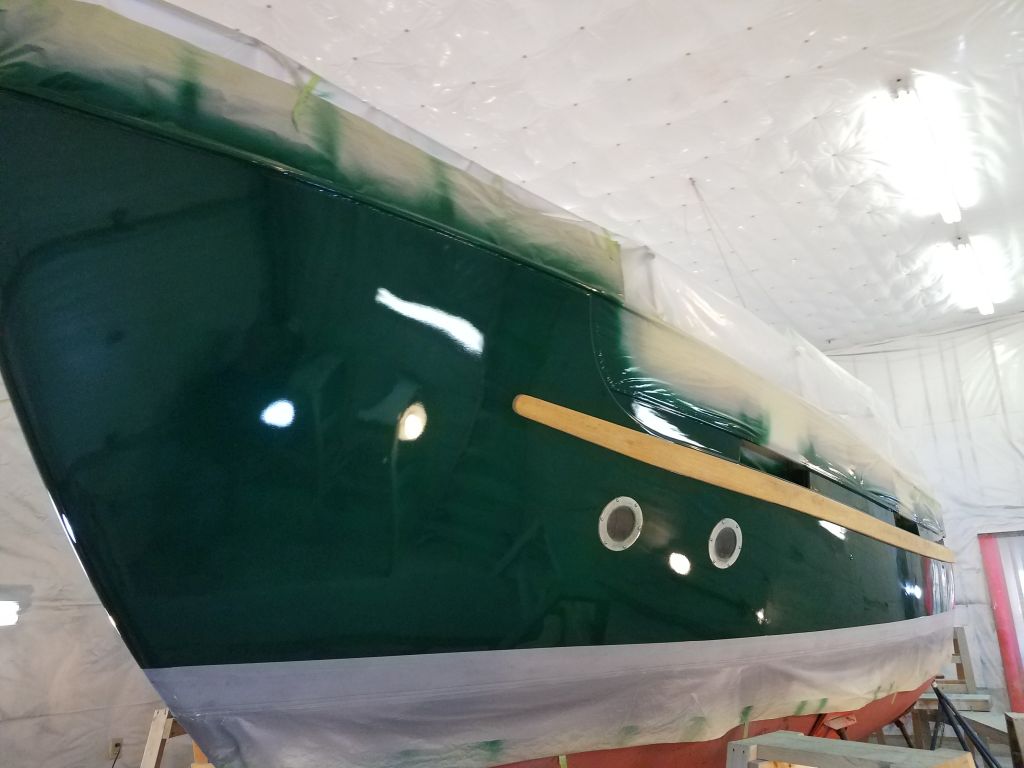
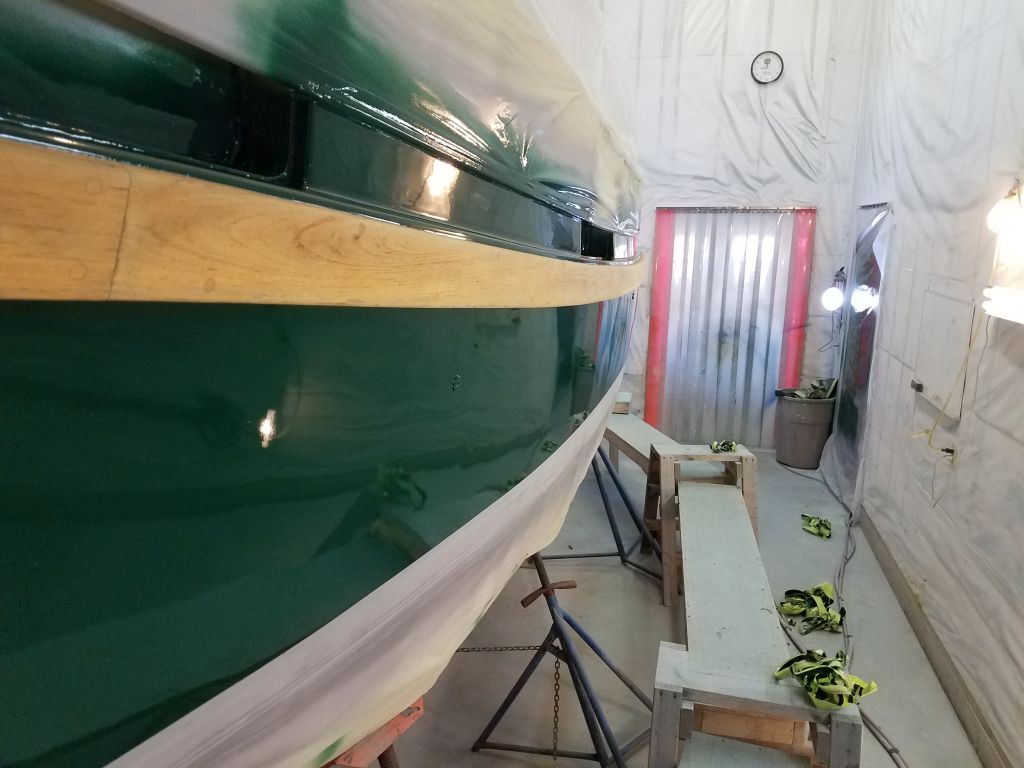
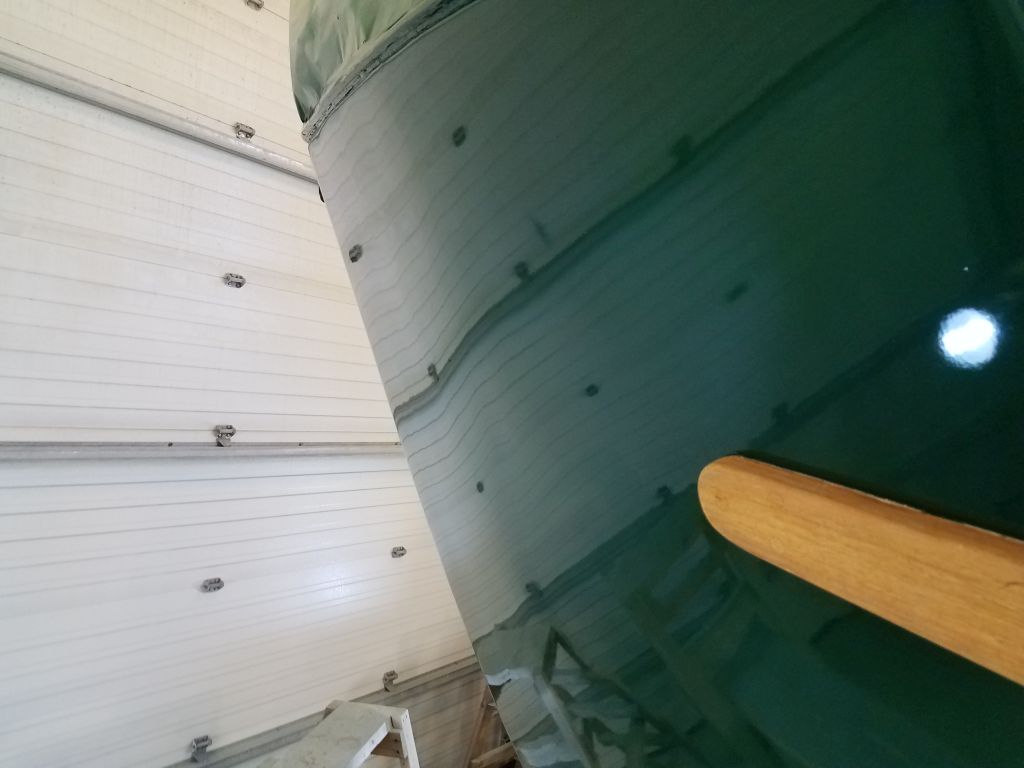
Finish primer goes on smoothly and beautifully, but still requires sanding to prepare for the gloss topcoats, so once more I sanded the hull, this time with 320 grit paper by machine and hand as necessary.

Afterwards, I went through the normal routine of blowing off the boat and walls, vacuuming, washdown, and an initial solvent wash for the hull to prepare for the final preparation steps, including striking and marking a new boottop.  I had to leave the shop for the afternoon, so I’d finish up next time.

Total time billed on this job today:  4.75 hours

0600 Weather Observation:  32°, cloudy.  Forecast for the day:  clouds, showers and rain, maybe some snow
Steadfast 16

< Back to Steadfast

Wednesday

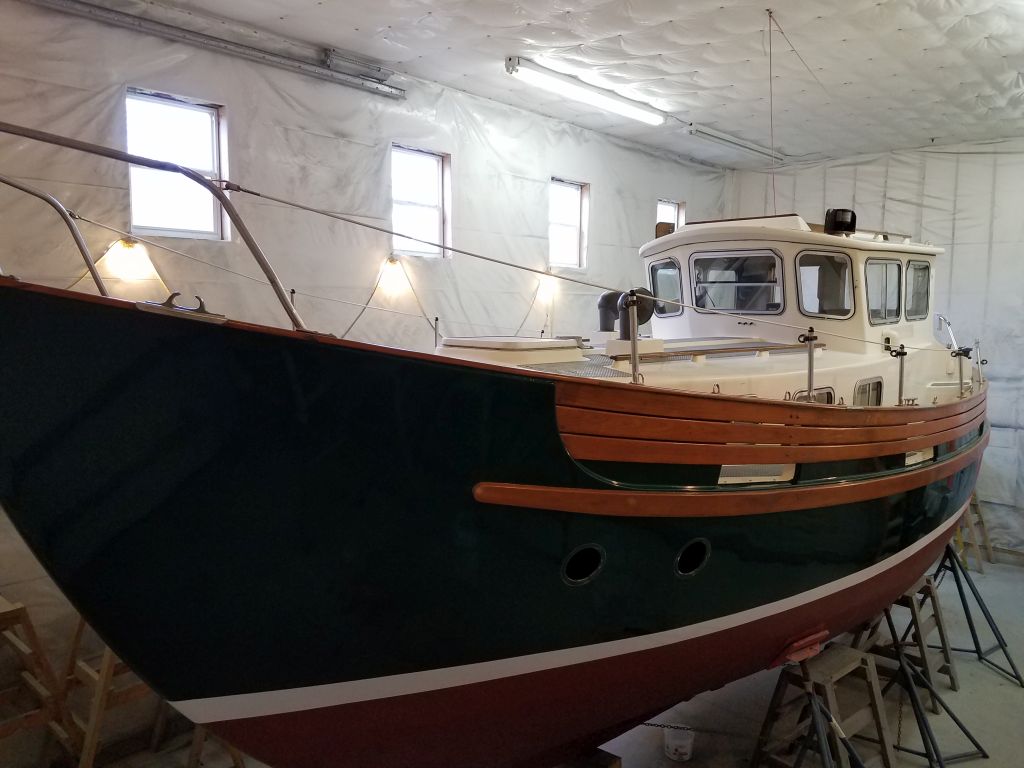
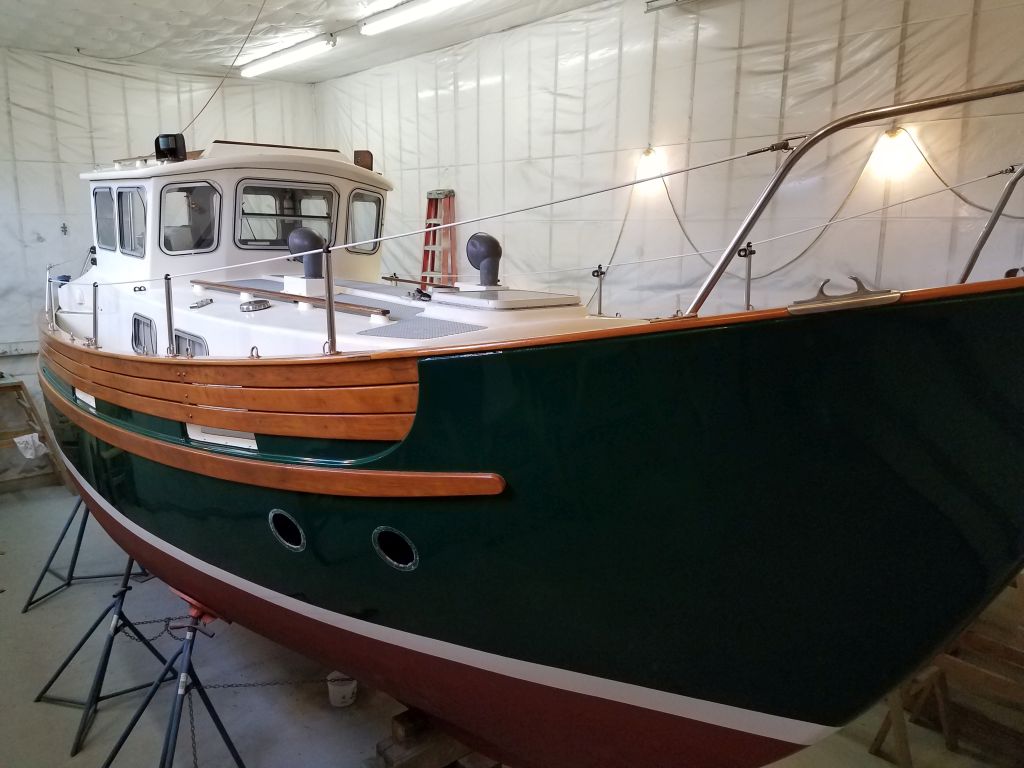
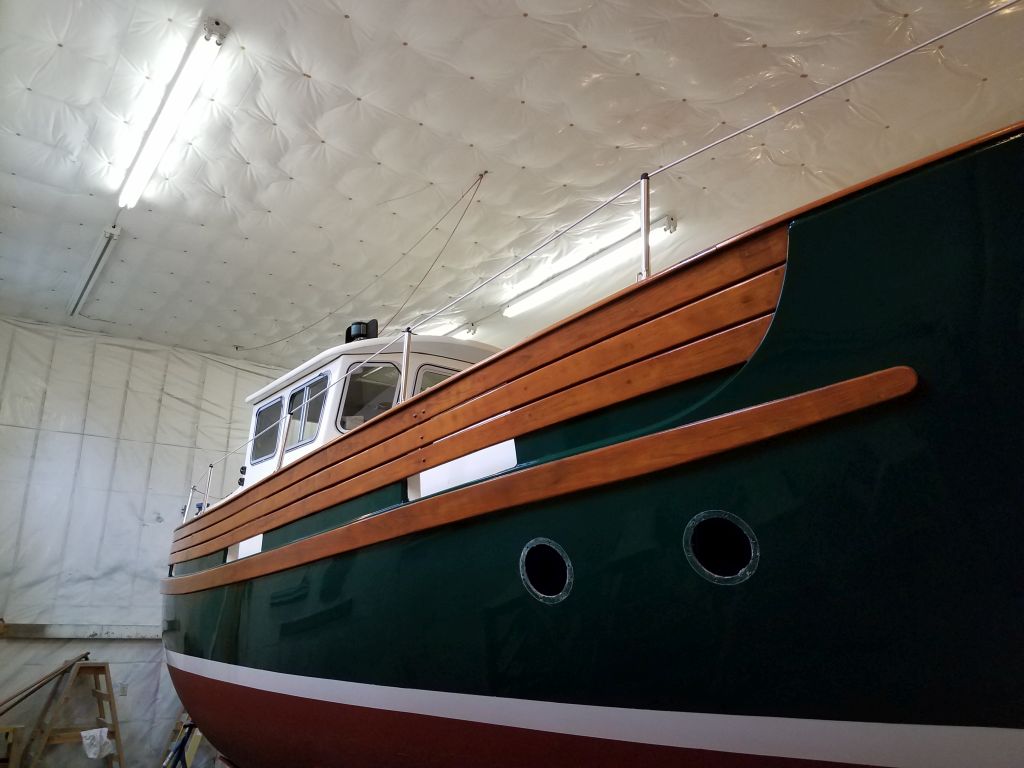
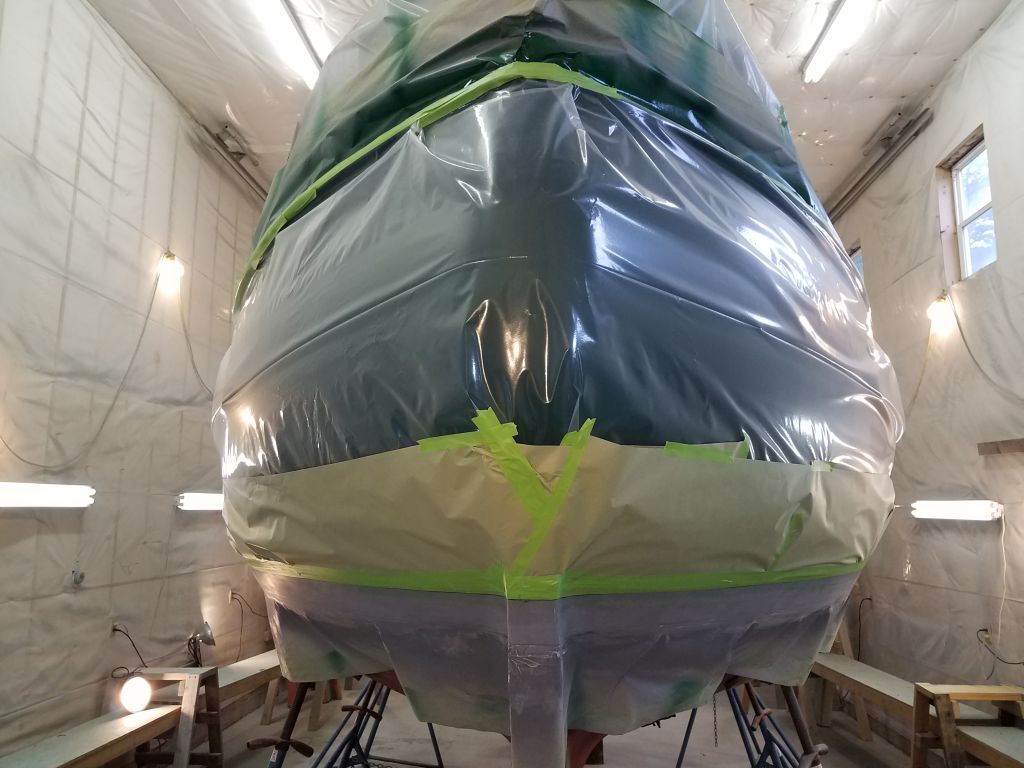
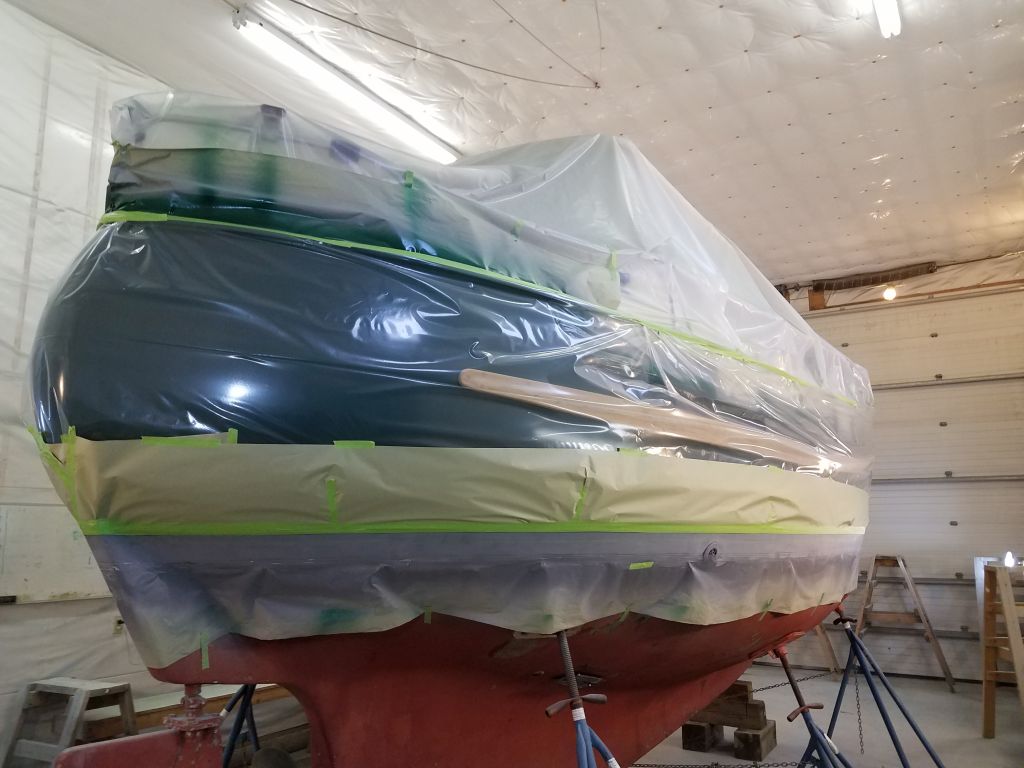
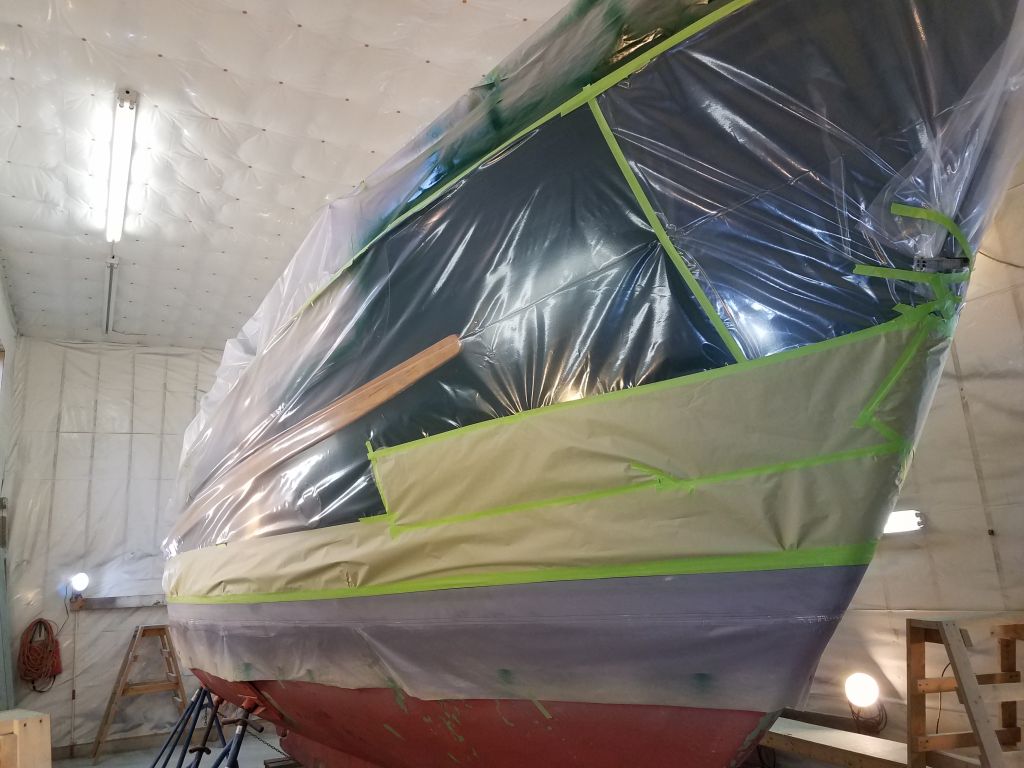
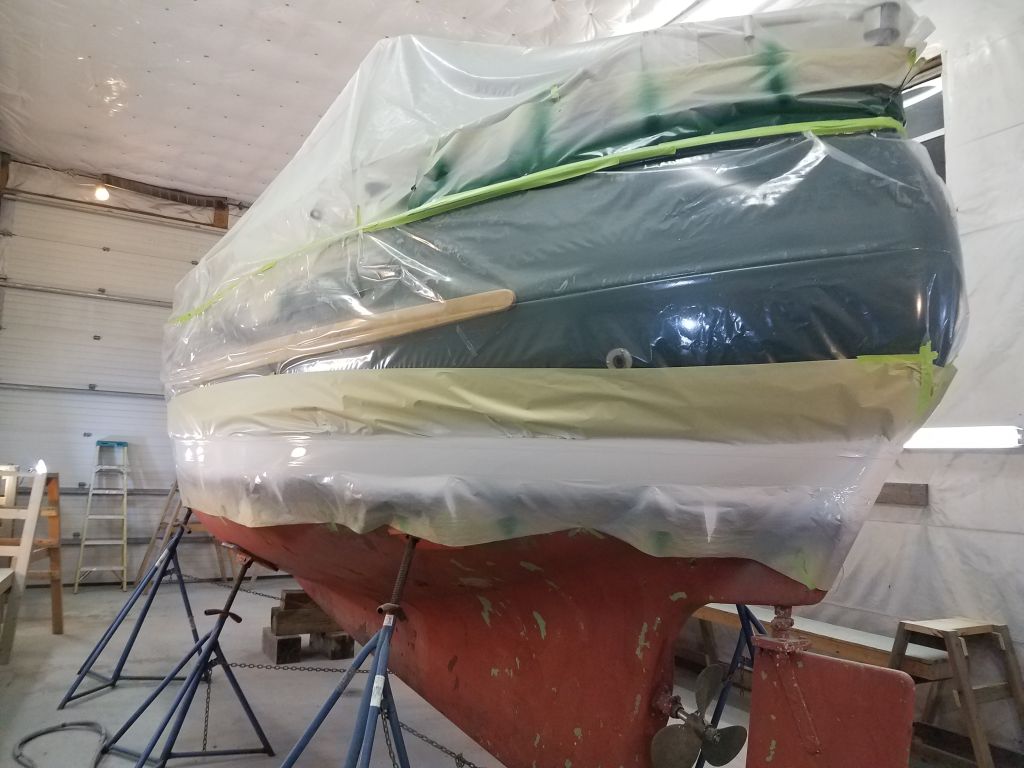
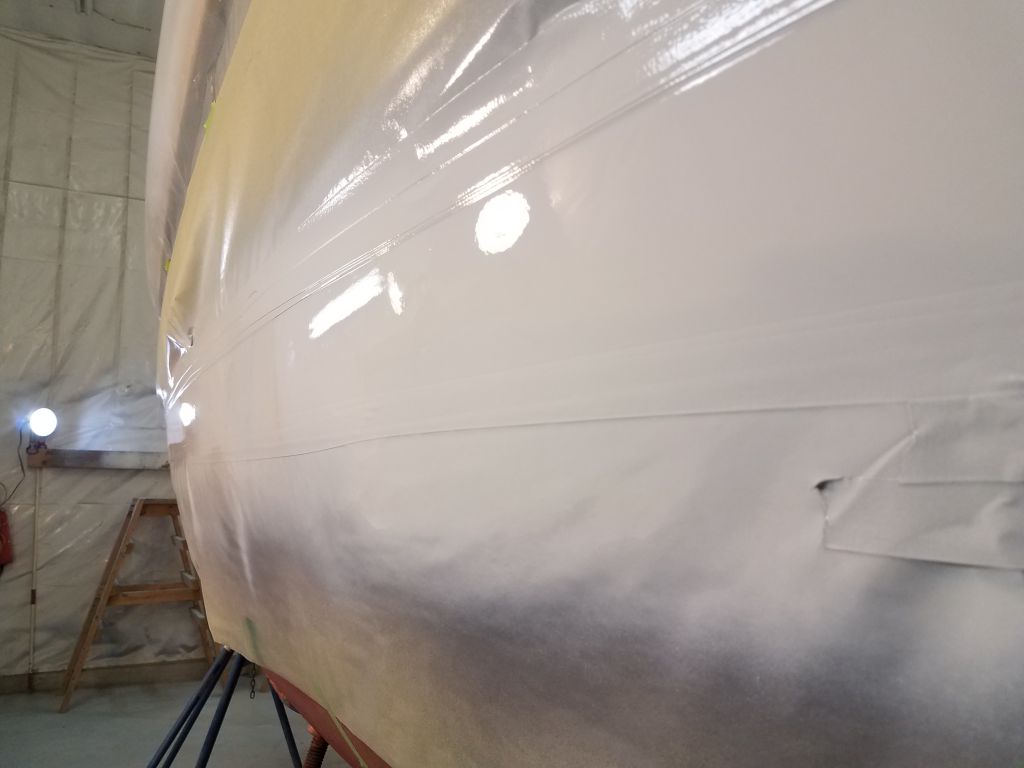
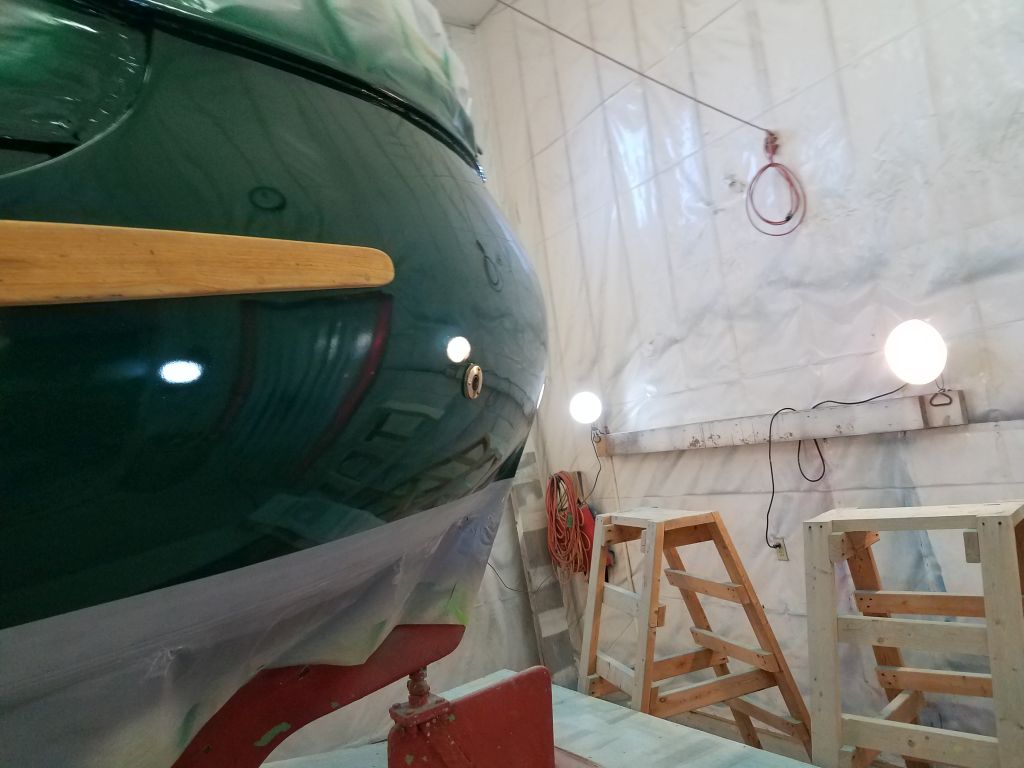
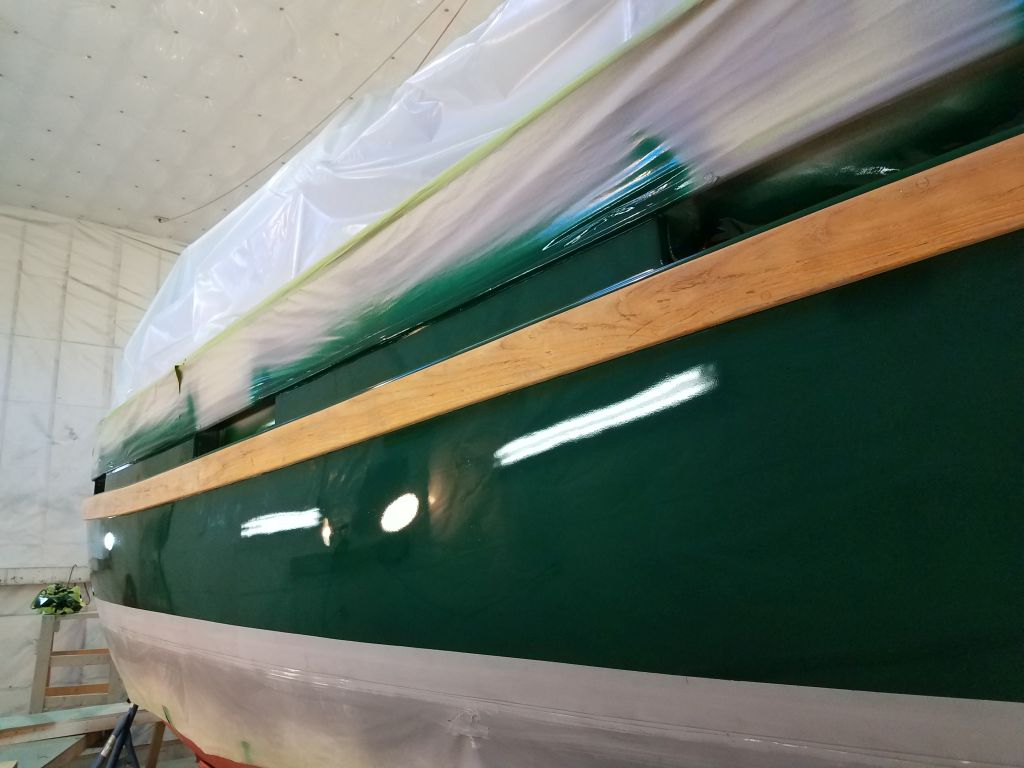
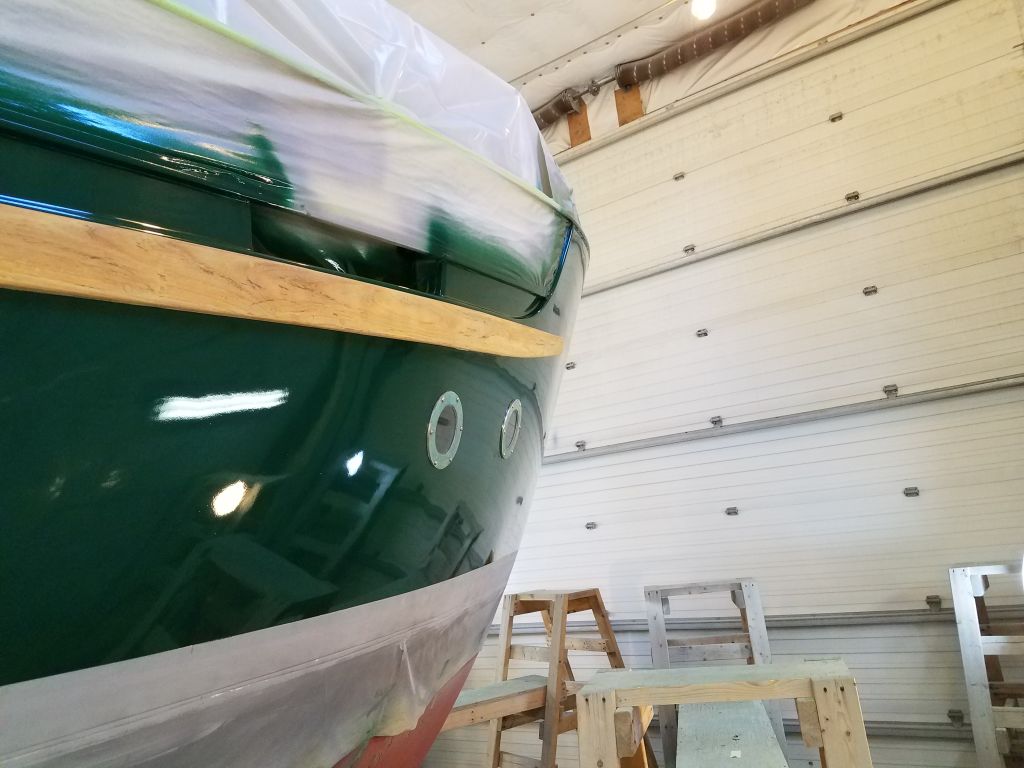
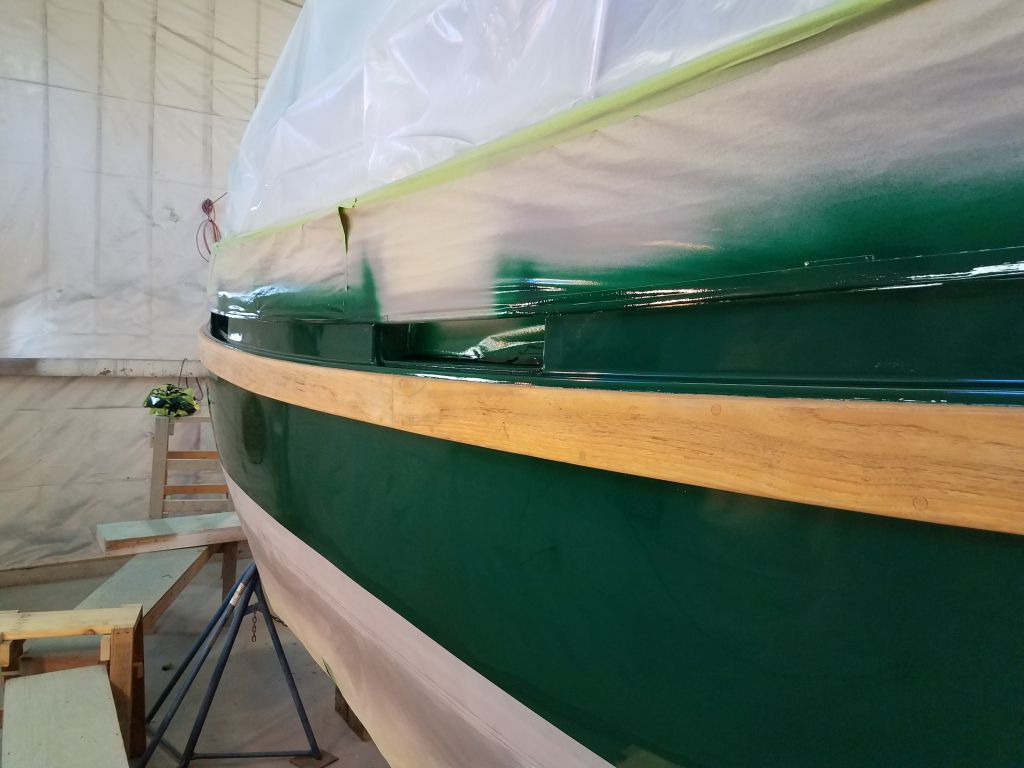
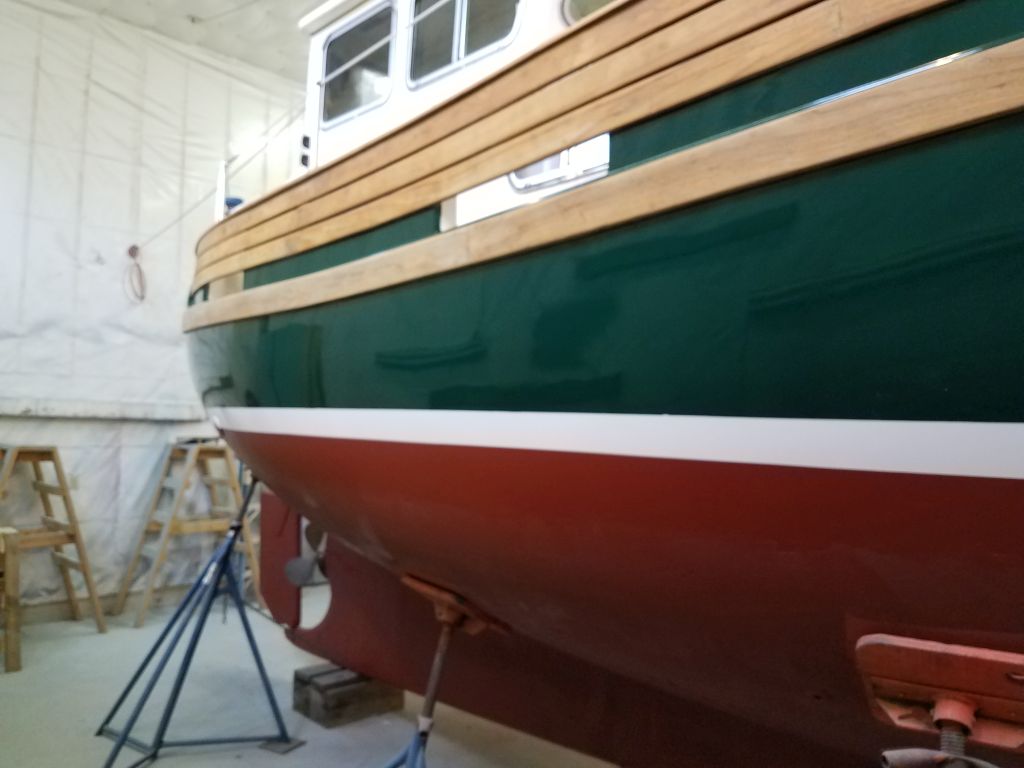
After final preparations, I applied four coats of Alexseal finish primer to the hull.

Total time billed on this job today:  4.75 hours

0600 Weather Observation:  32°, cloudy.  Forecast for the day:  becoming sunny, 40s

Steadfast 15

< Back to Steadfast

Tuesday

I spent the morning sanding the fresh high build primer on the hull, this time with 220 grit on a vibrating finishing sander.

Once I’d smoothed the entire hull, I cleaned up the shop and vacuumed and solvent-washed the hull so I could inspect it closely for any minor repairs required before continuing.

Inevitably, minor dings and surface flaws came to light at this point, and as I went I marked the areas requiring attention with little flags of tape.  Then, I returned with a putty knife and applied quick-drying fine filler as needed to smooth the minor divots.  Once the fairing compound had cured, I hand-sanded to complete the repairs.

With that complete, I spent the remainder of the day on final cleanup duty, with additional vacuuming, rinsing off the staging and shop floor, and a final solvent wash and tack-off for the hull to complete preparations for finish primer next time.

Total time billed on this job today:  7.5 hours

0600 Weather Observation:  24°, clear.  Forecast for the day:  sun and clouds, 40

Steadfast 14

< Back to Steadfast

Monday

After final preparations, I spray-applied three coats of Alexseal high-build epoxy primer to the hull.

Total time billed on this job today:  4 hours

0600 Weather Observation:  20°, clear.  Forecast for the day:  some sun, becoming cloudy, light snow late in the day, 30s

Steadfast 13

< Back to Steadfast

Friday

I’d temporarily removed the staging earlier for better access to the waterline, so to continue I reset it, using two pair of shorter supports in the center sections to avoid the need to climb over the taller ones.  I’d had two of these on hand before, but had assembled two additional ones  over the past couple days to round out my set.  With the staging back in place, I could do another wipe down off the entire hull as a pre-cleaning before the final high-build primer preparation steps.  Afterwards, I washed down the staging  and floor to settle any remaining dust.

During the remainder of the day, I completed various other preparations, including preparing paint and spray equipment and setting up additional lighting in the shop, before finishing up with a last solvent wash for the hull, this  time with the paint system’s proprietary solvent.

Total time billed on this job today:  4.25 hours

0600 Weather Observation:  34°, snow/sleet/rain squall.  Forecast for the day:  sunny, but temperature falling through the day to the teens

Steadfast 12

< Back to Steadfast

Thursday

To begin, I sanded the areas I’d coated/filled with epoxy earlier, removing excess and sanding the repairs smooth.  I was pleased to find that the gouge on the stem came out well with only one application; the small pockmarks on the midships hull on each side filled satisfactorily with the one coat as well, and in any event these areas wouldn’t impact the topside painting process as they were below the waterline.  There’d be an opportunity for any final minor filling later, after high-build primer.

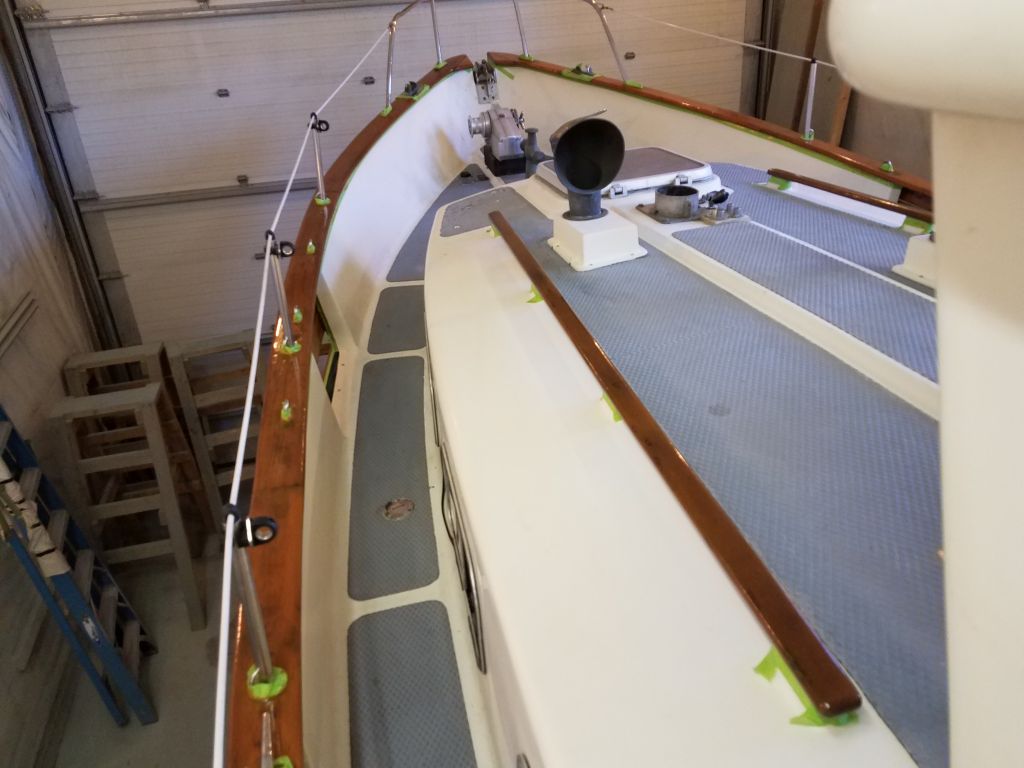
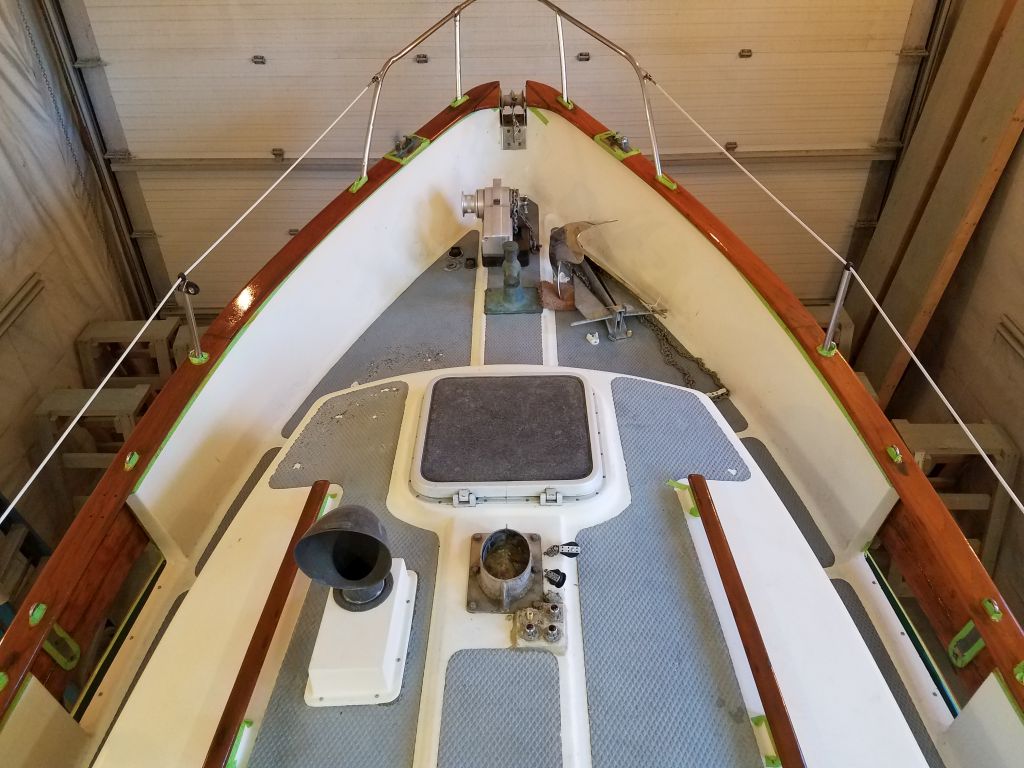
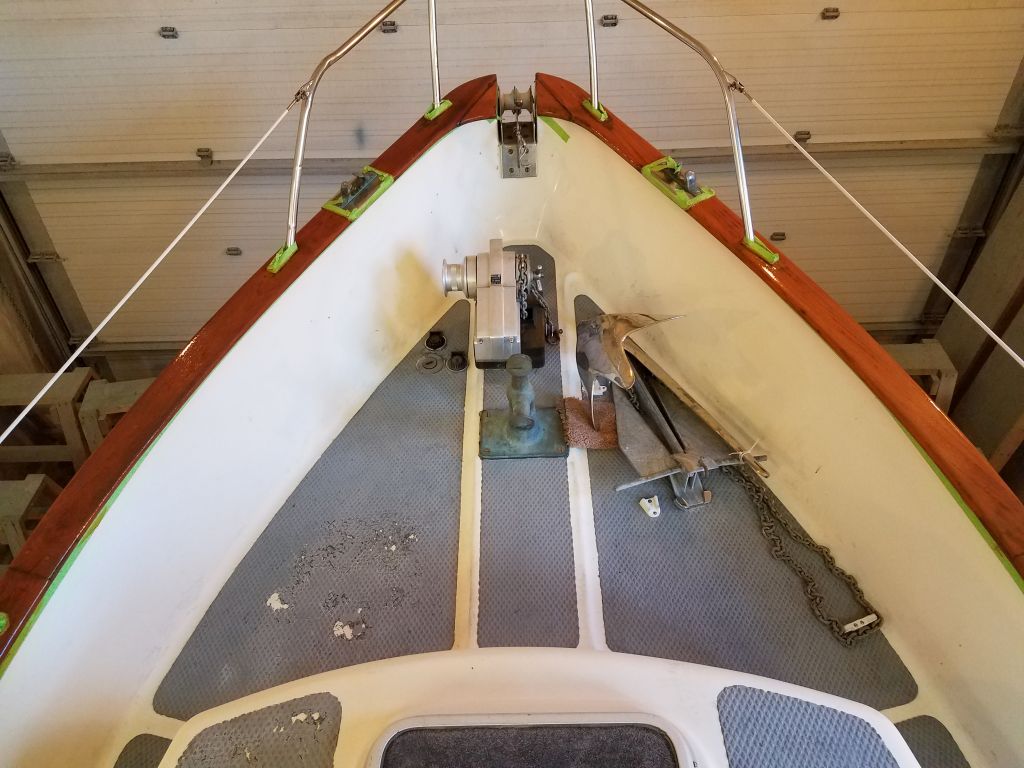
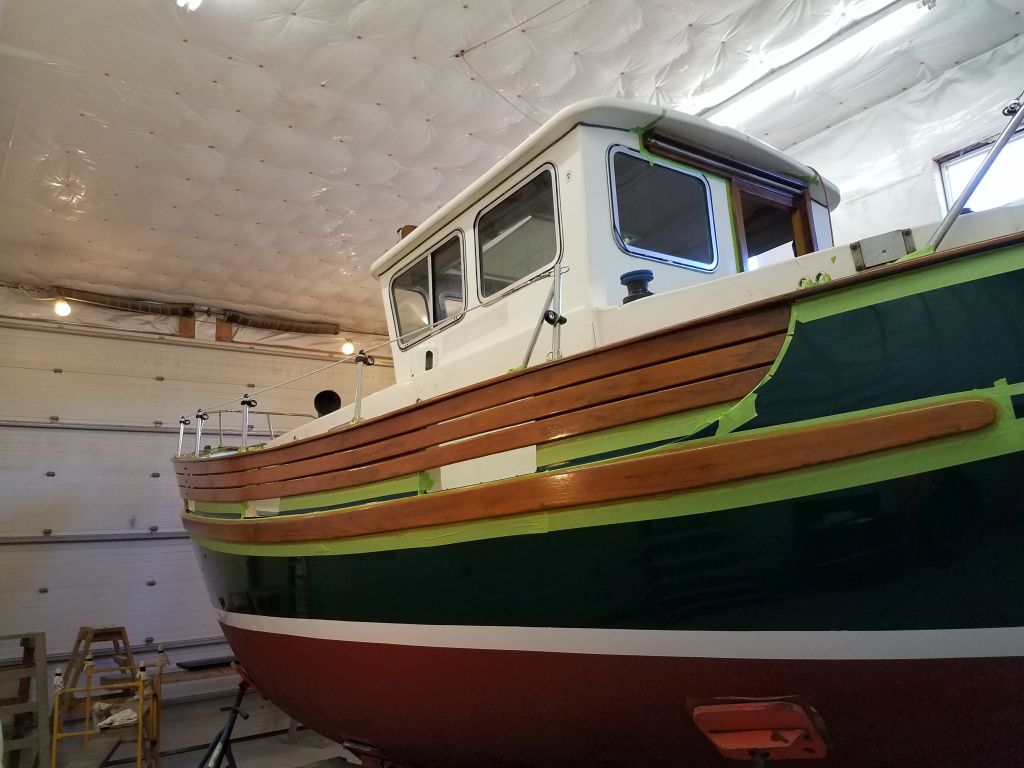
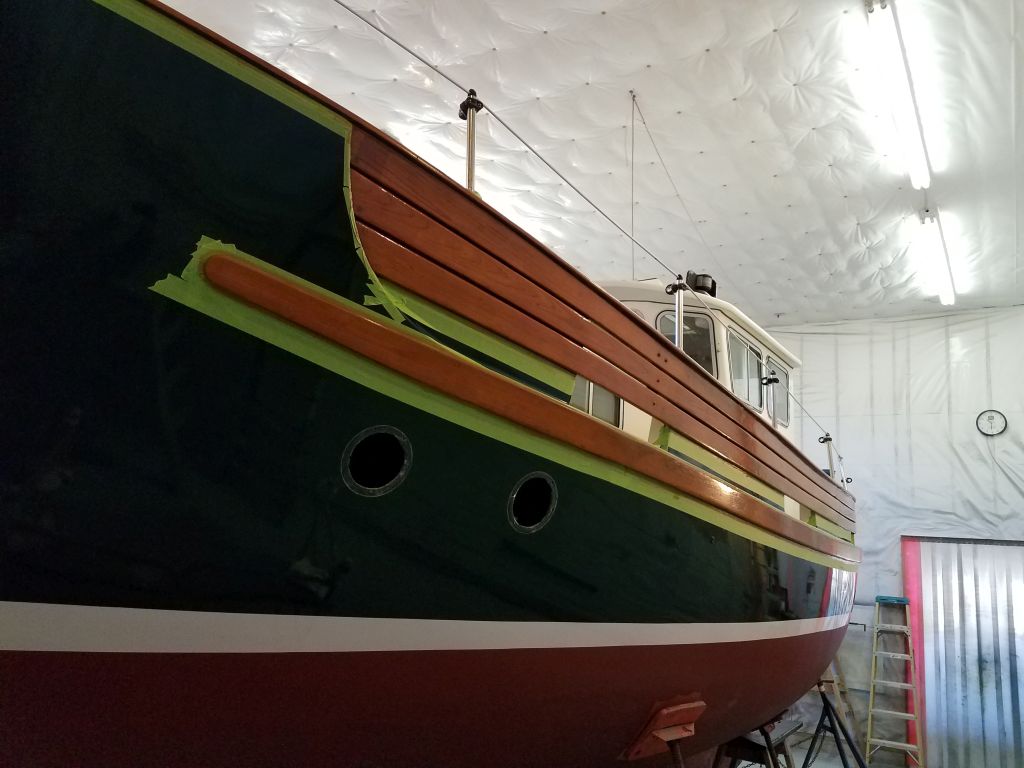
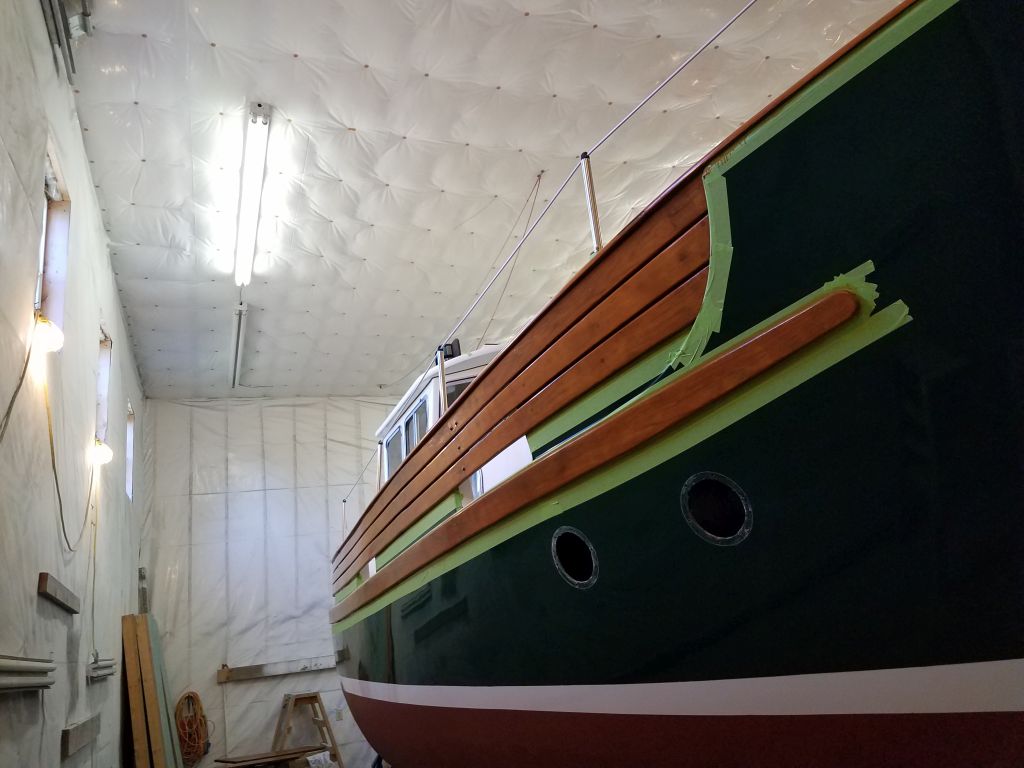
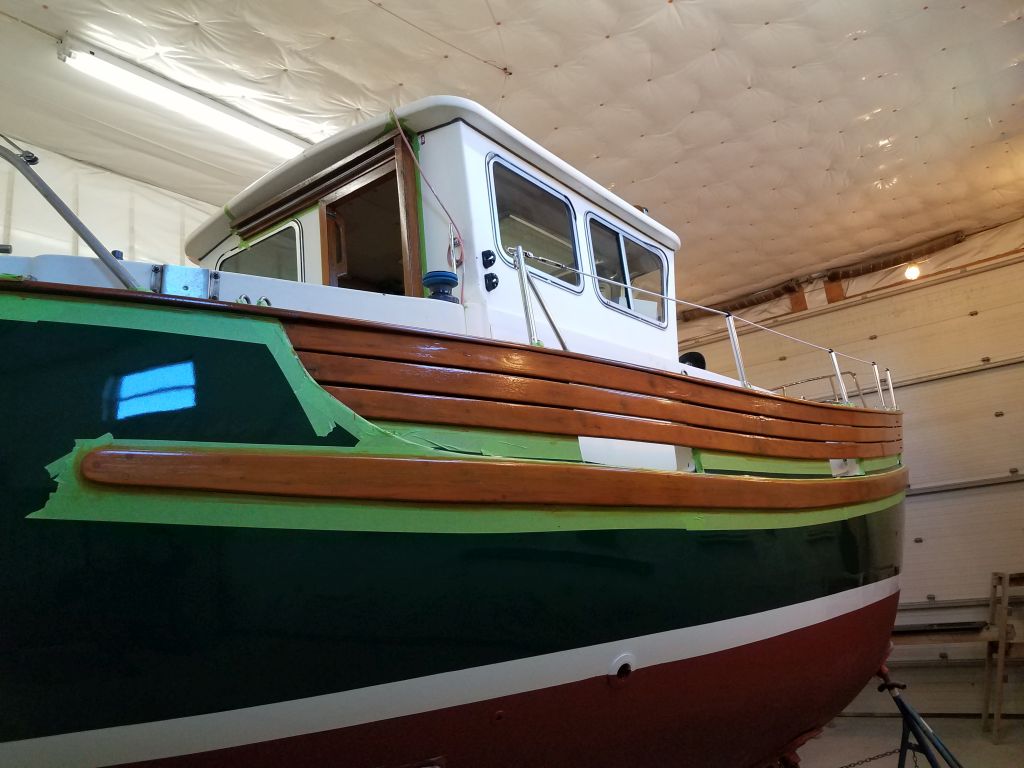
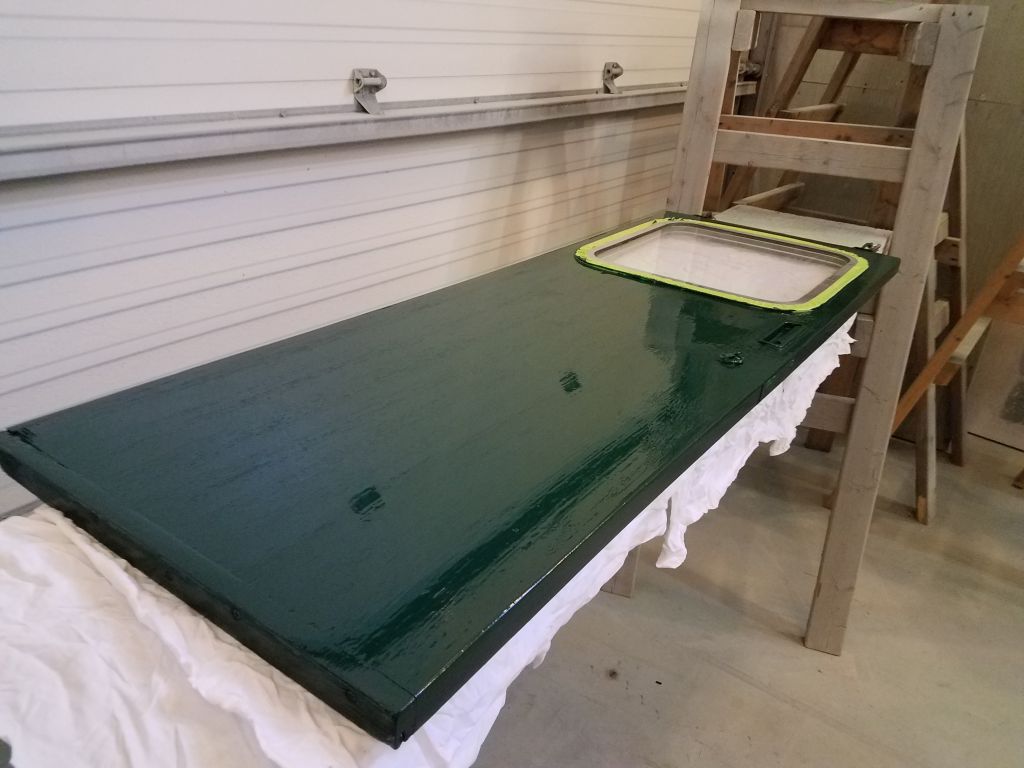
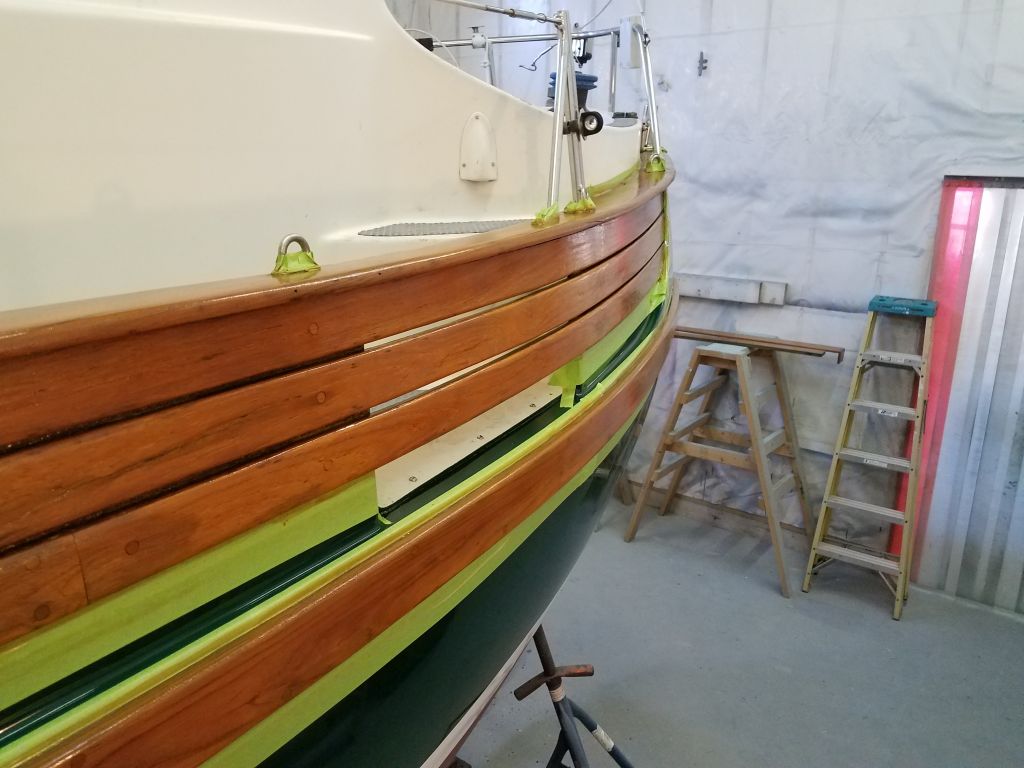
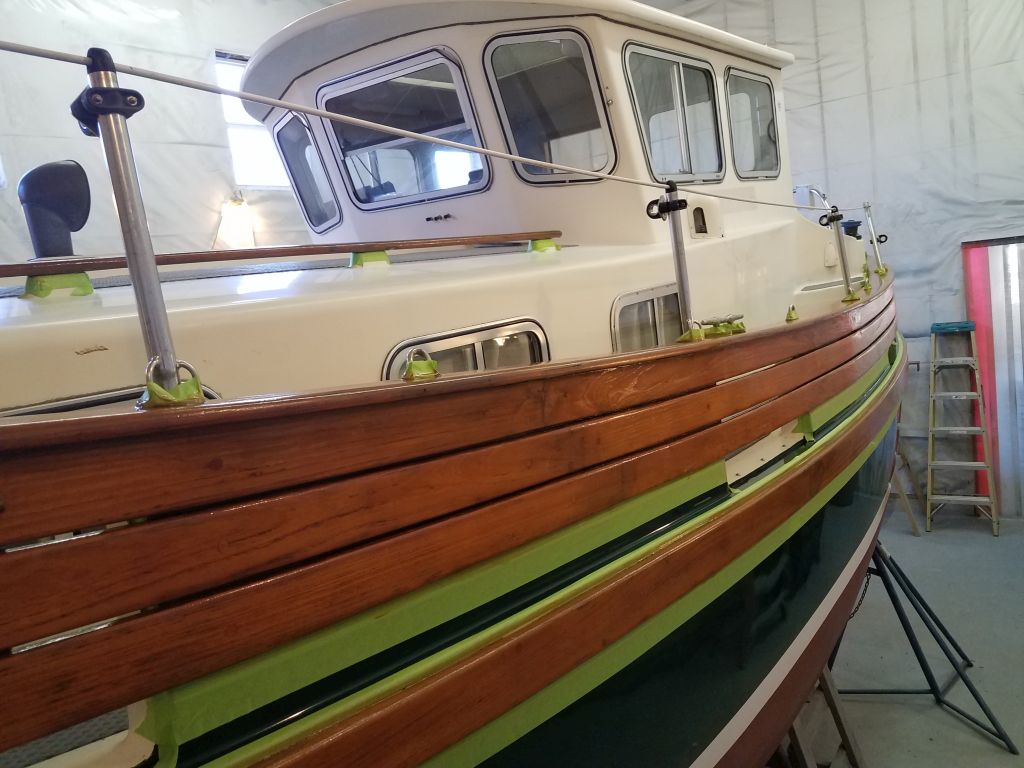
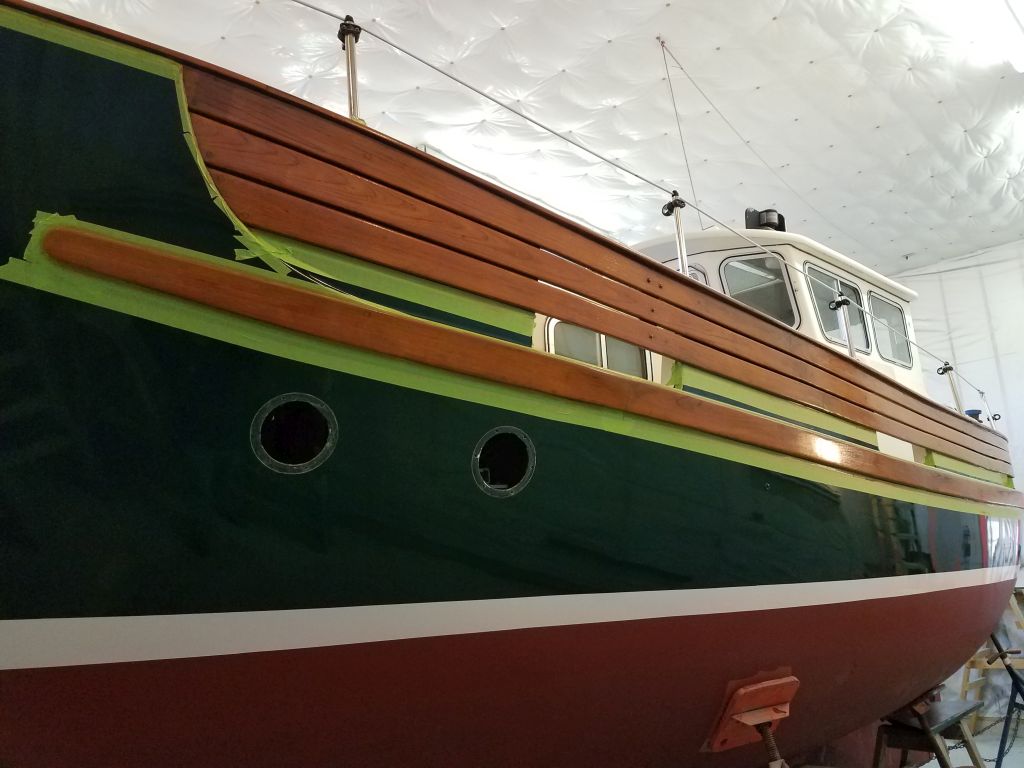
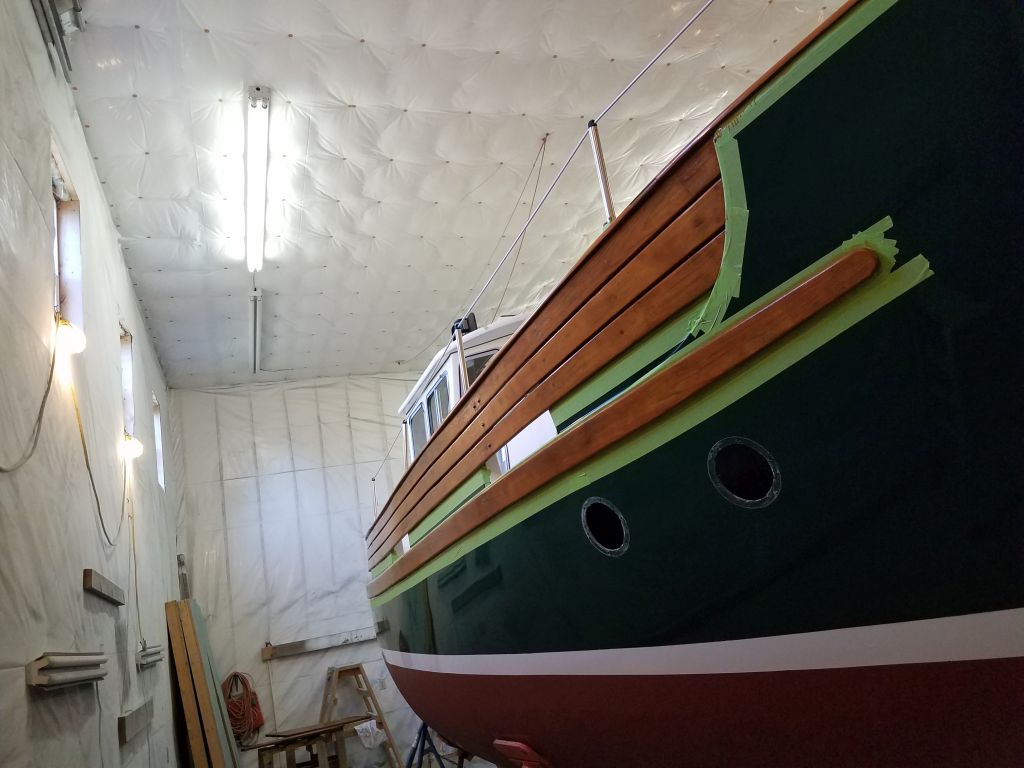
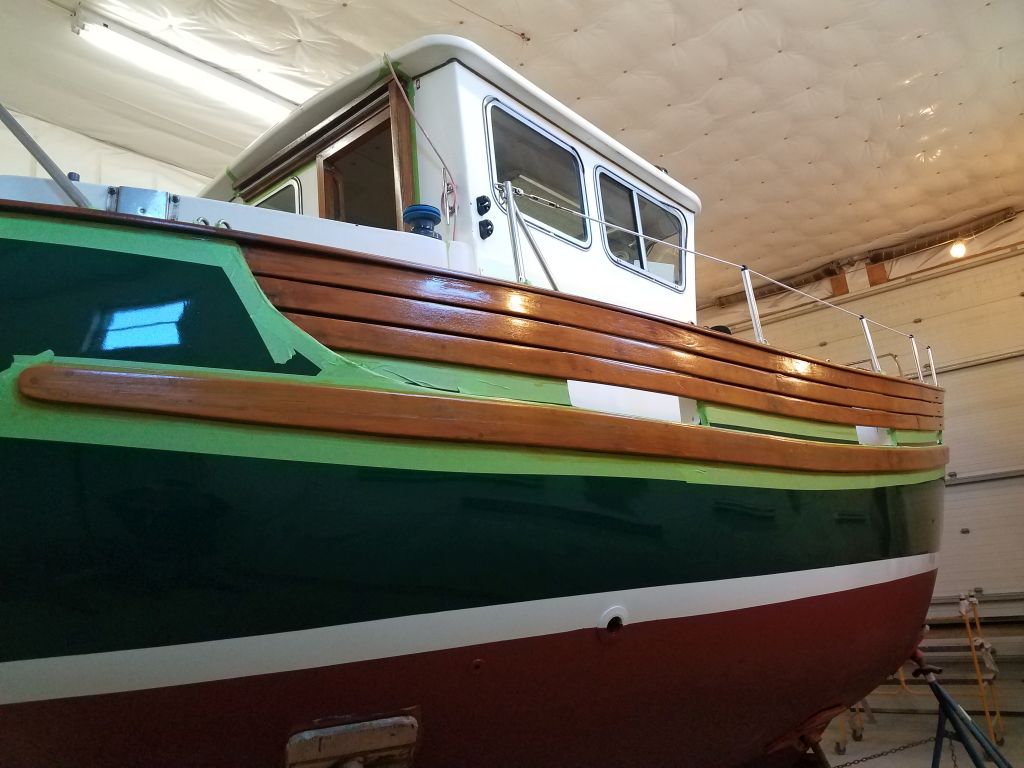
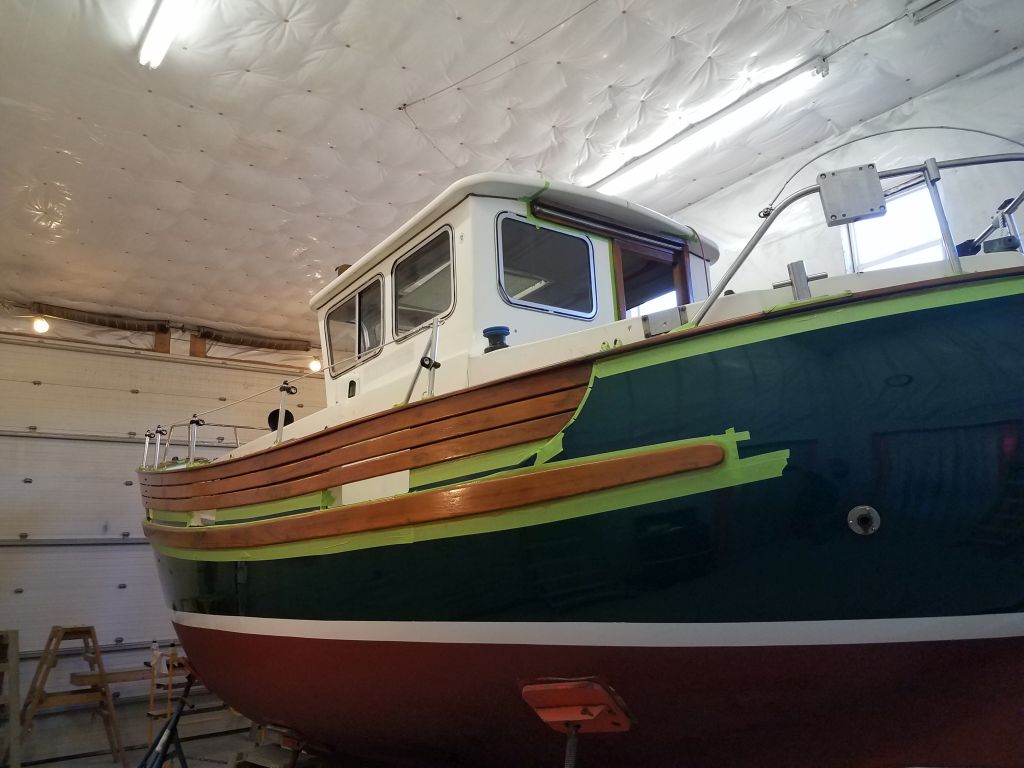
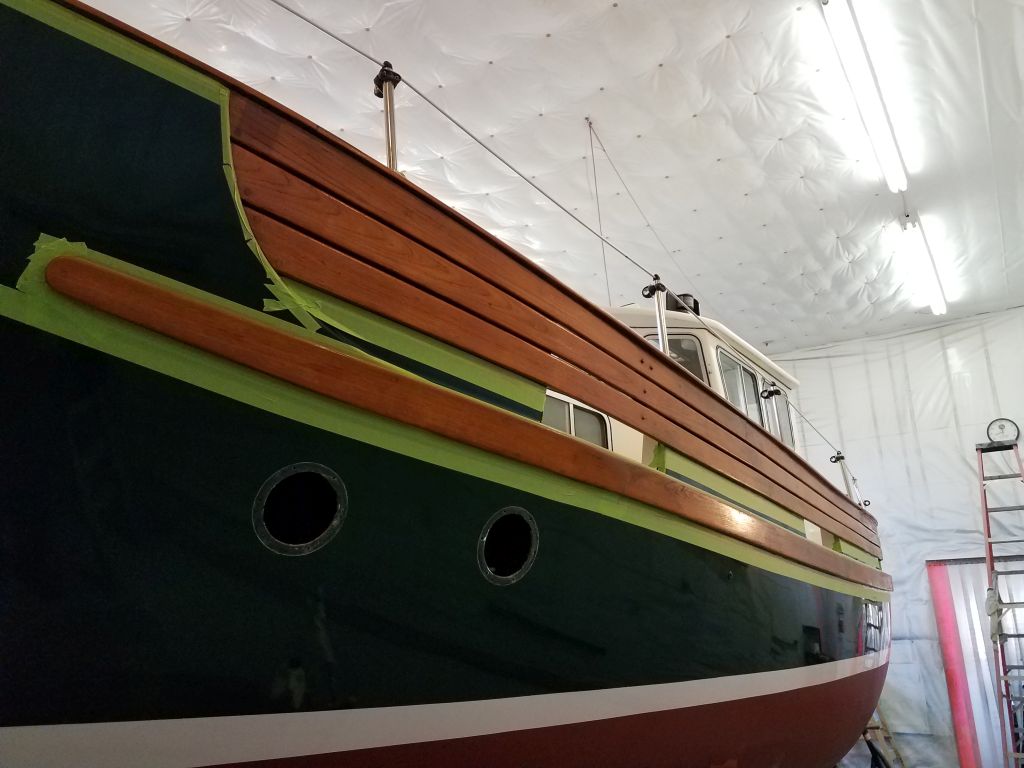
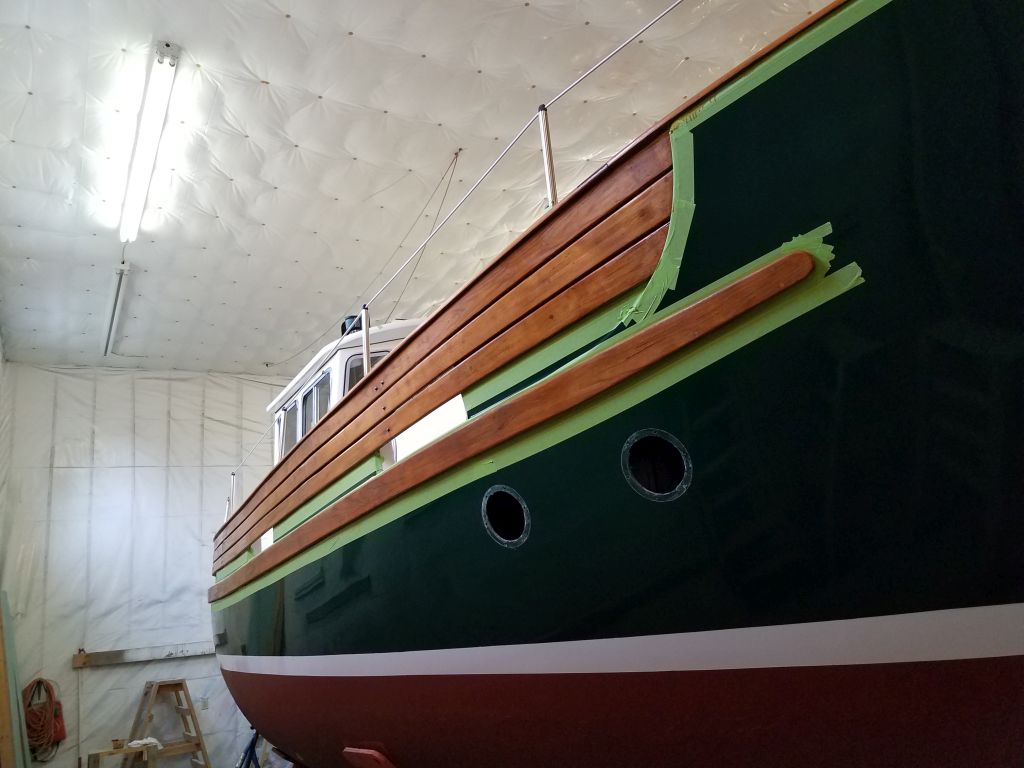
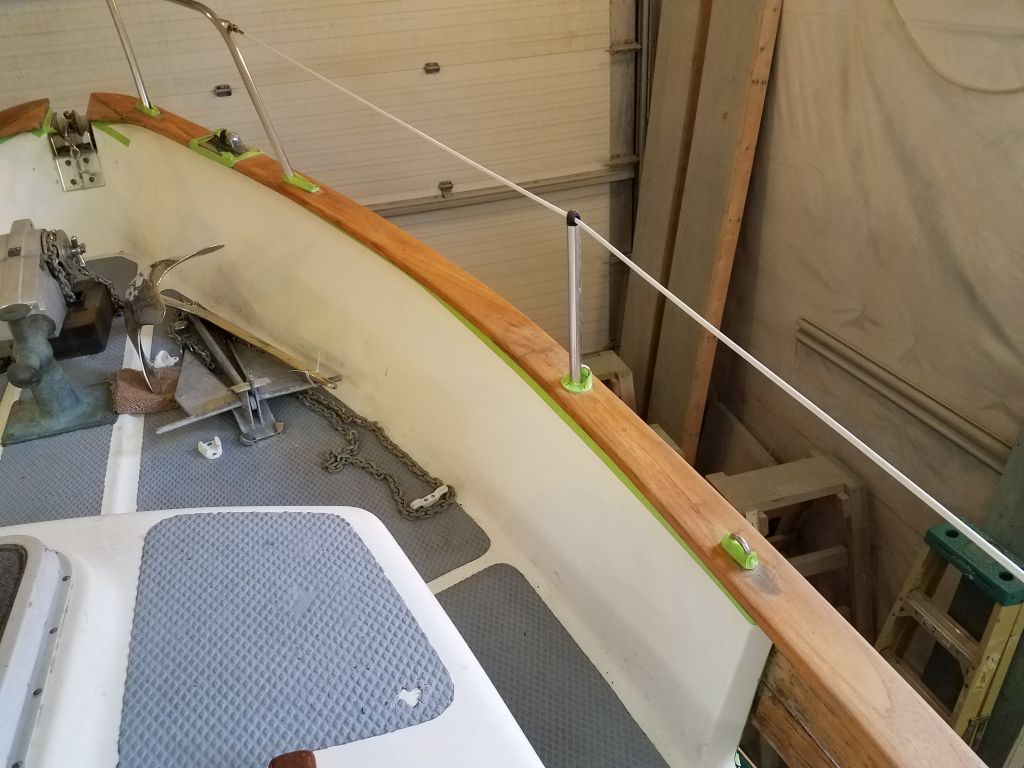
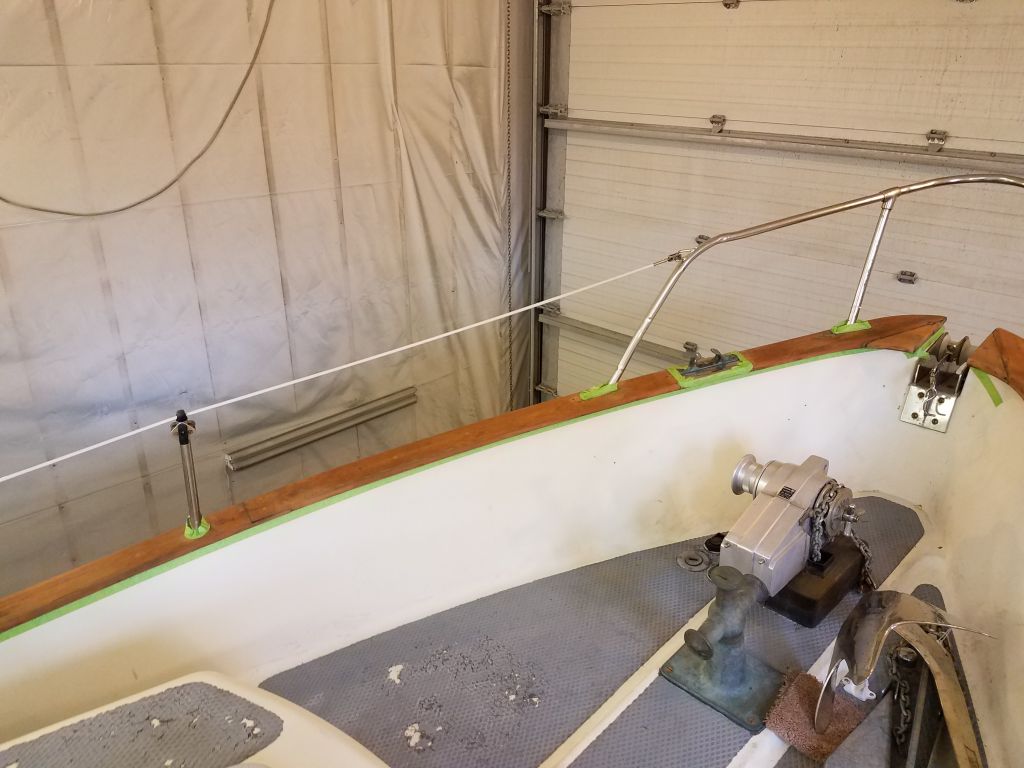
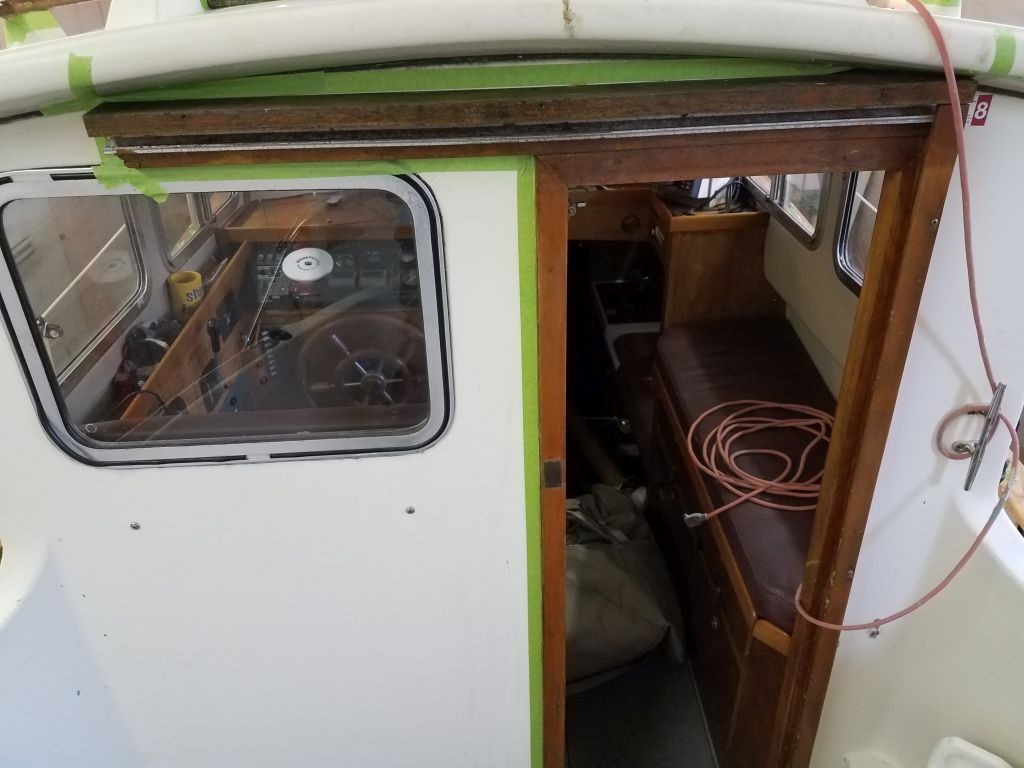
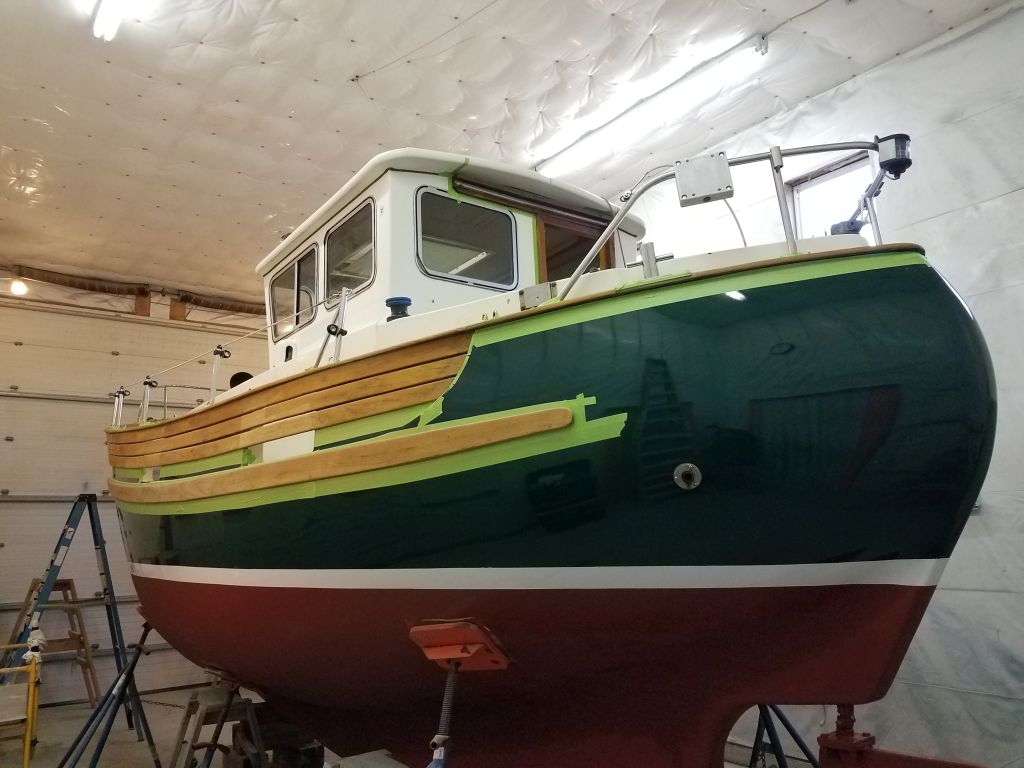
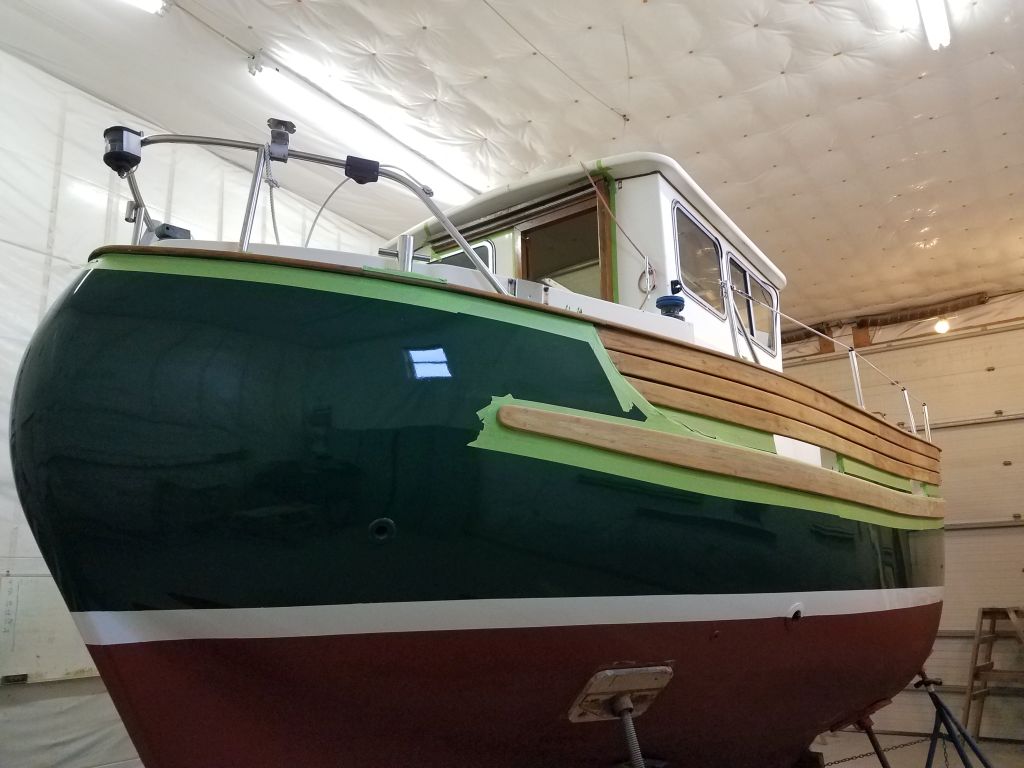
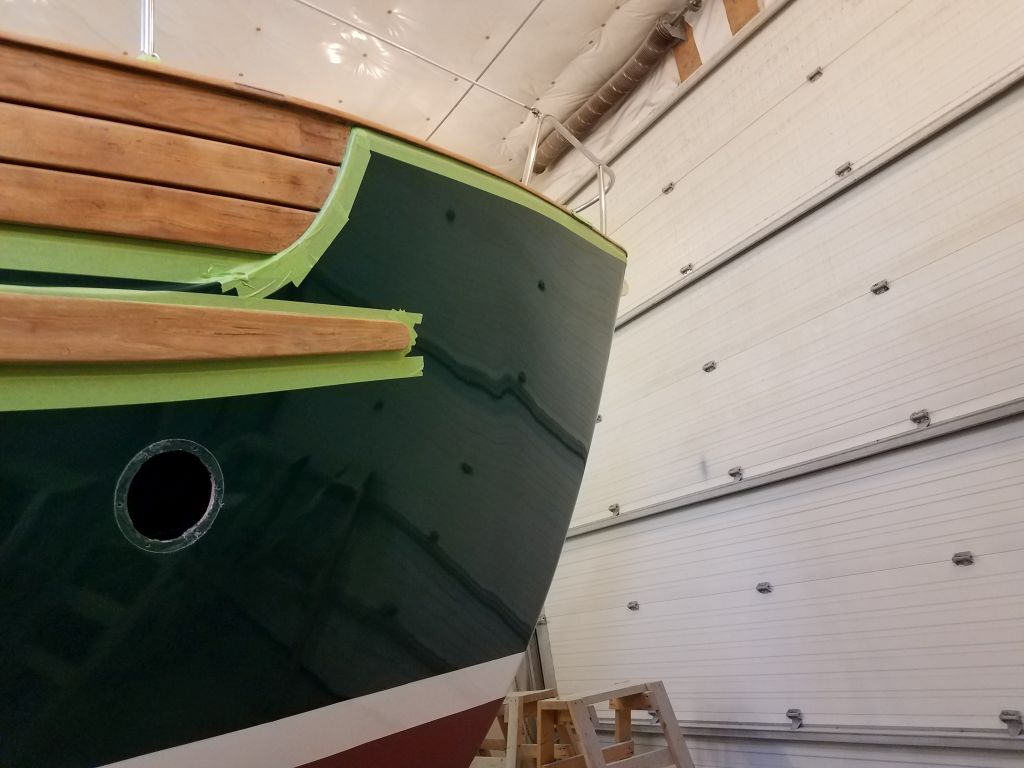
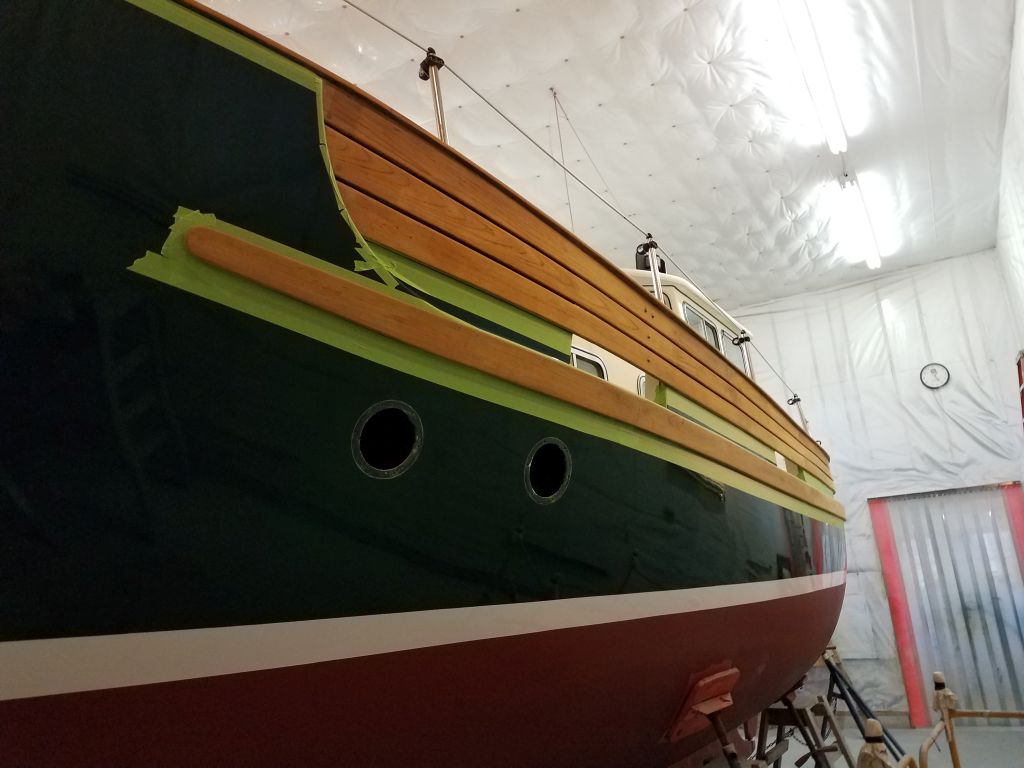
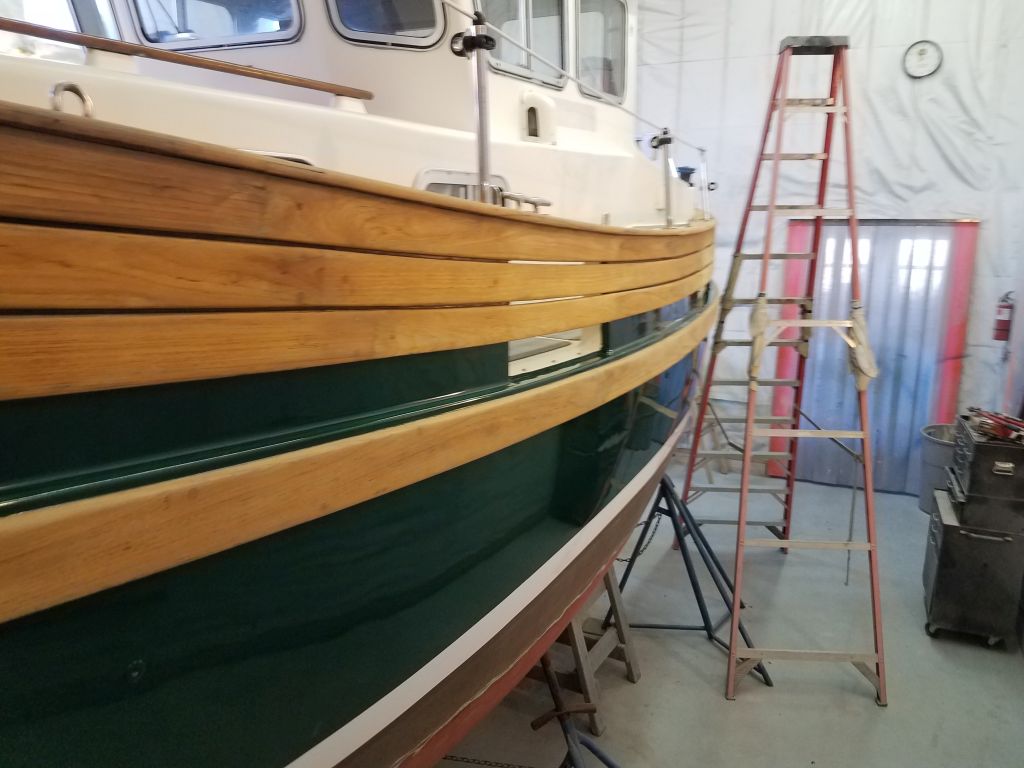
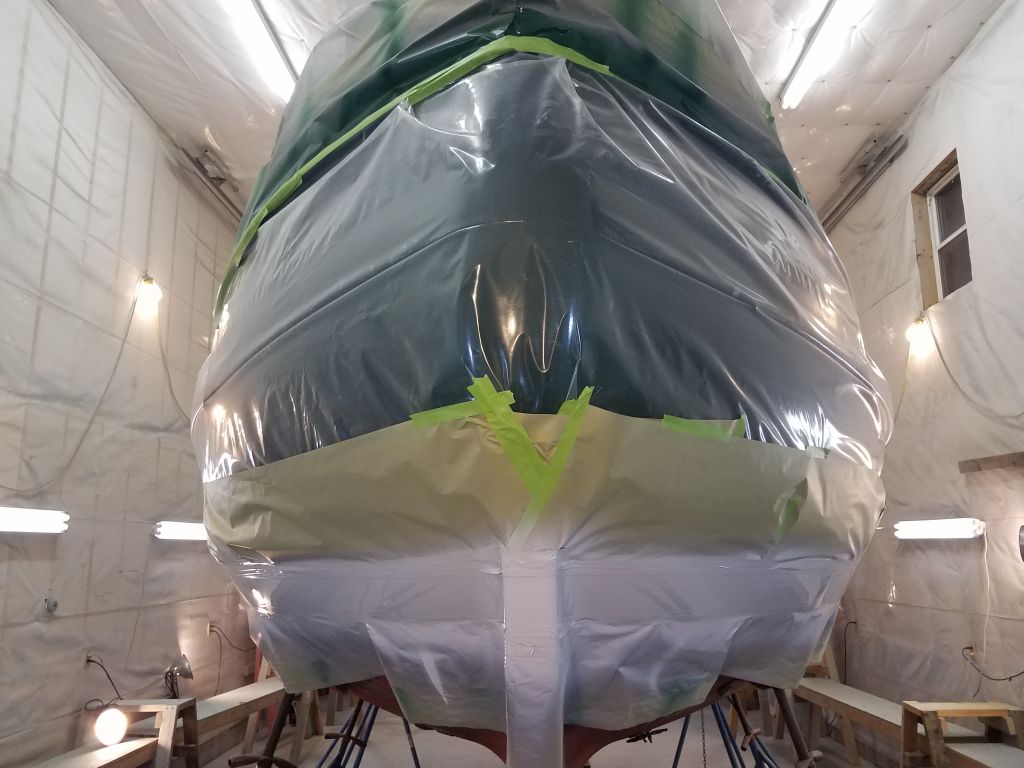
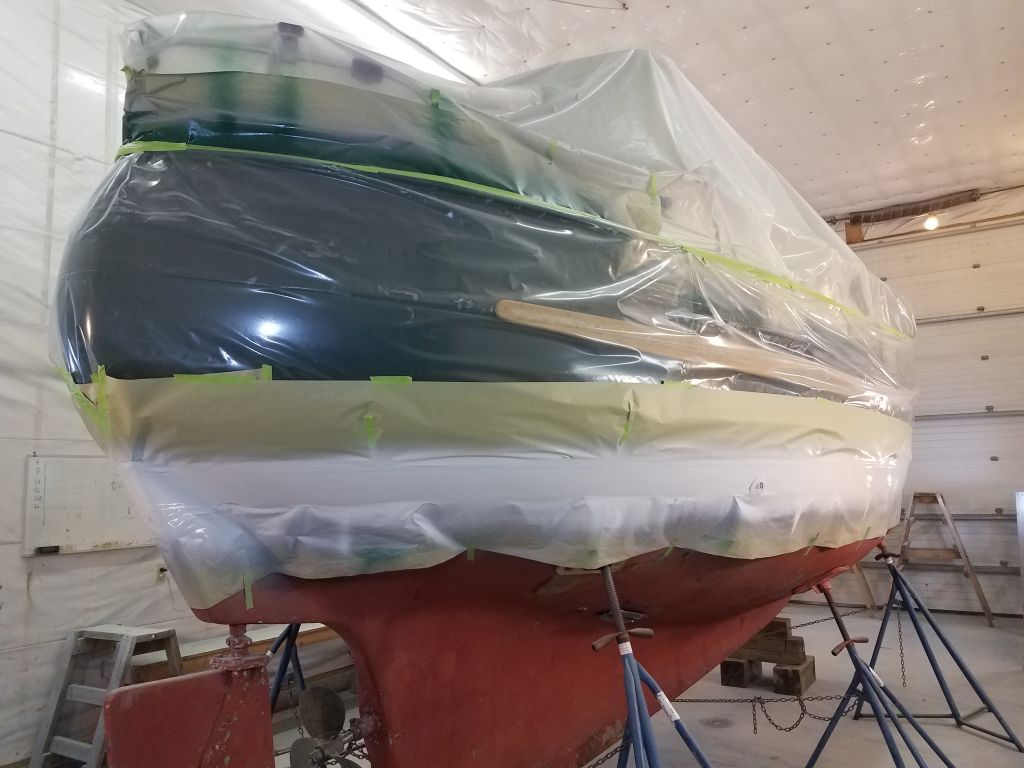
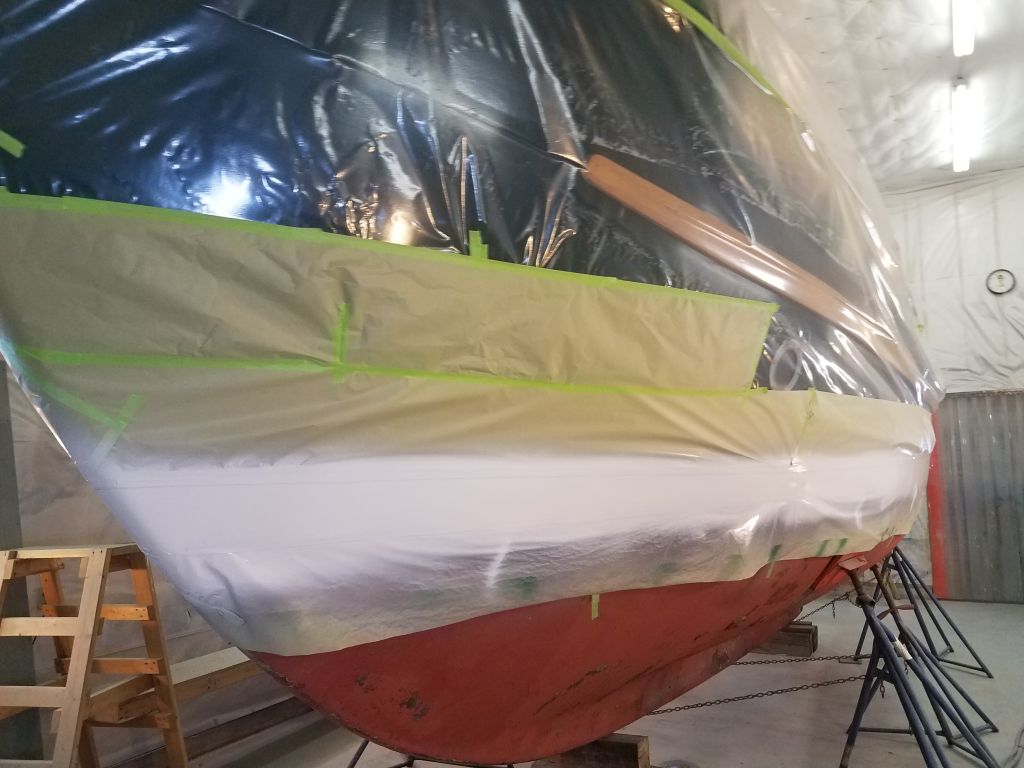
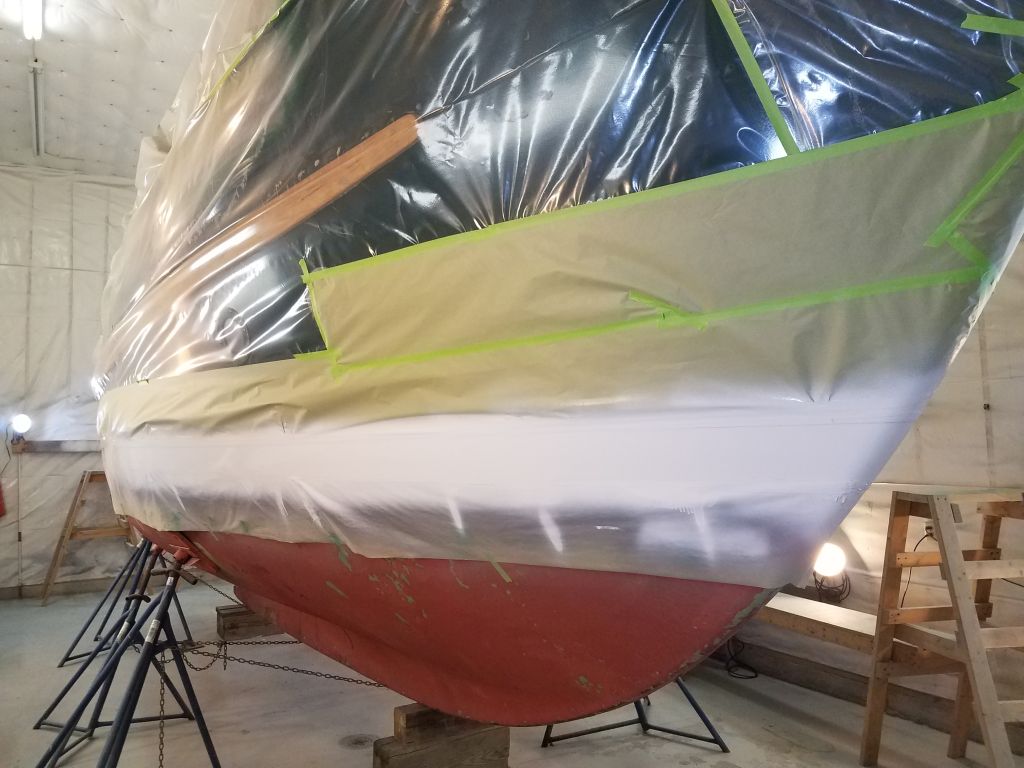
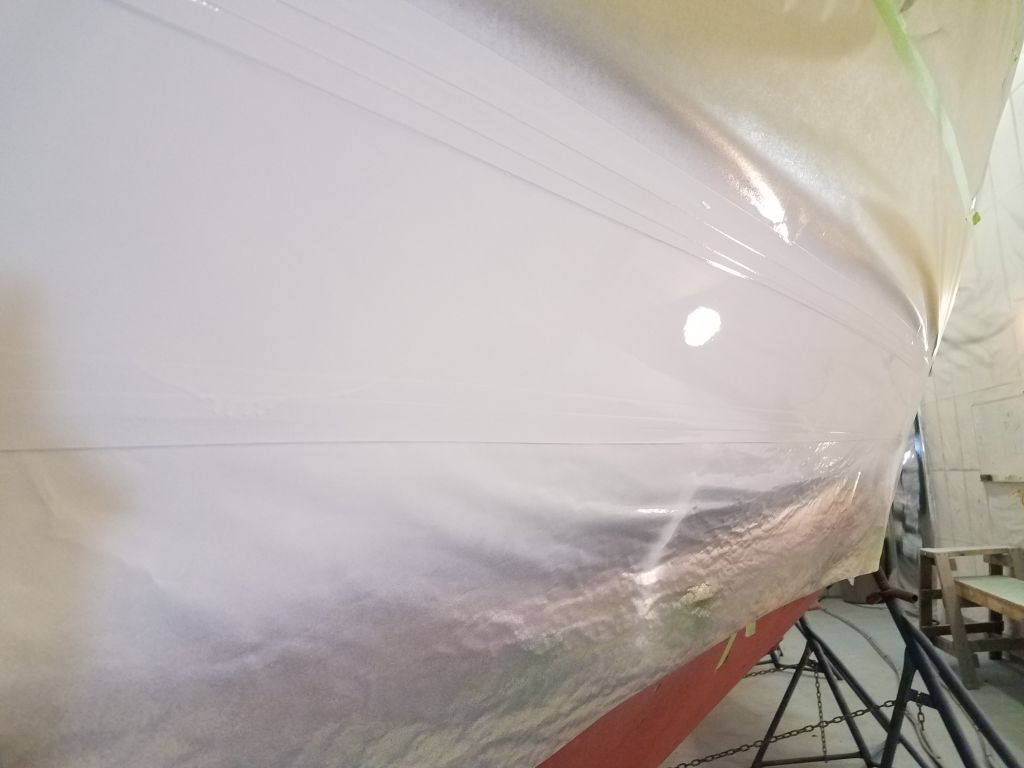
After cleaning up from the minor sanding, and happy with the overall condition of the hull at this point, I turned to the final masking chores.  In addition to minor repairs to existing tape, this included masking off the edges of the bulwark woodwork that I’d left open before, as well as the large rubrails on both sides.  At the bow and stern, I added masking paper above the caprails for extra protection and to avoid the problem of paint flaking off the plastic during the three-step painting process to come.  Various through hull fittings piercing the topsides had been painted previously, and I planned t prime and paint them this time as well, so I balled up masking tape and filled the through hull openings to prevent overspray and dust from getting into the fittings and hoses within.

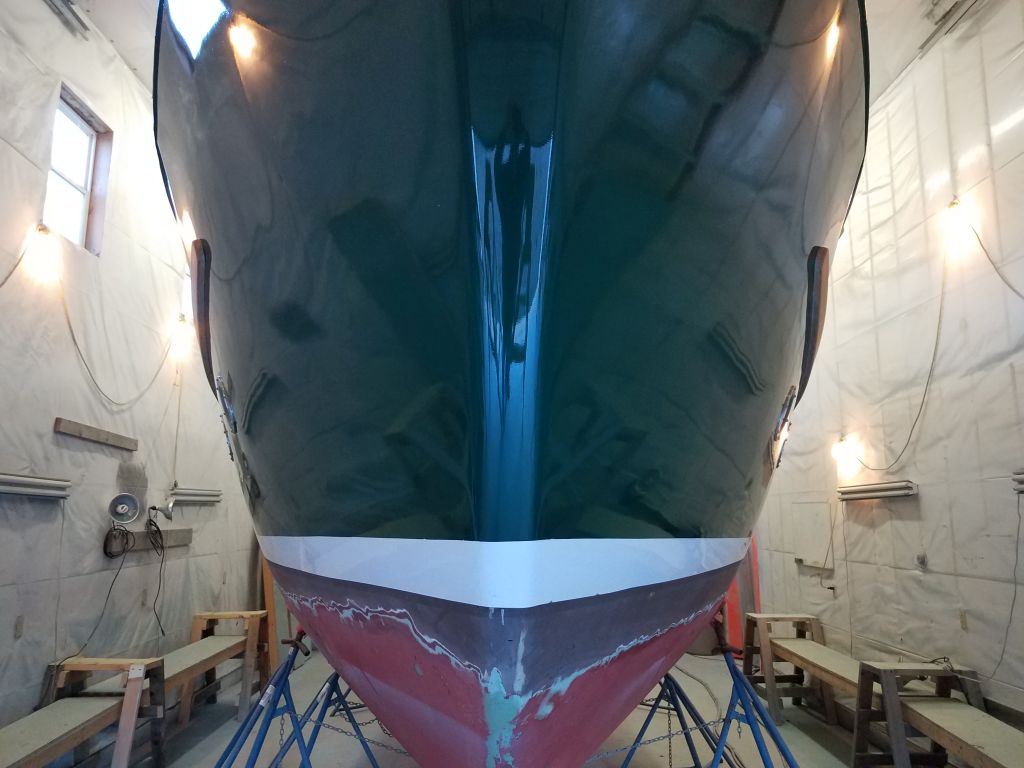
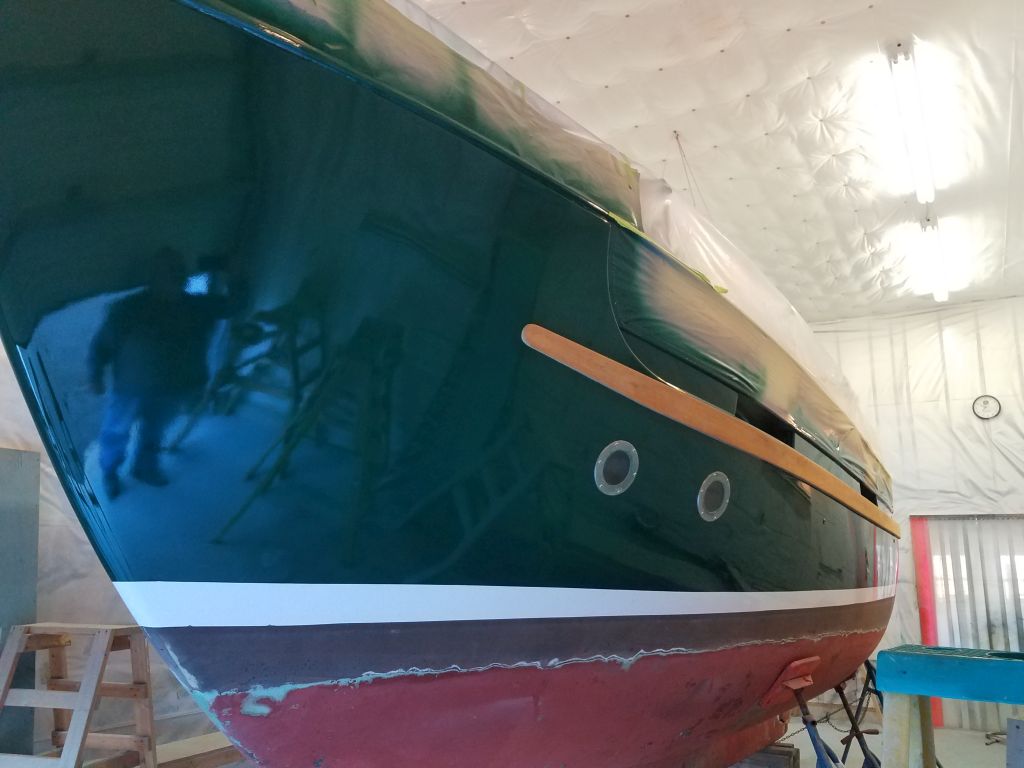
Reviewing my notes from early in the project, I measured and remarked the original/actual waterline marks, starting at the bow.  This measurement was for the actual observed scum line, which was indicative of the true floating position of the boat.  With this as a generous guideline (I always erred on the higher rather than lower side for the base measurements), I made a new mark 2-1/2″ higher than the first, choosing this as a good height for the new top-of-antifouling line, which would not only look good but also keep the new topside paint well clear of the water to avoid fouling and damage to the paint from constant immersion.  The new mark was 2-1/2″ higher in a truly vertical (i.e. visual) manner, not measured along the hull itself.  I used a small level and straightedge (held perpendicular to the level at the appropriate measurement) to move the reference mark up the appropriate visual height, as shown in one of the photos below (which photo I took for illustration only, so ignore the fact that the level bubble is off as I only intended to show the basic process and couldn’t accurately hold everything while taking a photo).  Finally, I set up a horizontal beam across the stem at the correct height, which I’d use to strike the lines down the sides of the hull.

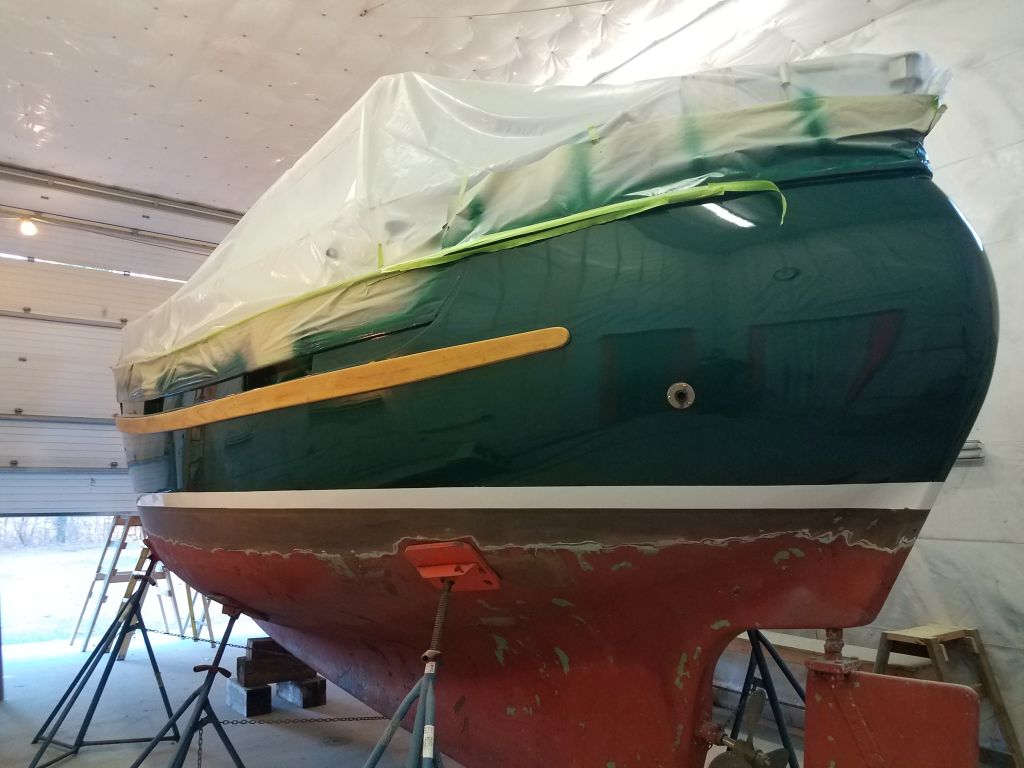
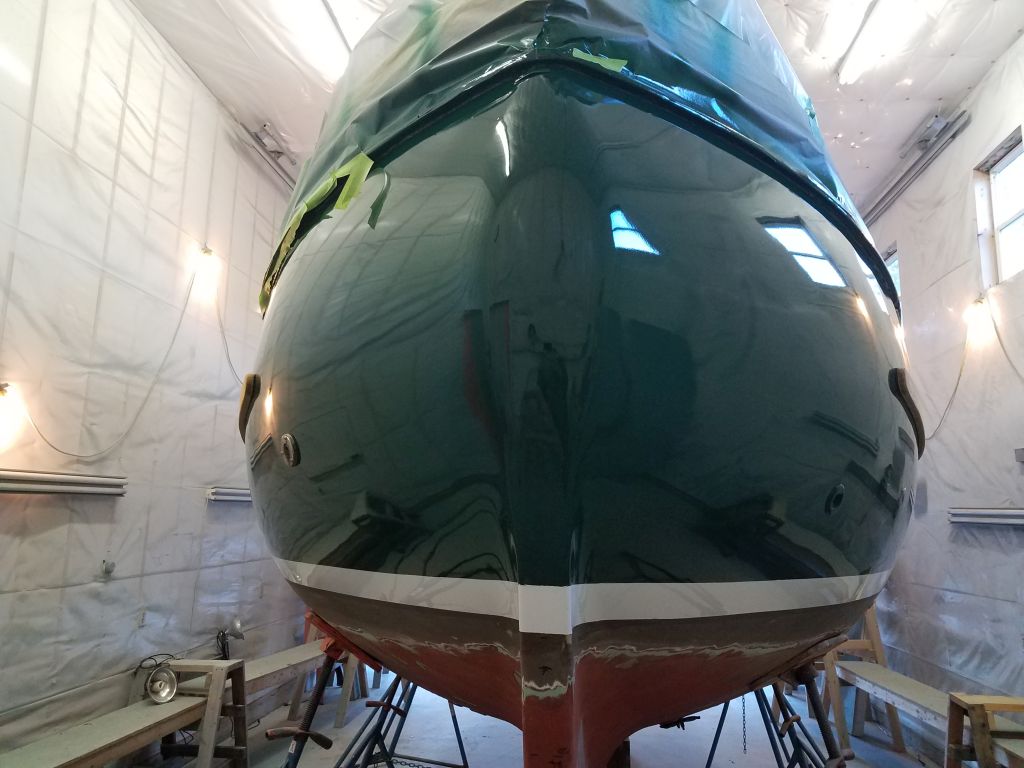
Afterwards, I repeated the process at the stern.

With a line strung taut between the fore and aft beams (and the boat already level from side to side, as you may recall), I struck the new waterline, or, more specifically, the bottom edge of the new topsides finish.  My analog, visual process ensured an accurate and straight line as I drew the string closer to the hull in increments, taping it in place to prevent movement and making a series of tick marks on the hull to demark the new straight, planar line:  first from amidships to the bow, then to the stern, and on both sides of the boat.    Remember that I removed the existing bottom paint well below the original lines, so this immediate visual reference caused a skewed perspective of things that had me double-checking my measurements and original photos carefully to ensure the new line was where it should be.

With the marks made on both sides of the hull, I masked off the new line (the top edge of the tape is the one that matters here), then applied masking paper beneath to protect the bottom from overspray.

Total time billed on this job today:  6.75 hours

0600 Weather Observation:  20°, clear.  Forecast for the day:  sunny, mid 40s

Steadfast 11

< Back to Steadfast

Wednesday

During the first part of the morning, I finished up the sanding chores around the bulwarks, wrapping up the aft end of the starboard side and then moving on to the port side.

There were a few areas on the hull that I knew required some minor filling, including a large gouge on the stem and some areas along both waterline amidships where there were some minor gelcoat voids.  Even though the waterline areas were below the level of finish paint, I still wanted to address them; they’d come to light when I removed the old paint and barrier coat during sanding efforts.  Because I knew that the gouge on the stem, at least, might well require a couple rounds of fairing filler to satisfactorily smooth out, to ensure ample time in my hopeful prep schedule leading up to primer I moved right ahead with the fill in these areas before getting into the cleanup  of the rest of the hull.  After spot solvent-washing as needed, I applied epoxy fairing compound to these areas as needed.

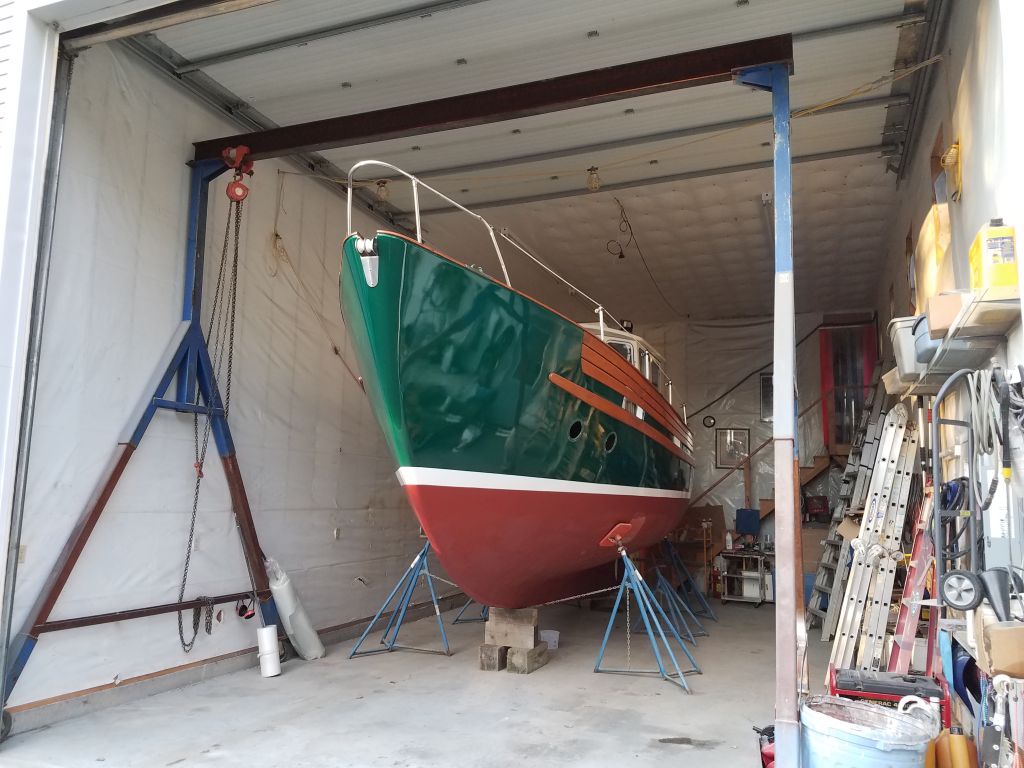
Afterwards, I cleaned up from the past week’s sanding and starting to get the shop in order for the “cleaner” work ahead.  After sweeping and blowing down, I vacuumed and solvent-washed the hull to remove sanding dust and clean it sufficiently for the final prep tasks ahead, including additional masking and any additional minor repairs.

While the solvent evaporated and aired out, I headed out to pick up my order of primer and paint for the work ahead.

Total time billed on this job today:  6.75 hours

0600 Weather Observation:  27°, clear.  Forecast for the day:  sunny, 46°

Steadfast 10

< Back to Steadfast

Tuesday

During the first part of the day, I finished up the bulk paint removal sanding at the port bow.

I switched to a 6″ orbital finishing sander and went over the hull twice more, first with 80 grit then ending with 120 grit, to finalize the surface preparations and remove the final vestiges of old paint, as well as further smooth the substrate.

The paint removal revealed several existing repairs, all of a minor nature and all in good condition with no further work required.  There were only a few small areas where the hull had been gouged or scraped in the past and would require minor filling before primer.

To wrap up the day, and with most of the major sanding complete, I focused on the bulwark recesses and freeing ports, finish-sanding these areas by hand to clean them up and remove the final bits of primer.  I made it partway down the starboard side before knocking off for the day, leaving the remainder for next time.

Total time billed on this job today:  7.5 hours

0600 Weather Observation:  32°, clear.  Forecast for the day:  sun, high clouds in the afternoon, mid 40s.

Steadfast 9

< Back to Steadfast

Monday

Continuing where I left off, I spend the day removing the existing paint from the hull, working my way down the rest of the starboard side, around the stern, and back up the port side towards the bow before finally stopping for the day at the little ports in the hull, leaving the high bow area for next time.  The next rounds of finish sanding would take care of the final remnants of old paint on the hull, as well as any final detail areas.

Total time billed on this job today:  7.25 hours

0600 Weather Observation:  60°, cloudy.  Forecast for the day:  clouds and a shower, 60s

Steadfast 8

< Back to Steadfast

Friday

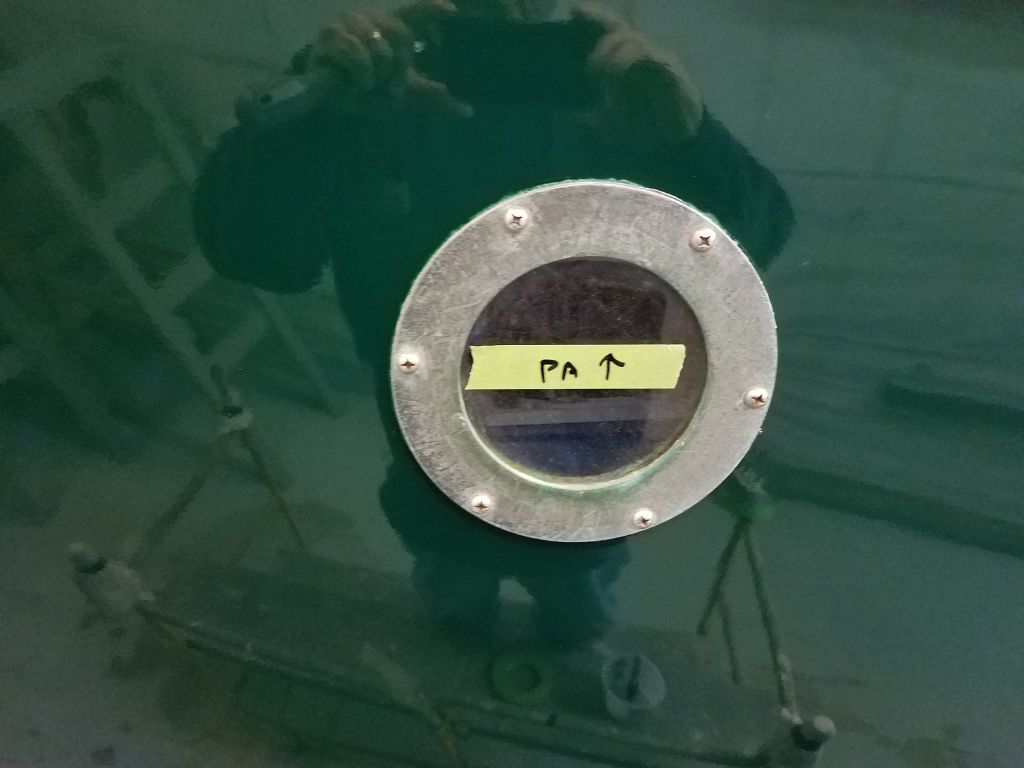
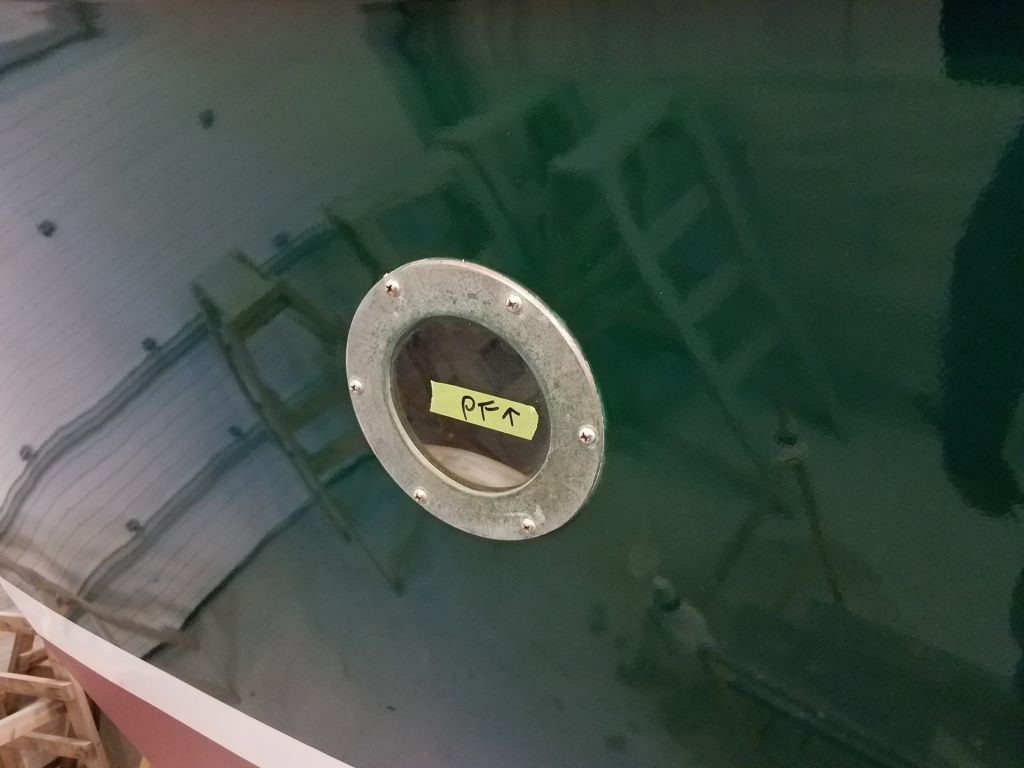
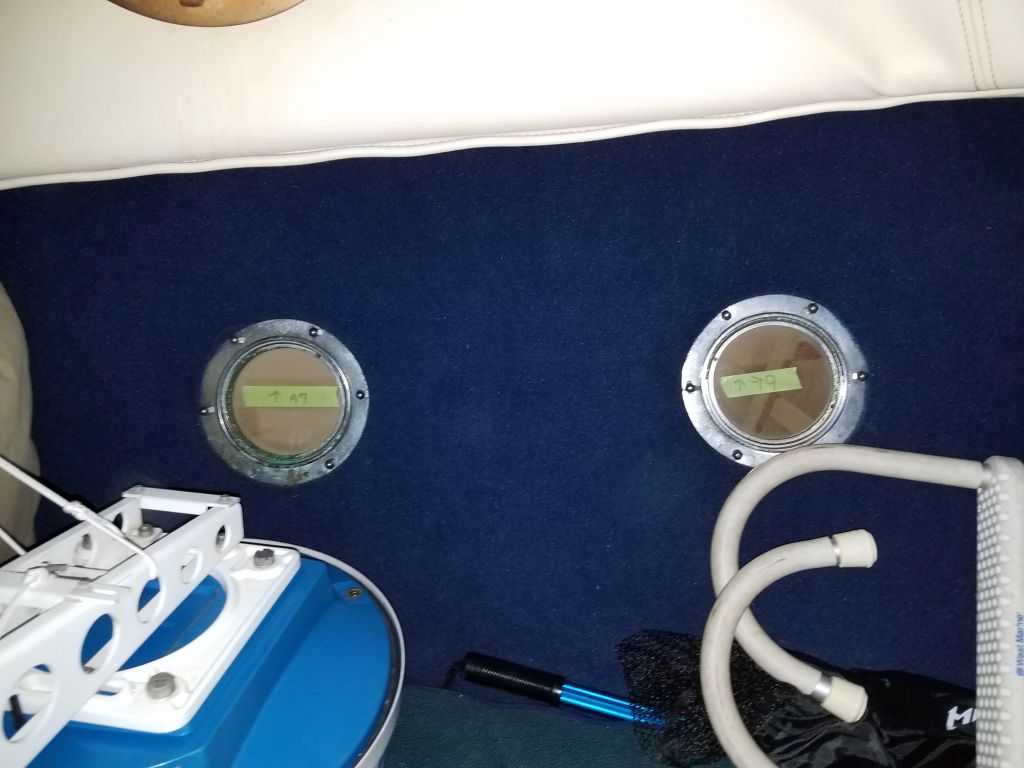
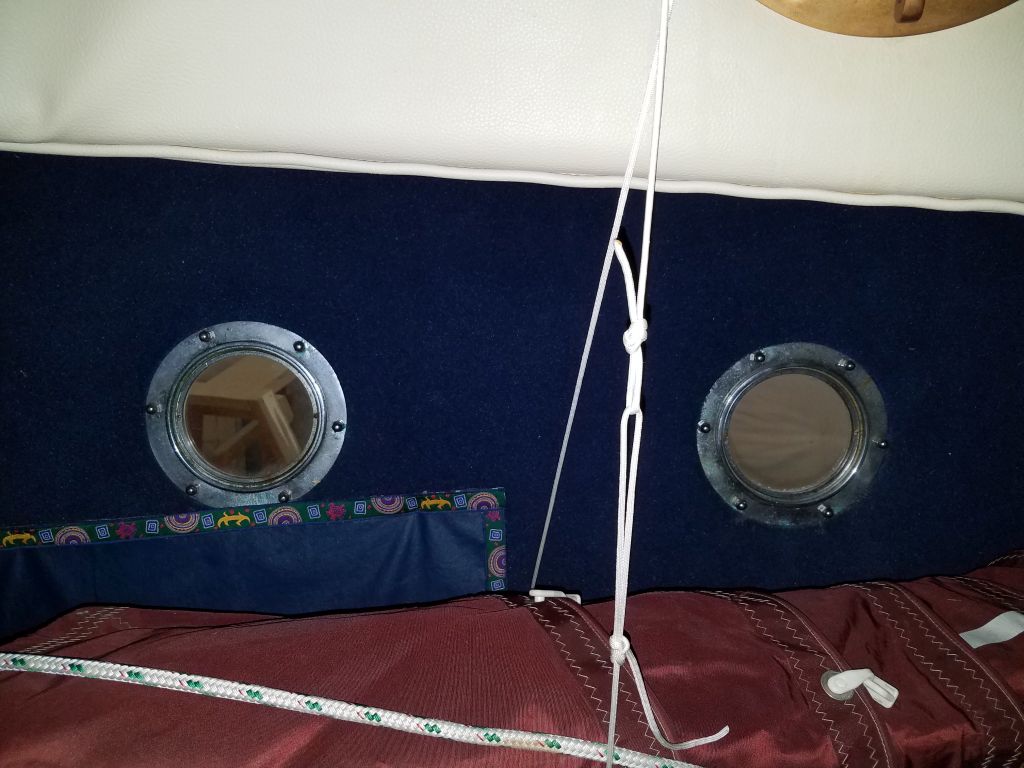
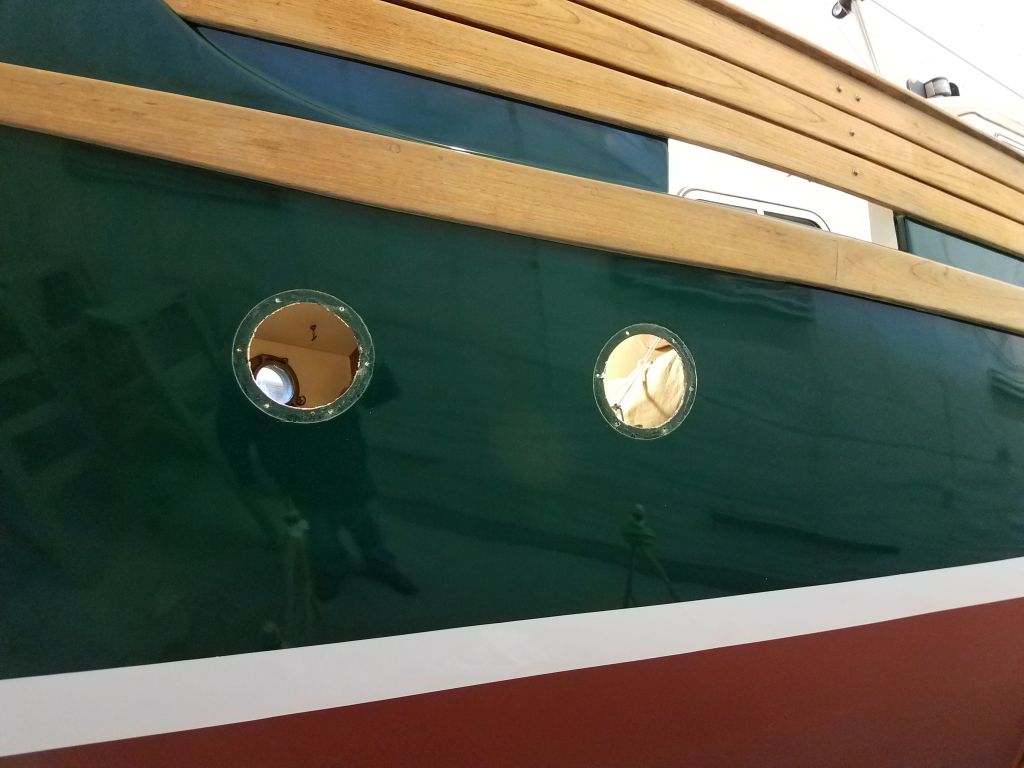
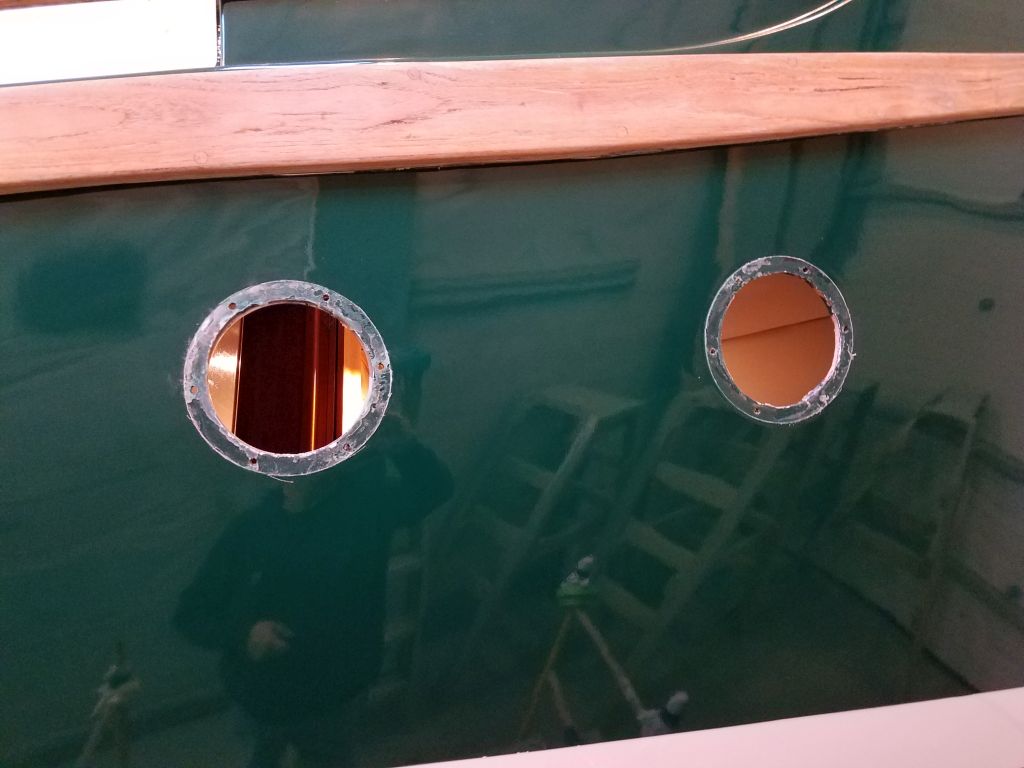
I finished up the masking at the freeing port openings, applying additional tape from the outside to seal off the gaps between the paper and the tape inside the port.  I repeated this process for all six openings, but I’ve randomly selected two to display below

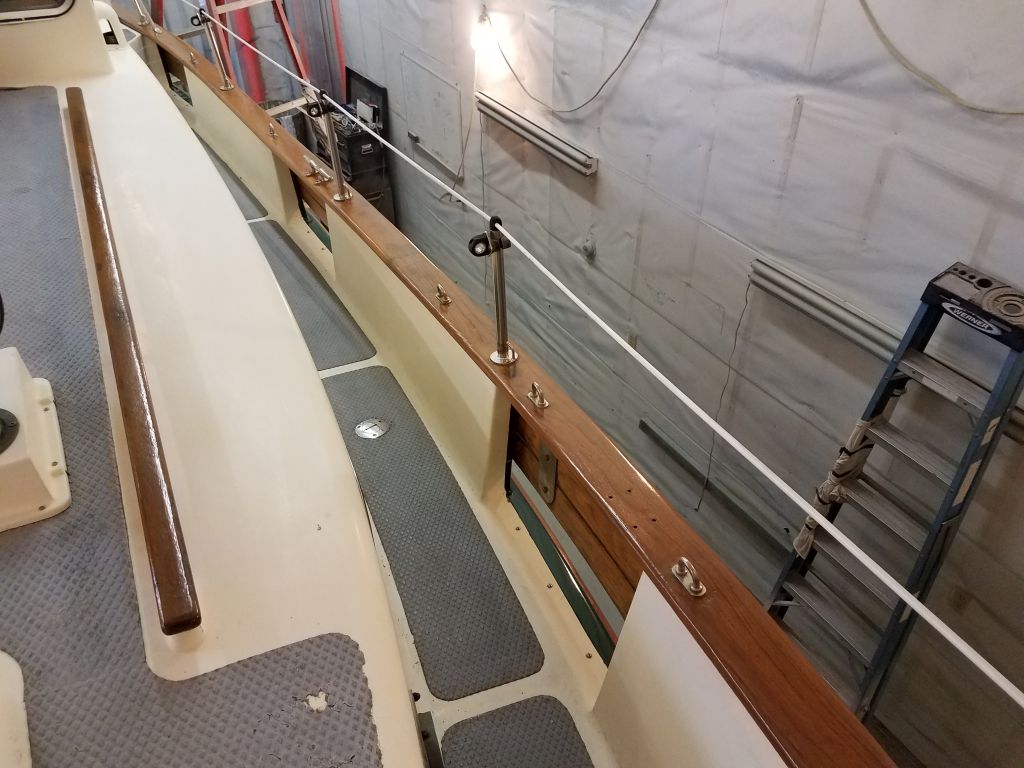
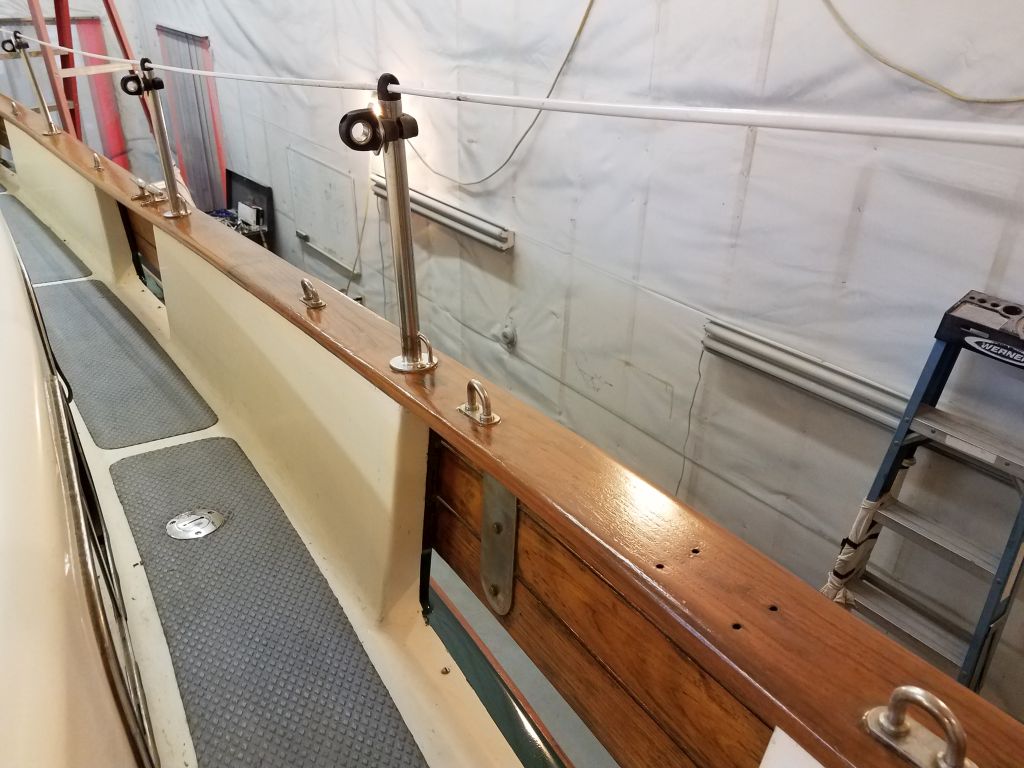
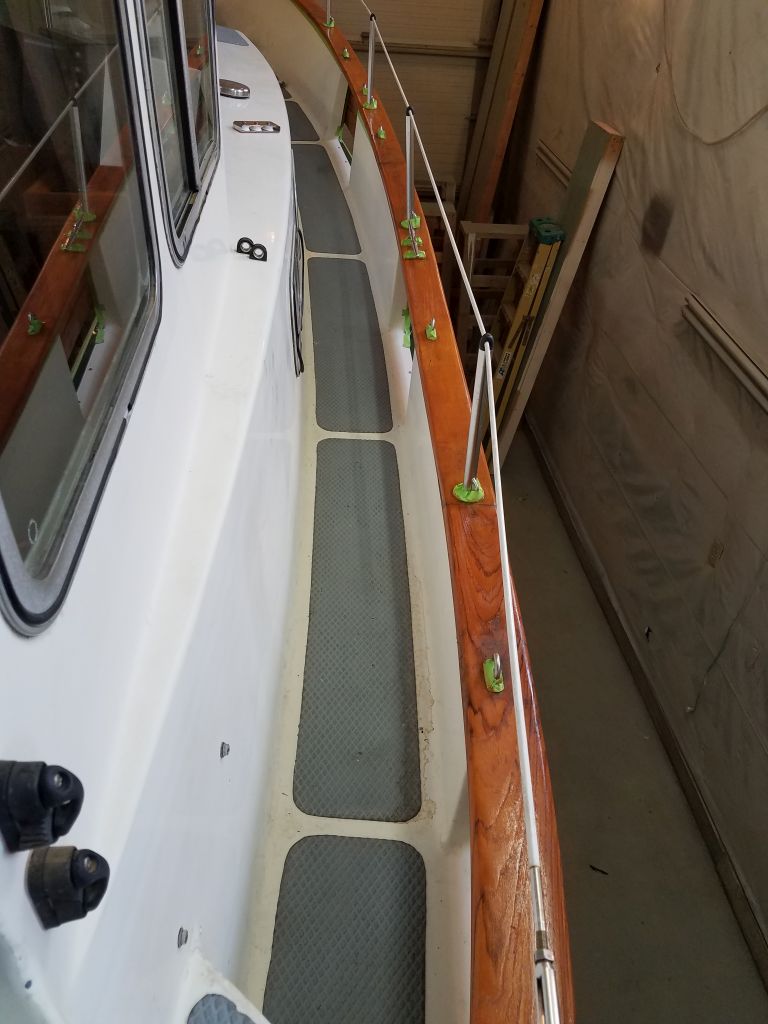
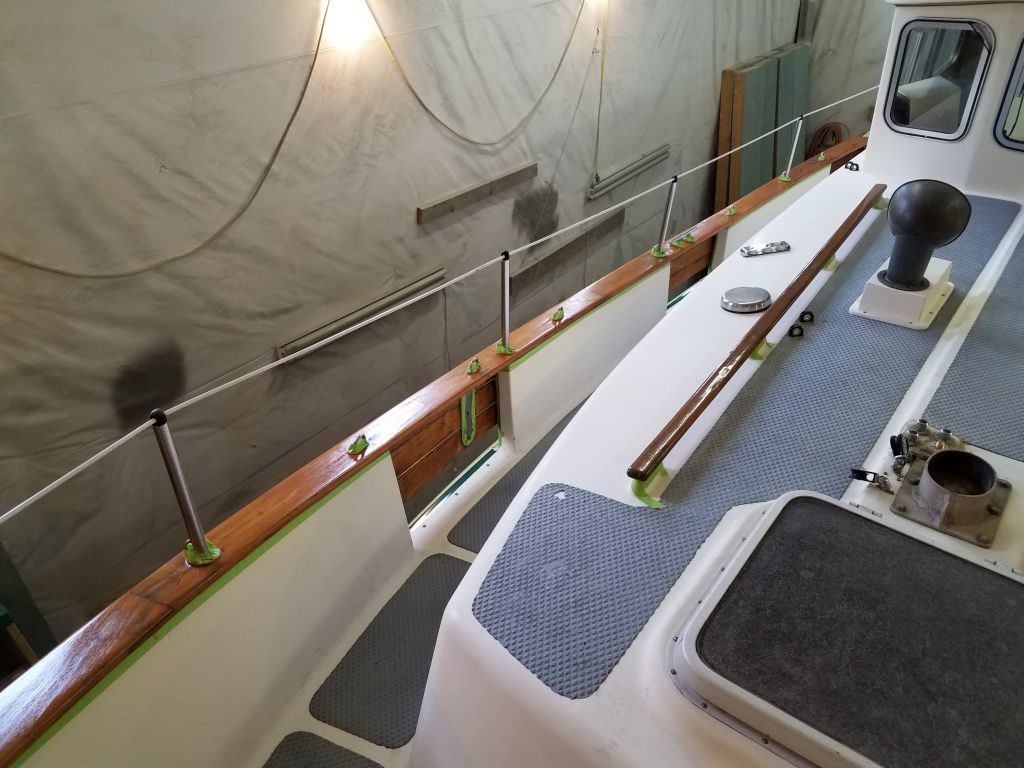
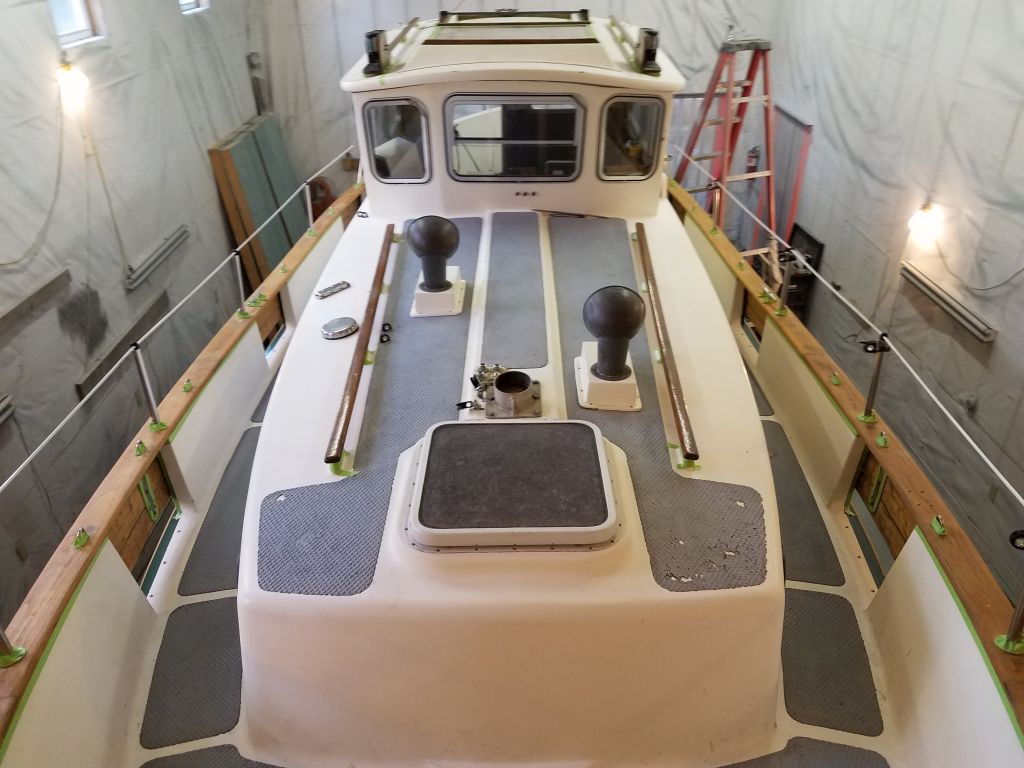
Next, I covered the bulwark strips with paper to keep out dust (immediately) and overspray (later).  For the moment, I held back the tape at the edges and the bottom of the strips, since any tape immediately adjacent to the hull was likely to be damaged during sanding operations, but once the bulk sanding was complete I’d come back and mask off the final edges of the bulwarks.

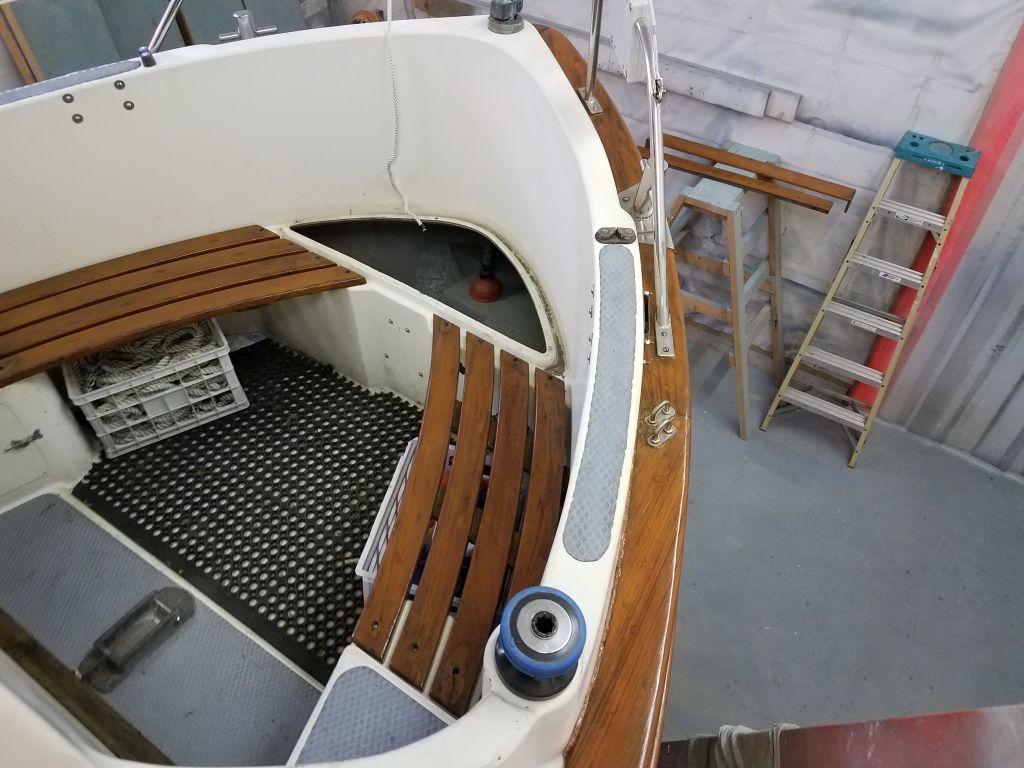
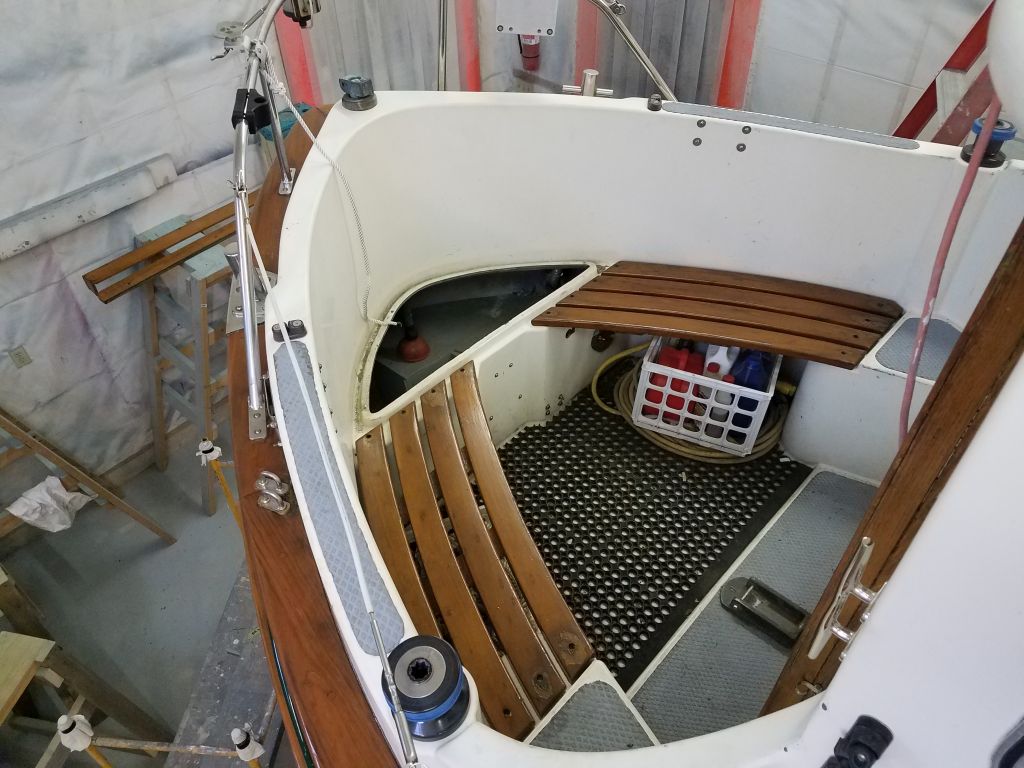
Forward and aft of the bulwark area, I masked beneath the caprails, following the caulk and paint line that already existed there, and finally, at the stem, I closed off the plastic and masked off the stem fitting and rollers to complete the job.

The owner, in contact with a previous owner of the boat, had learned that the current paint system was a well-known one part polyurethane paint.  This was good information, but alas, it meant that despite the existing coating seemingly passing all the compatibility tests, I’d now have to remove it all before refinishing with a two-part system–a possibility I’d always entertained, but had hoped not to require.

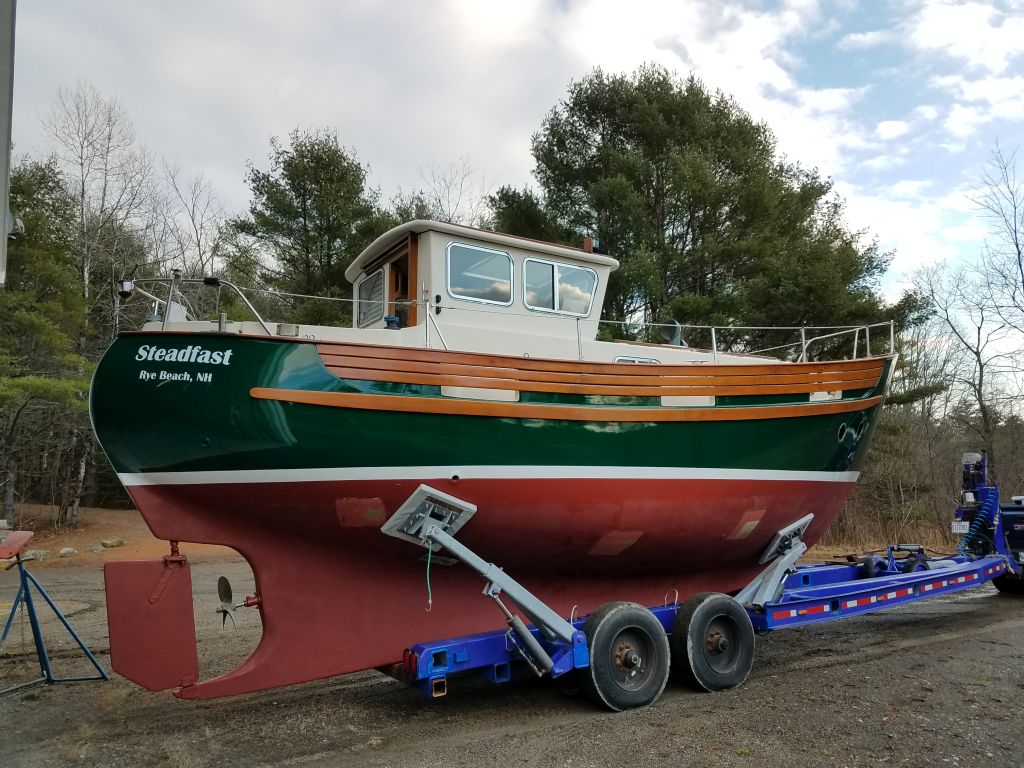
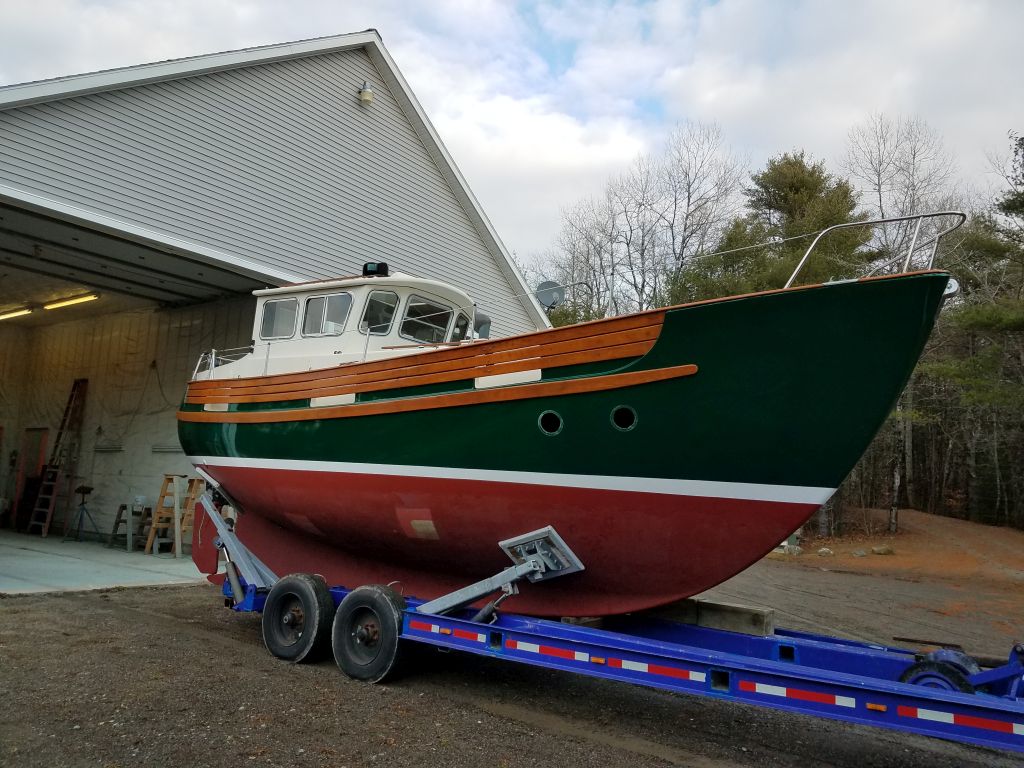
Starting at the starboard bow and working aft, I spent the remainder of the day sanding and removing the old paint more or less down to the gelcoat substrate (the boat was apparently brown from the factory).  As I started, I explored cautiously till I could determine the various paint layers and what the actual final substrate was.  I worked through 40 and 80 grits on the sander, not taking it too far with either grit and leaving spots of old primer that the next rounds of finish sanding (with a different tool and sanding grits) would take care of in due course, all to ensure that the hull remained fair.  I removed the boottop and bottom paint to a point roughly 2″ below the apparent actual waterline so I could strike anew these lines later.

There was a lot of hand work required, not only at the usual places like around the stem casting and the forward deadlights, but particularly in the bulwark recesses and freeing ports, where the exposed hull area was too narrow for a tool.  Because of the extensive nature of the hand work on this boat, I took care of these areas as I went along, rather than leaving them all for later while concentrating on the bulk hull sanding.  This helped to spread out the hand work so it didn’t overwhelm.    By the end of the day’s work, I’d made it about halfway down the hull–the “big half”, since the bold bow had much more surface area than the after portions of the boat, and to the aft end of the second freeing port.

Total time billed on this job today:  7 hours

0600 Weather Observation:  60°, mainly cloudy.  Forecast for the day:  Clouds, maybe a sunny break, then showers, high 60s.


Older posts Newer posts