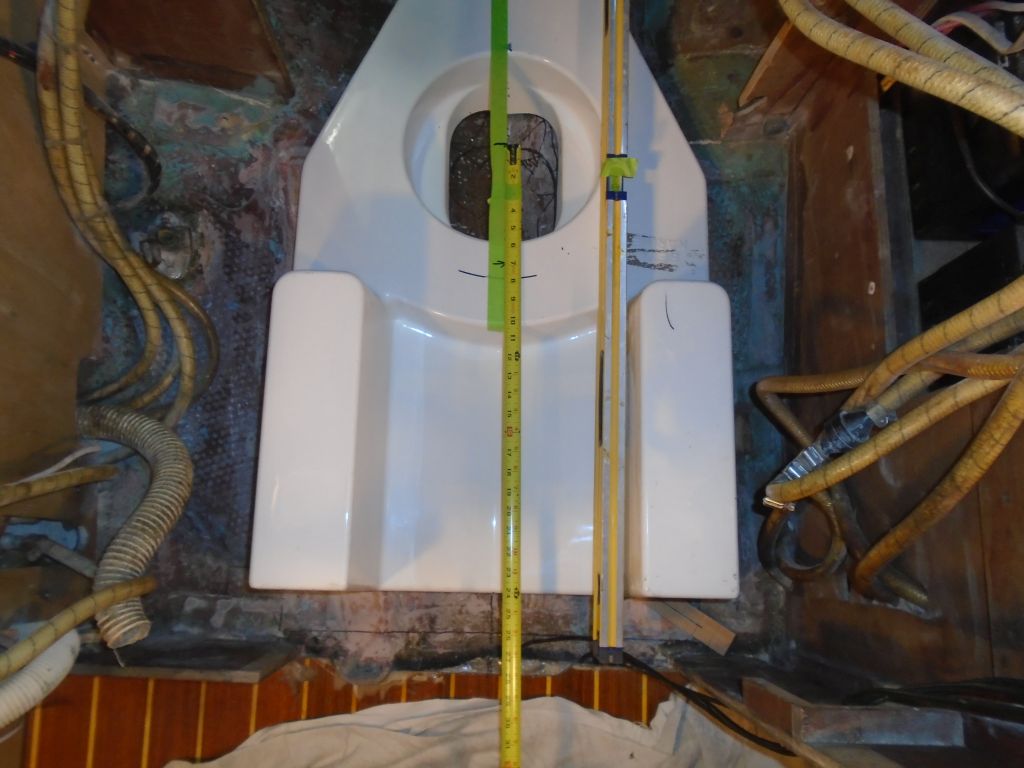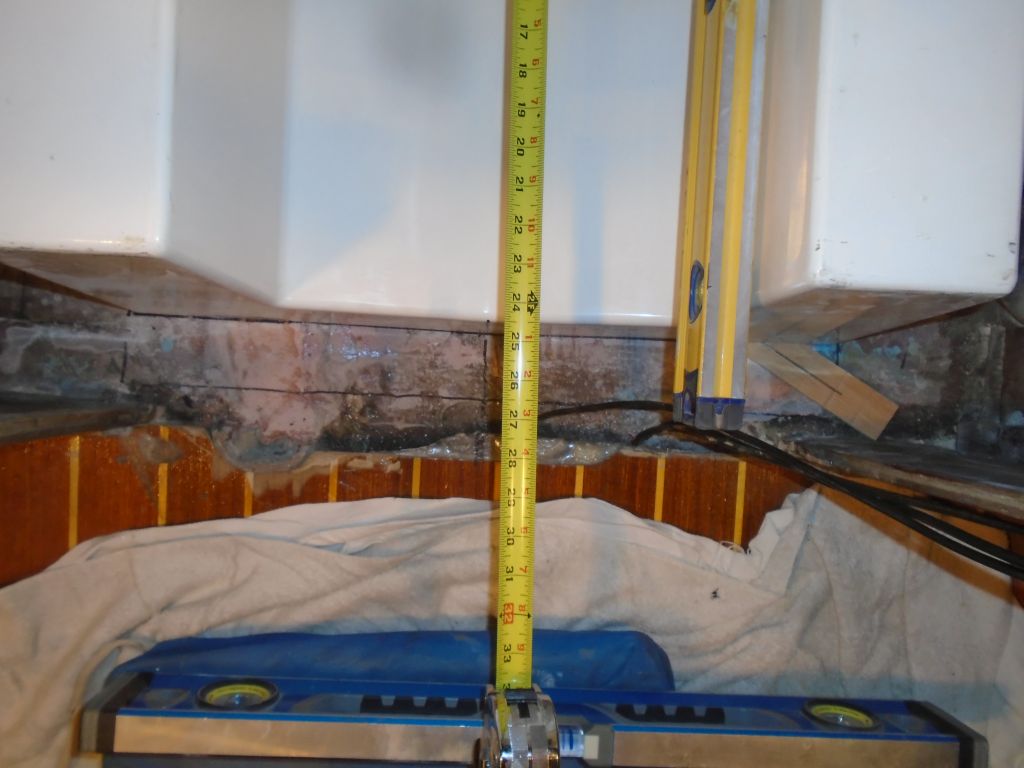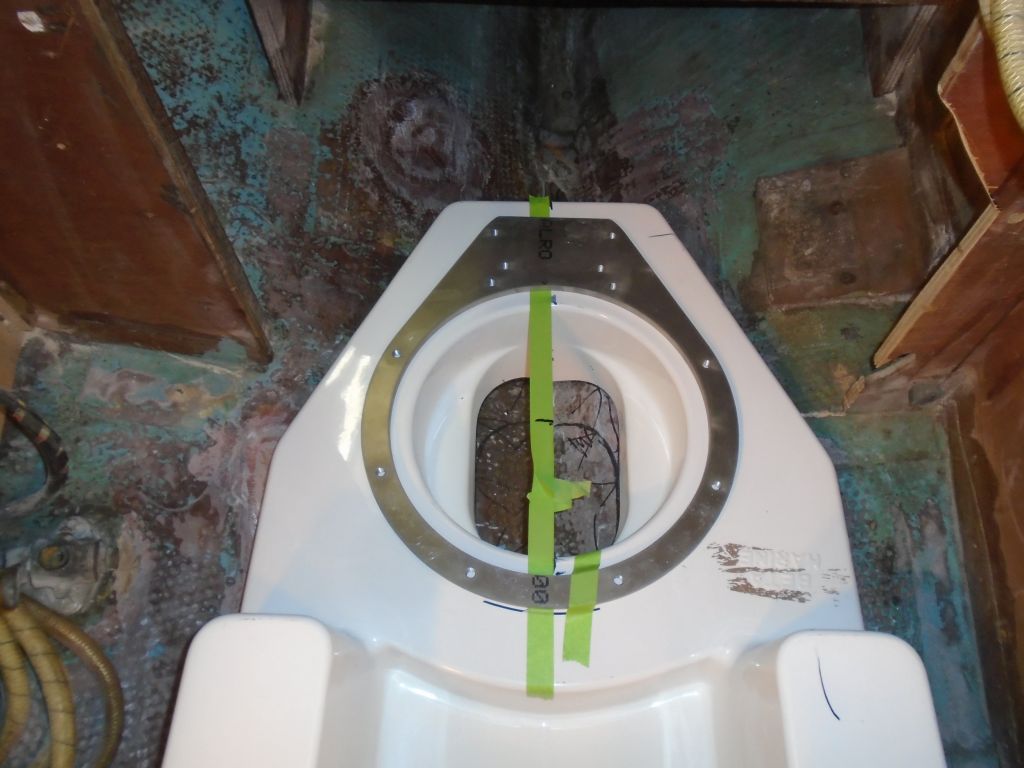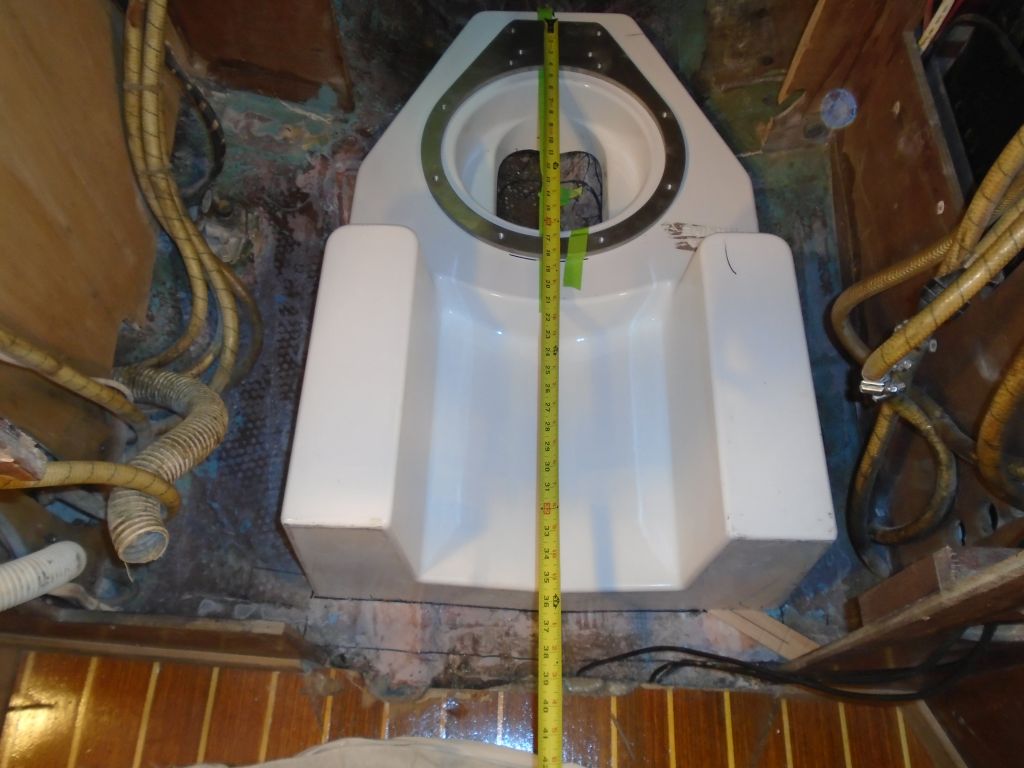

(page 142 of 166)

Acadia 3

< Back to Acadia

Wednesday

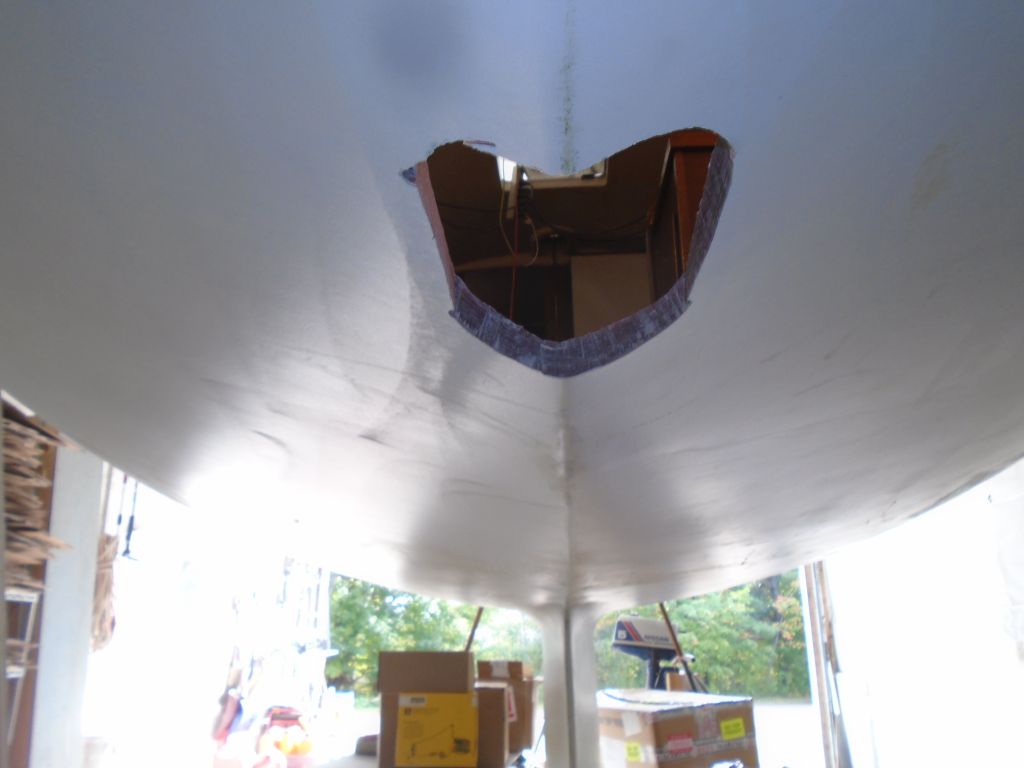
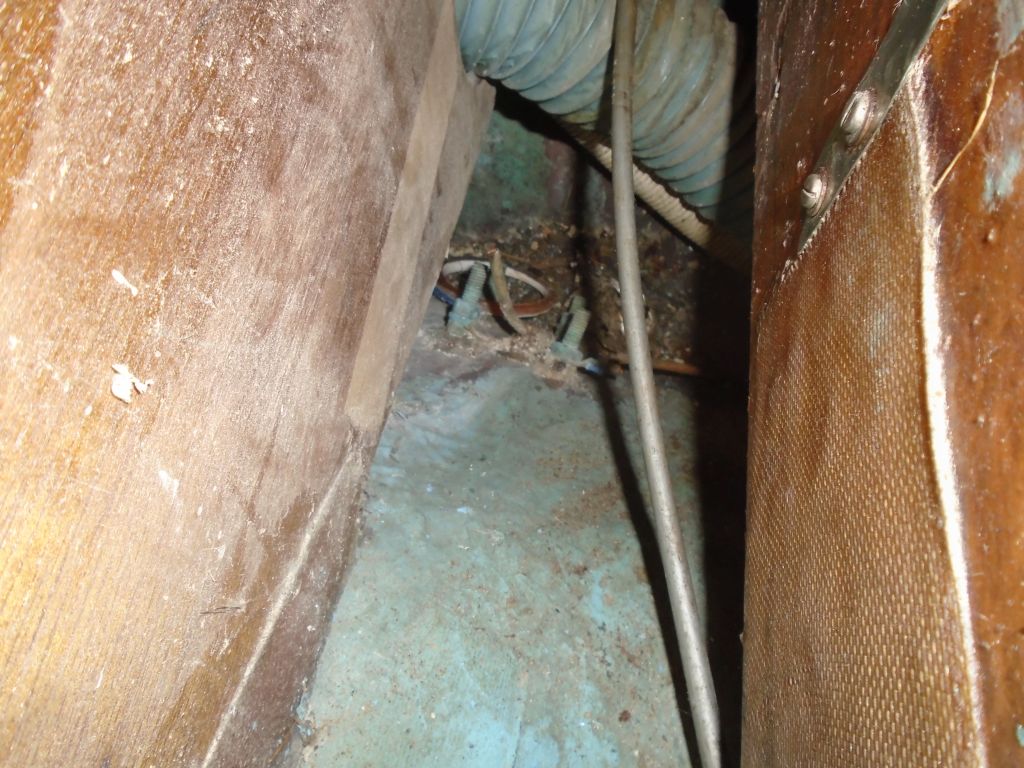
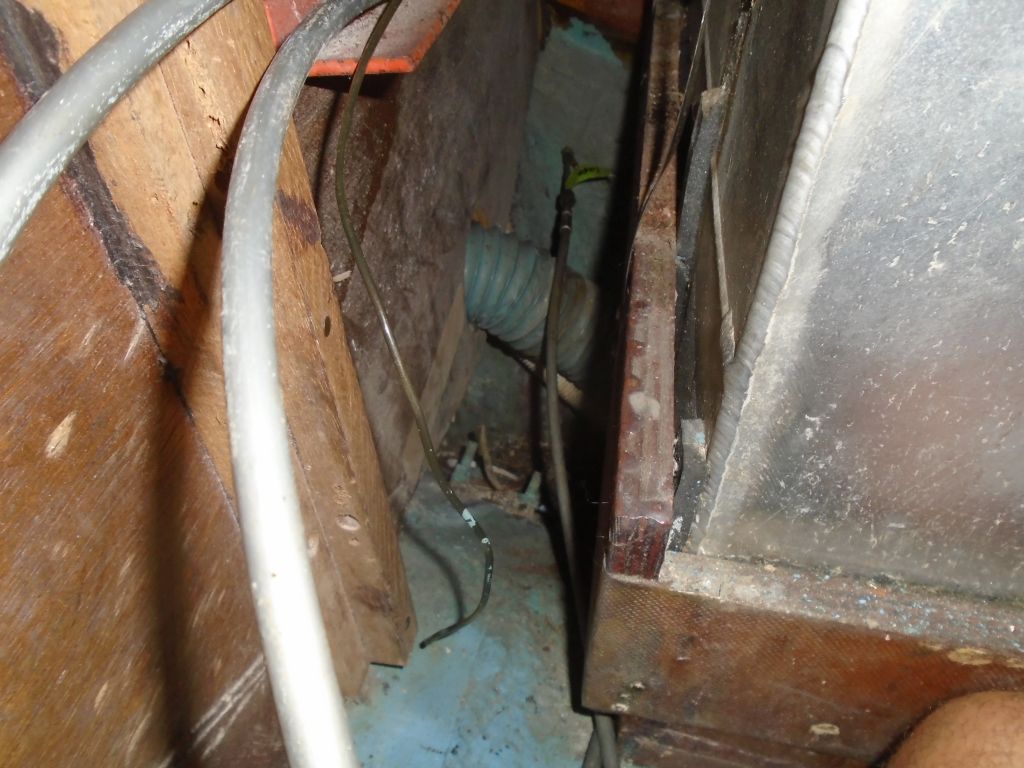
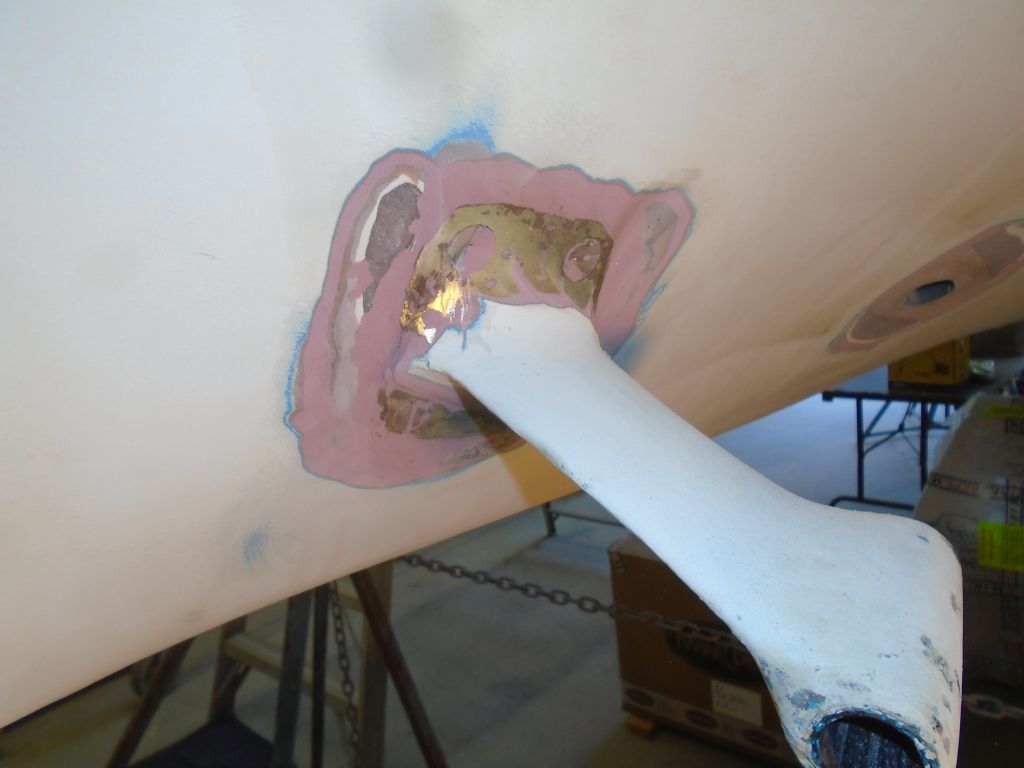
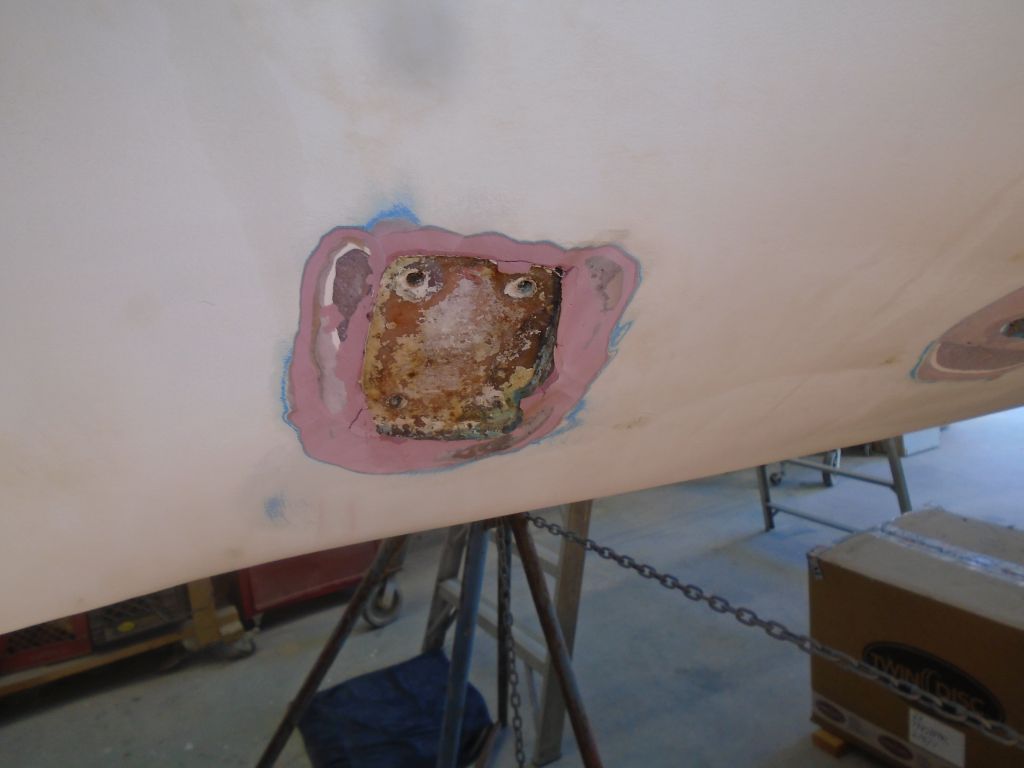
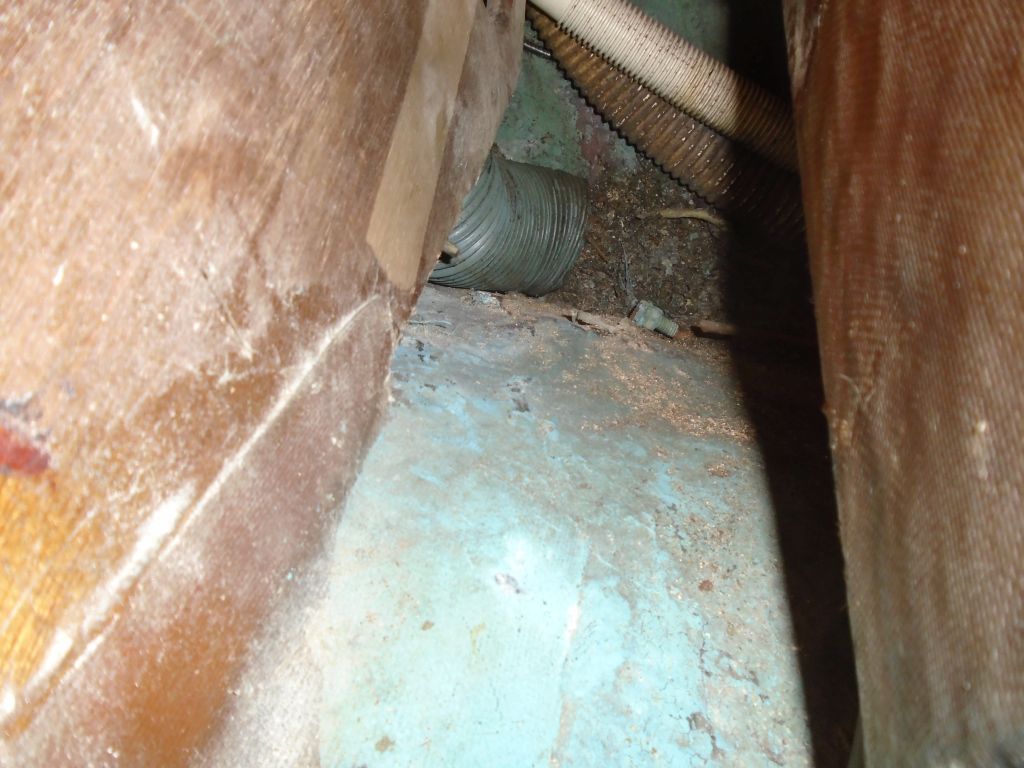
The propeller shaft support strut was now obsolete and no longer required, so I turned to its removal.  From inside the boat, there was a narrow slot providing marginal access to the fixing bolts and nuts.  My initial efforts to remove the nuts and free the strut proved fruitless, as the bolts spun on the outside when I attempted to wrench off the nuts within.

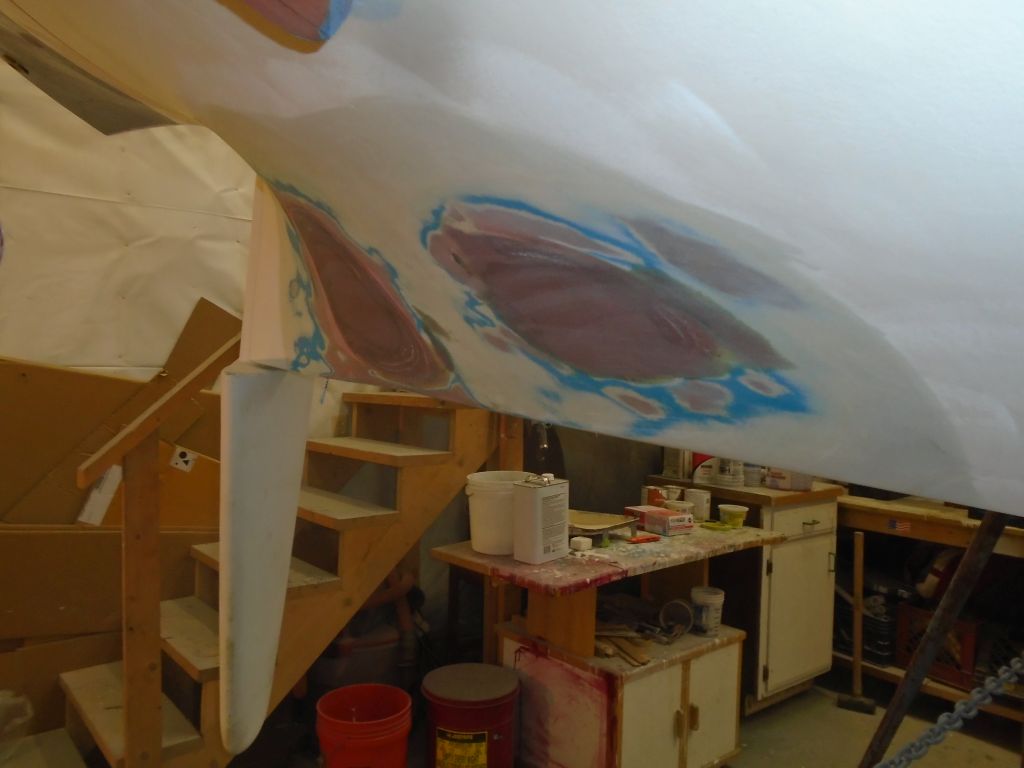
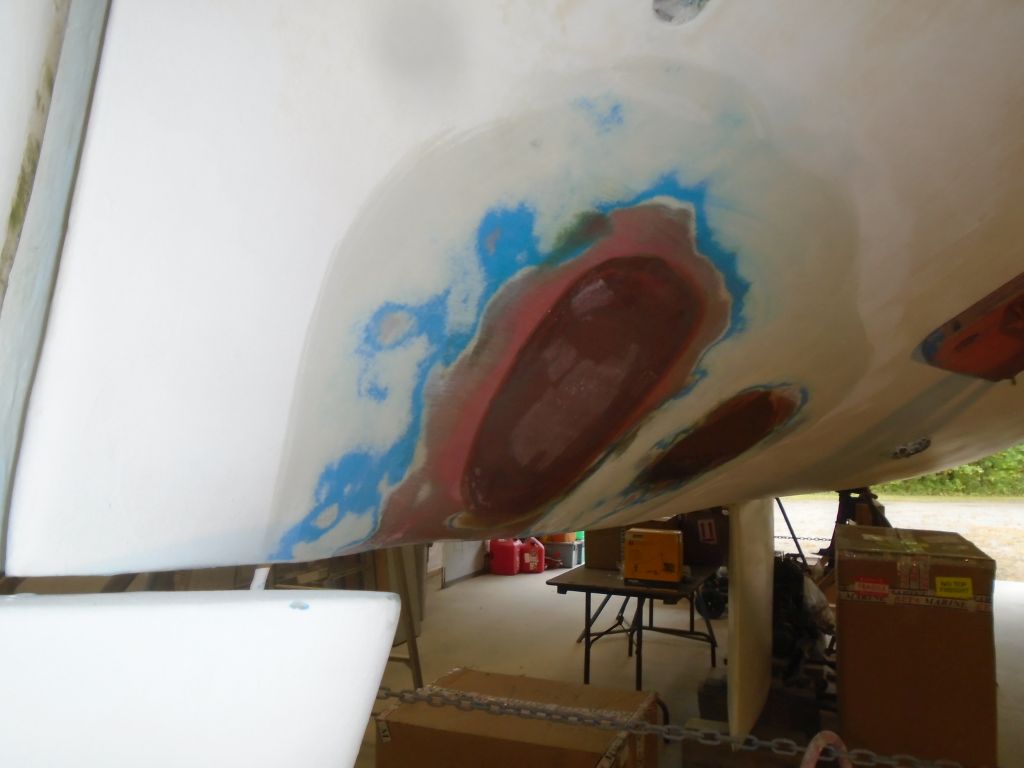
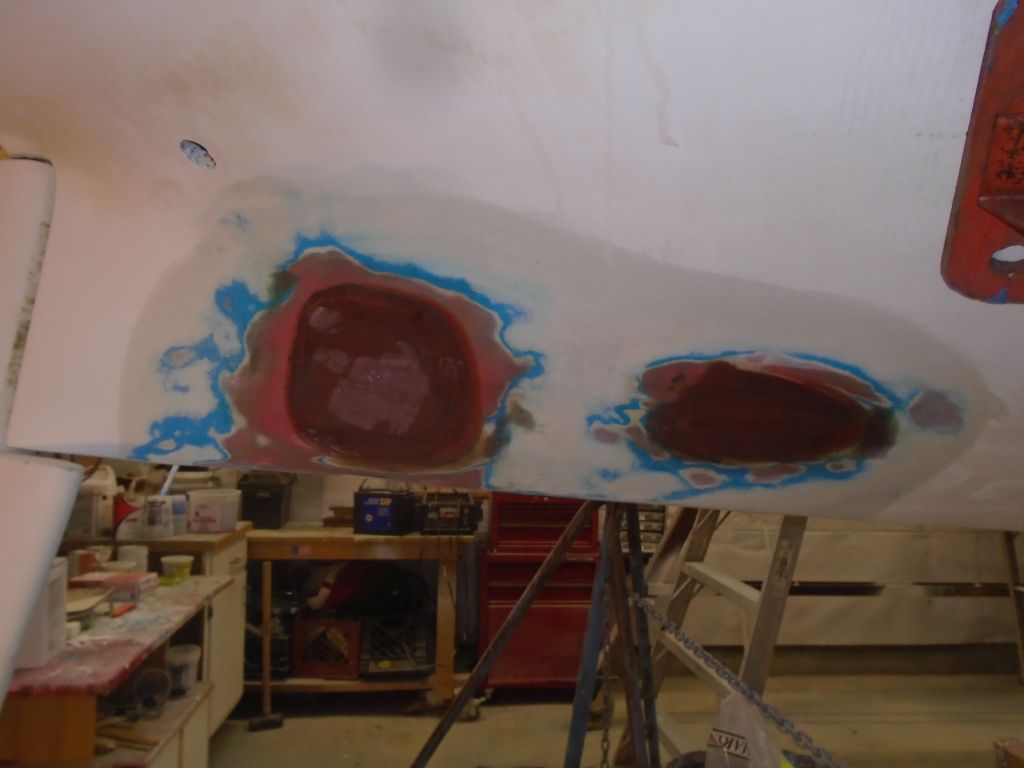
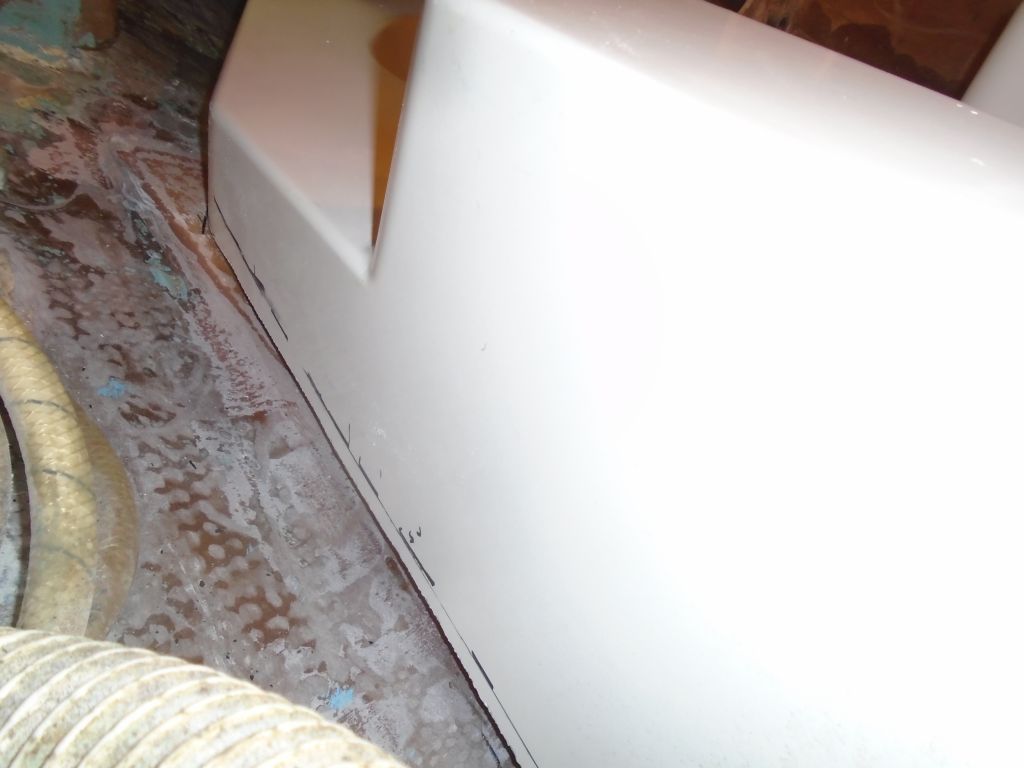
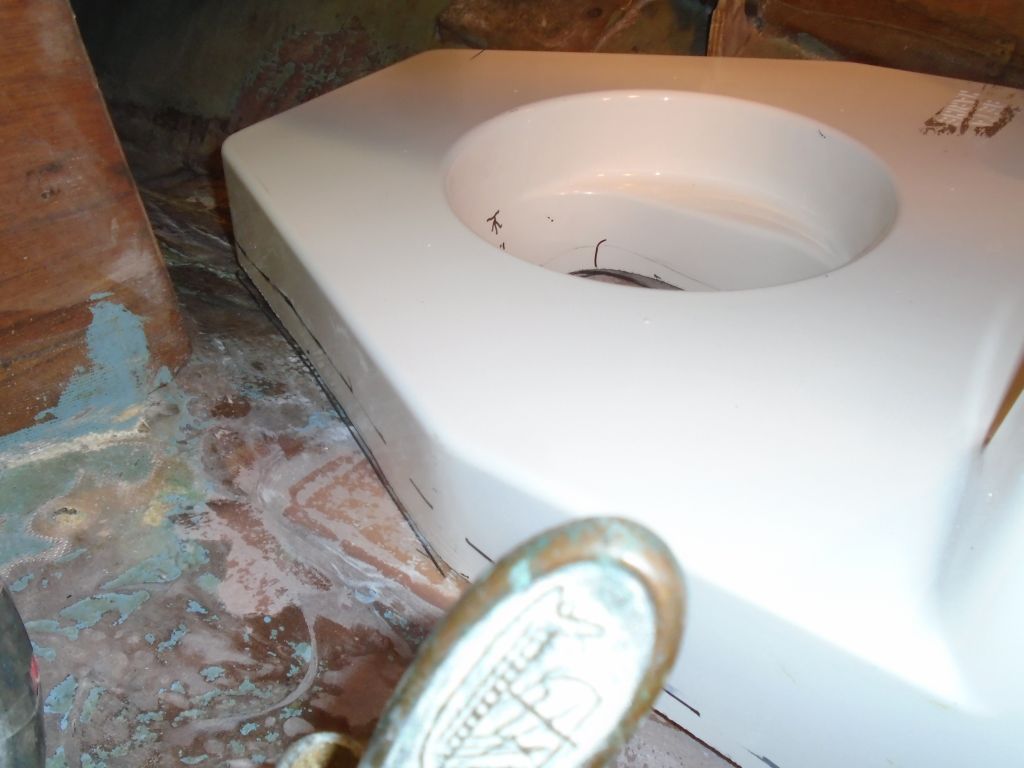
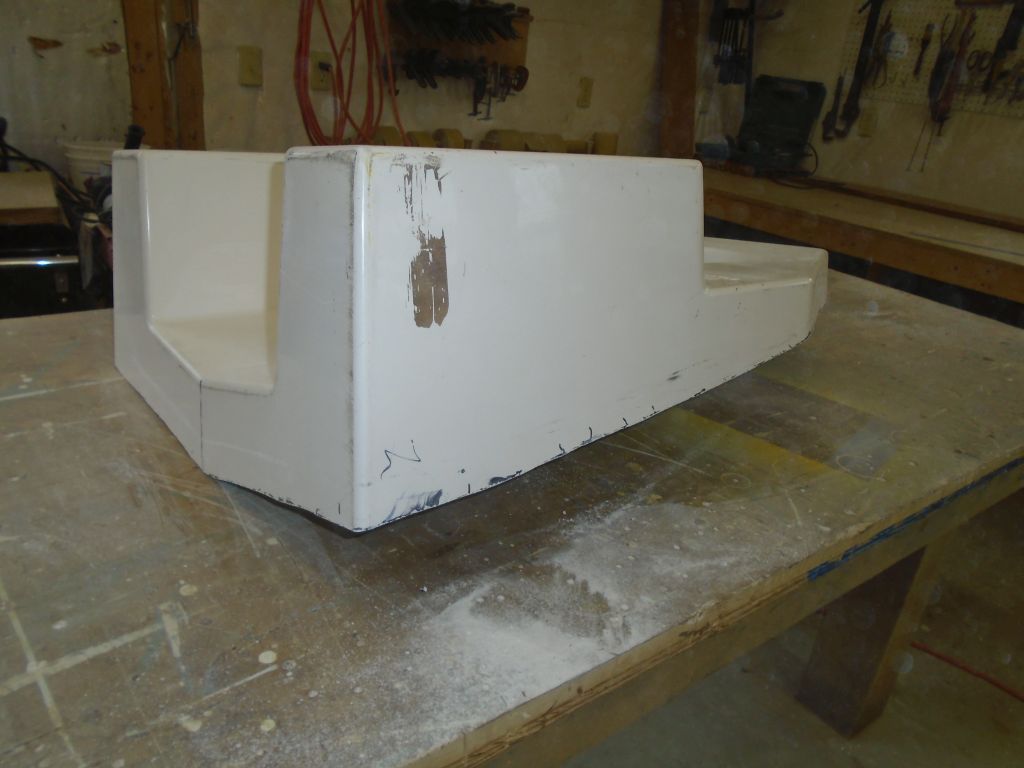
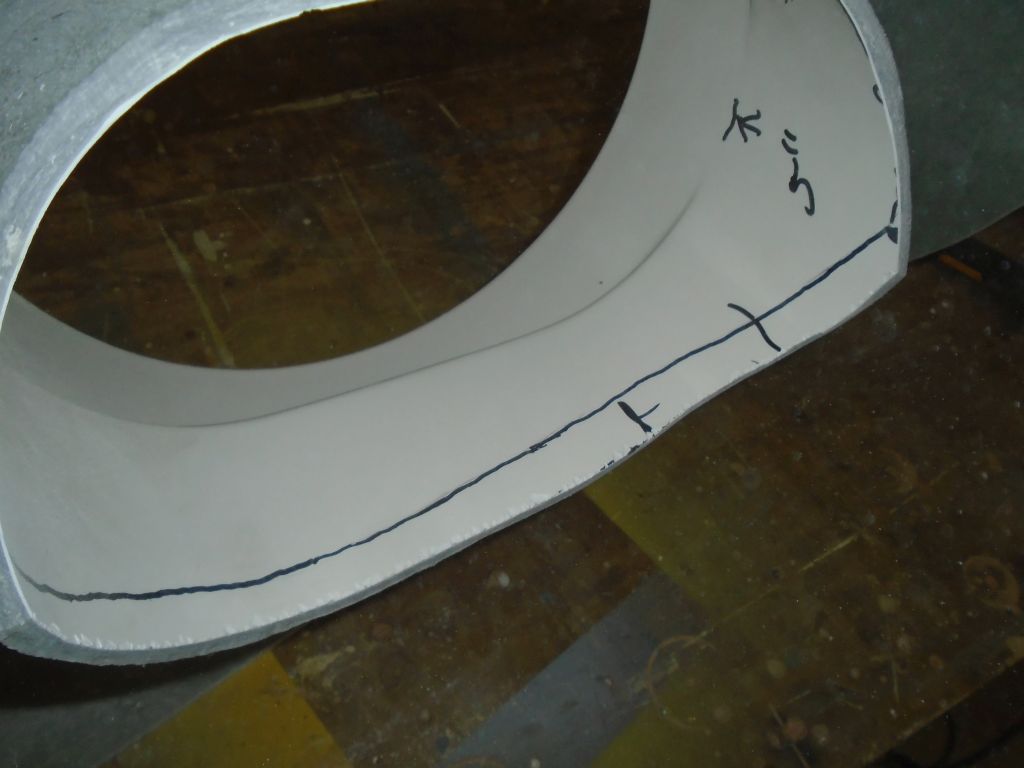
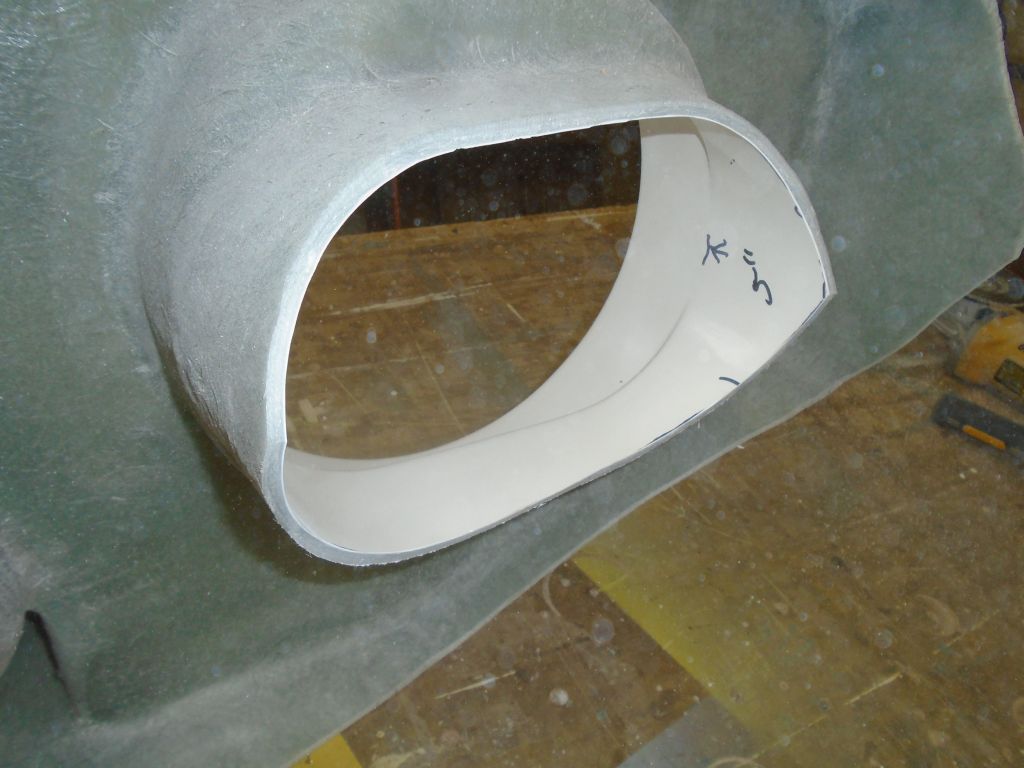
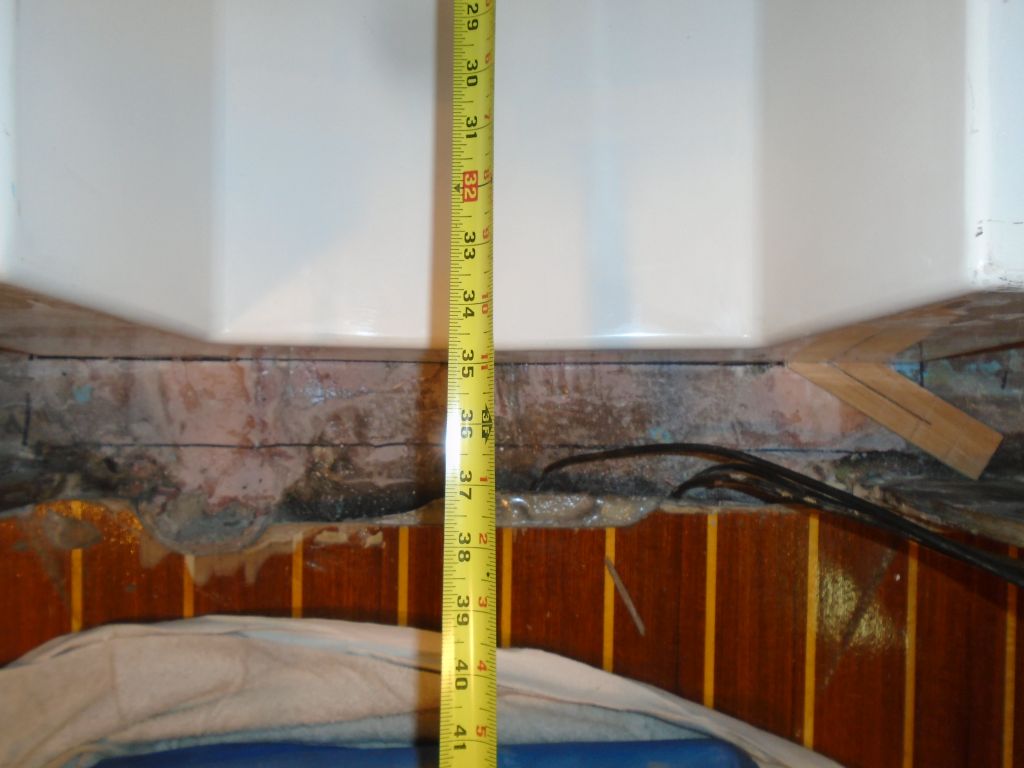
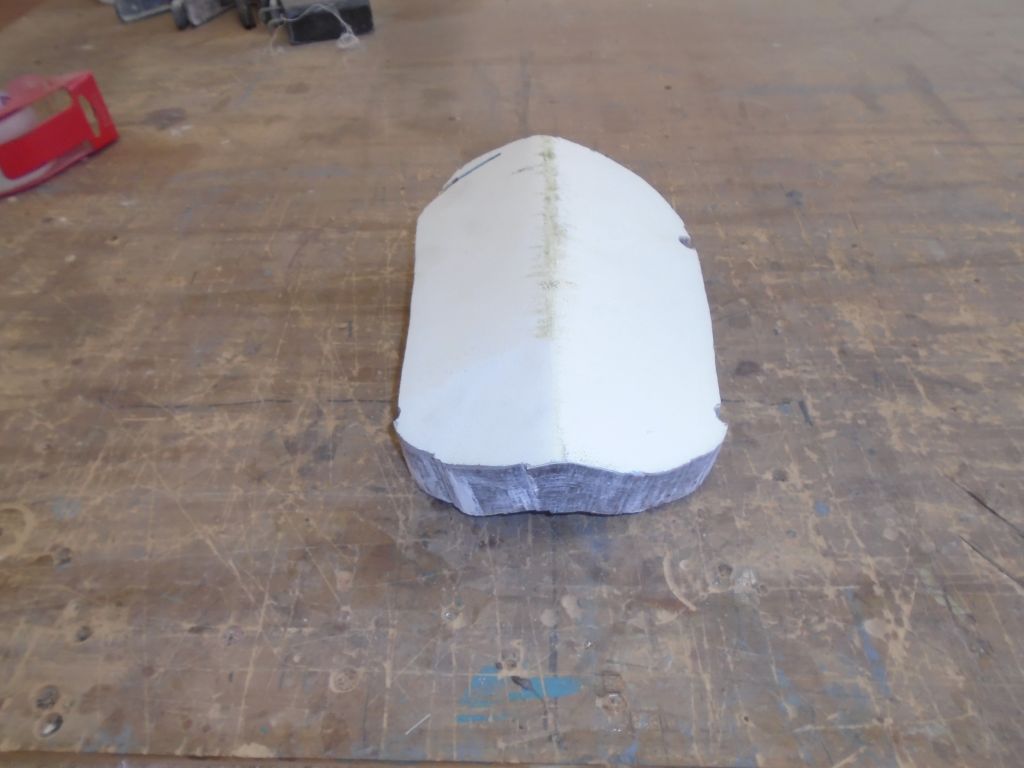
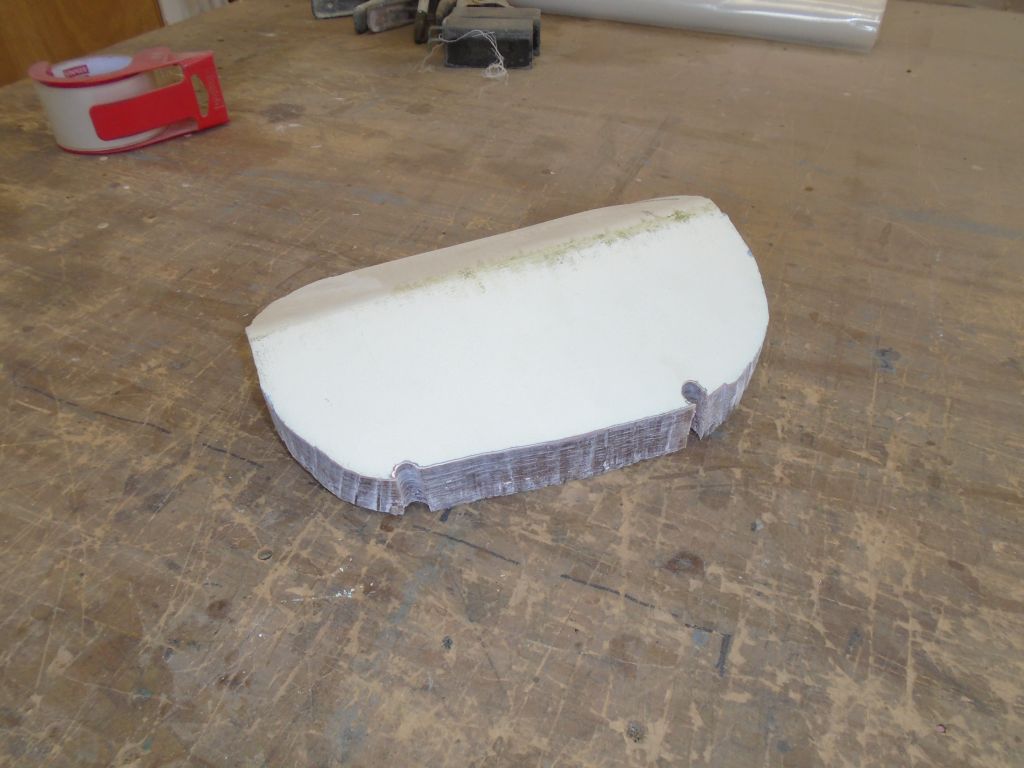
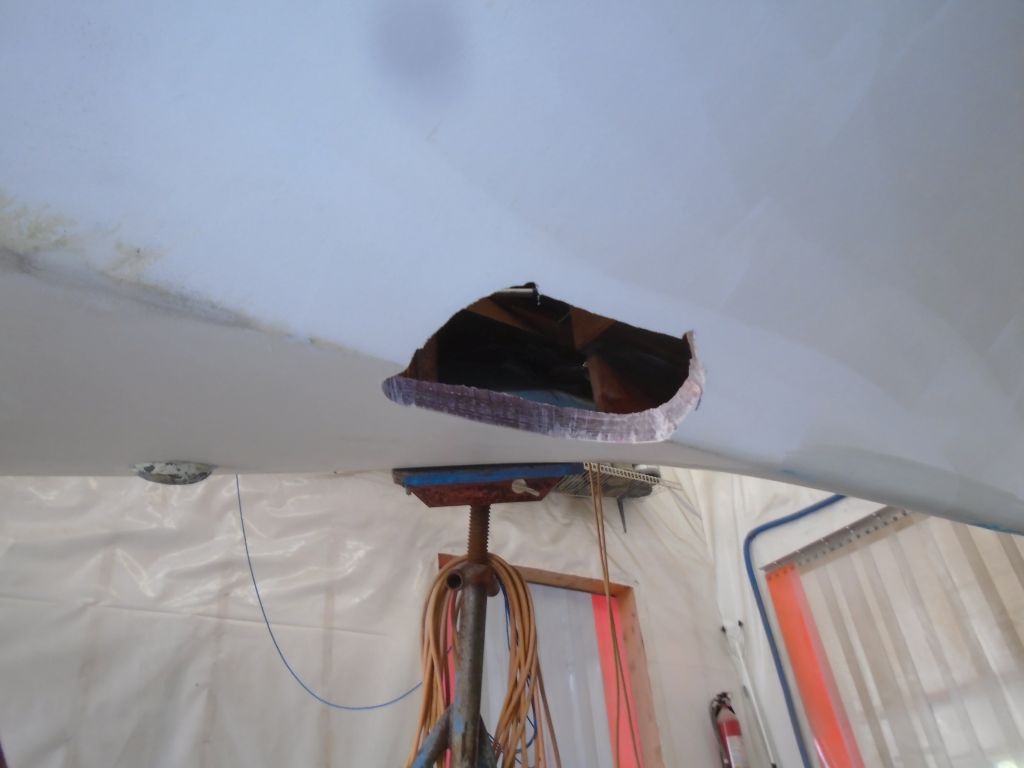
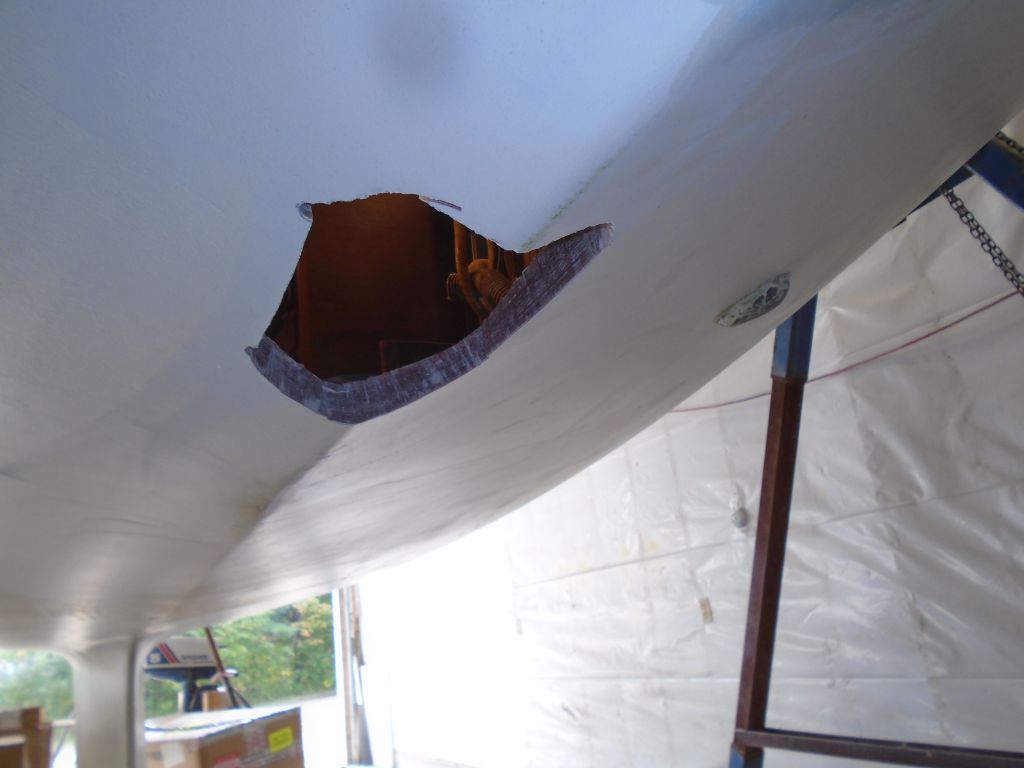
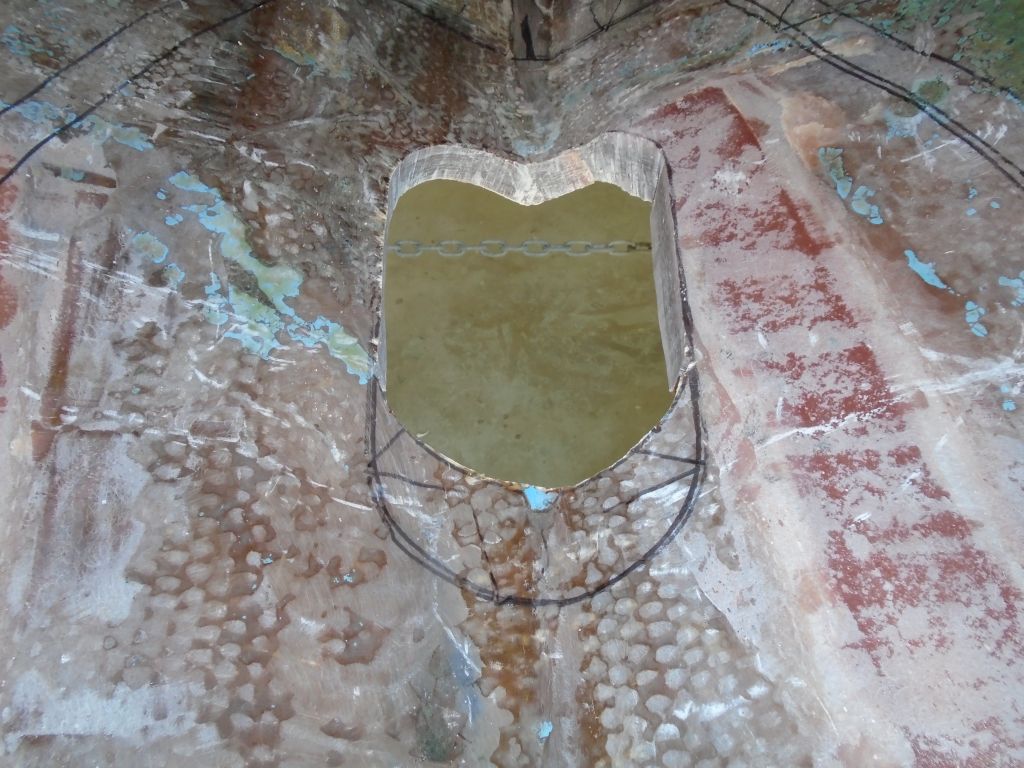
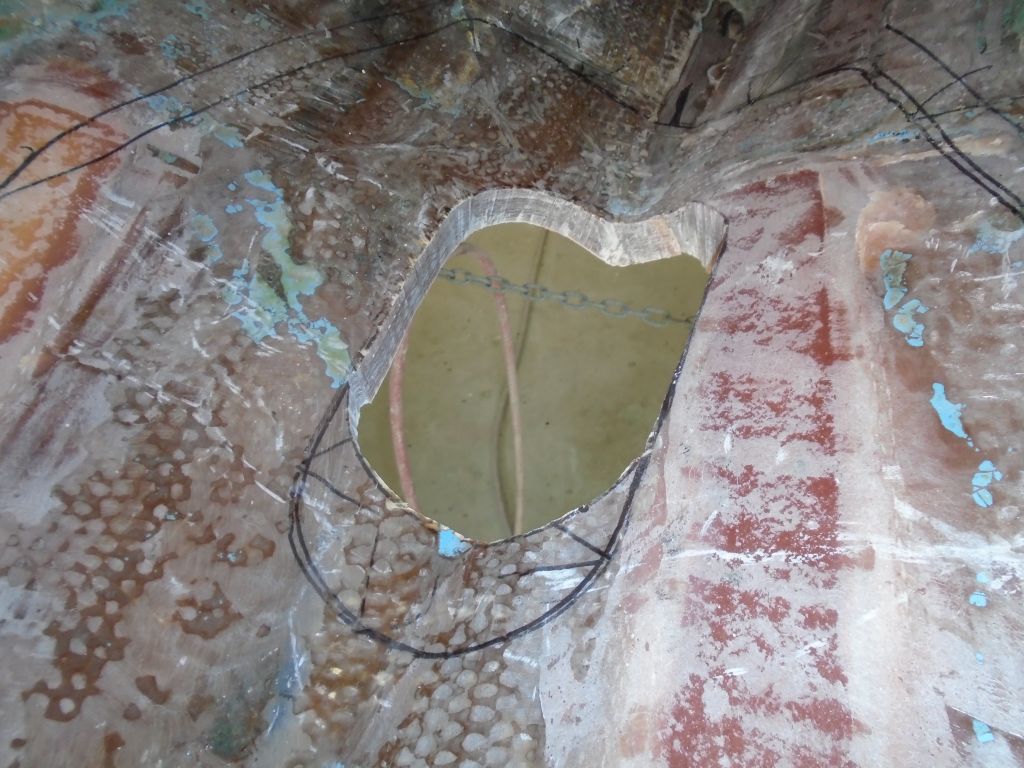
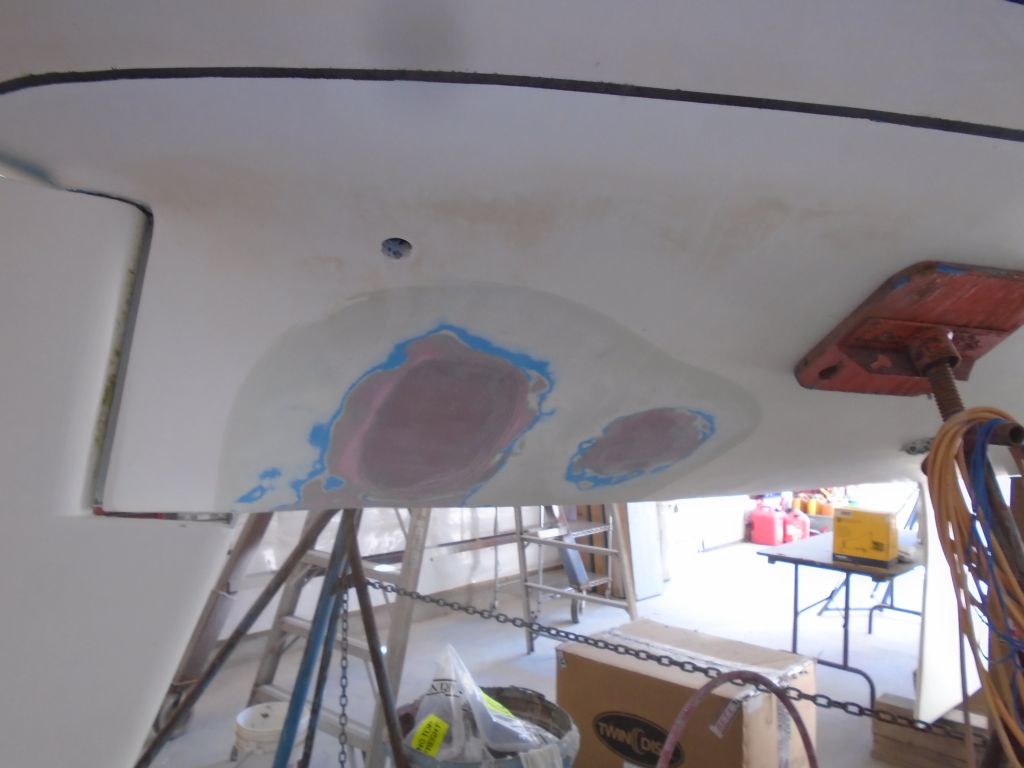
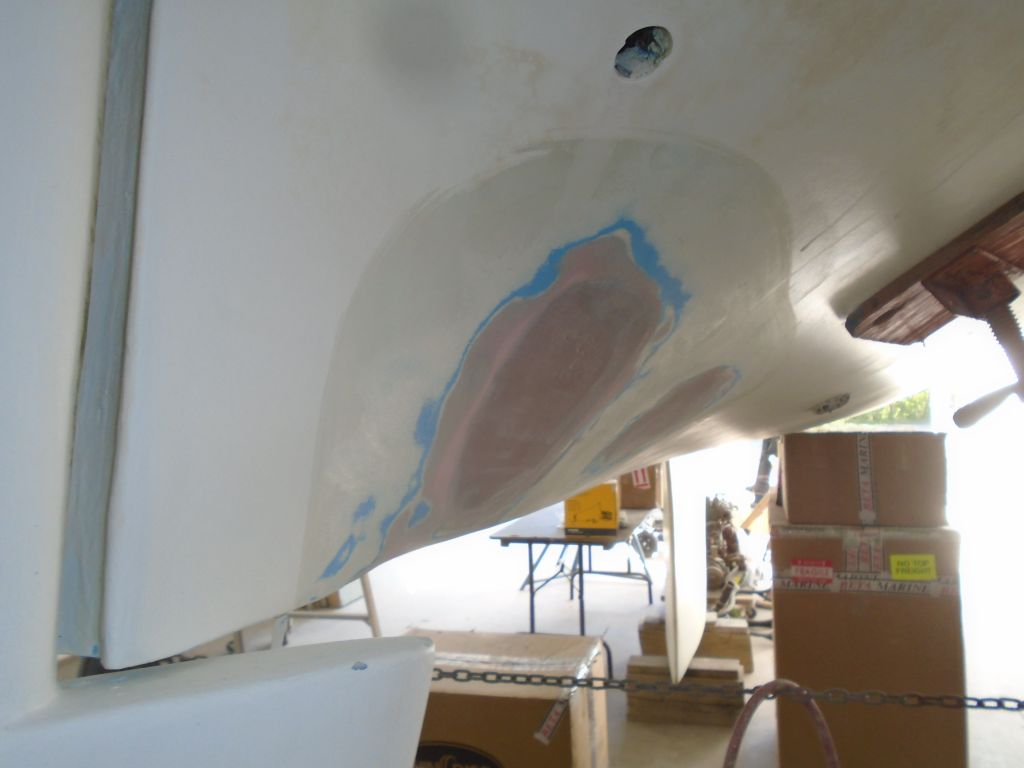
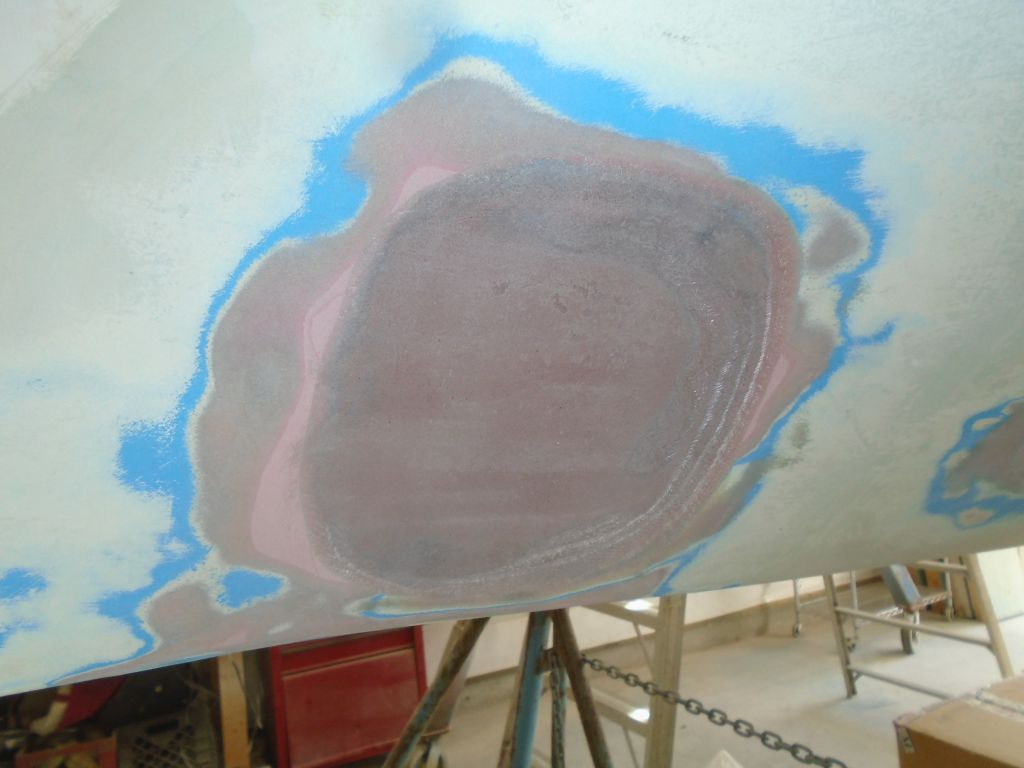
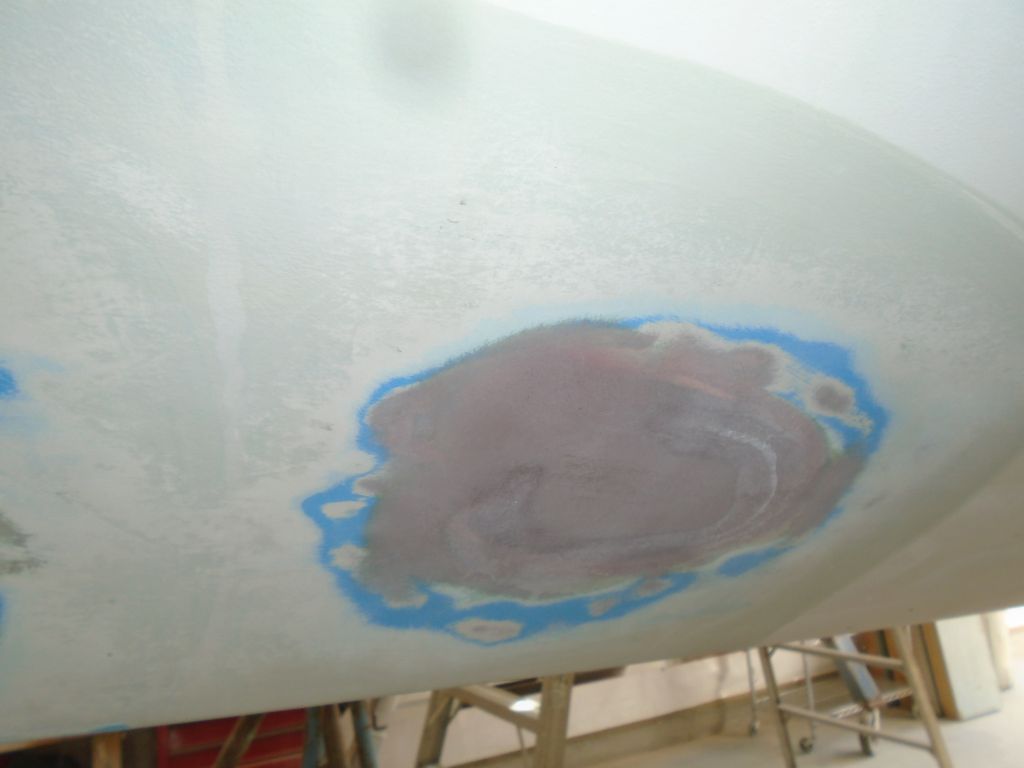
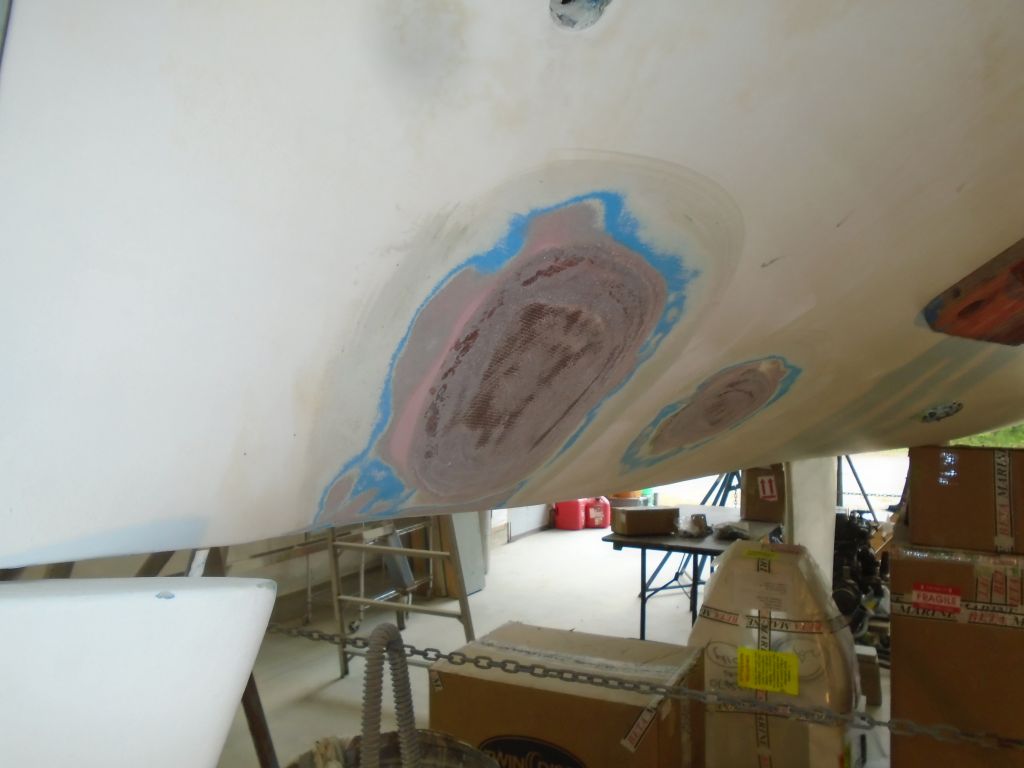
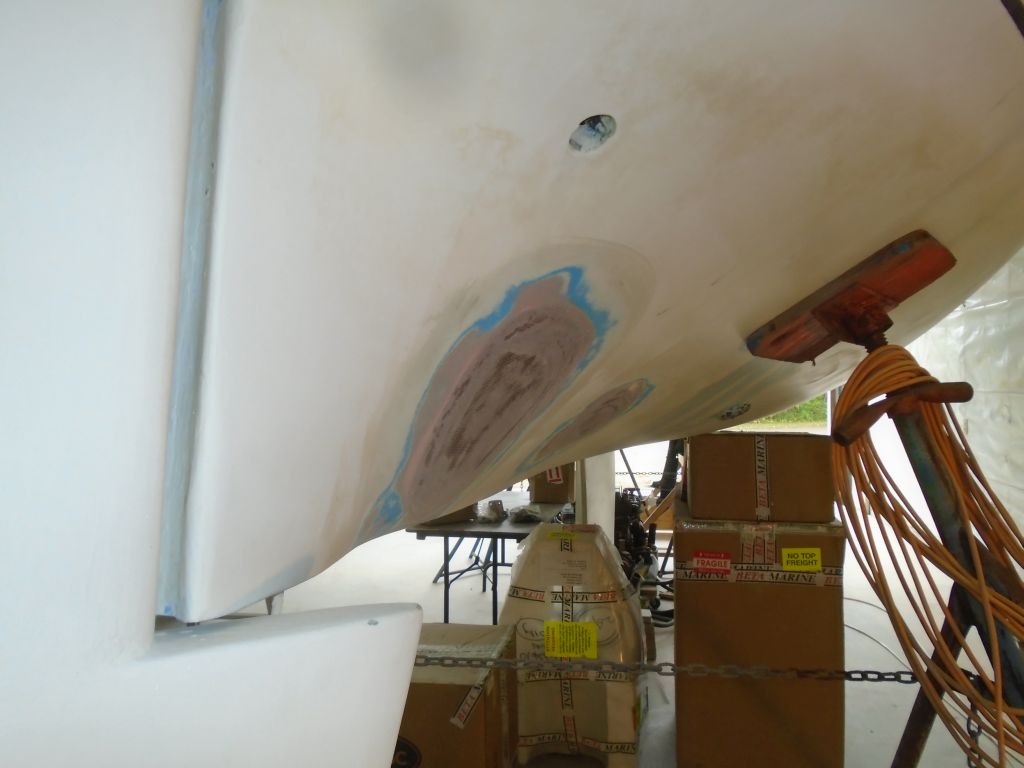
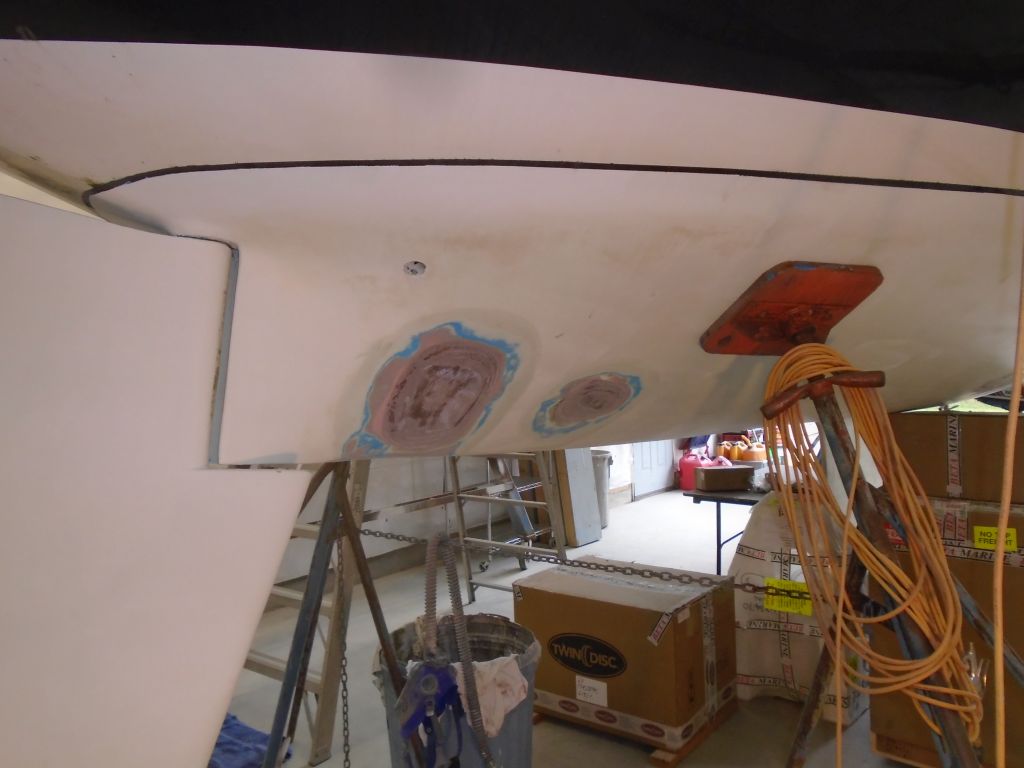
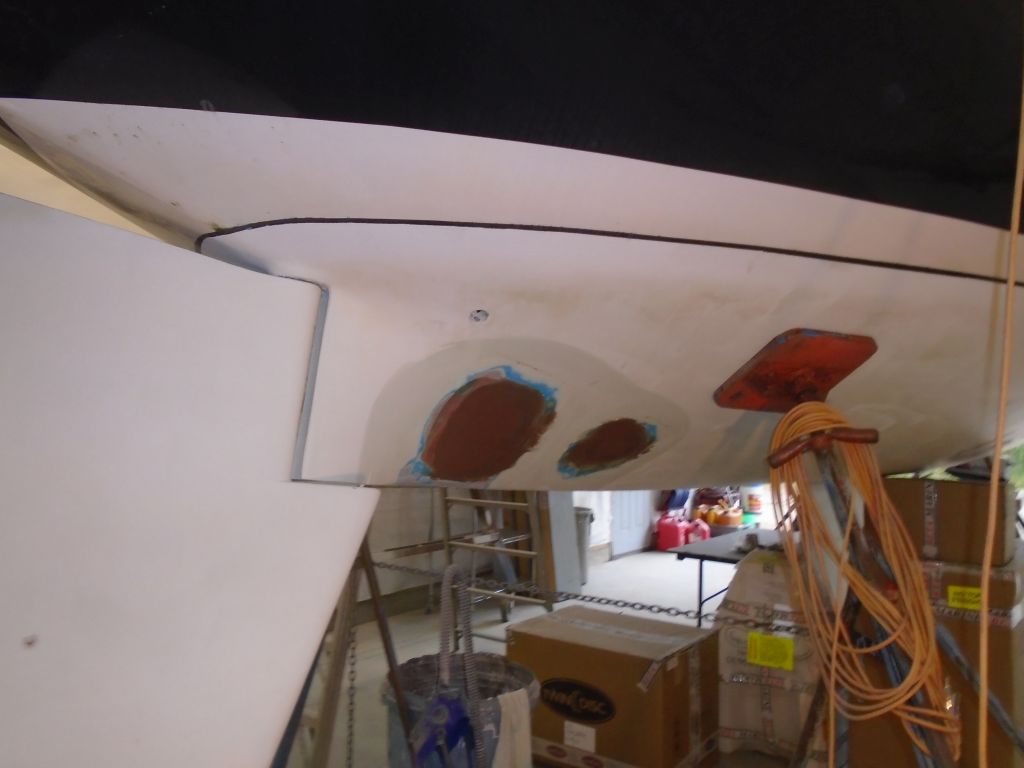
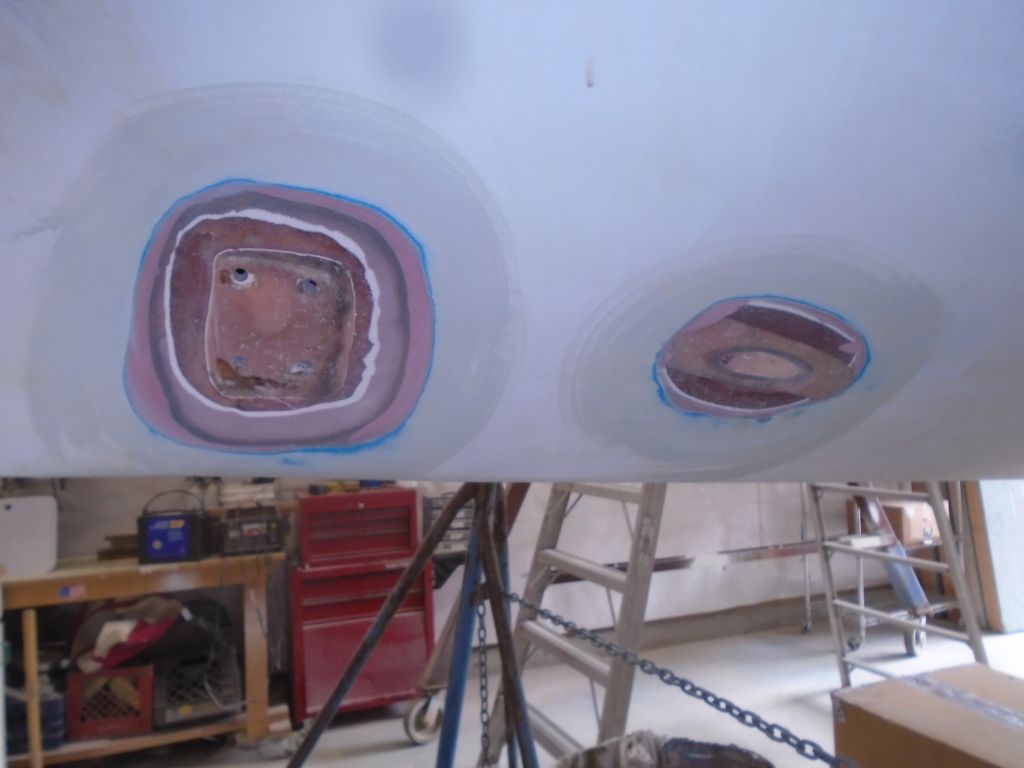
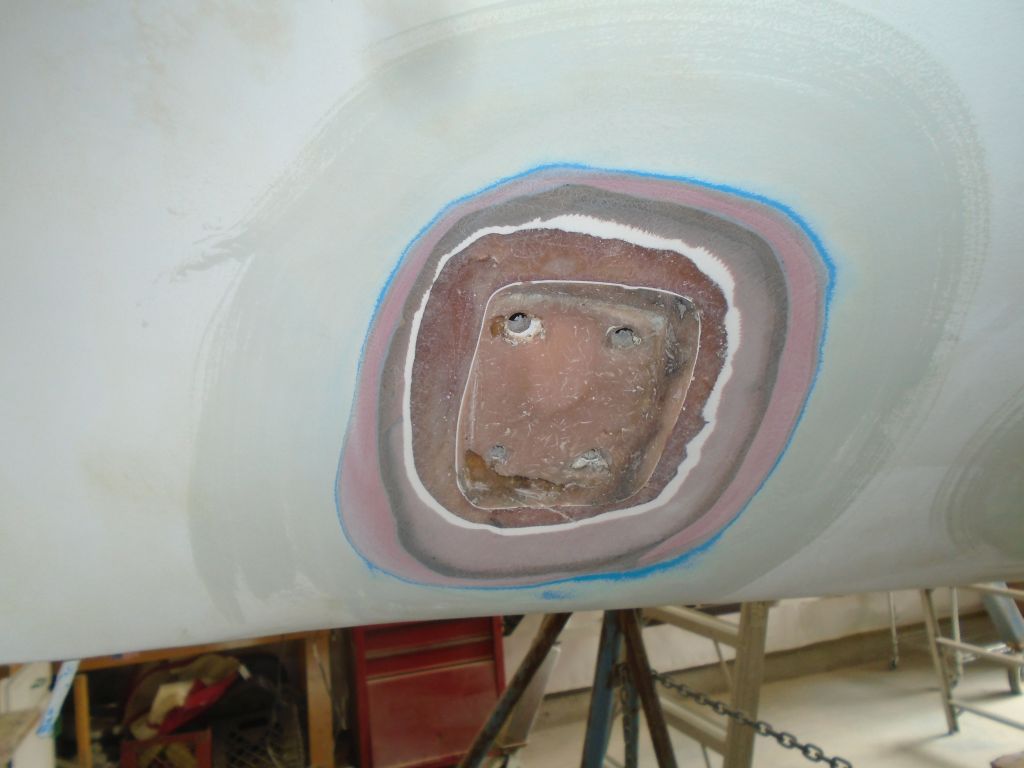
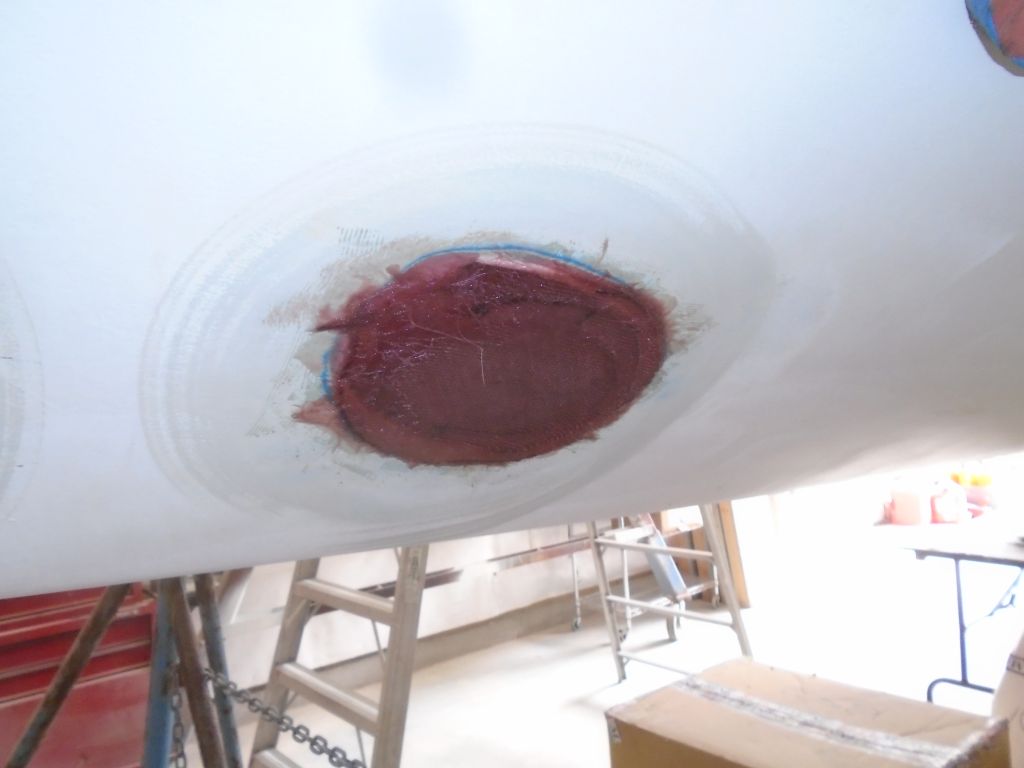
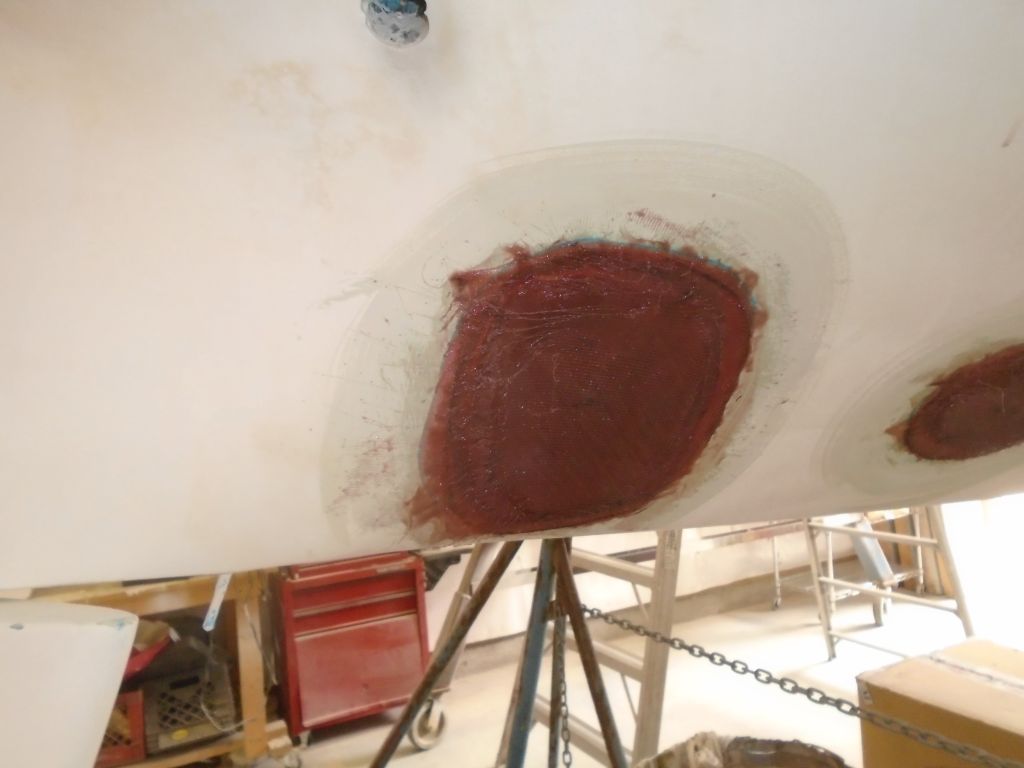
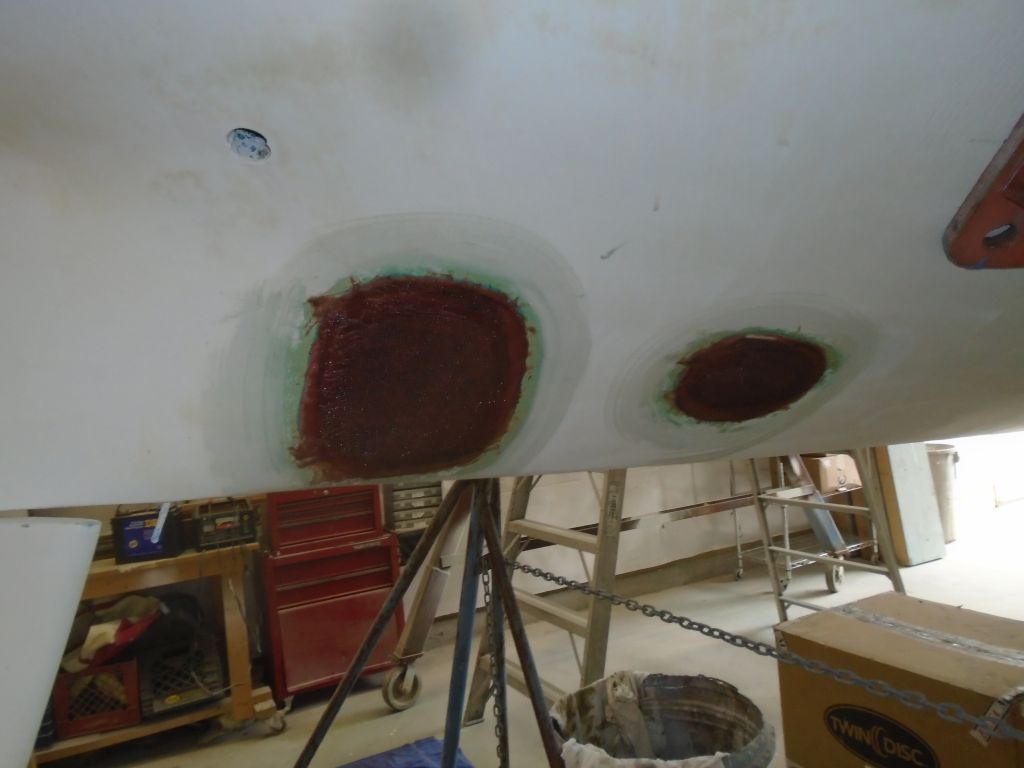
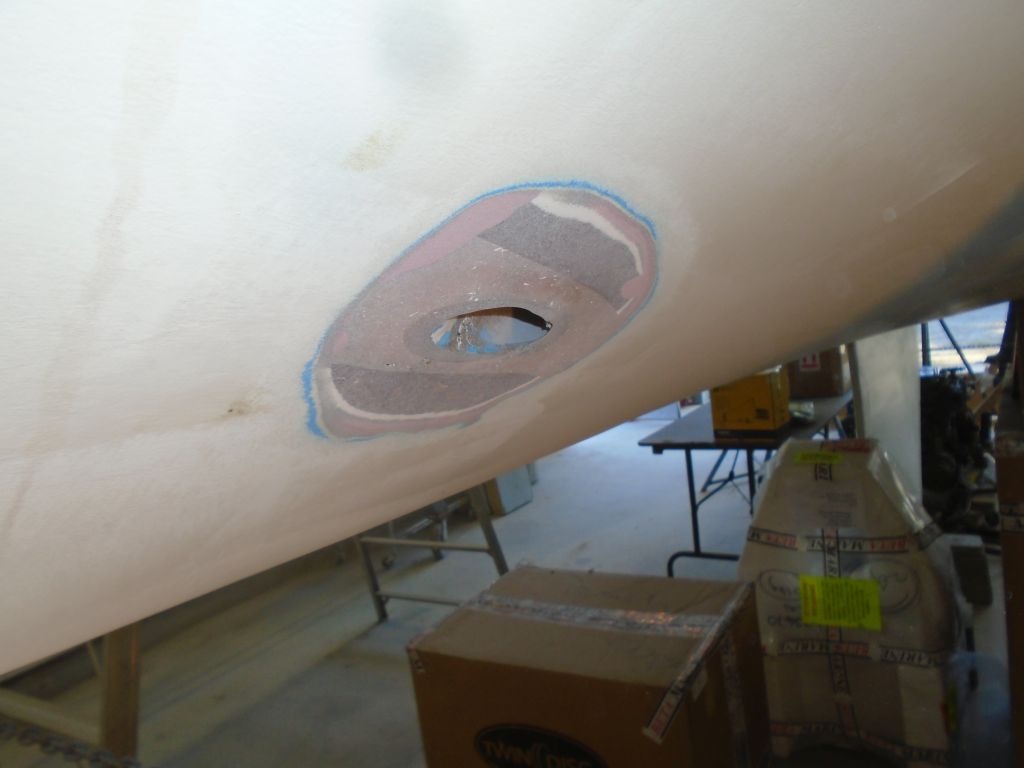
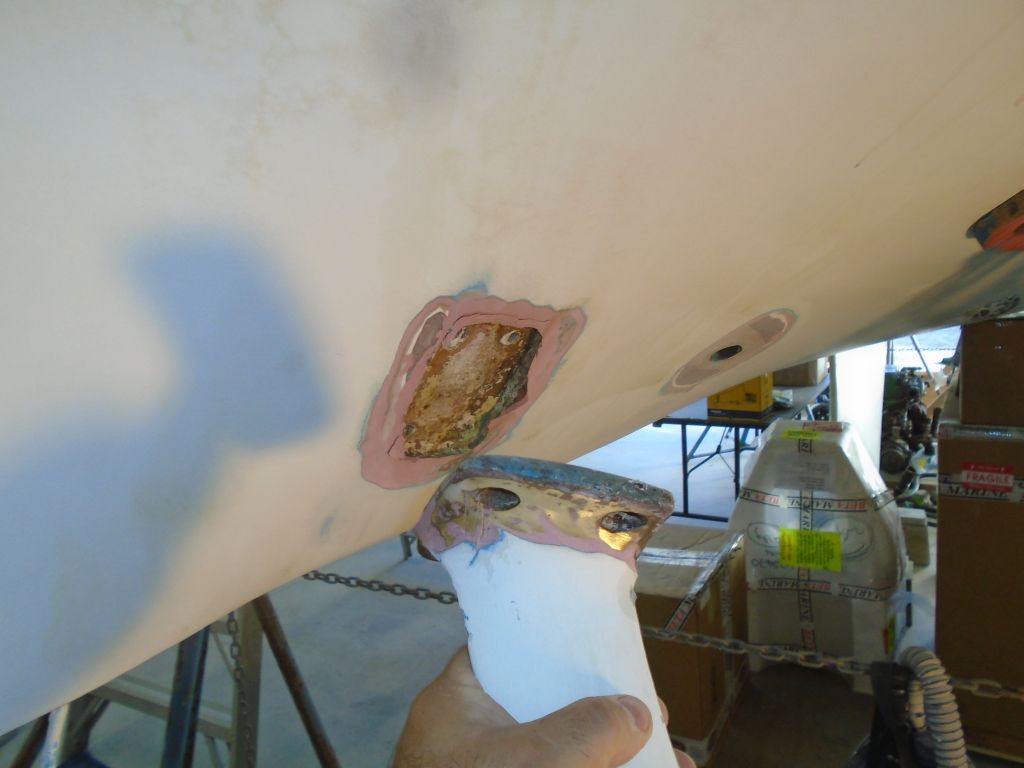
Back outside the boat, I used a grinder to remove the paint and fairing compound that covered the base of the strut where it was secured to the hull, exposing the flathead screw heads and the edges of the strut base itself.  This confirmed for me that the strut used standard bolts, not integral studs.  While I had the grinder going, I ground a beveled area around the nearby stern tube opening, which I’d also be filling and patching.

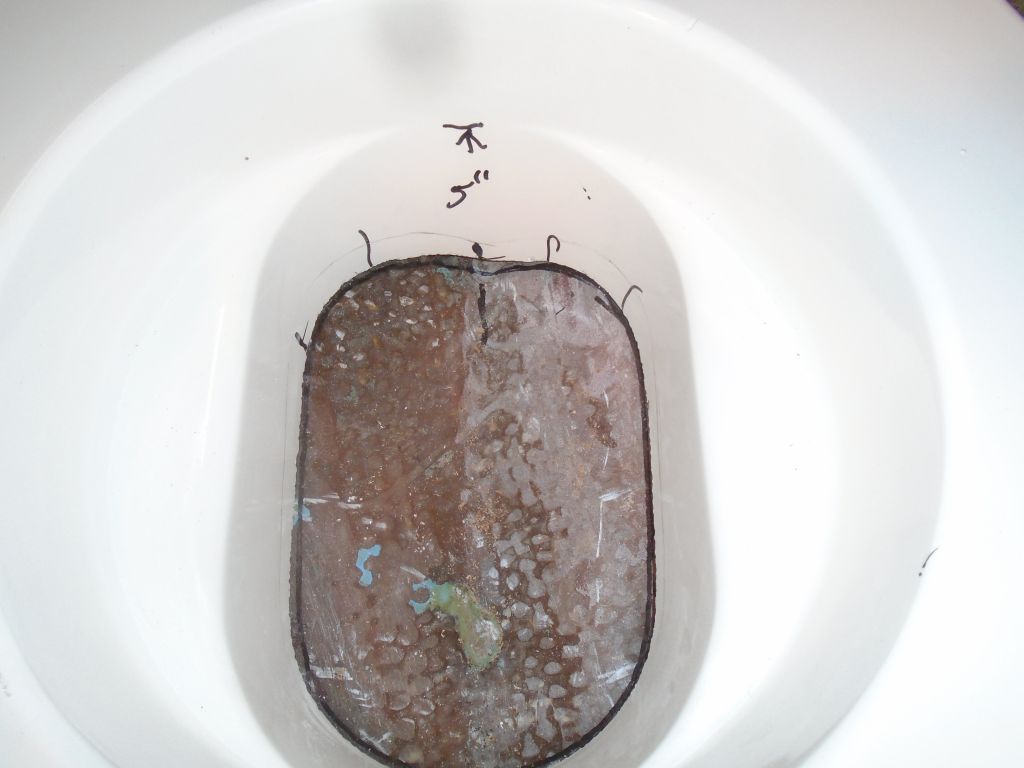
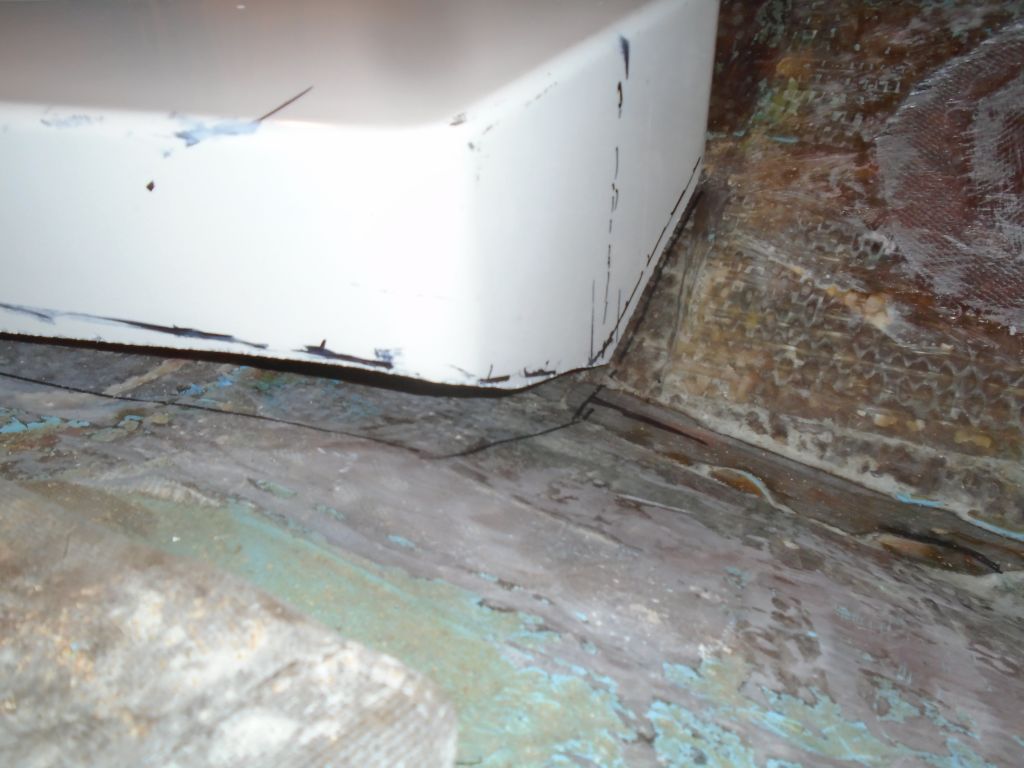
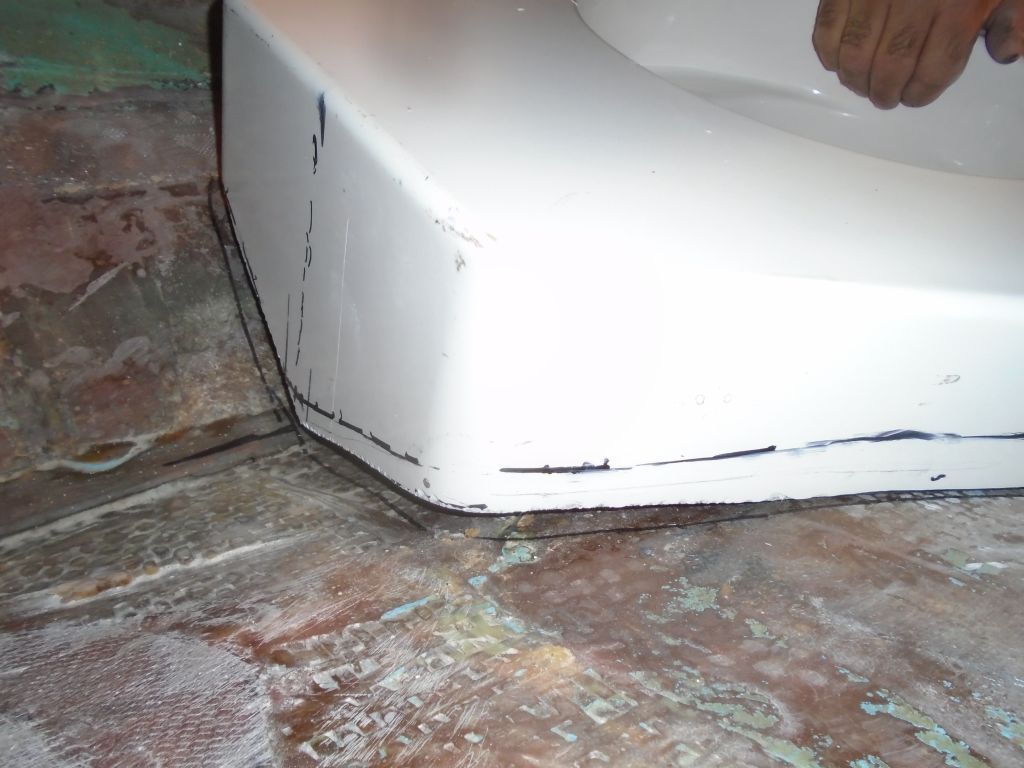
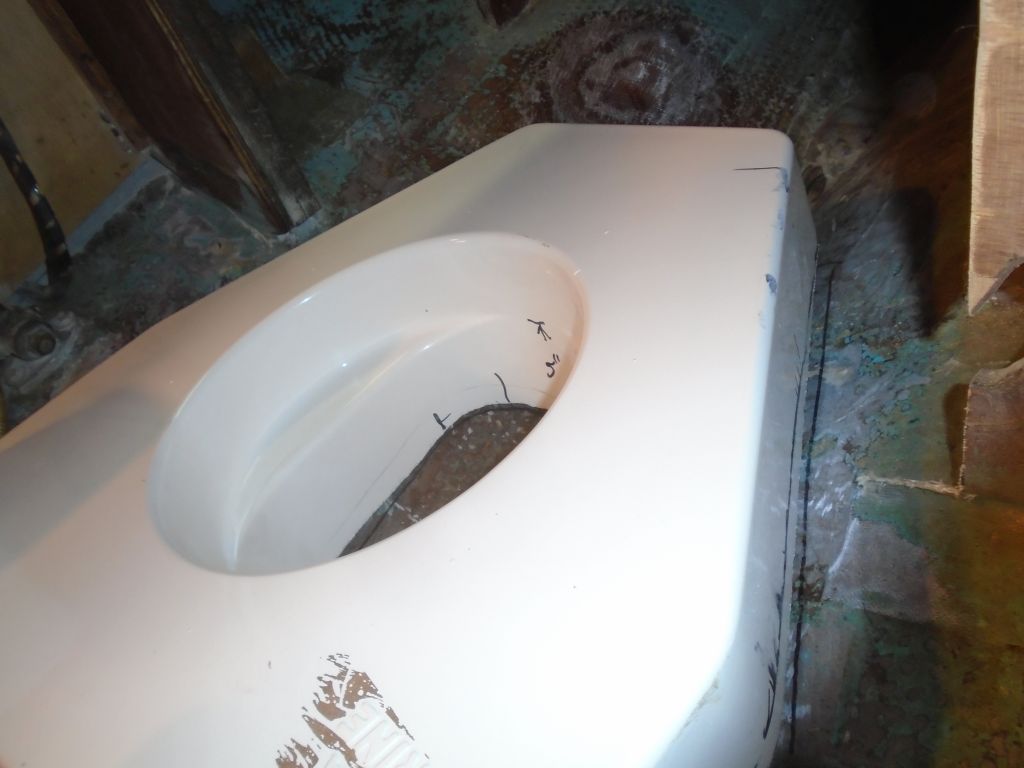
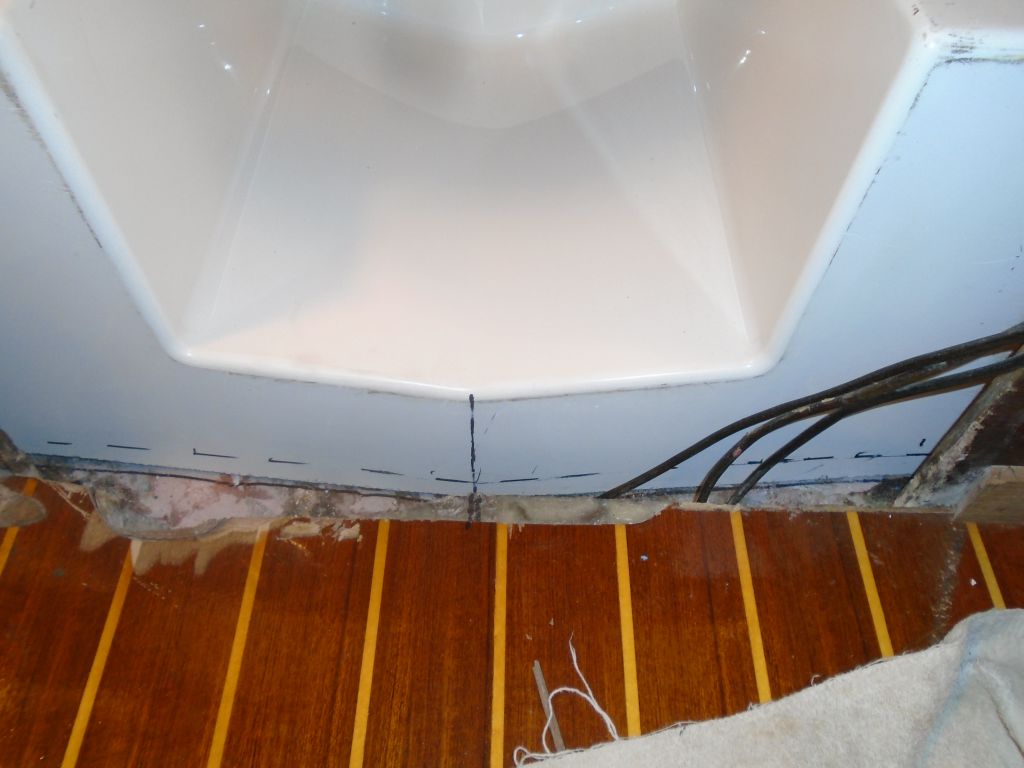
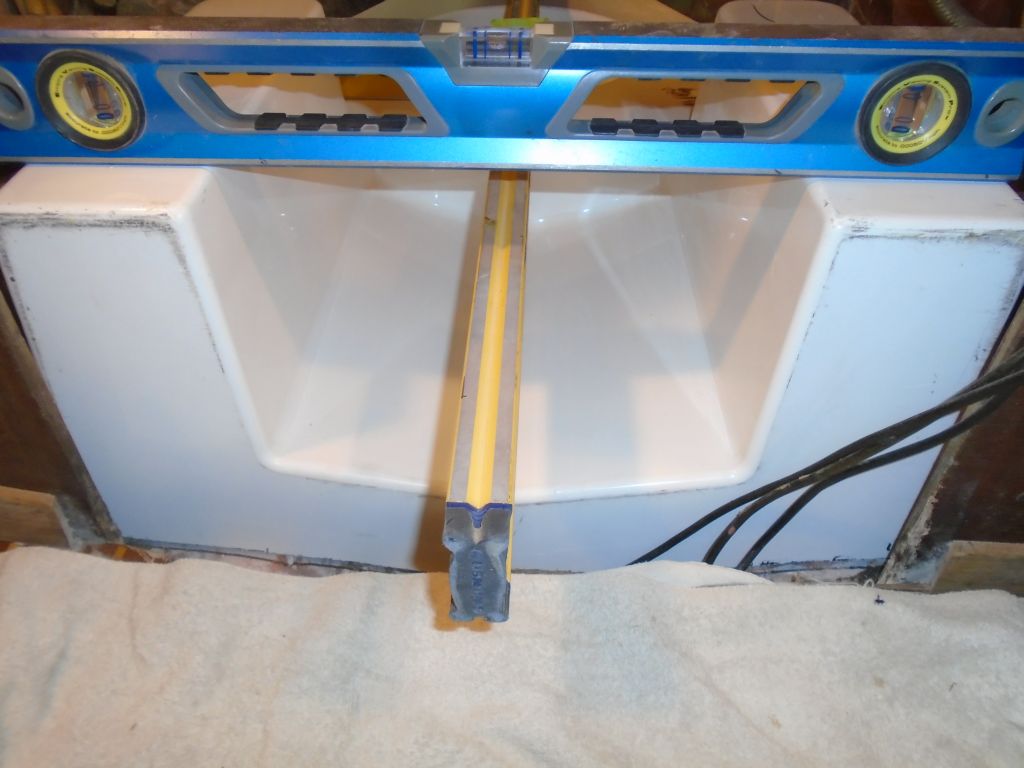
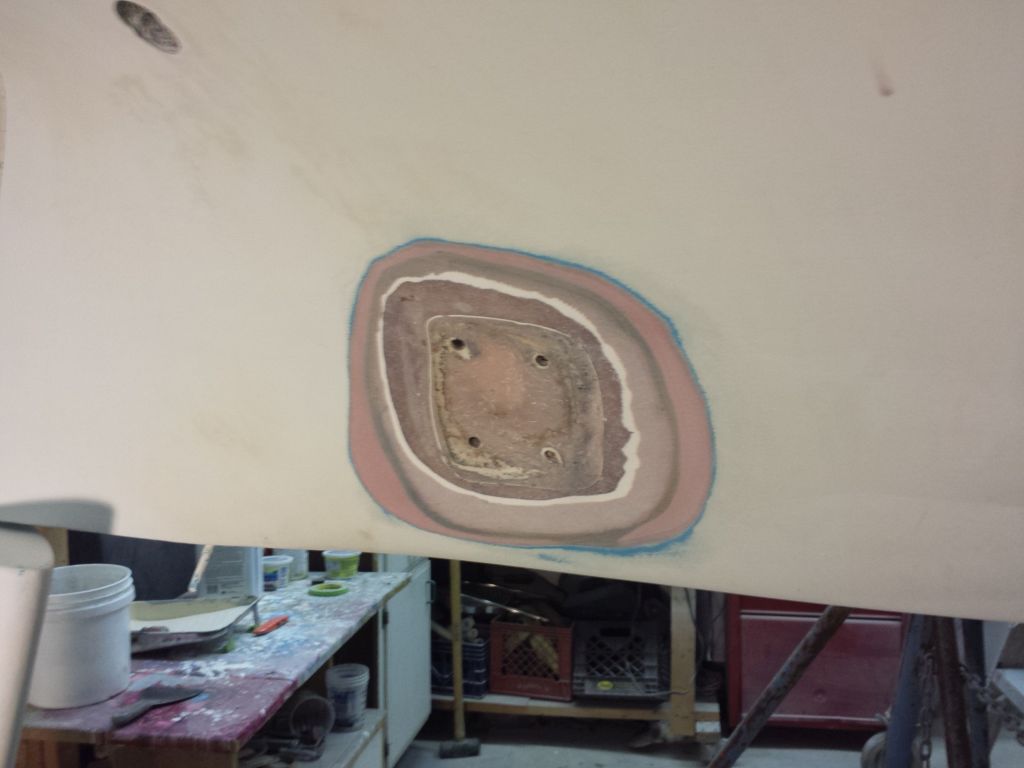
Back inside the boat, I used a reciprocating saw and long blade to cut off the nuts and bolt ends securing the strut.  Access was limited, and I had to remove a nearby cleat on the bulkhead so the saw body had enough room to reach all four bolts.  Since the bolts were bronze, cutting was fairly easy, and with the nuts and excess bolt length removed, I could easily spin out the bolts from outside–they seemed to be threaded through the hull–and remove the strut itself.  Afterwards, I prepared the hull around the old strut location (which was recessed into the original laminate) by grinding a beveled area about the location.

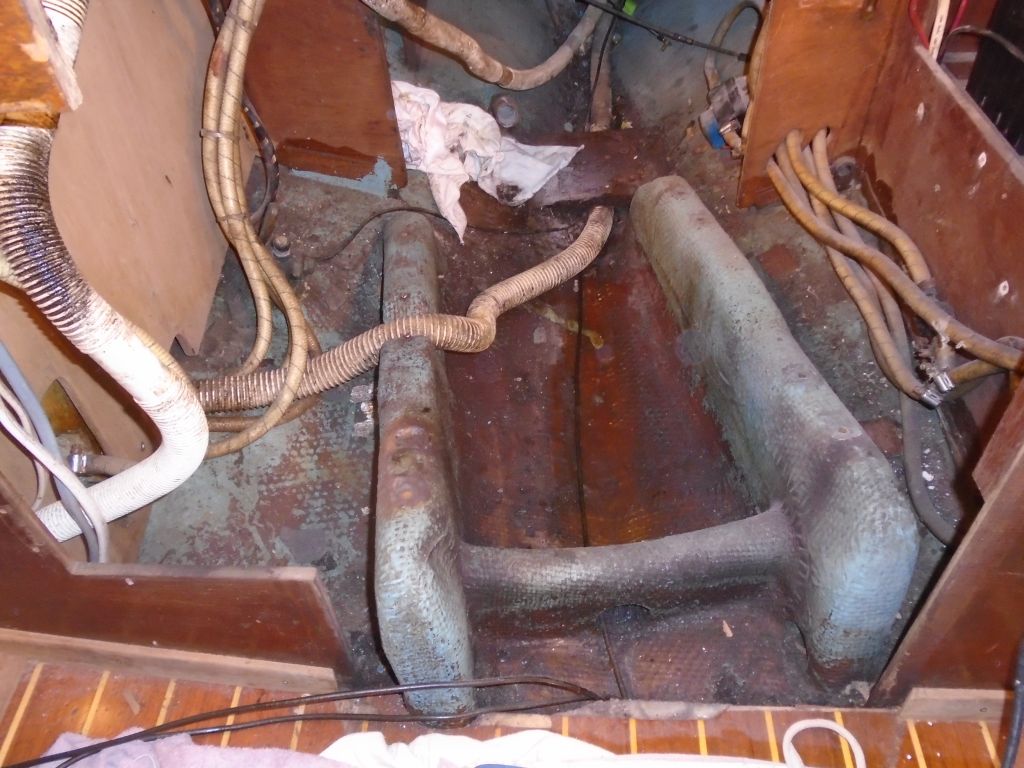
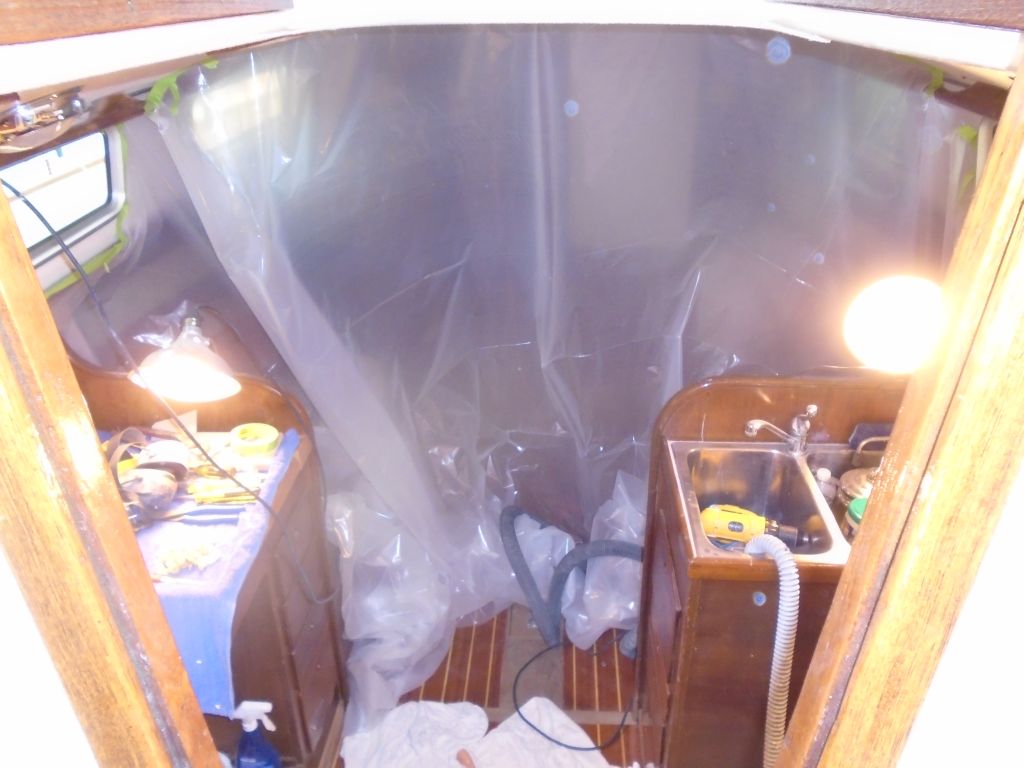
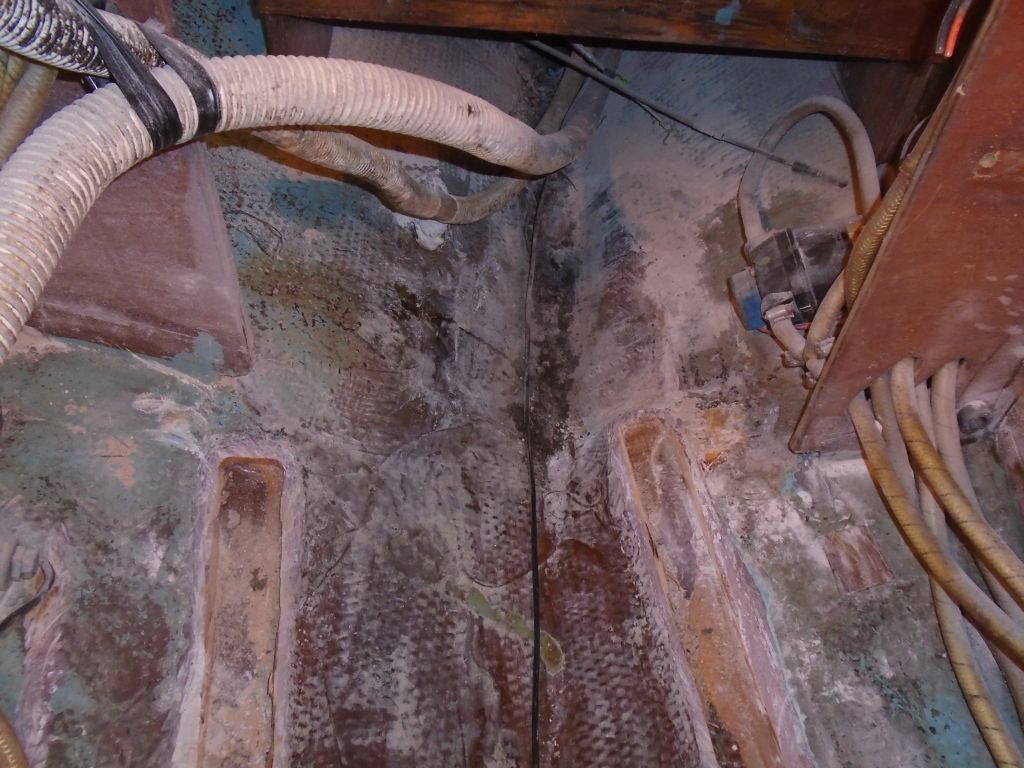
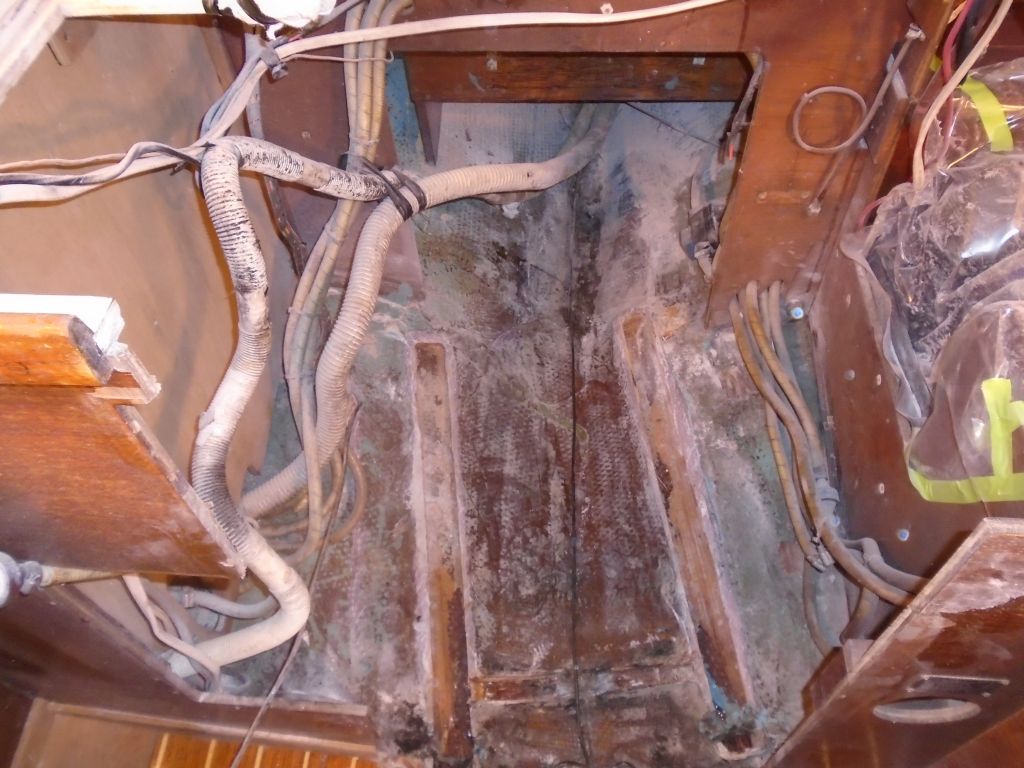
The original engine foundations were in excellent condition and were strongly installed, but the new installation required their removal, so I spent some time preparing tools and equipment for the job.  Because cutting and grinding away the old fiberglassed engine beds would make a mess, I installed plastic curtains to help prevent dust from entering the saloon and forward parts of the boat, and also covered over the galley and nav station cabinets with plastic.

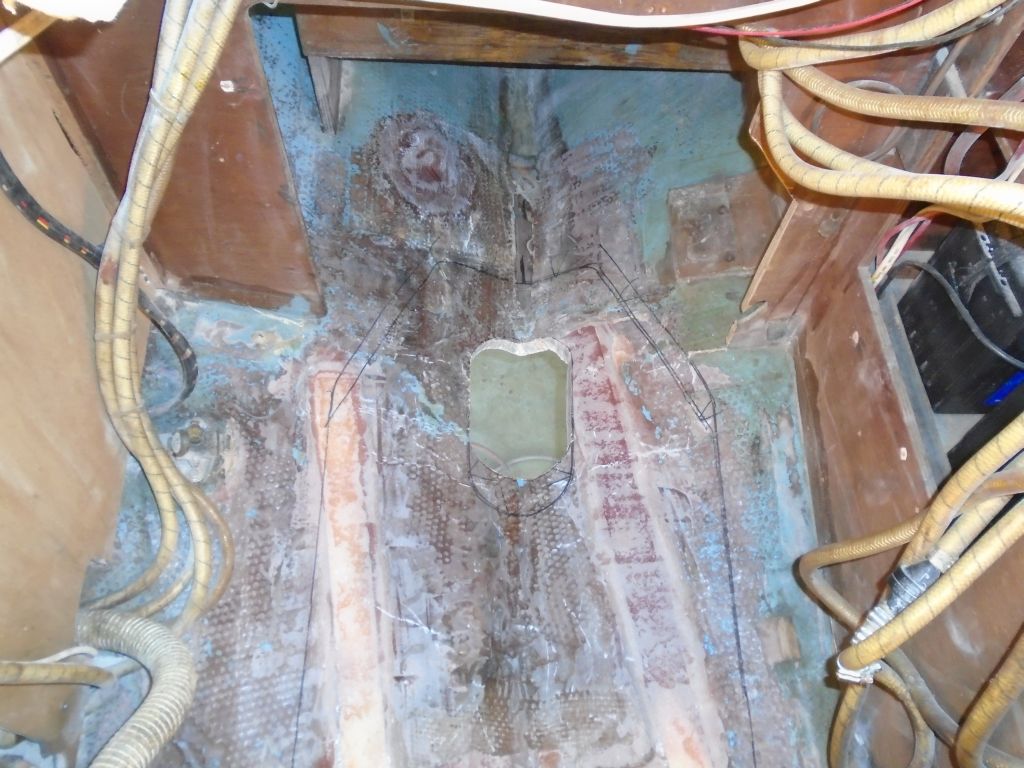
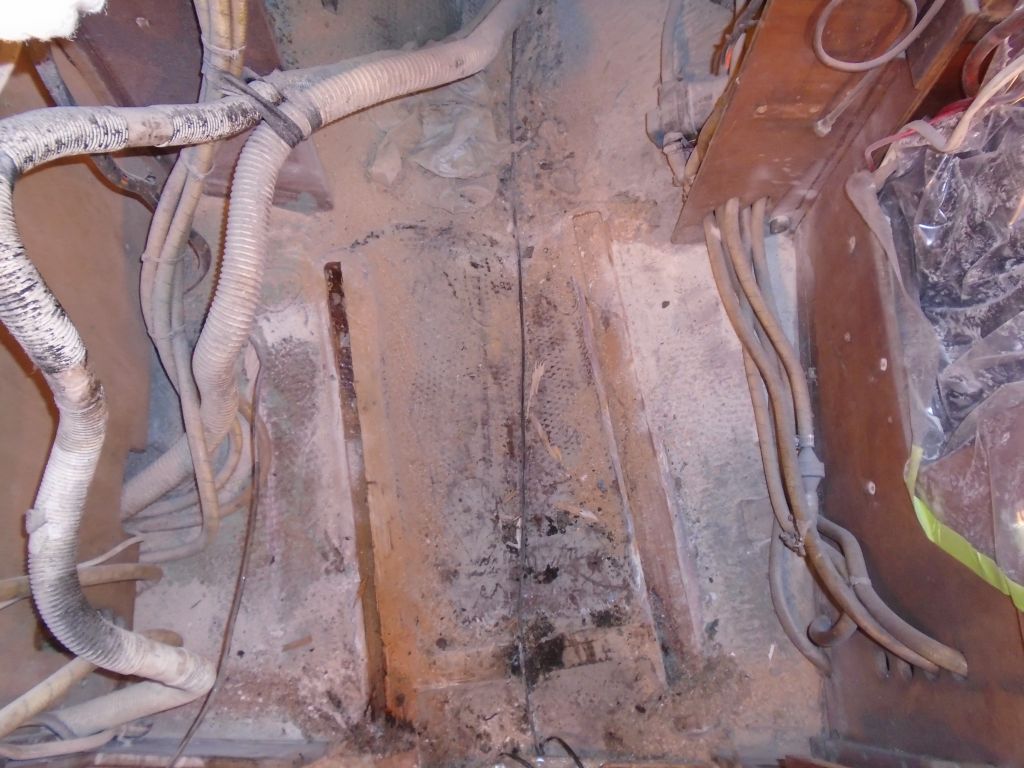
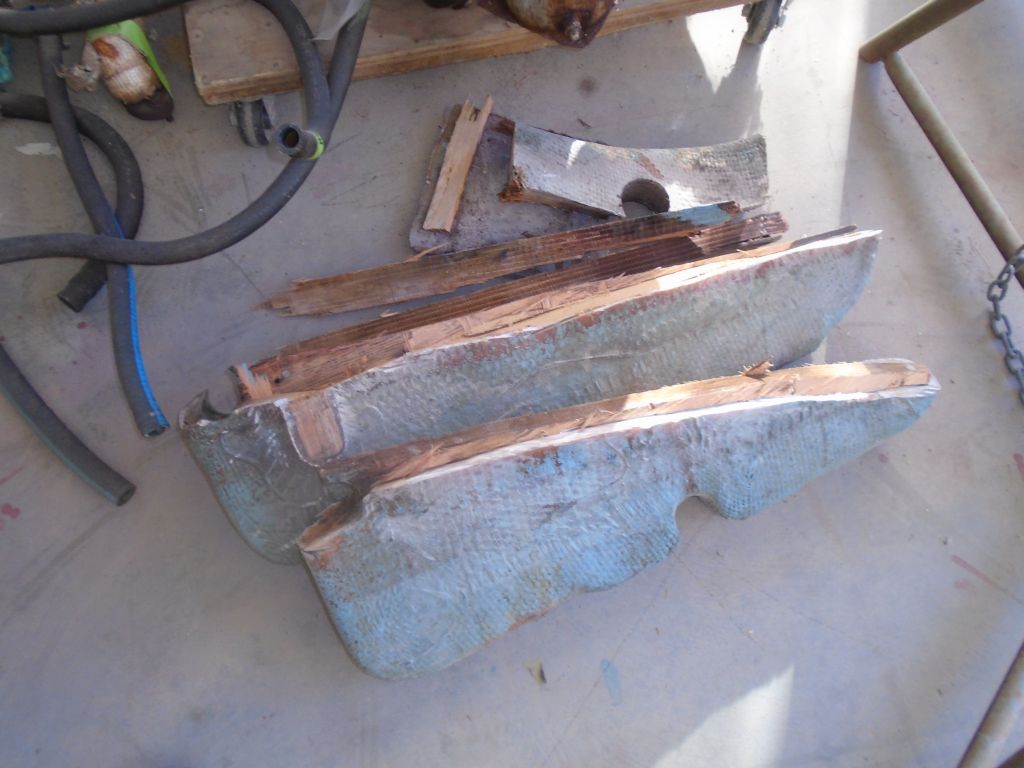
The engine foundations were indeed very strong, and removing them proved to be a lengthy and arduous process.  As ever, access was tighter than one might like, so fitting in grinding wheels and saw blades required various positions and care to prevent damaging any of the nearby installations and critical parts of the tool operator.  The foundations were built from laminated plywood heavily encapsulated with multiple layers of fiberglass, and heavily fiberglassed to the hull.  It was a nice installation that had held up well over nearly 40 years, and the engine beds fought removal to the end.  I cut through the fiberglass as much as possible using a grinder and cutoff wheel, then used the saw (with fewer good blades on hand than I’d hoped and planned to have) to cut through the wood and, as needed, additional fiberglass to the point that I could finally pry off the heavy foundations.

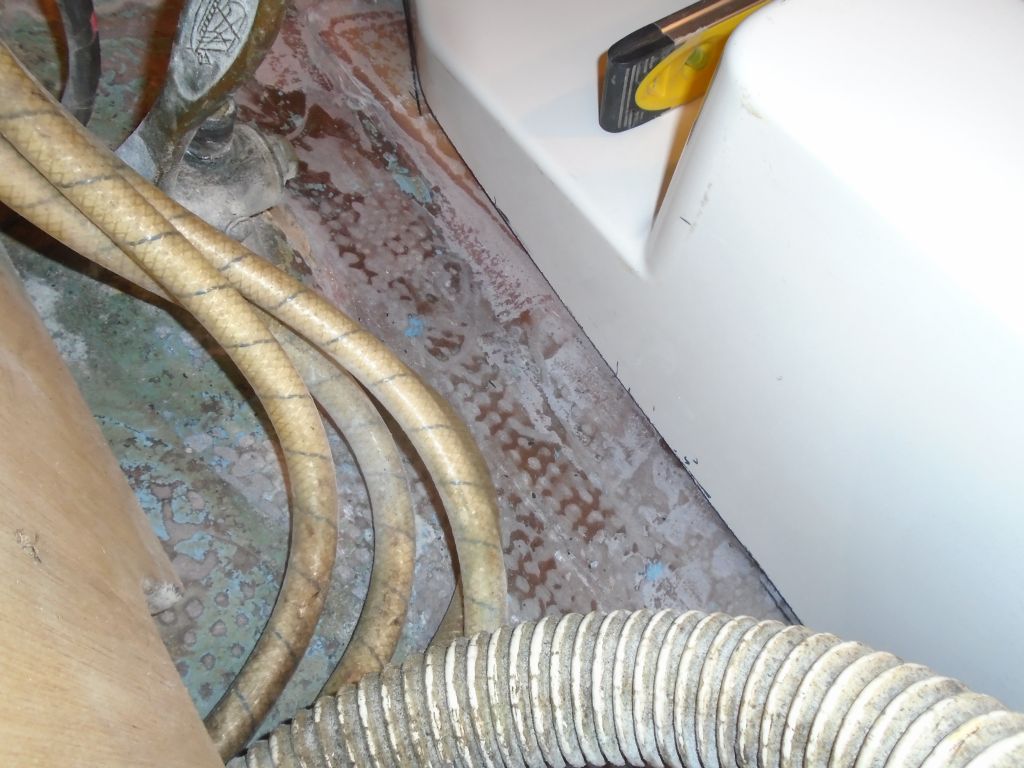
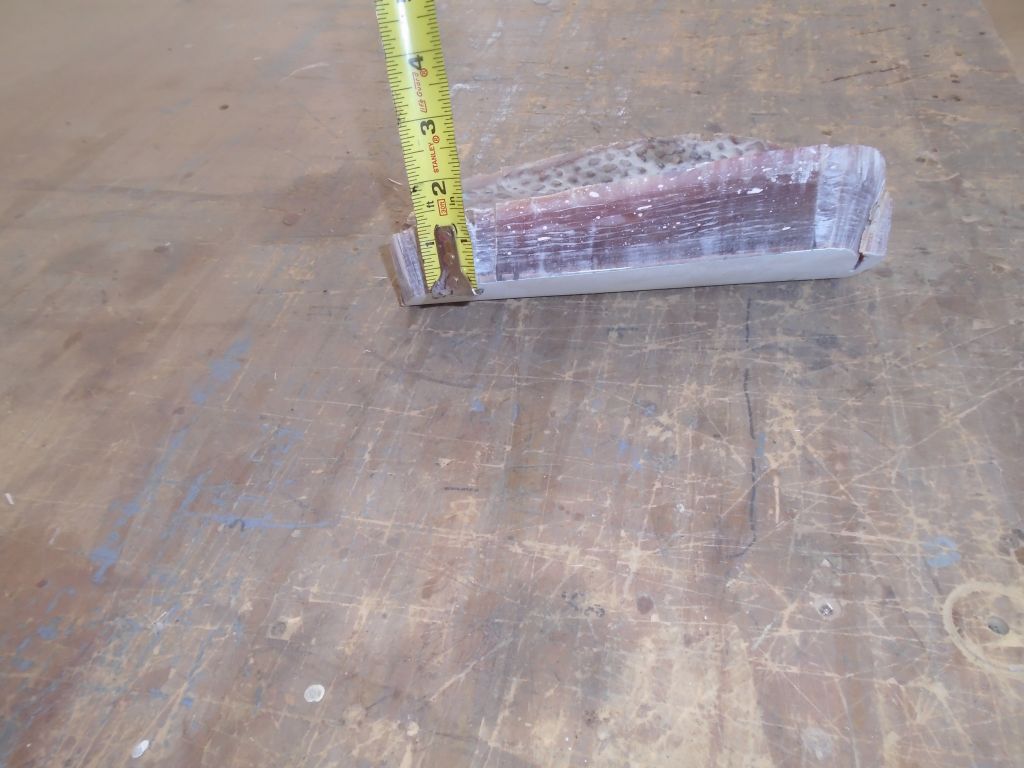
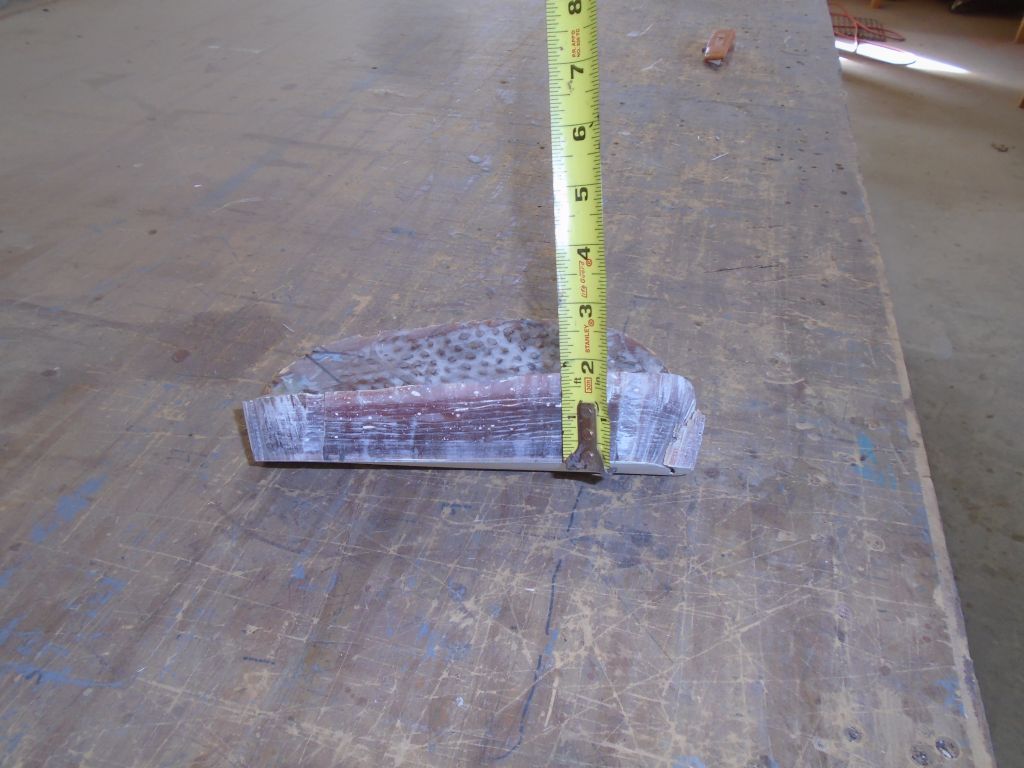
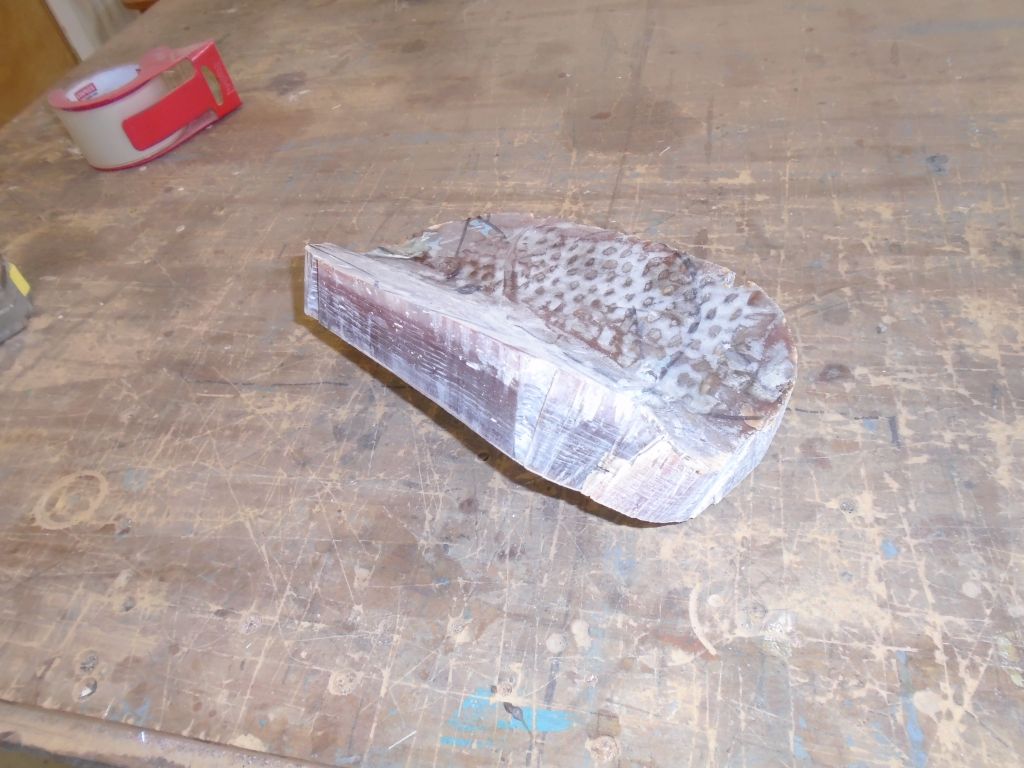
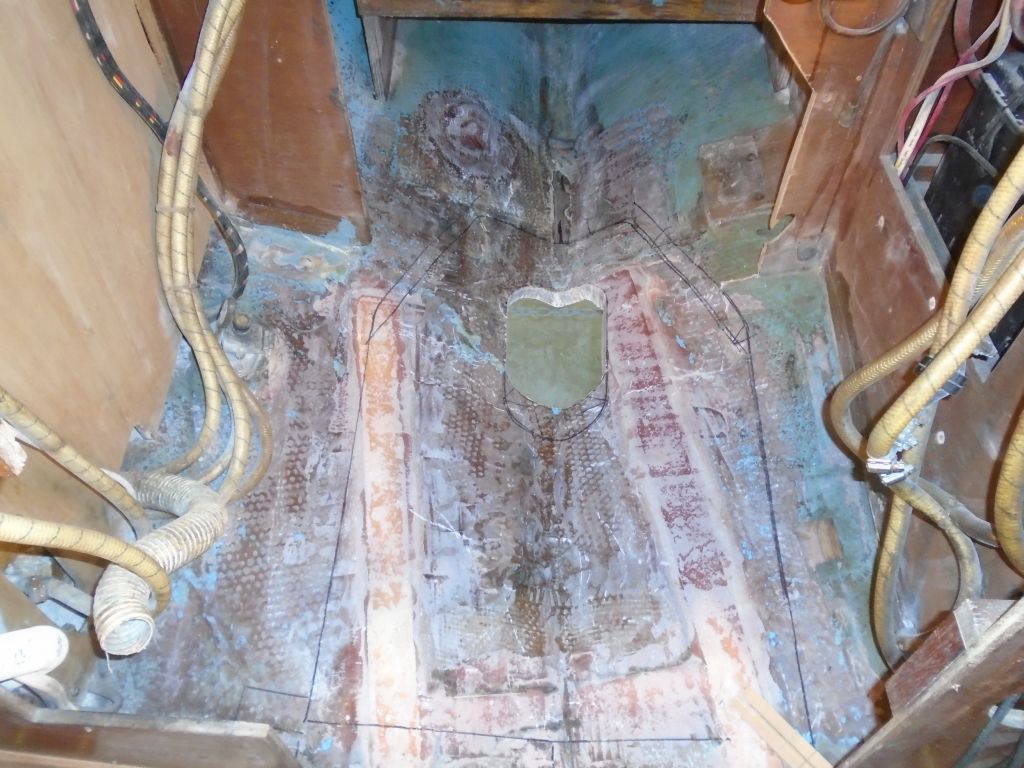
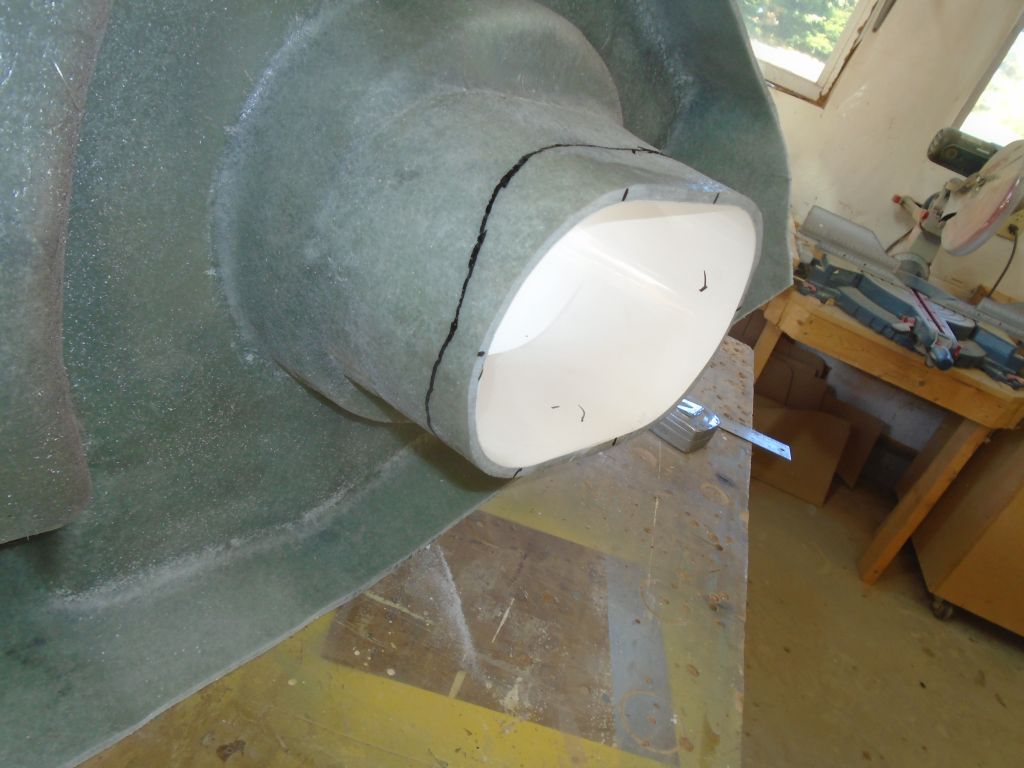
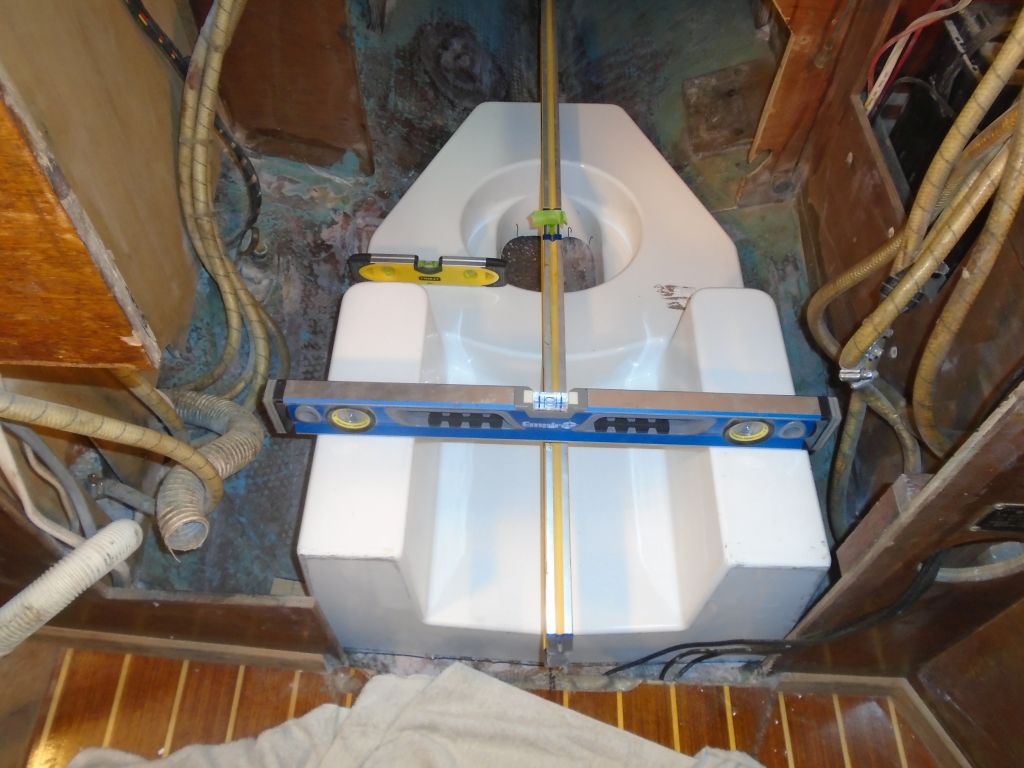
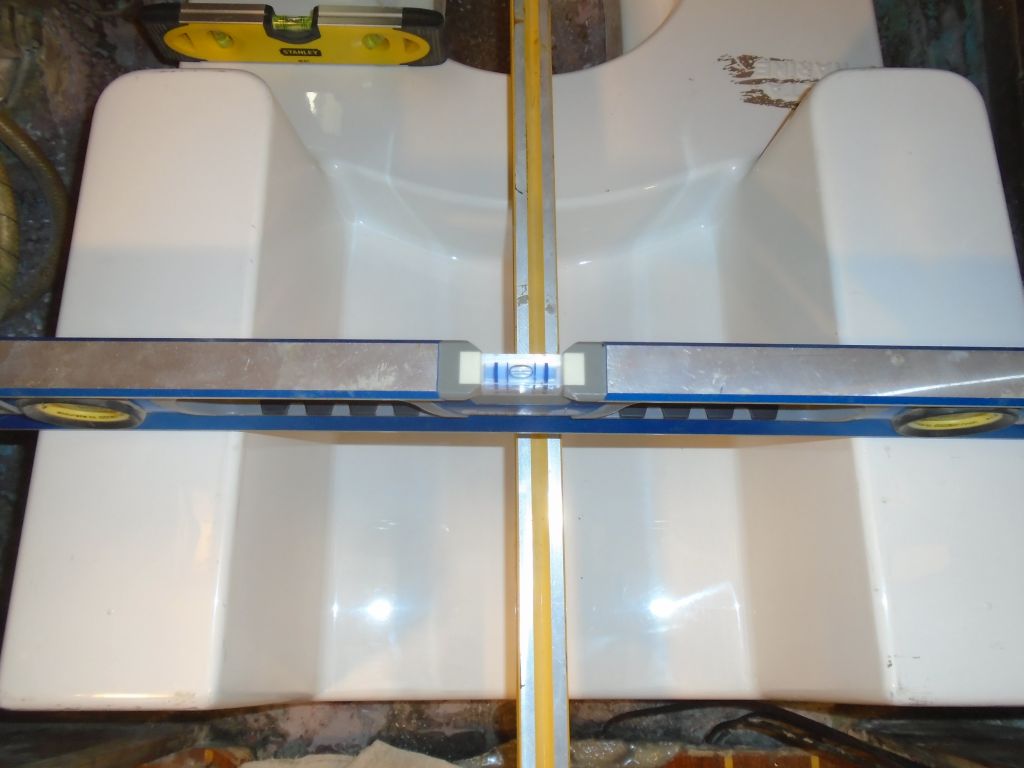
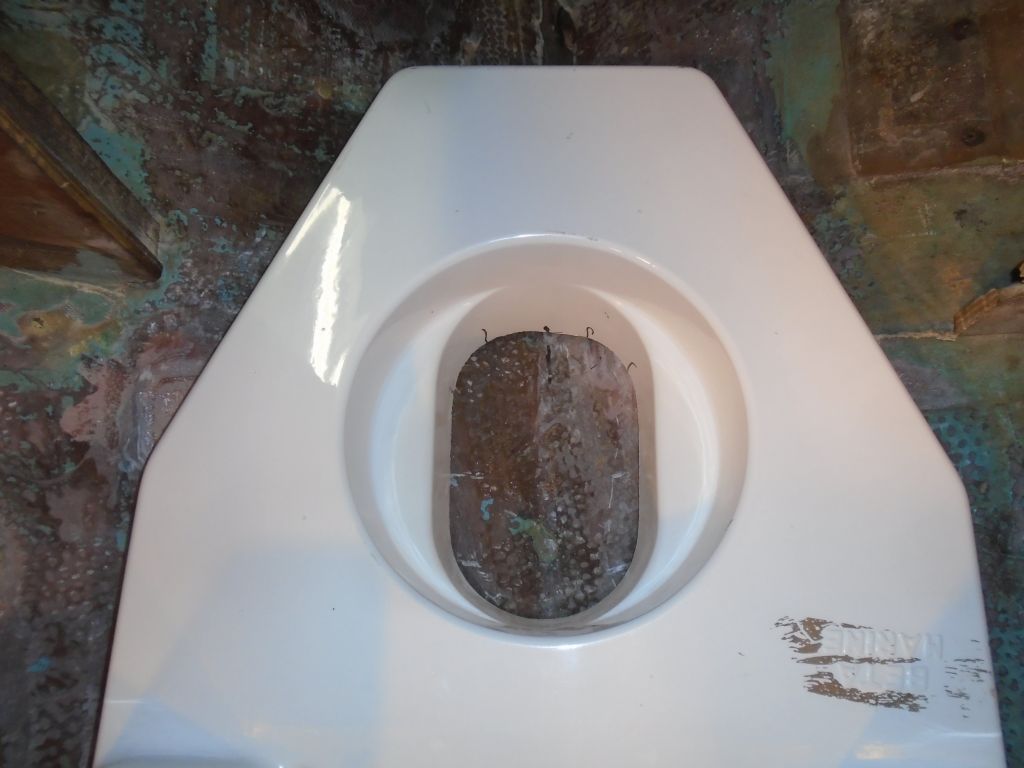
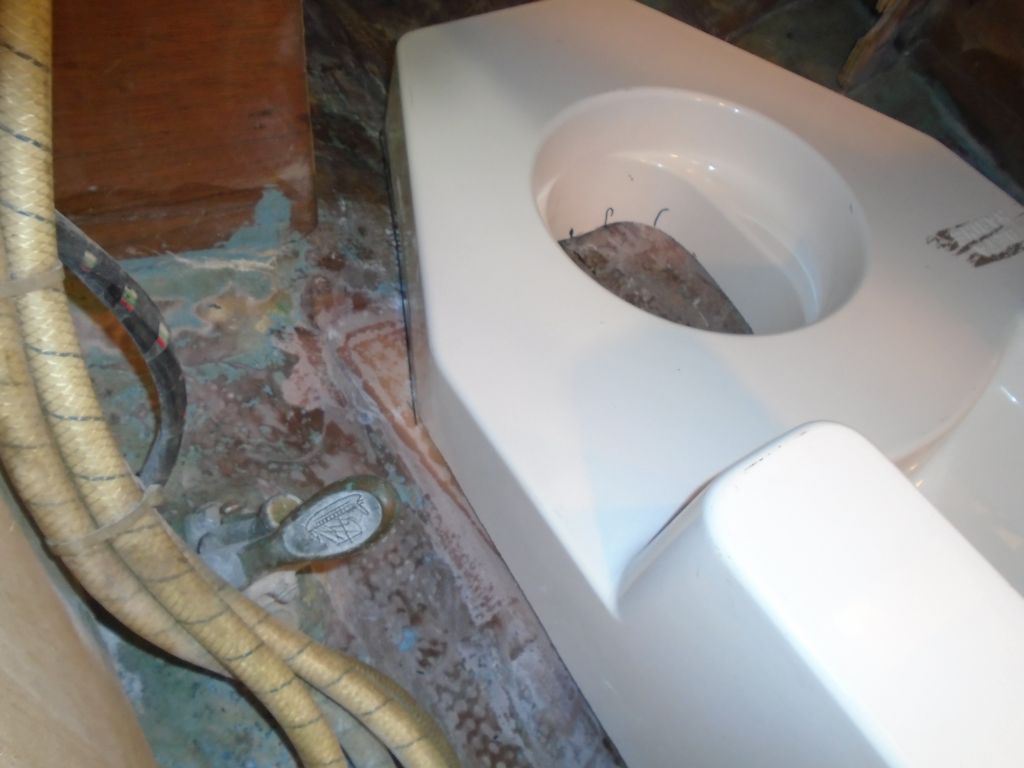
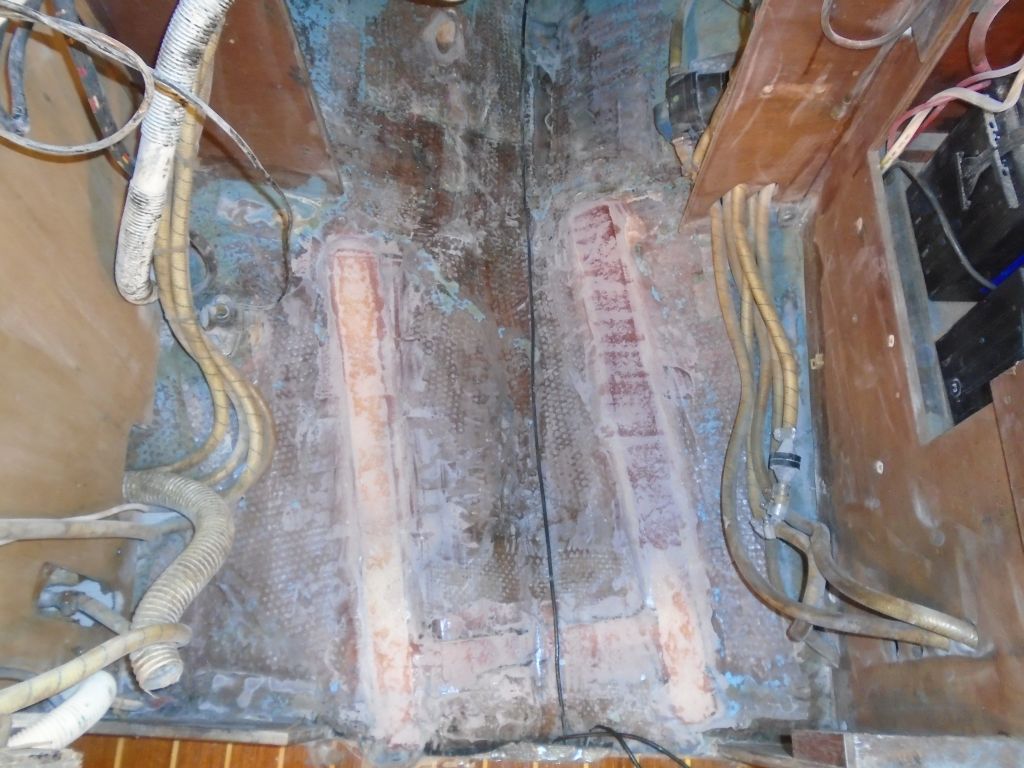
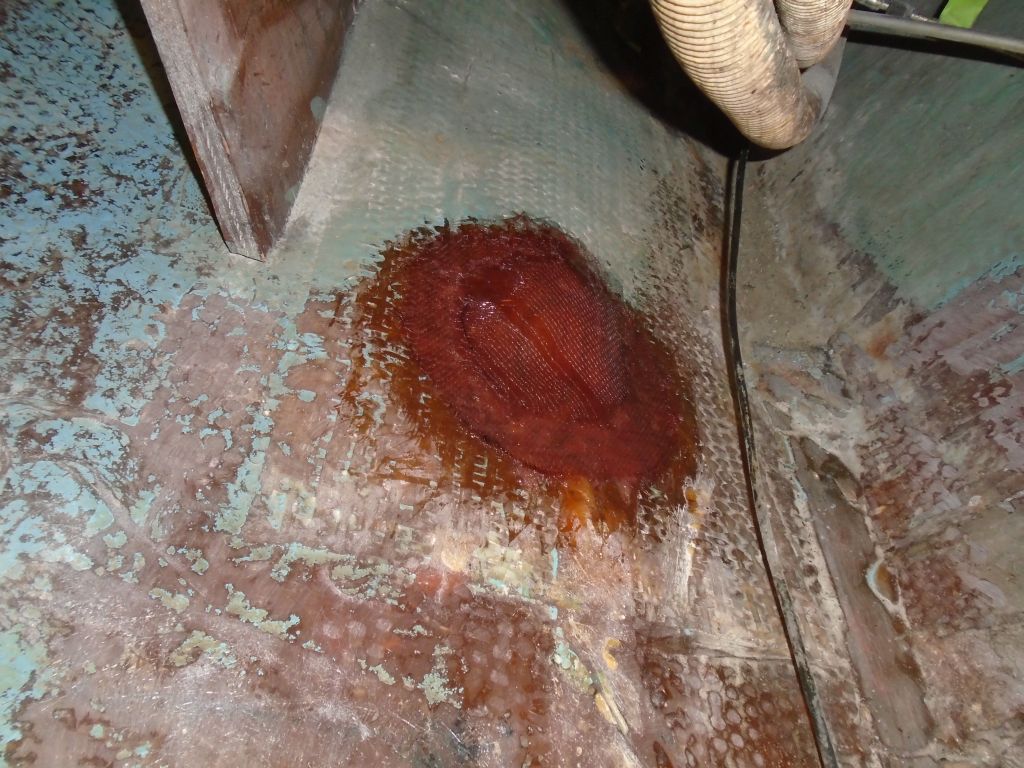
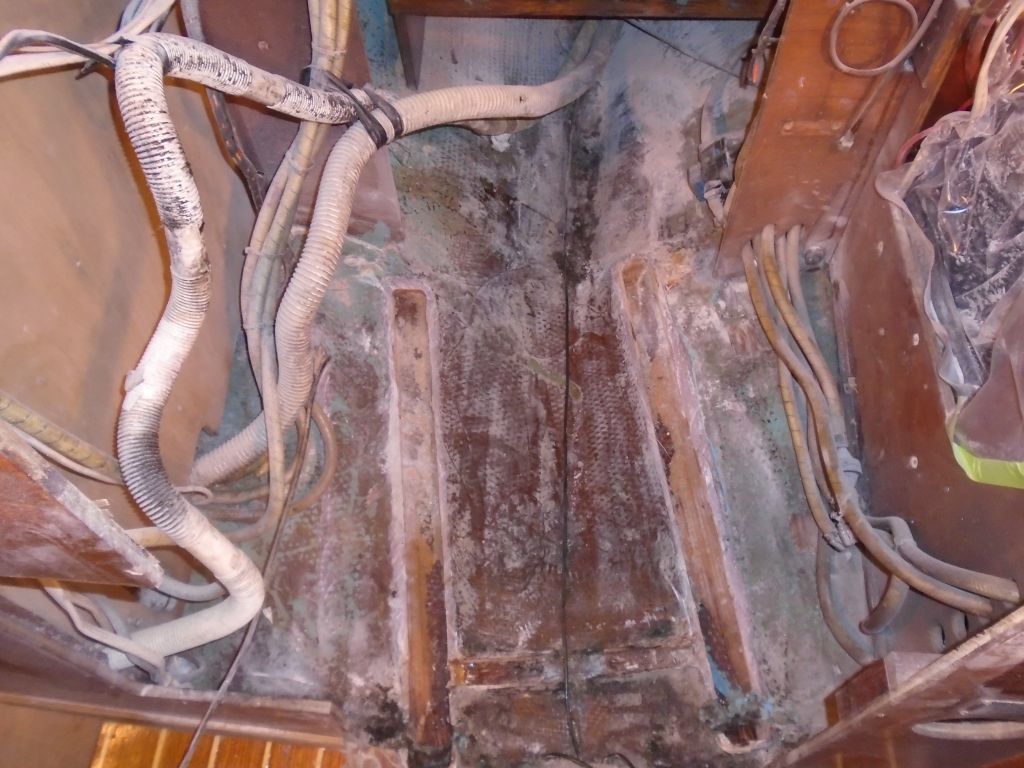
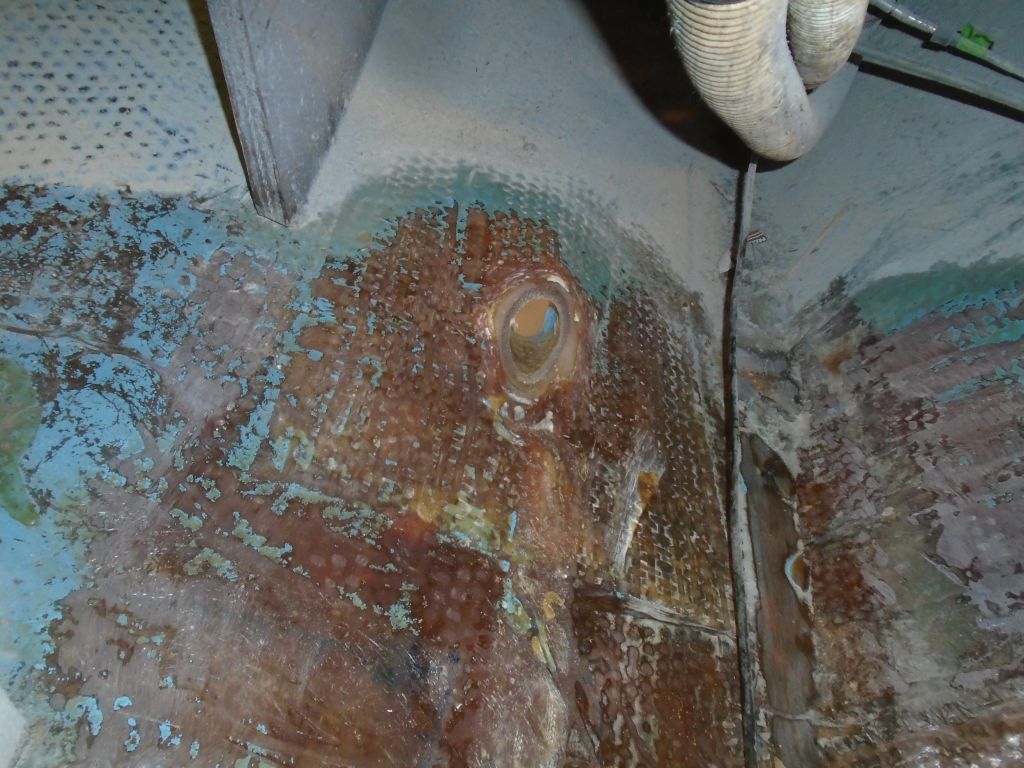
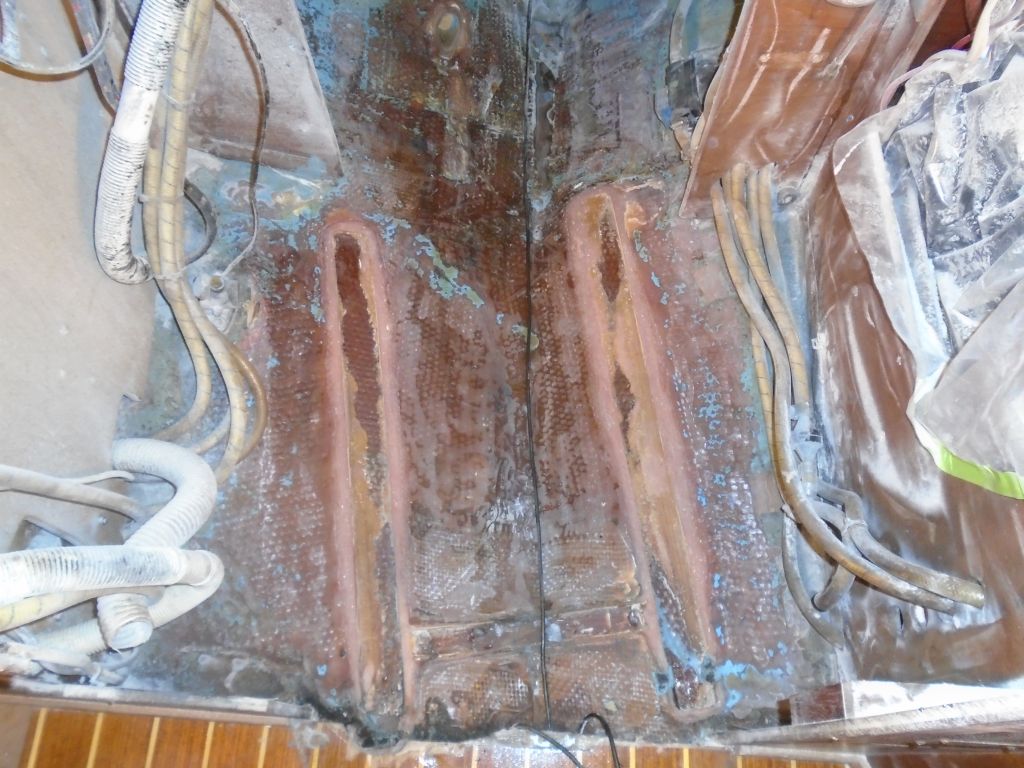
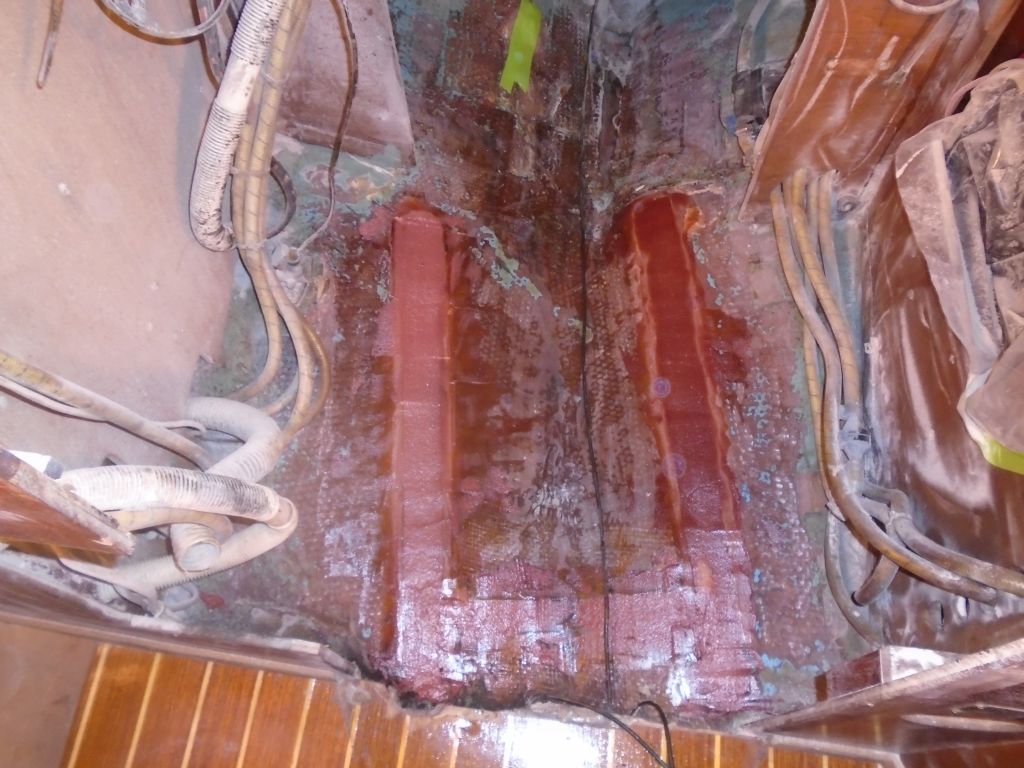
This left behind remnants of wood in the now-recessed areas inside of the old tabbing, and I pried out the wood and rough-cleaned the area before proceeding.  Then, to smooth out the cut edges of the old fiberglass and prepare the area for new work, I ground away the remains of the tabbing to the extent possible, leaving the edges of the old foundation locations flush with the surrounding hull.   There was no hope of removing the old foundation tabbing left on the hull–nor was there a need–so I strove for as flat and flush a result as possible, other than the recesses where the wood had been glued to the hull during original construction.  I also cut and ground away the inside portion of the stern tube, electing to leave the heavily-glassed bump at the aft end where the builders had done a nice job fairing and glassing in the original tube.

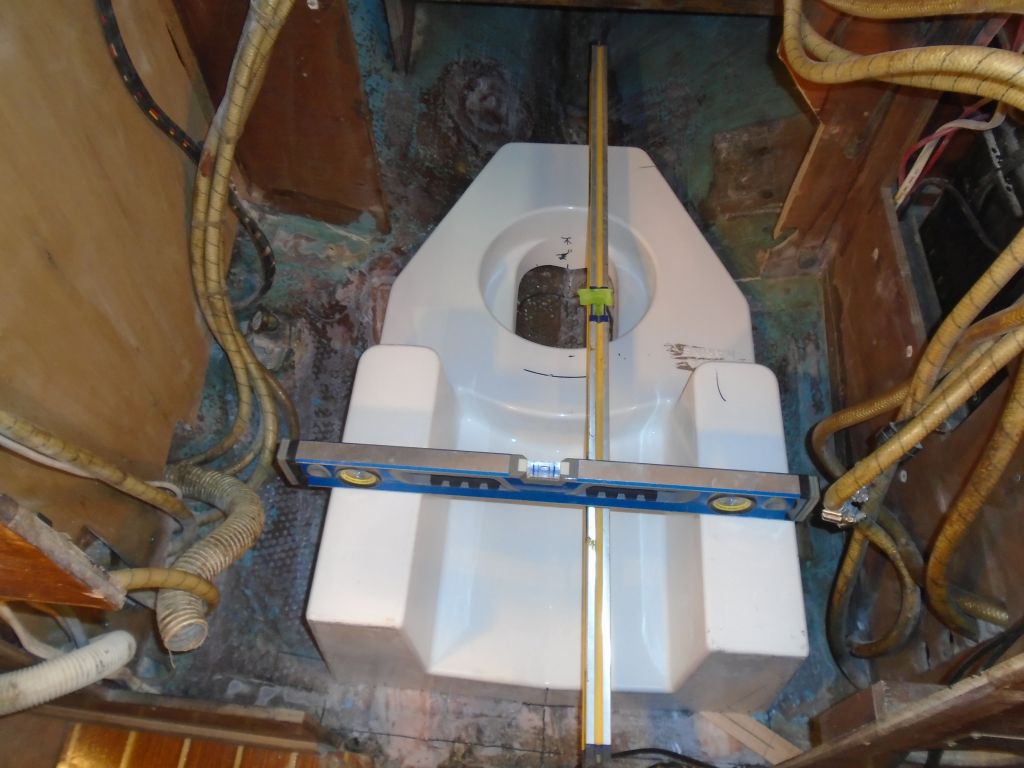
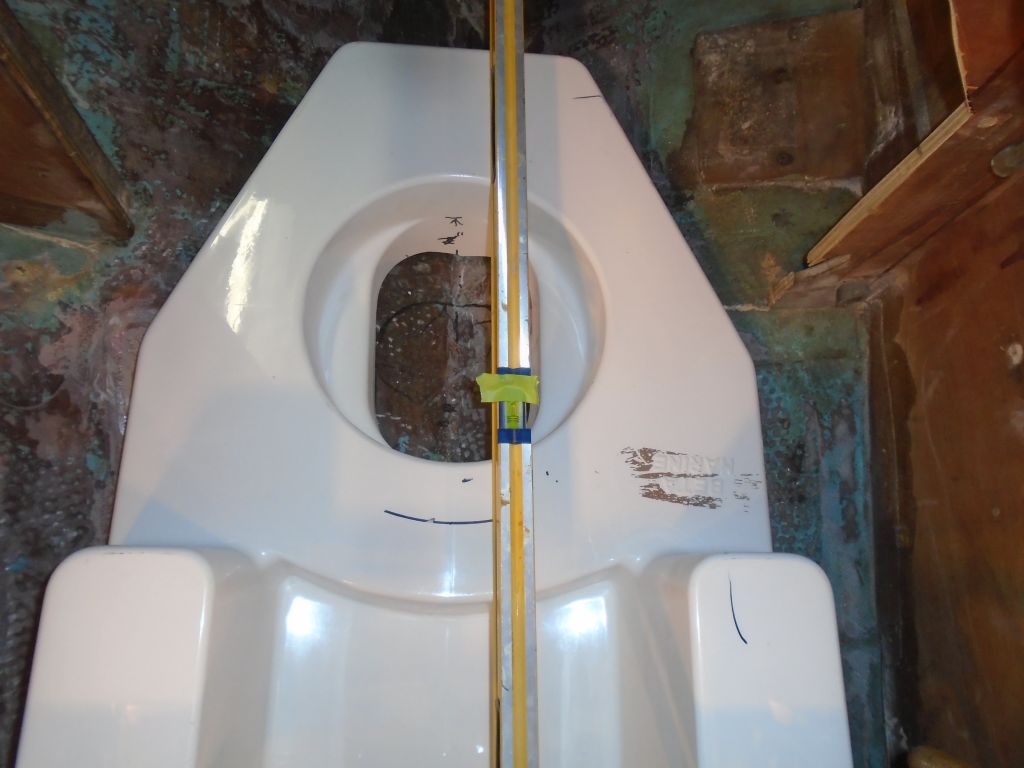
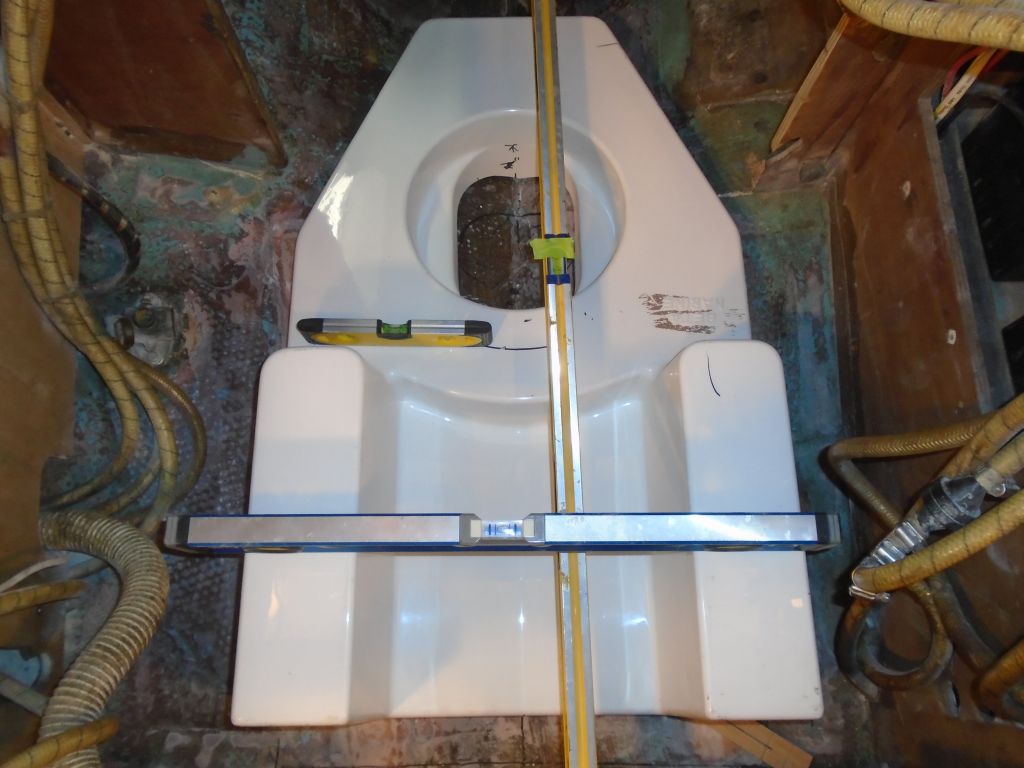
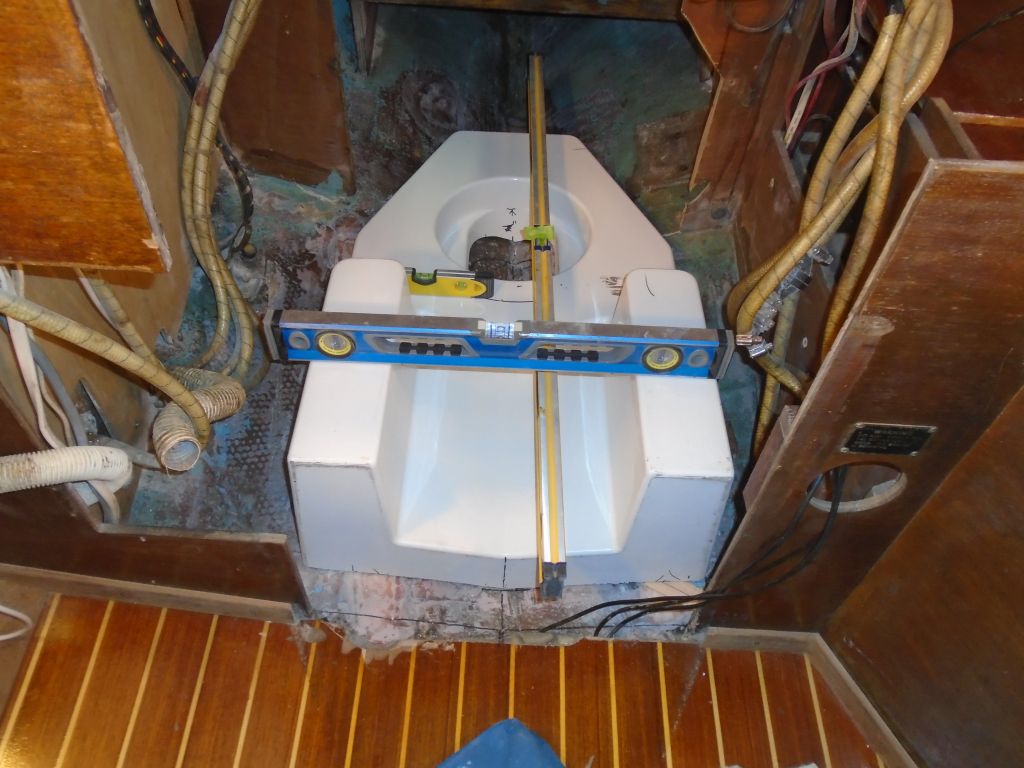
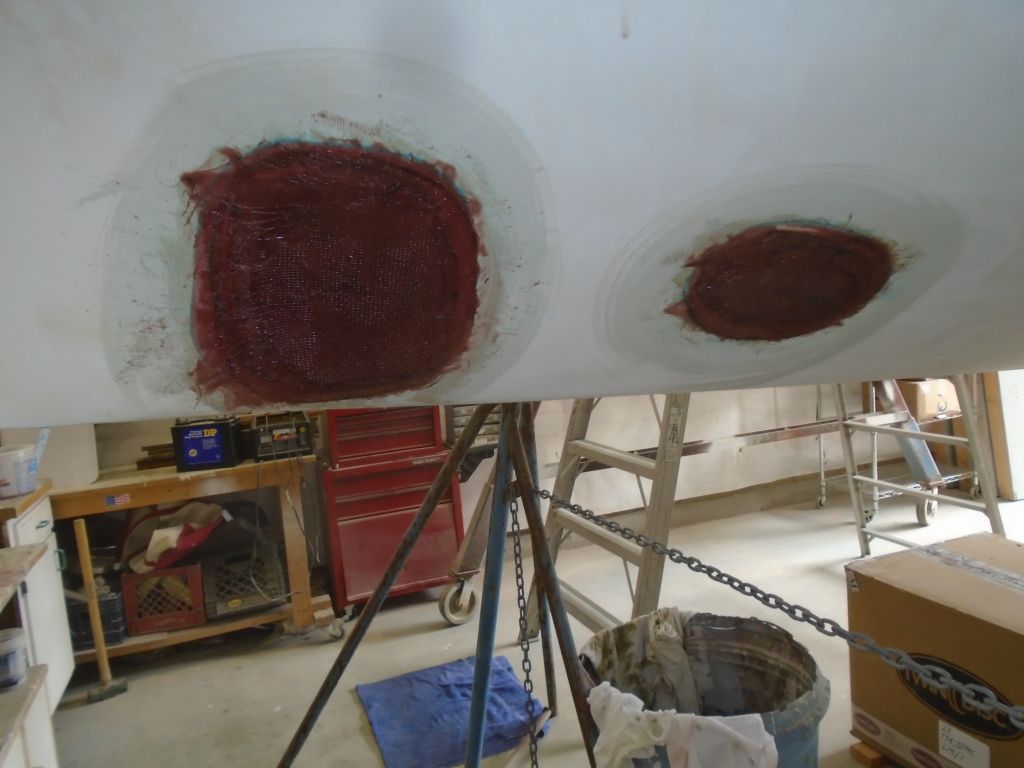
This chore made a mess and took quite a bit of time, but after cleaning up the area thoroughly, I solvent-washed the now-flush engine bed locations and applied some thickened epoxy filling material into the grooves left behind by the old plywood, bringing these areas up level with the surrounding hull so I’d have a relatively consistent and smooth substrate from which to work going forward.  I also masked over from inside and filled the old stern tube opening through the hull, the first step in patching this area permanently.

Total time billed on this job today:  7.5 hours

0600 Weather Observation:
50°, clear.  Forecast for the day:  Sunny, 80s
 

Acadia 2

< Back to Acadia

Wednesday

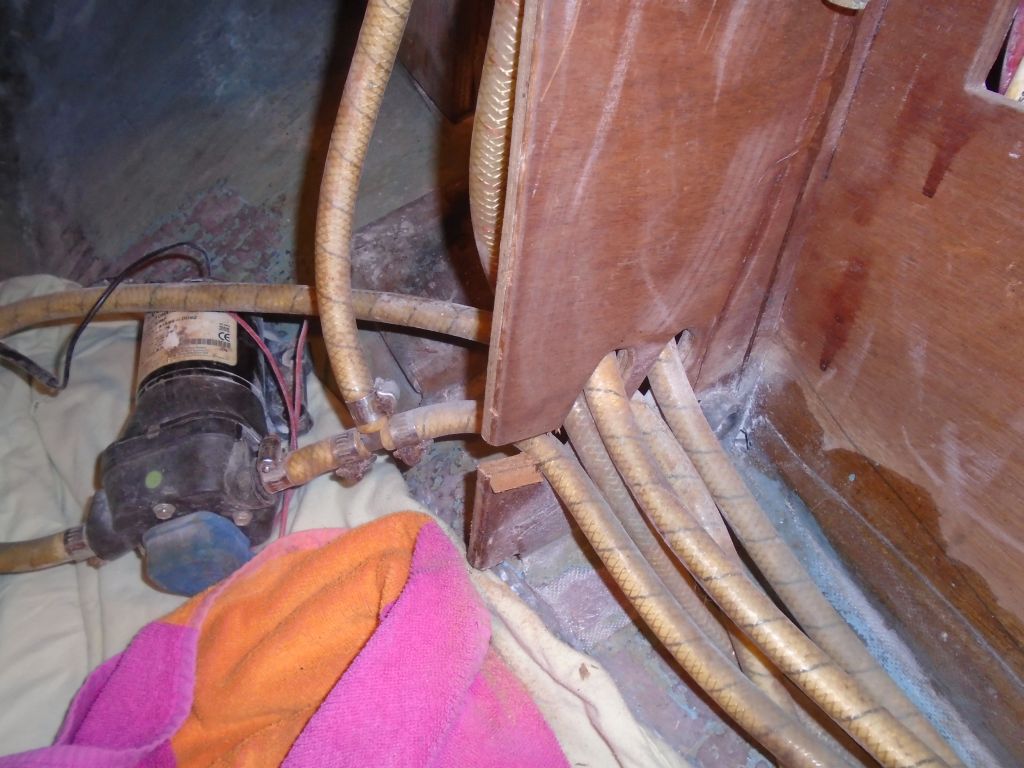
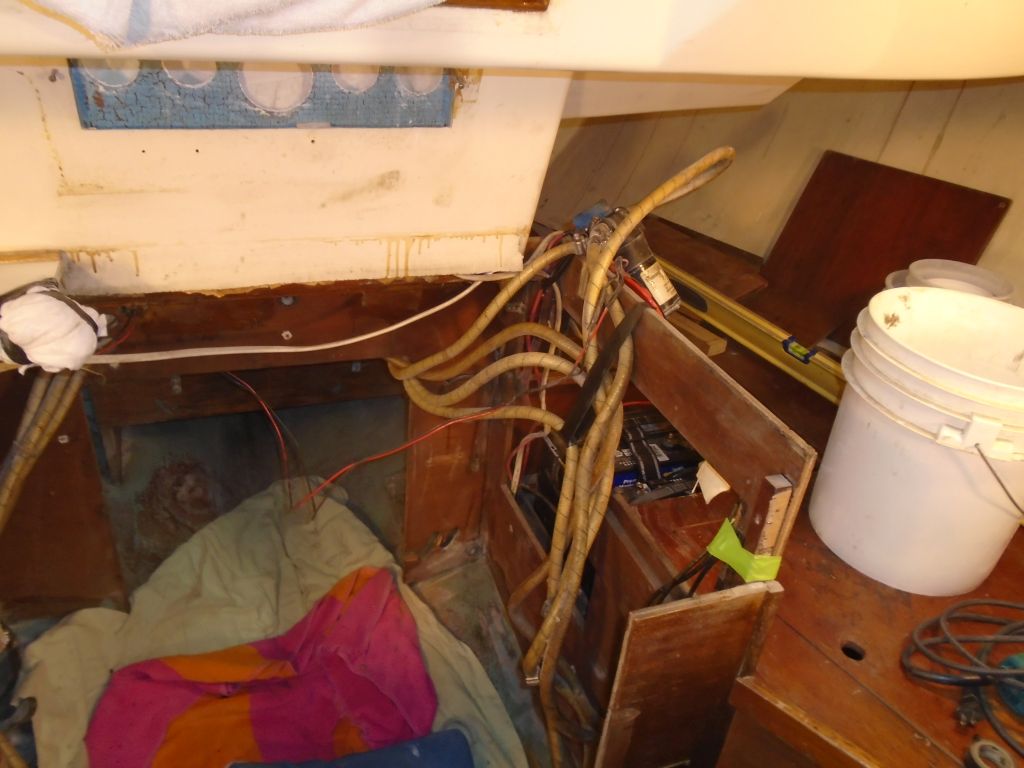
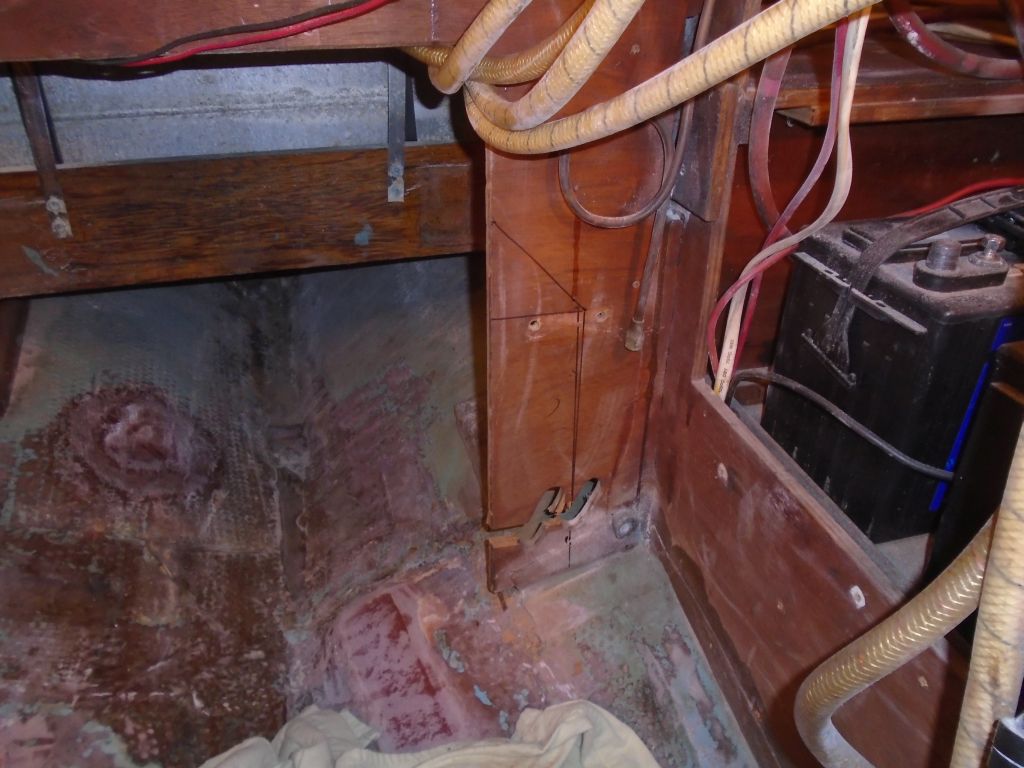
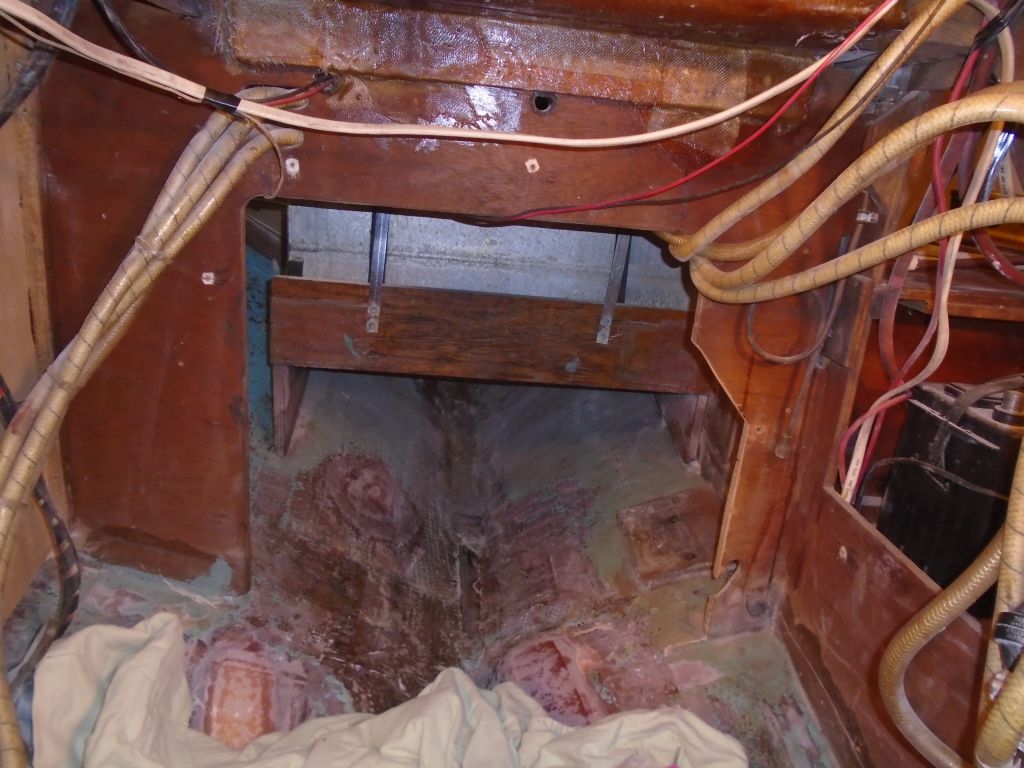
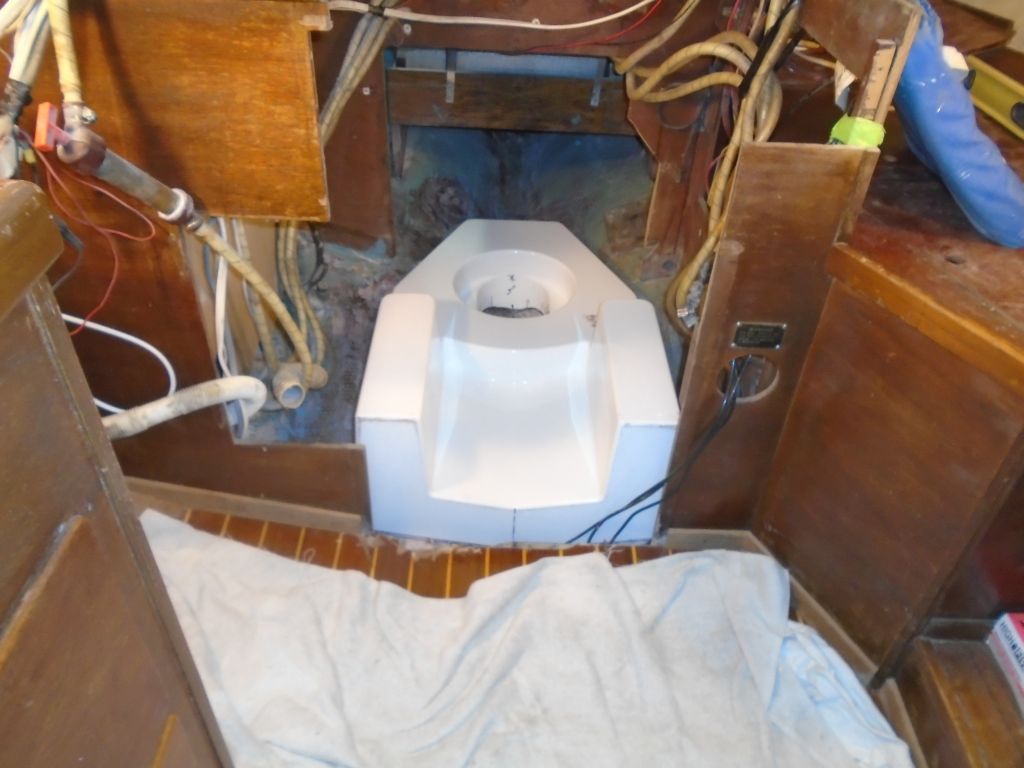
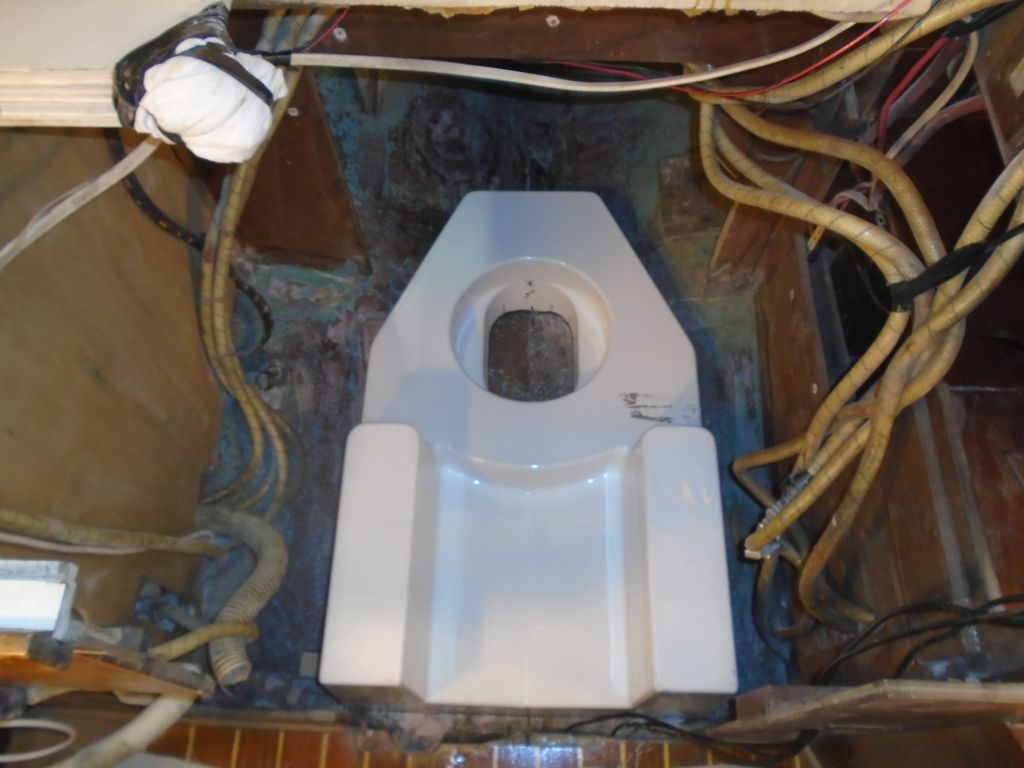
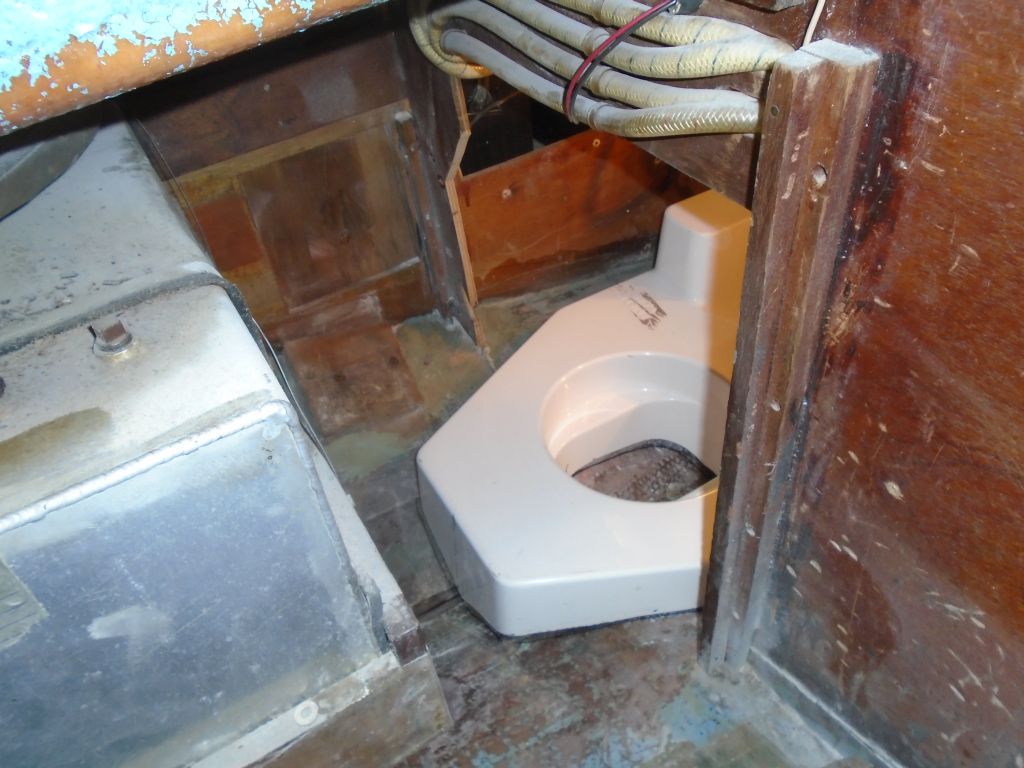
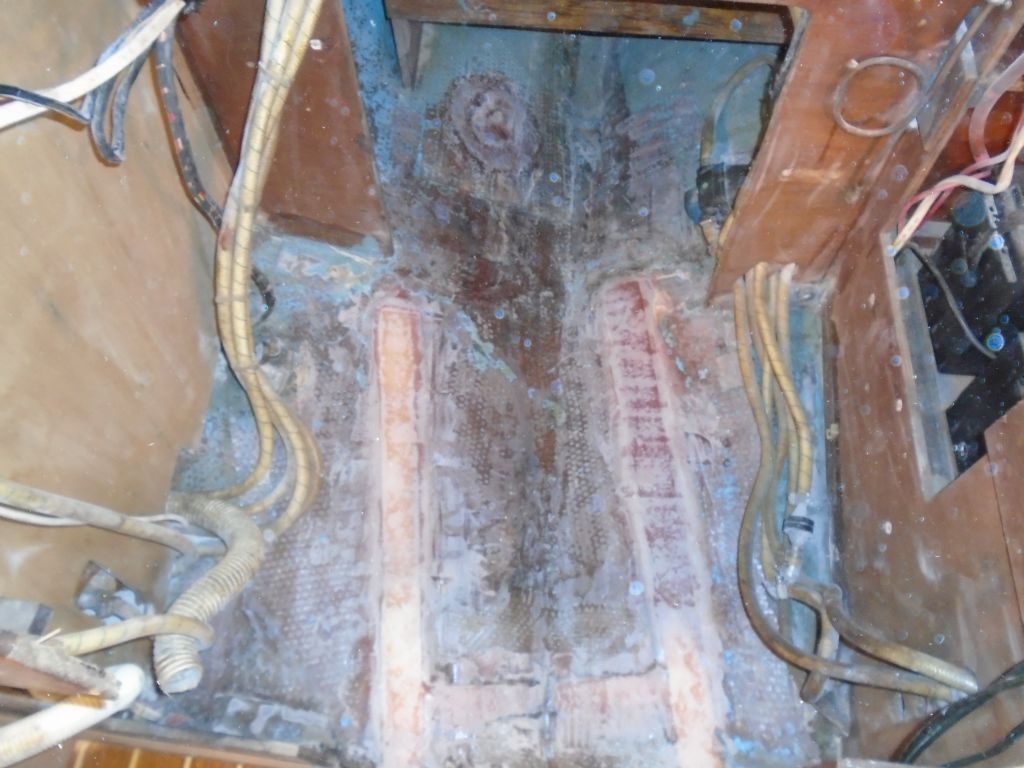
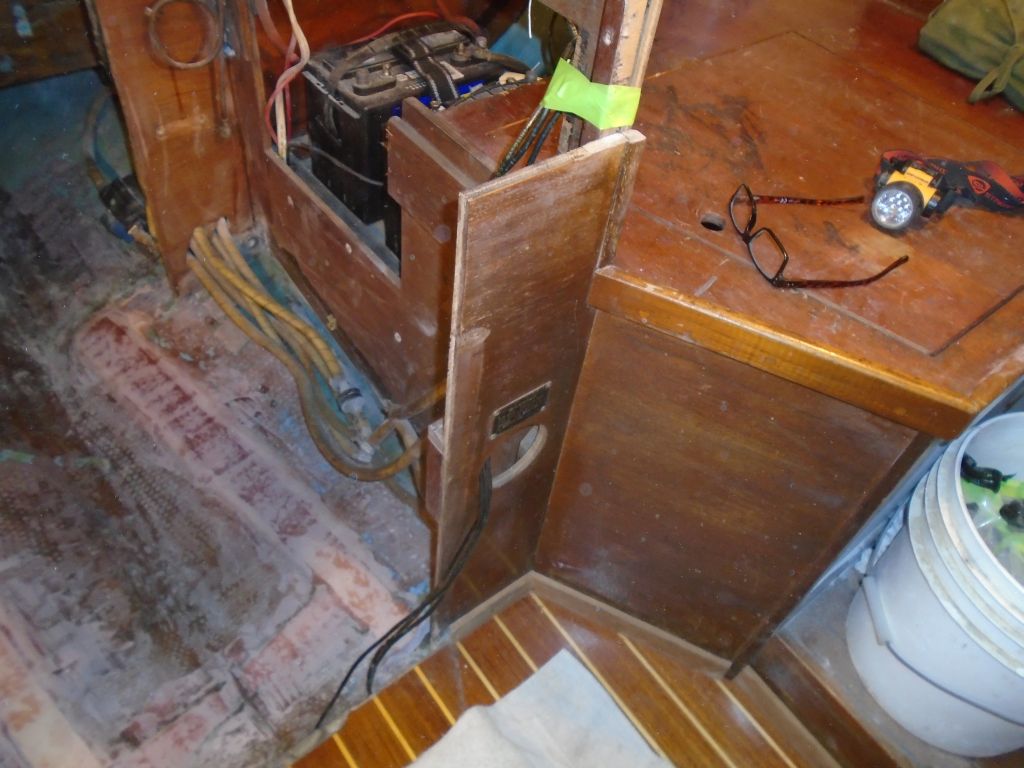
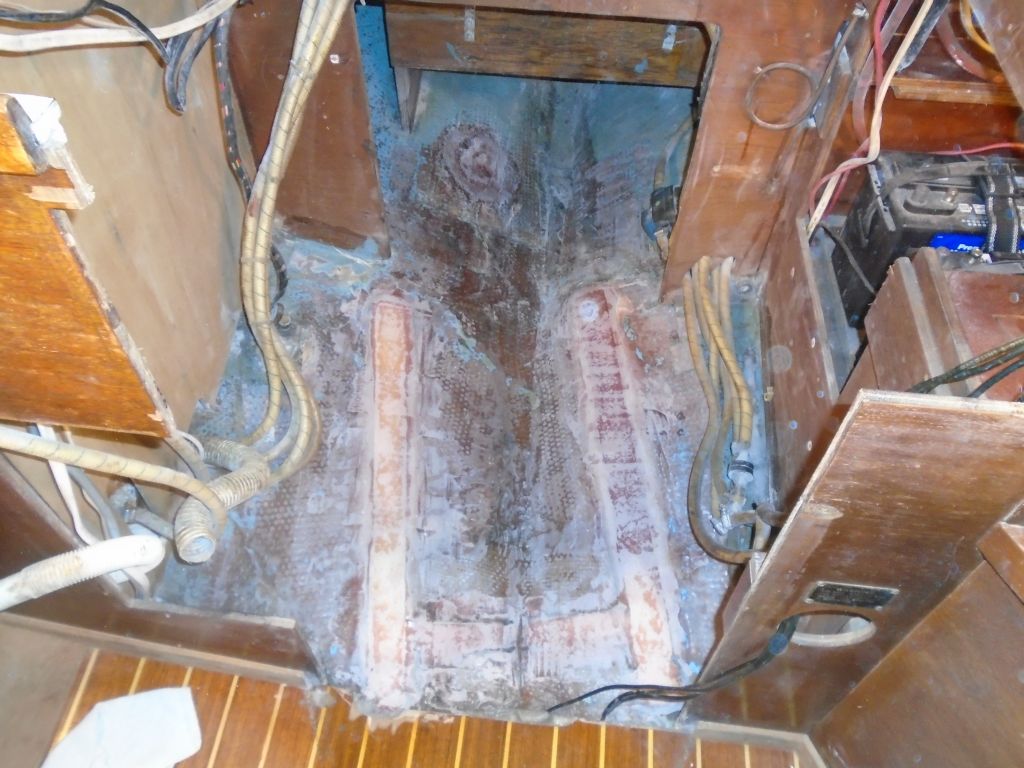
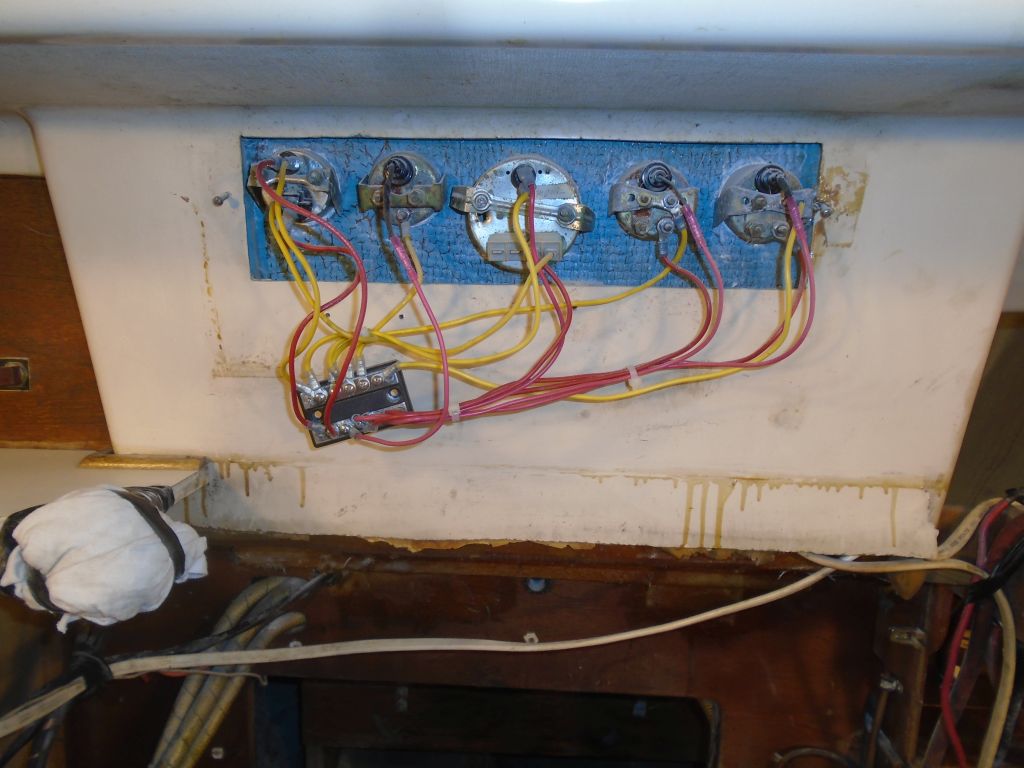
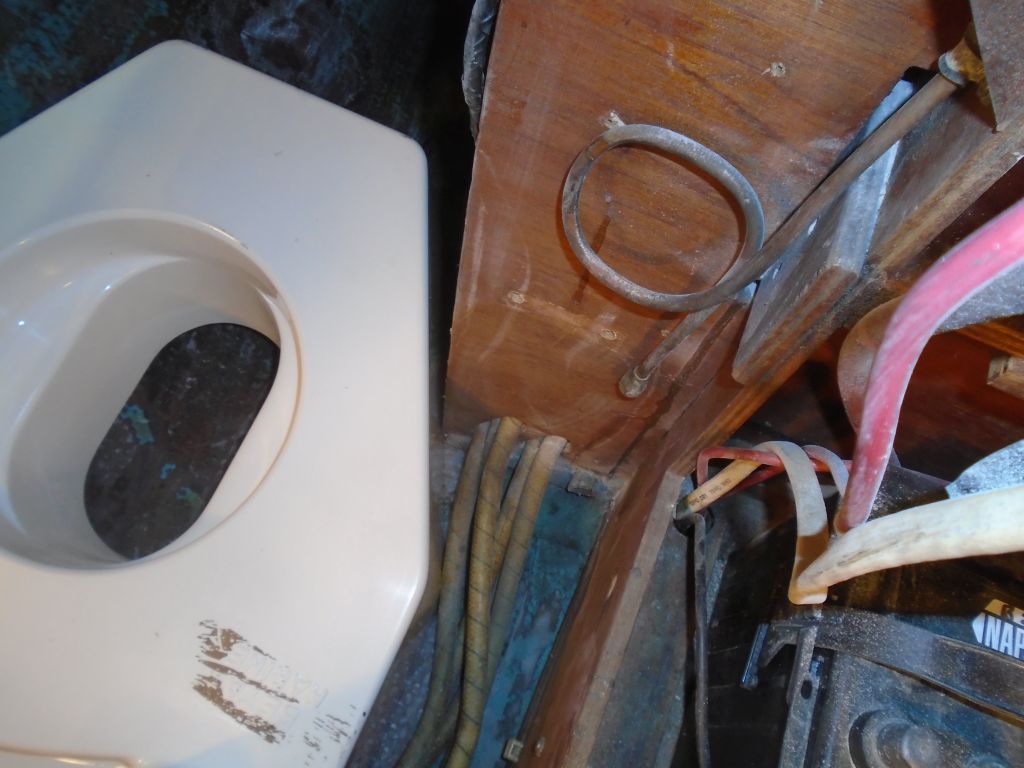
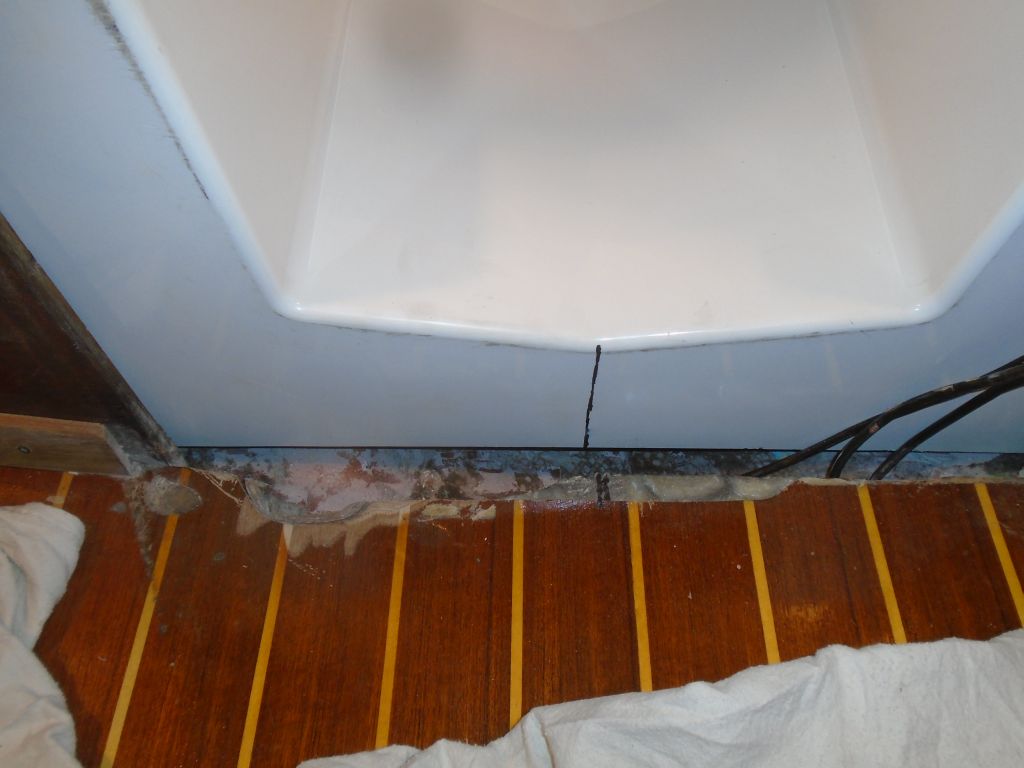
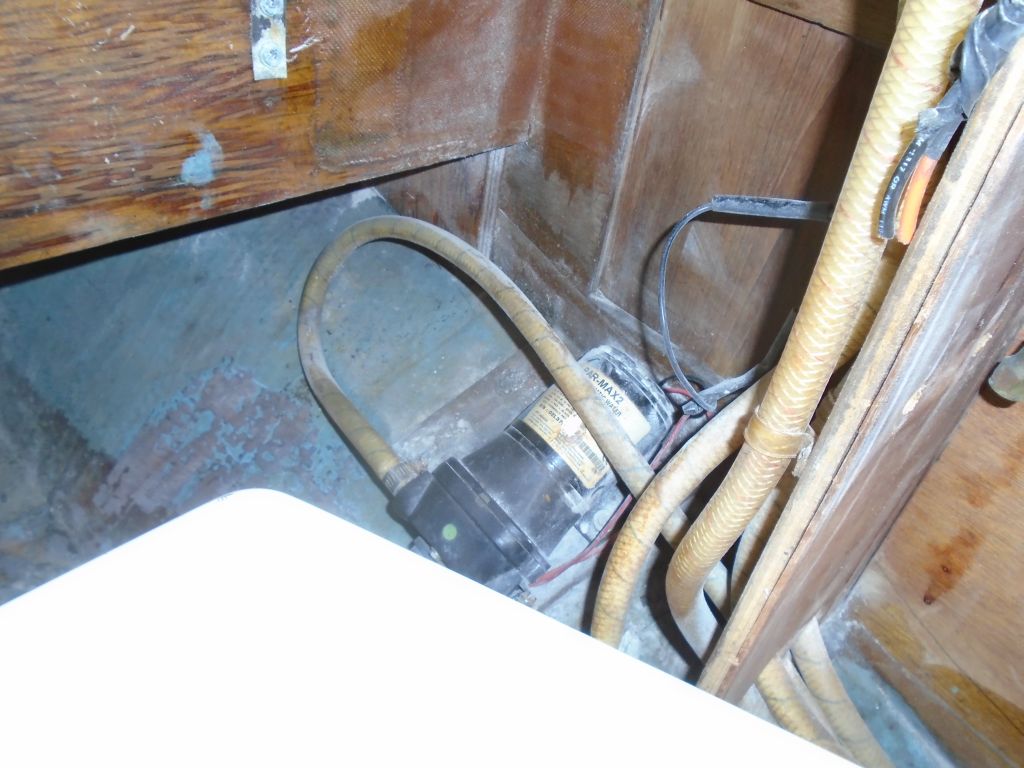
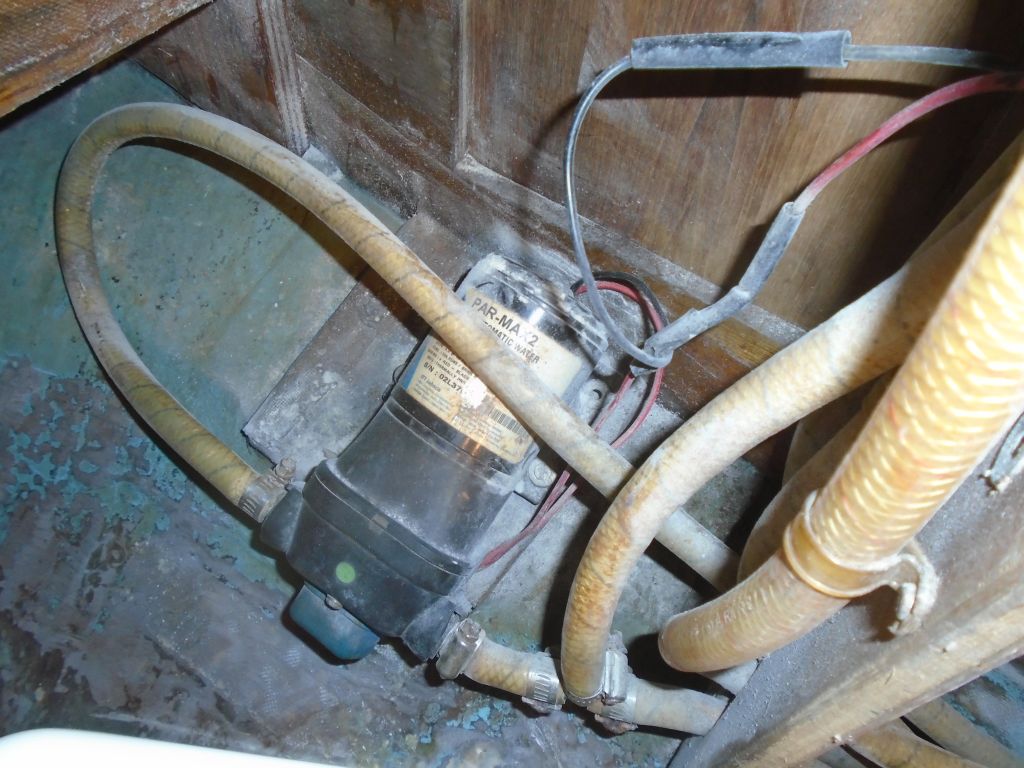
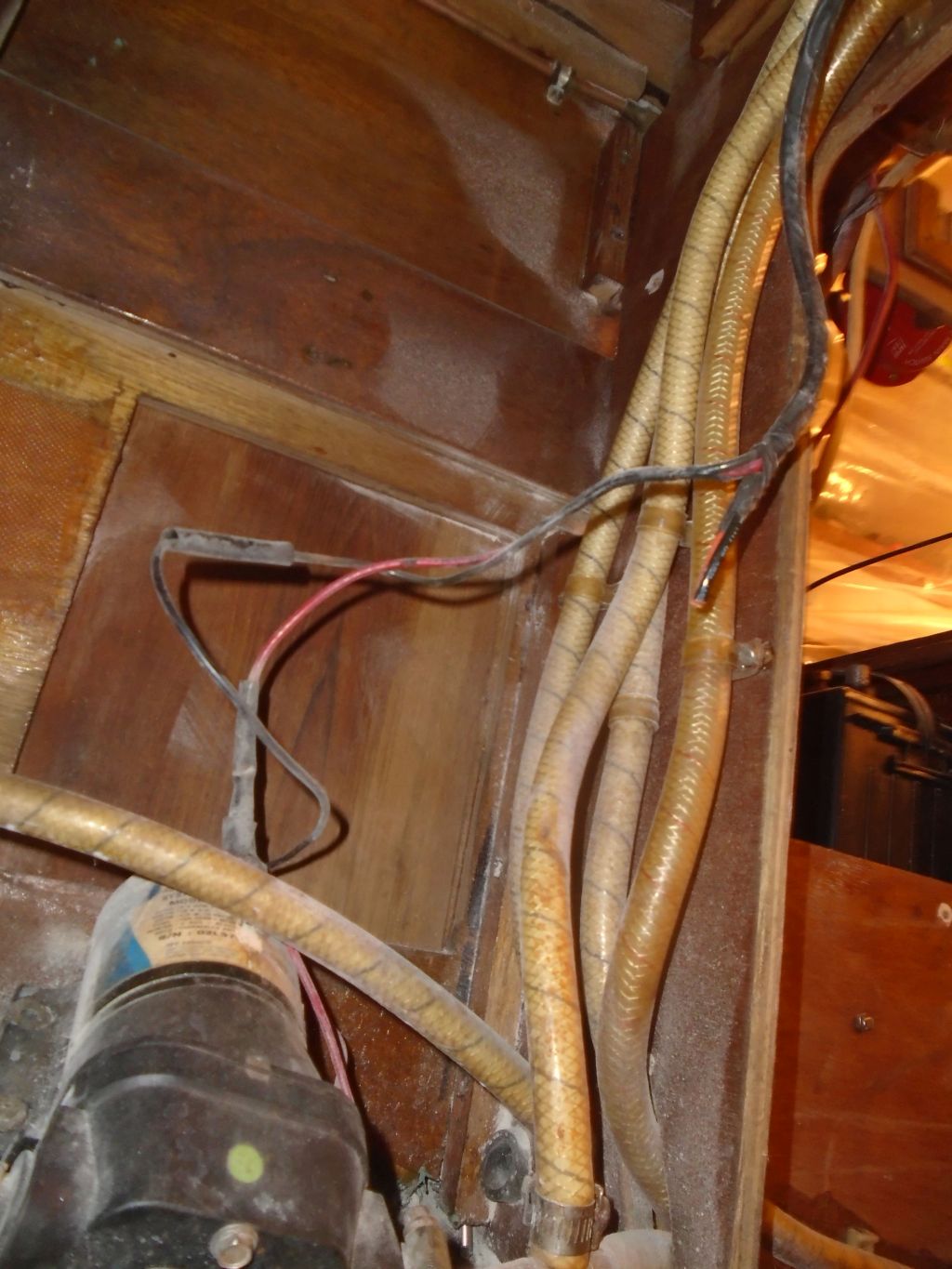
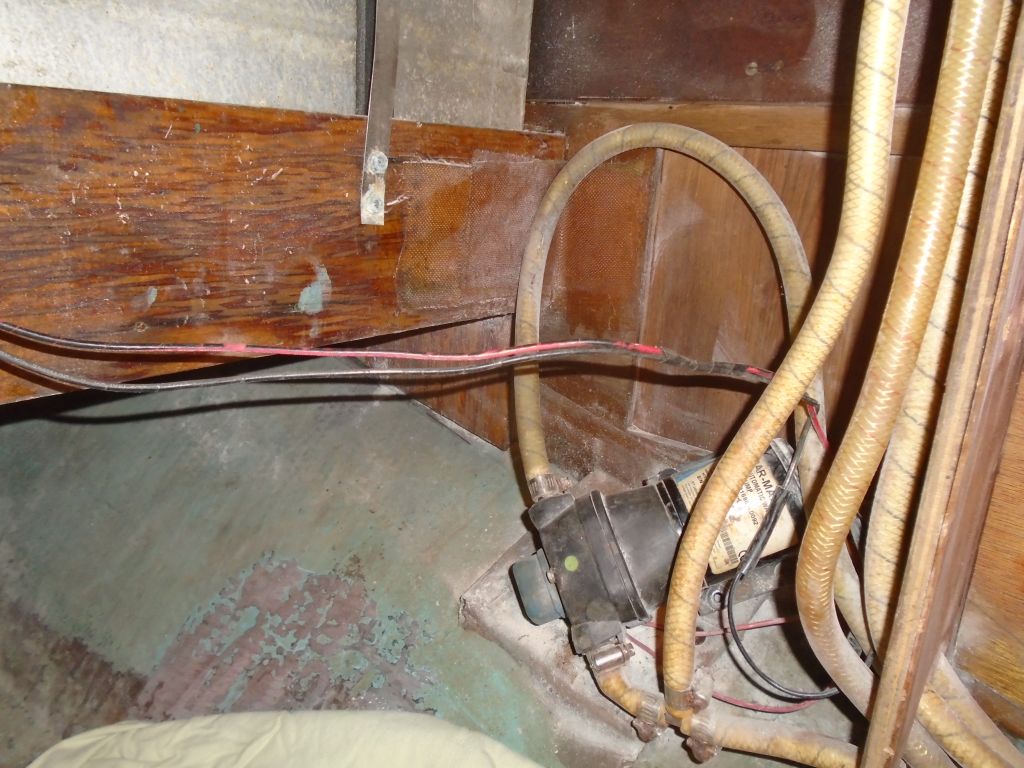
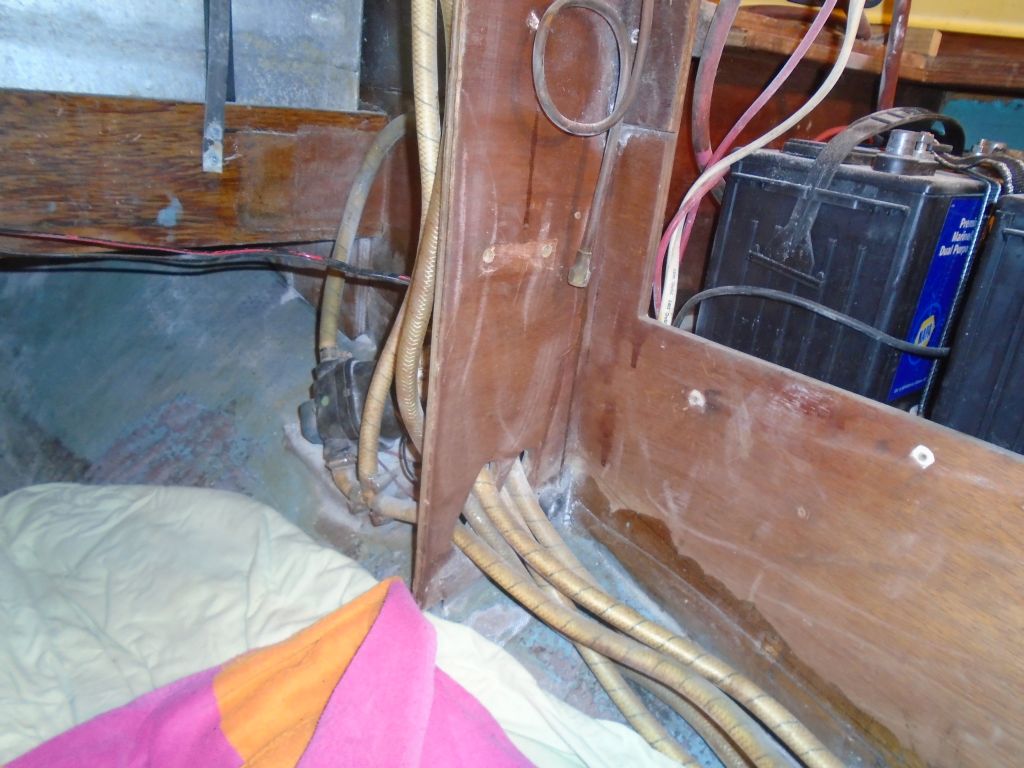
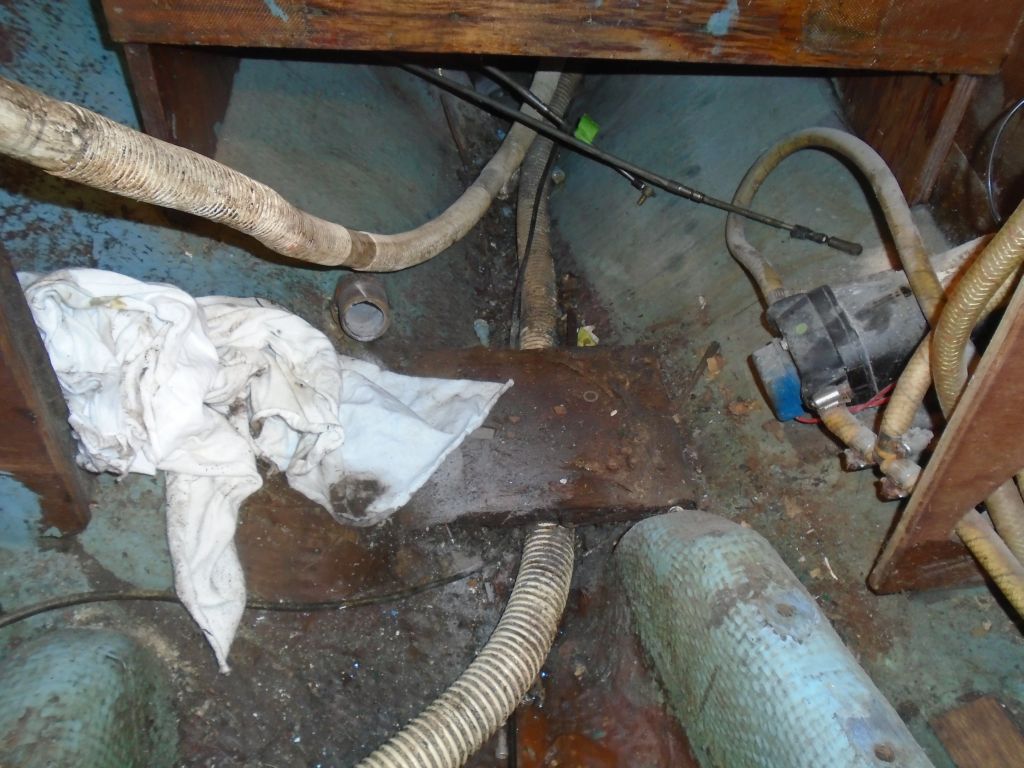
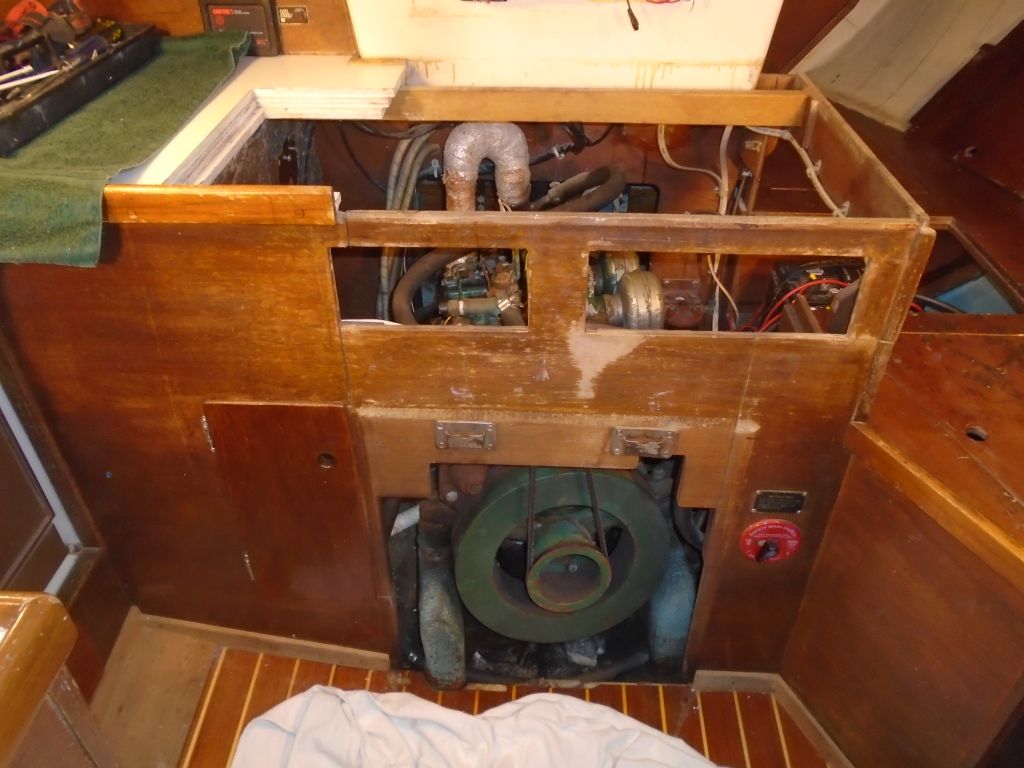
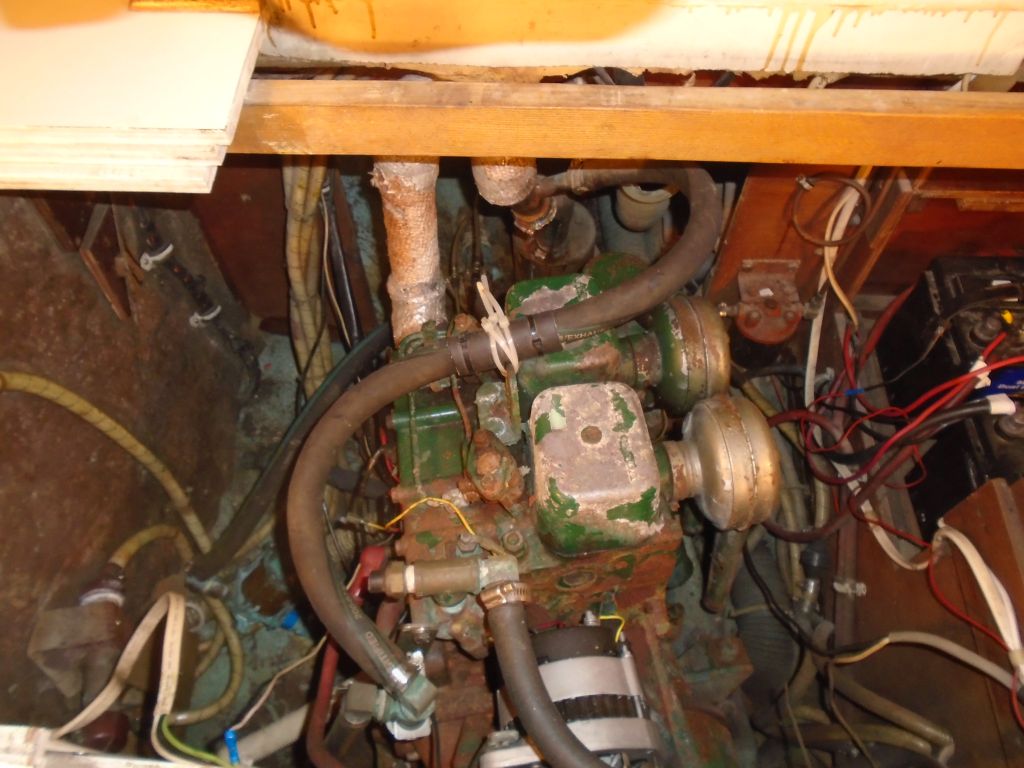
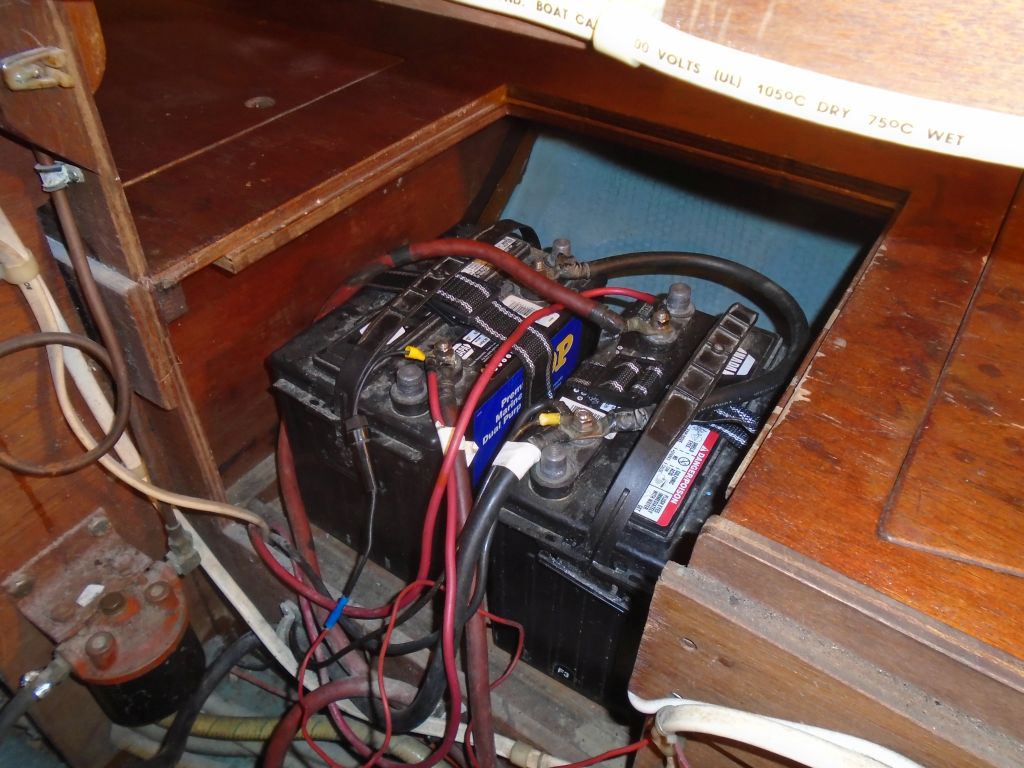
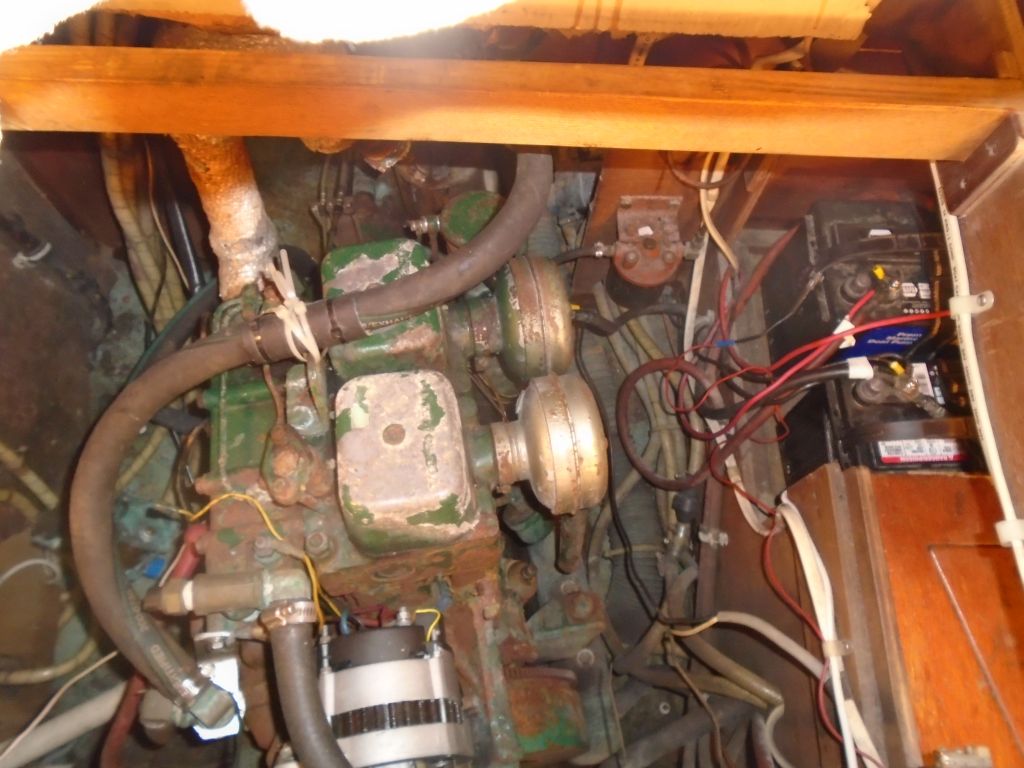
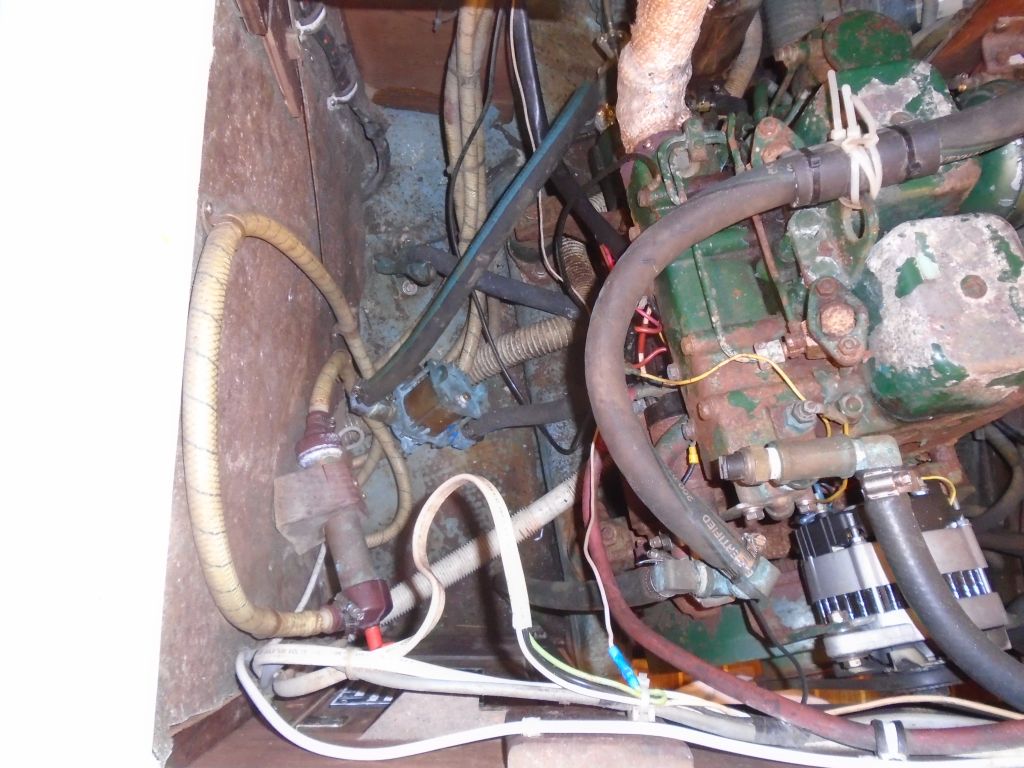
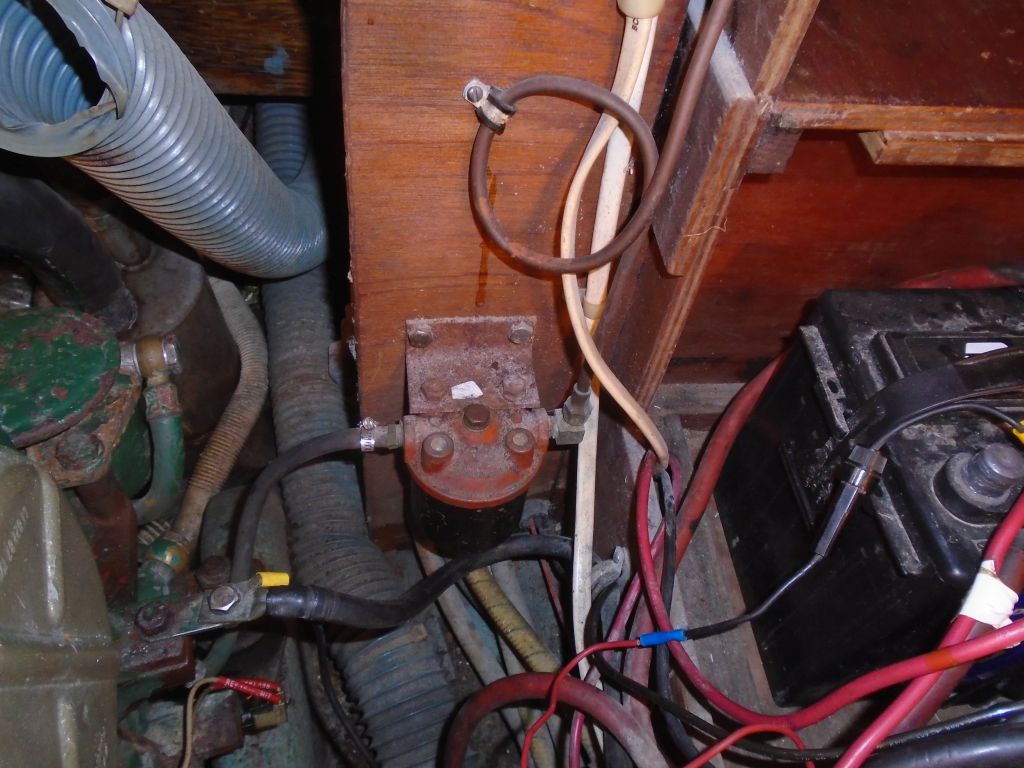
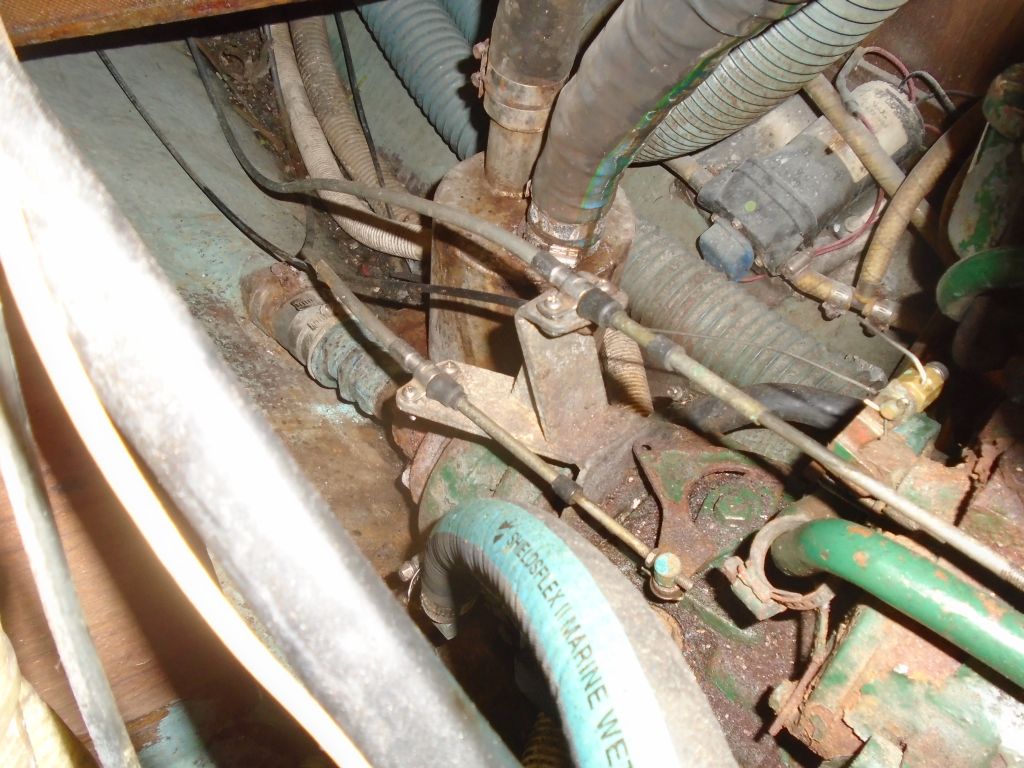
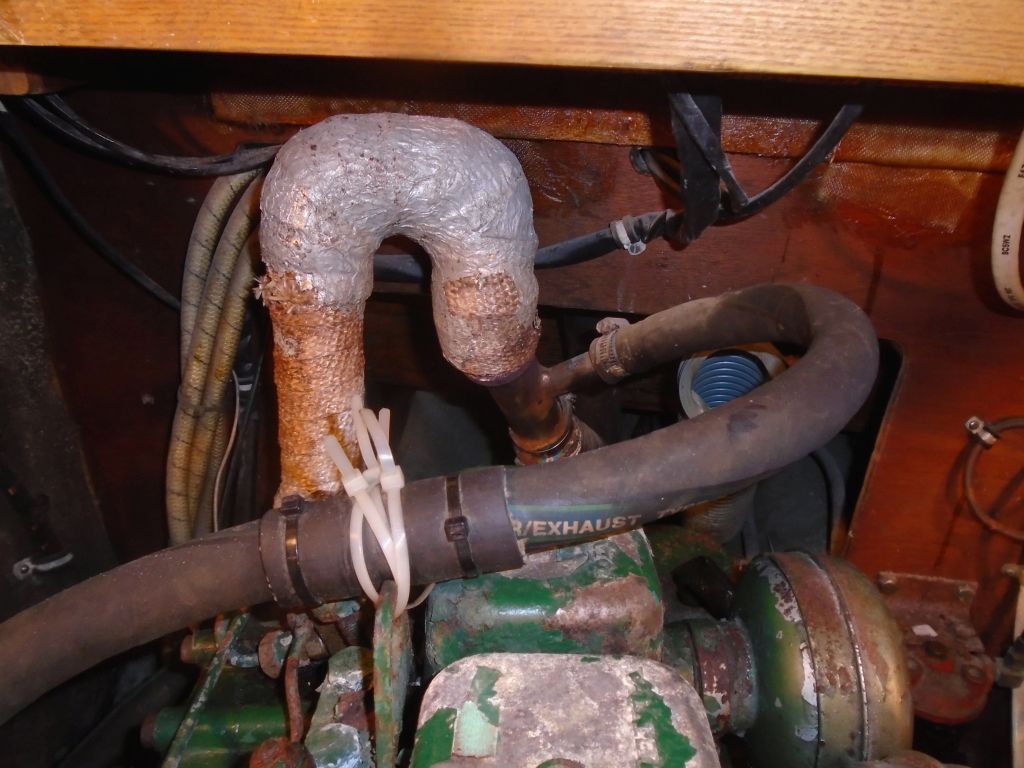
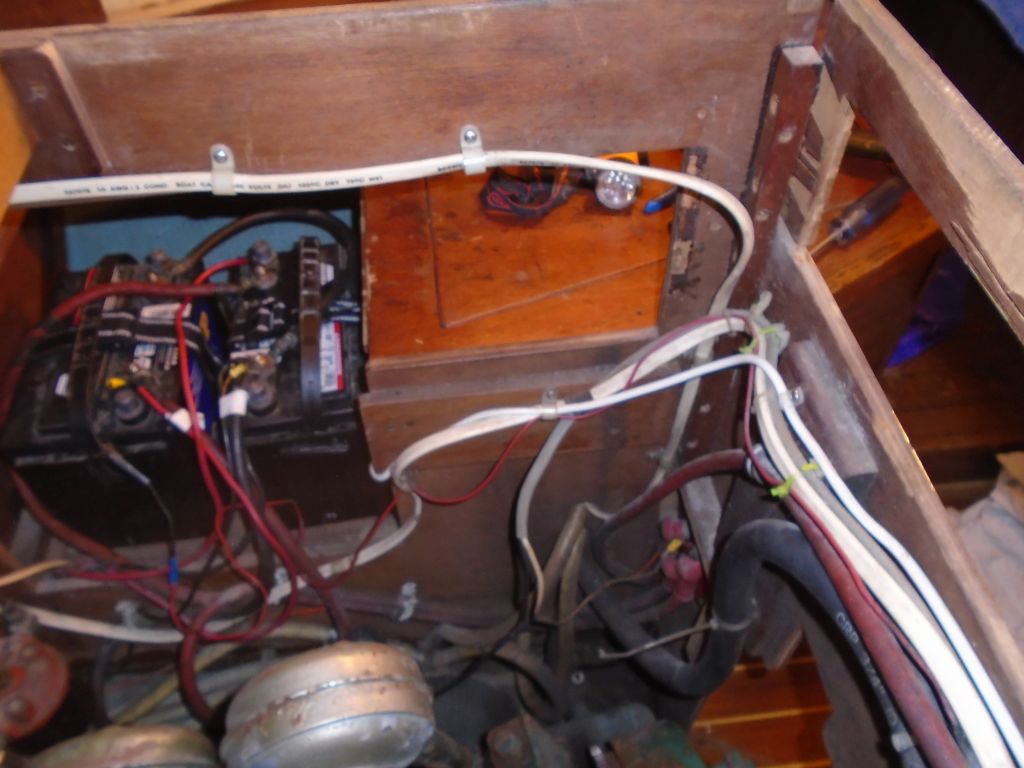
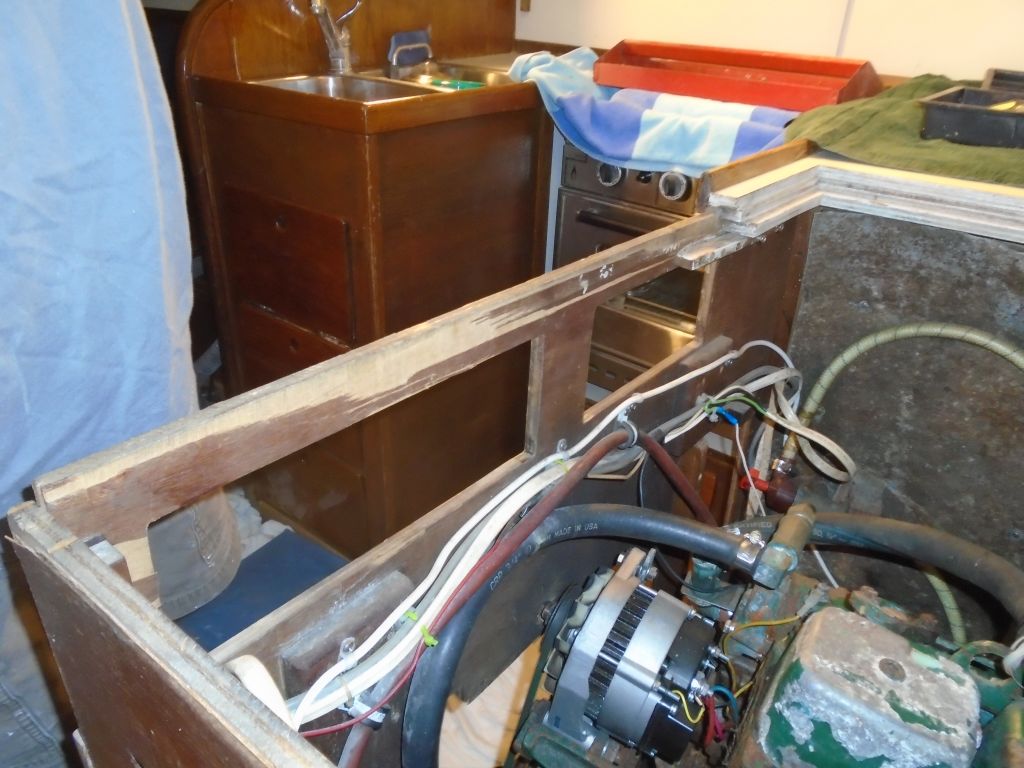
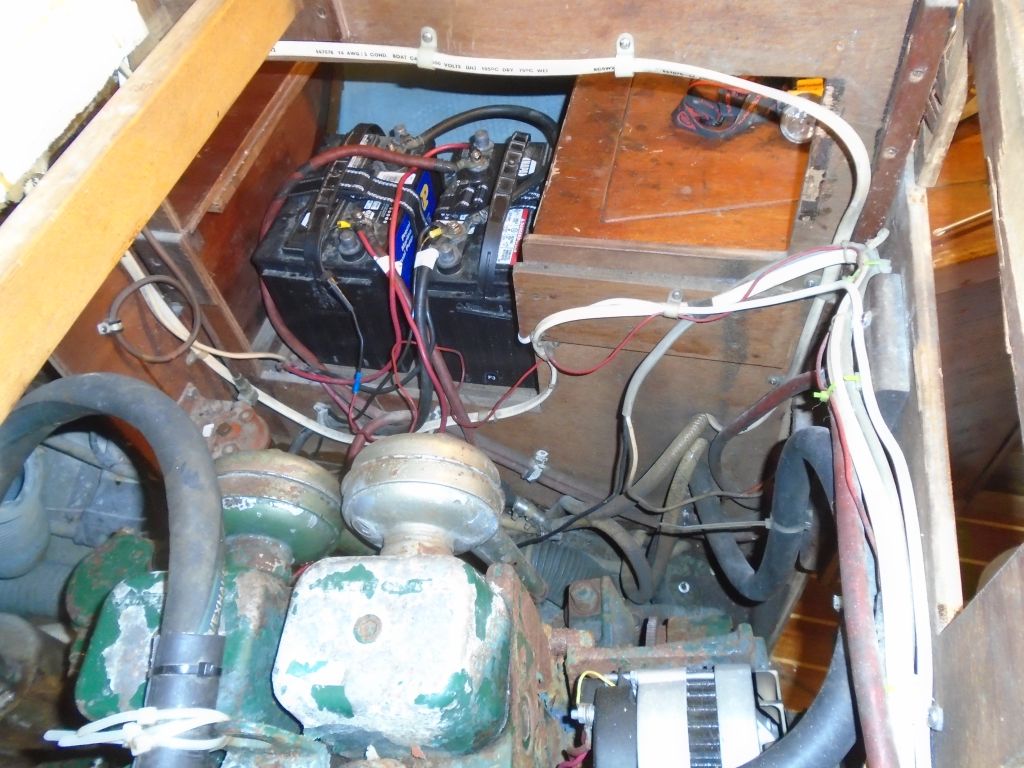
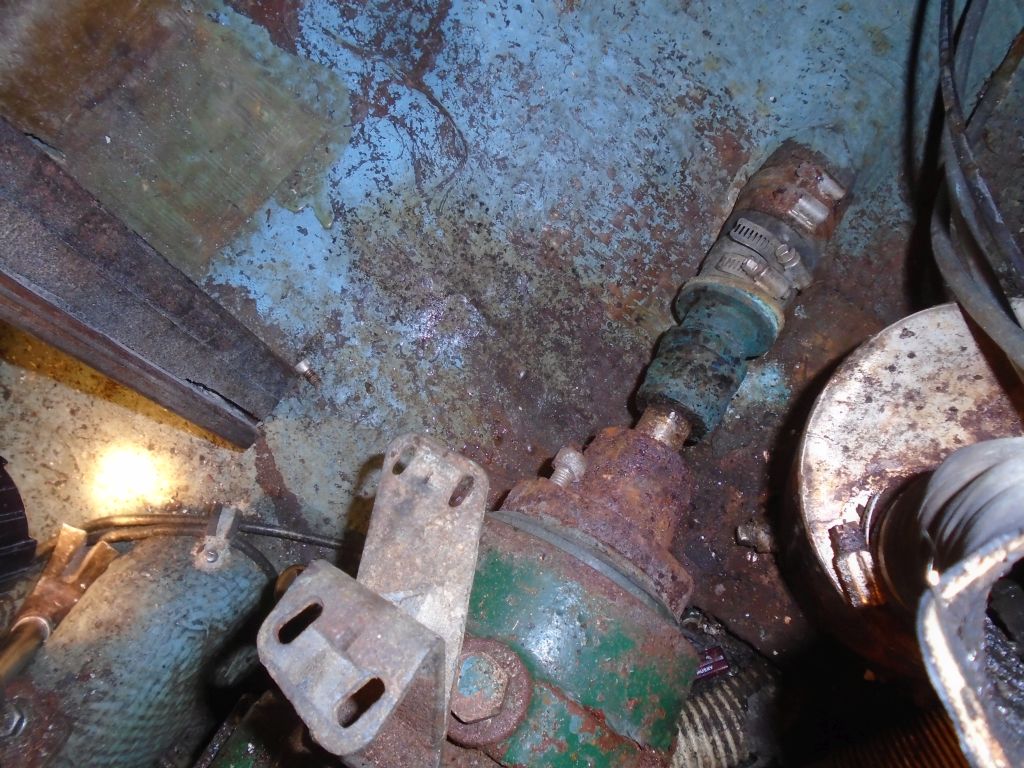
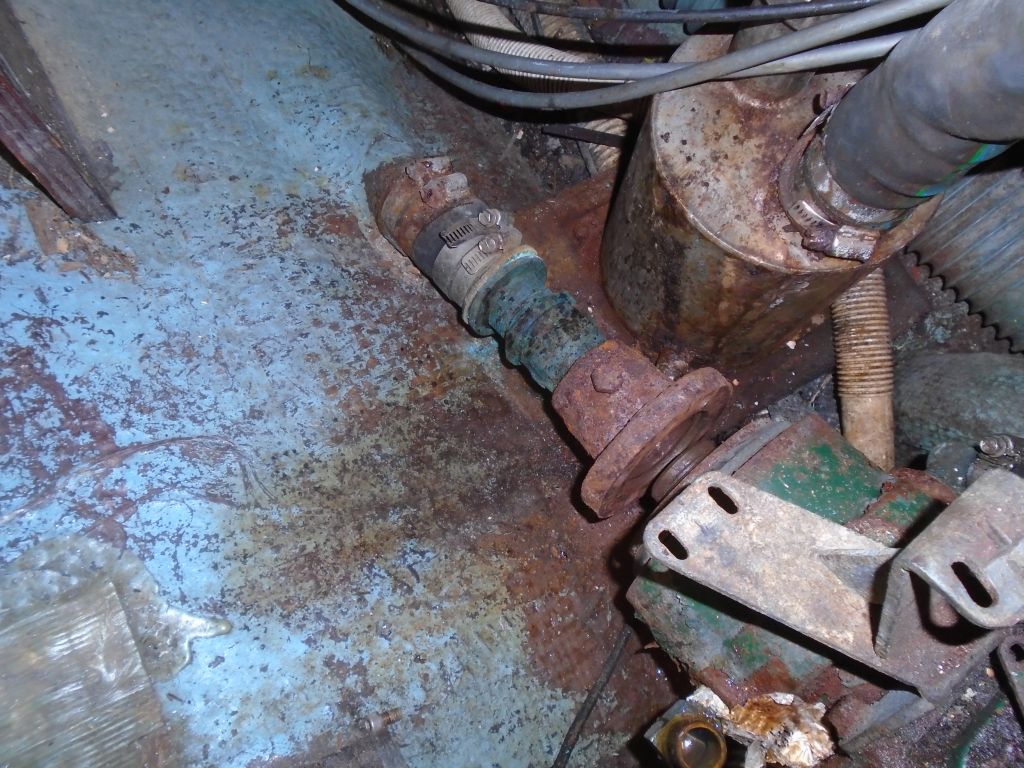
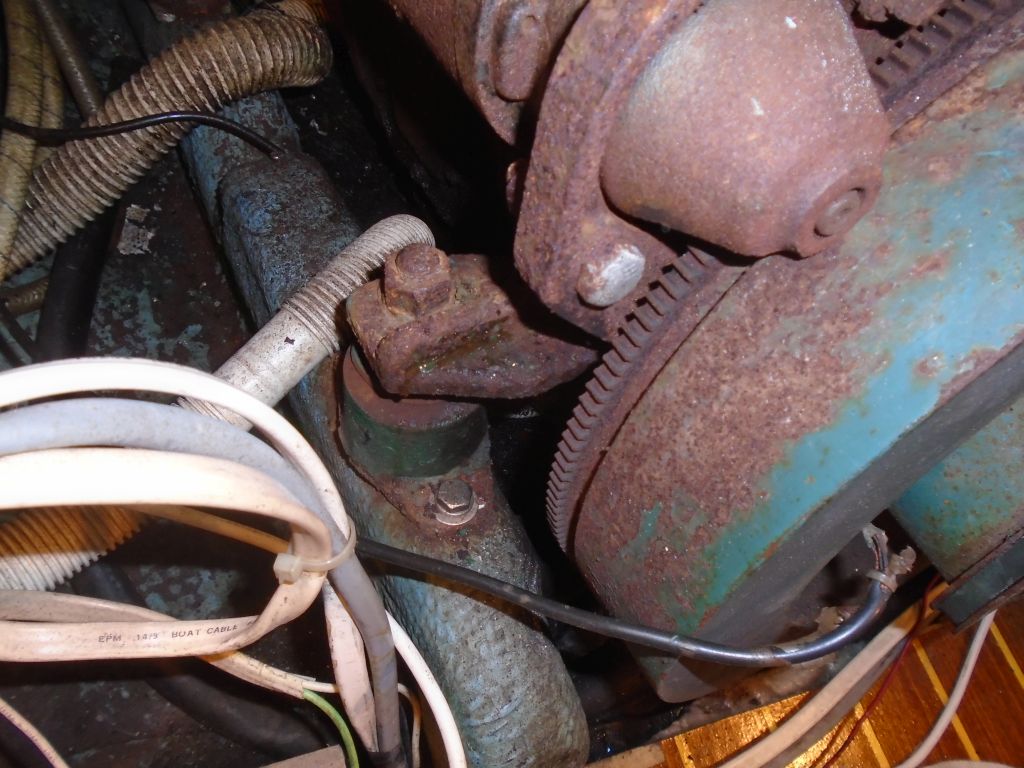
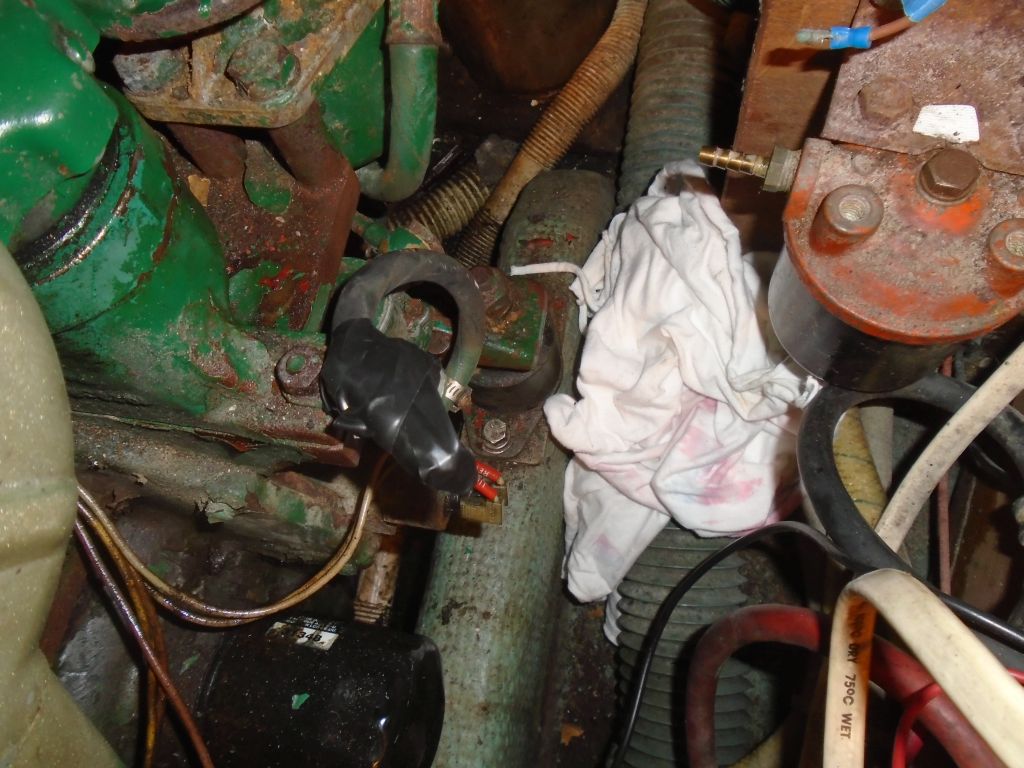
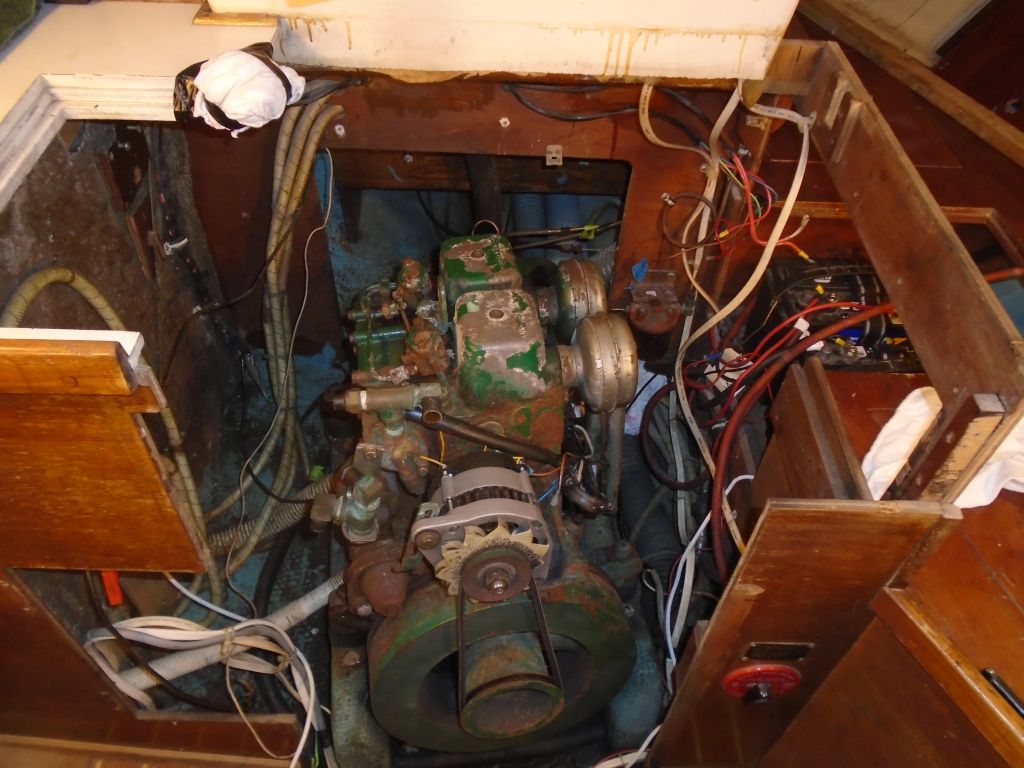
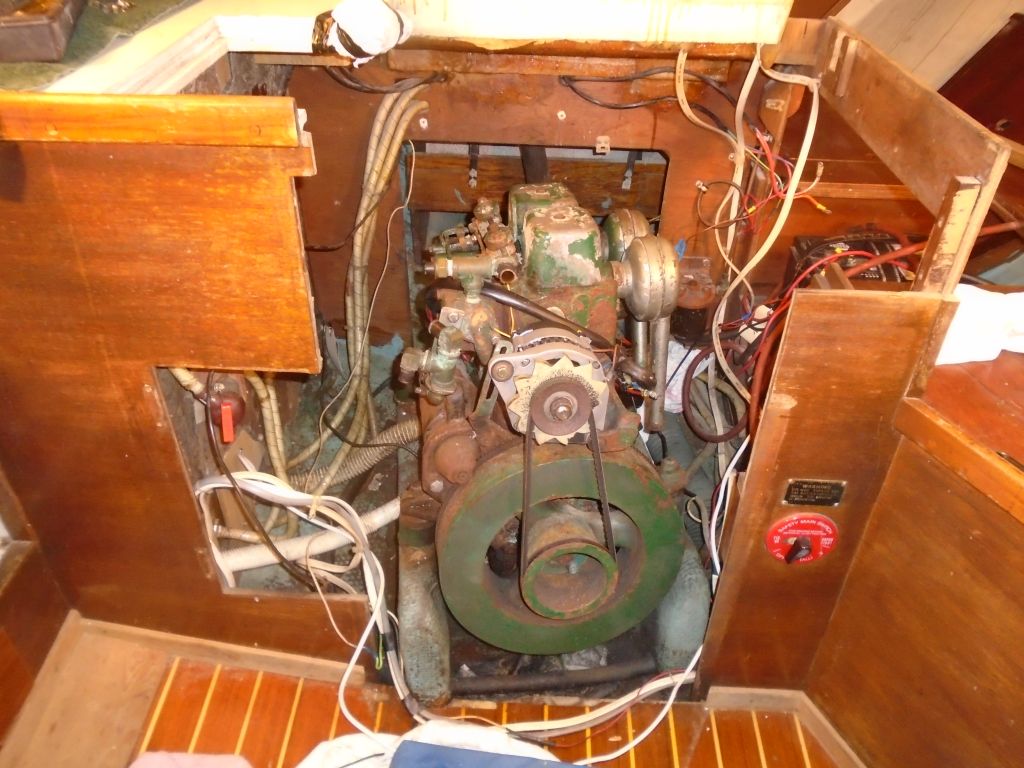
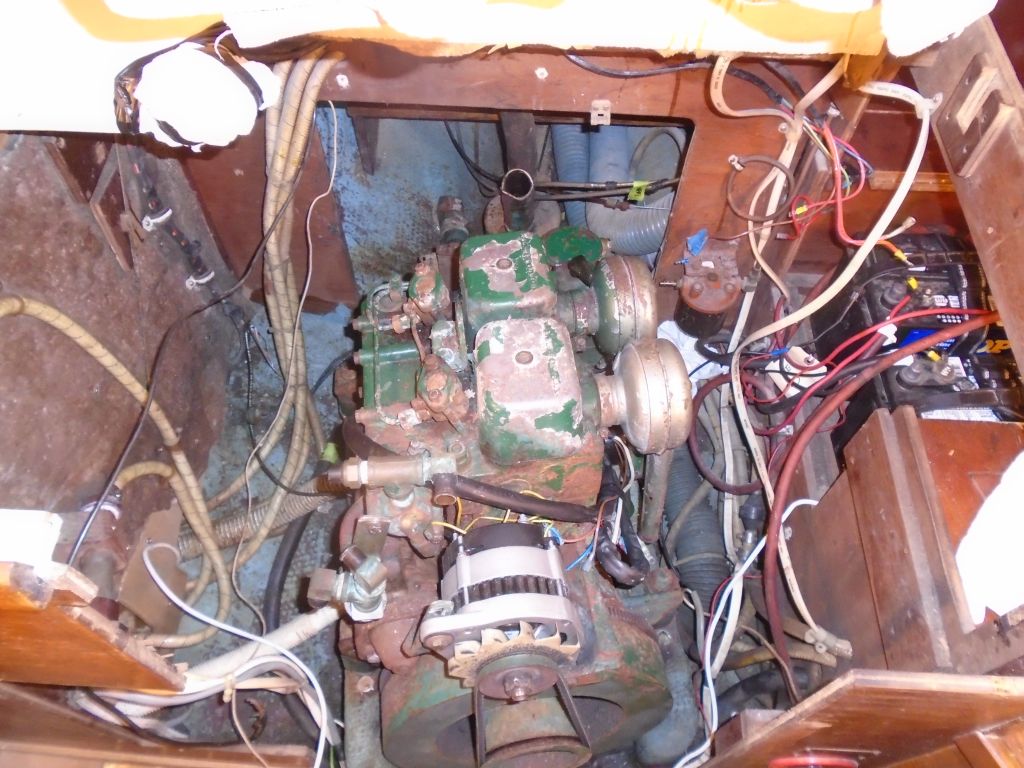
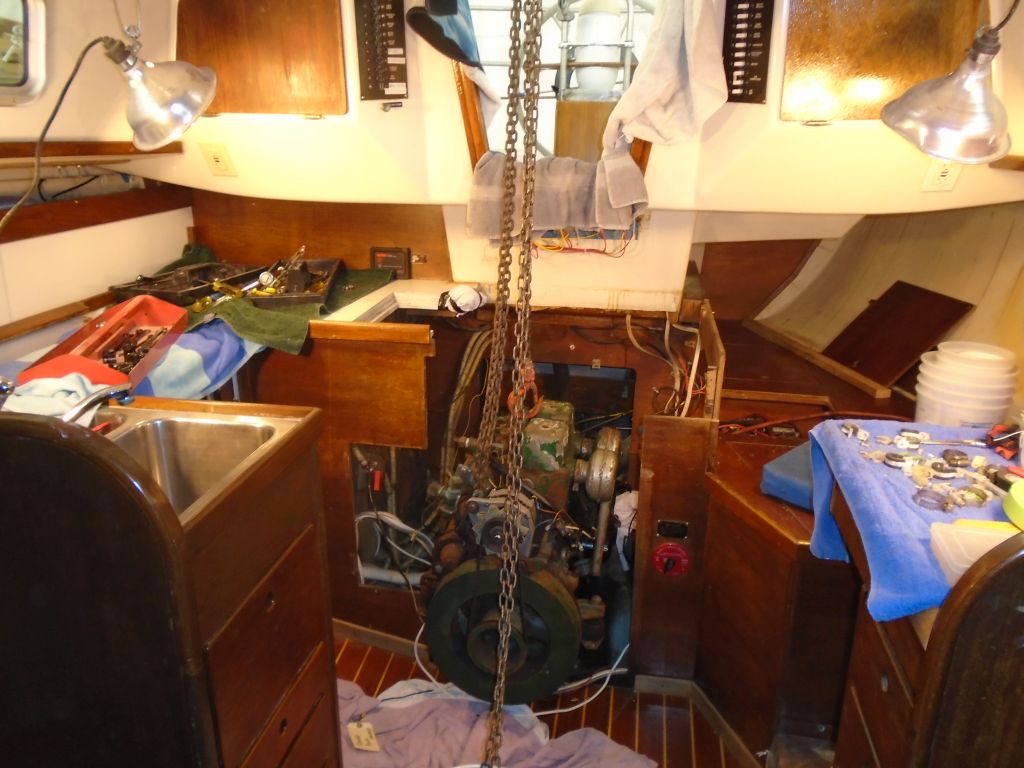
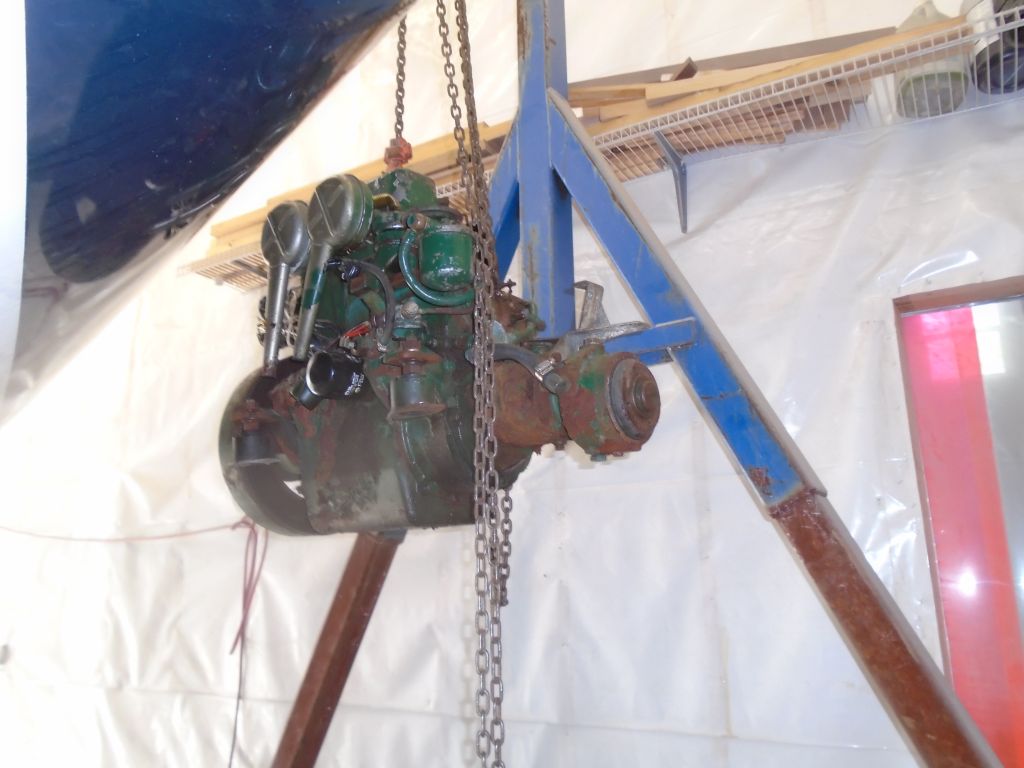
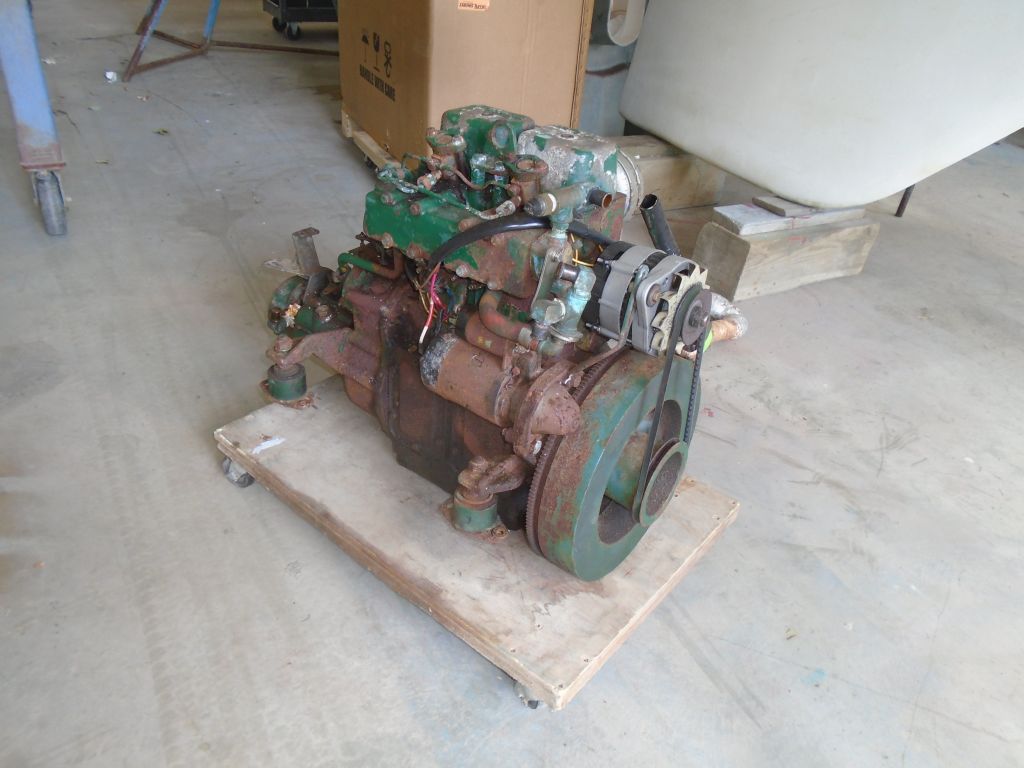
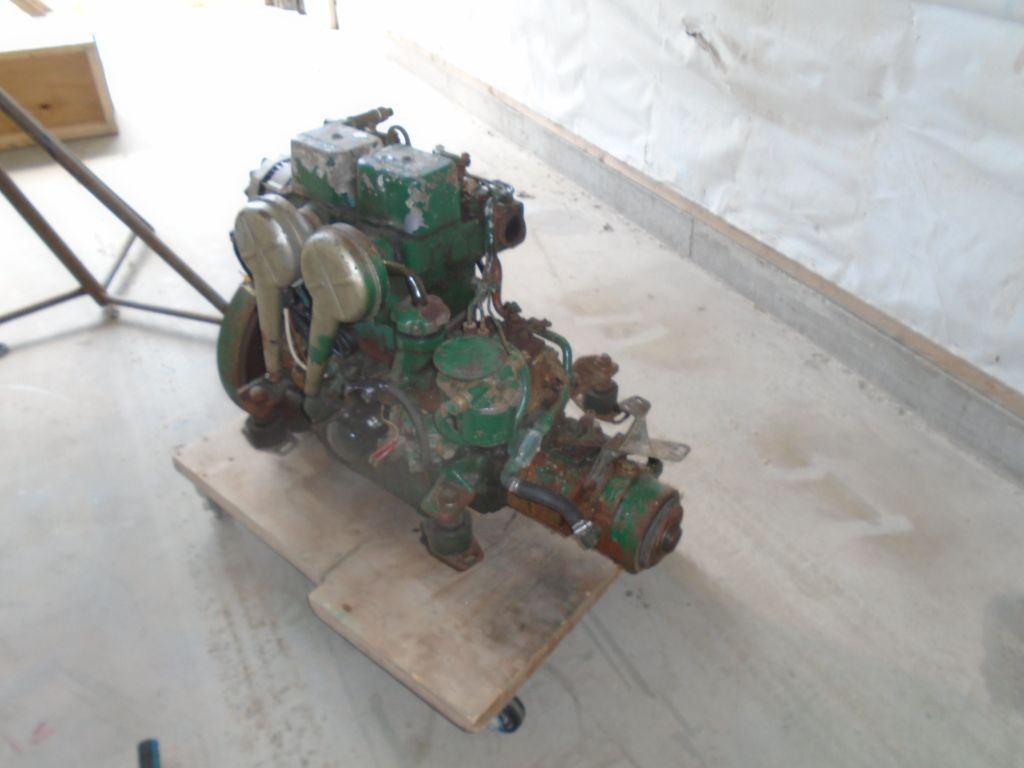
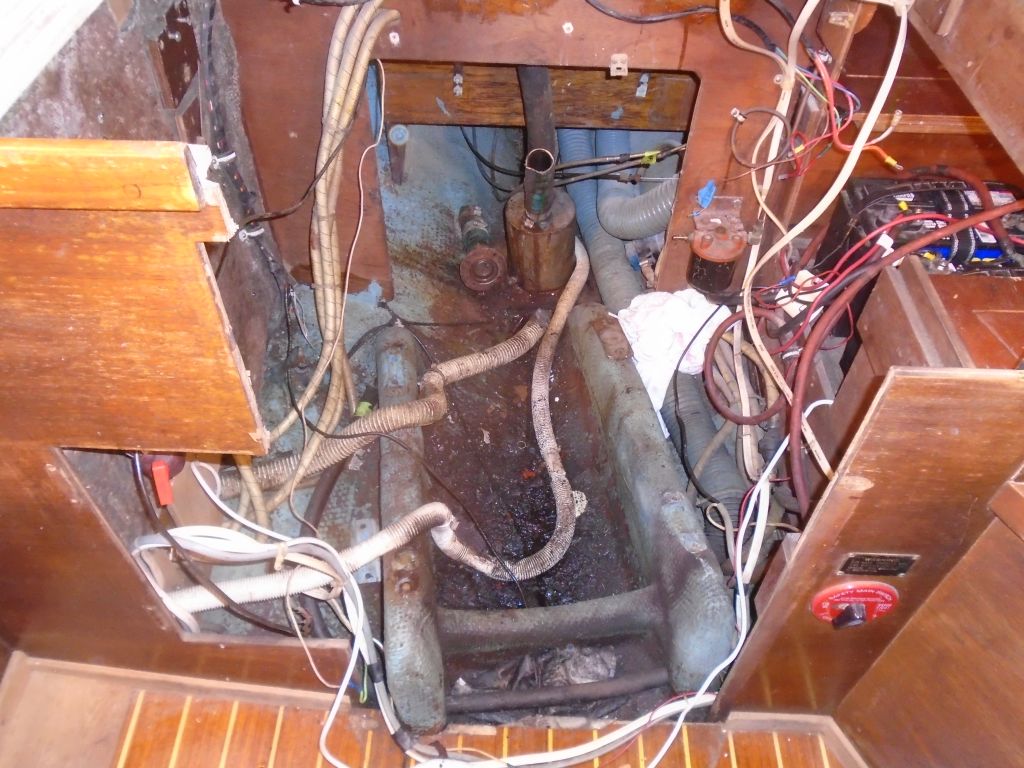
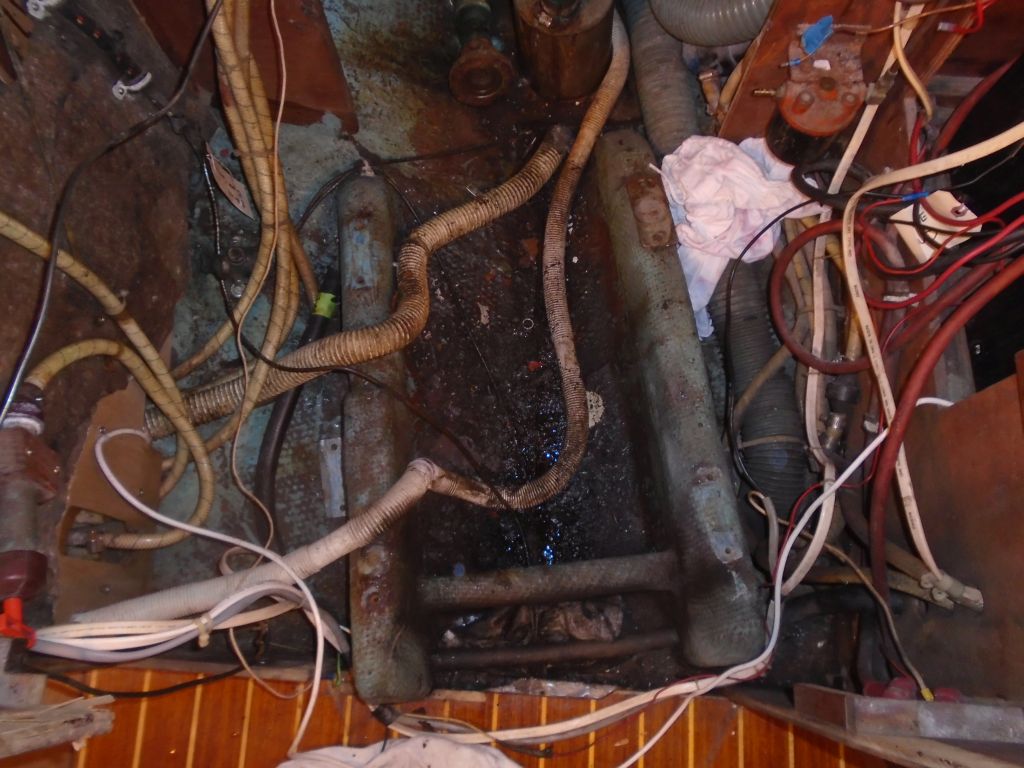
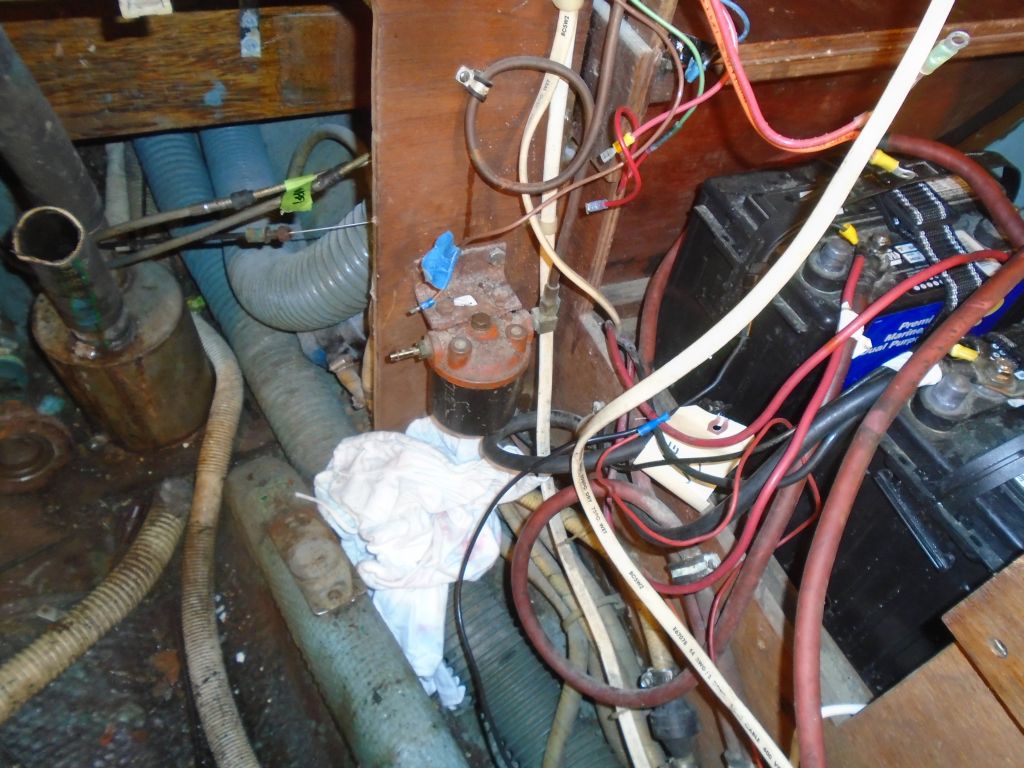
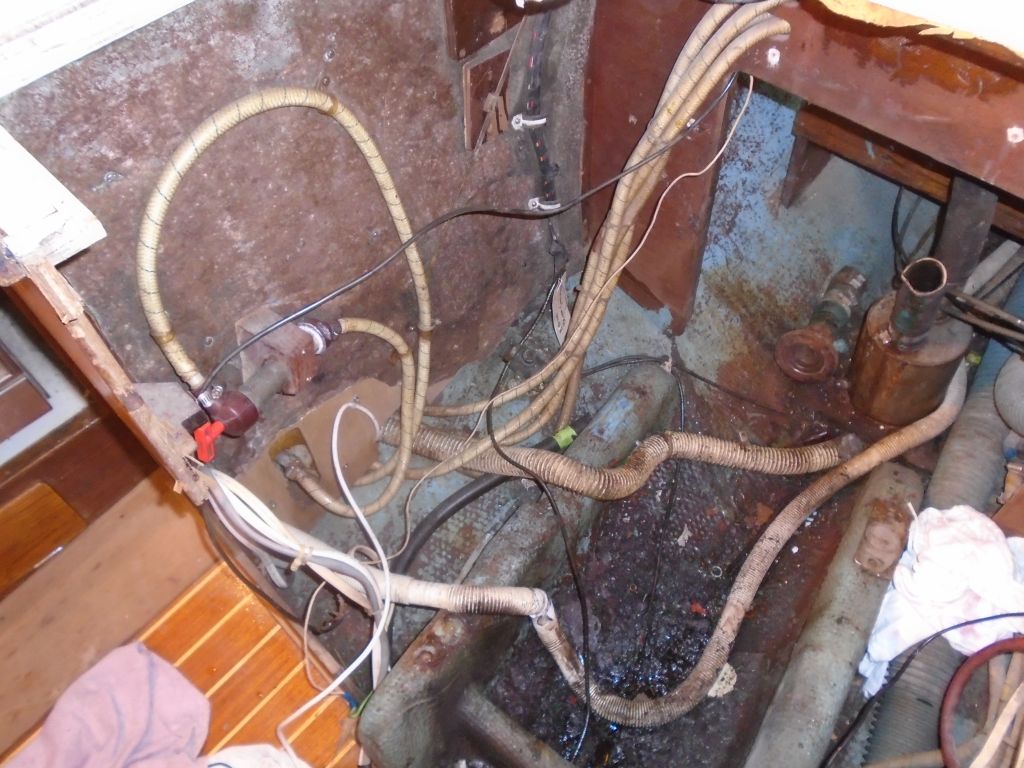
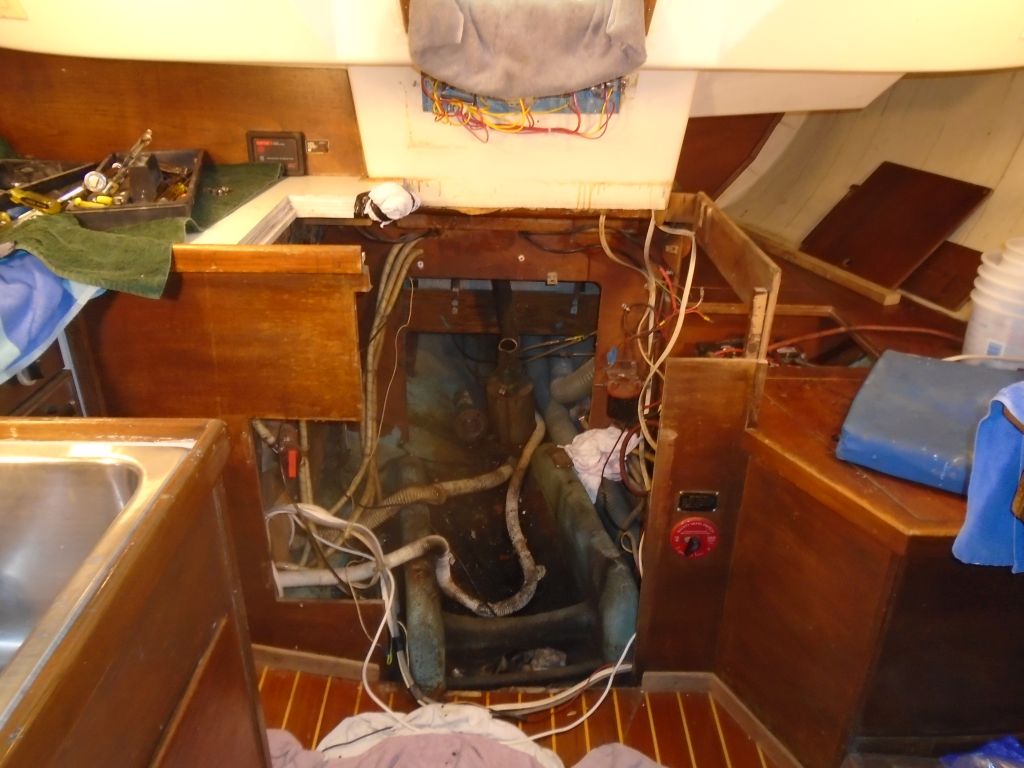
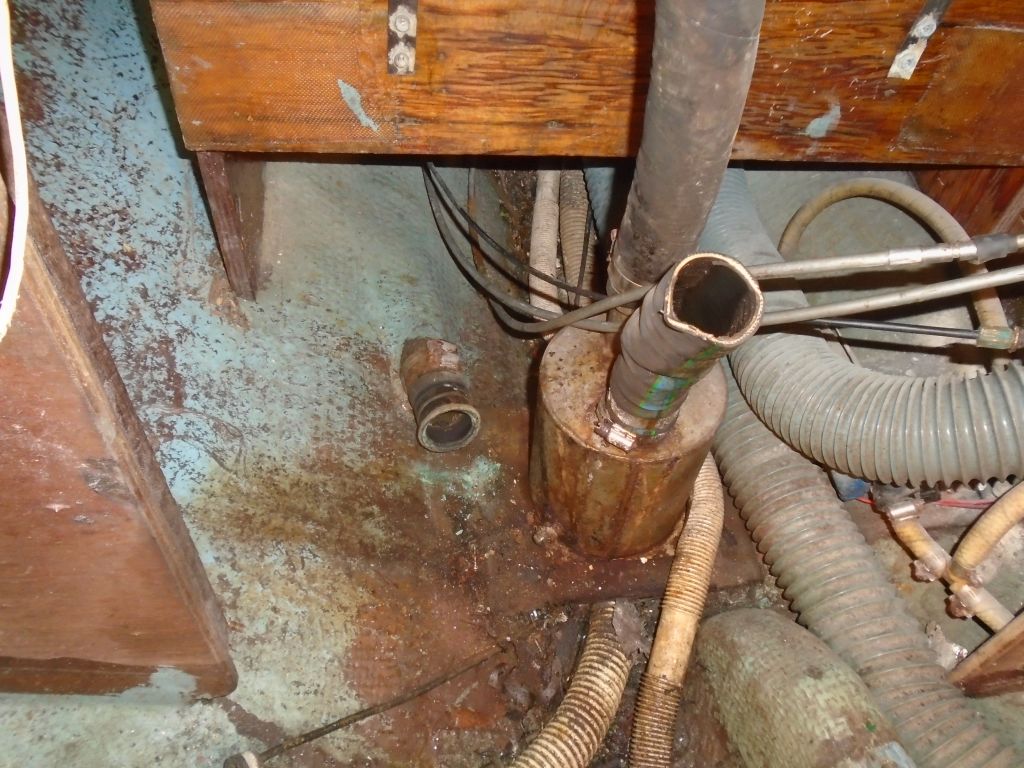
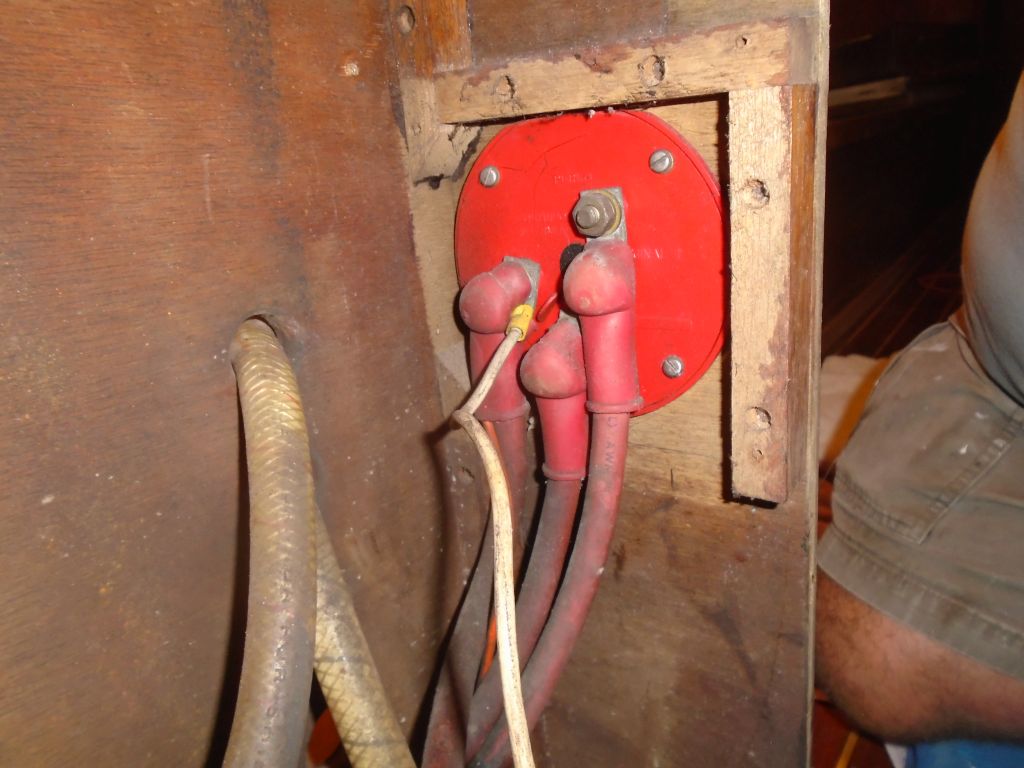
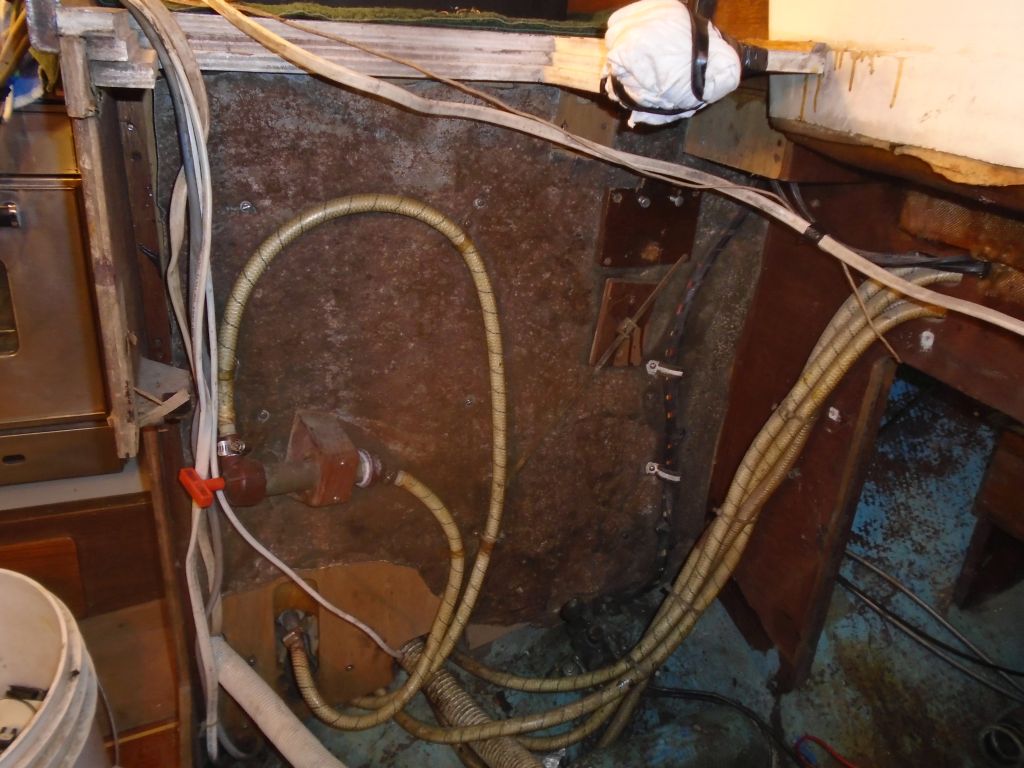
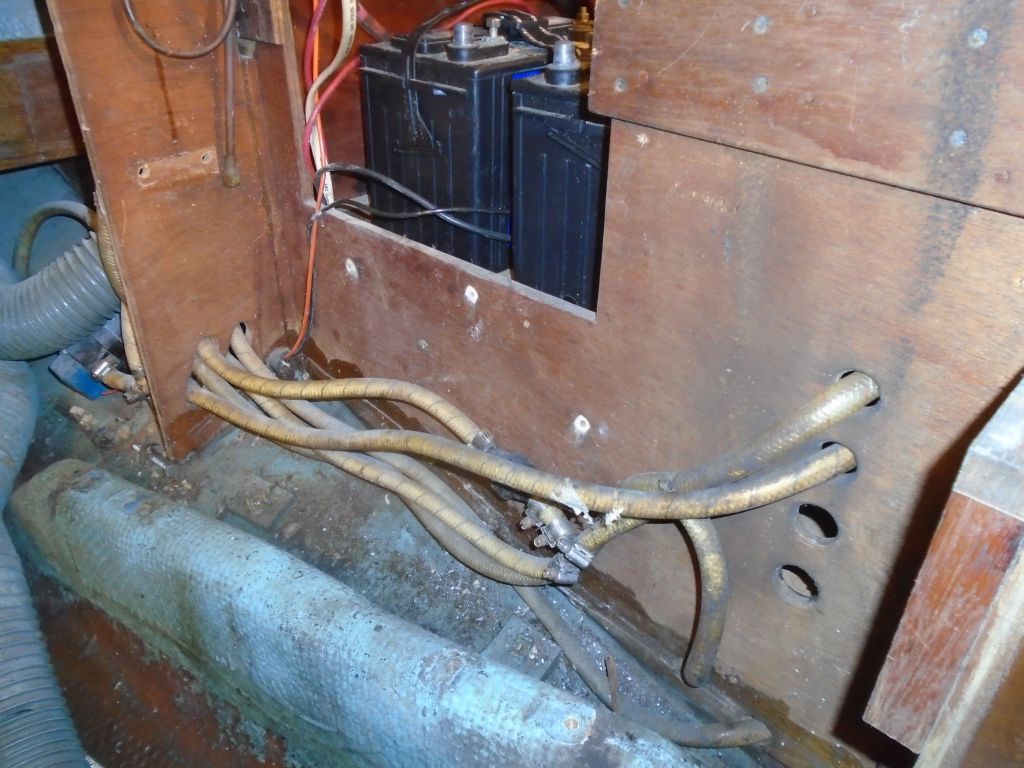
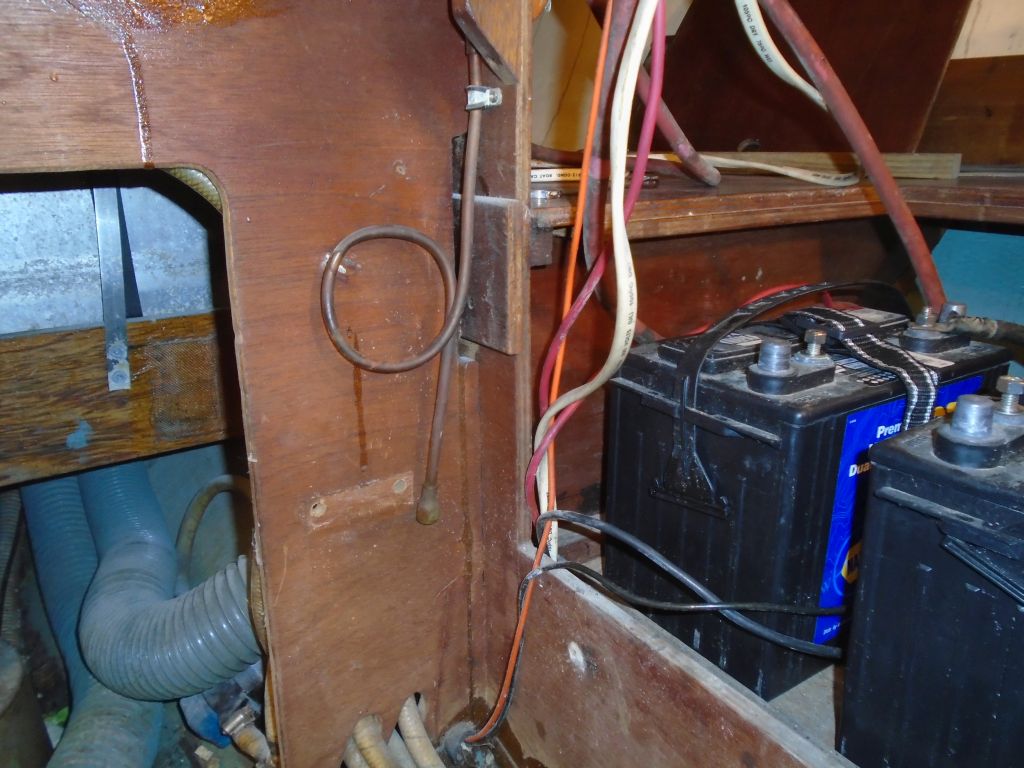
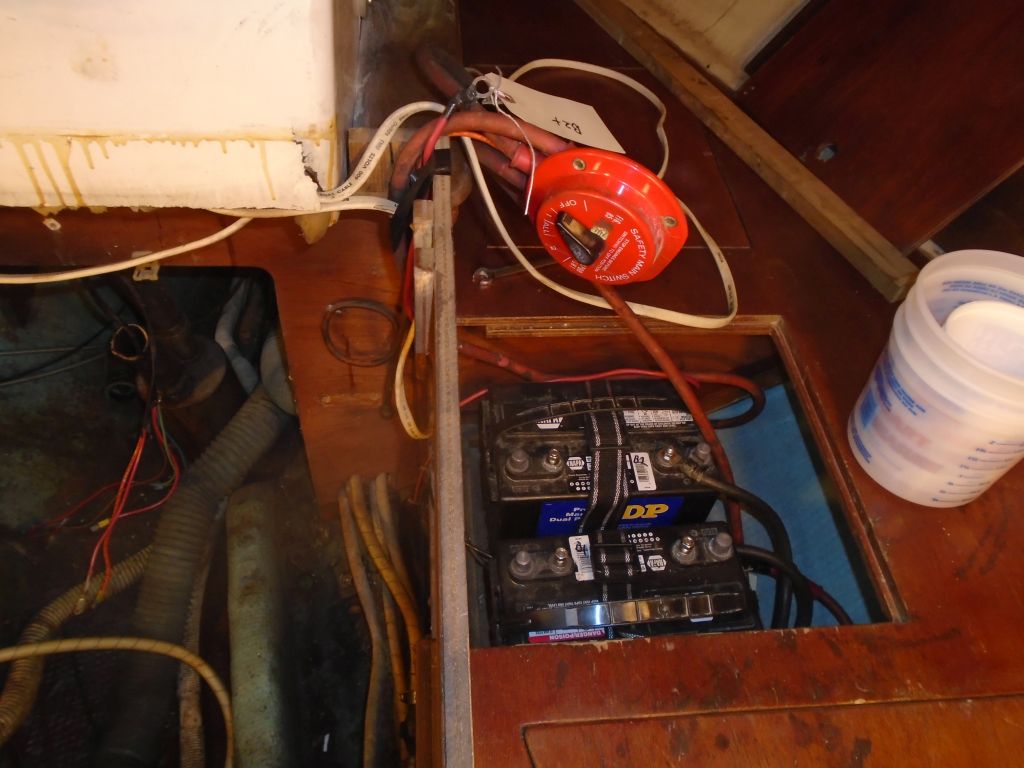
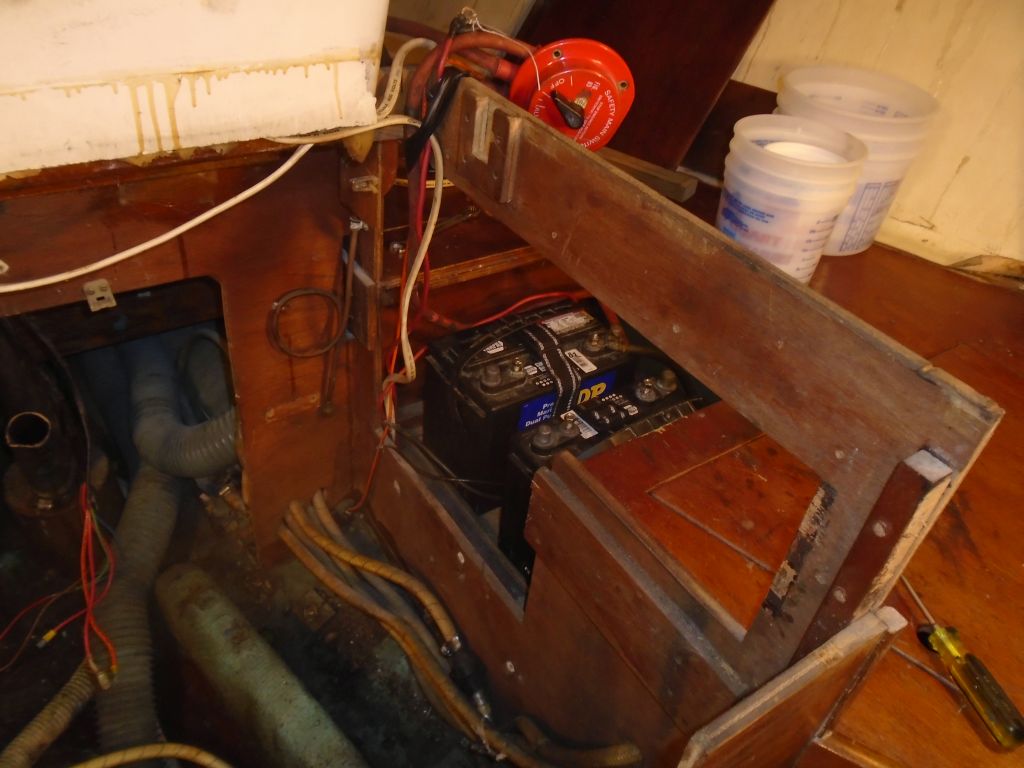
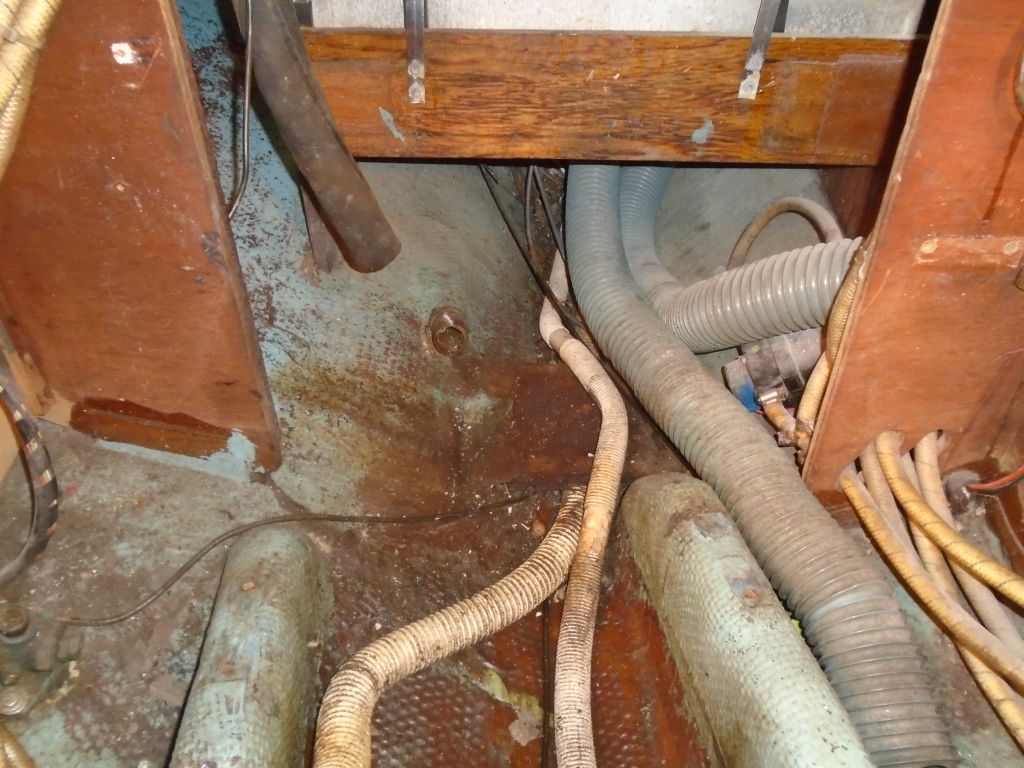
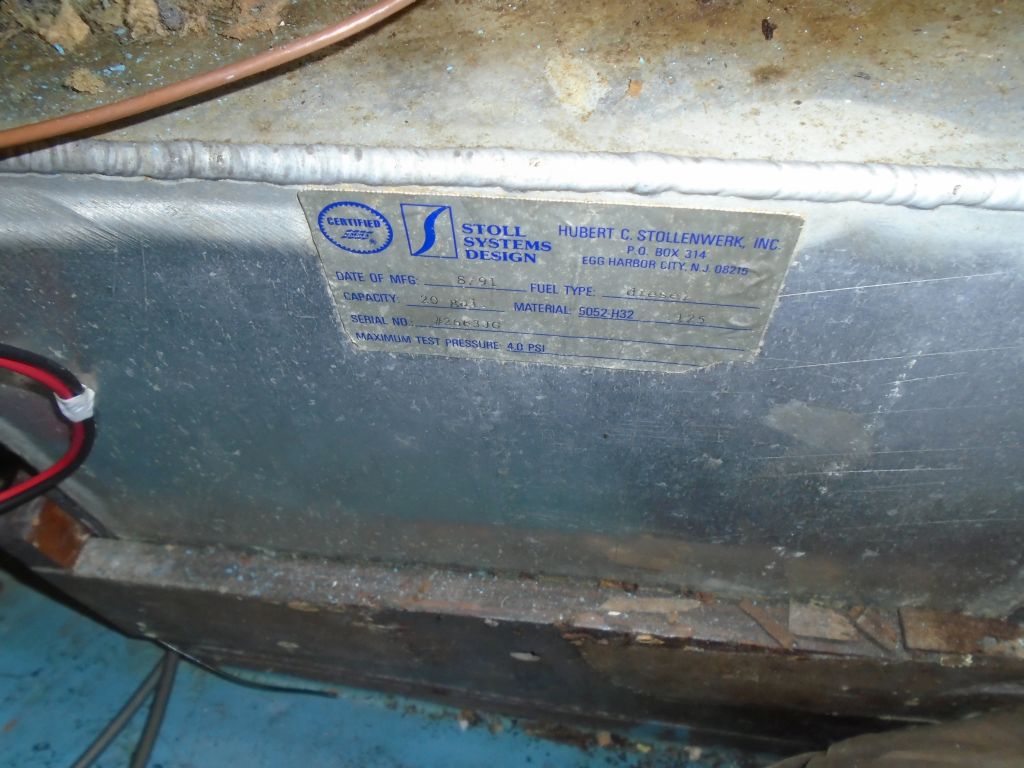
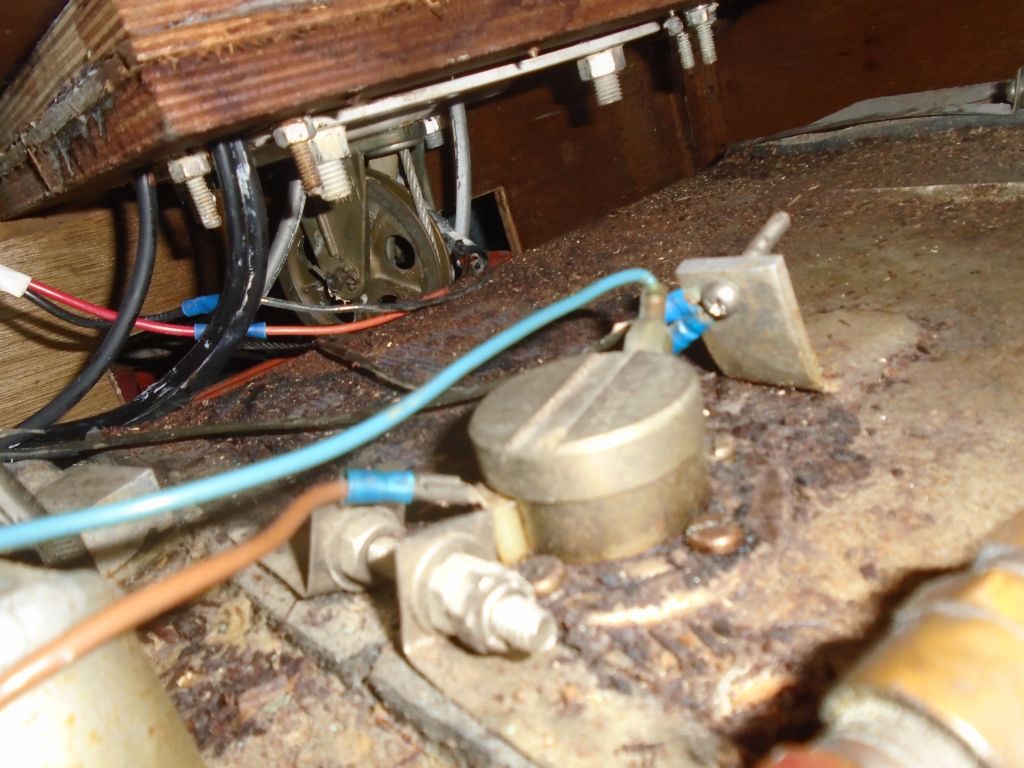
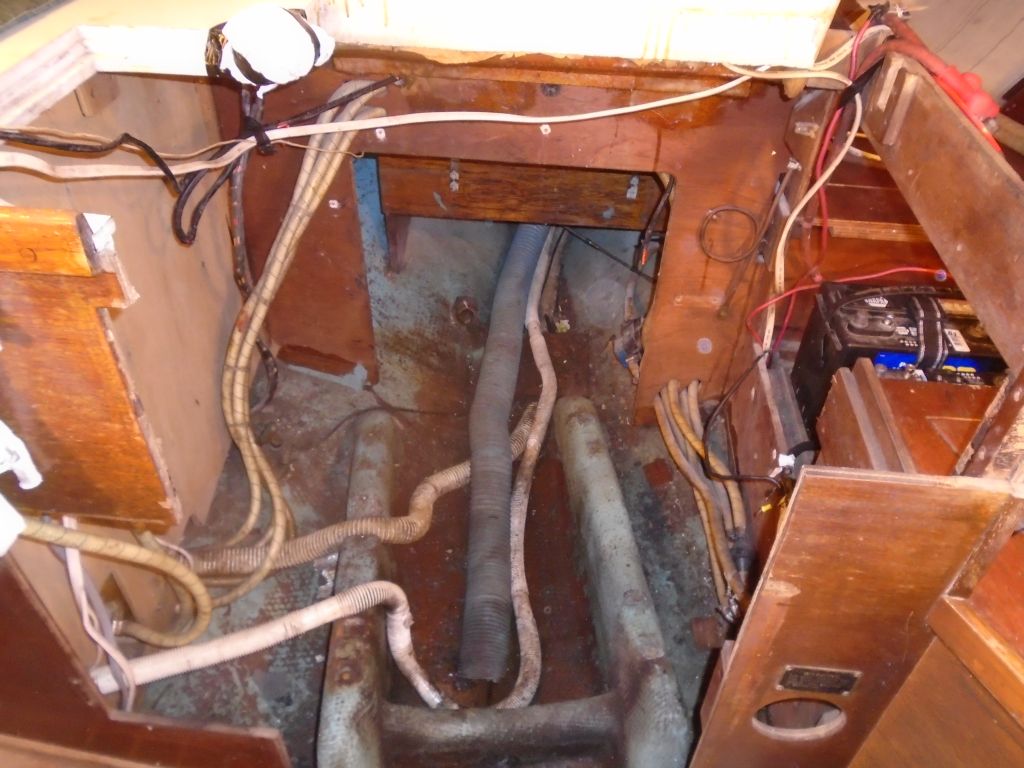
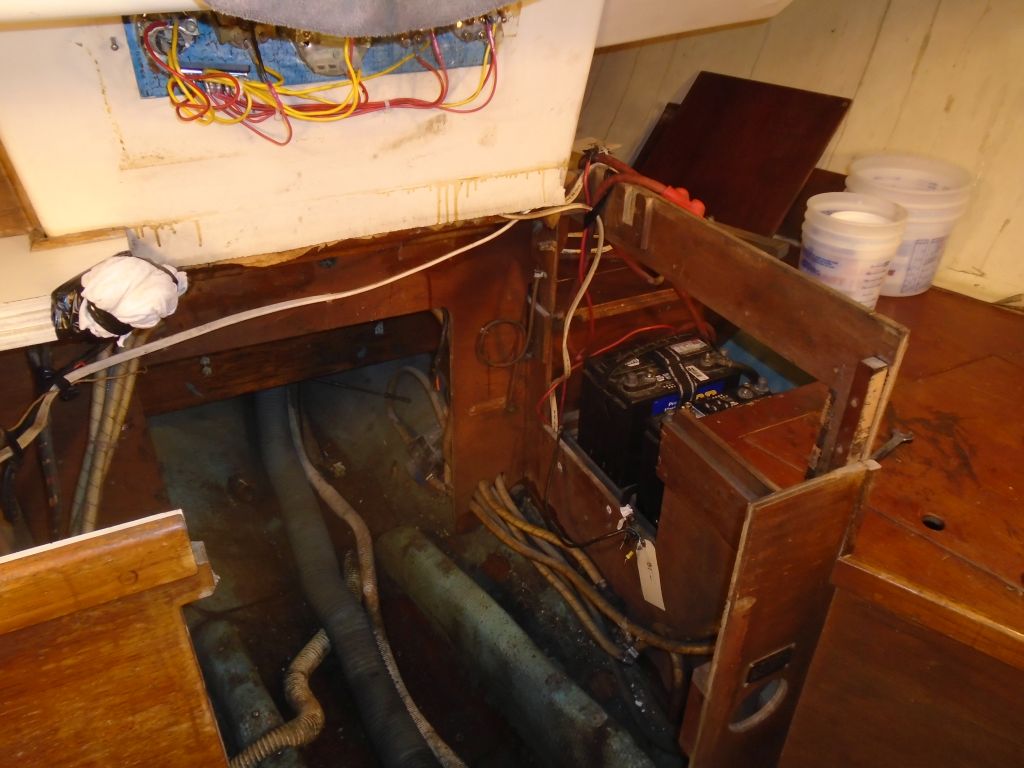
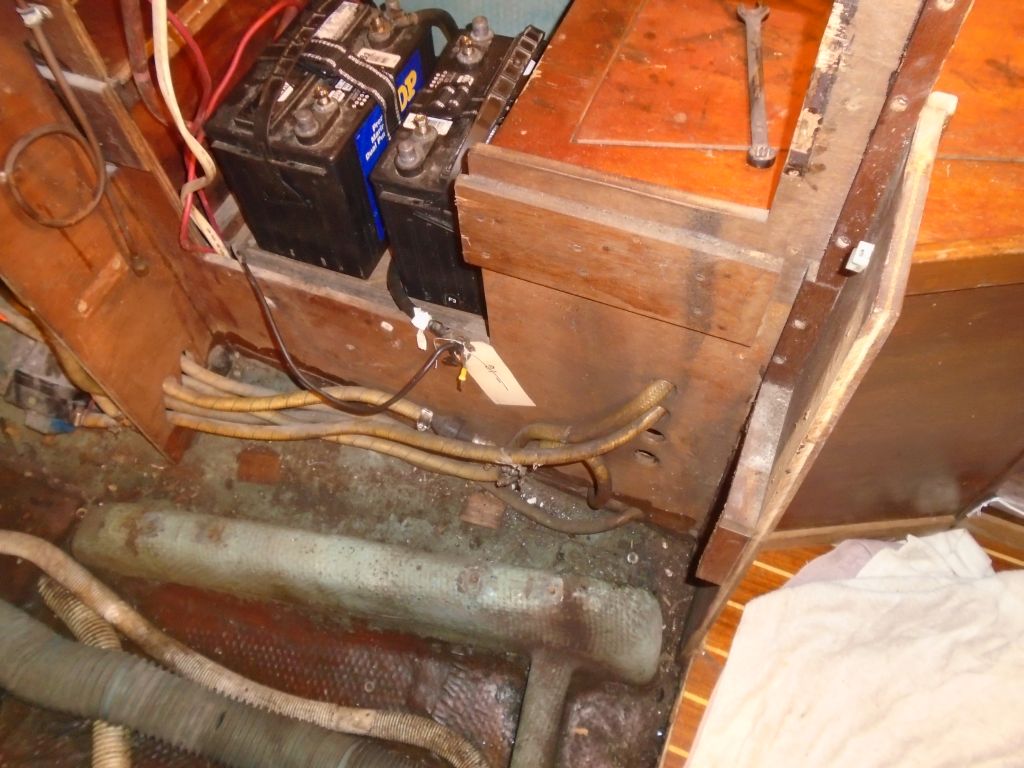
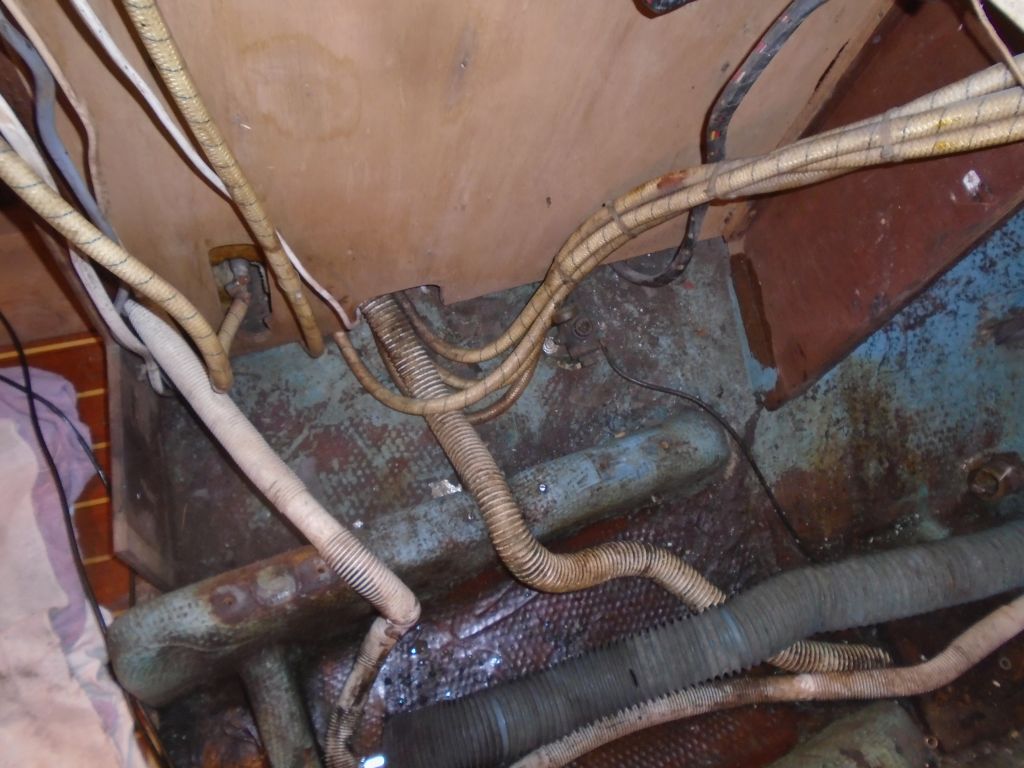
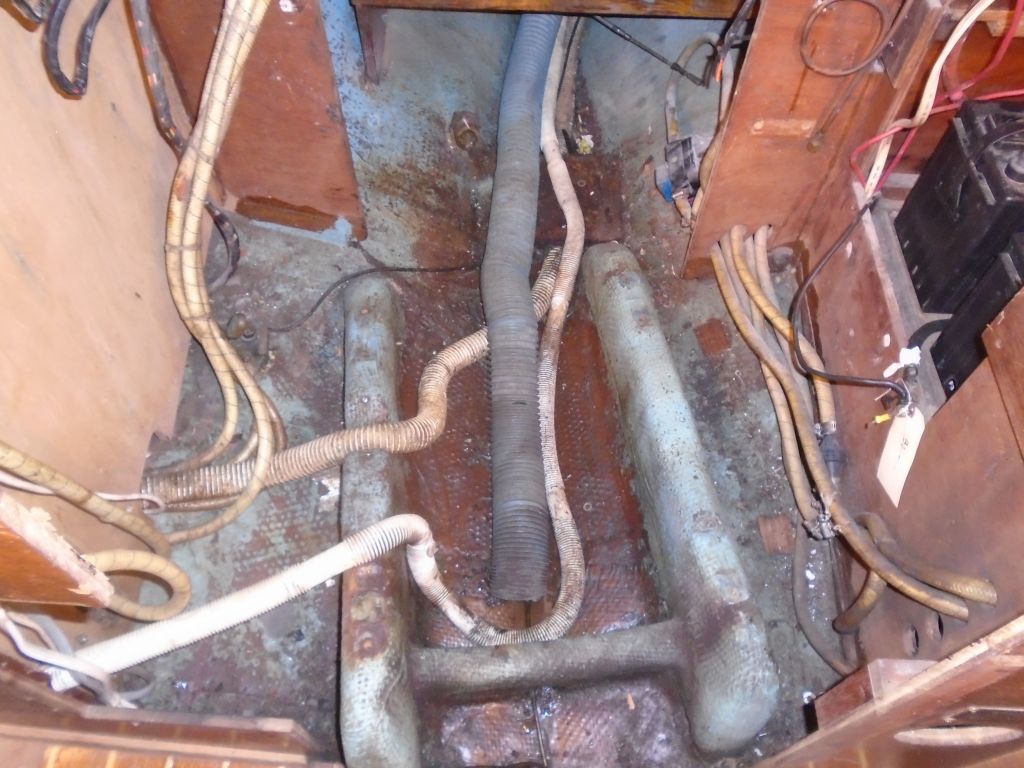
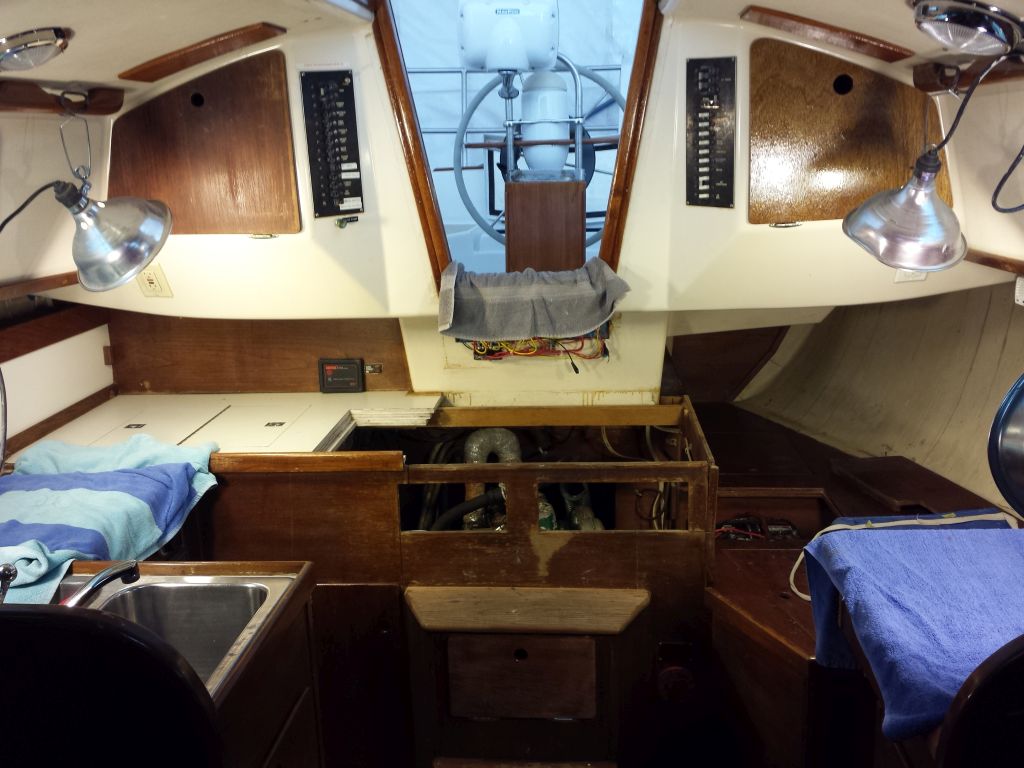
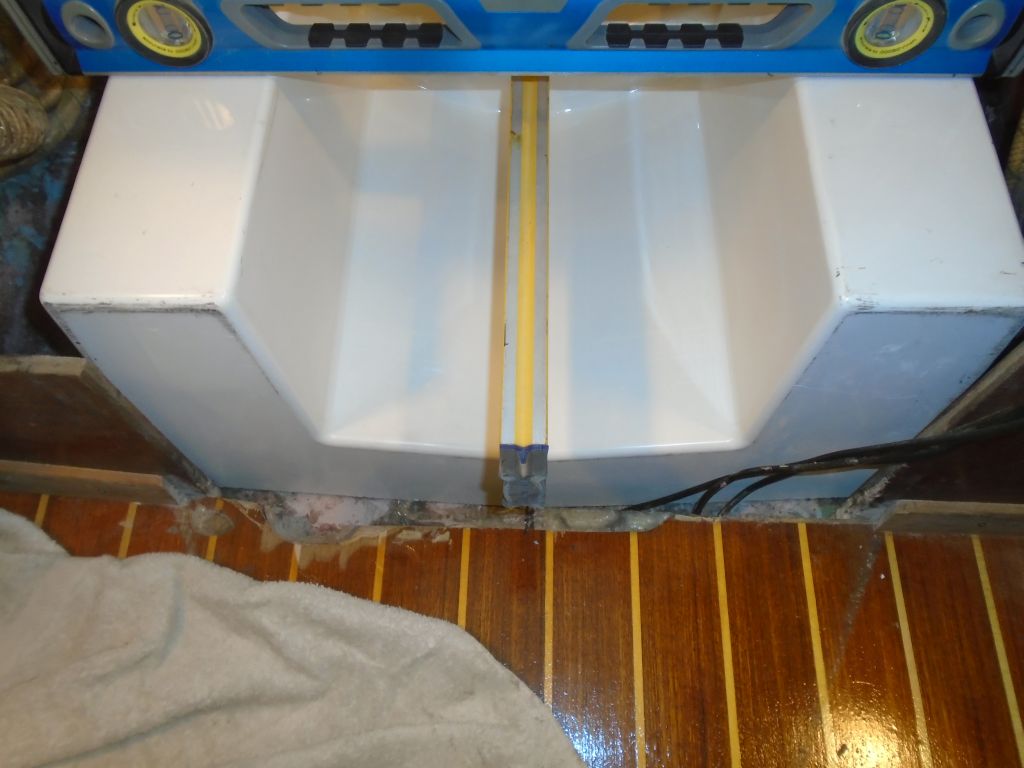
Before beginning on the engine removal, I took some time to thoroughly document the original condition of the engine and engine room.  These photos show the general state of things, but I took many more for posterity and to help later in reassembling some of the existing systems (mainly wiring runs, since most of these would end up remaining intact).
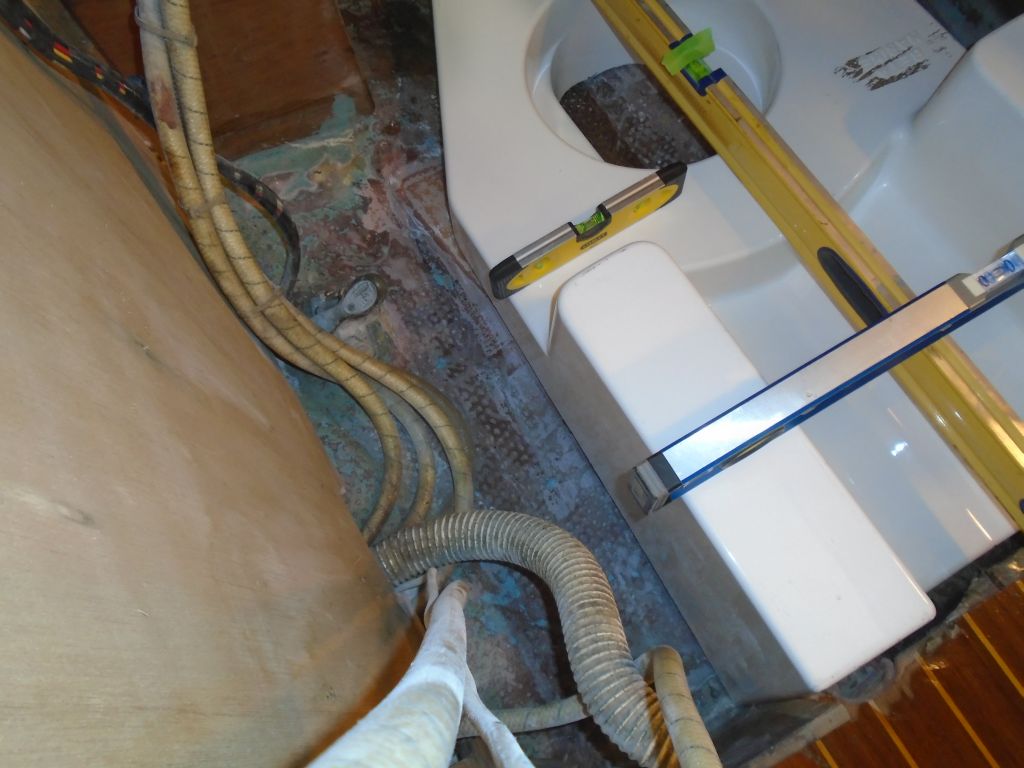
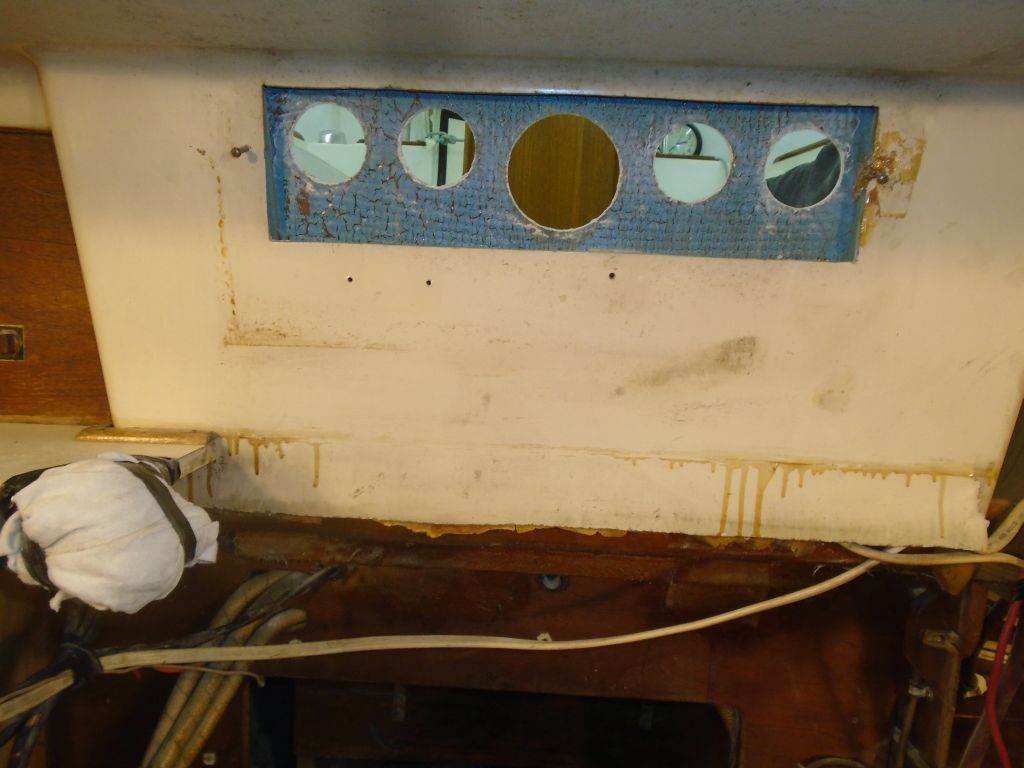
To begin, I had to remove the front panel, as well as a side panel–basically everything I could remove to improve access for disassembly and, later, removal.  To remove these panels, I also had to remove various wiring and plumbing runs that were in the way.  For now, I draped the wires over the engine for later attention.

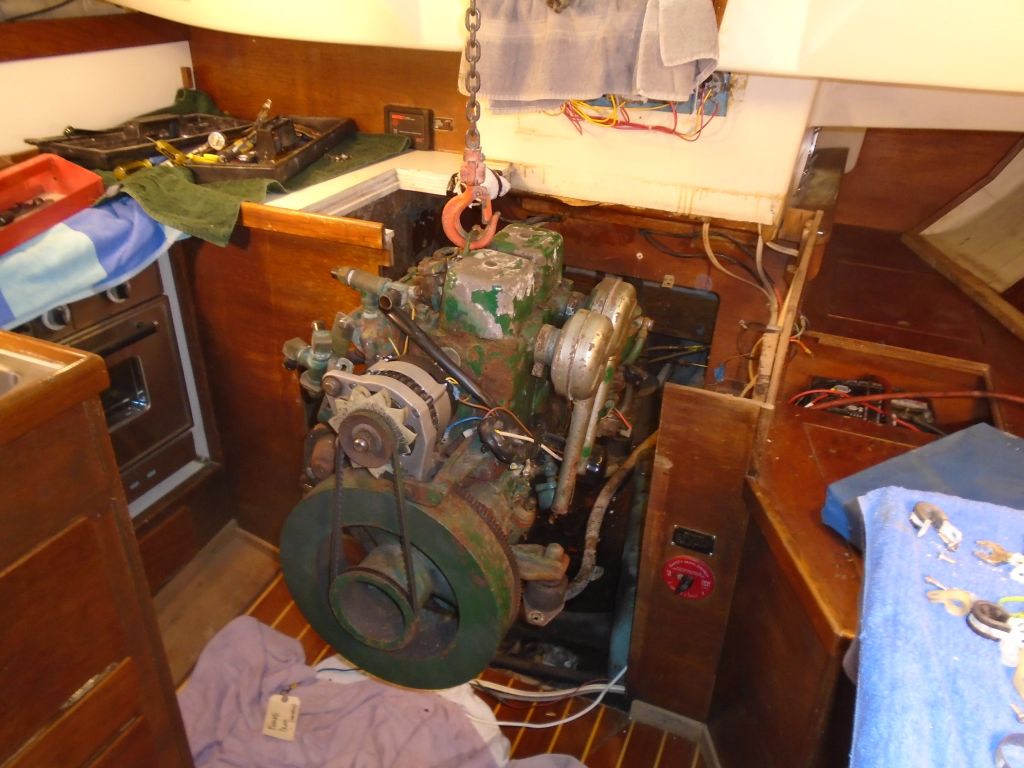
Now, I systematically went through the space, documenting as necessary, to remove all the connections to the engine itself to release it for removal.  This included various plumbing, raw water bypass for a defunct water heater; raw water cooling hose; exhaust hose and riser (which unbolted easily from the engine, making removal of the bulky riser possible), and fuel line (supply only; no return on this old engine).  I also removed the wiring harness to the nearby gauge cluster, positive battery supply and grounds, and anything else directly connected to the engine.

With most of the ancillary clutter out of the way, I could lean over the top of the engine (made possible thanks to the easily-removed exhaust riser) and remove the coupling bolts.  I was briefly vexed when it seemed the rusted nuts were rounded over, but quickly I determined they were Allen head bolts, so with the correct wrench and a breaker bar, I could remove the four bolts relatively easily, releasing the engine from the shaft.

Finally, I unbolted the engine mounts–two machine screws and/or lags at each corner, or eight total–which released the engine for removal.

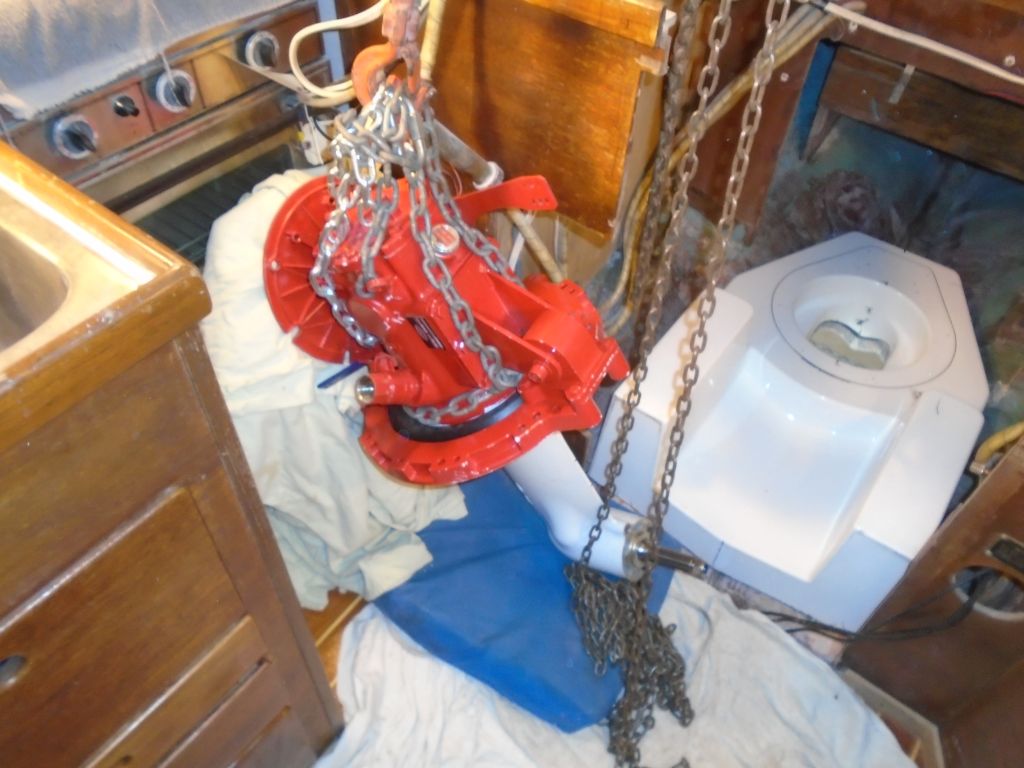
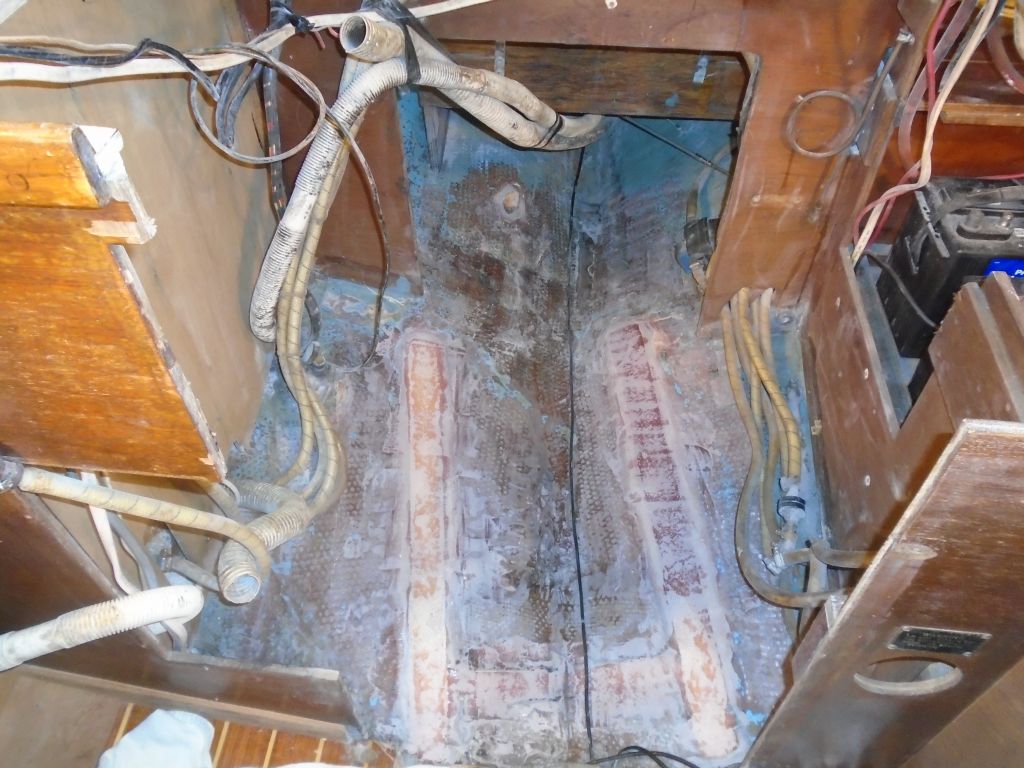
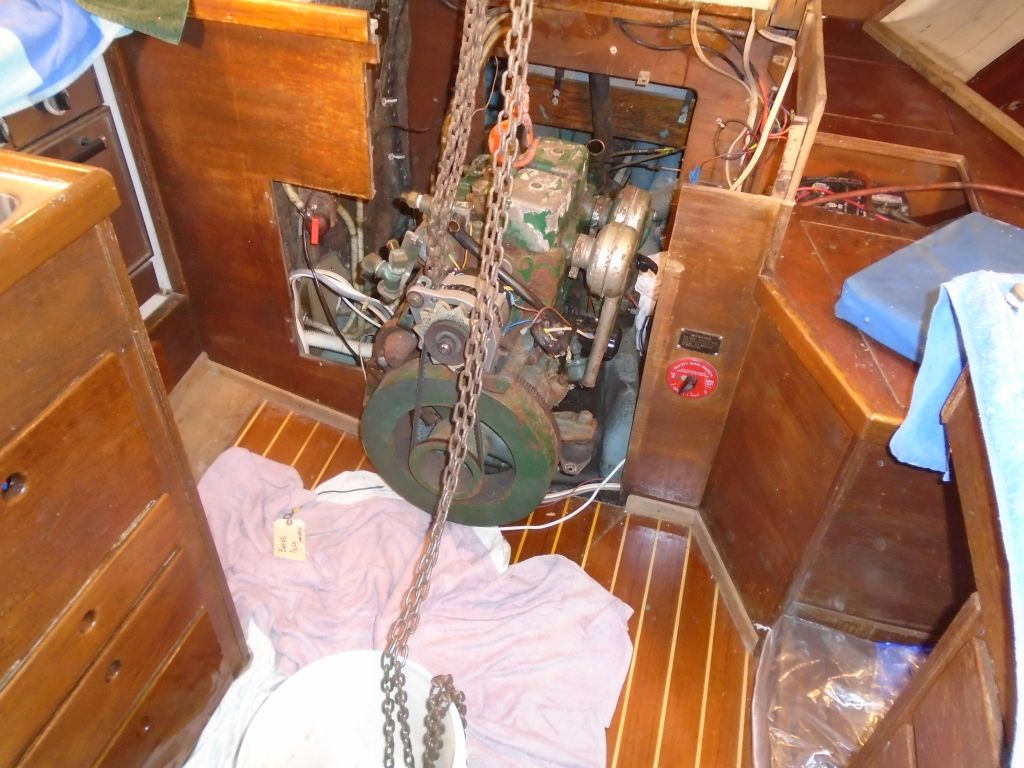
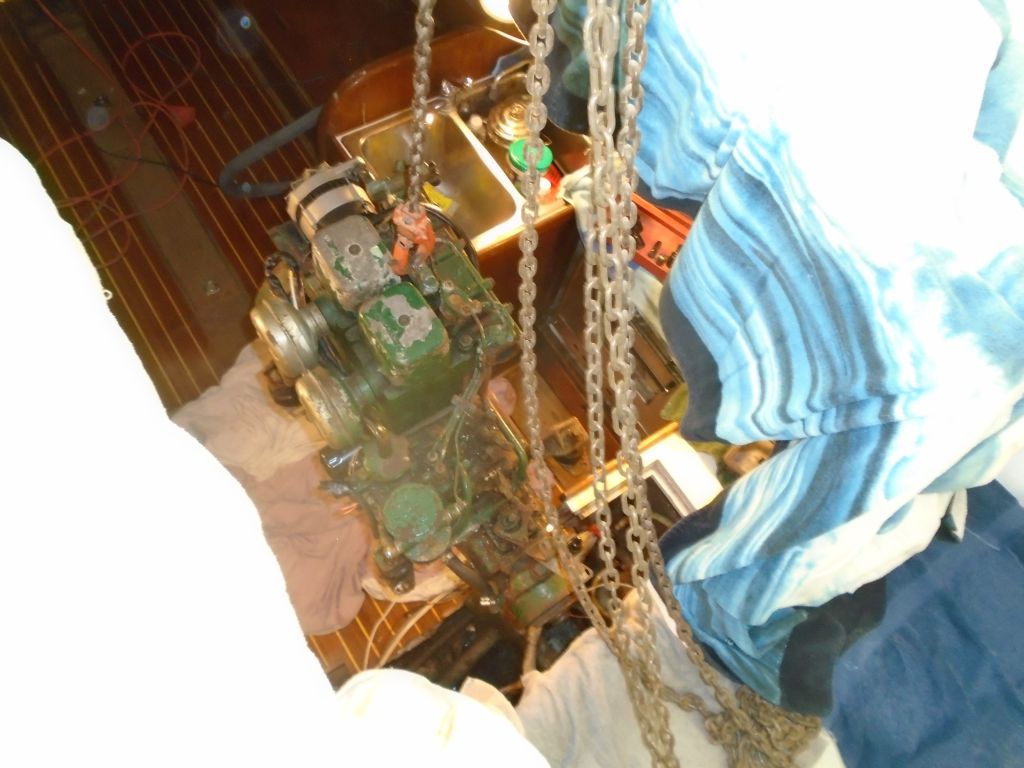
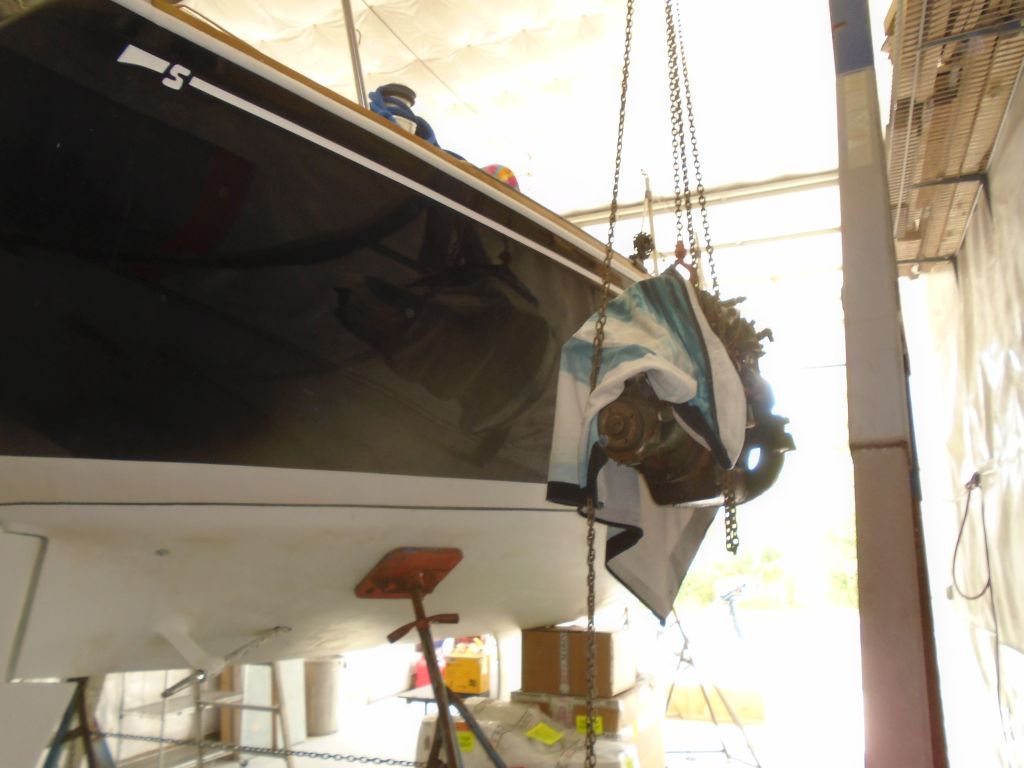
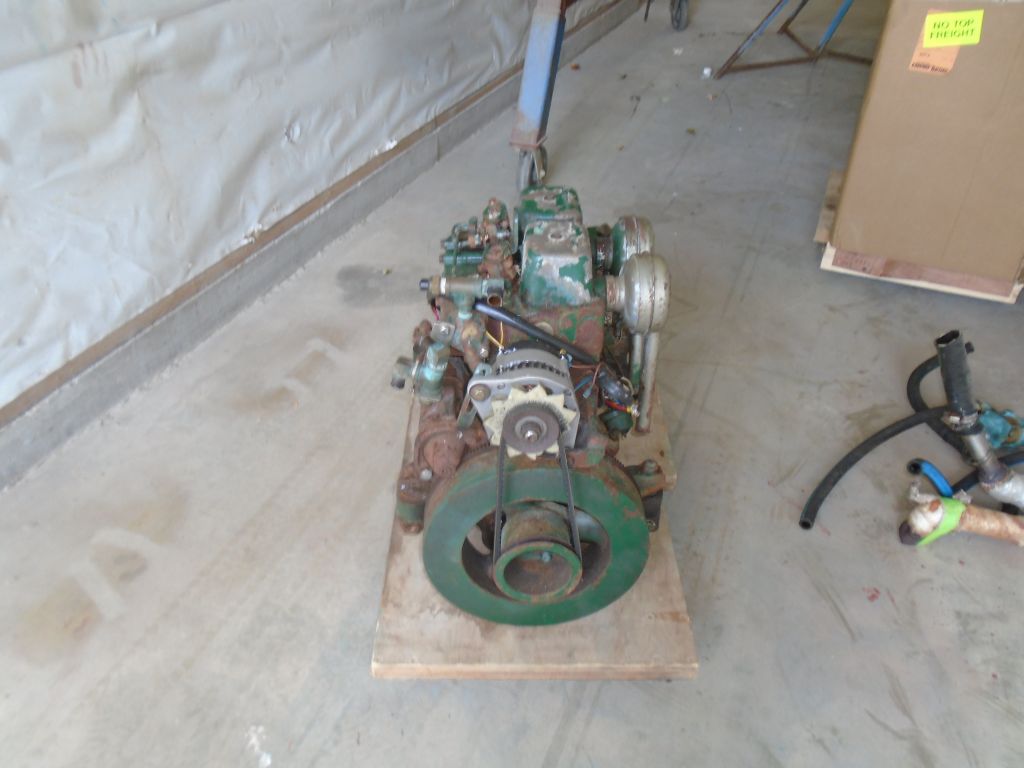
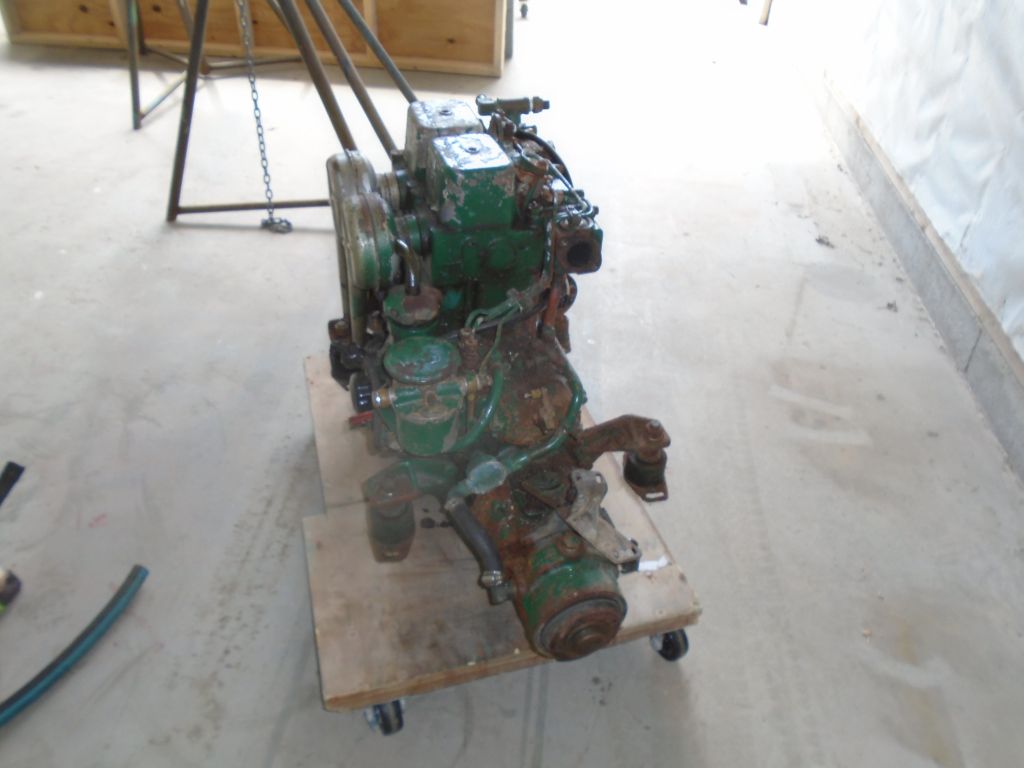
Next, I hooked up the gantry crane and carefully lifted the engine from its beds, out of the cabin, and finally over the side to the shop floor, leaving an empty and filthy engine room behind.

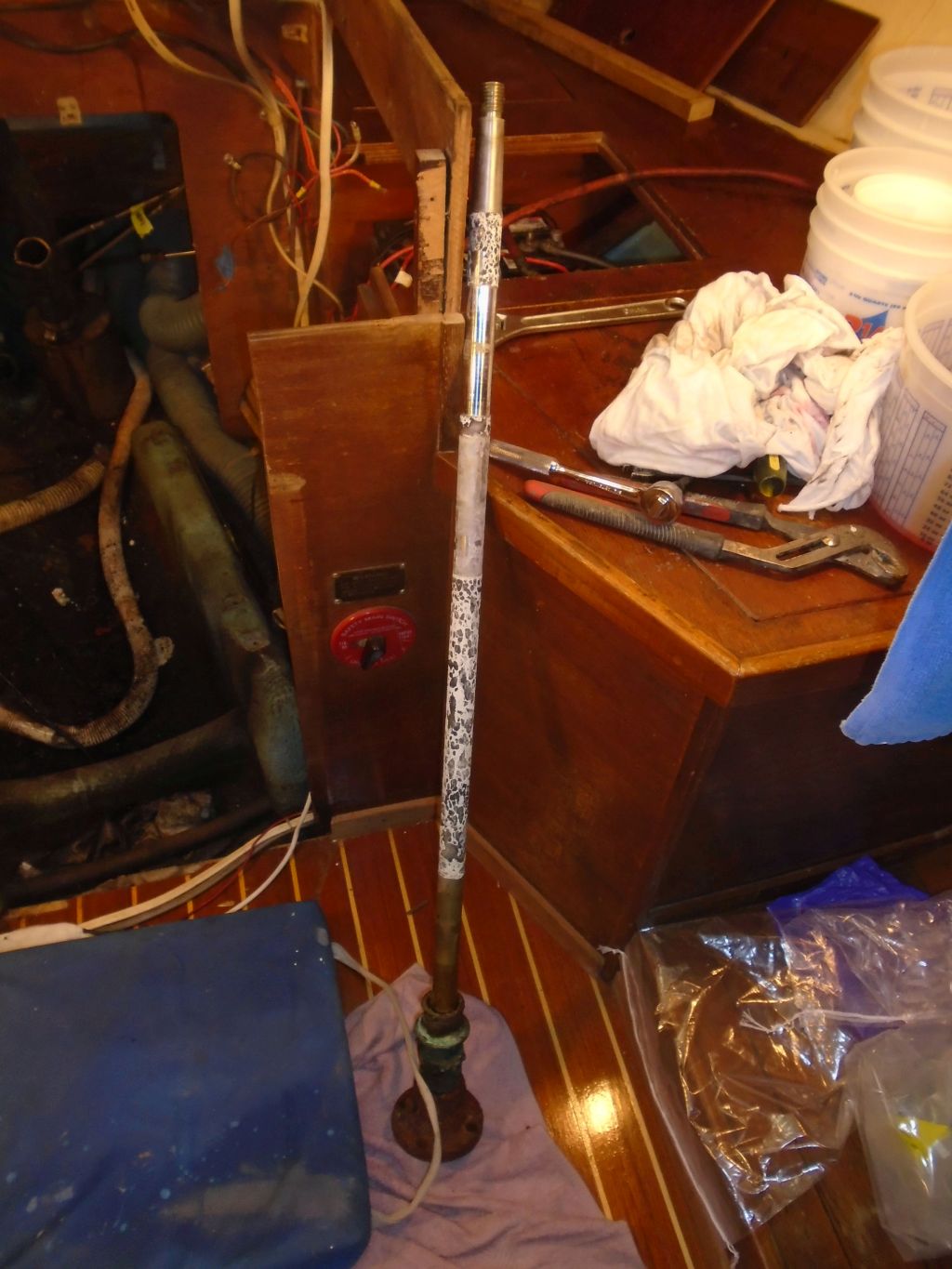
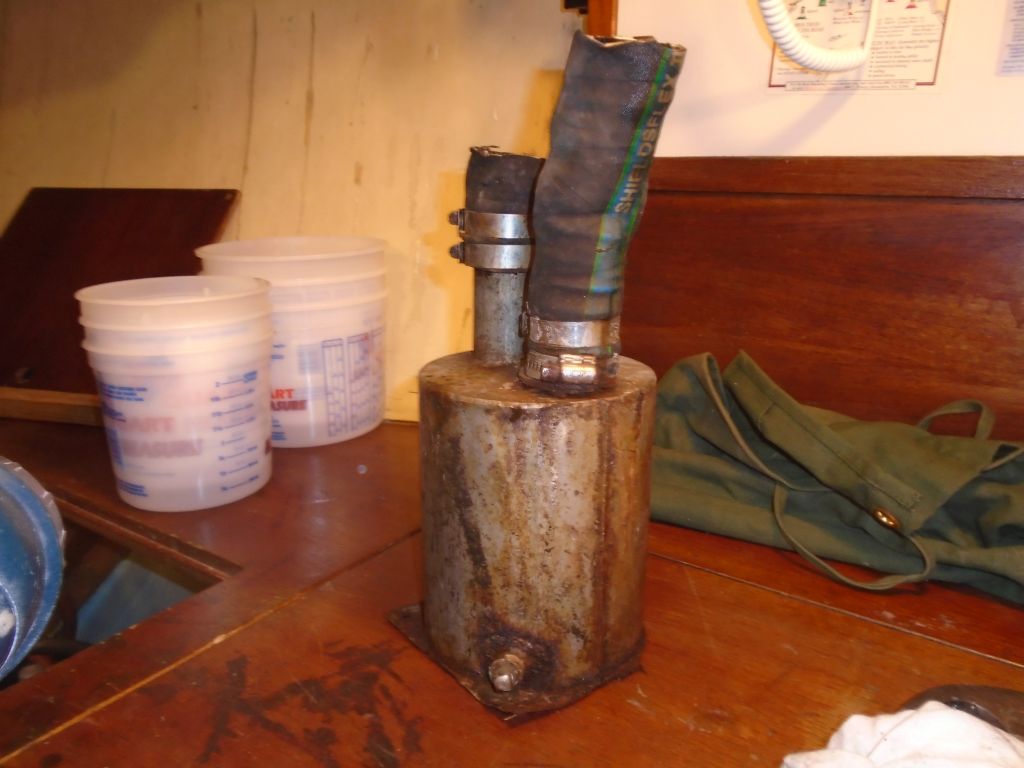
I spent the remainder of the day working to remove whatever else I could, including unnecessary wiring (i.e. old gauge wires), the old fuel filter, waterlift chamber, propeller shaft and stuffing box, and disassembling the rest of the engine room to make room for the work ahead, as well as to remove some old sound insulation on one side.  To make it easier to get the old wiring out of the way, since the existing wire bundles were a mishmash of old and new additions that criss-crossed in unfortunate ways, I removed the battery switch and redirected some other wiring as needed so I could finally drape the wires out of the way on both sides of the engine room, leaving the main part of the space clear for the work ahead.  Any wires I could get rid of at this point went in the trash bin, but there’d likely be more thinning out later as I determined whether other wires were obsolete.   I also cleaned out the worst of the oily/rusty/dirty debris from beneath the engine as a starting point.

Total time billed on this job  today:  7.5 hours

0600 Weather Observation:
52°, mostly clear.  Forecast for the day:  sun and increasing wind and humidity, showers and thundershowers in the afternoon.  High in the 80s
Acadia 1

< Back to Acadia

Tuesday

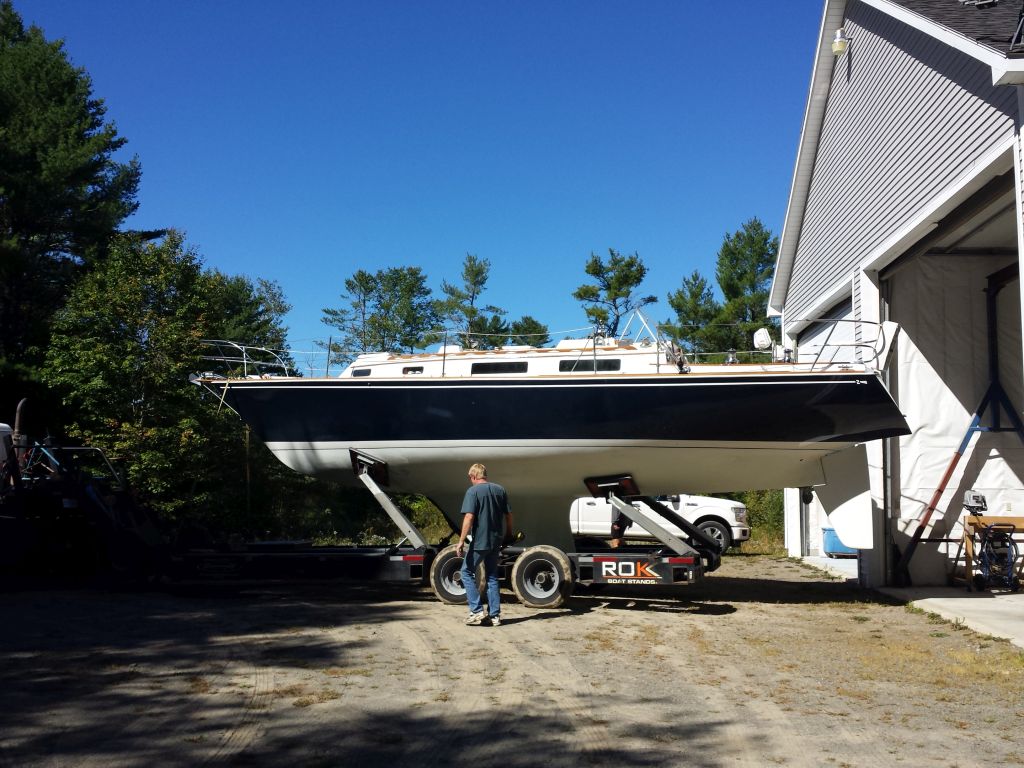
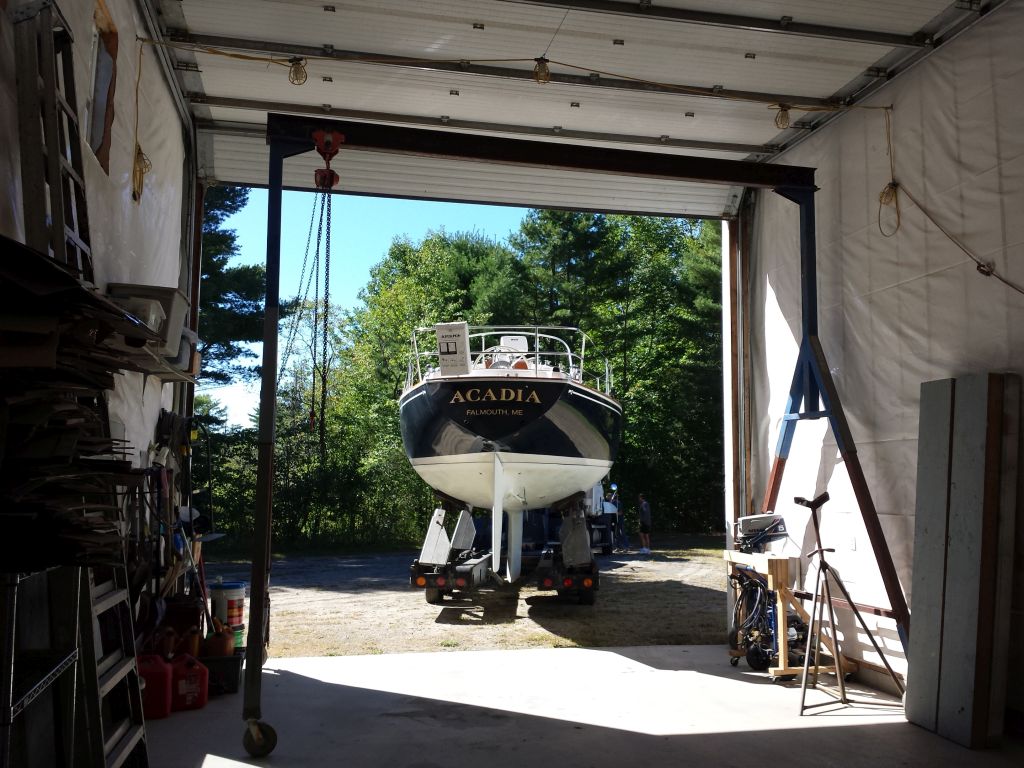
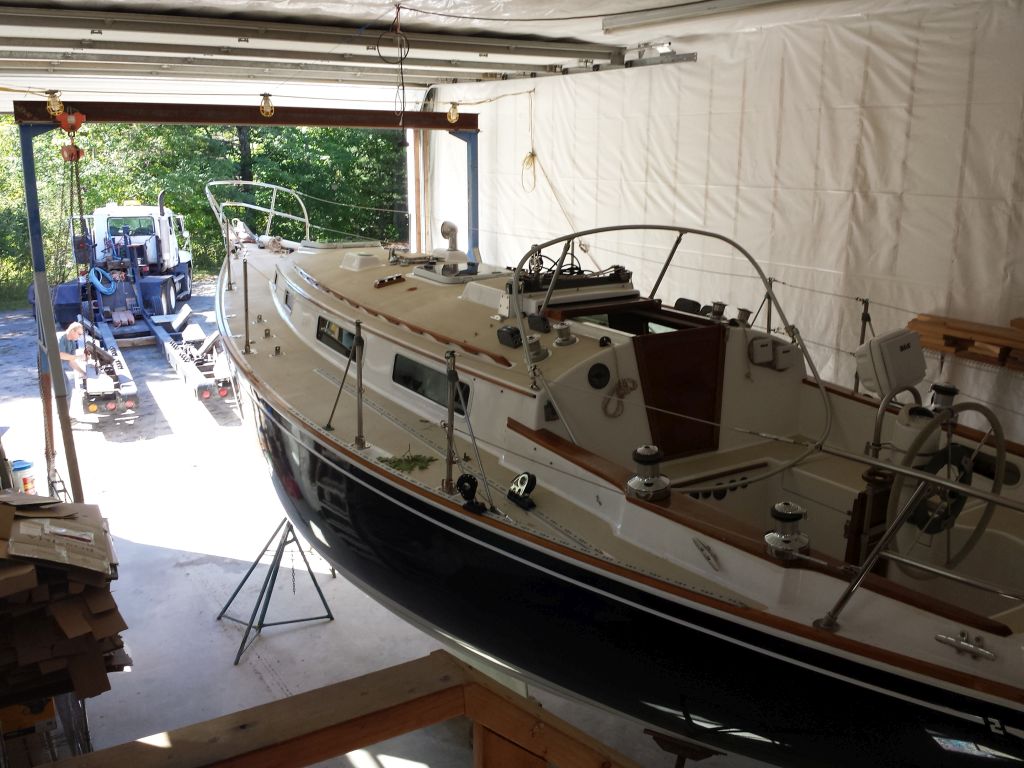
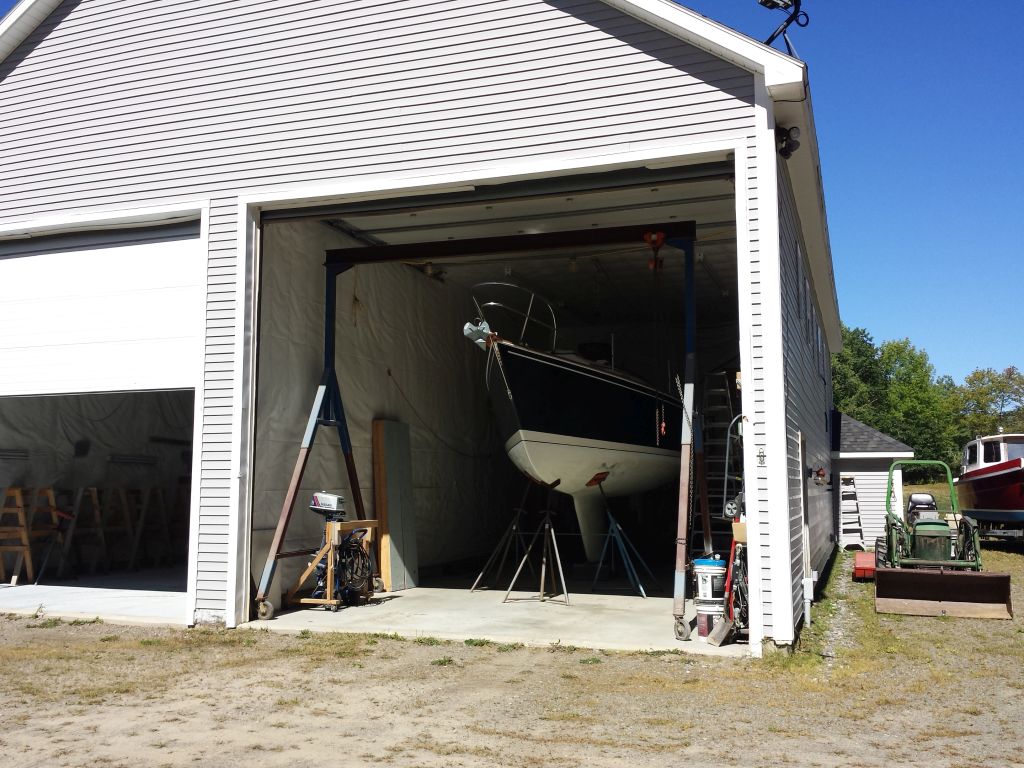
Late in the morning, Acadia, a 1979 Sabre 34, arrived at the shop.  I had the hauler put her right indoors, as I was ready to begin the project at once,
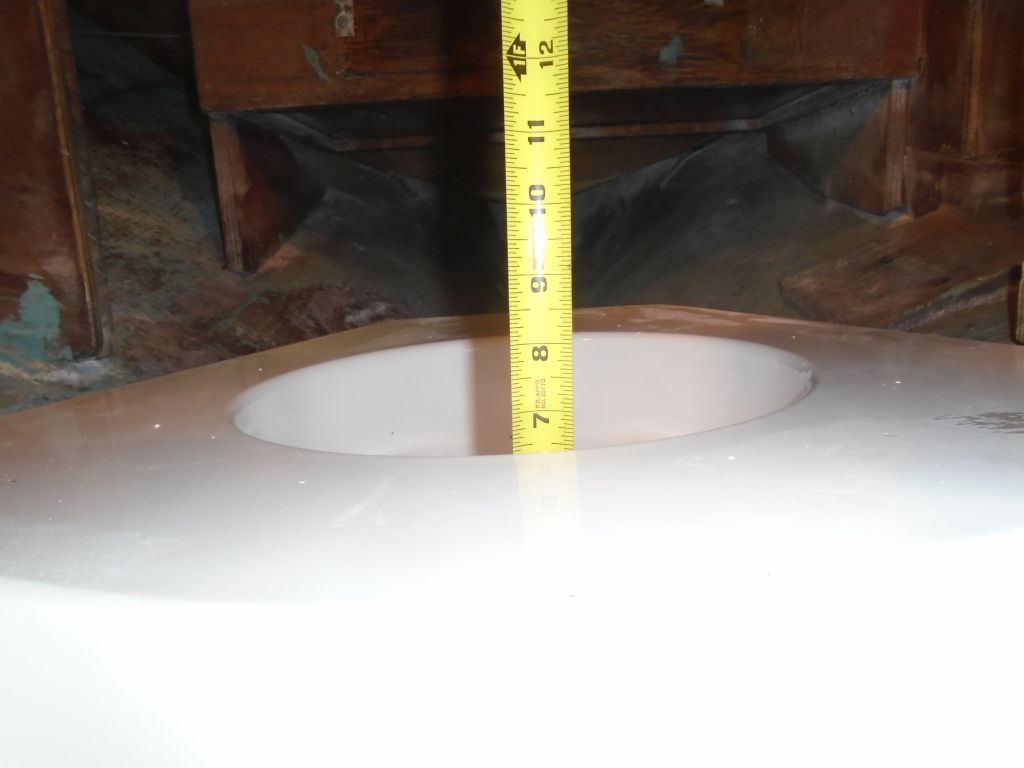
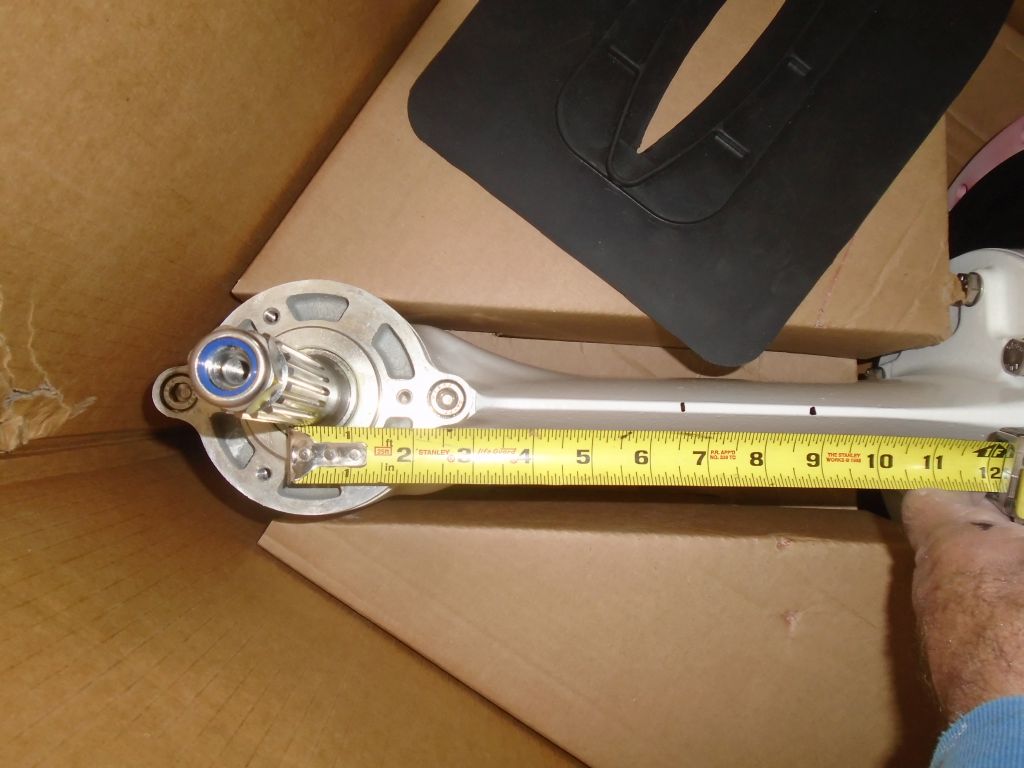
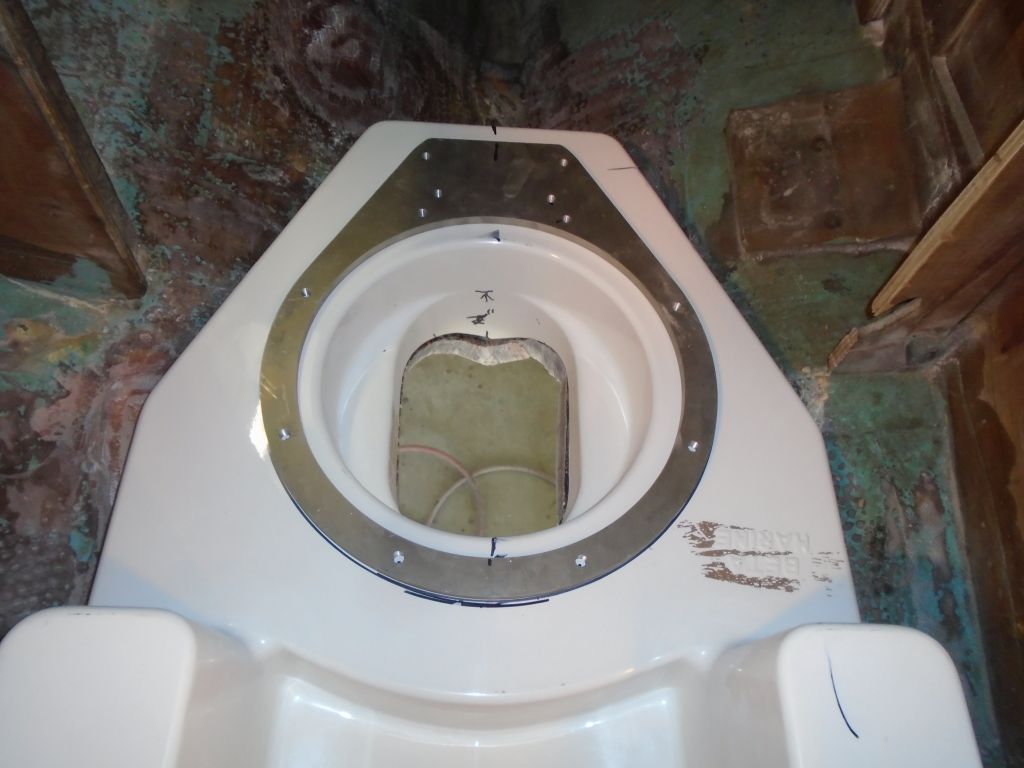
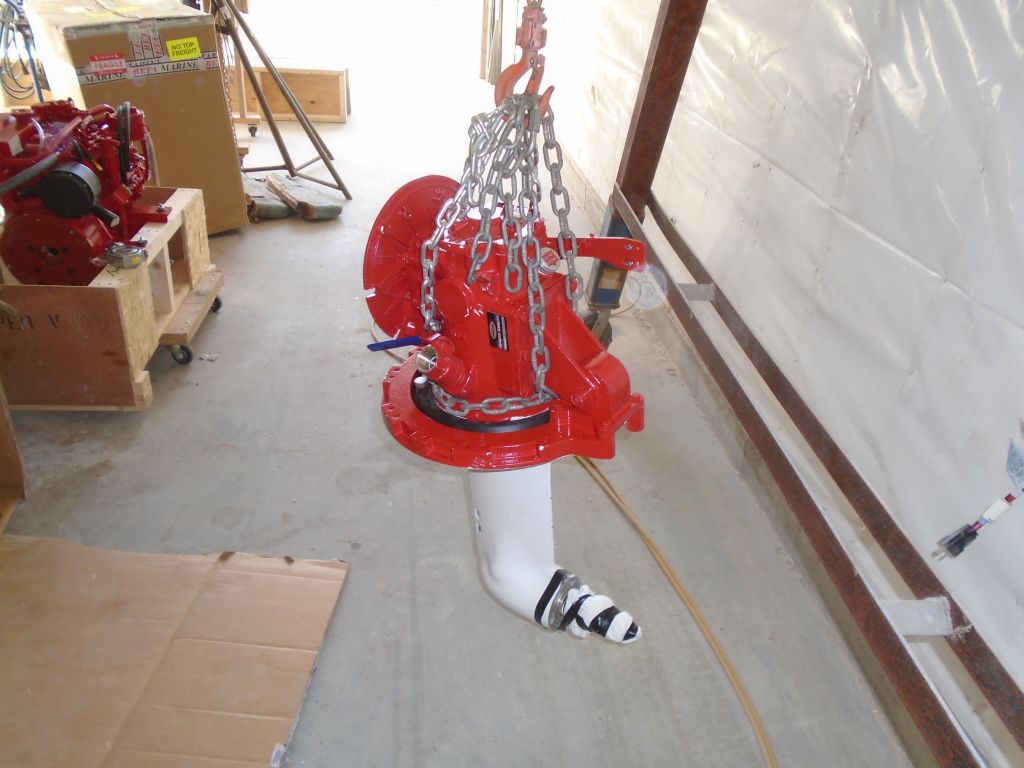
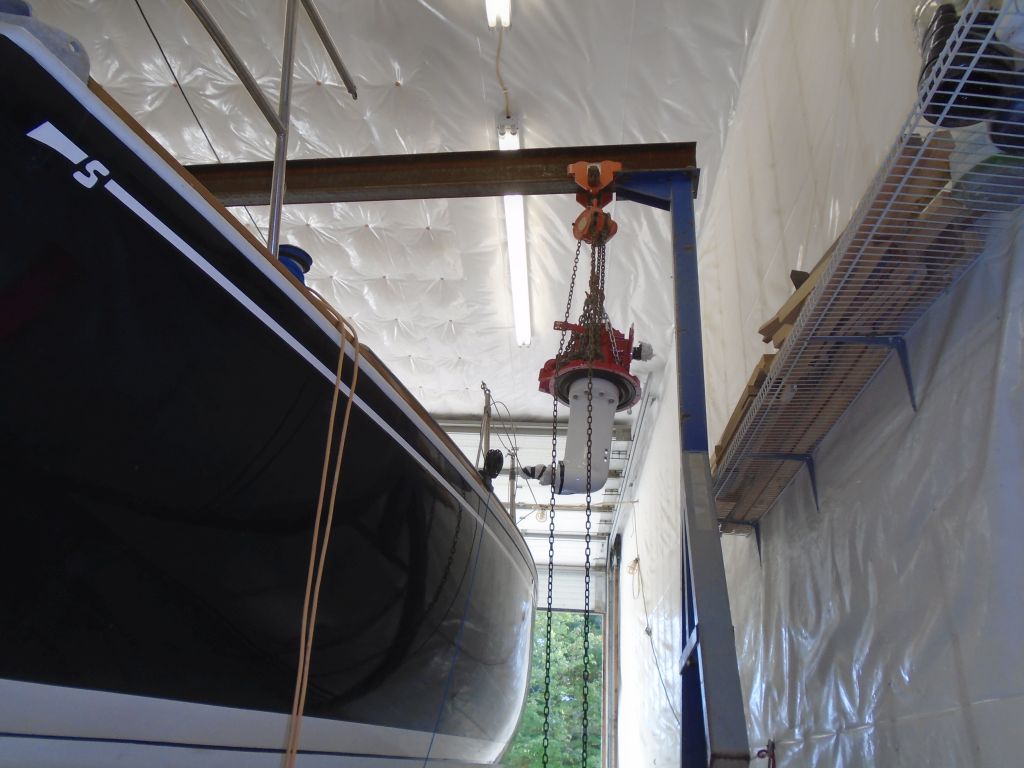
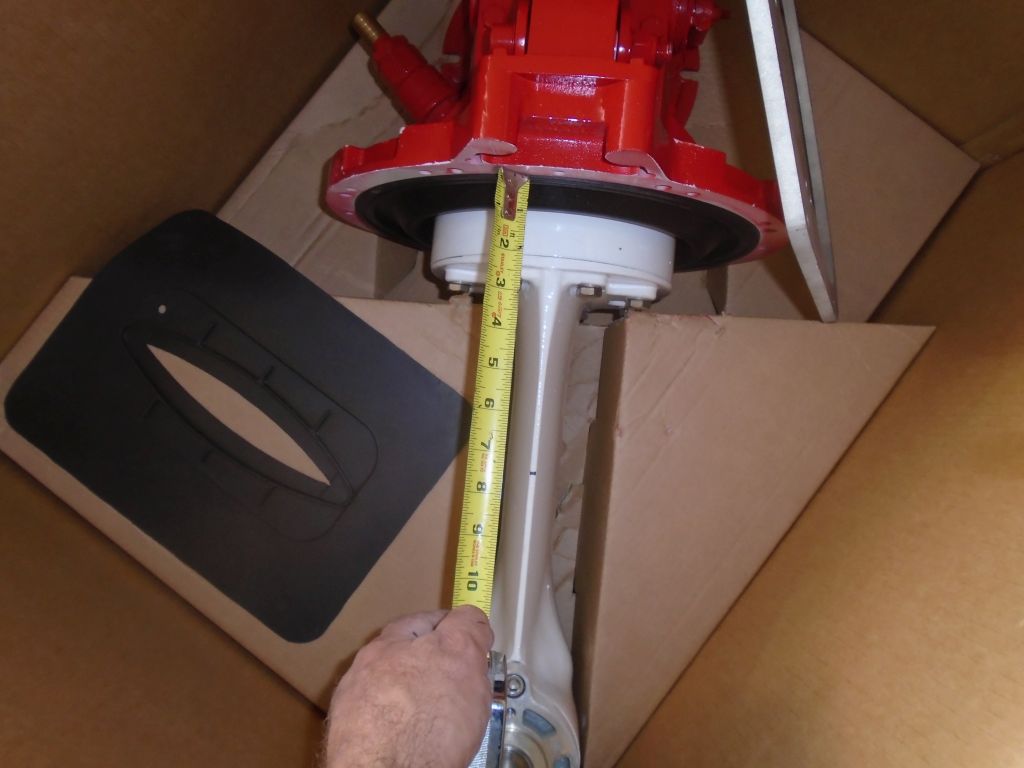
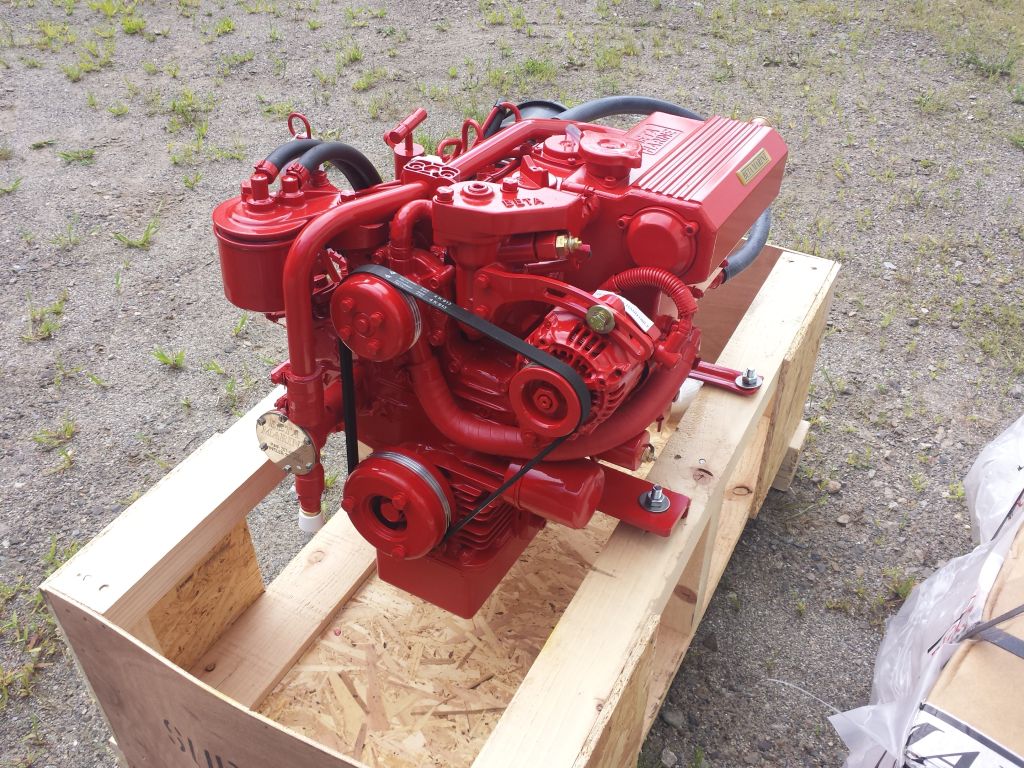
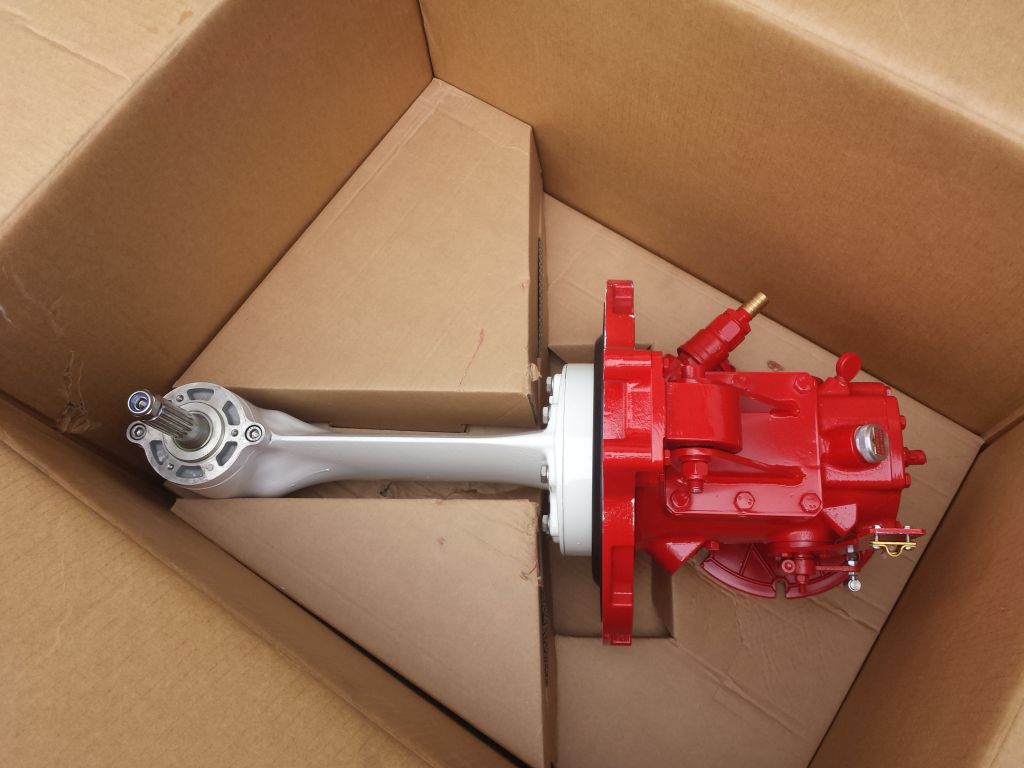
The boat was in very good condition overall, as her owner had had a lot of work done over the years, so for now the scope of work was limited to replacing her aging green monster Volvo diesel with a new engine and, in an interesting twist, a Saildrive unit, which would replace the traditional shaft arrangement which, on this boat, exited the hull offset to starboard.

prop1-91316

The new engine and propulsion unit were already on hand, as the owner had ordered them well in advance.

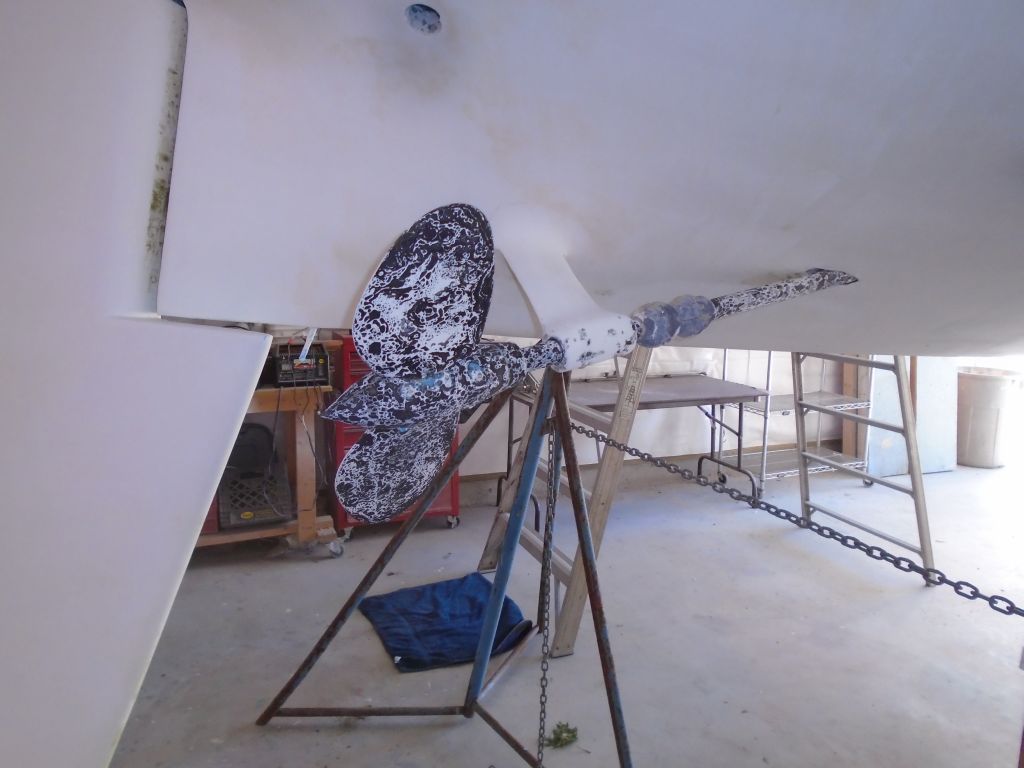
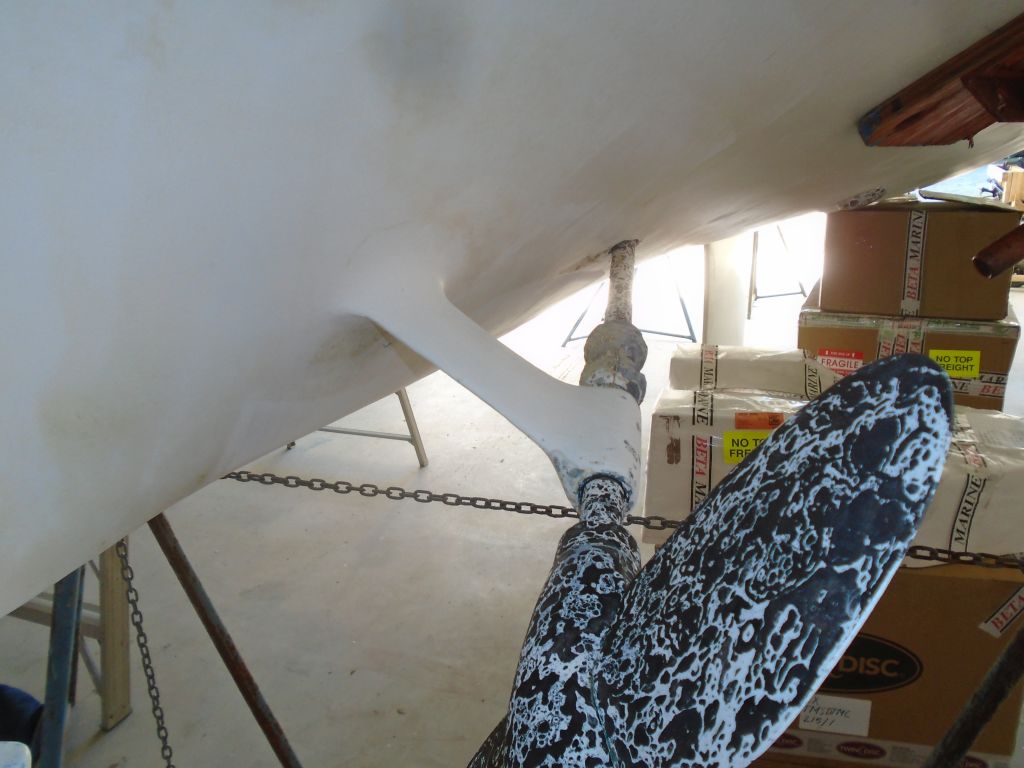
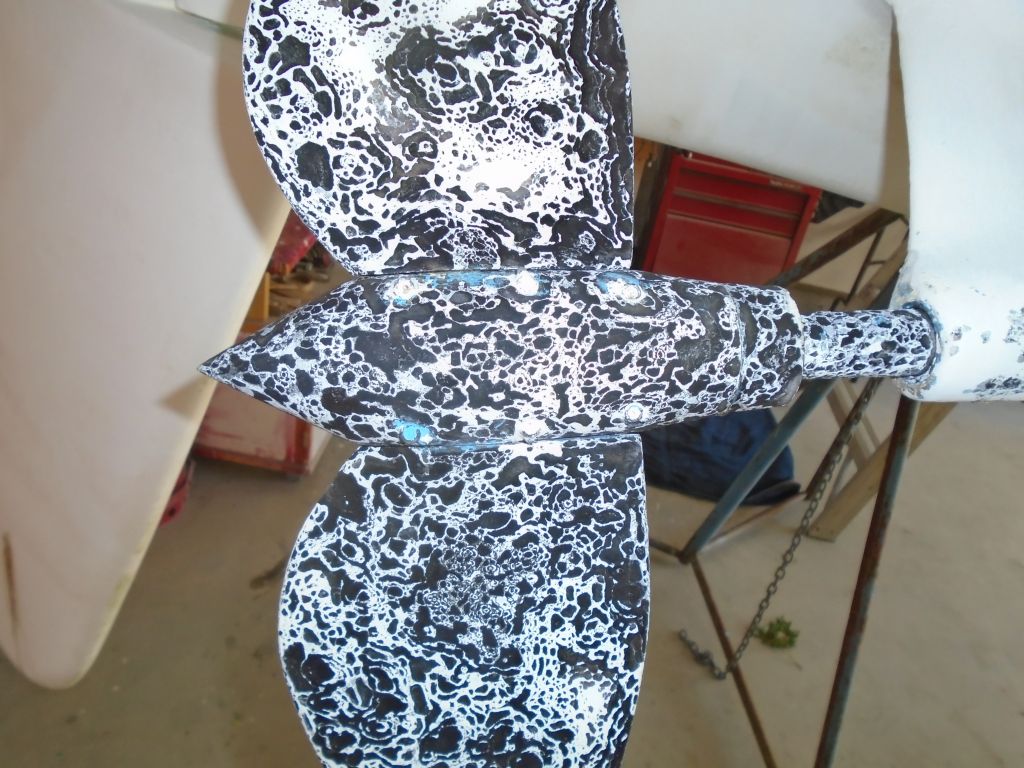
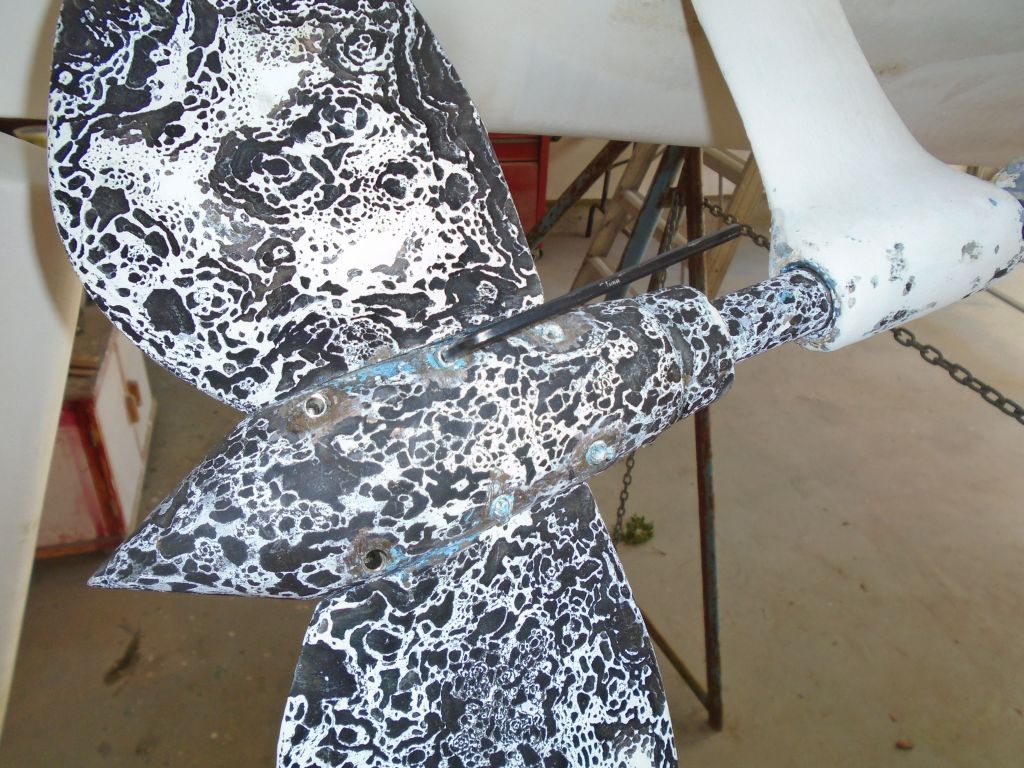
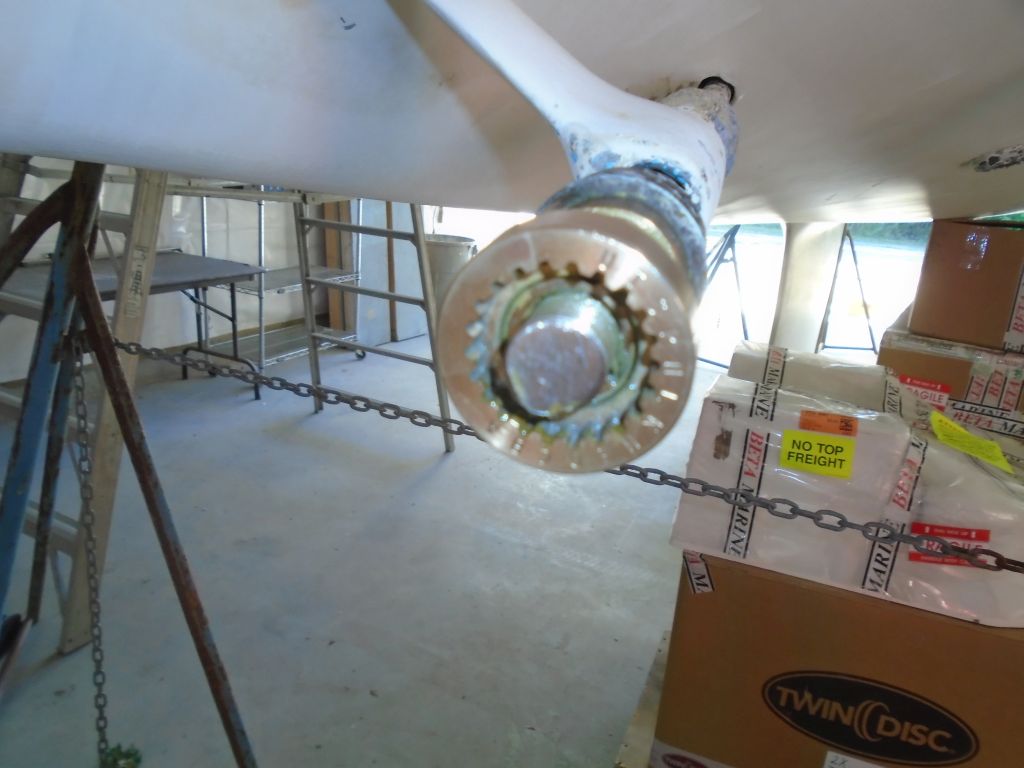
Late in the day, after familiarizing myself with the boat a bit, I started work by removing the two-blade feathering prop, a relatively simple process once I’d looked up some details about the propeller, as I’d not had opportunity to remove one of these before.  The unique patterns on the propeller and shaft come from the bottom paint that had been applied over all surfaces.

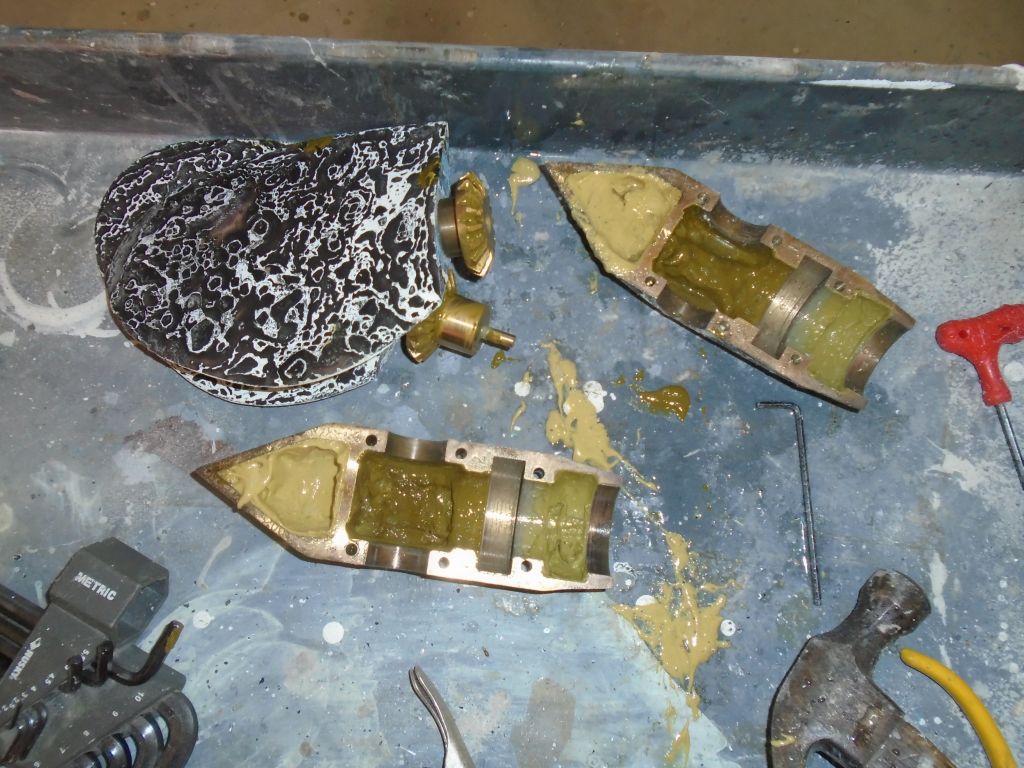
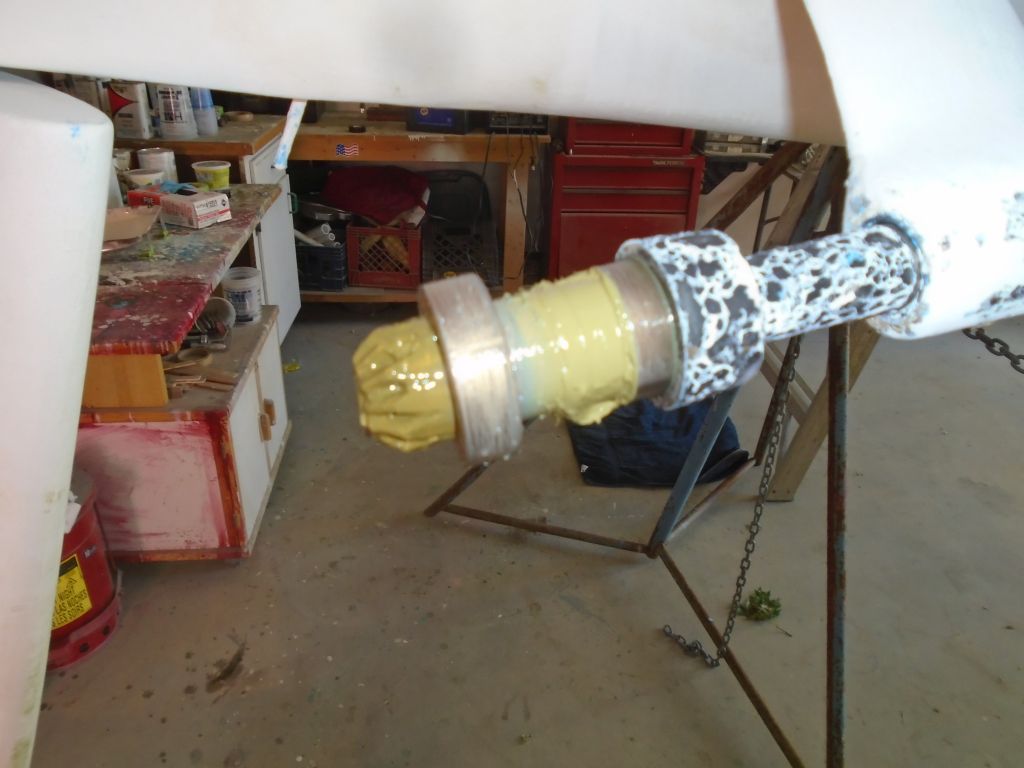
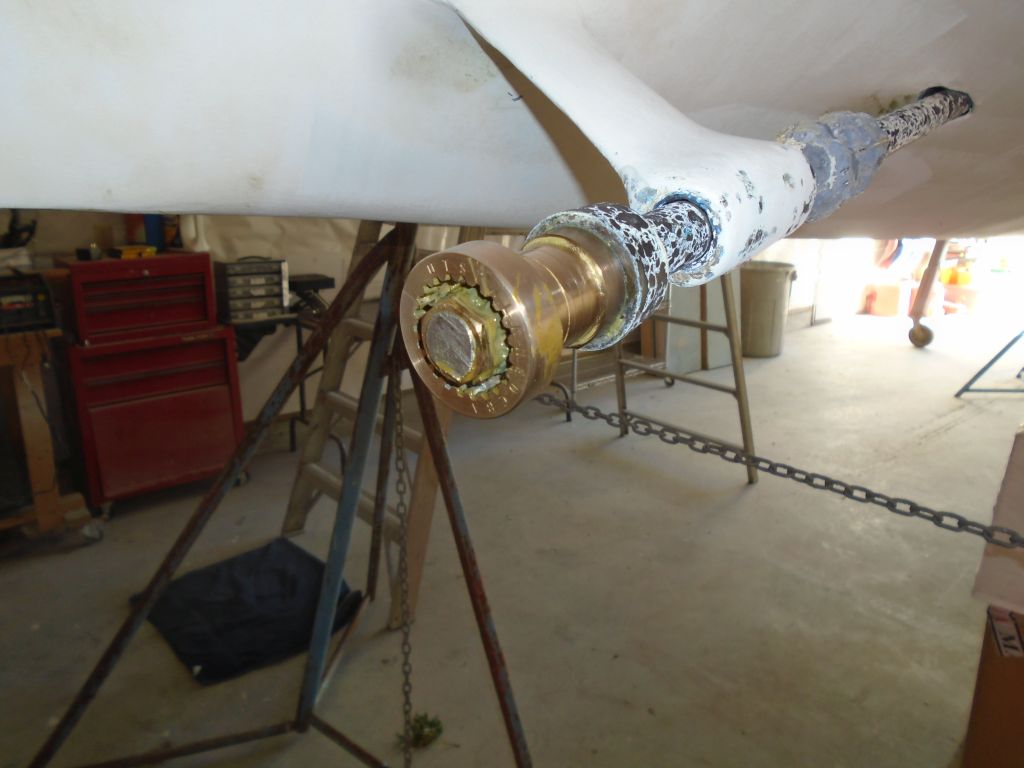
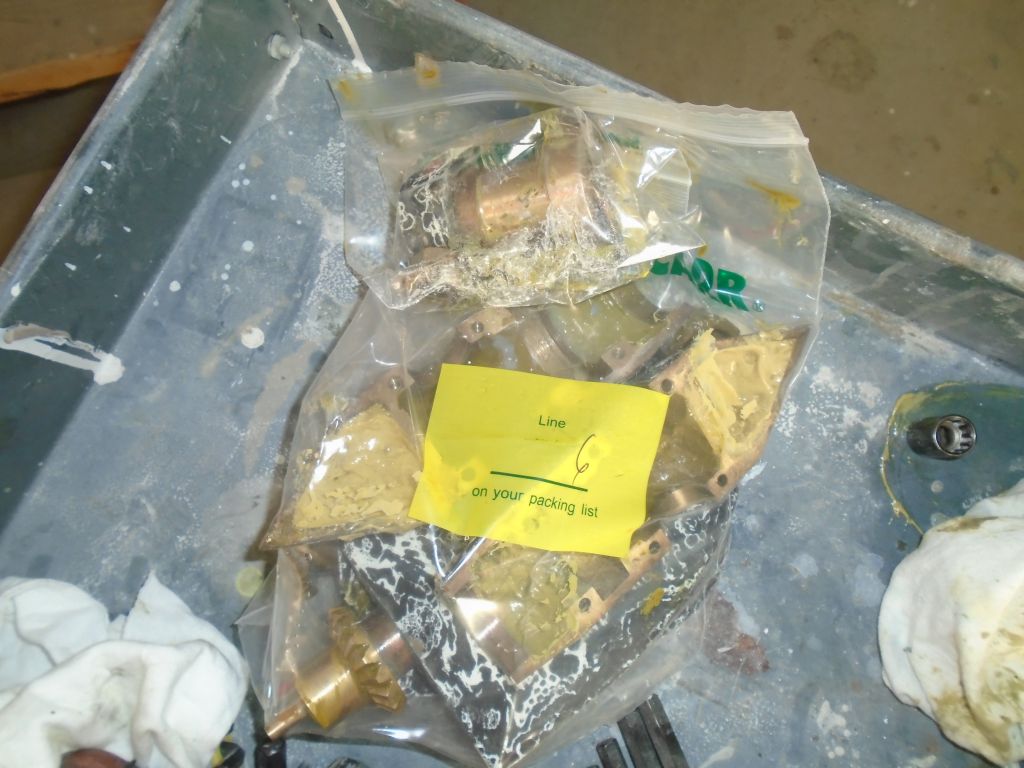
The body of the propeller was secured together with six set screws locked in place by tiny cotter pins.  After scraping away paint buildup and accessing the cotter pins, the screws came out easily, releasing the two blades and gear arrangement within.  Then it was a simple matter to remove the prop nut hidden inside and, with minimal use of a prop puller, remove the inner works of the prop from the shaft.  I also removed the two shaft zincs, leaving the shaft clean and free for removal later.

Inside the boat, I took a moment to set up some lighting and power to prepare for the work in the engine room.

setup1-91316

Total time billed on this job today:  1.5 hours

0600 Weather Observation:
46°, clear.  Forecast for the day:  sunny, 80

Rhodes 20

< Back to Rhodes 18

Tuesday

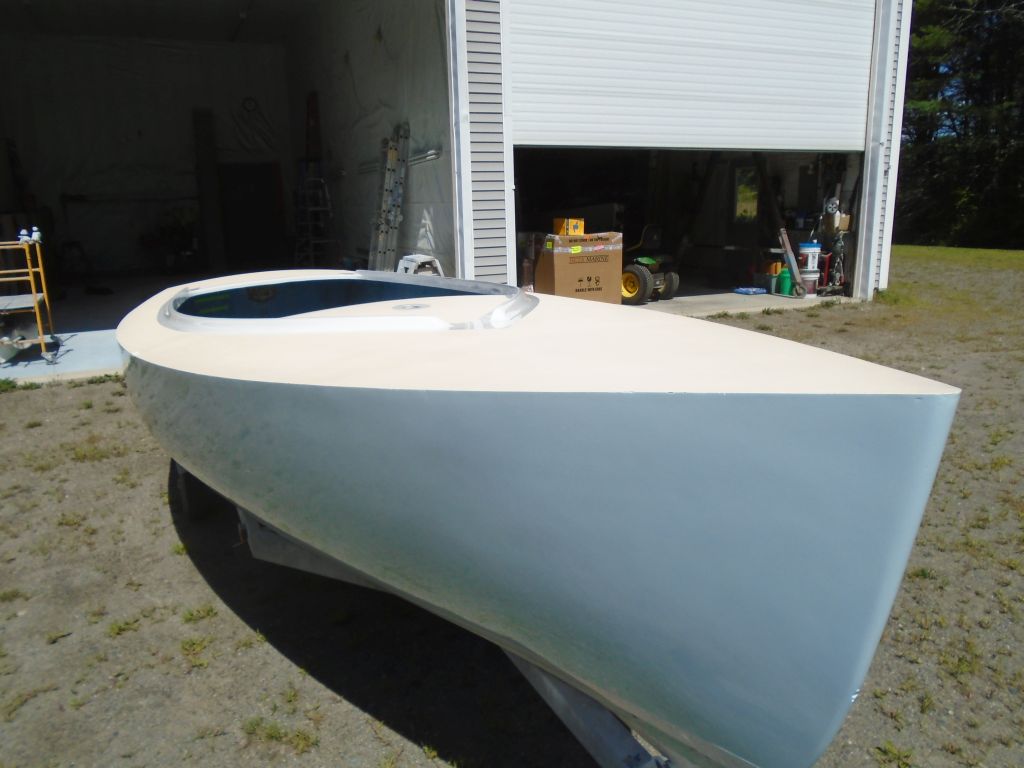
The new paint had had a week to cure–new LPU requires about three weeks for a full cure, but one week is a workable cure time–so the owner arrived to bring his boat home, where he could finish the woodworking and hardware work still required.

< Back to Rhodes 18

0600 Weather Observation:
48°, clear.  Forecast for the day:  Sunny, high near 80.

Rhodes 19

< Back to Rhodes 18

Thursday

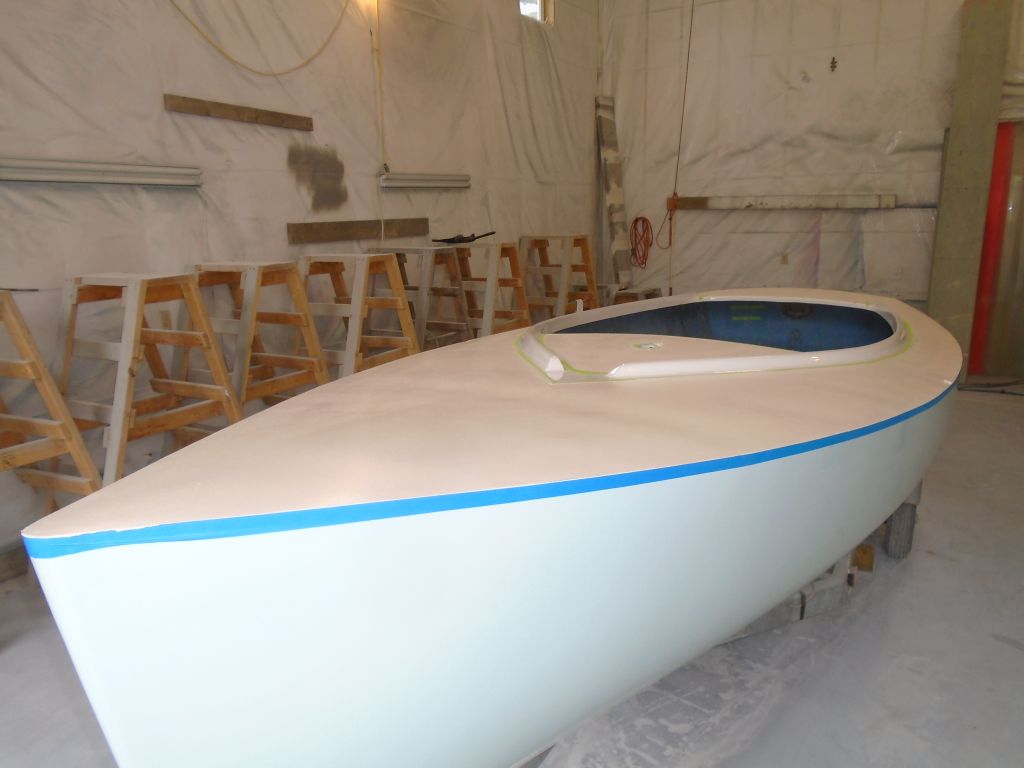
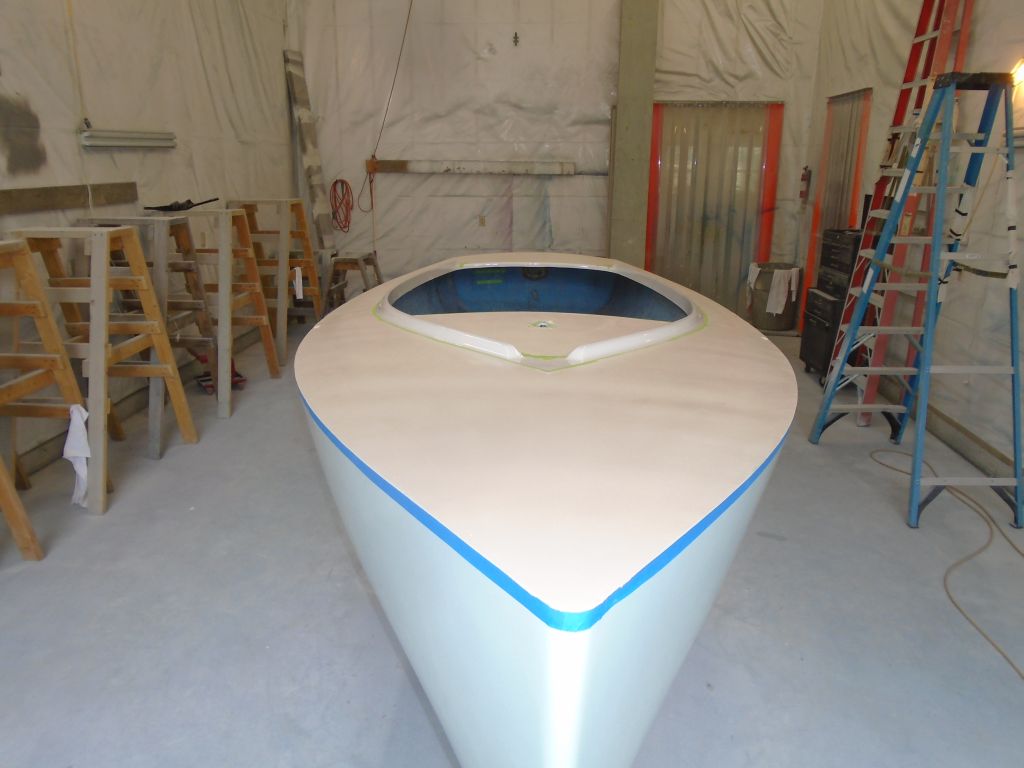
Now that the paint was cured, and I was done with spraying, I could remove all the masking tape, paper, and plastic from the boat early in the day.

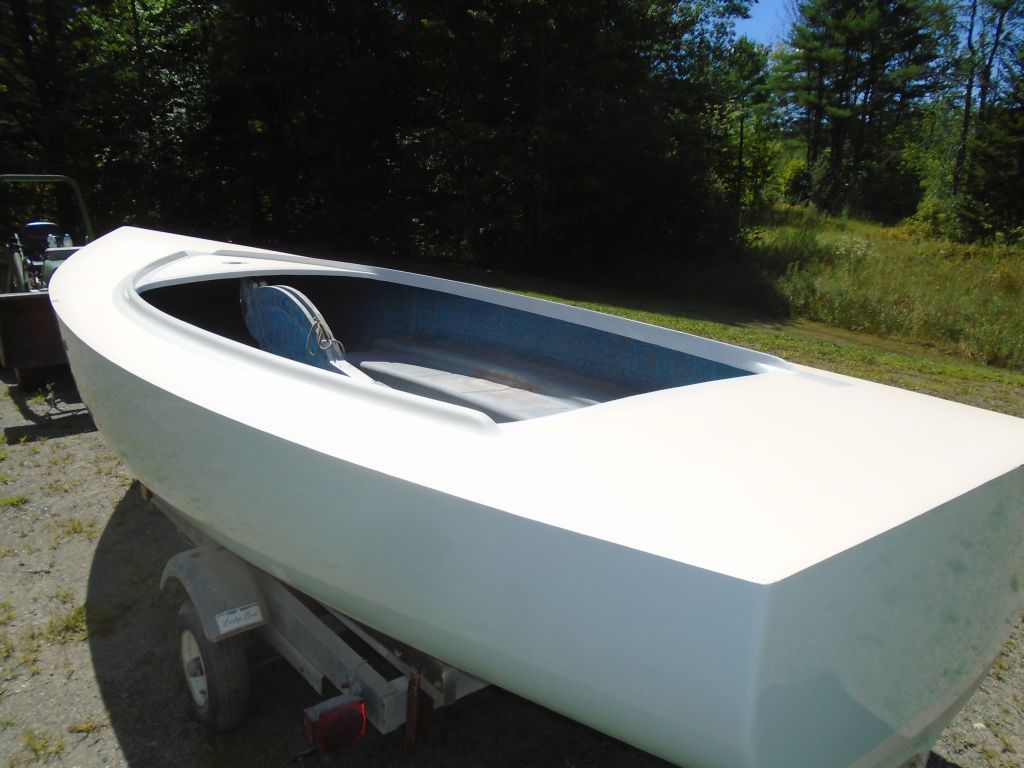
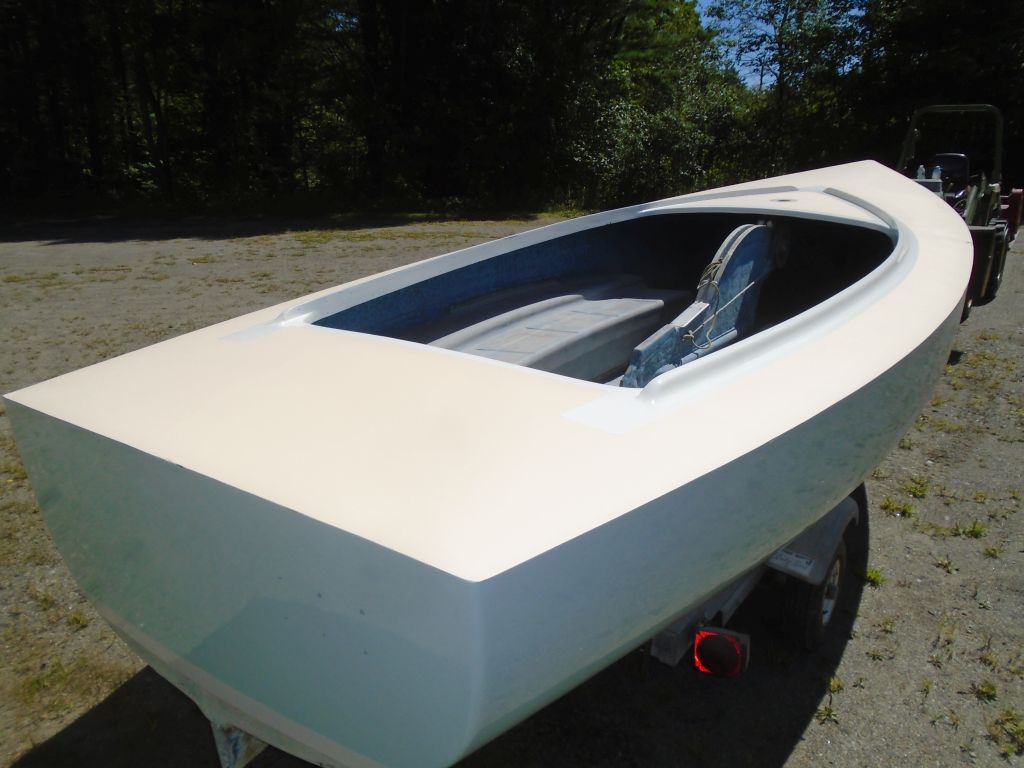
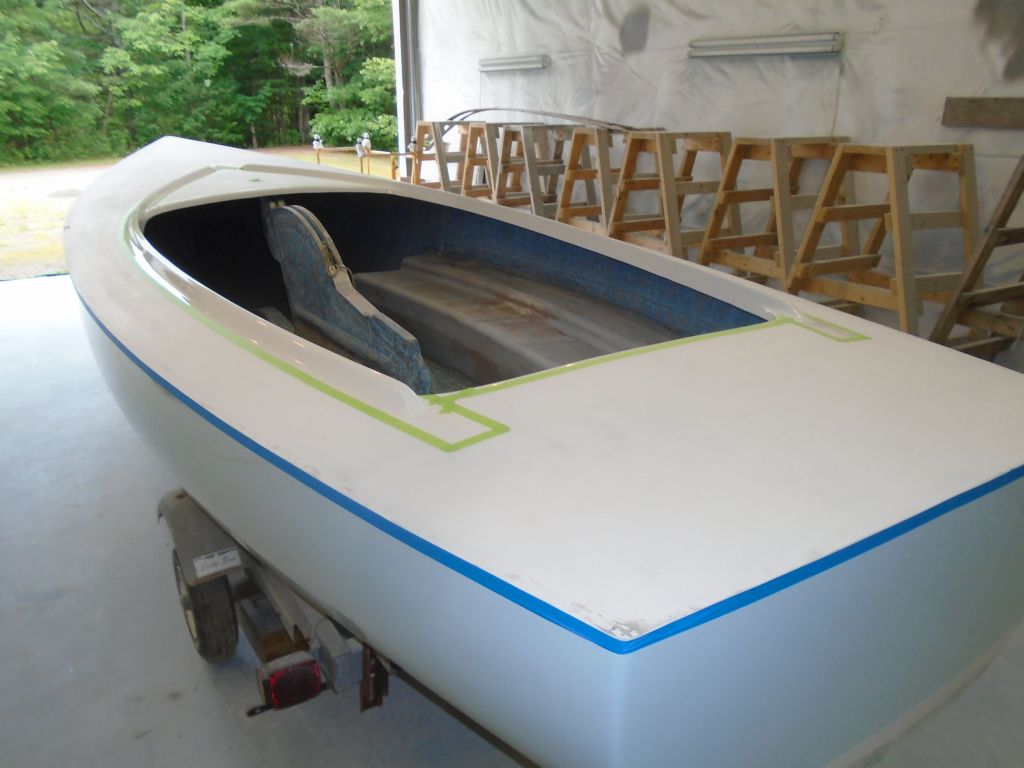
Once I was back to the bare boat, I masked off the smooth deck areas to prepare the field for nonskid, as well as around the top of the hull using a special low-tack tape.

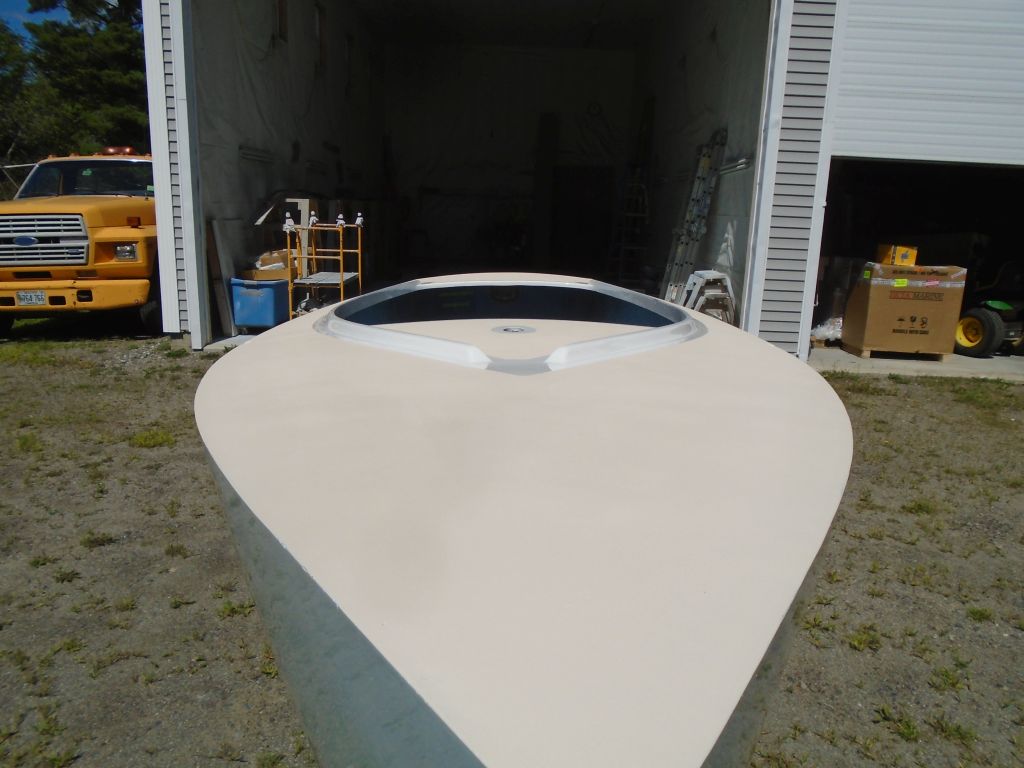
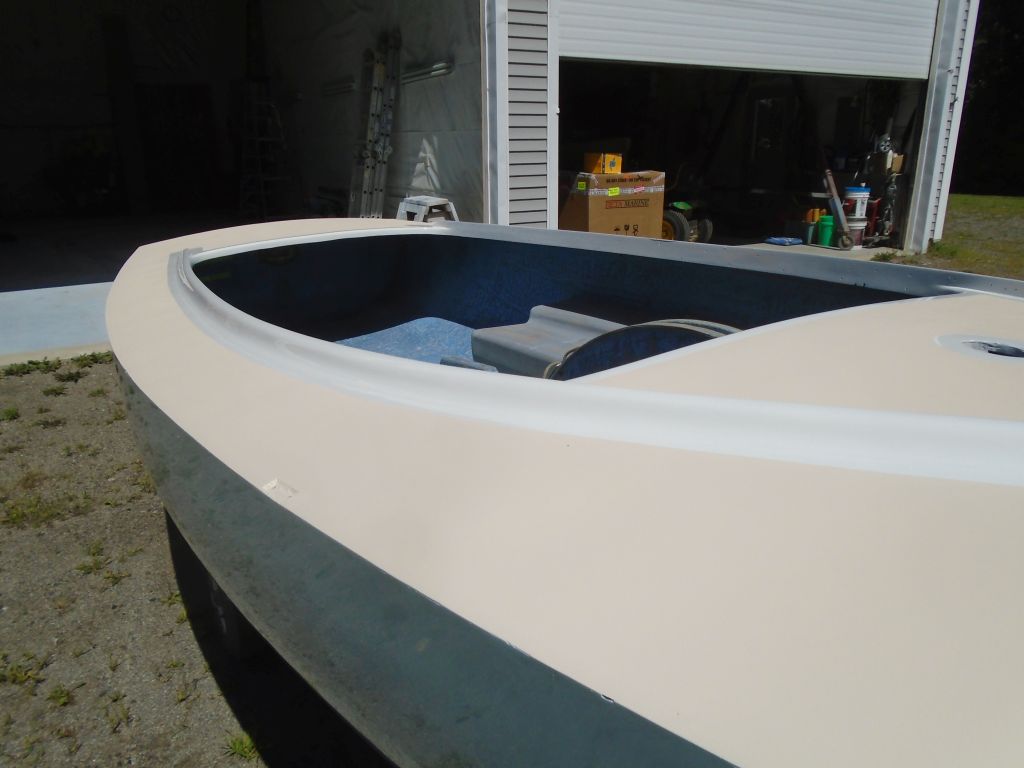
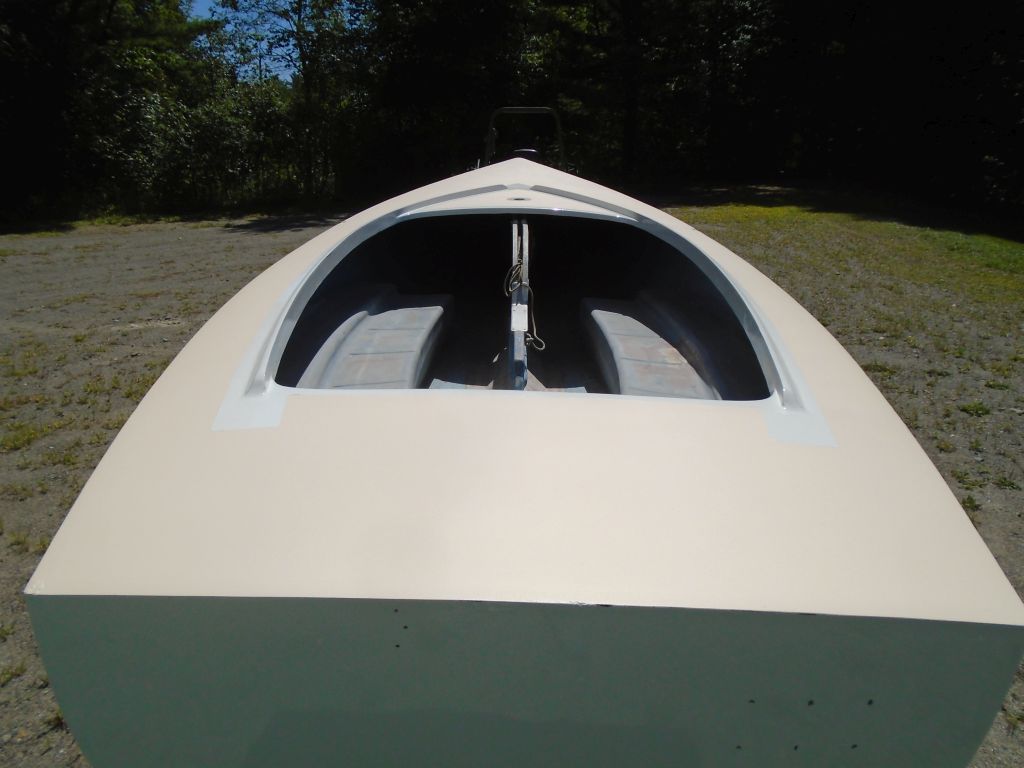
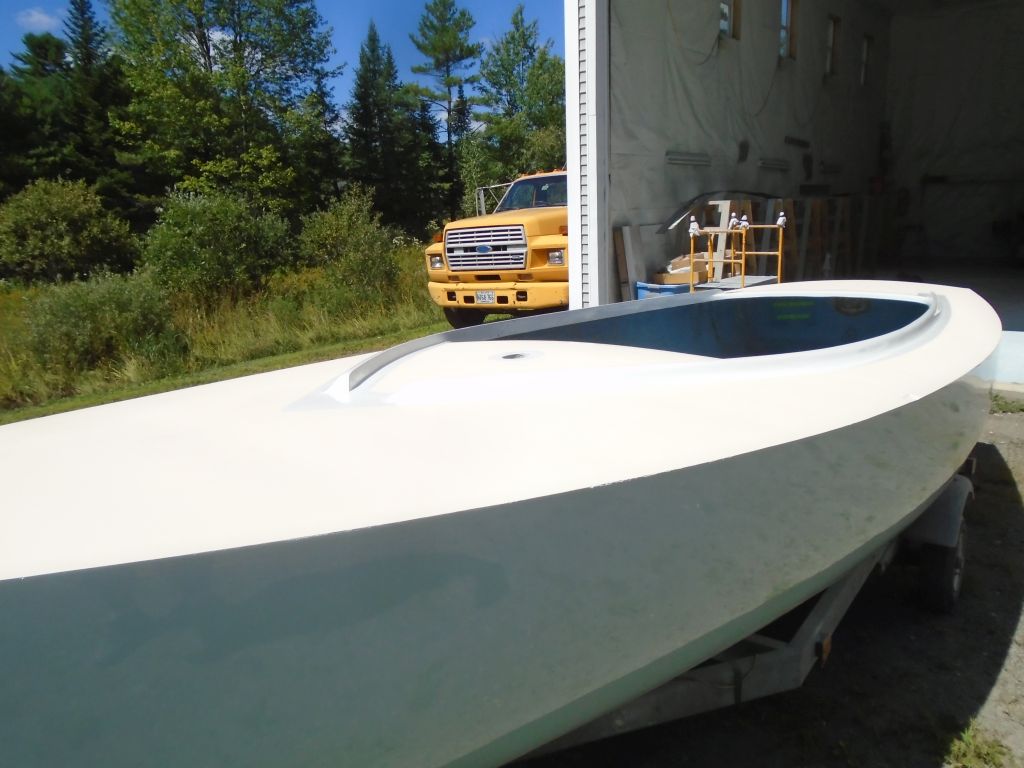
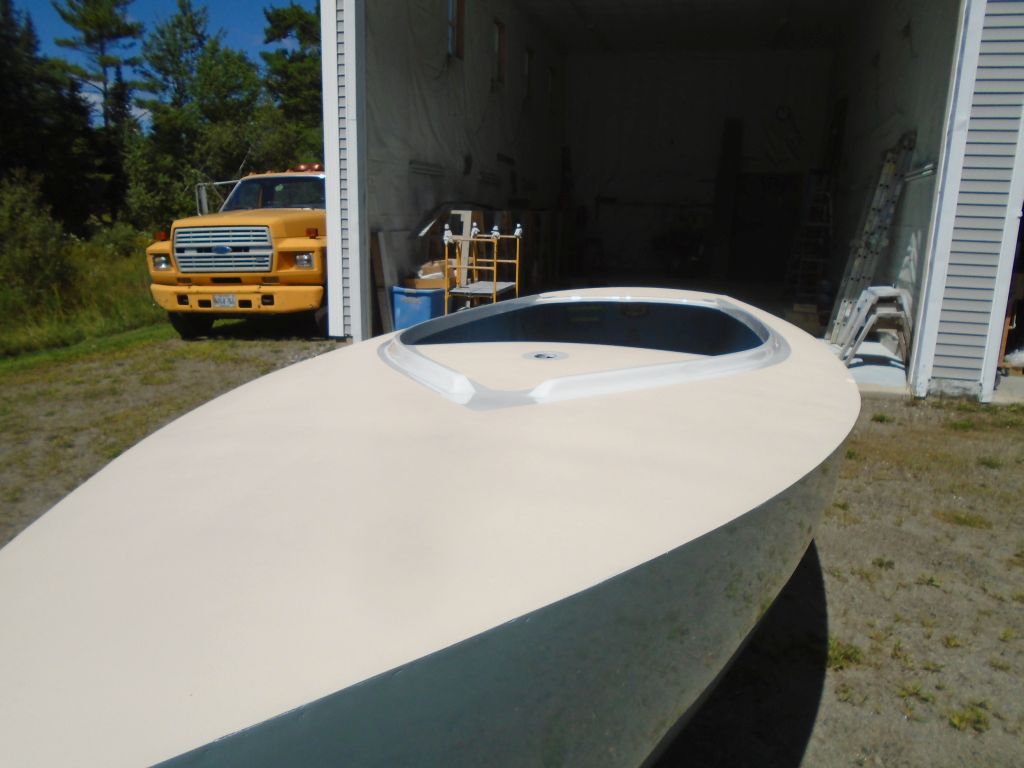
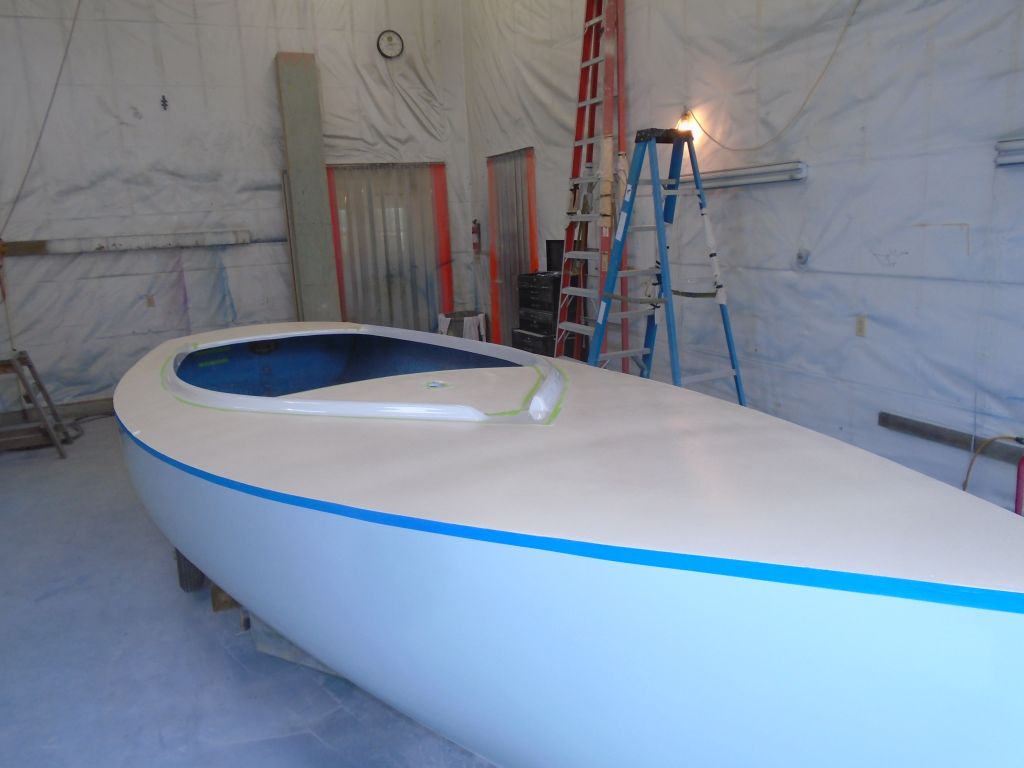
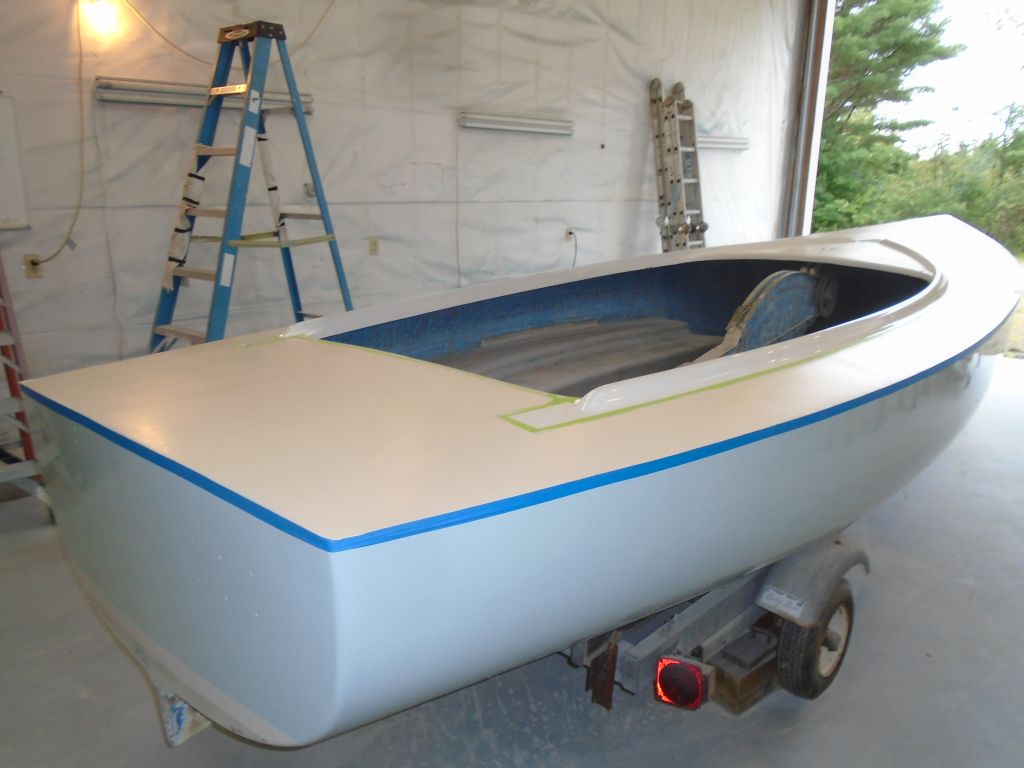
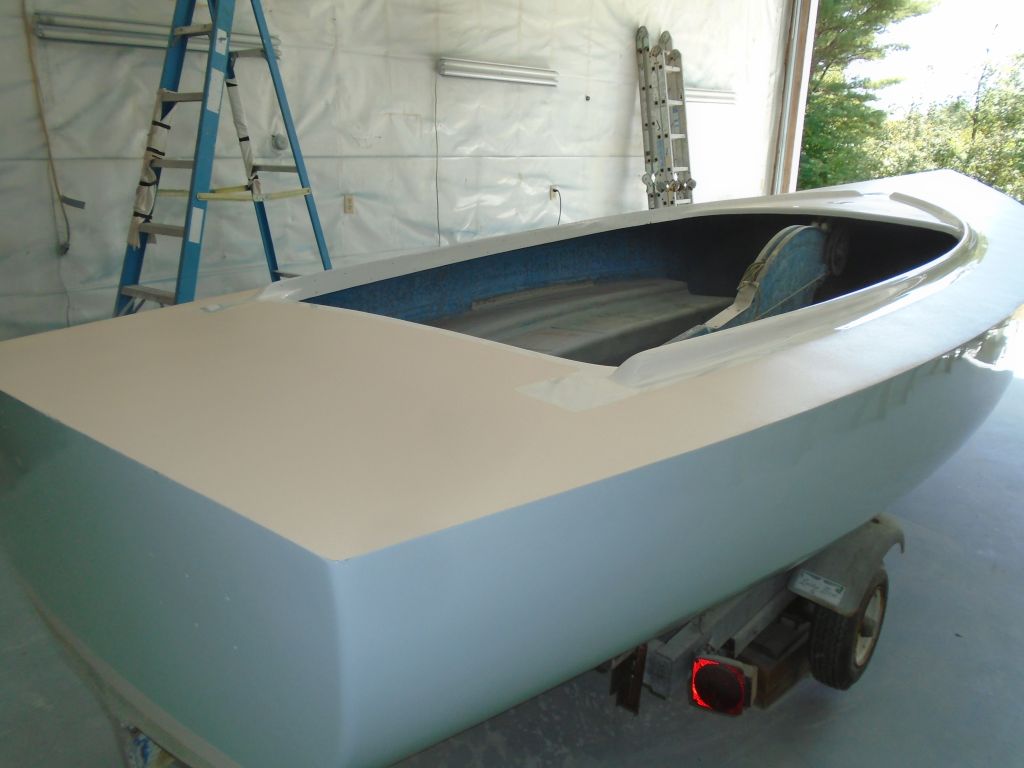
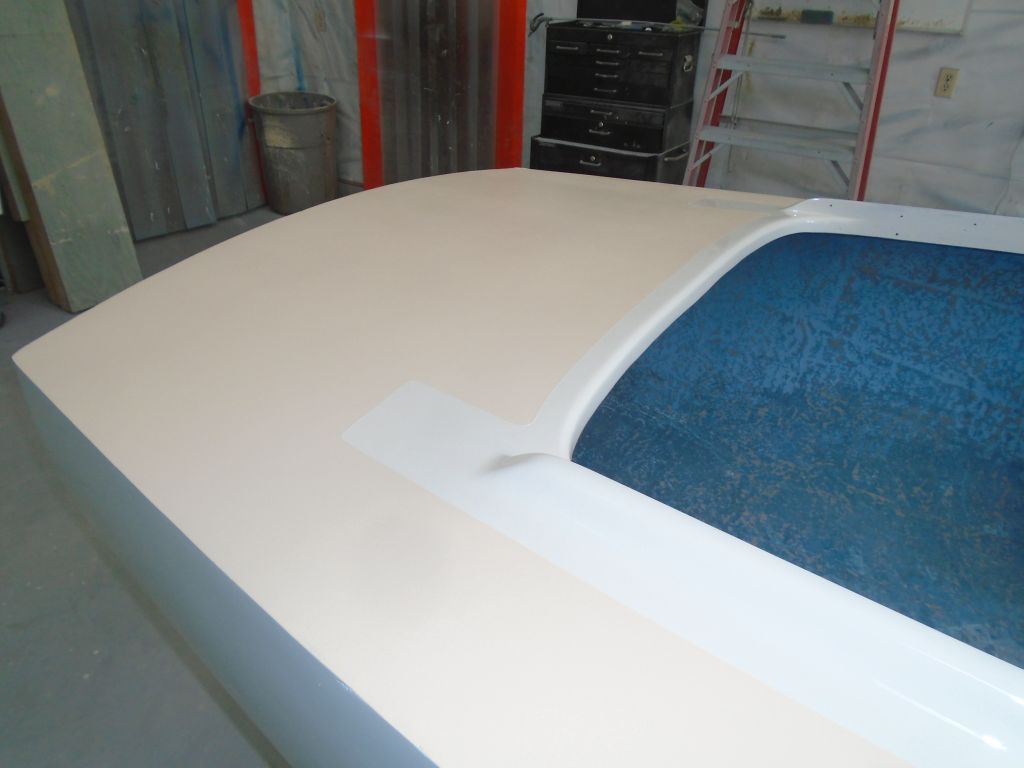
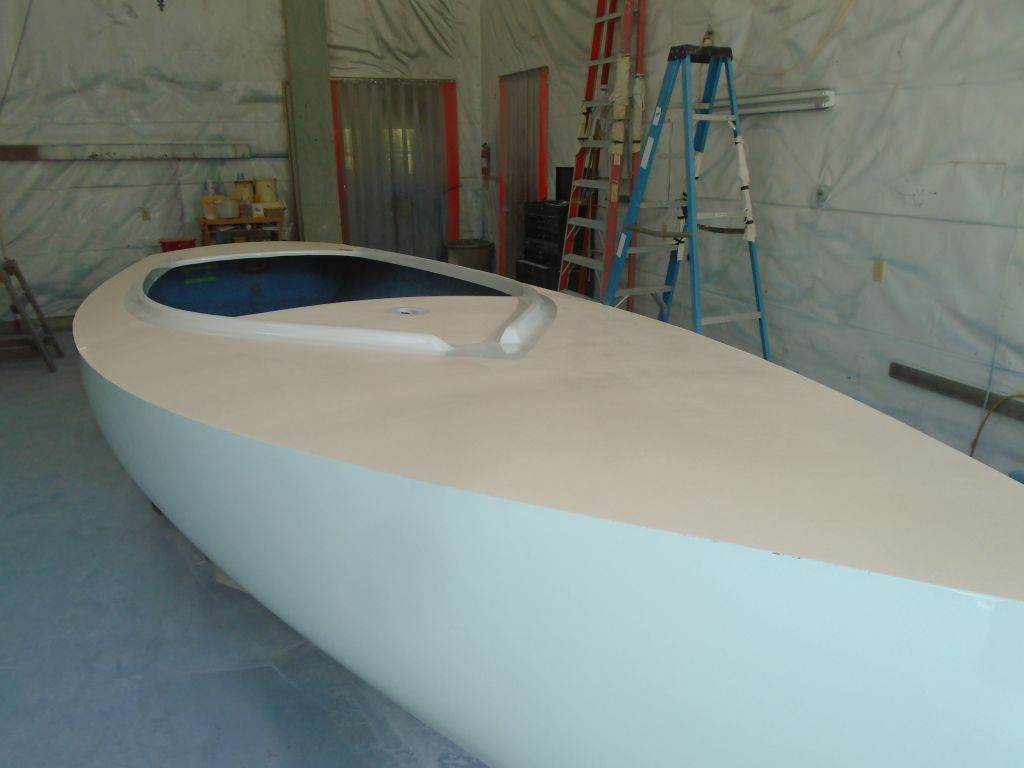
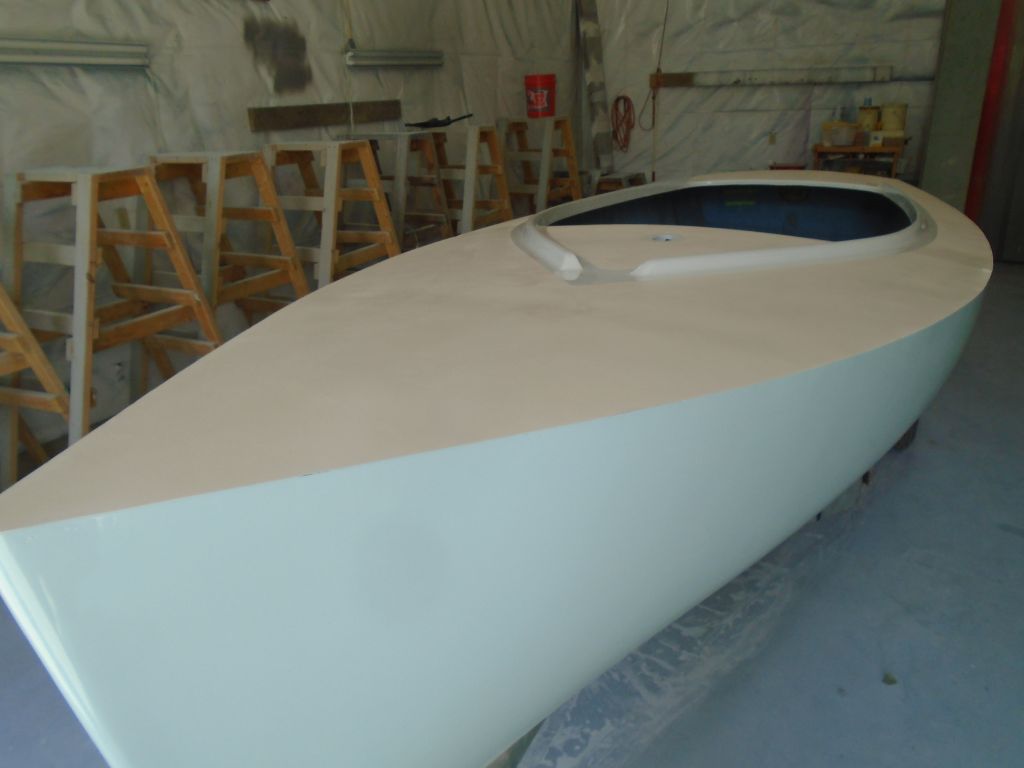
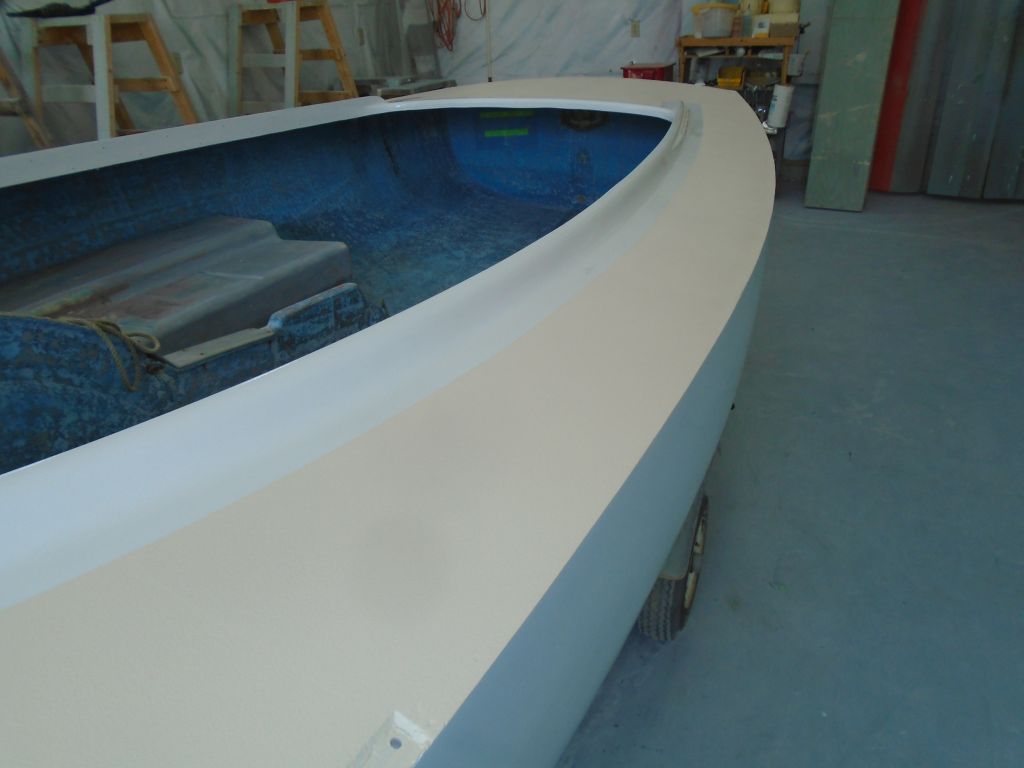
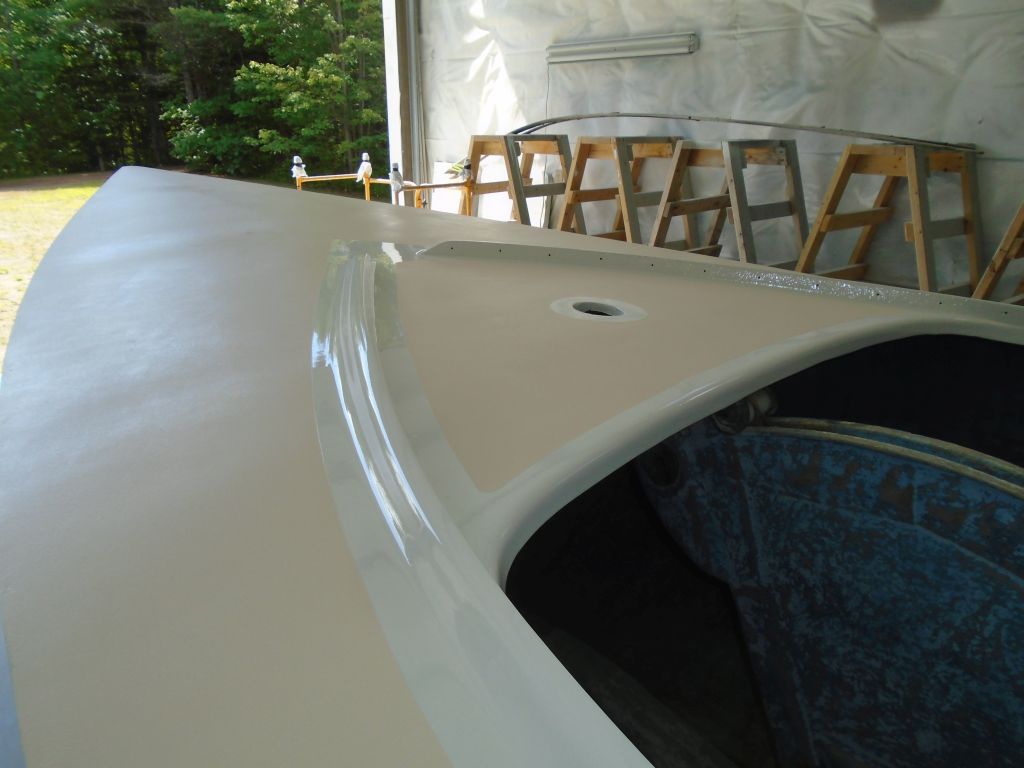
After final preparations, I applied two coats of light beige nonskid paint over the course of the day–heat and drying conditions allowed for the second coat late in the day.  This completed the main painting process and the bulk of the project.  Still to come:  project wrap-up.

First coat:

Second coat and unmasked:

Total time billed on this job today:  2 hours

0600 Weather Observation:
55°. partly cloudy.  Forecast for the day:  clouds and sun, possible shower.

Rhodes 18

< Back to Rhodes 18

Wednesday

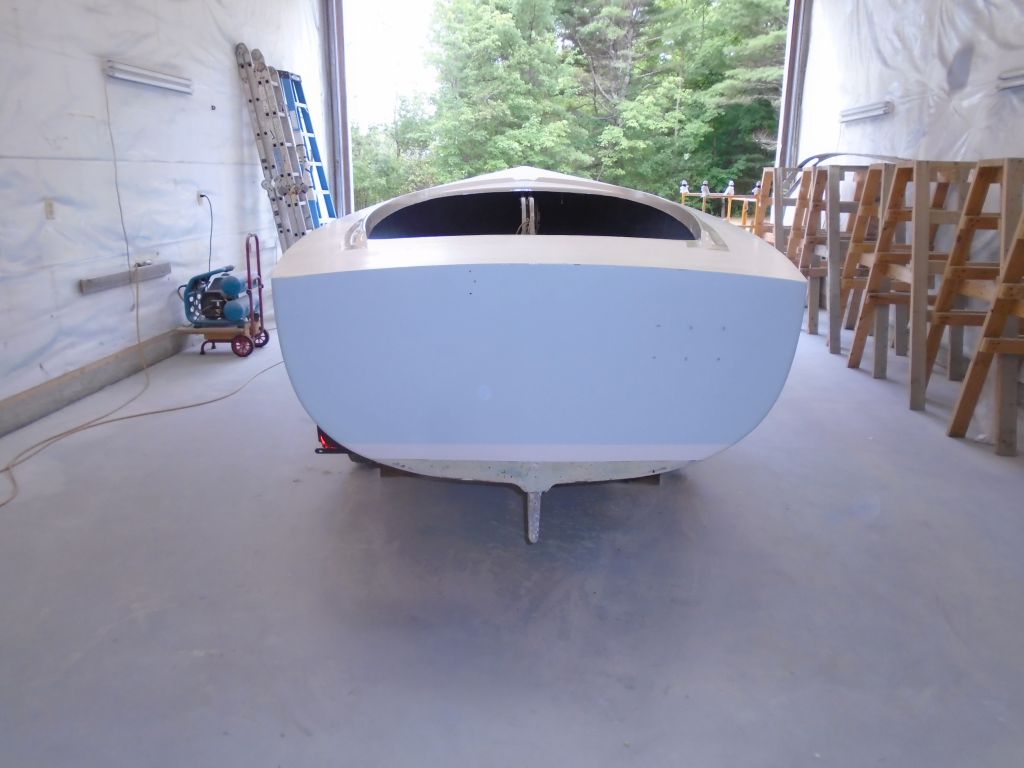
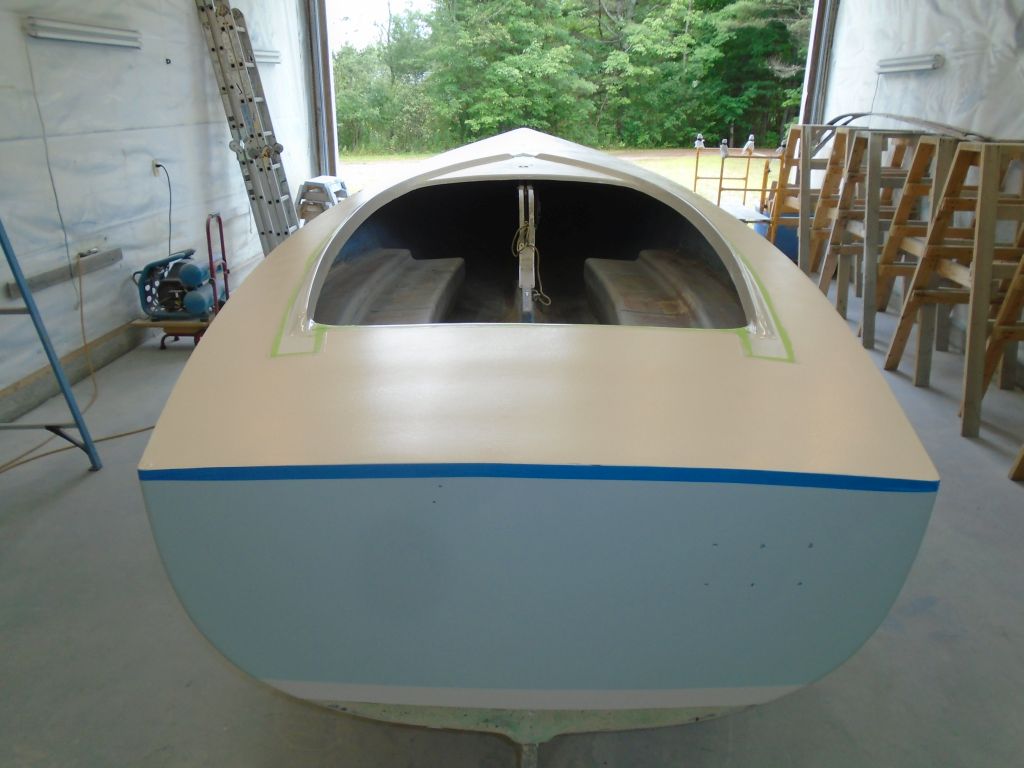
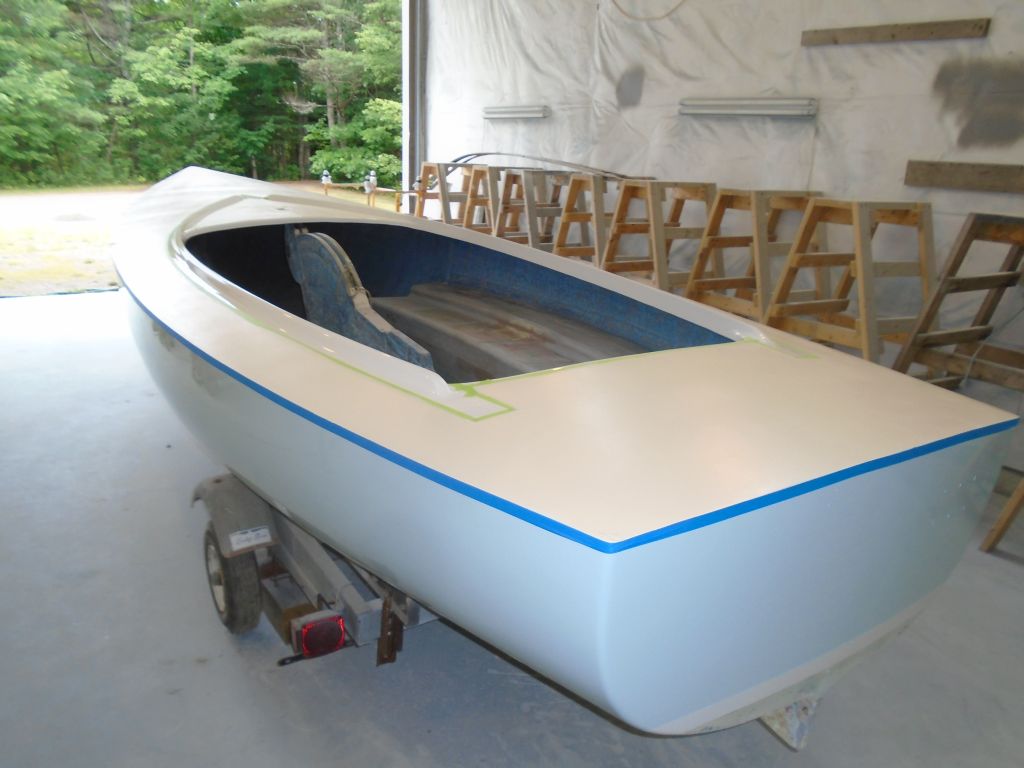
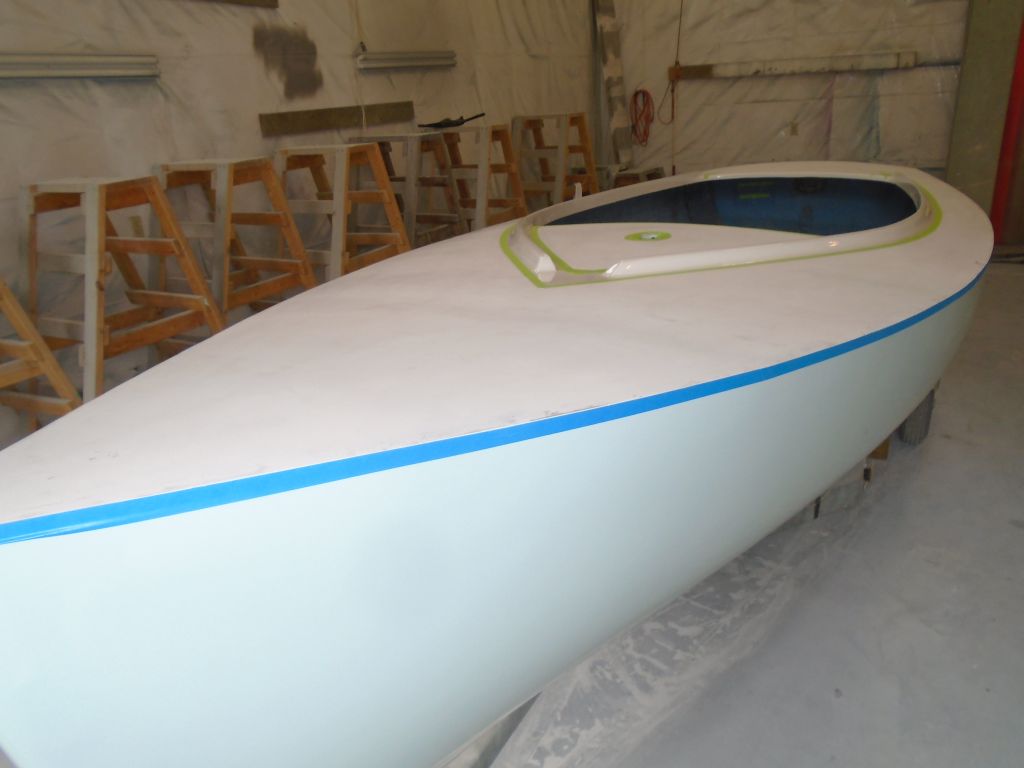
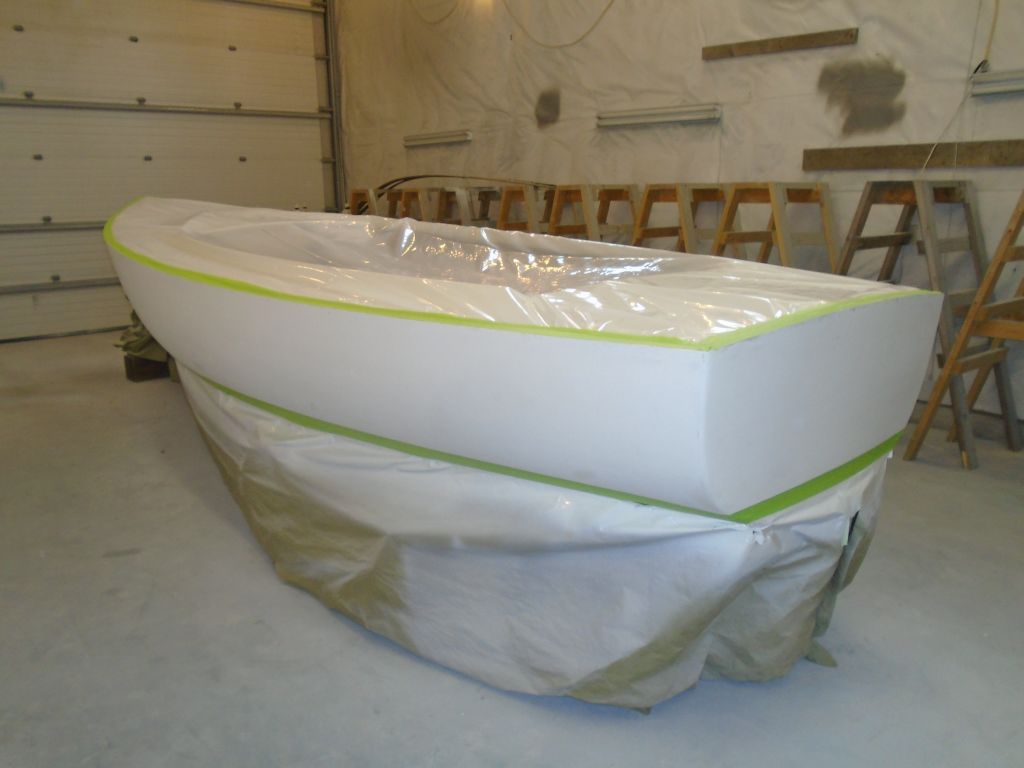
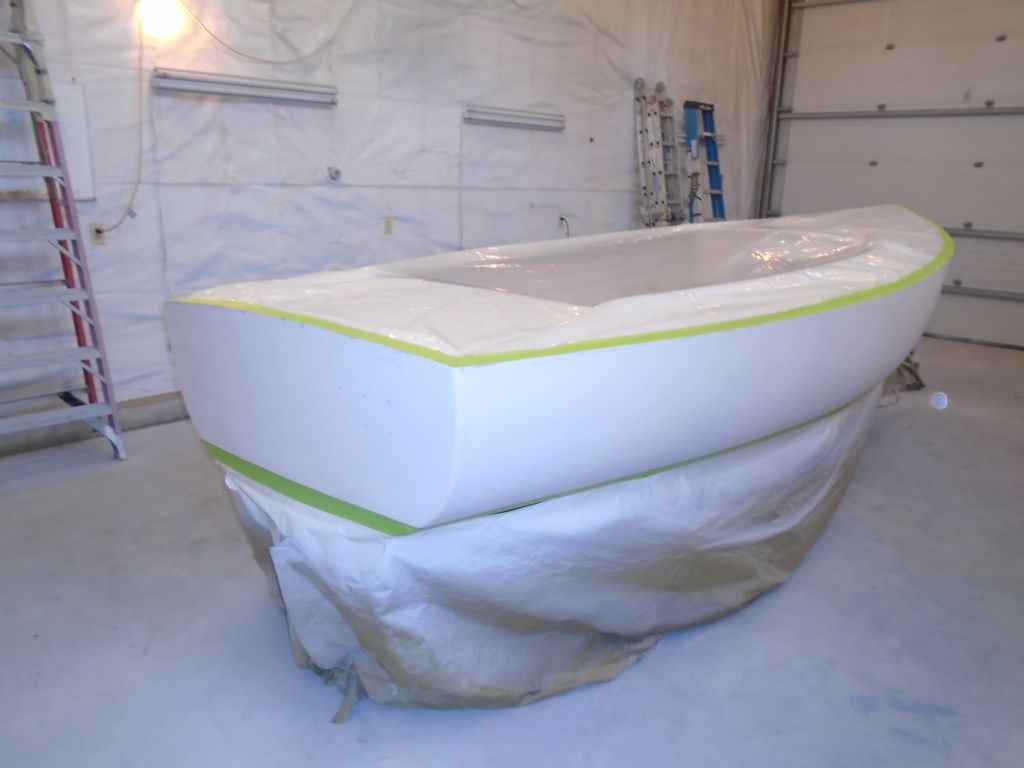
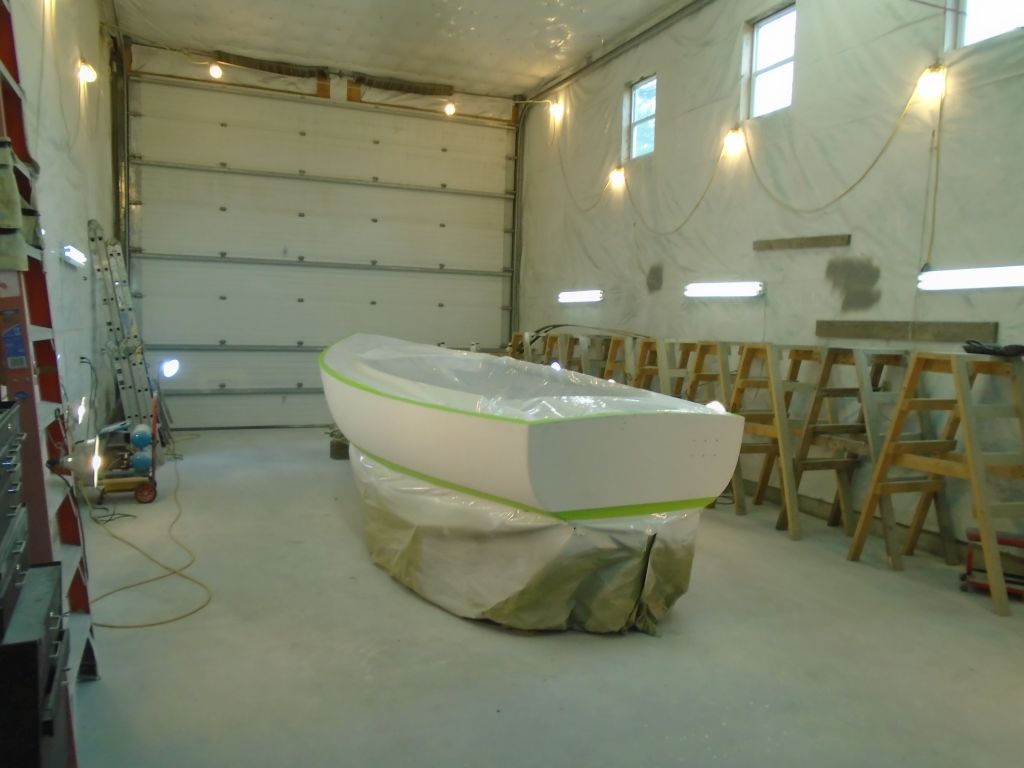
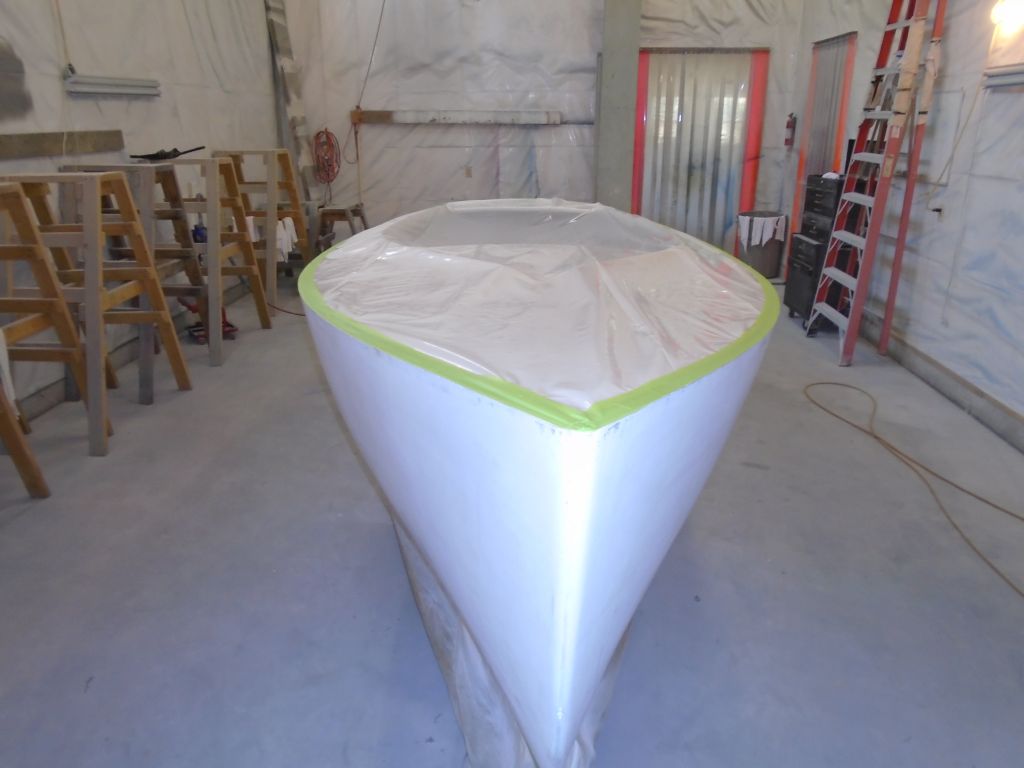
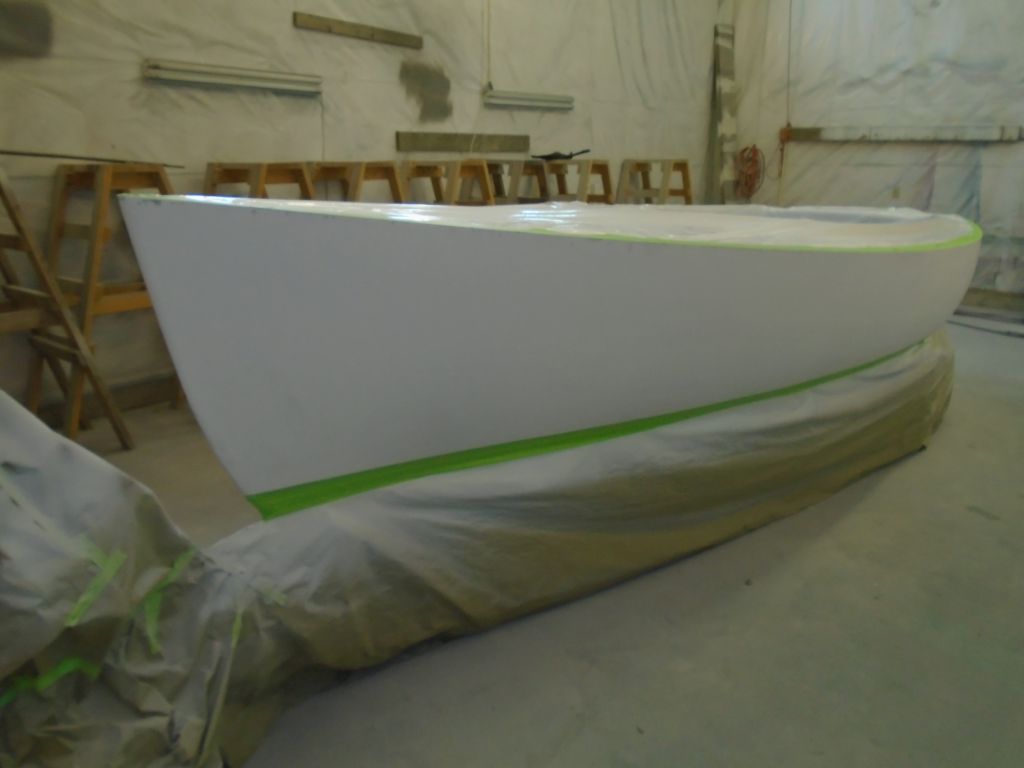
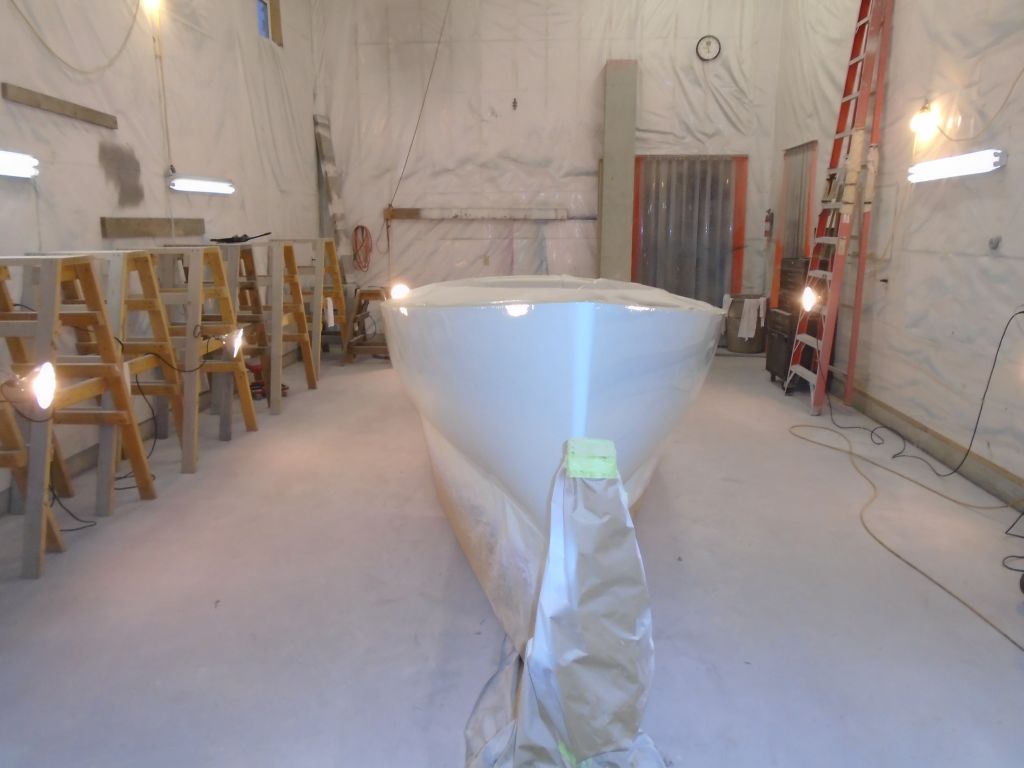
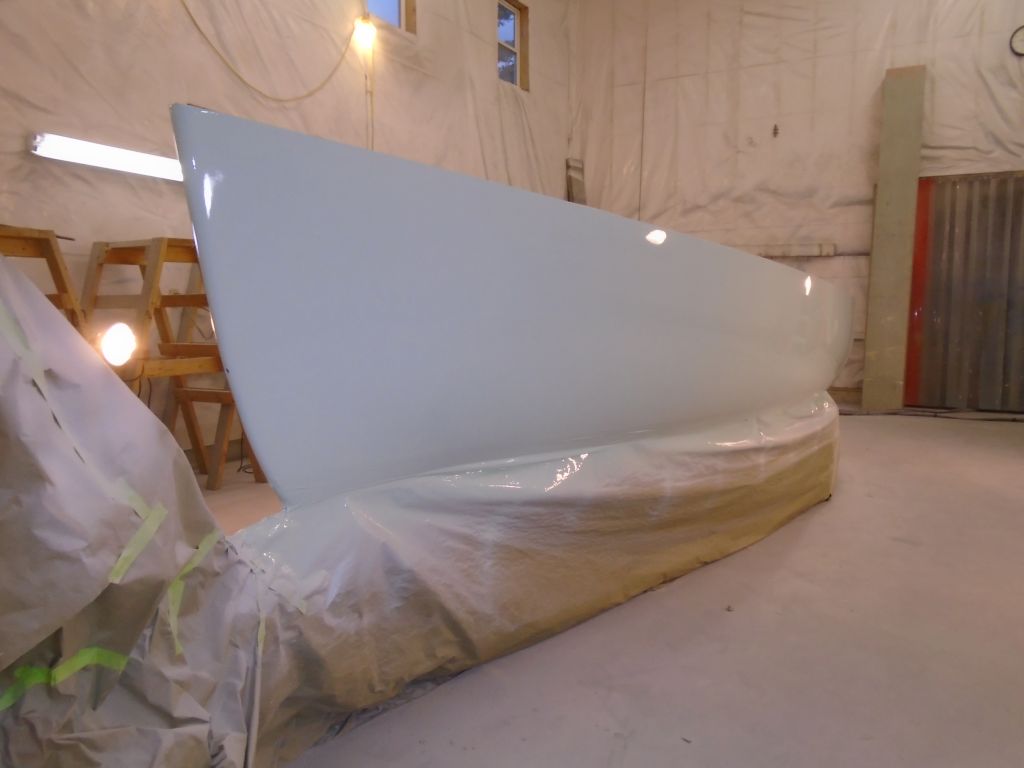
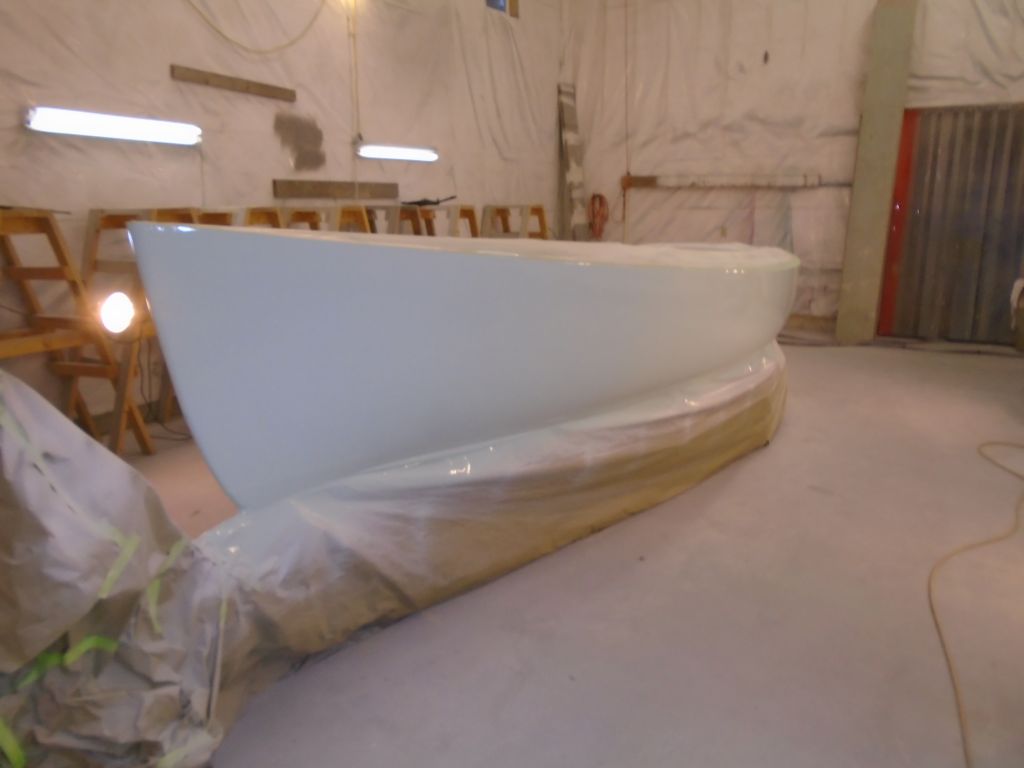
The final list of preparations before the hull was ready to spray was short:  mask off the boottop, and mask off the decks.  I took care of both chores first thing in the morning.

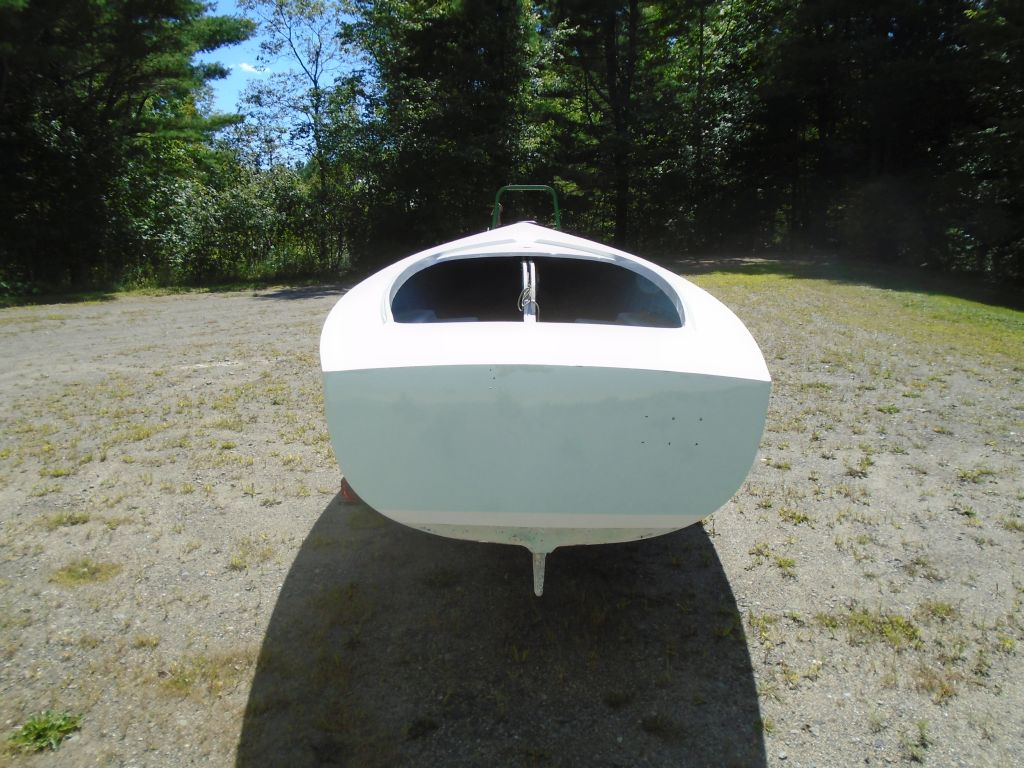
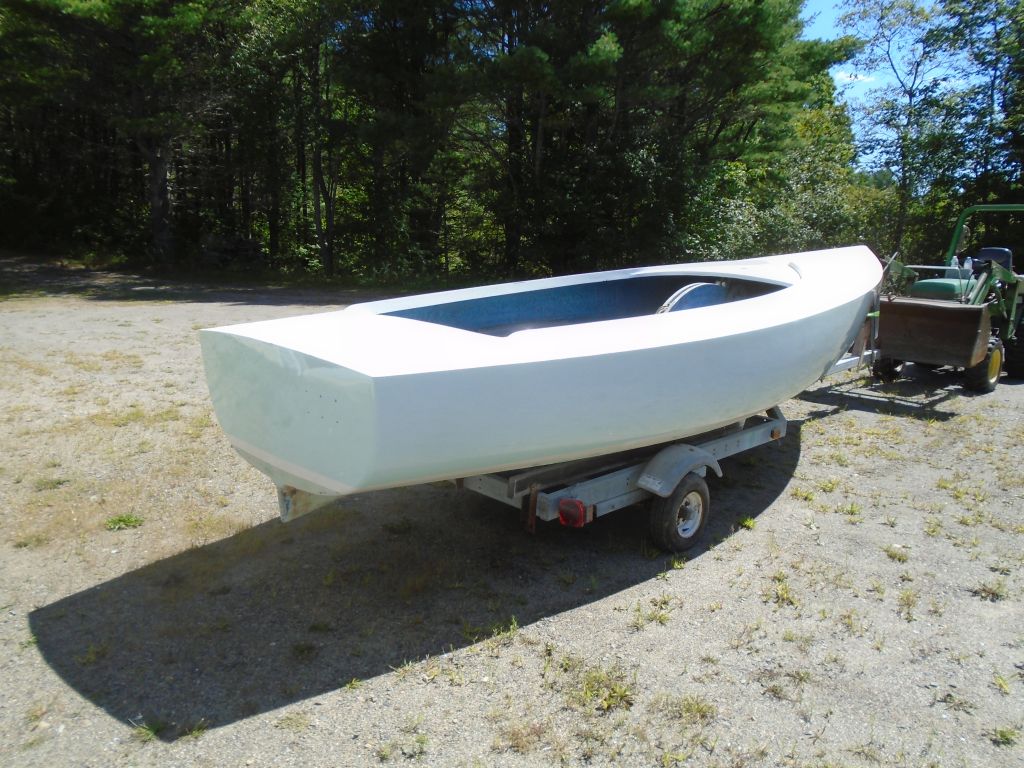
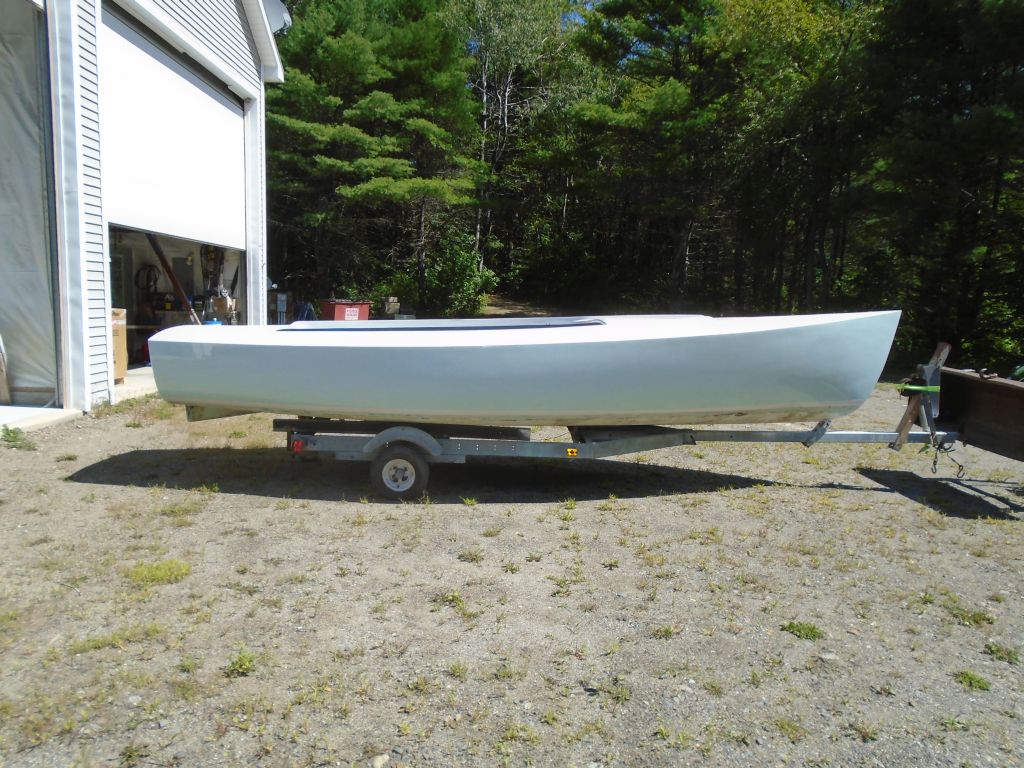
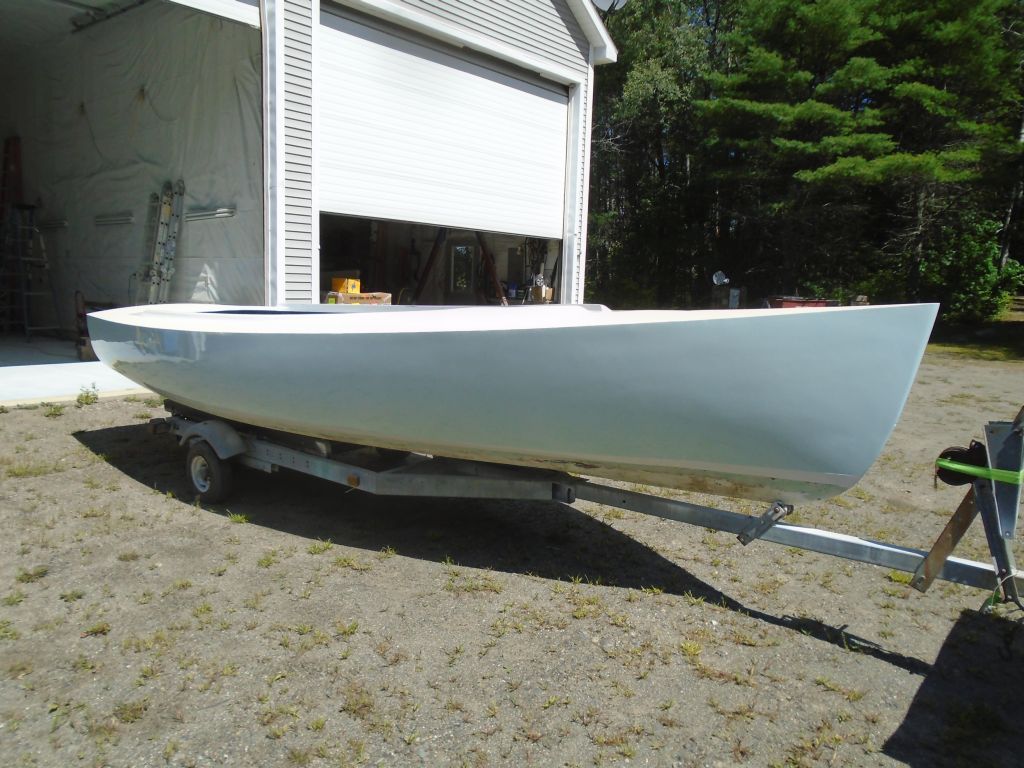
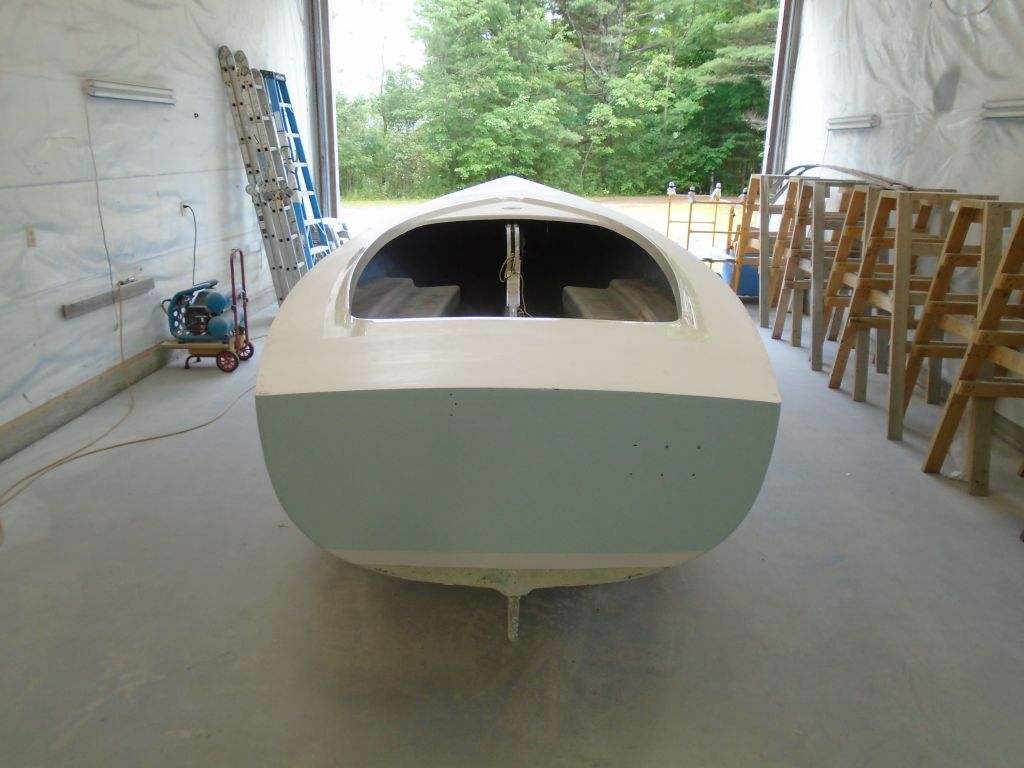
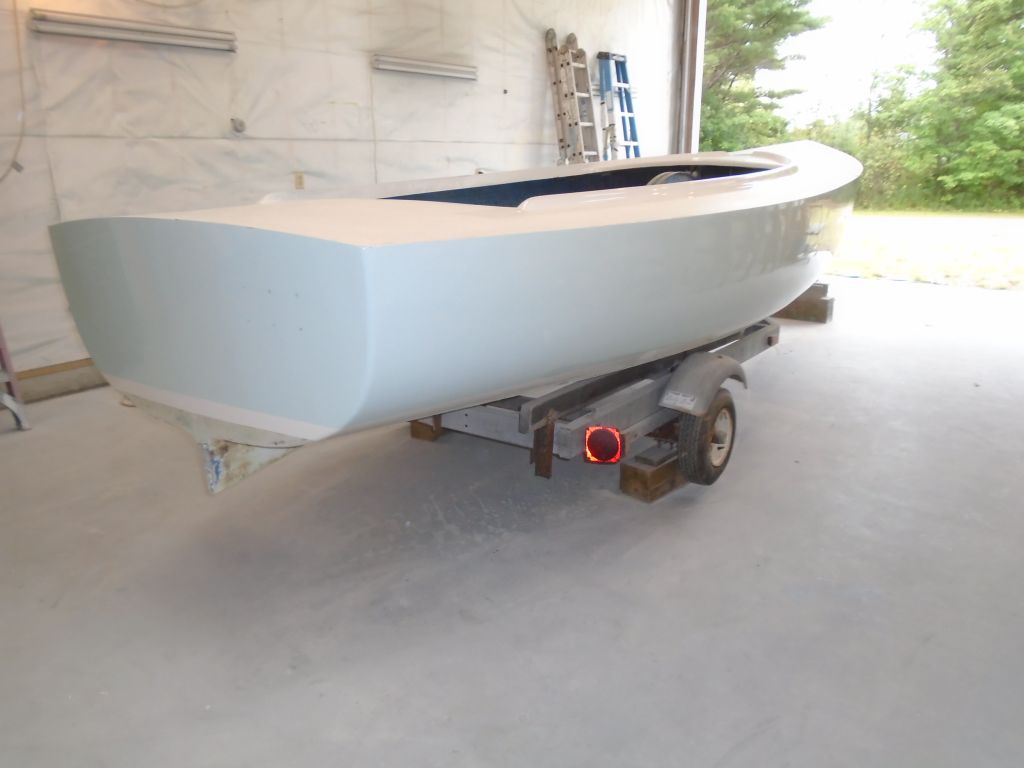
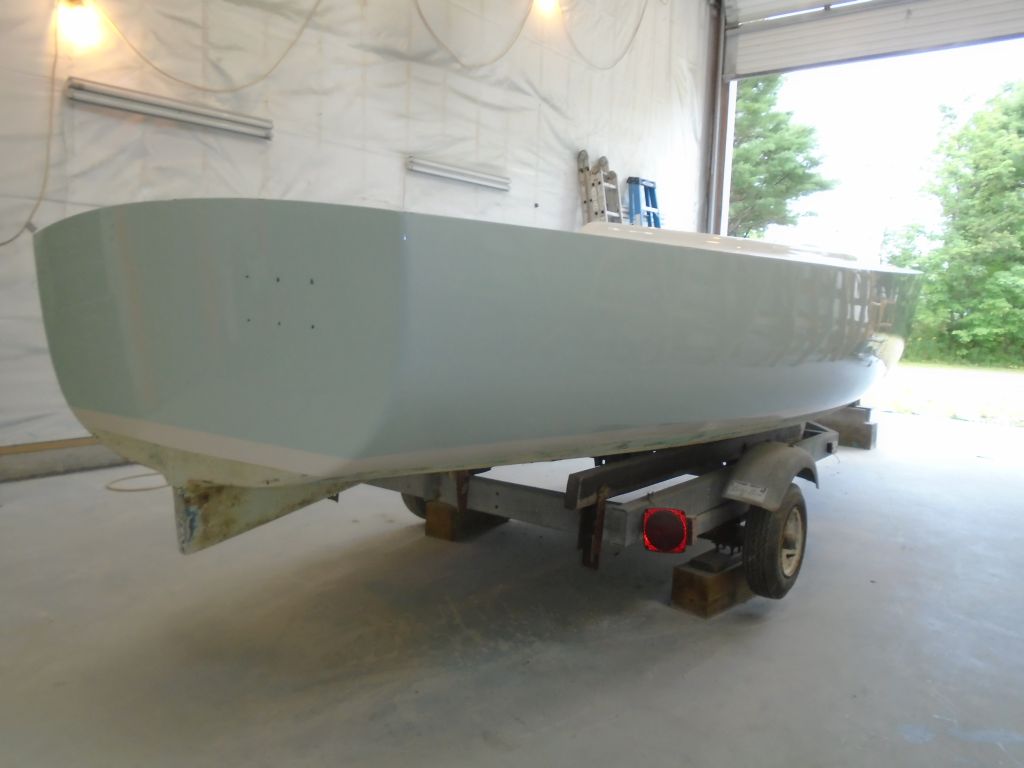
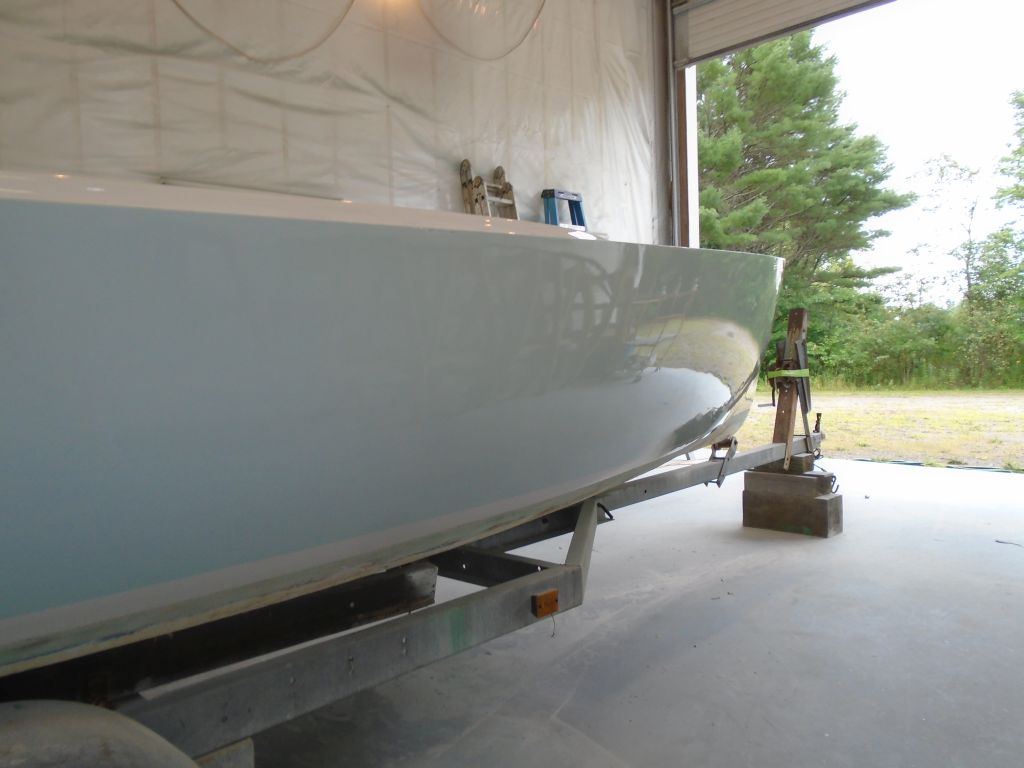
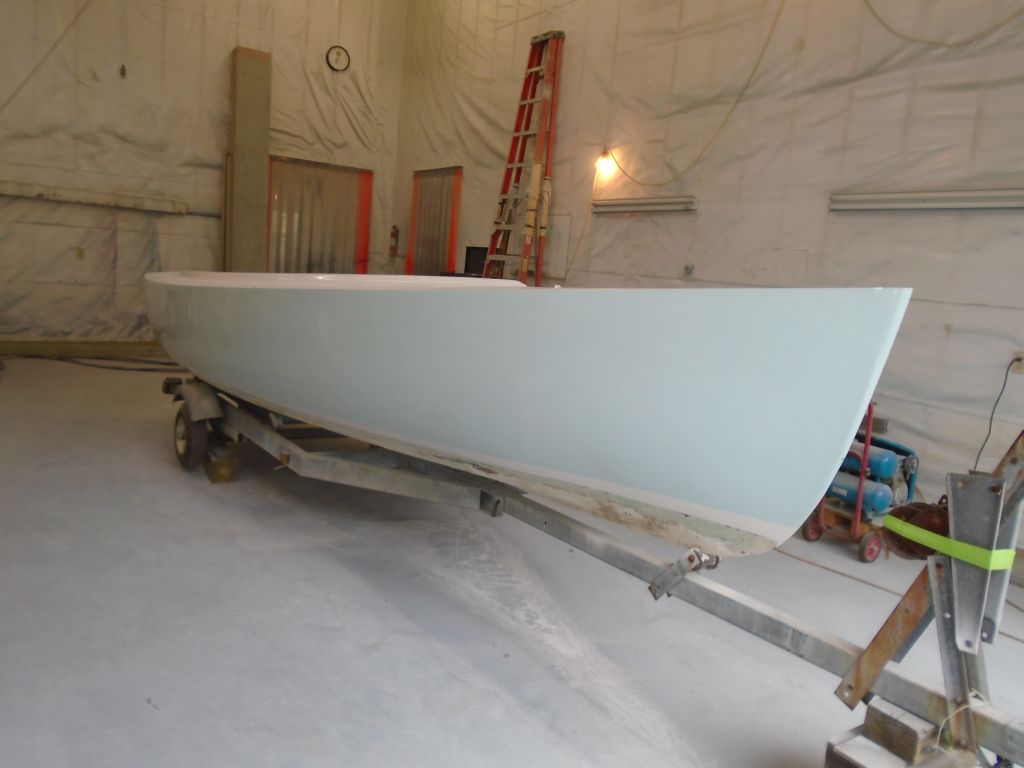
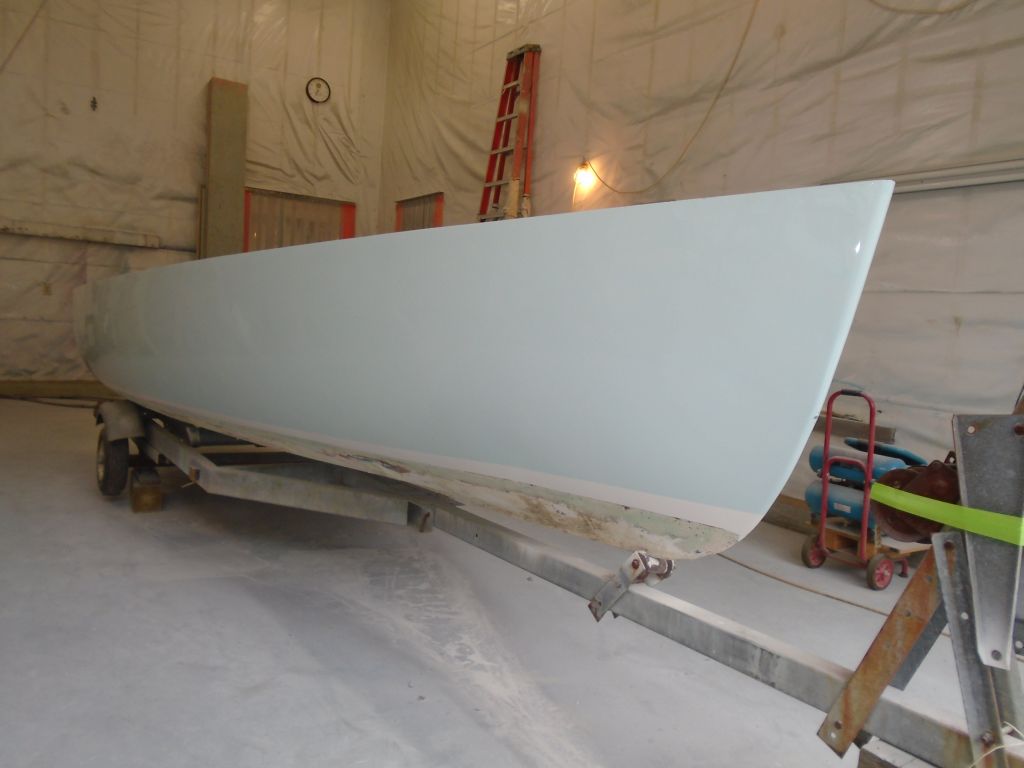
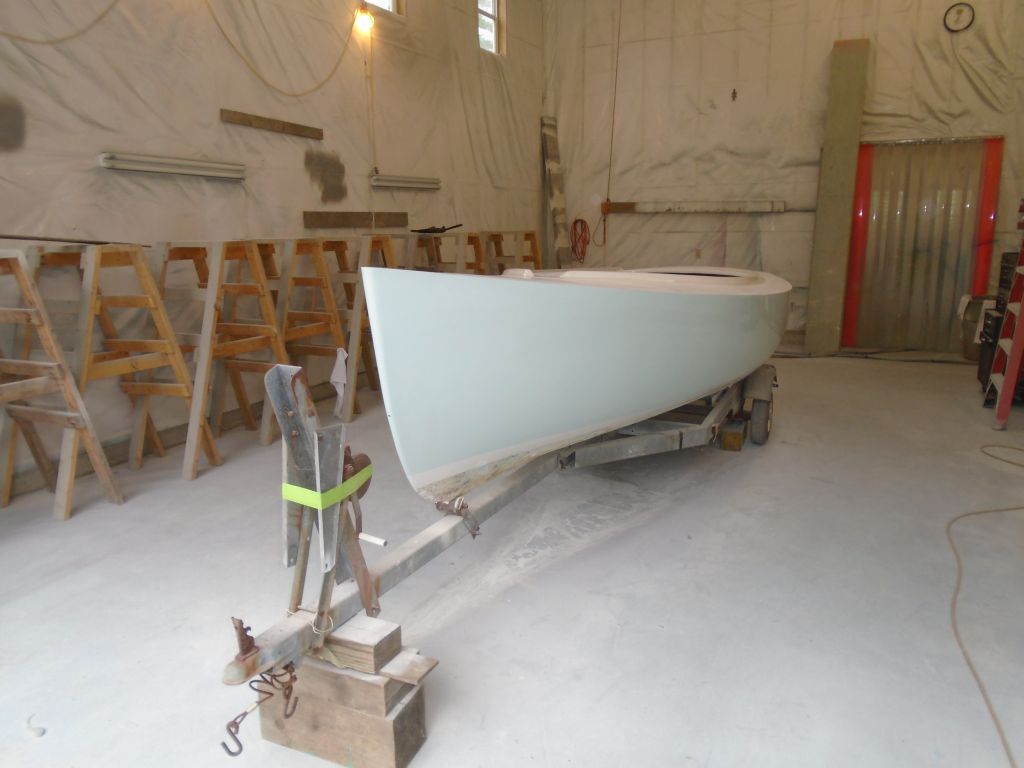
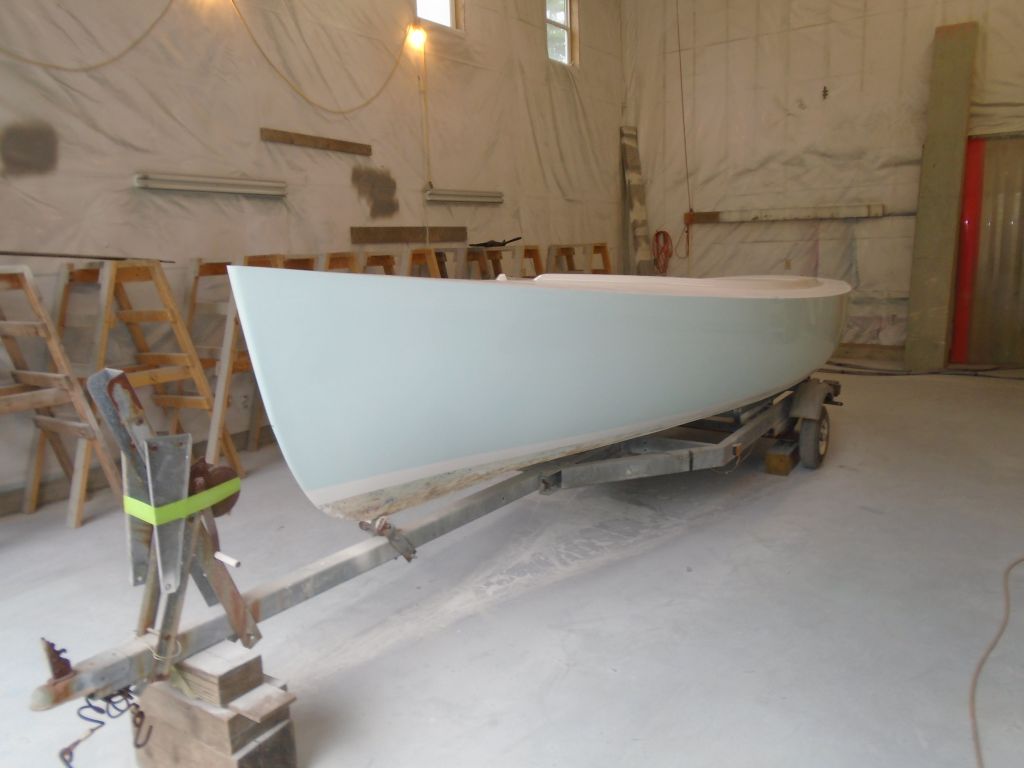
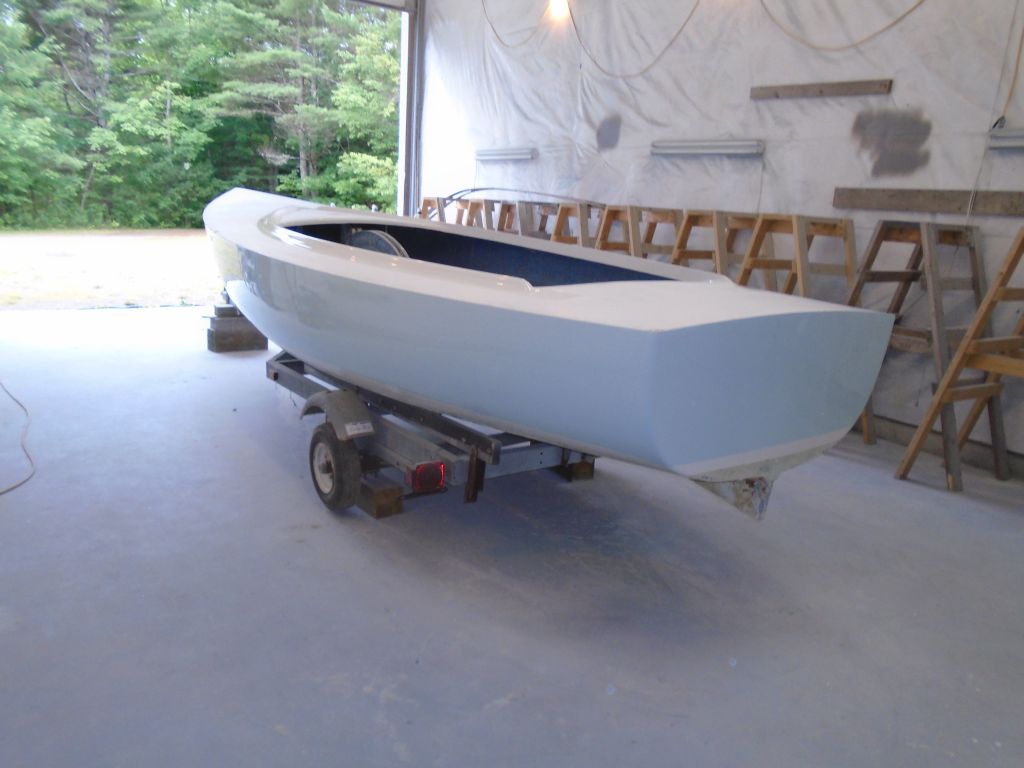
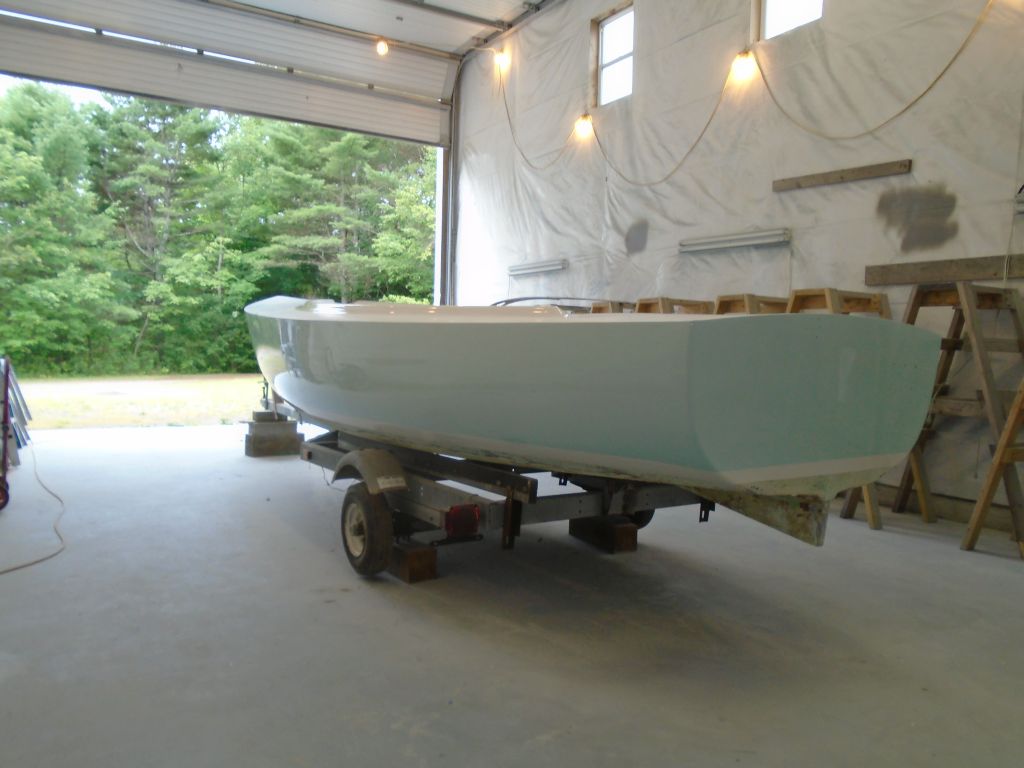
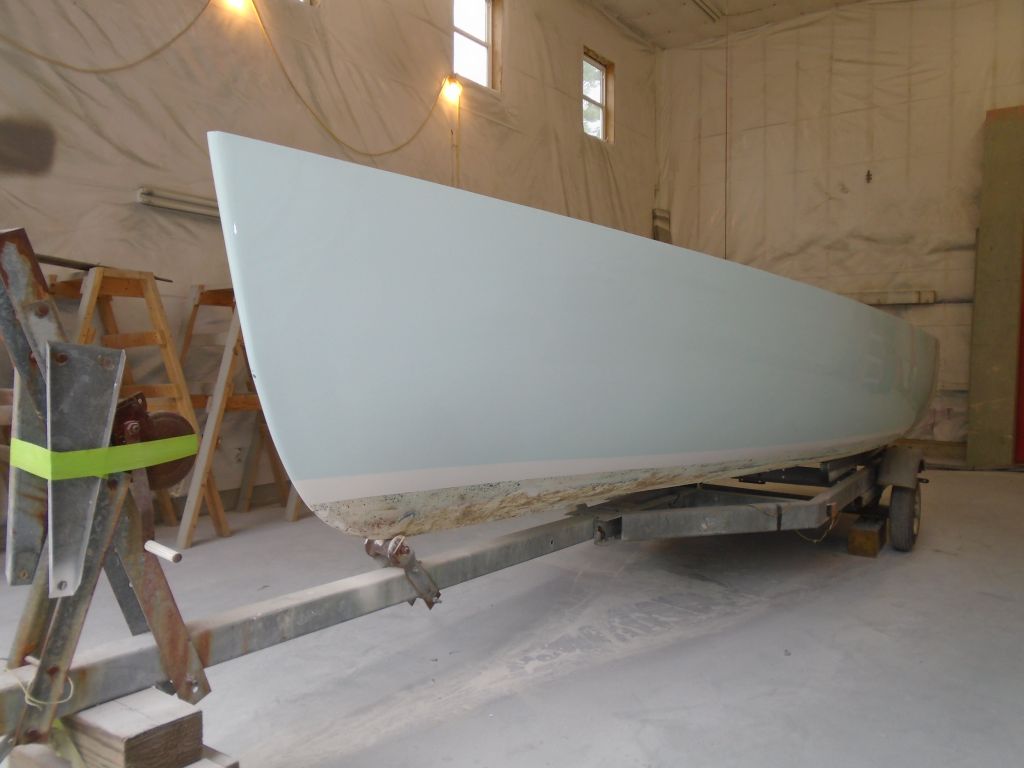
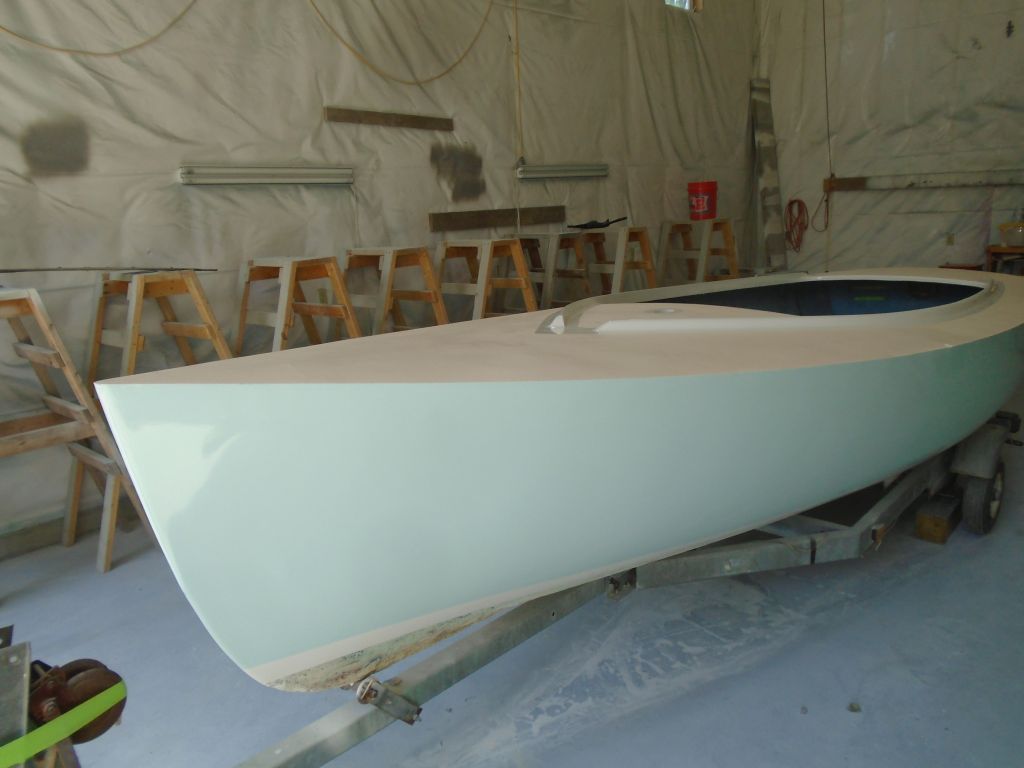
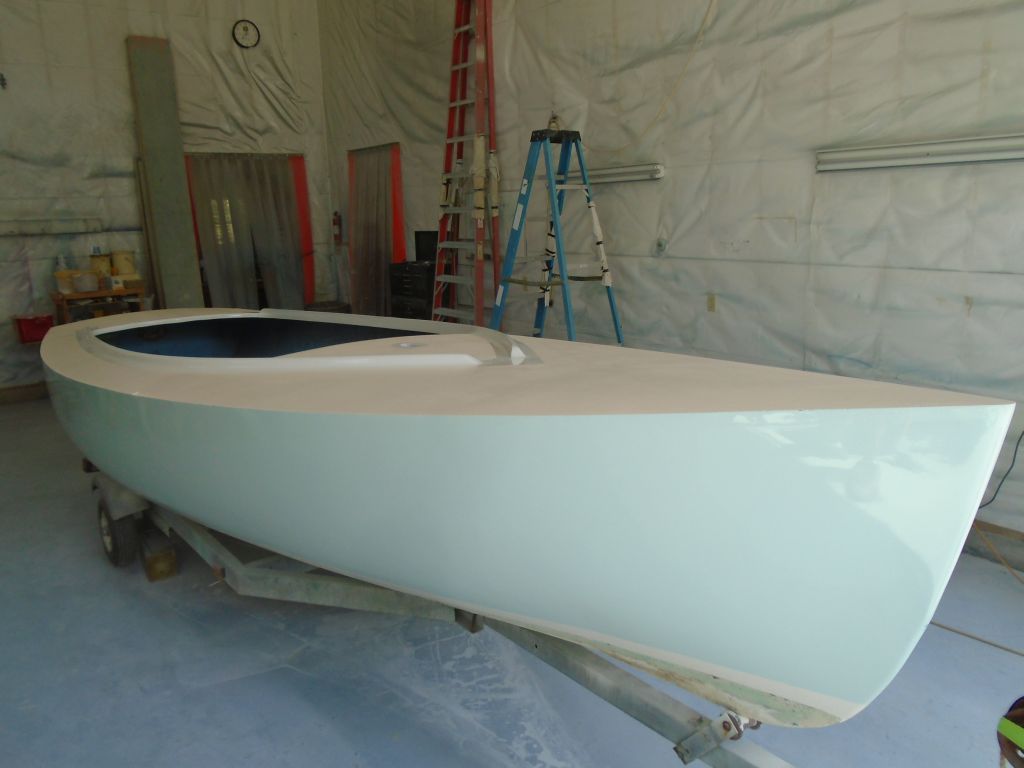
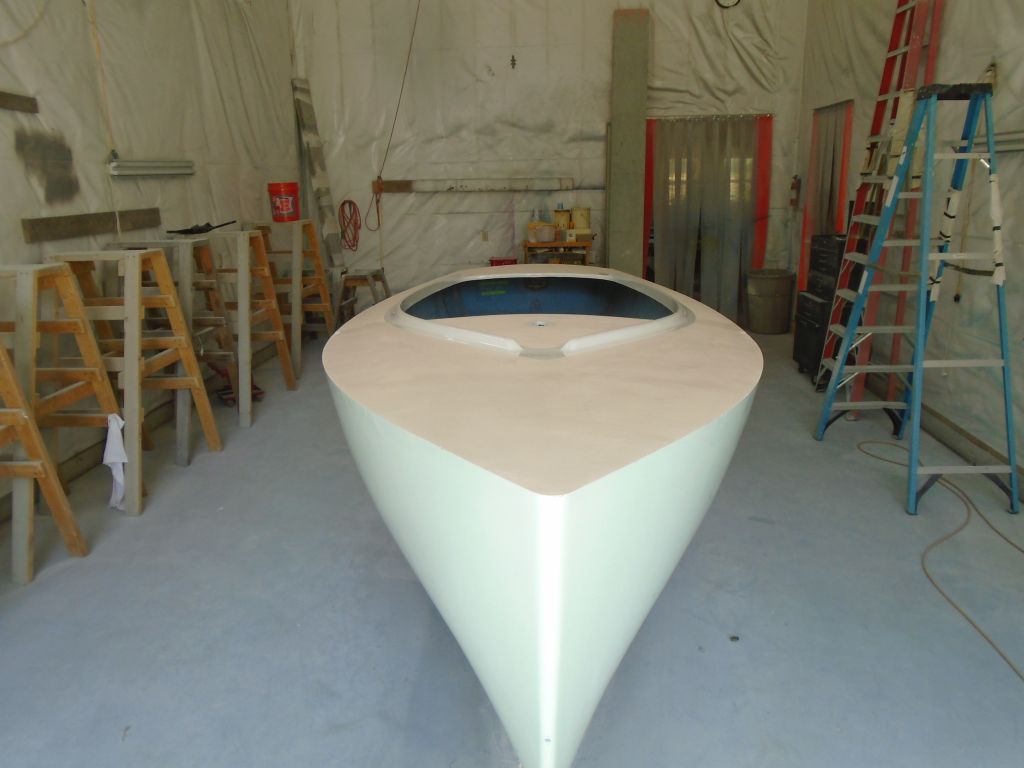
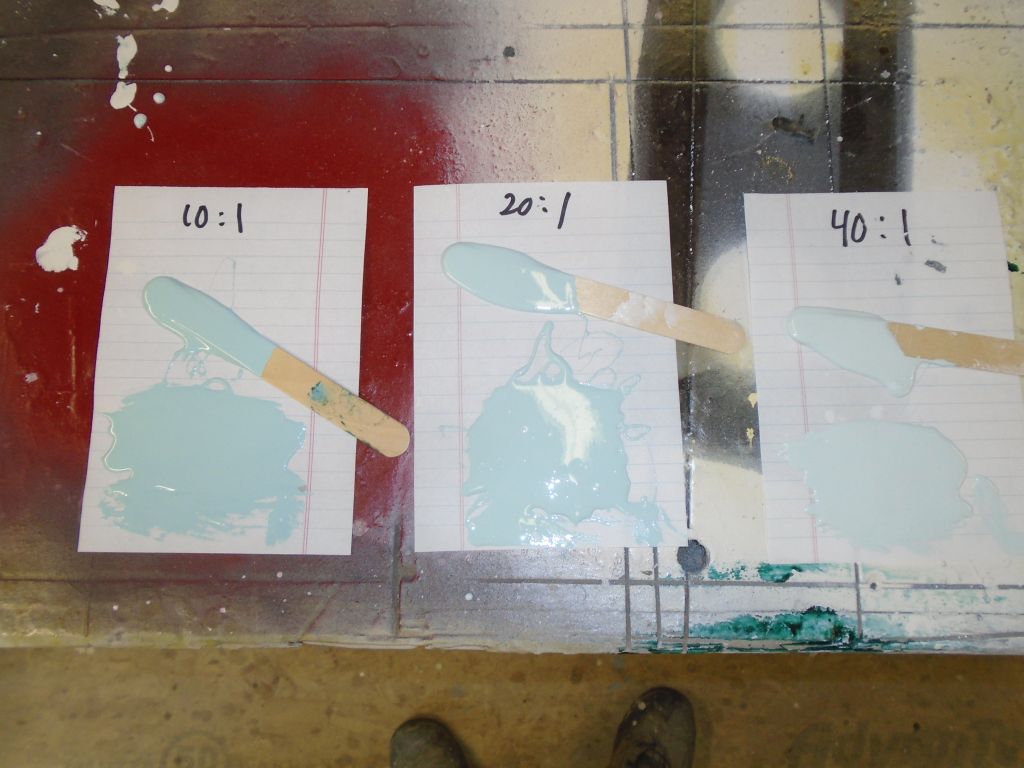
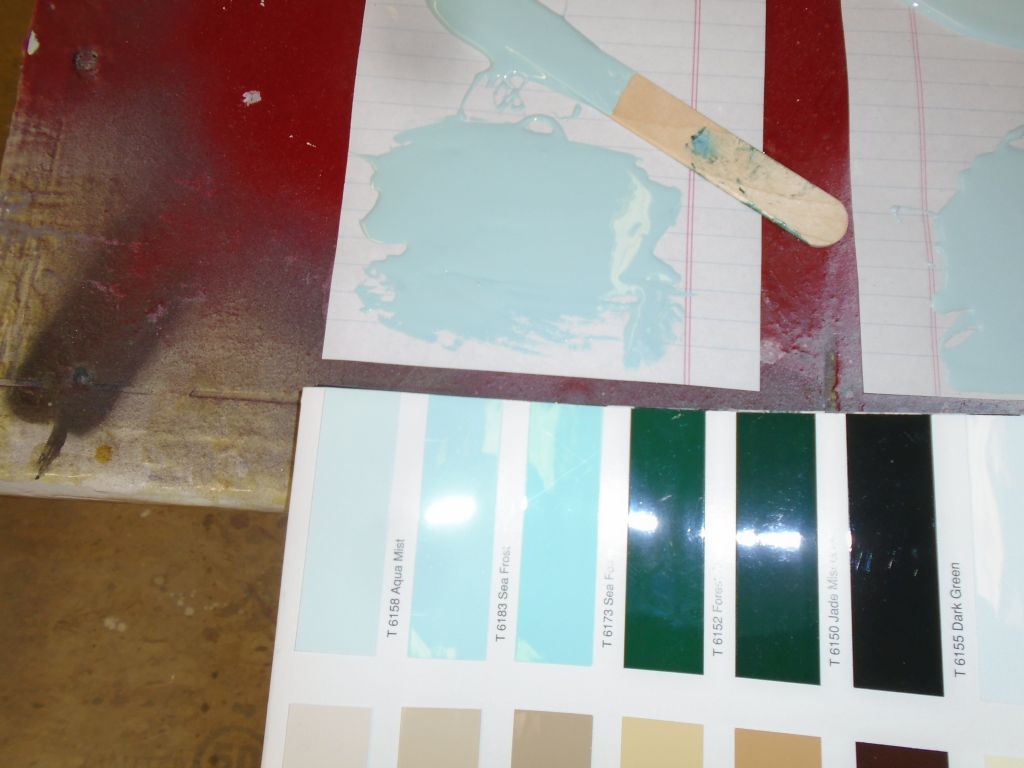
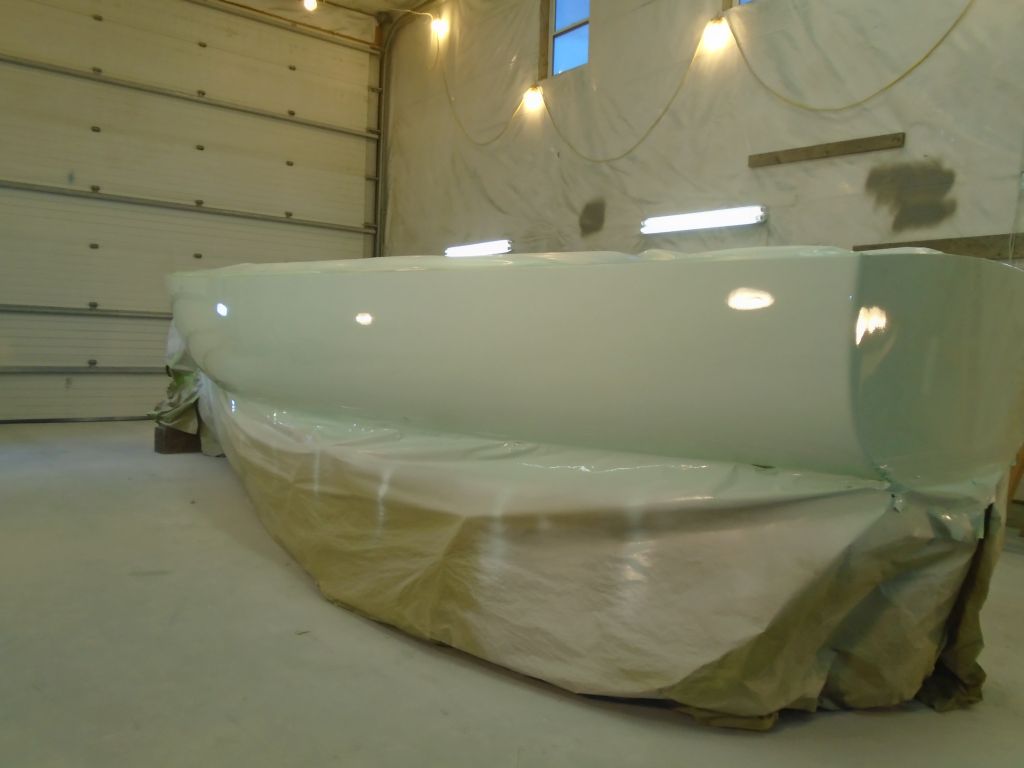
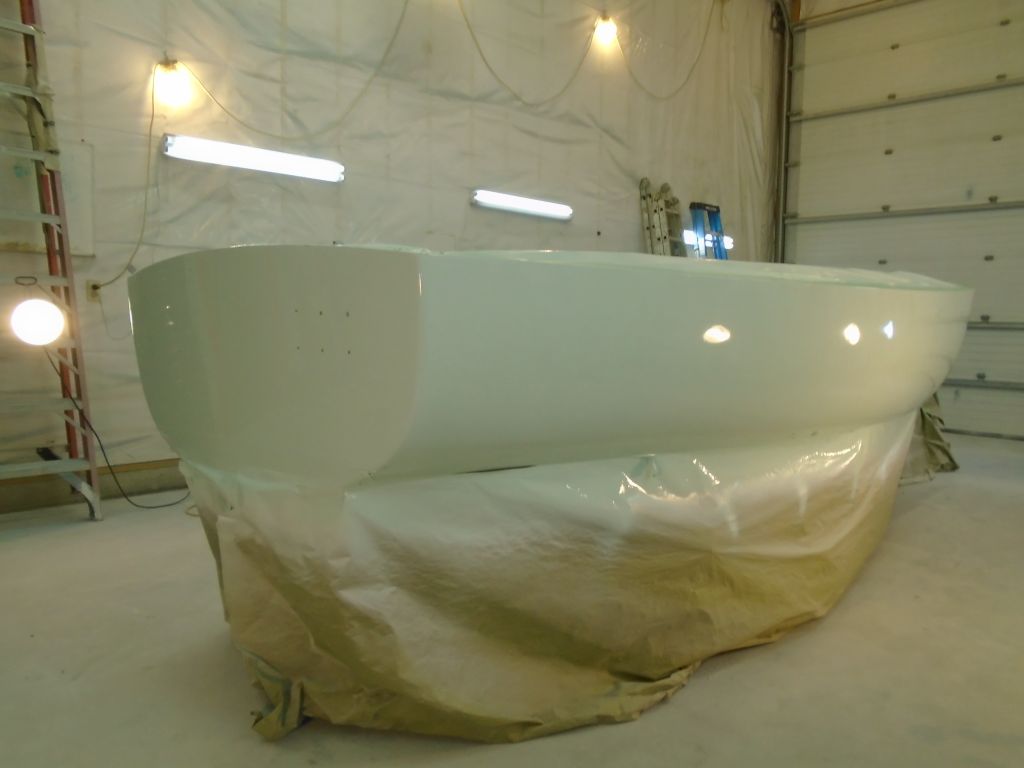
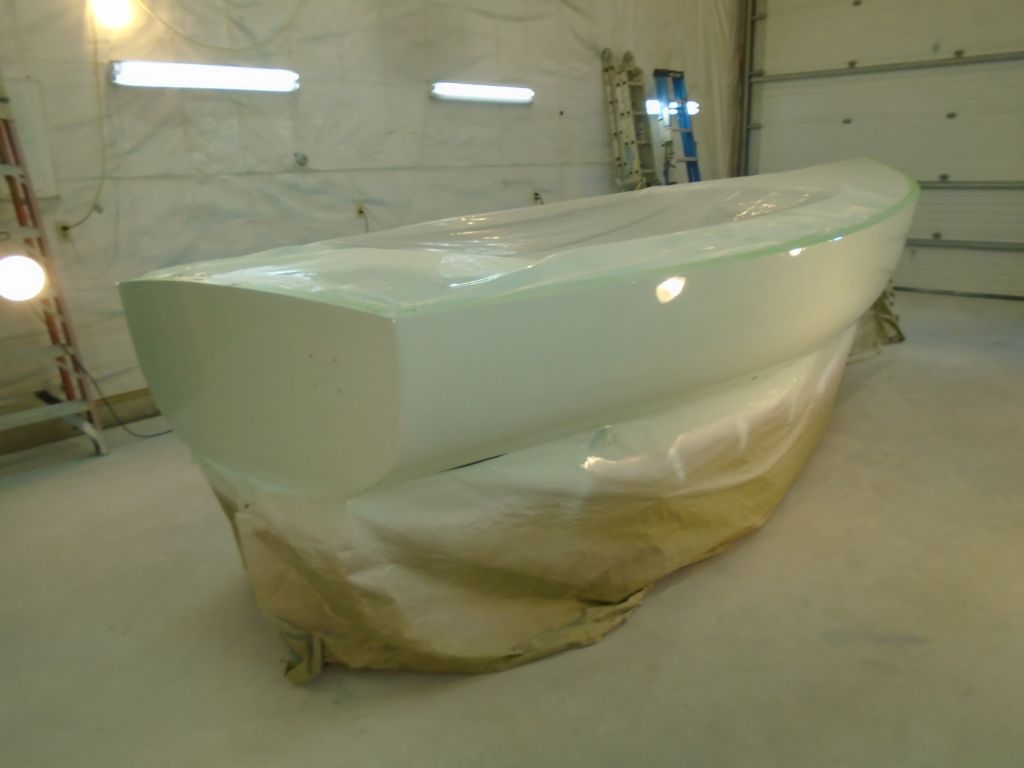
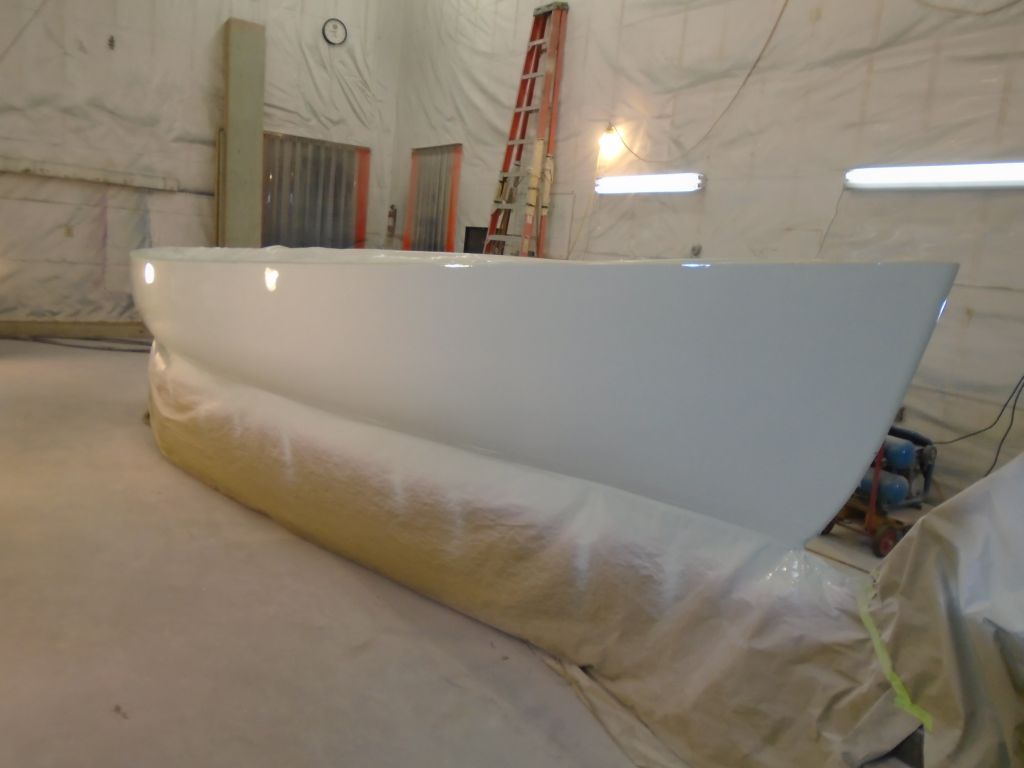
After solvent-washing the hull and tacking off, I prepared a quantity of shop-mixed pale mint green, aka “aqua mist”.  Because of the minimal and budget nature of this particular job, and with ample raw materials on hand, I chose to make up the color in the shop from materials on hand, rather than purchasing a new container of the actual color.  Earlier, I’d mixed up several samples, looking to match the stock aqua mist color as closely as possible.   I determined that a 20:1 ratio of off-white and dark green Alexseal gloss topcoat gave me the color I was going for.

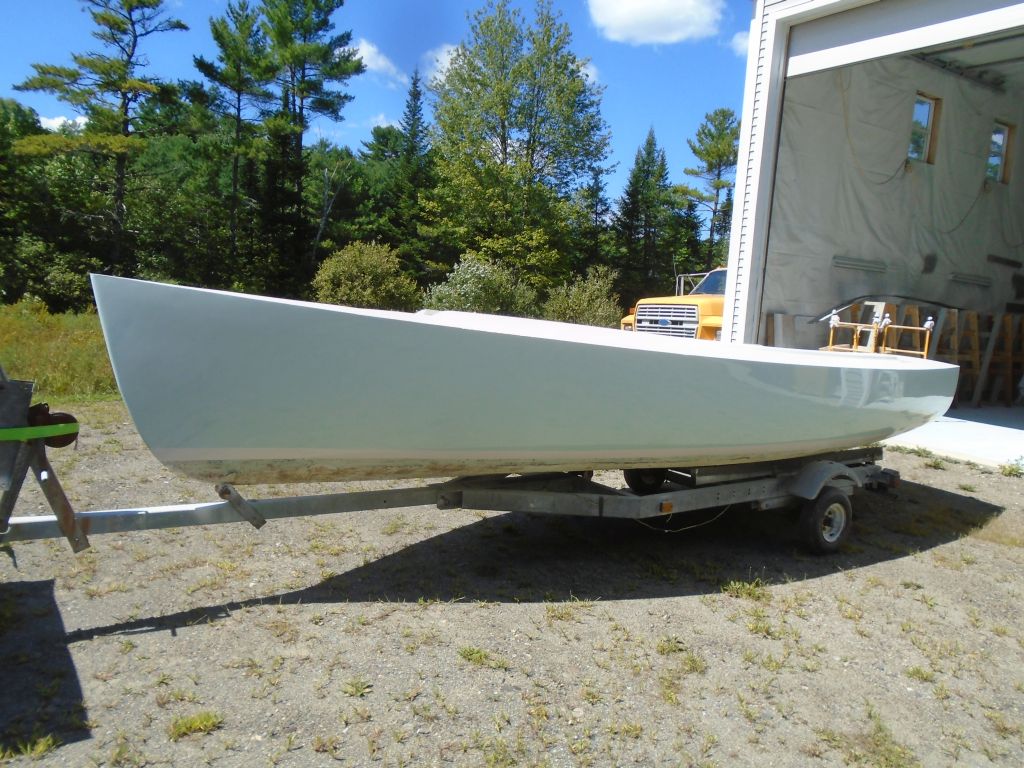
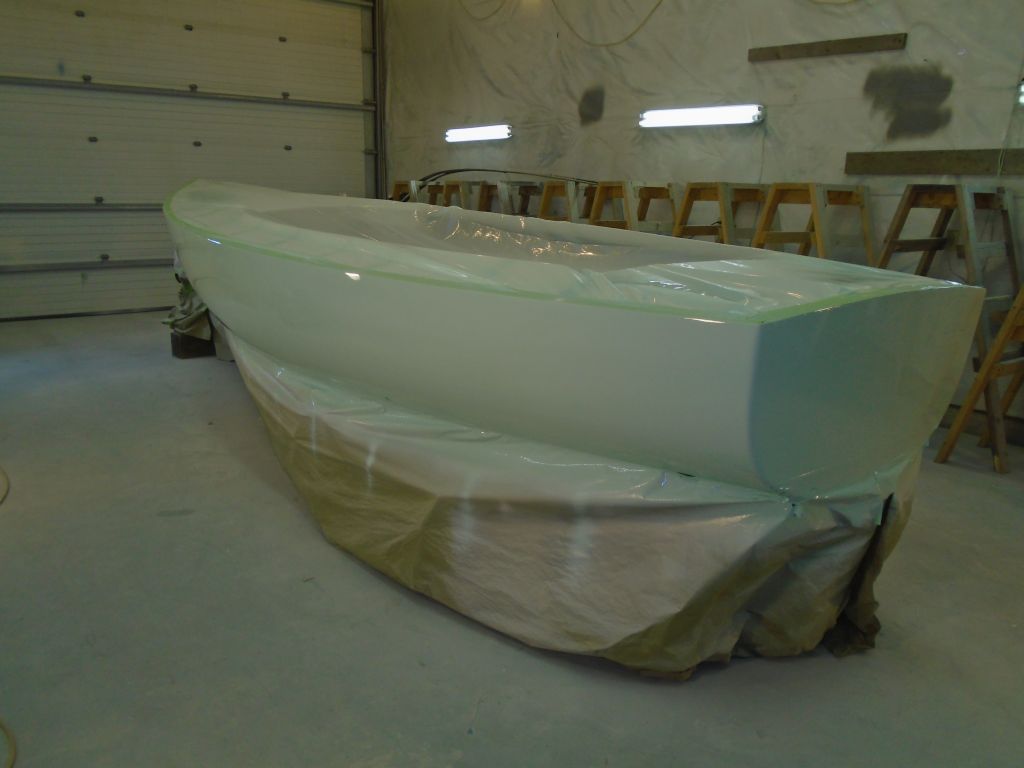
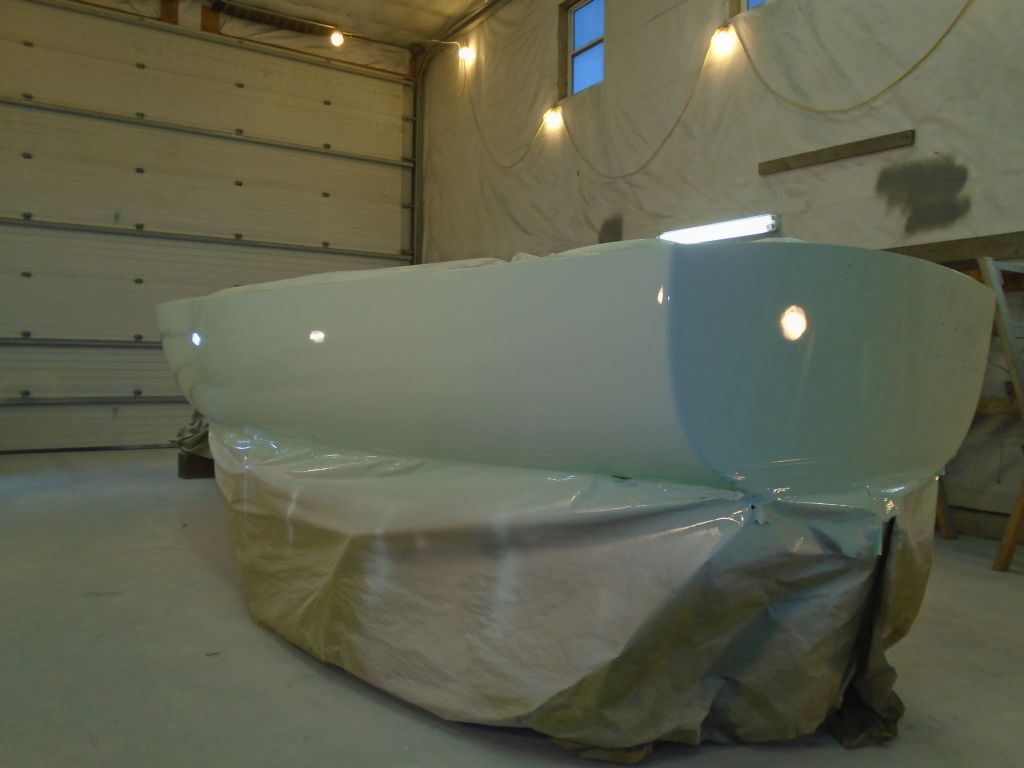
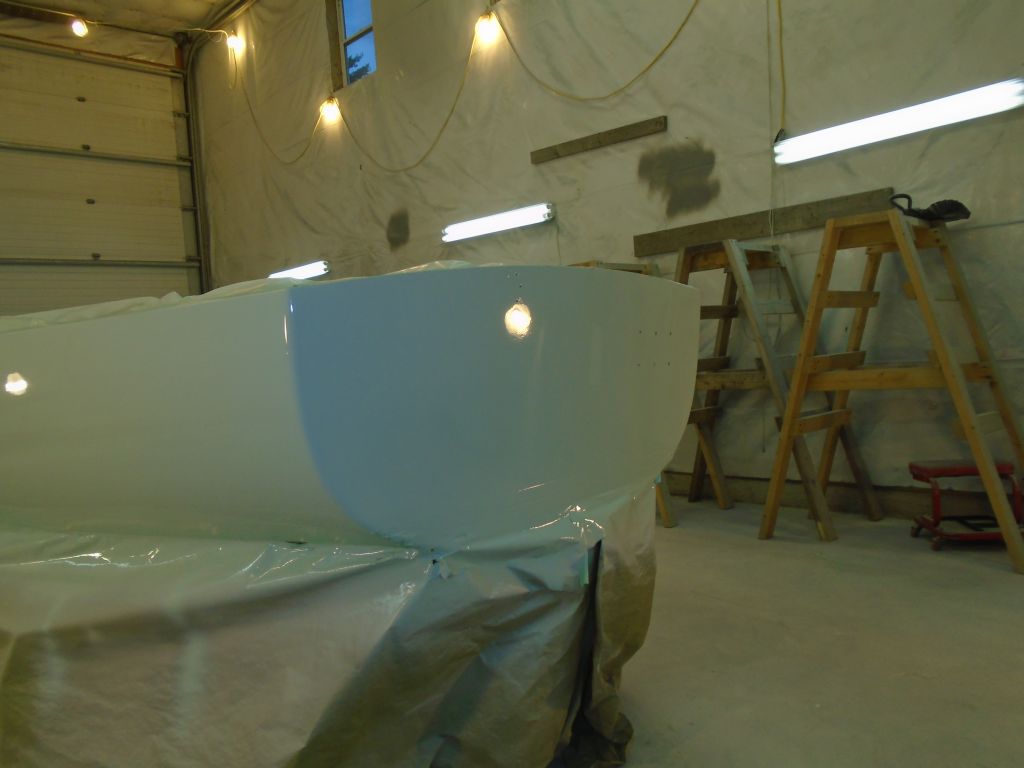
With the paint mixed at this ratio, I spray-applied three coats of the glossy paint on the hull, leaving it to cure for the remainder of the day.  The end result was pleasingly subtle.

Total time billed on this job today:  3.75 hours

0600 Weather Observation:
75°, foggy.  Forecast for the day:  Chance of showers then clearing, high near 80.

Rhodes 17

< Back to Rhodes 18

Thursday

Now that the new gloss topcoat was done on the deck and boottop, I removed the masking tape and paper.  It was too soon to overmask the fresh paint to prepare for the next painting steps (i.e. either the hull paint or nonskid paint), so I spent the remains of the day on other business.

Total time billed on this job today:  .5 hours

0600 Weather Observation:
68°, fog.  Forecast for the day:  Becoming sunny, humid, 90s

Rhodes 16

< Back to Rhodes 18

Wednesday

After final preparations, I applied three coats of Alexseal off-white gloss topcoat to the deck areas and boottop.

Total time billed on this job today:   2.25 hours

0600 Weather Observation:
50°, mostly clear.  Forecast for the day:  sun, possible showers, high 70s.

Rhodes 15

< Back to Rhodes 18

Tuesday

I spent the morning sanding the deck and hull with 320 grit paper, by machine and hand as needed.  I sanded away the light gray coat, which worked fairly well, but I thought the experiment was only a marginal success, as I felt that I needed to sand more than necessary inn some areas, since the wet-on-wet coat tended to incorporate itself into the layers beneath rather than staying on top.  Not a real surprise, and still, it made for an easy gauge of sanding progress.

After sanding, I cleaned up the boat and shop with blow gun, vacuum, and broom, and solvent-washed the surfaces to accept tape.

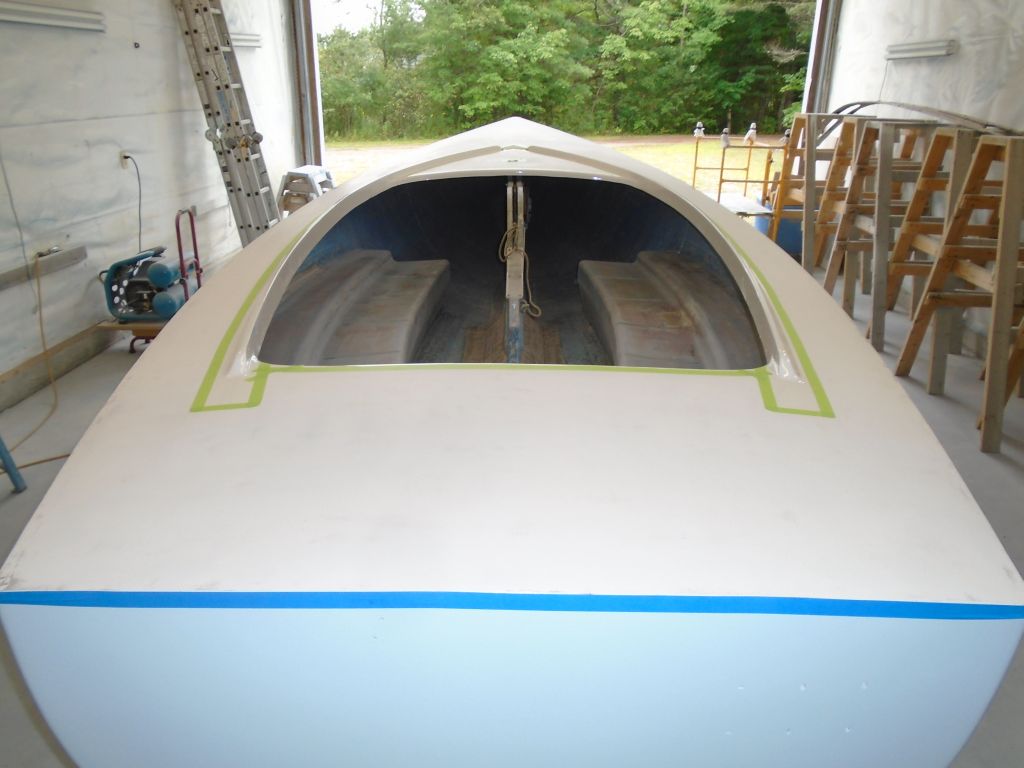
The boottop would be the same color as the smooth areas of the deck, and since I could reach all these areas at the same time, I went ahead and struck and masked a new boottop 1-1/2″ above the already-masked waterline.

On deck, I masked off borders around the cockpit coamings, cockpit opening, and mast partners, the only areas to receive glossy paint on deck.  Then, I completed the masking for topcoats by covering the remainder of the deck and hull in masking paper to protect against overspray.

Total time billed on this job today:  8 hours

0600 Weather Observation:
45°, clear.  Forecast for the day:  sunny, 80s.

Rhodes 14

< Back to Rhodes 18

Sunday

Fresh back from vacation, I got right to work on the finish primer coats.  After final preparations and paint mixing, I spray-applied three coats of epoxy-based white primer on both hull and deck.  The process was pretty fast since I could do the hull and deck at the same time without any further setup or equipment changes.

Afterwards, I mixed some gray primer and, mixing it in with the remnants of white, created a light gray color that I used as a very light 4th coat—really a guide coat to make sanding easier.  While the spotty gray primer didn’t look as nice as the smooth white coats beneath, it’d make it a lot easier to gauge my sanding progress later:  once I sanded off the gray, the surface should be smooth and ready for topcoats.

Total time billed on this job today:  4 hours

0600 Weather Observation:
55°, clear.  Forecast for the day:  sunny, 80s

Older posts Newer posts