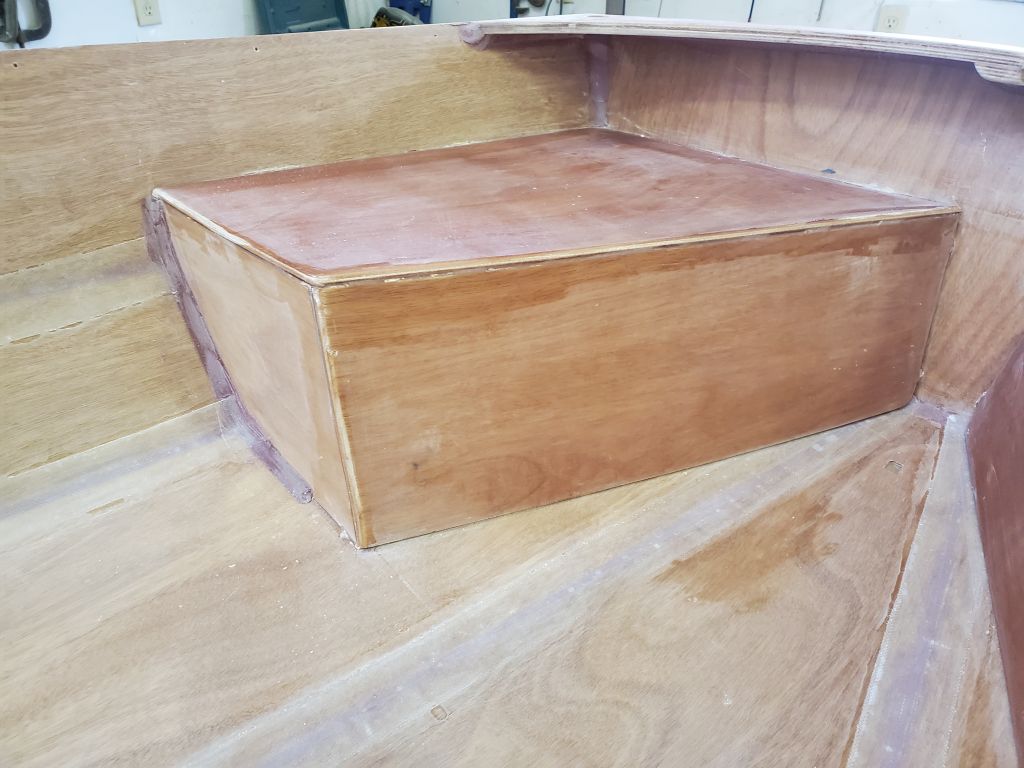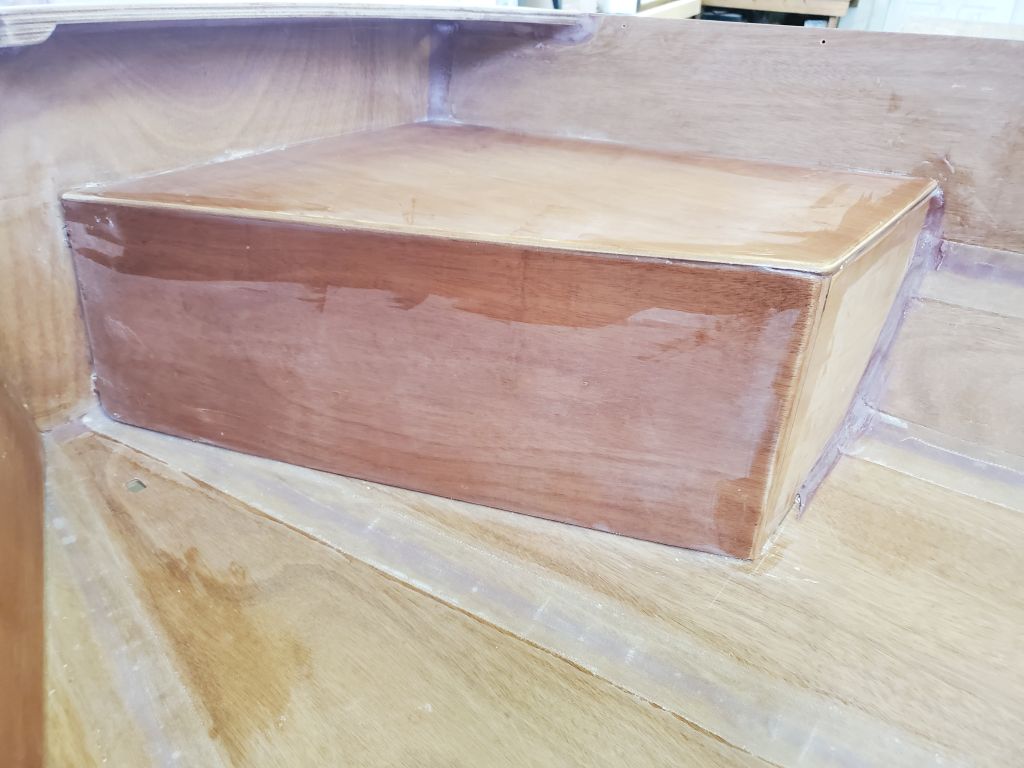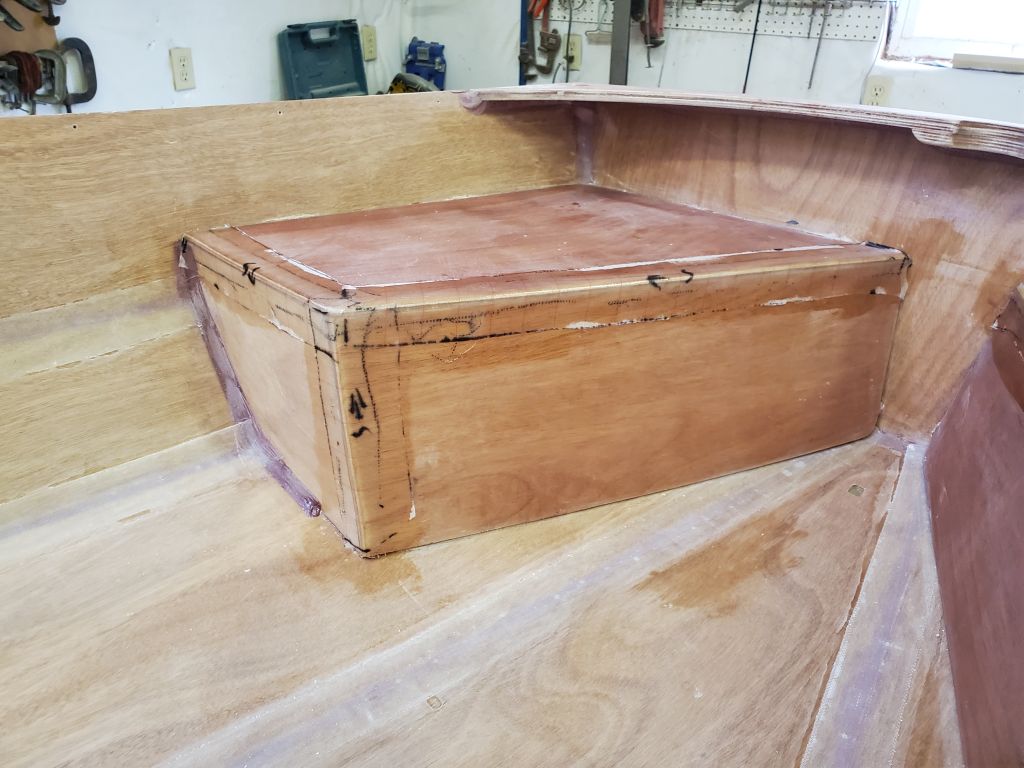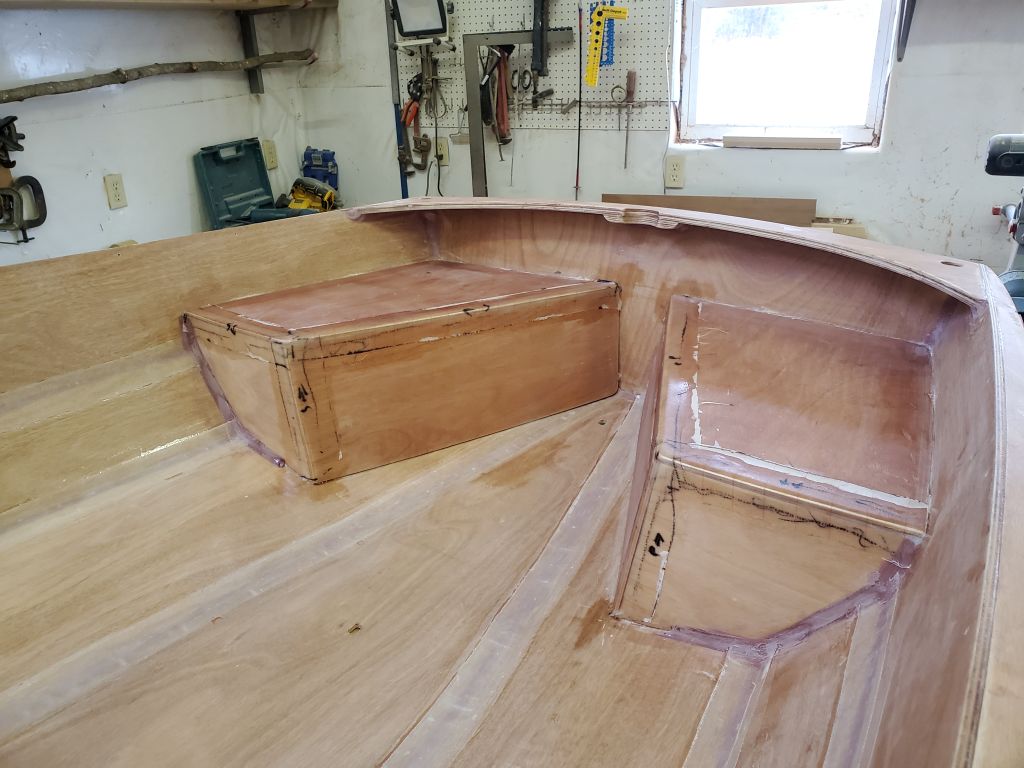

(page 14 of 168)

PT11-35

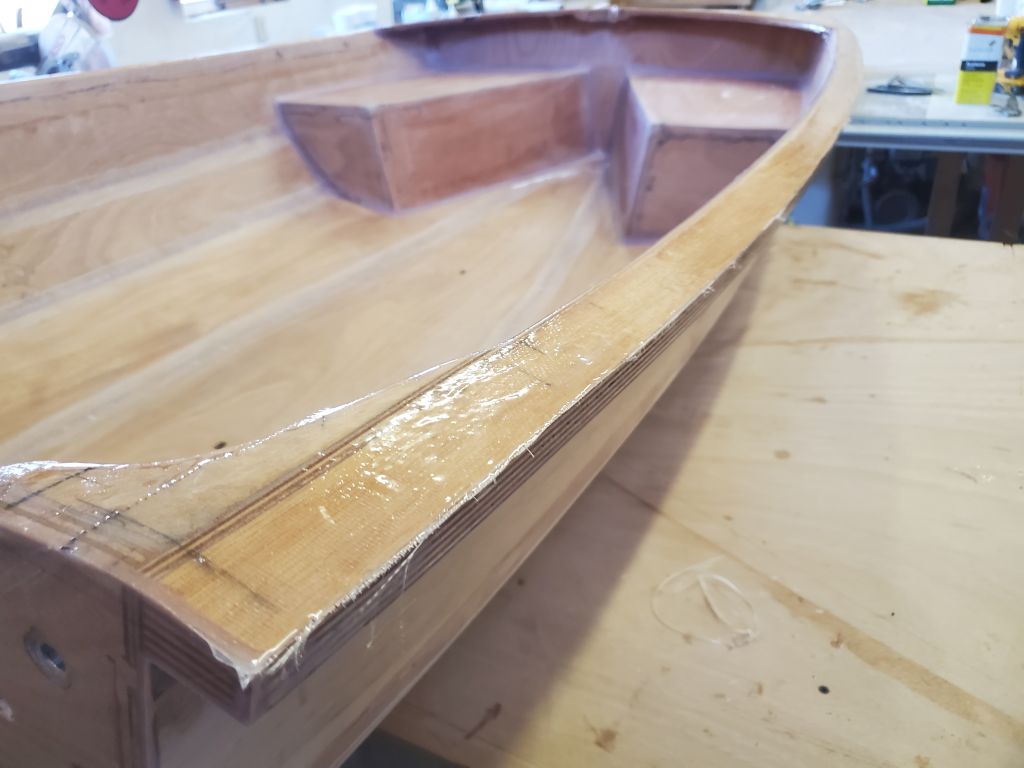
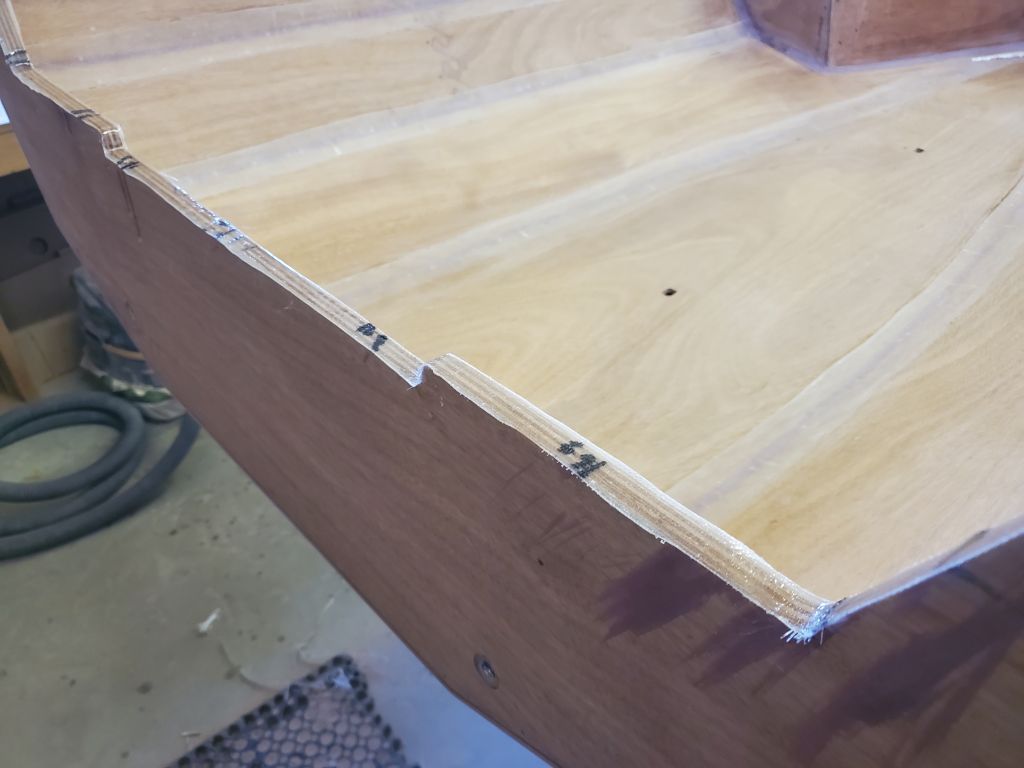
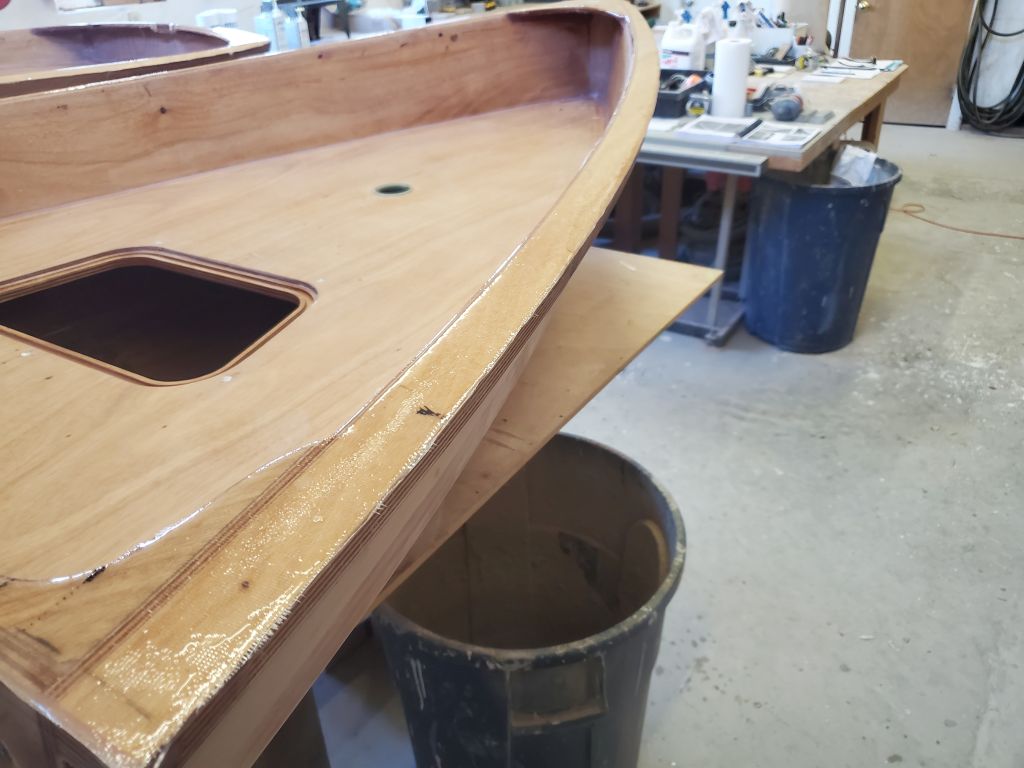
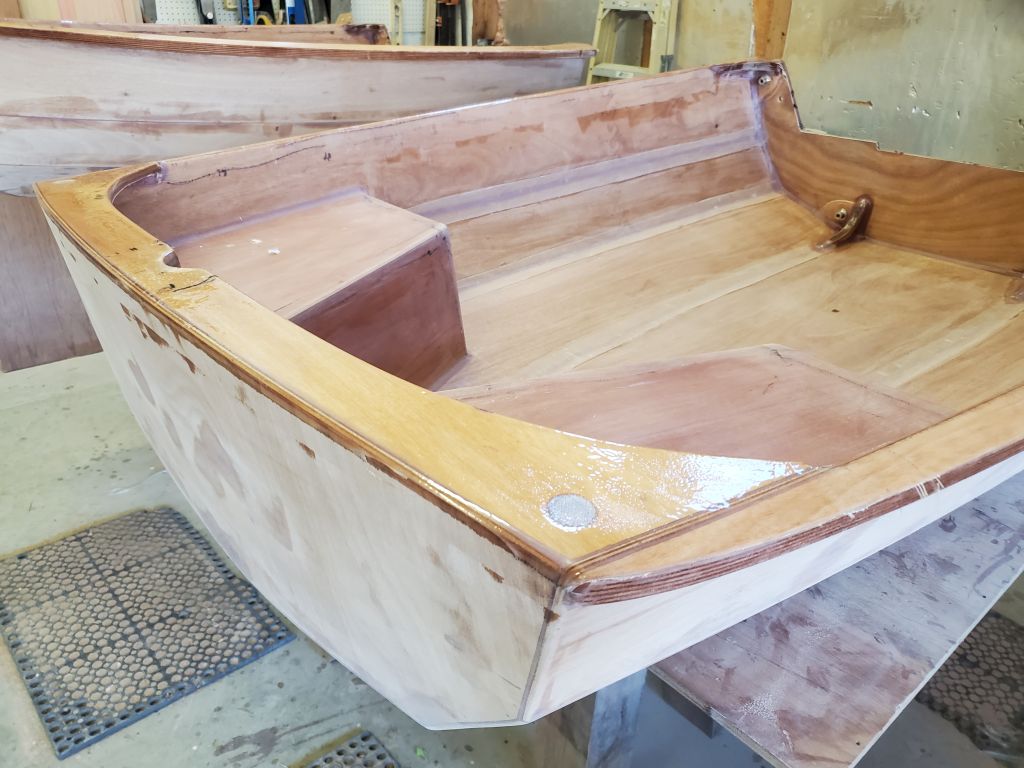
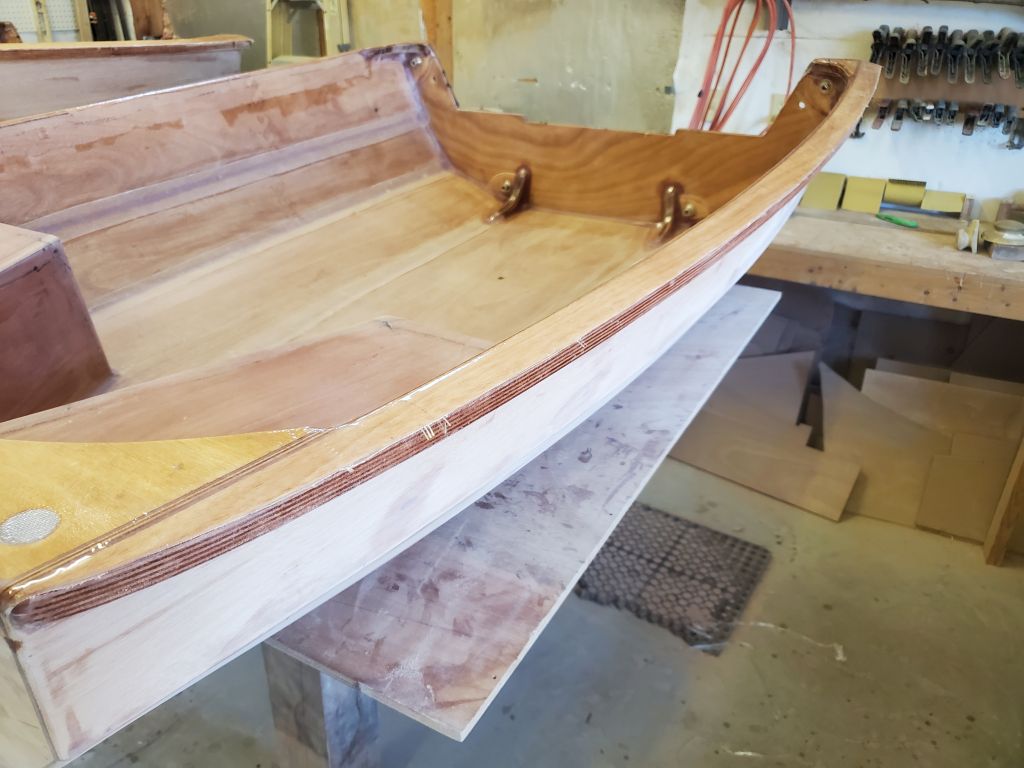
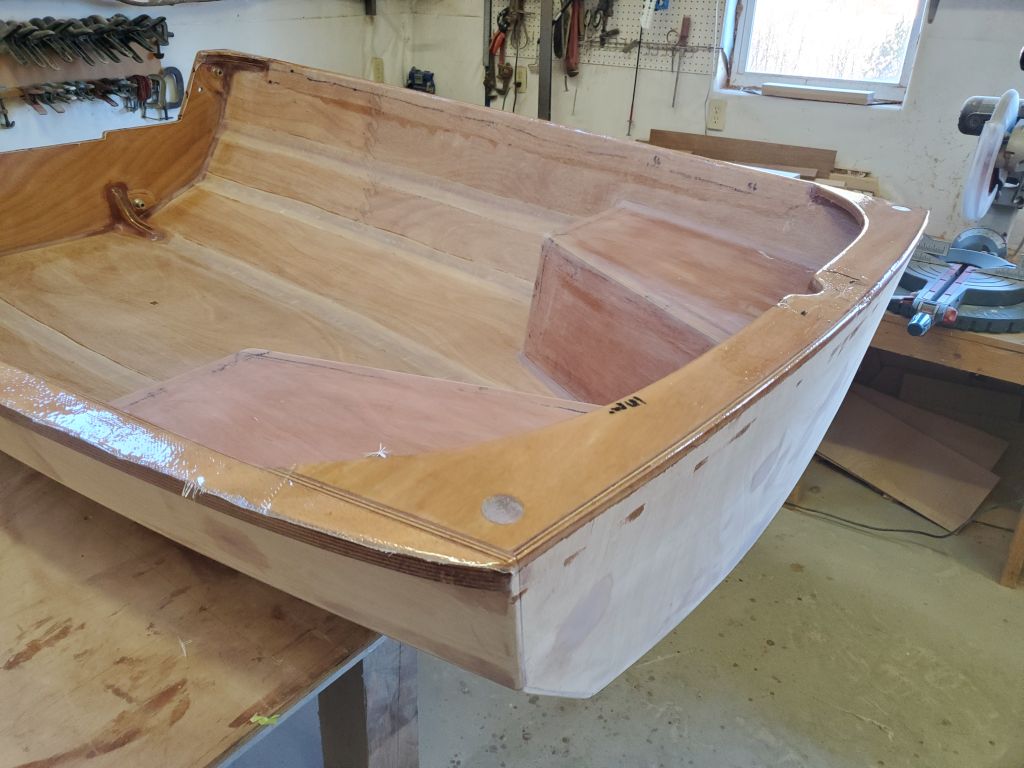
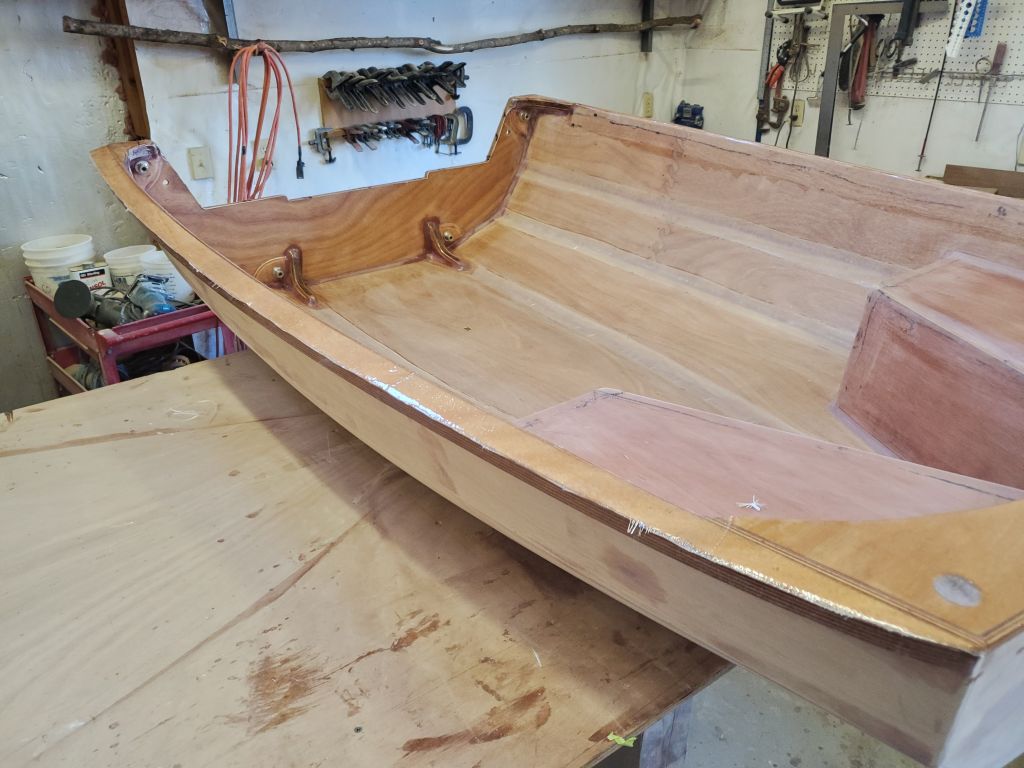
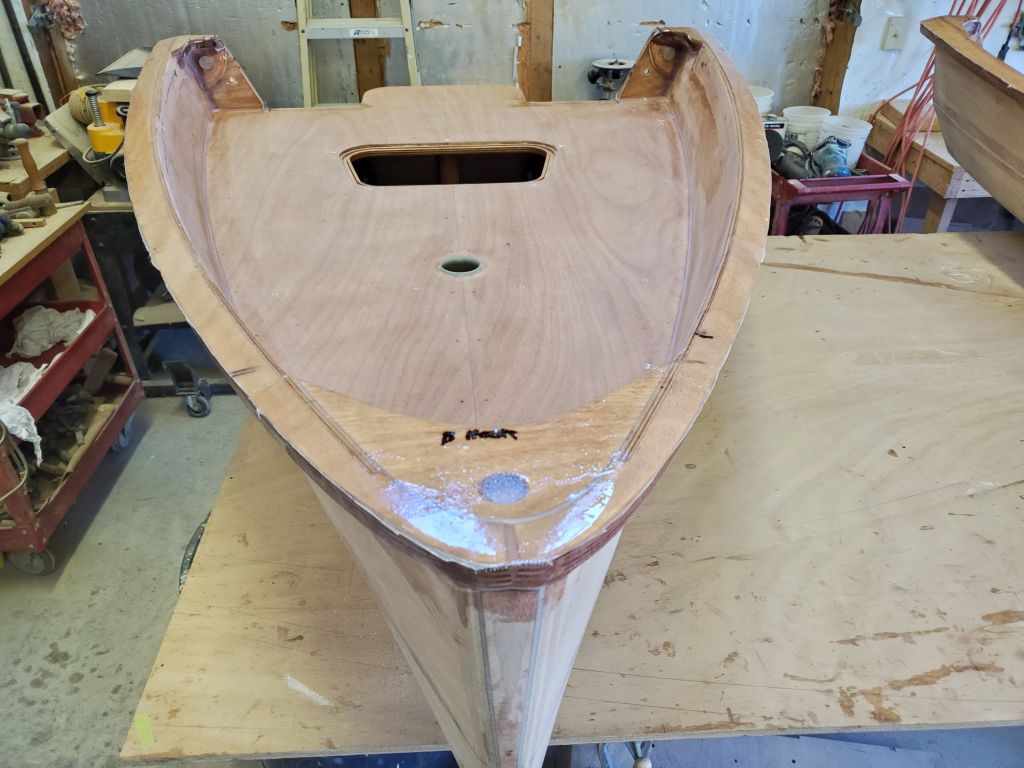
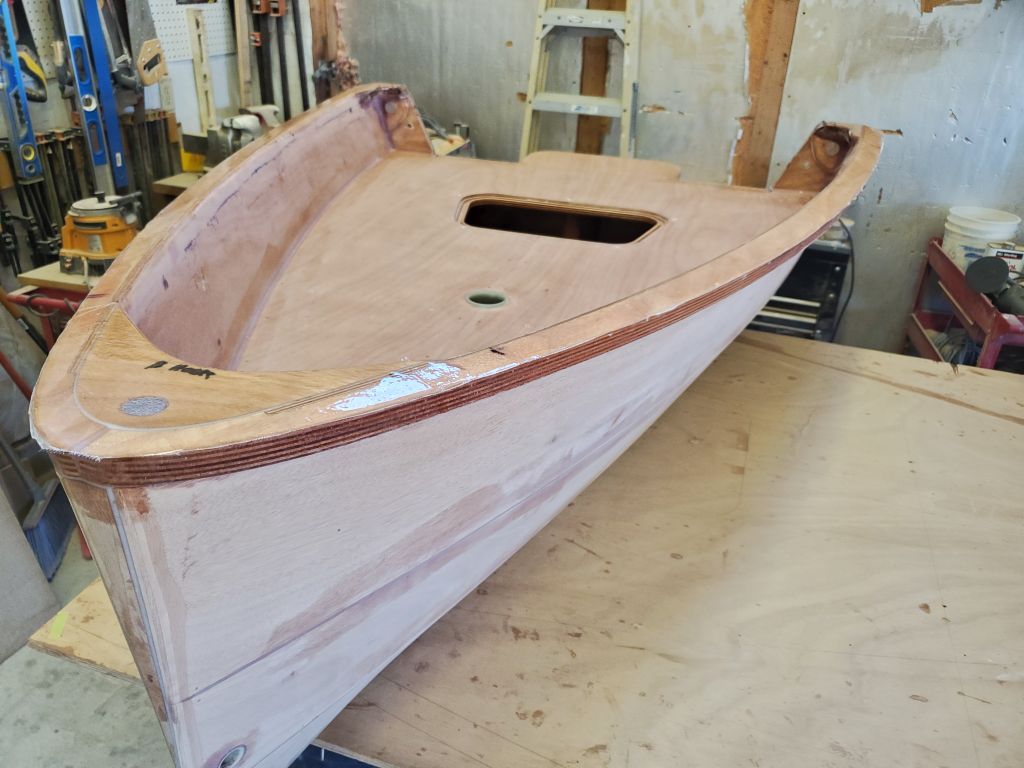
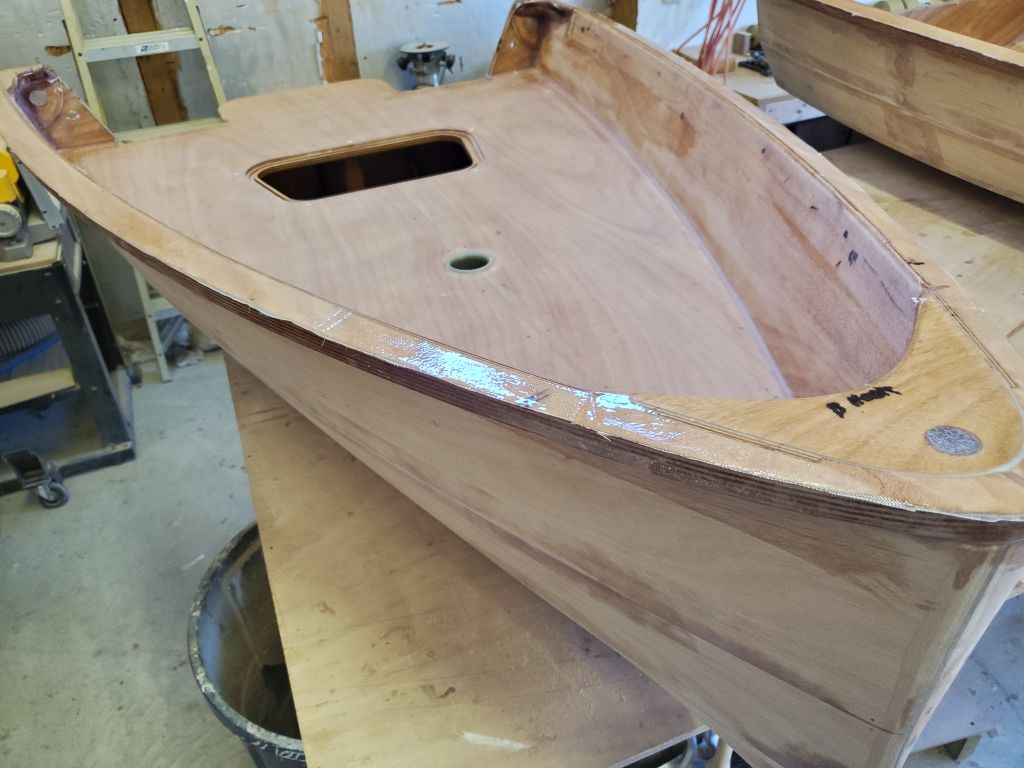
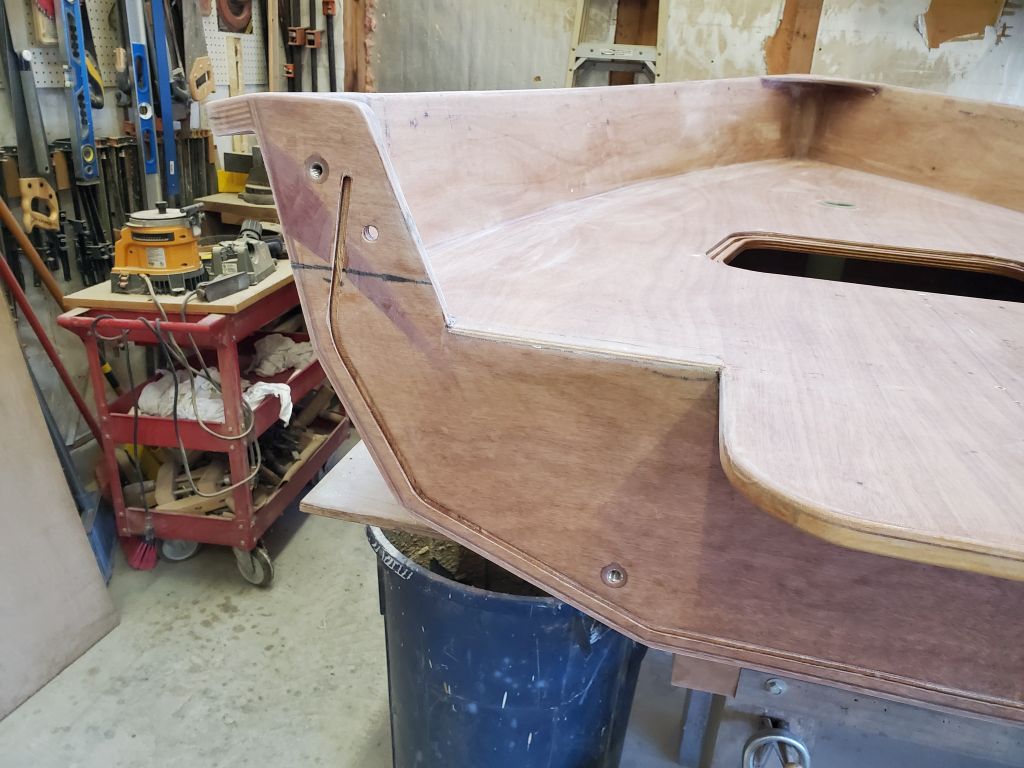
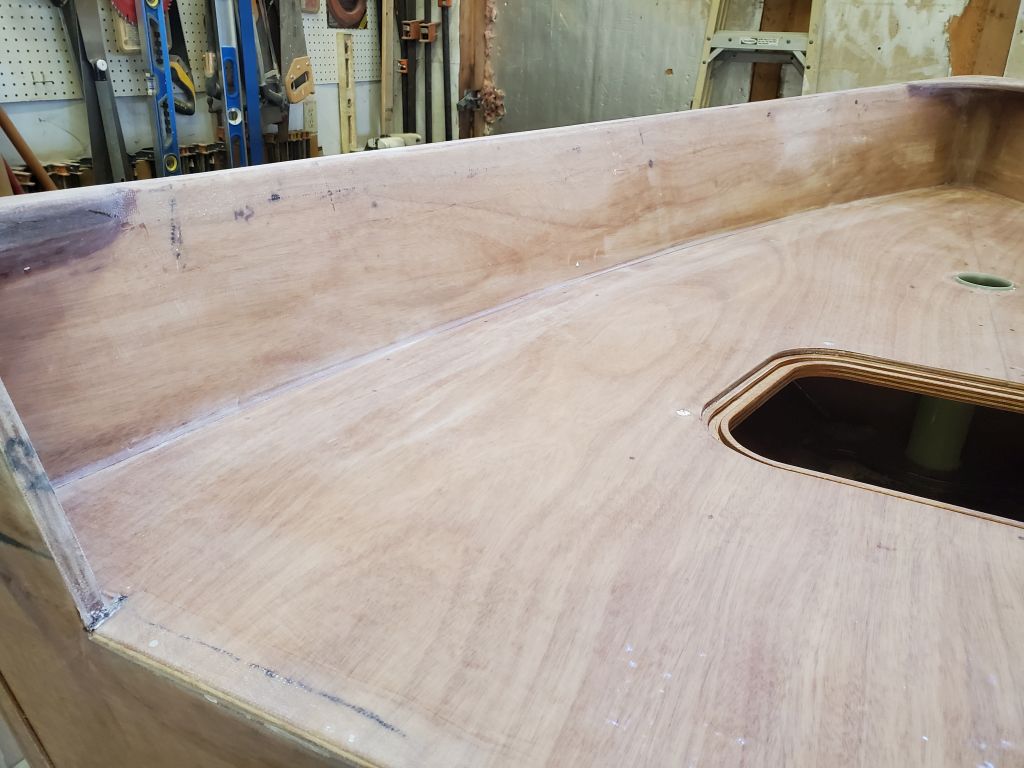
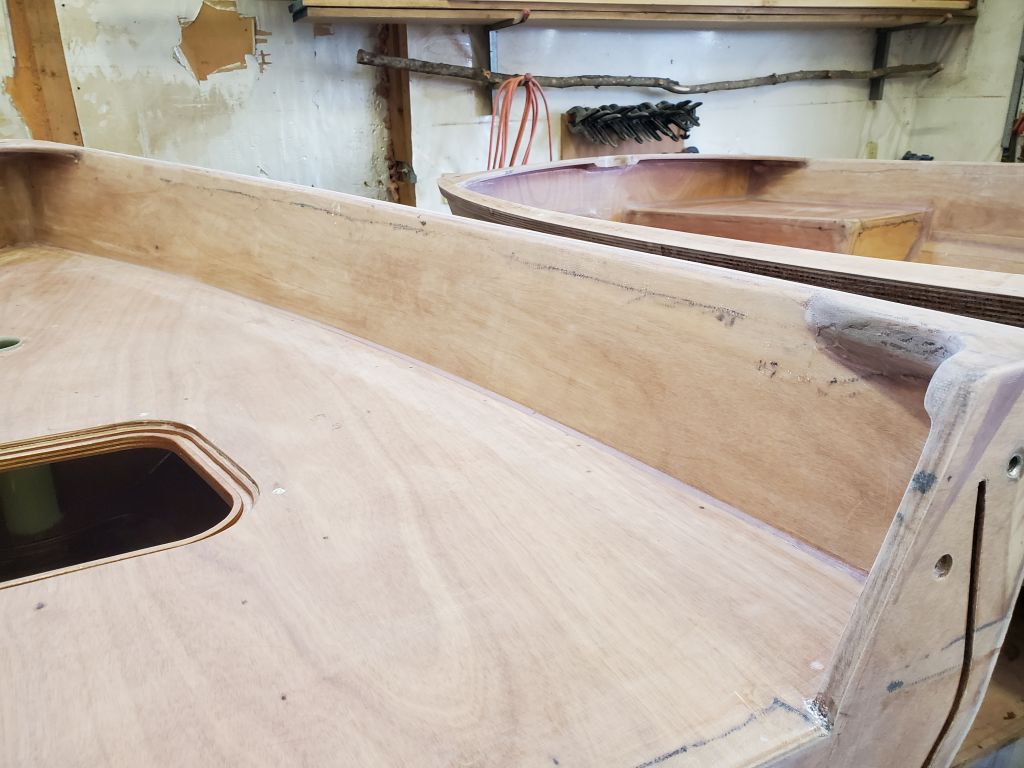
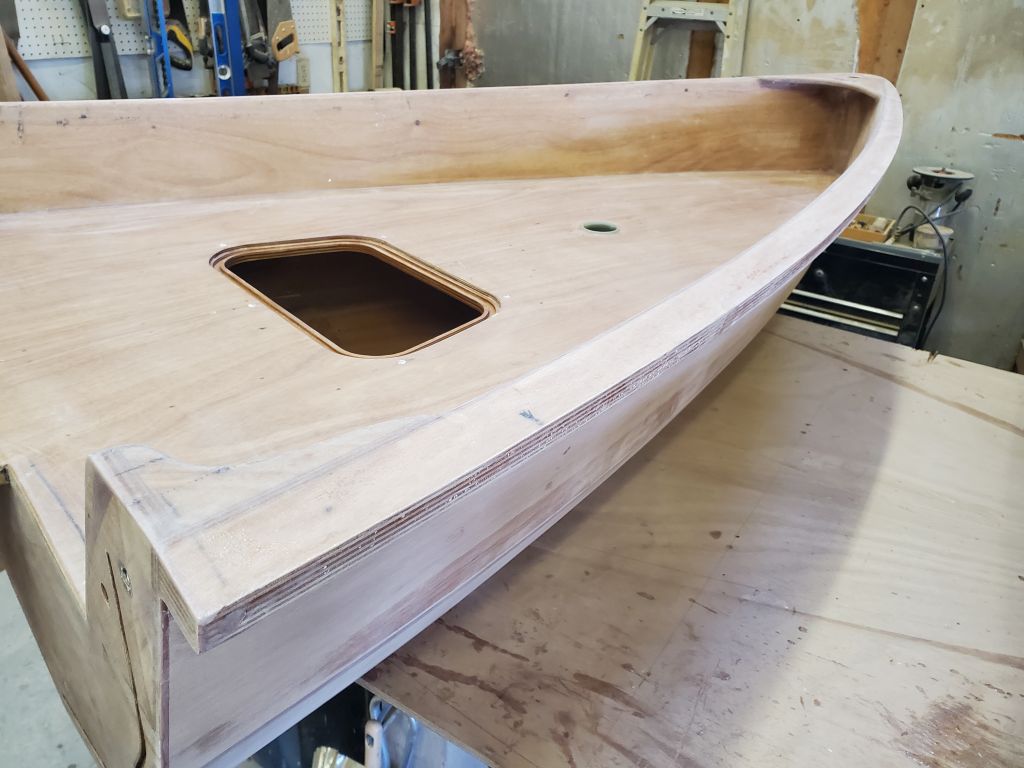
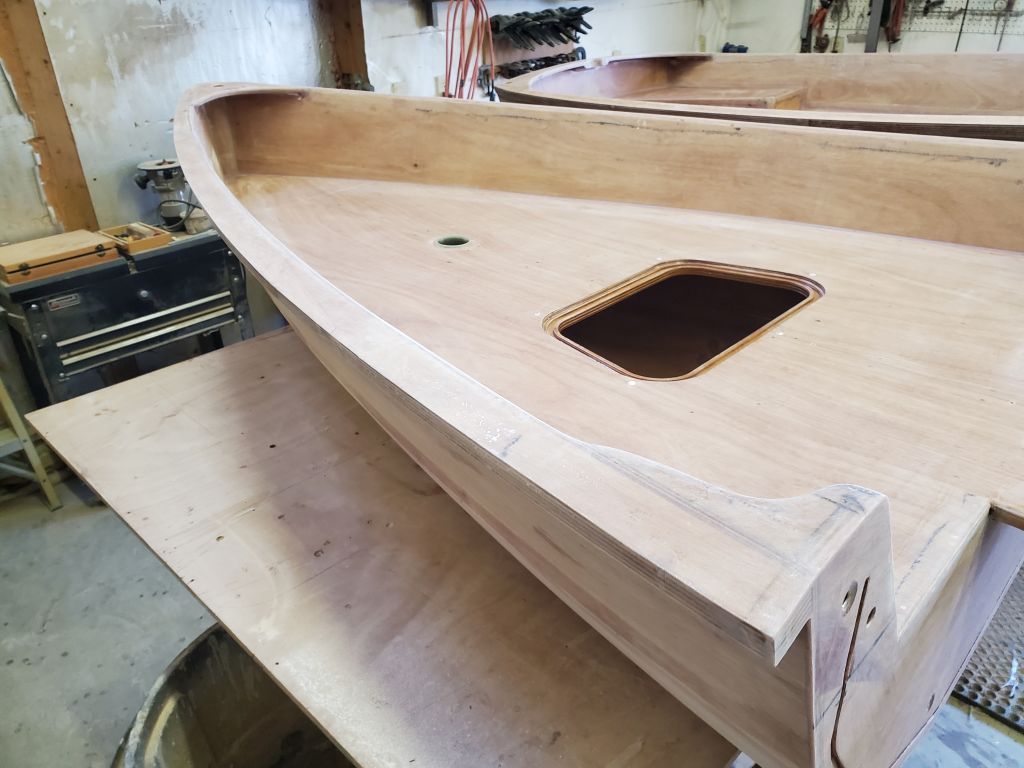
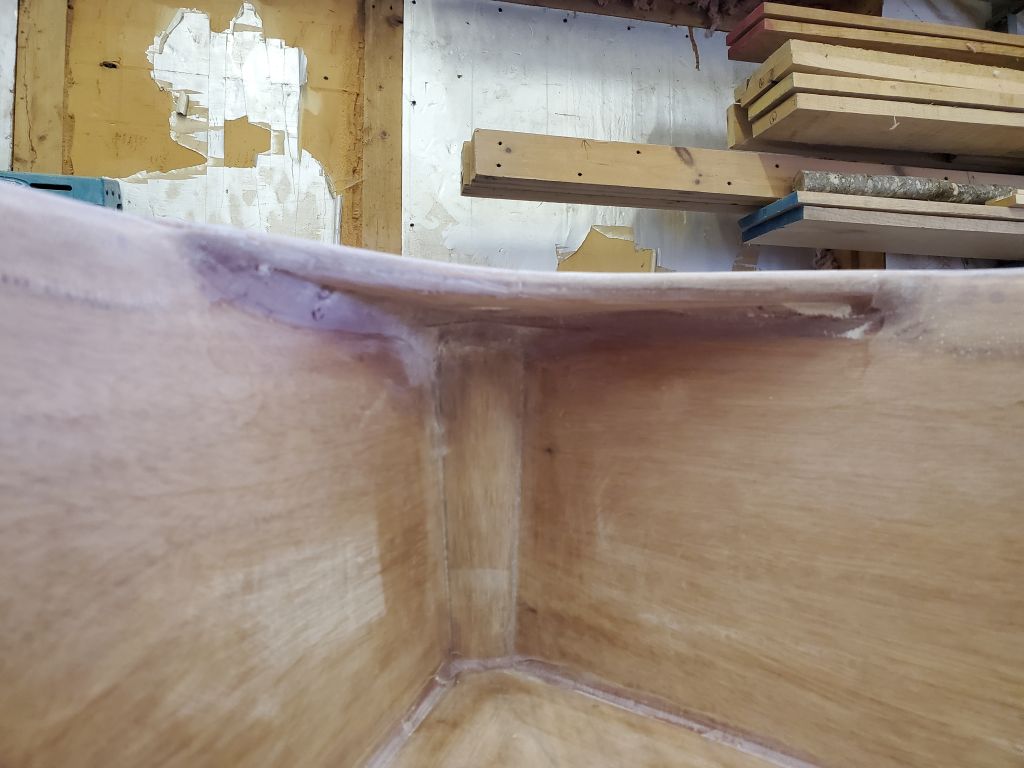
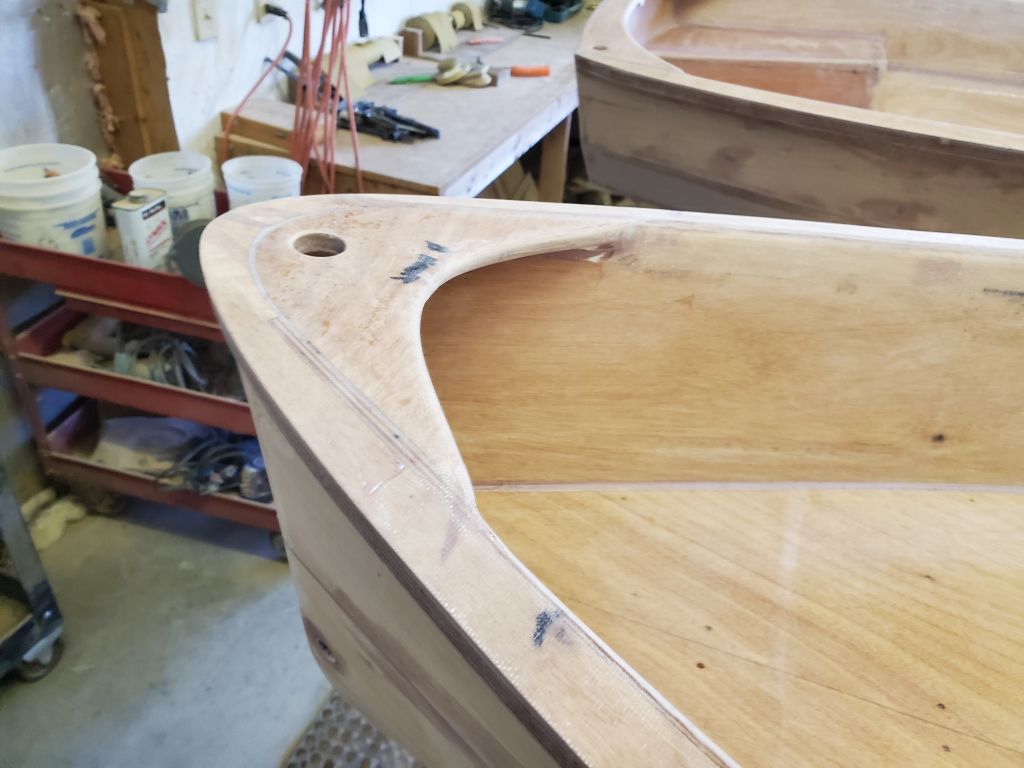
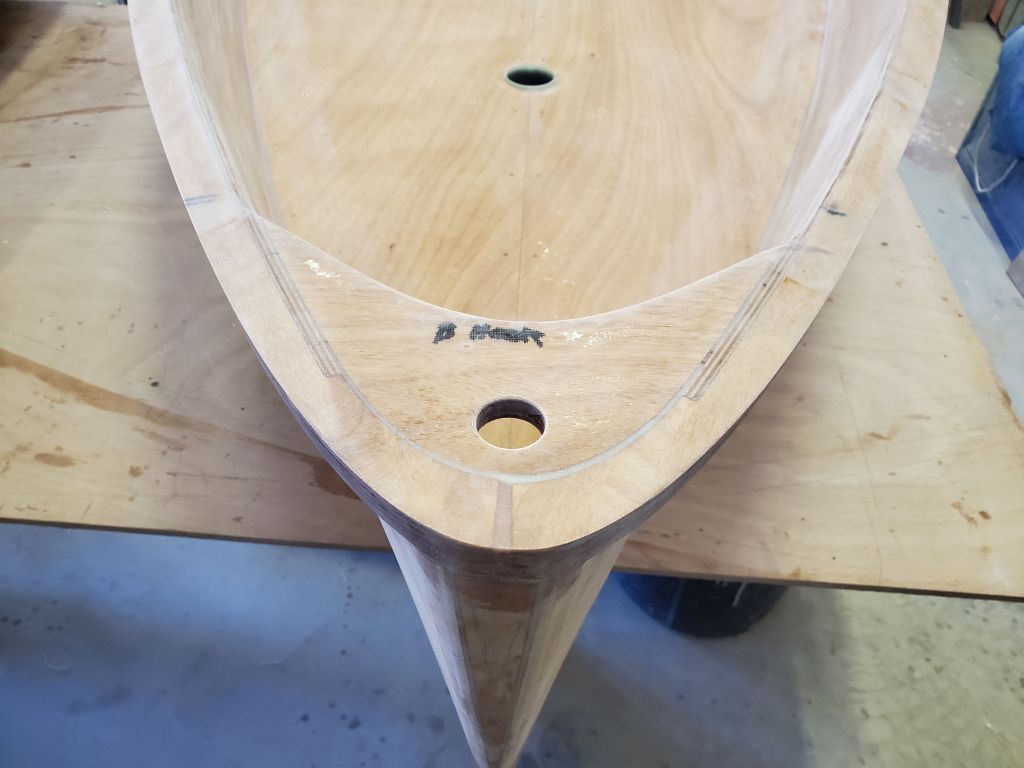
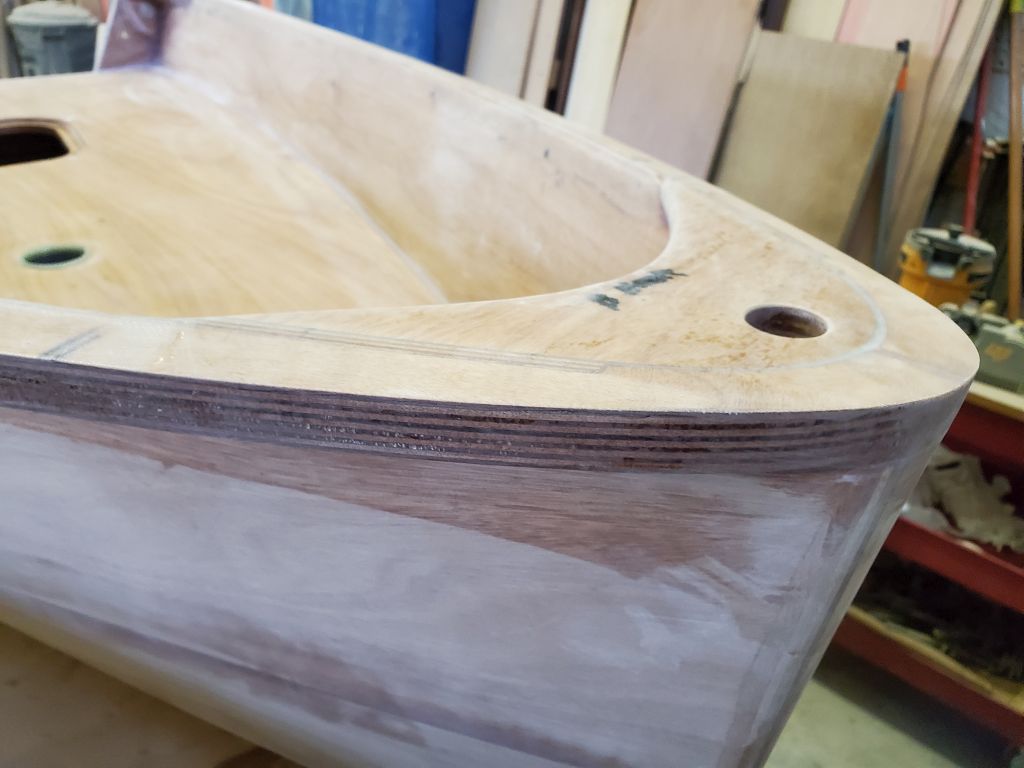
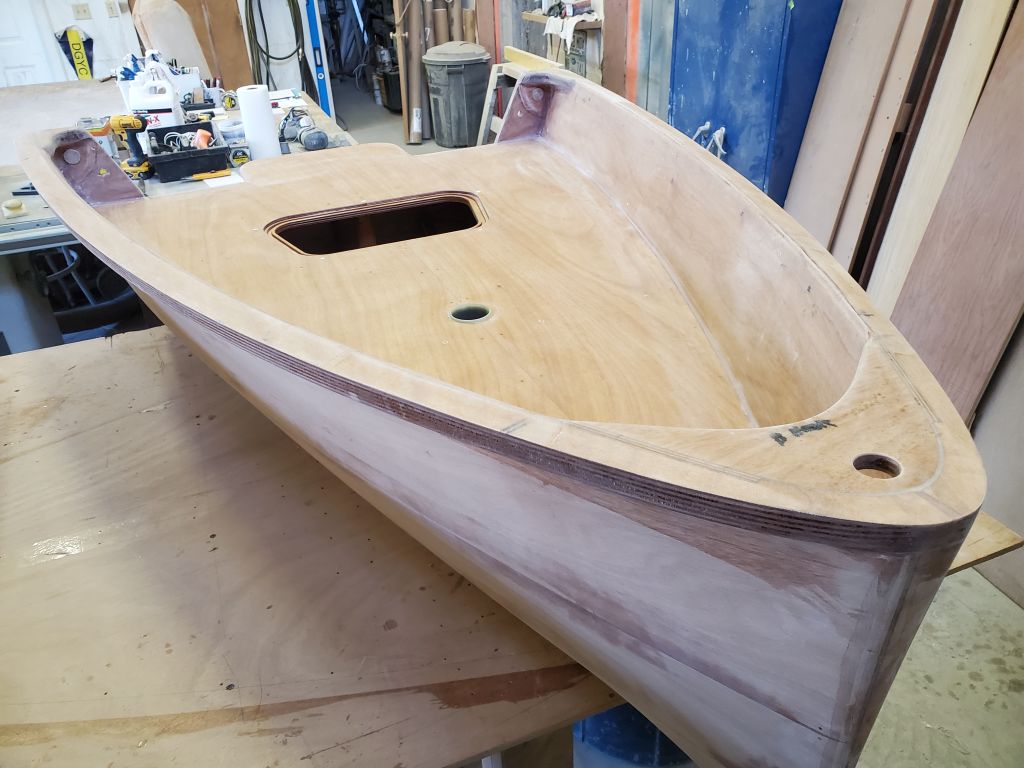
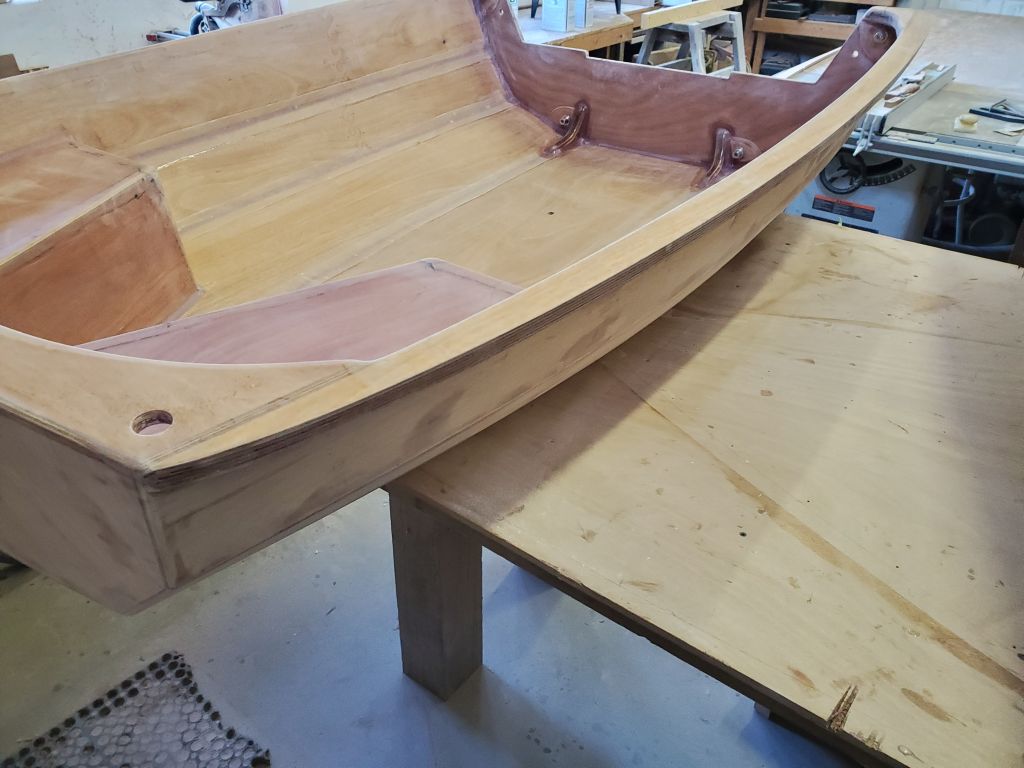
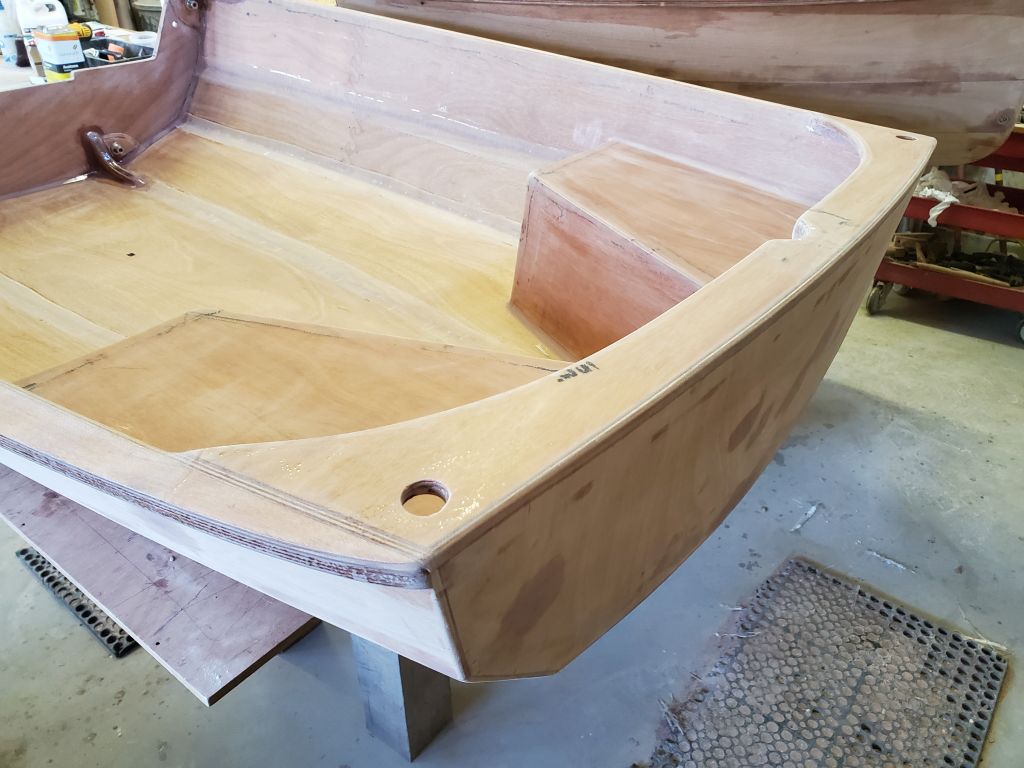
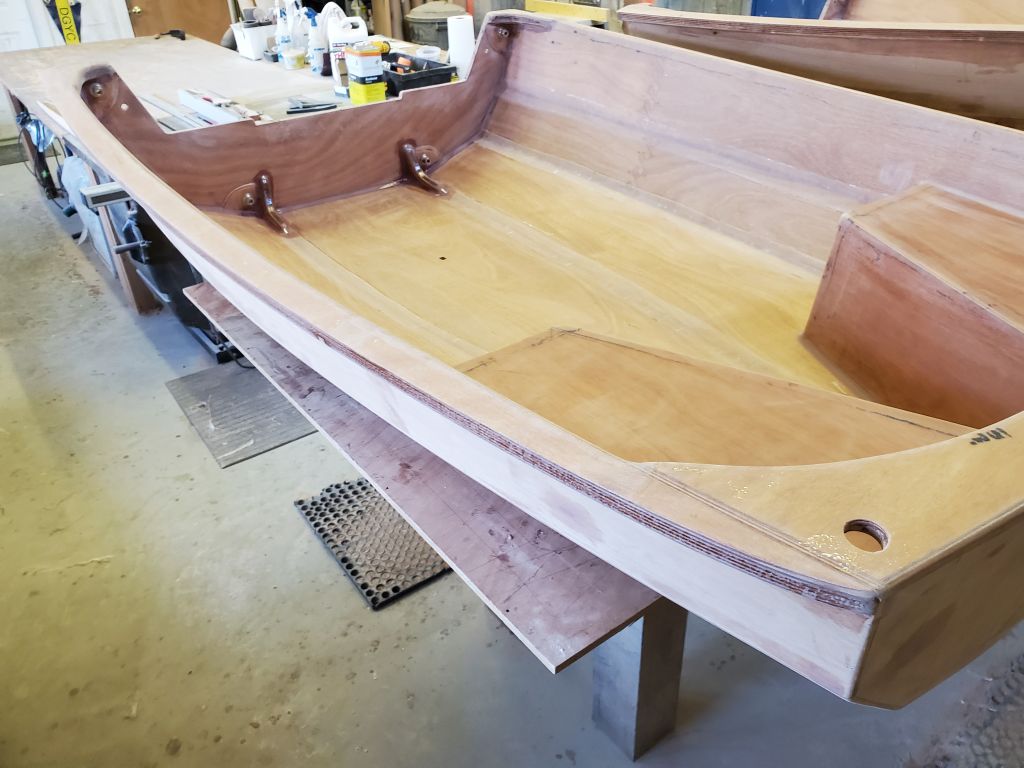
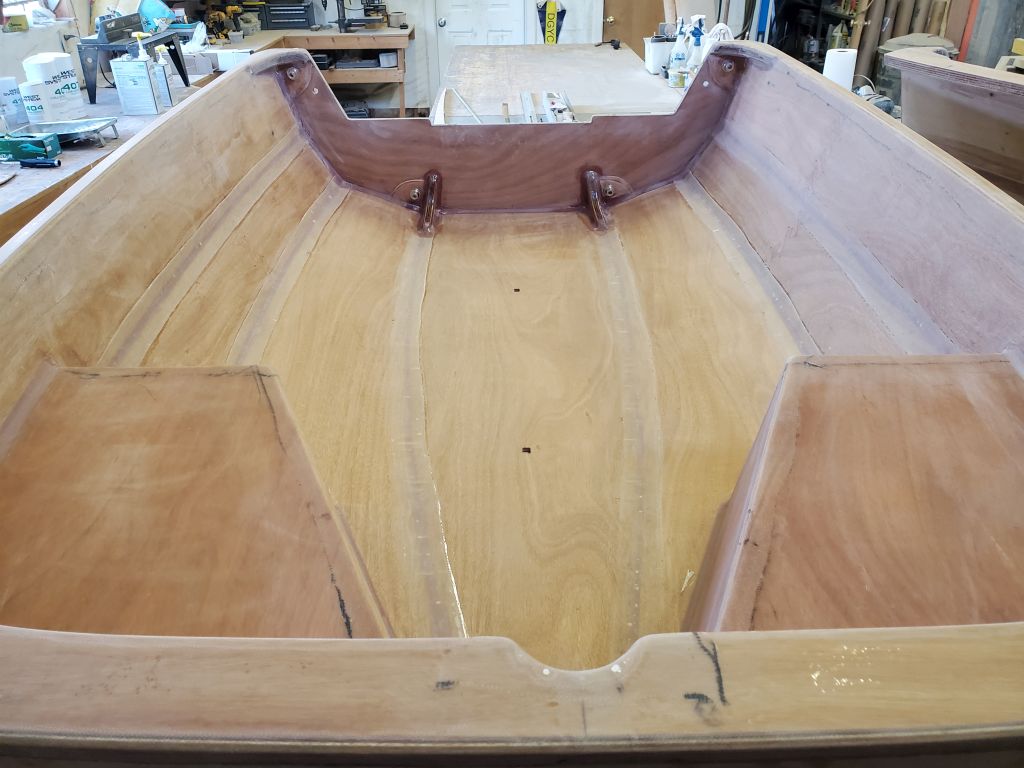
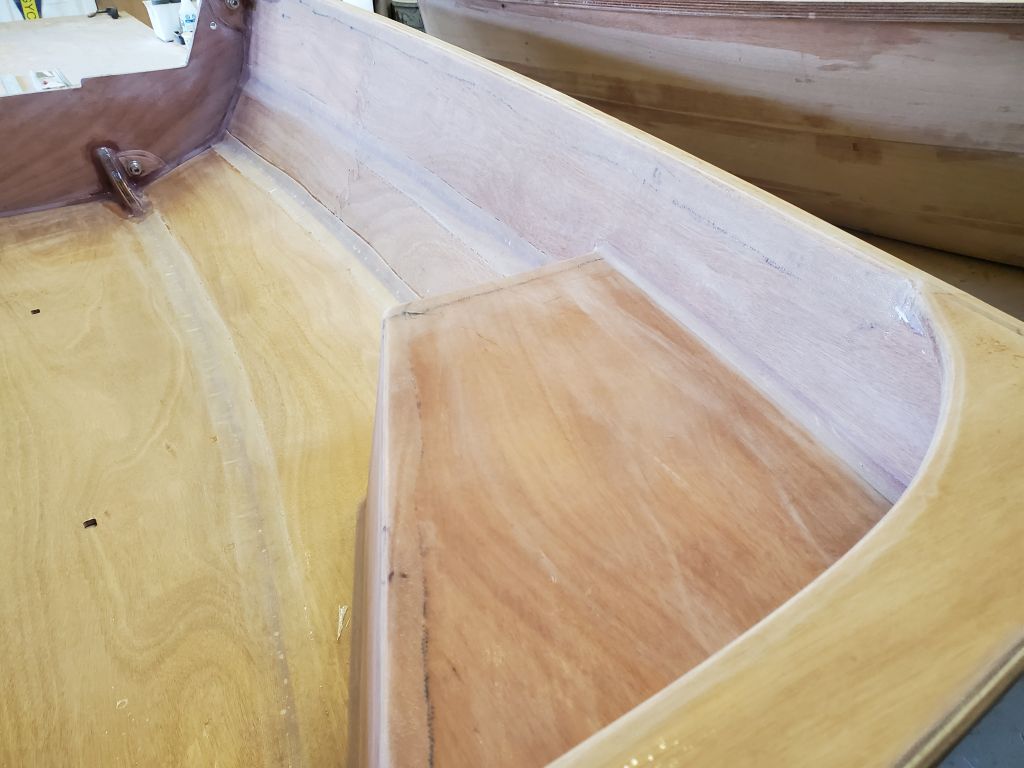
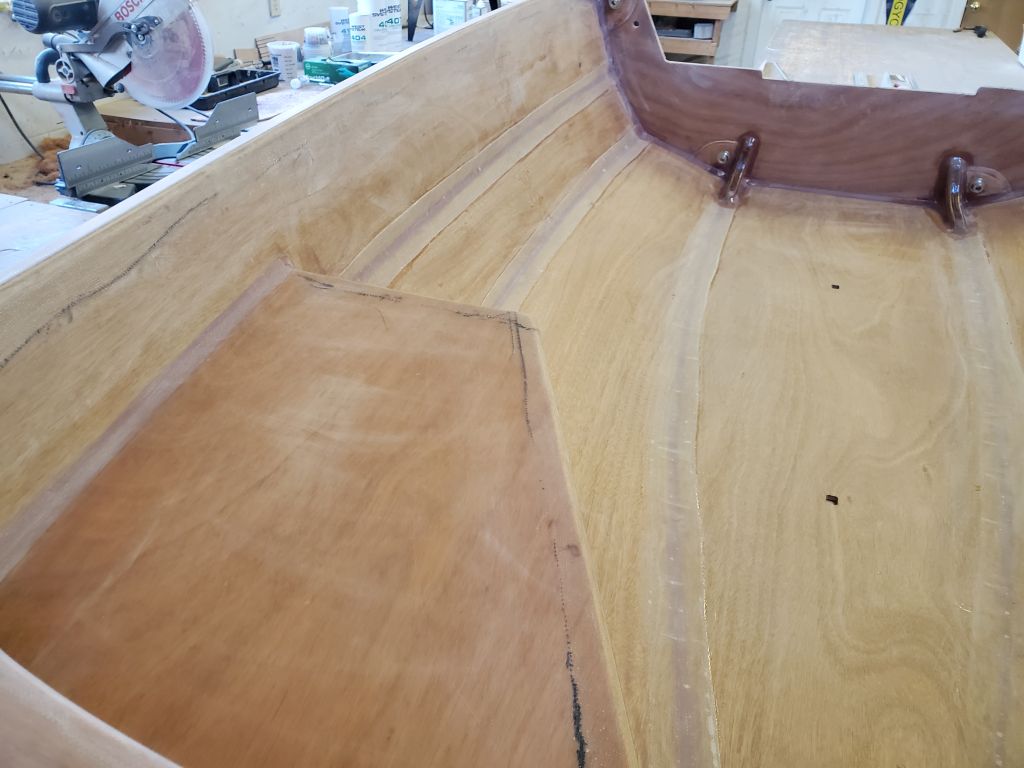
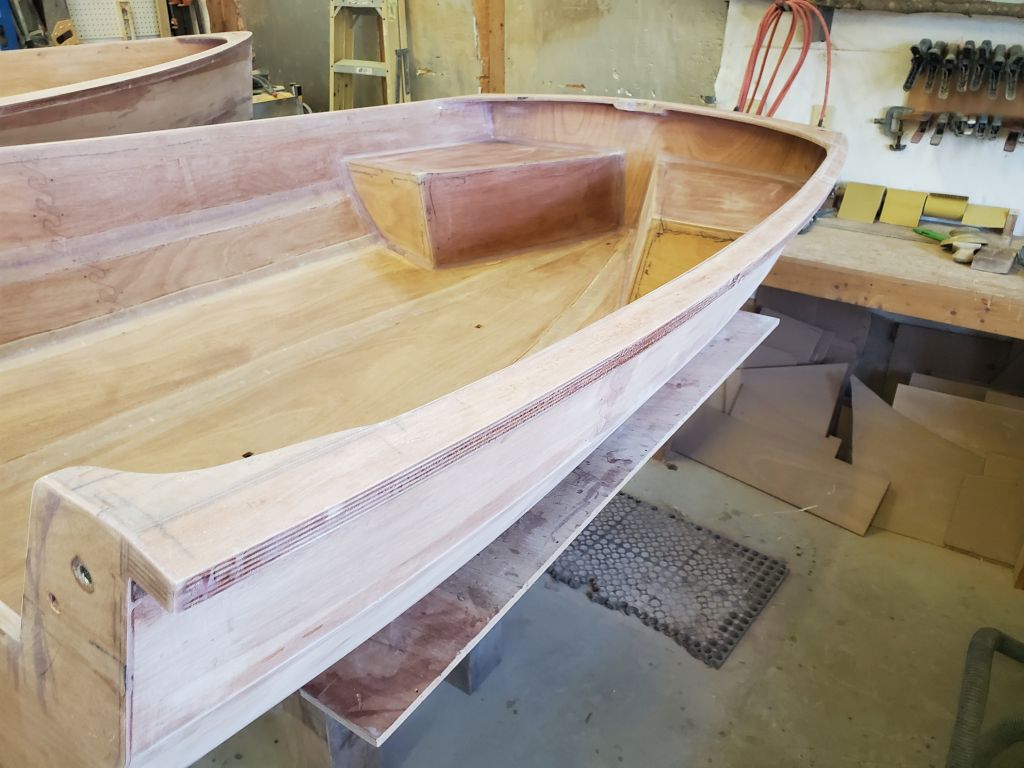
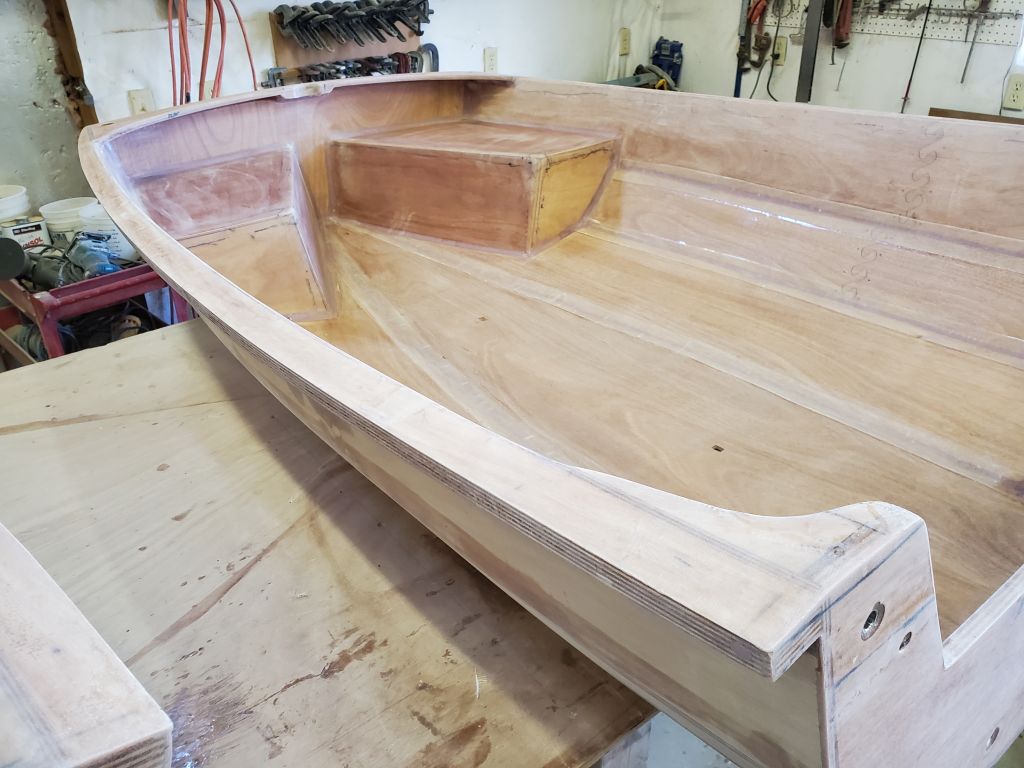
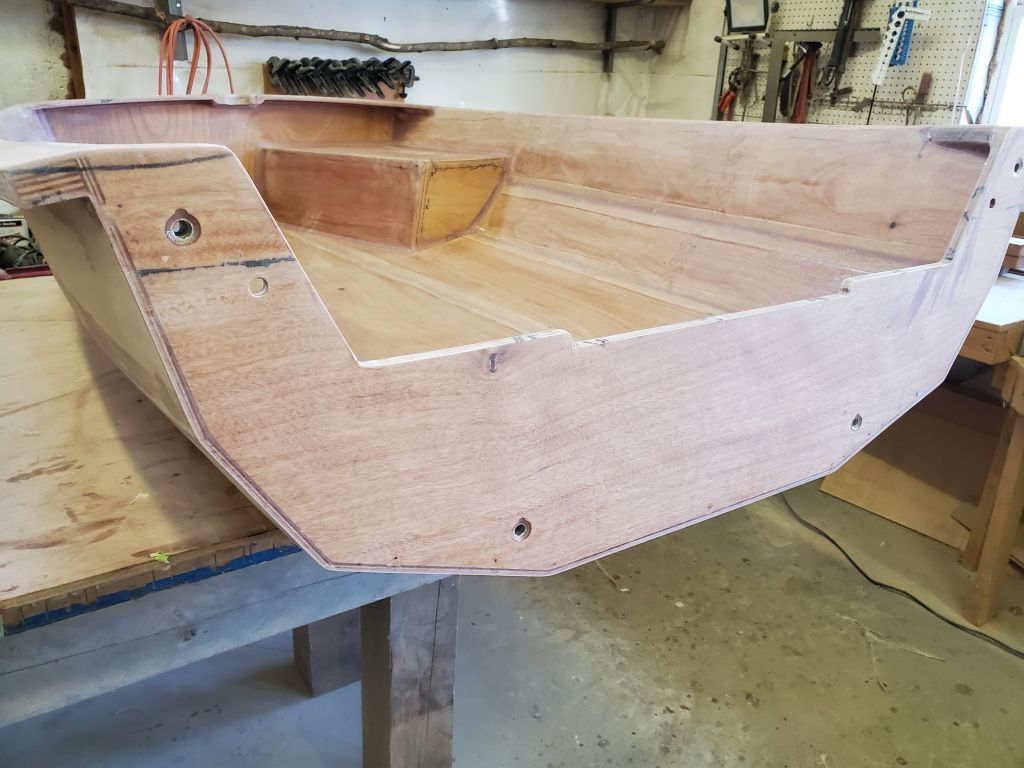
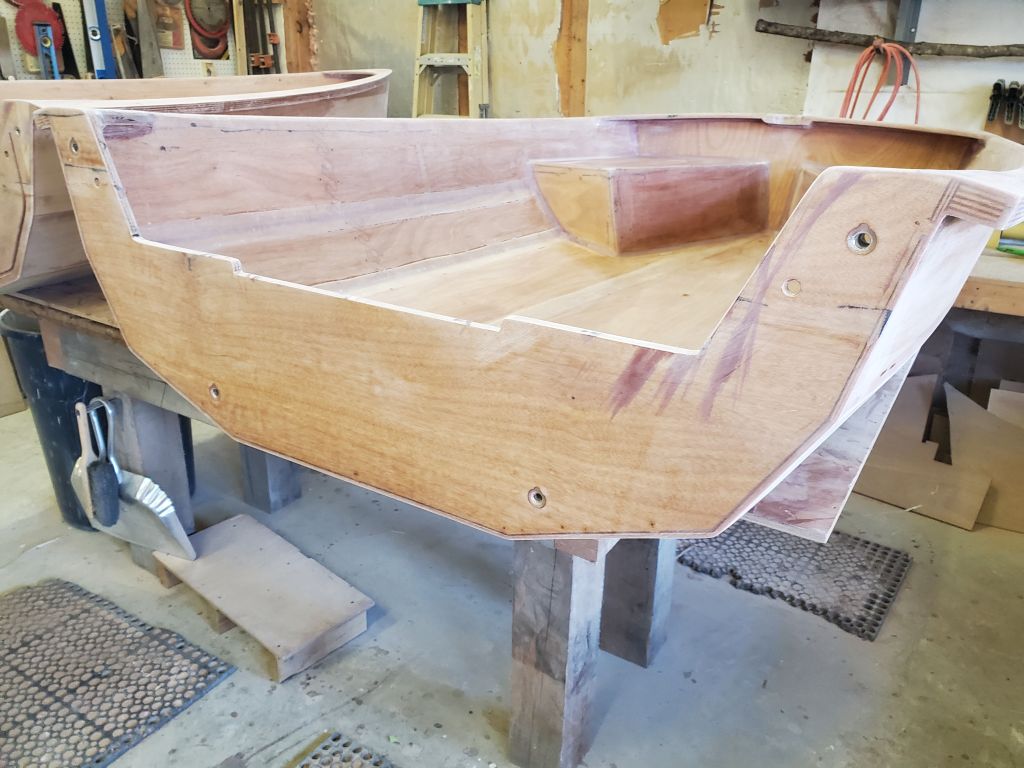
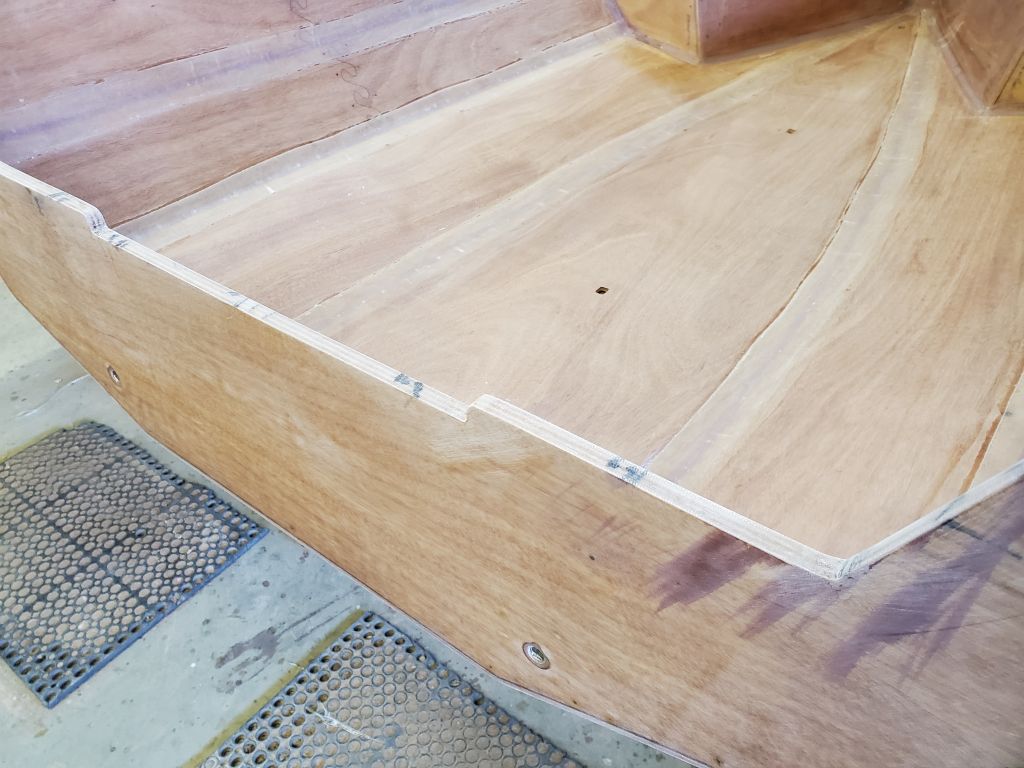
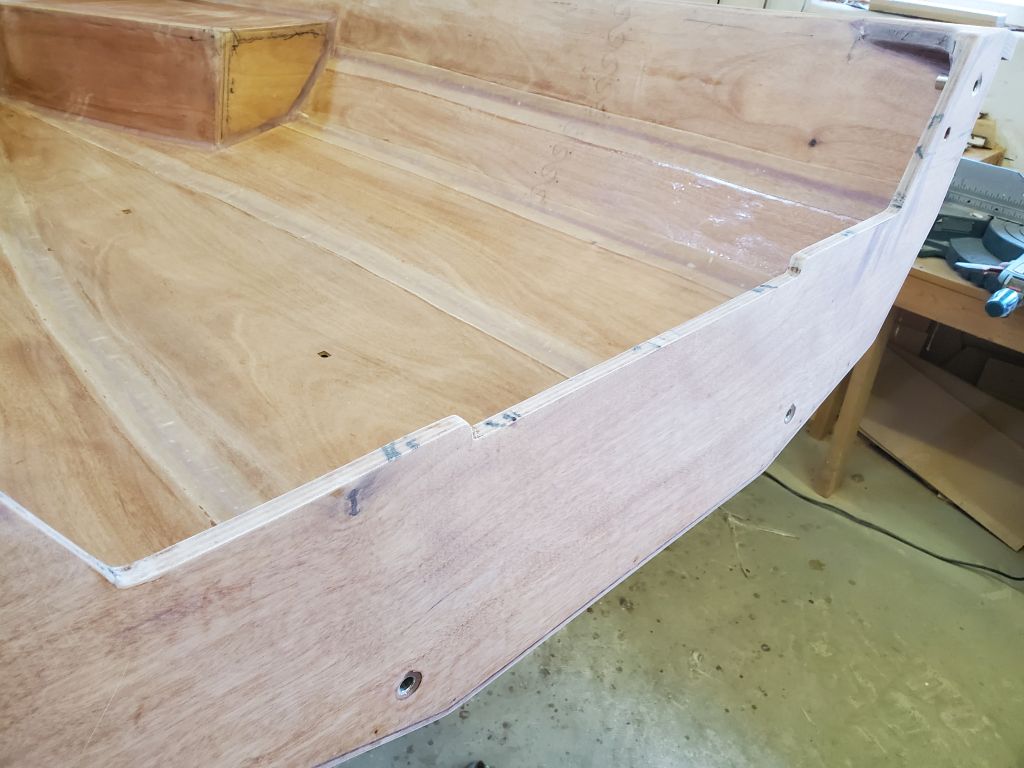
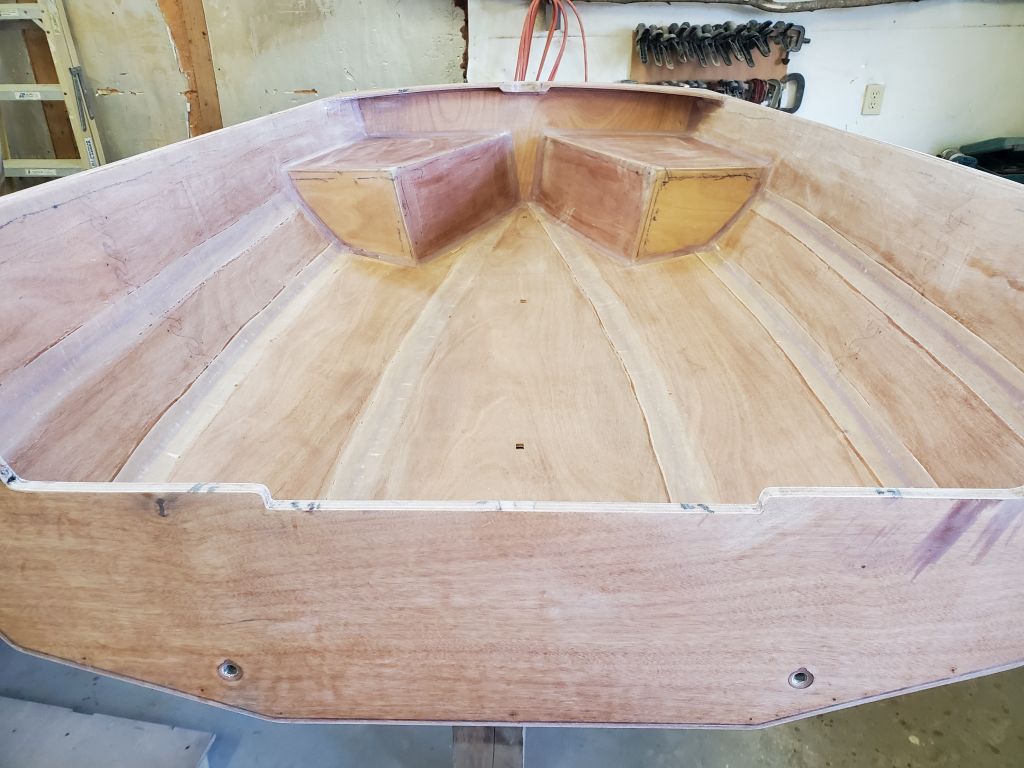
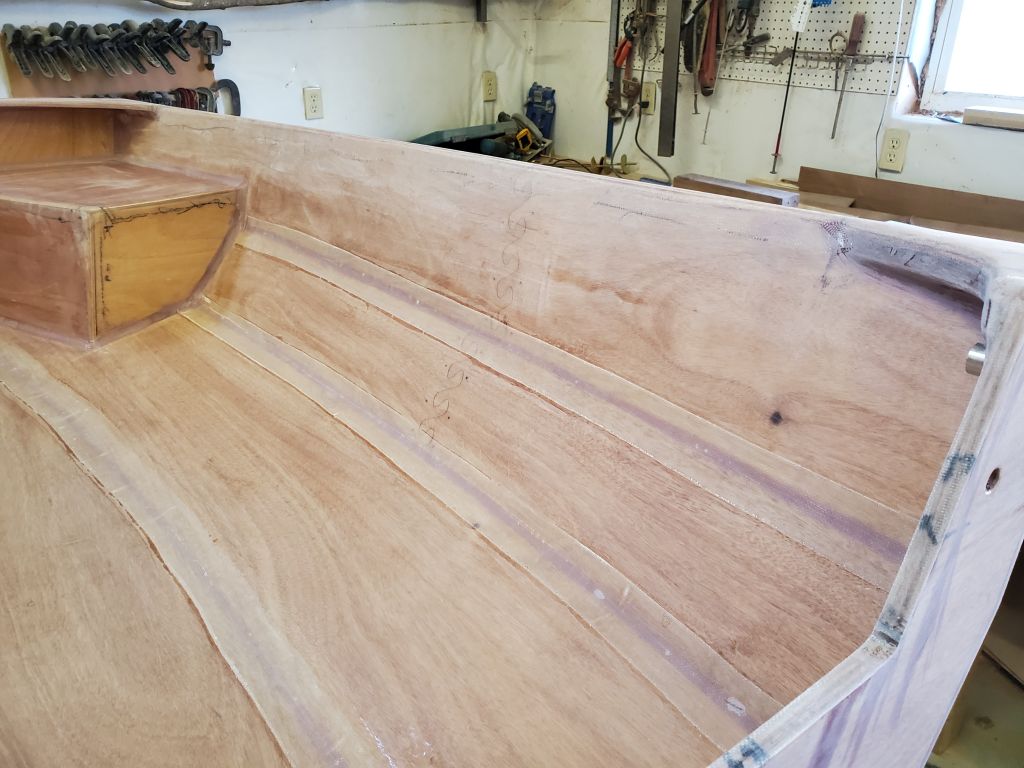
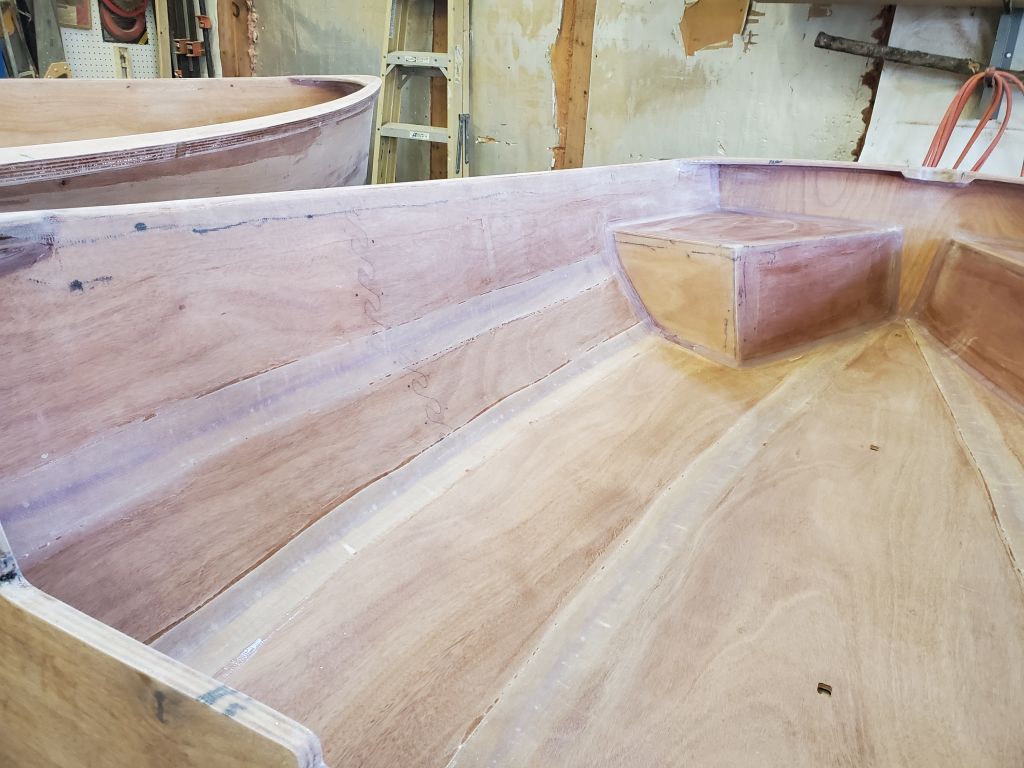
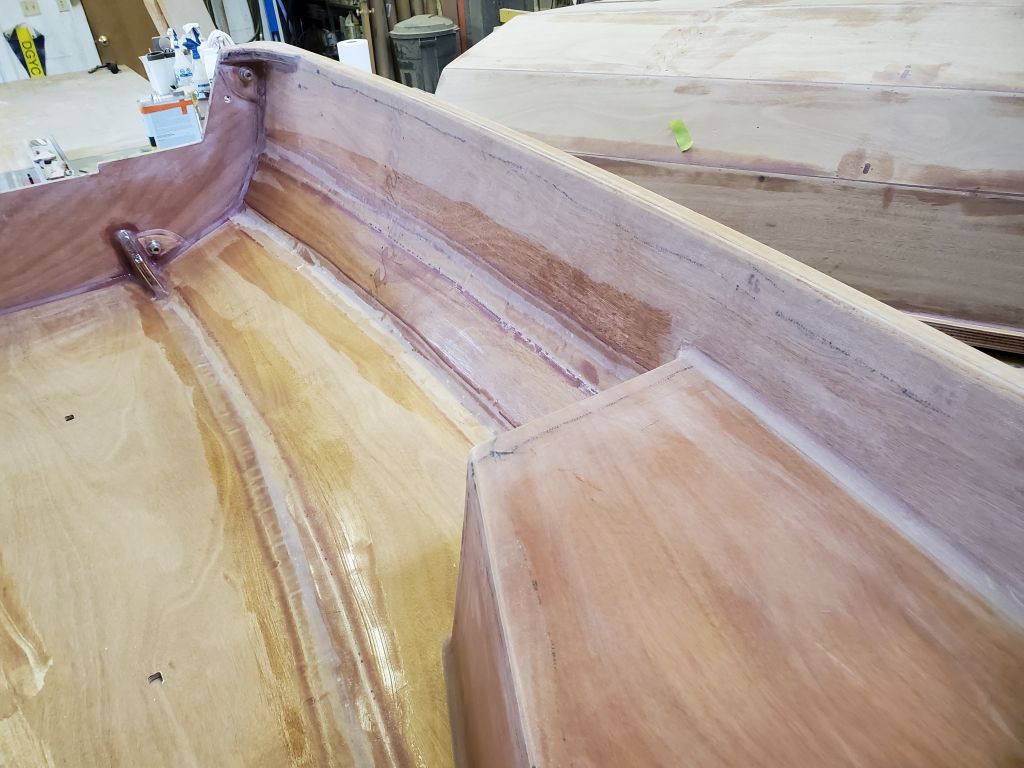
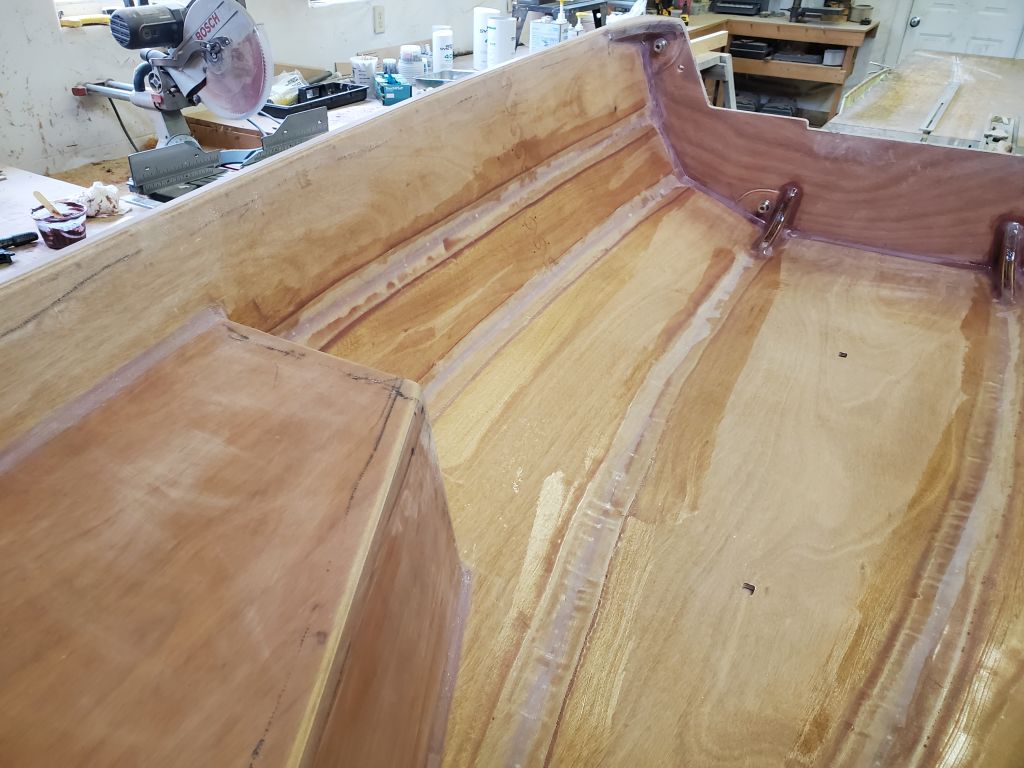
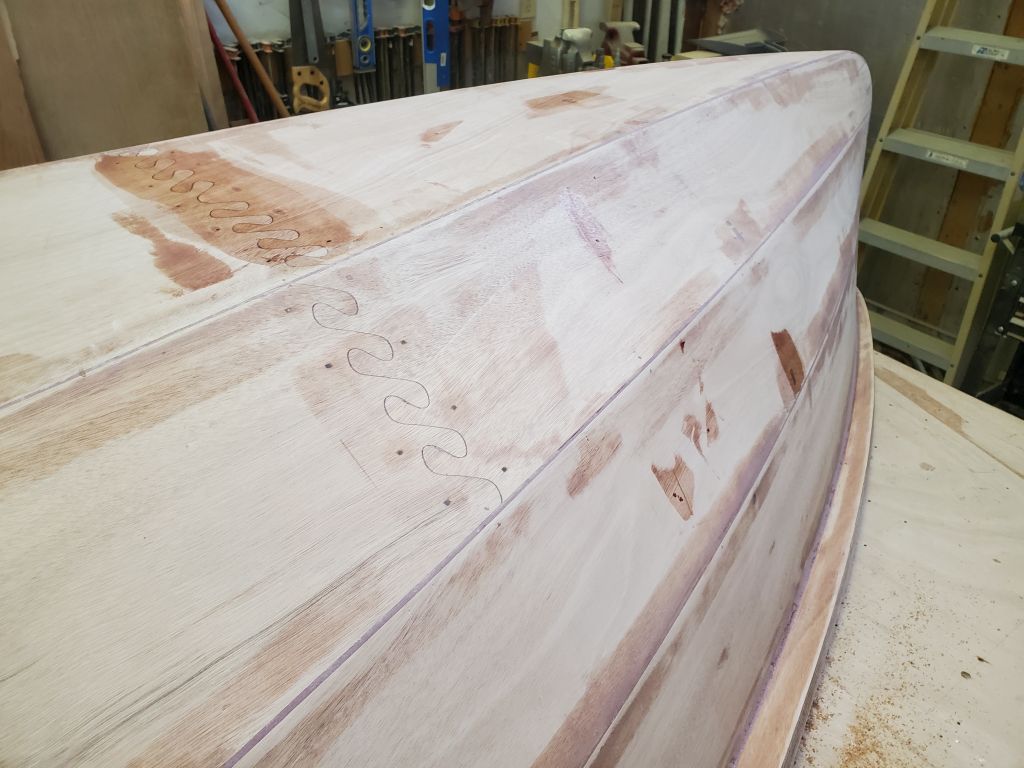
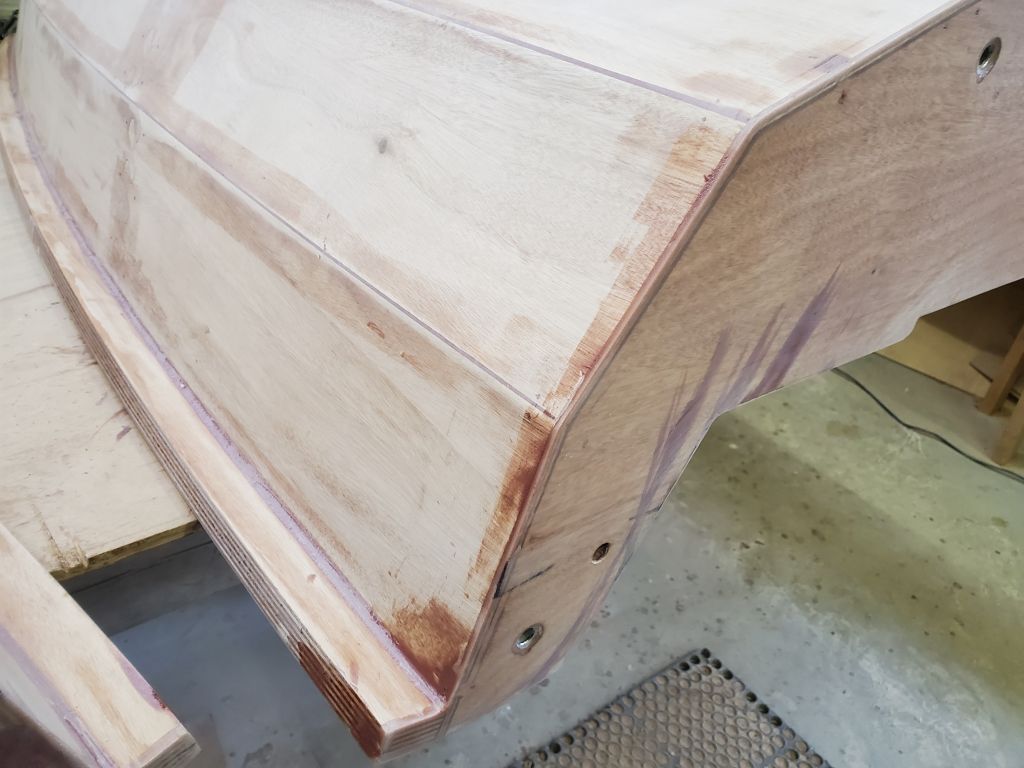
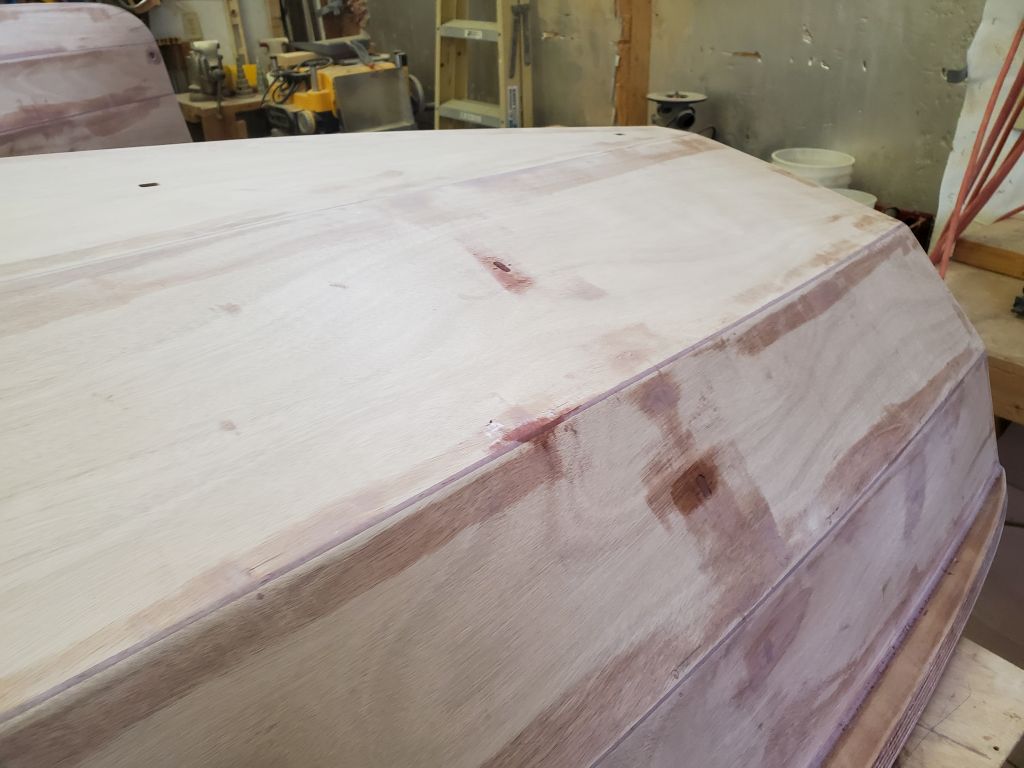
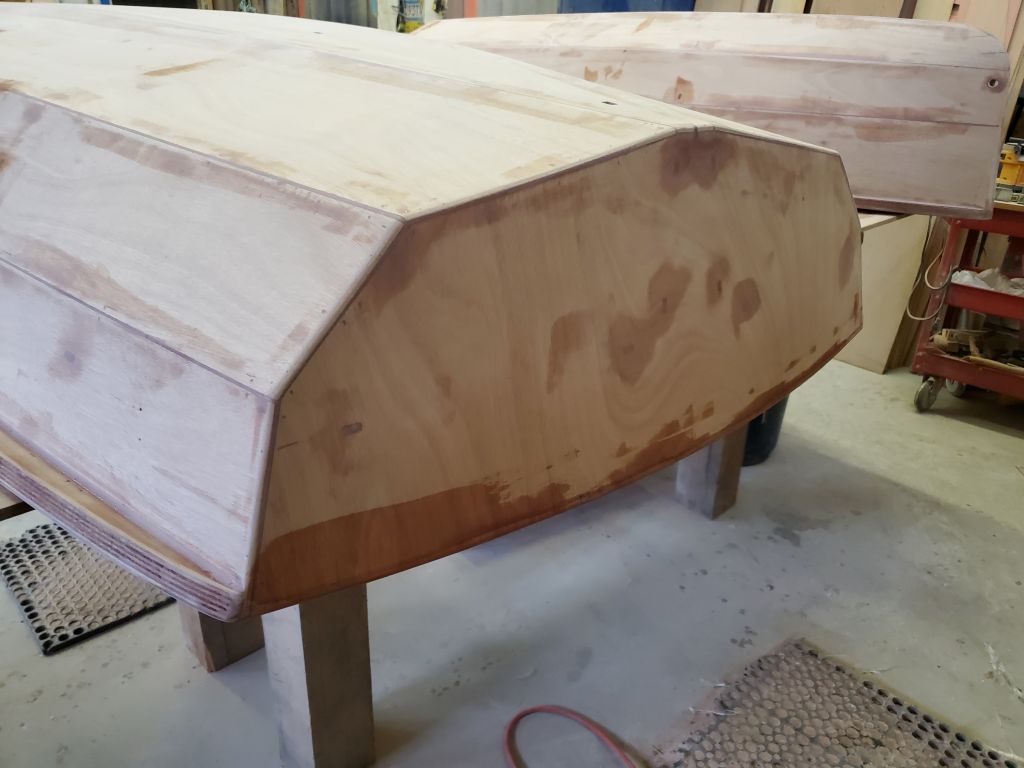
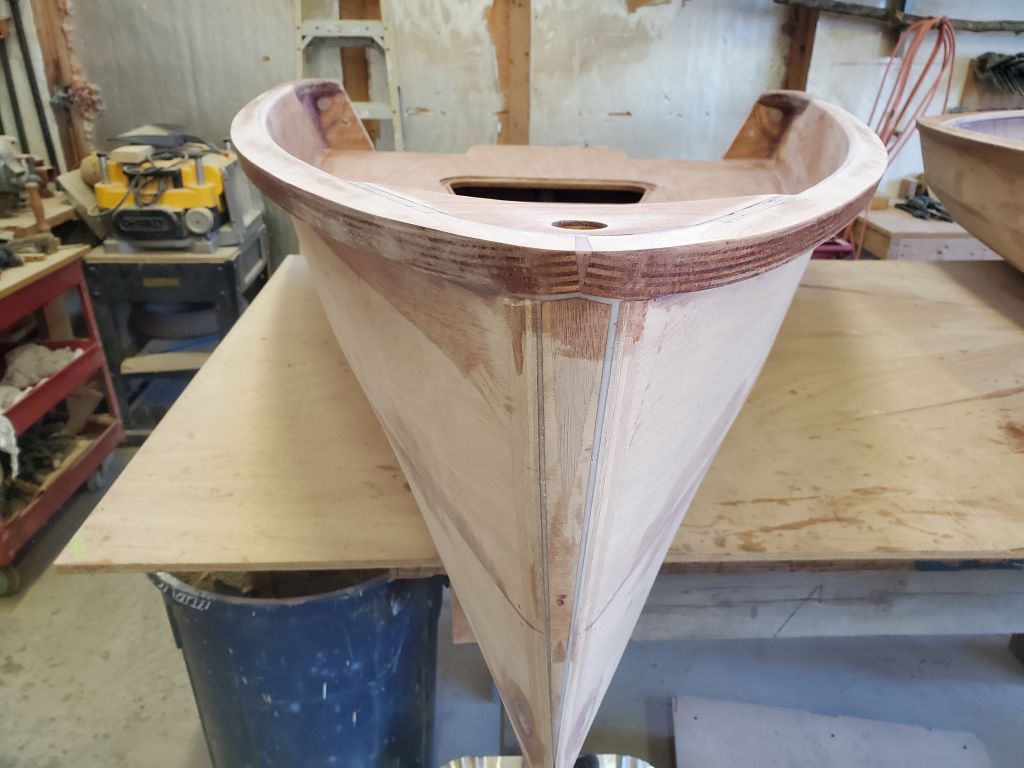
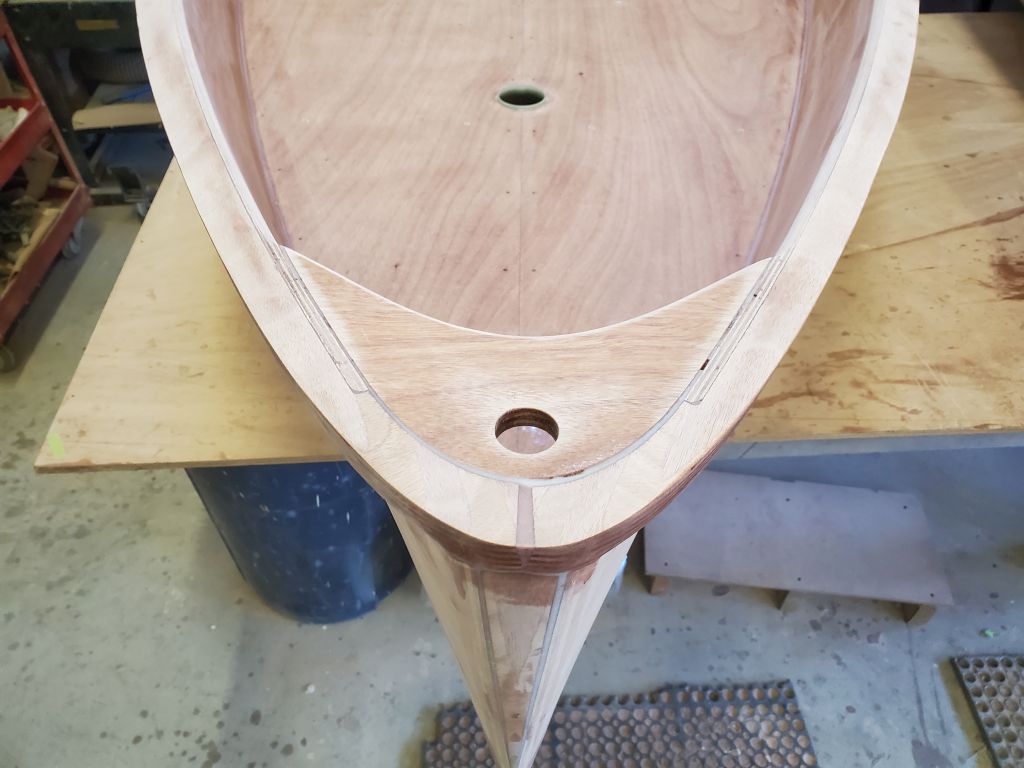
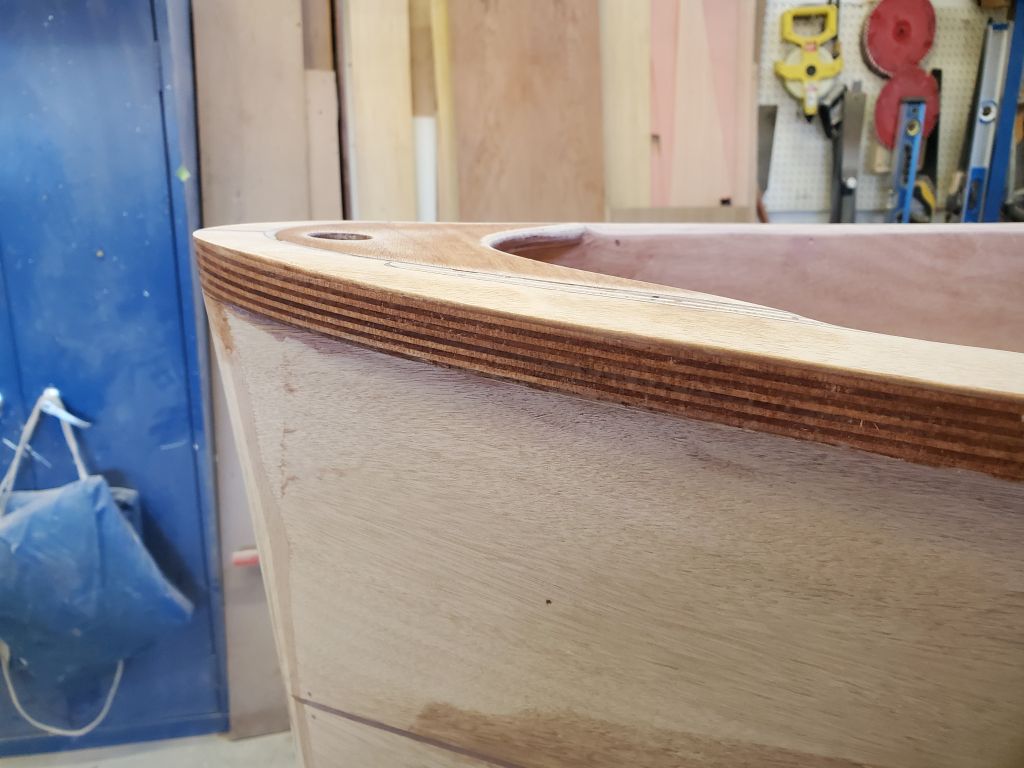
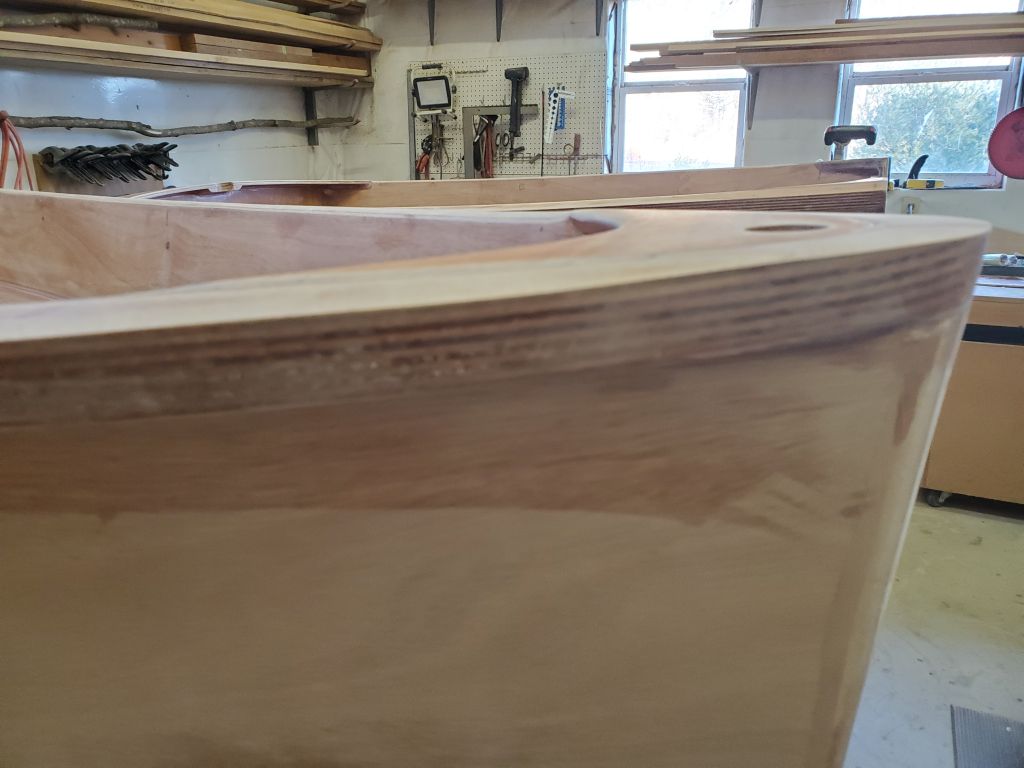
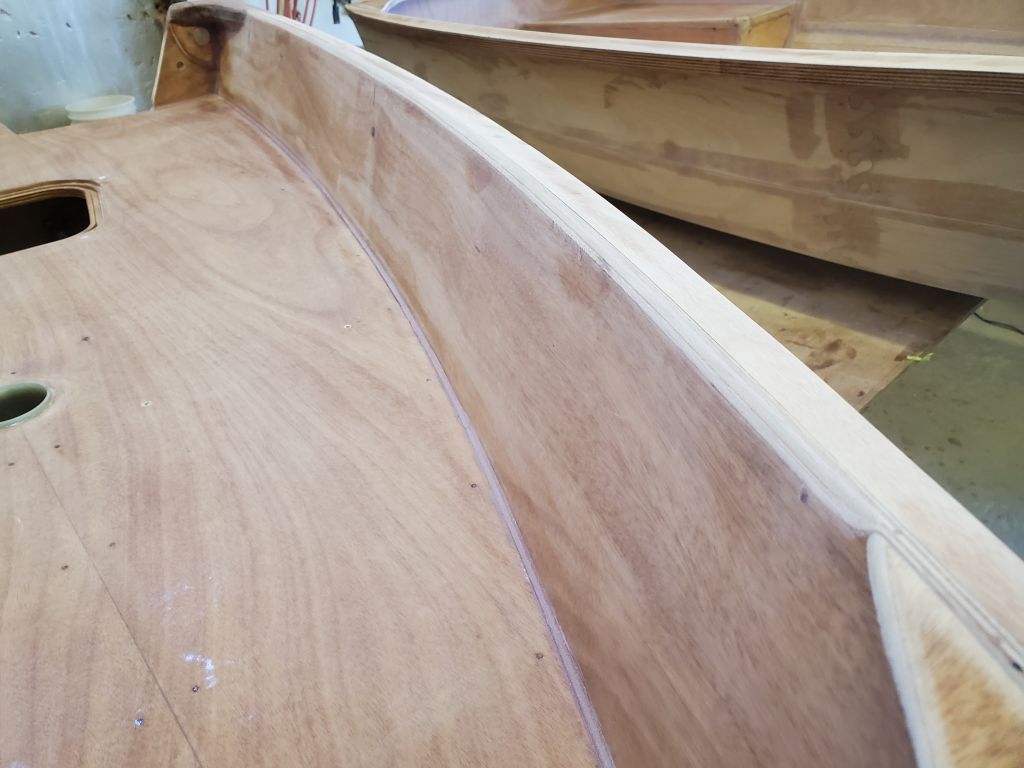
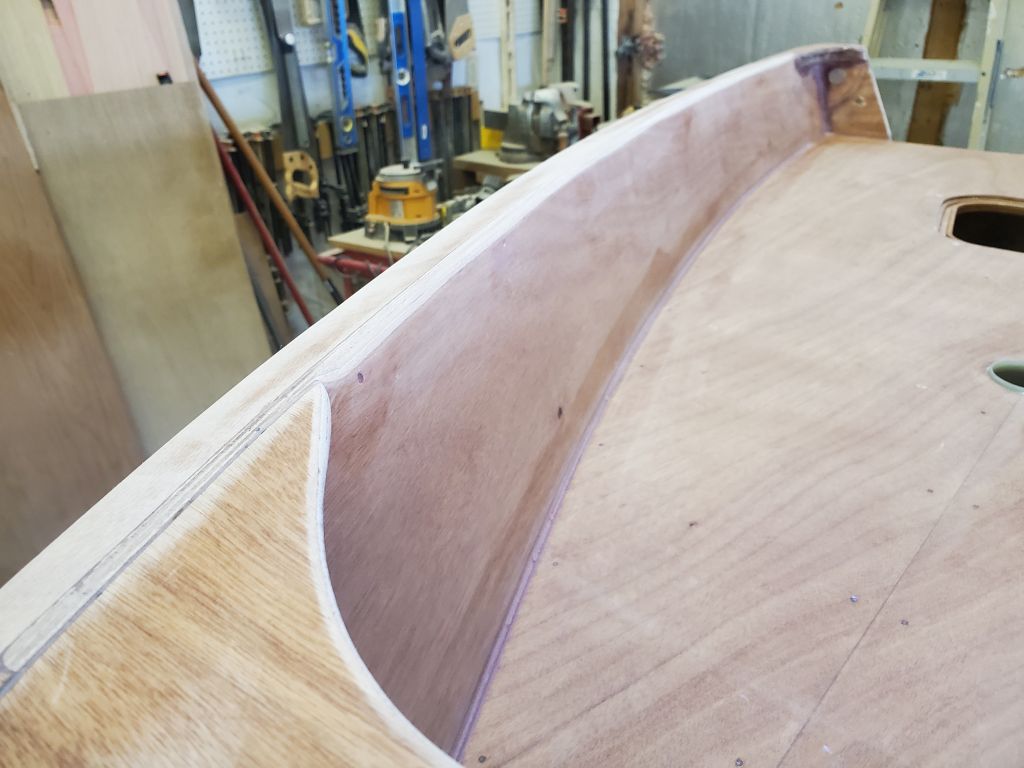
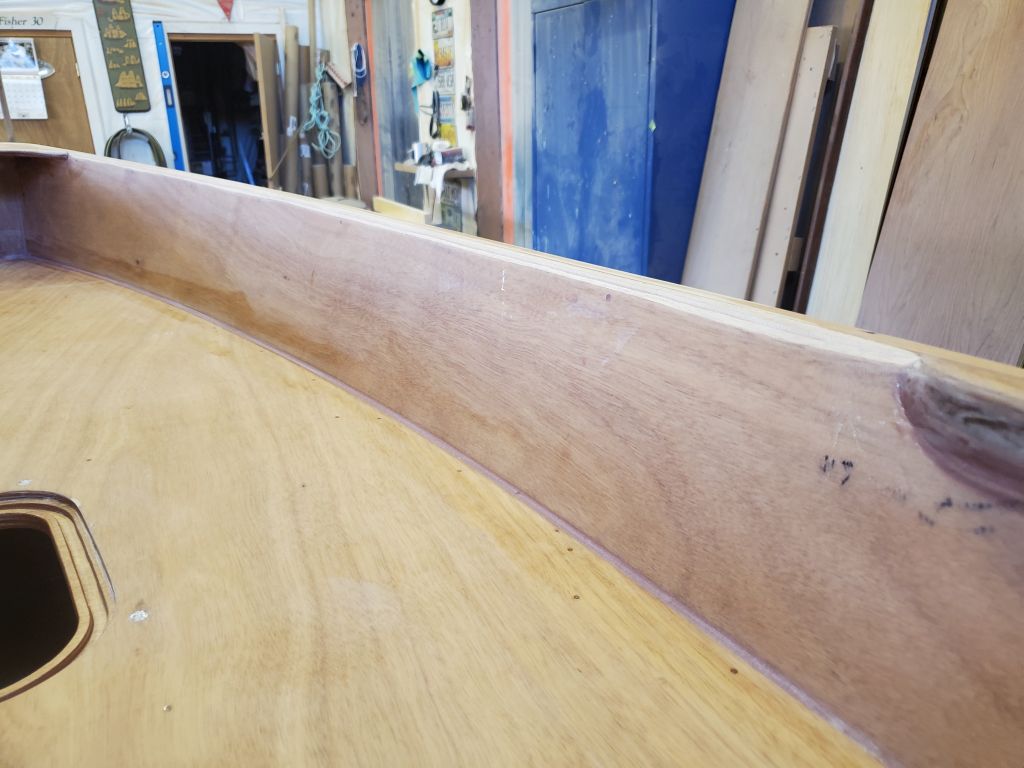
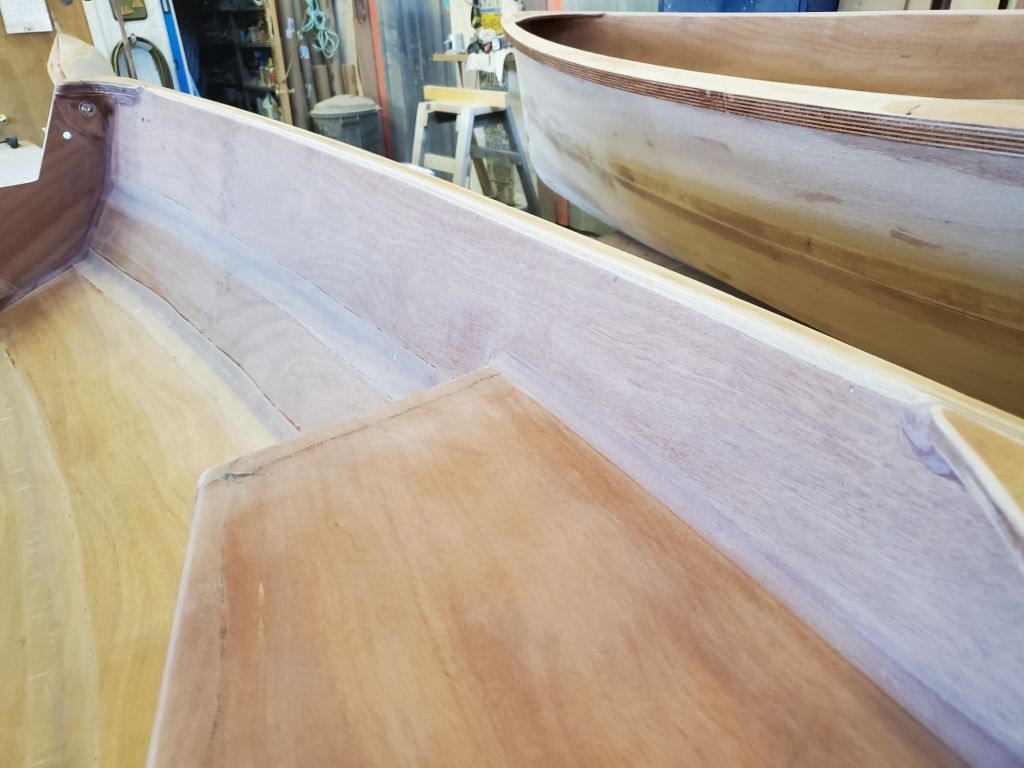
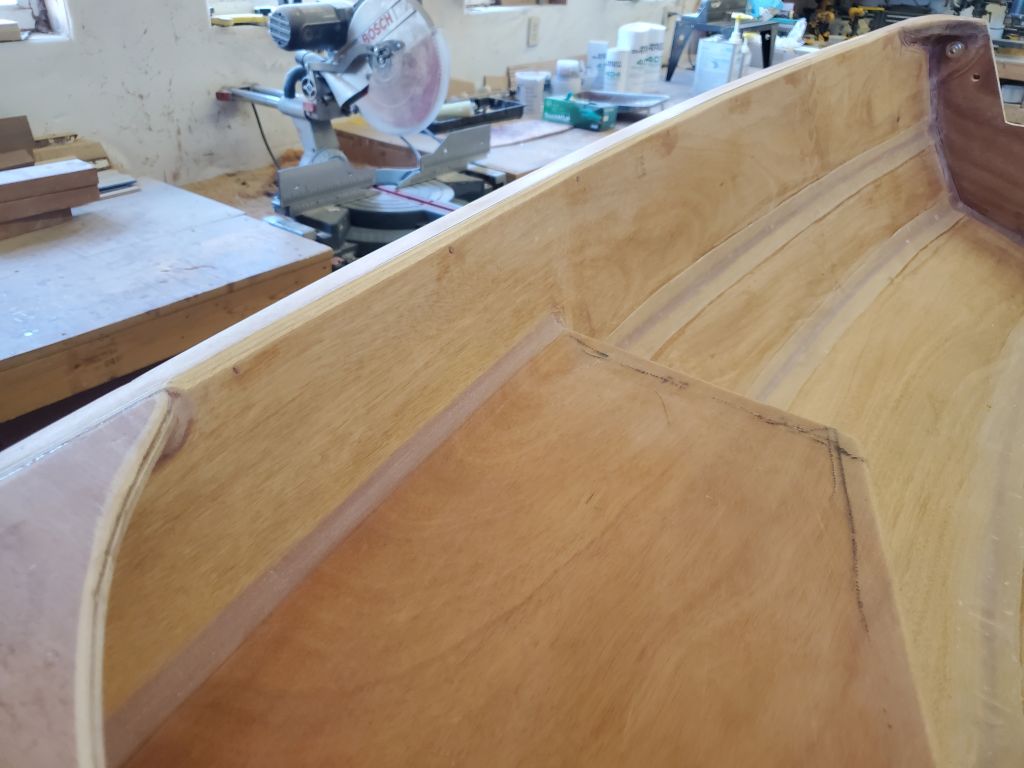
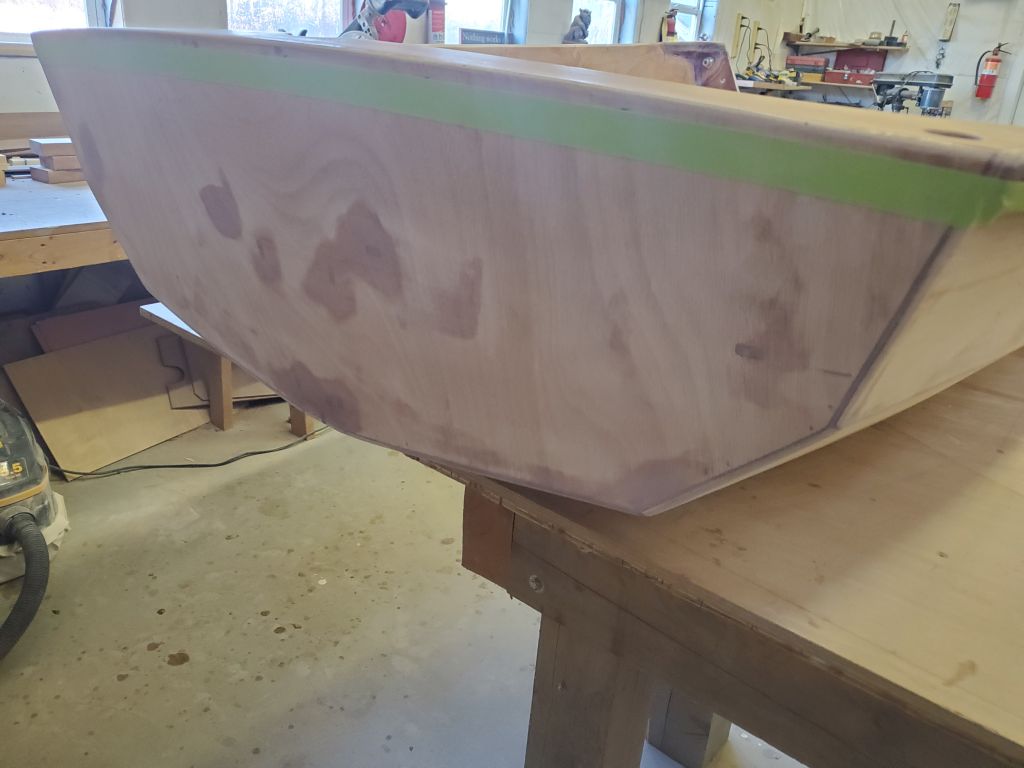
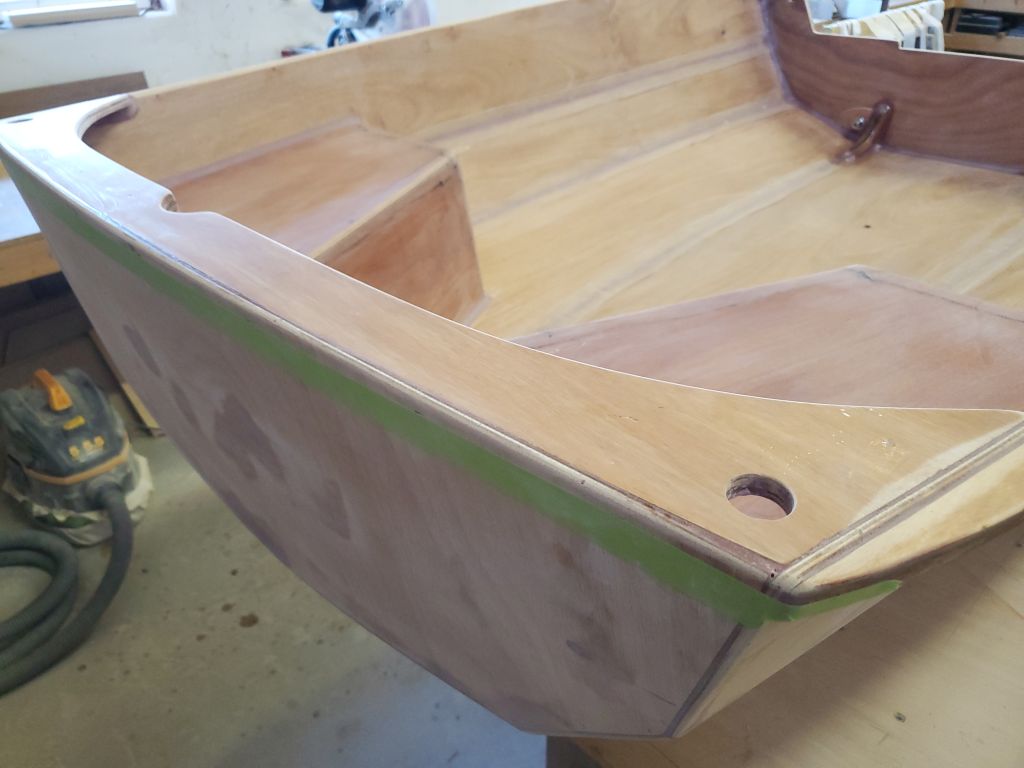
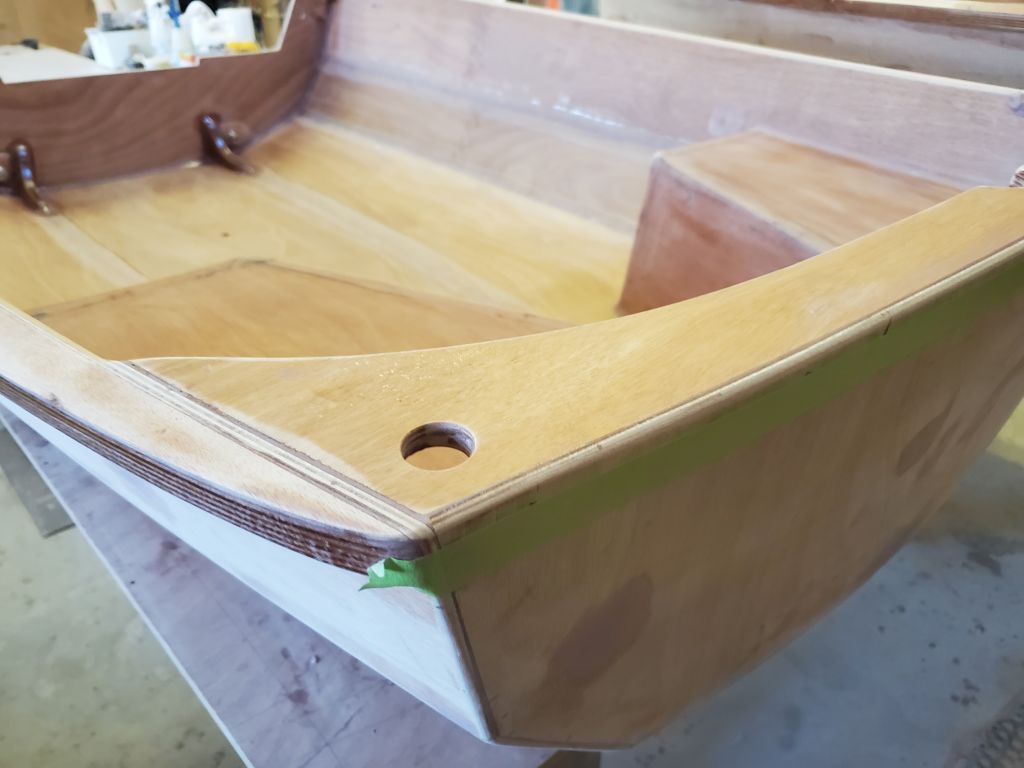
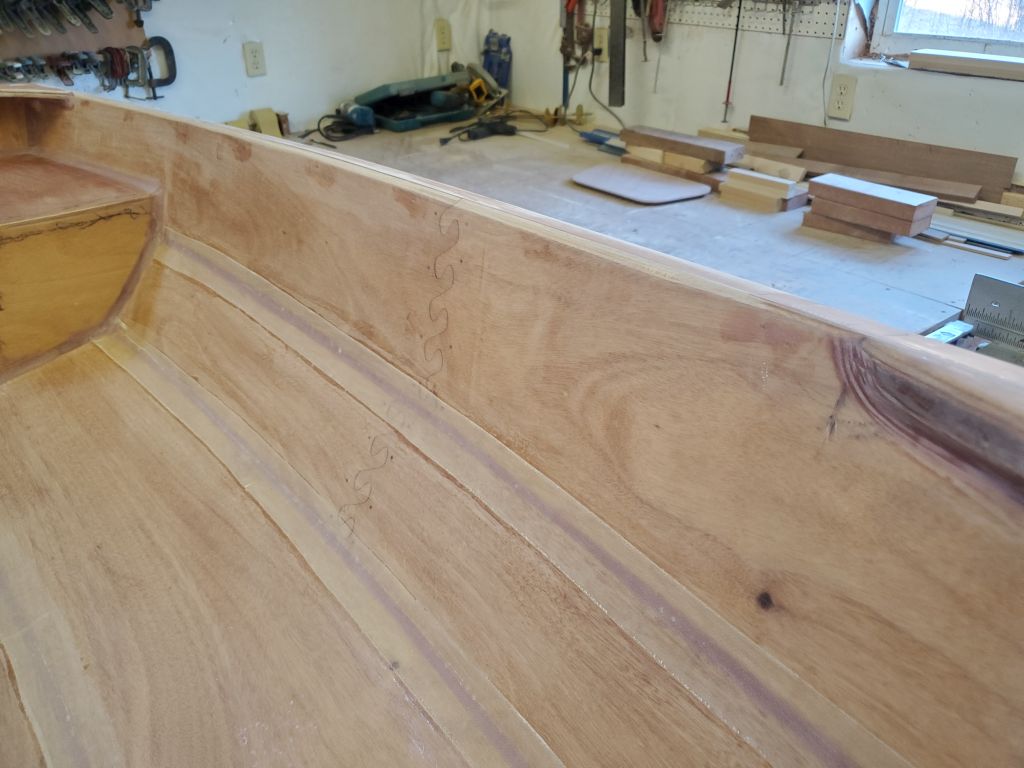
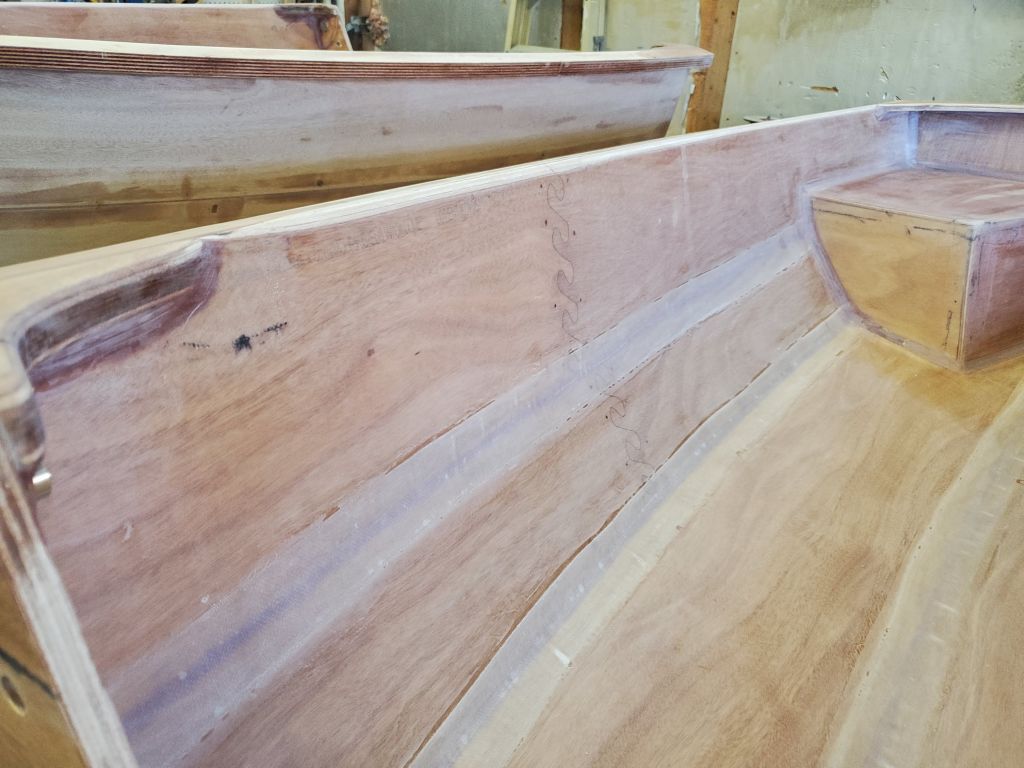
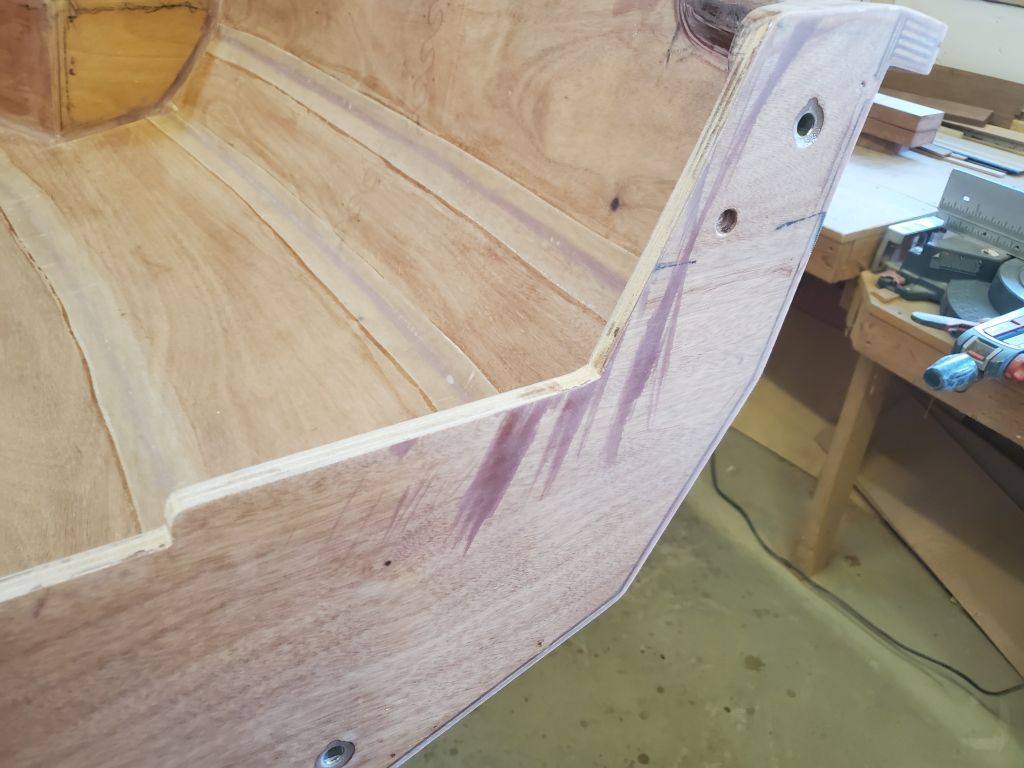
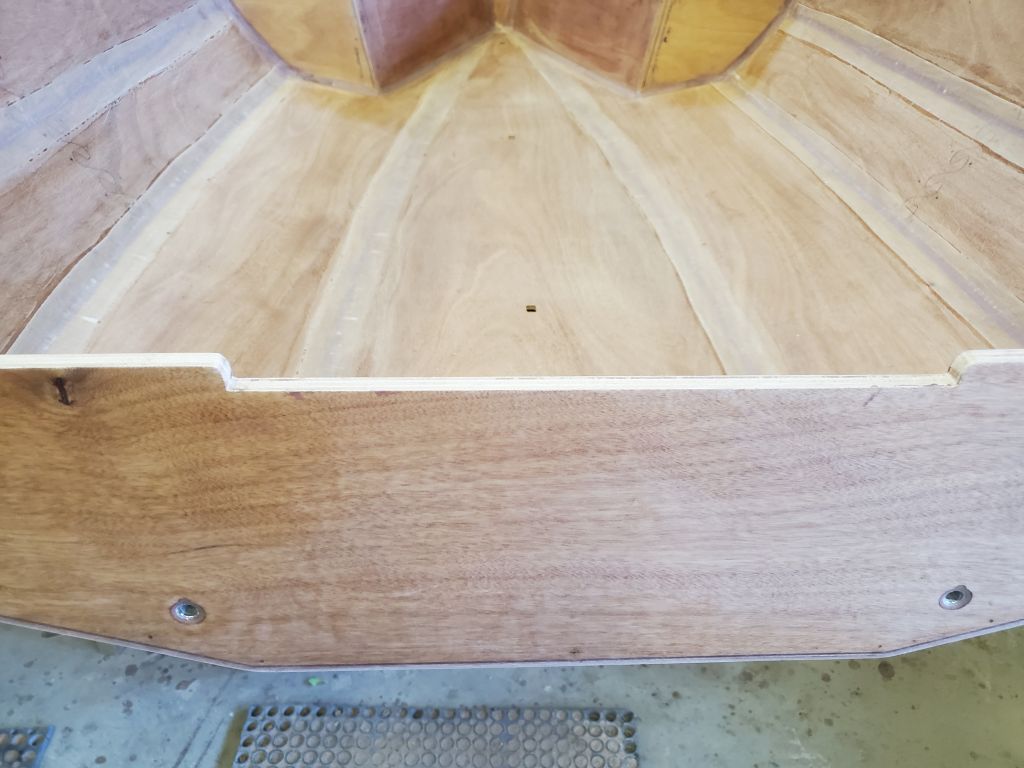
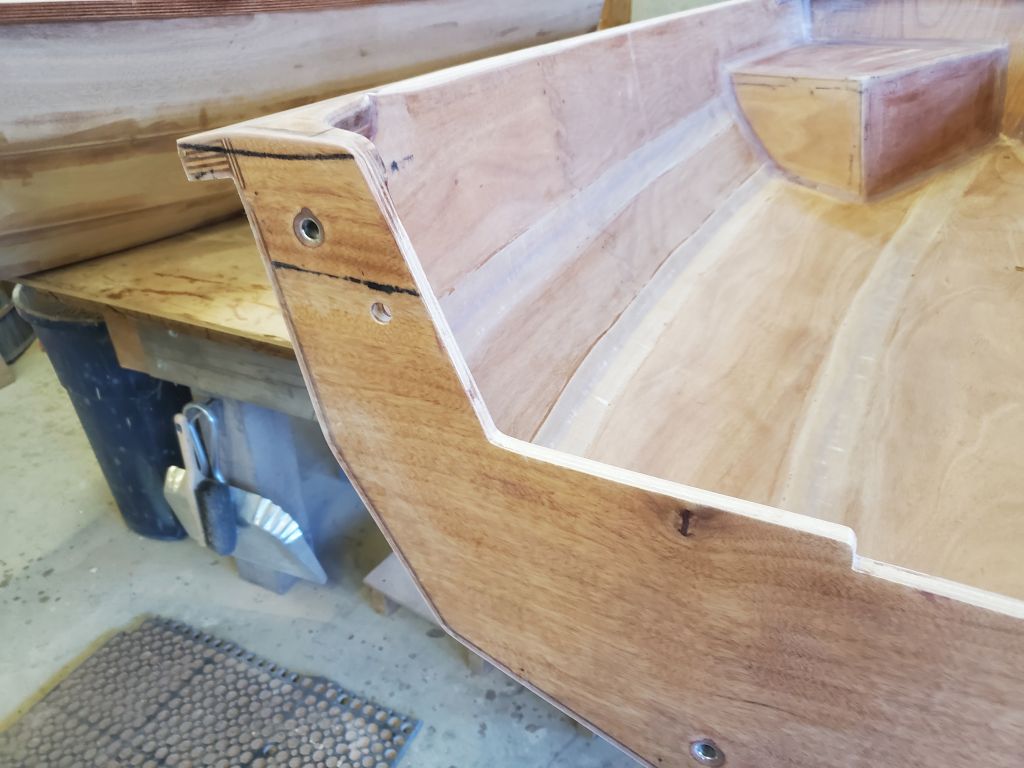
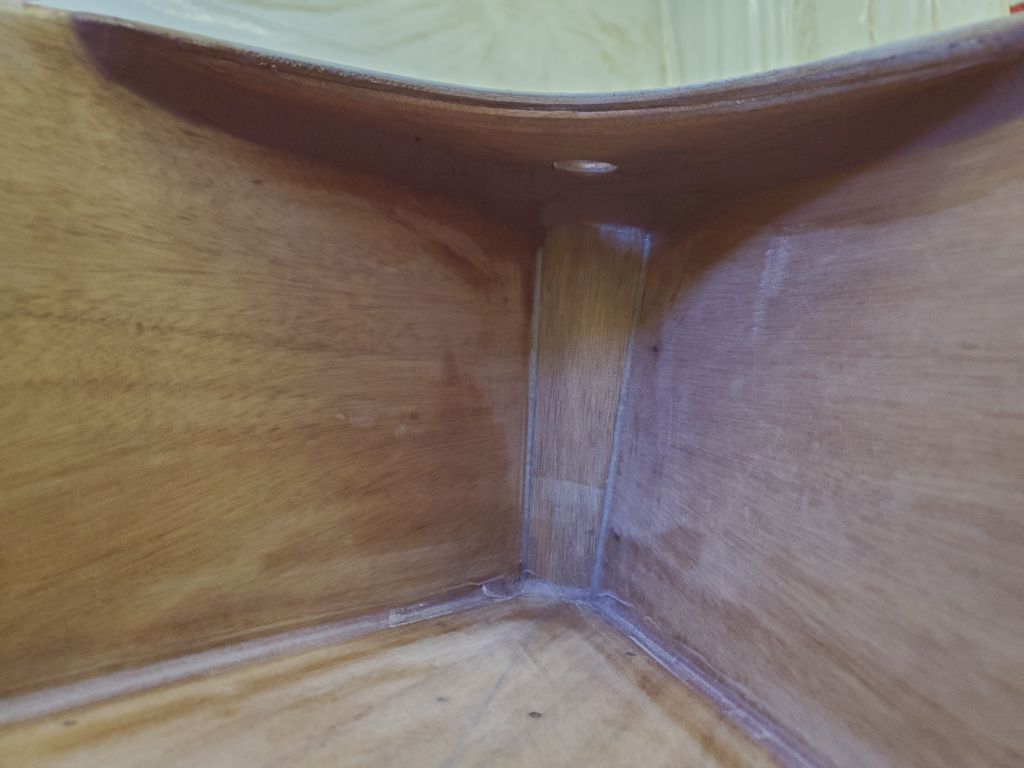
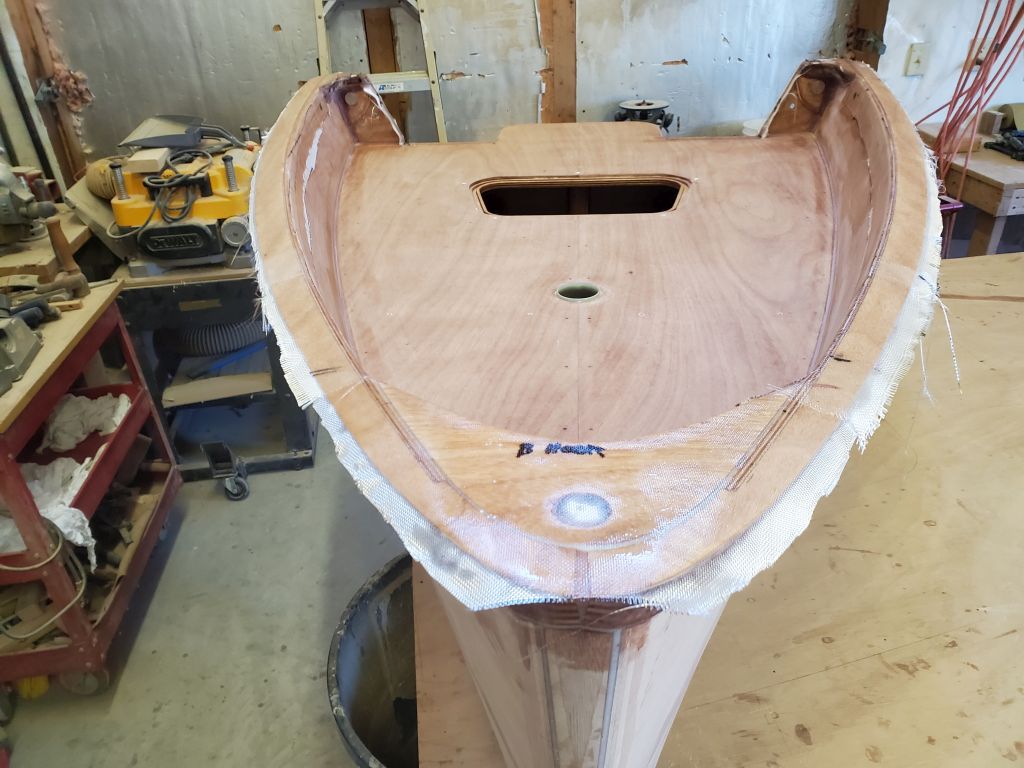
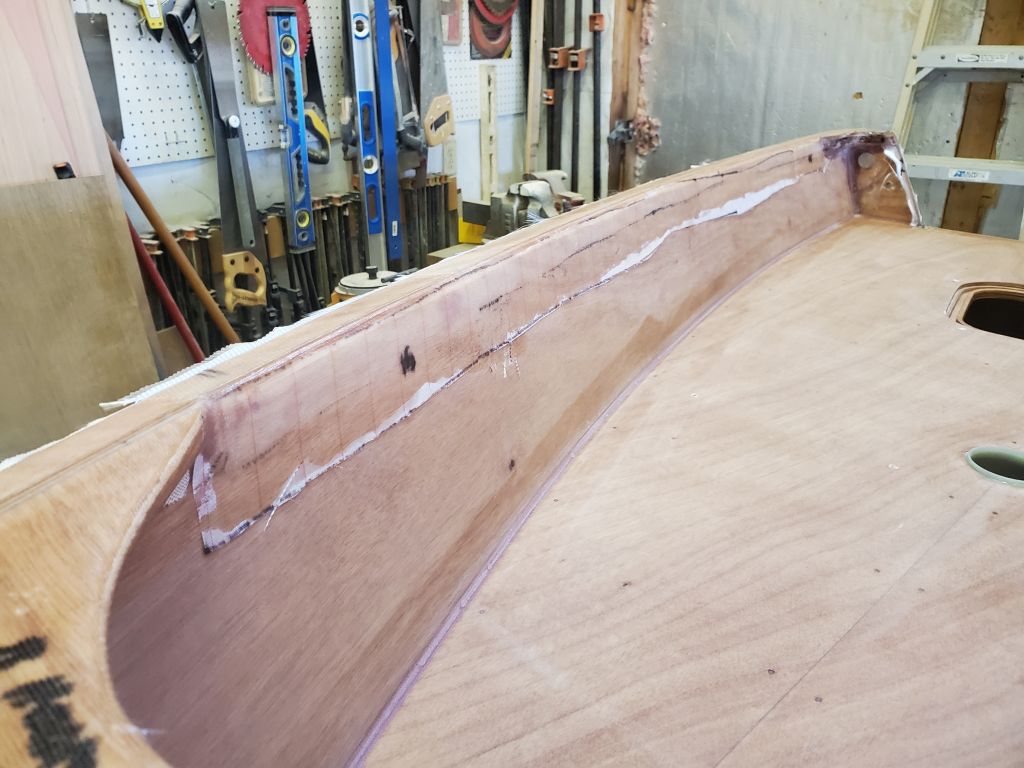
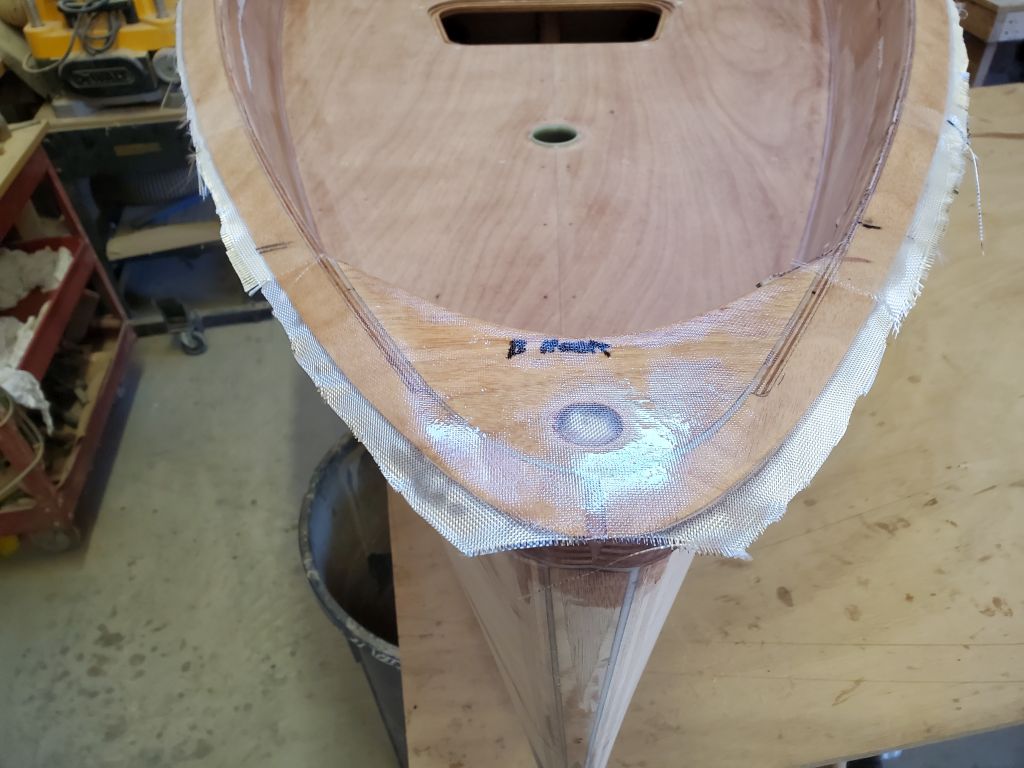
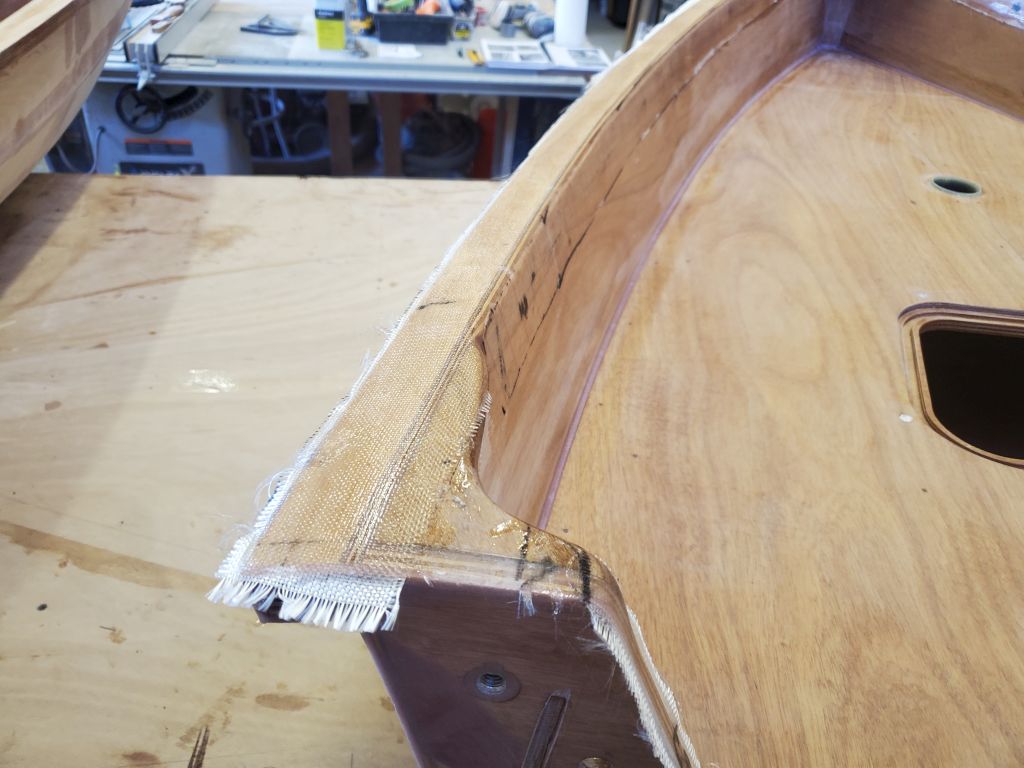
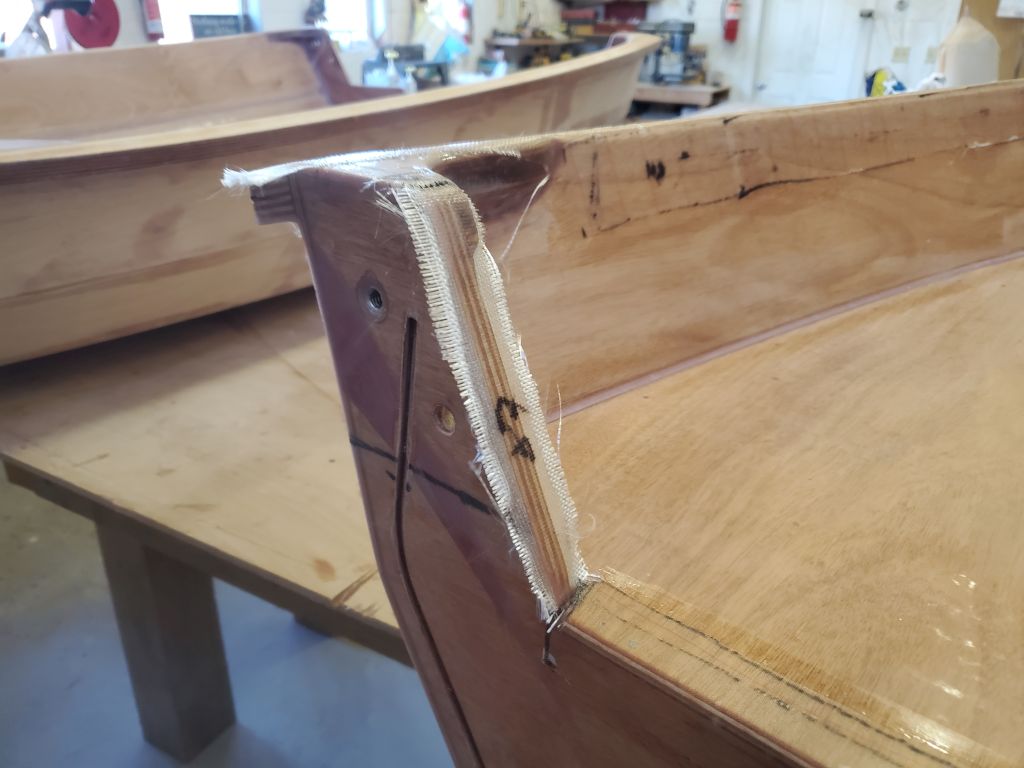
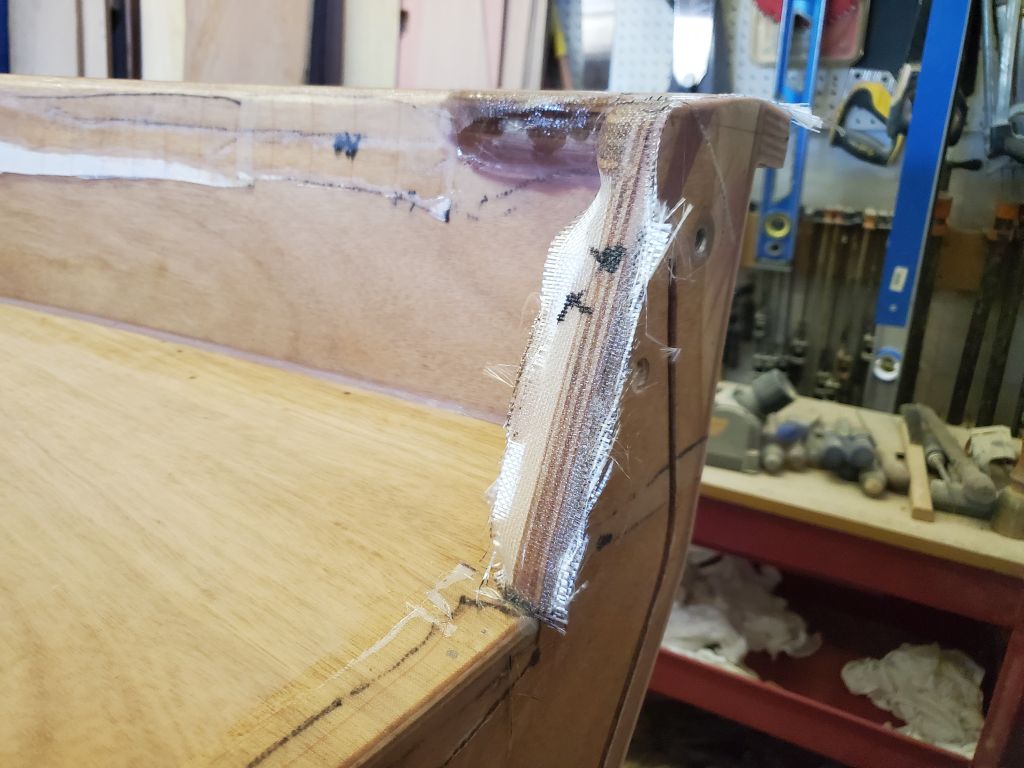
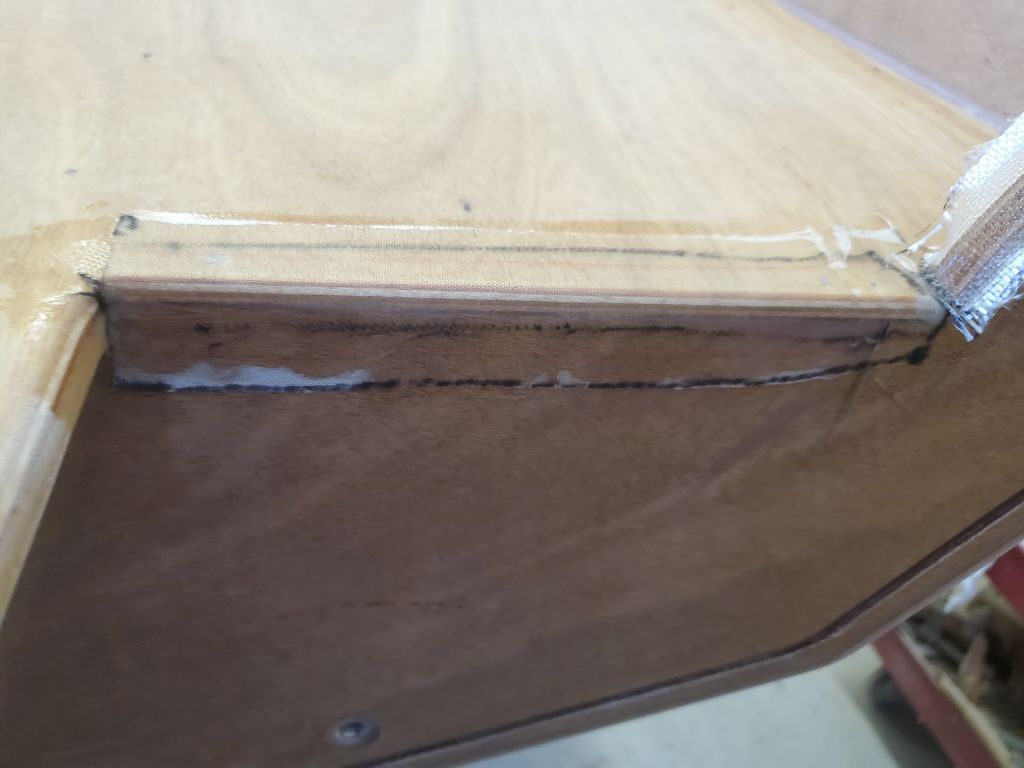
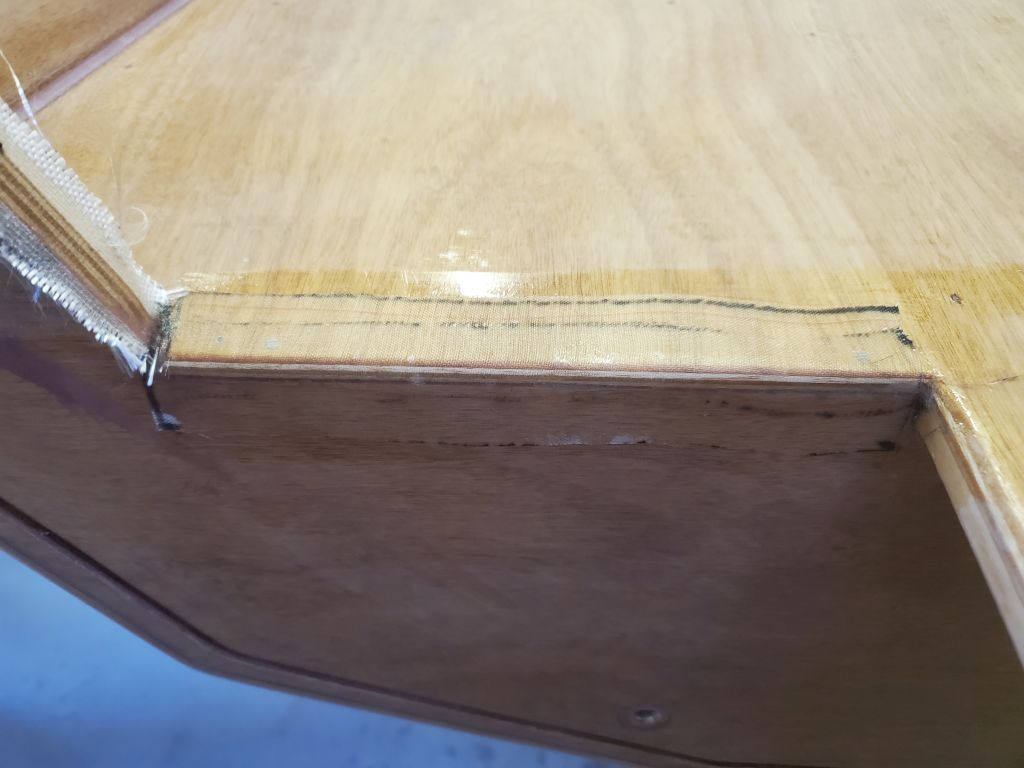
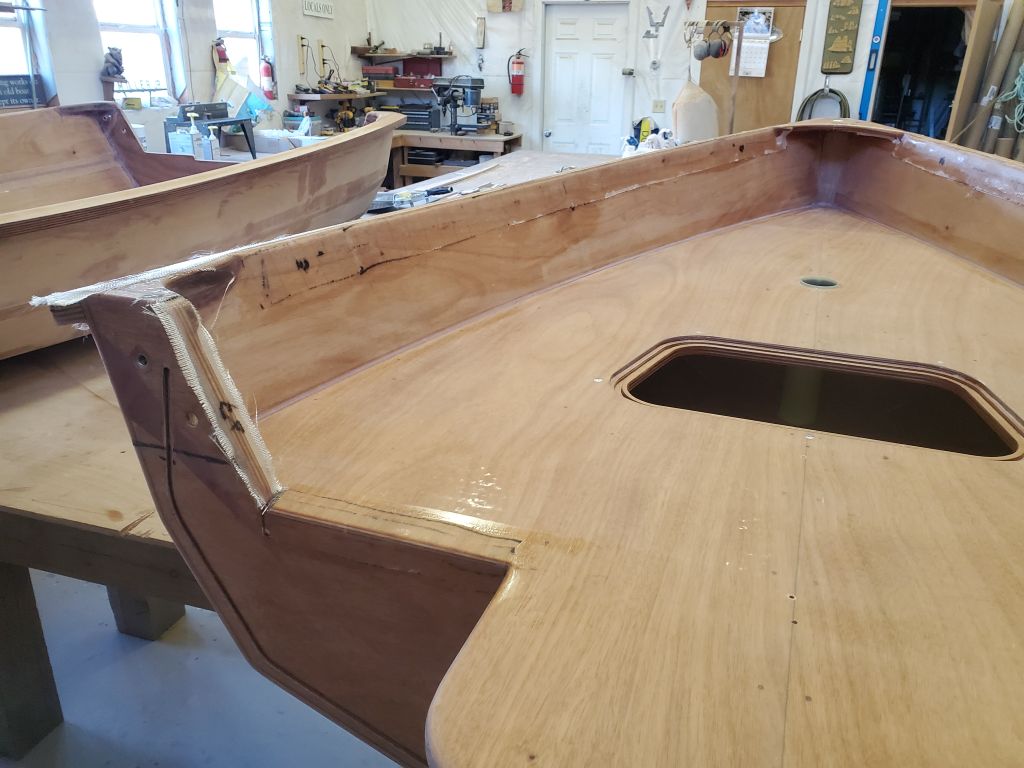
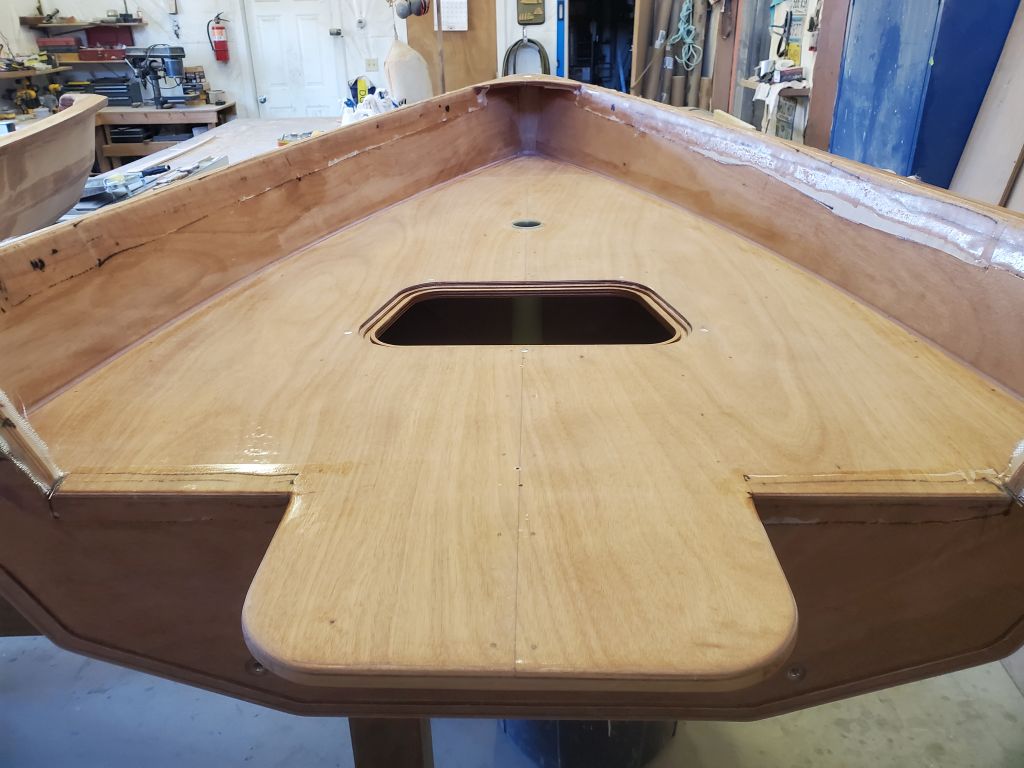
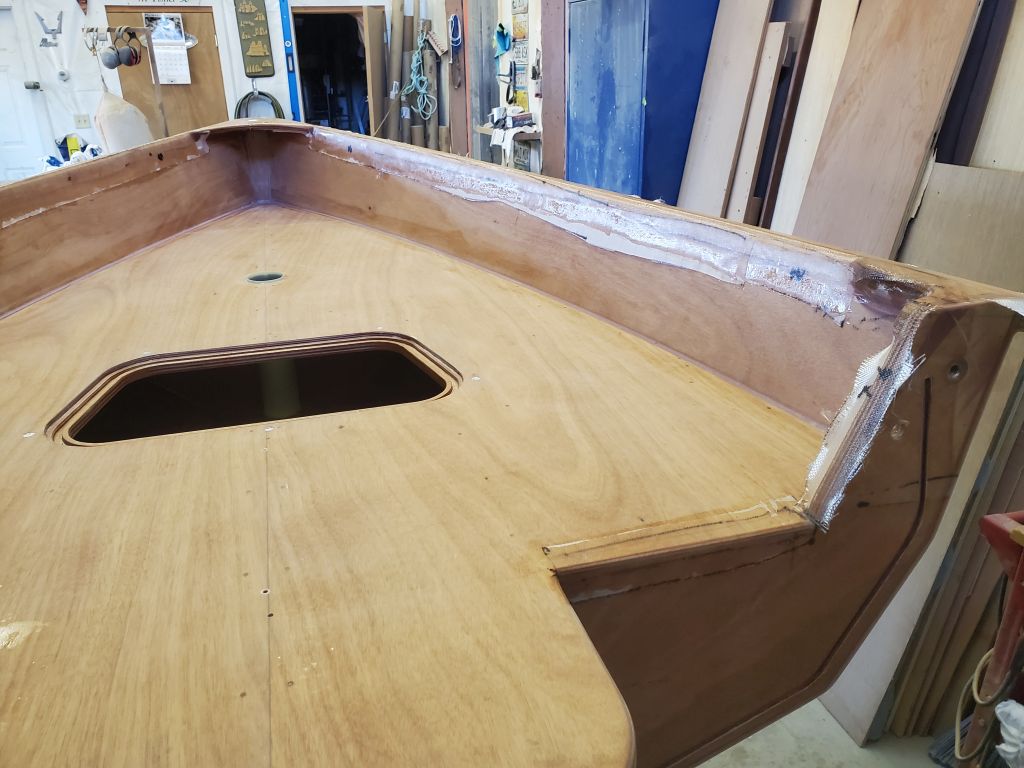
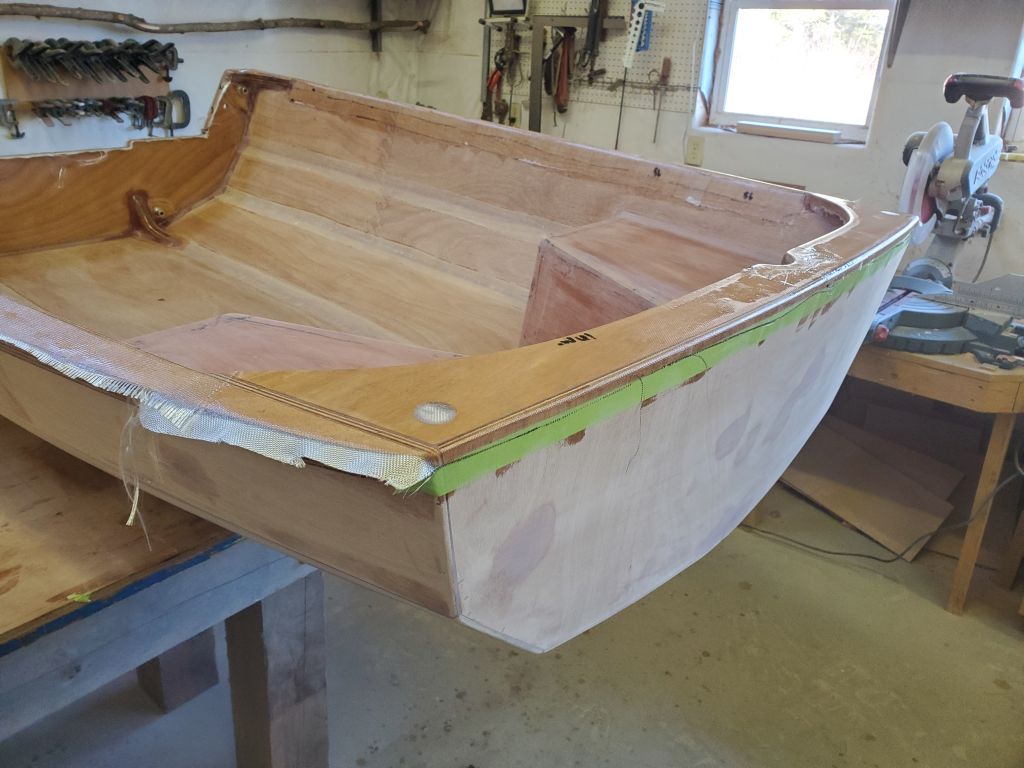
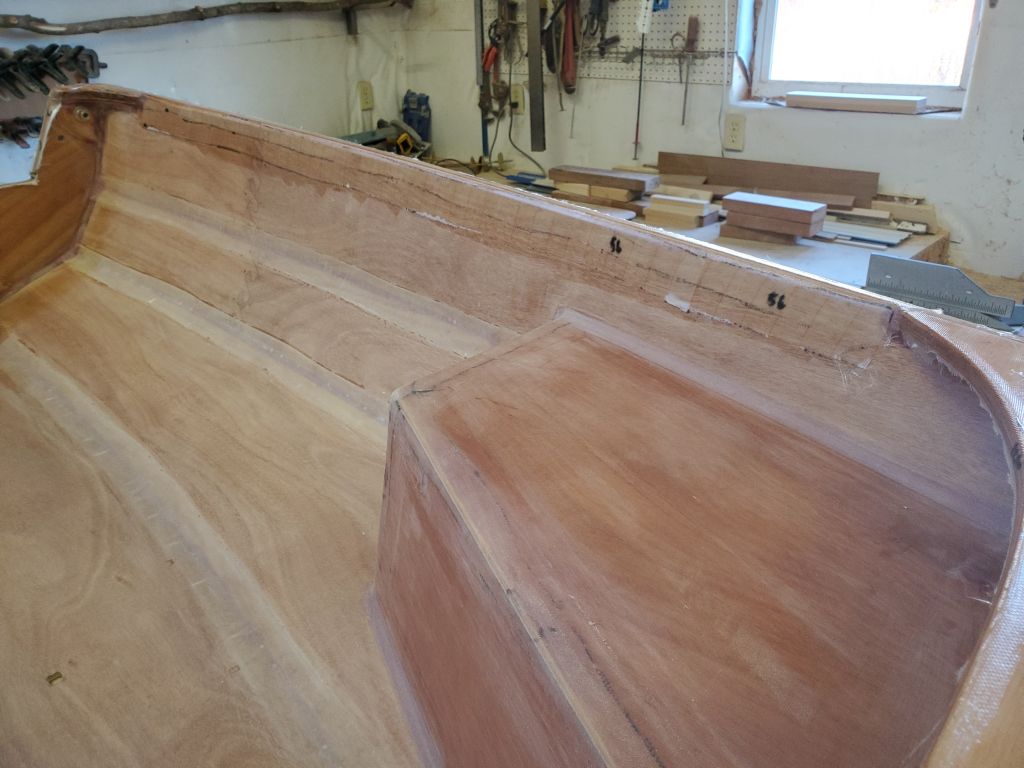
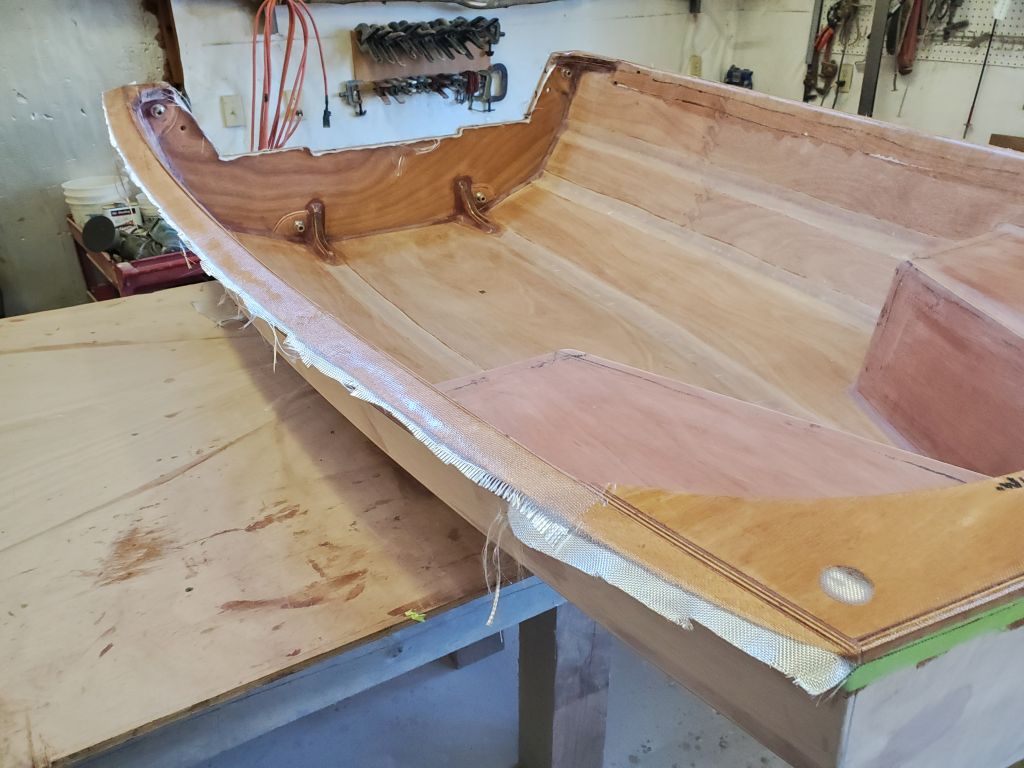
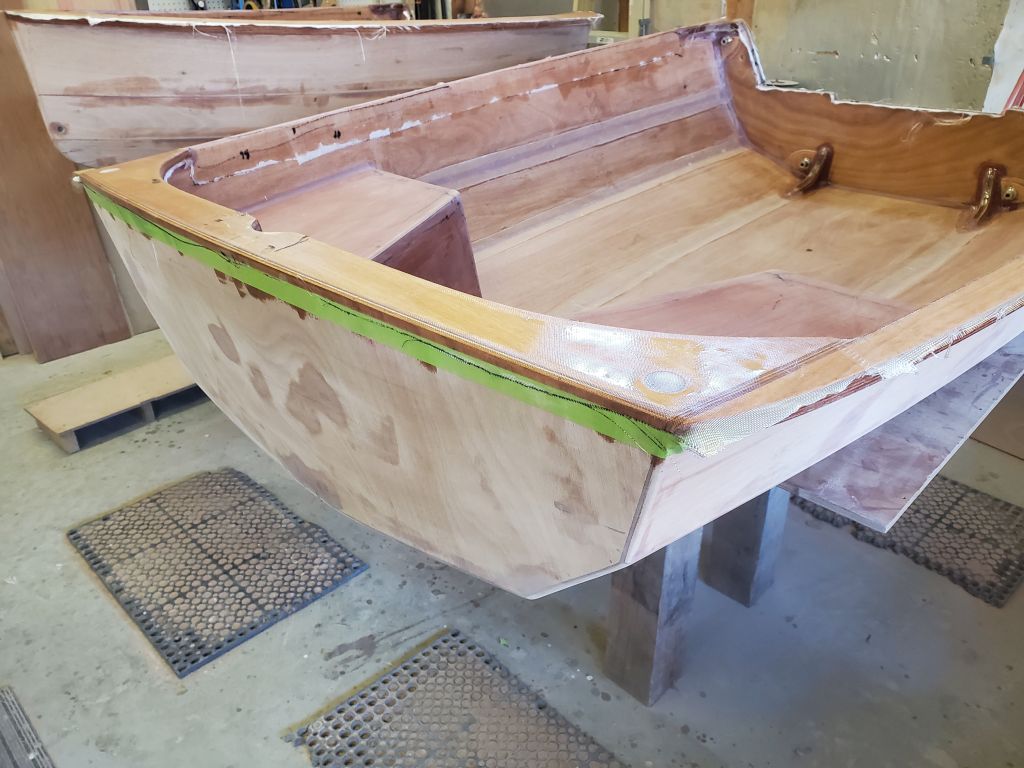
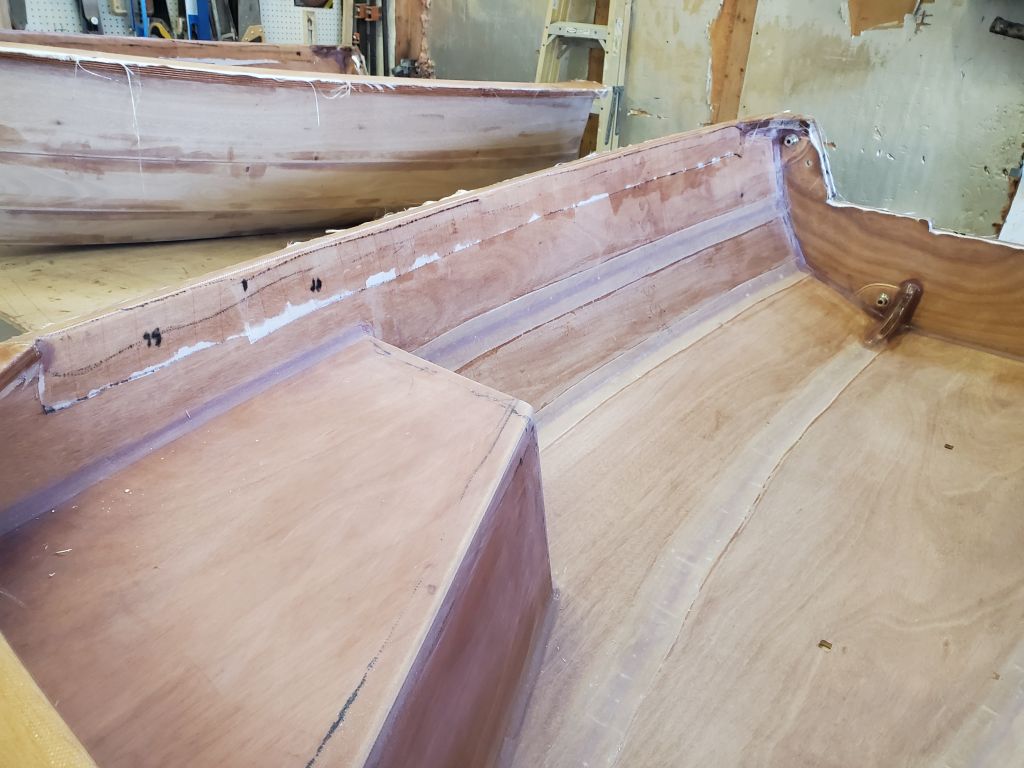
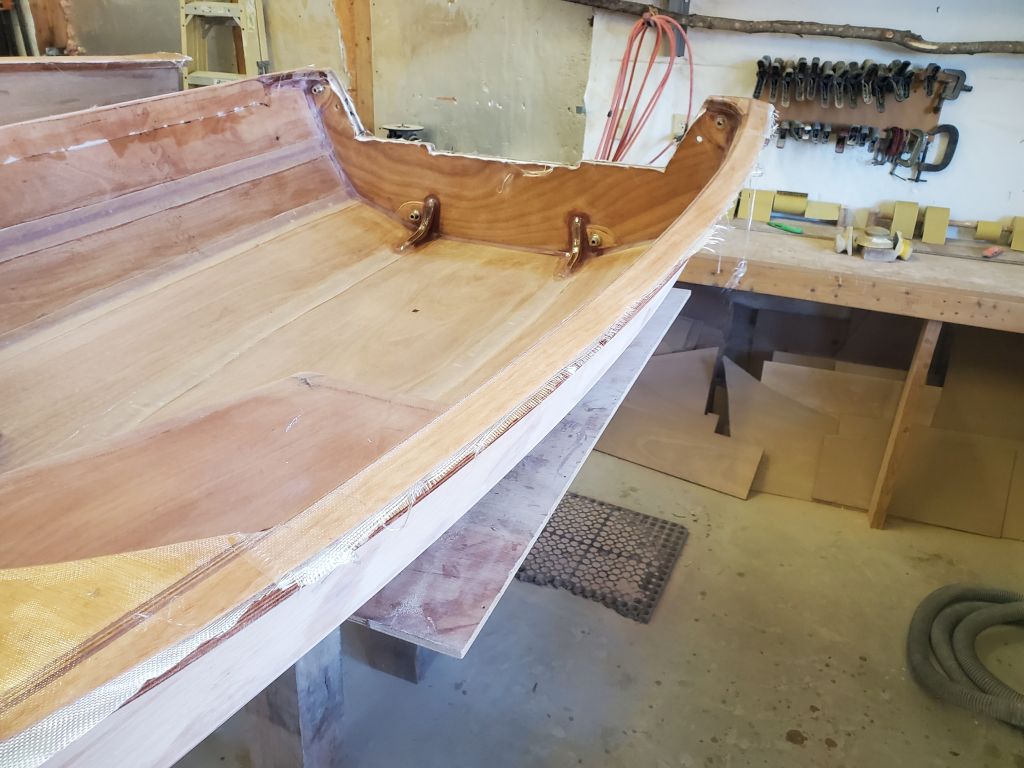
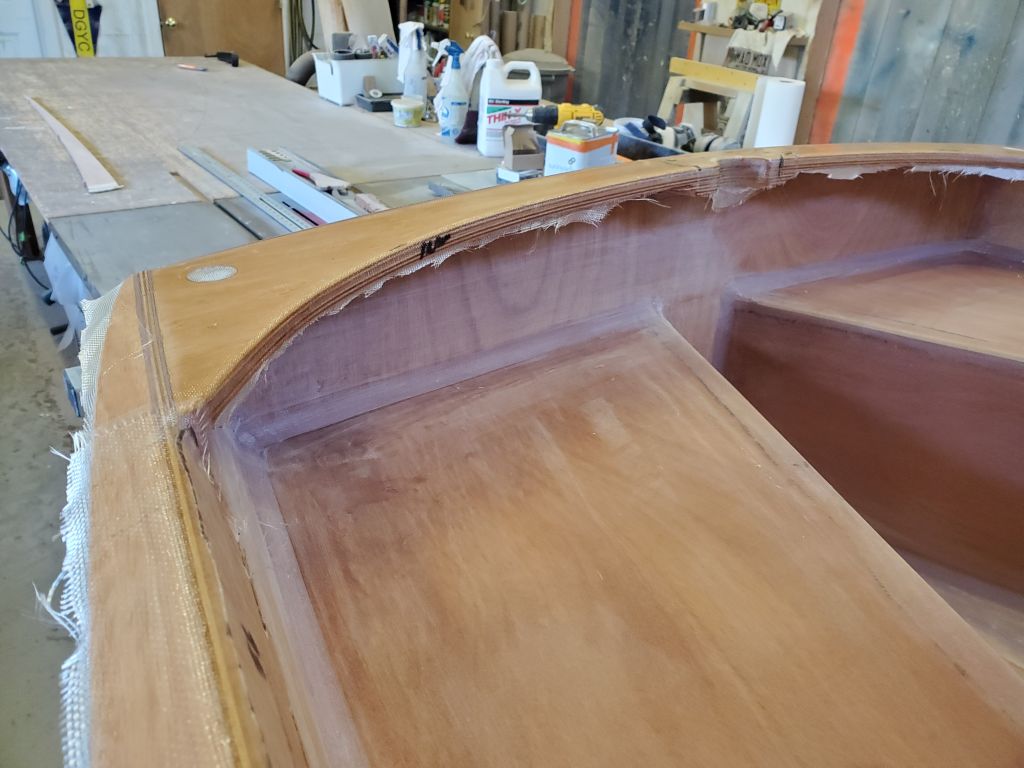
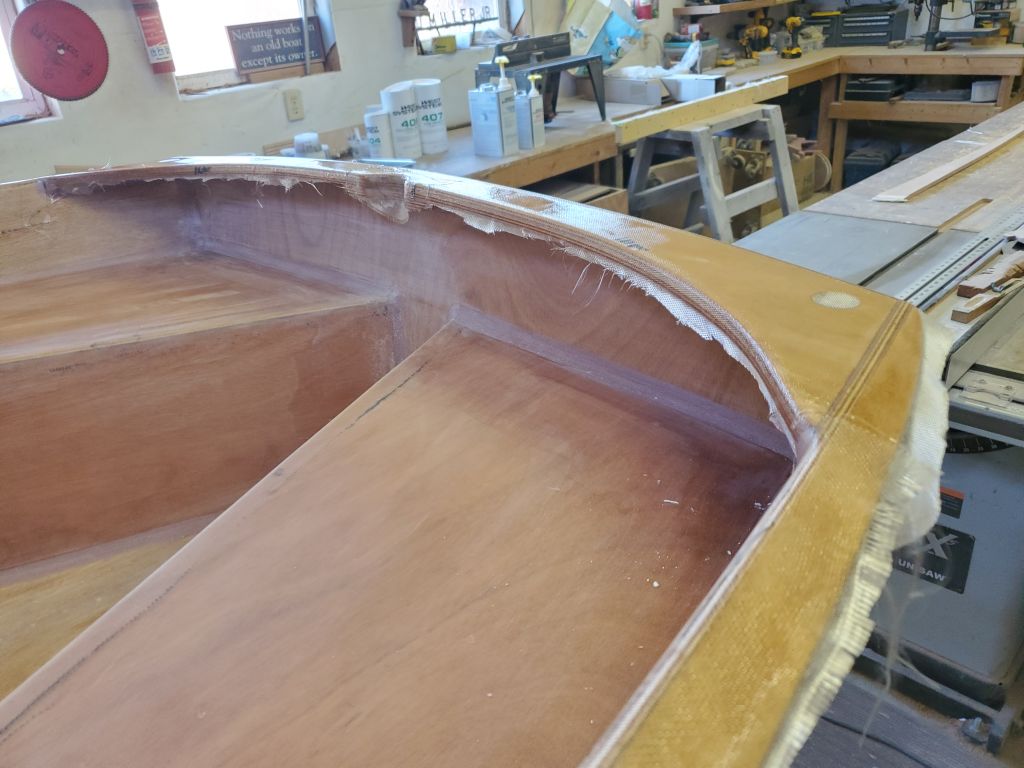
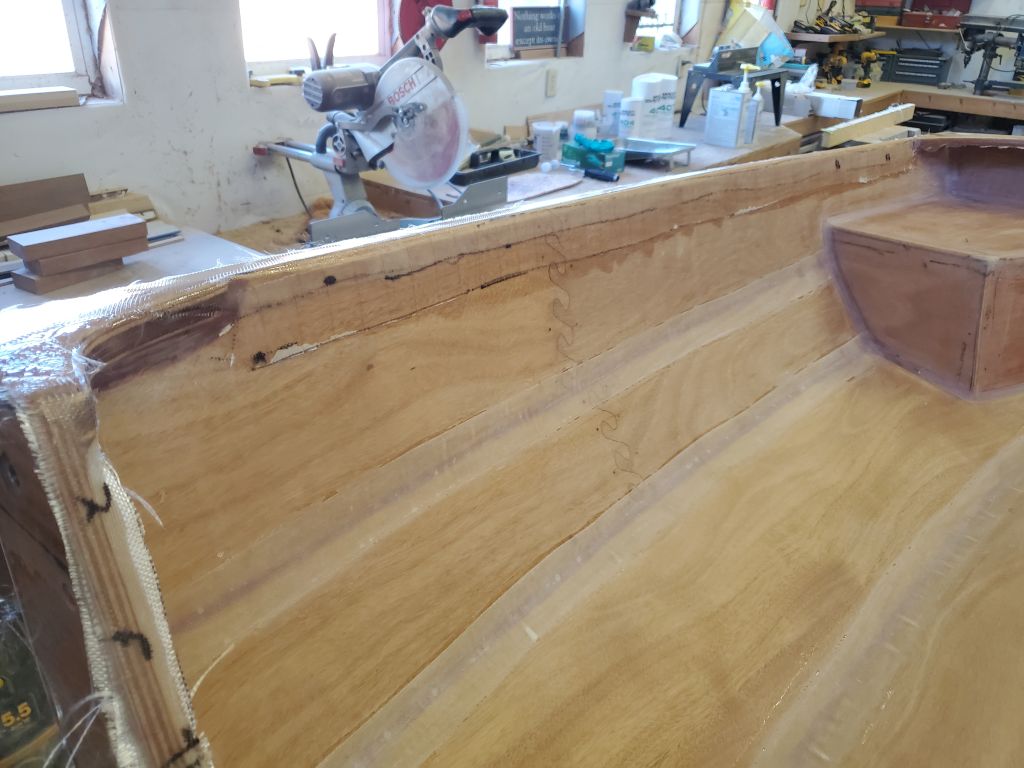
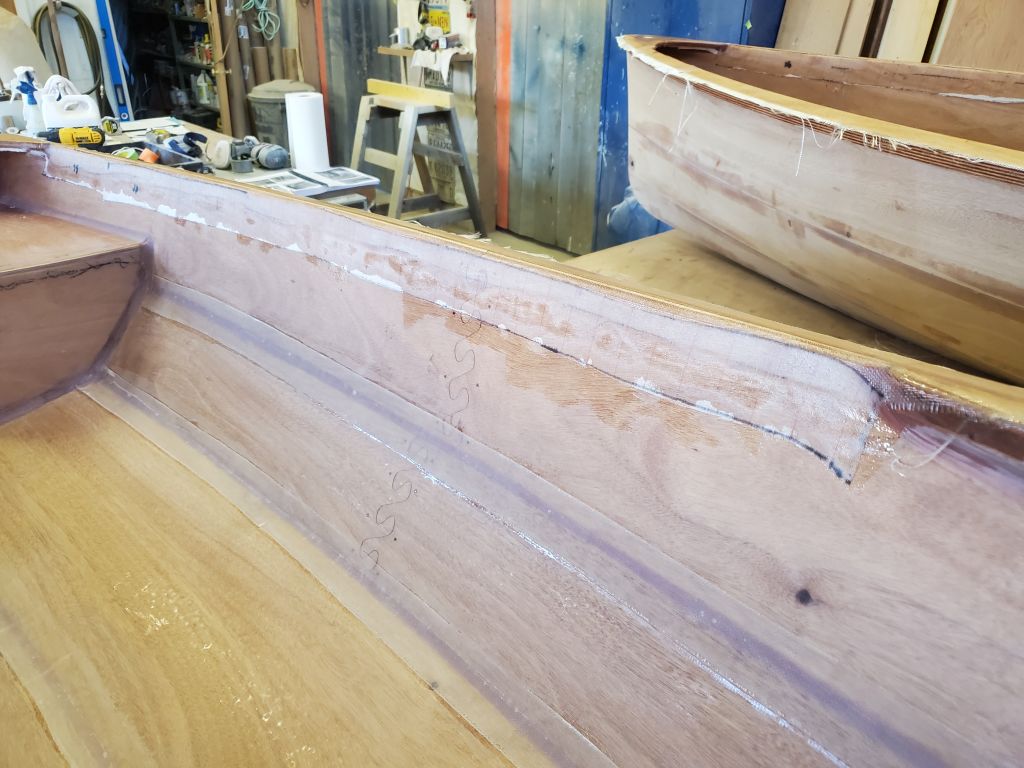
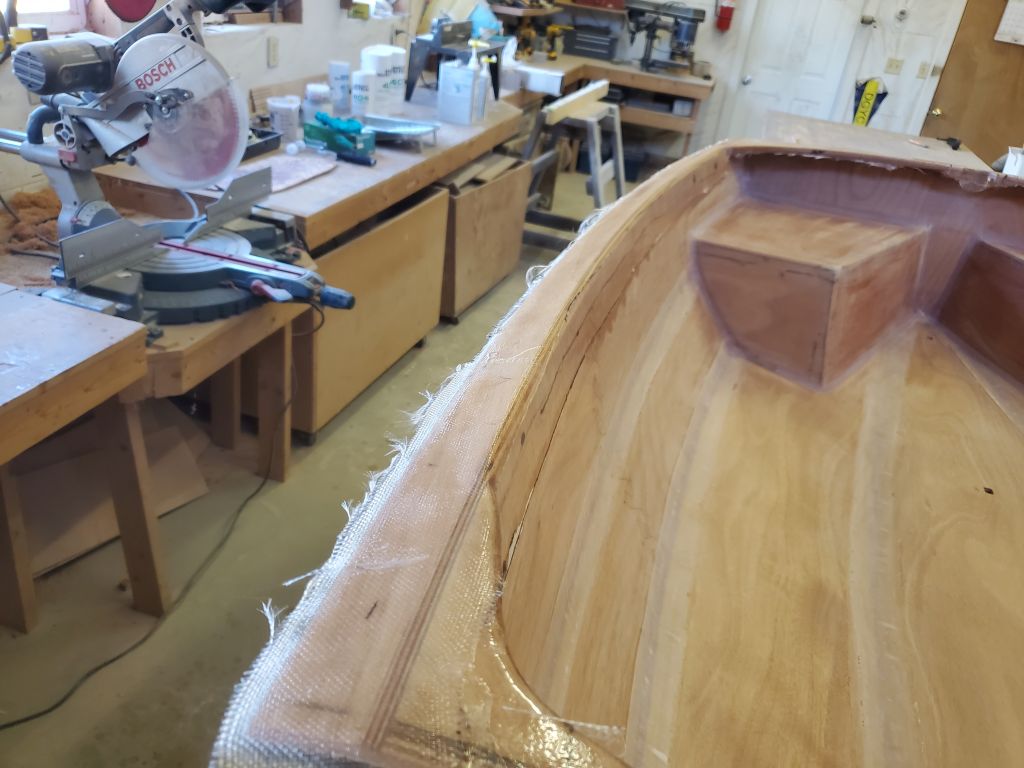
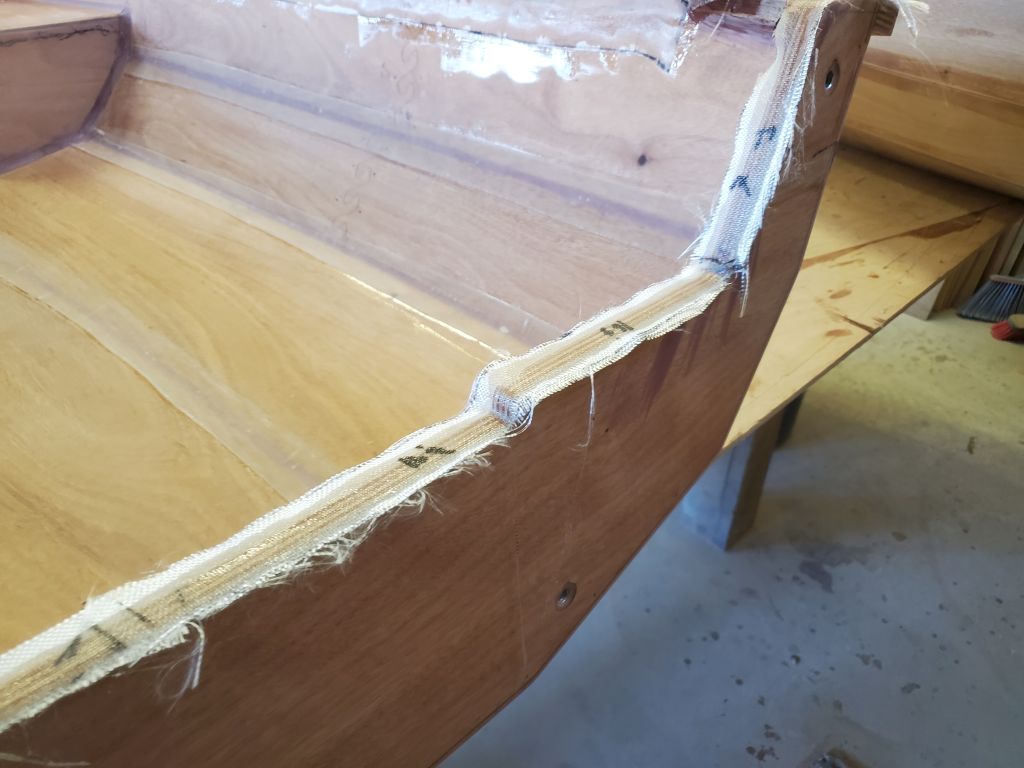
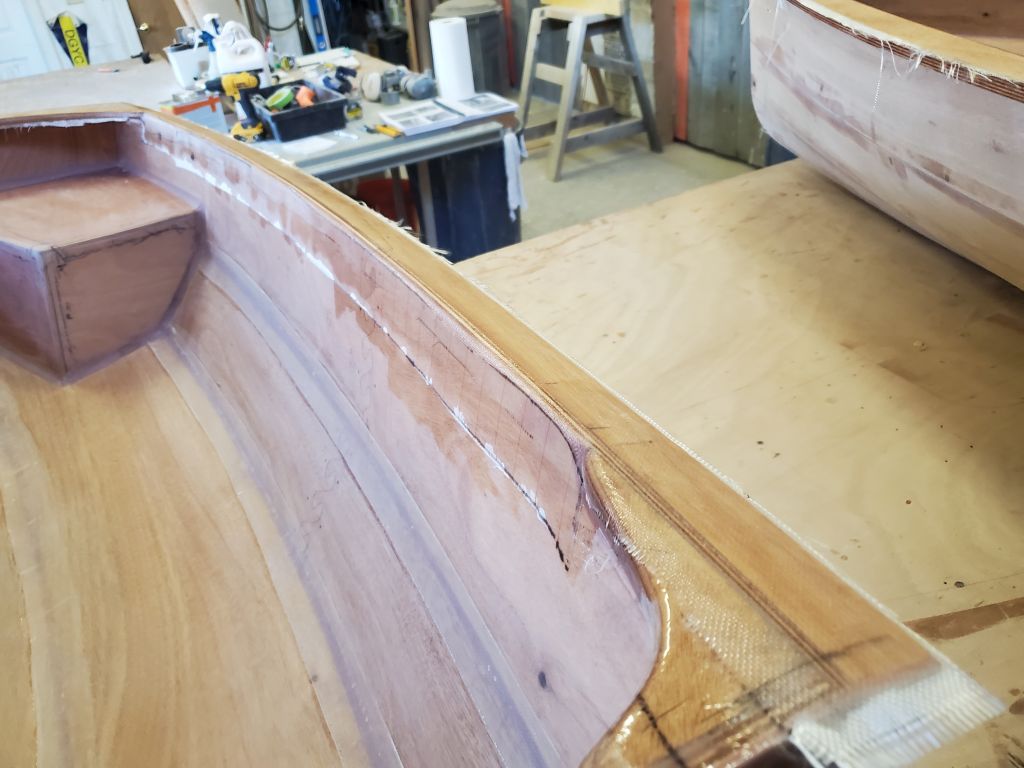
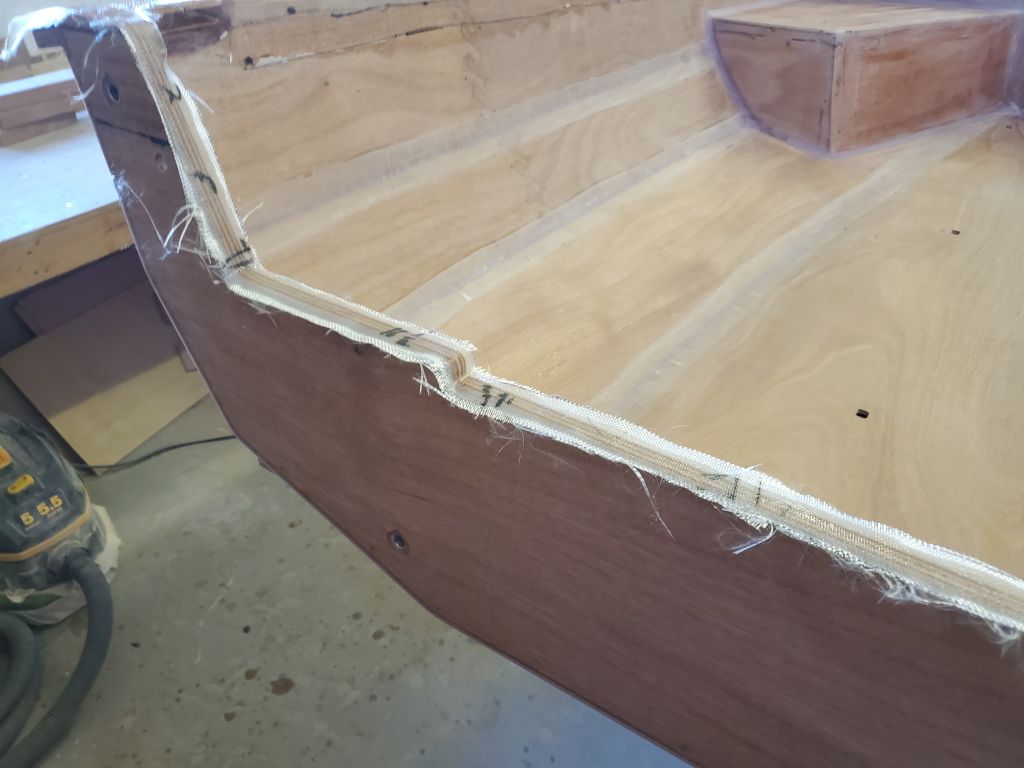
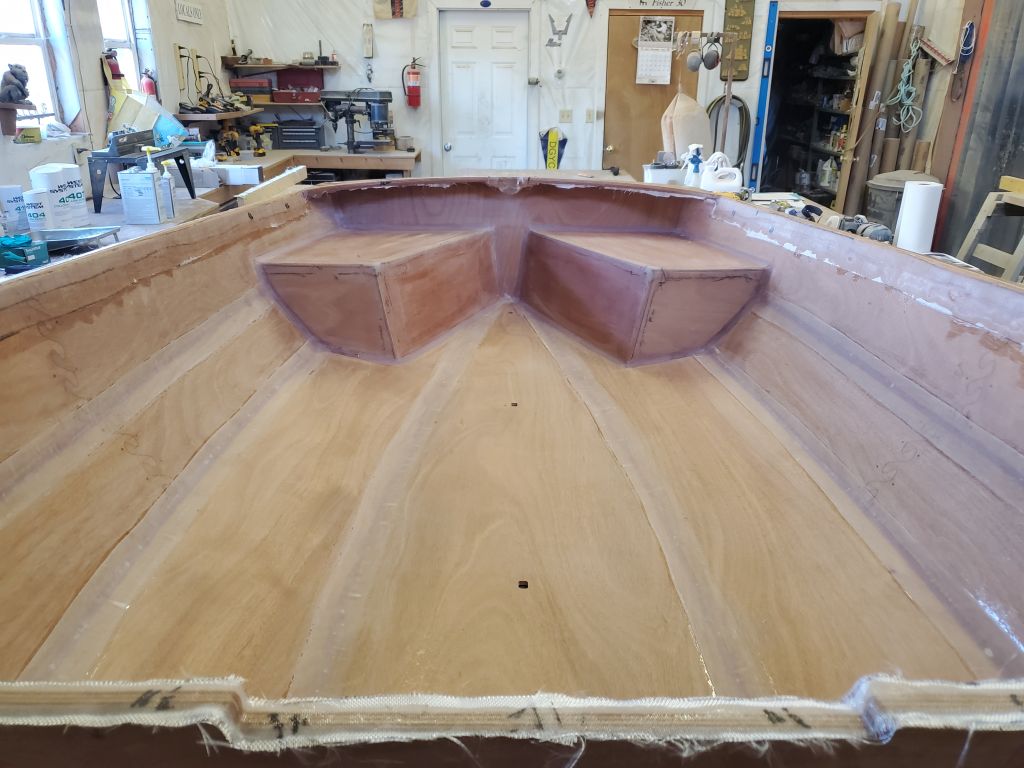
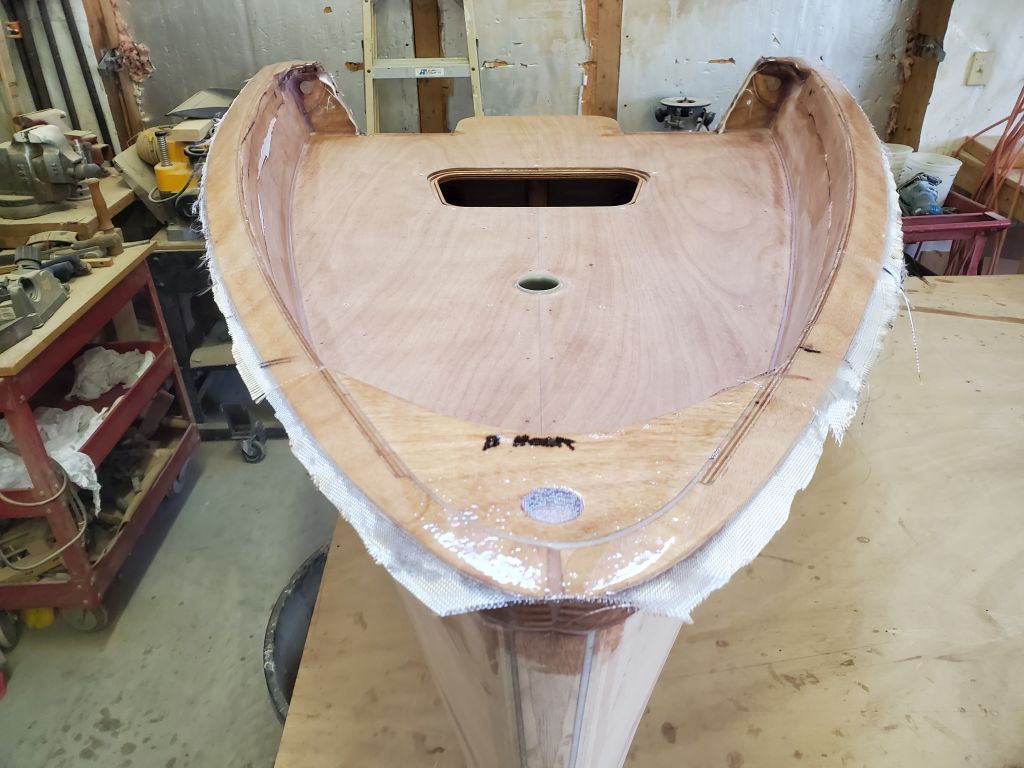
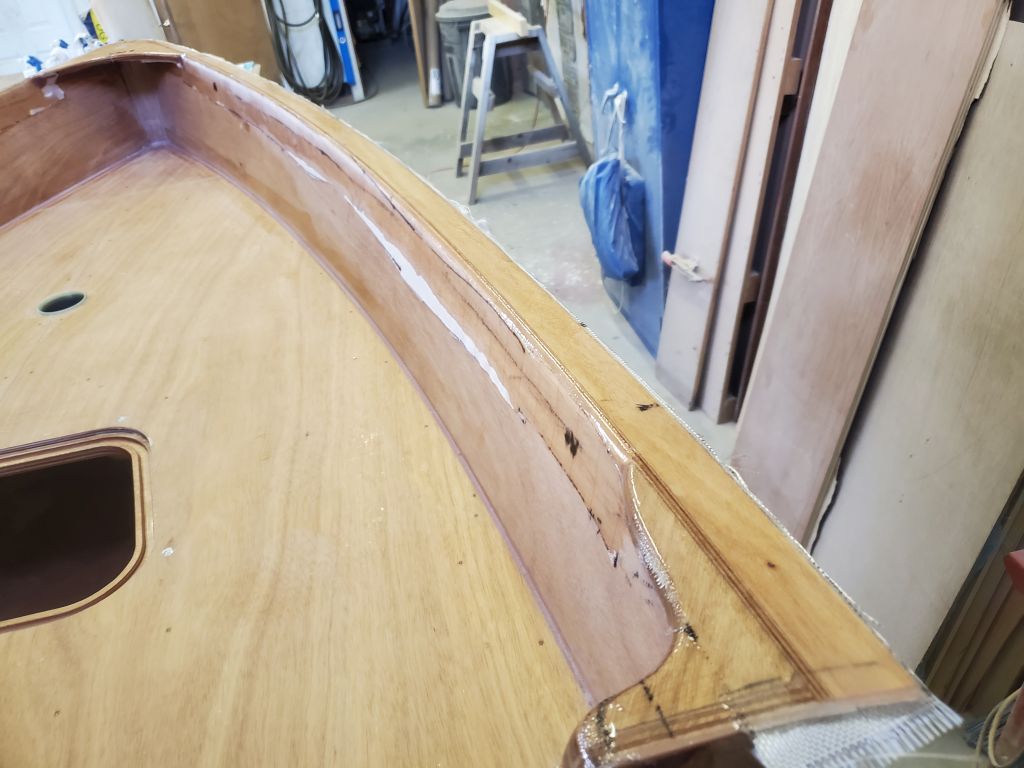
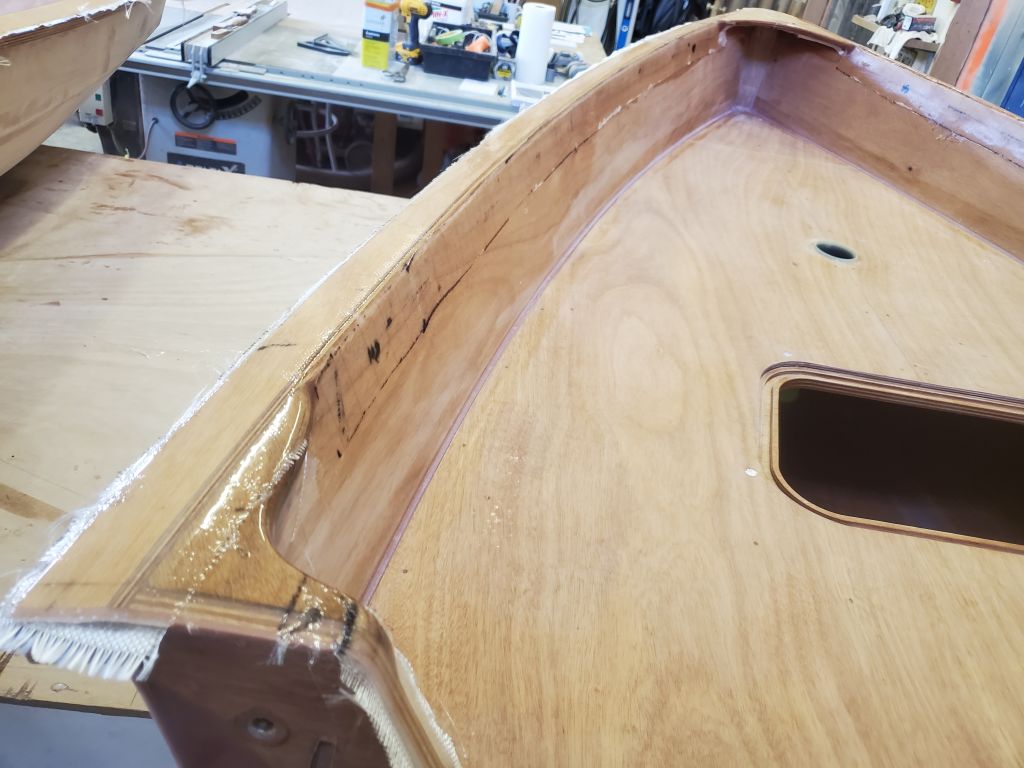
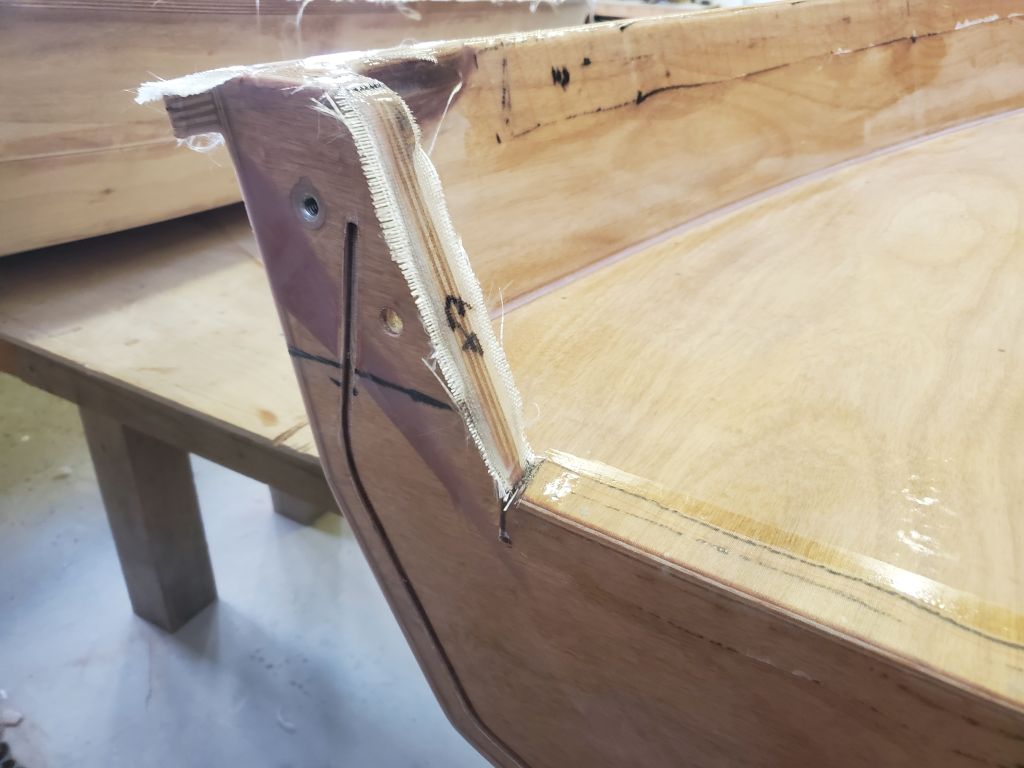
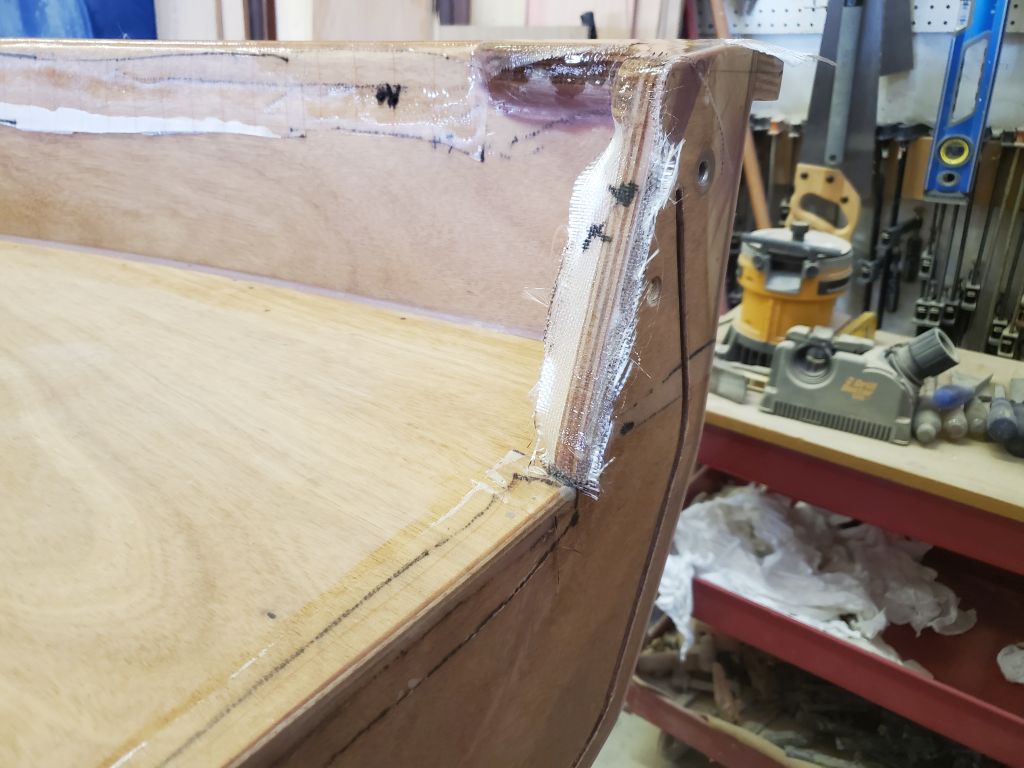
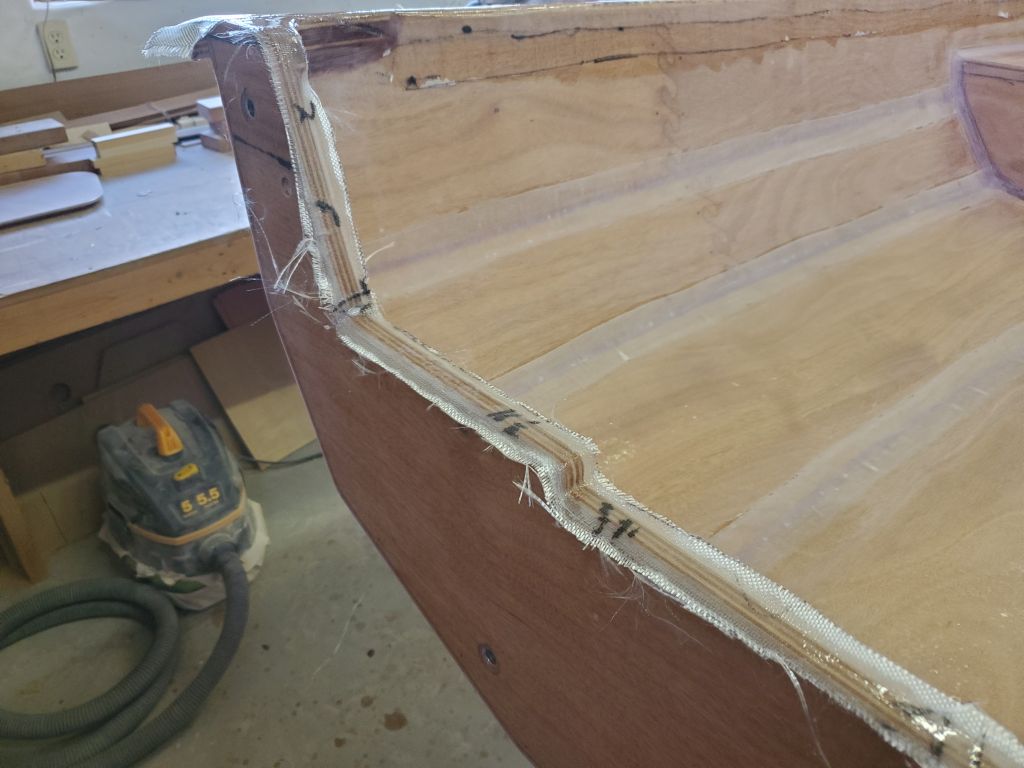
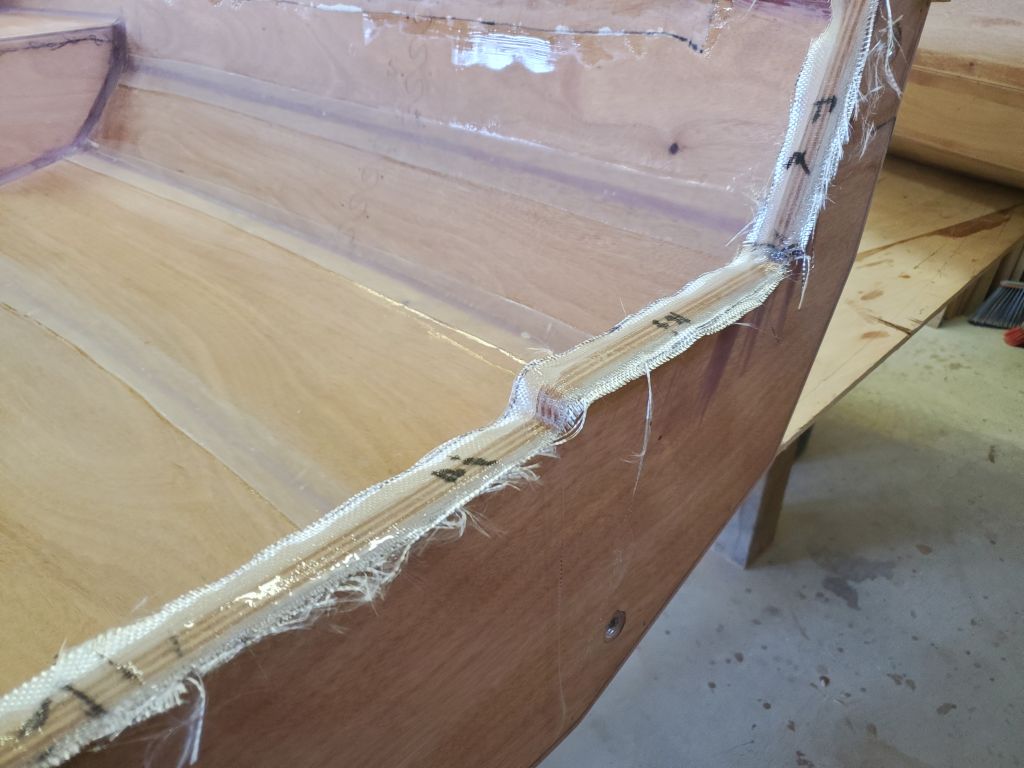
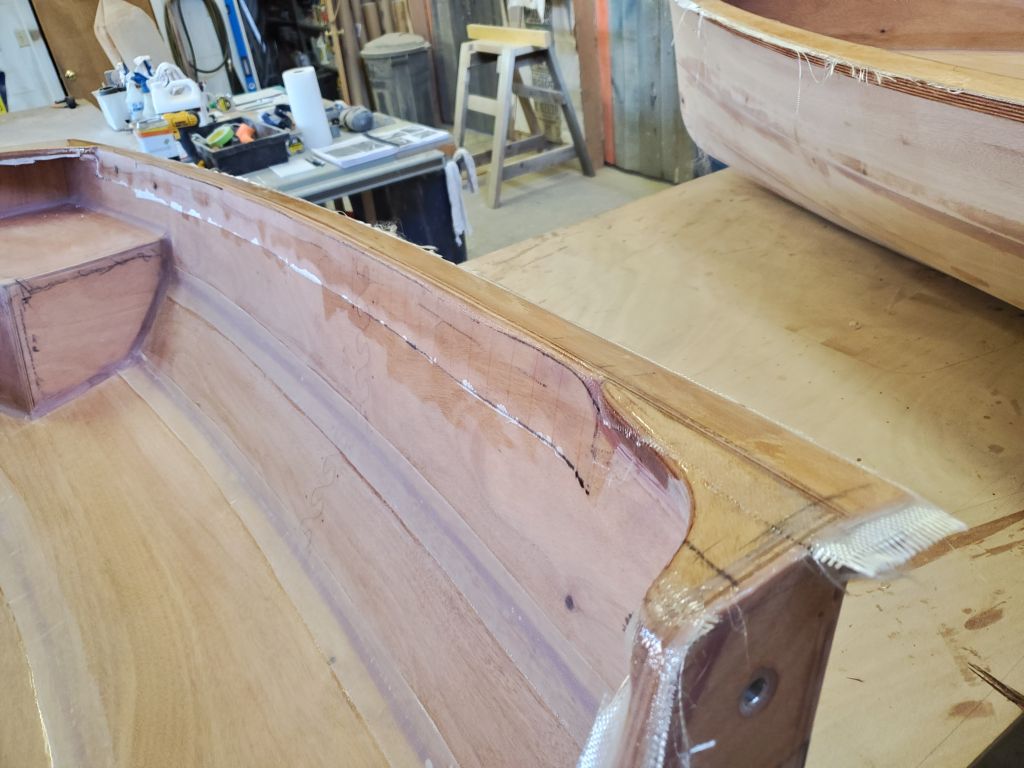
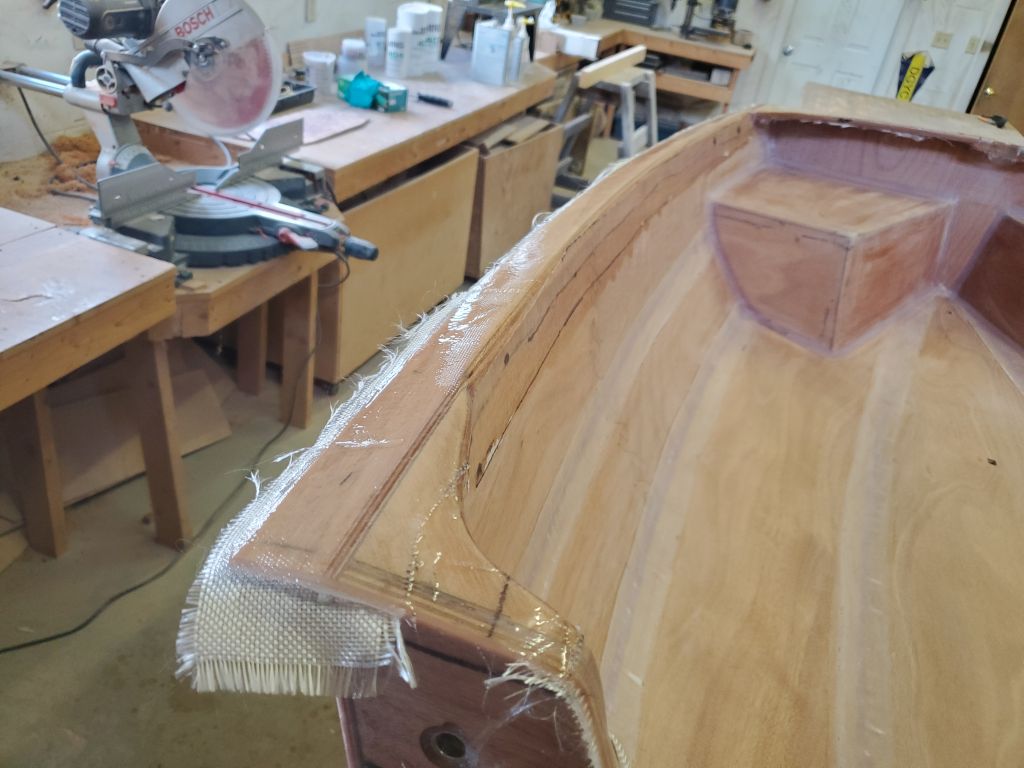
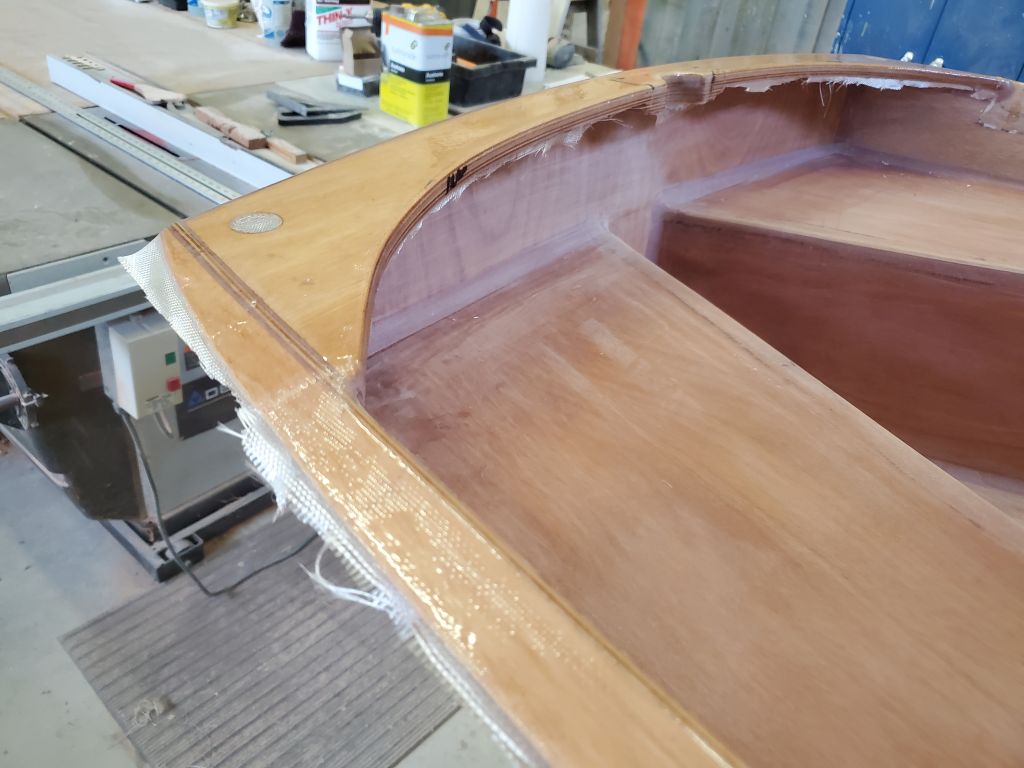
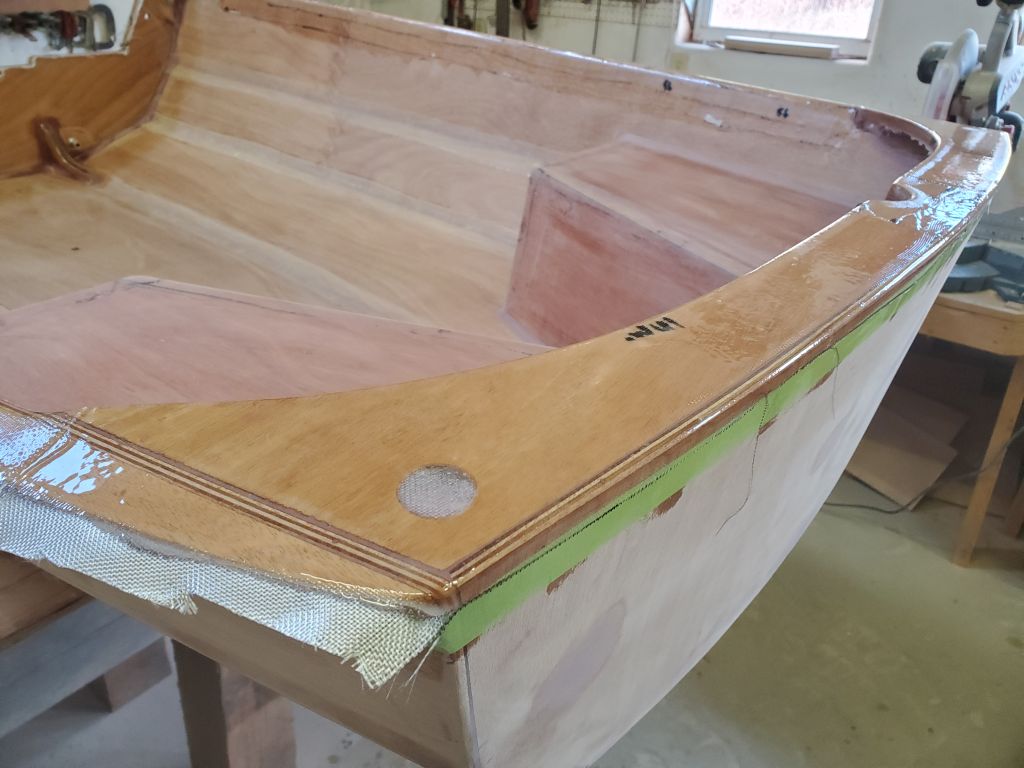
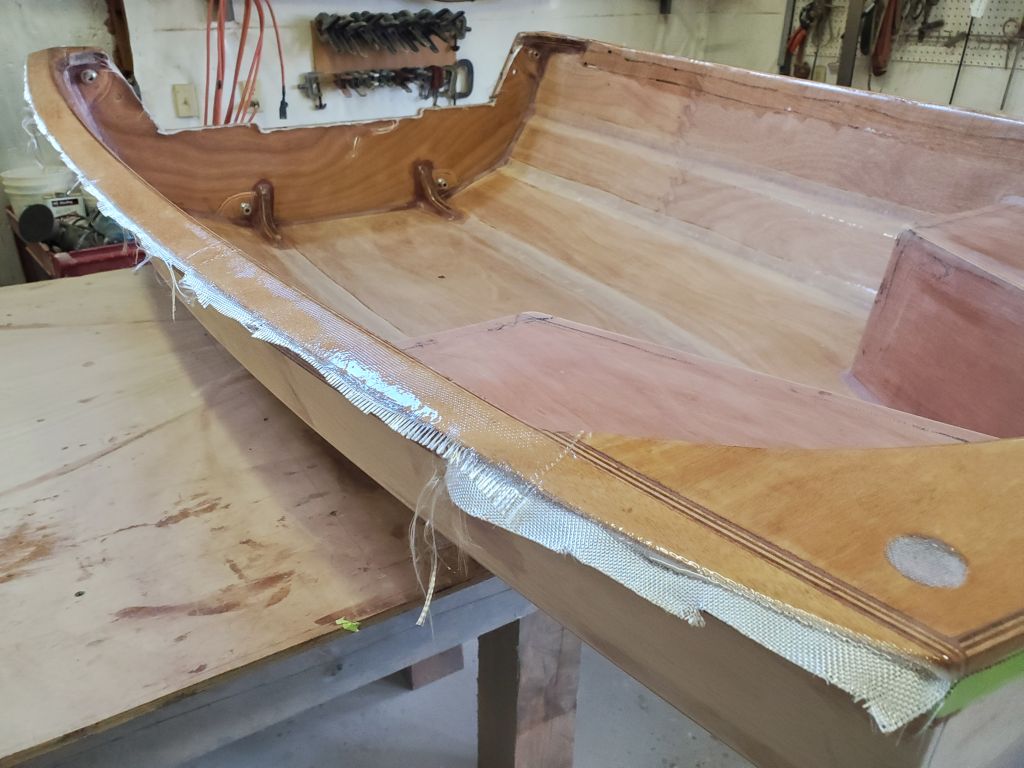
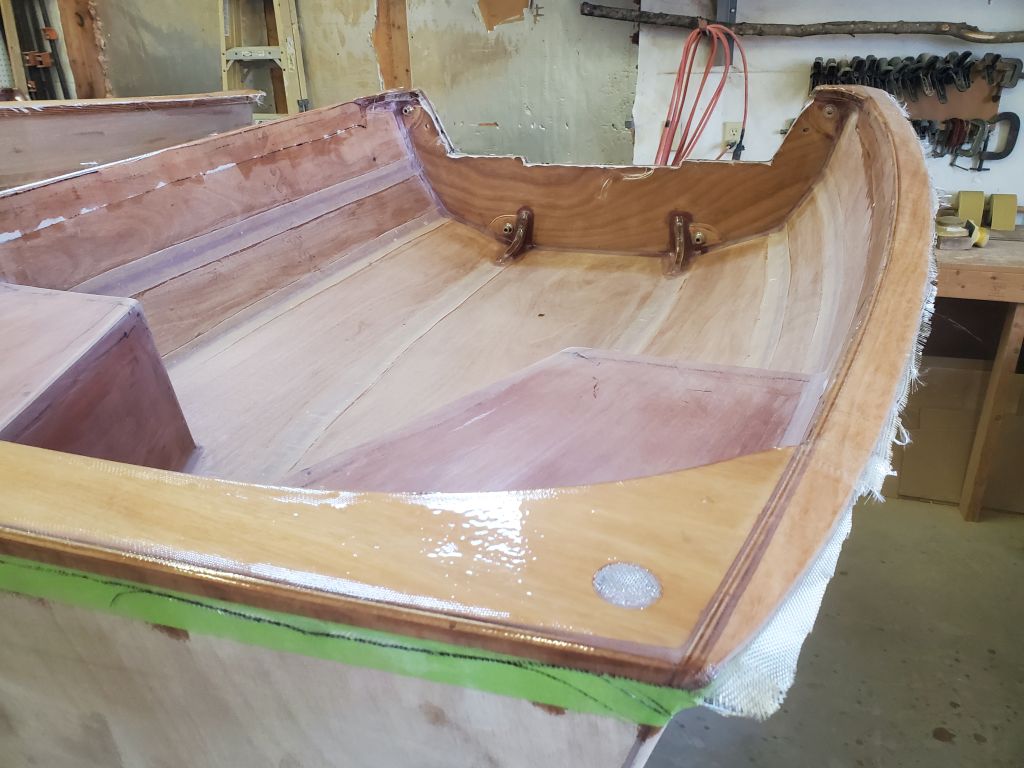
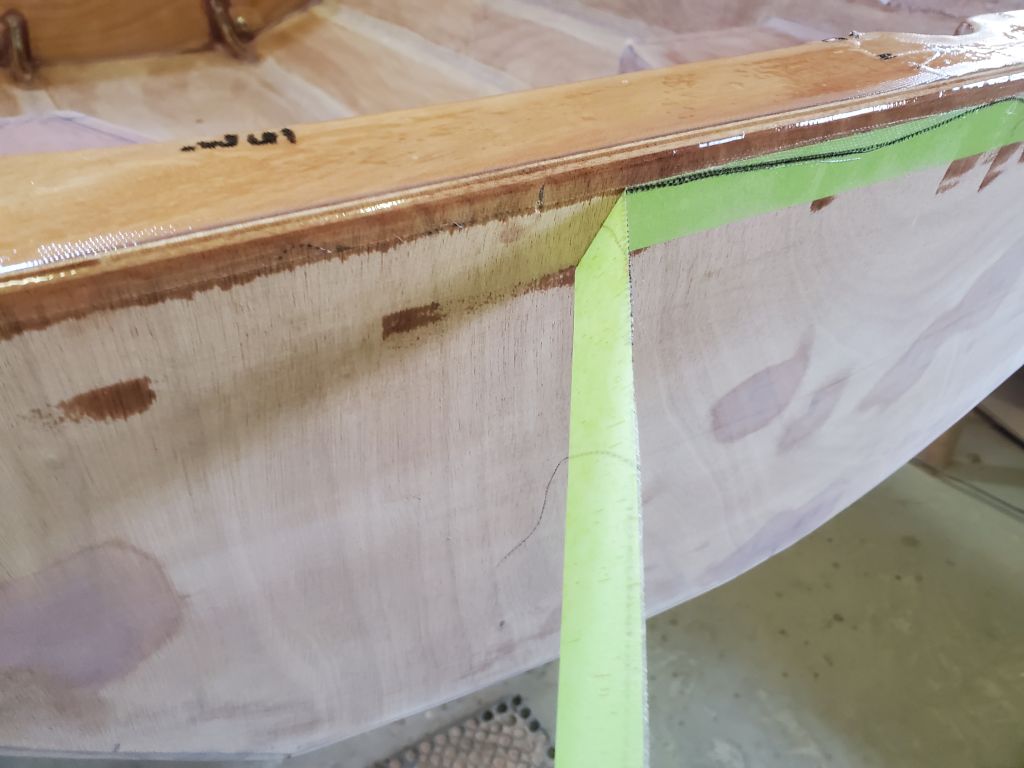
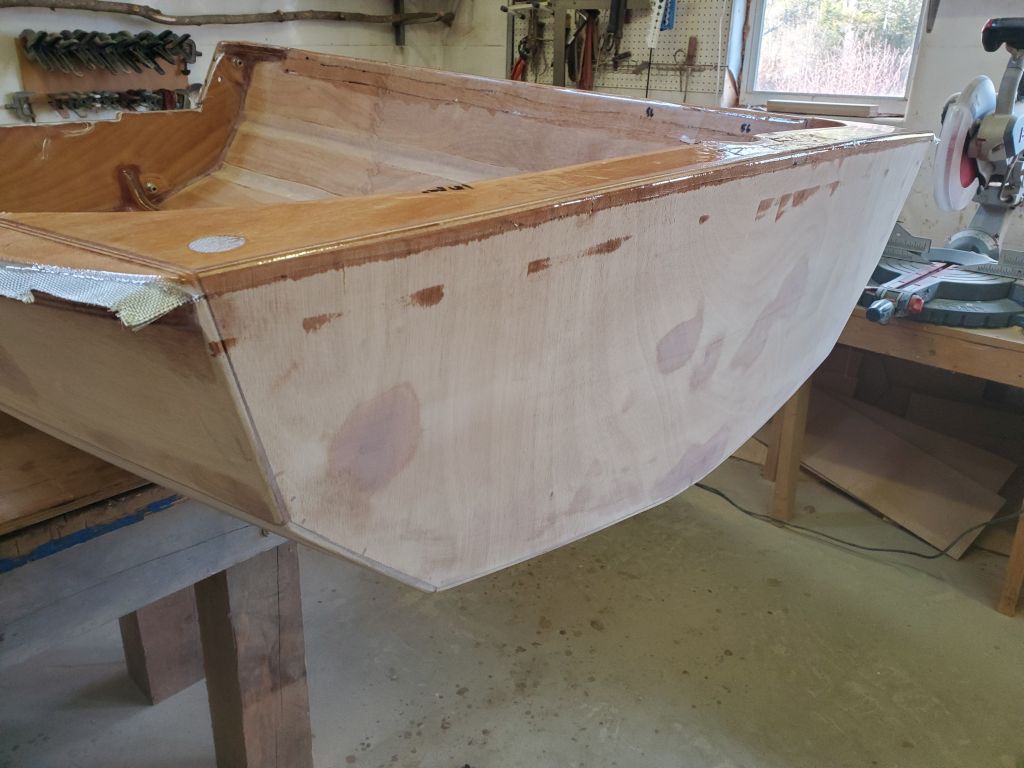
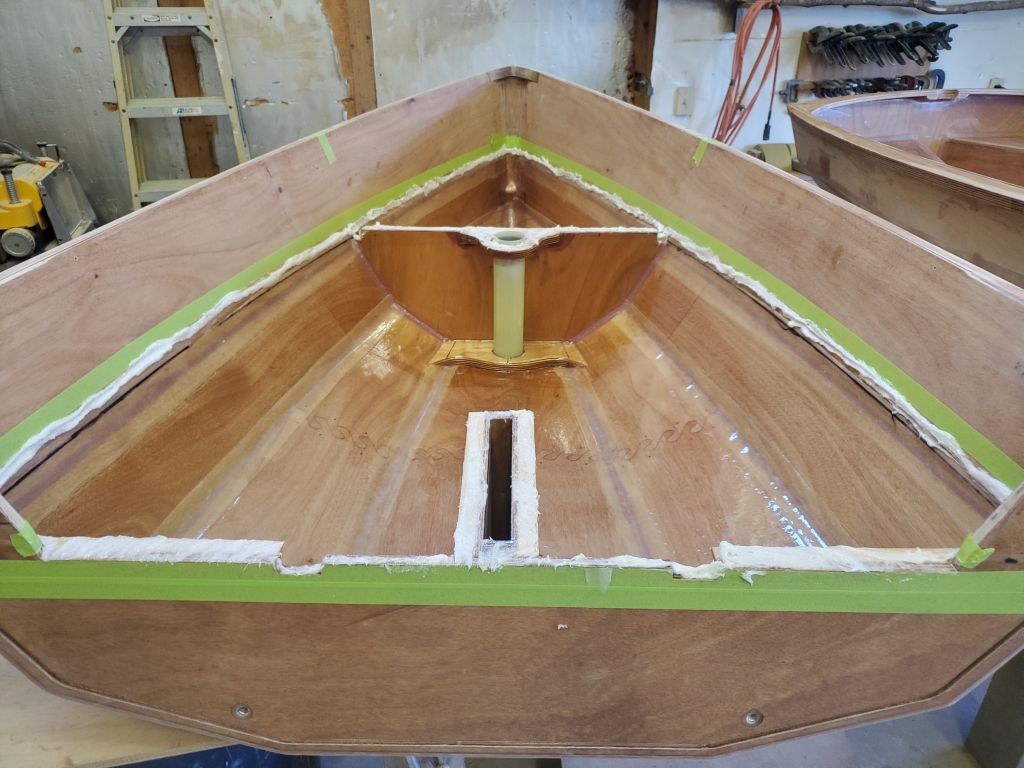
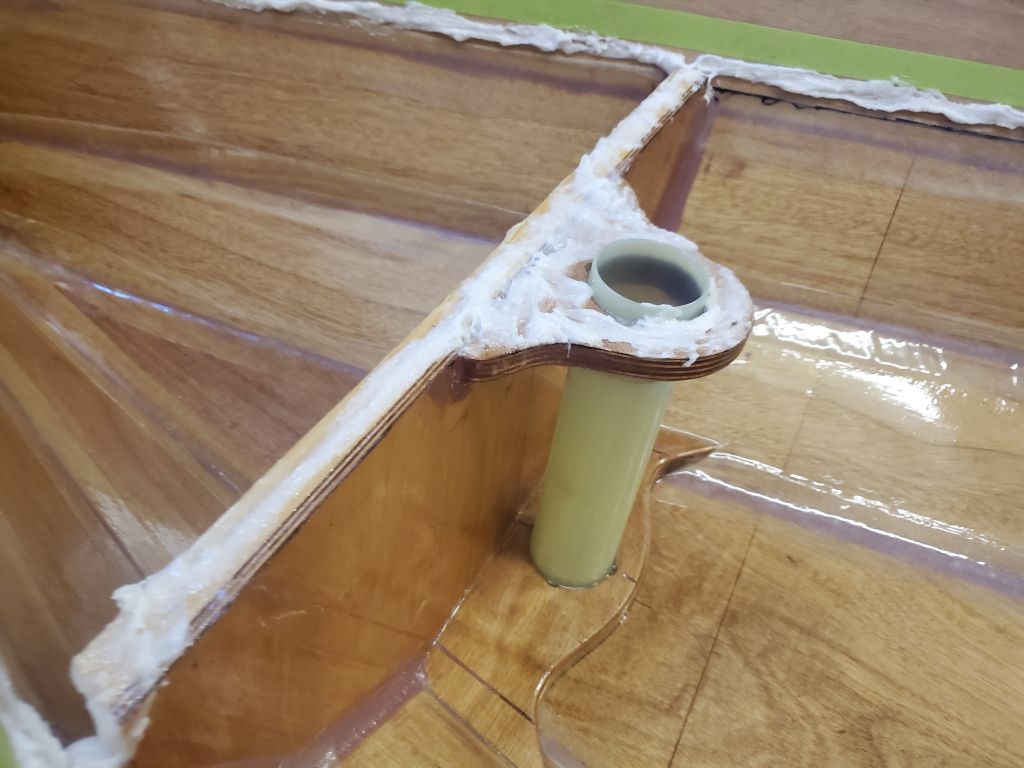
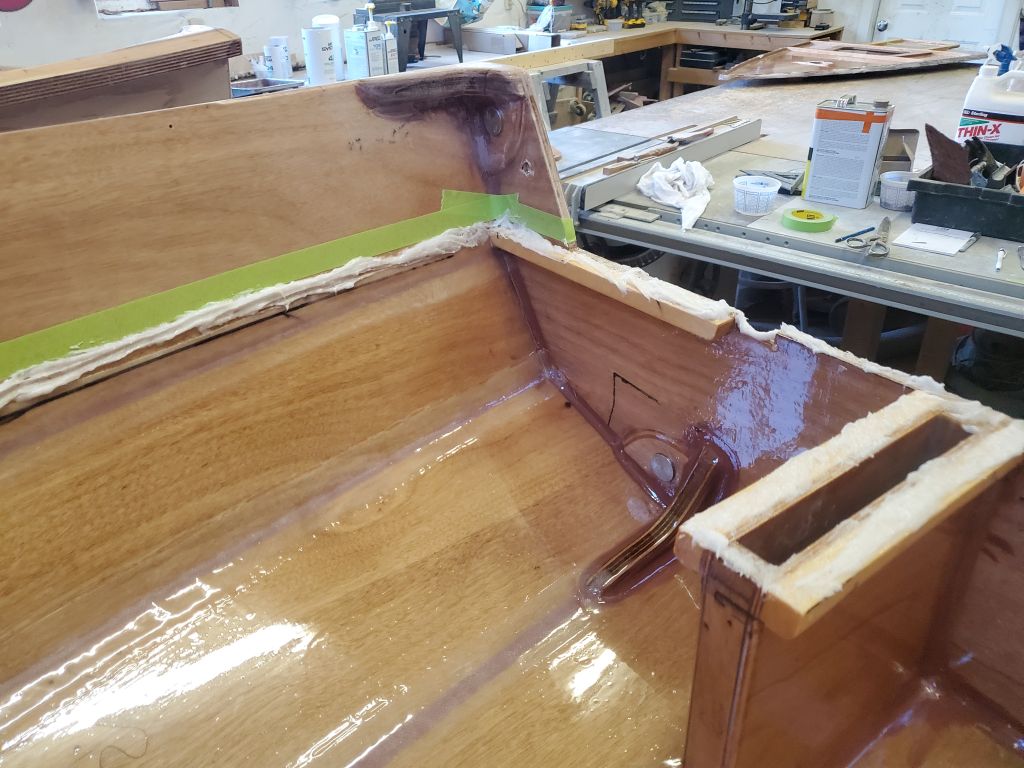
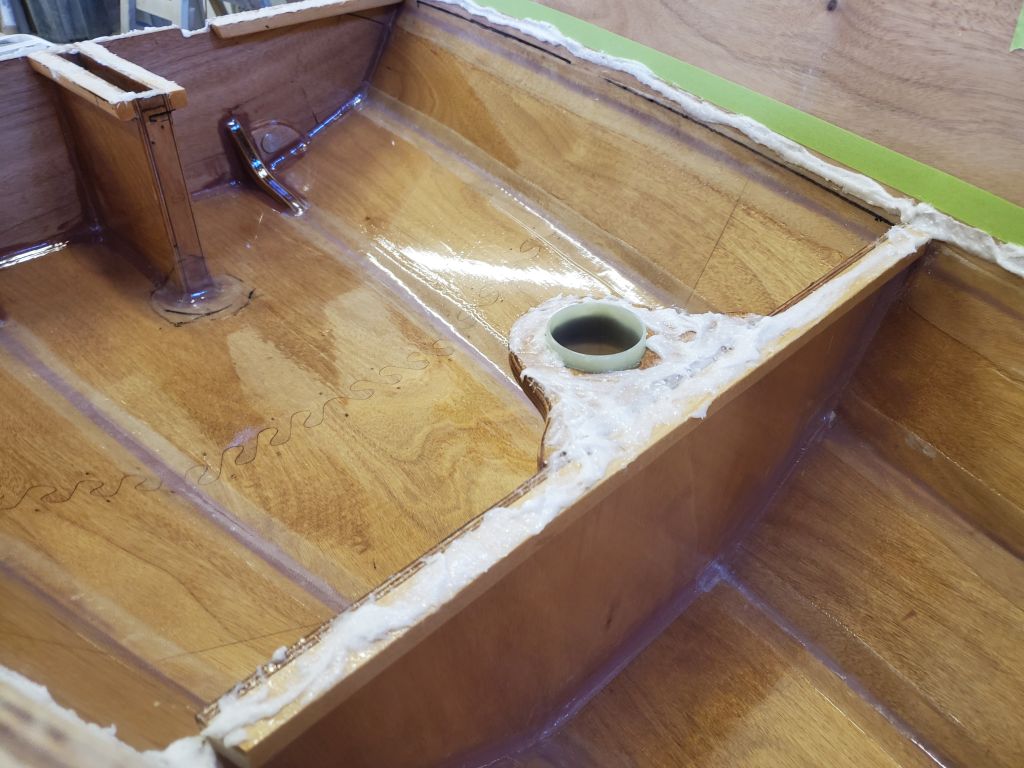
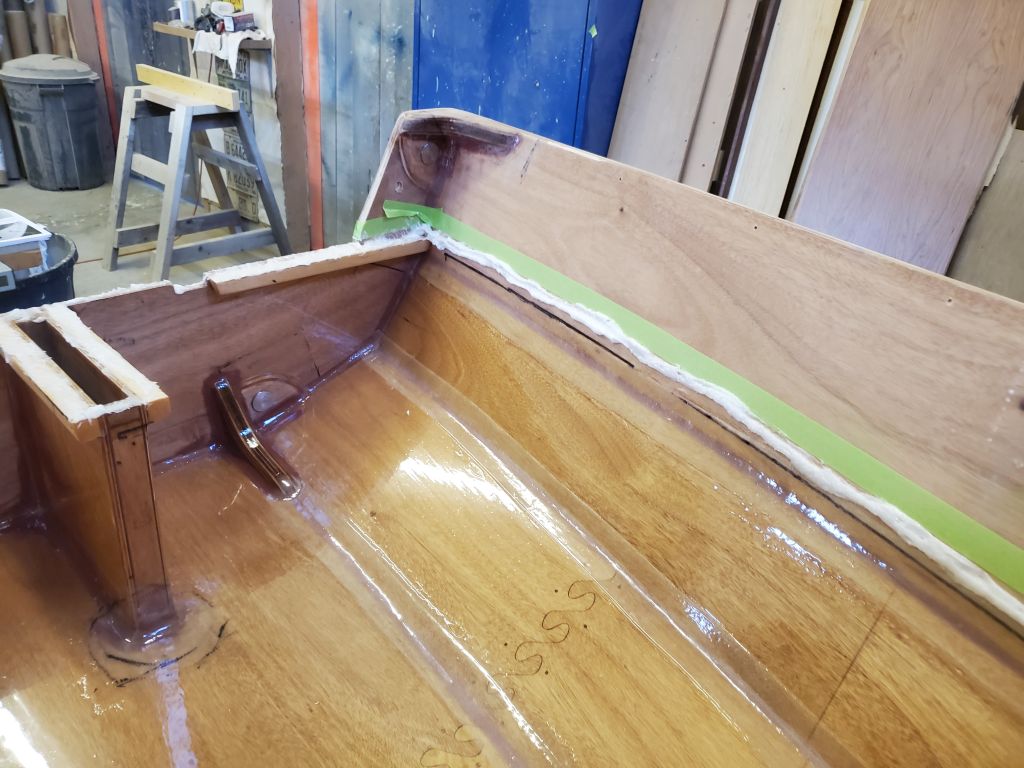
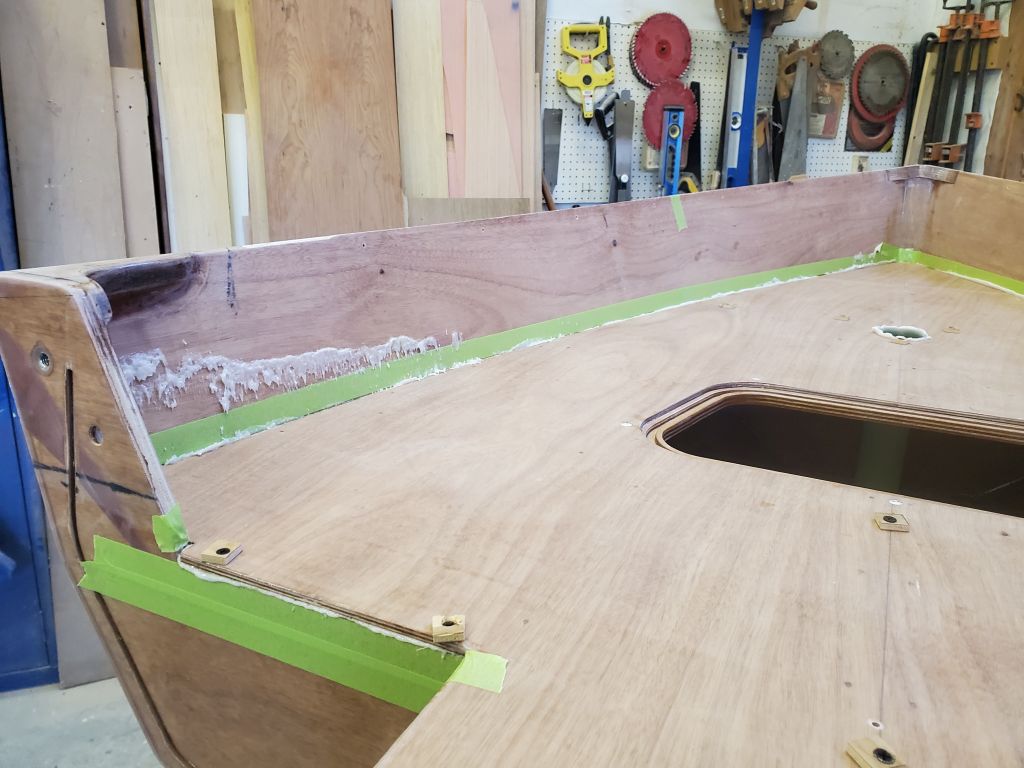
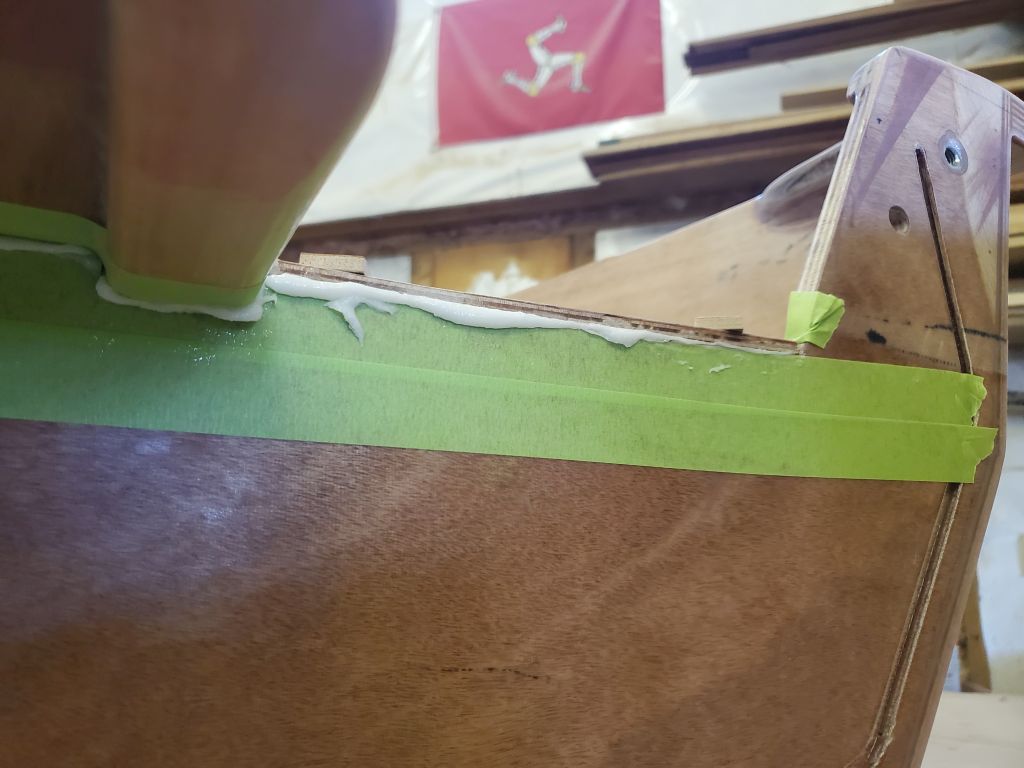
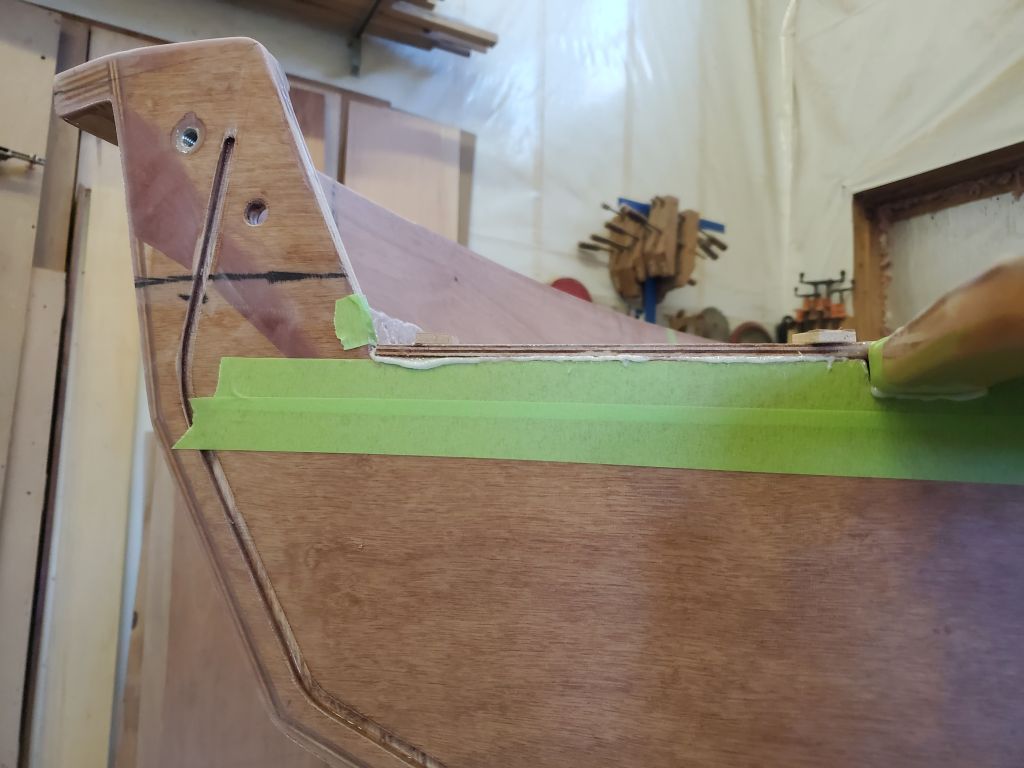
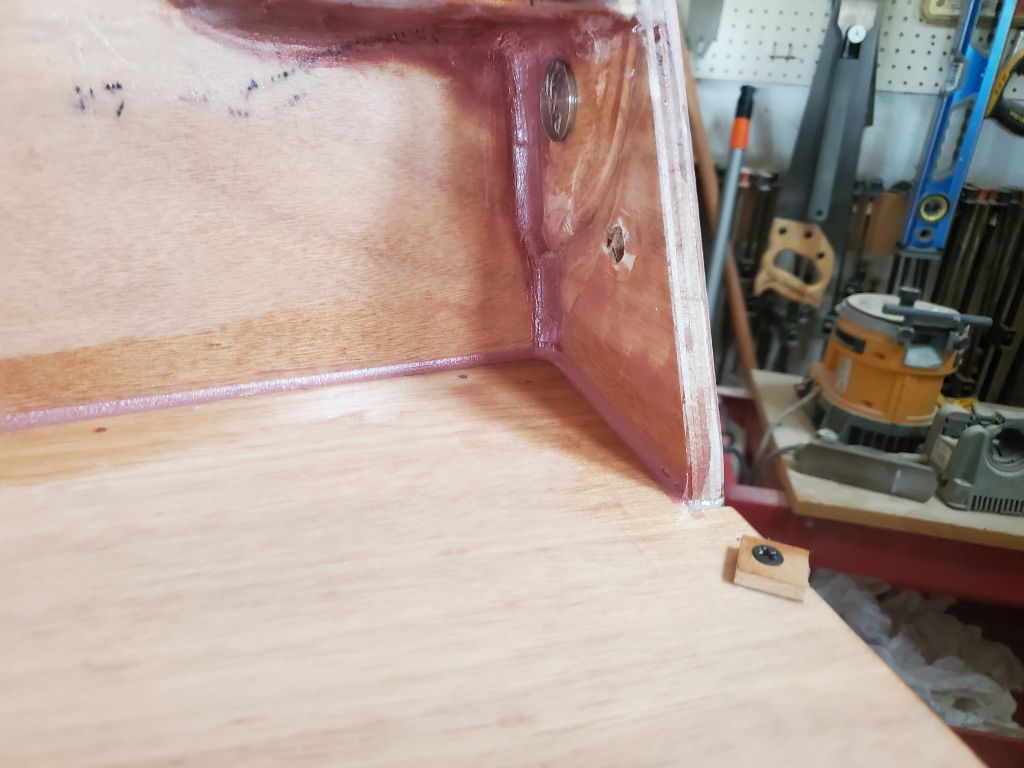
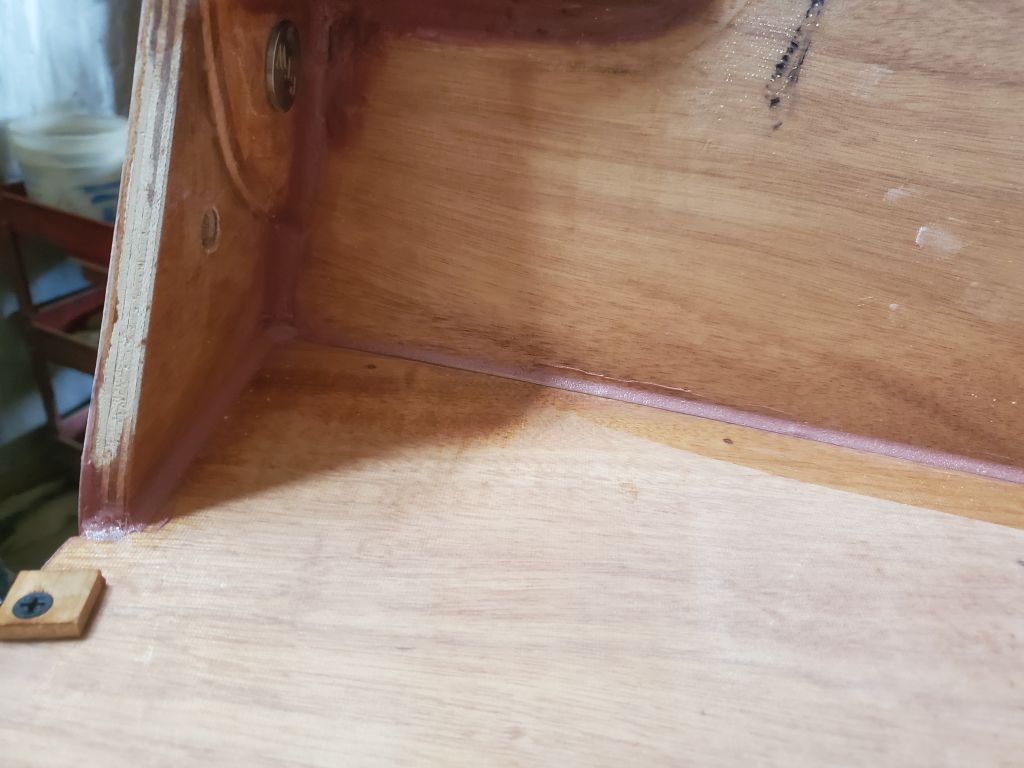
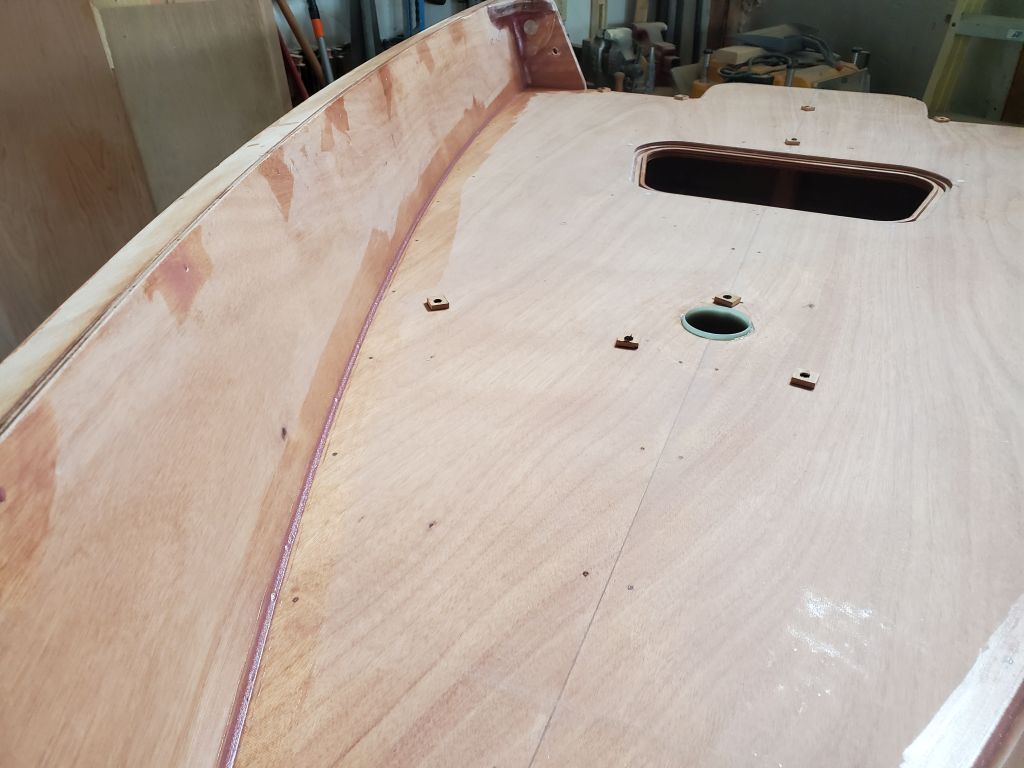
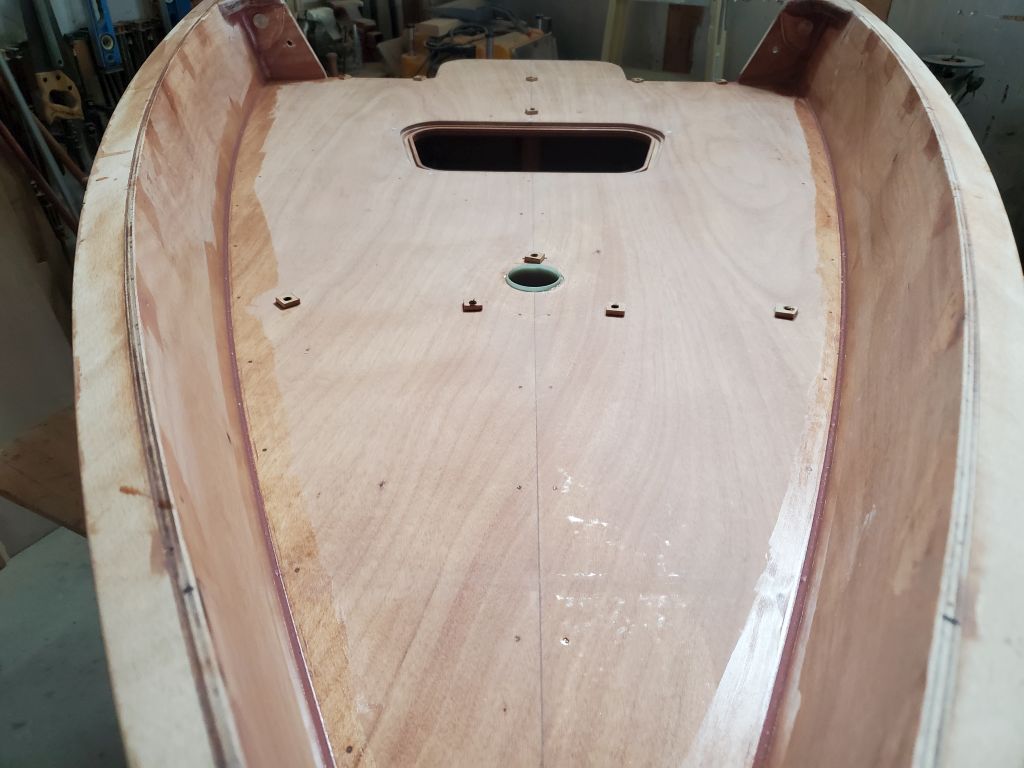
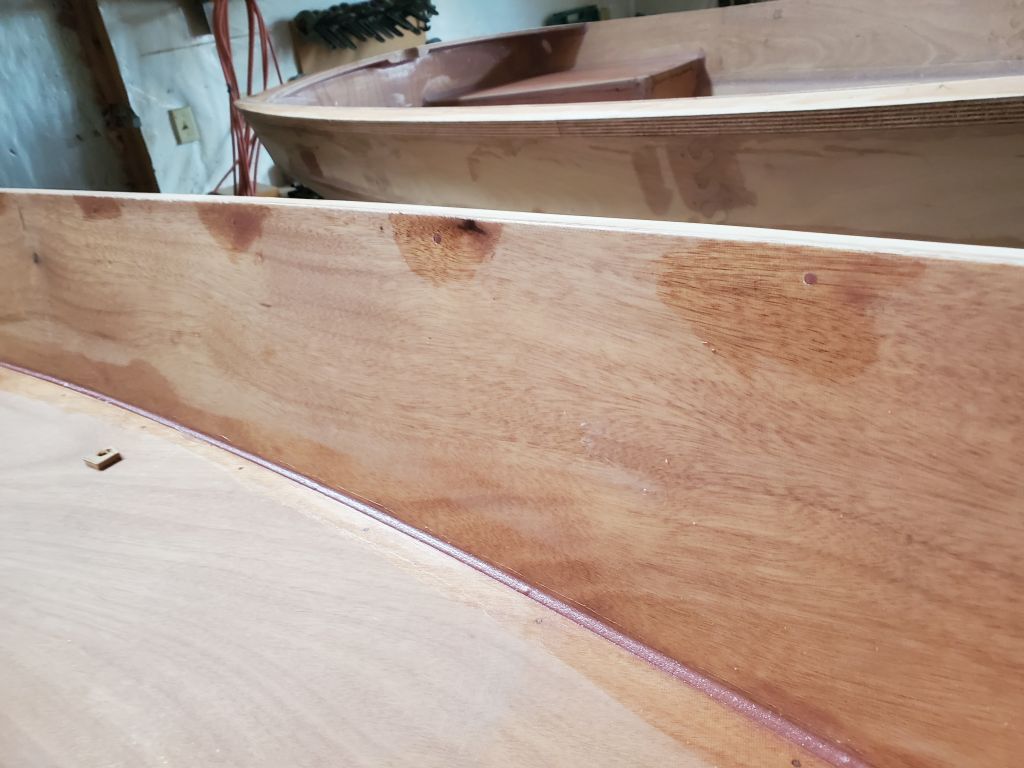
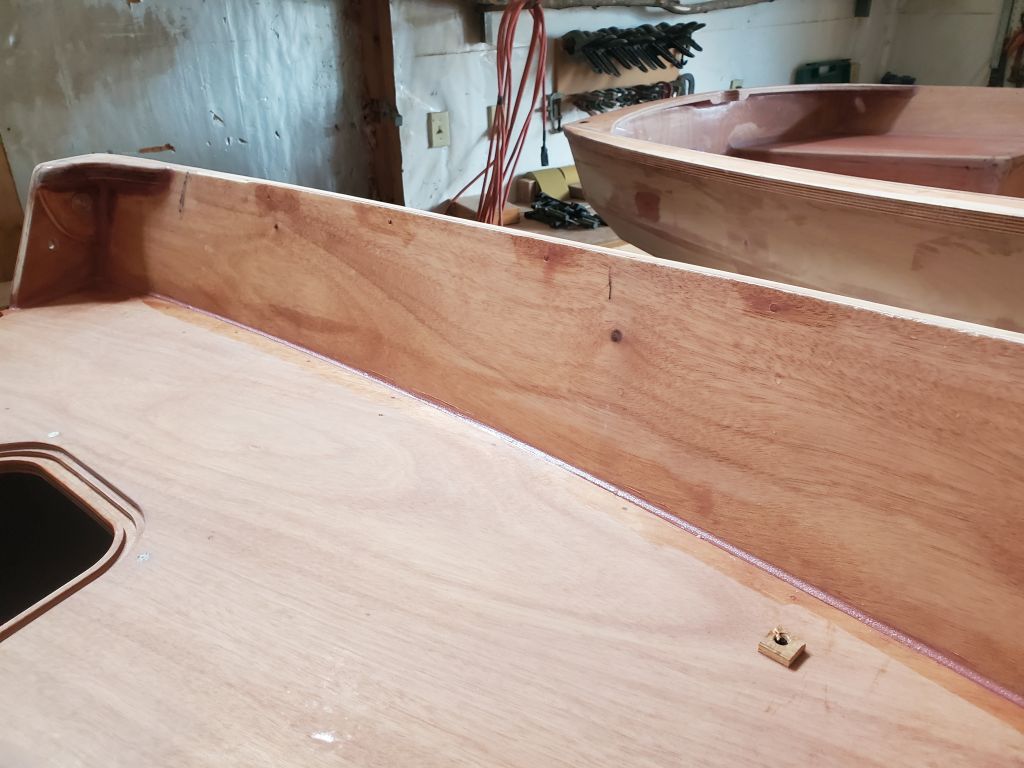
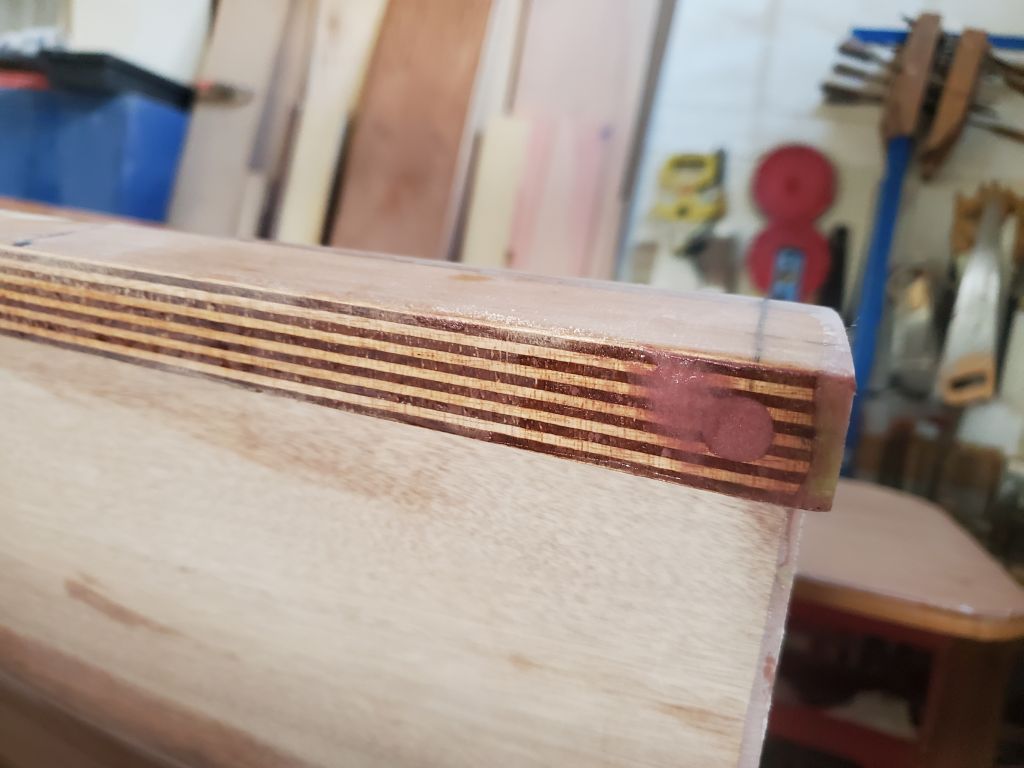
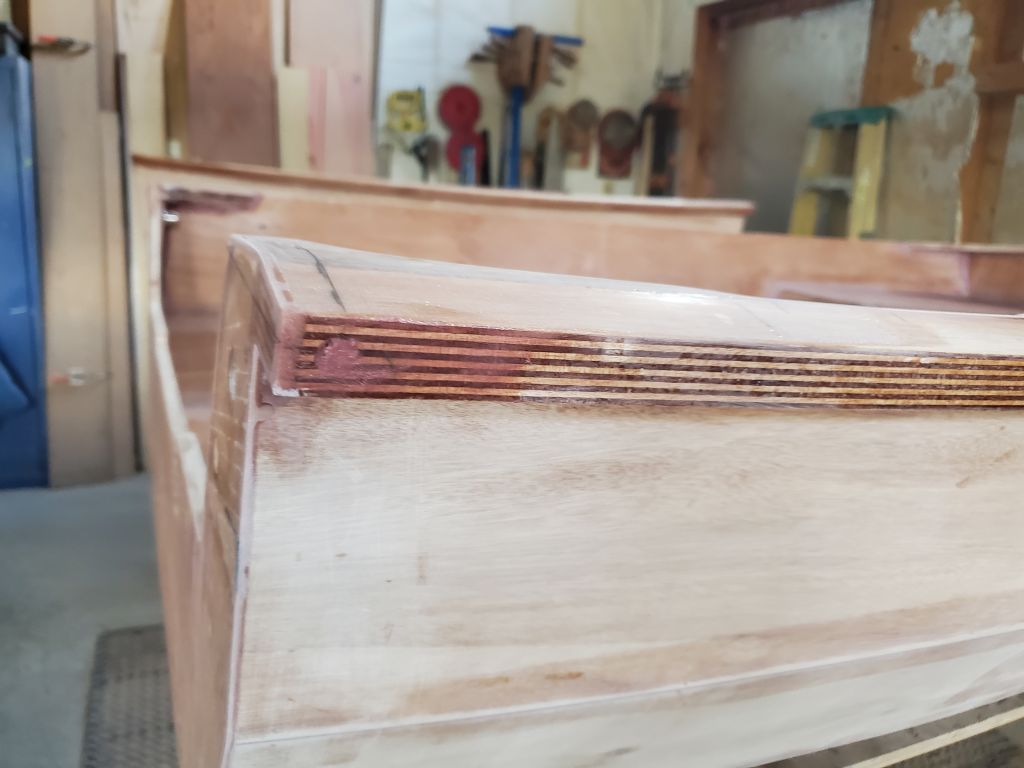
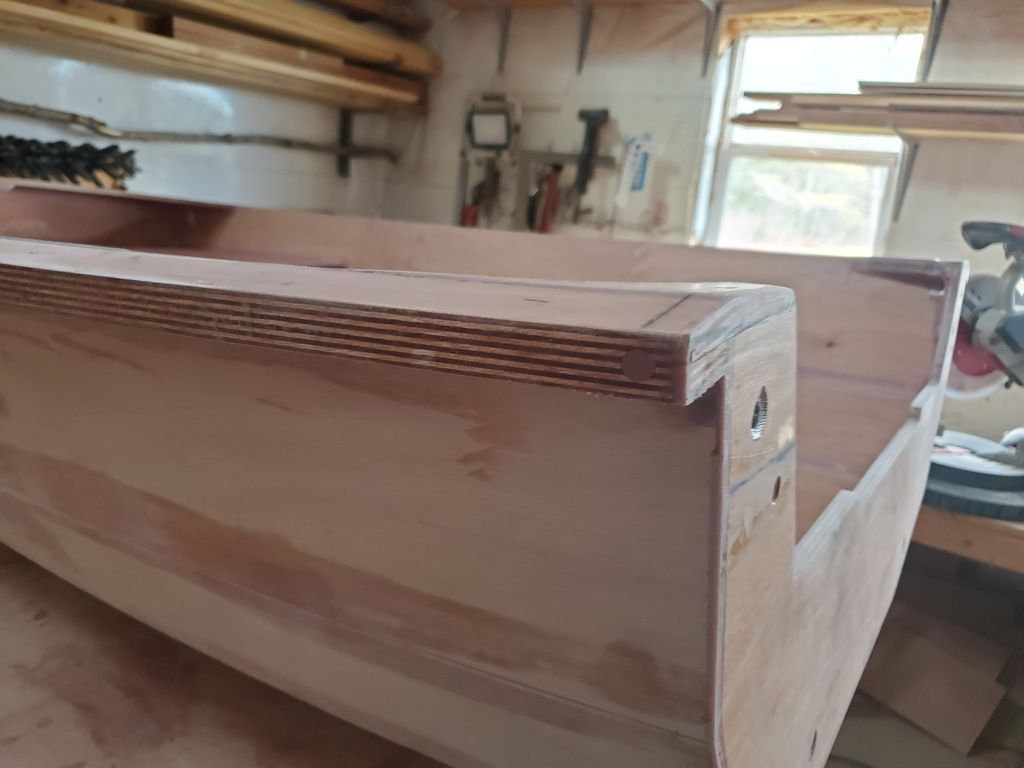
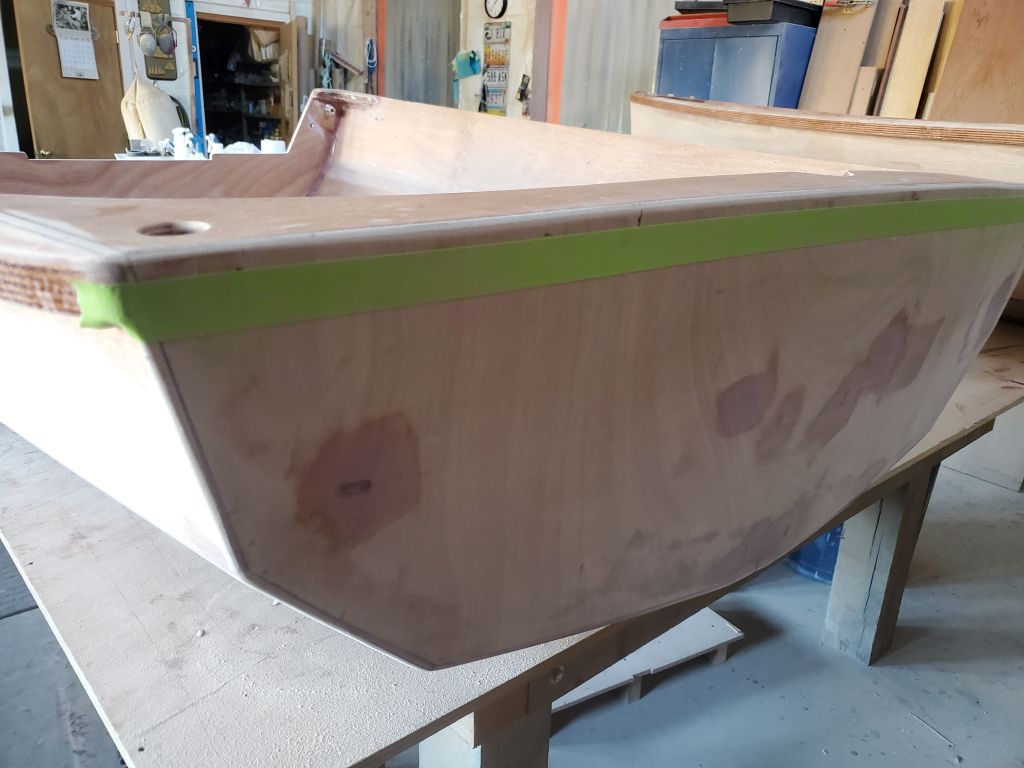
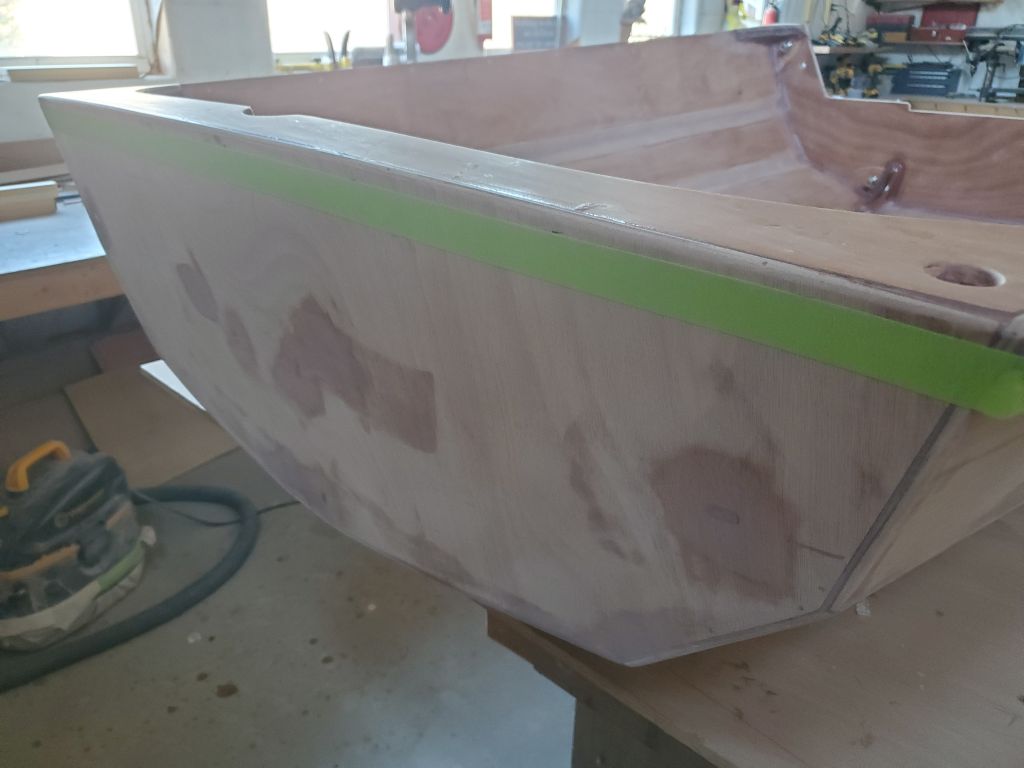
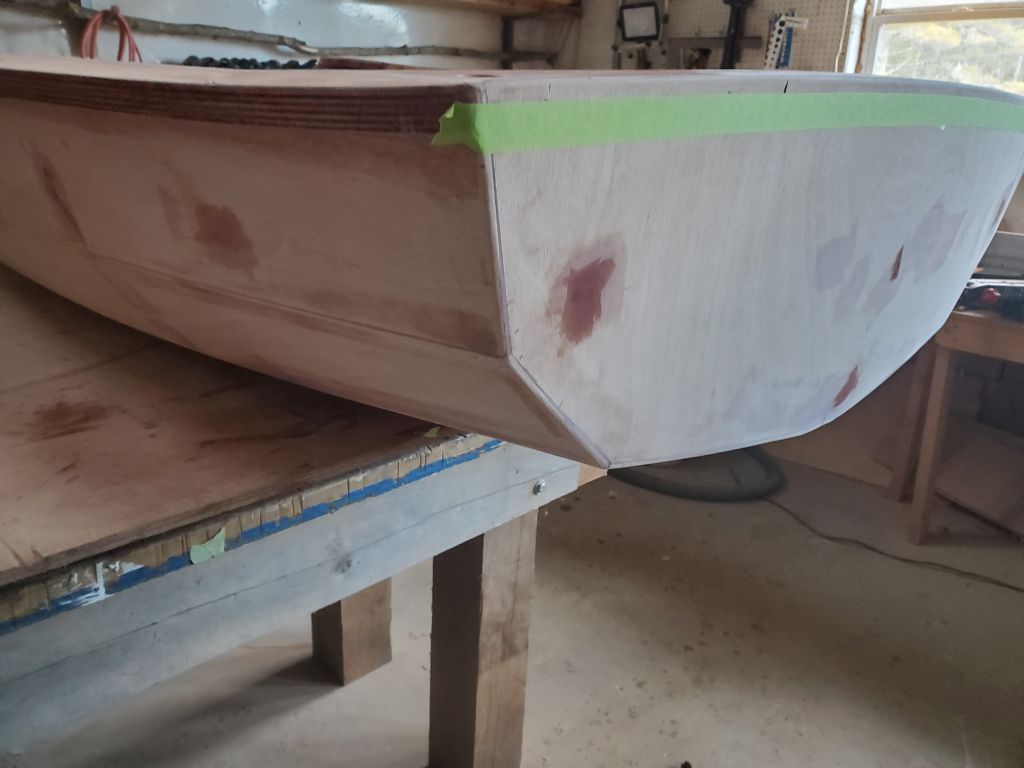
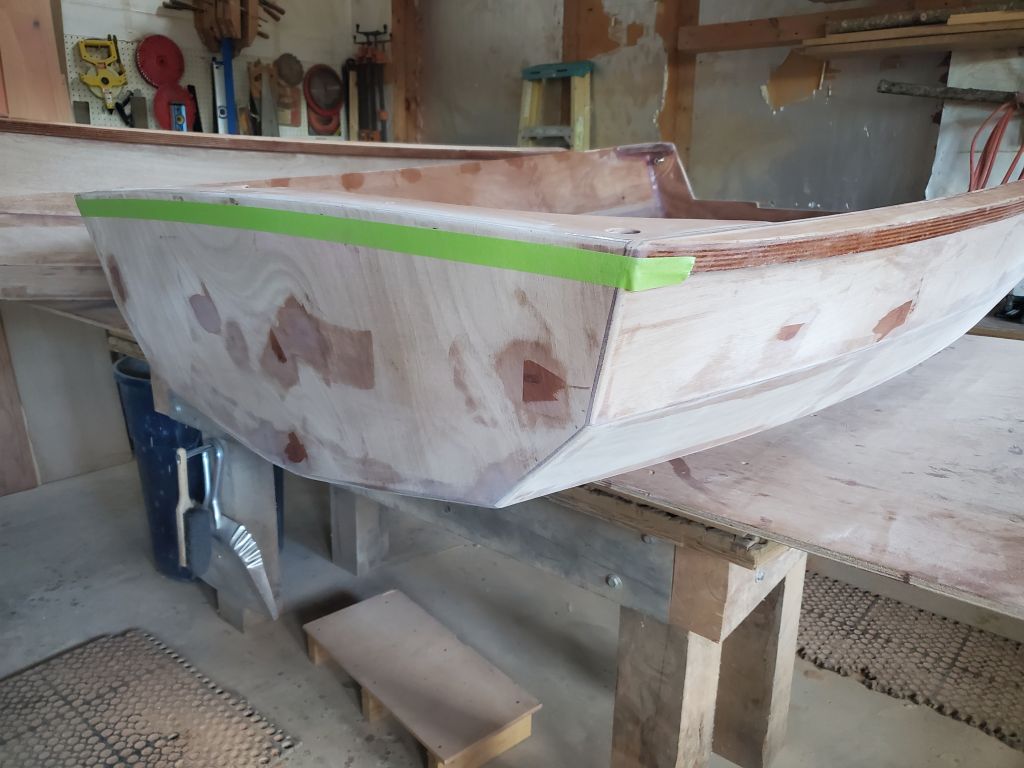
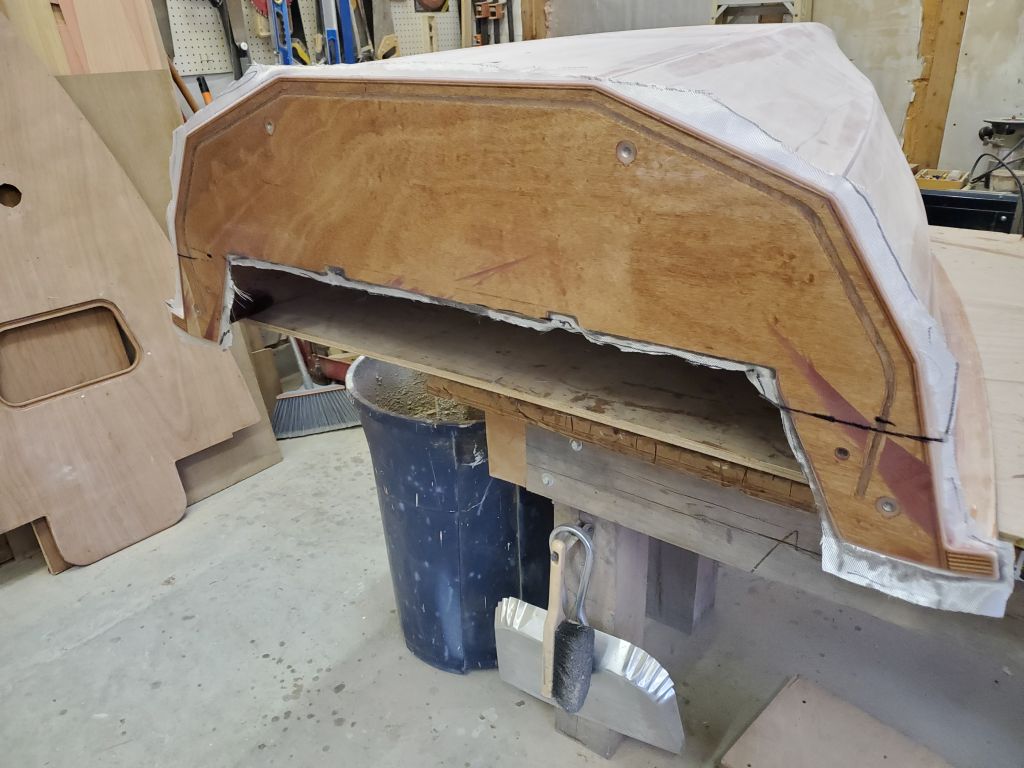
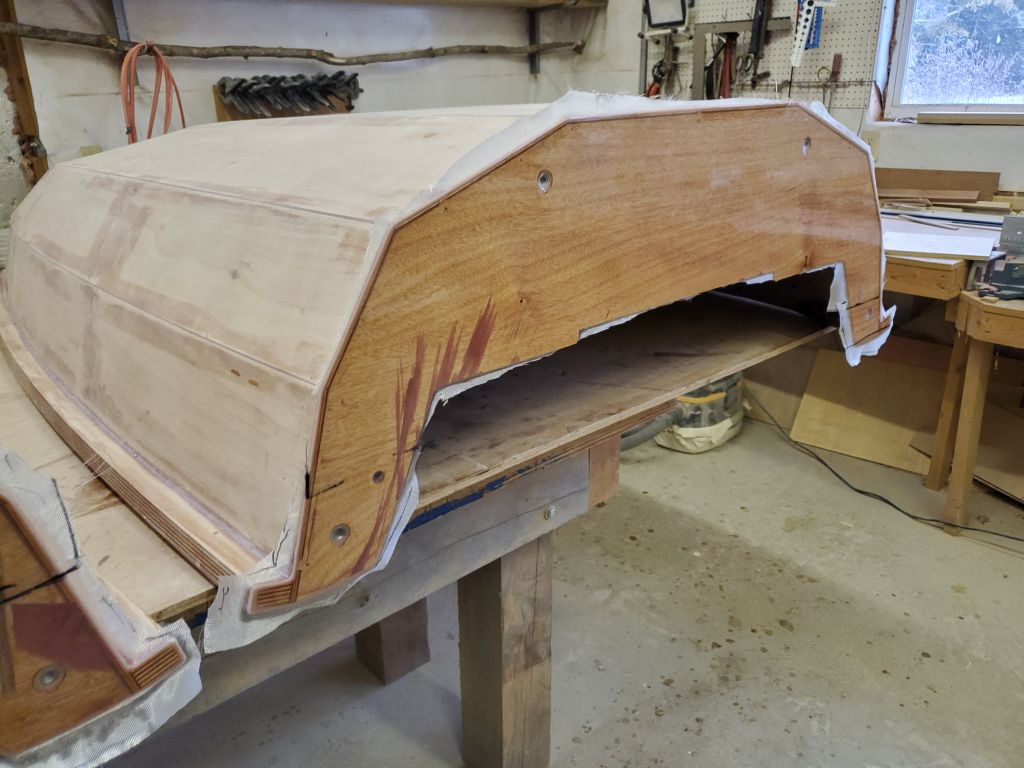
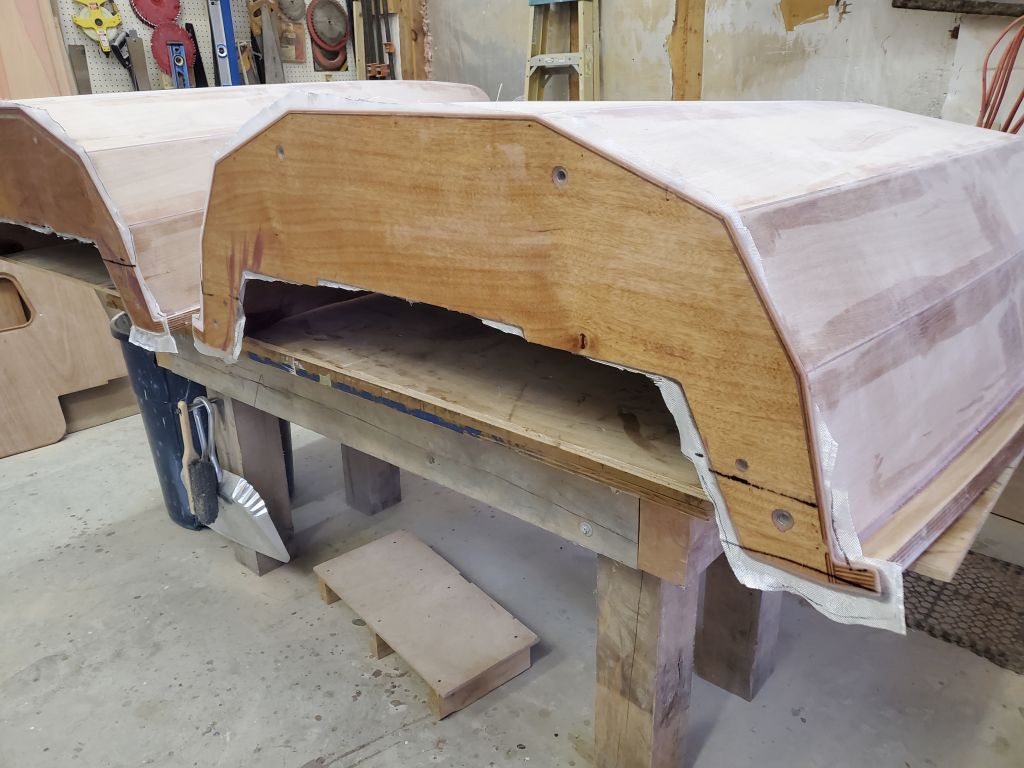
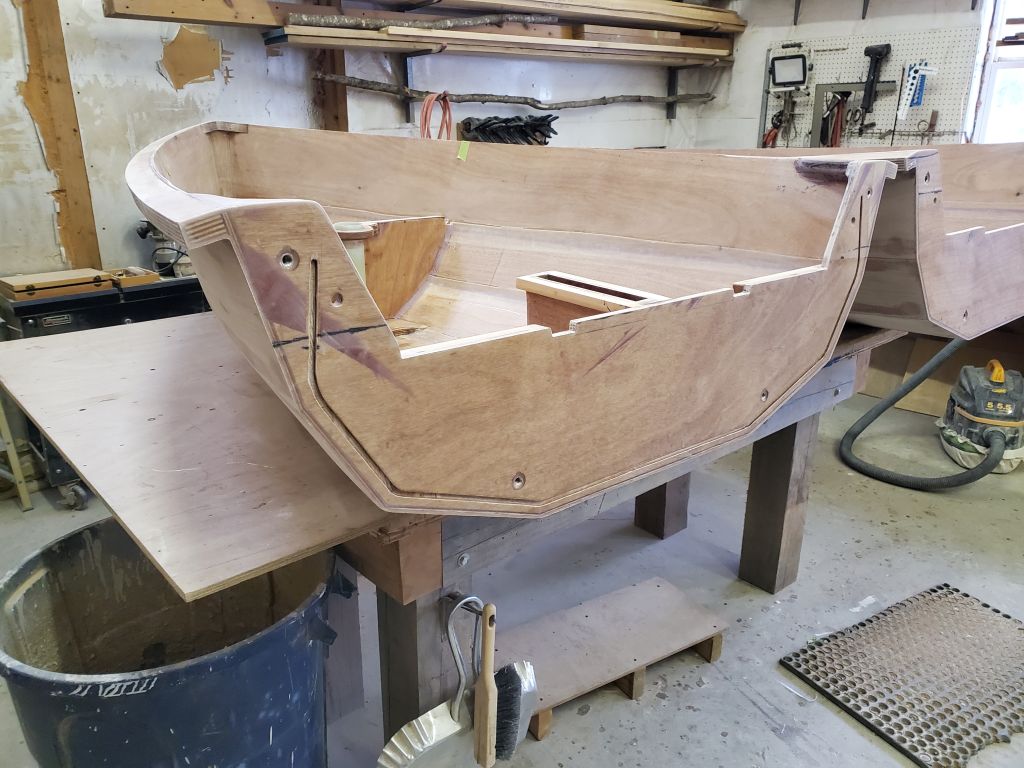
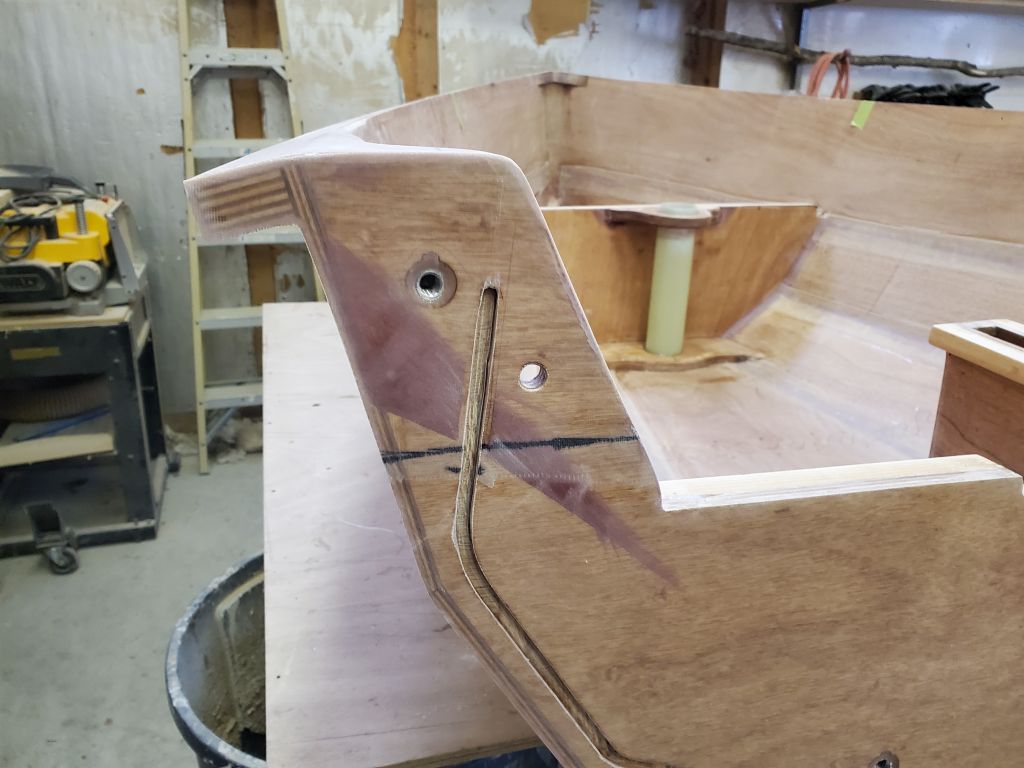
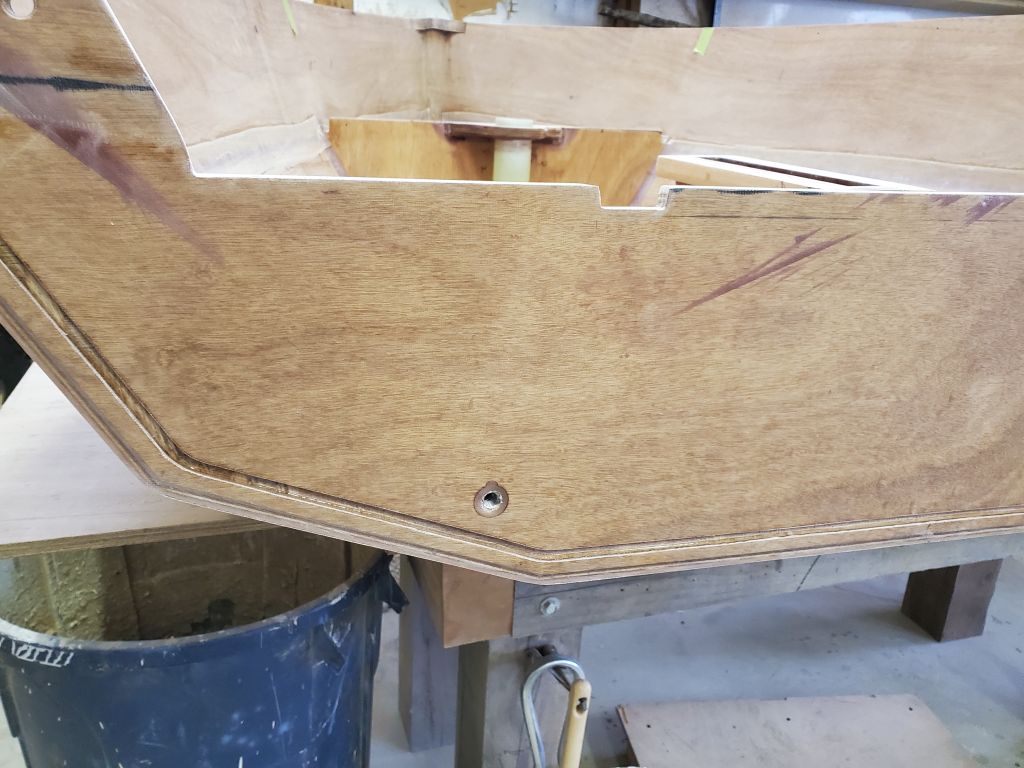
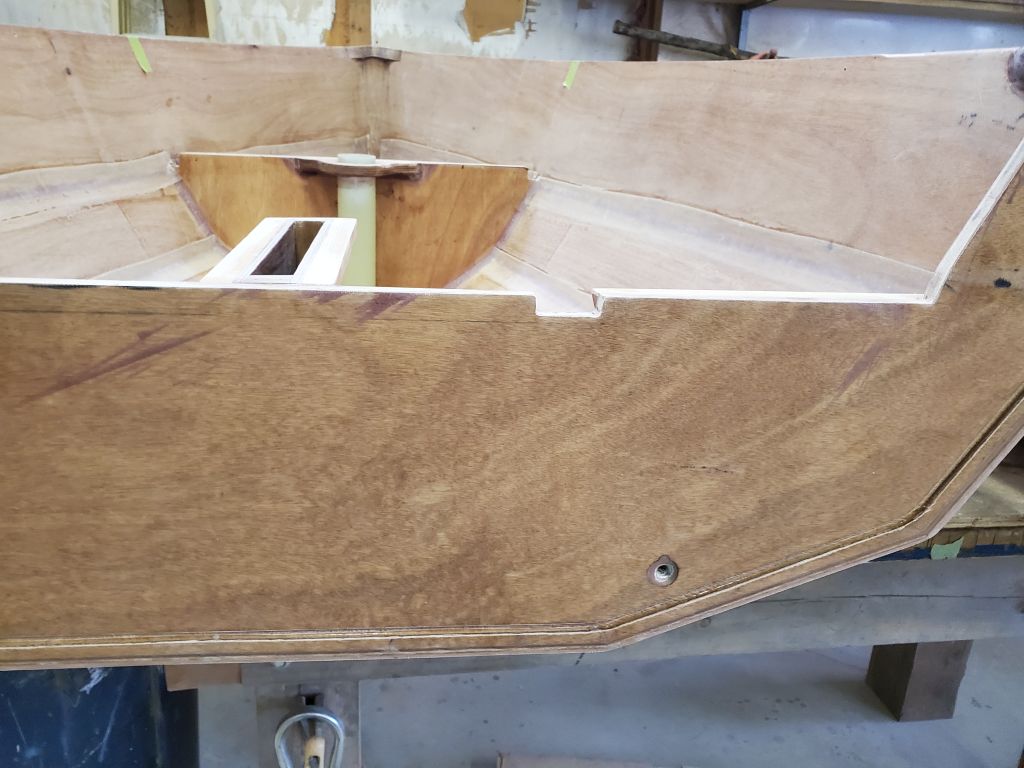
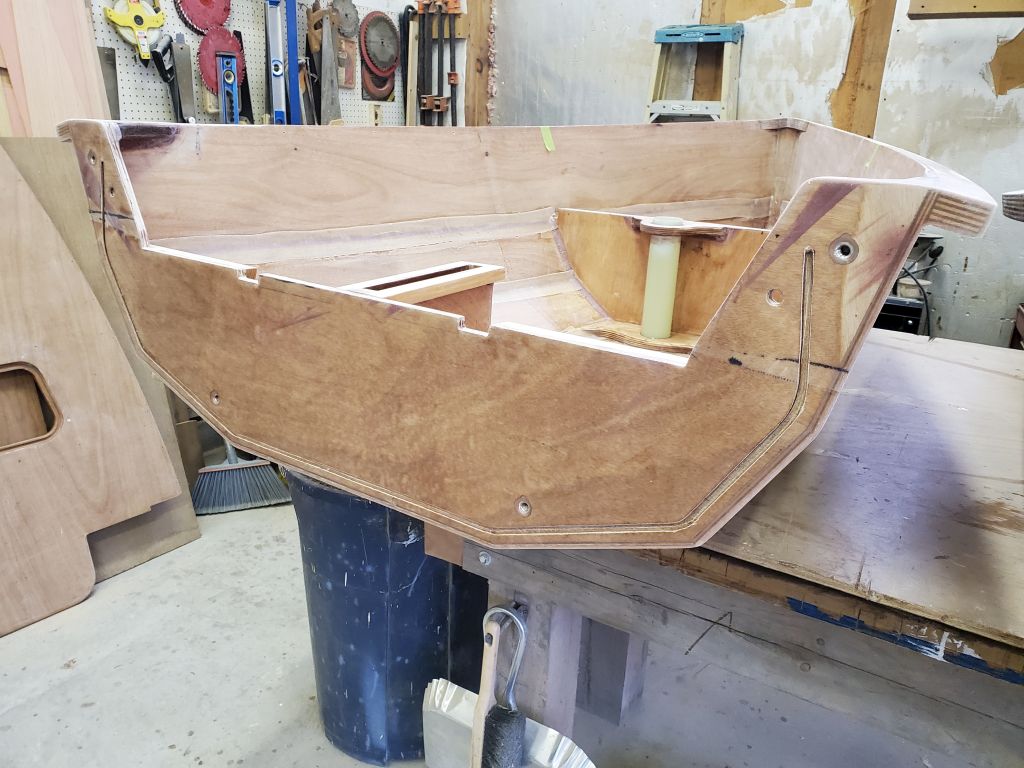
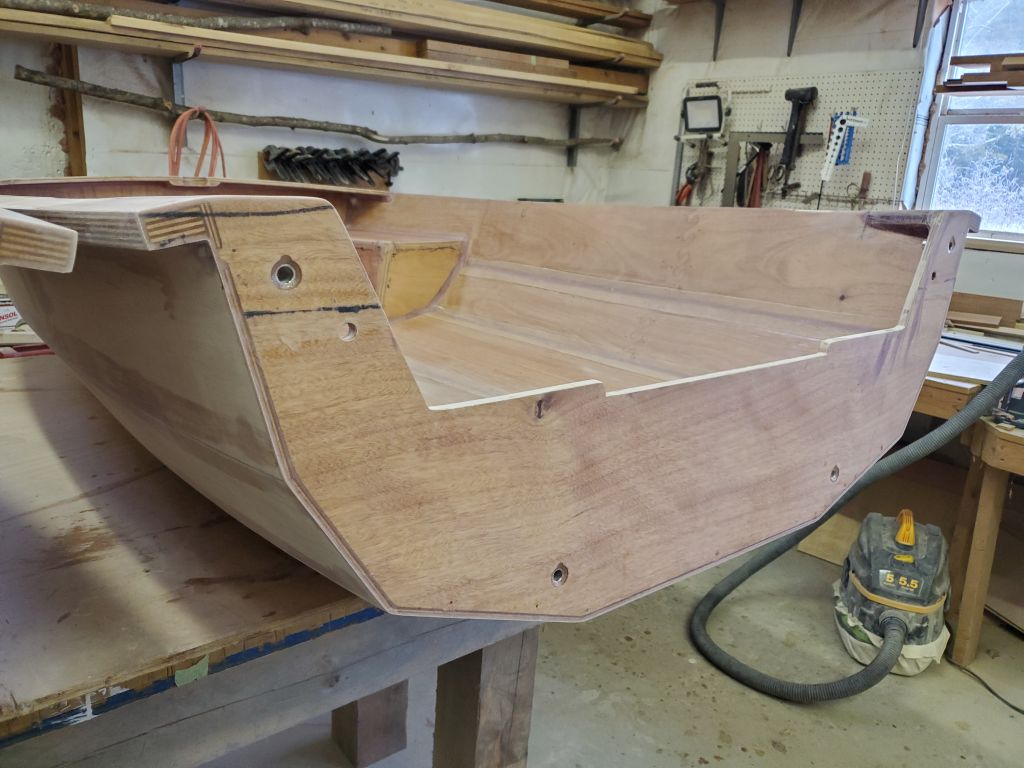
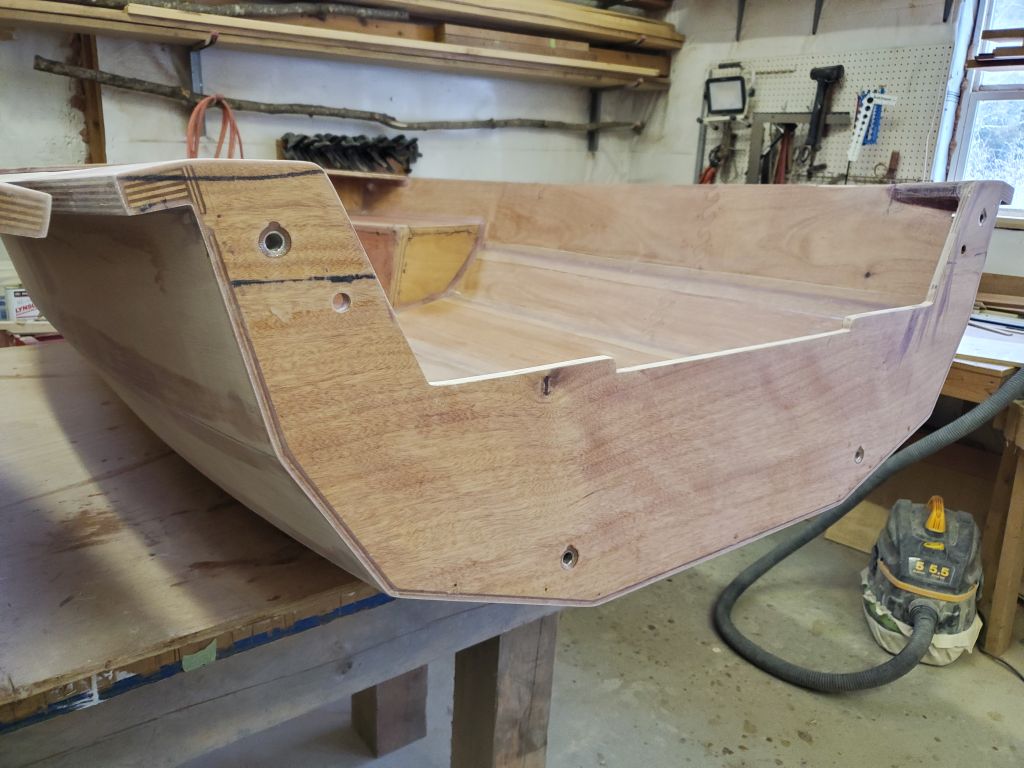
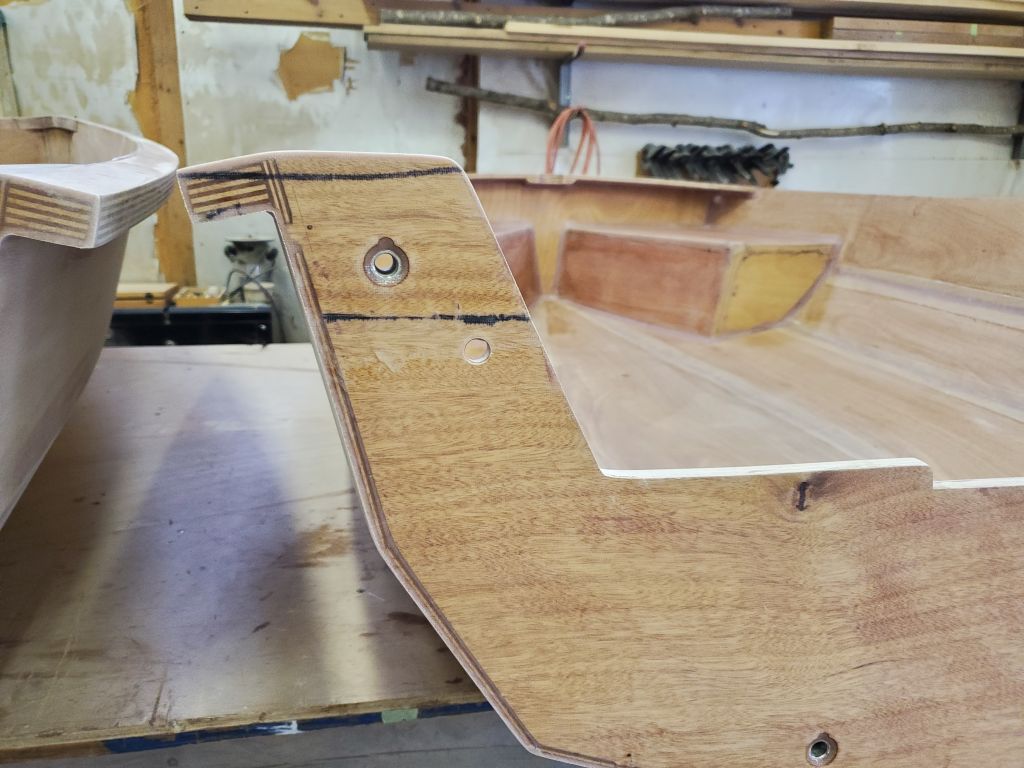
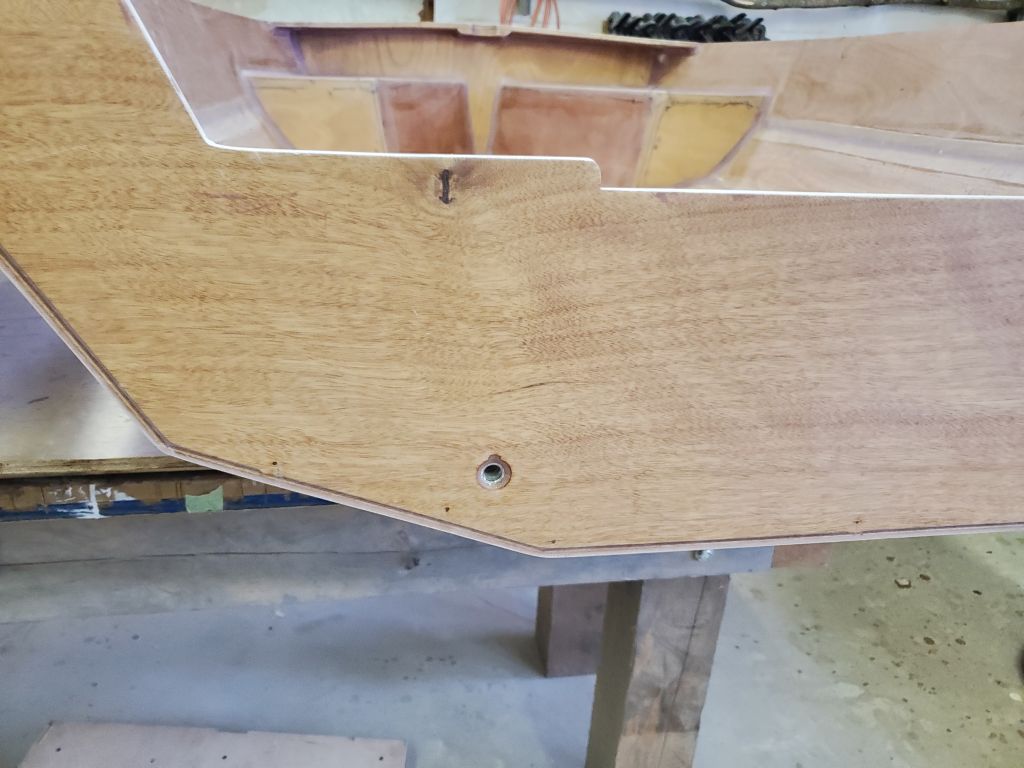
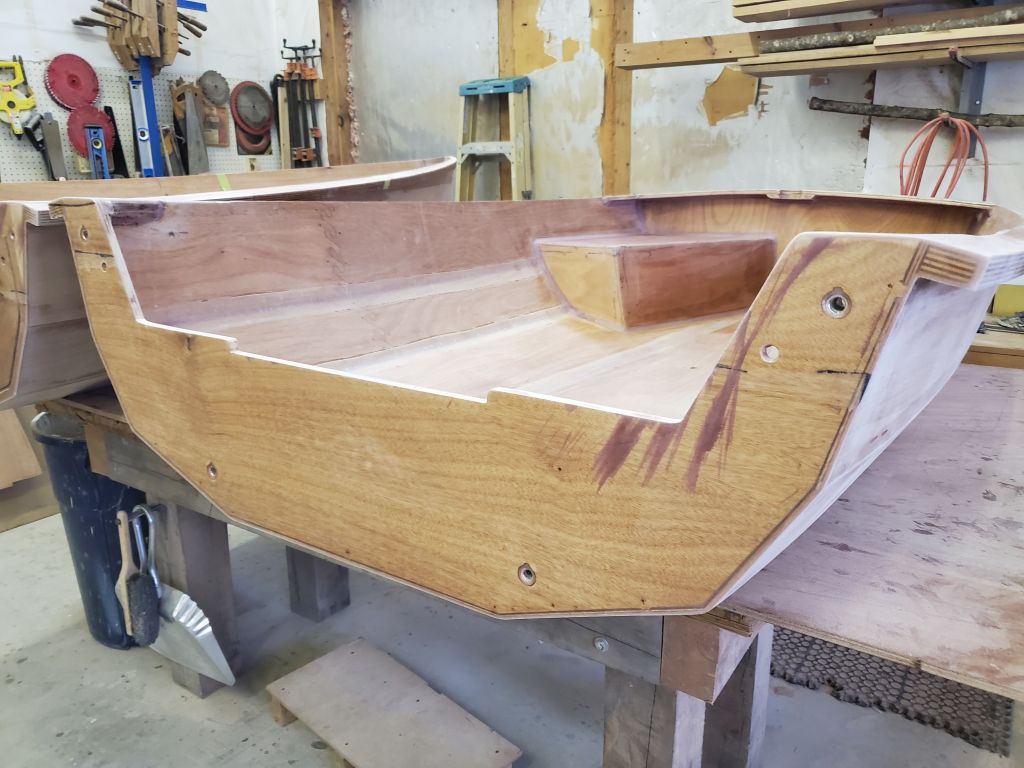
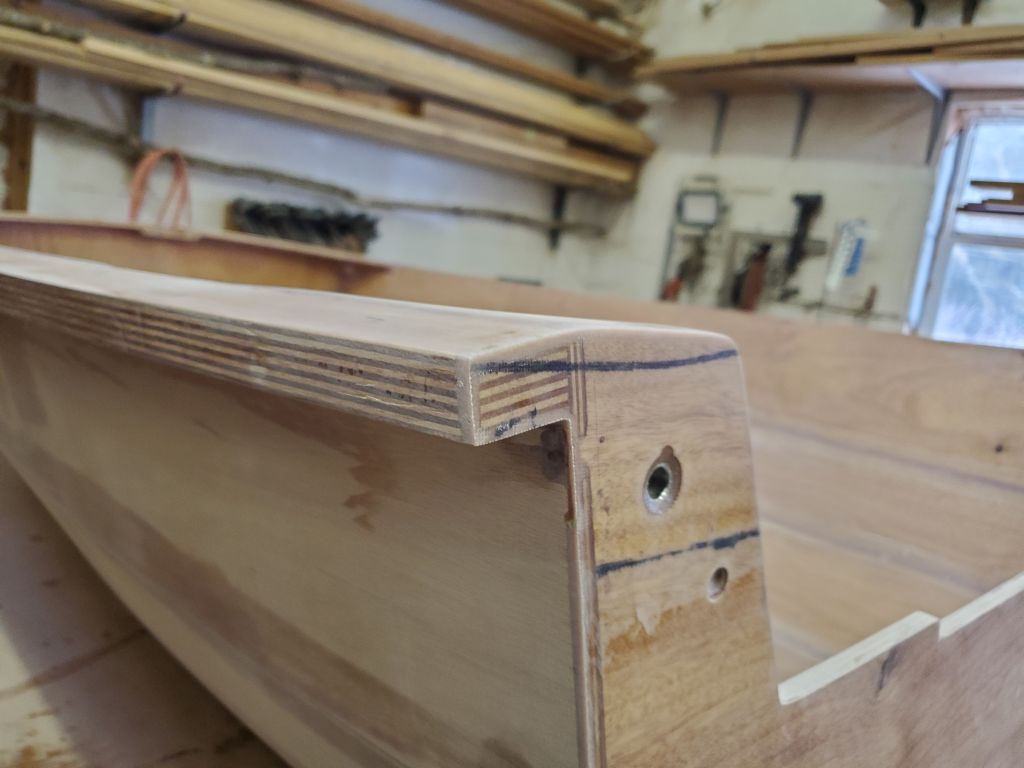
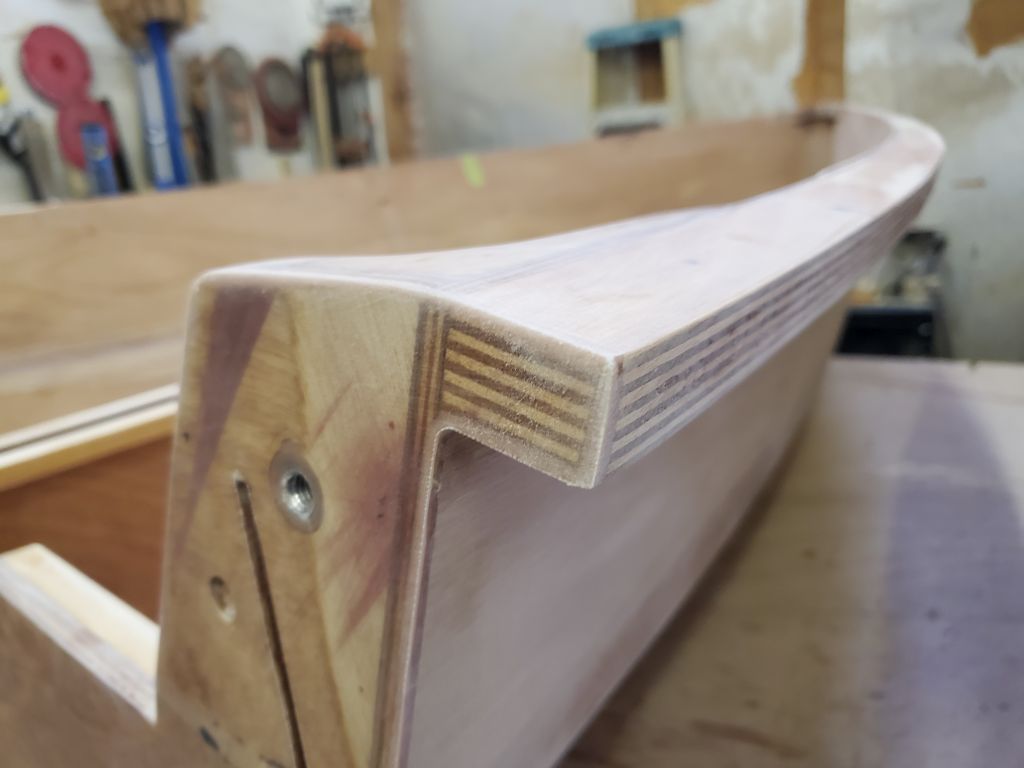
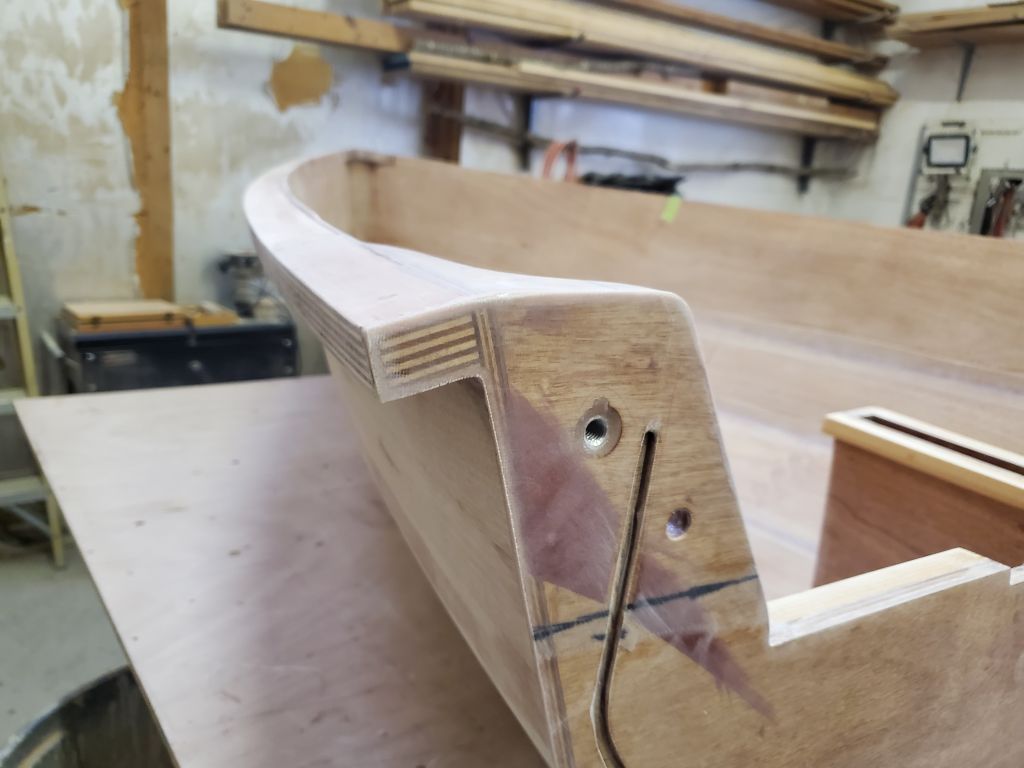
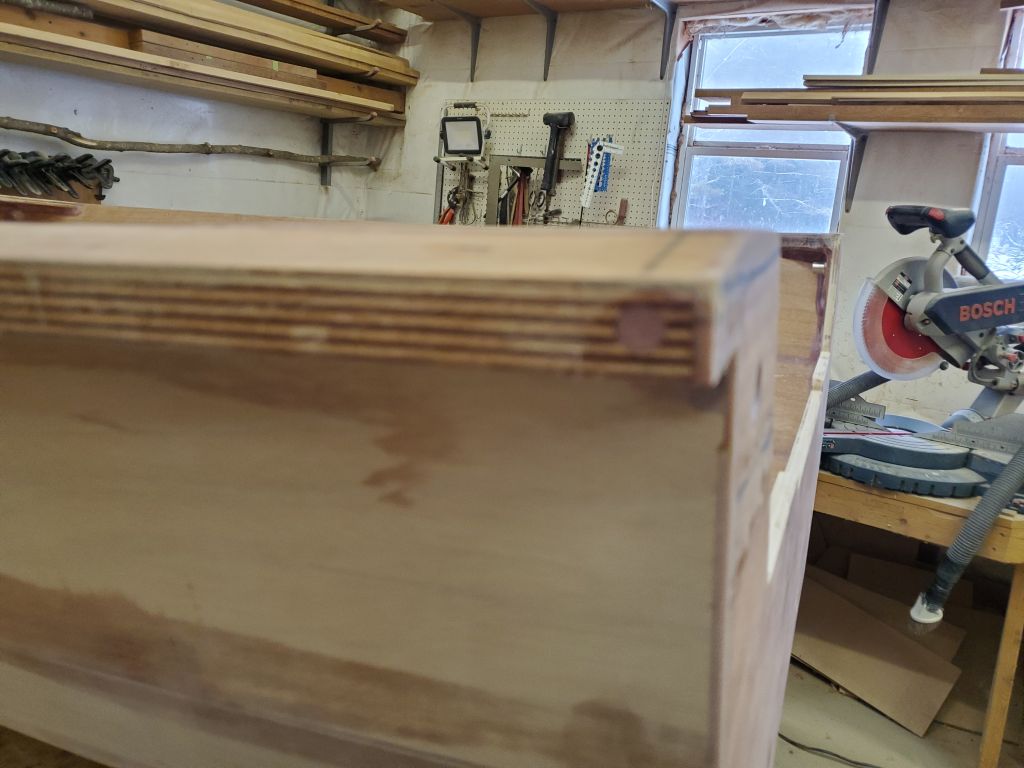
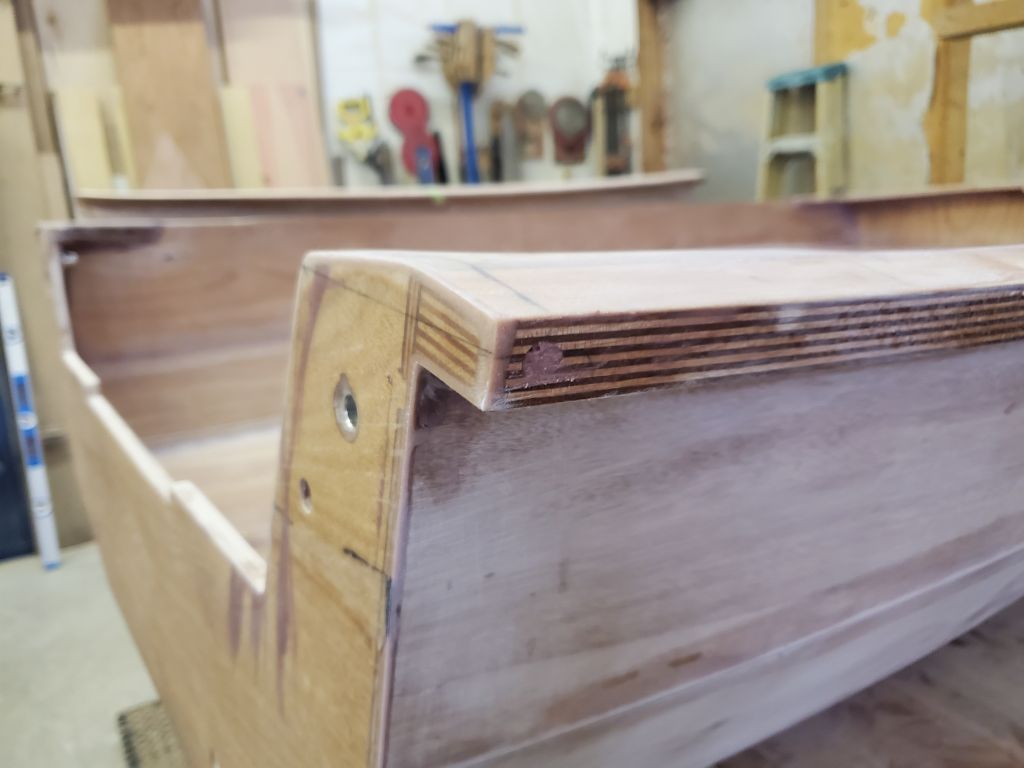
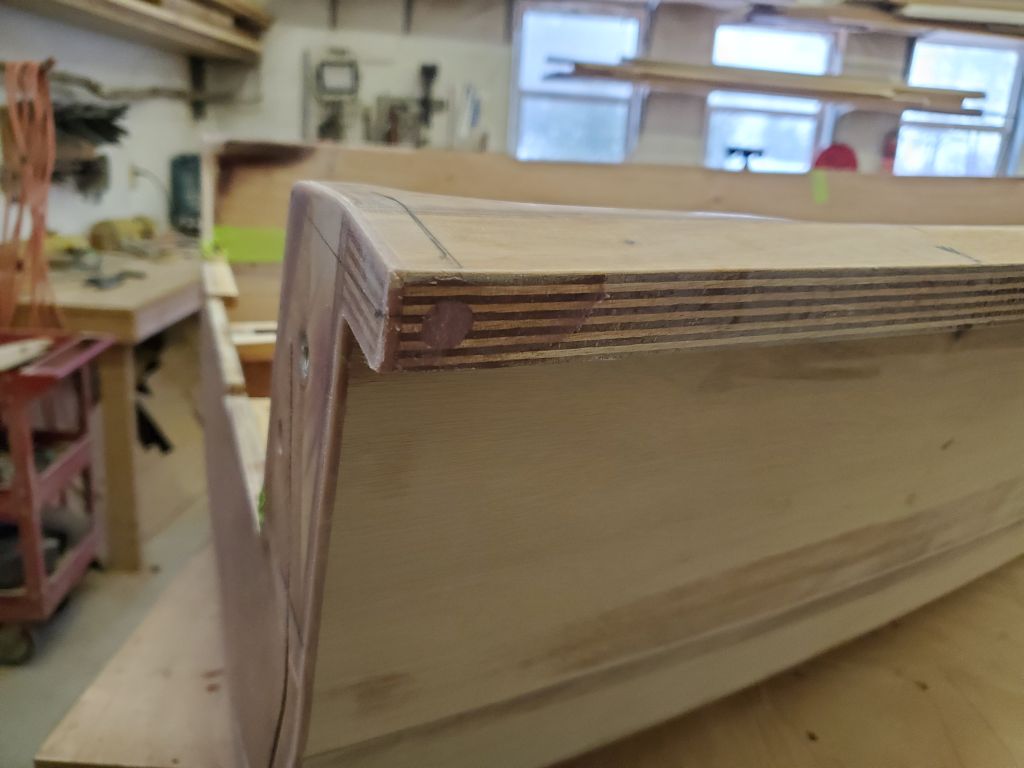
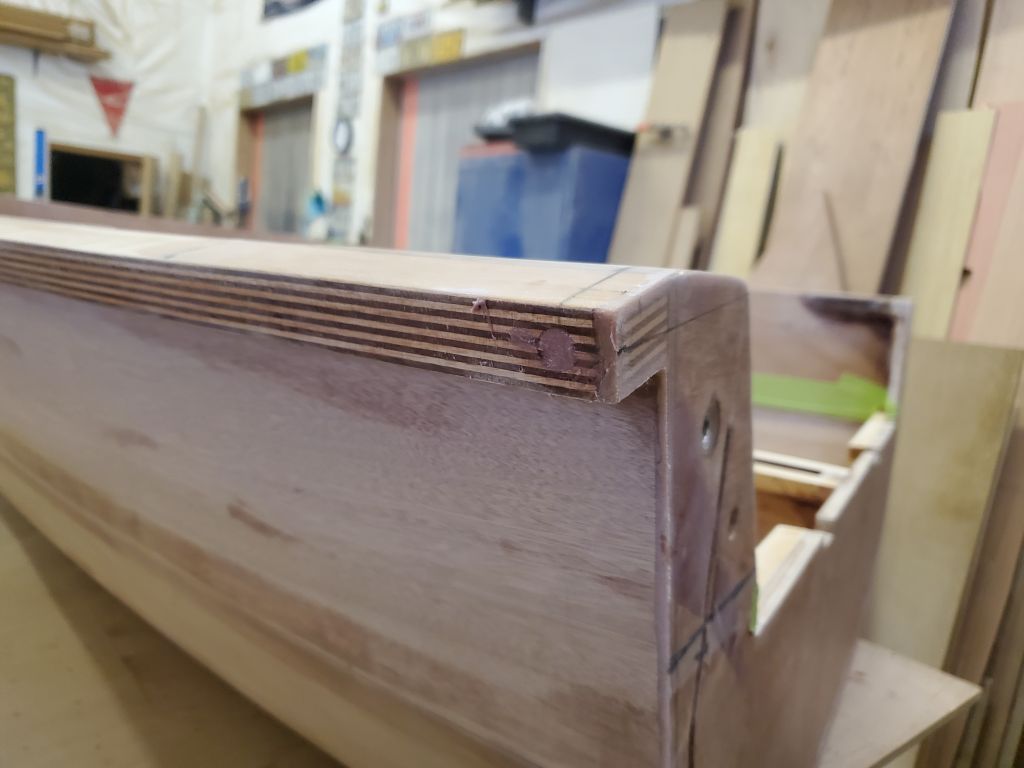
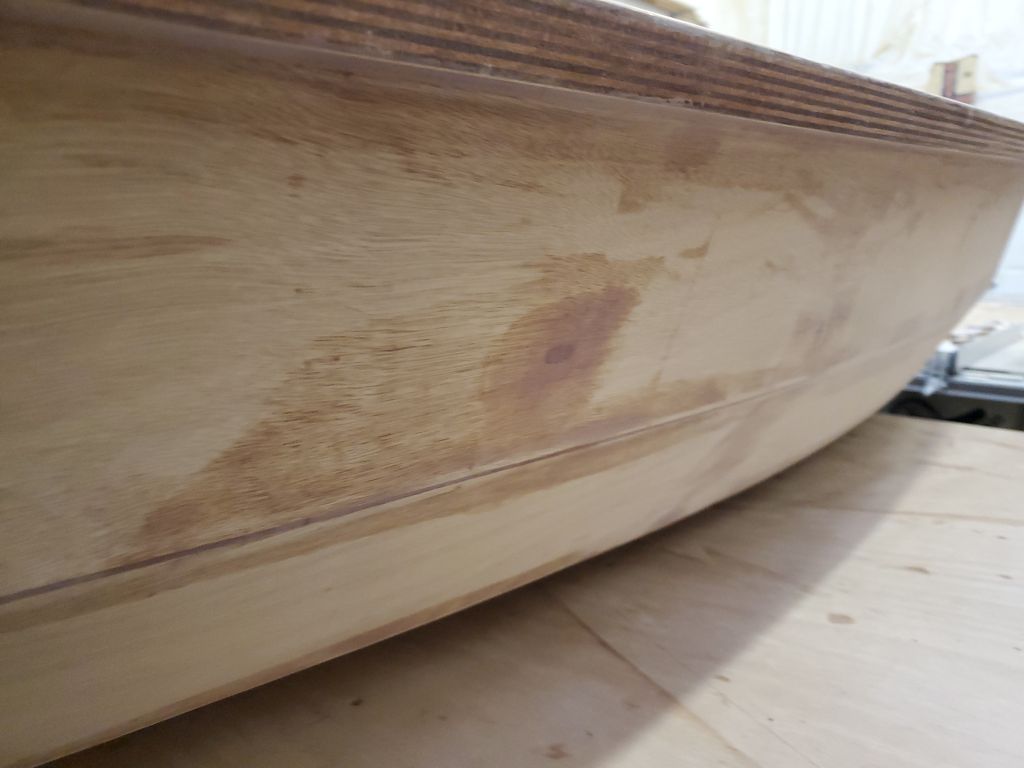
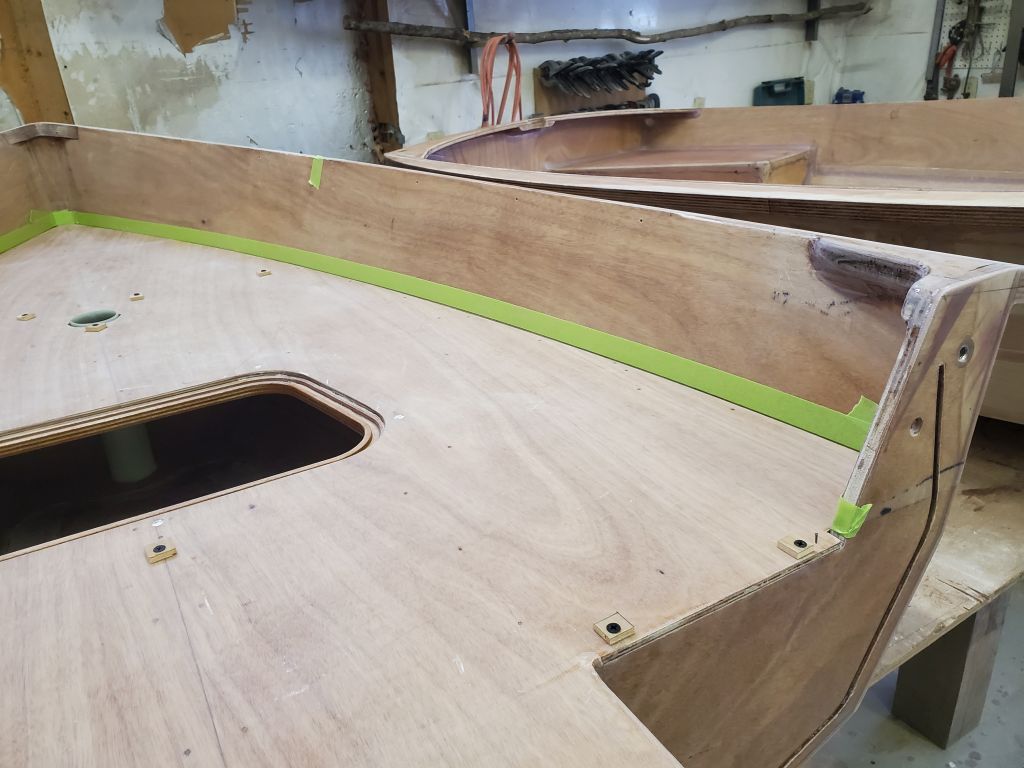
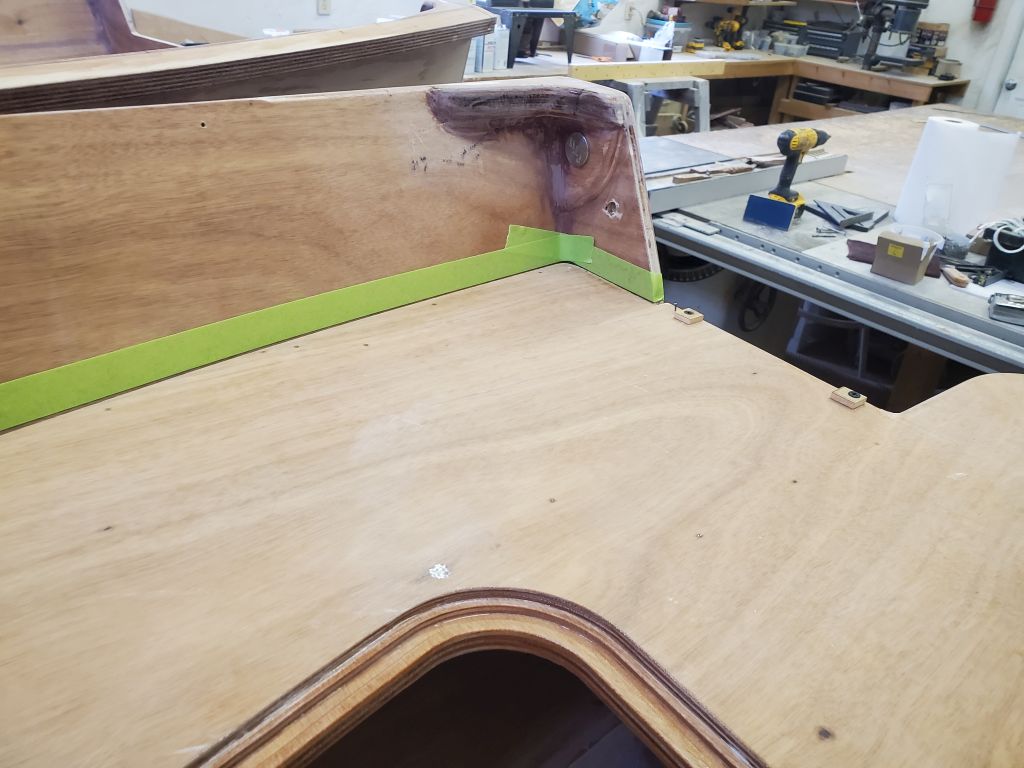
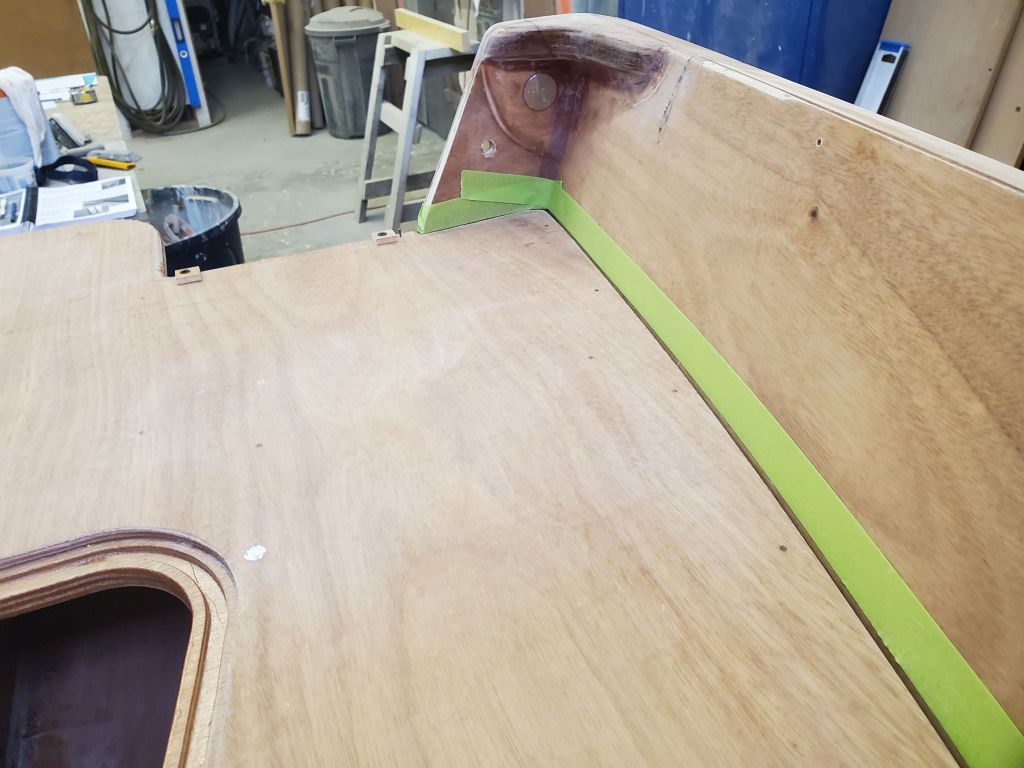
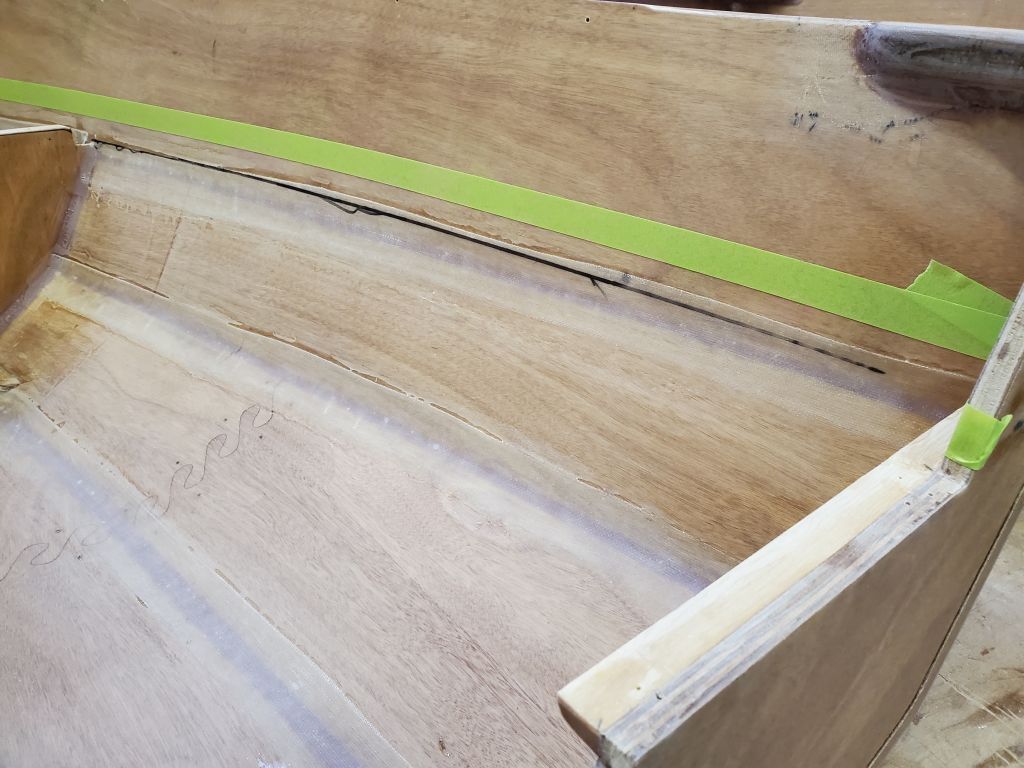
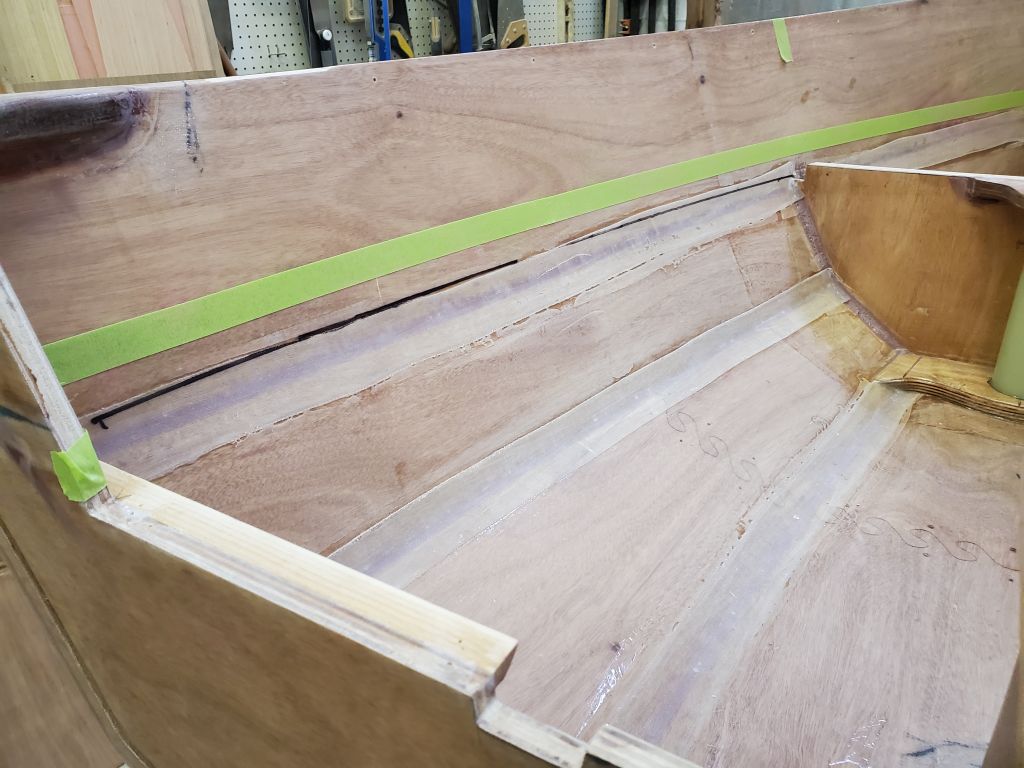
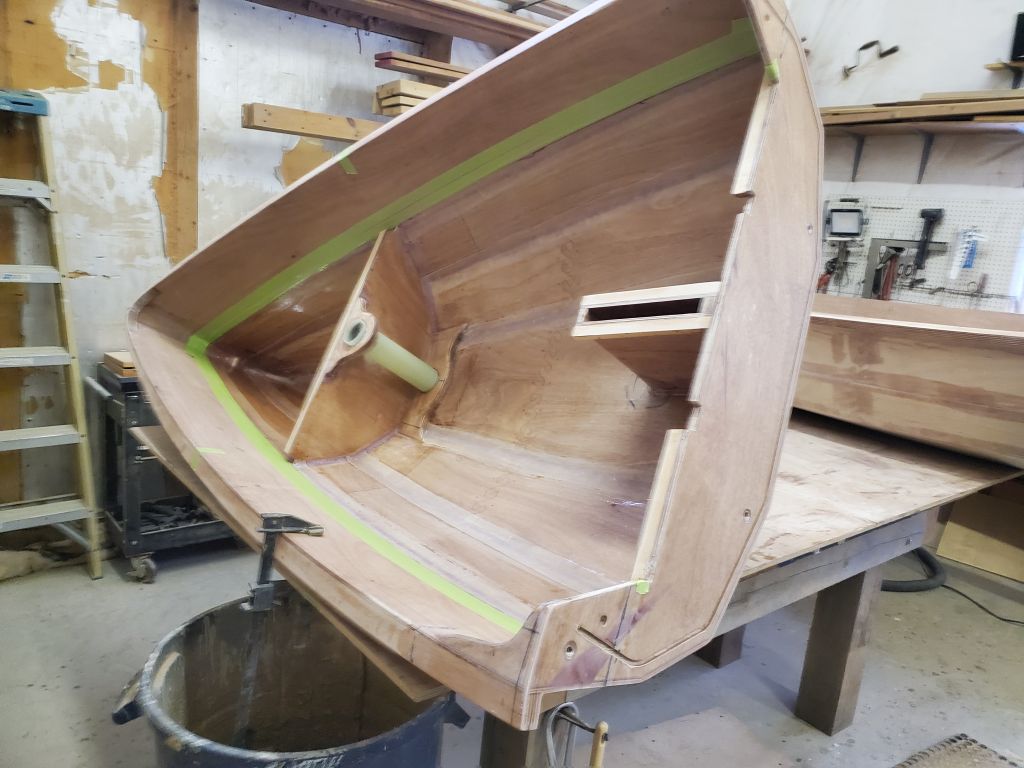
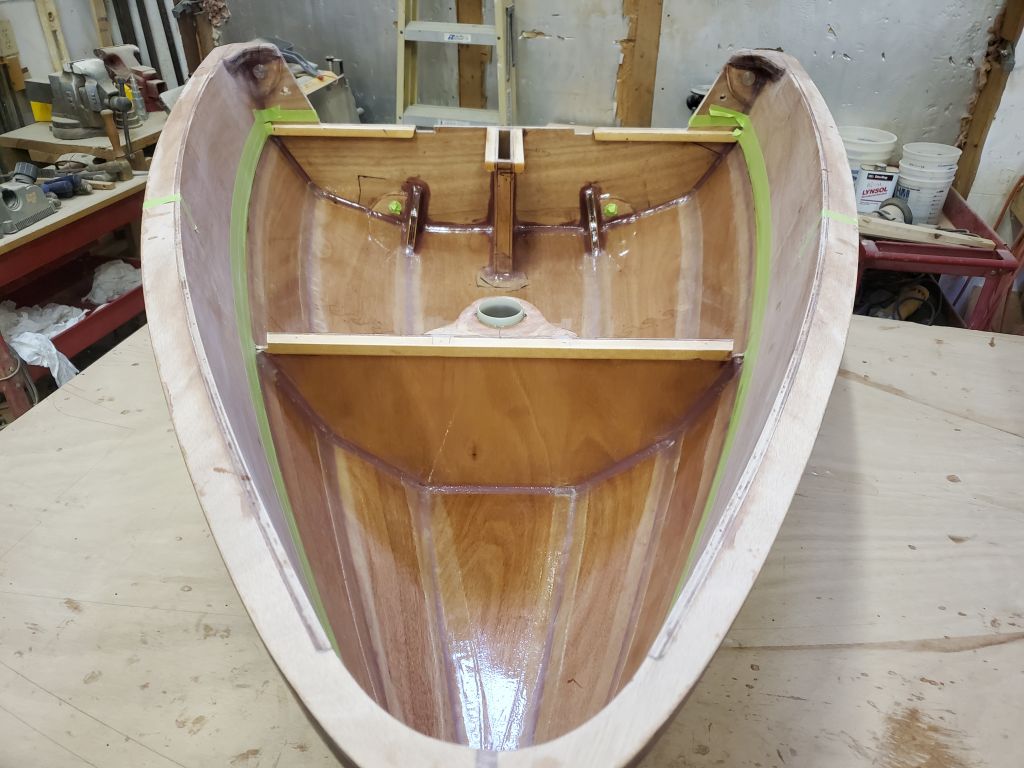
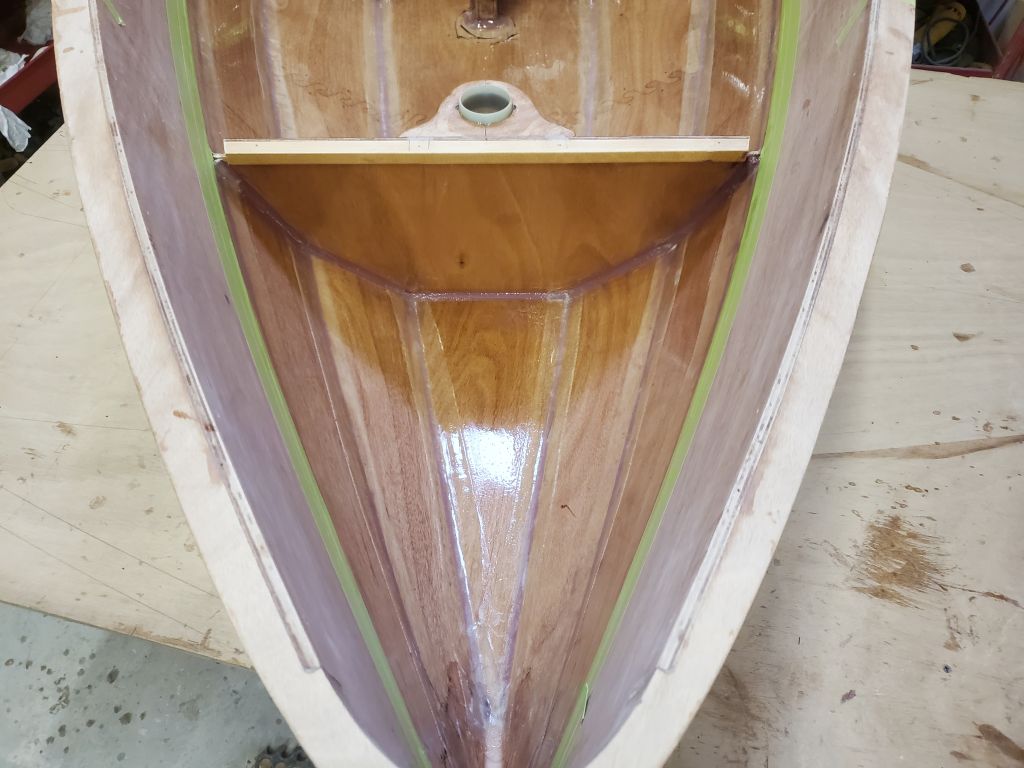
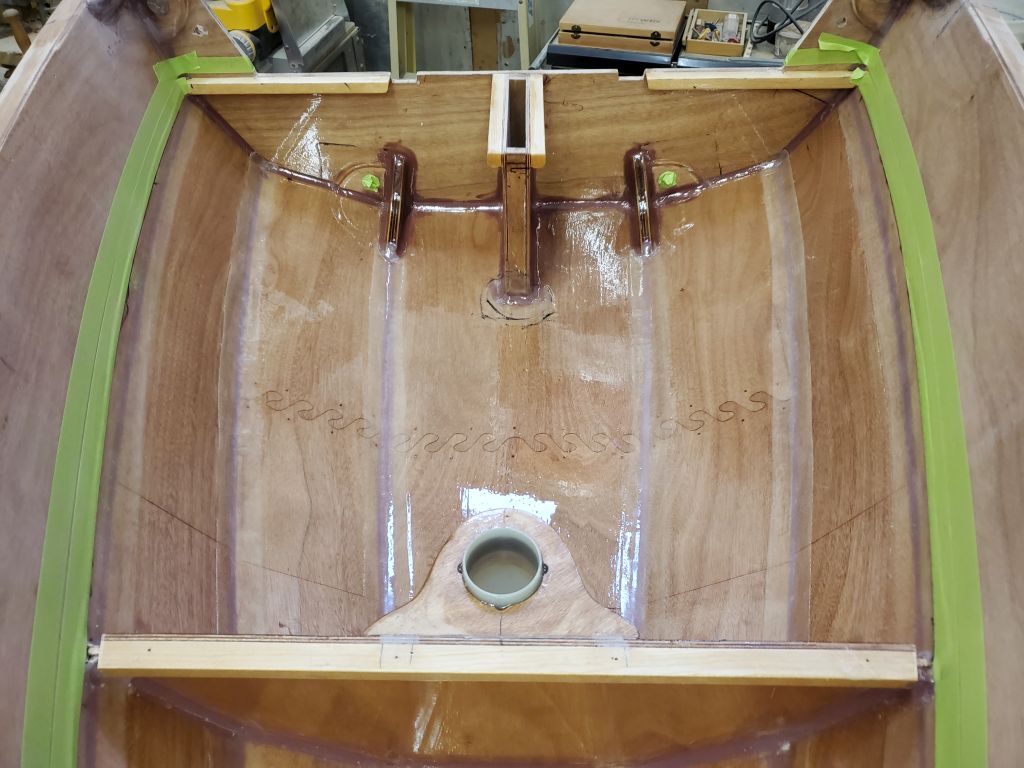
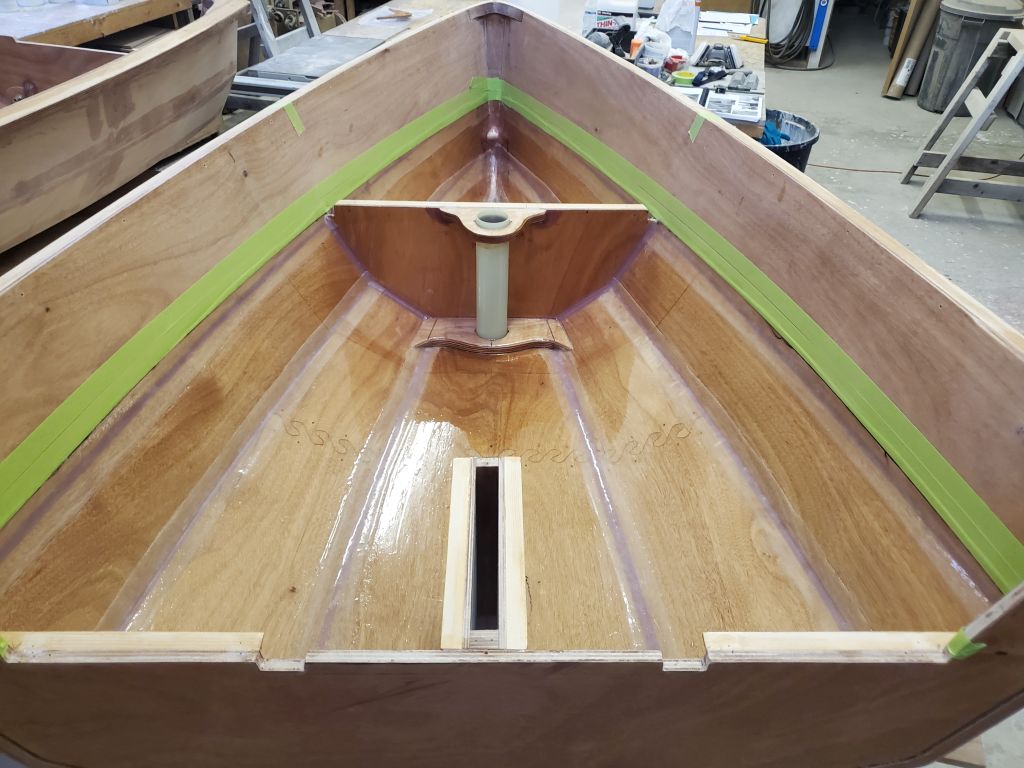
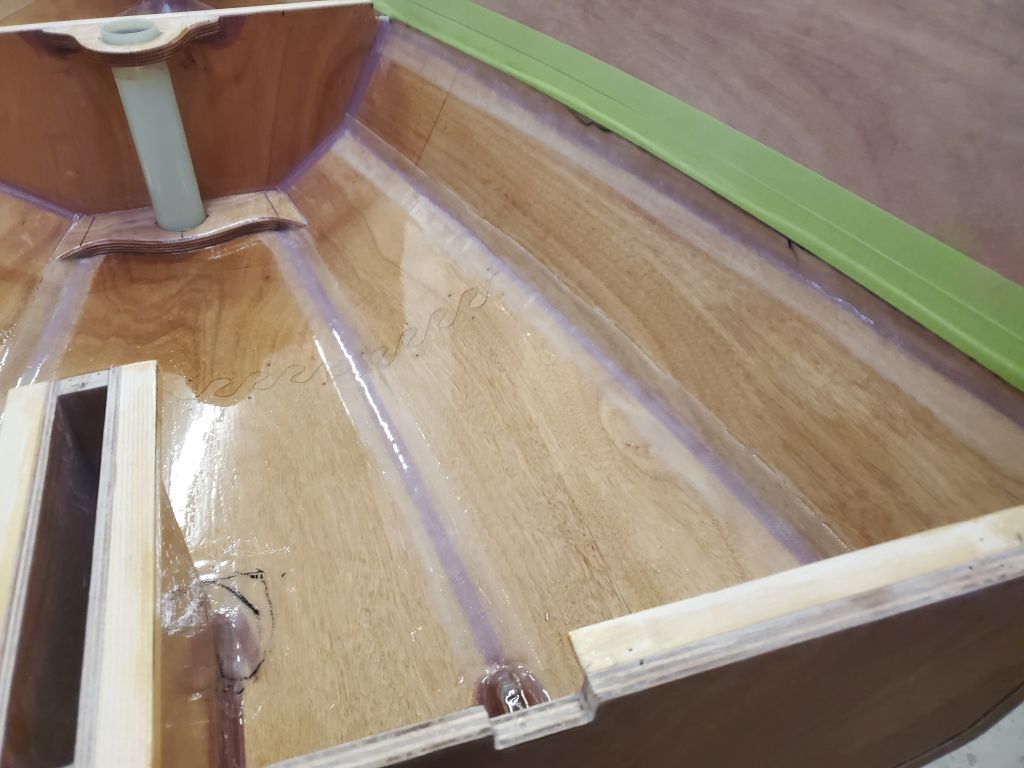
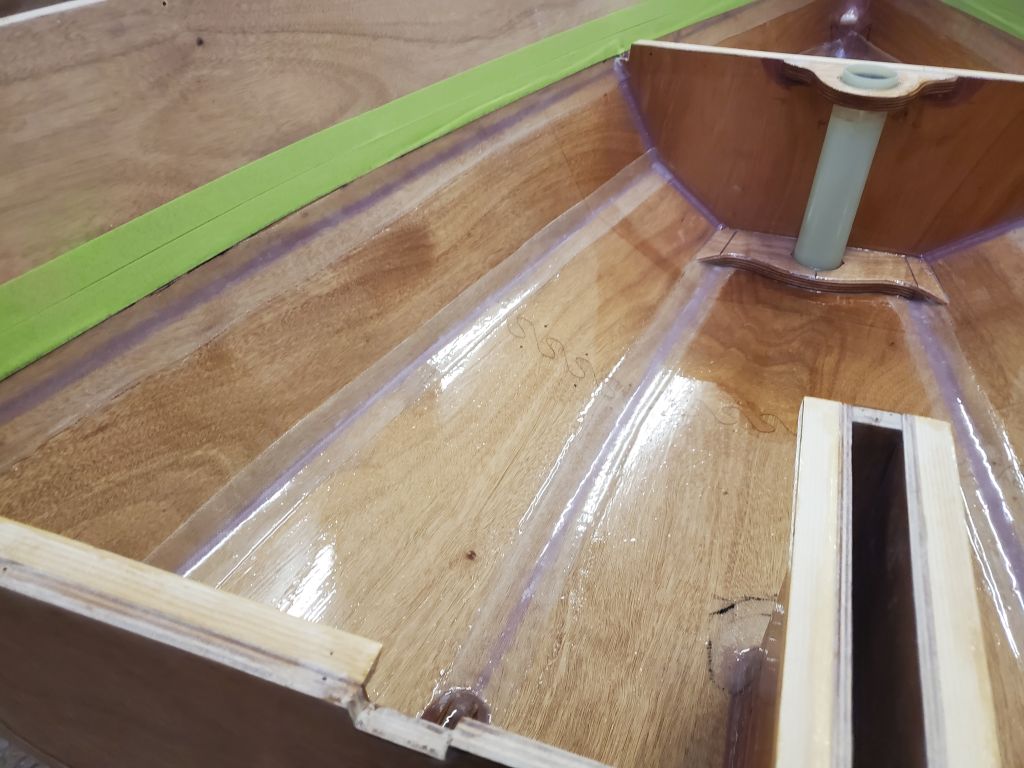
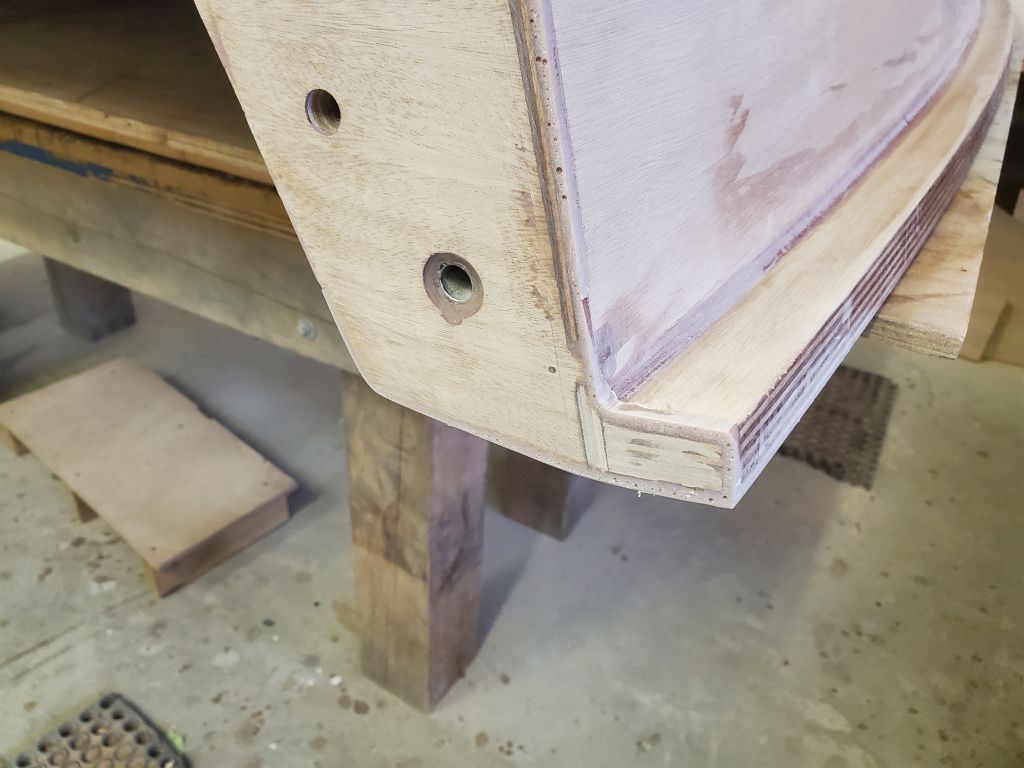
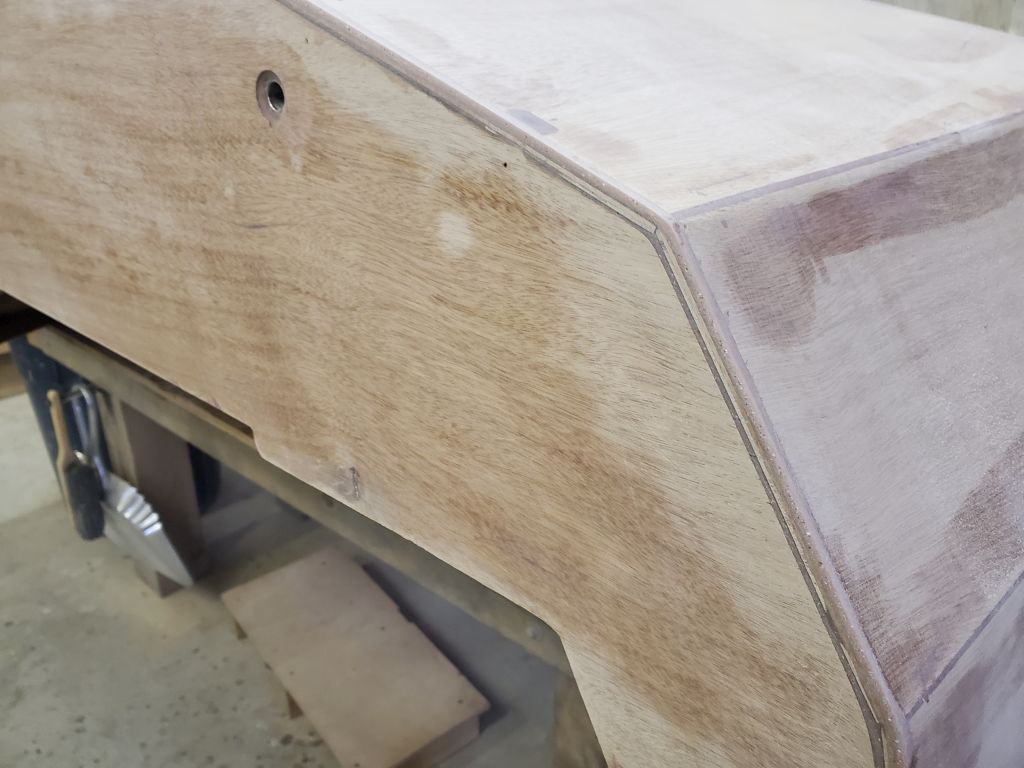
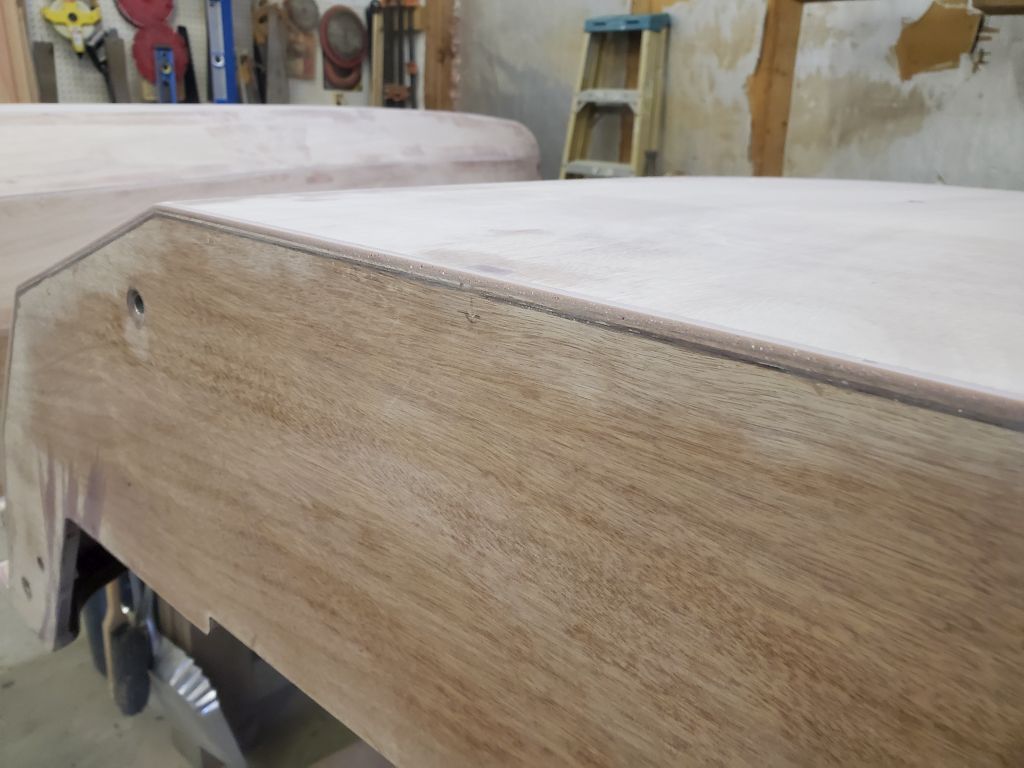
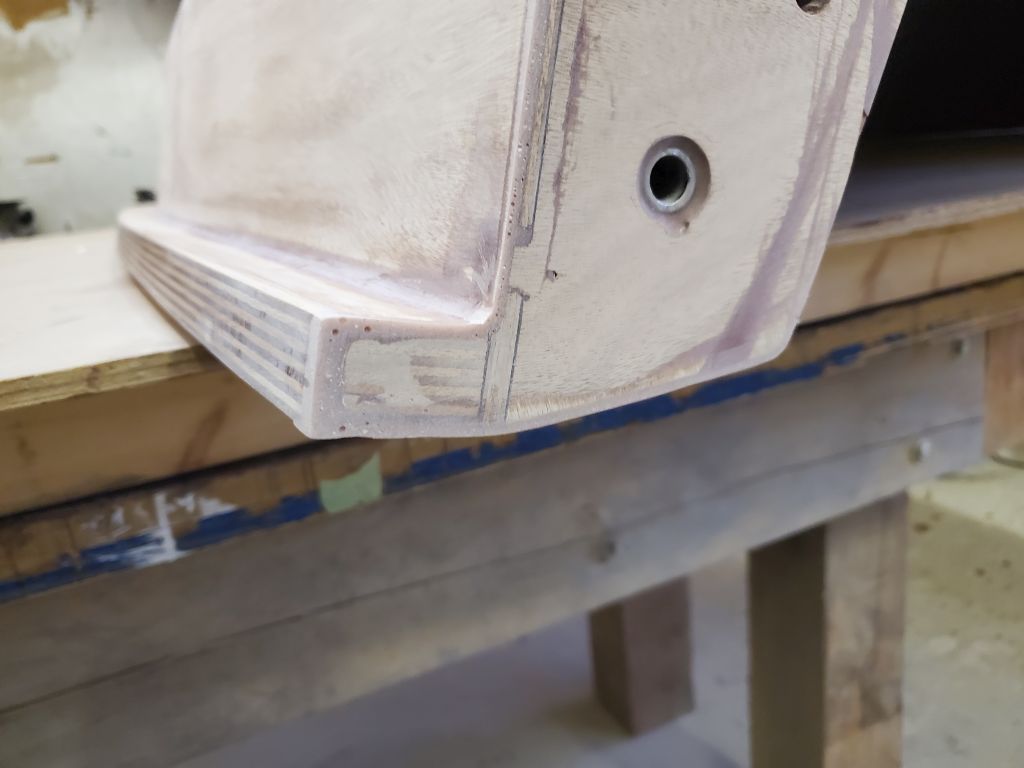
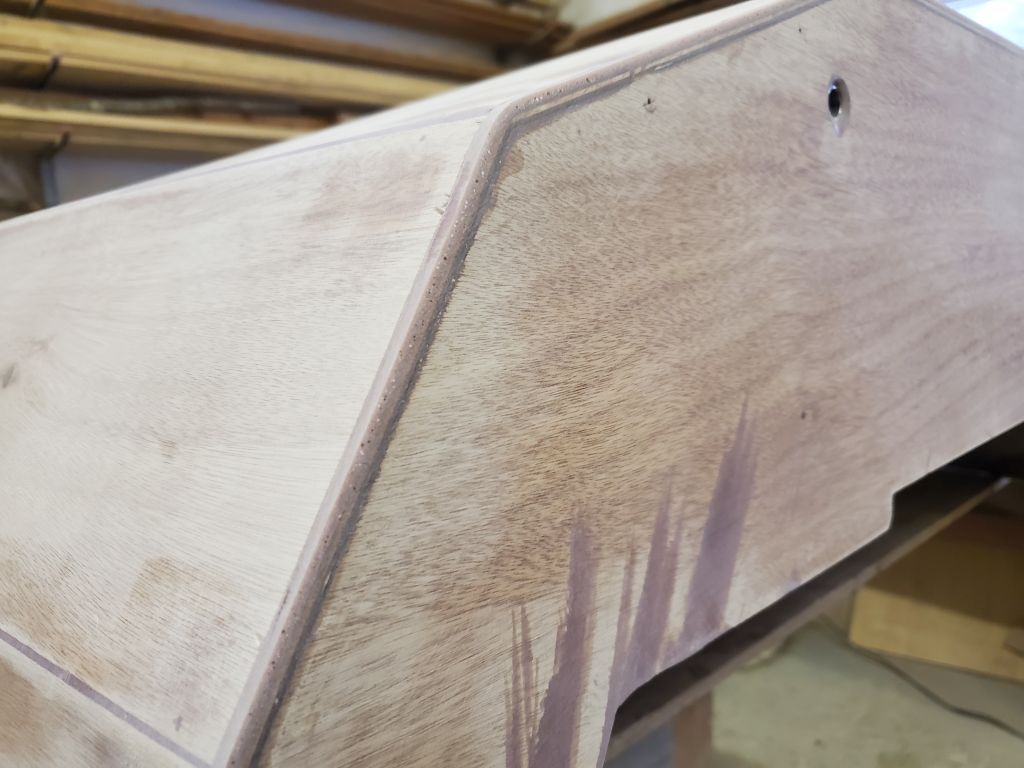
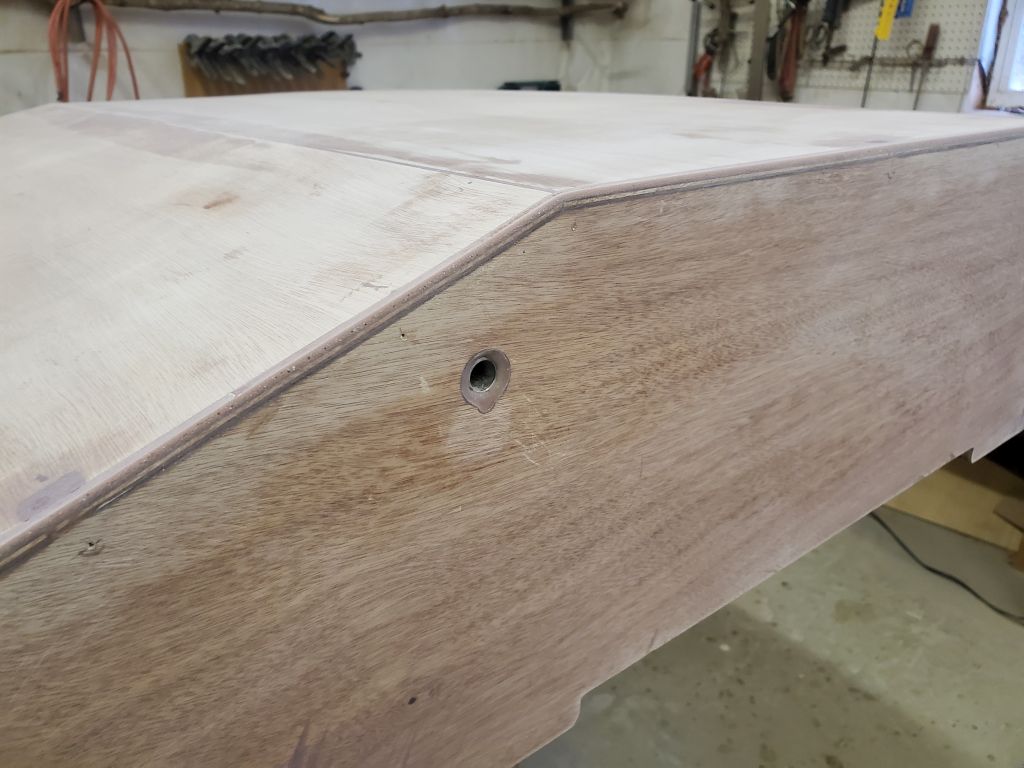
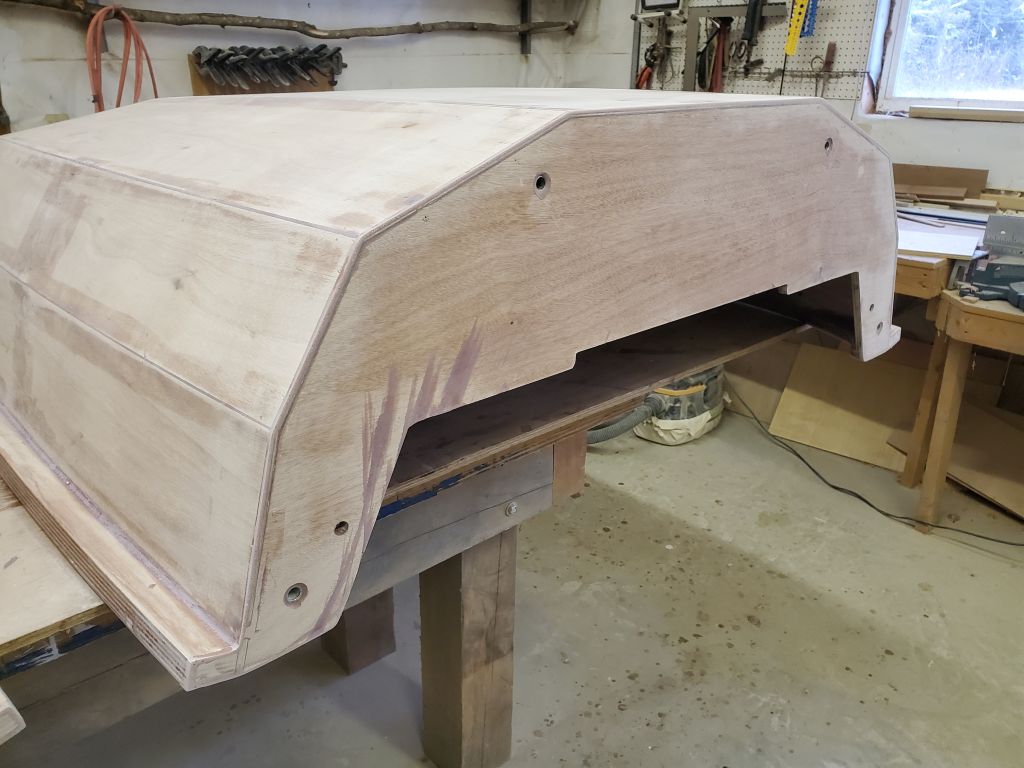
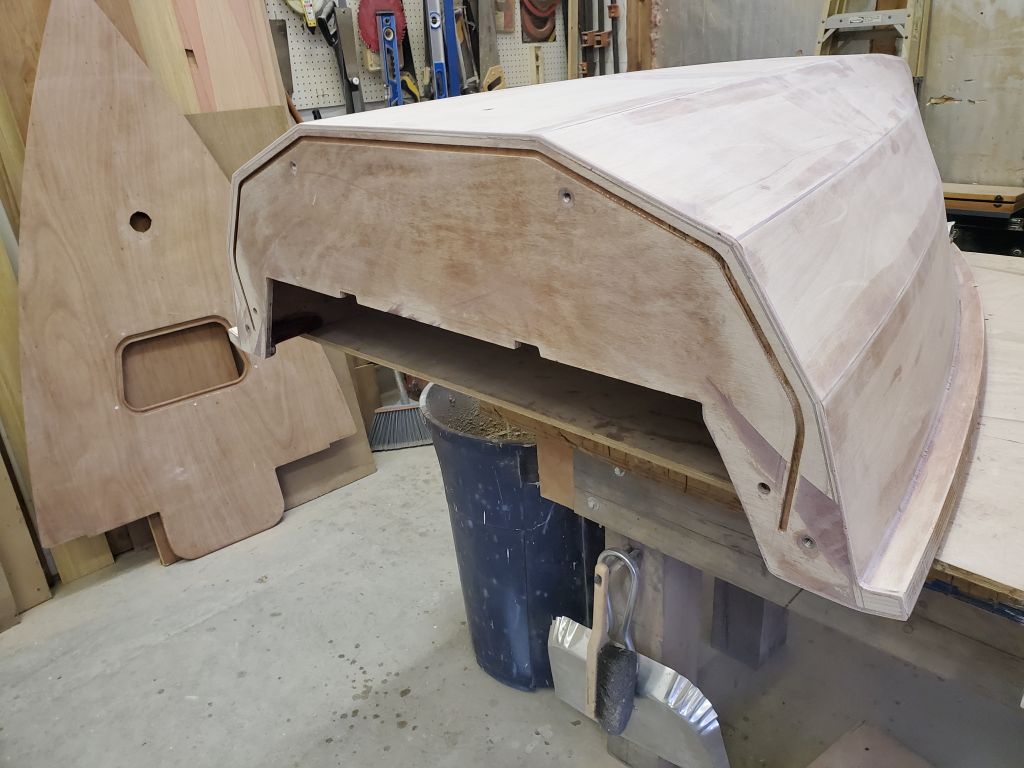
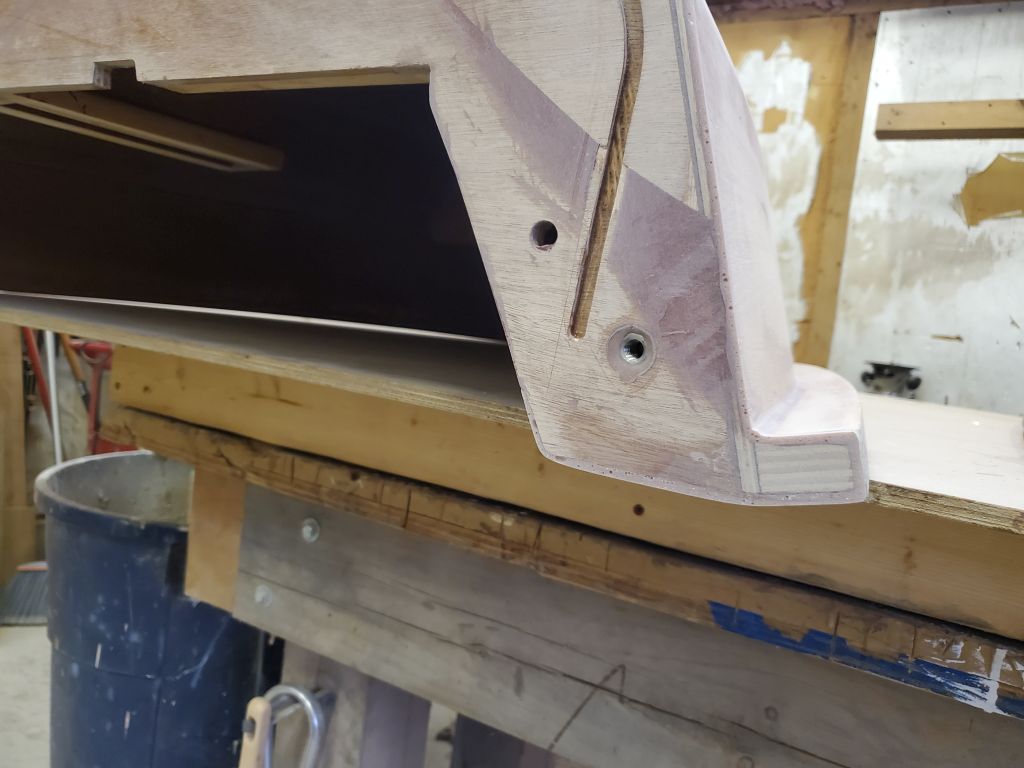
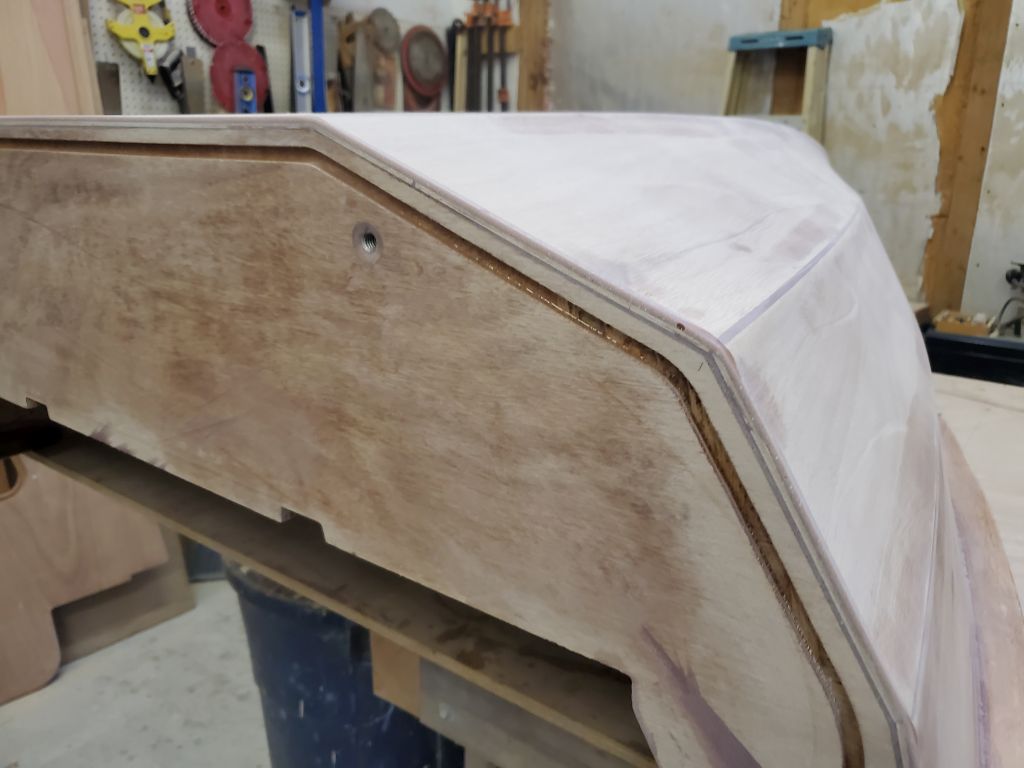
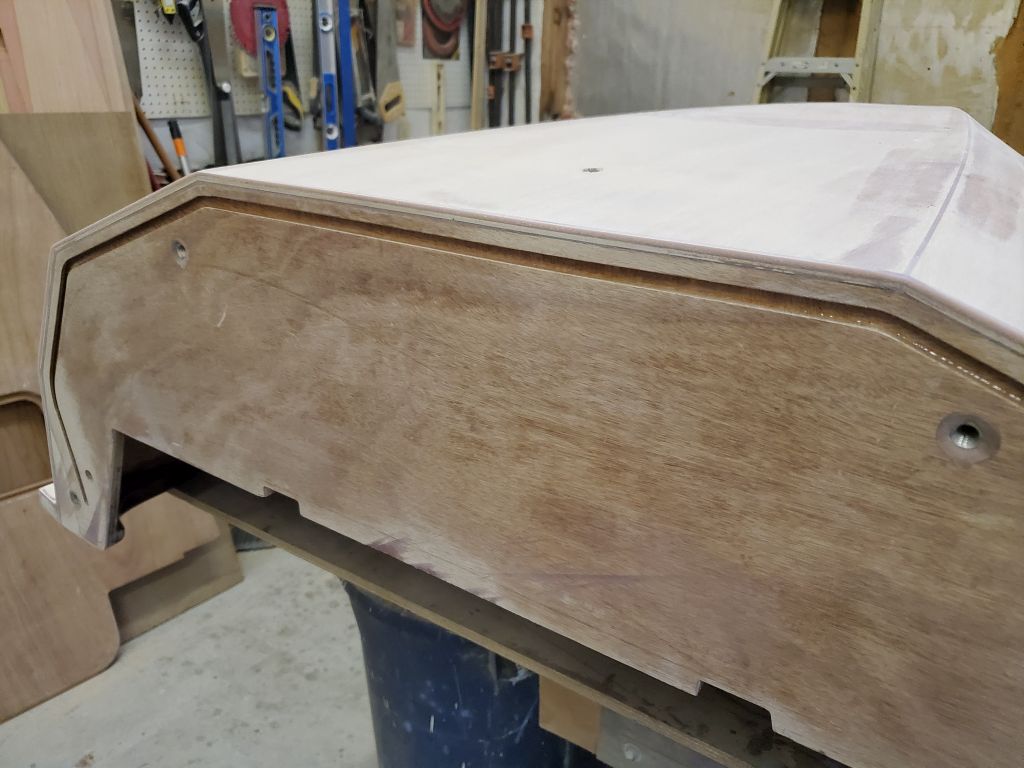
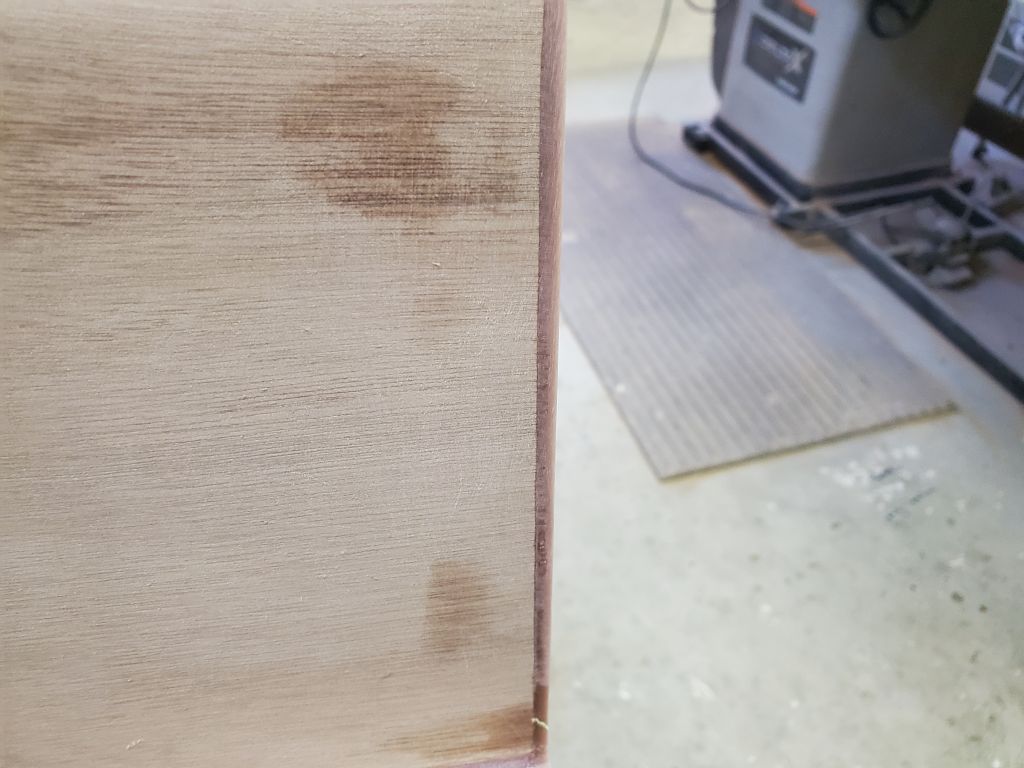
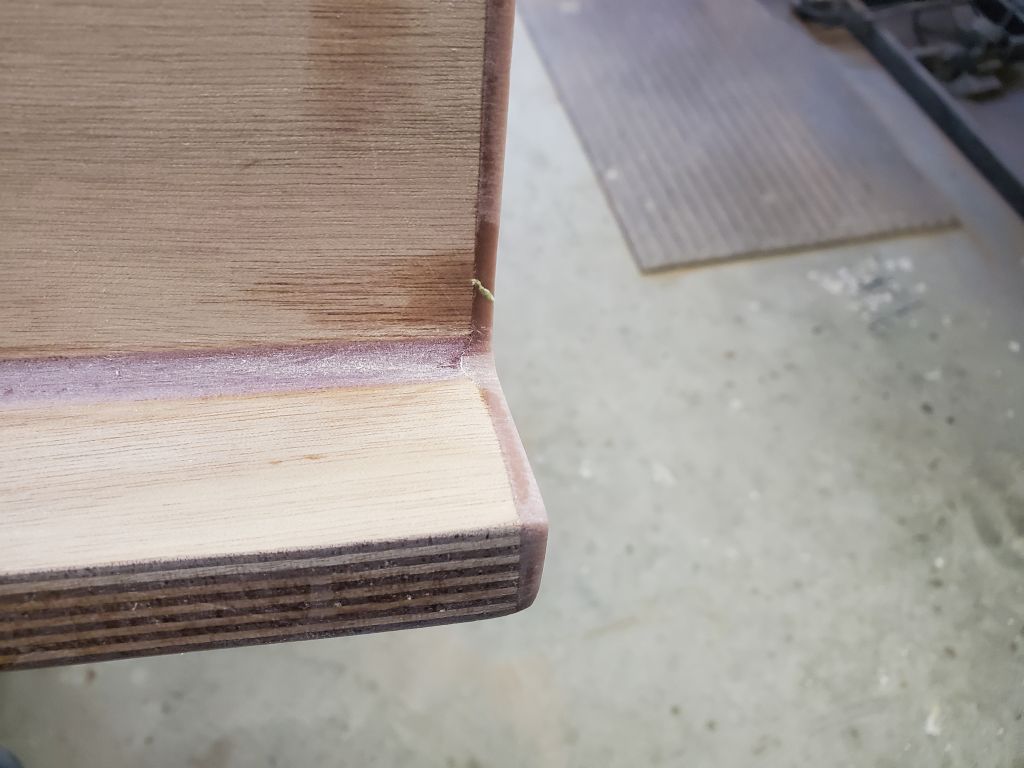
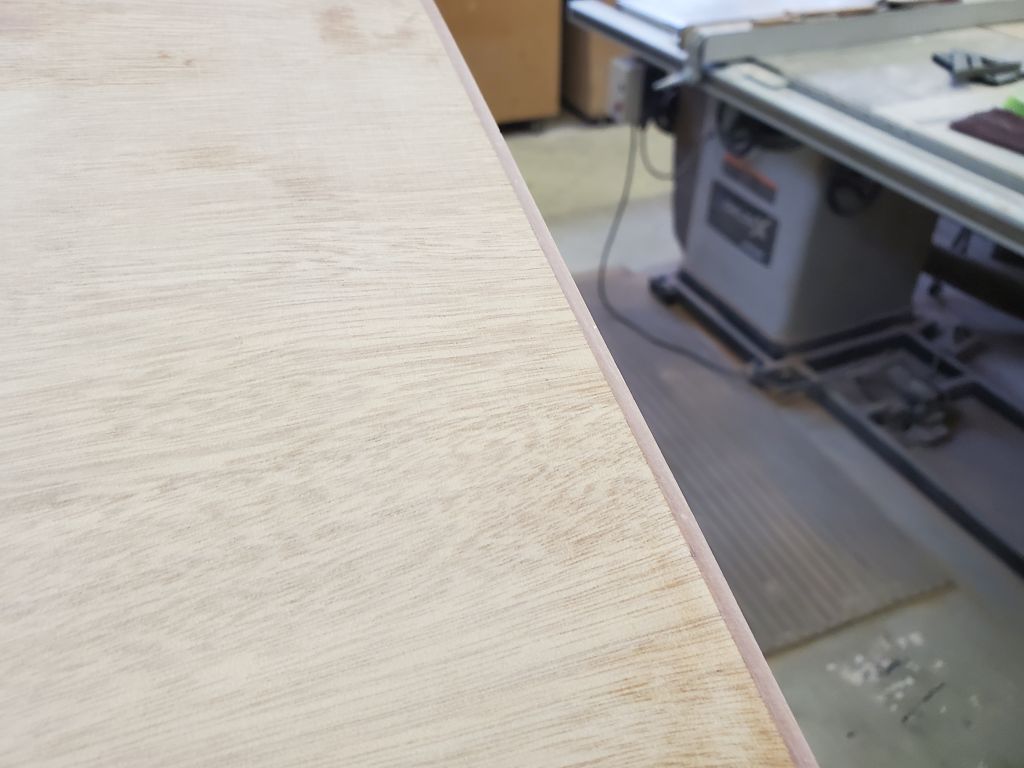
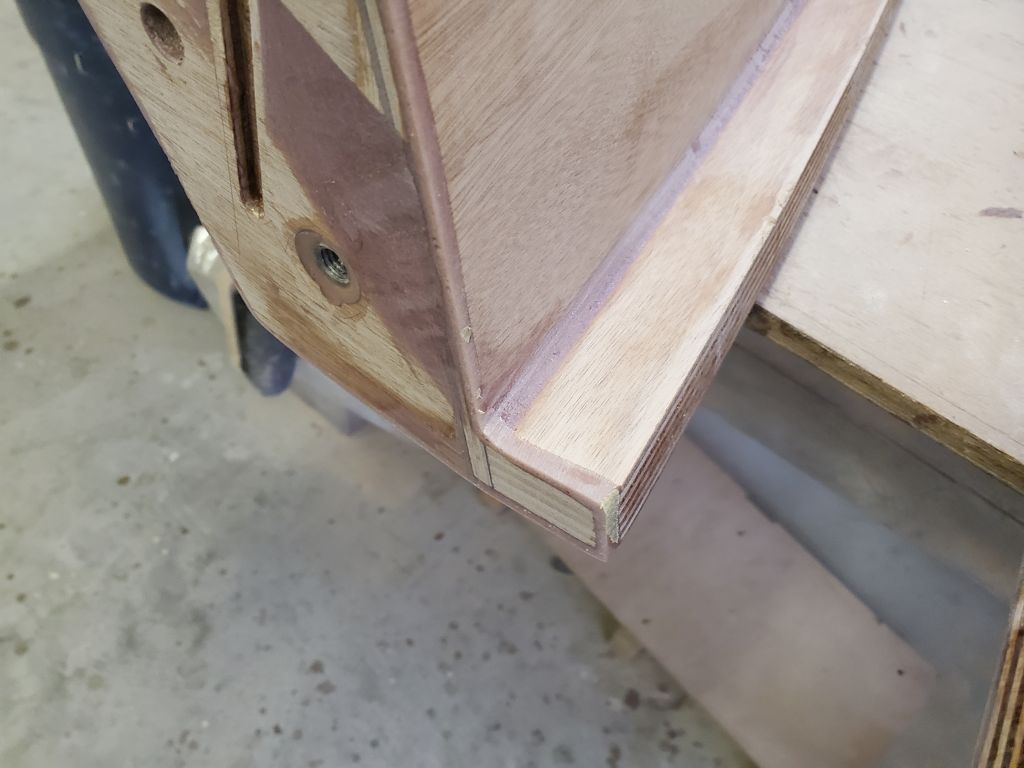
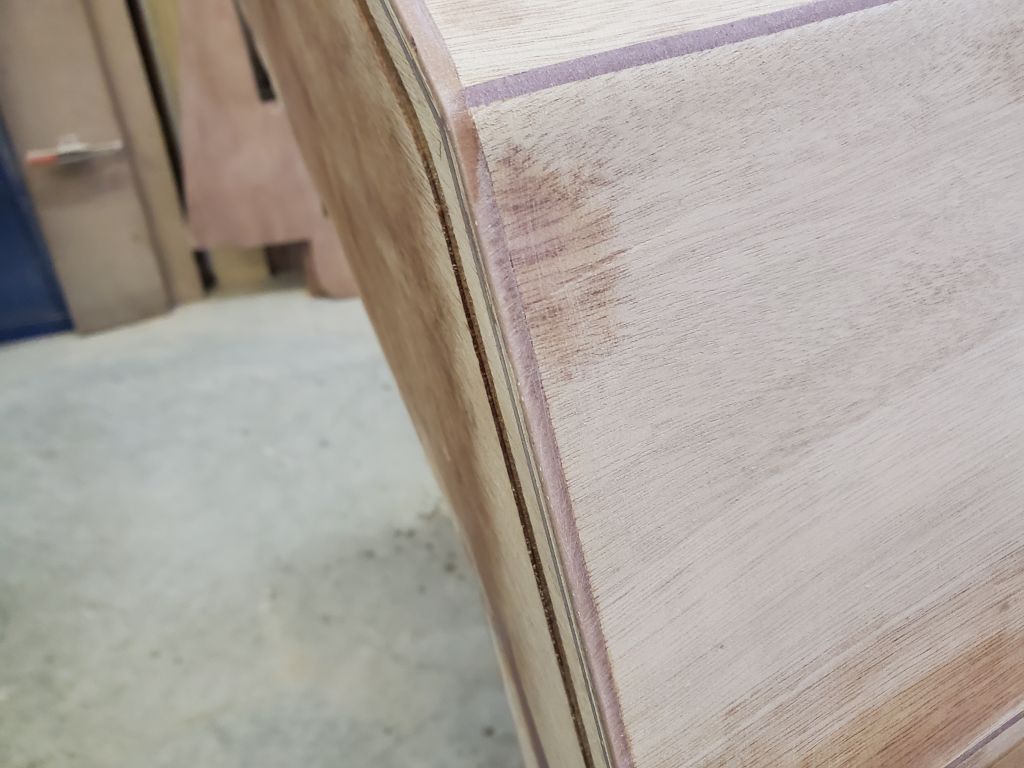
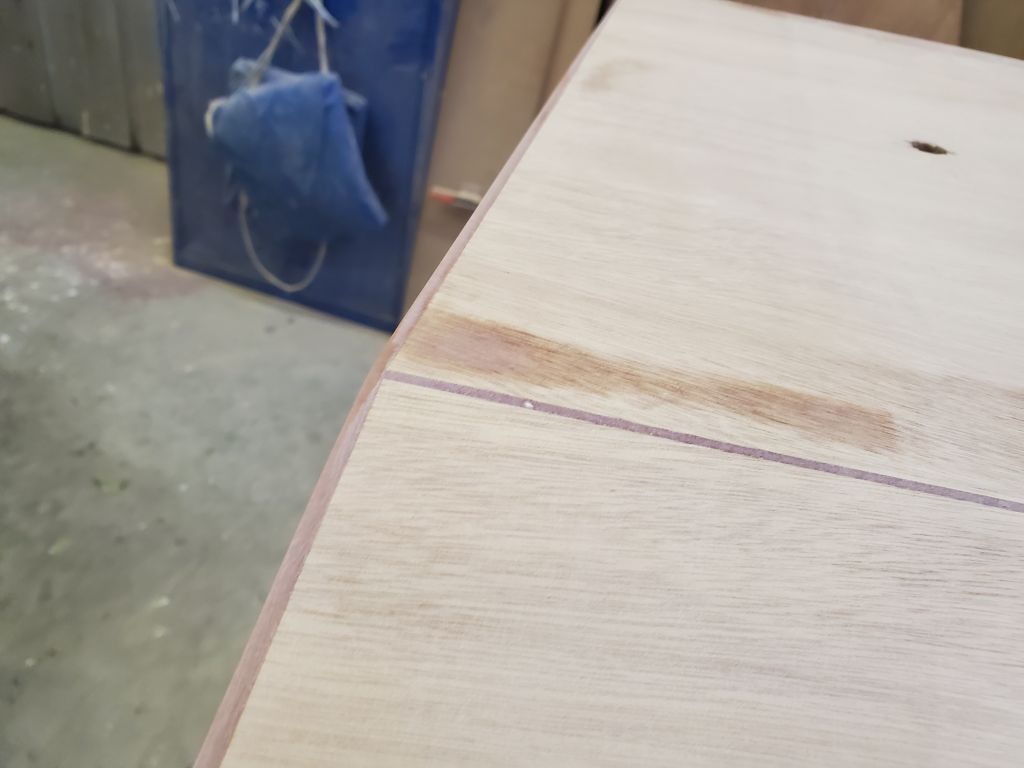
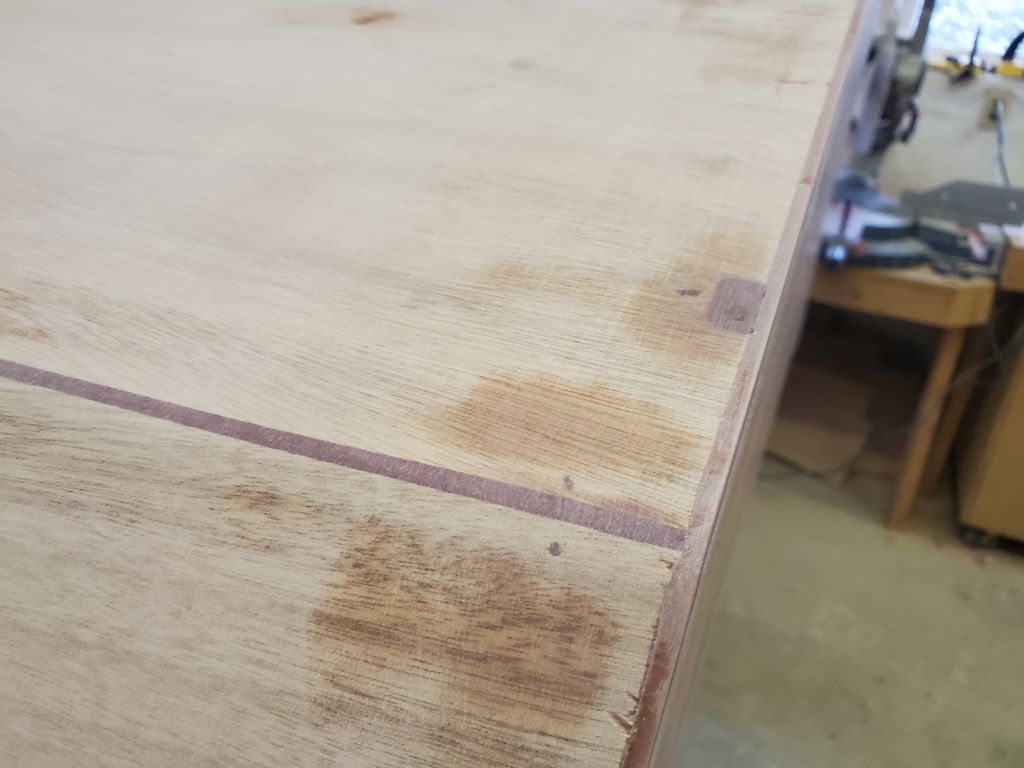
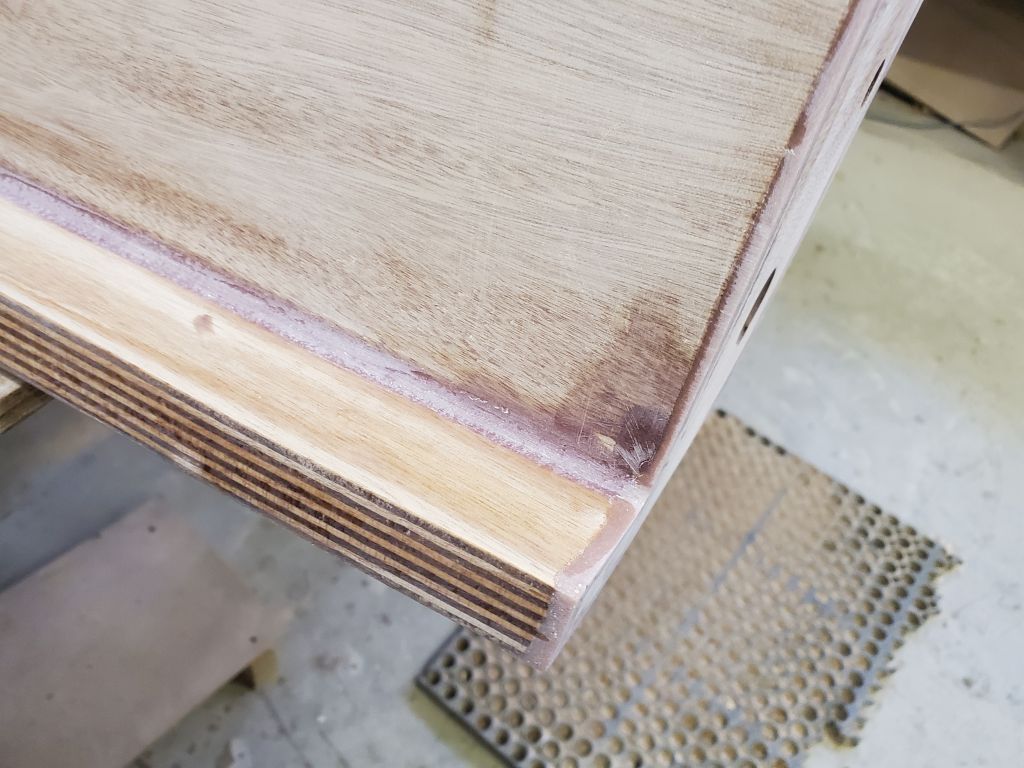
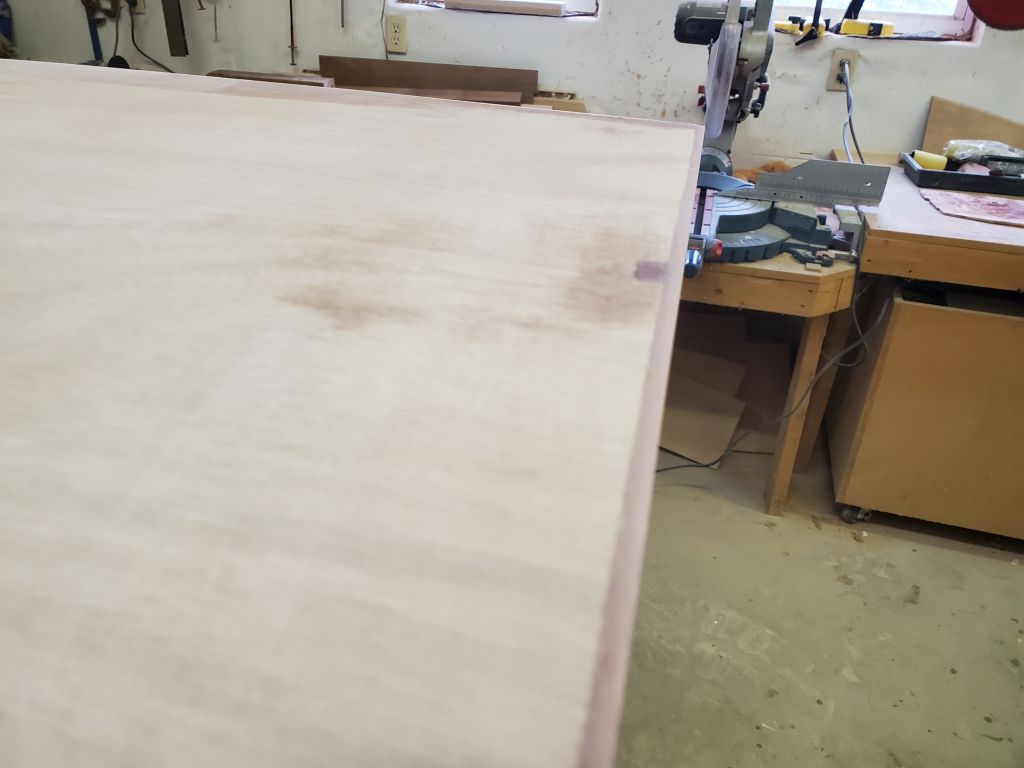
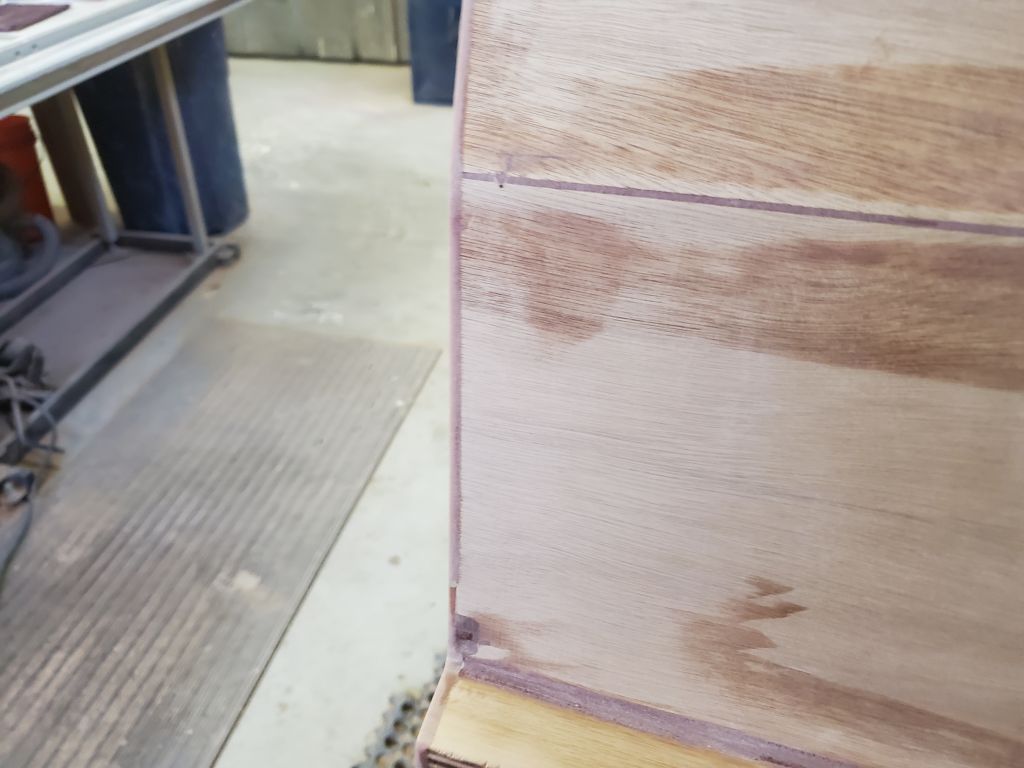
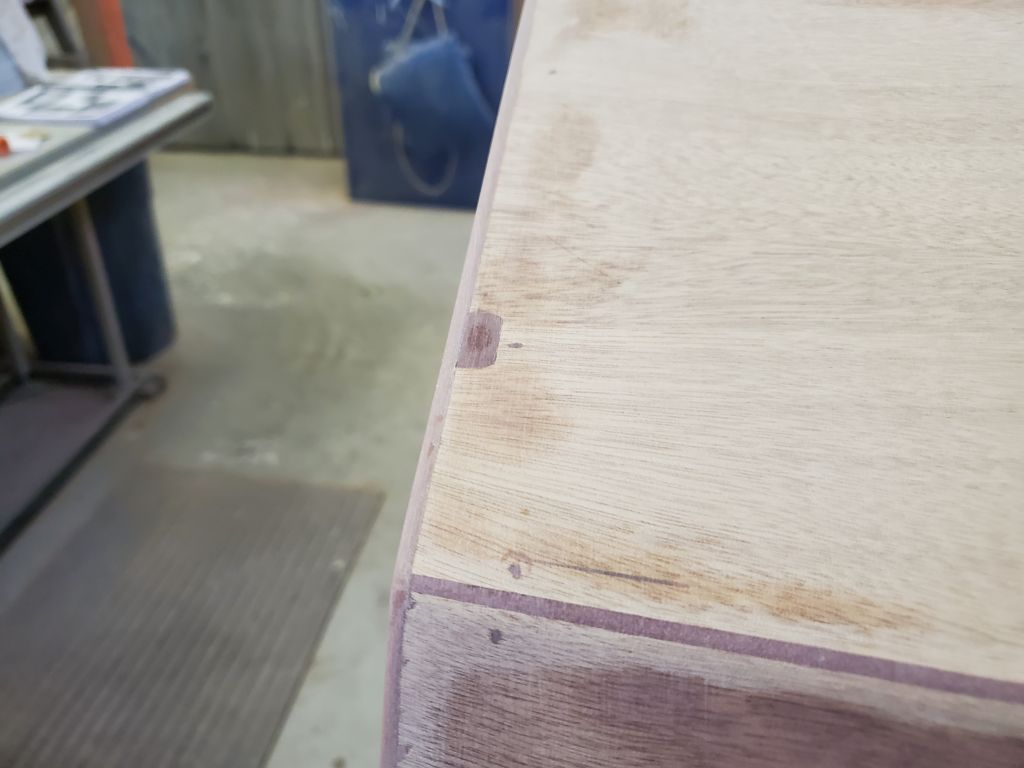
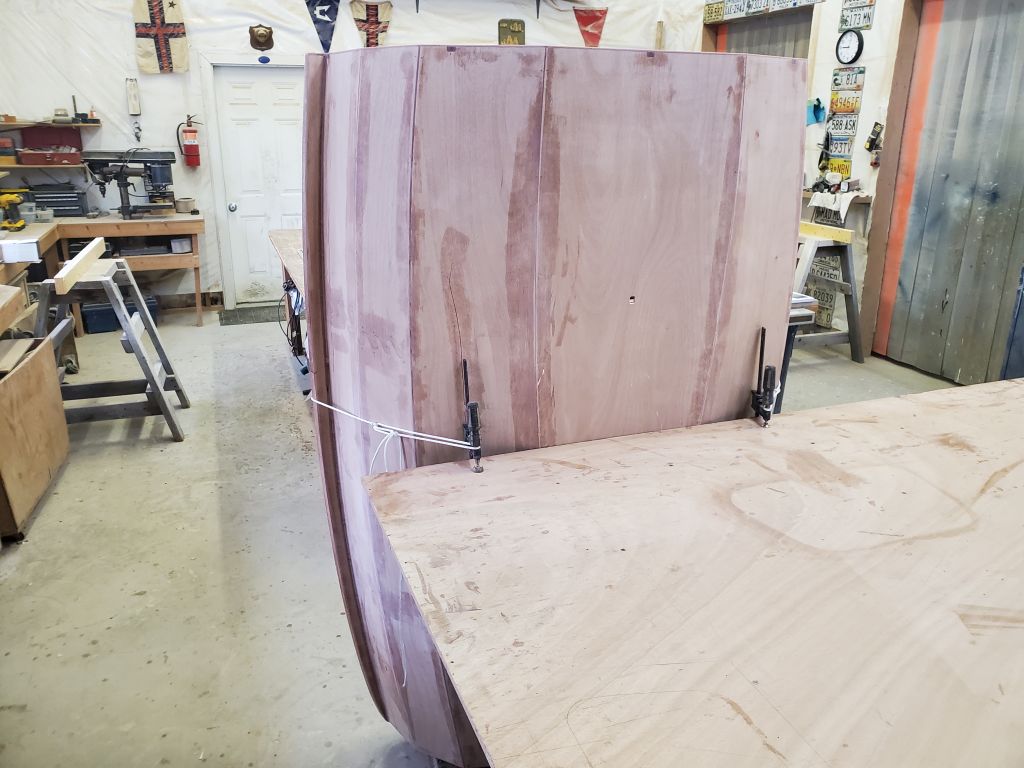
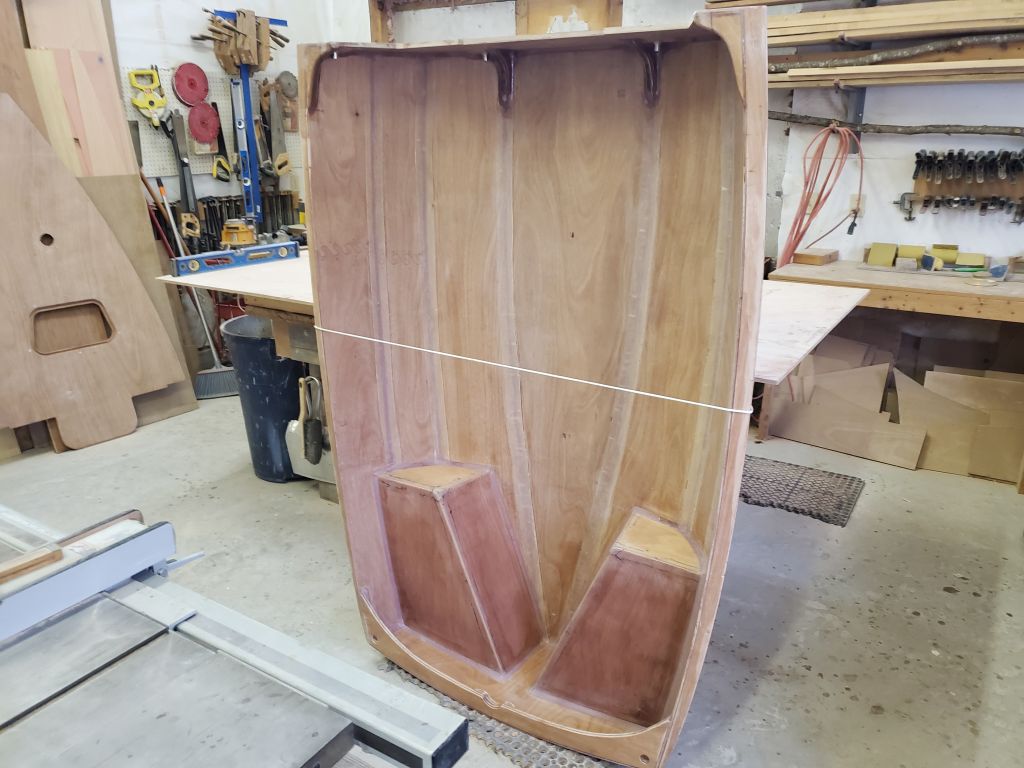
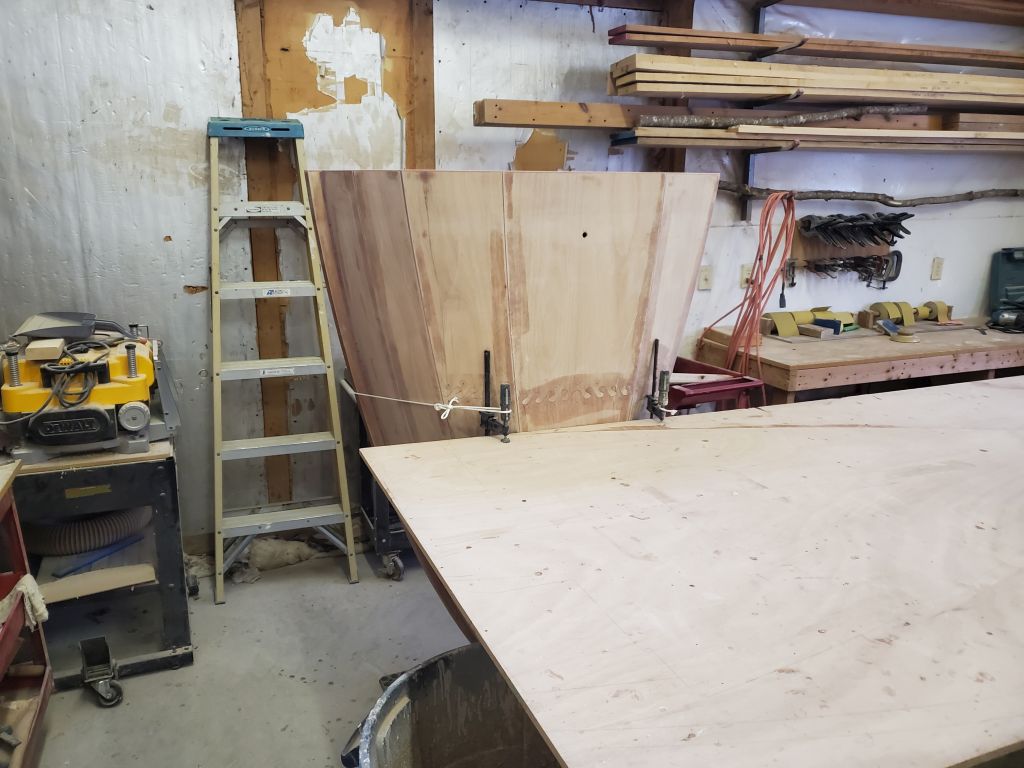
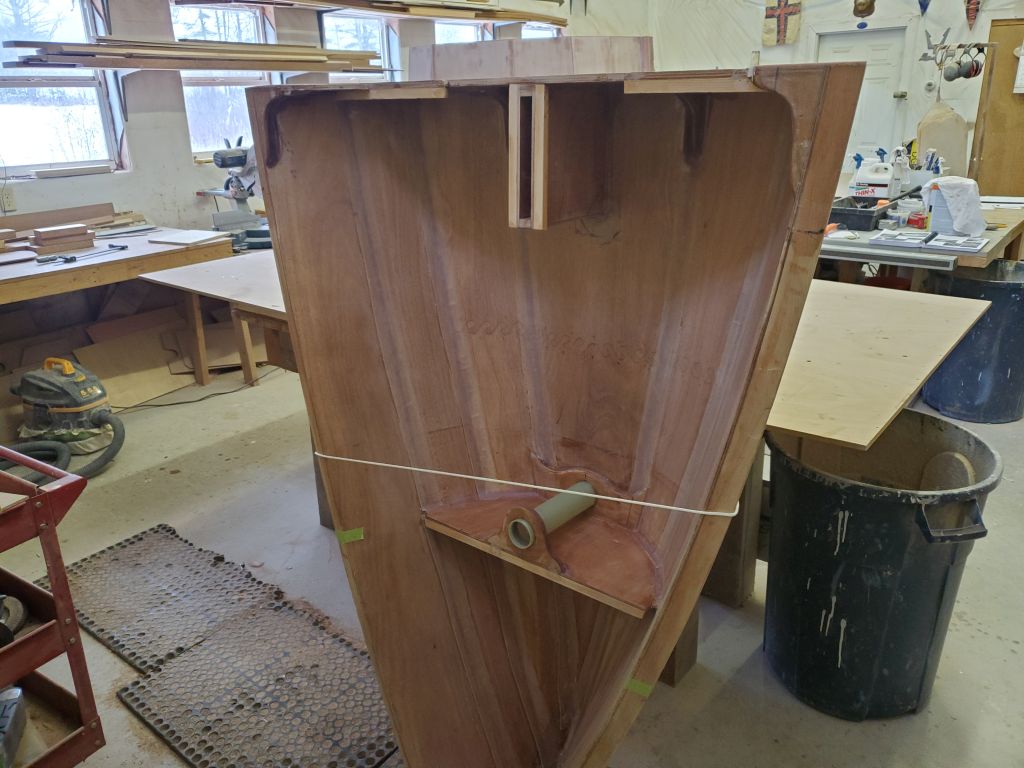
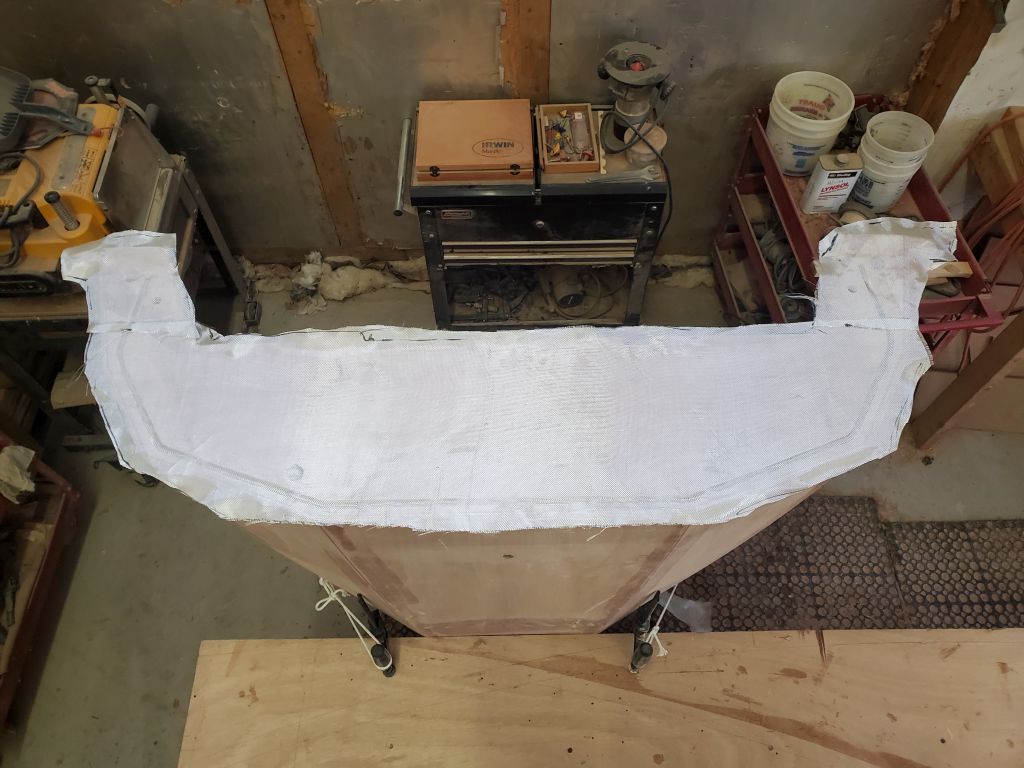
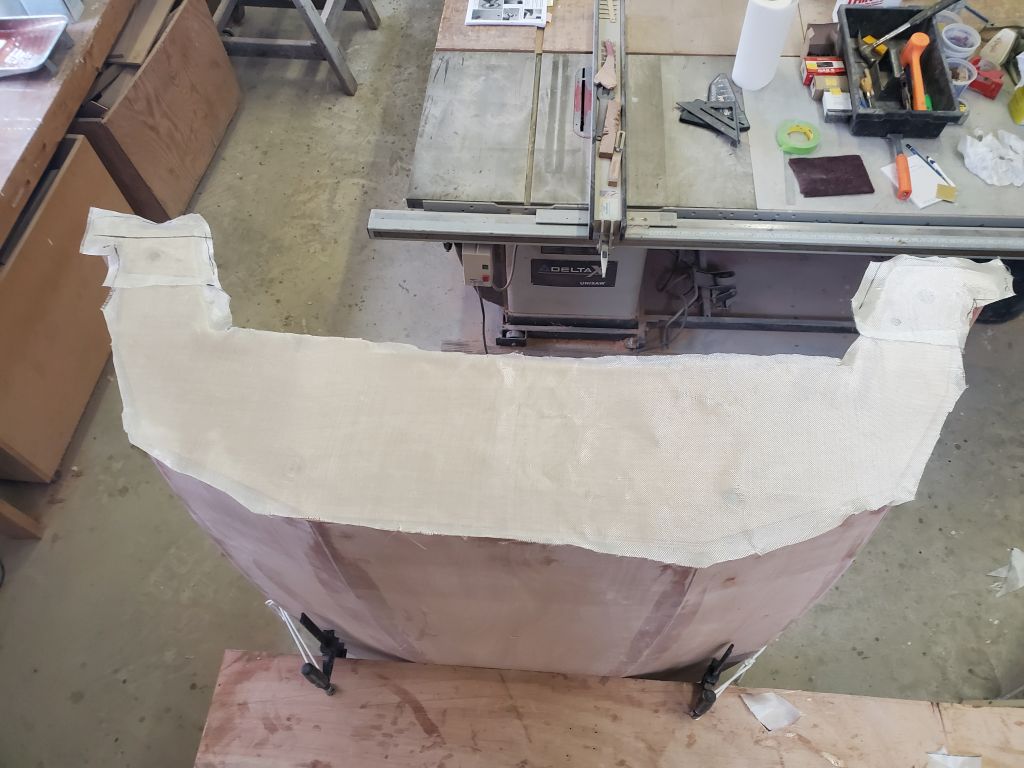
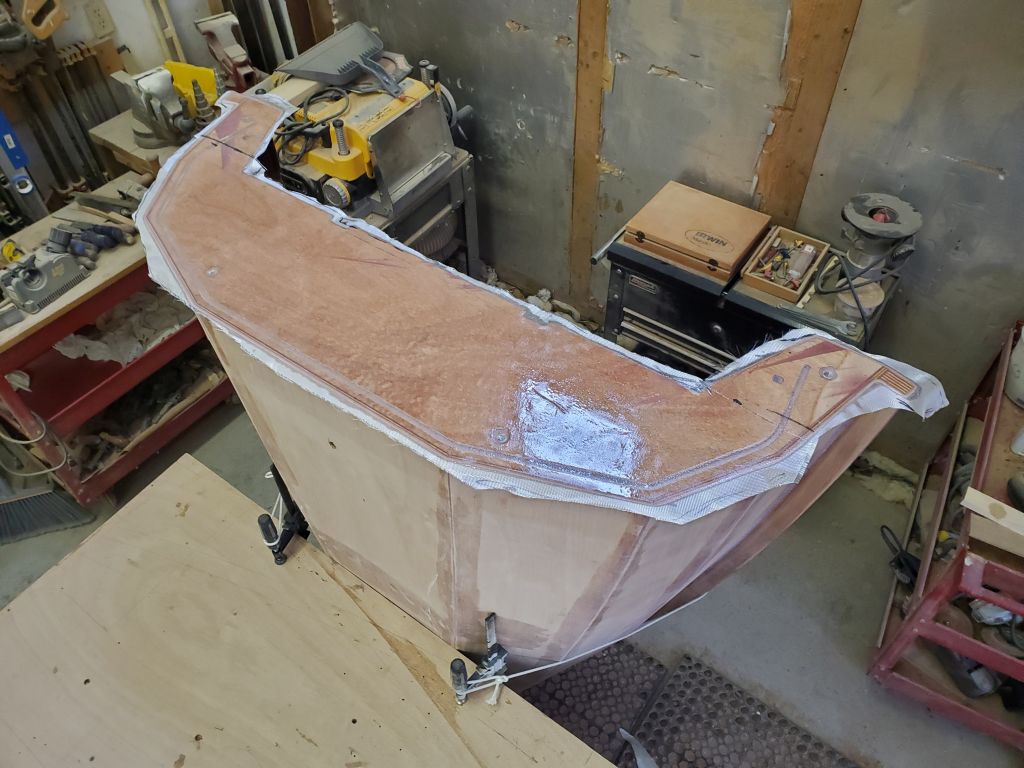
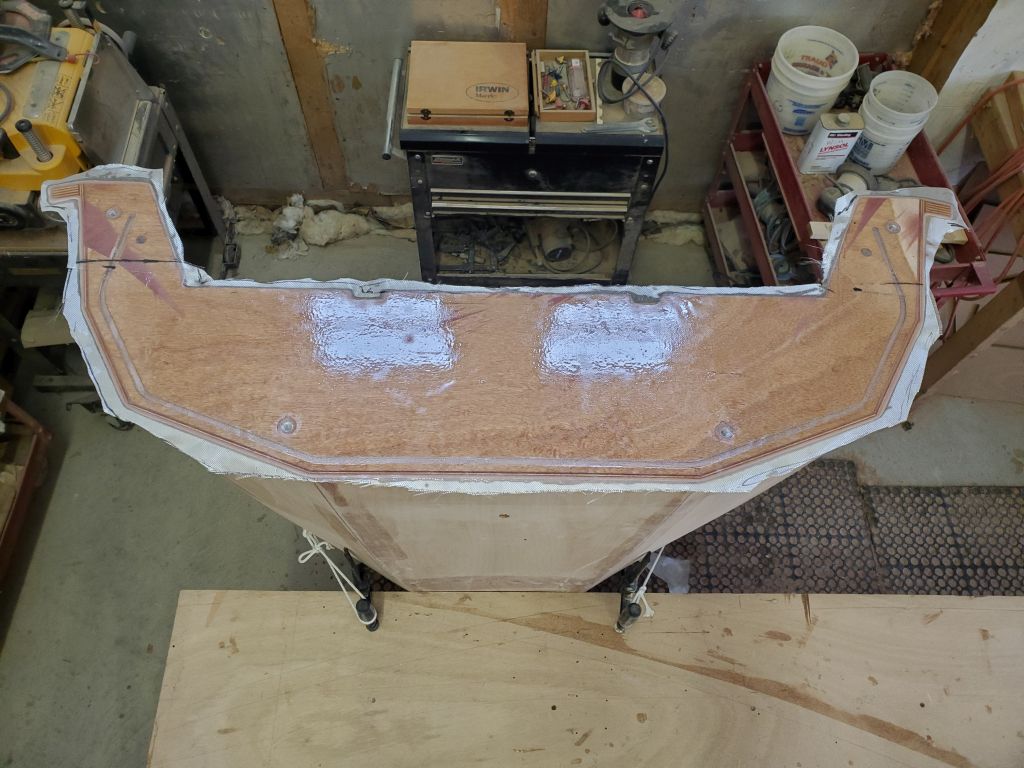
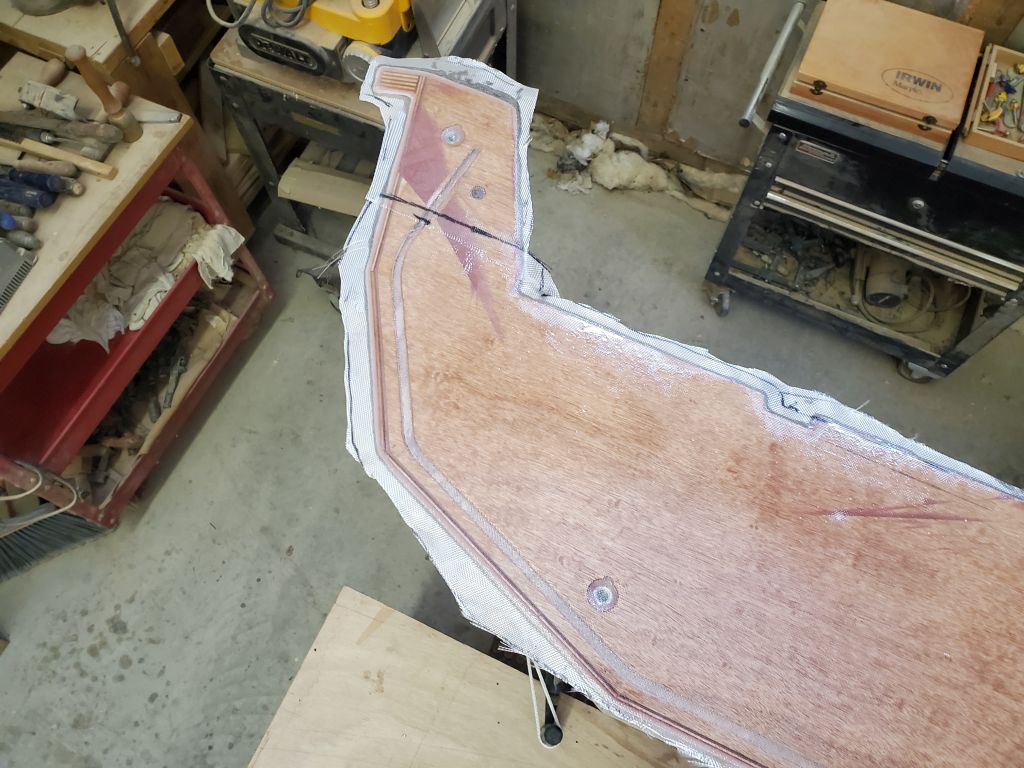
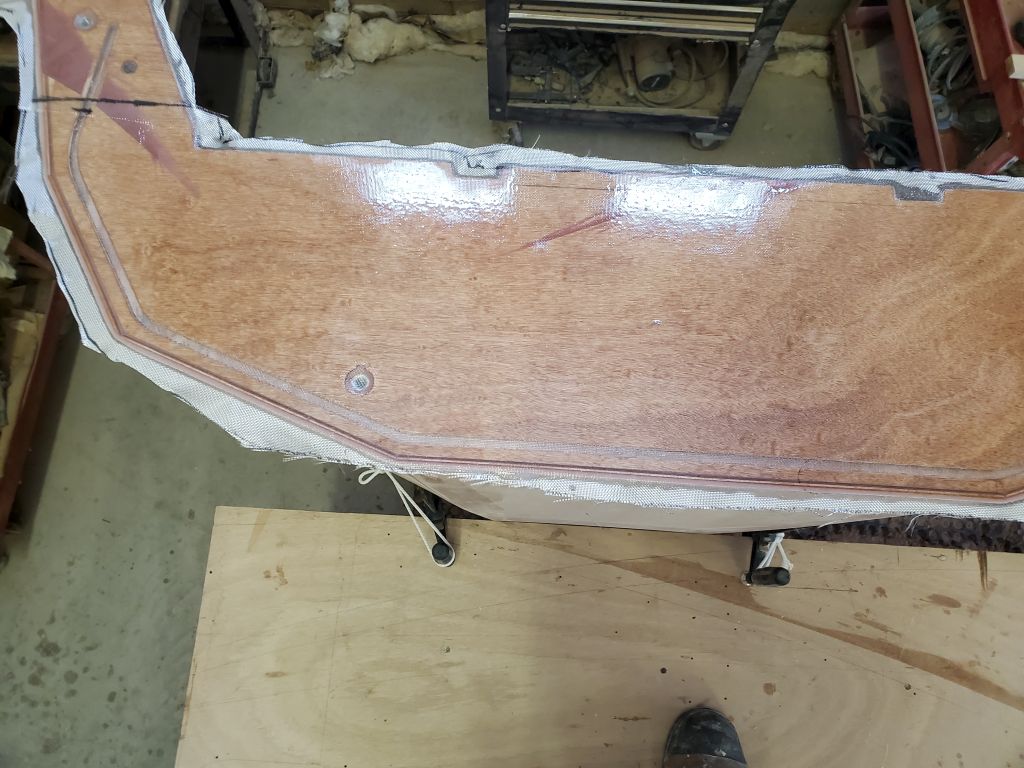
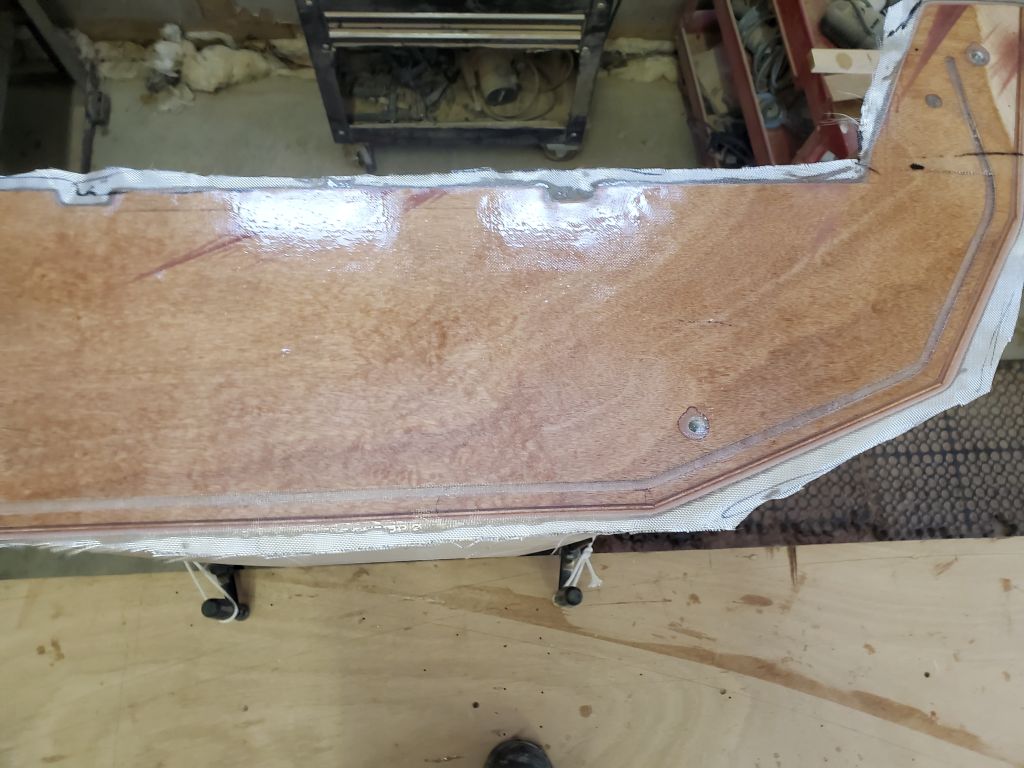
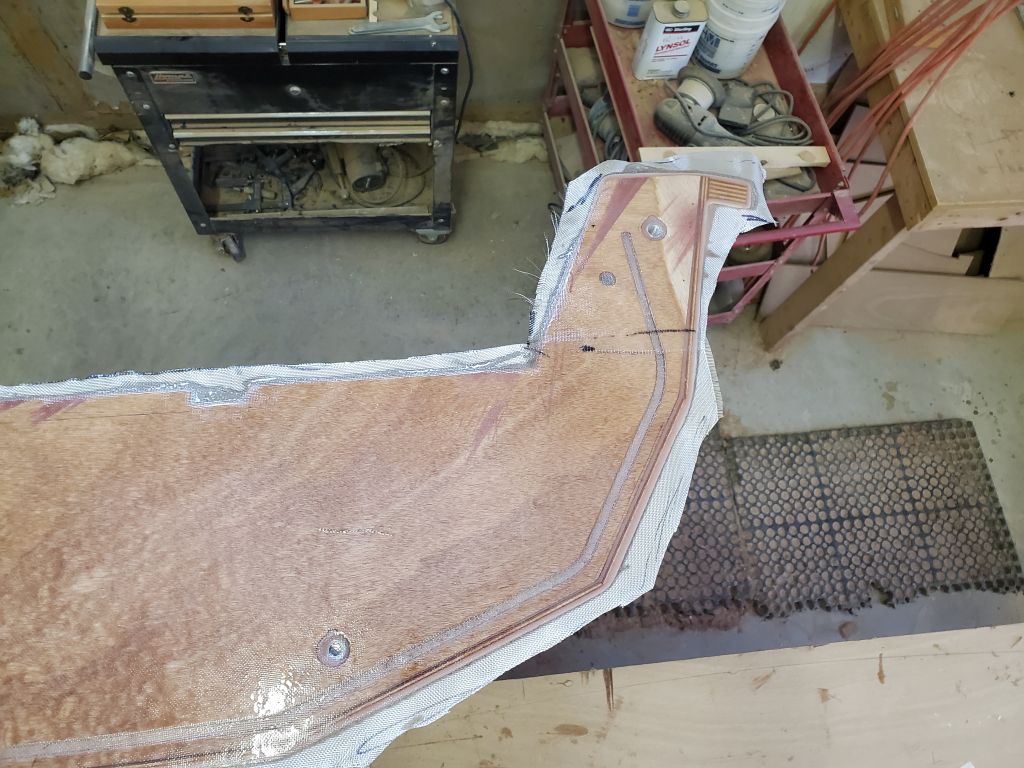
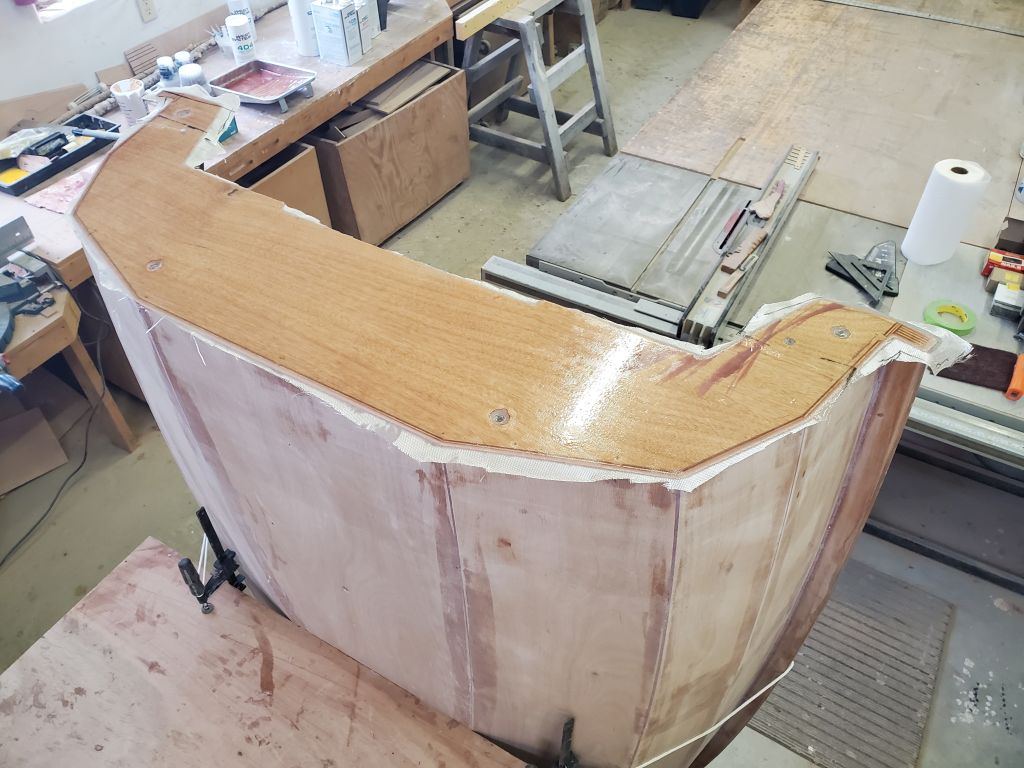
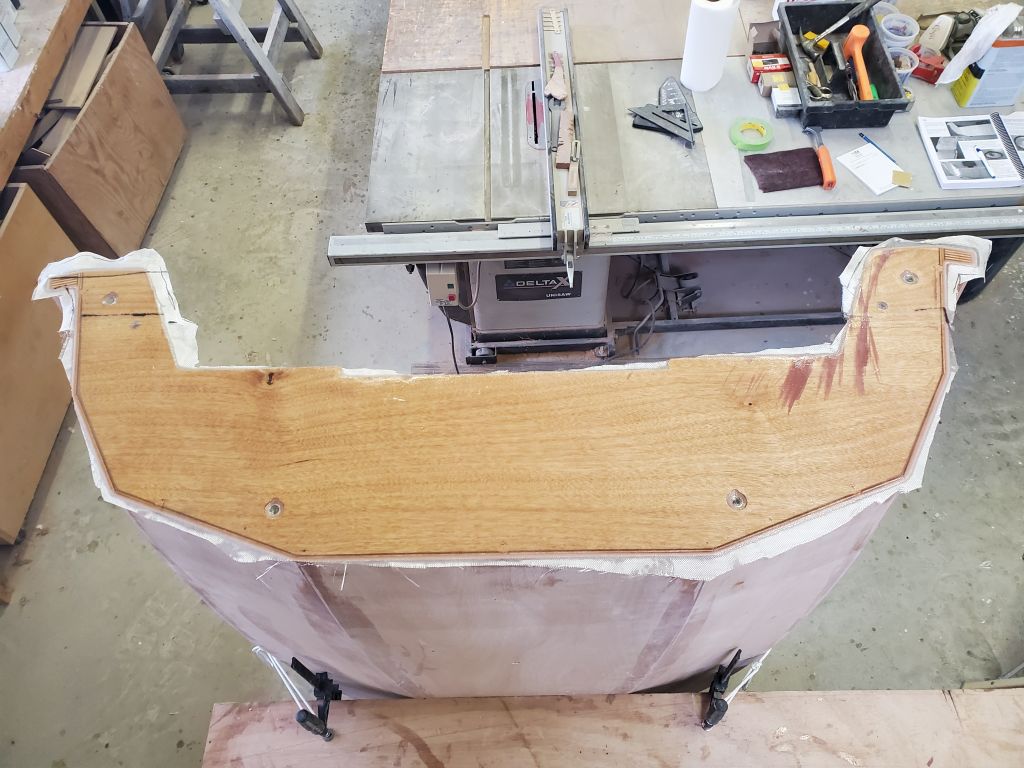
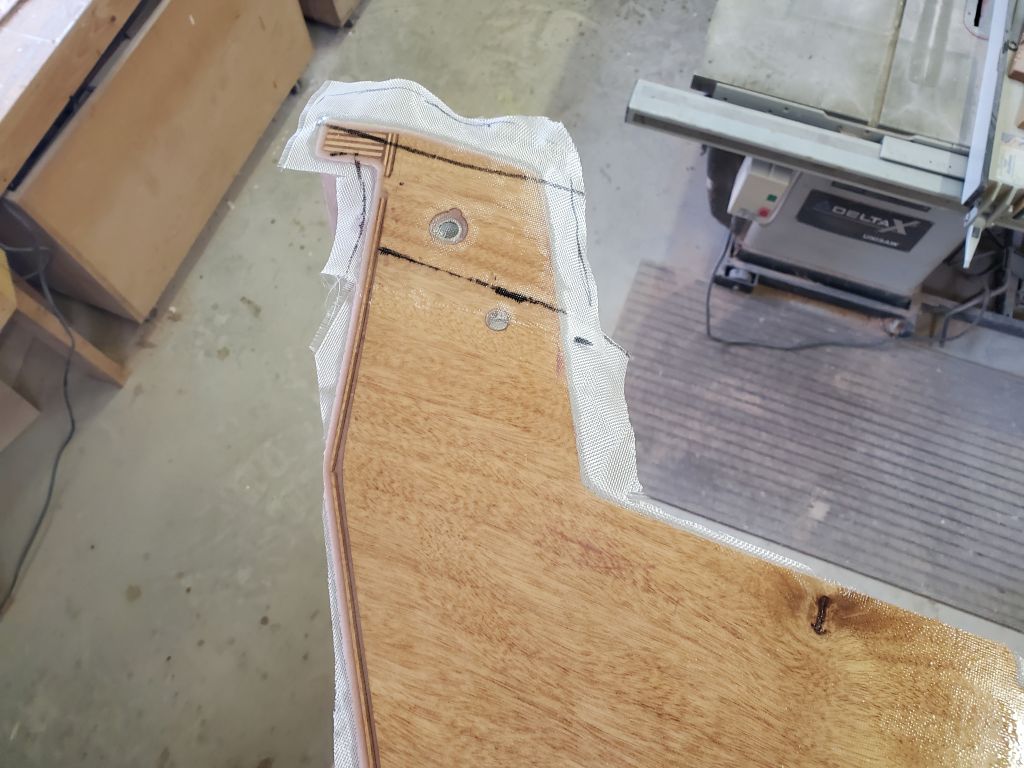
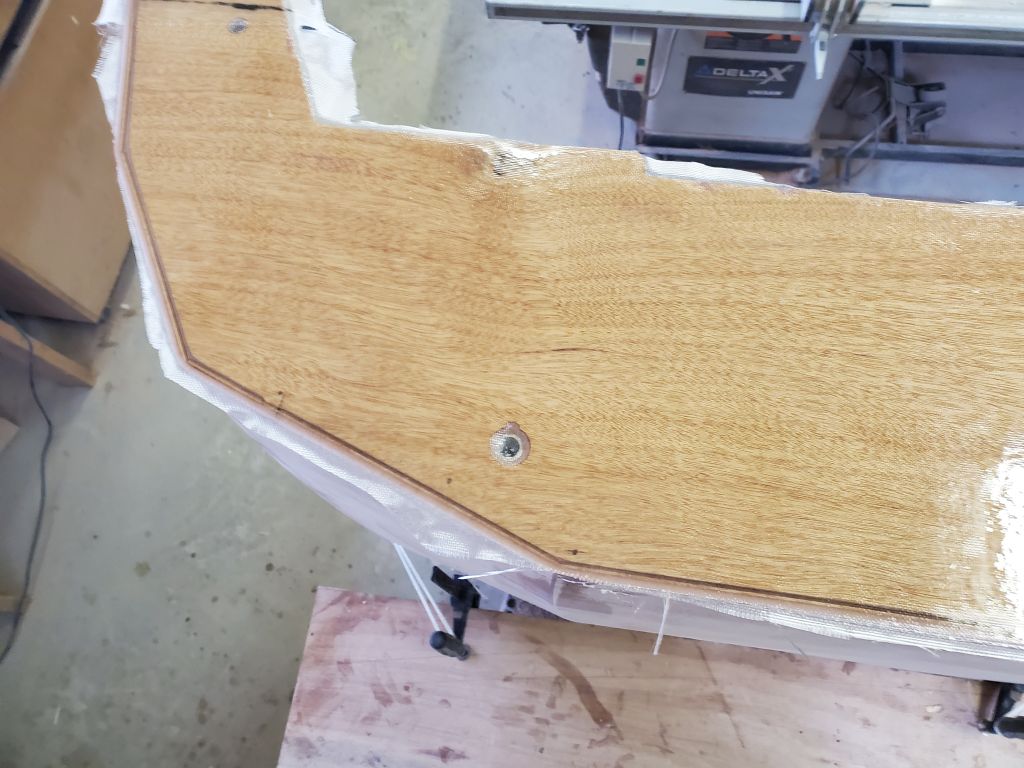
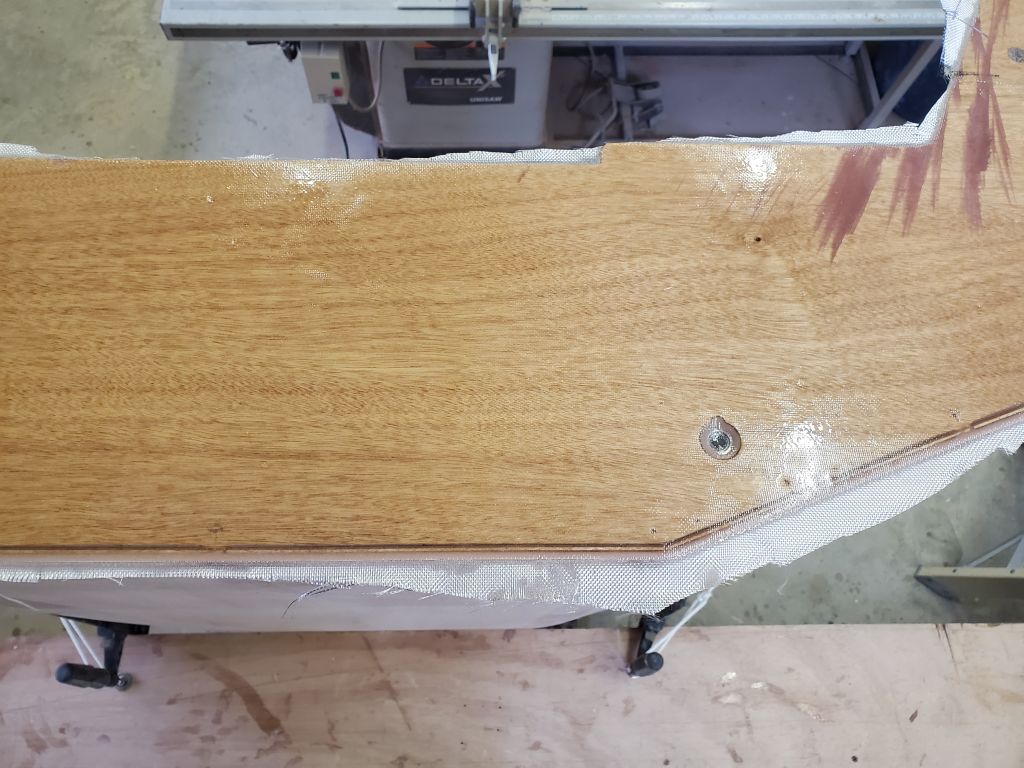
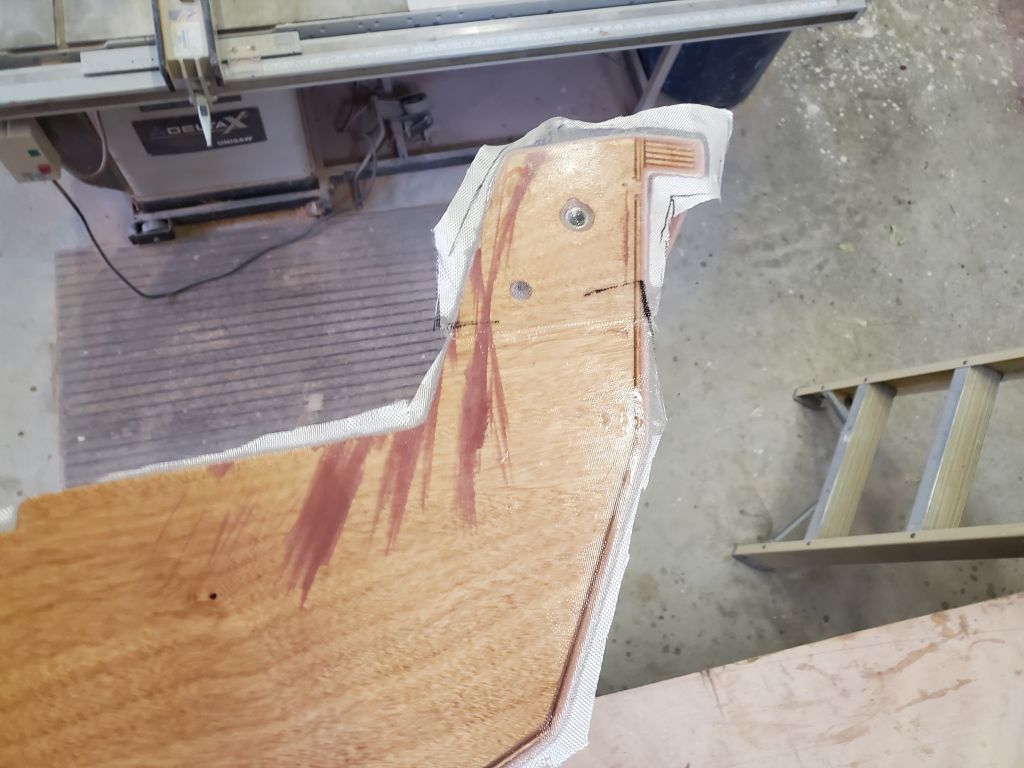
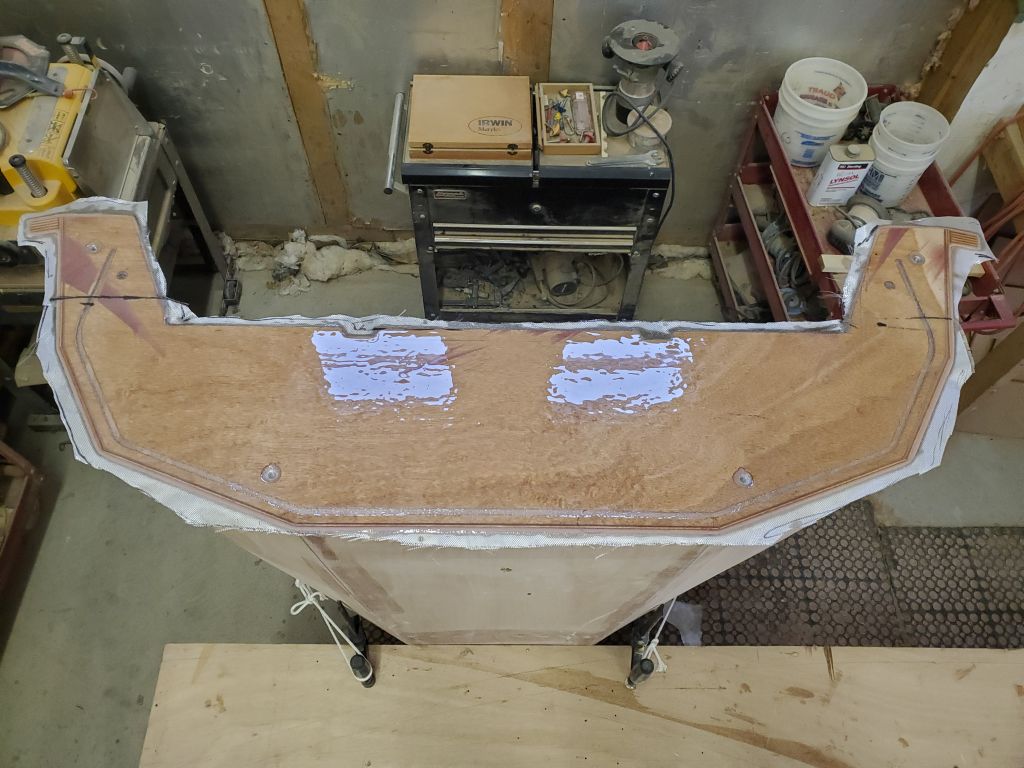
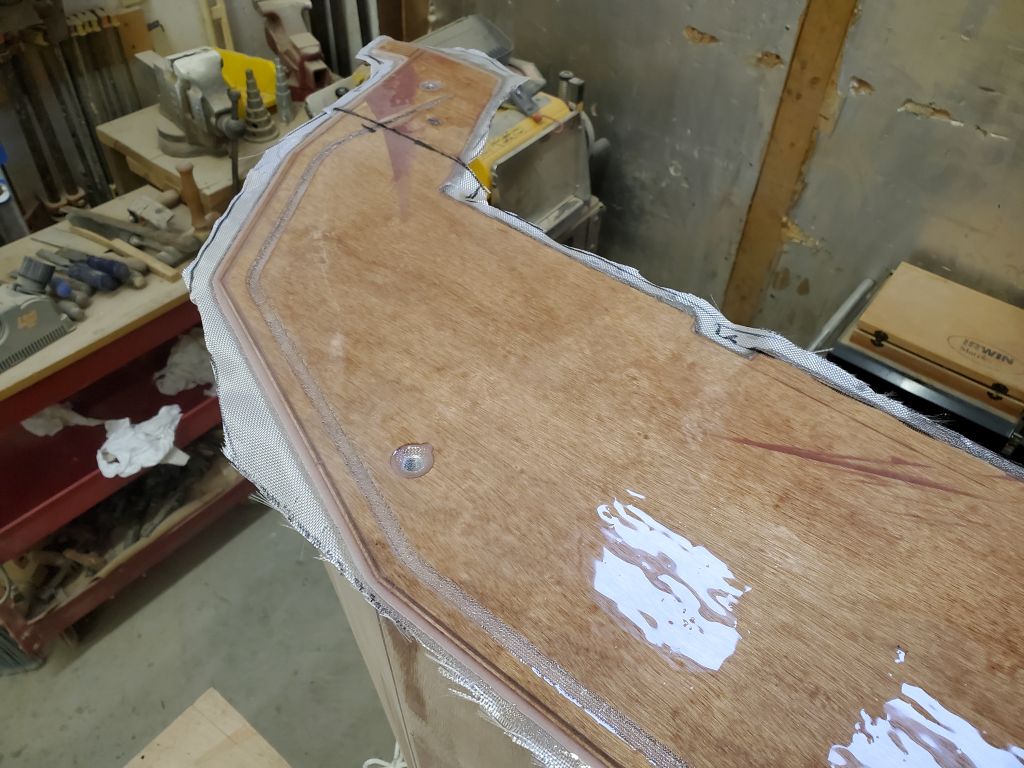
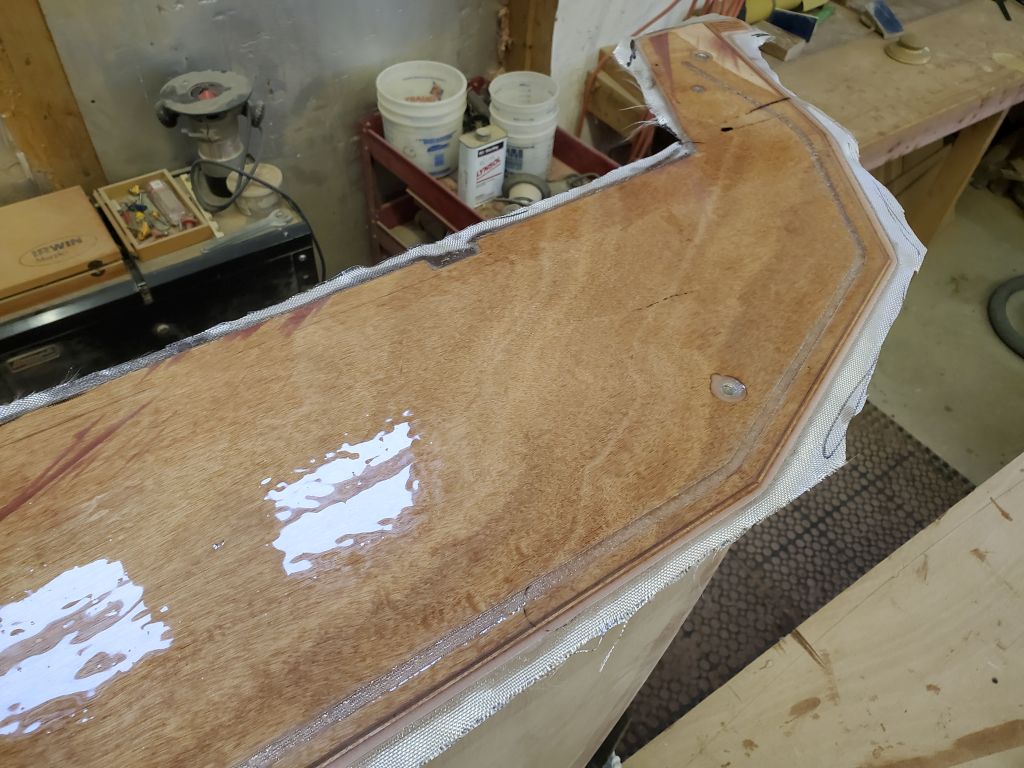
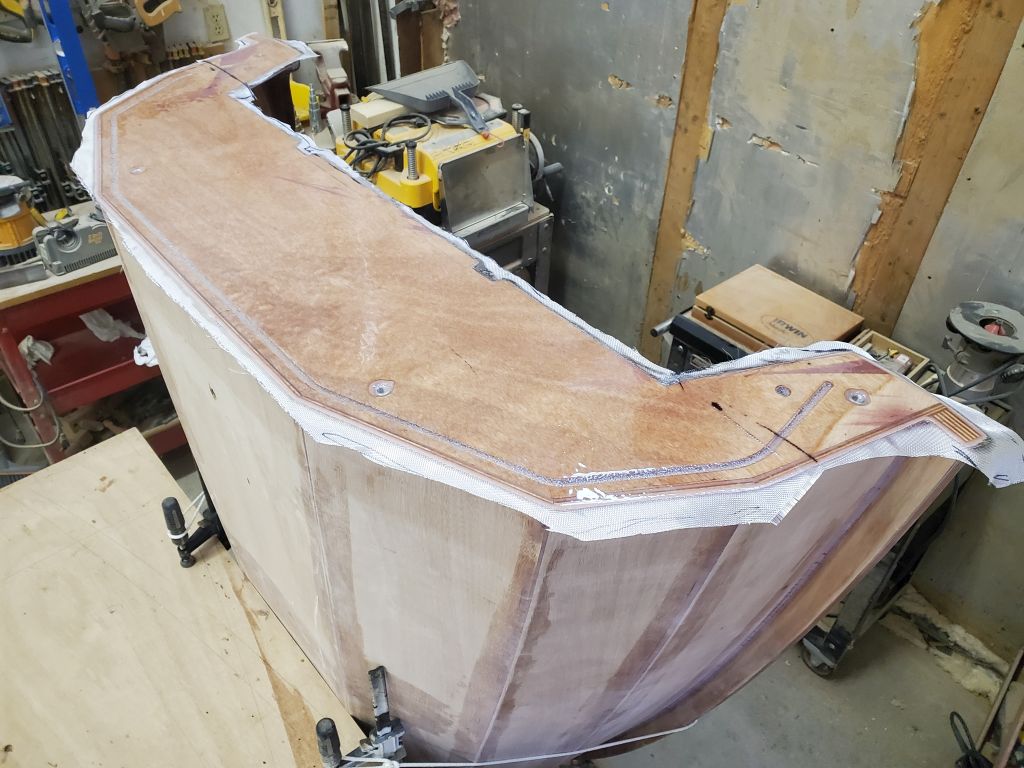
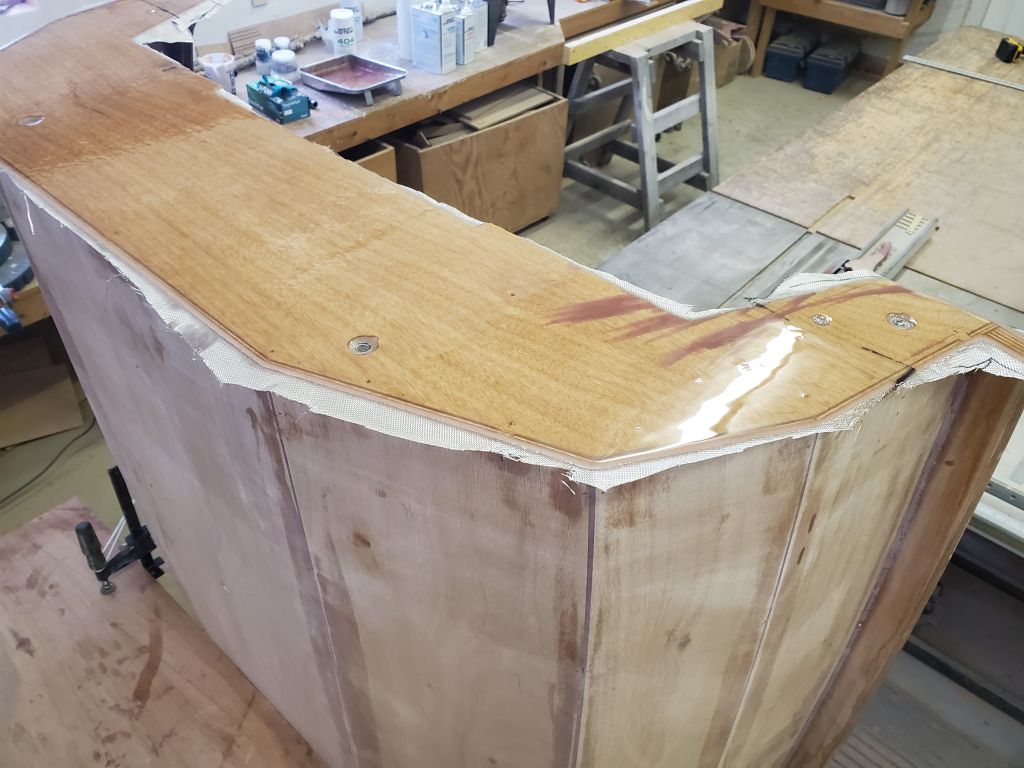
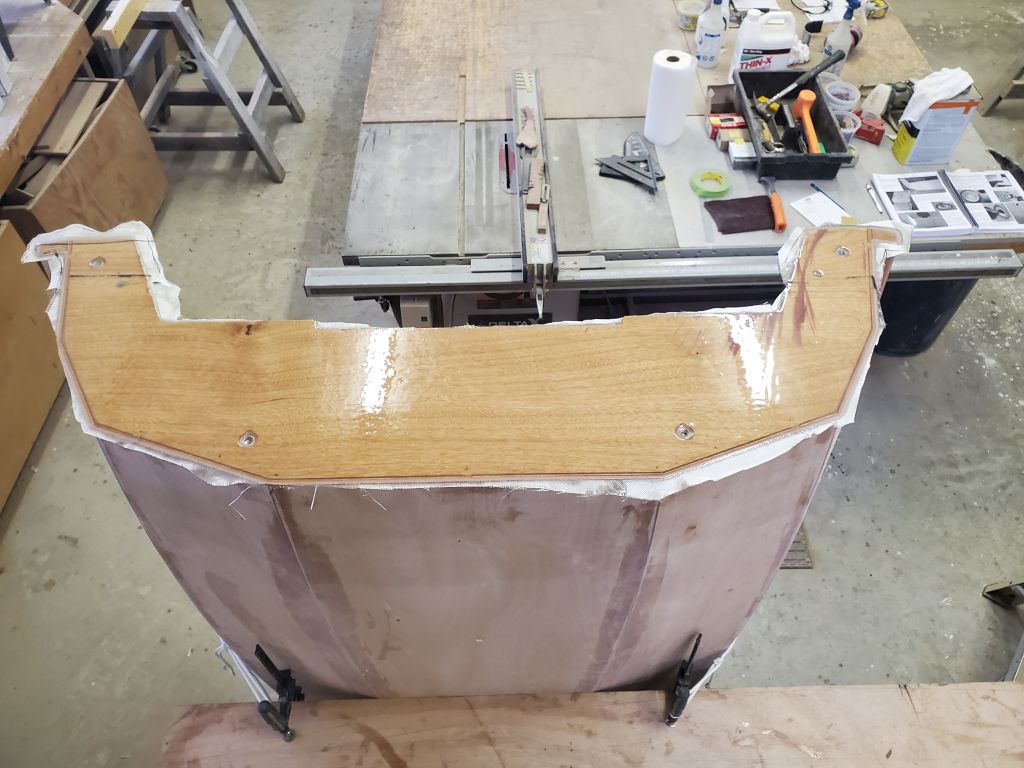
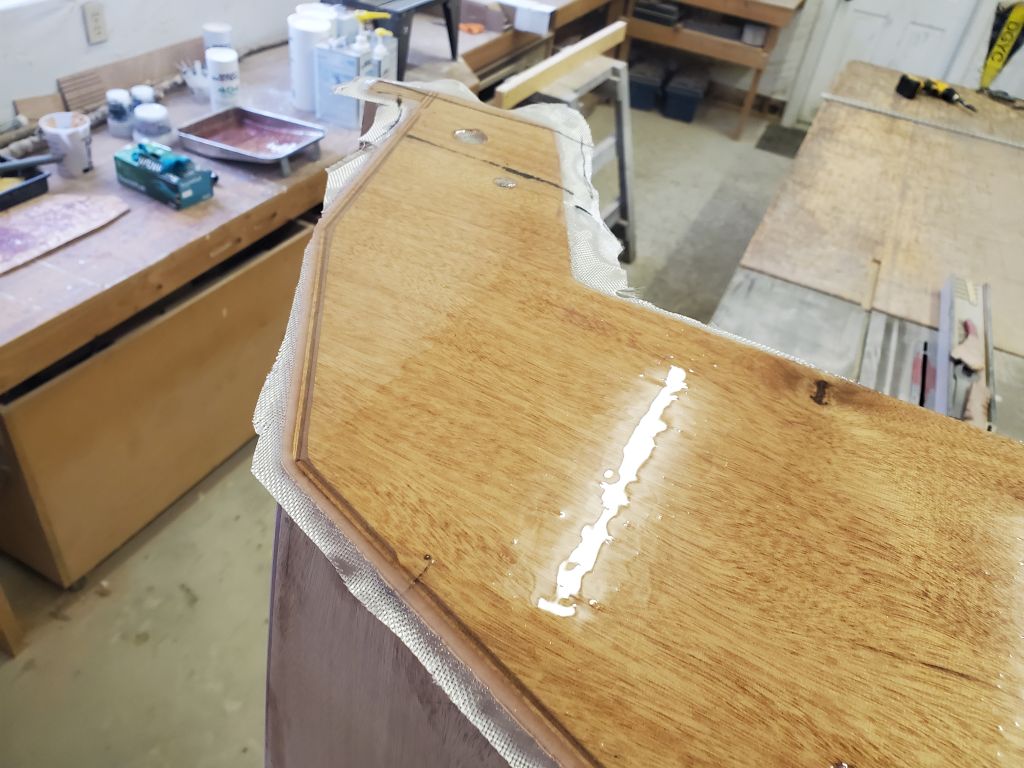
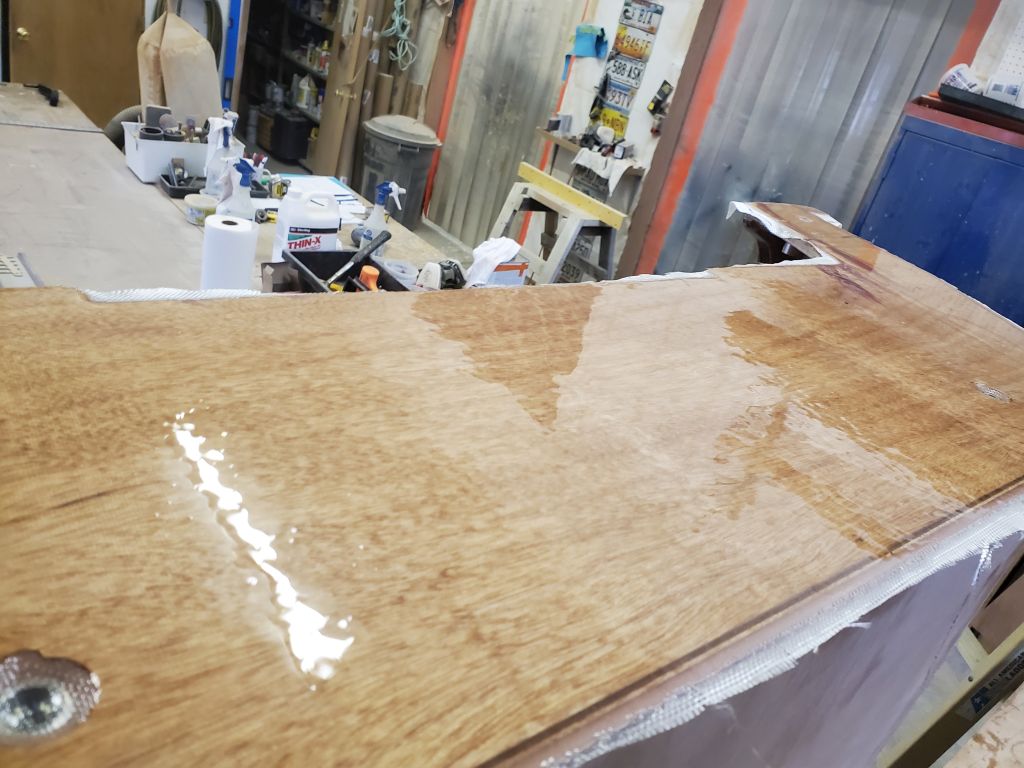
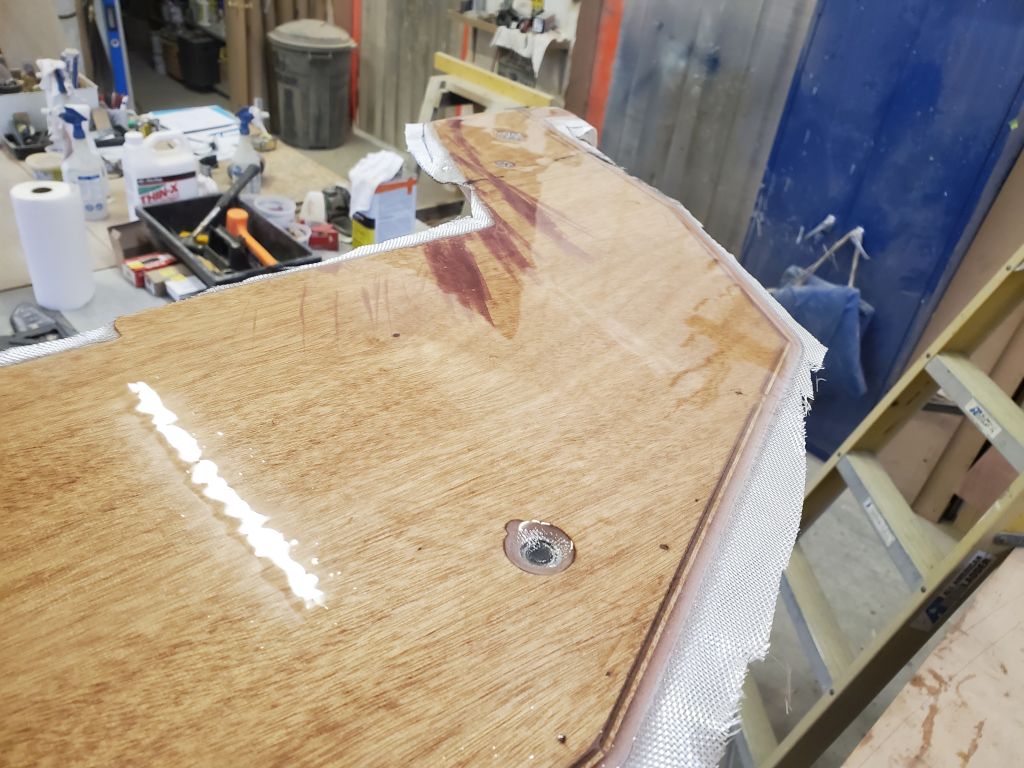
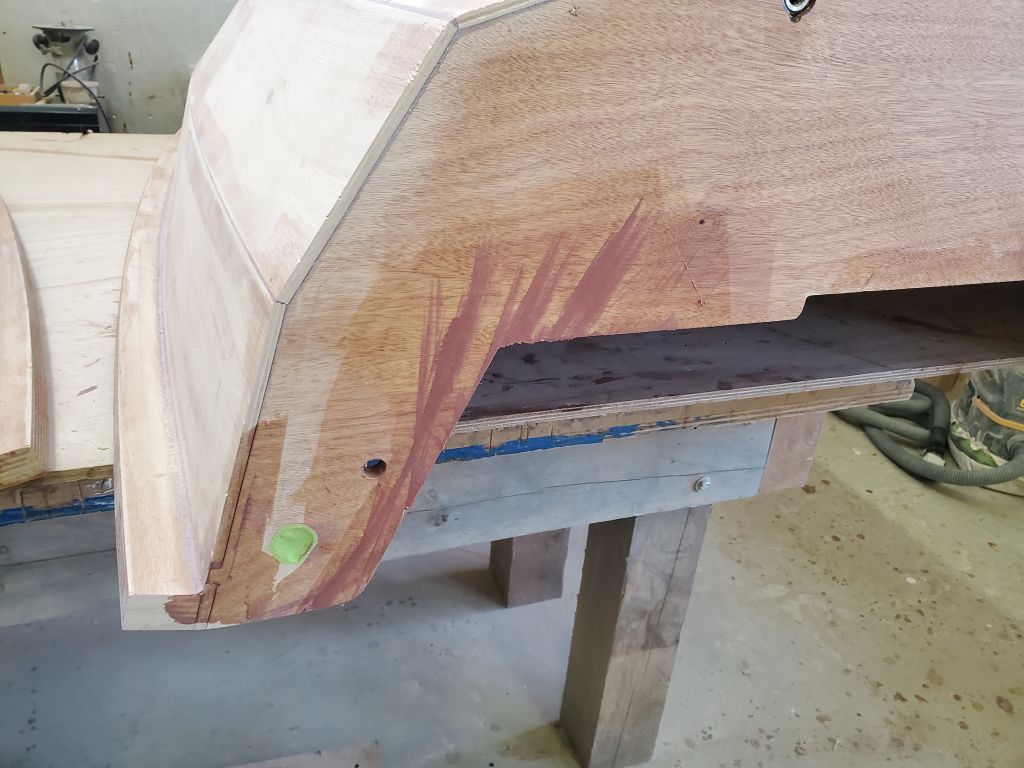
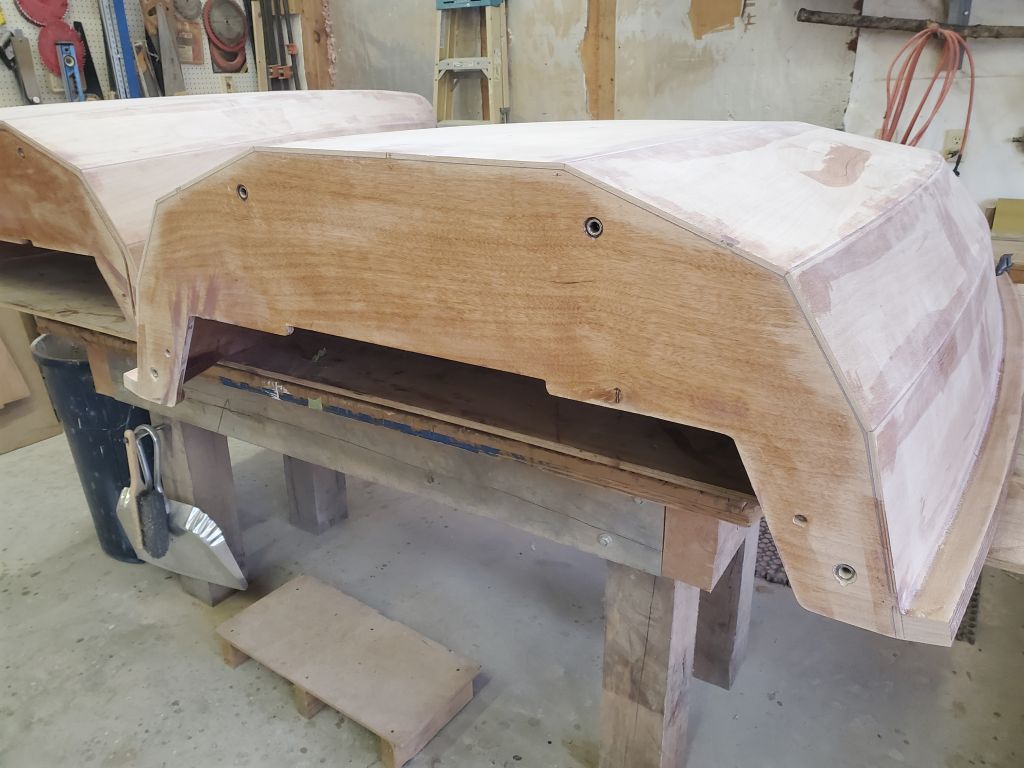
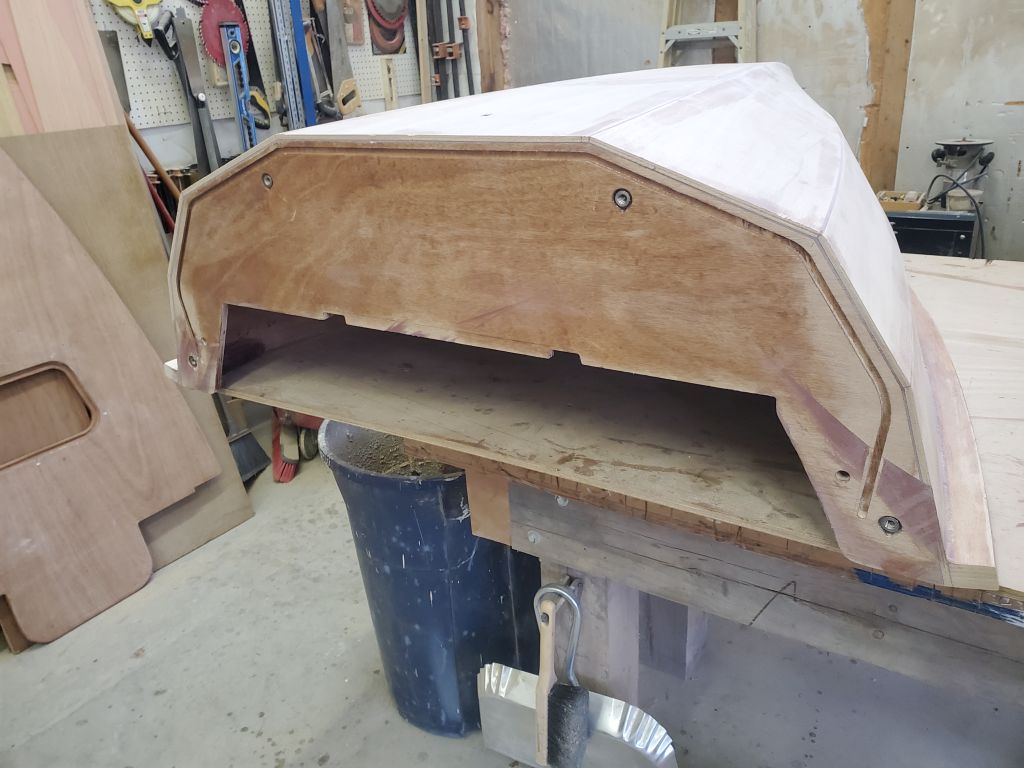
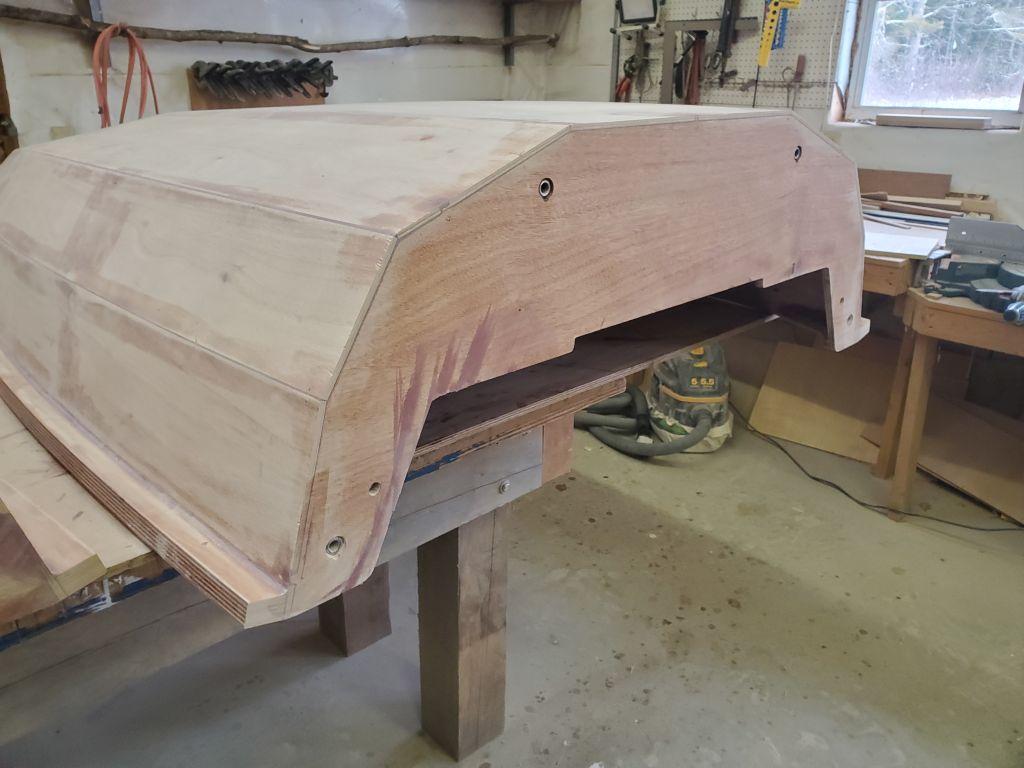
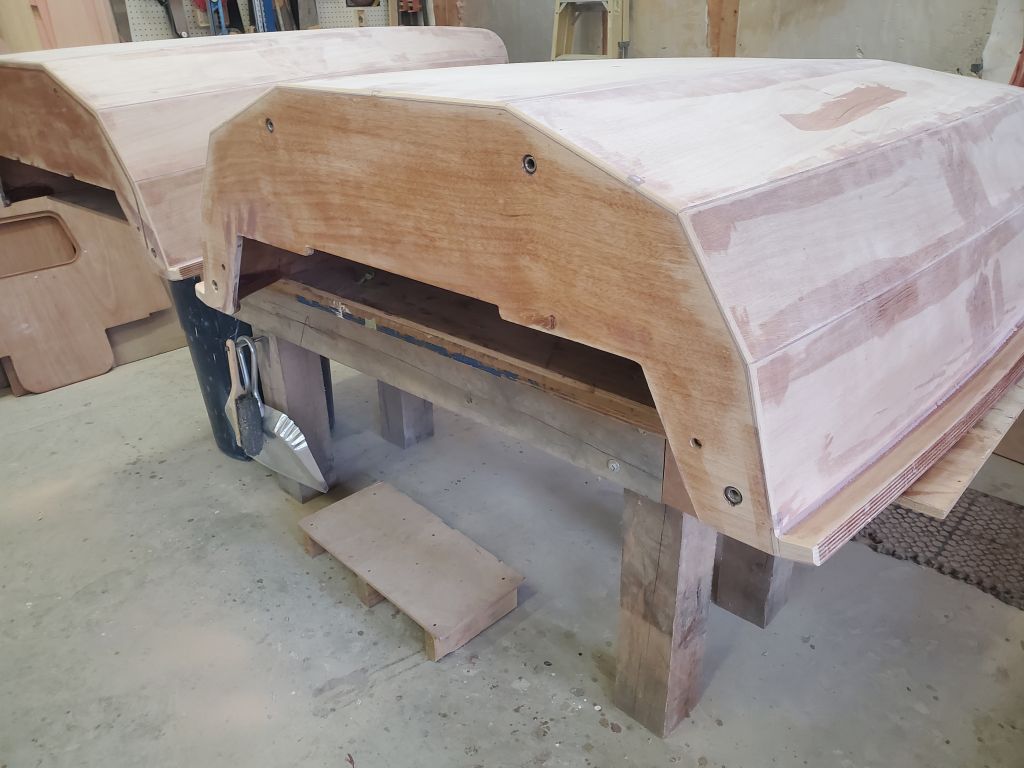
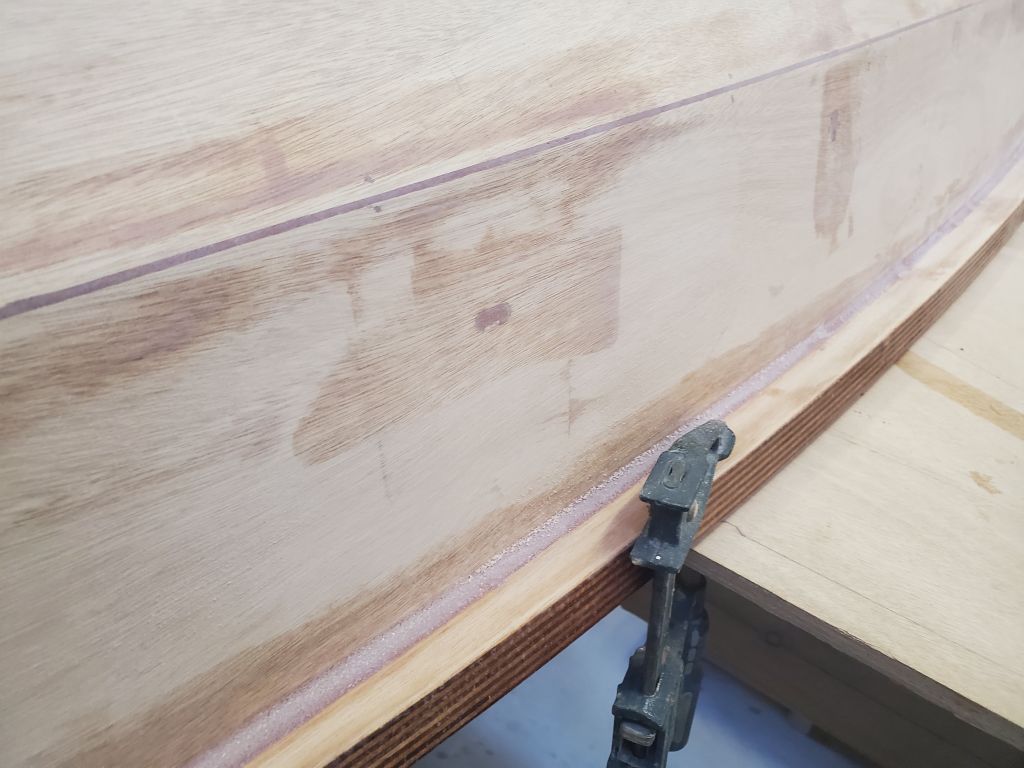
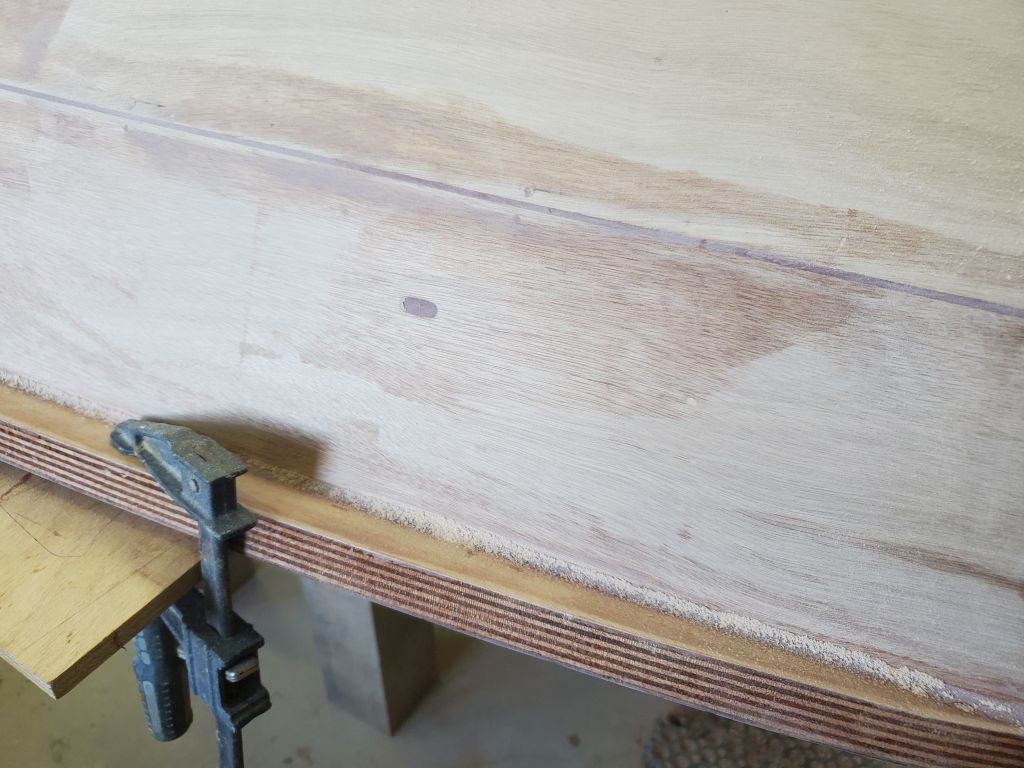
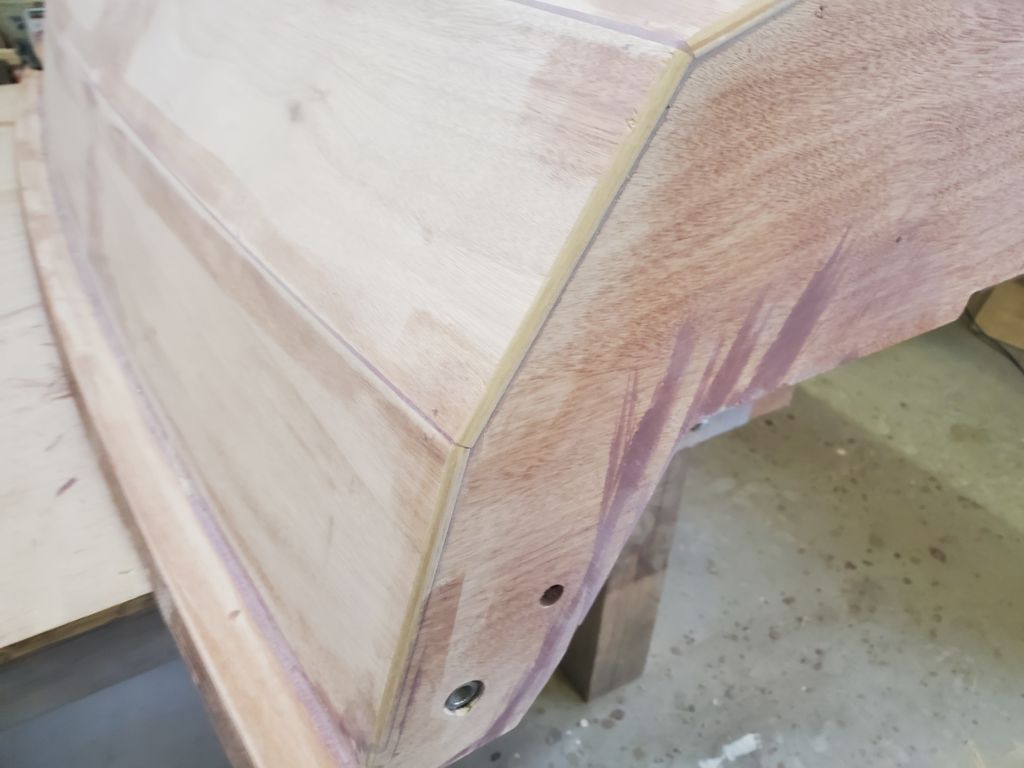
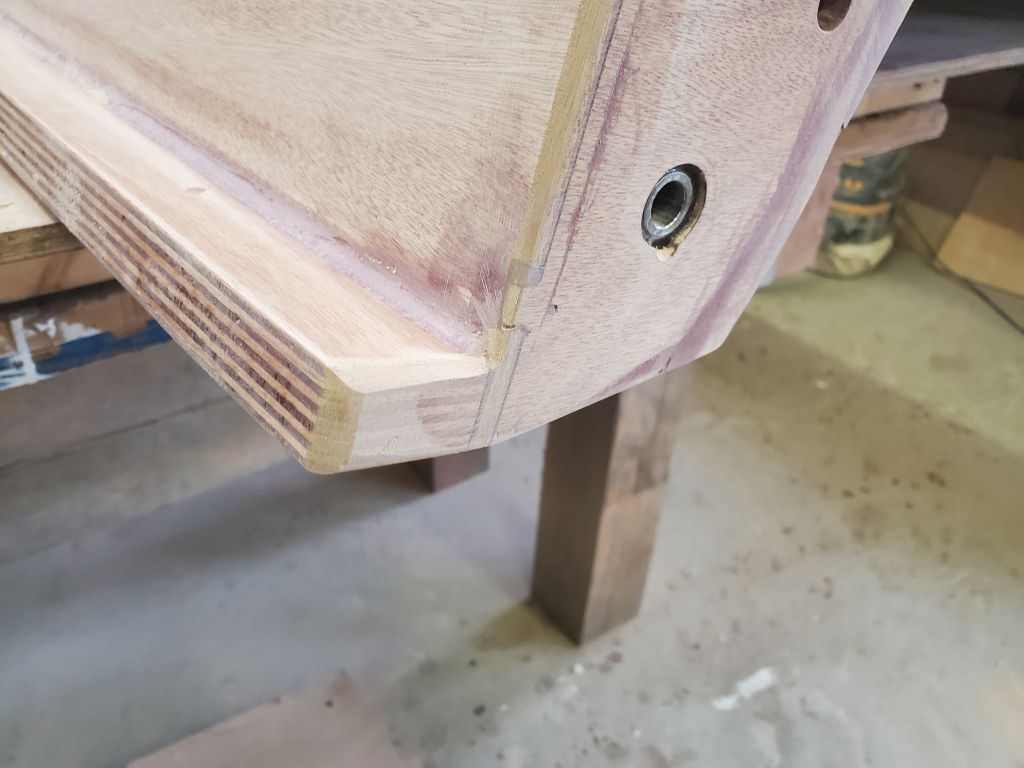
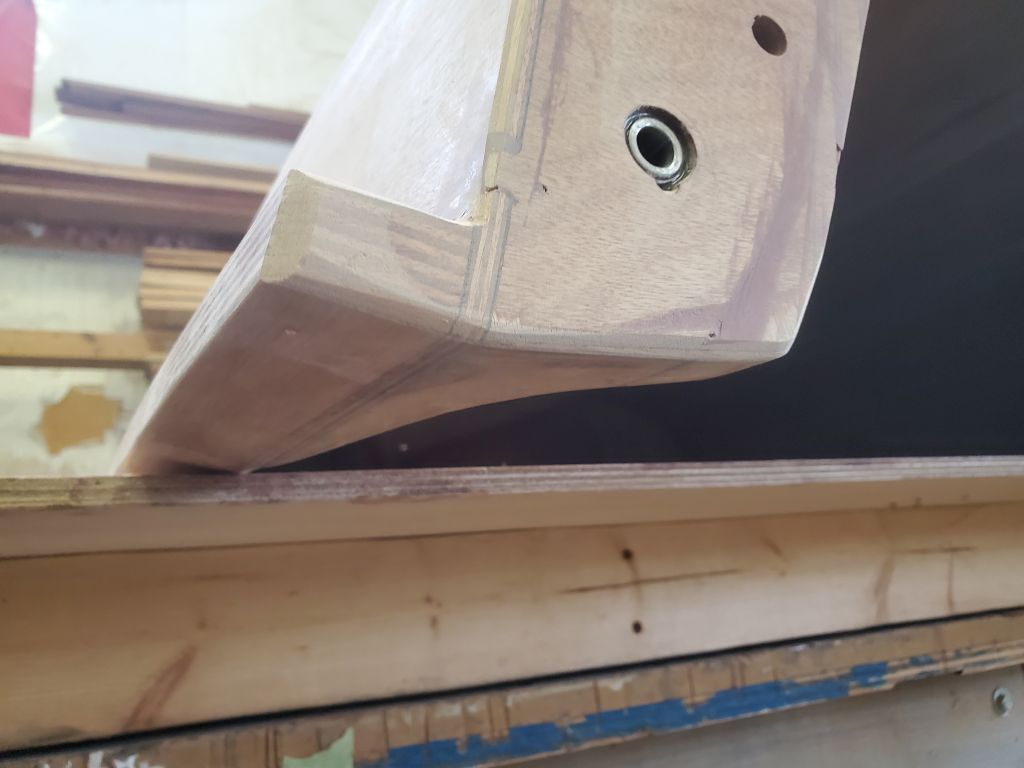
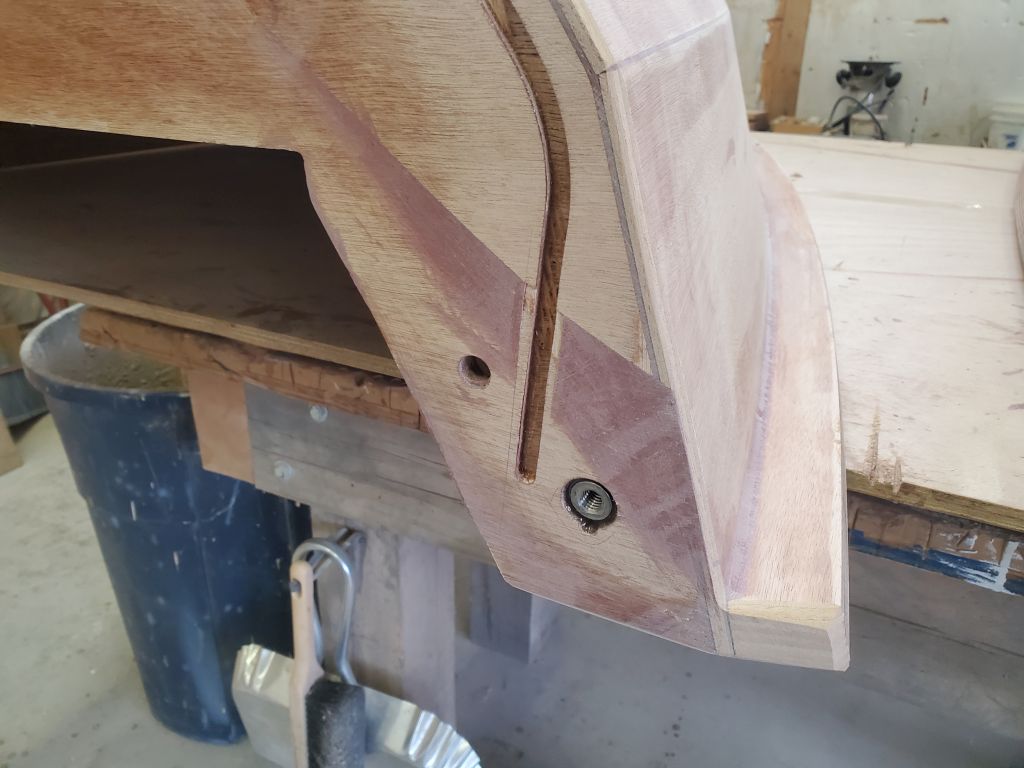
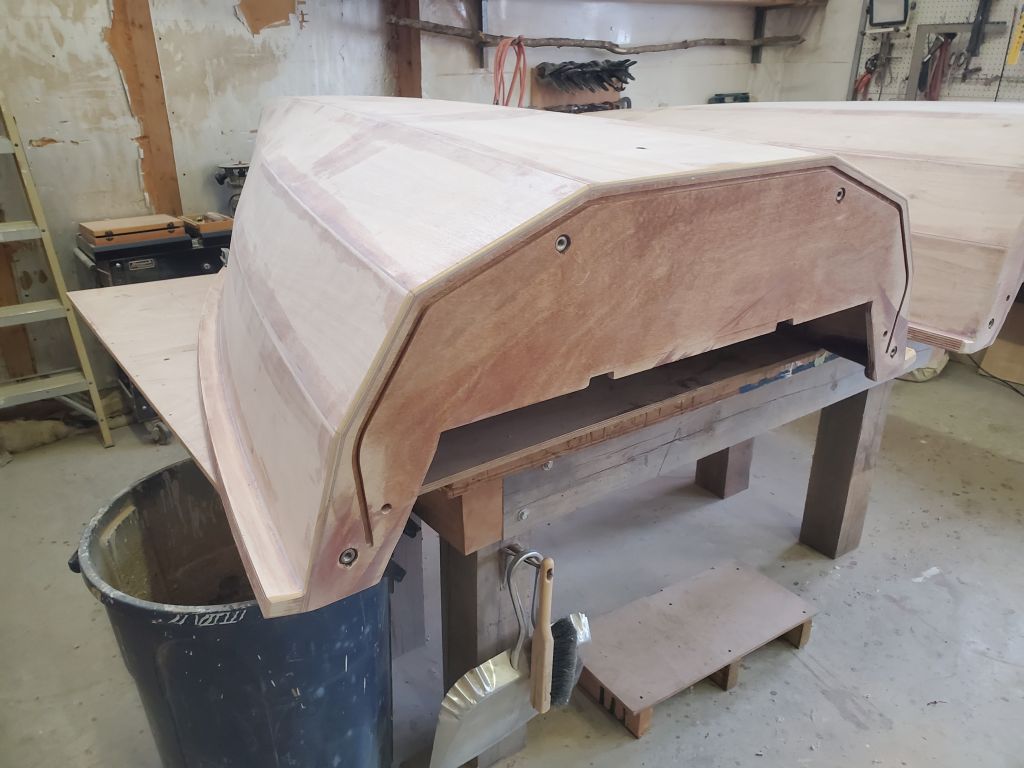
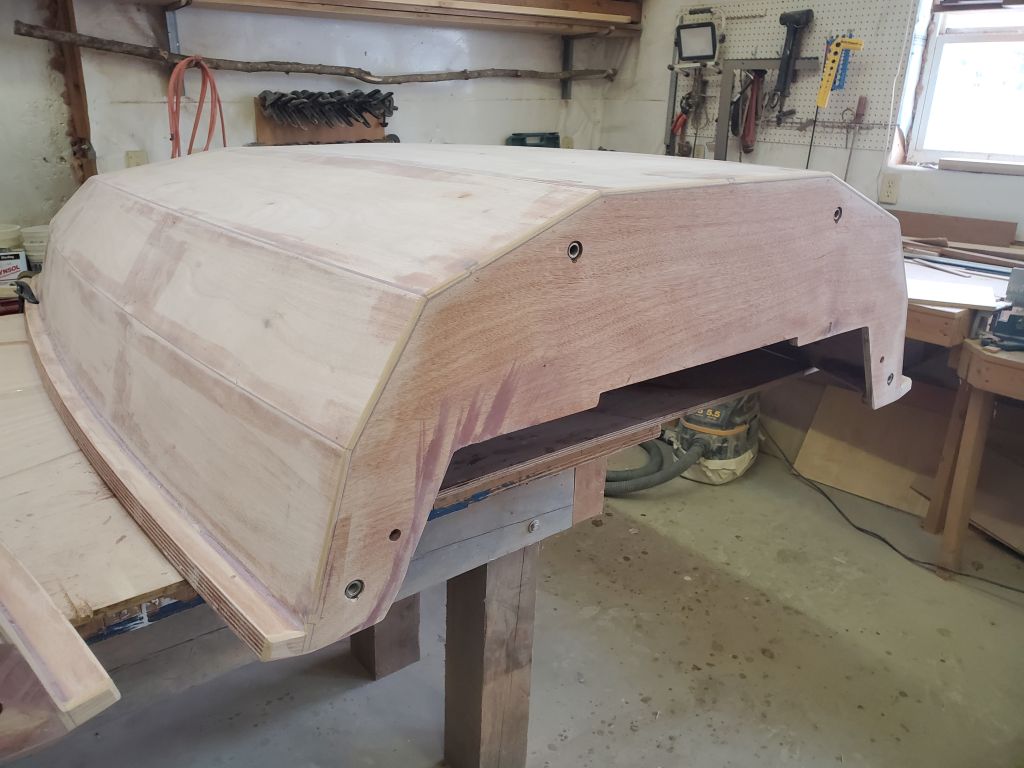
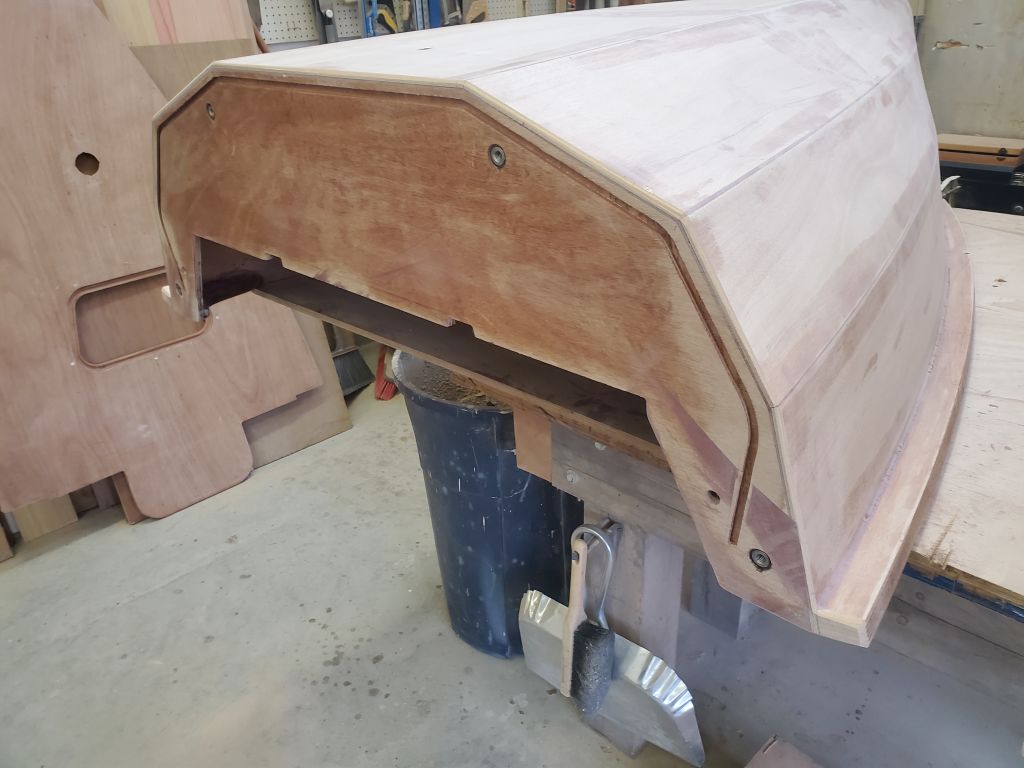
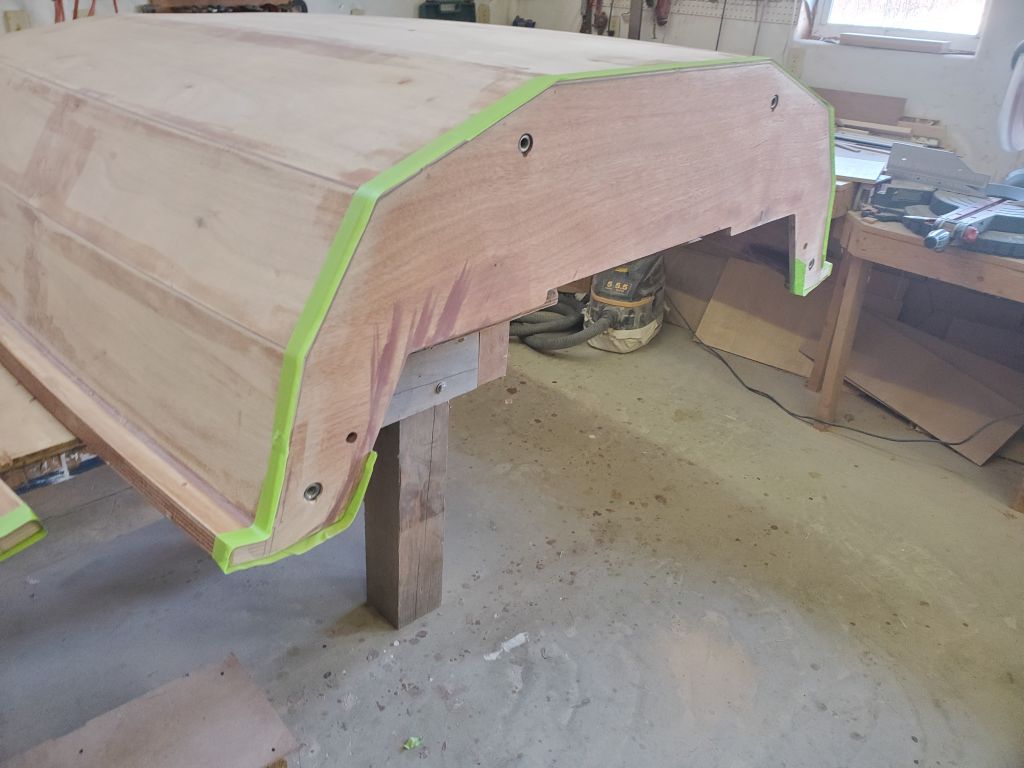
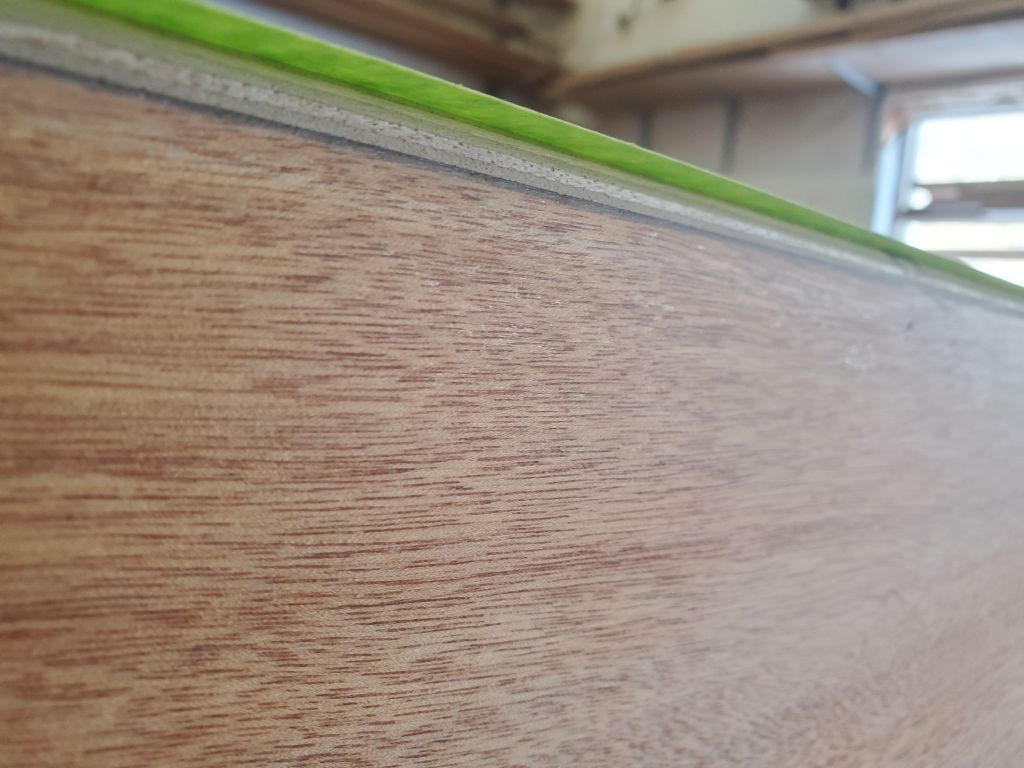
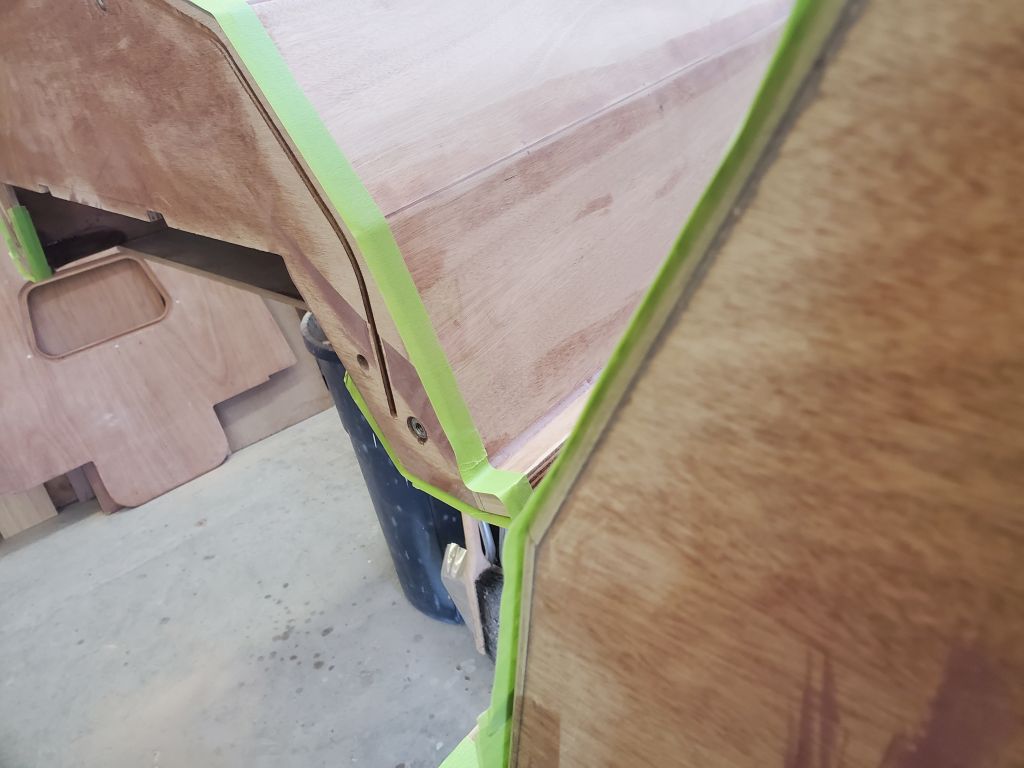
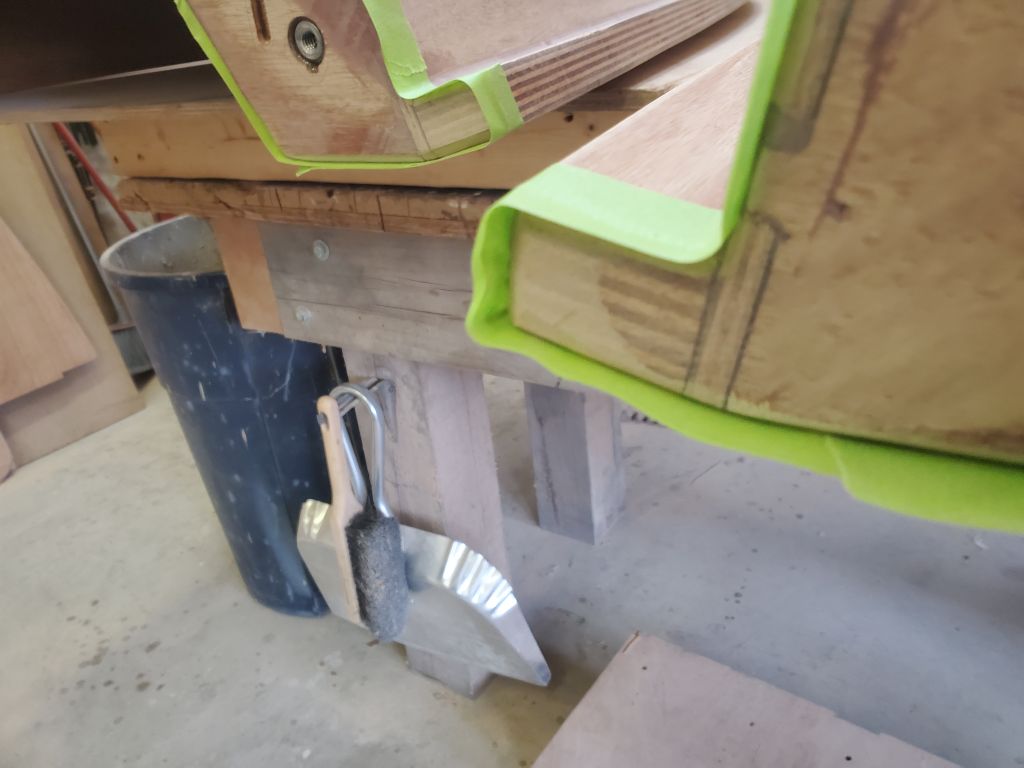
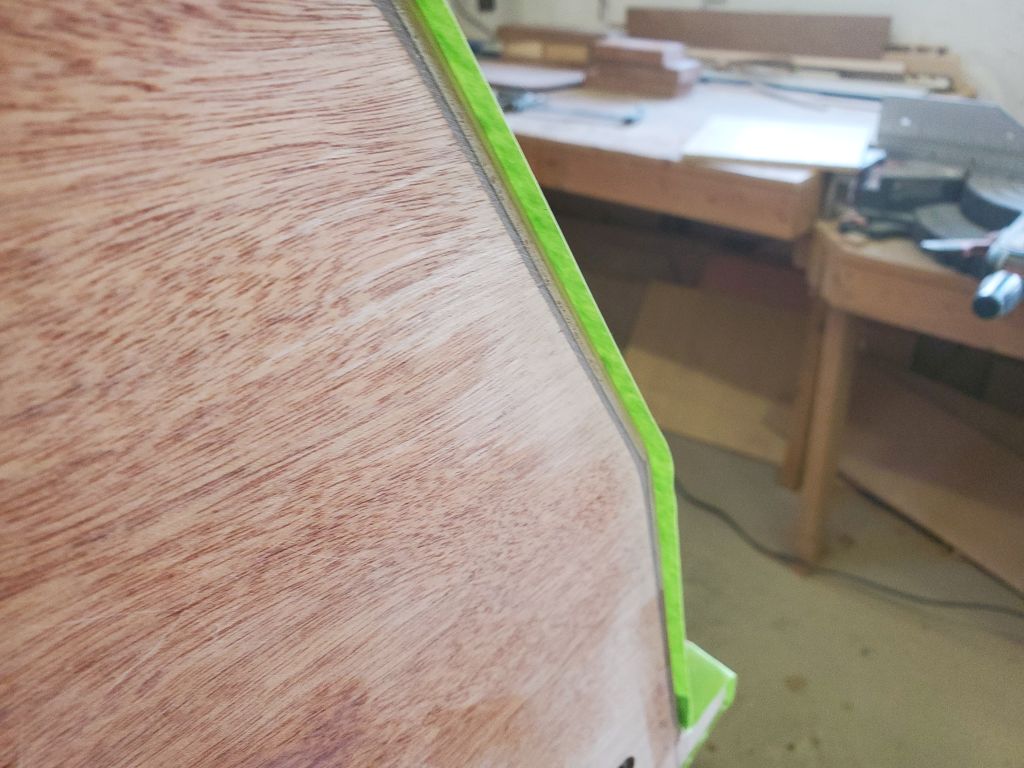
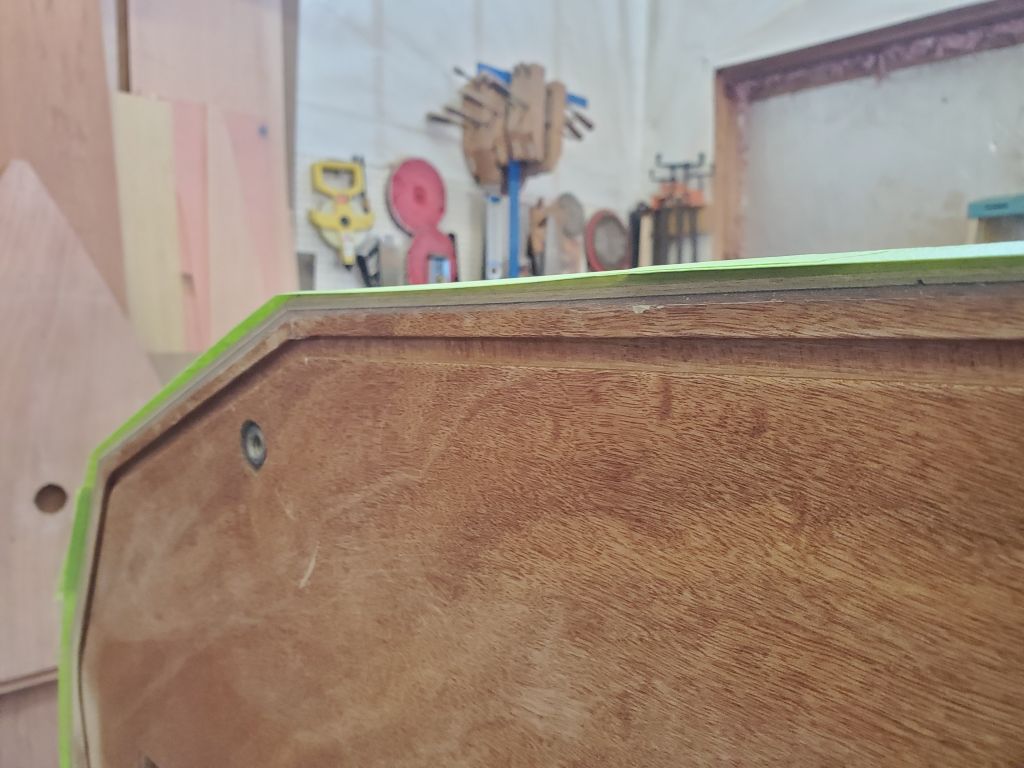
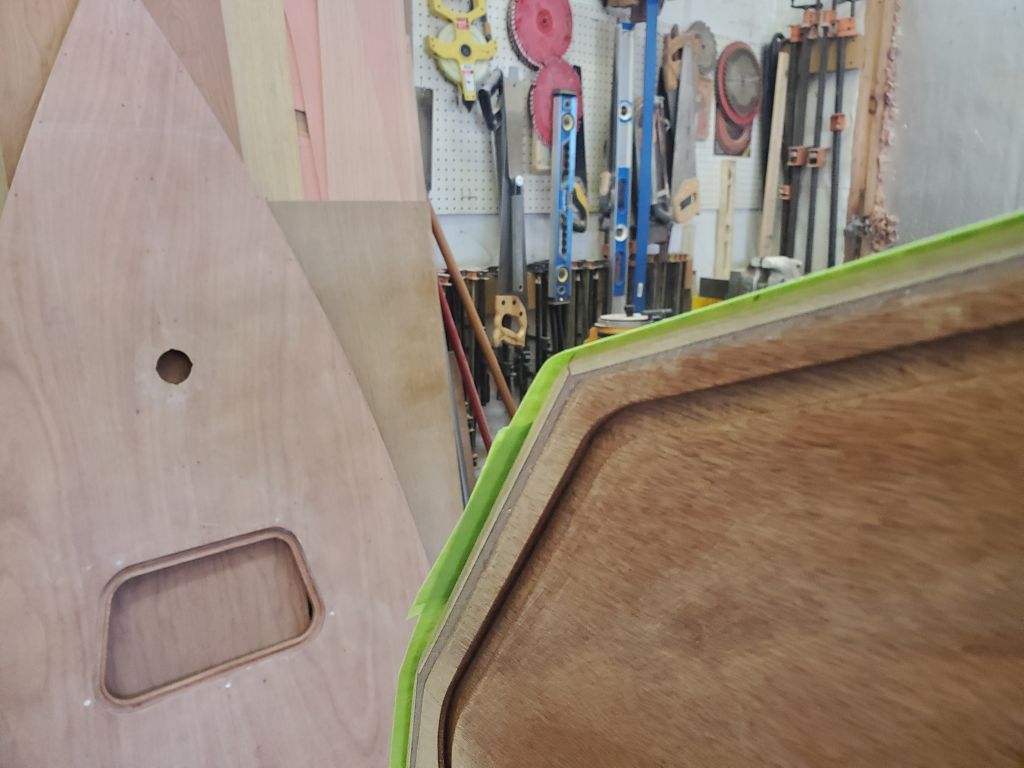
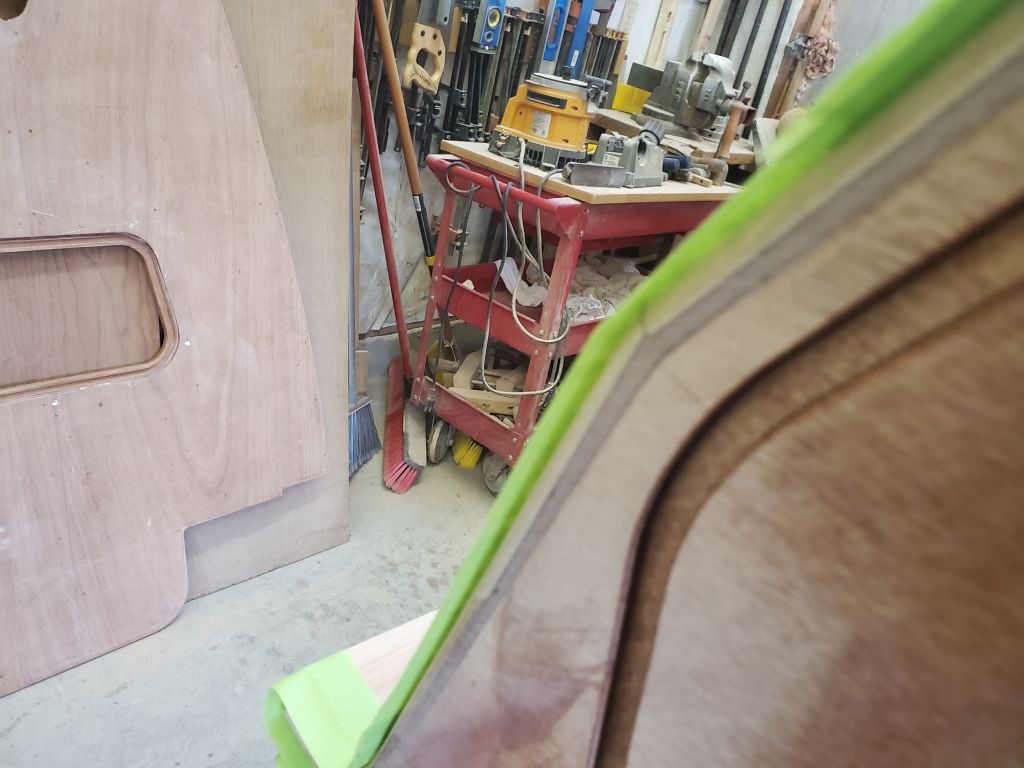
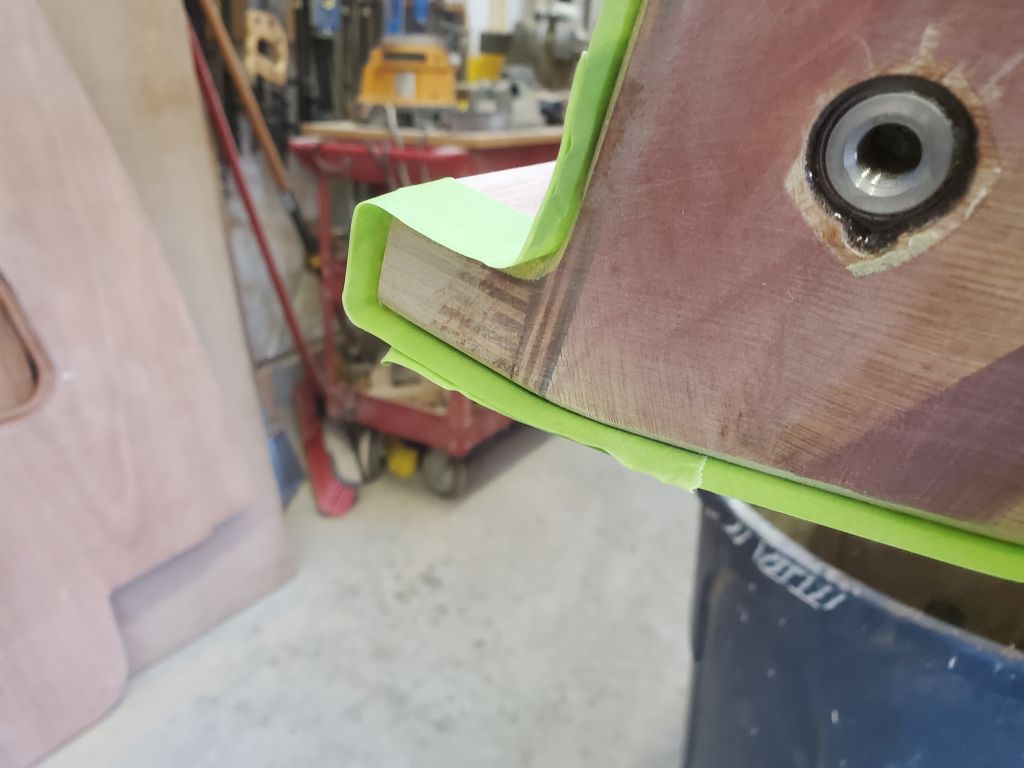
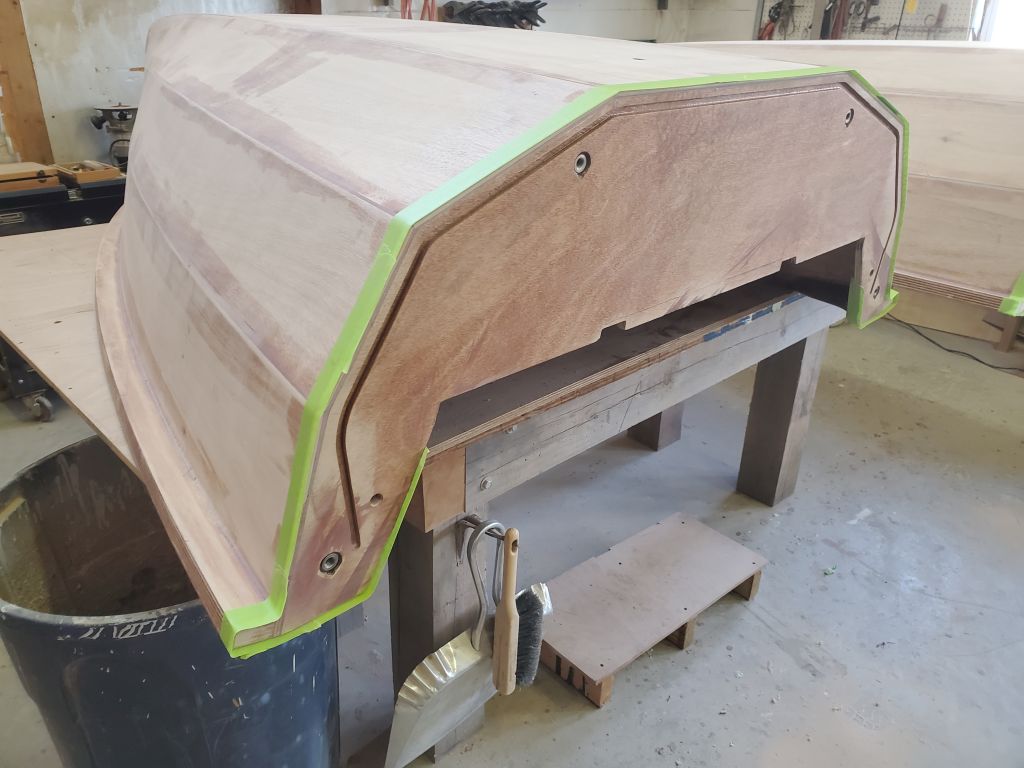
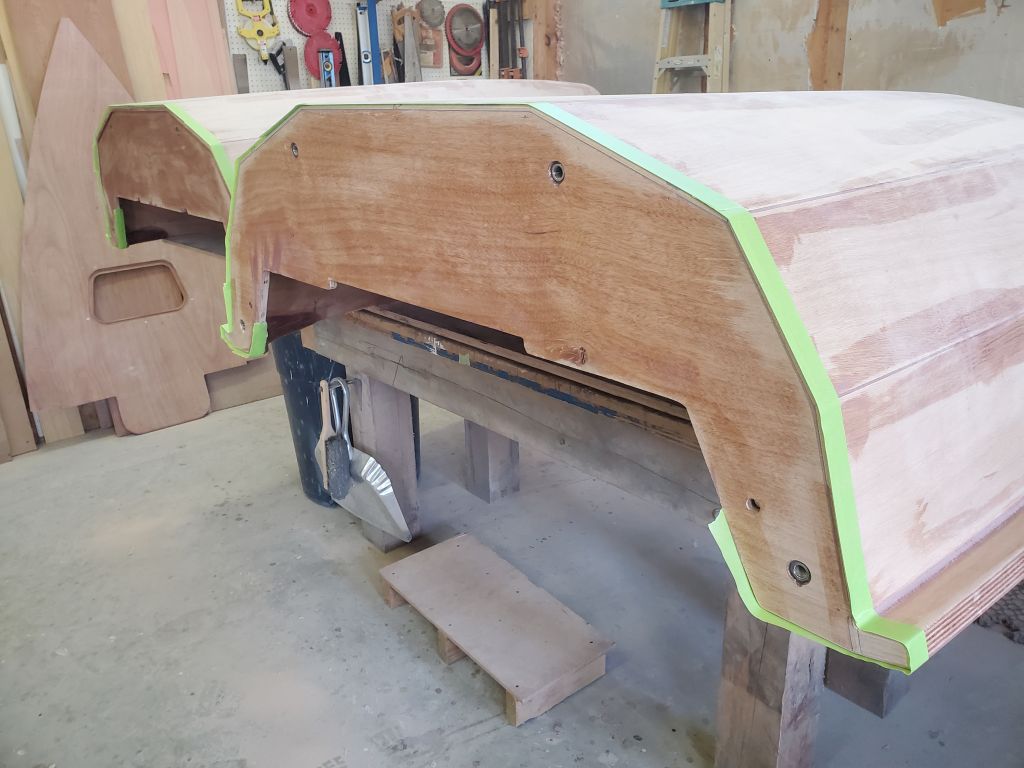
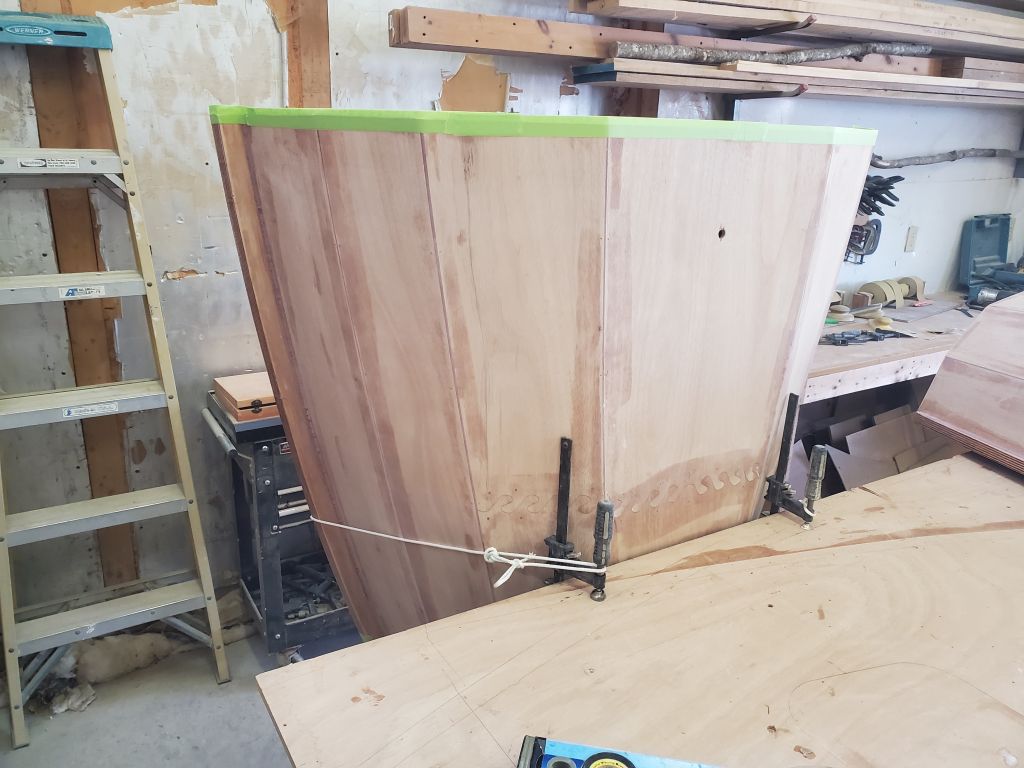
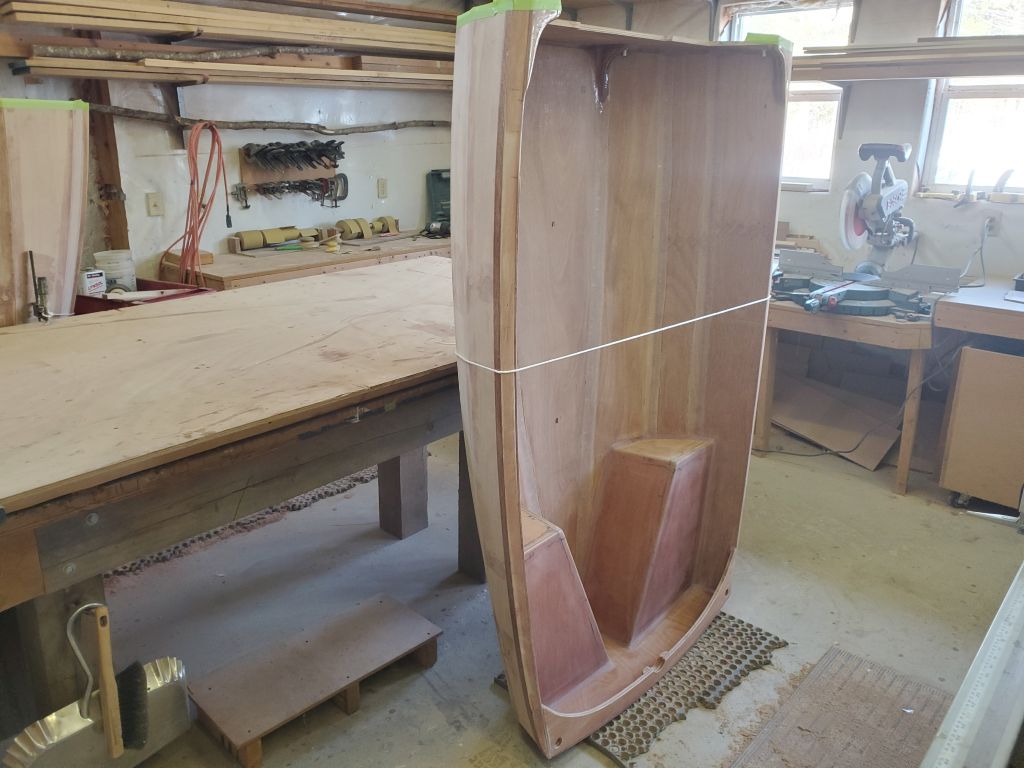
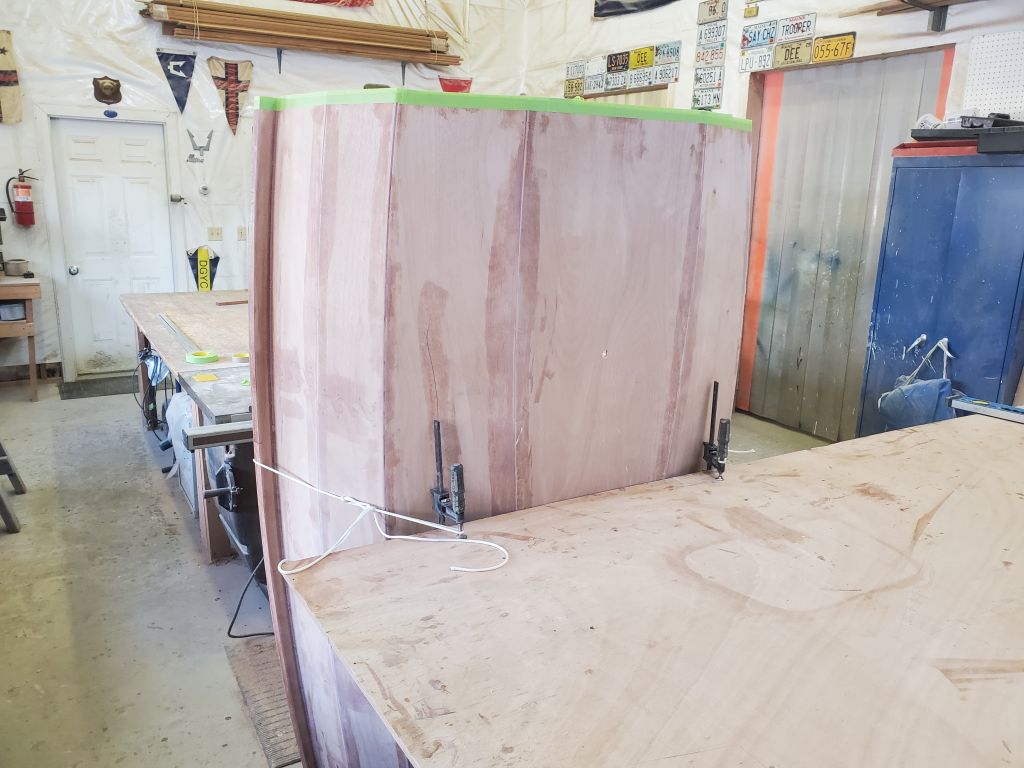
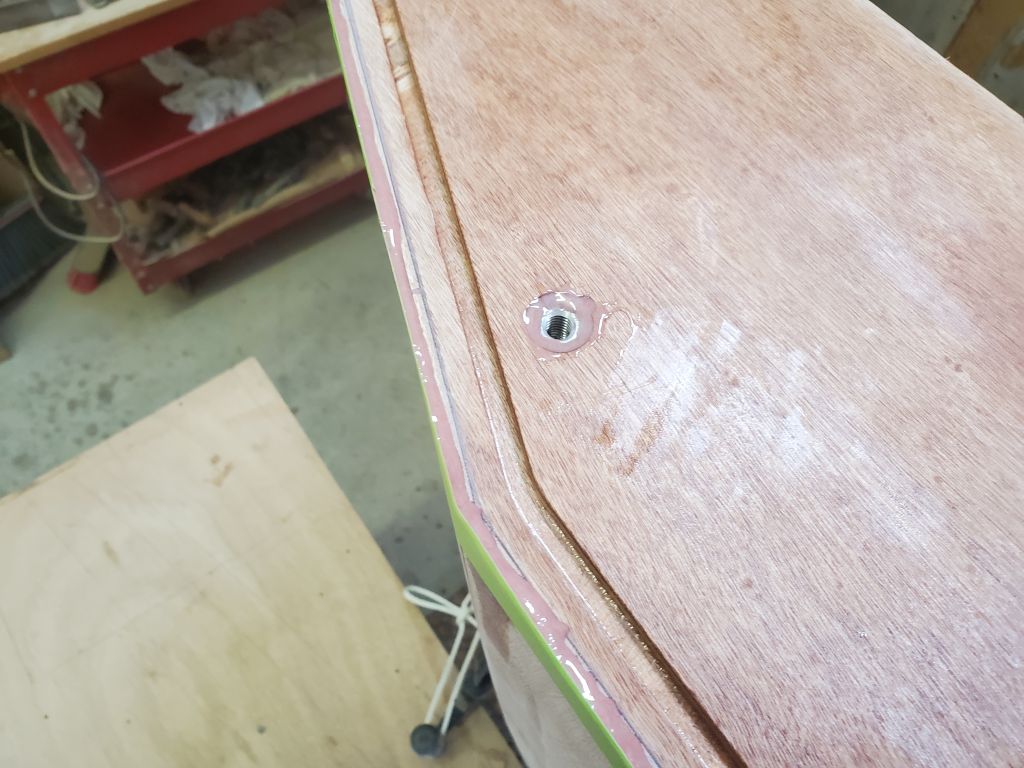
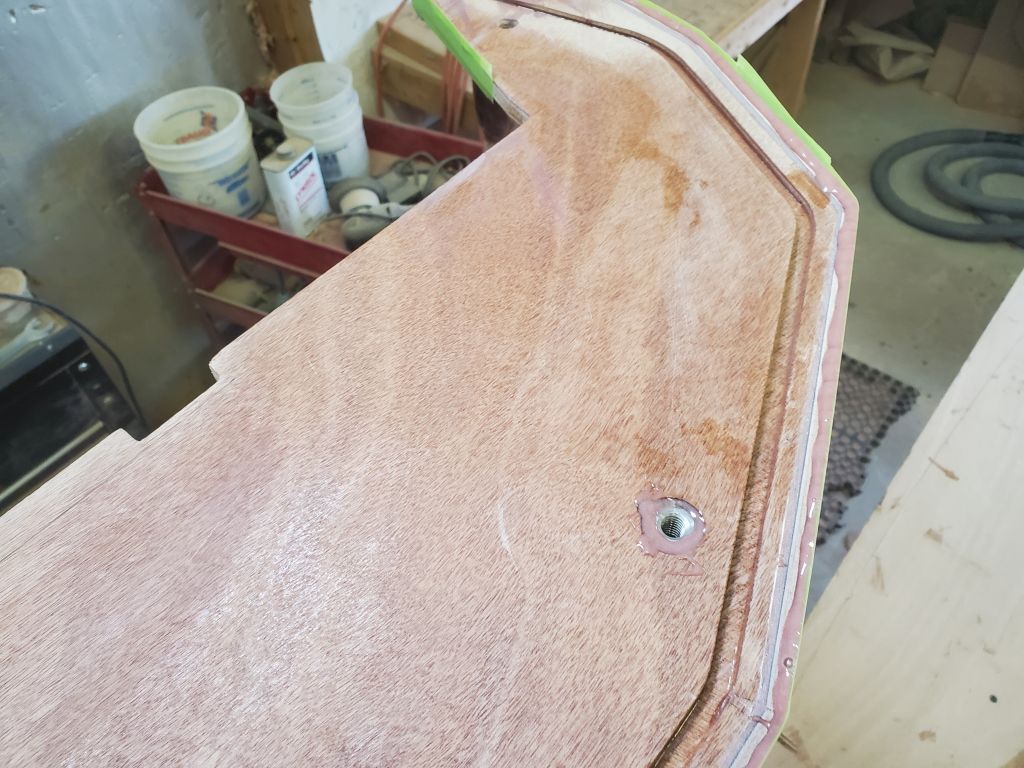
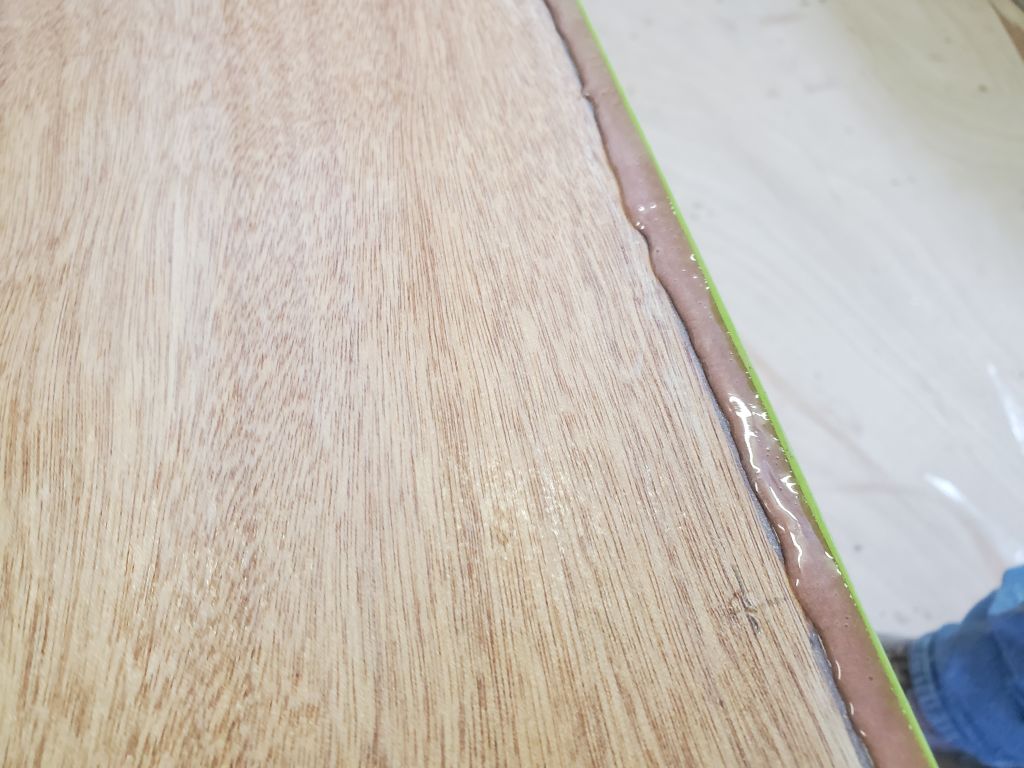
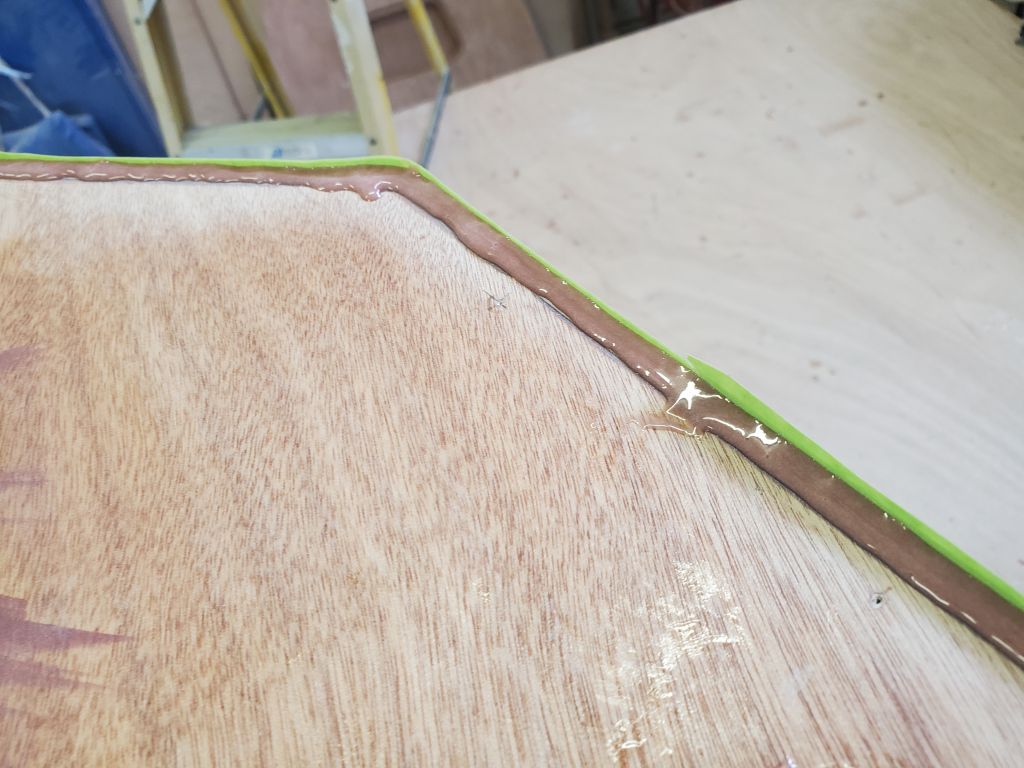
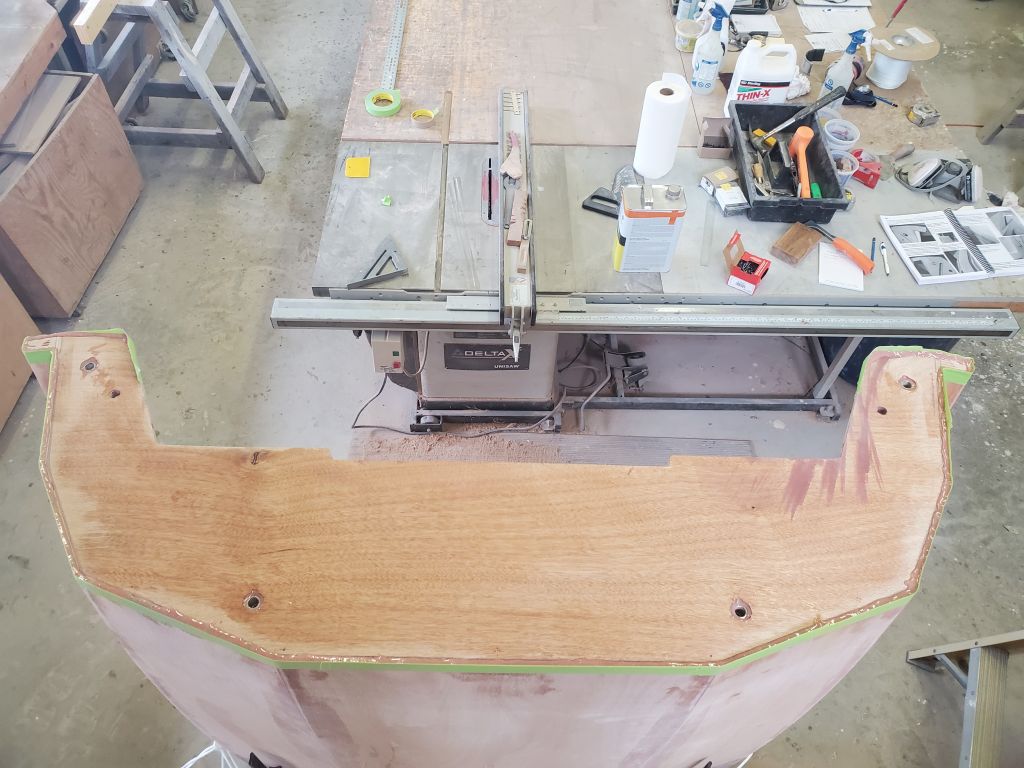
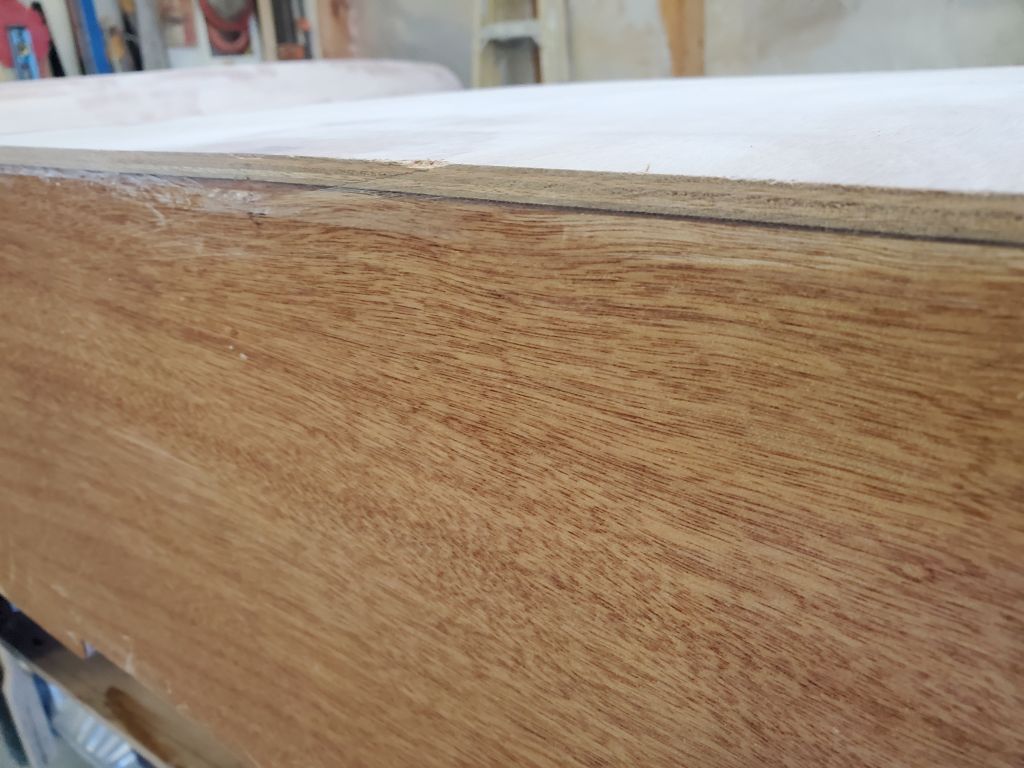
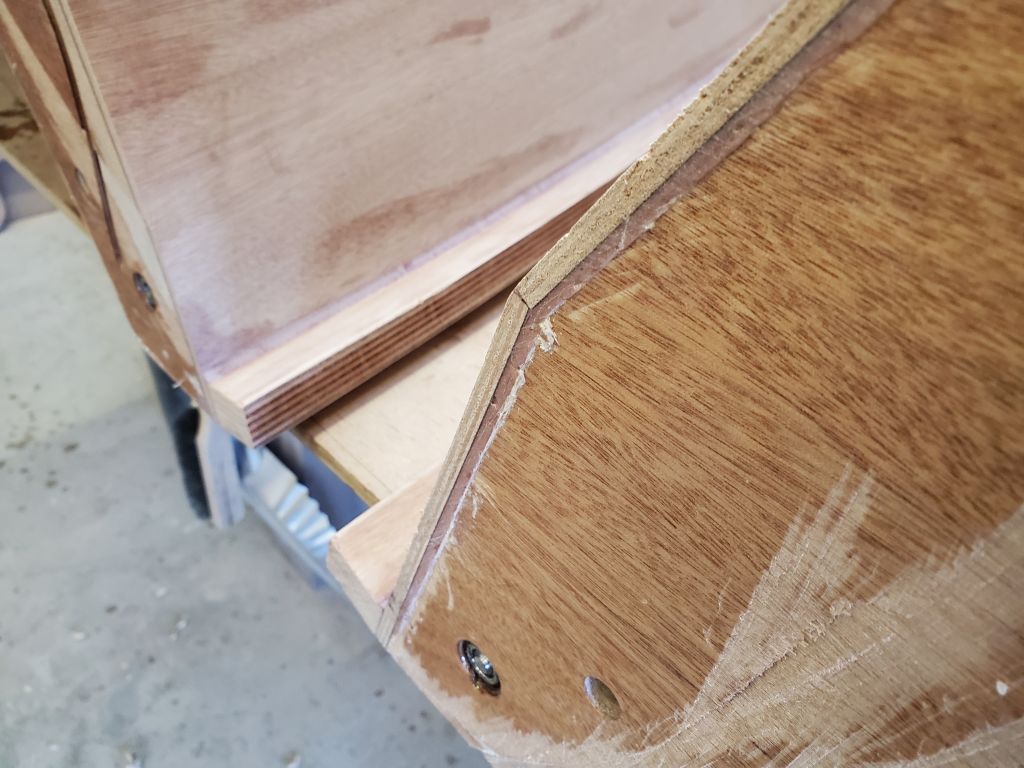
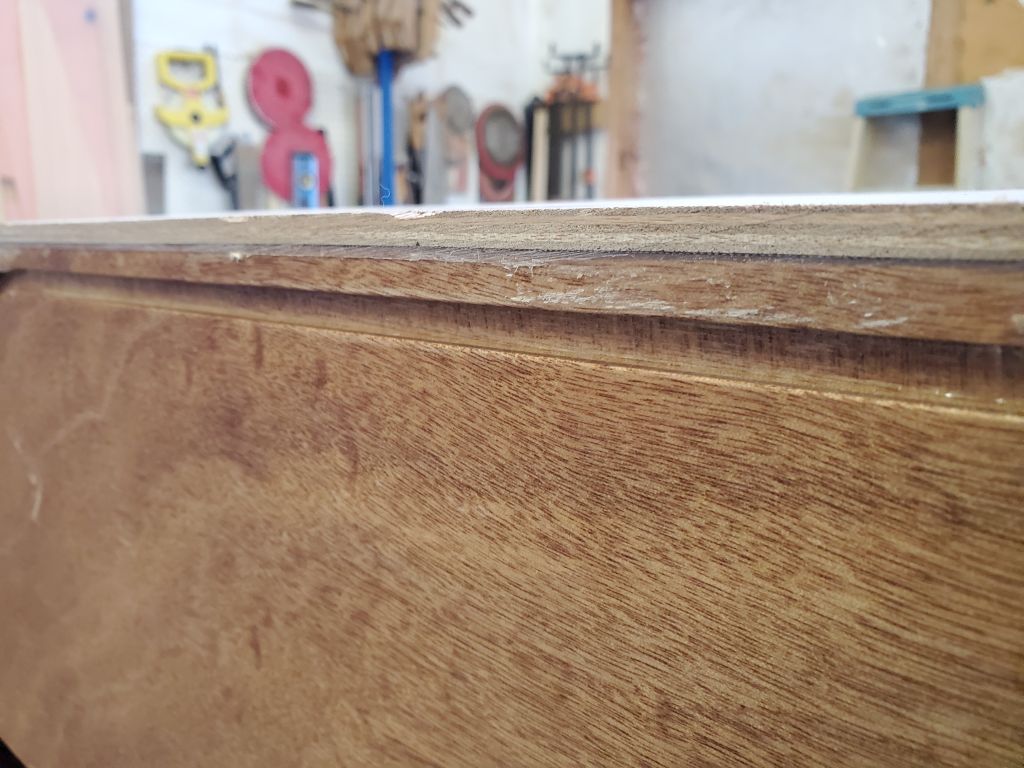
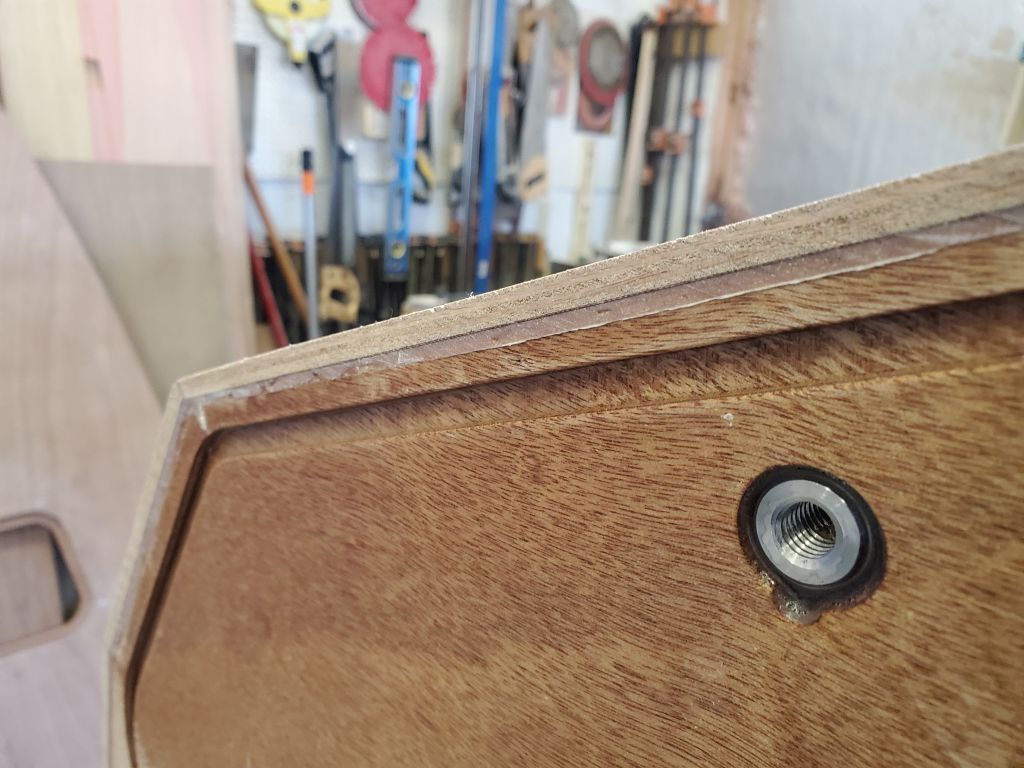
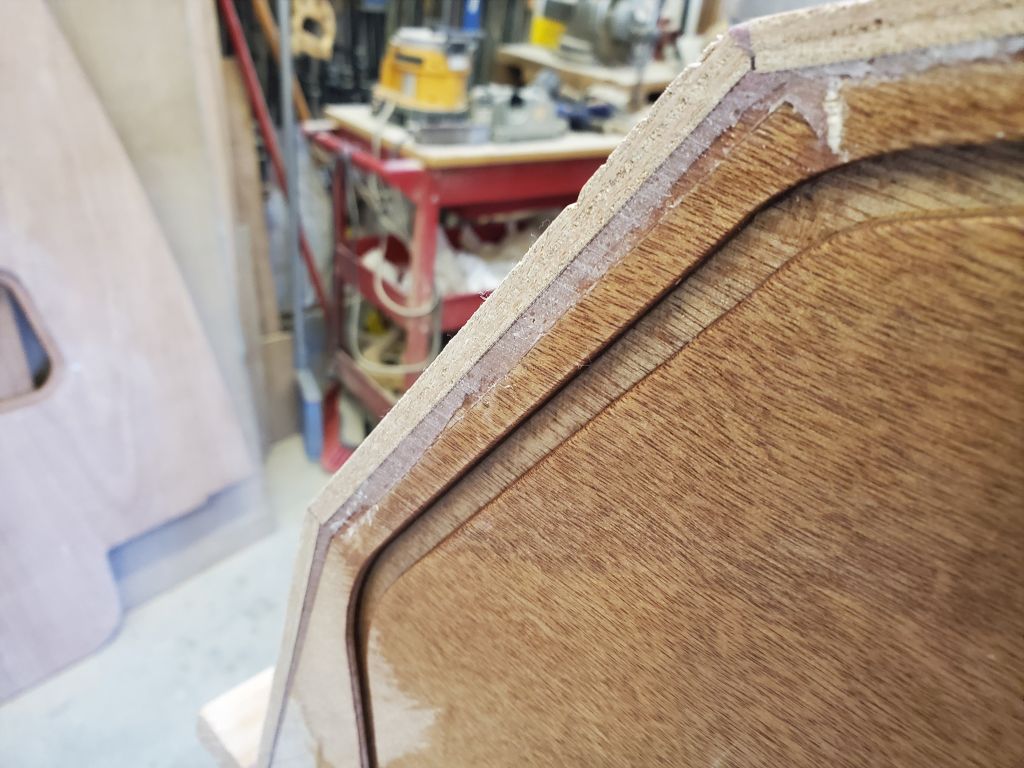
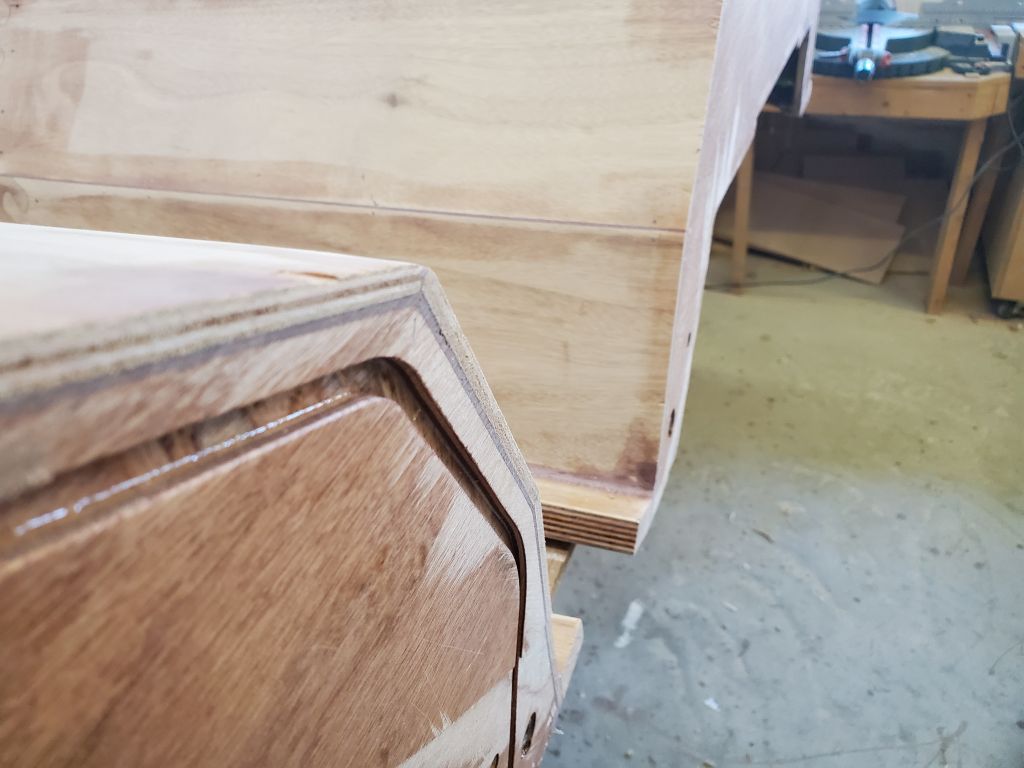
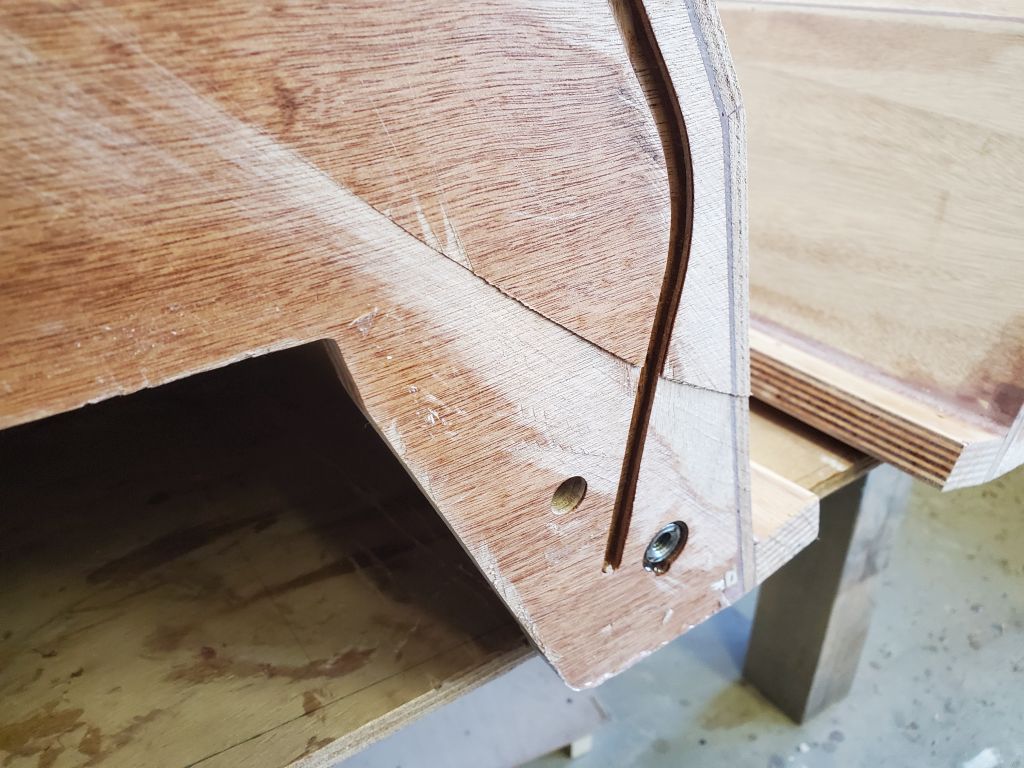
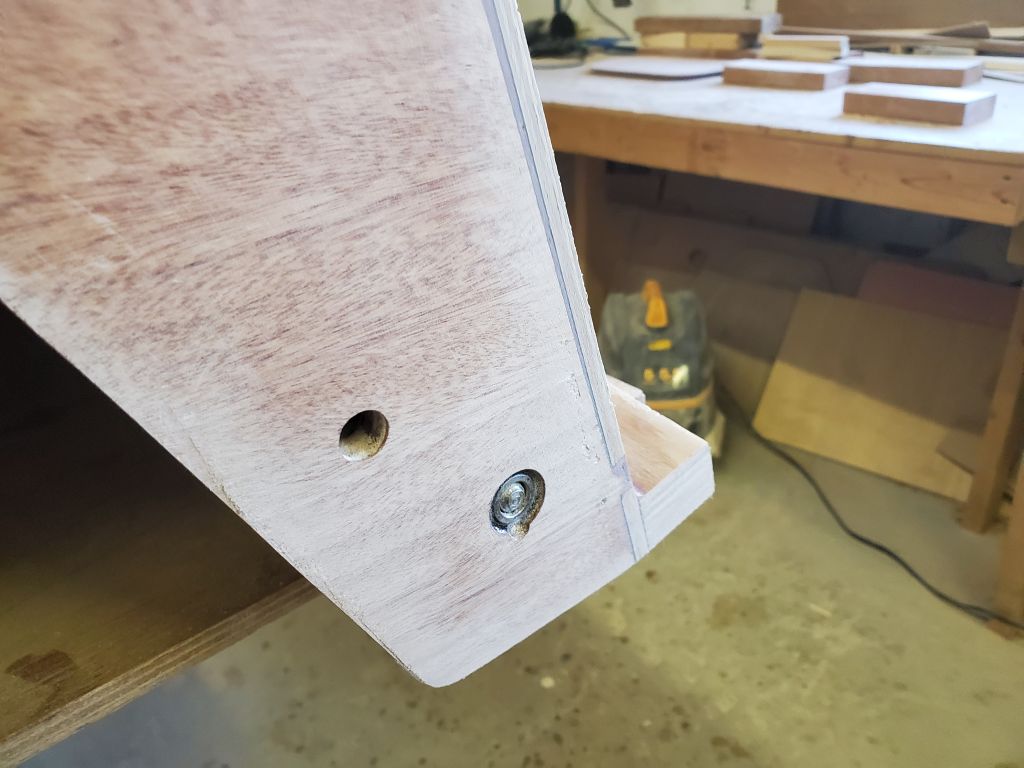
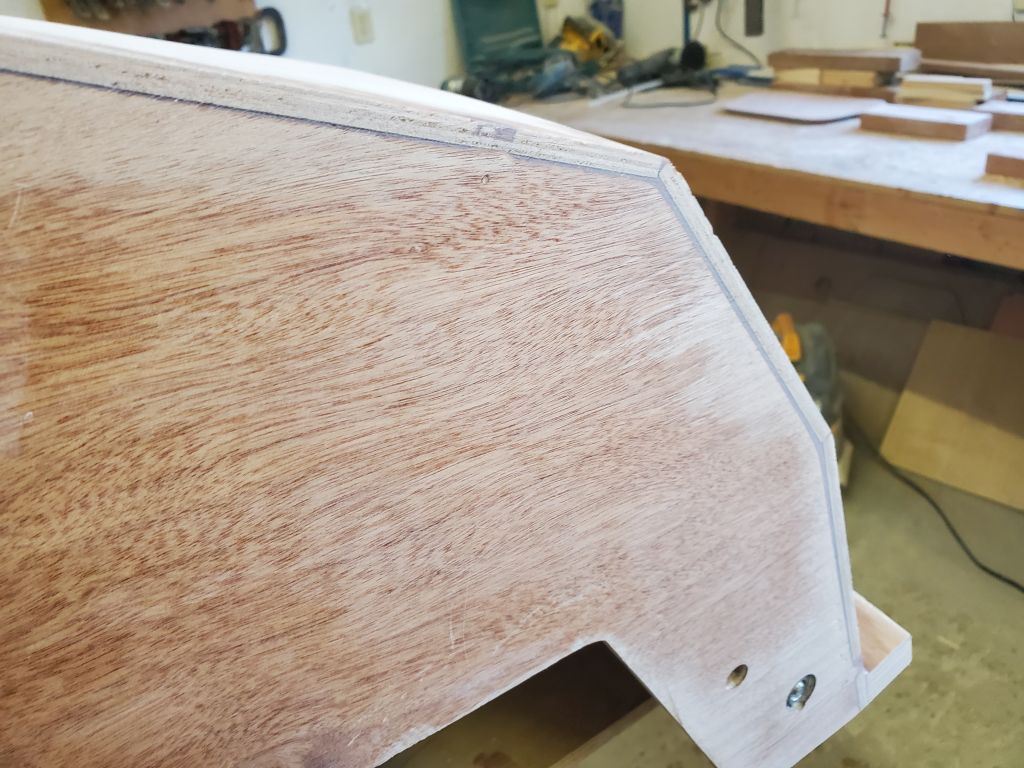
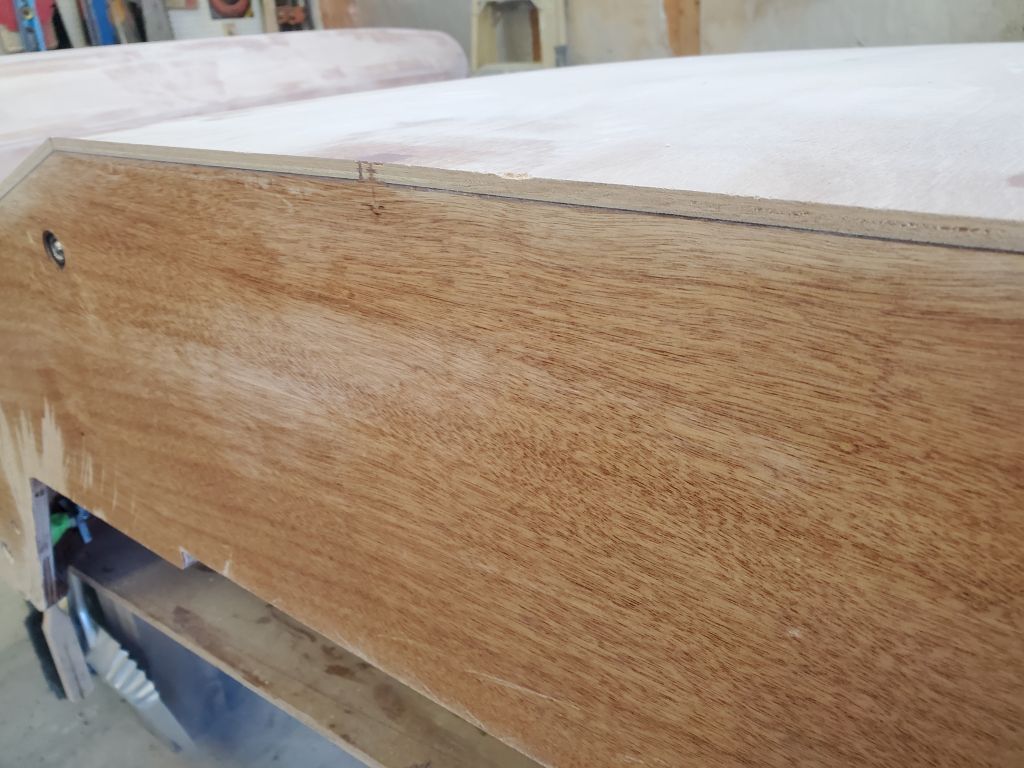
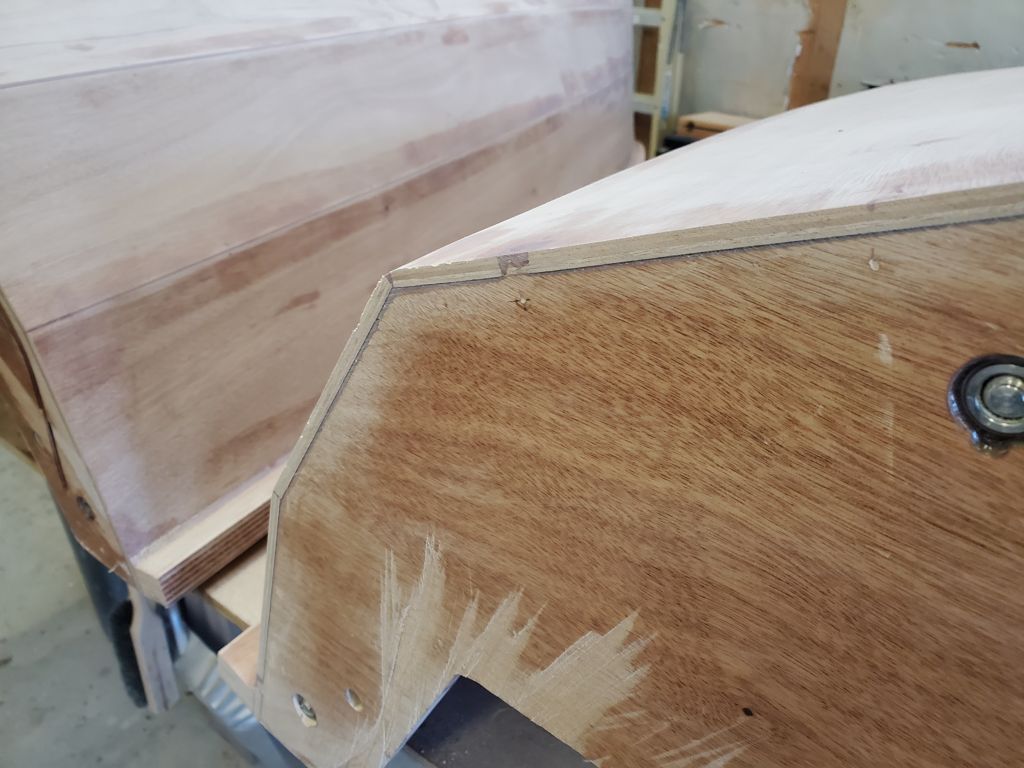
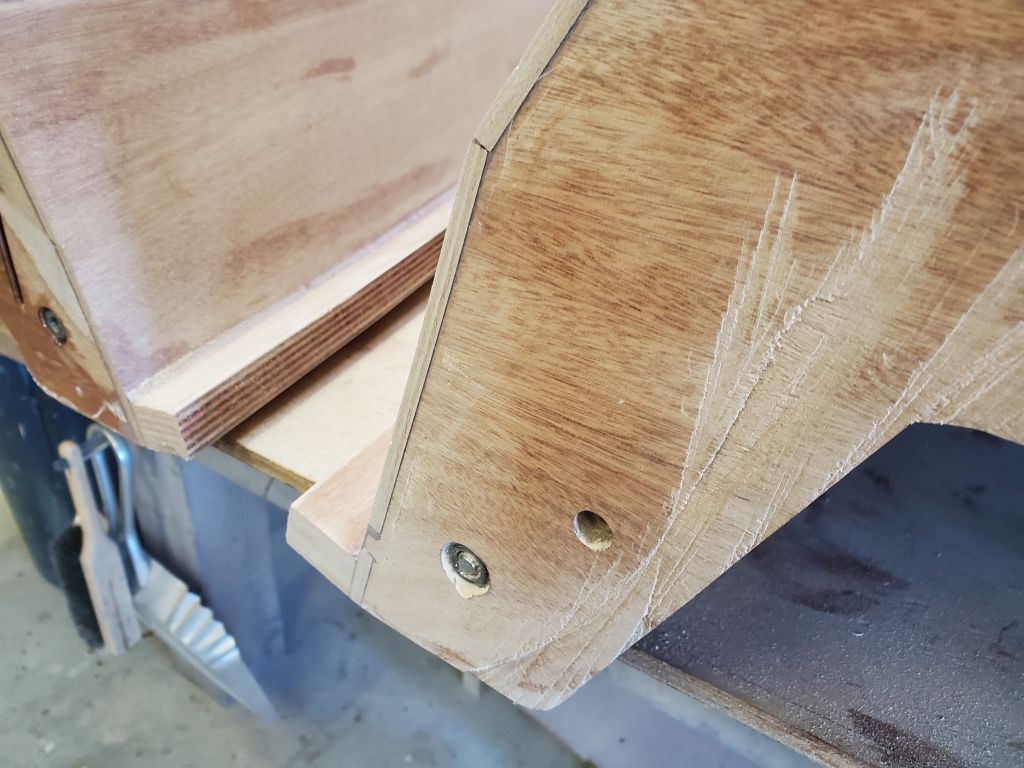
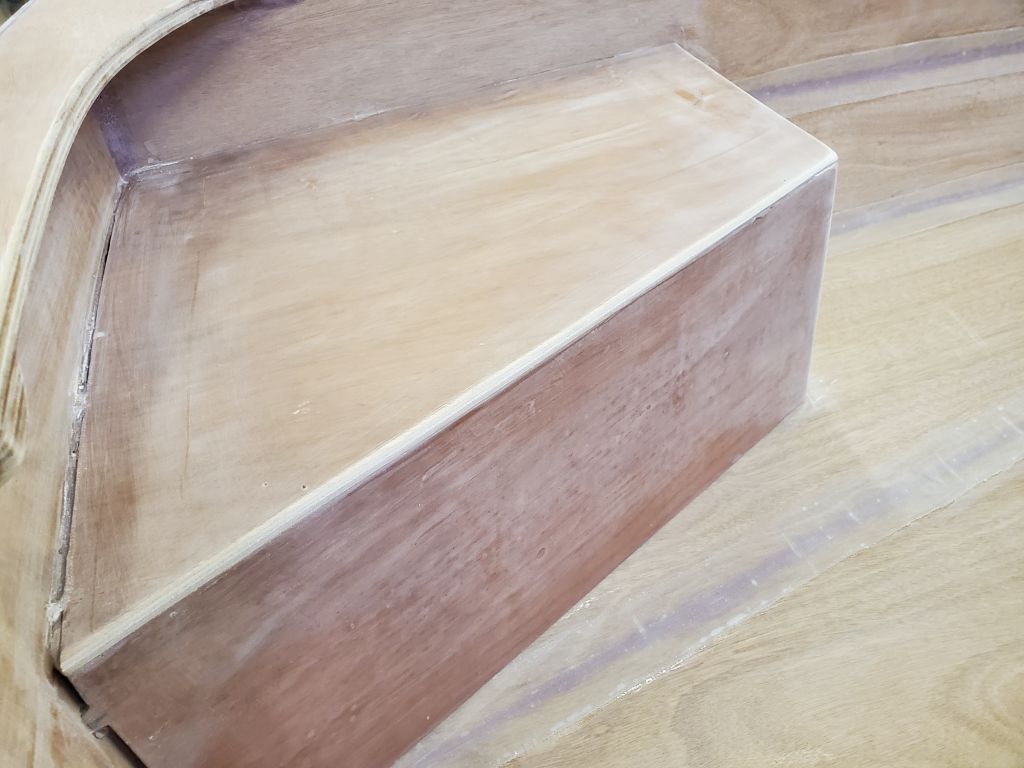
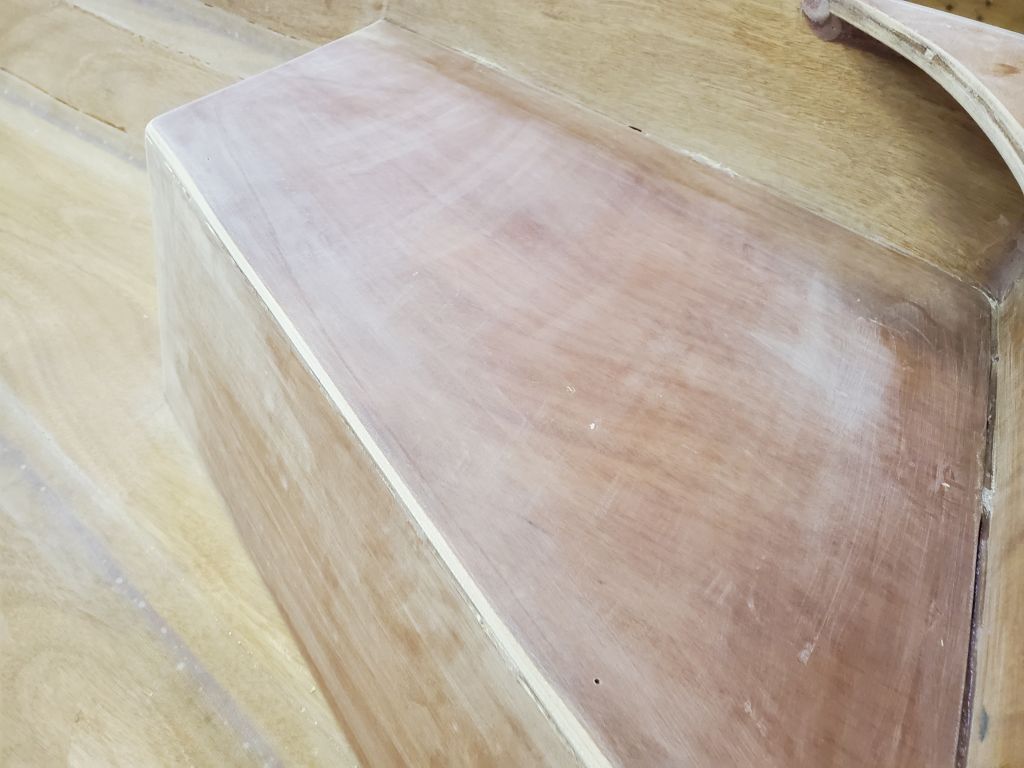
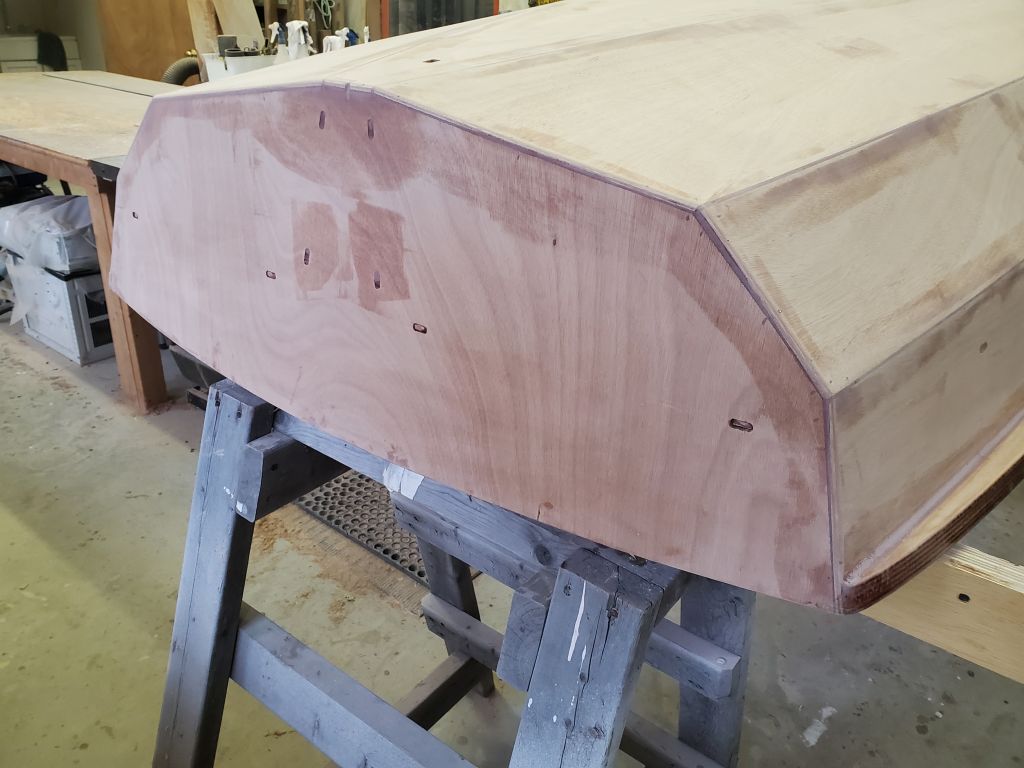
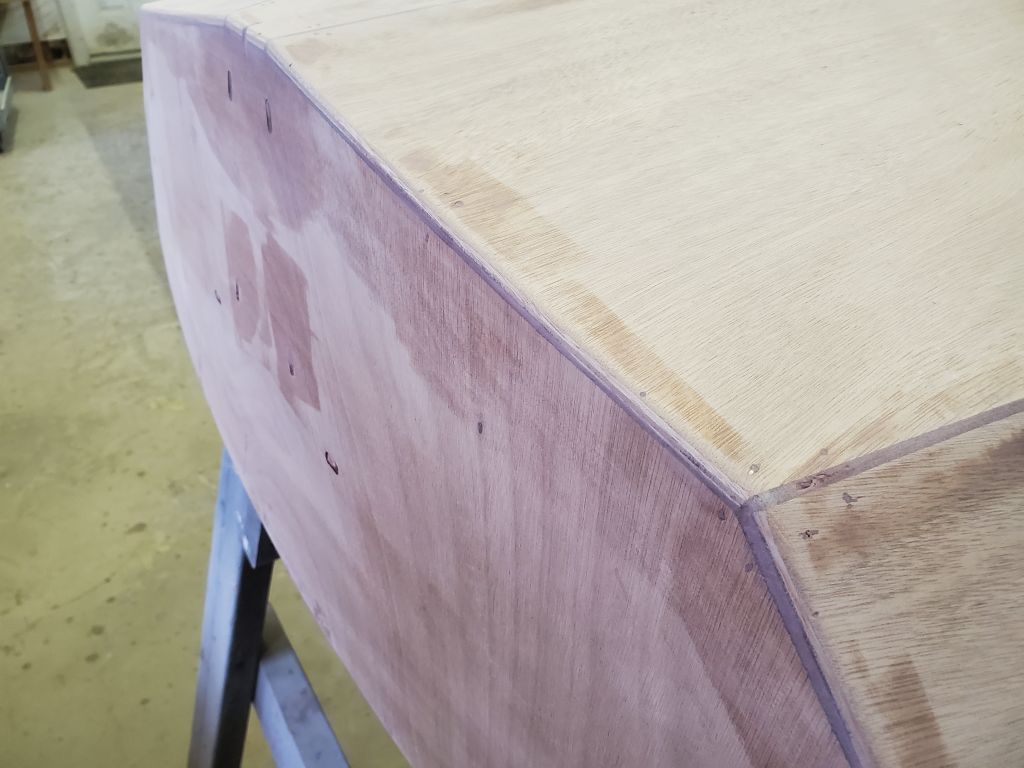
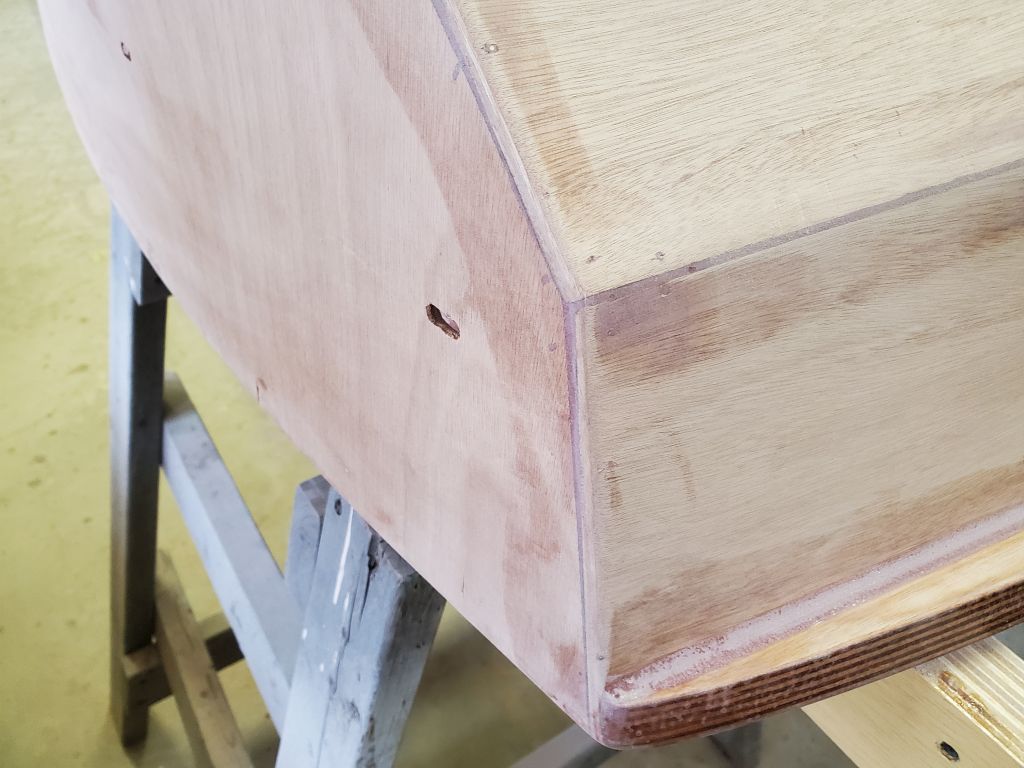
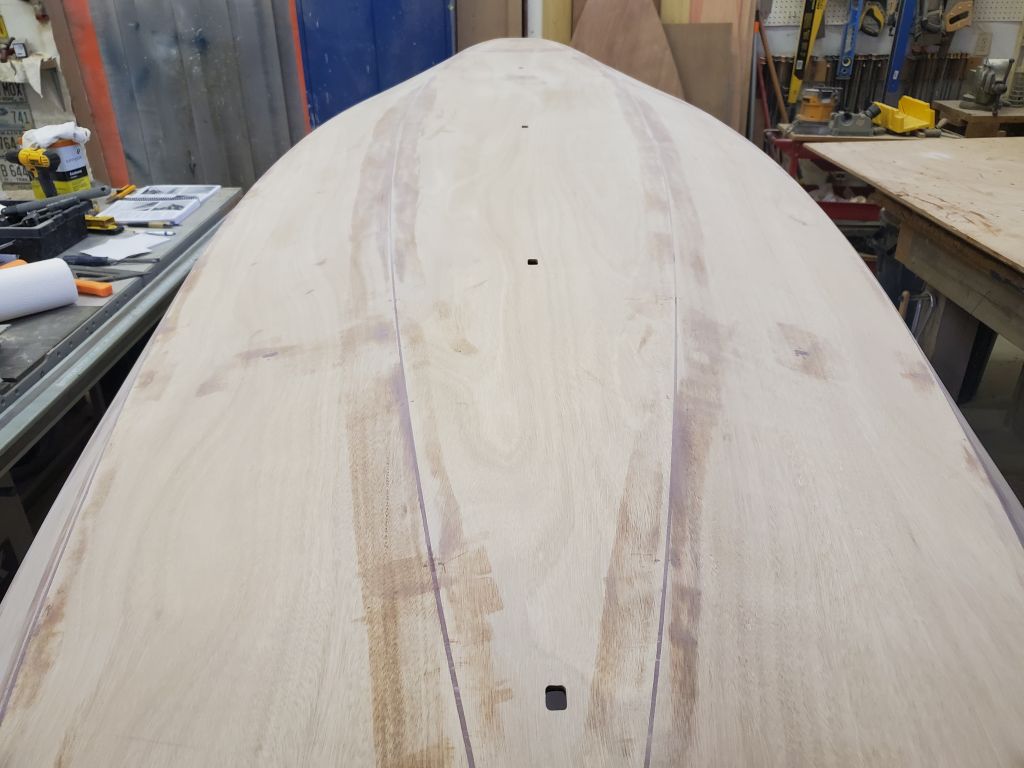
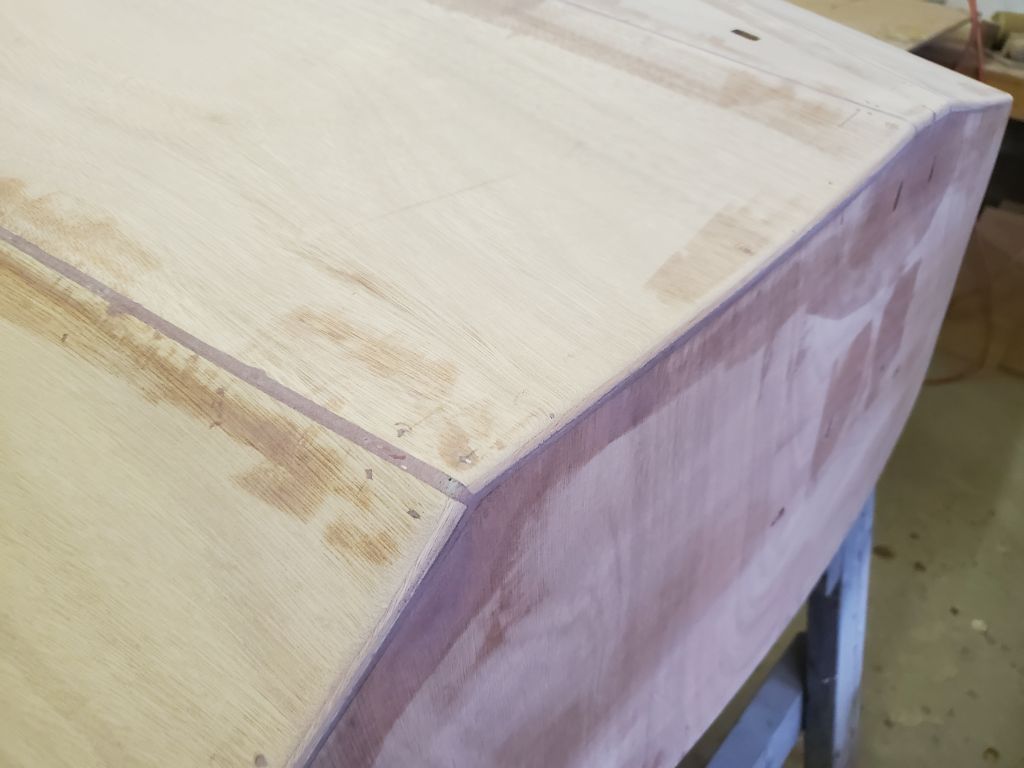
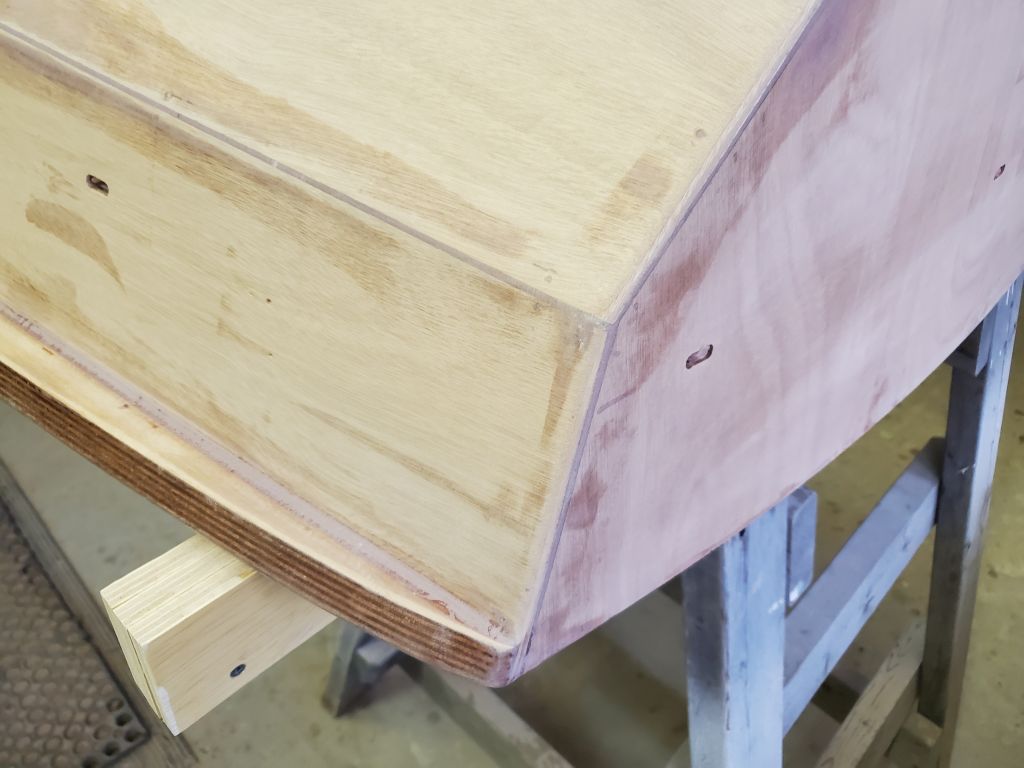
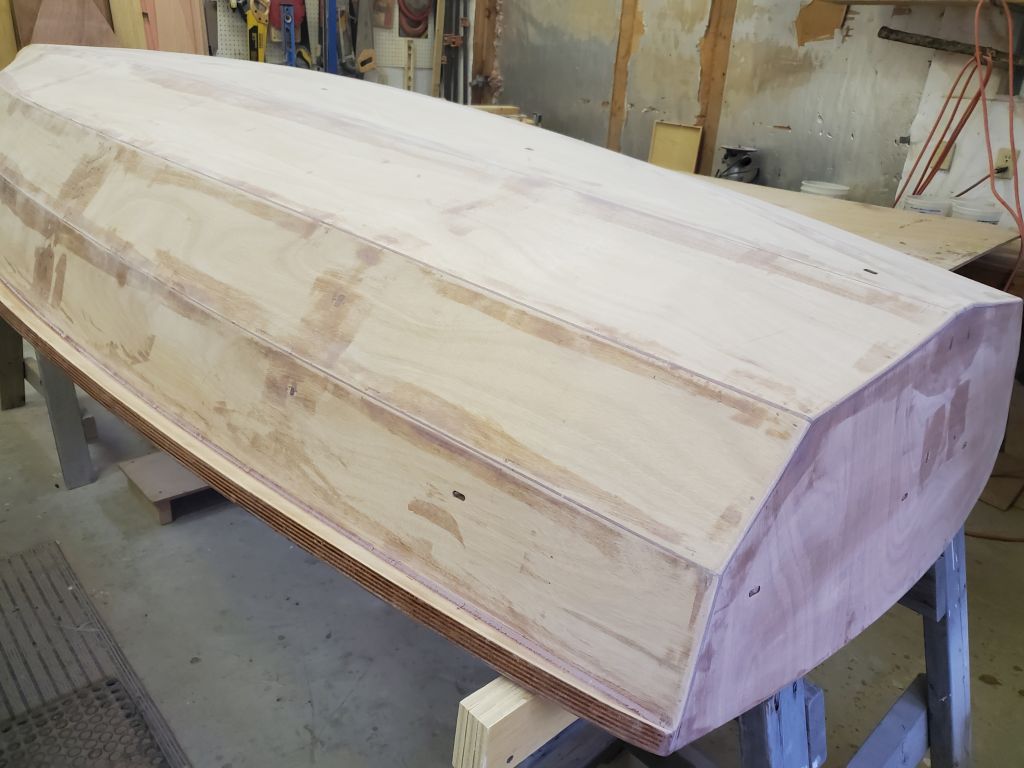
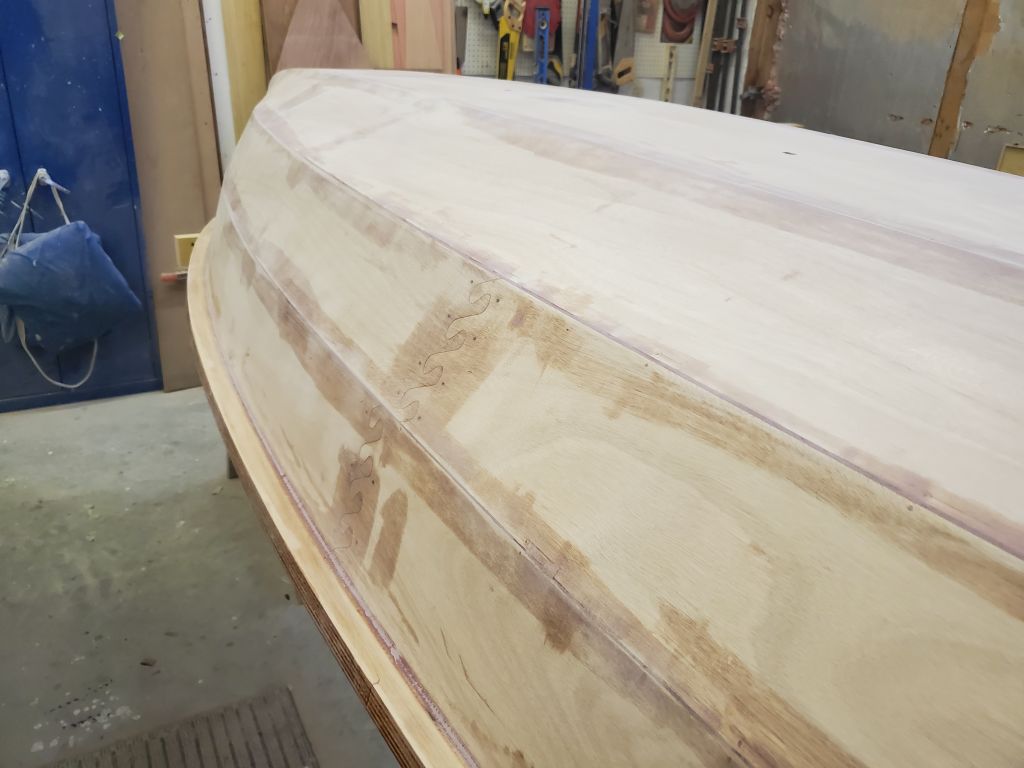
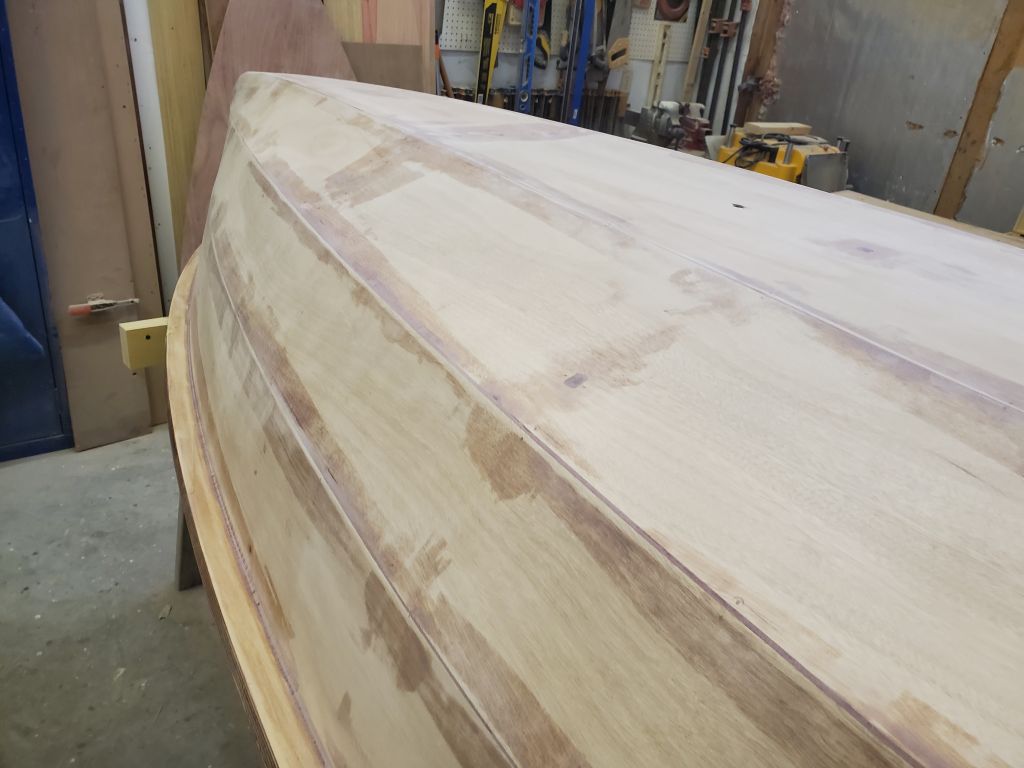
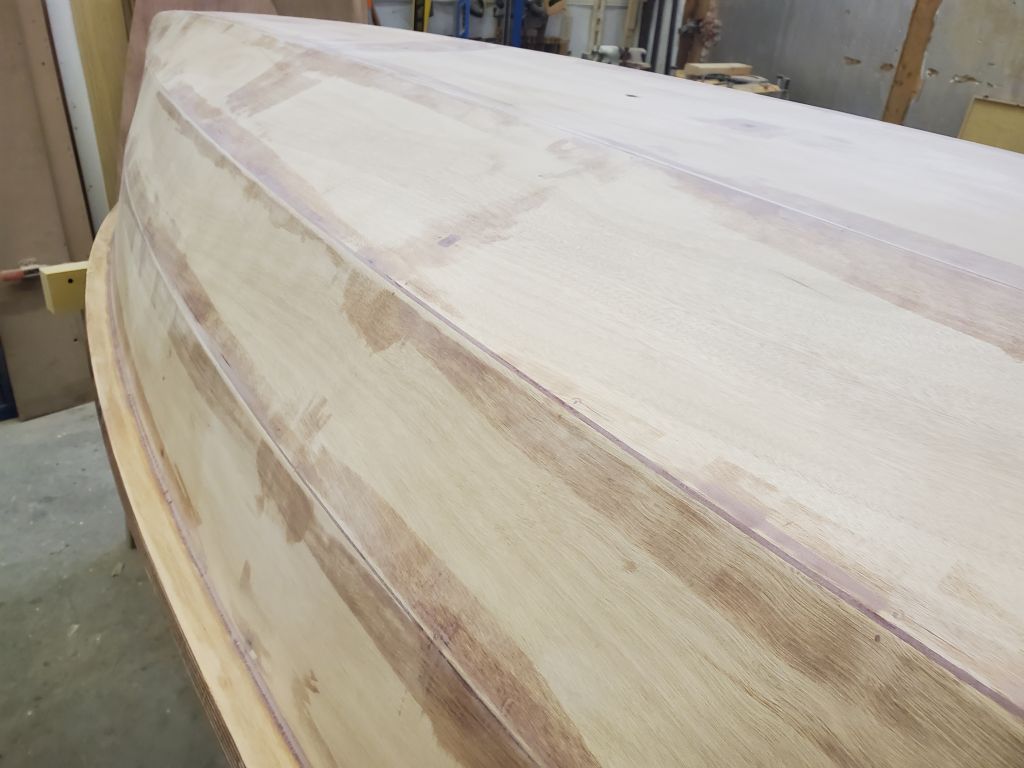
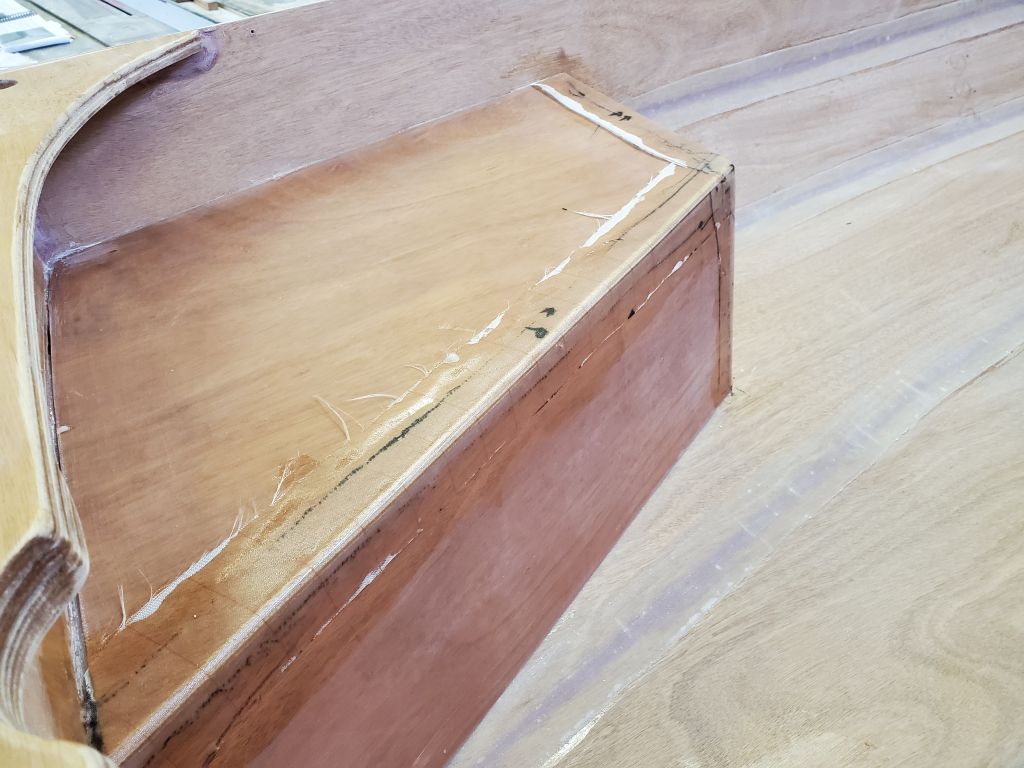
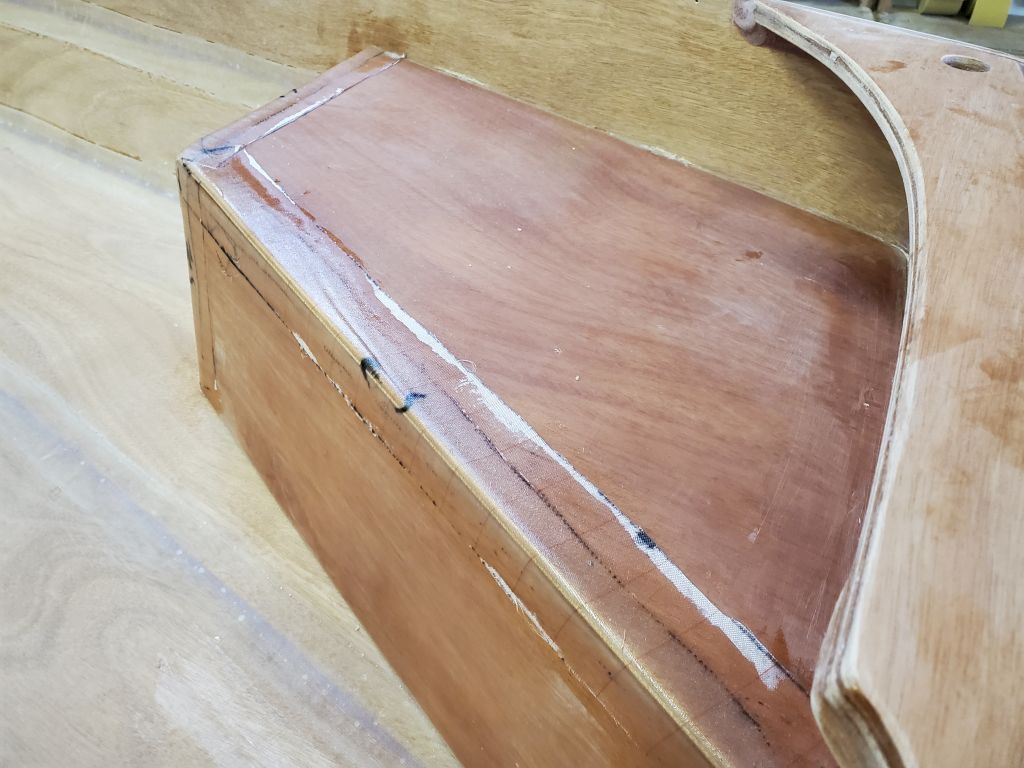
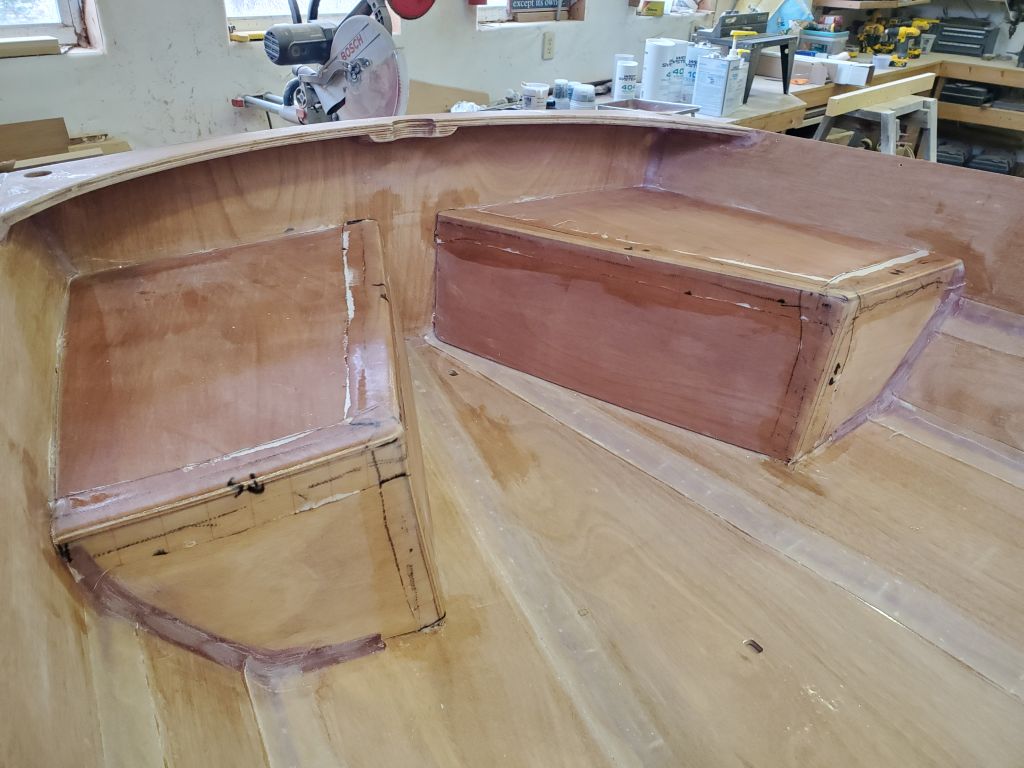
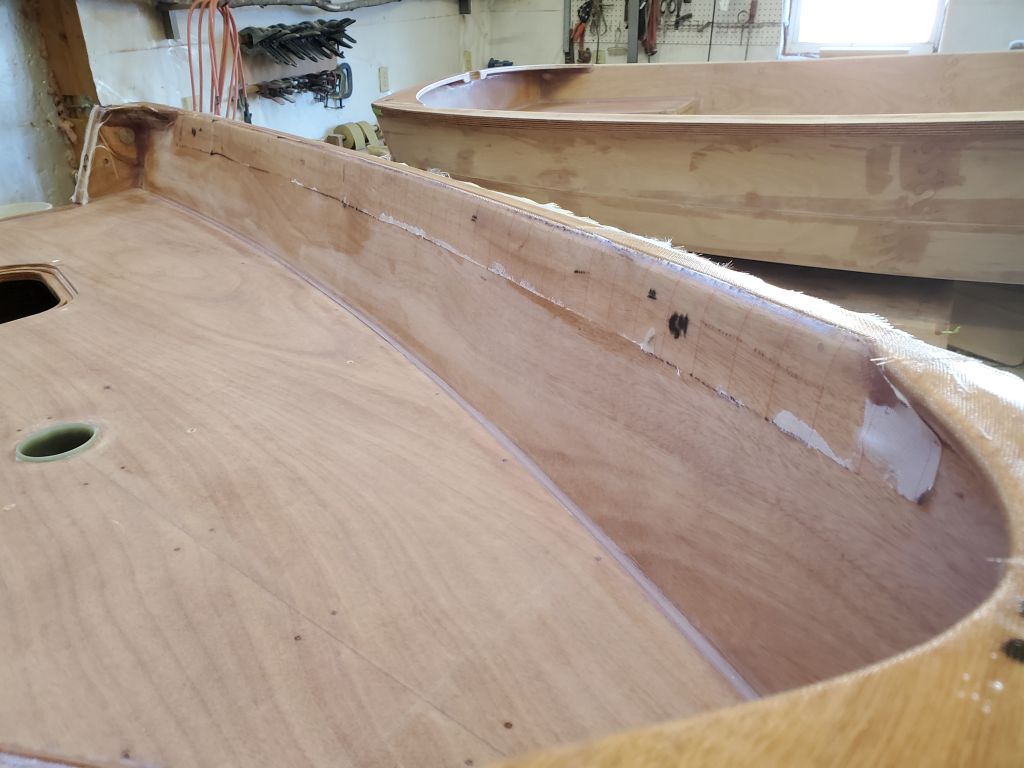
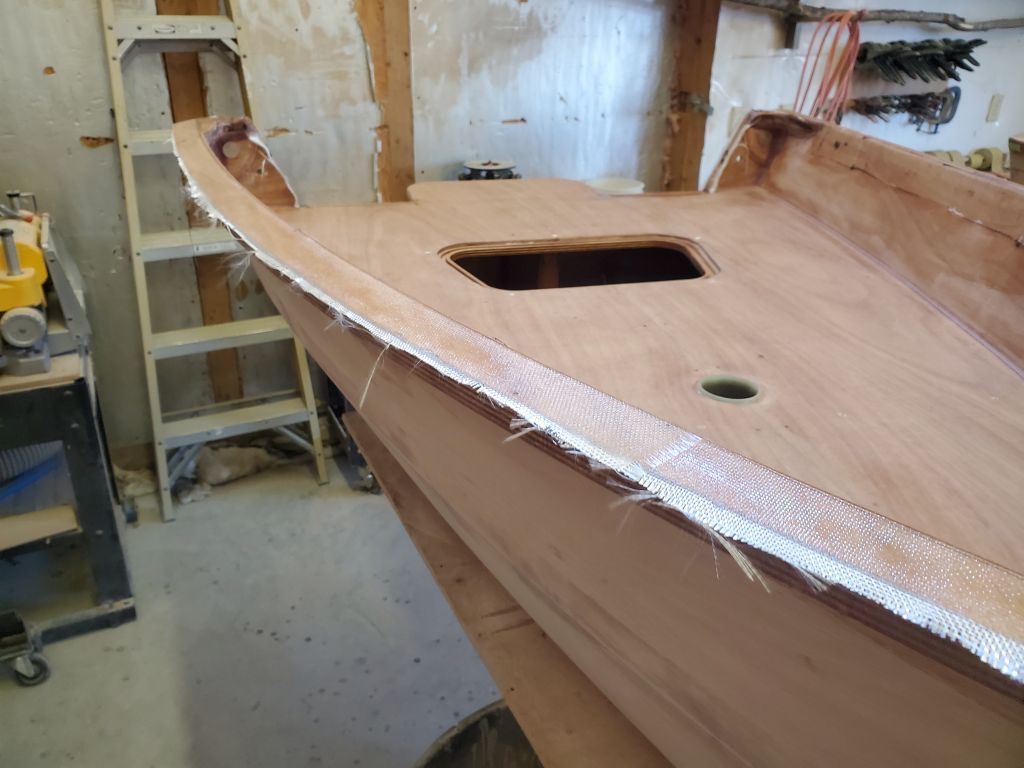
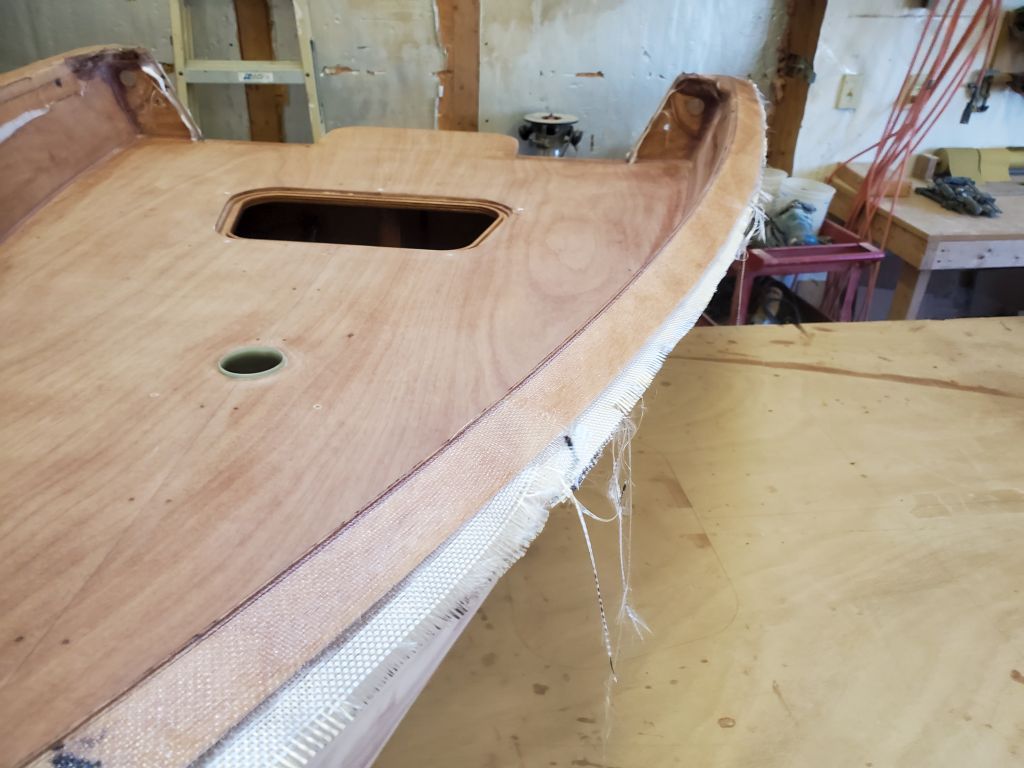
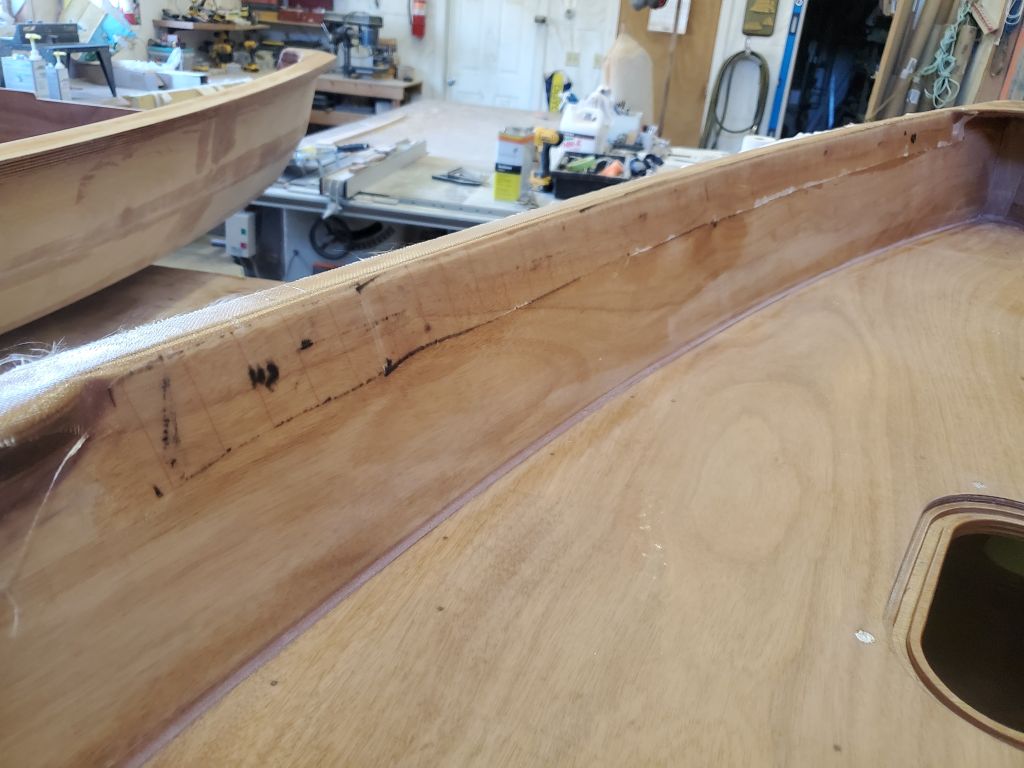
Over the weekend, I applied a second fill coat of epoxy to the fiberglass on the gunwales, bulkhead edges, stem, and transom areas.  I decided on this second fill coat because the heavier cloth used on many of these parts didn’t fill as completely with the first coat, and to help ease the various transitions between layers of fiberglass and adjacent areas.  The book suggested this might be the case, and recommended the second coat as well.  Before applying the second build coat, I trimmed the fiberglass close to the various edges with a knife.
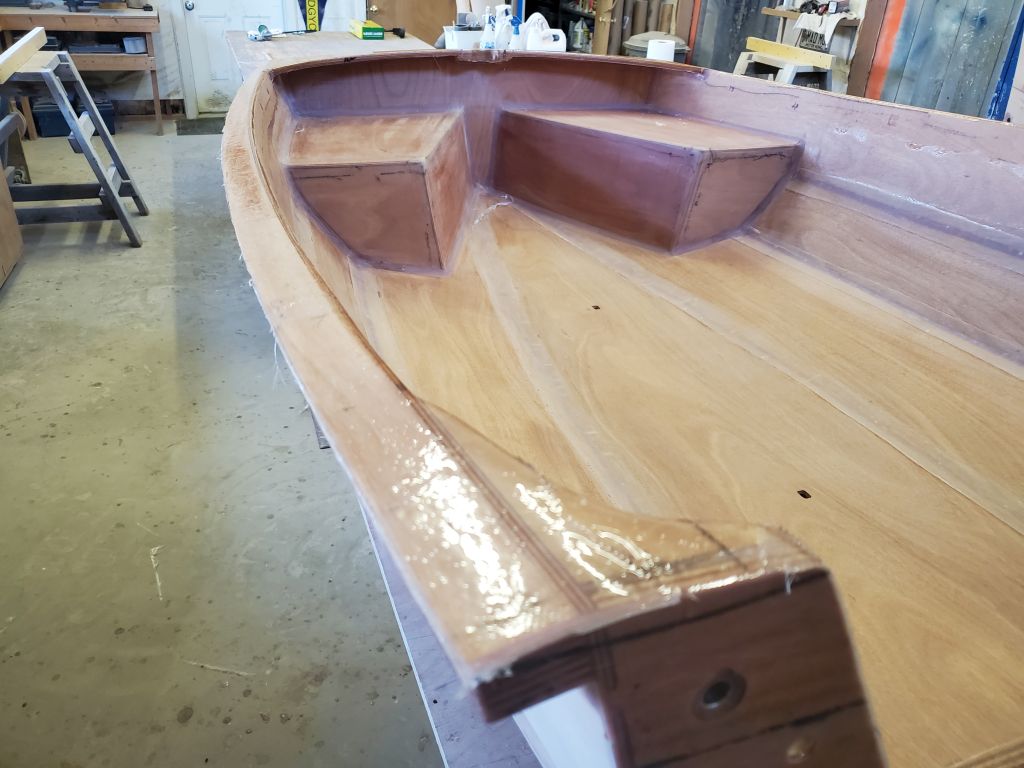
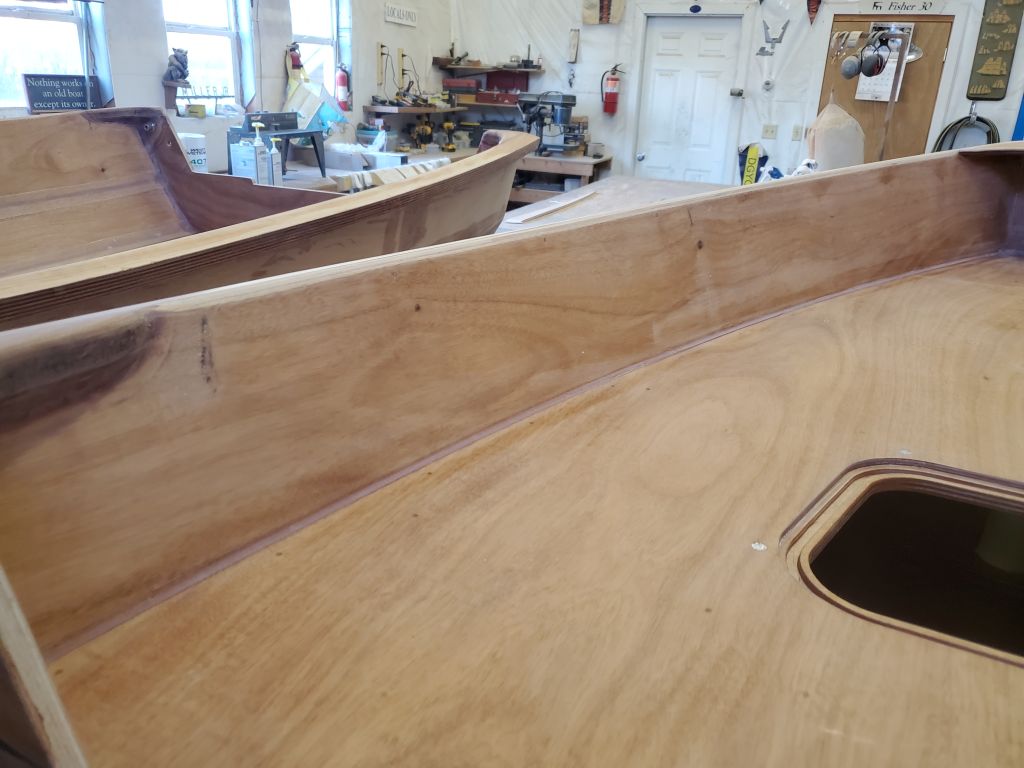
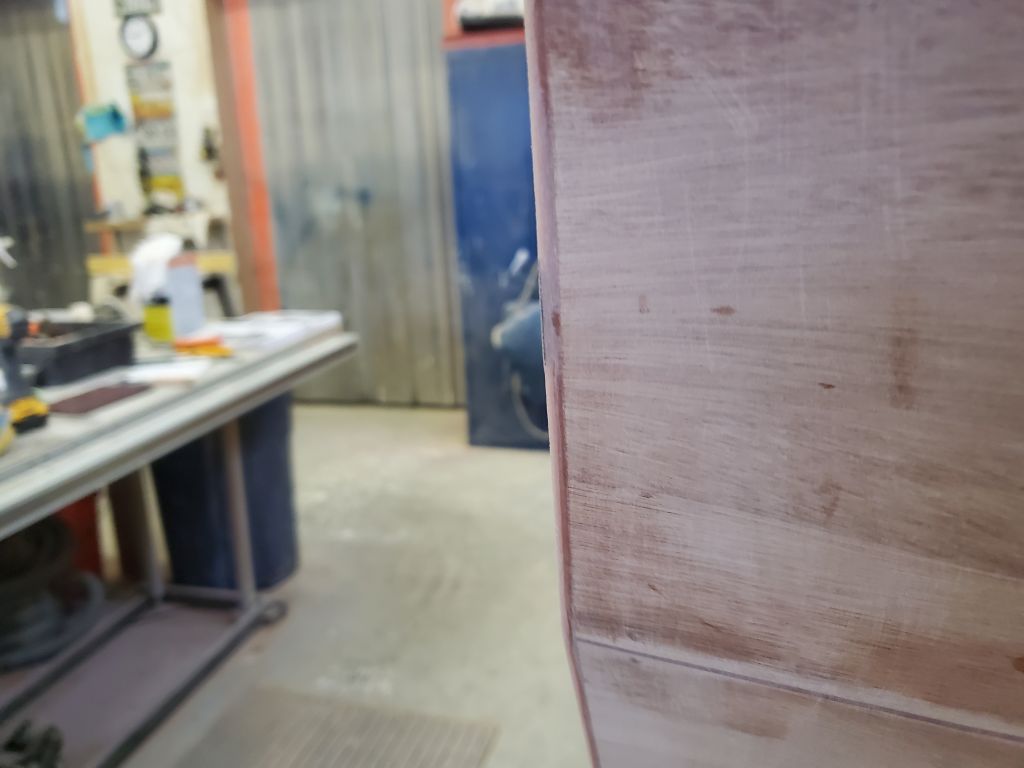
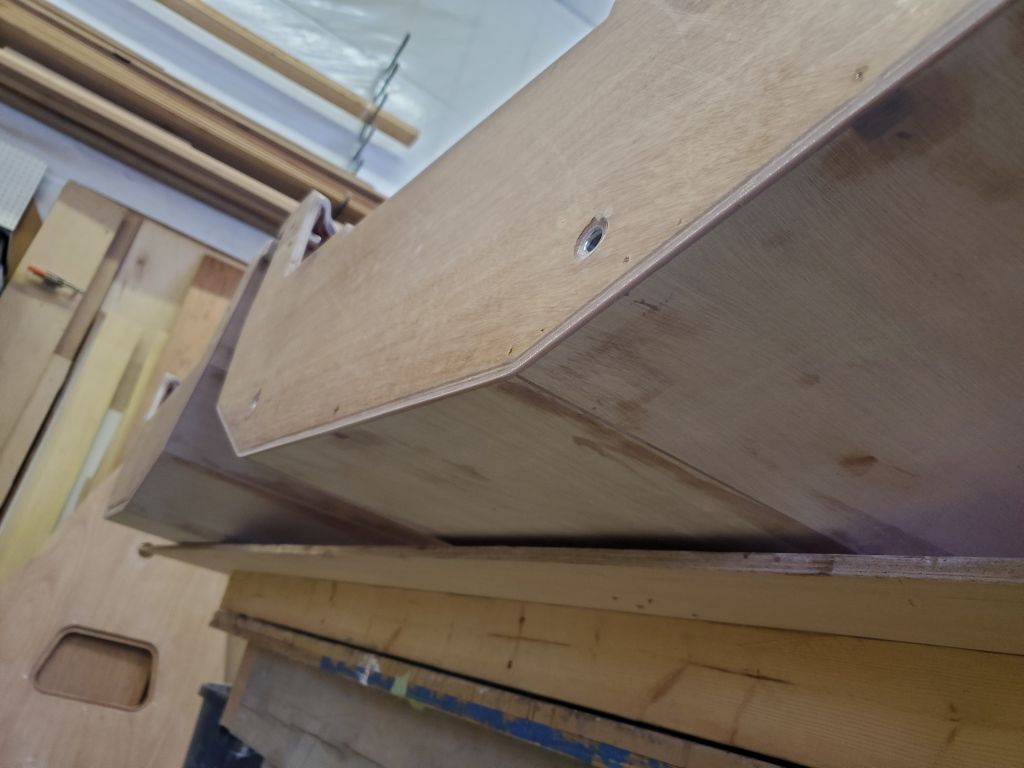
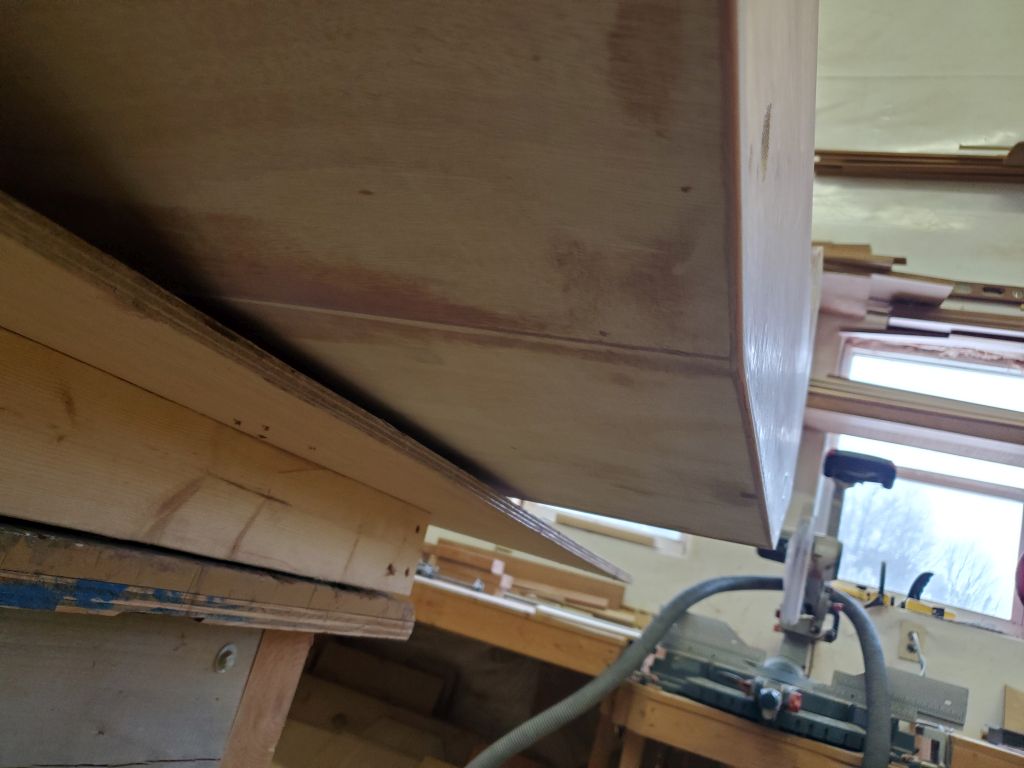
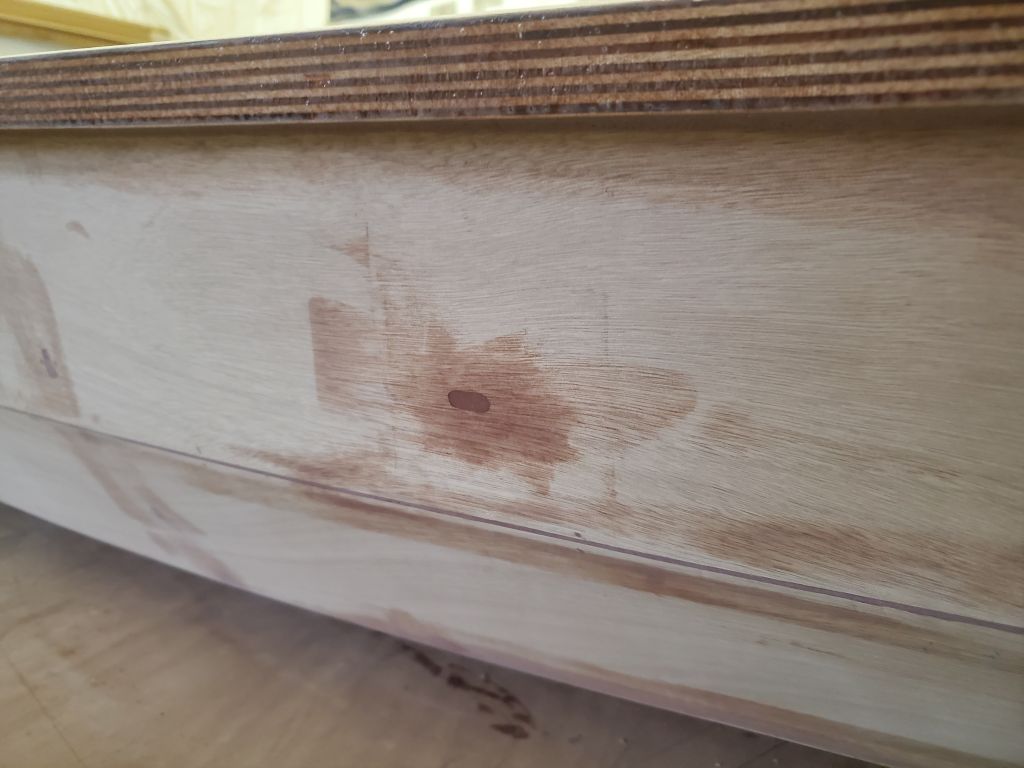
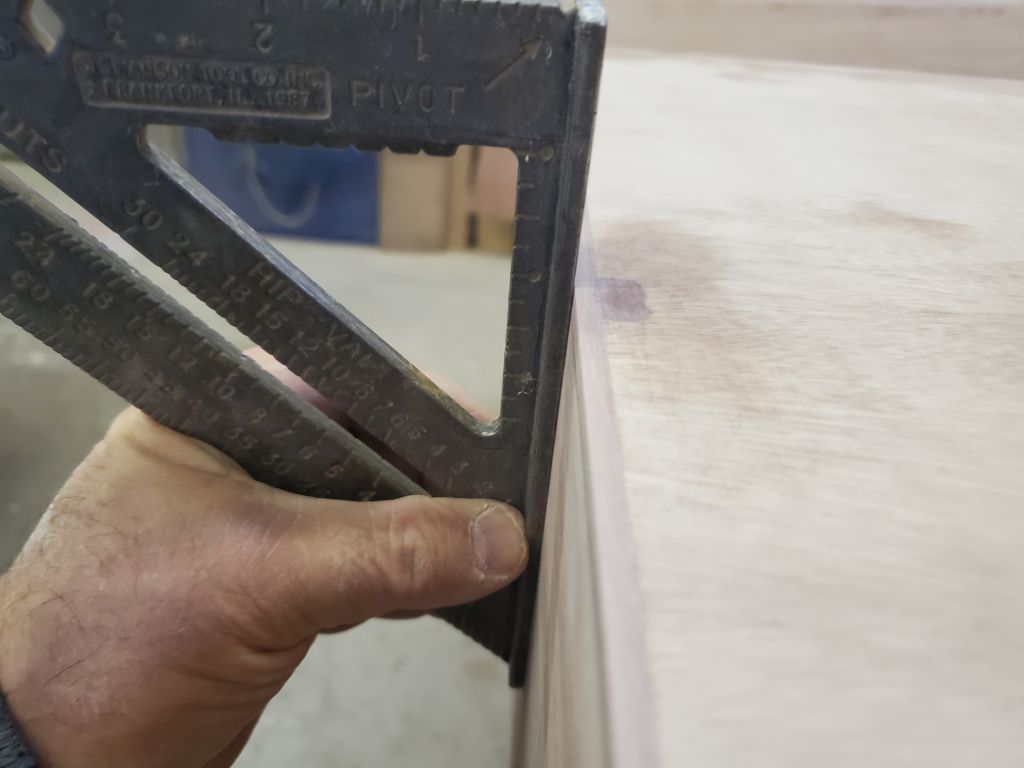
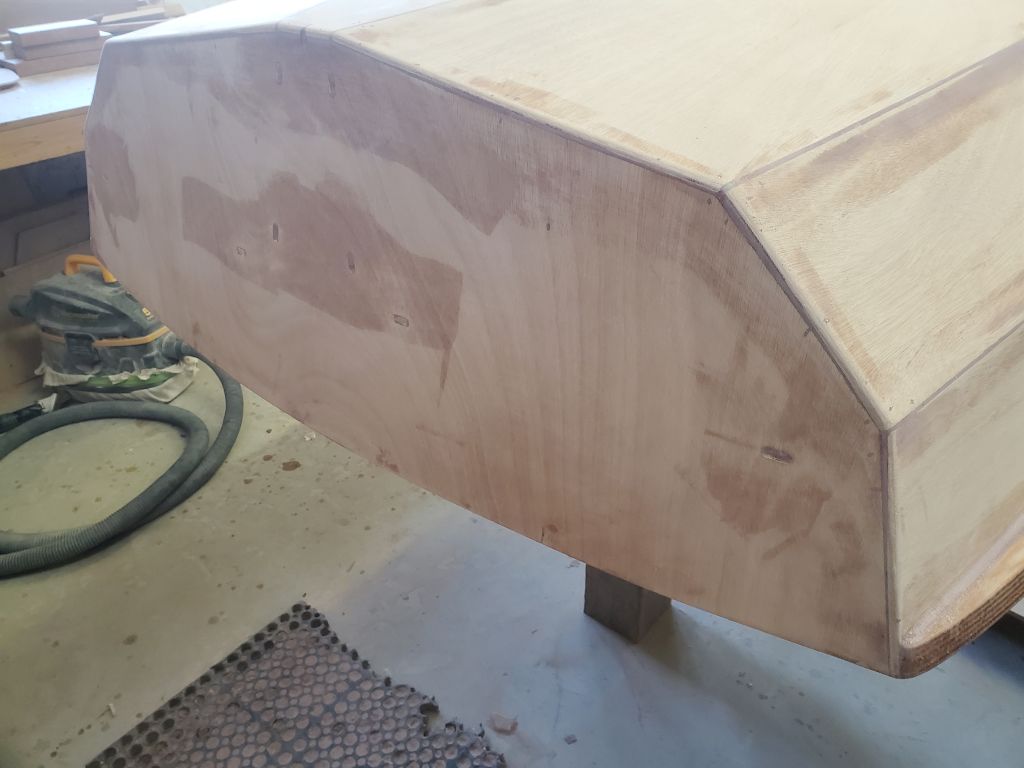
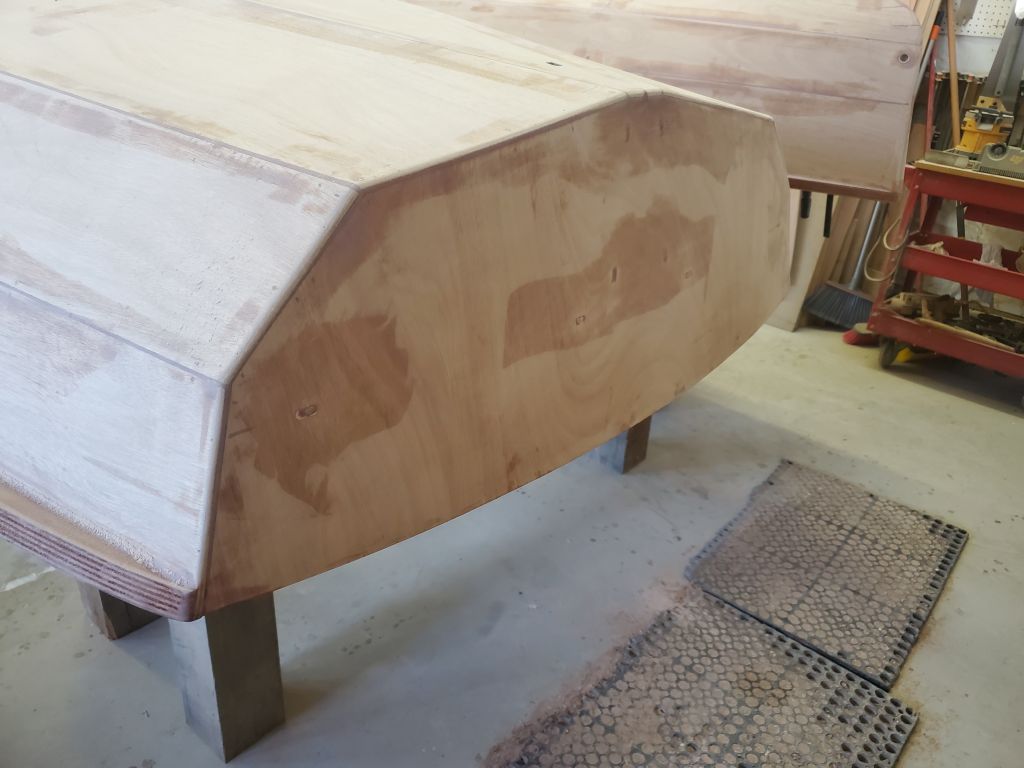
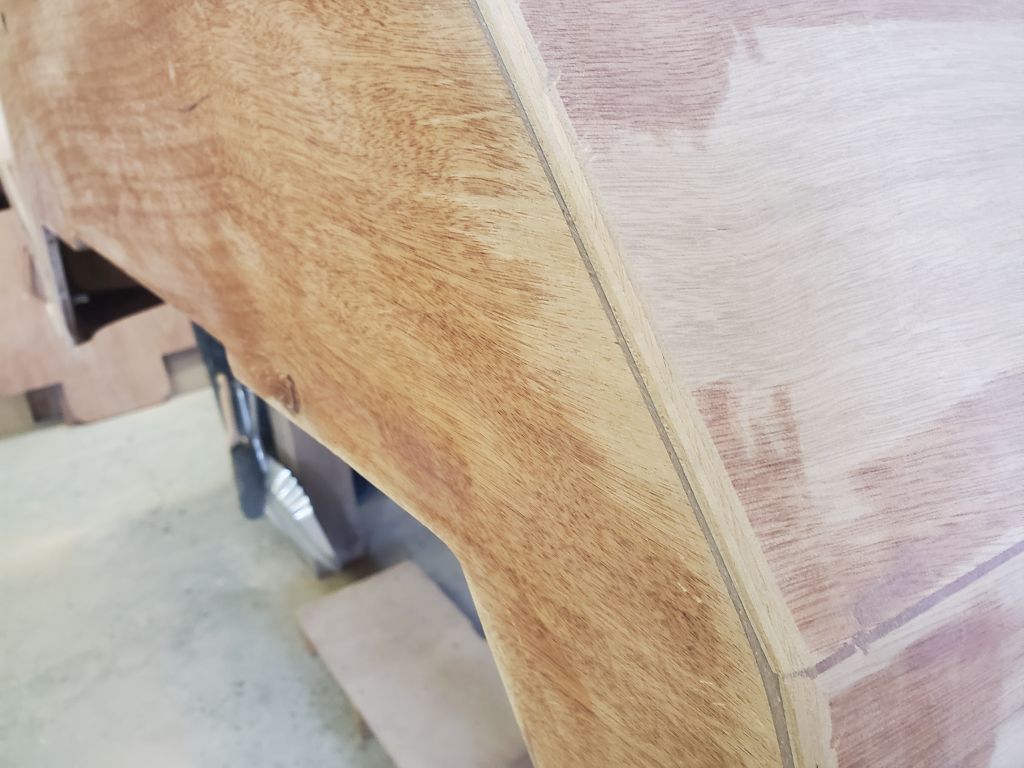
Now, with the build coats cured, I set to work sanding all the new fiberglass to smooth the surfaces and bring the edges flush all around as needed. This was all hand work with small foam sanding block that I like and 120 grit paper.
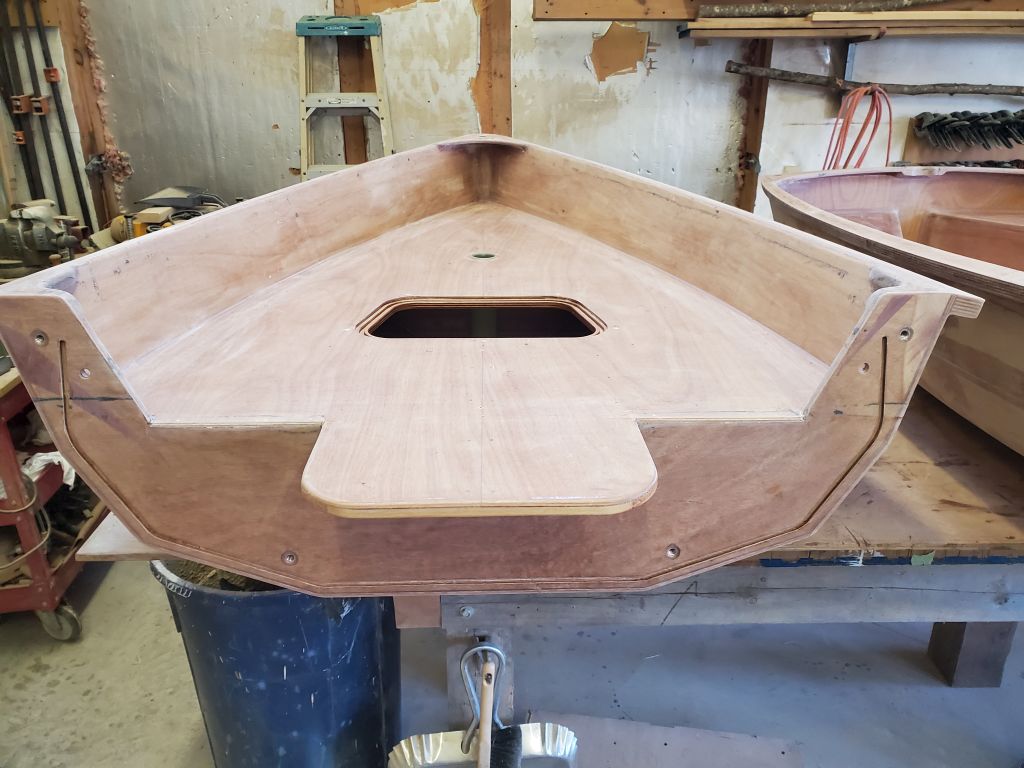
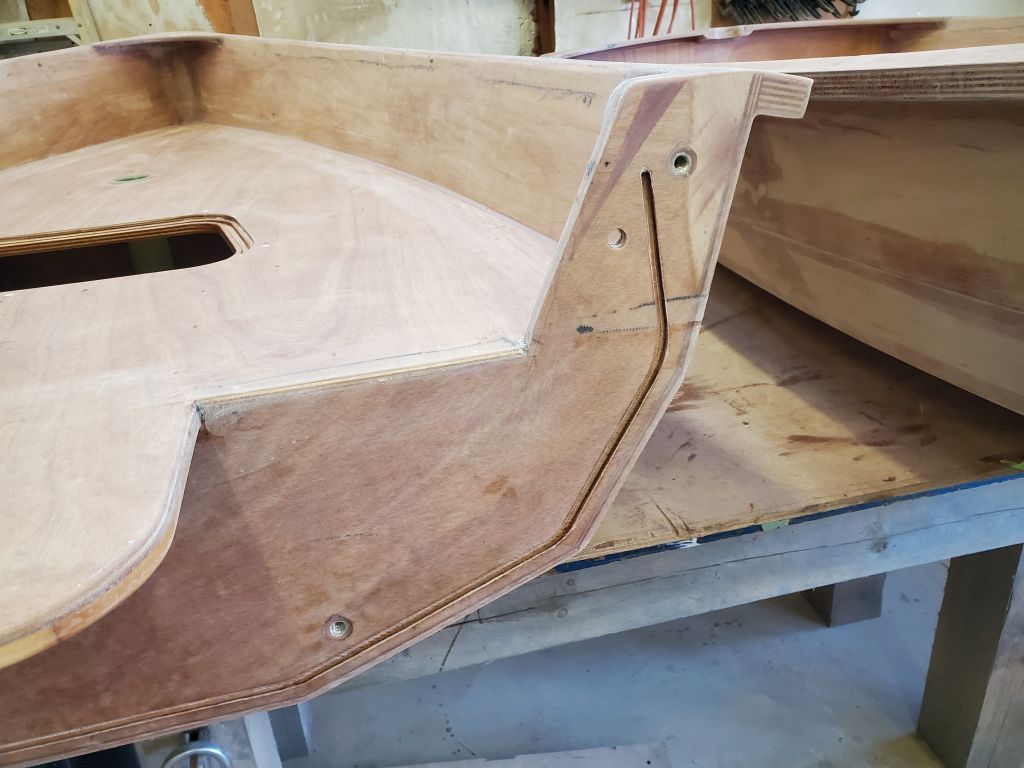
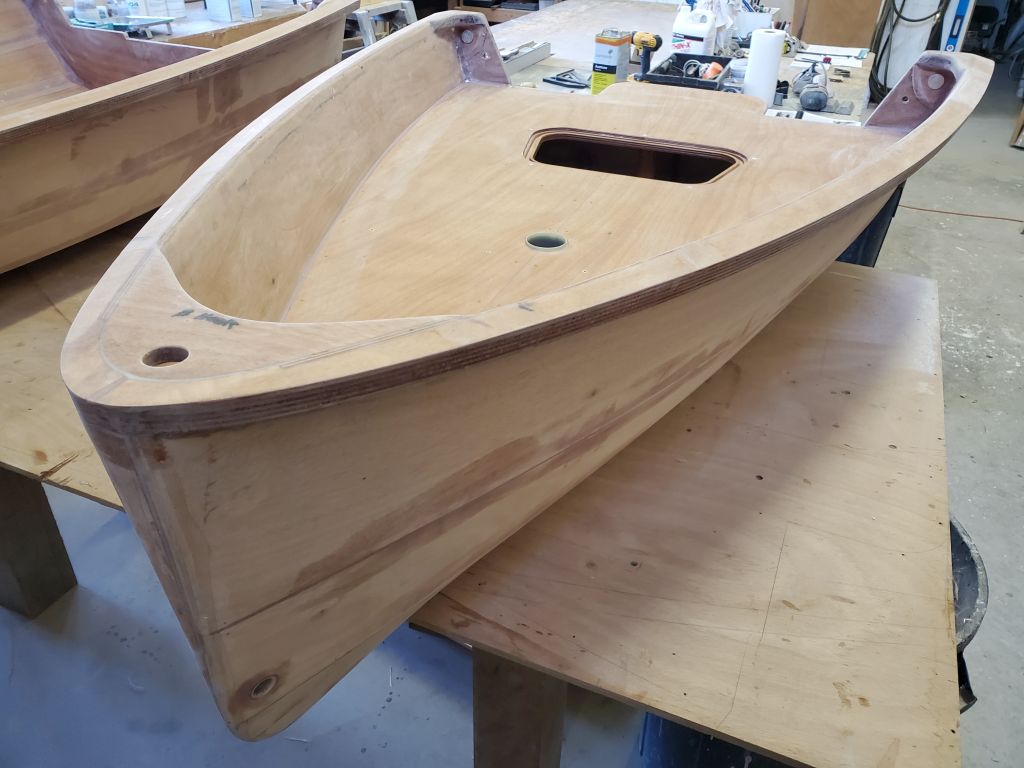
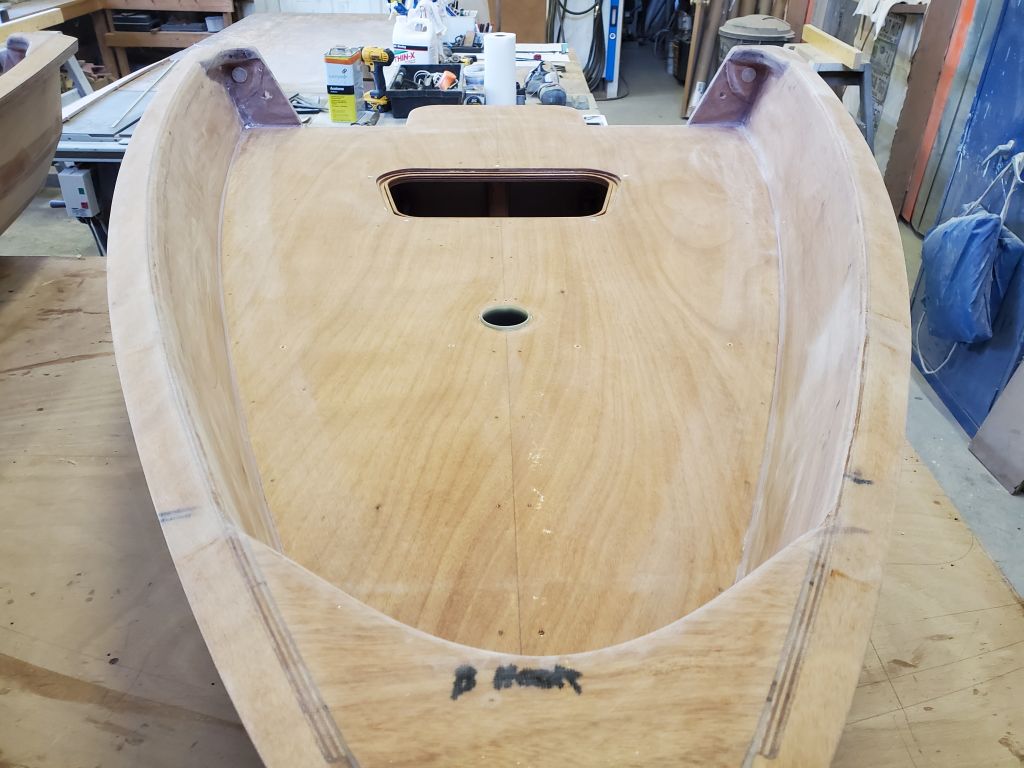
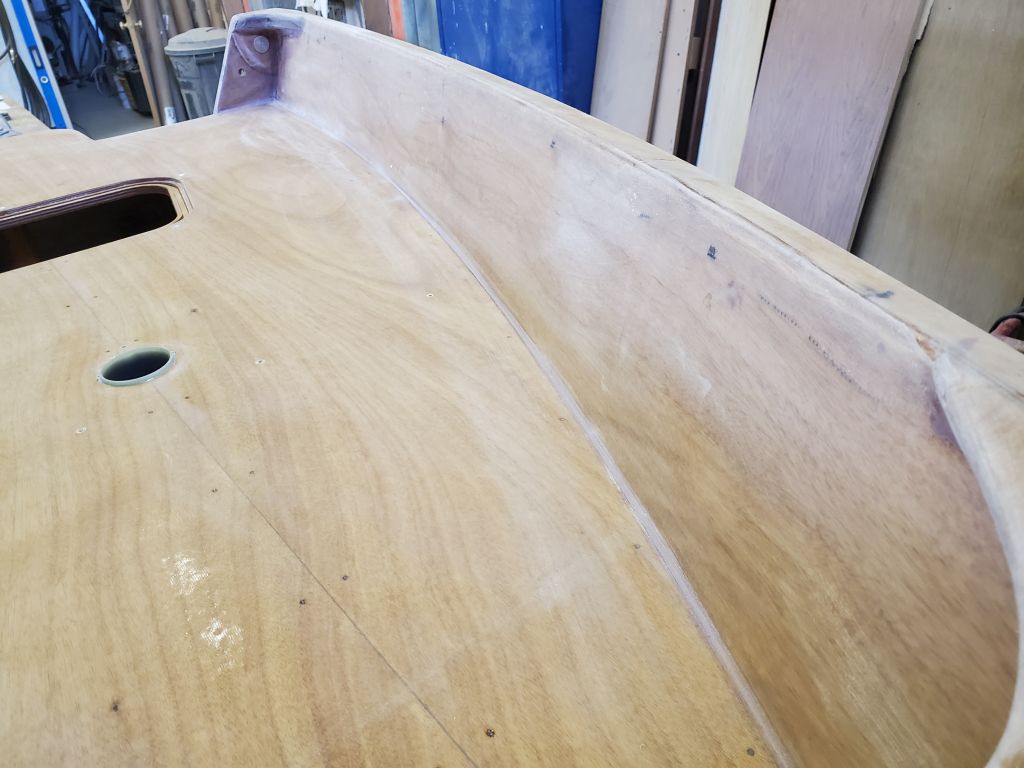
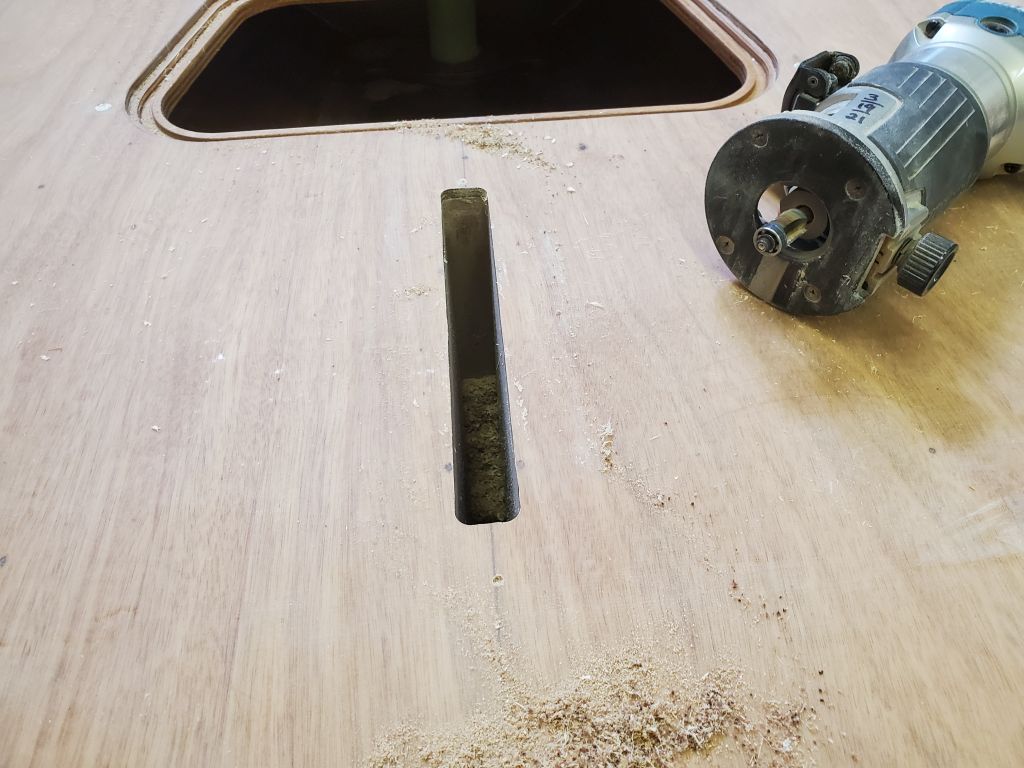
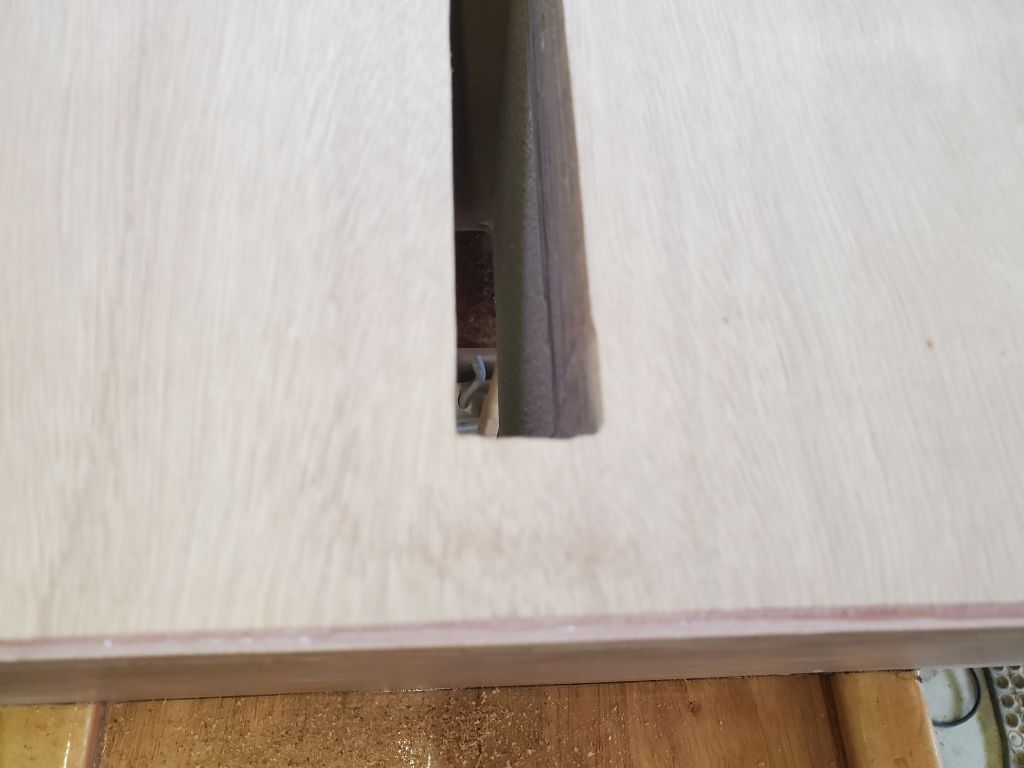
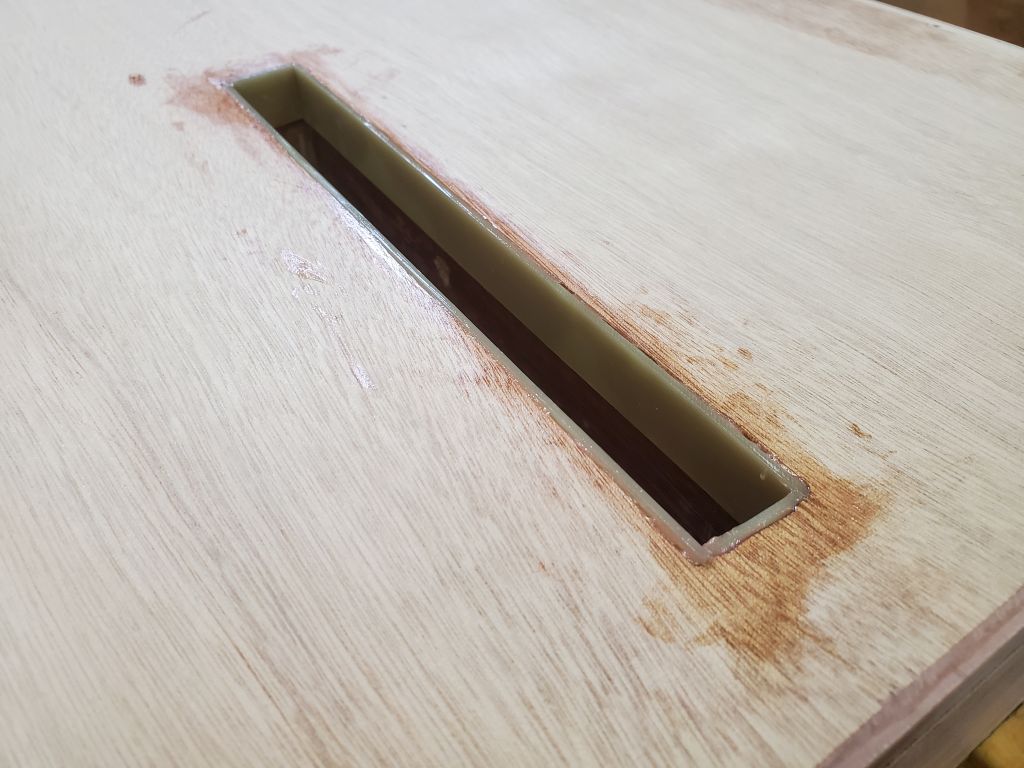
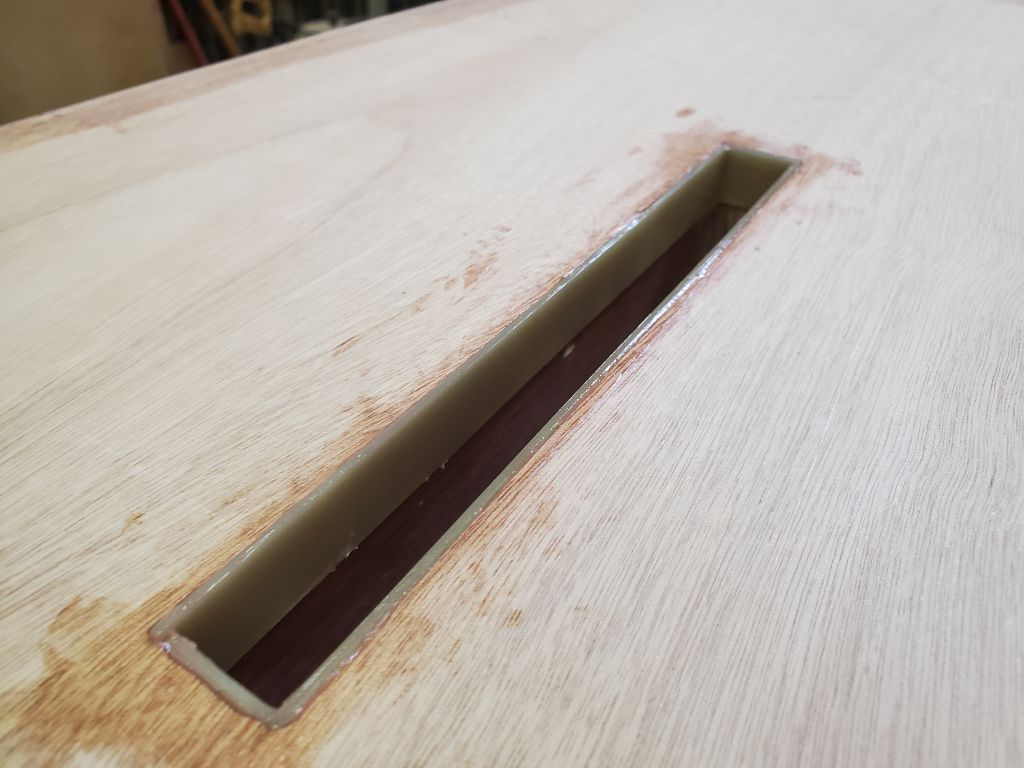
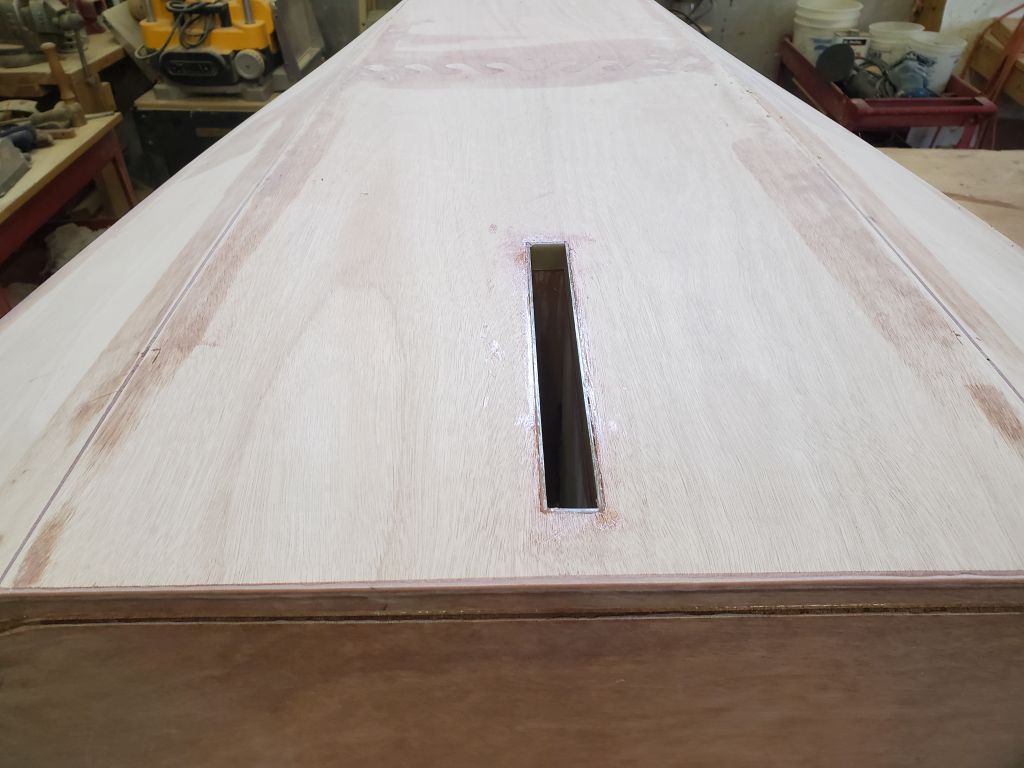
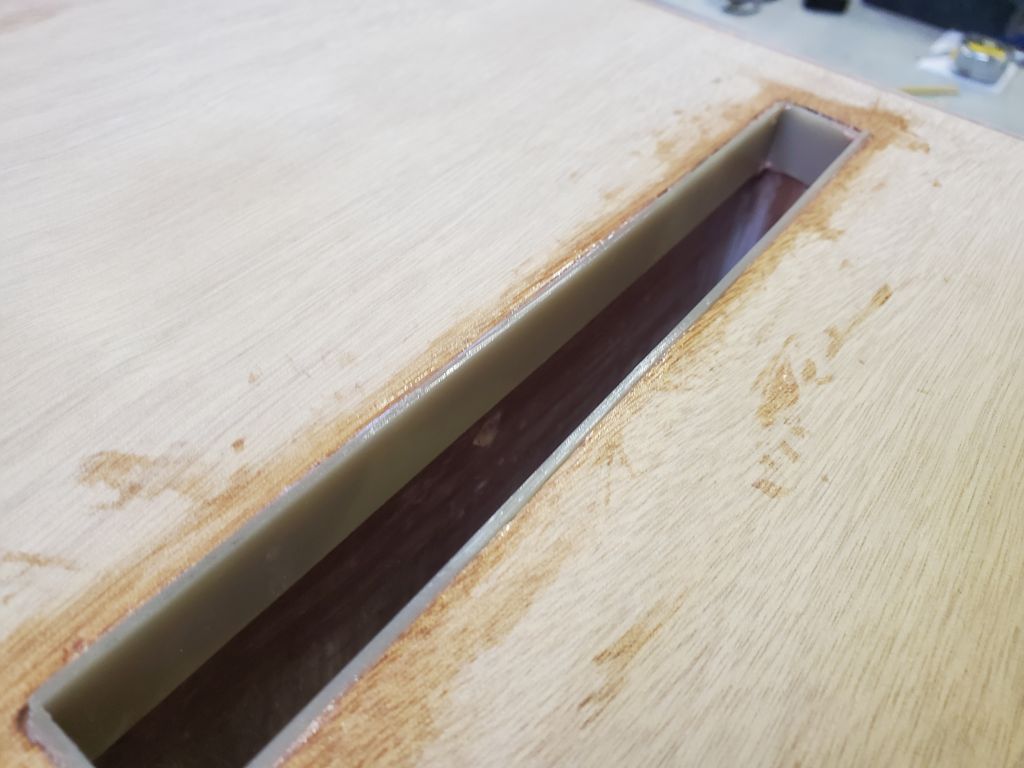
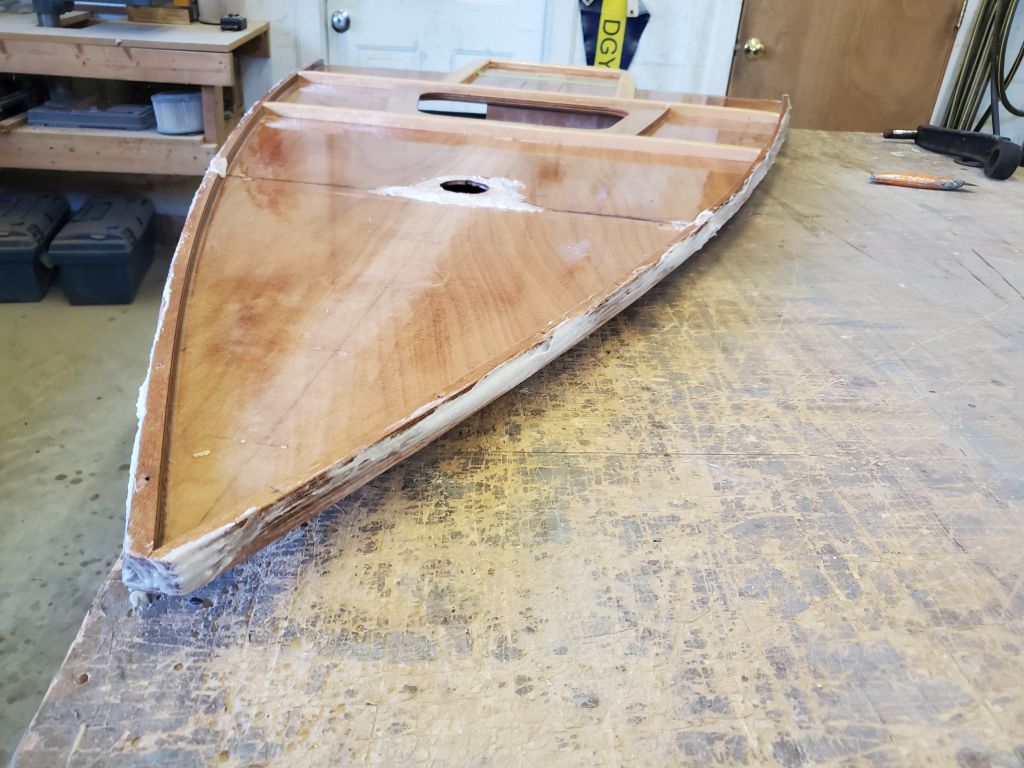
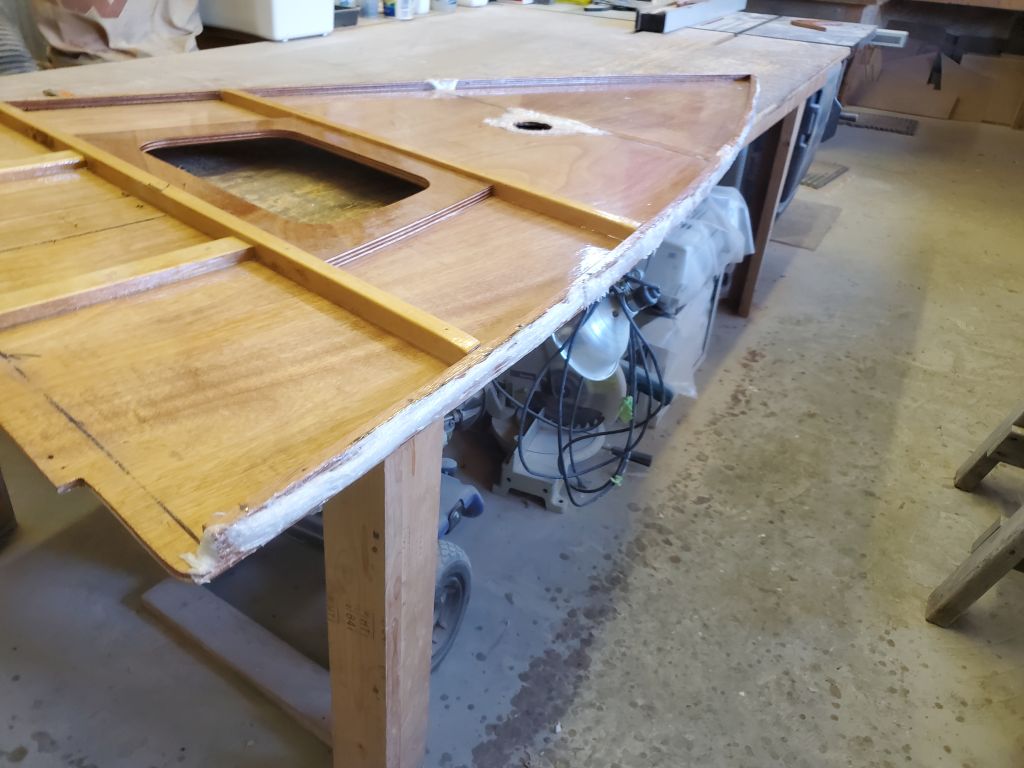
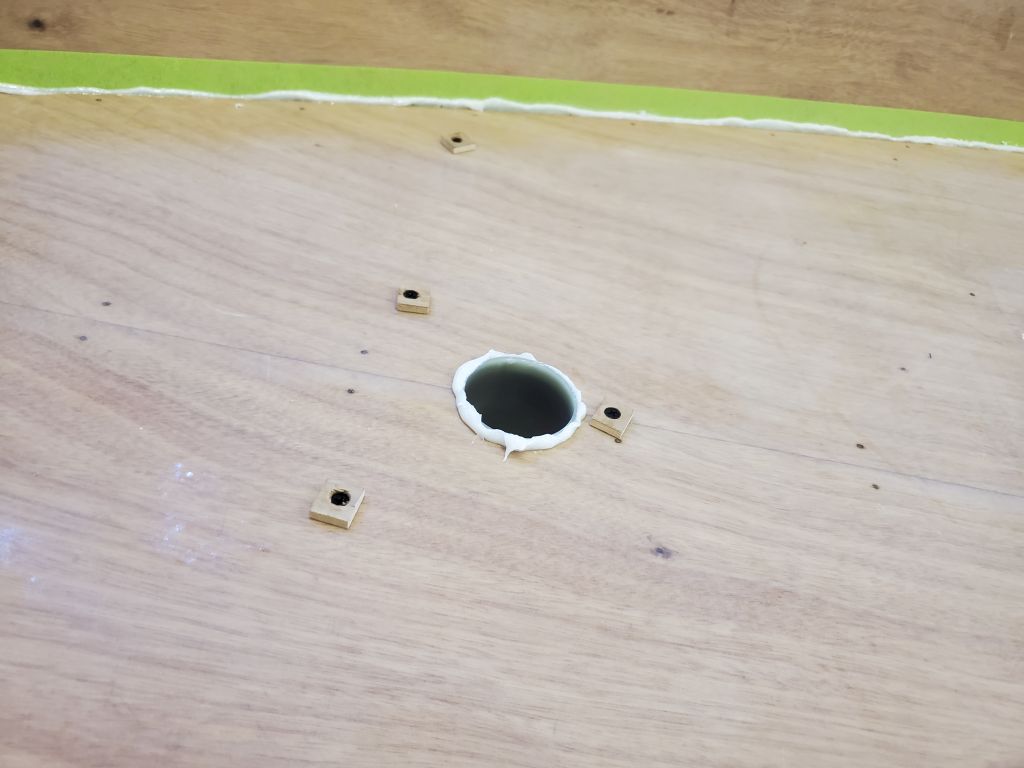
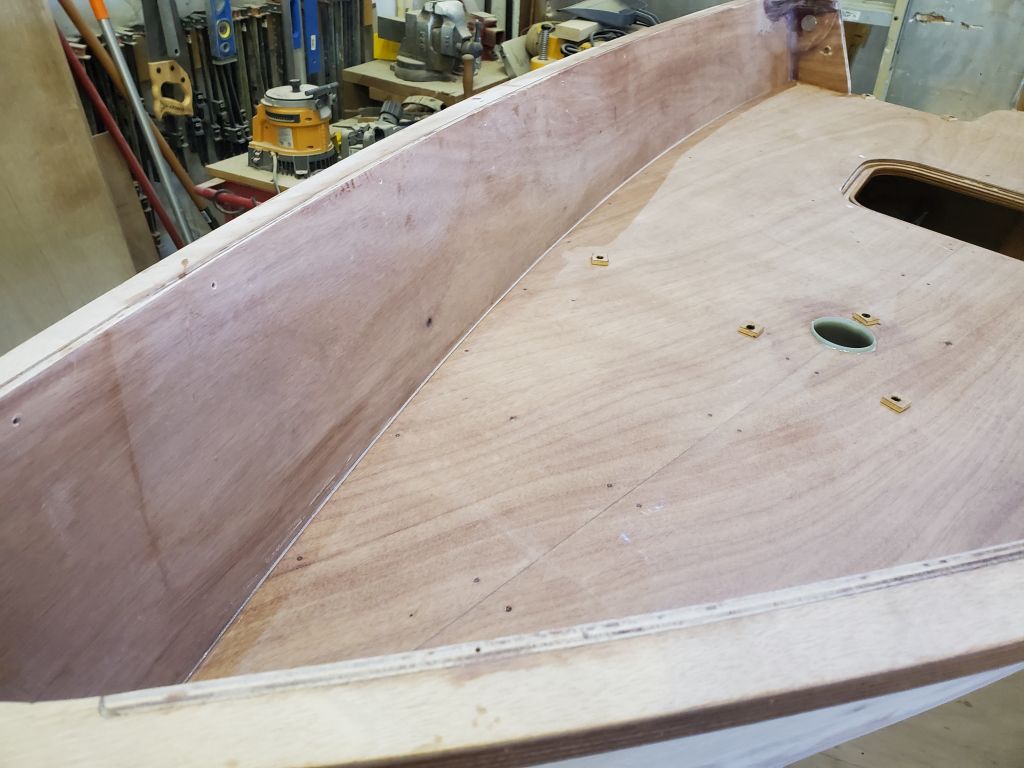
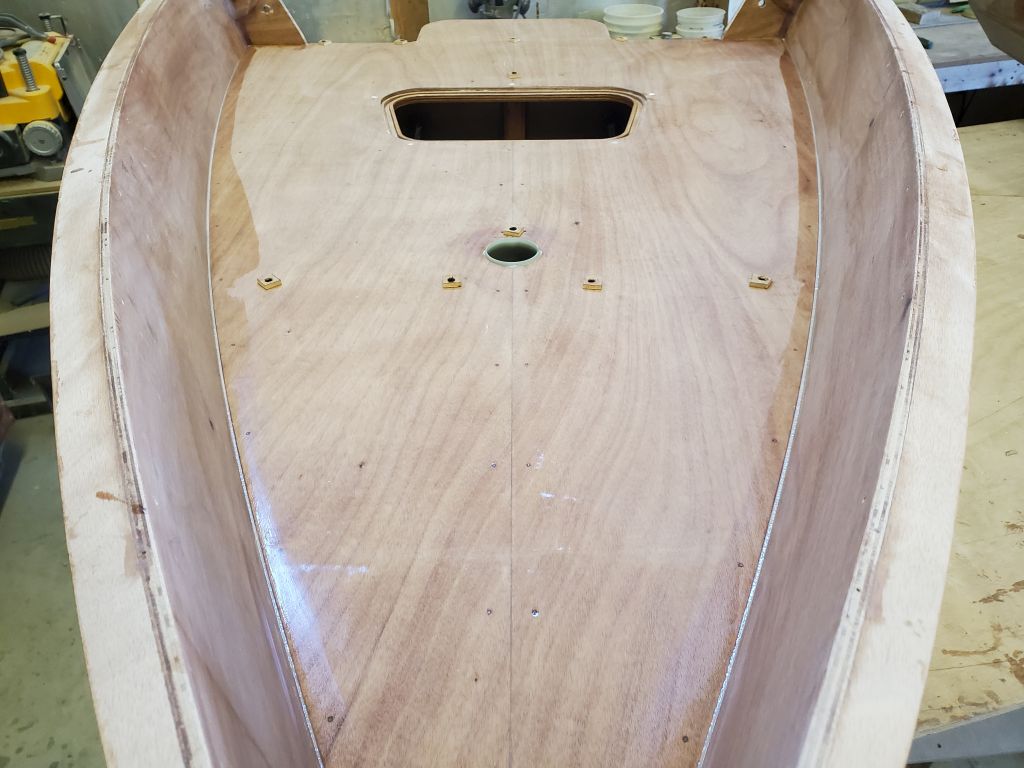
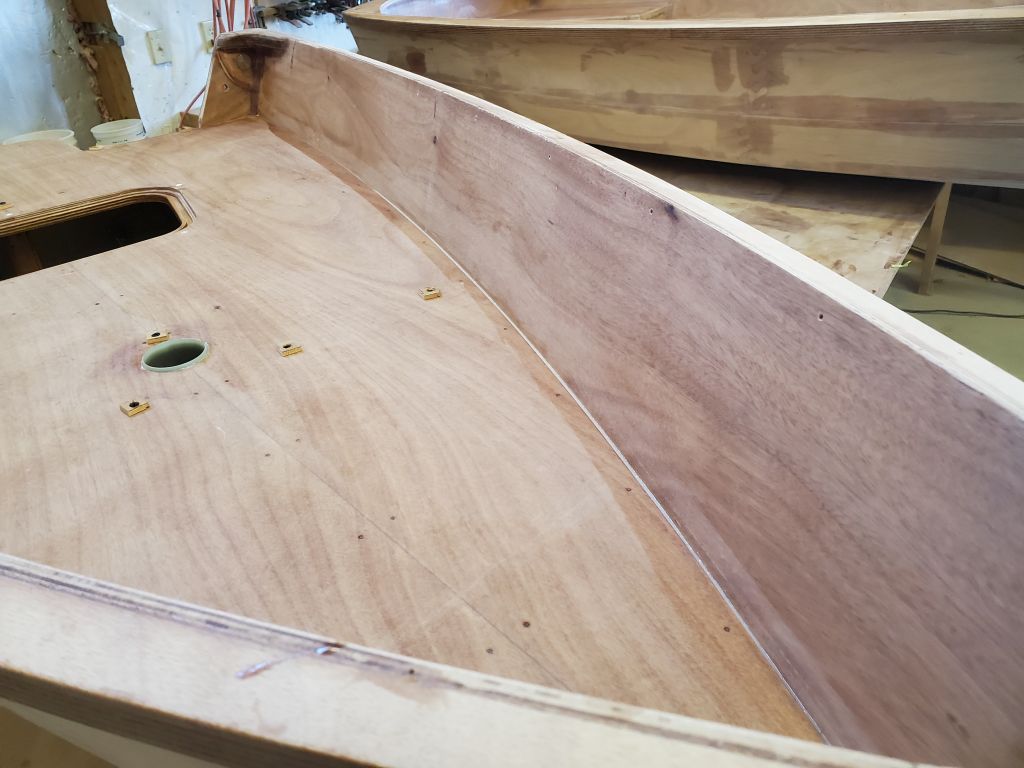
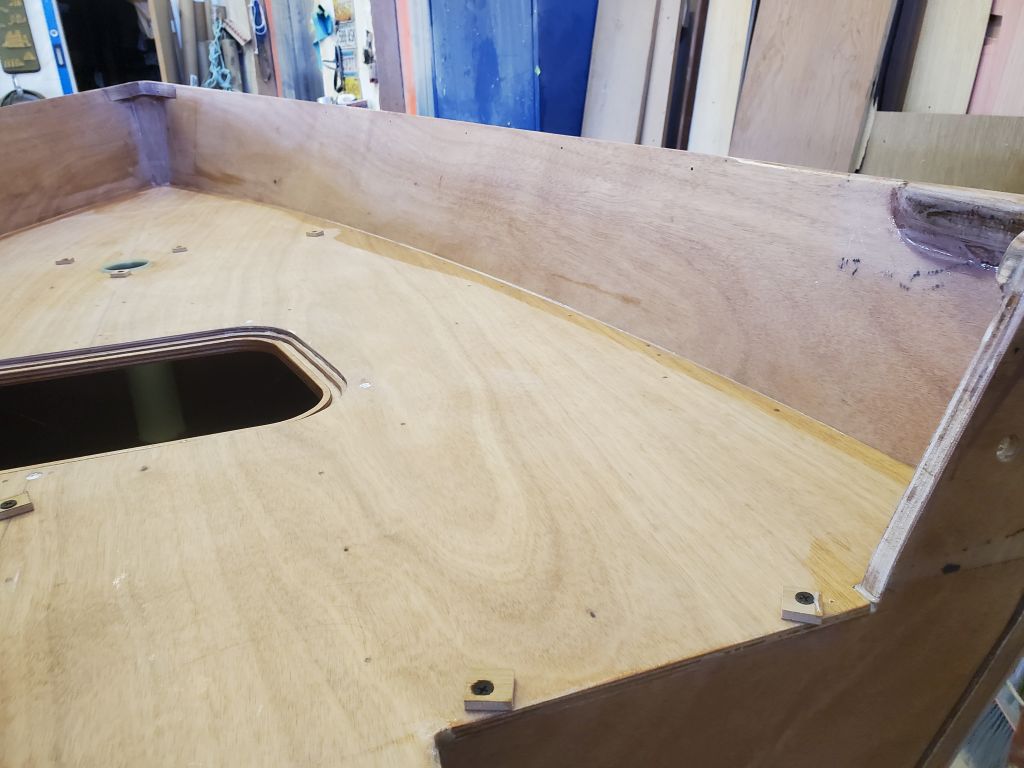
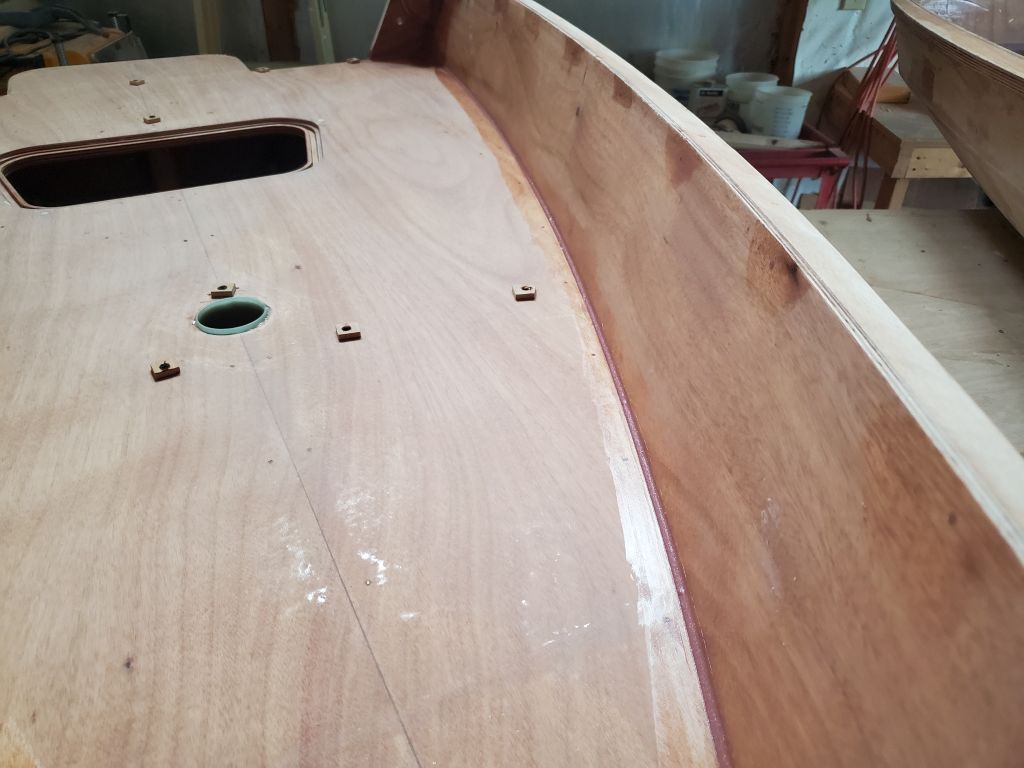
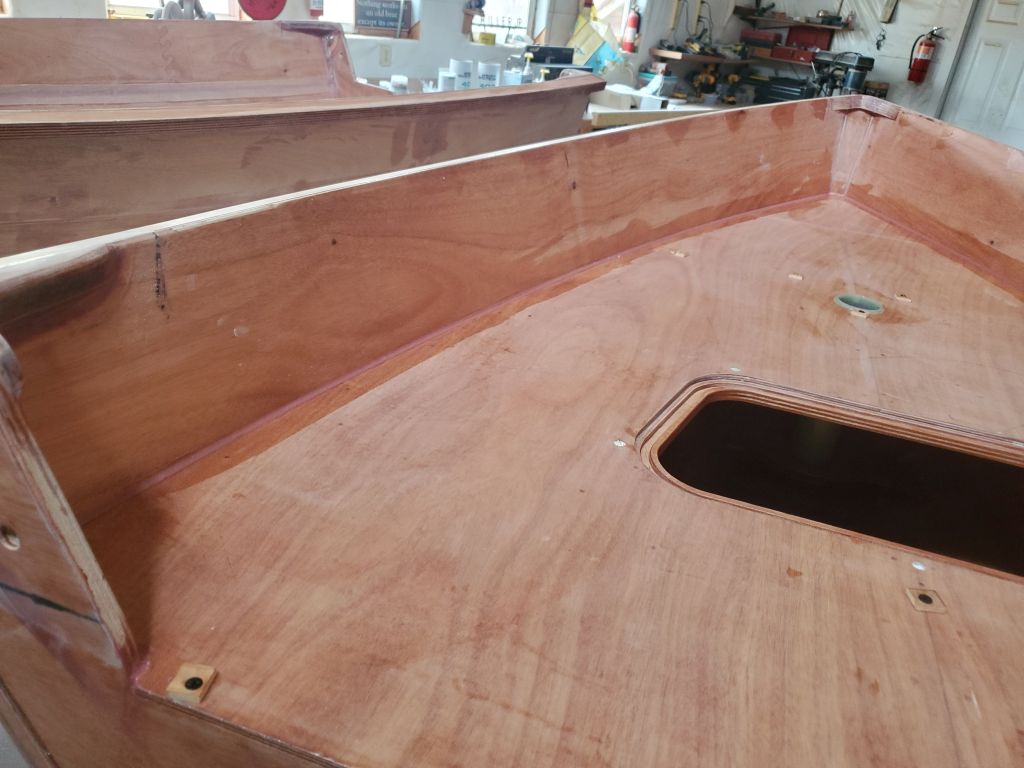
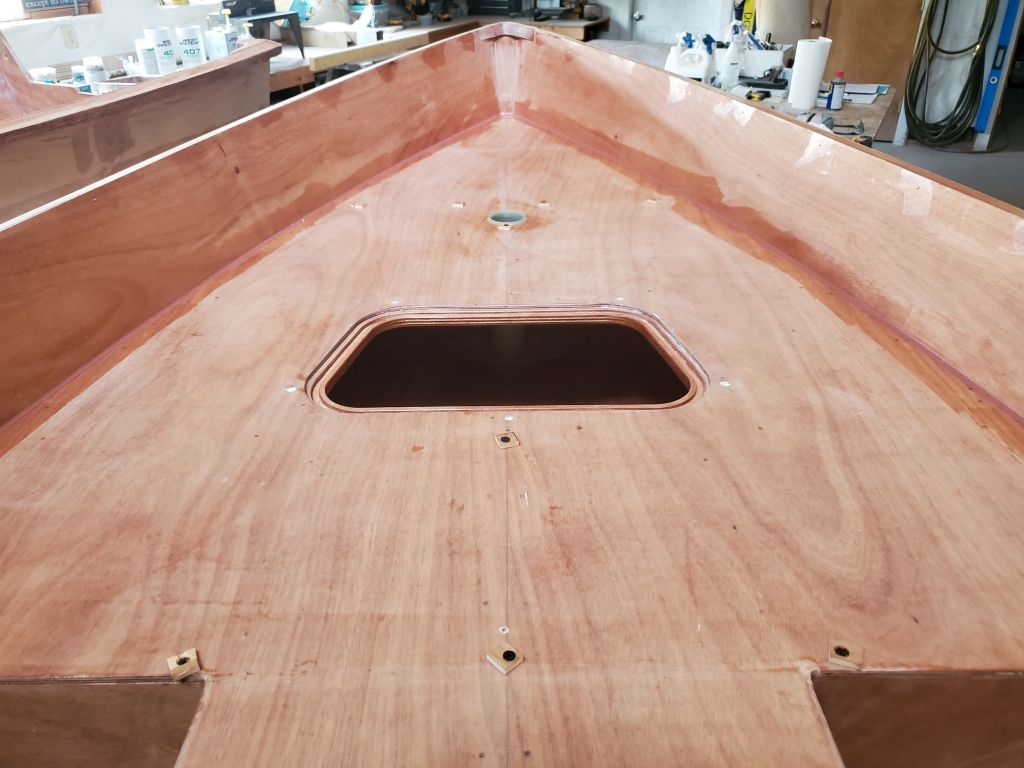
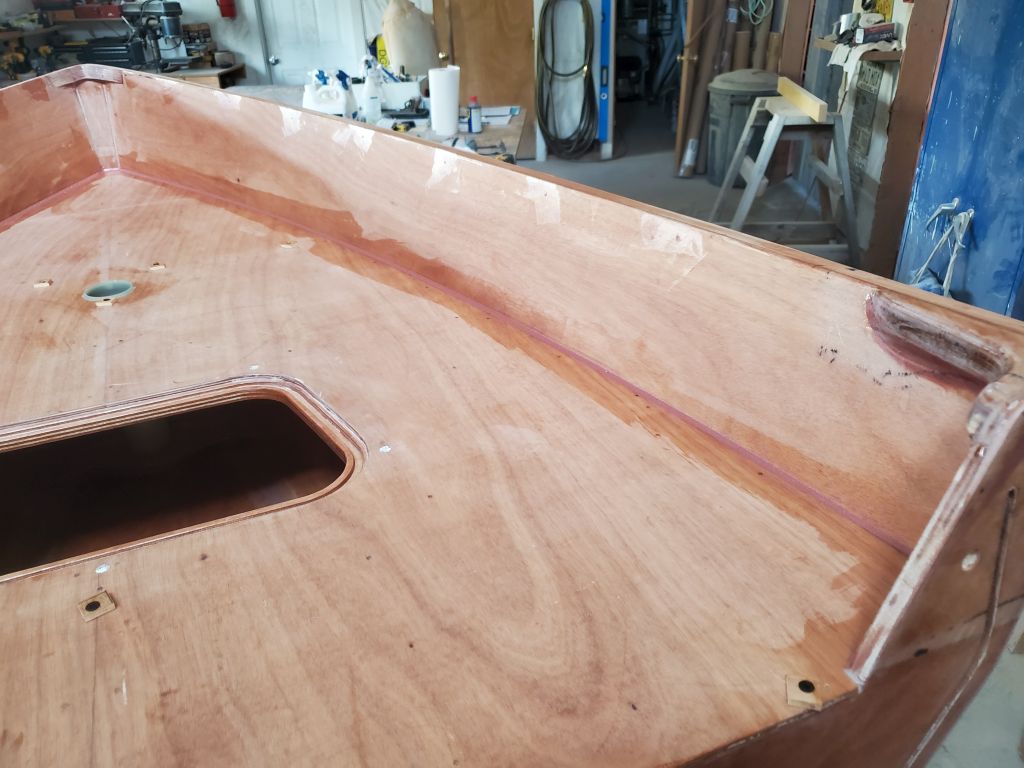
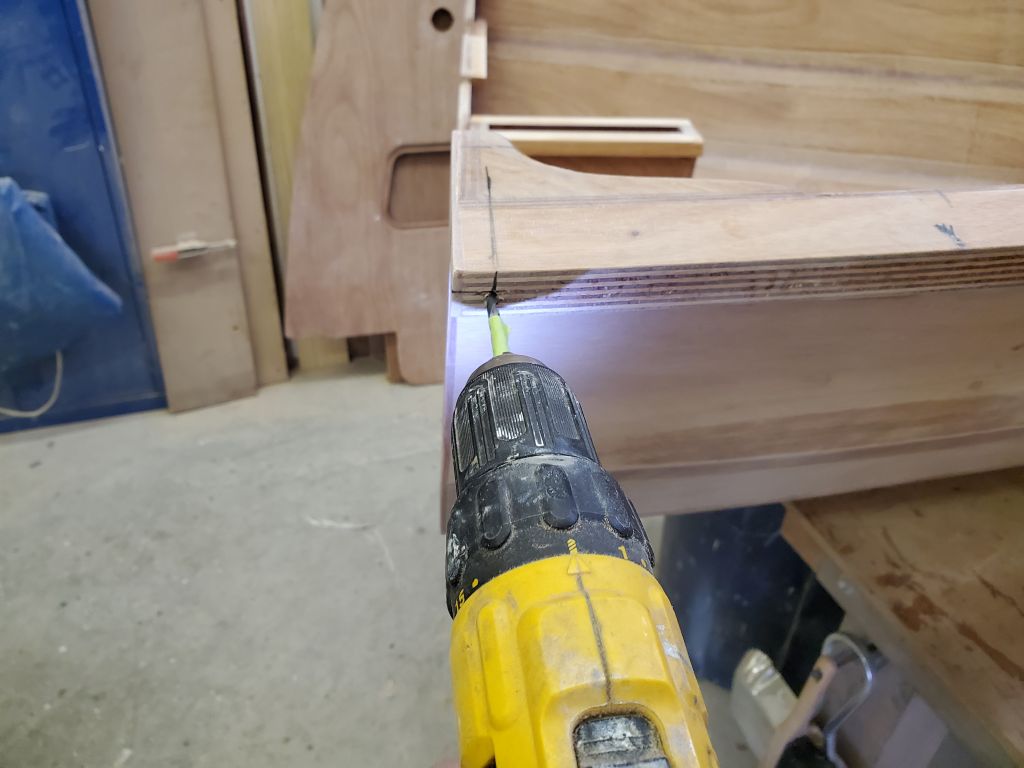
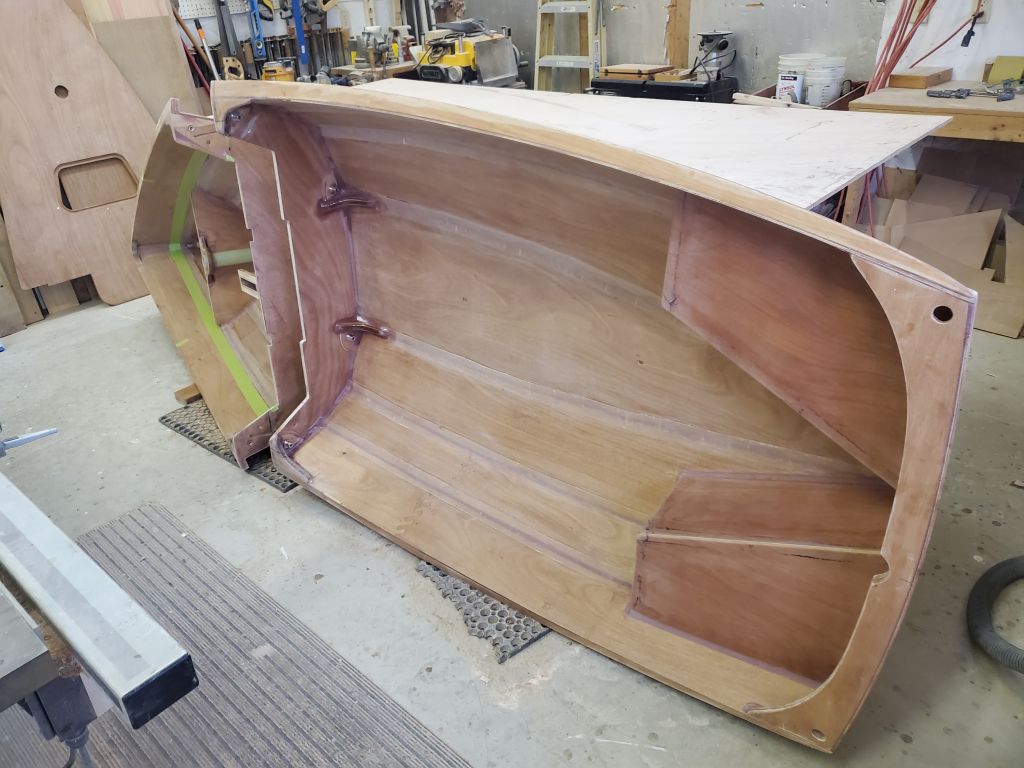
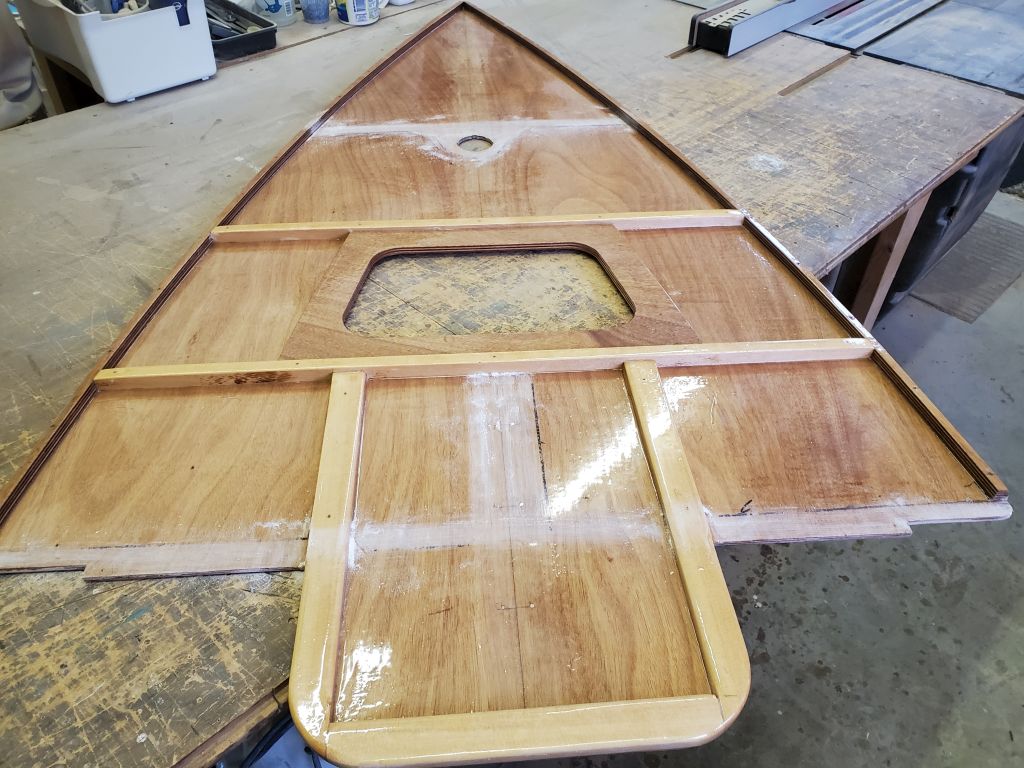
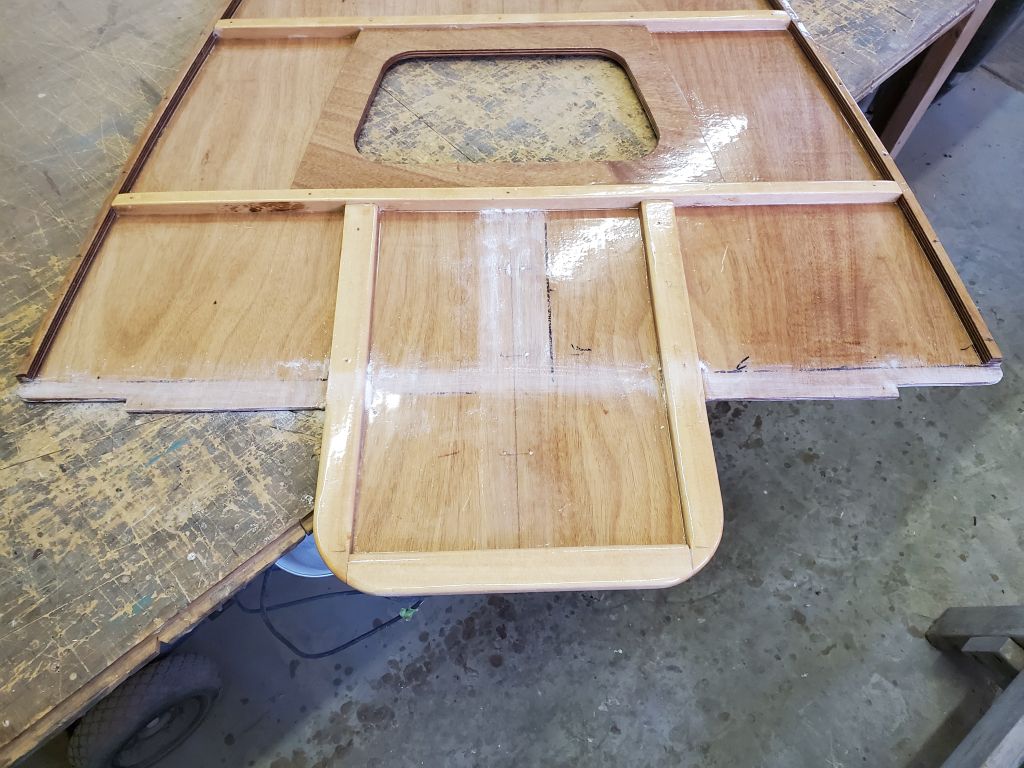
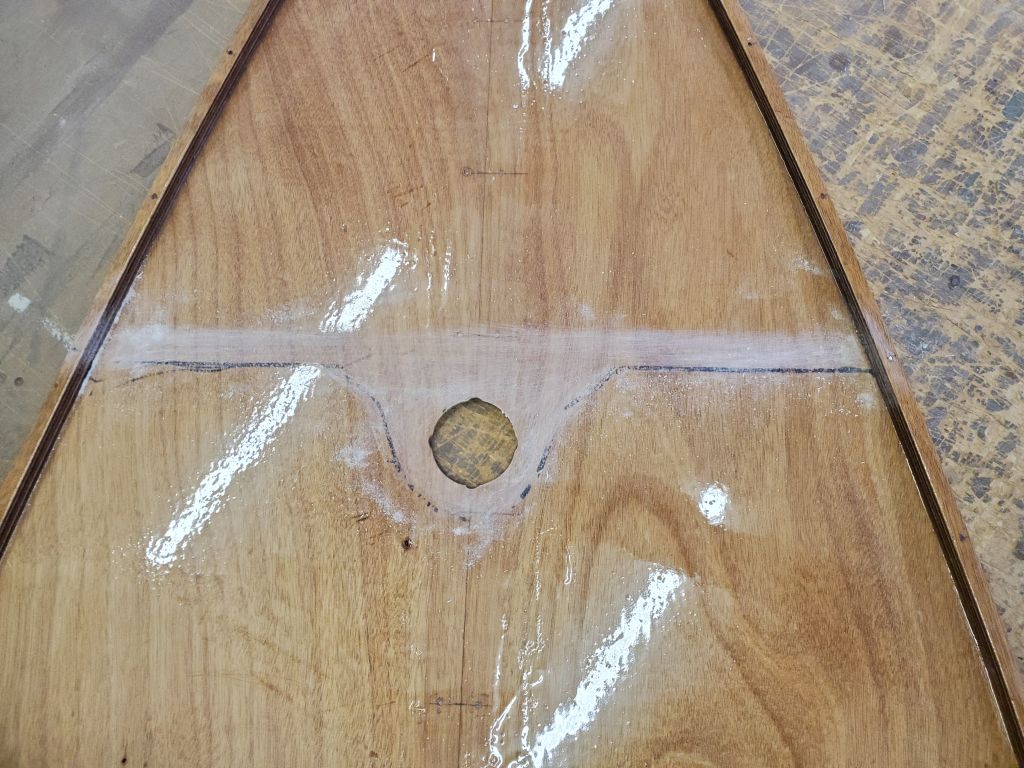
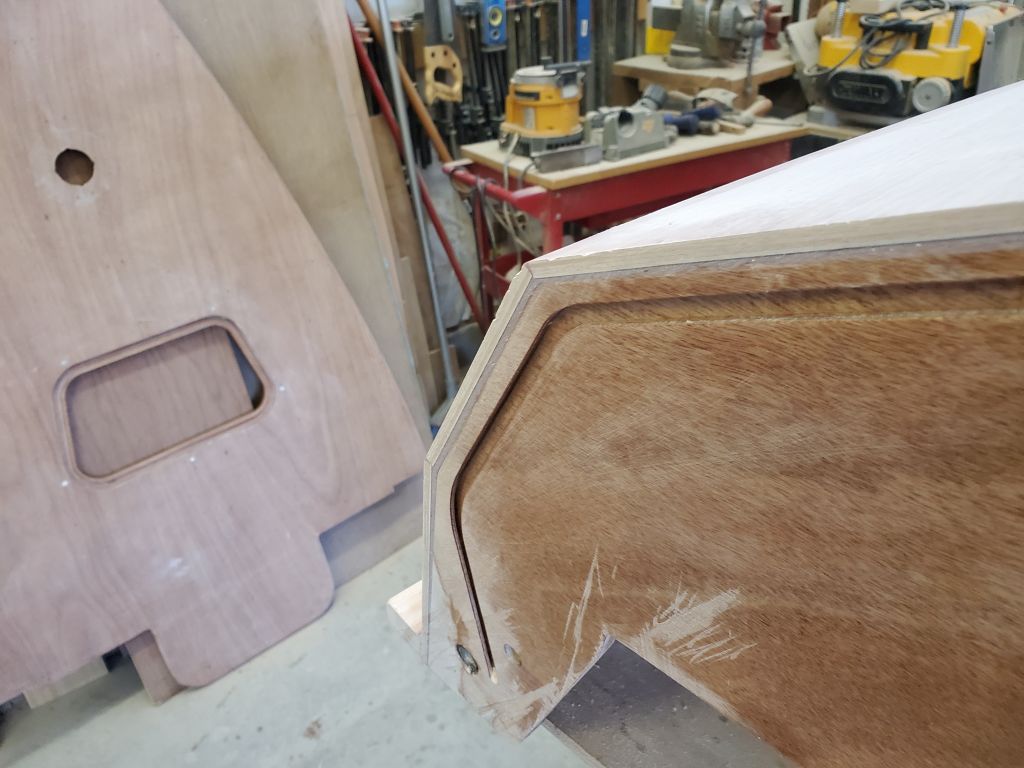
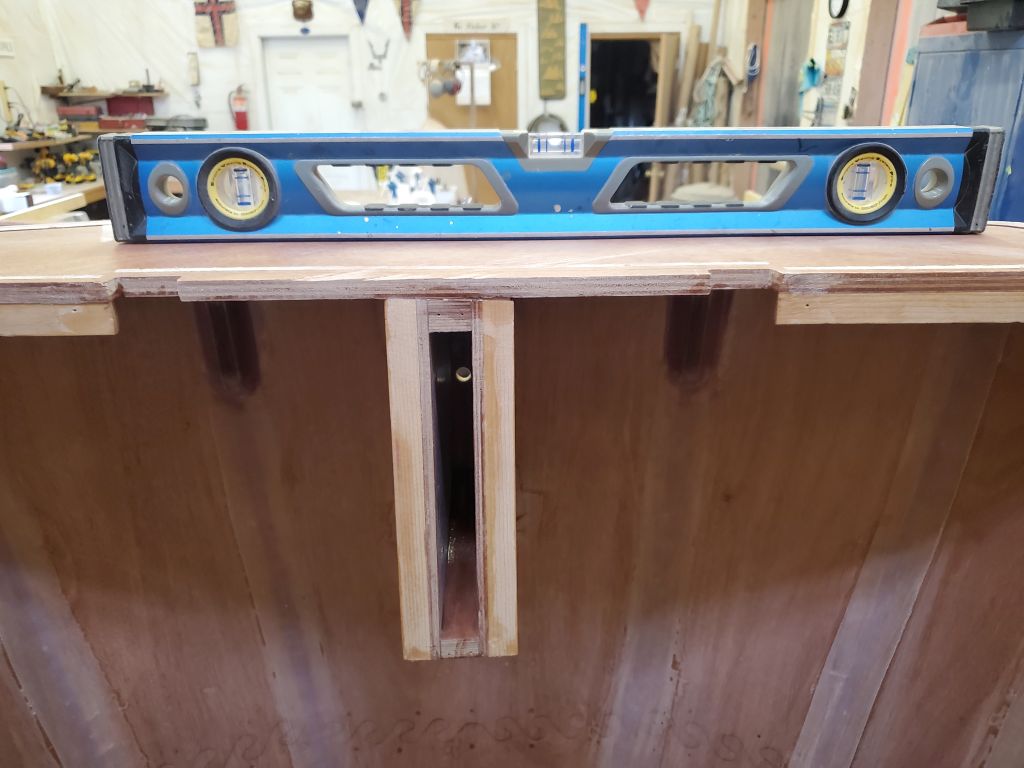
It was time to open up and finish off the two ends of the daggerboard trunk.  I started by drilling a 1/2″ hole through the foredeck over where I knew the trunk to be, which allowed me to use a router and a straight pattern bit to cut out the opening.  I used a small square-edged sanding block to square the corners afterwards, since the next step required it.
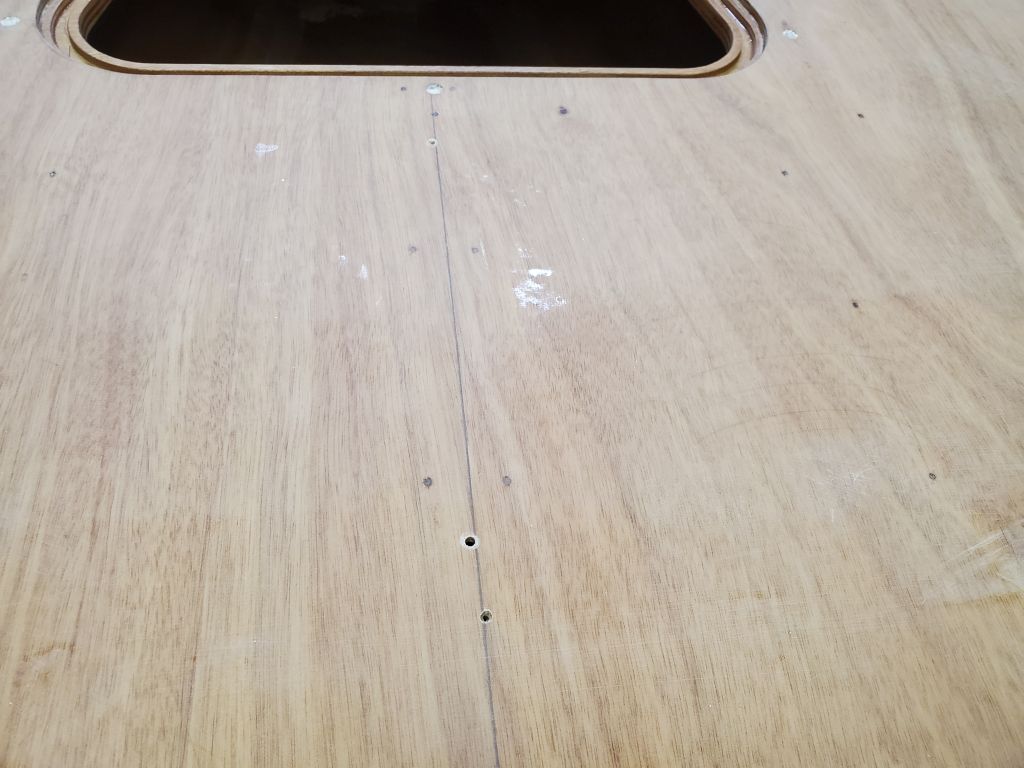
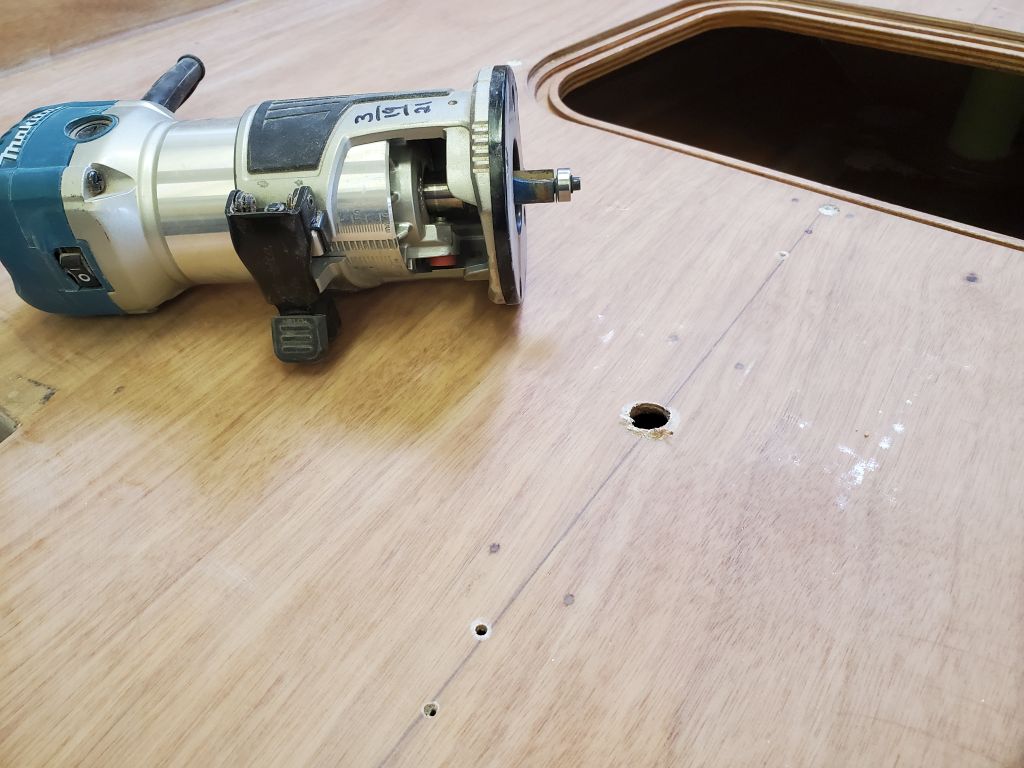
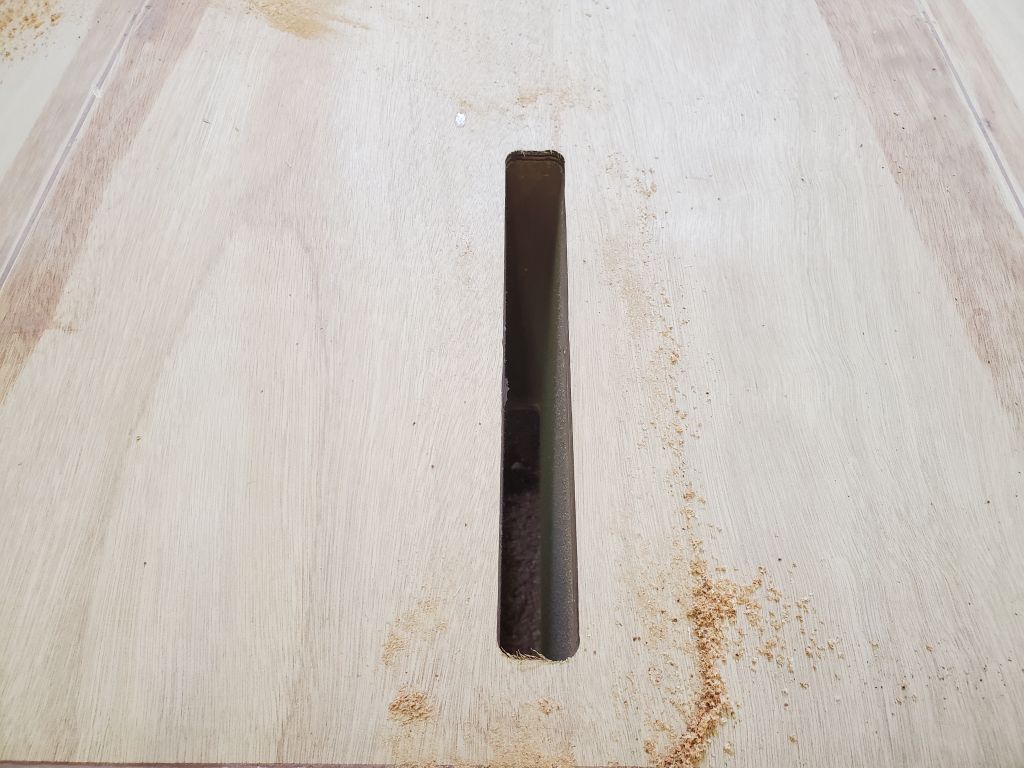
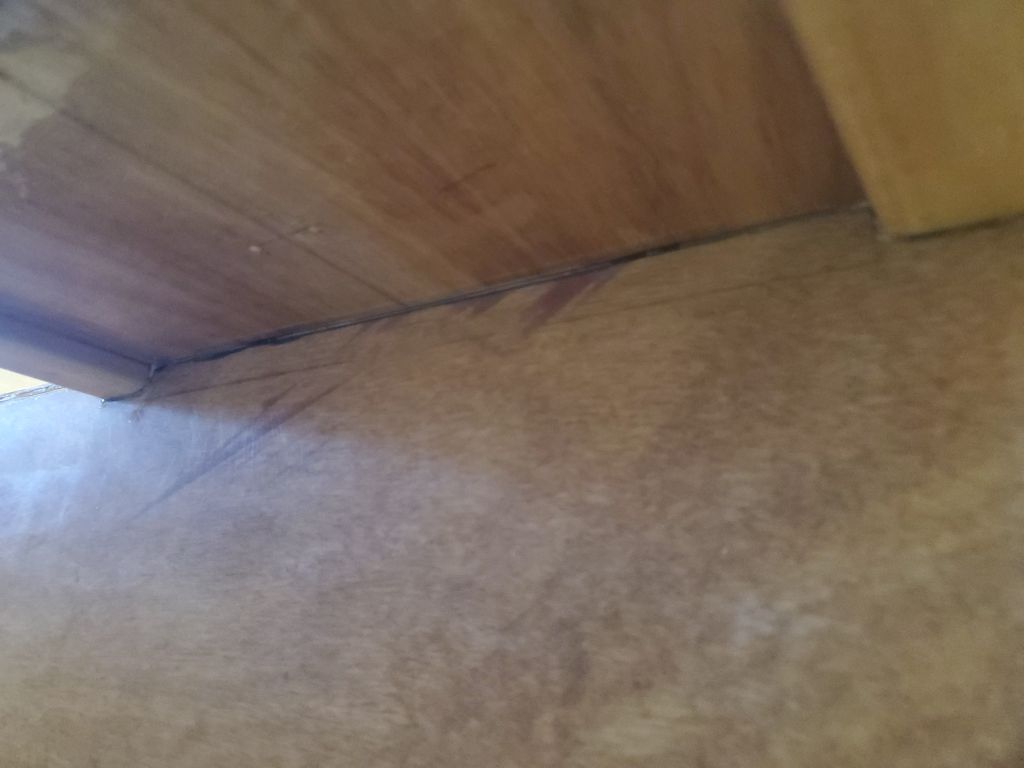
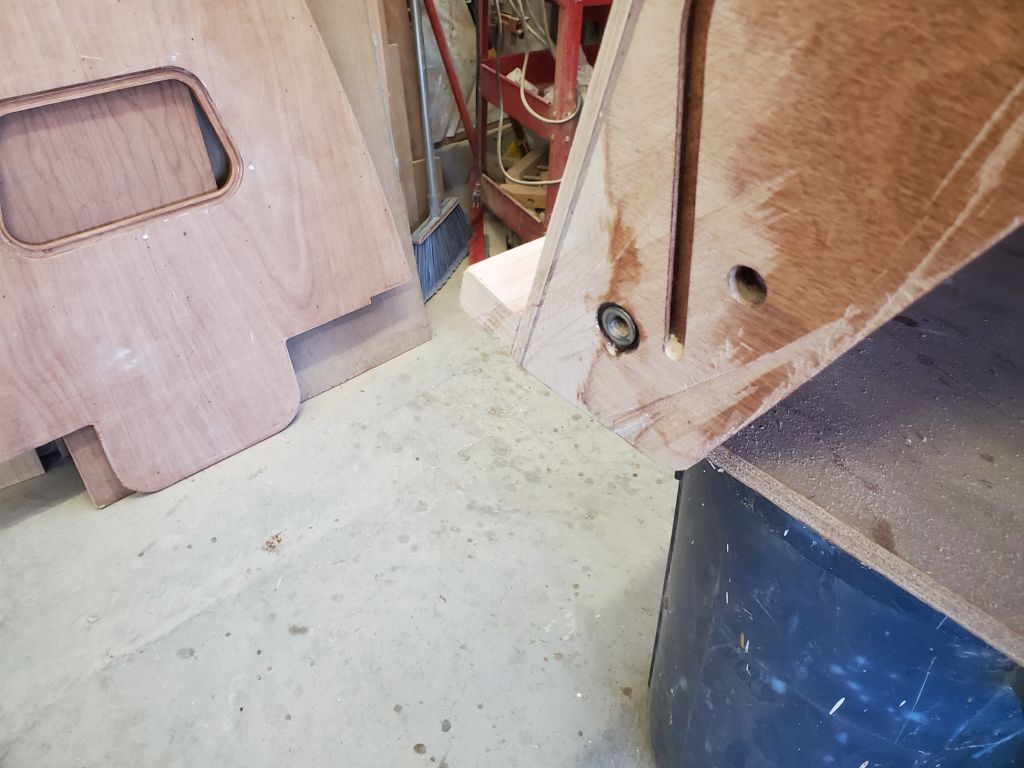
On the bottom, I’d drilled a 1/2″ hole through the boat just before installing the daggerboard trunk a while back, and used this to open the bottom slot as well, squaring its corners the same way.
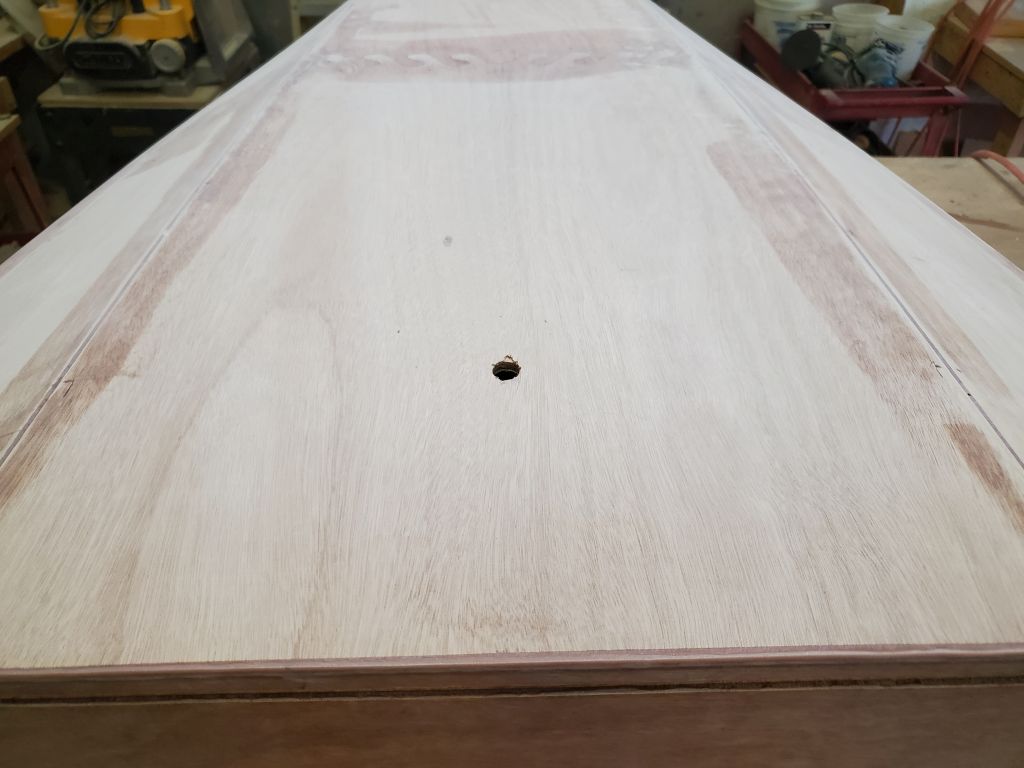
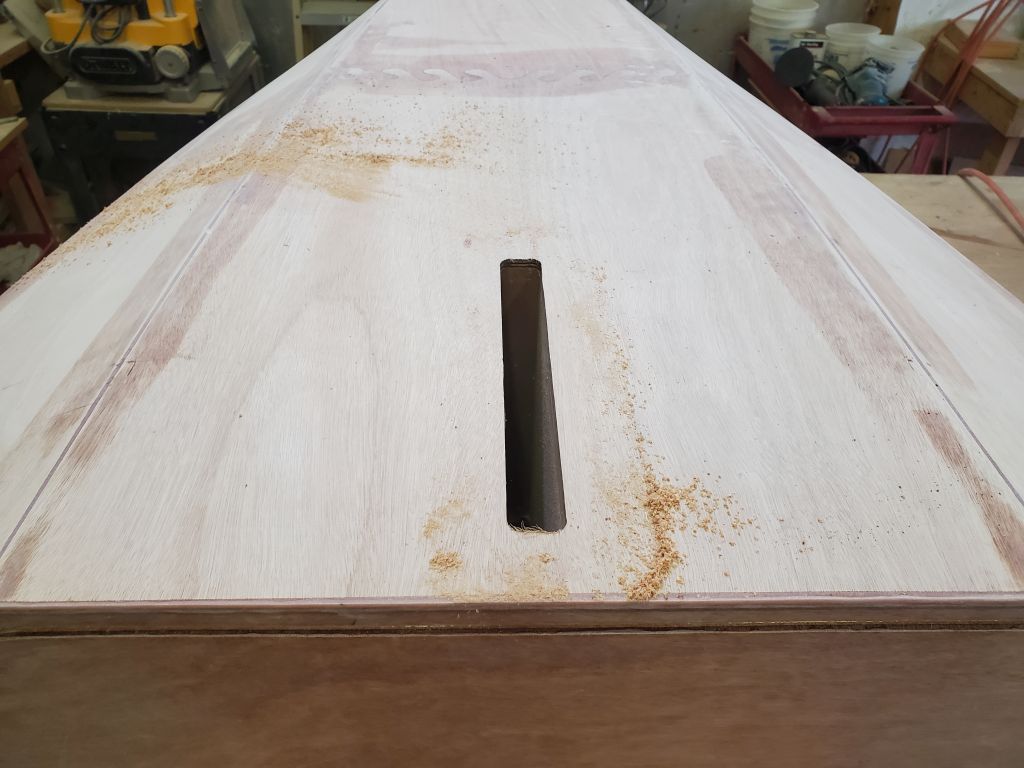
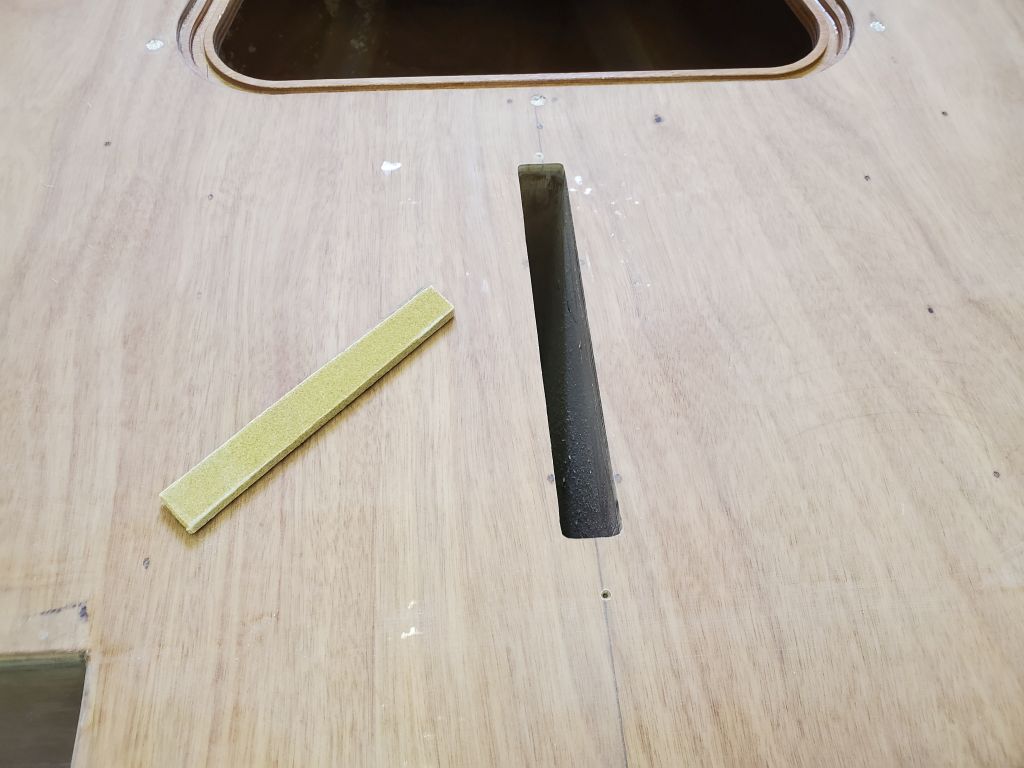
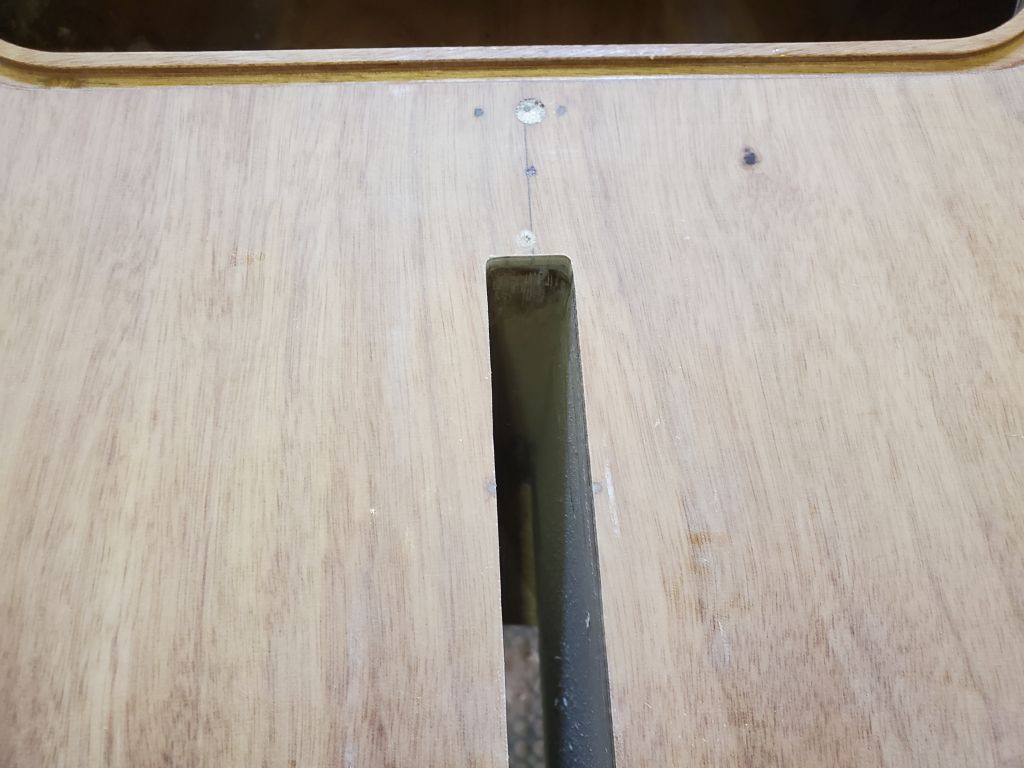
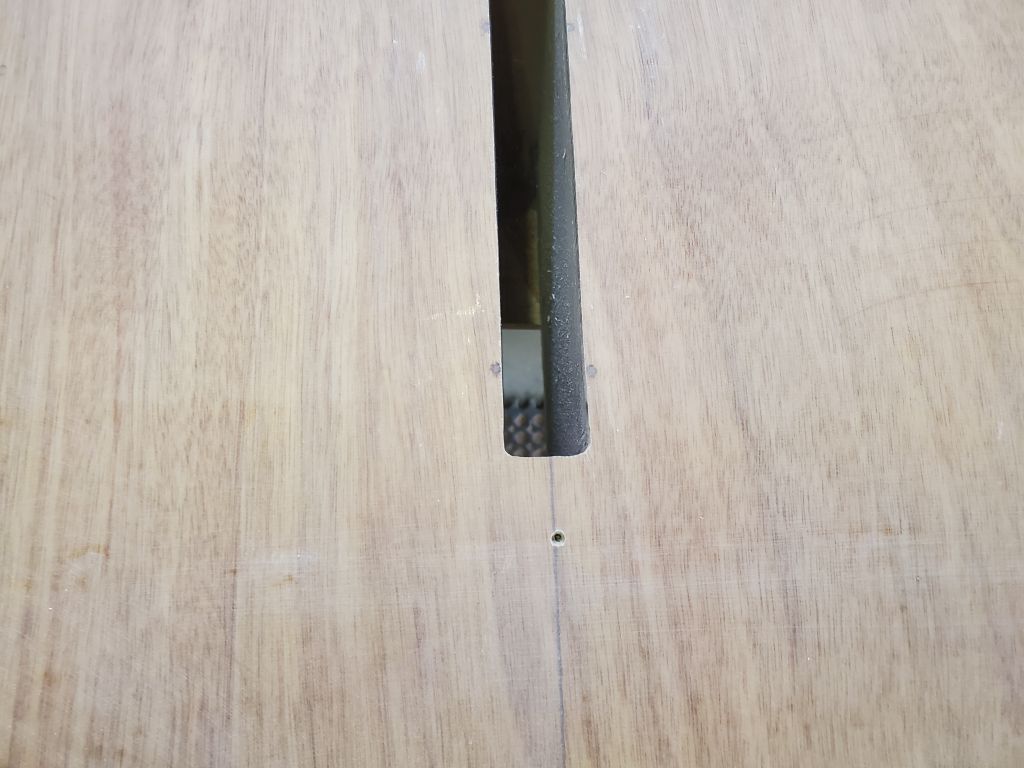
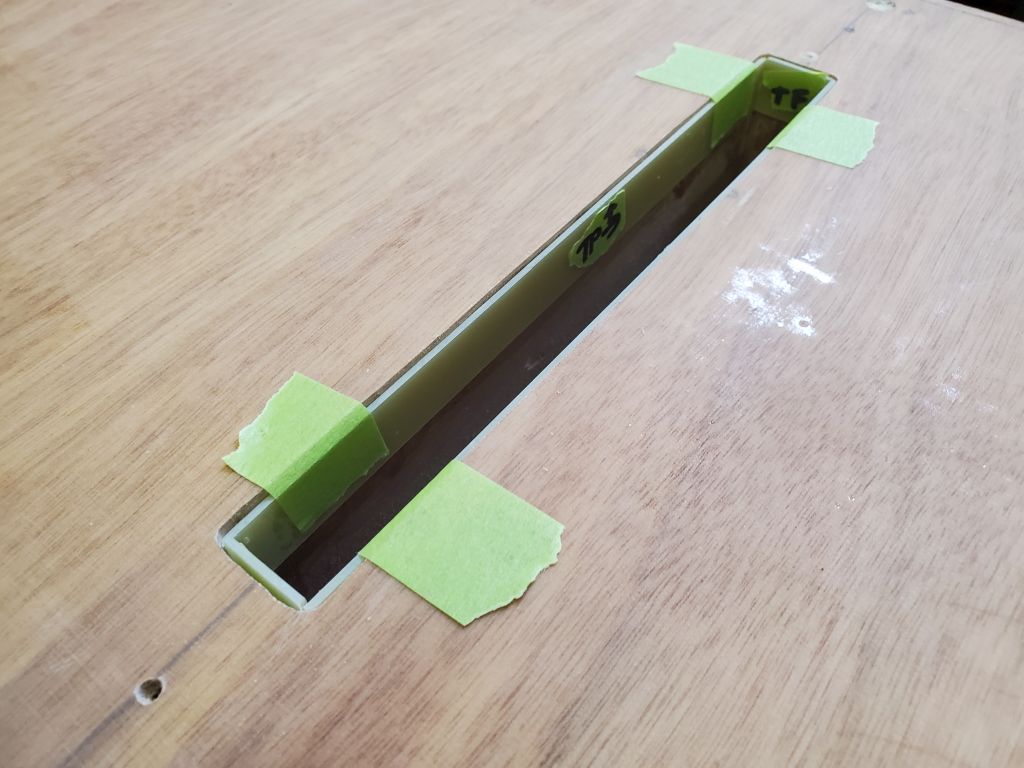
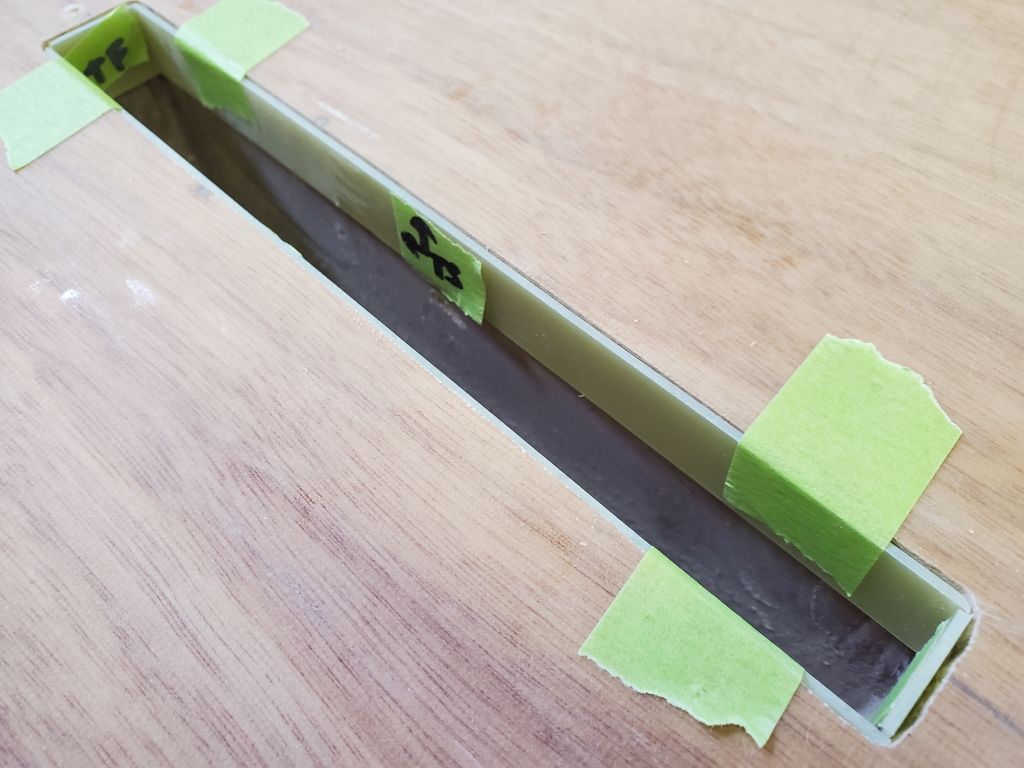
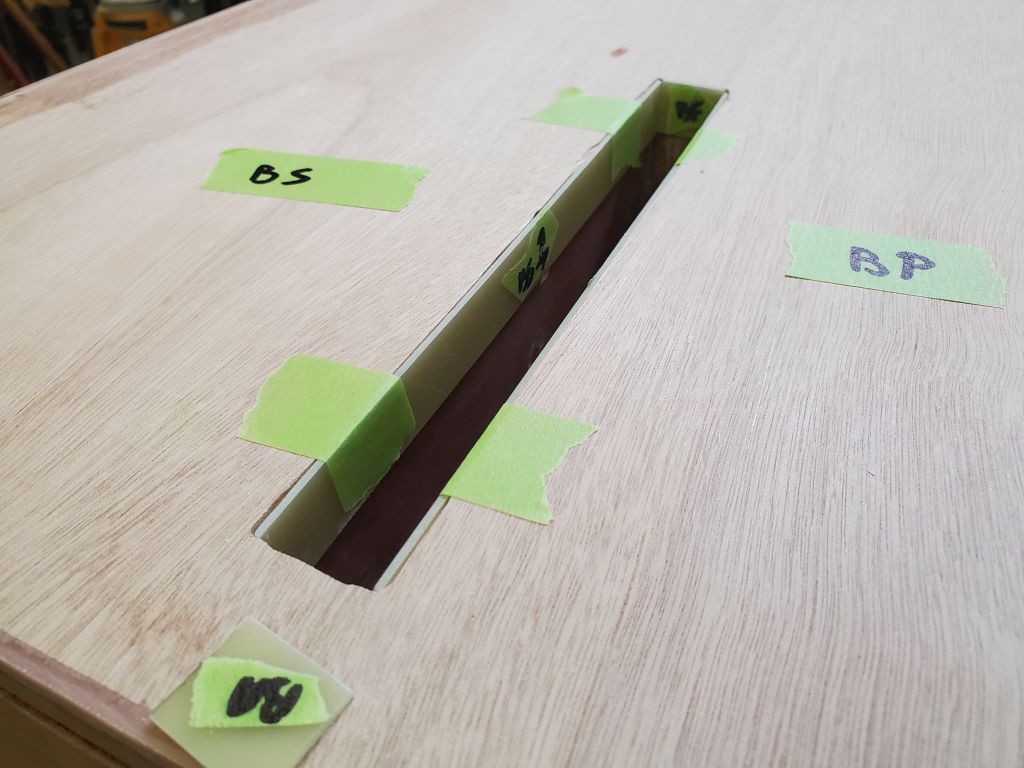
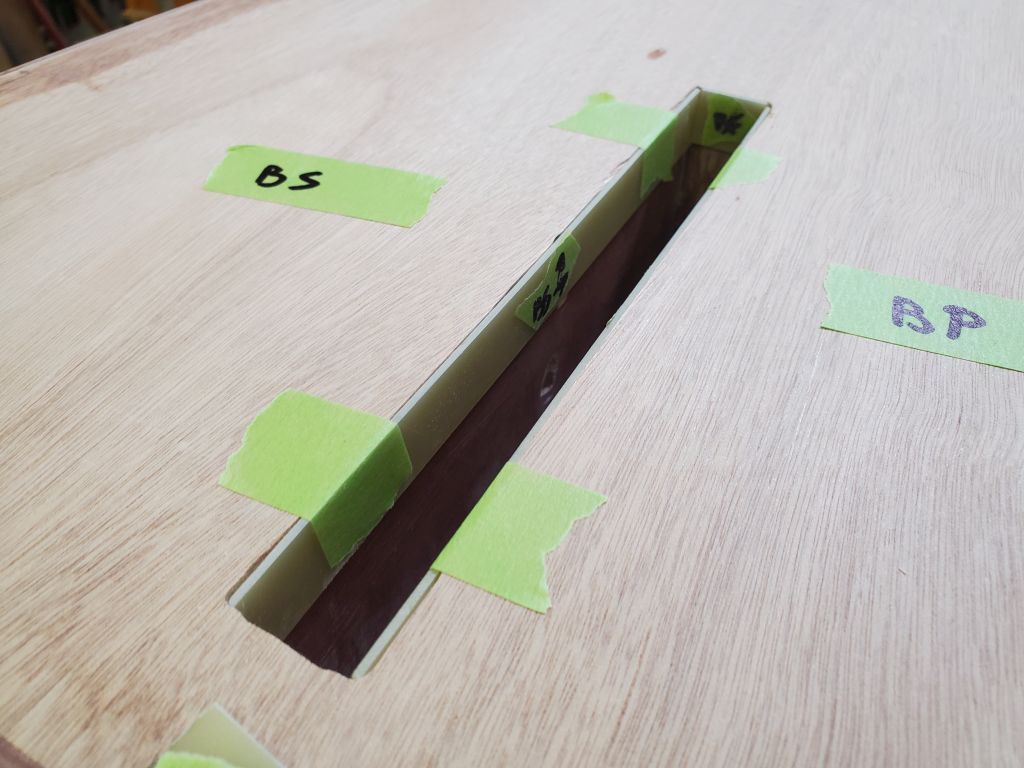
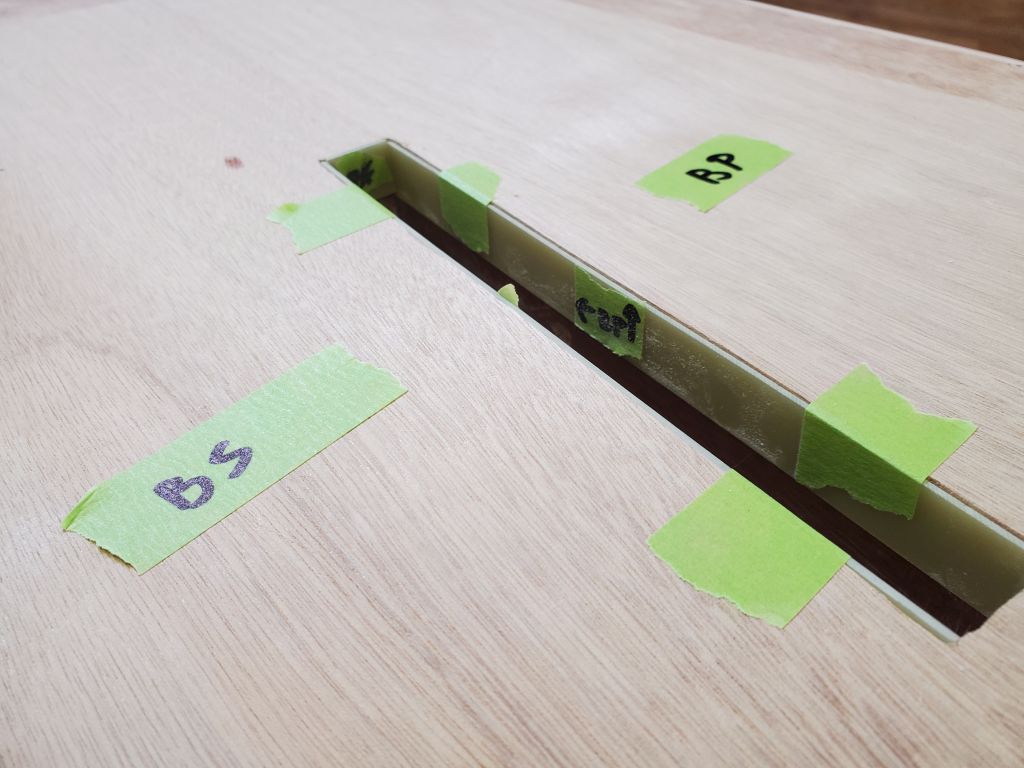
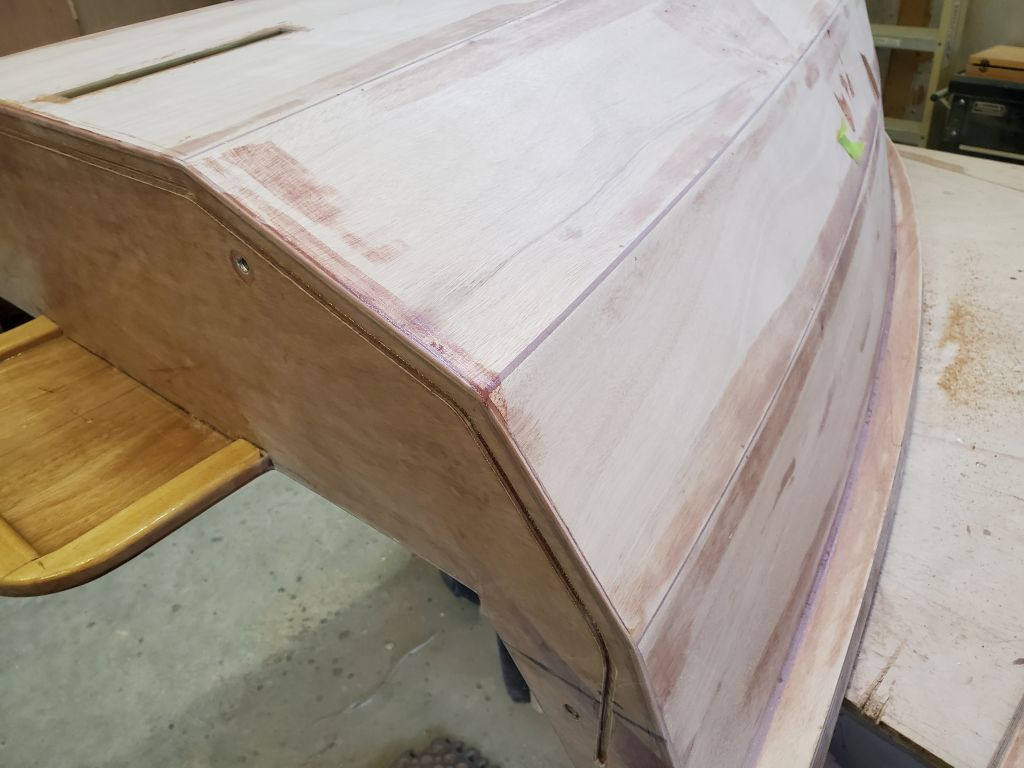
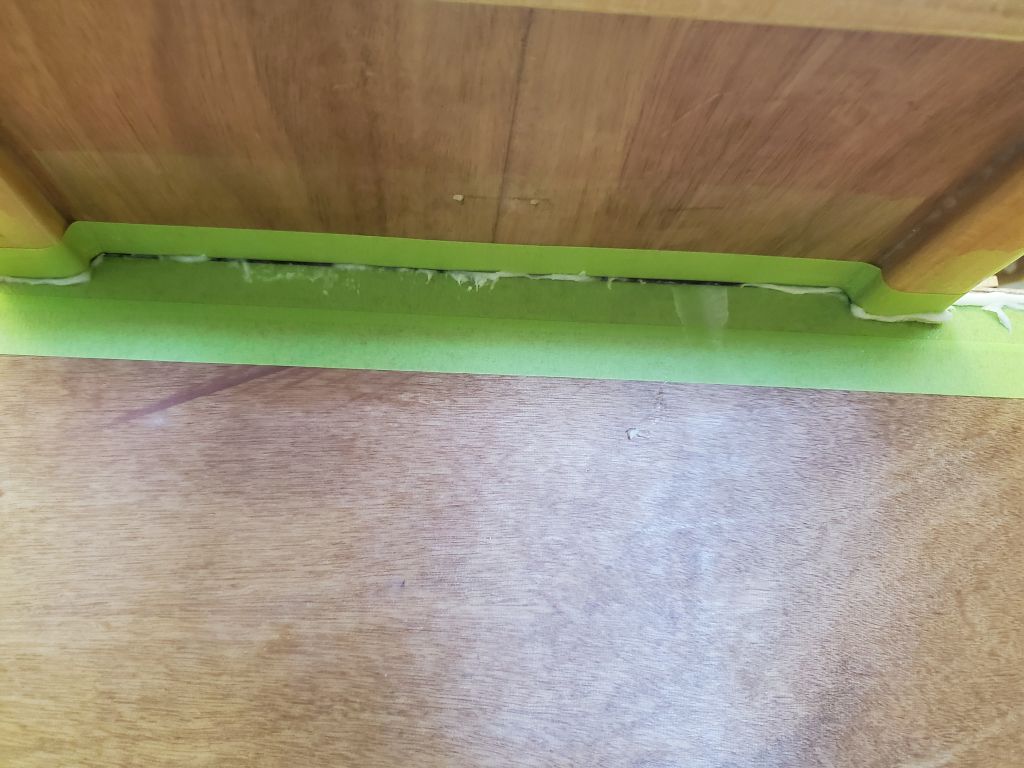
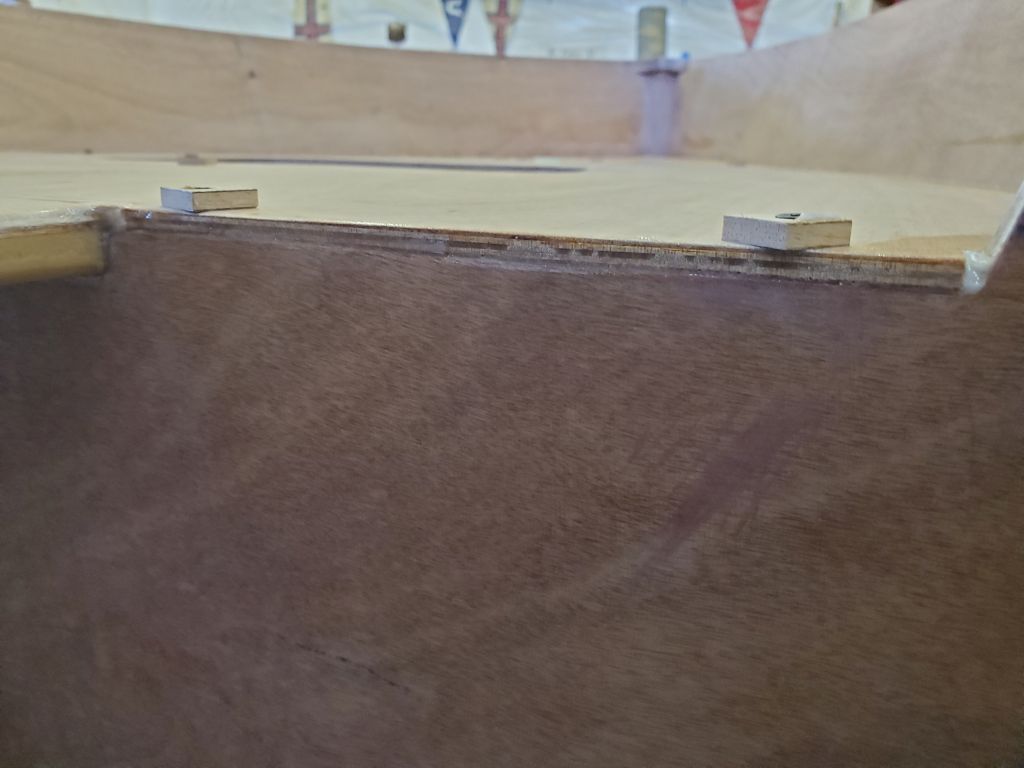
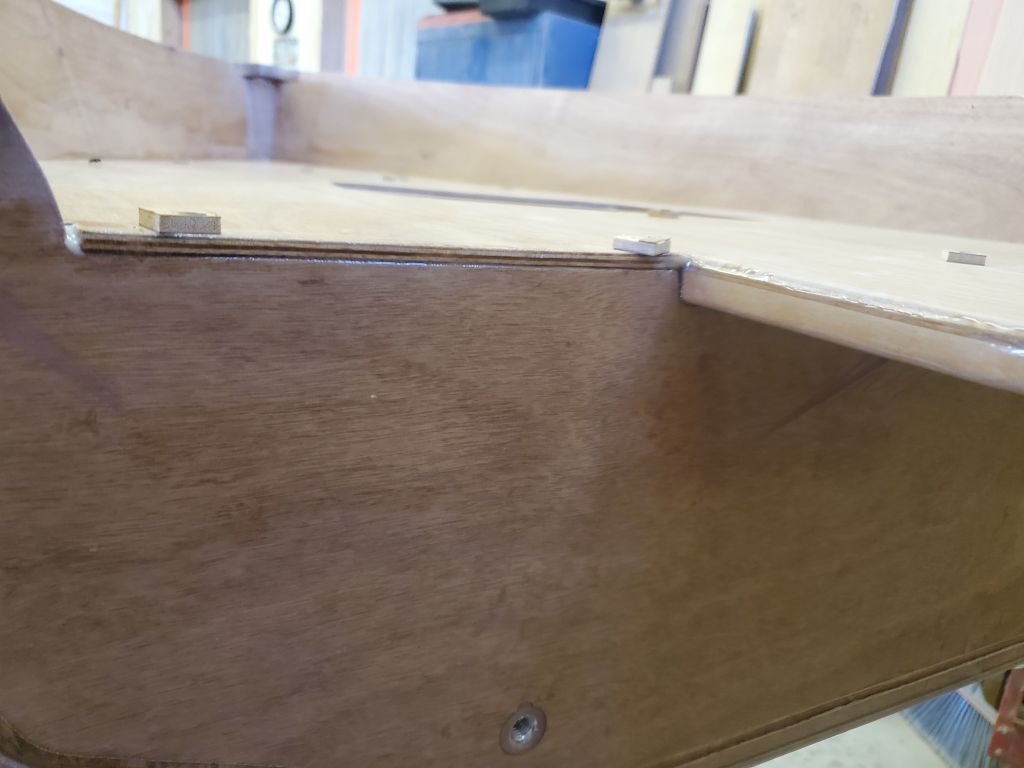
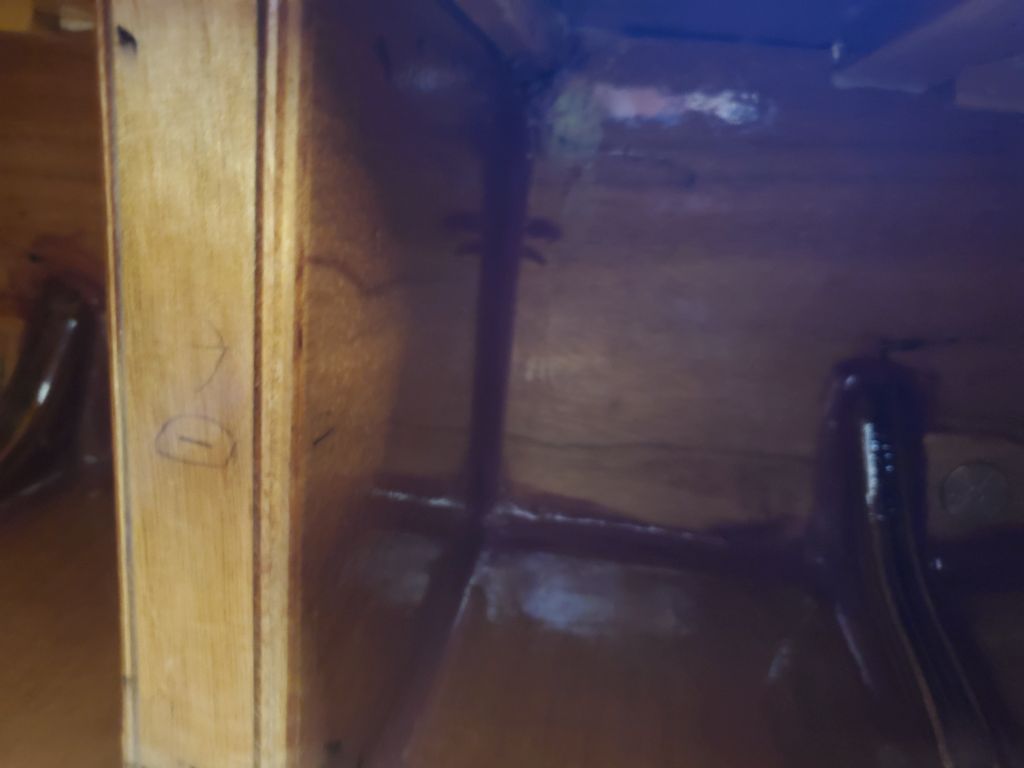
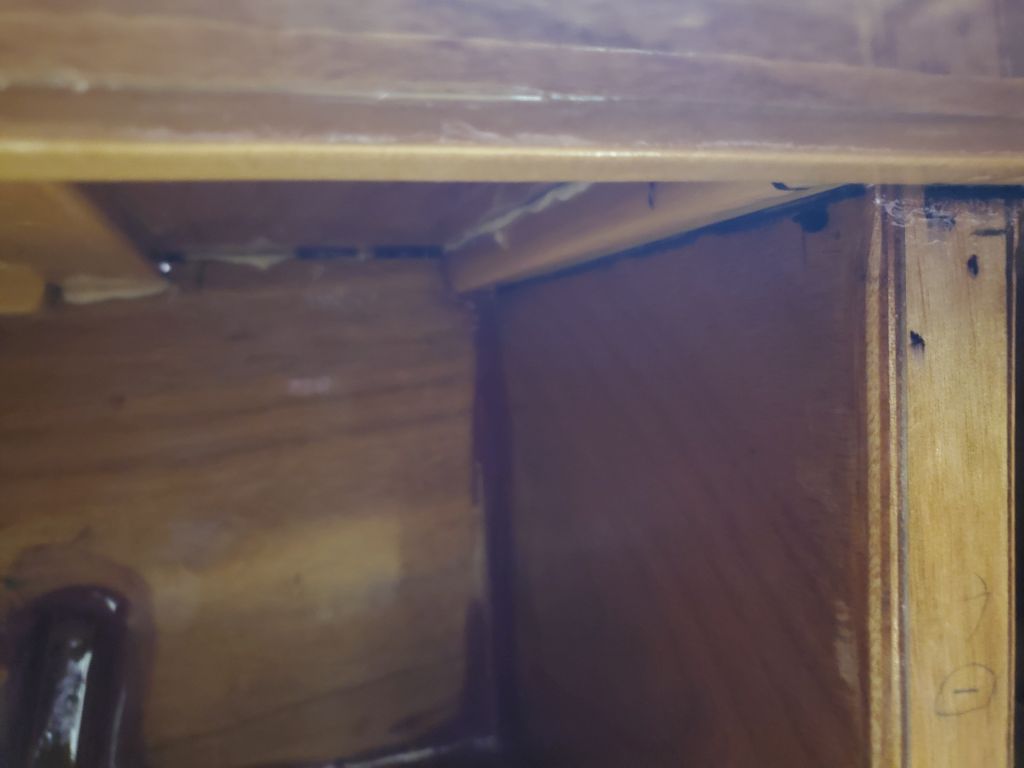
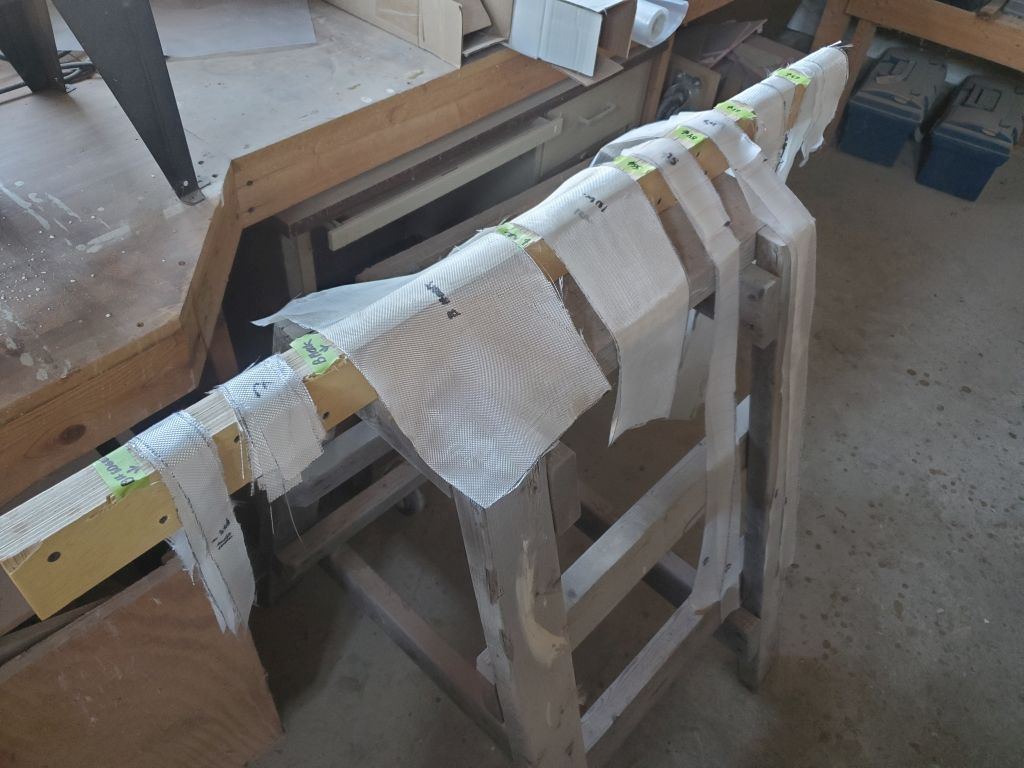
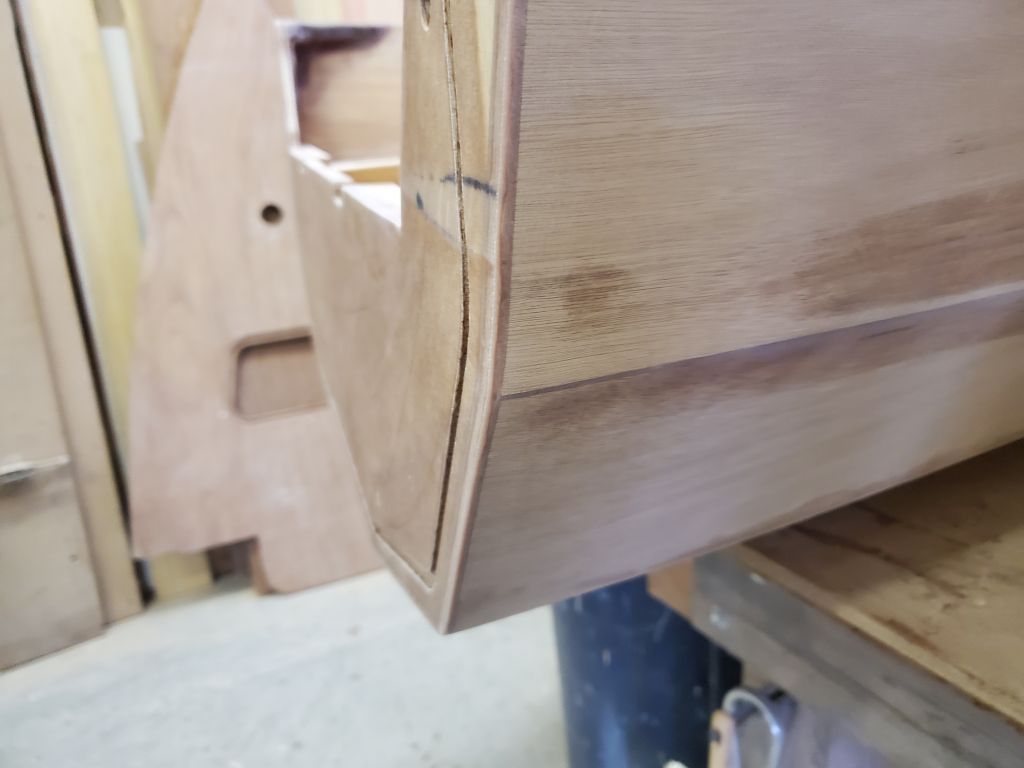
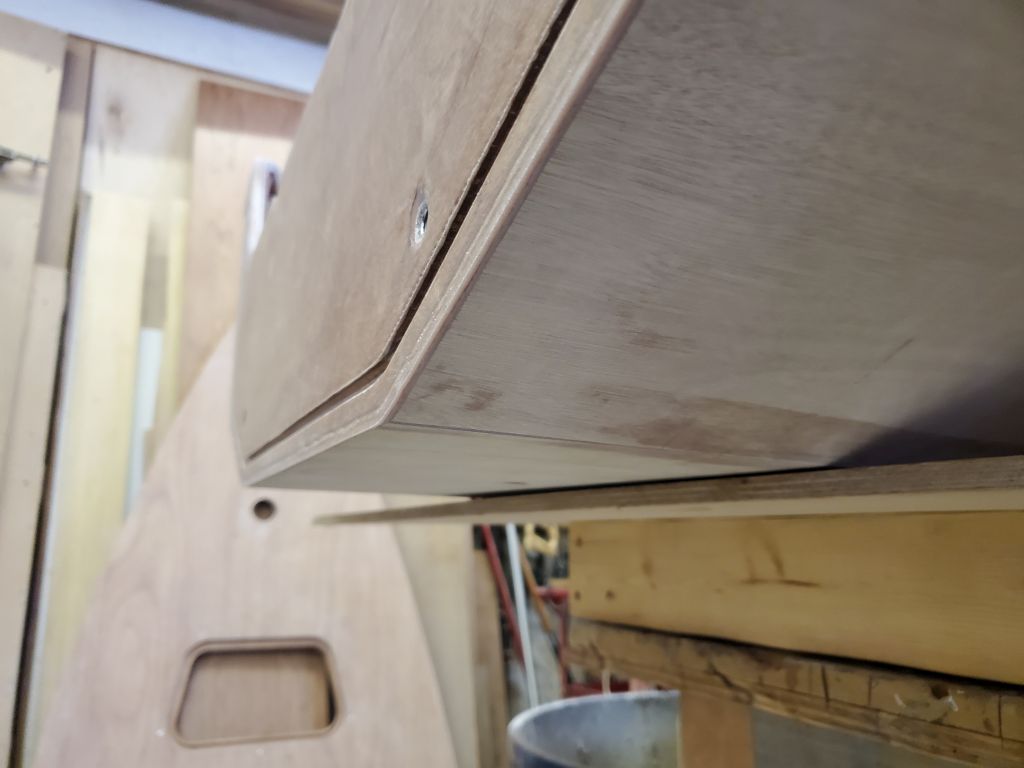
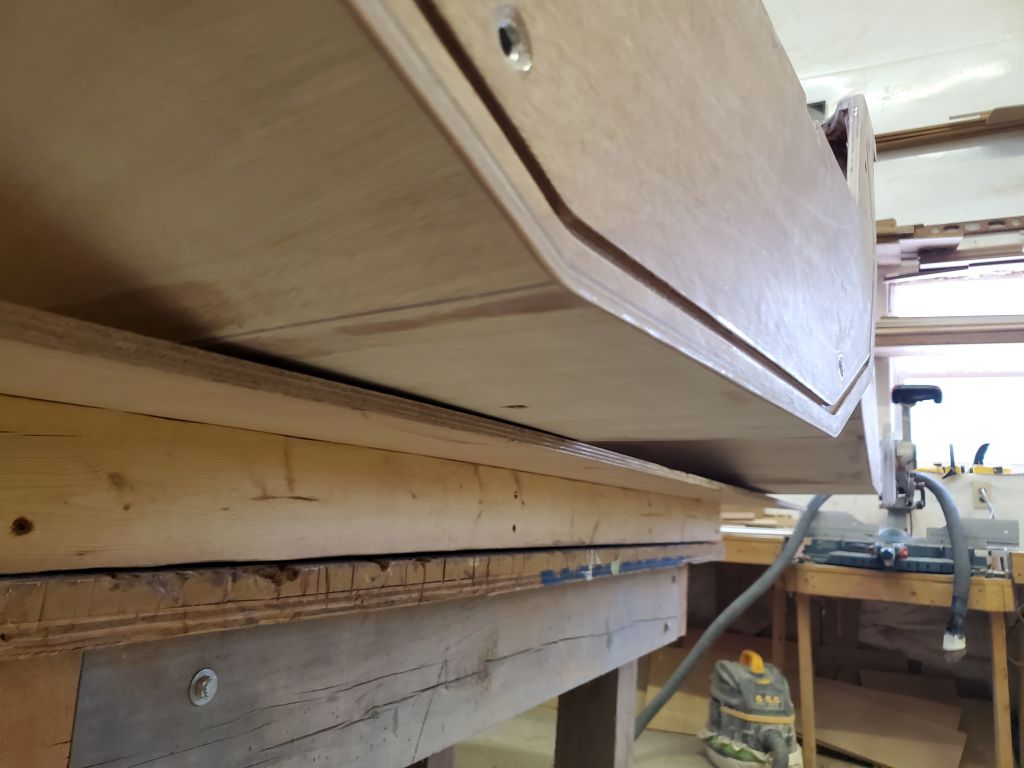
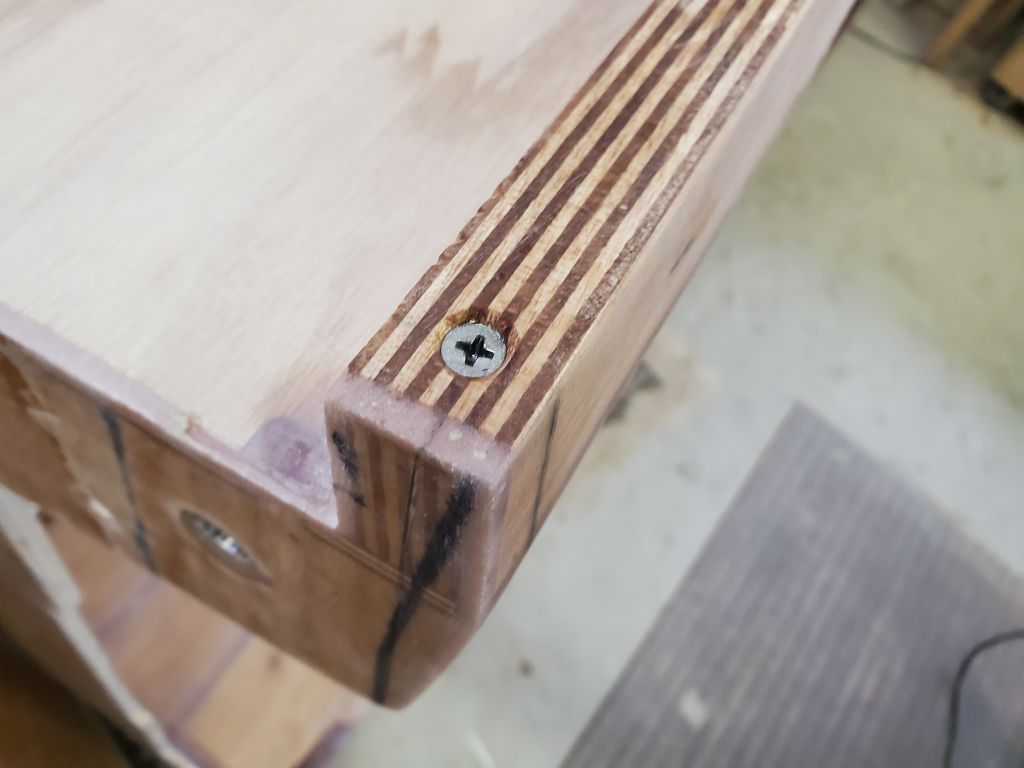
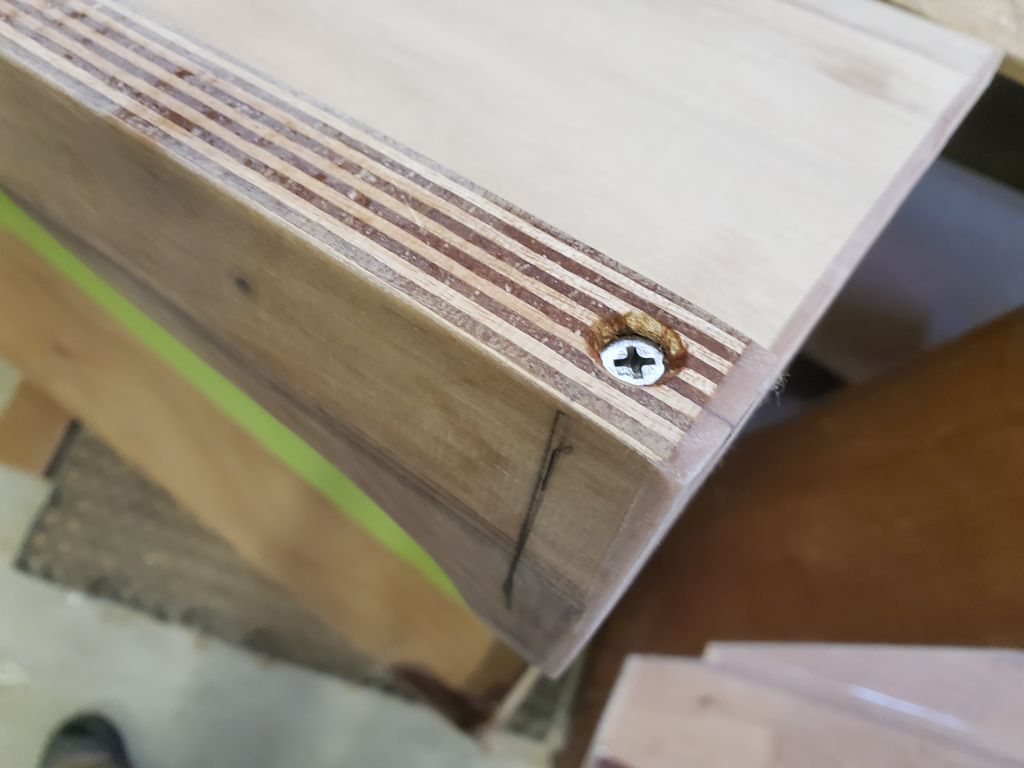
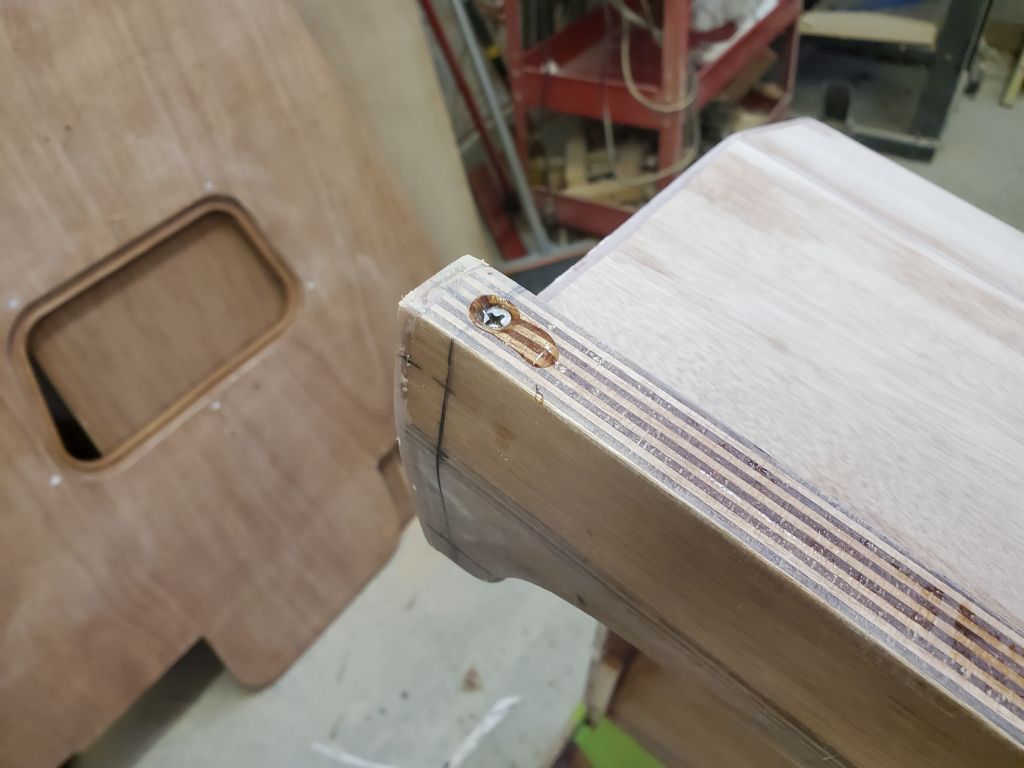
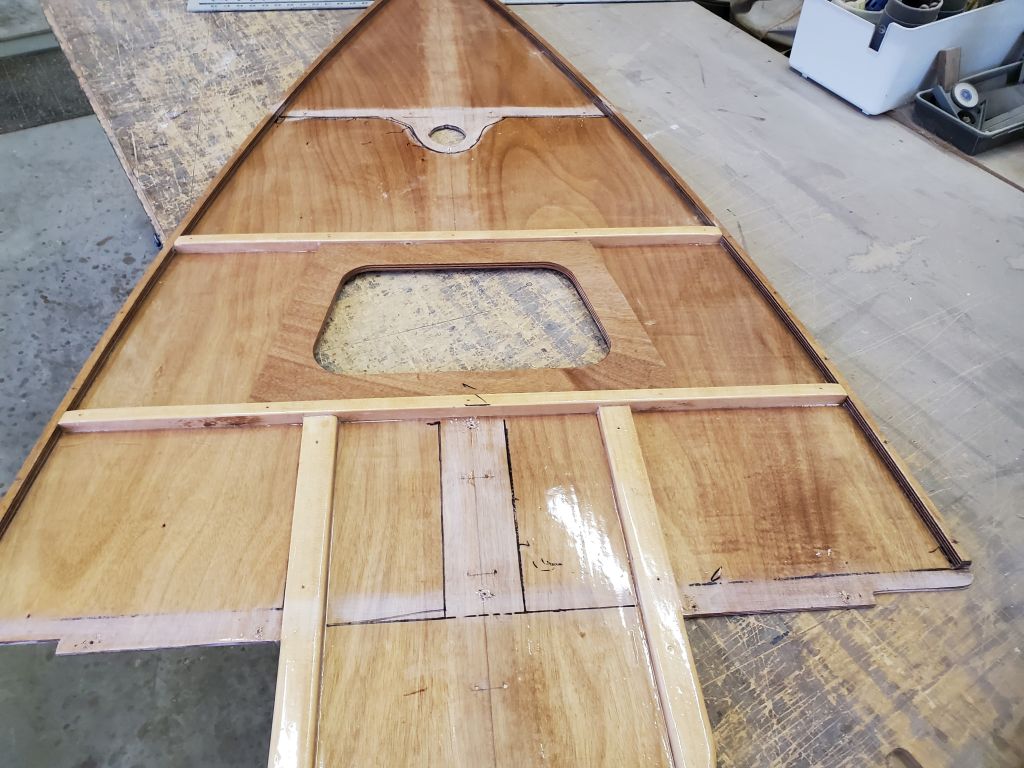
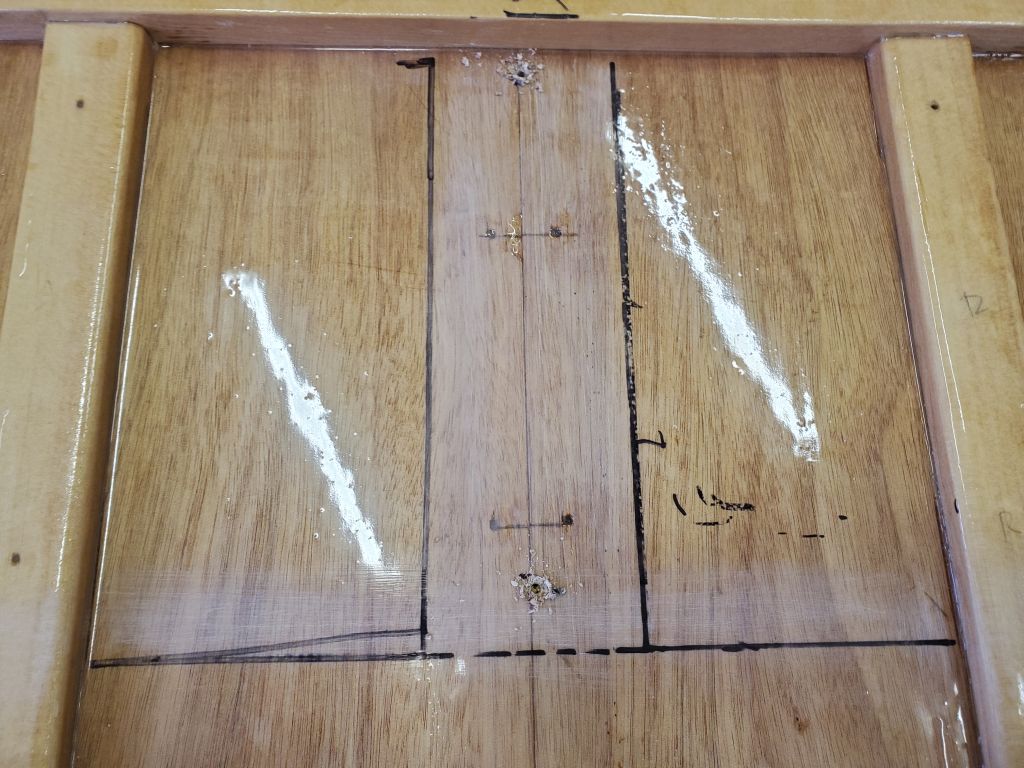
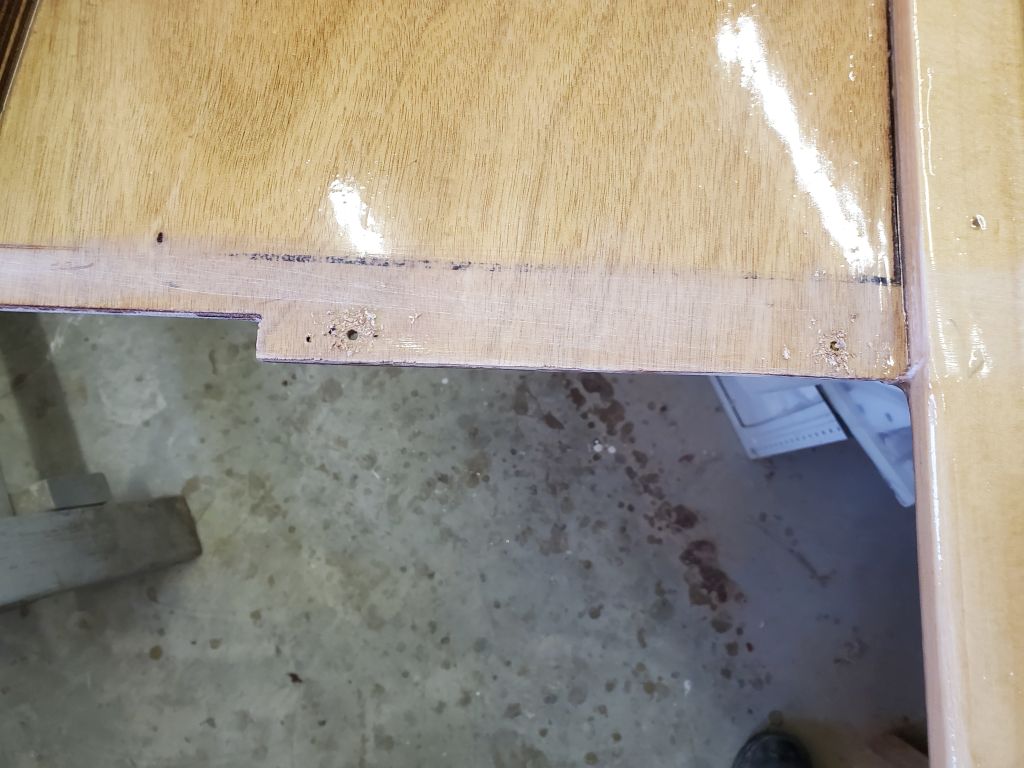
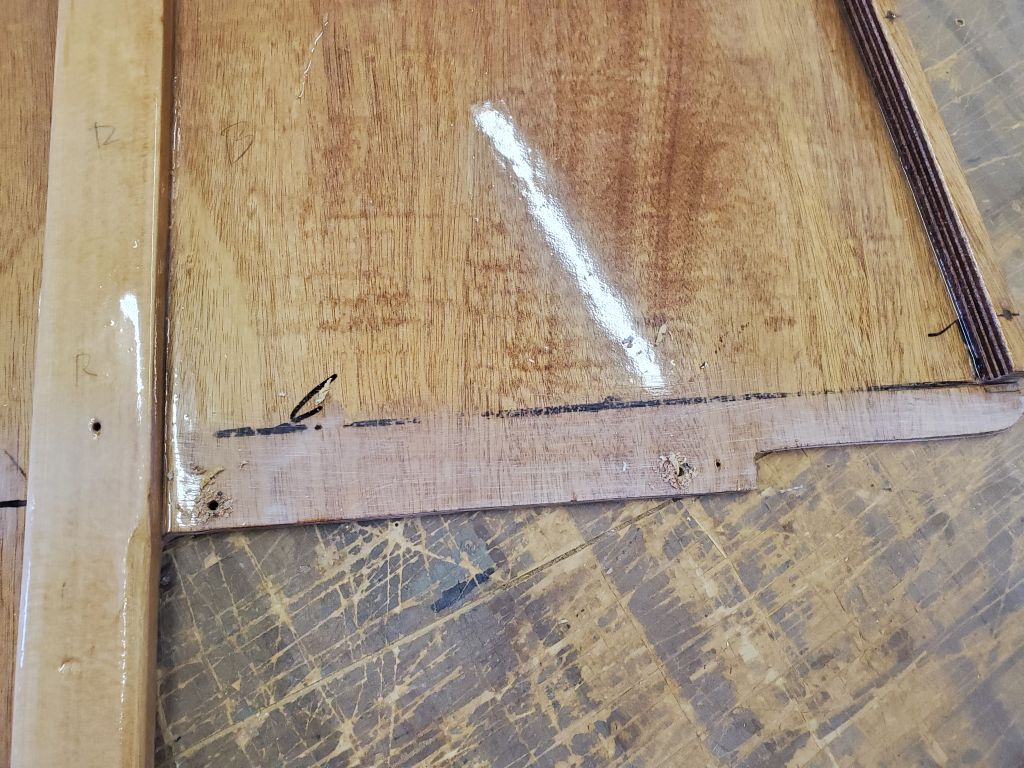
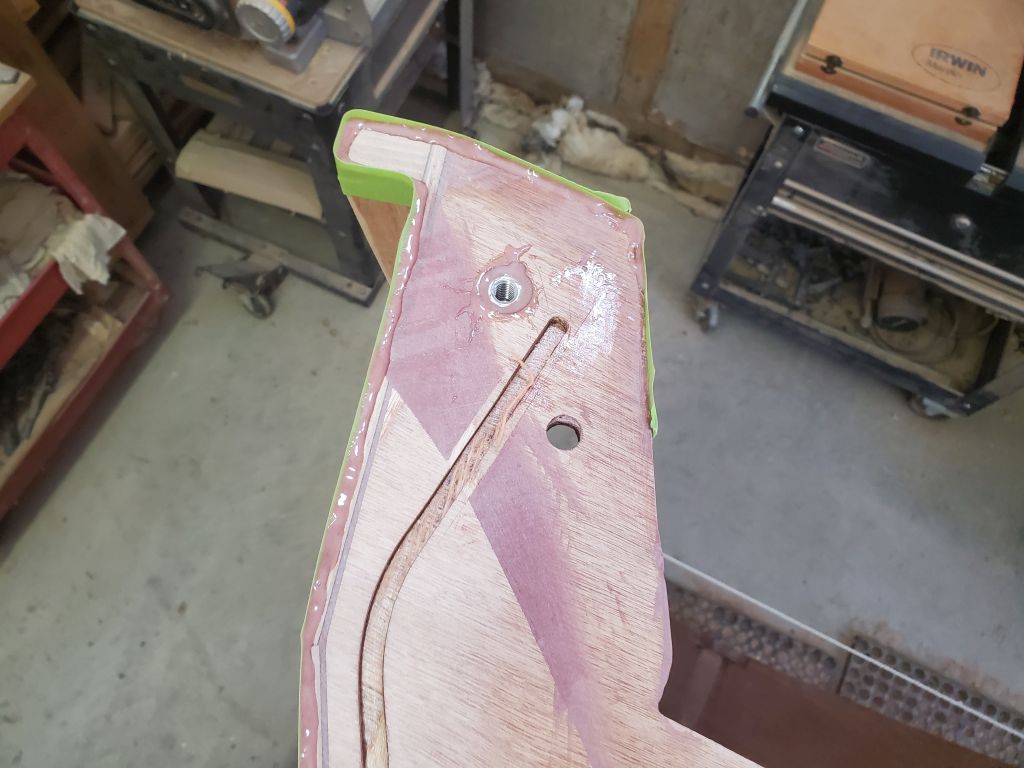
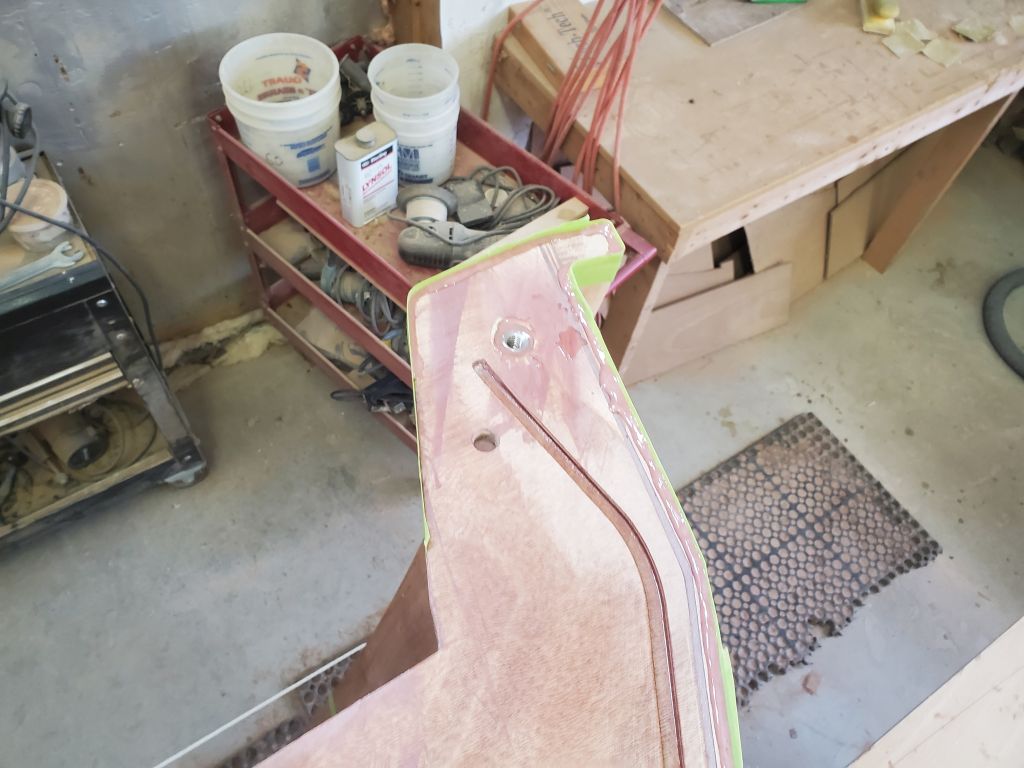
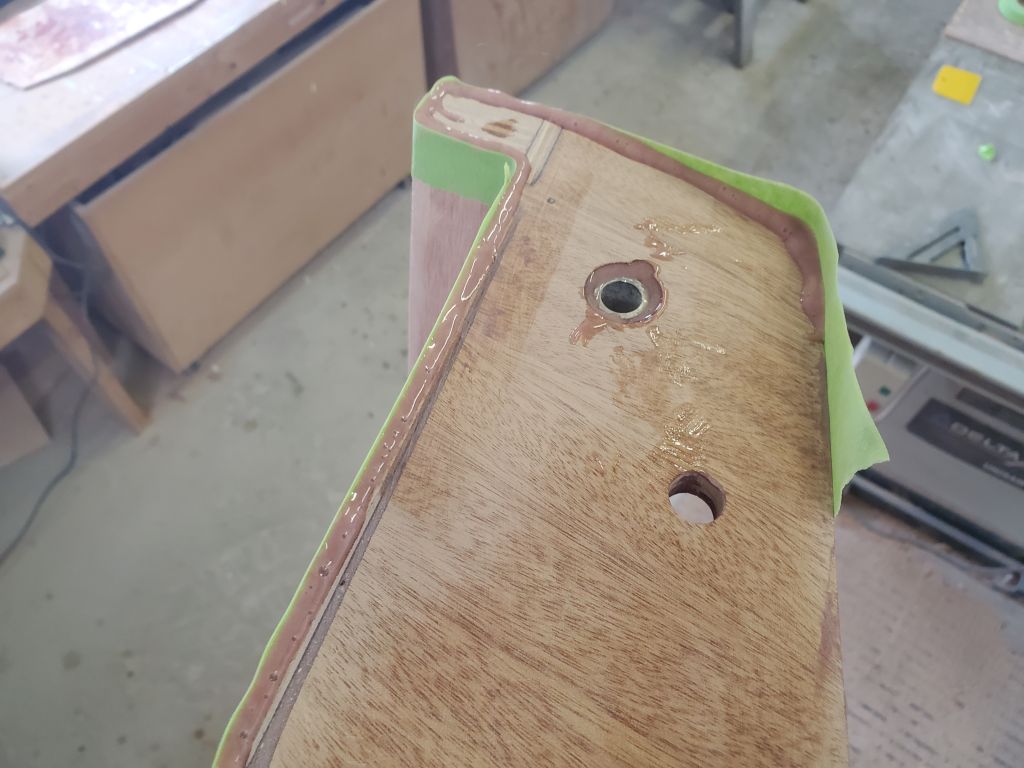
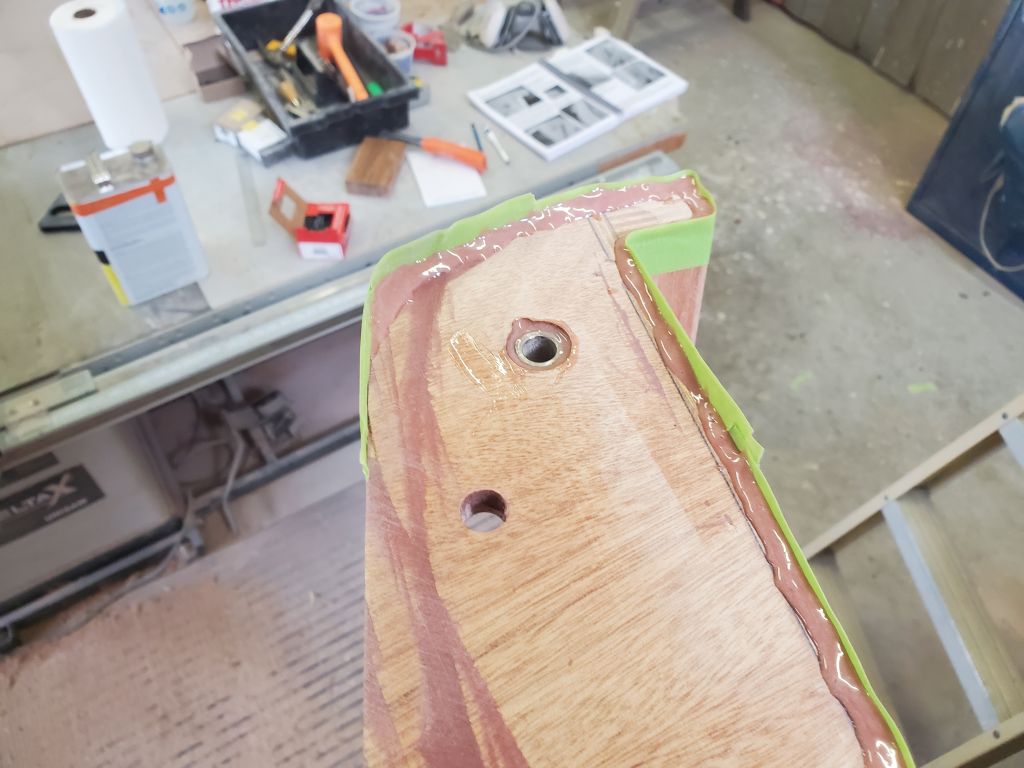
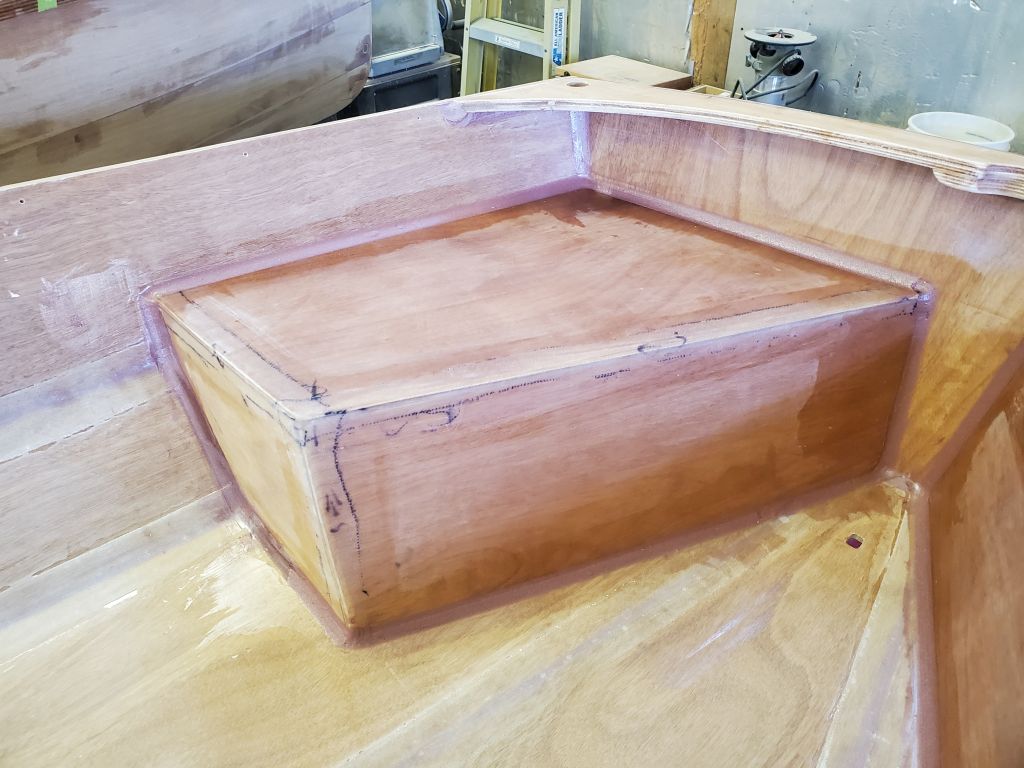
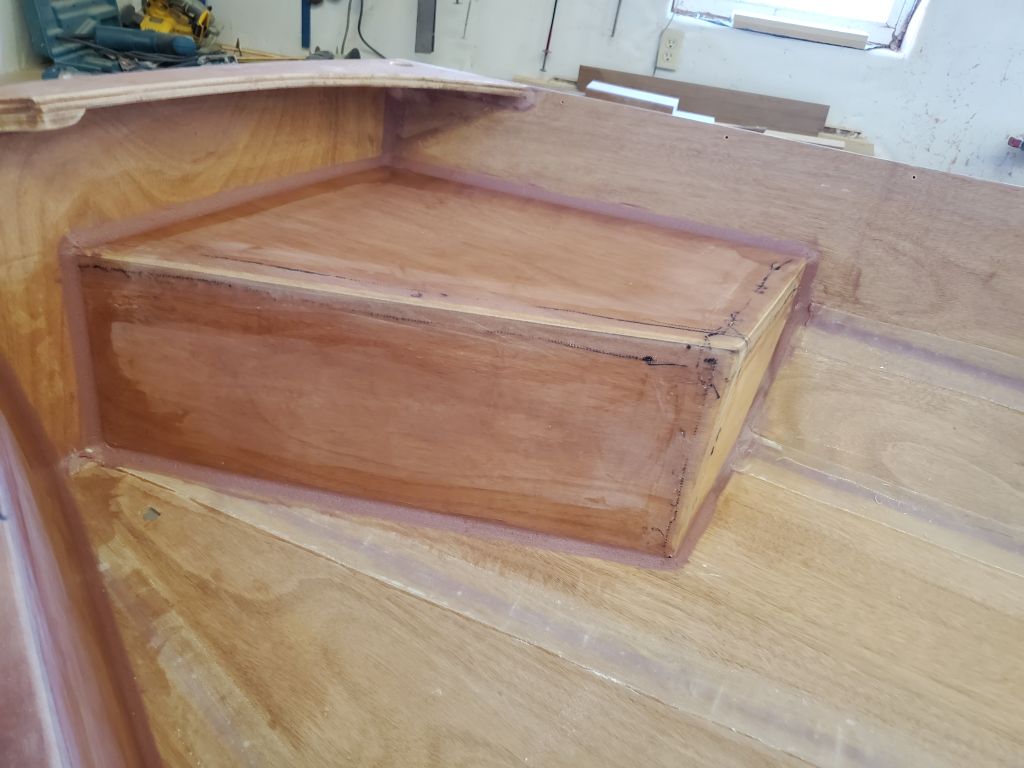
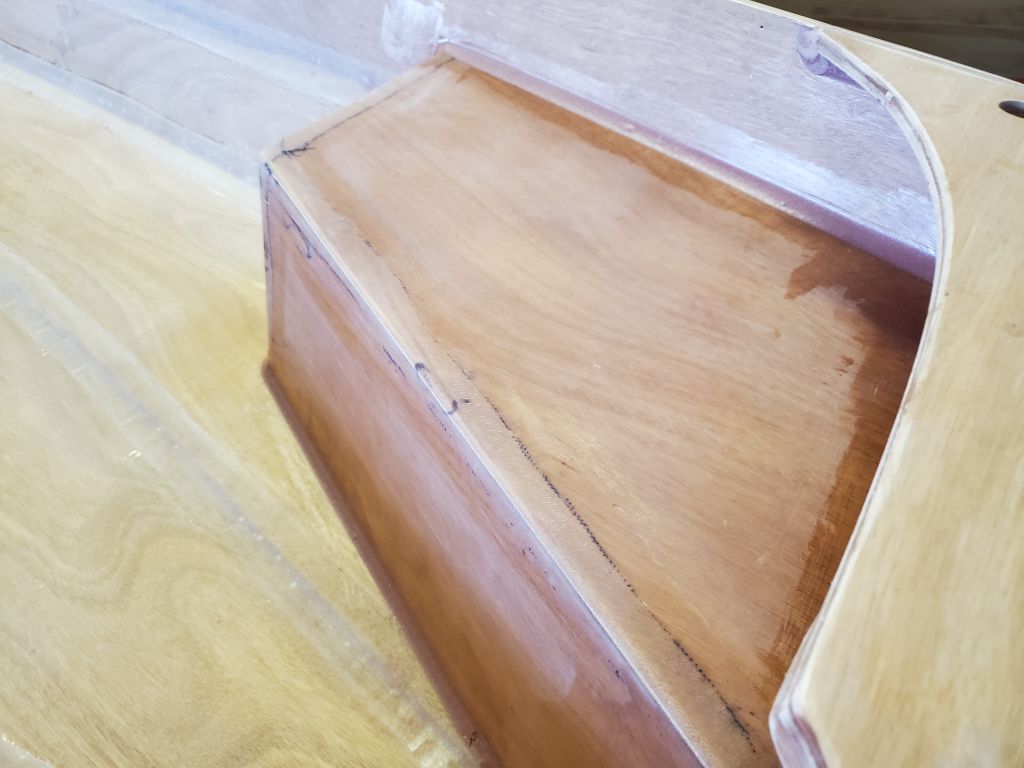
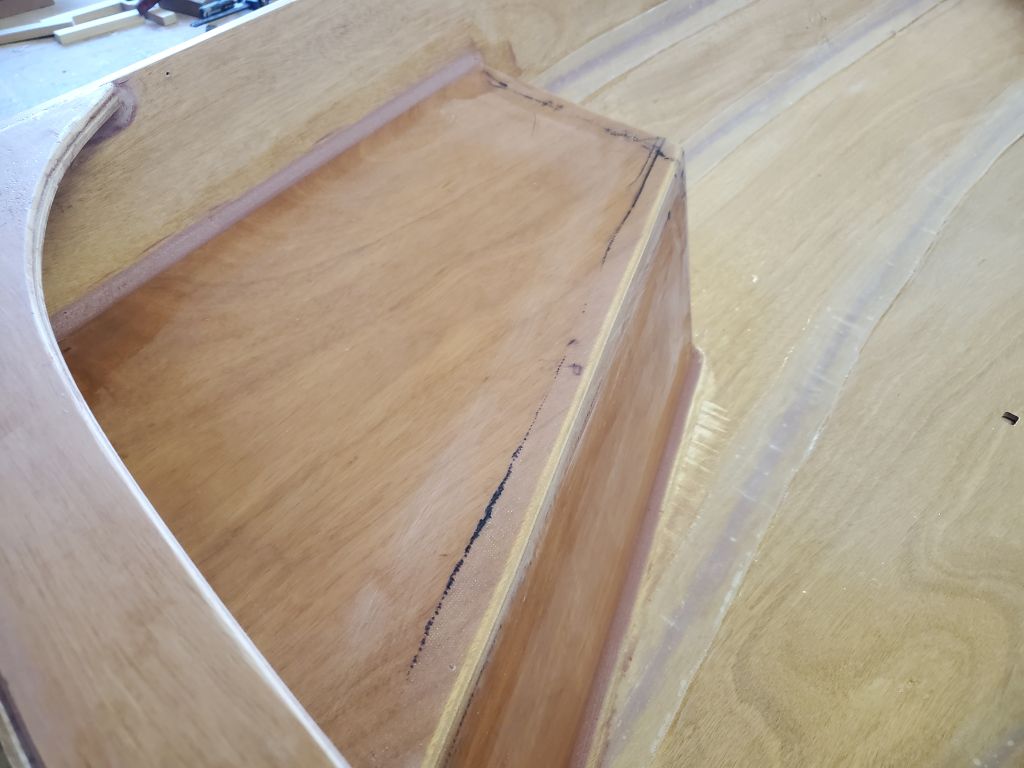
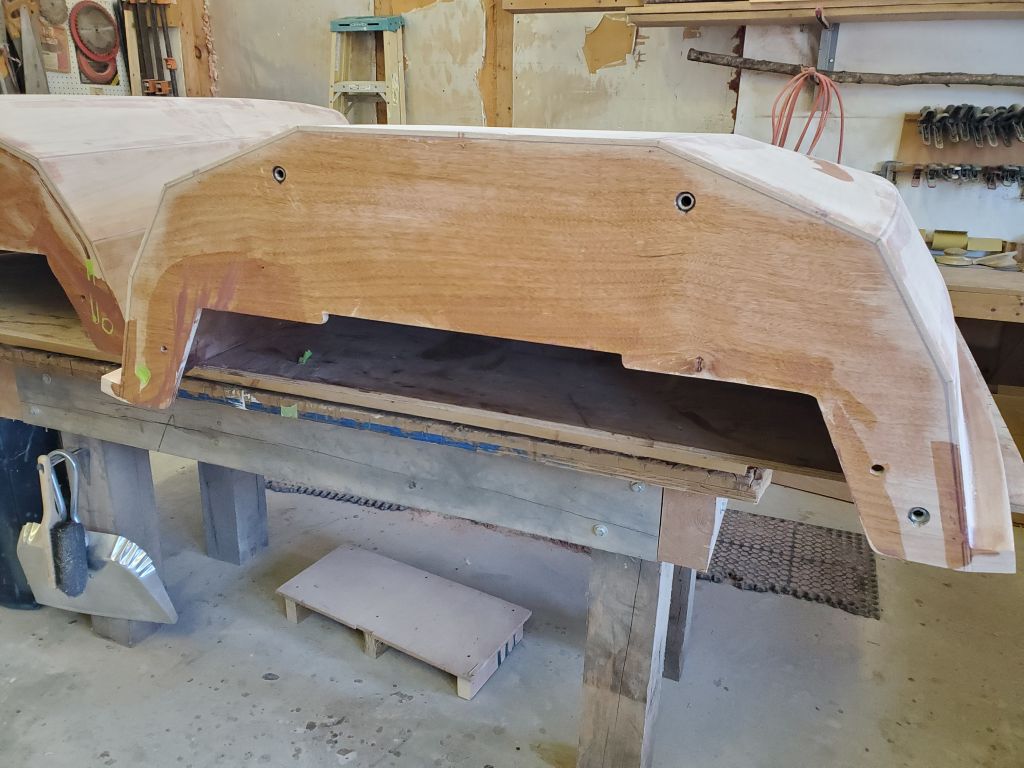
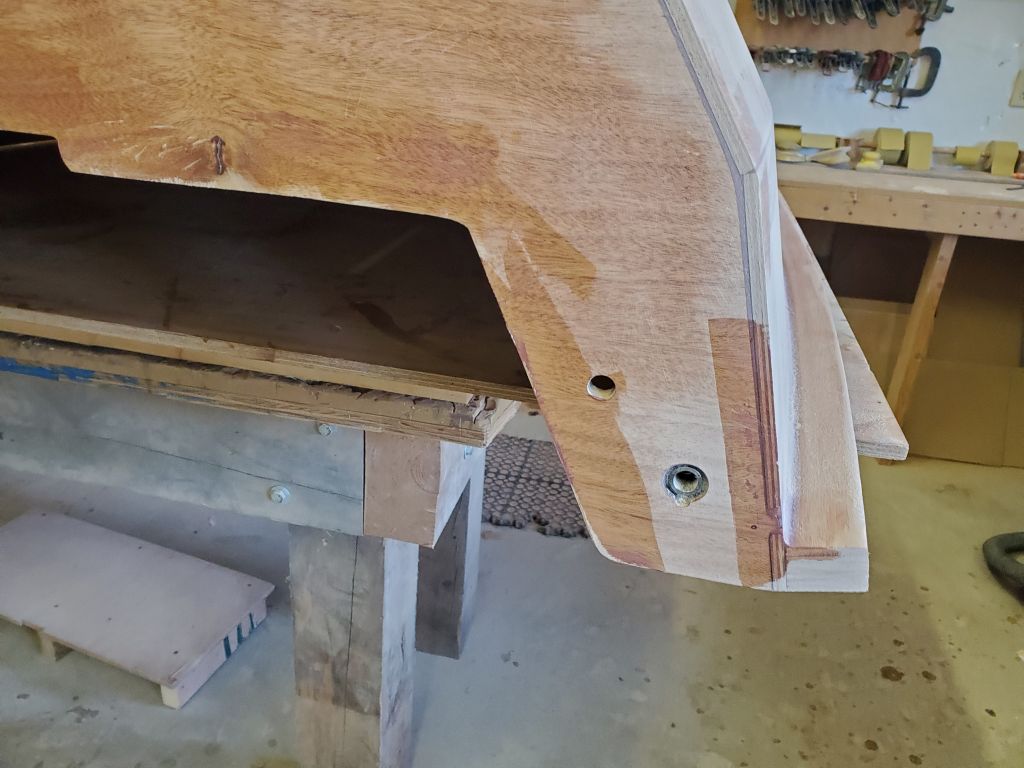
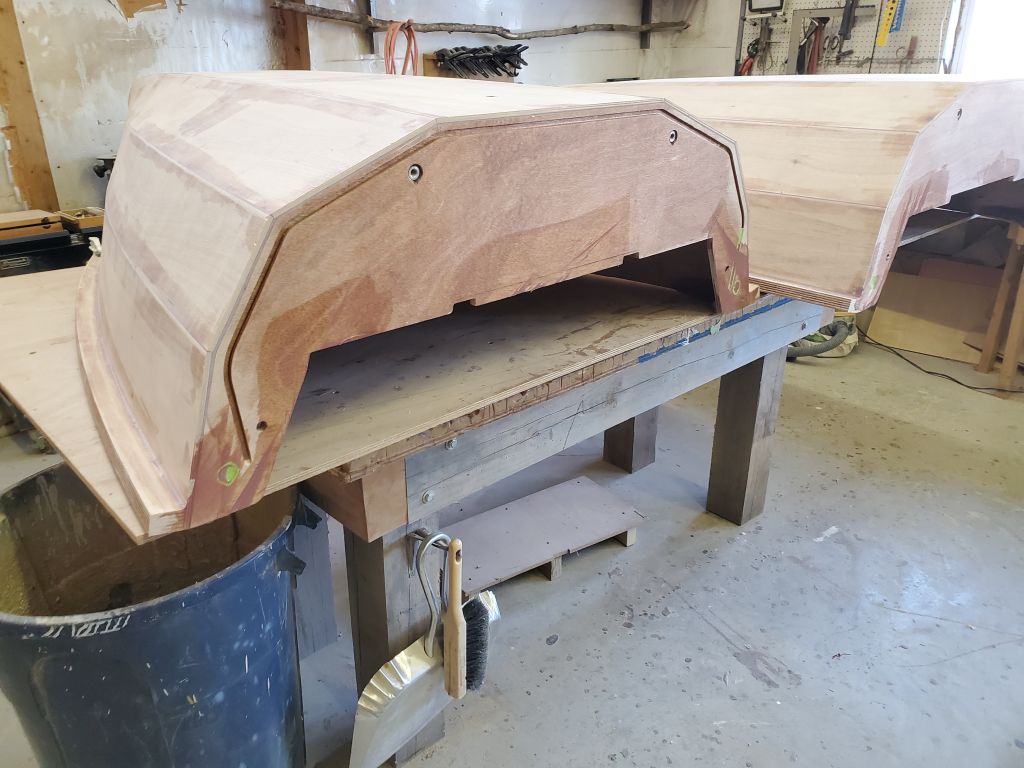
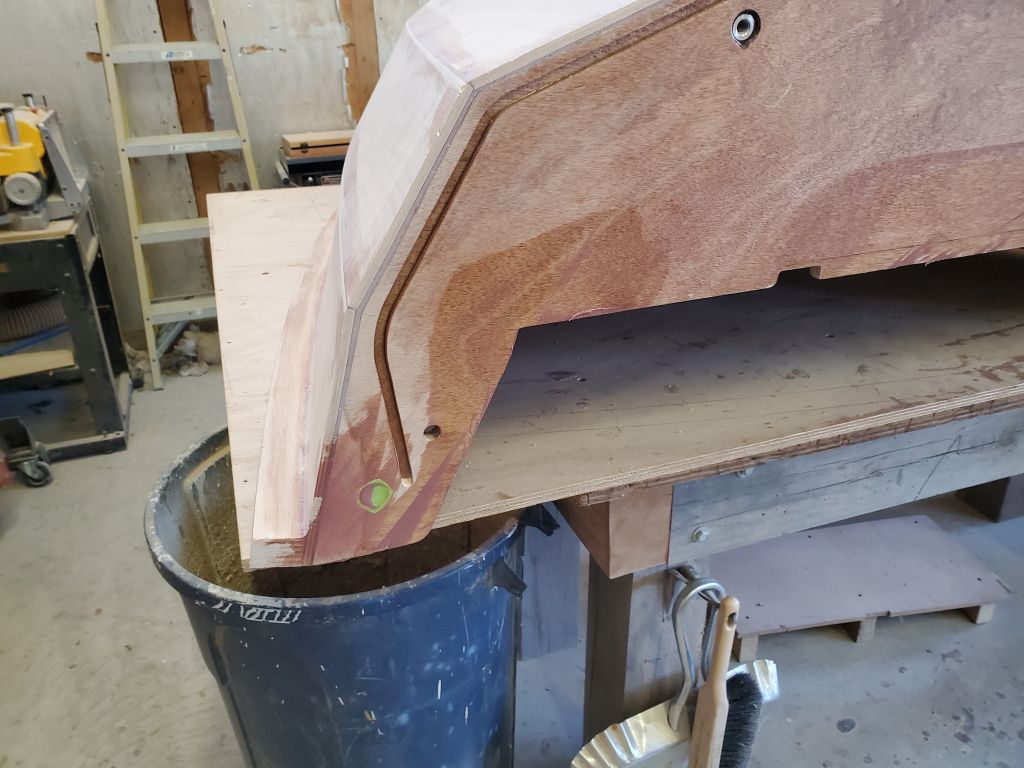
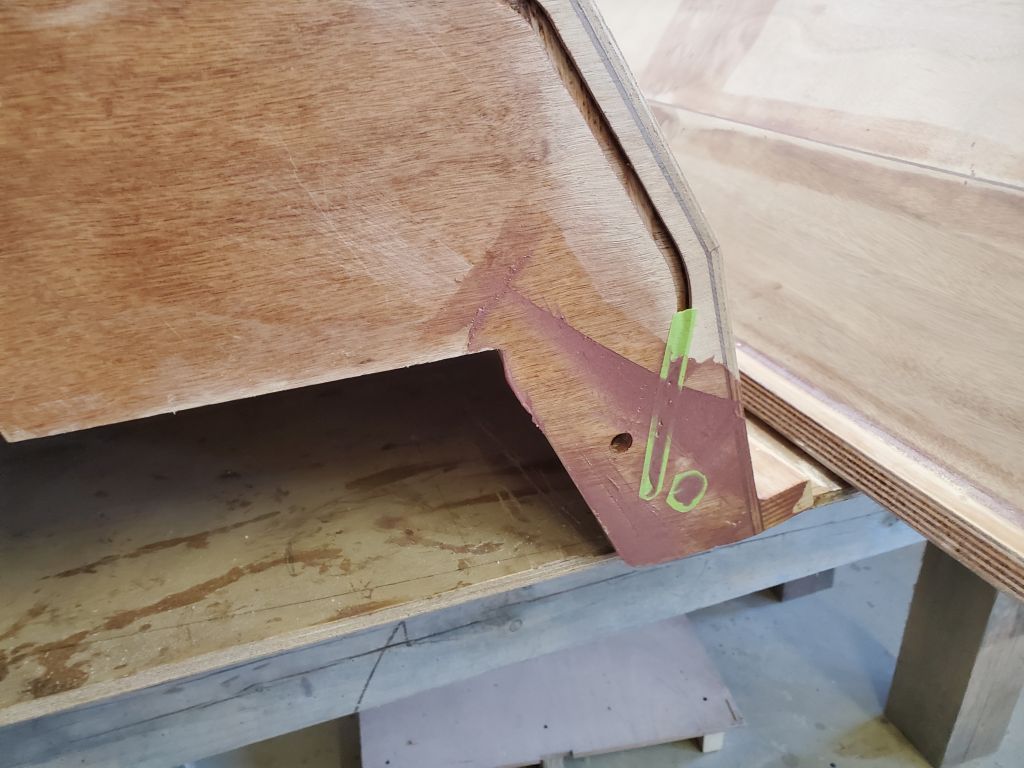
To finish off these openings and provide a wear surface for the daggerboard to slide and rest against, the book called for slim strips of G10 fiberglass, which I had to cut to fit all four sides of the openings top and bottom:  long edges first, then the short ends to fit tightly between.  I dry fit all the pieces and labeled as shown.
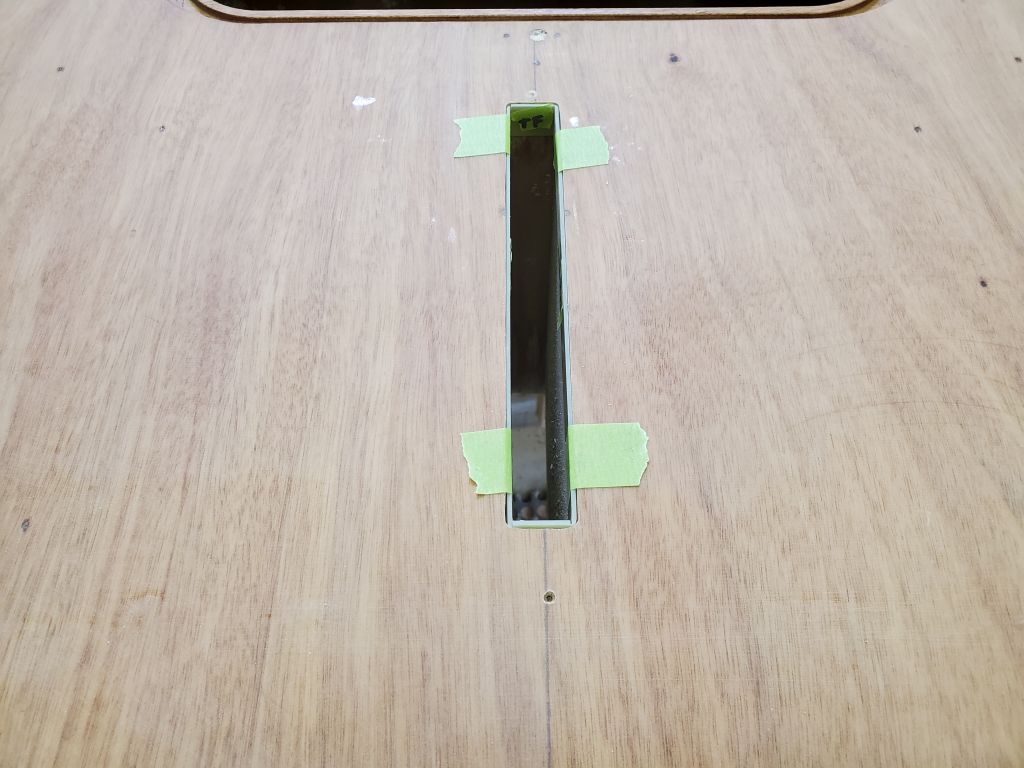
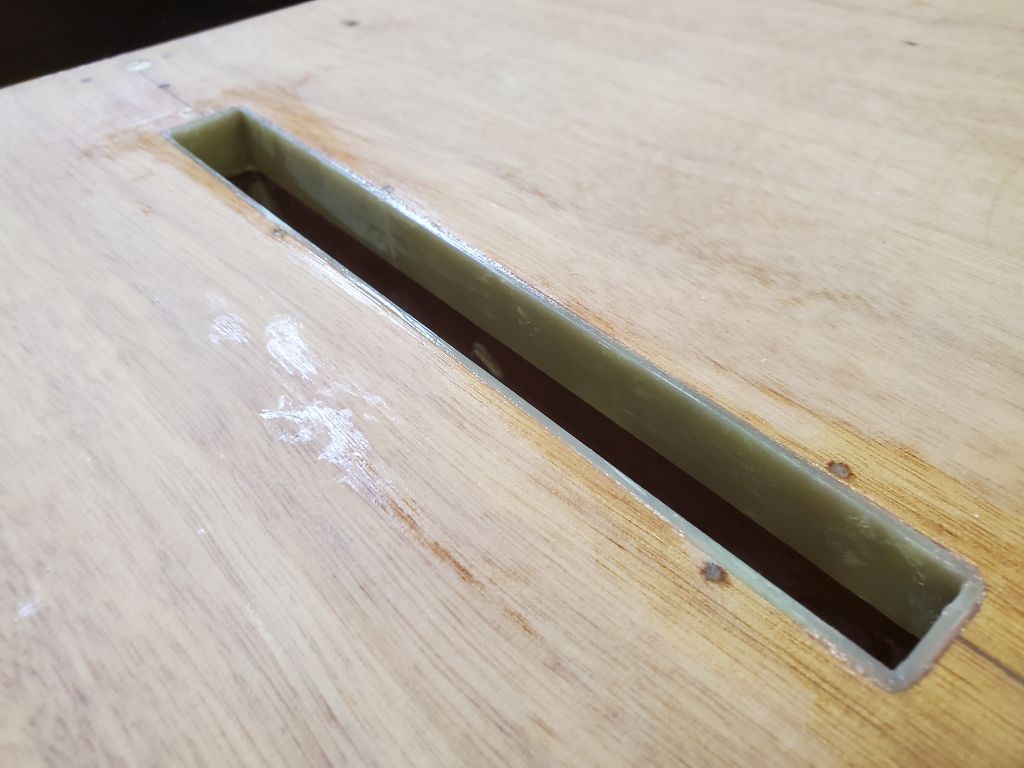
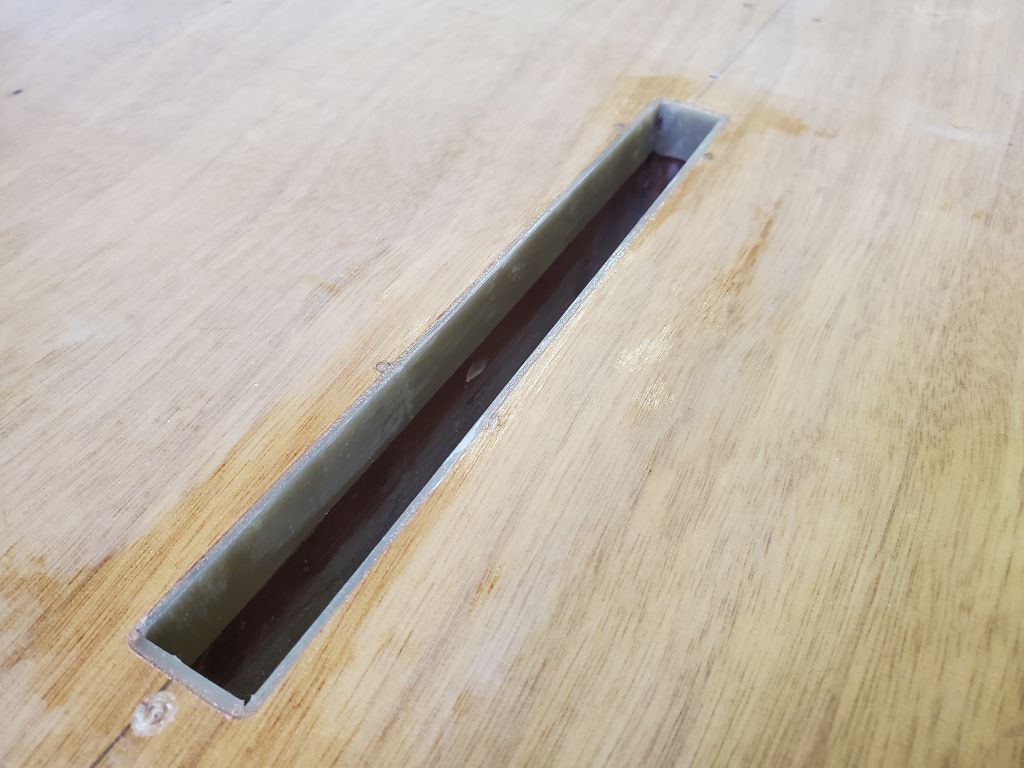
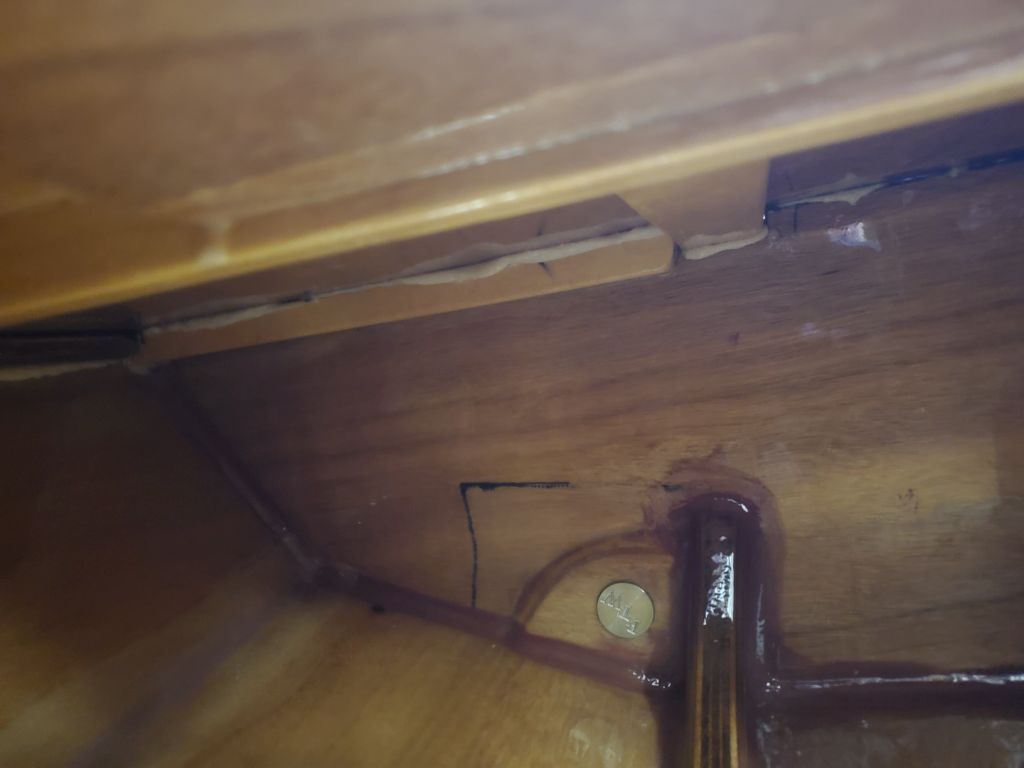
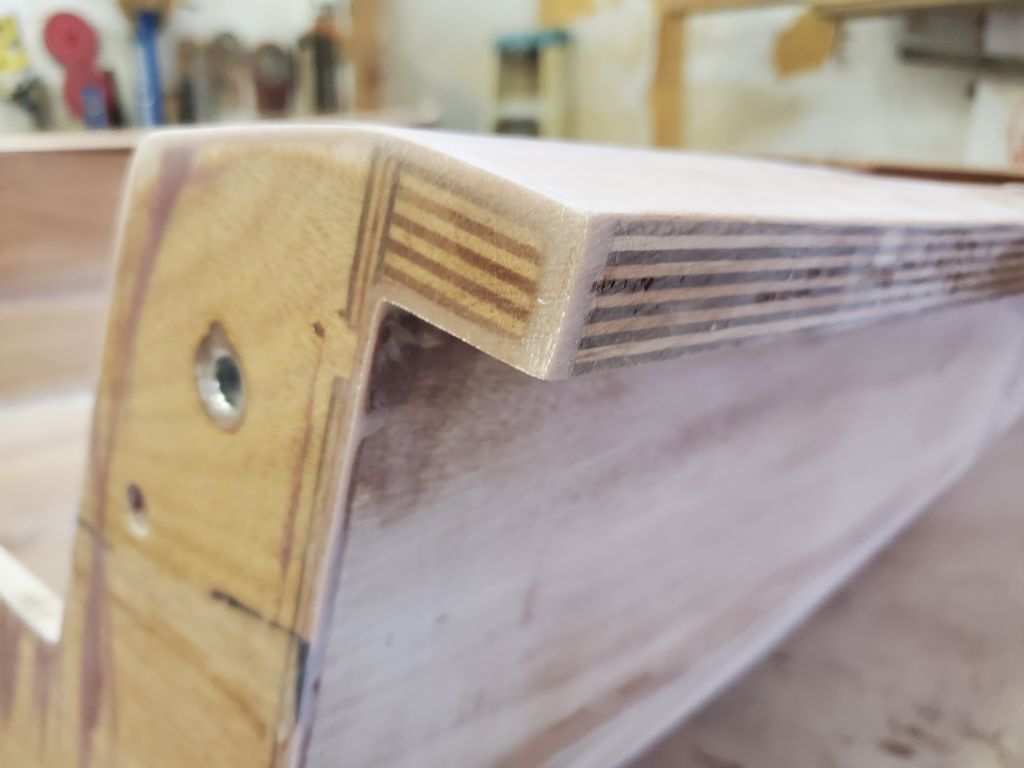
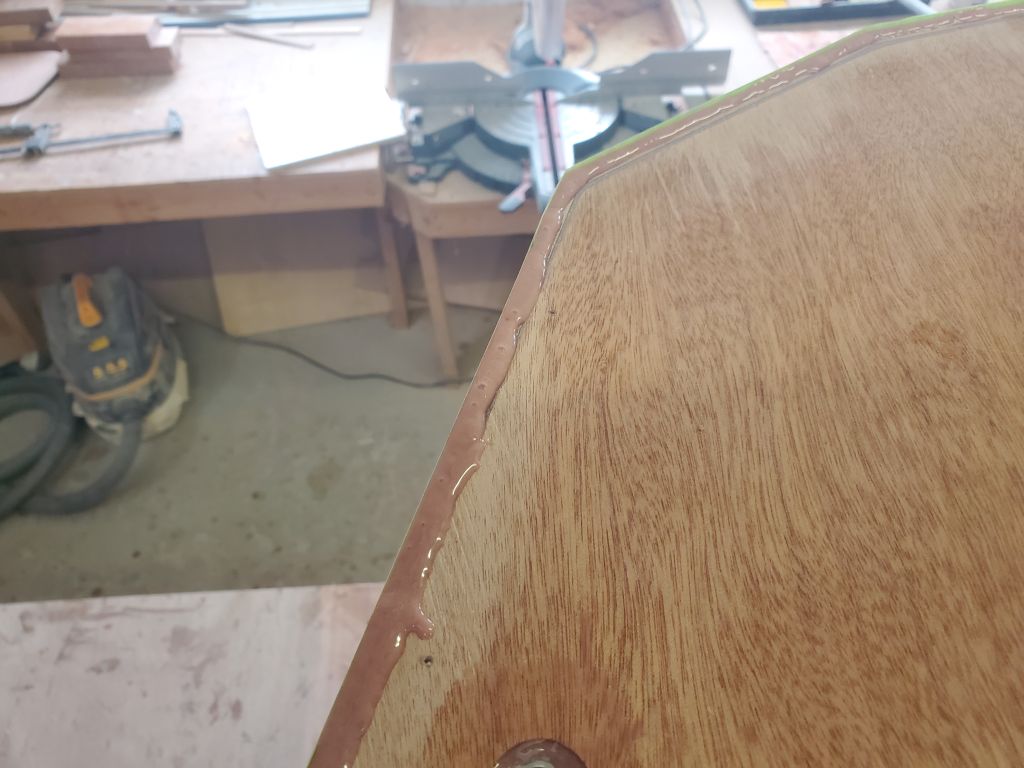
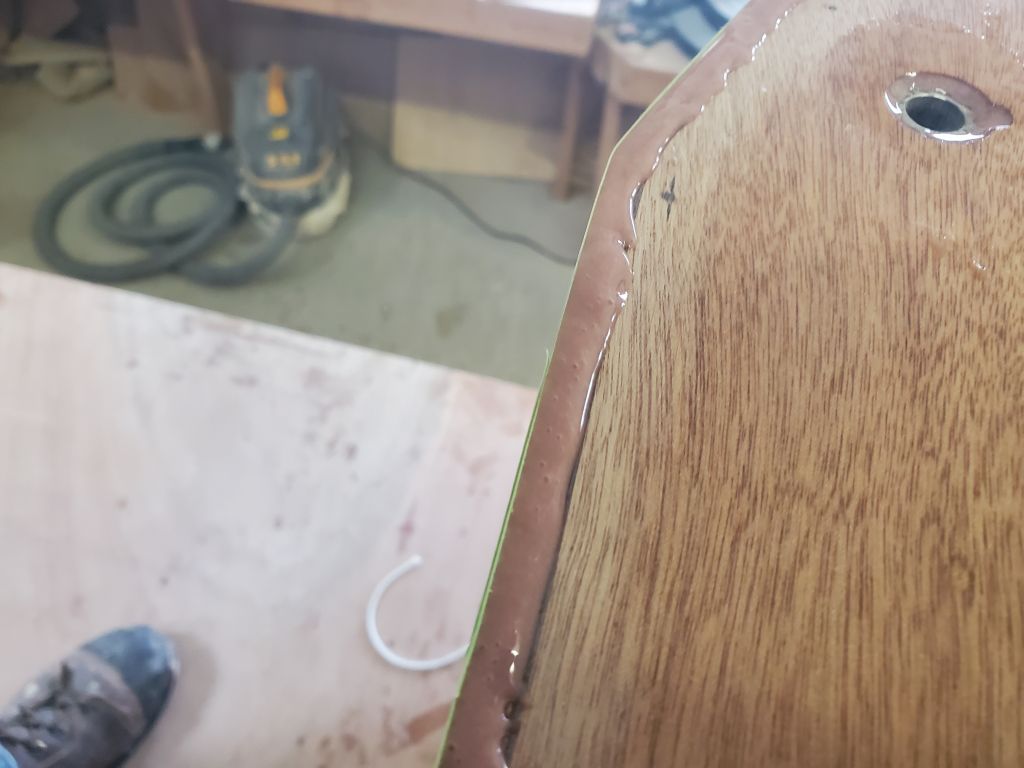
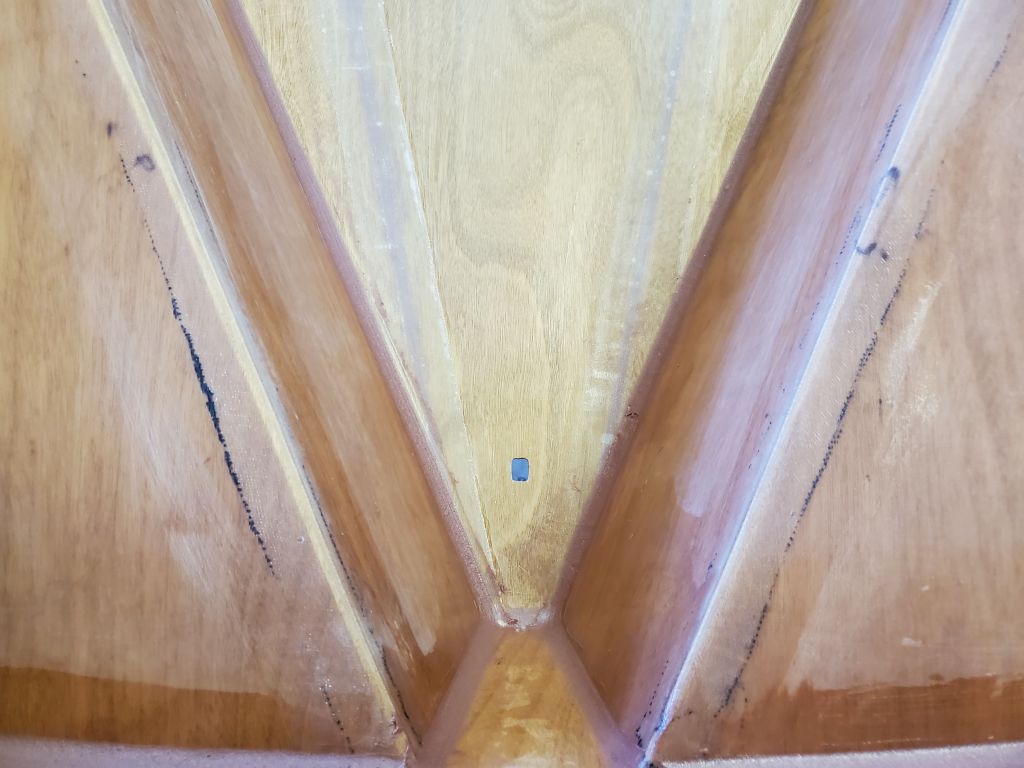
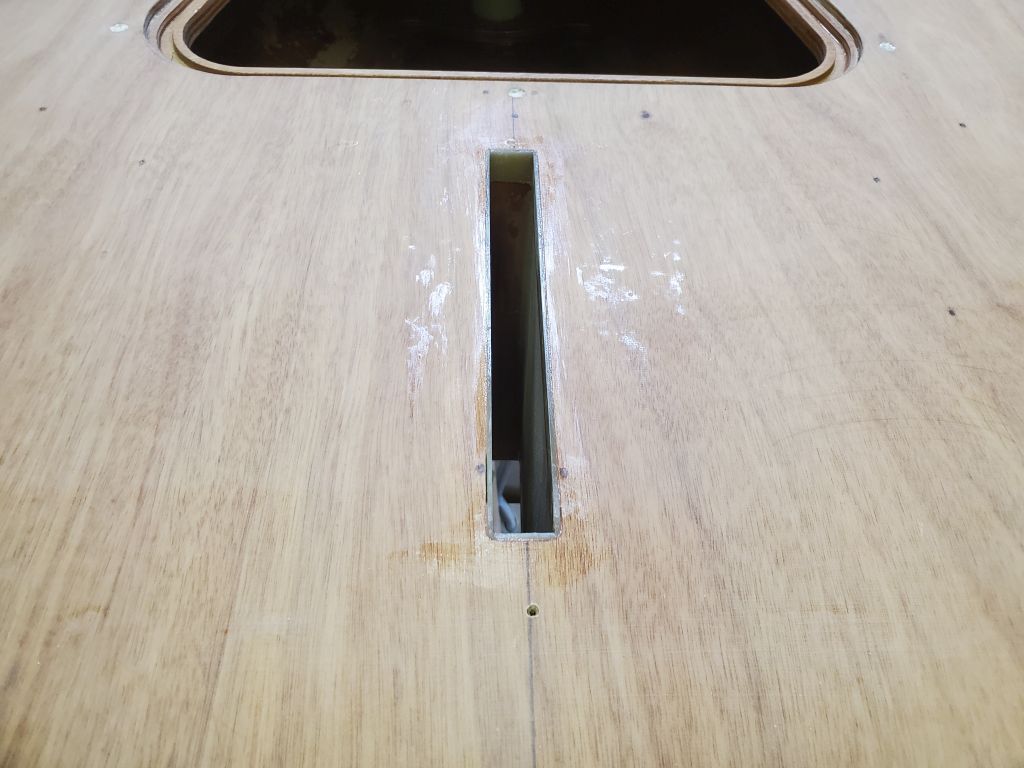
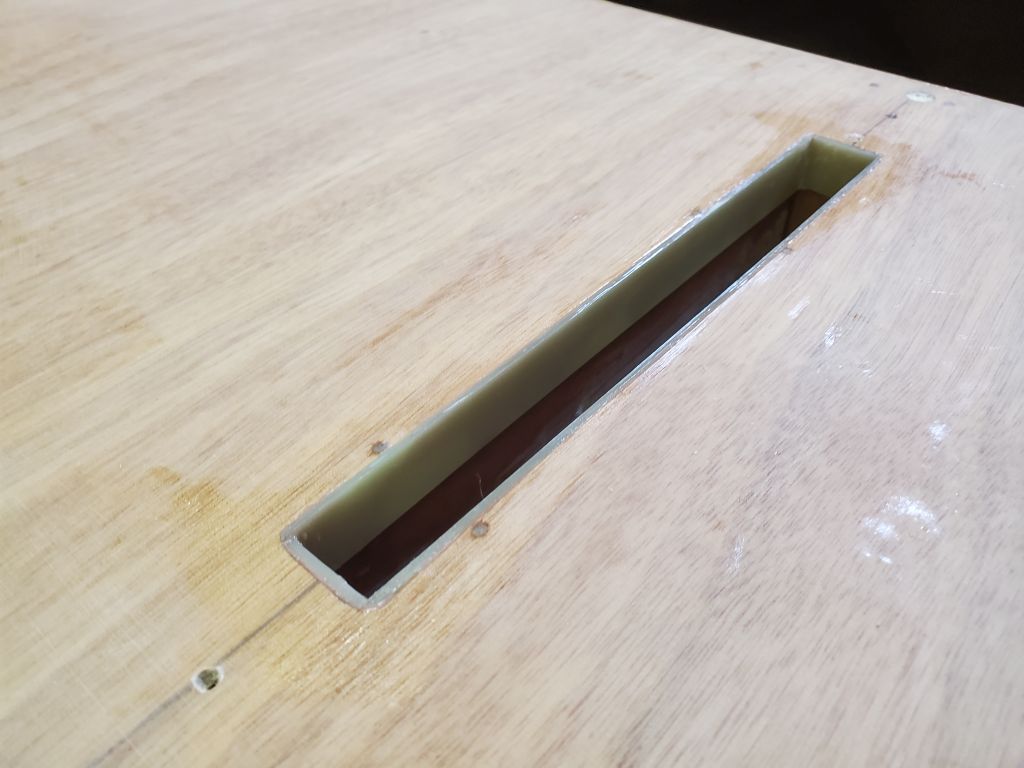
To install the strips and before departing for lunch break, I started with a coat of unthickened epoxy on all the plywood edges within the slots, using a fast hardener mix so the epoxy would have a moment to partially set up before continuing.    Then, in the afternoon, I installed the fiberglass strips with a thickened epoxy mixture, which was enough to hold things in place:  first the foredeck side, then the bottom side with the boat flipped over.  I kept the fiberglass just barely above the finished foredeck and hull surfaces so I might bring the edges perfectly flush with light sanding later.
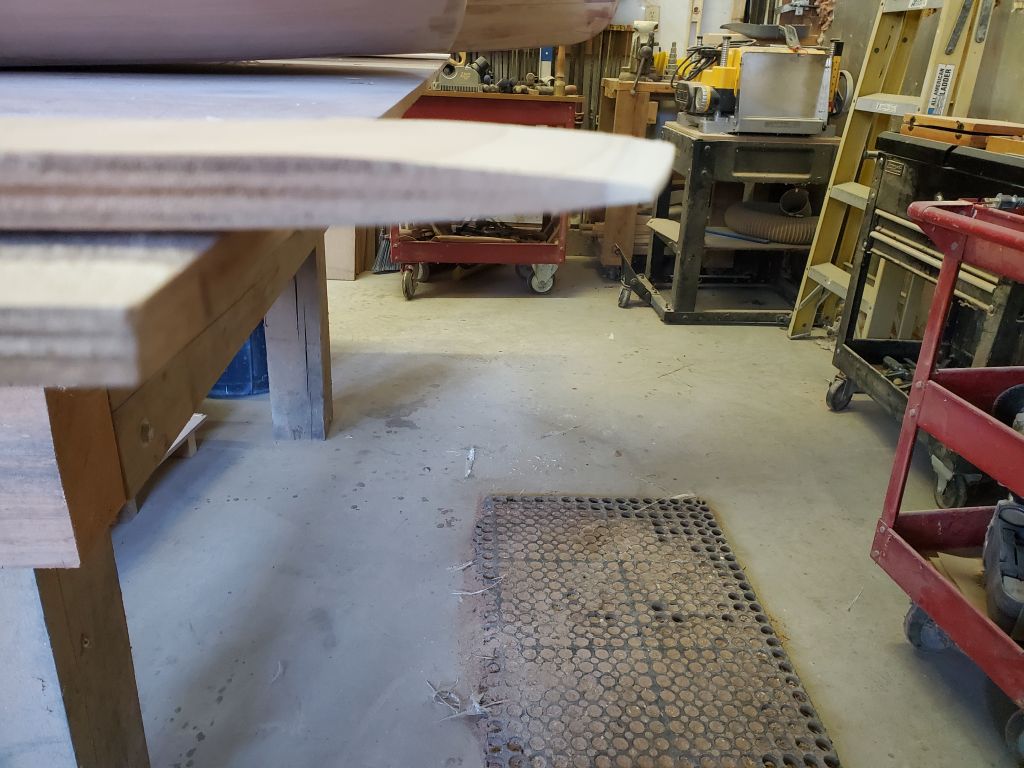
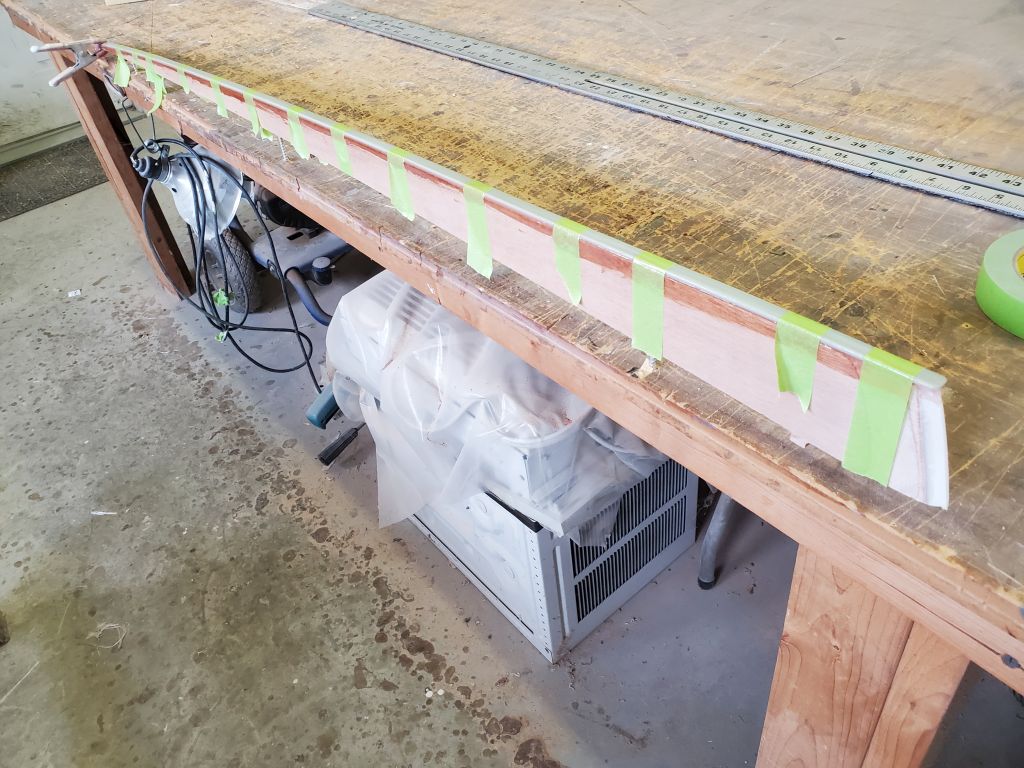
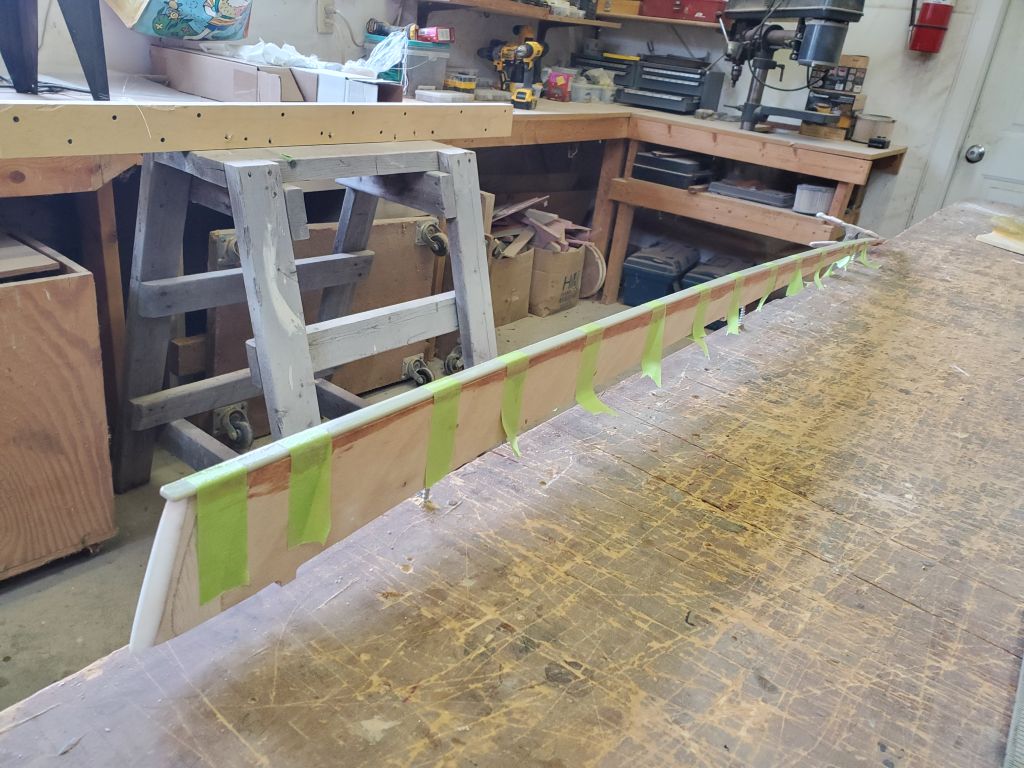
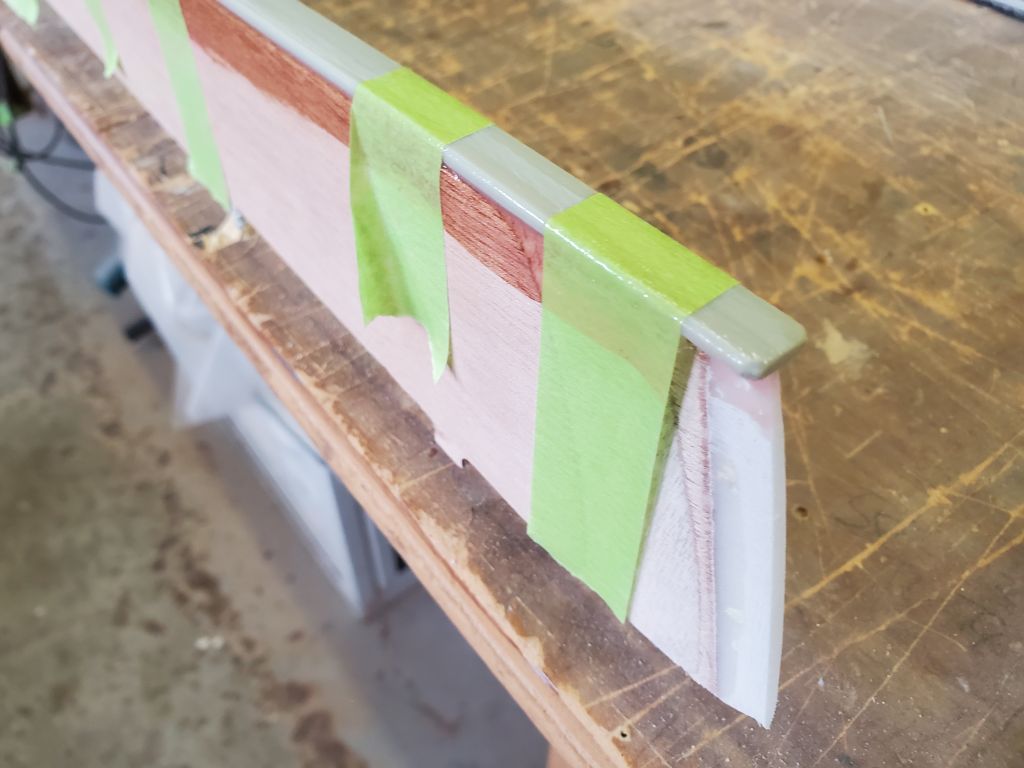
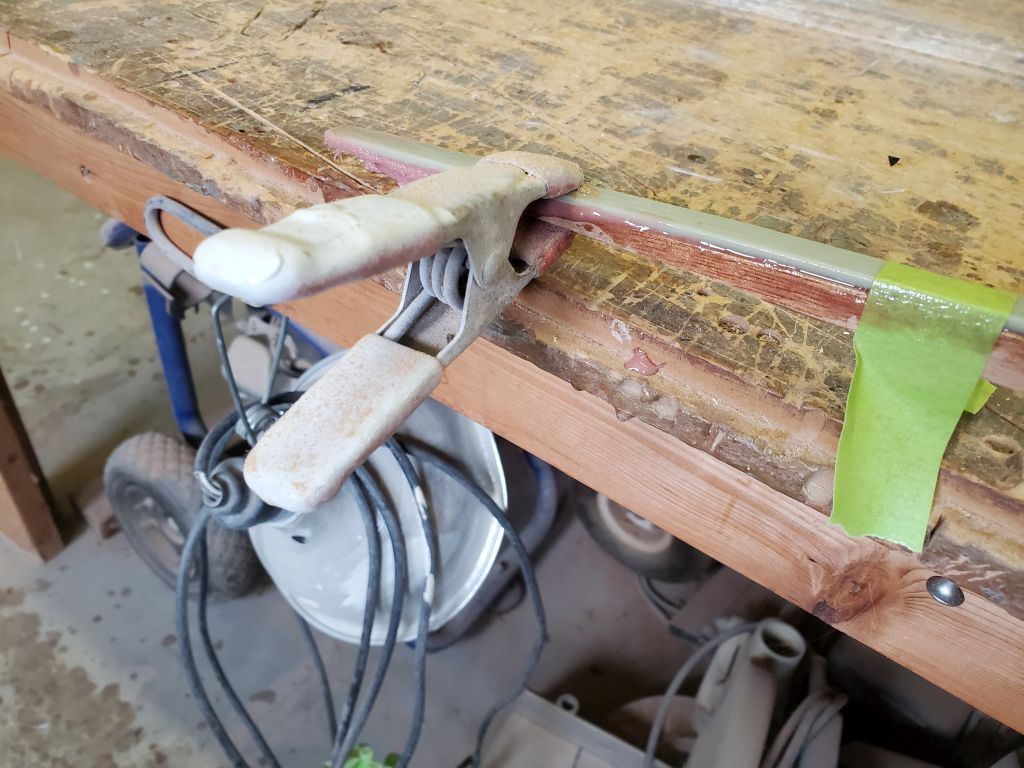
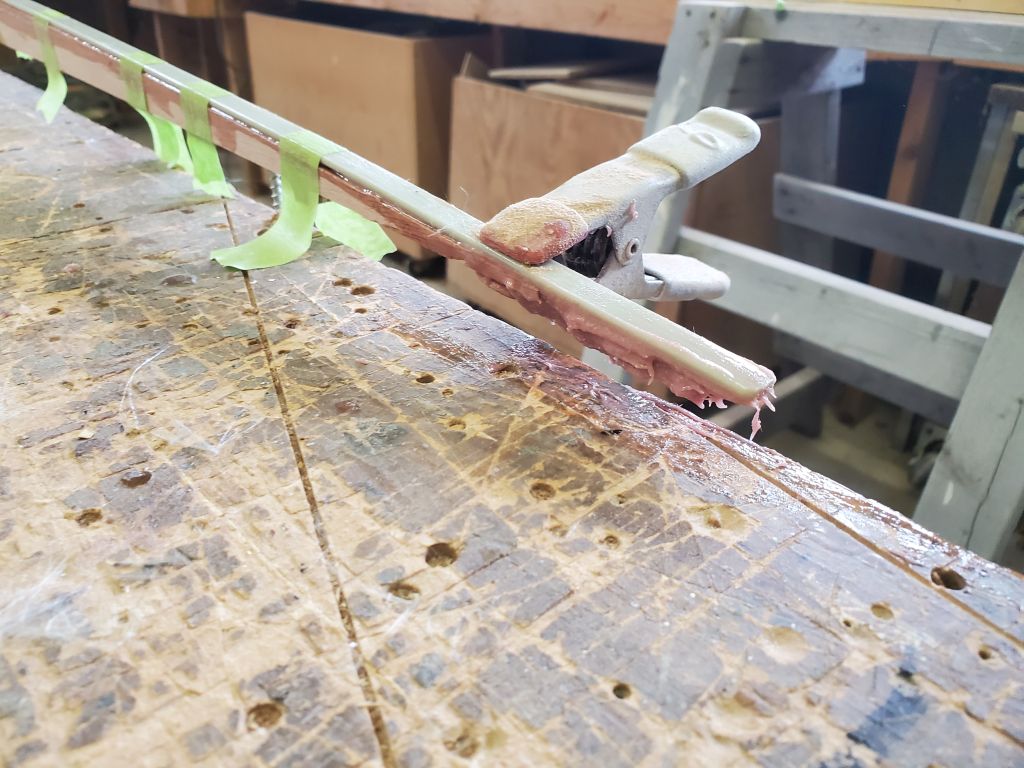
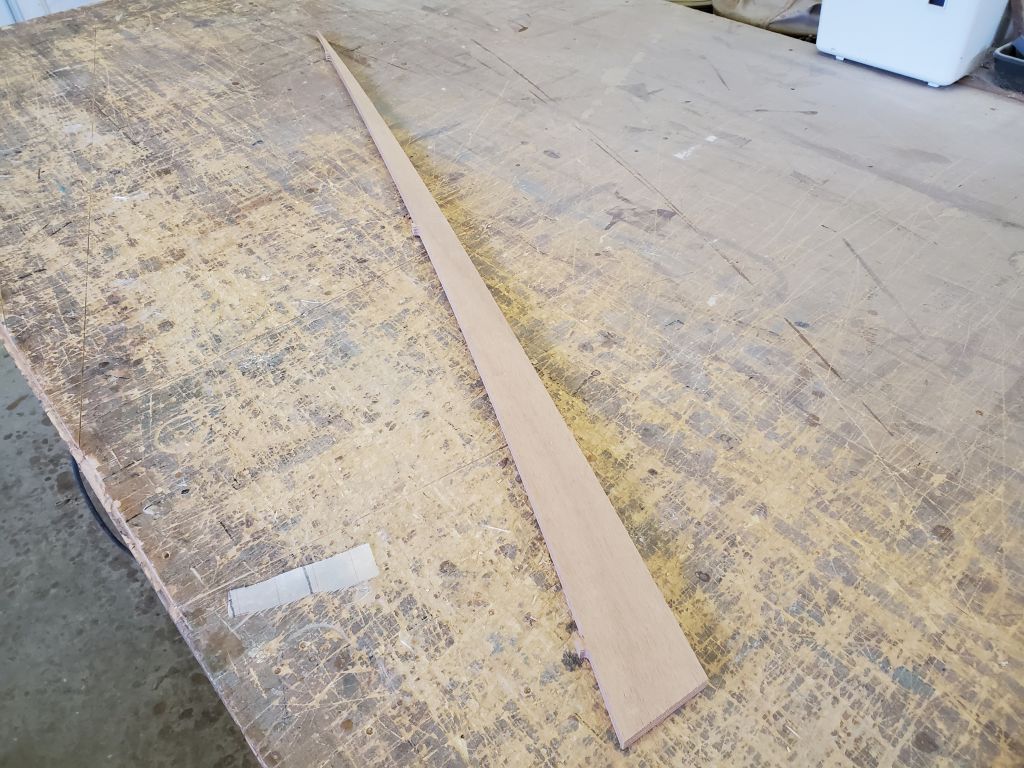
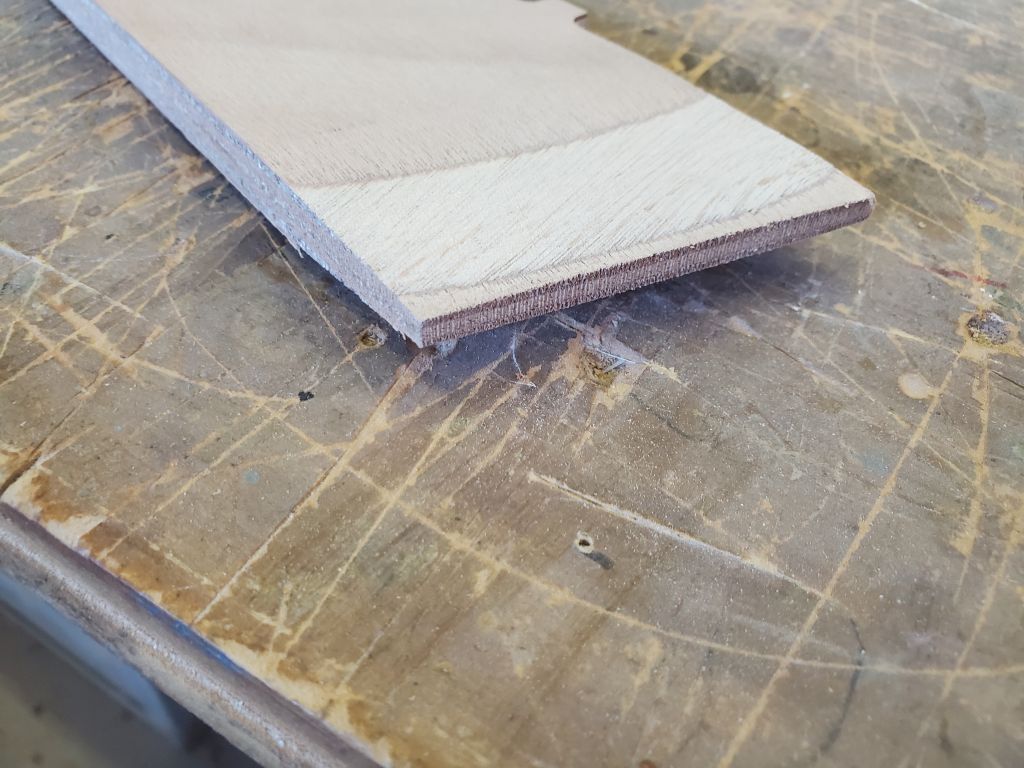
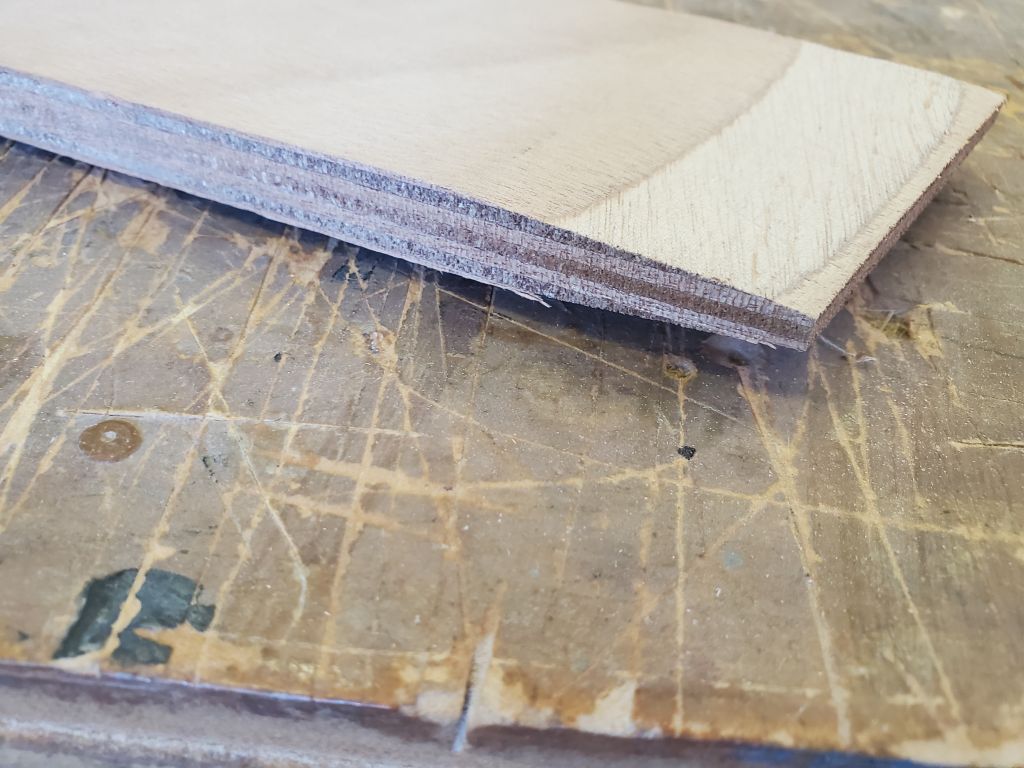
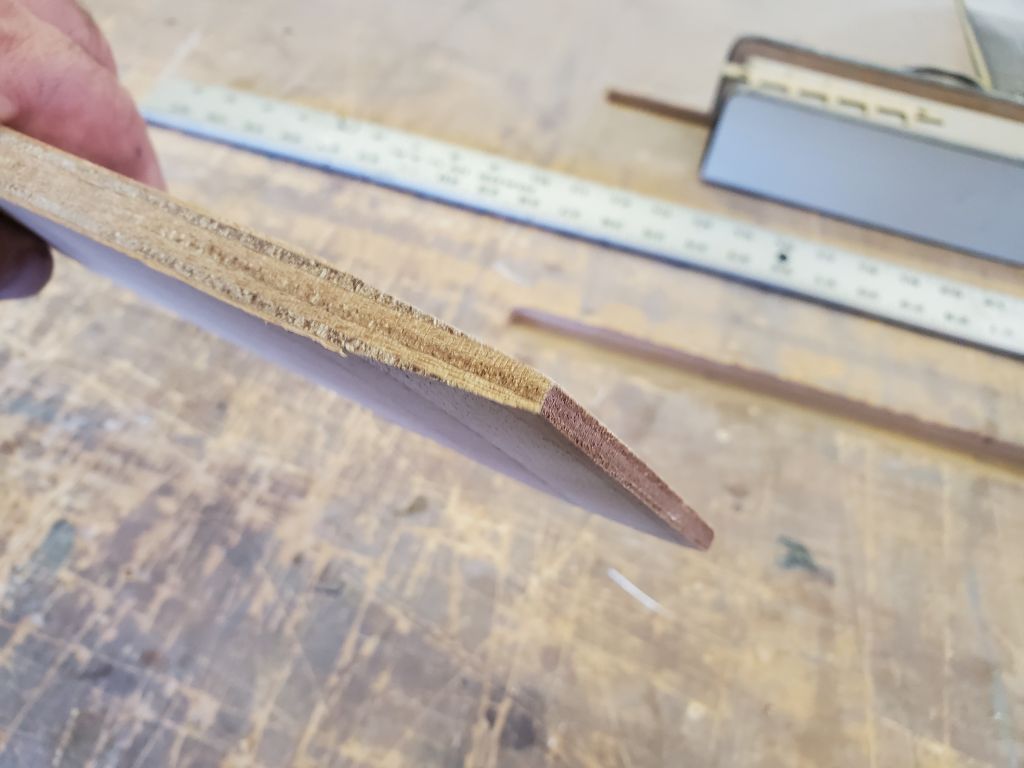
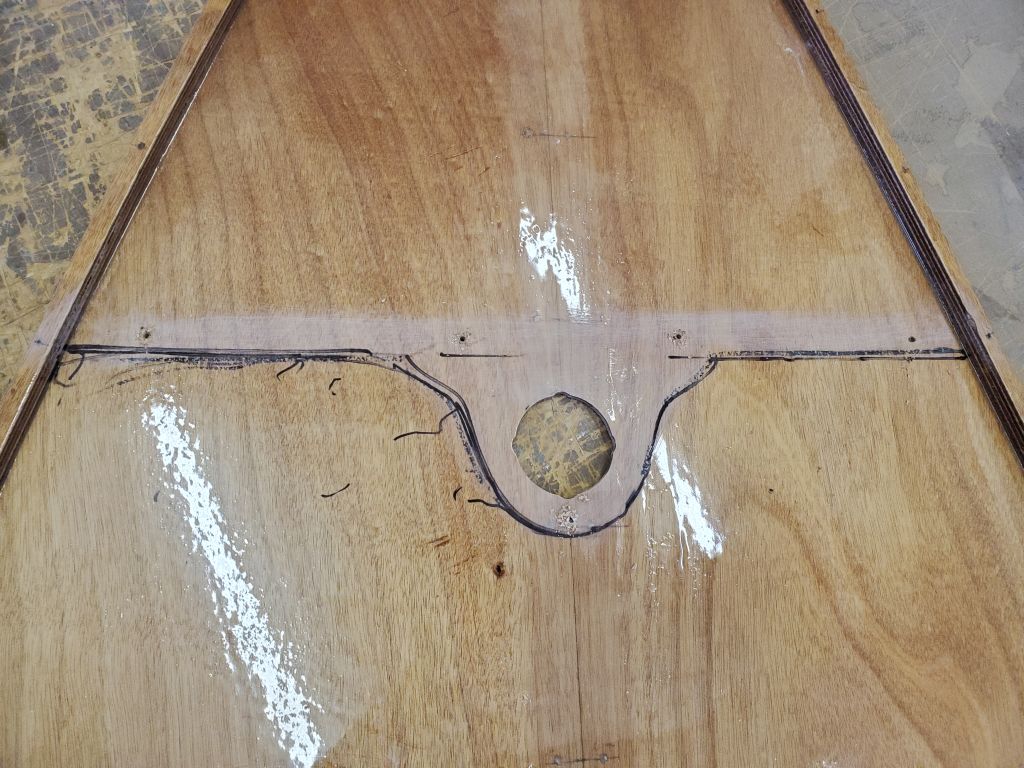
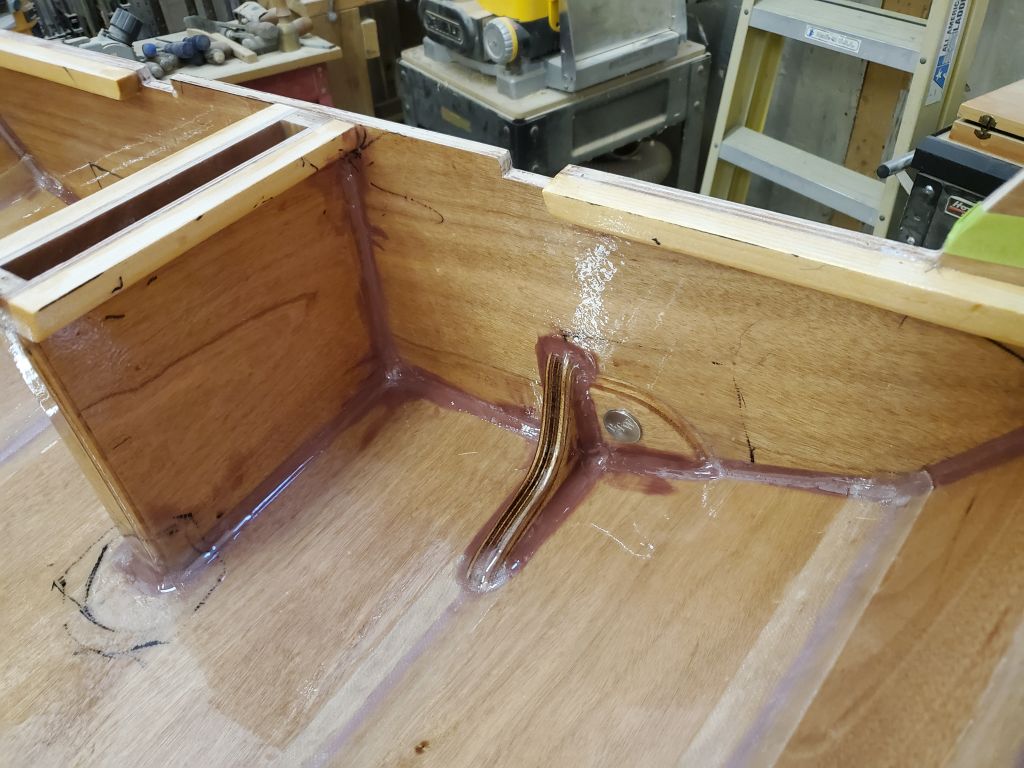
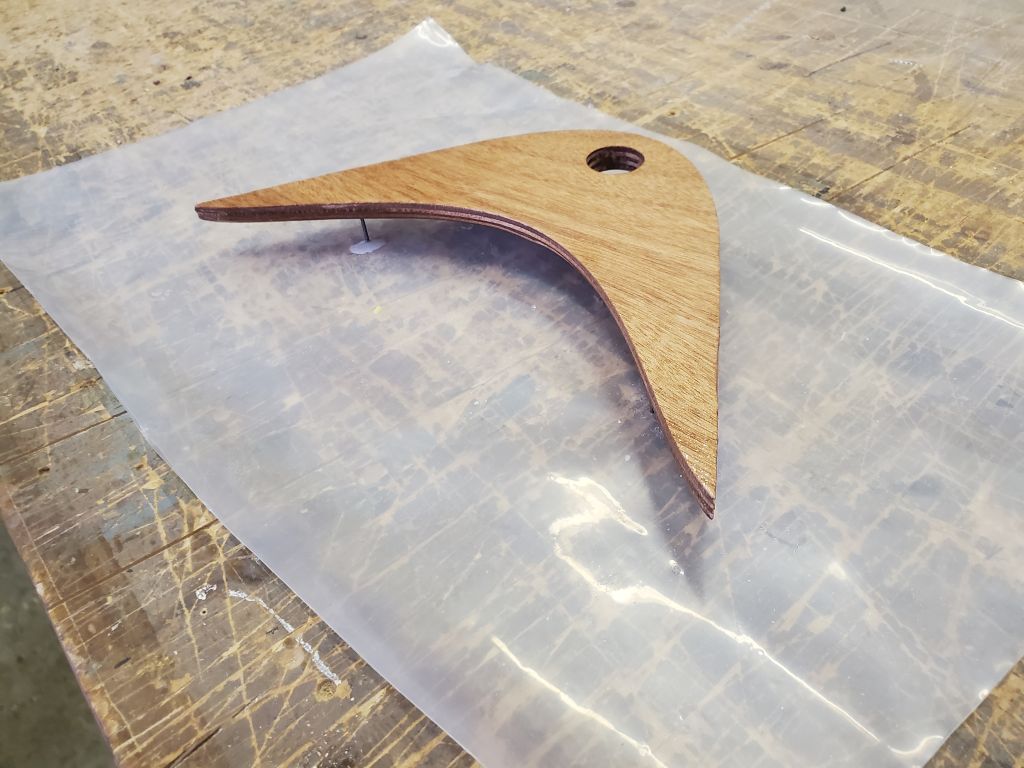
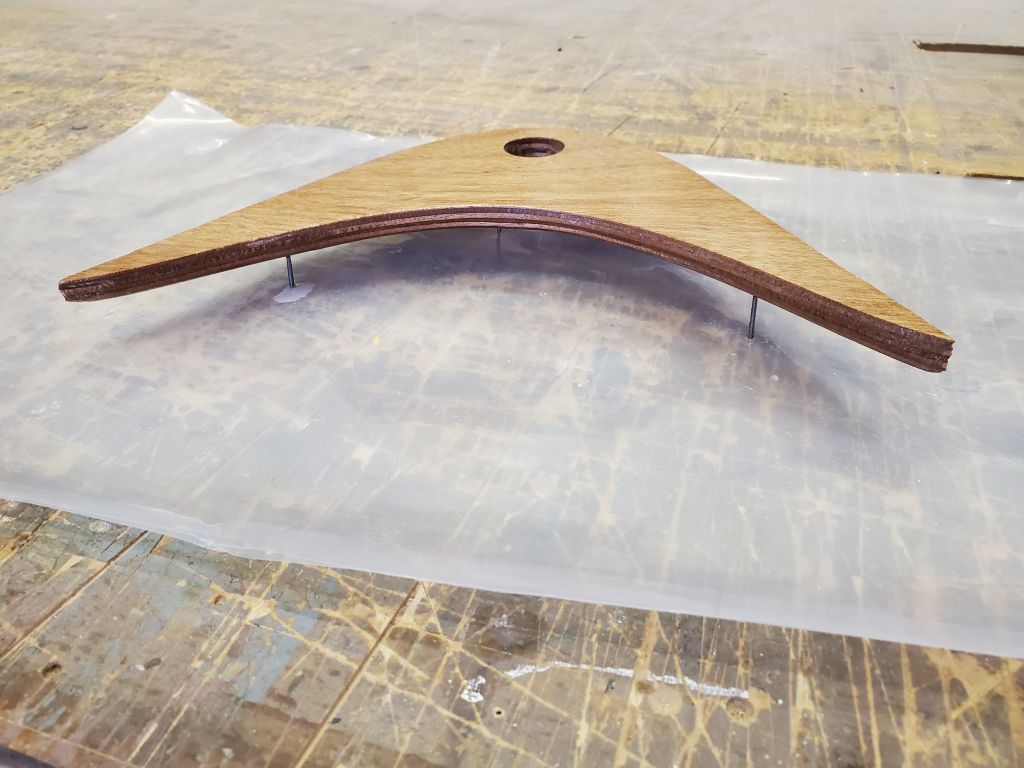
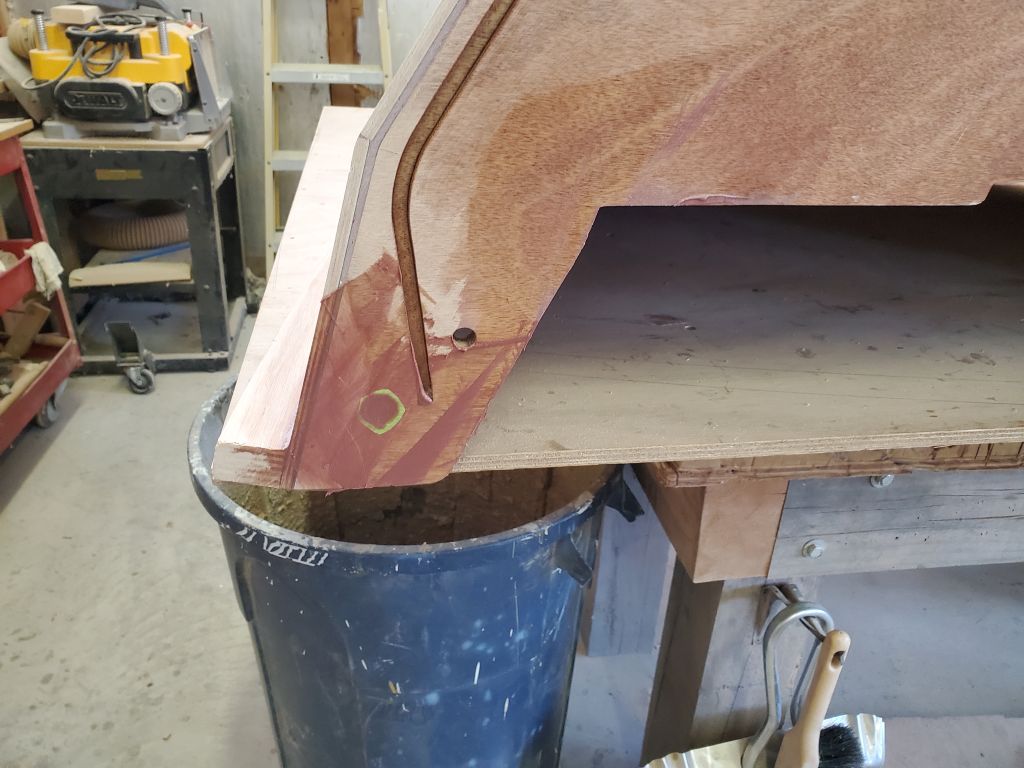
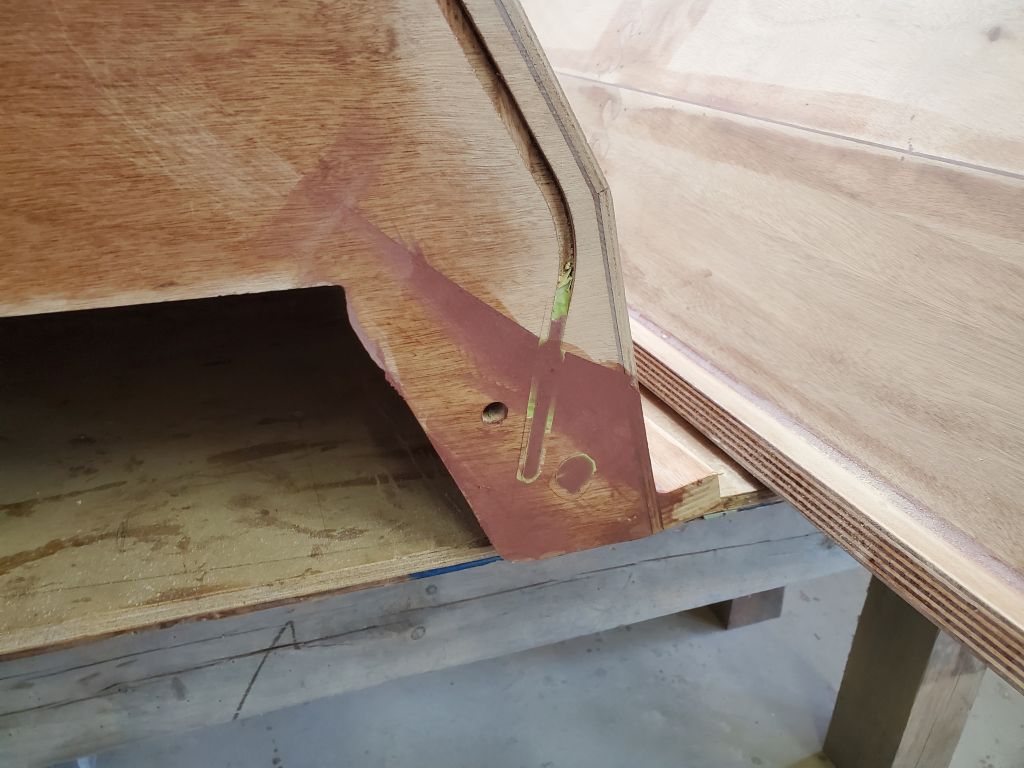
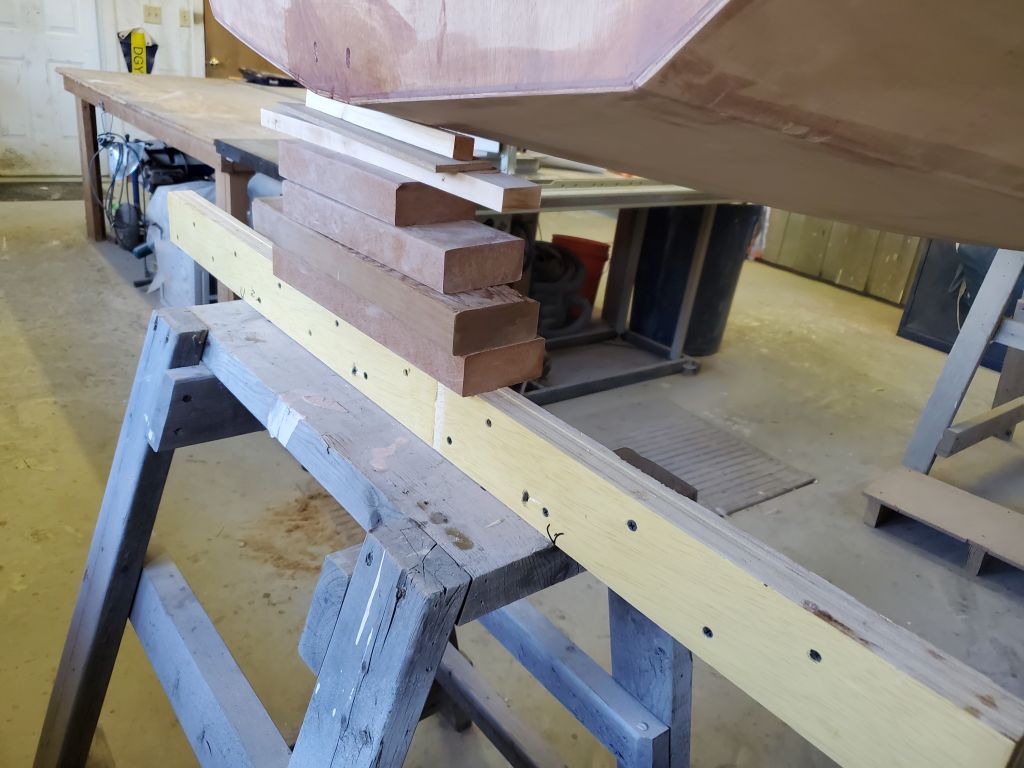
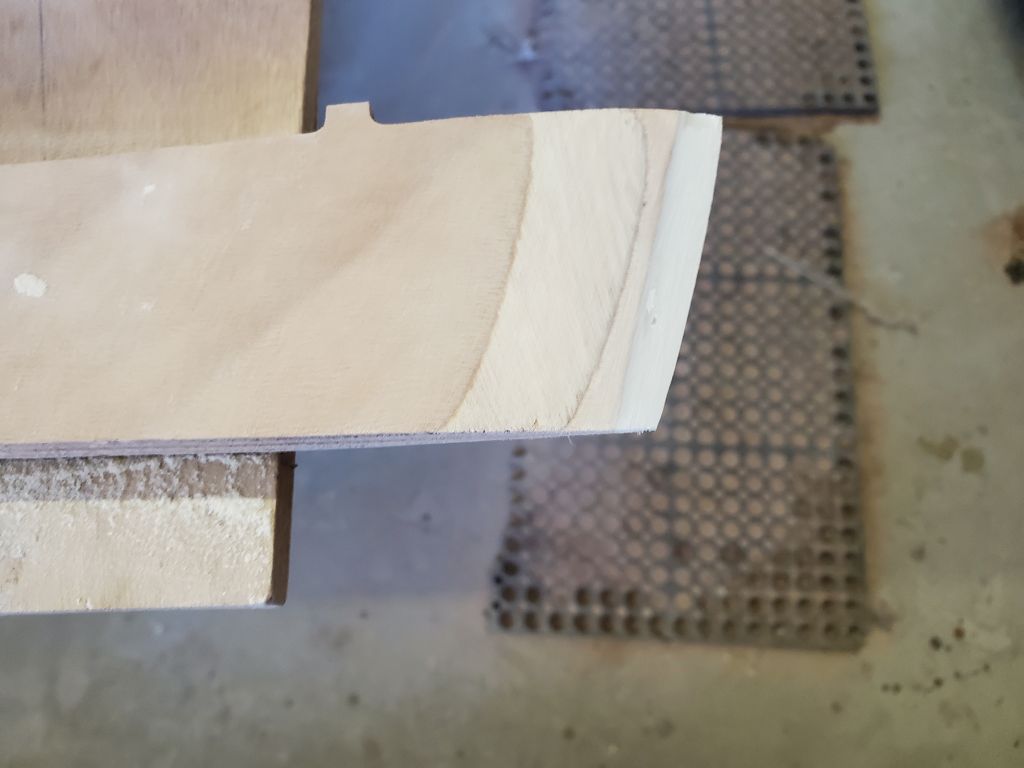
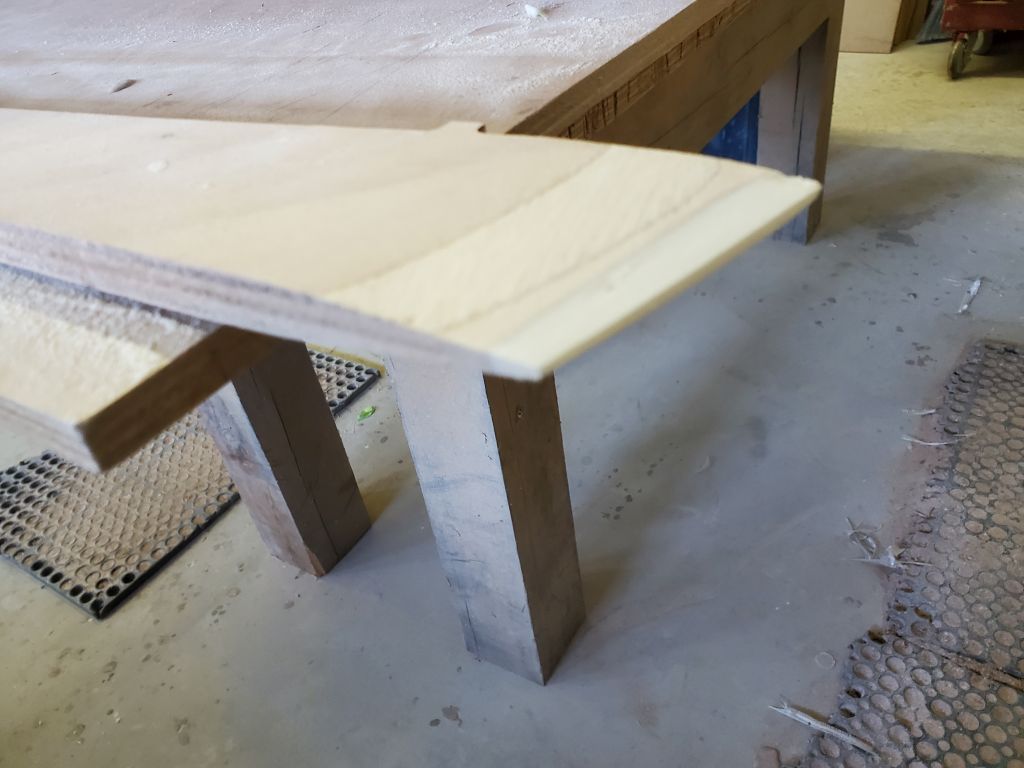
Meanwhile, I continued some of the early prep work on the skeg.  I sanded the new epoxy trailing edge I’d formed last time, bringing it smooth at the tapered plywood ends and leaving about a 3/16″ flat on the trailing edge.  Then, I supported the skeg upside down with three screws driven through the benchtop and slightly into the skeg, and installed a long fiberglass wear strip on the bottom edge, first wetting out the surfaces with unthickened epoxy then a thickened epoxy adhesive mixture.  I taped the fiberglass in place, with a clamp at the thin forward end.

The fiberglass extended past the forward end of the skeg–later it would be cut to a specific length–and I used some of the leftover epoxy (thickened even more) to fill the small step between the plywood and fiberglass there, so that I could sand the transition smooth later.
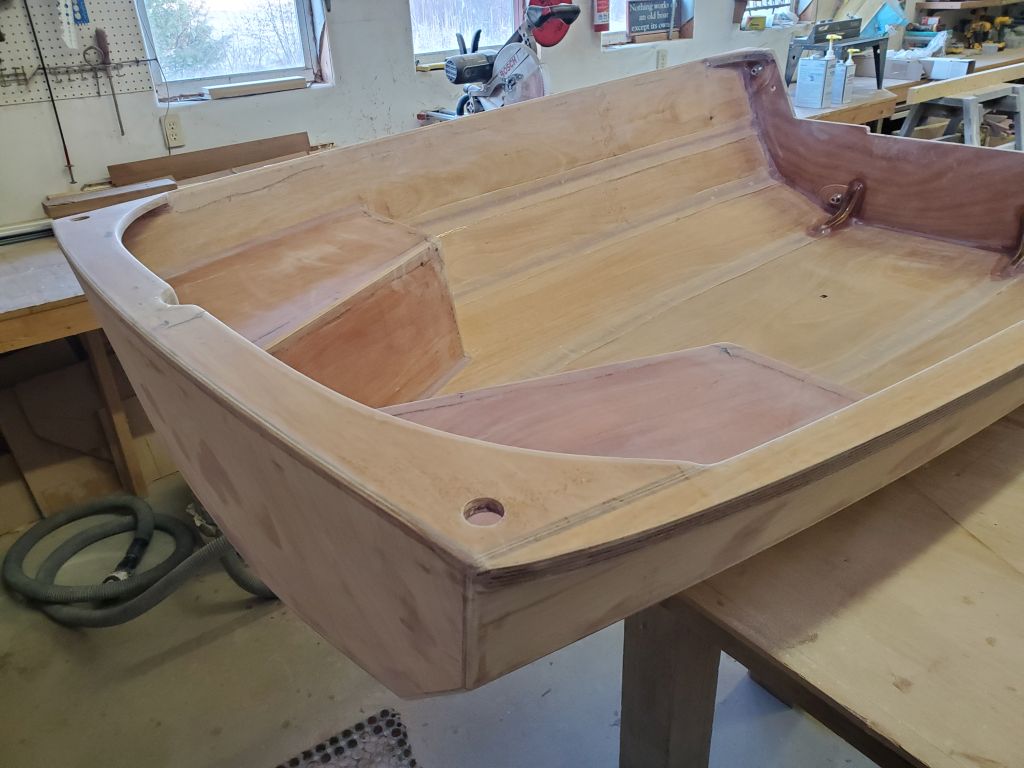
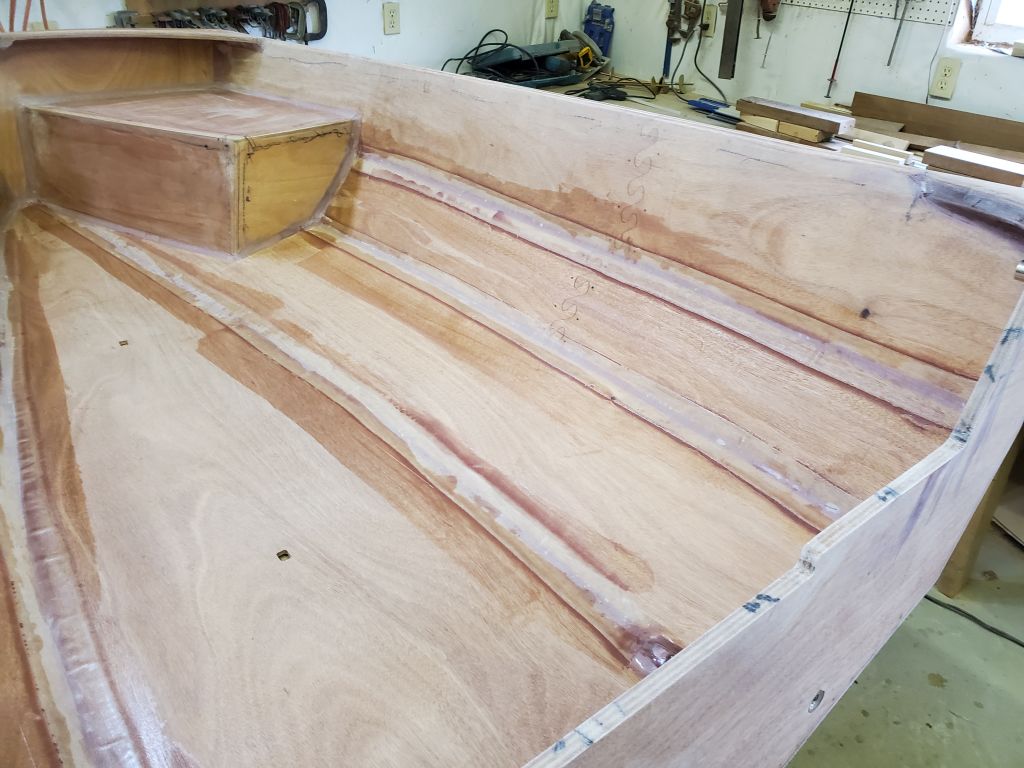
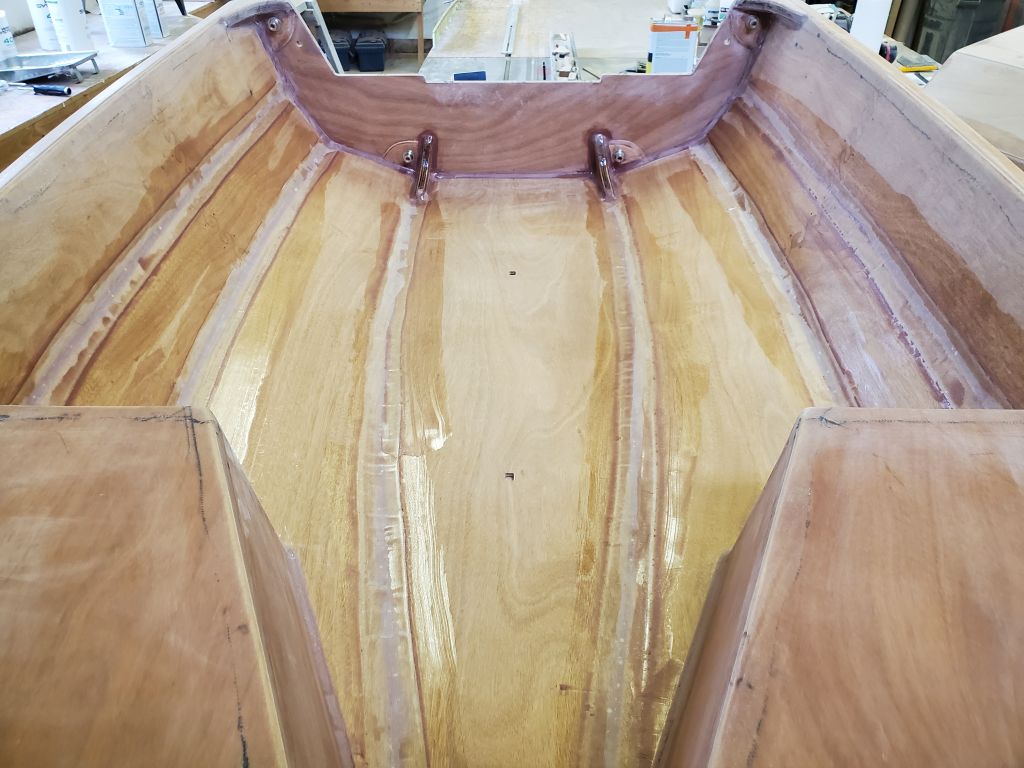
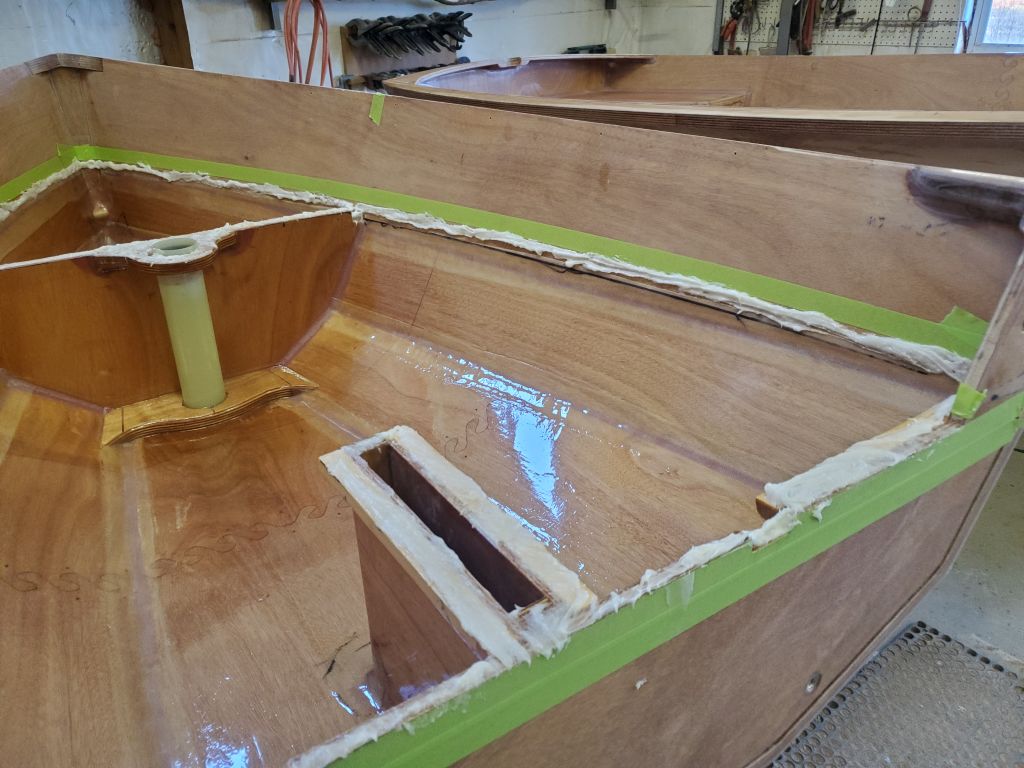
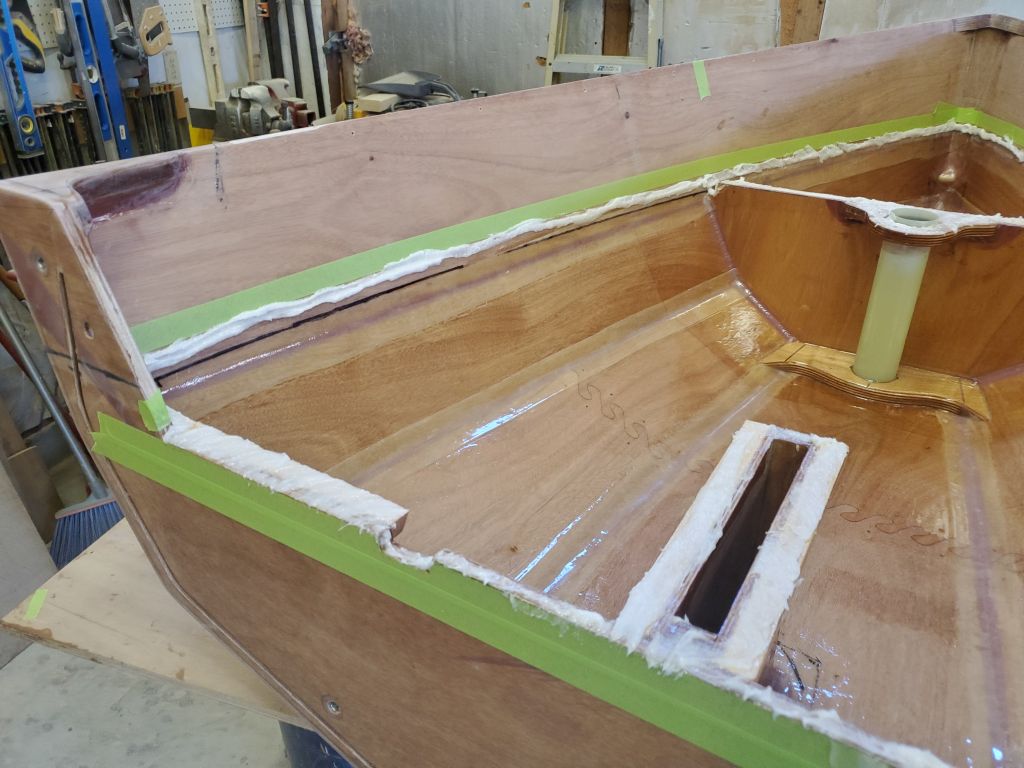
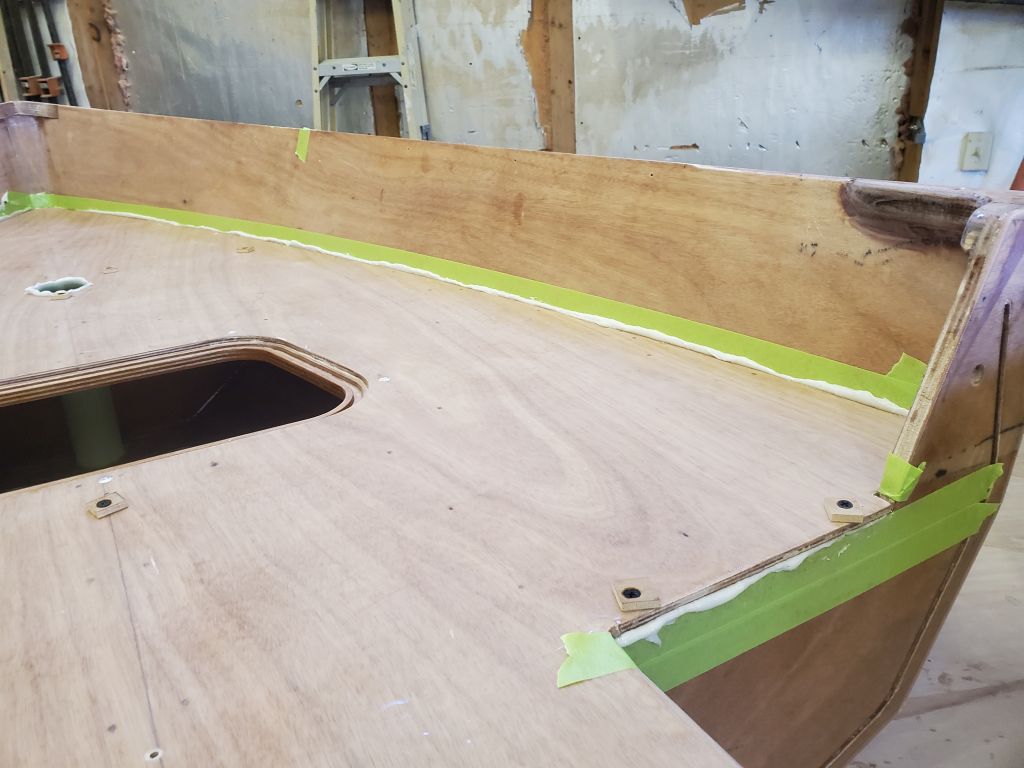
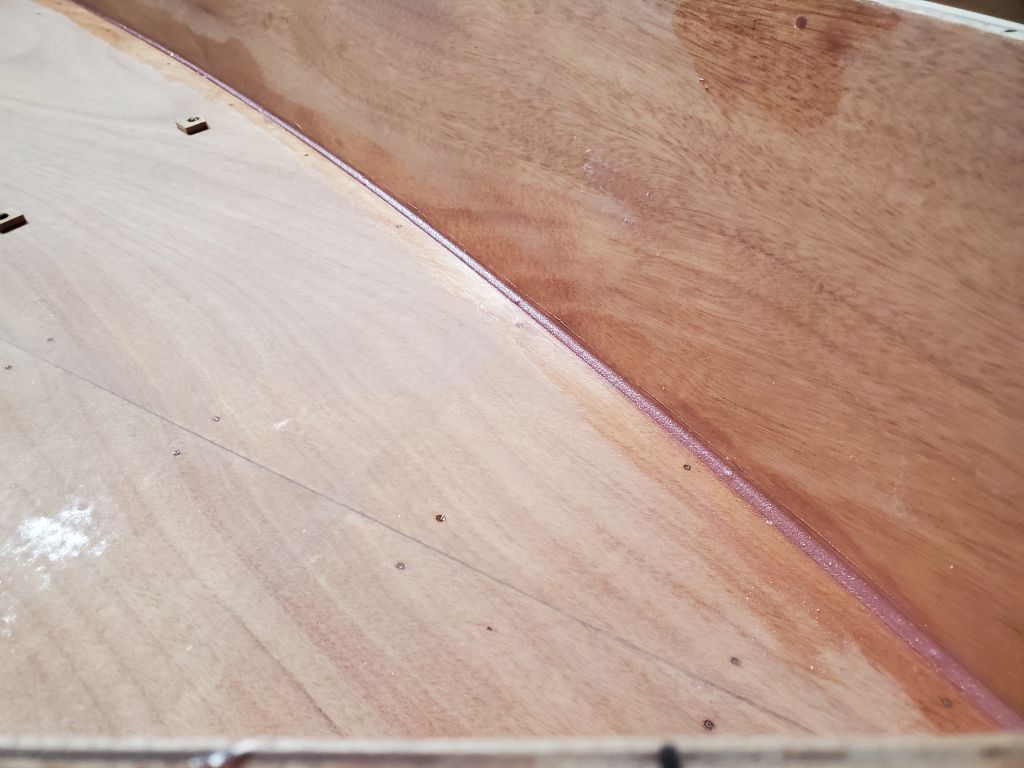
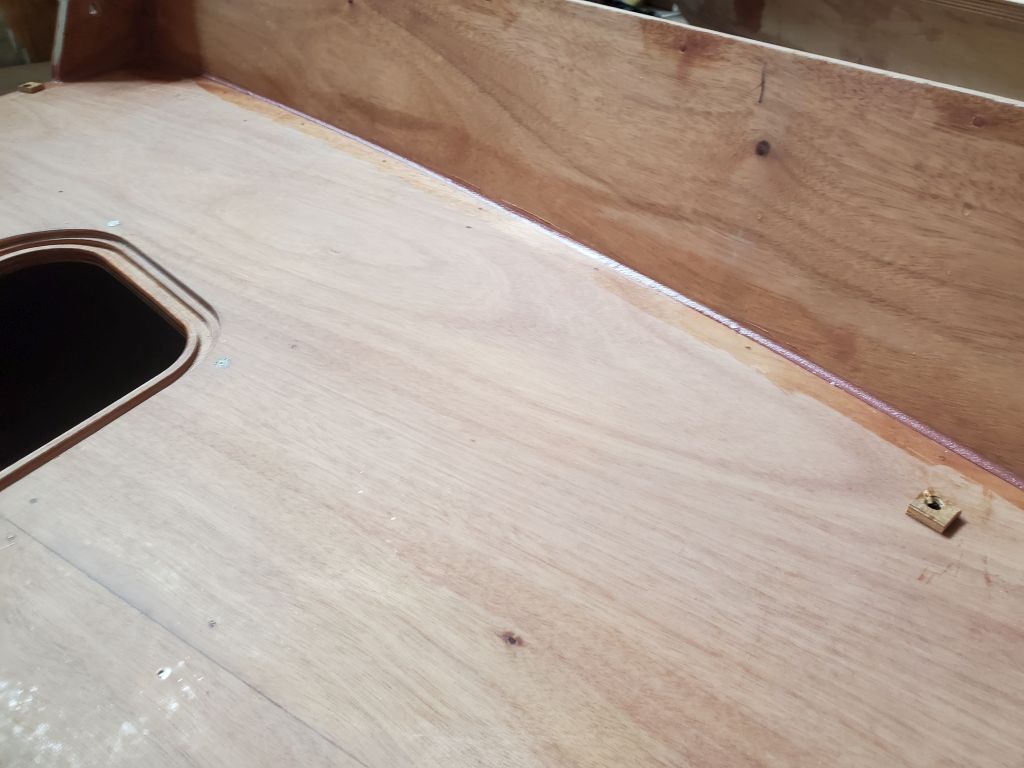
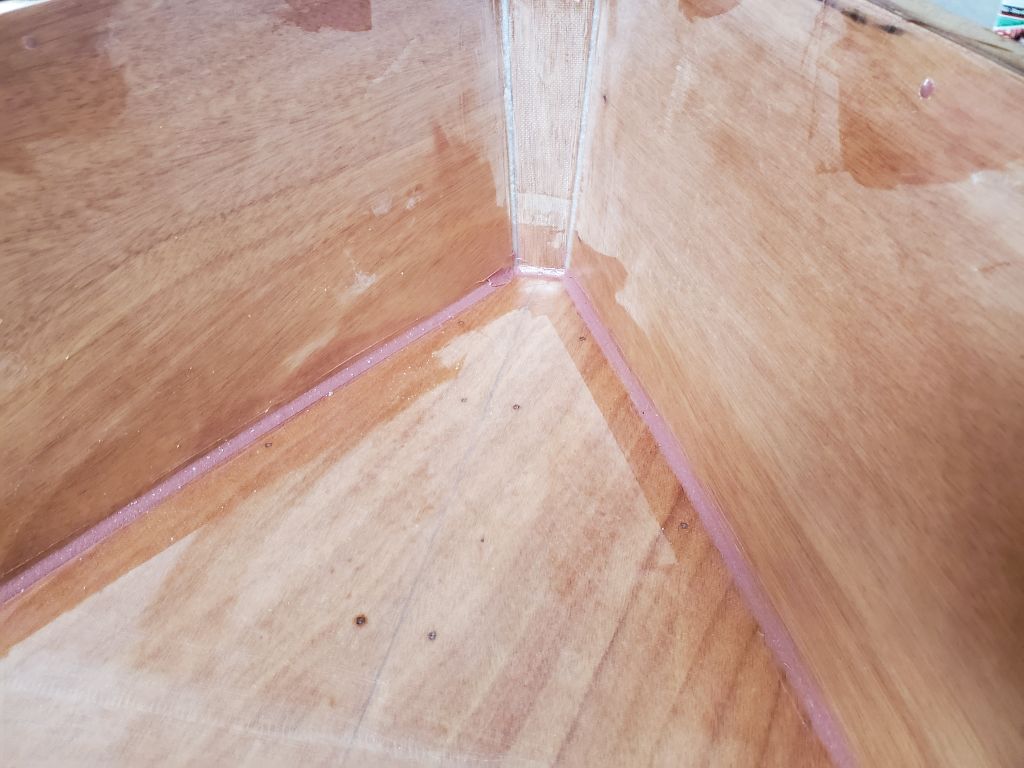
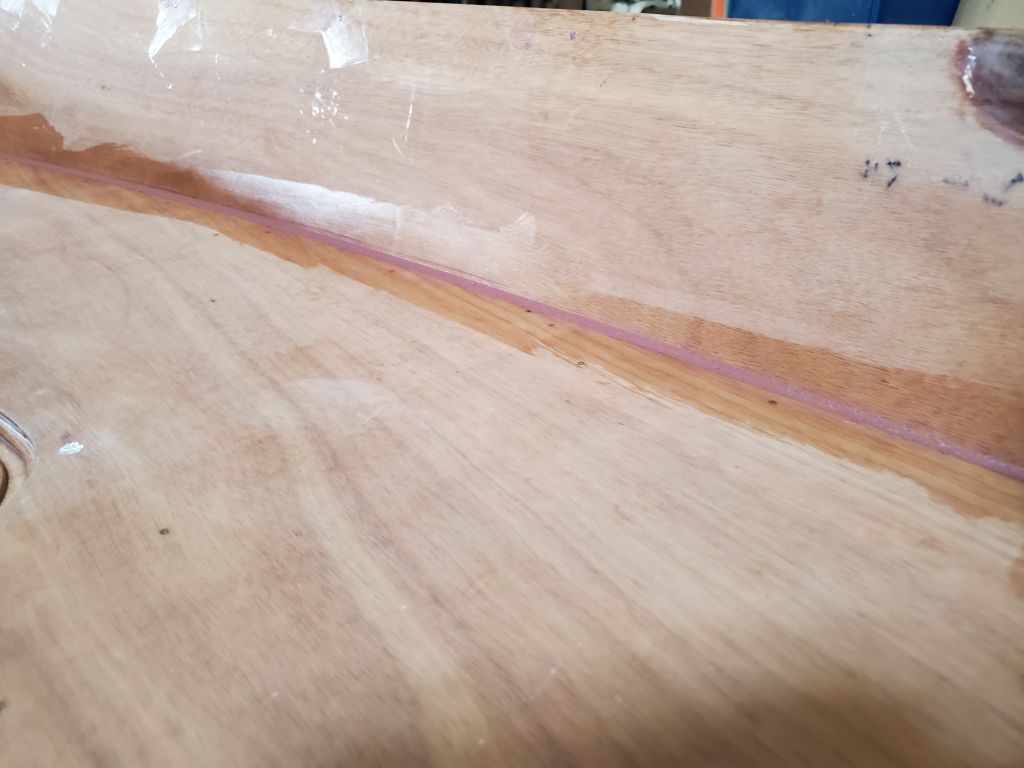
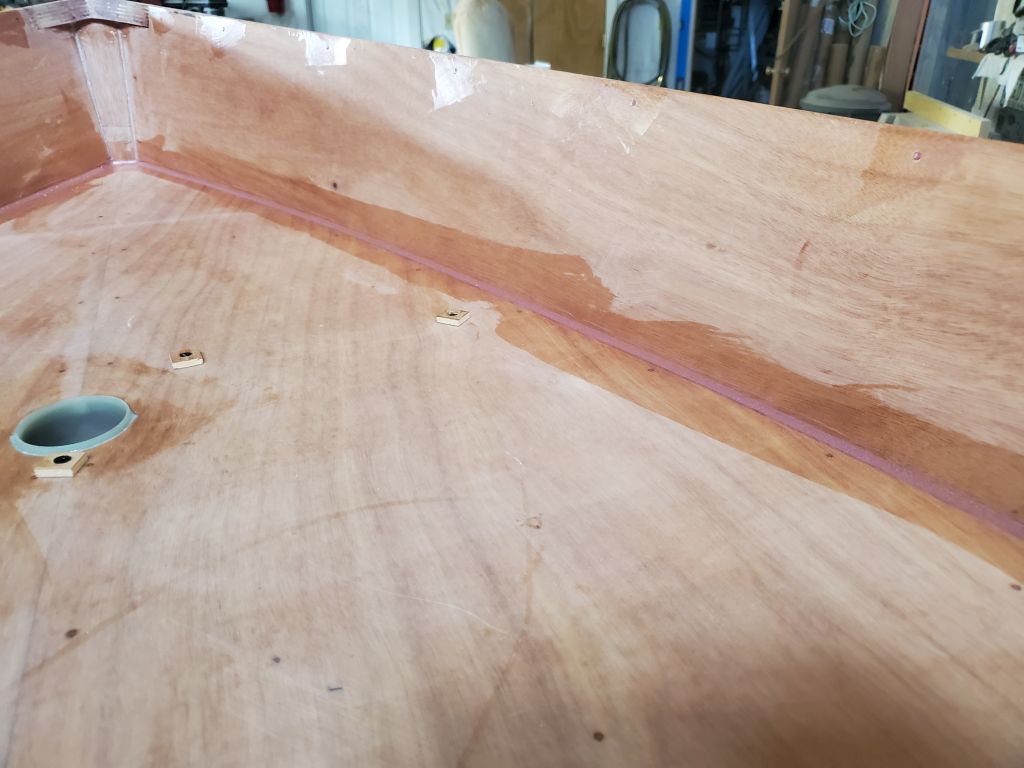
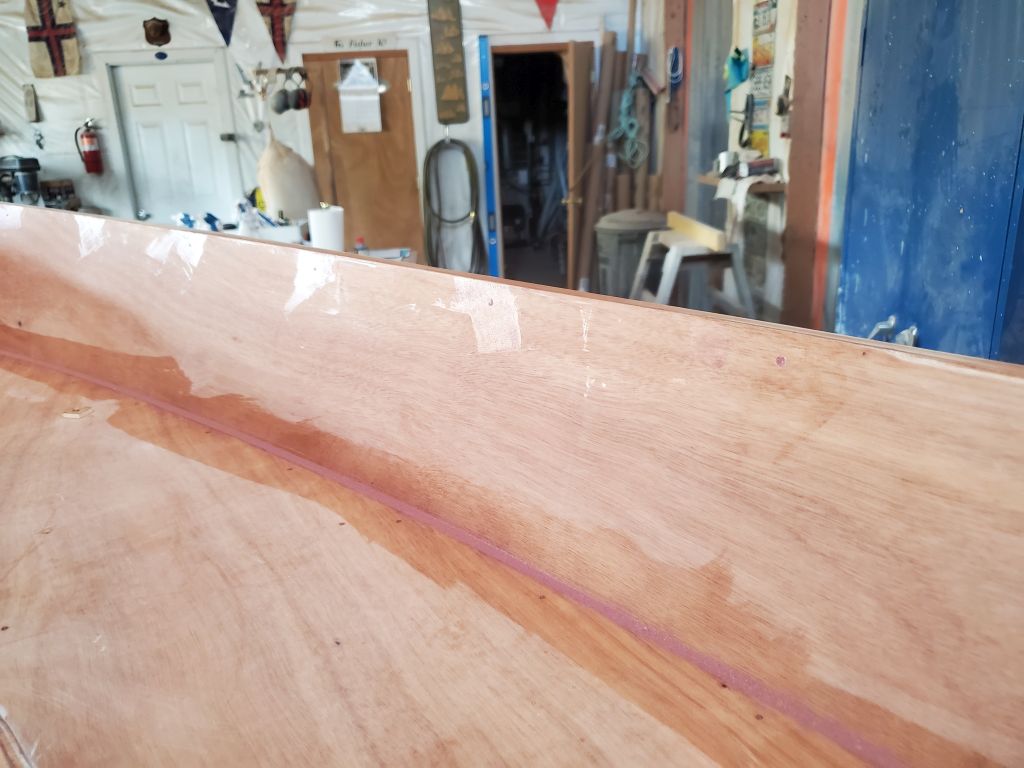
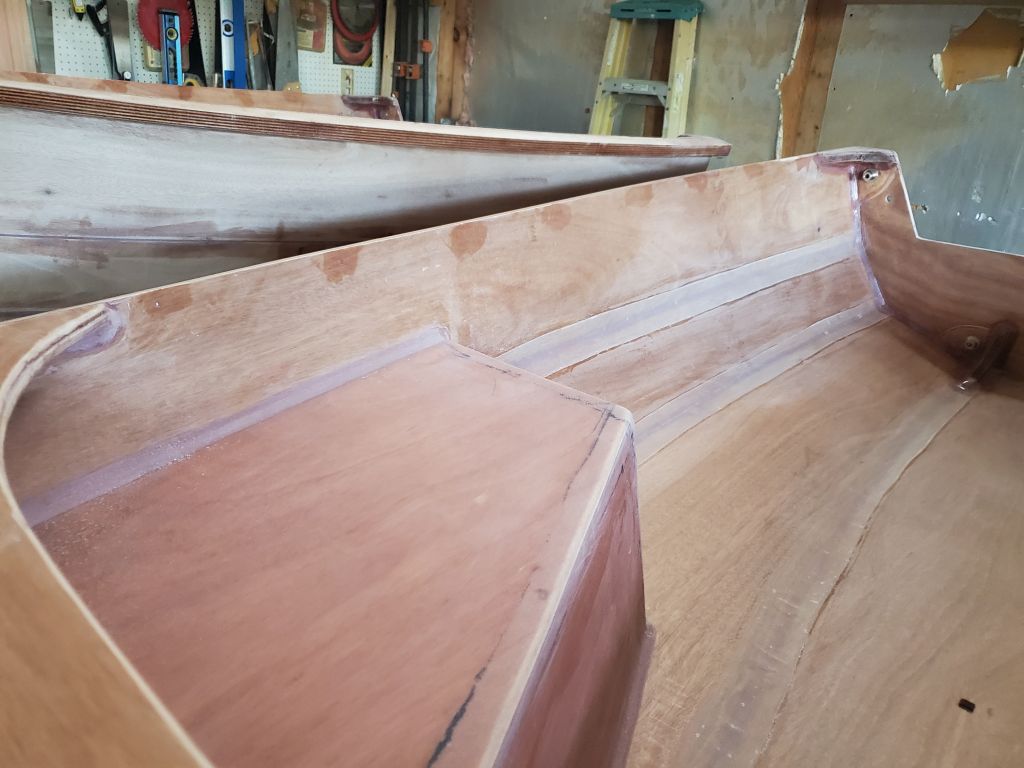
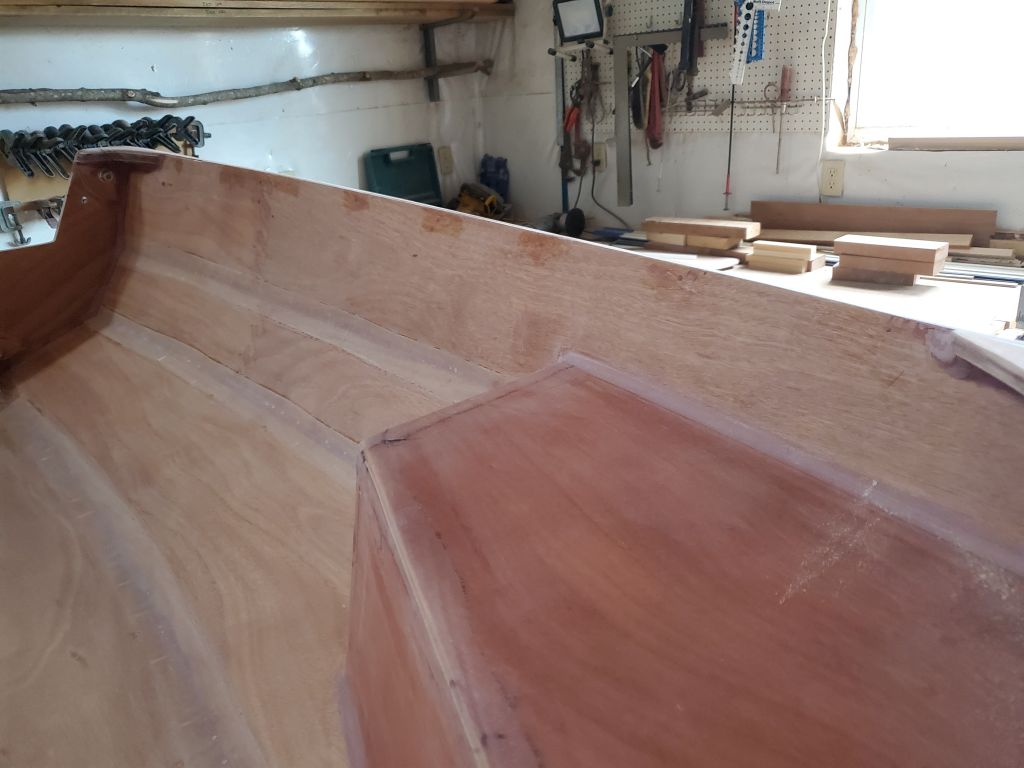
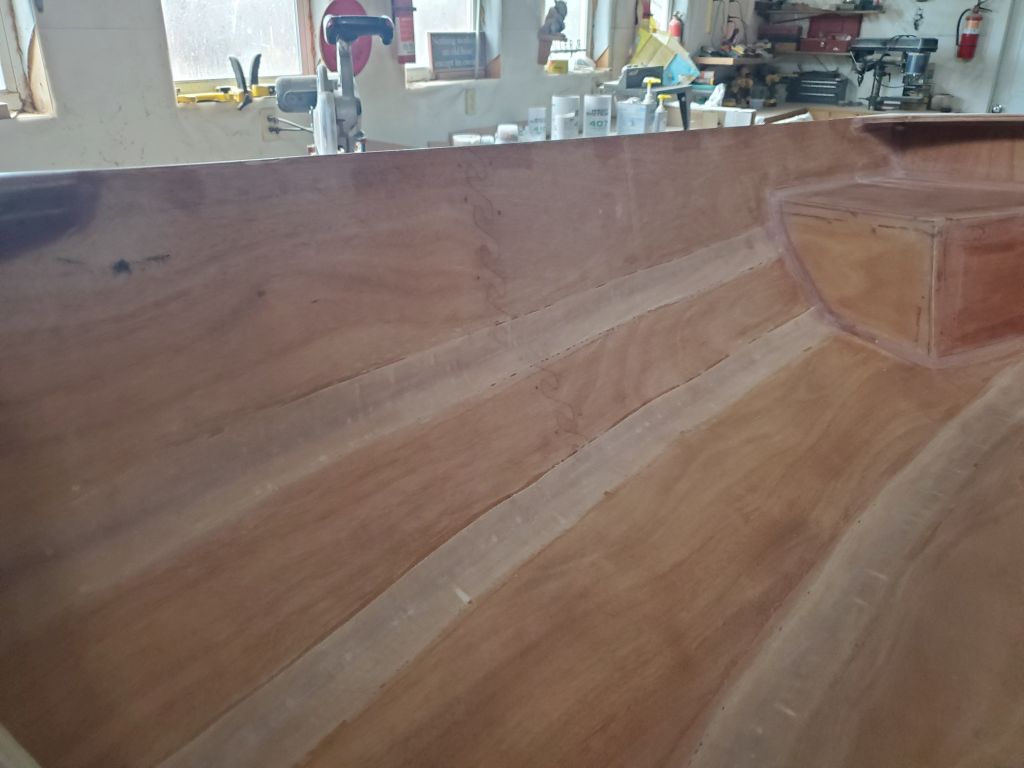
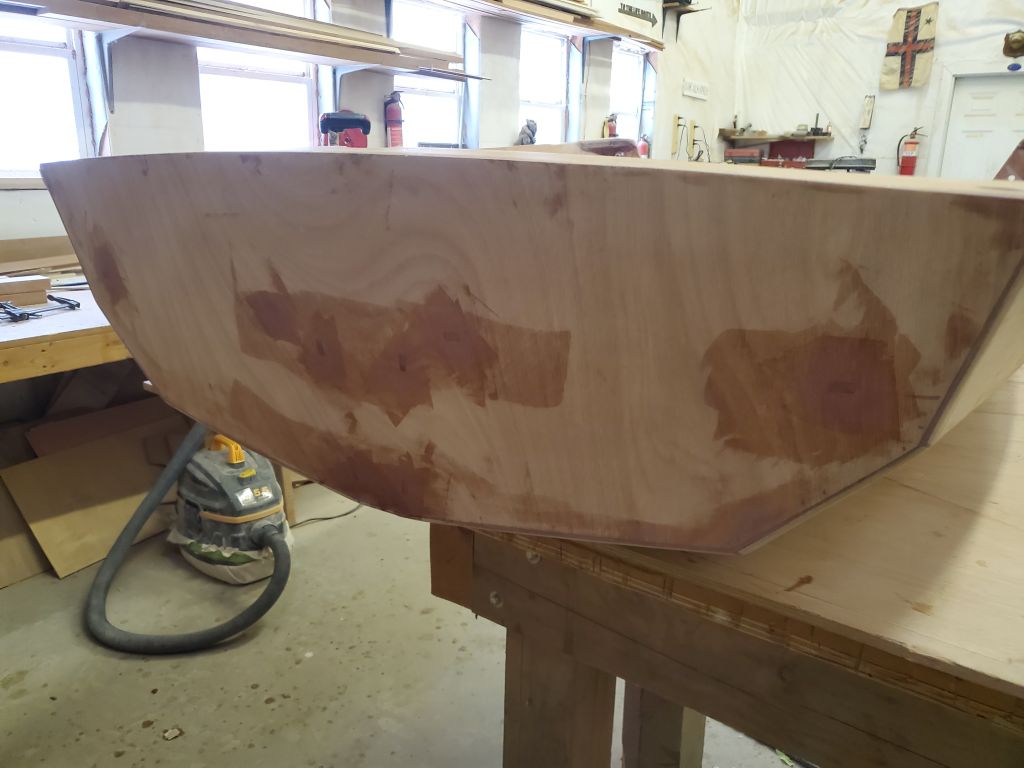
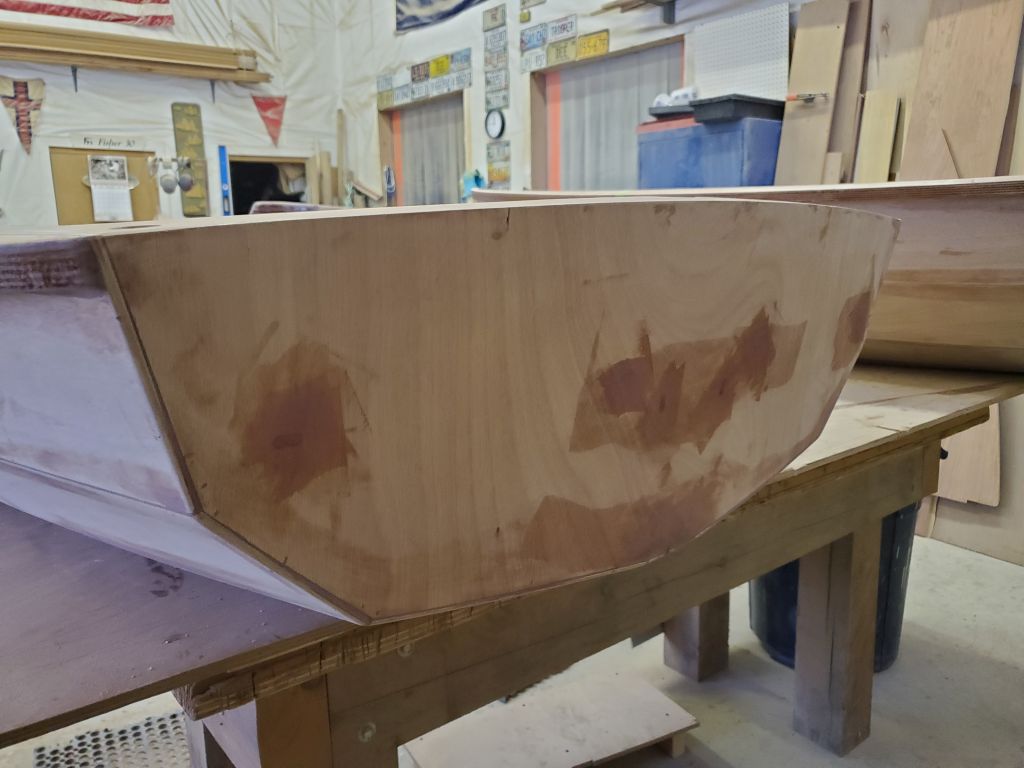
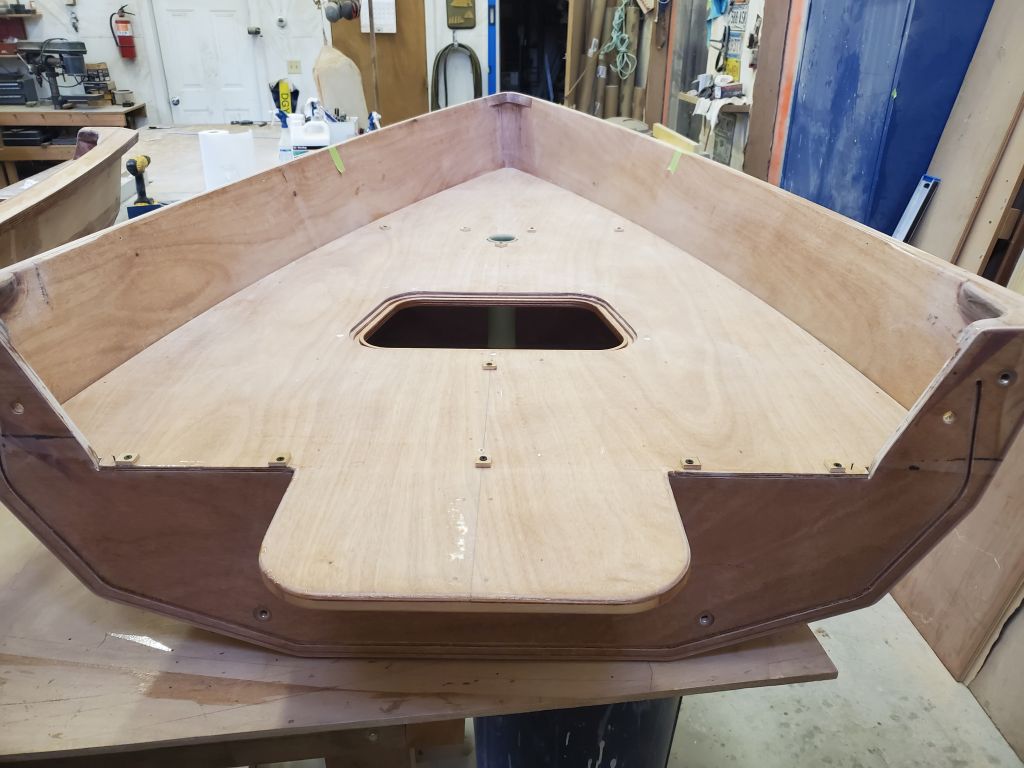
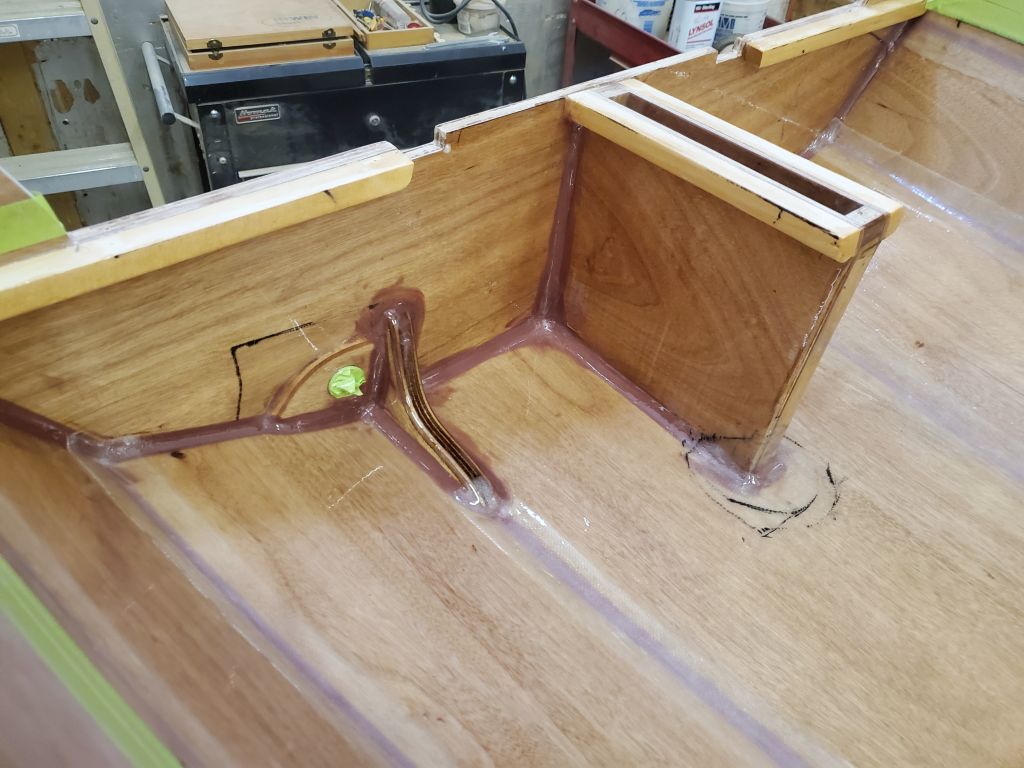
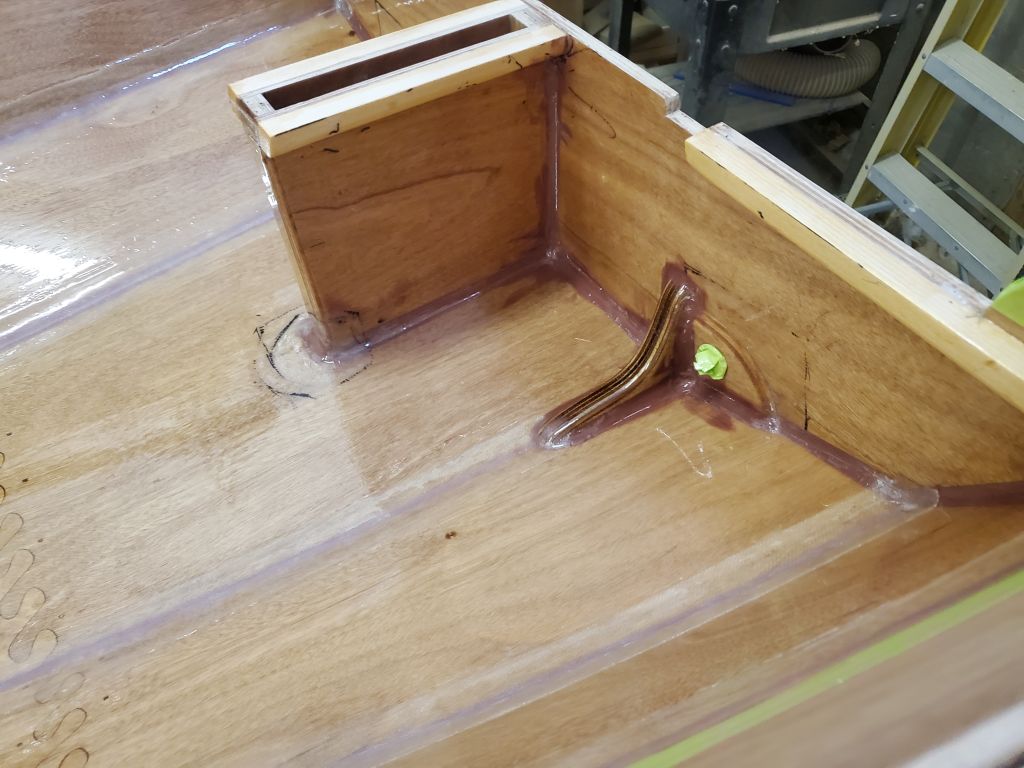
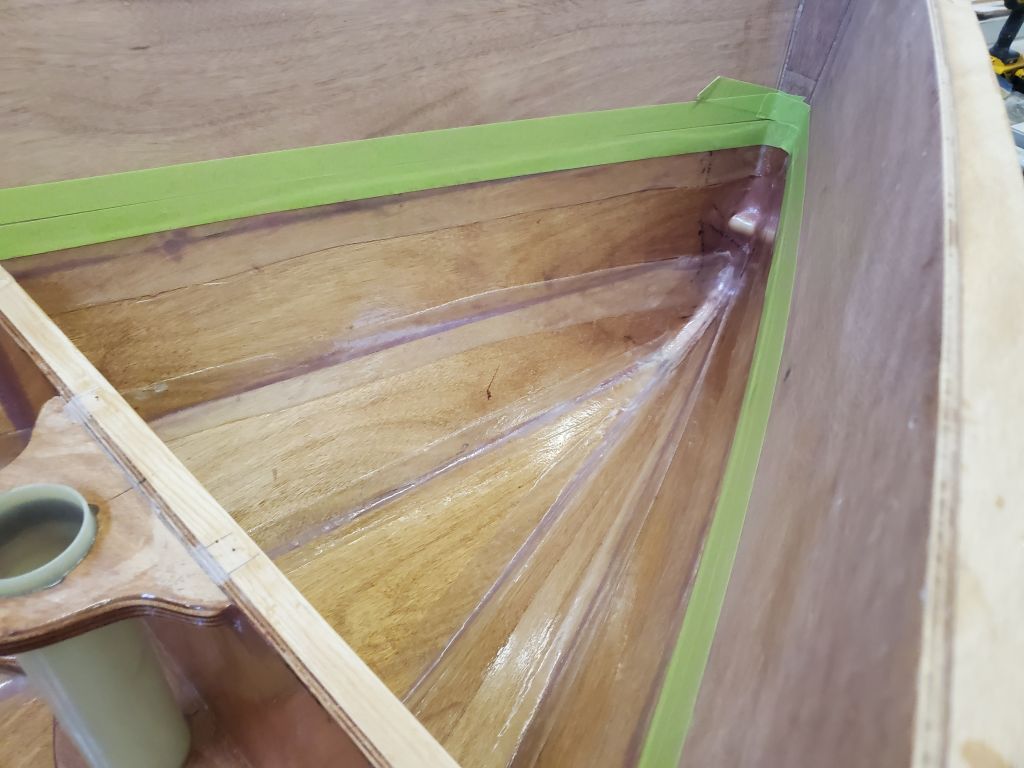
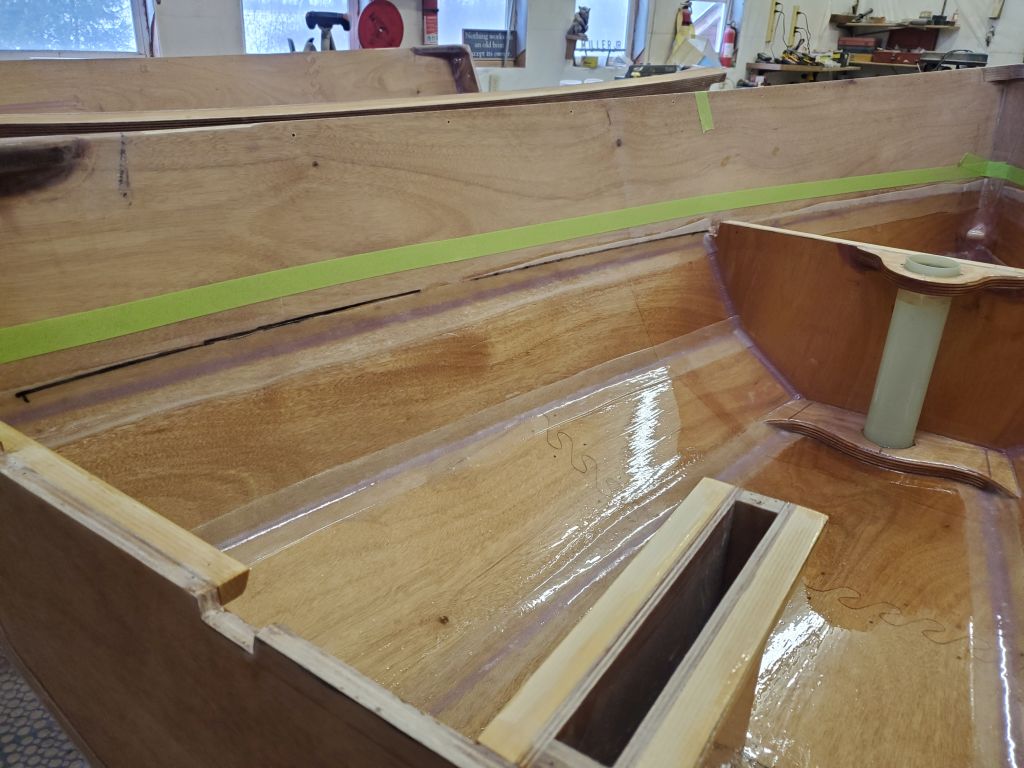
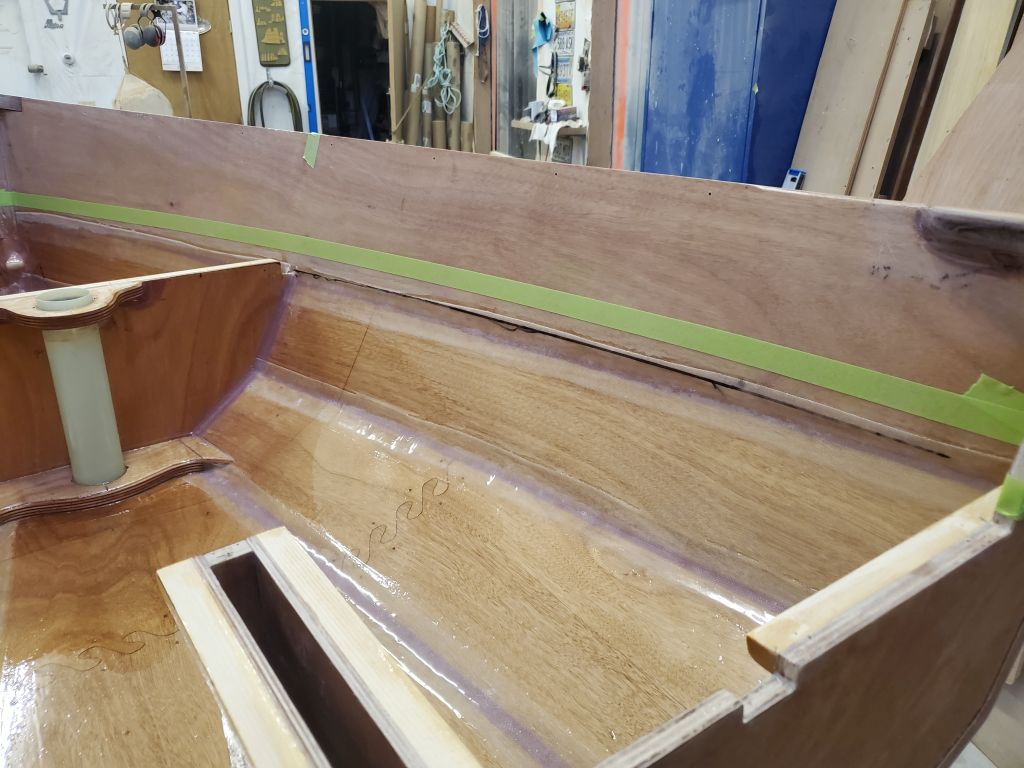
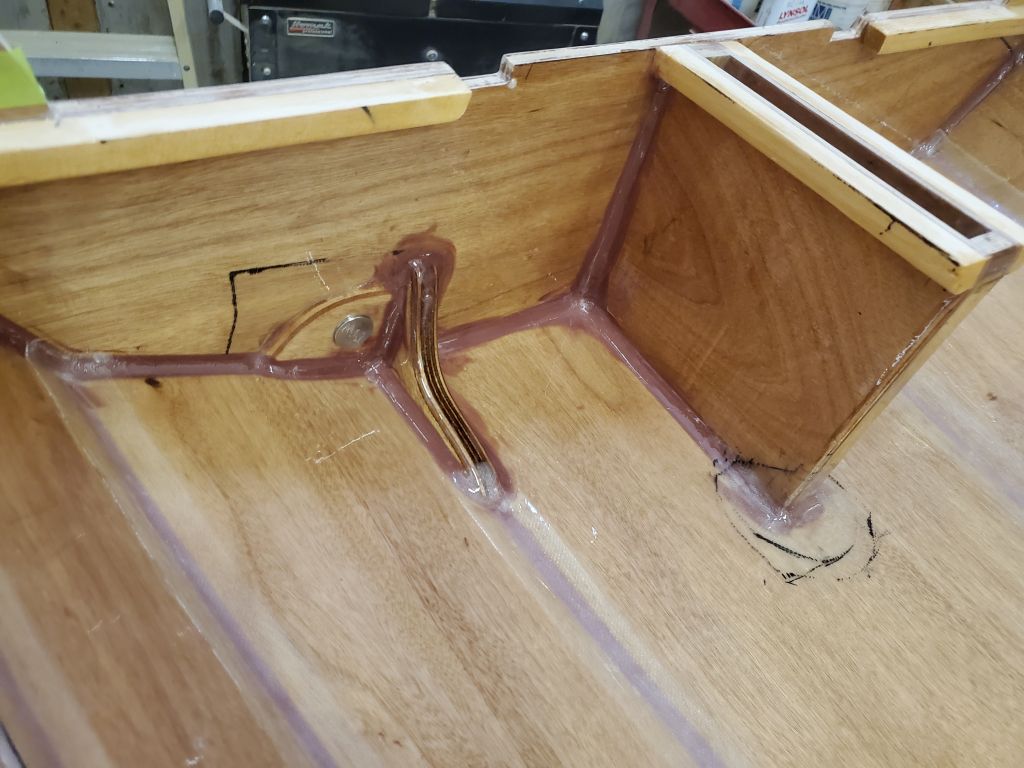
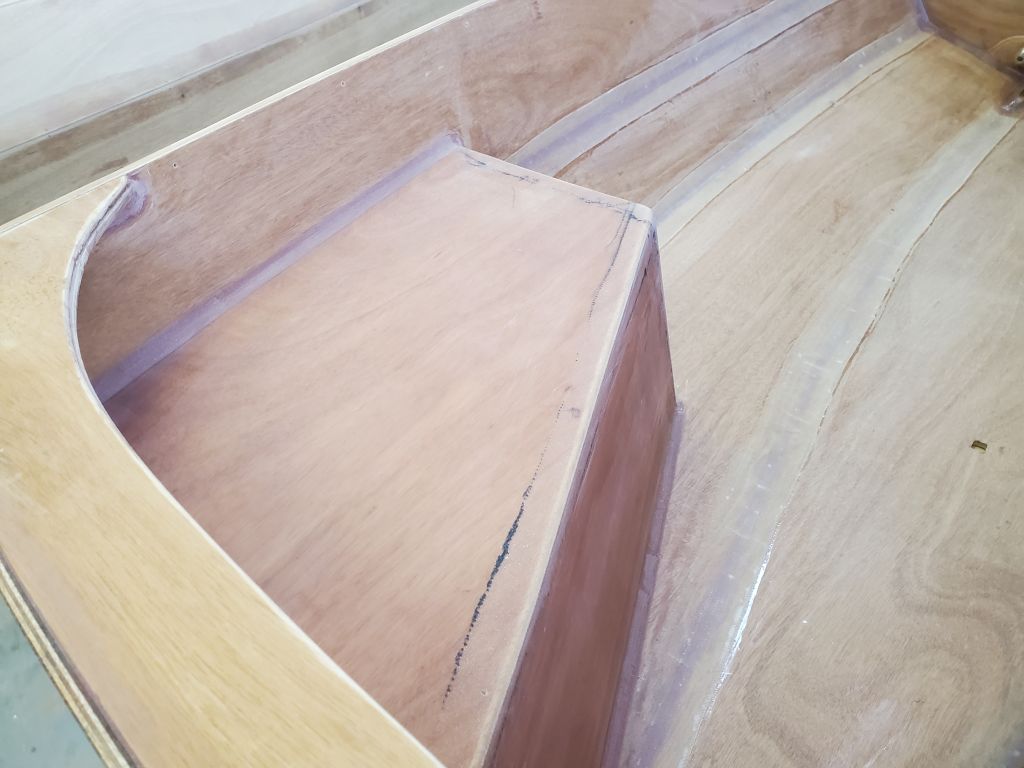
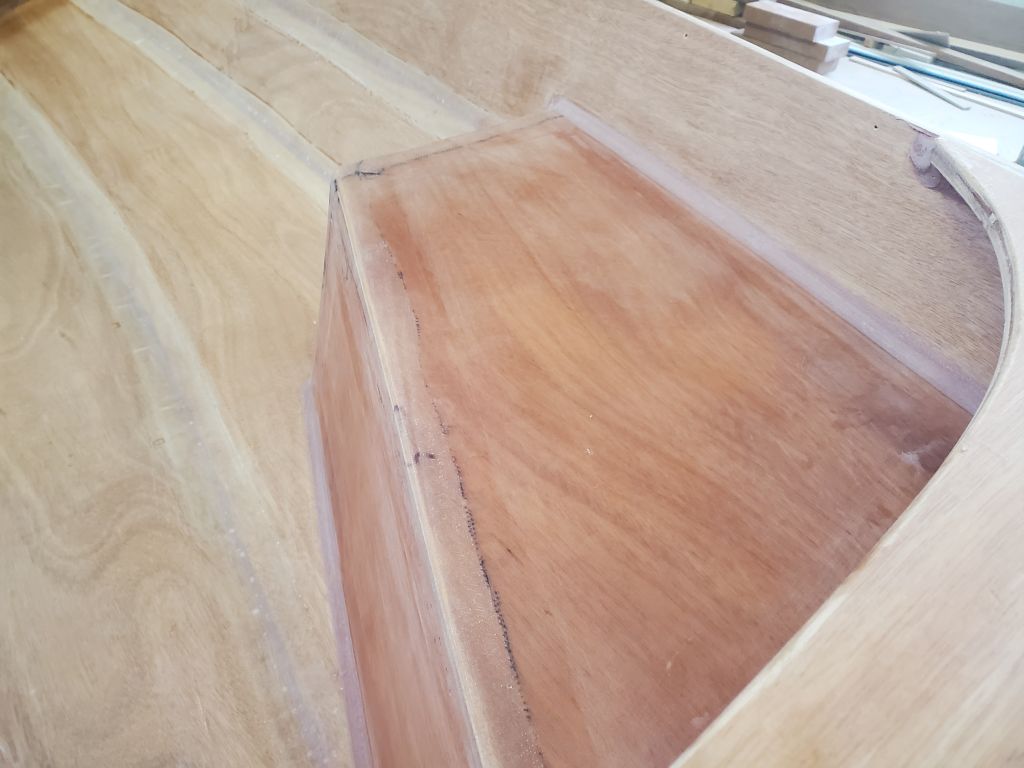
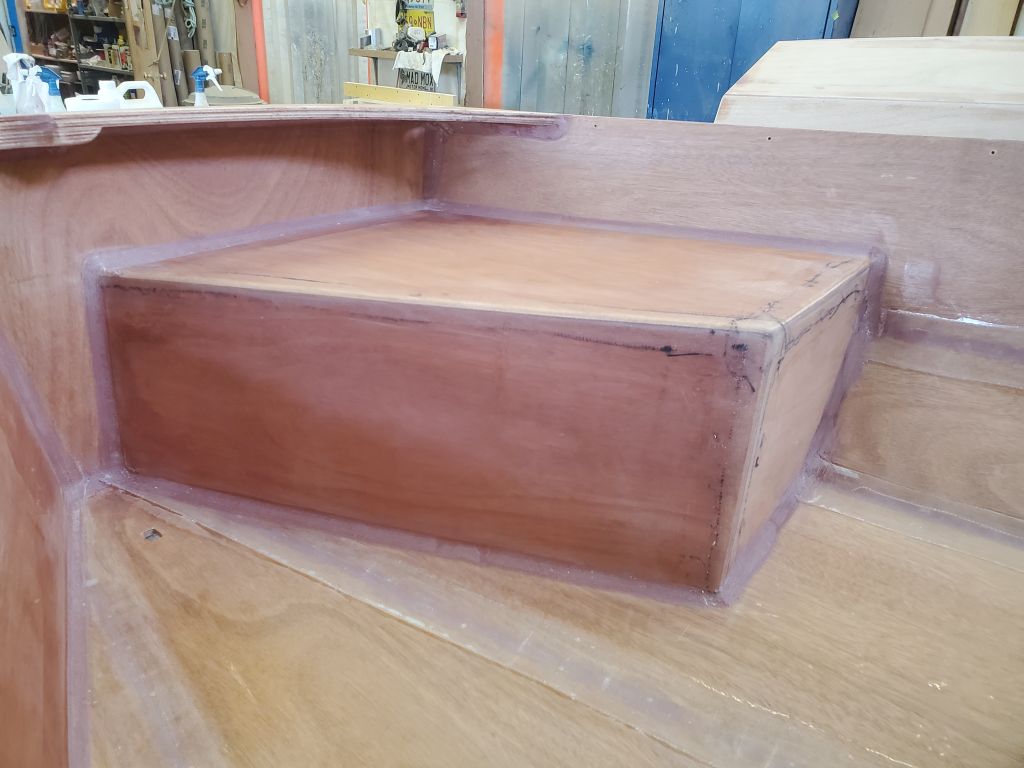
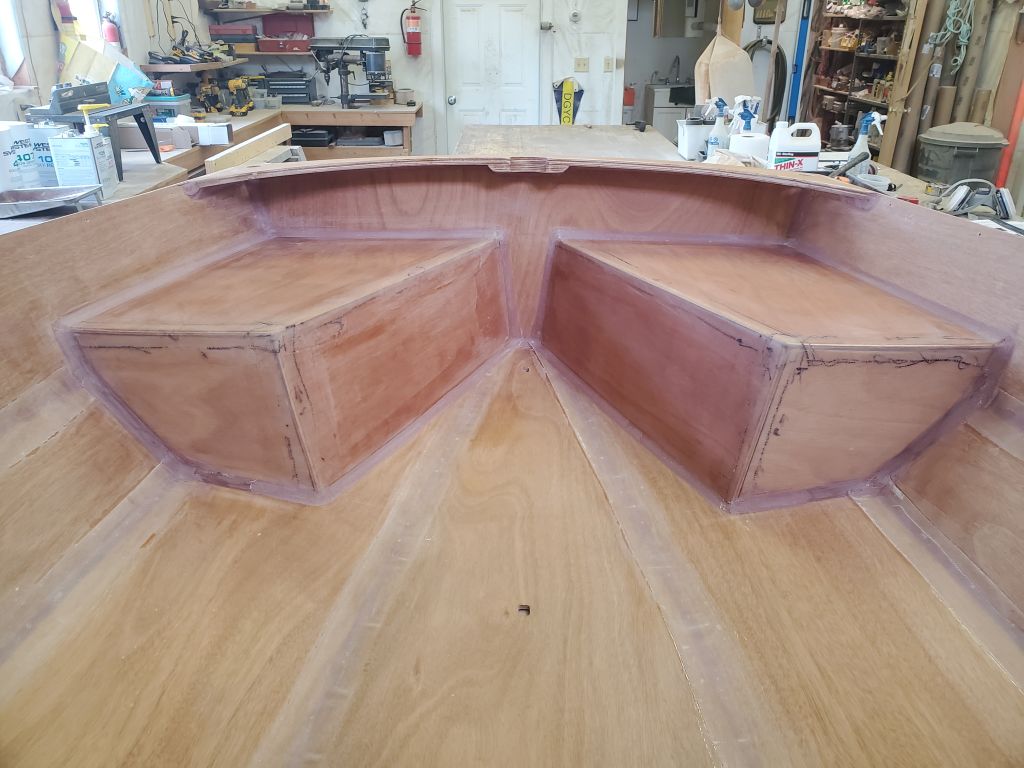
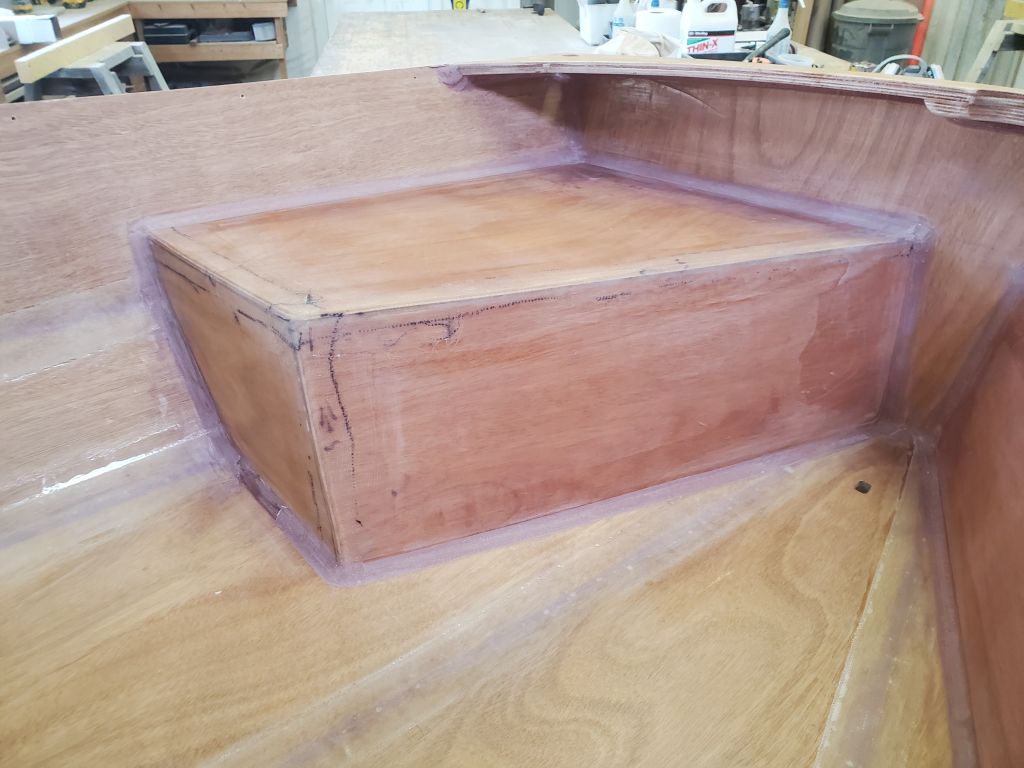
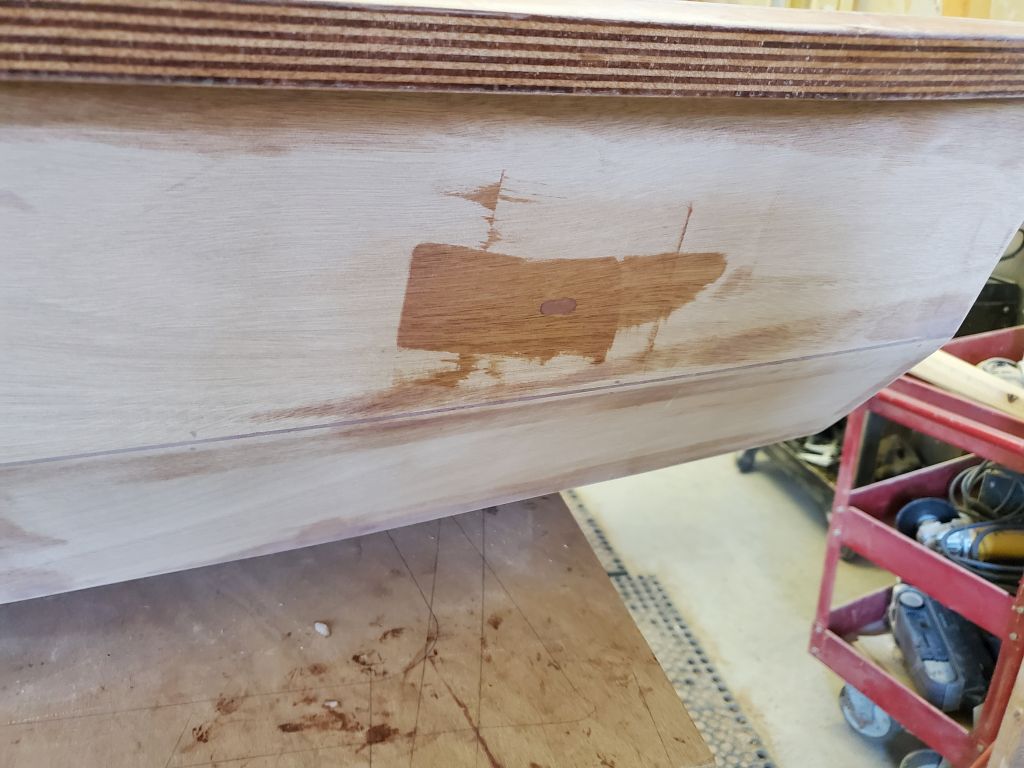
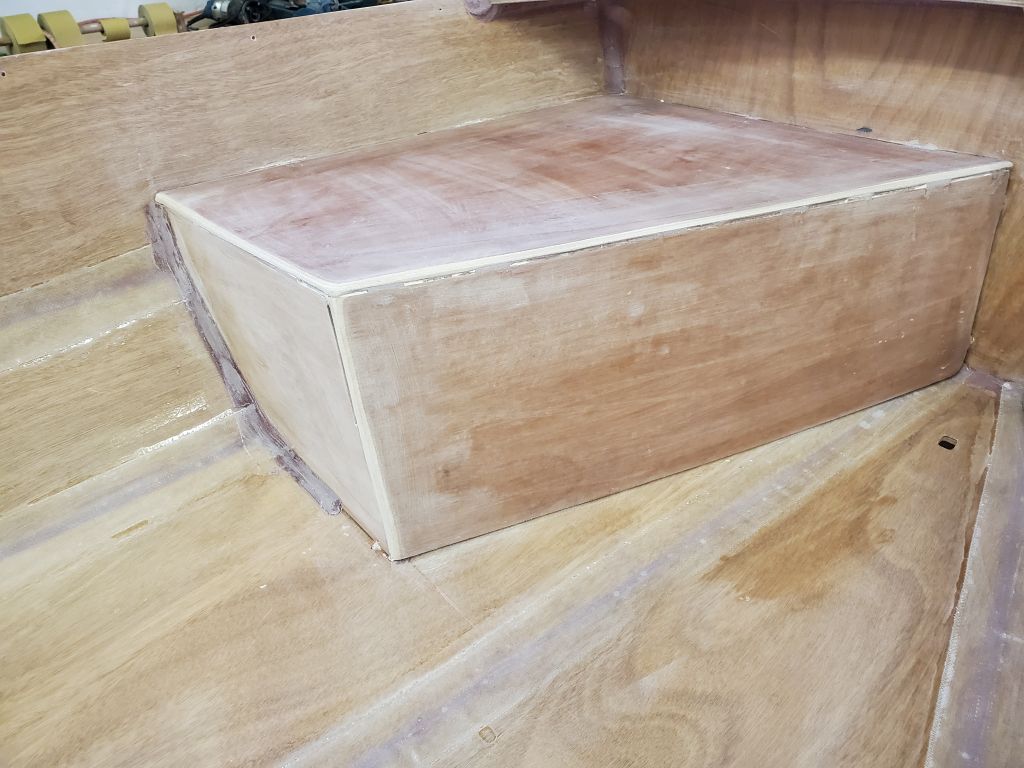
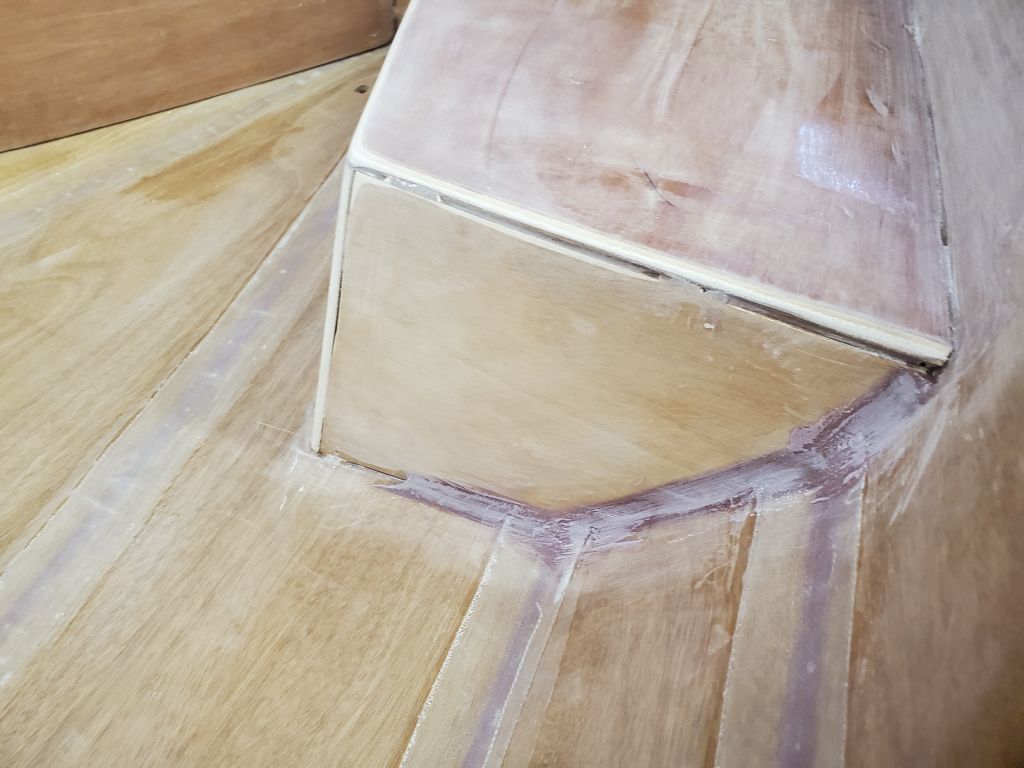
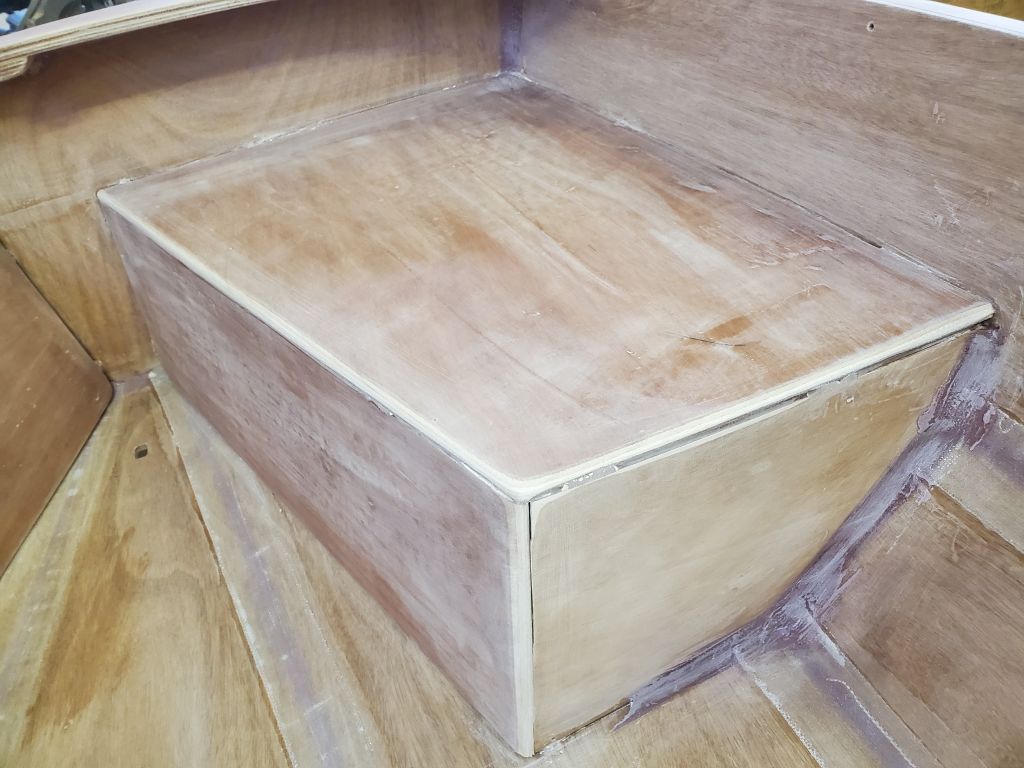
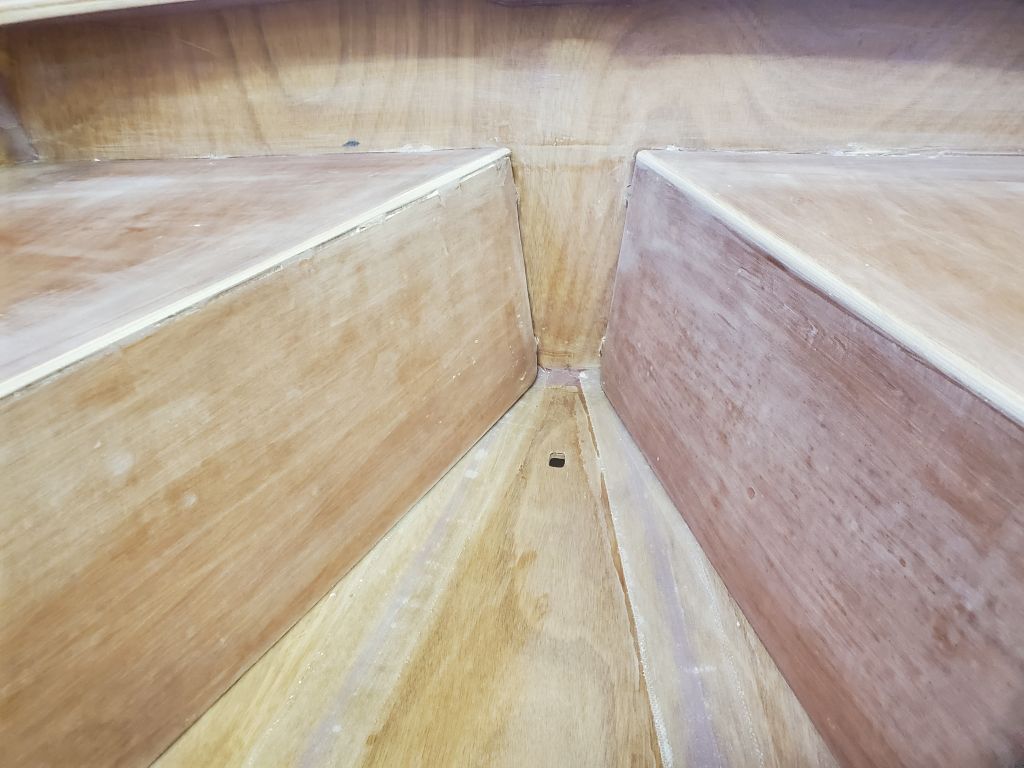
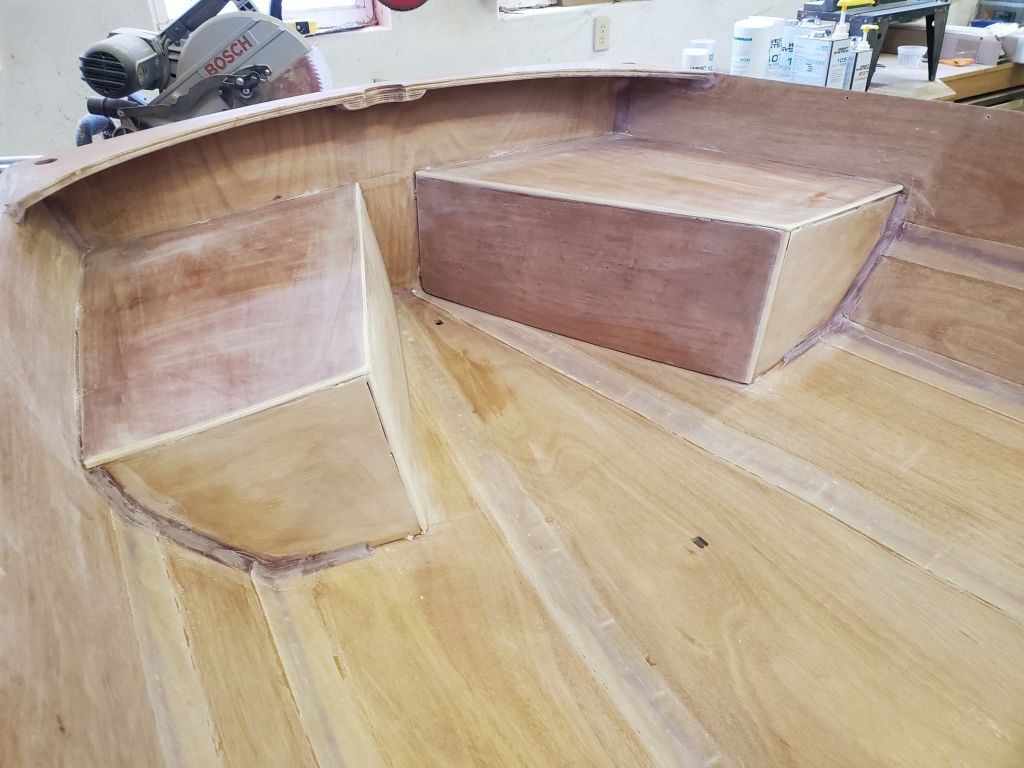
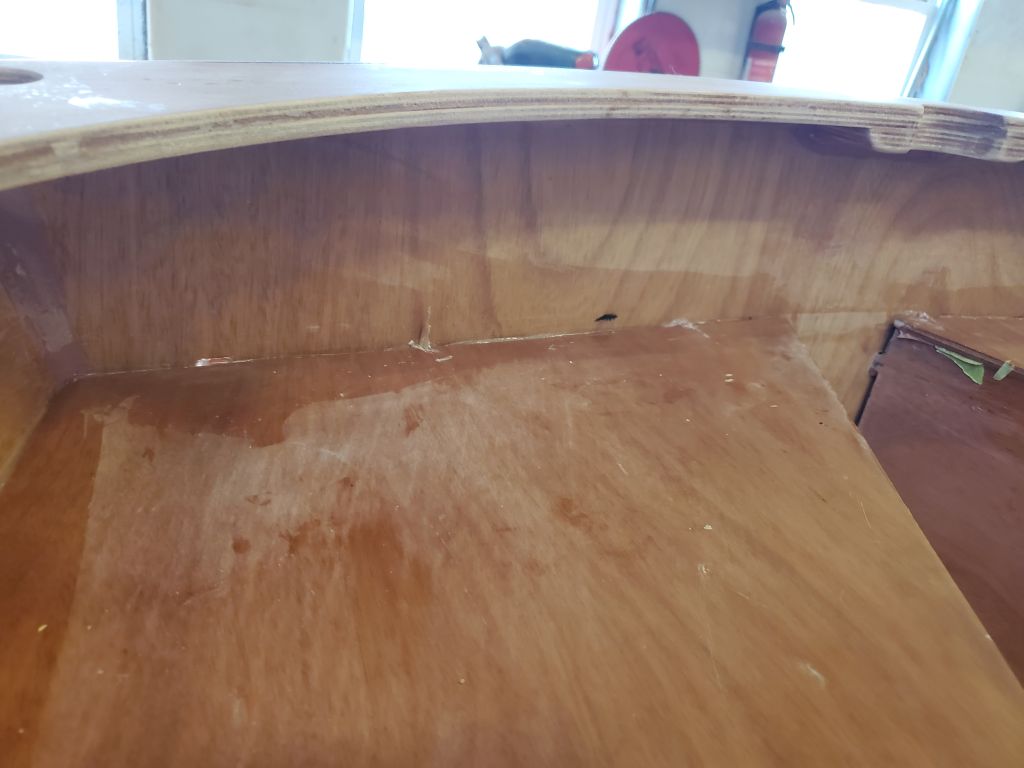
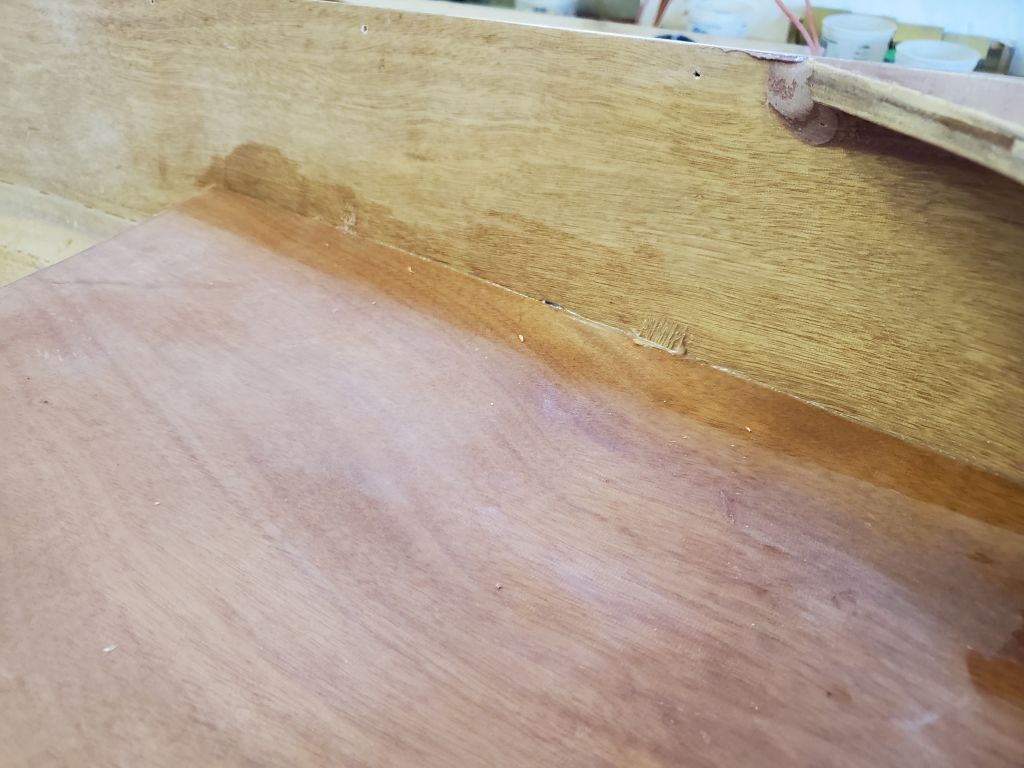
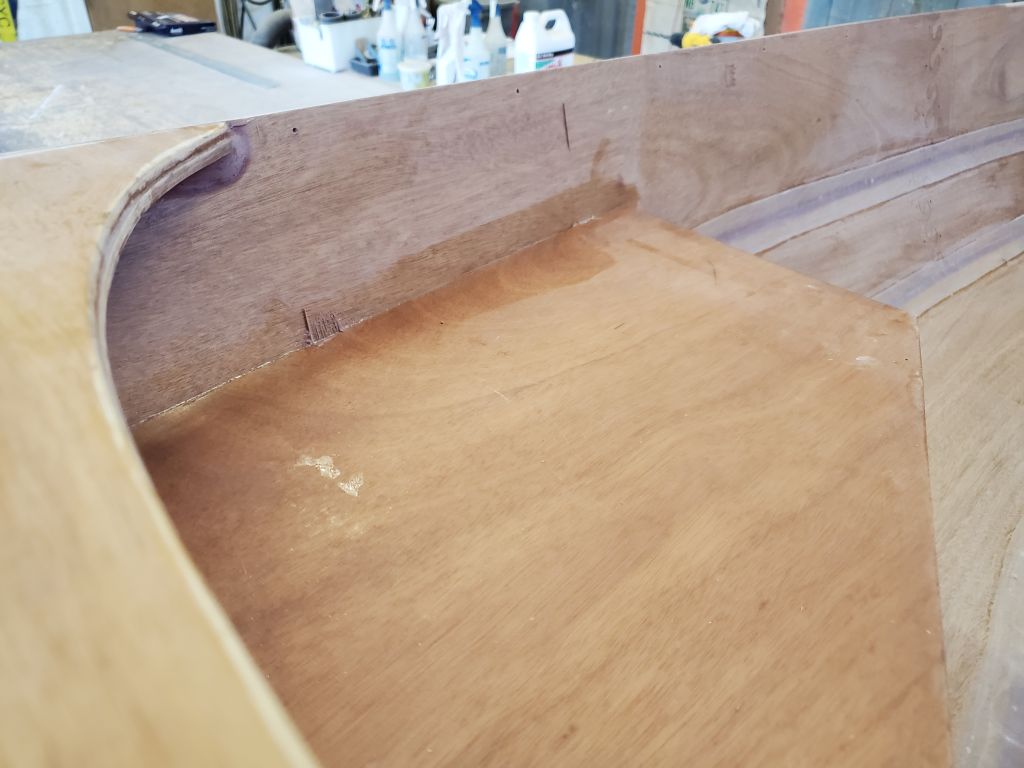
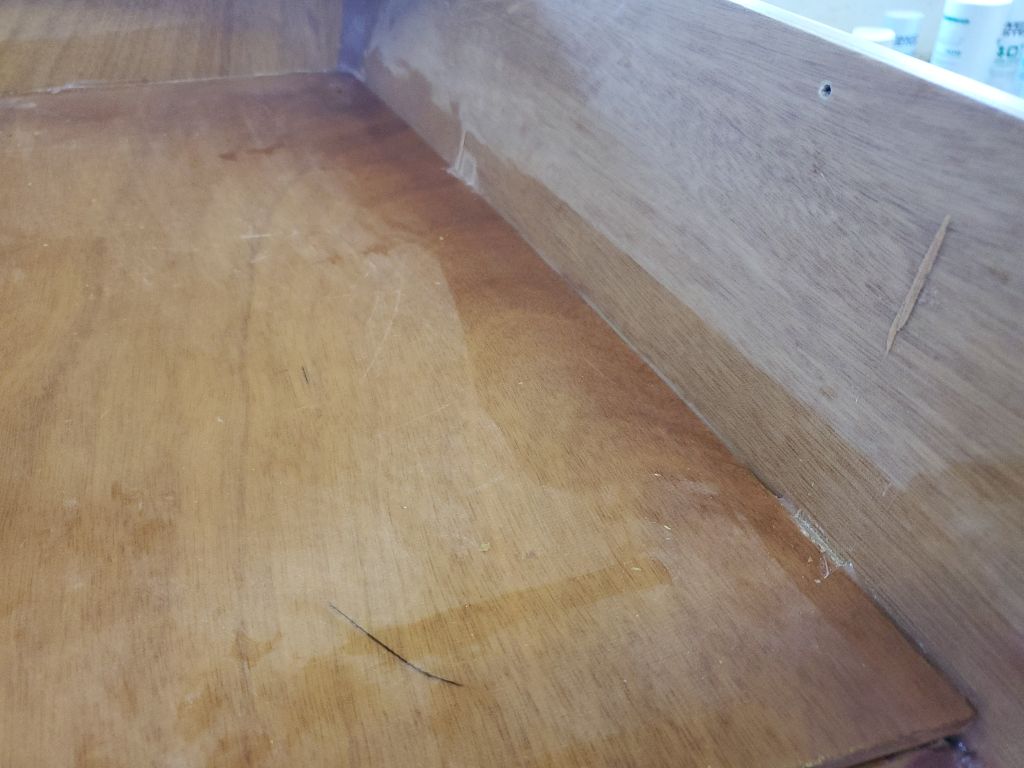
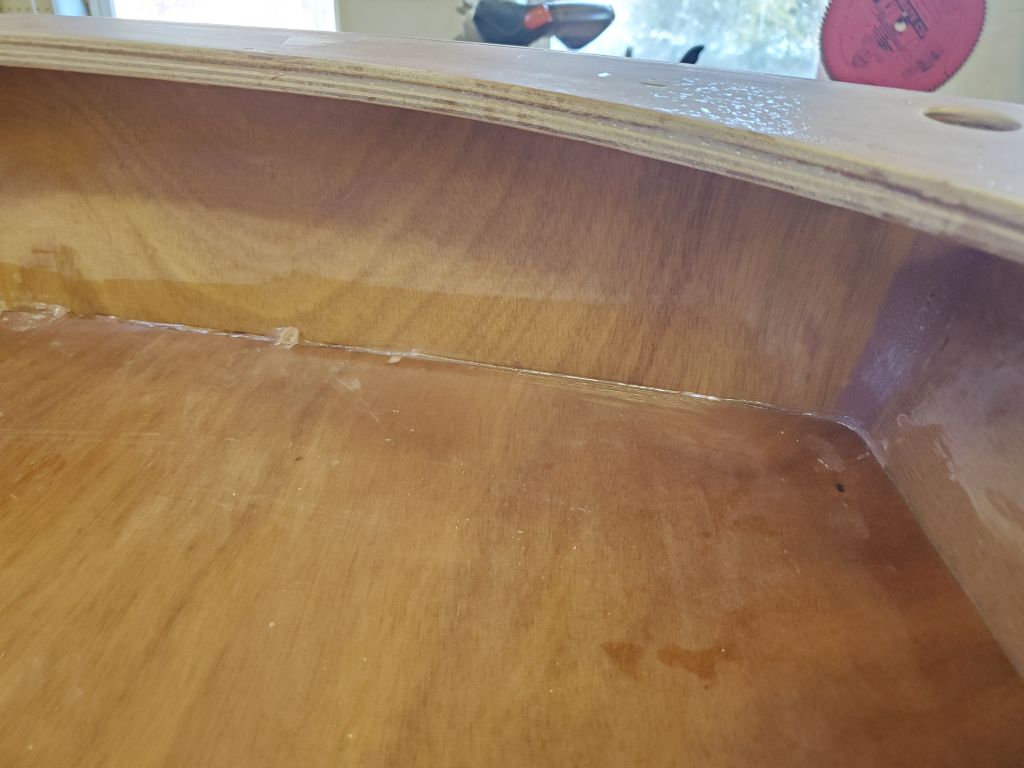
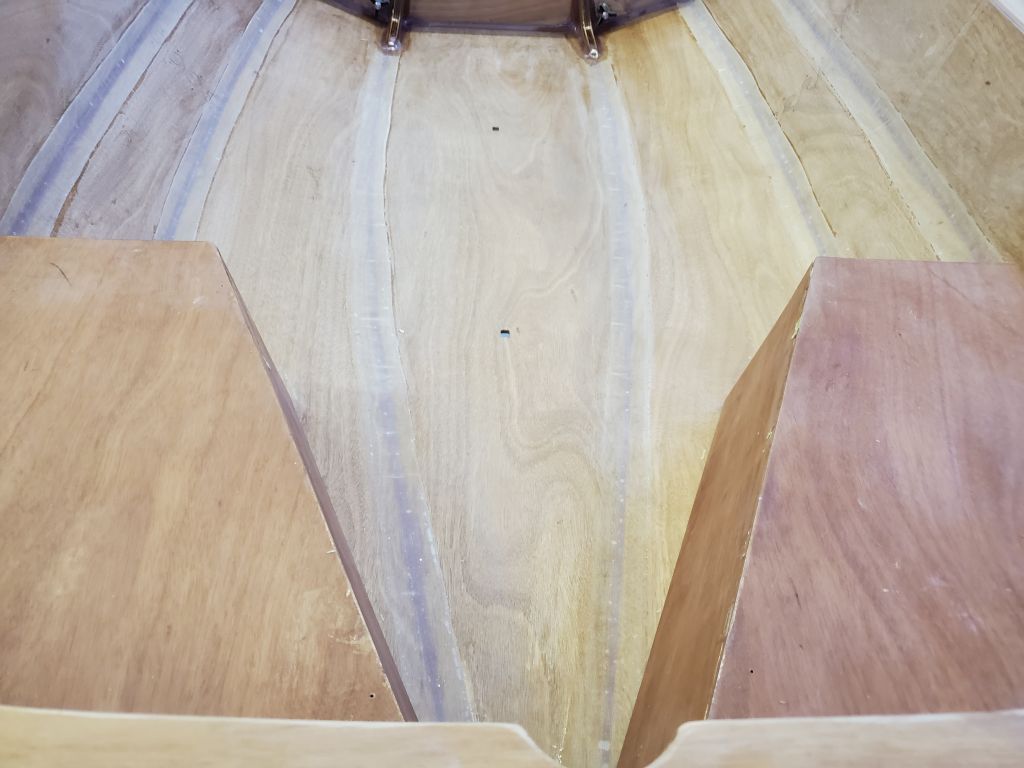
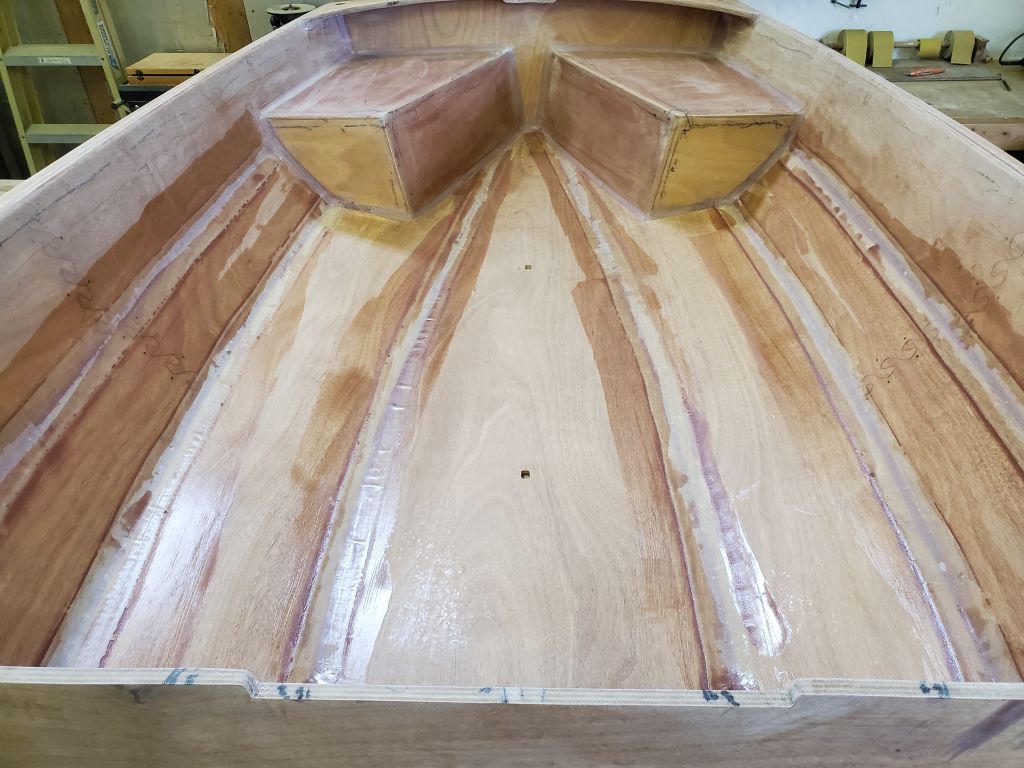
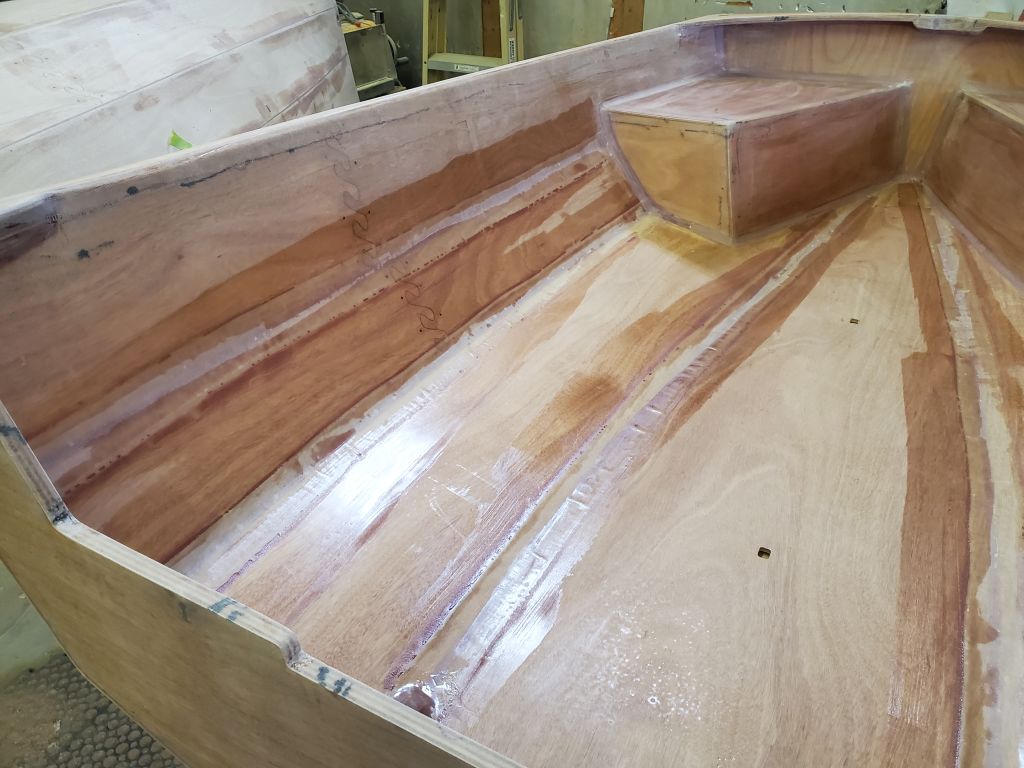
The remains of the day and the state of other parts of the boat gave me a good opportunity to do a bit of prep work inside the aft half of the hull, where I installed fairing compound to ease the edges of the hull chine tabbing as needed.  These edges had been more noticeable than I wanted because my peel ply strips during installation weren’t wide enough, and at that time I didn’t fully understand the purpose of the strips as a means to fair out the transitions, which is the main purpose of the peel ply as used on this particular build–something the manual could, but doesn’t, stress during the earlier stages of the build.  Since the interior of the boat was to be painted, the minor fairing work would not be noticeable.
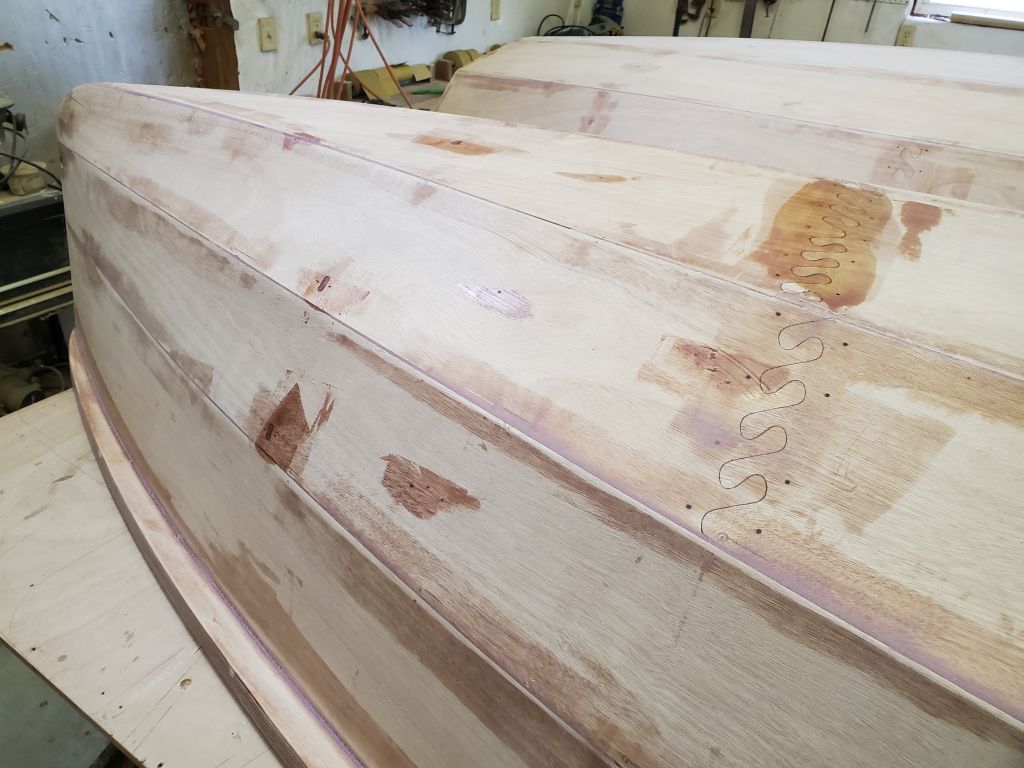
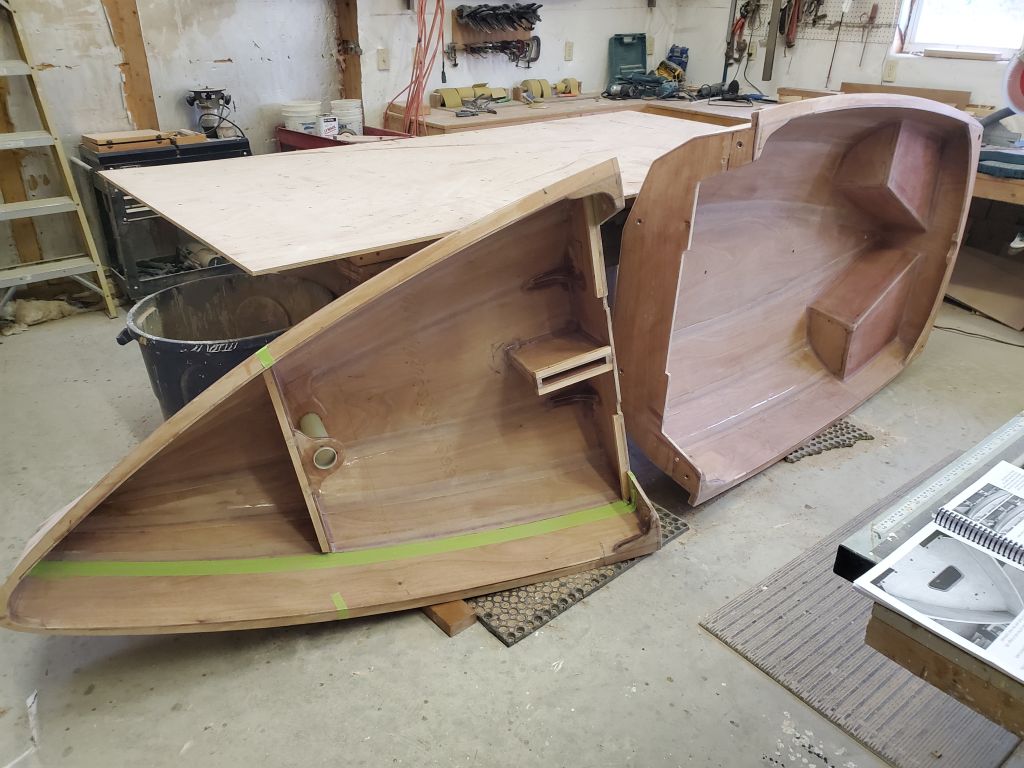
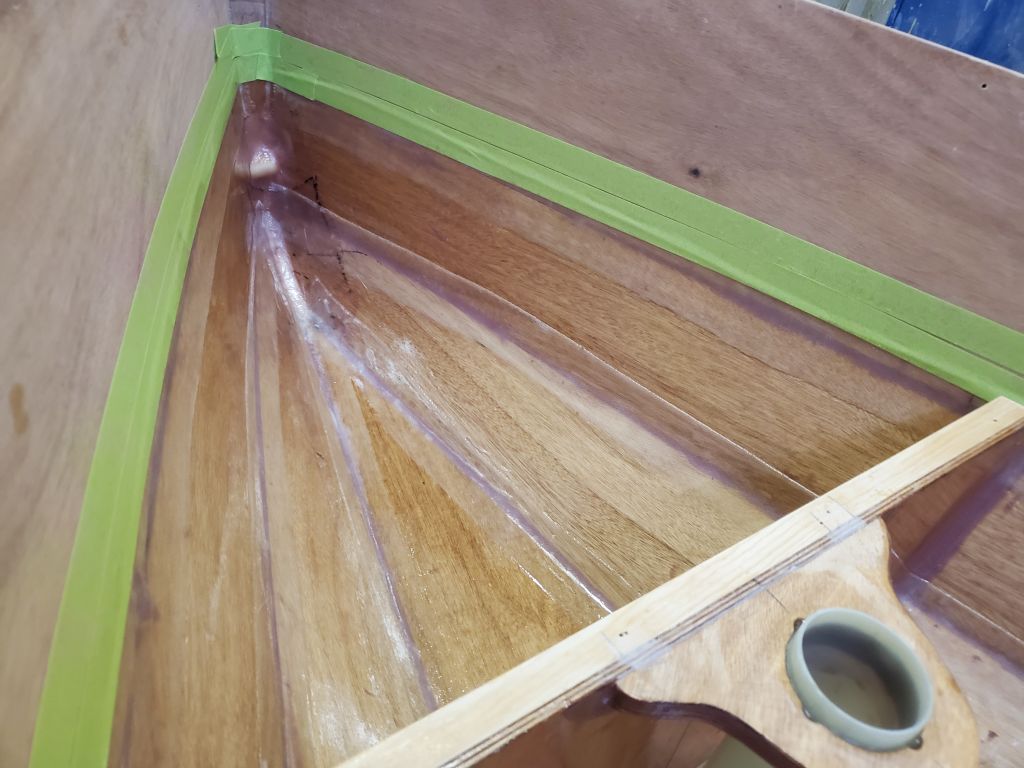
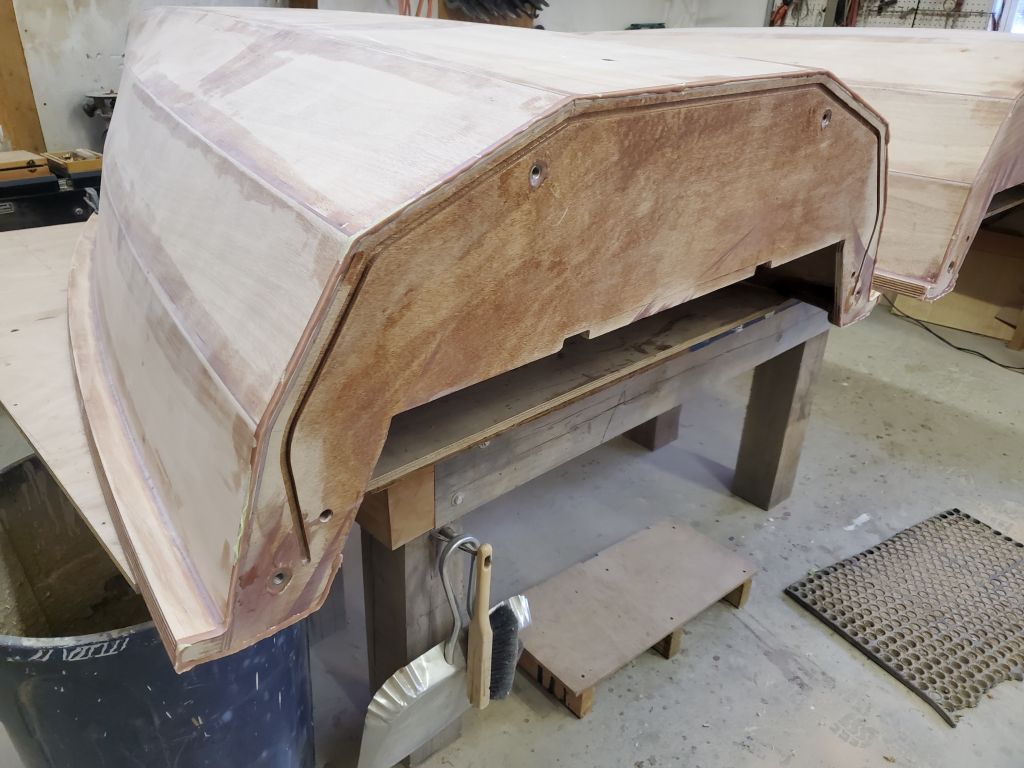
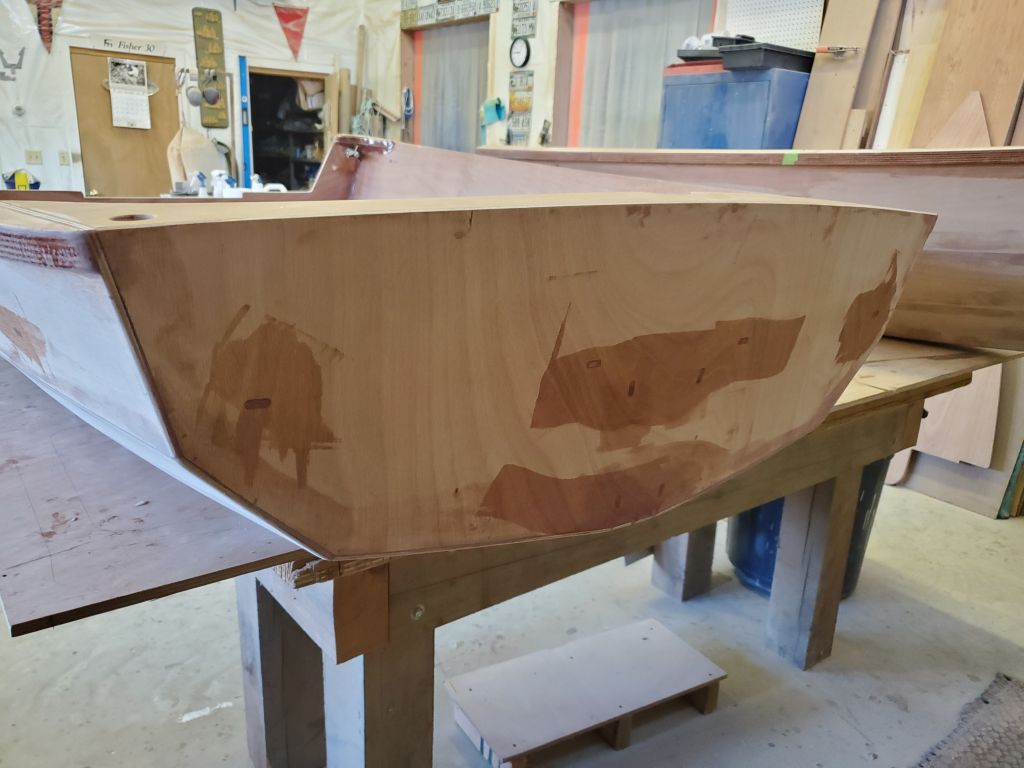
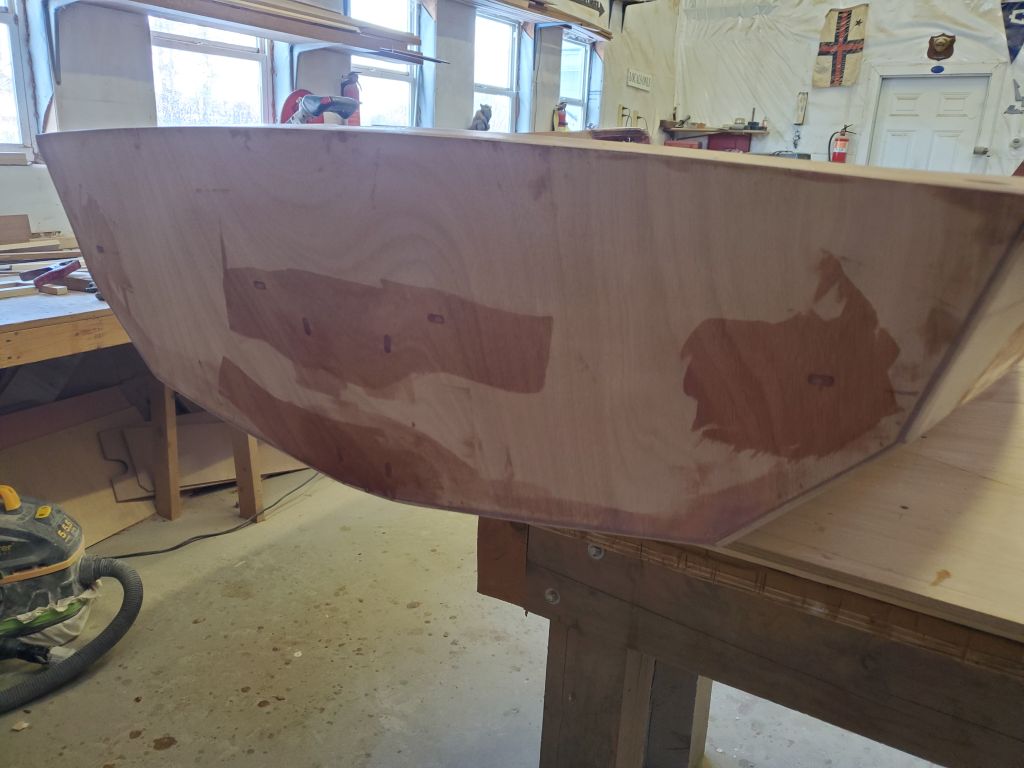
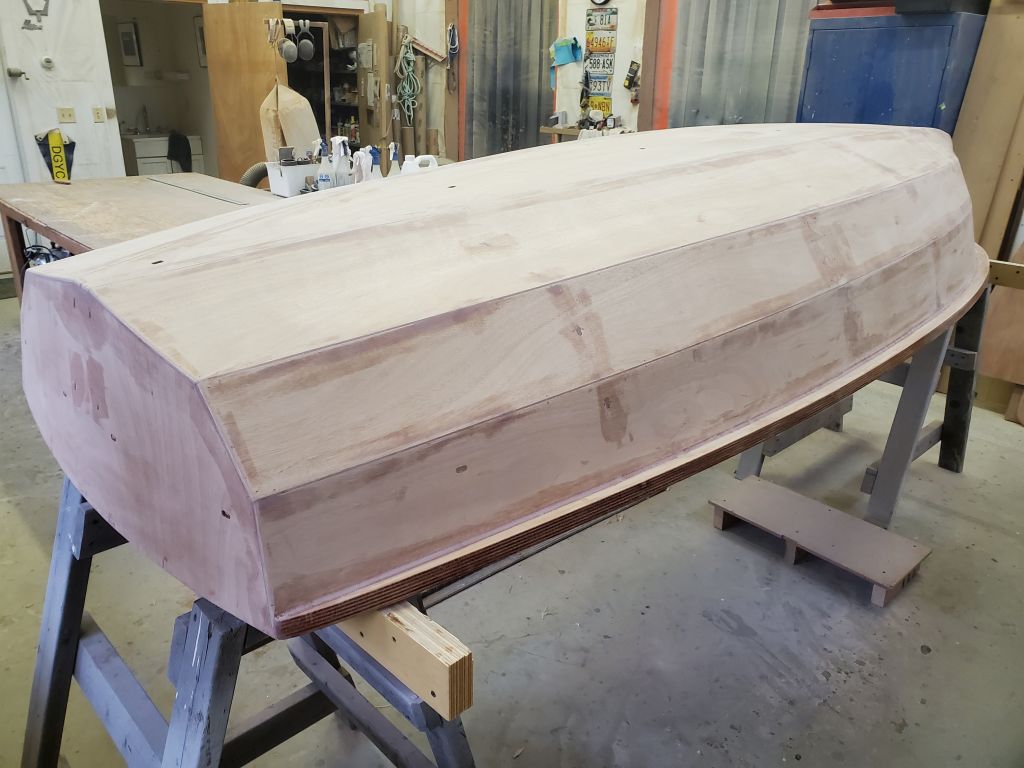
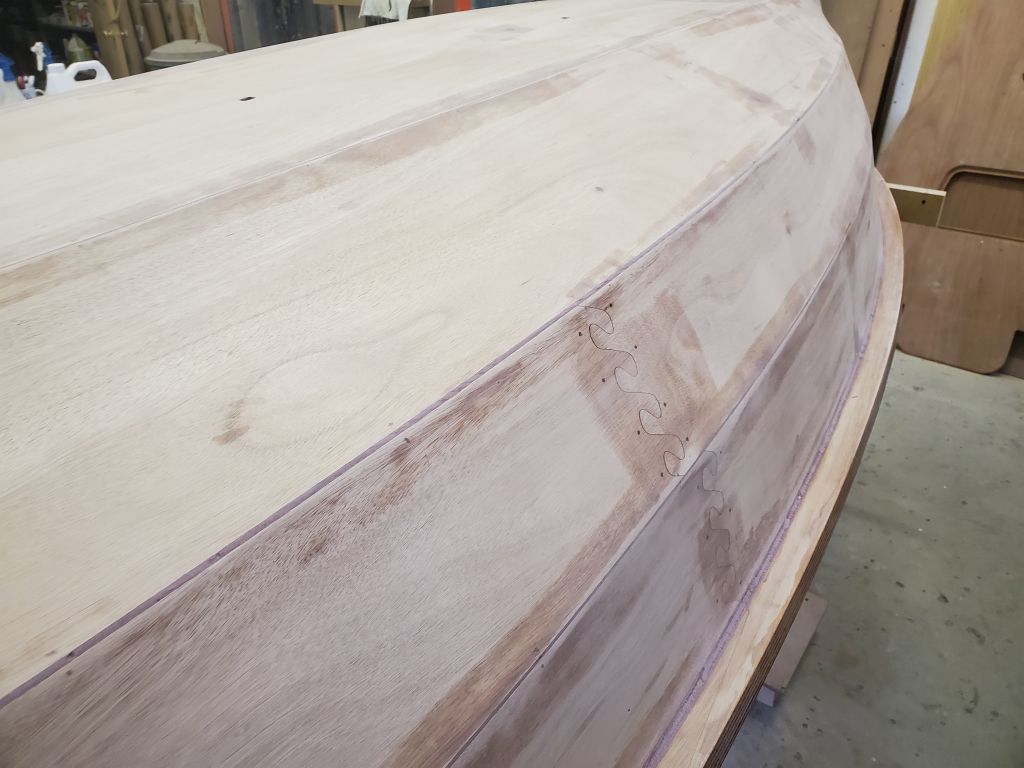
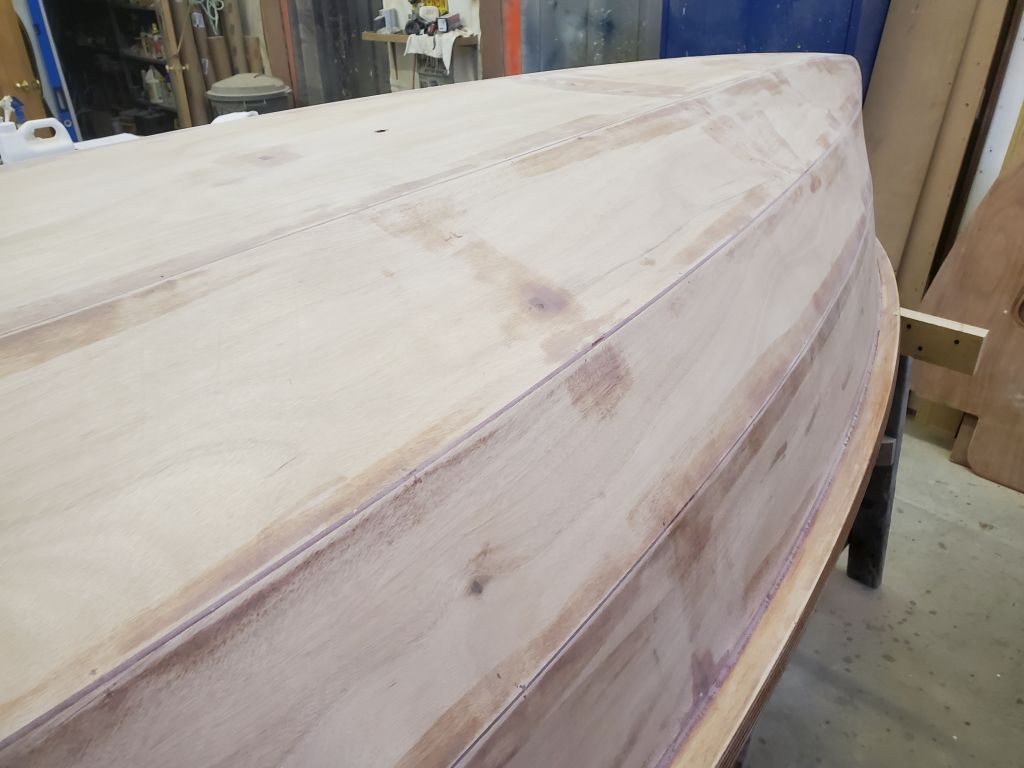
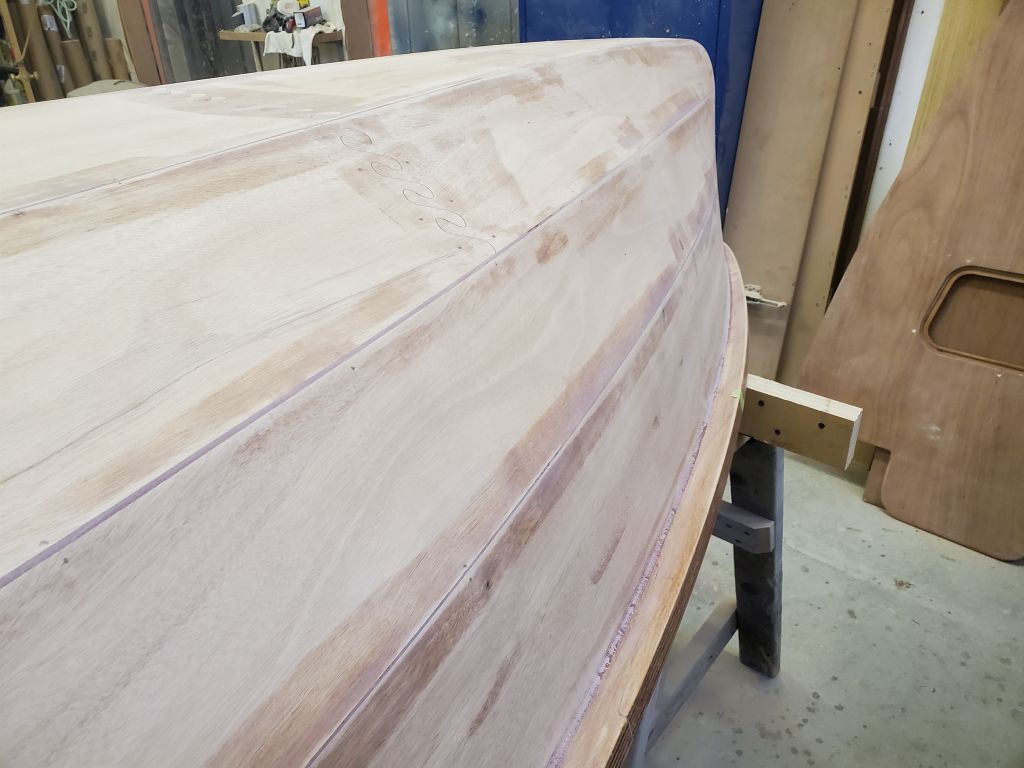
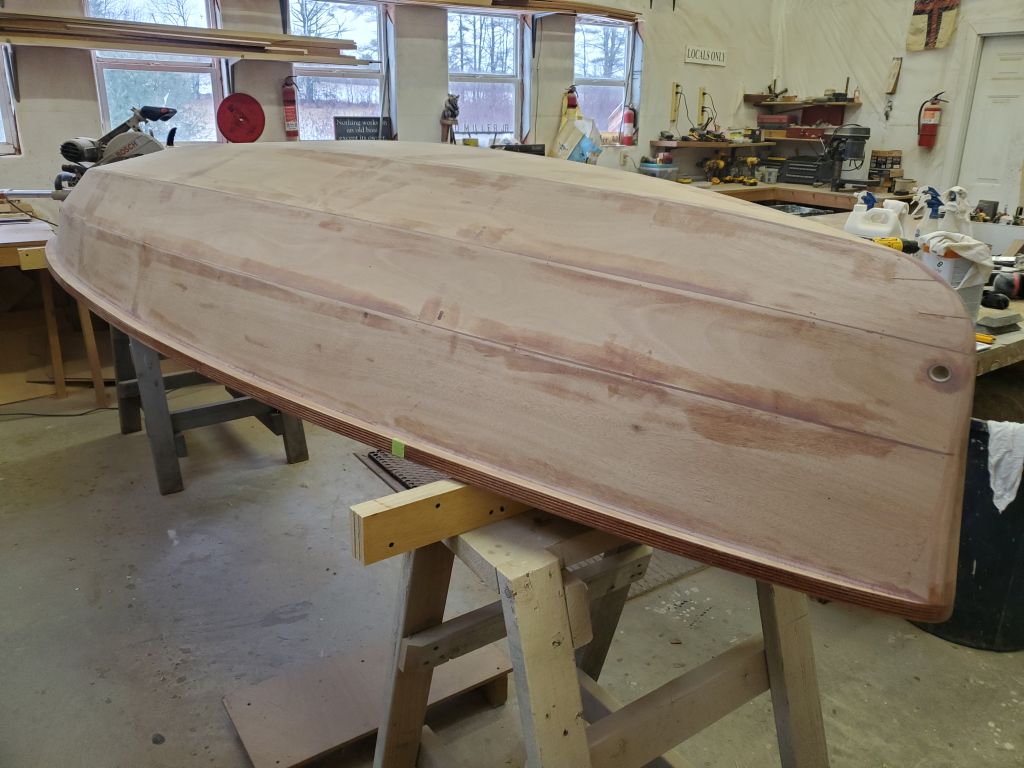
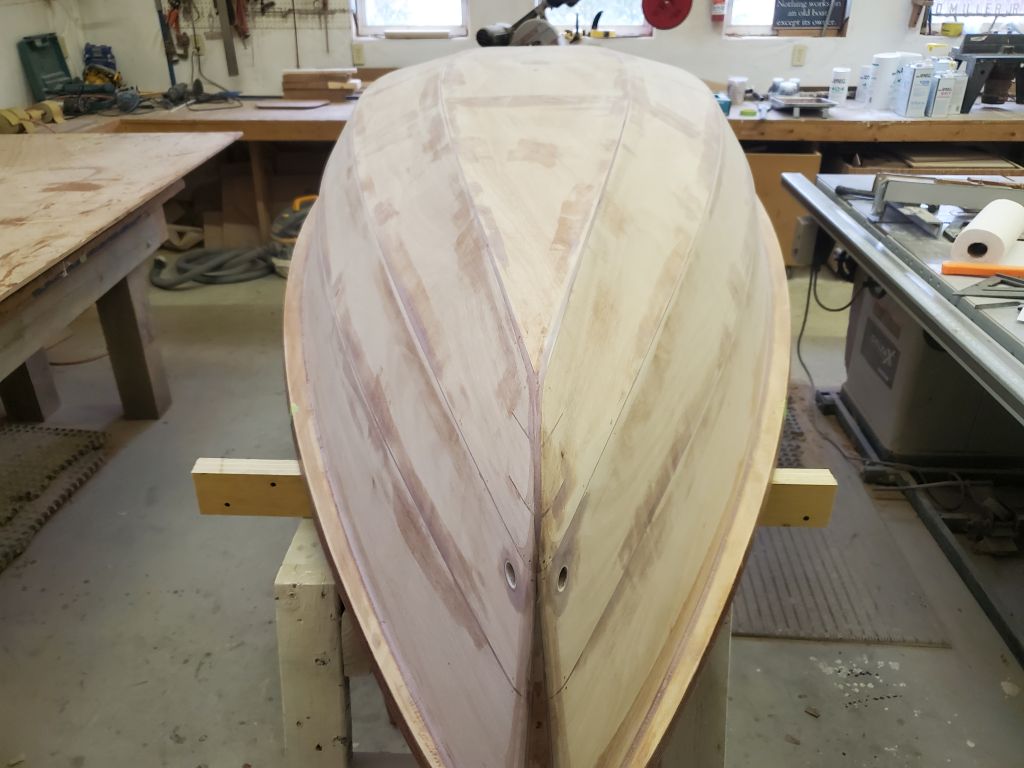
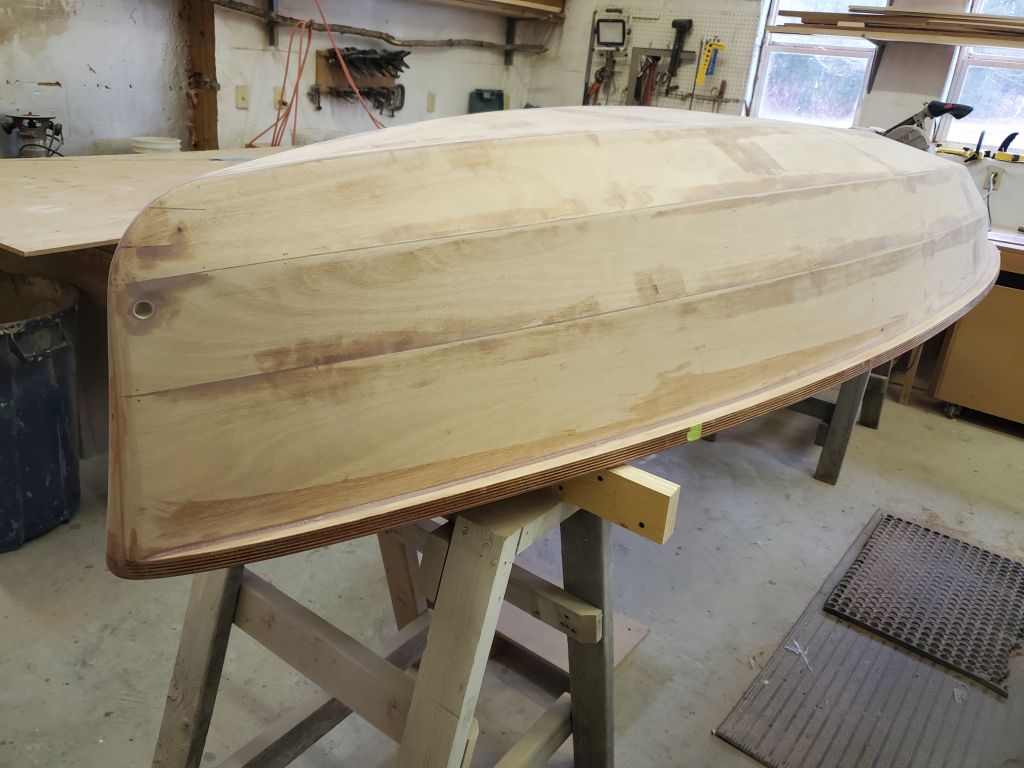
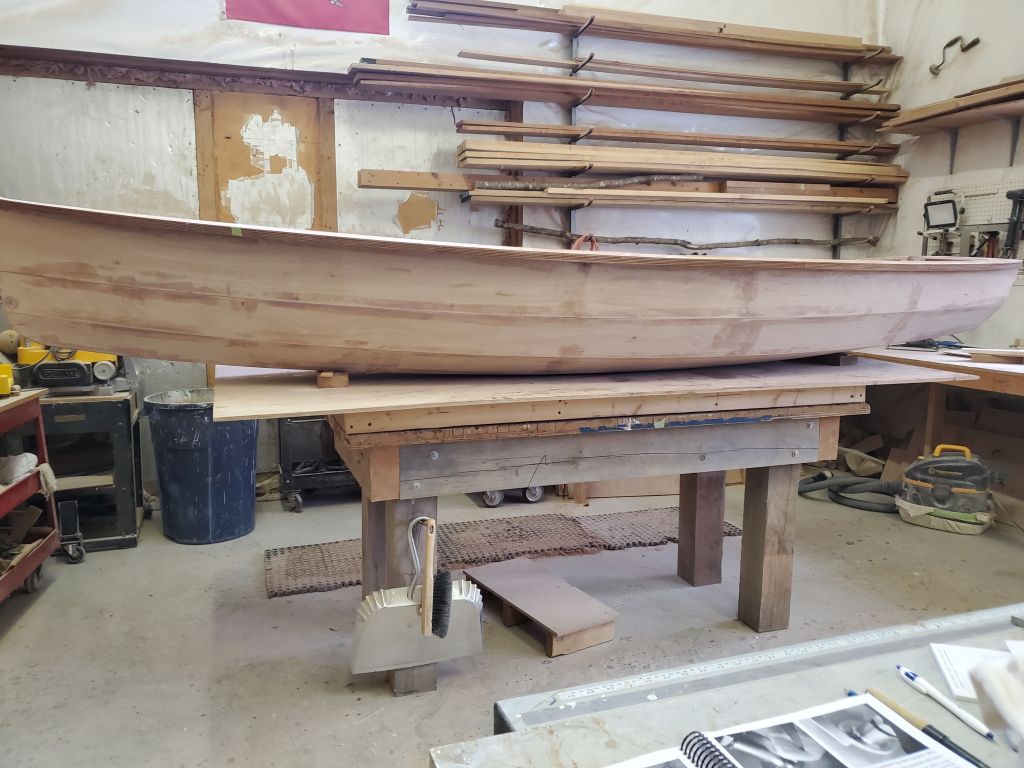
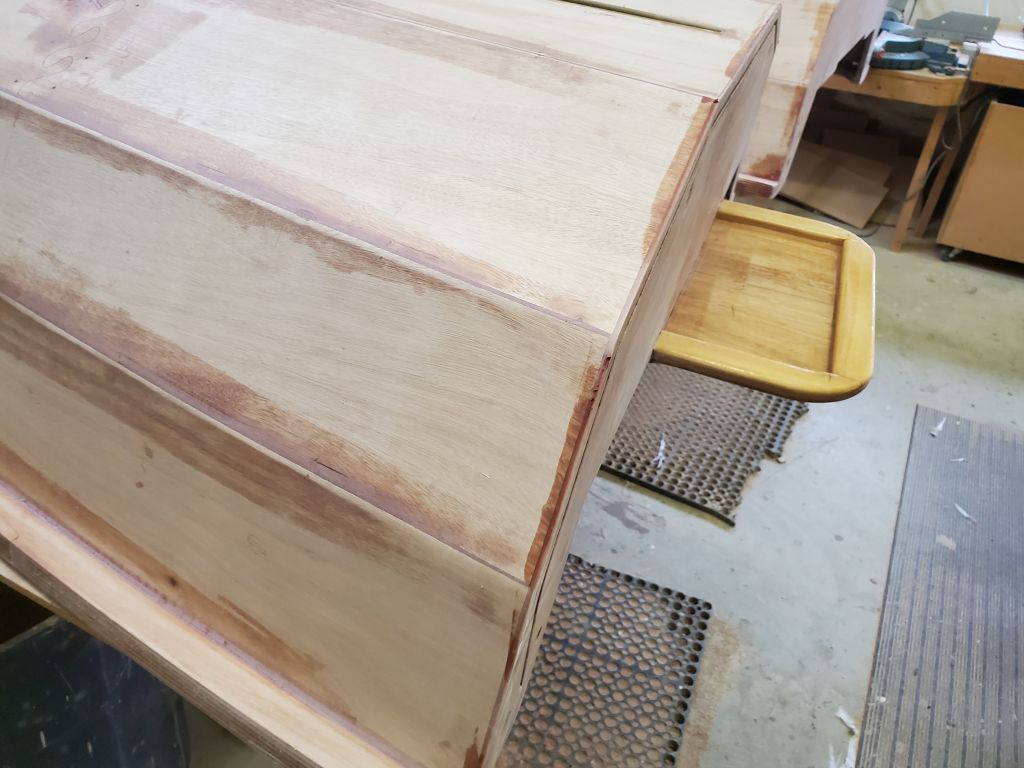
From here, the next major step would be to sheathe the hull exterior in fiberglass.  I’d already brought the hull to a state of readiness for this, even though I’d first have to assemble the cut halves for the first time and check the hull fit and fairness at the seam, so unlike the manual description that seemed to assume no exterior work had yet been done, I did not have to approach all the hull fairing work now, but there were still a few areas where I could–and now did–touch up the previous work to prepare for the fiberglass ahead.  This brought the day to a natural conclusion.
PT11-34

I spent the first part of the day on various sanding and milling tasks to prepare for fiberglassing a variety of “edges”, to provide an encompassing term.

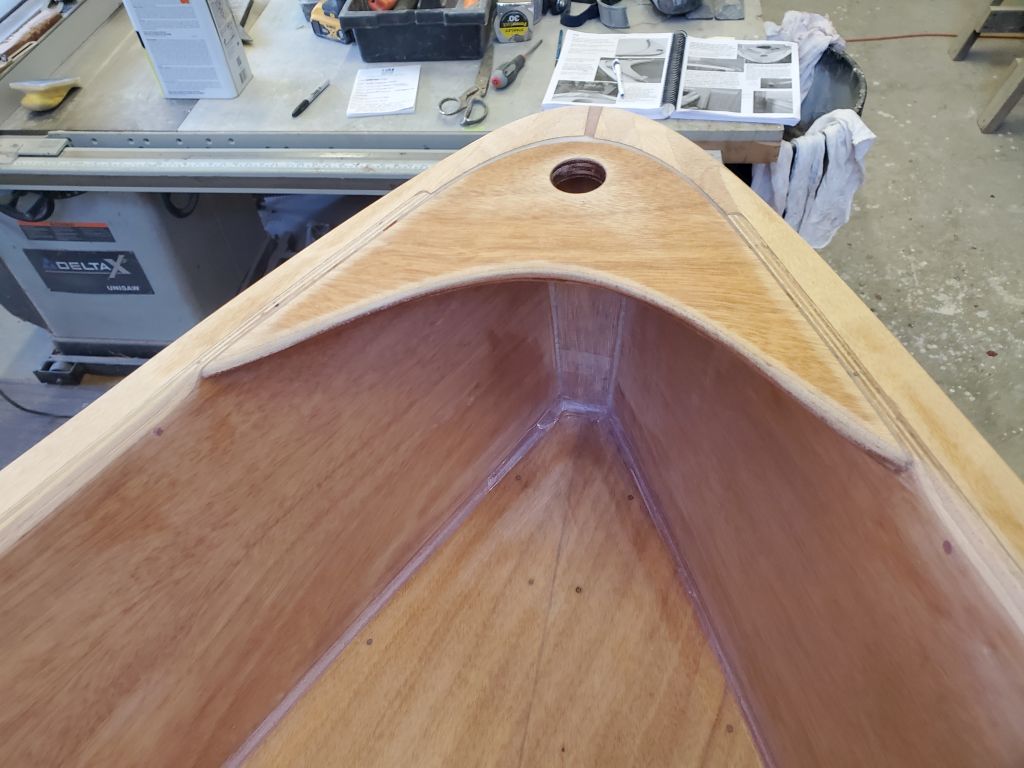
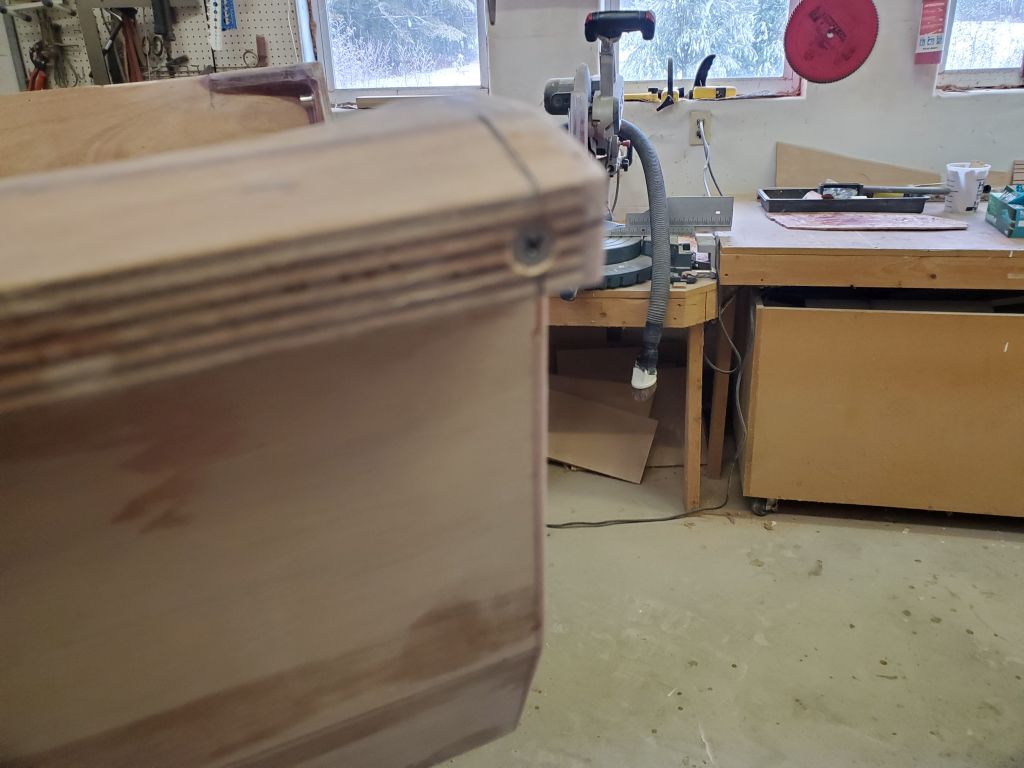
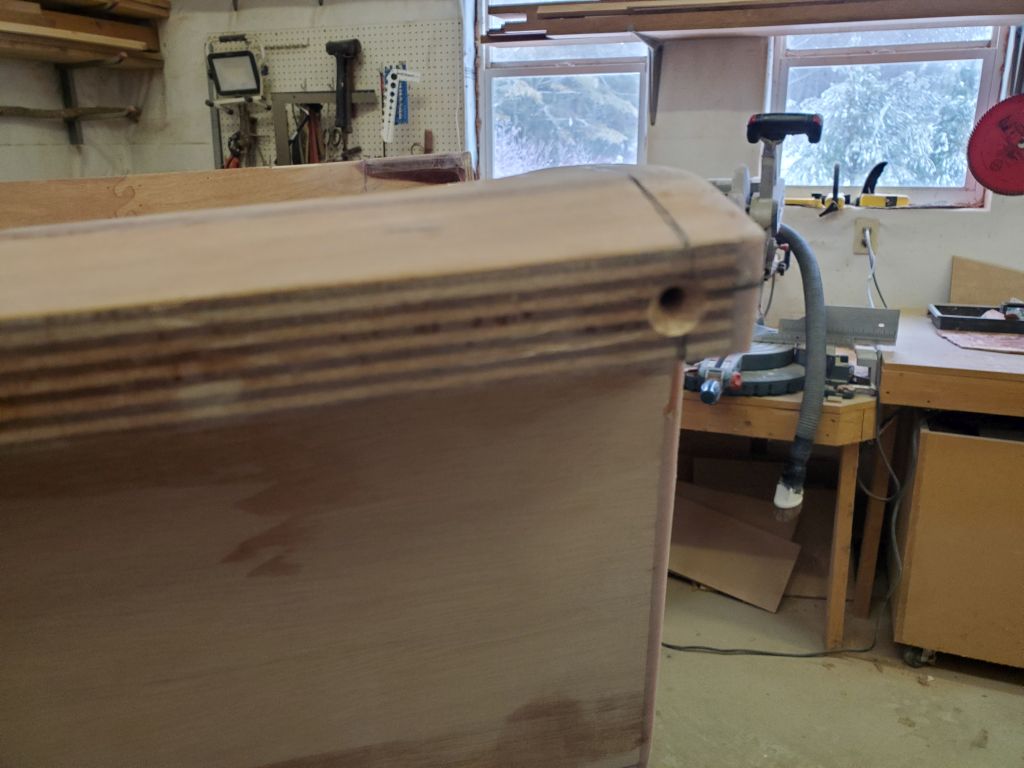
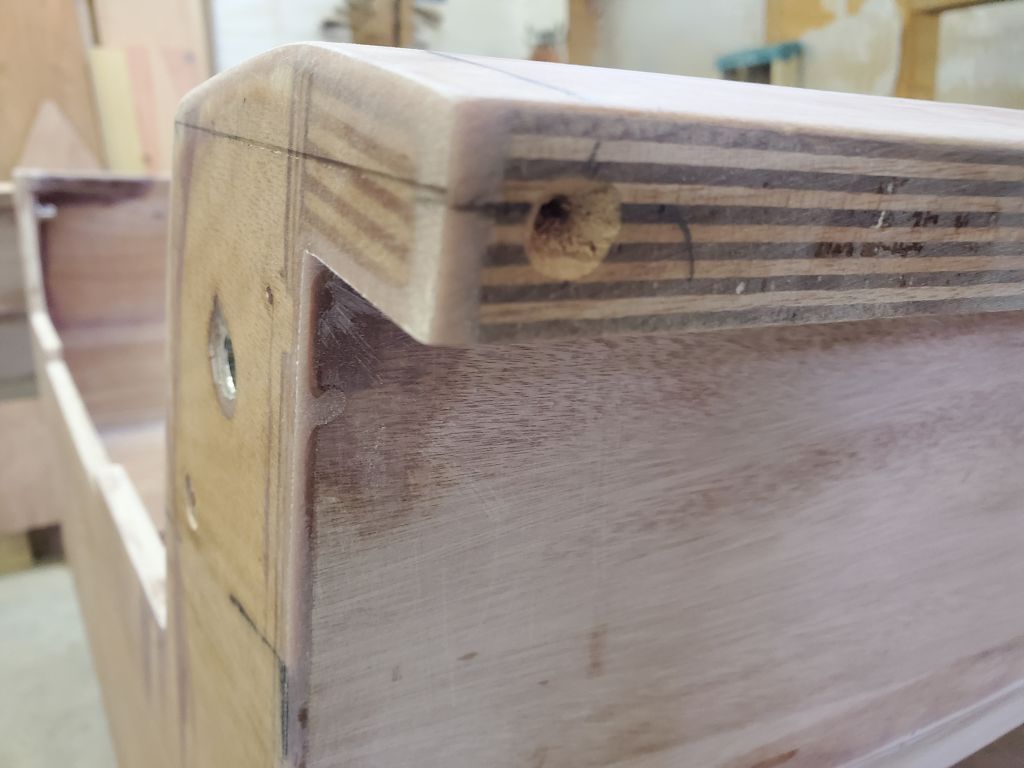
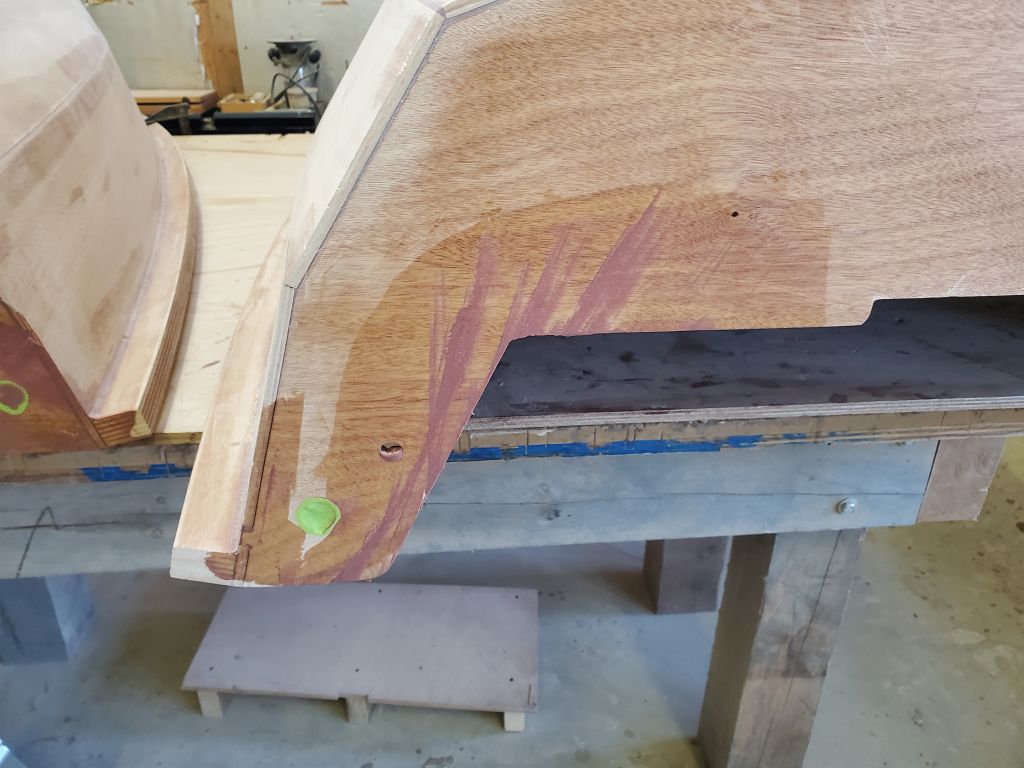
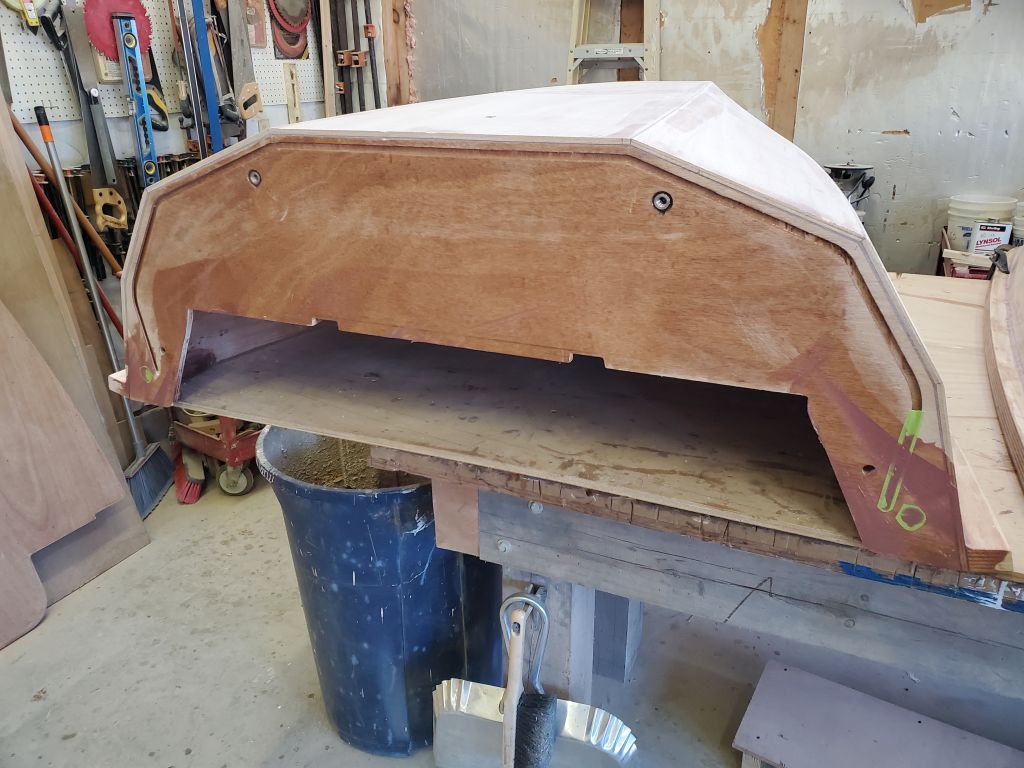
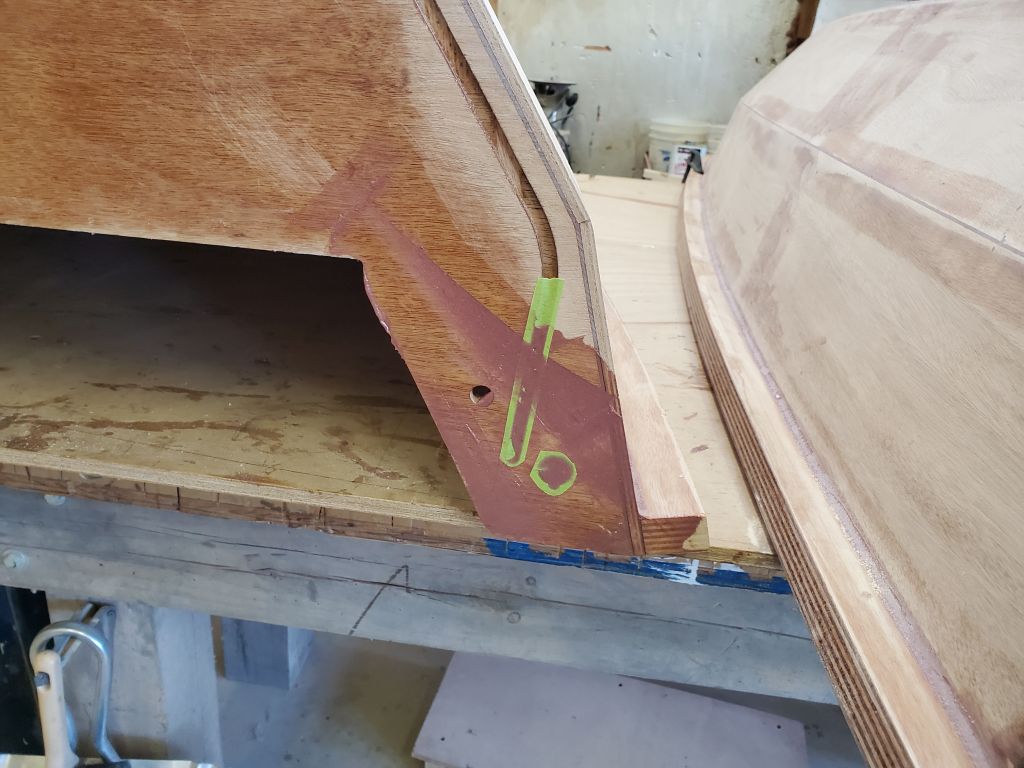
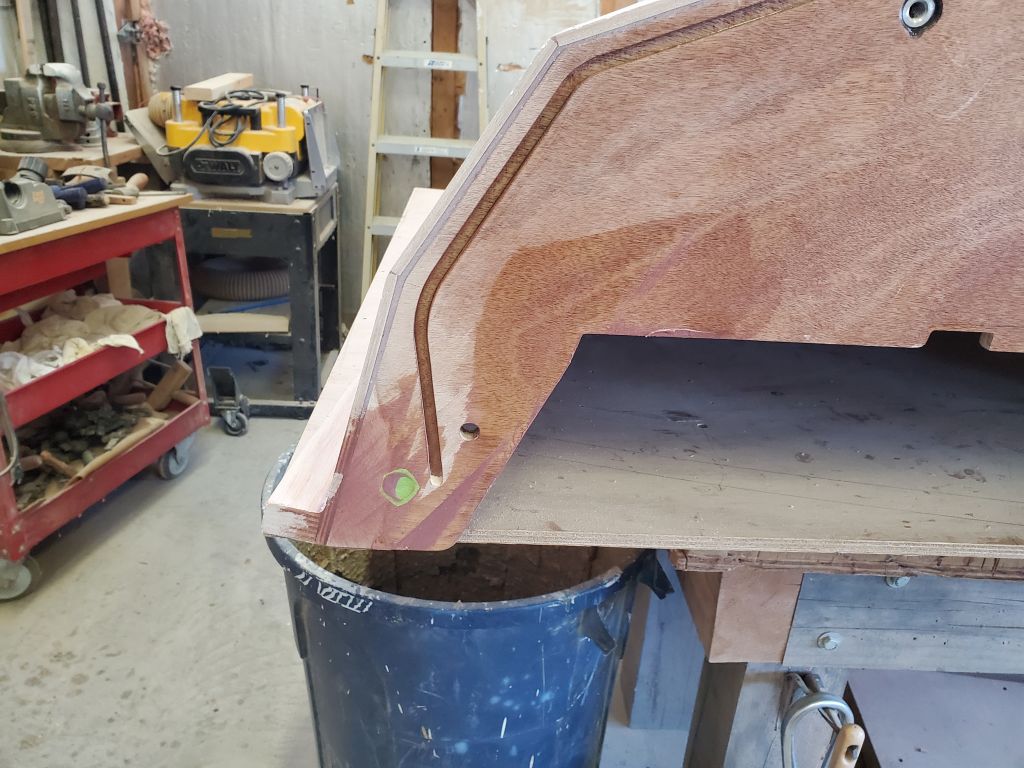
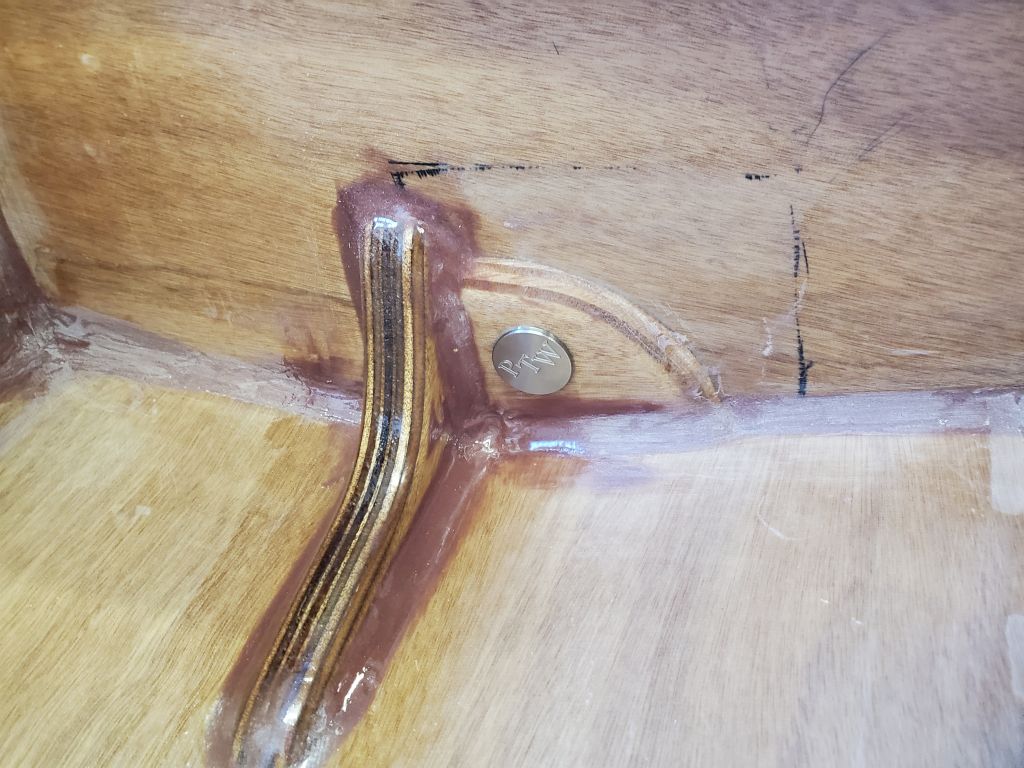
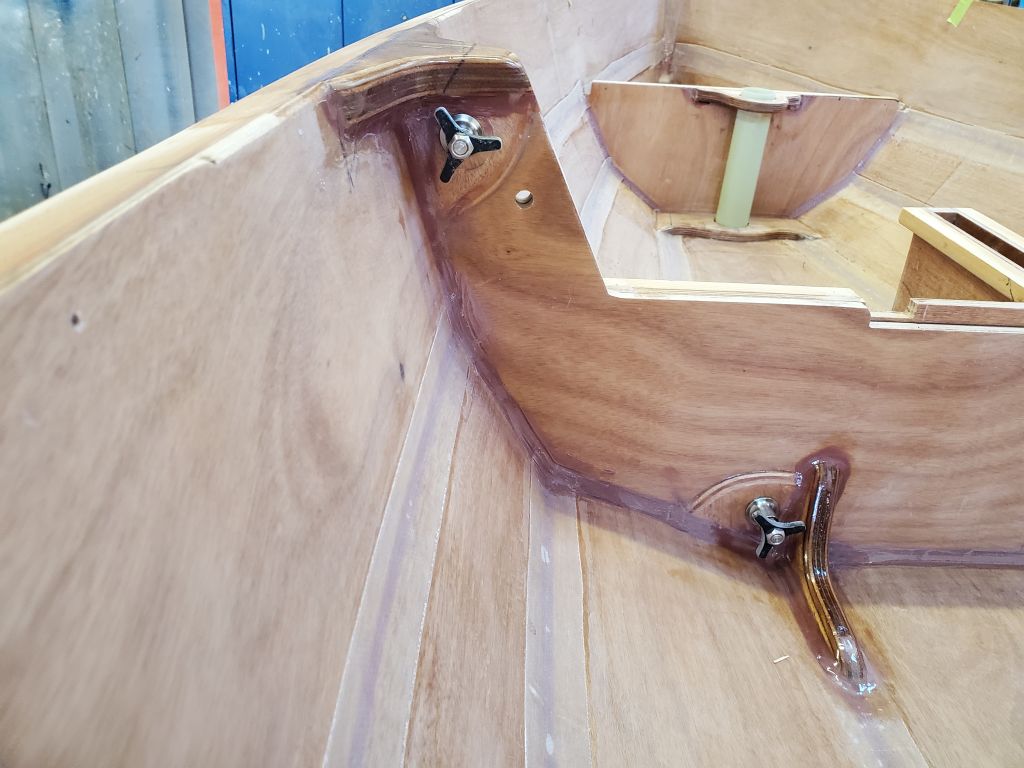
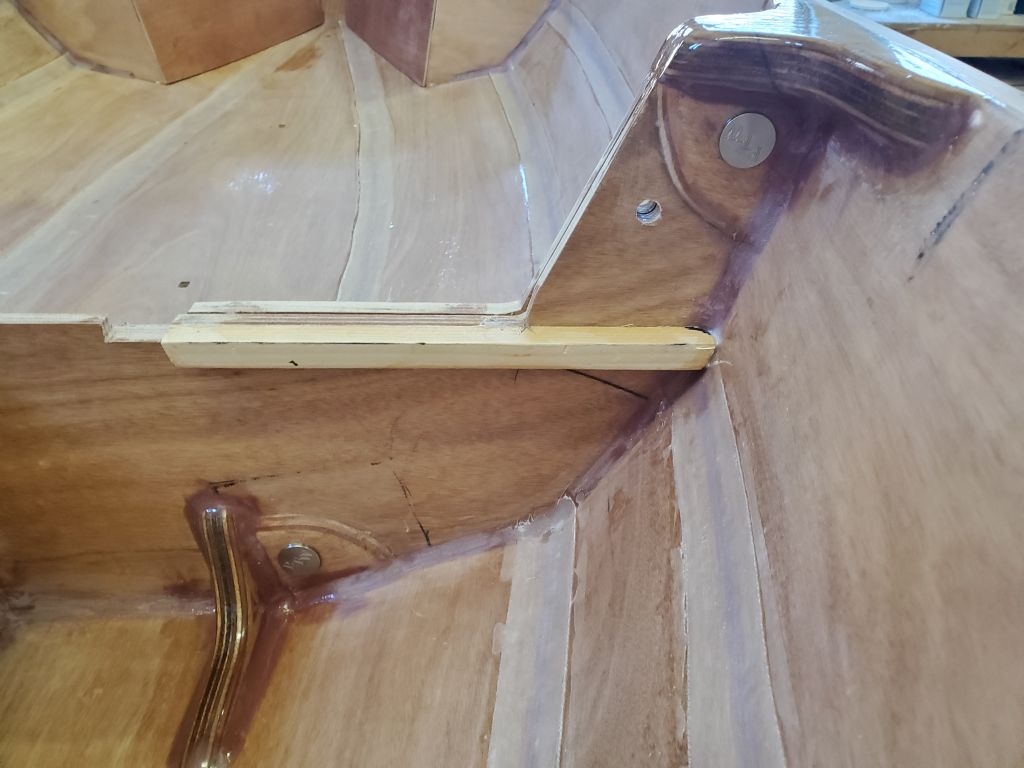
I milled a roundover on the junction of hull and gunwale on both sides of both boat halves, and sanded it smooth, along with lightly sanding the filled gunwale installation holes on the inside of the hull.    I also sanded flat the breasthook and the protruding nub of the gunwales forward of it, and rounded the aft top edge of the breasthook.

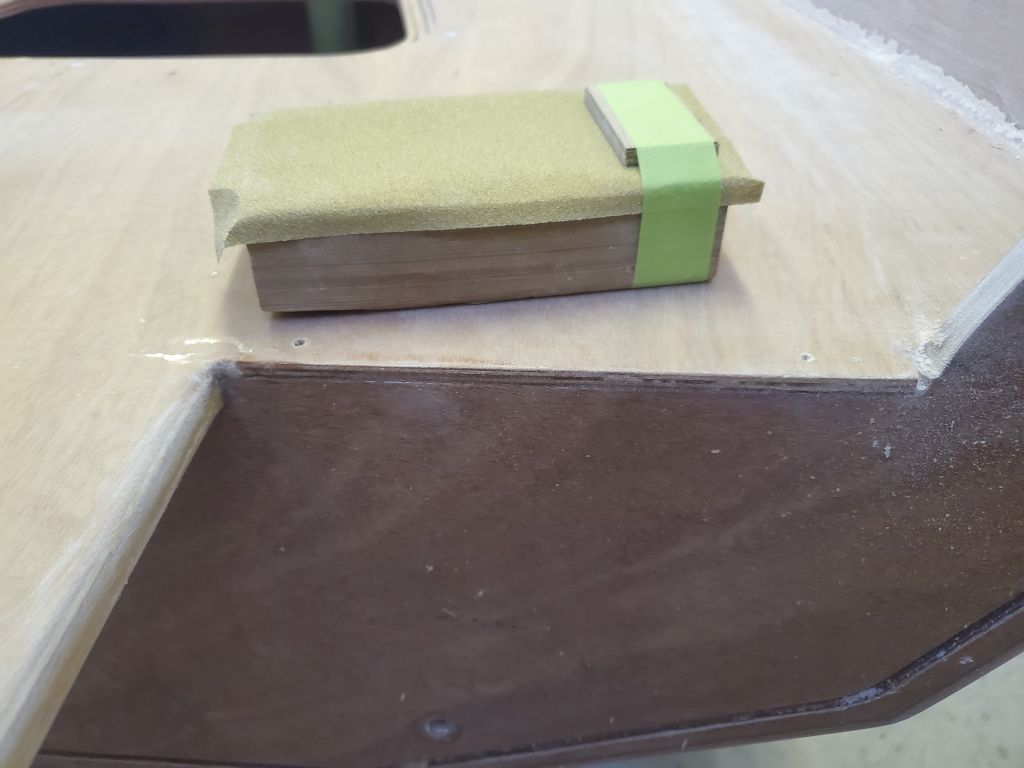
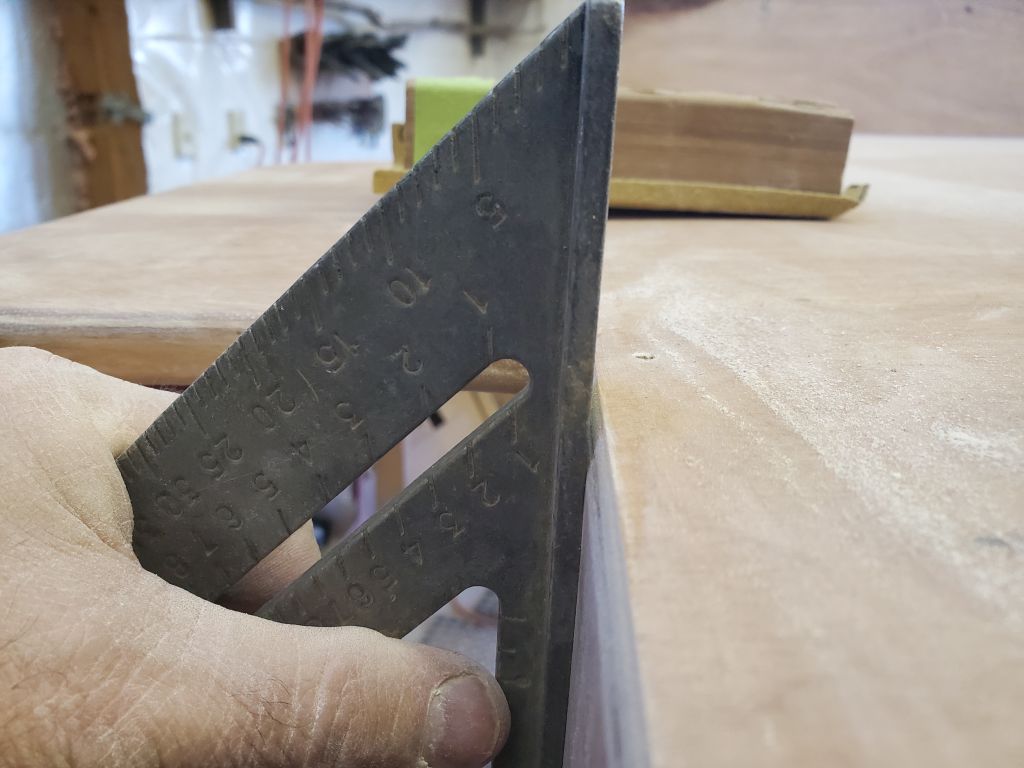
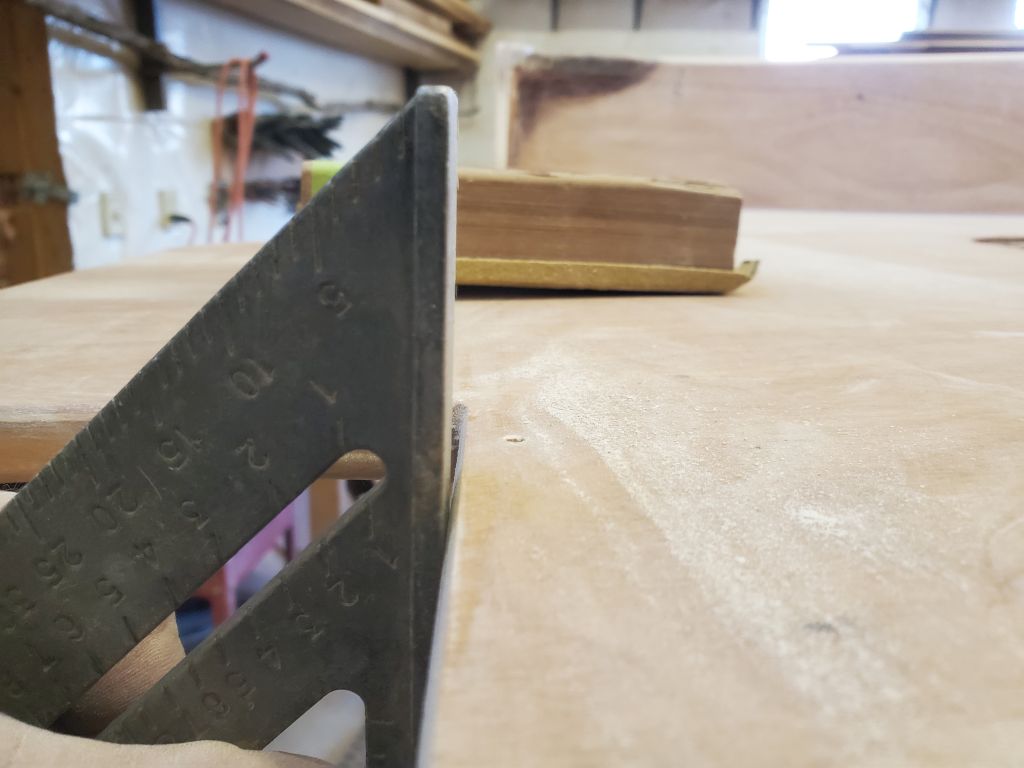
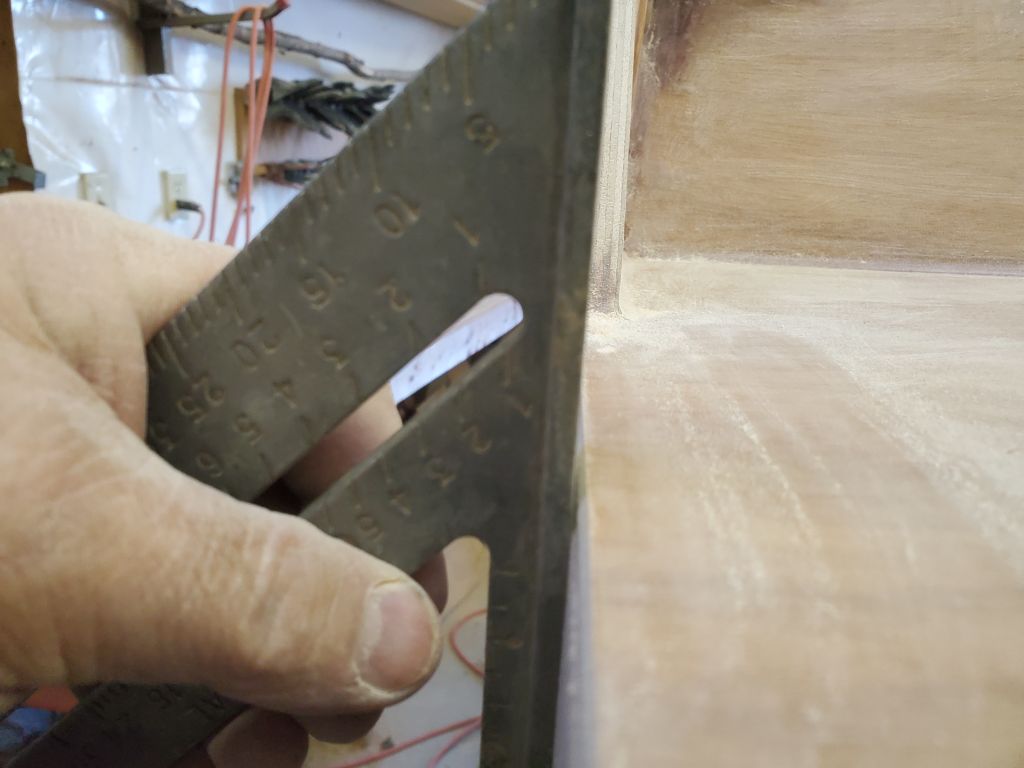
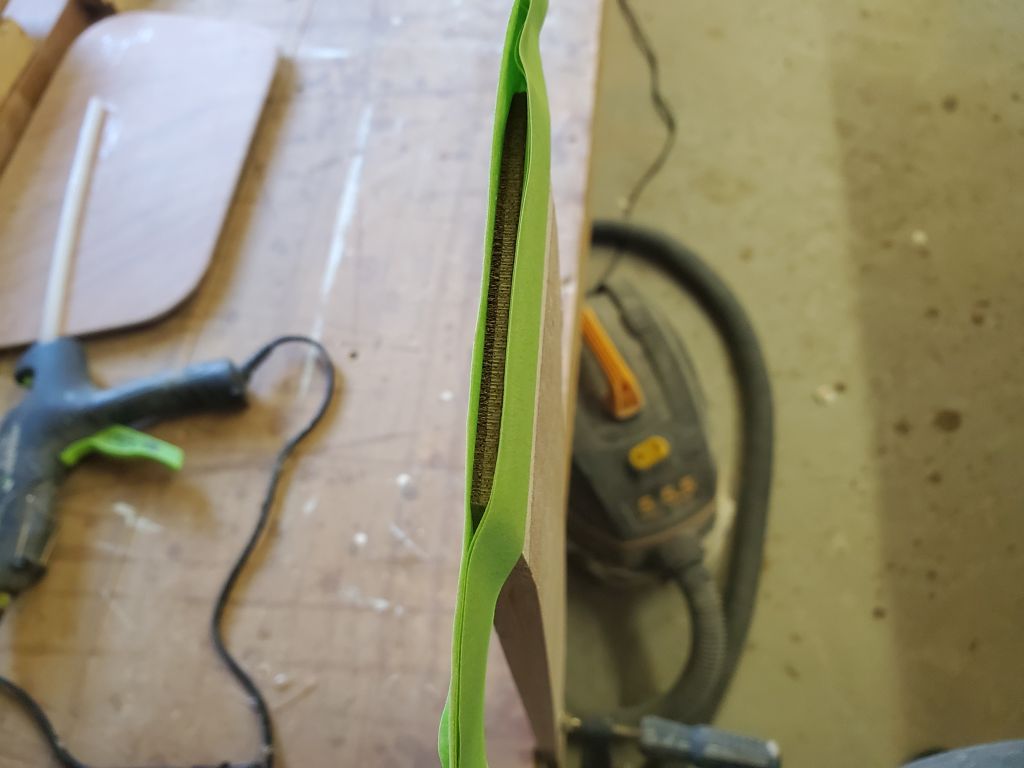
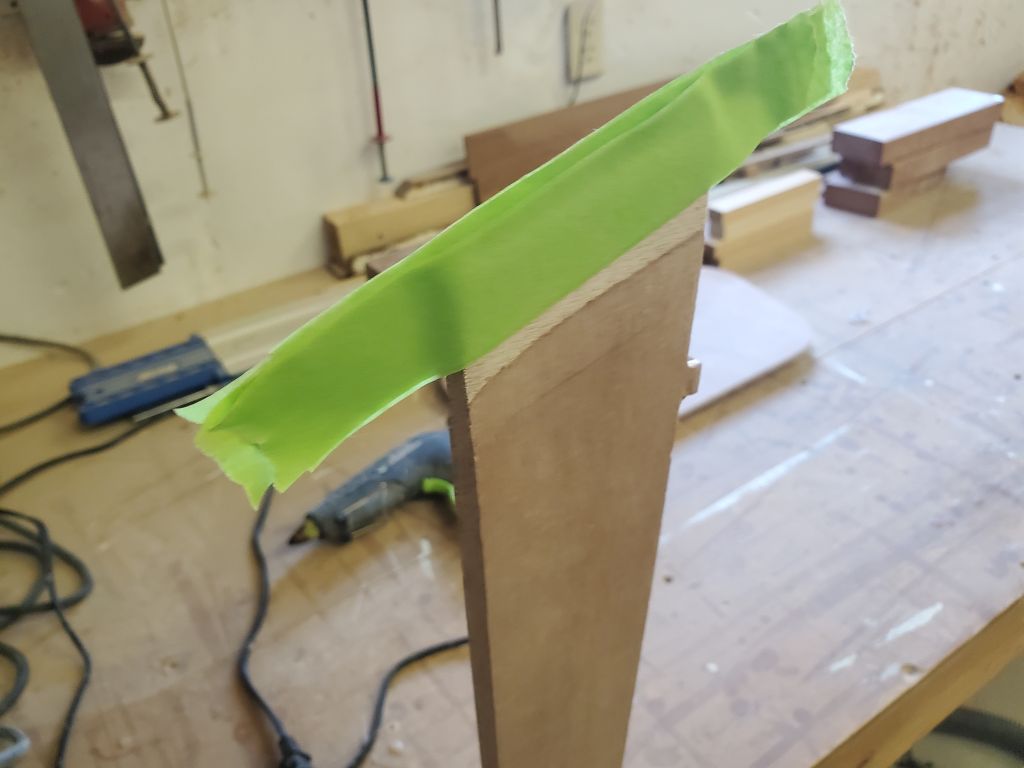
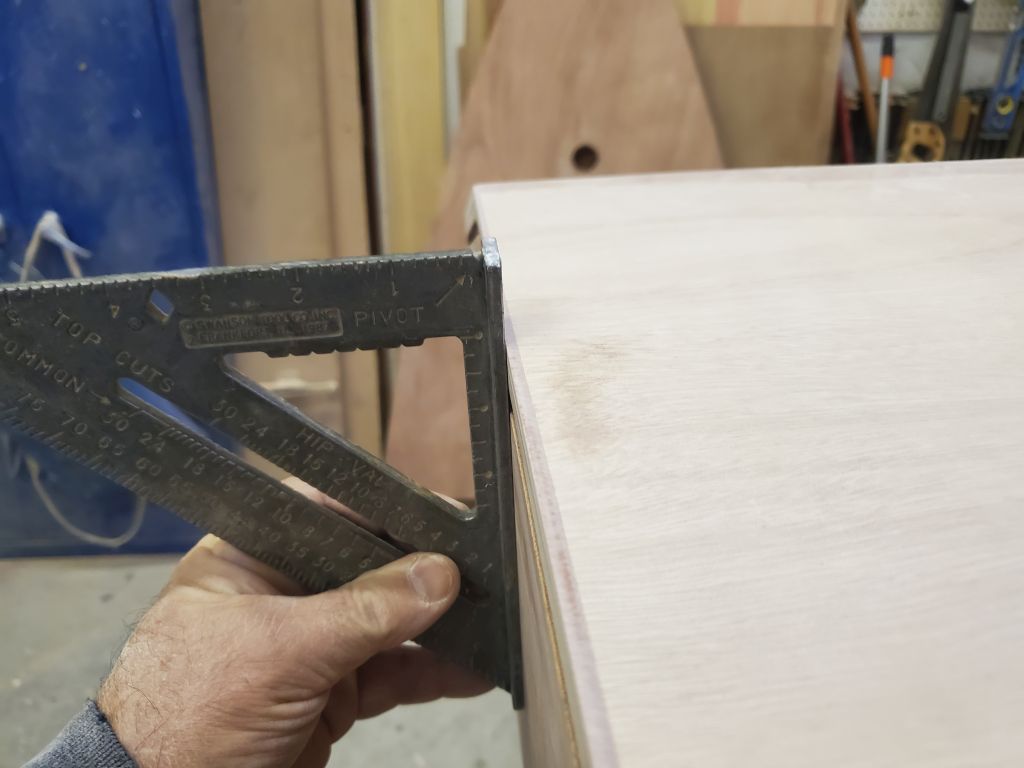
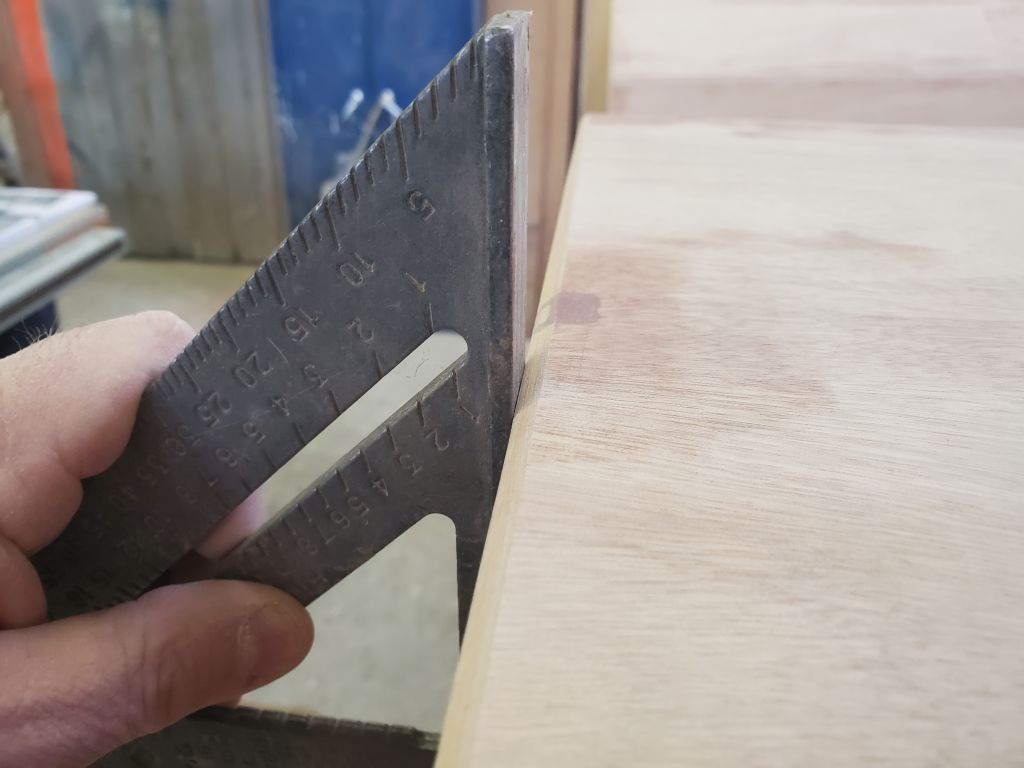
At the aft end of the bow section, I block sanded the vertical bulkhead edges to clean them up, and then sanded a bevel into the aft edge of the foredeck where it joined the bulkhead.  The bevel was required here because this edge required fiberglass for protection, but since the foredeck had to remain completely flush with the bulkhead when all was said and done, the bevel was required to give space for the fiberglass.  I used a sanding block with a piece of 1/4″ plywood taped to the bottom side to easily create the angle for the bevel.  Once I’d sanded in the angle, I rounded the top corner.

On the stern section of the boat, I also rounded the transition between hull and gunwale, and block sanded the bulkhead edges, while also fine-tuning the roundover I’d previously installed on the top edge of the transom inwales.

With all the sanding and milling operations complete, and the boat vacuumed and cleaned up, I started by installing a fillet beneath the breasthook, which I accomplished by inverting the bow half on the bench and leaving the bow hanging well out so I could crawl, hermit crab-like, into the space and form the fillet with relative ease.

Next, I turned to the day’s main event to install fiberglass over the breasthook, gunwales, and bulkhead edges on the forward half of the boat, using the various cloth I’d cut last time.  There was one layer of 6 oz. cloth to cover the tops of the gunwales and down onto the interior of the hull, one layer of 4 oz. cloth to cover the breasthook and wrap over its aft edge, and two layers of 6 oz. at the vertical bulkhead edges aft.  The aft edge of the foredeck received one layer of 4 oz. cloth covered in peel ply to smooth the transitions, and  at the gunwales, I installed peel ply below the hull edge to smooth the transition onto the hull.

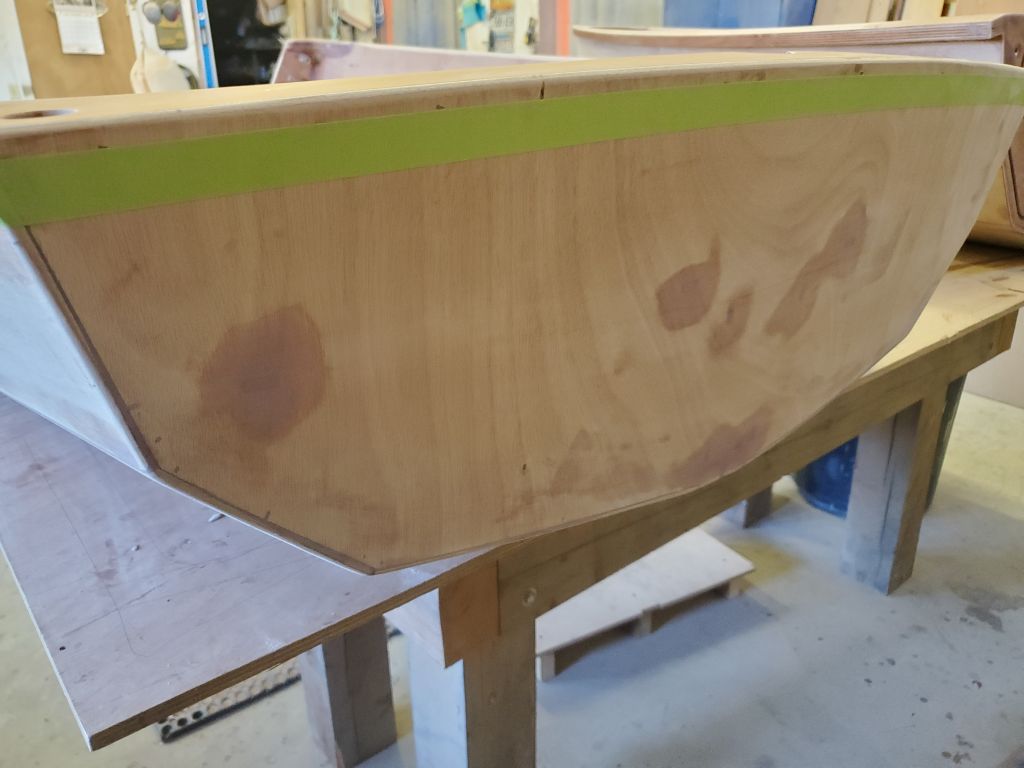
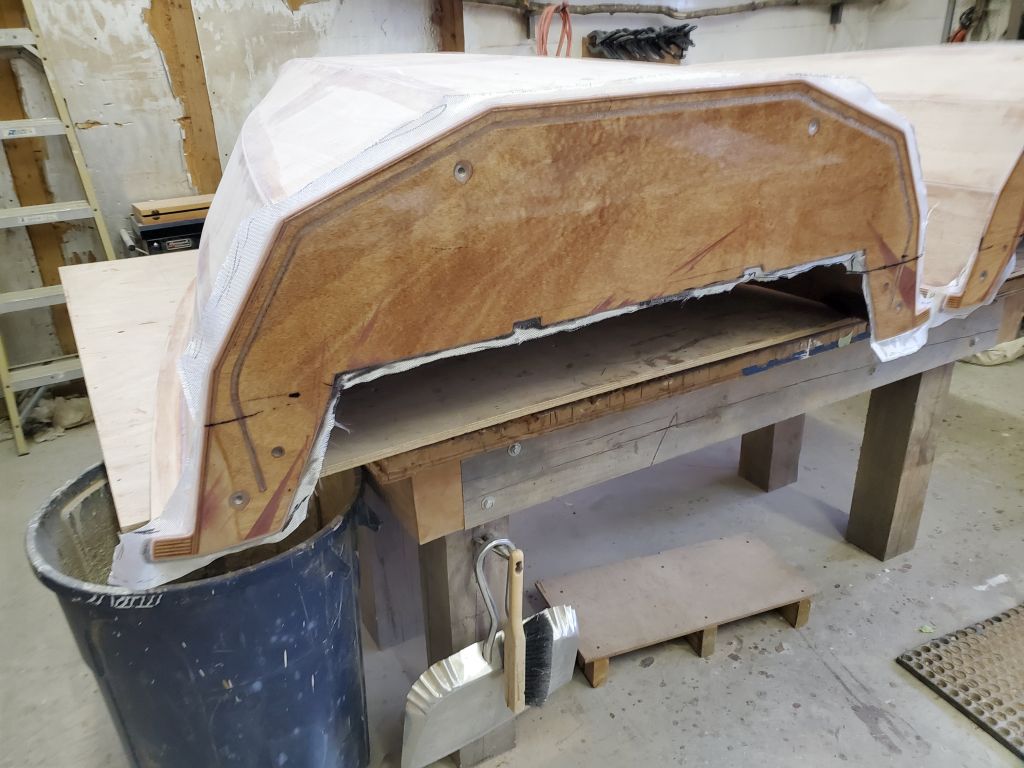
On the stern section, I used two pre-cut pieces of 4 oz. cloth to cover the inwale, wrapping over the transom edge and overlapping the green tape I’d placed there (the fiberglass would later be trimmed at this  tape line), and more 6 oz. cloth over the gunwales, with two layers of 6 oz. on the aft bulkhead edges.  Again, I installed peel ply beneath the hull edge to smooth the transition of the tabbing onto the hull.

Later in the day, I applied an epoxy fill coat to all areas.  After, I trimmed the fiberglass at the transom and pulled the masking tape.  The 6 oz cloth, particularly on the gunwales, tended to drain the resin a bit to the low (outboard) sides, so I thought I’d likely roll on another fill coat on the morrow to completely fill the weave of the heavier cloth.  This would probably be required on the bulkhead edges too.

PT11-33

Now that the forward half of the boat was gloss-coated on the inside, it was time to permanently install the foredeck.  I applied unthickened epoxy where needed to prepare bare wood or plywood edge grain, then installed beads of thickened epoxy adhesive on all bearing surfaces:  mast step and daggerboard trunk; the hull edges along the foredeck; the edges of the foredeck itself; and the aft bulkhead and cleats.

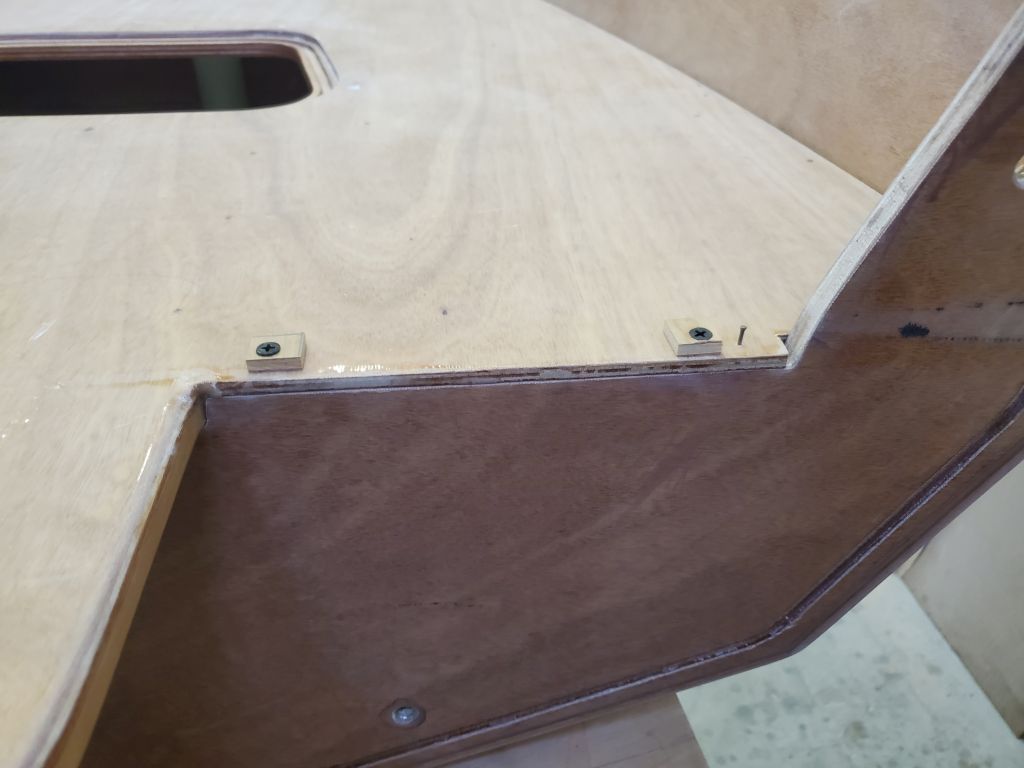
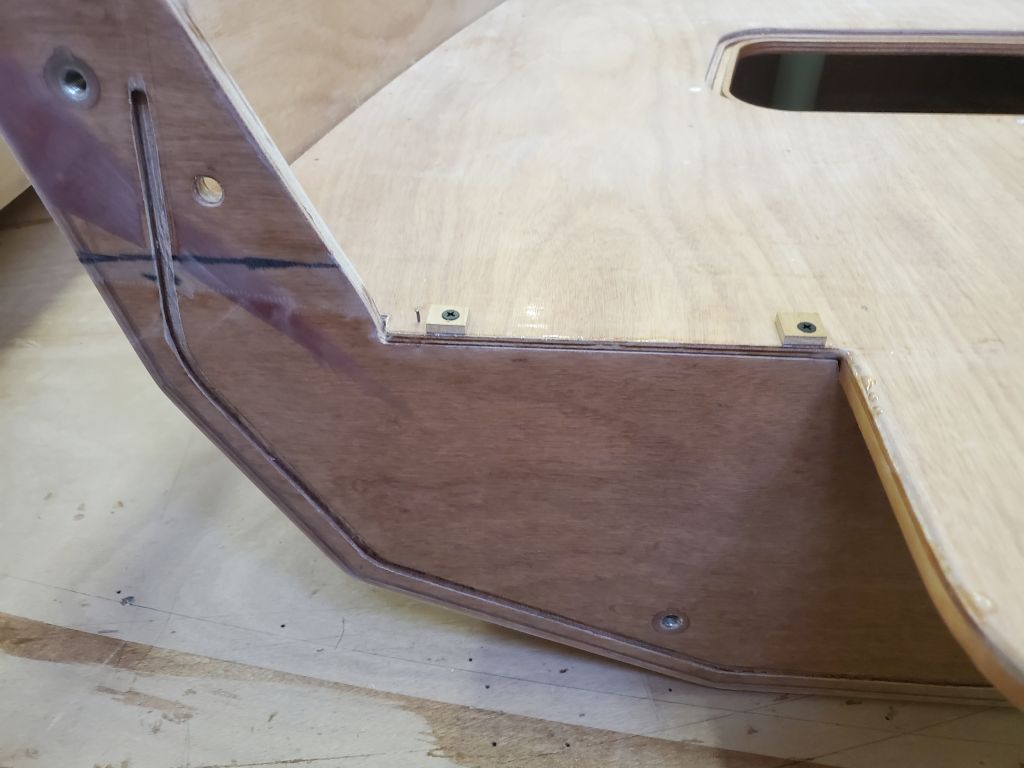
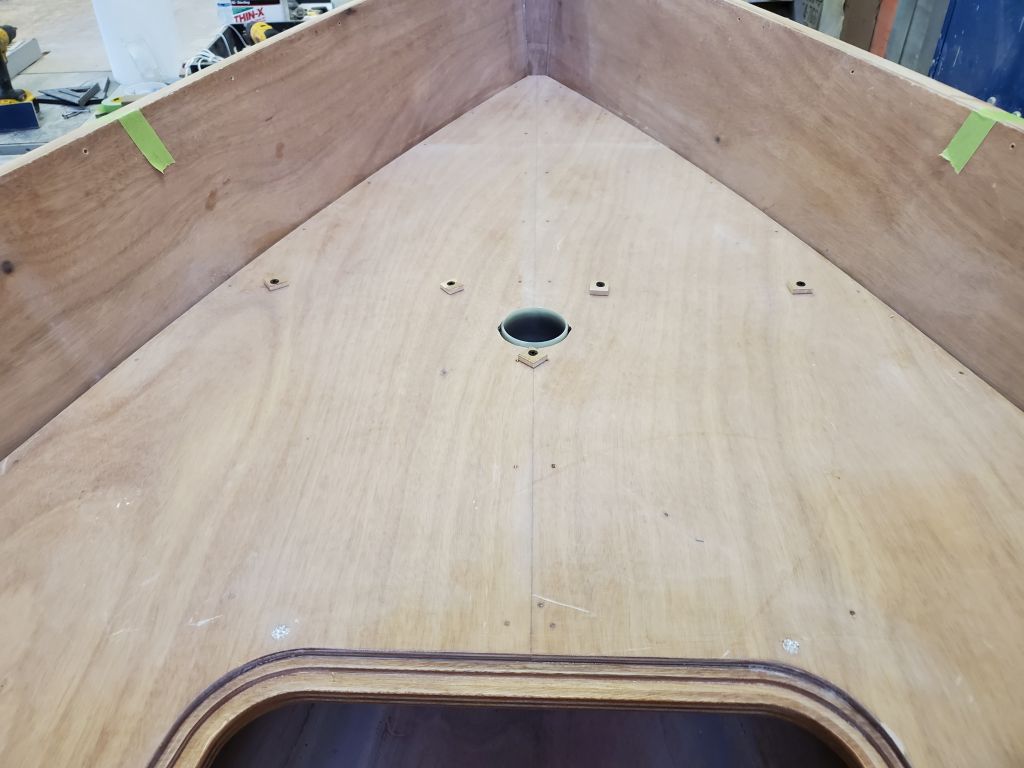
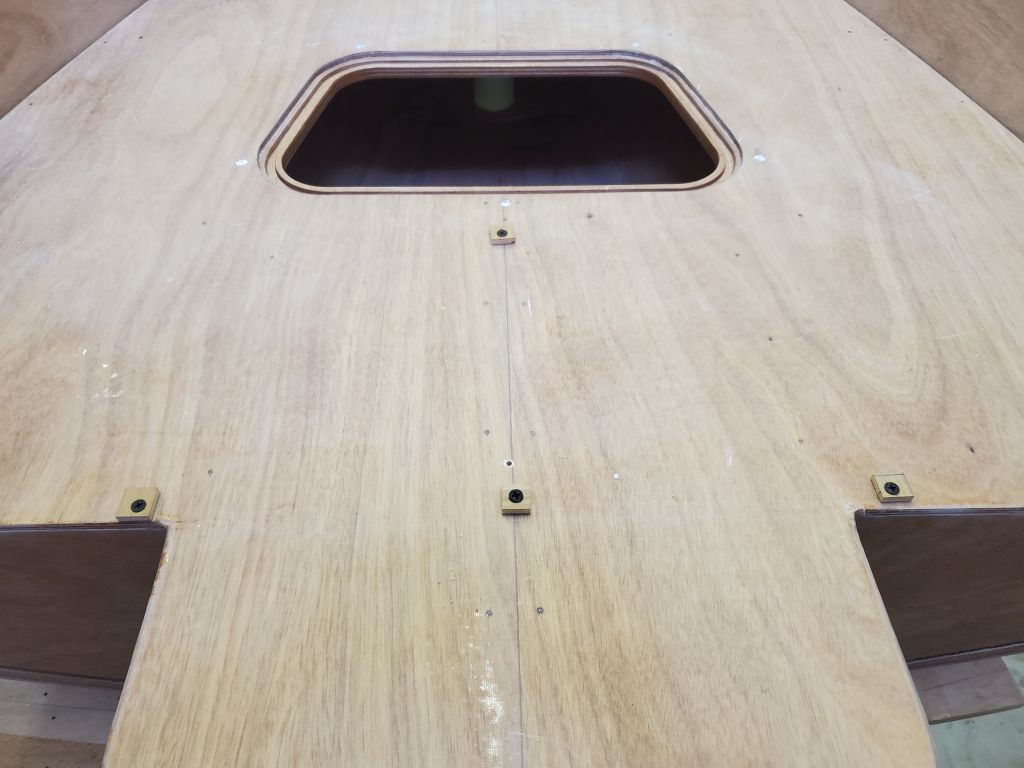
I set the foredeck in place and secured it with the 11 screws and little pads.  I had good epoxy squeezeout everywhere, as there should have been.

Next, I cleaned up all the excess epoxy and removed masking tape as needed.

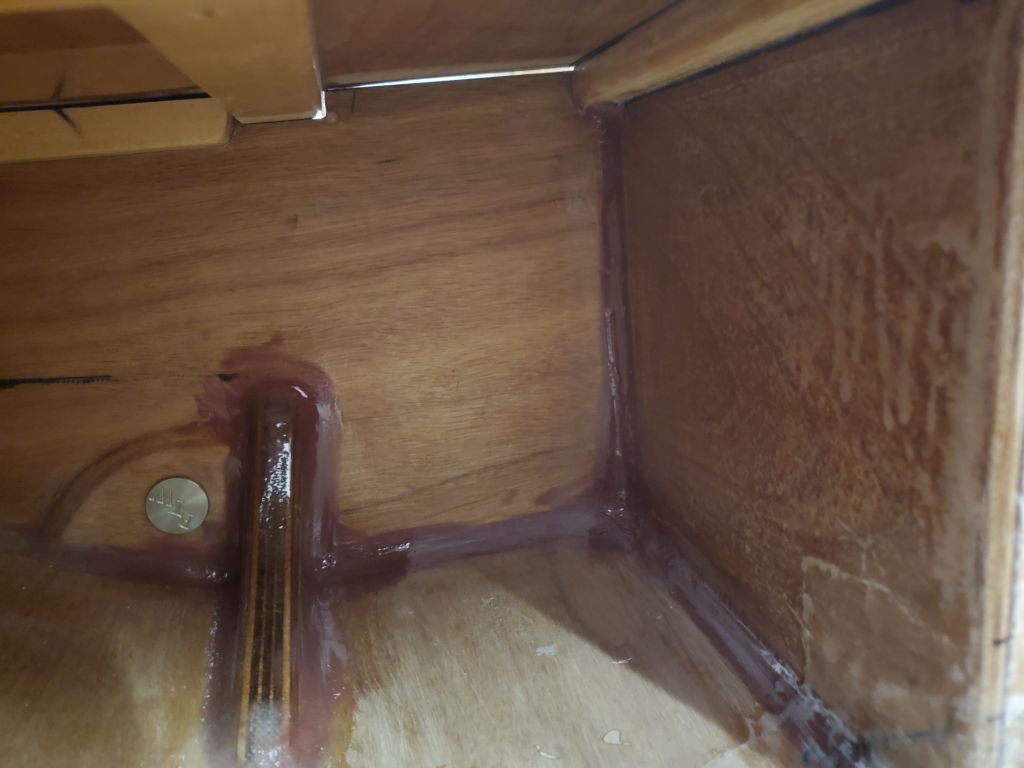
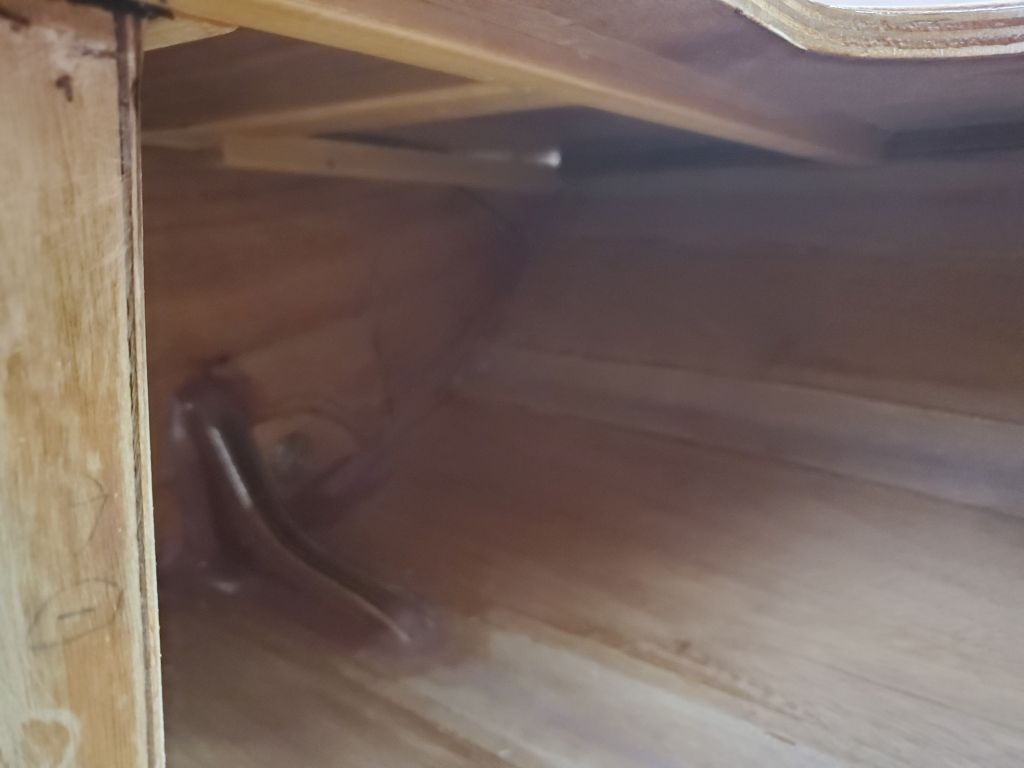
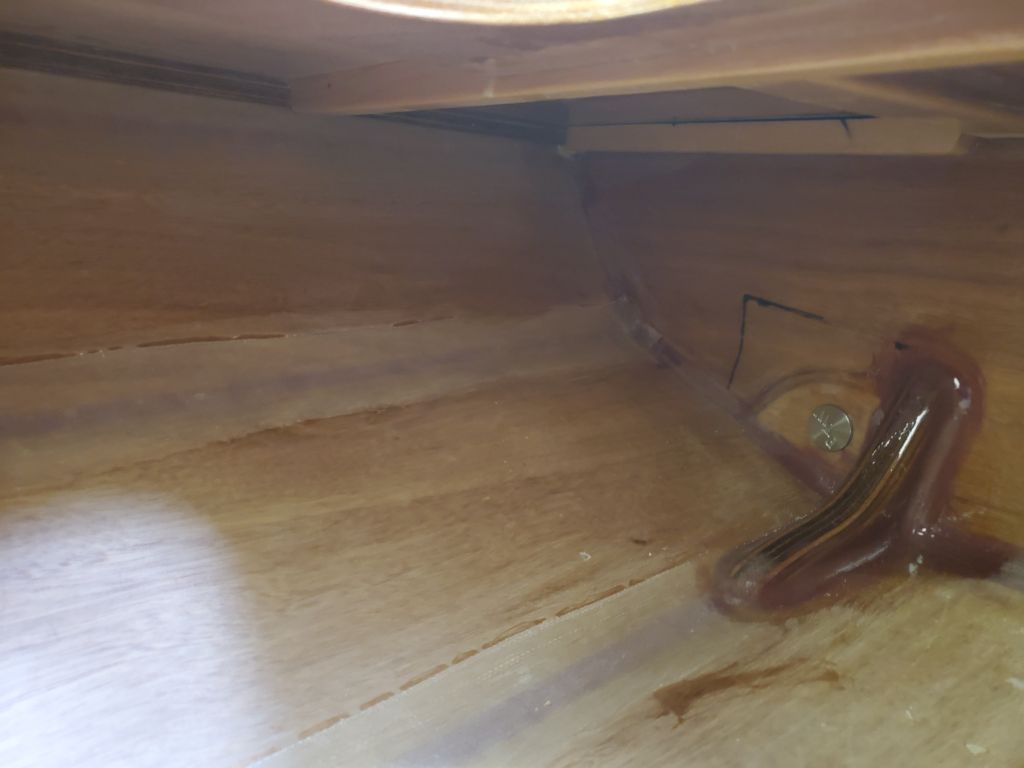
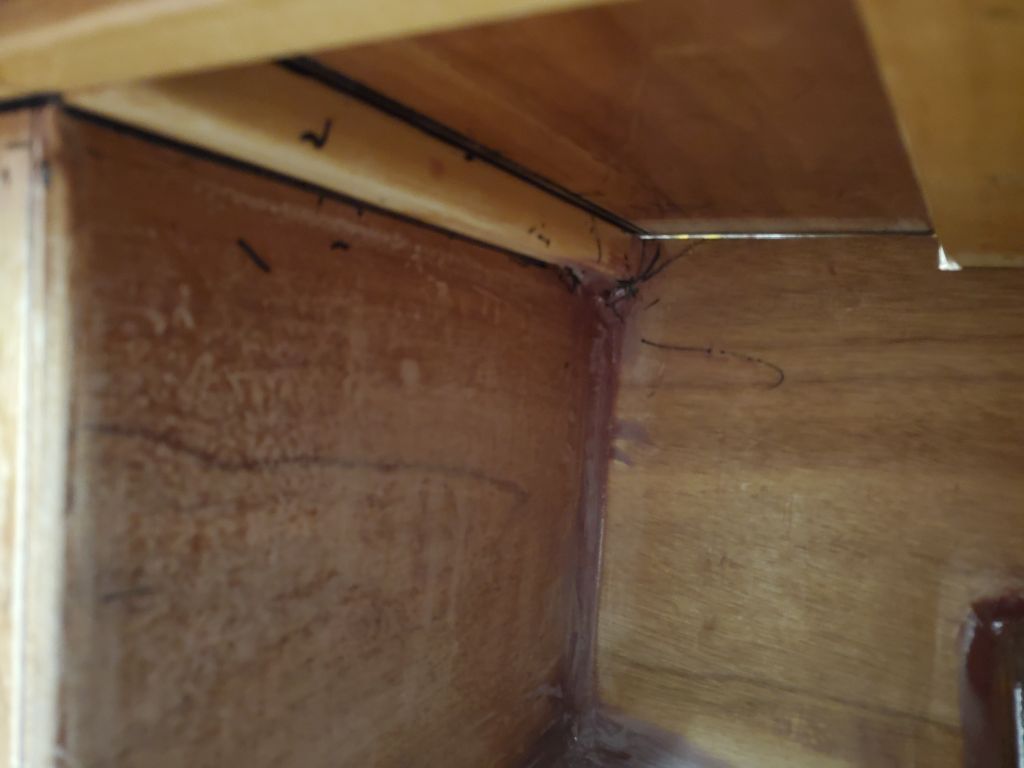
Belowdecks, there was also good epoxy squeezeout everywhere, visible only through the eye of the camera.

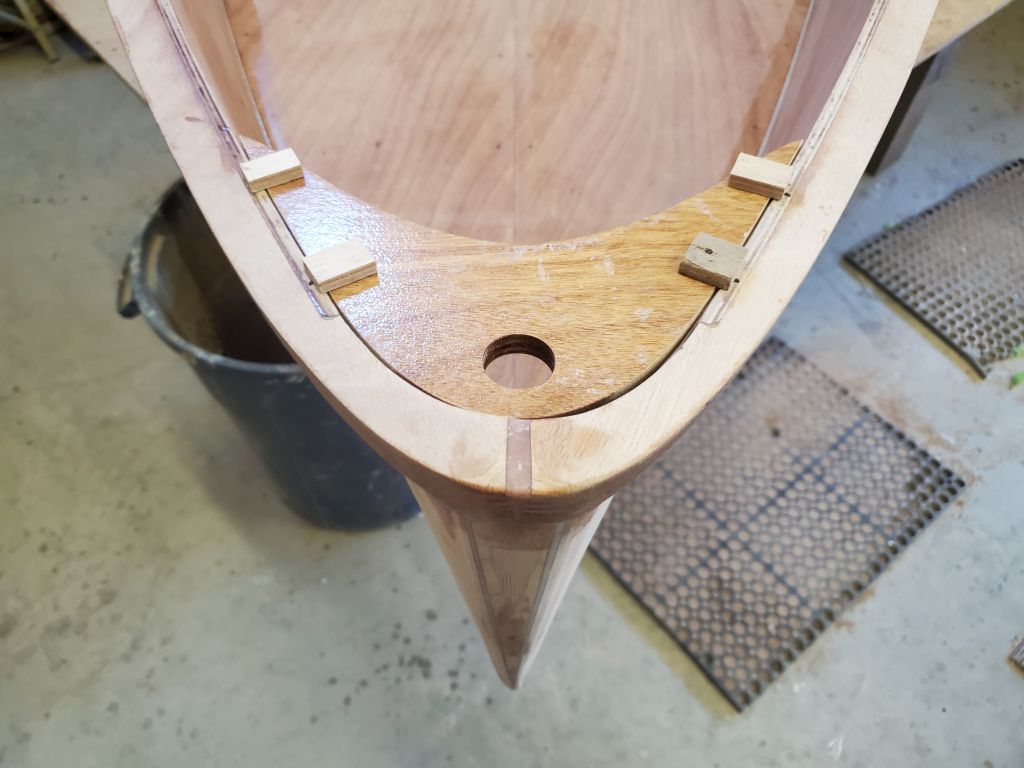
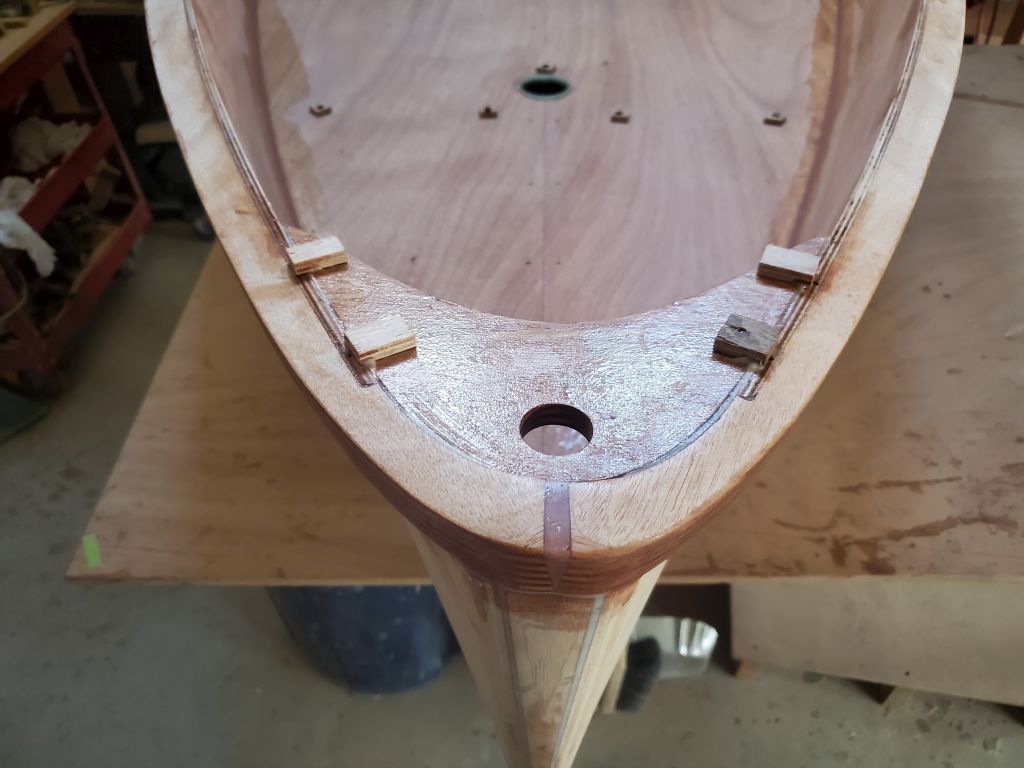
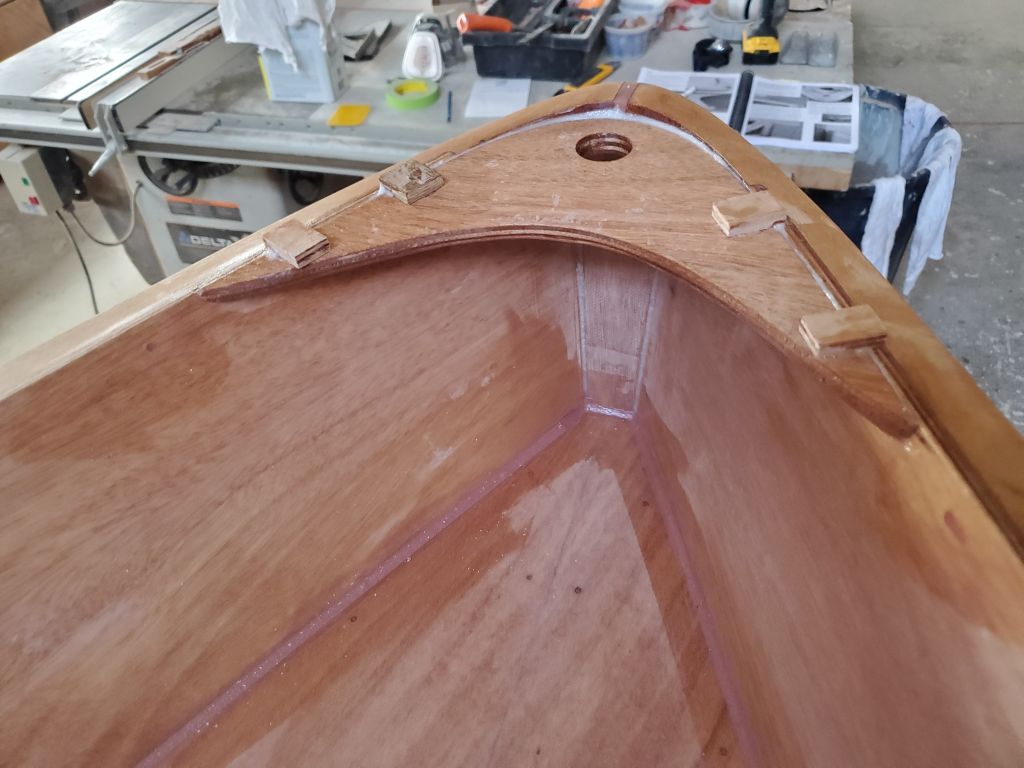
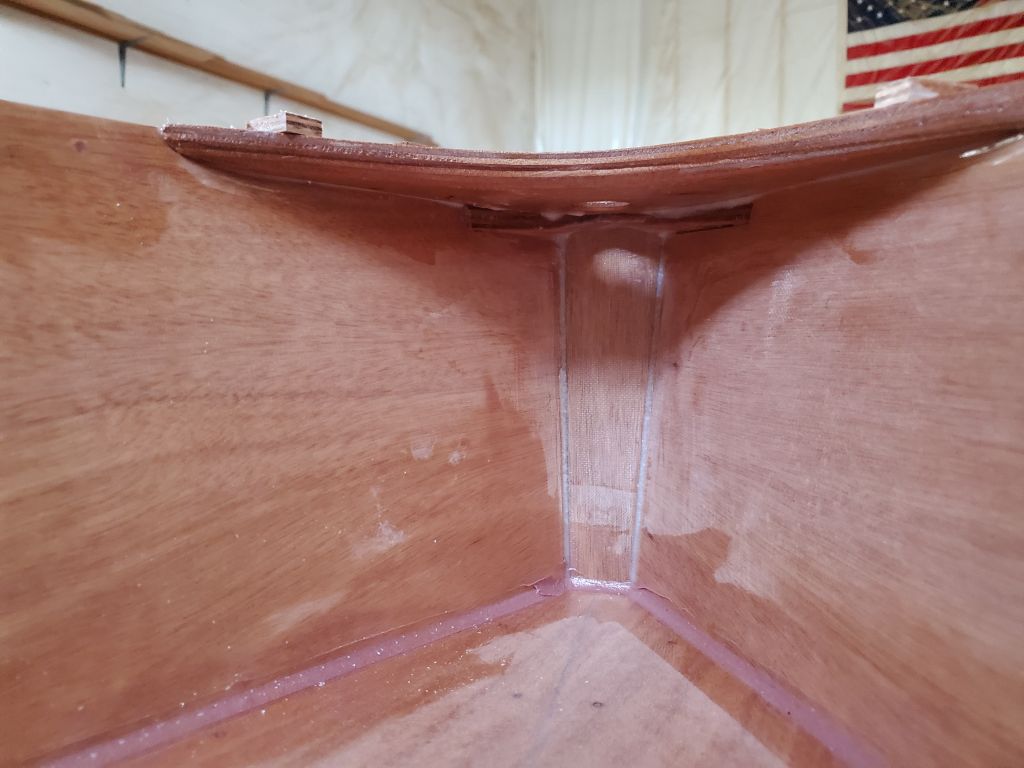
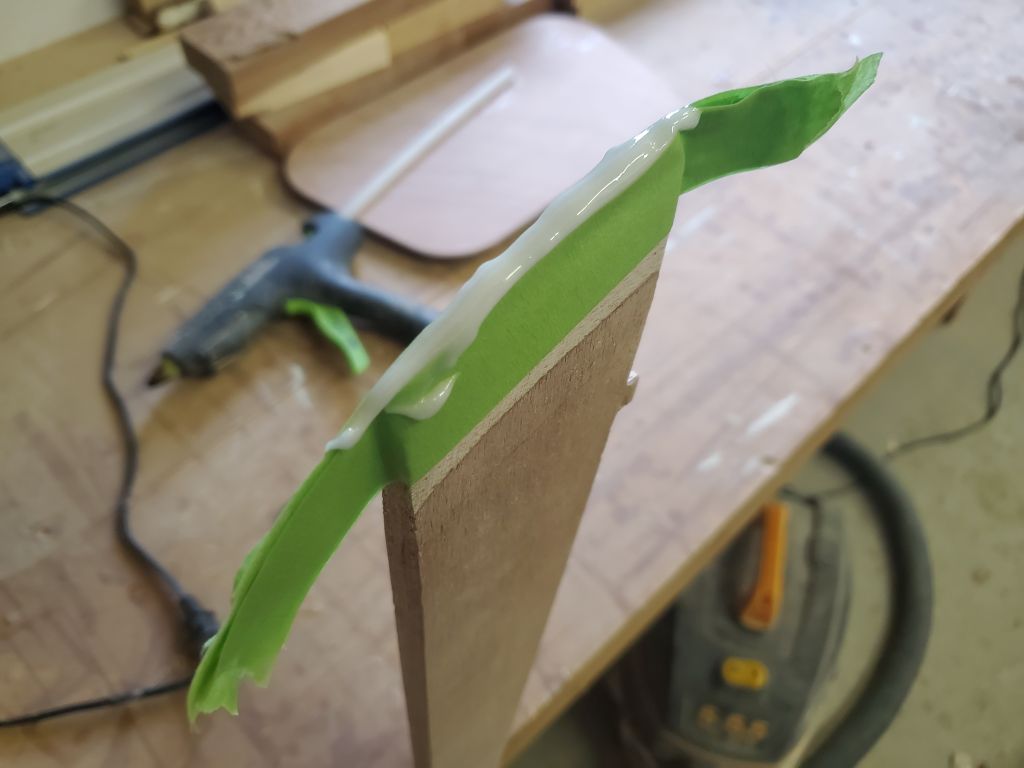
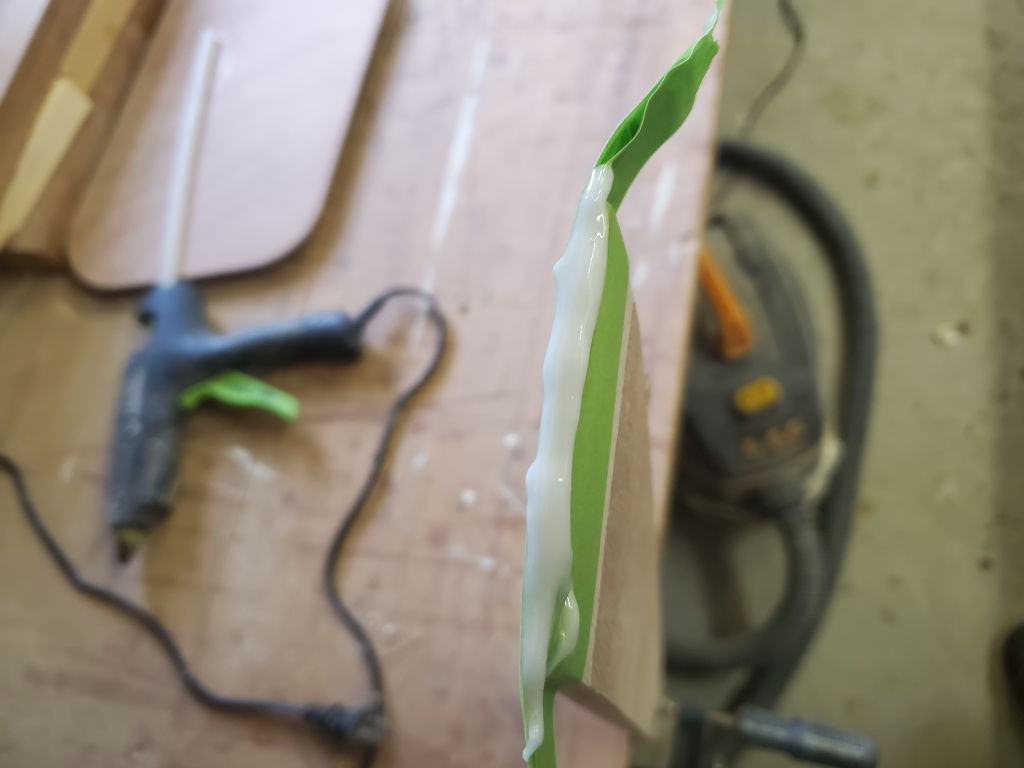
With the foredeck installed, now I could move on and install the breasthook.  I had to modify the aft part of the edges to get the pre-machined part to fit closely enough into the curve of the stem and gunwale (it didn’t need to be a perfect fit, just close).  To hold it at the proper level, I hot-glued some small alignment blocks to the top, which blocks rested on the edge of the hull planking on each side, and glued the breasthook in with the usual routine of epoxy priming and thickened epoxy.  The gunwales continued their curve above the height of the forward end of the breasthook, but this area would get trimmed down once the epoxy cured.

Despite keeping the photos above all together for continuity of the project, in reality I did the breastook fitting first, then, before installation, I installed epoxy fillets along the intersection of foredeck and hull.  With leftover epoxy, I filled the holes at the gunwale leftover from its original installation; I hand-milled small countersinks at each hole location before filling it with the thickened epoxy.

While I was finishing up this work, the power went out, always my favorite thing.  We’d survived a doomsayer windstorm overnight without issue, but now, with bright sunny skies and only moderate wind gusts of perhaps 25, we lost it.  But the shop was bright, and I had no immediate need for power tools, so I continued working on various preparations to their natural end.  The power came back on around 1400.

I turned my attentions to the stern half, which required some minor preparations before tomorrow’s planned work.  As with the forward half, I filled all the gunwale installation holes, and also touched up the various alignment slots in the transom and stern quarters. I should note that my filling/fairing technique has always been to sneak up on the final result with multiple levels of fairing application as needed, never to overfill and sand down.  This is one place I have consistently differed with the instructions in the build manual for this boat.

At the same time, I used some of the epoxy to fill a second time the screw holes at the gunwale reinforcements I’d installed earlier.  The top transom edge required rounding over, which I accomplished with a sanding block.

The next major step in the process was going to be to install fiberglass reinforcement on many of the exposed edges, including the tops of the gunwales, the exposed bulkhead edges, breasthook, and transom inwale.  To this end, I cut various pieces of fiberglass and peel ply to size as directed in the manual.  There’d be a bit more sanding and milling prep to certain areas before I could do the glasswork, and with curing epoxy everywhere that would be the first task next time.

To get a bit ahead of the future game, I did one minor step required to the skeg, which was the last major component to finish off the hull itself.  As described in the manual, I tapered the aft edge of the plywood skeg on each side, then built a little dam of three layers of masking tape on both sides and injected some thickened epoxy material into the gap.  Once cured, this would give the trailing edge of the skeg the hardness of epoxy–exactly how will make itself more clear in subsequent steps.  The skeg would be sheathed in fiberglass before installation.
PT11-32

With the fiberglass sheathing on the bulkheads cured overnight, I set the boat halves back up on the bench ready for more work.

After trimming the excess fiberglass with a sharp knife, I block sanded the faces flat with 120 grit paper, and lightly block sanded the hull faces to bring the cut fiberglass down flush.  I lightly block sanded the edges of the bulkhead to make the fiberglass flush there as well.   The slow hardener was only just barely ready for sanding, and a few areas where the resin had been thicker during application were still too gummy to properly sand, so I’d come back later and quickly resand both faces as needed.  I trimmed the fiberglass from the fastener holes and gasket slot, and cleaned these areas up as needed.

At the gunwales, I block sanded the fiberglass flush on the three sides, being careful to maintain the original gunwale shape since these were crucial to realigning the boat later on.
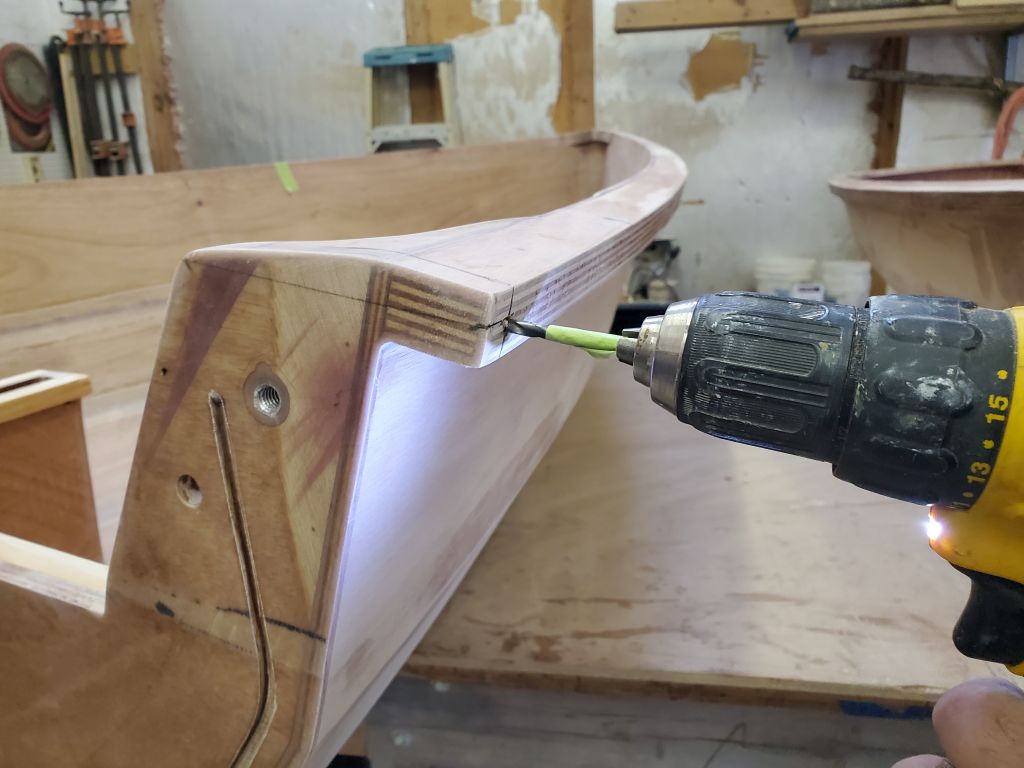
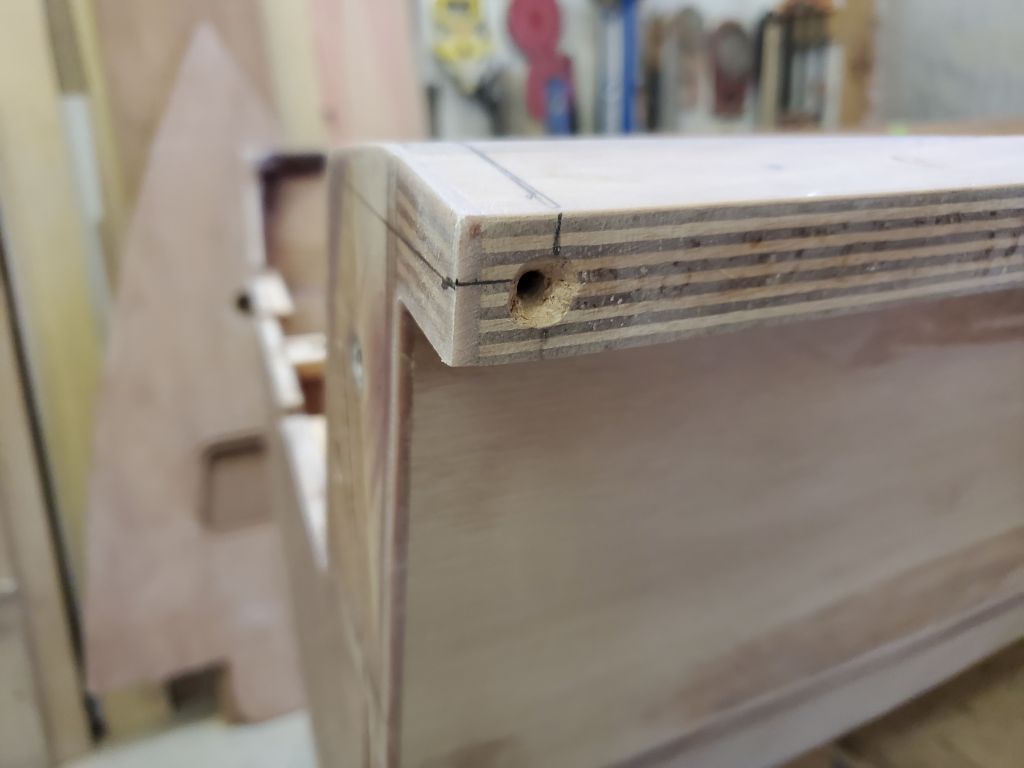
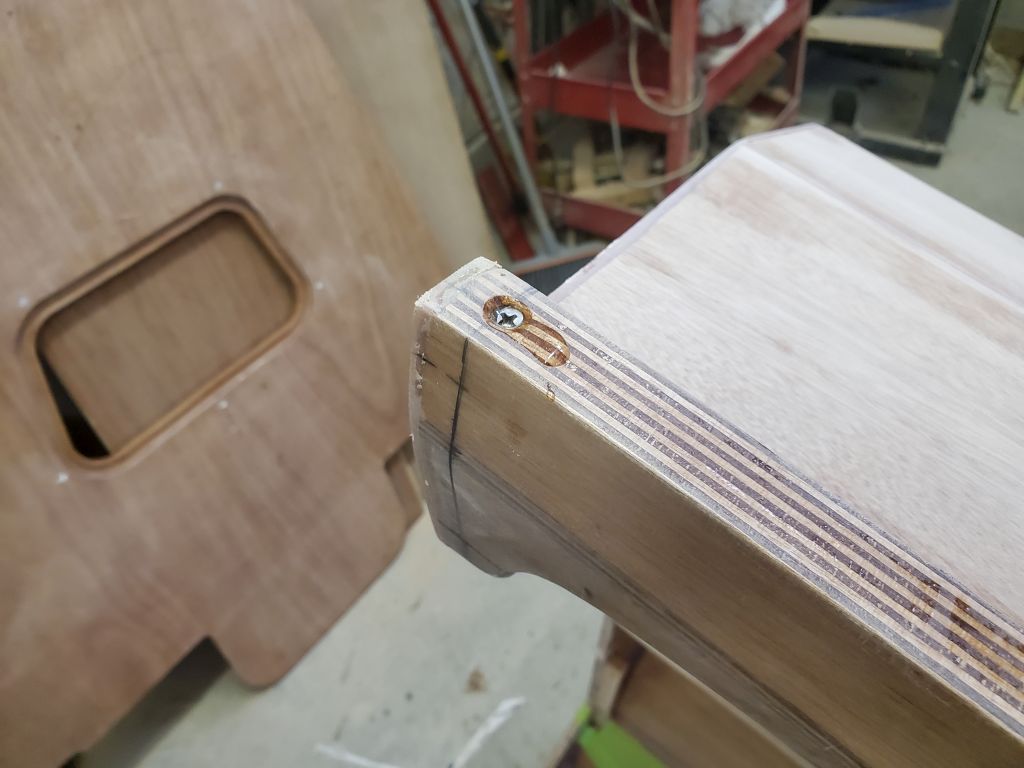
The instructions called for some reinforcement at the gunwale ends, taking the form of stainless steel screws driven in to the structure in a specific way and saturated in epoxy.  I marked and drilled the holes in the detailed way described, dry-installed the screws as a test, and then, with the boat tipped up on one side and then the other, installed the screws after first pouring unthickened epoxy into the holes.  I cleaned up any excess epoxy.

I used the leftover epoxy to mix up a small batch of thickened filler that I used to cover these screw heads, and also go over the various assembly slots in the stern quarters once more.

Now I could move forward with the final preparations to install the foredeck.  Using the lines I’d previously marked on the underside to outline the various structural members to which the foredeck would ultimately be secured, I sanded the glossy epoxy in those areas to prepare for bonding.

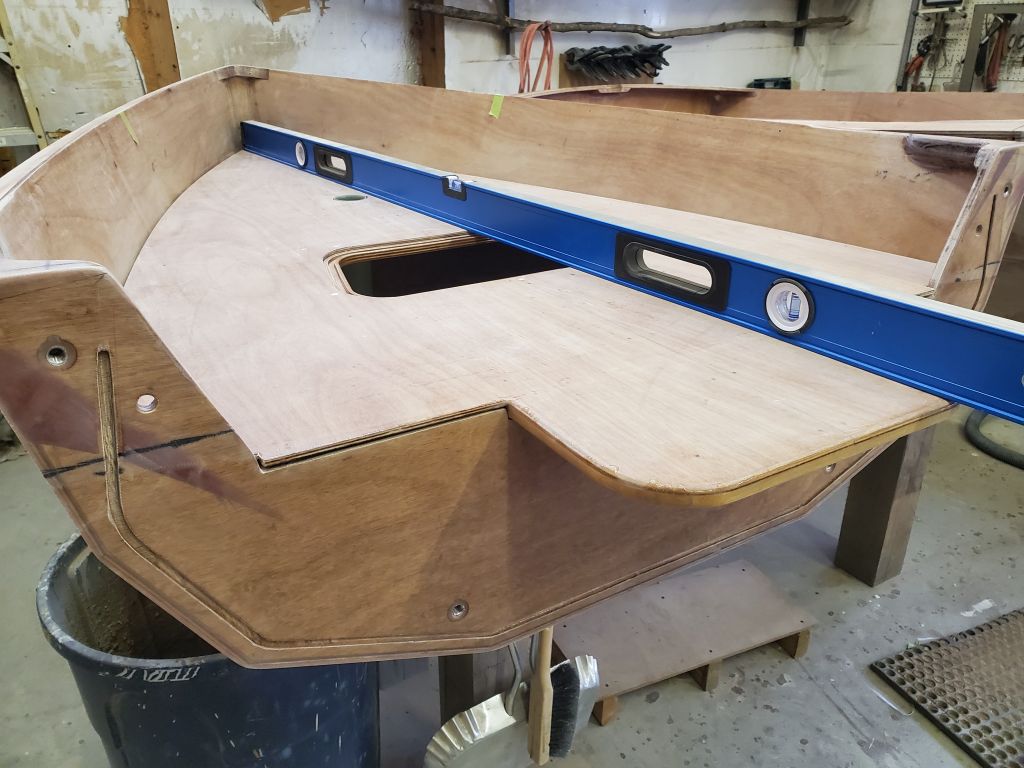
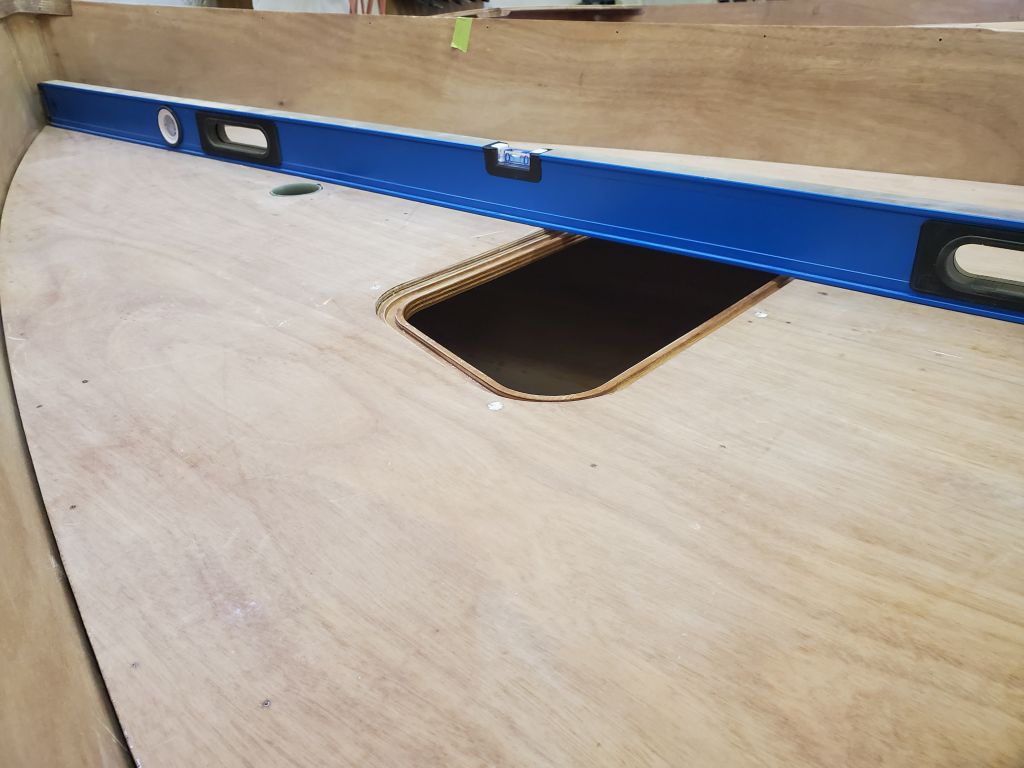
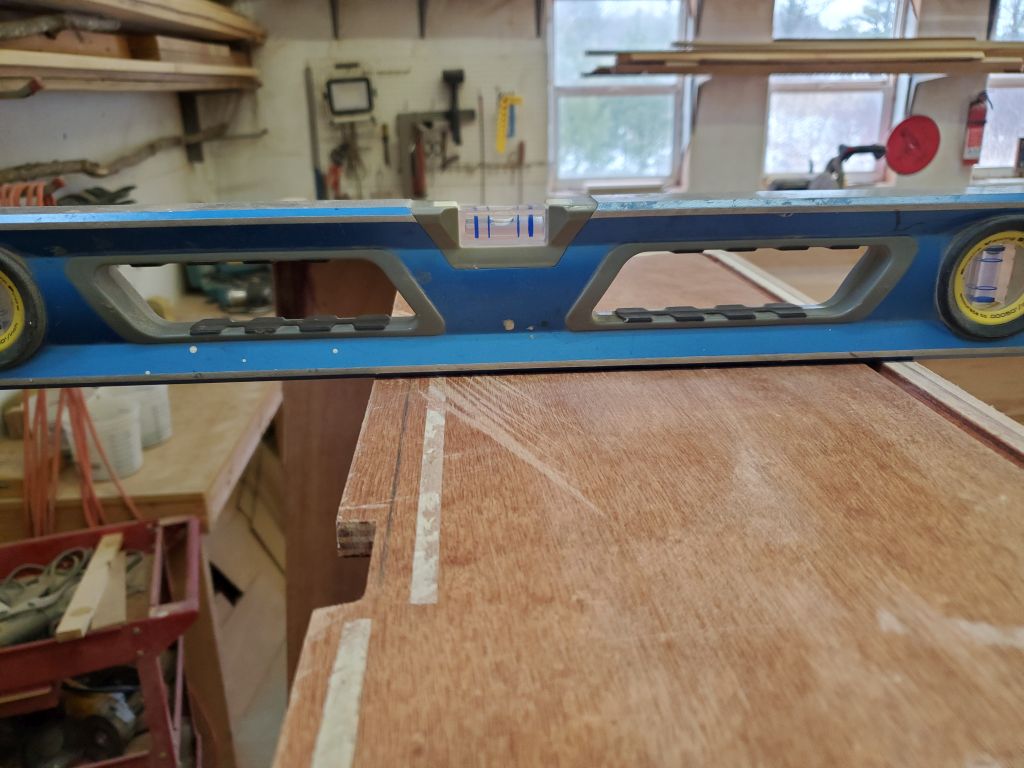
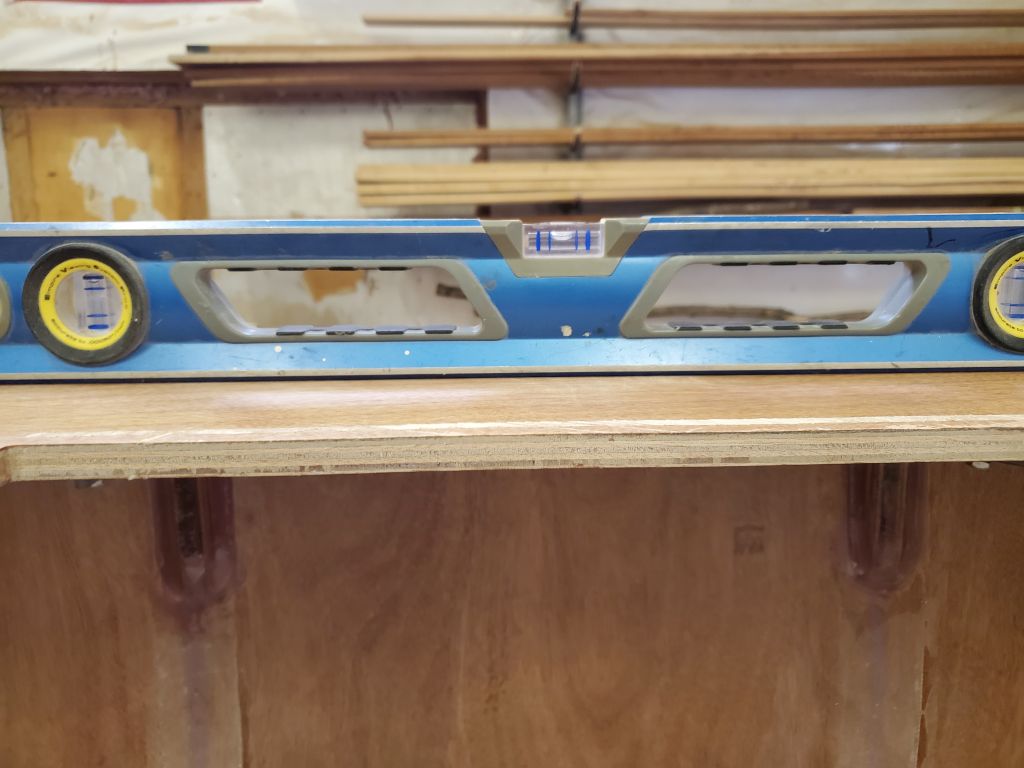
Next, I set the foredeck in place and, with a long straightedge, checked that it was flat and true:  the foredeck was supposed to be planar from the bulkhead to the stem, while resting firmly on the daggerboard and mast step areas, and I wanted to be sure the forward tip didn’t droop at all.  Everything looked good.

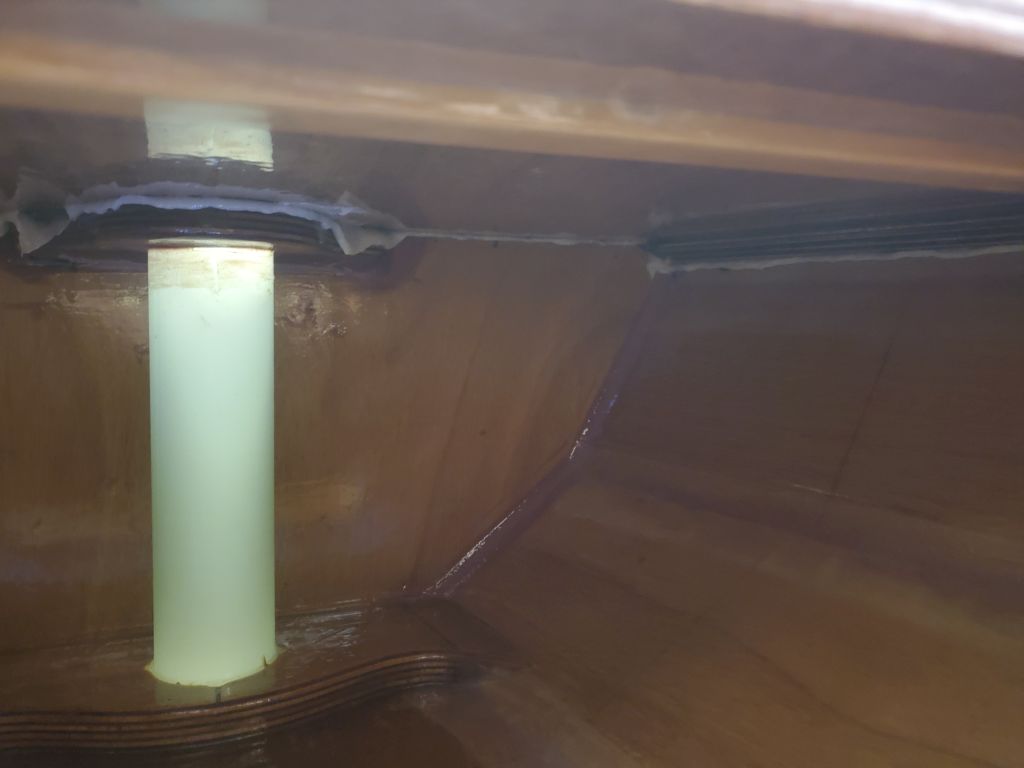
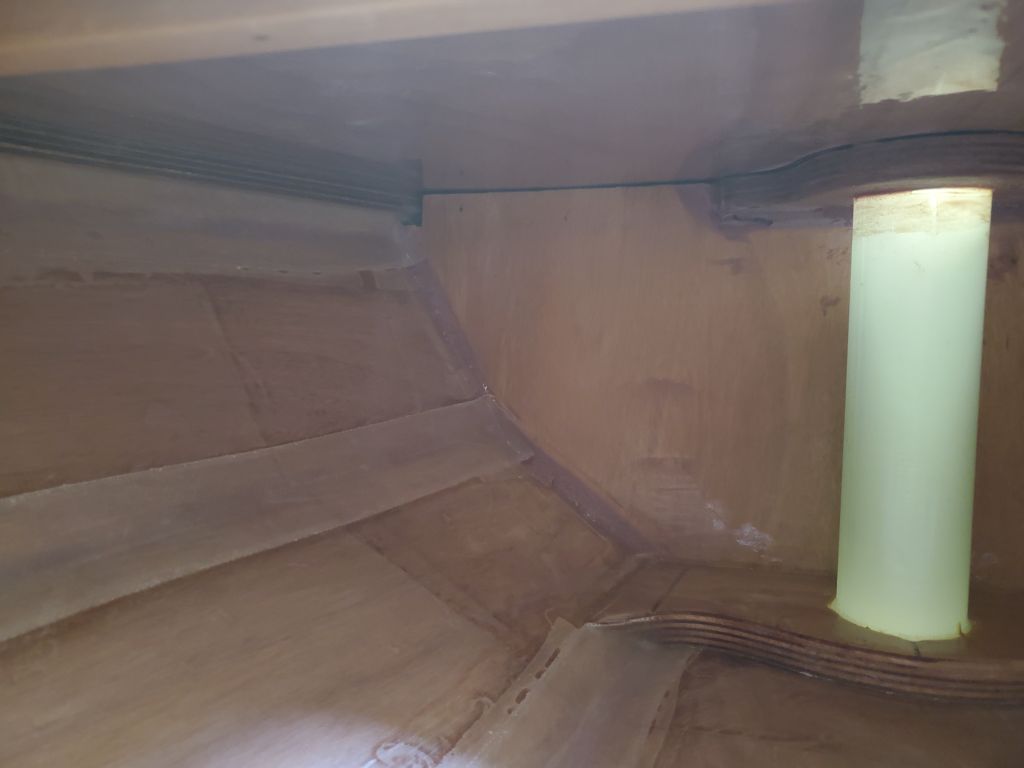
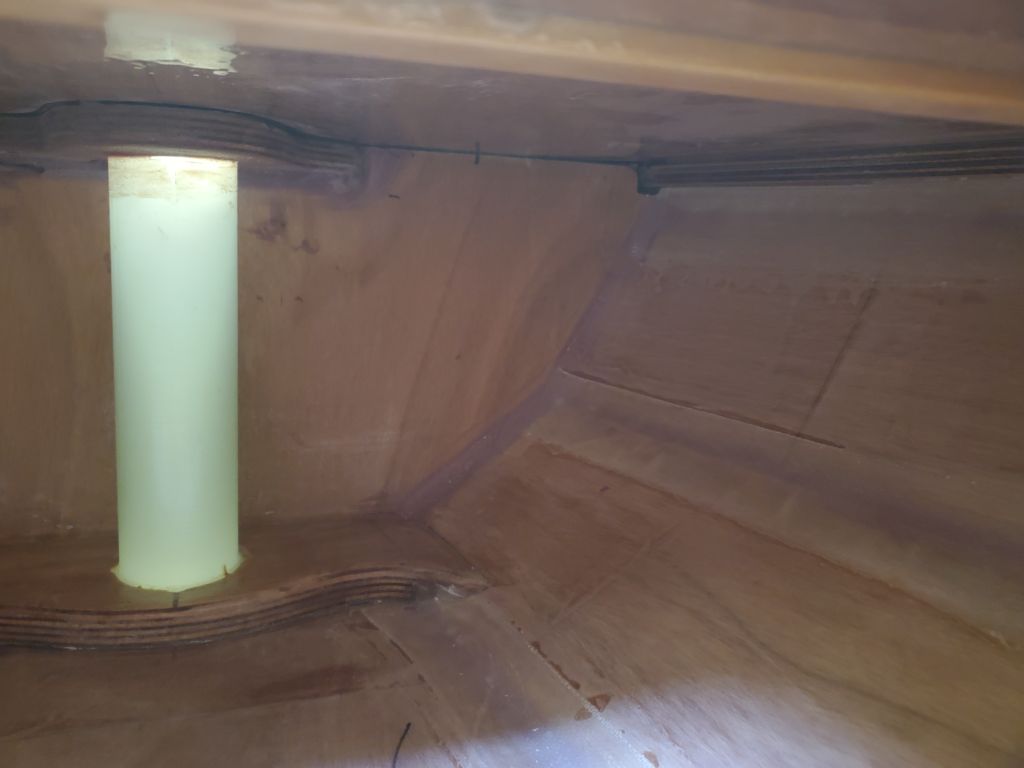
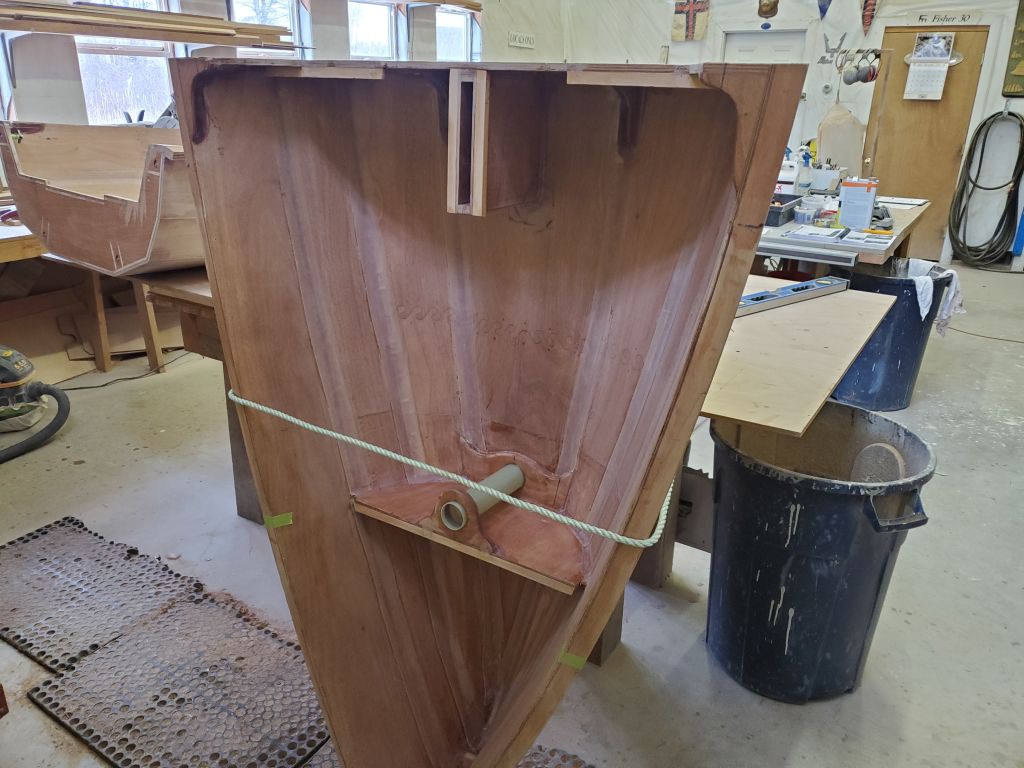
I remove the foredeck again and, working from the underside, marked and drilled pilot holes for a number of screws (11) to help secure the foredeck temporarily during final installation.  Then, I reinstalled the foredeck again and secured it dry with sheetrock screws and little plywood pads, then checked beneath with a camera to ensure the foredeck was  tightly against all the required structural members.
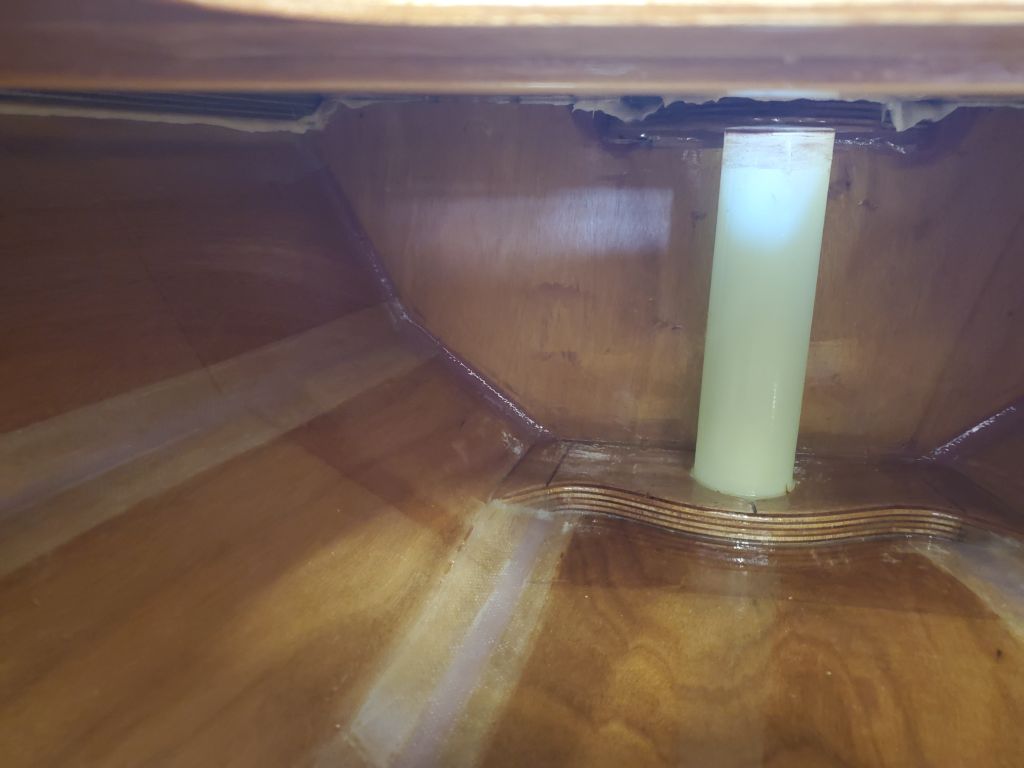
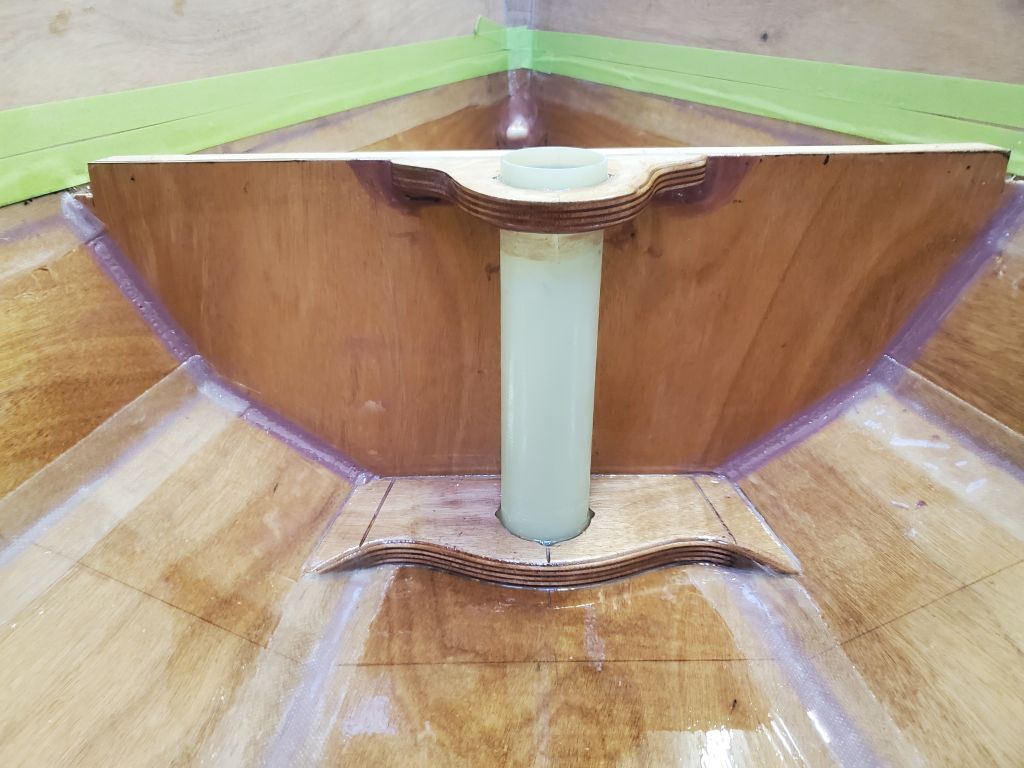
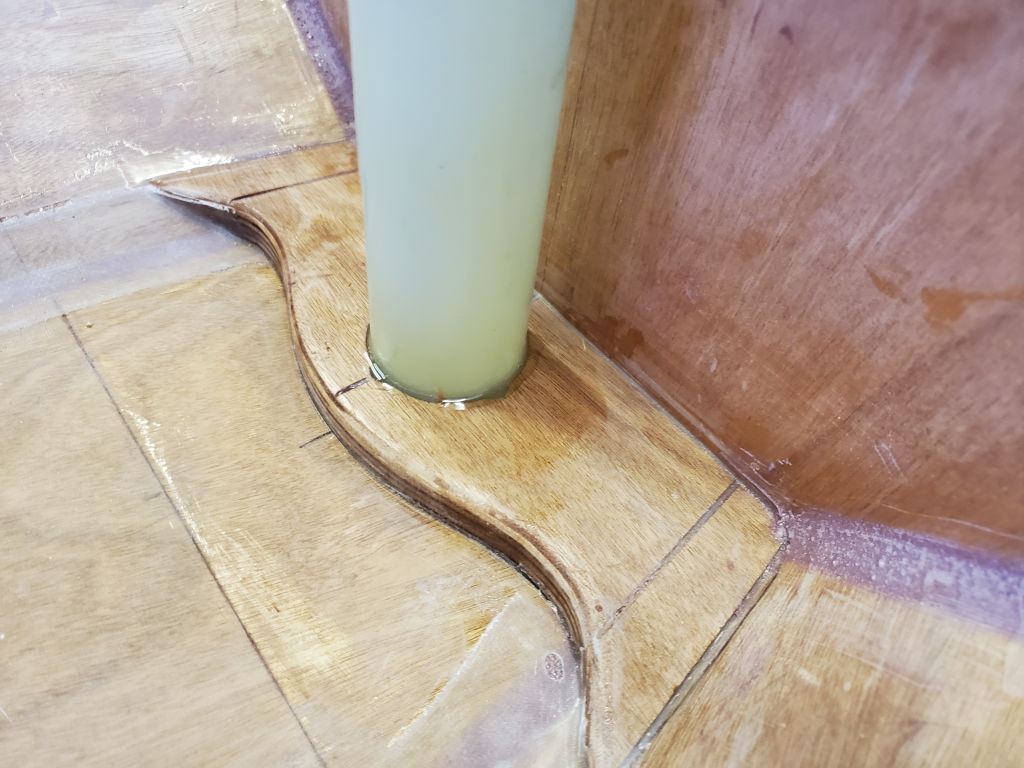
I liked the way the translucent mast tube fairly glowed with the light from above…somehow a 70s sort of lava-lamp vibe.  The area beneath the foredeck would make a groovy pad, zoinks!

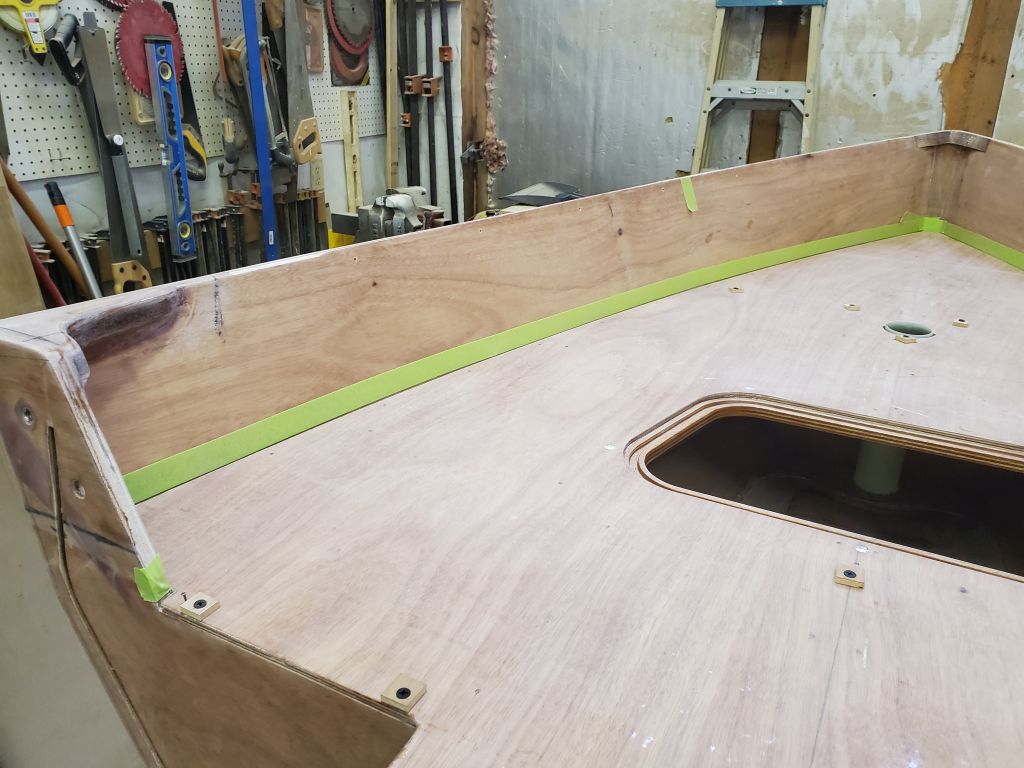
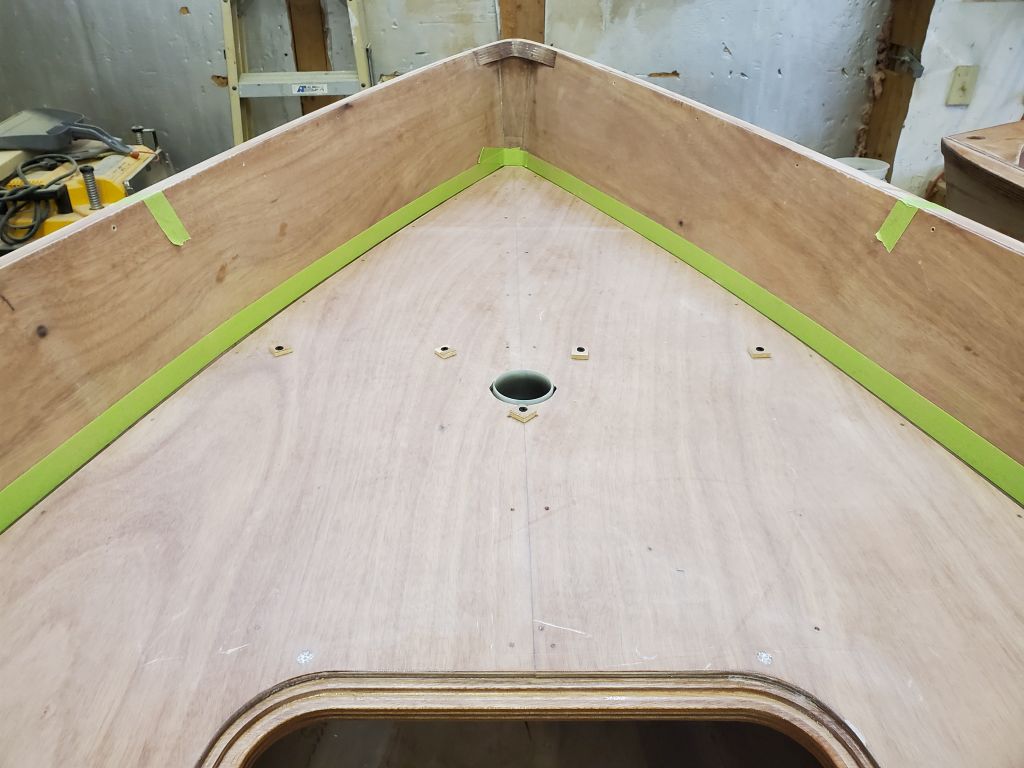
I used a marker to trace the bottom edge of the foredeck on both sides where it met the hull, and, from abovedecks, I masked along the top edge of the foredeck all along its perimeter.  This tape would be helpful to ensure proper alignment, but was really in place to protect the hull from excess epoxy during installation.
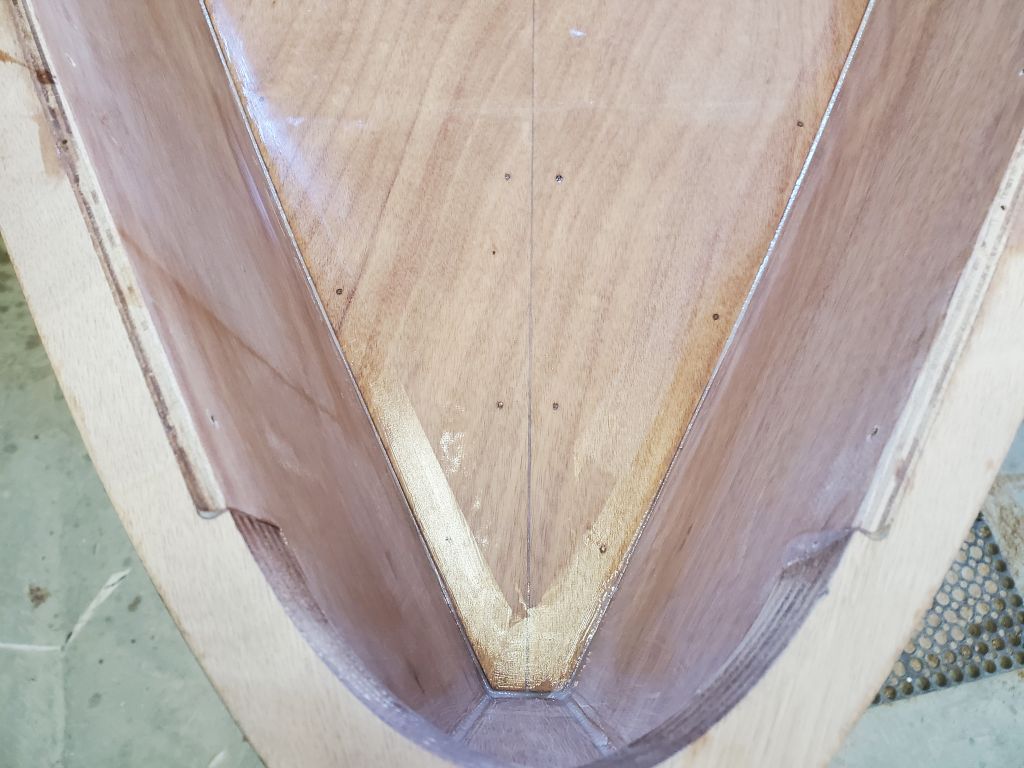
The black mark below represented the bottom edge of the foredeck, and also demarked the top extent of the final gloss coat of epoxy that would be applied next.

After masking just above the black line, and also masking off the hardware locations at the lower gussets, I applied a gloss coat of epoxy to all these areas, which would be the final finish.  I rolled and tipped the epoxy, and brushed in the corners as needed.  Once the epoxy was applied, I removed the masking tape, leaving just the strip along the hull at the top edge of the foredeck.  Once the  gloss coat cured overnight, I could move on with the final installation of the foredeck.

With some epoxy leftover, I coated all sides of the breasthook piece, after first rounding the lower aft corner with a router and a quick overall sanding.  I suspended it on  nails driven into the bench and with their heads cut off.  This could be installed once the foredeck was in place.

PT11-31

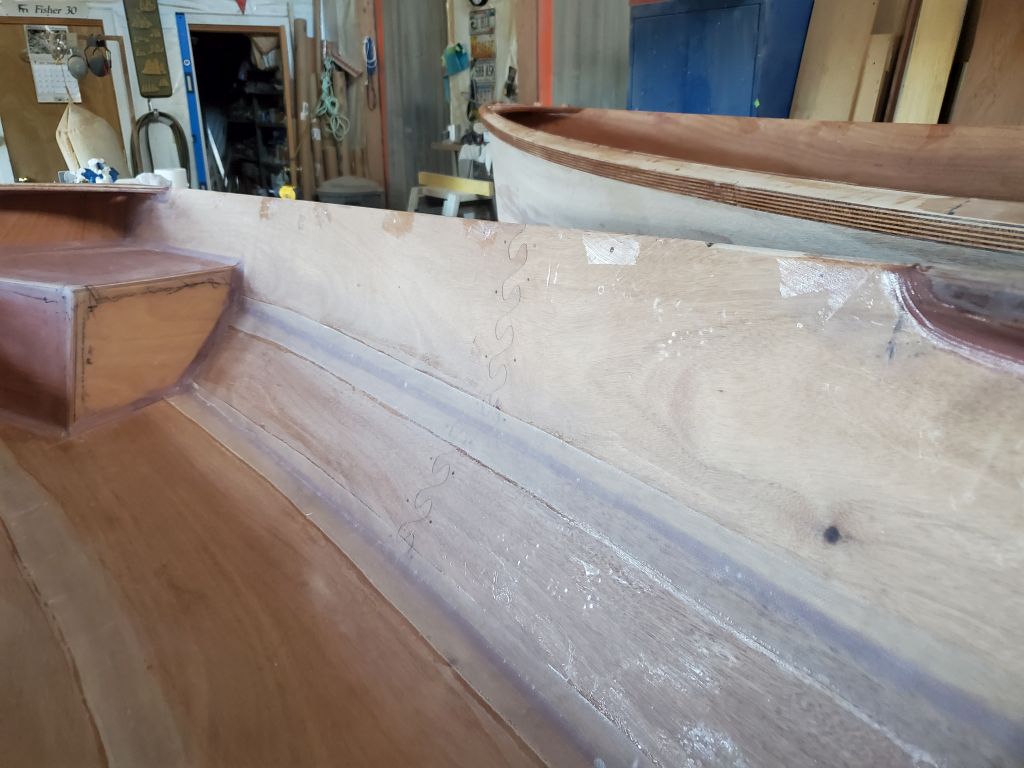
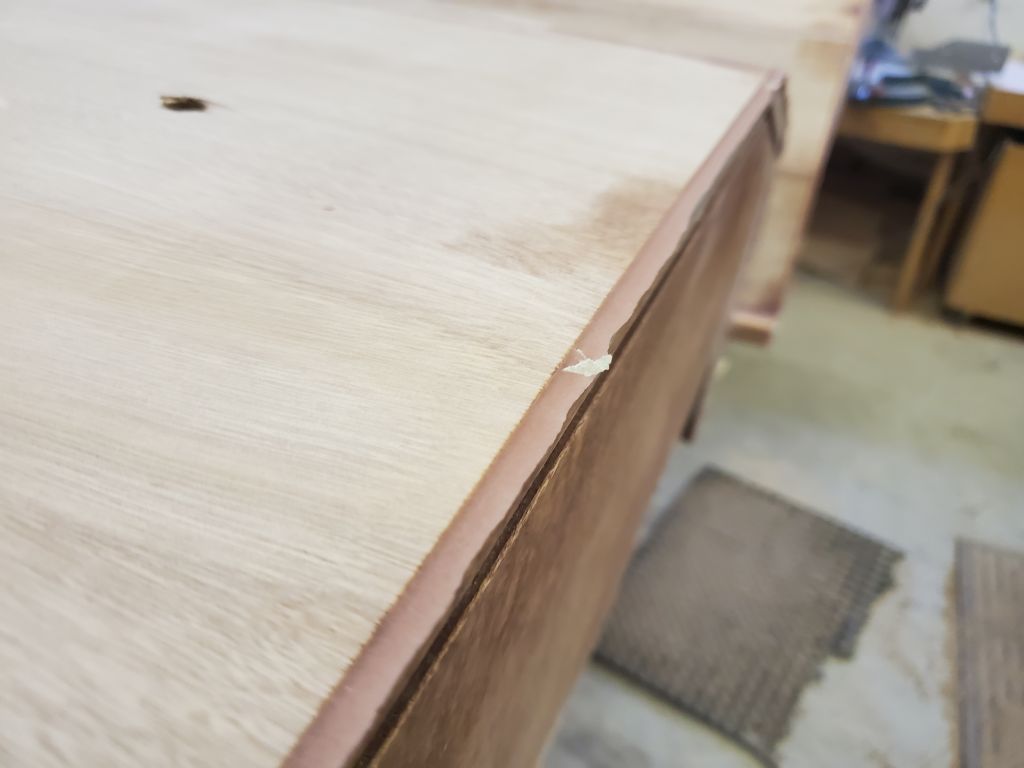
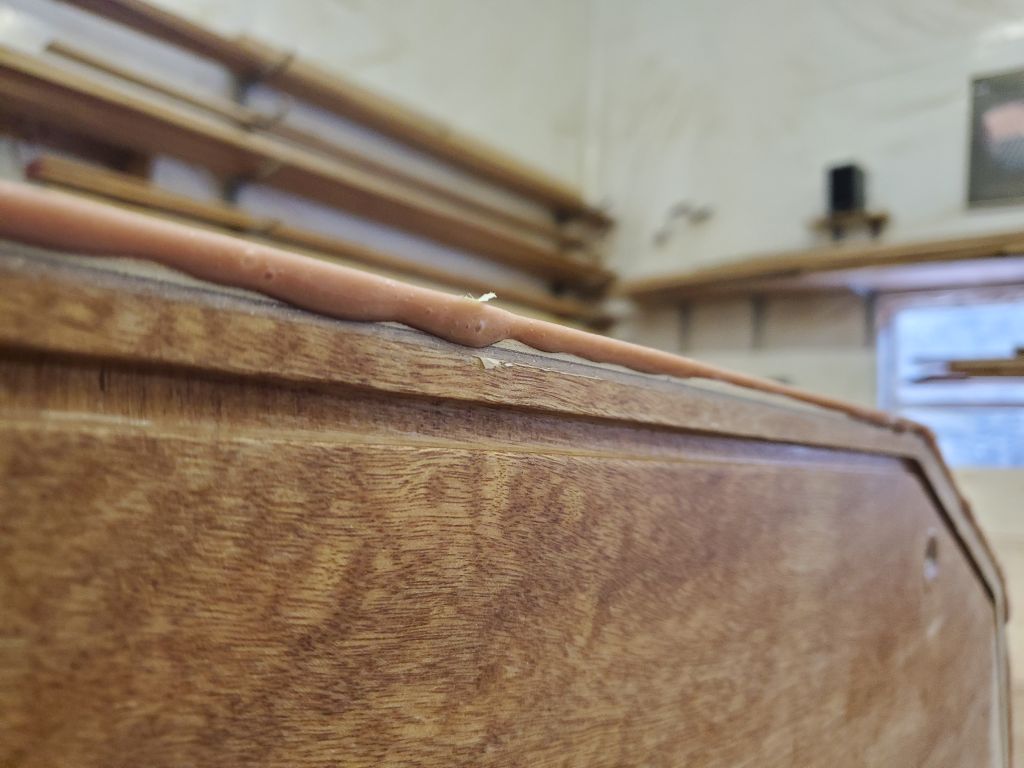
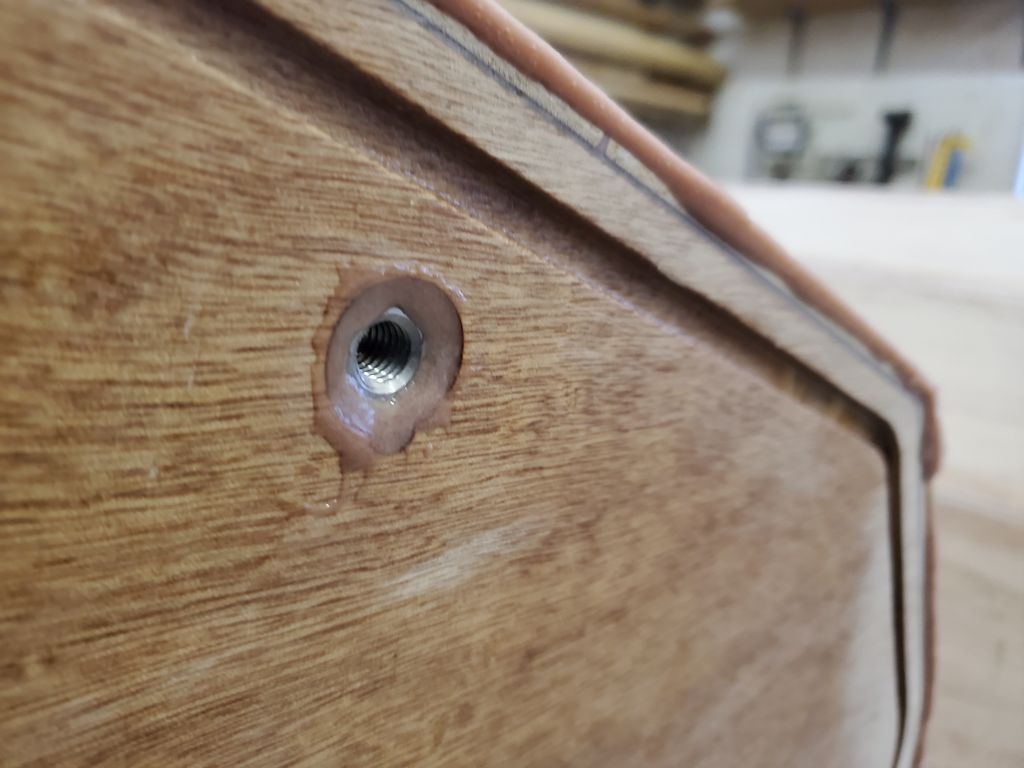
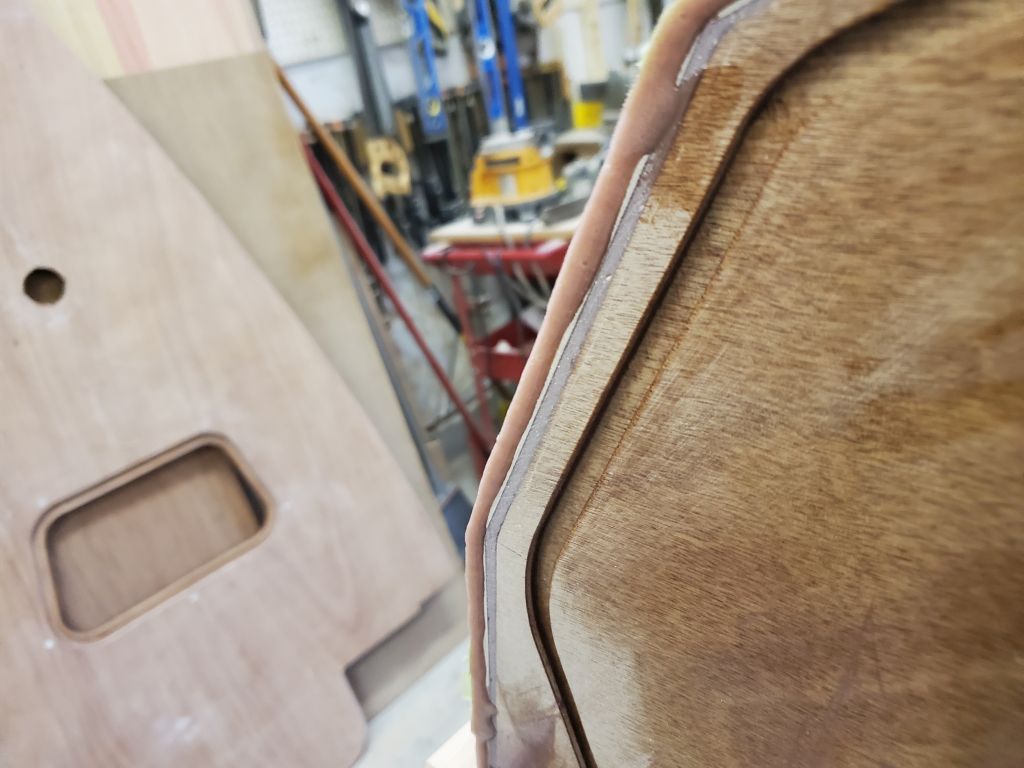
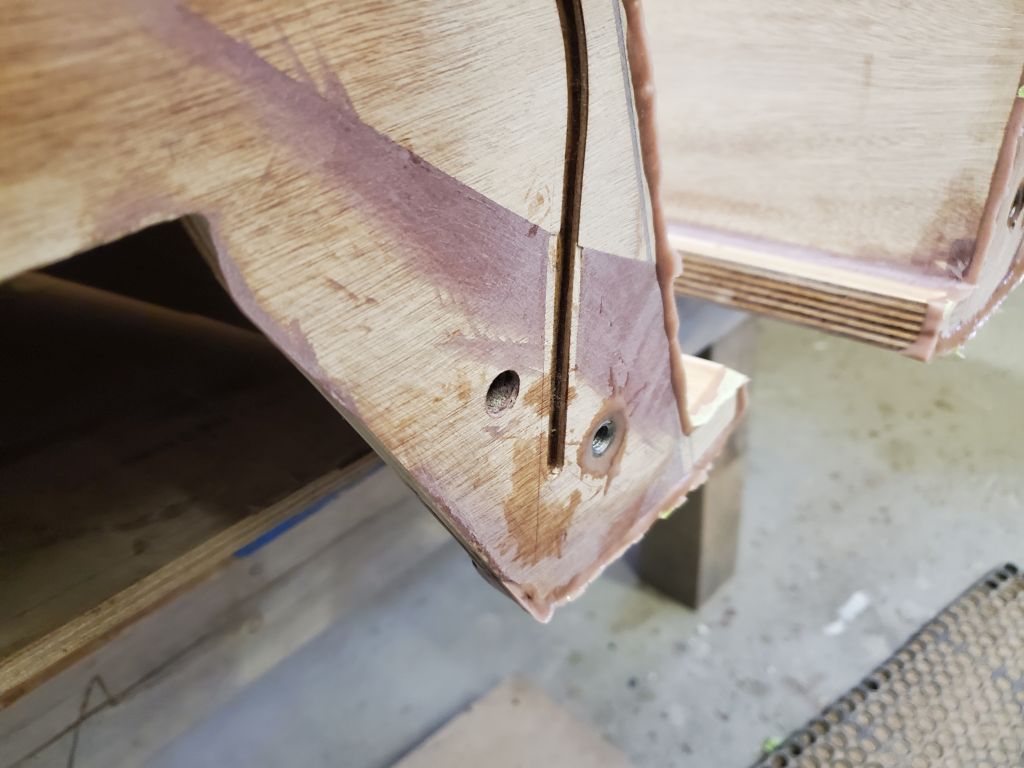
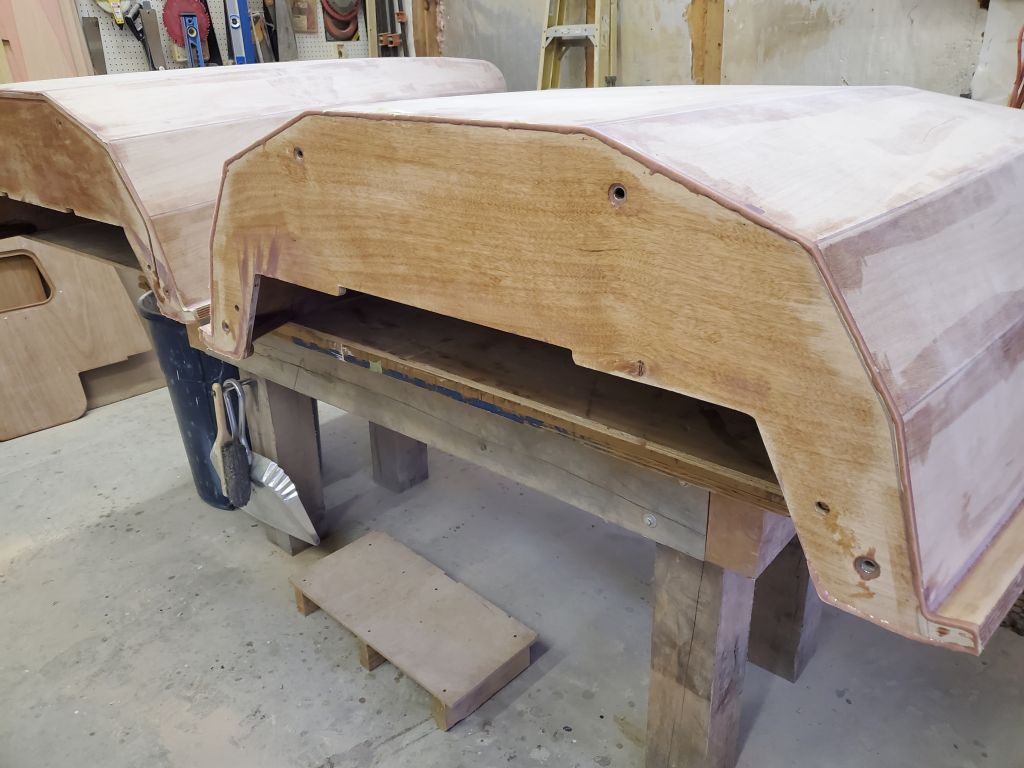
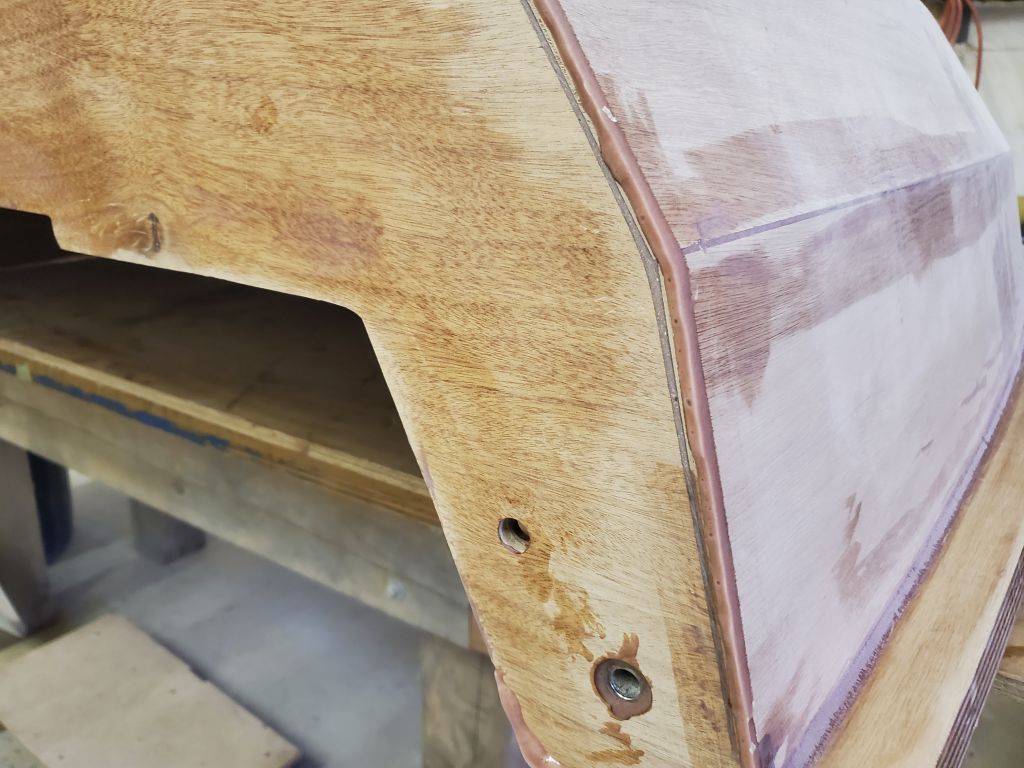
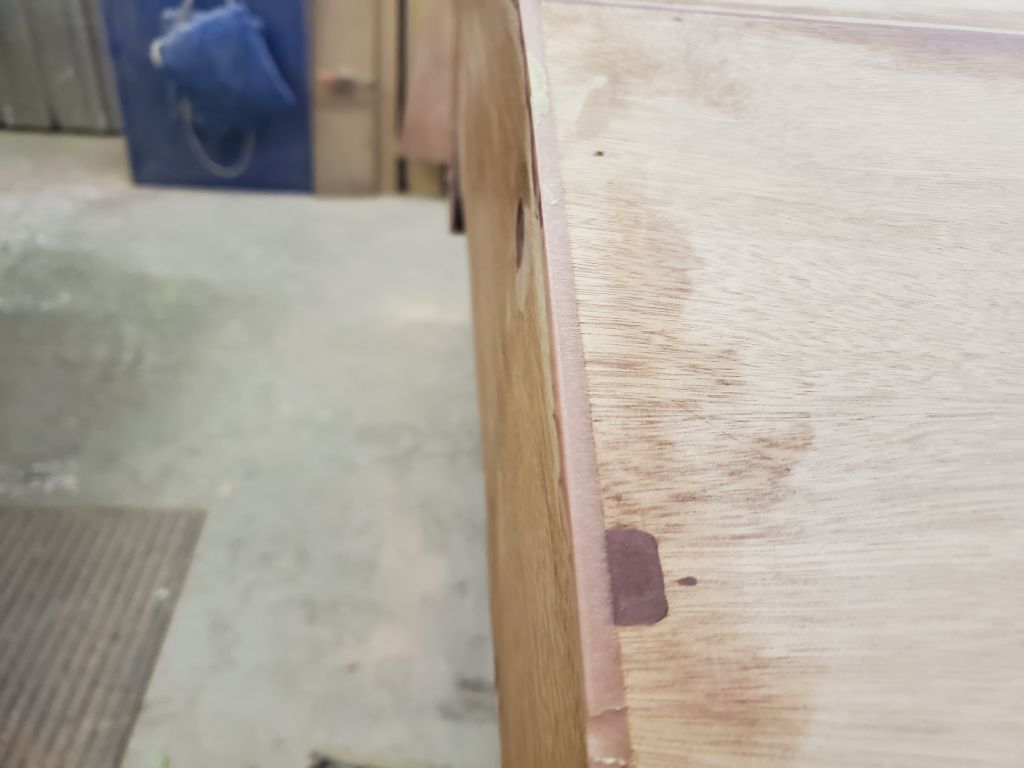
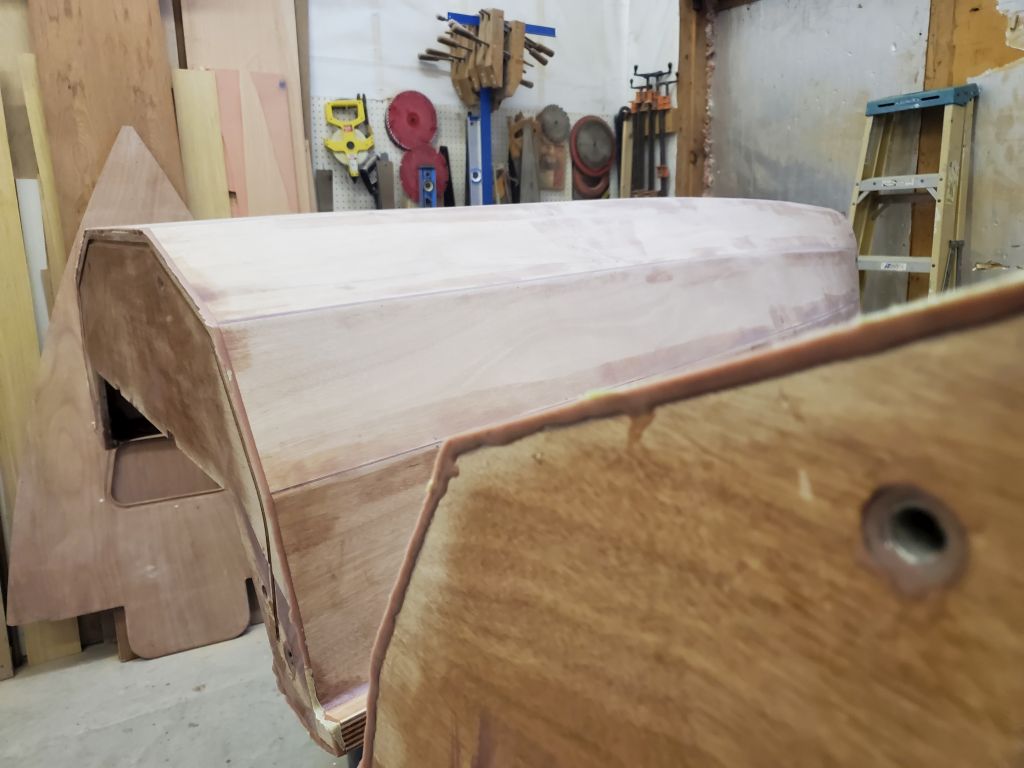
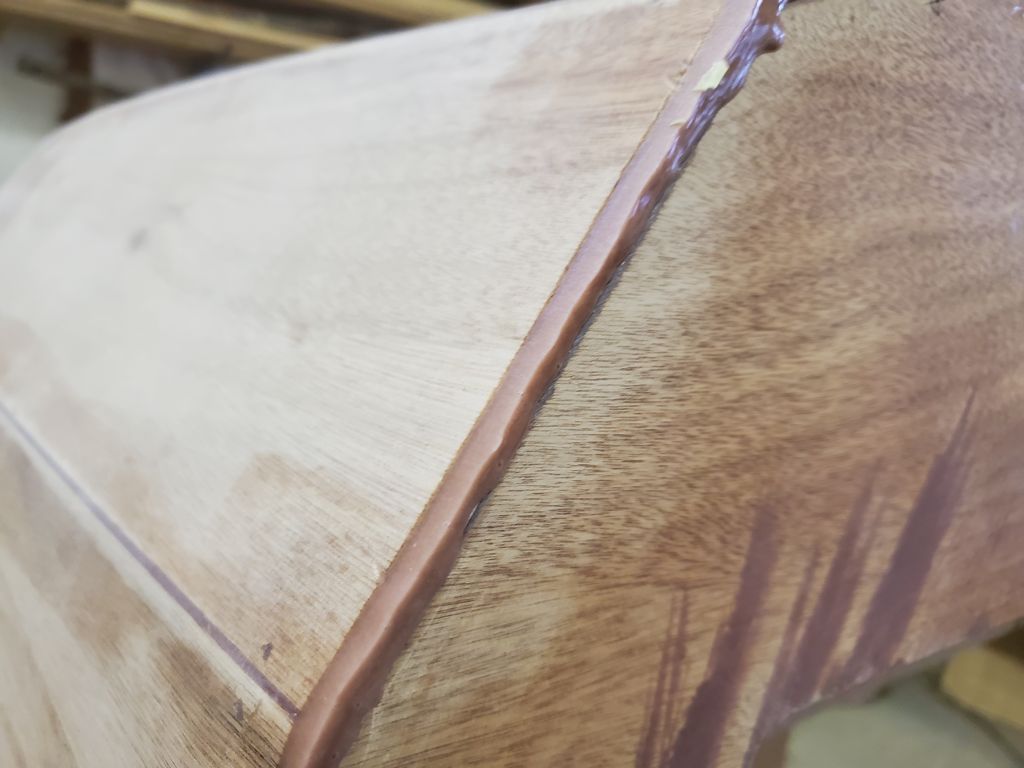
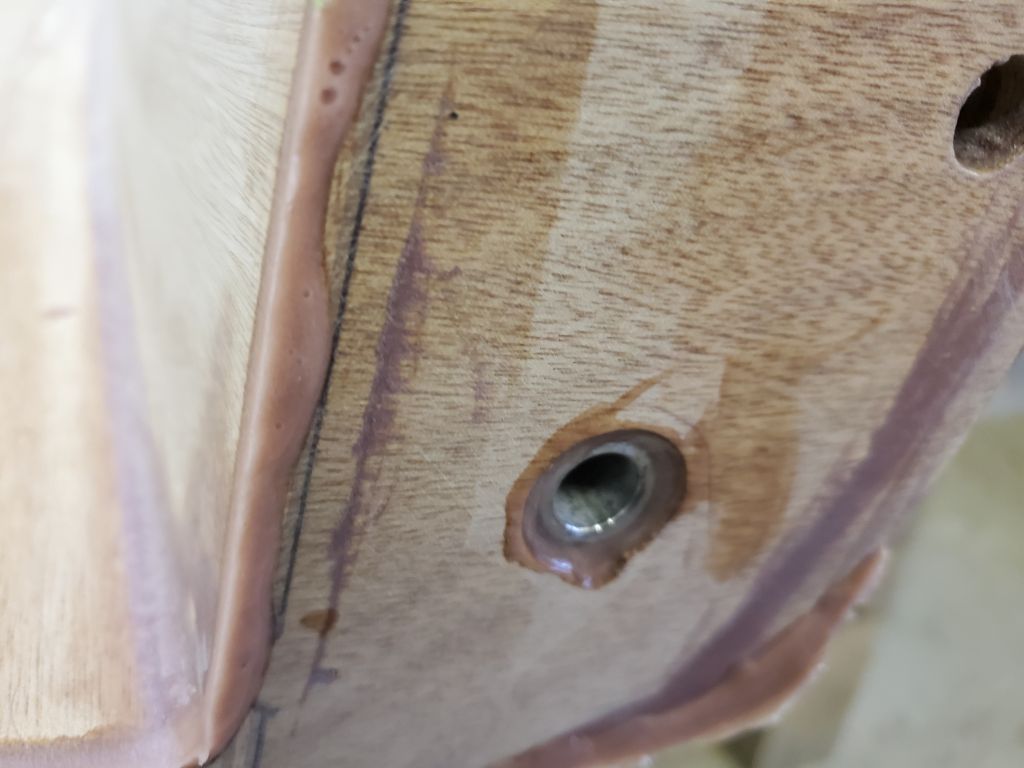
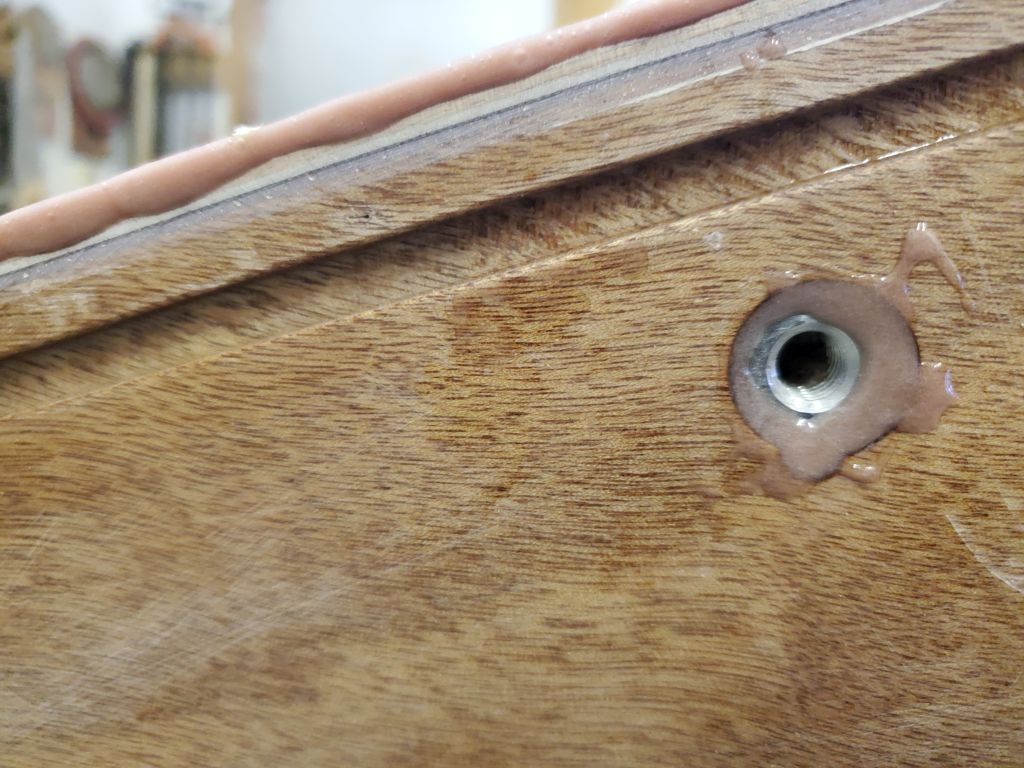
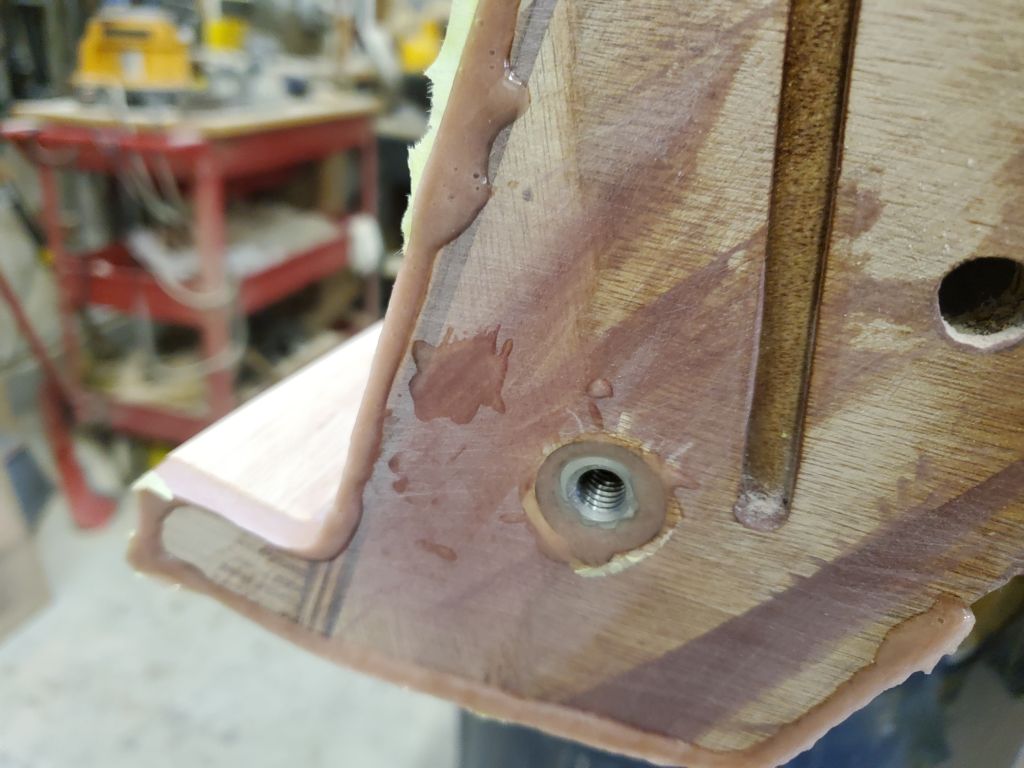
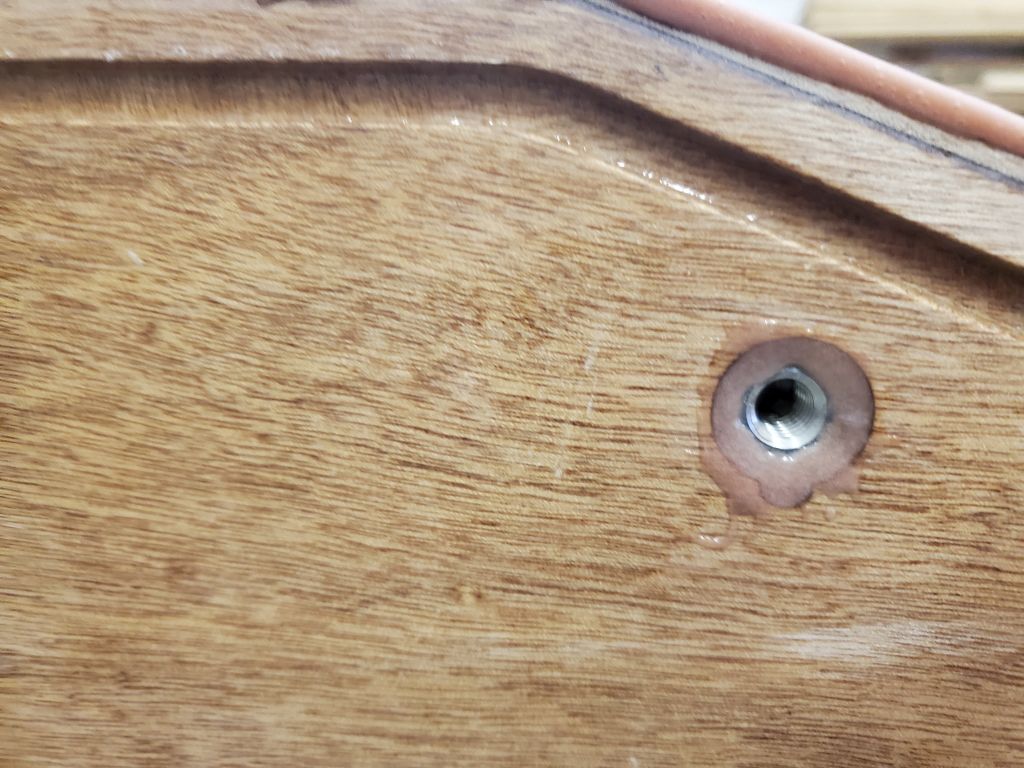
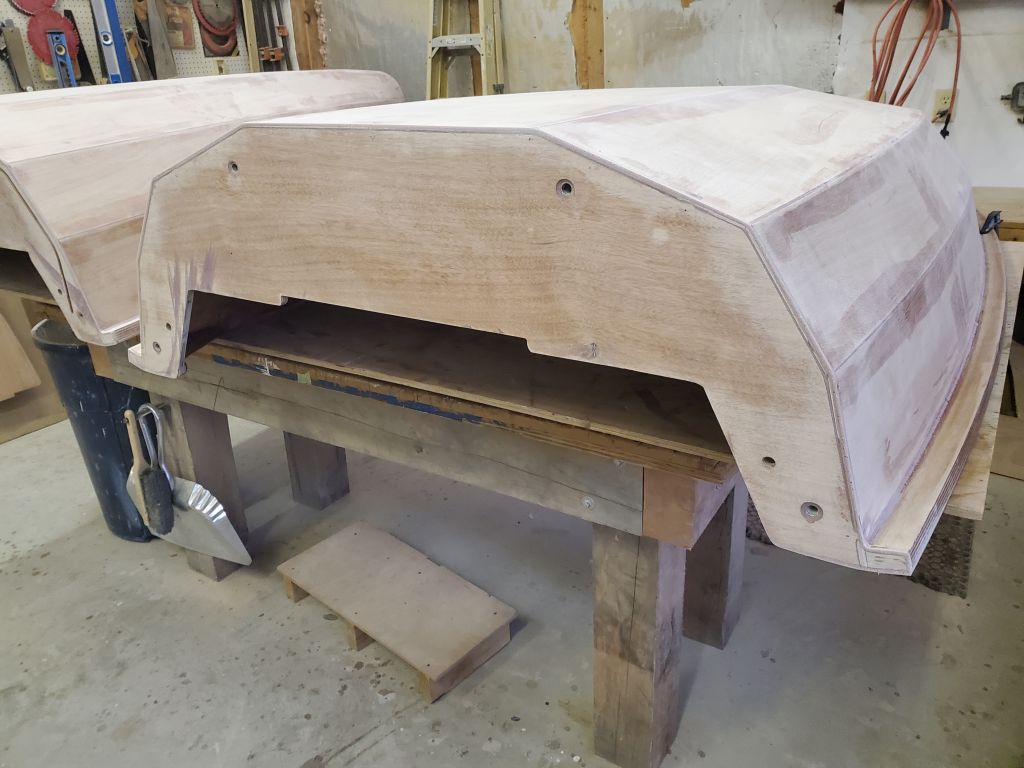
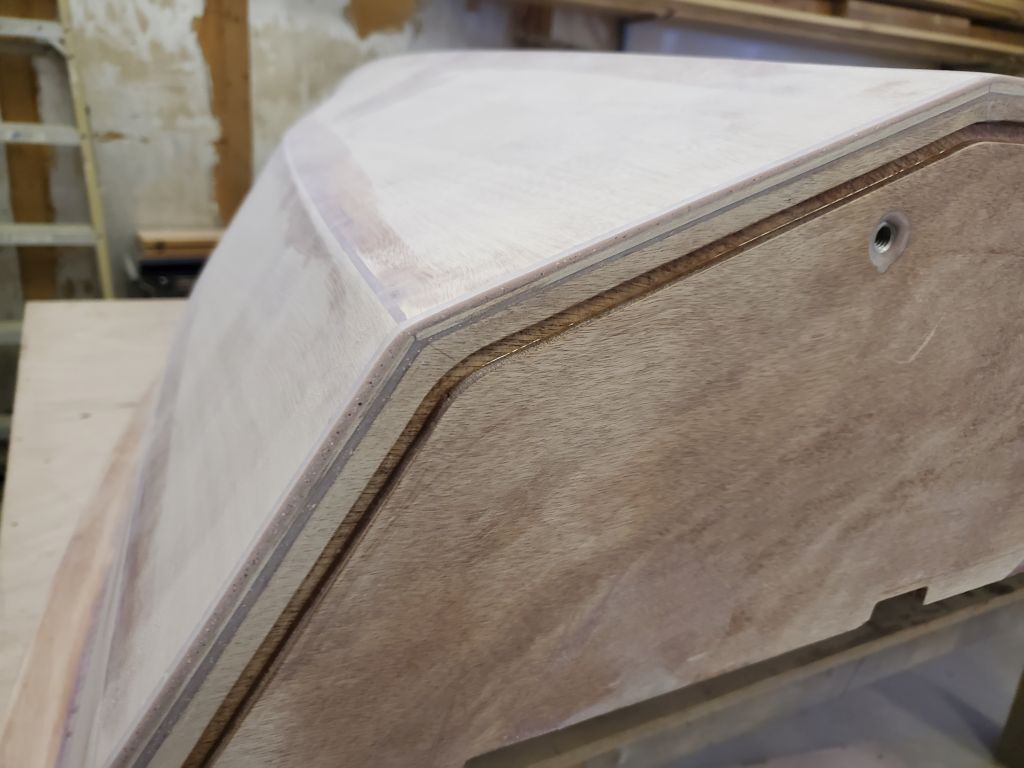
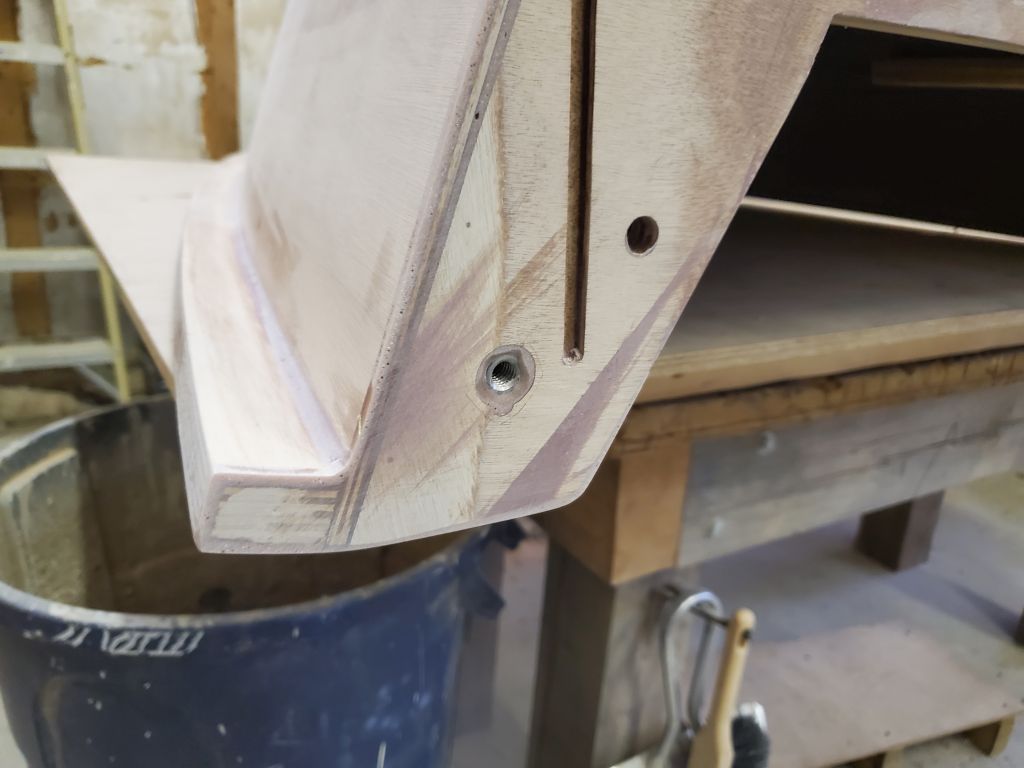
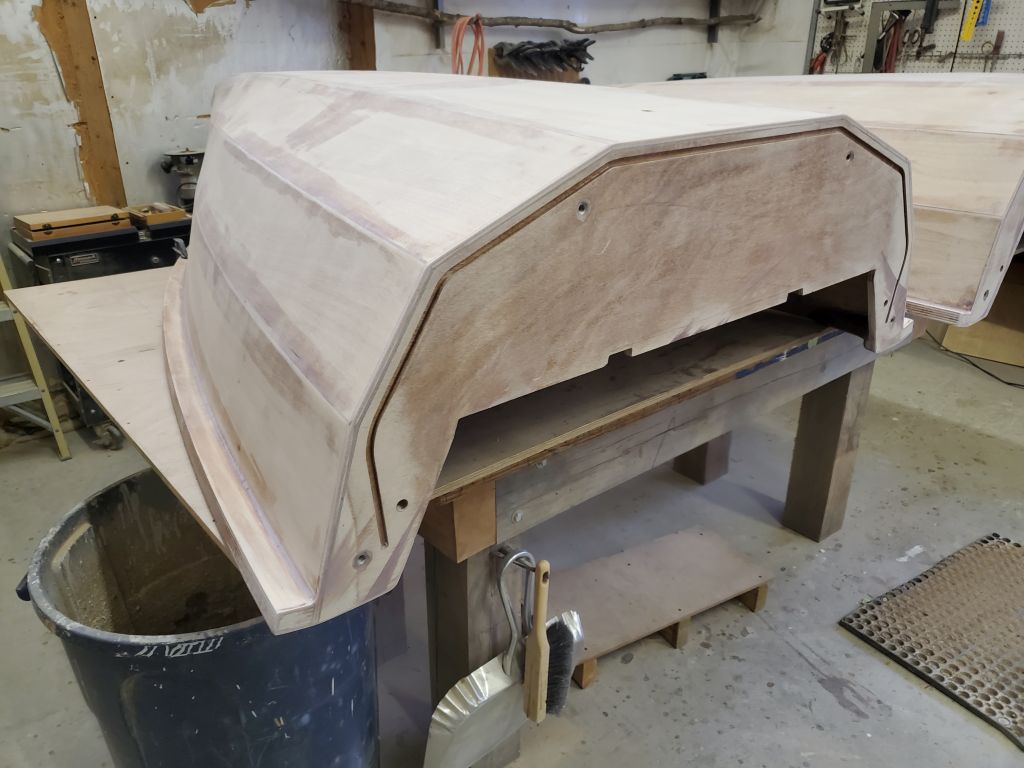
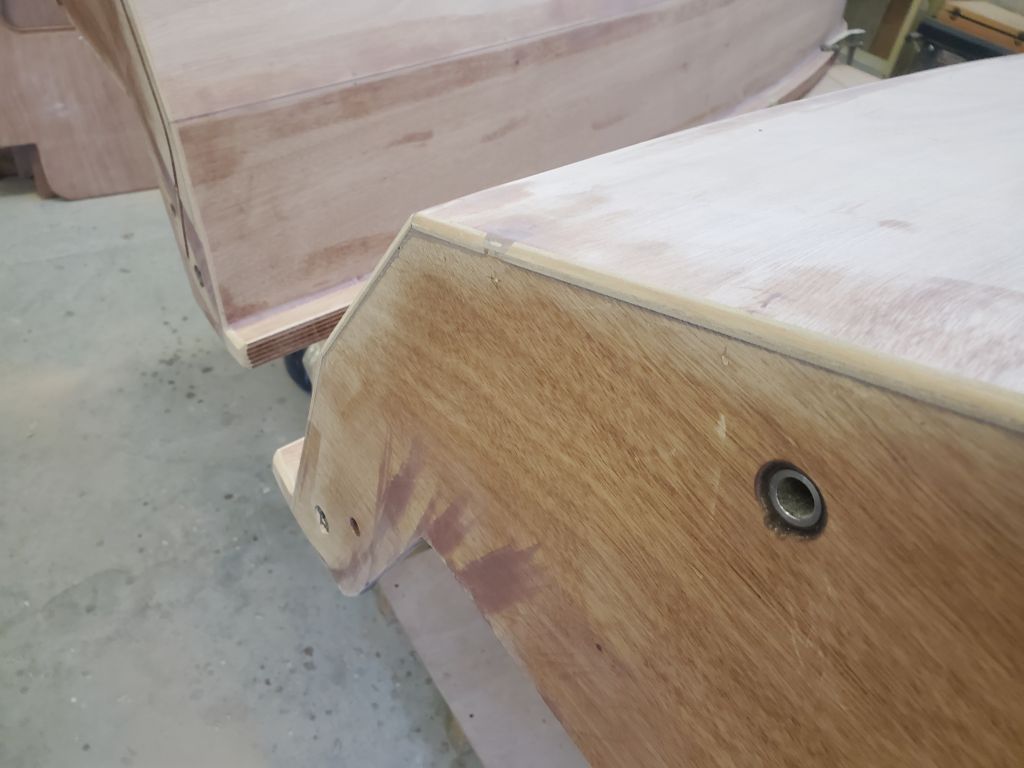
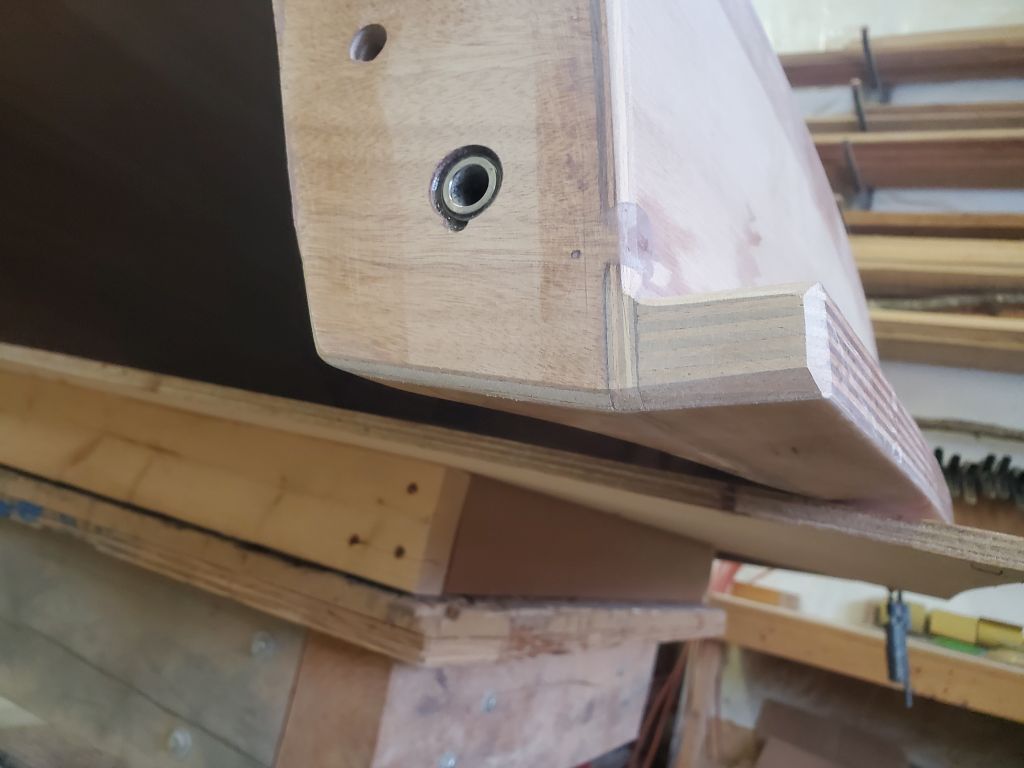
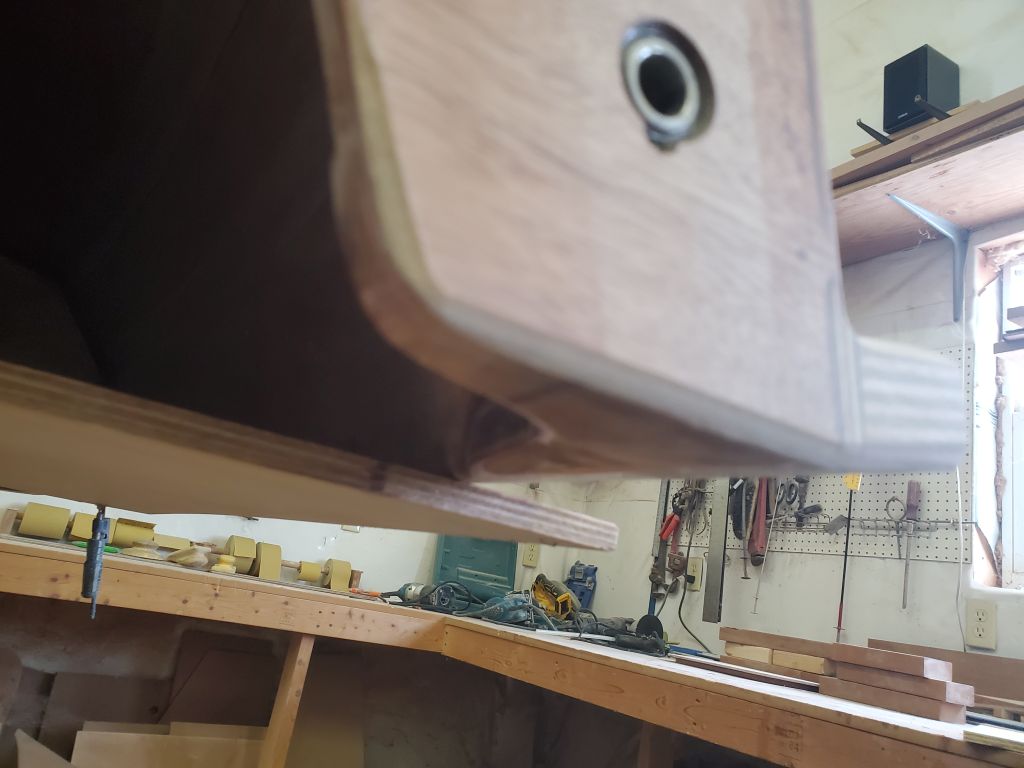
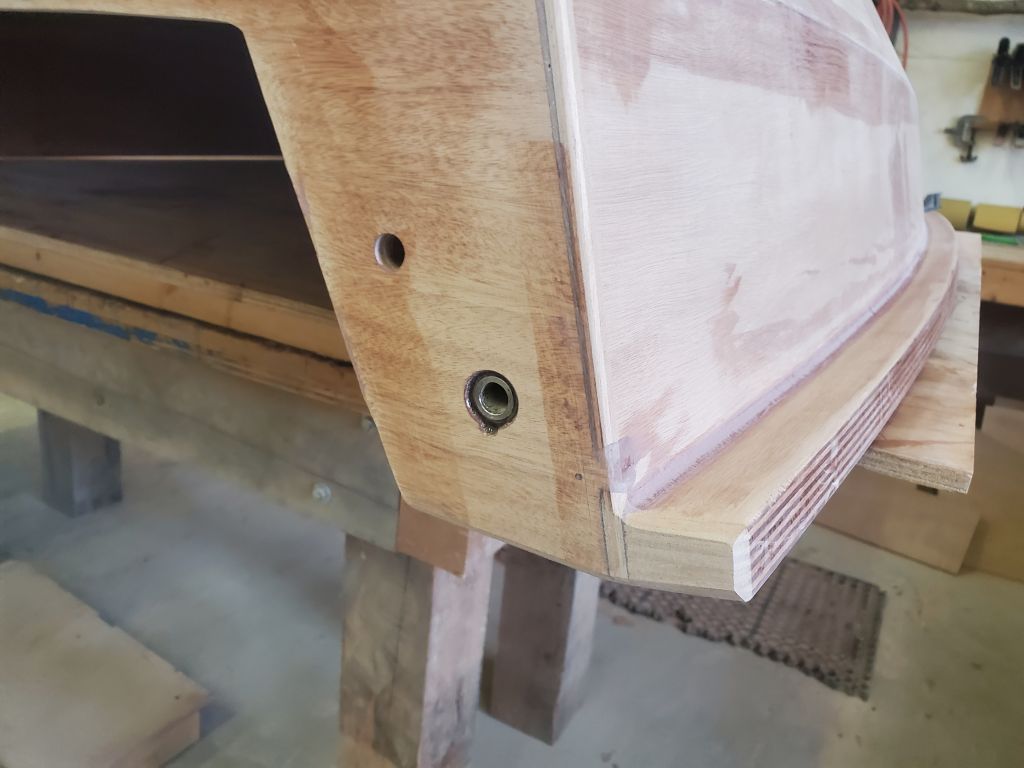
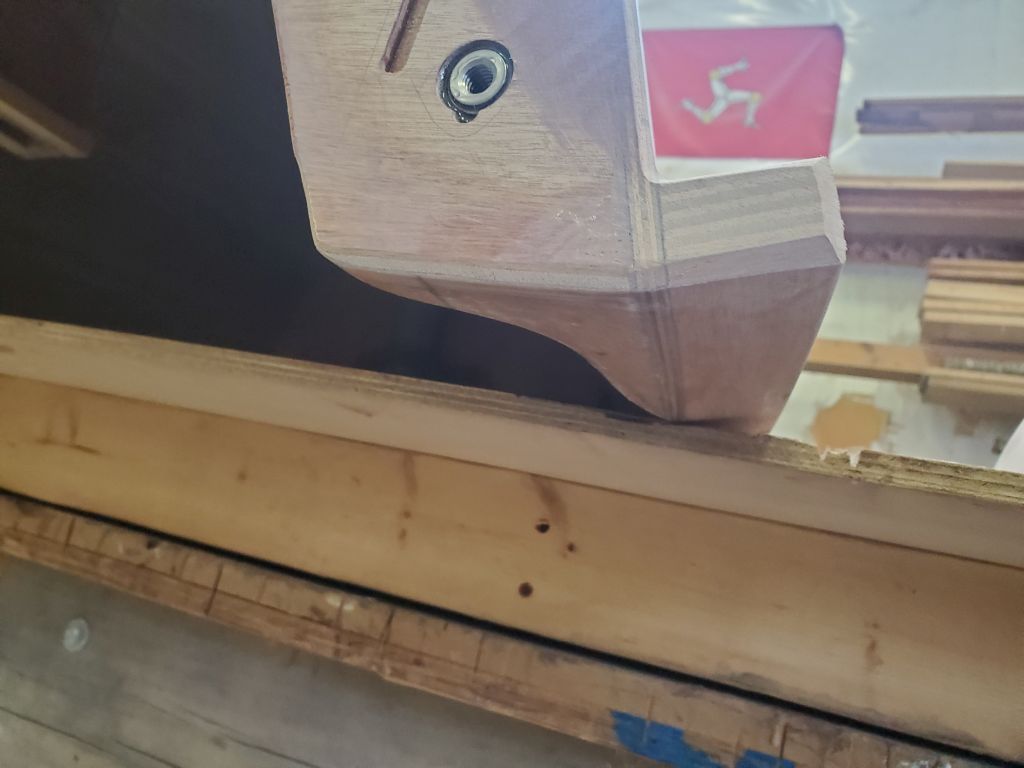
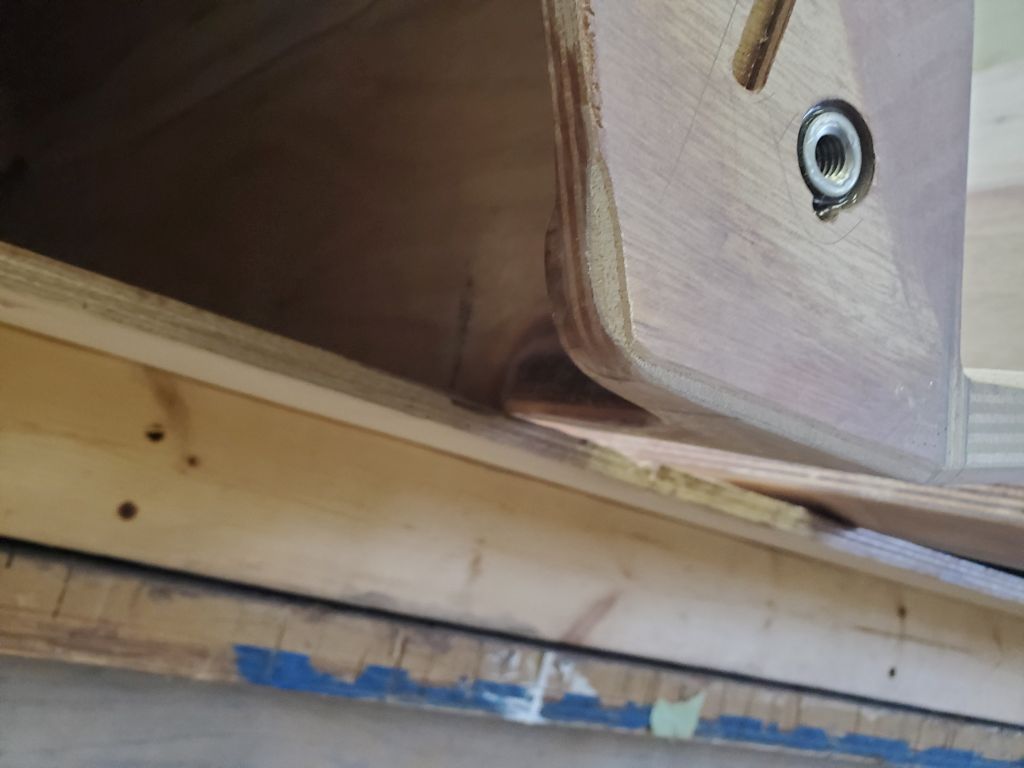
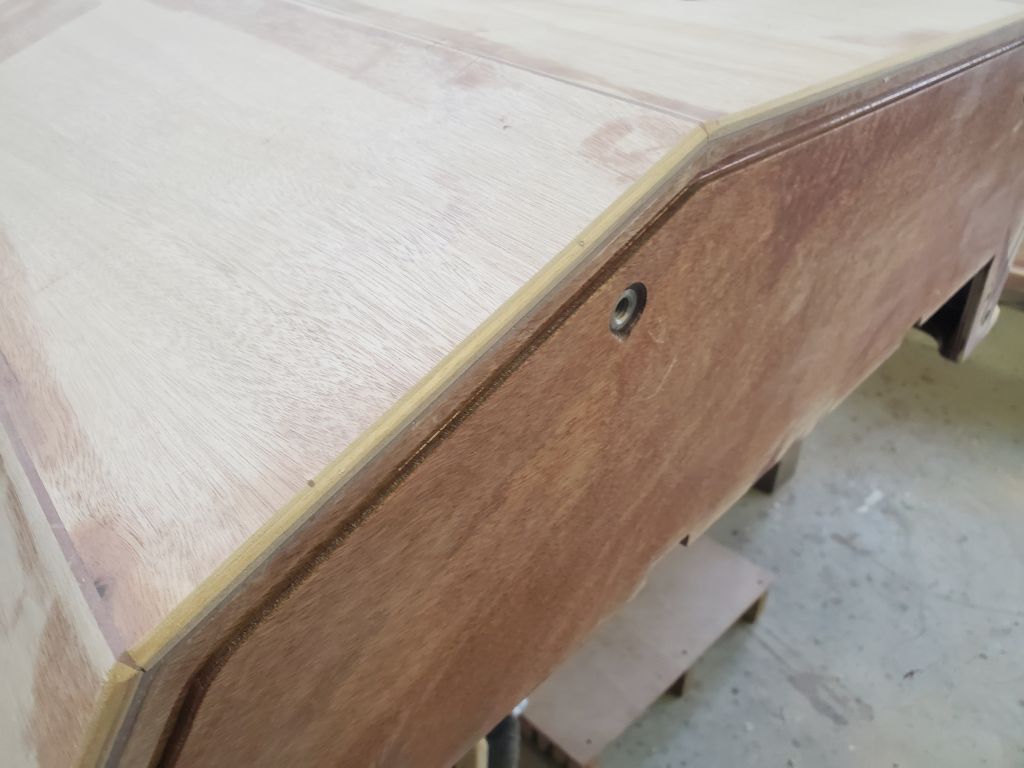
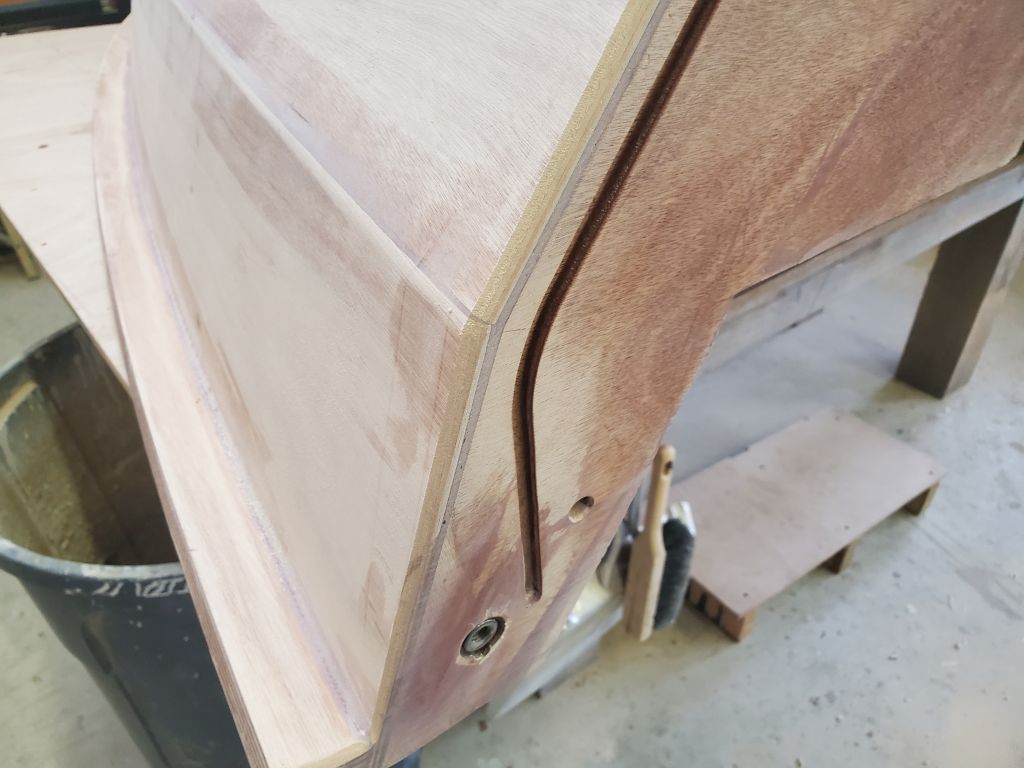
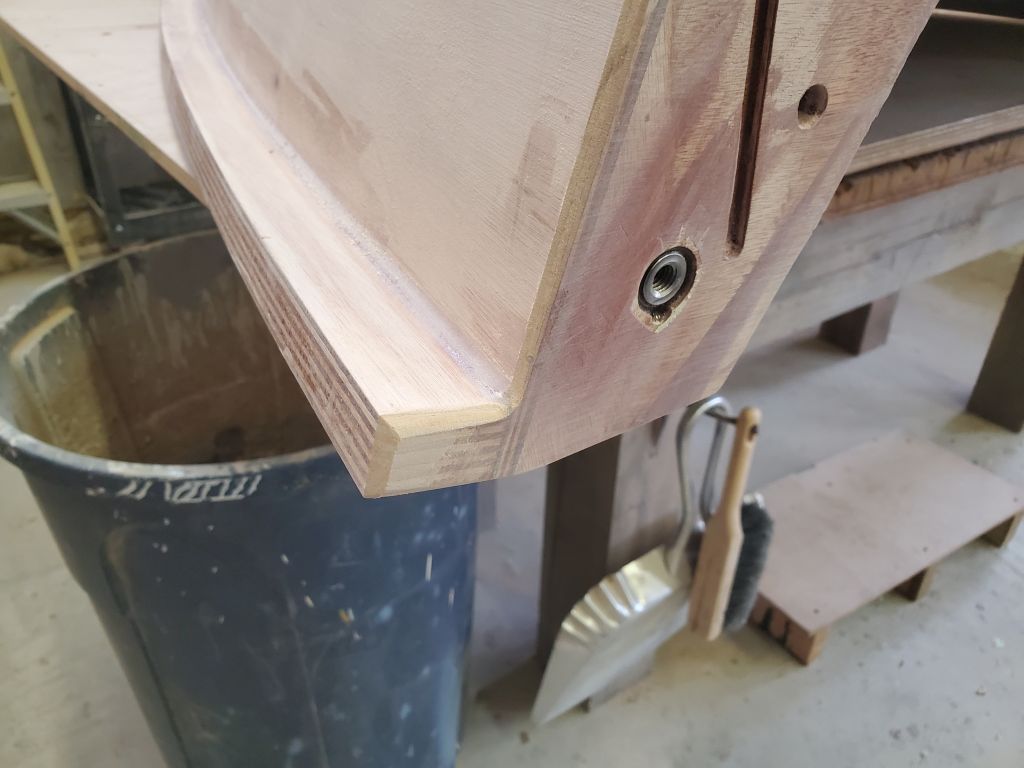
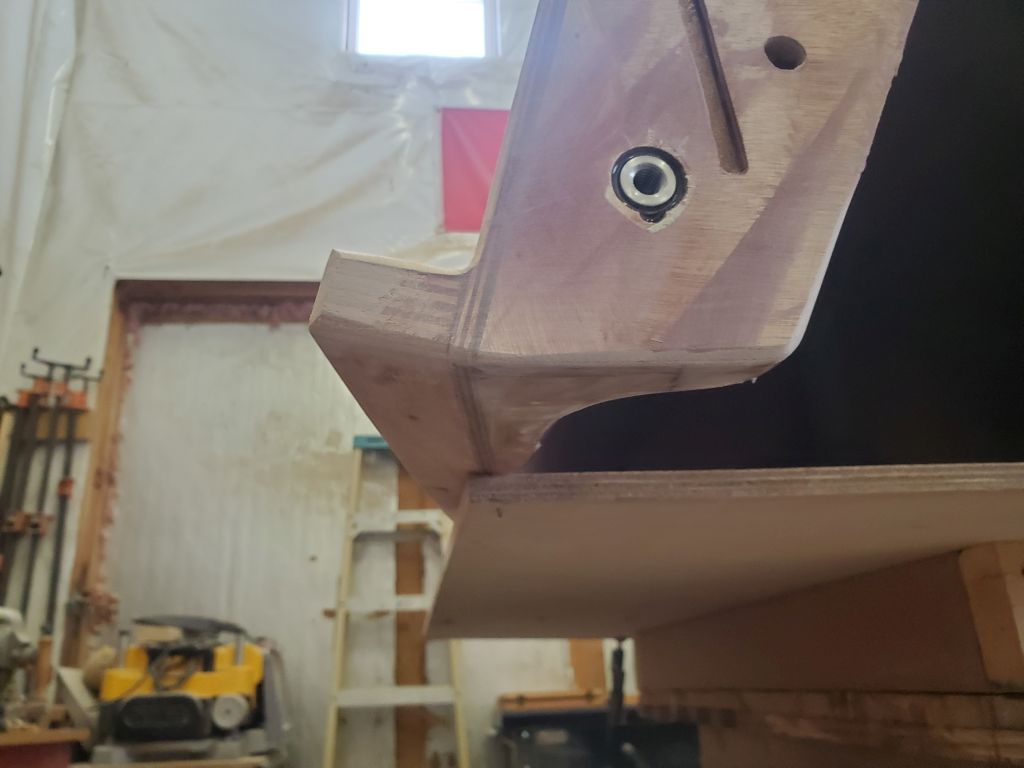
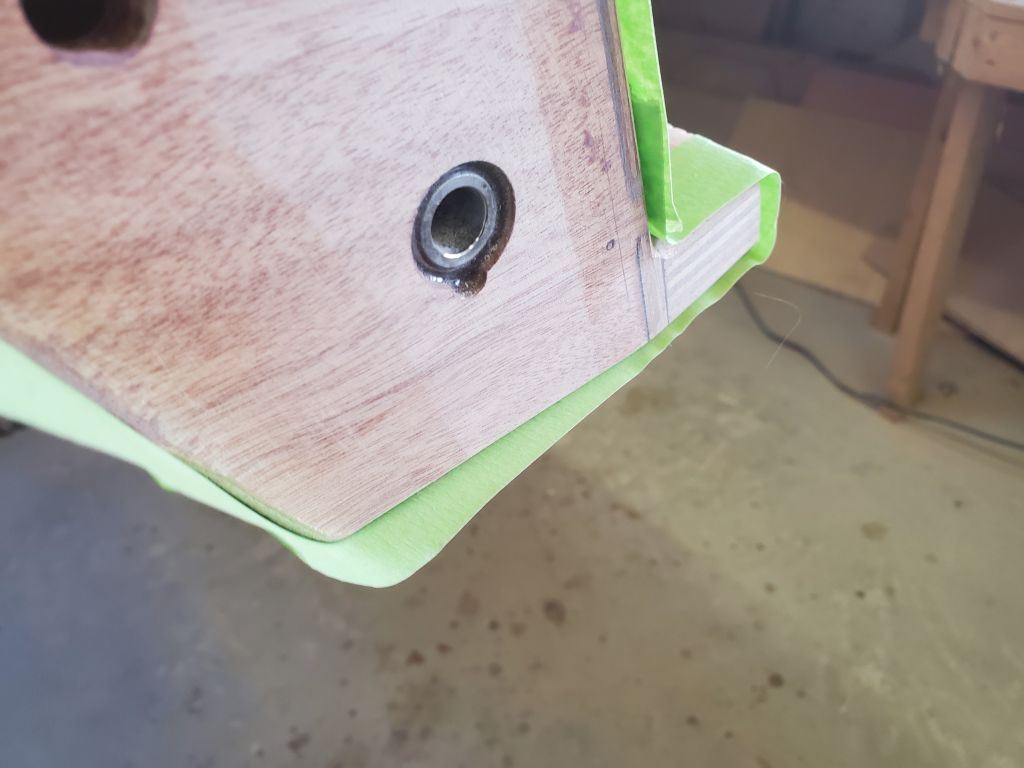
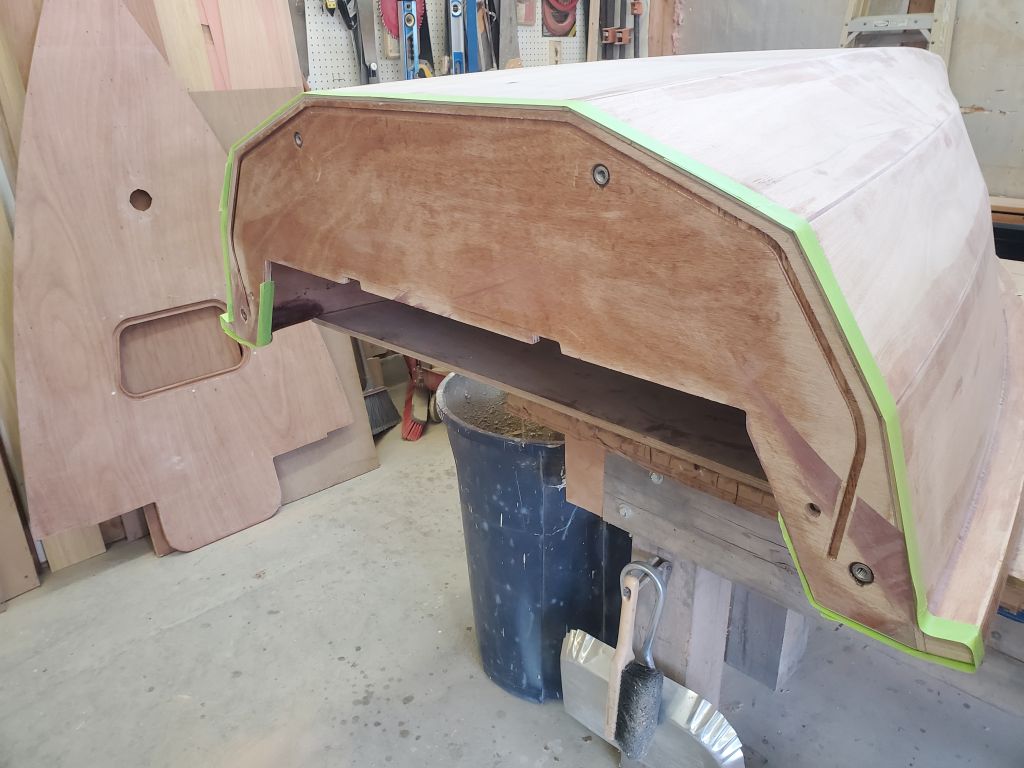
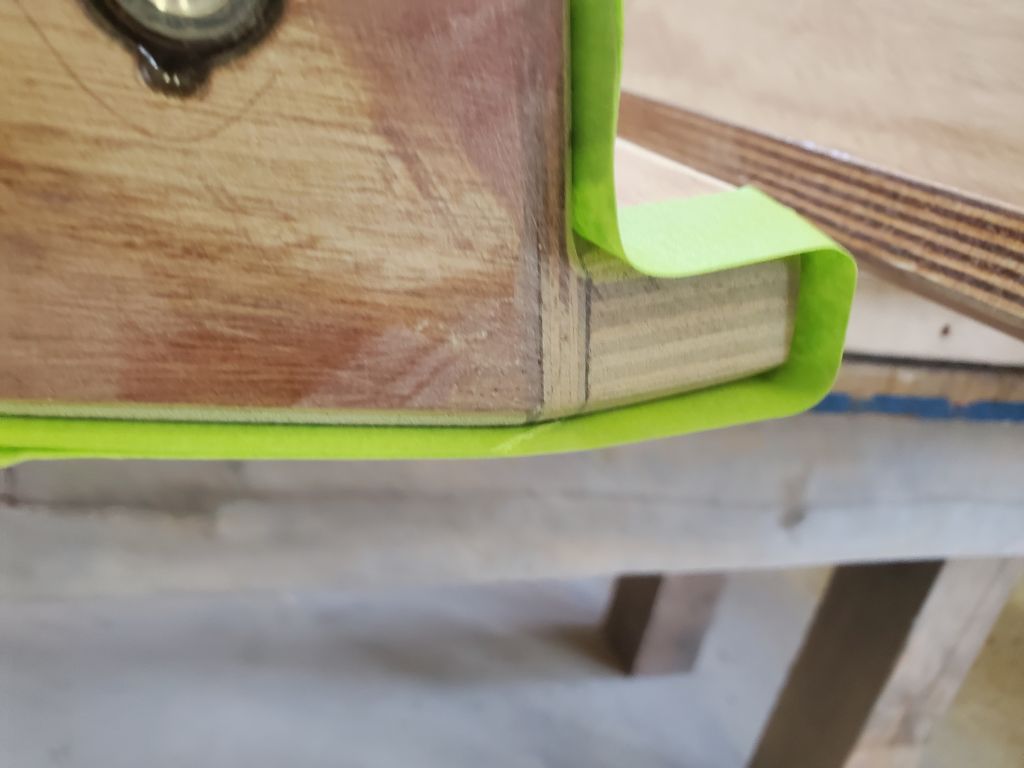
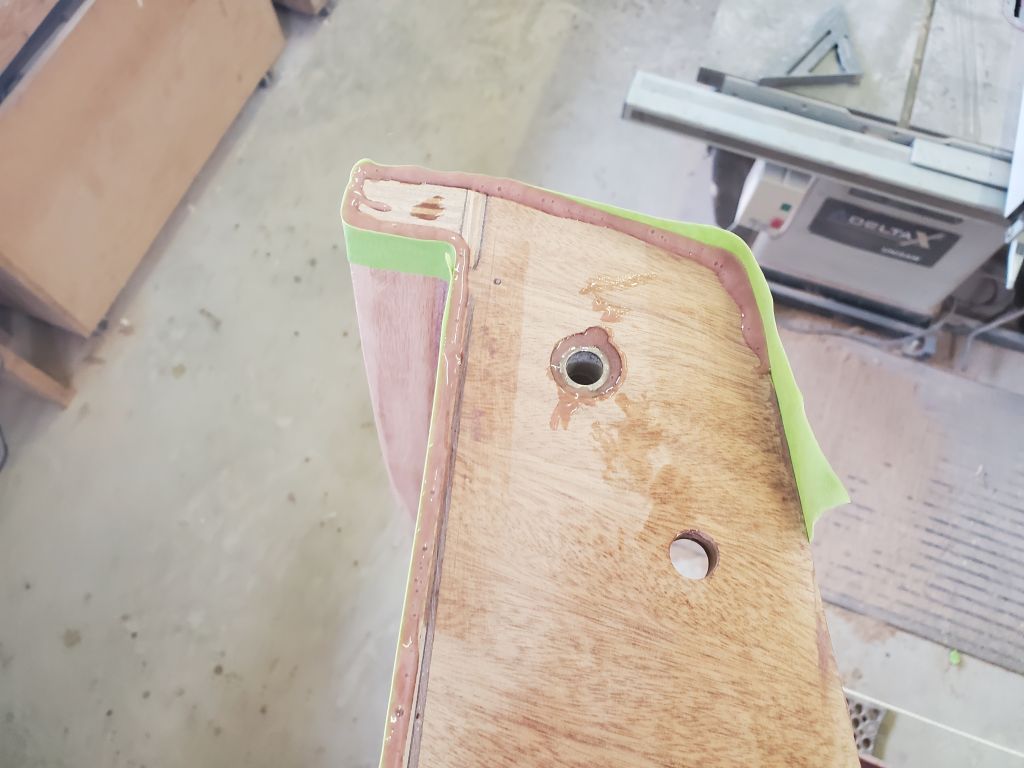
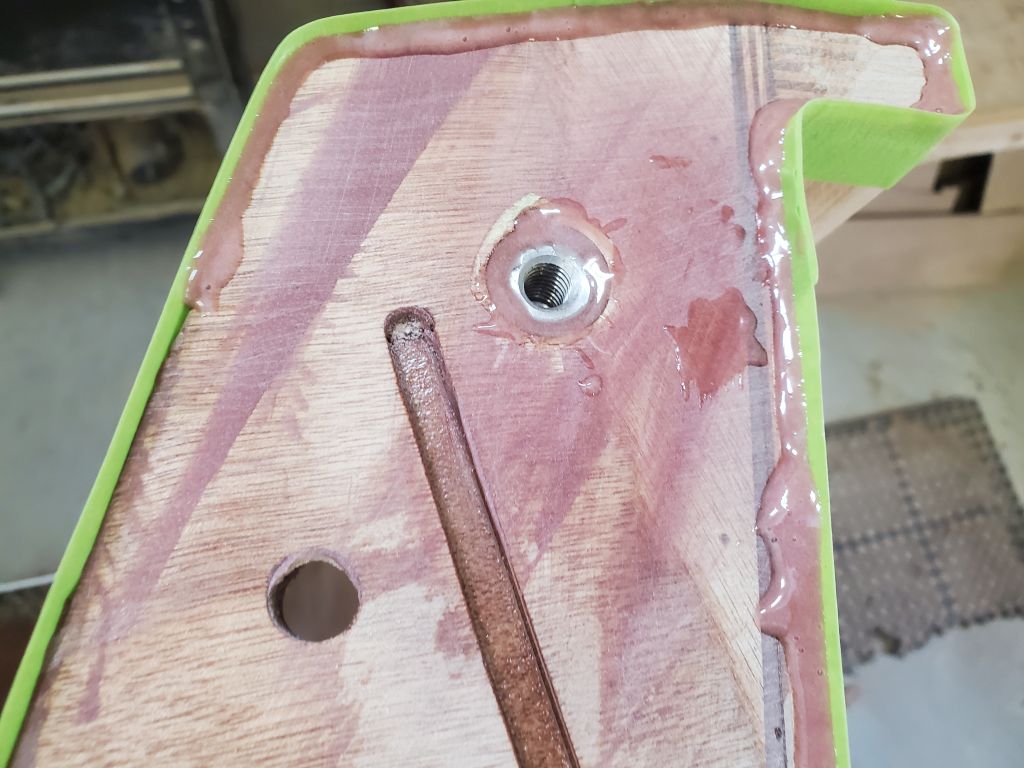
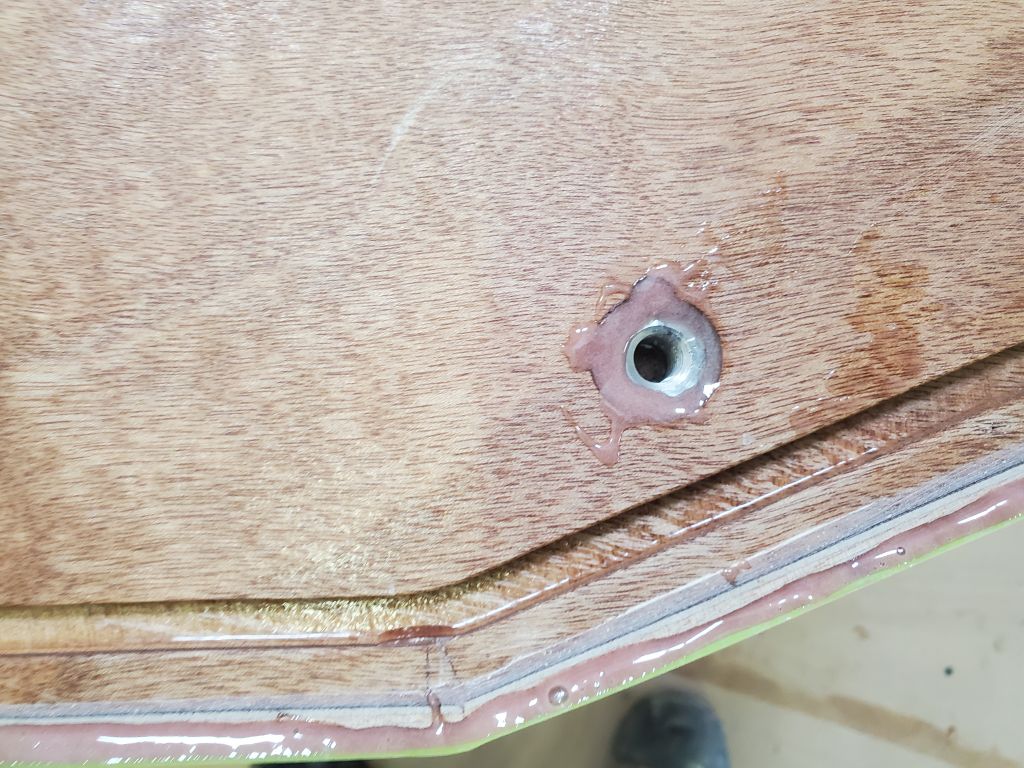
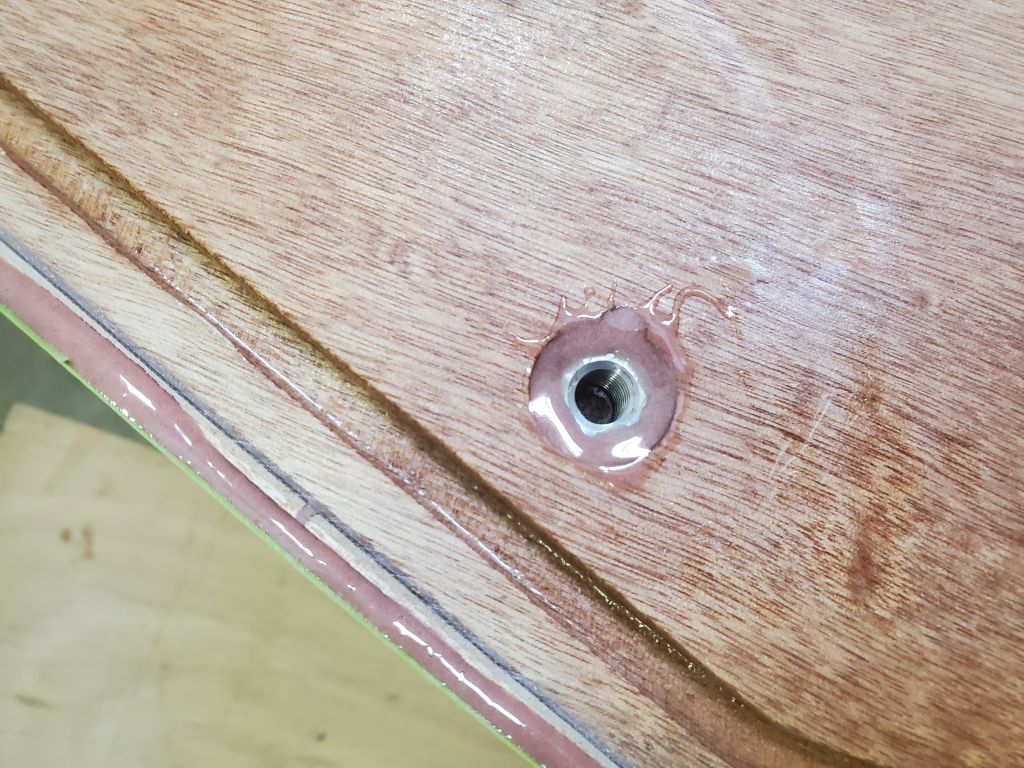
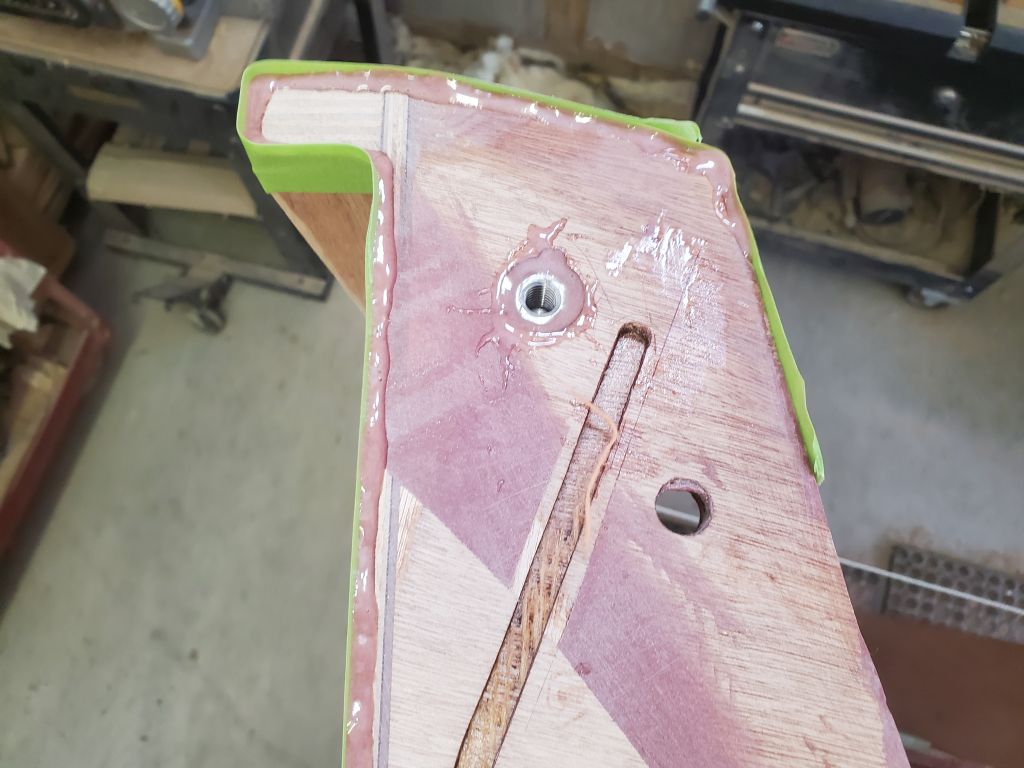
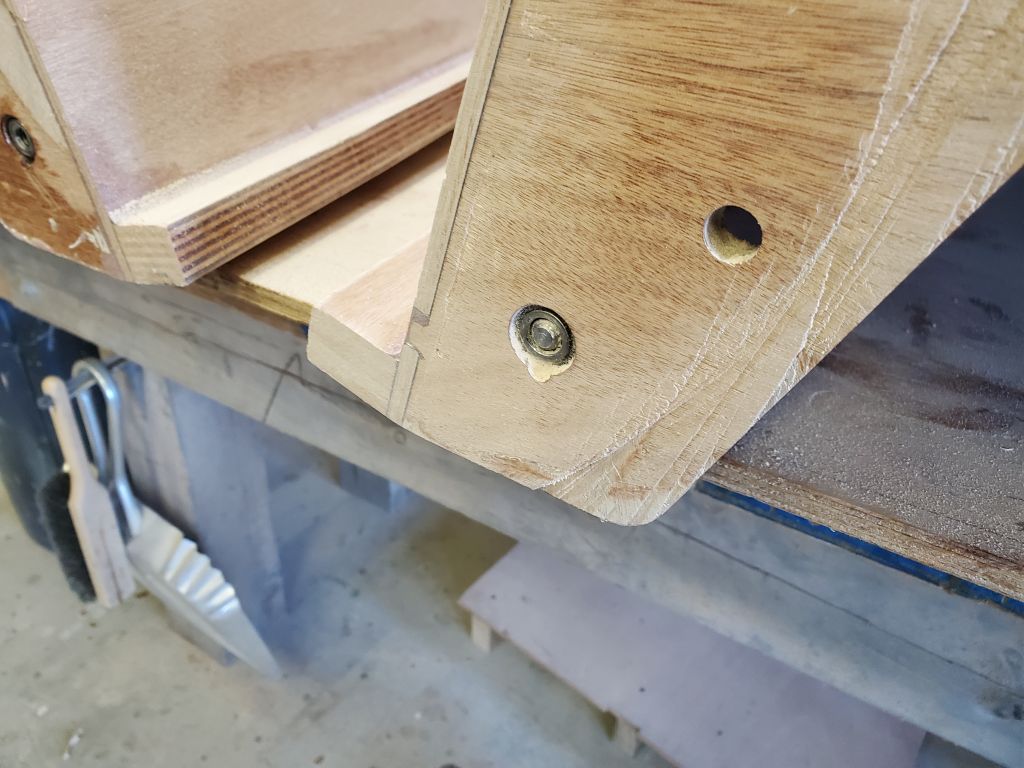
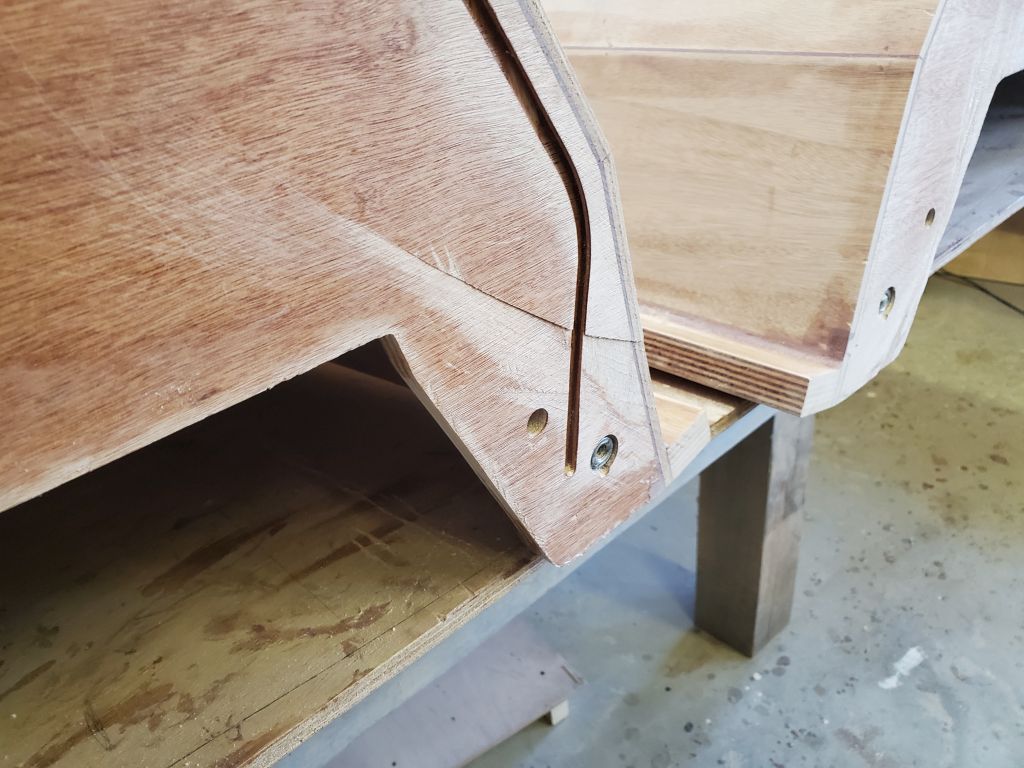
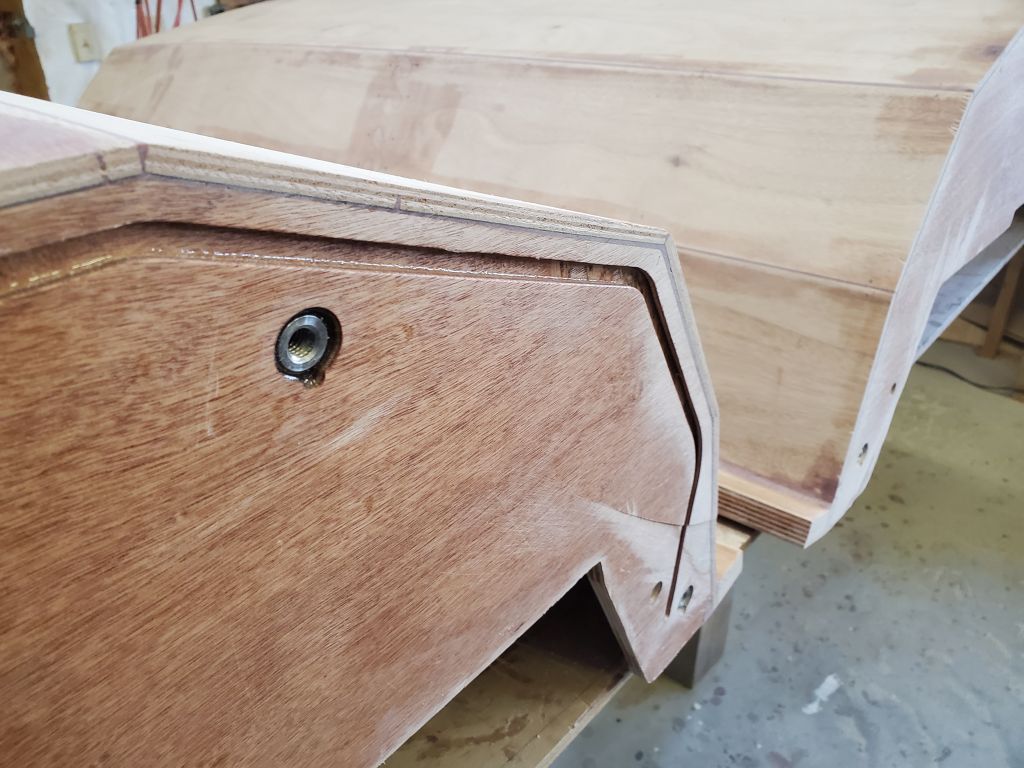
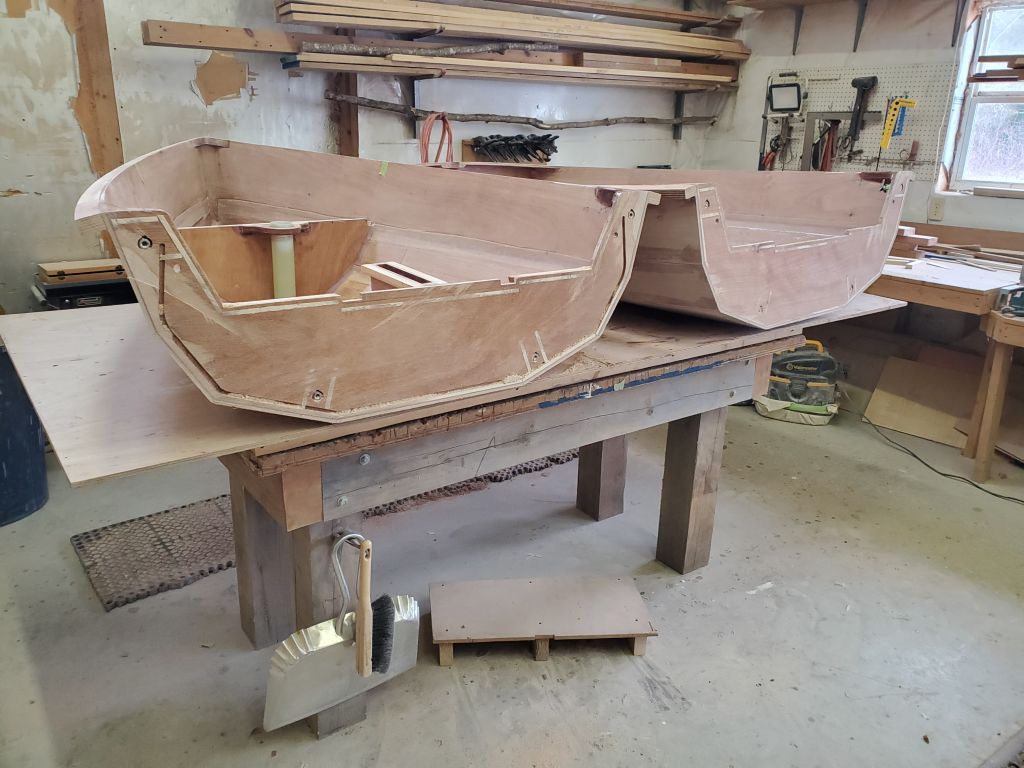
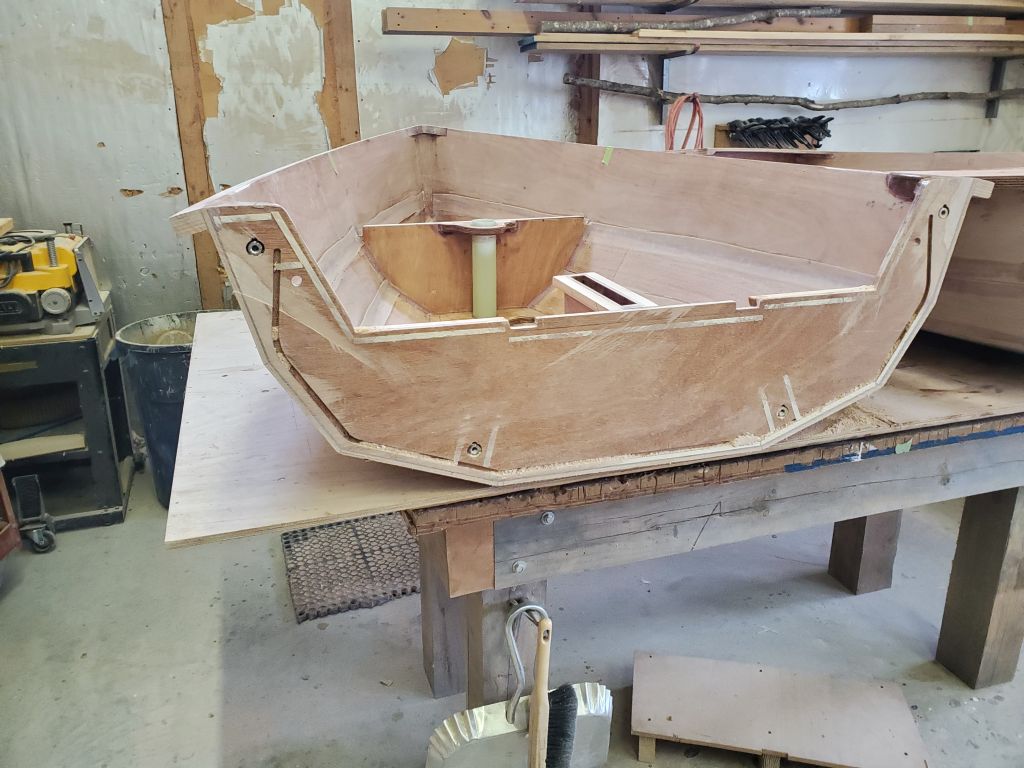
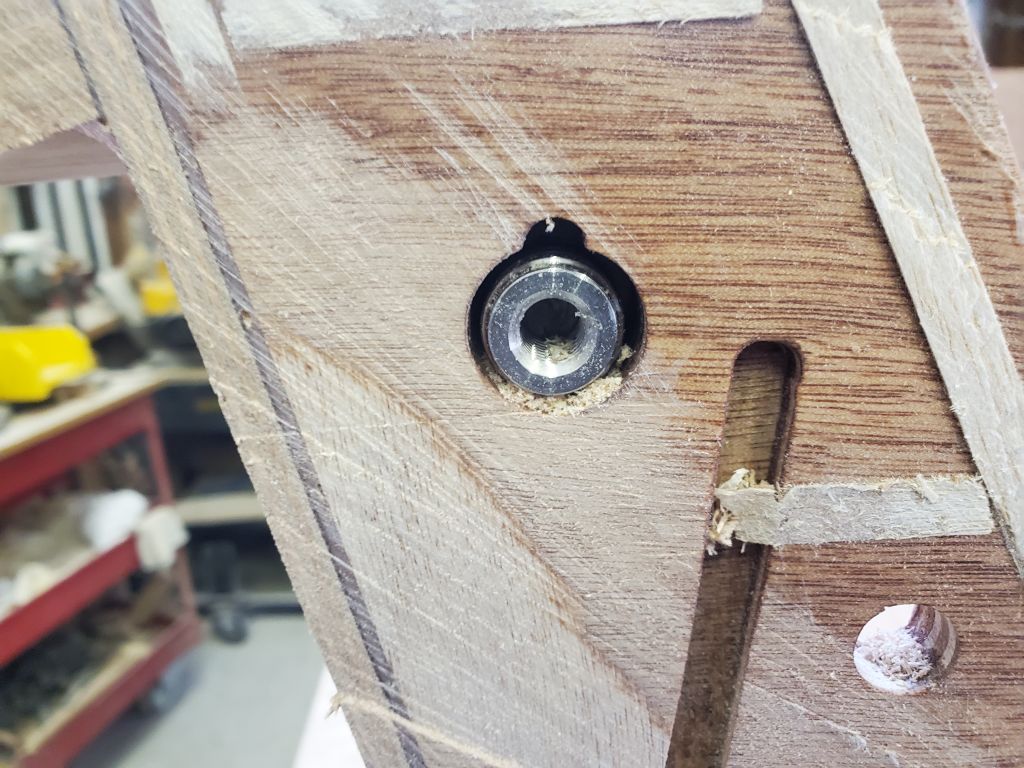
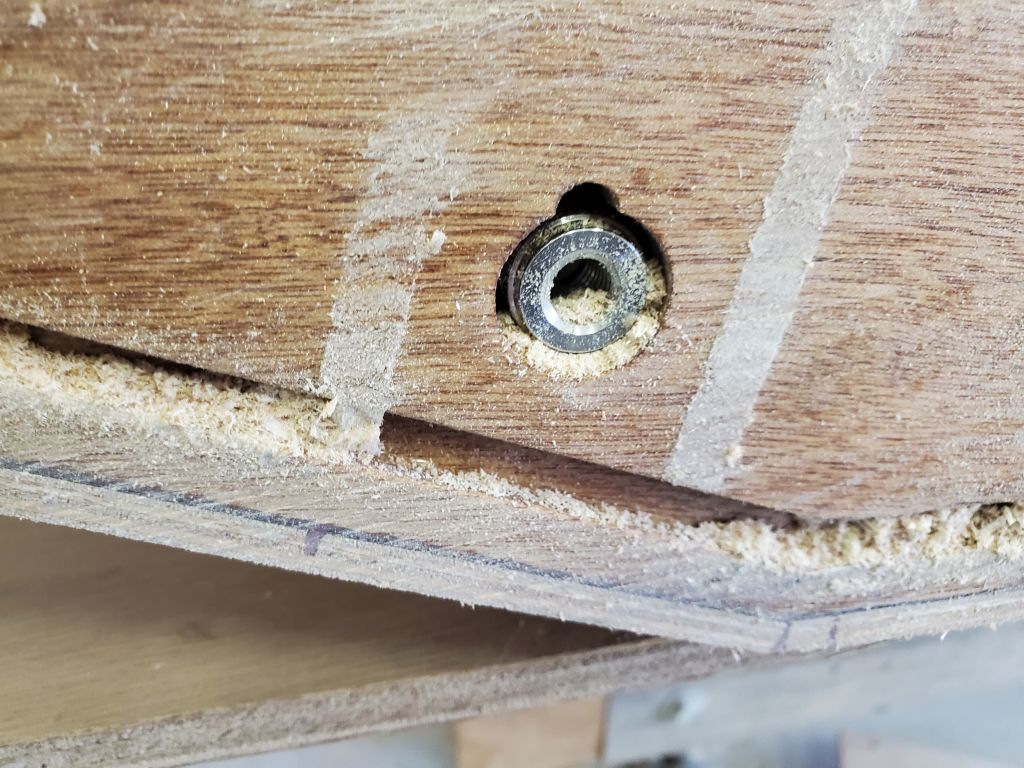
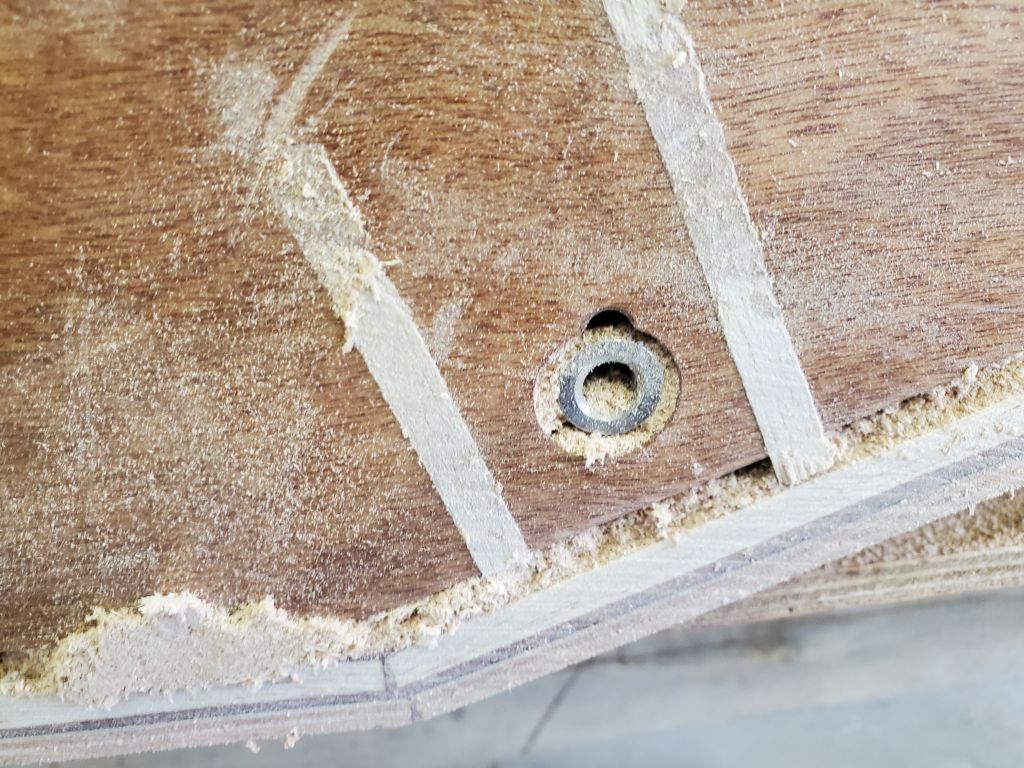
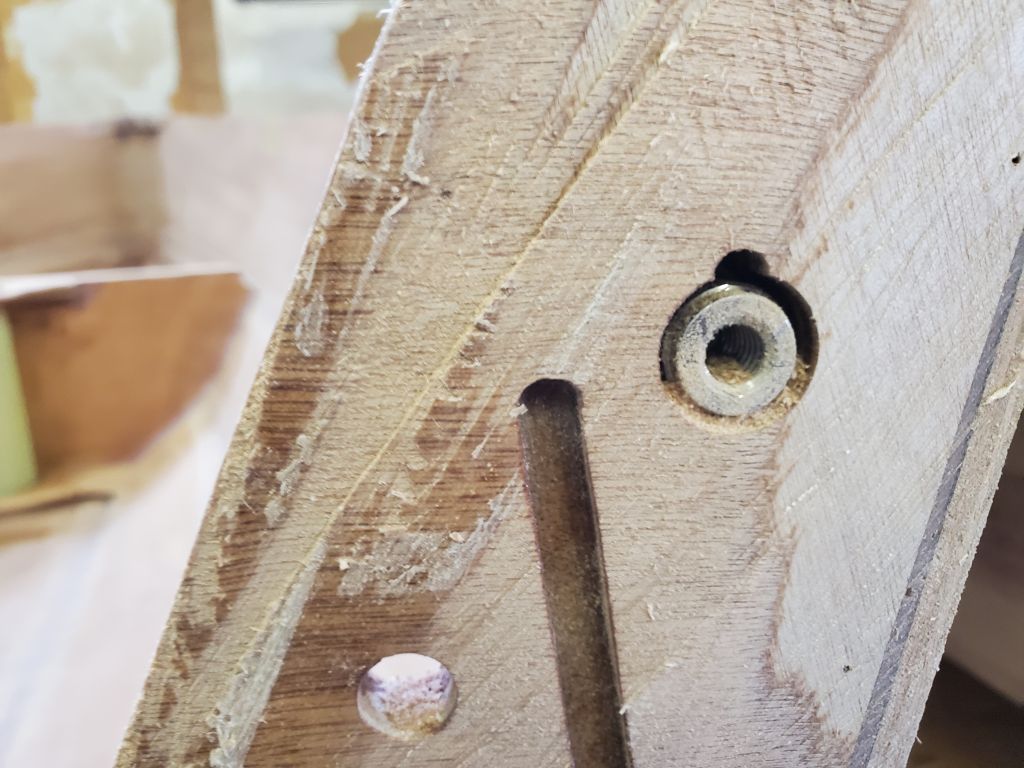
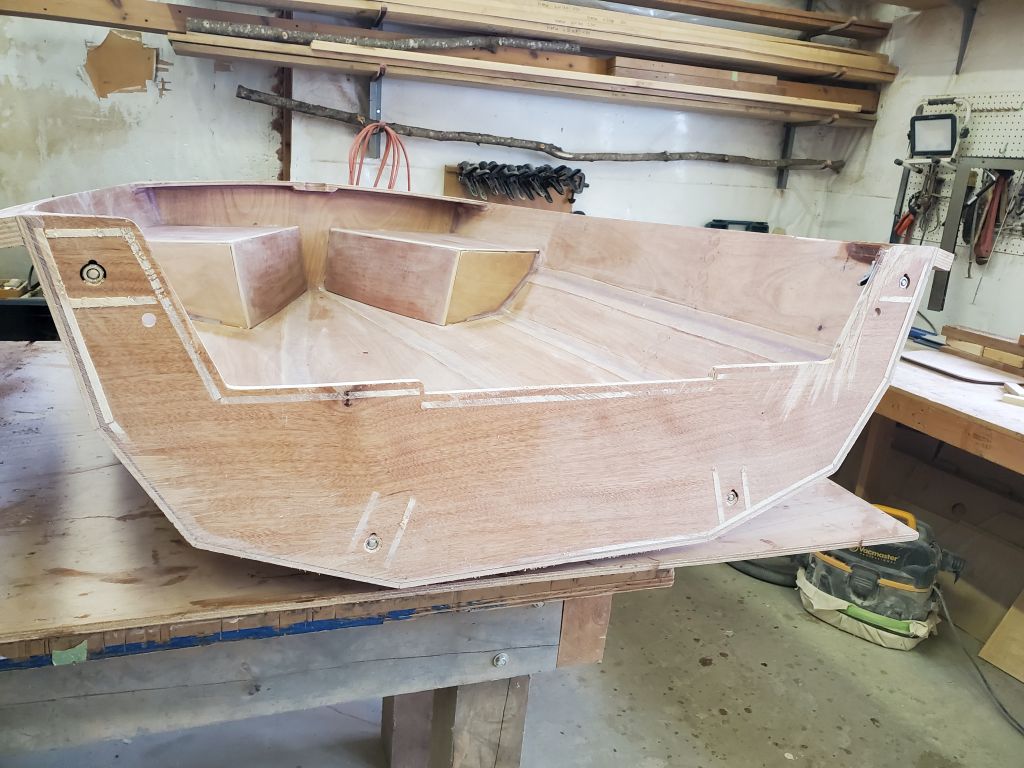
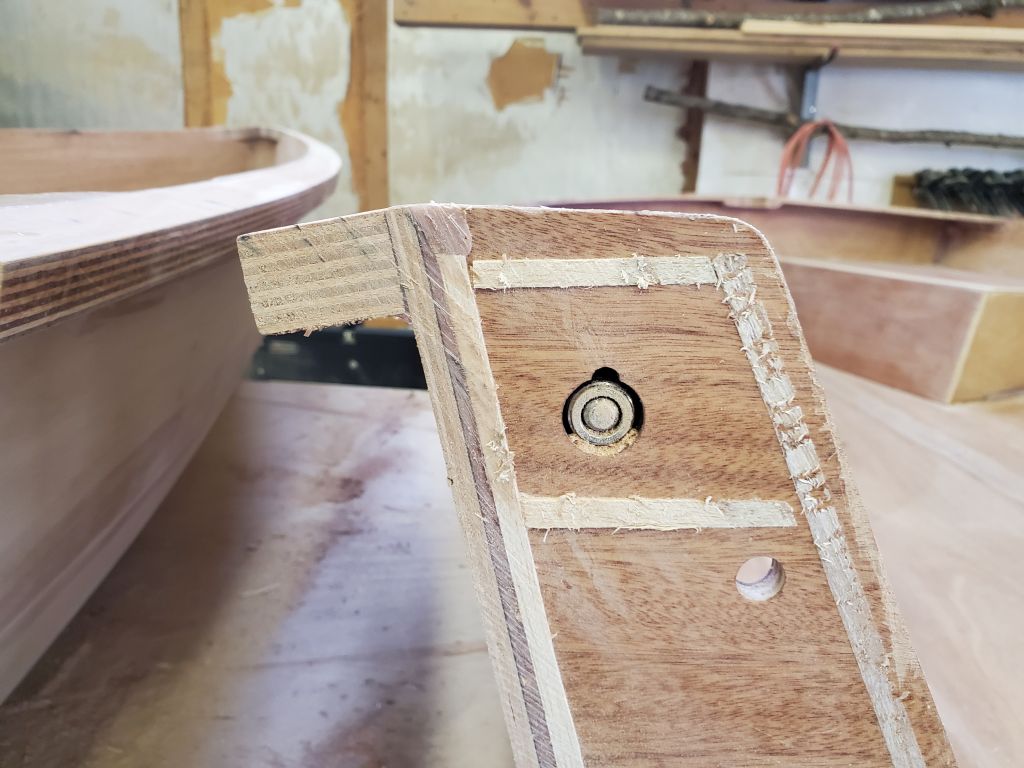
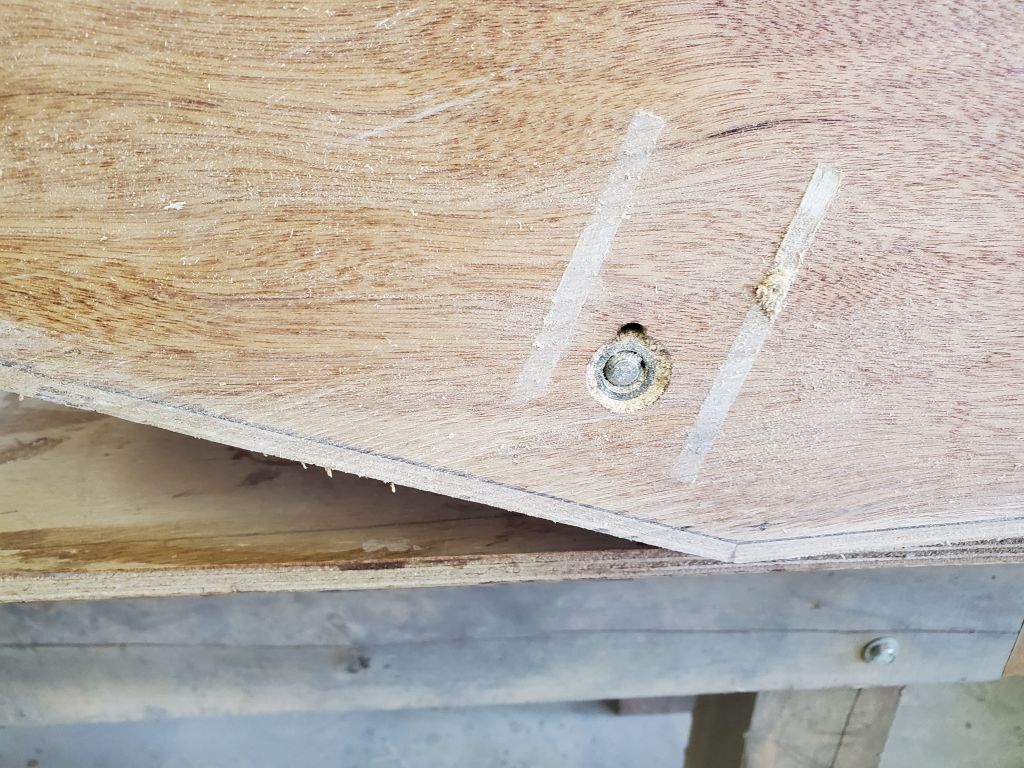
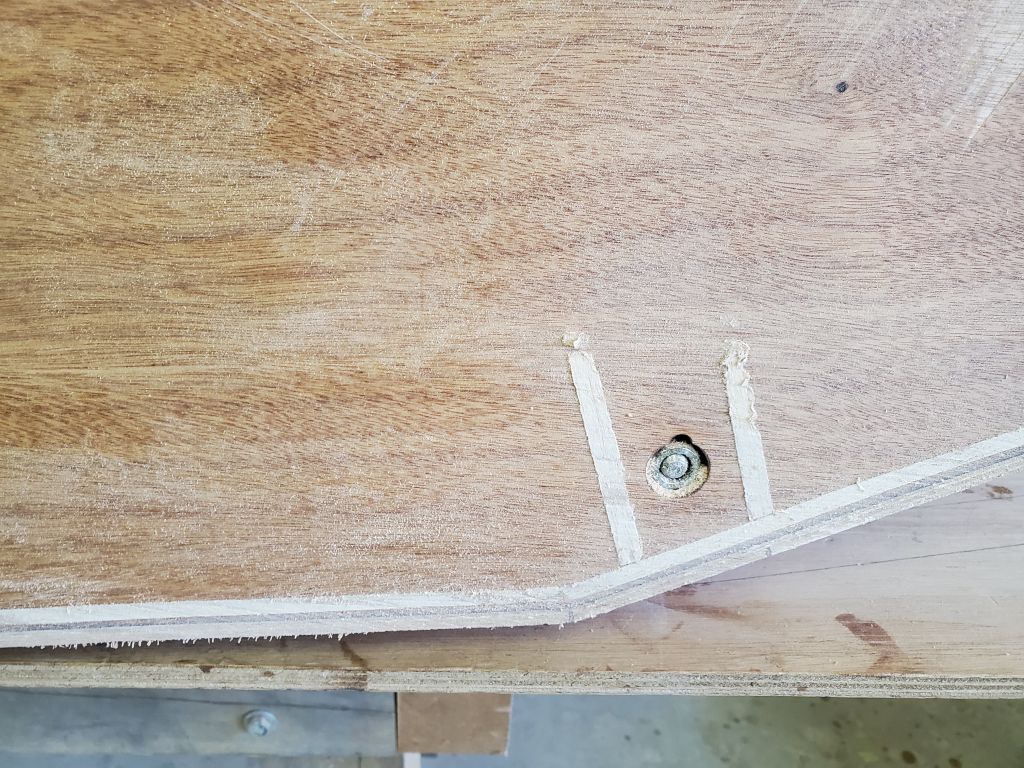
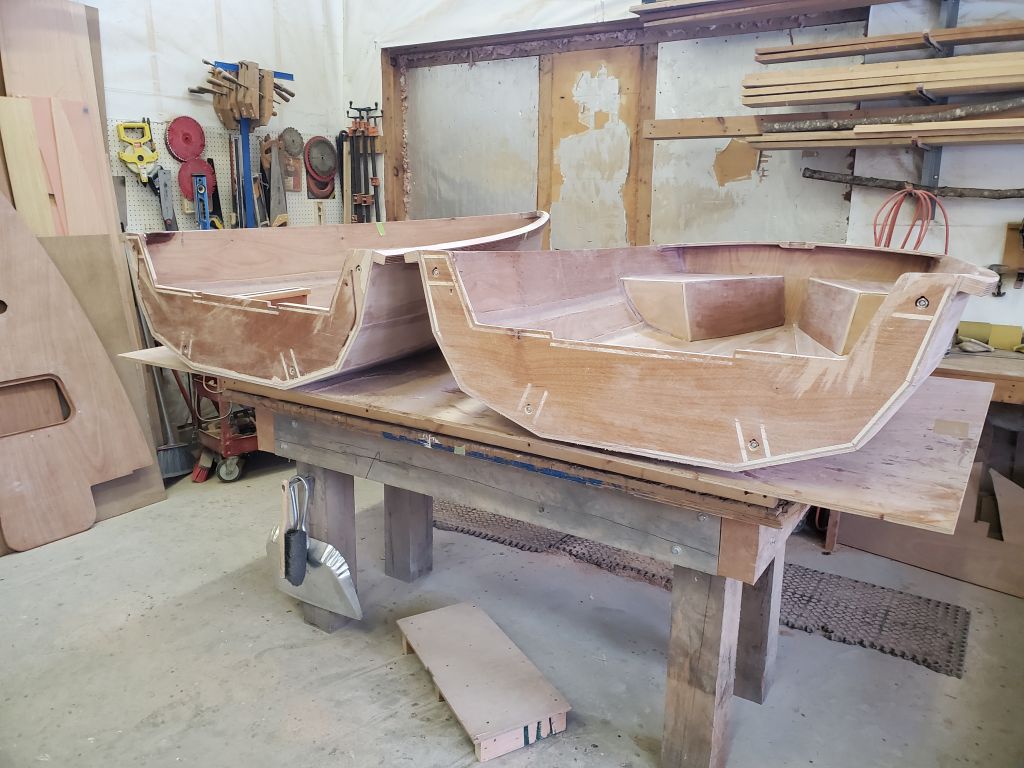
After laying the dingy sections back on the bench, I removed the masking tape from the new epoxy edges.  The tape left a clean line on the hull side, but as expected there was excess epoxy extending past the planes of the bulkheads.  At the eight fastener locations, the epoxy had stayed outside the holes and threads.

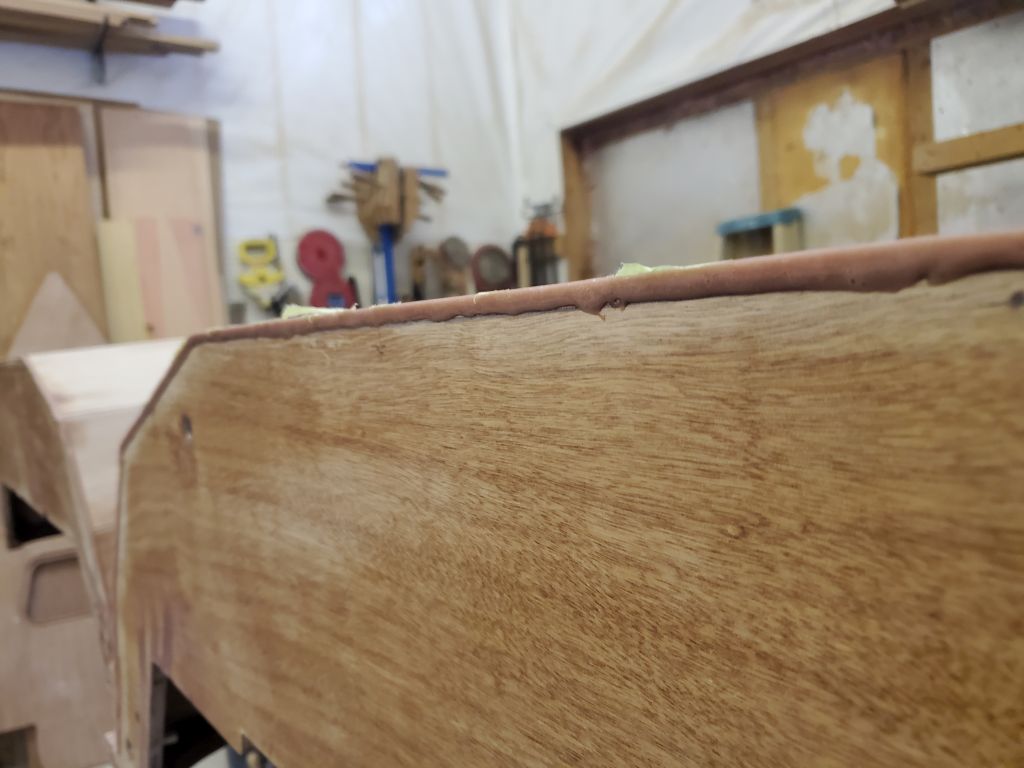
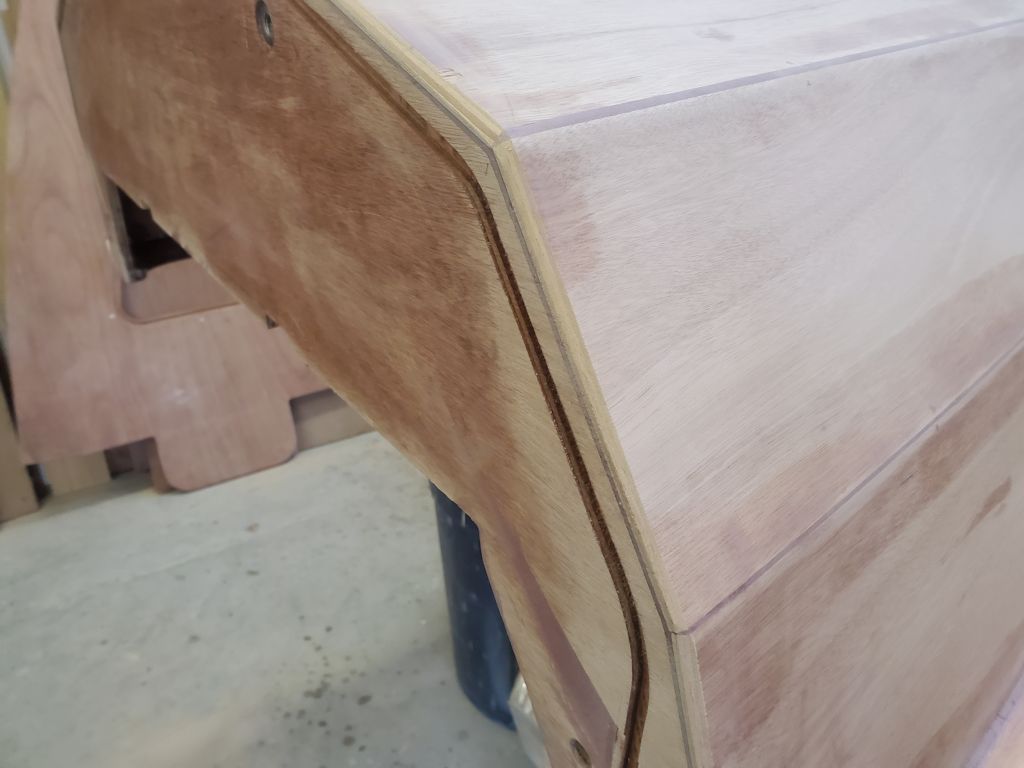
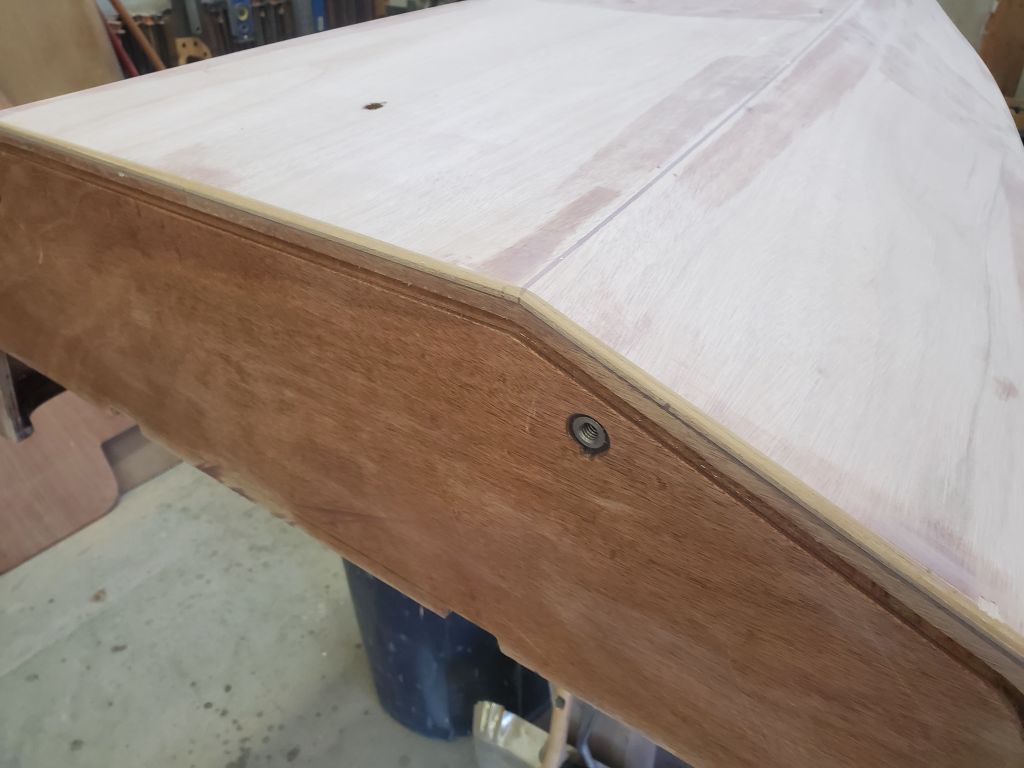
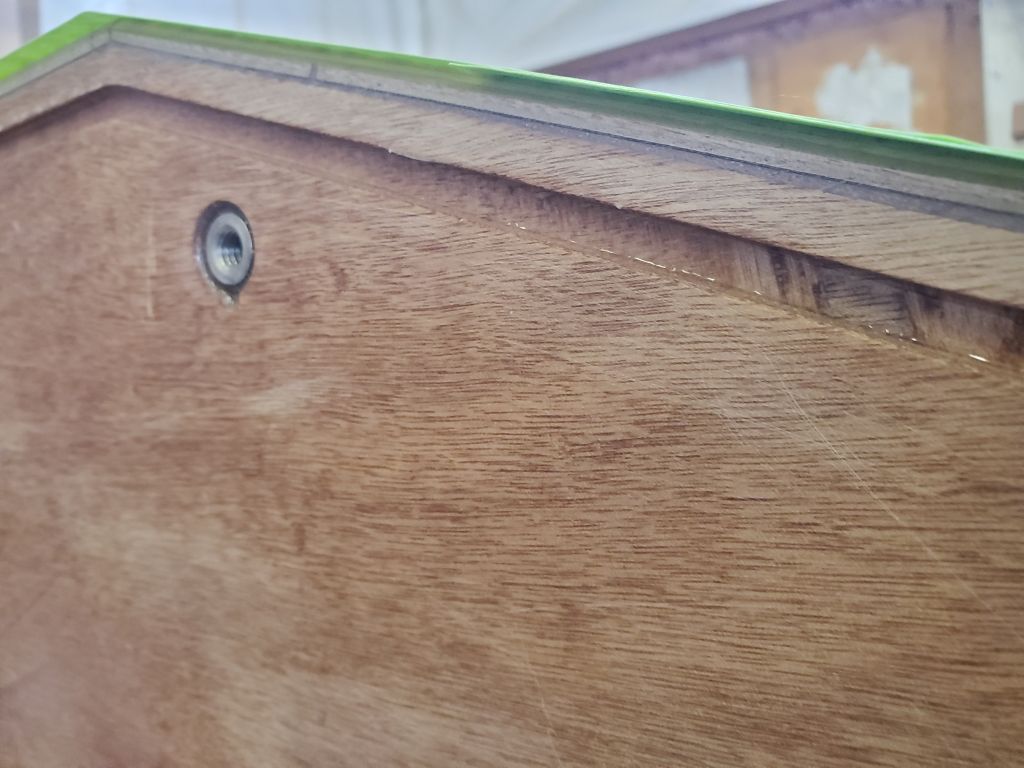
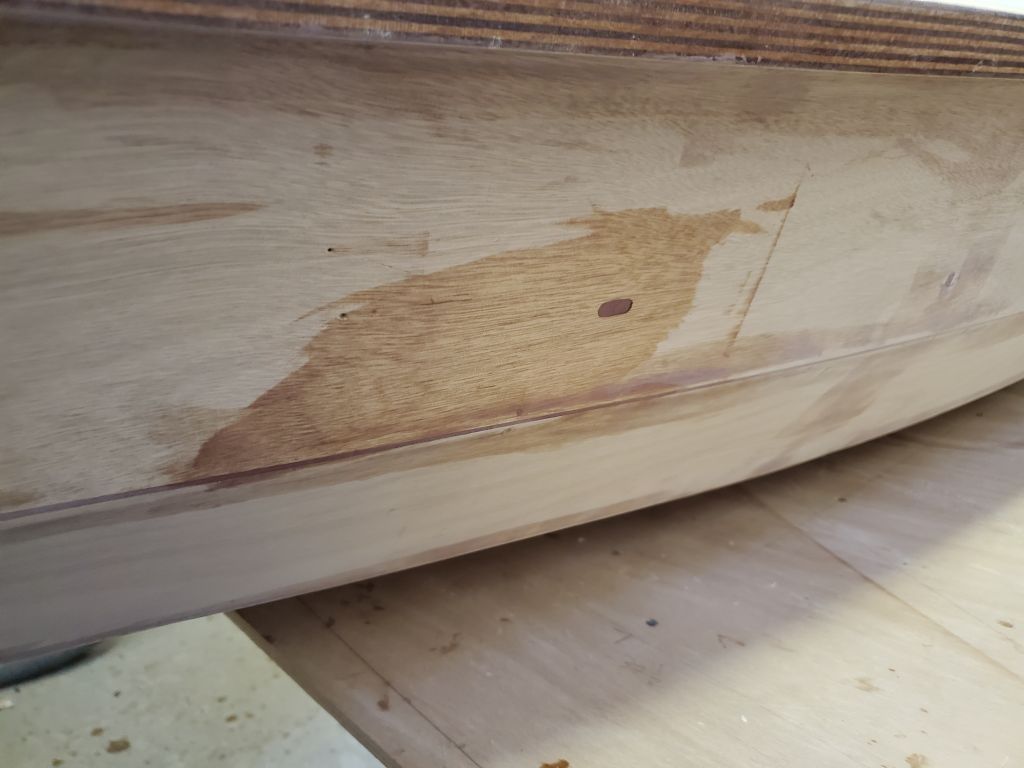
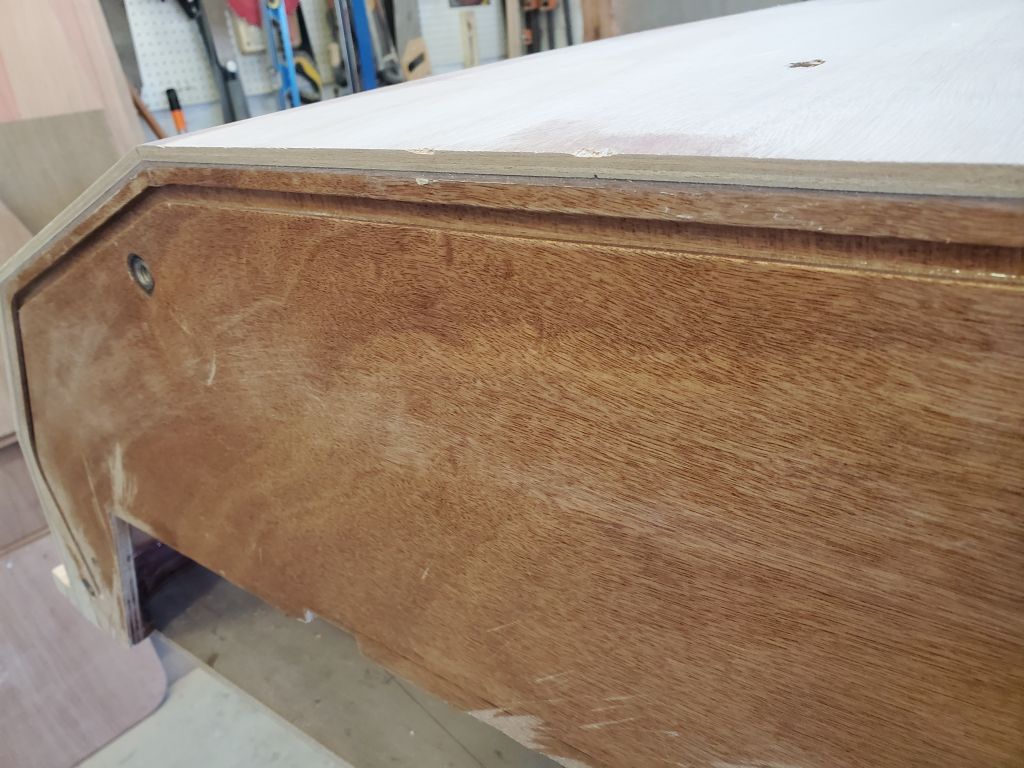
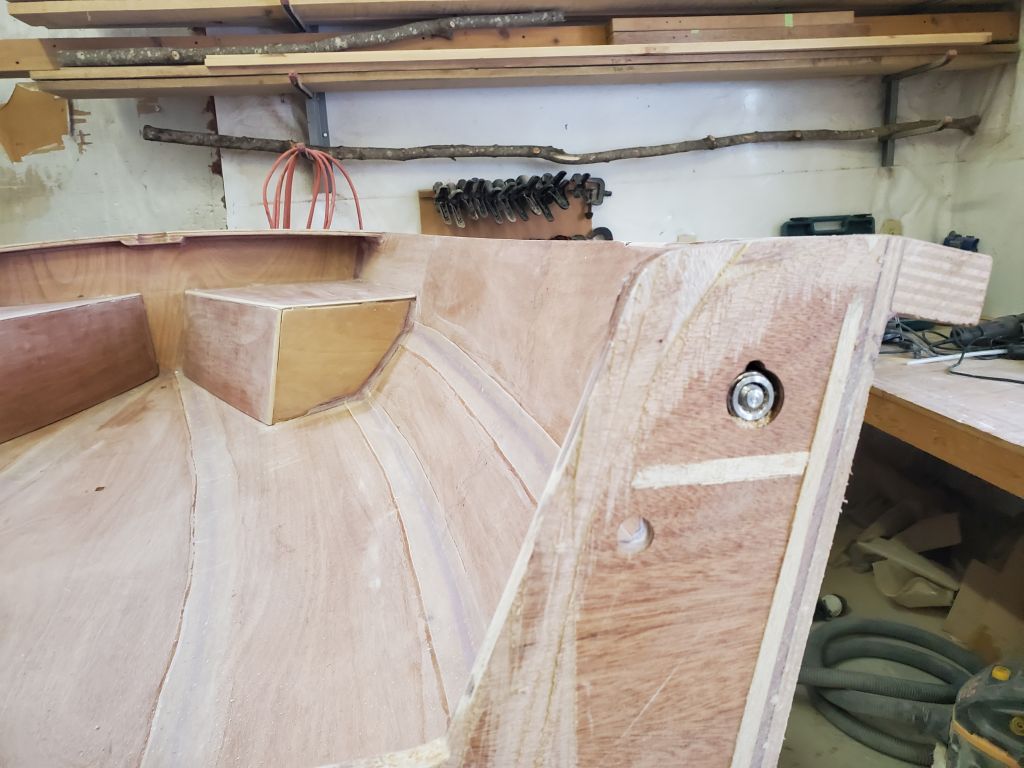
With a firm sanding block (2×4) and 80 grit paper, I sanded the excess epoxy flush with the bulkheads and gunwales all the way around on both halves of the dinghy.  I applied a strip of masking tape on one side of the block, over the sandpaper, so that the abrasion of the flat bulkhead surface would be minimal while I cleaned up the edges.  Once the edges were flush, I lightly sanded the entire surface with 120 grit on a small sanding block.  I also very lightly sanded the hull surfaces to ensure the new epoxy was flush and level–just a quick scuff to look for sanding marks on the epoxy.

The next step for the conjoining bulkheads was to fiberglass them, but before I dove into that task I checked ahead to see if there was anything else I could do to more significantly advance the project first, since fiberglassing would stop all other work once I’d done it.  But I’d already finished up any other components of the boat that I might have worked on, like the foredeck, which I’d already pre-fitted and now awaited just its final installation once the bulkhead work was done.  So although it would force a quick end to the day’s work on the boat, I moved forward quickly with the fiberglass stage so that I’d have time late in the day to apply the fill coat of epoxy as well.

I stood the boat halves up on their respective ends once more, and cut 4 oz. fiberglass as directed to cover the bulkheads on each side–one larger piece with two smaller pieces to cover the narrow bulkhead tips on each half, roughly cut to fit with some material left to hang over all the edges.

Next, I wet out the fiberglass in place, working again from the top of the work table.  I left this to set up for several hours while I worked on unrelated projects.

Late in the day, the resin had cured to the point that I could apply the usual fill coat of resin over the top, to fill the weave and leave the surface more or less uniformly glossy.

PT11-30

Over the weekend, I applied a quick second round of epoxy filler, focusing mainly on the forward upper port bulkhead where the saw had slightly wandered, to fine-tune the filler I’d applied earlier.

Now, I block sanded the repairs flush and smooth.

I took a few moments to lightly sand the fresh fillets on the aft tanks, and the epoxy-filled alignment slots on the hull.  These slots would require another round of filler whenever I had some material leftover in the near future.

Happy with the results, I moved on and, again using the sanding block, sanded a chamfer into the edges of the hull on both halves, including around the gunwales and slightly down the inside edges of the bulkheads on each side.  The flat of the chamfer was roughly 3/16″ wide.

Next, I applied two layers of masking tape to the hull, leaving it to extend past the chamfered edge and some margin past the face of the bulkhead.  I applied this tape in sections, first pressing two layers of tape together on a flat metal ruler, then applying them to the hull, securing the tape tightly to the hull flats.  This masking went around the gunwales and onto the interior edges of the bulkheads as well, just past the area where I’d ended the chamfer, leaving the chamfered void clear open.

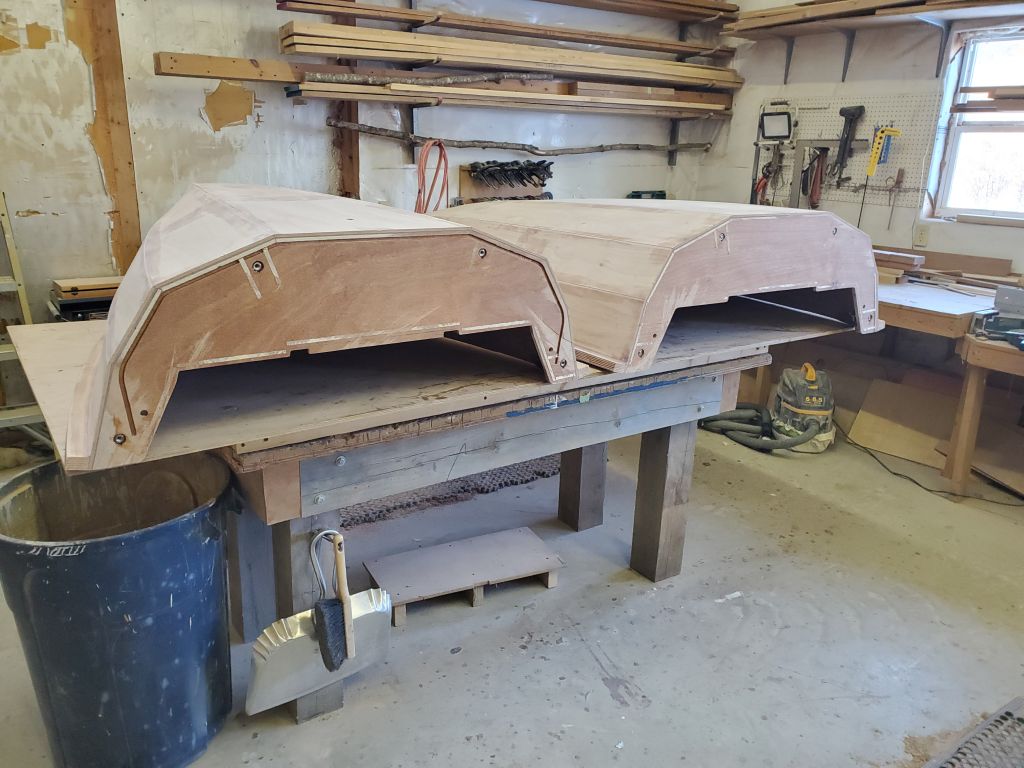
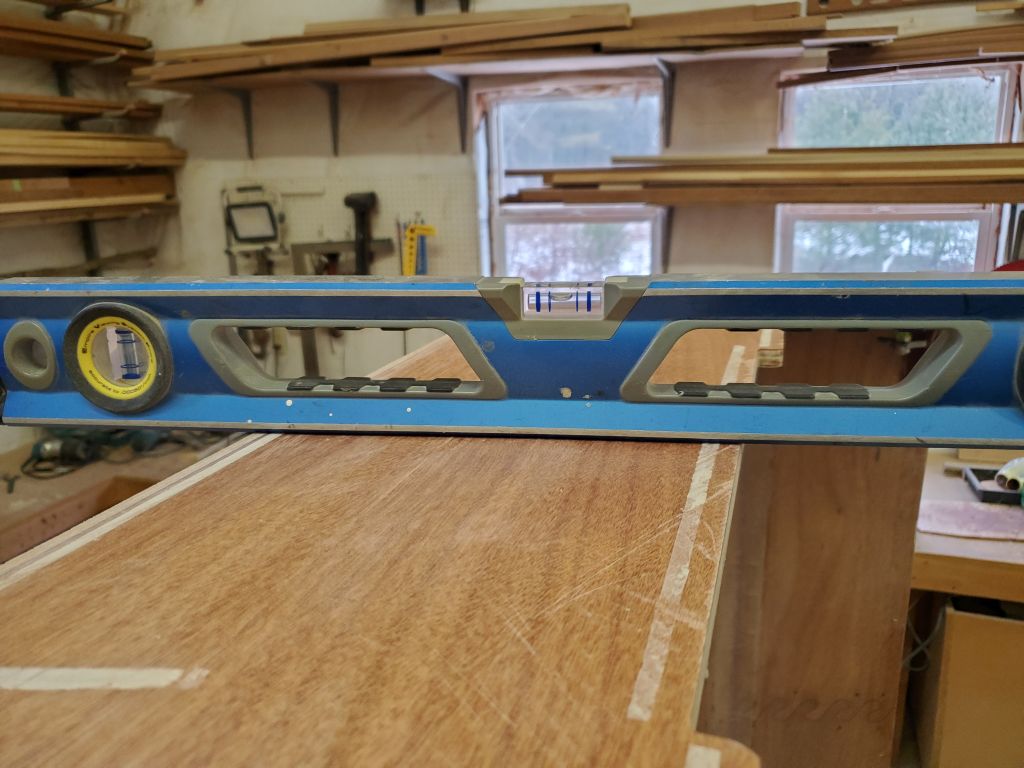
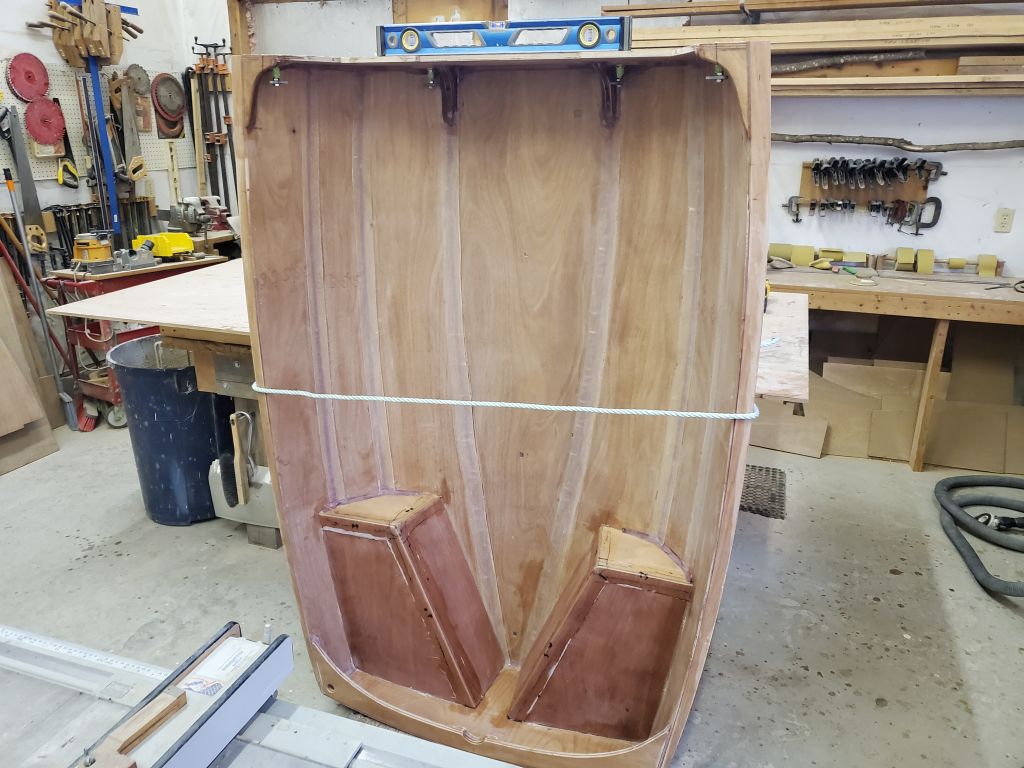
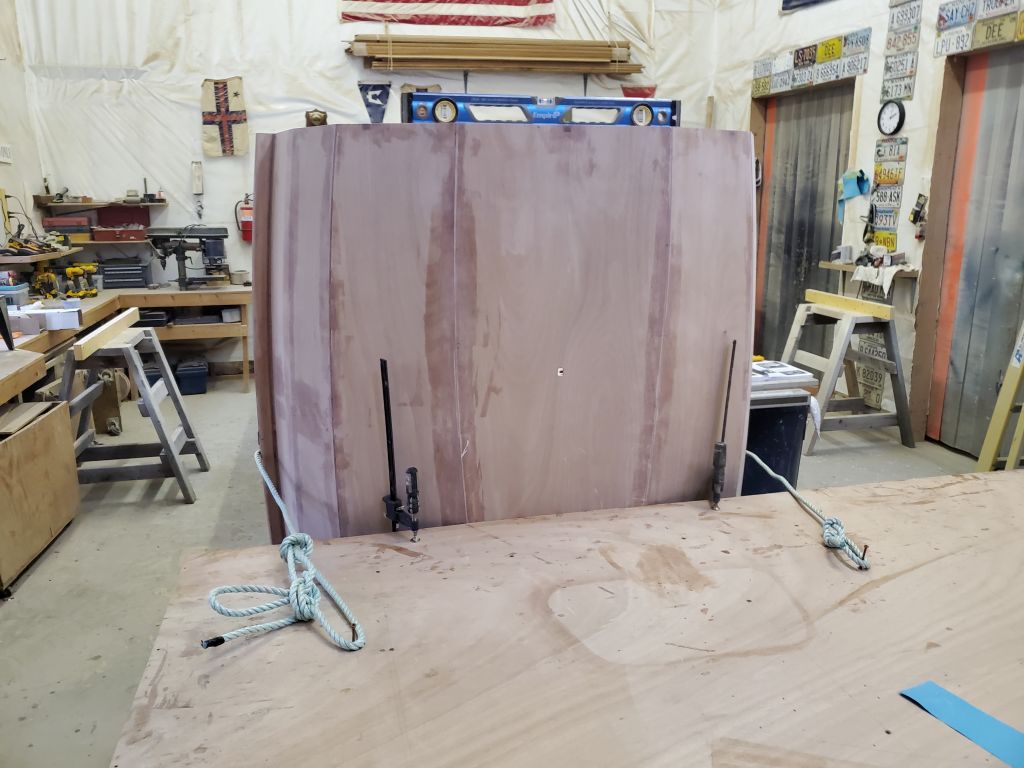
When the masking was done, I propped the two boat halves up against the bench, with the bulkheads facing up, and secured them so they were level in both directions.

I mixed thickened epoxy to a loose consistency with high-density filler and a bit of cabosil, and used a syringe to apply it into the chamfered edges all the way around on both sides.  This time, I realized my bench was amply strong to walk on, so I could work off the benchtop instead of from a ladder, which was much more convenient for this fussy work.

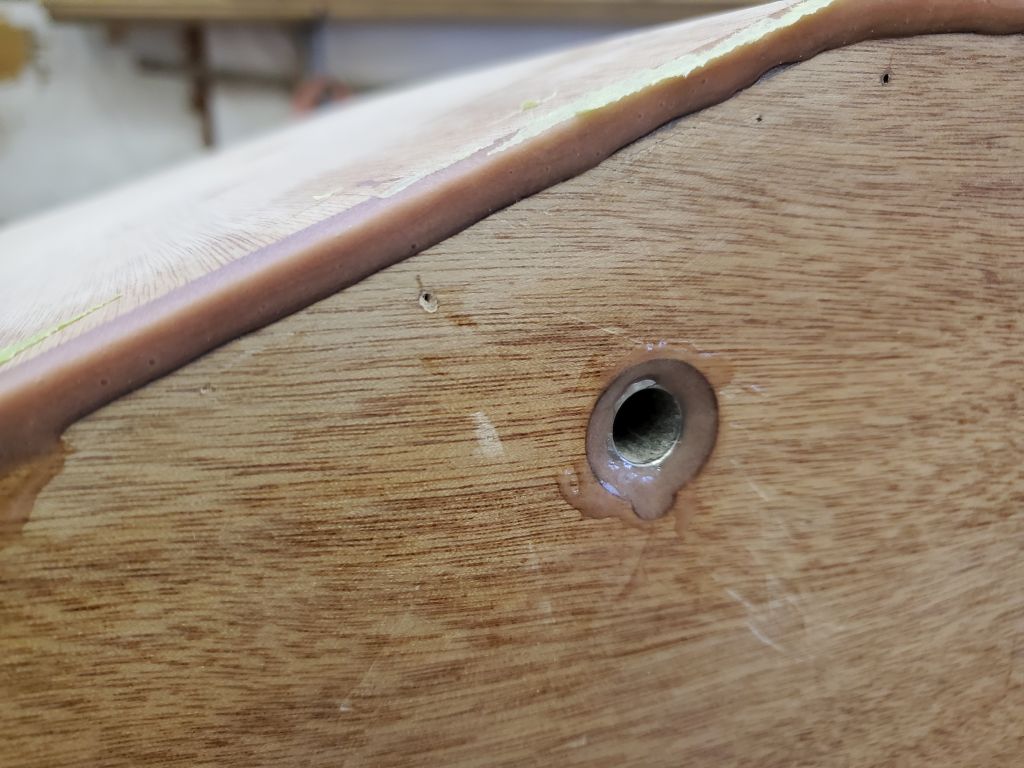
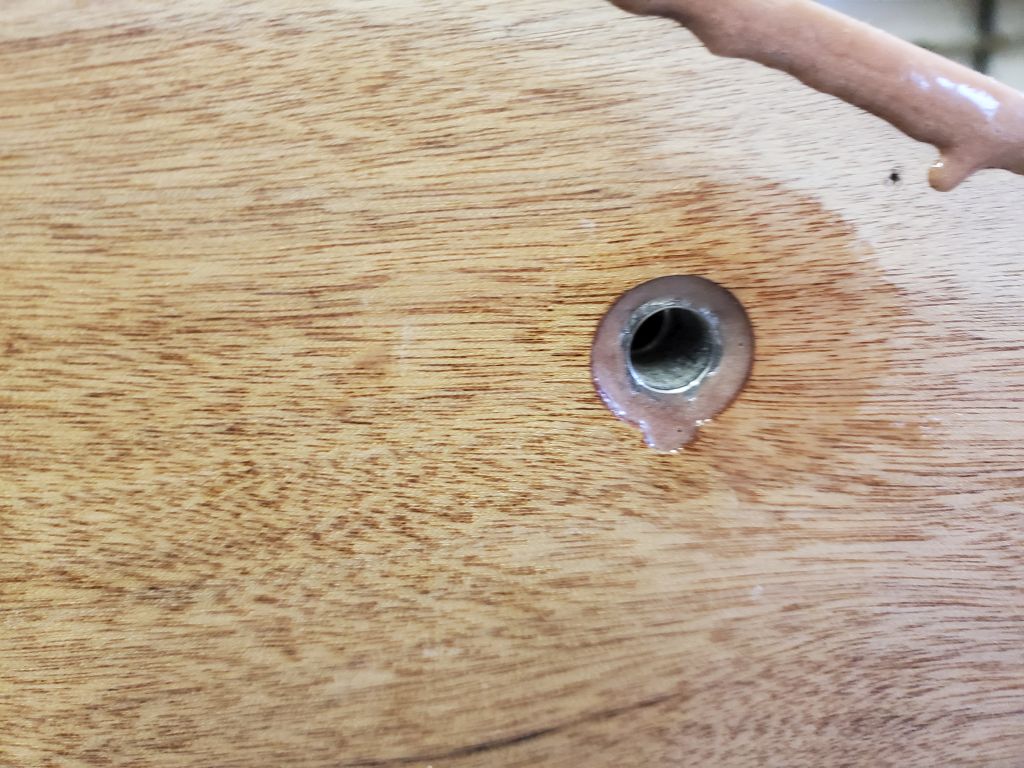
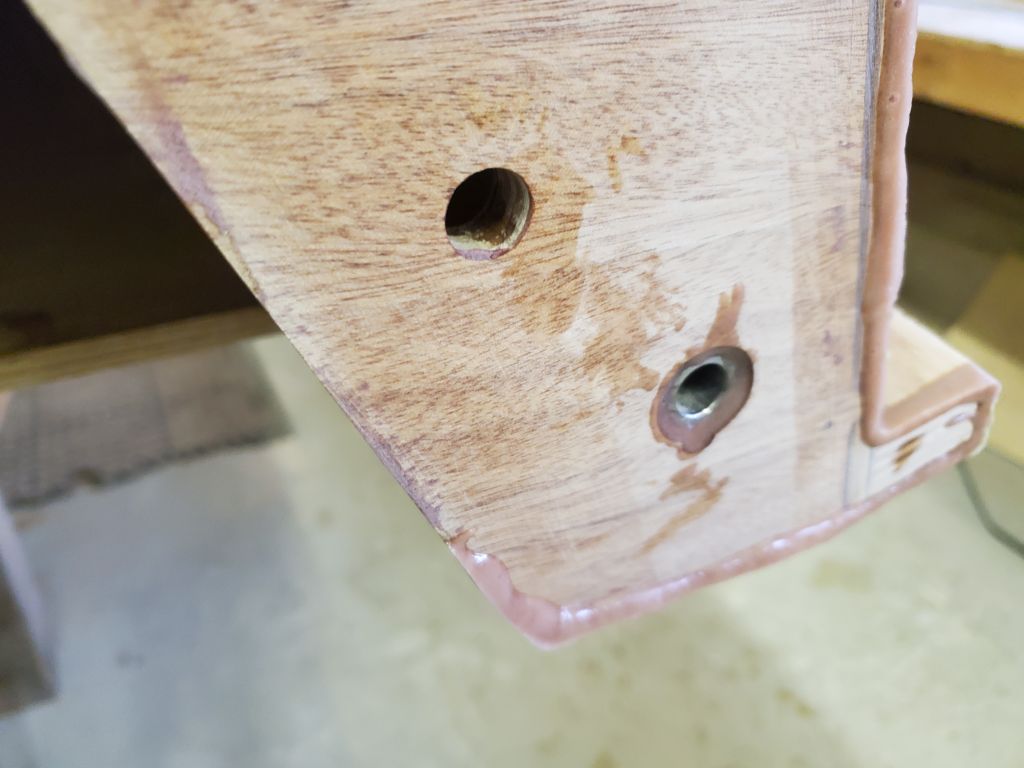
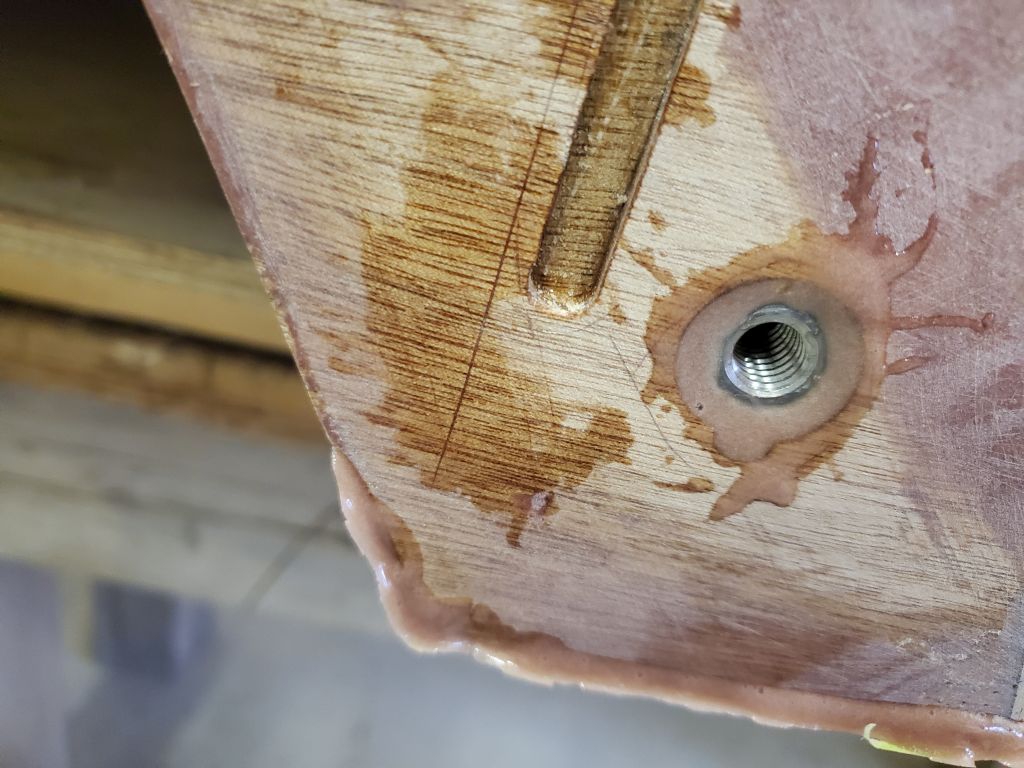
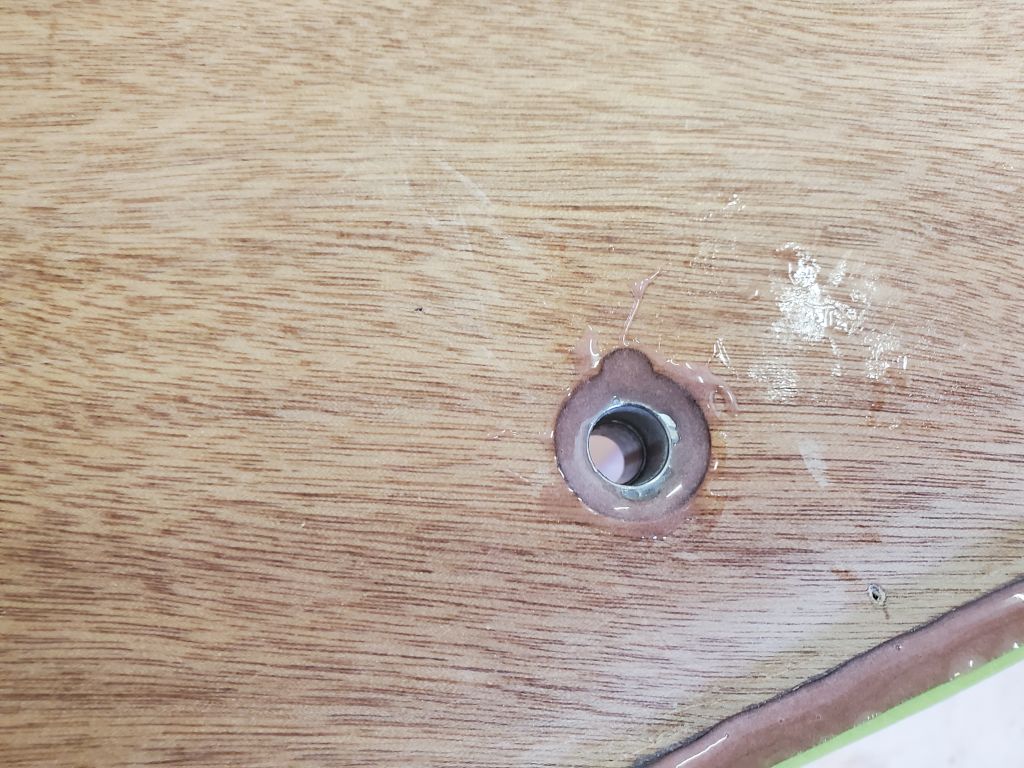
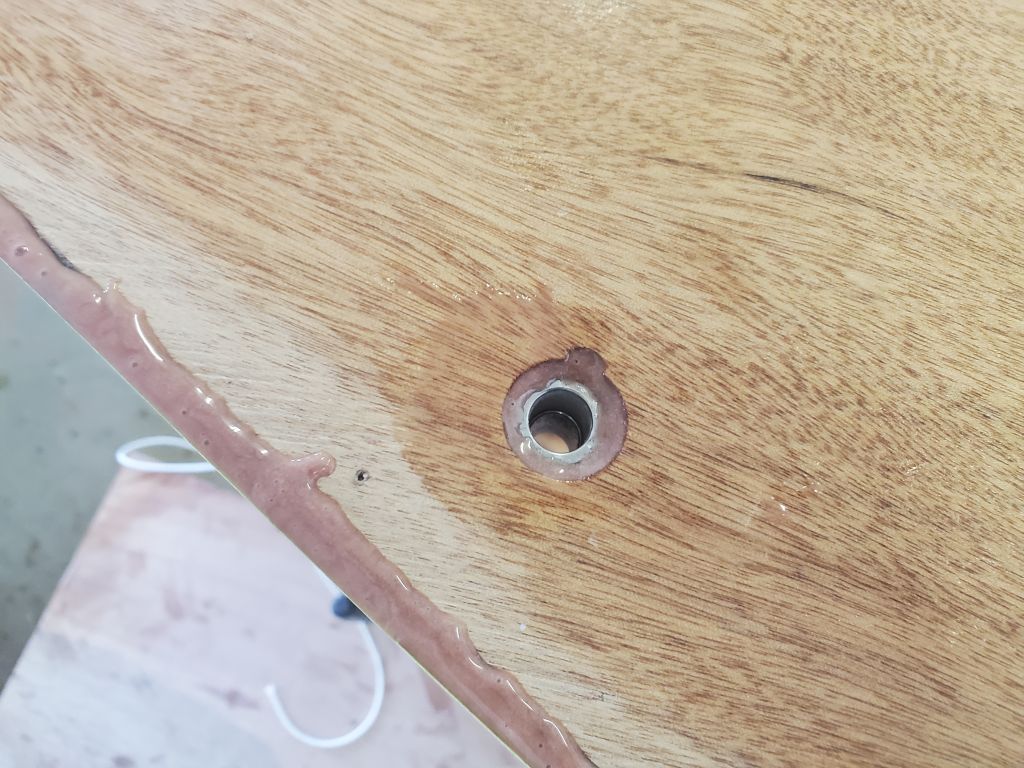
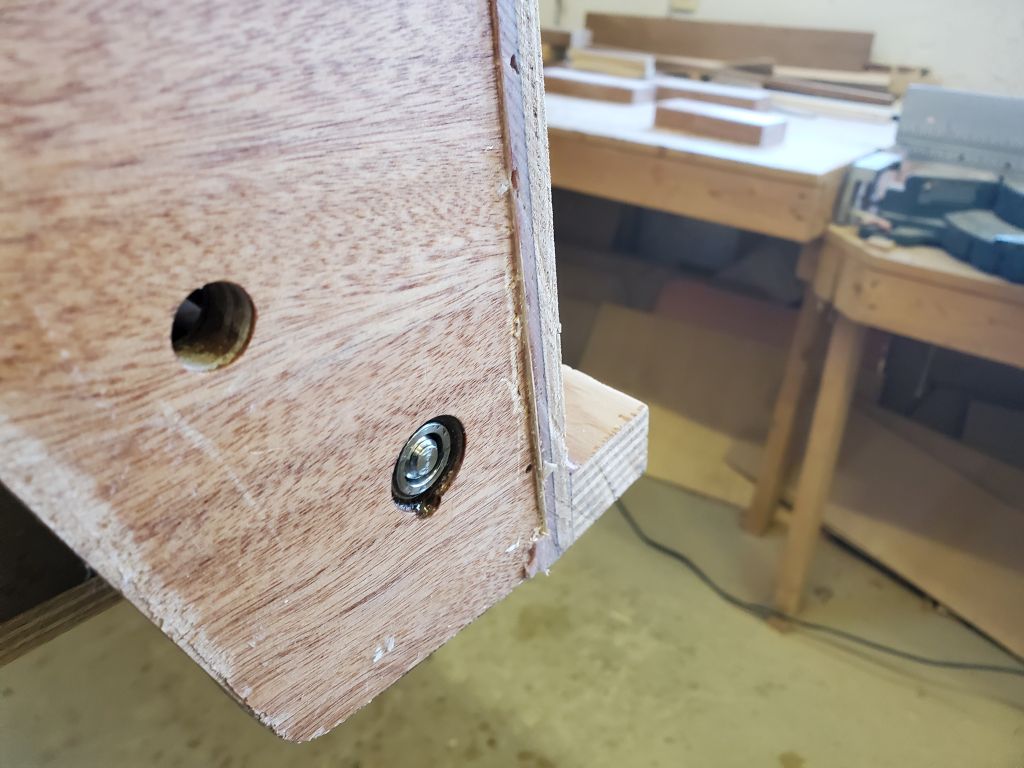
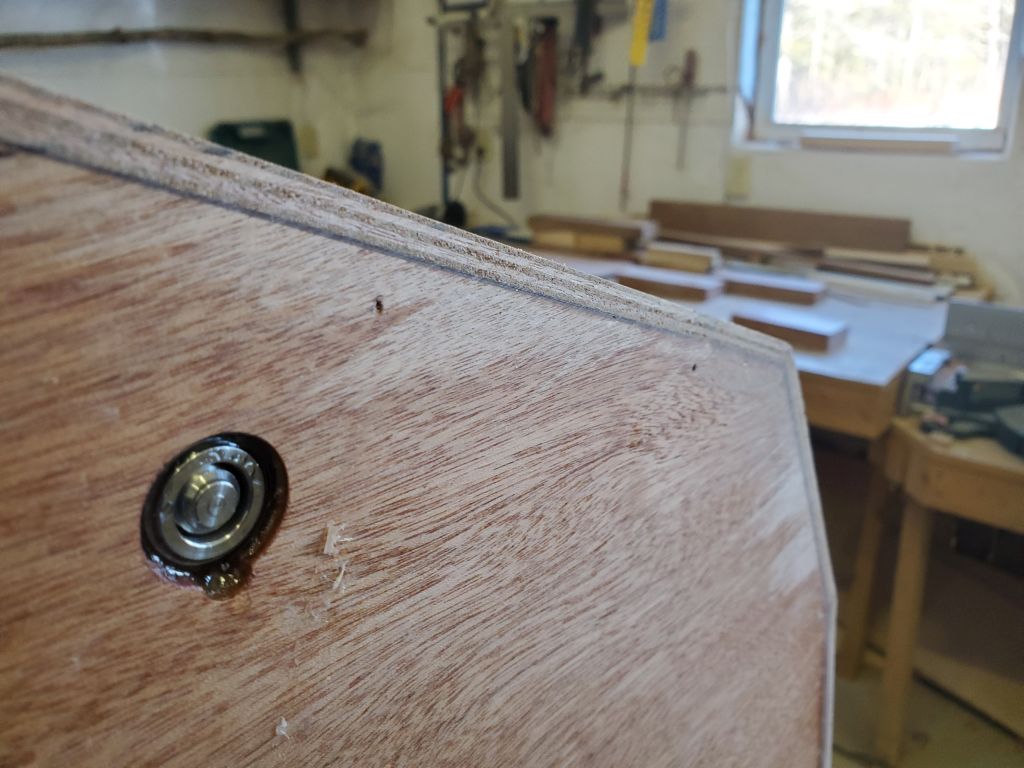
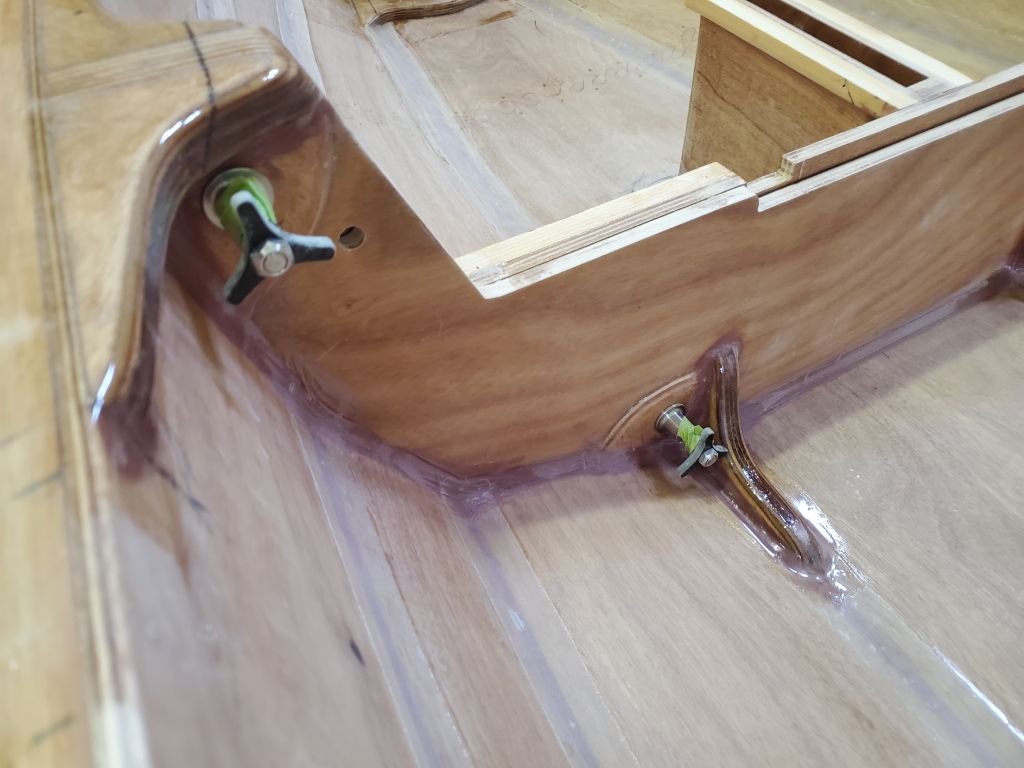
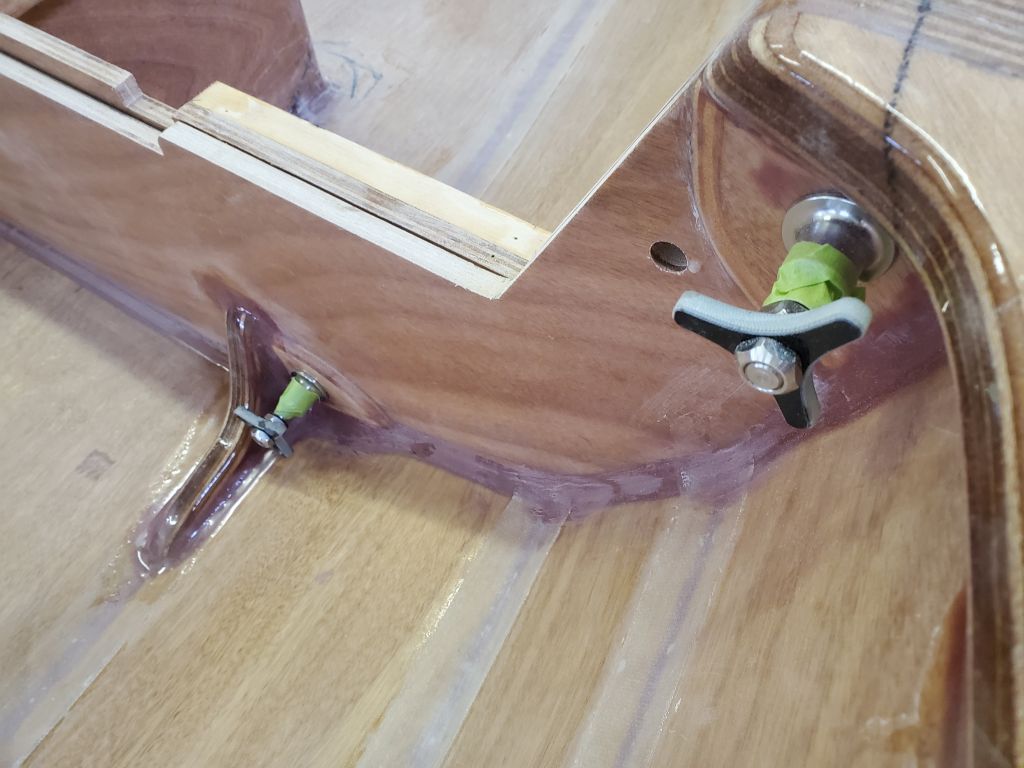
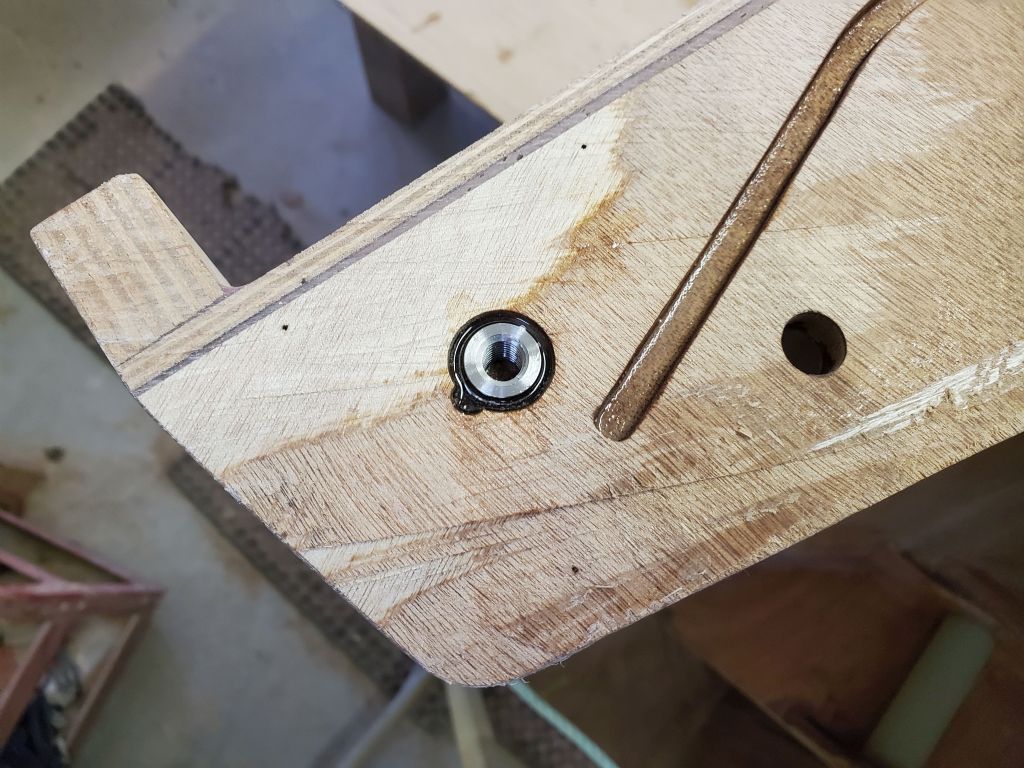
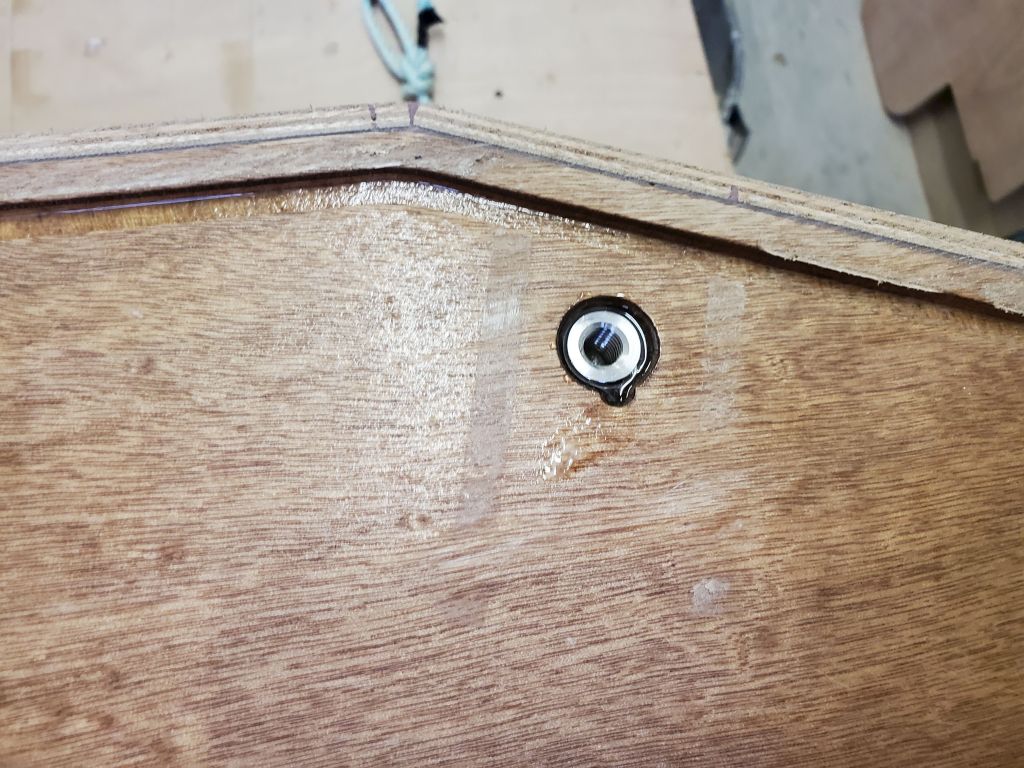
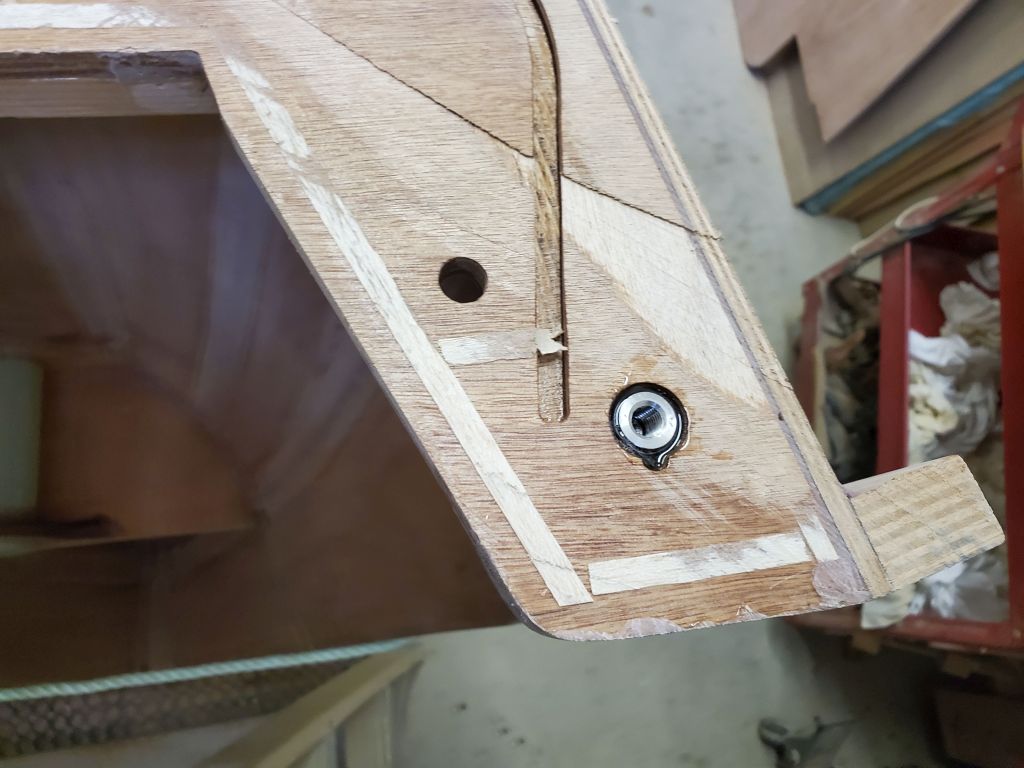
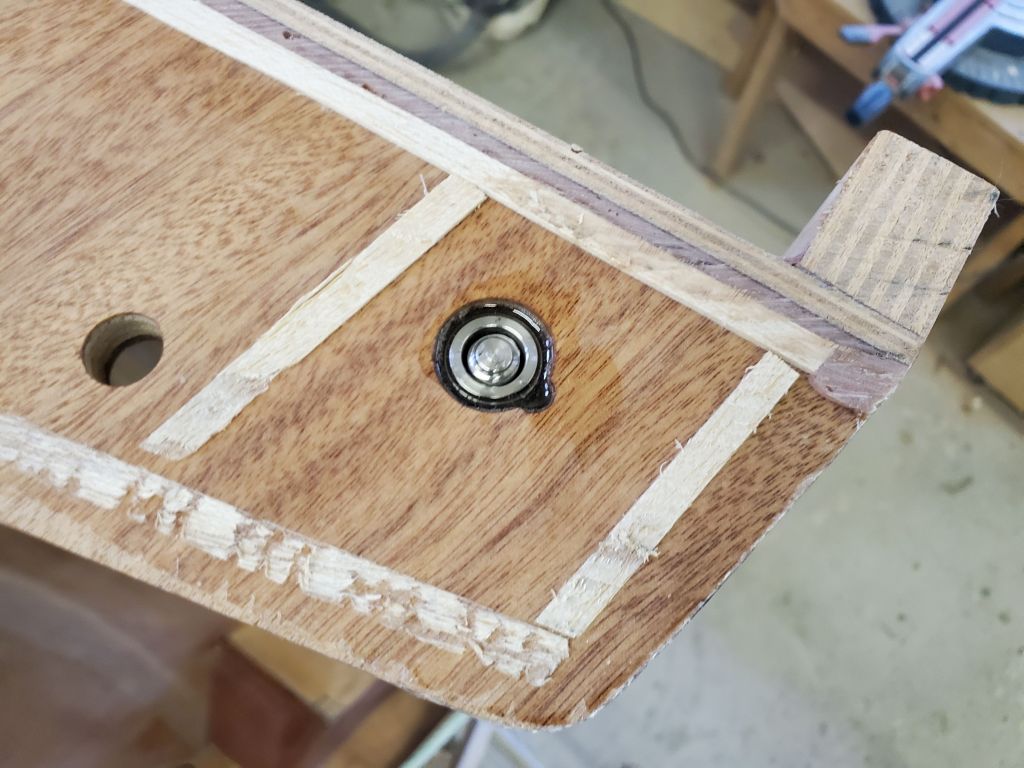
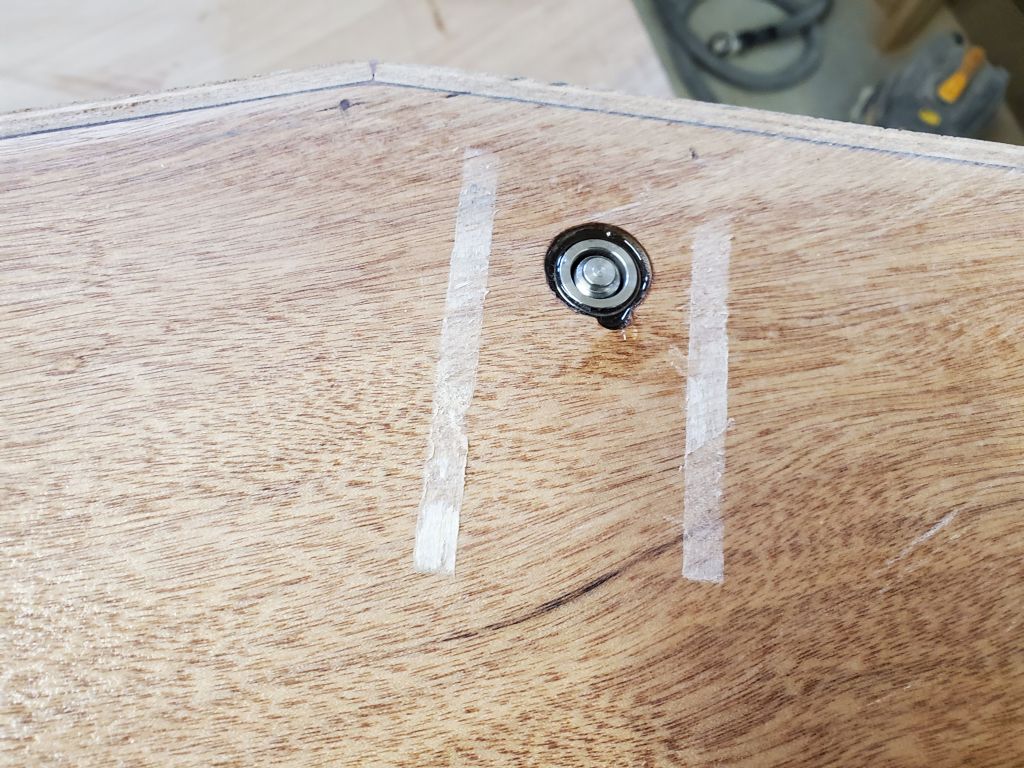
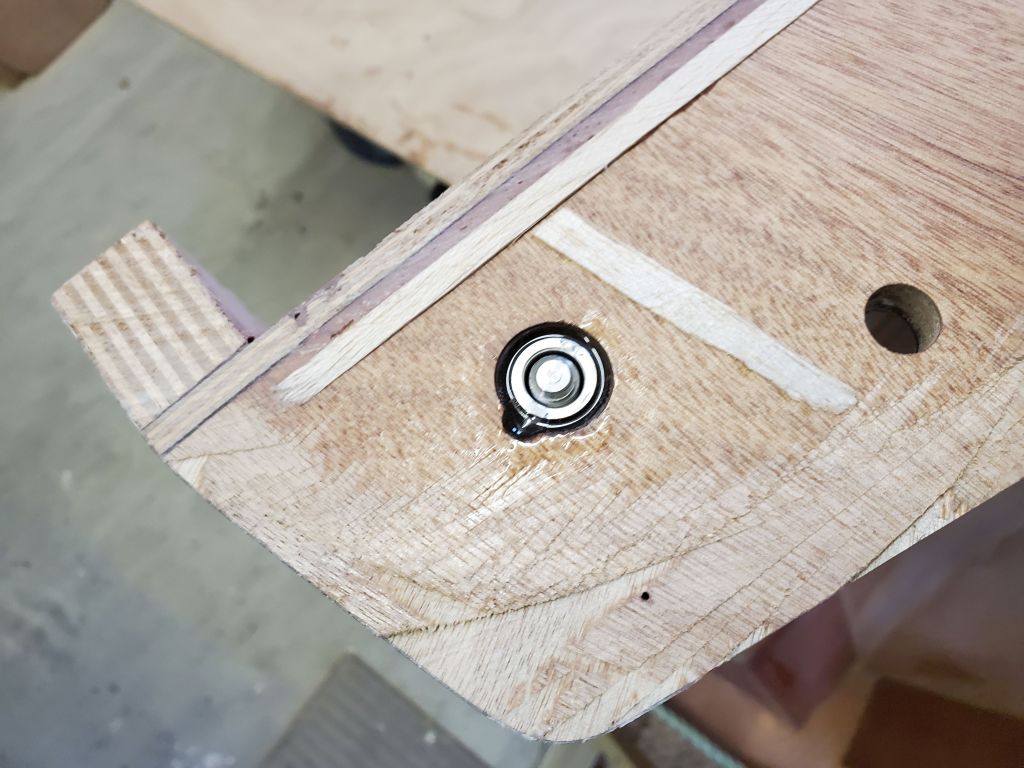
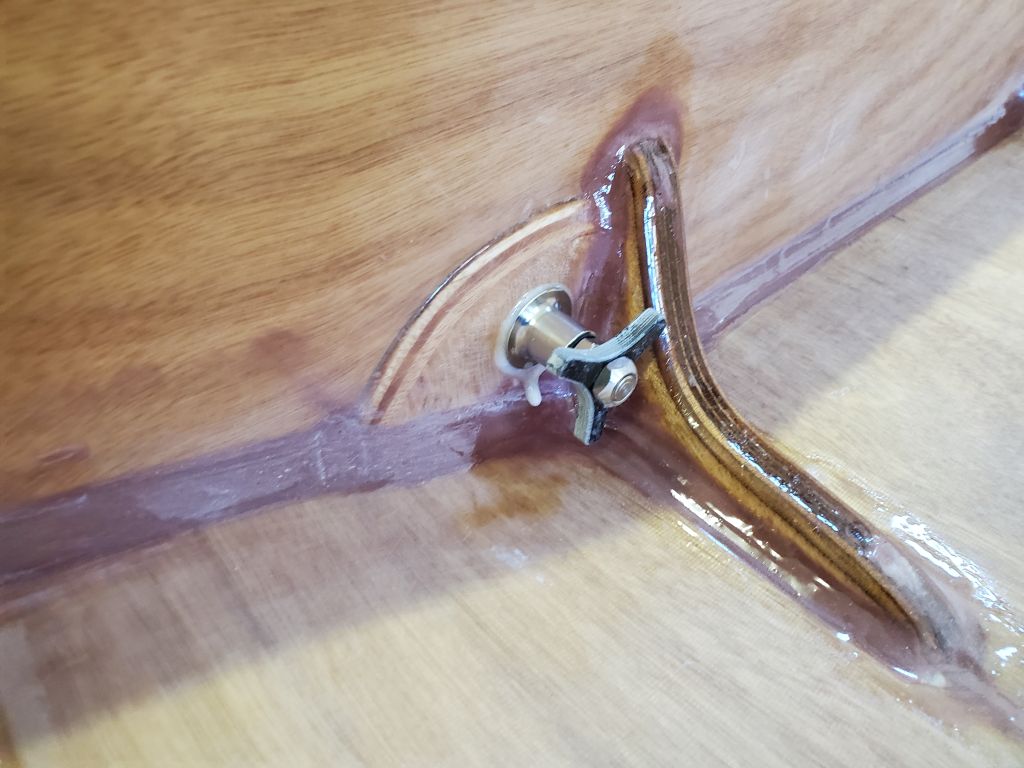
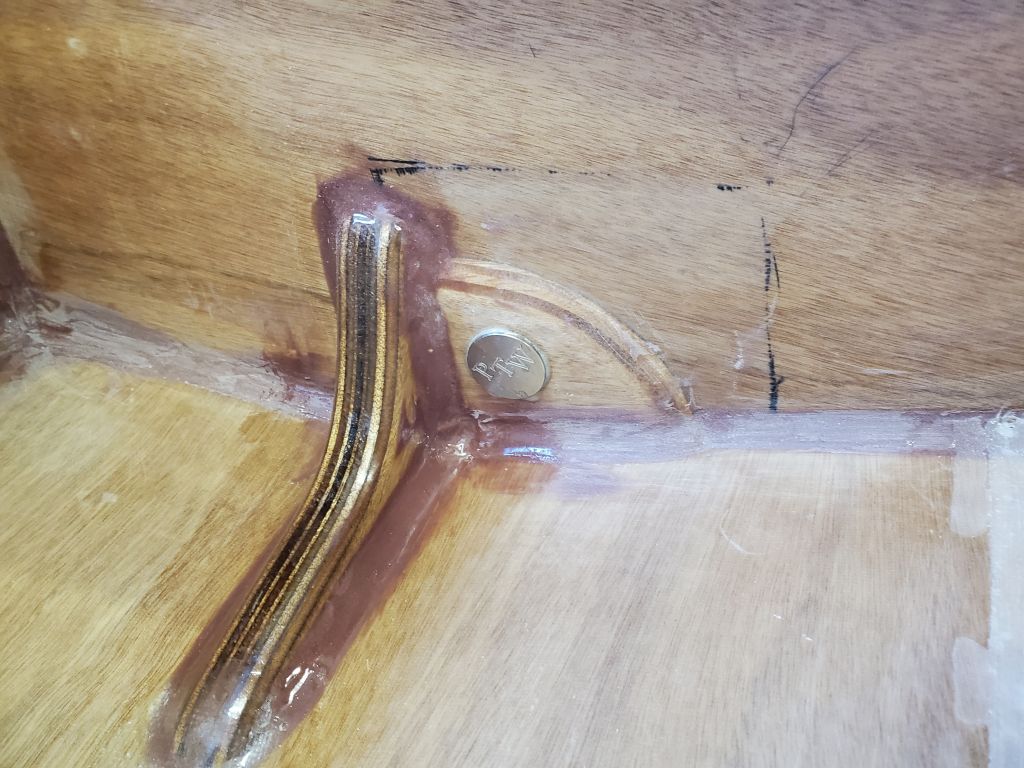
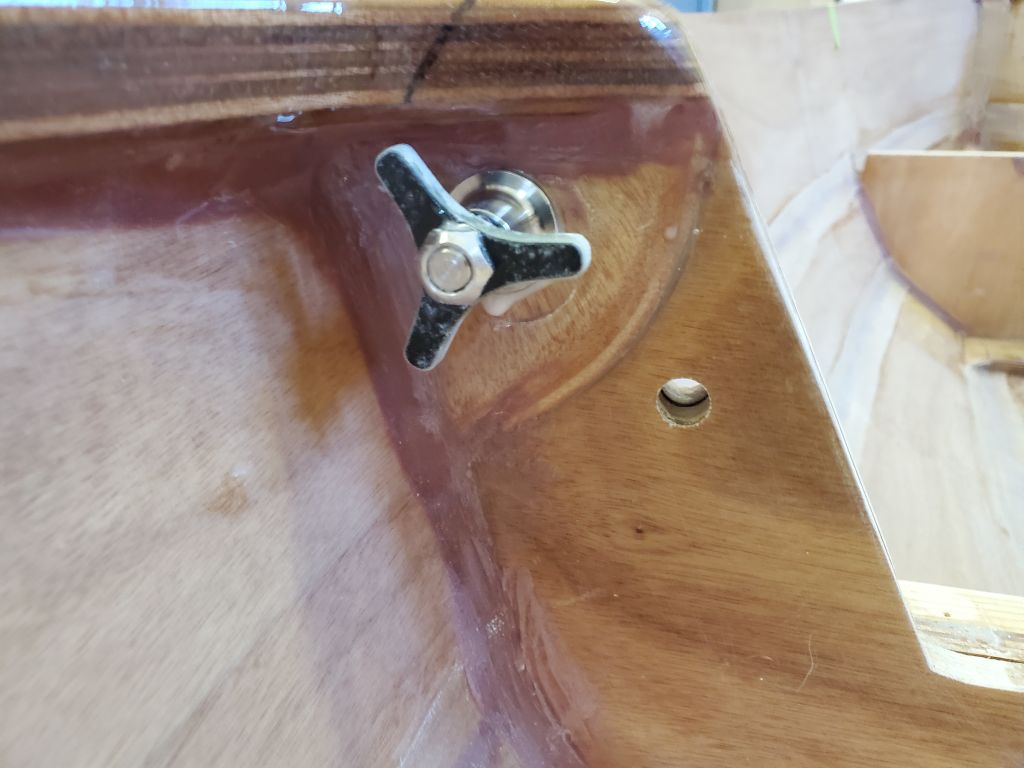
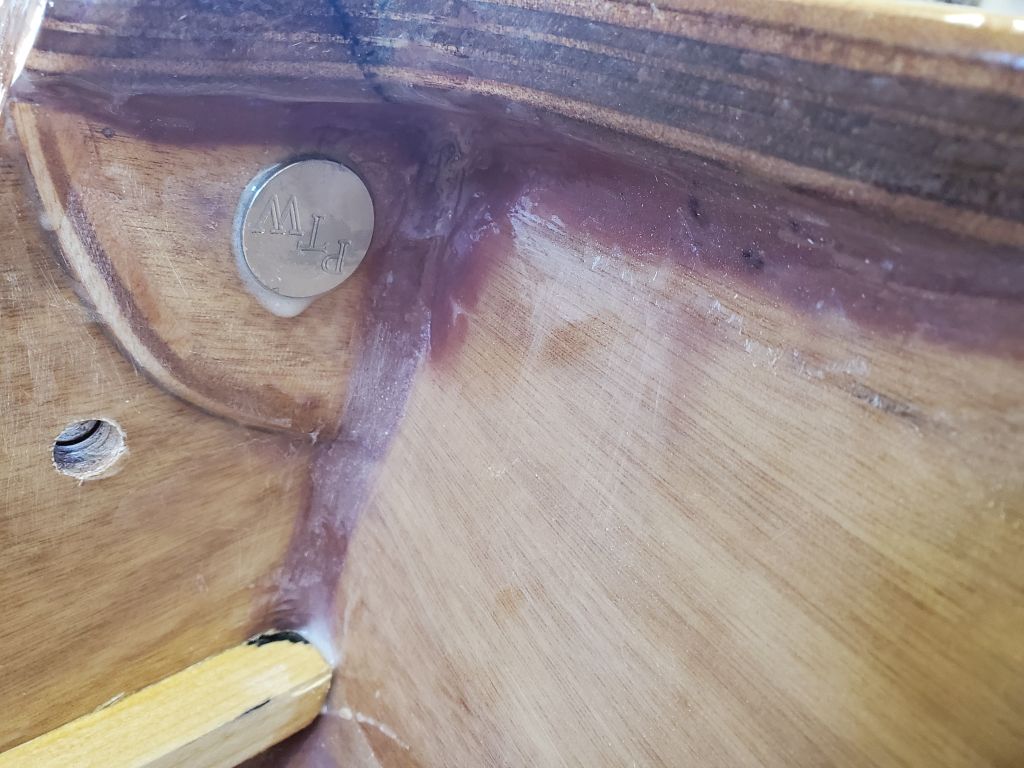
I used the leftover epoxy, applied very carefully with the tip of a nail, to fill the edges of the hardware holes, bringing the epoxy up so it met the edges of the bulkhead at each hole.  I kept the epoxy away from the threaded and unthreaded holes in the hardware, but tried to bring the fill out as close as possible to the centers of the hardware.  This was truly fussy and nerve-racking, and I came back a couple times shortly thereafter to check the epoxy and make sure it wasn’t tending to flow into those threaded holes.

I had unrelated shop tasks to complete later in the day, which was just as well since at this point there was nothing else I could do to the dinghy till the epoxy cured.

PT11-29

After returning the boat halves to their normal orientation, and with the epoxy-potted hardware fittings cured, I removed the peel ply from the aft tanks’ new fiberglass tabbing, and lightly sanded the areas as required.  The epoxy was still a bit too soft to sand properly, but all I really needed to do was clean up a few of the corners to prepare for the next step, which was more fillets.

Note that if I’d been building this boat to be a clear interior finish, I’d not have used a marker to mark the fiberglass tape when I cut it.  This boat will be painted inside.

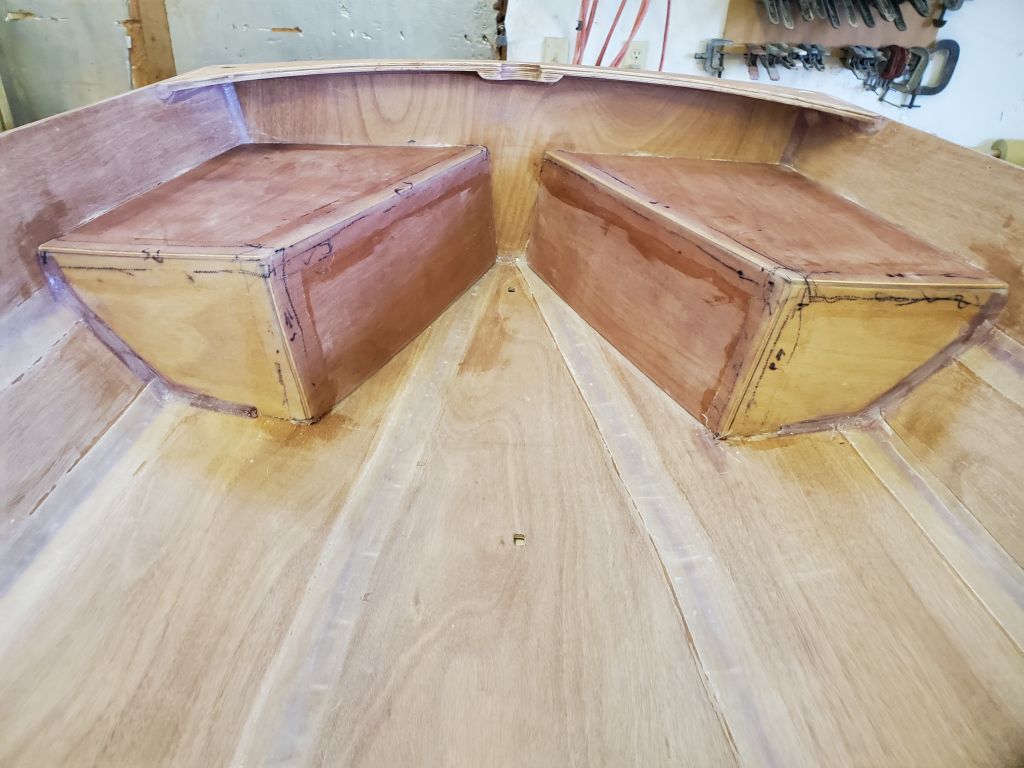
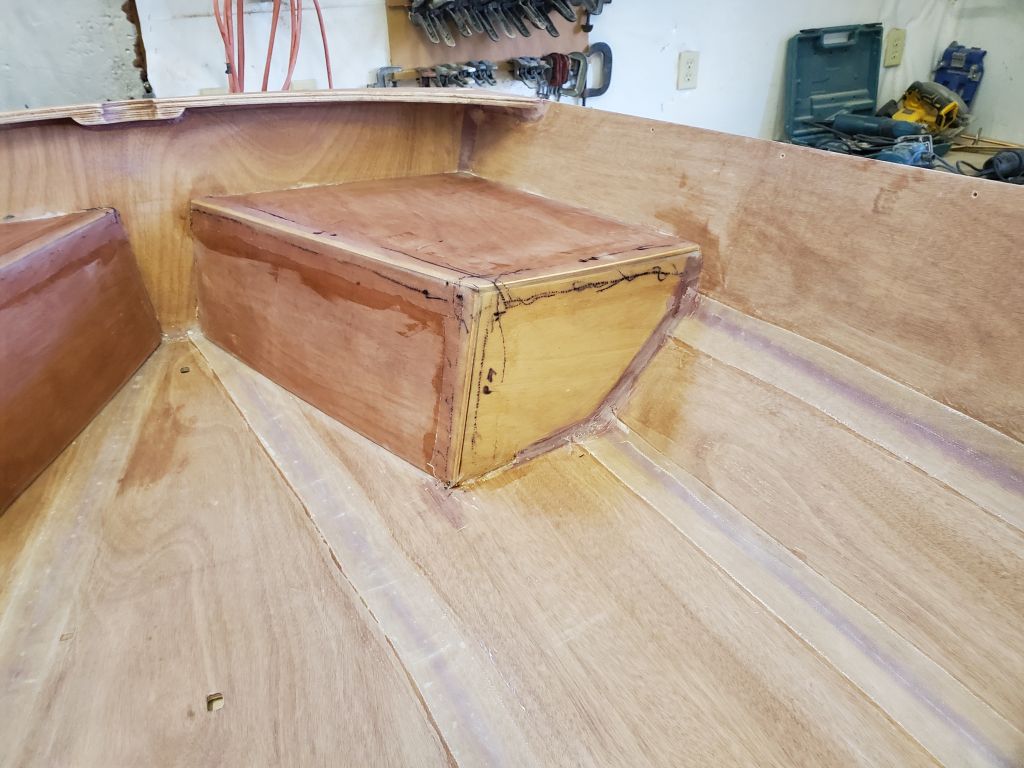
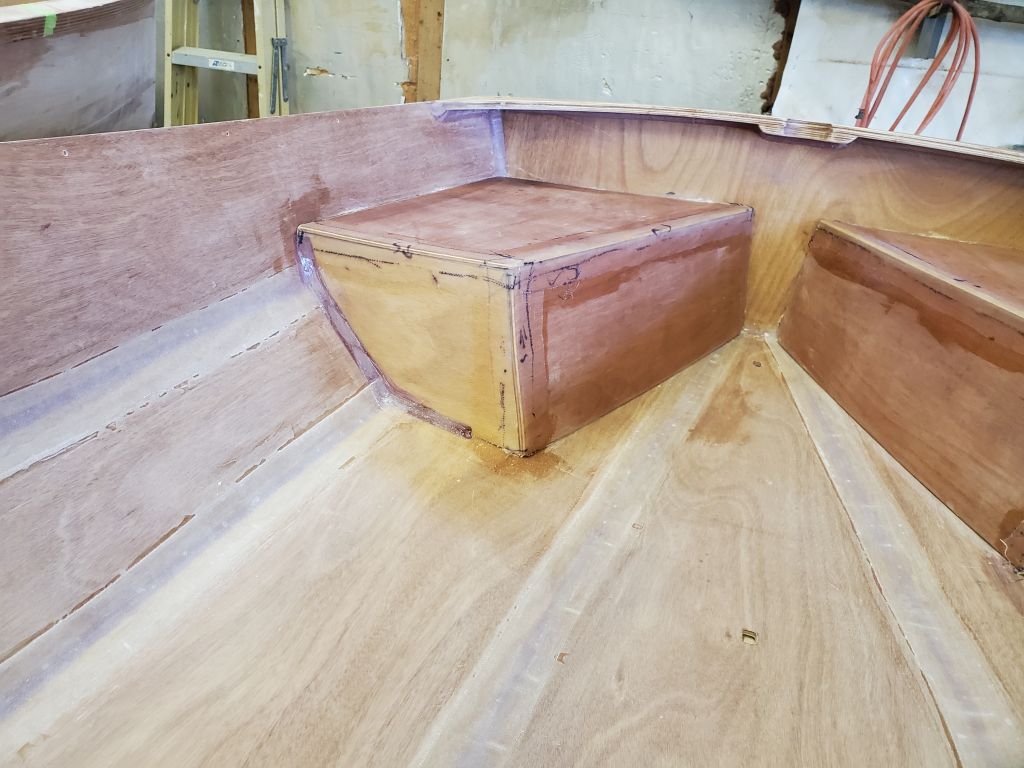
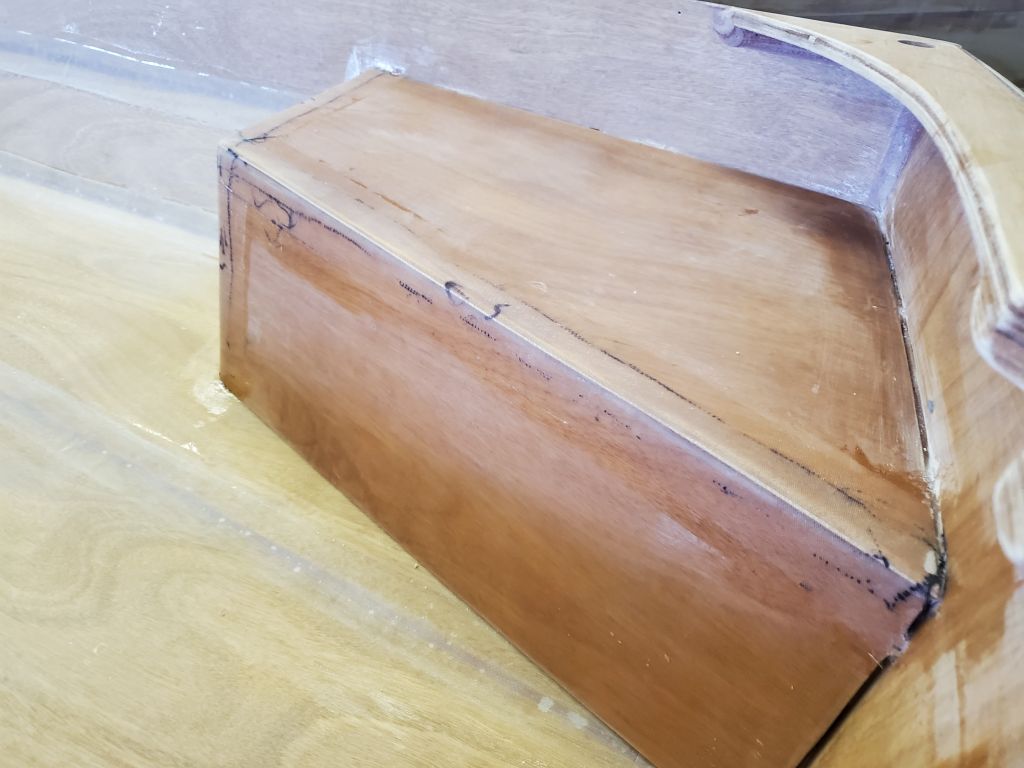
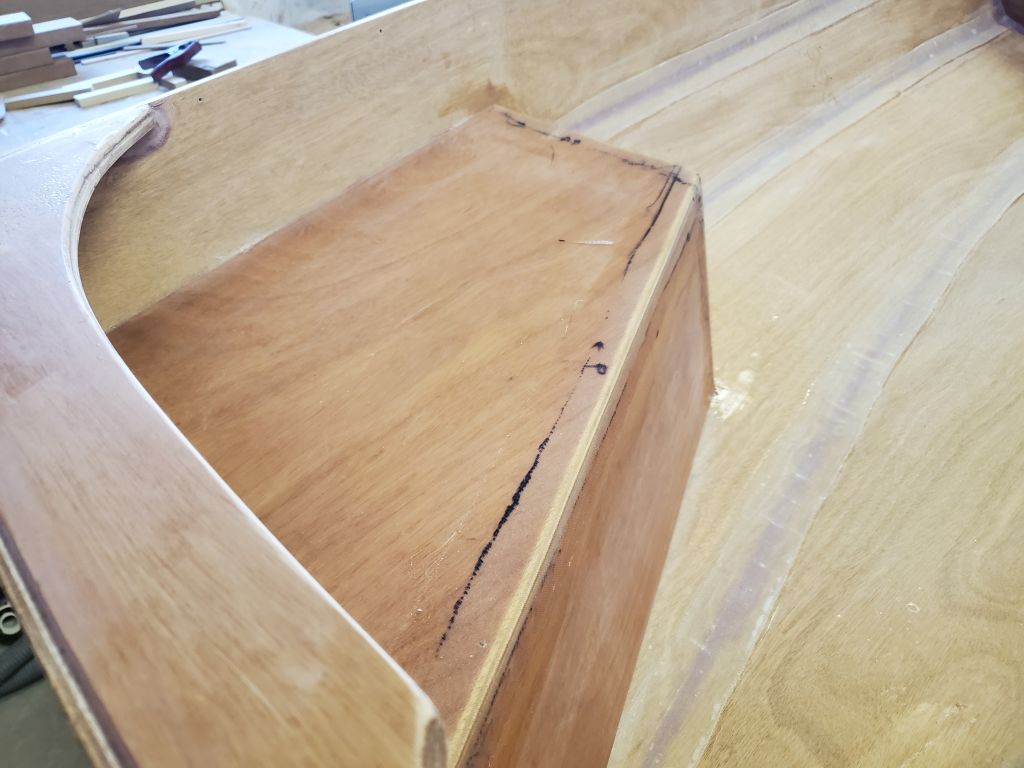
After cleaning up the boat, I applied epoxy fillets around all the outside edges of the tanks to complete their installation.  These were cosmetic as well as structural.
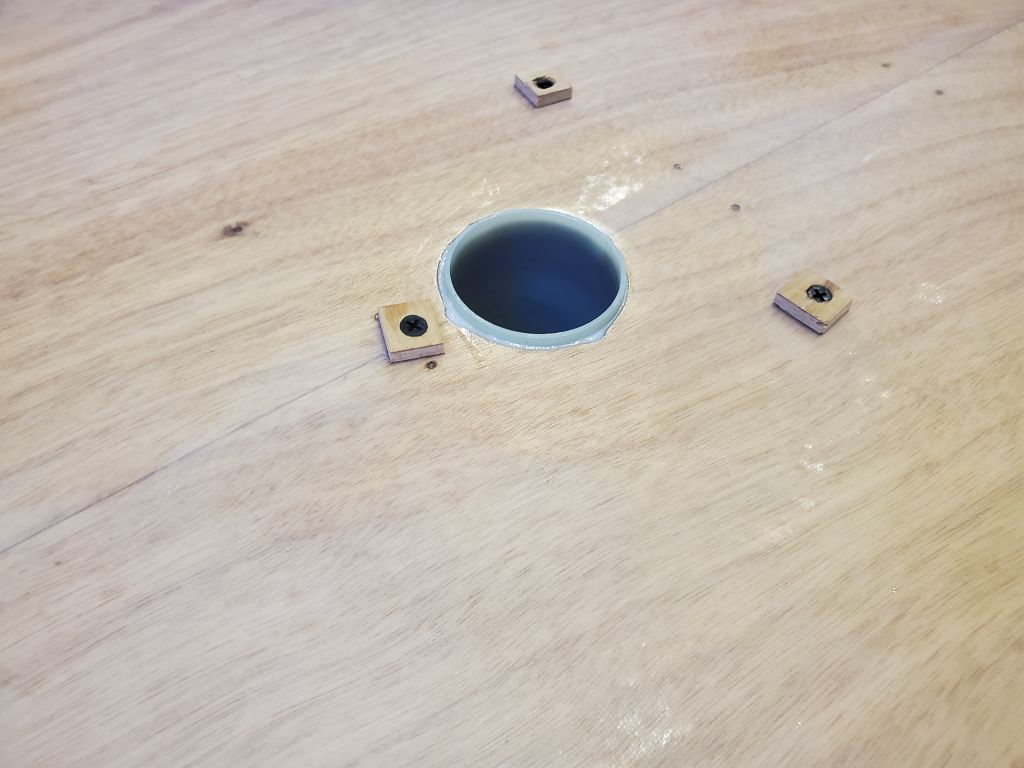
With leftover epoxy from the fillets, I filled the alignment slots around the transom and stern quarters of the hull.

I turned the two parts of the boat upside down on the bench and hung the bulkheads out over the edge a bit, and clamped each half at the opposite end just to hold things in place. I used a scraper, putty knife, and solvent to remove the remnants of the balsa wood spacers and adhesive.

The hull planking was mostly flush with the bulkhead panels, especially at the bottom three panels of the boat, but in other areas the hull was proud of the bulkhead.

With a firm, heavy sanding block (a piece of 2×4 in this case), I sanded these areas flush with the bulkheads.  I wrapped a piece of masking tape over the bulkhead end of the sandpaper on the block, which raised this end up just enough so that my sanding efforts didn’t affect the existing bulkhead surface much or at all.  Most of the required work was at the top edges of the bulkheads on both halves of the boat (now facing down towards the bench with the boat upside down).

Because my saw had wandered as I began my early cut through the port upper gussets and gunwale–though I corrected it immediately–there was a roughly saw kerf-width ledge in the bulkhead there, which extended over a relatively large portion of the area because of the near-vertical orientation of the saw at that time.  There were other minor saw marks hither and yon that required work as well, but this particular one, being at the edge of the hull,  would affect the next “normal” steps outlined in the manual, so I needed to fair this in now, before I could really move on.
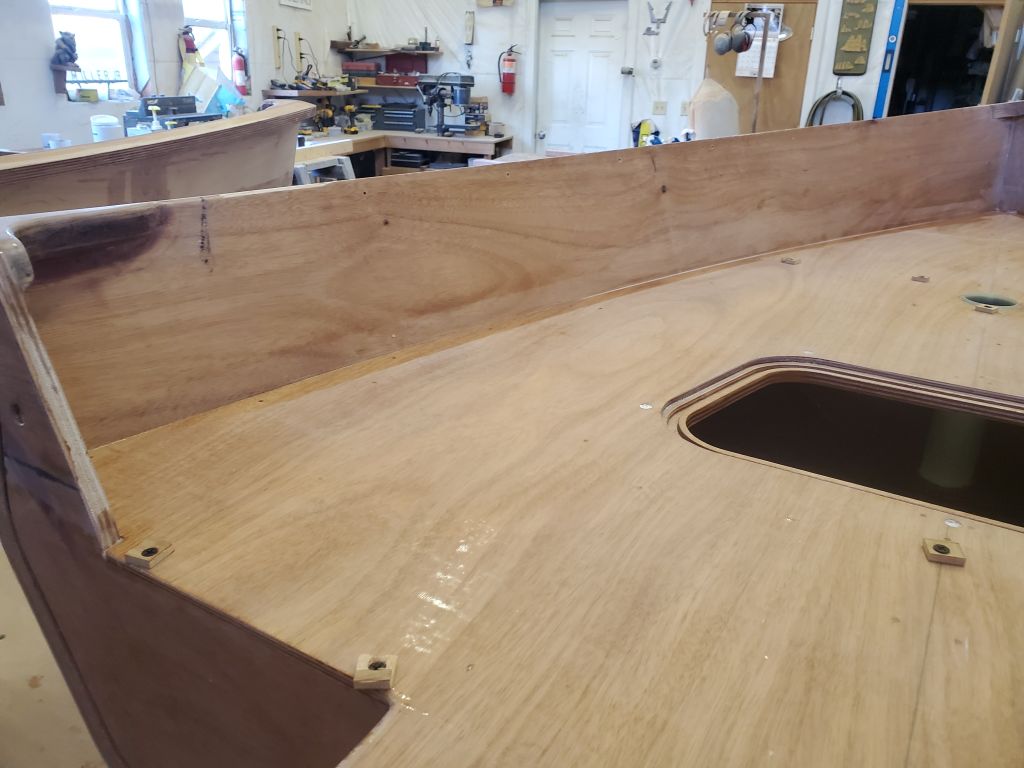
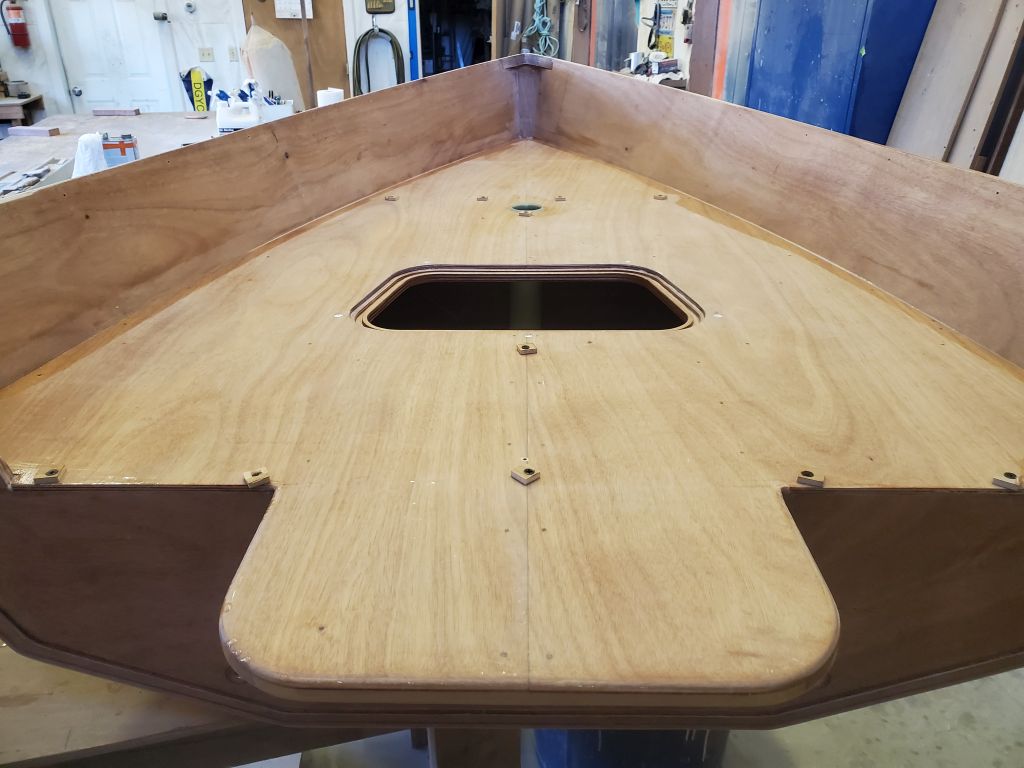
After preparing the bulkhead halves, and masking over the hardware and gasket slots as needed, I applied epoxy fairing compound here and to the other areas as needed.  At this stage of the project, there was nothing else left for me to do till this epoxy repair work cured; the next step from here involved creating an epoxy edge at the sharp corners of the hull/bulkhead intersection all the way around both parts of the boat, but that would have to wait till I’d brought this particular section back to its proper contours.
PT11-28

First thing, I worked on the aft tanks to clean up the plywood edges and corners after the glue-up, using a sander and some hand tools to create rounded corners on the three exposed interior edges, and cleaning up any epoxy remnants from around the other edges.  All the outside corners were now ready for fiberglass, which I planned to do a bit later in the day.

However, the main event for the day was to cut the boat in a half–a milestone step.  First, however, I flipped the boat over on the sawhorses and checked over the hull, taking care of some light sanding on the filled main bulkhead slots and otherwise ensuring the hull was in good shape before cutting.

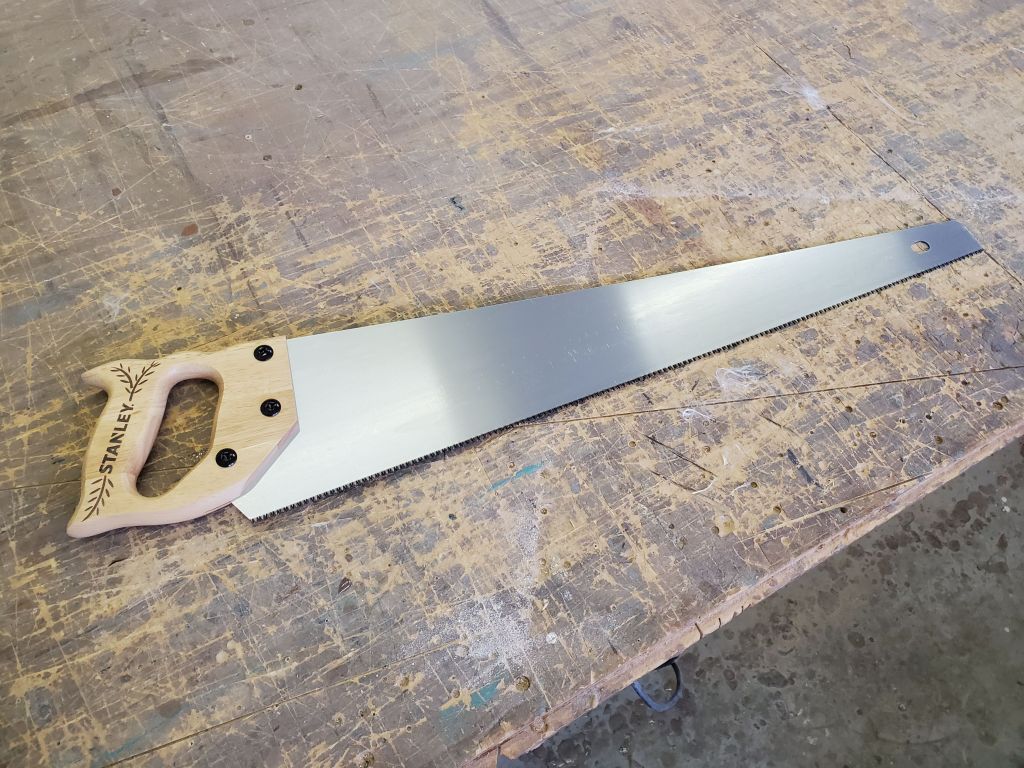
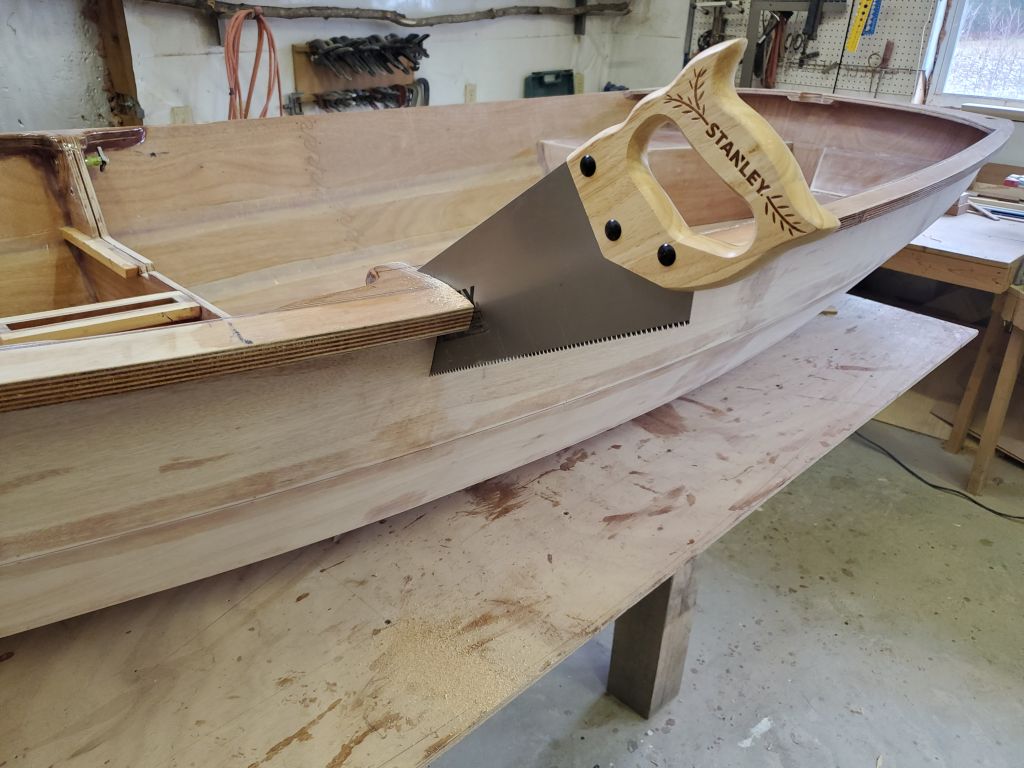
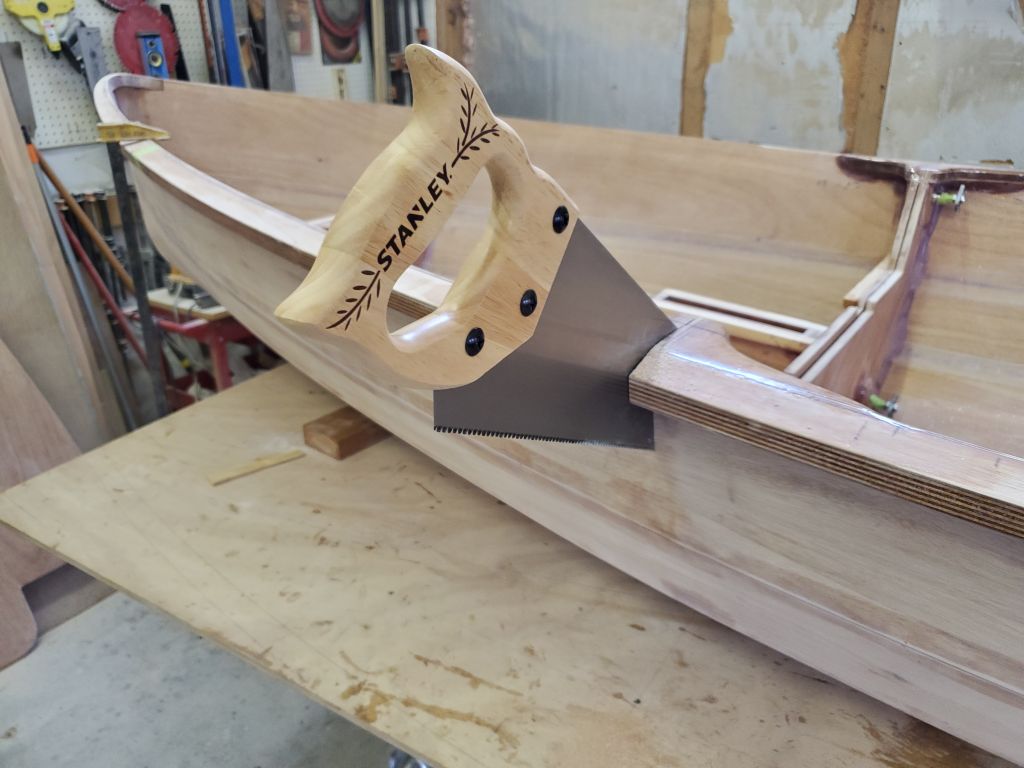
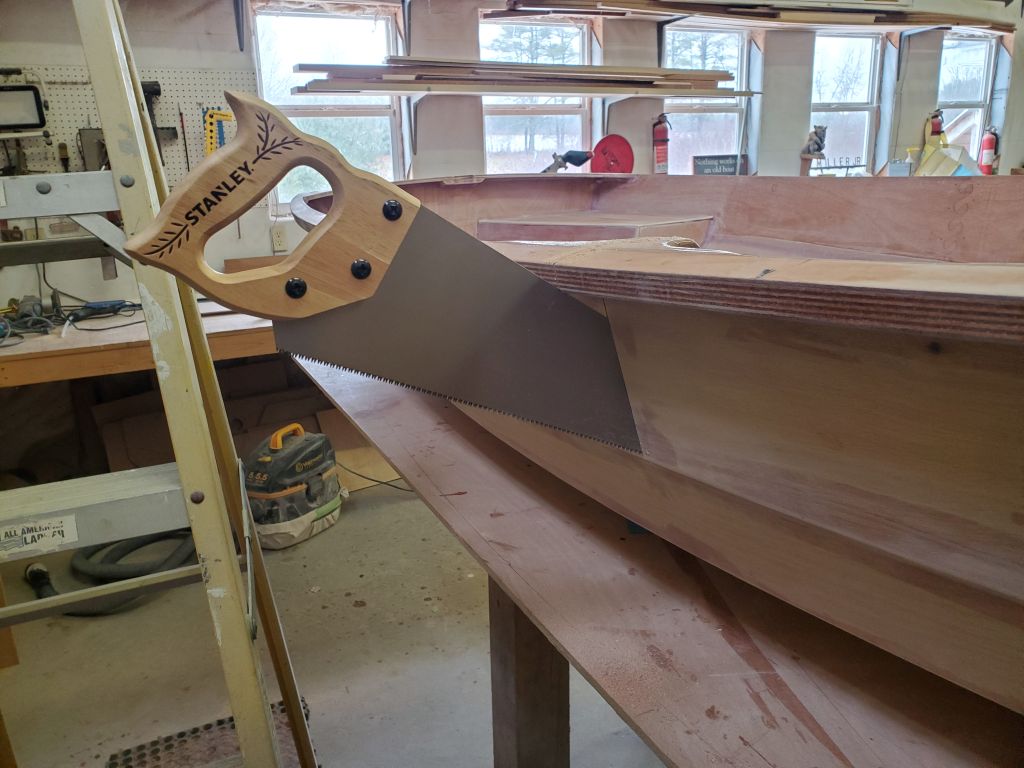
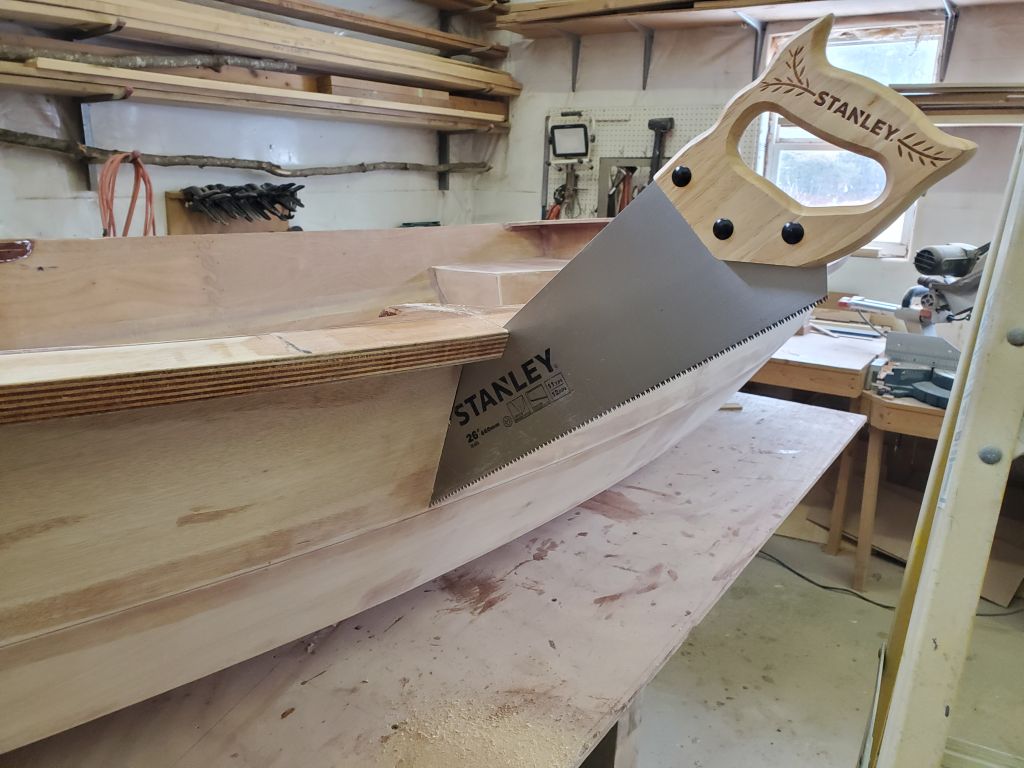
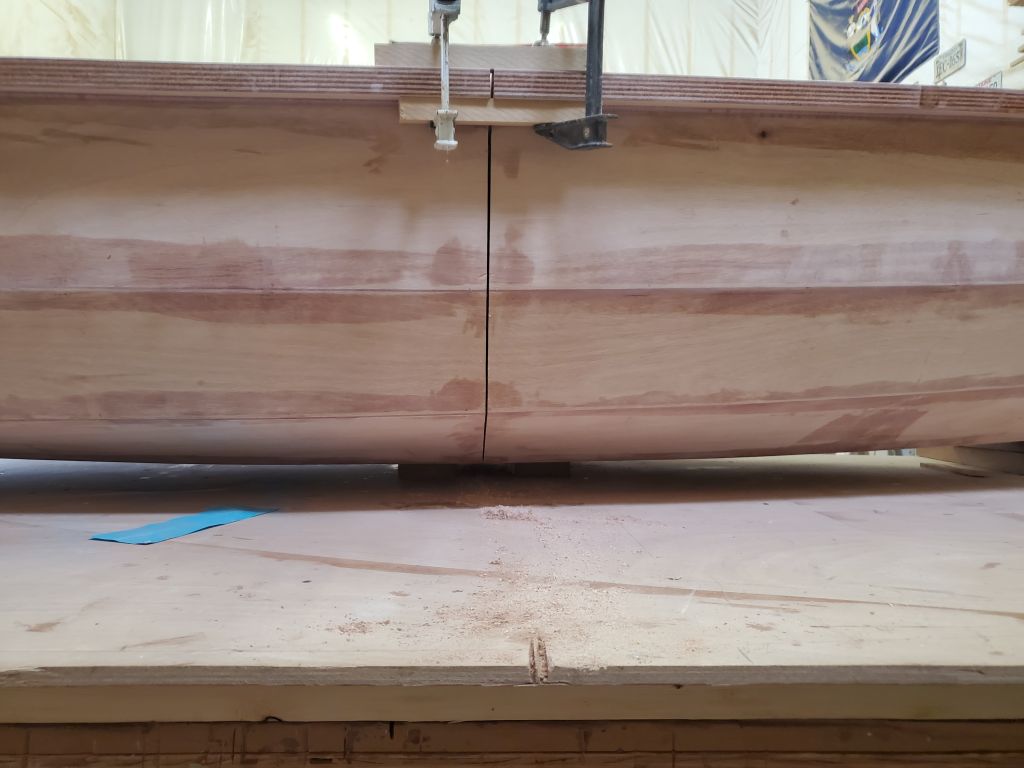
I set the boat up on the work table, upright, and supported it near the ends with some blocking to hold the center of the boat–where the main bulkhead was–just off the table.  I unscrewed the four connecting bolts and taped them in place to hold them while I cut through the bulkhead spacers.  I had a brand-new handsaw that I got just for this task.

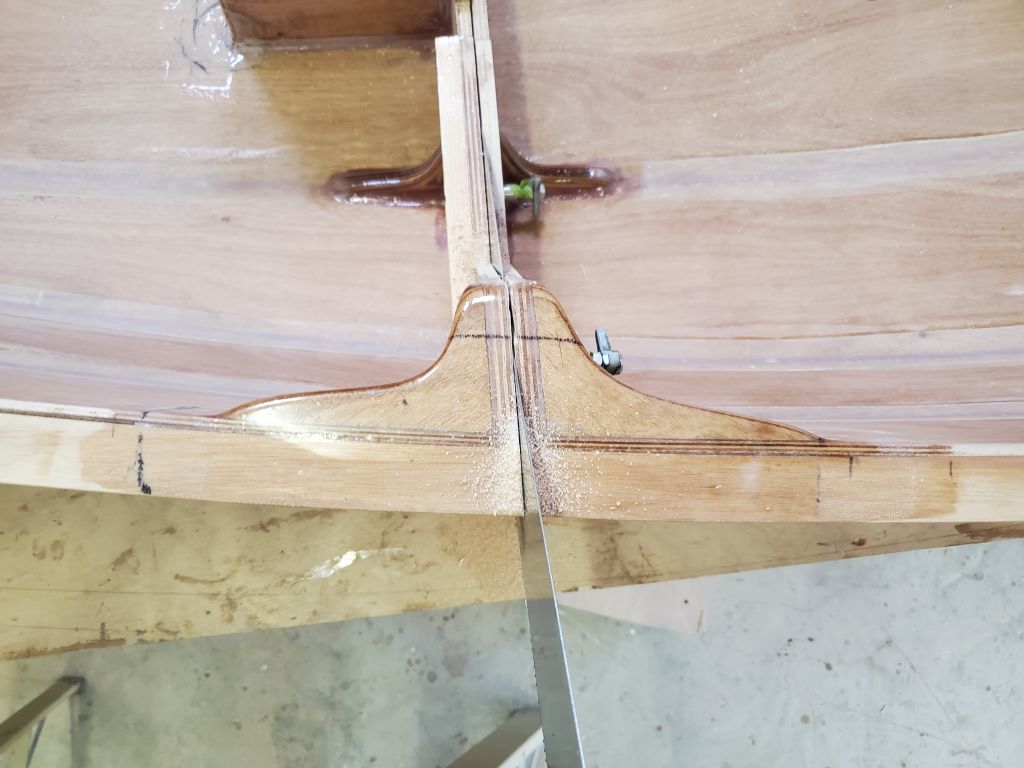
Now there was nothing but to go ahead and start cutting.  The manual called for starting by pushing the saw through the bulkhead spacers roughly amidships, and working out towards the gunwale and bulkhead/hull edges from there, keeping as much of the saw within the bulkhead slot as possible to maintain the best alignment.  It took a bit more effort to get the cut started than I expected, and was a bit of work even just cutting all the spacers to ease the saw towards the bulkhead, upper gussets, and hull, where the real cutting would be.   The boat was higher on the work table than might have been ideal (the manual suggested from the onset that a second, lower table height would be useful–and it would have been, several times, but the specifics of my space and chosen table setup prohibited this).  I started out with a small platform and, when that wasn’t getting me high enough, switched to a stepladder to help me cut.

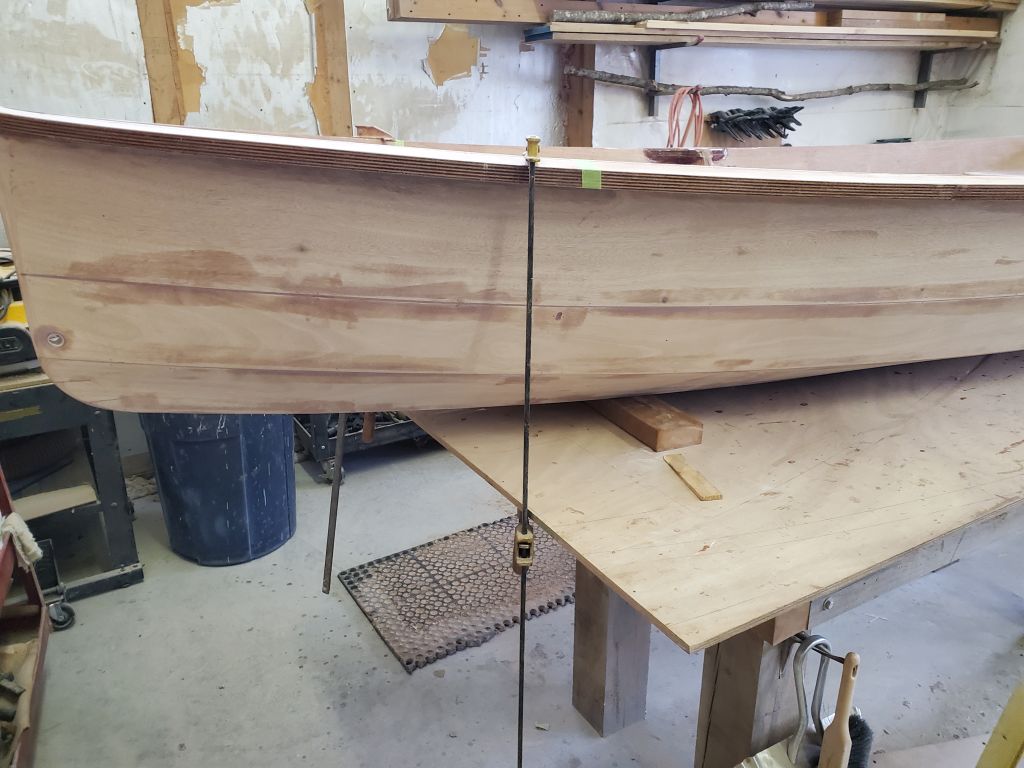
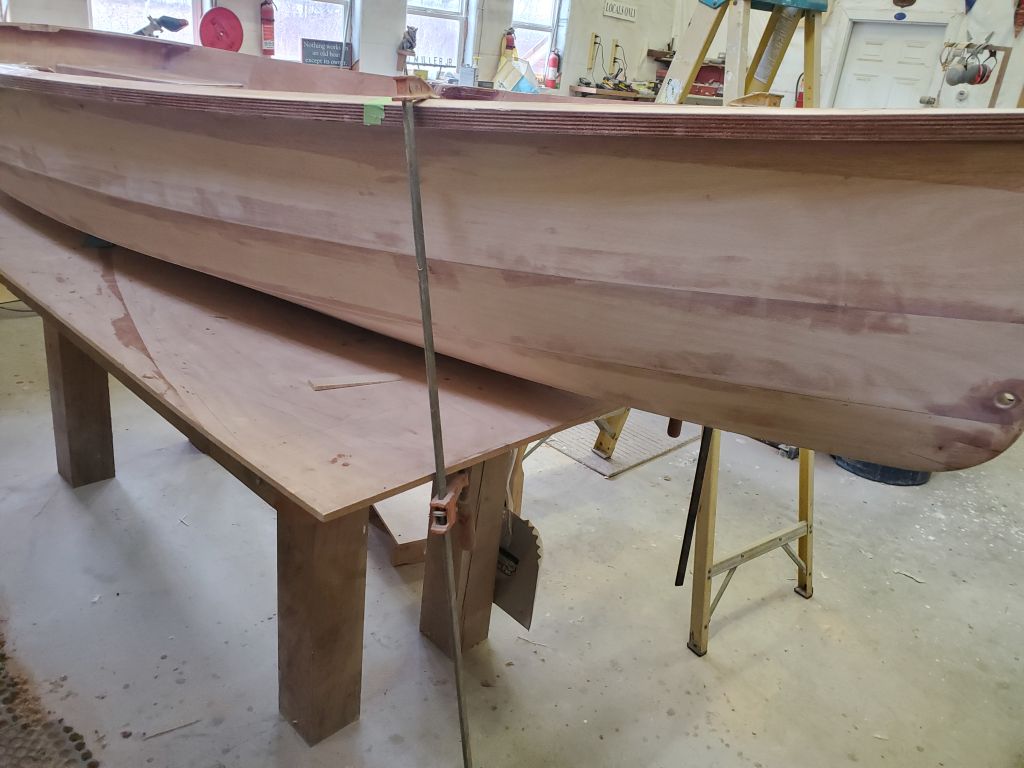
I found that the boat rocked significantly, affecting the cutting operation, so after a couple false starts attempting to shore up the blocking, I ended up stabilizing the boat with two clamps at the bow end of the table.   This helped greatly, and eventually I sawed through enough to get into the hull itself.

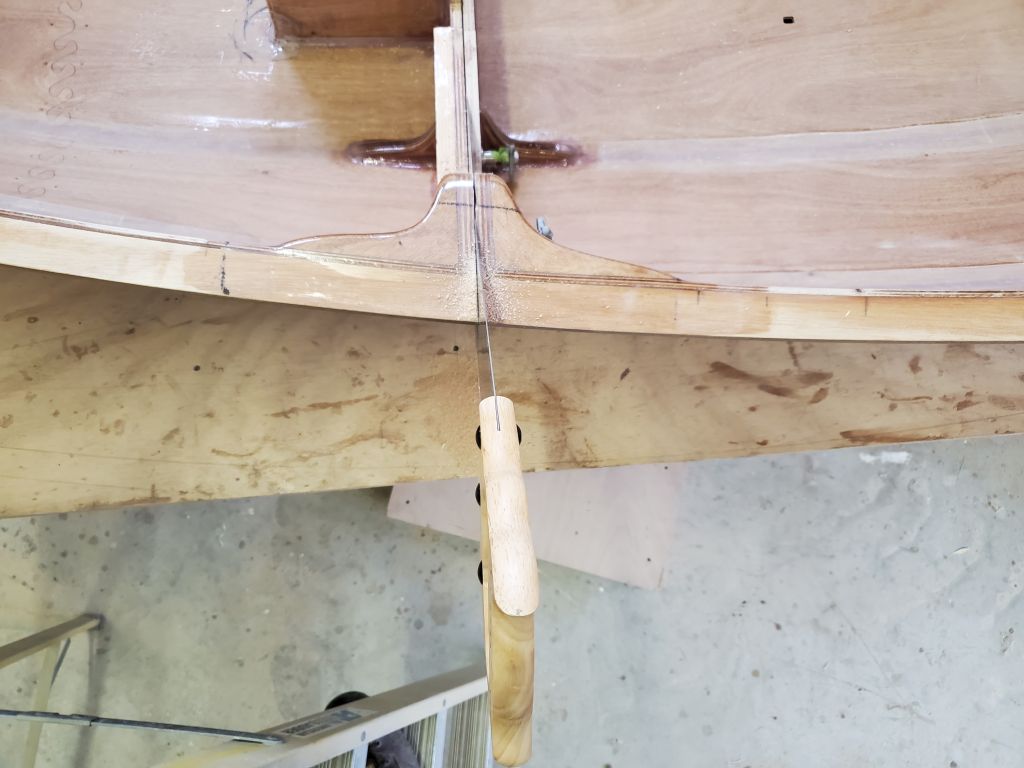
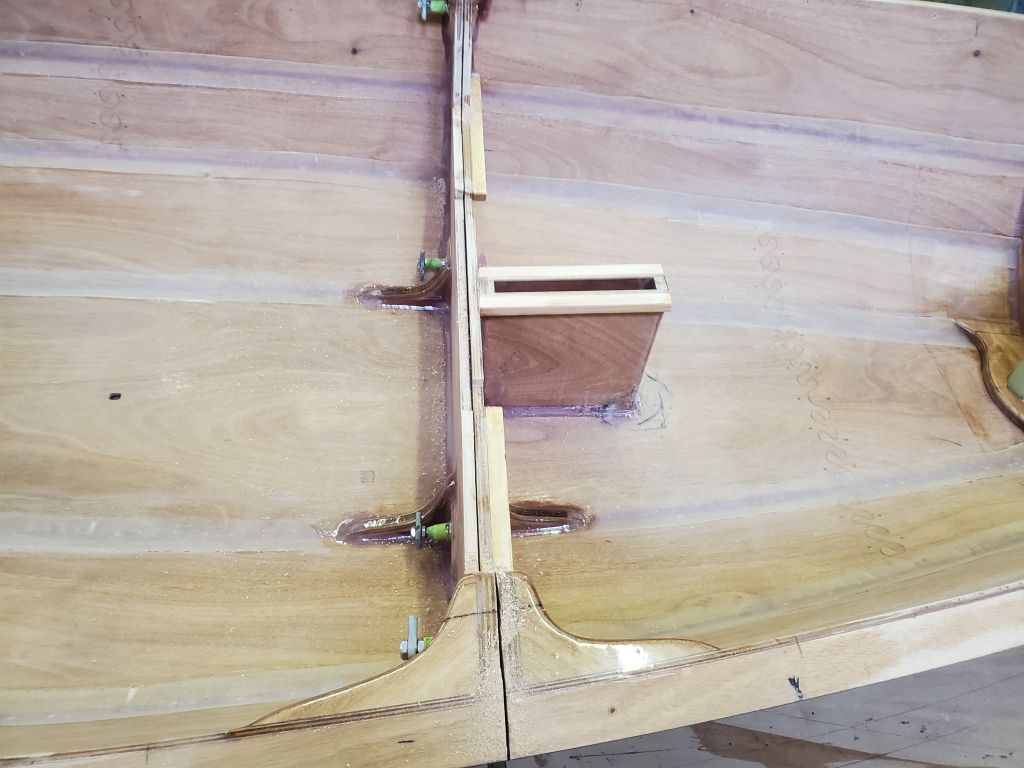
It was tricky to get through the fiberglass at the upper gussets, and the saw tried to wander here; to counter this, I cut from the top a shallow kerf through the fiberglass right on the seam between the two sections, and this helped guide the saw more accurately through the most important part of the cut.

With the port side partially cut like this, I moved over to the starboard side and repeated the process, eventually cutting the hull down to the first chine.  Then, I went back to port and brought the cut down till it was even.

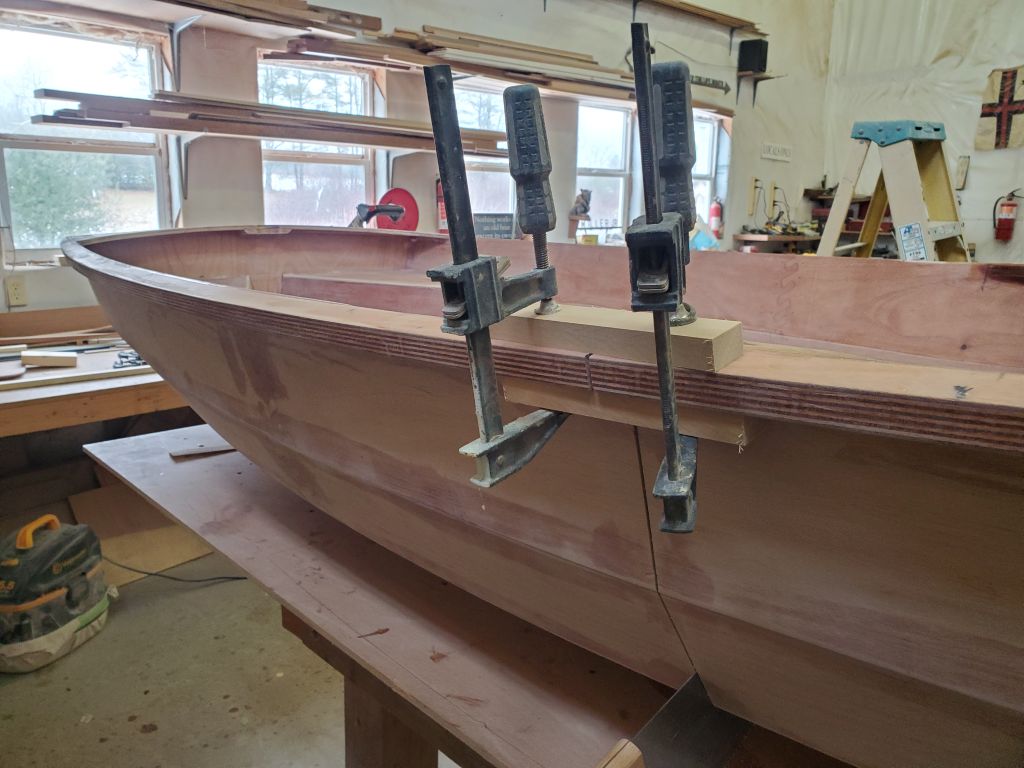
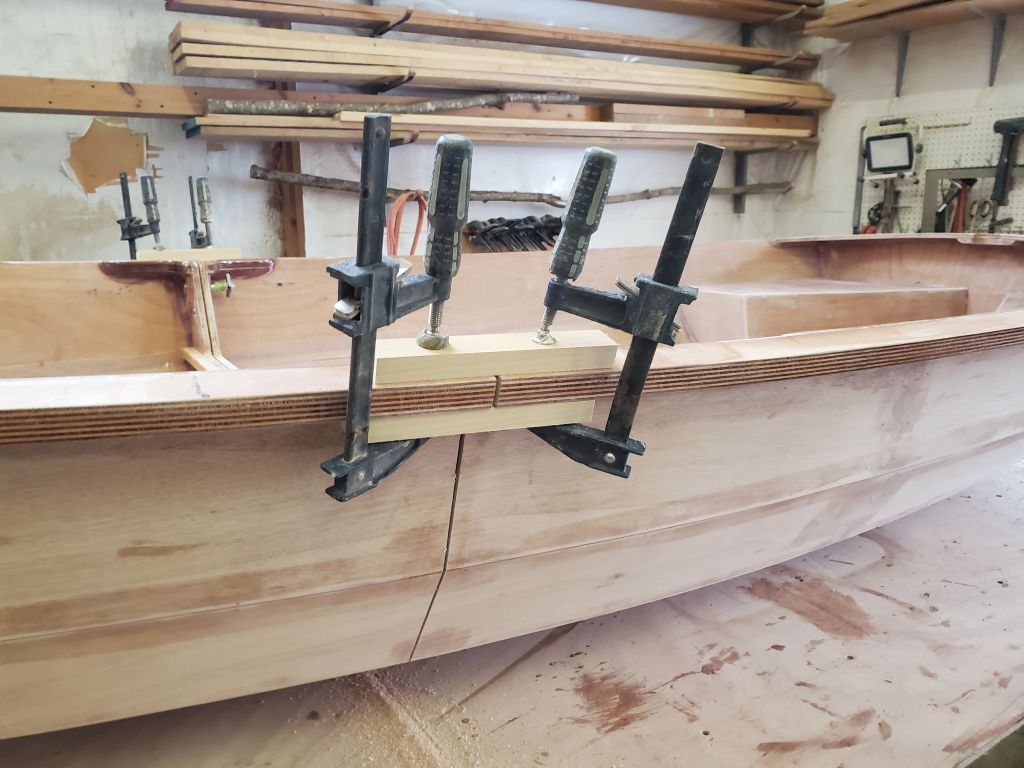
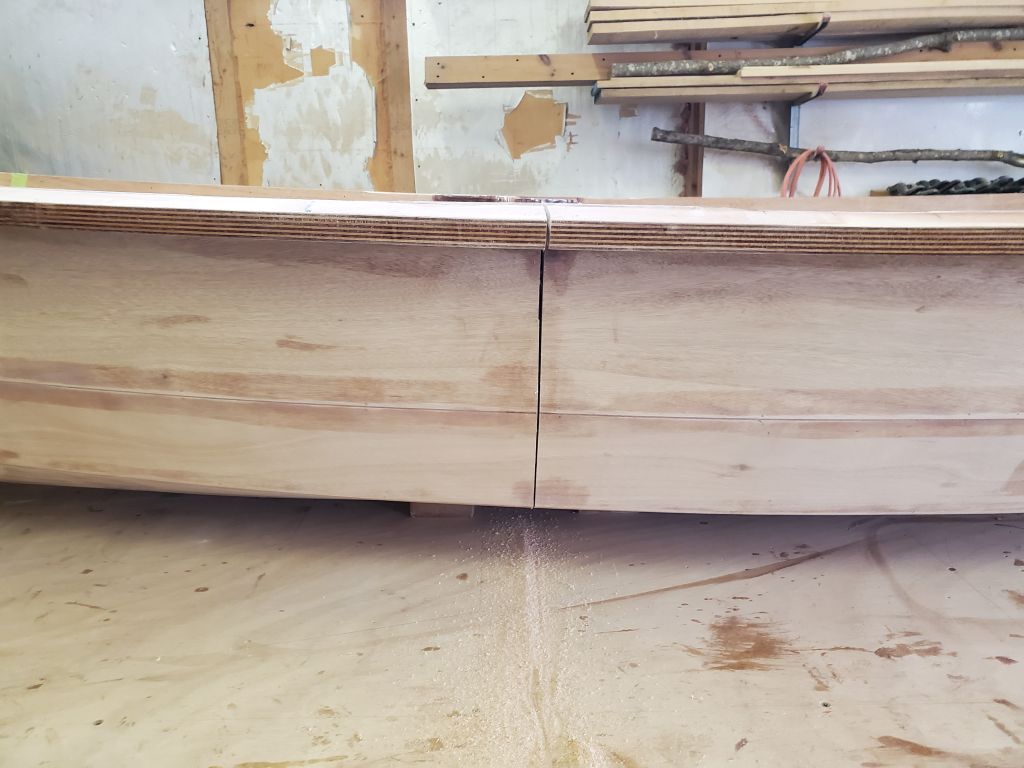
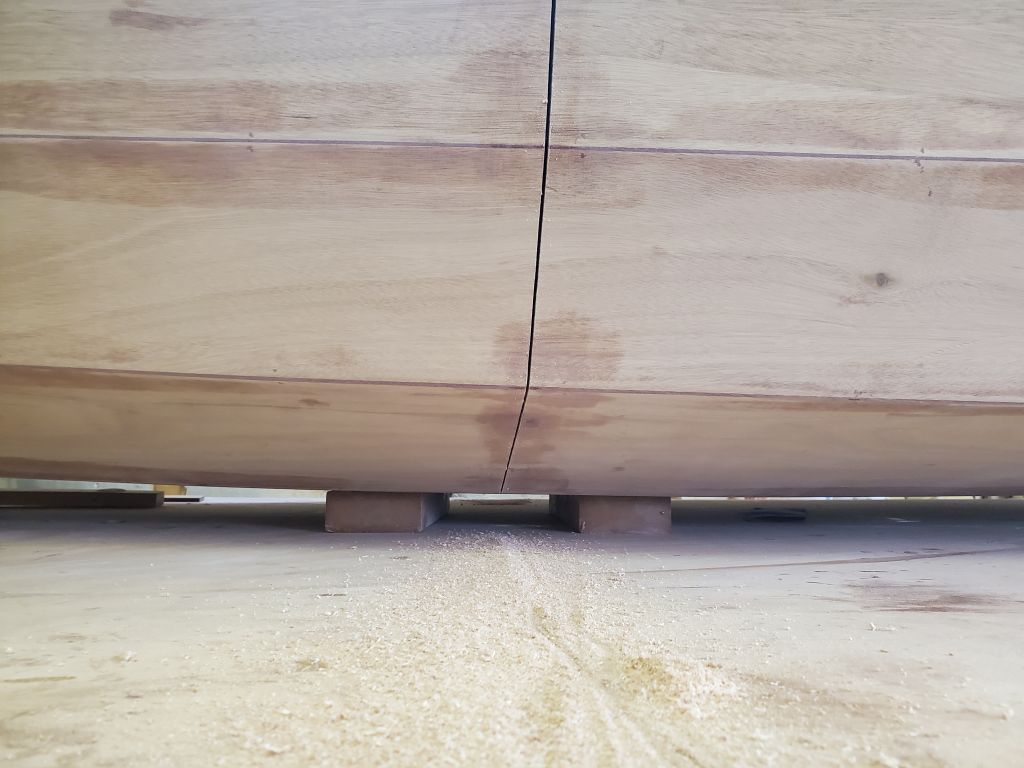
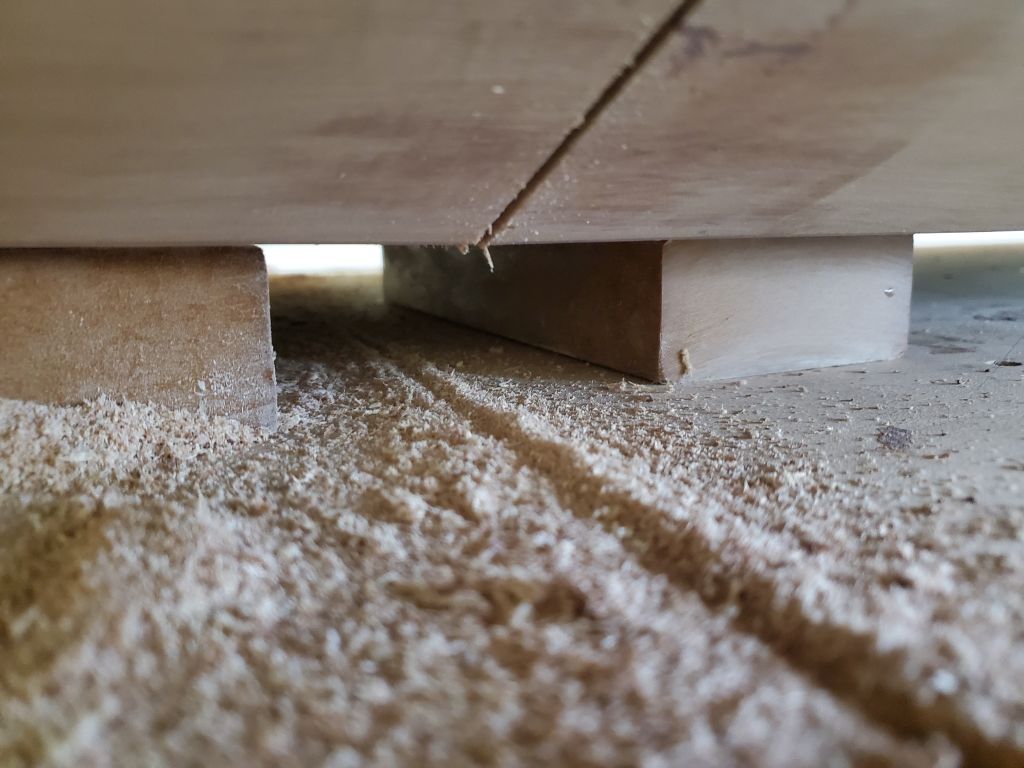
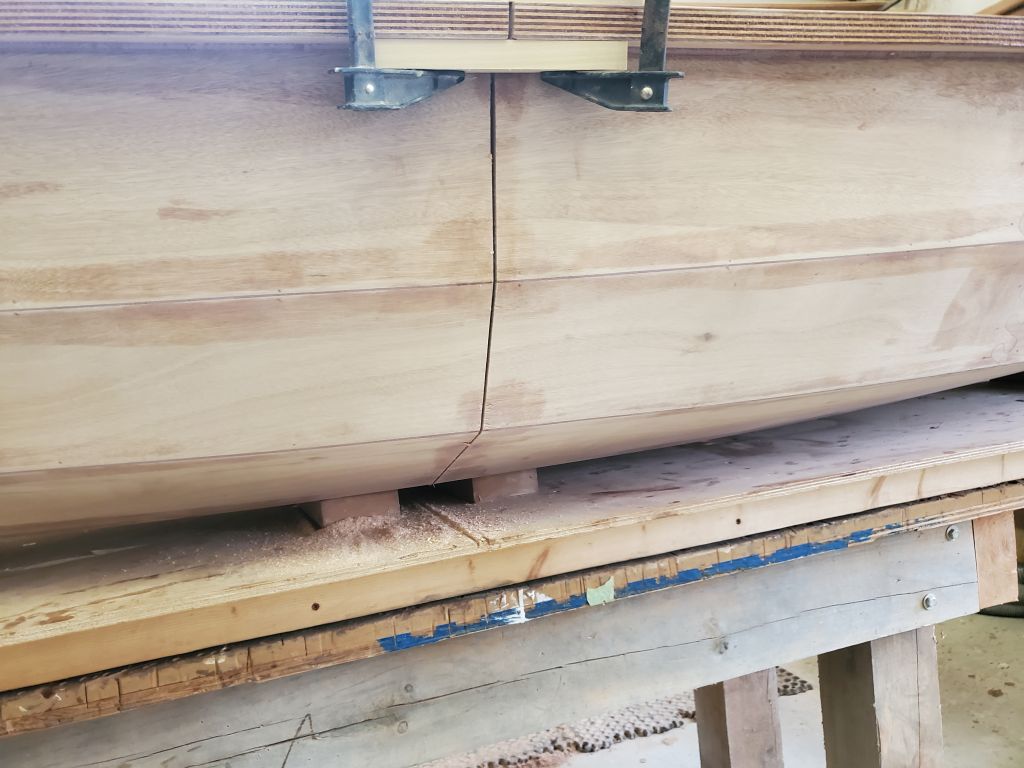
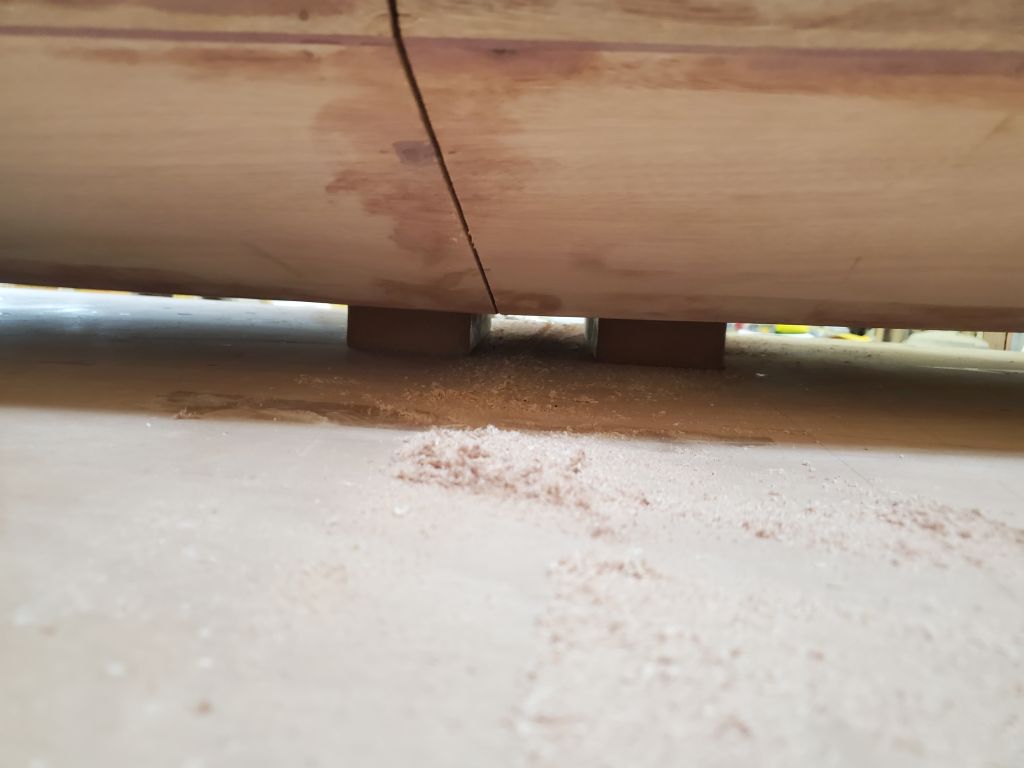
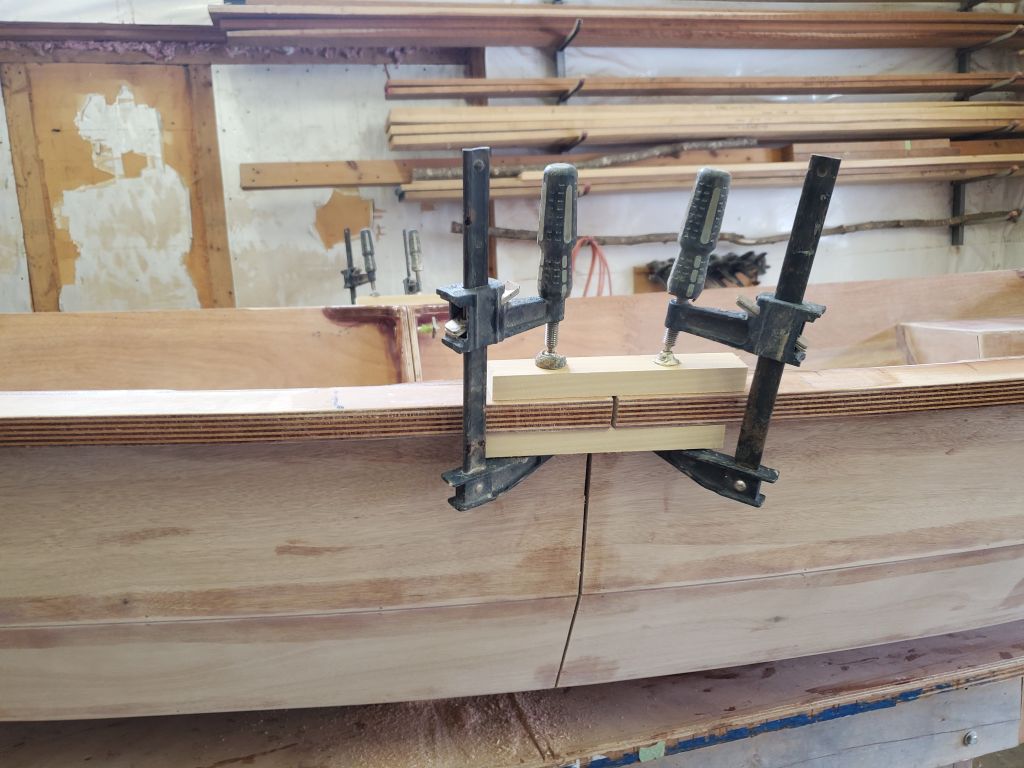
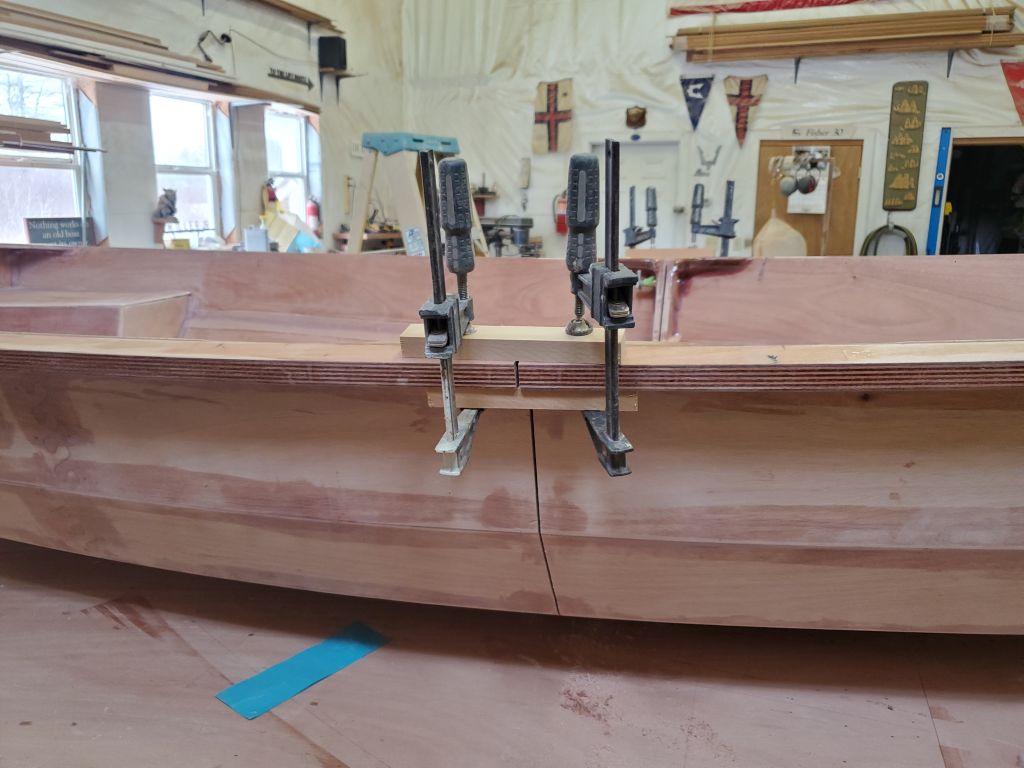
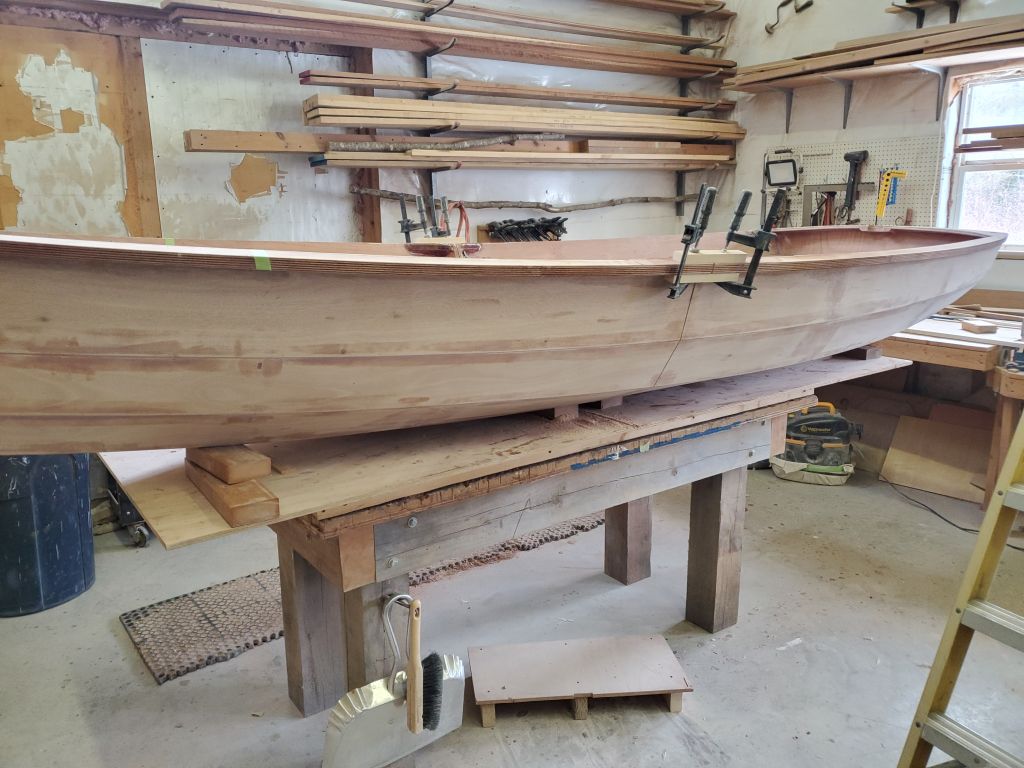
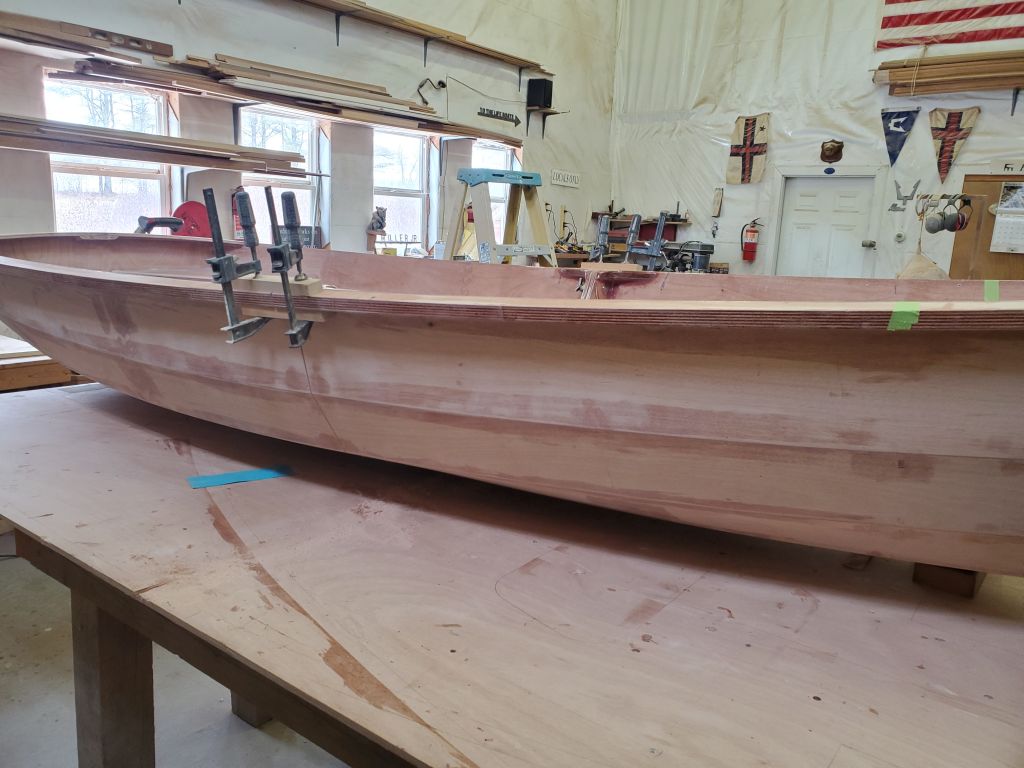
Now, I reblocked the boat with a 2×4 on each side of the main bulkhead, where the cut would be, and resupported the ends as needed, along with the stabilizing clamps.  At the guwales, I clamped a pair of blocks over the seam on each side to help hold the boat properly while I finished the cut through the bottom of the boat.  The worktable interfered with the saw as I worked towards the centerline, so I pulled the boat towards the side of the table on each side as needed to give the saw clearance to finish the cuts.

Removing the clamps and separating the boat, I was generally happy with the accuracy of the cut, though there had been some blade wander at the top edges of the bulkheads–minor to starboard, and one place on the port side where I’d adjusted the cut initially going through the gunwales, as described a few paragraphs above.  These flaws were to be expected, and I’d fill and fair these with epoxy during the next round of work ahead.  The hardware that I’d glued in looked good all around, with plenty of space around the cylinders for epoxy, which was the next step.

Before I did that, however, I prepared fiberglass tape for the aft tanks, and installed it on the three edges required, covered with peel ply.  Before installing the fiberglass, I filled any small voids in the plywood seams with a thickened epoxy mixture.

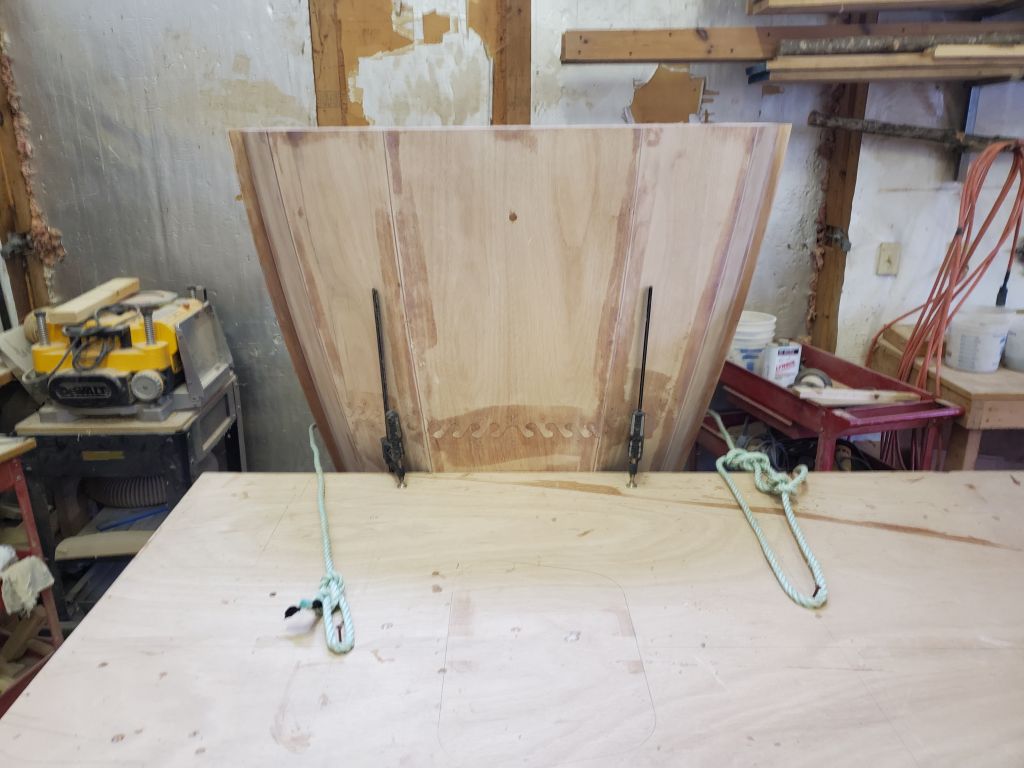
After vacuuming sawdust and cleaning up the main bulkheads, I set the two boat halves up on their ends, with the main bulkhead facing up, and leveled the bulkhead in both directions on each half.  I rested the stem/transom on some rubber mats I had, and secured the two halves with clamps and some rope to ensure they couldn’t tip over; they were pretty stable and didn’t require active means to hold them upright.

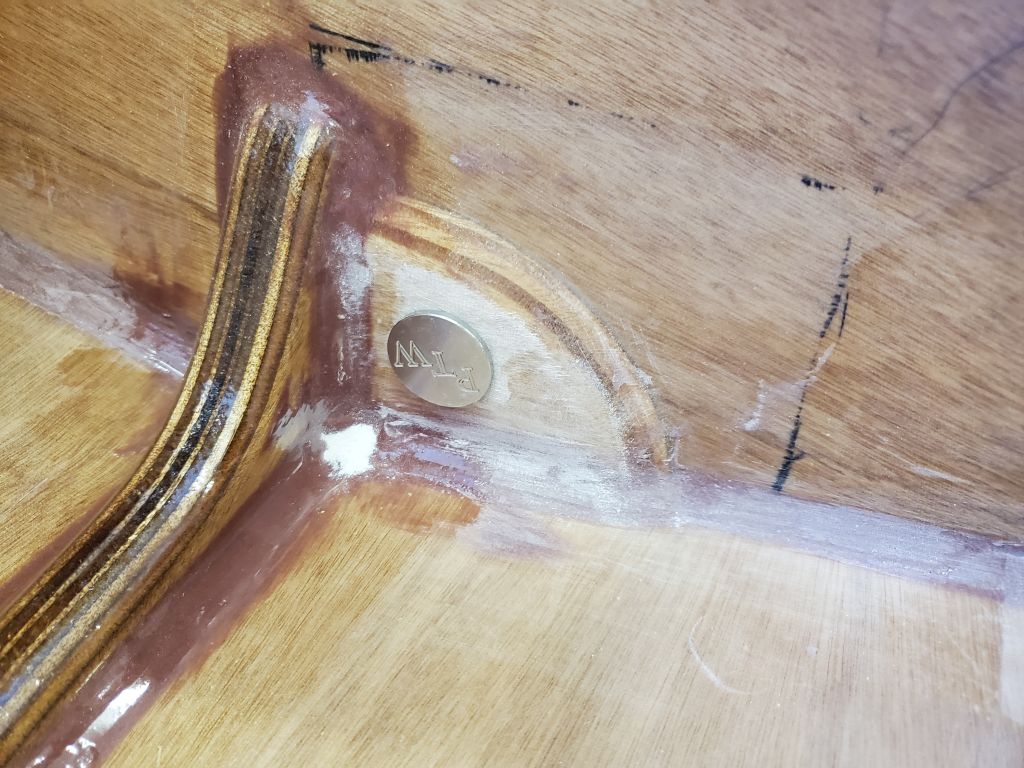
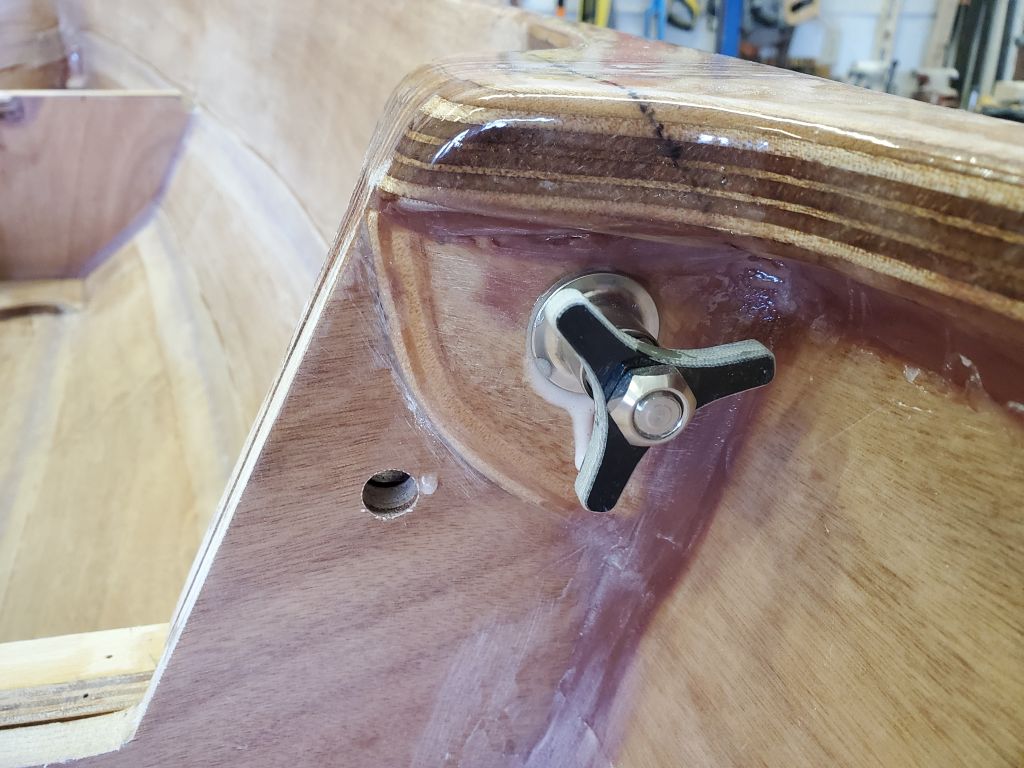
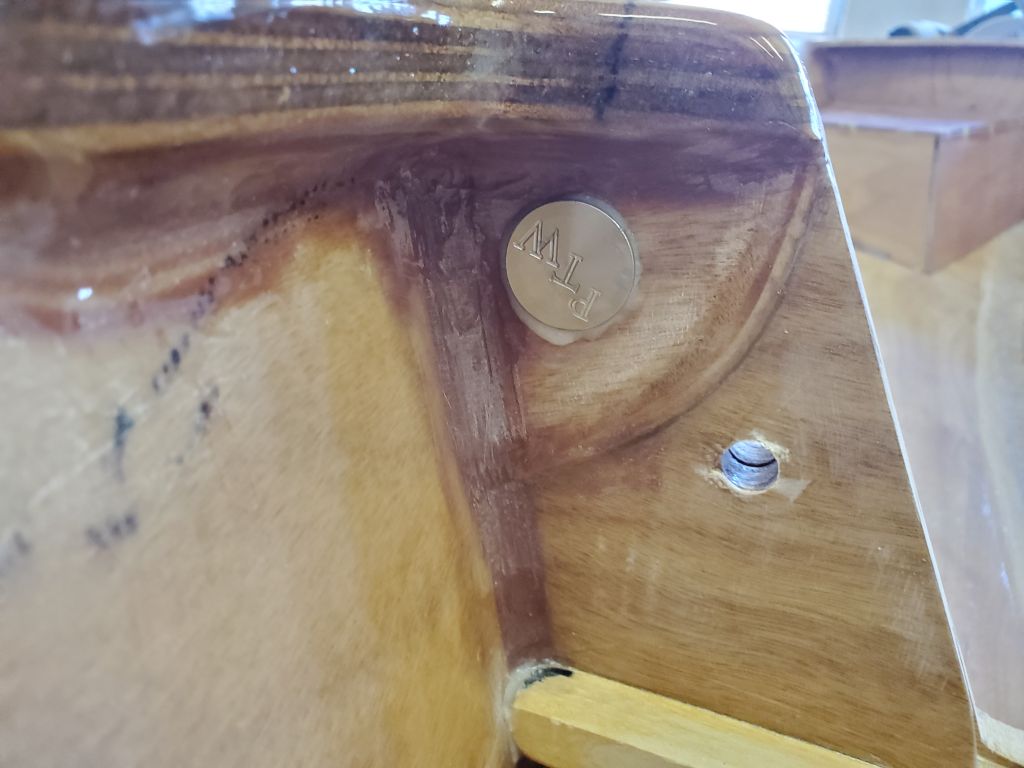
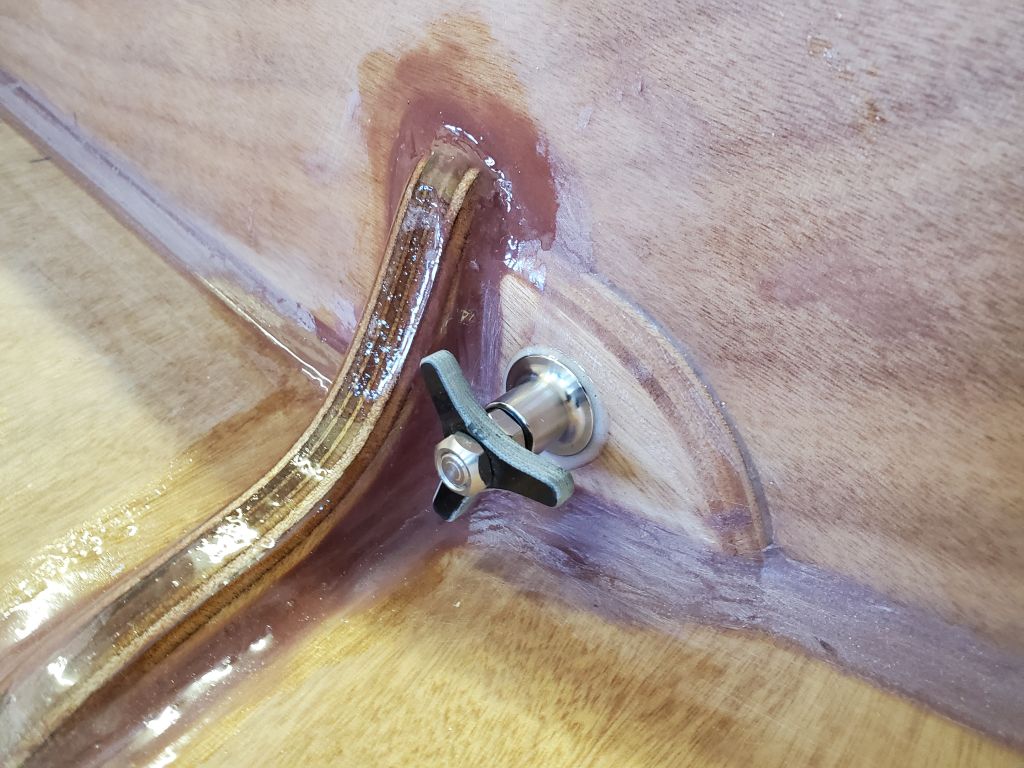
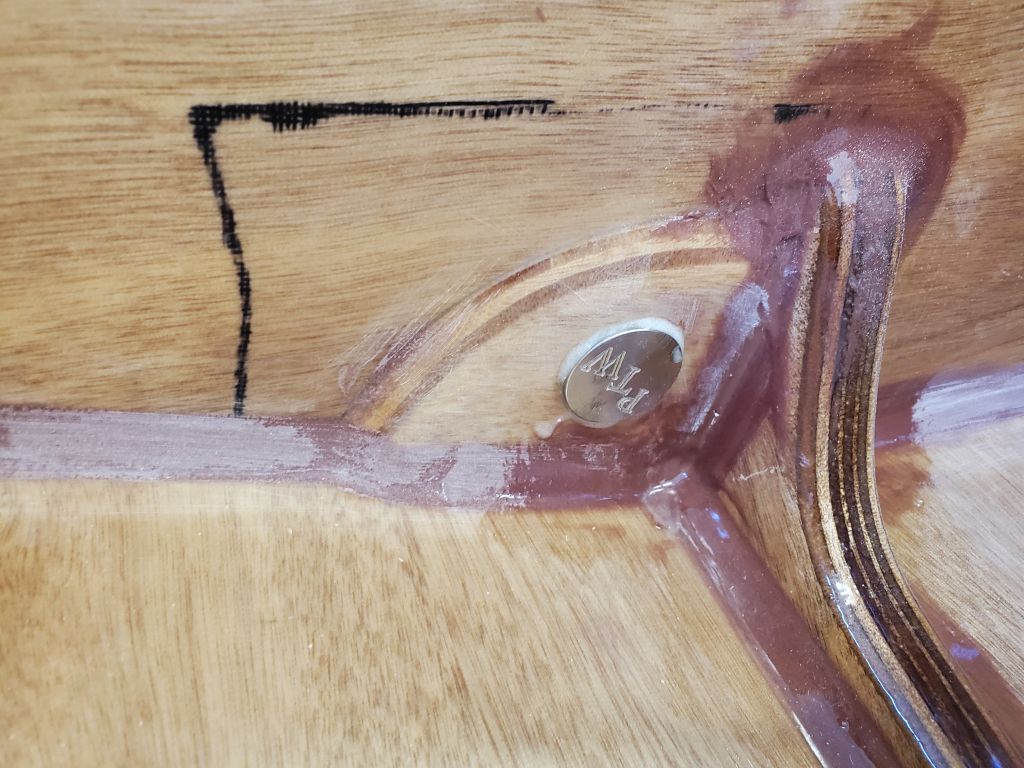
Working off a ladder, I used a syringe to inject unthickened epoxy into the slots around the hardware, working mainly from the half-moon-shaped feed slot on each location.  I filled each of the eight locations to the top of the hardware, then went back over each as needed to ensure the recesses were full.  As directed, I carefully used the syringe to dab some epoxy out onto the metal of the hardware at each spot, but staying away from the threaded holes and bolts.  This was delicate, and I erred on the less-rather-than-more direction here.

I left that epoxy to cure overnight.

PT11-27

I had a short day planned, with off-site commitments, so I got started with the easy work of unclamping and untaping the aft tanks.  These would soon get additional attention to finish off the edges and seal them completely, but for now this was as far as I took it.

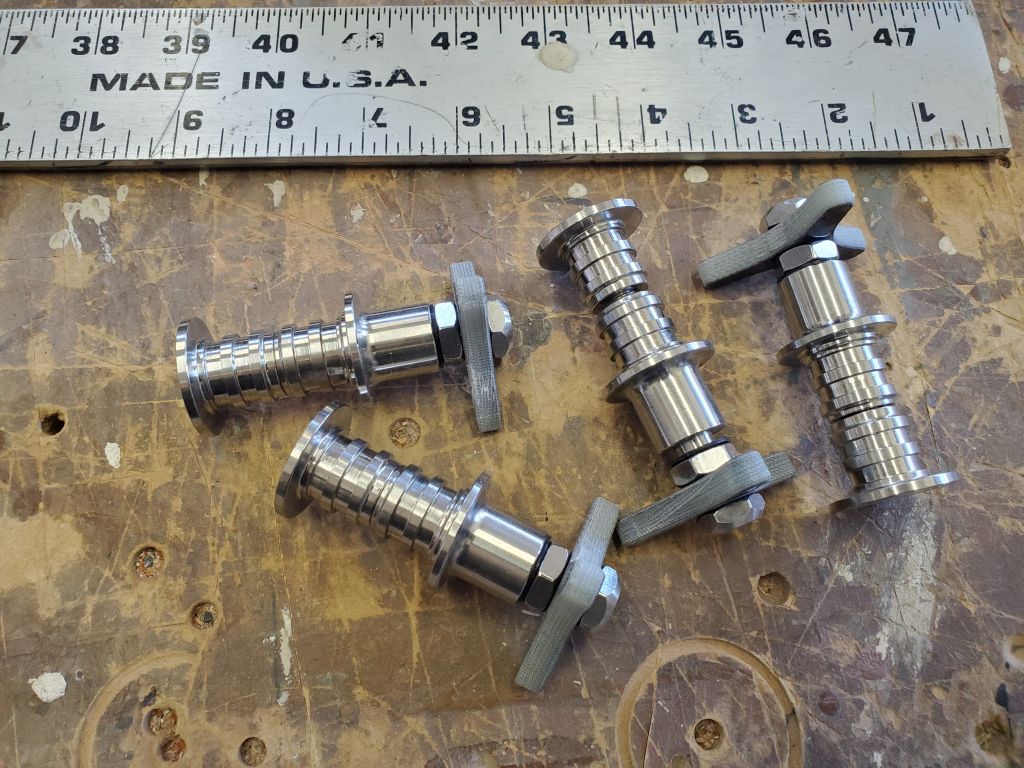
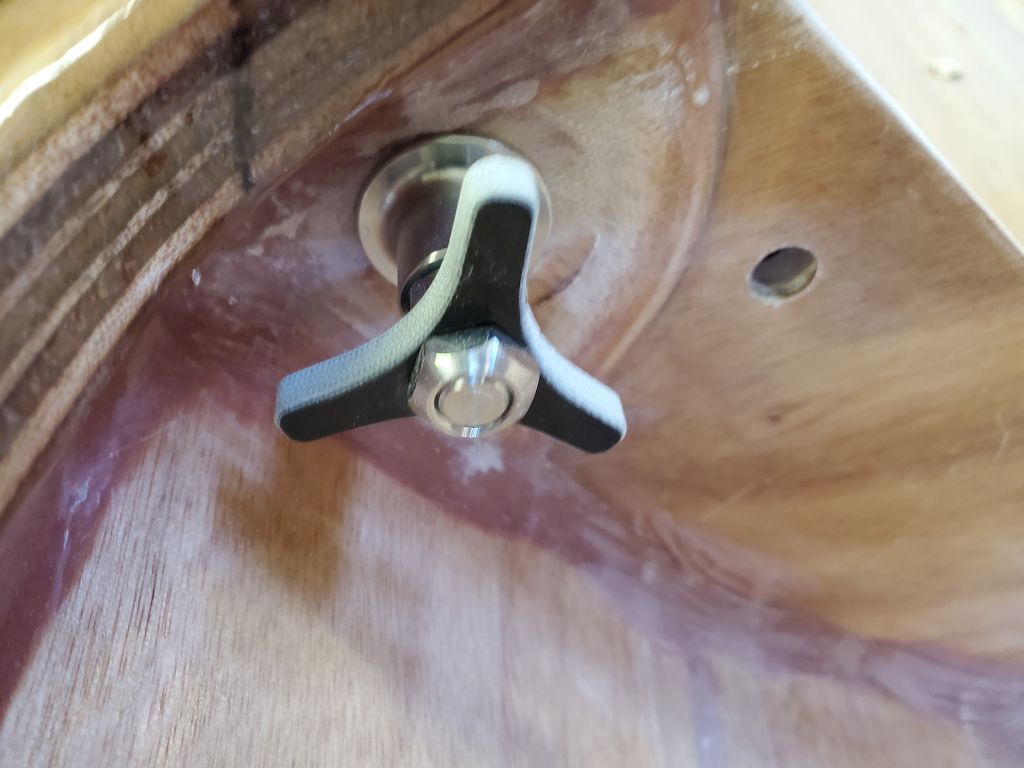
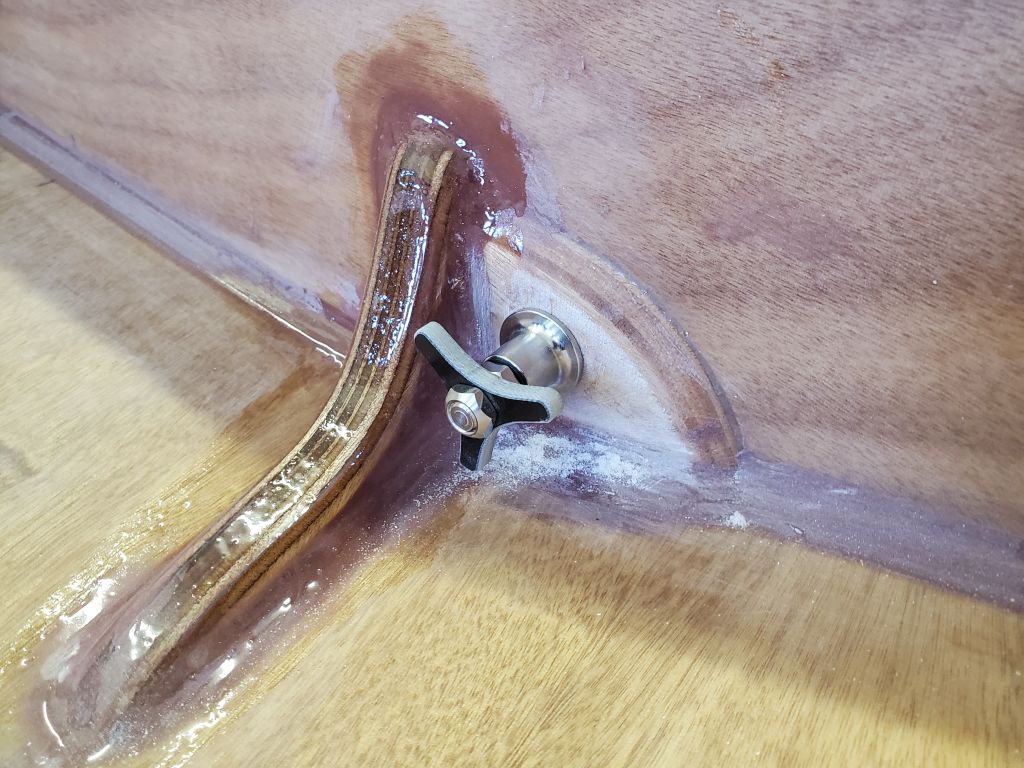
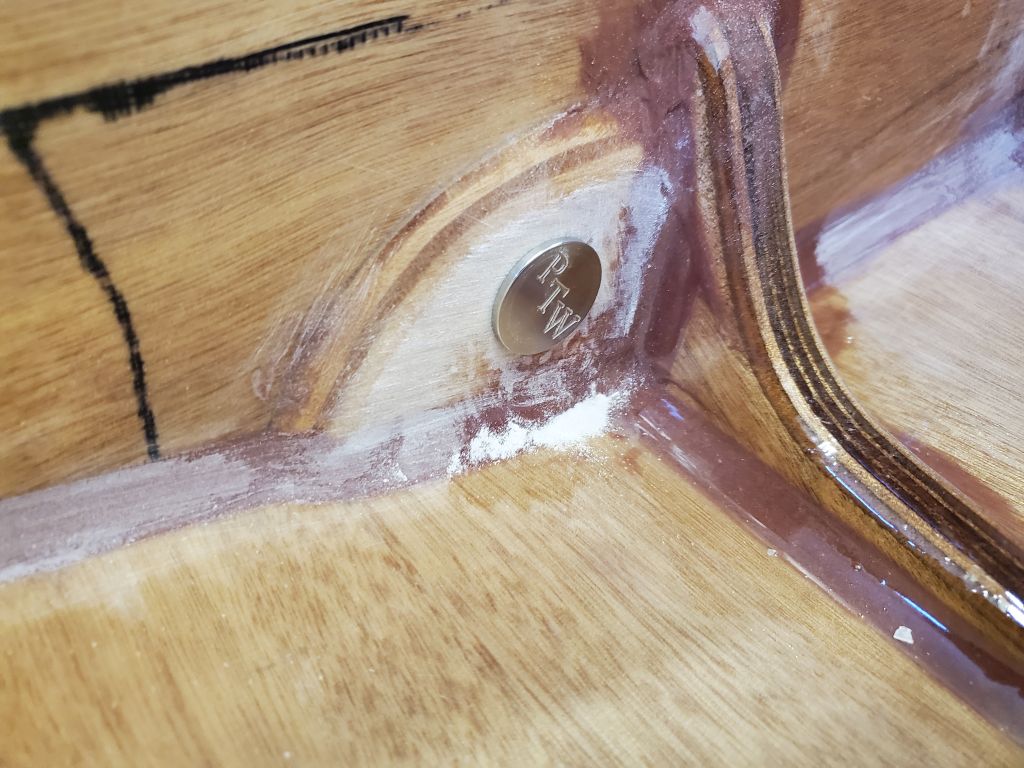
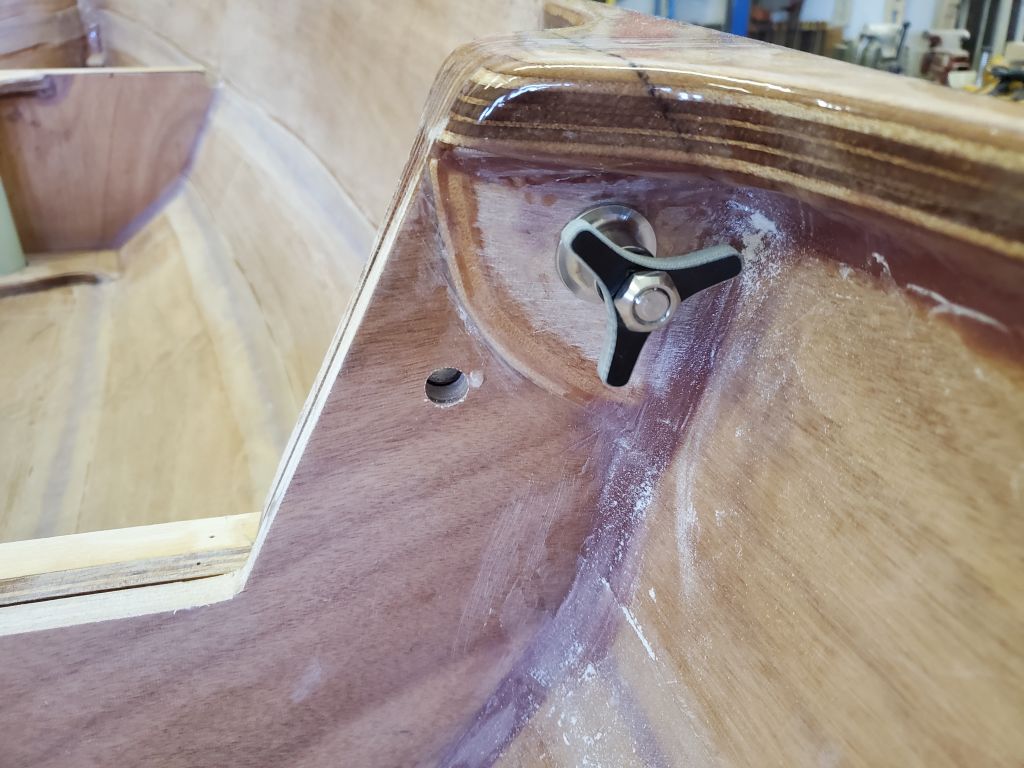
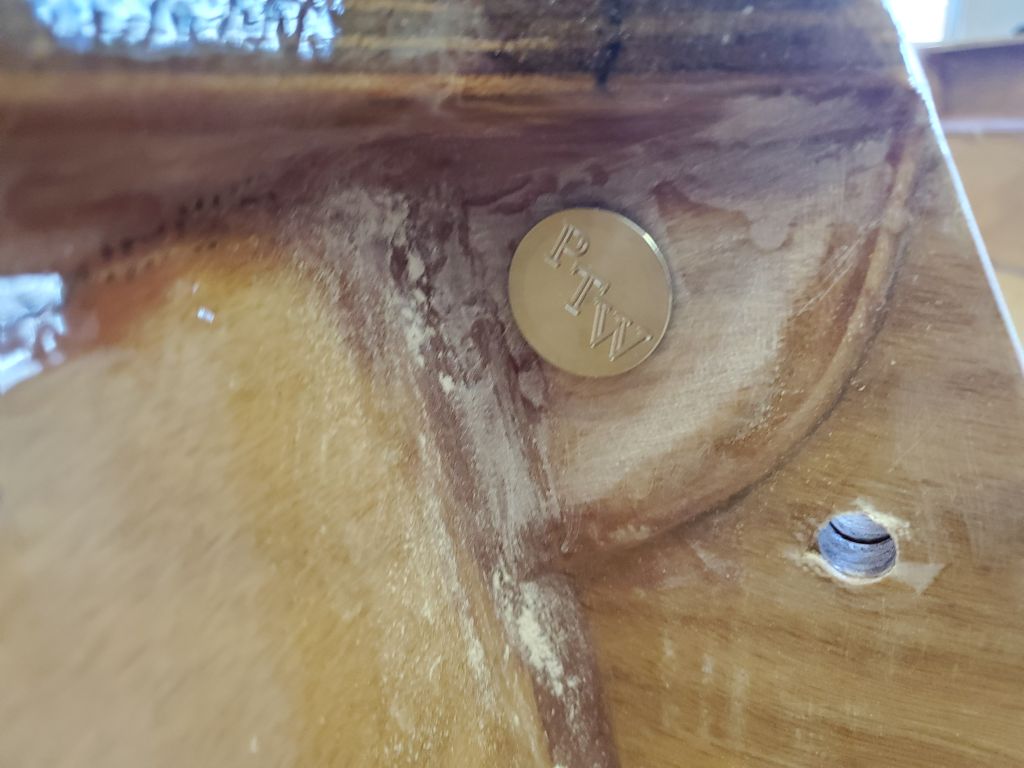
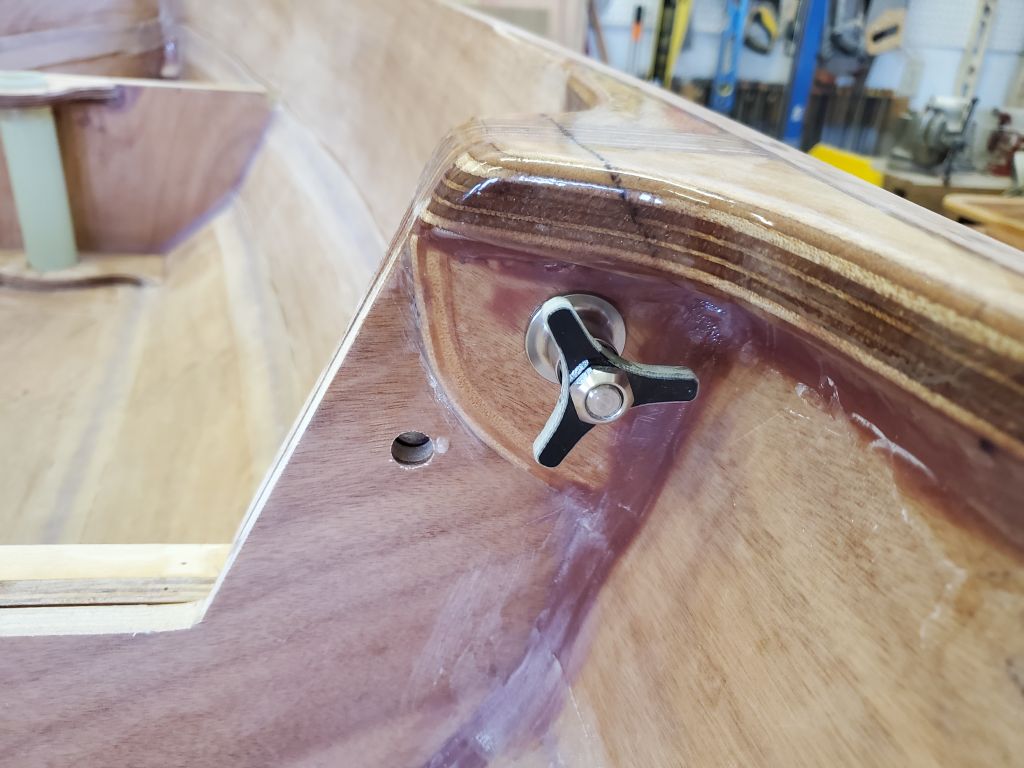
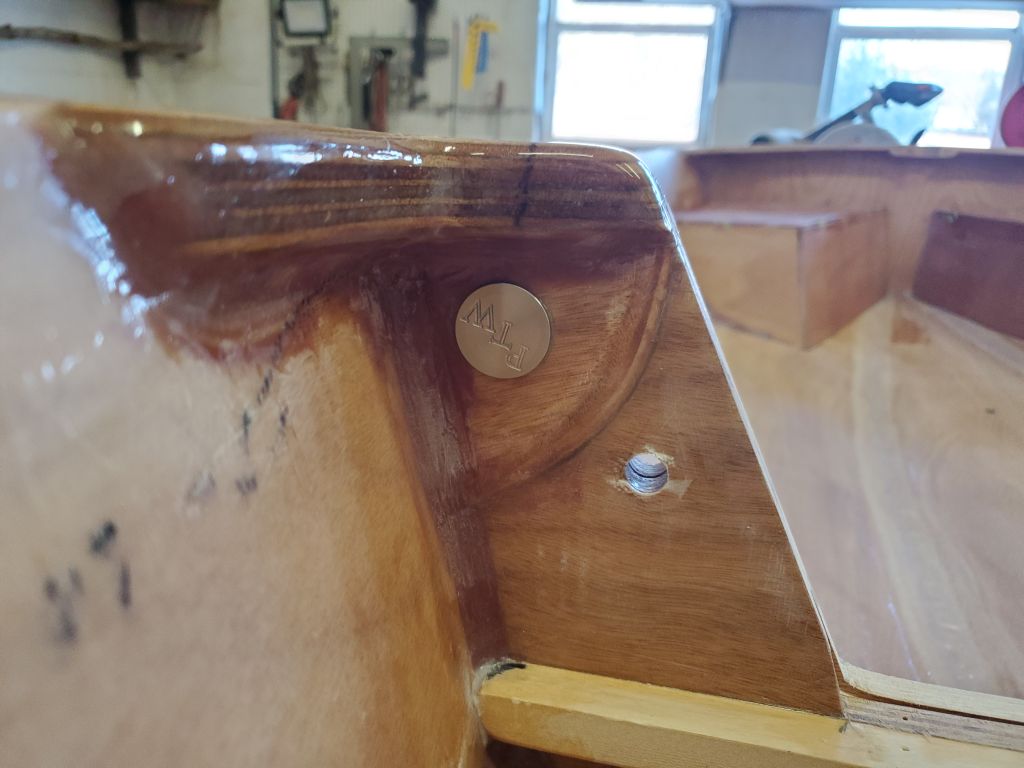
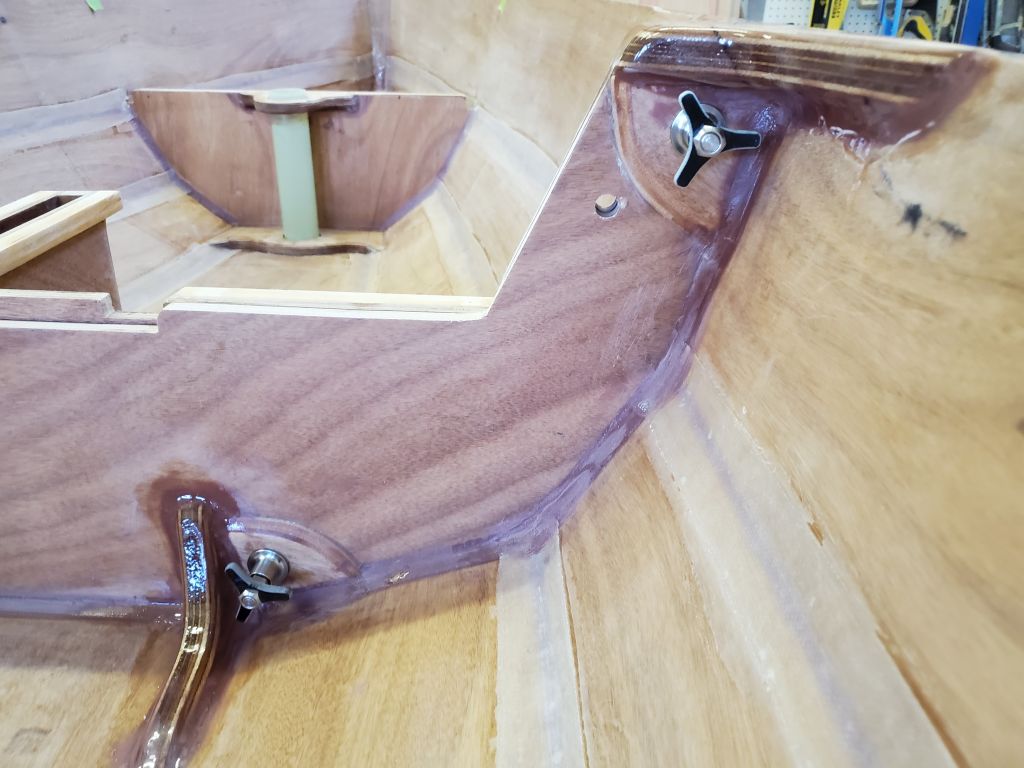
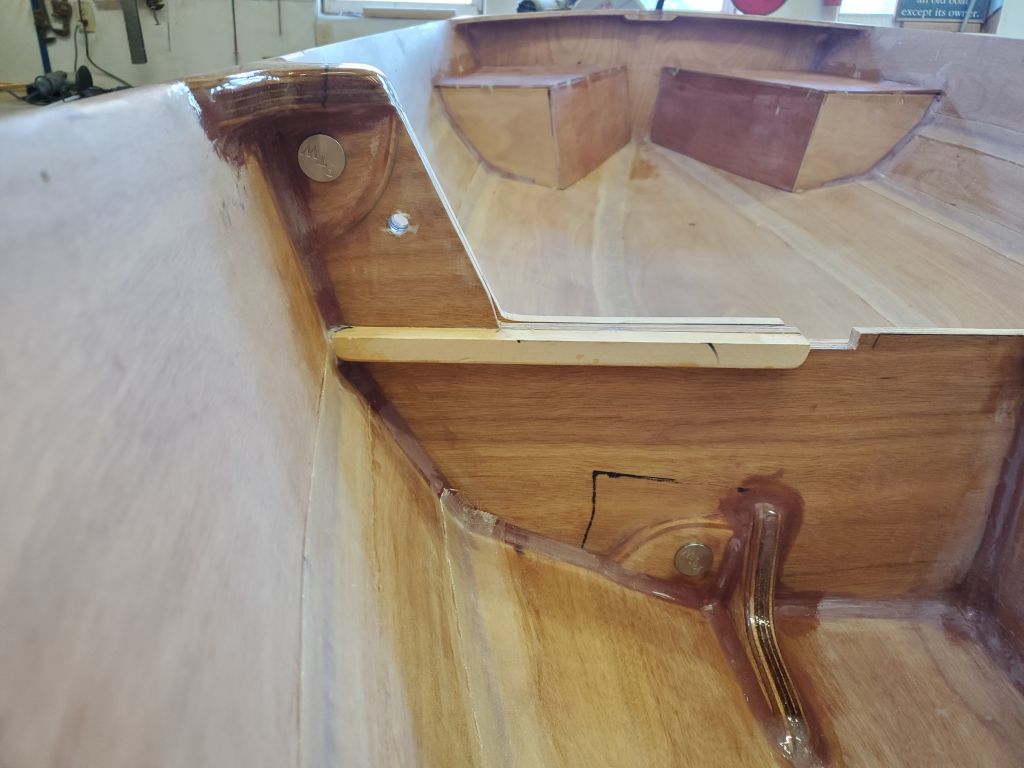
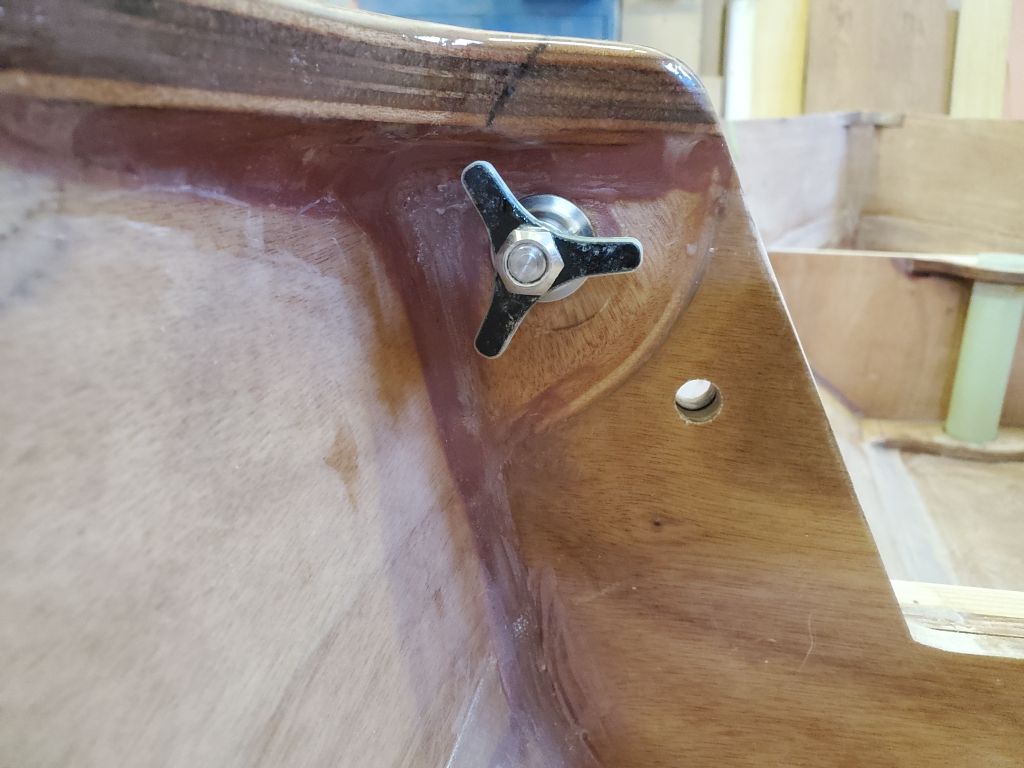
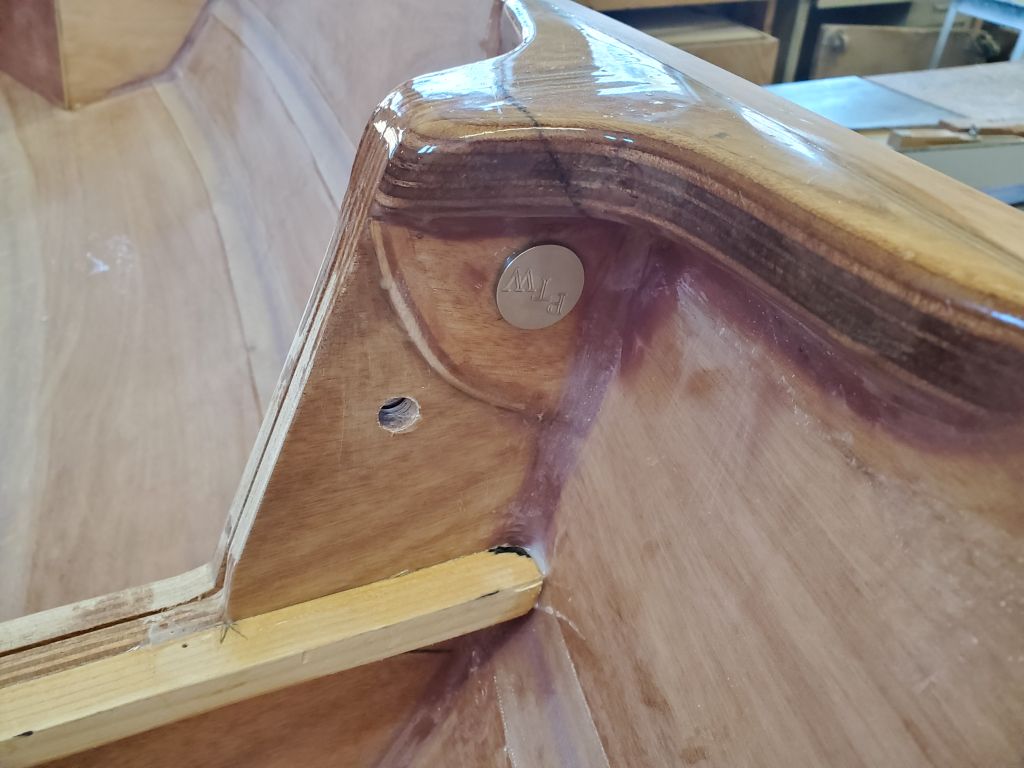
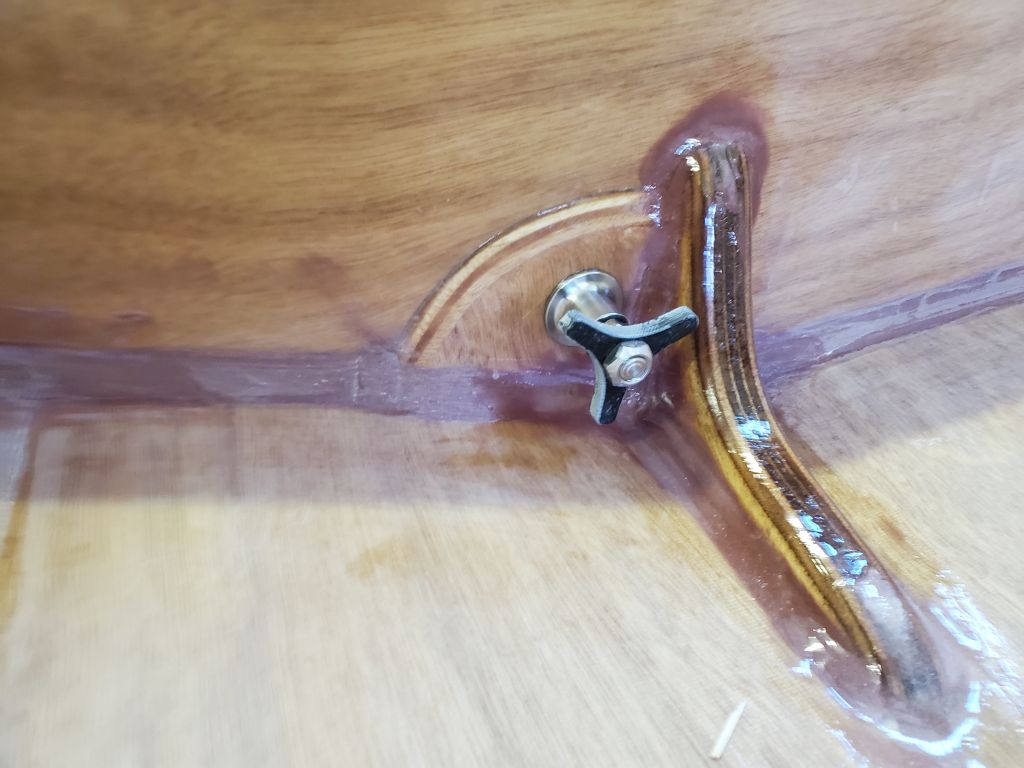
My main task for the short day, which fell at this moment mostly by happenstance, was to do the first step of installation for the special connecting hardware in the main bulkhead.  This  custom stainless steel hardware, with little carbon fiber handwheels, was one of the keys to the ease and adaptability of connecting and disconnecting the two hull halves under real-world circumstances.

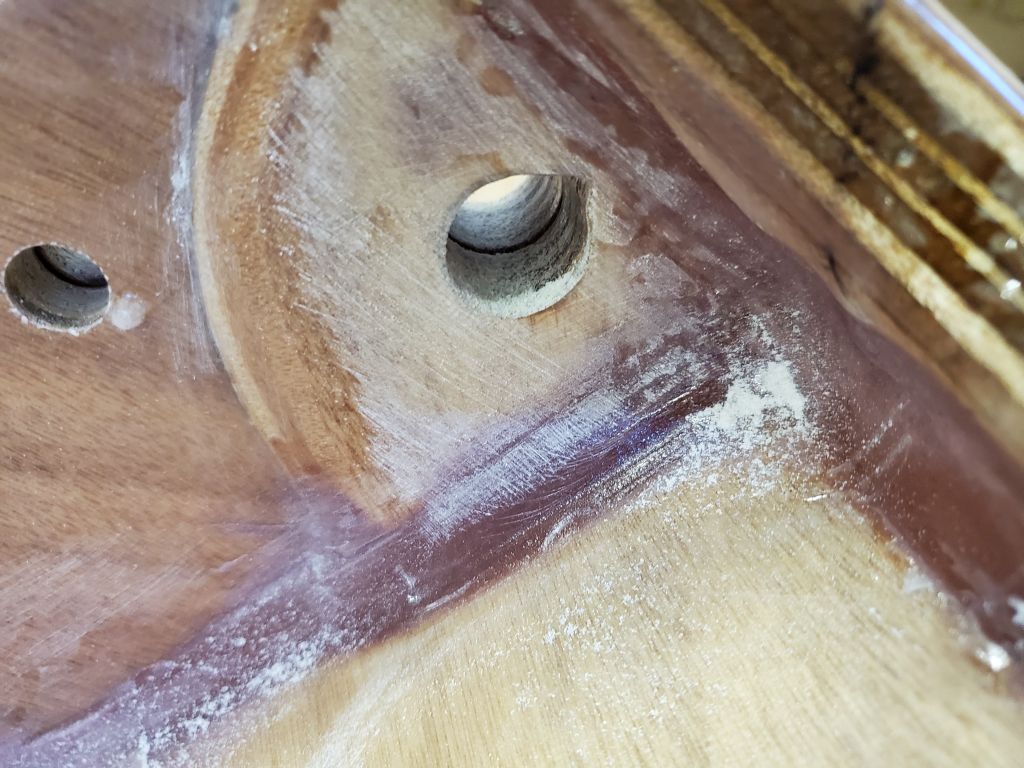
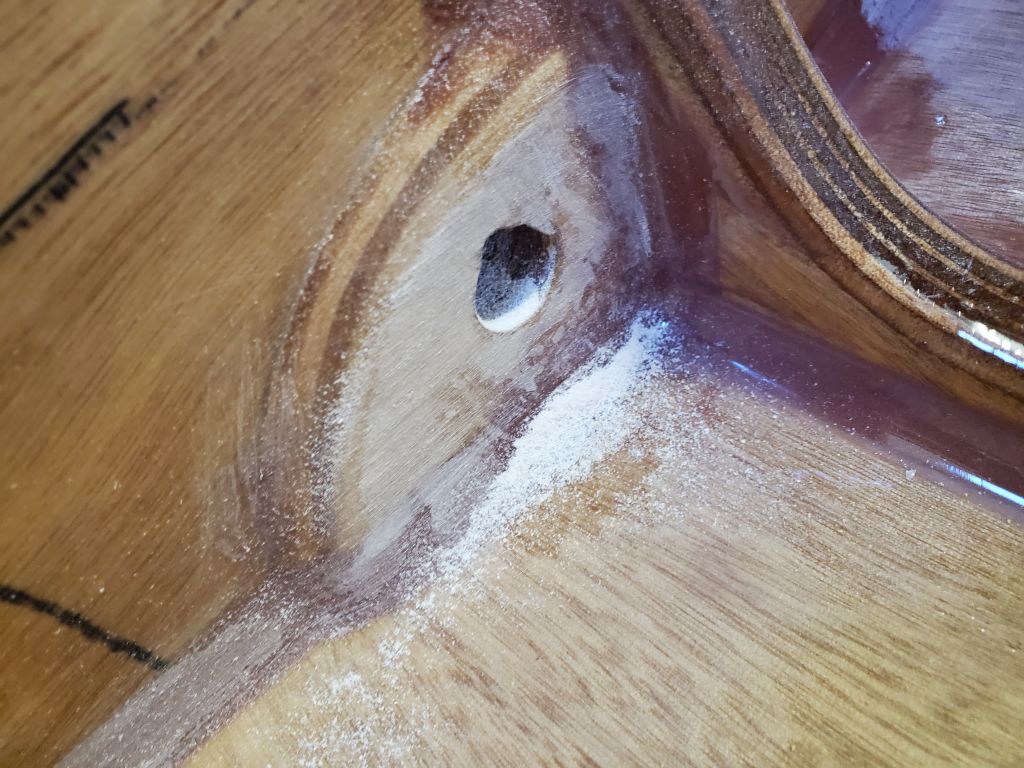
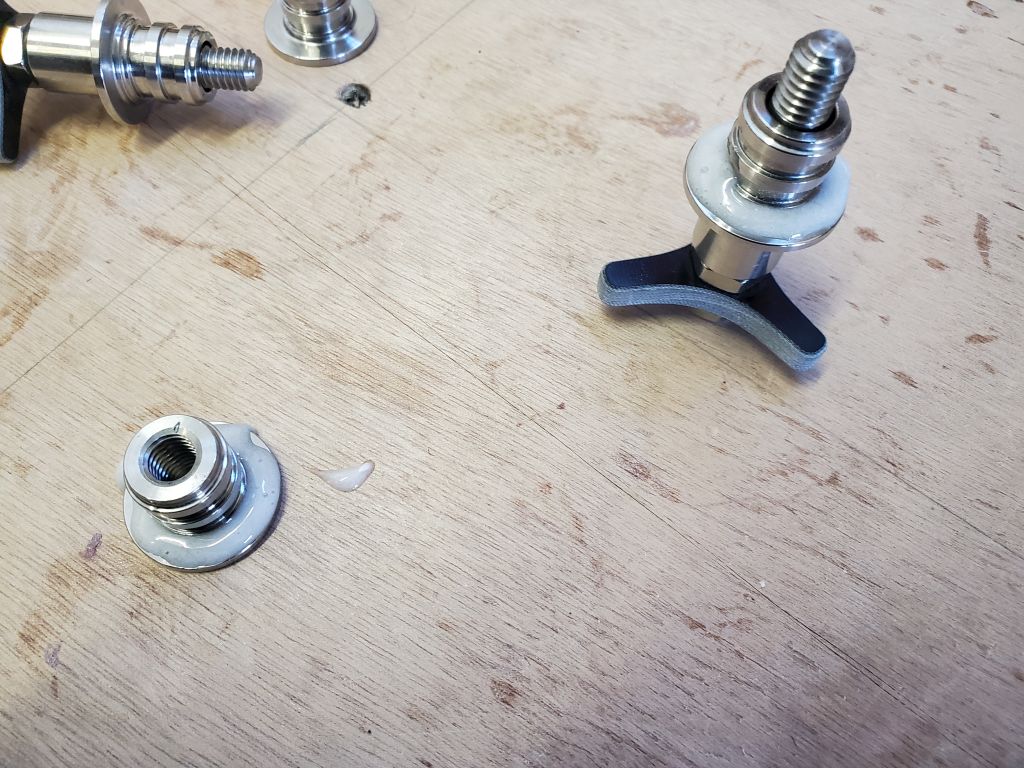
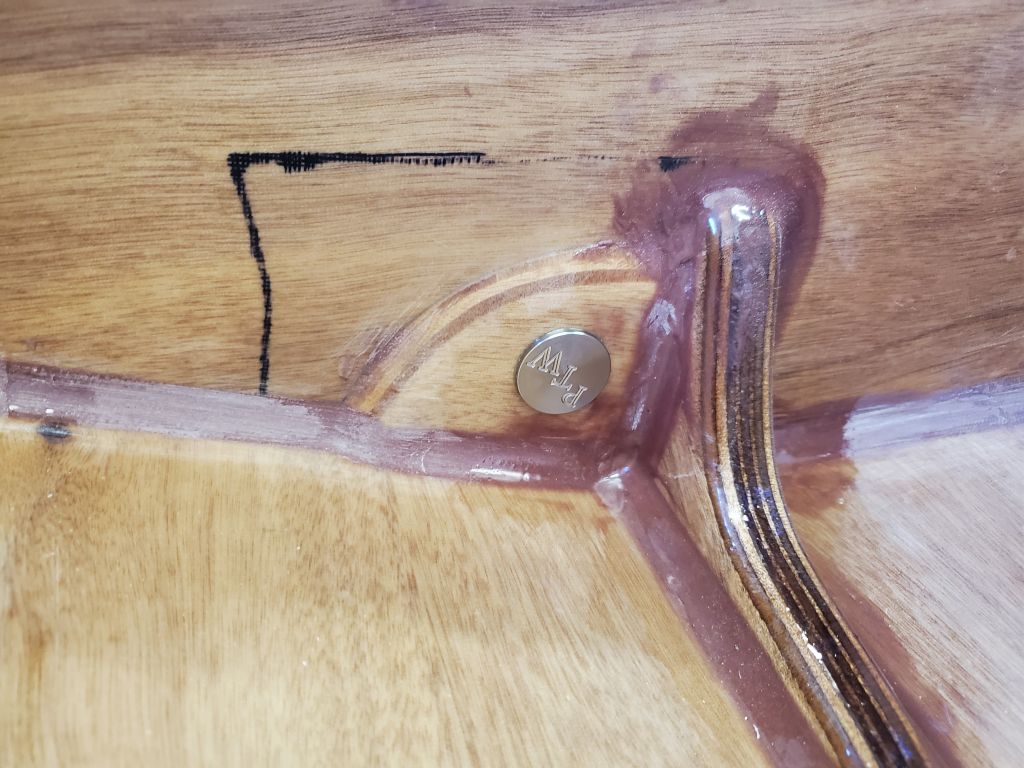
To begin, I cleaned up the four hardware locations as needed, sanding the faces of the reinforcing pads flat if there was any epoxy in the way, and cleaning out the holes with a bit of sandpaper wrapped around a drill bit, for lack of anything else cylindrical on hand.  I’ve just shown two of the pads below, but I did this cleanup on both sides of all four locations.

Next, I dry-fit the hardware and checked the fit, mainly that there was just a bit of slop in the hole (important for step 2 of the installation process later), and checking the the flanges on both sides fit flat against the pads.

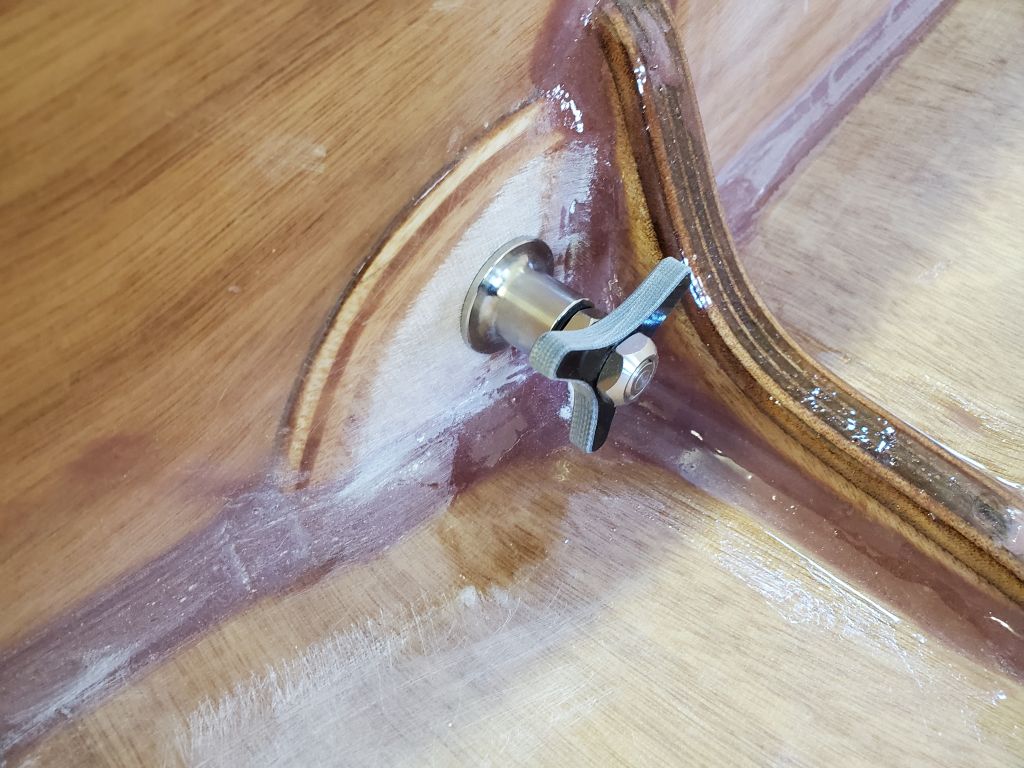
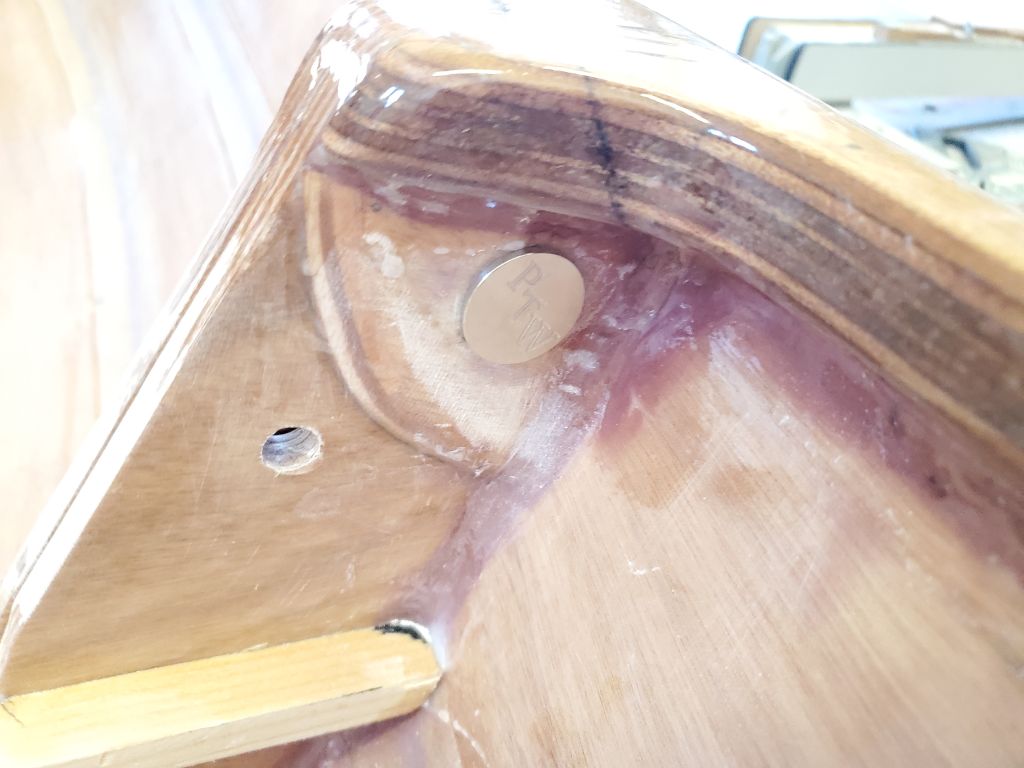
All four sets fit well and as required, so after removing the hardware and final cleanup of the parts and all related surfaces, I installed the hardware with a narrow bead of thickened epoxy along the flanges on both sides.  This was only the first step in a two-step process, and would serve to hold the hardware in place and with both parts properly aligned in the two bulkhead sections.  The second step, which would happen after the boat was cut in two, would fill the space around the hardware with injected epoxy (similar to what I did with the mast tube a little later on this page).  I tightened the bolts enough to hold the parts securely and squeeze out epoxy, but no more.

I finished up by cleaning off the excess epoxy, working carefully in the tight spaces so as not to upset the hardware.

My last task of the day was to fill the spaces around the mast tube–in both the upper and lower partners–with injected epoxy.  The four half-moon holes located evenly around the tube were there for this very purpose, much the same as with the hardware holes in the bulkhead, each of which features one injecting space like this.  I went around several times with a syringe, filling the voids with epoxy, awaiting its self-leveling and bubble-formation, and filling again, till both partners were full of epoxy.  For this step, I left the boat elevated at the aft end, so that the mast tube was vertical, and the partners were level.

Now was the ideal timing for me to depart on my other business and leave both delicate epoxy operations the remainder of the day and overnight to cure.


PT11-26

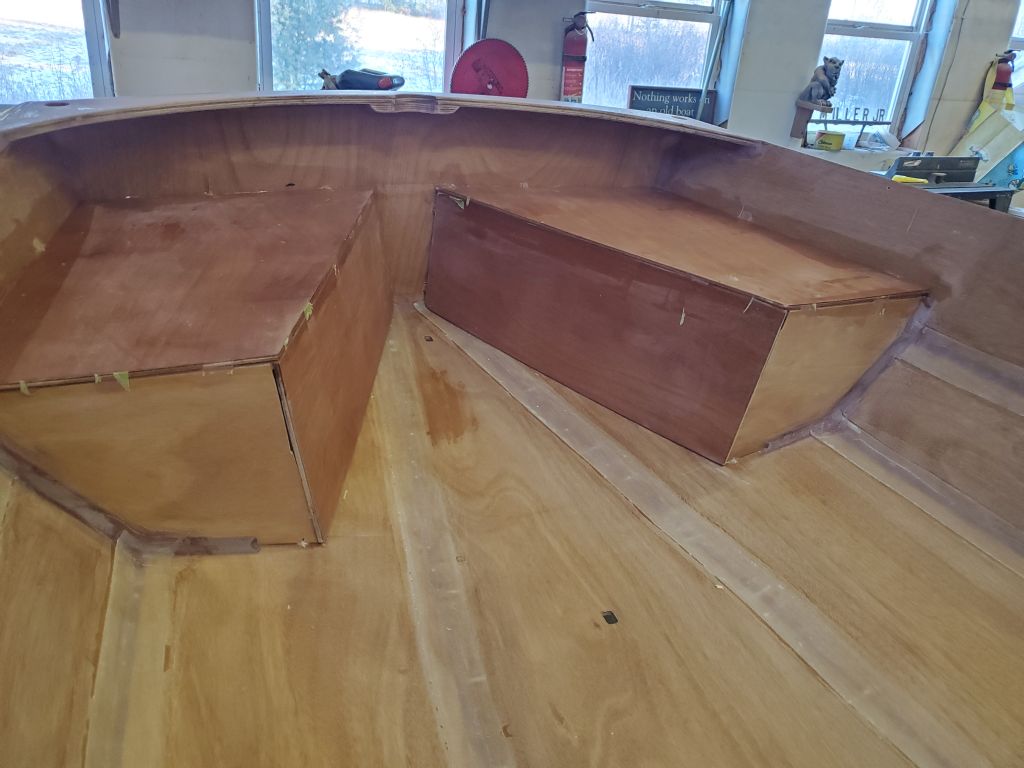
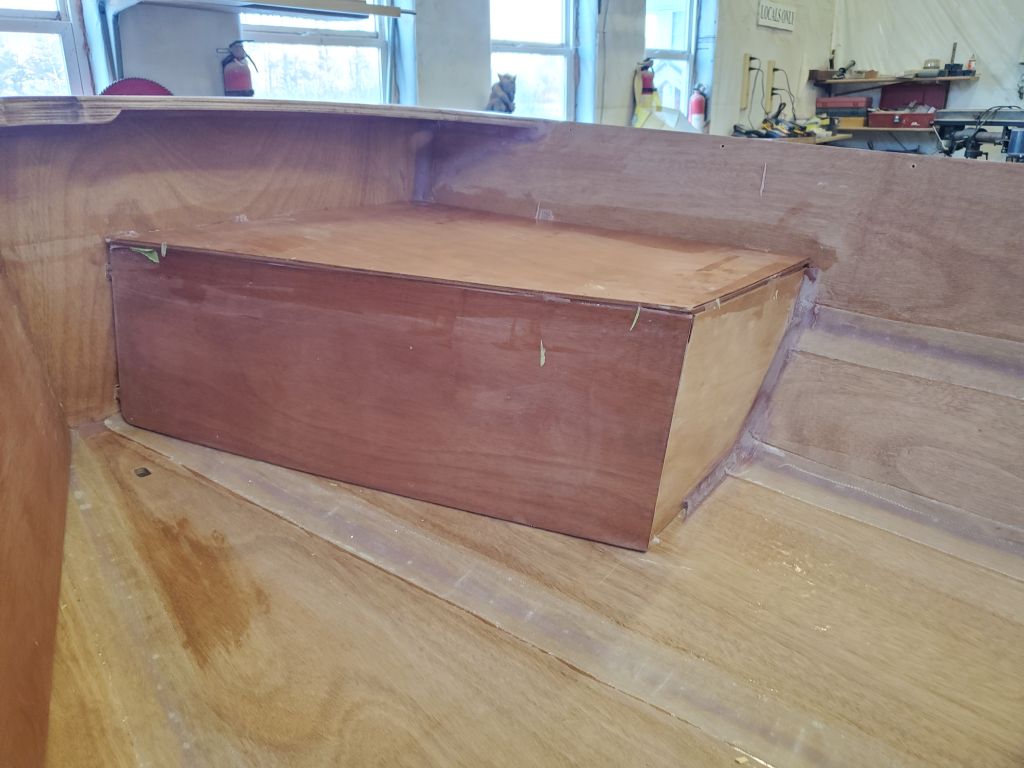
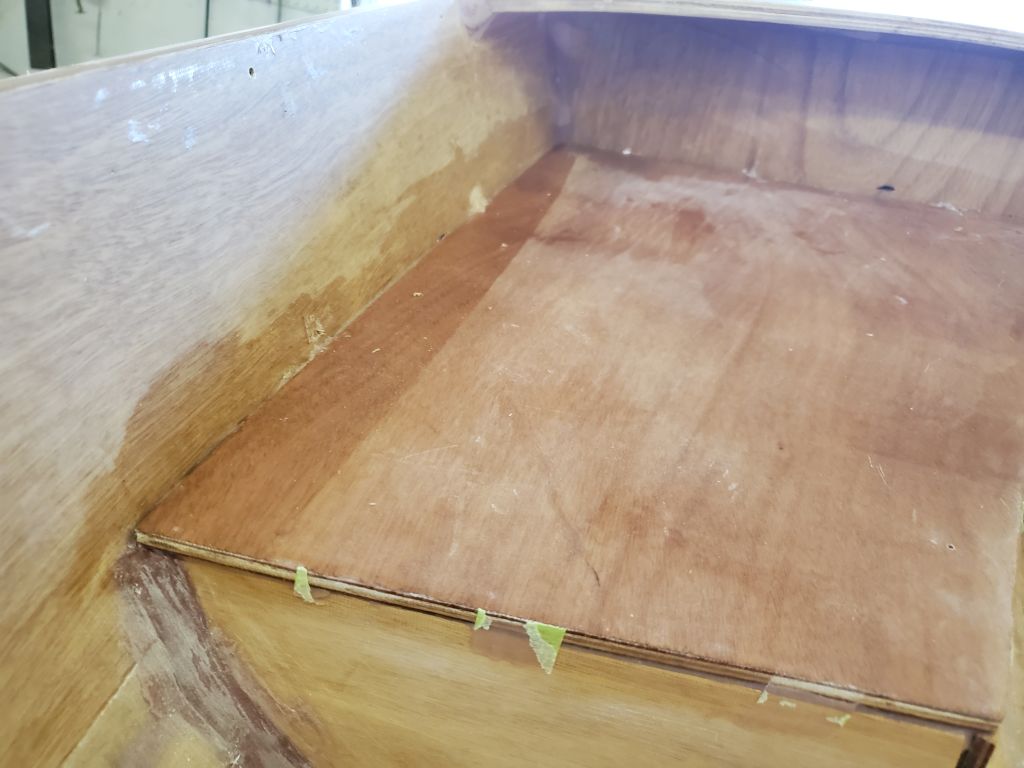
I removed the taped-down aft seat covers to reveal the new blind fillets.  The fillets came out well, and the seat tops came off with no issues.

Afterwards, I lightly sanded the glossy tops of the fillets, and sanded back their sharp and thin outer edges just a bit to remove the knife edge.  I also sanded the bonding areas of the underside of the tops, and, following the directions (which were confusing here) removed all the tongues from the top.  Later, I found the instructions had meant only the outboard tongues on the long, hull sides of the tops–not the pair on the transom side of each top–but this was of no matter since alignment of the seats was already well-established by the fillets, and in any event what was done was done.

Next, I securely taped the interior side panels in place so I could permanently install them with fillets on the inside.  I fully taped the joints where the panels met the transom and hull, and added more tape to hold the panels securely at the ends and where they met the hull.  Then, I installed epoxy fillets on the inside corners to tie these in with their adjacent parts.  I used fast hardener for this mix so that the fillets might cure enough before the end of the day to allow me to install the seat tops, rather than wait till a new day.

While giving the fillets time to cure, I worked on fitting the foredeck.  Final installation wouldn’t happen till after I cut the boat in half, but now seemed as good a time as any to get the fitting done, and move on with a couple final steps that had to happen before final installation.

Initially, the foredeck fit fairly well, but was too tight at the aft end where it met the bulkheads, and also a bit tight in several places around the hull edges; the net result of this was that I couldn’t pull the assembly far enough aft, nor down far enough to bear on the mast step and bulkhead, and the daggerboard, cleats, and aft bulkhead.  I took these  blind photos to help me determine how the foredeck was riding below the surface.

The directions pointed out that the framing members of the foredeck might hit the forward end of the daggerboard trunk, limiting aft movement, and I found this to be so, so in addition to slightly modifying the aft corners of the foredeck to better fit around the bulkhead, I also sanded back the upper portion of the daggerboard trunk and support cleats to increase clearance there.  It took several fits and starts and various trimming of the foredeck sides, slightly widening the gaps in the mast step bulkhead for increased clearance for the reinforced edges of the foredeck, and other minor adjustments till I got the foredeck to fit down tightly on the required bearing surfaces (mast step and bulkhead, daggerboard, and aft bulkhead/cleats).

The foredeck had a slight tendency to warp, so unless I pressed down on the aft end, there was a small space there, but it required only light finger pressure to close it. so overall I was satisfied with the position.  The foredeck was flush with the aft edge of the forward part of the double bulkhead, and as directed I added two alignment nails here.

Next, reaching beneath the foredeck through the hatch, I marked the position of the mast hole through the upper partners, and also traced out the borders of the bulkheads and other bearing members for reference.  With the foredeck back on the bench, I drilled a 1/2″ hole through the center of the mast partners mark, enlarged it slightly to fit a router bit, then, with the foredeck back in position on board (and aligned with those small nails again), I trimmed the mast hole to match the partners beneath.

Now I could lightly sand the bottom of the foredeck (coated previously with one coat of epoxy), paying extra attention to all the marked bearing surfaces, and after cleaning up I applied a second and final coating of epoxy to the entire underside, including framing members, the aft edge of the seat tongue, and the inside of the hatch opening.

For the afternoon, there were two main tasks I wanted to do:  install the aft seat tank lids, and install the mast tube.  The mast tube installation required that the boat be blocked at the aft end so that the tube would be vertical, so I started with that, figuring it would take an extra block or two.  Imagine my surprise when it required four 2x4s, two 3/4″ pieces of scrap, and a 1/4″ piece of plywood (all added piecemeal and with increasing dismay) to get the mast tube finally vertical.  The dismay arose because, since I didn’t want to move the boat around at all during either of the next chosen tasks, this meant that I’d have to work over the much-higher gunwale to install the aft tank tops.  It wasn’t the end of the world, but was an example of my greed for progress sometimes making things more difficult than they needed to be.

In any event, with the boat thusly positioned and ready for action, I started by stabilizing the boat a bit with a couple long clamps at the forward end, just to keep the boat from its propensity to tip one way or the other.

Working over my shoulder-height aft gunwale, with the assistance of a little step platform I’d previously built for some long-forgotten need, I installed the aft seat covers, beginning with a dry fit, during which I installed alignment nails on the inboard edges of the seat covers to hold them during installation, and followed by an epoxy coat of the inside of the tanks and underside of the seats.  The fillets I installed earlier in the day were well-gelled by now and safe for these additional steps.

I applied plenty of thickened epoxy around the bearing surfaces, then installed the tops, securing them with wooden pressure clamps cut to appropriate lengths beneath the transom inwale, and clamped sticks along the outer edges, plus lots of masking tape on the two inner edges to secure them as needed.  I cleaned up all the excess epoxy and left the lids to cure overnight.  The extra height of the stern made this all more work than it might have been, but such was the price of stunning progress.

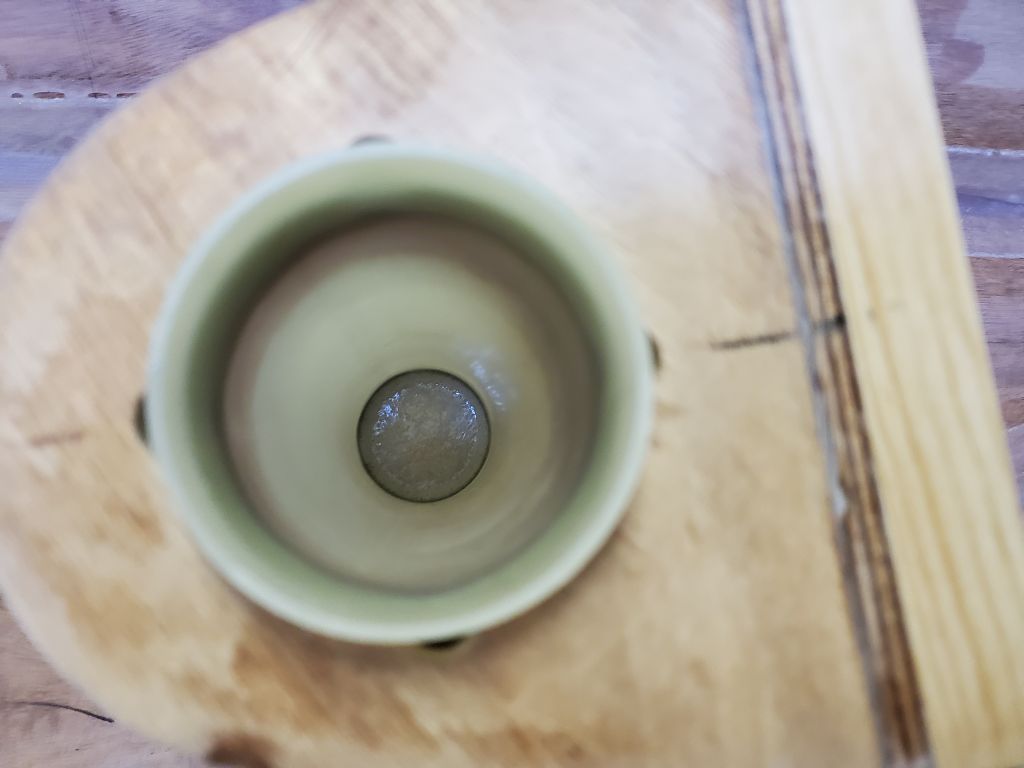
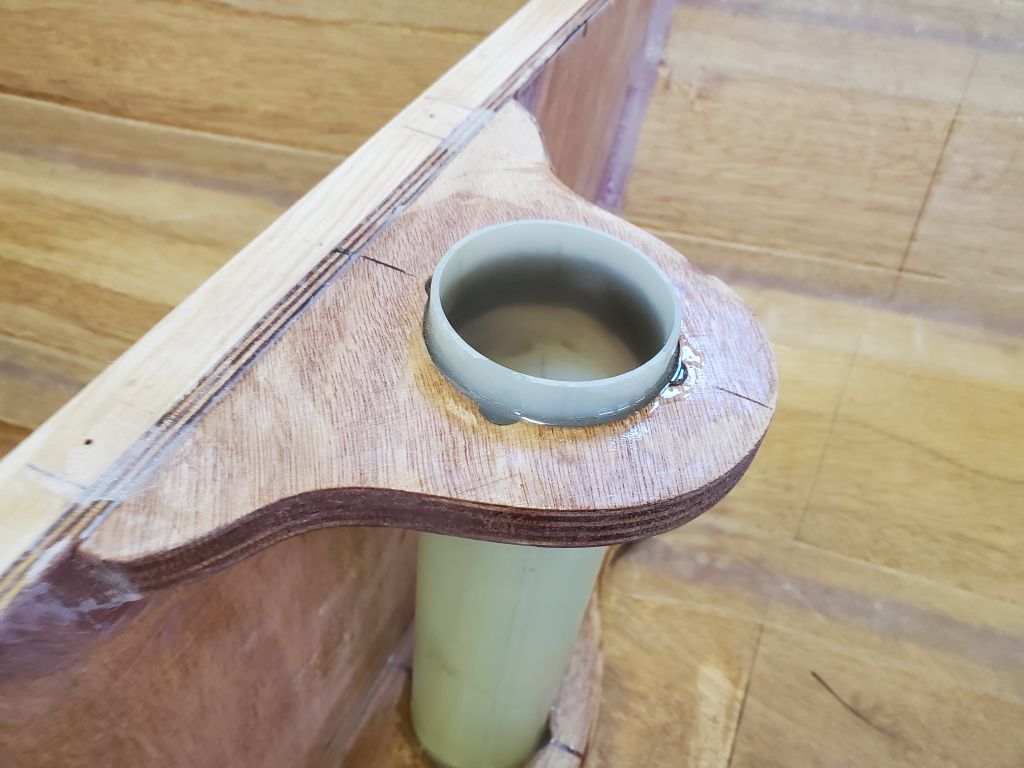
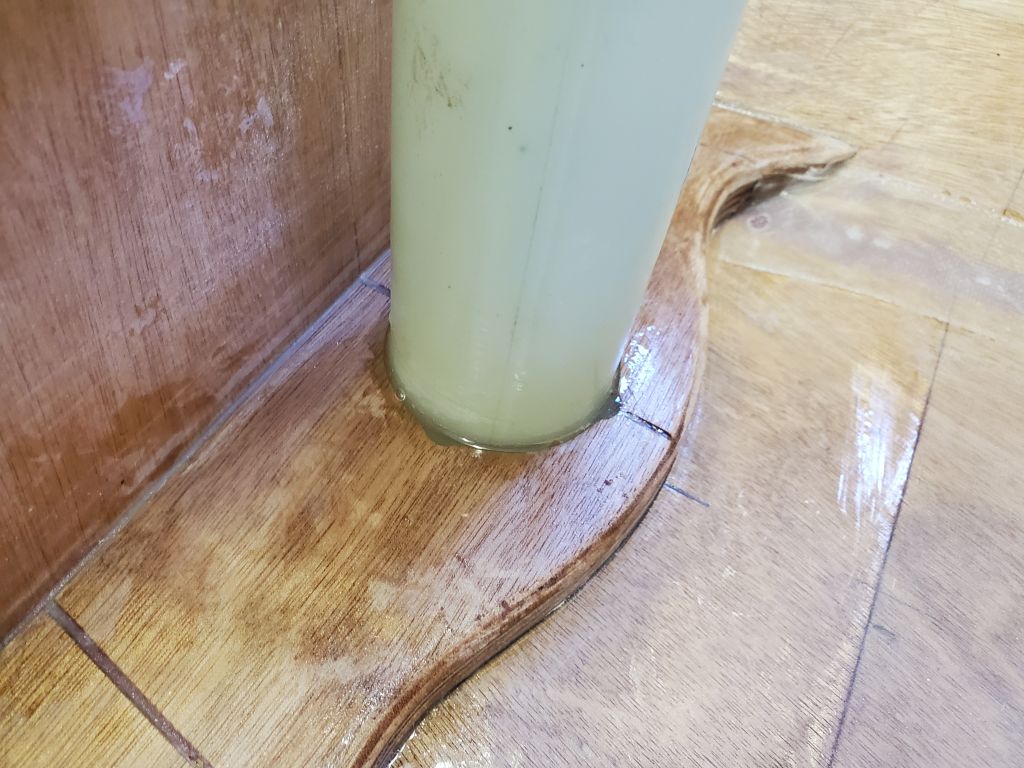
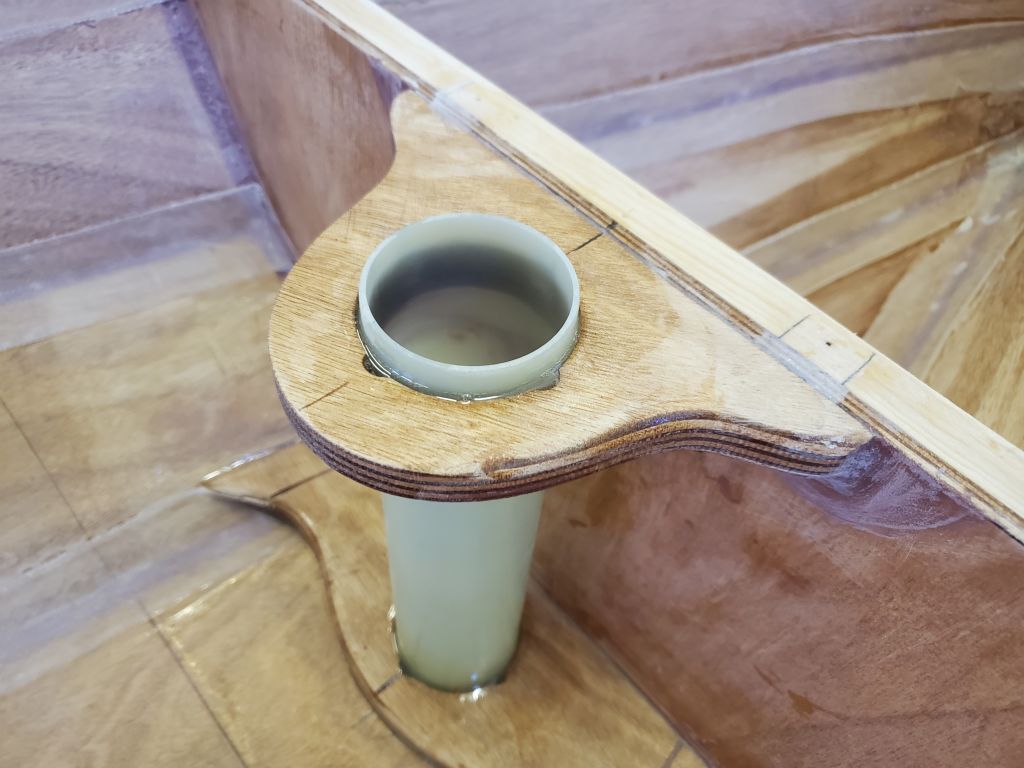
Finally, I installed the mast tube as directed.  After confirming the tube was still vertical, I sanded the two ends a bit (where they’d bond to the respective mast partners), then mixed a one-pump batch of epoxy, with a small amount of structural filler mixed in, till it was just-still pourable/level-able, and poured this into the lower mast partner.  As directed, this filled the hole to about 3/16″ deep.  I installed the mast tube and held it in place with small wedges on each side to hold it centered in the hole (at both mast partners).  Then, at the top partner, I applied a small fillet around the bottom edge where the tube passed through to basically seal up the gaps from beneath, which would be required for the next step in the installation process.

That would happen next time.  Now, the day was done, and I left the boat strictly alone so the pooled, leveled epoxy could cure undisturbed.

Older posts Newer posts