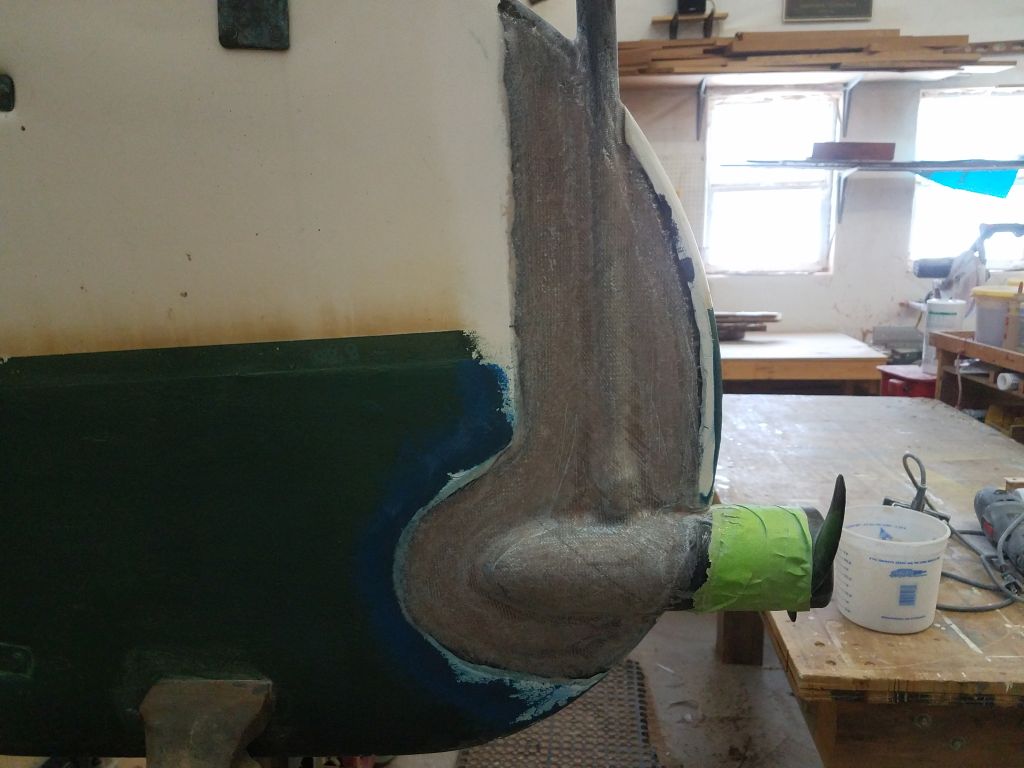
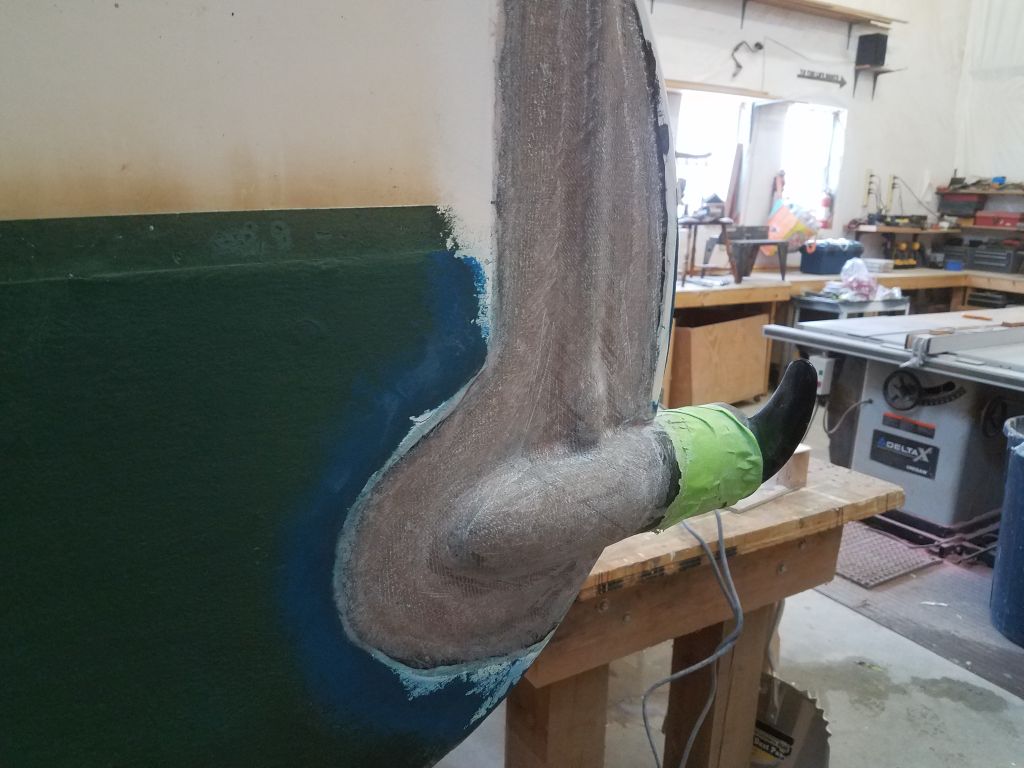
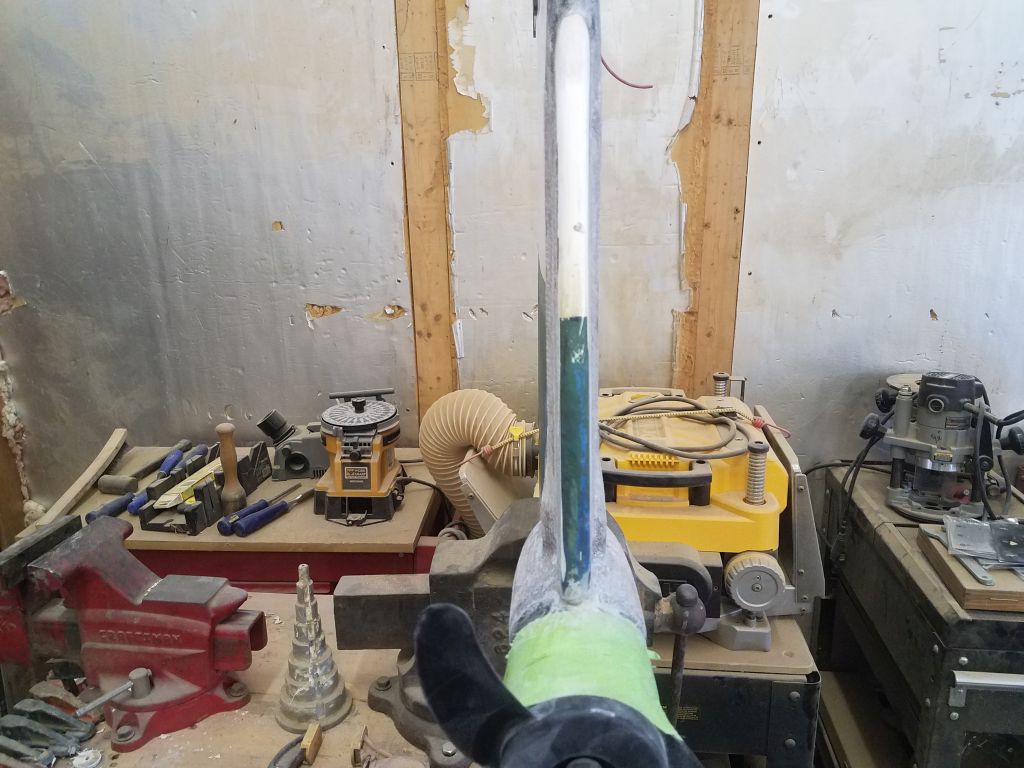
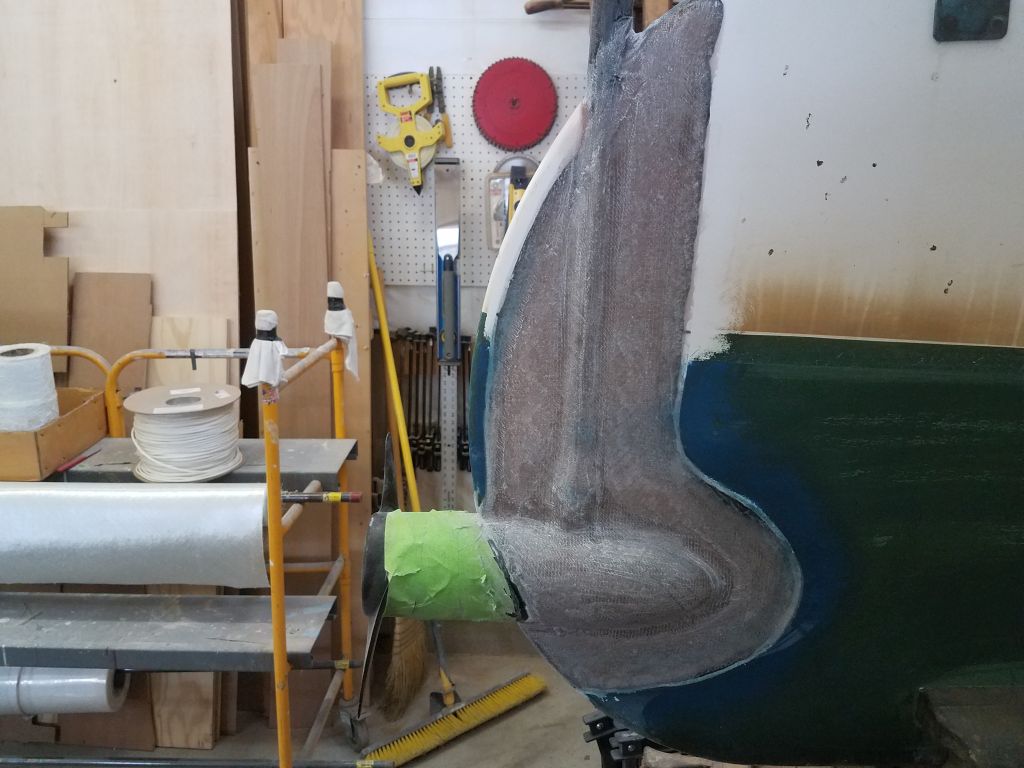
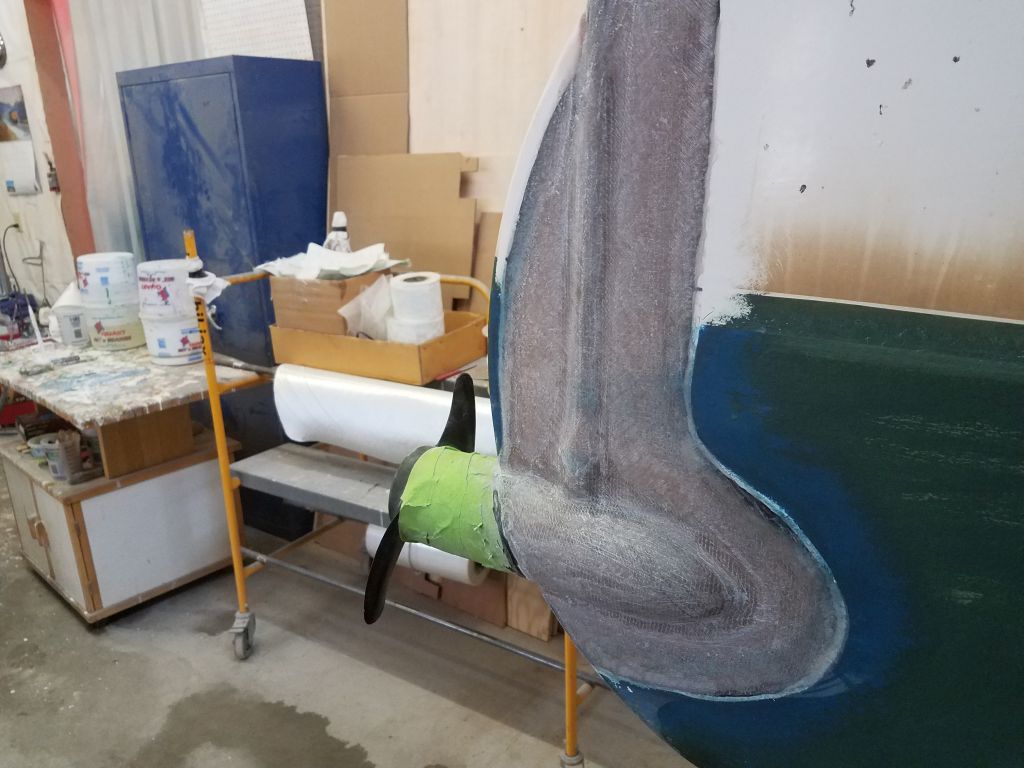
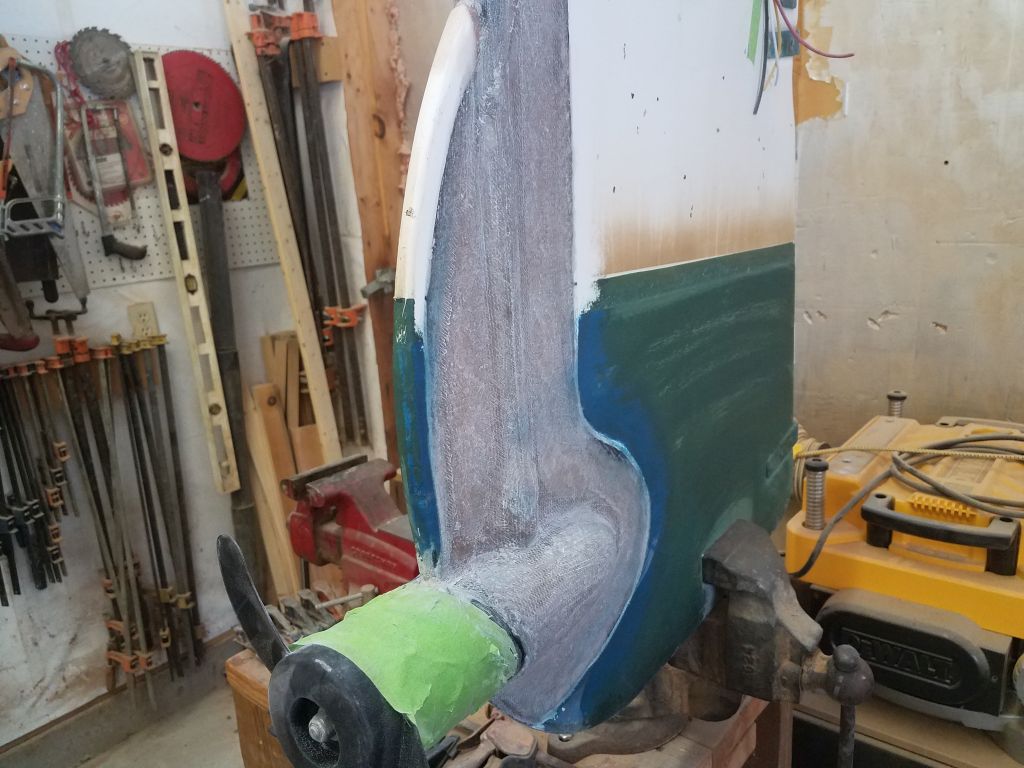
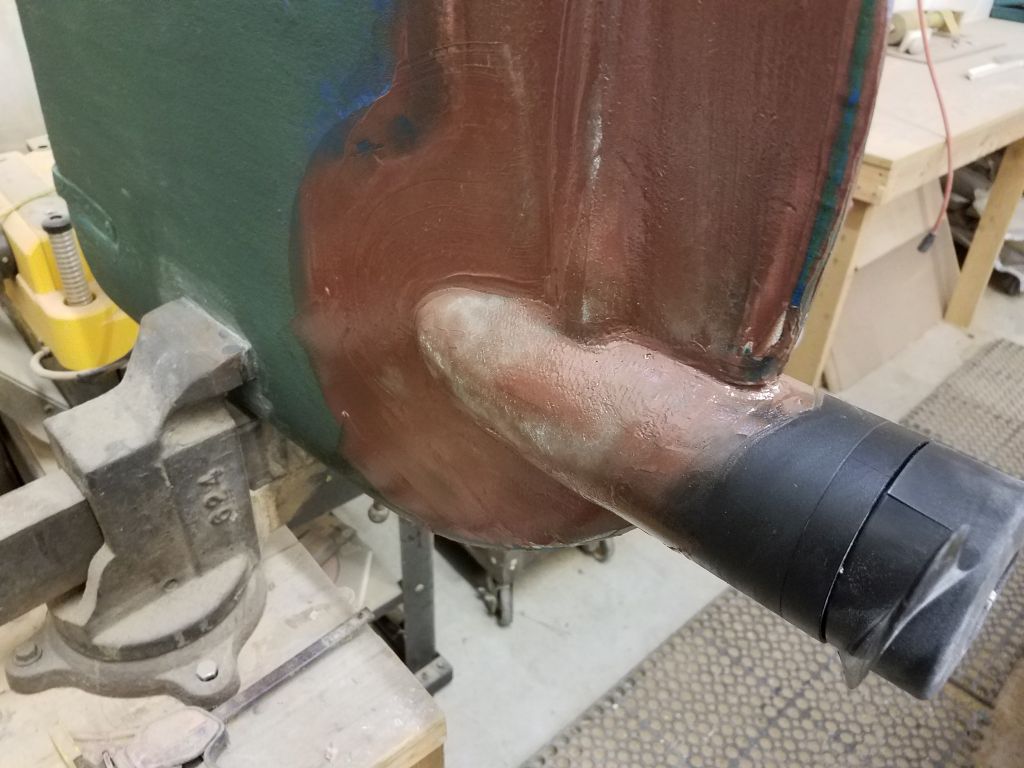
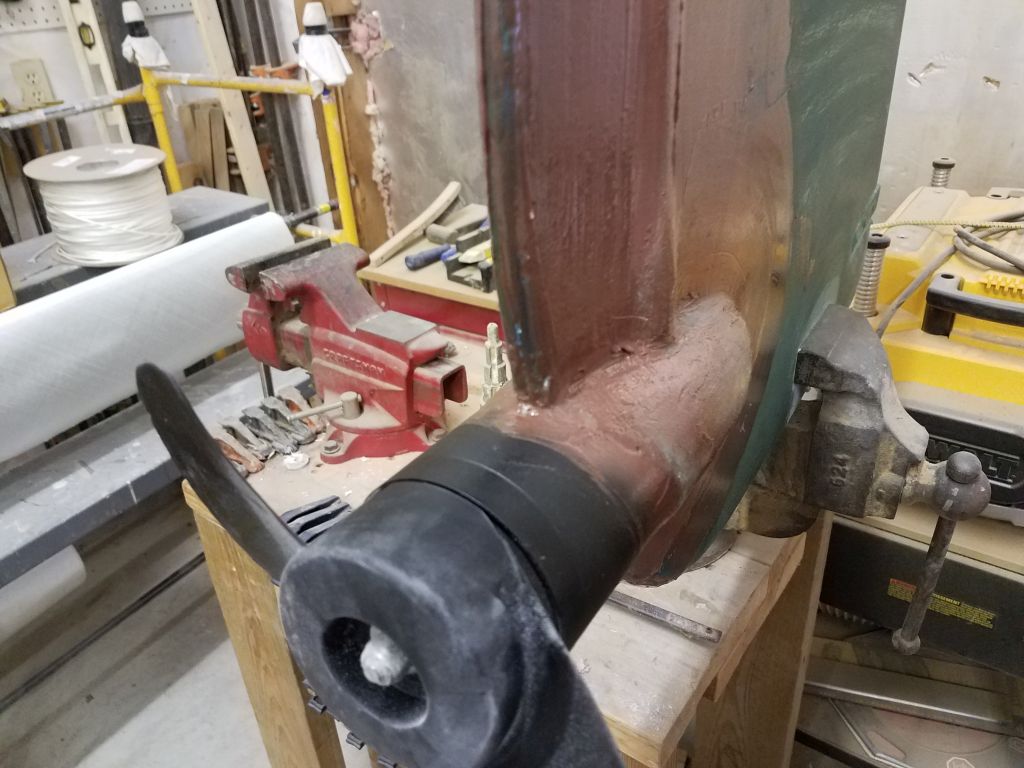
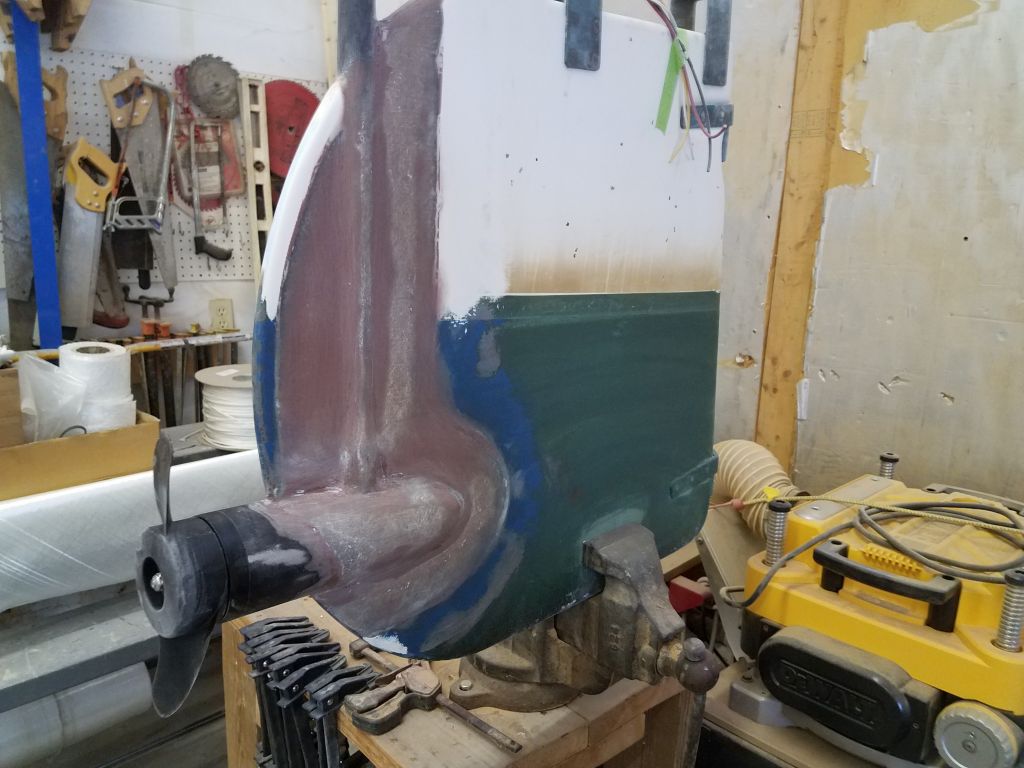
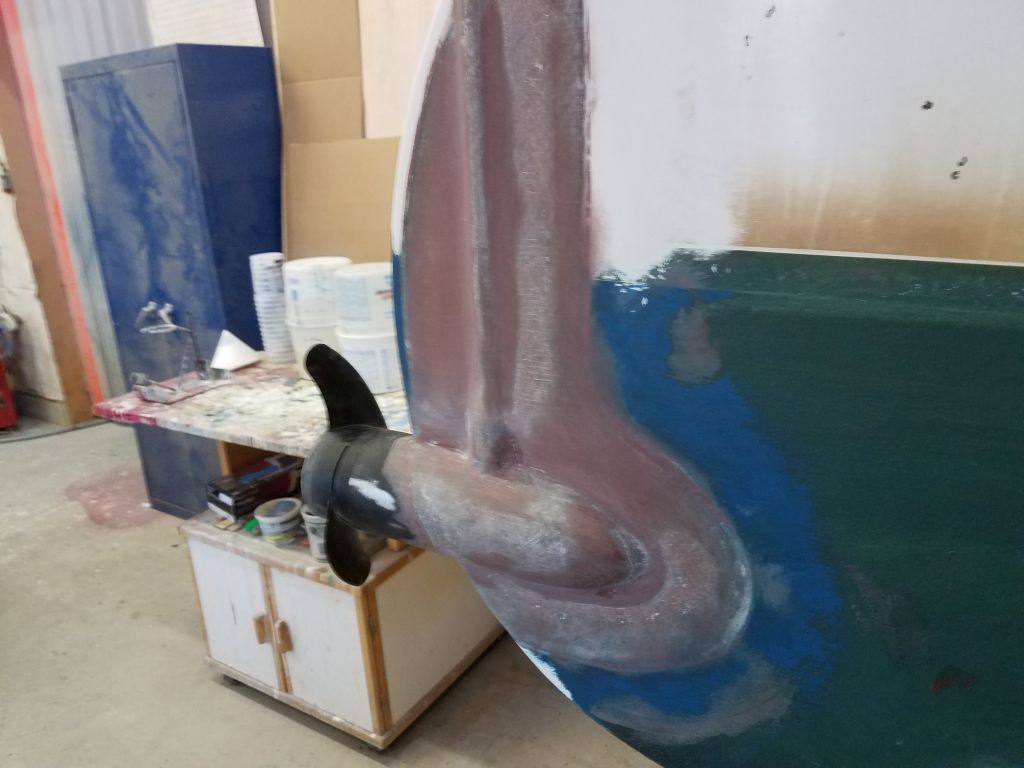
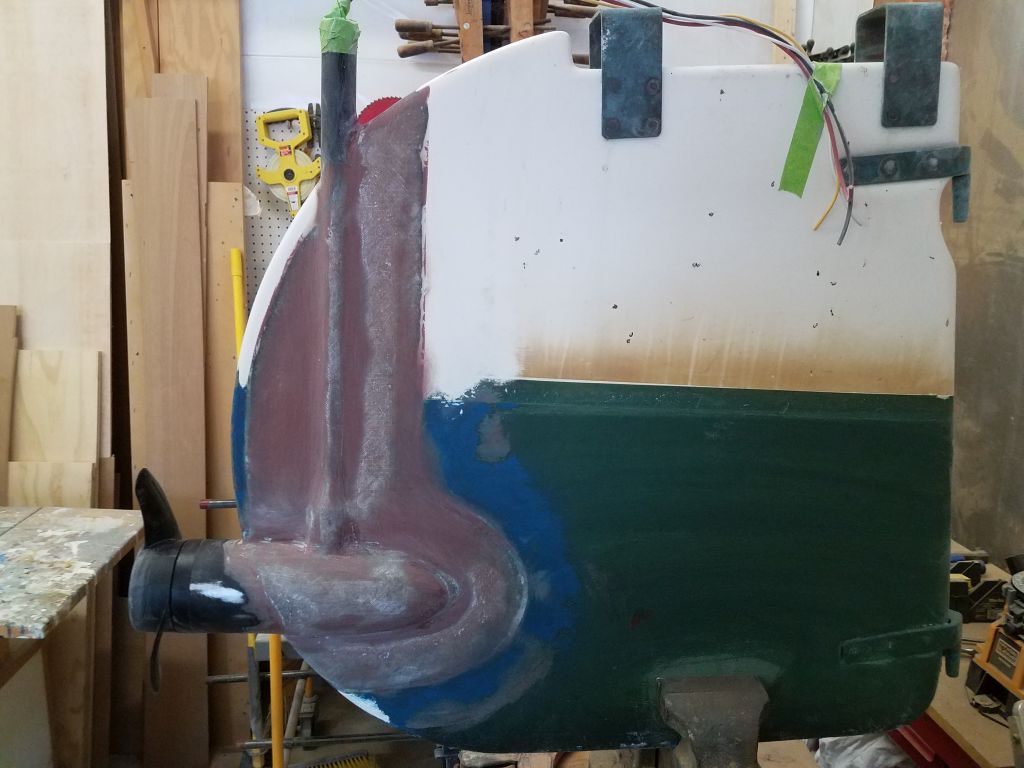
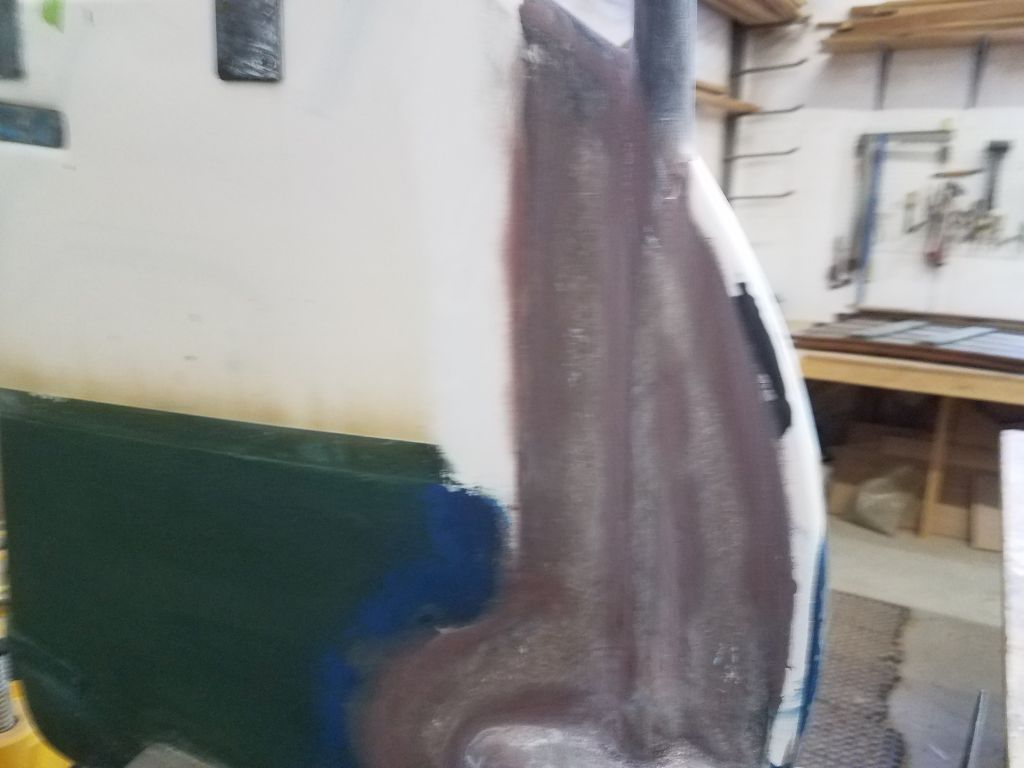
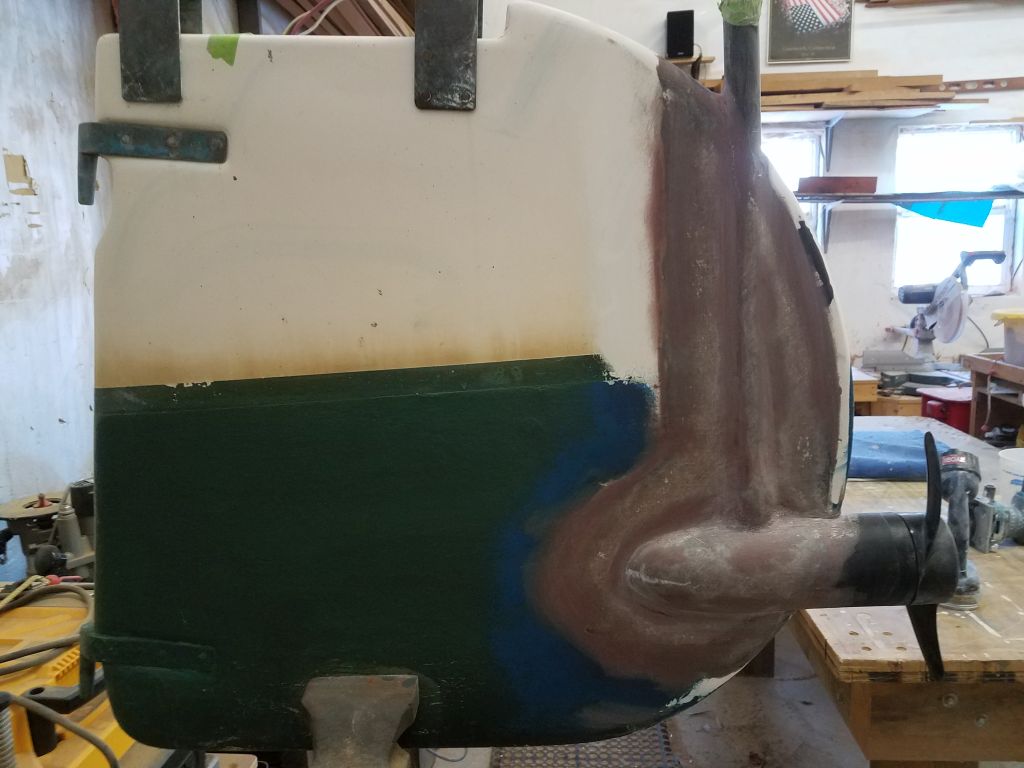
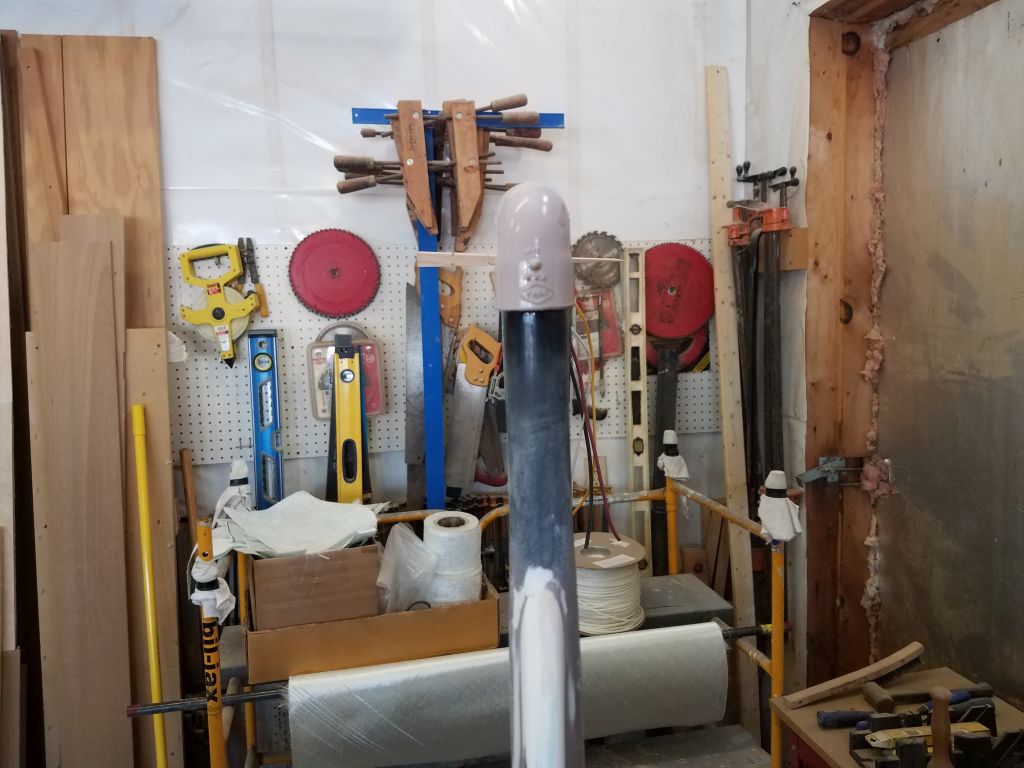
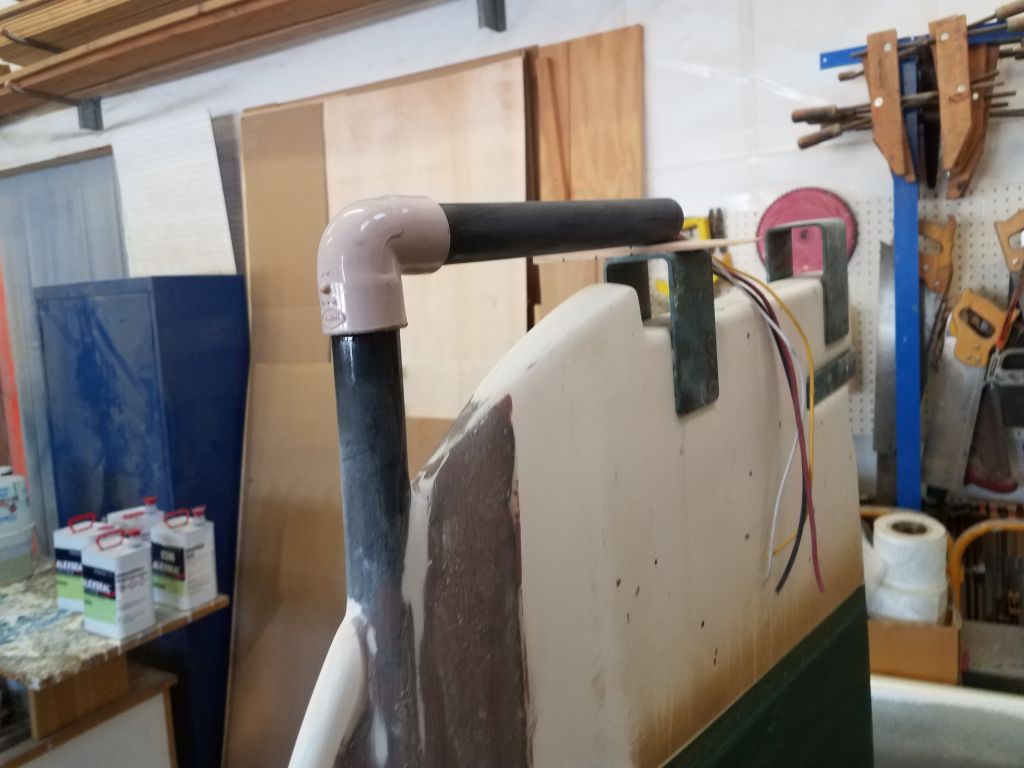
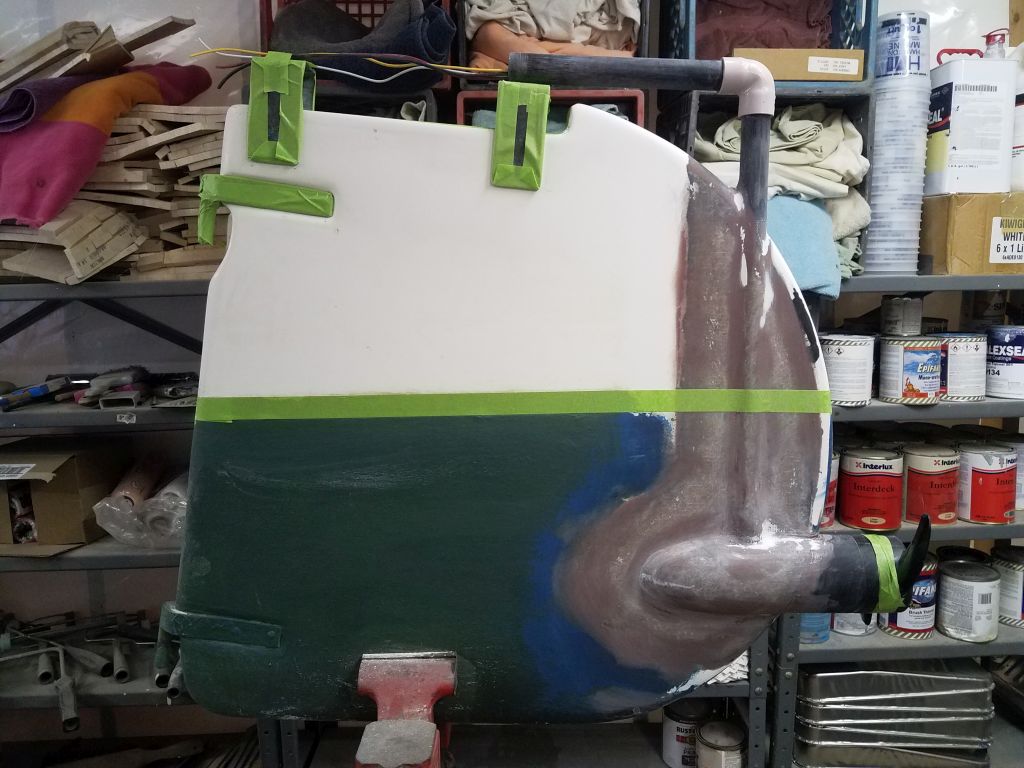
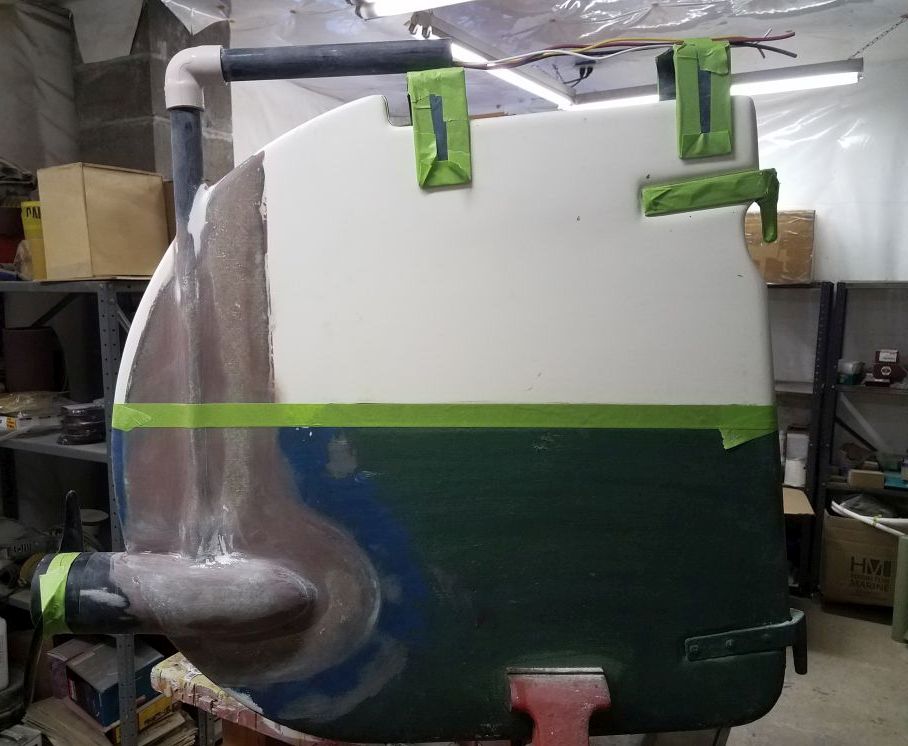
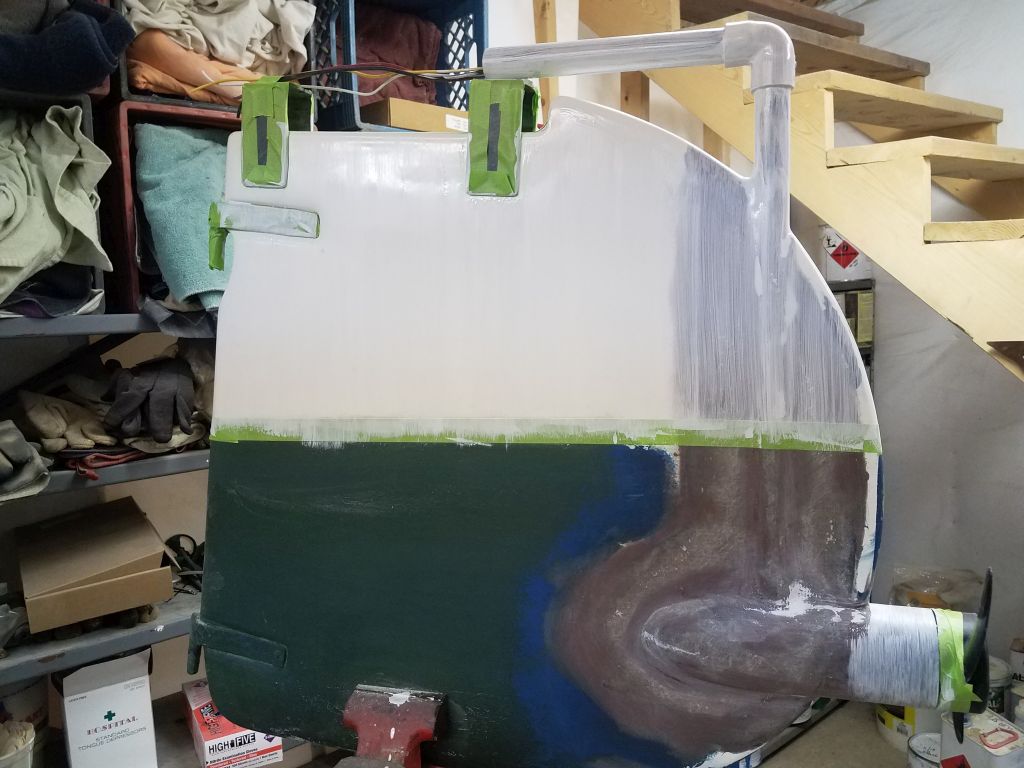
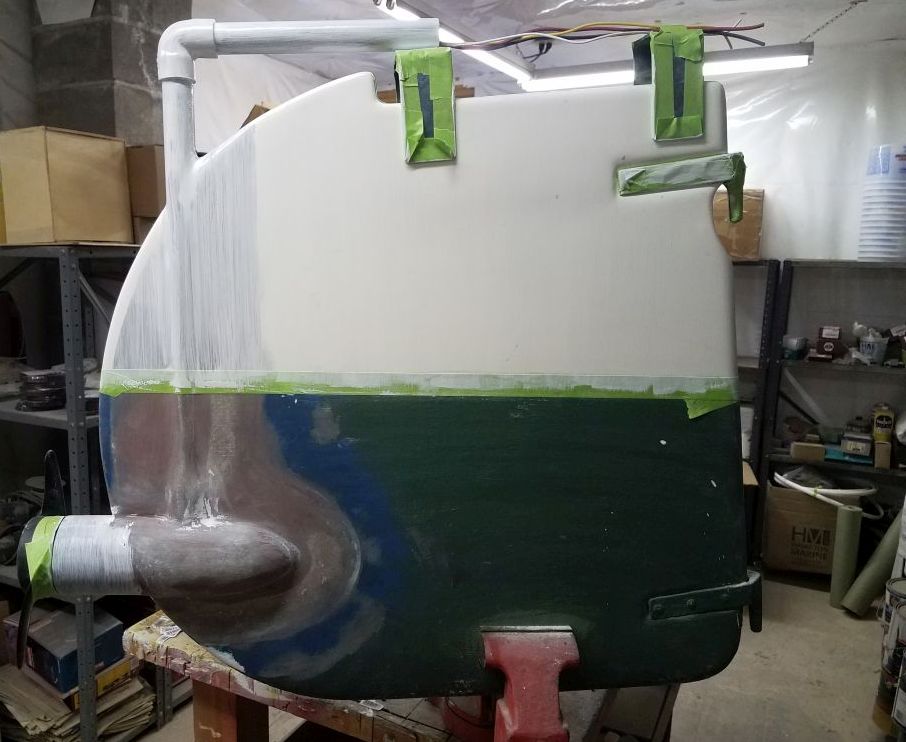
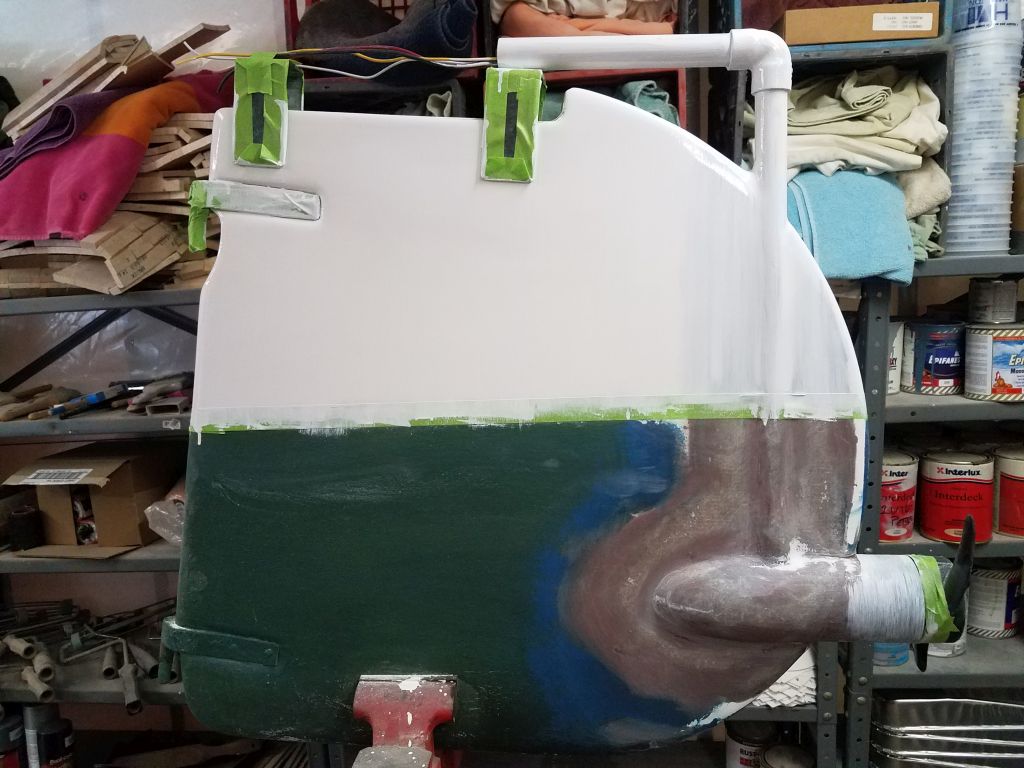
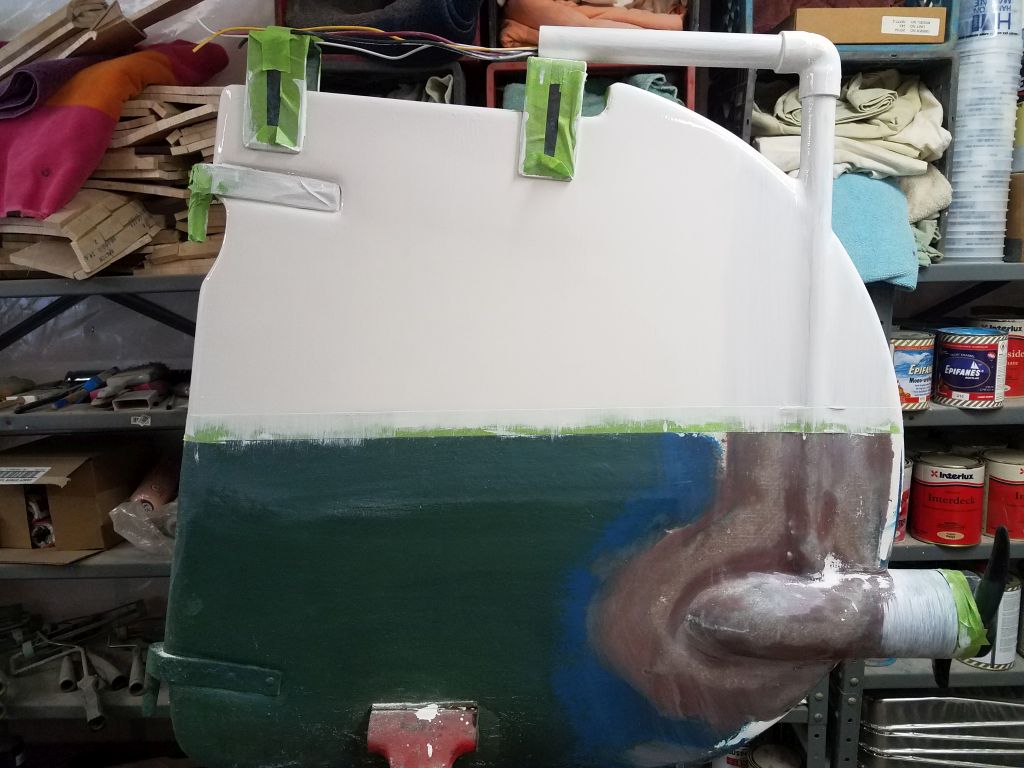
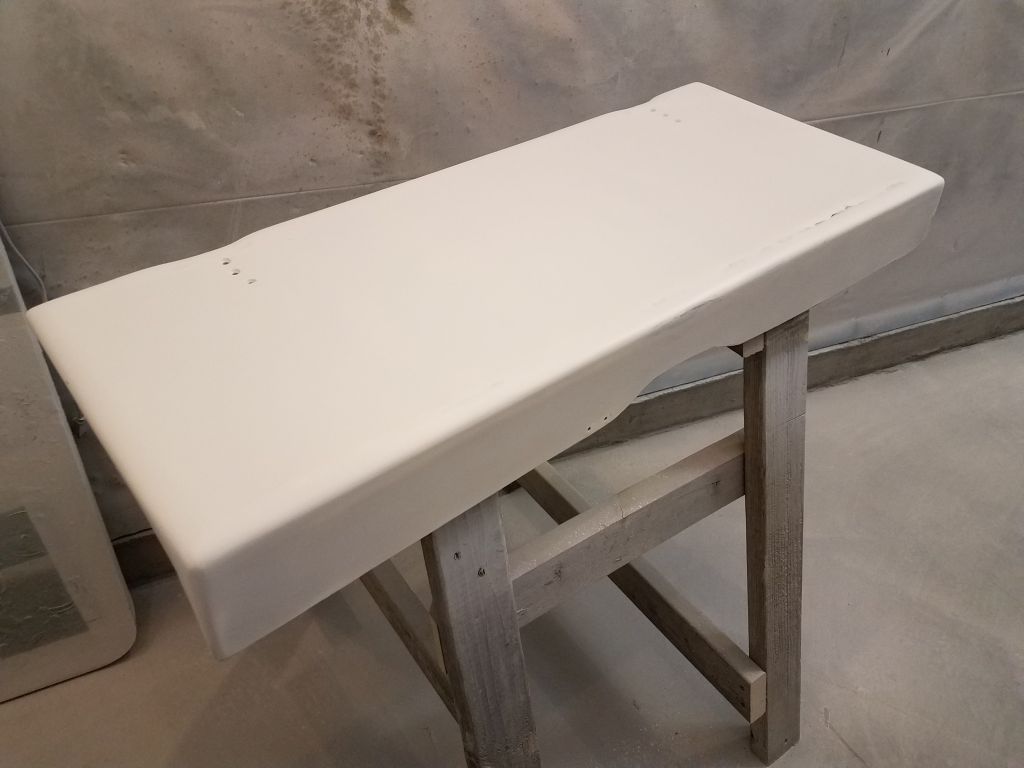
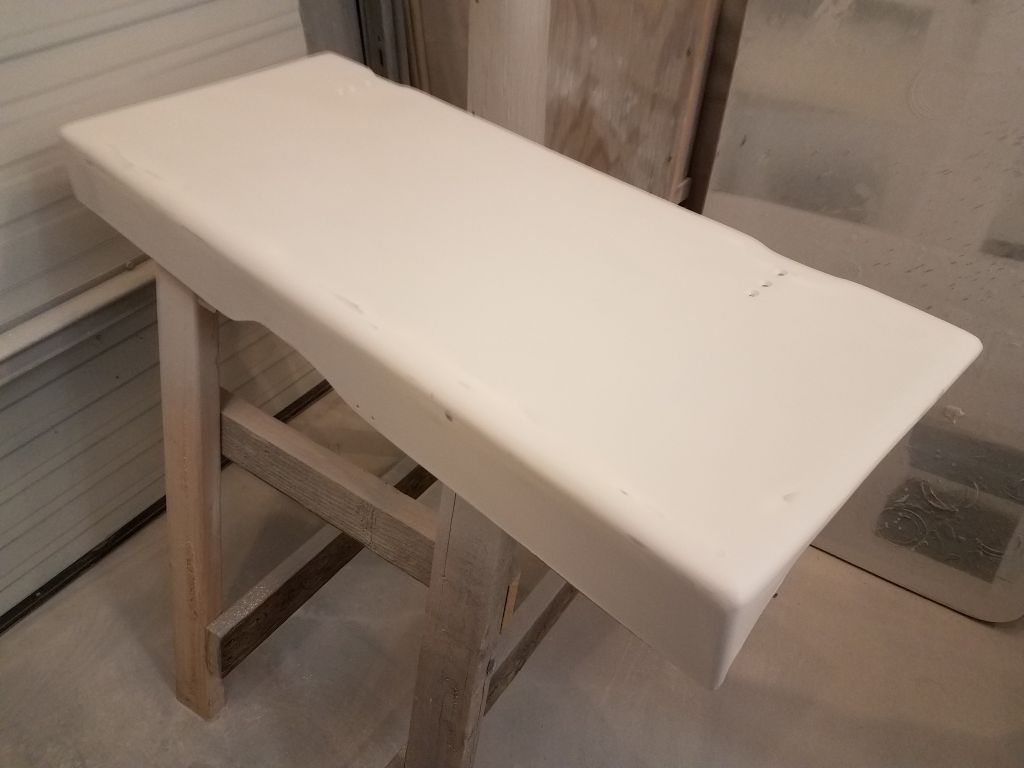
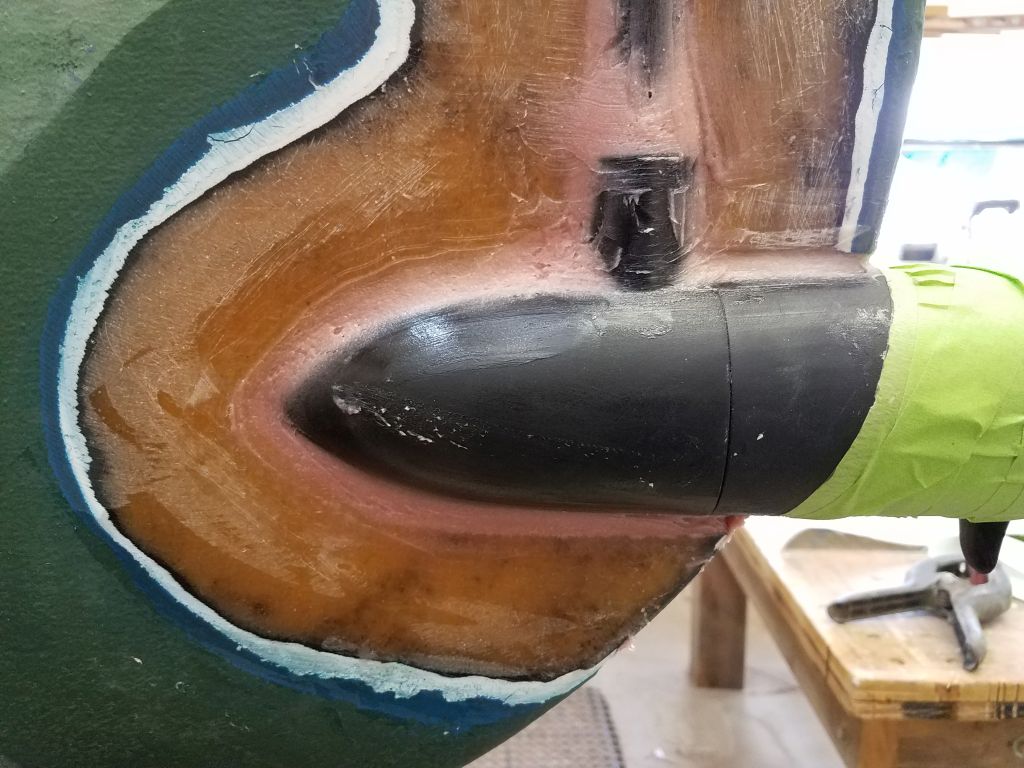
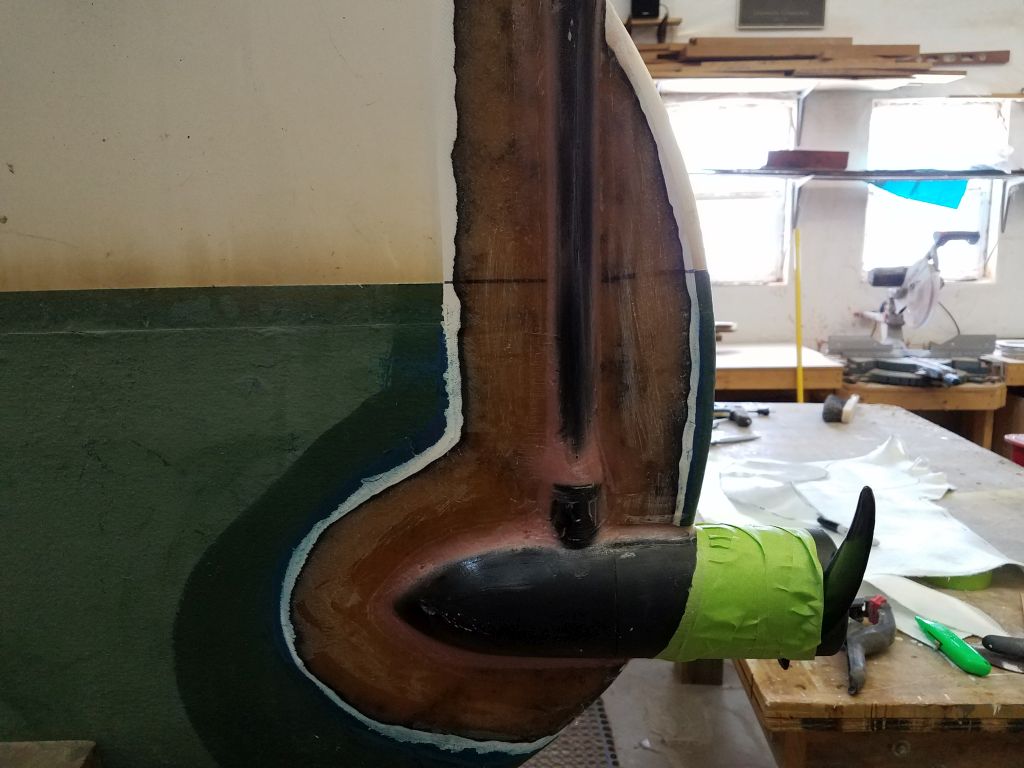
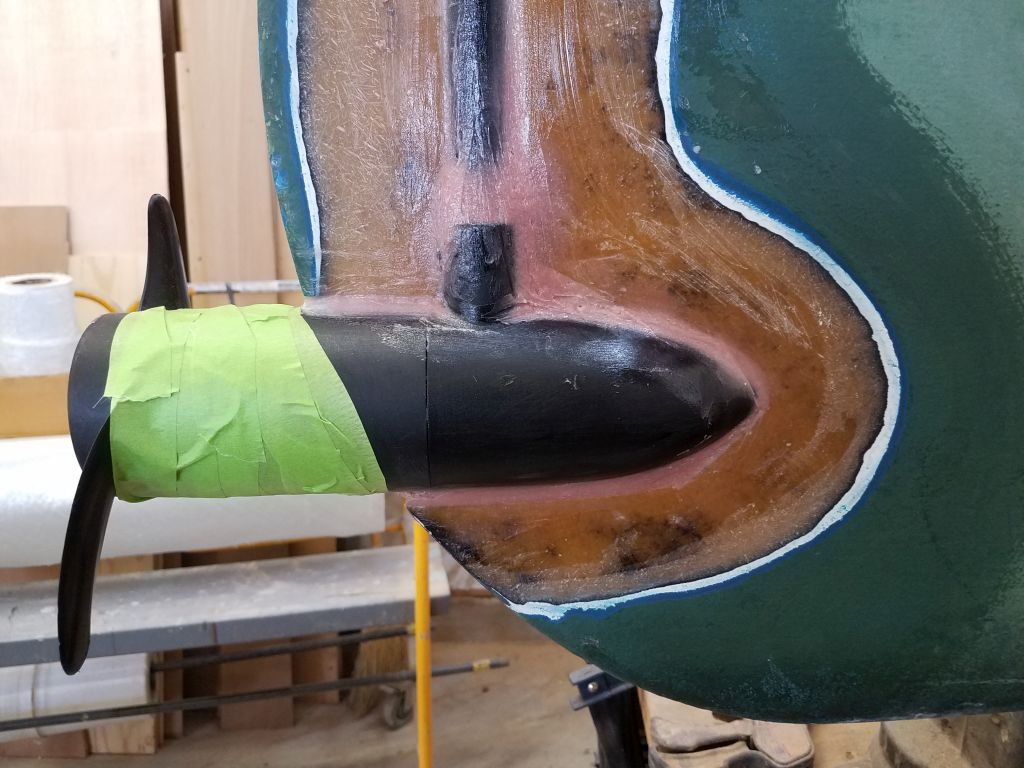
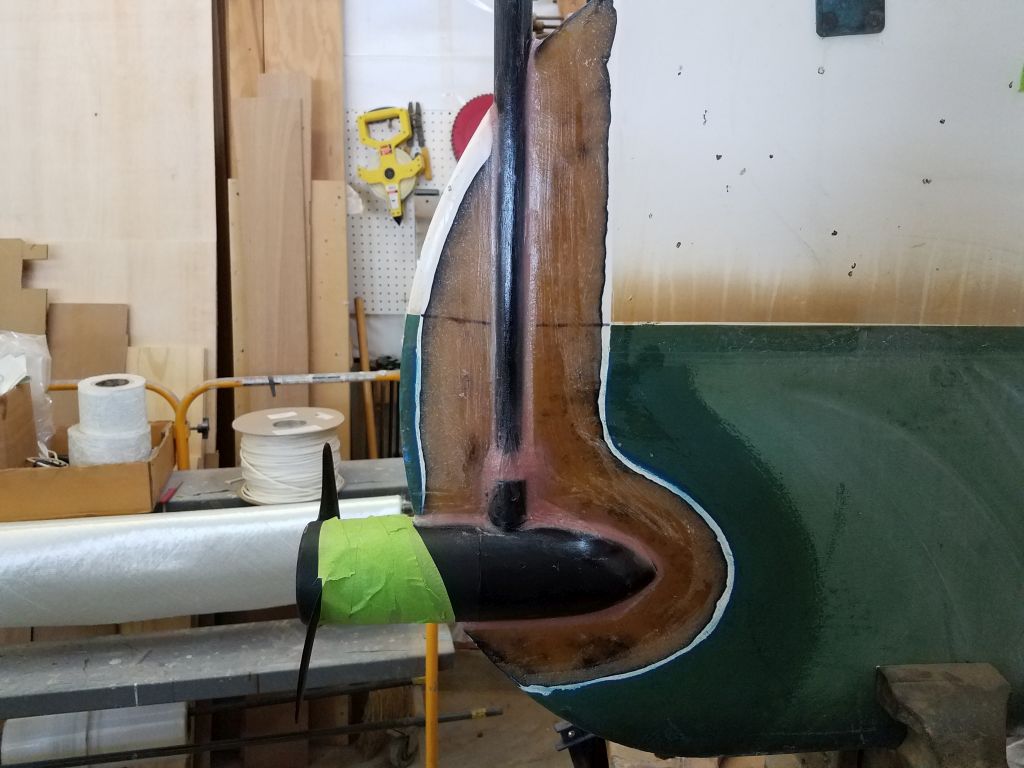
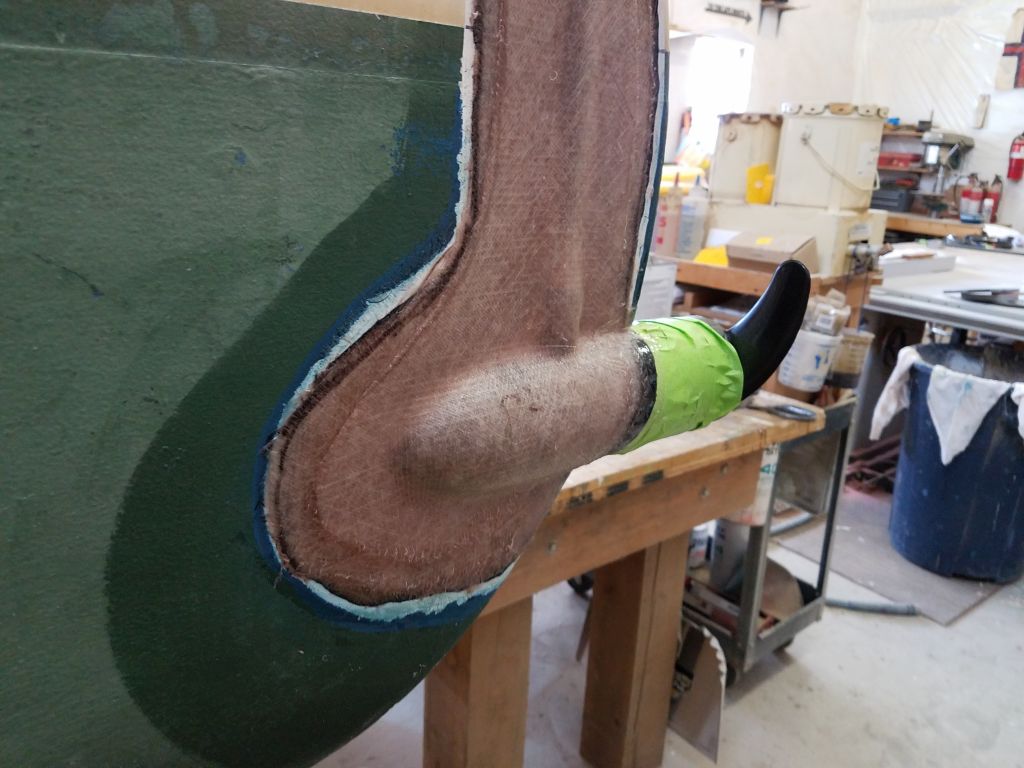
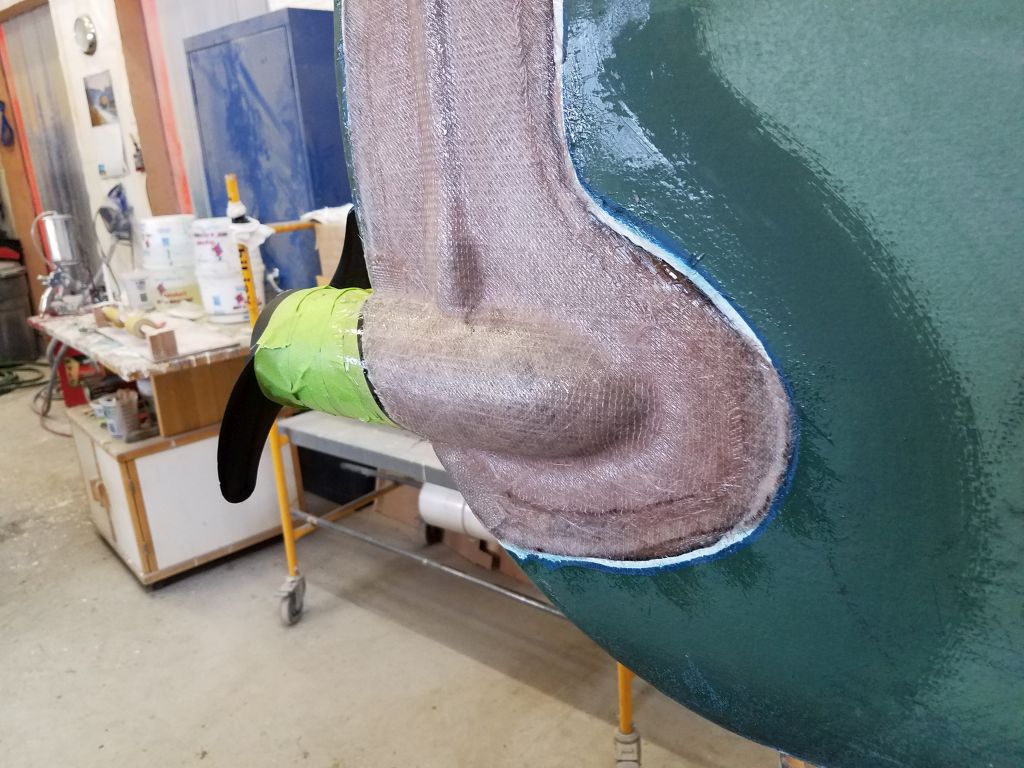
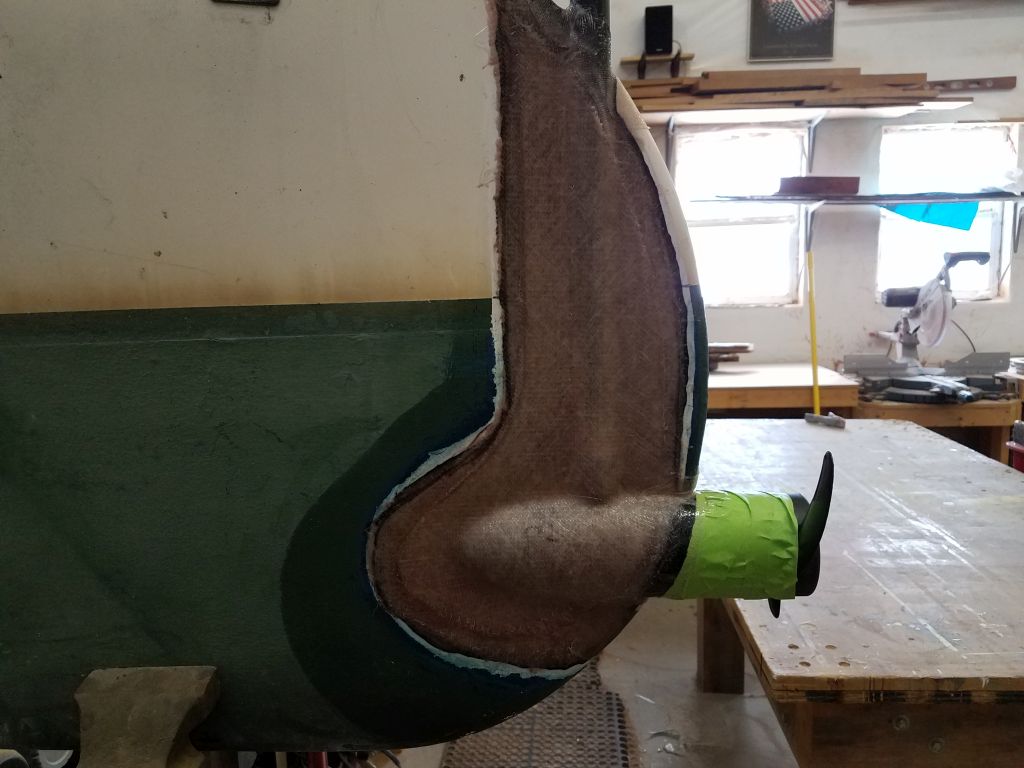
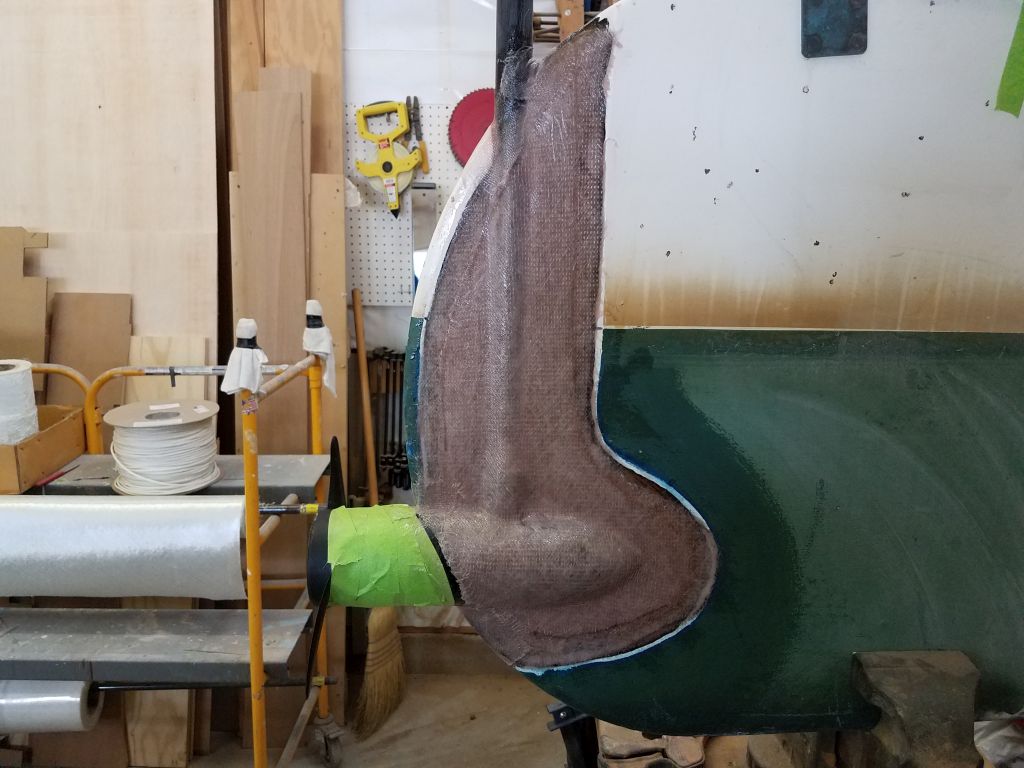
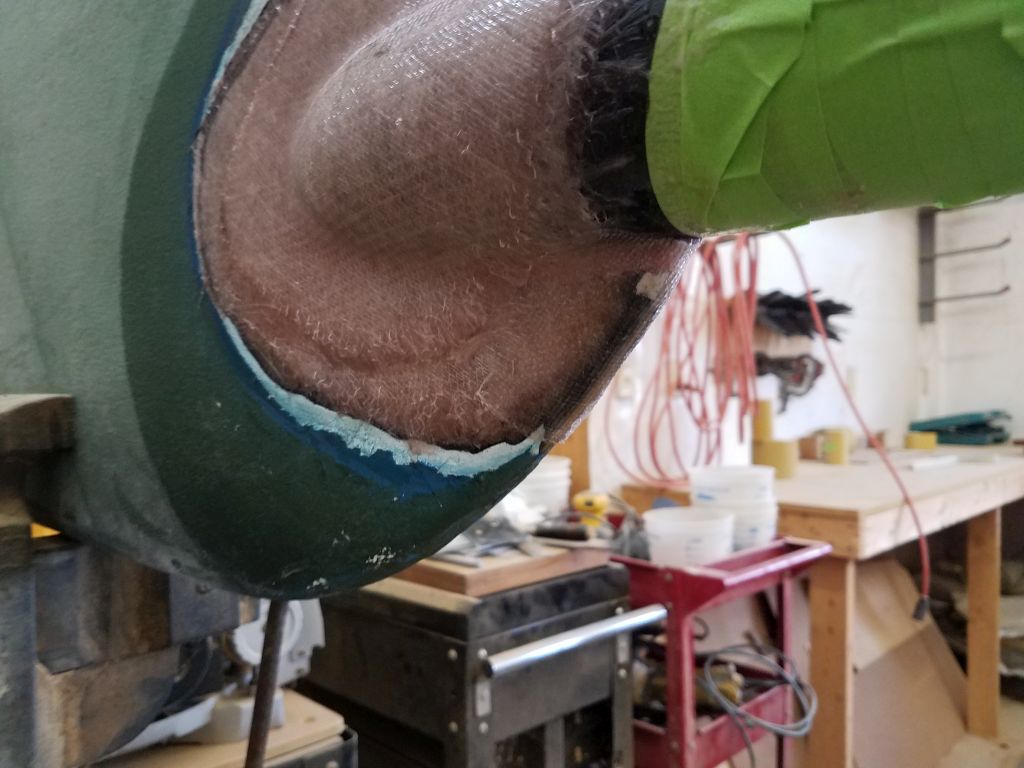
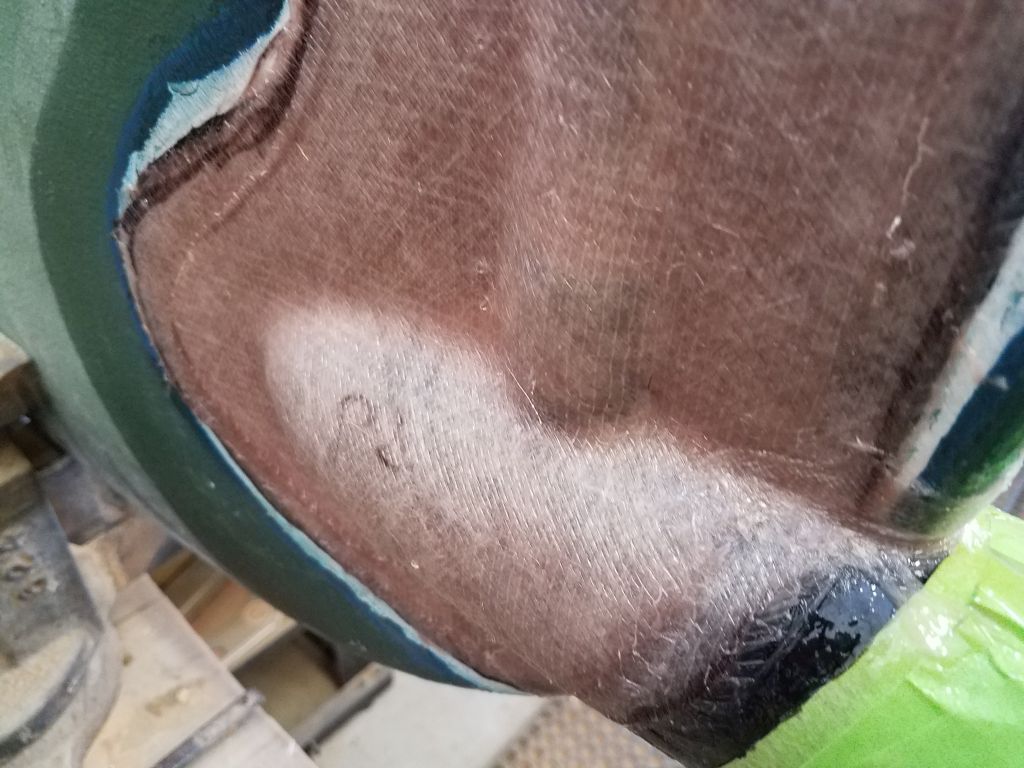
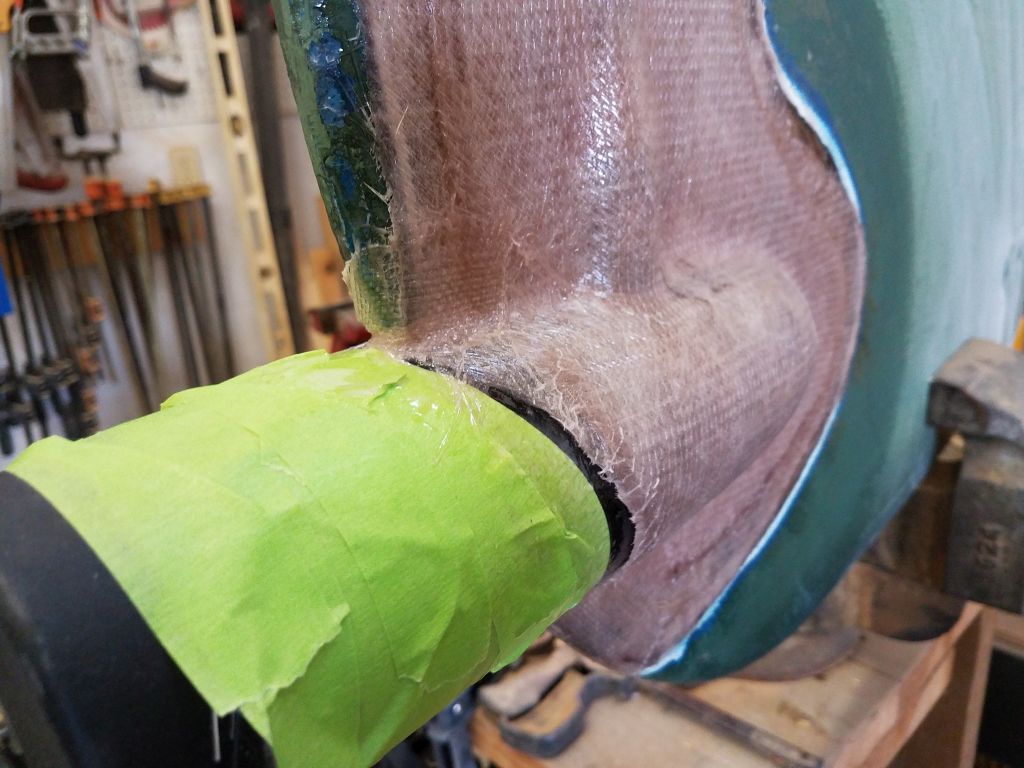
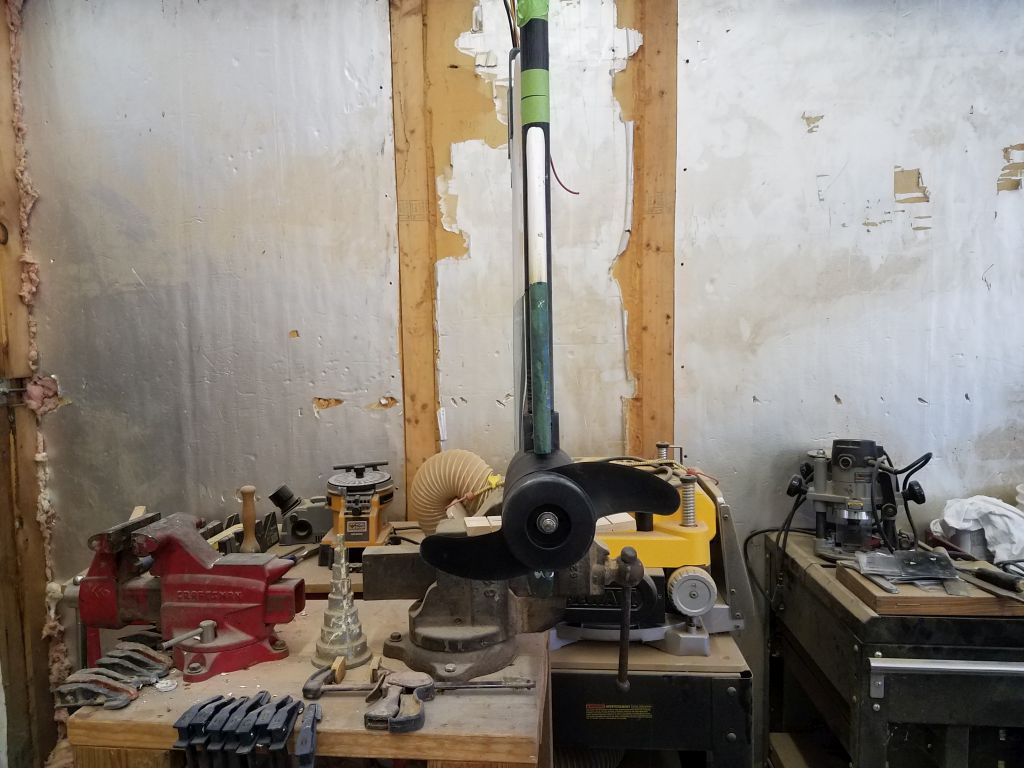
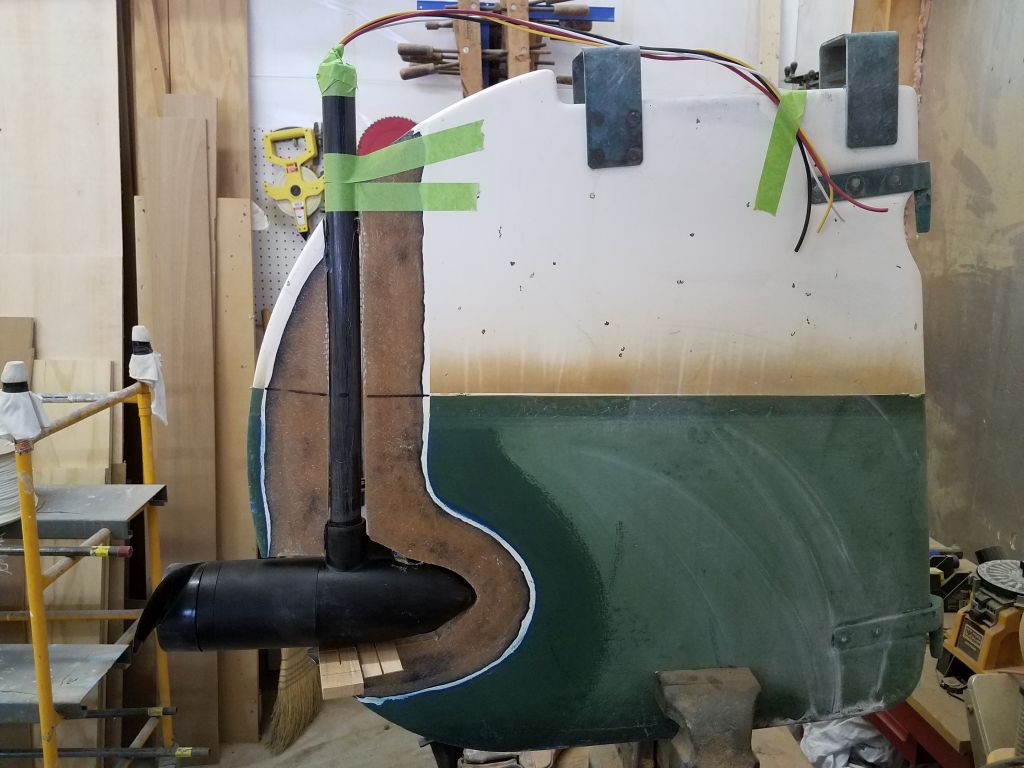
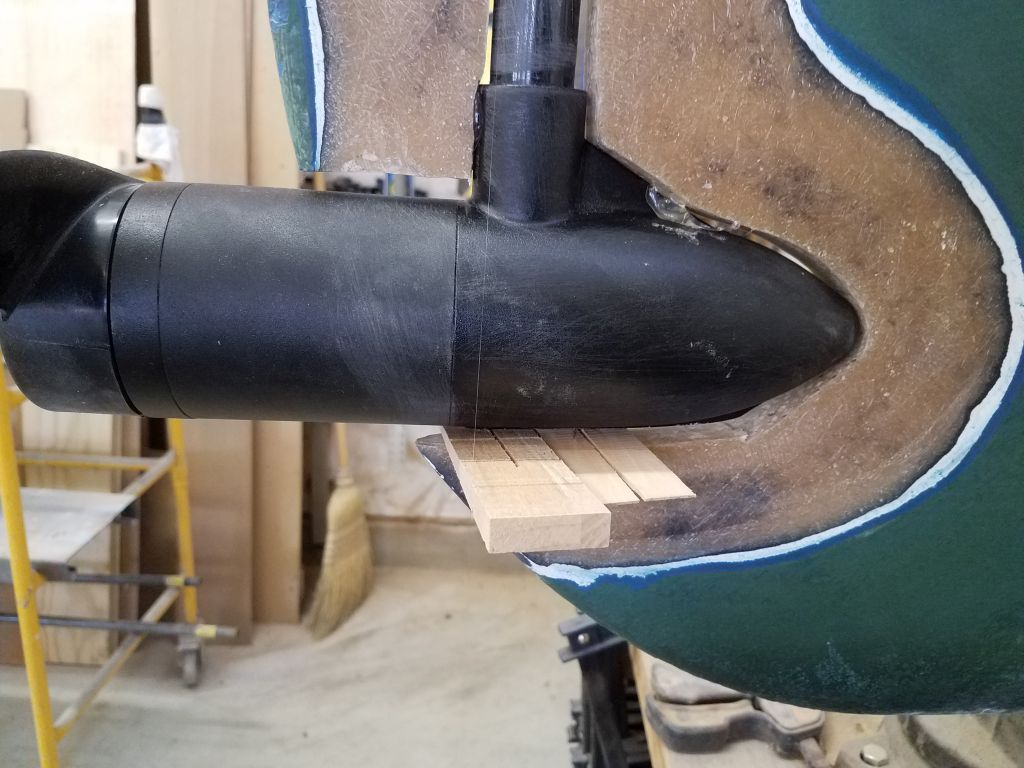
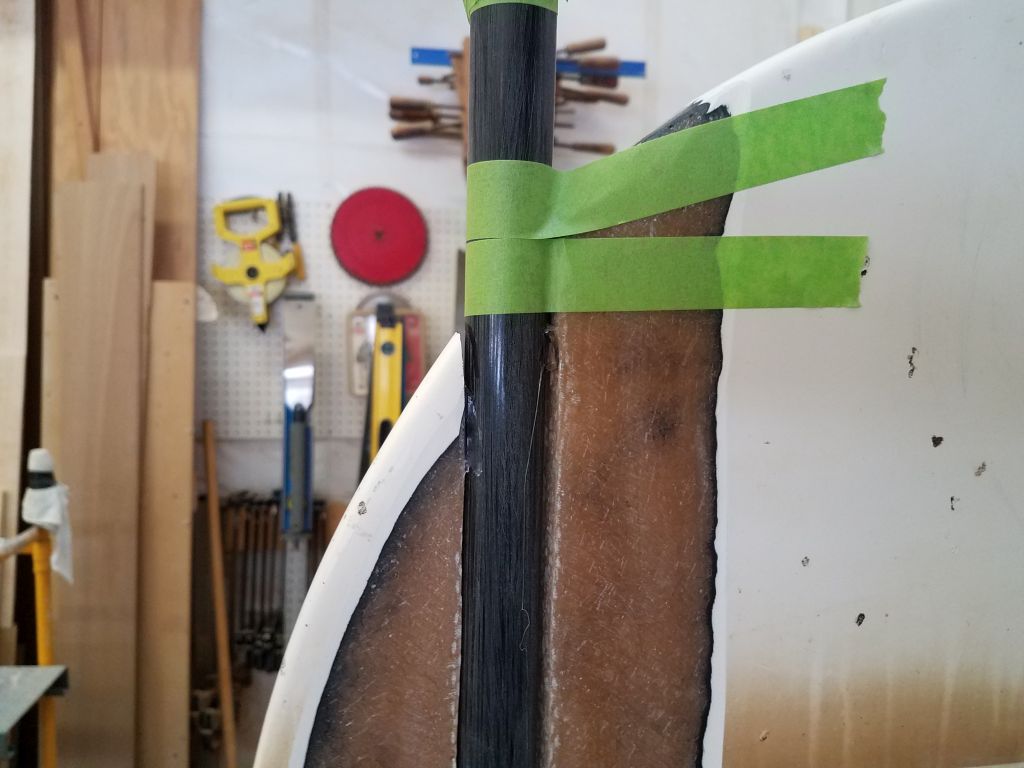
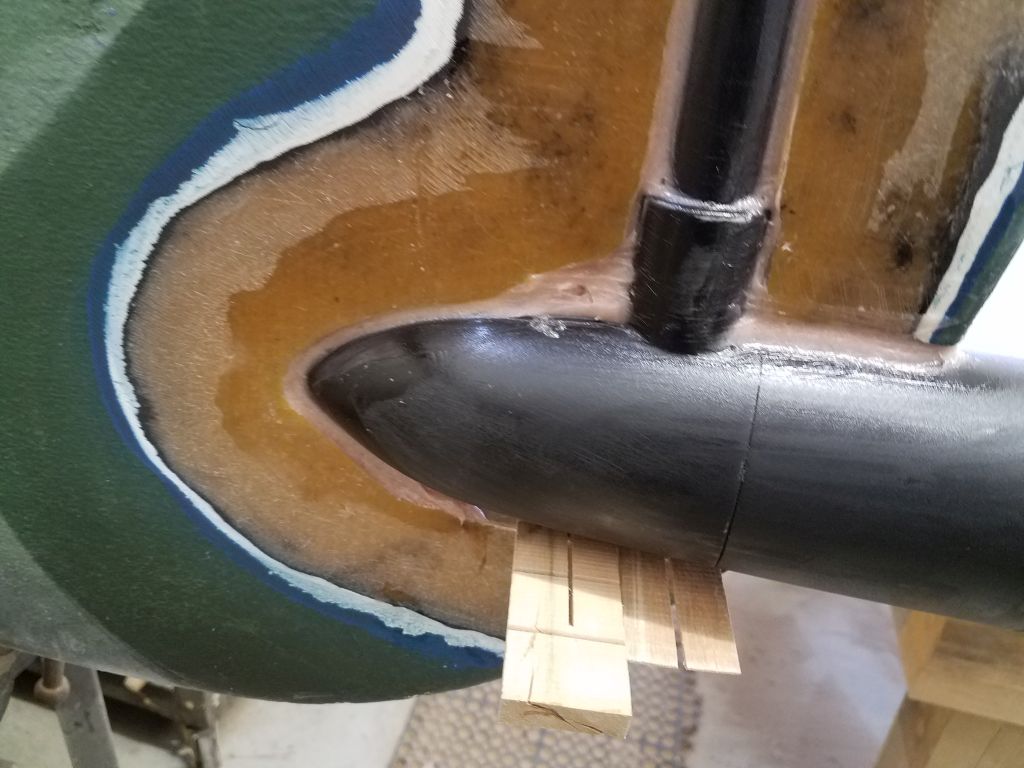
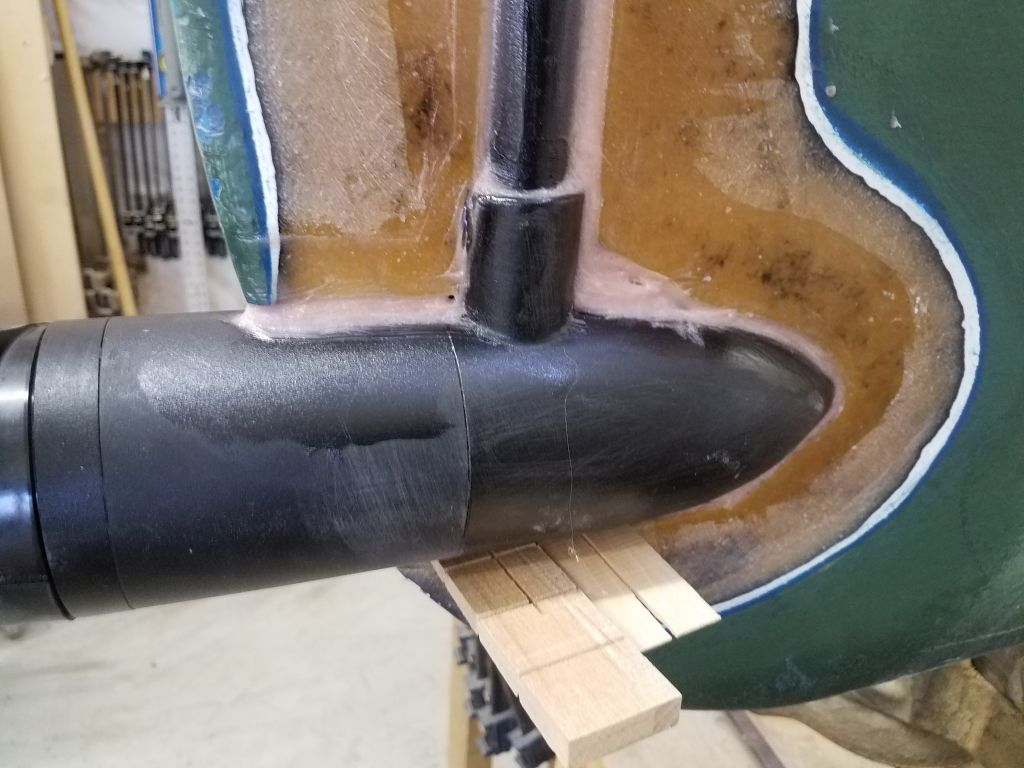
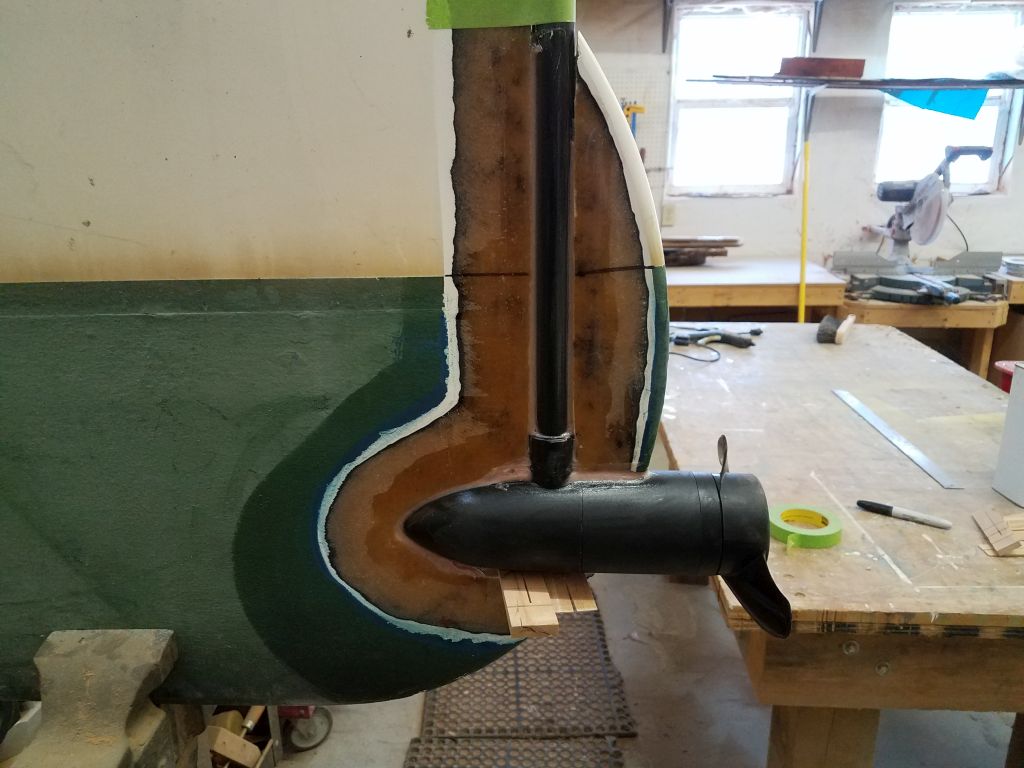
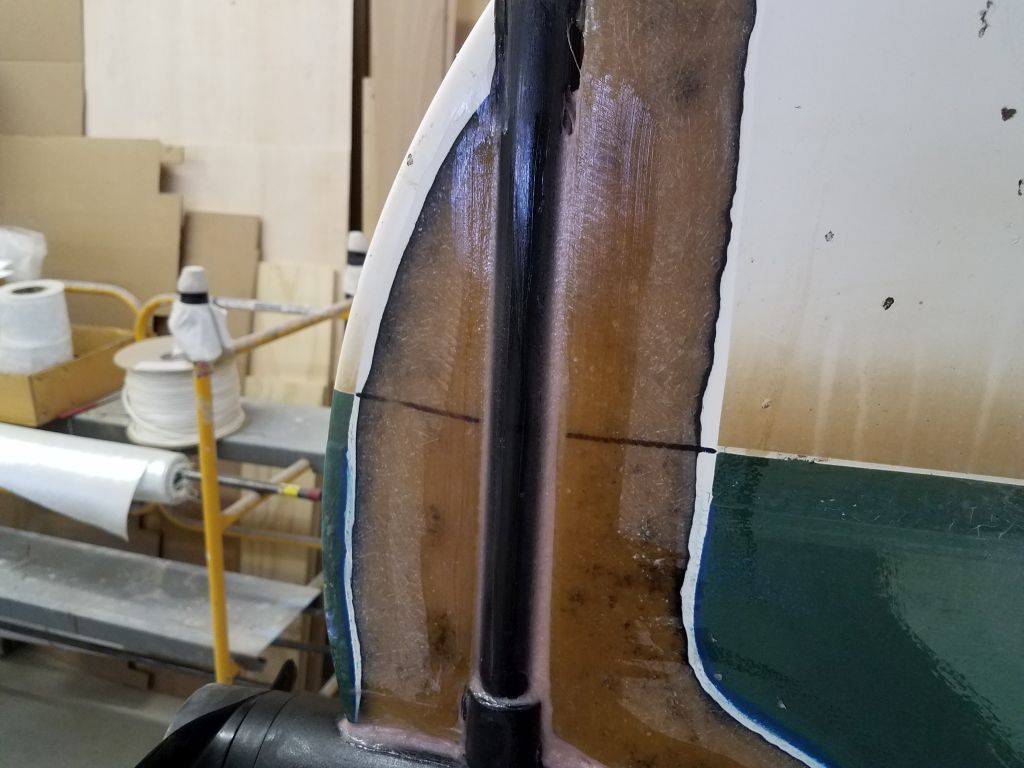
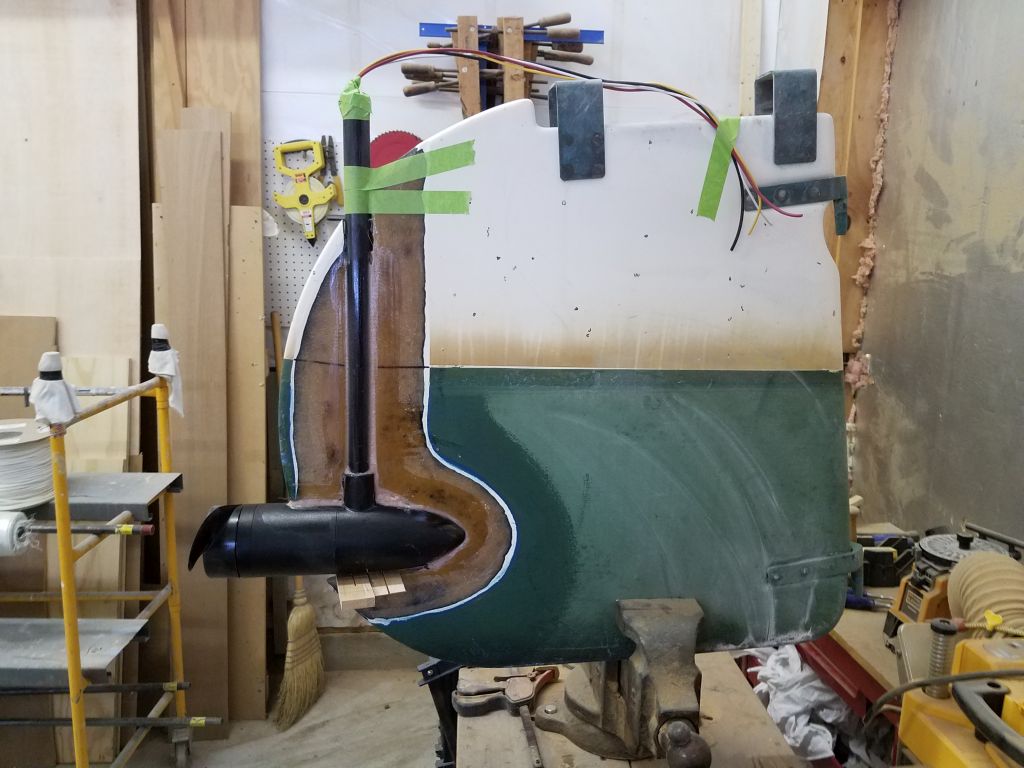
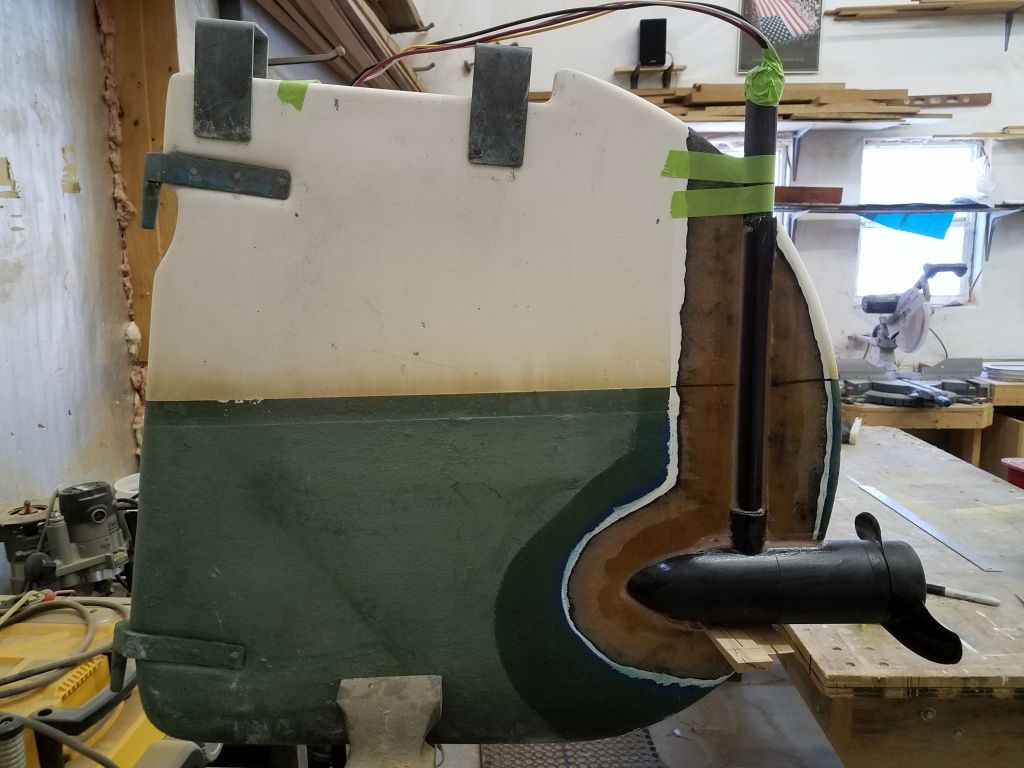
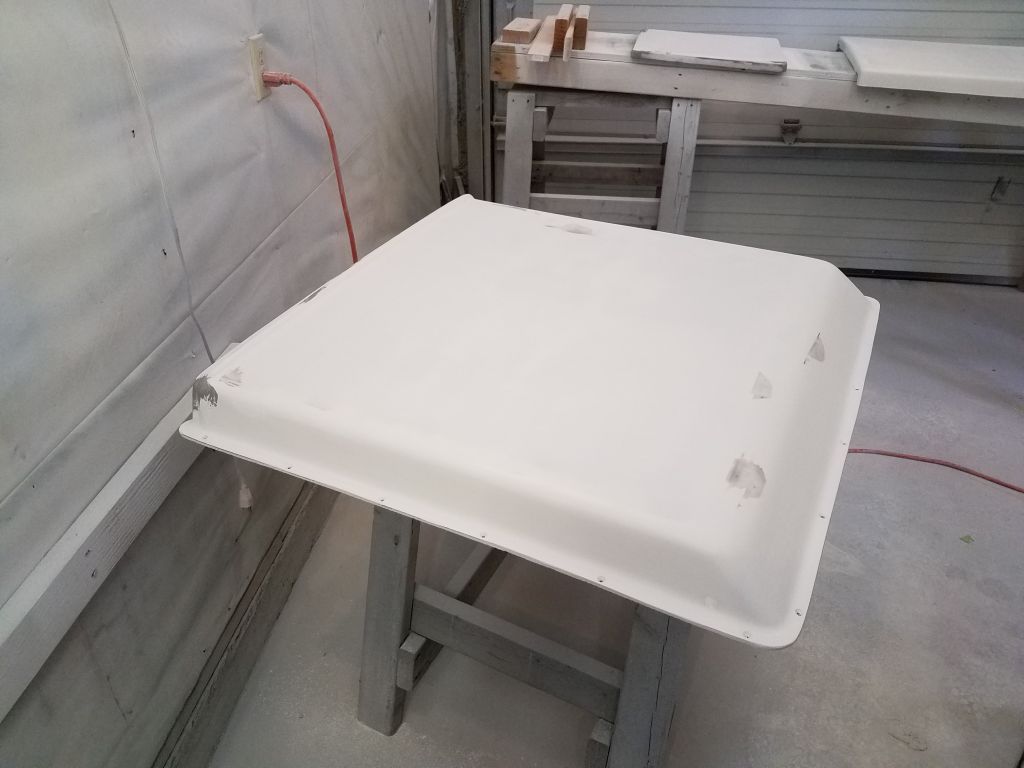
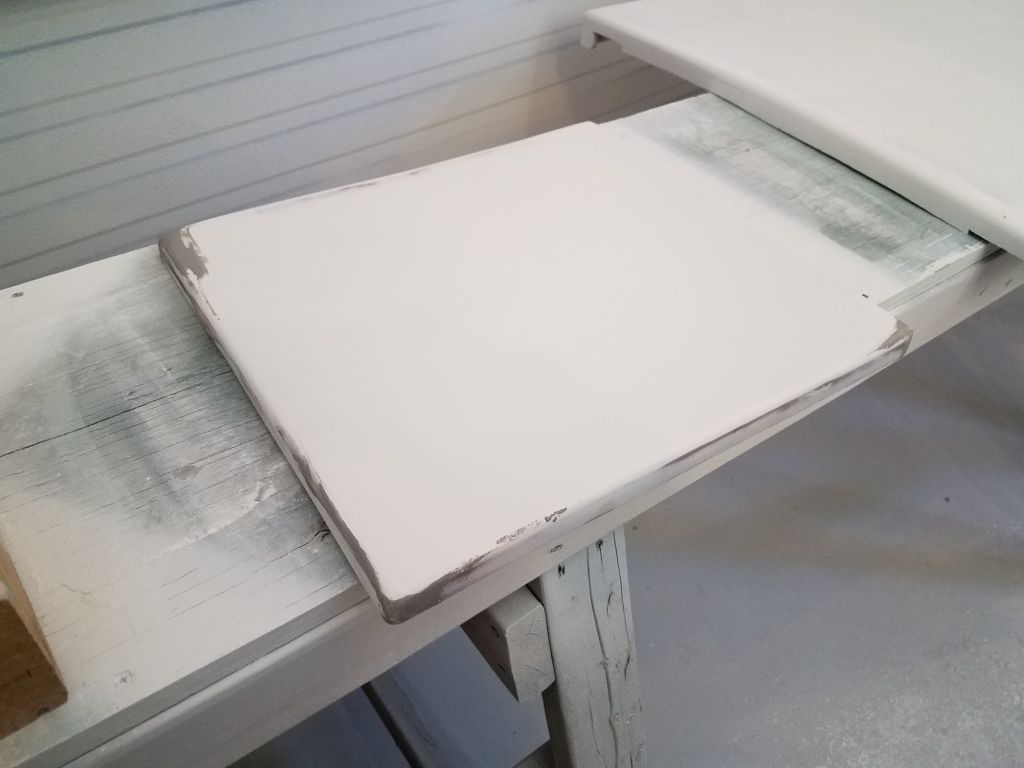
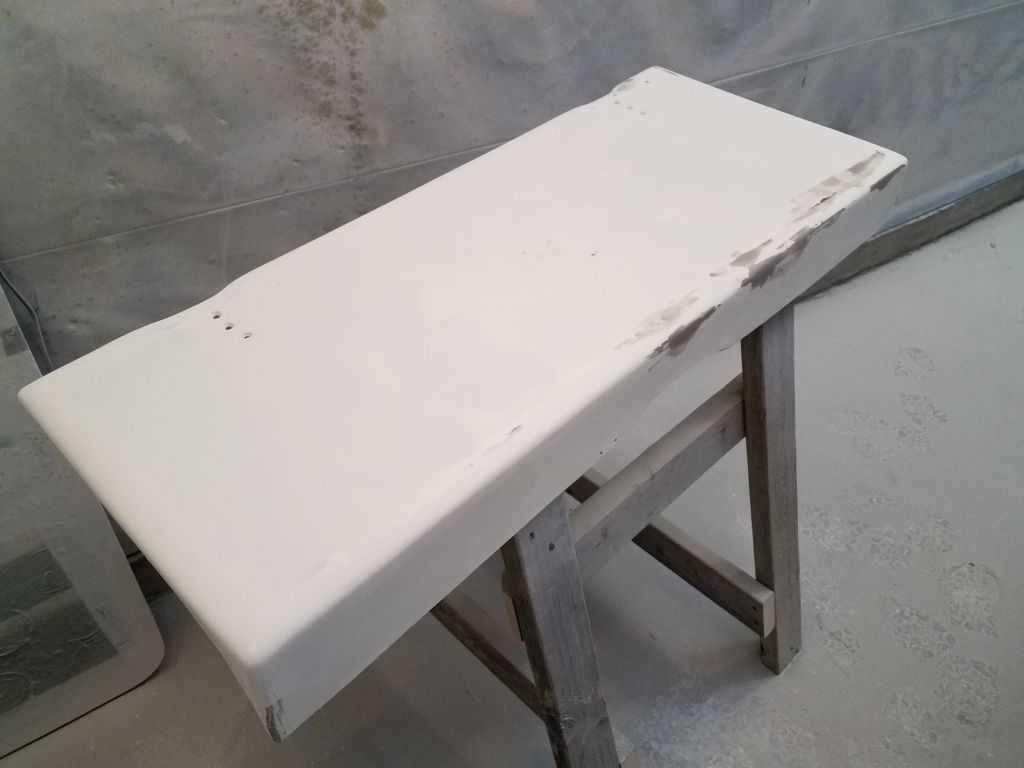
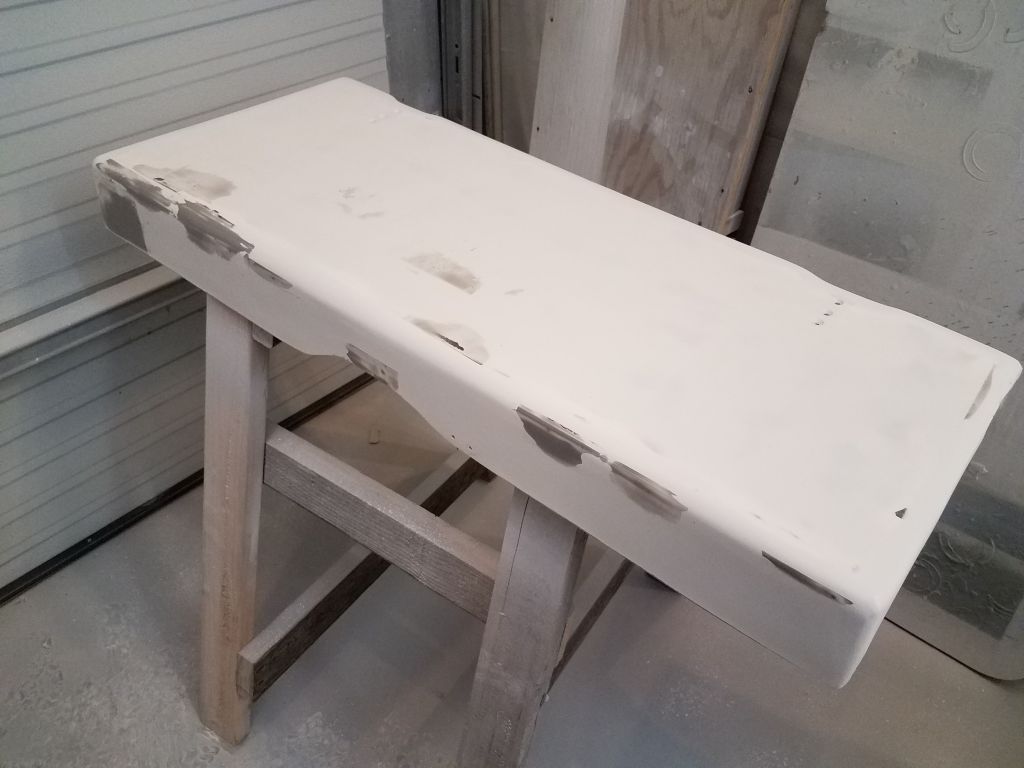
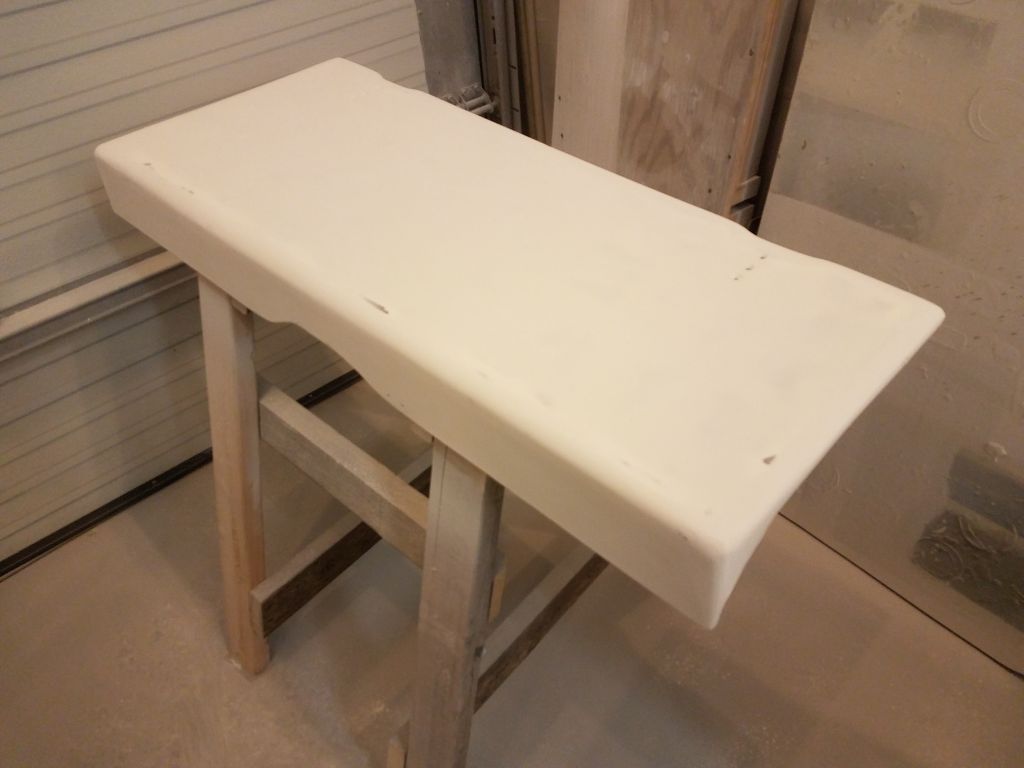
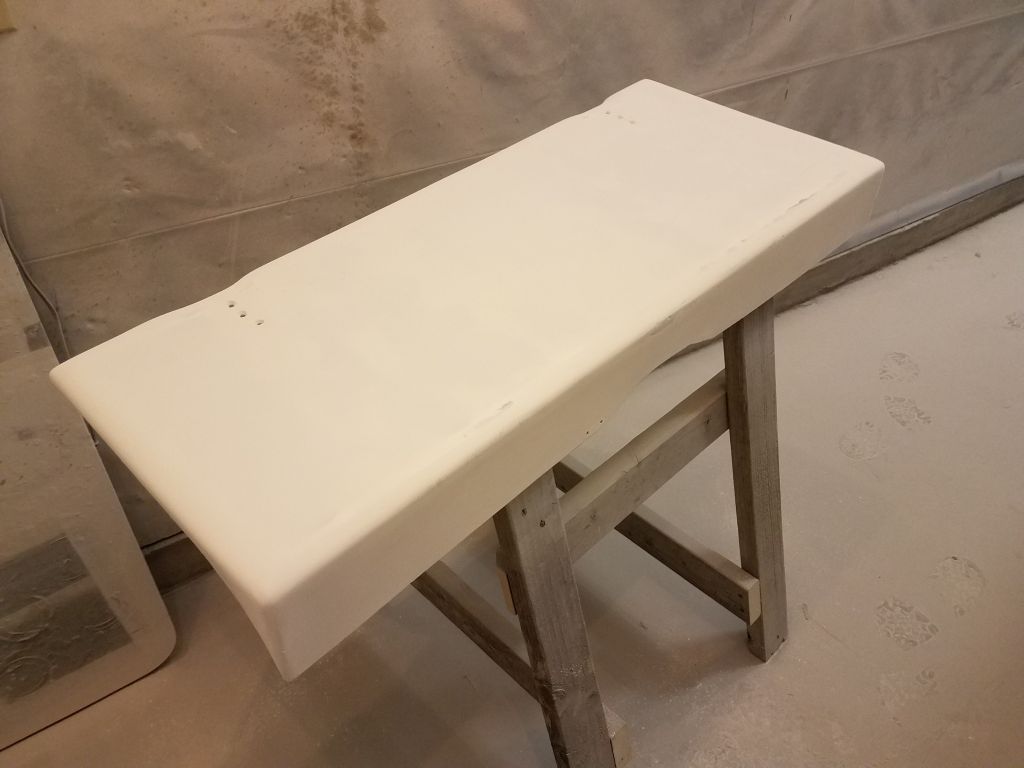
Continuing the project in short bursts over several different days, I kept up the work on the rudder, starting with sanding the fresh fiberglass to smooth and begin to fair it in with the surrounding surfaces.
The new fiberglass was mainly smooth and flush with the adjacent surfaces, but to fill the cloth weave and take care of minor low spots, I applied a coat of epoxy fairing filler over the new work.
Later, once the filler had cured sufficiently, I sanded once more, bringing the new work nearly to its final contours.
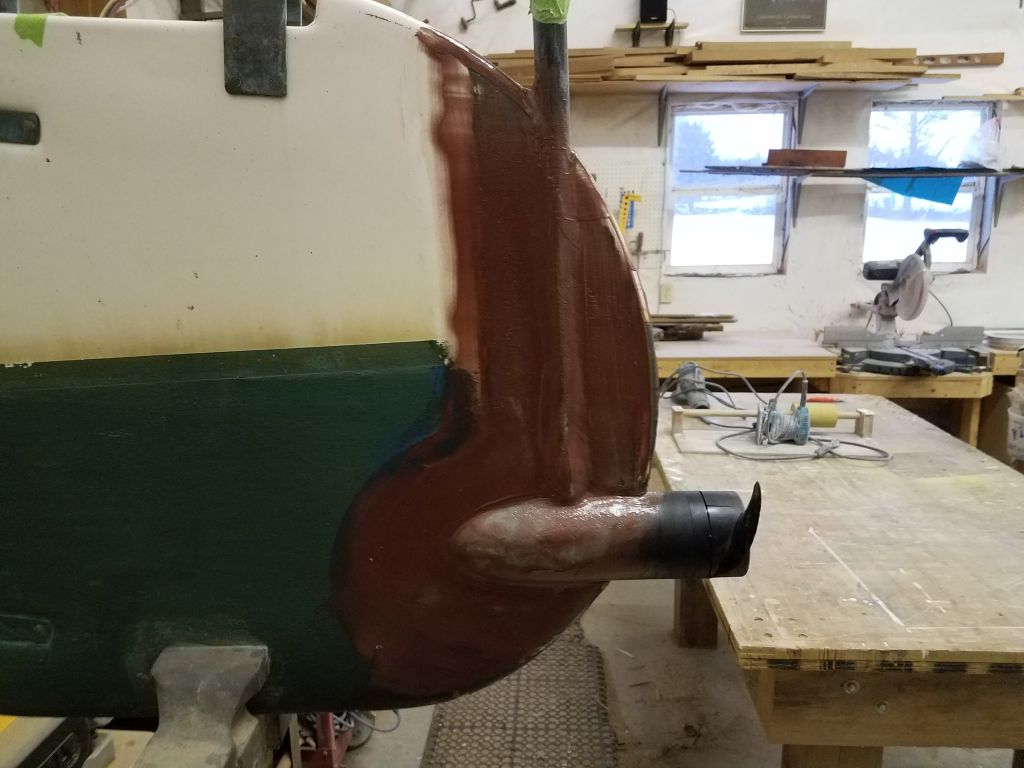
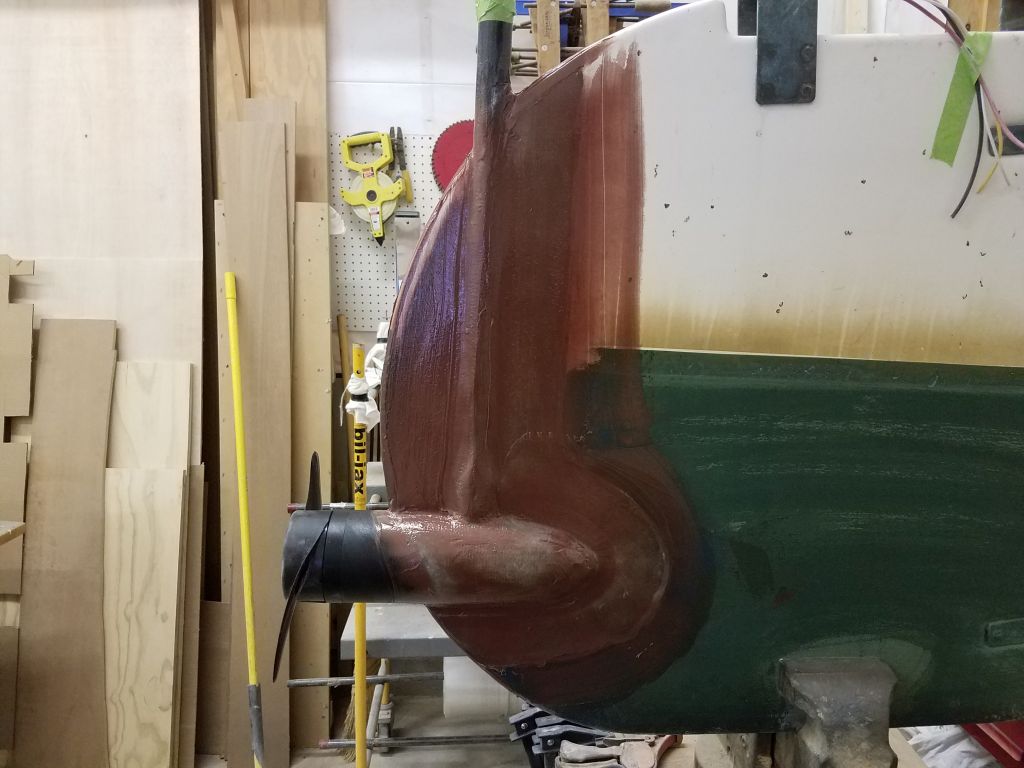
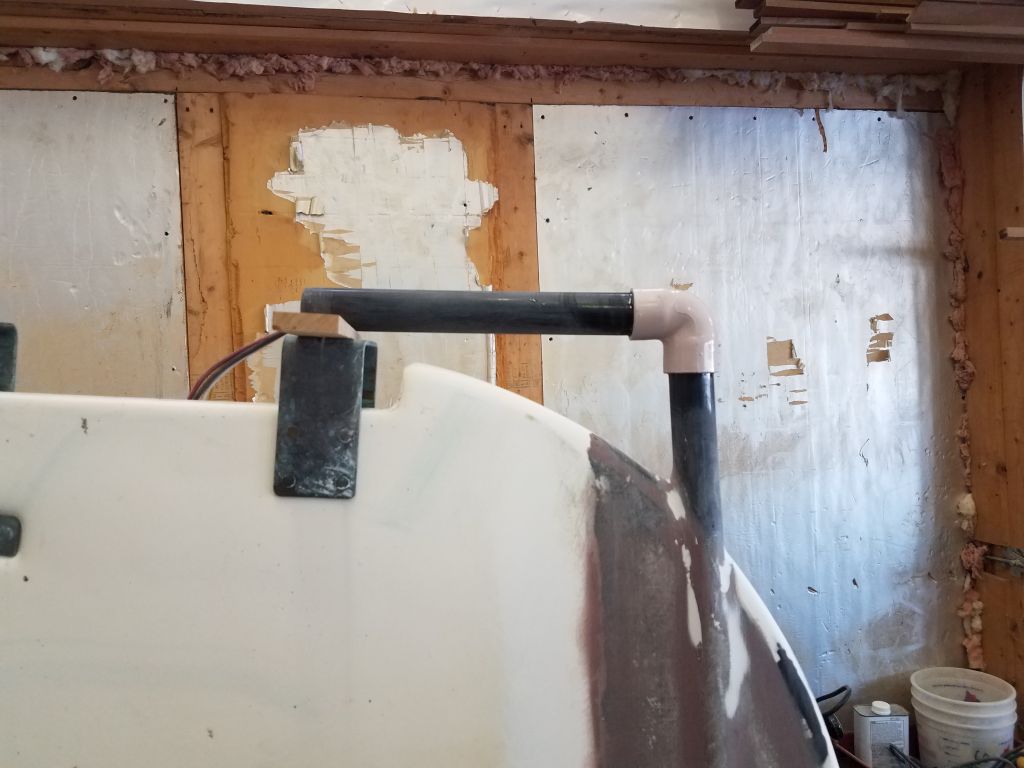
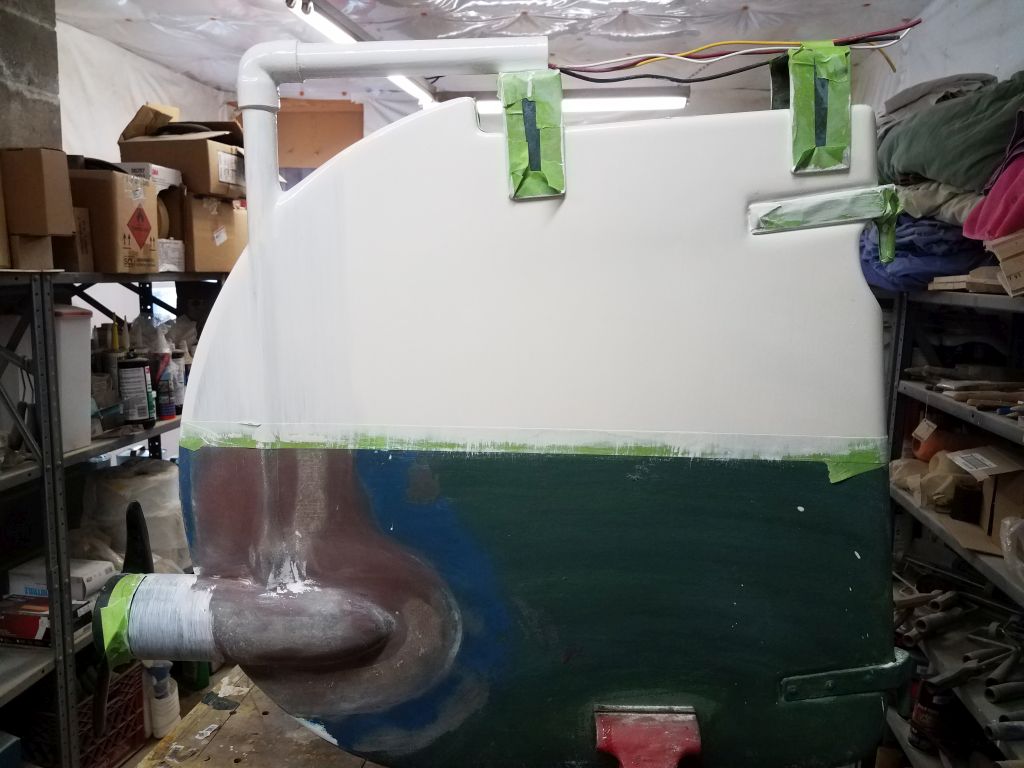
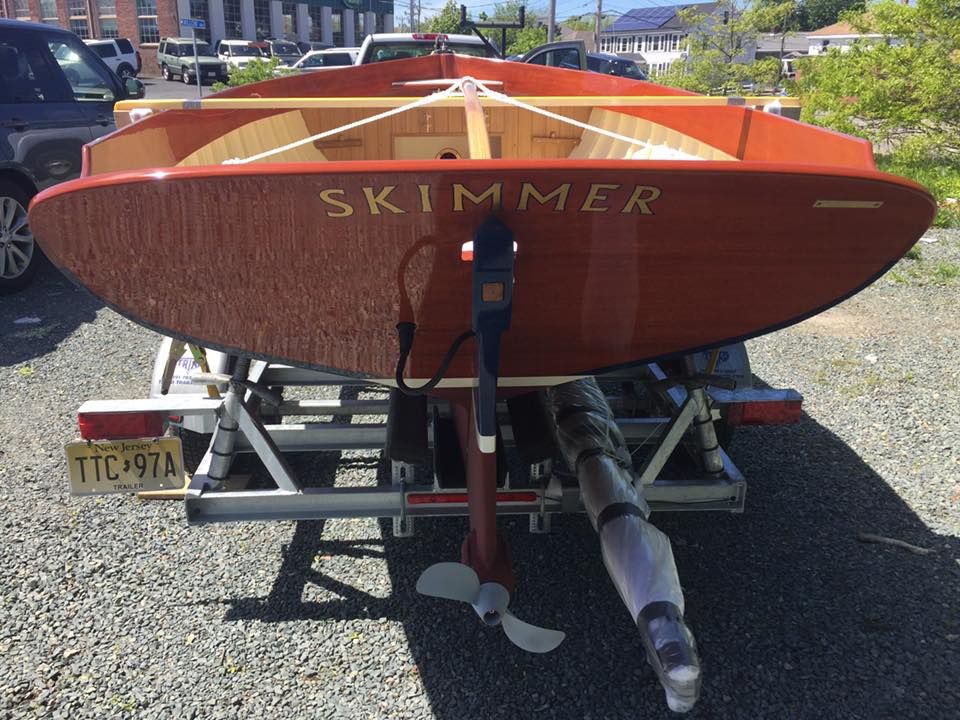
After some final and minor filling on portions of the rudder, mainly around the edge where the vertical shaft now protruded, I continued work on the electrical side. To route the wires forward towards the boat, as well as provide protection and watertightness to the wire run, I added a PVC elbow and used the cutoff length of the original composite shaft to lead the conduit forward across the top of the rudder. I used a 3/4″ PVC elbow, which was a little small for the 1-1/8″ OD of the shaft, so with a heat gun I warmed it up so I could expand the openings as needed to fit the diameter of the pipe. Then, I glued on the elbow and the horizontal section of conduit with some 5-minute epoxy. I used a little wedge at the forward end to ensure that the angle of the pipe was where I wanted it while the glue cured; this would allow room to slide over a length of hose through which the wires could continue their run onto the boat where they’d eventually connect to the controls and battery. I’d need to be back at the boat (located remotely at the moment) in order to finalize the wire and flexible conduit lengths.
When the glue cured, I performed some final sanding on the new work and the pipe assembly, and also sanded the entire above-waterline portion of the rudder to prepare the original gelcoat for priming and paint along with the new work. After masking off the waterline and hardware as necessary, I brushed on two coats of epoxy-based primer to seal the fresh epoxy work and also provide a consistent base over the gelcoated forward areas, as well as the black wiring conduit.
When the primer cured overnight, and after a light sanding, I applied a first coat of gloss white paint.
I wasn’t happy with the first coat and it didn’t cure properly, so the next morning I removed it (it wiped off with paint thinner and minor effort), and started over with a coat of semi-gloss white enamel that I thought would better match the old gelcoat on the rest of the boat.
Total time billed on this job today: 3 hours (spread over 6 days)
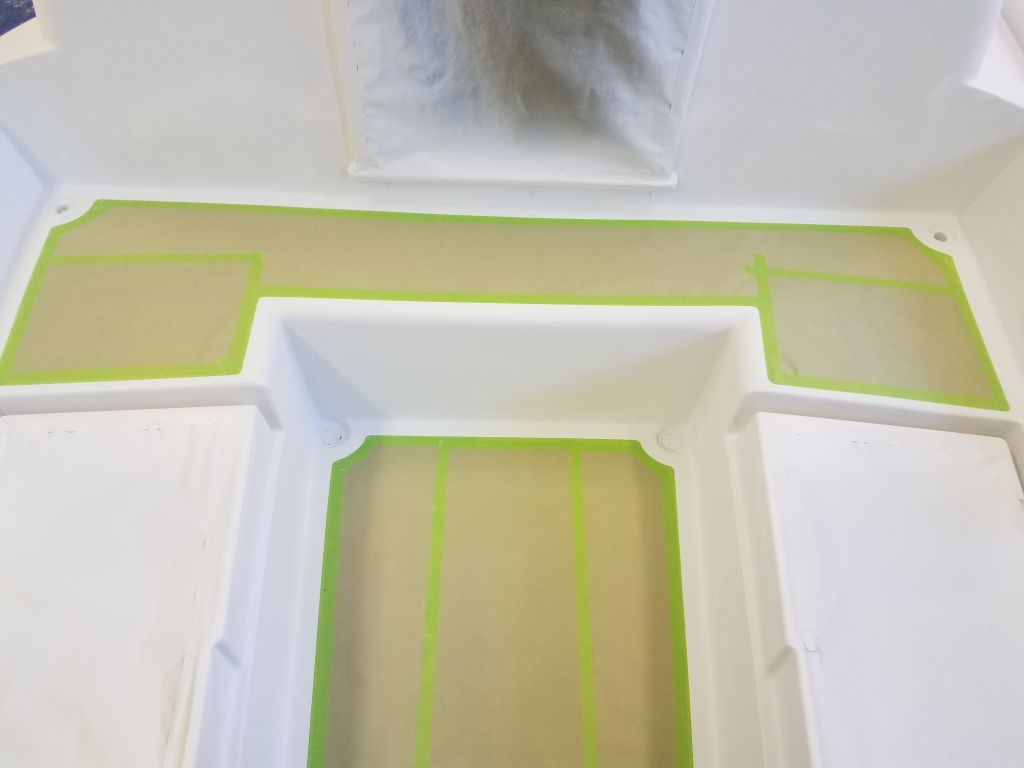
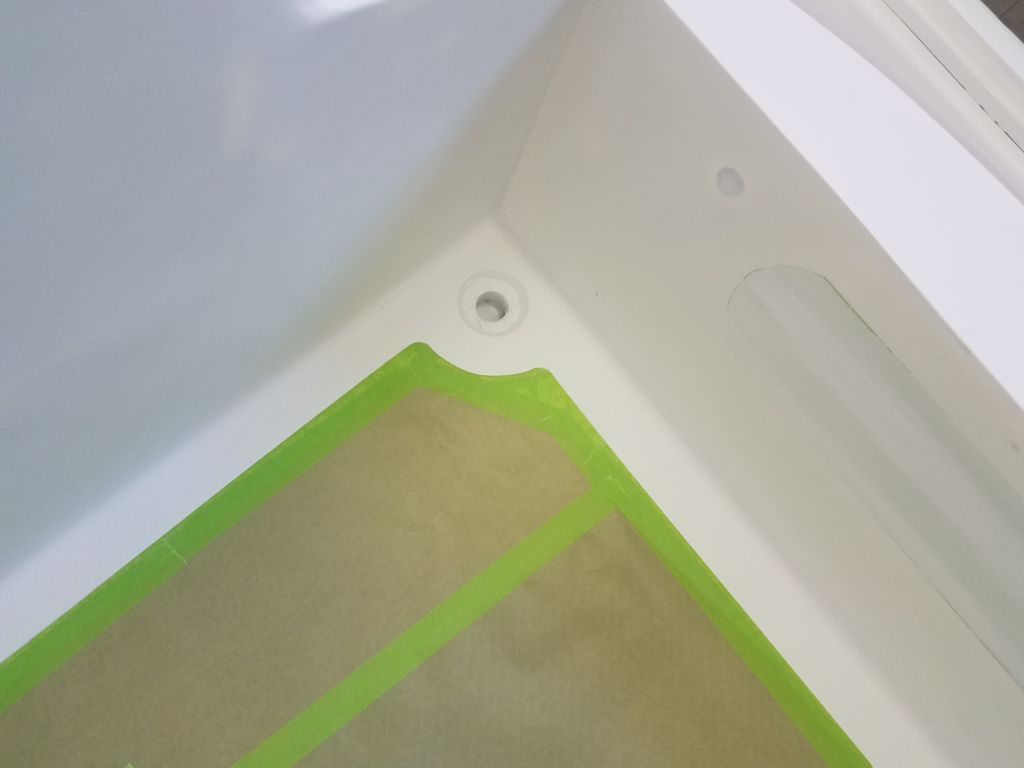
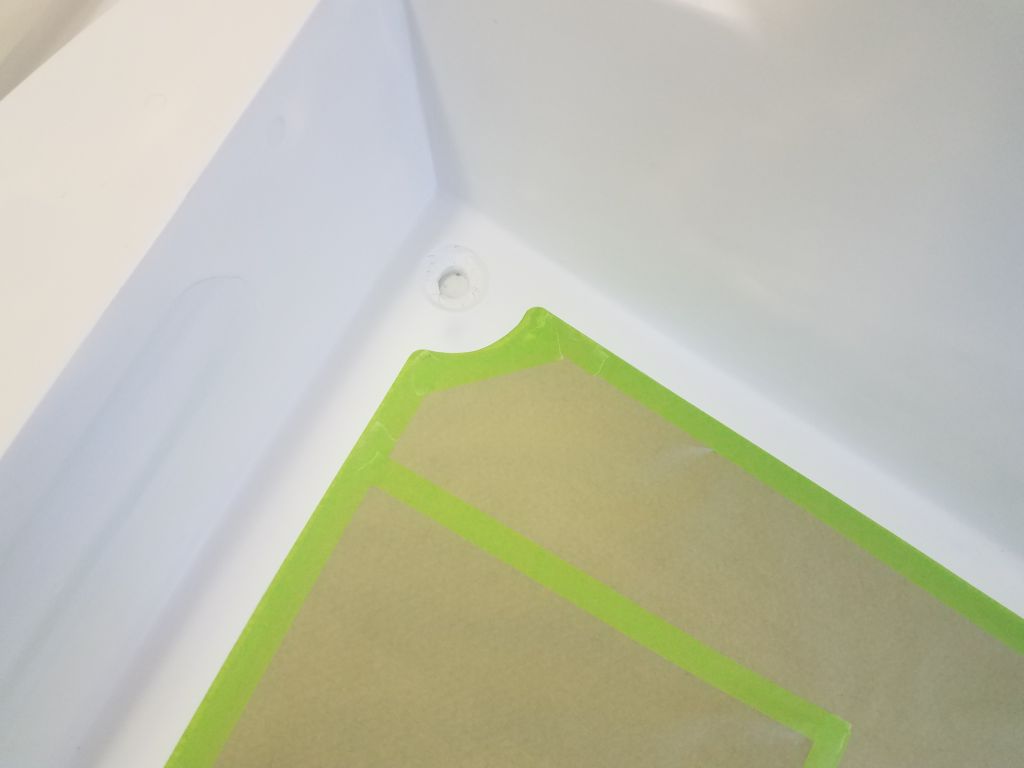
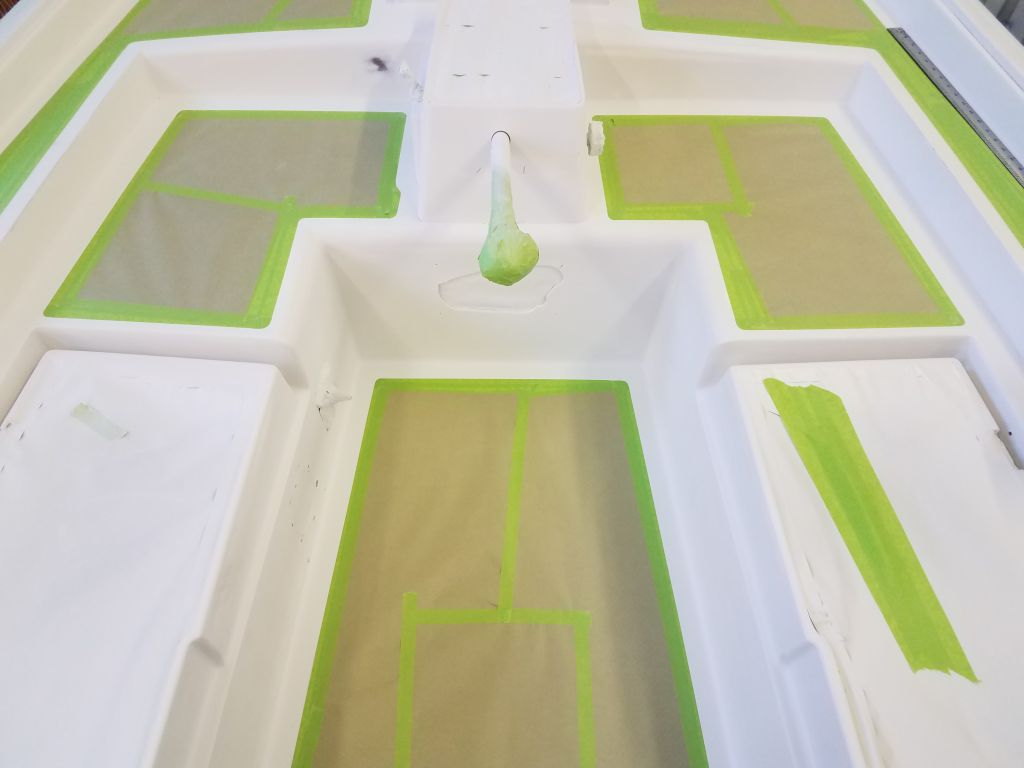
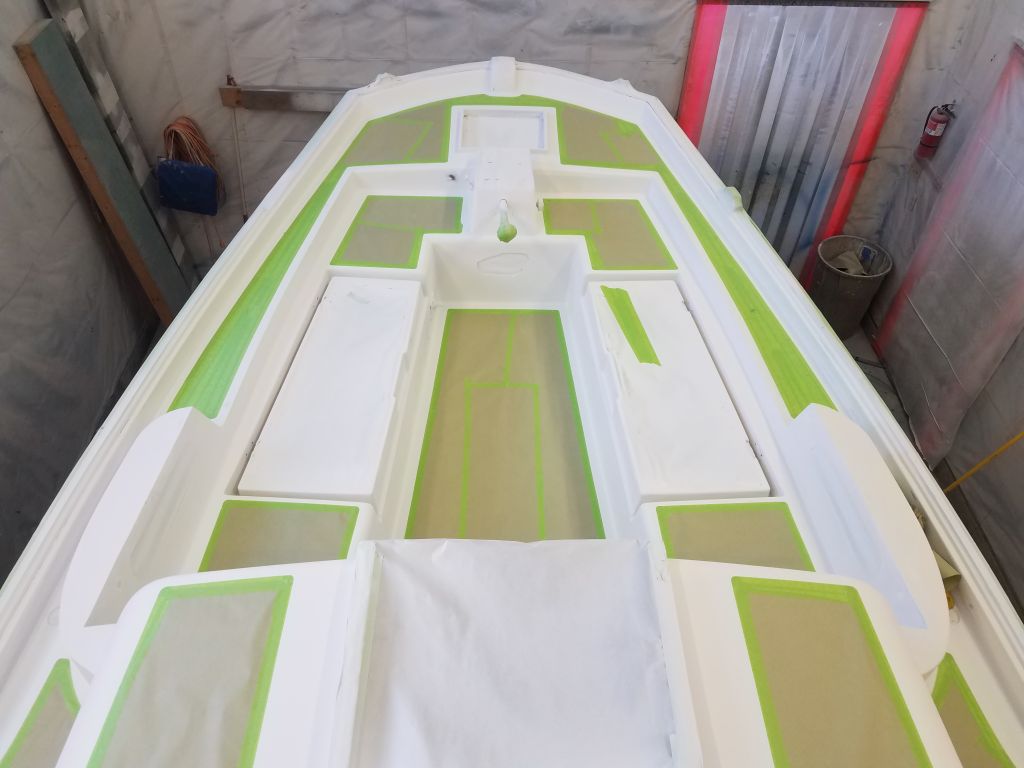
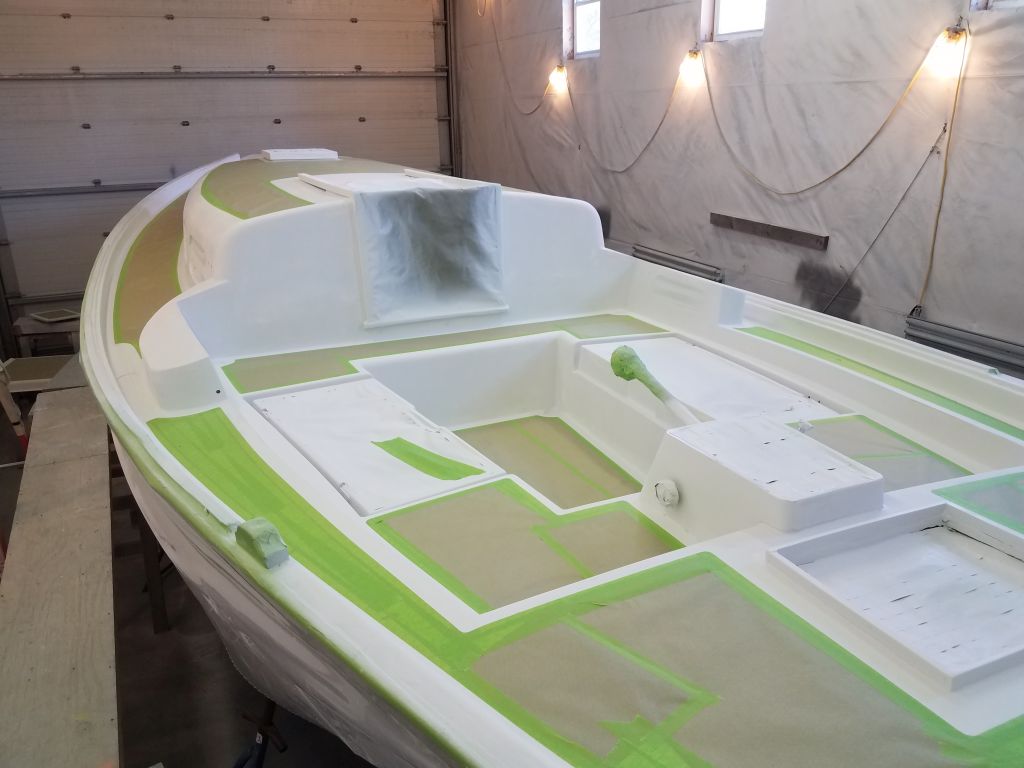
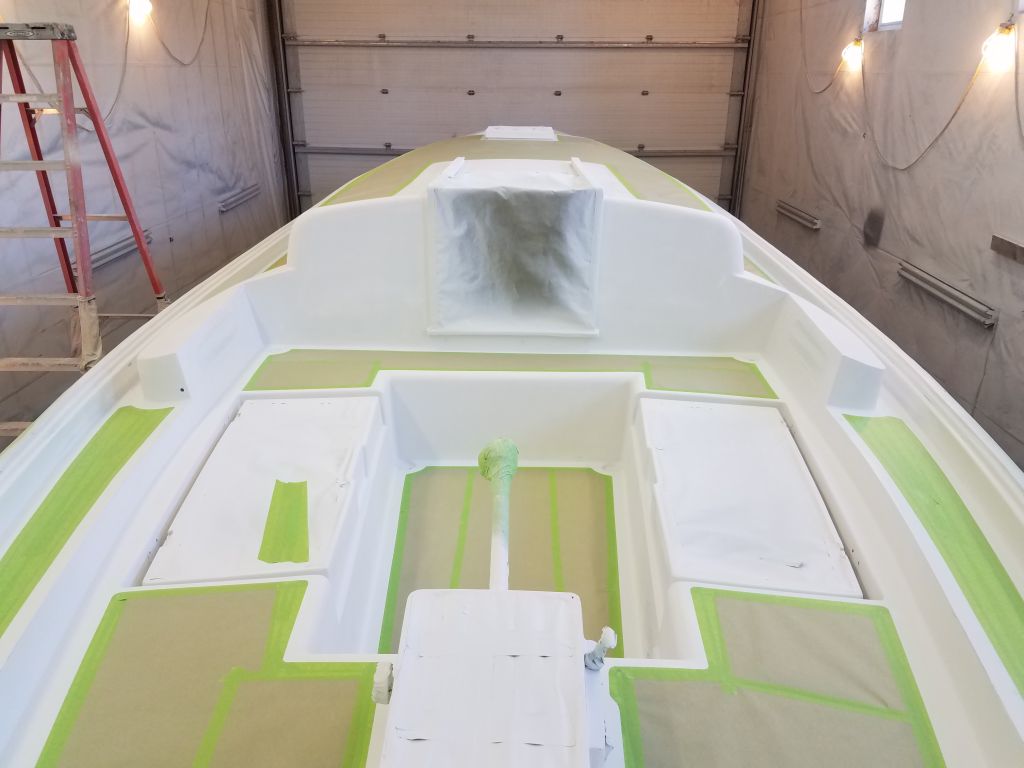
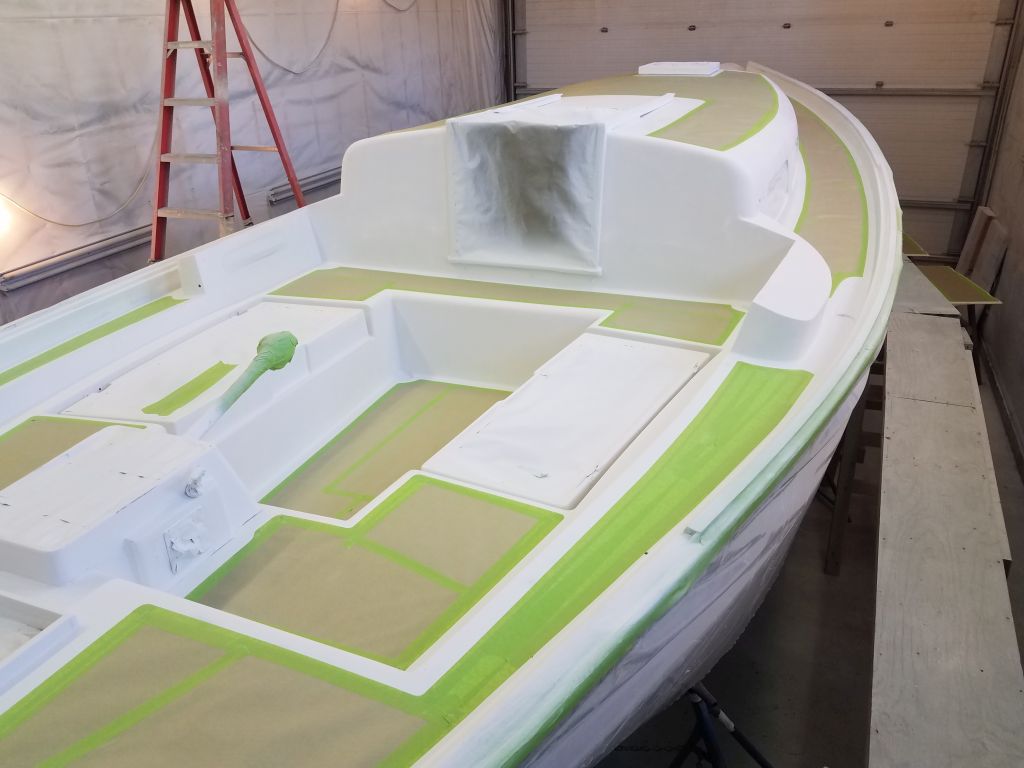
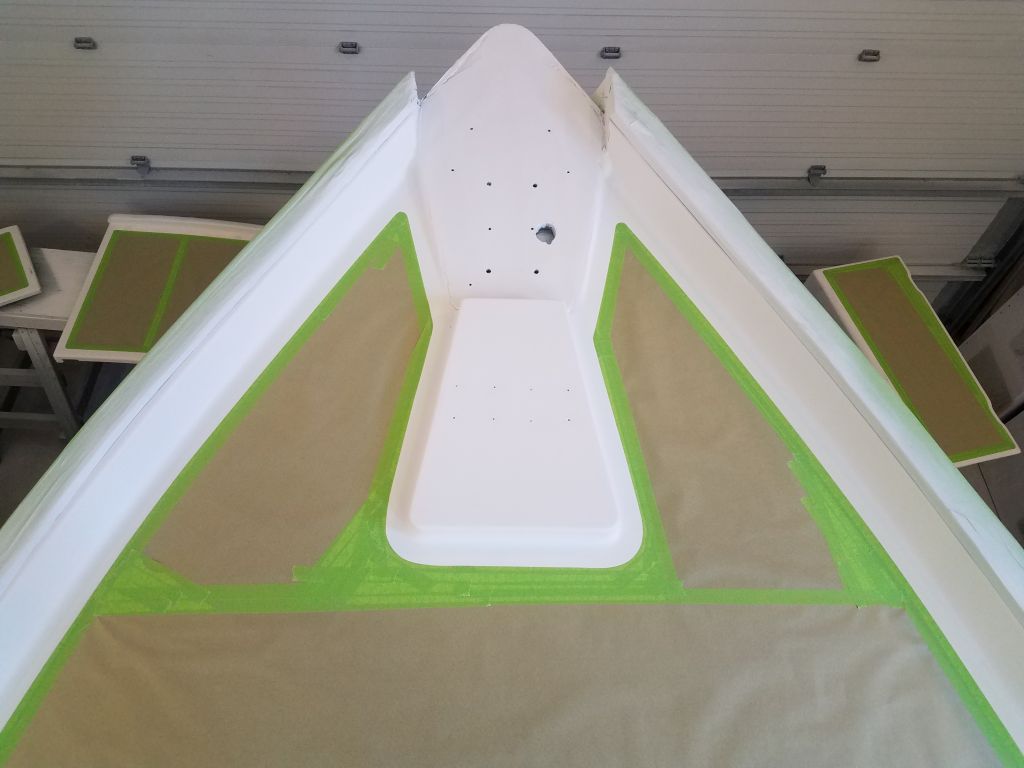
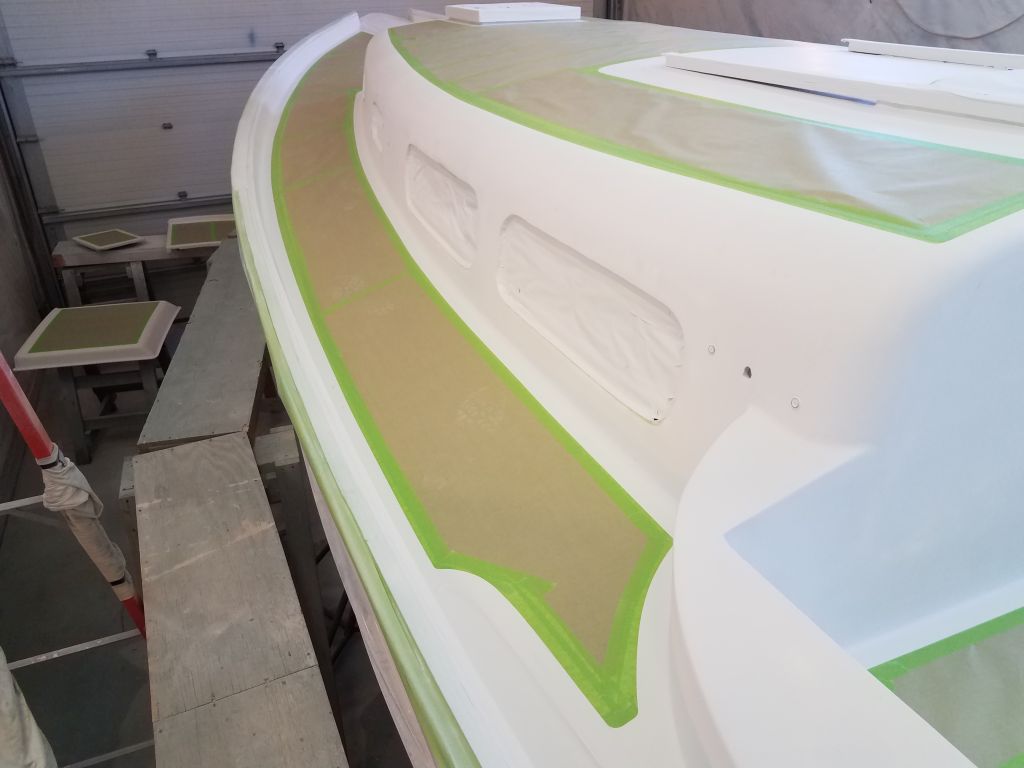
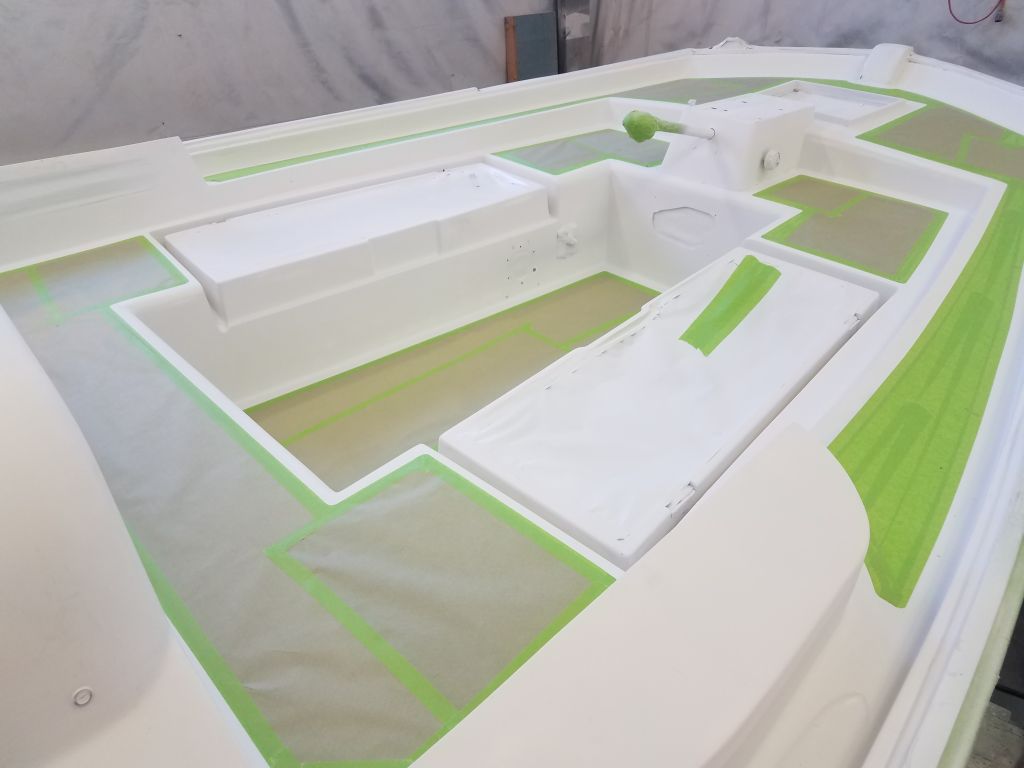
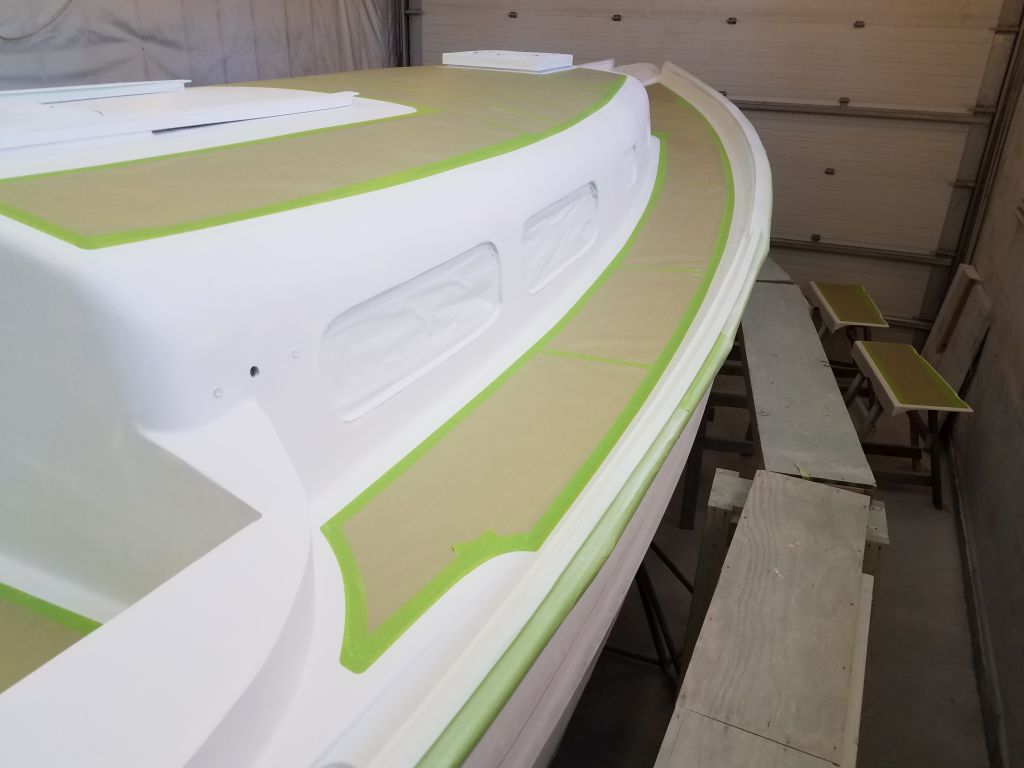
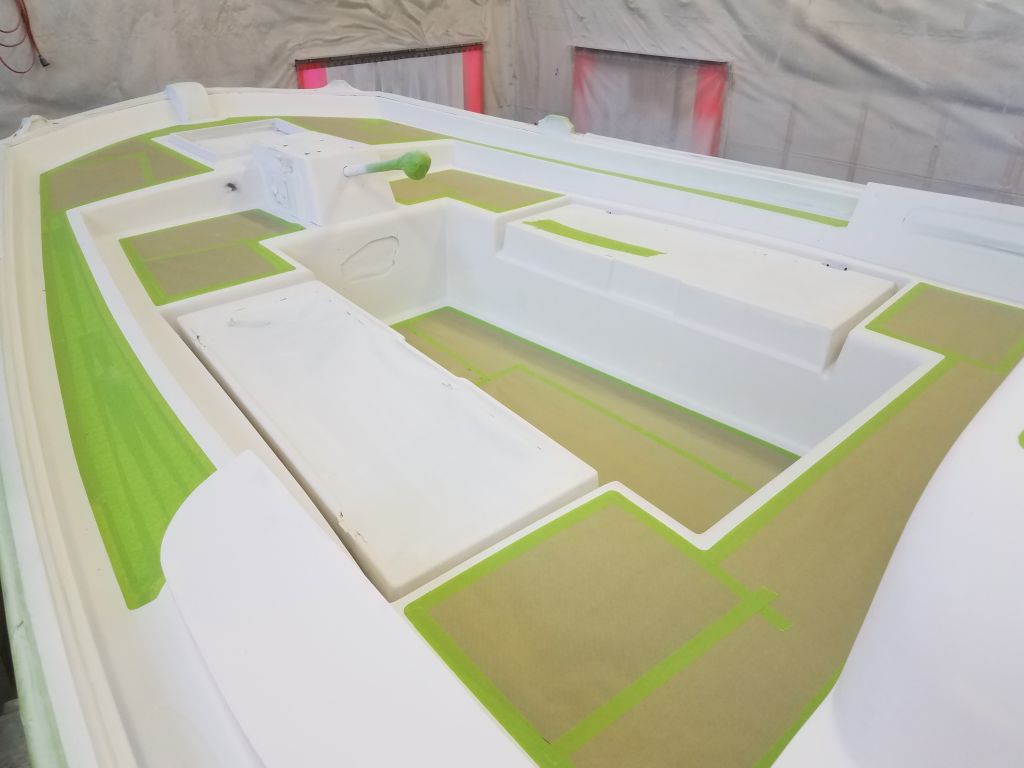
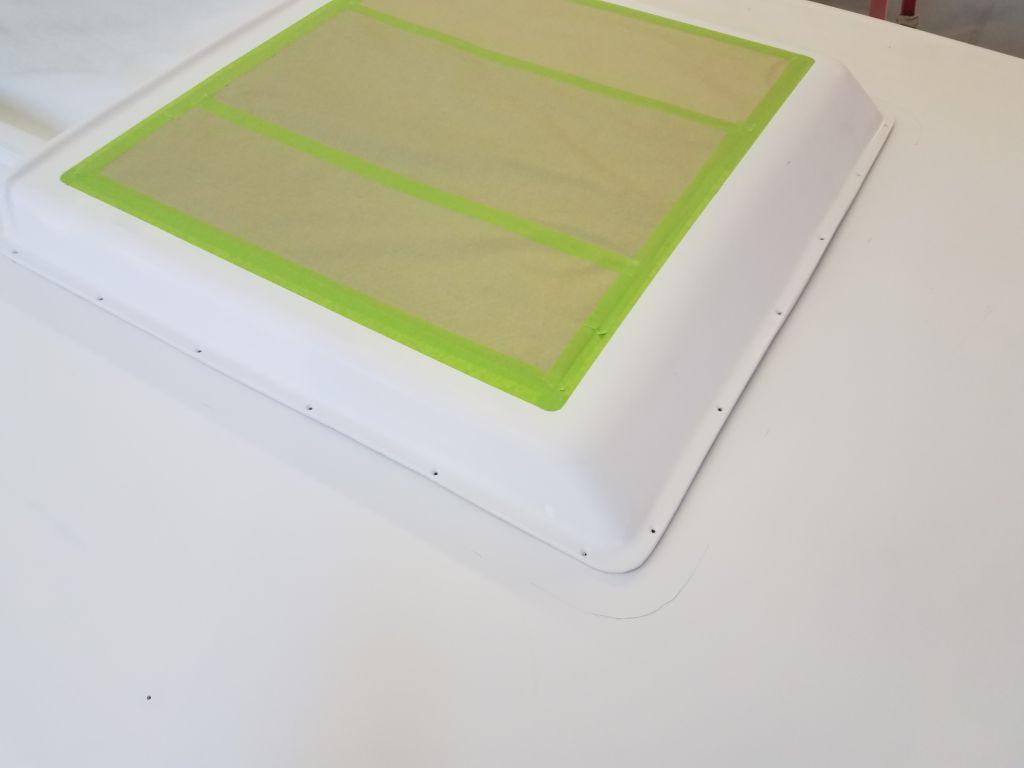
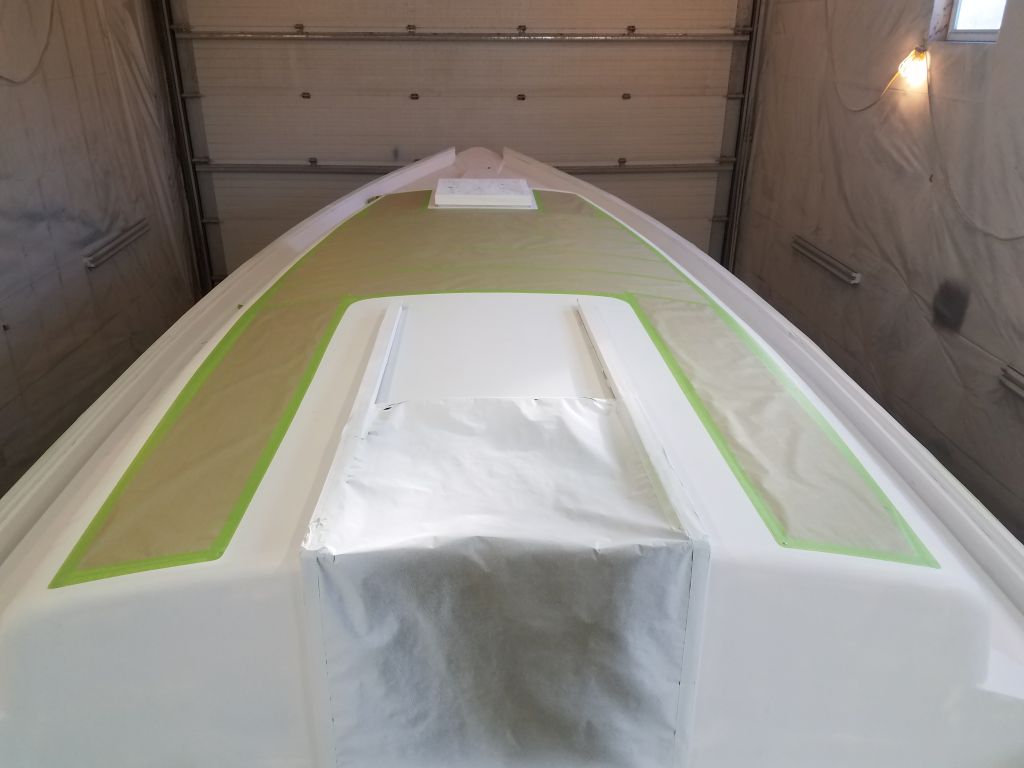
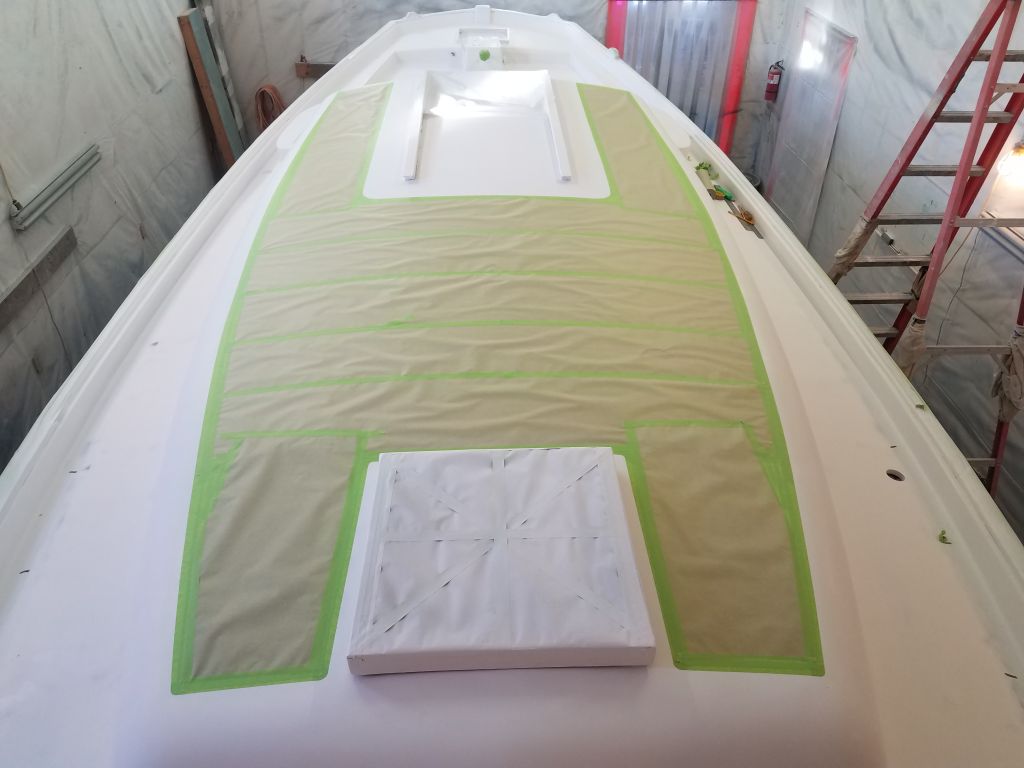
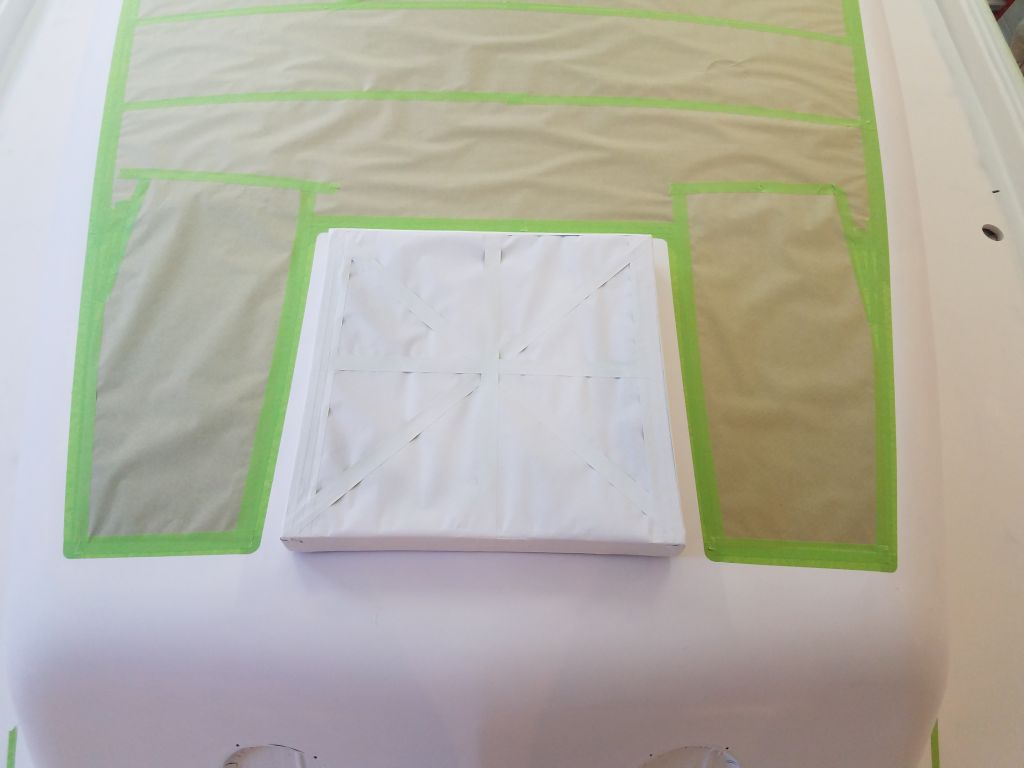
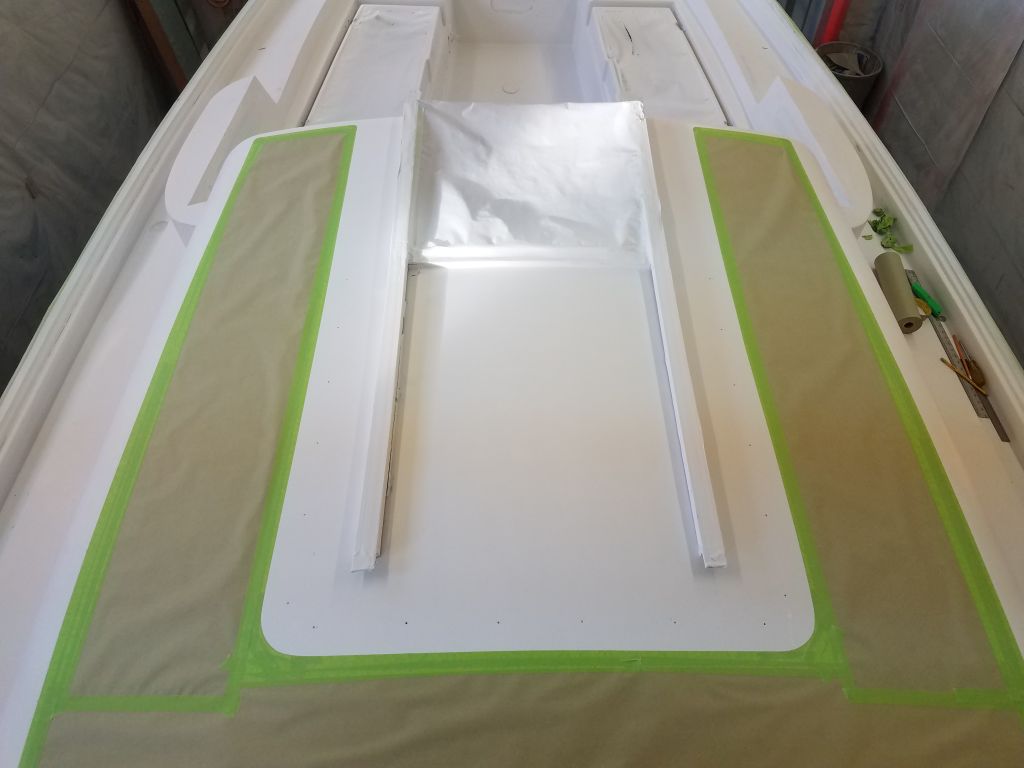
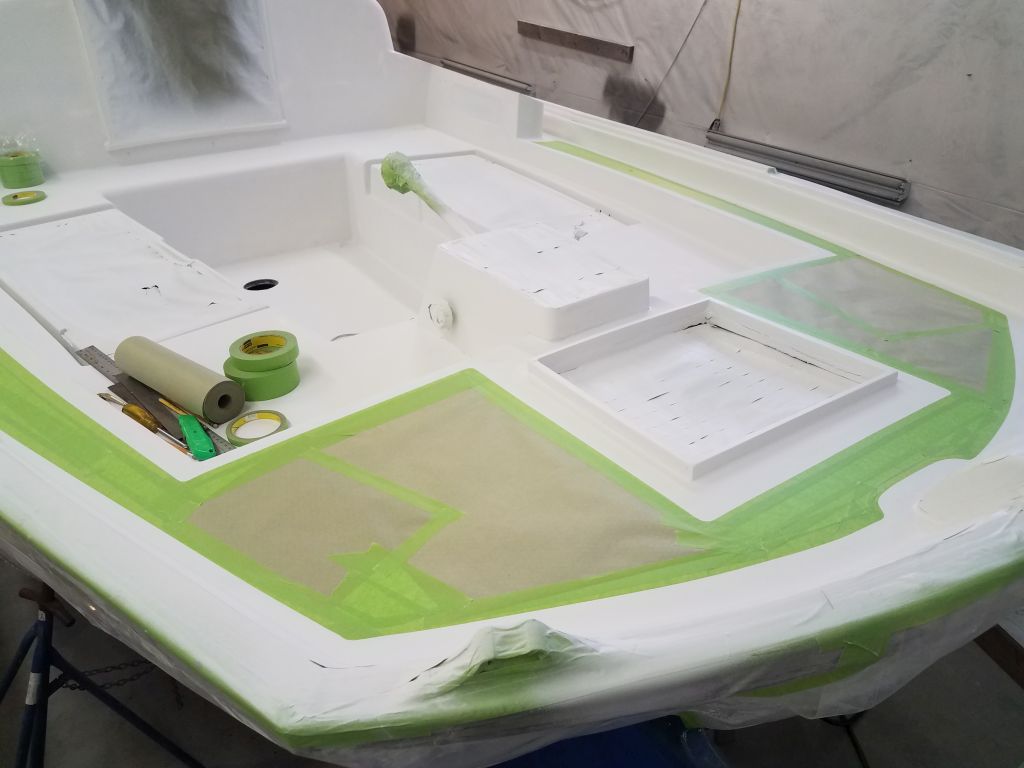
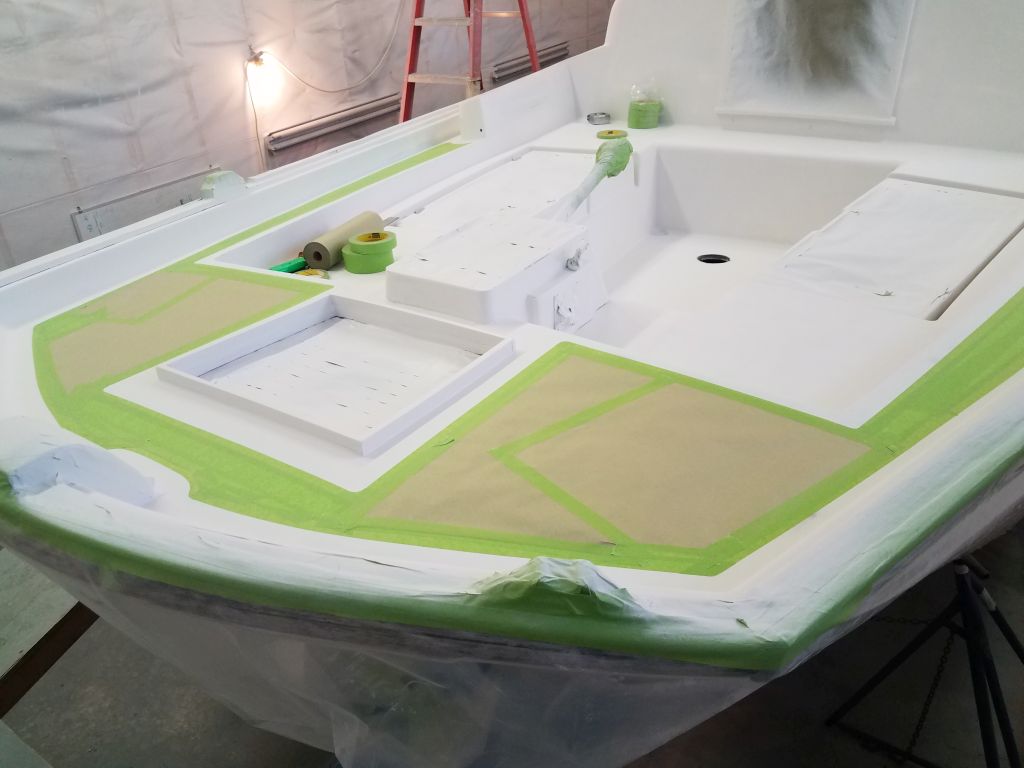
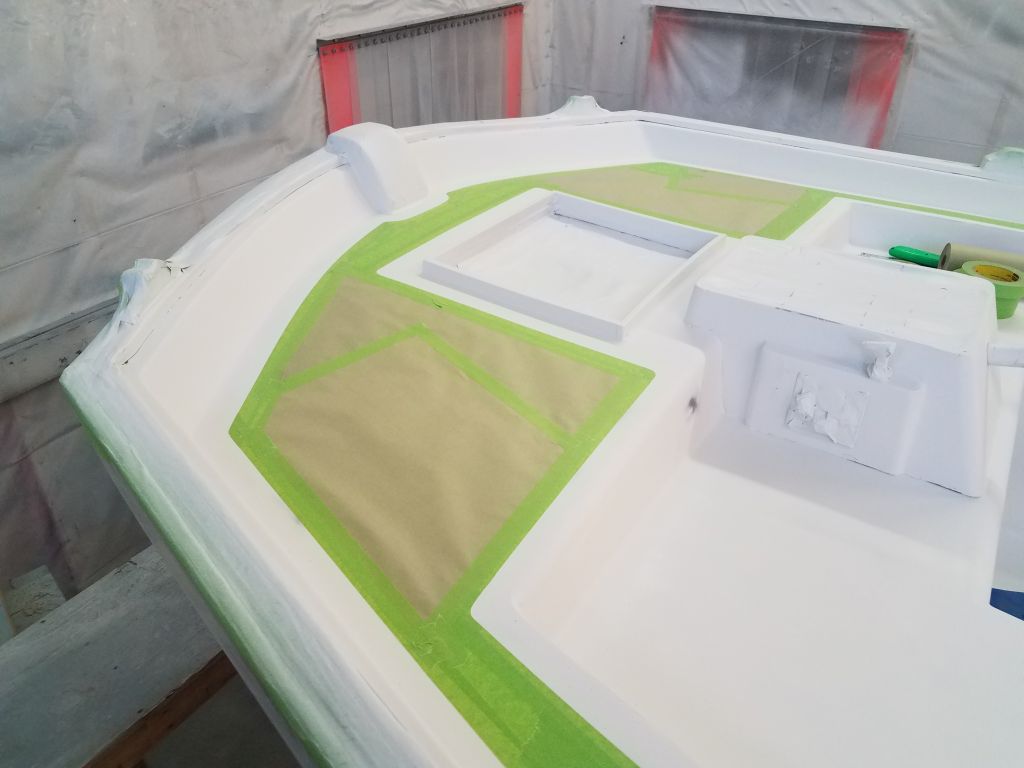
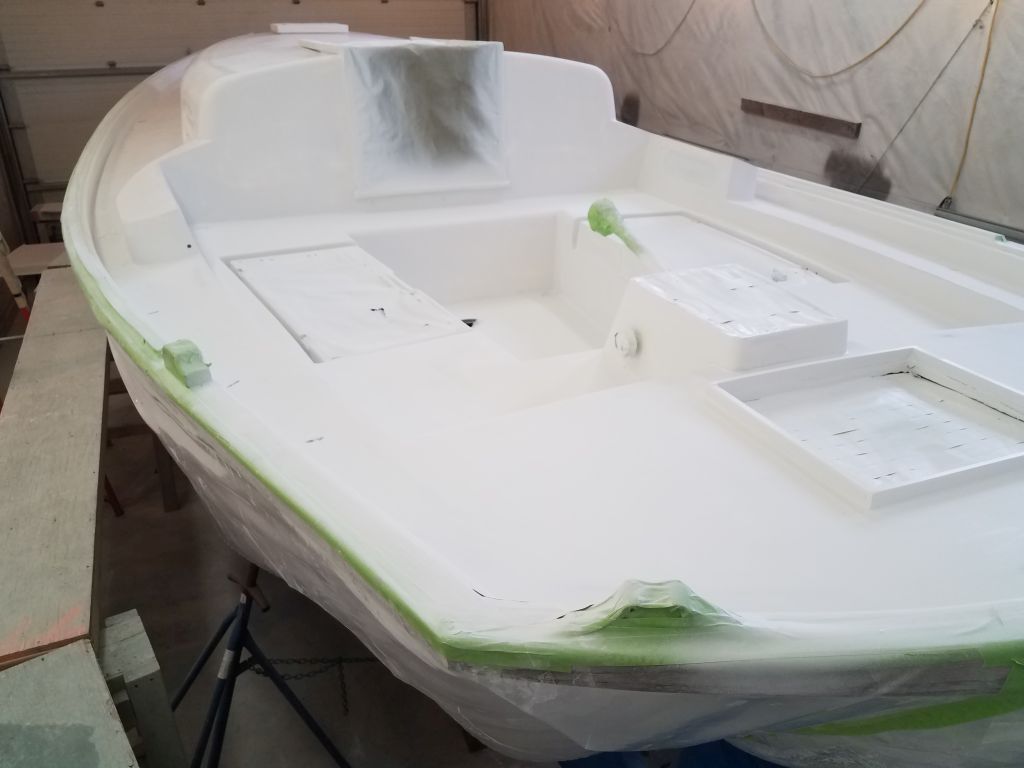
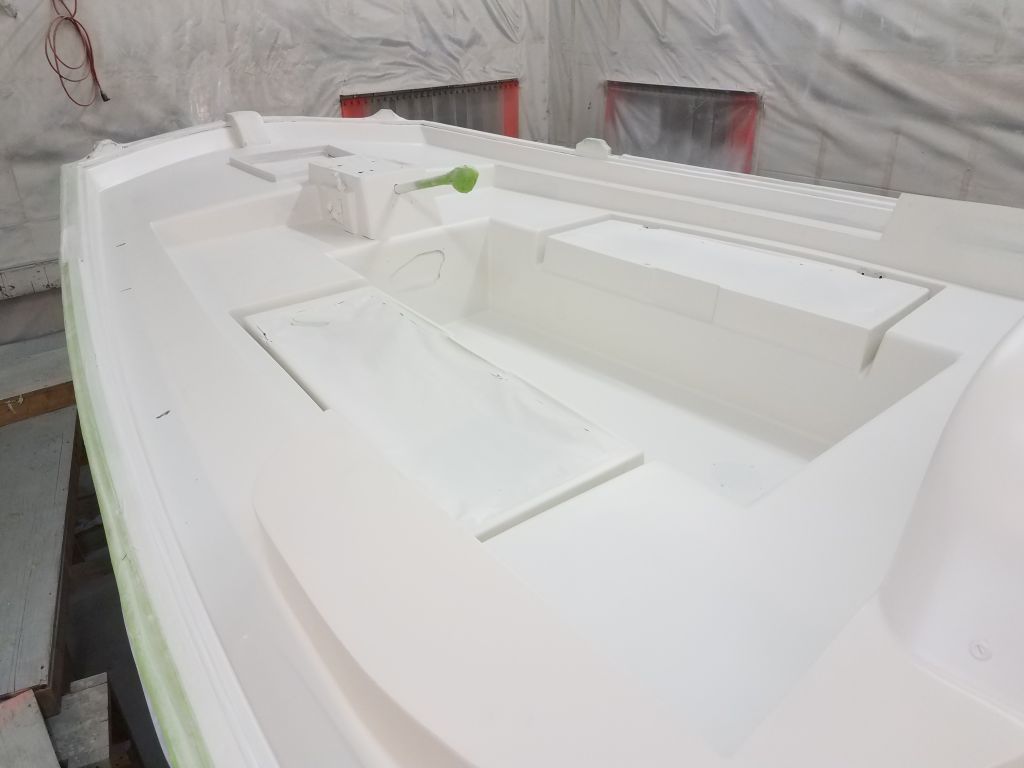
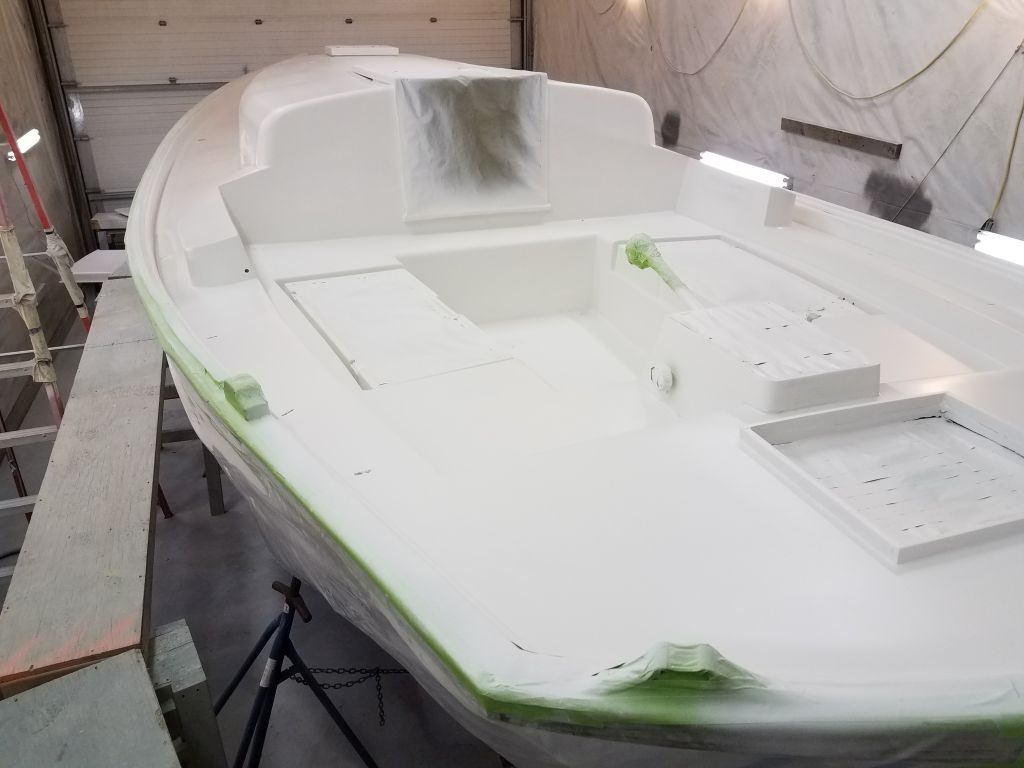
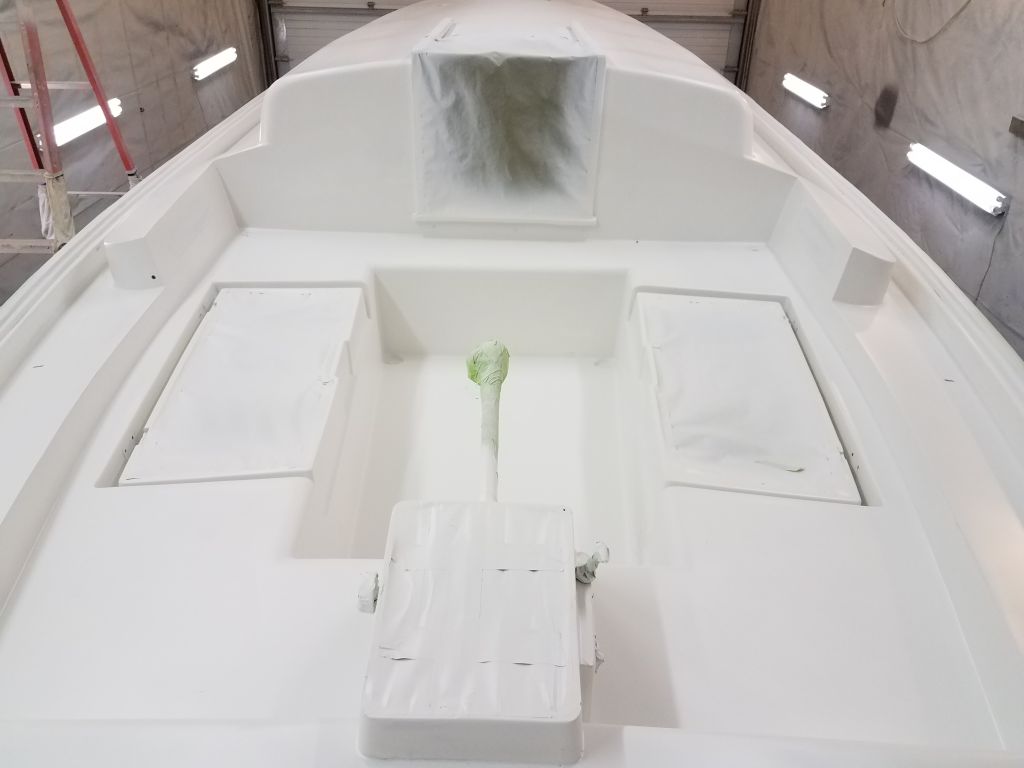
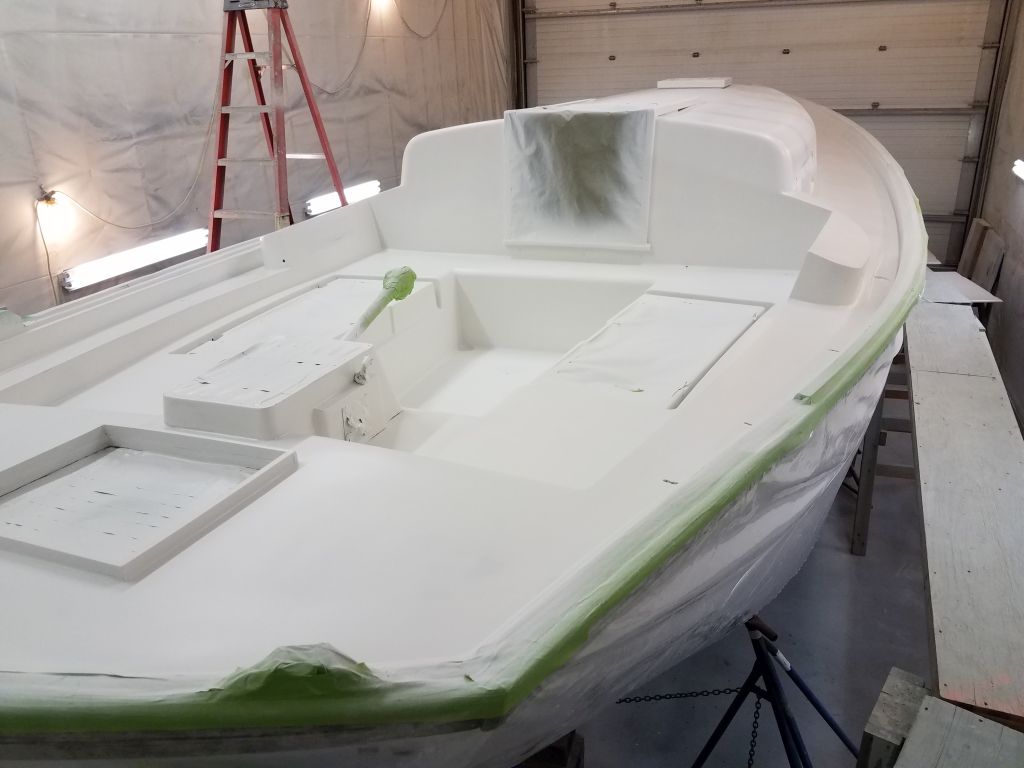
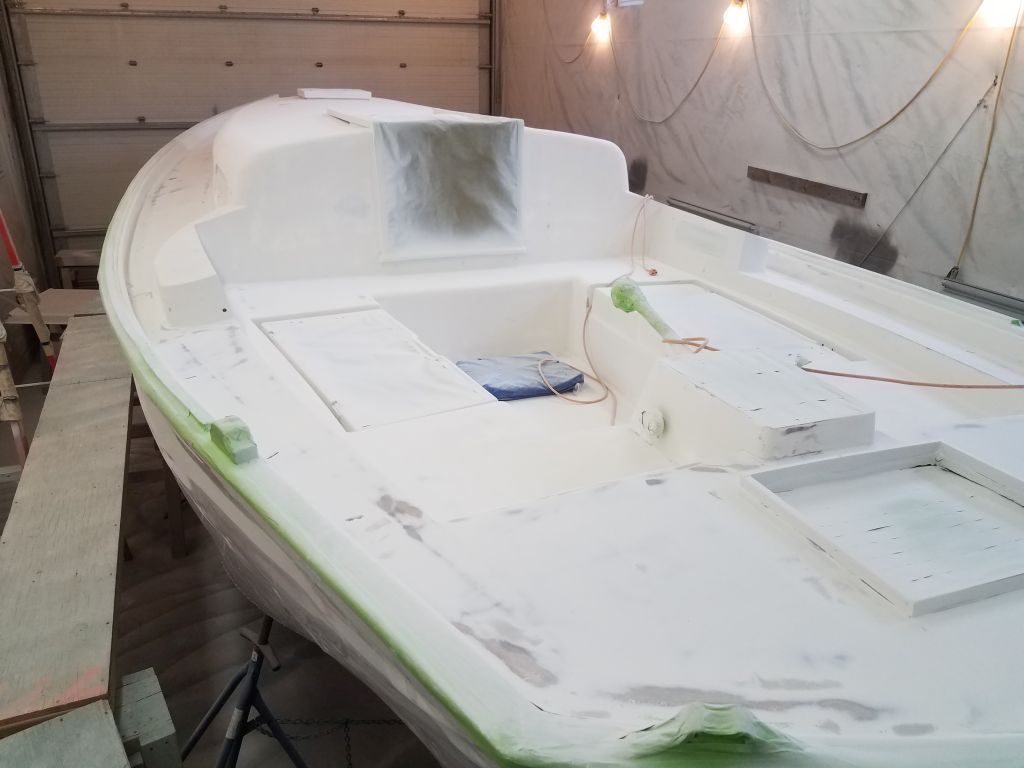
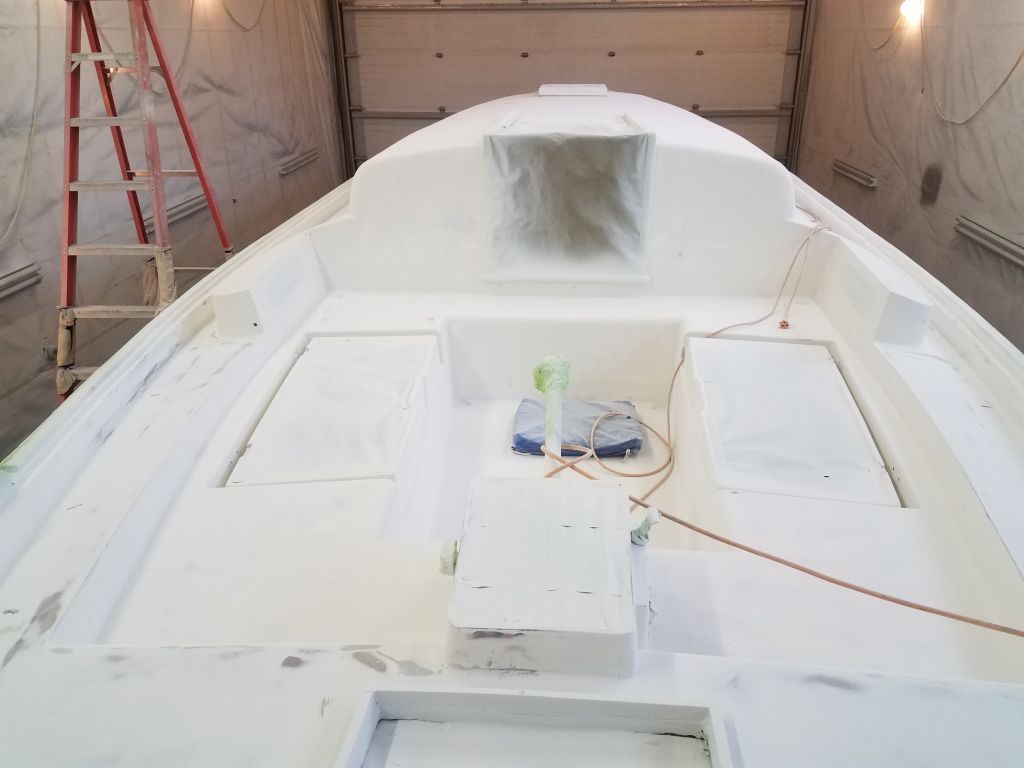
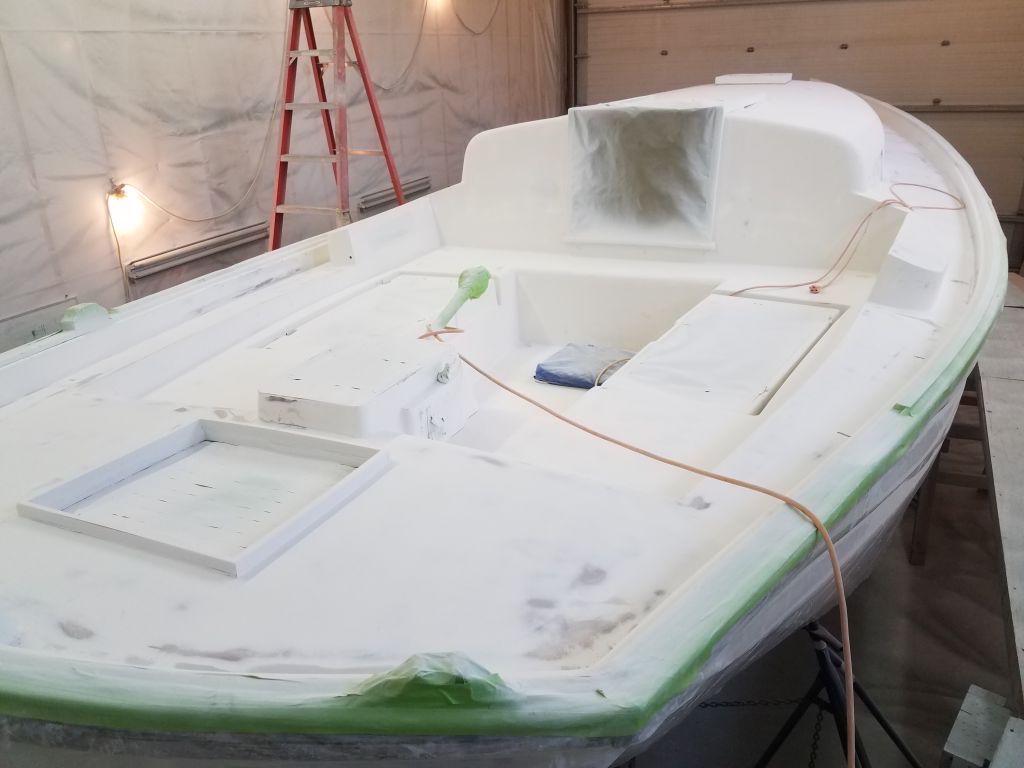
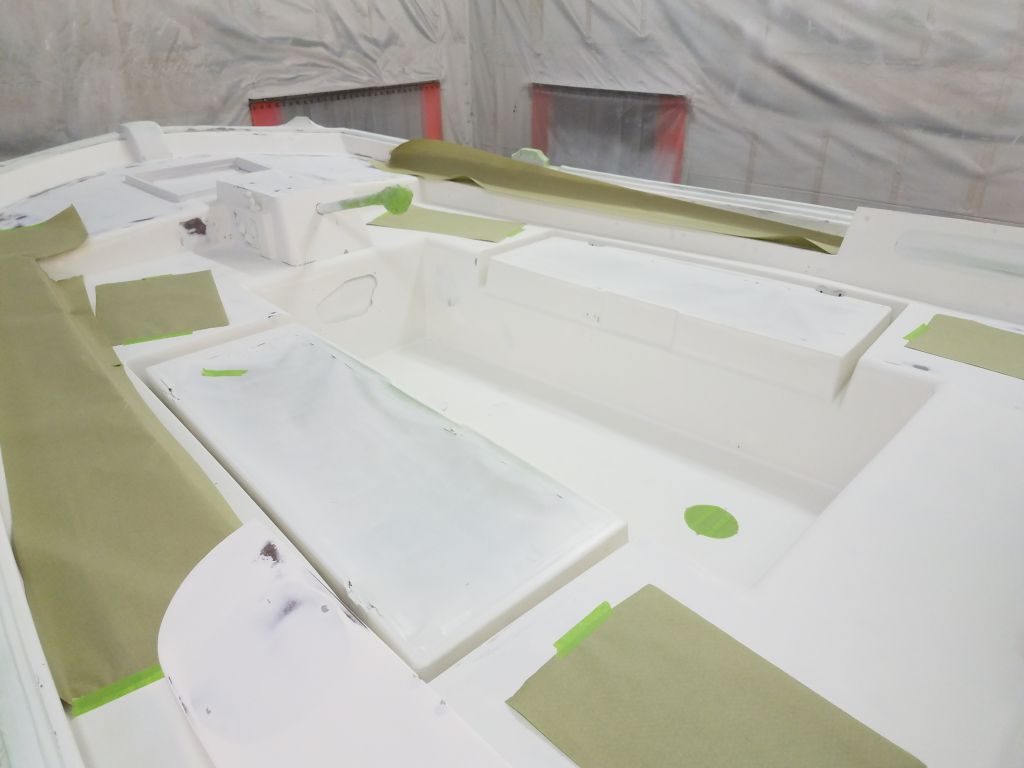
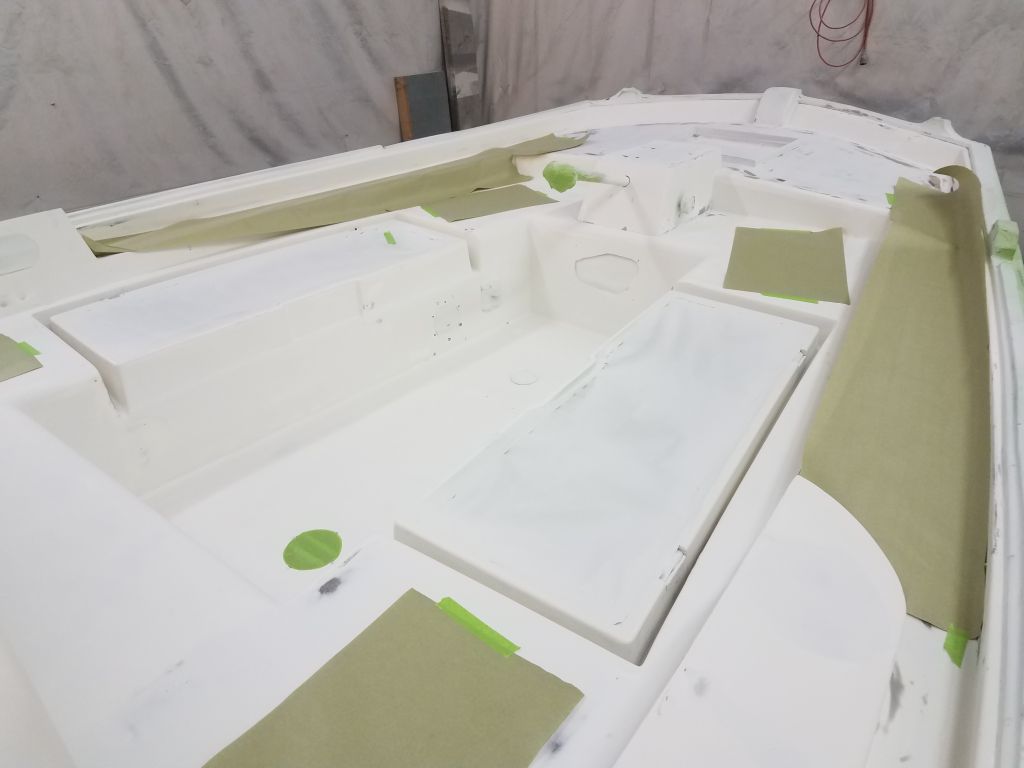
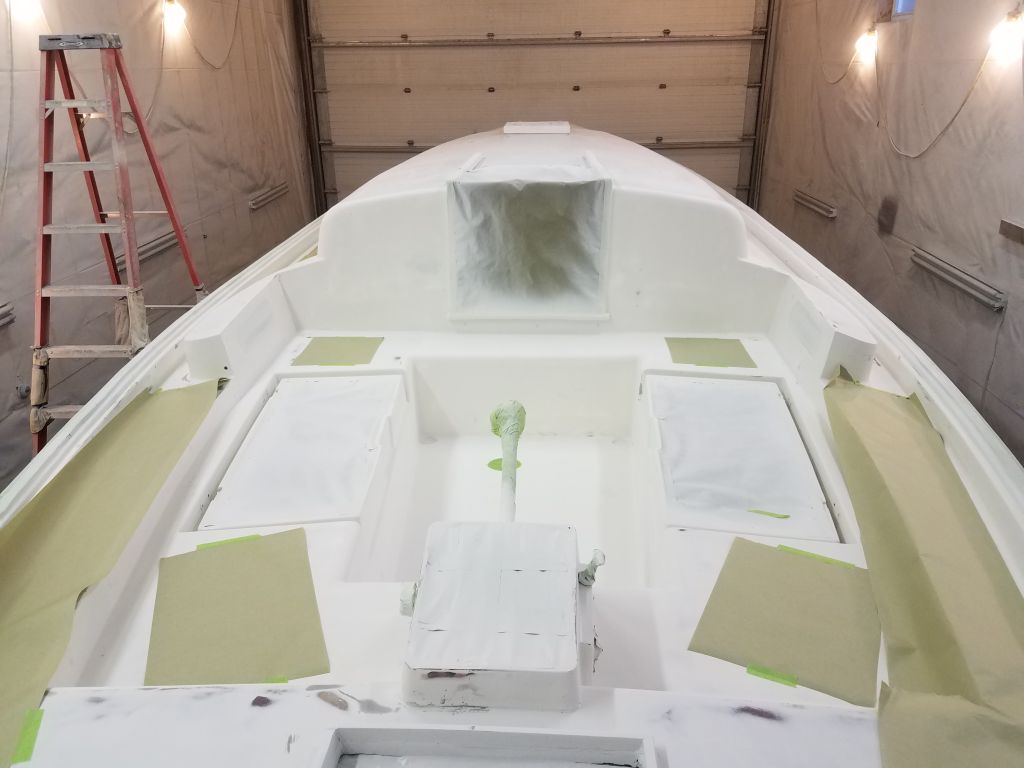
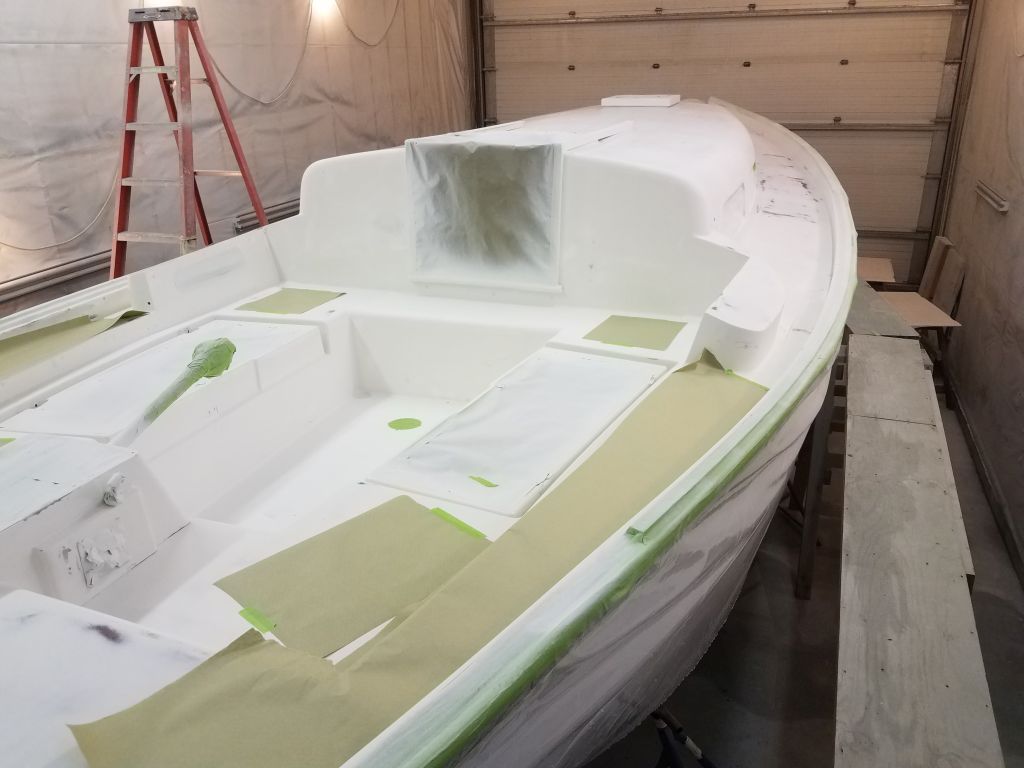
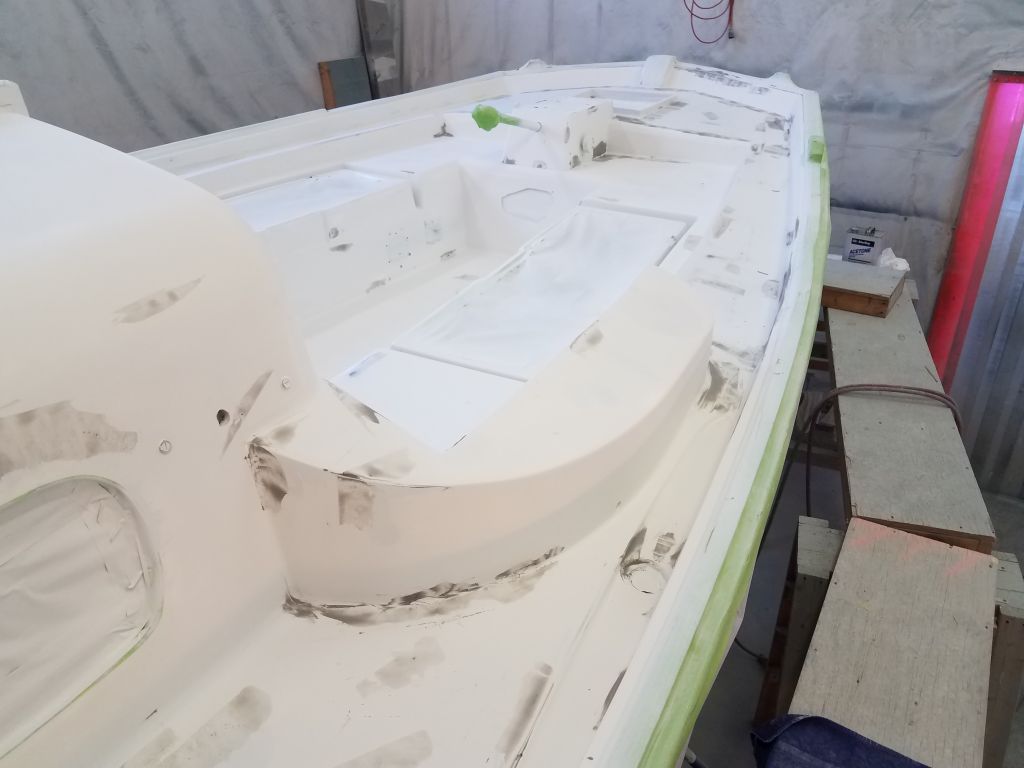
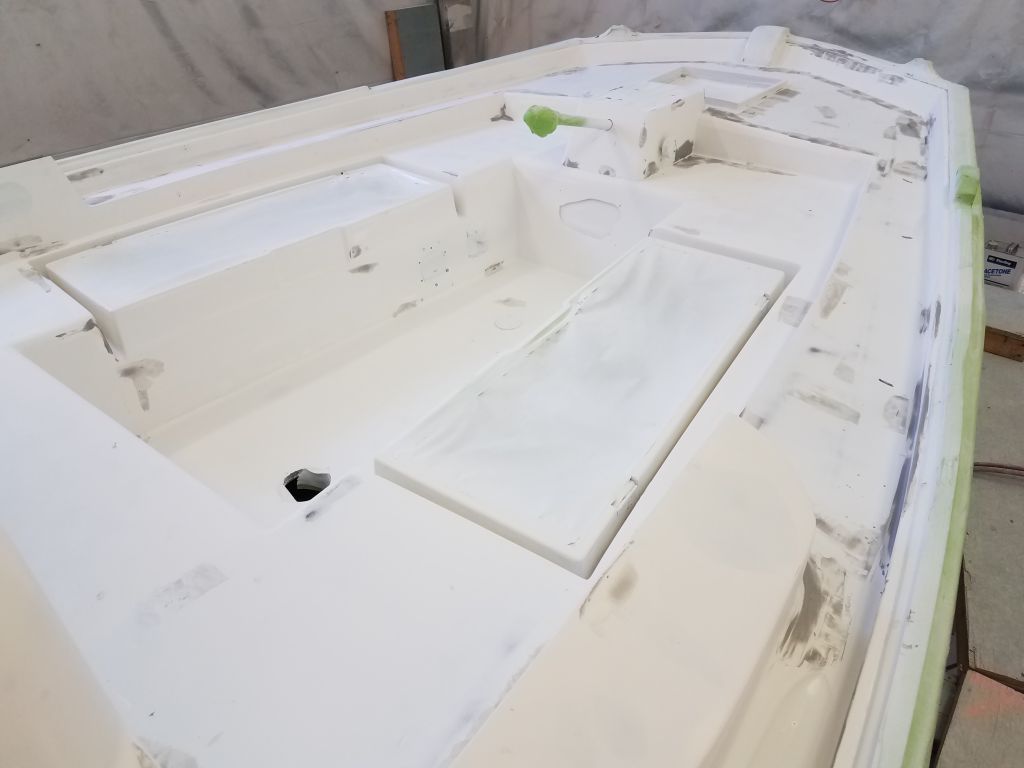
Beginning with the cockpit, then moving on to the sidedecks and foredeck, I wrapped up the deck masking work. In the cockpit, I left an extra 3/4″ width at the outboard edges of the seats to accommodate the thickness of the coamings once reinstalled, and narrowed the gloss border areas to 3/4″ next to the cockpit locker openings, but in other areas I masked off 1-1/2″ borders, as with the masking I’d done earlier.
With the masking complete, I vacuumed once more, then solvent-washed the exposed areas with the special wipe-down solvent provided by the paint system and other final preparations required so I could apply the gloss topcoats next time.
Total time billed on this job today: 4 hours
0600 Weather Observation: 2°, clear. Forecast for the day: Sunny, approaching 20°
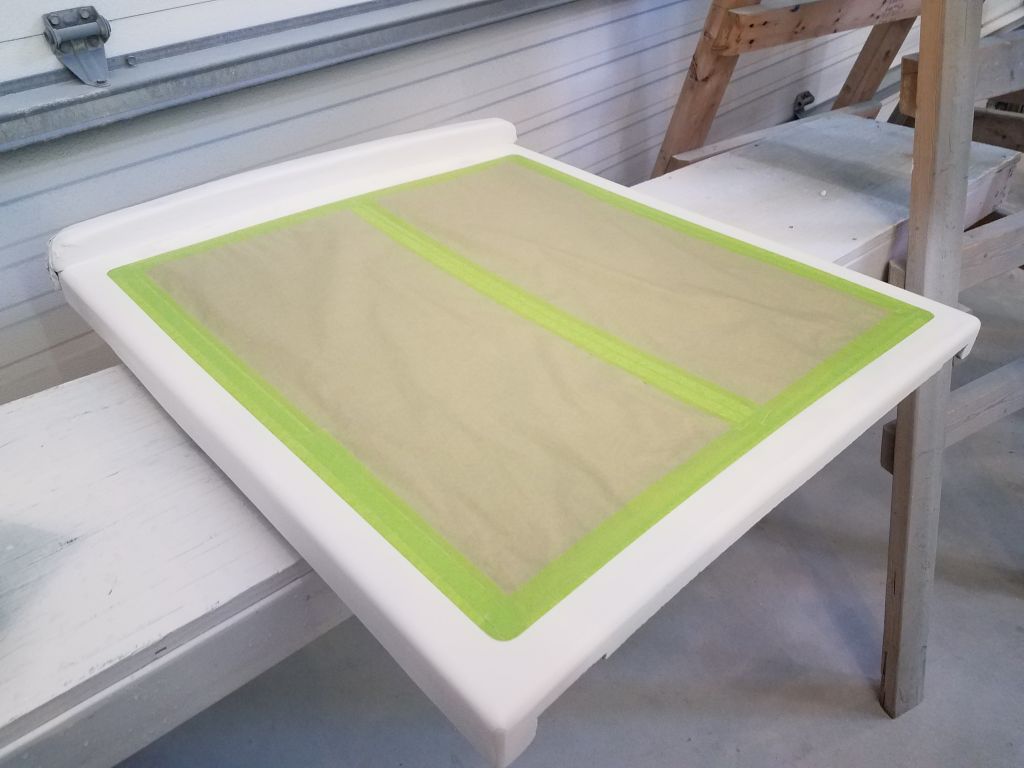
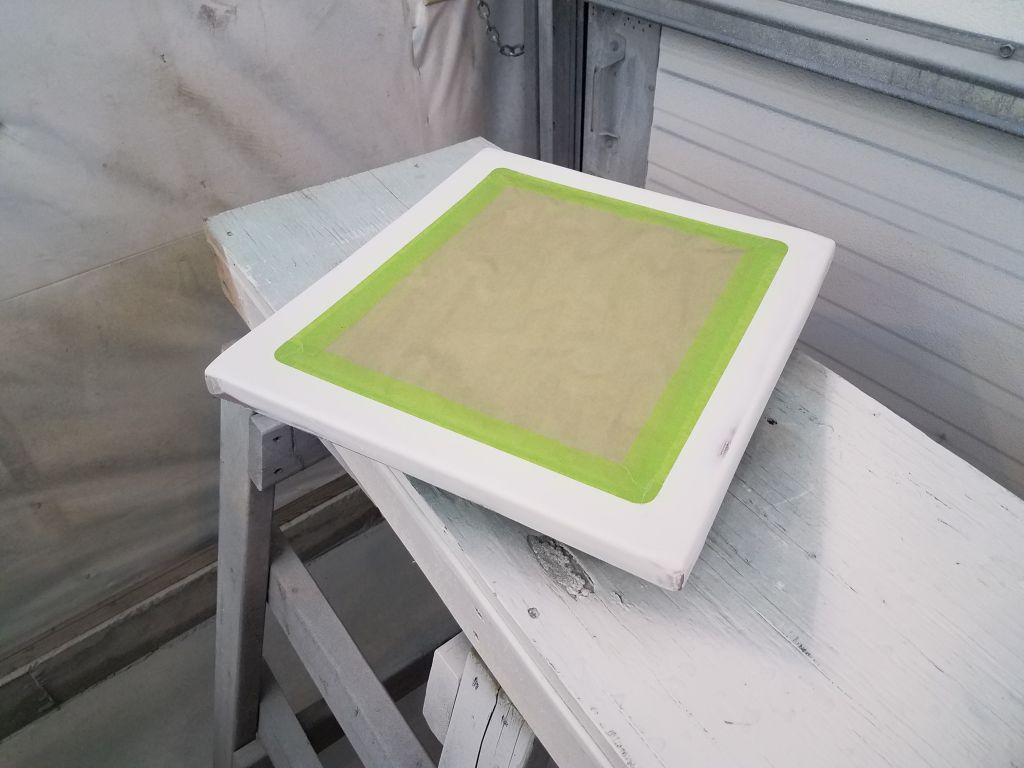
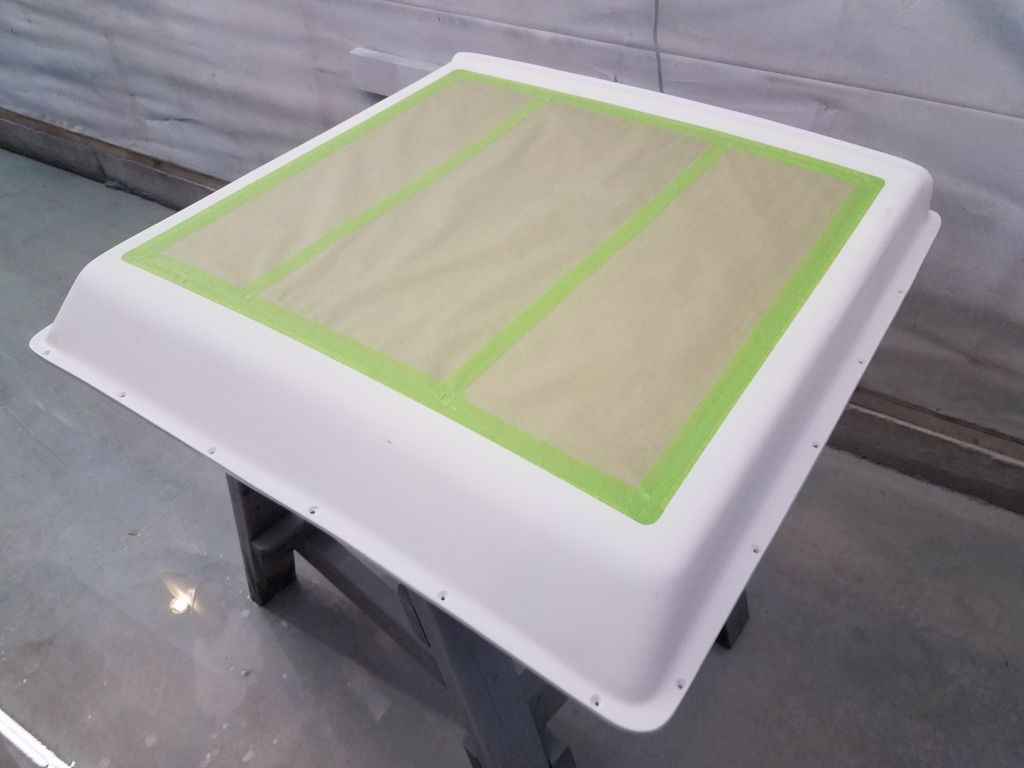
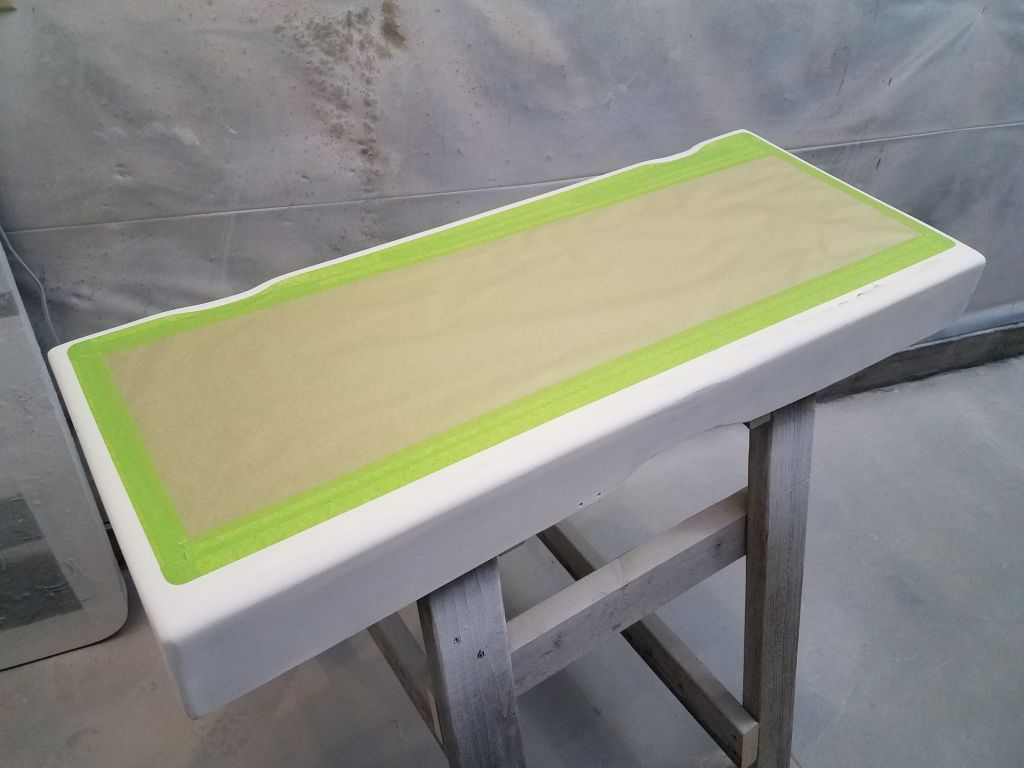
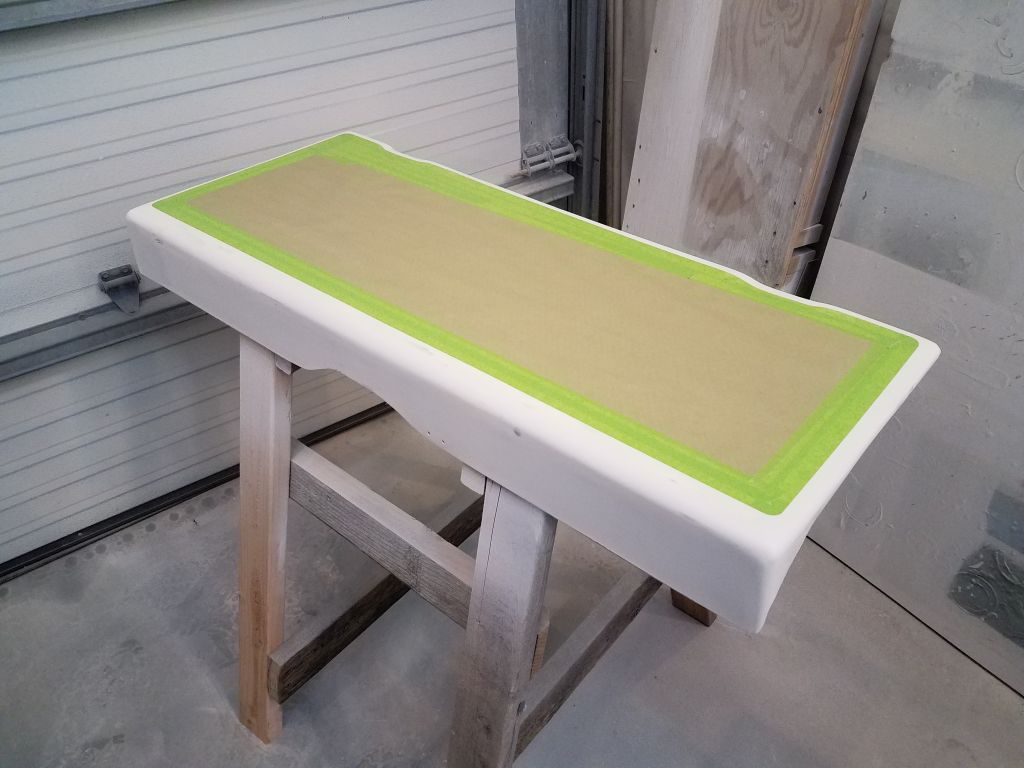
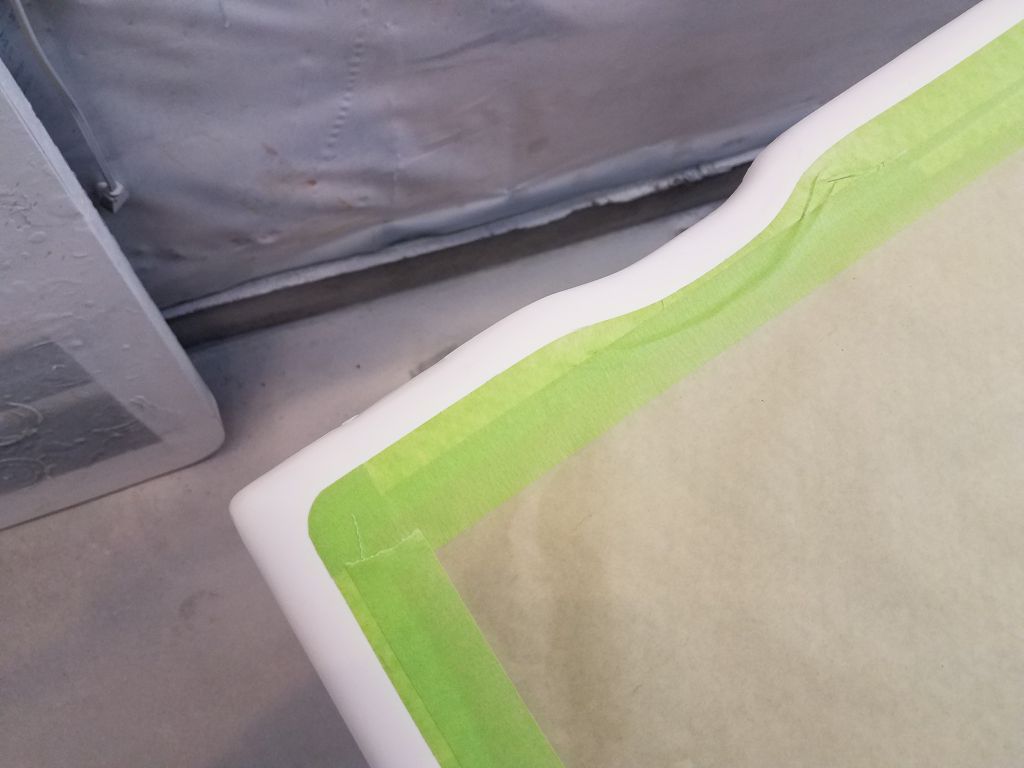
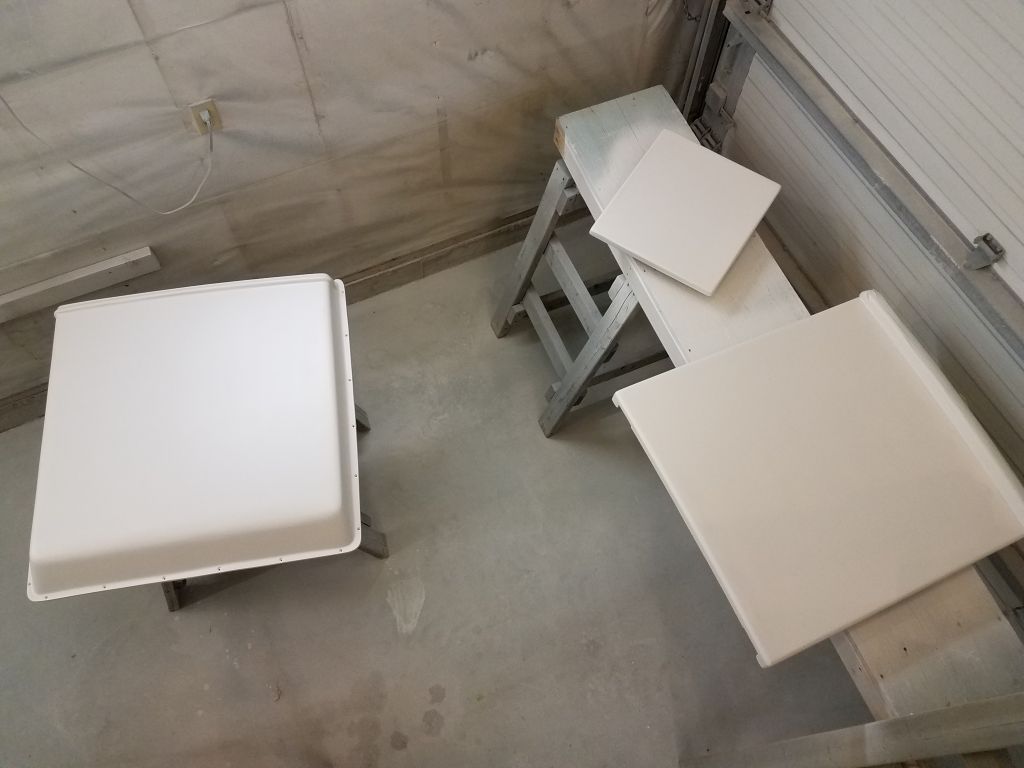
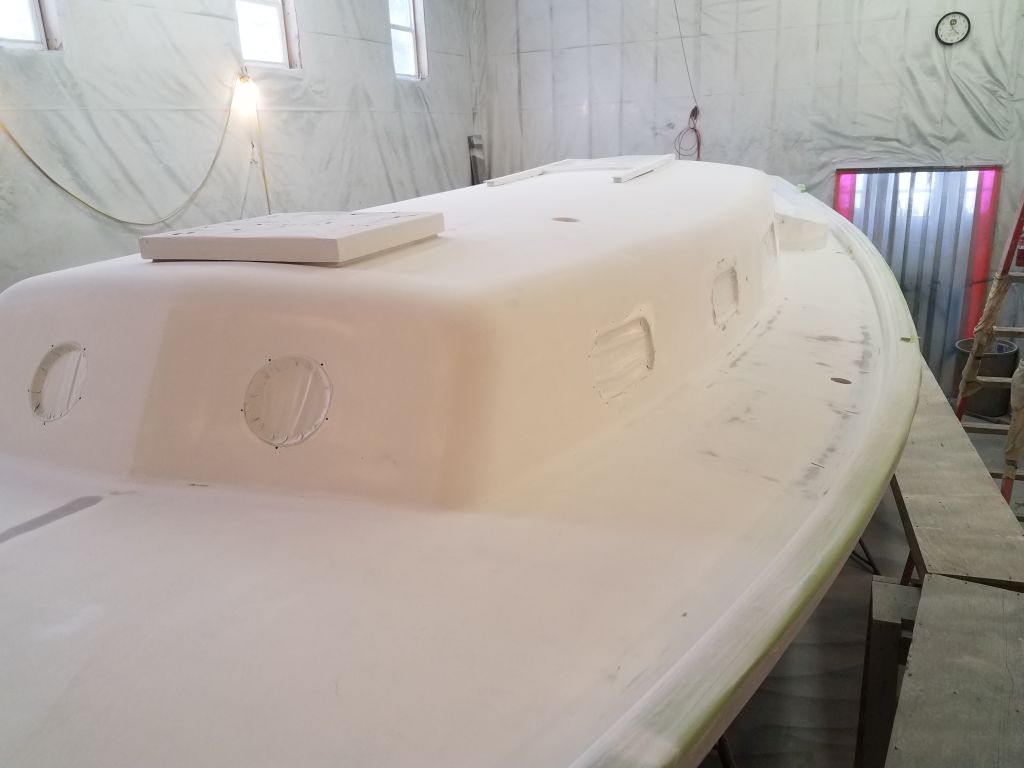
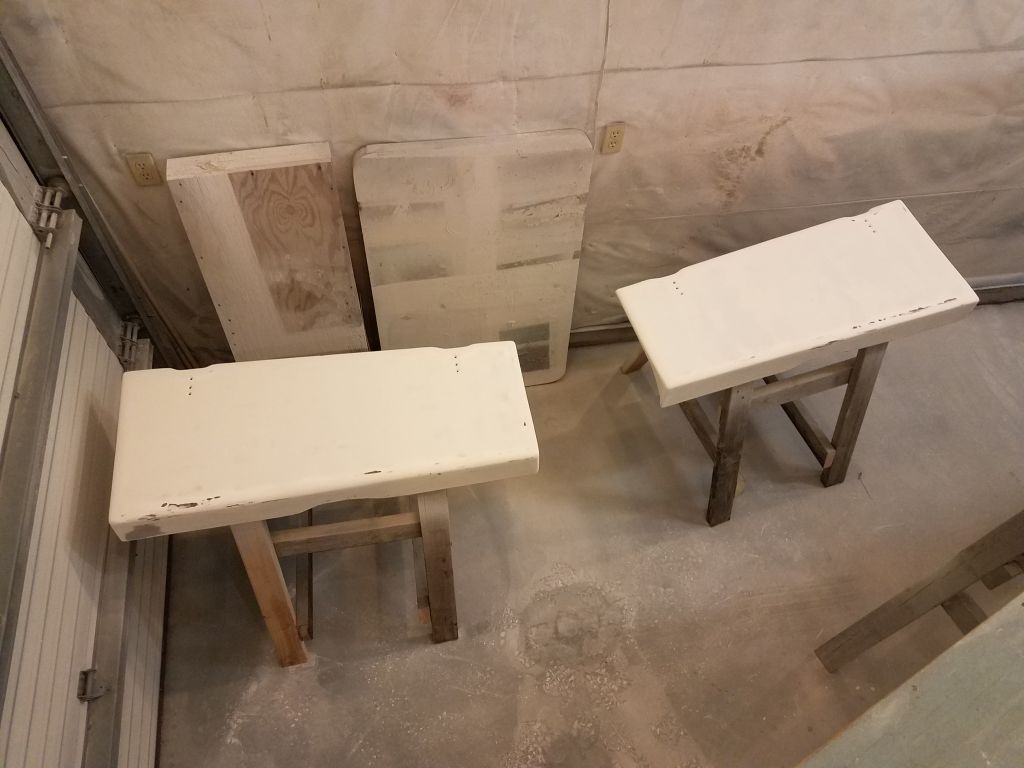
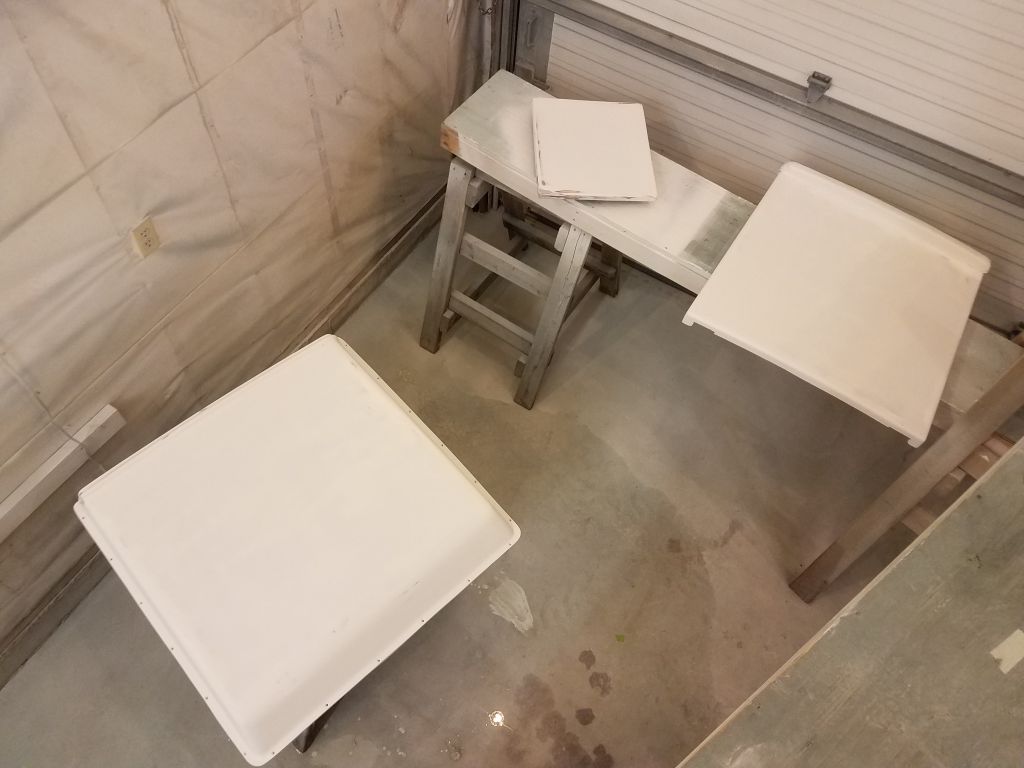
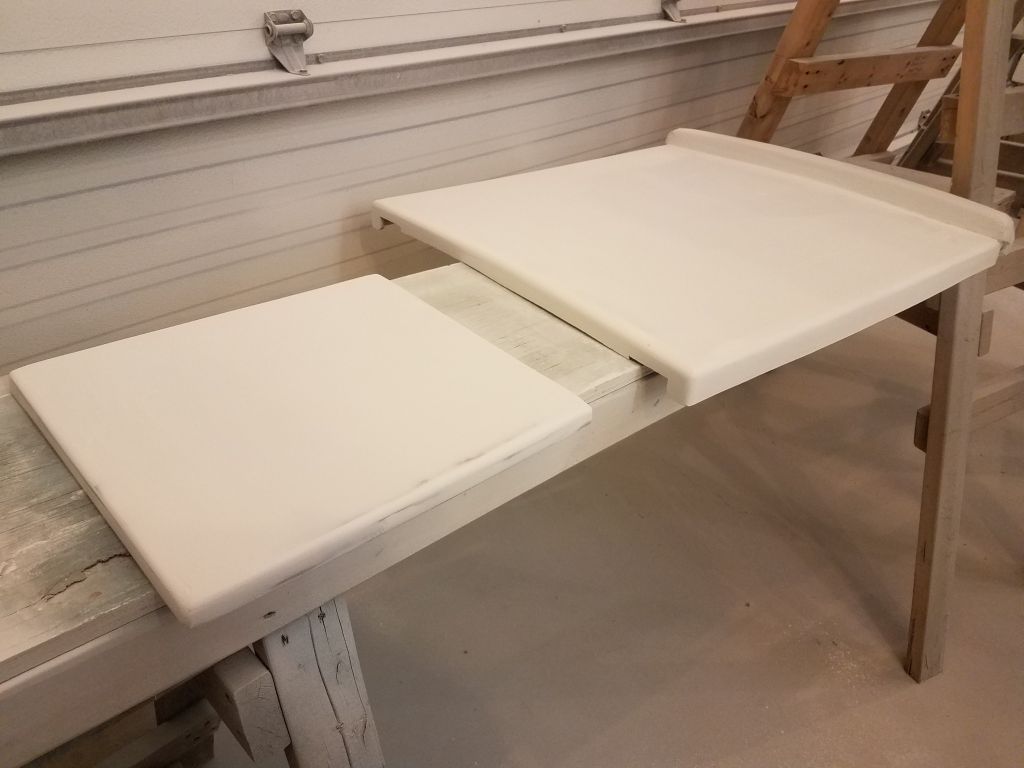
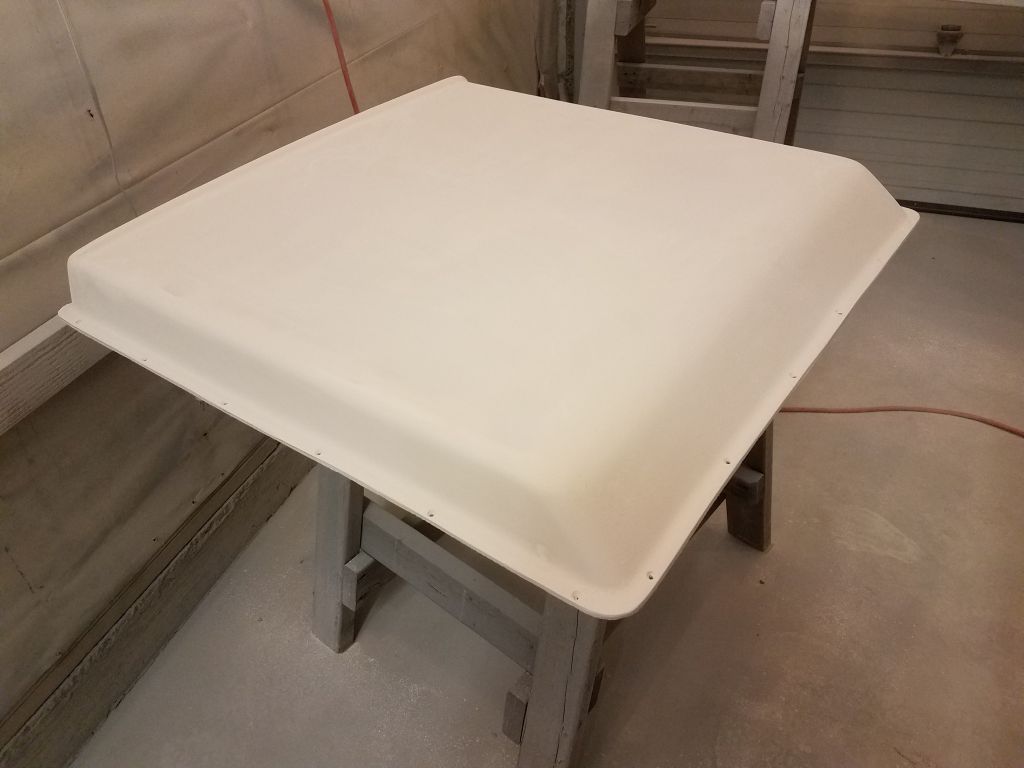
First thing, I rinsed off the staging and shop floor to clean them up and remove final sanding dust. I had to leave the shop for a while in the morning, but afterwards, I spent the remainder of the day working on masking off the decks for the gloss topcoats. Starting with the loose parts on the shop floor, I marked off 1-1/2″ borders in most areas, masking off the field areas within that would ultimately be nonskid. On the cockpit locker lids, where the edges would butt more or less directly against the adjacent deck surfaces, I reduced the border to 3/4″ (which would coordinate with similar width borders in the cockpit itself) to keep the overall appearance consistent.
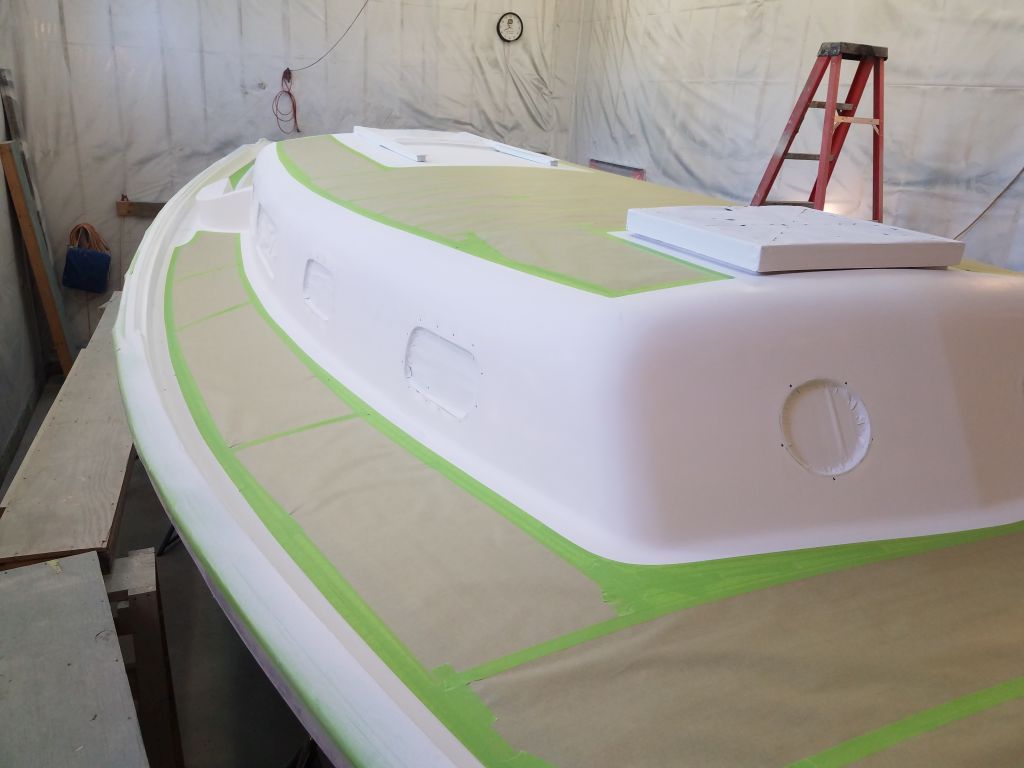
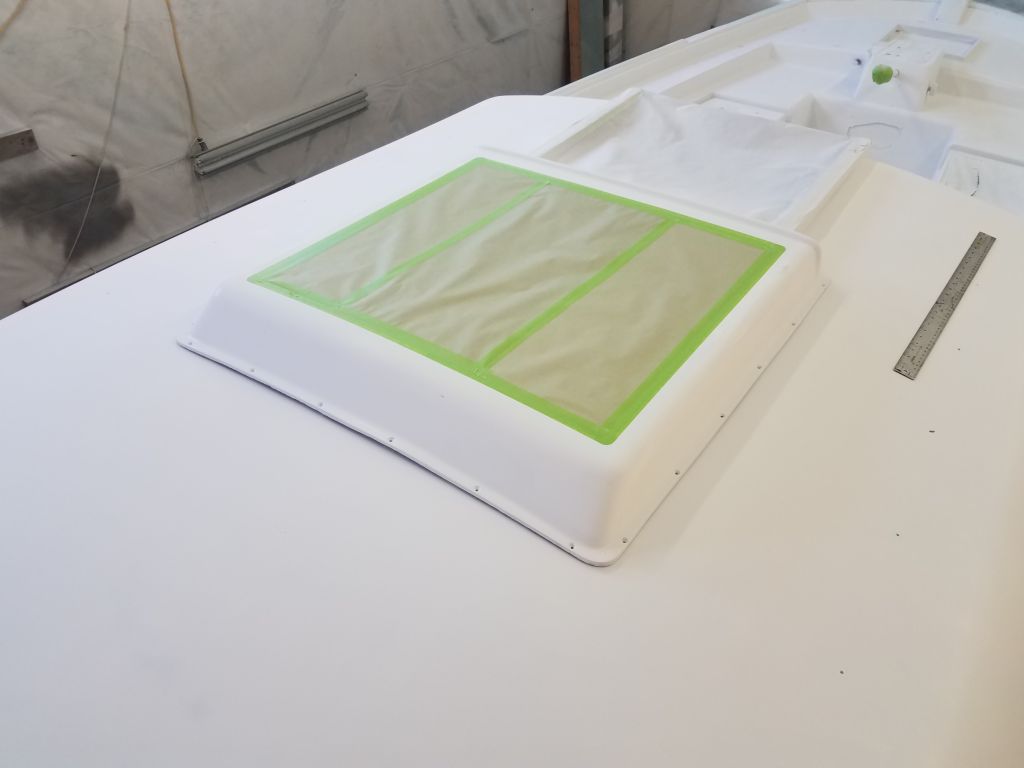
Moving on deck, I started with the coachroof. Here, I temporarily placed the sea hood in position so I could mark off the gloss borders around its perimeter, again going with 1-1/2″ width.
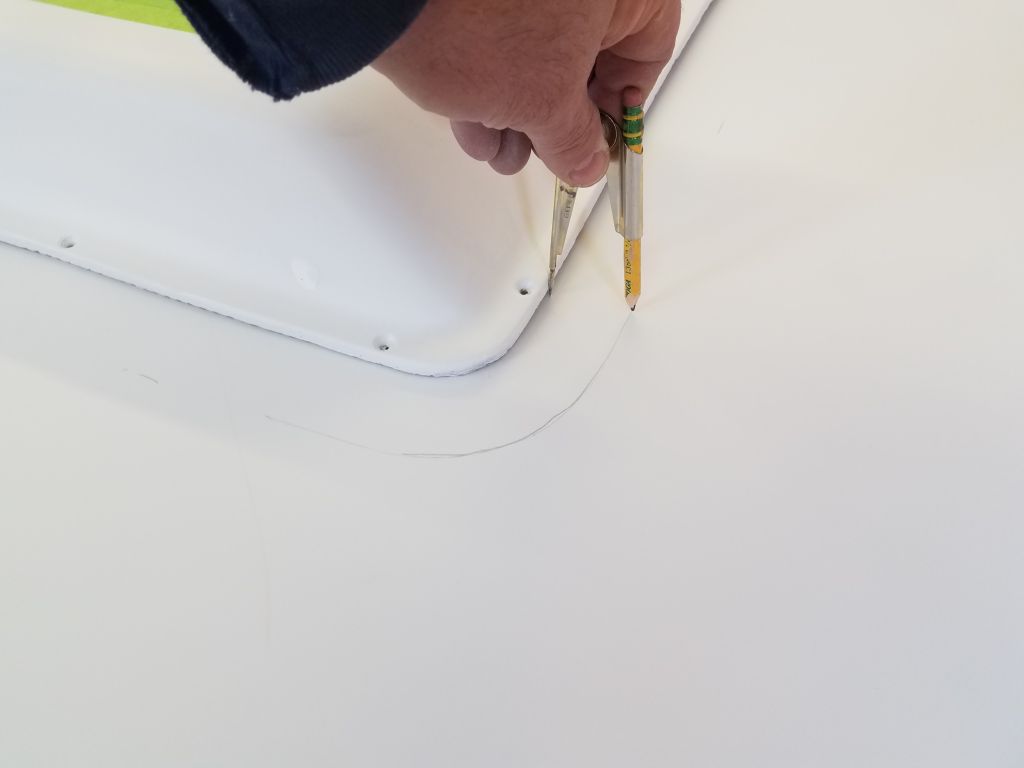
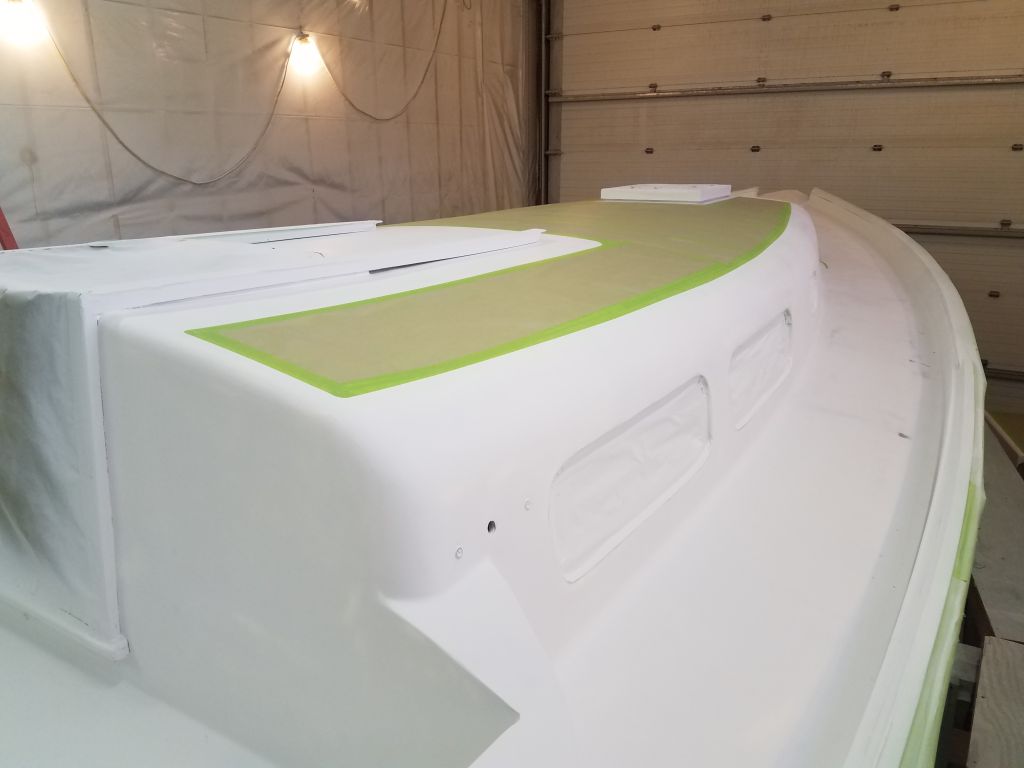
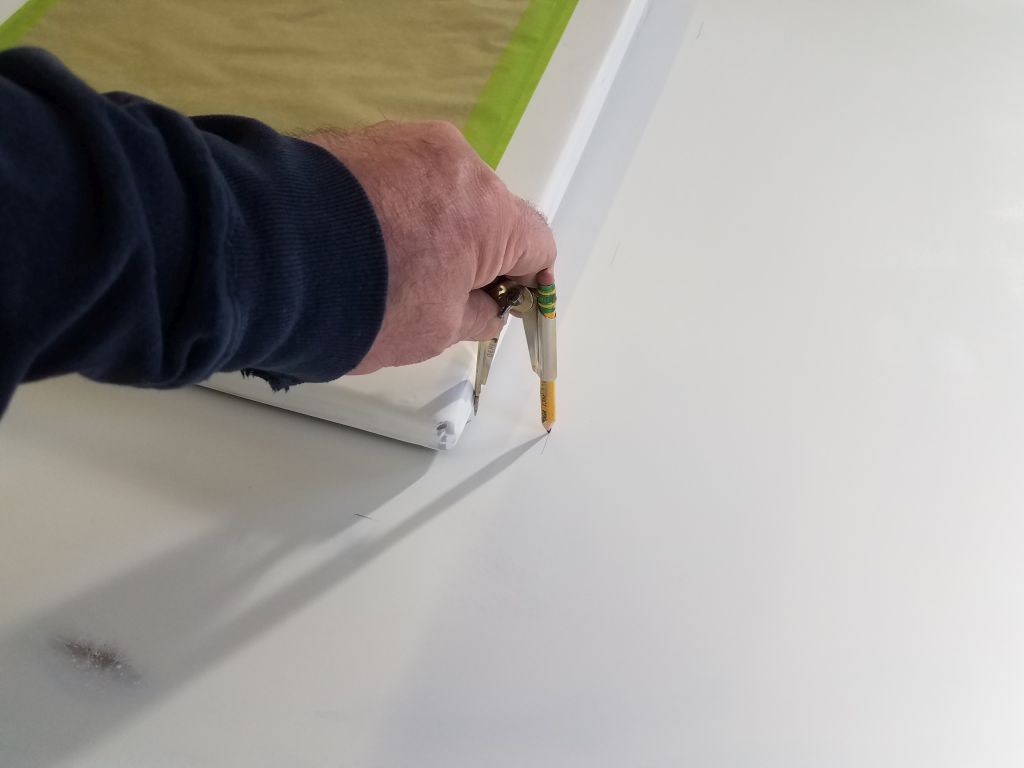
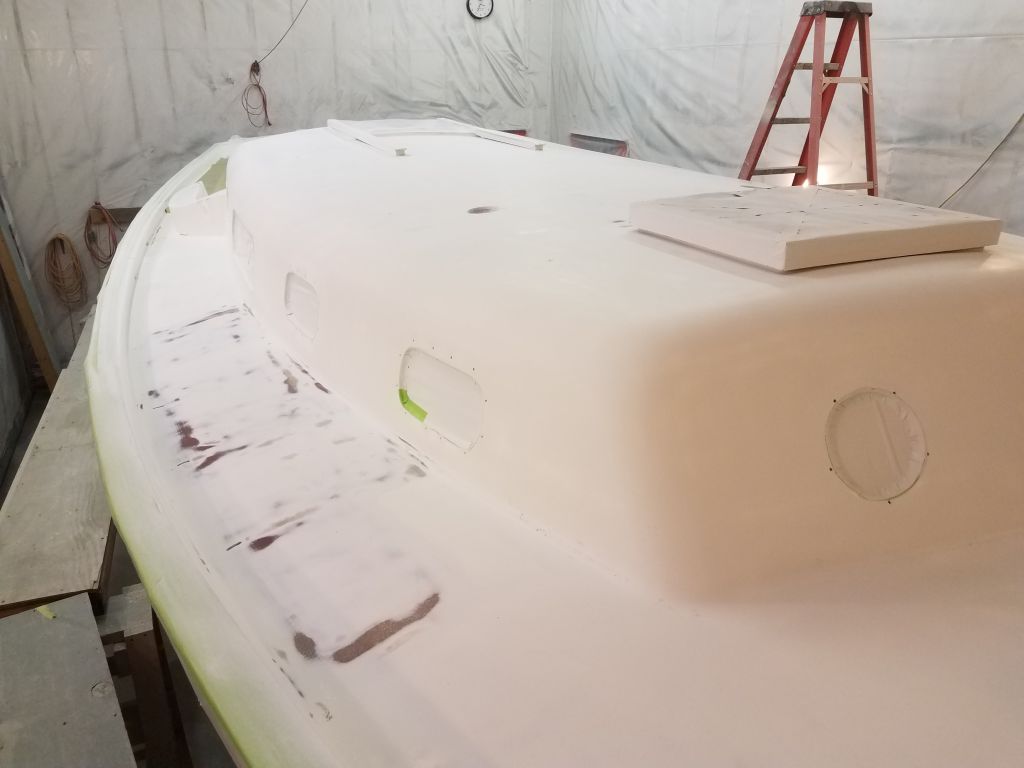
The edge of the coachroof featured a wide radius transitioning down to the sides of the cabin trunk. Here, I chose a 4″ measurement, using a pair of steel rules–one held tight to the side of the cabin trunk with the other extending inwards and flat on the deck–to make a series of tick marks along the edge to guide the masking tape. This held the nonskid edge back far enough for the gloss paint to enhance the curves and appearance of the molding while keeping nonskid close enough to the edge to make stepping on and off the cabin trunk practical and safer.
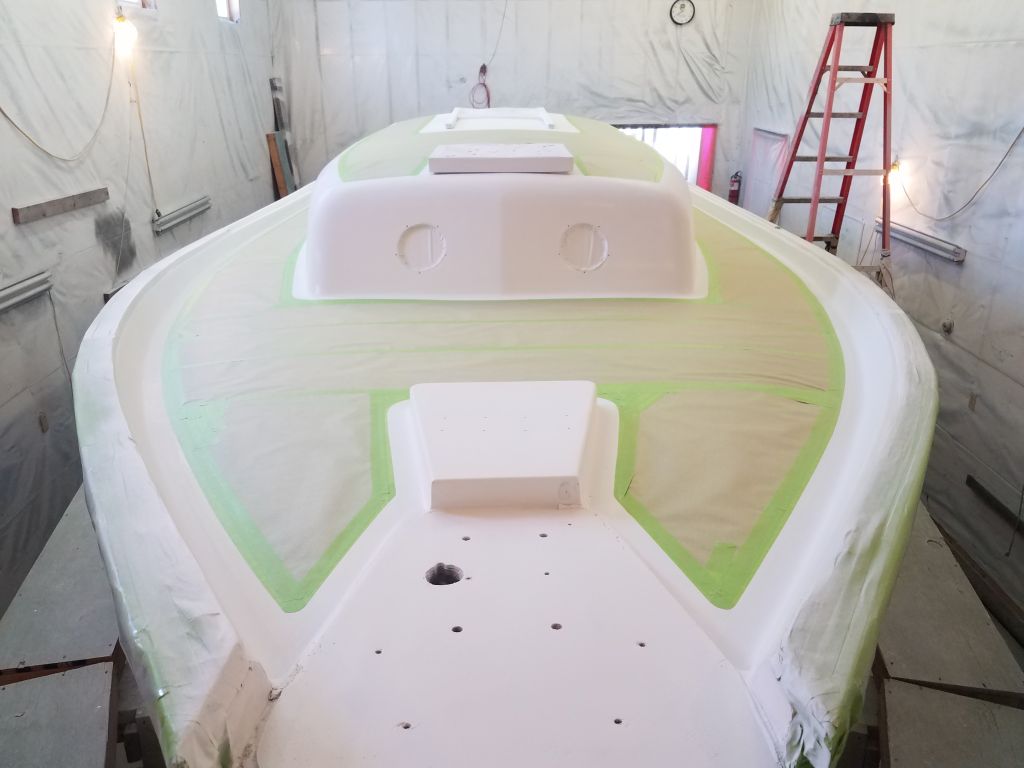
I finished up the coachroof masking and papered over the field areas to protect against overspray.
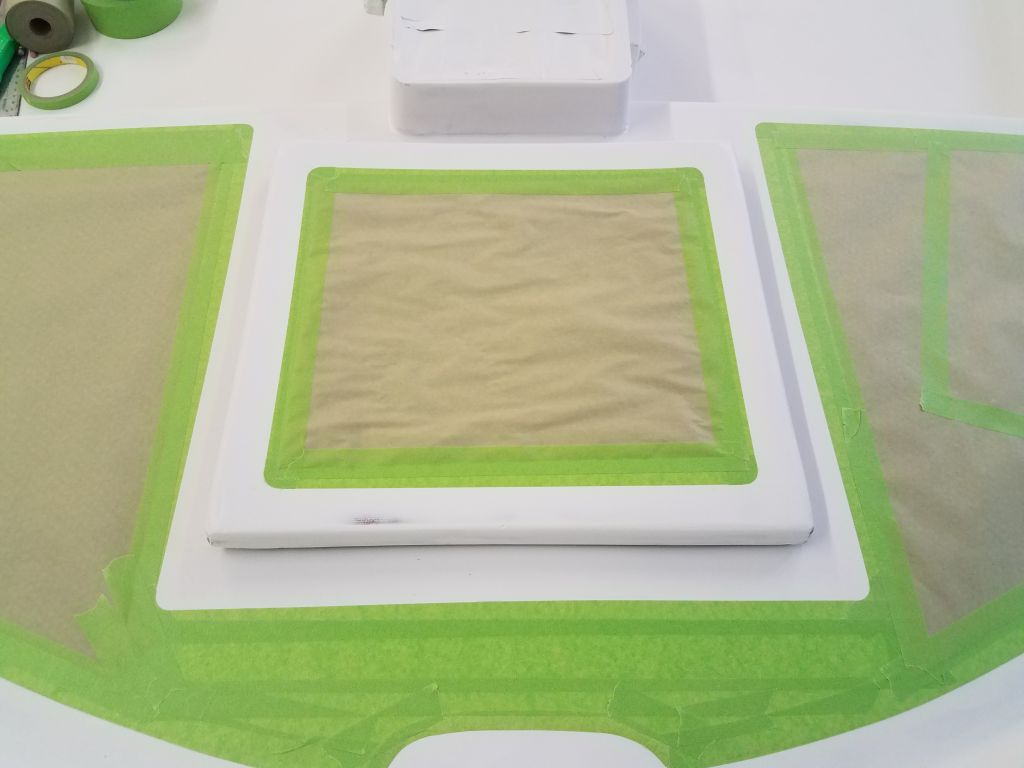
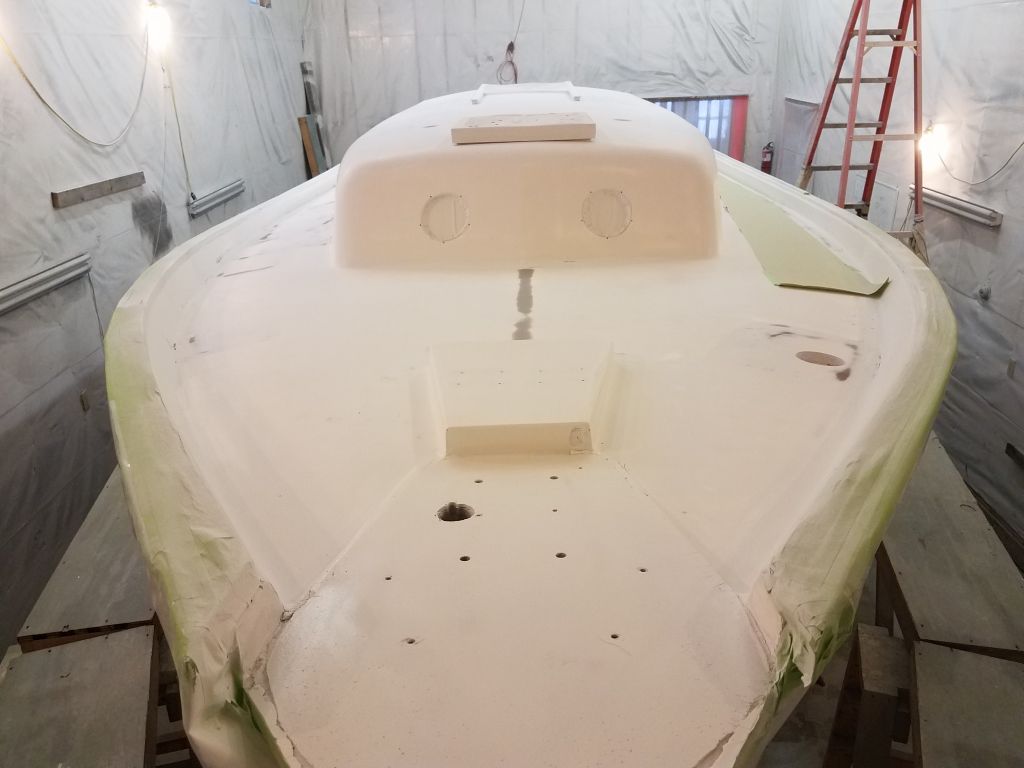
On the poop deck, I temporarily positioned the steering room hatch so I could mark 1-1/2″ around its outer edges, then masked off the remainder of the area to suit, which brought me to the end of the day. I’d finish up the masking and other preparations next time.
Total time billed on this job today: 4.75 hours
0600 Weather Observation: 8°, clear. Forecast for the day: Sunny, 20°
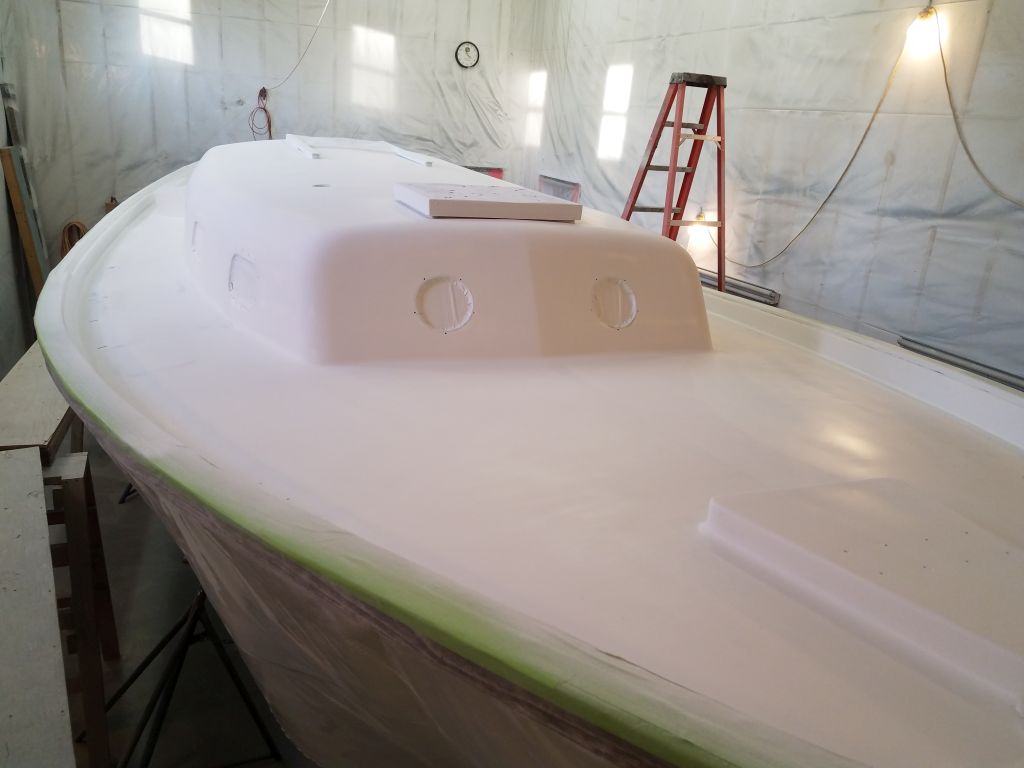
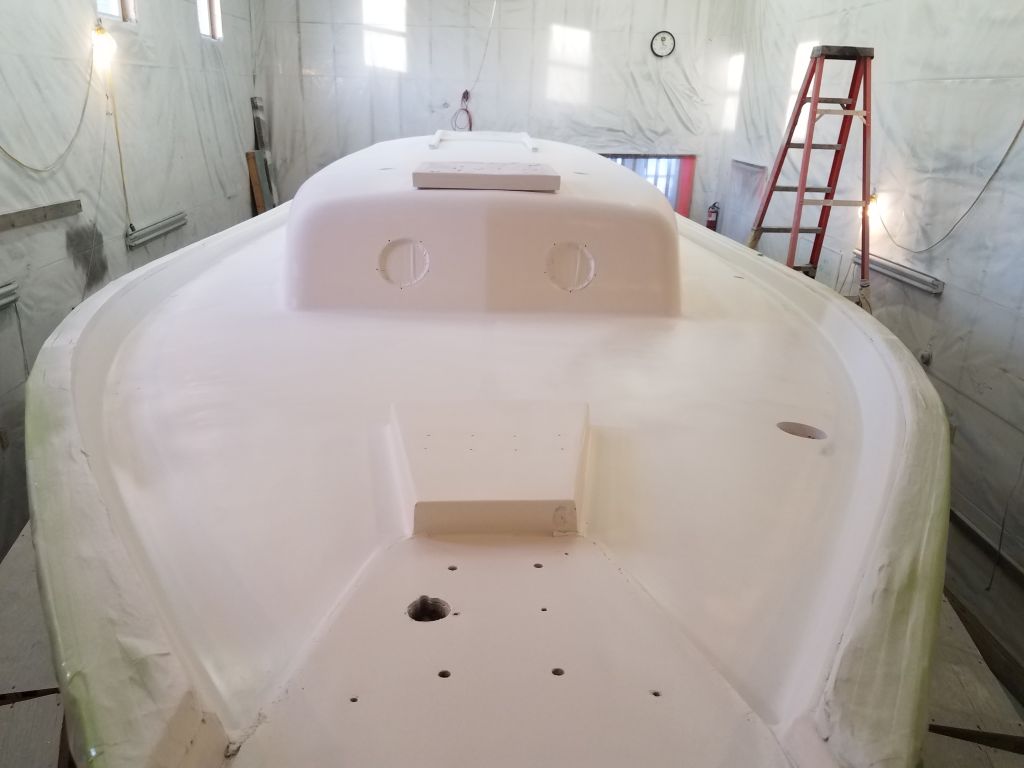
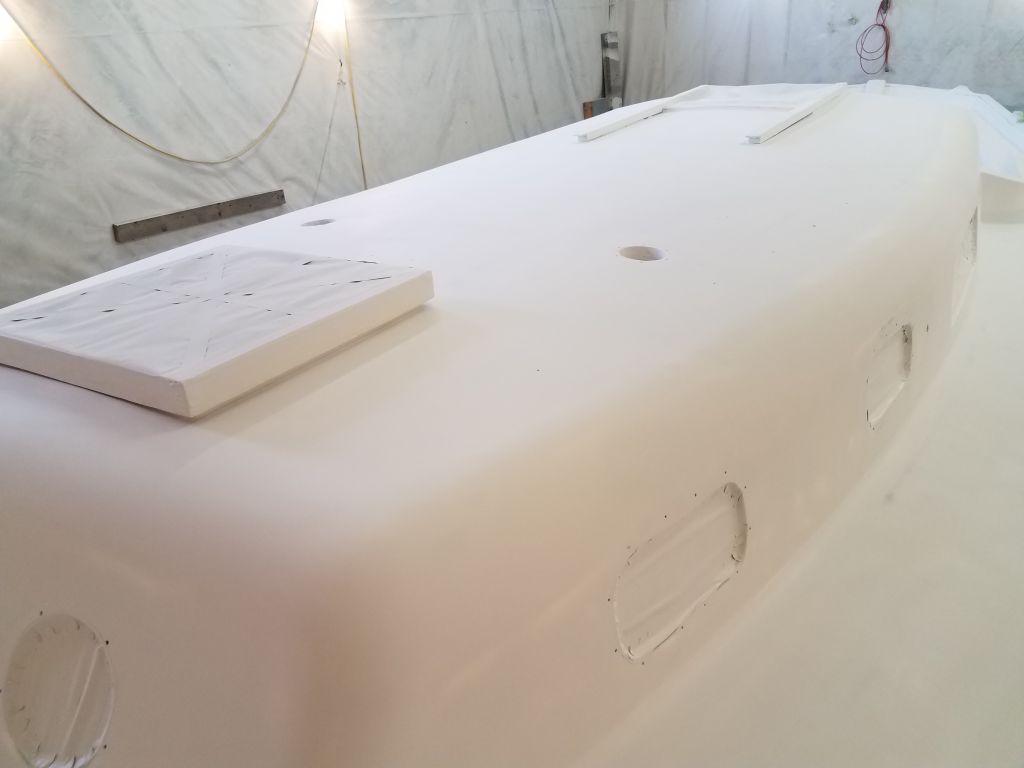
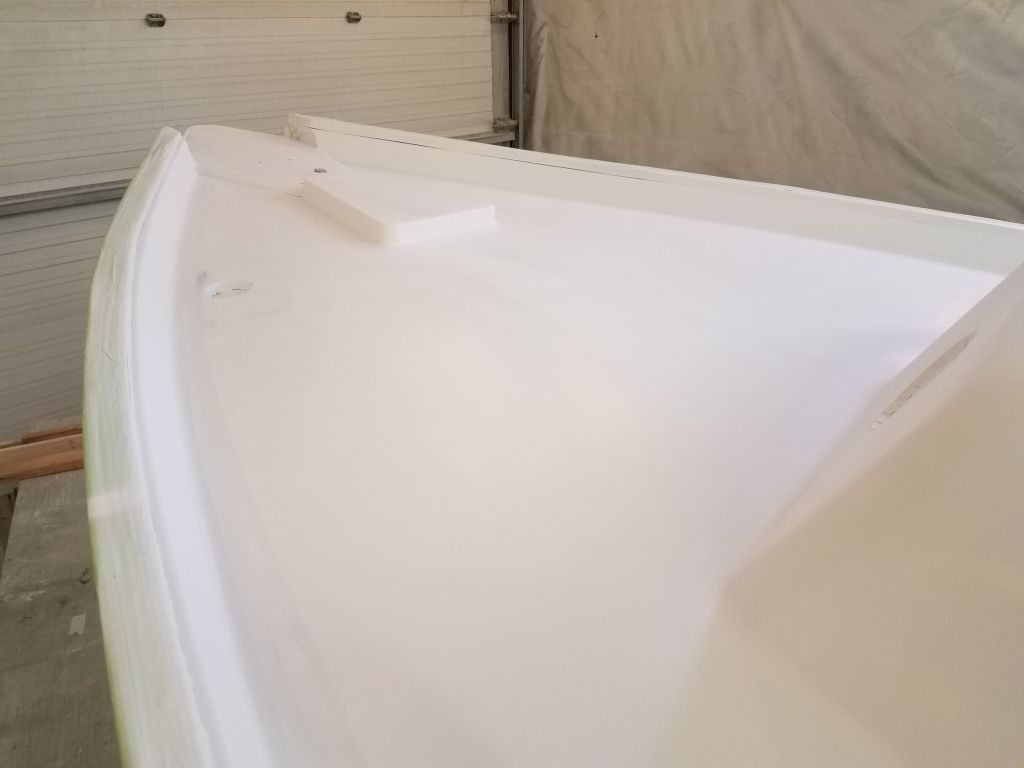
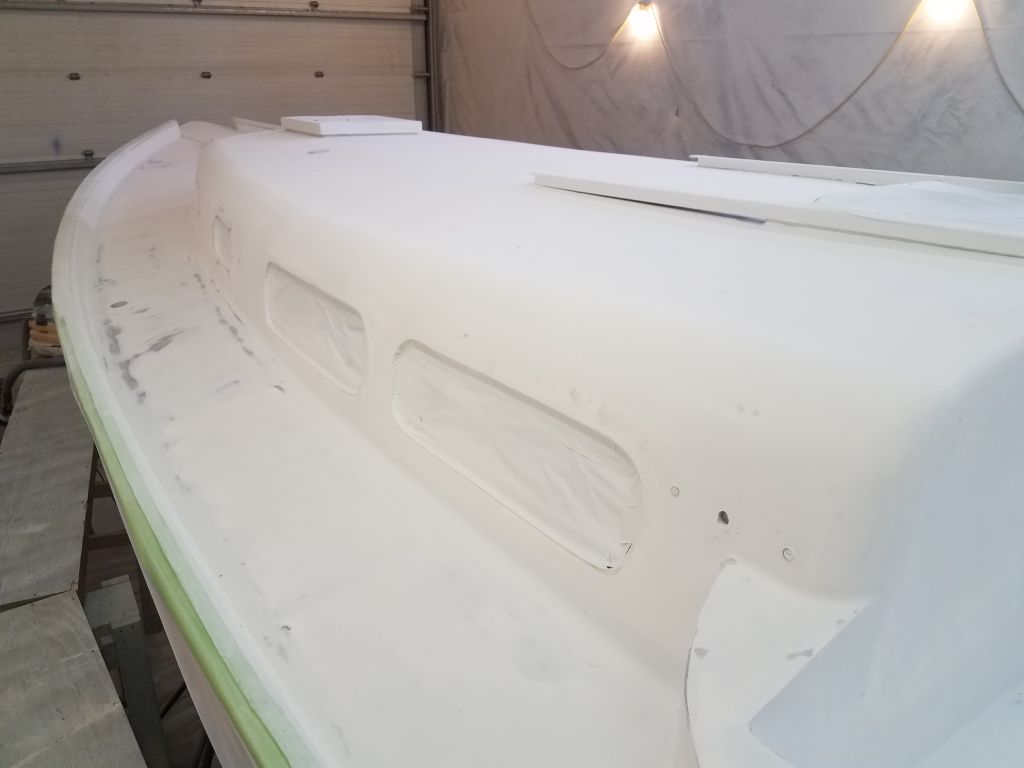
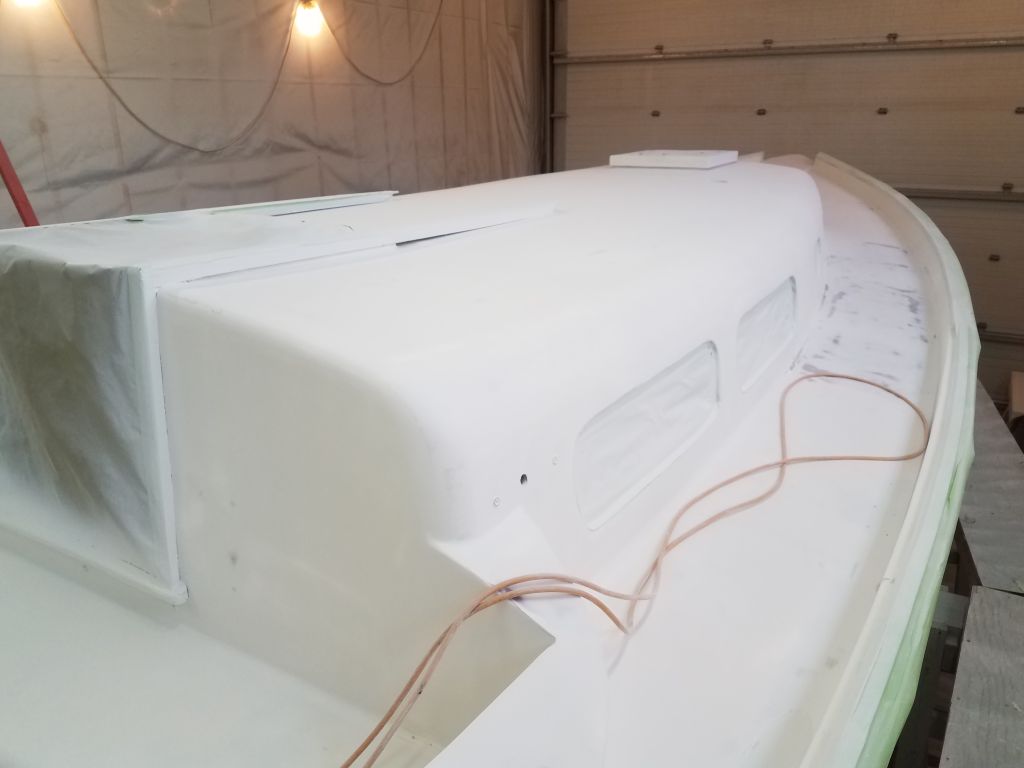
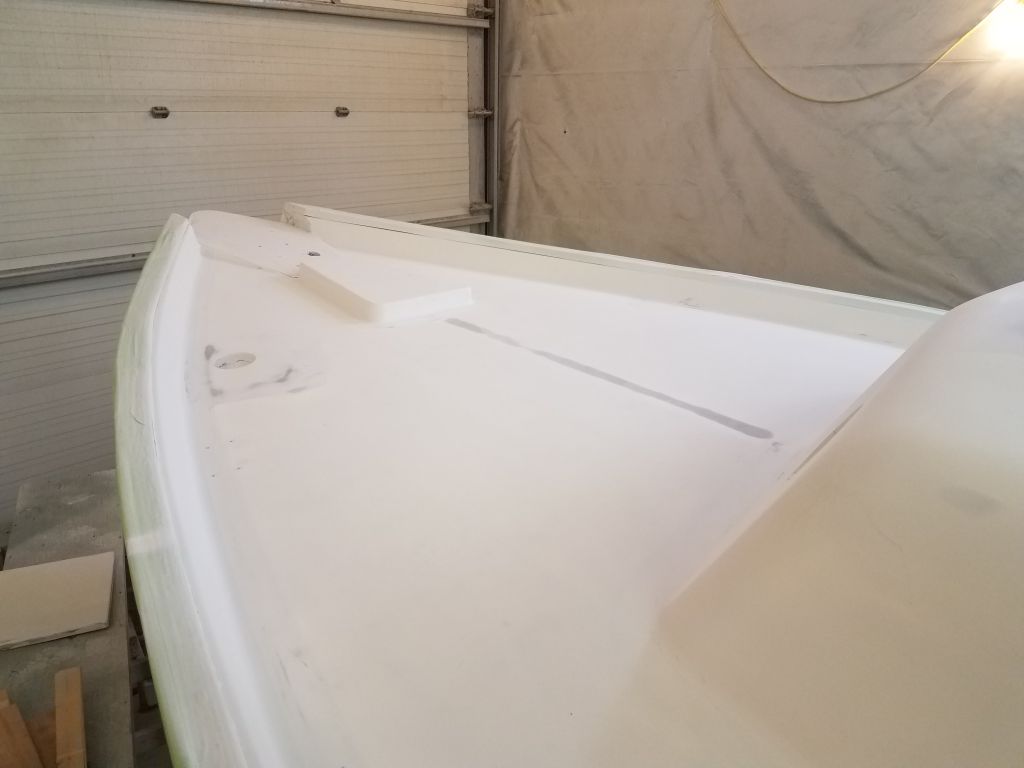
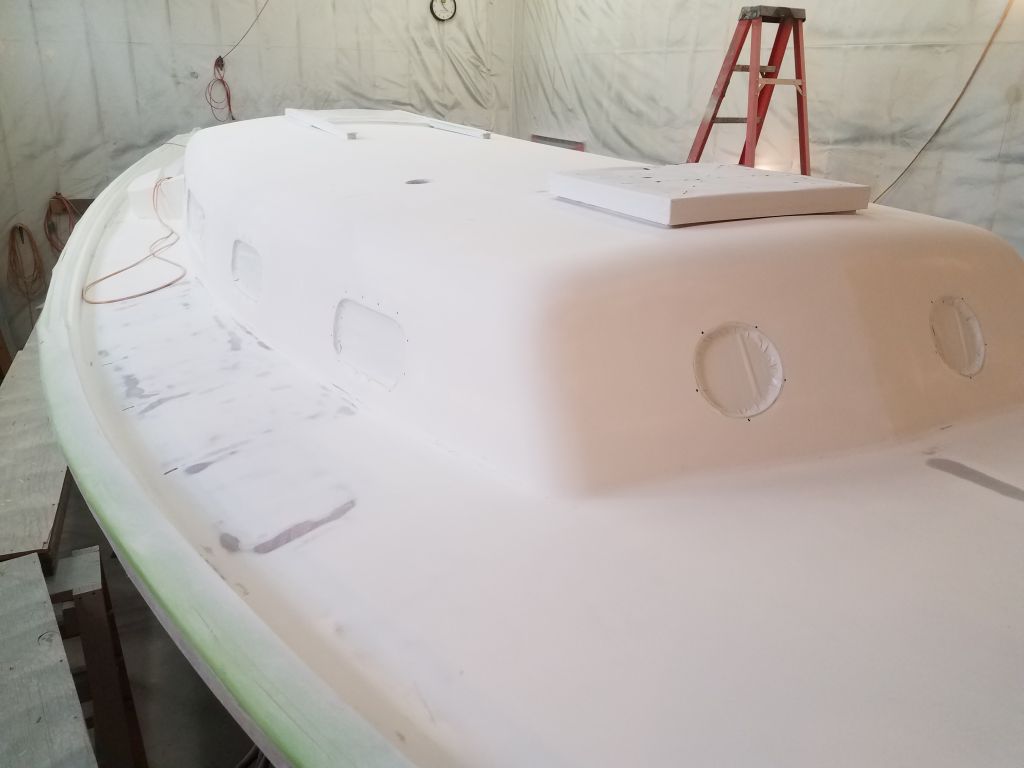
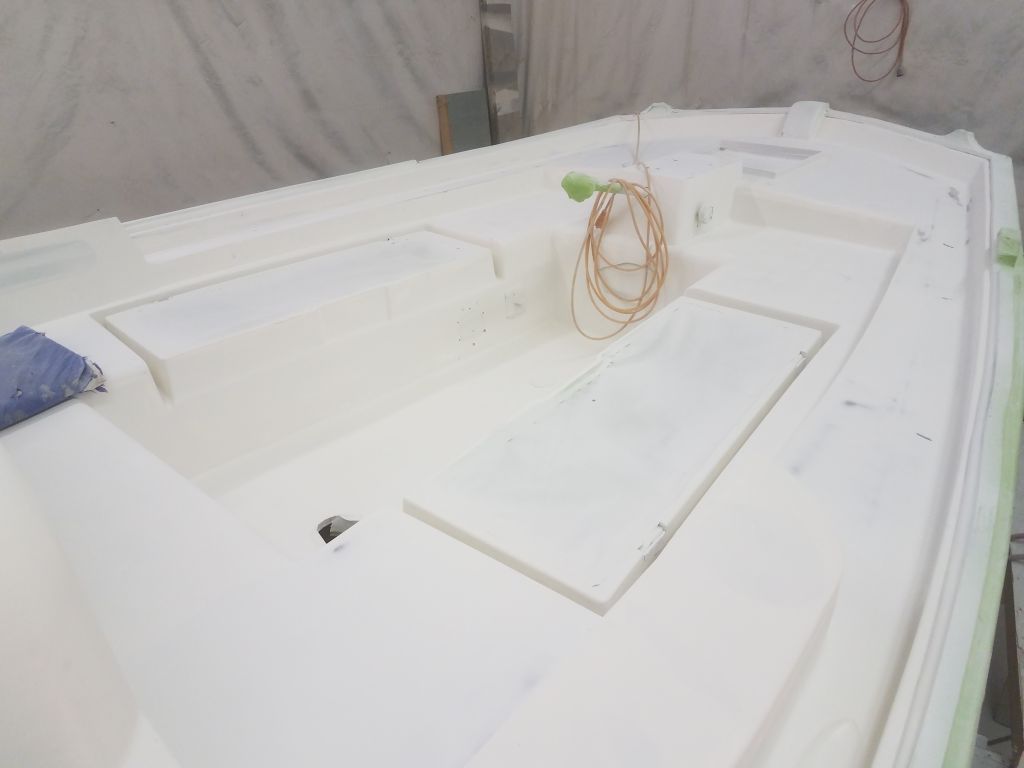
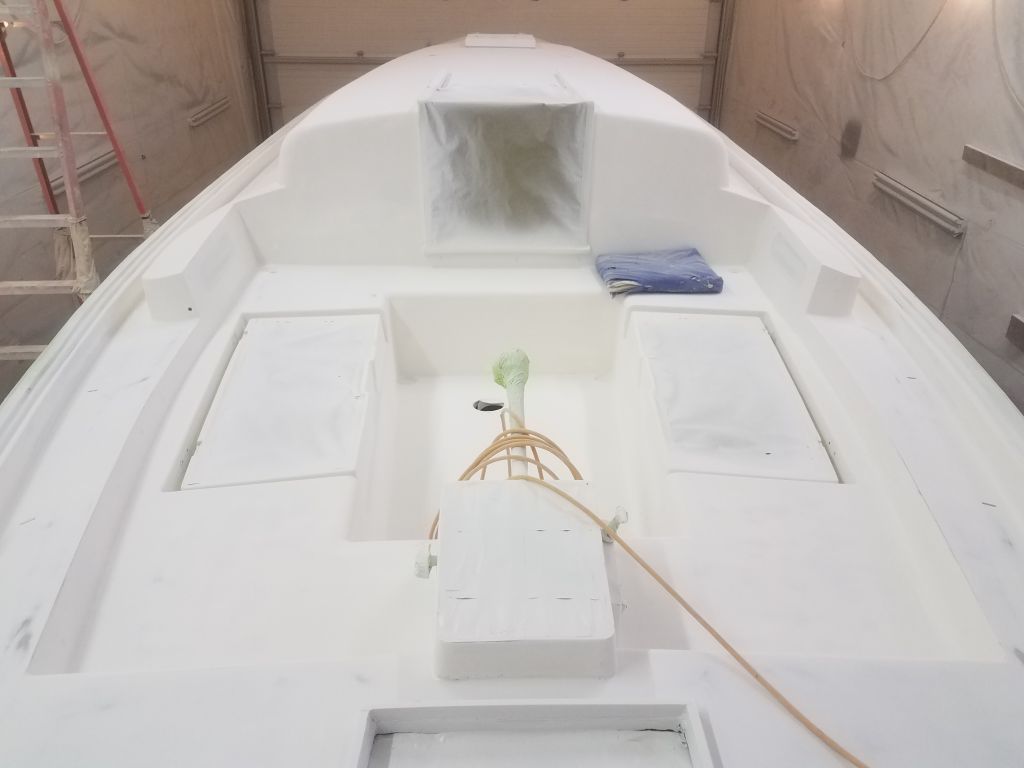
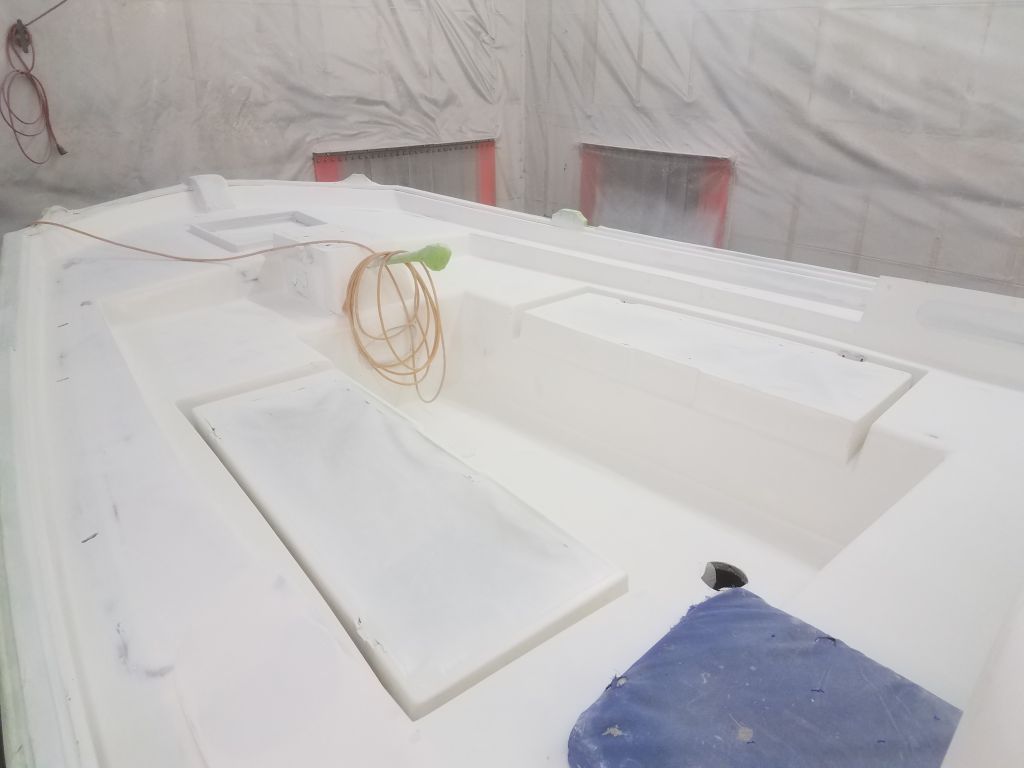
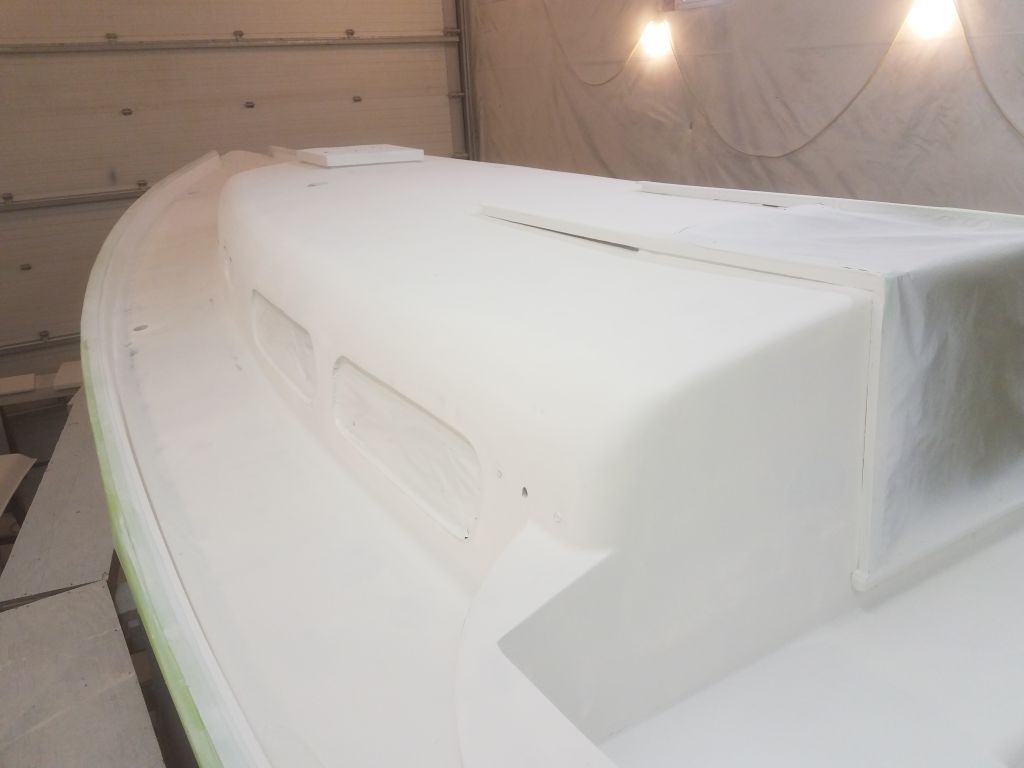
I spent one more day on sanding duty, this time with 320 grit by machine and hand as necessary to lightly sand the fresh primer. Afterwards, I performed my usual rounds of cleanup to prepare the decks for the next steps.
Total time billed on this job today: 6.75 hours
0600 Weather Observation: Clear, 32°. Forecast for the day: Sunny, 34° but temperatures falling through the day
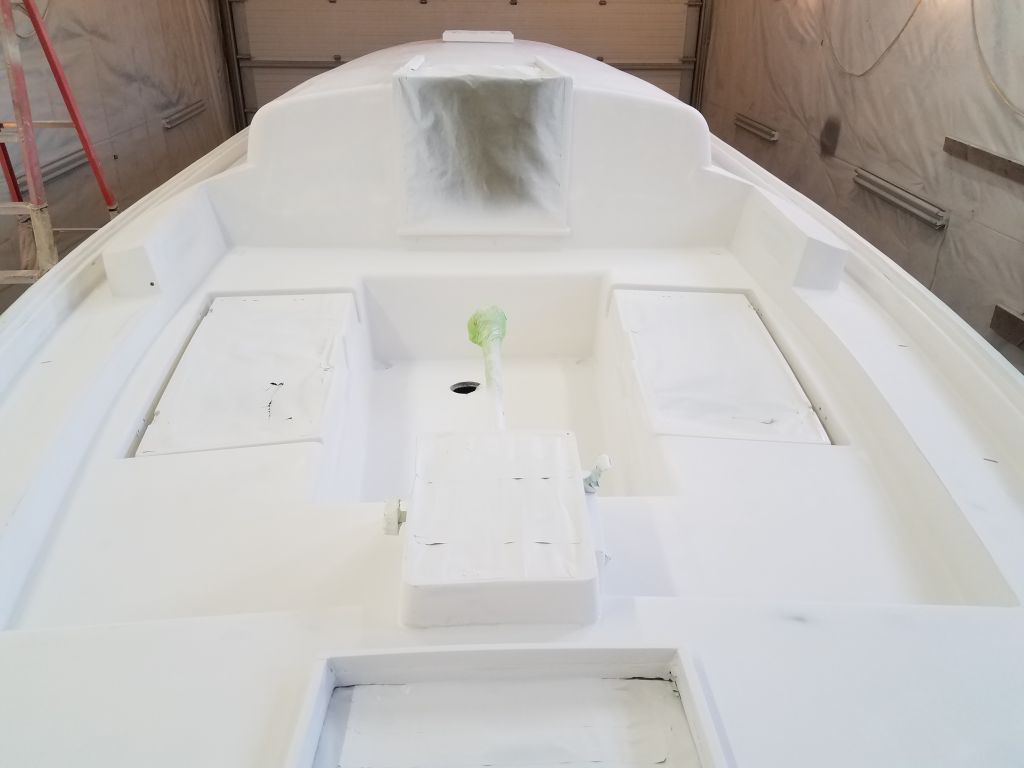
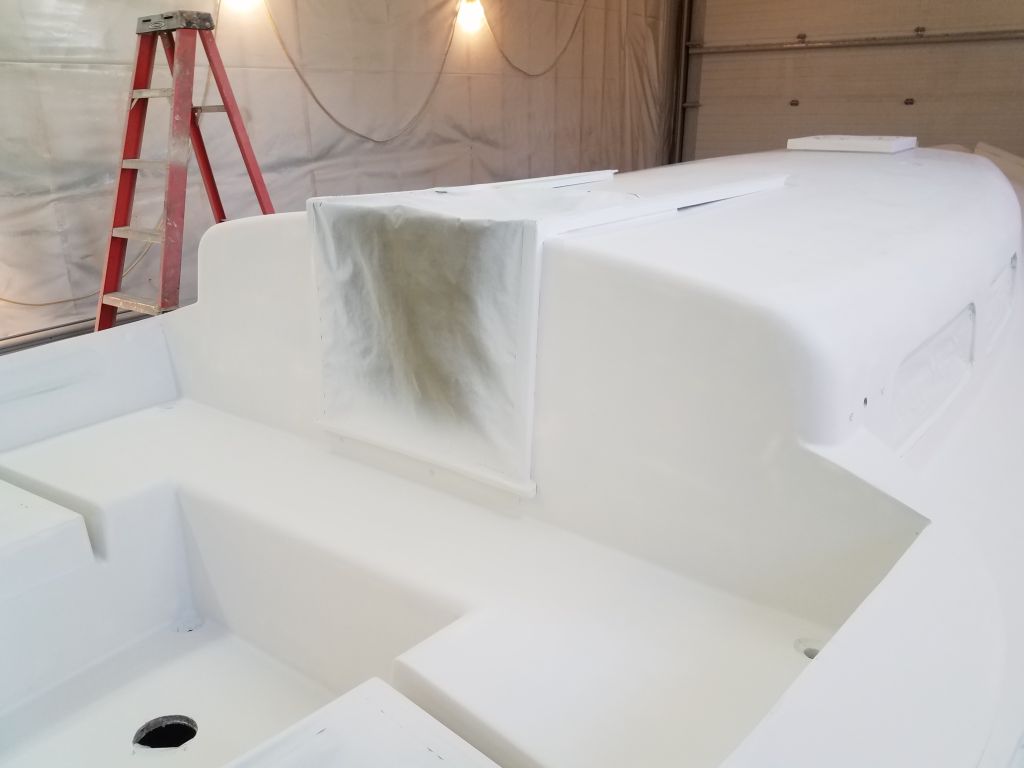
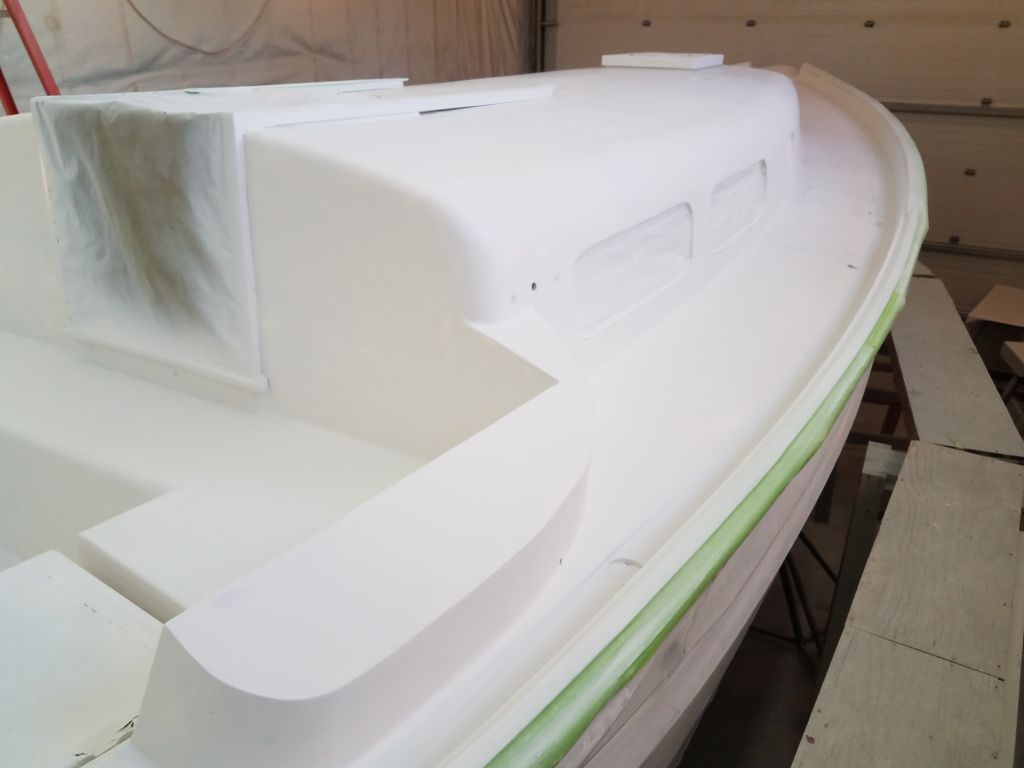
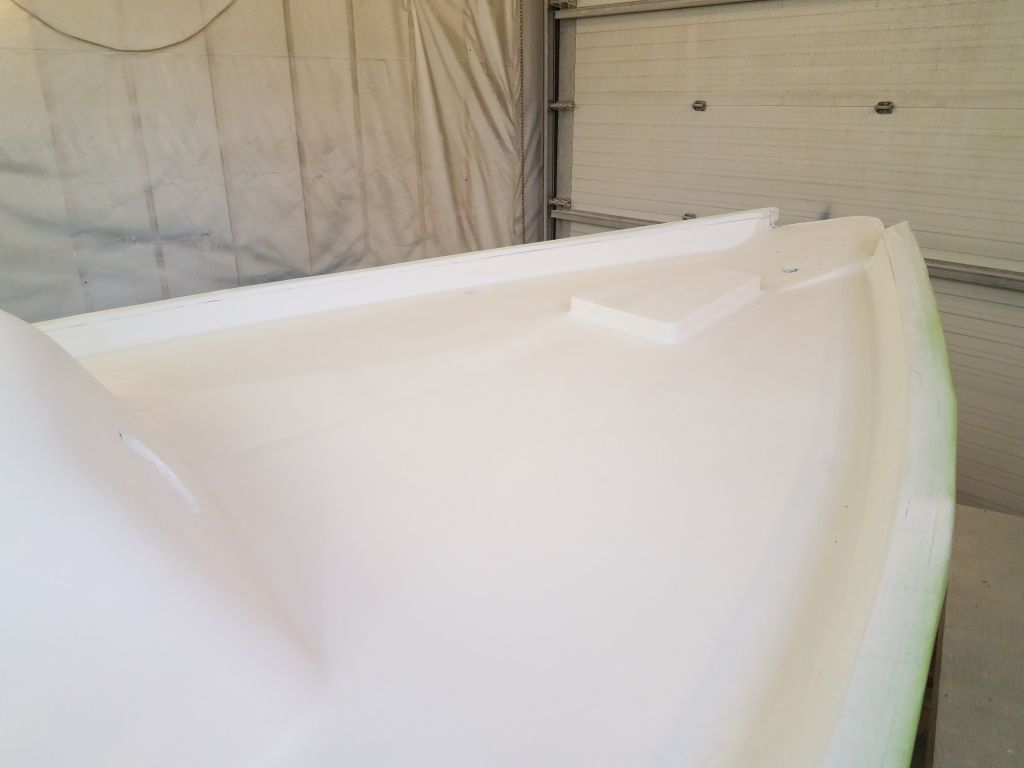
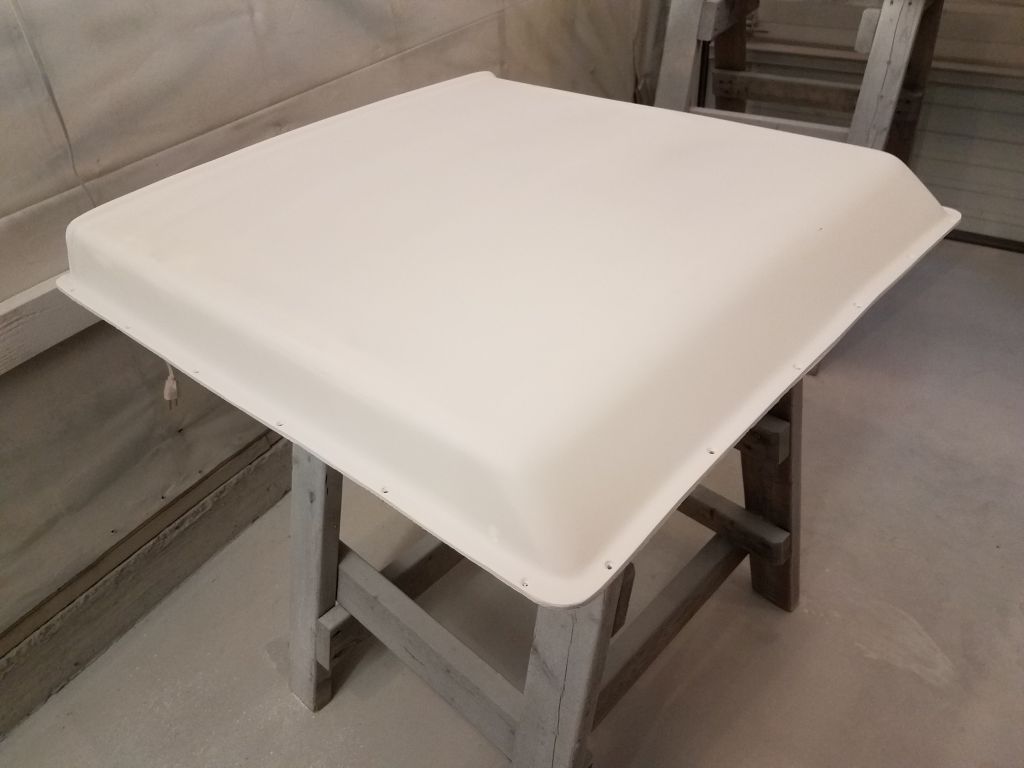
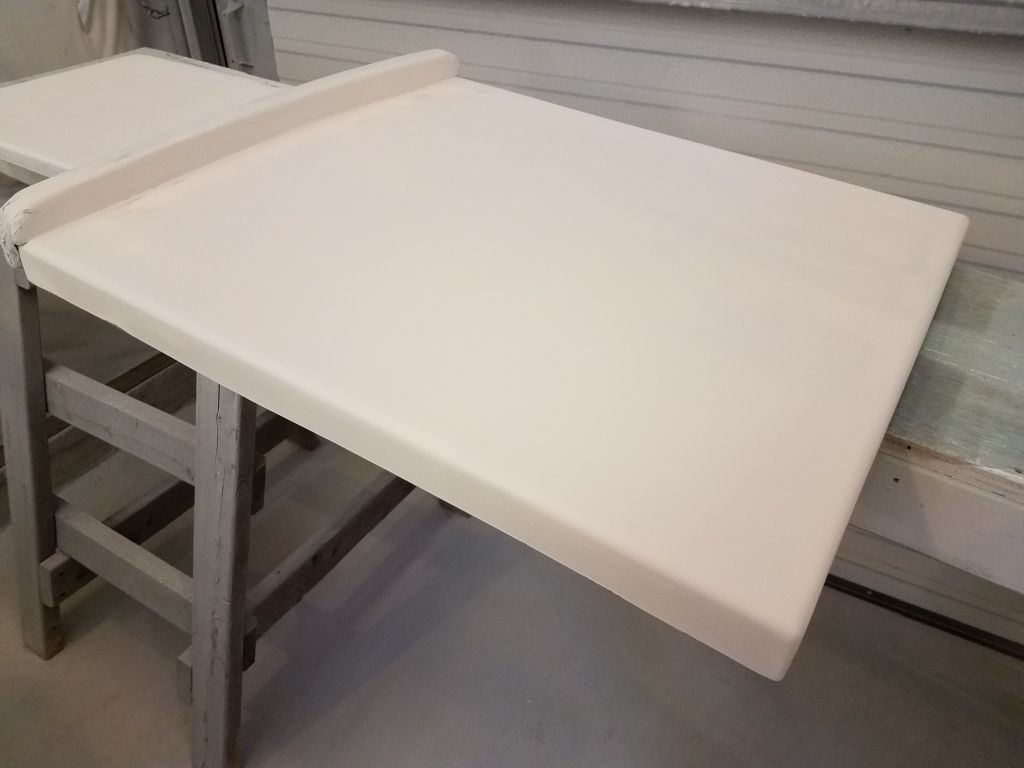
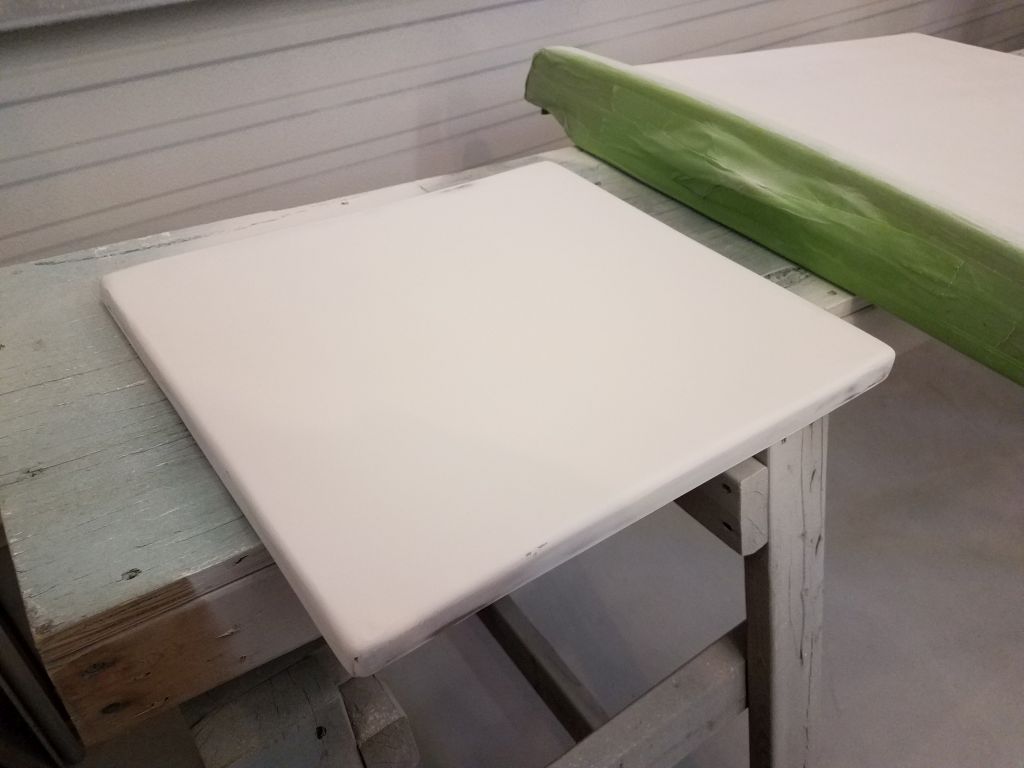
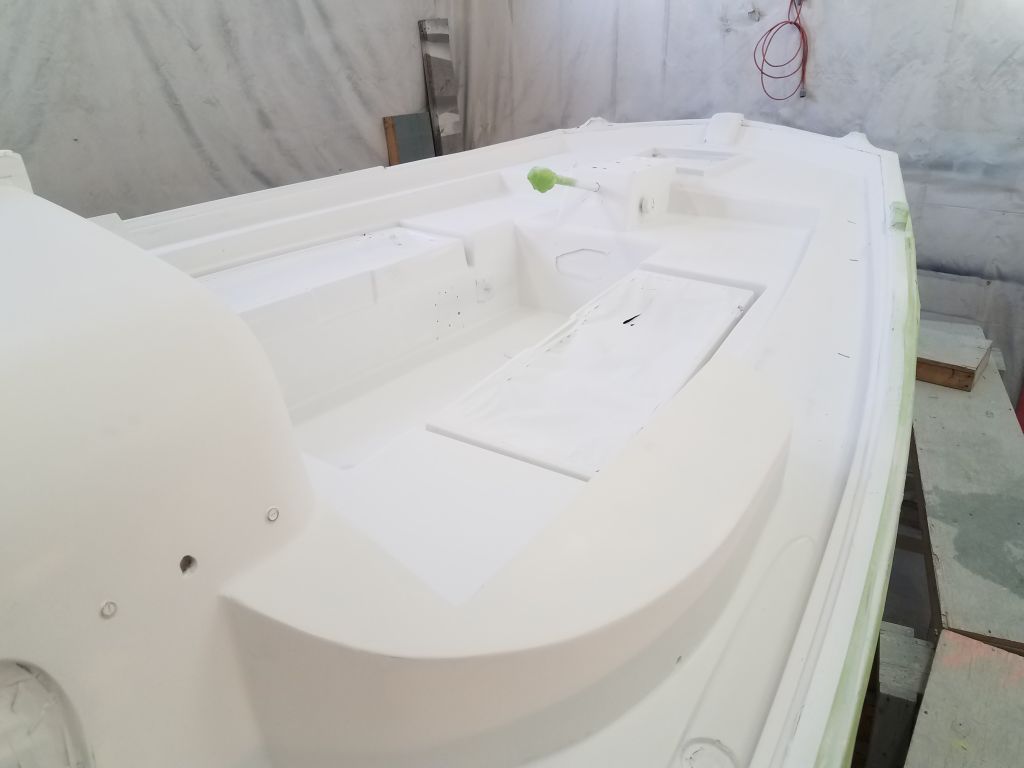
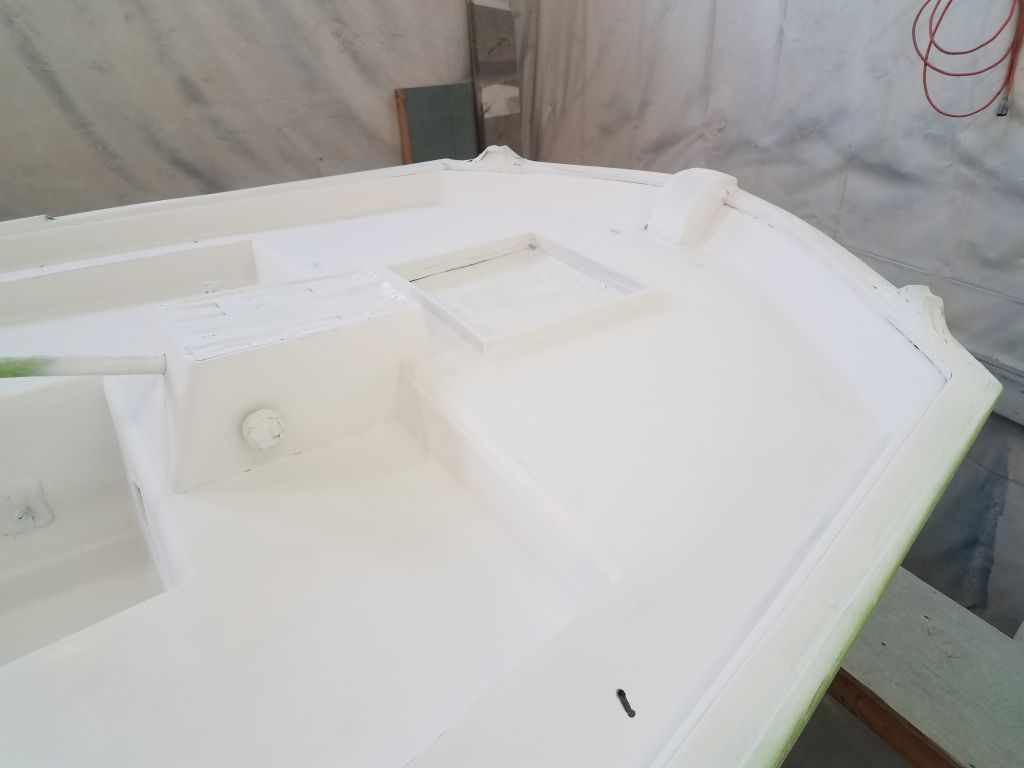
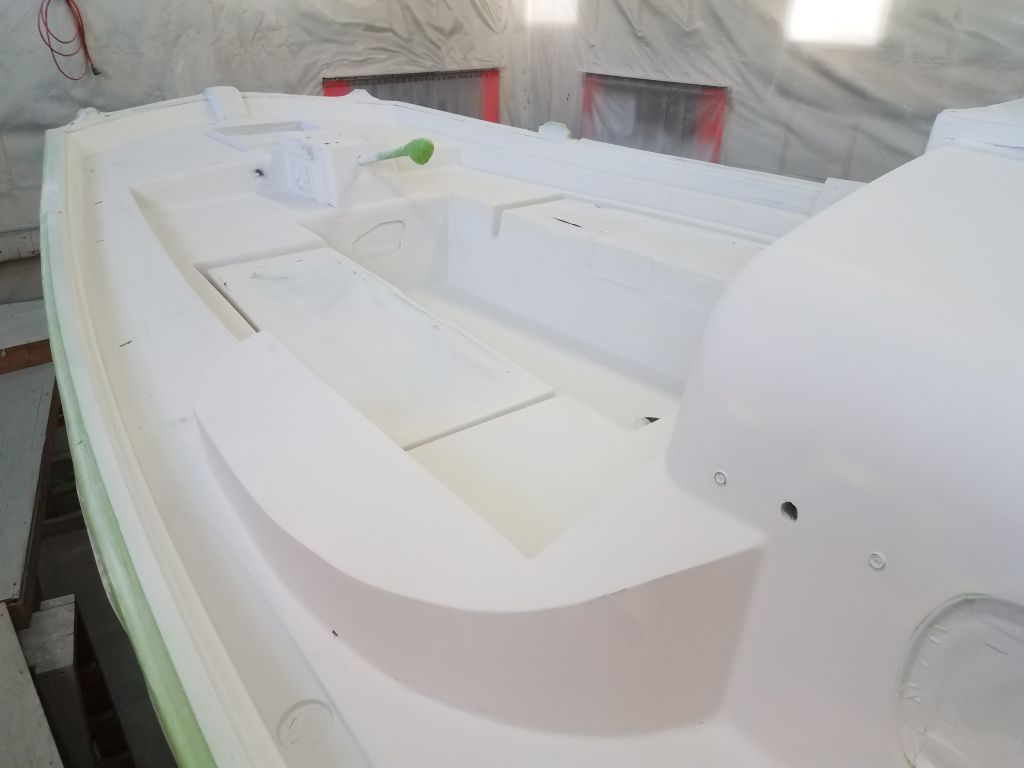
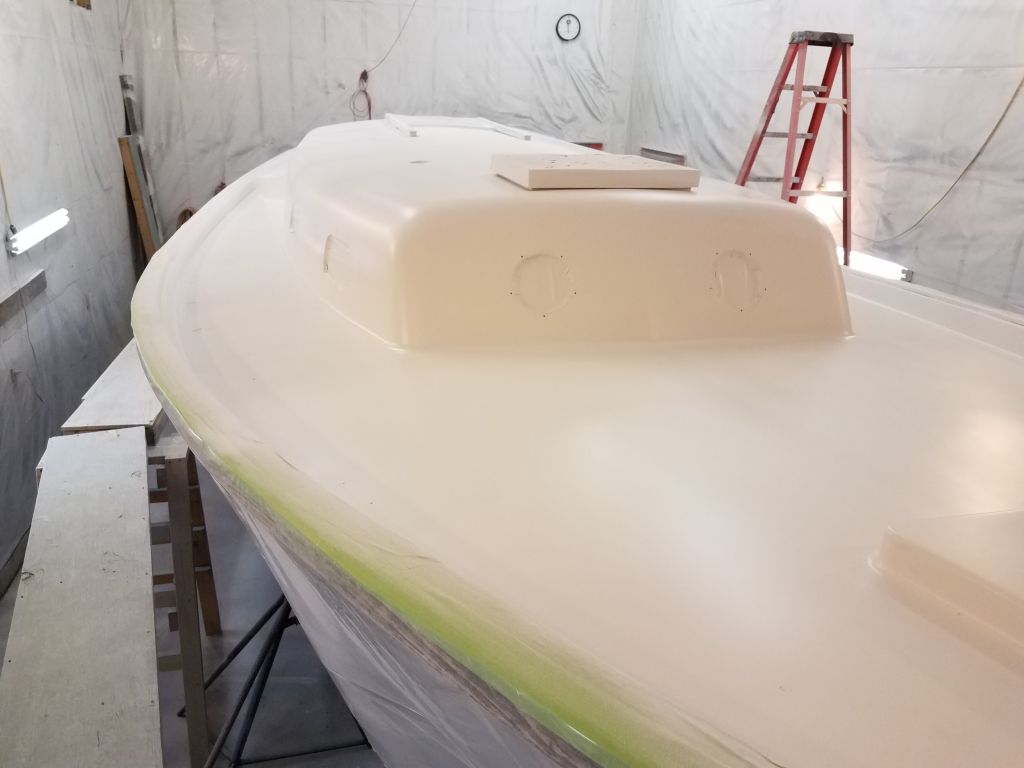
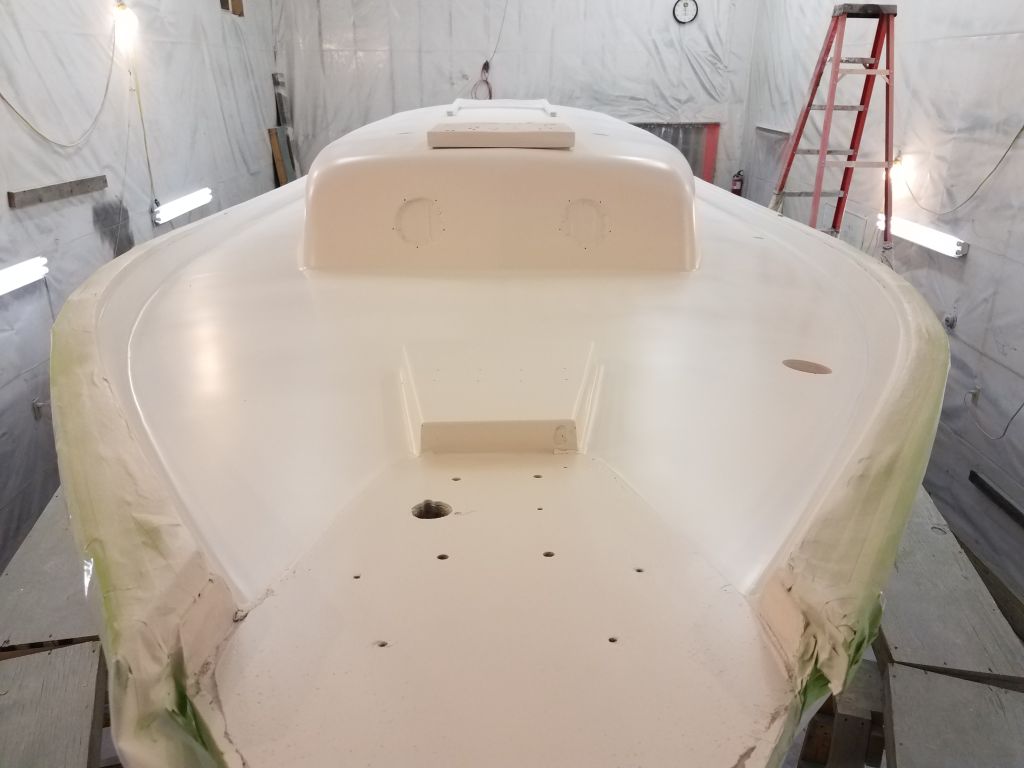
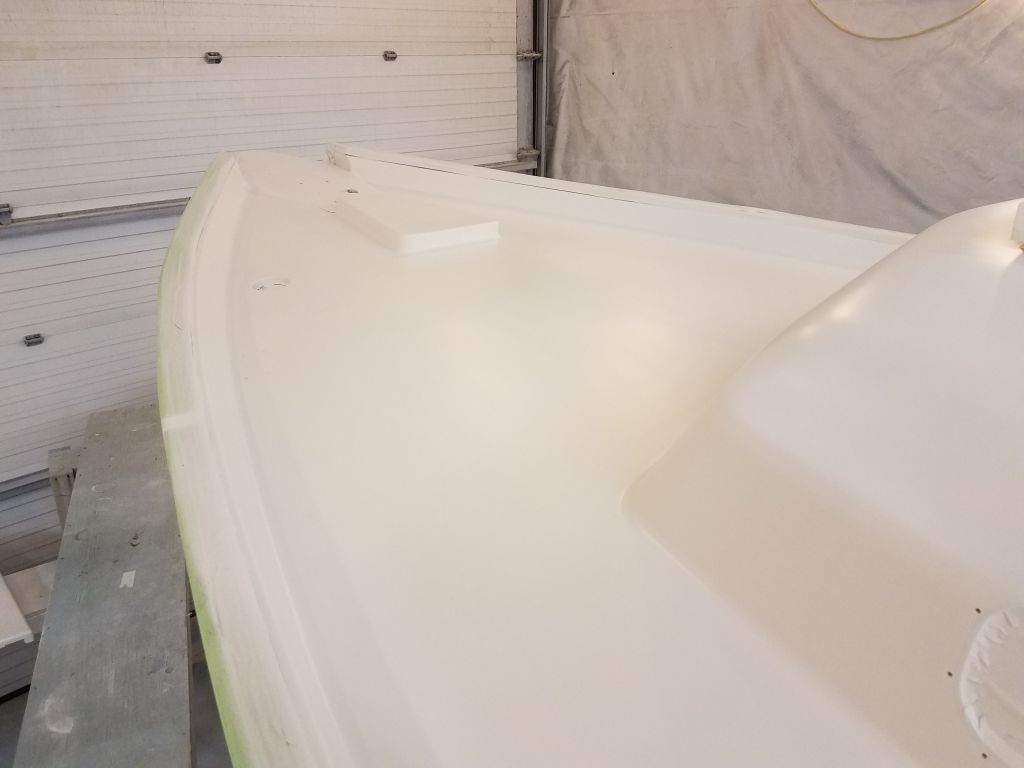
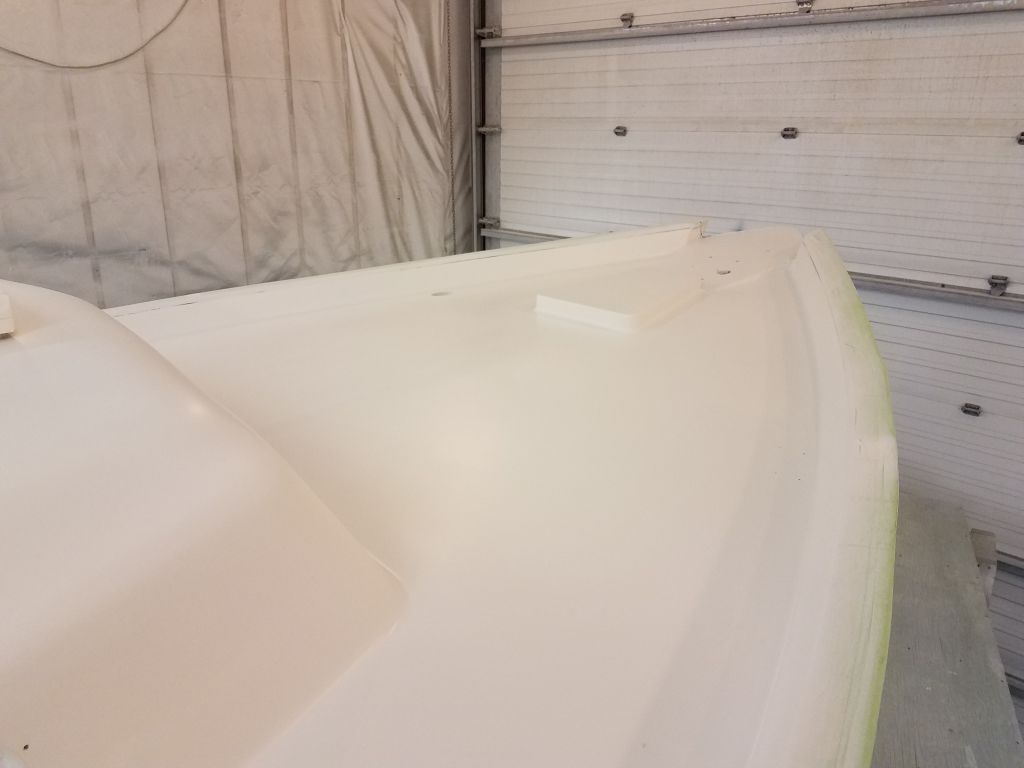
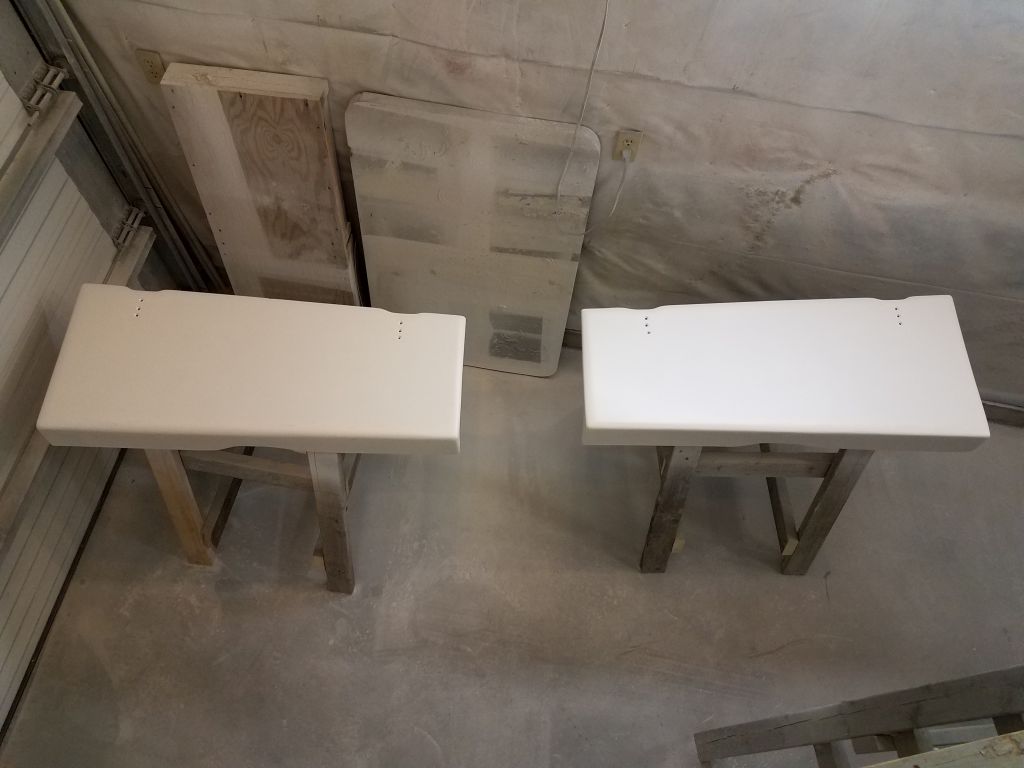
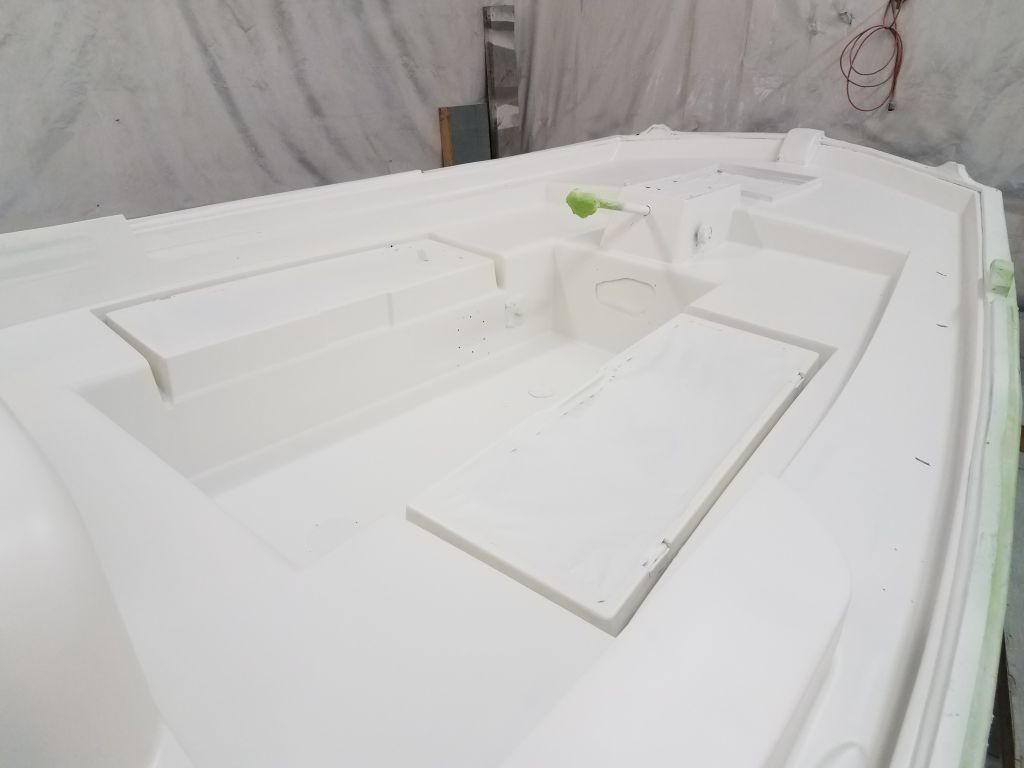
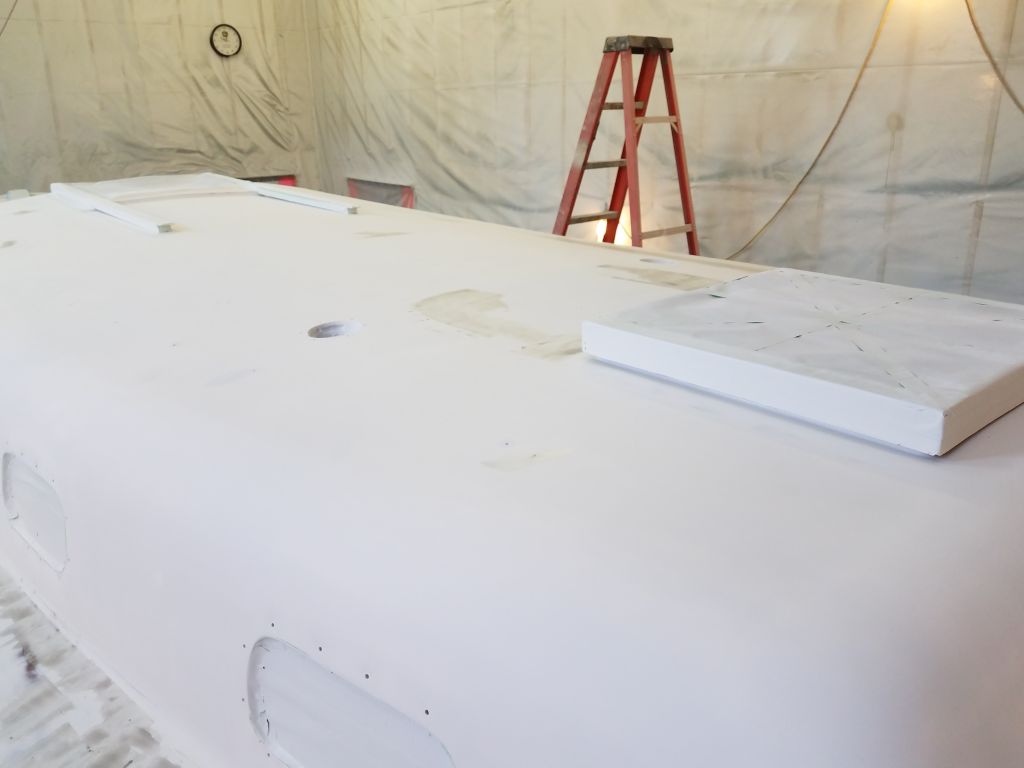
Starting again with the inboard areas of the deck–the coachroof and cockpit well–I applied three coats of epoxy finish primer to the deck areas. With the first phase complete, I continued with three coats on all other areas of the main decks, cockpit, cabin trunk, and loose parts.
Total time billed on this job today: 6 hours
0600 Weather Observation: 20°, light freezing mist, 1.5″ snow/sleet on the ground. Forecast for the day: Warming, freezing rain supposedly changing to rain later in the morning and through the afternoon, 30s.
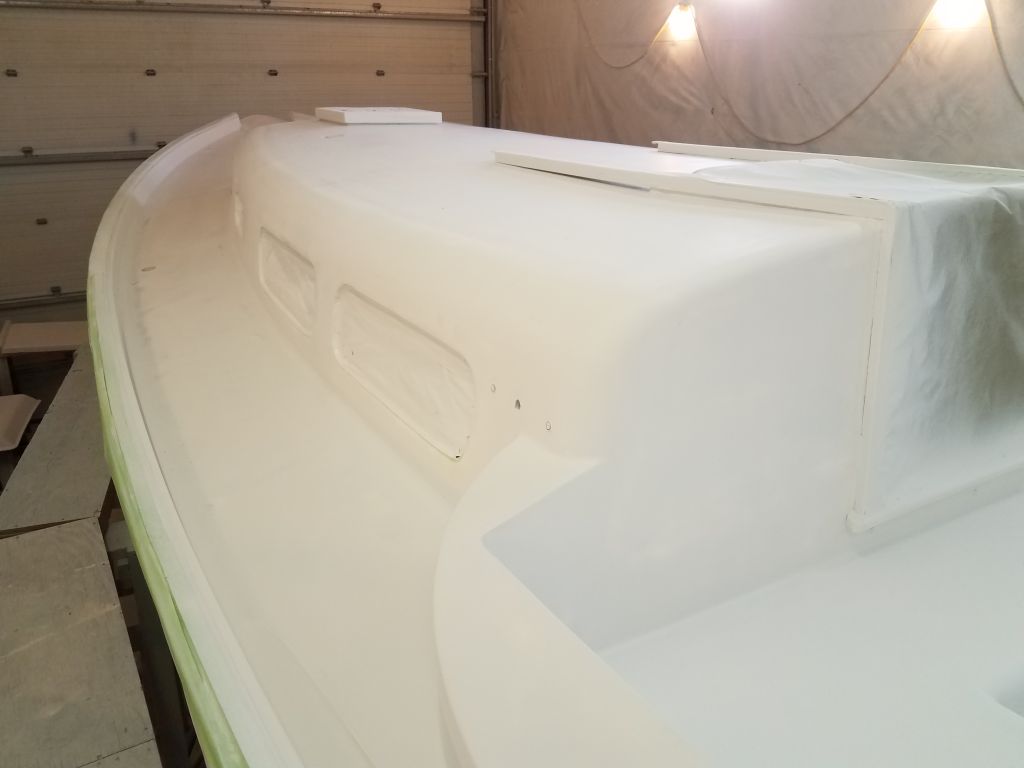
The fine fairing compound had plenty of cure time over the weekend, and now I sanded these areas as needed to remove the excess and complete the high build phase.
During the rest of the day, I cleaned up and prepared the boat and shop: blow down, vacuum, rinse down the floor, two rounds of solvent wash, and all other related steps to prepare the decks and loose parts for finish primer next. As before, I prepared portions of the deck with protective paper for me to walk, kneel, and/or lean on so I could reach and paint the inboardmost areas first.
Total time billed on this job today: 7.5 hours
0600 Weather Observation: 31°, cloudy. Forecast for the day: Snow developing in the afternoon and evening, continuing overnight with light amounts
Now that the propeller hub and vertical shaft were well tacked in place, I removed the wedges and tape and lightly sanded the epoxy from overnight, then cleaned the surfaces. With more thickened epoxy, I filled in remaining gaps around the pod and shaft, and smoothed in some fillets around various areas to streamline the shape for fiberglass.
Meanwhile, I prepared two layers of fiberglass for each side, one full size to match the shape of the ground areas and the second about an inch smaller all around to match the tapered edges of the patch area. Once wet out with epoxy, I installed the new fiberglass over the whole area, rolling it tightly into the contours of the shaft and hub. At the top and bottom of the propeller hub, and around the top of the vertical shaft, I added some light cloth to seal the edges completely.
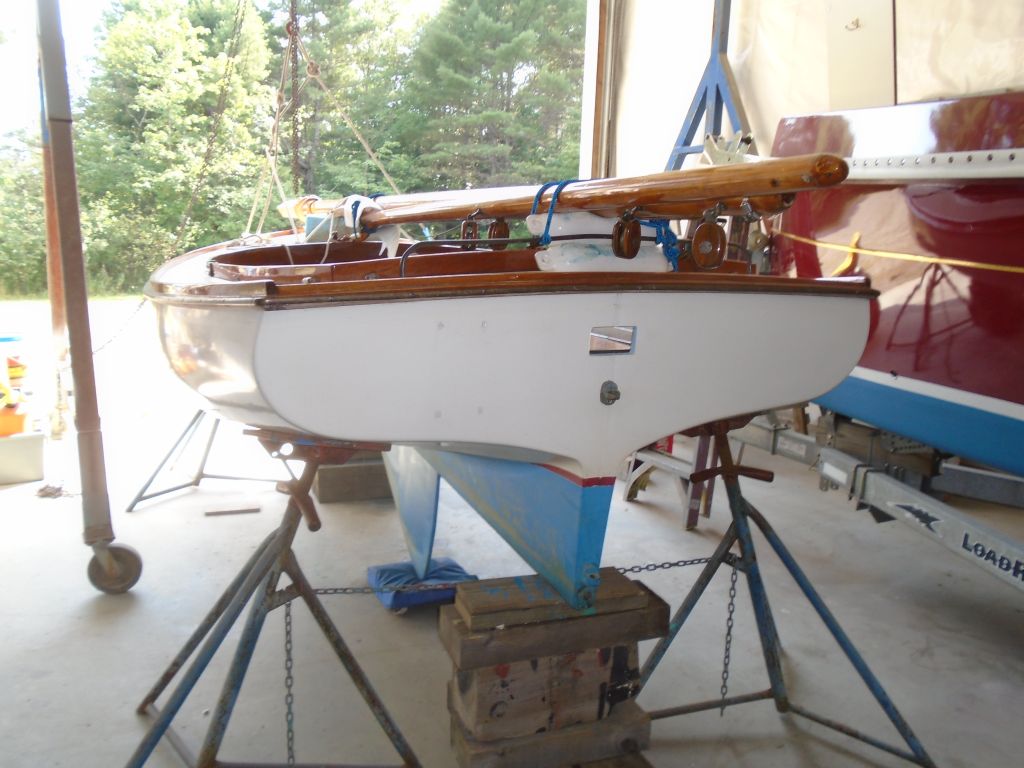
A while back, I purchased a 14′ Handy Cat, built in 1973 by Cape Dory (this design, like many small boats, was licensed to a number of different builders over the years). The boat was in great shape from the onset, though the previous owner had had the poor judgement to install a horrendous outboard bracket on the delicate transom. The first thing I did once I bought the boat was remove this abomination, not only because I hated the looks, but also because I had no intention of using an outboard on this boat.
Where I sail (or attempt to sail) the boat is a shallow creek with a narrow entrance leading to an expansive (but still shallow) bay. What I quickly learned in practice was that it simply wasn’t realistic (or even possible) to sail out the entrance channel, which had a navigable channel only perhaps 10 or 12 feet wide, other than at the occasional (and always very early morning) extra high tide that filled the adjacent sand/mudbanks satisfactorily. This never occurred at any time when I actually felt like sailing: for whatever reason, the tide cycle here never seemed to allow these full tides during the middle part of the day or evening. That’s a whole discussion in and of itself; suffice it to say that the tides never acted favorably to provide more room in the channel.
The direction of the channel–which also curved significantly over its considerable length–rarely caused the winds to align in such a way as to make the entrance passable without a need to tack–which was, frankly, quite impossible given the narrowness. And when the wind direction seemed right, it was too snotty. A complicated situation to be sure, but for this seemingly whiny combination of reasons it never worked out well for me to get this little boat out into the real waters.
The long and the short of all this is that I found the channel to be an impenetrable barrier to fun and useful sailing, which not only limited my use of the boat, but even my interest in trying. I’d initially thought I might use oars to row the boat out the channel as needed: it came with oarlocks. But this turned out to be a non-starter, as the low boom and centerboard trunk prevented any sort of realistic rowing position, and any oars long enough to actually reach the water without an absurd angle would be impractical on board. So this turned out to be a failed idea as well.
After a full season filled with disappointment and guilt over the situation, I determined that to have a chance at sailing this boat in a satisfying way, I’d have no choice but to provide some sort of auxiliary propulsion for the channel. There was a more traditional outboard bracket available that wouldn’t look so terrible, but I still hated to go that route for various reasons: the weight and appearance of the outboard; the need to buy a new outboard; my general dislike and dissatisfaction with small outboards to begin with.
Then, a friend told me about an interesting installation he’d seen on a newly-built Eric Dow Boatshop Herreshoff 12-1/2, where they’d built a custom rudder that incorporated an electric-powered propeller and shaft within. While the 12-1/2 is a very different boat, I thought the idea was terrific and might solve my problem.
Image from Eric Dow Boatshop
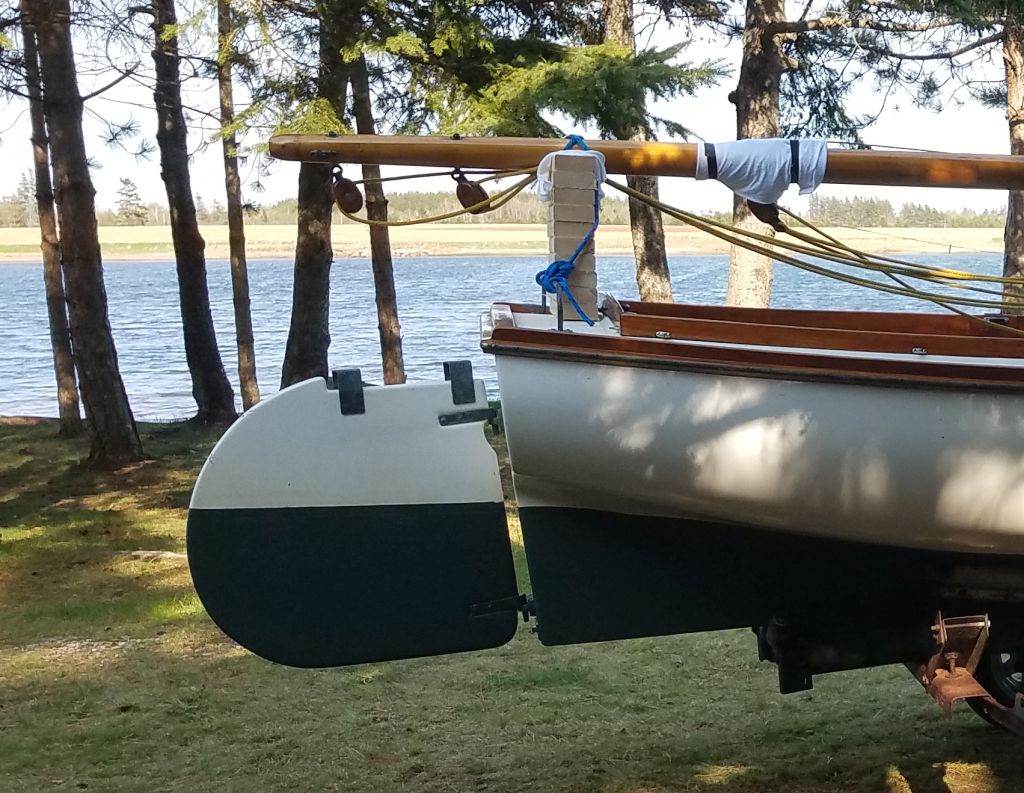
The Handy Cat, like most or all traditional Cape Cod catboats, features a large, shallow barn-door rudder hung from the transom. The rudder seemed to offer plenty of space to incorporate a small propeller and housing. For my specific needs and location, I didn’t think I required much in the way of power, and therefore the propeller size–and size and shape of the housing–wouldn’t overwhelm the shallow rudder.
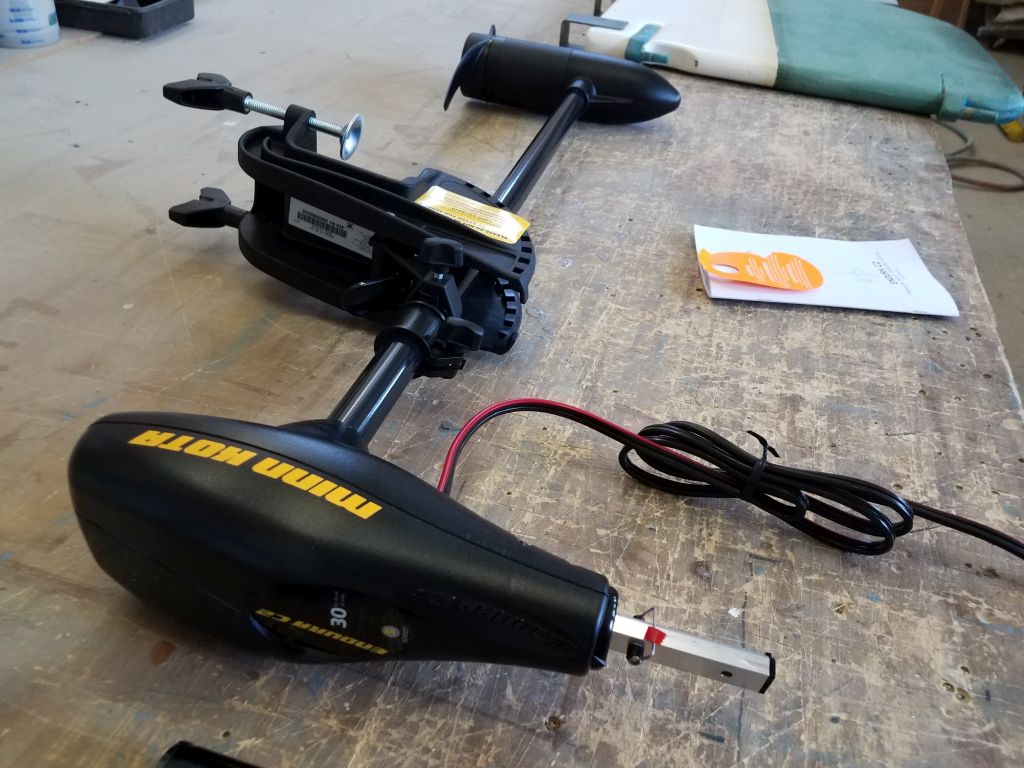
I spent some time researching trolling motors, about which I really knew nothing and with which I had no experience. (My only foray into fishing was many years ago, all saltwater and on larger boats, and at which I was an utter failure.) Soon, the project began to come together in my mind, and I settled on a small, inexpensive Minn Kota Endura C2 30 transom-mount trolling motor with 30 pounds of thrust. The motor had 5 forward speeds and three reverse. The usual Internet scuttlebutt suggested this was a competent motor, well-rated and well-liked by its users, and with ample power for what I needed, which frankly was 5 minutes’ use per time to proceed through protected waters in a small, easily-driven boat. The low entry price really gave me nothing to lose, which was good since I’d need to dismantle the motor for my installation. The fact that the engine was built for freshwater was of little matter to me, as I felt it would hold up in my limited season, and anecdotal reports online suggested similarly. My final installation of the electrical side would actually end up more durable than the original, so that didn’t concern me either.
I found some useful videos online detailing some of the basics of disassembly, and it looked much simpler than I’d even imagined (again, I’d no experience at all with these little trolling motors and didn’t even know how they were put together). To that end, I’ve chosen below to detail thoroughly my own disassembly for the edification of anyone else looking to do something similar.
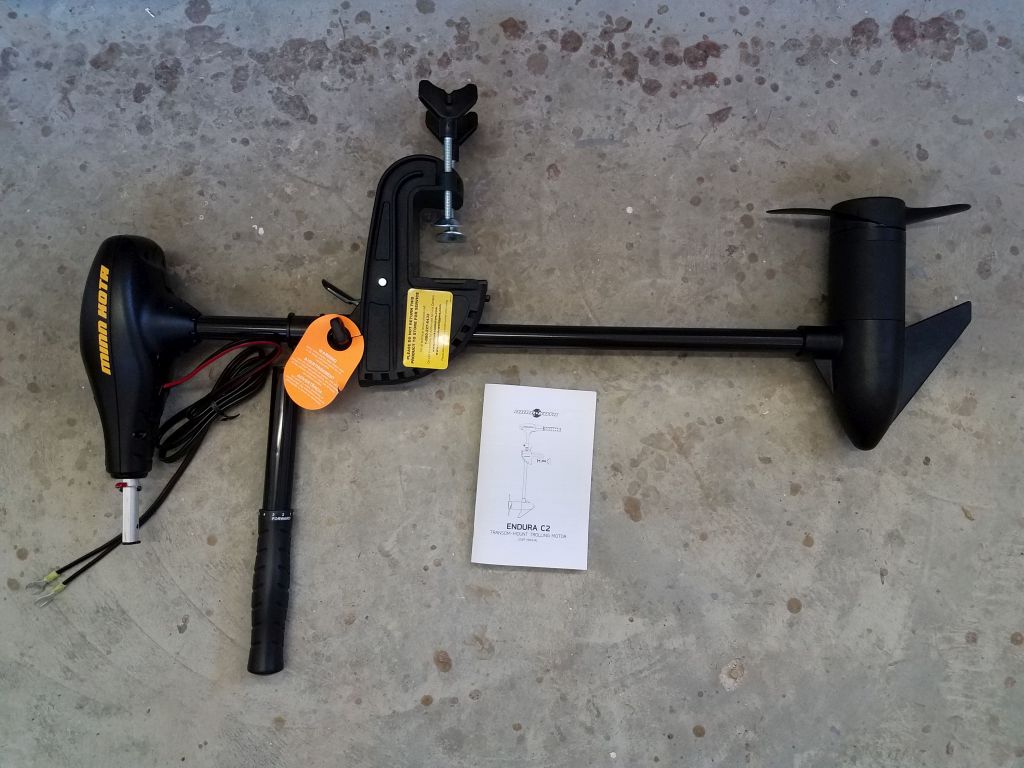
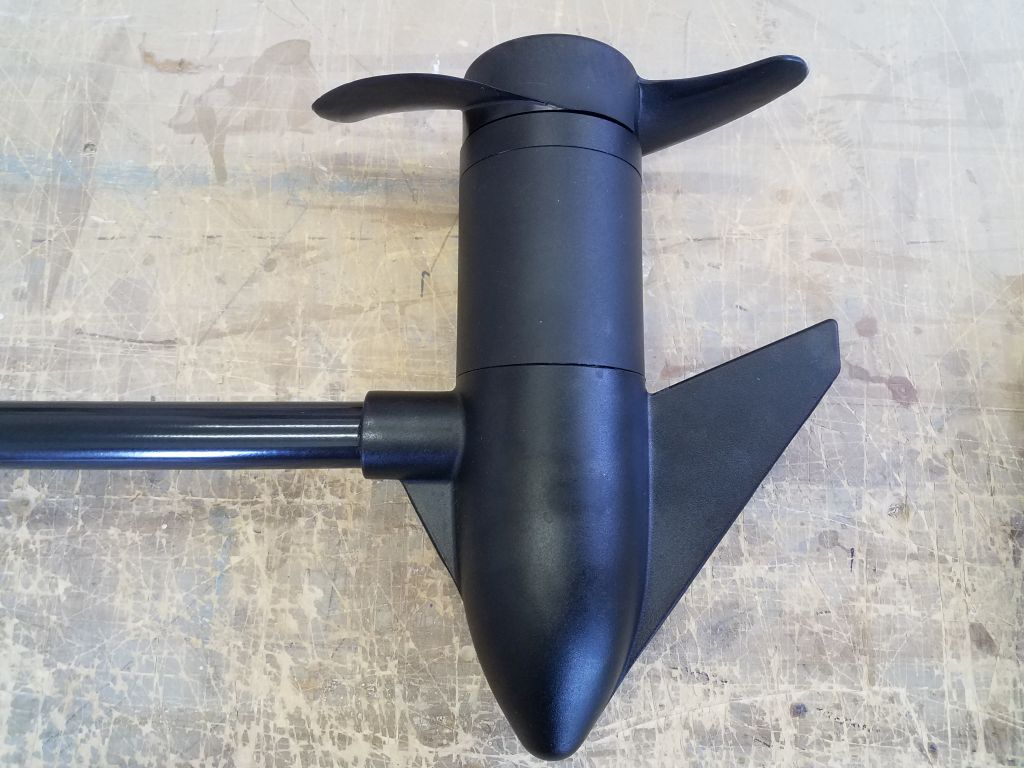
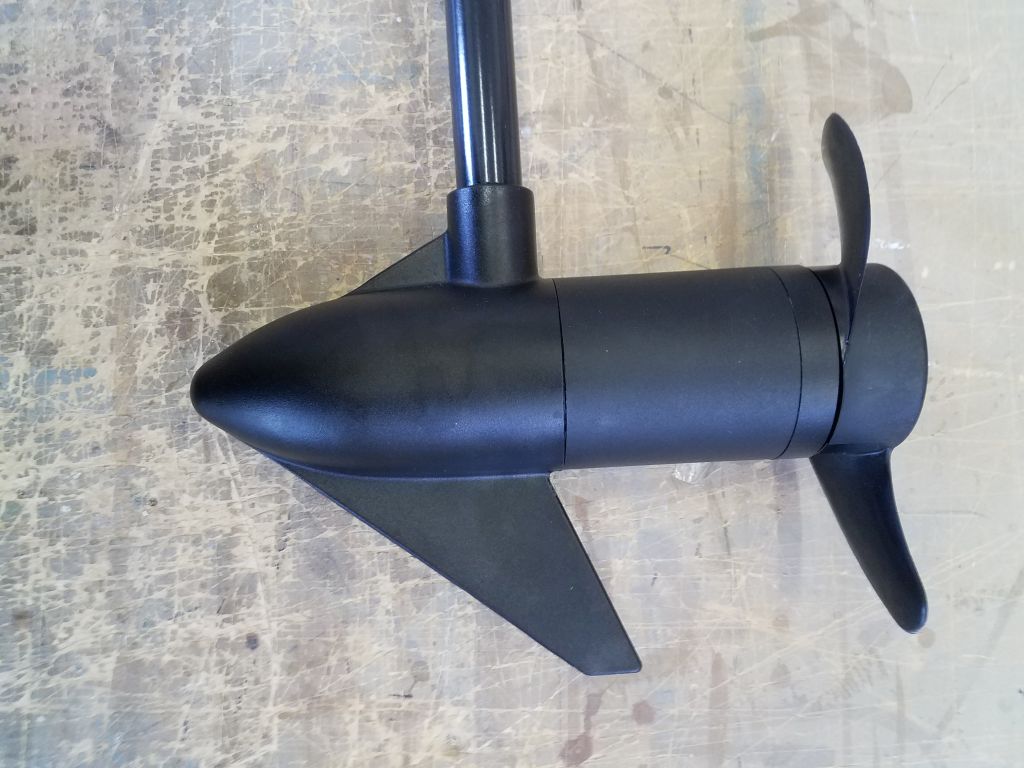
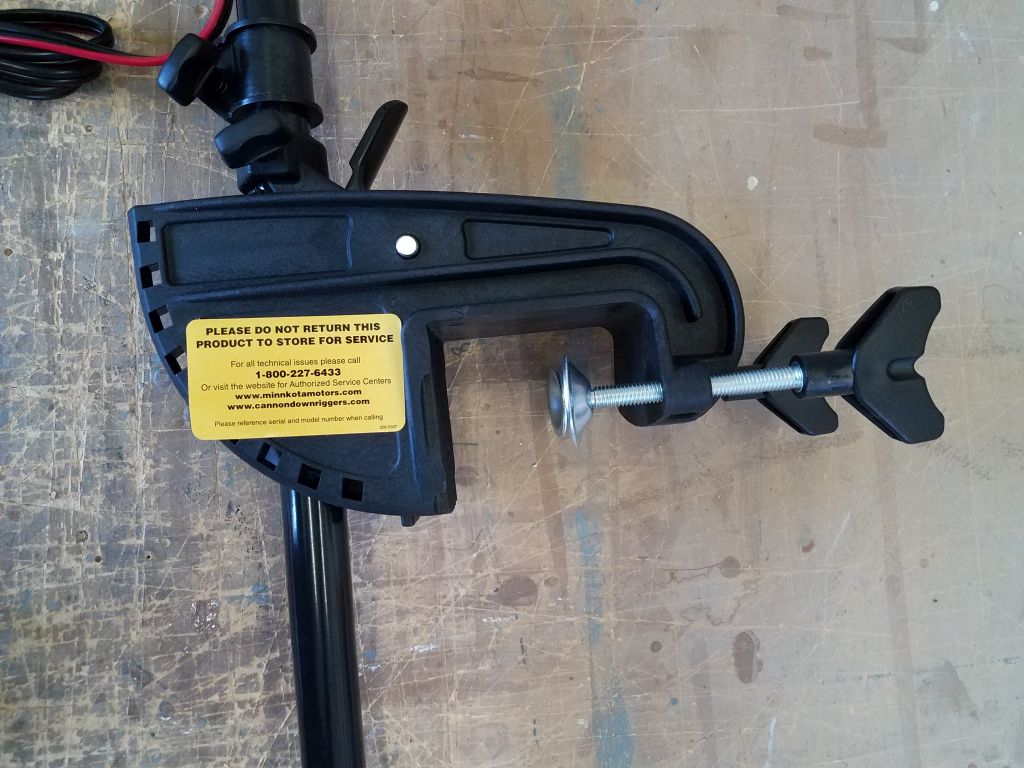
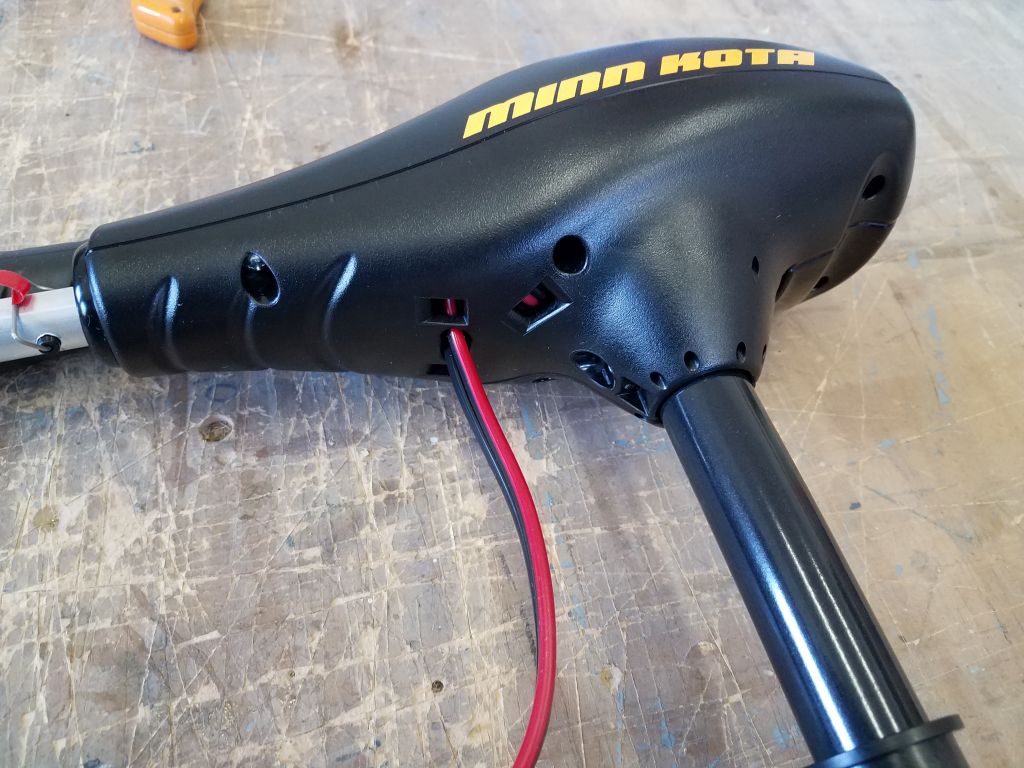
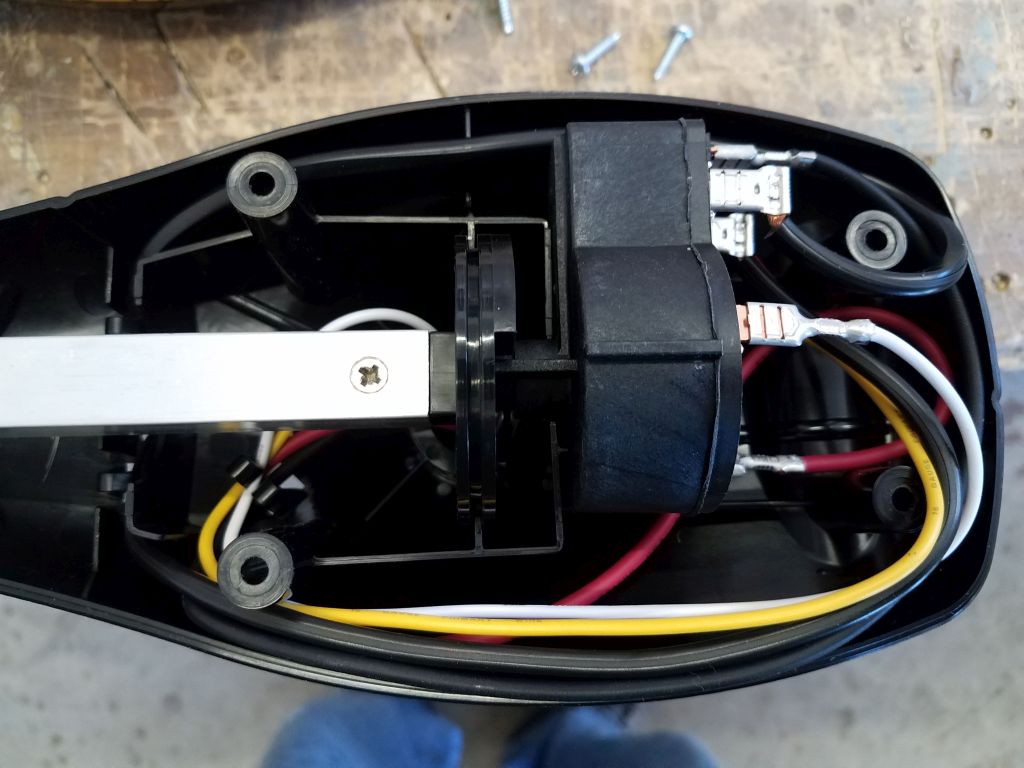
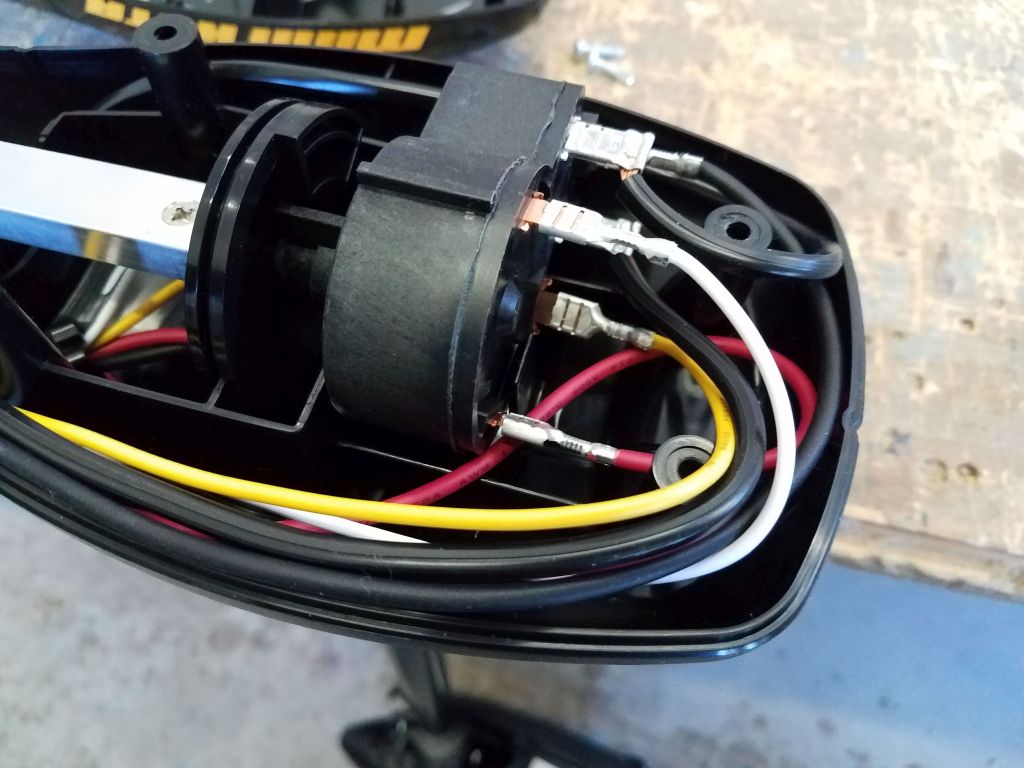
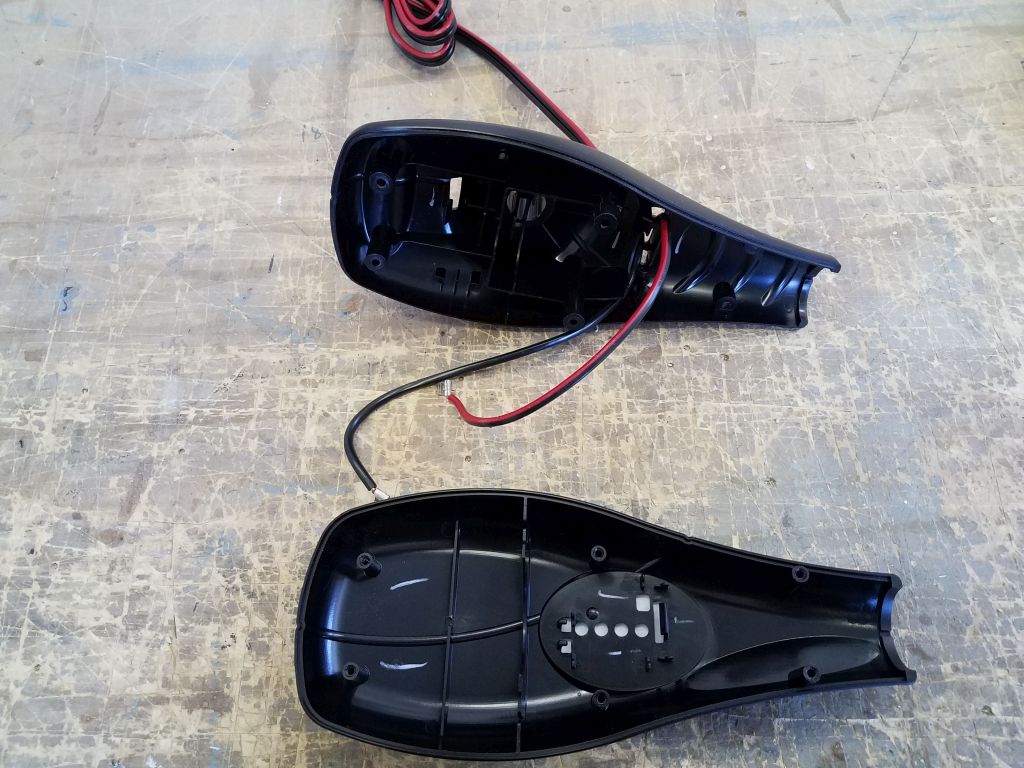
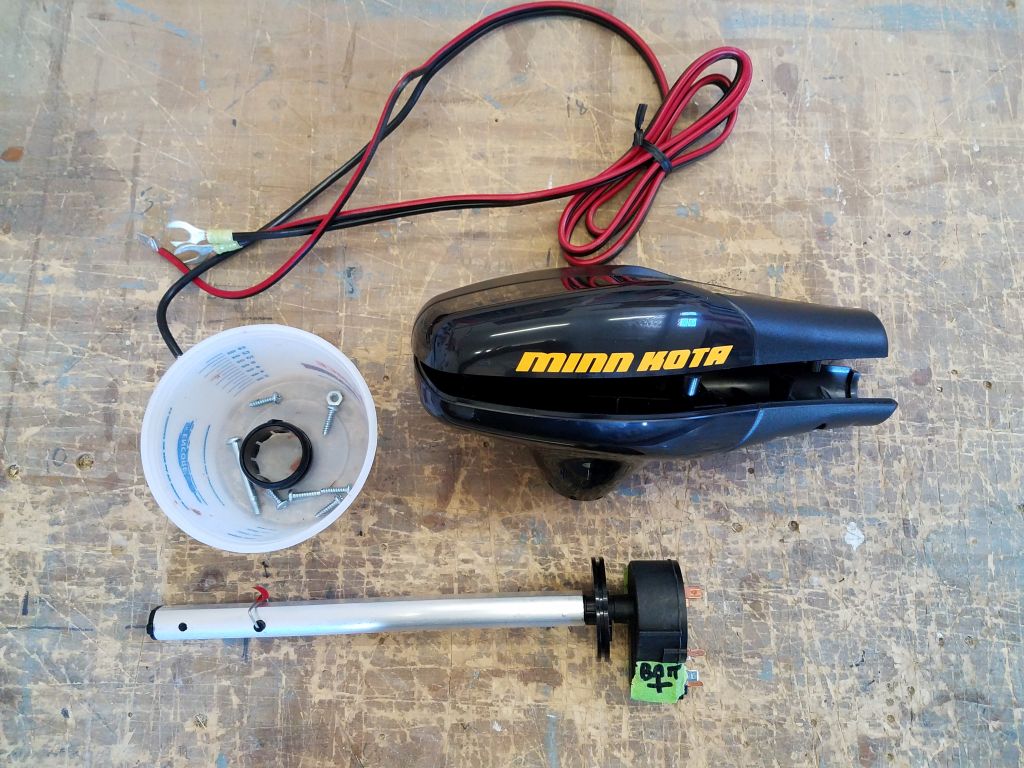
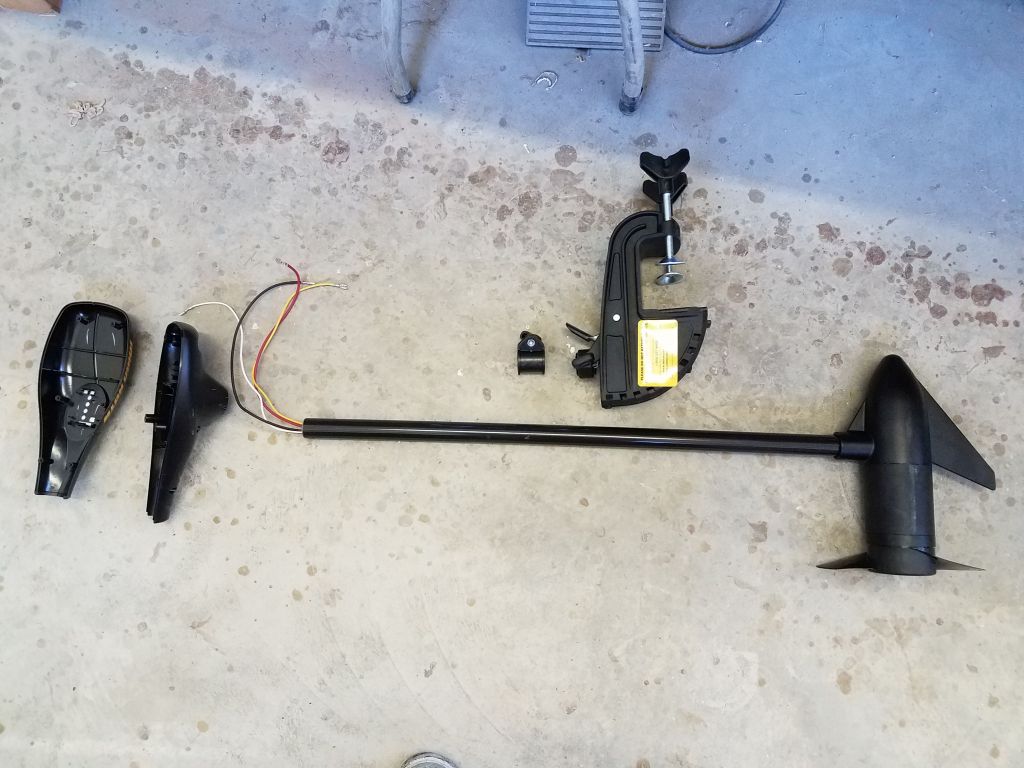
When my new trolling motor arrived, I wasted no time disassembling it, though I began with thorough documentation of the motor in its original form. The electric motor itself is housed within the propeller pod, with only wiring and the controller switch in the housing above. The adjustable transom mount would slide right off the shaft once I took apart the top housing.
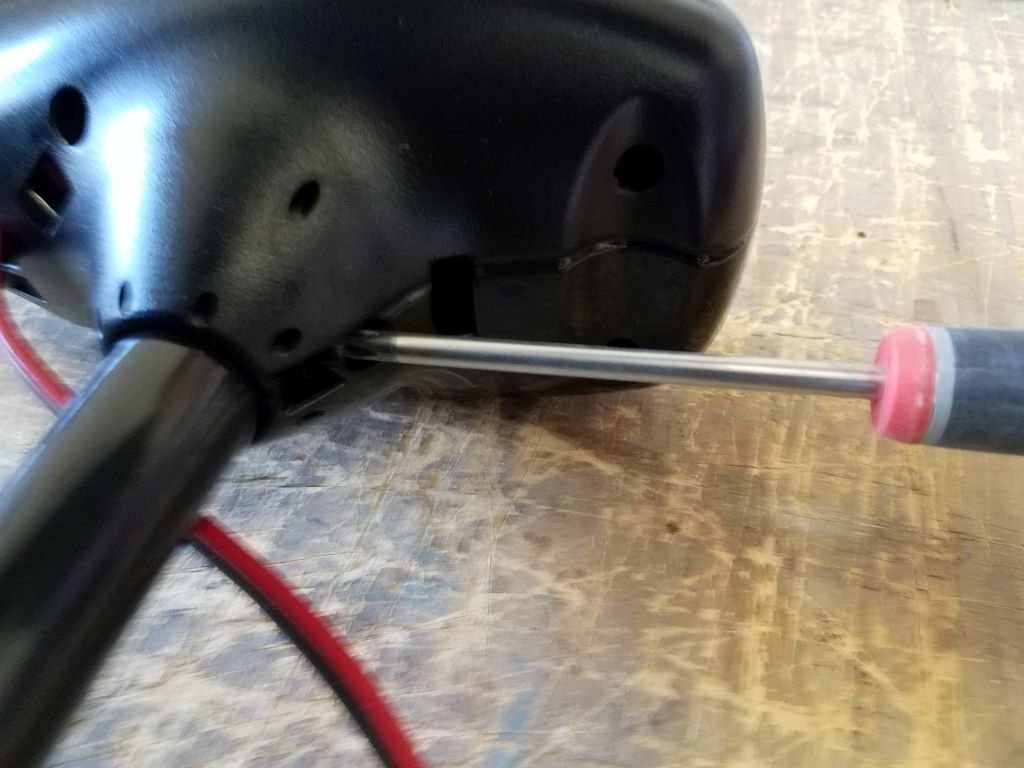
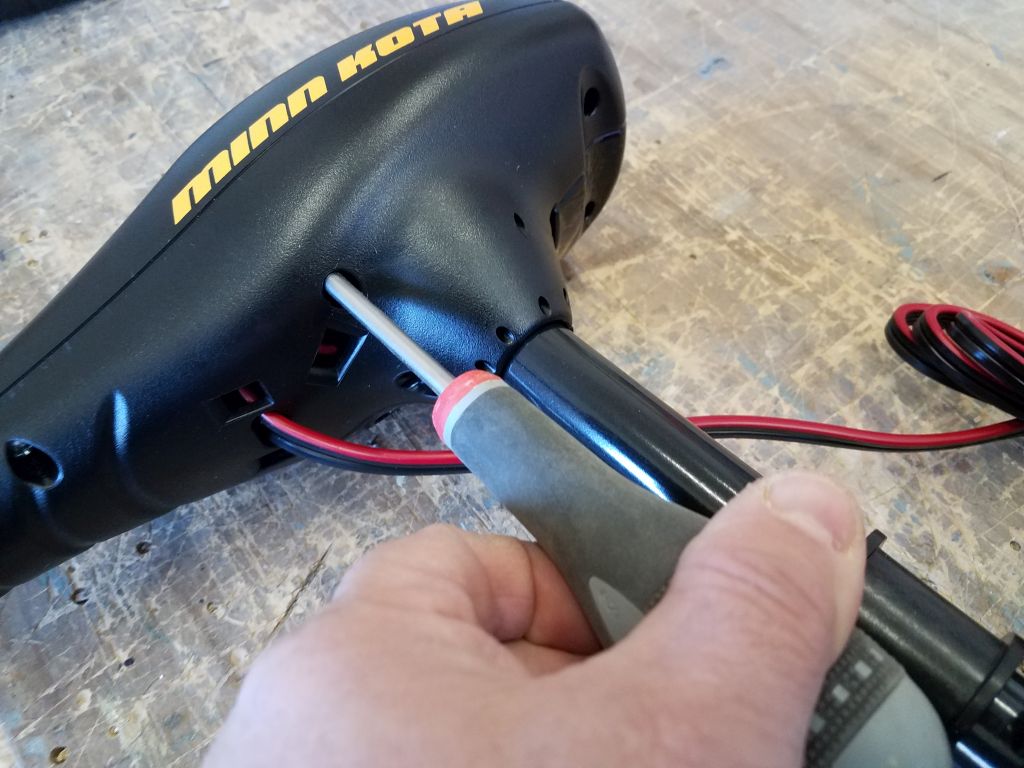
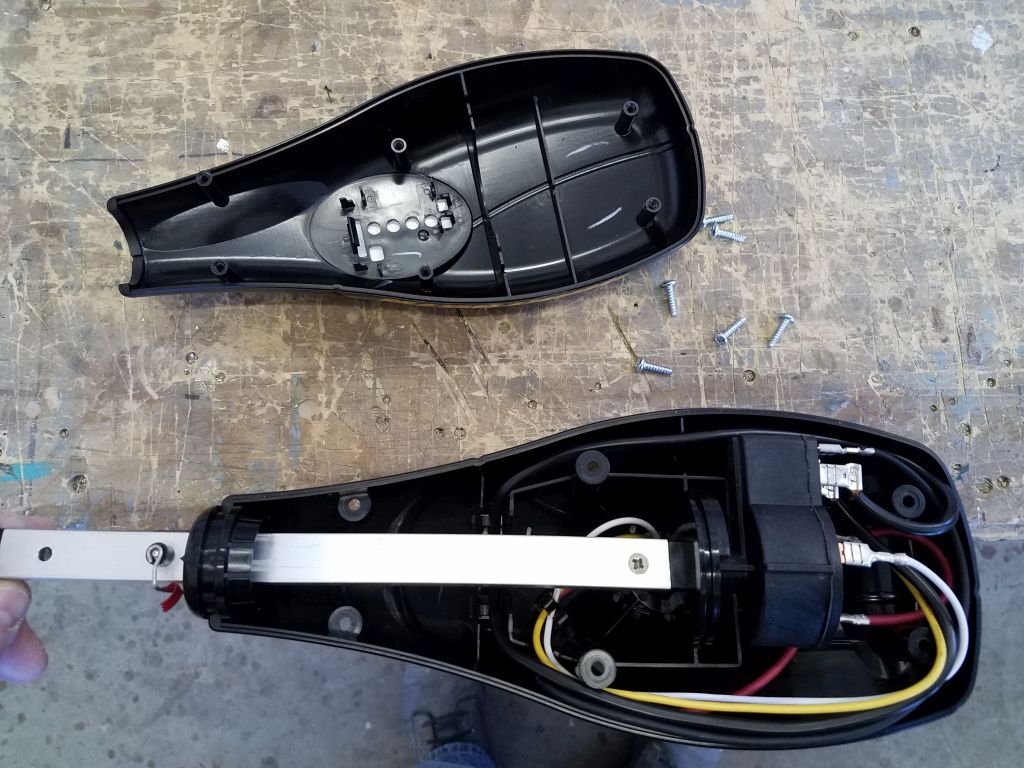
The housing featured a clamping screw to hold it to the top of the vertical shaft (which was a composite, not metal, construction on this motor), and six screws beneath that held the two plastic parts of the housing together, and this took little time to take apart.
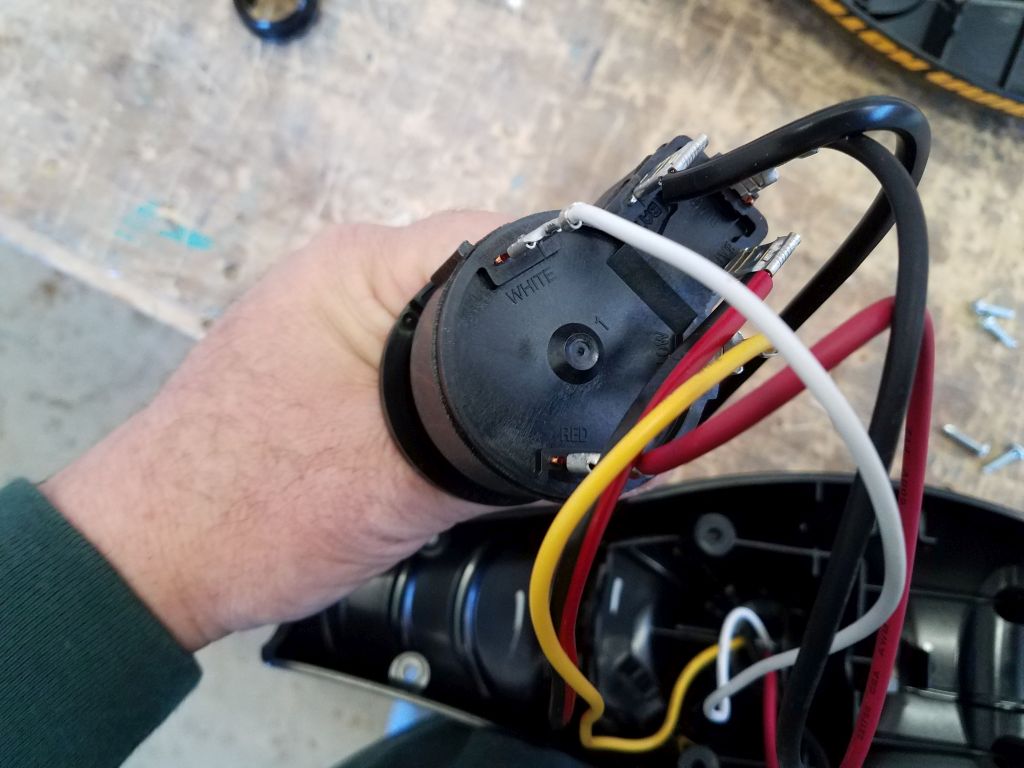
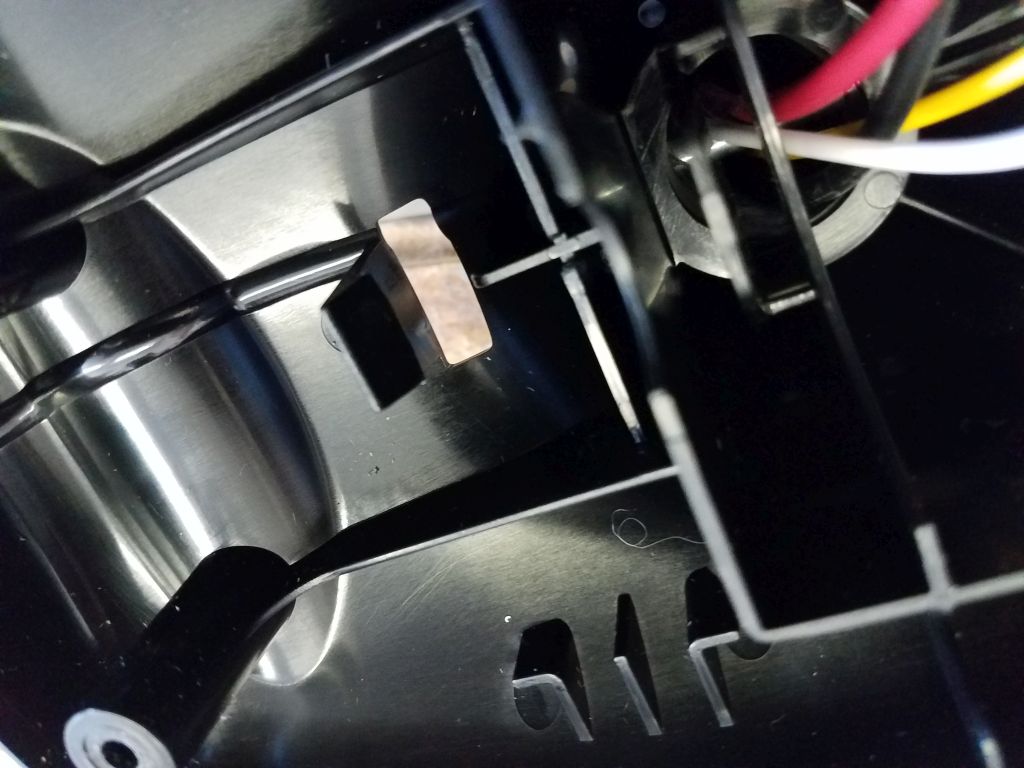
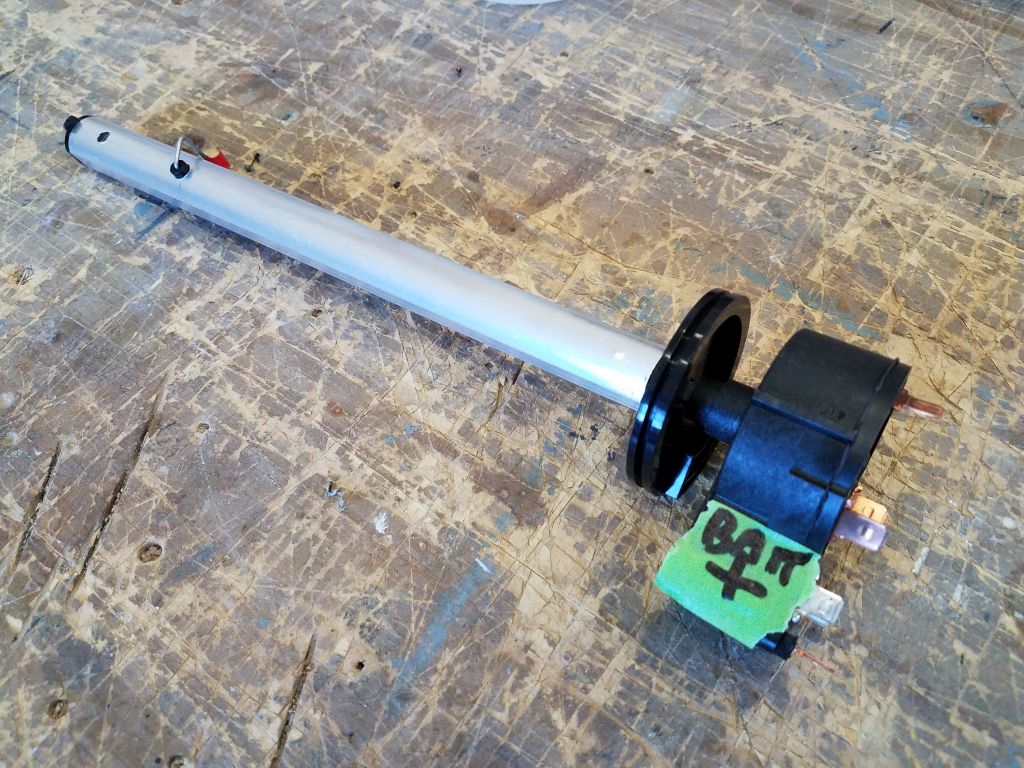
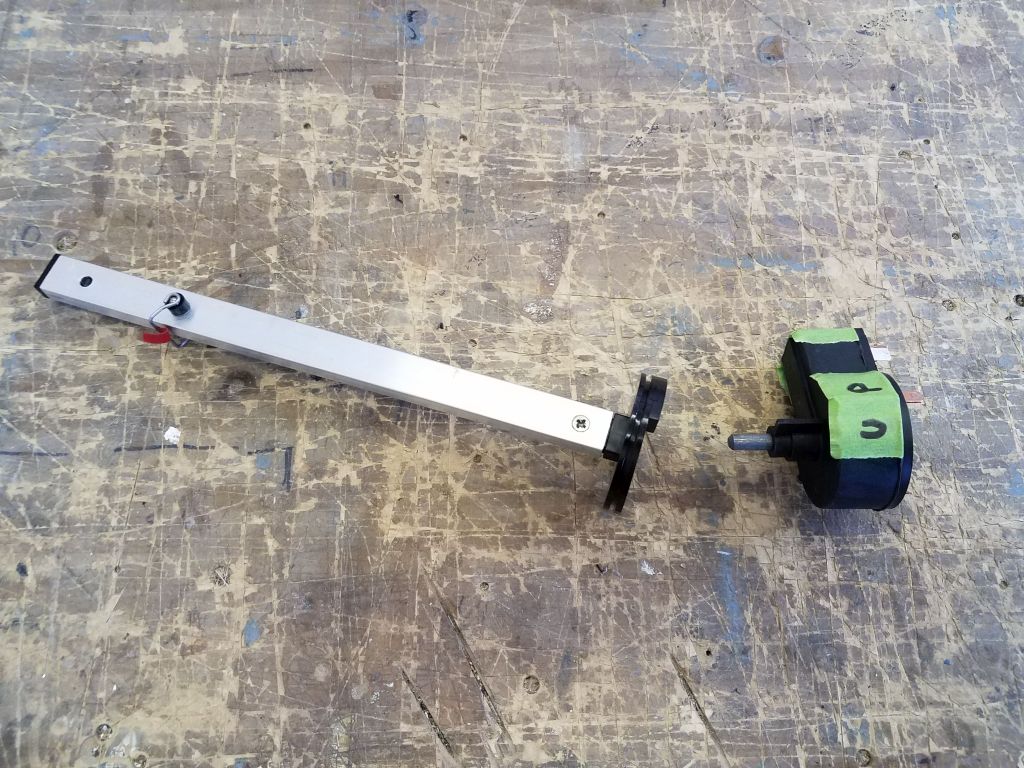
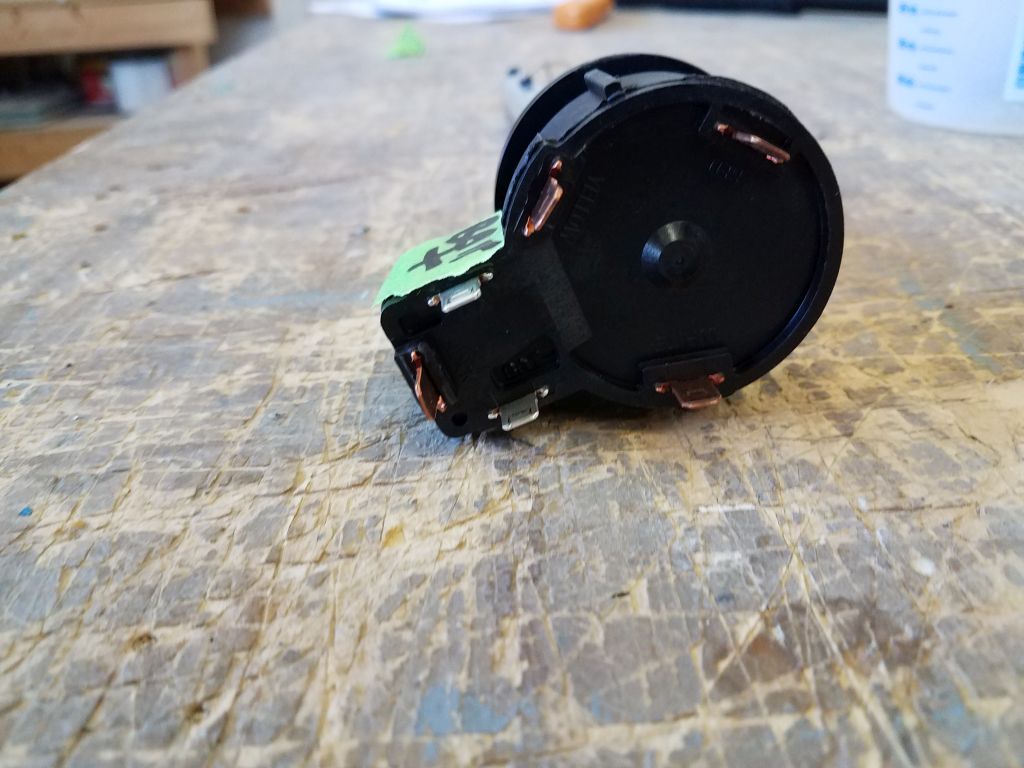
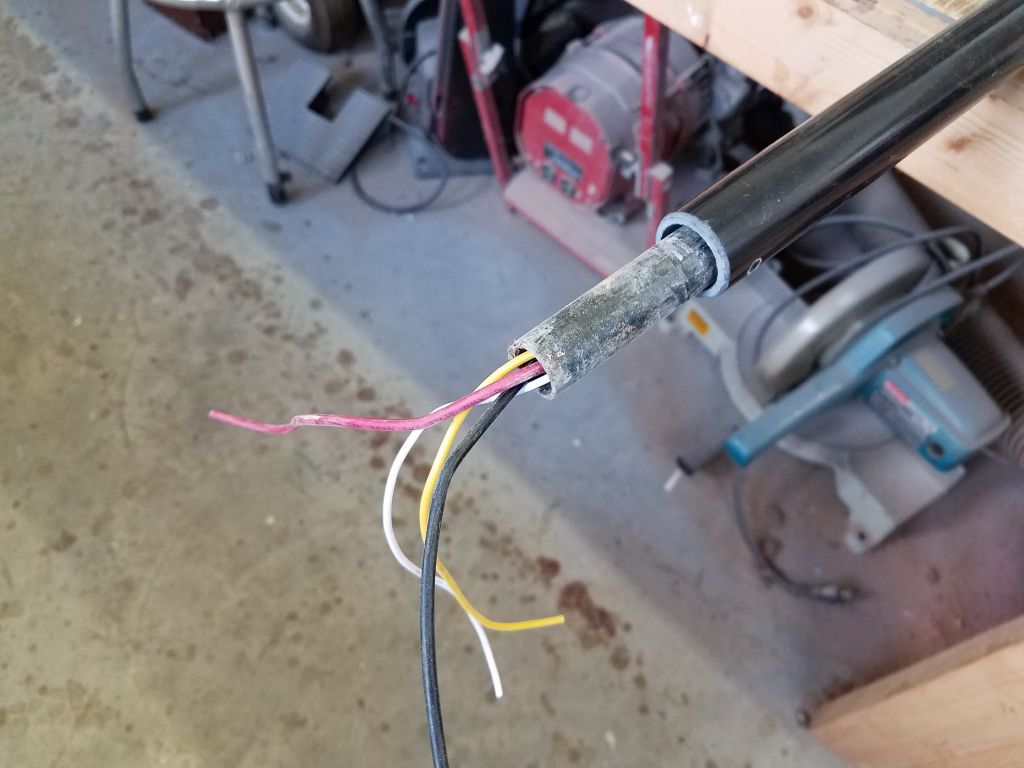
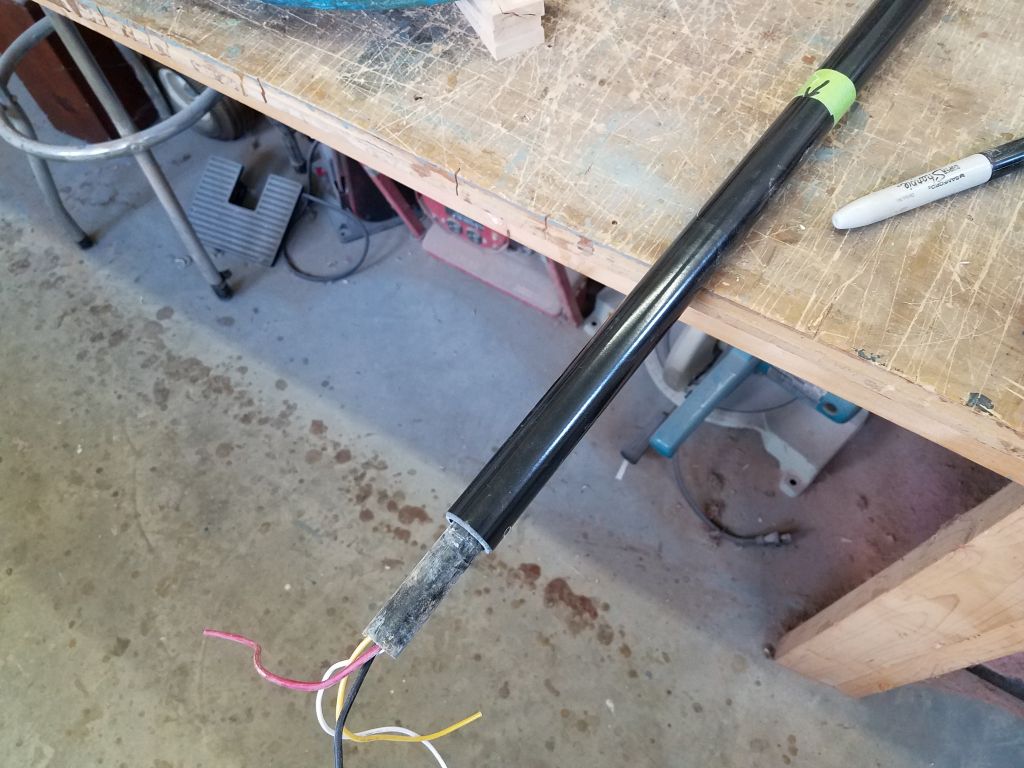
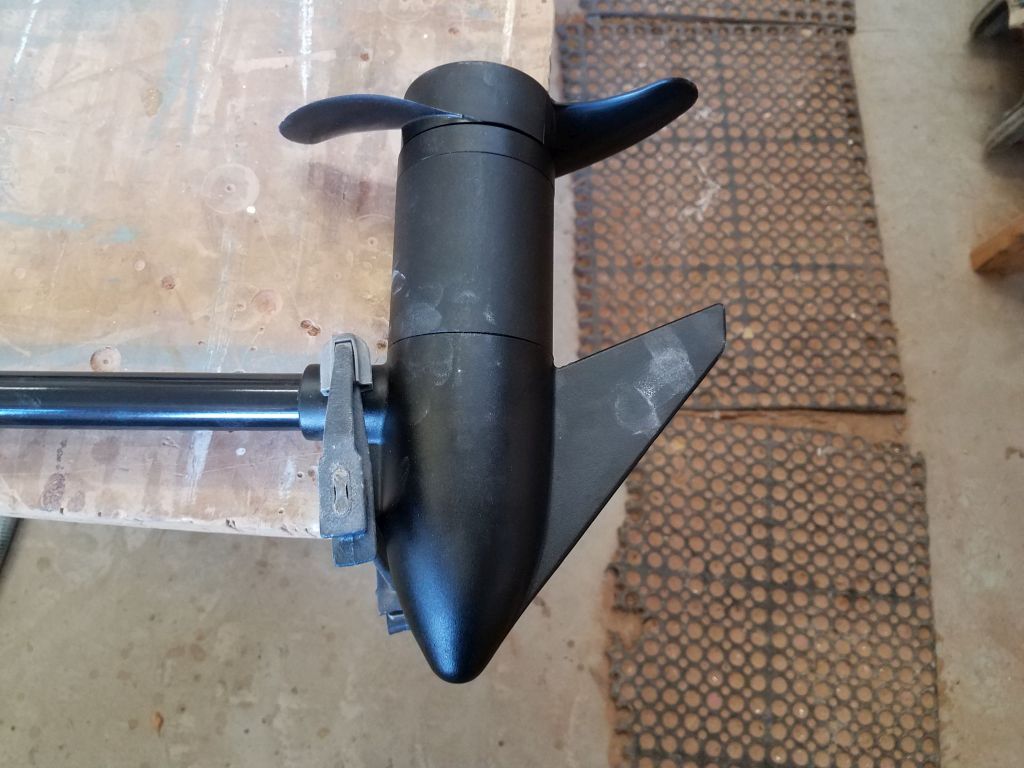
The wiring from the propulsion pod led up through the vertical shaft and connected to the internal control switch (all the terminals were labeled with wire colors for future reference), and the battery wires led out through the bottom of the cowling. The various wires were secured with built-in plastic clips within the compartment as needed, and the control switch itself was held in place with a little plastic spring clip, and was easy to remove. Once I had the switch out, I removed all the wires, which freed the switch from the housing. I’d need this switch for controlling the motor later. The tiller/twist control handle slipped right on and off the shaft of the rotary switch. What this all left me with was the bare propeller housing and vertical shaft, with its internal wires running out the top, plus the switch and battery cables that I’d need later. For my installation, I had no need for the transom bracket.
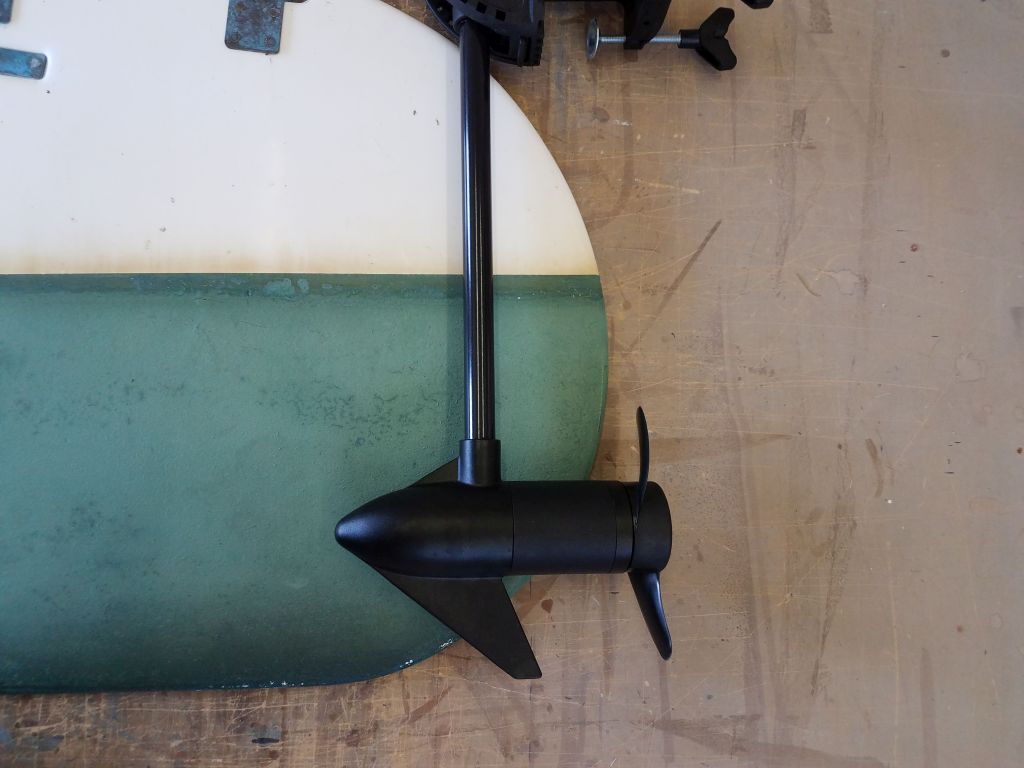
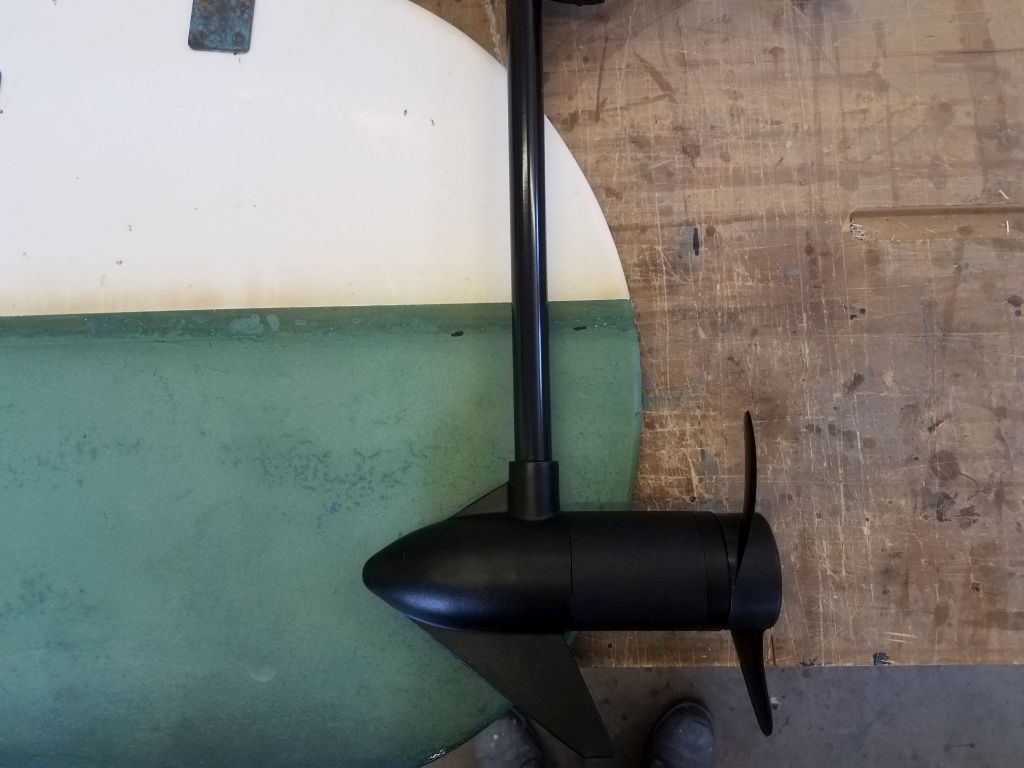
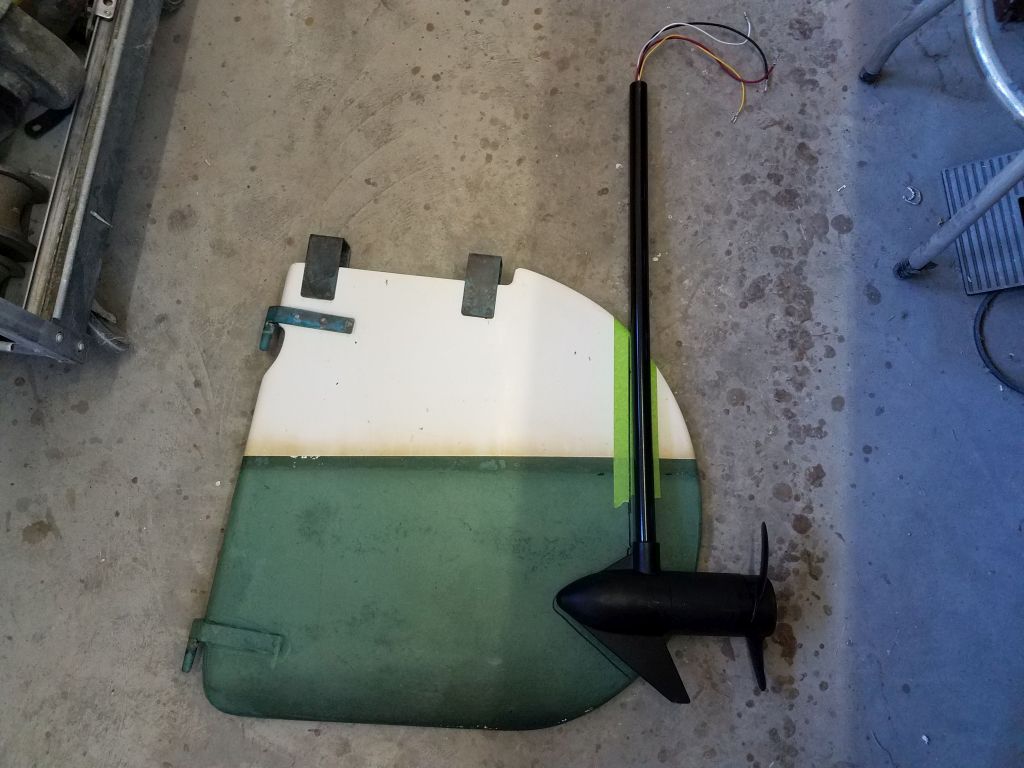
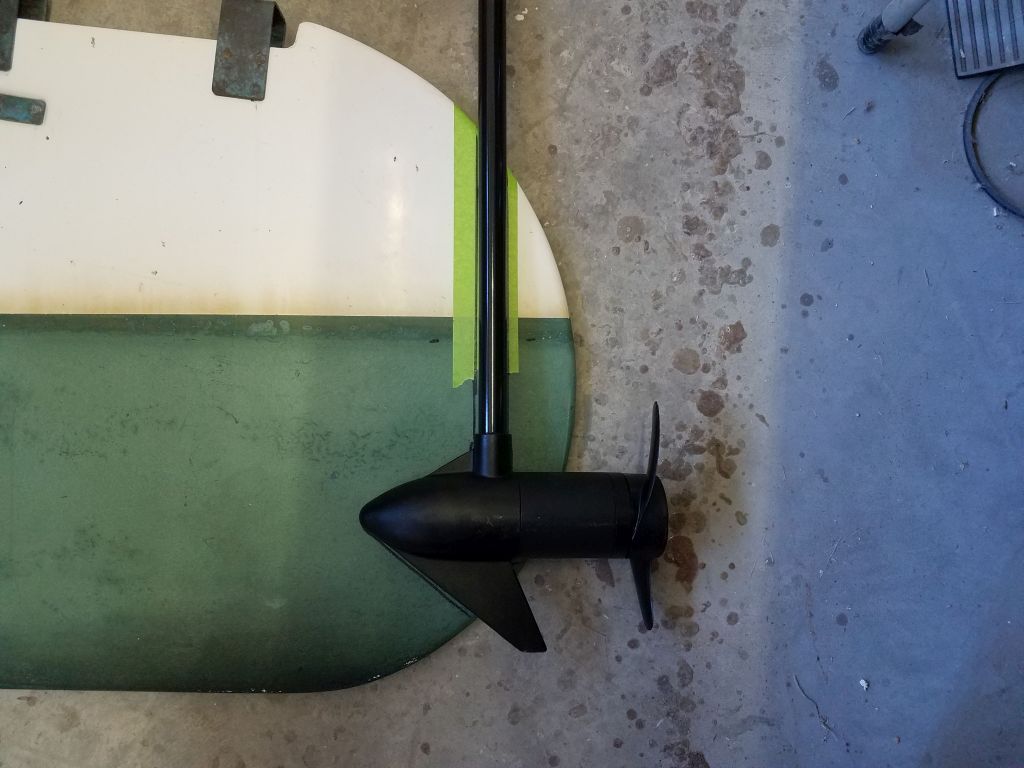
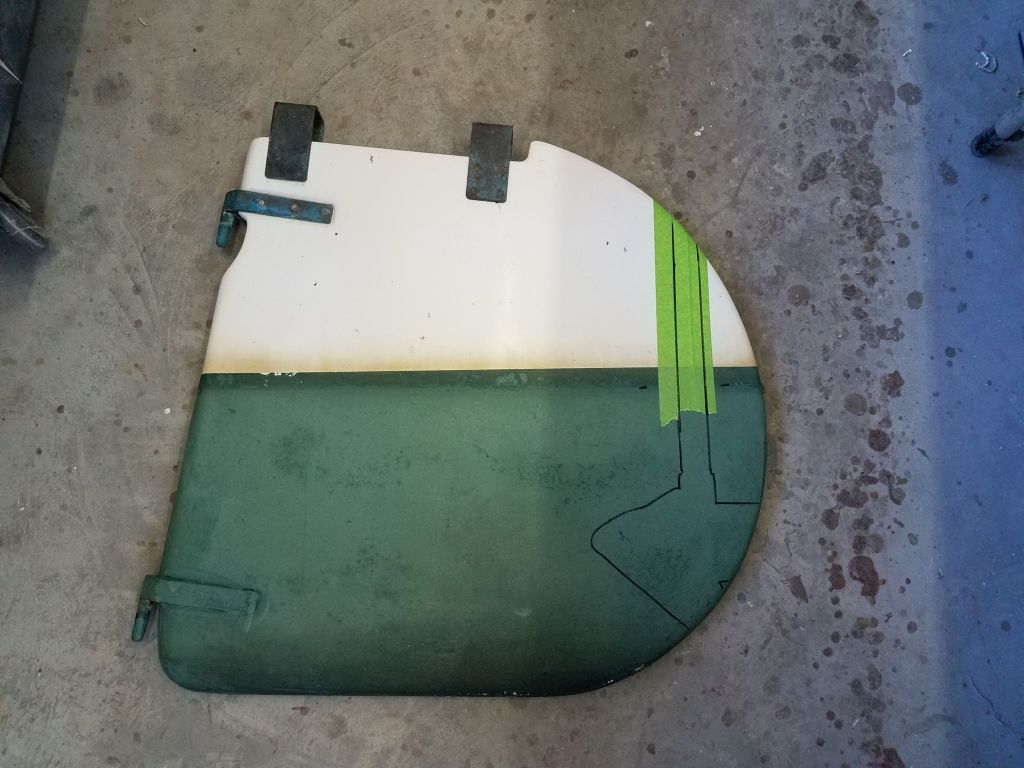
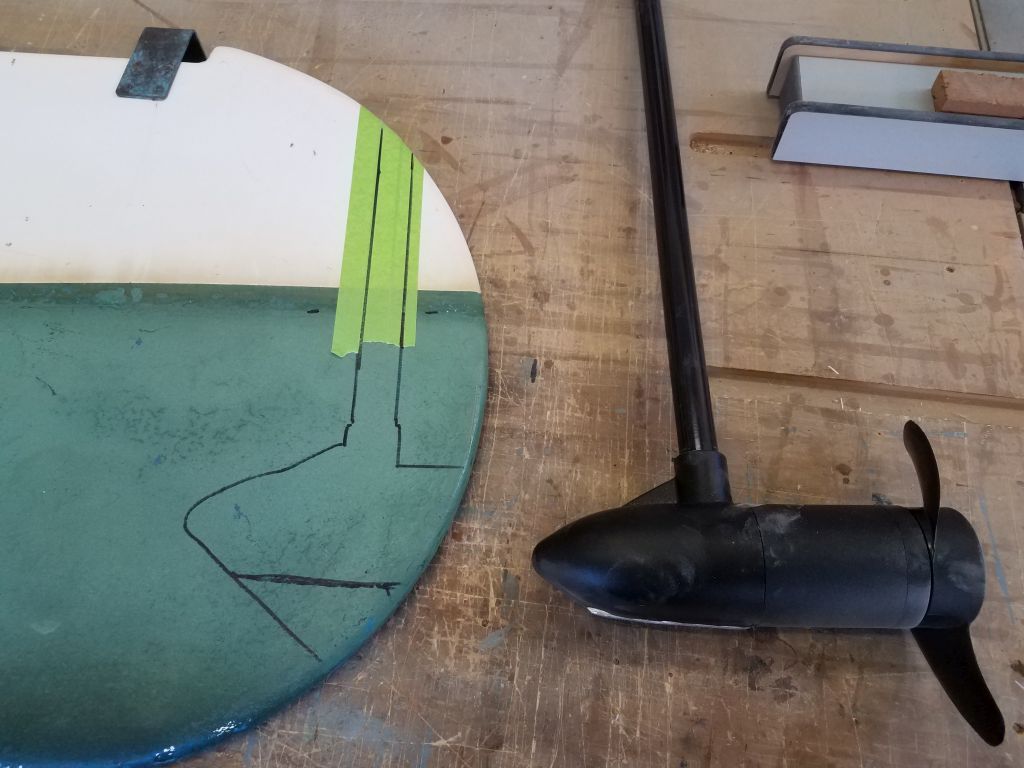
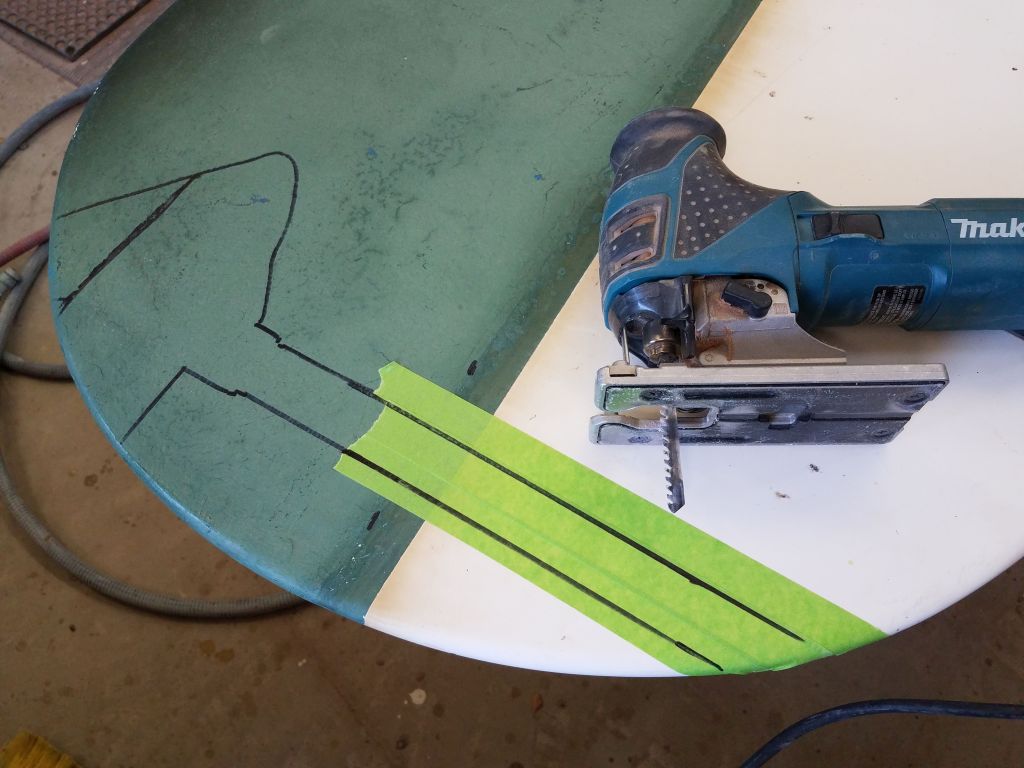
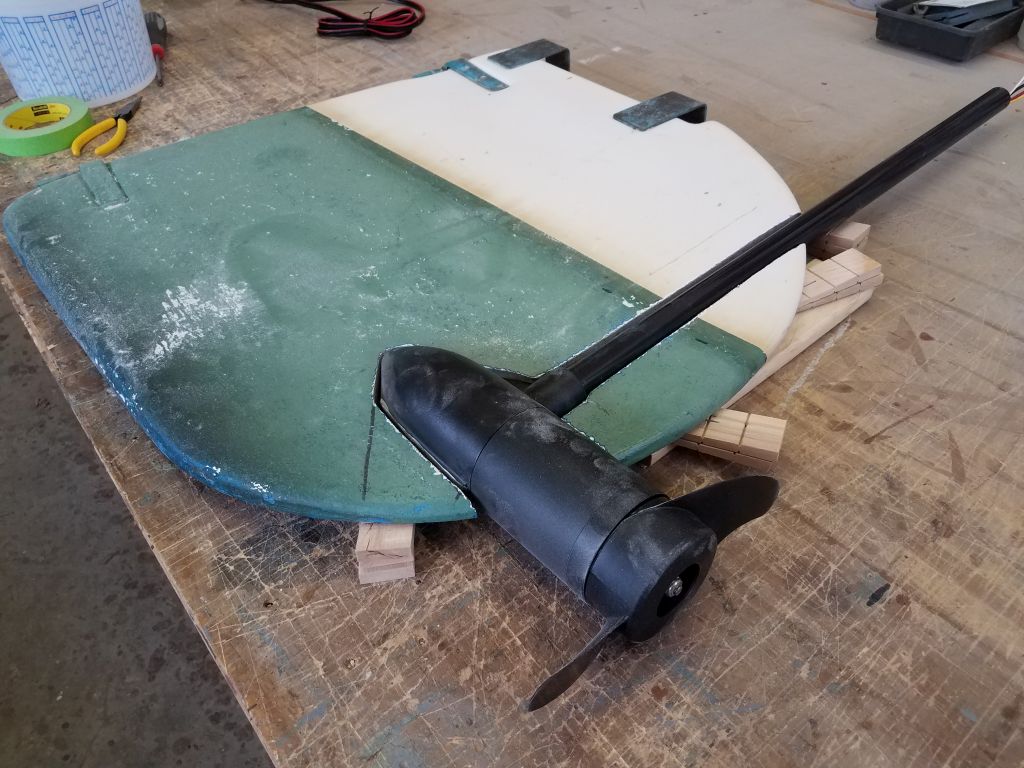
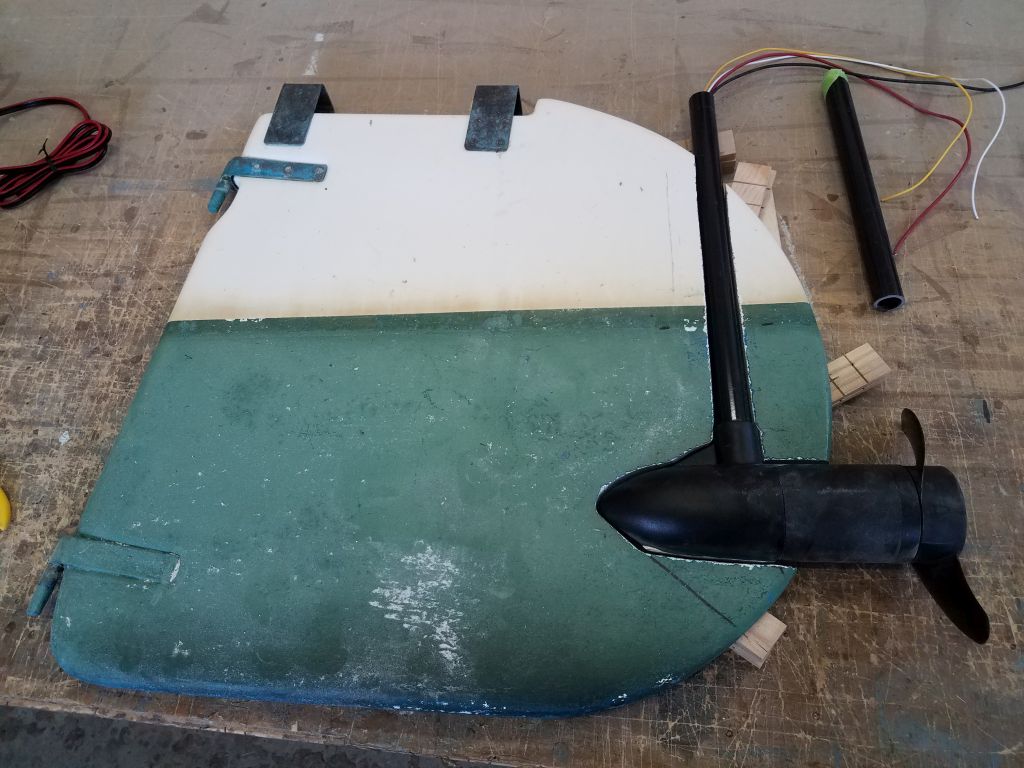
With the rudder on my bench, and the now-bare propeller hub, I tried out some layout. The instructions recommended minimum 12″ depth from the waterline to the top of the propeller pod, but I didn’t have that much space here, so I compromised with the pod at what looked like a reasonable depth, taking into account the shape of the rudder and how best to incorporate the pod within. I wanted to minimally impact the function of the rudder while keeping the installation as sleek and unnoticeable as possible. Once I was satisfied, I traced the outline of the pod and the shaft.
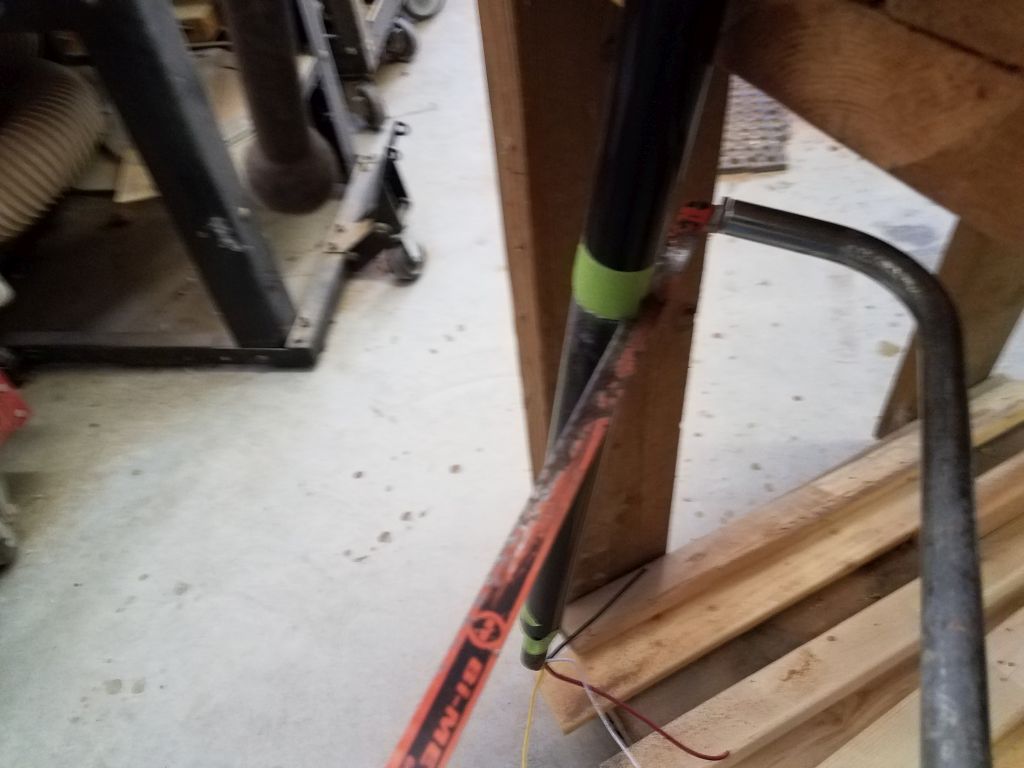
The composite shaft was longer than it needed to be for my installation, so I marked it at the appropriate height (about even with the straight top of the rudder) and cut off the excess tubing, using a smaller tube inserted within to protect the wires during the cut. I hung the shaft upside down from a vice so that any cutting spoils would drop out the tube rather than fall possibly into the propulsion pod. The tube was easy, if awkward, to cut in this position and given how my vice happened to be set up.
For the moment, my focus was on the rudder modifications, so additional steps to deal with the wiring and controls will come later. Now, with the wiring tube cut to length, I turned to the pod itself, which was constructed from aluminum (with a plastic propeller) and featured the usual trim tab/skeglet beneath the pod. I didn’t need nor want this for my built-in installation, so I cut off the skeg with a grinder and cutoff wheel. This skeg was surprisingly robust and took a minute or two to carefully cut away.
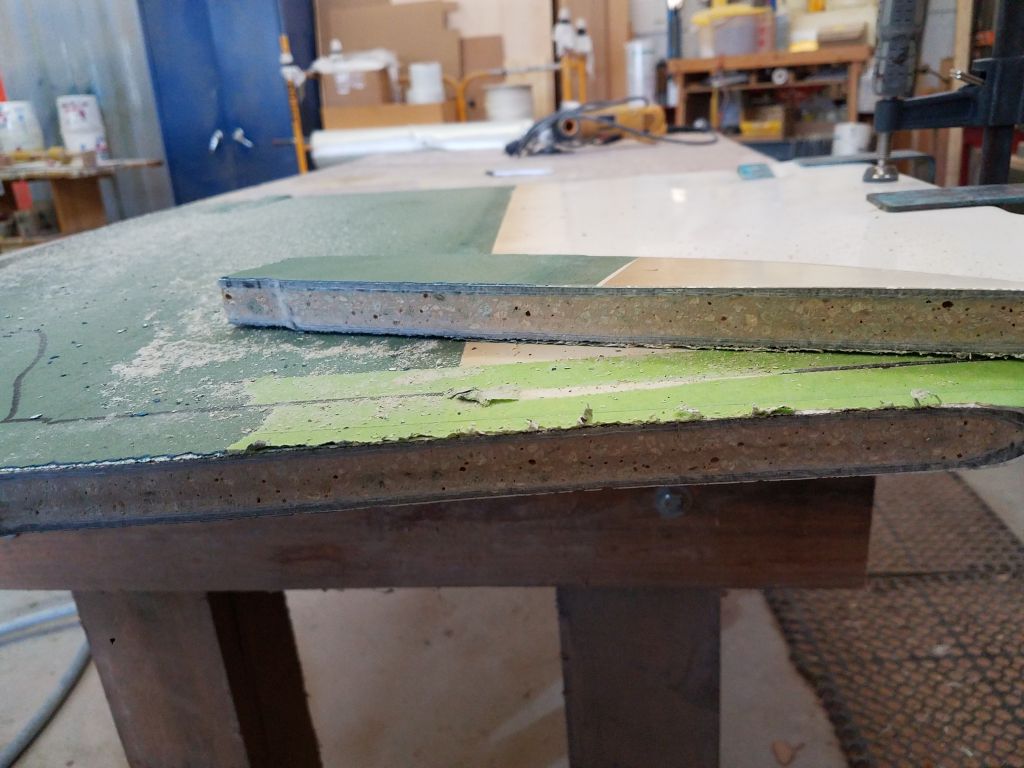
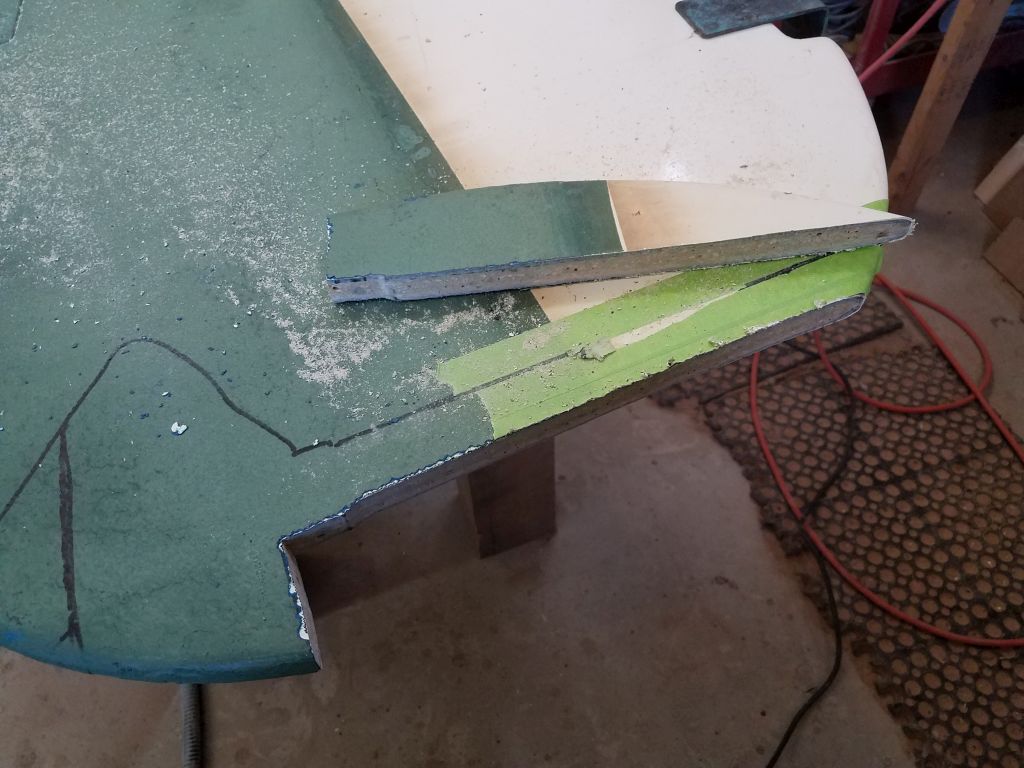
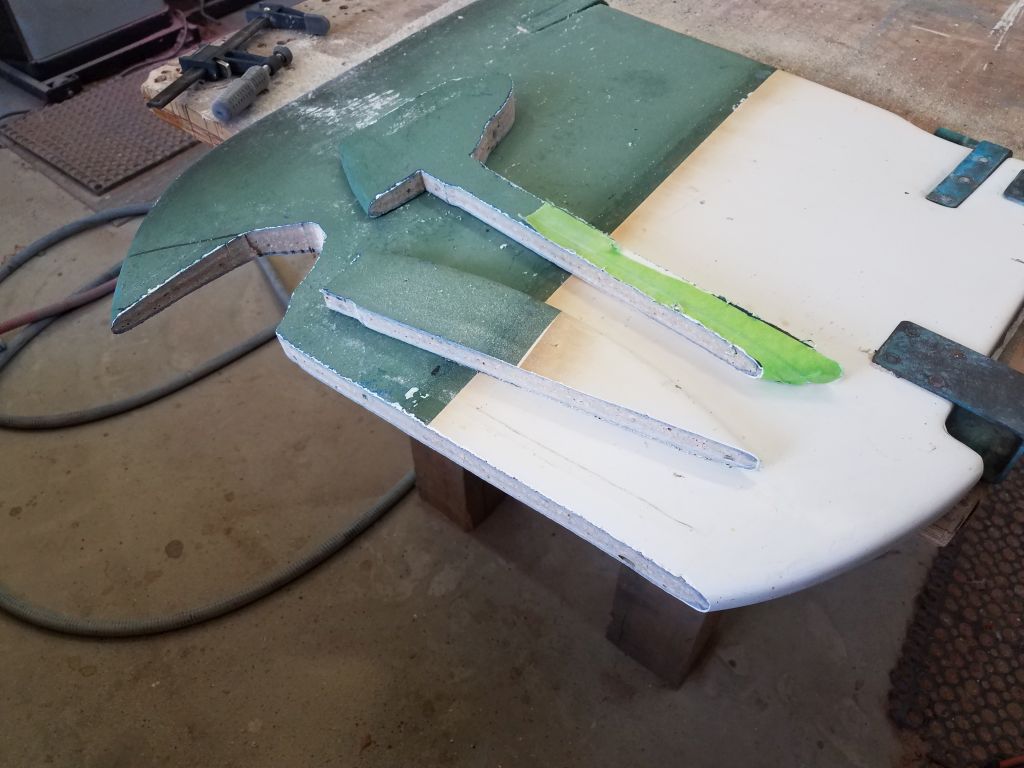
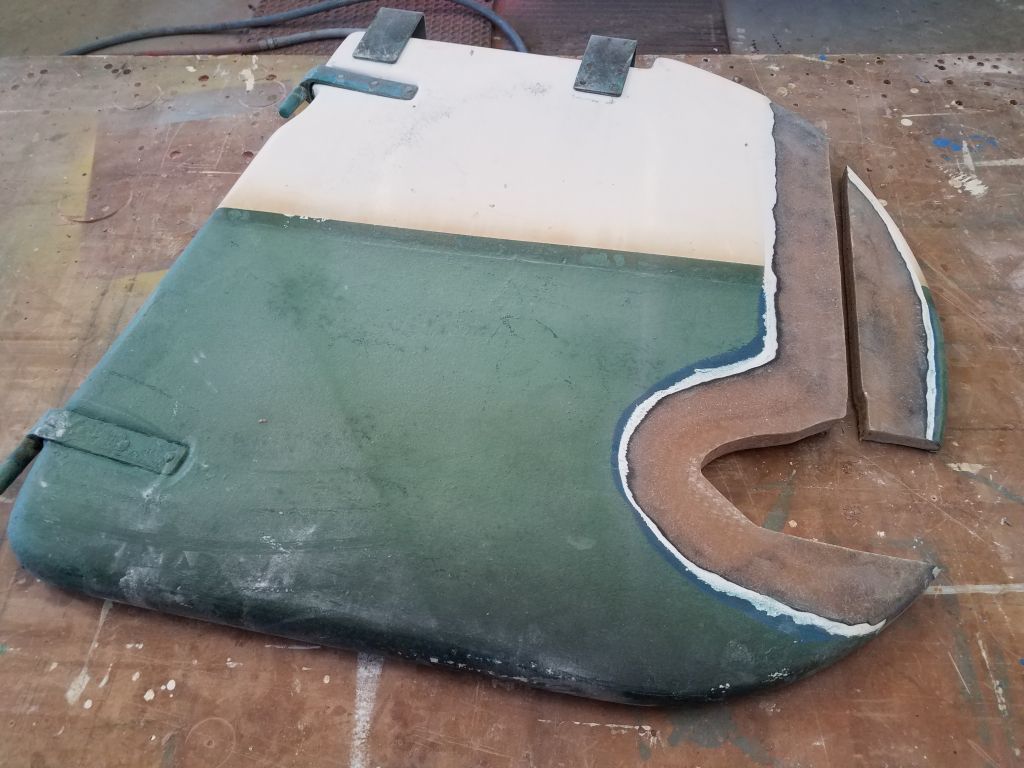
With layout finalized, I made two cuts in the rudder: first to remove the small piece outboard of the vertical shaft (I’d reuse this piece to reconstruct the rudder); then the other line I’d traced, removing the material in way of the new motor unit and shaft. The rudder on this boat was constructed with a solid mish-mash material between the two skins, so cutting with a carbide blade was not difficult and the rudder itself required no extra work to prepare the cutout area afterwards.
I dry fit the components now that the cut was complete.
To prepare the rudder for reassembly, I ground off the paint and gelcoat on both sides of the cut, tapering back the original laminate about 2″ all around. I prepared the pod and shaft by scuffing up the bonding surfaces with sandpaper as well.
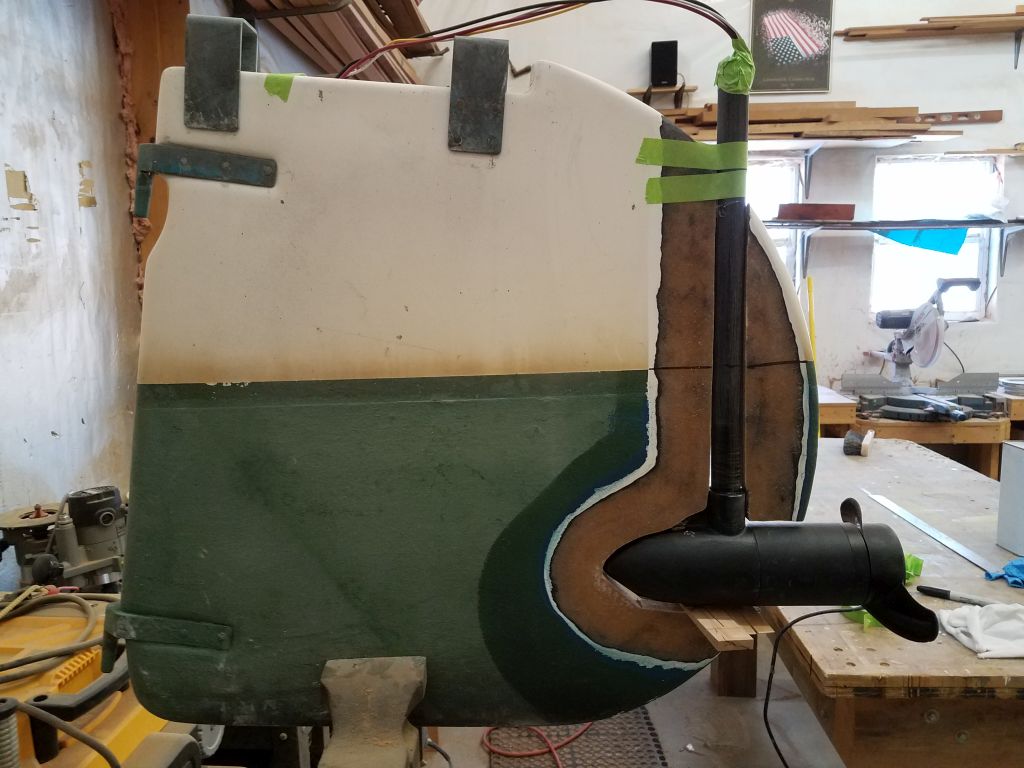
Clamping the rudder vertically in a vice, I temporarily secured the pod with some wedges beneath and some tape above, centering it carefully on the rudder. Happy with the position, I dabbed in some hot glue top and bottom to hold it securely enough, and used some additional glue to tack on the small aft piece of the rudder in its proper position.
Meanwhile, I prepared some thickened epoxy to tack the assembly in place, enough to hold it securely once cured, but with some obstructions in place for now I left some areas unfilled; I’d take care of those later. I left the glueup to cure overnight.
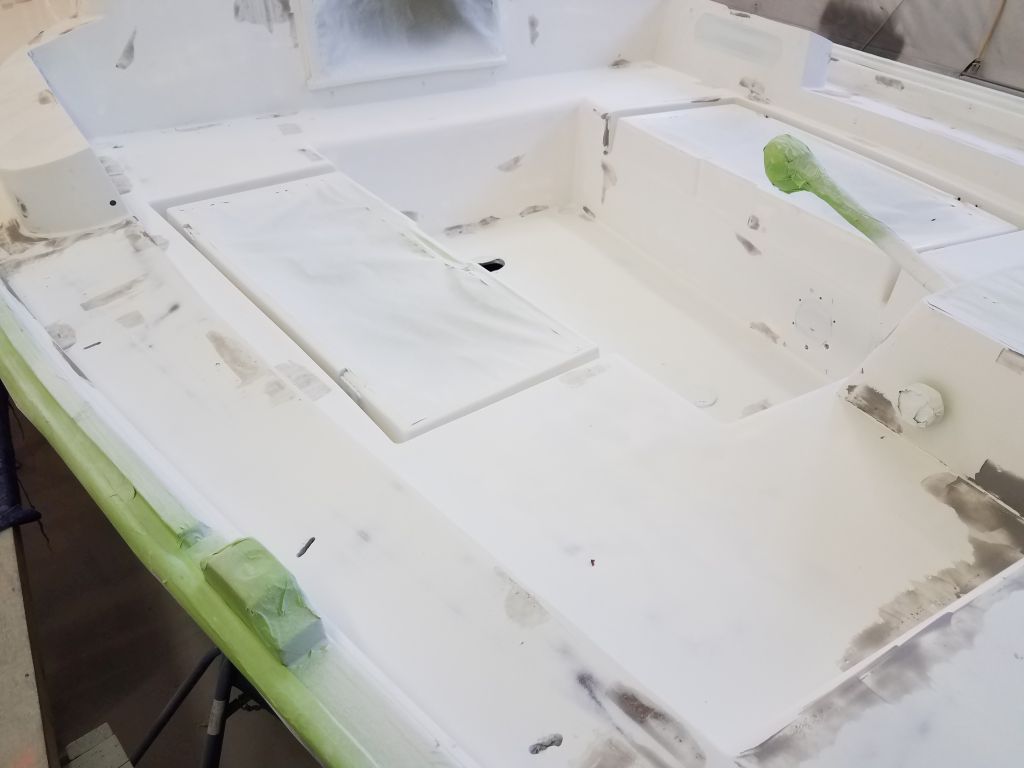
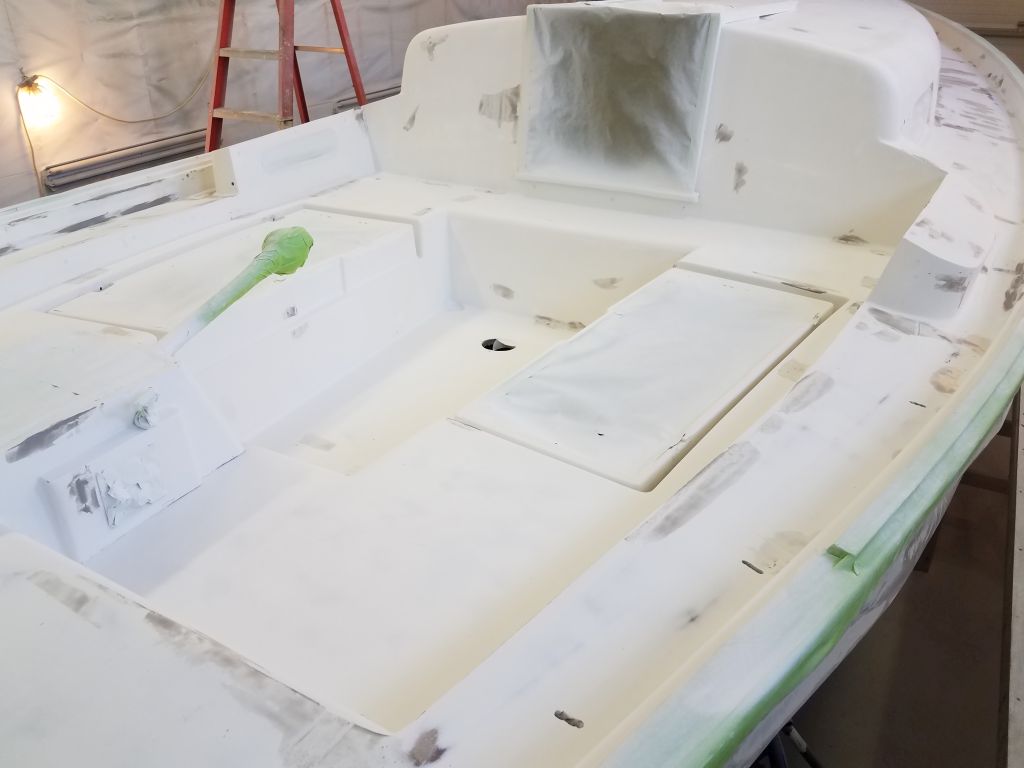
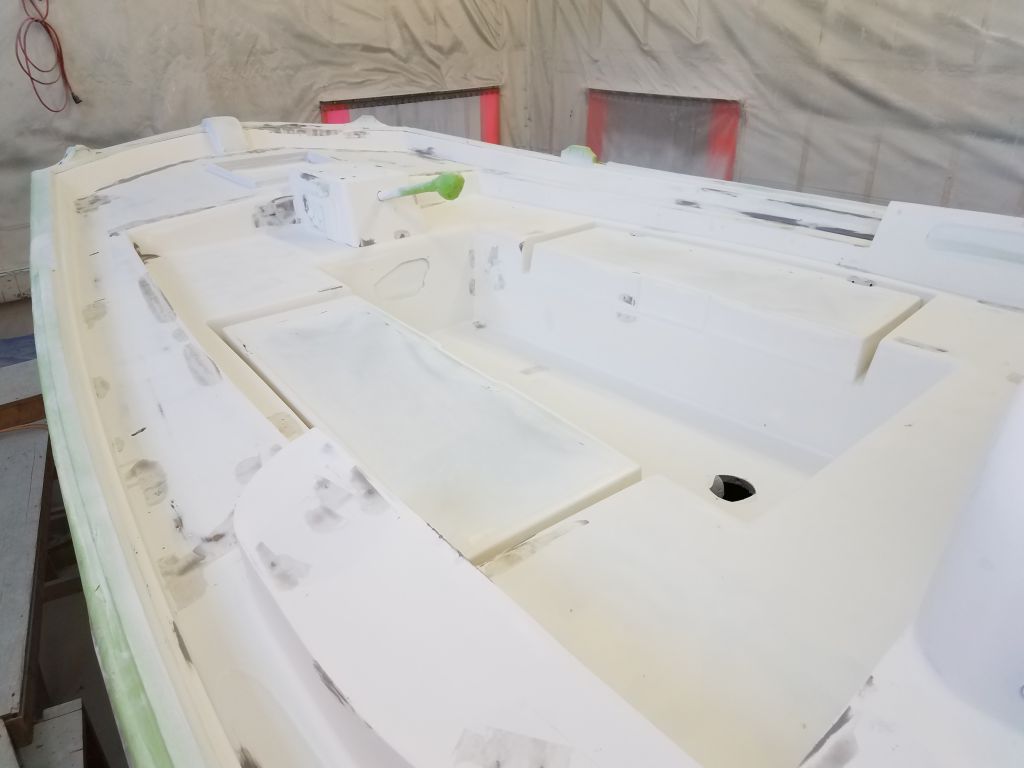
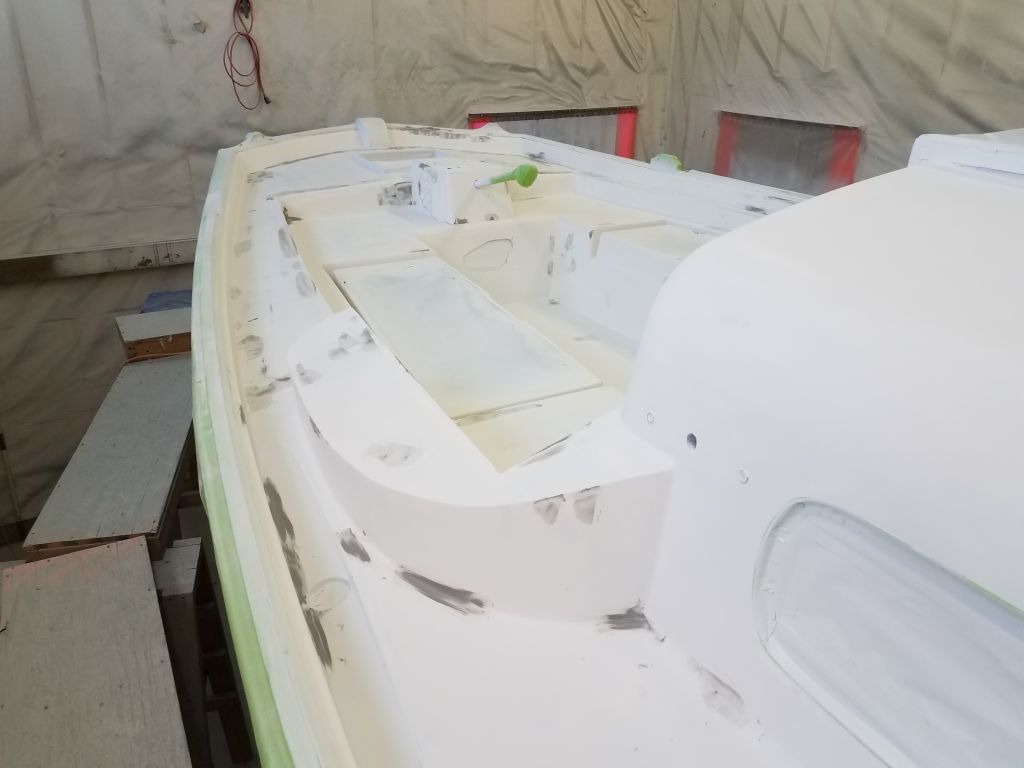
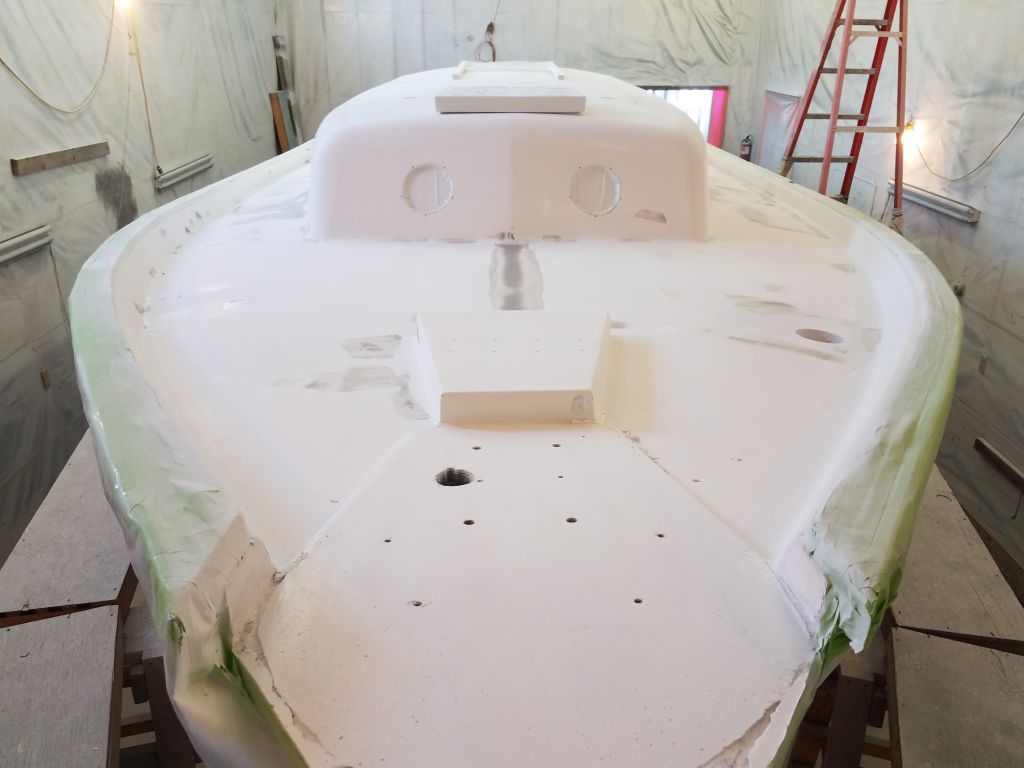
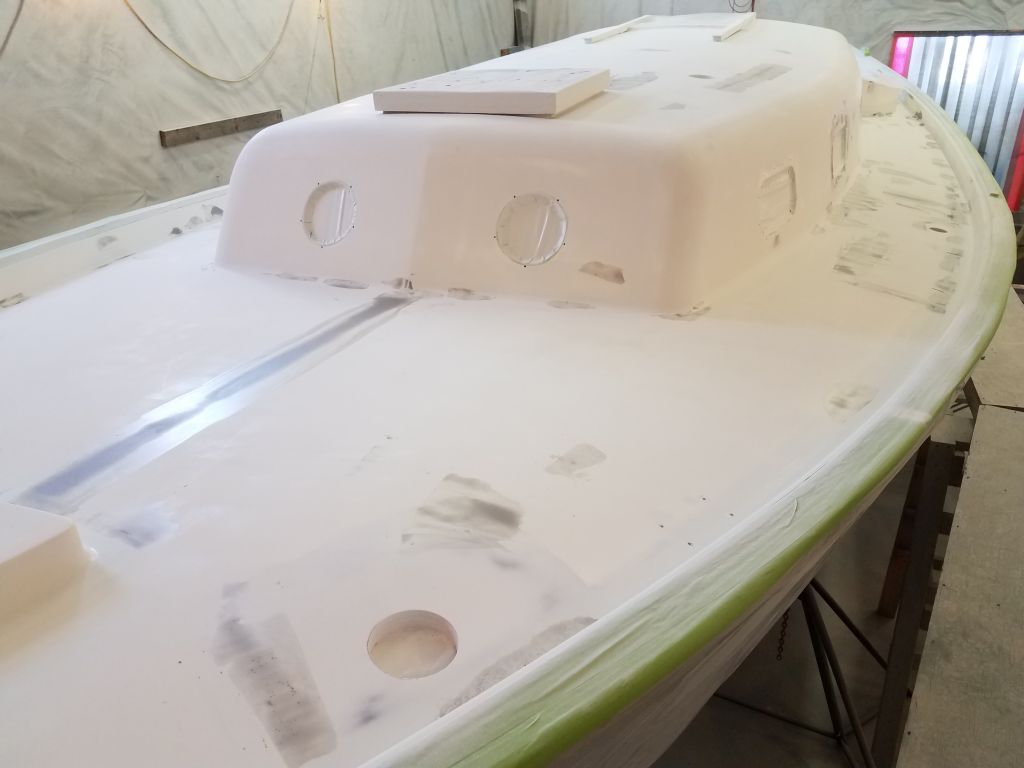
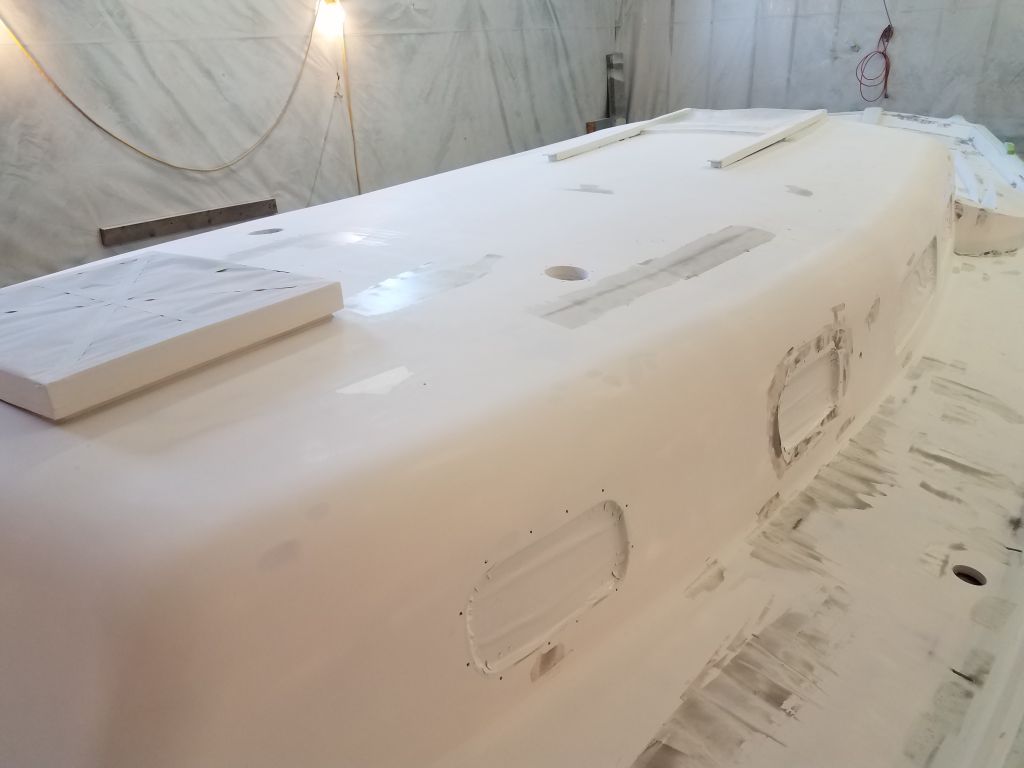
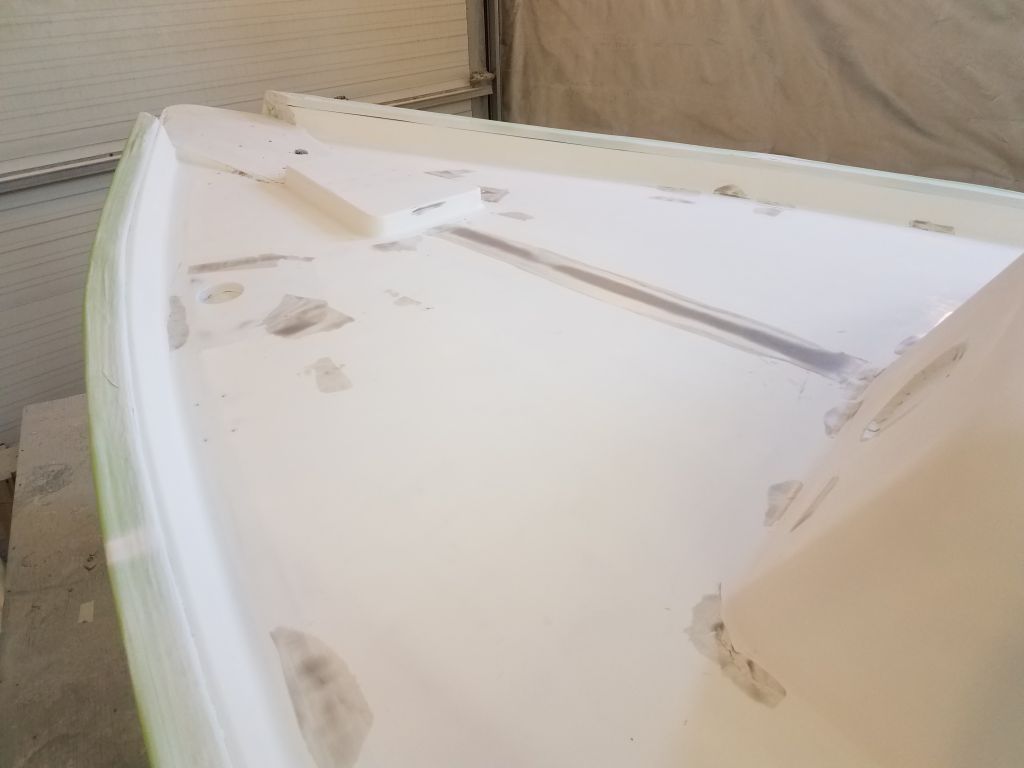
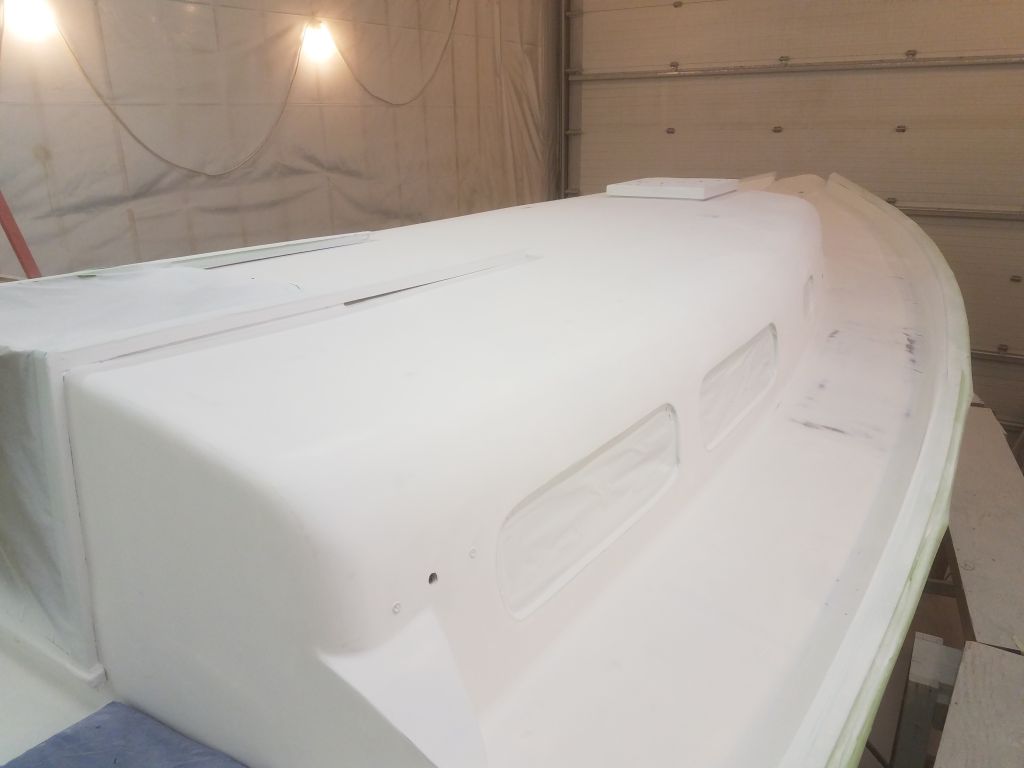
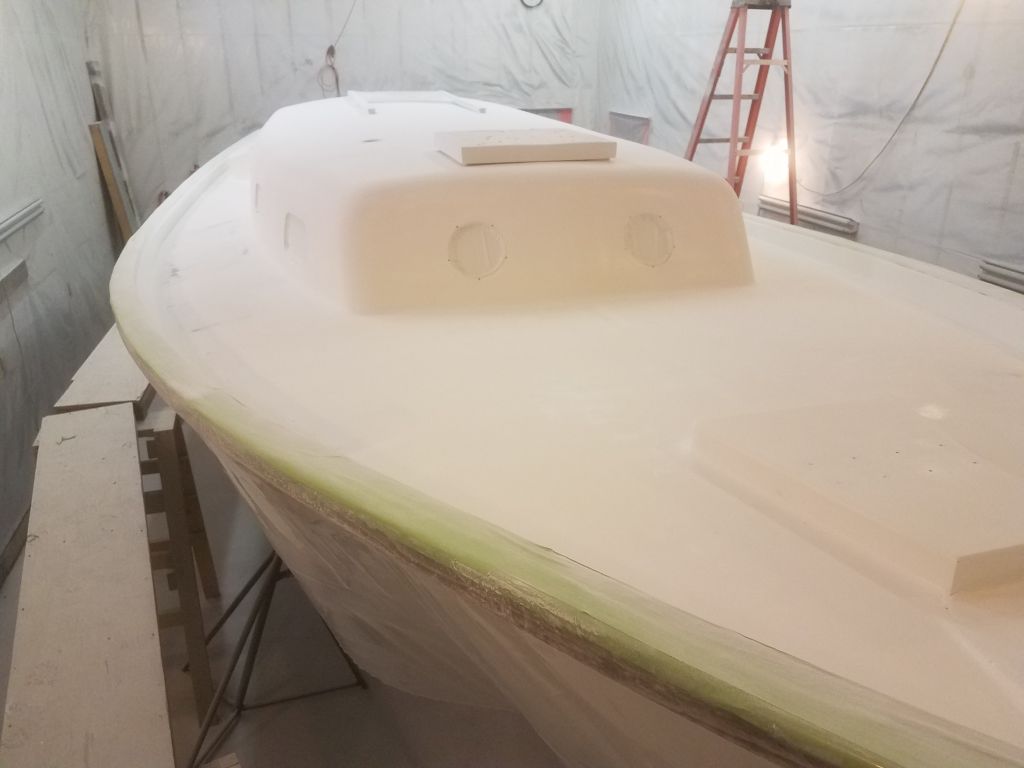
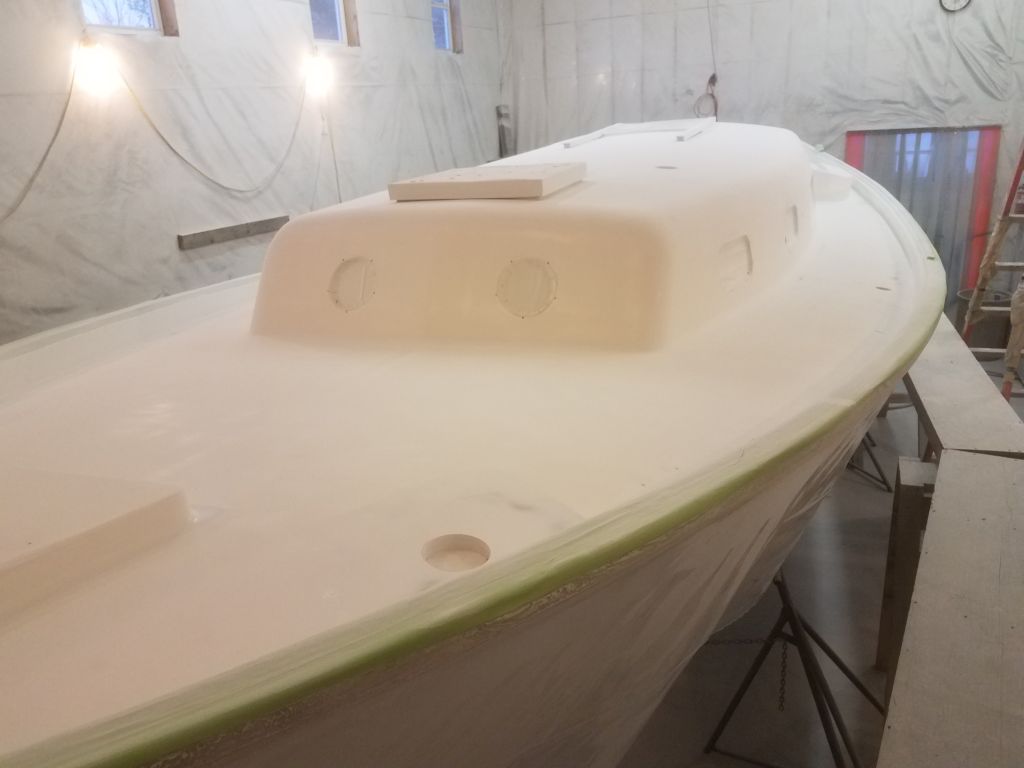
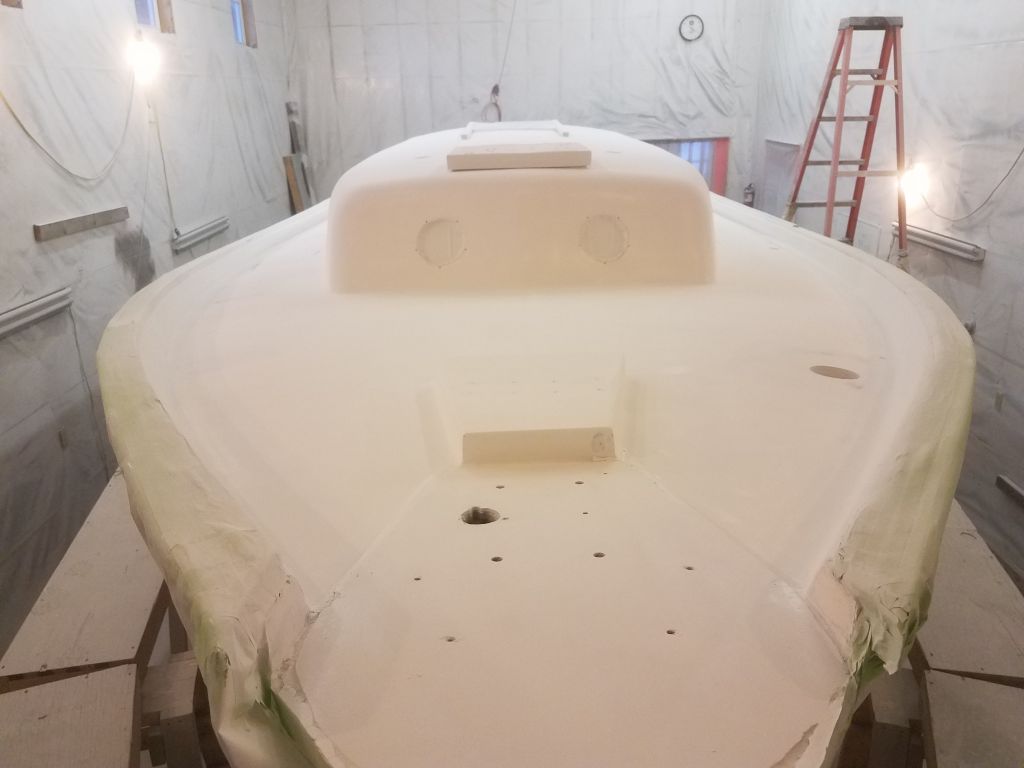
The high-build primer acts as a sort of final step to the initial and major portion of the pre-painting surface preparations, evening out the various textures of the surface and filling or otherwise highlighting small flaws in the substrate, including pinholes in fairing material or exposed laminate and other areas requiring touch-up for other reasons. Now, with the sanding complete, I vacuumed and solvent-washed the decks so I could continue the work.
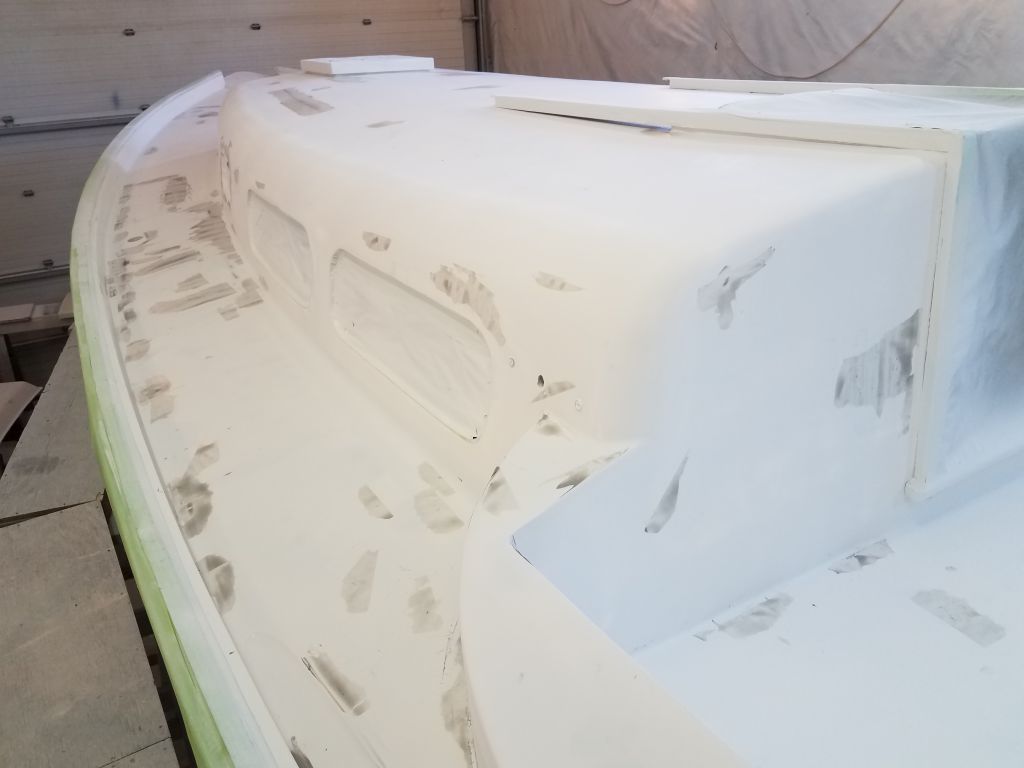
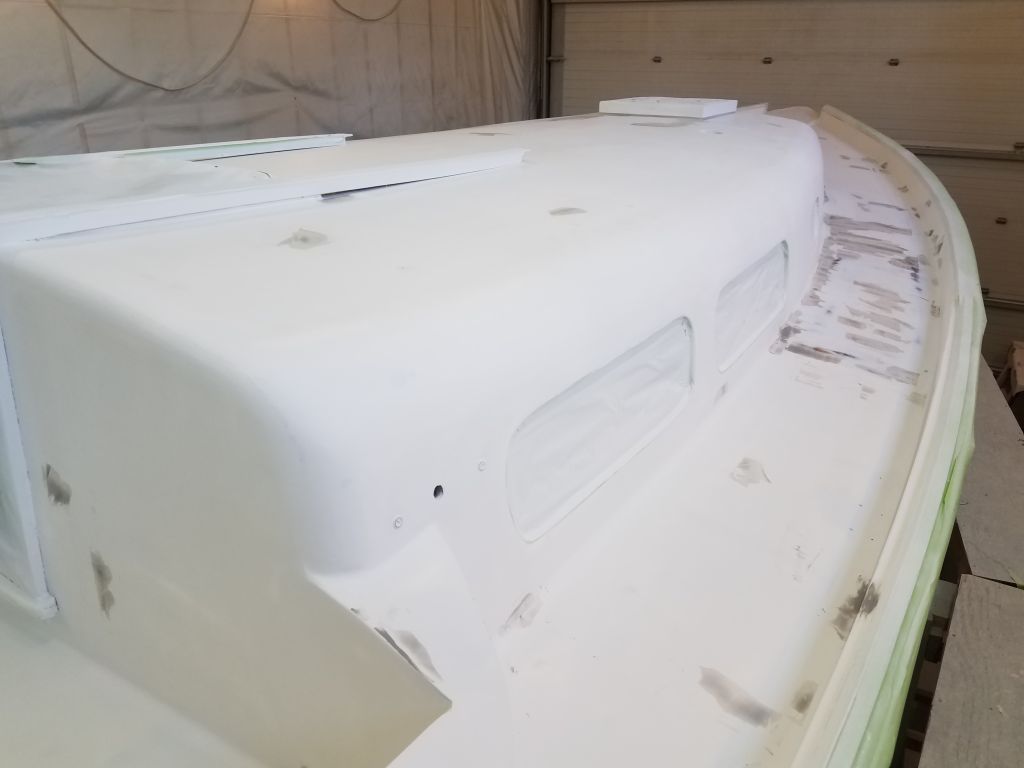
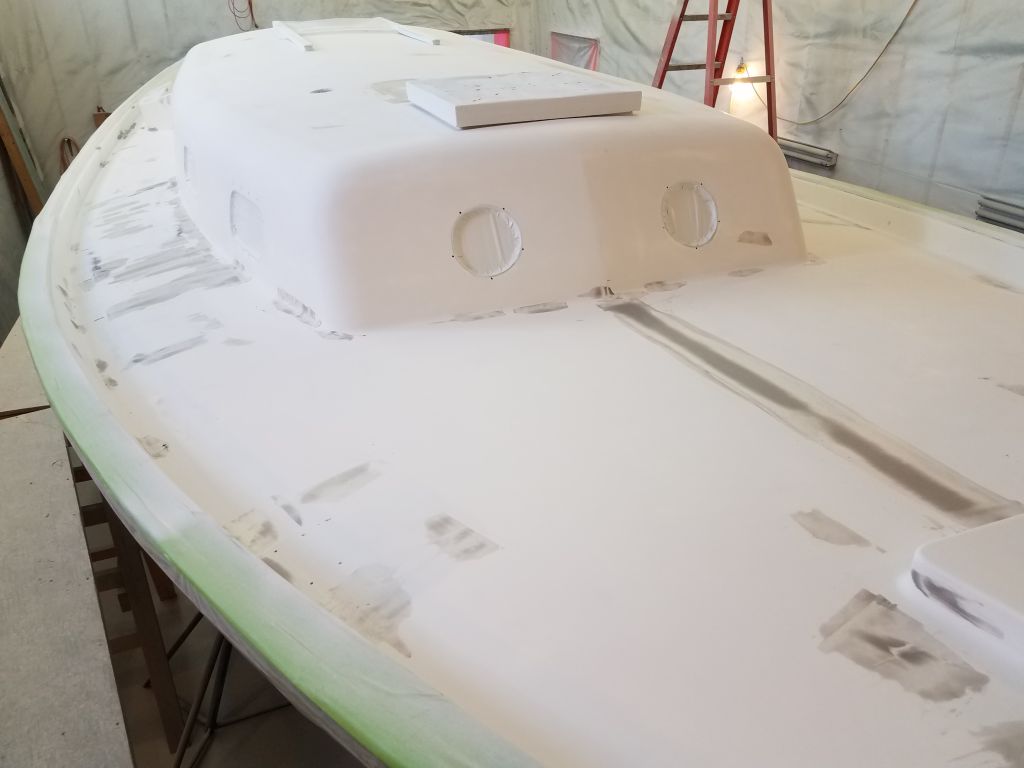
With the decks clean, and armed with a headlamp to help locate the various small flaws that could be otherwise hard to see, I went over the decks with some fine epoxy fairing compound, troweling it in to whatever surface interruptions I found: areas of slight unevenness; pinholes; gelcoat dings that hadn’t been previously filled, and whatever else seemed to call for it.
Total time billed on this job today: 3 hours
0600 Weather Observations: 10°, clouds, snow shower. Forecast for the day: Clouds and sun, 34°
I spent the day sanding all deck areas with 220 grit paper, by machine and with lots of handwork in the tight corners, gutters, bulwarks, and other areas. As expected, the fresh primer highlighted various areas that would require fine-filling, which would be my next step.
Total time billed on this job today: 8 hours
0600 Weather Observation: 10°, clear, about 6″ new snow. Forecast for the day: Sunny, 30°